window.__IS_SSR__=true
window.__INITIAL_STATE__={
"attachmentsReducer": {
"audio_0": {
"type": "attachments",
"id": "audio_0",
"imgSizes": {
"kqedFullSize": {
"file": "https://ww2.kqed.org/news/wp-content/themes/KQED-unified/img/audio_bgs/background0.jpg"
}
}
},
"audio_1": {
"type": "attachments",
"id": "audio_1",
"imgSizes": {
"kqedFullSize": {
"file": "https://ww2.kqed.org/news/wp-content/themes/KQED-unified/img/audio_bgs/background1.jpg"
}
}
},
"audio_2": {
"type": "attachments",
"id": "audio_2",
"imgSizes": {
"kqedFullSize": {
"file": "https://ww2.kqed.org/news/wp-content/themes/KQED-unified/img/audio_bgs/background2.jpg"
}
}
},
"audio_3": {
"type": "attachments",
"id": "audio_3",
"imgSizes": {
"kqedFullSize": {
"file": "https://ww2.kqed.org/news/wp-content/themes/KQED-unified/img/audio_bgs/background3.jpg"
}
}
},
"audio_4": {
"type": "attachments",
"id": "audio_4",
"imgSizes": {
"kqedFullSize": {
"file": "https://ww2.kqed.org/news/wp-content/themes/KQED-unified/img/audio_bgs/background4.jpg"
}
}
},
"placeholder": {
"type": "attachments",
"id": "placeholder",
"imgSizes": {
"thumbnail": {
"file": "https://cdn.kqed.org/wp-content/uploads/2024/12/KQED-Default-Image-816638274-2000x1333-1-160x107.jpg",
"width": 160,
"height": 107,
"mimeType": "image/jpeg"
},
"medium": {
"file": "https://cdn.kqed.org/wp-content/uploads/2024/12/KQED-Default-Image-816638274-2000x1333-1-800x533.jpg",
"width": 800,
"height": 533,
"mimeType": "image/jpeg"
},
"medium_large": {
"file": "https://cdn.kqed.org/wp-content/uploads/2024/12/KQED-Default-Image-816638274-2000x1333-1-768x512.jpg",
"width": 768,
"height": 512,
"mimeType": "image/jpeg"
},
"large": {
"file": "https://cdn.kqed.org/wp-content/uploads/2024/12/KQED-Default-Image-816638274-2000x1333-1-1020x680.jpg",
"width": 1020,
"height": 680,
"mimeType": "image/jpeg"
},
"1536x1536": {
"file": "https://cdn.kqed.org/wp-content/uploads/2024/12/KQED-Default-Image-816638274-2000x1333-1-1536x1024.jpg",
"width": 1536,
"height": 1024,
"mimeType": "image/jpeg"
},
"fd-lrg": {
"file": "https://cdn.kqed.org/wp-content/uploads/2024/12/KQED-Default-Image-816638274-2000x1333-1-1536x1024.jpg",
"width": 1536,
"height": 1024,
"mimeType": "image/jpeg"
},
"fd-med": {
"file": "https://cdn.kqed.org/wp-content/uploads/2024/12/KQED-Default-Image-816638274-2000x1333-1-1020x680.jpg",
"width": 1020,
"height": 680,
"mimeType": "image/jpeg"
},
"fd-sm": {
"file": "https://cdn.kqed.org/wp-content/uploads/2024/12/KQED-Default-Image-816638274-2000x1333-1-800x533.jpg",
"width": 800,
"height": 533,
"mimeType": "image/jpeg"
},
"post-thumbnail": {
"file": "https://cdn.kqed.org/wp-content/uploads/2024/12/KQED-Default-Image-816638274-2000x1333-1-672x372.jpg",
"width": 672,
"height": 372,
"mimeType": "image/jpeg"
},
"twentyfourteen-full-width": {
"file": "https://cdn.kqed.org/wp-content/uploads/2024/12/KQED-Default-Image-816638274-2000x1333-1-1038x576.jpg",
"width": 1038,
"height": 576,
"mimeType": "image/jpeg"
},
"xxsmall": {
"file": "https://cdn.kqed.org/wp-content/uploads/2024/12/KQED-Default-Image-816638274-2000x1333-1-160x107.jpg",
"width": 160,
"height": 107,
"mimeType": "image/jpeg"
},
"xsmall": {
"file": "https://cdn.kqed.org/wp-content/uploads/2024/12/KQED-Default-Image-816638274-2000x1333-1-672x372.jpg",
"width": 672,
"height": 372,
"mimeType": "image/jpeg"
},
"small": {
"file": "https://cdn.kqed.org/wp-content/uploads/2024/12/KQED-Default-Image-816638274-2000x1333-1-672x372.jpg",
"width": 672,
"height": 372,
"mimeType": "image/jpeg"
},
"xlarge": {
"file": "https://cdn.kqed.org/wp-content/uploads/2024/12/KQED-Default-Image-816638274-2000x1333-1-1020x680.jpg",
"width": 1020,
"height": 680,
"mimeType": "image/jpeg"
},
"full-width": {
"file": "https://cdn.kqed.org/wp-content/uploads/2024/12/KQED-Default-Image-816638274-2000x1333-1-1920x1280.jpg",
"width": 1920,
"height": 1280,
"mimeType": "image/jpeg"
},
"guest-author-32": {
"file": "https://cdn.kqed.org/wp-content/uploads/2025/01/KQED-Default-Image-816638274-1333x1333-1-160x160.jpg",
"width": 32,
"height": 32,
"mimeType": "image/jpeg"
},
"guest-author-50": {
"file": "https://cdn.kqed.org/wp-content/uploads/2025/01/KQED-Default-Image-816638274-1333x1333-1-160x160.jpg",
"width": 50,
"height": 50,
"mimeType": "image/jpeg"
},
"guest-author-64": {
"file": "https://cdn.kqed.org/wp-content/uploads/2025/01/KQED-Default-Image-816638274-1333x1333-1-160x160.jpg",
"width": 64,
"height": 64,
"mimeType": "image/jpeg"
},
"guest-author-96": {
"file": "https://cdn.kqed.org/wp-content/uploads/2025/01/KQED-Default-Image-816638274-1333x1333-1-160x160.jpg",
"width": 96,
"height": 96,
"mimeType": "image/jpeg"
},
"guest-author-128": {
"file": "https://cdn.kqed.org/wp-content/uploads/2025/01/KQED-Default-Image-816638274-1333x1333-1-160x160.jpg",
"width": 128,
"height": 128,
"mimeType": "image/jpeg"
},
"detail": {
"file": "https://cdn.kqed.org/wp-content/uploads/2025/01/KQED-Default-Image-816638274-1333x1333-1-160x160.jpg",
"width": 160,
"height": 160,
"mimeType": "image/jpeg"
},
"kqedFullSize": {
"file": "https://cdn.kqed.org/wp-content/uploads/2024/12/KQED-Default-Image-816638274-2000x1333-1.jpg",
"width": 2000,
"height": 1333
}
}
},
"news_11477451": {
"type": "attachments",
"id": "news_11477451",
"meta": {
"index": "attachments_1716263798",
"site": "news",
"id": "11477451",
"found": true
},
"parent": 11477376,
"imgSizes": {
"small": {
"file": "https://ww2.kqed.org/app/uploads/sites/10/2017/05/IMG_3847-e1495744680703-520x392.jpg",
"width": 520,
"mimeType": "image/jpeg",
"height": 392
},
"twentyfourteen-full-width": {
"file": "https://ww2.kqed.org/app/uploads/sites/10/2017/05/IMG_3847-e1495744680703-1038x576.jpg",
"width": 1038,
"mimeType": "image/jpeg",
"height": 576
},
"thumbnail": {
"file": "https://ww2.kqed.org/app/uploads/sites/10/2017/05/IMG_3847-e1495744680703-160x121.jpg",
"width": 160,
"mimeType": "image/jpeg",
"height": 121
},
"fd-sm": {
"file": "https://ww2.kqed.org/app/uploads/sites/10/2017/05/IMG_3847-e1495744680703-960x723.jpg",
"width": 960,
"mimeType": "image/jpeg",
"height": 723
},
"post-thumbnail": {
"file": "https://ww2.kqed.org/app/uploads/sites/10/2017/05/IMG_3847-e1495744680703-672x372.jpg",
"width": 672,
"mimeType": "image/jpeg",
"height": 372
},
"xsmall": {
"file": "https://ww2.kqed.org/app/uploads/sites/10/2017/05/IMG_3847-e1495744680703-375x282.jpg",
"width": 375,
"mimeType": "image/jpeg",
"height": 282
},
"kqedFullSize": {
"file": "https://ww2.kqed.org/app/uploads/sites/10/2017/05/IMG_3847-e1495744680703.jpg",
"width": 1819,
"height": 1370
},
"large": {
"file": "https://ww2.kqed.org/app/uploads/sites/10/2017/05/IMG_3847-e1495744680703-1020x768.jpg",
"width": 1020,
"mimeType": "image/jpeg",
"height": 768
},
"xlarge": {
"file": "https://ww2.kqed.org/app/uploads/sites/10/2017/05/IMG_3847-e1495744680703-1180x889.jpg",
"width": 1180,
"mimeType": "image/jpeg",
"height": 889
},
"guest-author-50": {
"file": "https://ww2.kqed.org/app/uploads/sites/10/2017/05/IMG_3847-e1495744680703-50x50.jpg",
"width": 50,
"mimeType": "image/jpeg",
"height": 50
},
"guest-author-96": {
"file": "https://ww2.kqed.org/app/uploads/sites/10/2017/05/IMG_3847-e1495744680703-96x96.jpg",
"width": 96,
"mimeType": "image/jpeg",
"height": 96
},
"medium": {
"file": "https://ww2.kqed.org/app/uploads/sites/10/2017/05/IMG_3847-e1495744680703-800x603.jpg",
"width": 800,
"mimeType": "image/jpeg",
"height": 603
},
"guest-author-64": {
"file": "https://ww2.kqed.org/app/uploads/sites/10/2017/05/IMG_3847-e1495744680703-64x64.jpg",
"width": 64,
"mimeType": "image/jpeg",
"height": 64
},
"guest-author-32": {
"file": "https://ww2.kqed.org/app/uploads/sites/10/2017/05/IMG_3847-e1495744680703-32x32.jpg",
"width": 32,
"mimeType": "image/jpeg",
"height": 32
},
"fd-lrg": {
"file": "https://ww2.kqed.org/app/uploads/sites/10/2017/05/IMG_3847-1920x1440.jpg",
"width": 1920,
"mimeType": "image/jpeg",
"height": 1440
},
"fd-med": {
"file": "https://ww2.kqed.org/app/uploads/sites/10/2017/05/IMG_3847-e1495744680703-1180x889.jpg",
"width": 1180,
"mimeType": "image/jpeg",
"height": 889
},
"full-width": {
"file": "https://ww2.kqed.org/app/uploads/sites/10/2017/05/IMG_3847-1920x1440.jpg",
"width": 1920,
"mimeType": "image/jpeg",
"height": 1440
},
"detail": {
"file": "https://ww2.kqed.org/app/uploads/sites/10/2017/05/IMG_3847-e1495744680703-150x150.jpg",
"width": 150,
"mimeType": "image/jpeg",
"height": 150
},
"guest-author-128": {
"file": "https://ww2.kqed.org/app/uploads/sites/10/2017/05/IMG_3847-e1495744680703-128x128.jpg",
"width": 128,
"mimeType": "image/jpeg",
"height": 128
},
"xxsmall": {
"file": "https://ww2.kqed.org/app/uploads/sites/10/2017/05/IMG_3847-e1495744680703-240x181.jpg",
"width": 240,
"mimeType": "image/jpeg",
"height": 181
}
},
"publishDate": 1495742830,
"modified": 1495743164,
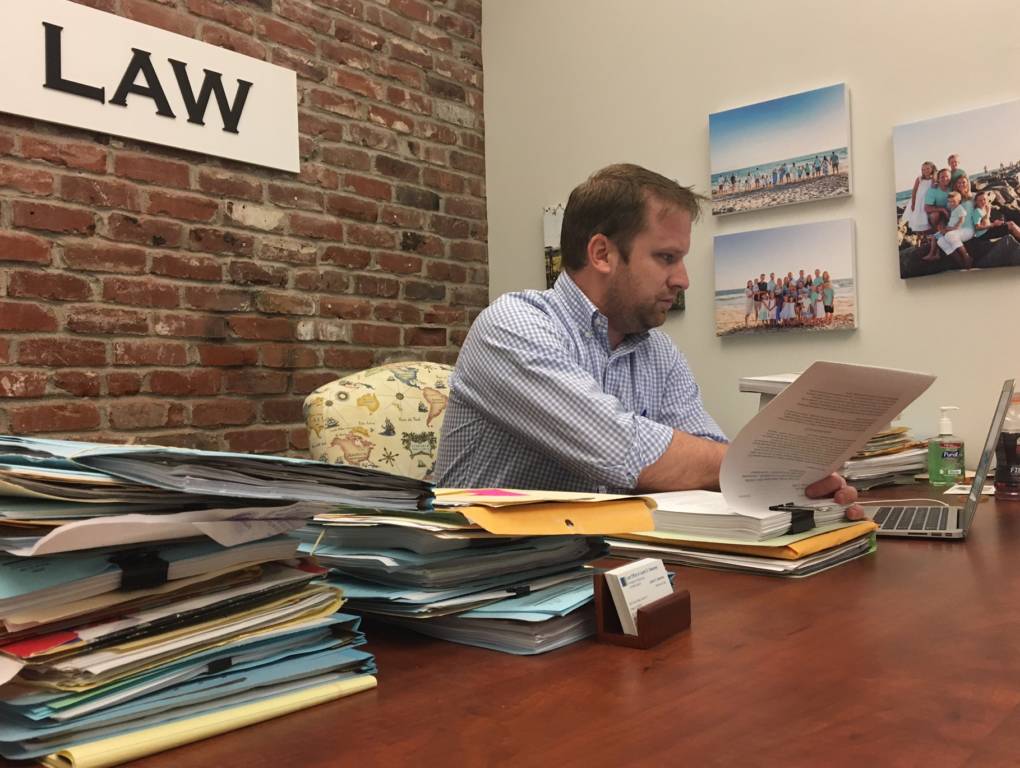
"caption": "Fresno immigration attorney Justin Sweeney says the early months of this year have been the busiest of his career.",
"description": null,
"title": "IMG_3847",
"credit": "Vanessa Rancano/KQED",
"status": "inherit",
"isLoading": false,
"fetchFailed": false
},
"news_11479165": {
"type": "attachments",
"id": "news_11479165",
"meta": {
"index": "attachments_1716263798",
"site": "news",
"id": "11479165",
"found": true
},
"parent": 11479164,
"imgSizes": {
"small": {
"file": "https://ww2.kqed.org/app/uploads/sites/10/2017/05/lineup_052617_final-520x520.jpg",
"width": 520,
"mimeType": "image/jpeg",
"height": 520
},
"twentyfourteen-full-width": {
"file": "https://ww2.kqed.org/app/uploads/sites/10/2017/05/lineup_052617_final-1038x576.jpg",
"width": 1038,
"mimeType": "image/jpeg",
"height": 576
},
"thumbnail": {
"file": "https://ww2.kqed.org/app/uploads/sites/10/2017/05/lineup_052617_final-160x160.jpg",
"width": 160,
"mimeType": "image/jpeg",
"height": 160
},
"fd-sm": {
"file": "https://ww2.kqed.org/app/uploads/sites/10/2017/05/lineup_052617_final-960x960.jpg",
"width": 960,
"mimeType": "image/jpeg",
"height": 960
},
"post-thumbnail": {
"file": "https://ww2.kqed.org/app/uploads/sites/10/2017/05/lineup_052617_final-672x372.jpg",
"width": 672,
"mimeType": "image/jpeg",
"height": 372
},
"xsmall": {
"file": "https://ww2.kqed.org/app/uploads/sites/10/2017/05/lineup_052617_final-375x375.jpg",
"width": 375,
"mimeType": "image/jpeg",
"height": 375
},
"kqedFullSize": {
"file": "https://ww2.kqed.org/app/uploads/sites/10/2017/05/lineup_052617_final.jpg",
"width": 1920,
"height": 1920
},
"large": {
"file": "https://ww2.kqed.org/app/uploads/sites/10/2017/05/lineup_052617_final-1020x1020.jpg",
"width": 1020,
"mimeType": "image/jpeg",
"height": 1020
},
"xlarge": {
"file": "https://ww2.kqed.org/app/uploads/sites/10/2017/05/lineup_052617_final-1180x1180.jpg",
"width": 1180,
"mimeType": "image/jpeg",
"height": 1180
},
"guest-author-50": {
"file": "https://ww2.kqed.org/app/uploads/sites/10/2017/05/lineup_052617_final-50x50.jpg",
"width": 50,
"mimeType": "image/jpeg",
"height": 50
},
"guest-author-96": {
"file": "https://ww2.kqed.org/app/uploads/sites/10/2017/05/lineup_052617_final-96x96.jpg",
"width": 96,
"mimeType": "image/jpeg",
"height": 96
},
"medium": {
"file": "https://ww2.kqed.org/app/uploads/sites/10/2017/05/lineup_052617_final-800x800.jpg",
"width": 800,
"mimeType": "image/jpeg",
"height": 800
},
"guest-author-64": {
"file": "https://ww2.kqed.org/app/uploads/sites/10/2017/05/lineup_052617_final-64x64.jpg",
"width": 64,
"mimeType": "image/jpeg",
"height": 64
},
"guest-author-32": {
"file": "https://ww2.kqed.org/app/uploads/sites/10/2017/05/lineup_052617_final-32x32.jpg",
"width": 32,
"mimeType": "image/jpeg",
"height": 32
},
"fd-lrg": {
"file": "https://ww2.kqed.org/app/uploads/sites/10/2017/05/lineup_052617_final-1920x1920.jpg",
"width": 1920,
"mimeType": "image/jpeg",
"height": 1920
},
"fd-med": {
"file": "https://ww2.kqed.org/app/uploads/sites/10/2017/05/lineup_052617_final-1180x1180.jpg",
"width": 1180,
"mimeType": "image/jpeg",
"height": 1180
},
"full-width": {
"file": "https://ww2.kqed.org/app/uploads/sites/10/2017/05/lineup_052617_final-1920x1920.jpg",
"width": 1920,
"mimeType": "image/jpeg",
"height": 1920
},
"detail": {
"file": "https://ww2.kqed.org/app/uploads/sites/10/2017/05/lineup_052617_final-150x150.jpg",
"width": 150,
"mimeType": "image/jpeg",
"height": 150
},
"guest-author-128": {
"file": "https://ww2.kqed.org/app/uploads/sites/10/2017/05/lineup_052617_final-128x128.jpg",
"width": 128,
"mimeType": "image/jpeg",
"height": 128
},
"xxsmall": {
"file": "https://ww2.kqed.org/app/uploads/sites/10/2017/05/lineup_052617_final-240x240.jpg",
"width": 240,
"mimeType": "image/jpeg",
"height": 240
}
},
"publishDate": 1495826830,
"modified": 1495826871,
"caption": null,
"description": null,
"title": "lineup_052617_final",
"credit": null,
"status": "inherit",
"isLoading": false,
"fetchFailed": false
},
"news_11475935": {
"type": "attachments",
"id": "news_11475935",
"meta": {
"index": "attachments_1716263798",
"site": "news",
"id": "11475935",
"found": true
},
"parent": 11475927,
"imgSizes": {
"small": {
"file": "https://ww2.kqed.org/app/uploads/sites/10/2017/05/WeedGrower-520x348.jpg",
"width": 520,
"mimeType": "image/jpeg",
"height": 348
},
"twentyfourteen-full-width": {
"file": "https://ww2.kqed.org/app/uploads/sites/10/2017/05/WeedGrower-1038x576.jpg",
"width": 1038,
"mimeType": "image/jpeg",
"height": 576
},
"thumbnail": {
"file": "https://ww2.kqed.org/app/uploads/sites/10/2017/05/WeedGrower-160x107.jpg",
"width": 160,
"mimeType": "image/jpeg",
"height": 107
},
"fd-sm": {
"file": "https://ww2.kqed.org/app/uploads/sites/10/2017/05/WeedGrower-960x642.jpg",
"width": 960,
"mimeType": "image/jpeg",
"height": 642
},
"post-thumbnail": {
"file": "https://ww2.kqed.org/app/uploads/sites/10/2017/05/WeedGrower-672x372.jpg",
"width": 672,
"mimeType": "image/jpeg",
"height": 372
},
"xsmall": {
"file": "https://ww2.kqed.org/app/uploads/sites/10/2017/05/WeedGrower-375x251.jpg",
"width": 375,
"mimeType": "image/jpeg",
"height": 251
},
"kqedFullSize": {
"file": "https://ww2.kqed.org/app/uploads/sites/10/2017/05/WeedGrower.jpg",
"width": 1920,
"height": 1284
},
"large": {
"file": "https://ww2.kqed.org/app/uploads/sites/10/2017/05/WeedGrower-1020x682.jpg",
"width": 1020,
"mimeType": "image/jpeg",
"height": 682
},
"xlarge": {
"file": "https://ww2.kqed.org/app/uploads/sites/10/2017/05/WeedGrower-1180x789.jpg",
"width": 1180,
"mimeType": "image/jpeg",
"height": 789
},
"guest-author-50": {
"file": "https://ww2.kqed.org/app/uploads/sites/10/2017/05/WeedGrower-50x50.jpg",
"width": 50,
"mimeType": "image/jpeg",
"height": 50
},
"guest-author-96": {
"file": "https://ww2.kqed.org/app/uploads/sites/10/2017/05/WeedGrower-96x96.jpg",
"width": 96,
"mimeType": "image/jpeg",
"height": 96
},
"medium": {
"file": "https://ww2.kqed.org/app/uploads/sites/10/2017/05/WeedGrower-800x535.jpg",
"width": 800,
"mimeType": "image/jpeg",
"height": 535
},
"guest-author-64": {
"file": "https://ww2.kqed.org/app/uploads/sites/10/2017/05/WeedGrower-64x64.jpg",
"width": 64,
"mimeType": "image/jpeg",
"height": 64
},
"guest-author-32": {
"file": "https://ww2.kqed.org/app/uploads/sites/10/2017/05/WeedGrower-32x32.jpg",
"width": 32,
"mimeType": "image/jpeg",
"height": 32
},
"fd-lrg": {
"file": "https://ww2.kqed.org/app/uploads/sites/10/2017/05/WeedGrower-1920x1284.jpg",
"width": 1920,
"mimeType": "image/jpeg",
"height": 1284
},
"fd-med": {
"file": "https://ww2.kqed.org/app/uploads/sites/10/2017/05/WeedGrower-1180x789.jpg",
"width": 1180,
"mimeType": "image/jpeg",
"height": 789
},
"full-width": {
"file": "https://ww2.kqed.org/app/uploads/sites/10/2017/05/WeedGrower-1920x1284.jpg",
"width": 1920,
"mimeType": "image/jpeg",
"height": 1284
},
"detail": {
"file": "https://ww2.kqed.org/app/uploads/sites/10/2017/05/WeedGrower-150x150.jpg",
"width": 150,
"mimeType": "image/jpeg",
"height": 150
},
"guest-author-128": {
"file": "https://ww2.kqed.org/app/uploads/sites/10/2017/05/WeedGrower-128x128.jpg",
"width": 128,
"mimeType": "image/jpeg",
"height": 128
},
"xxsmall": {
"file": "https://ww2.kqed.org/app/uploads/sites/10/2017/05/WeedGrower-240x161.jpg",
"width": 240,
"mimeType": "image/jpeg",
"height": 161
}
},
"publishDate": 1495668235,
"modified": 1495668286,
"caption": "A grower prunes his marijuana crops in Mendocino County.",
"description": "A grower prunes his marijuana crops in Mendocino County.",
"title": "WeedGrower",
"credit": "JOSH EDELSON/AFP/Getty Images",
"status": "inherit",
"isLoading": false,
"fetchFailed": false
},
"news_11479086": {
"type": "attachments",
"id": "news_11479086",
"meta": {
"index": "attachments_1716263798",
"site": "news",
"id": "11479086",
"found": true
},
"parent": 11479085,
"imgSizes": {
"small": {
"file": "https://ww2.kqed.org/app/uploads/sites/10/2017/05/gettyimages-687838746_wide-cd6c7ea316523bf486b740be7c362c26ff030d25-520x293.jpg",
"width": 520,
"mimeType": "image/jpeg",
"height": 293
},
"twentyfourteen-full-width": {
"file": "https://ww2.kqed.org/app/uploads/sites/10/2017/05/gettyimages-687838746_wide-cd6c7ea316523bf486b740be7c362c26ff030d25-1038x576.jpg",
"width": 1038,
"mimeType": "image/jpeg",
"height": 576
},
"thumbnail": {
"file": "https://ww2.kqed.org/app/uploads/sites/10/2017/05/gettyimages-687838746_wide-cd6c7ea316523bf486b740be7c362c26ff030d25-160x90.jpg",
"width": 160,
"mimeType": "image/jpeg",
"height": 90
},
"fd-sm": {
"file": "https://ww2.kqed.org/app/uploads/sites/10/2017/05/gettyimages-687838746_wide-cd6c7ea316523bf486b740be7c362c26ff030d25-960x540.jpg",
"width": 960,
"mimeType": "image/jpeg",
"height": 540
},
"post-thumbnail": {
"file": "https://ww2.kqed.org/app/uploads/sites/10/2017/05/gettyimages-687838746_wide-cd6c7ea316523bf486b740be7c362c26ff030d25-672x372.jpg",
"width": 672,
"mimeType": "image/jpeg",
"height": 372
},
"xsmall": {
"file": "https://ww2.kqed.org/app/uploads/sites/10/2017/05/gettyimages-687838746_wide-cd6c7ea316523bf486b740be7c362c26ff030d25-375x211.jpg",
"width": 375,
"mimeType": "image/jpeg",
"height": 211
},
"kqedFullSize": {
"file": "https://ww2.kqed.org/app/uploads/sites/10/2017/05/gettyimages-687838746_wide-cd6c7ea316523bf486b740be7c362c26ff030d25-e1495824792779.jpg",
"width": 1920,
"height": 1080
},
"large": {
"file": "https://ww2.kqed.org/app/uploads/sites/10/2017/05/gettyimages-687838746_wide-cd6c7ea316523bf486b740be7c362c26ff030d25-1020x574.jpg",
"width": 1020,
"mimeType": "image/jpeg",
"height": 574
},
"xlarge": {
"file": "https://ww2.kqed.org/app/uploads/sites/10/2017/05/gettyimages-687838746_wide-cd6c7ea316523bf486b740be7c362c26ff030d25-1180x664.jpg",
"width": 1180,
"mimeType": "image/jpeg",
"height": 664
},
"guest-author-50": {
"file": "https://ww2.kqed.org/app/uploads/sites/10/2017/05/gettyimages-687838746_wide-cd6c7ea316523bf486b740be7c362c26ff030d25-50x50.jpg",
"width": 50,
"mimeType": "image/jpeg",
"height": 50
},
"guest-author-96": {
"file": "https://ww2.kqed.org/app/uploads/sites/10/2017/05/gettyimages-687838746_wide-cd6c7ea316523bf486b740be7c362c26ff030d25-96x96.jpg",
"width": 96,
"mimeType": "image/jpeg",
"height": 96
},
"medium": {
"file": "https://ww2.kqed.org/app/uploads/sites/10/2017/05/gettyimages-687838746_wide-cd6c7ea316523bf486b740be7c362c26ff030d25-800x450.jpg",
"width": 800,
"mimeType": "image/jpeg",
"height": 450
},
"guest-author-64": {
"file": "https://ww2.kqed.org/app/uploads/sites/10/2017/05/gettyimages-687838746_wide-cd6c7ea316523bf486b740be7c362c26ff030d25-64x64.jpg",
"width": 64,
"mimeType": "image/jpeg",
"height": 64
},
"guest-author-32": {
"file": "https://ww2.kqed.org/app/uploads/sites/10/2017/05/gettyimages-687838746_wide-cd6c7ea316523bf486b740be7c362c26ff030d25-32x32.jpg",
"width": 32,
"mimeType": "image/jpeg",
"height": 32
},
"fd-lrg": {
"file": "https://ww2.kqed.org/app/uploads/sites/10/2017/05/gettyimages-687838746_wide-cd6c7ea316523bf486b740be7c362c26ff030d25-1920x1080.jpg",
"width": 1920,
"mimeType": "image/jpeg",
"height": 1080
},
"fd-med": {
"file": "https://ww2.kqed.org/app/uploads/sites/10/2017/05/gettyimages-687838746_wide-cd6c7ea316523bf486b740be7c362c26ff030d25-1180x664.jpg",
"width": 1180,
"mimeType": "image/jpeg",
"height": 664
},
"full-width": {
"file": "https://ww2.kqed.org/app/uploads/sites/10/2017/05/gettyimages-687838746_wide-cd6c7ea316523bf486b740be7c362c26ff030d25-1920x1080.jpg",
"width": 1920,
"mimeType": "image/jpeg",
"height": 1080
},
"detail": {
"file": "https://ww2.kqed.org/app/uploads/sites/10/2017/05/gettyimages-687838746_wide-cd6c7ea316523bf486b740be7c362c26ff030d25-150x150.jpg",
"width": 150,
"mimeType": "image/jpeg",
"height": 150
},
"guest-author-128": {
"file": "https://ww2.kqed.org/app/uploads/sites/10/2017/05/gettyimages-687838746_wide-cd6c7ea316523bf486b740be7c362c26ff030d25-128x128.jpg",
"width": 128,
"mimeType": "image/jpeg",
"height": 128
},
"xxsmall": {
"file": "https://ww2.kqed.org/app/uploads/sites/10/2017/05/gettyimages-687838746_wide-cd6c7ea316523bf486b740be7c362c26ff030d25-240x135.jpg",
"width": 240,
"mimeType": "image/jpeg",
"height": 135
}
},
"publishDate": 1495824766,
"modified": 1495824811,
"caption": "Model Dani Mathers listens as prosecutor Chadd Kim speaks at Wednesday's sentencing hearing. Mathers pleaded no contest to invading a woman's privacy in a gym.",
"description": "Model Dani Mathers listens as prosecutor Chadd Kim speaks at Wednesday's sentencing hearing. Mathers pleaded no contest to invading a woman's privacy in a gym.",
"title": "Model Dani Mathers listens as prosecutor Chadd Kim speaks at Wednesday's sentencing hearing. Mathers pleaded no contest to invading a woman's privacy in a gym.",
"credit": "Frederick M. Brown/Getty Images",
"status": "inherit",
"isLoading": false,
"fetchFailed": false
},
"news_11477380": {
"type": "attachments",
"id": "news_11477380",
"meta": {
"index": "attachments_1716263798",
"site": "news",
"id": "11477380",
"found": true
},
"parent": 11477377,
"imgSizes": {
"small": {
"file": "https://ww2.kqed.org/app/uploads/sites/10/2017/05/traveling_052517_final-520x520.jpg",
"width": 520,
"mimeType": "image/jpeg",
"height": 520
},
"twentyfourteen-full-width": {
"file": "https://ww2.kqed.org/app/uploads/sites/10/2017/05/traveling_052517_final-1038x576.jpg",
"width": 1038,
"mimeType": "image/jpeg",
"height": 576
},
"thumbnail": {
"file": "https://ww2.kqed.org/app/uploads/sites/10/2017/05/traveling_052517_final-160x160.jpg",
"width": 160,
"mimeType": "image/jpeg",
"height": 160
},
"fd-sm": {
"file": "https://ww2.kqed.org/app/uploads/sites/10/2017/05/traveling_052517_final-960x960.jpg",
"width": 960,
"mimeType": "image/jpeg",
"height": 960
},
"post-thumbnail": {
"file": "https://ww2.kqed.org/app/uploads/sites/10/2017/05/traveling_052517_final-672x372.jpg",
"width": 672,
"mimeType": "image/jpeg",
"height": 372
},
"xsmall": {
"file": "https://ww2.kqed.org/app/uploads/sites/10/2017/05/traveling_052517_final-375x375.jpg",
"width": 375,
"mimeType": "image/jpeg",
"height": 375
},
"kqedFullSize": {
"file": "https://ww2.kqed.org/app/uploads/sites/10/2017/05/traveling_052517_final.jpg",
"width": 1920,
"height": 1920
},
"large": {
"file": "https://ww2.kqed.org/app/uploads/sites/10/2017/05/traveling_052517_final-1020x1020.jpg",
"width": 1020,
"mimeType": "image/jpeg",
"height": 1020
},
"xlarge": {
"file": "https://ww2.kqed.org/app/uploads/sites/10/2017/05/traveling_052517_final-1180x1180.jpg",
"width": 1180,
"mimeType": "image/jpeg",
"height": 1180
},
"guest-author-50": {
"file": "https://ww2.kqed.org/app/uploads/sites/10/2017/05/traveling_052517_final-50x50.jpg",
"width": 50,
"mimeType": "image/jpeg",
"height": 50
},
"guest-author-96": {
"file": "https://ww2.kqed.org/app/uploads/sites/10/2017/05/traveling_052517_final-96x96.jpg",
"width": 96,
"mimeType": "image/jpeg",
"height": 96
},
"medium": {
"file": "https://ww2.kqed.org/app/uploads/sites/10/2017/05/traveling_052517_final-800x800.jpg",
"width": 800,
"mimeType": "image/jpeg",
"height": 800
},
"guest-author-64": {
"file": "https://ww2.kqed.org/app/uploads/sites/10/2017/05/traveling_052517_final-64x64.jpg",
"width": 64,
"mimeType": "image/jpeg",
"height": 64
},
"guest-author-32": {
"file": "https://ww2.kqed.org/app/uploads/sites/10/2017/05/traveling_052517_final-32x32.jpg",
"width": 32,
"mimeType": "image/jpeg",
"height": 32
},
"fd-lrg": {
"file": "https://ww2.kqed.org/app/uploads/sites/10/2017/05/traveling_052517_final-1920x1920.jpg",
"width": 1920,
"mimeType": "image/jpeg",
"height": 1920
},
"fd-med": {
"file": "https://ww2.kqed.org/app/uploads/sites/10/2017/05/traveling_052517_final-1180x1180.jpg",
"width": 1180,
"mimeType": "image/jpeg",
"height": 1180
},
"full-width": {
"file": "https://ww2.kqed.org/app/uploads/sites/10/2017/05/traveling_052517_final-1920x1920.jpg",
"width": 1920,
"mimeType": "image/jpeg",
"height": 1920
},
"detail": {
"file": "https://ww2.kqed.org/app/uploads/sites/10/2017/05/traveling_052517_final-150x150.jpg",
"width": 150,
"mimeType": "image/jpeg",
"height": 150
},
"guest-author-128": {
"file": "https://ww2.kqed.org/app/uploads/sites/10/2017/05/traveling_052517_final-128x128.jpg",
"width": 128,
"mimeType": "image/jpeg",
"height": 128
},
"xxsmall": {
"file": "https://ww2.kqed.org/app/uploads/sites/10/2017/05/traveling_052517_final-240x240.jpg",
"width": 240,
"mimeType": "image/jpeg",
"height": 240
}
},
"publishDate": 1495741619,
"modified": 1495741647,
"caption": null,
"description": null,
"title": "traveling_052517_final",
"credit": null,
"status": "inherit",
"isLoading": false,
"fetchFailed": false
},
"news_11477359": {
"type": "attachments",
"id": "news_11477359",
"meta": {
"index": "attachments_1716263798",
"site": "news",
"id": "11477359",
"found": true
},
"parent": 11477352,
"imgSizes": {
"small": {
"file": "https://ww2.kqed.org/app/uploads/sites/10/2017/05/TrumpAF1-520x364.jpg",
"width": 520,
"mimeType": "image/jpeg",
"height": 364
},
"twentyfourteen-full-width": {
"file": "https://ww2.kqed.org/app/uploads/sites/10/2017/05/TrumpAF1-1038x576.jpg",
"width": 1038,
"mimeType": "image/jpeg",
"height": 576
},
"thumbnail": {
"file": "https://ww2.kqed.org/app/uploads/sites/10/2017/05/TrumpAF1-160x112.jpg",
"width": 160,
"mimeType": "image/jpeg",
"height": 112
},
"fd-sm": {
"file": "https://ww2.kqed.org/app/uploads/sites/10/2017/05/TrumpAF1-960x672.jpg",
"width": 960,
"mimeType": "image/jpeg",
"height": 672
},
"post-thumbnail": {
"file": "https://ww2.kqed.org/app/uploads/sites/10/2017/05/TrumpAF1-672x372.jpg",
"width": 672,
"mimeType": "image/jpeg",
"height": 372
},
"xsmall": {
"file": "https://ww2.kqed.org/app/uploads/sites/10/2017/05/TrumpAF1-375x263.jpg",
"width": 375,
"mimeType": "image/jpeg",
"height": 263
},
"kqedFullSize": {
"file": "https://ww2.kqed.org/app/uploads/sites/10/2017/05/TrumpAF1.jpg",
"width": 1920,
"height": 1344
},
"large": {
"file": "https://ww2.kqed.org/app/uploads/sites/10/2017/05/TrumpAF1-1020x714.jpg",
"width": 1020,
"mimeType": "image/jpeg",
"height": 714
},
"xlarge": {
"file": "https://ww2.kqed.org/app/uploads/sites/10/2017/05/TrumpAF1-1180x826.jpg",
"width": 1180,
"mimeType": "image/jpeg",
"height": 826
},
"guest-author-50": {
"file": "https://ww2.kqed.org/app/uploads/sites/10/2017/05/TrumpAF1-50x50.jpg",
"width": 50,
"mimeType": "image/jpeg",
"height": 50
},
"guest-author-96": {
"file": "https://ww2.kqed.org/app/uploads/sites/10/2017/05/TrumpAF1-96x96.jpg",
"width": 96,
"mimeType": "image/jpeg",
"height": 96
},
"medium": {
"file": "https://ww2.kqed.org/app/uploads/sites/10/2017/05/TrumpAF1-800x560.jpg",
"width": 800,
"mimeType": "image/jpeg",
"height": 560
},
"guest-author-64": {
"file": "https://ww2.kqed.org/app/uploads/sites/10/2017/05/TrumpAF1-64x64.jpg",
"width": 64,
"mimeType": "image/jpeg",
"height": 64
},
"guest-author-32": {
"file": "https://ww2.kqed.org/app/uploads/sites/10/2017/05/TrumpAF1-32x32.jpg",
"width": 32,
"mimeType": "image/jpeg",
"height": 32
},
"fd-lrg": {
"file": "https://ww2.kqed.org/app/uploads/sites/10/2017/05/TrumpAF1-1920x1344.jpg",
"width": 1920,
"mimeType": "image/jpeg",
"height": 1344
},
"fd-med": {
"file": "https://ww2.kqed.org/app/uploads/sites/10/2017/05/TrumpAF1-1180x826.jpg",
"width": 1180,
"mimeType": "image/jpeg",
"height": 826
},
"full-width": {
"file": "https://ww2.kqed.org/app/uploads/sites/10/2017/05/TrumpAF1-1920x1344.jpg",
"width": 1920,
"mimeType": "image/jpeg",
"height": 1344
},
"detail": {
"file": "https://ww2.kqed.org/app/uploads/sites/10/2017/05/TrumpAF1-150x150.jpg",
"width": 150,
"mimeType": "image/jpeg",
"height": 150
},
"guest-author-128": {
"file": "https://ww2.kqed.org/app/uploads/sites/10/2017/05/TrumpAF1-128x128.jpg",
"width": 128,
"mimeType": "image/jpeg",
"height": 128
},
"xxsmall": {
"file": "https://ww2.kqed.org/app/uploads/sites/10/2017/05/TrumpAF1-240x168.jpg",
"width": 240,
"mimeType": "image/jpeg",
"height": 168
}
},
"publishDate": 1495739160,
"modified": 1495739204,
"caption": "President Donald Trump boards Air Force One.",
"description": "President Donald Trump boards Air Force One.",
"title": "TrumpAF1",
"credit": "Ron Sachs/Getty Images",
"status": "inherit",
"isLoading": false,
"fetchFailed": false
},
"news_11475532": {
"type": "attachments",
"id": "news_11475532",
"meta": {
"index": "attachments_1716263798",
"site": "news",
"id": "11475532",
"found": true
},
"parent": 11475530,
"imgSizes": {
"small": {
"file": "https://ww2.kqed.org/app/uploads/sites/10/2017/05/mutch_052417_final-520x520.jpg",
"width": 520,
"mimeType": "image/jpeg",
"height": 520
},
"twentyfourteen-full-width": {
"file": "https://ww2.kqed.org/app/uploads/sites/10/2017/05/mutch_052417_final-1038x576.jpg",
"width": 1038,
"mimeType": "image/jpeg",
"height": 576
},
"thumbnail": {
"file": "https://ww2.kqed.org/app/uploads/sites/10/2017/05/mutch_052417_final-160x160.jpg",
"width": 160,
"mimeType": "image/jpeg",
"height": 160
},
"fd-sm": {
"file": "https://ww2.kqed.org/app/uploads/sites/10/2017/05/mutch_052417_final-960x960.jpg",
"width": 960,
"mimeType": "image/jpeg",
"height": 960
},
"post-thumbnail": {
"file": "https://ww2.kqed.org/app/uploads/sites/10/2017/05/mutch_052417_final-672x372.jpg",
"width": 672,
"mimeType": "image/jpeg",
"height": 372
},
"xsmall": {
"file": "https://ww2.kqed.org/app/uploads/sites/10/2017/05/mutch_052417_final-375x375.jpg",
"width": 375,
"mimeType": "image/jpeg",
"height": 375
},
"kqedFullSize": {
"file": "https://ww2.kqed.org/app/uploads/sites/10/2017/05/mutch_052417_final.jpg",
"width": 1920,
"height": 1920
},
"large": {
"file": "https://ww2.kqed.org/app/uploads/sites/10/2017/05/mutch_052417_final-1020x1020.jpg",
"width": 1020,
"mimeType": "image/jpeg",
"height": 1020
},
"xlarge": {
"file": "https://ww2.kqed.org/app/uploads/sites/10/2017/05/mutch_052417_final-1180x1180.jpg",
"width": 1180,
"mimeType": "image/jpeg",
"height": 1180
},
"guest-author-50": {
"file": "https://ww2.kqed.org/app/uploads/sites/10/2017/05/mutch_052417_final-50x50.jpg",
"width": 50,
"mimeType": "image/jpeg",
"height": 50
},
"guest-author-96": {
"file": "https://ww2.kqed.org/app/uploads/sites/10/2017/05/mutch_052417_final-96x96.jpg",
"width": 96,
"mimeType": "image/jpeg",
"height": 96
},
"medium": {
"file": "https://ww2.kqed.org/app/uploads/sites/10/2017/05/mutch_052417_final-800x800.jpg",
"width": 800,
"mimeType": "image/jpeg",
"height": 800
},
"guest-author-64": {
"file": "https://ww2.kqed.org/app/uploads/sites/10/2017/05/mutch_052417_final-64x64.jpg",
"width": 64,
"mimeType": "image/jpeg",
"height": 64
},
"guest-author-32": {
"file": "https://ww2.kqed.org/app/uploads/sites/10/2017/05/mutch_052417_final-32x32.jpg",
"width": 32,
"mimeType": "image/jpeg",
"height": 32
},
"fd-lrg": {
"file": "https://ww2.kqed.org/app/uploads/sites/10/2017/05/mutch_052417_final-1920x1920.jpg",
"width": 1920,
"mimeType": "image/jpeg",
"height": 1920
},
"fd-med": {
"file": "https://ww2.kqed.org/app/uploads/sites/10/2017/05/mutch_052417_final-1180x1180.jpg",
"width": 1180,
"mimeType": "image/jpeg",
"height": 1180
},
"full-width": {
"file": "https://ww2.kqed.org/app/uploads/sites/10/2017/05/mutch_052417_final-1920x1920.jpg",
"width": 1920,
"mimeType": "image/jpeg",
"height": 1920
},
"detail": {
"file": "https://ww2.kqed.org/app/uploads/sites/10/2017/05/mutch_052417_final-150x150.jpg",
"width": 150,
"mimeType": "image/jpeg",
"height": 150
},
"guest-author-128": {
"file": "https://ww2.kqed.org/app/uploads/sites/10/2017/05/mutch_052417_final-128x128.jpg",
"width": 128,
"mimeType": "image/jpeg",
"height": 128
},
"xxsmall": {
"file": "https://ww2.kqed.org/app/uploads/sites/10/2017/05/mutch_052417_final-240x240.jpg",
"width": 240,
"mimeType": "image/jpeg",
"height": 240
}
},
"publishDate": 1495655631,
"modified": 1495655665,
"caption": null,
"description": null,
"title": "mutch_052417_final",
"credit": null,
"status": "inherit",
"isLoading": false,
"fetchFailed": false
},
"news_11474208": {
"type": "attachments",
"id": "news_11474208",
"meta": {
"index": "attachments_1716263798",
"site": "news",
"id": "11474208",
"found": true
},
"parent": 11473663,
"imgSizes": {
"small": {
"file": "https://ww2.kqed.org/app/uploads/sites/10/2017/05/AlSharpton-520x347.jpg",
"width": 520,
"mimeType": "image/jpeg",
"height": 347
},
"twentyfourteen-full-width": {
"file": "https://ww2.kqed.org/app/uploads/sites/10/2017/05/AlSharpton-1038x576.jpg",
"width": 1038,
"mimeType": "image/jpeg",
"height": 576
},
"thumbnail": {
"file": "https://ww2.kqed.org/app/uploads/sites/10/2017/05/AlSharpton-160x107.jpg",
"width": 160,
"mimeType": "image/jpeg",
"height": 107
},
"fd-sm": {
"file": "https://ww2.kqed.org/app/uploads/sites/10/2017/05/AlSharpton-960x641.jpg",
"width": 960,
"mimeType": "image/jpeg",
"height": 641
},
"post-thumbnail": {
"file": "https://ww2.kqed.org/app/uploads/sites/10/2017/05/AlSharpton-672x372.jpg",
"width": 672,
"mimeType": "image/jpeg",
"height": 372
},
"xsmall": {
"file": "https://ww2.kqed.org/app/uploads/sites/10/2017/05/AlSharpton-375x250.jpg",
"width": 375,
"mimeType": "image/jpeg",
"height": 250
},
"kqedFullSize": {
"file": "https://ww2.kqed.org/app/uploads/sites/10/2017/05/AlSharpton.jpg",
"width": 1920,
"height": 1282
},
"large": {
"file": "https://ww2.kqed.org/app/uploads/sites/10/2017/05/AlSharpton-1020x681.jpg",
"width": 1020,
"mimeType": "image/jpeg",
"height": 681
},
"xlarge": {
"file": "https://ww2.kqed.org/app/uploads/sites/10/2017/05/AlSharpton-1180x788.jpg",
"width": 1180,
"mimeType": "image/jpeg",
"height": 788
},
"guest-author-50": {
"file": "https://ww2.kqed.org/app/uploads/sites/10/2017/05/AlSharpton-50x50.jpg",
"width": 50,
"mimeType": "image/jpeg",
"height": 50
},
"guest-author-96": {
"file": "https://ww2.kqed.org/app/uploads/sites/10/2017/05/AlSharpton-96x96.jpg",
"width": 96,
"mimeType": "image/jpeg",
"height": 96
},
"medium": {
"file": "https://ww2.kqed.org/app/uploads/sites/10/2017/05/AlSharpton-800x534.jpg",
"width": 800,
"mimeType": "image/jpeg",
"height": 534
},
"guest-author-64": {
"file": "https://ww2.kqed.org/app/uploads/sites/10/2017/05/AlSharpton-64x64.jpg",
"width": 64,
"mimeType": "image/jpeg",
"height": 64
},
"guest-author-32": {
"file": "https://ww2.kqed.org/app/uploads/sites/10/2017/05/AlSharpton-32x32.jpg",
"width": 32,
"mimeType": "image/jpeg",
"height": 32
},
"fd-lrg": {
"file": "https://ww2.kqed.org/app/uploads/sites/10/2017/05/AlSharpton-1920x1282.jpg",
"width": 1920,
"mimeType": "image/jpeg",
"height": 1282
},
"fd-med": {
"file": "https://ww2.kqed.org/app/uploads/sites/10/2017/05/AlSharpton-1180x788.jpg",
"width": 1180,
"mimeType": "image/jpeg",
"height": 788
},
"full-width": {
"file": "https://ww2.kqed.org/app/uploads/sites/10/2017/05/AlSharpton-1920x1282.jpg",
"width": 1920,
"mimeType": "image/jpeg",
"height": 1282
},
"detail": {
"file": "https://ww2.kqed.org/app/uploads/sites/10/2017/05/AlSharpton-150x150.jpg",
"width": 150,
"mimeType": "image/jpeg",
"height": 150
},
"guest-author-128": {
"file": "https://ww2.kqed.org/app/uploads/sites/10/2017/05/AlSharpton-128x128.jpg",
"width": 128,
"mimeType": "image/jpeg",
"height": 128
},
"xxsmall": {
"file": "https://ww2.kqed.org/app/uploads/sites/10/2017/05/AlSharpton-240x160.jpg",
"width": 240,
"mimeType": "image/jpeg",
"height": 160
}
},
"publishDate": 1495586776,
"modified": 1495662817,
"caption": "The Rev. Al Sharpton and local leaders of his National Action Network lobbied in favor of AB 284, which would give local police and district attorneys the ability to ask the state attorney general’s office to investigate police shootings.\n\n",
"description": "Rev. Al Sharpton and local leaders of his National Action Network lobbied in favor of AB 284, which would give local police and district attorneys the ability to ask the state attorney general’s office to investigate police shootings.\n",
"title": "AlSharpton",
"credit": "MANDEL NGAN/AFP/Getty Images",
"status": "inherit",
"isLoading": false,
"fetchFailed": false
},
"news_11473587": {
"type": "attachments",
"id": "news_11473587",
"meta": {
"index": "attachments_1716263798",
"site": "news",
"id": "11473587",
"found": true
},
"parent": 11702978,
"imgSizes": {
"small": {
"file": "https://ww2.kqed.org/app/uploads/sites/10/2017/05/RS18881_main-jail-sc-qut-520x347.jpg",
"width": 520,
"mimeType": "image/jpeg",
"height": 347
},
"twentyfourteen-full-width": {
"file": "https://ww2.kqed.org/app/uploads/sites/10/2017/05/RS18881_main-jail-sc-qut-1038x576.jpg",
"width": 1038,
"mimeType": "image/jpeg",
"height": 576
},
"thumbnail": {
"file": "https://ww2.kqed.org/app/uploads/sites/10/2017/05/RS18881_main-jail-sc-qut-160x107.jpg",
"width": 160,
"mimeType": "image/jpeg",
"height": 107
},
"fd-sm": {
"file": "https://ww2.kqed.org/app/uploads/sites/10/2017/05/RS18881_main-jail-sc-qut-960x640.jpg",
"width": 960,
"mimeType": "image/jpeg",
"height": 640
},
"post-thumbnail": {
"file": "https://ww2.kqed.org/app/uploads/sites/10/2017/05/RS18881_main-jail-sc-qut-672x372.jpg",
"width": 672,
"mimeType": "image/jpeg",
"height": 372
},
"xsmall": {
"file": "https://ww2.kqed.org/app/uploads/sites/10/2017/05/RS18881_main-jail-sc-qut-375x250.jpg",
"width": 375,
"mimeType": "image/jpeg",
"height": 250
},
"kqedFullSize": {
"file": "https://ww2.kqed.org/app/uploads/sites/10/2017/05/RS18881_main-jail-sc-qut.jpg",
"width": 1920,
"height": 1280
},
"large": {
"file": "https://ww2.kqed.org/app/uploads/sites/10/2017/05/RS18881_main-jail-sc-qut-1020x680.jpg",
"width": 1020,
"mimeType": "image/jpeg",
"height": 680
},
"xlarge": {
"file": "https://ww2.kqed.org/app/uploads/sites/10/2017/05/RS18881_main-jail-sc-qut-1180x787.jpg",
"width": 1180,
"mimeType": "image/jpeg",
"height": 787
},
"guest-author-50": {
"file": "https://ww2.kqed.org/app/uploads/sites/10/2017/05/RS18881_main-jail-sc-qut-50x50.jpg",
"width": 50,
"mimeType": "image/jpeg",
"height": 50
},
"guest-author-96": {
"file": "https://ww2.kqed.org/app/uploads/sites/10/2017/05/RS18881_main-jail-sc-qut-96x96.jpg",
"width": 96,
"mimeType": "image/jpeg",
"height": 96
},
"medium": {
"file": "https://ww2.kqed.org/app/uploads/sites/10/2017/05/RS18881_main-jail-sc-qut-800x533.jpg",
"width": 800,
"mimeType": "image/jpeg",
"height": 533
},
"guest-author-64": {
"file": "https://ww2.kqed.org/app/uploads/sites/10/2017/05/RS18881_main-jail-sc-qut-64x64.jpg",
"width": 64,
"mimeType": "image/jpeg",
"height": 64
},
"guest-author-32": {
"file": "https://ww2.kqed.org/app/uploads/sites/10/2017/05/RS18881_main-jail-sc-qut-32x32.jpg",
"width": 32,
"mimeType": "image/jpeg",
"height": 32
},
"fd-lrg": {
"file": "https://ww2.kqed.org/app/uploads/sites/10/2017/05/RS18881_main-jail-sc-qut-1920x1280.jpg",
"width": 1920,
"mimeType": "image/jpeg",
"height": 1280
},
"fd-med": {
"file": "https://ww2.kqed.org/app/uploads/sites/10/2017/05/RS18881_main-jail-sc-qut-1180x787.jpg",
"width": 1180,
"mimeType": "image/jpeg",
"height": 787
},
"full-width": {
"file": "https://ww2.kqed.org/app/uploads/sites/10/2017/05/RS18881_main-jail-sc-qut-1920x1280.jpg",
"width": 1920,
"mimeType": "image/jpeg",
"height": 1280
},
"detail": {
"file": "https://ww2.kqed.org/app/uploads/sites/10/2017/05/RS18881_main-jail-sc-qut-150x150.jpg",
"width": 150,
"mimeType": "image/jpeg",
"height": 150
},
"guest-author-128": {
"file": "https://ww2.kqed.org/app/uploads/sites/10/2017/05/RS18881_main-jail-sc-qut-128x128.jpg",
"width": 128,
"mimeType": "image/jpeg",
"height": 128
},
"xxsmall": {
"file": "https://ww2.kqed.org/app/uploads/sites/10/2017/05/RS18881_main-jail-sc-qut-240x160.jpg",
"width": 240,
"mimeType": "image/jpeg",
"height": 160
}
},
"publishDate": 1495565109,
"modified": 1541196697,
"caption": "Michael Tyree was allegedly beaten to death on the sixth floor of Santa Clara's Main Jail.",
"description": null,
"title": "RS18881_main-jail-sc-qut",
"credit": "Lisa Pickoff-White/KQED",
"status": "inherit",
"isLoading": false,
"fetchFailed": false
},
"news_11471743": {
"type": "attachments",
"id": "news_11471743",
"meta": {
"index": "attachments_1716263798",
"site": "news",
"id": "11471743",
"found": true
},
"parent": 11463141,
"imgSizes": {
"small": {
"file": "https://ww2.kqed.org/app/uploads/sites/10/2017/05/RS18562_IMG_4557-qut-520x390.jpg",
"width": 520,
"mimeType": "image/jpeg",
"height": 390
},
"twentyfourteen-full-width": {
"file": "https://ww2.kqed.org/app/uploads/sites/10/2017/05/RS18562_IMG_4557-qut-1038x576.jpg",
"width": 1038,
"mimeType": "image/jpeg",
"height": 576
},
"thumbnail": {
"file": "https://ww2.kqed.org/app/uploads/sites/10/2017/05/RS18562_IMG_4557-qut-160x120.jpg",
"width": 160,
"mimeType": "image/jpeg",
"height": 120
},
"fd-sm": {
"file": "https://ww2.kqed.org/app/uploads/sites/10/2017/05/RS18562_IMG_4557-qut-960x720.jpg",
"width": 960,
"mimeType": "image/jpeg",
"height": 720
},
"post-thumbnail": {
"file": "https://ww2.kqed.org/app/uploads/sites/10/2017/05/RS18562_IMG_4557-qut-672x372.jpg",
"width": 672,
"mimeType": "image/jpeg",
"height": 372
},
"xsmall": {
"file": "https://ww2.kqed.org/app/uploads/sites/10/2017/05/RS18562_IMG_4557-qut-375x281.jpg",
"width": 375,
"mimeType": "image/jpeg",
"height": 281
},
"kqedFullSize": {
"file": "https://ww2.kqed.org/app/uploads/sites/10/2017/05/RS18562_IMG_4557-qut.jpg",
"width": 1920,
"height": 1440
},
"large": {
"file": "https://ww2.kqed.org/app/uploads/sites/10/2017/05/RS18562_IMG_4557-qut-1020x765.jpg",
"width": 1020,
"mimeType": "image/jpeg",
"height": 765
},
"xlarge": {
"file": "https://ww2.kqed.org/app/uploads/sites/10/2017/05/RS18562_IMG_4557-qut-1180x885.jpg",
"width": 1180,
"mimeType": "image/jpeg",
"height": 885
},
"guest-author-50": {
"file": "https://ww2.kqed.org/app/uploads/sites/10/2017/05/RS18562_IMG_4557-qut-50x50.jpg",
"width": 50,
"mimeType": "image/jpeg",
"height": 50
},
"guest-author-96": {
"file": "https://ww2.kqed.org/app/uploads/sites/10/2017/05/RS18562_IMG_4557-qut-96x96.jpg",
"width": 96,
"mimeType": "image/jpeg",
"height": 96
},
"medium": {
"file": "https://ww2.kqed.org/app/uploads/sites/10/2017/05/RS18562_IMG_4557-qut-800x600.jpg",
"width": 800,
"mimeType": "image/jpeg",
"height": 600
},
"guest-author-64": {
"file": "https://ww2.kqed.org/app/uploads/sites/10/2017/05/RS18562_IMG_4557-qut-64x64.jpg",
"width": 64,
"mimeType": "image/jpeg",
"height": 64
},
"guest-author-32": {
"file": "https://ww2.kqed.org/app/uploads/sites/10/2017/05/RS18562_IMG_4557-qut-32x32.jpg",
"width": 32,
"mimeType": "image/jpeg",
"height": 32
},
"fd-lrg": {
"file": "https://ww2.kqed.org/app/uploads/sites/10/2017/05/RS18562_IMG_4557-qut-1920x1440.jpg",
"width": 1920,
"mimeType": "image/jpeg",
"height": 1440
},
"fd-med": {
"file": "https://ww2.kqed.org/app/uploads/sites/10/2017/05/RS18562_IMG_4557-qut-1180x885.jpg",
"width": 1180,
"mimeType": "image/jpeg",
"height": 885
},
"full-width": {
"file": "https://ww2.kqed.org/app/uploads/sites/10/2017/05/RS18562_IMG_4557-qut-1920x1440.jpg",
"width": 1920,
"mimeType": "image/jpeg",
"height": 1440
},
"detail": {
"file": "https://ww2.kqed.org/app/uploads/sites/10/2017/05/RS18562_IMG_4557-qut-150x150.jpg",
"width": 150,
"mimeType": "image/jpeg",
"height": 150
},
"guest-author-128": {
"file": "https://ww2.kqed.org/app/uploads/sites/10/2017/05/RS18562_IMG_4557-qut-128x128.jpg",
"width": 128,
"mimeType": "image/jpeg",
"height": 128
},
"xxsmall": {
"file": "https://ww2.kqed.org/app/uploads/sites/10/2017/05/RS18562_IMG_4557-qut-240x180.jpg",
"width": 240,
"mimeType": "image/jpeg",
"height": 180
}
},
"publishDate": 1495478364,
"modified": 1495478444,
"caption": "Aladdin Bail Bonds in San Francisco.",
"description": "Aladdin Bail Bonds in San Francisco.",
"title": "RS18562_IMG_4557-qut",
"credit": "Alex Emslie/KQED",
"status": "inherit",
"isLoading": false,
"fetchFailed": false
},
"news_11472182": {
"type": "attachments",
"id": "news_11472182",
"meta": {
"index": "attachments_1716263798",
"site": "news",
"id": "11472182",
"found": true
},
"parent": 11472181,
"imgSizes": {
"small": {
"file": "https://ww2.kqed.org/app/uploads/sites/10/2017/05/gettyimages-6807417981_edit_custom-428619f55464b4d12dbf35a3d39a71c31da695c4-520x299.jpg",
"width": 520,
"mimeType": "image/jpeg",
"height": 299
},
"twentyfourteen-full-width": {
"file": "https://ww2.kqed.org/app/uploads/sites/10/2017/05/gettyimages-6807417981_edit_custom-428619f55464b4d12dbf35a3d39a71c31da695c4-1038x576.jpg",
"width": 1038,
"mimeType": "image/jpeg",
"height": 576
},
"thumbnail": {
"file": "https://ww2.kqed.org/app/uploads/sites/10/2017/05/gettyimages-6807417981_edit_custom-428619f55464b4d12dbf35a3d39a71c31da695c4-160x92.jpg",
"width": 160,
"mimeType": "image/jpeg",
"height": 92
},
"fd-sm": {
"file": "https://ww2.kqed.org/app/uploads/sites/10/2017/05/gettyimages-6807417981_edit_custom-428619f55464b4d12dbf35a3d39a71c31da695c4-960x551.jpg",
"width": 960,
"mimeType": "image/jpeg",
"height": 551
},
"post-thumbnail": {
"file": "https://ww2.kqed.org/app/uploads/sites/10/2017/05/gettyimages-6807417981_edit_custom-428619f55464b4d12dbf35a3d39a71c31da695c4-672x372.jpg",
"width": 672,
"mimeType": "image/jpeg",
"height": 372
},
"xsmall": {
"file": "https://ww2.kqed.org/app/uploads/sites/10/2017/05/gettyimages-6807417981_edit_custom-428619f55464b4d12dbf35a3d39a71c31da695c4-375x215.jpg",
"width": 375,
"mimeType": "image/jpeg",
"height": 215
},
"kqedFullSize": {
"file": "https://ww2.kqed.org/app/uploads/sites/10/2017/05/gettyimages-6807417981_edit_custom-428619f55464b4d12dbf35a3d39a71c31da695c4.jpg",
"width": 1787,
"height": 1026
},
"large": {
"file": "https://ww2.kqed.org/app/uploads/sites/10/2017/05/gettyimages-6807417981_edit_custom-428619f55464b4d12dbf35a3d39a71c31da695c4-1020x586.jpg",
"width": 1020,
"mimeType": "image/jpeg",
"height": 586
},
"xlarge": {
"file": "https://ww2.kqed.org/app/uploads/sites/10/2017/05/gettyimages-6807417981_edit_custom-428619f55464b4d12dbf35a3d39a71c31da695c4-1180x677.jpg",
"width": 1180,
"mimeType": "image/jpeg",
"height": 677
},
"guest-author-50": {
"file": "https://ww2.kqed.org/app/uploads/sites/10/2017/05/gettyimages-6807417981_edit_custom-428619f55464b4d12dbf35a3d39a71c31da695c4-50x50.jpg",
"width": 50,
"mimeType": "image/jpeg",
"height": 50
},
"guest-author-96": {
"file": "https://ww2.kqed.org/app/uploads/sites/10/2017/05/gettyimages-6807417981_edit_custom-428619f55464b4d12dbf35a3d39a71c31da695c4-96x96.jpg",
"width": 96,
"mimeType": "image/jpeg",
"height": 96
},
"medium": {
"file": "https://ww2.kqed.org/app/uploads/sites/10/2017/05/gettyimages-6807417981_edit_custom-428619f55464b4d12dbf35a3d39a71c31da695c4-800x459.jpg",
"width": 800,
"mimeType": "image/jpeg",
"height": 459
},
"guest-author-64": {
"file": "https://ww2.kqed.org/app/uploads/sites/10/2017/05/gettyimages-6807417981_edit_custom-428619f55464b4d12dbf35a3d39a71c31da695c4-64x64.jpg",
"width": 64,
"mimeType": "image/jpeg",
"height": 64
},
"guest-author-32": {
"file": "https://ww2.kqed.org/app/uploads/sites/10/2017/05/gettyimages-6807417981_edit_custom-428619f55464b4d12dbf35a3d39a71c31da695c4-32x32.jpg",
"width": 32,
"mimeType": "image/jpeg",
"height": 32
},
"fd-med": {
"file": "https://ww2.kqed.org/app/uploads/sites/10/2017/05/gettyimages-6807417981_edit_custom-428619f55464b4d12dbf35a3d39a71c31da695c4-1180x677.jpg",
"width": 1180,
"mimeType": "image/jpeg",
"height": 677
},
"detail": {
"file": "https://ww2.kqed.org/app/uploads/sites/10/2017/05/gettyimages-6807417981_edit_custom-428619f55464b4d12dbf35a3d39a71c31da695c4-150x150.jpg",
"width": 150,
"mimeType": "image/jpeg",
"height": 150
},
"guest-author-128": {
"file": "https://ww2.kqed.org/app/uploads/sites/10/2017/05/gettyimages-6807417981_edit_custom-428619f55464b4d12dbf35a3d39a71c31da695c4-128x128.jpg",
"width": 128,
"mimeType": "image/jpeg",
"height": 128
},
"xxsmall": {
"file": "https://ww2.kqed.org/app/uploads/sites/10/2017/05/gettyimages-6807417981_edit_custom-428619f55464b4d12dbf35a3d39a71c31da695c4-240x138.jpg",
"width": 240,
"mimeType": "image/jpeg",
"height": 138
}
},
"publishDate": 1495494668,
"modified": 1495495505,
"caption": "Attorney General Jeff Sessions waits to be introduced during a service at the National Law Enforcement Officers Memorial on May 9 in Washington, D.C. Sessions issued an order on Monday narrowing the scope of his financial threat to \"sanctuary cities.\"",
"description": "Attorney General Jeff Sessions waits to be introduced during a service at the National Law Enforcement Officers Memorial on May 9 in Washington, D.C. Sessions issued an order on Monday narrowing the scope of his financial threat to \"sanctuary cities.\"",
"title": "Attorney General Jeff Sessions waits to be introduced during a service at the National Law Enforcement Officers Memorial on May 9 in Washington, D.C. Sessions issued an order on Monday narrowing the scope of his financial threat to \"sanctuary cities.\"",
"credit": "Alex Wong/Getty Images",
"status": "inherit",
"isLoading": false,
"fetchFailed": false
},
"news_11472106": {
"type": "attachments",
"id": "news_11472106",
"meta": {
"index": "attachments_1716263798",
"site": "news",
"id": "11472106",
"found": true
},
"parent": 11472102,
"imgSizes": {
"small": {
"file": "https://ww2.kqed.org/app/uploads/sites/10/2017/05/richard-oakes-75th-birthday-5656537195347968.3-2x-520x208.jpg",
"width": 520,
"mimeType": "image/jpeg",
"height": 208
},
"thumbnail": {
"file": "https://ww2.kqed.org/app/uploads/sites/10/2017/05/richard-oakes-75th-birthday-5656537195347968.3-2x-160x64.jpg",
"width": 160,
"mimeType": "image/jpeg",
"height": 64
},
"fd-sm": {
"file": "https://ww2.kqed.org/app/uploads/sites/10/2017/05/richard-oakes-75th-birthday-5656537195347968.3-2x-960x384.jpg",
"width": 960,
"mimeType": "image/jpeg",
"height": 384
},
"post-thumbnail": {
"file": "https://ww2.kqed.org/app/uploads/sites/10/2017/05/richard-oakes-75th-birthday-5656537195347968.3-2x-672x372.jpg",
"width": 672,
"mimeType": "image/jpeg",
"height": 372
},
"xsmall": {
"file": "https://ww2.kqed.org/app/uploads/sites/10/2017/05/richard-oakes-75th-birthday-5656537195347968.3-2x-375x150.jpg",
"width": 375,
"mimeType": "image/jpeg",
"height": 150
},
"kqedFullSize": {
"file": "https://ww2.kqed.org/app/uploads/sites/10/2017/05/richard-oakes-75th-birthday-5656537195347968.3-2x.jpg",
"width": 1000,
"height": 400
},
"guest-author-50": {
"file": "https://ww2.kqed.org/app/uploads/sites/10/2017/05/richard-oakes-75th-birthday-5656537195347968.3-2x-50x50.jpg",
"width": 50,
"mimeType": "image/jpeg",
"height": 50
},
"guest-author-96": {
"file": "https://ww2.kqed.org/app/uploads/sites/10/2017/05/richard-oakes-75th-birthday-5656537195347968.3-2x-96x96.jpg",
"width": 96,
"mimeType": "image/jpeg",
"height": 96
},
"medium": {
"file": "https://ww2.kqed.org/app/uploads/sites/10/2017/05/richard-oakes-75th-birthday-5656537195347968.3-2x-800x320.jpg",
"width": 800,
"mimeType": "image/jpeg",
"height": 320
},
"guest-author-64": {
"file": "https://ww2.kqed.org/app/uploads/sites/10/2017/05/richard-oakes-75th-birthday-5656537195347968.3-2x-64x64.jpg",
"width": 64,
"mimeType": "image/jpeg",
"height": 64
},
"guest-author-32": {
"file": "https://ww2.kqed.org/app/uploads/sites/10/2017/05/richard-oakes-75th-birthday-5656537195347968.3-2x-32x32.jpg",
"width": 32,
"mimeType": "image/jpeg",
"height": 32
},
"detail": {
"file": "https://ww2.kqed.org/app/uploads/sites/10/2017/05/richard-oakes-75th-birthday-5656537195347968.3-2x-150x150.jpg",
"width": 150,
"mimeType": "image/jpeg",
"height": 150
},
"guest-author-128": {
"file": "https://ww2.kqed.org/app/uploads/sites/10/2017/05/richard-oakes-75th-birthday-5656537195347968.3-2x-128x128.jpg",
"width": 128,
"mimeType": "image/jpeg",
"height": 128
},
"xxsmall": {
"file": "https://ww2.kqed.org/app/uploads/sites/10/2017/05/richard-oakes-75th-birthday-5656537195347968.3-2x-240x96.jpg",
"width": 240,
"mimeType": "image/jpeg",
"height": 96
}
},
"publishDate": 1495493741,
"modified": 1495493768,
"caption": "The Google doodle in honor of Richard Oakes' birthday.",
"description": "The Google doodle in honor of Richard Oakes' birthday.",
"title": "richard-oakes-75th-birthday-5656537195347968.3-2x",
"credit": null,
"status": "inherit",
"isLoading": false,
"fetchFailed": false
}
},
"audioPlayerReducer": {
"postId": "stream_live",
"isPaused": true,
"isPlaying": false,
"pfsActive": false,
"pledgeModalIsOpen": true,
"playerDrawerIsOpen": false,
"liveAudioPlayStartedAt": 0,
"liveAudioPlayContext": ""
},
"authorsReducer": {
"byline_news_11475927": {
"type": "authors",
"id": "byline_news_11475927",
"meta": {
"override": true
},
"slug": "byline_news_11475927",
"name": "\u003cstrong>\u003ca href=\"https://calmatters.org/articles/author/ben-christopher/\">Ben Christopher\u003c/a>\u003c/strong>",
"isLoading": false
},
"byline_news_11479085": {
"type": "authors",
"id": "byline_news_11479085",
"meta": {
"override": true
},
"slug": "byline_news_11479085",
"name": "Bill Chappell",
"isLoading": false
},
"byline_news_11477352": {
"type": "authors",
"id": "byline_news_11477352",
"meta": {
"override": true
},
"slug": "byline_news_11477352",
"name": "Camila Domonoske",
"isLoading": false
},
"byline_news_11472181": {
"type": "authors",
"id": "byline_news_11472181",
"meta": {
"override": true
},
"slug": "byline_news_11472181",
"name": "\u003cstrong>\u003ca href=\"http://www.npr.org/people/127410674/carrie-johnson\">Carrie Johnson\u003c/a>\u003cbr />NPR\u003c/strong>",
"isLoading": false
},
"byline_news_11472102": {
"type": "authors",
"id": "byline_news_11472102",
"meta": {
"override": true
},
"slug": "byline_news_11472102",
"name": "Colin Dwyer\u003cbr>\u003ca href=\"http://www.npr.org/sections/thetwo-way/2017/05/22/529504340/richard-oakes-who-occupied-alcatraz-for-native-rights-gets-a-birthday-honor\">\u003cstrong>NPR\u003c/a>\u003c/strong>",
"isLoading": false
},
"lisapickoffwhite-2": {
"type": "authors",
"id": "199",
"meta": {
"index": "authors_1716337520",
"id": "199",
"found": true
},
"name": "Lisa Pickoff-White",
"firstName": "Lisa",
"lastName": "Pickoff-White",
"slug": "lisapickoffwhite-2",
"email": "lpickoffwhite@kqed.org",
"display_author_email": false,
"staff_mastheads": [
"news"
],
"title": "Data Journalist, Senior Producer",
"bio": "Lisa Pickoff-White is KQED's data reporter. Lisa specializes in simplifying complex topics and bringing them to life through compelling visuals, including photography and data visualizations. She previously has worked at the Center for Investigative Reporting and other national outlets. Her work has been honored with awards from the Online News Association, Investigative Reporters and Editors, the Society of Professional Journalists and SXSW Interactive. \u003cstrong> \u003c/strong>",
"avatar": "https://secure.gravatar.com/avatar/5513c5f3967df792aa65bee2501e84d6?s=600&d=blank&r=g",
"twitter": "pickoffwhite",
"facebook": null,
"instagram": null,
"linkedin": null,
"sites": [
{
"site": "",
"roles": [
"editor"
]
},
{
"site": "arts",
"roles": []
},
{
"site": "news",
"roles": [
"administrator"
]
},
{
"site": "about",
"roles": [
"editor"
]
},
{
"site": "stateofhealth",
"roles": [
"administrator"
]
},
{
"site": "science",
"roles": [
"editor"
]
},
{
"site": "quest",
"roles": [
"editor"
]
},
{
"site": "forum",
"roles": [
"editor"
]
}
],
"headData": {
"title": "Lisa Pickoff-White | KQED",
"description": "Data Journalist, Senior Producer",
"ogImgSrc": "https://secure.gravatar.com/avatar/5513c5f3967df792aa65bee2501e84d6?s=600&d=blank&r=g",
"twImgSrc": "https://secure.gravatar.com/avatar/5513c5f3967df792aa65bee2501e84d6?s=600&d=blank&r=g"
},
"isLoading": false,
"link": "/author/lisapickoffwhite-2"
},
"gmarzorati": {
"type": "authors",
"id": "227",
"meta": {
"index": "authors_1716337520",
"id": "227",
"found": true
},
"name": "Guy Marzorati",
"firstName": "Guy",
"lastName": "Marzorati",
"slug": "gmarzorati",
"email": "gmarzorati@KQED.org",
"display_author_email": true,
"staff_mastheads": [
"news"
],
"title": "Correspondent",
"bio": "Guy Marzorati is a correspondent on KQED's California Politics and Government Desk, based in San Jose. A graduate of Santa Clara University, Guy joined KQED in 2013. He reports on state and local politics and produces KQED's digital voter guide.",
"avatar": "https://secure.gravatar.com/avatar/771cddf45ce3a8ed533d82dcc214e9ef925d76d2af5794a33da1ce439eb54a32?s=600&d=blank&r=g",
"twitter": "guymarzorati",
"bluesky": null,
"facebook": null,
"instagram": null,
"linkedin": null,
"sites": [
{
"site": "",
"roles": [
"editor"
]
},
{
"site": "news",
"roles": [
"editor"
]
},
{
"site": "science",
"roles": [
"editor"
]
},
{
"site": "forum",
"roles": [
"editor"
]
},
{
"site": "elections",
"roles": [
"editor"
]
},
{
"site": "liveblog",
"roles": [
"editor"
]
}
],
"headData": {
"title": "Guy Marzorati | KQED",
"description": "Correspondent",
"ogImgSrc": "https://secure.gravatar.com/avatar/771cddf45ce3a8ed533d82dcc214e9ef925d76d2af5794a33da1ce439eb54a32?s=600&d=blank&r=g",
"twImgSrc": "https://secure.gravatar.com/avatar/771cddf45ce3a8ed533d82dcc214e9ef925d76d2af5794a33da1ce439eb54a32?s=600&d=blank&r=g"
},
"isLoading": false,
"link": "/author/gmarzorati"
},
"markfiore": {
"type": "authors",
"id": "3236",
"meta": {
"index": "authors_1716337520",
"id": "3236",
"found": true
},
"name": "Mark Fiore",
"firstName": "Mark",
"lastName": "Fiore",
"slug": "markfiore",
"email": "mark@markfiore.com",
"display_author_email": false,
"staff_mastheads": [
"news"
],
"title": "KQED News Cartoonist",
"bio": "\u003ca href=\"http://www.MarkFiore.com\">MarkFiore.com\u003c/a> | \u003ca href=\"https://twitter.com/markfiore\">Follow on Twitter\u003c/a> | \u003ca href=\"https://www.facebook.com/pages/Mark-Fiore-Animated-Political-Cartoons/94451707396?ref=bookmarks\">Facebook\u003c/a> | \u003ca href=\"mailto:mark@markfiore.com\">email\u003c/a>\r\n\r\nPulitzer Prize-winner, Mark Fiore, who the Wall Street Journal has called “the undisputed guru of the form,” creates animated political cartoons in San Francisco, where his work has been featured regularly on the San Francisco Chronicle’s web site, SFGate.com. His work has appeared on Newsweek.com, Slate.com, CBSNews.com, MotherJones.com, DailyKos.com and NPR’s web site. Fiore’s political animation has appeared on CNN, Frontline, Bill Moyers Journal, Salon.com and cable and broadcast outlets across the globe.\r\n\r\nBeginning his professional life by drawing traditional political cartoons for newspapers, Fiore’s work appeared in publications ranging from the Washington Post to the Los Angeles Times. In the late 1990s, he began to experiment with animating political cartoons and, after a short stint at the San Jose Mercury News as their staff cartoonist, Fiore devoted all his energies to animation.\r\nGrowing up in California, Fiore also spent a good portion of his life in the backwoods of Idaho. It was this combination that shaped him politically. Mark majored in political science at Colorado College, where, in a perfect send-off for a cartoonist, he received his diploma in 1991 as commencement speaker Dick Cheney smiled approvingly.\r\nMark Fiore was awarded the Pulitzer Prize for political cartooning in 2010, a Robert F. Kennedy Journalism Award in 2004 and has twice received an Online Journalism Award for commentary from the Online News Association (2002, 2008). Fiore has received two awards for his work in new media from the National Cartoonists Society (2001, 2002), and in 2006 received The James Madison Freedom of Information Award from The Society of Professional Journalists.",
"avatar": "https://secure.gravatar.com/avatar/fc4e2a612b15b67bad0c6f0e1db4ca9b?s=600&d=blank&r=g",
"twitter": "MarkFiore",
"facebook": null,
"instagram": "https://www.instagram.com/markfiore/?hl=en",
"linkedin": null,
"sites": [
{
"site": "arts",
"roles": [
"contributor"
]
},
{
"site": "news",
"roles": [
"editor"
]
},
{
"site": "futureofyou",
"roles": [
"editor"
]
},
{
"site": "science",
"roles": [
"editor"
]
}
],
"headData": {
"title": "Mark Fiore | KQED",
"description": "KQED News Cartoonist",
"ogImgSrc": "https://secure.gravatar.com/avatar/fc4e2a612b15b67bad0c6f0e1db4ca9b?s=600&d=blank&r=g",
"twImgSrc": "https://secure.gravatar.com/avatar/fc4e2a612b15b67bad0c6f0e1db4ca9b?s=600&d=blank&r=g"
},
"isLoading": false,
"link": "/author/markfiore"
},
"mlagos": {
"type": "authors",
"id": "3239",
"meta": {
"index": "authors_1716337520",
"id": "3239",
"found": true
},
"name": "Marisa Lagos",
"firstName": "Marisa",
"lastName": "Lagos",
"slug": "mlagos",
"email": "mlagos@kqed.org",
"display_author_email": false,
"staff_mastheads": [
"news"
],
"title": "KQED Contributor",
"bio": "Marisa Lagos is a correspondent for KQED’s California Politics and Government Desk and co-hosts the award-winning show and podcast, Political Breakdown. At KQED, Lagos also conducts reporting, analysis and investigations into state, local and national politics for radio, TV, online and onstage. In 2022, she and co-host, Scott Shafer, moderated the only gubernatorial debate in California. In 2020, the \u003ci>Washington Post\u003c/i> named her one of the top political journalists in California; she was nominated for a Peabody and won several other awards for her work investigating the 2017 California wildfires. She has worked at the \u003ci>San Francisco Chronicle\u003c/i>, \u003ci>San Francisco Examiner\u003c/i> and \u003ci>Los Angeles Times\u003c/i>. A UC Santa Barbara graduate, she lives in San Francisco with her two sons and husband.",
"avatar": "https://secure.gravatar.com/avatar/a261a0d3696fc066871ef96b85b5e7d2?s=600&d=blank&r=g",
"twitter": "@mlagos",
"facebook": null,
"instagram": null,
"linkedin": null,
"sites": [
{
"site": "arts",
"roles": [
"author"
]
},
{
"site": "news",
"roles": [
"editor"
]
},
{
"site": "science",
"roles": [
"editor"
]
},
{
"site": "forum",
"roles": [
"author"
]
},
{
"site": "liveblog",
"roles": [
"author"
]
}
],
"headData": {
"title": "Marisa Lagos | KQED",
"description": "KQED Contributor",
"ogImgSrc": "https://secure.gravatar.com/avatar/a261a0d3696fc066871ef96b85b5e7d2?s=600&d=blank&r=g",
"twImgSrc": "https://secure.gravatar.com/avatar/a261a0d3696fc066871ef96b85b5e7d2?s=600&d=blank&r=g"
},
"isLoading": false,
"link": "/author/mlagos"
},
"jsmall": {
"type": "authors",
"id": "6625",
"meta": {
"index": "authors_1716337520",
"id": "6625",
"found": true
},
"name": "Julie Small",
"firstName": "Julie",
"lastName": "Small",
"slug": "jsmall",
"email": "jsmall@kqed.org",
"display_author_email": true,
"staff_mastheads": [
"news"
],
"title": "KQED Contributor",
"bio": "Julie Small reports on criminal justice and immigration.\r\n\r\nShe was part of a team at KQED awarded a regional 2019 Edward R. Murrow award for continuing coverage of the Trump Administration's family separation policy.\r\n\r\nThe Society for Professional Journalists recognized Julie's 2018 \u003ca href=\"https://www.kqed.org/news/11636262/the-officer-tased-him-31-times-the-sheriff-called-his-death-an-accident\">reporting\u003c/a> on the San Joaquin County Sheriff's \u003ca href=\"https://www.kqed.org/news/11634689/autopsy-doctors-sheriff-overrode-death-findings-to-protect-law-enforcement\">interference\u003c/a> in death investigations with an Excellence in Journalism Award for Ongoing Coverage.\r\n\r\nJulie's\u003ca href=\"https://www.kqed.org/news/11039666/two-mentally-ill-inmates-died-one-month-in-santa-clara\"> reporting\u003c/a> with Lisa Pickoff-White on the treatment of mentally ill offenders in California jails earned a 2017 regional Edward R. Murrow Award for news reporting and an investigative reporting award from the SPJ of Northern California.\r\n\r\nBefore joining KQED, Julie covered government and politics in Sacramento for Southern California Public Radio (SCPR). Her 2010 \u003ca href=\"https://www.scpr.org/specials/prisonmedical/\">series\u003c/a> on lapses in California’s prison medical care also won a regional Edward R. Murrow Award for investigative reporting and a Golden Mic Award from the RTNDA of Southern California.\r\n\r\nJulie began her career in journalism in 2000 as the deputy foreign editor for public radio's \u003cem>Marketplace, \u003c/em>while earning her master's degree in journalism from USC’s Annenberg School of Communication.",
"avatar": "https://secure.gravatar.com/avatar/236dc12b6acae3aacdd008a5a0aa2fd6fd55b1755fa3d3d923df5d3588e0a764?s=600&d=blank&r=g",
"twitter": "@SmallRadio2",
"bluesky": null,
"facebook": null,
"instagram": null,
"linkedin": null,
"sites": [
{
"site": "news",
"roles": [
"editor"
]
},
{
"site": "stateofhealth",
"roles": [
"author"
]
},
{
"site": "science",
"roles": [
"author"
]
},
{
"site": "liveblog",
"roles": [
"author"
]
}
],
"headData": {
"title": "Julie Small | KQED",
"description": "KQED Contributor",
"ogImgSrc": "https://secure.gravatar.com/avatar/236dc12b6acae3aacdd008a5a0aa2fd6fd55b1755fa3d3d923df5d3588e0a764?s=600&d=blank&r=g",
"twImgSrc": "https://secure.gravatar.com/avatar/236dc12b6acae3aacdd008a5a0aa2fd6fd55b1755fa3d3d923df5d3588e0a764?s=600&d=blank&r=g"
},
"isLoading": false,
"link": "/author/jsmall"
},
"slewis": {
"type": "authors",
"id": "8676",
"meta": {
"index": "authors_1716337520",
"id": "8676",
"found": true
},
"name": "Sukey Lewis",
"firstName": "Sukey",
"lastName": "Lewis",
"slug": "slewis",
"email": "slewis@kqed.org",
"display_author_email": true,
"staff_mastheads": [
"news"
],
"title": "KQED Contributor",
"bio": "Sukey Lewis is a criminal justice reporter and host of \u003cem>On Our Watch\u003c/em>, a new podcast from NPR and KQED about the shadow world of police discipline. In 2018, she co-founded the California Reporting Project, a coalition of newsrooms across the state focused on obtaining previously sealed internal affairs records from law enforcement. In addition to her reporting on police accountability, Sukey has investigated the bail bonds industry, California's wildfires and the high cost of prison phone calls. Sukey earned a master's degree in journalism from the University of California at Berkeley. Send news tips to slewis@kqed.org.",
"avatar": "https://secure.gravatar.com/avatar/03fd6b21024f99d8b0a1966654586de7?s=600&d=blank&r=g",
"twitter": "SukeyLewis",
"facebook": null,
"instagram": null,
"linkedin": null,
"sites": [
{
"site": "news",
"roles": [
"author",
"edit_others_posts"
]
}
],
"headData": {
"title": "Sukey Lewis | KQED",
"description": "KQED Contributor",
"ogImgSrc": "https://secure.gravatar.com/avatar/03fd6b21024f99d8b0a1966654586de7?s=600&d=blank&r=g",
"twImgSrc": "https://secure.gravatar.com/avatar/03fd6b21024f99d8b0a1966654586de7?s=600&d=blank&r=g"
},
"isLoading": false,
"link": "/author/slewis"
},
"vrancano": {
"type": "authors",
"id": "11276",
"meta": {
"index": "authors_1716337520",
"id": "11276",
"found": true
},
"name": "Vanessa Rancaño",
"firstName": "Vanessa",
"lastName": "Rancaño",
"slug": "vrancano",
"email": "vrancano@kqed.org",
"display_author_email": false,
"staff_mastheads": [
"news"
],
"title": "Reporter",
"bio": "Vanessa Rancaño is a features reporter for KQED. She’s also covered homelessness and education for the station and reported from the Central Valley. Her work has aired across public radio, from flagship national news shows to longform narrative podcasts. Before taking up a mic, she worked as a freelance print journalist. She’s been recognized with a number of national and regional awards. Vanessa grew up in California's Central Valley. She's a former NPR Kroc Fellow, and a graduate of the UC Berkeley Graduate School of Journalism.",
"avatar": "https://secure.gravatar.com/avatar/b3a383dfb0e7ee1c17568f2cf067904ab654d6e3de9743fc661f3c788ade1bed?s=600&d=blank&r=g",
"twitter": "vanessarancano",
"bluesky": null,
"facebook": null,
"instagram": null,
"linkedin": null,
"sites": [
{
"site": "arts",
"roles": [
"editor"
]
},
{
"site": "news",
"roles": [
"editor"
]
},
{
"site": "liveblog",
"roles": [
"contributor"
]
}
],
"headData": {
"title": "Vanessa Rancaño | KQED",
"description": "Reporter",
"ogImgSrc": "https://secure.gravatar.com/avatar/b3a383dfb0e7ee1c17568f2cf067904ab654d6e3de9743fc661f3c788ade1bed?s=600&d=blank&r=g",
"twImgSrc": "https://secure.gravatar.com/avatar/b3a383dfb0e7ee1c17568f2cf067904ab654d6e3de9743fc661f3c788ade1bed?s=600&d=blank&r=g"
},
"isLoading": false,
"link": "/author/vrancano"
}
},
"pagesReducer": {
"news_category_law-and-justice": {
"type": "terms",
"id": "news_6188",
"meta": {
"index": "terms_1716263798",
"site": "news",
"id": "6188",
"score": 13.557983
},
"featImg": null,
"name": "Law and Justice",
"description": null,
"taxonomy": "category",
"headData": {
"twImgId": null,
"twTitle": null,
"ogTitle": null,
"ogImgId": null,
"twDescription": null,
"description": null,
"title": "Law and Justice Archives | KQED News",
"ogDescription": null
},
"ttid": 6212,
"slug": "law-and-justice",
"isLoading": false,
"title": "Law and Justice",
"pageMeta": {
"site": "news",
"WpPageTemplate": "page-topic-editorial",
"currentPage": 316
},
"blocks": [
{
"blockName": "kqed/post-list",
"attrs": {
"layout": "cardArticle2",
"query": "posts/news?category=law-and-justice",
"seeMore": false,
"paginated": true,
"page": 316
}
},
{
"blockName": "kqed/ad"
}
]
}
},
"pfsSessionReducer": {},
"postsReducer": {
"stream_live": {
"type": "live",
"id": "stream_live",
"audioUrl": "https://hls.kqed.org/hls/kqed_app/playlist.m3u8",
"title": "Live Stream",
"excerpt": "Live Stream information currently unavailable.",
"link": "/radio",
"featImg": "",
"label": {
"name": "KQED Live",
"link": "/"
}
},
"stream_kqedNewscast": {
"type": "posts",
"id": "stream_kqedNewscast",
"audioUrl": "https://www.kqed.org/.stream/anon/radio/RDnews/newscast.mp3?_=1",
"title": "KQED Newscast",
"featImg": "",
"label": {
"name": "88.5 FM",
"link": "/"
}
},
"news_11477376": {
"type": "posts",
"id": "news_11477376",
"meta": {
"index": "posts_1716263798",
"site": "news",
"id": "11477376",
"score": null,
"sort": [
1496127700000
]
},
"parent": 0,
"labelTerm": {
"site": "news",
"term": 72
},
"blocks": [],
"publishDate": 1496127700,
"format": "audio",
"disqusTitle": "Demand for Immigration Lawyers Surges in Central Valley",
"title": "Demand for Immigration Lawyers Surges in Central Valley",
"headTitle": "The California Report | KQED News",
"content": "\u003cp>Justin Sweeney’s desk is piled with file folders and law books. He’s been practicing immigration law for five years, and so far this has been the busiest of his career -- he's seen a 400 percent increase in consultations and new client contracts over the same period last year.\u003c/p>\n\u003cp>“I used to do an appointment every hour, but now because there’s so many people coming in we do an appointment every half-hour,” he says. “It gets crazy.”\u003c/p>\n\u003cp>A steady stream of clients files through Sweeney’s small downtown Fresno office. While he meets with one client, his secretary helps another. A toddler crawls around in the hallway while her parents wait for their appointment. The phone rings off the hook.\u003c/p>\n\u003cp>When Sweeney picks up the phone, it’s a last-minute request for him to represent someone at an upcoming court appearance.\u003c/p>\n\u003cp>“OK,” he tells the caller. “So on Friday I have 1, 2, 3, 4, 5 ... 15 -- 15 appointments for Friday already scheduled. So I obviously can’t go Friday.”\u003c/p>\n\u003cp>[ad fullwidth]\u003c/p>\n\u003cp>[contextly_sidebar id=\"ajv70syqA8iaCOacRxQnBM1P9OQxu4To\"]\u003c/p>\n\u003cp>Immigration lawyers across California have been scrambling to meet rising demand, as people worried by President Trump's tough talk on immigration are rushing to solidify their legal status -- or defend against deportation. Perhaps nowhere is the crunch so tight as in the Central Valley, where a huge immigrant population is vying for a tiny number of immigration attorneys.\u003c/p>\n\u003cp>The \u003ca href=\"http://www.aila.org/\">American Immigration Lawyers Association\u003c/a> has about 500 members in San Francisco and Oakland alone. In the entire Central Valley there are barely 40.\u003c/p>\n\u003cp>And for this small number of immigration lawyers, there are \u003ca href=\"http://data.cmsny.org/puma.html\">close to 300,000 legal immigrants eligible to become citizens in the region\u003c/a> -- and \u003ca href=\"http://www.ppic.org/main/publication_show.asp?i=818\">almost as many undocumented immigrants\u003c/a>.\u003c/p>\n\u003cp>The lack of attorneys poses one challenge to potential clients, as well as the fact that most of the lawyers are based in the cities that dot this vast agricultural region. But money also keeps a lot of people from getting legal help. Sweeney is well aware that most of his clients are farmworkers, with little cash to spare.\u003c/p>\n\u003cfigure id=\"attachment_11477450\" class=\"wp-caption aligncenter\" style=\"max-width: 800px\">\u003cimg class=\"wp-image-11477450 size-medium\" src=\"https://ww2.kqed.org/news/wp-content/uploads/sites/10/2017/05/IMG_3845-e1495743457233-800x518.jpg\" alt=\"\" width=\"800\" height=\"518\" srcset=\"https://ww2.kqed.org/app/uploads/sites/10/2017/05/IMG_3845-e1495743457233-800x518.jpg 800w, https://ww2.kqed.org/app/uploads/sites/10/2017/05/IMG_3845-e1495743457233-160x104.jpg 160w, https://ww2.kqed.org/app/uploads/sites/10/2017/05/IMG_3845-e1495743457233-1020x660.jpg 1020w, https://ww2.kqed.org/app/uploads/sites/10/2017/05/IMG_3845-e1495743457233-1180x764.jpg 1180w, https://ww2.kqed.org/app/uploads/sites/10/2017/05/IMG_3845-e1495743457233-960x621.jpg 960w, https://ww2.kqed.org/app/uploads/sites/10/2017/05/IMG_3845-e1495743457233-240x155.jpg 240w, https://ww2.kqed.org/app/uploads/sites/10/2017/05/IMG_3845-e1495743457233-375x243.jpg 375w, https://ww2.kqed.org/app/uploads/sites/10/2017/05/IMG_3845-e1495743457233-520x337.jpg 520w, https://ww2.kqed.org/app/uploads/sites/10/2017/05/IMG_3845-e1495743457233.jpg 1829w\" sizes=\"(max-width: 800px) 100vw, 800px\">\u003cfigcaption class=\"wp-caption-text\">Justin Sweeney has seen an uptick in family-based immigration cases as well as deportation cases. \u003ccite>(Vanessa Rancano/KQED)\u003c/cite>\u003c/figcaption>\u003c/figure>\n\u003cp>\"This is an expensive case,\" Sweeney tells a green-card client who’s trying to help his undocumented wife become a legal resident. “I charge $5,000, and I need a $1,000 retainer upfront.”\u003c/p>\n\u003cp>He adds: “I know, it’s a lot.”\u003c/p>\n\u003cp>For someone like Lupe Santoyo, that’s just too much. \u003c/p>\n\u003cp>“Where are you gonna get that? Can’t do it,” she tells me. “It’s all low-income families that work out here.”\u003c/p>\n\u003cp>Santoyo lives in rural Firebaugh, about an hour outside Fresno. She’s eager to get her husband some legal help. She says he’s had his green card for 30 years, but he’s scared to apply for citizenship because of an old DUI.\u003c/p>\n\u003cp>“He really is afraid,” she says, explaining his concern that submitting the application requires alerting immigration authorities to this criminal history: “‘What if I submit the application and they’re going to deport me?’”\u003c/p>\n\u003cp>Lawyers are hard to come by in Santoyo’s town, and money’s tight. So when she heard about a presentation on immigration law in town, she jumped at the chance to get advice.\u003c/p>\n\u003cp>At a local library, \u003ca href=\"https://www.ilrc.org/allison-davenport\" target=\"_blank\" rel=\"noopener noreferrer\">attorney Allison Davenport of the Immigrant Legal Resource Center\u003c/a> leads a presentation on immigration law basics. To reach people like Santoyo, Davenport is going out into rural communities. Nonprofit groups like hers are trying to fill the gap for those who can’t afford private lawyers. But they’re overwhelmed, too.\u003c/p>\n\u003cfigure id=\"attachment_11477449\" class=\"wp-caption aligncenter\" style=\"max-width: 800px\">\u003cimg class=\"wp-image-11477449 size-medium\" src=\"https://ww2.kqed.org/news/wp-content/uploads/sites/10/2017/05/IMG_3699-e1495742976614-800x635.jpg\" alt=\"\" width=\"800\" height=\"635\" srcset=\"https://ww2.kqed.org/app/uploads/sites/10/2017/05/IMG_3699-e1495742976614-800x635.jpg 800w, https://ww2.kqed.org/app/uploads/sites/10/2017/05/IMG_3699-e1495742976614-160x127.jpg 160w, https://ww2.kqed.org/app/uploads/sites/10/2017/05/IMG_3699-e1495742976614-1020x810.jpg 1020w, https://ww2.kqed.org/app/uploads/sites/10/2017/05/IMG_3699-e1495742976614-1180x937.jpg 1180w, https://ww2.kqed.org/app/uploads/sites/10/2017/05/IMG_3699-e1495742976614-960x762.jpg 960w, https://ww2.kqed.org/app/uploads/sites/10/2017/05/IMG_3699-e1495742976614-240x190.jpg 240w, https://ww2.kqed.org/app/uploads/sites/10/2017/05/IMG_3699-e1495742976614-375x298.jpg 375w, https://ww2.kqed.org/app/uploads/sites/10/2017/05/IMG_3699-e1495742976614-520x413.jpg 520w, https://ww2.kqed.org/app/uploads/sites/10/2017/05/IMG_3699-e1495742976614.jpg 1638w\" sizes=\"(max-width: 800px) 100vw, 800px\">\u003cfigcaption class=\"wp-caption-text\">Attorney Allison Davenport presents on immigration law basics at a forum in Firebaugh, California. \u003ccite>(Vanessa Rancano/KQED)\u003c/cite>\u003c/figcaption>\u003c/figure>\n\u003cp>\u003cspan style=\"font-weight: 400\">California-based \u003c/span>\u003ca href=\"https://onejustice.org/\">\u003cspan style=\"font-weight: 400\">OneJustice\u003c/span>\u003c/a>\u003cspan style=\"font-weight: 400\">, an organization that works to expand access to legal help, has been mapping immigration services in the state. It has identified more than 400 nonprofit immigration providers in California. Only 28 of them work in the Central Valley.\u003c/span>\u003c/p>\n\u003cp>Part of the reason there are so few immigration attorneys or nonprofits working here, Davenport says, comes down to logistics. \u003c/p>\n\u003cp>“Geography makes it a complicated place to practice,” she says. The nearest immigration courts are in San Francisco and Los Angeles, and though attorneys can often make their appearances by phone, in some instances they’ve got to show up in person. That makes for lots of driving, and additional expenses for clients.\u003c/p>\n\u003cp>When Davenport’s Firebaugh presentation comes to an end, a crowd forms around her. Hardly anyone here says they’ve consulted with any kind of immigration provider, and everyone is bursting with questions.\u003c/p>\n\u003cp>“I’m gonna stay to answer a few individual questions,” Davenport says, “but they’ve got to be quick because there are so many.”\u003c/p>\n\u003caside class=\"pullquote alignright\">'A lot of attorneys in the area, a lot of their caseload is cleaning up the mess created by fraudulent providers.'\u003ccite>Allison Davenport\u003c/cite>\u003c/aside>\n\u003cp>For Lupe Santoyo the advice was well worth the wait -- she got some good news about her husband. “The lawyer said, 'Tell him to go ahead and fill it out and become a United States citizen.'\"\u003c/p>\n\u003cp>Now Santoyo’s challenge is finding trustworthy help with the paperwork. Because there are so few lawyers, the Central Valley is ripe for immigration fraud. “When you cannot connect people to quality service providers,” Davenport says, “they’re going to go to the person nearest them.”\u003c/p>\n\u003cp>Often that means an unqualified provider. In California, immigration consultants -- often known as \u003cem>notarios\u003c/em> in Spanish -- are barred from giving legal advice to clients, as they are not attorneys. In Mexico, \u003cem>notarios,\u003c/em> or notaries, are licensed to practice law, which leads some immigrants in the United States to trust any legal services they charge for. Some of these businesses are incompetent, while others are swindlers.\u003c/p>\n\u003cp>“It’s a big, big problem,” Davenport says. “A lot of attorneys in the area, a lot of their caseload is cleaning up the mess created by fraudulent providers.”\u003c/p>\n\u003cp>Fresno attorney Sweeney does his share of cleanup. But sometimes it’s too late.\u003c/p>\n\u003cp>“Two weeks ago, a grown man in my office, crying because his wife is in Mexico,” Sweeney tells me. “The notary sent her to Mexico.”\u003c/p>\n\u003cp>Sweeney says the notary wrongly told the family the wife would be eligible for a green card after returning to Mexico for an interview at an American consulate.\u003c/p>\n\u003cp>“In five minutes I determined she was not eligible,” Sweeney says. “And he’s like, ‘What can we do now?’ Nothing. There’s nothing legally that I can do to bring her back. And I literally see that every week.”\u003c/p>\n\u003cp>[ad floatright]\u003c/p>\n\u003cp>Things have gotten a little better here for immigrants seeking help to navigate the complexities of immigration law. There’s a bit more funding than there used to be, and nonprofits have expanded services in the Central Valley. But there’s a long way to go before people get the legal help they need.\u003c/p>\n\n",
"disqusIdentifier": "11477376 https://ww2.kqed.org/news/?p=11477376",
"disqusUrl": "https://ww2.kqed.org/news/2017/05/30/in-central-valley-many-immigrants-but-few-immigration-lawyers/",
"stats": {
"hasVideo": false,
"hasChartOrMap": false,
"hasAudio": false,
"hasPolis": false,
"wordCount": 1250,
"hasGoogleForm": false,
"hasGallery": false,
"hasHearkenModule": false,
"iframeSrcs": [],
"paragraphCount": 34
},
"modified": 1496166556,
"excerpt": "Need grows as people fearing Trump's tough immigration stance rush to solidify legal status, or fight deportation.",
"headData": {
"twImgId": "",
"twTitle": "",
"ogTitle": "",
"ogImgId": "",
"twDescription": "",
"description": "Need grows as people fearing Trump's tough immigration stance rush to solidify legal status, or fight deportation.",
"title": "Demand for Immigration Lawyers Surges in Central Valley | KQED",
"ogDescription": "",
"schema": {
"@context": "https://schema.org",
"@type": "NewsArticle",
"headline": "Demand for Immigration Lawyers Surges in Central Valley",
"datePublished": "2017-05-30T00:01:40-07:00",
"dateModified": "2017-05-30T10:49:16-07:00",
"image": "https://cdn.kqed.org/wp-content/uploads/2020/02/KQED-OG-Image@1x.png",
"isAccessibleForFree": "True",
"publisher": {
"@type": "NewsMediaOrganization",
"@id": "https://www.kqed.org/#organization",
"name": "KQED",
"logo": "https://cdn.kqed.org/wp-content/uploads/2020/02/KQED-OG-Image@1x.png",
"url": "https://www.kqed.org",
"sameAs": [
"https://www.facebook.com/KQED",
"https://twitter.com/KQED",
"https://www.instagram.com/kqed/",
"https://www.tiktok.com/@kqedofficial",
"https://www.linkedin.com/company/kqed",
"https://www.youtube.com/channel/UCeC0IOo7i1P_61zVUWbJ4nw"
]
}
}
},
"guestAuthors": [],
"slug": "in-central-valley-many-immigrants-but-few-immigration-lawyers",
"status": "publish",
"audioUrl": "http://www.kqed.org/.stream/anon/radio/tcr/2017/05/2017-05-30b-tcr.mp3",
"guestFields": "0",
"path": "/news/11477376/in-central-valley-many-immigrants-but-few-immigration-lawyers",
"audioTrackLength": null,
"parsedContent": [
{
"type": "contentString",
"content": "\u003cdiv class=\"post-body\">\u003cp>\u003cp>Justin Sweeney’s desk is piled with file folders and law books. He’s been practicing immigration law for five years, and so far this has been the busiest of his career -- he's seen a 400 percent increase in consultations and new client contracts over the same period last year.\u003c/p>\n\u003cp>“I used to do an appointment every hour, but now because there’s so many people coming in we do an appointment every half-hour,” he says. “It gets crazy.”\u003c/p>\n\u003cp>A steady stream of clients files through Sweeney’s small downtown Fresno office. While he meets with one client, his secretary helps another. A toddler crawls around in the hallway while her parents wait for their appointment. The phone rings off the hook.\u003c/p>\n\u003cp>When Sweeney picks up the phone, it’s a last-minute request for him to represent someone at an upcoming court appearance.\u003c/p>\n\u003cp>“OK,” he tells the caller. “So on Friday I have 1, 2, 3, 4, 5 ... 15 -- 15 appointments for Friday already scheduled. So I obviously can’t go Friday.”\u003c/p>\n\u003cp>\u003c/p>\u003c/div>",
"attributes": {
"named": {},
"numeric": []
}
},
{
"type": "component",
"content": "",
"name": "ad",
"attributes": {
"named": {
"label": "fullwidth"
},
"numeric": [
"fullwidth"
]
}
},
{
"type": "contentString",
"content": "\u003cdiv class=\"post-body\">\u003cp>\u003c/p>\n\u003cp>\u003c/p>\u003cp>\u003c/p>\u003cp>\u003c/p>\n\u003cp>Immigration lawyers across California have been scrambling to meet rising demand, as people worried by President Trump's tough talk on immigration are rushing to solidify their legal status -- or defend against deportation. Perhaps nowhere is the crunch so tight as in the Central Valley, where a huge immigrant population is vying for a tiny number of immigration attorneys.\u003c/p>\n\u003cp>The \u003ca href=\"http://www.aila.org/\">American Immigration Lawyers Association\u003c/a> has about 500 members in San Francisco and Oakland alone. In the entire Central Valley there are barely 40.\u003c/p>\n\u003cp>And for this small number of immigration lawyers, there are \u003ca href=\"http://data.cmsny.org/puma.html\">close to 300,000 legal immigrants eligible to become citizens in the region\u003c/a> -- and \u003ca href=\"http://www.ppic.org/main/publication_show.asp?i=818\">almost as many undocumented immigrants\u003c/a>.\u003c/p>\n\u003cp>The lack of attorneys poses one challenge to potential clients, as well as the fact that most of the lawyers are based in the cities that dot this vast agricultural region. But money also keeps a lot of people from getting legal help. Sweeney is well aware that most of his clients are farmworkers, with little cash to spare.\u003c/p>\n\u003cfigure id=\"attachment_11477450\" class=\"wp-caption aligncenter\" style=\"max-width: 800px\">\u003cimg class=\"wp-image-11477450 size-medium\" src=\"https://ww2.kqed.org/news/wp-content/uploads/sites/10/2017/05/IMG_3845-e1495743457233-800x518.jpg\" alt=\"\" width=\"800\" height=\"518\" srcset=\"https://ww2.kqed.org/app/uploads/sites/10/2017/05/IMG_3845-e1495743457233-800x518.jpg 800w, https://ww2.kqed.org/app/uploads/sites/10/2017/05/IMG_3845-e1495743457233-160x104.jpg 160w, https://ww2.kqed.org/app/uploads/sites/10/2017/05/IMG_3845-e1495743457233-1020x660.jpg 1020w, https://ww2.kqed.org/app/uploads/sites/10/2017/05/IMG_3845-e1495743457233-1180x764.jpg 1180w, https://ww2.kqed.org/app/uploads/sites/10/2017/05/IMG_3845-e1495743457233-960x621.jpg 960w, https://ww2.kqed.org/app/uploads/sites/10/2017/05/IMG_3845-e1495743457233-240x155.jpg 240w, https://ww2.kqed.org/app/uploads/sites/10/2017/05/IMG_3845-e1495743457233-375x243.jpg 375w, https://ww2.kqed.org/app/uploads/sites/10/2017/05/IMG_3845-e1495743457233-520x337.jpg 520w, https://ww2.kqed.org/app/uploads/sites/10/2017/05/IMG_3845-e1495743457233.jpg 1829w\" sizes=\"(max-width: 800px) 100vw, 800px\">\u003cfigcaption class=\"wp-caption-text\">Justin Sweeney has seen an uptick in family-based immigration cases as well as deportation cases. \u003ccite>(Vanessa Rancano/KQED)\u003c/cite>\u003c/figcaption>\u003c/figure>\n\u003cp>\"This is an expensive case,\" Sweeney tells a green-card client who’s trying to help his undocumented wife become a legal resident. “I charge $5,000, and I need a $1,000 retainer upfront.”\u003c/p>\n\u003cp>He adds: “I know, it’s a lot.”\u003c/p>\n\u003cp>For someone like Lupe Santoyo, that’s just too much. \u003c/p>\n\u003cp>“Where are you gonna get that? Can’t do it,” she tells me. “It’s all low-income families that work out here.”\u003c/p>\n\u003cp>Santoyo lives in rural Firebaugh, about an hour outside Fresno. She’s eager to get her husband some legal help. She says he’s had his green card for 30 years, but he’s scared to apply for citizenship because of an old DUI.\u003c/p>\n\u003cp>“He really is afraid,” she says, explaining his concern that submitting the application requires alerting immigration authorities to this criminal history: “‘What if I submit the application and they’re going to deport me?’”\u003c/p>\n\u003cp>Lawyers are hard to come by in Santoyo’s town, and money’s tight. So when she heard about a presentation on immigration law in town, she jumped at the chance to get advice.\u003c/p>\n\u003cp>At a local library, \u003ca href=\"https://www.ilrc.org/allison-davenport\" target=\"_blank\" rel=\"noopener noreferrer\">attorney Allison Davenport of the Immigrant Legal Resource Center\u003c/a> leads a presentation on immigration law basics. To reach people like Santoyo, Davenport is going out into rural communities. Nonprofit groups like hers are trying to fill the gap for those who can’t afford private lawyers. But they’re overwhelmed, too.\u003c/p>\n\u003cfigure id=\"attachment_11477449\" class=\"wp-caption aligncenter\" style=\"max-width: 800px\">\u003cimg class=\"wp-image-11477449 size-medium\" src=\"https://ww2.kqed.org/news/wp-content/uploads/sites/10/2017/05/IMG_3699-e1495742976614-800x635.jpg\" alt=\"\" width=\"800\" height=\"635\" srcset=\"https://ww2.kqed.org/app/uploads/sites/10/2017/05/IMG_3699-e1495742976614-800x635.jpg 800w, https://ww2.kqed.org/app/uploads/sites/10/2017/05/IMG_3699-e1495742976614-160x127.jpg 160w, https://ww2.kqed.org/app/uploads/sites/10/2017/05/IMG_3699-e1495742976614-1020x810.jpg 1020w, https://ww2.kqed.org/app/uploads/sites/10/2017/05/IMG_3699-e1495742976614-1180x937.jpg 1180w, https://ww2.kqed.org/app/uploads/sites/10/2017/05/IMG_3699-e1495742976614-960x762.jpg 960w, https://ww2.kqed.org/app/uploads/sites/10/2017/05/IMG_3699-e1495742976614-240x190.jpg 240w, https://ww2.kqed.org/app/uploads/sites/10/2017/05/IMG_3699-e1495742976614-375x298.jpg 375w, https://ww2.kqed.org/app/uploads/sites/10/2017/05/IMG_3699-e1495742976614-520x413.jpg 520w, https://ww2.kqed.org/app/uploads/sites/10/2017/05/IMG_3699-e1495742976614.jpg 1638w\" sizes=\"(max-width: 800px) 100vw, 800px\">\u003cfigcaption class=\"wp-caption-text\">Attorney Allison Davenport presents on immigration law basics at a forum in Firebaugh, California. \u003ccite>(Vanessa Rancano/KQED)\u003c/cite>\u003c/figcaption>\u003c/figure>\n\u003cp>\u003cspan style=\"font-weight: 400\">California-based \u003c/span>\u003ca href=\"https://onejustice.org/\">\u003cspan style=\"font-weight: 400\">OneJustice\u003c/span>\u003c/a>\u003cspan style=\"font-weight: 400\">, an organization that works to expand access to legal help, has been mapping immigration services in the state. It has identified more than 400 nonprofit immigration providers in California. Only 28 of them work in the Central Valley.\u003c/span>\u003c/p>\n\u003cp>Part of the reason there are so few immigration attorneys or nonprofits working here, Davenport says, comes down to logistics. \u003c/p>\n\u003cp>“Geography makes it a complicated place to practice,” she says. The nearest immigration courts are in San Francisco and Los Angeles, and though attorneys can often make their appearances by phone, in some instances they’ve got to show up in person. That makes for lots of driving, and additional expenses for clients.\u003c/p>\n\u003cp>When Davenport’s Firebaugh presentation comes to an end, a crowd forms around her. Hardly anyone here says they’ve consulted with any kind of immigration provider, and everyone is bursting with questions.\u003c/p>\n\u003cp>“I’m gonna stay to answer a few individual questions,” Davenport says, “but they’ve got to be quick because there are so many.”\u003c/p>\n\u003caside class=\"pullquote alignright\">'A lot of attorneys in the area, a lot of their caseload is cleaning up the mess created by fraudulent providers.'\u003ccite>Allison Davenport\u003c/cite>\u003c/aside>\n\u003cp>For Lupe Santoyo the advice was well worth the wait -- she got some good news about her husband. “The lawyer said, 'Tell him to go ahead and fill it out and become a United States citizen.'\"\u003c/p>\n\u003cp>Now Santoyo’s challenge is finding trustworthy help with the paperwork. Because there are so few lawyers, the Central Valley is ripe for immigration fraud. “When you cannot connect people to quality service providers,” Davenport says, “they’re going to go to the person nearest them.”\u003c/p>\n\u003cp>Often that means an unqualified provider. In California, immigration consultants -- often known as \u003cem>notarios\u003c/em> in Spanish -- are barred from giving legal advice to clients, as they are not attorneys. In Mexico, \u003cem>notarios,\u003c/em> or notaries, are licensed to practice law, which leads some immigrants in the United States to trust any legal services they charge for. Some of these businesses are incompetent, while others are swindlers.\u003c/p>\n\u003cp>“It’s a big, big problem,” Davenport says. “A lot of attorneys in the area, a lot of their caseload is cleaning up the mess created by fraudulent providers.”\u003c/p>\n\u003cp>Fresno attorney Sweeney does his share of cleanup. But sometimes it’s too late.\u003c/p>\n\u003cp>“Two weeks ago, a grown man in my office, crying because his wife is in Mexico,” Sweeney tells me. “The notary sent her to Mexico.”\u003c/p>\n\u003cp>Sweeney says the notary wrongly told the family the wife would be eligible for a green card after returning to Mexico for an interview at an American consulate.\u003c/p>\n\u003cp>“In five minutes I determined she was not eligible,” Sweeney says. “And he’s like, ‘What can we do now?’ Nothing. There’s nothing legally that I can do to bring her back. And I literally see that every week.”\u003c/p>\n\u003cp>\u003c/p>\u003c/div>",
"attributes": {
"named": {},
"numeric": []
}
},
{
"type": "component",
"content": "",
"name": "ad",
"attributes": {
"named": {
"label": "floatright"
},
"numeric": [
"floatright"
]
}
},
{
"type": "contentString",
"content": "\u003cdiv class=\"post-body\">\u003cp>\u003c/p>\n\u003cp>Things have gotten a little better here for immigrants seeking help to navigate the complexities of immigration law. There’s a bit more funding than there used to be, and nonprofits have expanded services in the Central Valley. But there’s a long way to go before people get the legal help they need.\u003c/p>\n\n\u003c/div>\u003c/p>",
"attributes": {
"named": {},
"numeric": []
}
}
],
"link": "/news/11477376/in-central-valley-many-immigrants-but-few-immigration-lawyers",
"authors": [
"11276"
],
"programs": [
"news_72"
],
"categories": [
"news_1169",
"news_6188",
"news_8"
],
"tags": [
"news_311",
"news_17286",
"news_17041",
"news_244"
],
"featImg": "news_11477451",
"label": "news_72"
},
"news_11479164": {
"type": "posts",
"id": "news_11479164",
"meta": {
"index": "posts_1716263798",
"site": "news",
"id": "11479164",
"score": null,
"sort": [
1495837157000
]
},
"parent": 0,
"labelTerm": {
"site": "news",
"term": 18515
},
"blocks": [],
"publishDate": 1495837157,
"format": "standard",
"disqusTitle": "The Great California Bee Caper",
"title": "The Great California Bee Caper",
"headTitle": "Mark Fiore: Drawn to the Bay | KQED News",
"content": "\u003cp>Did you hear the one about the Great California Bee Caper? (Bonus points if you can guess Suspect #1's common name.) \u003c/p>\n\u003cp>I thought some agricultural crime, bees and Winnie the Pooh would be a good Friday change of pace from \u003ca href=\"https://ww2.kqed.org/news/2017/05/25/circuit-court-ruling-keeps-trumps-travel-ban-on-hold/\">executive orders\u003c/a>, \u003ca href=\"http://www.npr.org/2017/05/26/530103144/republican-gianforte-wins-montana-house-race-amid-assault-charge\">violent politicians\u003c/a> and \"\u003ca href=\"https://ww2.kqed.org/news/2017/05/25/ag-becerra-wants-trump-administration-to-make-crude-carrying-bomb-trains-safer/\">bomb trains\u003c/a>.\" \u003c/p>\n\u003cp>\u003ca href=\"https://ww2.kqed.org/news/2017/05/19/nearly-1-million-in-stolen-bees-recovered-in-fresno/\">Check out this fascinating story\u003c/a> about what Fresno authorities are calling the \"biggest beehive theft they’ve ever seen.\"\u003c/p>\n\u003cp>[ad fullwidth]\u003c/p>\u003cp>\u003c/p>\n",
"disqusIdentifier": "11479164 https://ww2.kqed.org/news/?p=11479164",
"disqusUrl": "https://ww2.kqed.org/news/2017/05/26/the-great-california-bee-caper/",
"stats": {
"hasVideo": false,
"hasChartOrMap": false,
"hasAudio": false,
"hasPolis": false,
"wordCount": 72,
"hasGoogleForm": false,
"hasGallery": false,
"hasHearkenModule": false,
"iframeSrcs": [],
"paragraphCount": 5
},
"modified": 1495837157,
"excerpt": "Did you hear the one about the Great California Bee Caper? (Bonus points if you can guess Suspect #1's common name.)",
"headData": {
"twImgId": "",
"twTitle": "",
"ogTitle": "",
"ogImgId": "",
"twDescription": "",
"description": "Did you hear the one about the Great California Bee Caper? (Bonus points if you can guess Suspect #1's common name.)",
"title": "The Great California Bee Caper | KQED",
"ogDescription": "",
"schema": {
"@context": "https://schema.org",
"@type": "NewsArticle",
"headline": "The Great California Bee Caper",
"datePublished": "2017-05-26T15:19:17-07:00",
"dateModified": "2017-05-26T15:19:17-07:00",
"image": "https://cdn.kqed.org/wp-content/uploads/2020/02/KQED-OG-Image@1x.png",
"isAccessibleForFree": "True",
"publisher": {
"@type": "NewsMediaOrganization",
"@id": "https://www.kqed.org/#organization",
"name": "KQED",
"logo": "https://cdn.kqed.org/wp-content/uploads/2020/02/KQED-OG-Image@1x.png",
"url": "https://www.kqed.org",
"sameAs": [
"https://www.facebook.com/KQED",
"https://twitter.com/KQED",
"https://www.instagram.com/kqed/",
"https://www.tiktok.com/@kqedofficial",
"https://www.linkedin.com/company/kqed",
"https://www.youtube.com/channel/UCeC0IOo7i1P_61zVUWbJ4nw"
]
}
}
},
"guestAuthors": [],
"slug": "the-great-california-bee-caper",
"status": "publish",
"path": "/news/11479164/the-great-california-bee-caper",
"audioTrackLength": null,
"parsedContent": [
{
"type": "contentString",
"content": "\u003cdiv class=\"post-body\">\u003cp>\u003cp>Did you hear the one about the Great California Bee Caper? (Bonus points if you can guess Suspect #1's common name.) \u003c/p>\n\u003cp>I thought some agricultural crime, bees and Winnie the Pooh would be a good Friday change of pace from \u003ca href=\"https://ww2.kqed.org/news/2017/05/25/circuit-court-ruling-keeps-trumps-travel-ban-on-hold/\">executive orders\u003c/a>, \u003ca href=\"http://www.npr.org/2017/05/26/530103144/republican-gianforte-wins-montana-house-race-amid-assault-charge\">violent politicians\u003c/a> and \"\u003ca href=\"https://ww2.kqed.org/news/2017/05/25/ag-becerra-wants-trump-administration-to-make-crude-carrying-bomb-trains-safer/\">bomb trains\u003c/a>.\" \u003c/p>\n\u003cp>\u003ca href=\"https://ww2.kqed.org/news/2017/05/19/nearly-1-million-in-stolen-bees-recovered-in-fresno/\">Check out this fascinating story\u003c/a> about what Fresno authorities are calling the \"biggest beehive theft they’ve ever seen.\"\u003c/p>\n\u003cp>\u003c/p>\u003c/div>",
"attributes": {
"named": {},
"numeric": []
}
},
{
"type": "component",
"content": "",
"name": "ad",
"attributes": {
"named": {
"label": "fullwidth"
},
"numeric": [
"fullwidth"
]
}
},
{
"type": "contentString",
"content": "\u003cdiv class=\"post-body\">\u003cp>\u003c/p>\u003cp>\u003c/p>\n\u003c/div>\u003c/p>",
"attributes": {
"named": {},
"numeric": []
}
}
],
"link": "/news/11479164/the-great-california-bee-caper",
"authors": [
"3236"
],
"series": [
"news_18515"
],
"categories": [
"news_19906",
"news_6188",
"news_8"
],
"tags": [
"news_2199",
"news_20150",
"news_20949"
],
"featImg": "news_11479165",
"label": "news_18515"
},
"news_11475927": {
"type": "posts",
"id": "news_11475927",
"meta": {
"index": "posts_1716263798",
"site": "news",
"id": "11475927",
"score": null,
"sort": [
1495831389000
]
},
"parent": 0,
"labelTerm": {},
"blocks": [],
"publishDate": 1495831389,
"format": "image",
"disqusTitle": "For Local Governments, Cashing in on Cannabis Won't Be Easy",
"title": "For Local Governments, Cashing in on Cannabis Won't Be Easy",
"headTitle": "The California Report | KQED News",
"content": "\u003cp>At the office of Monterey County’s Treasurer-Tax Collector, gun-toting guards now stand sentry over the parking lot and entry door.\u003c/p>\n\u003cp>A newly renovated front office now serves as a secure drop-off point for taxpayers carrying duffel bags full of cash (payments made by appointment only). A fleet of state-of-the-art currency counters stand ready to speedily tally unprecedented sums of paper bills. And the regularly scheduled armored truck pickups are now passing through at a quicker clip.\u003c/p>\n\u003cp>Monterey County is among the many California cities and counties discovering a hard truth as they angle for a cut of the state’s newly legalized marijuana proceeds: Tax collecting in cannabis country comes with its share of obstacles. And there’s no “how to” guide.\u003c/p>\n\u003cp>“It’s been a challenge just to craft all of this from scratch,” county Treasurer-Tax Collector Mary Zeeb said from her office in Salinas. As of the first of this year, all licensed medical pot growers in unincorporated Monterey County owe Zeeb’s office $2 for every square foot they farm. That’s thanks to a measure passed by an overwhelming 74 percent of the county’s voters last November, who decided that if cannabis is going to be a mostly-legal local industry, the county treasury might as well get in on the action.\u003c/p>\n\u003cp>Among the list of questions that city fiscal analysts and county councilmembers are now puzzling over:\u003c/p>\n\u003cul>\n\u003cli>What is the “sweet spot” tax rate that will keep local budgets in the black without chasing growers and vendors back into the black market?\u003c/li>\n\u003cli>Who exactly are the officially licensed weed dealers in their jurisdiction?\u003c/li>\n\u003cli>When taxing an industry that is effectively barred from the traditional banking sector, what do you do with all their cash?\u003c/li>\n\u003cli>And just how do you audit a pot farm anyway?\u003c/li>\n\u003c/ul>\n\u003cp>“We set up our processes, and we hoped that they were going to work. So far, I’ve been pleasantly surprised that they mostly have,” says Zeeb, now processing the first quarter of collections.\u003c/p>\n\u003cp>[ad fullwidth]\u003c/p>\n\u003cp>Monterey County reports taking in roughly $700,000 from 60 growers (with 15 more still in arrears as of earlier this month). Those tax bills were based on self-report yield data from the growers themselves, but once all the permits are finalized, Zeeb says each grower will be taxed based on his or her permitted acreage.\u003c/p>\n\u003cp>“This is kind of the startup period,” she says. “We had a very steep learning curve.”\u003c/p>\n\u003cfigure id=\"attachment_11479241\" class=\"wp-caption aligncenter\" style=\"max-width: 800px\">\u003cimg src=\"https://ww2.kqed.org/news/wp-content/uploads/sites/10/2017/05/FistfullOfWeed-800x545.jpg\" alt=\"A marijuana grower displays cannabis grown at one of his properties.\" width=\"800\" height=\"545\" class=\"size-medium wp-image-11479241\" srcset=\"https://ww2.kqed.org/app/uploads/sites/10/2017/05/FistfullOfWeed-800x545.jpg 800w, https://ww2.kqed.org/app/uploads/sites/10/2017/05/FistfullOfWeed-160x109.jpg 160w, https://ww2.kqed.org/app/uploads/sites/10/2017/05/FistfullOfWeed-1020x695.jpg 1020w, https://ww2.kqed.org/app/uploads/sites/10/2017/05/FistfullOfWeed.jpg 1920w, https://ww2.kqed.org/app/uploads/sites/10/2017/05/FistfullOfWeed-1180x804.jpg 1180w, https://ww2.kqed.org/app/uploads/sites/10/2017/05/FistfullOfWeed-960x654.jpg 960w, https://ww2.kqed.org/app/uploads/sites/10/2017/05/FistfullOfWeed-240x164.jpg 240w, https://ww2.kqed.org/app/uploads/sites/10/2017/05/FistfullOfWeed-375x255.jpg 375w, https://ww2.kqed.org/app/uploads/sites/10/2017/05/FistfullOfWeed-520x354.jpg 520w\" sizes=\"(max-width: 800px) 100vw, 800px\">\u003cfigcaption class=\"wp-caption-text\">A marijuana grower displays cannabis grown at one of his properties. \u003ccite>(JOSH EDELSON/AFP/Getty Images)\u003c/cite>\u003c/figcaption>\u003c/figure>\n\u003cp>Monterey County isn’t the only local government learning on the fly. \u003c/p>\n\u003cp>Last election, 32 cities and nine counties put marijuana tax measures on the ballot. All but two were approved -- and more measures have been scheduled during special elections since. These taxes largely apply to medical cannabis, but were designed to encompass recreational pot once the state begins issuing permits no sooner than the beginning of next year.\u003c/p>\n\u003cp>“This certainly was by far the biggest year -- last November -- for these sorts of measures,” says Michael Coleman, fiscal policy advisor to the League of California Cities.\u003c/p>\n\u003cp>Coleman attributes the green wave at the local level as a response to Proposition 64, by which state voters in November legalized the cultivation, sale and use of marijuana by adults for recreational purposes. Though the initiative gives local governments the right to restrict marijuana business activity within its borders, it requires them to do so proactively.\u003c/p>\n\u003cp>The proposition “begged the question for everyone,” he says. “If you say nothing, you’re making the decision to allow a bunch of stuff to happen in your community.”\u003c/p>\n\u003cp>[contextly_sidebar id=\"PPQ4MHu6h2RC7dD7w90QxkhQFwucFLqR\"]\u003c/p>\n\u003cp>Instead, many local governments have opted to allow the marijuana industry to set up shop, but to tax them for the right to do so.\u003c/p>\n\u003cp>Alongside the cultivation tax, for example, Monterey County applies a 5 percent gross-receipts tax on all operations in the business of distributing, manufacturing and testing cannabis. That’s on top of the 15 percent excise tax and $9.25 per ounce cultivation tax the state will \u003ca href=\"https://www.boe.ca.gov/industry/medical_cannabis.html#Overview\">impose\u003c/a> on both medical and recreational marijuana under Prop. 64 (though card-carrying medical marijuana patients will be exempt from the state’s 7.25 percent sales tax) -- as well as the property, business license and corporate taxes that all companies pay.\u003c/p>\n\u003cp>Cannabis entrepreneurs complain about the heavy tab.\u003c/p>\n\u003cp>But these tax initiatives aren’t solely a cash grab by locals, said David McPherson, the cannabis compliance director at HdL Companies, which advises local governments on cannabis regulatory and tax issues.\u003c/p>\n\u003cp>Some cities and counties are simply trying to recoup the expenses of setting up a new regulatory system and pay for the expected cost of cracking down on the non-compliant. Other communities want to hammer out rules and regulations early to send a message to the industry that they are legally (and maybe philosophically) open to a well-regulated, professional weed industry.\u003c/p>\n\u003cp>But the potential growth of commercial cannabis represents an undeniable fiscal opportunity.\u003c/p>\n\u003cp>“Cities and counties have been struggling for the last 20 years,” McPherson said, who used to be the head tax collector for the City of Oakland, the first municipality to tax and regulate the industry. “They’re just figuring out how to keep out bankruptcy.” He points to Proposition 13 and other constitutional restrictions on local taxes, and the escalating costs of public pension contributions. In constrained times, cannabis represents that rare opportunity for local government: a fresh source of untapped tax revenue.\u003c/p>\n\u003cp>How to tap that source is a work in progress.\u003c/p>\n\u003cp>[contextly_sidebar id=\"FnL06GXETZVM5xRCpnrI1ck3ODyq7JIy\"]\u003c/p>\n\u003cp>In Humboldt County, where a world-renowned cannabis industry has long operated off the grid and off the books, voters approved a $1 to $3 per-square-foot cultivation tax on growers by a greater than 2-to-1 margin. But of the nearly 10,000 grow operations that local officials estimate lie scattered across the lightly populated, densely forested county, fewer than 2,500 have registered, according to Treasurer-Tax Collector John Bartholomew. And since the ordinance only allows the county to collect taxes from fully permitted growers, Bartholomew’s office has only sent out 13 tax bills.\u003c/p>\n\u003cp>“It’s just too bad that we couldn’t levy the taxes on any grower we knew that was operating,” he said. “If they don’t have the permit, we can’t bill them. I think that there was probably influence from the industry in how that measure was written.”\u003c/p>\n\u003cp>In the meantime, Bartholomew is concerned that transient operators -- so-called “trimmigrants” who arrive for the season, harvest a plot, and then leave the county -- may be able to skip town without paying their share. Bartholomew has lobbied Sacramento for a change to state law that would allow his department to seize the property of those who allow their land to be used for cultivation but don’t pay their taxes. So far, not a single legislator has agreed to carry such a bill.\u003c/p>\n\u003cfigure id=\"attachment_11479245\" class=\"wp-caption aligncenter\" style=\"max-width: 800px\">\u003cimg src=\"https://ww2.kqed.org/news/wp-content/uploads/sites/10/2017/05/WeedGrowRoom-800x586.jpg\" alt=\"A marijuana greenhouse at one of the relatively few registered Humboldt County pot farms.\" width=\"800\" height=\"586\" class=\"size-medium wp-image-11479245\" srcset=\"https://ww2.kqed.org/app/uploads/sites/10/2017/05/WeedGrowRoom-800x586.jpg 800w, https://ww2.kqed.org/app/uploads/sites/10/2017/05/WeedGrowRoom-160x117.jpg 160w, https://ww2.kqed.org/app/uploads/sites/10/2017/05/WeedGrowRoom-1020x747.jpg 1020w, https://ww2.kqed.org/app/uploads/sites/10/2017/05/WeedGrowRoom.jpg 1920w, https://ww2.kqed.org/app/uploads/sites/10/2017/05/WeedGrowRoom-1180x865.jpg 1180w, https://ww2.kqed.org/app/uploads/sites/10/2017/05/WeedGrowRoom-960x704.jpg 960w, https://ww2.kqed.org/app/uploads/sites/10/2017/05/WeedGrowRoom-240x176.jpg 240w, https://ww2.kqed.org/app/uploads/sites/10/2017/05/WeedGrowRoom-375x275.jpg 375w, https://ww2.kqed.org/app/uploads/sites/10/2017/05/WeedGrowRoom-520x381.jpg 520w\" sizes=\"(max-width: 800px) 100vw, 800px\">\u003cfigcaption class=\"wp-caption-text\">A marijuana greenhouse at one of the relatively few registered Humboldt County pot farms. \u003ccite>(Sam Harnett/KQED)\u003c/cite>\u003c/figcaption>\u003c/figure>\n\u003cp>But even in more urbanized areas, where the regulatory authority of local government is less contested, authorities are still puzzling over some basic questions when it comes to taxing marijuana.\u003c/p>\n\u003cp>For example, what exactly is the “right” tax rate for the cannabis industry? Absent much economic literature on the subject, many cities and counties have established a maximum levy, while giving themselves a flexible range of rates to charge in the future. The Goldilocks-like task of finding that “just right” tax burden -- the rate that funds local regulatory requirements without pushing growers and vendors out of business -- is something that cities and counties will be experimenting with in the years to come.\u003c/p>\n\u003cp>What these county-by-county and city-by-city rates and policies will mean for the development of the industry is unclear.\u003c/p>\n\u003cp>Last March, Sonoma voters passed a gross receipts tax with a maximum rate of 10 percent for all marijuana businesses in unincorporated sections of the county. This came over the objections of the local growers alliance. But this June, Santa Rosa, the Sonoma County seat, will be voting on its own local gross receipts tax that will undercut the county rate, setting its ceiling at 8 percent. (The starting rates will range from 1 to 3 percent, depending on the type of business.)\u003c/p>\n\u003cp>With Santa Rosa positioning itself as the more business friendly alternative in the area, the city has seen marijuana investment money pour in as the vacancy rate for industrial space plummets.\u003c/p>\n\u003cp>“There’s an enormous amount of speculation going on,” says David Guhin, director of the city’s planning and economic development department. “We’re hearing stories of other smaller industrial users -- like butcher shops and other things -- that can’t expand now because they can’t compete with the money that cannabis is bringing to the table.”\u003c/p>\n\u003cp>[contextly_sidebar id=\"nBqw7bw7SflSaax3RHQQpSO6lA35zGKv\"]\u003c/p>\n\u003cp>According to Cara Martinson with the California State Association of Counties, cities and counties will need to coordinate to avoid creating a “patchwork” of tax rates that drives the cannabis industry in one direction or another. But she says coordination is tricky because state policy itself remains fluid.\u003c/p>\n\u003cp>The state has until the end of 2017 to craft regulations under Prop. 64 and to square them with existing rules that apply to medical marijuana, which are also in flux. Earlier this month the state released draft regulations for medical weed.\u003c/p>\n\u003cp>At the same time, lawmakers and regulators in Sacramento are struggling with some of the same logistical issues that beguile local tax authorities. Chief among them is the question of how to collect an \u003ca href=\"http://www.lao.ca.gov/BallotAnalysis/Proposition?number=64&year=2016\">expected\u003c/a> $1 billion in annual tax revenue in cash -- a question that remains unresolved. \u003c/p>\n\u003cp>The State Treasurer’s Office has put together a group to figure out how to get otherwise “unbankable” cannabis businesses their own checking accounts. Likewise, state lawmakers have introduced bills that would \u003ca href=\"https://leginfo.legislature.ca.gov/faces/billTextClient.xhtml?bill_id=201720180SB148\">set up\u003c/a> additional tax payment centers and \u003ca href=\"https://leginfo.legislature.ca.gov/faces/billTextClient.xhtml?bill_id=201720180AB1410\">allow\u003c/a> cannabis distributors to collect tax payments from their farmers. Some state officials have even floated a proposal to establish a state-run \u003ca href=\"http://www.willitsnews.com/article/NR/20170202/NEWS/170209996\">bank\u003c/a> -- though it is unclear whether such a bank would have an easier time than the private sector skirting federal banking regulations.\u003c/p>\n\u003cp>But for now, these are simply proposals. As state lawmakers puzzle over these questions, local governments are forging ahead.\u003c/p>\n\u003cp>[contextly_sidebar id=\"jOogNYU7ZRI2Hp6ASCtvDviVi1nWSytN\"]\u003c/p>\n\u003cp>“The fact that there’s a moving target at the state level makes it way more challenging for folks to develop thoughtful, comprehensive, local ordinances,” says Martinson.\u003c/p>\n\u003cp>Even so, David Guhin in Santa Rosa says he’s optimistic about the prospects of the local measure. That is in part because the city began offering interim permits to cannabis manufacturers and vendors as early as late 2015 while the regulations were still being hammered out. That gave city officials a year and half of lead time to figure out how big the local industry actually is, how much they can be taxed, and how much the new regulations will cost the city.\u003c/p>\n\u003cp>If the city weed tax passes in June, Guhin says Santa Rosa will have an advantage over cities and counties that only began enacting their policies after a tax was approved. Still there is more learning ahead.\u003c/p>\n\u003cp>“We get a new question every day -- one that we haven’t thought of,” he says. “But we’re trying to figure it out with everyone else.”\u003c/p>\n\u003cp>[ad floatright]\u003c/p>\n\u003cp>\u003cem>CALmatters.org is a nonprofit, nonpartisan media venture explaining California policies and politics.\u003c/em>\u003c/p>\n\n",
"disqusIdentifier": "11475927 https://ww2.kqed.org/news/?p=11475927",
"disqusUrl": "https://ww2.kqed.org/news/2017/05/26/for-local-governments-cashing-in-on-cannabis-wont-be-easy/",
"stats": {
"hasVideo": false,
"hasChartOrMap": false,
"hasAudio": false,
"hasPolis": false,
"wordCount": 2011,
"hasGoogleForm": false,
"hasGallery": false,
"hasHearkenModule": false,
"iframeSrcs": [],
"paragraphCount": 46
},
"modified": 1495831389,
"excerpt": "California counties are angling for a cut of newly legalized pot proceeds. But tax collecting comes with its share of obstacles, and there’s no ‘how to’ guide.",
"headData": {
"twImgId": "",
"twTitle": "",
"ogTitle": "",
"ogImgId": "",
"twDescription": "",
"description": "California counties are angling for a cut of newly legalized pot proceeds. But tax collecting comes with its share of obstacles, and there’s no ‘how to’ guide.",
"title": "For Local Governments, Cashing in on Cannabis Won't Be Easy | KQED",
"ogDescription": "",
"schema": {
"@context": "https://schema.org",
"@type": "NewsArticle",
"headline": "For Local Governments, Cashing in on Cannabis Won't Be Easy",
"datePublished": "2017-05-26T13:43:09-07:00",
"dateModified": "2017-05-26T13:43:09-07:00",
"image": "https://cdn.kqed.org/wp-content/uploads/2020/02/KQED-OG-Image@1x.png",
"isAccessibleForFree": "True",
"publisher": {
"@type": "NewsMediaOrganization",
"@id": "https://www.kqed.org/#organization",
"name": "KQED",
"logo": "https://cdn.kqed.org/wp-content/uploads/2020/02/KQED-OG-Image@1x.png",
"url": "https://www.kqed.org",
"sameAs": [
"https://www.facebook.com/KQED",
"https://twitter.com/KQED",
"https://www.instagram.com/kqed/",
"https://www.tiktok.com/@kqedofficial",
"https://www.linkedin.com/company/kqed",
"https://www.youtube.com/channel/UCeC0IOo7i1P_61zVUWbJ4nw"
]
}
}
},
"guestAuthors": [],
"slug": "for-local-governments-cashing-in-on-cannabis-wont-be-easy",
"status": "publish",
"sourceUrl": "https://calmatters.org/",
"nprByline": "\u003cstrong>\u003ca href=\"https://calmatters.org/articles/author/ben-christopher/\">Ben Christopher\u003c/a>\u003c/strong>",
"source": "CALmatters",
"path": "/news/11475927/for-local-governments-cashing-in-on-cannabis-wont-be-easy",
"audioTrackLength": null,
"parsedContent": [
{
"type": "contentString",
"content": "\u003cdiv class=\"post-body\">\u003cp>\u003cp>At the office of Monterey County’s Treasurer-Tax Collector, gun-toting guards now stand sentry over the parking lot and entry door.\u003c/p>\n\u003cp>A newly renovated front office now serves as a secure drop-off point for taxpayers carrying duffel bags full of cash (payments made by appointment only). A fleet of state-of-the-art currency counters stand ready to speedily tally unprecedented sums of paper bills. And the regularly scheduled armored truck pickups are now passing through at a quicker clip.\u003c/p>\n\u003cp>Monterey County is among the many California cities and counties discovering a hard truth as they angle for a cut of the state’s newly legalized marijuana proceeds: Tax collecting in cannabis country comes with its share of obstacles. And there’s no “how to” guide.\u003c/p>\n\u003cp>“It’s been a challenge just to craft all of this from scratch,” county Treasurer-Tax Collector Mary Zeeb said from her office in Salinas. As of the first of this year, all licensed medical pot growers in unincorporated Monterey County owe Zeeb’s office $2 for every square foot they farm. That’s thanks to a measure passed by an overwhelming 74 percent of the county’s voters last November, who decided that if cannabis is going to be a mostly-legal local industry, the county treasury might as well get in on the action.\u003c/p>\n\u003cp>Among the list of questions that city fiscal analysts and county councilmembers are now puzzling over:\u003c/p>\n\u003cul>\n\u003cli>What is the “sweet spot” tax rate that will keep local budgets in the black without chasing growers and vendors back into the black market?\u003c/li>\n\u003cli>Who exactly are the officially licensed weed dealers in their jurisdiction?\u003c/li>\n\u003cli>When taxing an industry that is effectively barred from the traditional banking sector, what do you do with all their cash?\u003c/li>\n\u003cli>And just how do you audit a pot farm anyway?\u003c/li>\n\u003c/ul>\n\u003cp>“We set up our processes, and we hoped that they were going to work. So far, I’ve been pleasantly surprised that they mostly have,” says Zeeb, now processing the first quarter of collections.\u003c/p>\n\u003cp>\u003c/p>\u003c/div>",
"attributes": {
"named": {},
"numeric": []
}
},
{
"type": "component",
"content": "",
"name": "ad",
"attributes": {
"named": {
"label": "fullwidth"
},
"numeric": [
"fullwidth"
]
}
},
{
"type": "contentString",
"content": "\u003cdiv class=\"post-body\">\u003cp>\u003c/p>\n\u003cp>Monterey County reports taking in roughly $700,000 from 60 growers (with 15 more still in arrears as of earlier this month). Those tax bills were based on self-report yield data from the growers themselves, but once all the permits are finalized, Zeeb says each grower will be taxed based on his or her permitted acreage.\u003c/p>\n\u003cp>“This is kind of the startup period,” she says. “We had a very steep learning curve.”\u003c/p>\n\u003cfigure id=\"attachment_11479241\" class=\"wp-caption aligncenter\" style=\"max-width: 800px\">\u003cimg src=\"https://ww2.kqed.org/news/wp-content/uploads/sites/10/2017/05/FistfullOfWeed-800x545.jpg\" alt=\"A marijuana grower displays cannabis grown at one of his properties.\" width=\"800\" height=\"545\" class=\"size-medium wp-image-11479241\" srcset=\"https://ww2.kqed.org/app/uploads/sites/10/2017/05/FistfullOfWeed-800x545.jpg 800w, https://ww2.kqed.org/app/uploads/sites/10/2017/05/FistfullOfWeed-160x109.jpg 160w, https://ww2.kqed.org/app/uploads/sites/10/2017/05/FistfullOfWeed-1020x695.jpg 1020w, https://ww2.kqed.org/app/uploads/sites/10/2017/05/FistfullOfWeed.jpg 1920w, https://ww2.kqed.org/app/uploads/sites/10/2017/05/FistfullOfWeed-1180x804.jpg 1180w, https://ww2.kqed.org/app/uploads/sites/10/2017/05/FistfullOfWeed-960x654.jpg 960w, https://ww2.kqed.org/app/uploads/sites/10/2017/05/FistfullOfWeed-240x164.jpg 240w, https://ww2.kqed.org/app/uploads/sites/10/2017/05/FistfullOfWeed-375x255.jpg 375w, https://ww2.kqed.org/app/uploads/sites/10/2017/05/FistfullOfWeed-520x354.jpg 520w\" sizes=\"(max-width: 800px) 100vw, 800px\">\u003cfigcaption class=\"wp-caption-text\">A marijuana grower displays cannabis grown at one of his properties. \u003ccite>(JOSH EDELSON/AFP/Getty Images)\u003c/cite>\u003c/figcaption>\u003c/figure>\n\u003cp>Monterey County isn’t the only local government learning on the fly. \u003c/p>\n\u003cp>Last election, 32 cities and nine counties put marijuana tax measures on the ballot. All but two were approved -- and more measures have been scheduled during special elections since. These taxes largely apply to medical cannabis, but were designed to encompass recreational pot once the state begins issuing permits no sooner than the beginning of next year.\u003c/p>\n\u003cp>“This certainly was by far the biggest year -- last November -- for these sorts of measures,” says Michael Coleman, fiscal policy advisor to the League of California Cities.\u003c/p>\n\u003cp>Coleman attributes the green wave at the local level as a response to Proposition 64, by which state voters in November legalized the cultivation, sale and use of marijuana by adults for recreational purposes. Though the initiative gives local governments the right to restrict marijuana business activity within its borders, it requires them to do so proactively.\u003c/p>\n\u003cp>The proposition “begged the question for everyone,” he says. “If you say nothing, you’re making the decision to allow a bunch of stuff to happen in your community.”\u003c/p>\n\u003cp>\u003c/p>\u003cp>\u003c/p>\u003cp>\u003c/p>\n\u003cp>Instead, many local governments have opted to allow the marijuana industry to set up shop, but to tax them for the right to do so.\u003c/p>\n\u003cp>Alongside the cultivation tax, for example, Monterey County applies a 5 percent gross-receipts tax on all operations in the business of distributing, manufacturing and testing cannabis. That’s on top of the 15 percent excise tax and $9.25 per ounce cultivation tax the state will \u003ca href=\"https://www.boe.ca.gov/industry/medical_cannabis.html#Overview\">impose\u003c/a> on both medical and recreational marijuana under Prop. 64 (though card-carrying medical marijuana patients will be exempt from the state’s 7.25 percent sales tax) -- as well as the property, business license and corporate taxes that all companies pay.\u003c/p>\n\u003cp>Cannabis entrepreneurs complain about the heavy tab.\u003c/p>\n\u003cp>But these tax initiatives aren’t solely a cash grab by locals, said David McPherson, the cannabis compliance director at HdL Companies, which advises local governments on cannabis regulatory and tax issues.\u003c/p>\n\u003cp>Some cities and counties are simply trying to recoup the expenses of setting up a new regulatory system and pay for the expected cost of cracking down on the non-compliant. Other communities want to hammer out rules and regulations early to send a message to the industry that they are legally (and maybe philosophically) open to a well-regulated, professional weed industry.\u003c/p>\n\u003cp>But the potential growth of commercial cannabis represents an undeniable fiscal opportunity.\u003c/p>\n\u003cp>“Cities and counties have been struggling for the last 20 years,” McPherson said, who used to be the head tax collector for the City of Oakland, the first municipality to tax and regulate the industry. “They’re just figuring out how to keep out bankruptcy.” He points to Proposition 13 and other constitutional restrictions on local taxes, and the escalating costs of public pension contributions. In constrained times, cannabis represents that rare opportunity for local government: a fresh source of untapped tax revenue.\u003c/p>\n\u003cp>How to tap that source is a work in progress.\u003c/p>\n\u003cp>\u003c/p>\u003cp>\u003c/p>\u003cp>\u003c/p>\n\u003cp>In Humboldt County, where a world-renowned cannabis industry has long operated off the grid and off the books, voters approved a $1 to $3 per-square-foot cultivation tax on growers by a greater than 2-to-1 margin. But of the nearly 10,000 grow operations that local officials estimate lie scattered across the lightly populated, densely forested county, fewer than 2,500 have registered, according to Treasurer-Tax Collector John Bartholomew. And since the ordinance only allows the county to collect taxes from fully permitted growers, Bartholomew’s office has only sent out 13 tax bills.\u003c/p>\n\u003cp>“It’s just too bad that we couldn’t levy the taxes on any grower we knew that was operating,” he said. “If they don’t have the permit, we can’t bill them. I think that there was probably influence from the industry in how that measure was written.”\u003c/p>\n\u003cp>In the meantime, Bartholomew is concerned that transient operators -- so-called “trimmigrants” who arrive for the season, harvest a plot, and then leave the county -- may be able to skip town without paying their share. Bartholomew has lobbied Sacramento for a change to state law that would allow his department to seize the property of those who allow their land to be used for cultivation but don’t pay their taxes. So far, not a single legislator has agreed to carry such a bill.\u003c/p>\n\u003cfigure id=\"attachment_11479245\" class=\"wp-caption aligncenter\" style=\"max-width: 800px\">\u003cimg src=\"https://ww2.kqed.org/news/wp-content/uploads/sites/10/2017/05/WeedGrowRoom-800x586.jpg\" alt=\"A marijuana greenhouse at one of the relatively few registered Humboldt County pot farms.\" width=\"800\" height=\"586\" class=\"size-medium wp-image-11479245\" srcset=\"https://ww2.kqed.org/app/uploads/sites/10/2017/05/WeedGrowRoom-800x586.jpg 800w, https://ww2.kqed.org/app/uploads/sites/10/2017/05/WeedGrowRoom-160x117.jpg 160w, https://ww2.kqed.org/app/uploads/sites/10/2017/05/WeedGrowRoom-1020x747.jpg 1020w, https://ww2.kqed.org/app/uploads/sites/10/2017/05/WeedGrowRoom.jpg 1920w, https://ww2.kqed.org/app/uploads/sites/10/2017/05/WeedGrowRoom-1180x865.jpg 1180w, https://ww2.kqed.org/app/uploads/sites/10/2017/05/WeedGrowRoom-960x704.jpg 960w, https://ww2.kqed.org/app/uploads/sites/10/2017/05/WeedGrowRoom-240x176.jpg 240w, https://ww2.kqed.org/app/uploads/sites/10/2017/05/WeedGrowRoom-375x275.jpg 375w, https://ww2.kqed.org/app/uploads/sites/10/2017/05/WeedGrowRoom-520x381.jpg 520w\" sizes=\"(max-width: 800px) 100vw, 800px\">\u003cfigcaption class=\"wp-caption-text\">A marijuana greenhouse at one of the relatively few registered Humboldt County pot farms. \u003ccite>(Sam Harnett/KQED)\u003c/cite>\u003c/figcaption>\u003c/figure>\n\u003cp>But even in more urbanized areas, where the regulatory authority of local government is less contested, authorities are still puzzling over some basic questions when it comes to taxing marijuana.\u003c/p>\n\u003cp>For example, what exactly is the “right” tax rate for the cannabis industry? Absent much economic literature on the subject, many cities and counties have established a maximum levy, while giving themselves a flexible range of rates to charge in the future. The Goldilocks-like task of finding that “just right” tax burden -- the rate that funds local regulatory requirements without pushing growers and vendors out of business -- is something that cities and counties will be experimenting with in the years to come.\u003c/p>\n\u003cp>What these county-by-county and city-by-city rates and policies will mean for the development of the industry is unclear.\u003c/p>\n\u003cp>Last March, Sonoma voters passed a gross receipts tax with a maximum rate of 10 percent for all marijuana businesses in unincorporated sections of the county. This came over the objections of the local growers alliance. But this June, Santa Rosa, the Sonoma County seat, will be voting on its own local gross receipts tax that will undercut the county rate, setting its ceiling at 8 percent. (The starting rates will range from 1 to 3 percent, depending on the type of business.)\u003c/p>\n\u003cp>With Santa Rosa positioning itself as the more business friendly alternative in the area, the city has seen marijuana investment money pour in as the vacancy rate for industrial space plummets.\u003c/p>\n\u003cp>“There’s an enormous amount of speculation going on,” says David Guhin, director of the city’s planning and economic development department. “We’re hearing stories of other smaller industrial users -- like butcher shops and other things -- that can’t expand now because they can’t compete with the money that cannabis is bringing to the table.”\u003c/p>\n\u003cp>\u003c/p>\u003cp>\u003c/p>\u003cp>\u003c/p>\n\u003cp>According to Cara Martinson with the California State Association of Counties, cities and counties will need to coordinate to avoid creating a “patchwork” of tax rates that drives the cannabis industry in one direction or another. But she says coordination is tricky because state policy itself remains fluid.\u003c/p>\n\u003cp>The state has until the end of 2017 to craft regulations under Prop. 64 and to square them with existing rules that apply to medical marijuana, which are also in flux. Earlier this month the state released draft regulations for medical weed.\u003c/p>\n\u003cp>At the same time, lawmakers and regulators in Sacramento are struggling with some of the same logistical issues that beguile local tax authorities. Chief among them is the question of how to collect an \u003ca href=\"http://www.lao.ca.gov/BallotAnalysis/Proposition?number=64&year=2016\">expected\u003c/a> $1 billion in annual tax revenue in cash -- a question that remains unresolved. \u003c/p>\n\u003cp>The State Treasurer’s Office has put together a group to figure out how to get otherwise “unbankable” cannabis businesses their own checking accounts. Likewise, state lawmakers have introduced bills that would \u003ca href=\"https://leginfo.legislature.ca.gov/faces/billTextClient.xhtml?bill_id=201720180SB148\">set up\u003c/a> additional tax payment centers and \u003ca href=\"https://leginfo.legislature.ca.gov/faces/billTextClient.xhtml?bill_id=201720180AB1410\">allow\u003c/a> cannabis distributors to collect tax payments from their farmers. Some state officials have even floated a proposal to establish a state-run \u003ca href=\"http://www.willitsnews.com/article/NR/20170202/NEWS/170209996\">bank\u003c/a> -- though it is unclear whether such a bank would have an easier time than the private sector skirting federal banking regulations.\u003c/p>\n\u003cp>But for now, these are simply proposals. As state lawmakers puzzle over these questions, local governments are forging ahead.\u003c/p>\n\u003cp>\u003c/p>\u003cp>\u003c/p>\u003cp>\u003c/p>\n\u003cp>“The fact that there’s a moving target at the state level makes it way more challenging for folks to develop thoughtful, comprehensive, local ordinances,” says Martinson.\u003c/p>\n\u003cp>Even so, David Guhin in Santa Rosa says he’s optimistic about the prospects of the local measure. That is in part because the city began offering interim permits to cannabis manufacturers and vendors as early as late 2015 while the regulations were still being hammered out. That gave city officials a year and half of lead time to figure out how big the local industry actually is, how much they can be taxed, and how much the new regulations will cost the city.\u003c/p>\n\u003cp>If the city weed tax passes in June, Guhin says Santa Rosa will have an advantage over cities and counties that only began enacting their policies after a tax was approved. Still there is more learning ahead.\u003c/p>\n\u003cp>“We get a new question every day -- one that we haven’t thought of,” he says. “But we’re trying to figure it out with everyone else.”\u003c/p>\n\u003cp>\u003c/p>\u003c/div>",
"attributes": {
"named": {},
"numeric": []
}
},
{
"type": "component",
"content": "",
"name": "ad",
"attributes": {
"named": {
"label": "floatright"
},
"numeric": [
"floatright"
]
}
},
{
"type": "contentString",
"content": "\u003cdiv class=\"post-body\">\u003cp>\u003c/p>\n\u003cp>\u003cem>CALmatters.org is a nonprofit, nonpartisan media venture explaining California policies and politics.\u003c/em>\u003c/p>\n\n\u003c/div>\u003c/p>",
"attributes": {
"named": {},
"numeric": []
}
}
],
"link": "/news/11475927/for-local-governments-cashing-in-on-cannabis-wont-be-easy",
"authors": [
"byline_news_11475927"
],
"programs": [
"news_6944",
"news_72"
],
"categories": [
"news_1758",
"news_19906",
"news_6188",
"news_8"
],
"tags": [
"news_102",
"news_3788",
"news_4889",
"news_17286"
],
"affiliates": [
"news_18481"
],
"featImg": "news_11475935",
"label": "source_news_11475927"
},
"news_11479085": {
"type": "posts",
"id": "news_11479085",
"meta": {
"index": "posts_1716263798",
"site": "news",
"id": "11479085",
"score": null,
"sort": [
1495824989000
]
},
"parent": 0,
"labelTerm": {},
"blocks": [],
"publishDate": 1495824989,
"format": "standard",
"disqusTitle": "'Playboy' Model Sentenced Over Body-Shaming Woman at Gym",
"title": "'Playboy' Model Sentenced Over Body-Shaming Woman at Gym",
"headTitle": "The California Report | KQED News",
"content": "\u003cp>Model Dani Mathers, whose haughty posting of a photo of a naked woman at her gym sparked outrage last summer, will be punished by spending a month removing graffiti in Los Angeles. Mathers pleaded no contest to a charge of invading the 70-year-old woman's privacy.\u003c/p>\n\u003cp>\"The issues that surround body shaming can be devastating,\" Los Angeles City Attorney Mike Feuer said, \"not only to daughters and mothers, but also to sons and fathers, members of the LGBTQ community, to a trans kid who might be struggling with identity, to people who are disabled. The message today is clear: Body shaming is not tolerated in the city of Los Angeles.\"\u003c/p>\n\u003cp>Mathers, 30, was \u003cem>Playboy\u003c/em>'s 2015 Playmate of the Year. She was banned by the LA Fitness health club chain \u003ca href=\"http://www.npr.org/sections/thetwo-way/2016/11/05/500831536/charges-filed-against-playboy-model-who-body-shamed-woman-at-gym\">for surreptitiously taking a photo\u003c/a> of a woman in a shower area and publishing it along with the caption, \"If I can't unsee this then you can't either.\"\u003c/p>\n\u003cp>When it announced the ban, LA Fitness called Mathers' behavior \"appalling.\" Saying it had revoked her membership, \u003ca href=\"https://twitter.com/lafitness/status/753992555163942912\">the company added\u003c/a>, \"It's not just our rule, it's common decency.\"\u003c/p>\n\u003cp>In the fallout that ensued, the model lost her job at Los Angeles radio station KLOS, where she was a contributor. In November, the criminal charge was filed, leaving Mathers facing a potential six-month jail term.\u003c/p>\n\u003cp>[ad fullwidth]\u003c/p>\n\u003cp>As negative responses poured in at the time of the initial posting, Mathers sought to apologize.\u003c/p>\n\u003cp>\"That was absolutely wrong and not what I meant to do. ... I know that body-shaming is wrong,\" she said, as \u003ca href=\"http://www.scpr.org/news/2016/07/17/62716/snapping-nude-pictures-of-people-at-the-gym-isn-t/\">member station KPCC reported\u003c/a>. \"That is not the type of person I am.\"\u003c/p>\n\u003cp>In February, Mathers had asked for a diversion in her case so she could avoid a criminal record and receive a light or suspended sentence. But as \u003ca href=\"http://www.thewrap.com/playboy-playmate-dani-mathers-does-not-qualify-for-leniency-in-body-shaming-case-city-attorney-says/\">The Wrap\u003c/a> reported, Feuer's office said she \"does not qualify nor merit such leniency.\"\u003c/p>\n\u003cp>\u003c/p>\n\u003cp>On Monday, California's Senate approved an invasion of privacy bill that would stiffen the punishment for those convicted of the crime, allowing a judge to impose a fine of up to $1,000. In addition, courts would be required to seek restitution for victims' costs related to removing images from the public sphere.\u003c/p>\n\u003cdiv class=\"fullattribution\">Copyright 2017 NPR. To see more, visit http://www.npr.org/.\u003cimg src=\"https://www.google-analytics.com/__utm.gif?utmac=UA-5828686-4&utmdt=%27Playboy%27+Model+Sentenced+Over+Body-Shaming+Woman+At+Gym&utme=8(APIKey)9(MDAxOTAwOTE4MDEyMTkxMDAzNjczZDljZA004)\">\u003c/div>\n\n",
"disqusIdentifier": "11479085 https://ww2.kqed.org/news/?p=11479085",
"disqusUrl": "https://ww2.kqed.org/news/2017/05/26/playboy-model-sentenced-over-body-shaming-woman-at-gym/",
"stats": {
"hasVideo": false,
"hasChartOrMap": false,
"hasAudio": false,
"hasPolis": false,
"wordCount": 388,
"hasGoogleForm": false,
"hasGallery": false,
"hasHearkenModule": false,
"iframeSrcs": [],
"paragraphCount": 11
},
"modified": 1495838141,
"excerpt": "'The issues that surround body shaming can be devastating,' Los Angeles City Attorney Mike Feuer said after Dani Mathers pleaded no contest to a charge of invasion of privacy.",
"headData": {
"twImgId": "",
"twTitle": "",
"ogTitle": "",
"ogImgId": "",
"twDescription": "",
"description": "'The issues that surround body shaming can be devastating,' Los Angeles City Attorney Mike Feuer said after Dani Mathers pleaded no contest to a charge of invasion of privacy.",
"title": "'Playboy' Model Sentenced Over Body-Shaming Woman at Gym | KQED",
"ogDescription": "",
"schema": {
"@context": "https://schema.org",
"@type": "NewsArticle",
"headline": "'Playboy' Model Sentenced Over Body-Shaming Woman at Gym",
"datePublished": "2017-05-26T11:56:29-07:00",
"dateModified": "2017-05-26T15:35:41-07:00",
"image": "https://cdn.kqed.org/wp-content/uploads/2020/02/KQED-OG-Image@1x.png",
"isAccessibleForFree": "True",
"publisher": {
"@type": "NewsMediaOrganization",
"@id": "https://www.kqed.org/#organization",
"name": "KQED",
"logo": "https://cdn.kqed.org/wp-content/uploads/2020/02/KQED-OG-Image@1x.png",
"url": "https://www.kqed.org",
"sameAs": [
"https://www.facebook.com/KQED",
"https://twitter.com/KQED",
"https://www.instagram.com/kqed/",
"https://www.tiktok.com/@kqedofficial",
"https://www.linkedin.com/company/kqed",
"https://www.youtube.com/channel/UCeC0IOo7i1P_61zVUWbJ4nw"
]
}
}
},
"guestAuthors": [],
"slug": "playboy-model-sentenced-over-body-shaming-woman-at-gym",
"status": "publish",
"sourceUrl": "http://www.npr.org/",
"nprApiLink": "http://api.npr.org/query?id=529999618&apiKey=MDAxOTAwOTE4MDEyMTkxMDAzNjczZDljZA004",
"nprByline": "Bill Chappell",
"nprStoryDate": "Thu, 25 May 2017 08:50:00 -0400",
"nprLastModifiedDate": "Thu, 25 May 2017 16:48:02 -0400",
"nprHtmlLink": "http://www.npr.org/sections/thetwo-way/2017/05/25/529999618/playboy-model-sentenced-over-body-shaming-woman-at-gym?ft=nprml&f=529999618",
"nprImageAgency": "Getty Images",
"nprImageCredit": "Frederick M. Brown",
"source": "NPR",
"nprStoryId": "529999618",
"nprRetrievedStory": "1",
"nprPubDate": "Thu, 25 May 2017 16:48:00 -0400",
"path": "/news/11479085/playboy-model-sentenced-over-body-shaming-woman-at-gym",
"audioTrackLength": null,
"parsedContent": [
{
"type": "contentString",
"content": "\u003cdiv class=\"post-body\">\u003cp>\u003cp>Model Dani Mathers, whose haughty posting of a photo of a naked woman at her gym sparked outrage last summer, will be punished by spending a month removing graffiti in Los Angeles. Mathers pleaded no contest to a charge of invading the 70-year-old woman's privacy.\u003c/p>\n\u003cp>\"The issues that surround body shaming can be devastating,\" Los Angeles City Attorney Mike Feuer said, \"not only to daughters and mothers, but also to sons and fathers, members of the LGBTQ community, to a trans kid who might be struggling with identity, to people who are disabled. The message today is clear: Body shaming is not tolerated in the city of Los Angeles.\"\u003c/p>\n\u003cp>Mathers, 30, was \u003cem>Playboy\u003c/em>'s 2015 Playmate of the Year. She was banned by the LA Fitness health club chain \u003ca href=\"http://www.npr.org/sections/thetwo-way/2016/11/05/500831536/charges-filed-against-playboy-model-who-body-shamed-woman-at-gym\">for surreptitiously taking a photo\u003c/a> of a woman in a shower area and publishing it along with the caption, \"If I can't unsee this then you can't either.\"\u003c/p>\n\u003cp>When it announced the ban, LA Fitness called Mathers' behavior \"appalling.\" Saying it had revoked her membership, \u003ca href=\"https://twitter.com/lafitness/status/753992555163942912\">the company added\u003c/a>, \"It's not just our rule, it's common decency.\"\u003c/p>\n\u003cp>In the fallout that ensued, the model lost her job at Los Angeles radio station KLOS, where she was a contributor. In November, the criminal charge was filed, leaving Mathers facing a potential six-month jail term.\u003c/p>\n\u003cp>\u003c/p>\u003c/div>",
"attributes": {
"named": {},
"numeric": []
}
},
{
"type": "component",
"content": "",
"name": "ad",
"attributes": {
"named": {
"label": "fullwidth"
},
"numeric": [
"fullwidth"
]
}
},
{
"type": "contentString",
"content": "\u003cdiv class=\"post-body\">\u003cp>\u003c/p>\n\u003cp>As negative responses poured in at the time of the initial posting, Mathers sought to apologize.\u003c/p>\n\u003cp>\"That was absolutely wrong and not what I meant to do. ... I know that body-shaming is wrong,\" she said, as \u003ca href=\"http://www.scpr.org/news/2016/07/17/62716/snapping-nude-pictures-of-people-at-the-gym-isn-t/\">member station KPCC reported\u003c/a>. \"That is not the type of person I am.\"\u003c/p>\n\u003cp>In February, Mathers had asked for a diversion in her case so she could avoid a criminal record and receive a light or suspended sentence. But as \u003ca href=\"http://www.thewrap.com/playboy-playmate-dani-mathers-does-not-qualify-for-leniency-in-body-shaming-case-city-attorney-says/\">The Wrap\u003c/a> reported, Feuer's office said she \"does not qualify nor merit such leniency.\"\u003c/p>\n\u003cp>\u003c/p>\n\u003cp>On Monday, California's Senate approved an invasion of privacy bill that would stiffen the punishment for those convicted of the crime, allowing a judge to impose a fine of up to $1,000. In addition, courts would be required to seek restitution for victims' costs related to removing images from the public sphere.\u003c/p>\n\u003cdiv class=\"fullattribution\">Copyright 2017 NPR. To see more, visit http://www.npr.org/.\u003cimg src=\"https://www.google-analytics.com/__utm.gif?utmac=UA-5828686-4&utmdt=%27Playboy%27+Model+Sentenced+Over+Body-Shaming+Woman+At+Gym&utme=8(APIKey)9(MDAxOTAwOTE4MDEyMTkxMDAzNjczZDljZA004)\">\u003c/div>\n\n\u003c/div>\u003c/p>",
"attributes": {
"named": {},
"numeric": []
}
}
],
"link": "/news/11479085/playboy-model-sentenced-over-body-shaming-woman-at-gym",
"authors": [
"byline_news_11479085"
],
"programs": [
"news_72"
],
"categories": [
"news_6188",
"news_8",
"news_248"
],
"tags": [
"news_1859",
"news_17286"
],
"affiliates": [
"news_253"
],
"featImg": "news_11479086",
"label": "source_news_11479085"
},
"news_11477377": {
"type": "posts",
"id": "news_11477377",
"meta": {
"index": "posts_1716263798",
"site": "news",
"id": "11477377",
"score": null,
"sort": [
1495752553000
]
},
"parent": 0,
"labelTerm": {
"site": "news",
"term": 18515
},
"blocks": [],
"publishDate": 1495752553,
"format": "standard",
"disqusTitle": "Another Court Defeat for President Trump's Travel Ban",
"title": "Another Court Defeat for President Trump's Travel Ban",
"headTitle": "Mark Fiore: Drawn to the Bay | KQED News",
"content": "\u003cp>The Trump administration was handed another court defeat today as the 4th U.S. Circuit Court of Appeals ruled that President Trump’s controversial travel ban should be kept on hold. \u003c/p>\n\u003cp>From Hawaii to Virginia to Washington and California, this travel ban (or \"Muslim ban\" depending on who you talk to) is racking up the frequent flier miles. \u003c/p>\n\u003cp>\u003ca href=\"https://ww2.kqed.org/news/2017/05/25/circuit-court-ruling-keeps-trumps-travel-ban-on-hold/\">Here's more about what happened today\u003c/a> and what might be the next stop on the travel ban's journey.\u003c/p>\n\u003cp>[ad fullwidth]\u003c/p>\u003cp>\u003c/p>\n",
"disqusIdentifier": "11477377 https://ww2.kqed.org/news/?p=11477377",
"disqusUrl": "https://ww2.kqed.org/news/2017/05/25/another-court-defeat-for-president-trumps-travel-ban/",
"stats": {
"hasVideo": false,
"hasChartOrMap": false,
"hasAudio": false,
"hasPolis": false,
"wordCount": 84,
"hasGoogleForm": false,
"hasGallery": false,
"hasHearkenModule": false,
"iframeSrcs": [],
"paragraphCount": 5
},
"modified": 1495752553,
"excerpt": "The Trump administration was handed another court defeat today as the 4th U.S. Circuit Court of Appeals ruled that the president's controversial travel ban should be kept on hold.",
"headData": {
"twImgId": "",
"twTitle": "",
"ogTitle": "",
"ogImgId": "",
"twDescription": "",
"description": "The Trump administration was handed another court defeat today as the 4th U.S. Circuit Court of Appeals ruled that the president's controversial travel ban should be kept on hold.",
"title": "Another Court Defeat for President Trump's Travel Ban | KQED",
"ogDescription": "",
"schema": {
"@context": "https://schema.org",
"@type": "NewsArticle",
"headline": "Another Court Defeat for President Trump's Travel Ban",
"datePublished": "2017-05-25T15:49:13-07:00",
"dateModified": "2017-05-25T15:49:13-07:00",
"image": "https://cdn.kqed.org/wp-content/uploads/2020/02/KQED-OG-Image@1x.png",
"isAccessibleForFree": "True",
"publisher": {
"@type": "NewsMediaOrganization",
"@id": "https://www.kqed.org/#organization",
"name": "KQED",
"logo": "https://cdn.kqed.org/wp-content/uploads/2020/02/KQED-OG-Image@1x.png",
"url": "https://www.kqed.org",
"sameAs": [
"https://www.facebook.com/KQED",
"https://twitter.com/KQED",
"https://www.instagram.com/kqed/",
"https://www.tiktok.com/@kqedofficial",
"https://www.linkedin.com/company/kqed",
"https://www.youtube.com/channel/UCeC0IOo7i1P_61zVUWbJ4nw"
]
}
}
},
"guestAuthors": [],
"slug": "another-court-defeat-for-president-trumps-travel-ban",
"status": "publish",
"path": "/news/11477377/another-court-defeat-for-president-trumps-travel-ban",
"audioTrackLength": null,
"parsedContent": [
{
"type": "contentString",
"content": "\u003cdiv class=\"post-body\">\u003cp>\u003cp>The Trump administration was handed another court defeat today as the 4th U.S. Circuit Court of Appeals ruled that President Trump’s controversial travel ban should be kept on hold. \u003c/p>\n\u003cp>From Hawaii to Virginia to Washington and California, this travel ban (or \"Muslim ban\" depending on who you talk to) is racking up the frequent flier miles. \u003c/p>\n\u003cp>\u003ca href=\"https://ww2.kqed.org/news/2017/05/25/circuit-court-ruling-keeps-trumps-travel-ban-on-hold/\">Here's more about what happened today\u003c/a> and what might be the next stop on the travel ban's journey.\u003c/p>\n\u003cp>\u003c/p>\u003c/div>",
"attributes": {
"named": {},
"numeric": []
}
},
{
"type": "component",
"content": "",
"name": "ad",
"attributes": {
"named": {
"label": "fullwidth"
},
"numeric": [
"fullwidth"
]
}
},
{
"type": "contentString",
"content": "\u003cdiv class=\"post-body\">\u003cp>\u003c/p>\u003cp>\u003c/p>\n\u003c/div>\u003c/p>",
"attributes": {
"named": {},
"numeric": []
}
}
],
"link": "/news/11477377/another-court-defeat-for-president-trumps-travel-ban",
"authors": [
"3236"
],
"series": [
"news_18515"
],
"categories": [
"news_1169",
"news_6188",
"news_8",
"news_13"
],
"tags": [
"news_20150",
"news_20949",
"news_20946",
"news_20467"
],
"featImg": "news_11477380",
"label": "news_18515"
},
"news_11477352": {
"type": "posts",
"id": "news_11477352",
"meta": {
"index": "posts_1716263798",
"site": "news",
"id": "11477352",
"score": null,
"sort": [
1495747800000
]
},
"parent": 0,
"labelTerm": {},
"blocks": [],
"publishDate": 1495747800,
"format": "standard",
"disqusTitle": "Circuit Court Ruling Keeps Trump's Travel Ban on Hold",
"title": "Circuit Court Ruling Keeps Trump's Travel Ban on Hold",
"headTitle": "The California Report | KQED News",
"content": "\u003cp>\u003cstrong>Updated at 5:40 p.m. ET\u003c/strong>\u003c/p>\n\u003cp>The 4th U.S. Circuit Court of Appeals has ruled that President Trump's controversial travel ban should be kept on hold, maintaining a nationwide preliminary injunction that blocks key elements of the executive order from being enforced.\u003c/p>\n\u003cp>A 13-judge panel of the court \u003ca href=\"http://www.npr.org/2017/05/08/527077078/trump-travel-ban-returns-to-court-with-his-own-words-at-the-center\">heard arguments over the ban earlier this month\u003c/a>. In Thursday's decision, the chief judge writes that the travel ban \"drips with religious intolerance, animus, and discrimination.\"\u003c/p>\n\u003cp>[contextly_sidebar id=\"prKH33xXBhmtMljDcuWyeFgWNpXW8zm5\"]\u003c/p>\n\u003cp>Trump has signed two executive orders restricting travelers from a handful of majority-Muslim countries and putting a temporary moratorium on refugees. The \u003ca href=\"http://www.npr.org/2017/01/31/512439121/trumps-executive-order-on-immigration-annotated\">first\u003c/a> prompted chaos and was swiftly challenged in court. It was replaced by a \u003ca href=\"http://www.npr.org/2017/03/06/518785814/full-text-trumps-new-executive-order-on-travel-annotated\">second order\u003c/a>, which omitted references to religion and explicitly exempted green card holders. That one, too, was promptly challenged in court and its central provisions have never gone into effect.\u003c/p>\n\u003cp>[ad fullwidth]\u003c/p>\n\u003cp>The second executive order -- \"EO-2,\" as the court dubbed it -- is the one that was under consideration by the 4th Circuit as well as several other courtrooms across the country.\u003c/p>\n\u003cp>The issue at hand: whether a lower court acted properly in issuing a nationwide injunction to keep the order from being enforced. That means the court was not \u003cem>directly\u003c/em> ruling on the travel ban's constitutionality. But to rule on the injunction, the judges had to evaluate the strength of the case against the ban.\u003c/p>\n\u003cp>They decided the arguments against the executive order were strong indeed.\u003c/p>\n\u003cp>The judges ruled 10-3 on Thursday to \"affirm in substantial part\" the earlier decisions that have kept the controversial ban from going into effect.\u003c/p>\n\u003cp>In their decision, they drew on the \"backdrop of public statements by the President and his advisers and representatives\" to conclude that lawyers have a good chance of proving in court that Trump was motivated by religious animus when he signed the order.\u003c/p>\n\u003cp>The judges \"remain unconvinced\" that the travel ban had \"more to do with national security than it does with effectuating the President's promised Muslim ban.\"\u003c/p>\n\u003cp>[contextly_sidebar id=\"chwA6ZHFxxTBWZv2OSlQckgaGYSLP4MB\"]\u003c/p>\n\u003cp>\"We find that the reasonable observer would likely conclude that EO-2's primary purpose is to exclude persons from the United States on the basis of their religious beliefs,\" Chief Judge Roger Gregory wrote on behalf of the majority.\u003c/p>\n\u003cp>\"Surely the Establishment Clause of the First Amendment yet stands as an untiring sentinel for the protection of one of our most cherished founding principles — that government shall not establish any religious orthodoxy, or favor or disfavor one religion over another,\" the ruling read. While the president has broad power over immigration, \"that power is not absolute. It cannot go unchecked,\" the court said.\u003c/p>\n\u003cp>And claims of national security are not a \"silver bullet\" to defeat any arguments against a decision, the judges ruled.\u003c/p>\n\u003cp>Thursday afternoon, Attorney General Jeff Sessions issued a response to the ruling, saying the executive order was \"well within [the president's] lawful authority \"to keep the Nation safe\":\u003c/p>\n\u003cblockquote>\n\u003cp>\"The Department of Justice strongly disagrees with the decision of the divided court, which blocks the President's efforts to strengthen this country's national security. As the dissenting judges explained, the executive order is a constitutional exercise of the President's duty to protect our communities from terrorism. The President is not required to admit people from countries that sponsor or shelter terrorism, until he determines that they can be properly vetted and do not pose a security risk to the United States.\"\u003c/p>\n\u003c/blockquote>\n\u003cp>Sessions also said his department would ask the Supreme Court to review the ruling.\u003c/p>\n\u003cp>The judges did overturn one small part of the injunction — namely, the bit where it specifically applied to one Donald Trump. The injunction covered the entire administration, but also Trump as an individual, which the judges say was inappropriate. So now he is no longer singled out — which, the court says, should not affect the enforcement of the injunction.\u003c/p>\n\u003cp>Three judges dissented, saying they would vacate the injunction.\u003c/p>\n\u003cp>As NPR's Carrie Johnson \u003ca href=\"http://www.npr.org/2017/05/08/527077078/trump-travel-ban-returns-to-court-with-his-own-words-at-the-center\">has reported\u003c/a>, judges in the 4th Circuit had focused on Trump's own words about a \"Muslim ban\" as they heard arguments over the case earlier this month.\u003c/p>\n\u003cp>\"Judges on the court ... returned over and over to remarks made by Trump during the campaign,\" she wrote after that hearing. \"Judges also noted the presence on the Trump campaign website of the 'Muslim ban' promise, which was only taken down Monday afternoon after it was brought up in the daily White House briefing.\"\u003c/p>\n\u003cp>\u003c/p>\n\u003cp>One of the legal battles over the travel ban, whether this case or a similar lawsuit before another court, is expected to ultimately land before the U.S. Supreme Court. \u003c/p>\n\u003cdiv class=\"fullattribution\">Copyright 2017 NPR. To see more, visit http://www.npr.org/.\u003cimg src=\"https://www.google-analytics.com/__utm.gif?utmac=UA-5828686-4&utmdt=4th+Circuit+Court+Ruling+Keeps+Trump%27s+Travel+Ban+On+Hold+&utme=8(APIKey)9(MDAxOTAwOTE4MDEyMTkxMDAzNjczZDljZA004)\">\u003c/div>\n\n",
"disqusIdentifier": "11477352 https://ww2.kqed.org/news/?p=11477352",
"disqusUrl": "https://ww2.kqed.org/news/2017/05/25/circuit-court-ruling-keeps-trumps-travel-ban-on-hold/",
"stats": {
"hasVideo": false,
"hasChartOrMap": false,
"hasAudio": false,
"hasPolis": false,
"wordCount": 795,
"hasGoogleForm": false,
"hasGallery": false,
"hasHearkenModule": false,
"iframeSrcs": [],
"paragraphCount": 25
},
"modified": 1495754270,
"excerpt": "A 13-judge panel in Virginia was one of several federal appeals courts hearing arguments over President Trump's executive order that would restrict travel from six majority-Muslim countries.",
"headData": {
"twImgId": "",
"twTitle": "",
"ogTitle": "",
"ogImgId": "",
"twDescription": "",
"description": "A 13-judge panel in Virginia was one of several federal appeals courts hearing arguments over President Trump's executive order that would restrict travel from six majority-Muslim countries.",
"title": "Circuit Court Ruling Keeps Trump's Travel Ban on Hold | KQED",
"ogDescription": "",
"schema": {
"@context": "https://schema.org",
"@type": "NewsArticle",
"headline": "Circuit Court Ruling Keeps Trump's Travel Ban on Hold",
"datePublished": "2017-05-25T14:30:00-07:00",
"dateModified": "2017-05-25T16:17:50-07:00",
"image": "https://cdn.kqed.org/wp-content/uploads/2020/02/KQED-OG-Image@1x.png",
"isAccessibleForFree": "True",
"publisher": {
"@type": "NewsMediaOrganization",
"@id": "https://www.kqed.org/#organization",
"name": "KQED",
"logo": "https://cdn.kqed.org/wp-content/uploads/2020/02/KQED-OG-Image@1x.png",
"url": "https://www.kqed.org",
"sameAs": [
"https://www.facebook.com/KQED",
"https://twitter.com/KQED",
"https://www.instagram.com/kqed/",
"https://www.tiktok.com/@kqedofficial",
"https://www.linkedin.com/company/kqed",
"https://www.youtube.com/channel/UCeC0IOo7i1P_61zVUWbJ4nw"
]
}
}
},
"guestAuthors": [],
"slug": "circuit-court-ruling-keeps-trumps-travel-ban-on-hold",
"status": "publish",
"sourceUrl": "http://www.npr.org/",
"nprApiLink": "http://api.npr.org/query?id=530051807&apiKey=MDAxOTAwOTE4MDEyMTkxMDAzNjczZDljZA004",
"nprByline": "Camila Domonoske",
"nprStoryDate": "Thu, 25 May 2017 14:30:00 -0400",
"nprLastModifiedDate": "Thu, 25 May 2017 18:08:53 -0400",
"nprHtmlLink": "http://www.npr.org/sections/thetwo-way/2017/05/25/530051807/4th-circuit-court-ruling-keeps-trumps-travel-ban-on-hold?ft=nprml&f=530051807",
"source": "NPR",
"nprStoryId": "530051807",
"nprRetrievedStory": "1",
"nprPubDate": "Thu, 25 May 2017 18:08:00 -0400",
"path": "/news/11477352/circuit-court-ruling-keeps-trumps-travel-ban-on-hold",
"audioTrackLength": null,
"parsedContent": [
{
"type": "contentString",
"content": "\u003cdiv class=\"post-body\">\u003cp>\u003cp>\u003cstrong>Updated at 5:40 p.m. ET\u003c/strong>\u003c/p>\n\u003cp>The 4th U.S. Circuit Court of Appeals has ruled that President Trump's controversial travel ban should be kept on hold, maintaining a nationwide preliminary injunction that blocks key elements of the executive order from being enforced.\u003c/p>\n\u003cp>A 13-judge panel of the court \u003ca href=\"http://www.npr.org/2017/05/08/527077078/trump-travel-ban-returns-to-court-with-his-own-words-at-the-center\">heard arguments over the ban earlier this month\u003c/a>. In Thursday's decision, the chief judge writes that the travel ban \"drips with religious intolerance, animus, and discrimination.\"\u003c/p>\n\u003cp>\u003c/p>\u003cp>\u003c/p>\u003cp>\u003c/p>\n\u003cp>Trump has signed two executive orders restricting travelers from a handful of majority-Muslim countries and putting a temporary moratorium on refugees. The \u003ca href=\"http://www.npr.org/2017/01/31/512439121/trumps-executive-order-on-immigration-annotated\">first\u003c/a> prompted chaos and was swiftly challenged in court. It was replaced by a \u003ca href=\"http://www.npr.org/2017/03/06/518785814/full-text-trumps-new-executive-order-on-travel-annotated\">second order\u003c/a>, which omitted references to religion and explicitly exempted green card holders. That one, too, was promptly challenged in court and its central provisions have never gone into effect.\u003c/p>\n\u003cp>\u003c/p>\u003c/div>",
"attributes": {
"named": {},
"numeric": []
}
},
{
"type": "component",
"content": "",
"name": "ad",
"attributes": {
"named": {
"label": "fullwidth"
},
"numeric": [
"fullwidth"
]
}
},
{
"type": "contentString",
"content": "\u003cdiv class=\"post-body\">\u003cp>\u003c/p>\n\u003cp>The second executive order -- \"EO-2,\" as the court dubbed it -- is the one that was under consideration by the 4th Circuit as well as several other courtrooms across the country.\u003c/p>\n\u003cp>The issue at hand: whether a lower court acted properly in issuing a nationwide injunction to keep the order from being enforced. That means the court was not \u003cem>directly\u003c/em> ruling on the travel ban's constitutionality. But to rule on the injunction, the judges had to evaluate the strength of the case against the ban.\u003c/p>\n\u003cp>They decided the arguments against the executive order were strong indeed.\u003c/p>\n\u003cp>The judges ruled 10-3 on Thursday to \"affirm in substantial part\" the earlier decisions that have kept the controversial ban from going into effect.\u003c/p>\n\u003cp>In their decision, they drew on the \"backdrop of public statements by the President and his advisers and representatives\" to conclude that lawyers have a good chance of proving in court that Trump was motivated by religious animus when he signed the order.\u003c/p>\n\u003cp>The judges \"remain unconvinced\" that the travel ban had \"more to do with national security than it does with effectuating the President's promised Muslim ban.\"\u003c/p>\n\u003cp>\u003c/p>\u003cp>\u003c/p>\u003cp>\u003c/p>\n\u003cp>\"We find that the reasonable observer would likely conclude that EO-2's primary purpose is to exclude persons from the United States on the basis of their religious beliefs,\" Chief Judge Roger Gregory wrote on behalf of the majority.\u003c/p>\n\u003cp>\"Surely the Establishment Clause of the First Amendment yet stands as an untiring sentinel for the protection of one of our most cherished founding principles — that government shall not establish any religious orthodoxy, or favor or disfavor one religion over another,\" the ruling read. While the president has broad power over immigration, \"that power is not absolute. It cannot go unchecked,\" the court said.\u003c/p>\n\u003cp>And claims of national security are not a \"silver bullet\" to defeat any arguments against a decision, the judges ruled.\u003c/p>\n\u003cp>Thursday afternoon, Attorney General Jeff Sessions issued a response to the ruling, saying the executive order was \"well within [the president's] lawful authority \"to keep the Nation safe\":\u003c/p>\n\u003cblockquote>\n\u003cp>\"The Department of Justice strongly disagrees with the decision of the divided court, which blocks the President's efforts to strengthen this country's national security. As the dissenting judges explained, the executive order is a constitutional exercise of the President's duty to protect our communities from terrorism. The President is not required to admit people from countries that sponsor or shelter terrorism, until he determines that they can be properly vetted and do not pose a security risk to the United States.\"\u003c/p>\n\u003c/blockquote>\n\u003cp>Sessions also said his department would ask the Supreme Court to review the ruling.\u003c/p>\n\u003cp>The judges did overturn one small part of the injunction — namely, the bit where it specifically applied to one Donald Trump. The injunction covered the entire administration, but also Trump as an individual, which the judges say was inappropriate. So now he is no longer singled out — which, the court says, should not affect the enforcement of the injunction.\u003c/p>\n\u003cp>Three judges dissented, saying they would vacate the injunction.\u003c/p>\n\u003cp>As NPR's Carrie Johnson \u003ca href=\"http://www.npr.org/2017/05/08/527077078/trump-travel-ban-returns-to-court-with-his-own-words-at-the-center\">has reported\u003c/a>, judges in the 4th Circuit had focused on Trump's own words about a \"Muslim ban\" as they heard arguments over the case earlier this month.\u003c/p>\n\u003cp>\"Judges on the court ... returned over and over to remarks made by Trump during the campaign,\" she wrote after that hearing. \"Judges also noted the presence on the Trump campaign website of the 'Muslim ban' promise, which was only taken down Monday afternoon after it was brought up in the daily White House briefing.\"\u003c/p>\n\u003cp>\u003c/p>\n\u003cp>One of the legal battles over the travel ban, whether this case or a similar lawsuit before another court, is expected to ultimately land before the U.S. Supreme Court. \u003c/p>\n\u003cdiv class=\"fullattribution\">Copyright 2017 NPR. To see more, visit http://www.npr.org/.\u003cimg src=\"https://www.google-analytics.com/__utm.gif?utmac=UA-5828686-4&utmdt=4th+Circuit+Court+Ruling+Keeps+Trump%27s+Travel+Ban+On+Hold+&utme=8(APIKey)9(MDAxOTAwOTE4MDEyMTkxMDAzNjczZDljZA004)\">\u003c/div>\n\n\u003c/div>\u003c/p>",
"attributes": {
"named": {},
"numeric": []
}
}
],
"link": "/news/11477352/circuit-court-ruling-keeps-trumps-travel-ban-on-hold",
"authors": [
"byline_news_11477352"
],
"programs": [
"news_6944",
"news_72"
],
"categories": [
"news_1169",
"news_6188",
"news_8",
"news_13"
],
"tags": [
"news_1323",
"news_19542",
"news_4272",
"news_17286",
"news_20467"
],
"affiliates": [
"news_253"
],
"featImg": "news_11477359",
"label": "source_news_11477352"
},
"news_11475530": {
"type": "posts",
"id": "news_11475530",
"meta": {
"index": "posts_1716263798",
"site": "news",
"id": "11475530",
"score": null,
"sort": [
1495663677000
]
},
"guestAuthors": [],
"slug": "marvin-mutch-is-a-free-man",
"title": "Marvin Mutch Is a Free Man",
"publishDate": 1495663677,
"format": "standard",
"headTitle": "Marvin Mutch Is a Free Man | KQED",
"labelTerm": {
"term": 18515,
"site": "news"
},
"content": "\u003cp>In 1974, Marvin Mutch went to prison for 4 decades — for a crime he says he didn’t commit. \u003c/p>\n\u003cp>You can now \u003ca href=\"https://ww2.kqed.org/news/the-trials-of-marvin-mutch/\">watch this gripping documentary\u003c/a> about a California lifer inmate who was recently released. Mutch’s life story of incarceration and long-sought parole closely parallel the changes in California’s criminal justice system over the past 40-plus years.\u003c/p>\n\u003cp>[ad fullwidth]\u003c/p>\u003cp>\u003c/p>\n",
"blocks": [],
"excerpt": " In 1975, Marvin Mutch went to prison for four decades — for a crime he says he didn't commit. ",
"status": "publish",
"parent": 0,
"modified": 1721152893,
"stats": {
"hasAudio": false,
"hasVideo": false,
"hasChartOrMap": false,
"iframeSrcs": [],
"hasGoogleForm": false,
"hasGallery": false,
"hasHearkenModule": false,
"hasPolis": false,
"paragraphCount": 4,
"wordCount": 69
},
"headData": {
"title": "Marvin Mutch Is a Free Man | KQED",
"description": " In 1975, Marvin Mutch went to prison for four decades — for a crime he says he didn't commit. ",
"ogTitle": "",
"ogDescription": "",
"ogImgId": "",
"twTitle": "",
"twDescription": "",
"twImgId": "",
"schema": {
"@context": "https://schema.org",
"@type": "NewsArticle",
"headline": "Marvin Mutch Is a Free Man",
"datePublished": "2017-05-24T15:07:57-07:00",
"dateModified": "2024-07-16T11:01:33-07:00",
"image": "https://cdn.kqed.org/wp-content/uploads/2020/02/KQED-OG-Image@1x.png",
"isAccessibleForFree": "True",
"publisher": {
"@type": "NewsMediaOrganization",
"@id": "https://www.kqed.org/#organization",
"name": "KQED",
"logo": "https://cdn.kqed.org/wp-content/uploads/2020/02/KQED-OG-Image@1x.png",
"url": "https://www.kqed.org",
"sameAs": [
"https://www.facebook.com/KQED",
"https://twitter.com/KQED",
"https://www.instagram.com/kqed/",
"https://www.tiktok.com/@kqedofficial",
"https://www.linkedin.com/company/kqed",
"https://www.youtube.com/channel/UCeC0IOo7i1P_61zVUWbJ4nw"
]
}
}
},
"sticky": false,
"path": "/news/11475530/marvin-mutch-is-a-free-man",
"audioTrackLength": null,
"parsedContent": [
{
"type": "contentString",
"content": "\u003cdiv class=\"post-body\">\u003cp>\u003cp>In 1974, Marvin Mutch went to prison for 4 decades — for a crime he says he didn’t commit. \u003c/p>\n\u003cp>You can now \u003ca href=\"https://ww2.kqed.org/news/the-trials-of-marvin-mutch/\">watch this gripping documentary\u003c/a> about a California lifer inmate who was recently released. Mutch’s life story of incarceration and long-sought parole closely parallel the changes in California’s criminal justice system over the past 40-plus years.\u003c/p>\n\u003cp>\u003c/p>\u003c/div>",
"attributes": {
"named": {},
"numeric": []
}
},
{
"type": "component",
"content": "",
"name": "ad",
"attributes": {
"named": {
"label": "fullwidth"
},
"numeric": [
"fullwidth"
]
}
},
{
"type": "contentString",
"content": "\u003cdiv class=\"post-body\">\u003cp>\u003c/p>\u003cp>\u003c/p>\n\u003c/div>\u003c/p>",
"attributes": {
"named": {},
"numeric": []
}
}
],
"link": "/news/11475530/marvin-mutch-is-a-free-man",
"authors": [
"3236"
],
"series": [
"news_18515"
],
"categories": [
"news_223",
"news_6188",
"news_8",
"news_13"
],
"tags": [
"news_20150",
"news_20949"
],
"featImg": "news_11475532",
"label": "news_18515"
},
"news_11473663": {
"type": "posts",
"id": "news_11473663",
"meta": {
"index": "posts_1716263798",
"site": "news",
"id": "11473663",
"score": null,
"sort": [
1495609281000
]
},
"parent": 0,
"labelTerm": {
"site": "news",
"term": 72
},
"blocks": [],
"publishDate": 1495609281,
"format": "audio",
"disqusTitle": "Al Sharpton Pushes State Lawmakers to Renew Focus on Police Reforms",
"title": "Al Sharpton Pushes State Lawmakers to Renew Focus on Police Reforms",
"headTitle": "The California Report | KQED News",
"content": "\u003cp>The Rev. Al Sharpton met with California lawmakers on Tuesday and urged legislators to pick up their effort on police reforms, which civil rights leaders say have slipped this session.\u003c/p>\n\u003cp>Sharpton and local leaders of his \u003ca href=\"http://nationalactionnetwork.net/\">National Action Network\u003c/a> were at the Capitol to lobby in favor of \u003ca href=\"https://leginfo.legislature.ca.gov/faces/billTextClient.xhtml?bill_id=201720180AB284\">AB 284, \u003c/a>which would give local police and district attorneys the ability to ask the state attorney general's office to investigate police shootings.\u003c/p>\n\u003cp>The group left a meeting with Assembly Appropriations Chairwoman Lorena Gonzalez Fletcher (D-San Diego) hopeful that the bill would clear her committee's suspense file on Friday, which is the deadline for spending bills to advance to the floor.\u003c/p>\n\u003cp>\"It has become clear to us that local prosecutors are compromised in their investigations,\" said Sharpton. \"They depend on police unions to endorse their elections. And they depend on local police to do the investigations of crimes.\"\u003c/p>\n\u003cp>[contextly_sidebar id=\"DwBL9dvaHz9s0eNpUu546prbqtjEX9JC\"]\u003c/p>\n\u003cp>AB 284 has faced opposition from law enforcement groups who say the bill duplicates existing oversight.\u003c/p>\n\u003cp>[ad fullwidth]\u003c/p>\n\u003cp>\"The attorney general retains the authority to step in on any criminal prosecution when they think there’s a problem,\" said Cory Salzillo of the California State Sheriffs' Association at a hearing last month. \"There are other things the AG should be working on, rather than investigating these cases based on this notion of bias on the part of the district attorney.\"\u003c/p>\n\u003cp>Last legislative session, lawmakers pushed proposals to \u003ca href=\"http://leginfo.legislature.ca.gov/faces/billTextClient.xhtml?bill_id=201520160AB1957\">expedite the release\u003c/a> of body-camera footage, and even \u003ca href=\"http://ww2.kqed.org/news/2016/02/19/new-state-bill-would-open-police-misconduct-serious-use-of-force-files/\">open up\u003c/a> officers' personnel records. Civil rights leaders worry that this session, California lawmakers are losing momentum on policing reforms.\u003c/p>\n\u003cp>\"This is one of the issues that California must lead on,\" said the Rev. Shane Harris, president of the National Action Network San Diego. \"We are supposedly leading the nation in being progressive, yet still we are failing on a very big issue nationally that Democrats have vowed to take on.\"\u003c/p>\n\u003cp>In Connecticut, an individual outside of the local prosecutor's office can be appointed to investigate an officer's use of deadly force. And in Wisconsin, incidents in which an officer is involved with a civilian's death must be investigated by an independent review panel.\u003c/p>\n\u003cp>Two years ago, Assemblyman Kevin McCarty (D-Sacramento), who authored AB 284, carried a more ambitious police reform proposal that would have required a special prosecutor to investigate any deadly officer-involved shooting in the state. That legislation died in the Assembly Appropriations Committee.\u003c/p>\n\u003cp>\u003c/p>\n\u003cp>This new proposal, which received bipartisan support in committee, would bring in the attorney general's office to look into a police shooting only upon request of a local agency.\u003c/p>\n\n",
"disqusIdentifier": "11473663 https://ww2.kqed.org/news/?p=11473663",
"disqusUrl": "https://ww2.kqed.org/news/2017/05/24/al-sharpton-pushes-state-lawmakers-to-renew-focus-on-police-reforms/",
"stats": {
"hasVideo": false,
"hasChartOrMap": false,
"hasAudio": false,
"hasPolis": false,
"wordCount": 445,
"hasGoogleForm": false,
"hasGallery": false,
"hasHearkenModule": false,
"iframeSrcs": [],
"paragraphCount": 14
},
"modified": 1495662990,
"excerpt": "Civil rights leaders lobbied for a bill to give local police more power to ask the state attorney general to investigate police shootings.",
"headData": {
"twImgId": "",
"twTitle": "",
"ogTitle": "",
"ogImgId": "",
"twDescription": "",
"description": "Civil rights leaders lobbied for a bill to give local police more power to ask the state attorney general to investigate police shootings.",
"title": "Al Sharpton Pushes State Lawmakers to Renew Focus on Police Reforms | KQED",
"ogDescription": "",
"schema": {
"@context": "https://schema.org",
"@type": "NewsArticle",
"headline": "Al Sharpton Pushes State Lawmakers to Renew Focus on Police Reforms",
"datePublished": "2017-05-24T00:01:21-07:00",
"dateModified": "2017-05-24T14:56:30-07:00",
"image": "https://cdn.kqed.org/wp-content/uploads/2020/02/KQED-OG-Image@1x.png",
"isAccessibleForFree": "True",
"publisher": {
"@type": "NewsMediaOrganization",
"@id": "https://www.kqed.org/#organization",
"name": "KQED",
"logo": "https://cdn.kqed.org/wp-content/uploads/2020/02/KQED-OG-Image@1x.png",
"url": "https://www.kqed.org",
"sameAs": [
"https://www.facebook.com/KQED",
"https://twitter.com/KQED",
"https://www.instagram.com/kqed/",
"https://www.tiktok.com/@kqedofficial",
"https://www.linkedin.com/company/kqed",
"https://www.youtube.com/channel/UCeC0IOo7i1P_61zVUWbJ4nw"
]
}
}
},
"guestAuthors": [],
"slug": "al-sharpton-pushes-state-lawmakers-to-renew-focus-on-police-reforms",
"status": "publish",
"audioUrl": "http://www.kqed.org/.stream/anon/radio/tcr/2017/05/2017-05-24a-tcr.mp3",
"guestFields": "0",
"path": "/news/11473663/al-sharpton-pushes-state-lawmakers-to-renew-focus-on-police-reforms",
"audioTrackLength": null,
"parsedContent": [
{
"type": "contentString",
"content": "\u003cdiv class=\"post-body\">\u003cp>\u003cp>The Rev. Al Sharpton met with California lawmakers on Tuesday and urged legislators to pick up their effort on police reforms, which civil rights leaders say have slipped this session.\u003c/p>\n\u003cp>Sharpton and local leaders of his \u003ca href=\"http://nationalactionnetwork.net/\">National Action Network\u003c/a> were at the Capitol to lobby in favor of \u003ca href=\"https://leginfo.legislature.ca.gov/faces/billTextClient.xhtml?bill_id=201720180AB284\">AB 284, \u003c/a>which would give local police and district attorneys the ability to ask the state attorney general's office to investigate police shootings.\u003c/p>\n\u003cp>The group left a meeting with Assembly Appropriations Chairwoman Lorena Gonzalez Fletcher (D-San Diego) hopeful that the bill would clear her committee's suspense file on Friday, which is the deadline for spending bills to advance to the floor.\u003c/p>\n\u003cp>\"It has become clear to us that local prosecutors are compromised in their investigations,\" said Sharpton. \"They depend on police unions to endorse their elections. And they depend on local police to do the investigations of crimes.\"\u003c/p>\n\u003cp>\u003c/p>\u003cp>\u003c/p>\u003cp>\u003c/p>\n\u003cp>AB 284 has faced opposition from law enforcement groups who say the bill duplicates existing oversight.\u003c/p>\n\u003cp>\u003c/p>\u003c/div>",
"attributes": {
"named": {},
"numeric": []
}
},
{
"type": "component",
"content": "",
"name": "ad",
"attributes": {
"named": {
"label": "fullwidth"
},
"numeric": [
"fullwidth"
]
}
},
{
"type": "contentString",
"content": "\u003cdiv class=\"post-body\">\u003cp>\u003c/p>\n\u003cp>\"The attorney general retains the authority to step in on any criminal prosecution when they think there’s a problem,\" said Cory Salzillo of the California State Sheriffs' Association at a hearing last month. \"There are other things the AG should be working on, rather than investigating these cases based on this notion of bias on the part of the district attorney.\"\u003c/p>\n\u003cp>Last legislative session, lawmakers pushed proposals to \u003ca href=\"http://leginfo.legislature.ca.gov/faces/billTextClient.xhtml?bill_id=201520160AB1957\">expedite the release\u003c/a> of body-camera footage, and even \u003ca href=\"http://ww2.kqed.org/news/2016/02/19/new-state-bill-would-open-police-misconduct-serious-use-of-force-files/\">open up\u003c/a> officers' personnel records. Civil rights leaders worry that this session, California lawmakers are losing momentum on policing reforms.\u003c/p>\n\u003cp>\"This is one of the issues that California must lead on,\" said the Rev. Shane Harris, president of the National Action Network San Diego. \"We are supposedly leading the nation in being progressive, yet still we are failing on a very big issue nationally that Democrats have vowed to take on.\"\u003c/p>\n\u003cp>In Connecticut, an individual outside of the local prosecutor's office can be appointed to investigate an officer's use of deadly force. And in Wisconsin, incidents in which an officer is involved with a civilian's death must be investigated by an independent review panel.\u003c/p>\n\u003cp>Two years ago, Assemblyman Kevin McCarty (D-Sacramento), who authored AB 284, carried a more ambitious police reform proposal that would have required a special prosecutor to investigate any deadly officer-involved shooting in the state. That legislation died in the Assembly Appropriations Committee.\u003c/p>\n\u003cp>\u003c/p>\n\u003cp>This new proposal, which received bipartisan support in committee, would bring in the attorney general's office to look into a police shooting only upon request of a local agency.\u003c/p>\n\n\u003c/div>\u003c/p>",
"attributes": {
"named": {},
"numeric": []
}
}
],
"link": "/news/11473663/al-sharpton-pushes-state-lawmakers-to-renew-focus-on-police-reforms",
"authors": [
"227"
],
"programs": [
"news_72"
],
"categories": [
"news_6188",
"news_8",
"news_13"
],
"tags": [
"news_2704",
"news_3156",
"news_116",
"news_4379",
"news_17286",
"news_17041"
],
"featImg": "news_11474208",
"label": "news_72"
},
"news_11471820": {
"type": "posts",
"id": "news_11471820",
"meta": {
"index": "posts_1716263798",
"site": "news",
"id": "11471820",
"score": null,
"sort": [
1495570199000
]
},
"parent": 0,
"labelTerm": {
"site": "news",
"term": 6944
},
"blocks": [],
"publishDate": 1495570199,
"format": "standard",
"disqusTitle": "Jury to Decide Whether Deputies Beat to Death Mentally Ill Man",
"title": "Jury to Decide Whether Deputies Beat to Death Mentally Ill Man",
"headTitle": "News Fix | KQED News",
"content": "\u003cp>Jury deliberations are expected to begin Thursday morning in the trial of three Santa Clara County sheriff's deputies accused of murdering a mentally ill inmate in their care in 2015.\u003c/p>\n\u003cp>The defendants appeared in Santa Clara County Superior Court dressed in dark suits, while concerned family members grimly looked on.\u003c/p>\n\u003cp>If convicted, the three sheriff's deputies could face life in prison.\u003c/p>\n\u003cfigure id=\"attachment_10912297\" class=\"wp-caption alignright\" style=\"max-width: 800px\">\u003ca href=\"https://ww2.kqed.org/news/wp-content/uploads/sites/10/2016/03/Michael-Head-Shot-Pic-e1459205001839.jpg\">\u003cimg class=\"size-medium wp-image-10912297\" src=\"https://ww2.kqed.org/news/wp-content/uploads/sites/10/2016/03/Michael-Head-Shot-Pic-800x1000.jpg\" alt=\"A photo of Michael Tyree several years before his death.\" width=\"800\" height=\"1000\">\u003c/a>\u003cfigcaption class=\"wp-caption-text\">A photo of Michael Tyree several years before his death. \u003ccite>(Courtesy the Tyree family)\u003c/cite>\u003c/figcaption>\u003c/figure>\n\u003cp>Deputy District Attorney Matt Braker told the jury that “power and abuse of power is what this case is about and why this happened.”\u003c/p>\n\u003cp>Braker went on to recount the testimony of numerous inmates in the same unit of the jail as Tyree, who recalled seeing all three deputies enter Tyree’s cell and hearing screaming, thumping, banging and then silence. Witnesses also noted that the deputies turned off the lights when they left Tyree's cell.\u003c/p>\n\u003cp>[ad fullwidth]\u003c/p>\n\u003cp>“They left him in his cell -- alone -- to die,” Braker said.\u003c/p>\n\u003cp>The defense attacked inmates' testimony, calling it inconsistent. Defense lawyers called several \"professional witnesses\" who believed they would be rewarded with legal or immigration benefits, a claim that prosecutors refuted.\u003c/p>\n\u003cp>The final arguments mark the conclusion of a two-month trial that brought national attention to the growing number of people with mental illness in jails, due to a lack of community mental health treatment, under the supervision of deputies who may have little or no training on how to interact with them.\u003c/p>\n\u003cp>At the time of his death, inmate Michael Tyree was being held in the Main Jail in Santa Clara County for his own safety.\u003c/p>\n\u003cp>The 31-year-old suffered from addiction and bipolar disorder. He had already served his five-day sentence for violating probation on a minor drug charge, but the judge in his case decided Tyree was better off waiting in jail than on the streets of San Jose until a psychiatric treatment bed -- part of the sentence -- opened up.\u003c/p>\n\u003cp>But on Aug. 27, 2015, jail staff discovered Tyree dead in his cell, his naked body smeared with vomit and feces.\u003c/p>\n\u003cp>Days later, in a highly unusual move, Sheriff Laurie Smith publicly announced that an internal \u003ca href=\"https://www.sccgov.org/sites/da/newsroom/newsreleases/Documents/SOF%20-%20Farris%20-%20Lubrin%20-%20Rodriguez.pdf\" target=\"_blank\" rel=\"noopener noreferrer\">investigation\u003c/a> had concluded that three correctional deputies were “the reason for this brutal murder of Michael Tyree.”\u003c/p>\n\u003cp>The deputies -- Matthew Farris, 28, Jereh Lubrin, 30, and Rafael Rodriguez, 28 -- were arrested in September 2015 and \u003ca href=\"https://www.sccgov.org/sites/da/newsroom/newsreleases/Pages/NRA2015/3CorrectionalOfficersCharged187.aspx\" target=\"_blank\" rel=\"noopener noreferrer\">charged\u003c/a> with murder.\u003c/p>\n\u003cp>They were released on $1.5 million bail each and placed on paid administrative leave.\u003c/p>\n\u003cp>During closing arguments Braker told the jury to consider key evidence presented over the past two months to answer just one fundamental question:\u003c/p>\n\u003cp>\"Did one or more of these defendants assault Mr. Tyree, resulting in his death?\" Braker said, \"The answer is 'yes.' \"\u003c/p>\n\u003cp>The defense was expected to present its side on Wednesday. The jury could begin deliberations immediately after.\u003c/p>\n\u003ch3>Jail Witnesses\u003c/h3>\n\u003cp>“They went to Tyree’s cell, and it was all bad,” testified Juan Perez, an immigration detainee facing deportation who was in a cell with a partial view into Tyree’s cell. “It took like 15 seconds before he started screaming for his life.”\u003cbr>\n[contextly_sidebar id=\"AzUHkWfHjR4vvpOIh1rve7b7mIibzEy1\"]\u003cbr>\nPerez told the jury he heard “Help! Help! Please stop!” followed by “boom, boom” and then Tyree fell silent.\u003c/p>\n\u003cp>The three deputies are also charged with assaulting another mentally ill inmate shortly before.\u003c/p>\n\u003cp>Juan Villa, 48, testified that the same deputies had beaten him just minutes before they allegedly beat Tyree.\u003c/p>\n\u003cp>During the trial, a defense attorney questioned the veracity of Villa’s testimony because of his diagnosis of schizophrenia with hallucinations and delusions.\u003c/p>\n\u003ch3>Sadistic Messages or 'False Bravado'?\u003c/h3>\n\u003cp>Part of the evidence the jury must consider are text messages on the deputies' cellphones.\u003c/p>\n\u003cp>Prosecutor Matthew Braker showed the jury text messages from both Rodriguez and Farris that suggested they used force with inmates. Braker said Lubrin, however, deleted the texts on his phone before authorities could seize it.\u003c/p>\n\u003cp>“I slapped a guy yesterday cu[z] he was cussing at the nurse,” one of Rodriguez's texts read.\u003c/p>\n\u003cp>Farris received a text message from an officer that said he wanted to start twisting inmates at 2 in the morning.\u003c/p>\n\u003cp>Farris texted back, “Come to the 6th bro, We do it at 12:01.”\u003c/p>\n\u003cp>The sixth floor refers to the part of the jail reserved for mentally ill inmates and others who need protection.\u003c/p>\n\u003cp>The deputy who wrote that text, Christian Wilton, said the text was “strictly sarcasm and banter.\"\u003c/p>\n\u003cp>During the trial Braker also presented evidence that on Aug. 27, the day after Tyree's death, Rodriguez searched online to find out whether a person can die from being punched in the armpit. The autopsy of Tyree’s body reported a bruise under his armpit.\u003c/p>\n\u003cfigure id=\"attachment_11475376\" class=\"wp-caption aligncenter\" style=\"max-width: 800px\">\u003cimg src=\"https://ww2.kqed.org/news/wp-content/uploads/sites/10/2017/05/Booking-Photos-800x464.jpeg\" alt=\"\" width=\"800\" height=\"464\" class=\"size-medium wp-image-11475376\" srcset=\"https://ww2.kqed.org/app/uploads/sites/10/2017/05/Booking-Photos-800x464.jpeg 800w, https://ww2.kqed.org/app/uploads/sites/10/2017/05/Booking-Photos-160x93.jpeg 160w, https://ww2.kqed.org/app/uploads/sites/10/2017/05/Booking-Photos-240x139.jpeg 240w, https://ww2.kqed.org/app/uploads/sites/10/2017/05/Booking-Photos-375x217.jpeg 375w, https://ww2.kqed.org/app/uploads/sites/10/2017/05/Booking-Photos-520x301.jpeg 520w, https://ww2.kqed.org/app/uploads/sites/10/2017/05/Booking-Photos.jpeg 940w\" sizes=\"(max-width: 800px) 100vw, 800px\">\u003cfigcaption class=\"wp-caption-text\">Deputies accused of 2015 murder of mentally ill inmate in Santa Clara County could face life in prison. From left to right: Rafael Rodriguez, Matthew Farris and Jereh Lubrin. \u003ccite>(Photo courtesy Santa Clara Sheriff's Department)\u003c/cite>\u003c/figcaption>\u003c/figure>\n\u003ch3>Autopsy Results\u003c/h3>\n\u003cp>The defense and prosecutors also interpreted Tyree's autopsy differently.\u003c/p>\n\u003cp>Santa Clara County Medical Examiner Dr. Joseph O’Hara told jurors that Tyree died of a ruptured liver and spleen from blunt force trauma so severe it was equivalent to being hit by a vehicle.\u003c/p>\n\u003cp>O’Hara testified that those are injuries Tyree could not have inflicted on himself.\u003c/p>\n\u003cp>But Dr. Judy Melinek, an expert witness for the defense, questioned O’Hara’s conclusions.\u003c/p>\n\u003cp>Melinek, a pathologist at the Alameda County Coroner’s Office, testified that Tyree’s ruptured liver and spleen could have resulted from CPR administered after he was discovered in his cell.\u003c/p>\n\u003cp>Her findings seemed to support the defense's theory that Tyree fatally injured himself by slipping of his toilet seat and hitting the sink in his cell.\u003c/p>\n\u003cp>Melinek told jurors that a bruise on Tyree's body was consistent with the shape of the sink in his cell.\u003c/p>\n\u003cfigure id=\"attachment_11473795\" class=\"wp-caption aligncenter\" style=\"max-width: 800px\">\u003cimg class=\"size-medium wp-image-11473795\" src=\"https://ww2.kqed.org/news/wp-content/uploads/sites/10/2017/05/sccourt-800x503.jpg\" alt=\"\" width=\"800\" height=\"503\" srcset=\"https://ww2.kqed.org/app/uploads/sites/10/2017/05/sccourt-800x503.jpg 800w, https://ww2.kqed.org/app/uploads/sites/10/2017/05/sccourt-160x101.jpg 160w, https://ww2.kqed.org/app/uploads/sites/10/2017/05/sccourt-1020x641.jpg 1020w, https://ww2.kqed.org/app/uploads/sites/10/2017/05/sccourt.jpg 1920w, https://ww2.kqed.org/app/uploads/sites/10/2017/05/sccourt-1180x741.jpg 1180w, https://ww2.kqed.org/app/uploads/sites/10/2017/05/sccourt-960x603.jpg 960w, https://ww2.kqed.org/app/uploads/sites/10/2017/05/sccourt-240x151.jpg 240w, https://ww2.kqed.org/app/uploads/sites/10/2017/05/sccourt-375x236.jpg 375w, https://ww2.kqed.org/app/uploads/sites/10/2017/05/sccourt-520x327.jpg 520w\" sizes=\"(max-width: 800px) 100vw, 800px\">\u003cfigcaption class=\"wp-caption-text\">Jurors hear closing arguments on May 23, 2017, against three sheriff's deputies accused of murder. \u003ccite>(Julie Small/KQED)\u003c/cite>\u003c/figcaption>\u003c/figure>\n\u003ch3>Tyree’s Death Spurred Increased Oversight and Reforms of the Jails\u003c/h3>\n\u003cp>Santa Clara County supervisors established a blue-ribbon commission in December 2015 to improve conditions and oversight of the jails and unanimously approved its recommendations.\u003c/p>\n\u003cp>In a written statement, Sheriff Smith responded that: \"Change of an institution the size and scope of our jails is never easy and it is never fast enough. What we have done over the past 18 months demonstrates our commitment to making the systemic move from just a jail to a mental health service provider, re-entry program provider, and a facility that has the best correctional and medical staff around.\"\u003c/p>\n\u003cp>The Board of Supervisors reviewed each and every \u003ca href=\"http://sccgov.iqm2.com/Citizens/Detail_LegiFile.aspx?Frame=SplitView&MeetingID=8646&MediaPosition=497.718&ID=85739&CssClass=\">recommendation\u003c/a>, but has yet to implement many of them.\u003c/p>\n\u003cp>On May 9, 2017, supervisors did approve a project to install suicide prevention barriers in the county’s Elmwood and Main jails on May 9, 2017.\u003c/p>\n\u003cp>Earlier this month the Sheriff's Office adopted new policies on the use of force negotiated with the Prison Law Office, according to attorney Don Specter.\u003c/p>\n\u003cp>[ad floatright]\u003c/p>\n\u003cp>Specter’s firm filed a class-action \u003ca href=\"http://prisonlaw.com/major-cases/\" target=\"_blank\" rel=\"noopener noreferrer\">lawsuit\u003c/a> against Santa Clara County shortly after Tyree’s death, alleging sheriff's deputies routinely resorted to excessive use of force and solitary confinement.\u003c/p>\n\n",
"disqusIdentifier": "11471820 https://ww2.kqed.org/news/?p=11471820",
"disqusUrl": "https://ww2.kqed.org/news/2017/05/23/they-left-him-alone-to-die-prosecutor-ends-case-against-sheriffs-deputies/",
"stats": {
"hasVideo": false,
"hasChartOrMap": false,
"hasAudio": false,
"hasPolis": false,
"wordCount": 1250,
"hasGoogleForm": false,
"hasGallery": false,
"hasHearkenModule": false,
"iframeSrcs": [],
"paragraphCount": 44
},
"modified": 1496361809,
"excerpt": "Three Santa Clara County officers could face life in prison if convicted of the murder of mentally ill inmate who died in 2015 of blunt-force injuries.",
"headData": {
"twImgId": "",
"twTitle": "",
"ogTitle": "",
"ogImgId": "",
"twDescription": "",
"description": "Three Santa Clara County officers could face life in prison if convicted of the murder of mentally ill inmate who died in 2015 of blunt-force injuries.",
"title": "Jury to Decide Whether Deputies Beat to Death Mentally Ill Man | KQED",
"ogDescription": "",
"schema": {
"@context": "https://schema.org",
"@type": "NewsArticle",
"headline": "Jury to Decide Whether Deputies Beat to Death Mentally Ill Man",
"datePublished": "2017-05-23T13:09:59-07:00",
"dateModified": "2017-06-01T17:03:29-07:00",
"image": "https://cdn.kqed.org/wp-content/uploads/2020/02/KQED-OG-Image@1x.png",
"isAccessibleForFree": "True",
"publisher": {
"@type": "NewsMediaOrganization",
"@id": "https://www.kqed.org/#organization",
"name": "KQED",
"logo": "https://cdn.kqed.org/wp-content/uploads/2020/02/KQED-OG-Image@1x.png",
"url": "https://www.kqed.org",
"sameAs": [
"https://www.facebook.com/KQED",
"https://twitter.com/KQED",
"https://www.instagram.com/kqed/",
"https://www.tiktok.com/@kqedofficial",
"https://www.linkedin.com/company/kqed",
"https://www.youtube.com/channel/UCeC0IOo7i1P_61zVUWbJ4nw"
]
}
}
},
"guestAuthors": [],
"slug": "they-left-him-alone-to-die-prosecutor-ends-case-against-sheriffs-deputies",
"status": "publish",
"customPermalink": "2017/05/23/santa-clara-jury-to-decide-murder-charges-against-jail-deputies/",
"path": "/news/11471820/they-left-him-alone-to-die-prosecutor-ends-case-against-sheriffs-deputies",
"audioTrackLength": null,
"parsedContent": [
{
"type": "contentString",
"content": "\u003cdiv class=\"post-body\">\u003cp>\u003cp>Jury deliberations are expected to begin Thursday morning in the trial of three Santa Clara County sheriff's deputies accused of murdering a mentally ill inmate in their care in 2015.\u003c/p>\n\u003cp>The defendants appeared in Santa Clara County Superior Court dressed in dark suits, while concerned family members grimly looked on.\u003c/p>\n\u003cp>If convicted, the three sheriff's deputies could face life in prison.\u003c/p>\n\u003cfigure id=\"attachment_10912297\" class=\"wp-caption alignright\" style=\"max-width: 800px\">\u003ca href=\"https://ww2.kqed.org/news/wp-content/uploads/sites/10/2016/03/Michael-Head-Shot-Pic-e1459205001839.jpg\">\u003cimg class=\"size-medium wp-image-10912297\" src=\"https://ww2.kqed.org/news/wp-content/uploads/sites/10/2016/03/Michael-Head-Shot-Pic-800x1000.jpg\" alt=\"A photo of Michael Tyree several years before his death.\" width=\"800\" height=\"1000\">\u003c/a>\u003cfigcaption class=\"wp-caption-text\">A photo of Michael Tyree several years before his death. \u003ccite>(Courtesy the Tyree family)\u003c/cite>\u003c/figcaption>\u003c/figure>\n\u003cp>Deputy District Attorney Matt Braker told the jury that “power and abuse of power is what this case is about and why this happened.”\u003c/p>\n\u003cp>Braker went on to recount the testimony of numerous inmates in the same unit of the jail as Tyree, who recalled seeing all three deputies enter Tyree’s cell and hearing screaming, thumping, banging and then silence. Witnesses also noted that the deputies turned off the lights when they left Tyree's cell.\u003c/p>\n\u003cp>\u003c/p>\u003c/div>",
"attributes": {
"named": {},
"numeric": []
}
},
{
"type": "component",
"content": "",
"name": "ad",
"attributes": {
"named": {
"label": "fullwidth"
},
"numeric": [
"fullwidth"
]
}
},
{
"type": "contentString",
"content": "\u003cdiv class=\"post-body\">\u003cp>\u003c/p>\n\u003cp>“They left him in his cell -- alone -- to die,” Braker said.\u003c/p>\n\u003cp>The defense attacked inmates' testimony, calling it inconsistent. Defense lawyers called several \"professional witnesses\" who believed they would be rewarded with legal or immigration benefits, a claim that prosecutors refuted.\u003c/p>\n\u003cp>The final arguments mark the conclusion of a two-month trial that brought national attention to the growing number of people with mental illness in jails, due to a lack of community mental health treatment, under the supervision of deputies who may have little or no training on how to interact with them.\u003c/p>\n\u003cp>At the time of his death, inmate Michael Tyree was being held in the Main Jail in Santa Clara County for his own safety.\u003c/p>\n\u003cp>The 31-year-old suffered from addiction and bipolar disorder. He had already served his five-day sentence for violating probation on a minor drug charge, but the judge in his case decided Tyree was better off waiting in jail than on the streets of San Jose until a psychiatric treatment bed -- part of the sentence -- opened up.\u003c/p>\n\u003cp>But on Aug. 27, 2015, jail staff discovered Tyree dead in his cell, his naked body smeared with vomit and feces.\u003c/p>\n\u003cp>Days later, in a highly unusual move, Sheriff Laurie Smith publicly announced that an internal \u003ca href=\"https://www.sccgov.org/sites/da/newsroom/newsreleases/Documents/SOF%20-%20Farris%20-%20Lubrin%20-%20Rodriguez.pdf\" target=\"_blank\" rel=\"noopener noreferrer\">investigation\u003c/a> had concluded that three correctional deputies were “the reason for this brutal murder of Michael Tyree.”\u003c/p>\n\u003cp>The deputies -- Matthew Farris, 28, Jereh Lubrin, 30, and Rafael Rodriguez, 28 -- were arrested in September 2015 and \u003ca href=\"https://www.sccgov.org/sites/da/newsroom/newsreleases/Pages/NRA2015/3CorrectionalOfficersCharged187.aspx\" target=\"_blank\" rel=\"noopener noreferrer\">charged\u003c/a> with murder.\u003c/p>\n\u003cp>They were released on $1.5 million bail each and placed on paid administrative leave.\u003c/p>\n\u003cp>During closing arguments Braker told the jury to consider key evidence presented over the past two months to answer just one fundamental question:\u003c/p>\n\u003cp>\"Did one or more of these defendants assault Mr. Tyree, resulting in his death?\" Braker said, \"The answer is 'yes.' \"\u003c/p>\n\u003cp>The defense was expected to present its side on Wednesday. The jury could begin deliberations immediately after.\u003c/p>\n\u003ch3>Jail Witnesses\u003c/h3>\n\u003cp>“They went to Tyree’s cell, and it was all bad,” testified Juan Perez, an immigration detainee facing deportation who was in a cell with a partial view into Tyree’s cell. “It took like 15 seconds before he started screaming for his life.”\u003cbr>\n\u003c/p>\u003cp>\u003c/p>\u003cp>\u003cbr>\nPerez told the jury he heard “Help! Help! Please stop!” followed by “boom, boom” and then Tyree fell silent.\u003c/p>\n\u003cp>The three deputies are also charged with assaulting another mentally ill inmate shortly before.\u003c/p>\n\u003cp>Juan Villa, 48, testified that the same deputies had beaten him just minutes before they allegedly beat Tyree.\u003c/p>\n\u003cp>During the trial, a defense attorney questioned the veracity of Villa’s testimony because of his diagnosis of schizophrenia with hallucinations and delusions.\u003c/p>\n\u003ch3>Sadistic Messages or 'False Bravado'?\u003c/h3>\n\u003cp>Part of the evidence the jury must consider are text messages on the deputies' cellphones.\u003c/p>\n\u003cp>Prosecutor Matthew Braker showed the jury text messages from both Rodriguez and Farris that suggested they used force with inmates. Braker said Lubrin, however, deleted the texts on his phone before authorities could seize it.\u003c/p>\n\u003cp>“I slapped a guy yesterday cu[z] he was cussing at the nurse,” one of Rodriguez's texts read.\u003c/p>\n\u003cp>Farris received a text message from an officer that said he wanted to start twisting inmates at 2 in the morning.\u003c/p>\n\u003cp>Farris texted back, “Come to the 6th bro, We do it at 12:01.”\u003c/p>\n\u003cp>The sixth floor refers to the part of the jail reserved for mentally ill inmates and others who need protection.\u003c/p>\n\u003cp>The deputy who wrote that text, Christian Wilton, said the text was “strictly sarcasm and banter.\"\u003c/p>\n\u003cp>During the trial Braker also presented evidence that on Aug. 27, the day after Tyree's death, Rodriguez searched online to find out whether a person can die from being punched in the armpit. The autopsy of Tyree’s body reported a bruise under his armpit.\u003c/p>\n\u003cfigure id=\"attachment_11475376\" class=\"wp-caption aligncenter\" style=\"max-width: 800px\">\u003cimg src=\"https://ww2.kqed.org/news/wp-content/uploads/sites/10/2017/05/Booking-Photos-800x464.jpeg\" alt=\"\" width=\"800\" height=\"464\" class=\"size-medium wp-image-11475376\" srcset=\"https://ww2.kqed.org/app/uploads/sites/10/2017/05/Booking-Photos-800x464.jpeg 800w, https://ww2.kqed.org/app/uploads/sites/10/2017/05/Booking-Photos-160x93.jpeg 160w, https://ww2.kqed.org/app/uploads/sites/10/2017/05/Booking-Photos-240x139.jpeg 240w, https://ww2.kqed.org/app/uploads/sites/10/2017/05/Booking-Photos-375x217.jpeg 375w, https://ww2.kqed.org/app/uploads/sites/10/2017/05/Booking-Photos-520x301.jpeg 520w, https://ww2.kqed.org/app/uploads/sites/10/2017/05/Booking-Photos.jpeg 940w\" sizes=\"(max-width: 800px) 100vw, 800px\">\u003cfigcaption class=\"wp-caption-text\">Deputies accused of 2015 murder of mentally ill inmate in Santa Clara County could face life in prison. From left to right: Rafael Rodriguez, Matthew Farris and Jereh Lubrin. \u003ccite>(Photo courtesy Santa Clara Sheriff's Department)\u003c/cite>\u003c/figcaption>\u003c/figure>\n\u003ch3>Autopsy Results\u003c/h3>\n\u003cp>The defense and prosecutors also interpreted Tyree's autopsy differently.\u003c/p>\n\u003cp>Santa Clara County Medical Examiner Dr. Joseph O’Hara told jurors that Tyree died of a ruptured liver and spleen from blunt force trauma so severe it was equivalent to being hit by a vehicle.\u003c/p>\n\u003cp>O’Hara testified that those are injuries Tyree could not have inflicted on himself.\u003c/p>\n\u003cp>But Dr. Judy Melinek, an expert witness for the defense, questioned O’Hara’s conclusions.\u003c/p>\n\u003cp>Melinek, a pathologist at the Alameda County Coroner’s Office, testified that Tyree’s ruptured liver and spleen could have resulted from CPR administered after he was discovered in his cell.\u003c/p>\n\u003cp>Her findings seemed to support the defense's theory that Tyree fatally injured himself by slipping of his toilet seat and hitting the sink in his cell.\u003c/p>\n\u003cp>Melinek told jurors that a bruise on Tyree's body was consistent with the shape of the sink in his cell.\u003c/p>\n\u003cfigure id=\"attachment_11473795\" class=\"wp-caption aligncenter\" style=\"max-width: 800px\">\u003cimg class=\"size-medium wp-image-11473795\" src=\"https://ww2.kqed.org/news/wp-content/uploads/sites/10/2017/05/sccourt-800x503.jpg\" alt=\"\" width=\"800\" height=\"503\" srcset=\"https://ww2.kqed.org/app/uploads/sites/10/2017/05/sccourt-800x503.jpg 800w, https://ww2.kqed.org/app/uploads/sites/10/2017/05/sccourt-160x101.jpg 160w, https://ww2.kqed.org/app/uploads/sites/10/2017/05/sccourt-1020x641.jpg 1020w, https://ww2.kqed.org/app/uploads/sites/10/2017/05/sccourt.jpg 1920w, https://ww2.kqed.org/app/uploads/sites/10/2017/05/sccourt-1180x741.jpg 1180w, https://ww2.kqed.org/app/uploads/sites/10/2017/05/sccourt-960x603.jpg 960w, https://ww2.kqed.org/app/uploads/sites/10/2017/05/sccourt-240x151.jpg 240w, https://ww2.kqed.org/app/uploads/sites/10/2017/05/sccourt-375x236.jpg 375w, https://ww2.kqed.org/app/uploads/sites/10/2017/05/sccourt-520x327.jpg 520w\" sizes=\"(max-width: 800px) 100vw, 800px\">\u003cfigcaption class=\"wp-caption-text\">Jurors hear closing arguments on May 23, 2017, against three sheriff's deputies accused of murder. \u003ccite>(Julie Small/KQED)\u003c/cite>\u003c/figcaption>\u003c/figure>\n\u003ch3>Tyree’s Death Spurred Increased Oversight and Reforms of the Jails\u003c/h3>\n\u003cp>Santa Clara County supervisors established a blue-ribbon commission in December 2015 to improve conditions and oversight of the jails and unanimously approved its recommendations.\u003c/p>\n\u003cp>In a written statement, Sheriff Smith responded that: \"Change of an institution the size and scope of our jails is never easy and it is never fast enough. What we have done over the past 18 months demonstrates our commitment to making the systemic move from just a jail to a mental health service provider, re-entry program provider, and a facility that has the best correctional and medical staff around.\"\u003c/p>\n\u003cp>The Board of Supervisors reviewed each and every \u003ca href=\"http://sccgov.iqm2.com/Citizens/Detail_LegiFile.aspx?Frame=SplitView&MeetingID=8646&MediaPosition=497.718&ID=85739&CssClass=\">recommendation\u003c/a>, but has yet to implement many of them.\u003c/p>\n\u003cp>On May 9, 2017, supervisors did approve a project to install suicide prevention barriers in the county’s Elmwood and Main jails on May 9, 2017.\u003c/p>\n\u003cp>Earlier this month the Sheriff's Office adopted new policies on the use of force negotiated with the Prison Law Office, according to attorney Don Specter.\u003c/p>\n\u003cp>\u003c/p>\u003c/div>",
"attributes": {
"named": {},
"numeric": []
}
},
{
"type": "component",
"content": "",
"name": "ad",
"attributes": {
"named": {
"label": "floatright"
},
"numeric": [
"floatright"
]
}
},
{
"type": "contentString",
"content": "\u003cdiv class=\"post-body\">\u003cp>\u003c/p>\n\u003cp>Specter’s firm filed a class-action \u003ca href=\"http://prisonlaw.com/major-cases/\" target=\"_blank\" rel=\"noopener noreferrer\">lawsuit\u003c/a> against Santa Clara County shortly after Tyree’s death, alleging sheriff's deputies routinely resorted to excessive use of force and solitary confinement.\u003c/p>\n\n\u003c/div>\u003c/p>",
"attributes": {
"named": {},
"numeric": []
}
}
],
"link": "/news/11471820/they-left-him-alone-to-die-prosecutor-ends-case-against-sheriffs-deputies",
"authors": [
"6625",
"199"
],
"programs": [
"news_6944"
],
"categories": [
"news_6188",
"news_8"
],
"tags": [
"news_2687",
"news_17983",
"news_21033",
"news_1749"
],
"featImg": "news_11473587",
"label": "news_6944"
},
"news_11463141": {
"type": "posts",
"id": "news_11463141",
"meta": {
"index": "posts_1716263798",
"site": "news",
"id": "11463141",
"score": null,
"sort": [
1495522886000
]
},
"parent": 0,
"labelTerm": {
"site": "news",
"term": 72
},
"blocks": [],
"publishDate": 1495522886,
"format": "audio",
"disqusTitle": "Push to Limit Money Bail Gains Steam in California",
"title": "Push to Limit Money Bail Gains Steam in California",
"headTitle": "The California Report | KQED News",
"content": "\u003cp>Every year in California, nearly 1 million people are arrested and booked into jail.\u003c/p>\n\u003cp>Their freedom before they go to trial often hinges on a century-old money bail system that critics say favors the rich: If you can pay, you’re free -- and if you can’t, you’re stuck behind bars.\u003c/p>\n\u003cp>Now, California has joined a push for reform that spans at least two dozen other states. \u003ca href=\"https://leginfo.legislature.ca.gov/faces/billNavClient.xhtml?bill_id=201720180SB10\" target=\"_blank\" rel=\"noopener noreferrer\">Legislation\u003c/a> making its way through both the California state Senate and Assembly would move away from cash bail, instead directing courts to release most people if they don't pose a risk to public safety and are likely to show up to their court date.\u003c/p>\n\u003cp>[contextly_sidebar id=\"wITzCkhIBaEqyIj6LaNWAA3QvrOv1Onu\"]\u003c/p>\n\u003cp>The legislation is sponsored by two Democrats: Los Angeles Sen. \u003ca href=\"http://sd18.senate.ca.gov/\" target=\"_blank\" rel=\"noopener noreferrer\">Bob Hertzberg\u003c/a> and Oakland Assemblyman \u003ca href=\"https://a18.asmdc.org/\" target=\"_blank\" rel=\"noopener noreferrer\">Rob Bonta\u003c/a>, with 15 other lawmakers signed on as co-sponsors -- including one Republican. They argue that more than \u003ca href=\"http://www.ppic.org/main/publication_show.asp?i=1061\" target=\"_blank\" rel=\"noopener noreferrer\">60 percent \u003c/a>of California jail beds are filled with people who have not been convicted of a crime, and that many of them would be at home with their families if only they could afford to bail out.\u003c/p>\n\u003cp>[ad fullwidth]\u003c/p>\n\u003cp>\"What we are going to talk about as this bill hopefully moves forward is this larger dynamic of injustice -- somebody who is arrested, and because they don’t have the few bucks to get out of jail, they’re sitting in jail,\" Hertzberg told a Senate committee recently. \"And they are sitting there, often copping a plea with credit for time served for a crime they were never convicted of. That is not justice.\"\u003c/p>\n\u003cfigure id=\"attachment_11471749\" class=\"wp-caption aligncenter\" style=\"max-width: 800px\">\u003cimg class=\"size-medium wp-image-11471749\" src=\"https://ww2.kqed.org/news/wp-content/uploads/sites/10/2017/05/RS3163_alt_364-800x600.jpg\" alt=\"An inmate sits in his cell in LA County Jail. \" width=\"800\" height=\"600\" srcset=\"https://ww2.kqed.org/app/uploads/sites/10/2017/05/RS3163_alt_364-800x600.jpg 800w, https://ww2.kqed.org/app/uploads/sites/10/2017/05/RS3163_alt_364-160x120.jpg 160w, https://ww2.kqed.org/app/uploads/sites/10/2017/05/RS3163_alt_364-1020x765.jpg 1020w, https://ww2.kqed.org/app/uploads/sites/10/2017/05/RS3163_alt_364.jpg 1920w, https://ww2.kqed.org/app/uploads/sites/10/2017/05/RS3163_alt_364-1180x885.jpg 1180w, https://ww2.kqed.org/app/uploads/sites/10/2017/05/RS3163_alt_364-960x720.jpg 960w, https://ww2.kqed.org/app/uploads/sites/10/2017/05/RS3163_alt_364-240x180.jpg 240w, https://ww2.kqed.org/app/uploads/sites/10/2017/05/RS3163_alt_364-375x281.jpg 375w, https://ww2.kqed.org/app/uploads/sites/10/2017/05/RS3163_alt_364-520x390.jpg 520w\" sizes=\"(max-width: 800px) 100vw, 800px\">\u003cfigcaption class=\"wp-caption-text\">An inmate sits in his cell in L.A. County Jail. \u003ccite>(Krissy Clark/KQED)\u003c/cite>\u003c/figcaption>\u003c/figure>\n\u003cp>At the same hearing, Bonta told lawmakers that the current bail system is \"broken\" and that California should lead the way as it has in enacting other criminal justice reforms.\u003c/p>\n\u003cp>\"This bill helps achieve a trifecta -- a win, win, win, where we are providing more justice for individuals who are arrested,\" Bonta said. \"So they won't be discriminated against because they are poor; where we will be providing enhanced public safety because we will be using tools that will determine the public safety risk of an individual, and the flight risk of an individual, rather than using money and ability to pay as some rough and far from prefect proxy for safety.\"\u003c/p>\n\u003cp>Bonta also made a fiscal argument for the proposal. Rather than spending $100 a day to keep someone in jail, he said, the bill would allow more people to wait for their trial at home with their families.\u003c/p>\n\u003ch3>How the Current Bail System Works\u003c/h3>\n\u003cp>When someone is arrested for a crime and booked into jail, a court usually sets a bail amount. Those amounts vary from county to county. The median amount in California is \u003ca href=\"https://www.hrw.org/report/2017/04/11/not-it-justice/how-californias-pretrial-detention-and-bail-system-unfairly\" target=\"_blank\" rel=\"noopener noreferrer\">$50,000\u003c/a>. The bail is like collateral -- it's meant to make sure the defendant comes back to court.\u003c/p>\n\u003cp>To get out, one option is to give the court the full bail amount. When the case is over, you get that money back (even if you're found guilty).\u003c/p>\n\u003cp>[contextly_sidebar id=\"nTCUmO9JYT0hw1DLKq0bBfByfpbWqHVp\"]\u003c/p>\n\u003cp>But since most people don't have thousands of dollars to plunk down, private bail companies -- which are backed by \u003ca href=\"https://www.aclu.org/report/selling-our-freedom-how-insurance-corporations-have-taken-over-our-bail-system?redirect=SellingFreedom\" target=\"_blank\" rel=\"noopener noreferrer\">large insurance firms\u003c/a> -- offer a service. You pay them a nonrefundable fee -- about 10 percent of the bail amount -- and they promise the court you’ll show up. If you don't, the bail agent is supposed to find you or else pay the court the full bail amount.\u003c/p>\n\u003cp>The U.S. and the Philippines are the only two countries with a for-profit \u003ca href=\"https://ww2.kqed.org/lowdown/2016/05/03/how-bail-works/\" target=\"_blank\" rel=\"noopener noreferrer\">bail system\u003c/a>.\u003c/p>\n\u003cp>Supporters of bail reform say the bail system is not really working the way it's supposed to.\u003c/p>\n\u003cp>They point to people like 27-year-old Gabriell Molex, a mother of two who was already homeless and living out of her car when she was arrested in March.\u003c/p>\n\u003cfigure id=\"attachment_11471744\" class=\"wp-caption aligncenter\" style=\"max-width: 800px\">\u003cimg class=\"wp-image-11471744 size-medium\" src=\"https://ww2.kqed.org/news/wp-content/uploads/sites/10/2017/05/File_000-4-800x600.jpeg\" alt=\"Gabriell Molex, 27, spent more than a month in jail waiting for trial. She was charged with two misdemeanors, and her bail was set at $20,000.\" width=\"800\" height=\"600\" srcset=\"https://ww2.kqed.org/app/uploads/sites/10/2017/05/File_000-4-800x600.jpeg 800w, https://ww2.kqed.org/app/uploads/sites/10/2017/05/File_000-4-160x120.jpeg 160w, https://ww2.kqed.org/app/uploads/sites/10/2017/05/File_000-4-1020x765.jpeg 1020w, https://ww2.kqed.org/app/uploads/sites/10/2017/05/File_000-4-1920x1440.jpeg 1920w, https://ww2.kqed.org/app/uploads/sites/10/2017/05/File_000-4-1180x885.jpeg 1180w, https://ww2.kqed.org/app/uploads/sites/10/2017/05/File_000-4-960x720.jpeg 960w, https://ww2.kqed.org/app/uploads/sites/10/2017/05/File_000-4-240x180.jpeg 240w, https://ww2.kqed.org/app/uploads/sites/10/2017/05/File_000-4-375x281.jpeg 375w, https://ww2.kqed.org/app/uploads/sites/10/2017/05/File_000-4-520x390.jpeg 520w\" sizes=\"(max-width: 800px) 100vw, 800px\">\u003cfigcaption class=\"wp-caption-text\">Gabriell Molex, 27, spent more than a month in jail waiting for trial. She was charged with two misdemeanors, and her bail was set at $20,000. \u003ccite>(Sukey Lewis/KQED)\u003c/cite>\u003c/figcaption>\u003c/figure>\n\u003cp>Molex was picked up on two misdemeanor charges -- driving on a suspended license and check fraud. Her bail was set at $20,000. She couldn't afford to pay a bail company to get released. She spent more than a month in jail, during which time her life was turned upside down.\u003c/p>\n\u003cp>She lost her job as an in-home health care worker. And her car -- her only possession -- was impounded and then destroyed, after sitting in the impound lot for too long.\u003c/p>\n\u003cp>\"Everything, everything, I lost everything,\" she said. \"I came home to my kids, so that was great.\"\u003c/p>\n\u003cp>Eventually, Molex said, she pleaded guilty just so she could get back to her two young daughters. They stayed with their grandmother while Molex was in jail.\u003c/p>\n\u003cp>Stories like Molex's have helped \u003ca href=\"https://www.nytimes.com/2017/05/05/opinion/locked-up-for-being-poor.html\">push this issue onto the national stage\u003c/a> -- there are reform attempts happening in two dozen states; and in January, New Jersey enacted sweeping legislation that has nearly ended for-profit bail there.\u003c/p>\n\u003cp>[contextly_sidebar id=\"wYSFwaHbNWsfLgaKArfR9Ww9pB32PUJk\"]\u003c/p>\n\u003cp>Changes are not only being pushed in statehouses. There are numerous lawsuits across the country arguing bail just isn’t constitutional. In Texas, a judge \u003ca href=\"https://www.nytimes.com/2017/04/29/us/judge-strikes-down-harris-county-bail-system.html?emc=eta1&_r=0\">recently issued a 193-page ruling overturning Harris County's bail system\u003c/a> -- the ruling is sure to be appealed, but it's seen as a huge victory for proponents of change.\u003c/p>\n\u003cp>And in California, \u003ca href=\"https://ww2.kqed.org/news/2016/05/03/2-billion-bail-bond-industry-threatened-by-lawsuit-against-san-francisco/\">a lawsuit challenging San Francisco's bail system\u003c/a> is now being fought by the bail industry itself after \u003ca href=\"https://ww2.kqed.org/news/2016/11/02/city-attorney-wont-defend-san-franciscos-money-bail-system/\">City Attorney Dennis Herrera refused to defend the system\u003c/a>.\u003c/p>\n\u003ch3>What's the Alternative?\u003c/h3>\n\u003cp>The proposal by Bonta and Hertzberg would make counties set up a system to review a suspect and their likely public safety risk when they’re arrested, and give the courts a recommendation about any terms of release. The legislation directs courts to base any release decision on whether someone is likely to reoffend or show up in court -- in most cases, judges would have to release people without bail.\u003c/p>\n\u003cp>But there could be conditions on their release -- for example, someone could be asked to check in with a probation officer, or wear an electronic monitor such as an ankle bracelet. People charged with violent crimes wouldn't qualify. And while bail would still be an option, under the legislation it would be the last one.\u003c/p>\n\u003cfigure id=\"attachment_11471746\" class=\"wp-caption aligncenter\" style=\"max-width: 800px\">\u003cimg class=\"wp-image-11471746 size-medium\" src=\"https://ww2.kqed.org/news/wp-content/uploads/sites/10/2017/05/File_000-5-800x600.jpeg\" alt=\"Gabriell Molex, 27, lost her job and her car while she was in jail for over a month, awaiting trial on two misdemeanor charges. She uses the phone to contact a local shelter to try and find a bed for her and her two daughters.\" width=\"800\" height=\"600\" srcset=\"https://ww2.kqed.org/app/uploads/sites/10/2017/05/File_000-5-800x600.jpeg 800w, https://ww2.kqed.org/app/uploads/sites/10/2017/05/File_000-5-160x120.jpeg 160w, https://ww2.kqed.org/app/uploads/sites/10/2017/05/File_000-5-1020x765.jpeg 1020w, https://ww2.kqed.org/app/uploads/sites/10/2017/05/File_000-5-1920x1440.jpeg 1920w, https://ww2.kqed.org/app/uploads/sites/10/2017/05/File_000-5-1180x885.jpeg 1180w, https://ww2.kqed.org/app/uploads/sites/10/2017/05/File_000-5-960x720.jpeg 960w, https://ww2.kqed.org/app/uploads/sites/10/2017/05/File_000-5-240x180.jpeg 240w, https://ww2.kqed.org/app/uploads/sites/10/2017/05/File_000-5-375x281.jpeg 375w, https://ww2.kqed.org/app/uploads/sites/10/2017/05/File_000-5-520x390.jpeg 520w\" sizes=\"(max-width: 800px) 100vw, 800px\">\u003cfigcaption class=\"wp-caption-text\">Gabriell Molex, 27, lost her job and her car while she was in jail for over a month, awaiting trial on two misdemeanor charges. She uses the phone to contact a local shelter to try and find a bed for her and her two daughters. \u003ccite>(Sukey Lewis/KQED)\u003c/cite>\u003c/figcaption>\u003c/figure>\n\u003cp>Not everyone’s on board. District attorneys, many law enforcement groups and even some judges have raised concerns. They say the bill could result in people staying behind bars longer while they wait for counties to conduct those assessments, and they raise questions about the costs of setting up an alternative pretrial system.\u003c/p>\n\u003cp>But leading the charge against the bills is the hugely lucrative bail industry, which brings in about $2 billion in profits nationwide every year.\u003c/p>\n\u003cp>Jeff Clayton, head of the American Bail Coalition, said in a recent interview that bail isn’t the problem in California -- the problem is that bail amounts are too high. He would like to see the state lower bail schedules and make them uniform across the state -- currently they're set county by county -- and he argues that pretrial release without bail raises civil liberties concerns.\u003c/p>\n\u003cp>Under the proposed changes, he said, \"we are going to say, 'You can't afford the bail I just posted for you and we are putting you on house arrest, ankle monitors, all this sort of thing.' And I think really, if we look at what’s least restrictive, if somebody can post bail that’s really the best thing for them from a civil rights perspective,\" he said.\u003c/p>\n\u003cp>[ad floatright]\u003c/p>\n\u003cp>The bills face some key committee votes later this week.\u003c/p>\n\n",
"disqusIdentifier": "11463141 https://ww2.kqed.org/news/?p=11463141",
"disqusUrl": "https://ww2.kqed.org/news/2017/05/23/push-to-limit-money-bail-gains-steam-in-california/",
"stats": {
"hasVideo": false,
"hasChartOrMap": false,
"hasAudio": false,
"hasPolis": false,
"wordCount": 1367,
"hasGoogleForm": false,
"hasGallery": false,
"hasHearkenModule": false,
"iframeSrcs": [],
"paragraphCount": 33
},
"modified": 1495580896,
"excerpt": "Does the money bail system punish people for being poor? Reform advocates are going up against the powerful bail lobby to try and change it.",
"headData": {
"twImgId": "",
"twTitle": "",
"ogTitle": "",
"ogImgId": "",
"twDescription": "",
"description": "Does the money bail system punish people for being poor? Reform advocates are going up against the powerful bail lobby to try and change it.",
"title": "Push to Limit Money Bail Gains Steam in California | KQED",
"ogDescription": "",
"schema": {
"@context": "https://schema.org",
"@type": "NewsArticle",
"headline": "Push to Limit Money Bail Gains Steam in California",
"datePublished": "2017-05-23T00:01:26-07:00",
"dateModified": "2017-05-23T16:08:16-07:00",
"image": "https://cdn.kqed.org/wp-content/uploads/2020/02/KQED-OG-Image@1x.png",
"isAccessibleForFree": "True",
"publisher": {
"@type": "NewsMediaOrganization",
"@id": "https://www.kqed.org/#organization",
"name": "KQED",
"logo": "https://cdn.kqed.org/wp-content/uploads/2020/02/KQED-OG-Image@1x.png",
"url": "https://www.kqed.org",
"sameAs": [
"https://www.facebook.com/KQED",
"https://twitter.com/KQED",
"https://www.instagram.com/kqed/",
"https://www.tiktok.com/@kqedofficial",
"https://www.linkedin.com/company/kqed",
"https://www.youtube.com/channel/UCeC0IOo7i1P_61zVUWbJ4nw"
]
}
}
},
"guestAuthors": [],
"slug": "push-to-limit-money-bail-gains-steam-in-california",
"status": "publish",
"audioUrl": "http://www.kqed.org/.stream/anon/radio/tcr/2017/05/2017-05-23b-tcr.mp3",
"guestFields": "0",
"path": "/news/11463141/push-to-limit-money-bail-gains-steam-in-california",
"audioTrackLength": null,
"parsedContent": [
{
"type": "contentString",
"content": "\u003cdiv class=\"post-body\">\u003cp>\u003cp>Every year in California, nearly 1 million people are arrested and booked into jail.\u003c/p>\n\u003cp>Their freedom before they go to trial often hinges on a century-old money bail system that critics say favors the rich: If you can pay, you’re free -- and if you can’t, you’re stuck behind bars.\u003c/p>\n\u003cp>Now, California has joined a push for reform that spans at least two dozen other states. \u003ca href=\"https://leginfo.legislature.ca.gov/faces/billNavClient.xhtml?bill_id=201720180SB10\" target=\"_blank\" rel=\"noopener noreferrer\">Legislation\u003c/a> making its way through both the California state Senate and Assembly would move away from cash bail, instead directing courts to release most people if they don't pose a risk to public safety and are likely to show up to their court date.\u003c/p>\n\u003cp>\u003c/p>\u003cp>\u003c/p>\u003cp>\u003c/p>\n\u003cp>The legislation is sponsored by two Democrats: Los Angeles Sen. \u003ca href=\"http://sd18.senate.ca.gov/\" target=\"_blank\" rel=\"noopener noreferrer\">Bob Hertzberg\u003c/a> and Oakland Assemblyman \u003ca href=\"https://a18.asmdc.org/\" target=\"_blank\" rel=\"noopener noreferrer\">Rob Bonta\u003c/a>, with 15 other lawmakers signed on as co-sponsors -- including one Republican. They argue that more than \u003ca href=\"http://www.ppic.org/main/publication_show.asp?i=1061\" target=\"_blank\" rel=\"noopener noreferrer\">60 percent \u003c/a>of California jail beds are filled with people who have not been convicted of a crime, and that many of them would be at home with their families if only they could afford to bail out.\u003c/p>\n\u003cp>\u003c/p>\u003c/div>",
"attributes": {
"named": {},
"numeric": []
}
},
{
"type": "component",
"content": "",
"name": "ad",
"attributes": {
"named": {
"label": "fullwidth"
},
"numeric": [
"fullwidth"
]
}
},
{
"type": "contentString",
"content": "\u003cdiv class=\"post-body\">\u003cp>\u003c/p>\n\u003cp>\"What we are going to talk about as this bill hopefully moves forward is this larger dynamic of injustice -- somebody who is arrested, and because they don’t have the few bucks to get out of jail, they’re sitting in jail,\" Hertzberg told a Senate committee recently. \"And they are sitting there, often copping a plea with credit for time served for a crime they were never convicted of. That is not justice.\"\u003c/p>\n\u003cfigure id=\"attachment_11471749\" class=\"wp-caption aligncenter\" style=\"max-width: 800px\">\u003cimg class=\"size-medium wp-image-11471749\" src=\"https://ww2.kqed.org/news/wp-content/uploads/sites/10/2017/05/RS3163_alt_364-800x600.jpg\" alt=\"An inmate sits in his cell in LA County Jail. \" width=\"800\" height=\"600\" srcset=\"https://ww2.kqed.org/app/uploads/sites/10/2017/05/RS3163_alt_364-800x600.jpg 800w, https://ww2.kqed.org/app/uploads/sites/10/2017/05/RS3163_alt_364-160x120.jpg 160w, https://ww2.kqed.org/app/uploads/sites/10/2017/05/RS3163_alt_364-1020x765.jpg 1020w, https://ww2.kqed.org/app/uploads/sites/10/2017/05/RS3163_alt_364.jpg 1920w, https://ww2.kqed.org/app/uploads/sites/10/2017/05/RS3163_alt_364-1180x885.jpg 1180w, https://ww2.kqed.org/app/uploads/sites/10/2017/05/RS3163_alt_364-960x720.jpg 960w, https://ww2.kqed.org/app/uploads/sites/10/2017/05/RS3163_alt_364-240x180.jpg 240w, https://ww2.kqed.org/app/uploads/sites/10/2017/05/RS3163_alt_364-375x281.jpg 375w, https://ww2.kqed.org/app/uploads/sites/10/2017/05/RS3163_alt_364-520x390.jpg 520w\" sizes=\"(max-width: 800px) 100vw, 800px\">\u003cfigcaption class=\"wp-caption-text\">An inmate sits in his cell in L.A. County Jail. \u003ccite>(Krissy Clark/KQED)\u003c/cite>\u003c/figcaption>\u003c/figure>\n\u003cp>At the same hearing, Bonta told lawmakers that the current bail system is \"broken\" and that California should lead the way as it has in enacting other criminal justice reforms.\u003c/p>\n\u003cp>\"This bill helps achieve a trifecta -- a win, win, win, where we are providing more justice for individuals who are arrested,\" Bonta said. \"So they won't be discriminated against because they are poor; where we will be providing enhanced public safety because we will be using tools that will determine the public safety risk of an individual, and the flight risk of an individual, rather than using money and ability to pay as some rough and far from prefect proxy for safety.\"\u003c/p>\n\u003cp>Bonta also made a fiscal argument for the proposal. Rather than spending $100 a day to keep someone in jail, he said, the bill would allow more people to wait for their trial at home with their families.\u003c/p>\n\u003ch3>How the Current Bail System Works\u003c/h3>\n\u003cp>When someone is arrested for a crime and booked into jail, a court usually sets a bail amount. Those amounts vary from county to county. The median amount in California is \u003ca href=\"https://www.hrw.org/report/2017/04/11/not-it-justice/how-californias-pretrial-detention-and-bail-system-unfairly\" target=\"_blank\" rel=\"noopener noreferrer\">$50,000\u003c/a>. The bail is like collateral -- it's meant to make sure the defendant comes back to court.\u003c/p>\n\u003cp>To get out, one option is to give the court the full bail amount. When the case is over, you get that money back (even if you're found guilty).\u003c/p>\n\u003cp>\u003c/p>\u003cp>\u003c/p>\u003cp>\u003c/p>\n\u003cp>But since most people don't have thousands of dollars to plunk down, private bail companies -- which are backed by \u003ca href=\"https://www.aclu.org/report/selling-our-freedom-how-insurance-corporations-have-taken-over-our-bail-system?redirect=SellingFreedom\" target=\"_blank\" rel=\"noopener noreferrer\">large insurance firms\u003c/a> -- offer a service. You pay them a nonrefundable fee -- about 10 percent of the bail amount -- and they promise the court you’ll show up. If you don't, the bail agent is supposed to find you or else pay the court the full bail amount.\u003c/p>\n\u003cp>The U.S. and the Philippines are the only two countries with a for-profit \u003ca href=\"https://ww2.kqed.org/lowdown/2016/05/03/how-bail-works/\" target=\"_blank\" rel=\"noopener noreferrer\">bail system\u003c/a>.\u003c/p>\n\u003cp>Supporters of bail reform say the bail system is not really working the way it's supposed to.\u003c/p>\n\u003cp>They point to people like 27-year-old Gabriell Molex, a mother of two who was already homeless and living out of her car when she was arrested in March.\u003c/p>\n\u003cfigure id=\"attachment_11471744\" class=\"wp-caption aligncenter\" style=\"max-width: 800px\">\u003cimg class=\"wp-image-11471744 size-medium\" src=\"https://ww2.kqed.org/news/wp-content/uploads/sites/10/2017/05/File_000-4-800x600.jpeg\" alt=\"Gabriell Molex, 27, spent more than a month in jail waiting for trial. She was charged with two misdemeanors, and her bail was set at $20,000.\" width=\"800\" height=\"600\" srcset=\"https://ww2.kqed.org/app/uploads/sites/10/2017/05/File_000-4-800x600.jpeg 800w, https://ww2.kqed.org/app/uploads/sites/10/2017/05/File_000-4-160x120.jpeg 160w, https://ww2.kqed.org/app/uploads/sites/10/2017/05/File_000-4-1020x765.jpeg 1020w, https://ww2.kqed.org/app/uploads/sites/10/2017/05/File_000-4-1920x1440.jpeg 1920w, https://ww2.kqed.org/app/uploads/sites/10/2017/05/File_000-4-1180x885.jpeg 1180w, https://ww2.kqed.org/app/uploads/sites/10/2017/05/File_000-4-960x720.jpeg 960w, https://ww2.kqed.org/app/uploads/sites/10/2017/05/File_000-4-240x180.jpeg 240w, https://ww2.kqed.org/app/uploads/sites/10/2017/05/File_000-4-375x281.jpeg 375w, https://ww2.kqed.org/app/uploads/sites/10/2017/05/File_000-4-520x390.jpeg 520w\" sizes=\"(max-width: 800px) 100vw, 800px\">\u003cfigcaption class=\"wp-caption-text\">Gabriell Molex, 27, spent more than a month in jail waiting for trial. She was charged with two misdemeanors, and her bail was set at $20,000. \u003ccite>(Sukey Lewis/KQED)\u003c/cite>\u003c/figcaption>\u003c/figure>\n\u003cp>Molex was picked up on two misdemeanor charges -- driving on a suspended license and check fraud. Her bail was set at $20,000. She couldn't afford to pay a bail company to get released. She spent more than a month in jail, during which time her life was turned upside down.\u003c/p>\n\u003cp>She lost her job as an in-home health care worker. And her car -- her only possession -- was impounded and then destroyed, after sitting in the impound lot for too long.\u003c/p>\n\u003cp>\"Everything, everything, I lost everything,\" she said. \"I came home to my kids, so that was great.\"\u003c/p>\n\u003cp>Eventually, Molex said, she pleaded guilty just so she could get back to her two young daughters. They stayed with their grandmother while Molex was in jail.\u003c/p>\n\u003cp>Stories like Molex's have helped \u003ca href=\"https://www.nytimes.com/2017/05/05/opinion/locked-up-for-being-poor.html\">push this issue onto the national stage\u003c/a> -- there are reform attempts happening in two dozen states; and in January, New Jersey enacted sweeping legislation that has nearly ended for-profit bail there.\u003c/p>\n\u003cp>\u003c/p>\u003cp>\u003c/p>\u003cp>\u003c/p>\n\u003cp>Changes are not only being pushed in statehouses. There are numerous lawsuits across the country arguing bail just isn’t constitutional. In Texas, a judge \u003ca href=\"https://www.nytimes.com/2017/04/29/us/judge-strikes-down-harris-county-bail-system.html?emc=eta1&_r=0\">recently issued a 193-page ruling overturning Harris County's bail system\u003c/a> -- the ruling is sure to be appealed, but it's seen as a huge victory for proponents of change.\u003c/p>\n\u003cp>And in California, \u003ca href=\"https://ww2.kqed.org/news/2016/05/03/2-billion-bail-bond-industry-threatened-by-lawsuit-against-san-francisco/\">a lawsuit challenging San Francisco's bail system\u003c/a> is now being fought by the bail industry itself after \u003ca href=\"https://ww2.kqed.org/news/2016/11/02/city-attorney-wont-defend-san-franciscos-money-bail-system/\">City Attorney Dennis Herrera refused to defend the system\u003c/a>.\u003c/p>\n\u003ch3>What's the Alternative?\u003c/h3>\n\u003cp>The proposal by Bonta and Hertzberg would make counties set up a system to review a suspect and their likely public safety risk when they’re arrested, and give the courts a recommendation about any terms of release. The legislation directs courts to base any release decision on whether someone is likely to reoffend or show up in court -- in most cases, judges would have to release people without bail.\u003c/p>\n\u003cp>But there could be conditions on their release -- for example, someone could be asked to check in with a probation officer, or wear an electronic monitor such as an ankle bracelet. People charged with violent crimes wouldn't qualify. And while bail would still be an option, under the legislation it would be the last one.\u003c/p>\n\u003cfigure id=\"attachment_11471746\" class=\"wp-caption aligncenter\" style=\"max-width: 800px\">\u003cimg class=\"wp-image-11471746 size-medium\" src=\"https://ww2.kqed.org/news/wp-content/uploads/sites/10/2017/05/File_000-5-800x600.jpeg\" alt=\"Gabriell Molex, 27, lost her job and her car while she was in jail for over a month, awaiting trial on two misdemeanor charges. She uses the phone to contact a local shelter to try and find a bed for her and her two daughters.\" width=\"800\" height=\"600\" srcset=\"https://ww2.kqed.org/app/uploads/sites/10/2017/05/File_000-5-800x600.jpeg 800w, https://ww2.kqed.org/app/uploads/sites/10/2017/05/File_000-5-160x120.jpeg 160w, https://ww2.kqed.org/app/uploads/sites/10/2017/05/File_000-5-1020x765.jpeg 1020w, https://ww2.kqed.org/app/uploads/sites/10/2017/05/File_000-5-1920x1440.jpeg 1920w, https://ww2.kqed.org/app/uploads/sites/10/2017/05/File_000-5-1180x885.jpeg 1180w, https://ww2.kqed.org/app/uploads/sites/10/2017/05/File_000-5-960x720.jpeg 960w, https://ww2.kqed.org/app/uploads/sites/10/2017/05/File_000-5-240x180.jpeg 240w, https://ww2.kqed.org/app/uploads/sites/10/2017/05/File_000-5-375x281.jpeg 375w, https://ww2.kqed.org/app/uploads/sites/10/2017/05/File_000-5-520x390.jpeg 520w\" sizes=\"(max-width: 800px) 100vw, 800px\">\u003cfigcaption class=\"wp-caption-text\">Gabriell Molex, 27, lost her job and her car while she was in jail for over a month, awaiting trial on two misdemeanor charges. She uses the phone to contact a local shelter to try and find a bed for her and her two daughters. \u003ccite>(Sukey Lewis/KQED)\u003c/cite>\u003c/figcaption>\u003c/figure>\n\u003cp>Not everyone’s on board. District attorneys, many law enforcement groups and even some judges have raised concerns. They say the bill could result in people staying behind bars longer while they wait for counties to conduct those assessments, and they raise questions about the costs of setting up an alternative pretrial system.\u003c/p>\n\u003cp>But leading the charge against the bills is the hugely lucrative bail industry, which brings in about $2 billion in profits nationwide every year.\u003c/p>\n\u003cp>Jeff Clayton, head of the American Bail Coalition, said in a recent interview that bail isn’t the problem in California -- the problem is that bail amounts are too high. He would like to see the state lower bail schedules and make them uniform across the state -- currently they're set county by county -- and he argues that pretrial release without bail raises civil liberties concerns.\u003c/p>\n\u003cp>Under the proposed changes, he said, \"we are going to say, 'You can't afford the bail I just posted for you and we are putting you on house arrest, ankle monitors, all this sort of thing.' And I think really, if we look at what’s least restrictive, if somebody can post bail that’s really the best thing for them from a civil rights perspective,\" he said.\u003c/p>\n\u003cp>\u003c/p>\u003c/div>",
"attributes": {
"named": {},
"numeric": []
}
},
{
"type": "component",
"content": "",
"name": "ad",
"attributes": {
"named": {
"label": "floatright"
},
"numeric": [
"floatright"
]
}
},
{
"type": "contentString",
"content": "\u003cdiv class=\"post-body\">\u003cp>\u003c/p>\n\u003cp>The bills face some key committee votes later this week.\u003c/p>\n\n\u003c/div>\u003c/p>",
"attributes": {
"named": {},
"numeric": []
}
}
],
"link": "/news/11463141/push-to-limit-money-bail-gains-steam-in-california",
"authors": [
"3239",
"8676"
],
"programs": [
"news_6944",
"news_72"
],
"categories": [
"news_6188",
"news_8",
"news_13"
],
"tags": [
"news_18821",
"news_17725",
"news_19542",
"news_2960",
"news_17286",
"news_17041"
],
"featImg": "news_11471743",
"label": "news_72"
},
"news_11472181": {
"type": "posts",
"id": "news_11472181",
"meta": {
"index": "posts_1716263798",
"site": "news",
"id": "11472181",
"score": null,
"sort": [
1495495186000
]
},
"parent": 0,
"labelTerm": {},
"blocks": [],
"publishDate": 1495495186,
"format": "standard",
"disqusTitle": "Justice Department Narrows Scope Of 'Sanctuary Cities' Executive Order",
"title": "Justice Department Narrows Scope Of 'Sanctuary Cities' Executive Order",
"headTitle": "The California Report | KQED News",
"content": "\u003cp>Attorney General Jeff Sessions is narrowing the scope of an executive order on so-called sanctuary cities.\u003c/p>\n\u003cp>A federal judge in California last month blocked a key part of that order, reasoning that the Trump administration had overstepped by threatening to yank federal money from those places.\u003cbr>\n[contextly_sidebar id=\"KzyhbMPx9JVo2z9ekE3nYww8t6byiWgB\"]\u003cbr>\nIn the new memo, the attorney general defines the cities narrowly — as places that \"willfully refuse to comply\" with federal law. Sessions also made clear the threats apply only to a modest pool of grants administered by the Justice Department and the Department of Homeland Security, \u003ca href=\"http://www.npr.org/2017/04/19/524733432/justice-department-veterans-warn-federal-money-could-have-strings-attached\">not the entire stream of U.S. funding for states and localities.\u003c/a>\u003c/p>\n\u003cp>That point figured prominently in the recent ruling by federal Judge William Orrick, who wrote: \"Federal funding that bears no meaningful relationship to immigration enforcement cannot be threatened merely because a jurisdiction chooses an immigration-enforcement strategy of which the president disapproves.\"\u003c/p>\n\u003cp>Sessions recently \u003ca href=\"http://www.npr.org/2017/04/21/525072689/justice-department-warns-sanctuary-cities-with-grant-money-at-risk\">notified\u003c/a> several jurisdictions that their funding was at risk, insisting they provide proof they are complying with federal immigration law. The AG did not rule out naming and shaming more places that he says undermine the lawful system of immigration.\u003c/p>\n\u003cp>His new memo also signals that for future grants, federal authorities may prioritize places that honor requests to detain people in local law enforcement custody to give federal officials time to arrive. \u003c/p>\n\u003cdiv class=\"fullattribution\">Copyright 2017 NPR. To see more, visit http://www.npr.org/.\u003cimg src=\"https://www.google-analytics.com/__utm.gif?utmac=UA-5828686-4&utmdt=Justice+Department+Narrows+Scope+Of+%27Sanctuary+Cities%27+Executive+Order&utme=8(APIKey)9(MDAxOTAwOTE4MDEyMTkxMDAzNjczZDljZA004)\">\u003c/div>\n\u003cp>[ad fullwidth]\u003c/p>\u003cp>\u003c/p>\n",
"disqusIdentifier": "11472181 https://ww2.kqed.org/news/?p=11472181",
"disqusUrl": "https://ww2.kqed.org/news/2017/05/22/justice-department-narrows-scope-of-sanctuary-cities-executive-order/",
"stats": {
"hasVideo": false,
"hasChartOrMap": false,
"hasAudio": false,
"hasPolis": false,
"wordCount": 238,
"hasGoogleForm": false,
"hasGallery": false,
"hasHearkenModule": false,
"iframeSrcs": [],
"paragraphCount": 7
},
"modified": 1495495511,
"excerpt": "The move by Attorney General Jeff Sessions comes after a federal judge blocked a key part of the directive, the threat of withholding federal funds.",
"headData": {
"twImgId": "",
"twTitle": "",
"ogTitle": "",
"ogImgId": "",
"twDescription": "",
"description": "The move by Attorney General Jeff Sessions comes after a federal judge blocked a key part of the directive, the threat of withholding federal funds.",
"title": "Justice Department Narrows Scope Of 'Sanctuary Cities' Executive Order | KQED",
"ogDescription": "",
"schema": {
"@context": "https://schema.org",
"@type": "NewsArticle",
"headline": "Justice Department Narrows Scope Of 'Sanctuary Cities' Executive Order",
"datePublished": "2017-05-22T16:19:46-07:00",
"dateModified": "2017-05-22T16:25:11-07:00",
"image": "https://cdn.kqed.org/wp-content/uploads/2020/02/KQED-OG-Image@1x.png",
"isAccessibleForFree": "True",
"publisher": {
"@type": "NewsMediaOrganization",
"@id": "https://www.kqed.org/#organization",
"name": "KQED",
"logo": "https://cdn.kqed.org/wp-content/uploads/2020/02/KQED-OG-Image@1x.png",
"url": "https://www.kqed.org",
"sameAs": [
"https://www.facebook.com/KQED",
"https://twitter.com/KQED",
"https://www.instagram.com/kqed/",
"https://www.tiktok.com/@kqedofficial",
"https://www.linkedin.com/company/kqed",
"https://www.youtube.com/channel/UCeC0IOo7i1P_61zVUWbJ4nw"
]
}
}
},
"guestAuthors": [],
"slug": "justice-department-narrows-scope-of-sanctuary-cities-executive-order",
"status": "publish",
"nprApiLink": "http://api.npr.org/query?id=529560837&apiKey=MDAxOTAwOTE4MDEyMTkxMDAzNjczZDljZA004",
"nprByline": "\u003cstrong>\u003ca href=\"http://www.npr.org/people/127410674/carrie-johnson\">Carrie Johnson\u003c/a>\u003cbr />NPR\u003c/strong>",
"nprStoryDate": "Mon, 22 May 2017 17:07:00 -0400",
"nprLastModifiedDate": "Mon, 22 May 2017 18:29:06 -0400",
"nprHtmlLink": "http://www.npr.org/2017/05/22/529560837/justice-department-narrows-scope-of-sanctuary-cities-executive-order?ft=nprml&f=529560837",
"nprImageAgency": "Getty Images",
"nprImageCredit": "Alex Wong",
"source": "NPR",
"nprStoryId": "529560837",
"nprRetrievedStory": "1",
"nprPubDate": "Mon, 22 May 2017 18:29:00 -0400",
"path": "/news/11472181/justice-department-narrows-scope-of-sanctuary-cities-executive-order",
"audioTrackLength": null,
"parsedContent": [
{
"type": "contentString",
"content": "\u003cdiv class=\"post-body\">\u003cp>\u003cp>Attorney General Jeff Sessions is narrowing the scope of an executive order on so-called sanctuary cities.\u003c/p>\n\u003cp>A federal judge in California last month blocked a key part of that order, reasoning that the Trump administration had overstepped by threatening to yank federal money from those places.\u003cbr>\n\u003c/p>\u003cp>\u003c/p>\u003cp>\u003cbr>\nIn the new memo, the attorney general defines the cities narrowly — as places that \"willfully refuse to comply\" with federal law. Sessions also made clear the threats apply only to a modest pool of grants administered by the Justice Department and the Department of Homeland Security, \u003ca href=\"http://www.npr.org/2017/04/19/524733432/justice-department-veterans-warn-federal-money-could-have-strings-attached\">not the entire stream of U.S. funding for states and localities.\u003c/a>\u003c/p>\n\u003cp>That point figured prominently in the recent ruling by federal Judge William Orrick, who wrote: \"Federal funding that bears no meaningful relationship to immigration enforcement cannot be threatened merely because a jurisdiction chooses an immigration-enforcement strategy of which the president disapproves.\"\u003c/p>\n\u003cp>Sessions recently \u003ca href=\"http://www.npr.org/2017/04/21/525072689/justice-department-warns-sanctuary-cities-with-grant-money-at-risk\">notified\u003c/a> several jurisdictions that their funding was at risk, insisting they provide proof they are complying with federal immigration law. The AG did not rule out naming and shaming more places that he says undermine the lawful system of immigration.\u003c/p>\n\u003cp>His new memo also signals that for future grants, federal authorities may prioritize places that honor requests to detain people in local law enforcement custody to give federal officials time to arrive. \u003c/p>\n\u003cdiv class=\"fullattribution\">Copyright 2017 NPR. To see more, visit http://www.npr.org/.\u003cimg src=\"https://www.google-analytics.com/__utm.gif?utmac=UA-5828686-4&utmdt=Justice+Department+Narrows+Scope+Of+%27Sanctuary+Cities%27+Executive+Order&utme=8(APIKey)9(MDAxOTAwOTE4MDEyMTkxMDAzNjczZDljZA004)\">\u003c/div>\n\u003cp>\u003c/p>\u003c/div>",
"attributes": {
"named": {},
"numeric": []
}
},
{
"type": "component",
"content": "",
"name": "ad",
"attributes": {
"named": {
"label": "fullwidth"
},
"numeric": [
"fullwidth"
]
}
},
{
"type": "contentString",
"content": "\u003cdiv class=\"post-body\">\u003cp>\u003c/p>\u003cp>\u003c/p>\n\u003c/div>\u003c/p>",
"attributes": {
"named": {},
"numeric": []
}
}
],
"link": "/news/11472181/justice-department-narrows-scope-of-sanctuary-cities-executive-order",
"authors": [
"byline_news_11472181"
],
"programs": [
"news_6944",
"news_72"
],
"categories": [
"news_1169",
"news_6188",
"news_8",
"news_13"
],
"tags": [
"news_20377",
"news_20445",
"news_17286"
],
"featImg": "news_11472182",
"label": "source_news_11472181"
},
"news_11472102": {
"type": "posts",
"id": "news_11472102",
"meta": {
"index": "posts_1716263798",
"site": "news",
"id": "11472102",
"score": null,
"sort": [
1495494047000
]
},
"parent": 0,
"labelTerm": {},
"blocks": [],
"publishDate": 1495494047,
"format": "standard",
"disqusTitle": "Richard Oakes, Who Occupied Alcatraz for Native Rights, Gets a Birthday Honor",
"title": "Richard Oakes, Who Occupied Alcatraz for Native Rights, Gets a Birthday Honor",
"headTitle": "The California Report | KQED News",
"content": "\u003cp>In November 1969, Richard Oakes and dozens of his fellow Native American activists came ashore at Alcatraz. The little island in San Francisco Bay had lain dormant since 1963, when its infamous federal prison had been shut down, and the group Oakes led set out to claim the land as its own.\u003c/p>\n\u003cp>The Indians of All Tribes had a century-old legal basis: \u003ca href=\"http://www.pbs.org/weta/thewest/resources/archives/four/ftlaram.htm\">the 1868 Fort Laramie Treaty\u003c/a> between the U.S. and the Sioux and Lakota, which they said returned defunct federal lands to native people. They announced that, by the terms of this treaty, Alcatraz could be legally claimed as theirs.\u003c/p>\n\u003cp>And so Oakes and his compatriots stayed.\u003c/p>\n\u003cp>https://www.youtube.com/watch?v=7QNfUE7hBUc\u003c/p>\n\u003cp>That day commenced a 19-month occupation of the island that attracted national attention to native rights and catapulted Oakes into wider notoriety and acclaim — such acclaim, in fact, that nearly five decades later, Google is celebrating his birthday with a \u003ca href=\"https://www.google.com/doodles/richard-oakes-75th-birthday\">doodle in his honor\u003c/a>.\u003c/p>\n\u003cp>[ad fullwidth]\u003c/p>\n\u003cp>\"The aim was not only to set up a community, complete with a university, museum and cultural center, but also for the government to acknowledge the rights of American Indians to claim the out-of-use federal land as their own,\" the tech giant writes in a blog post. \"Although Richard didn't succeed in gaining the deeds to Alcatraz for his people, he brought their issues into the media spotlight and made a substantial impact on the treatment of American Indians in the US.\"\u003c/p>\n\u003cp>\"There's just a dual sense of justice in this country,\" Oakes said in \u003ca href=\"https://diva.sfsu.edu/collections/sfbatv/bundles/187780\">an interview just days after the occupation began\u003c/a>. \"We'd like an end to this. And I think this — manning the island of Alcatraz — is a positive step in that direction. If they're going to treat us separately, then we'll remain separately.\"\u003c/p>\n\u003cp>Within half a year, though, the occupation began to splinter and weaken as many of the original occupiers returned to their daily lives and were replaced with others, some of whom rejected the Mohawk activist's leadership and pursued different aims.\u003c/p>\n\u003cp>\"The final blow to the organized leadership occurred on January 5, 1970, when Oakes's 13 year old stepdaughter fell three floors down a stairwell to her death,\" \u003ca href=\"https://www.nps.gov/alca/learn/historyculture/we-hold-the-rock.htm\">the National Park Service writes\u003c/a>. \"Following Yvonne's death, Oakes left the island and the two competing groups maneuvered back and forth for leadership on the island.\"\u003c/p>\n\u003cp>It would be another year and a half before federal law enforcement stormed Alcatraz and removed the few remaining occupiers.\u003c/p>\n\u003cp>And while the overt aims of the occupation were never realized, the Park Service explains that something else was achieved with Oakes' efforts:\u003c/p>\n\u003cblockquote>\u003cp>\"The success or failure of the occupation should not be judged by whether the demands of the occupiers were realized. The underlying goals of the Indians on Alcatraz were to awaken the American public to the reality of the plight of the first Americans and to assert the need for Indian self-determination. As a result of the occupation, either directly or indirectly, the official government policy of termination of Indian tribes was ended and a policy of Indian self-determination became the official US government policy.\"\u003c/p>\u003c/blockquote>\n\u003cp>Before that occupation even ended, Oakes was on to his next fight, taking part in the Pit River Indians' attempts to reclaim tribal land in Northern California. And once more he had little difficulty grabbing national headlines, joining the tribe in resisting not only Pacific Gas & Electric — the company that had laid claim to the land — but \u003ca href=\"https://cdnc.ucr.edu/cgi-bin/cdnc?a=d&d=DS19700605.2.15\">U.S. law enforcement, too\u003c/a>.\u003c/p>\n\u003cp>\u003c/p>\n\u003cp>He was killed in 1972 under murky circumstances, after a confrontation with a white man turned violent. Though Oakes was unarmed, the man who shot him dead was acquitted of manslaughter on grounds of self-defense.\u003c/p>\n\u003cdiv class=\"fullattribution\">\u003cem>Copyright 2017 NPR. To see more, visit \u003ca href=\"http://www.npr.org\" target=\"_blank\" rel=\"noopener noreferrer\">www.npr.org\u003c/a>.\u003cimg src=\"https://www.google-analytics.com/__utm.gif?utmac=UA-5828686-4&utmdt=Richard+Oakes%2C+Who+Occupied+Alcatraz+For+Native+Rights%2C+Gets+A+Birthday+Honor&utme=8(APIKey)9(MDAxOTAwOTE4MDEyMTkxMDAzNjczZDljZA004)\">\u003c/em>\u003c/div>\n\n",
"disqusIdentifier": "11472102 https://ww2.kqed.org/news/?p=11472102",
"disqusUrl": "https://ww2.kqed.org/news/2017/05/22/richard-oakes-who-occupied-alcatraz-for-native-rights-gets-a-birthday-honor/",
"stats": {
"hasVideo": true,
"hasChartOrMap": false,
"hasAudio": false,
"hasPolis": false,
"wordCount": 647,
"hasGoogleForm": false,
"hasGallery": false,
"hasHearkenModule": false,
"iframeSrcs": [],
"paragraphCount": 15
},
"modified": 1495498317,
"excerpt": "The late activist and Google doodle honoree stormed the island with dozens of other activists in 1969, citing a century-old treaty in claiming it for Native Americans. He would have been 75 on Monday.",
"headData": {
"twImgId": "",
"twTitle": "",
"ogTitle": "",
"ogImgId": "",
"twDescription": "",
"description": "The late activist and Google doodle honoree stormed the island with dozens of other activists in 1969, citing a century-old treaty in claiming it for Native Americans. He would have been 75 on Monday.",
"title": "Richard Oakes, Who Occupied Alcatraz for Native Rights, Gets a Birthday Honor | KQED",
"ogDescription": "",
"schema": {
"@context": "https://schema.org",
"@type": "NewsArticle",
"headline": "Richard Oakes, Who Occupied Alcatraz for Native Rights, Gets a Birthday Honor",
"datePublished": "2017-05-22T16:00:47-07:00",
"dateModified": "2017-05-22T17:11:57-07:00",
"image": "https://cdn.kqed.org/wp-content/uploads/2020/02/KQED-OG-Image@1x.png",
"isAccessibleForFree": "True",
"publisher": {
"@type": "NewsMediaOrganization",
"@id": "https://www.kqed.org/#organization",
"name": "KQED",
"logo": "https://cdn.kqed.org/wp-content/uploads/2020/02/KQED-OG-Image@1x.png",
"url": "https://www.kqed.org",
"sameAs": [
"https://www.facebook.com/KQED",
"https://twitter.com/KQED",
"https://www.instagram.com/kqed/",
"https://www.tiktok.com/@kqedofficial",
"https://www.linkedin.com/company/kqed",
"https://www.youtube.com/channel/UCeC0IOo7i1P_61zVUWbJ4nw"
]
}
}
},
"guestAuthors": [],
"slug": "richard-oakes-who-occupied-alcatraz-for-native-rights-gets-a-birthday-honor",
"status": "publish",
"sourceUrl": "http://www.npr.org/sections/thetwo-way/2017/05/22/529504340/richard-oakes-who-occupied-alcatraz-for-native-rights-gets-a-birthday-honor",
"nprApiLink": "http://api.npr.org/query?id=529504340&apiKey=MDAxOTAwOTE4MDEyMTkxMDAzNjczZDljZA004",
"nprByline": "Colin Dwyer\u003cbr>\u003ca href=\"http://www.npr.org/sections/thetwo-way/2017/05/22/529504340/richard-oakes-who-occupied-alcatraz-for-native-rights-gets-a-birthday-honor\">\u003cstrong>NPR\u003c/a>\u003c/strong>",
"nprStoryDate": "Mon, 22 May 2017 15:41:00 -0400",
"nprLastModifiedDate": "Mon, 22 May 2017 15:43:16 -0400",
"nprHtmlLink": "http://www.npr.org/sections/thetwo-way/2017/05/22/529504340/richard-oakes-who-occupied-alcatraz-for-native-rights-gets-a-birthday-honor?ft=nprml&f=529504340",
"nprImageAgency": "AP",
"nprImageCredit": "Sal Veder",
"source": "NPR",
"nprStoryId": "529504340",
"nprRetrievedStory": "1",
"nprPubDate": "Mon, 22 May 2017 15:41:00 -0400",
"path": "/news/11472102/richard-oakes-who-occupied-alcatraz-for-native-rights-gets-a-birthday-honor",
"audioTrackLength": null,
"parsedContent": [
{
"type": "contentString",
"content": "\u003cdiv class=\"post-body\">\u003cp>\u003cp>In November 1969, Richard Oakes and dozens of his fellow Native American activists came ashore at Alcatraz. The little island in San Francisco Bay had lain dormant since 1963, when its infamous federal prison had been shut down, and the group Oakes led set out to claim the land as its own.\u003c/p>\n\u003cp>The Indians of All Tribes had a century-old legal basis: \u003ca href=\"http://www.pbs.org/weta/thewest/resources/archives/four/ftlaram.htm\">the 1868 Fort Laramie Treaty\u003c/a> between the U.S. and the Sioux and Lakota, which they said returned defunct federal lands to native people. They announced that, by the terms of this treaty, Alcatraz could be legally claimed as theirs.\u003c/p>\n\u003cp>And so Oakes and his compatriots stayed.\u003c/p>\u003c/p>\u003cp>\u003cspan class='utils-parseShortcode-shortcodes-__youtubeShortcode__embedYoutube'>\n \u003cspan class='utils-parseShortcode-shortcodes-__youtubeShortcode__embedYoutubeInside'>\n \u003ciframe\n loading='lazy'\n class='utils-parseShortcode-shortcodes-__youtubeShortcode__youtubePlayer'\n type='text/html'\n src='//www.youtube.com/embed/7QNfUE7hBUc'\n title='//www.youtube.com/embed/7QNfUE7hBUc'\n allowfullscreen='true'\n style='border:0;'>\u003c/iframe>\n \u003c/span>\n \u003c/span>\u003c/p>\u003cp>\u003cp>That day commenced a 19-month occupation of the island that attracted national attention to native rights and catapulted Oakes into wider notoriety and acclaim — such acclaim, in fact, that nearly five decades later, Google is celebrating his birthday with a \u003ca href=\"https://www.google.com/doodles/richard-oakes-75th-birthday\">doodle in his honor\u003c/a>.\u003c/p>\n\u003cp>\u003c/p>\u003c/div>",
"attributes": {
"named": {},
"numeric": []
}
},
{
"type": "component",
"content": "",
"name": "ad",
"attributes": {
"named": {
"label": "fullwidth"
},
"numeric": [
"fullwidth"
]
}
},
{
"type": "contentString",
"content": "\u003cdiv class=\"post-body\">\u003cp>\u003c/p>\n\u003cp>\"The aim was not only to set up a community, complete with a university, museum and cultural center, but also for the government to acknowledge the rights of American Indians to claim the out-of-use federal land as their own,\" the tech giant writes in a blog post. \"Although Richard didn't succeed in gaining the deeds to Alcatraz for his people, he brought their issues into the media spotlight and made a substantial impact on the treatment of American Indians in the US.\"\u003c/p>\n\u003cp>\"There's just a dual sense of justice in this country,\" Oakes said in \u003ca href=\"https://diva.sfsu.edu/collections/sfbatv/bundles/187780\">an interview just days after the occupation began\u003c/a>. \"We'd like an end to this. And I think this — manning the island of Alcatraz — is a positive step in that direction. If they're going to treat us separately, then we'll remain separately.\"\u003c/p>\n\u003cp>Within half a year, though, the occupation began to splinter and weaken as many of the original occupiers returned to their daily lives and were replaced with others, some of whom rejected the Mohawk activist's leadership and pursued different aims.\u003c/p>\n\u003cp>\"The final blow to the organized leadership occurred on January 5, 1970, when Oakes's 13 year old stepdaughter fell three floors down a stairwell to her death,\" \u003ca href=\"https://www.nps.gov/alca/learn/historyculture/we-hold-the-rock.htm\">the National Park Service writes\u003c/a>. \"Following Yvonne's death, Oakes left the island and the two competing groups maneuvered back and forth for leadership on the island.\"\u003c/p>\n\u003cp>It would be another year and a half before federal law enforcement stormed Alcatraz and removed the few remaining occupiers.\u003c/p>\n\u003cp>And while the overt aims of the occupation were never realized, the Park Service explains that something else was achieved with Oakes' efforts:\u003c/p>\n\u003cblockquote>\u003cp>\"The success or failure of the occupation should not be judged by whether the demands of the occupiers were realized. The underlying goals of the Indians on Alcatraz were to awaken the American public to the reality of the plight of the first Americans and to assert the need for Indian self-determination. As a result of the occupation, either directly or indirectly, the official government policy of termination of Indian tribes was ended and a policy of Indian self-determination became the official US government policy.\"\u003c/p>\u003c/blockquote>\n\u003cp>Before that occupation even ended, Oakes was on to his next fight, taking part in the Pit River Indians' attempts to reclaim tribal land in Northern California. And once more he had little difficulty grabbing national headlines, joining the tribe in resisting not only Pacific Gas & Electric — the company that had laid claim to the land — but \u003ca href=\"https://cdnc.ucr.edu/cgi-bin/cdnc?a=d&d=DS19700605.2.15\">U.S. law enforcement, too\u003c/a>.\u003c/p>\n\u003cp>\u003c/p>\n\u003cp>He was killed in 1972 under murky circumstances, after a confrontation with a white man turned violent. Though Oakes was unarmed, the man who shot him dead was acquitted of manslaughter on grounds of self-defense.\u003c/p>\n\u003cdiv class=\"fullattribution\">\u003cem>Copyright 2017 NPR. To see more, visit \u003ca href=\"http://www.npr.org\" target=\"_blank\" rel=\"noopener noreferrer\">www.npr.org\u003c/a>.\u003cimg src=\"https://www.google-analytics.com/__utm.gif?utmac=UA-5828686-4&utmdt=Richard+Oakes%2C+Who+Occupied+Alcatraz+For+Native+Rights%2C+Gets+A+Birthday+Honor&utme=8(APIKey)9(MDAxOTAwOTE4MDEyMTkxMDAzNjczZDljZA004)\">\u003c/em>\u003c/div>\n\n\u003c/div>\u003c/p>",
"attributes": {
"named": {},
"numeric": []
}
}
],
"link": "/news/11472102/richard-oakes-who-occupied-alcatraz-for-native-rights-gets-a-birthday-honor",
"authors": [
"byline_news_11472102"
],
"programs": [
"news_6944",
"news_72"
],
"categories": [
"news_6188",
"news_8"
],
"tags": [
"news_165",
"news_1123",
"news_1262"
],
"affiliates": [
"news_253"
],
"featImg": "news_11472106",
"label": "source_news_11472102"
}
},
"podcastsReducer": {
"isFetching": false,
"fetchFailed": false,
"hasFetched": false,
"podcasts": {}
},
"radioProgramsReducer": {
"isFetching": false,
"fetchFailed": false,
"hasFetched": false,
"radioPrograms": {}
},
"radioSearchSegmentsReducer": {},
"programsReducer": {
"all-things-considered": {
"id": "all-things-considered",
"title": "All Things Considered",
"info": "Every weekday, \u003cem>All Things Considered\u003c/em> hosts Robert Siegel, Audie Cornish, Ari Shapiro, and Kelly McEvers present the program's trademark mix of news, interviews, commentaries, reviews, and offbeat features. Michel Martin hosts on the weekends.",
"airtime": "MON-FRI 1pm-2pm, 4:30pm-6:30pm\u003cbr />SAT-SUN 5pm-6pm",
"imageSrc": "https://cdn.kqed.org/wp-content/uploads/2024/04/All-Things-Considered-Podcast-Tile-360x360-1.jpg",
"officialWebsiteLink": "https://www.npr.org/programs/all-things-considered/",
"meta": {
"site": "news",
"source": "npr"
},
"link": "/radio/program/all-things-considered"
},
"american-suburb-podcast": {
"id": "american-suburb-podcast",
"title": "American Suburb: The Podcast",
"tagline": "The flip side of gentrification, told through one town",
"info": "Gentrification is changing cities across America, forcing people from neighborhoods they have long called home. Call them the displaced. Now those priced out of the Bay Area are looking for a better life in an unlikely place. American Suburb follows this migration to one California town along the Delta, 45 miles from San Francisco. But is this once sleepy suburb ready for them?",
"imageSrc": "https://cdn.kqed.org/wp-content/uploads/2024/04/American-Suburb-Podcast-Tile-703x703-1.jpg",
"officialWebsiteLink": "/news/series/american-suburb-podcast",
"meta": {
"site": "news",
"source": "kqed",
"order": 19
},
"link": "/news/series/american-suburb-podcast/",
"subscribe": {
"npr": "https://rpb3r.app.goo.gl/RBrW",
"apple": "https://itunes.apple.com/WebObjects/MZStore.woa/wa/viewPodcast?mt=2&id=1287748328",
"tuneIn": "https://tunein.com/radio/American-Suburb-p1086805/",
"rss": "https://ww2.kqed.org/news/series/american-suburb-podcast/feed/podcast",
"google": "https://podcasts.google.com/feed/aHR0cHM6Ly9mZWVkcy5tZWdhcGhvbmUuZm0vS1FJTkMzMDExODgxNjA5"
}
},
"baycurious": {
"id": "baycurious",
"title": "Bay Curious",
"tagline": "Exploring the Bay Area, one question at a time",
"info": "KQED’s new podcast, Bay Curious, gets to the bottom of the mysteries — both profound and peculiar — that give the Bay Area its unique identity. And we’ll do it with your help! You ask the questions. You decide what Bay Curious investigates. And you join us on the journey to find the answers.",
"imageSrc": "https://cdn.kqed.org/wp-content/uploads/2024/04/Bay-Curious-Podcast-Tile-703x703-1.jpg",
"imageAlt": "KQED Bay Curious",
"officialWebsiteLink": "/news/series/baycurious",
"meta": {
"site": "news",
"source": "kqed",
"order": 3
},
"link": "/podcasts/baycurious",
"subscribe": {
"apple": "https://podcasts.apple.com/us/podcast/bay-curious/id1172473406",
"npr": "https://www.npr.org/podcasts/500557090/bay-curious",
"rss": "https://ww2.kqed.org/news/category/bay-curious-podcast/feed/podcast",
"amazon": "https://music.amazon.com/podcasts/9a90d476-aa04-455d-9a4c-0871ed6216d4/bay-curious",
"stitcher": "https://www.stitcher.com/podcast/kqed/bay-curious",
"spotify": "https://open.spotify.com/show/6O76IdmhixfijmhTZLIJ8k"
}
},
"bbc-world-service": {
"id": "bbc-world-service",
"title": "BBC World Service",
"info": "The day's top stories from BBC News compiled twice daily in the week, once at weekends.",
"airtime": "MON-FRI 9pm-10pm, TUE-FRI 1am-2am",
"imageSrc": "https://cdn.kqed.org/wp-content/uploads/2024/04/BBC-World-Service-Podcast-Tile-360x360-1.jpg",
"officialWebsiteLink": "https://www.bbc.co.uk/sounds/play/live:bbc_world_service",
"meta": {
"site": "news",
"source": "BBC World Service"
},
"link": "/radio/program/bbc-world-service",
"subscribe": {
"apple": "https://itunes.apple.com/us/podcast/global-news-podcast/id135067274?mt=2",
"tuneIn": "https://tunein.com/radio/BBC-World-Service-p455581/",
"rss": "https://podcasts.files.bbci.co.uk/p02nq0gn.rss"
}
},
"californiareport": {
"id": "californiareport",
"title": "The California Report",
"tagline": "California, day by day",
"info": "KQED’s statewide radio news program providing daily coverage of issues, trends and public policy decisions.",
"imageSrc": "https://cdn.kqed.org/wp-content/uploads/2024/04/The-California-Report-Podcast-Tile-703x703-1.jpg",
"imageAlt": "KQED The California Report",
"officialWebsiteLink": "/californiareport",
"meta": {
"site": "news",
"source": "kqed",
"order": 8
},
"link": "/californiareport",
"subscribe": {
"apple": "https://podcasts.apple.com/us/podcast/kqeds-the-california-report/id79681292",
"amazon": "https://music.amazon.com/podcasts/26099305-72af-4542-9dde-ac1807fe36d5/kqed-s-the-california-report",
"npr": "https://www.npr.org/podcasts/432285393/the-california-report",
"stitcher": "https://www.stitcher.com/podcast/kqedfm-kqeds-the-california-report-podcast-8838",
"rss": "https://ww2.kqed.org/news/tag/tcram/feed/podcast"
}
},
"californiareportmagazine": {
"id": "californiareportmagazine",
"title": "The California Report Magazine",
"tagline": "Your state, your stories",
"info": "Every week, The California Report Magazine takes you on a road trip for the ears: to visit the places and meet the people who make California unique. The in-depth storytelling podcast from the California Report.",
"airtime": "FRI 4:30pm-5pm, 6:30pm-7pm, 11pm-11:30pm",
"imageSrc": "https://cdn.kqed.org/wp-content/uploads/2024/04/The-California-Report-Magazine-Podcast-Tile-703x703-1.jpg",
"imageAlt": "KQED The California Report Magazine",
"officialWebsiteLink": "/californiareportmagazine",
"meta": {
"site": "news",
"source": "kqed",
"order": 10
},
"link": "/californiareportmagazine",
"subscribe": {
"apple": "https://podcasts.apple.com/us/podcast/the-california-report-magazine/id1314750545",
"google": "https://podcasts.google.com/feed/aHR0cHM6Ly9mZWVkcy5tZWdhcGhvbmUuZm0vS1FJTkM3NjkwNjk1OTAz",
"npr": "https://www.npr.org/podcasts/564733126/the-california-report-magazine",
"stitcher": "https://www.stitcher.com/podcast/kqed/the-california-report-magazine",
"rss": "https://ww2.kqed.org/news/tag/tcrmag/feed/podcast"
}
},
"city-arts": {
"id": "city-arts",
"title": "City Arts & Lectures",
"info": "A one-hour radio program to hear celebrated writers, artists and thinkers address contemporary ideas and values, often discussing the creative process. Please note: tapes or transcripts are not available",
"imageSrc": "https://ww2.kqed.org/radio/wp-content/uploads/sites/50/2018/05/cityartsandlecture-300x300.jpg",
"officialWebsiteLink": "https://www.cityarts.net/",
"airtime": "SUN 1pm-2pm, TUE 10pm, WED 1am",
"meta": {
"site": "news",
"source": "City Arts & Lectures"
},
"link": "https://www.cityarts.net",
"subscribe": {
"tuneIn": "https://tunein.com/radio/City-Arts-and-Lectures-p692/",
"rss": "https://www.cityarts.net/feed/"
}
},
"closealltabs": {
"id": "closealltabs",
"title": "Close All Tabs",
"tagline": "Your irreverent guide to the trends redefining our world",
"info": "Close All Tabs breaks down how digital culture shapes our world through thoughtful insights and irreverent humor.",
"imageSrc": "https://cdn.kqed.org/wp-content/uploads/2025/02/CAT_2_Tile-scaled.jpg",
"imageAlt": "KQED Close All Tabs",
"officialWebsiteLink": "/podcasts/closealltabs",
"meta": {
"site": "news",
"source": "kqed",
"order": 1
},
"link": "/podcasts/closealltabs",
"subscribe": {
"apple": "https://podcasts.apple.com/us/podcast/close-all-tabs/id214663465",
"rss": "https://feeds.megaphone.fm/KQINC6993880386",
"amazon": "https://music.amazon.com/podcasts/92d9d4ac-67a3-4eed-b10a-fb45d45b1ef2/close-all-tabs",
"spotify": "https://open.spotify.com/show/6LAJFHnGK1pYXYzv6SIol6?si=deb0cae19813417c"
}
},
"code-switch-life-kit": {
"id": "code-switch-life-kit",
"title": "Code Switch / Life Kit",
"info": "\u003cem>Code Switch\u003c/em>, which listeners will hear in the first part of the hour, has fearless and much-needed conversations about race. Hosted by journalists of color, the show tackles the subject of race head-on, exploring how it impacts every part of society — from politics and pop culture to history, sports and more.\u003cbr />\u003cbr />\u003cem>Life Kit\u003c/em>, which will be in the second part of the hour, guides you through spaces and feelings no one prepares you for — from finances to mental health, from workplace microaggressions to imposter syndrome, from relationships to parenting. The show features experts with real world experience and shares their knowledge. Because everyone needs a little help being human.\u003cbr />\u003cbr />\u003ca href=\"https://www.npr.org/podcasts/510312/codeswitch\">\u003cem>Code Switch\u003c/em> offical site and podcast\u003c/a>\u003cbr />\u003ca href=\"https://www.npr.org/lifekit\">\u003cem>Life Kit\u003c/em> offical site and podcast\u003c/a>\u003cbr />",
"airtime": "SUN 9pm-10pm",
"imageSrc": "https://cdn.kqed.org/wp-content/uploads/2024/04/Code-Switch-Life-Kit-Podcast-Tile-360x360-1.jpg",
"meta": {
"site": "radio",
"source": "npr"
},
"link": "/radio/program/code-switch-life-kit",
"subscribe": {
"apple": "https://podcasts.apple.com/podcast/1112190608?mt=2&at=11l79Y&ct=nprdirectory",
"google": "https://podcasts.google.com/feed/aHR0cHM6Ly93d3cubnByLm9yZy9yc3MvcG9kY2FzdC5waHA_aWQ9NTEwMzEy",
"spotify": "https://open.spotify.com/show/3bExJ9JQpkwNhoHvaIIuyV",
"rss": "https://feeds.npr.org/510312/podcast.xml"
}
},
"commonwealth-club": {
"id": "commonwealth-club",
"title": "Commonwealth Club of California Podcast",
"info": "The Commonwealth Club of California is the nation's oldest and largest public affairs forum. As a non-partisan forum, The Club brings to the public airwaves diverse viewpoints on important topics. The Club's weekly radio broadcast - the oldest in the U.S., dating back to 1924 - is carried across the nation on public radio stations and is now podcasting. Our website archive features audio of our recent programs, as well as selected speeches from our long and distinguished history. This podcast feed is usually updated twice a week and is always un-edited.",
"airtime": "THU 10pm, FRI 1am",
"imageSrc": "https://cdn.kqed.org/wp-content/uploads/2024/04/Commonwealth-Club-Podcast-Tile-360x360-1.jpg",
"officialWebsiteLink": "https://www.commonwealthclub.org/podcasts",
"meta": {
"site": "news",
"source": "Commonwealth Club of California"
},
"link": "/radio/program/commonwealth-club",
"subscribe": {
"apple": "https://itunes.apple.com/us/podcast/commonwealth-club-of-california-podcast/id976334034?mt=2",
"google": "https://podcasts.google.com/feed/aHR0cDovL3d3dy5jb21tb253ZWFsdGhjbHViLm9yZy9hdWRpby9wb2RjYXN0L3dlZWtseS54bWw",
"tuneIn": "https://tunein.com/radio/Commonwealth-Club-of-California-p1060/"
}
},
"forum": {
"id": "forum",
"title": "Forum",
"tagline": "The conversation starts here",
"info": "KQED’s live call-in program discussing local, state, national and international issues, as well as in-depth interviews.",
"airtime": "MON-FRI 9am-11am, 10pm-11pm",
"imageSrc": "https://cdn.kqed.org/wp-content/uploads/2024/04/Forum-Podcast-Tile-703x703-1.jpg",
"imageAlt": "KQED Forum with Mina Kim and Alexis Madrigal",
"officialWebsiteLink": "/forum",
"meta": {
"site": "news",
"source": "kqed",
"order": 9
},
"link": "/forum",
"subscribe": {
"apple": "https://podcasts.apple.com/us/podcast/kqeds-forum/id73329719",
"google": "https://podcasts.google.com/feed/aHR0cHM6Ly9mZWVkcy5tZWdhcGhvbmUuZm0vS1FJTkM5NTU3MzgxNjMz",
"npr": "https://www.npr.org/podcasts/432307980/forum",
"stitcher": "https://www.stitcher.com/podcast/kqedfm-kqeds-forum-podcast",
"rss": "https://feeds.megaphone.fm/KQINC9557381633"
}
},
"freakonomics-radio": {
"id": "freakonomics-radio",
"title": "Freakonomics Radio",
"info": "Freakonomics Radio is a one-hour award-winning podcast and public-radio project hosted by Stephen Dubner, with co-author Steve Levitt as a regular guest. It is produced in partnership with WNYC.",
"imageSrc": "https://ww2.kqed.org/news/wp-content/uploads/sites/10/2018/05/freakonomicsRadio.png",
"officialWebsiteLink": "http://freakonomics.com/",
"airtime": "SUN 1am-2am, SAT 3pm-4pm",
"meta": {
"site": "radio",
"source": "WNYC"
},
"link": "/radio/program/freakonomics-radio",
"subscribe": {
"npr": "https://rpb3r.app.goo.gl/4s8b",
"apple": "https://itunes.apple.com/us/podcast/freakonomics-radio/id354668519",
"tuneIn": "https://tunein.com/podcasts/WNYC-Podcasts/Freakonomics-Radio-p272293/",
"rss": "https://feeds.feedburner.com/freakonomicsradio"
}
},
"fresh-air": {
"id": "fresh-air",
"title": "Fresh Air",
"info": "Hosted by Terry Gross, \u003cem>Fresh Air from WHYY\u003c/em> is the Peabody Award-winning weekday magazine of contemporary arts and issues. One of public radio's most popular programs, Fresh Air features intimate conversations with today's biggest luminaries.",
"airtime": "MON-FRI 7pm-8pm",
"imageSrc": "https://cdn.kqed.org/wp-content/uploads/2024/04/Fresh-Air-Podcast-Tile-360x360-1.jpg",
"officialWebsiteLink": "https://www.npr.org/programs/fresh-air/",
"meta": {
"site": "radio",
"source": "npr"
},
"link": "/radio/program/fresh-air",
"subscribe": {
"npr": "https://rpb3r.app.goo.gl/4s8b",
"apple": "https://itunes.apple.com/WebObjects/MZStore.woa/wa/viewPodcast?s=143441&mt=2&id=214089682&at=11l79Y&ct=nprdirectory",
"tuneIn": "https://tunein.com/radio/Fresh-Air-p17/",
"rss": "https://feeds.npr.org/381444908/podcast.xml"
}
},
"here-and-now": {
"id": "here-and-now",
"title": "Here & Now",
"info": "A live production of NPR and WBUR Boston, in collaboration with stations across the country, Here & Now reflects the fluid world of news as it's happening in the middle of the day, with timely, in-depth news, interviews and conversation. Hosted by Robin Young, Jeremy Hobson and Tonya Mosley.",
"airtime": "MON-THU 11am-12pm",
"imageSrc": "https://cdn.kqed.org/wp-content/uploads/2024/04/Here-And-Now-Podcast-Tile-360x360-1.jpg",
"officialWebsiteLink": "http://www.wbur.org/hereandnow",
"meta": {
"site": "news",
"source": "npr"
},
"link": "/radio/program/here-and-now",
"subsdcribe": {
"apple": "https://itunes.apple.com/WebObjects/MZStore.woa/wa/viewPodcast?mt=2&id=426698661",
"tuneIn": "https://tunein.com/radio/Here--Now-p211/",
"rss": "https://feeds.npr.org/510051/podcast.xml"
}
},
"hidden-brain": {
"id": "hidden-brain",
"title": "Hidden Brain",
"info": "Shankar Vedantam uses science and storytelling to reveal the unconscious patterns that drive human behavior, shape our choices and direct our relationships.",
"imageSrc": "https://ww2.kqed.org/radio/wp-content/uploads/sites/50/2018/05/hiddenbrain.jpg",
"officialWebsiteLink": "https://www.npr.org/series/423302056/hidden-brain",
"airtime": "SUN 7pm-8pm",
"meta": {
"site": "news",
"source": "NPR"
},
"link": "/radio/program/hidden-brain",
"subscribe": {
"apple": "https://itunes.apple.com/us/podcast/hidden-brain/id1028908750?mt=2",
"tuneIn": "https://tunein.com/podcasts/Science-Podcasts/Hidden-Brain-p787503/",
"rss": "https://feeds.npr.org/510308/podcast.xml"
}
},
"how-i-built-this": {
"id": "how-i-built-this",
"title": "How I Built This with Guy Raz",
"info": "Guy Raz dives into the stories behind some of the world's best known companies. How I Built This weaves a narrative journey about innovators, entrepreneurs and idealists—and the movements they built.",
"imageSrc": "https://ww2.kqed.org/news/wp-content/uploads/sites/10/2018/05/howIBuiltThis.png",
"officialWebsiteLink": "https://www.npr.org/podcasts/510313/how-i-built-this",
"airtime": "SUN 7:30pm-8pm",
"meta": {
"site": "news",
"source": "npr"
},
"link": "/radio/program/how-i-built-this",
"subscribe": {
"npr": "https://rpb3r.app.goo.gl/3zxy",
"apple": "https://itunes.apple.com/us/podcast/how-i-built-this-with-guy-raz/id1150510297?mt=2",
"tuneIn": "https://tunein.com/podcasts/Arts--Culture-Podcasts/How-I-Built-This-p910896/",
"rss": "https://feeds.npr.org/510313/podcast.xml"
}
},
"hyphenacion": {
"id": "hyphenacion",
"title": "Hyphenación",
"tagline": "Where conversation and cultura meet",
"info": "What kind of no sabo word is Hyphenación? For us, it’s about living within a hyphenation. Like being a third-gen Mexican-American from the Texas border now living that Bay Area Chicano life. Like Xorje! Each week we bring together a couple of hyphenated Latinos to talk all about personal life choices: family, careers, relationships, belonging … everything is on the table. ",
"imageSrc": "https://cdn.kqed.org/wp-content/uploads/2025/03/Hyphenacion_FinalAssets_PodcastTile.png",
"imageAlt": "KQED Hyphenación",
"officialWebsiteLink": "/podcasts/hyphenacion",
"meta": {
"site": "news",
"source": "kqed",
"order": 15
},
"link": "/podcasts/hyphenacion",
"subscribe": {
"apple": "https://podcasts.apple.com/us/podcast/hyphenaci%C3%B3n/id1191591838",
"spotify": "https://open.spotify.com/show/2p3Fifq96nw9BPcmFdIq0o?si=39209f7b25774f38",
"youtube": "https://www.youtube.com/c/kqedarts",
"amazon": "https://music.amazon.com/podcasts/6c3dd23c-93fb-4aab-97ba-1725fa6315f1/hyphenaci%C3%B3n",
"rss": "https://feeds.megaphone.fm/KQINC2275451163"
}
},
"jerrybrown": {
"id": "jerrybrown",
"title": "The Political Mind of Jerry Brown",
"tagline": "Lessons from a lifetime in politics",
"info": "The Political Mind of Jerry Brown brings listeners the wisdom of the former Governor, Mayor, and presidential candidate. Scott Shafer interviewed Brown for more than 40 hours, covering the former governor's life and half-century in the political game – and Brown has some lessons he'd like to share. ",
"imageSrc": "https://cdn.kqed.org/wp-content/uploads/2024/04/The-Political-Mind-of-Jerry-Brown-Podcast-Tile-703x703-1.jpg",
"imageAlt": "KQED The Political Mind of Jerry Brown",
"officialWebsiteLink": "/podcasts/jerrybrown",
"meta": {
"site": "news",
"source": "kqed",
"order": 18
},
"link": "/podcasts/jerrybrown",
"subscribe": {
"npr": "https://www.npr.org/podcasts/790253322/the-political-mind-of-jerry-brown",
"apple": "https://itunes.apple.com/us/podcast/id1492194549",
"rss": "https://ww2.kqed.org/news/series/jerrybrown/feed/podcast/",
"tuneIn": "http://tun.in/pjGcK",
"stitcher": "https://www.stitcher.com/podcast/kqed/the-political-mind-of-jerry-brown",
"spotify": "https://open.spotify.com/show/54C1dmuyFyKMFttY6X2j6r?si=K8SgRCoISNK6ZbjpXrX5-w",
"amazon": "https://music.amazon.com/podcasts/44420f75-3b0e-4301-ab3b-16da6b09e543/the-political-mind-of-jerry-brown"
}
},
"latino-usa": {
"id": "latino-usa",
"title": "Latino USA",
"airtime": "MON 1am-2am, SUN 6pm-7pm",
"info": "Latino USA, the radio journal of news and culture, is the only national, English-language radio program produced from a Latino perspective.",
"imageSrc": "https://ww2.kqed.org/radio/wp-content/uploads/sites/50/2018/04/latinoUsa.jpg",
"officialWebsiteLink": "http://latinousa.org/",
"meta": {
"site": "news",
"source": "npr"
},
"link": "/radio/program/latino-usa",
"subscribe": {
"npr": "https://rpb3r.app.goo.gl/xtTd",
"apple": "https://itunes.apple.com/WebObjects/MZStore.woa/wa/viewPodcast?s=143441&mt=2&id=79681317&at=11l79Y&ct=nprdirectory",
"tuneIn": "https://tunein.com/radio/Latino-USA-p621/",
"rss": "https://feeds.npr.org/510016/podcast.xml"
}
},
"marketplace": {
"id": "marketplace",
"title": "Marketplace",
"info": "Our flagship program, helmed by Kai Ryssdal, examines what the day in money delivered, through stories, conversations, newsworthy numbers and more. Updated Monday through Friday at about 3:30 p.m. PT.",
"airtime": "MON-FRI 4pm-4:30pm, MON-WED 6:30pm-7pm",
"imageSrc": "https://cdn.kqed.org/wp-content/uploads/2024/04/Marketplace-Podcast-Tile-360x360-1.jpg",
"officialWebsiteLink": "https://www.marketplace.org/",
"meta": {
"site": "news",
"source": "American Public Media"
},
"link": "/radio/program/marketplace",
"subscribe": {
"apple": "https://itunes.apple.com/WebObjects/MZStore.woa/wa/viewPodcast?s=143441&mt=2&id=201853034&at=11l79Y&ct=nprdirectory",
"tuneIn": "https://tunein.com/radio/APM-Marketplace-p88/",
"rss": "https://feeds.publicradio.org/public_feeds/marketplace-pm/rss/rss"
}
},
"masters-of-scale": {
"id": "masters-of-scale",
"title": "Masters of Scale",
"info": "Masters of Scale is an original podcast in which LinkedIn co-founder and Greylock Partner Reid Hoffman sets out to describe and prove theories that explain how great entrepreneurs take their companies from zero to a gazillion in ingenious fashion.",
"airtime": "Every other Wednesday June 12 through October 16 at 8pm (repeats Thursdays at 2am)",
"imageSrc": "https://cdn.kqed.org/wp-content/uploads/2024/04/Masters-of-Scale-Podcast-Tile-360x360-1.jpg",
"officialWebsiteLink": "https://mastersofscale.com/",
"meta": {
"site": "radio",
"source": "WaitWhat"
},
"link": "/radio/program/masters-of-scale",
"subscribe": {
"apple": "http://mastersofscale.app.link/",
"rss": "https://rss.art19.com/masters-of-scale"
}
},
"mindshift": {
"id": "mindshift",
"title": "MindShift",
"tagline": "A podcast about the future of learning and how we raise our kids",
"info": "The MindShift podcast explores the innovations in education that are shaping how kids learn. Hosts Ki Sung and Katrina Schwartz introduce listeners to educators, researchers, parents and students who are developing effective ways to improve how kids learn. We cover topics like how fed-up administrators are developing surprising tactics to deal with classroom disruptions; how listening to podcasts are helping kids develop reading skills; the consequences of overparenting; and why interdisciplinary learning can engage students on all ends of the traditional achievement spectrum. This podcast is part of the MindShift education site, a division of KQED News. KQED is an NPR/PBS member station based in San Francisco. You can also visit the MindShift website for episodes and supplemental blog posts or tweet us \u003ca href=\"https://twitter.com/MindShiftKQED\">@MindShiftKQED\u003c/a> or visit us at \u003ca href=\"/mindshift\">MindShift.KQED.org\u003c/a>",
"imageSrc": "https://cdn.kqed.org/wp-content/uploads/2024/04/Mindshift-Podcast-Tile-703x703-1.jpg",
"imageAlt": "KQED MindShift: How We Will Learn",
"officialWebsiteLink": "/mindshift/",
"meta": {
"site": "news",
"source": "kqed",
"order": 12
},
"link": "/podcasts/mindshift",
"subscribe": {
"apple": "https://podcasts.apple.com/us/podcast/mindshift-podcast/id1078765985",
"google": "https://podcasts.google.com/feed/aHR0cHM6Ly9mZWVkcy5tZWdhcGhvbmUuZm0vS1FJTkM1NzY0NjAwNDI5",
"npr": "https://www.npr.org/podcasts/464615685/mind-shift-podcast",
"stitcher": "https://www.stitcher.com/podcast/kqed/stories-teachers-share",
"spotify": "https://open.spotify.com/show/0MxSpNYZKNprFLCl7eEtyx"
}
},
"morning-edition": {
"id": "morning-edition",
"title": "Morning Edition",
"info": "\u003cem>Morning Edition\u003c/em> takes listeners around the country and the world with multi-faceted stories and commentaries every weekday. Hosts Steve Inskeep, David Greene and Rachel Martin bring you the latest breaking news and features to prepare you for the day.",
"airtime": "MON-FRI 3am-9am",
"imageSrc": "https://cdn.kqed.org/wp-content/uploads/2024/04/Morning-Edition-Podcast-Tile-360x360-1.jpg",
"officialWebsiteLink": "https://www.npr.org/programs/morning-edition/",
"meta": {
"site": "news",
"source": "npr"
},
"link": "/radio/program/morning-edition"
},
"onourwatch": {
"id": "onourwatch",
"title": "On Our Watch",
"tagline": "Deeply-reported investigative journalism",
"info": "For decades, the process for how police police themselves has been inconsistent – if not opaque. In some states, like California, these proceedings were completely hidden. After a new police transparency law unsealed scores of internal affairs files, our reporters set out to examine these cases and the shadow world of police discipline. On Our Watch brings listeners into the rooms where officers are questioned and witnesses are interrogated to find out who this system is really protecting. Is it the officers, or the public they've sworn to serve?",
"imageSrc": "https://cdn.kqed.org/wp-content/uploads/2024/04/On-Our-Watch-Podcast-Tile-703x703-1.jpg",
"imageAlt": "On Our Watch from NPR and KQED",
"officialWebsiteLink": "/podcasts/onourwatch",
"meta": {
"site": "news",
"source": "kqed",
"order": 11
},
"link": "/podcasts/onourwatch",
"subscribe": {
"apple": "https://podcasts.apple.com/podcast/id1567098962",
"google": "https://podcasts.google.com/feed/aHR0cHM6Ly9mZWVkcy5ucHIub3JnLzUxMDM2MC9wb2RjYXN0LnhtbD9zYz1nb29nbGVwb2RjYXN0cw",
"npr": "https://rpb3r.app.goo.gl/onourwatch",
"spotify": "https://open.spotify.com/show/0OLWoyizopu6tY1XiuX70x",
"tuneIn": "https://tunein.com/radio/On-Our-Watch-p1436229/",
"stitcher": "https://www.stitcher.com/show/on-our-watch",
"rss": "https://feeds.npr.org/510360/podcast.xml"
}
},
"on-the-media": {
"id": "on-the-media",
"title": "On The Media",
"info": "Our weekly podcast explores how the media 'sausage' is made, casts an incisive eye on fluctuations in the marketplace of ideas, and examines threats to the freedom of information and expression in America and abroad. For one hour a week, the show tries to lift the veil from the process of \"making media,\" especially news media, because it's through that lens that we see the world and the world sees us",
"airtime": "SUN 2pm-3pm, MON 12am-1am",
"imageSrc": "https://ww2.kqed.org/radio/wp-content/uploads/sites/50/2018/04/onTheMedia.png",
"officialWebsiteLink": "https://www.wnycstudios.org/shows/otm",
"meta": {
"site": "news",
"source": "wnyc"
},
"link": "/radio/program/on-the-media",
"subscribe": {
"apple": "https://itunes.apple.com/us/podcast/on-the-media/id73330715?mt=2",
"tuneIn": "https://tunein.com/radio/On-the-Media-p69/",
"rss": "http://feeds.wnyc.org/onthemedia"
}
},
"pbs-newshour": {
"id": "pbs-newshour",
"title": "PBS NewsHour",
"info": "Analysis, background reports and updates from the PBS NewsHour putting today's news in context.",
"airtime": "MON-FRI 3pm-4pm",
"imageSrc": "https://cdn.kqed.org/wp-content/uploads/2024/04/PBS-News-Hour-Podcast-Tile-360x360-1.jpg",
"officialWebsiteLink": "https://www.pbs.org/newshour/",
"meta": {
"site": "news",
"source": "pbs"
},
"link": "/radio/program/pbs-newshour",
"subscribe": {
"apple": "https://itunes.apple.com/us/podcast/pbs-newshour-full-show/id394432287?mt=2",
"tuneIn": "https://tunein.com/radio/PBS-NewsHour---Full-Show-p425698/",
"rss": "https://www.pbs.org/newshour/feeds/rss/podcasts/show"
}
},
"perspectives": {
"id": "perspectives",
"title": "Perspectives",
"tagline": "KQED's series of daily listener commentaries since 1991",
"info": "KQED's series of daily listener commentaries since 1991.",
"imageSrc": "https://cdn.kqed.org/wp-content/uploads/2025/01/Perspectives_Tile_Final.jpg",
"imageAlt": "KQED Perspectives",
"officialWebsiteLink": "/perspectives/",
"meta": {
"site": "radio",
"source": "kqed",
"order": 14
},
"link": "/perspectives",
"subscribe": {
"apple": "https://podcasts.apple.com/us/podcast/id73801135",
"npr": "https://www.npr.org/podcasts/432309616/perspectives",
"rss": "https://ww2.kqed.org/perspectives/category/perspectives/feed/",
"google": "https://podcasts.google.com/feed/aHR0cHM6Ly93dzIua3FlZC5vcmcvcGVyc3BlY3RpdmVzL2NhdGVnb3J5L3BlcnNwZWN0aXZlcy9mZWVkLw"
}
},
"planet-money": {
"id": "planet-money",
"title": "Planet Money",
"info": "The economy explained. Imagine you could call up a friend and say, Meet me at the bar and tell me what's going on with the economy. Now imagine that's actually a fun evening.",
"airtime": "SUN 3pm-4pm",
"imageSrc": "https://ww2.kqed.org/radio/wp-content/uploads/sites/50/2018/04/planetmoney.jpg",
"officialWebsiteLink": "https://www.npr.org/sections/money/",
"meta": {
"site": "news",
"source": "npr"
},
"link": "/radio/program/planet-money",
"subscribe": {
"npr": "https://rpb3r.app.goo.gl/M4f5",
"apple": "https://itunes.apple.com/us/podcast/planet-money/id290783428?mt=2",
"tuneIn": "https://tunein.com/podcasts/Business--Economics-Podcasts/Planet-Money-p164680/",
"rss": "https://feeds.npr.org/510289/podcast.xml"
}
},
"politicalbreakdown": {
"id": "politicalbreakdown",
"title": "Political Breakdown",
"tagline": "Politics from a personal perspective",
"info": "Political Breakdown is a new series that explores the political intersection of California and the nation. Each week hosts Scott Shafer and Marisa Lagos are joined with a new special guest to unpack politics -- with personality — and offer an insider’s glimpse at how politics happens.",
"airtime": "THU 6:30pm-7pm",
"imageSrc": "https://cdn.kqed.org/wp-content/uploads/2024/04/Political-Breakdown-2024-Podcast-Tile-703x703-1.jpg",
"imageAlt": "KQED Political Breakdown",
"officialWebsiteLink": "/podcasts/politicalbreakdown",
"meta": {
"site": "radio",
"source": "kqed",
"order": 5
},
"link": "/podcasts/politicalbreakdown",
"subscribe": {
"apple": "https://podcasts.apple.com/us/podcast/political-breakdown/id1327641087",
"amazon": "https://music.amazon.com/podcasts/e0c2d153-ad36-4c8d-901d-f1da6a724824/political-breakdown",
"npr": "https://www.npr.org/podcasts/572155894/political-breakdown",
"stitcher": "https://www.stitcher.com/podcast/kqed/political-breakdown",
"spotify": "https://open.spotify.com/show/07RVyIjIdk2WDuVehvBMoN",
"rss": "https://ww2.kqed.org/news/tag/political-breakdown/feed/podcast"
}
},
"possible": {
"id": "possible",
"title": "Possible",
"info": "Possible is hosted by entrepreneur Reid Hoffman and writer Aria Finger. Together in Possible, Hoffman and Finger lead enlightening discussions about building a brighter collective future. The show features interviews with visionary guests like Trevor Noah, Sam Altman and Janette Sadik-Khan. Possible paints an optimistic portrait of the world we can create through science, policy, business, art and our shared humanity. It asks: What if everything goes right for once? How can we get there? Each episode also includes a short fiction story generated by advanced AI GPT-4, serving as a thought-provoking springboard to speculate how humanity could leverage technology for good.",
"airtime": "SUN 2pm",
"imageSrc": "https://cdn.kqed.org/wp-content/uploads/2024/04/Possible-Podcast-Tile-360x360-1.jpg",
"officialWebsiteLink": "https://www.possible.fm/",
"meta": {
"site": "news",
"source": "Possible"
},
"link": "/radio/program/possible",
"subscribe": {
"apple": "https://podcasts.apple.com/us/podcast/possible/id1677184070",
"spotify": "https://open.spotify.com/show/730YpdUSNlMyPQwNnyjp4k"
}
},
"pri-the-world": {
"id": "pri-the-world",
"title": "PRI's The World: Latest Edition",
"info": "Each weekday, host Marco Werman and his team of producers bring you the world's most interesting stories in an hour of radio that reminds us just how small our planet really is.",
"airtime": "MON-FRI 2pm-3pm",
"imageSrc": "https://cdn.kqed.org/wp-content/uploads/2024/04/The-World-Podcast-Tile-360x360-1.jpg",
"officialWebsiteLink": "https://www.pri.org/programs/the-world",
"meta": {
"site": "news",
"source": "PRI"
},
"link": "/radio/program/pri-the-world",
"subscribe": {
"apple": "https://itunes.apple.com/us/podcast/pris-the-world-latest-edition/id278196007?mt=2",
"tuneIn": "https://tunein.com/podcasts/News--Politics-Podcasts/PRIs-The-World-p24/",
"rss": "http://feeds.feedburner.com/pri/theworld"
}
},
"radiolab": {
"id": "radiolab",
"title": "Radiolab",
"info": "A two-time Peabody Award-winner, Radiolab is an investigation told through sounds and stories, and centered around one big idea. In the Radiolab world, information sounds like music and science and culture collide. Hosted by Jad Abumrad and Robert Krulwich, the show is designed for listeners who demand skepticism, but appreciate wonder. WNYC Studios is the producer of other leading podcasts including Freakonomics Radio, Death, Sex & Money, On the Media and many more.",
"airtime": "SUN 12am-1am, SAT 2pm-3pm",
"imageSrc": "https://ww2.kqed.org/radio/wp-content/uploads/sites/50/2018/04/radiolab1400.png",
"officialWebsiteLink": "https://www.wnycstudios.org/shows/radiolab/",
"meta": {
"site": "science",
"source": "WNYC"
},
"link": "/radio/program/radiolab",
"subscribe": {
"apple": "https://itunes.apple.com/us/podcast/radiolab/id152249110?mt=2",
"tuneIn": "https://tunein.com/radio/RadioLab-p68032/",
"rss": "https://feeds.wnyc.org/radiolab"
}
},
"reveal": {
"id": "reveal",
"title": "Reveal",
"info": "Created by The Center for Investigative Reporting and PRX, Reveal is public radios first one-hour weekly radio show and podcast dedicated to investigative reporting. Credible, fact based and without a partisan agenda, Reveal combines the power and artistry of driveway moment storytelling with data-rich reporting on critically important issues. The result is stories that inform and inspire, arming our listeners with information to right injustices, hold the powerful accountable and improve lives.Reveal is hosted by Al Letson and showcases the award-winning work of CIR and newsrooms large and small across the nation. In a radio and podcast market crowded with choices, Reveal focuses on important and often surprising stories that illuminate the world for our listeners.",
"airtime": "SAT 4pm-5pm",
"imageSrc": "https://ww2.kqed.org/radio/wp-content/uploads/sites/50/2018/04/reveal300px.png",
"officialWebsiteLink": "https://www.revealnews.org/episodes/",
"meta": {
"site": "news",
"source": "npr"
},
"link": "/radio/program/reveal",
"subscribe": {
"apple": "https://itunes.apple.com/us/podcast/reveal/id886009669",
"tuneIn": "https://tunein.com/radio/Reveal-p679597/",
"rss": "http://feeds.revealradio.org/revealpodcast"
}
},
"rightnowish": {
"id": "rightnowish",
"title": "Rightnowish",
"tagline": "Art is where you find it",
"info": "Rightnowish digs into life in the Bay Area right now… ish. Journalist Pendarvis Harshaw takes us to galleries painted on the sides of liquor stores in West Oakland. We'll dance in warehouses in the Bayview, make smoothies with kids in South Berkeley, and listen to classical music in a 1984 Cutlass Supreme in Richmond. Every week, Pen talks to movers and shakers about how the Bay Area shapes what they create, and how they shape the place we call home.",
"imageSrc": "https://cdn.kqed.org/wp-content/uploads/2024/04/Rightnowish-Podcast-Tile-500x500-1.jpg",
"imageAlt": "KQED Rightnowish with Pendarvis Harshaw",
"officialWebsiteLink": "/podcasts/rightnowish",
"meta": {
"site": "arts",
"source": "kqed",
"order": 16
},
"link": "/podcasts/rightnowish",
"subscribe": {
"npr": "https://www.npr.org/podcasts/721590300/rightnowish",
"rss": "https://ww2.kqed.org/arts/programs/rightnowish/feed/podcast",
"apple": "https://podcasts.apple.com/us/podcast/rightnowish/id1482187648",
"stitcher": "https://www.stitcher.com/podcast/kqed/rightnowish",
"google": "https://podcasts.google.com/feed/aHR0cHM6Ly9mZWVkcy5tZWdhcGhvbmUuZm0vS1FJTkMxMjU5MTY3NDc4",
"spotify": "https://open.spotify.com/show/7kEJuafTzTVan7B78ttz1I"
}
},
"science-friday": {
"id": "science-friday",
"title": "Science Friday",
"info": "Science Friday is a weekly science talk show, broadcast live over public radio stations nationwide. Each week, the show focuses on science topics that are in the news and tries to bring an educated, balanced discussion to bear on the scientific issues at hand. Panels of expert guests join host Ira Flatow, a veteran science journalist, to discuss science and to take questions from listeners during the call-in portion of the program.",
"airtime": "FRI 11am-1pm",
"imageSrc": "https://cdn.kqed.org/wp-content/uploads/2024/04/Science-Friday-Podcast-Tile-360x360-1.jpg",
"officialWebsiteLink": "https://www.wnycstudios.org/shows/science-friday",
"meta": {
"site": "news",
"source": "npr"
},
"link": "/radio/program/science-friday",
"subscribe": {
"apple": "https://itunes.apple.com/WebObjects/MZStore.woa/wa/viewPodcast?s=143441&mt=2&id=73329284&at=11l79Y&ct=nprdirectory",
"tuneIn": "https://tunein.com/radio/Science-Friday-p394/",
"rss": "http://feeds.wnyc.org/science-friday"
}
},
"snap-judgment": {
"id": "snap-judgment",
"title": "Snap Judgment",
"tagline": "Real stories with killer beats",
"info": "The Snap Judgment radio show and podcast mixes real stories with killer beats to produce cinematic, dramatic radio. Snap's musical brand of storytelling dares listeners to see the world through the eyes of another. This is storytelling... with a BEAT!! Snap first aired on public radio stations nationwide in July 2010. Today, Snap Judgment airs on over 450 public radio stations and is brought to the airwaves by KQED & PRX.",
"airtime": "SAT 1pm-2pm, 9pm-10pm",
"imageSrc": "https://cdn.kqed.org/wp-content/uploads/2024/05/Snap-Judgment-Podcast-Tile-703x703-1.jpg",
"imageAlt": "KQED Snap Judgment",
"officialWebsiteLink": "https://snapjudgment.org",
"meta": {
"site": "arts",
"source": "kqed",
"order": 4
},
"link": "https://snapjudgment.org",
"subscribe": {
"apple": "https://podcasts.apple.com/us/podcast/snap-judgment/id283657561",
"npr": "https://www.npr.org/podcasts/449018144/snap-judgment",
"stitcher": "https://www.pandora.com/podcast/snap-judgment/PC:241?source=stitcher-sunset",
"spotify": "https://open.spotify.com/show/3Cct7ZWmxHNAtLgBTqjC5v",
"rss": "https://snap.feed.snapjudgment.org/"
}
},
"soldout": {
"id": "soldout",
"title": "SOLD OUT: Rethinking Housing in America",
"tagline": "A new future for housing",
"info": "Sold Out: Rethinking Housing in America",
"imageSrc": "https://cdn.kqed.org/wp-content/uploads/2024/04/Sold-Out-Podcast-Tile-703x703-1.jpg",
"imageAlt": "KQED Sold Out: Rethinking Housing in America",
"officialWebsiteLink": "/podcasts/soldout",
"meta": {
"site": "news",
"source": "kqed",
"order": 13
},
"link": "/podcasts/soldout",
"subscribe": {
"npr": "https://www.npr.org/podcasts/911586047/s-o-l-d-o-u-t-a-new-future-for-housing",
"apple": "https://podcasts.apple.com/us/podcast/introducing-sold-out-rethinking-housing-in-america/id1531354937",
"rss": "https://feeds.megaphone.fm/soldout",
"spotify": "https://open.spotify.com/show/38dTBSk2ISFoPiyYNoKn1X",
"stitcher": "https://www.stitcher.com/podcast/kqed/sold-out-rethinking-housing-in-america",
"tunein": "https://tunein.com/radio/SOLD-OUT-Rethinking-Housing-in-America-p1365871/"
}
},
"spooked": {
"id": "spooked",
"title": "Spooked",
"tagline": "True-life supernatural stories",
"info": "",
"imageSrc": "https://cdn.kqed.org/wp-content/uploads/2024/10/Spooked-Podcast-Tile-703x703-1.jpg",
"imageAlt": "KQED Spooked",
"officialWebsiteLink": "https://spookedpodcast.org/",
"meta": {
"site": "news",
"source": "kqed",
"order": 7
},
"link": "https://spookedpodcast.org/",
"subscribe": {
"apple": "https://podcasts.apple.com/us/podcast/spooked/id1279361017",
"npr": "https://www.npr.org/podcasts/549547848/snap-judgment-presents-spooked",
"spotify": "https://open.spotify.com/show/76571Rfl3m7PLJQZKQIGCT",
"rss": "https://feeds.simplecast.com/TBotaapn"
}
},
"tech-nation": {
"id": "tech-nation",
"title": "Tech Nation Radio Podcast",
"info": "Tech Nation is a weekly public radio program, hosted by Dr. Moira Gunn. Founded in 1993, it has grown from a simple interview show to a multi-faceted production, featuring conversations with noted technology and science leaders, and a weekly science and technology-related commentary.",
"airtime": "FRI 10pm",
"imageSrc": "https://cdn.kqed.org/wp-content/uploads/2024/04/Tech-Nation-Radio-Podcast-Tile-360x360-1.jpg",
"officialWebsiteLink": "http://technation.podomatic.com/",
"meta": {
"site": "science",
"source": "Tech Nation Media"
},
"link": "/radio/program/tech-nation",
"subscribe": {
"rss": "https://technation.podomatic.com/rss2.xml"
}
},
"ted-radio-hour": {
"id": "ted-radio-hour",
"title": "TED Radio Hour",
"info": "The TED Radio Hour is a journey through fascinating ideas, astonishing inventions, fresh approaches to old problems, and new ways to think and create.",
"airtime": "SUN 3pm-4pm, SAT 10pm-11pm",
"imageSrc": "https://ww2.kqed.org/radio/wp-content/uploads/sites/50/2018/04/tedRadioHour.jpg",
"officialWebsiteLink": "https://www.npr.org/programs/ted-radio-hour/?showDate=2018-06-22",
"meta": {
"site": "news",
"source": "npr"
},
"link": "/radio/program/ted-radio-hour",
"subscribe": {
"npr": "https://rpb3r.app.goo.gl/8vsS",
"apple": "https://itunes.apple.com/WebObjects/MZStore.woa/wa/viewPodcast?s=143441&mt=2&id=523121474&at=11l79Y&ct=nprdirectory",
"tuneIn": "https://tunein.com/radio/TED-Radio-Hour-p418021/",
"rss": "https://feeds.npr.org/510298/podcast.xml"
}
},
"thebay": {
"id": "thebay",
"title": "The Bay",
"tagline": "Local news to keep you rooted",
"info": "Host Devin Katayama walks you through the biggest story of the day with reporters and newsmakers.",
"imageSrc": "https://cdn.kqed.org/wp-content/uploads/2024/04/The-Bay-Podcast-Tile-703x703-1.jpg",
"imageAlt": "KQED The Bay",
"officialWebsiteLink": "/podcasts/thebay",
"meta": {
"site": "radio",
"source": "kqed",
"order": 2
},
"link": "/podcasts/thebay",
"subscribe": {
"apple": "https://podcasts.apple.com/us/podcast/the-bay/id1350043452",
"amazon": "https://music.amazon.com/podcasts/d800ea4c-7a2c-42f2-b861-edaf78a5db0b/the-bay",
"npr": "https://www.npr.org/podcasts/586725995/the-bay",
"stitcher": "https://www.stitcher.com/podcast/kqed/the-bay",
"spotify": "https://open.spotify.com/show/4BIKBKIujizLHlIlBNaAqQ",
"rss": "https://feeds.megaphone.fm/KQINC8259786327"
}
},
"thelatest": {
"id": "thelatest",
"title": "The Latest",
"tagline": "Trusted local news in real time",
"info": "",
"imageSrc": "https://cdn.kqed.org/wp-content/uploads/2025/05/The-Latest-2025-Podcast-Tile-703x703-1.jpg",
"imageAlt": "KQED The Latest",
"officialWebsiteLink": "/thelatest",
"meta": {
"site": "news",
"source": "kqed",
"order": 6
},
"link": "/thelatest",
"subscribe": {
"apple": "https://podcasts.apple.com/us/podcast/the-latest-from-kqed/id1197721799",
"npr": "https://www.npr.org/podcasts/1257949365/the-latest-from-k-q-e-d",
"spotify": "https://open.spotify.com/show/5KIIXMgM9GTi5AepwOYvIZ?si=bd3053fec7244dba",
"rss": "https://feeds.megaphone.fm/KQINC9137121918"
}
},
"theleap": {
"id": "theleap",
"title": "The Leap",
"tagline": "What if you closed your eyes, and jumped?",
"info": "Stories about people making dramatic, risky changes, told by award-winning public radio reporter Judy Campbell.",
"imageSrc": "https://cdn.kqed.org/wp-content/uploads/2024/04/The-Leap-Podcast-Tile-703x703-1.jpg",
"imageAlt": "KQED The Leap",
"officialWebsiteLink": "/podcasts/theleap",
"meta": {
"site": "news",
"source": "kqed",
"order": 17
},
"link": "/podcasts/theleap",
"subscribe": {
"apple": "https://podcasts.apple.com/us/podcast/the-leap/id1046668171",
"npr": "https://www.npr.org/podcasts/447248267/the-leap",
"stitcher": "https://www.stitcher.com/podcast/kqed/the-leap",
"spotify": "https://open.spotify.com/show/3sSlVHHzU0ytLwuGs1SD1U",
"rss": "https://ww2.kqed.org/news/programs/the-leap/feed/podcast"
}
},
"the-moth-radio-hour": {
"id": "the-moth-radio-hour",
"title": "The Moth Radio Hour",
"info": "Since its launch in 1997, The Moth has presented thousands of true stories, told live and without notes, to standing-room-only crowds worldwide. Moth storytellers stand alone, under a spotlight, with only a microphone and a roomful of strangers. The storyteller and the audience embark on a high-wire act of shared experience which is both terrifying and exhilarating. Since 2008, The Moth podcast has featured many of our favorite stories told live on Moth stages around the country. For information on all of our programs and live events, visit themoth.org.",
"airtime": "SAT 8pm-9pm and SUN 11am-12pm",
"imageSrc": "https://ww2.kqed.org/radio/wp-content/uploads/sites/50/2018/04/theMoth.jpg",
"officialWebsiteLink": "https://themoth.org/",
"meta": {
"site": "arts",
"source": "prx"
},
"link": "/radio/program/the-moth-radio-hour",
"subscribe": {
"apple": "https://itunes.apple.com/us/podcast/the-moth-podcast/id275699983?mt=2",
"tuneIn": "https://tunein.com/radio/The-Moth-p273888/",
"rss": "http://feeds.themoth.org/themothpodcast"
}
},
"the-new-yorker-radio-hour": {
"id": "the-new-yorker-radio-hour",
"title": "The New Yorker Radio Hour",
"info": "The New Yorker Radio Hour is a weekly program presented by the magazine's editor, David Remnick, and produced by WNYC Studios and The New Yorker. Each episode features a diverse mix of interviews, profiles, storytelling, and an occasional burst of humor inspired by the magazine, and shaped by its writers, artists, and editors. This isn't a radio version of a magazine, but something all its own, reflecting the rich possibilities of audio storytelling and conversation. Theme music for the show was composed and performed by Merrill Garbus of tUnE-YArDs.",
"airtime": "SAT 10am-11am",
"imageSrc": "https://cdn.kqed.org/wp-content/uploads/2024/04/The-New-Yorker-Podcast-Tile-360x360-1.jpg",
"officialWebsiteLink": "https://www.wnycstudios.org/shows/tnyradiohour",
"meta": {
"site": "arts",
"source": "WNYC"
},
"link": "/radio/program/the-new-yorker-radio-hour",
"subscribe": {
"apple": "https://itunes.apple.com/us/podcast/id1050430296",
"tuneIn": "https://tunein.com/podcasts/WNYC-Podcasts/New-Yorker-Radio-Hour-p803804/",
"rss": "https://feeds.feedburner.com/newyorkerradiohour"
}
},
"the-sam-sanders-show": {
"id": "the-sam-sanders-show",
"title": "The Sam Sanders Show",
"info": "One of public radio's most dynamic voices, Sam Sanders helped launch The NPR Politics Podcast and hosted NPR's hit show It's Been A Minute. Now, the award-winning host returns with something brand new, The Sam Sanders Show. Every week, Sam Sanders and friends dig into the culture that shapes our lives: what's driving the biggest trends, how artists really think, and even the memes you can't stop scrolling past. Sam is beloved for his way of unpacking the world and bringing you up close to fresh currents and engaging conversations. The Sam Sanders Show is smart, funny and always a good time.",
"airtime": "FRI 12-1pm AND SAT 11am-12pm",
"imageSrc": "https://cdn.kqed.org/wp-content/uploads/2025/11/The-Sam-Sanders-Show-Podcast-Tile-400x400-1.jpg",
"officialWebsiteLink": "https://www.kcrw.com/shows/the-sam-sanders-show/latest",
"meta": {
"site": "arts",
"source": "KCRW"
},
"link": "https://www.kcrw.com/shows/the-sam-sanders-show/latest",
"subscribe": {
"rss": "https://feed.cdnstream1.com/zjb/feed/download/ac/28/59/ac28594c-e1d0-4231-8728-61865cdc80e8.xml"
}
},
"the-splendid-table": {
"id": "the-splendid-table",
"title": "The Splendid Table",
"info": "\u003cem>The Splendid Table\u003c/em> hosts our nation's conversations about cooking, sustainability and food culture.",
"imageSrc": "https://cdn.kqed.org/wp-content/uploads/2024/04/The-Splendid-Table-Podcast-Tile-360x360-1.jpg",
"officialWebsiteLink": "https://www.splendidtable.org/",
"airtime": "SUN 10-11 pm",
"meta": {
"site": "radio",
"source": "npr"
},
"link": "/radio/program/the-splendid-table"
},
"this-american-life": {
"id": "this-american-life",
"title": "This American Life",
"info": "This American Life is a weekly public radio show, heard by 2.2 million people on more than 500 stations. Another 2.5 million people download the weekly podcast. It is hosted by Ira Glass, produced in collaboration with Chicago Public Media, delivered to stations by PRX The Public Radio Exchange, and has won all of the major broadcasting awards.",
"airtime": "SAT 12pm-1pm, 7pm-8pm",
"imageSrc": "https://ww2.kqed.org/radio/wp-content/uploads/sites/50/2018/04/thisAmericanLife.png",
"officialWebsiteLink": "https://www.thisamericanlife.org/",
"meta": {
"site": "news",
"source": "wbez"
},
"link": "/radio/program/this-american-life",
"subscribe": {
"apple": "https://itunes.apple.com/WebObjects/MZStore.woa/wa/viewPodcast?s=143441&mt=2&id=201671138&at=11l79Y&ct=nprdirectory",
"rss": "https://www.thisamericanlife.org/podcast/rss.xml"
}
},
"tinydeskradio": {
"id": "tinydeskradio",
"title": "Tiny Desk Radio",
"info": "We're bringing the best of Tiny Desk to the airwaves, only on public radio.",
"airtime": "SUN 8pm and SAT 9pm",
"imageSrc": "https://cdn.kqed.org/wp-content/uploads/2025/04/300x300-For-Member-Station-Logo-Tiny-Desk-Radio-@2x.png",
"officialWebsiteLink": "https://www.npr.org/series/g-s1-52030/tiny-desk-radio",
"meta": {
"site": "news",
"source": "npr"
},
"link": "/radio/program/tinydeskradio",
"subscribe": {
"rss": "https://feeds.npr.org/g-s1-52030/rss.xml"
}
},
"wait-wait-dont-tell-me": {
"id": "wait-wait-dont-tell-me",
"title": "Wait Wait... Don't Tell Me!",
"info": "Peter Sagal and Bill Kurtis host the weekly NPR News quiz show alongside some of the best and brightest news and entertainment personalities.",
"airtime": "SUN 10am-11am, SAT 11am-12pm, SAT 6pm-7pm",
"imageSrc": "https://cdn.kqed.org/wp-content/uploads/2024/04/Wait-Wait-Podcast-Tile-300x300-1.jpg",
"officialWebsiteLink": "https://www.npr.org/programs/wait-wait-dont-tell-me/",
"meta": {
"site": "news",
"source": "npr"
},
"link": "/radio/program/wait-wait-dont-tell-me",
"subscribe": {
"npr": "https://rpb3r.app.goo.gl/Xogv",
"apple": "https://itunes.apple.com/WebObjects/MZStore.woa/wa/viewPodcast?s=143441&mt=2&id=121493804&at=11l79Y&ct=nprdirectory",
"tuneIn": "https://tunein.com/radio/Wait-Wait-Dont-Tell-Me-p46/",
"rss": "https://feeds.npr.org/344098539/podcast.xml"
}
},
"weekend-edition-saturday": {
"id": "weekend-edition-saturday",
"title": "Weekend Edition Saturday",
"info": "Weekend Edition Saturday wraps up the week's news and offers a mix of analysis and features on a wide range of topics, including arts, sports, entertainment, and human interest stories. The two-hour program is hosted by NPR's Peabody Award-winning Scott Simon.",
"airtime": "SAT 5am-10am",
"imageSrc": "https://cdn.kqed.org/wp-content/uploads/2024/04/Weekend-Edition-Podcast-Tile-360x360-1.jpg",
"officialWebsiteLink": "https://www.npr.org/programs/weekend-edition-saturday/",
"meta": {
"site": "news",
"source": "npr"
},
"link": "/radio/program/weekend-edition-saturday"
},
"weekend-edition-sunday": {
"id": "weekend-edition-sunday",
"title": "Weekend Edition Sunday",
"info": "Weekend Edition Sunday features interviews with newsmakers, artists, scientists, politicians, musicians, writers, theologians and historians. The program has covered news events from Nelson Mandela's 1990 release from a South African prison to the capture of Saddam Hussein.",
"airtime": "SUN 5am-10am",
"imageSrc": "https://cdn.kqed.org/wp-content/uploads/2024/04/Weekend-Edition-Podcast-Tile-360x360-1.jpg",
"officialWebsiteLink": "https://www.npr.org/programs/weekend-edition-sunday/",
"meta": {
"site": "news",
"source": "npr"
},
"link": "/radio/program/weekend-edition-sunday"
}
},
"racesReducer": {},
"racesGenElectionReducer": {},
"racesGenElection2026Reducer": {},
"racesGenElection2026PresidentialReducer": {},
"radioSchedulesReducer": {},
"listsReducer": {
"posts/news?category=law-and-justice": {
"isFetching": false,
"latestQuery": {
"from": 3780,
"size": 12
},
"vitalsOnly": false,
"totalRequested": 12,
"isLoading": false,
"isLoadingMore": true,
"total": {
"value": 6274,
"relation": "eq"
},
"items": [
"news_11477376",
"news_11479164",
"news_11475927",
"news_11479085",
"news_11477377",
"news_11477352",
"news_11475530",
"news_11473663",
"news_11471820",
"news_11463141",
"news_11472181",
"news_11472102"
],
"complete": true
}
},
"recallGuideReducer": {
"intros": {},
"policy": {},
"candidates": {}
},
"savedArticleReducer": {
"articles": [],
"status": {}
},
"newslettersReducer": {
"isFetching": false,
"fetchFailed": false,
"hasFetched": false,
"newsletters": {},
"isSubscribing": false,
"isUnsubscribing": false,
"subscribedNewsletters": {}
},
"termsReducer": {
"about": {
"name": "About",
"type": "terms",
"id": "about",
"slug": "about",
"link": "/about",
"taxonomy": "site"
},
"arts": {
"name": "Arts & Culture",
"grouping": [
"arts",
"pop",
"trulyca"
],
"description": "KQED Arts provides daily in-depth coverage of the Bay Area's music, art, film, performing arts, literature and arts news, as well as cultural commentary and criticism.",
"type": "terms",
"id": "arts",
"slug": "arts",
"link": "/arts",
"taxonomy": "site"
},
"artschool": {
"name": "Art School",
"parent": "arts",
"type": "terms",
"id": "artschool",
"slug": "artschool",
"link": "/artschool",
"taxonomy": "site"
},
"bayareabites": {
"name": "KQED food",
"grouping": [
"food",
"bayareabites",
"checkplease"
],
"parent": "food",
"type": "terms",
"id": "bayareabites",
"slug": "bayareabites",
"link": "/food",
"taxonomy": "site"
},
"bayareahiphop": {
"name": "Bay Area Hiphop",
"type": "terms",
"id": "bayareahiphop",
"slug": "bayareahiphop",
"link": "/bayareahiphop",
"taxonomy": "site"
},
"campaign21": {
"name": "Campaign 21",
"type": "terms",
"id": "campaign21",
"slug": "campaign21",
"link": "/campaign21",
"taxonomy": "site"
},
"careers": {
"name": "Careers",
"type": "terms",
"id": "careers",
"slug": "careers",
"link": "/careers",
"taxonomy": "site"
},
"checkplease": {
"name": "KQED food",
"grouping": [
"food",
"bayareabites",
"checkplease"
],
"parent": "food",
"type": "terms",
"id": "checkplease",
"slug": "checkplease",
"link": "/food",
"taxonomy": "site"
},
"education": {
"name": "Education",
"grouping": [
"education"
],
"type": "terms",
"id": "education",
"slug": "education",
"link": "/education",
"taxonomy": "site"
},
"elections": {
"name": "Elections",
"type": "terms",
"id": "elections",
"slug": "elections",
"link": "/elections",
"taxonomy": "site"
},
"events": {
"name": "Events",
"type": "terms",
"id": "events",
"slug": "events",
"link": "/events",
"taxonomy": "site"
},
"event": {
"name": "Event",
"alias": "events",
"type": "terms",
"id": "event",
"slug": "event",
"link": "/event",
"taxonomy": "site"
},
"filmschoolshorts": {
"name": "Film School Shorts",
"type": "terms",
"id": "filmschoolshorts",
"slug": "filmschoolshorts",
"link": "/filmschoolshorts",
"taxonomy": "site"
},
"food": {
"name": "KQED food",
"grouping": [
"food",
"bayareabites",
"checkplease"
],
"type": "terms",
"id": "food",
"slug": "food",
"link": "/food",
"taxonomy": "site"
},
"forum": {
"name": "Forum",
"relatedContentQuery": "posts/forum?",
"parent": "news",
"type": "terms",
"id": "forum",
"slug": "forum",
"link": "/forum",
"taxonomy": "site"
},
"futureofyou": {
"name": "Future of You",
"grouping": [
"science",
"futureofyou"
],
"parent": "science",
"type": "terms",
"id": "futureofyou",
"slug": "futureofyou",
"link": "/futureofyou",
"taxonomy": "site"
},
"jpepinheart": {
"name": "KQED food",
"relatedContentQuery": "posts/food,bayareabites,checkplease",
"parent": "food",
"type": "terms",
"id": "jpepinheart",
"slug": "jpepinheart",
"link": "/food",
"taxonomy": "site"
},
"liveblog": {
"name": "Live Blog",
"type": "terms",
"id": "liveblog",
"slug": "liveblog",
"link": "/liveblog",
"taxonomy": "site"
},
"livetv": {
"name": "Live TV",
"parent": "tv",
"type": "terms",
"id": "livetv",
"slug": "livetv",
"link": "/livetv",
"taxonomy": "site"
},
"lowdown": {
"name": "The Lowdown",
"relatedContentQuery": "posts/lowdown?",
"parent": "news",
"type": "terms",
"id": "lowdown",
"slug": "lowdown",
"link": "/lowdown",
"taxonomy": "site"
},
"mindshift": {
"name": "Mindshift",
"parent": "news",
"description": "MindShift explores the future of education by highlighting the innovative – and sometimes counterintuitive – ways educators and parents are helping all children succeed.",
"type": "terms",
"id": "mindshift",
"slug": "mindshift",
"link": "/mindshift",
"taxonomy": "site"
},
"news": {
"name": "News",
"grouping": [
"news",
"forum"
],
"type": "terms",
"id": "news",
"slug": "news",
"link": "/news",
"taxonomy": "site"
},
"newsletters": {
"name": "newsletters",
"type": "terms",
"id": "newsletters",
"slug": "newsletters",
"link": "/newsletters",
"taxonomy": "site"
},
"perspectives": {
"name": "Perspectives",
"parent": "radio",
"type": "terms",
"id": "perspectives",
"slug": "perspectives",
"link": "/perspectives",
"taxonomy": "site"
},
"podcasts": {
"name": "Podcasts",
"type": "terms",
"id": "podcasts",
"slug": "podcasts",
"link": "/podcasts",
"taxonomy": "site"
},
"pop": {
"name": "Pop",
"parent": "arts",
"type": "terms",
"id": "pop",
"slug": "pop",
"link": "/pop",
"taxonomy": "site"
},
"pressroom": {
"name": "Pressroom",
"type": "terms",
"id": "pressroom",
"slug": "pressroom",
"link": "/pressroom",
"taxonomy": "site"
},
"quest": {
"name": "Quest",
"parent": "science",
"type": "terms",
"id": "quest",
"slug": "quest",
"link": "/quest",
"taxonomy": "site"
},
"radio": {
"name": "Radio",
"grouping": [
"forum",
"perspectives"
],
"description": "Listen to KQED Public Radio – home of Forum and The California Report – on 88.5 FM in San Francisco, 89.3 FM in Sacramento, 88.3 FM in Santa Rosa and 88.1 FM in Martinez.",
"type": "terms",
"id": "radio",
"slug": "radio",
"link": "/radio",
"taxonomy": "site"
},
"root": {
"name": "KQED",
"image": "https://ww2.kqed.org/app/uploads/2020/02/KQED-OG-Image@1x.png",
"imageWidth": 1200,
"imageHeight": 630,
"headData": {
"title": "KQED | News, Radio, Podcasts, TV | Public Media for Northern California",
"description": "KQED provides public radio, television, and independent reporting on issues that matter to the Bay Area. We’re the NPR and PBS member station for Northern California."
},
"type": "terms",
"id": "root",
"slug": "root",
"link": "/root",
"taxonomy": "site"
},
"science": {
"name": "Science",
"grouping": [
"science",
"futureofyou"
],
"description": "KQED Science brings you award-winning science and environment coverage from the Bay Area and beyond.",
"type": "terms",
"id": "science",
"slug": "science",
"link": "/science",
"taxonomy": "site"
},
"stateofhealth": {
"name": "State of Health",
"parent": "science",
"type": "terms",
"id": "stateofhealth",
"slug": "stateofhealth",
"link": "/stateofhealth",
"taxonomy": "site"
},
"support": {
"name": "Support",
"type": "terms",
"id": "support",
"slug": "support",
"link": "/support",
"taxonomy": "site"
},
"thedolist": {
"name": "The Do List",
"parent": "arts",
"type": "terms",
"id": "thedolist",
"slug": "thedolist",
"link": "/thedolist",
"taxonomy": "site"
},
"trulyca": {
"name": "Truly CA",
"grouping": [
"arts",
"pop",
"trulyca"
],
"parent": "arts",
"type": "terms",
"id": "trulyca",
"slug": "trulyca",
"link": "/trulyca",
"taxonomy": "site"
},
"tv": {
"name": "TV",
"type": "terms",
"id": "tv",
"slug": "tv",
"link": "/tv",
"taxonomy": "site"
},
"voterguide": {
"name": "Voter Guide",
"parent": "elections",
"alias": "elections",
"type": "terms",
"id": "voterguide",
"slug": "voterguide",
"link": "/voterguide",
"taxonomy": "site"
},
"guiaelectoral": {
"name": "Guia Electoral",
"parent": "elections",
"alias": "elections",
"type": "terms",
"id": "guiaelectoral",
"slug": "guiaelectoral",
"link": "/guiaelectoral",
"taxonomy": "site"
},
"news_category_law-and-justice": {
"isLoading": true
},
"news_6188": {
"type": "terms",
"id": "news_6188",
"meta": {
"index": "terms_1716263798",
"site": "news",
"id": "6188",
"found": true
},
"relationships": {},
"featImg": null,
"name": "Law and Justice",
"description": null,
"taxonomy": "category",
"headData": {
"twImgId": null,
"twTitle": null,
"ogTitle": null,
"ogImgId": null,
"twDescription": null,
"description": null,
"title": "Law and Justice Archives | KQED News",
"ogDescription": null
},
"ttid": 6212,
"slug": "law-and-justice",
"isLoading": false,
"link": "/news/category/law-and-justice"
},
"source_news_11475927": {
"type": "terms",
"id": "source_news_11475927",
"meta": {
"override": true
},
"name": "CALmatters",
"link": "https://calmatters.org/",
"isLoading": false
},
"source_news_11479085": {
"type": "terms",
"id": "source_news_11479085",
"meta": {
"override": true
},
"name": "NPR",
"link": "http://www.npr.org/",
"isLoading": false
},
"source_news_11477352": {
"type": "terms",
"id": "source_news_11477352",
"meta": {
"override": true
},
"name": "NPR",
"link": "http://www.npr.org/",
"isLoading": false
},
"source_news_11472181": {
"type": "terms",
"id": "source_news_11472181",
"meta": {
"override": true
},
"name": "NPR",
"isLoading": false
},
"source_news_11472102": {
"type": "terms",
"id": "source_news_11472102",
"meta": {
"override": true
},
"name": "NPR",
"link": "http://www.npr.org/sections/thetwo-way/2017/05/22/529504340/richard-oakes-who-occupied-alcatraz-for-native-rights-gets-a-birthday-honor",
"isLoading": false
},
"news_72": {
"type": "terms",
"id": "news_72",
"meta": {
"index": "terms_1716263798",
"site": "news",
"id": "72",
"found": true
},
"relationships": {},
"featImg": "https://ww2.kqed.org/app/uploads/sites/10/2014/10/TCR-2-Logo-Web-Banners-03.png",
"name": "The California Report",
"description": null,
"taxonomy": "program",
"headData": {
"twImgId": null,
"twTitle": null,
"ogTitle": null,
"ogImgId": null,
"twDescription": null,
"description": null,
"title": "The California Report Archives | KQED News",
"ogDescription": null
},
"ttid": 6969,
"slug": "the-california-report",
"isLoading": false,
"link": "/news/program/the-california-report"
},
"news_1169": {
"type": "terms",
"id": "news_1169",
"meta": {
"index": "terms_1716263798",
"site": "news",
"id": "1169",
"found": true
},
"relationships": {},
"featImg": null,
"name": "Immigration",
"description": null,
"taxonomy": "category",
"headData": {
"twImgId": null,
"twTitle": null,
"ogTitle": null,
"ogImgId": null,
"twDescription": null,
"description": null,
"title": "Immigration Archives | KQED News",
"ogDescription": null
},
"ttid": 1180,
"slug": "immigration",
"isLoading": false,
"link": "/news/category/immigration"
},
"news_8": {
"type": "terms",
"id": "news_8",
"meta": {
"index": "terms_1716263798",
"site": "news",
"id": "8",
"found": true
},
"relationships": {},
"featImg": null,
"name": "News",
"description": null,
"taxonomy": "category",
"headData": {
"twImgId": null,
"twTitle": null,
"ogTitle": null,
"ogImgId": null,
"twDescription": null,
"description": null,
"title": "News Archives | KQED News",
"ogDescription": null
},
"ttid": 8,
"slug": "news",
"isLoading": false,
"link": "/news/category/news"
},
"news_311": {
"type": "terms",
"id": "news_311",
"meta": {
"index": "terms_1716263798",
"site": "news",
"id": "311",
"found": true
},
"relationships": {},
"featImg": null,
"name": "Central Valley",
"description": null,
"taxonomy": "tag",
"headData": {
"twImgId": null,
"twTitle": null,
"ogTitle": null,
"ogImgId": null,
"twDescription": null,
"description": null,
"title": "Central Valley Archives | KQED News",
"ogDescription": null
},
"ttid": 319,
"slug": "central-valley",
"isLoading": false,
"link": "/news/tag/central-valley"
},
"news_17286": {
"type": "terms",
"id": "news_17286",
"meta": {
"index": "terms_1716263798",
"site": "news",
"id": "17286",
"found": true
},
"relationships": {},
"featImg": null,
"name": "tcr",
"description": null,
"taxonomy": "tag",
"headData": {
"twImgId": null,
"twTitle": null,
"ogTitle": null,
"ogImgId": null,
"twDescription": null,
"description": null,
"title": "tcr Archives | KQED News",
"ogDescription": null
},
"ttid": 17318,
"slug": "tcr",
"isLoading": false,
"link": "/news/tag/tcr"
},
"news_17041": {
"type": "terms",
"id": "news_17041",
"meta": {
"index": "terms_1716263798",
"site": "news",
"id": "17041",
"found": true
},
"relationships": {},
"featImg": null,
"name": "the-california-report-featured",
"description": null,
"taxonomy": "tag",
"headData": {
"twImgId": null,
"twTitle": null,
"ogTitle": null,
"ogImgId": null,
"twDescription": null,
"description": null,
"title": "the-california-report-featured Archives | KQED News",
"ogDescription": null
},
"ttid": 17067,
"slug": "the-california-report-featured",
"isLoading": false,
"link": "/news/tag/the-california-report-featured"
},
"news_244": {
"type": "terms",
"id": "news_244",
"meta": {
"index": "terms_1716263798",
"site": "news",
"id": "244",
"found": true
},
"relationships": {},
"featImg": null,
"name": "undocumented immigrants",
"description": null,
"taxonomy": "tag",
"headData": {
"twImgId": null,
"twTitle": null,
"ogTitle": null,
"ogImgId": null,
"twDescription": null,
"description": null,
"title": "undocumented immigrants Archives | KQED News",
"ogDescription": null
},
"ttid": 252,
"slug": "undocumented-immigrants",
"isLoading": false,
"link": "/news/tag/undocumented-immigrants"
},
"news_18515": {
"type": "terms",
"id": "news_18515",
"meta": {
"index": "terms_1716263798",
"site": "news",
"id": "18515",
"found": true
},
"relationships": {},
"featImg": "https://ww2.kqed.org/app/uploads/sites/10/2015/09/DrawnBayHeader.jpg",
"name": "Mark Fiore: Drawn to the Bay",
"description": "\"Mark Fiore: Drawn to the Bay\" is a look at the Bay Area through the eyes of a longtime local cartoonist. Sometimes current, sometimes quirky, always interesting and engaging, you can find Drawn to the Bay here and on KQED’s Facebook, Twitter and Instagram feeds Monday through Friday. Mark Fiore is a Pulitzer Prize-winning political animator and cartoonist who hatched in California before the Intertubes were even invented.\r\n",
"taxonomy": "series",
"headData": {
"twImgId": null,
"twTitle": null,
"ogTitle": null,
"ogImgId": null,
"twDescription": null,
"description": "\"Mark Fiore: Drawn to the Bay\" is a look at the Bay Area through the eyes of a longtime local cartoonist. Sometimes current, sometimes quirky, always interesting and engaging, you can find Drawn to the Bay here and on KQED’s Facebook, Twitter and Instagram feeds Monday through Friday. Mark Fiore is a Pulitzer Prize-winning political animator and cartoonist who hatched in California before the Intertubes were even invented.",
"title": "Mark Fiore: Drawn to the Bay Archives | KQED News",
"ogDescription": null
},
"ttid": 18549,
"slug": "mark-fiore-drawn-to-the-bay",
"isLoading": false,
"link": "/news/series/mark-fiore-drawn-to-the-bay"
},
"news_19906": {
"type": "terms",
"id": "news_19906",
"meta": {
"index": "terms_1716263798",
"site": "news",
"id": "19906",
"found": true
},
"relationships": {},
"featImg": null,
"name": "Environment",
"description": null,
"taxonomy": "category",
"headData": {
"twImgId": null,
"twTitle": null,
"ogTitle": null,
"ogImgId": null,
"twDescription": null,
"description": null,
"title": "Environment Archives | KQED News",
"ogDescription": null
},
"ttid": 19923,
"slug": "environment",
"isLoading": false,
"link": "/news/category/environment"
},
"news_2199": {
"type": "terms",
"id": "news_2199",
"meta": {
"index": "terms_1716263798",
"site": "news",
"id": "2199",
"found": true
},
"relationships": {},
"featImg": null,
"name": "bees",
"description": null,
"taxonomy": "tag",
"headData": {
"twImgId": null,
"twTitle": null,
"ogTitle": null,
"ogImgId": null,
"twDescription": null,
"description": null,
"title": "bees Archives | KQED News",
"ogDescription": null
},
"ttid": 2214,
"slug": "bees",
"isLoading": false,
"link": "/news/tag/bees"
},
"news_20150": {
"type": "terms",
"id": "news_20150",
"meta": {
"index": "terms_1716263798",
"site": "news",
"id": "20150",
"found": true
},
"relationships": {},
"featImg": null,
"name": "exclude",
"description": null,
"taxonomy": "tag",
"headData": {
"twImgId": null,
"twTitle": null,
"ogTitle": null,
"ogImgId": null,
"twDescription": null,
"description": null,
"title": "exclude Archives | KQED News",
"ogDescription": null
},
"ttid": 20167,
"slug": "exclude",
"isLoading": false,
"link": "/news/tag/exclude"
},
"news_20949": {
"type": "terms",
"id": "news_20949",
"meta": {
"index": "terms_1716263798",
"site": "news",
"id": "20949",
"found": true
},
"relationships": {},
"featImg": null,
"name": "mark-fiore-drawn-to-the-bay-featured",
"description": null,
"taxonomy": "tag",
"headData": {
"twImgId": null,
"twTitle": null,
"ogTitle": null,
"ogImgId": null,
"twDescription": null,
"description": null,
"title": "mark-fiore-drawn-to-the-bay-featured Archives | KQED News",
"ogDescription": null
},
"ttid": 20966,
"slug": "mark-fiore-drawn-to-the-bay-featured",
"isLoading": false,
"link": "/news/tag/mark-fiore-drawn-to-the-bay-featured"
},
"news_6944": {
"type": "terms",
"id": "news_6944",
"meta": {
"index": "terms_1716263798",
"site": "news",
"id": "6944",
"found": true
},
"relationships": {},
"featImg": "https://ww2.kqed.org/app/uploads/sites/10/2014/10/News-Fix-Logo-Web-Banners-04.png",
"name": "News Fix",
"description": null,
"taxonomy": "program",
"headData": {
"twImgId": null,
"twTitle": null,
"ogTitle": null,
"ogImgId": null,
"twDescription": null,
"description": "The News Fix is a daily news podcast from KQED that breaks down the latest headlines and provides in-depth analysis of the stories that matter to the Bay Area.",
"title": "News Fix - Daily Dose of Bay Area News | KQED",
"ogDescription": null
},
"ttid": 6968,
"slug": "news-fix",
"isLoading": false,
"link": "/news/program/news-fix"
},
"news_1758": {
"type": "terms",
"id": "news_1758",
"meta": {
"index": "terms_1716263798",
"site": "news",
"id": "1758",
"found": true
},
"relationships": {},
"featImg": null,
"name": "Economy",
"description": null,
"taxonomy": "category",
"headData": {
"twImgId": null,
"twTitle": null,
"ogTitle": null,
"ogImgId": null,
"twDescription": null,
"description": "Full coverage of the economy",
"title": "Economy Archives | KQED News",
"ogDescription": null
},
"ttid": 2648,
"slug": "economy",
"isLoading": false,
"link": "/news/category/economy"
},
"news_102": {
"type": "terms",
"id": "news_102",
"meta": {
"index": "terms_1716263798",
"site": "news",
"id": "102",
"found": true
},
"relationships": {},
"featImg": null,
"name": "marijuana",
"description": null,
"taxonomy": "tag",
"headData": {
"twImgId": null,
"twTitle": null,
"ogTitle": null,
"ogImgId": null,
"twDescription": null,
"description": null,
"title": "marijuana Archives | KQED News",
"ogDescription": null
},
"ttid": 106,
"slug": "marijuana",
"isLoading": false,
"link": "/news/tag/marijuana"
},
"news_3788": {
"type": "terms",
"id": "news_3788",
"meta": {
"index": "terms_1716263798",
"site": "news",
"id": "3788",
"found": true
},
"relationships": {},
"featImg": null,
"name": "Monterey",
"description": null,
"taxonomy": "tag",
"headData": {
"twImgId": null,
"twTitle": null,
"ogTitle": null,
"ogImgId": null,
"twDescription": null,
"description": null,
"title": "Monterey Archives | KQED News",
"ogDescription": null
},
"ttid": 3806,
"slug": "monterey",
"isLoading": false,
"link": "/news/tag/monterey"
},
"news_4889": {
"type": "terms",
"id": "news_4889",
"meta": {
"index": "terms_1716263798",
"site": "news",
"id": "4889",
"found": true
},
"relationships": {},
"featImg": null,
"name": "Salinas",
"description": null,
"taxonomy": "tag",
"headData": {
"twImgId": null,
"twTitle": null,
"ogTitle": null,
"ogImgId": null,
"twDescription": null,
"description": null,
"title": "Salinas Archives | KQED News",
"ogDescription": null
},
"ttid": 4908,
"slug": "salinas",
"isLoading": false,
"link": "/news/tag/salinas"
},
"news_18481": {
"type": "terms",
"id": "news_18481",
"meta": {
"index": "terms_1716263798",
"site": "news",
"id": "18481",
"found": true
},
"relationships": {},
"featImg": null,
"name": "CALmatters",
"description": null,
"taxonomy": "affiliate",
"headData": {
"twImgId": null,
"twTitle": null,
"ogTitle": null,
"ogImgId": null,
"twDescription": null,
"description": null,
"title": "CALmatters Archives | KQED Arts",
"ogDescription": null
},
"ttid": 18515,
"slug": "calmatters",
"isLoading": false,
"link": "/news/affiliate/calmatters"
},
"news_248": {
"type": "terms",
"id": "news_248",
"meta": {
"index": "terms_1716263798",
"site": "news",
"id": "248",
"found": true
},
"relationships": {},
"featImg": null,
"name": "Technology",
"description": null,
"taxonomy": "category",
"headData": {
"twImgId": null,
"twTitle": null,
"ogTitle": null,
"ogImgId": null,
"twDescription": null,
"description": null,
"title": "Technology Archives | KQED News",
"ogDescription": null
},
"ttid": 256,
"slug": "technology",
"isLoading": false,
"link": "/news/category/technology"
},
"news_1859": {
"type": "terms",
"id": "news_1859",
"meta": {
"index": "terms_1716263798",
"site": "news",
"id": "1859",
"found": true
},
"relationships": {},
"featImg": null,
"name": "privacy",
"description": null,
"taxonomy": "tag",
"headData": {
"twImgId": null,
"twTitle": null,
"ogTitle": null,
"ogImgId": null,
"twDescription": null,
"description": null,
"title": "privacy Archives | KQED News",
"ogDescription": null
},
"ttid": 1874,
"slug": "privacy",
"isLoading": false,
"link": "/news/tag/privacy"
},
"news_253": {
"type": "terms",
"id": "news_253",
"meta": {
"index": "terms_1716263798",
"site": "news",
"id": "253",
"found": true
},
"relationships": {},
"featImg": null,
"name": "NPR",
"description": null,
"taxonomy": "affiliate",
"headData": {
"twImgId": null,
"twTitle": null,
"ogTitle": null,
"ogImgId": null,
"twDescription": null,
"description": "KQED is the NPR station for the Bay Area, providing award-winning news, programming, and community engagement.",
"title": "NPR Archives - Get the Latest News and Reports from California | KQED",
"ogDescription": null
},
"ttid": 7083,
"slug": "npr",
"isLoading": false,
"link": "/news/affiliate/npr"
},
"news_13": {
"type": "terms",
"id": "news_13",
"meta": {
"index": "terms_1716263798",
"site": "news",
"id": "13",
"found": true
},
"relationships": {},
"name": "Politics",
"slug": "politics",
"taxonomy": "category",
"description": null,
"featImg": null,
"headData": {
"title": "Politics | KQED News",
"description": null,
"ogTitle": null,
"ogDescription": null,
"ogImgId": null,
"twTitle": null,
"twDescription": null,
"twImgId": null
},
"ttid": 13,
"isLoading": false,
"link": "/news/category/politics"
},
"news_20946": {
"type": "terms",
"id": "news_20946",
"meta": {
"index": "terms_1716263798",
"site": "news",
"id": "20946",
"found": true
},
"relationships": {},
"featImg": null,
"name": "Muslim ban",
"description": null,
"taxonomy": "tag",
"headData": {
"twImgId": null,
"twTitle": null,
"ogTitle": null,
"ogImgId": null,
"twDescription": null,
"description": null,
"title": "Muslim ban Archives | KQED News",
"ogDescription": null
},
"ttid": 20963,
"slug": "muslim-ban",
"isLoading": false,
"link": "/news/tag/muslim-ban"
},
"news_20467": {
"type": "terms",
"id": "news_20467",
"meta": {
"index": "terms_1716263798",
"site": "news",
"id": "20467",
"found": true
},
"relationships": {},
"featImg": null,
"name": "Travel Ban",
"description": null,
"taxonomy": "tag",
"headData": {
"twImgId": null,
"twTitle": null,
"ogTitle": null,
"ogImgId": null,
"twDescription": null,
"description": null,
"title": "Travel Ban Archives | KQED News",
"ogDescription": null
},
"ttid": 20484,
"slug": "travel-ban",
"isLoading": false,
"link": "/news/tag/travel-ban"
},
"news_1323": {
"type": "terms",
"id": "news_1323",
"meta": {
"index": "terms_1716263798",
"site": "news",
"id": "1323",
"found": true
},
"relationships": {},
"featImg": null,
"name": "Donald Trump",
"description": null,
"taxonomy": "tag",
"headData": {
"twImgId": null,
"twTitle": null,
"ogTitle": null,
"ogImgId": null,
"twDescription": null,
"description": null,
"title": "Donald Trump Archives | KQED News",
"ogDescription": null
},
"ttid": 1335,
"slug": "donald-trump",
"isLoading": false,
"link": "/news/tag/donald-trump"
},
"news_19542": {
"type": "terms",
"id": "news_19542",
"meta": {
"index": "terms_1716263798",
"site": "news",
"id": "19542",
"found": true
},
"relationships": {},
"featImg": null,
"name": "featured",
"description": null,
"taxonomy": "tag",
"headData": {
"twImgId": null,
"twTitle": null,
"ogTitle": null,
"ogImgId": null,
"twDescription": null,
"description": null,
"title": "featured Archives | KQED News",
"ogDescription": null
},
"ttid": 19559,
"slug": "featured",
"isLoading": false,
"link": "/news/tag/featured"
},
"news_4272": {
"type": "terms",
"id": "news_4272",
"meta": {
"index": "terms_1716263798",
"site": "news",
"id": "4272",
"found": true
},
"relationships": {},
"featImg": null,
"name": "Muslims",
"description": null,
"taxonomy": "tag",
"headData": {
"twImgId": null,
"twTitle": null,
"ogTitle": null,
"ogImgId": null,
"twDescription": null,
"description": null,
"title": "Muslims Archives | KQED News",
"ogDescription": null
},
"ttid": 4291,
"slug": "muslims",
"isLoading": false,
"link": "/news/tag/muslims"
},
"news_223": {
"type": "terms",
"id": "news_223",
"meta": {
"index": "terms_1716263798",
"site": "news",
"id": "223",
"found": true
},
"relationships": {},
"featImg": null,
"name": "Arts and Culture",
"description": null,
"taxonomy": "category",
"headData": {
"twImgId": null,
"twTitle": null,
"ogTitle": null,
"ogImgId": null,
"twDescription": null,
"description": null,
"title": "Arts and Culture Archives | KQED News",
"ogDescription": null
},
"ttid": 231,
"slug": "arts-and-culture",
"isLoading": false,
"link": "/news/category/arts-and-culture"
},
"news_2704": {
"type": "terms",
"id": "news_2704",
"meta": {
"index": "terms_1716263798",
"site": "news",
"id": "2704",
"found": true
},
"relationships": {},
"featImg": null,
"name": "California Legislature",
"description": null,
"taxonomy": "tag",
"headData": {
"twImgId": null,
"twTitle": null,
"ogTitle": null,
"ogImgId": null,
"twDescription": null,
"description": null,
"title": "California Legislature Archives | KQED News",
"ogDescription": null
},
"ttid": 2722,
"slug": "california-legislature",
"isLoading": false,
"link": "/news/tag/california-legislature"
},
"news_3156": {
"type": "terms",
"id": "news_3156",
"meta": {
"index": "terms_1716263798",
"site": "news",
"id": "3156",
"found": true
},
"relationships": {},
"featImg": null,
"name": "officer-involved-shooting",
"description": null,
"taxonomy": "tag",
"headData": {
"twImgId": null,
"twTitle": null,
"ogTitle": null,
"ogImgId": null,
"twDescription": null,
"description": null,
"title": "officer-involved-shooting Archives | KQED News",
"ogDescription": null
},
"ttid": 3174,
"slug": "officer-involved-shooting",
"isLoading": false,
"link": "/news/tag/officer-involved-shooting"
},
"news_116": {
"type": "terms",
"id": "news_116",
"meta": {
"index": "terms_1716263798",
"site": "news",
"id": "116",
"found": true
},
"relationships": {},
"featImg": null,
"name": "police",
"description": null,
"taxonomy": "tag",
"headData": {
"twImgId": null,
"twTitle": null,
"ogTitle": null,
"ogImgId": null,
"twDescription": null,
"description": null,
"title": "police Archives | KQED News",
"ogDescription": null
},
"ttid": 120,
"slug": "police",
"isLoading": false,
"link": "/news/tag/police"
},
"news_4379": {
"type": "terms",
"id": "news_4379",
"meta": {
"index": "terms_1716263798",
"site": "news",
"id": "4379",
"found": true
},
"relationships": {},
"featImg": null,
"name": "police shootings",
"description": null,
"taxonomy": "tag",
"headData": {
"twImgId": null,
"twTitle": null,
"ogTitle": null,
"ogImgId": null,
"twDescription": null,
"description": null,
"title": "police shootings Archives | KQED News",
"ogDescription": null
},
"ttid": 4398,
"slug": "police-shootings",
"isLoading": false,
"link": "/news/tag/police-shootings"
},
"news_2687": {
"type": "terms",
"id": "news_2687",
"meta": {
"index": "terms_1716263798",
"site": "news",
"id": "2687",
"found": true
},
"relationships": {},
"featImg": null,
"name": "jail",
"description": null,
"taxonomy": "tag",
"headData": {
"twImgId": null,
"twTitle": null,
"ogTitle": null,
"ogImgId": null,
"twDescription": null,
"description": null,
"title": "jail Archives | KQED News",
"ogDescription": null
},
"ttid": 2704,
"slug": "jail",
"isLoading": false,
"link": "/news/tag/jail"
},
"news_17983": {
"type": "terms",
"id": "news_17983",
"meta": {
"index": "terms_1716263798",
"site": "news",
"id": "17983",
"found": true
},
"relationships": {},
"featImg": null,
"name": "mental illness",
"description": null,
"taxonomy": "tag",
"headData": {
"twImgId": null,
"twTitle": null,
"ogTitle": null,
"ogImgId": null,
"twDescription": null,
"description": null,
"title": "mental illness Archives | KQED News",
"ogDescription": null
},
"ttid": 18017,
"slug": "mental-illness",
"isLoading": false,
"link": "/news/tag/mental-illness"
},
"news_21033": {
"type": "terms",
"id": "news_21033",
"meta": {
"index": "terms_1716263798",
"site": "news",
"id": "21033",
"found": true
},
"relationships": {},
"featImg": null,
"name": "Michael Tyree",
"description": null,
"taxonomy": "tag",
"headData": {
"twImgId": null,
"twTitle": null,
"ogTitle": null,
"ogImgId": null,
"twDescription": null,
"description": null,
"title": "Michael Tyree Archives | KQED News",
"ogDescription": null
},
"ttid": 21050,
"slug": "michael-tyree",
"isLoading": false,
"link": "/news/tag/michael-tyree"
},
"news_1749": {
"type": "terms",
"id": "news_1749",
"meta": {
"index": "terms_1716263798",
"site": "news",
"id": "1749",
"found": true
},
"relationships": {},
"featImg": null,
"name": "Santa Clara",
"description": null,
"taxonomy": "tag",
"headData": {
"twImgId": null,
"twTitle": null,
"ogTitle": null,
"ogImgId": null,
"twDescription": null,
"description": null,
"title": "Santa Clara Archives | KQED News",
"ogDescription": null
},
"ttid": 1761,
"slug": "santa-clara",
"isLoading": false,
"link": "/news/tag/santa-clara"
},
"news_18821": {
"type": "terms",
"id": "news_18821",
"meta": {
"index": "terms_1716263798",
"site": "news",
"id": "18821",
"found": true
},
"relationships": {},
"featImg": null,
"name": "bail",
"description": null,
"taxonomy": "tag",
"headData": {
"twImgId": null,
"twTitle": null,
"ogTitle": null,
"ogImgId": null,
"twDescription": null,
"description": null,
"title": "bail Archives | KQED News",
"ogDescription": null
},
"ttid": 18838,
"slug": "bail",
"isLoading": false,
"link": "/news/tag/bail"
},
"news_17725": {
"type": "terms",
"id": "news_17725",
"meta": {
"index": "terms_1716263798",
"site": "news",
"id": "17725",
"found": true
},
"relationships": {},
"featImg": null,
"name": "criminal justice",
"description": null,
"taxonomy": "tag",
"headData": {
"twImgId": null,
"twTitle": null,
"ogTitle": null,
"ogImgId": null,
"twDescription": null,
"description": null,
"title": "criminal justice Archives | KQED News",
"ogDescription": null
},
"ttid": 17759,
"slug": "criminal-justice",
"isLoading": false,
"link": "/news/tag/criminal-justice"
},
"news_2960": {
"type": "terms",
"id": "news_2960",
"meta": {
"index": "terms_1716263798",
"site": "news",
"id": "2960",
"found": true
},
"relationships": {},
"featImg": null,
"name": "legislation",
"description": null,
"taxonomy": "tag",
"headData": {
"twImgId": null,
"twTitle": null,
"ogTitle": null,
"ogImgId": null,
"twDescription": null,
"description": null,
"title": "legislation Archives | KQED News",
"ogDescription": null
},
"ttid": 2978,
"slug": "legislation",
"isLoading": false,
"link": "/news/tag/legislation"
},
"news_20377": {
"type": "terms",
"id": "news_20377",
"meta": {
"index": "terms_1716263798",
"site": "news",
"id": "20377",
"found": true
},
"relationships": {},
"featImg": null,
"name": "jeff sessions",
"description": null,
"taxonomy": "tag",
"headData": {
"twImgId": null,
"twTitle": null,
"ogTitle": null,
"ogImgId": null,
"twDescription": null,
"description": null,
"title": "jeff sessions Archives | KQED News",
"ogDescription": null
},
"ttid": 20394,
"slug": "jeff-sessions",
"isLoading": false,
"link": "/news/tag/jeff-sessions"
},
"news_20445": {
"type": "terms",
"id": "news_20445",
"meta": {
"index": "terms_1716263798",
"site": "news",
"id": "20445",
"found": true
},
"relationships": {},
"featImg": null,
"name": "Sanctuary Cities",
"description": null,
"taxonomy": "tag",
"headData": {
"twImgId": null,
"twTitle": null,
"ogTitle": null,
"ogImgId": null,
"twDescription": null,
"description": null,
"title": "Sanctuary Cities Archives | KQED News",
"ogDescription": null
},
"ttid": 20462,
"slug": "sanctuary-cities",
"isLoading": false,
"link": "/news/tag/sanctuary-cities"
},
"news_165": {
"type": "terms",
"id": "news_165",
"meta": {
"index": "terms_1716263798",
"site": "news",
"id": "165",
"found": true
},
"relationships": {},
"name": "Alcatraz",
"slug": "alcatraz",
"taxonomy": "tag",
"description": null,
"featImg": null,
"headData": {
"title": "Alcatraz | KQED News",
"description": null,
"ogTitle": null,
"ogDescription": null,
"ogImgId": null,
"twTitle": null,
"twDescription": null,
"twImgId": null,
"metaRobotsNoIndex": "noindex"
},
"ttid": 172,
"isLoading": false,
"link": "/news/tag/alcatraz"
},
"news_1123": {
"type": "terms",
"id": "news_1123",
"meta": {
"index": "terms_1716263798",
"site": "news",
"id": "1123",
"found": true
},
"relationships": {},
"featImg": null,
"name": "Google Doodle",
"description": null,
"taxonomy": "tag",
"headData": {
"twImgId": null,
"twTitle": null,
"ogTitle": null,
"ogImgId": null,
"twDescription": null,
"description": null,
"title": "Google Doodle Archives | KQED News",
"ogDescription": null
},
"ttid": 1134,
"slug": "google-doodle",
"isLoading": false,
"link": "/news/tag/google-doodle"
},
"news_1262": {
"type": "terms",
"id": "news_1262",
"meta": {
"index": "terms_1716263798",
"site": "news",
"id": "1262",
"found": true
},
"relationships": {},
"featImg": null,
"name": "native americans",
"description": null,
"taxonomy": "tag",
"headData": {
"twImgId": null,
"twTitle": null,
"ogTitle": null,
"ogImgId": null,
"twDescription": null,
"description": null,
"title": "native americans Archives | KQED News",
"ogDescription": null
},
"ttid": 1274,
"slug": "native-americans",
"isLoading": false,
"link": "/news/tag/native-americans"
}
},
"userPermissionsReducer": {
"wpLoggedIn": false
},
"eventsReducer": {},
"fssReducer": {},
"tvDailyScheduleReducer": {},
"tvWeeklyScheduleReducer": {},
"tvPrimetimeScheduleReducer": {},
"tvMonthlyScheduleReducer": {},
"userAccountReducer": {
"user": {
"email": null,
"emailStatus": "EMAIL_UNVALIDATED",
"loggedStatus": "LOGGED_OUT",
"loggingChecked": false,
"articles": [],
"firstName": null,
"lastName": null,
"phoneNumber": null,
"fetchingMembership": false,
"membershipError": false,
"memberships": [
{
"id": null,
"startDate": null,
"firstName": null,
"lastName": null,
"familyNumber": null,
"memberNumber": null,
"memberSince": null,
"expirationDate": null,
"pfsEligible": false,
"isSustaining": false,
"membershipLevel": "Prospect",
"membershipStatus": "Non Member",
"lastGiftDate": null,
"renewalDate": null,
"lastDonationAmount": null
}
]
},
"authModal": {
"isOpen": false,
"view": "LANDING_VIEW"
},
"error": null
},
"youthMediaReducer": {},
"checkPleaseReducer": {
"filterData": {
"region": {
"key": "Restaurant Region",
"filters": [
"Any Region"
]
},
"cuisine": {
"key": "Restaurant Cuisine",
"filters": [
"Any Cuisine"
]
}
},
"restaurantDataById": {},
"restaurantIdsSorted": [],
"error": null
},
"userAgentReducer": {
"userAgent": "Mozilla/5.0 AppleWebKit/537.36 (KHTML, like Gecko; compatible; ClaudeBot/1.0; +claudebot@anthropic.com)",
"isBot": true
},
"requestOutcomesReducer": {
"notFound": []
},
"navPromosReducer": {
"isFetching": false,
"fetchFailed": false,
"hasFetched": true,
"promos": {
"news": {
"name": "2026 Voter Guide",
"link": "/voterguide",
"imageURL": "https://cdn.kqed.org/wp-content/uploads/2026/10/Nav-News-Nov2026ElectionCoverage@2x-7bd4aad4.png",
"description": "Get informed in minutes with our Voter Guide for California’s November 3 election."
},
"podcasts-radio": {},
"video-tv": {},
"events": {},
"support": {}
}
}
}