window.__IS_SSR__=true
window.__INITIAL_STATE__={
"attachmentsReducer": {
"audio_0": {
"type": "attachments",
"id": "audio_0",
"imgSizes": {
"kqedFullSize": {
"file": "https://ww2.kqed.org/news/wp-content/themes/KQED-unified/img/audio_bgs/background0.jpg"
}
}
},
"audio_1": {
"type": "attachments",
"id": "audio_1",
"imgSizes": {
"kqedFullSize": {
"file": "https://ww2.kqed.org/news/wp-content/themes/KQED-unified/img/audio_bgs/background1.jpg"
}
}
},
"audio_2": {
"type": "attachments",
"id": "audio_2",
"imgSizes": {
"kqedFullSize": {
"file": "https://ww2.kqed.org/news/wp-content/themes/KQED-unified/img/audio_bgs/background2.jpg"
}
}
},
"audio_3": {
"type": "attachments",
"id": "audio_3",
"imgSizes": {
"kqedFullSize": {
"file": "https://ww2.kqed.org/news/wp-content/themes/KQED-unified/img/audio_bgs/background3.jpg"
}
}
},
"audio_4": {
"type": "attachments",
"id": "audio_4",
"imgSizes": {
"kqedFullSize": {
"file": "https://ww2.kqed.org/news/wp-content/themes/KQED-unified/img/audio_bgs/background4.jpg"
}
}
},
"placeholder": {
"type": "attachments",
"id": "placeholder",
"imgSizes": {
"thumbnail": {
"file": "https://cdn.kqed.org/wp-content/uploads/2024/12/KQED-Default-Image-816638274-2000x1333-1-160x107.jpg",
"width": 160,
"height": 107,
"mimeType": "image/jpeg"
},
"medium": {
"file": "https://cdn.kqed.org/wp-content/uploads/2024/12/KQED-Default-Image-816638274-2000x1333-1-800x533.jpg",
"width": 800,
"height": 533,
"mimeType": "image/jpeg"
},
"medium_large": {
"file": "https://cdn.kqed.org/wp-content/uploads/2024/12/KQED-Default-Image-816638274-2000x1333-1-768x512.jpg",
"width": 768,
"height": 512,
"mimeType": "image/jpeg"
},
"large": {
"file": "https://cdn.kqed.org/wp-content/uploads/2024/12/KQED-Default-Image-816638274-2000x1333-1-1020x680.jpg",
"width": 1020,
"height": 680,
"mimeType": "image/jpeg"
},
"1536x1536": {
"file": "https://cdn.kqed.org/wp-content/uploads/2024/12/KQED-Default-Image-816638274-2000x1333-1-1536x1024.jpg",
"width": 1536,
"height": 1024,
"mimeType": "image/jpeg"
},
"fd-lrg": {
"file": "https://cdn.kqed.org/wp-content/uploads/2024/12/KQED-Default-Image-816638274-2000x1333-1-1536x1024.jpg",
"width": 1536,
"height": 1024,
"mimeType": "image/jpeg"
},
"fd-med": {
"file": "https://cdn.kqed.org/wp-content/uploads/2024/12/KQED-Default-Image-816638274-2000x1333-1-1020x680.jpg",
"width": 1020,
"height": 680,
"mimeType": "image/jpeg"
},
"fd-sm": {
"file": "https://cdn.kqed.org/wp-content/uploads/2024/12/KQED-Default-Image-816638274-2000x1333-1-800x533.jpg",
"width": 800,
"height": 533,
"mimeType": "image/jpeg"
},
"post-thumbnail": {
"file": "https://cdn.kqed.org/wp-content/uploads/2024/12/KQED-Default-Image-816638274-2000x1333-1-672x372.jpg",
"width": 672,
"height": 372,
"mimeType": "image/jpeg"
},
"twentyfourteen-full-width": {
"file": "https://cdn.kqed.org/wp-content/uploads/2024/12/KQED-Default-Image-816638274-2000x1333-1-1038x576.jpg",
"width": 1038,
"height": 576,
"mimeType": "image/jpeg"
},
"xxsmall": {
"file": "https://cdn.kqed.org/wp-content/uploads/2024/12/KQED-Default-Image-816638274-2000x1333-1-160x107.jpg",
"width": 160,
"height": 107,
"mimeType": "image/jpeg"
},
"xsmall": {
"file": "https://cdn.kqed.org/wp-content/uploads/2024/12/KQED-Default-Image-816638274-2000x1333-1-672x372.jpg",
"width": 672,
"height": 372,
"mimeType": "image/jpeg"
},
"small": {
"file": "https://cdn.kqed.org/wp-content/uploads/2024/12/KQED-Default-Image-816638274-2000x1333-1-672x372.jpg",
"width": 672,
"height": 372,
"mimeType": "image/jpeg"
},
"xlarge": {
"file": "https://cdn.kqed.org/wp-content/uploads/2024/12/KQED-Default-Image-816638274-2000x1333-1-1020x680.jpg",
"width": 1020,
"height": 680,
"mimeType": "image/jpeg"
},
"full-width": {
"file": "https://cdn.kqed.org/wp-content/uploads/2024/12/KQED-Default-Image-816638274-2000x1333-1-1920x1280.jpg",
"width": 1920,
"height": 1280,
"mimeType": "image/jpeg"
},
"guest-author-32": {
"file": "https://cdn.kqed.org/wp-content/uploads/2025/01/KQED-Default-Image-816638274-1333x1333-1-160x160.jpg",
"width": 32,
"height": 32,
"mimeType": "image/jpeg"
},
"guest-author-50": {
"file": "https://cdn.kqed.org/wp-content/uploads/2025/01/KQED-Default-Image-816638274-1333x1333-1-160x160.jpg",
"width": 50,
"height": 50,
"mimeType": "image/jpeg"
},
"guest-author-64": {
"file": "https://cdn.kqed.org/wp-content/uploads/2025/01/KQED-Default-Image-816638274-1333x1333-1-160x160.jpg",
"width": 64,
"height": 64,
"mimeType": "image/jpeg"
},
"guest-author-96": {
"file": "https://cdn.kqed.org/wp-content/uploads/2025/01/KQED-Default-Image-816638274-1333x1333-1-160x160.jpg",
"width": 96,
"height": 96,
"mimeType": "image/jpeg"
},
"guest-author-128": {
"file": "https://cdn.kqed.org/wp-content/uploads/2025/01/KQED-Default-Image-816638274-1333x1333-1-160x160.jpg",
"width": 128,
"height": 128,
"mimeType": "image/jpeg"
},
"detail": {
"file": "https://cdn.kqed.org/wp-content/uploads/2025/01/KQED-Default-Image-816638274-1333x1333-1-160x160.jpg",
"width": 160,
"height": 160,
"mimeType": "image/jpeg"
},
"kqedFullSize": {
"file": "https://cdn.kqed.org/wp-content/uploads/2024/12/KQED-Default-Image-816638274-2000x1333-1.jpg",
"width": 2000,
"height": 1333
}
}
},
"news_11495853": {
"type": "attachments",
"id": "news_11495853",
"meta": {
"index": "attachments_1716263798",
"site": "news",
"id": "11495853",
"found": true
},
"parent": 11495782,
"imgSizes": {
"small": {
"file": "https://ww2.kqed.org/app/uploads/sites/10/2017/06/involuntary_060517_final_revised-520x520.jpg",
"width": 520,
"mimeType": "image/jpeg",
"height": 520
},
"twentyfourteen-full-width": {
"file": "https://ww2.kqed.org/app/uploads/sites/10/2017/06/involuntary_060517_final_revised-1038x576.jpg",
"width": 1038,
"mimeType": "image/jpeg",
"height": 576
},
"thumbnail": {
"file": "https://ww2.kqed.org/app/uploads/sites/10/2017/06/involuntary_060517_final_revised-160x160.jpg",
"width": 160,
"mimeType": "image/jpeg",
"height": 160
},
"fd-sm": {
"file": "https://ww2.kqed.org/app/uploads/sites/10/2017/06/involuntary_060517_final_revised-960x960.jpg",
"width": 960,
"mimeType": "image/jpeg",
"height": 960
},
"post-thumbnail": {
"file": "https://ww2.kqed.org/app/uploads/sites/10/2017/06/involuntary_060517_final_revised-672x372.jpg",
"width": 672,
"mimeType": "image/jpeg",
"height": 372
},
"xsmall": {
"file": "https://ww2.kqed.org/app/uploads/sites/10/2017/06/involuntary_060517_final_revised-375x375.jpg",
"width": 375,
"mimeType": "image/jpeg",
"height": 375
},
"kqedFullSize": {
"file": "https://ww2.kqed.org/app/uploads/sites/10/2017/06/involuntary_060517_final_revised.jpg",
"width": 1920,
"height": 1920
},
"large": {
"file": "https://ww2.kqed.org/app/uploads/sites/10/2017/06/involuntary_060517_final_revised-1020x1020.jpg",
"width": 1020,
"mimeType": "image/jpeg",
"height": 1020
},
"xlarge": {
"file": "https://ww2.kqed.org/app/uploads/sites/10/2017/06/involuntary_060517_final_revised-1180x1180.jpg",
"width": 1180,
"mimeType": "image/jpeg",
"height": 1180
},
"guest-author-50": {
"file": "https://ww2.kqed.org/app/uploads/sites/10/2017/06/involuntary_060517_final_revised-50x50.jpg",
"width": 50,
"mimeType": "image/jpeg",
"height": 50
},
"guest-author-96": {
"file": "https://ww2.kqed.org/app/uploads/sites/10/2017/06/involuntary_060517_final_revised-96x96.jpg",
"width": 96,
"mimeType": "image/jpeg",
"height": 96
},
"medium": {
"file": "https://ww2.kqed.org/app/uploads/sites/10/2017/06/involuntary_060517_final_revised-800x800.jpg",
"width": 800,
"mimeType": "image/jpeg",
"height": 800
},
"guest-author-64": {
"file": "https://ww2.kqed.org/app/uploads/sites/10/2017/06/involuntary_060517_final_revised-64x64.jpg",
"width": 64,
"mimeType": "image/jpeg",
"height": 64
},
"guest-author-32": {
"file": "https://ww2.kqed.org/app/uploads/sites/10/2017/06/involuntary_060517_final_revised-32x32.jpg",
"width": 32,
"mimeType": "image/jpeg",
"height": 32
},
"fd-lrg": {
"file": "https://ww2.kqed.org/app/uploads/sites/10/2017/06/involuntary_060517_final_revised-1920x1920.jpg",
"width": 1920,
"mimeType": "image/jpeg",
"height": 1920
},
"fd-med": {
"file": "https://ww2.kqed.org/app/uploads/sites/10/2017/06/involuntary_060517_final_revised-1180x1180.jpg",
"width": 1180,
"mimeType": "image/jpeg",
"height": 1180
},
"full-width": {
"file": "https://ww2.kqed.org/app/uploads/sites/10/2017/06/involuntary_060517_final_revised-1920x1920.jpg",
"width": 1920,
"mimeType": "image/jpeg",
"height": 1920
},
"detail": {
"file": "https://ww2.kqed.org/app/uploads/sites/10/2017/06/involuntary_060517_final_revised-150x150.jpg",
"width": 150,
"mimeType": "image/jpeg",
"height": 150
},
"guest-author-128": {
"file": "https://ww2.kqed.org/app/uploads/sites/10/2017/06/involuntary_060517_final_revised-128x128.jpg",
"width": 128,
"mimeType": "image/jpeg",
"height": 128
},
"xxsmall": {
"file": "https://ww2.kqed.org/app/uploads/sites/10/2017/06/involuntary_060517_final_revised-240x240.jpg",
"width": 240,
"mimeType": "image/jpeg",
"height": 240
}
},
"publishDate": 1496704378,
"modified": 1496704409,
"caption": null,
"description": null,
"title": "involuntary_060517_final_revised",
"credit": null,
"status": "inherit",
"isLoading": false,
"fetchFailed": false
},
"news_11223235": {
"type": "attachments",
"id": "news_11223235",
"meta": {
"index": "attachments_1716263798",
"site": "news",
"id": "11223235",
"found": true
},
"parent": 11223222,
"imgSizes": {
"small": {
"file": "https://ww2.kqed.org/app/uploads/sites/10/2016/12/warehouse-fire-1920a-520x342.jpg",
"width": 520,
"mimeType": "image/jpeg",
"height": 342
},
"twentyfourteen-full-width": {
"file": "https://ww2.kqed.org/app/uploads/sites/10/2016/12/warehouse-fire-1920a-1038x576.jpg",
"width": 1038,
"mimeType": "image/jpeg",
"height": 576
},
"thumbnail": {
"file": "https://ww2.kqed.org/app/uploads/sites/10/2016/12/warehouse-fire-1920a-160x105.jpg",
"width": 160,
"mimeType": "image/jpeg",
"height": 105
},
"fd-sm": {
"file": "https://ww2.kqed.org/app/uploads/sites/10/2016/12/warehouse-fire-1920a-960x632.jpg",
"width": 960,
"mimeType": "image/jpeg",
"height": 632
},
"post-thumbnail": {
"file": "https://ww2.kqed.org/app/uploads/sites/10/2016/12/warehouse-fire-1920a-672x372.jpg",
"width": 672,
"mimeType": "image/jpeg",
"height": 372
},
"xsmall": {
"file": "https://ww2.kqed.org/app/uploads/sites/10/2016/12/warehouse-fire-1920a-375x247.jpg",
"width": 375,
"mimeType": "image/jpeg",
"height": 247
},
"kqedFullSize": {
"file": "https://ww2.kqed.org/app/uploads/sites/10/2016/12/warehouse-fire-1920a.jpg",
"width": 1920,
"height": 1264
},
"large": {
"file": "https://ww2.kqed.org/app/uploads/sites/10/2016/12/warehouse-fire-1920a-1020x672.jpg",
"width": 1020,
"mimeType": "image/jpeg",
"height": 672
},
"xlarge": {
"file": "https://ww2.kqed.org/app/uploads/sites/10/2016/12/warehouse-fire-1920a-1180x777.jpg",
"width": 1180,
"mimeType": "image/jpeg",
"height": 777
},
"guest-author-50": {
"file": "https://ww2.kqed.org/app/uploads/sites/10/2016/12/warehouse-fire-1920a-50x50.jpg",
"width": 50,
"mimeType": "image/jpeg",
"height": 50
},
"guest-author-96": {
"file": "https://ww2.kqed.org/app/uploads/sites/10/2016/12/warehouse-fire-1920a-96x96.jpg",
"width": 96,
"mimeType": "image/jpeg",
"height": 96
},
"medium": {
"file": "https://ww2.kqed.org/app/uploads/sites/10/2016/12/warehouse-fire-1920a-800x527.jpg",
"width": 800,
"mimeType": "image/jpeg",
"height": 527
},
"guest-author-64": {
"file": "https://ww2.kqed.org/app/uploads/sites/10/2016/12/warehouse-fire-1920a-64x64.jpg",
"width": 64,
"mimeType": "image/jpeg",
"height": 64
},
"guest-author-32": {
"file": "https://ww2.kqed.org/app/uploads/sites/10/2016/12/warehouse-fire-1920a-32x32.jpg",
"width": 32,
"mimeType": "image/jpeg",
"height": 32
},
"jmtc-small-thumb": {
"file": "https://ww2.kqed.org/app/uploads/sites/10/2016/12/warehouse-fire-1920a-280x150.jpg",
"width": 280,
"mimeType": "image/jpeg",
"height": 150
},
"fd-lrg": {
"file": "https://ww2.kqed.org/app/uploads/sites/10/2016/12/warehouse-fire-1920a-1920x1264.jpg",
"width": 1920,
"mimeType": "image/jpeg",
"height": 1264
},
"fd-med": {
"file": "https://ww2.kqed.org/app/uploads/sites/10/2016/12/warehouse-fire-1920a-1180x777.jpg",
"width": 1180,
"mimeType": "image/jpeg",
"height": 777
},
"full-width": {
"file": "https://ww2.kqed.org/app/uploads/sites/10/2016/12/warehouse-fire-1920a-1920x1264.jpg",
"width": 1920,
"mimeType": "image/jpeg",
"height": 1264
},
"detail": {
"file": "https://ww2.kqed.org/app/uploads/sites/10/2016/12/warehouse-fire-1920a-150x150.jpg",
"width": 150,
"mimeType": "image/jpeg",
"height": 150
},
"guest-author-128": {
"file": "https://ww2.kqed.org/app/uploads/sites/10/2016/12/warehouse-fire-1920a-128x128.jpg",
"width": 128,
"mimeType": "image/jpeg",
"height": 128
},
"xxsmall": {
"file": "https://ww2.kqed.org/app/uploads/sites/10/2016/12/warehouse-fire-1920a-240x158.jpg",
"width": 240,
"mimeType": "image/jpeg",
"height": 158
}
},
"publishDate": 1481916808,
"modified": 1501289062,
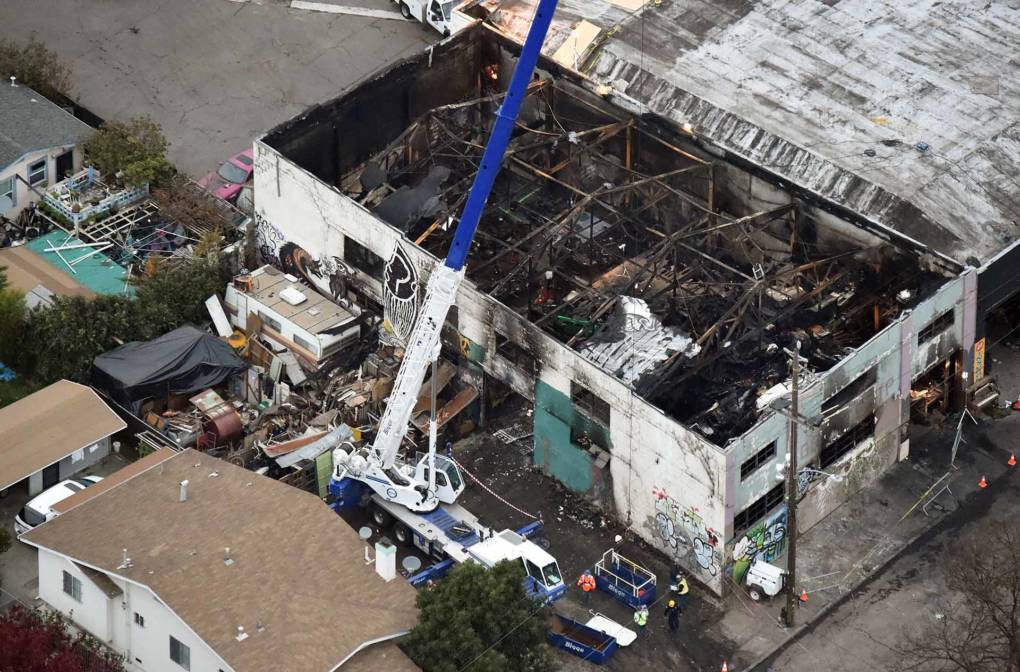
"caption": "A crane is used to lift wreckage as part of search efforts at the fire-ravaged Ghost Ship warehouse in December 2016. ",
"description": null,
"title": "Oakland-Ghost Ship Fire",
"credit": "Josh Edelson/AFP-Getty Image",
"status": "inherit",
"isLoading": false,
"fetchFailed": false
},
"news_11489027": {
"type": "attachments",
"id": "news_11489027",
"meta": {
"index": "attachments_1716263798",
"site": "news",
"id": "11489027",
"found": true
},
"parent": 11489025,
"imgSizes": {
"small": {
"file": "https://ww2.kqed.org/app/uploads/sites/10/2017/06/IMG_4881-520x390.jpg",
"width": 520,
"mimeType": "image/jpeg",
"height": 390
},
"twentyfourteen-full-width": {
"file": "https://ww2.kqed.org/app/uploads/sites/10/2017/06/IMG_4881-1038x576.jpg",
"width": 1038,
"mimeType": "image/jpeg",
"height": 576
},
"thumbnail": {
"file": "https://ww2.kqed.org/app/uploads/sites/10/2017/06/IMG_4881-160x120.jpg",
"width": 160,
"mimeType": "image/jpeg",
"height": 120
},
"fd-sm": {
"file": "https://ww2.kqed.org/app/uploads/sites/10/2017/06/IMG_4881-960x720.jpg",
"width": 960,
"mimeType": "image/jpeg",
"height": 720
},
"post-thumbnail": {
"file": "https://ww2.kqed.org/app/uploads/sites/10/2017/06/IMG_4881-672x372.jpg",
"width": 672,
"mimeType": "image/jpeg",
"height": 372
},
"xsmall": {
"file": "https://ww2.kqed.org/app/uploads/sites/10/2017/06/IMG_4881-375x281.jpg",
"width": 375,
"mimeType": "image/jpeg",
"height": 281
},
"kqedFullSize": {
"file": "https://ww2.kqed.org/app/uploads/sites/10/2017/06/IMG_4881-e1496338120767.jpg",
"width": 1920,
"height": 1440
},
"large": {
"file": "https://ww2.kqed.org/app/uploads/sites/10/2017/06/IMG_4881-1020x765.jpg",
"width": 1020,
"mimeType": "image/jpeg",
"height": 765
},
"xlarge": {
"file": "https://ww2.kqed.org/app/uploads/sites/10/2017/06/IMG_4881-1180x885.jpg",
"width": 1180,
"mimeType": "image/jpeg",
"height": 885
},
"guest-author-50": {
"file": "https://ww2.kqed.org/app/uploads/sites/10/2017/06/IMG_4881-50x50.jpg",
"width": 50,
"mimeType": "image/jpeg",
"height": 50
},
"guest-author-96": {
"file": "https://ww2.kqed.org/app/uploads/sites/10/2017/06/IMG_4881-96x96.jpg",
"width": 96,
"mimeType": "image/jpeg",
"height": 96
},
"medium": {
"file": "https://ww2.kqed.org/app/uploads/sites/10/2017/06/IMG_4881-800x600.jpg",
"width": 800,
"mimeType": "image/jpeg",
"height": 600
},
"guest-author-64": {
"file": "https://ww2.kqed.org/app/uploads/sites/10/2017/06/IMG_4881-64x64.jpg",
"width": 64,
"mimeType": "image/jpeg",
"height": 64
},
"guest-author-32": {
"file": "https://ww2.kqed.org/app/uploads/sites/10/2017/06/IMG_4881-32x32.jpg",
"width": 32,
"mimeType": "image/jpeg",
"height": 32
},
"fd-lrg": {
"file": "https://ww2.kqed.org/app/uploads/sites/10/2017/06/IMG_4881-1920x1440.jpg",
"width": 1920,
"mimeType": "image/jpeg",
"height": 1440
},
"fd-med": {
"file": "https://ww2.kqed.org/app/uploads/sites/10/2017/06/IMG_4881-1180x885.jpg",
"width": 1180,
"mimeType": "image/jpeg",
"height": 885
},
"full-width": {
"file": "https://ww2.kqed.org/app/uploads/sites/10/2017/06/IMG_4881-1920x1440.jpg",
"width": 1920,
"mimeType": "image/jpeg",
"height": 1440
},
"detail": {
"file": "https://ww2.kqed.org/app/uploads/sites/10/2017/06/IMG_4881-150x150.jpg",
"width": 150,
"mimeType": "image/jpeg",
"height": 150
},
"guest-author-128": {
"file": "https://ww2.kqed.org/app/uploads/sites/10/2017/06/IMG_4881-128x128.jpg",
"width": 128,
"mimeType": "image/jpeg",
"height": 128
},
"xxsmall": {
"file": "https://ww2.kqed.org/app/uploads/sites/10/2017/06/IMG_4881-240x180.jpg",
"width": 240,
"mimeType": "image/jpeg",
"height": 180
}
},
"publishDate": 1496335179,
"modified": 1496439392,
"caption": "Jasmine Abuslin with her attorney, John Burris, at a press conference on May 31, 2017.",
"description": null,
"title": "IMG_4881",
"credit": "Julie Small/KQED",
"status": "inherit",
"isLoading": false,
"fetchFailed": false
},
"news_11489244": {
"type": "attachments",
"id": "news_11489244",
"meta": {
"index": "attachments_1716263798",
"site": "news",
"id": "11489244",
"found": true
},
"parent": 11475645,
"imgSizes": {
"small": {
"file": "https://ww2.kqed.org/app/uploads/sites/10/2017/05/SyrianRefugeeKidMain-520x428.jpg",
"width": 520,
"mimeType": "image/jpeg",
"height": 428
},
"twentyfourteen-full-width": {
"file": "https://ww2.kqed.org/app/uploads/sites/10/2017/05/SyrianRefugeeKidMain-1038x576.jpg",
"width": 1038,
"mimeType": "image/jpeg",
"height": 576
},
"thumbnail": {
"file": "https://ww2.kqed.org/app/uploads/sites/10/2017/05/SyrianRefugeeKidMain-160x132.jpg",
"width": 160,
"mimeType": "image/jpeg",
"height": 132
},
"fd-sm": {
"file": "https://ww2.kqed.org/app/uploads/sites/10/2017/05/SyrianRefugeeKidMain-960x791.jpg",
"width": 960,
"mimeType": "image/jpeg",
"height": 791
},
"post-thumbnail": {
"file": "https://ww2.kqed.org/app/uploads/sites/10/2017/05/SyrianRefugeeKidMain-672x372.jpg",
"width": 672,
"mimeType": "image/jpeg",
"height": 372
},
"xsmall": {
"file": "https://ww2.kqed.org/app/uploads/sites/10/2017/05/SyrianRefugeeKidMain-375x309.jpg",
"width": 375,
"mimeType": "image/jpeg",
"height": 309
},
"kqedFullSize": {
"file": "https://ww2.kqed.org/app/uploads/sites/10/2017/05/SyrianRefugeeKidMain.jpg",
"width": 1920,
"height": 1582
},
"large": {
"file": "https://ww2.kqed.org/app/uploads/sites/10/2017/05/SyrianRefugeeKidMain-1020x840.jpg",
"width": 1020,
"mimeType": "image/jpeg",
"height": 840
},
"xlarge": {
"file": "https://ww2.kqed.org/app/uploads/sites/10/2017/05/SyrianRefugeeKidMain-1180x972.jpg",
"width": 1180,
"mimeType": "image/jpeg",
"height": 972
},
"guest-author-50": {
"file": "https://ww2.kqed.org/app/uploads/sites/10/2017/05/SyrianRefugeeKidMain-50x50.jpg",
"width": 50,
"mimeType": "image/jpeg",
"height": 50
},
"guest-author-96": {
"file": "https://ww2.kqed.org/app/uploads/sites/10/2017/05/SyrianRefugeeKidMain-96x96.jpg",
"width": 96,
"mimeType": "image/jpeg",
"height": 96
},
"medium": {
"file": "https://ww2.kqed.org/app/uploads/sites/10/2017/05/SyrianRefugeeKidMain-800x659.jpg",
"width": 800,
"mimeType": "image/jpeg",
"height": 659
},
"guest-author-64": {
"file": "https://ww2.kqed.org/app/uploads/sites/10/2017/05/SyrianRefugeeKidMain-64x64.jpg",
"width": 64,
"mimeType": "image/jpeg",
"height": 64
},
"guest-author-32": {
"file": "https://ww2.kqed.org/app/uploads/sites/10/2017/05/SyrianRefugeeKidMain-32x32.jpg",
"width": 32,
"mimeType": "image/jpeg",
"height": 32
},
"fd-lrg": {
"file": "https://ww2.kqed.org/app/uploads/sites/10/2017/05/SyrianRefugeeKidMain-1920x1582.jpg",
"width": 1920,
"mimeType": "image/jpeg",
"height": 1582
},
"fd-med": {
"file": "https://ww2.kqed.org/app/uploads/sites/10/2017/05/SyrianRefugeeKidMain-1180x972.jpg",
"width": 1180,
"mimeType": "image/jpeg",
"height": 972
},
"full-width": {
"file": "https://ww2.kqed.org/app/uploads/sites/10/2017/05/SyrianRefugeeKidMain-1920x1582.jpg",
"width": 1920,
"mimeType": "image/jpeg",
"height": 1582
},
"detail": {
"file": "https://ww2.kqed.org/app/uploads/sites/10/2017/05/SyrianRefugeeKidMain-150x150.jpg",
"width": 150,
"mimeType": "image/jpeg",
"height": 150
},
"guest-author-128": {
"file": "https://ww2.kqed.org/app/uploads/sites/10/2017/05/SyrianRefugeeKidMain-128x128.jpg",
"width": 128,
"mimeType": "image/jpeg",
"height": 128
},
"xxsmall": {
"file": "https://ww2.kqed.org/app/uploads/sites/10/2017/05/SyrianRefugeeKidMain-240x198.jpg",
"width": 240,
"mimeType": "image/jpeg",
"height": 198
}
},
"publishDate": 1496344118,
"modified": 1496438138,
"caption": "Volunteer Layla Darwish worries about the effects of war on Syrian refugee children, some of whom have been wounded, burned or witnessed violence.",
"description": "Volunteer Layla Darwish worries about the effects of war on Syrian refugee children, some of whom have been wounded, burned or witnessed violence.",
"title": "SyrianRefugeeKidMain",
"credit": "Courtesy Layla Darwish",
"status": "inherit",
"isLoading": false,
"fetchFailed": false
},
"news_11490645": {
"type": "attachments",
"id": "news_11490645",
"meta": {
"index": "attachments_1716263798",
"site": "news",
"id": "11490645",
"found": true
},
"parent": 11490644,
"imgSizes": {
"small": {
"file": "https://ww2.kqed.org/app/uploads/sites/10/2017/06/gettyimages-691357800_wide-503fe71b322ef99b8ee11d10fa2924171b7cf8b2-520x293.jpg",
"width": 520,
"mimeType": "image/jpeg",
"height": 293
},
"twentyfourteen-full-width": {
"file": "https://ww2.kqed.org/app/uploads/sites/10/2017/06/gettyimages-691357800_wide-503fe71b322ef99b8ee11d10fa2924171b7cf8b2-1038x576.jpg",
"width": 1038,
"mimeType": "image/jpeg",
"height": 576
},
"thumbnail": {
"file": "https://ww2.kqed.org/app/uploads/sites/10/2017/06/gettyimages-691357800_wide-503fe71b322ef99b8ee11d10fa2924171b7cf8b2-160x90.jpg",
"width": 160,
"mimeType": "image/jpeg",
"height": 90
},
"fd-sm": {
"file": "https://ww2.kqed.org/app/uploads/sites/10/2017/06/gettyimages-691357800_wide-503fe71b322ef99b8ee11d10fa2924171b7cf8b2-960x540.jpg",
"width": 960,
"mimeType": "image/jpeg",
"height": 540
},
"post-thumbnail": {
"file": "https://ww2.kqed.org/app/uploads/sites/10/2017/06/gettyimages-691357800_wide-503fe71b322ef99b8ee11d10fa2924171b7cf8b2-672x372.jpg",
"width": 672,
"mimeType": "image/jpeg",
"height": 372
},
"xsmall": {
"file": "https://ww2.kqed.org/app/uploads/sites/10/2017/06/gettyimages-691357800_wide-503fe71b322ef99b8ee11d10fa2924171b7cf8b2-375x211.jpg",
"width": 375,
"mimeType": "image/jpeg",
"height": 211
},
"kqedFullSize": {
"file": "https://ww2.kqed.org/app/uploads/sites/10/2017/06/gettyimages-691357800_wide-503fe71b322ef99b8ee11d10fa2924171b7cf8b2-e1496416607945.jpg",
"width": 1920,
"height": 1080
},
"large": {
"file": "https://ww2.kqed.org/app/uploads/sites/10/2017/06/gettyimages-691357800_wide-503fe71b322ef99b8ee11d10fa2924171b7cf8b2-1020x574.jpg",
"width": 1020,
"mimeType": "image/jpeg",
"height": 574
},
"xlarge": {
"file": "https://ww2.kqed.org/app/uploads/sites/10/2017/06/gettyimages-691357800_wide-503fe71b322ef99b8ee11d10fa2924171b7cf8b2-1180x664.jpg",
"width": 1180,
"mimeType": "image/jpeg",
"height": 664
},
"guest-author-50": {
"file": "https://ww2.kqed.org/app/uploads/sites/10/2017/06/gettyimages-691357800_wide-503fe71b322ef99b8ee11d10fa2924171b7cf8b2-50x50.jpg",
"width": 50,
"mimeType": "image/jpeg",
"height": 50
},
"guest-author-96": {
"file": "https://ww2.kqed.org/app/uploads/sites/10/2017/06/gettyimages-691357800_wide-503fe71b322ef99b8ee11d10fa2924171b7cf8b2-96x96.jpg",
"width": 96,
"mimeType": "image/jpeg",
"height": 96
},
"medium": {
"file": "https://ww2.kqed.org/app/uploads/sites/10/2017/06/gettyimages-691357800_wide-503fe71b322ef99b8ee11d10fa2924171b7cf8b2-800x450.jpg",
"width": 800,
"mimeType": "image/jpeg",
"height": 450
},
"guest-author-64": {
"file": "https://ww2.kqed.org/app/uploads/sites/10/2017/06/gettyimages-691357800_wide-503fe71b322ef99b8ee11d10fa2924171b7cf8b2-64x64.jpg",
"width": 64,
"mimeType": "image/jpeg",
"height": 64
},
"guest-author-32": {
"file": "https://ww2.kqed.org/app/uploads/sites/10/2017/06/gettyimages-691357800_wide-503fe71b322ef99b8ee11d10fa2924171b7cf8b2-32x32.jpg",
"width": 32,
"mimeType": "image/jpeg",
"height": 32
},
"fd-lrg": {
"file": "https://ww2.kqed.org/app/uploads/sites/10/2017/06/gettyimages-691357800_wide-503fe71b322ef99b8ee11d10fa2924171b7cf8b2-1920x1080.jpg",
"width": 1920,
"mimeType": "image/jpeg",
"height": 1080
},
"fd-med": {
"file": "https://ww2.kqed.org/app/uploads/sites/10/2017/06/gettyimages-691357800_wide-503fe71b322ef99b8ee11d10fa2924171b7cf8b2-1180x664.jpg",
"width": 1180,
"mimeType": "image/jpeg",
"height": 664
},
"full-width": {
"file": "https://ww2.kqed.org/app/uploads/sites/10/2017/06/gettyimages-691357800_wide-503fe71b322ef99b8ee11d10fa2924171b7cf8b2-1920x1080.jpg",
"width": 1920,
"mimeType": "image/jpeg",
"height": 1080
},
"detail": {
"file": "https://ww2.kqed.org/app/uploads/sites/10/2017/06/gettyimages-691357800_wide-503fe71b322ef99b8ee11d10fa2924171b7cf8b2-150x150.jpg",
"width": 150,
"mimeType": "image/jpeg",
"height": 150
},
"guest-author-128": {
"file": "https://ww2.kqed.org/app/uploads/sites/10/2017/06/gettyimages-691357800_wide-503fe71b322ef99b8ee11d10fa2924171b7cf8b2-128x128.jpg",
"width": 128,
"mimeType": "image/jpeg",
"height": 128
},
"xxsmall": {
"file": "https://ww2.kqed.org/app/uploads/sites/10/2017/06/gettyimages-691357800_wide-503fe71b322ef99b8ee11d10fa2924171b7cf8b2-240x135.jpg",
"width": 240,
"mimeType": "image/jpeg",
"height": 135
}
},
"publishDate": 1496416513,
"modified": 1496441927,
"caption": "The Justice Department is challenging rulings that blocked President Trump's travel ban against six Muslim-majority nations. Here, demonstrators pray during a traditional Ramadan evening meal that was held outside Trump Tower in New York on Thursday, June 1, 2017.",
"description": null,
"title": "The Justice Department is challenging rulings that blocked President Trump's travel ban against six Muslim-majority nations. Here, demonstrators pray during a traditional Ramadan evening meal that was held outside of Trump Tower in New York Thursday.",
"credit": "Jeenah Moon/Bloomberg via Getty Images",
"status": "inherit",
"isLoading": false,
"fetchFailed": false
},
"news_11489593": {
"type": "attachments",
"id": "news_11489593",
"meta": {
"index": "attachments_1716263798",
"site": "news",
"id": "11489593",
"found": true
},
"parent": 11489517,
"imgSizes": {
"small": {
"file": "https://ww2.kqed.org/app/uploads/sites/10/2017/06/Booking-Photos-qut-520x301.jpg",
"width": 520,
"mimeType": "image/jpeg",
"height": 301
},
"thumbnail": {
"file": "https://ww2.kqed.org/app/uploads/sites/10/2017/06/Booking-Photos-qut-160x93.jpg",
"width": 160,
"mimeType": "image/jpeg",
"height": 93
},
"post-thumbnail": {
"file": "https://ww2.kqed.org/app/uploads/sites/10/2017/06/Booking-Photos-qut-672x372.jpg",
"width": 672,
"mimeType": "image/jpeg",
"height": 372
},
"xsmall": {
"file": "https://ww2.kqed.org/app/uploads/sites/10/2017/06/Booking-Photos-qut-375x217.jpg",
"width": 375,
"mimeType": "image/jpeg",
"height": 217
},
"kqedFullSize": {
"file": "https://ww2.kqed.org/app/uploads/sites/10/2017/06/Booking-Photos-qut.jpg",
"width": 940,
"height": 545
},
"guest-author-50": {
"file": "https://ww2.kqed.org/app/uploads/sites/10/2017/06/Booking-Photos-qut-50x50.jpg",
"width": 50,
"mimeType": "image/jpeg",
"height": 50
},
"guest-author-96": {
"file": "https://ww2.kqed.org/app/uploads/sites/10/2017/06/Booking-Photos-qut-96x96.jpg",
"width": 96,
"mimeType": "image/jpeg",
"height": 96
},
"medium": {
"file": "https://ww2.kqed.org/app/uploads/sites/10/2017/06/Booking-Photos-qut-800x464.jpg",
"width": 800,
"mimeType": "image/jpeg",
"height": 464
},
"guest-author-64": {
"file": "https://ww2.kqed.org/app/uploads/sites/10/2017/06/Booking-Photos-qut-64x64.jpg",
"width": 64,
"mimeType": "image/jpeg",
"height": 64
},
"guest-author-32": {
"file": "https://ww2.kqed.org/app/uploads/sites/10/2017/06/Booking-Photos-qut-32x32.jpg",
"width": 32,
"mimeType": "image/jpeg",
"height": 32
},
"detail": {
"file": "https://ww2.kqed.org/app/uploads/sites/10/2017/06/Booking-Photos-qut-150x150.jpg",
"width": 150,
"mimeType": "image/jpeg",
"height": 150
},
"guest-author-128": {
"file": "https://ww2.kqed.org/app/uploads/sites/10/2017/06/Booking-Photos-qut-128x128.jpg",
"width": 128,
"mimeType": "image/jpeg",
"height": 128
},
"xxsmall": {
"file": "https://ww2.kqed.org/app/uploads/sites/10/2017/06/Booking-Photos-qut-240x139.jpg",
"width": 240,
"mimeType": "image/jpeg",
"height": 139
}
},
"publishDate": 1496358869,
"modified": 1515110830,
"caption": "Three Santa Clara County Sheriff's deputies were charged with killing mentally ill inmate Michael Tyree. From left: Rafael Rodriguez, Matthew Farris and Jereh Lubrin.",
"description": null,
"title": "Booking Photos-qut",
"credit": "Santa Clara County Sheriff's Office",
"status": "inherit",
"isLoading": false,
"fetchFailed": false
},
"news_11489324": {
"type": "attachments",
"id": "news_11489324",
"meta": {
"index": "attachments_1716263798",
"site": "news",
"id": "11489324",
"found": true
},
"parent": 11489321,
"imgSizes": {
"small": {
"file": "https://ww2.kqed.org/app/uploads/sites/10/2017/06/RS8197_185721083-520x347.jpg",
"width": 520,
"mimeType": "image/jpeg",
"height": 347
},
"twentyfourteen-full-width": {
"file": "https://ww2.kqed.org/app/uploads/sites/10/2017/06/RS8197_185721083-1038x576.jpg",
"width": 1038,
"mimeType": "image/jpeg",
"height": 576
},
"thumbnail": {
"file": "https://ww2.kqed.org/app/uploads/sites/10/2017/06/RS8197_185721083-160x107.jpg",
"width": 160,
"mimeType": "image/jpeg",
"height": 107
},
"fd-sm": {
"file": "https://ww2.kqed.org/app/uploads/sites/10/2017/06/RS8197_185721083-960x640.jpg",
"width": 960,
"mimeType": "image/jpeg",
"height": 640
},
"post-thumbnail": {
"file": "https://ww2.kqed.org/app/uploads/sites/10/2017/06/RS8197_185721083-672x372.jpg",
"width": 672,
"mimeType": "image/jpeg",
"height": 372
},
"xsmall": {
"file": "https://ww2.kqed.org/app/uploads/sites/10/2017/06/RS8197_185721083-375x250.jpg",
"width": 375,
"mimeType": "image/jpeg",
"height": 250
},
"kqedFullSize": {
"file": "https://ww2.kqed.org/app/uploads/sites/10/2017/06/RS8197_185721083-e1496348117714.jpg",
"width": 1920,
"height": 1280
},
"large": {
"file": "https://ww2.kqed.org/app/uploads/sites/10/2017/06/RS8197_185721083-1020x680.jpg",
"width": 1020,
"mimeType": "image/jpeg",
"height": 680
},
"xlarge": {
"file": "https://ww2.kqed.org/app/uploads/sites/10/2017/06/RS8197_185721083-1180x787.jpg",
"width": 1180,
"mimeType": "image/jpeg",
"height": 787
},
"guest-author-50": {
"file": "https://ww2.kqed.org/app/uploads/sites/10/2017/06/RS8197_185721083-50x50.jpg",
"width": 50,
"mimeType": "image/jpeg",
"height": 50
},
"guest-author-96": {
"file": "https://ww2.kqed.org/app/uploads/sites/10/2017/06/RS8197_185721083-96x96.jpg",
"width": 96,
"mimeType": "image/jpeg",
"height": 96
},
"medium": {
"file": "https://ww2.kqed.org/app/uploads/sites/10/2017/06/RS8197_185721083-800x533.jpg",
"width": 800,
"mimeType": "image/jpeg",
"height": 533
},
"guest-author-64": {
"file": "https://ww2.kqed.org/app/uploads/sites/10/2017/06/RS8197_185721083-64x64.jpg",
"width": 64,
"mimeType": "image/jpeg",
"height": 64
},
"guest-author-32": {
"file": "https://ww2.kqed.org/app/uploads/sites/10/2017/06/RS8197_185721083-32x32.jpg",
"width": 32,
"mimeType": "image/jpeg",
"height": 32
},
"fd-lrg": {
"file": "https://ww2.kqed.org/app/uploads/sites/10/2017/06/RS8197_185721083-1920x1280.jpg",
"width": 1920,
"mimeType": "image/jpeg",
"height": 1280
},
"fd-med": {
"file": "https://ww2.kqed.org/app/uploads/sites/10/2017/06/RS8197_185721083-1180x787.jpg",
"width": 1180,
"mimeType": "image/jpeg",
"height": 787
},
"full-width": {
"file": "https://ww2.kqed.org/app/uploads/sites/10/2017/06/RS8197_185721083-1920x1280.jpg",
"width": 1920,
"mimeType": "image/jpeg",
"height": 1280
},
"detail": {
"file": "https://ww2.kqed.org/app/uploads/sites/10/2017/06/RS8197_185721083-150x150.jpg",
"width": 150,
"mimeType": "image/jpeg",
"height": 150
},
"guest-author-128": {
"file": "https://ww2.kqed.org/app/uploads/sites/10/2017/06/RS8197_185721083-128x128.jpg",
"width": 128,
"mimeType": "image/jpeg",
"height": 128
},
"xxsmall": {
"file": "https://ww2.kqed.org/app/uploads/sites/10/2017/06/RS8197_185721083-240x160.jpg",
"width": 240,
"mimeType": "image/jpeg",
"height": 160
}
},
"publishDate": 1496348044,
"modified": 1496348110,
"caption": "California Gov. Jerry Brown on Oct. 24, 2013. ",
"description": null,
"title": "Center For American Progress Hosts 10th Anniversary Conference",
"credit": "Chip Somodevilla/Getty Images",
"status": "inherit",
"isLoading": false,
"fetchFailed": false
},
"news_11487923": {
"type": "attachments",
"id": "news_11487923",
"meta": {
"index": "attachments_1716263798",
"site": "news",
"id": "11487923",
"found": true
},
"parent": 11487659,
"imgSizes": {
"small": {
"file": "https://ww2.kqed.org/app/uploads/sites/10/2017/05/RS15557_BUDGET_13-qut-520x347.jpg",
"width": 520,
"mimeType": "image/jpeg",
"height": 347
},
"twentyfourteen-full-width": {
"file": "https://ww2.kqed.org/app/uploads/sites/10/2017/05/RS15557_BUDGET_13-qut-1038x576.jpg",
"width": 1038,
"mimeType": "image/jpeg",
"height": 576
},
"thumbnail": {
"file": "https://ww2.kqed.org/app/uploads/sites/10/2017/05/RS15557_BUDGET_13-qut-160x107.jpg",
"width": 160,
"mimeType": "image/jpeg",
"height": 107
},
"fd-sm": {
"file": "https://ww2.kqed.org/app/uploads/sites/10/2017/05/RS15557_BUDGET_13-qut-960x640.jpg",
"width": 960,
"mimeType": "image/jpeg",
"height": 640
},
"post-thumbnail": {
"file": "https://ww2.kqed.org/app/uploads/sites/10/2017/05/RS15557_BUDGET_13-qut-672x372.jpg",
"width": 672,
"mimeType": "image/jpeg",
"height": 372
},
"xsmall": {
"file": "https://ww2.kqed.org/app/uploads/sites/10/2017/05/RS15557_BUDGET_13-qut-375x250.jpg",
"width": 375,
"mimeType": "image/jpeg",
"height": 250
},
"kqedFullSize": {
"file": "https://ww2.kqed.org/app/uploads/sites/10/2017/05/RS15557_BUDGET_13-qut.jpg",
"width": 1920,
"height": 1280
},
"large": {
"file": "https://ww2.kqed.org/app/uploads/sites/10/2017/05/RS15557_BUDGET_13-qut-1020x680.jpg",
"width": 1020,
"mimeType": "image/jpeg",
"height": 680
},
"xlarge": {
"file": "https://ww2.kqed.org/app/uploads/sites/10/2017/05/RS15557_BUDGET_13-qut-1180x787.jpg",
"width": 1180,
"mimeType": "image/jpeg",
"height": 787
},
"guest-author-50": {
"file": "https://ww2.kqed.org/app/uploads/sites/10/2017/05/RS15557_BUDGET_13-qut-50x50.jpg",
"width": 50,
"mimeType": "image/jpeg",
"height": 50
},
"guest-author-96": {
"file": "https://ww2.kqed.org/app/uploads/sites/10/2017/05/RS15557_BUDGET_13-qut-96x96.jpg",
"width": 96,
"mimeType": "image/jpeg",
"height": 96
},
"medium": {
"file": "https://ww2.kqed.org/app/uploads/sites/10/2017/05/RS15557_BUDGET_13-qut-800x533.jpg",
"width": 800,
"mimeType": "image/jpeg",
"height": 533
},
"guest-author-64": {
"file": "https://ww2.kqed.org/app/uploads/sites/10/2017/05/RS15557_BUDGET_13-qut-64x64.jpg",
"width": 64,
"mimeType": "image/jpeg",
"height": 64
},
"guest-author-32": {
"file": "https://ww2.kqed.org/app/uploads/sites/10/2017/05/RS15557_BUDGET_13-qut-32x32.jpg",
"width": 32,
"mimeType": "image/jpeg",
"height": 32
},
"fd-lrg": {
"file": "https://ww2.kqed.org/app/uploads/sites/10/2017/05/RS15557_BUDGET_13-qut-1920x1280.jpg",
"width": 1920,
"mimeType": "image/jpeg",
"height": 1280
},
"fd-med": {
"file": "https://ww2.kqed.org/app/uploads/sites/10/2017/05/RS15557_BUDGET_13-qut-1180x787.jpg",
"width": 1180,
"mimeType": "image/jpeg",
"height": 787
},
"full-width": {
"file": "https://ww2.kqed.org/app/uploads/sites/10/2017/05/RS15557_BUDGET_13-qut-1920x1280.jpg",
"width": 1920,
"mimeType": "image/jpeg",
"height": 1280
},
"detail": {
"file": "https://ww2.kqed.org/app/uploads/sites/10/2017/05/RS15557_BUDGET_13-qut-150x150.jpg",
"width": 150,
"mimeType": "image/jpeg",
"height": 150
},
"guest-author-128": {
"file": "https://ww2.kqed.org/app/uploads/sites/10/2017/05/RS15557_BUDGET_13-qut-128x128.jpg",
"width": 128,
"mimeType": "image/jpeg",
"height": 128
},
"xxsmall": {
"file": "https://ww2.kqed.org/app/uploads/sites/10/2017/05/RS15557_BUDGET_13-qut-240x160.jpg",
"width": 240,
"mimeType": "image/jpeg",
"height": 160
}
},
"publishDate": 1496271704,
"modified": 1496273297,
"caption": "Sen. Bob Hertzberg (shown here) and Assemblyman Rob Bonta are pushing bail reform.",
"description": null,
"title": "RS15557_BUDGET_13-qut",
"credit": "Max Whittaker/KQED",
"status": "inherit",
"isLoading": false,
"fetchFailed": false
},
"news_11486202": {
"type": "attachments",
"id": "news_11486202",
"meta": {
"index": "attachments_1716263798",
"site": "news",
"id": "11486202",
"found": true
},
"parent": 11486197,
"imgSizes": {
"small": {
"file": "https://ww2.kqed.org/app/uploads/sites/10/2017/05/BrokenWindows800-520x389.jpg",
"width": 520,
"mimeType": "image/jpeg",
"height": 389
},
"twentyfourteen-full-width": {
"file": "https://ww2.kqed.org/app/uploads/sites/10/2017/05/BrokenWindows800-800x576.jpg",
"width": 800,
"mimeType": "image/jpeg",
"height": 576
},
"thumbnail": {
"file": "https://ww2.kqed.org/app/uploads/sites/10/2017/05/BrokenWindows800-160x120.jpg",
"width": 160,
"mimeType": "image/jpeg",
"height": 120
},
"post-thumbnail": {
"file": "https://ww2.kqed.org/app/uploads/sites/10/2017/05/BrokenWindows800-672x372.jpg",
"width": 672,
"mimeType": "image/jpeg",
"height": 372
},
"xsmall": {
"file": "https://ww2.kqed.org/app/uploads/sites/10/2017/05/BrokenWindows800-375x281.jpg",
"width": 375,
"mimeType": "image/jpeg",
"height": 281
},
"kqedFullSize": {
"file": "https://ww2.kqed.org/app/uploads/sites/10/2017/05/BrokenWindows800.jpg",
"width": 800,
"height": 599
},
"guest-author-50": {
"file": "https://ww2.kqed.org/app/uploads/sites/10/2017/05/BrokenWindows800-50x50.jpg",
"width": 50,
"mimeType": "image/jpeg",
"height": 50
},
"guest-author-96": {
"file": "https://ww2.kqed.org/app/uploads/sites/10/2017/05/BrokenWindows800-96x96.jpg",
"width": 96,
"mimeType": "image/jpeg",
"height": 96
},
"medium": {
"file": "https://ww2.kqed.org/app/uploads/sites/10/2017/05/BrokenWindows800-800x599.jpg",
"width": 800,
"mimeType": "image/jpeg",
"height": 599
},
"guest-author-64": {
"file": "https://ww2.kqed.org/app/uploads/sites/10/2017/05/BrokenWindows800-64x64.jpg",
"width": 64,
"mimeType": "image/jpeg",
"height": 64
},
"guest-author-32": {
"file": "https://ww2.kqed.org/app/uploads/sites/10/2017/05/BrokenWindows800-32x32.jpg",
"width": 32,
"mimeType": "image/jpeg",
"height": 32
},
"detail": {
"file": "https://ww2.kqed.org/app/uploads/sites/10/2017/05/BrokenWindows800-150x150.jpg",
"width": 150,
"mimeType": "image/jpeg",
"height": 150
},
"guest-author-128": {
"file": "https://ww2.kqed.org/app/uploads/sites/10/2017/05/BrokenWindows800-128x128.jpg",
"width": 128,
"mimeType": "image/jpeg",
"height": 128
},
"xxsmall": {
"file": "https://ww2.kqed.org/app/uploads/sites/10/2017/05/BrokenWindows800-240x180.jpg",
"width": 240,
"mimeType": "image/jpeg",
"height": 180
}
},
"publishDate": 1496185472,
"modified": 1496185511,
"caption": "The 'broken windows' theory of policing suggested that cleaning up the visible signs of disorder — like graffiti, loitering, panhandling and prostitution — would prevent more serious crime.\n",
"description": "The 'broken windows' theory of policing suggested that cleaning up the visible signs of disorder — like graffiti, loitering, panhandling and prostitution — would prevent more serious crime.\n",
"title": "BrokenWindows800",
"credit": "Getty Images",
"status": "inherit",
"isLoading": false,
"fetchFailed": false
},
"news_11486372": {
"type": "attachments",
"id": "news_11486372",
"meta": {
"index": "attachments_1716263798",
"site": "news",
"id": "11486372",
"found": true
},
"parent": 11486368,
"imgSizes": {
"small": {
"file": "https://ww2.kqed.org/app/uploads/sites/10/2017/05/TrumpSpeaks-520x329.jpg",
"width": 520,
"mimeType": "image/jpeg",
"height": 329
},
"twentyfourteen-full-width": {
"file": "https://ww2.kqed.org/app/uploads/sites/10/2017/05/TrumpSpeaks-1038x576.jpg",
"width": 1038,
"mimeType": "image/jpeg",
"height": 576
},
"thumbnail": {
"file": "https://ww2.kqed.org/app/uploads/sites/10/2017/05/TrumpSpeaks-160x101.jpg",
"width": 160,
"mimeType": "image/jpeg",
"height": 101
},
"fd-sm": {
"file": "https://ww2.kqed.org/app/uploads/sites/10/2017/05/TrumpSpeaks-960x608.jpg",
"width": 960,
"mimeType": "image/jpeg",
"height": 608
},
"post-thumbnail": {
"file": "https://ww2.kqed.org/app/uploads/sites/10/2017/05/TrumpSpeaks-672x372.jpg",
"width": 672,
"mimeType": "image/jpeg",
"height": 372
},
"xsmall": {
"file": "https://ww2.kqed.org/app/uploads/sites/10/2017/05/TrumpSpeaks-375x237.jpg",
"width": 375,
"mimeType": "image/jpeg",
"height": 237
},
"kqedFullSize": {
"file": "https://ww2.kqed.org/app/uploads/sites/10/2017/05/TrumpSpeaks.jpg",
"width": 1920,
"height": 1215
},
"large": {
"file": "https://ww2.kqed.org/app/uploads/sites/10/2017/05/TrumpSpeaks-1020x645.jpg",
"width": 1020,
"mimeType": "image/jpeg",
"height": 645
},
"xlarge": {
"file": "https://ww2.kqed.org/app/uploads/sites/10/2017/05/TrumpSpeaks-1180x747.jpg",
"width": 1180,
"mimeType": "image/jpeg",
"height": 747
},
"guest-author-50": {
"file": "https://ww2.kqed.org/app/uploads/sites/10/2017/05/TrumpSpeaks-50x50.jpg",
"width": 50,
"mimeType": "image/jpeg",
"height": 50
},
"guest-author-96": {
"file": "https://ww2.kqed.org/app/uploads/sites/10/2017/05/TrumpSpeaks-96x96.jpg",
"width": 96,
"mimeType": "image/jpeg",
"height": 96
},
"medium": {
"file": "https://ww2.kqed.org/app/uploads/sites/10/2017/05/TrumpSpeaks-800x506.jpg",
"width": 800,
"mimeType": "image/jpeg",
"height": 506
},
"guest-author-64": {
"file": "https://ww2.kqed.org/app/uploads/sites/10/2017/05/TrumpSpeaks-64x64.jpg",
"width": 64,
"mimeType": "image/jpeg",
"height": 64
},
"guest-author-32": {
"file": "https://ww2.kqed.org/app/uploads/sites/10/2017/05/TrumpSpeaks-32x32.jpg",
"width": 32,
"mimeType": "image/jpeg",
"height": 32
},
"fd-lrg": {
"file": "https://ww2.kqed.org/app/uploads/sites/10/2017/05/TrumpSpeaks-1920x1215.jpg",
"width": 1920,
"mimeType": "image/jpeg",
"height": 1215
},
"fd-med": {
"file": "https://ww2.kqed.org/app/uploads/sites/10/2017/05/TrumpSpeaks-1180x747.jpg",
"width": 1180,
"mimeType": "image/jpeg",
"height": 747
},
"full-width": {
"file": "https://ww2.kqed.org/app/uploads/sites/10/2017/05/TrumpSpeaks-1920x1215.jpg",
"width": 1920,
"mimeType": "image/jpeg",
"height": 1215
},
"detail": {
"file": "https://ww2.kqed.org/app/uploads/sites/10/2017/05/TrumpSpeaks-150x150.jpg",
"width": 150,
"mimeType": "image/jpeg",
"height": 150
},
"guest-author-128": {
"file": "https://ww2.kqed.org/app/uploads/sites/10/2017/05/TrumpSpeaks-128x128.jpg",
"width": 128,
"mimeType": "image/jpeg",
"height": 128
},
"xxsmall": {
"file": "https://ww2.kqed.org/app/uploads/sites/10/2017/05/TrumpSpeaks-240x152.jpg",
"width": 240,
"mimeType": "image/jpeg",
"height": 152
}
},
"publishDate": 1496193167,
"modified": 1496278405,
"caption": "President Trump's order to deport Magana Ortiz \"shows that even the ‘good hombres’ are not safe,\" said Judge Stephen Reinhardt.",
"description": "President Donald Trump's policies are not winning over Californians, according to a new poll.",
"title": "TrumpSpeaks",
"credit": "Olivier Douliery/Getty Images",
"status": "inherit",
"isLoading": false,
"fetchFailed": false
},
"news_11486061": {
"type": "attachments",
"id": "news_11486061",
"meta": {
"index": "attachments_1716263798",
"site": "news",
"id": "11486061",
"found": true
},
"parent": 11475373,
"imgSizes": {
"small": {
"file": "https://ww2.kqed.org/app/uploads/sites/10/2017/05/FiorePotVsFlowers-520x278.jpg",
"width": 520,
"mimeType": "image/jpeg",
"height": 278
},
"twentyfourteen-full-width": {
"file": "https://ww2.kqed.org/app/uploads/sites/10/2017/05/FiorePotVsFlowers-1038x576.jpg",
"width": 1038,
"mimeType": "image/jpeg",
"height": 576
},
"thumbnail": {
"file": "https://ww2.kqed.org/app/uploads/sites/10/2017/05/FiorePotVsFlowers-160x86.jpg",
"width": 160,
"mimeType": "image/jpeg",
"height": 86
},
"fd-sm": {
"file": "https://ww2.kqed.org/app/uploads/sites/10/2017/05/FiorePotVsFlowers-960x514.jpg",
"width": 960,
"mimeType": "image/jpeg",
"height": 514
},
"post-thumbnail": {
"file": "https://ww2.kqed.org/app/uploads/sites/10/2017/05/FiorePotVsFlowers-672x372.jpg",
"width": 672,
"mimeType": "image/jpeg",
"height": 372
},
"xsmall": {
"file": "https://ww2.kqed.org/app/uploads/sites/10/2017/05/FiorePotVsFlowers-375x201.jpg",
"width": 375,
"mimeType": "image/jpeg",
"height": 201
},
"kqedFullSize": {
"file": "https://ww2.kqed.org/app/uploads/sites/10/2017/05/FiorePotVsFlowers.jpg",
"width": 1920,
"height": 1028
},
"large": {
"file": "https://ww2.kqed.org/app/uploads/sites/10/2017/05/FiorePotVsFlowers-1020x546.jpg",
"width": 1020,
"mimeType": "image/jpeg",
"height": 546
},
"xlarge": {
"file": "https://ww2.kqed.org/app/uploads/sites/10/2017/05/FiorePotVsFlowers-1180x632.jpg",
"width": 1180,
"mimeType": "image/jpeg",
"height": 632
},
"guest-author-50": {
"file": "https://ww2.kqed.org/app/uploads/sites/10/2017/05/FiorePotVsFlowers-50x50.jpg",
"width": 50,
"mimeType": "image/jpeg",
"height": 50
},
"guest-author-96": {
"file": "https://ww2.kqed.org/app/uploads/sites/10/2017/05/FiorePotVsFlowers-96x96.jpg",
"width": 96,
"mimeType": "image/jpeg",
"height": 96
},
"medium": {
"file": "https://ww2.kqed.org/app/uploads/sites/10/2017/05/FiorePotVsFlowers-800x428.jpg",
"width": 800,
"mimeType": "image/jpeg",
"height": 428
},
"guest-author-64": {
"file": "https://ww2.kqed.org/app/uploads/sites/10/2017/05/FiorePotVsFlowers-64x64.jpg",
"width": 64,
"mimeType": "image/jpeg",
"height": 64
},
"guest-author-32": {
"file": "https://ww2.kqed.org/app/uploads/sites/10/2017/05/FiorePotVsFlowers-32x32.jpg",
"width": 32,
"mimeType": "image/jpeg",
"height": 32
},
"fd-lrg": {
"file": "https://ww2.kqed.org/app/uploads/sites/10/2017/05/FiorePotVsFlowers-1920x1028.jpg",
"width": 1920,
"mimeType": "image/jpeg",
"height": 1028
},
"fd-med": {
"file": "https://ww2.kqed.org/app/uploads/sites/10/2017/05/FiorePotVsFlowers-1180x632.jpg",
"width": 1180,
"mimeType": "image/jpeg",
"height": 632
},
"full-width": {
"file": "https://ww2.kqed.org/app/uploads/sites/10/2017/05/FiorePotVsFlowers-1920x1028.jpg",
"width": 1920,
"mimeType": "image/jpeg",
"height": 1028
},
"detail": {
"file": "https://ww2.kqed.org/app/uploads/sites/10/2017/05/FiorePotVsFlowers-150x150.jpg",
"width": 150,
"mimeType": "image/jpeg",
"height": 150
},
"guest-author-128": {
"file": "https://ww2.kqed.org/app/uploads/sites/10/2017/05/FiorePotVsFlowers-128x128.jpg",
"width": 128,
"mimeType": "image/jpeg",
"height": 128
},
"xxsmall": {
"file": "https://ww2.kqed.org/app/uploads/sites/10/2017/05/FiorePotVsFlowers-240x129.jpg",
"width": 240,
"mimeType": "image/jpeg",
"height": 129
}
},
"publishDate": 1496184769,
"modified": 1496184809,
"caption": "A Monterey County ordinance aims to help flower growers whose businesses have been undercut by cheap imports.",
"description": "A Monterey County ordinance aims to help flower growers whose businesses have been undercut by cheap imports.",
"title": "FiorePotVsFlowers",
"credit": "Mark Fiore/KQED",
"status": "inherit",
"isLoading": false,
"fetchFailed": false
}
},
"audioPlayerReducer": {
"postId": "stream_live",
"isPaused": true,
"isPlaying": false,
"pfsActive": false,
"pledgeModalIsOpen": true,
"playerDrawerIsOpen": false,
"liveAudioPlayStartedAt": 0,
"liveAudioPlayContext": ""
},
"authorsReducer": {
"byline_news_11490644": {
"type": "authors",
"id": "byline_news_11490644",
"meta": {
"override": true
},
"slug": "byline_news_11490644",
"name": "\u003cstrong>Mark Katkov\u003c/strong>",
"isLoading": false
},
"byline_news_11486197": {
"type": "authors",
"id": "byline_news_11486197",
"meta": {
"override": true
},
"slug": "byline_news_11486197",
"name": "Renee Klahr",
"isLoading": false
},
"byline_news_11486368": {
"type": "authors",
"id": "byline_news_11486368",
"meta": {
"override": true
},
"slug": "byline_news_11486368",
"name": "Sudhin Thanawala \u003cbr> Associated Press ",
"isLoading": false
},
"aliceldaniel": {
"type": "authors",
"id": "208",
"meta": {
"index": "authors_1716337520",
"id": "208",
"found": true
},
"name": "Alice Daniel",
"firstName": "Alice",
"lastName": "Daniel",
"slug": "aliceldaniel",
"email": "adaniel@kqed.org",
"display_author_email": false,
"staff_mastheads": [],
"title": null,
"bio": "Alice Daniel loves the listening aspect of reporting because she gets to briefly walk in other people’s shoes. She has rappelled down into caves and gone up in helicopters for KQED’s The California Report but her favorite place to pursue a story is the High Sierra or any family-run bakery, of course. Alice has a masters in journalism from Columbia University and teaches at Fresno State. She is a California Healthline Regional Correspondent and a frequent contributor to Success magazine. In her free time, she skis and hikes, throws pottery, practices piano and looks out the window.",
"avatar": "https://secure.gravatar.com/avatar/e611aa06593b114a67f9f123a8e875ad?s=600&d=blank&r=g",
"twitter": null,
"facebook": null,
"instagram": null,
"linkedin": null,
"sites": [
{
"site": "news",
"roles": [
"author"
]
},
{
"site": "stateofhealth",
"roles": [
"author"
]
}
],
"headData": {
"title": "Alice Daniel | KQED",
"description": null,
"ogImgSrc": "https://secure.gravatar.com/avatar/e611aa06593b114a67f9f123a8e875ad?s=600&d=blank&r=g",
"twImgSrc": "https://secure.gravatar.com/avatar/e611aa06593b114a67f9f123a8e875ad?s=600&d=blank&r=g"
},
"isLoading": false,
"link": "/author/aliceldaniel"
},
"danbrekke": {
"type": "authors",
"id": "222",
"meta": {
"index": "authors_1716337520",
"id": "222",
"found": true
},
"name": "Dan Brekke",
"firstName": "Dan",
"lastName": "Brekke",
"slug": "danbrekke",
"email": "dbrekke@kqed.org",
"display_author_email": true,
"staff_mastheads": [
"news",
"science"
],
"title": "KQED Editor and Reporter",
"bio": "Dan Brekke is a reporter and editor for KQED News, responsible for coverage of topics ranging from California water issues to the Bay Area's transportation challenges. In a newsroom career that began in Chicago in 1972, Dan has worked for \u003cem>The San Francisco Examiner,\u003c/em> Wired and TechTV and has been published in The New York Times, The New York Times Magazine, Business 2.0, Salon and elsewhere.\r\n\r\nSince joining KQED in 2007, Dan has reported, edited and produced both radio and online features and breaking news pieces. He has shared as both editor and reporter in four Society of Professional Journalists Norcal Excellence in Journalism awards and one Edward R. Murrow regional award. He was chosen for a spring 2017 residency at the Mesa Refuge to advance his research on California salmon.\r\n\r\nEmail Dan at: \u003ca href=\"mailto:dbrekke@kqed.org\">dbrekke@kqed.org\u003c/a>\r\n\r\n\u003cstrong>Twitter:\u003c/strong> \u003ca href=\"https://twitter.com/danbrekke\" rel=\"noopener noreferrer\">twitter.com/danbrekke\u003c/a>\r\n\u003cstrong>Facebook:\u003c/strong> \u003ca href=\"https://www.facebook.com/danbrekke\" rel=\"noopener noreferrer\">www.facebook.com/danbrekke\u003c/a>\r\n\u003cstrong>LinkedIn:\u003c/strong> \u003ca href=\"https://www.linkedin.com/in/danbrekke\" rel=\"noopener noreferrer\">www.linkedin.com/in/danbrekke\u003c/a>",
"avatar": "https://secure.gravatar.com/avatar/8f1f0d2a978fb3b23426c922c7e2af558fa36905b49c4ce76a97dc3c72d27226?s=600&d=mm&r=g",
"twitter": "danbrekke",
"bluesky": null,
"facebook": null,
"instagram": "https://www.instagram.com/dan.brekke/",
"linkedin": "https://www.linkedin.com/in/danbrekke/",
"sites": [
{
"site": "news",
"roles": [
"administrator",
"create_posts"
]
},
{
"site": "stateofhealth",
"roles": [
"editor"
]
},
{
"site": "science",
"roles": [
"editor"
]
},
{
"site": "quest",
"roles": [
"contributor"
]
},
{
"site": "food",
"roles": [
"contributor"
]
},
{
"site": "forum",
"roles": [
"contributor"
]
},
{
"site": "elections",
"roles": [
"editor"
]
},
{
"site": "liveblog",
"roles": [
"editor"
]
}
],
"headData": {
"title": "Dan Brekke | KQED",
"description": "KQED Editor and Reporter",
"ogImgSrc": "https://secure.gravatar.com/avatar/8f1f0d2a978fb3b23426c922c7e2af558fa36905b49c4ce76a97dc3c72d27226?s=600&d=mm&r=g",
"twImgSrc": "https://secure.gravatar.com/avatar/8f1f0d2a978fb3b23426c922c7e2af558fa36905b49c4ce76a97dc3c72d27226?s=600&d=mm&r=g"
},
"isLoading": false,
"link": "/author/danbrekke"
},
"samharnett": {
"type": "authors",
"id": "253",
"meta": {
"index": "authors_1716337520",
"id": "253",
"found": true
},
"name": "Sam Harnett",
"firstName": "Sam",
"lastName": "Harnett",
"slug": "samharnett",
"email": "samharnett@gmail.com",
"display_author_email": false,
"staff_mastheads": [],
"title": "KQED Contributor",
"bio": "Sam Harnett covered tech and work at KQED. He is the co-creator of \u003cem>\u003ca href=\"http://www.theworldaccordingtosound.org\">The World According to Sound\u003c/a>,\u003c/em> a 90-second podcast that features different sounds and the stories behind them.\r\n\r\nBefore coming to KQED, Sam worked as an independent reporter who contributed regularly to \u003cem>The California Report, Marketplace,\u003c/em> \u003cem>The World \u003c/em>and NPR.",
"avatar": "https://secure.gravatar.com/avatar/2538b972ac02f2b9546c7a6c59a0f3d0?s=600&d=blank&r=g",
"twitter": "Samwharnett",
"facebook": null,
"instagram": null,
"linkedin": null,
"sites": [
{
"site": "news",
"roles": [
"edit_others_posts",
"subscriber"
]
},
{
"site": "stateofhealth",
"roles": [
"author"
]
},
{
"site": "science",
"roles": [
"editor"
]
},
{
"site": "quest",
"roles": [
"subscriber"
]
}
],
"headData": {
"title": "Sam Harnett | KQED",
"description": "KQED Contributor",
"ogImgSrc": "https://secure.gravatar.com/avatar/2538b972ac02f2b9546c7a6c59a0f3d0?s=600&d=blank&r=g",
"twImgSrc": "https://secure.gravatar.com/avatar/2538b972ac02f2b9546c7a6c59a0f3d0?s=600&d=blank&r=g"
},
"isLoading": false,
"link": "/author/samharnett"
},
"tarasiler": {
"type": "authors",
"id": "257",
"meta": {
"index": "authors_1716337520",
"id": "257",
"found": true
},
"name": "Tara Siler",
"firstName": "Tara",
"lastName": "Siler",
"slug": "tarasiler",
"email": "tsiler@kqed.org",
"display_author_email": false,
"staff_mastheads": [
"news"
],
"title": "KQED Contributor",
"bio": "Tara reports and anchors for KQED news. She covers a range of issues from community-police relations to local politics. Tara started out in community radio in the Bay Area, where she was raised. She eventually moved to Washington DC where she covered Congress for eight years for Pacifica and Monitor Radio. Her stories have also been heard on NPR's All Things Considered, Morning Edition and The World.\r\n\r\nTara lives with her husband in Oakland-- where they raised their two sons. She enjoys spending time with her family, gardening and hiking in the Oakland hills... and keeping up with the news.",
"avatar": "https://secure.gravatar.com/avatar/99802f9746fb80b65fd8ec6c57954450?s=600&d=blank&r=g",
"twitter": null,
"facebook": null,
"instagram": null,
"linkedin": null,
"sites": [
{
"site": "news",
"roles": [
"contributor",
"edit_others_posts"
]
},
{
"site": "stateofhealth",
"roles": [
"author"
]
}
],
"headData": {
"title": "Tara Siler | KQED",
"description": "KQED Contributor",
"ogImgSrc": "https://secure.gravatar.com/avatar/99802f9746fb80b65fd8ec6c57954450?s=600&d=blank&r=g",
"twImgSrc": "https://secure.gravatar.com/avatar/99802f9746fb80b65fd8ec6c57954450?s=600&d=blank&r=g"
},
"isLoading": false,
"link": "/author/tarasiler"
},
"tgoldberg": {
"type": "authors",
"id": "258",
"meta": {
"index": "authors_1716337520",
"id": "258",
"found": true
},
"name": "Ted Goldberg",
"firstName": "Ted",
"lastName": "Goldberg",
"slug": "tgoldberg",
"email": "tgoldberg@kqed.org",
"display_author_email": true,
"staff_mastheads": [
"news"
],
"title": "KQED Managing Editor, News and Newscasts",
"bio": "Ted Goldberg is Managing Editor of News and Newscasts at KQED. His main reporting beat is the Bay Area's oil refining industry.\r\n\r\nPrior to joining KQED in 2014, Ted worked at CBS News and WCBS AM in New York and Bay City News and KCBS Radio in San Francisco. He graduated from Oberlin College in Ohio in 1998.",
"avatar": "https://secure.gravatar.com/avatar/30ce2e4fe89135e104f89be2394d16225b9d36c121b5b3cb7651ce642978b96f?s=600&d=blank&r=g",
"twitter": "TedrickG",
"bluesky": null,
"facebook": null,
"instagram": null,
"linkedin": null,
"sites": [
{
"site": "news",
"roles": [
"editor"
]
},
{
"site": "science",
"roles": [
"editor"
]
}
],
"headData": {
"title": "Ted Goldberg | KQED",
"description": "KQED Managing Editor, News and Newscasts",
"ogImgSrc": "https://secure.gravatar.com/avatar/30ce2e4fe89135e104f89be2394d16225b9d36c121b5b3cb7651ce642978b96f?s=600&d=blank&r=g",
"twImgSrc": "https://secure.gravatar.com/avatar/30ce2e4fe89135e104f89be2394d16225b9d36c121b5b3cb7651ce642978b96f?s=600&d=blank&r=g"
},
"isLoading": false,
"link": "/author/tgoldberg"
},
"markfiore": {
"type": "authors",
"id": "3236",
"meta": {
"index": "authors_1716337520",
"id": "3236",
"found": true
},
"name": "Mark Fiore",
"firstName": "Mark",
"lastName": "Fiore",
"slug": "markfiore",
"email": "mark@markfiore.com",
"display_author_email": false,
"staff_mastheads": [
"news"
],
"title": "KQED News Cartoonist",
"bio": "\u003ca href=\"http://www.MarkFiore.com\">MarkFiore.com\u003c/a> | \u003ca href=\"https://twitter.com/markfiore\">Follow on Twitter\u003c/a> | \u003ca href=\"https://www.facebook.com/pages/Mark-Fiore-Animated-Political-Cartoons/94451707396?ref=bookmarks\">Facebook\u003c/a> | \u003ca href=\"mailto:mark@markfiore.com\">email\u003c/a>\r\n\r\nPulitzer Prize-winner, Mark Fiore, who the Wall Street Journal has called “the undisputed guru of the form,” creates animated political cartoons in San Francisco, where his work has been featured regularly on the San Francisco Chronicle’s web site, SFGate.com. His work has appeared on Newsweek.com, Slate.com, CBSNews.com, MotherJones.com, DailyKos.com and NPR’s web site. Fiore’s political animation has appeared on CNN, Frontline, Bill Moyers Journal, Salon.com and cable and broadcast outlets across the globe.\r\n\r\nBeginning his professional life by drawing traditional political cartoons for newspapers, Fiore’s work appeared in publications ranging from the Washington Post to the Los Angeles Times. In the late 1990s, he began to experiment with animating political cartoons and, after a short stint at the San Jose Mercury News as their staff cartoonist, Fiore devoted all his energies to animation.\r\nGrowing up in California, Fiore also spent a good portion of his life in the backwoods of Idaho. It was this combination that shaped him politically. Mark majored in political science at Colorado College, where, in a perfect send-off for a cartoonist, he received his diploma in 1991 as commencement speaker Dick Cheney smiled approvingly.\r\nMark Fiore was awarded the Pulitzer Prize for political cartooning in 2010, a Robert F. Kennedy Journalism Award in 2004 and has twice received an Online Journalism Award for commentary from the Online News Association (2002, 2008). Fiore has received two awards for his work in new media from the National Cartoonists Society (2001, 2002), and in 2006 received The James Madison Freedom of Information Award from The Society of Professional Journalists.",
"avatar": "https://secure.gravatar.com/avatar/fc4e2a612b15b67bad0c6f0e1db4ca9b?s=600&d=blank&r=g",
"twitter": "MarkFiore",
"facebook": null,
"instagram": "https://www.instagram.com/markfiore/?hl=en",
"linkedin": null,
"sites": [
{
"site": "arts",
"roles": [
"contributor"
]
},
{
"site": "news",
"roles": [
"editor"
]
},
{
"site": "futureofyou",
"roles": [
"editor"
]
},
{
"site": "science",
"roles": [
"editor"
]
}
],
"headData": {
"title": "Mark Fiore | KQED",
"description": "KQED News Cartoonist",
"ogImgSrc": "https://secure.gravatar.com/avatar/fc4e2a612b15b67bad0c6f0e1db4ca9b?s=600&d=blank&r=g",
"twImgSrc": "https://secure.gravatar.com/avatar/fc4e2a612b15b67bad0c6f0e1db4ca9b?s=600&d=blank&r=g"
},
"isLoading": false,
"link": "/author/markfiore"
},
"mlagos": {
"type": "authors",
"id": "3239",
"meta": {
"index": "authors_1716337520",
"id": "3239",
"found": true
},
"name": "Marisa Lagos",
"firstName": "Marisa",
"lastName": "Lagos",
"slug": "mlagos",
"email": "mlagos@kqed.org",
"display_author_email": false,
"staff_mastheads": [
"news"
],
"title": "KQED Contributor",
"bio": "Marisa Lagos is a correspondent for KQED’s California Politics and Government Desk and co-hosts the award-winning show and podcast, Political Breakdown. At KQED, Lagos also conducts reporting, analysis and investigations into state, local and national politics for radio, TV, online and onstage. In 2022, she and co-host, Scott Shafer, moderated the only gubernatorial debate in California. In 2020, the \u003ci>Washington Post\u003c/i> named her one of the top political journalists in California; she was nominated for a Peabody and won several other awards for her work investigating the 2017 California wildfires. She has worked at the \u003ci>San Francisco Chronicle\u003c/i>, \u003ci>San Francisco Examiner\u003c/i> and \u003ci>Los Angeles Times\u003c/i>. A UC Santa Barbara graduate, she lives in San Francisco with her two sons and husband.",
"avatar": "https://secure.gravatar.com/avatar/a261a0d3696fc066871ef96b85b5e7d2?s=600&d=blank&r=g",
"twitter": "@mlagos",
"facebook": null,
"instagram": null,
"linkedin": null,
"sites": [
{
"site": "arts",
"roles": [
"author"
]
},
{
"site": "news",
"roles": [
"editor"
]
},
{
"site": "science",
"roles": [
"editor"
]
},
{
"site": "forum",
"roles": [
"author"
]
},
{
"site": "liveblog",
"roles": [
"author"
]
}
],
"headData": {
"title": "Marisa Lagos | KQED",
"description": "KQED Contributor",
"ogImgSrc": "https://secure.gravatar.com/avatar/a261a0d3696fc066871ef96b85b5e7d2?s=600&d=blank&r=g",
"twImgSrc": "https://secure.gravatar.com/avatar/a261a0d3696fc066871ef96b85b5e7d2?s=600&d=blank&r=g"
},
"isLoading": false,
"link": "/author/mlagos"
},
"jsmall": {
"type": "authors",
"id": "6625",
"meta": {
"index": "authors_1716337520",
"id": "6625",
"found": true
},
"name": "Julie Small",
"firstName": "Julie",
"lastName": "Small",
"slug": "jsmall",
"email": "jsmall@kqed.org",
"display_author_email": true,
"staff_mastheads": [
"news"
],
"title": "KQED Contributor",
"bio": "Julie Small reports on criminal justice and immigration.\r\n\r\nShe was part of a team at KQED awarded a regional 2019 Edward R. Murrow award for continuing coverage of the Trump Administration's family separation policy.\r\n\r\nThe Society for Professional Journalists recognized Julie's 2018 \u003ca href=\"https://www.kqed.org/news/11636262/the-officer-tased-him-31-times-the-sheriff-called-his-death-an-accident\">reporting\u003c/a> on the San Joaquin County Sheriff's \u003ca href=\"https://www.kqed.org/news/11634689/autopsy-doctors-sheriff-overrode-death-findings-to-protect-law-enforcement\">interference\u003c/a> in death investigations with an Excellence in Journalism Award for Ongoing Coverage.\r\n\r\nJulie's\u003ca href=\"https://www.kqed.org/news/11039666/two-mentally-ill-inmates-died-one-month-in-santa-clara\"> reporting\u003c/a> with Lisa Pickoff-White on the treatment of mentally ill offenders in California jails earned a 2017 regional Edward R. Murrow Award for news reporting and an investigative reporting award from the SPJ of Northern California.\r\n\r\nBefore joining KQED, Julie covered government and politics in Sacramento for Southern California Public Radio (SCPR). Her 2010 \u003ca href=\"https://www.scpr.org/specials/prisonmedical/\">series\u003c/a> on lapses in California’s prison medical care also won a regional Edward R. Murrow Award for investigative reporting and a Golden Mic Award from the RTNDA of Southern California.\r\n\r\nJulie began her career in journalism in 2000 as the deputy foreign editor for public radio's \u003cem>Marketplace, \u003c/em>while earning her master's degree in journalism from USC’s Annenberg School of Communication.",
"avatar": "https://secure.gravatar.com/avatar/236dc12b6acae3aacdd008a5a0aa2fd6fd55b1755fa3d3d923df5d3588e0a764?s=600&d=blank&r=g",
"twitter": "@SmallRadio2",
"bluesky": null,
"facebook": null,
"instagram": null,
"linkedin": null,
"sites": [
{
"site": "news",
"roles": [
"editor"
]
},
{
"site": "stateofhealth",
"roles": [
"author"
]
},
{
"site": "science",
"roles": [
"author"
]
},
{
"site": "liveblog",
"roles": [
"author"
]
}
],
"headData": {
"title": "Julie Small | KQED",
"description": "KQED Contributor",
"ogImgSrc": "https://secure.gravatar.com/avatar/236dc12b6acae3aacdd008a5a0aa2fd6fd55b1755fa3d3d923df5d3588e0a764?s=600&d=blank&r=g",
"twImgSrc": "https://secure.gravatar.com/avatar/236dc12b6acae3aacdd008a5a0aa2fd6fd55b1755fa3d3d923df5d3588e0a764?s=600&d=blank&r=g"
},
"isLoading": false,
"link": "/author/jsmall"
},
"ecruzguevarra": {
"type": "authors",
"id": "8654",
"meta": {
"index": "authors_1716337520",
"id": "8654",
"found": true
},
"name": "Ericka Cruz Guevarra",
"firstName": "Ericka",
"lastName": "Cruz Guevarra",
"slug": "ecruzguevarra",
"email": "ecruzguevarra@kqed.org",
"display_author_email": true,
"staff_mastheads": [
"news"
],
"title": "Producer, The Bay Podcast",
"bio": "Ericka Cruz Guevarra is host of \u003ca href=\"https://www.kqed.org/podcasts/thebay\">\u003cem>The Bay\u003c/em>\u003c/a> podcast at KQED. Before host, she was the show’s producer. Her work in that capacity includes a three-part reported series on policing in Vallejo, which won a 2020 excellence in journalism award from the Society of Professional Journalists. Ericka has worked as a breaking news reporter at Oregon Public Broadcasting, helped produce the Code Switch podcast, and was KQED’s inaugural Raul Ramirez Diversity Fund intern. She’s also an alumna of NPR’s Next Generation Radio program. Send her an email if you have strong feelings about whether Fairfield and Suisun City are the Bay. Ericka is represented by SAG-AFTRA.",
"avatar": "https://secure.gravatar.com/avatar/accefc1de4bafc7e234b69bcb9b6f6536c130fd84709bc3069ef11a78787e1bb?s=600&d=blank&r=g",
"twitter": "NotoriousECG",
"bluesky": null,
"facebook": null,
"instagram": null,
"linkedin": null,
"sites": [
{
"site": "arts",
"roles": [
"subscriber"
]
},
{
"site": "news",
"roles": [
"editor",
"manage_categories"
]
},
{
"site": "futureofyou",
"roles": [
"subscriber"
]
},
{
"site": "stateofhealth",
"roles": [
"subscriber"
]
},
{
"site": "science",
"roles": [
"editor"
]
},
{
"site": "forum",
"roles": [
"subscriber"
]
}
],
"headData": {
"title": "Ericka Cruz Guevarra | KQED",
"description": "Producer, The Bay Podcast",
"ogImgSrc": "https://secure.gravatar.com/avatar/accefc1de4bafc7e234b69bcb9b6f6536c130fd84709bc3069ef11a78787e1bb?s=600&d=blank&r=g",
"twImgSrc": "https://secure.gravatar.com/avatar/accefc1de4bafc7e234b69bcb9b6f6536c130fd84709bc3069ef11a78787e1bb?s=600&d=blank&r=g"
},
"isLoading": false,
"link": "/author/ecruzguevarra"
},
"mleitsinger": {
"type": "authors",
"id": "11310",
"meta": {
"index": "authors_1716337520",
"id": "11310",
"found": true
},
"name": "Miranda Leitsinger",
"firstName": "Miranda",
"lastName": "Leitsinger",
"slug": "mleitsinger",
"email": "mleitsinger@KQED.org",
"display_author_email": false,
"staff_mastheads": [
"news"
],
"title": "KQED Contributor",
"bio": "Miranda Leitsinger has worked in journalism as a reporter and editor since 2000, including seven years at The Associated Press in locales such as Cambodia and Puerto Rico, four years at NBC News Digital in New York and 2.5 years at CNN.com International in Hong Kong. Major stories she has covered included sexual abuse in the yoga community, the rise of women in local politics post-2016 election, the struggle over LGBTQ inclusion in the Boy Scouts, aftermath of the 2004 and 2011 tsunamis, the Aurora movie theater attack, the Newtown school shooting, Superstorm Sandy and the Boston Marathon bombing.",
"avatar": "https://secure.gravatar.com/avatar/cdd00de7be92aab3b7fd3d915e02033d?s=600&d=blank&r=g",
"twitter": "mimileitsinger",
"facebook": null,
"instagram": null,
"linkedin": null,
"sites": [
{
"site": "arts",
"roles": [
"author"
]
},
{
"site": "news",
"roles": [
"subscriber"
]
},
{
"site": "futureofyou",
"roles": [
"editor"
]
},
{
"site": "stateofhealth",
"roles": [
"editor"
]
}
],
"headData": {
"title": "Miranda Leitsinger | KQED",
"description": "KQED Contributor",
"ogImgSrc": "https://secure.gravatar.com/avatar/cdd00de7be92aab3b7fd3d915e02033d?s=600&d=blank&r=g",
"twImgSrc": "https://secure.gravatar.com/avatar/cdd00de7be92aab3b7fd3d915e02033d?s=600&d=blank&r=g"
},
"isLoading": false,
"link": "/author/mleitsinger"
}
},
"pagesReducer": {
"news_category_law-and-justice": {
"type": "terms",
"id": "news_6188",
"meta": {
"index": "terms_1716263798",
"site": "news",
"id": "6188",
"score": 13.557941
},
"featImg": null,
"name": "Law and Justice",
"description": null,
"taxonomy": "category",
"headData": {
"twImgId": null,
"twTitle": null,
"ogTitle": null,
"ogImgId": null,
"twDescription": null,
"description": null,
"title": "Law and Justice Archives | KQED News",
"ogDescription": null
},
"ttid": 6212,
"slug": "law-and-justice",
"isLoading": false,
"title": "Law and Justice",
"pageMeta": {
"site": "news",
"WpPageTemplate": "page-topic-editorial",
"currentPage": 315
},
"blocks": [
{
"blockName": "kqed/post-list",
"attrs": {
"layout": "cardArticle2",
"query": "posts/news?category=law-and-justice",
"seeMore": false,
"paginated": true,
"page": 315
}
},
{
"blockName": "kqed/ad"
}
]
}
},
"pfsSessionReducer": {},
"postsReducer": {
"stream_live": {
"type": "live",
"id": "stream_live",
"audioUrl": "https://hls.kqed.org/hls/kqed_app/playlist.m3u8",
"title": "Live Stream",
"excerpt": "Live Stream information currently unavailable.",
"link": "/radio",
"featImg": "",
"label": {
"name": "KQED Live",
"link": "/"
}
},
"stream_kqedNewscast": {
"type": "posts",
"id": "stream_kqedNewscast",
"audioUrl": "https://www.kqed.org/.stream/anon/radio/RDnews/newscast.mp3?_=1",
"title": "KQED Newscast",
"featImg": "",
"label": {
"name": "88.5 FM",
"link": "/"
}
},
"news_11495782": {
"type": "posts",
"id": "news_11495782",
"meta": {
"index": "posts_1716263798",
"site": "news",
"id": "11495782",
"score": null,
"sort": [
1496706180000
]
},
"parent": 0,
"labelTerm": {
"site": "news",
"term": 18515
},
"blocks": [],
"publishDate": 1496706180,
"format": "standard",
"disqusTitle": "Charges Filed in the Ghost Ship Fire",
"title": "Charges Filed in the Ghost Ship Fire",
"headTitle": "Mark Fiore: Drawn to the Bay | KQED News",
"content": "\u003cp>Alameda County prosecutors \u003ca href=\"https://ww2.kqed.org/news/2017/06/05/criminal-charges-announced-oakland-ghost-ship-fire/\">charged two men with 36 counts of involuntary manslaughter\u003c/a> in the tragic Ghost Ship warehouse fire in Oakland, saying the defendants \"knowingly created a firetrap.\" District Attorney Nancy O’Malley said the fire's 36 victims “faced a nearly impossible labyrinth of the defendants’ making.” Reports suggest that substandard, faulty electrical work was likely to blame for the fire.\u003c/p>\n\u003cp>[ad fullwidth]\u003c/p>\u003cp>\u003c/p>\n",
"disqusIdentifier": "11495782 https://ww2.kqed.org/news/?p=11495782",
"disqusUrl": "https://ww2.kqed.org/news/2017/06/05/charges-filed-in-the-ghost-ship-fire/",
"stats": {
"hasVideo": false,
"hasChartOrMap": false,
"hasAudio": false,
"hasPolis": false,
"wordCount": 68,
"hasGoogleForm": false,
"hasGallery": false,
"hasHearkenModule": false,
"iframeSrcs": [],
"paragraphCount": 3
},
"modified": 1496706180,
"excerpt": "Alameda County prosecutors charged two men with 36 counts of involuntary manslaughter in the tragic Ghost Ship fire, saying the defendants \"knowingly created a firetrap.\" ",
"headData": {
"twImgId": "",
"twTitle": "",
"ogTitle": "",
"ogImgId": "",
"twDescription": "",
"description": "Alameda County prosecutors charged two men with 36 counts of involuntary manslaughter in the tragic Ghost Ship fire, saying the defendants "knowingly created a firetrap." ",
"title": "Charges Filed in the Ghost Ship Fire | KQED",
"ogDescription": "",
"schema": {
"@context": "https://schema.org",
"@type": "NewsArticle",
"headline": "Charges Filed in the Ghost Ship Fire",
"datePublished": "2017-06-05T16:43:00-07:00",
"dateModified": "2017-06-05T16:43:00-07:00",
"image": "https://cdn.kqed.org/wp-content/uploads/2020/02/KQED-OG-Image@1x.png",
"isAccessibleForFree": "True",
"publisher": {
"@type": "NewsMediaOrganization",
"@id": "https://www.kqed.org/#organization",
"name": "KQED",
"logo": "https://cdn.kqed.org/wp-content/uploads/2020/02/KQED-OG-Image@1x.png",
"url": "https://www.kqed.org",
"sameAs": [
"https://www.facebook.com/KQED",
"https://twitter.com/KQED",
"https://www.instagram.com/kqed/",
"https://www.tiktok.com/@kqedofficial",
"https://www.linkedin.com/company/kqed",
"https://www.youtube.com/channel/UCeC0IOo7i1P_61zVUWbJ4nw"
]
}
}
},
"guestAuthors": [],
"slug": "charges-filed-in-the-ghost-ship-fire",
"status": "publish",
"path": "/news/11495782/charges-filed-in-the-ghost-ship-fire",
"audioTrackLength": null,
"parsedContent": [
{
"type": "contentString",
"content": "\u003cdiv class=\"post-body\">\u003cp>\u003cp>Alameda County prosecutors \u003ca href=\"https://ww2.kqed.org/news/2017/06/05/criminal-charges-announced-oakland-ghost-ship-fire/\">charged two men with 36 counts of involuntary manslaughter\u003c/a> in the tragic Ghost Ship warehouse fire in Oakland, saying the defendants \"knowingly created a firetrap.\" District Attorney Nancy O’Malley said the fire's 36 victims “faced a nearly impossible labyrinth of the defendants’ making.” Reports suggest that substandard, faulty electrical work was likely to blame for the fire.\u003c/p>\n\u003cp>\u003c/p>\u003c/div>",
"attributes": {
"named": {},
"numeric": []
}
},
{
"type": "component",
"content": "",
"name": "ad",
"attributes": {
"named": {
"label": "fullwidth"
},
"numeric": [
"fullwidth"
]
}
},
{
"type": "contentString",
"content": "\u003cdiv class=\"post-body\">\u003cp>\u003c/p>\u003cp>\u003c/p>\n\u003c/div>\u003c/p>",
"attributes": {
"named": {},
"numeric": []
}
}
],
"link": "/news/11495782/charges-filed-in-the-ghost-ship-fire",
"authors": [
"3236"
],
"series": [
"news_18515"
],
"categories": [
"news_223",
"news_6266",
"news_6188",
"news_8"
],
"tags": [
"news_20150",
"news_20259",
"news_20258",
"news_20949"
],
"featImg": "news_11495853",
"label": "news_18515"
},
"news_11495325": {
"type": "posts",
"id": "news_11495325",
"meta": {
"index": "posts_1716263798",
"site": "news",
"id": "11495325",
"score": null,
"sort": [
1496685721000
]
},
"parent": 0,
"labelTerm": {
"site": "news",
"term": 72
},
"blocks": [],
"publishDate": 1496685721,
"format": "standard",
"disqusTitle": "Two Charged With Manslaughter in Oakland's Ghost Ship Fire",
"title": "Two Charged With Manslaughter in Oakland's Ghost Ship Fire",
"headTitle": "The California Report | KQED News",
"content": "\u003cp>\u003cem>Updated 4 p.m.\u003c/em>\u003c/p>\n\u003cp>Six months after the catastrophic fire that killed 36 people in East Oakland's Ghost Ship warehouse, Alameda County prosecutors are filing homicide charges in the case.\u003c/p>\n\u003cp>District Attorney Nancy O'Malley announced Monday her office is filing manslaughter charges against Derick Ion Almena, the Ghost Ship's master tenant, and Max Harris, one of those who rented space in the warehouse.\u003c/p>\n\u003cp>Each man faces 36 counts of involuntary manslaughter, and each could face 39 years in prison, O'Malley said.\u003c/p>\n\u003cp>\"Defendants Almena and Harris knowingly created a firetrap, with inadequate means of escape,\" O'Malley said. \"They then filled that area with human beings and are now facing the consequences of their actions.\"\u003c/p>\n\u003cp>[ad fullwidth]\u003c/p>\n\u003cp>She said those who died in the Dec. 2, 2016, fire \"faced a nearly impossible labyrinth of the defendants' making\" that prevented their escape.\u003c/p>\n\u003cp>Almena was arrested Monday in Lake County. Harris, who had described himself as \"second in command\" to Almena in managing the Ghost Ship, was arrested in Los Angeles.\u003c/p>\n\u003cp>[contextly_sidebar id=\"9LgoJQPqnbKXUT3UZDNmyoBxIbFxMW6i\"]\u003c/p>\n\u003cp>Almena's lawyers, including noted defense attorney Tony Serra, said in a brief written statement that the charges \"represent no less than a miscarriage of justice, and we are confident that this attempt to make a scapegoat out of our client will fail.\"\u003c/p>\n\u003cp>Deputy District Attorney Teresa Drenick said investigators had looked into the role of others in the events leading to the fire. She declined to say how many individuals had been investigated, and she declined to discuss whether further charges might be brought in the case. She said the office's inquiry into the blaze has ended.\u003c/p>\n\u003cp>In \u003ca href=\"https://www.documentcloud.org/documents/3767126-Alameda-County-District-Attorney-Probable-Cause.html\" target=\"_blank\" rel=\"noopener noreferrer\">a three-page declaration\u003c/a> filed in support of the charges against Almena and Harris, prosecutors outlined a history of what they describe as illegal and dangerous behavior.\u003c/p>\n\u003cp>In addition to the illegal conversion of the warehouse to a group residence, the declaration says, Almena \"substantially increased the risk to those living, working or visiting the building by storing enormous amounts of flammable material inside the warehouse. Witnesses describe wood and other flammable objects being stored from floor to ceiling on the first level. Storing that amount of flammable material in the manner described by witnesses and shown in photographs, created an extremely dangerous fire load and was a violation of the Oakland Municipal code and the California Fire Safety code.\"\u003c/p>\n\u003cp>The document describes Harris' role as \"creative director\" of the Ghost Ship facility, responsible for collecting monthly rent from the warehouse's approximately 25 residents, acting as go-between with the building's landlord and arranging entertainment events at the venue.\u003c/p>\n\u003cp>The night of the fire, the declaration alleges, Harris helped prepare for an electronic music performance on the building's second floor. The main access to the area was a jury-rigged staircase made of wooden pallets.\u003c/p>\n\u003cp>\"In the course of his preparation,\" the document says, \"Harris blocked off an area of the second floor that included a second stairwell, which effectively reduced the upstairs guests to a single point of escape. Because of the fire, the power to the building went out and the guests that could escape, were forced down the narrow makeshift stairs in complete darkness.\"\u003c/p>\n\u003cp>O'Malley said that under California's homicide statutes, prosecutors \"must be satisfied that any defendant acted with gross or reckless conduct akin to a disregard for human life, and that the deadly consequences of those actions were reasonably foreseeable.\"\u003c/p>\n\u003cp>Monday's charges and arrests come after a long series of reports that detailed dangerous living conditions in the 31st Avenue warehouse, which had been converted illegally into a residence. Those conditions -- also enumerated as allegations in lawsuits filed against Almena, the building's owners and others -- included \u003ca href=\"http://www.mercurynews.com/2017/03/24/exclusive-ghost-ship-owners-knew-of-dangerous-electrical-system-before-deadly-fire/\" target=\"_blank\" rel=\"noopener noreferrer\">substandard, unlicensed electrical work\u003c/a>.\u003c/p>\n\u003cfigure id=\"attachment_11495706\" class=\"wp-caption alignleft\" style=\"max-width: 800px\">\u003ca href=\"https://ww2.kqed.org/news/wp-content/uploads/sites/10/2017/06/ghostship1604.jpg\">\u003cimg class=\"size-medium wp-image-11495706\" src=\"https://ww2.kqed.org/news/wp-content/uploads/sites/10/2017/06/ghostship1604-800x1047.jpg\" alt=\"\" width=\"800\" height=\"1047\" srcset=\"https://ww2.kqed.org/app/uploads/sites/10/2017/06/ghostship1604-800x1047.jpg 800w, https://ww2.kqed.org/app/uploads/sites/10/2017/06/ghostship1604-160x209.jpg 160w, https://ww2.kqed.org/app/uploads/sites/10/2017/06/ghostship1604-1020x1335.jpg 1020w, https://ww2.kqed.org/app/uploads/sites/10/2017/06/ghostship1604-1180x1544.jpg 1180w, https://ww2.kqed.org/app/uploads/sites/10/2017/06/ghostship1604-960x1256.jpg 960w, https://ww2.kqed.org/app/uploads/sites/10/2017/06/ghostship1604-240x314.jpg 240w, https://ww2.kqed.org/app/uploads/sites/10/2017/06/ghostship1604-375x491.jpg 375w, https://ww2.kqed.org/app/uploads/sites/10/2017/06/ghostship1604-520x680.jpg 520w, https://ww2.kqed.org/app/uploads/sites/10/2017/06/ghostship1604.jpg 1242w\" sizes=\"(max-width: 800px) 100vw, 800px\">\u003c/a>\u003cfigcaption class=\"wp-caption-text\">A view down improvised stairway at the Ghost Ship warehouse, which burned in December 2016. The photo, taken in April 2016, shows a guest entering the space at upper right. The stairway was the only exit for guests in the East Oakland warehouse after fire broke out during a dance party. \u003ccite>(David Marks/KQED)\u003c/cite>\u003c/figcaption>\u003c/figure>\n\u003cp>Investigators still have not made an official ruling on exactly what sparked the fire, but reports in the days after the blaze suggested that an electrical fault was likely to blame.\u003c/p>\n\u003cp>The fire broke out just before 11:30 p.m. on Dec. 2 during a Friday night dance party at the warehouse. About 100 people were attending the event in a space that had never been inspected by the city or granted permits for public events. Perhaps two dozen Ghost Ship residents were also at home. Almena, his partner and their two children were staying in a hotel in downtown Oakland.\u003c/p>\n\u003cp>The blaze sent partygoers and residents scrambling to escape.\u003c/p>\n\u003cp>Those who fled, and the firefighters who attempted to enter the burning structure, described encountering a maze consisting of old pianos and furniture that, combined with heavy smoke, made it difficult to get out of or into the building.\u003c/p>\n\u003cp>The jury-rigged stairway made of wooden pallets burned, cutting off the escape route for dozens of people on the building's second floor.\u003c/p>\n\u003cp>Thirty-five concertgoers and one resident died.\u003c/p>\n\u003cp>The tragedy exposed a series of apparent failures or lack of follow-through in Oakland's fire and building inspections.\u003c/p>\n\u003cp>Although the Oakland Fire Department had said it conducted yearly inspections of the city's commercial and large residential buildings, it had no records of ever inspecting the Ghost Ship building.\u003c/p>\n\u003cp>The building and an adjacent property -- a debris- and vehicle-filled vacant lot also owned by landlord Chor Ng -- had been the subject of repeated blight complaints. The city's Planning and Building Department received at least two reports that suggested the structure had been converted, illegally, into a residence.\u003c/p>\n\u003cp>In one case, a city inspector said an unpermitted structure had been removed from the building. The city says that a second complaint, received three weeks before the fire, focused on the adjacent junk-strewn lot, not the warehouse itself.\u003c/p>\n\u003cp>Warehouse neighbors \u003ca href=\"https://ww2.kqed.org/news/2016/12/07/ghost-ship-neighbor-calls-to-police-brought-no-action-against-warehouse/\" target=\"_blank\" rel=\"noopener noreferrer\">reported\u003c/a> calling Oakland police repeatedly about noise and other issues at the warehouse -- including the possibility people were living there illegally.\u003c/p>\n\u003cp>The city later \u003ca href=\"https://ww2.kqed.org/news/2017/02/08/oakland-records-give-new-glimpses-into-history-preceding-ghost-ship-fire/\" target=\"_blank\" rel=\"noopener noreferrer\">released records\u003c/a> that showed 19 separate calls to respond to the warehouse.\u003c/p>\n\u003cp>Among those calls was a March 2015 incident in which officers responded to a 2 a.m. call that a rave, complete with illegal alcohol sales, was occurring in the building and that 15 people inside were not being allowed to leave. One of the responding officers confirmed the situation and notified an unidentified person at the Ghost Ship that the event was in violation of city ordinances, but decided not to issue a citation.\u003c/p>\n\u003cp>[ad floatright]\u003c/p>\n\u003cp>\u003cem>This post will be updated. \u003c/em>\u003c/p>\n\n",
"disqusIdentifier": "11495325 https://ww2.kqed.org/news/?p=11495325",
"disqusUrl": "https://ww2.kqed.org/news/2017/06/05/two-reportedly-charged-with-manslaughter-in-oaklands-ghost-ship-fire/",
"stats": {
"hasVideo": false,
"hasChartOrMap": false,
"hasAudio": false,
"hasPolis": false,
"wordCount": 1123,
"hasGoogleForm": false,
"hasGallery": false,
"hasHearkenModule": false,
"iframeSrcs": [],
"paragraphCount": 33
},
"modified": 1496704031,
"excerpt": "Police arrest warehouse master tenant and one other resident in December blaze that killed 36 partygoers.",
"headData": {
"twImgId": "",
"twTitle": "",
"ogTitle": "",
"ogImgId": "",
"twDescription": "",
"description": "Police arrest warehouse master tenant and one other resident in December blaze that killed 36 partygoers.",
"title": "Two Charged With Manslaughter in Oakland's Ghost Ship Fire | KQED",
"ogDescription": "",
"schema": {
"@context": "https://schema.org",
"@type": "NewsArticle",
"headline": "Two Charged With Manslaughter in Oakland's Ghost Ship Fire",
"datePublished": "2017-06-05T11:02:01-07:00",
"dateModified": "2017-06-05T16:07:11-07:00",
"image": "https://cdn.kqed.org/wp-content/uploads/2020/02/KQED-OG-Image@1x.png",
"isAccessibleForFree": "True",
"publisher": {
"@type": "NewsMediaOrganization",
"@id": "https://www.kqed.org/#organization",
"name": "KQED",
"logo": "https://cdn.kqed.org/wp-content/uploads/2020/02/KQED-OG-Image@1x.png",
"url": "https://www.kqed.org",
"sameAs": [
"https://www.facebook.com/KQED",
"https://twitter.com/KQED",
"https://www.instagram.com/kqed/",
"https://www.tiktok.com/@kqedofficial",
"https://www.linkedin.com/company/kqed",
"https://www.youtube.com/channel/UCeC0IOo7i1P_61zVUWbJ4nw"
]
}
}
},
"guestAuthors": [],
"slug": "two-reportedly-charged-with-manslaughter-in-oaklands-ghost-ship-fire",
"status": "publish",
"customPermalink": "2017/06/05/criminal-charges-announced-oakland-ghost-ship-fire/",
"path": "/news/11495325/two-reportedly-charged-with-manslaughter-in-oaklands-ghost-ship-fire",
"audioTrackLength": null,
"parsedContent": [
{
"type": "contentString",
"content": "\u003cdiv class=\"post-body\">\u003cp>\u003cp>\u003cem>Updated 4 p.m.\u003c/em>\u003c/p>\n\u003cp>Six months after the catastrophic fire that killed 36 people in East Oakland's Ghost Ship warehouse, Alameda County prosecutors are filing homicide charges in the case.\u003c/p>\n\u003cp>District Attorney Nancy O'Malley announced Monday her office is filing manslaughter charges against Derick Ion Almena, the Ghost Ship's master tenant, and Max Harris, one of those who rented space in the warehouse.\u003c/p>\n\u003cp>Each man faces 36 counts of involuntary manslaughter, and each could face 39 years in prison, O'Malley said.\u003c/p>\n\u003cp>\"Defendants Almena and Harris knowingly created a firetrap, with inadequate means of escape,\" O'Malley said. \"They then filled that area with human beings and are now facing the consequences of their actions.\"\u003c/p>\n\u003cp>\u003c/p>\u003c/div>",
"attributes": {
"named": {},
"numeric": []
}
},
{
"type": "component",
"content": "",
"name": "ad",
"attributes": {
"named": {
"label": "fullwidth"
},
"numeric": [
"fullwidth"
]
}
},
{
"type": "contentString",
"content": "\u003cdiv class=\"post-body\">\u003cp>\u003c/p>\n\u003cp>She said those who died in the Dec. 2, 2016, fire \"faced a nearly impossible labyrinth of the defendants' making\" that prevented their escape.\u003c/p>\n\u003cp>Almena was arrested Monday in Lake County. Harris, who had described himself as \"second in command\" to Almena in managing the Ghost Ship, was arrested in Los Angeles.\u003c/p>\n\u003cp>\u003c/p>\u003cp>\u003c/p>\u003cp>\u003c/p>\n\u003cp>Almena's lawyers, including noted defense attorney Tony Serra, said in a brief written statement that the charges \"represent no less than a miscarriage of justice, and we are confident that this attempt to make a scapegoat out of our client will fail.\"\u003c/p>\n\u003cp>Deputy District Attorney Teresa Drenick said investigators had looked into the role of others in the events leading to the fire. She declined to say how many individuals had been investigated, and she declined to discuss whether further charges might be brought in the case. She said the office's inquiry into the blaze has ended.\u003c/p>\n\u003cp>In \u003ca href=\"https://www.documentcloud.org/documents/3767126-Alameda-County-District-Attorney-Probable-Cause.html\" target=\"_blank\" rel=\"noopener noreferrer\">a three-page declaration\u003c/a> filed in support of the charges against Almena and Harris, prosecutors outlined a history of what they describe as illegal and dangerous behavior.\u003c/p>\n\u003cp>In addition to the illegal conversion of the warehouse to a group residence, the declaration says, Almena \"substantially increased the risk to those living, working or visiting the building by storing enormous amounts of flammable material inside the warehouse. Witnesses describe wood and other flammable objects being stored from floor to ceiling on the first level. Storing that amount of flammable material in the manner described by witnesses and shown in photographs, created an extremely dangerous fire load and was a violation of the Oakland Municipal code and the California Fire Safety code.\"\u003c/p>\n\u003cp>The document describes Harris' role as \"creative director\" of the Ghost Ship facility, responsible for collecting monthly rent from the warehouse's approximately 25 residents, acting as go-between with the building's landlord and arranging entertainment events at the venue.\u003c/p>\n\u003cp>The night of the fire, the declaration alleges, Harris helped prepare for an electronic music performance on the building's second floor. The main access to the area was a jury-rigged staircase made of wooden pallets.\u003c/p>\n\u003cp>\"In the course of his preparation,\" the document says, \"Harris blocked off an area of the second floor that included a second stairwell, which effectively reduced the upstairs guests to a single point of escape. Because of the fire, the power to the building went out and the guests that could escape, were forced down the narrow makeshift stairs in complete darkness.\"\u003c/p>\n\u003cp>O'Malley said that under California's homicide statutes, prosecutors \"must be satisfied that any defendant acted with gross or reckless conduct akin to a disregard for human life, and that the deadly consequences of those actions were reasonably foreseeable.\"\u003c/p>\n\u003cp>Monday's charges and arrests come after a long series of reports that detailed dangerous living conditions in the 31st Avenue warehouse, which had been converted illegally into a residence. Those conditions -- also enumerated as allegations in lawsuits filed against Almena, the building's owners and others -- included \u003ca href=\"http://www.mercurynews.com/2017/03/24/exclusive-ghost-ship-owners-knew-of-dangerous-electrical-system-before-deadly-fire/\" target=\"_blank\" rel=\"noopener noreferrer\">substandard, unlicensed electrical work\u003c/a>.\u003c/p>\n\u003cfigure id=\"attachment_11495706\" class=\"wp-caption alignleft\" style=\"max-width: 800px\">\u003ca href=\"https://ww2.kqed.org/news/wp-content/uploads/sites/10/2017/06/ghostship1604.jpg\">\u003cimg class=\"size-medium wp-image-11495706\" src=\"https://ww2.kqed.org/news/wp-content/uploads/sites/10/2017/06/ghostship1604-800x1047.jpg\" alt=\"\" width=\"800\" height=\"1047\" srcset=\"https://ww2.kqed.org/app/uploads/sites/10/2017/06/ghostship1604-800x1047.jpg 800w, https://ww2.kqed.org/app/uploads/sites/10/2017/06/ghostship1604-160x209.jpg 160w, https://ww2.kqed.org/app/uploads/sites/10/2017/06/ghostship1604-1020x1335.jpg 1020w, https://ww2.kqed.org/app/uploads/sites/10/2017/06/ghostship1604-1180x1544.jpg 1180w, https://ww2.kqed.org/app/uploads/sites/10/2017/06/ghostship1604-960x1256.jpg 960w, https://ww2.kqed.org/app/uploads/sites/10/2017/06/ghostship1604-240x314.jpg 240w, https://ww2.kqed.org/app/uploads/sites/10/2017/06/ghostship1604-375x491.jpg 375w, https://ww2.kqed.org/app/uploads/sites/10/2017/06/ghostship1604-520x680.jpg 520w, https://ww2.kqed.org/app/uploads/sites/10/2017/06/ghostship1604.jpg 1242w\" sizes=\"(max-width: 800px) 100vw, 800px\">\u003c/a>\u003cfigcaption class=\"wp-caption-text\">A view down improvised stairway at the Ghost Ship warehouse, which burned in December 2016. The photo, taken in April 2016, shows a guest entering the space at upper right. The stairway was the only exit for guests in the East Oakland warehouse after fire broke out during a dance party. \u003ccite>(David Marks/KQED)\u003c/cite>\u003c/figcaption>\u003c/figure>\n\u003cp>Investigators still have not made an official ruling on exactly what sparked the fire, but reports in the days after the blaze suggested that an electrical fault was likely to blame.\u003c/p>\n\u003cp>The fire broke out just before 11:30 p.m. on Dec. 2 during a Friday night dance party at the warehouse. About 100 people were attending the event in a space that had never been inspected by the city or granted permits for public events. Perhaps two dozen Ghost Ship residents were also at home. Almena, his partner and their two children were staying in a hotel in downtown Oakland.\u003c/p>\n\u003cp>The blaze sent partygoers and residents scrambling to escape.\u003c/p>\n\u003cp>Those who fled, and the firefighters who attempted to enter the burning structure, described encountering a maze consisting of old pianos and furniture that, combined with heavy smoke, made it difficult to get out of or into the building.\u003c/p>\n\u003cp>The jury-rigged stairway made of wooden pallets burned, cutting off the escape route for dozens of people on the building's second floor.\u003c/p>\n\u003cp>Thirty-five concertgoers and one resident died.\u003c/p>\n\u003cp>The tragedy exposed a series of apparent failures or lack of follow-through in Oakland's fire and building inspections.\u003c/p>\n\u003cp>Although the Oakland Fire Department had said it conducted yearly inspections of the city's commercial and large residential buildings, it had no records of ever inspecting the Ghost Ship building.\u003c/p>\n\u003cp>The building and an adjacent property -- a debris- and vehicle-filled vacant lot also owned by landlord Chor Ng -- had been the subject of repeated blight complaints. The city's Planning and Building Department received at least two reports that suggested the structure had been converted, illegally, into a residence.\u003c/p>\n\u003cp>In one case, a city inspector said an unpermitted structure had been removed from the building. The city says that a second complaint, received three weeks before the fire, focused on the adjacent junk-strewn lot, not the warehouse itself.\u003c/p>\n\u003cp>Warehouse neighbors \u003ca href=\"https://ww2.kqed.org/news/2016/12/07/ghost-ship-neighbor-calls-to-police-brought-no-action-against-warehouse/\" target=\"_blank\" rel=\"noopener noreferrer\">reported\u003c/a> calling Oakland police repeatedly about noise and other issues at the warehouse -- including the possibility people were living there illegally.\u003c/p>\n\u003cp>The city later \u003ca href=\"https://ww2.kqed.org/news/2017/02/08/oakland-records-give-new-glimpses-into-history-preceding-ghost-ship-fire/\" target=\"_blank\" rel=\"noopener noreferrer\">released records\u003c/a> that showed 19 separate calls to respond to the warehouse.\u003c/p>\n\u003cp>Among those calls was a March 2015 incident in which officers responded to a 2 a.m. call that a rave, complete with illegal alcohol sales, was occurring in the building and that 15 people inside were not being allowed to leave. One of the responding officers confirmed the situation and notified an unidentified person at the Ghost Ship that the event was in violation of city ordinances, but decided not to issue a citation.\u003c/p>\n\u003cp>\u003c/p>\u003c/div>",
"attributes": {
"named": {},
"numeric": []
}
},
{
"type": "component",
"content": "",
"name": "ad",
"attributes": {
"named": {
"label": "floatright"
},
"numeric": [
"floatright"
]
}
},
{
"type": "contentString",
"content": "\u003cdiv class=\"post-body\">\u003cp>\u003c/p>\n\u003cp>\u003cem>This post will be updated. \u003c/em>\u003c/p>\n\n\u003c/div>\u003c/p>",
"attributes": {
"named": {},
"numeric": []
}
}
],
"link": "/news/11495325/two-reportedly-charged-with-manslaughter-in-oaklands-ghost-ship-fire",
"authors": [
"222"
],
"programs": [
"news_6944",
"news_72"
],
"categories": [
"news_223",
"news_6188",
"news_8"
],
"tags": [
"news_19542",
"news_20258",
"news_18"
],
"featImg": "news_11223235",
"label": "news_72"
},
"news_11490871": {
"type": "posts",
"id": "news_11490871",
"meta": {
"index": "posts_1716263798",
"site": "news",
"id": "11490871",
"score": null,
"sort": [
1496442733000
]
},
"parent": 0,
"labelTerm": {
"site": "news",
"term": 6944
},
"blocks": [],
"publishDate": 1496442733,
"format": "standard",
"disqusTitle": "DA Won't Charge Former Military Guard Tied to Bay Area Police Sexual Exploitation Scandal",
"title": "DA Won't Charge Former Military Guard Tied to Bay Area Police Sexual Exploitation Scandal",
"headTitle": "News Fix | KQED News",
"content": "\u003cp>San Joaquin County prosecutors have decided not to file criminal charges against a former U.S. military police officer who allegedly tried to exploit the teen at the center of the Bay Area law enforcement sexual misconduct scandal.\u003c/p>\n\u003cp>The officer, William K. Johnson, became tied to the scandal after news media reports surfaced that Jasmine Abuslin, a teenager who called herself Celeste Guap at the time, was sexually exploited by dozens of law enforcement officers in the region.\u003c/p>\n\u003cp>\u003ca href=\"https://www.eastbayexpress.com/SevenDays/archives/2016/07/07/federal-police-officer-offered-to-pimp-east-bay-teenager-at-center-of-oakland-police-sex-abuse-scandal\" target=\"_blank\" rel=\"noopener noreferrer\">Johnson allegedly texted Abuslin\u003c/a> to solicit sex in May 2016, days after KRON ran its first news story about the scandal.\u003c/p>\n\u003cp>He was \u003ca href=\"https://ww2.kqed.org/news/2016/12/29/u-s-military-officer-tied-to-bay-area-sexual-misconduct-is-fired/\" target=\"_blank\" rel=\"noopener noreferrer\">fired \u003c/a>from his position as a security guard for a Central Valley Defense Logistics Agency (DLA) distribution facility months after the military division began investigating him.\u003c/p>\n\u003cp>\"The conduct he engaged in was not only illegal, but it was immoral as well,\" said Abuslin's attorney, John Burris, in an interview Friday. \"At least he has lost has job. Being held to public ridicule and shamed, if you will, is equally significant. Even though he wasn't prosecuted, his conduct itself was exposed.\"\u003c/p>\n\u003cp>[ad fullwidth]\u003c/p>\n\u003cp>Not only had Johnson tried to become the teen's pimp, the two had sex while Abuslin, now 19, was working as a sex worker, according to Burris.\u003c/p>\n\u003cp>\"His conduct was egregious,\" Burris said, adding that his office is still considering filing a lawsuit against Johnson.\u003c/p>\n\u003cp>In June 2016, DLA confirmed that the agency had opened an investigation into the allegations against Johnson.\u003c/p>\n\u003cp>A month later an agency spokesman said Johnson was \u003ca href=\"https://ww2.kqed.org/news/2016/06/17/u-s-military-agency-launches-investigation-tied-to-oakland-police-misconduct-scandal/\" target=\"_blank\" rel=\"noopener noreferrer\">reassigned \u003c/a>to administrative duties pending that investigation.\u003c/p>\n\u003cp>Last December, he was fired from his job. And weeks after that, Tim Daly, a spokesman for the San Joaquin County District Attorney's office, confirmed that his office had begun its own probe.\u003c/p>\n\u003cp>Daly, in an email to KQED on Friday, said prosecutors had made their decision.\u003c/p>\n\u003cp>\"The office has declined to file charges in this case,\" Daly said. He referred questions about the case to Chief Deputy District Attorney Kristine Reed, who declined to comment further.\u003c/p>\n\u003cp>Efforts to reach Johnson were unsuccessful. When reached by the East Bay Express last July, he said he couldn't talk to the media and hung up.\u003c/p>\n\u003cp>The decision not to file charges comes days after the Oakland City Council \u003ca href=\"https://ww2.kqed.org/news/2017/06/01/teen-tied-to-sexual-misconduct-case-relieved-by-oakland-settlement/\" target=\"_blank\" rel=\"noopener noreferrer\">voted to approve a $989,000 settlement with Abuslin\u003c/a>.\u003c/p>\n\u003cp>Hours after that vote, Abuslin told reporters she was happy and relieved to have settled her civil rights claim against the city.\u003c/p>\n\u003cp>Abuslin has said she had sex with some 30 officers in the Bay Area -- some while she was a minor. Along with civil claims, six officers and sheriff's deputies were criminally charged in Alameda County.\u003c/p>\n\u003cp>\u003c/p>\n\u003cp>In Contra Costa County, a retired Oakland police captain was sentenced to jail and probation after being convicted of charges tied to the scandal.\u003c/p>\n\n",
"disqusIdentifier": "11490871 https://ww2.kqed.org/news/?p=11490871",
"disqusUrl": "https://ww2.kqed.org/news/2017/06/02/da-wont-charge-former-military-guard-tied-to-bay-area-police-sexual-exploitation-scandal/",
"stats": {
"hasVideo": false,
"hasChartOrMap": false,
"hasAudio": false,
"hasPolis": false,
"wordCount": 477,
"hasGoogleForm": false,
"hasGallery": false,
"hasHearkenModule": false,
"iframeSrcs": [],
"paragraphCount": 19
},
"modified": 1496442733,
"excerpt": "'Even though he wasn't prosecuted, his conduct itself was exposed,' said John Burris, Jasmine Abuslin's lawyer. ",
"headData": {
"twImgId": "",
"twTitle": "",
"ogTitle": "",
"ogImgId": "",
"twDescription": "",
"description": "'Even though he wasn't prosecuted, his conduct itself was exposed,' said John Burris, Jasmine Abuslin's lawyer. ",
"title": "DA Won't Charge Former Military Guard Tied to Bay Area Police Sexual Exploitation Scandal | KQED",
"ogDescription": "",
"schema": {
"@context": "https://schema.org",
"@type": "NewsArticle",
"headline": "DA Won't Charge Former Military Guard Tied to Bay Area Police Sexual Exploitation Scandal",
"datePublished": "2017-06-02T15:32:13-07:00",
"dateModified": "2017-06-02T15:32:13-07:00",
"image": "https://cdn.kqed.org/wp-content/uploads/2020/02/KQED-OG-Image@1x.png",
"isAccessibleForFree": "True",
"publisher": {
"@type": "NewsMediaOrganization",
"@id": "https://www.kqed.org/#organization",
"name": "KQED",
"logo": "https://cdn.kqed.org/wp-content/uploads/2020/02/KQED-OG-Image@1x.png",
"url": "https://www.kqed.org",
"sameAs": [
"https://www.facebook.com/KQED",
"https://twitter.com/KQED",
"https://www.instagram.com/kqed/",
"https://www.tiktok.com/@kqedofficial",
"https://www.linkedin.com/company/kqed",
"https://www.youtube.com/channel/UCeC0IOo7i1P_61zVUWbJ4nw"
]
}
}
},
"guestAuthors": [],
"slug": "da-wont-charge-former-military-guard-tied-to-bay-area-police-sexual-exploitation-scandal",
"status": "publish",
"path": "/news/11490871/da-wont-charge-former-military-guard-tied-to-bay-area-police-sexual-exploitation-scandal",
"audioTrackLength": null,
"parsedContent": [
{
"type": "contentString",
"content": "\u003cdiv class=\"post-body\">\u003cp>\u003cp>San Joaquin County prosecutors have decided not to file criminal charges against a former U.S. military police officer who allegedly tried to exploit the teen at the center of the Bay Area law enforcement sexual misconduct scandal.\u003c/p>\n\u003cp>The officer, William K. Johnson, became tied to the scandal after news media reports surfaced that Jasmine Abuslin, a teenager who called herself Celeste Guap at the time, was sexually exploited by dozens of law enforcement officers in the region.\u003c/p>\n\u003cp>\u003ca href=\"https://www.eastbayexpress.com/SevenDays/archives/2016/07/07/federal-police-officer-offered-to-pimp-east-bay-teenager-at-center-of-oakland-police-sex-abuse-scandal\" target=\"_blank\" rel=\"noopener noreferrer\">Johnson allegedly texted Abuslin\u003c/a> to solicit sex in May 2016, days after KRON ran its first news story about the scandal.\u003c/p>\n\u003cp>He was \u003ca href=\"https://ww2.kqed.org/news/2016/12/29/u-s-military-officer-tied-to-bay-area-sexual-misconduct-is-fired/\" target=\"_blank\" rel=\"noopener noreferrer\">fired \u003c/a>from his position as a security guard for a Central Valley Defense Logistics Agency (DLA) distribution facility months after the military division began investigating him.\u003c/p>\n\u003cp>\"The conduct he engaged in was not only illegal, but it was immoral as well,\" said Abuslin's attorney, John Burris, in an interview Friday. \"At least he has lost has job. Being held to public ridicule and shamed, if you will, is equally significant. Even though he wasn't prosecuted, his conduct itself was exposed.\"\u003c/p>\n\u003cp>\u003c/p>\u003c/div>",
"attributes": {
"named": {},
"numeric": []
}
},
{
"type": "component",
"content": "",
"name": "ad",
"attributes": {
"named": {
"label": "fullwidth"
},
"numeric": [
"fullwidth"
]
}
},
{
"type": "contentString",
"content": "\u003cdiv class=\"post-body\">\u003cp>\u003c/p>\n\u003cp>Not only had Johnson tried to become the teen's pimp, the two had sex while Abuslin, now 19, was working as a sex worker, according to Burris.\u003c/p>\n\u003cp>\"His conduct was egregious,\" Burris said, adding that his office is still considering filing a lawsuit against Johnson.\u003c/p>\n\u003cp>In June 2016, DLA confirmed that the agency had opened an investigation into the allegations against Johnson.\u003c/p>\n\u003cp>A month later an agency spokesman said Johnson was \u003ca href=\"https://ww2.kqed.org/news/2016/06/17/u-s-military-agency-launches-investigation-tied-to-oakland-police-misconduct-scandal/\" target=\"_blank\" rel=\"noopener noreferrer\">reassigned \u003c/a>to administrative duties pending that investigation.\u003c/p>\n\u003cp>Last December, he was fired from his job. And weeks after that, Tim Daly, a spokesman for the San Joaquin County District Attorney's office, confirmed that his office had begun its own probe.\u003c/p>\n\u003cp>Daly, in an email to KQED on Friday, said prosecutors had made their decision.\u003c/p>\n\u003cp>\"The office has declined to file charges in this case,\" Daly said. He referred questions about the case to Chief Deputy District Attorney Kristine Reed, who declined to comment further.\u003c/p>\n\u003cp>Efforts to reach Johnson were unsuccessful. When reached by the East Bay Express last July, he said he couldn't talk to the media and hung up.\u003c/p>\n\u003cp>The decision not to file charges comes days after the Oakland City Council \u003ca href=\"https://ww2.kqed.org/news/2017/06/01/teen-tied-to-sexual-misconduct-case-relieved-by-oakland-settlement/\" target=\"_blank\" rel=\"noopener noreferrer\">voted to approve a $989,000 settlement with Abuslin\u003c/a>.\u003c/p>\n\u003cp>Hours after that vote, Abuslin told reporters she was happy and relieved to have settled her civil rights claim against the city.\u003c/p>\n\u003cp>Abuslin has said she had sex with some 30 officers in the Bay Area -- some while she was a minor. Along with civil claims, six officers and sheriff's deputies were criminally charged in Alameda County.\u003c/p>\n\u003cp>\u003c/p>\n\u003cp>In Contra Costa County, a retired Oakland police captain was sentenced to jail and probation after being convicted of charges tied to the scandal.\u003c/p>\n\n\u003c/div>\u003c/p>",
"attributes": {
"named": {},
"numeric": []
}
}
],
"link": "/news/11490871/da-wont-charge-former-military-guard-tied-to-bay-area-police-sexual-exploitation-scandal",
"authors": [
"258"
],
"programs": [
"news_6944"
],
"categories": [
"news_6188",
"news_8"
],
"tags": [
"news_19969",
"news_21047"
],
"featImg": "news_11489027",
"label": "news_6944"
},
"news_11475645": {
"type": "posts",
"id": "news_11475645",
"meta": {
"index": "posts_1716263798",
"site": "news",
"id": "11475645",
"score": null,
"sort": [
1496441132000
]
},
"guestAuthors": [],
"slug": "without-funds-a-scramble-to-assist-syrian-refugee-migration-to-fresno",
"title": "Without Funds, a Scramble to Assist Syrian Refugee Migration to Fresno",
"publishDate": 1496441132,
"format": "standard",
"headTitle": "Without Funds, a Scramble to Assist Syrian Refugee Migration to Fresno | KQED",
"labelTerm": {
"term": 72,
"site": "news"
},
"content": "\u003cp>When Kathleen Chavoor-Bergen learned there were Syrians in Fresno, she immediately volunteered to help out. She’s Armenian-American, so she understands something about war and displacement. Her own grandparents survived the Armenian genocide by fleeing to Aleppo, Syria.\u003c/p>\n\u003cp>“If it wasn’t for Aleppo, I wouldn’t be here today,” says Chavoor-Bergen.\u003c/p>\n\u003cp>She’s translated that gratitude into befriending several Syrian refugee families in Fresno. “It’s really the least I can do. They [Syrians in Aleppo] opened their arms to my family, and now I’m opening my arms to theirs.”\u003c/p>\n\u003cp>Chavoor-Bergen is also educating the community. She educates public school counselors about the recent migration of Syrian refugees to Fresno. She wants the counselors to understand that more than half of displaced Syrians are children, most under the age of 12. Many of them are now enrolled in Fresno schools — some have been wounded, burned or have witnessed violence.\u003c/p>\n\u003cp>[contextly_sidebar id=”yxMMQW1TUkVyzN8En1rmwTVtsyTfoXNe”]\u003c/p>\n\u003cp>“They’ve endured the destruction of their homes and communities, survived forced displacement. Part of the complexity of their trauma is that it went from their home maybe in Aleppo to the [refugee] camps and the extreme vetting process,” Chavoor-Bergen says.\u003c/p>\n\u003cp>[ad fullwidth]\u003c/p>\n\u003cp>And on to resettlement areas like San Diego, Sacramento and Turlock. Now, some of those families are deciding on their own to move to Fresno. Housing is cheaper here, and there’s a large and welcoming Arab-American community.\u003c/p>\n\u003cp>But Fresno is not a resettlement city — meaning it receives no federal funding to help refugees start over — so volunteers and advocacy groups are scrambling to keep up.\u003c/p>\n\u003cp>[audio src=\"http://www.kqed.org/.stream/anon/radio/tcr/2017/05/2017-05-31c-tcr.mp3\" Image=\"https://u.s.kqed.net/2017/06/02/RefugeeKidforPlayer.jpg\" Title=\"Without Federal Funds, a Scramble to Assist Syrian Refugee Migration to Fresno\" program=\"The California Report\"]\u003c/p>\n\u003cp>Take Layla Darwish. She has a part-time job with \u003ca href=\"https://www.firminc.org/\">Fresno Interdenominational Refugee Ministries (FIRM)\u003c/a> to help Syrians interpret their new landscape. But for Darwish, part time means \u003ci>all\u003c/i> her waking hours.\u003c/p>\n\u003cp>On her own, Darwish started a tutoring program where volunteers help kids with homework.\u003c/p>\n\u003cp>She looks up from the sidewalk and greets a Syrian woman yelling down to her from her second-floor apartment. Darwish just saw her yesterday, but the woman clearly misses her.\u003c/p>\n\u003cp>“She said, ‘I haven’t seen you in a long time,’ ” says Darwish, translating. “So that’s quite common. A lot of them are kind of territorial. They want you to spend more time with them.”\u003c/p>\n\u003cp>In this 16-unit apartment complex, there are 41 children, and on any given day, you can hear them laughing and yelling and chasing each other in the courtyard.\u003c/p>\n\u003caside class=\"pullquote alignright\">‘Working with Syrians has taken a huge amount of our capacity. The dollars are very challenging, and it’s also because it’s a polarizing issue. I’ve spoken at places that blatantly do not agree with the work we’re doing.’\u003ccite>FIRM Executive Director Zack Darrah\u003c/cite>\u003c/aside>\n\u003cp>Ray Harris, 22, is a member of the only family here that’s not Syrian. He says he likes his neighbors.\u003c/p>\n\u003cp>“They show a lot of love, man. They bring you food and everything,” he says. He adds that he uses \u003ca href=\"https://translate.google.com/\">Google translate \u003c/a>to communicate with them.\u003c/p>\n\u003cp>Next door to Harris, Mohammed Bachan tells Darwish that life is better for refugees here in America. He has five kids, and he now works as a mechanic — in Syria he had a car dealership.\u003c/p>\n\u003cp>When he and his family first moved to Fresno, they were scared.\u003c/p>\n\u003cp>“Because they didn’t know where to start,’ Darwish says. “In the beginning there was a local mosque that helped them just network with people. And then once FIRM came in, we started taking them to the DMV to get their permits, their driving lessons.”\u003c/p>\n\u003cp>A few decades ago, this neighborhood was teeming with Hmong refugees. The rents are still cheap, about $450 for a two-bedroom unit. But it isn’t always safe.\u003c/p>\n\u003cp>“There have been a number of attacks from the neighborhood gangs, anywhere from throwing stones to knives. The police have been called lately,” she says. “One of my colleagues was patrolling the neighborhood until 12 at night. They just want to live here in peace.”\u003c/p>\n\u003cp>[contextly_sidebar id=”9NX2GpzxchqOeLAT7GCWS5d0wKAWMgcg”]\u003c/p>\n\u003cp>FIRM Executive Director Zack Darrah says he’s partnering with local Islamic cultural centers, churches and advocacy groups to help Syrians find better housing, cars and jobs. About 200 Syrians have migrated to Fresno, most in the past year, and Darrah expects more.\u003c/p>\n\u003cp>“I’ve gotten calls from Indiana, from Florida, from Texas, San Diego and San Jose,” he says.\u003c/p>\n\u003cp>Fresno is used to having refugees: Hmong and other groups make up about 10 percent of the city’s population. But helping refugees is tricky without resettlement funds, says Darrah.\u003c/p>\n\u003cp>“Working with Syrians has taken just a huge amount of our capacity. The dollars are very challenging, and it’s also because it’s a polarizing issue. I’ve spoken at places that blatantly do not agree with the work we’re doing,” he says. “I’ve spoken to churches that do not agree with what we’re doing as a Christian organization. [[They say]] ‘why are we working with Muslims and why are we serving these other folks and why are they even here’?”\u003c/p>\n\u003cfigure id=\"attachment_11489252\" class=\"wp-caption alignright\" style=\"max-width: 800px\">\u003cimg loading=\"lazy\" decoding=\"async\" class=\"size-medium wp-image-11489252\" src=\"https://ww2.kqed.org/news/wp-content/uploads/sites/10/2017/05/Wasan-800x1087.jpg\" alt=\"Interpreter Wasan Abu-Baker is guided by her own immigrant experience in helping Syrian refugees.\" width=\"800\" height=\"1087\" srcset=\"https://cdn.kqed.org/wp-content/uploads/sites/10/2017/05/Wasan-800x1087.jpg 800w, https://cdn.kqed.org/wp-content/uploads/sites/10/2017/05/Wasan-160x217.jpg 160w, https://cdn.kqed.org/wp-content/uploads/sites/10/2017/05/Wasan-1020x1386.jpg 1020w, https://cdn.kqed.org/wp-content/uploads/sites/10/2017/05/Wasan.jpg 1920w, https://cdn.kqed.org/wp-content/uploads/sites/10/2017/05/Wasan-1180x1603.jpg 1180w, https://cdn.kqed.org/wp-content/uploads/sites/10/2017/05/Wasan-960x1305.jpg 960w, https://cdn.kqed.org/wp-content/uploads/sites/10/2017/05/Wasan-240x326.jpg 240w, https://cdn.kqed.org/wp-content/uploads/sites/10/2017/05/Wasan-375x510.jpg 375w, https://cdn.kqed.org/wp-content/uploads/sites/10/2017/05/Wasan-520x707.jpg 520w\" sizes=\"(max-width: 800px) 100vw, 800px\">\u003cfigcaption class=\"wp-caption-text\">Interpreter Wasan Abu-Baker is guided by her own immigrant experience in helping Syrian refugees. \u003ccite>(Courtesy Wasan Abu-Baker)\u003c/cite>\u003c/figcaption>\u003c/figure>\n\u003cp>And these families have already been through so much trauma, he says. They are starting from scratch, finding jobs, learning English, enrolling their kids in schools.\u003c/p>\n\u003cp>And on top of that, some of them have experienced extreme prejudice.\u003c/p>\n\u003cp>“We want to protect them, make them feel safe,” says Darrah. “But we have to be clear with families that not everyone does. These are unfortunate conversations to have with refugees who have just left a horrendous situation. Many have lost family and suffered terribly, and they come here to us and we have to talk with them about taking safety precautions!”\u003c/p>\n\u003cp>Fortunately, FIRM did get a county grant to hire three part-time employees to interpret for and assist Syrian refugees. Wasan Abu-Baker is one of those interpreters. But she was helping Syrians long before she was hired by FIRM, taking them to medical appointments, the mosque and the grocery store.\u003c/p>\n\u003cp>She, too, left a war-torn place to come to the United States from Palestine after marrying an American citizen. And now, she not only works for FIRM but she’s also doing a community engagement project as a fellow for the Tamejavi Cultural Organizing Fellowship Program at the \u003ca href=\"http://www.tamejavi.org/pvi.php\">Pan Valley Institute\u003c/a>. The goal is to learn about her Muslim community in Fresno and empower the community through leadership, cultural organizing and art.\u003c/p>\n\u003cp>She says the project has opened her eyes to the many gifts Syrian refugees and asylum seekers have to offer. “I found out we have a lot of hidden artists in our community,” she says. “But we need to share that with other communities so they know what we have as Muslims here.”\u003c/p>\n\u003cp>Recently, as part of her project, she brought a Syrian interior designer who does elaborate paintings on ceramics to a crafts store to pick out some paints and paintbrushes. The artist was surprised by the number of choices available.\u003c/p>\n\u003cp>“In our country, only once choice,” she tells Abu-Baker. “I know!” Abu-Baker says. “This is what I learn. This country, a lot of choices.”\u003c/p>\n\u003cp>[ad floatright]\u003c/p>\n\u003cp>Choices that Abu-Baker hopes will make the lives of Syrian refugees easier in Fresno.\u003c/p>\n\n",
"blocks": [],
"excerpt": "Fresno's large, welcoming Arab-American community draws Syrian refugees -- but it's a big challenge without resettlement support from the government.",
"status": "publish",
"parent": 0,
"modified": 1721152226,
"stats": {
"hasAudio": true,
"hasVideo": false,
"hasChartOrMap": false,
"iframeSrcs": [],
"hasGoogleForm": false,
"hasGallery": false,
"hasHearkenModule": false,
"hasPolis": false,
"paragraphCount": 36,
"wordCount": 1358
},
"headData": {
"title": "Without Funds, a Scramble to Assist Syrian Refugee Migration to Fresno | KQED",
"description": "Fresno's large, welcoming Arab-American community draws Syrian refugees -- but it's a big challenge without resettlement support from the government.",
"ogTitle": "",
"ogDescription": "",
"ogImgId": "",
"twTitle": "",
"twDescription": "",
"twImgId": "",
"schema": {
"@context": "https://schema.org",
"@type": "NewsArticle",
"headline": "Without Funds, a Scramble to Assist Syrian Refugee Migration to Fresno",
"datePublished": "2017-06-02T15:05:32-07:00",
"dateModified": "2024-07-16T10:50:26-07:00",
"image": "https://cdn.kqed.org/wp-content/uploads/2020/02/KQED-OG-Image@1x.png",
"isAccessibleForFree": "True",
"publisher": {
"@type": "NewsMediaOrganization",
"@id": "https://www.kqed.org/#organization",
"name": "KQED",
"logo": "https://cdn.kqed.org/wp-content/uploads/2020/02/KQED-OG-Image@1x.png",
"url": "https://www.kqed.org",
"sameAs": [
"https://www.facebook.com/KQED",
"https://twitter.com/KQED",
"https://www.instagram.com/kqed/",
"https://www.tiktok.com/@kqedofficial",
"https://www.linkedin.com/company/kqed",
"https://www.youtube.com/channel/UCeC0IOo7i1P_61zVUWbJ4nw"
]
}
}
},
"audioUrl": "http://www.kqed.org/.stream/anon/radio/tcr/2017/05/2017-05-31c-tcr.mp3",
"guestFields": "0",
"sticky": false,
"path": "/news/11475645/without-funds-a-scramble-to-assist-syrian-refugee-migration-to-fresno",
"audioDuration": null,
"audioTrackLength": null,
"parsedContent": [
{
"type": "contentString",
"content": "\u003cdiv class=\"post-body\">\u003cp>\u003cp>When Kathleen Chavoor-Bergen learned there were Syrians in Fresno, she immediately volunteered to help out. She’s Armenian-American, so she understands something about war and displacement. Her own grandparents survived the Armenian genocide by fleeing to Aleppo, Syria.\u003c/p>\n\u003cp>“If it wasn’t for Aleppo, I wouldn’t be here today,” says Chavoor-Bergen.\u003c/p>\n\u003cp>She’s translated that gratitude into befriending several Syrian refugee families in Fresno. “It’s really the least I can do. They [Syrians in Aleppo] opened their arms to my family, and now I’m opening my arms to theirs.”\u003c/p>\n\u003cp>Chavoor-Bergen is also educating the community. She educates public school counselors about the recent migration of Syrian refugees to Fresno. She wants the counselors to understand that more than half of displaced Syrians are children, most under the age of 12. Many of them are now enrolled in Fresno schools — some have been wounded, burned or have witnessed violence.\u003c/p>\n\u003cp>\u003c/p>\u003cp>\u003c/p>\u003cp>\u003c/p>\n\u003cp>“They’ve endured the destruction of their homes and communities, survived forced displacement. Part of the complexity of their trauma is that it went from their home maybe in Aleppo to the [refugee] camps and the extreme vetting process,” Chavoor-Bergen says.\u003c/p>\n\u003cp>\u003c/p>\u003c/div>",
"attributes": {
"named": {},
"numeric": []
}
},
{
"type": "component",
"content": "",
"name": "ad",
"attributes": {
"named": {
"label": "fullwidth"
},
"numeric": [
"fullwidth"
]
}
},
{
"type": "contentString",
"content": "\u003cdiv class=\"post-body\">\u003cp>\u003c/p>\n\u003cp>And on to resettlement areas like San Diego, Sacramento and Turlock. Now, some of those families are deciding on their own to move to Fresno. Housing is cheaper here, and there’s a large and welcoming Arab-American community.\u003c/p>\n\u003cp>But Fresno is not a resettlement city — meaning it receives no federal funding to help refugees start over — so volunteers and advocacy groups are scrambling to keep up.\u003c/p>\n\u003cp>\u003c/p>\u003c/div>",
"attributes": {
"named": {},
"numeric": []
}
},
{
"type": "component",
"content": "",
"name": "audio",
"attributes": {
"named": {
"src": "http://www.kqed.org/.stream/anon/radio/tcr/2017/05/2017-05-31c-tcr.mp3",
"image": "https://u.s.kqed.net/2017/06/02/RefugeeKidforPlayer.jpg",
"title": "Without Federal Funds, a Scramble to Assist Syrian Refugee Migration to Fresno",
"program": "The California Report",
"label": ""
},
"numeric": []
}
},
{
"type": "contentString",
"content": "\u003cdiv class=\"post-body\">\u003cp>\u003c/p>\n\u003cp>Take Layla Darwish. She has a part-time job with \u003ca href=\"https://www.firminc.org/\">Fresno Interdenominational Refugee Ministries (FIRM)\u003c/a> to help Syrians interpret their new landscape. But for Darwish, part time means \u003ci>all\u003c/i> her waking hours.\u003c/p>\n\u003cp>On her own, Darwish started a tutoring program where volunteers help kids with homework.\u003c/p>\n\u003cp>She looks up from the sidewalk and greets a Syrian woman yelling down to her from her second-floor apartment. Darwish just saw her yesterday, but the woman clearly misses her.\u003c/p>\n\u003cp>“She said, ‘I haven’t seen you in a long time,’ ” says Darwish, translating. “So that’s quite common. A lot of them are kind of territorial. They want you to spend more time with them.”\u003c/p>\n\u003cp>In this 16-unit apartment complex, there are 41 children, and on any given day, you can hear them laughing and yelling and chasing each other in the courtyard.\u003c/p>\n\u003caside class=\"pullquote alignright\">‘Working with Syrians has taken a huge amount of our capacity. The dollars are very challenging, and it’s also because it’s a polarizing issue. I’ve spoken at places that blatantly do not agree with the work we’re doing.’\u003ccite>FIRM Executive Director Zack Darrah\u003c/cite>\u003c/aside>\n\u003cp>Ray Harris, 22, is a member of the only family here that’s not Syrian. He says he likes his neighbors.\u003c/p>\n\u003cp>“They show a lot of love, man. They bring you food and everything,” he says. He adds that he uses \u003ca href=\"https://translate.google.com/\">Google translate \u003c/a>to communicate with them.\u003c/p>\n\u003cp>Next door to Harris, Mohammed Bachan tells Darwish that life is better for refugees here in America. He has five kids, and he now works as a mechanic — in Syria he had a car dealership.\u003c/p>\n\u003cp>When he and his family first moved to Fresno, they were scared.\u003c/p>\n\u003cp>“Because they didn’t know where to start,’ Darwish says. “In the beginning there was a local mosque that helped them just network with people. And then once FIRM came in, we started taking them to the DMV to get their permits, their driving lessons.”\u003c/p>\n\u003cp>A few decades ago, this neighborhood was teeming with Hmong refugees. The rents are still cheap, about $450 for a two-bedroom unit. But it isn’t always safe.\u003c/p>\n\u003cp>“There have been a number of attacks from the neighborhood gangs, anywhere from throwing stones to knives. The police have been called lately,” she says. “One of my colleagues was patrolling the neighborhood until 12 at night. They just want to live here in peace.”\u003c/p>\n\u003cp>\u003c/p>\u003cp>\u003c/p>\u003cp>\u003c/p>\n\u003cp>FIRM Executive Director Zack Darrah says he’s partnering with local Islamic cultural centers, churches and advocacy groups to help Syrians find better housing, cars and jobs. About 200 Syrians have migrated to Fresno, most in the past year, and Darrah expects more.\u003c/p>\n\u003cp>“I’ve gotten calls from Indiana, from Florida, from Texas, San Diego and San Jose,” he says.\u003c/p>\n\u003cp>Fresno is used to having refugees: Hmong and other groups make up about 10 percent of the city’s population. But helping refugees is tricky without resettlement funds, says Darrah.\u003c/p>\n\u003cp>“Working with Syrians has taken just a huge amount of our capacity. The dollars are very challenging, and it’s also because it’s a polarizing issue. I’ve spoken at places that blatantly do not agree with the work we’re doing,” he says. “I’ve spoken to churches that do not agree with what we’re doing as a Christian organization. [[They say]] ‘why are we working with Muslims and why are we serving these other folks and why are they even here’?”\u003c/p>\n\u003cfigure id=\"attachment_11489252\" class=\"wp-caption alignright\" style=\"max-width: 800px\">\u003cimg loading=\"lazy\" decoding=\"async\" class=\"size-medium wp-image-11489252\" src=\"https://ww2.kqed.org/news/wp-content/uploads/sites/10/2017/05/Wasan-800x1087.jpg\" alt=\"Interpreter Wasan Abu-Baker is guided by her own immigrant experience in helping Syrian refugees.\" width=\"800\" height=\"1087\" srcset=\"https://cdn.kqed.org/wp-content/uploads/sites/10/2017/05/Wasan-800x1087.jpg 800w, https://cdn.kqed.org/wp-content/uploads/sites/10/2017/05/Wasan-160x217.jpg 160w, https://cdn.kqed.org/wp-content/uploads/sites/10/2017/05/Wasan-1020x1386.jpg 1020w, https://cdn.kqed.org/wp-content/uploads/sites/10/2017/05/Wasan.jpg 1920w, https://cdn.kqed.org/wp-content/uploads/sites/10/2017/05/Wasan-1180x1603.jpg 1180w, https://cdn.kqed.org/wp-content/uploads/sites/10/2017/05/Wasan-960x1305.jpg 960w, https://cdn.kqed.org/wp-content/uploads/sites/10/2017/05/Wasan-240x326.jpg 240w, https://cdn.kqed.org/wp-content/uploads/sites/10/2017/05/Wasan-375x510.jpg 375w, https://cdn.kqed.org/wp-content/uploads/sites/10/2017/05/Wasan-520x707.jpg 520w\" sizes=\"(max-width: 800px) 100vw, 800px\">\u003cfigcaption class=\"wp-caption-text\">Interpreter Wasan Abu-Baker is guided by her own immigrant experience in helping Syrian refugees. \u003ccite>(Courtesy Wasan Abu-Baker)\u003c/cite>\u003c/figcaption>\u003c/figure>\n\u003cp>And these families have already been through so much trauma, he says. They are starting from scratch, finding jobs, learning English, enrolling their kids in schools.\u003c/p>\n\u003cp>And on top of that, some of them have experienced extreme prejudice.\u003c/p>\n\u003cp>“We want to protect them, make them feel safe,” says Darrah. “But we have to be clear with families that not everyone does. These are unfortunate conversations to have with refugees who have just left a horrendous situation. Many have lost family and suffered terribly, and they come here to us and we have to talk with them about taking safety precautions!”\u003c/p>\n\u003cp>Fortunately, FIRM did get a county grant to hire three part-time employees to interpret for and assist Syrian refugees. Wasan Abu-Baker is one of those interpreters. But she was helping Syrians long before she was hired by FIRM, taking them to medical appointments, the mosque and the grocery store.\u003c/p>\n\u003cp>She, too, left a war-torn place to come to the United States from Palestine after marrying an American citizen. And now, she not only works for FIRM but she’s also doing a community engagement project as a fellow for the Tamejavi Cultural Organizing Fellowship Program at the \u003ca href=\"http://www.tamejavi.org/pvi.php\">Pan Valley Institute\u003c/a>. The goal is to learn about her Muslim community in Fresno and empower the community through leadership, cultural organizing and art.\u003c/p>\n\u003cp>She says the project has opened her eyes to the many gifts Syrian refugees and asylum seekers have to offer. “I found out we have a lot of hidden artists in our community,” she says. “But we need to share that with other communities so they know what we have as Muslims here.”\u003c/p>\n\u003cp>Recently, as part of her project, she brought a Syrian interior designer who does elaborate paintings on ceramics to a crafts store to pick out some paints and paintbrushes. The artist was surprised by the number of choices available.\u003c/p>\n\u003cp>“In our country, only once choice,” she tells Abu-Baker. “I know!” Abu-Baker says. “This is what I learn. This country, a lot of choices.”\u003c/p>\n\u003cp>\u003c/p>\u003c/div>",
"attributes": {
"named": {},
"numeric": []
}
},
{
"type": "component",
"content": "",
"name": "ad",
"attributes": {
"named": {
"label": "floatright"
},
"numeric": [
"floatright"
]
}
},
{
"type": "contentString",
"content": "\u003cdiv class=\"post-body\">\u003cp>\u003c/p>\n\u003cp>Choices that Abu-Baker hopes will make the lives of Syrian refugees easier in Fresno.\u003c/p>\n\n\u003c/div>\u003c/p>",
"attributes": {
"named": {},
"numeric": []
}
}
],
"link": "/news/11475645/without-funds-a-scramble-to-assist-syrian-refugee-migration-to-fresno",
"authors": [
"208"
],
"programs": [
"news_72"
],
"categories": [
"news_18540",
"news_6266",
"news_1169",
"news_6188",
"news_8"
],
"tags": [
"news_37",
"news_20202",
"news_17286"
],
"featImg": "news_11489244",
"label": "news_72"
},
"news_11490644": {
"type": "posts",
"id": "news_11490644",
"meta": {
"index": "posts_1716263798",
"site": "news",
"id": "11490644",
"score": null,
"sort": [
1496417274000
]
},
"parent": 0,
"labelTerm": {},
"blocks": [],
"publishDate": 1496417274,
"format": "standard",
"disqusTitle": "Trump Asks Supreme Court to Reinstate Travel Ban on 6 Majority-Muslim Nations",
"title": "Trump Asks Supreme Court to Reinstate Travel Ban on 6 Majority-Muslim Nations",
"headTitle": "News Fix | KQED News",
"content": "\u003cp>\u003cstrong>Updated at 7:30 a.m. ET\u003c/strong>\u003c/p>\n\u003cp>President Trump's administration filed a petition with the U.S. Supreme Court Thursday night seeking to reverse rulings by lower courts in Hawaii and Maryland that blocked a temporary ban on travel to the United States from six majority-Muslim countries.\u003c/p>\n\u003cp>The Trump administration says the Constitution gives the president \"broad authority to prevent aliens abroad from entering this country when he deems it in the nation's interest.\"\u003c/p>\n\u003cp>Federal judges issued a nationwide temporary restraining order and injunction that blocked the travel ban in March, after separate \u003ca href=\"http://www.npr.org/sections/thetwo-way/2017/03/15/520171478/trump-travel-ban-faces-court-hearings-by-challengers-today\">legal challenges\u003c/a> were mounted by the International Refugee Assistance Project (which filed its suit in Maryland) and by the state of Hawaii.\u003c/p>\n\u003cp>Last month, the Maryland district court's preliminary injunction was \u003ca href=\"http://www.npr.org/sections/thetwo-way/2017/05/25/530051807/4th-circuit-court-ruling-keeps-trumps-travel-ban-on-hold\">upheld by the 4th Circuit Court of Appeals\u003c/a>, with the chief judge writing that the travel ban \"drips with religious intolerance, animus, and discrimination.\"\u003c/p>\n\u003cp>[ad fullwidth]\u003c/p>\n\u003cp>The 9th Circuit Court of Appeals heard arguments in the administration's request for a stay pending appeal to lift the Hawaii injunction on May 15, but it has not yet ruled.\u003c/p>\n\u003cp>Trump and the Justice Department are asking the Supreme Court to review the case in the 4th Circuit, and to place stays on the injunctions that resulted from both cases. The administration made three separate filings with a total of more than 880 pages late Thursday.\u003c/p>\n\u003cp>The executive order was issued in early March. It \"suspends for 90 days the entry of foreign nationals from six countries that sponsor or shelter terrorism (Iran, Libya, Somalia, Sudan, Syria, and Yemen),\" the White House says in its Supreme Court filing.\u003c/p>\n\u003cp>In a statement about the new filing, Justice Department spokeswoman Sarah Isgur Flores said:\u003c/p>\n\u003cblockquote>\u003cp>\"We have asked the Supreme Court to hear this important case and are confident that President Trump's executive order is well within his lawful authority to keep the nation safe and protect our communities from terrorism. The president is not required to admit people from countries that sponsor or shelter terrorism, until he determines that they can be properly vetted and do not pose a security risk to the United States.\"\u003c/p>\u003c/blockquote>\n\u003cp>Trump's executive order calls for a \"worldwide review\" of the visa process to take place during the three months of the travel ban. It would also suspend the U.S. Refugee Admission Program for 120 days and lower the maximum number of refugees who can enter the U.S. in 2017.\u003c/p>\n\u003cp>The two cases in question are similar in that both of them sought to block the travel ban — but the Hawaii case also resulted in the court blocking the Trump administration's plan to suspend the Refugee Admission Program and cut the number of refugees.\u003c/p>\n\u003cp>In its Supreme Court filing, the Justice Department complains, \"Respondents barely mentioned any of these provisions in seeking to restrain the Order.\"\u003c/p>\n\u003cp>The contested executive order is a revised version of Trump's first attempt at a travel ban, which was issued in his first week in office — and which \u003ca href=\"http://www.npr.org/sections/thetwo-way/2017/01/31/512673743/washington-state-sues-trump-seeking-a-stay-on-immigration-ban\">sparked a lawsuit led by Washington state\u003c/a>. The temporary travel ban created chaos at airports both in the United States and abroad, as officials grappled with ambiguous instructions on whether and whom to admit to the country.\u003c/p>\n\u003cp>A U.S. District Court judge in Seattle blocked the executive order. The U.S. Justice Department appealed to the 9th Circuit, which upheld the lower court's injunction.\u003c/p>\n\u003cp>After first pledging to take the case to the U.S. Supreme Court, the president issued a revised executive order on March 6, in an effort to address objections raised by the Seattle judge.\u003c/p>\n\u003cp>\u003c/p>\n\u003cp>The revised order appeared in the Federal Register on March 9 and was blocked by judges in Hawaii and Maryland.\u003c/p>\n\u003cdiv class=\"fullattribution\">Copyright 2017 NPR. To see more, visit http://www.npr.org/.\u003cimg src=\"https://www.google-analytics.com/__utm.gif?utmac=UA-5828686-4&utmdt=Trump+Asks+Supreme+Court+To+Reinstate+Travel+Ban+On+6+Majority-Muslim+Nations&utme=8(APIKey)9(MDAxOTAwOTE4MDEyMTkxMDAzNjczZDljZA004)\">\u003c/div>\n\n",
"disqusIdentifier": "11490644 https://ww2.kqed.org/news/?p=11490644",
"disqusUrl": "https://ww2.kqed.org/news/2017/06/02/trump-asks-supreme-court-to-reinstate-travel-ban-on-6-majority-muslim-nations/",
"stats": {
"hasVideo": false,
"hasChartOrMap": false,
"hasAudio": false,
"hasPolis": false,
"wordCount": 640,
"hasGoogleForm": false,
"hasGallery": false,
"hasHearkenModule": false,
"iframeSrcs": [],
"paragraphCount": 19
},
"modified": 1496441930,
"excerpt": "Saying the Constitution gives the president \"broad authority\" over immigration, the Trump administration seeks to reinstate a ban on travel to the U.S. from six majority-Muslim countries.",
"headData": {
"twImgId": "",
"twTitle": "",
"ogTitle": "",
"ogImgId": "",
"twDescription": "",
"description": "Saying the Constitution gives the president "broad authority" over immigration, the Trump administration seeks to reinstate a ban on travel to the U.S. from six majority-Muslim countries.",
"title": "Trump Asks Supreme Court to Reinstate Travel Ban on 6 Majority-Muslim Nations | KQED",
"ogDescription": "",
"schema": {
"@context": "https://schema.org",
"@type": "NewsArticle",
"headline": "Trump Asks Supreme Court to Reinstate Travel Ban on 6 Majority-Muslim Nations",
"datePublished": "2017-06-02T08:27:54-07:00",
"dateModified": "2017-06-02T15:18:50-07:00",
"image": "https://cdn.kqed.org/wp-content/uploads/2020/02/KQED-OG-Image@1x.png",
"isAccessibleForFree": "True",
"publisher": {
"@type": "NewsMediaOrganization",
"@id": "https://www.kqed.org/#organization",
"name": "KQED",
"logo": "https://cdn.kqed.org/wp-content/uploads/2020/02/KQED-OG-Image@1x.png",
"url": "https://www.kqed.org",
"sameAs": [
"https://www.facebook.com/KQED",
"https://twitter.com/KQED",
"https://www.instagram.com/kqed/",
"https://www.tiktok.com/@kqedofficial",
"https://www.linkedin.com/company/kqed",
"https://www.youtube.com/channel/UCeC0IOo7i1P_61zVUWbJ4nw"
]
}
}
},
"guestAuthors": [],
"slug": "trump-asks-supreme-court-to-reinstate-travel-ban-on-6-majority-muslim-nations",
"status": "publish",
"nprApiLink": "http://api.npr.org/query?id=531158852&apiKey=MDAxOTAwOTE4MDEyMTkxMDAzNjczZDljZA004",
"nprByline": "\u003cstrong>Mark Katkov\u003c/strong>",
"nprStoryDate": "Fri, 02 Jun 2017 00:23:00 -0400",
"nprLastModifiedDate": "Fri, 02 Jun 2017 09:53:08 -0400",
"nprHtmlLink": "http://www.npr.org/sections/thetwo-way/2017/06/02/531158852/trump-asks-supreme-court-to-reinstate-travel-ban?ft=nprml&f=531158852",
"nprImageAgency": "Bloomberg via Getty Images",
"nprImageCredit": "Jeenah Moon",
"source": "NPR",
"nprStoryId": "531158852",
"nprRetrievedStory": "1",
"nprPubDate": "Fri, 02 Jun 2017 09:52:00 -0400",
"path": "/news/11490644/trump-asks-supreme-court-to-reinstate-travel-ban-on-6-majority-muslim-nations",
"audioTrackLength": null,
"parsedContent": [
{
"type": "contentString",
"content": "\u003cdiv class=\"post-body\">\u003cp>\u003cp>\u003cstrong>Updated at 7:30 a.m. ET\u003c/strong>\u003c/p>\n\u003cp>President Trump's administration filed a petition with the U.S. Supreme Court Thursday night seeking to reverse rulings by lower courts in Hawaii and Maryland that blocked a temporary ban on travel to the United States from six majority-Muslim countries.\u003c/p>\n\u003cp>The Trump administration says the Constitution gives the president \"broad authority to prevent aliens abroad from entering this country when he deems it in the nation's interest.\"\u003c/p>\n\u003cp>Federal judges issued a nationwide temporary restraining order and injunction that blocked the travel ban in March, after separate \u003ca href=\"http://www.npr.org/sections/thetwo-way/2017/03/15/520171478/trump-travel-ban-faces-court-hearings-by-challengers-today\">legal challenges\u003c/a> were mounted by the International Refugee Assistance Project (which filed its suit in Maryland) and by the state of Hawaii.\u003c/p>\n\u003cp>Last month, the Maryland district court's preliminary injunction was \u003ca href=\"http://www.npr.org/sections/thetwo-way/2017/05/25/530051807/4th-circuit-court-ruling-keeps-trumps-travel-ban-on-hold\">upheld by the 4th Circuit Court of Appeals\u003c/a>, with the chief judge writing that the travel ban \"drips with religious intolerance, animus, and discrimination.\"\u003c/p>\n\u003cp>\u003c/p>\u003c/div>",
"attributes": {
"named": {},
"numeric": []
}
},
{
"type": "component",
"content": "",
"name": "ad",
"attributes": {
"named": {
"label": "fullwidth"
},
"numeric": [
"fullwidth"
]
}
},
{
"type": "contentString",
"content": "\u003cdiv class=\"post-body\">\u003cp>\u003c/p>\n\u003cp>The 9th Circuit Court of Appeals heard arguments in the administration's request for a stay pending appeal to lift the Hawaii injunction on May 15, but it has not yet ruled.\u003c/p>\n\u003cp>Trump and the Justice Department are asking the Supreme Court to review the case in the 4th Circuit, and to place stays on the injunctions that resulted from both cases. The administration made three separate filings with a total of more than 880 pages late Thursday.\u003c/p>\n\u003cp>The executive order was issued in early March. It \"suspends for 90 days the entry of foreign nationals from six countries that sponsor or shelter terrorism (Iran, Libya, Somalia, Sudan, Syria, and Yemen),\" the White House says in its Supreme Court filing.\u003c/p>\n\u003cp>In a statement about the new filing, Justice Department spokeswoman Sarah Isgur Flores said:\u003c/p>\n\u003cblockquote>\u003cp>\"We have asked the Supreme Court to hear this important case and are confident that President Trump's executive order is well within his lawful authority to keep the nation safe and protect our communities from terrorism. The president is not required to admit people from countries that sponsor or shelter terrorism, until he determines that they can be properly vetted and do not pose a security risk to the United States.\"\u003c/p>\u003c/blockquote>\n\u003cp>Trump's executive order calls for a \"worldwide review\" of the visa process to take place during the three months of the travel ban. It would also suspend the U.S. Refugee Admission Program for 120 days and lower the maximum number of refugees who can enter the U.S. in 2017.\u003c/p>\n\u003cp>The two cases in question are similar in that both of them sought to block the travel ban — but the Hawaii case also resulted in the court blocking the Trump administration's plan to suspend the Refugee Admission Program and cut the number of refugees.\u003c/p>\n\u003cp>In its Supreme Court filing, the Justice Department complains, \"Respondents barely mentioned any of these provisions in seeking to restrain the Order.\"\u003c/p>\n\u003cp>The contested executive order is a revised version of Trump's first attempt at a travel ban, which was issued in his first week in office — and which \u003ca href=\"http://www.npr.org/sections/thetwo-way/2017/01/31/512673743/washington-state-sues-trump-seeking-a-stay-on-immigration-ban\">sparked a lawsuit led by Washington state\u003c/a>. The temporary travel ban created chaos at airports both in the United States and abroad, as officials grappled with ambiguous instructions on whether and whom to admit to the country.\u003c/p>\n\u003cp>A U.S. District Court judge in Seattle blocked the executive order. The U.S. Justice Department appealed to the 9th Circuit, which upheld the lower court's injunction.\u003c/p>\n\u003cp>After first pledging to take the case to the U.S. Supreme Court, the president issued a revised executive order on March 6, in an effort to address objections raised by the Seattle judge.\u003c/p>\n\u003cp>\u003c/p>\n\u003cp>The revised order appeared in the Federal Register on March 9 and was blocked by judges in Hawaii and Maryland.\u003c/p>\n\u003cdiv class=\"fullattribution\">Copyright 2017 NPR. To see more, visit http://www.npr.org/.\u003cimg src=\"https://www.google-analytics.com/__utm.gif?utmac=UA-5828686-4&utmdt=Trump+Asks+Supreme+Court+To+Reinstate+Travel+Ban+On+6+Majority-Muslim+Nations&utme=8(APIKey)9(MDAxOTAwOTE4MDEyMTkxMDAzNjczZDljZA004)\">\u003c/div>\n\n\u003c/div>\u003c/p>",
"attributes": {
"named": {},
"numeric": []
}
}
],
"link": "/news/11490644/trump-asks-supreme-court-to-reinstate-travel-ban-on-6-majority-muslim-nations",
"authors": [
"byline_news_11490644"
],
"programs": [
"news_6944"
],
"categories": [
"news_1169",
"news_6188",
"news_8",
"news_13"
],
"tags": [
"news_1323",
"news_2240",
"news_20601",
"news_18037"
],
"featImg": "news_11490645",
"label": "source_news_11490644"
},
"news_11489517": {
"type": "posts",
"id": "news_11489517",
"meta": {
"index": "posts_1716263798",
"site": "news",
"id": "11489517",
"score": null,
"sort": [
1496361253000
]
},
"parent": 0,
"labelTerm": {
"site": "news",
"term": 72
},
"blocks": [],
"publishDate": 1496361253,
"format": "standard",
"disqusTitle": "3 Santa Clara Sheriff's Deputies Guilty of Killing Mentally Ill Inmate",
"title": "3 Santa Clara Sheriff's Deputies Guilty of Killing Mentally Ill Inmate",
"headTitle": "The California Report | KQED News",
"content": "\u003cp>A jury on Thursday found three Santa Clara County sheriff's deputies guilty of killing mentally ill inmate Michael Tyree.\u003c/p>\n\u003cp>Rafael Rodriguez, Matthew Farris and Jereh Lubrin were all convicted of second-degree murder. The three have been remanded into custody, and are set to be sentenced on Sept. 1.\u003c/p>\n\u003cp>“Michael Tyree’s tragedy was worthy of our outrage,” said Santa Clara County District Attorney Jeff Rosen, speaking outside the courthouse after the verdict. “This jury’s verdict treated this jail not just as the grim setting for a murder, but as an important societal institution whose employees share a mission of protection of those outside of it as well as those housed within it. Without that protection, there’s no law, there is no order, there is no justice. And in the end, for Michael Tyree, there was no chance.”\u003c/p>\n\u003cp>Santa Clara County Sheriff Laurie Smith told reporters, “We’re proud that justice was served and that those that are culpable are behind bars.”\u003c/p>\n\u003cp>Smith said the Sheriff’s Department’s internal investigation on the three deputies will be concluded soon.\u003c/p>\n\u003cp>[ad fullwidth]\u003c/p>\n\u003cp>In the courtroom, the victim's sister, Shannon Tyree, hugged her companion after the verdict was read. The families of the defendants wept quietly.\u003c/p>\n\u003cp>The verdict follows a \u003ca href=\"https://ww2.kqed.org/news/2017/05/23/santa-clara-jury-to-decide-murder-charges-against-jail-deputies/\" target=\"_blank\" rel=\"noopener noreferrer\">two-month trial\u003c/a> that brought national attention to the growing number of people with mental illness in jails due to a lack of community mental health treatment, and under the supervision of deputies who may have little or no training on how to interact with them.\u003c/p>\n\u003cp>On Aug. 27, 2015, jail staff discovered Tyree dead in his cell, his naked body smeared with vomit and feces. He died from massive blunt-force trauma that caused his liver and spleen to rupture.\u003c/p>\n\u003cp>At the time of his death, Tyree was being held in the Main Jail in Santa Clara County for his own safety.\u003c/p>\n\u003cp>[contextly_sidebar id=\"4qOqrfxxm7KmasXDOmOp9XgzFy9APdNQ\"]\u003c/p>\n\u003cp>Tyree, 31, suffered from addiction and bipolar disorder. He had served a five-day sentence for violating probation on a minor drug charge, but the judge in his case decided Tyree was better off waiting in jail than on the streets of San Jose until a psychiatric treatment bed -- part of the sentence -- opened up.\u003c/p>\n\u003cp>Days after Tyree's death, in a highly unusual move, Sheriff Laurie Smith publicly announced that an internal \u003ca href=\"https://www.sccgov.org/sites/da/newsroom/newsreleases/Documents/SOF%20-%20Farris%20-%20Lubrin%20-%20Rodriguez.pdf\" target=\"_blank\" rel=\"noopener noreferrer\">investigation\u003c/a> had concluded that three correctional deputies were “the reason for this brutal murder of Michael Tyree.”\u003c/p>\n\u003cp>The deputies -- Farris, 28, Lubrin, 30, and Rodriguez, 28 -- were arrested in September 2015 and \u003ca href=\"https://www.sccgov.org/sites/da/newsroom/newsreleases/Pages/NRA2015/3CorrectionalOfficersCharged187.aspx\" target=\"_blank\" rel=\"noopener noreferrer\">charged\u003c/a> with murder.\u003c/p>\n\u003cp>\u003c/p>\n\u003cp>They were released on $1.5 million bail each and placed on paid administrative leave.\u003c/p>\n\n",
"disqusIdentifier": "11489517 https://ww2.kqed.org/news/?p=11489517",
"disqusUrl": "https://ww2.kqed.org/news/2017/06/01/three-santa-clara-sheriffs-deputies-found-guilty-of-killing-mentally-ill-inmate/",
"stats": {
"hasVideo": false,
"hasChartOrMap": false,
"hasAudio": false,
"hasPolis": false,
"wordCount": 455,
"hasGoogleForm": false,
"hasGallery": false,
"hasHearkenModule": false,
"iframeSrcs": [],
"paragraphCount": 16
},
"modified": 1496373875,
"excerpt": "Rafael Rodriguez, Matthew Farris and Jereh Lubrin were all convicted of second-degree murder in the 2015 killing of Michael Tyree.",
"headData": {
"twImgId": "",
"twTitle": "",
"ogTitle": "",
"ogImgId": "",
"twDescription": "",
"description": "Rafael Rodriguez, Matthew Farris and Jereh Lubrin were all convicted of second-degree murder in the 2015 killing of Michael Tyree.",
"title": "3 Santa Clara Sheriff's Deputies Guilty of Killing Mentally Ill Inmate | KQED",
"ogDescription": "",
"schema": {
"@context": "https://schema.org",
"@type": "NewsArticle",
"headline": "3 Santa Clara Sheriff's Deputies Guilty of Killing Mentally Ill Inmate",
"datePublished": "2017-06-01T16:54:13-07:00",
"dateModified": "2017-06-01T20:24:35-07:00",
"image": "https://cdn.kqed.org/wp-content/uploads/2020/02/KQED-OG-Image@1x.png",
"isAccessibleForFree": "True",
"publisher": {
"@type": "NewsMediaOrganization",
"@id": "https://www.kqed.org/#organization",
"name": "KQED",
"logo": "https://cdn.kqed.org/wp-content/uploads/2020/02/KQED-OG-Image@1x.png",
"url": "https://www.kqed.org",
"sameAs": [
"https://www.facebook.com/KQED",
"https://twitter.com/KQED",
"https://www.instagram.com/kqed/",
"https://www.tiktok.com/@kqedofficial",
"https://www.linkedin.com/company/kqed",
"https://www.youtube.com/channel/UCeC0IOo7i1P_61zVUWbJ4nw"
]
}
}
},
"guestAuthors": [],
"slug": "three-santa-clara-sheriffs-deputies-found-guilty-of-killing-mentally-ill-inmate",
"status": "publish",
"path": "/news/11489517/three-santa-clara-sheriffs-deputies-found-guilty-of-killing-mentally-ill-inmate",
"audioTrackLength": null,
"parsedContent": [
{
"type": "contentString",
"content": "\u003cdiv class=\"post-body\">\u003cp>\u003cp>A jury on Thursday found three Santa Clara County sheriff's deputies guilty of killing mentally ill inmate Michael Tyree.\u003c/p>\n\u003cp>Rafael Rodriguez, Matthew Farris and Jereh Lubrin were all convicted of second-degree murder. The three have been remanded into custody, and are set to be sentenced on Sept. 1.\u003c/p>\n\u003cp>“Michael Tyree’s tragedy was worthy of our outrage,” said Santa Clara County District Attorney Jeff Rosen, speaking outside the courthouse after the verdict. “This jury’s verdict treated this jail not just as the grim setting for a murder, but as an important societal institution whose employees share a mission of protection of those outside of it as well as those housed within it. Without that protection, there’s no law, there is no order, there is no justice. And in the end, for Michael Tyree, there was no chance.”\u003c/p>\n\u003cp>Santa Clara County Sheriff Laurie Smith told reporters, “We’re proud that justice was served and that those that are culpable are behind bars.”\u003c/p>\n\u003cp>Smith said the Sheriff’s Department’s internal investigation on the three deputies will be concluded soon.\u003c/p>\n\u003cp>\u003c/p>\u003c/div>",
"attributes": {
"named": {},
"numeric": []
}
},
{
"type": "component",
"content": "",
"name": "ad",
"attributes": {
"named": {
"label": "fullwidth"
},
"numeric": [
"fullwidth"
]
}
},
{
"type": "contentString",
"content": "\u003cdiv class=\"post-body\">\u003cp>\u003c/p>\n\u003cp>In the courtroom, the victim's sister, Shannon Tyree, hugged her companion after the verdict was read. The families of the defendants wept quietly.\u003c/p>\n\u003cp>The verdict follows a \u003ca href=\"https://ww2.kqed.org/news/2017/05/23/santa-clara-jury-to-decide-murder-charges-against-jail-deputies/\" target=\"_blank\" rel=\"noopener noreferrer\">two-month trial\u003c/a> that brought national attention to the growing number of people with mental illness in jails due to a lack of community mental health treatment, and under the supervision of deputies who may have little or no training on how to interact with them.\u003c/p>\n\u003cp>On Aug. 27, 2015, jail staff discovered Tyree dead in his cell, his naked body smeared with vomit and feces. He died from massive blunt-force trauma that caused his liver and spleen to rupture.\u003c/p>\n\u003cp>At the time of his death, Tyree was being held in the Main Jail in Santa Clara County for his own safety.\u003c/p>\n\u003cp>\u003c/p>\u003cp>\u003c/p>\u003cp>\u003c/p>\n\u003cp>Tyree, 31, suffered from addiction and bipolar disorder. He had served a five-day sentence for violating probation on a minor drug charge, but the judge in his case decided Tyree was better off waiting in jail than on the streets of San Jose until a psychiatric treatment bed -- part of the sentence -- opened up.\u003c/p>\n\u003cp>Days after Tyree's death, in a highly unusual move, Sheriff Laurie Smith publicly announced that an internal \u003ca href=\"https://www.sccgov.org/sites/da/newsroom/newsreleases/Documents/SOF%20-%20Farris%20-%20Lubrin%20-%20Rodriguez.pdf\" target=\"_blank\" rel=\"noopener noreferrer\">investigation\u003c/a> had concluded that three correctional deputies were “the reason for this brutal murder of Michael Tyree.”\u003c/p>\n\u003cp>The deputies -- Farris, 28, Lubrin, 30, and Rodriguez, 28 -- were arrested in September 2015 and \u003ca href=\"https://www.sccgov.org/sites/da/newsroom/newsreleases/Pages/NRA2015/3CorrectionalOfficersCharged187.aspx\" target=\"_blank\" rel=\"noopener noreferrer\">charged\u003c/a> with murder.\u003c/p>\n\u003cp>\u003c/p>\n\u003cp>They were released on $1.5 million bail each and placed on paid administrative leave.\u003c/p>\n\n\u003c/div>\u003c/p>",
"attributes": {
"named": {},
"numeric": []
}
}
],
"link": "/news/11489517/three-santa-clara-sheriffs-deputies-found-guilty-of-killing-mentally-ill-inmate",
"authors": [
"6625"
],
"programs": [
"news_6944",
"news_72"
],
"categories": [
"news_6188",
"news_8"
],
"tags": [
"news_21033",
"news_21034"
],
"featImg": "news_11489593",
"label": "news_72"
},
"news_11489321": {
"type": "posts",
"id": "news_11489321",
"meta": {
"index": "posts_1716263798",
"site": "news",
"id": "11489321",
"score": null,
"sort": [
1496355467000
]
},
"parent": 0,
"labelTerm": {
"site": "news",
"term": 72
},
"blocks": [],
"publishDate": 1496355467,
"format": "audio",
"disqusTitle": "Gov. Brown Denounces Trump's 'Insane Move' on Paris Accord",
"title": "Gov. Brown Denounces Trump's 'Insane Move' on Paris Accord",
"headTitle": "The California Report | KQED News",
"content": "\u003cp>Gov. Jerry Brown called President Trump's decision to withdraw the U.S. from the Paris climate accord an \"insane move\" and said \"California will resist because his effort is misguided.\"\u003c/p>\n\u003cp>Trump announced on Thursday that he was pulling the U.S. out of the historic international agreement that set global goals for cutting greenhouse gas emissions. He cited job losses and a lack of fairness in the Paris deal as key reasons to exit and try to re-enter the accord on different terms.\u003c/p>\n\u003cp>“This agreement is less about the climate and more about other countries gaining a financial advantage over the United States,” Trump said in a speech from the White House.\u003c/p>\n\u003cp>The reaction was swift from California's leadership, which has \u003ca href=\"https://ww2.kqed.org/news/2017/05/31/california-lawmakers-move-towards-new-renewable-energy-goals/\">a tendency\u003c/a> to act in direct contrast -- and even\u003ca href=\"https://ww2.kqed.org/science/2016/12/12/if-trump-wont-can-california-sign-the-international-climate-treaty/\"> independence from \u003c/a>-- the Trump administration on federal matters.\u003c/p>\n\u003cp>“He’s wrong on the facts. California’s economy and America’s economy are boosted by following the Paris agreement,” Brown said in a call to reporters with U.S. and global experts on climate change. “Trump is wrong when he says this is bad for jobs. It’s good for jobs -- the jobs of the future.”\u003c/p>\n\u003cp>[ad fullwidth]\u003c/p>\n\u003cp>Addressing Trump's arguments directly, Brown said in an interview with PBS Newshour's Judy Woodruff that job growth and climate action are not mutually exclusive. He told Woodruff that California has created 2.4 million jobs since the recession, thanks in part to efforts to protect the environment.\u003c/p>\n\u003cp>\"It's consistent and in fact I'd say driven by the clean tech investments and the climate action strategies that we've embarked upon,\" he said.[contextly_sidebar id=\"M0AIY4FPznYPTduYxZRzGXs8Vy56jg87\"]\u003c/p>\n\u003cp>Brown and two other governors -- Andrew Cuomo of New York and Jay Inslee of Washington -- announced that they were forming the United States Climate Alliance, a coalition that will convene U.S. states committed to upholding the Paris Climate Agreement and taking aggressive action on climate change.\u003c/p>\n\u003cp>\"The world is not waiting for Donald Trump,\" Brown told Woodruff. \"He has given a body blow to the cause of environmental sustainability. But we'll take it, we'll respond, we're on the field of battle and we're gonna overcome. That I can promise you.\"\u003c/p>\n\u003cp>The three states, which represent over one-fifth of U.S. gross domestic product, are committed to achieving the U.S. goal of reducing emissions 26-28 percent from 2005 levels and meeting or exceeding the targets of the federal Clean Power Plan, they said in a statement.\u003c/p>\n\u003cp>“California will resist because his effort is misguided. I would even say this is an insane move,\" Brown said on the call with reporters. \"The world depends on a sustainable future.\"\u003c/p>\n\u003cp>Brown said he was headed to China on Friday to continue work on the climate change fight, meeting with 175 partners from around the world.\u003c/p>\n\u003cp>\"This group is completely committed to meeting the Paris agreement. We are committed and even going further,\" he said. \"Trump is AWOL but \u003ca href=\"https://ww2.kqed.org/science/2017/06/01/what-will-happen-to-california-after-trumps-exit-from-paris-accord/\" target=\"_blank\" rel=\"noopener noreferrer\">California is on the field, ready for battle\u003c/a>.\"\u003c/p>\n\u003cp>\u003cstrong>Here are more reactions from California lawmakers:\u003cbr>\n\u003c/strong>\u003c/p>\n\u003cp>\u003cstrong>Attorney General Xavier Becerra\u003cbr>\n\u003c/strong>\u003cspan class=\"message_body\">\"For California, there’s no retreat in the fight against pollution. Today, we’re more committed than ever to protecting our people, our planet, and our economy from all threats … including all the hot air that’s blowing in from Washington, D.C. \u003c/span>\u003cspan class=\"message_body\">Our state intends to move forward on protecting our air and our climate regardless of what the federal government does or does not do. We will defend all of our laws, including California’s vehicle emissions standards, anywhere they are challenged. \u003c/span>\u003cspan class=\"message_body\">We won’t allow President Trump to ignore the law, or the public outcry, or the very real threat of climate change. I won’t hesitate to protect those we serve. And if that means lawsuits, I am ready. If that means battling out in the court of public opinion, I’m ready for that, too.\u003c/span>\"\u003c/p>\n\u003cp>\u003cstrong>Sen. Dianne Feinstein\u003c/strong>\u003cbr>\n“If the White House won’t lead, California will step up. We will continue our fight against climate change.”\u003c/p>\n\u003cp>\u003cstrong>Sen. Kamala Harris\u003c/strong>\u003cbr>\n“Pulling out of the Paris Agreement is an irrational decision that is a disastrous step backward, threatens the future viability of our planet for future generations, and abdicates our role of leadership.”\u003c/p>\n\u003cp>\u003cstrong>Rep. Jared Huffman (D-San Rafael, District 2)\u003cbr>\n\u003c/strong>\"TY @JerryBrownGov for your climate leadership! If the Trump’s admin won’t lead, our states must #defendclimate\"\u003c/p>\n\u003cp>\u003cstrong>House Rep. Tom McClintock (R-Elk Grove, District 4)\u003c/strong>\u003cbr>\n\"THANK YOU @POTUS for protecting America's working families from the folly of #ParisAgreement. American prosperity comes first!\"\u003c/p>\n\u003cp>\u003cstrong>Rep. Nancy Pelosi, House Minority Leader (D-San Francisco, District 12)\u003c/strong>\u003cbr>\n“By walking away from this pact, President Trump is abandoning America’s leadership position in the fight against the climate crisis and is sending a strong message to the rest of the world to create, design and manufacture clean energy solutions and create jobs elsewhere. If President Trump wants nations like China and India to take stronger and swifter action on climate, then he should do so through the accountability and enforcement provisions in the Paris Agreement, not by breaking our word and storming out of the room.\"\u003c/p>\n\u003cp>\u003cstrong>House Rep. Kevin McCarthy (R-Bakersfield, District 23), Majority Leader\u003c/strong>\u003cbr>\n\".@POTUS made the right call in leaving a deal that would have put an unnecessary burden on the United States.\"\u003c/p>\n\u003cp>\u003c/p>\n\u003cp>\u003cstrong>Rep. Scott Peters (D-La Jolla, District 52)\u003c/strong>\u003cbr>\n“Exiting the Paris Agreement is bad for the planet and for American standing, leverage, and jobs. It is morally wrong and monumentally stupid.\"\u003c/p>\n\n",
"disqusIdentifier": "11489321 https://ww2.kqed.org/news/?p=11489321",
"disqusUrl": "https://ww2.kqed.org/news/2017/06/01/gov-brown-denounces-trumps-insane-move-on-paris-accord/",
"stats": {
"hasVideo": false,
"hasChartOrMap": false,
"hasAudio": false,
"hasPolis": false,
"wordCount": 963,
"hasGoogleForm": false,
"hasGallery": false,
"hasHearkenModule": false,
"iframeSrcs": [],
"paragraphCount": 24
},
"modified": 1496429036,
"excerpt": "Brown and two other governors say they're forming a coalition that will convene states committed to upholding the Paris accord.",
"headData": {
"twImgId": "",
"twTitle": "",
"ogTitle": "",
"ogImgId": "",
"twDescription": "",
"description": "Brown and two other governors say they're forming a coalition that will convene states committed to upholding the Paris accord.",
"title": "Gov. Brown Denounces Trump's 'Insane Move' on Paris Accord | KQED",
"ogDescription": "",
"schema": {
"@context": "https://schema.org",
"@type": "NewsArticle",
"headline": "Gov. Brown Denounces Trump's 'Insane Move' on Paris Accord",
"datePublished": "2017-06-01T15:17:47-07:00",
"dateModified": "2017-06-02T11:43:56-07:00",
"image": "https://cdn.kqed.org/wp-content/uploads/2020/02/KQED-OG-Image@1x.png",
"isAccessibleForFree": "True",
"publisher": {
"@type": "NewsMediaOrganization",
"@id": "https://www.kqed.org/#organization",
"name": "KQED",
"logo": "https://cdn.kqed.org/wp-content/uploads/2020/02/KQED-OG-Image@1x.png",
"url": "https://www.kqed.org",
"sameAs": [
"https://www.facebook.com/KQED",
"https://twitter.com/KQED",
"https://www.instagram.com/kqed/",
"https://www.tiktok.com/@kqedofficial",
"https://www.linkedin.com/company/kqed",
"https://www.youtube.com/channel/UCeC0IOo7i1P_61zVUWbJ4nw"
]
}
}
},
"guestAuthors": [],
"slug": "gov-brown-denounces-trumps-insane-move-on-paris-accord",
"status": "publish",
"audioUrl": "http://www.kqed.org/.stream/anon/radio/tcr/2017/06/2017-06-02a-tcr.mp3",
"guestFields": "0",
"path": "/news/11489321/gov-brown-denounces-trumps-insane-move-on-paris-accord",
"audioTrackLength": null,
"parsedContent": [
{
"type": "contentString",
"content": "\u003cdiv class=\"post-body\">\u003cp>\u003cp>Gov. Jerry Brown called President Trump's decision to withdraw the U.S. from the Paris climate accord an \"insane move\" and said \"California will resist because his effort is misguided.\"\u003c/p>\n\u003cp>Trump announced on Thursday that he was pulling the U.S. out of the historic international agreement that set global goals for cutting greenhouse gas emissions. He cited job losses and a lack of fairness in the Paris deal as key reasons to exit and try to re-enter the accord on different terms.\u003c/p>\n\u003cp>“This agreement is less about the climate and more about other countries gaining a financial advantage over the United States,” Trump said in a speech from the White House.\u003c/p>\n\u003cp>The reaction was swift from California's leadership, which has \u003ca href=\"https://ww2.kqed.org/news/2017/05/31/california-lawmakers-move-towards-new-renewable-energy-goals/\">a tendency\u003c/a> to act in direct contrast -- and even\u003ca href=\"https://ww2.kqed.org/science/2016/12/12/if-trump-wont-can-california-sign-the-international-climate-treaty/\"> independence from \u003c/a>-- the Trump administration on federal matters.\u003c/p>\n\u003cp>“He’s wrong on the facts. California’s economy and America’s economy are boosted by following the Paris agreement,” Brown said in a call to reporters with U.S. and global experts on climate change. “Trump is wrong when he says this is bad for jobs. It’s good for jobs -- the jobs of the future.”\u003c/p>\n\u003cp>\u003c/p>\u003c/div>",
"attributes": {
"named": {},
"numeric": []
}
},
{
"type": "component",
"content": "",
"name": "ad",
"attributes": {
"named": {
"label": "fullwidth"
},
"numeric": [
"fullwidth"
]
}
},
{
"type": "contentString",
"content": "\u003cdiv class=\"post-body\">\u003cp>\u003c/p>\n\u003cp>Addressing Trump's arguments directly, Brown said in an interview with PBS Newshour's Judy Woodruff that job growth and climate action are not mutually exclusive. He told Woodruff that California has created 2.4 million jobs since the recession, thanks in part to efforts to protect the environment.\u003c/p>\n\u003cp>\"It's consistent and in fact I'd say driven by the clean tech investments and the climate action strategies that we've embarked upon,\" he said.\u003c/p>\u003cp>\u003c/p>\u003cp>\u003c/p>\n\u003cp>Brown and two other governors -- Andrew Cuomo of New York and Jay Inslee of Washington -- announced that they were forming the United States Climate Alliance, a coalition that will convene U.S. states committed to upholding the Paris Climate Agreement and taking aggressive action on climate change.\u003c/p>\n\u003cp>\"The world is not waiting for Donald Trump,\" Brown told Woodruff. \"He has given a body blow to the cause of environmental sustainability. But we'll take it, we'll respond, we're on the field of battle and we're gonna overcome. That I can promise you.\"\u003c/p>\n\u003cp>The three states, which represent over one-fifth of U.S. gross domestic product, are committed to achieving the U.S. goal of reducing emissions 26-28 percent from 2005 levels and meeting or exceeding the targets of the federal Clean Power Plan, they said in a statement.\u003c/p>\n\u003cp>“California will resist because his effort is misguided. I would even say this is an insane move,\" Brown said on the call with reporters. \"The world depends on a sustainable future.\"\u003c/p>\n\u003cp>Brown said he was headed to China on Friday to continue work on the climate change fight, meeting with 175 partners from around the world.\u003c/p>\n\u003cp>\"This group is completely committed to meeting the Paris agreement. We are committed and even going further,\" he said. \"Trump is AWOL but \u003ca href=\"https://ww2.kqed.org/science/2017/06/01/what-will-happen-to-california-after-trumps-exit-from-paris-accord/\" target=\"_blank\" rel=\"noopener noreferrer\">California is on the field, ready for battle\u003c/a>.\"\u003c/p>\n\u003cp>\u003cstrong>Here are more reactions from California lawmakers:\u003cbr>\n\u003c/strong>\u003c/p>\n\u003cp>\u003cstrong>Attorney General Xavier Becerra\u003cbr>\n\u003c/strong>\u003cspan class=\"message_body\">\"For California, there’s no retreat in the fight against pollution. Today, we’re more committed than ever to protecting our people, our planet, and our economy from all threats … including all the hot air that’s blowing in from Washington, D.C. \u003c/span>\u003cspan class=\"message_body\">Our state intends to move forward on protecting our air and our climate regardless of what the federal government does or does not do. We will defend all of our laws, including California’s vehicle emissions standards, anywhere they are challenged. \u003c/span>\u003cspan class=\"message_body\">We won’t allow President Trump to ignore the law, or the public outcry, or the very real threat of climate change. I won’t hesitate to protect those we serve. And if that means lawsuits, I am ready. If that means battling out in the court of public opinion, I’m ready for that, too.\u003c/span>\"\u003c/p>\n\u003cp>\u003cstrong>Sen. Dianne Feinstein\u003c/strong>\u003cbr>\n“If the White House won’t lead, California will step up. We will continue our fight against climate change.”\u003c/p>\n\u003cp>\u003cstrong>Sen. Kamala Harris\u003c/strong>\u003cbr>\n“Pulling out of the Paris Agreement is an irrational decision that is a disastrous step backward, threatens the future viability of our planet for future generations, and abdicates our role of leadership.”\u003c/p>\n\u003cp>\u003cstrong>Rep. Jared Huffman (D-San Rafael, District 2)\u003cbr>\n\u003c/strong>\"TY @JerryBrownGov for your climate leadership! If the Trump’s admin won’t lead, our states must #defendclimate\"\u003c/p>\n\u003cp>\u003cstrong>House Rep. Tom McClintock (R-Elk Grove, District 4)\u003c/strong>\u003cbr>\n\"THANK YOU @POTUS for protecting America's working families from the folly of #ParisAgreement. American prosperity comes first!\"\u003c/p>\n\u003cp>\u003cstrong>Rep. Nancy Pelosi, House Minority Leader (D-San Francisco, District 12)\u003c/strong>\u003cbr>\n“By walking away from this pact, President Trump is abandoning America’s leadership position in the fight against the climate crisis and is sending a strong message to the rest of the world to create, design and manufacture clean energy solutions and create jobs elsewhere. If President Trump wants nations like China and India to take stronger and swifter action on climate, then he should do so through the accountability and enforcement provisions in the Paris Agreement, not by breaking our word and storming out of the room.\"\u003c/p>\n\u003cp>\u003cstrong>House Rep. Kevin McCarthy (R-Bakersfield, District 23), Majority Leader\u003c/strong>\u003cbr>\n\".@POTUS made the right call in leaving a deal that would have put an unnecessary burden on the United States.\"\u003c/p>\n\u003cp>\u003c/p>\n\u003cp>\u003cstrong>Rep. Scott Peters (D-La Jolla, District 52)\u003c/strong>\u003cbr>\n“Exiting the Paris Agreement is bad for the planet and for American standing, leverage, and jobs. It is morally wrong and monumentally stupid.\"\u003c/p>\n\n\u003c/div>\u003c/p>",
"attributes": {
"named": {},
"numeric": []
}
}
],
"link": "/news/11489321/gov-brown-denounces-trumps-insane-move-on-paris-accord",
"authors": [
"8654",
"11310"
],
"programs": [
"news_6944",
"news_72"
],
"categories": [
"news_1758",
"news_19906",
"news_6188",
"news_8",
"news_13",
"news_356"
],
"tags": [
"news_255",
"news_19542",
"news_30",
"news_21031",
"news_3187",
"news_17041"
],
"featImg": "news_11489324",
"label": "news_72"
},
"news_11489025": {
"type": "posts",
"id": "news_11489025",
"meta": {
"index": "posts_1716263798",
"site": "news",
"id": "11489025",
"score": null,
"sort": [
1496342127000
]
},
"parent": 0,
"labelTerm": {
"site": "news",
"term": 6944
},
"blocks": [],
"publishDate": 1496342127,
"format": "standard",
"disqusTitle": "Teen Tied to Sexual Misconduct Case ‘Relieved’ by Oakland Settlement",
"title": "Teen Tied to Sexual Misconduct Case ‘Relieved’ by Oakland Settlement",
"headTitle": "News Fix | KQED News",
"content": "\u003cp>The teenager at the center of a \u003ca href=\"https://ww2.kqed.org/news/tag/police-sexual-exploitation/\" target=\"_blank\" rel=\"noopener noreferrer\">Bay Area police sexual exploitation scandal\u003c/a> says she's happy and relieved to have settled her civil rights claim against the city of Oakland for nearly $1 million.\u003c/p>\n\u003cp>Jasmine Abuslin, 19, who once identified as Celeste Guap, said last summer that she had sex with some 30 officers -- some while she was a minor. In addition to civil claims, six officers and sheriff's deputies were criminally charged in Alameda County.\u003c/p>\n\u003cp>Oakland’s City Council voted early Wednesday morning to approve the \u003ca href=\"https://oakland.legistar.com/LegislationDetail.aspx?ID=3057659&GUID=F21D4D70-AD30-4206-BAE4-47968DC7FEB7&Options=&Search=\" target=\"_blank\" rel=\"noopener noreferrer\">$989,000 settlement\u003c/a> -- with no admission of liability.\u003c/p>\n\u003cp>[contextly_sidebar id=\"ToYm97oJtUGaU8rGTDOgVp4SrO0j9ALy\"]\u003c/p>\n\u003cp>Abuslin is now out of the sex trade. She said she could not have imagined a year ago that she would now be in this position.\u003c/p>\n\u003cp>[ad fullwidth]\u003c/p>\n\u003cp>“I didn’t think anyone cared about prostitutes,” Abuslin said at a press conference on Wednesday.\u003c/p>\n\u003cp>She was not specific about her plans for the settlement money, and said only that she felt gratified that she “can now close this chapter and move on with my life.”\u003c/p>\n\u003cp>Eventually, she said, she would like to go to school and care for animals.\u003c/p>\n\u003cp>Abuslin is represented by civil rights attorney John Burris, who called the case particularly offensive given that the alleged abuse of the teen stretched across OPD and five other law enforcement agencies.\u003c/p>\n\u003cp>“It was like a cabal,\" Burris said. \"Officers were passing her around like a kickball.\"\u003c/p>\n\u003cp>Burris is representing Abuslin in similar civil rights claims against law enforcement agencies in San Francisco, Richmond and Livermore, as well as Contra Costa and Alameda counties.\u003c/p>\n\u003cp>Burris said the case was about more than the abuse of one teenager. The officers identified in all of the claims “believed they were above the law” and that no one would care because the teen’s credibility would be called into question, he said.\u003c/p>\n\u003cp>The officers are supposed to “protect girls young girls -- not take advantage of them,” Burris said.\u003c/p>\n\u003cp>The case shook the city last year and made national headlines following the sudden departure of Oakland Police Chief Sean Whent. Two following interim police chiefs also \u003ca href=\"https://ww2.kqed.org/news/2016/06/17/a-department-in-crisis-yet-another-oakland-police-chief-removed/\" target=\"_blank\" rel=\"noopener noreferrer\">resigned\u003c/a> within eight days of Whent's departure.\u003c/p>\n\u003cp>Police departments in Oakland and Richmond have disciplined, demoted and fired dozens of officers.\u003c/p>\n\u003cp>The \u003ca href=\"http://www.alcoda.org/\" target=\"_blank\" rel=\"noopener noreferrer\">Alameda County district attorney \u003c/a>has filed criminal charges against six officers, ranging from a misdemeanor for failing to report child abuse to felony oral copulation with a minor.\u003c/p>\n\u003cp>“The lesson here is if you engage in illegal, improper conduct in the dark,” Burris said, “it will come to light at some point.”\u003c/p>\n\u003cp>\u003c/p>\n\u003cp>Abuslin recently testified against one defendant and says she will continue to testify as needed against the others.\u003c/p>\n\n",
"disqusIdentifier": "11489025 https://ww2.kqed.org/news/?p=11489025",
"disqusUrl": "https://ww2.kqed.org/news/2017/06/01/teen-tied-to-sexual-misconduct-case-relieved-by-oakland-settlement/",
"stats": {
"hasVideo": false,
"hasChartOrMap": false,
"hasAudio": false,
"hasPolis": false,
"wordCount": 461,
"hasGoogleForm": false,
"hasGallery": false,
"hasHearkenModule": false,
"iframeSrcs": [],
"paragraphCount": 20
},
"modified": 1496352398,
"excerpt": "Teen says she will continue testifying against police officers and sheriff's deputies charged in scandal.",
"headData": {
"twImgId": "",
"twTitle": "",
"ogTitle": "",
"ogImgId": "",
"twDescription": "",
"description": "Teen says she will continue testifying against police officers and sheriff's deputies charged in scandal.",
"title": "Teen Tied to Sexual Misconduct Case ‘Relieved’ by Oakland Settlement | KQED",
"ogDescription": "",
"schema": {
"@context": "https://schema.org",
"@type": "NewsArticle",
"headline": "Teen Tied to Sexual Misconduct Case ‘Relieved’ by Oakland Settlement",
"datePublished": "2017-06-01T11:35:27-07:00",
"dateModified": "2017-06-01T14:26:38-07:00",
"image": "https://cdn.kqed.org/wp-content/uploads/2020/02/KQED-OG-Image@1x.png",
"isAccessibleForFree": "True",
"publisher": {
"@type": "NewsMediaOrganization",
"@id": "https://www.kqed.org/#organization",
"name": "KQED",
"logo": "https://cdn.kqed.org/wp-content/uploads/2020/02/KQED-OG-Image@1x.png",
"url": "https://www.kqed.org",
"sameAs": [
"https://www.facebook.com/KQED",
"https://twitter.com/KQED",
"https://www.instagram.com/kqed/",
"https://www.tiktok.com/@kqedofficial",
"https://www.linkedin.com/company/kqed",
"https://www.youtube.com/channel/UCeC0IOo7i1P_61zVUWbJ4nw"
]
}
}
},
"guestAuthors": [],
"slug": "teen-tied-to-sexual-misconduct-case-relieved-by-oakland-settlement",
"status": "publish",
"path": "/news/11489025/teen-tied-to-sexual-misconduct-case-relieved-by-oakland-settlement",
"audioTrackLength": null,
"parsedContent": [
{
"type": "contentString",
"content": "\u003cdiv class=\"post-body\">\u003cp>\u003cp>The teenager at the center of a \u003ca href=\"https://ww2.kqed.org/news/tag/police-sexual-exploitation/\" target=\"_blank\" rel=\"noopener noreferrer\">Bay Area police sexual exploitation scandal\u003c/a> says she's happy and relieved to have settled her civil rights claim against the city of Oakland for nearly $1 million.\u003c/p>\n\u003cp>Jasmine Abuslin, 19, who once identified as Celeste Guap, said last summer that she had sex with some 30 officers -- some while she was a minor. In addition to civil claims, six officers and sheriff's deputies were criminally charged in Alameda County.\u003c/p>\n\u003cp>Oakland’s City Council voted early Wednesday morning to approve the \u003ca href=\"https://oakland.legistar.com/LegislationDetail.aspx?ID=3057659&GUID=F21D4D70-AD30-4206-BAE4-47968DC7FEB7&Options=&Search=\" target=\"_blank\" rel=\"noopener noreferrer\">$989,000 settlement\u003c/a> -- with no admission of liability.\u003c/p>\n\u003cp>\u003c/p>\u003cp>\u003c/p>\u003cp>\u003c/p>\n\u003cp>Abuslin is now out of the sex trade. She said she could not have imagined a year ago that she would now be in this position.\u003c/p>\n\u003cp>\u003c/p>\u003c/div>",
"attributes": {
"named": {},
"numeric": []
}
},
{
"type": "component",
"content": "",
"name": "ad",
"attributes": {
"named": {
"label": "fullwidth"
},
"numeric": [
"fullwidth"
]
}
},
{
"type": "contentString",
"content": "\u003cdiv class=\"post-body\">\u003cp>\u003c/p>\n\u003cp>“I didn’t think anyone cared about prostitutes,” Abuslin said at a press conference on Wednesday.\u003c/p>\n\u003cp>She was not specific about her plans for the settlement money, and said only that she felt gratified that she “can now close this chapter and move on with my life.”\u003c/p>\n\u003cp>Eventually, she said, she would like to go to school and care for animals.\u003c/p>\n\u003cp>Abuslin is represented by civil rights attorney John Burris, who called the case particularly offensive given that the alleged abuse of the teen stretched across OPD and five other law enforcement agencies.\u003c/p>\n\u003cp>“It was like a cabal,\" Burris said. \"Officers were passing her around like a kickball.\"\u003c/p>\n\u003cp>Burris is representing Abuslin in similar civil rights claims against law enforcement agencies in San Francisco, Richmond and Livermore, as well as Contra Costa and Alameda counties.\u003c/p>\n\u003cp>Burris said the case was about more than the abuse of one teenager. The officers identified in all of the claims “believed they were above the law” and that no one would care because the teen’s credibility would be called into question, he said.\u003c/p>\n\u003cp>The officers are supposed to “protect girls young girls -- not take advantage of them,” Burris said.\u003c/p>\n\u003cp>The case shook the city last year and made national headlines following the sudden departure of Oakland Police Chief Sean Whent. Two following interim police chiefs also \u003ca href=\"https://ww2.kqed.org/news/2016/06/17/a-department-in-crisis-yet-another-oakland-police-chief-removed/\" target=\"_blank\" rel=\"noopener noreferrer\">resigned\u003c/a> within eight days of Whent's departure.\u003c/p>\n\u003cp>Police departments in Oakland and Richmond have disciplined, demoted and fired dozens of officers.\u003c/p>\n\u003cp>The \u003ca href=\"http://www.alcoda.org/\" target=\"_blank\" rel=\"noopener noreferrer\">Alameda County district attorney \u003c/a>has filed criminal charges against six officers, ranging from a misdemeanor for failing to report child abuse to felony oral copulation with a minor.\u003c/p>\n\u003cp>“The lesson here is if you engage in illegal, improper conduct in the dark,” Burris said, “it will come to light at some point.”\u003c/p>\n\u003cp>\u003c/p>\n\u003cp>Abuslin recently testified against one defendant and says she will continue to testify as needed against the others.\u003c/p>\n\n\u003c/div>\u003c/p>",
"attributes": {
"named": {},
"numeric": []
}
}
],
"link": "/news/11489025/teen-tied-to-sexual-misconduct-case-relieved-by-oakland-settlement",
"authors": [
"257"
],
"programs": [
"news_6944"
],
"categories": [
"news_6188",
"news_8"
],
"tags": [
"news_18",
"news_19969"
],
"featImg": "news_11489027",
"label": "news_6944"
},
"news_11487659": {
"type": "posts",
"id": "news_11487659",
"meta": {
"index": "posts_1716263798",
"site": "news",
"id": "11487659",
"score": null,
"sort": [
1496275908000
]
},
"parent": 0,
"labelTerm": {
"site": "news",
"term": 72
},
"blocks": [],
"publishDate": 1496275908,
"format": "audio",
"disqusTitle": "Senate Approves Bail Reform Bill as Bail Lobby Pushes Back",
"title": "Senate Approves Bail Reform Bill as Bail Lobby Pushes Back",
"headTitle": "The California Report | KQED News",
"content": "\u003cp>\u003ca href=\"https://ww2.kqed.org/news/2017/05/23/push-to-limit-money-bail-gains-steam-in-california/\" target=\"_blank\" rel=\"noopener noreferrer\">A bill that would massively overhaul \u003c/a>the way California treats people who are accused of a crime and are awaiting trial was easily approved by the state Senate Wednesday, overcoming a huge lobbying push by the bail industry and some law enforcement groups.\u003c/p>\n\u003cp>\u003ca href=\"http://leginfo.legislature.ca.gov/faces/billNavClient.xhtml?bill_id=201720180SB10\" target=\"_blank\" rel=\"noopener noreferrer\">Senate Bill 10\u003c/a> by Los Angeles Democratic Sen. Bob Hertzberg is identical to \u003ca href=\"http://leginfo.legislature.ca.gov/faces/billNavClient.xhtml?bill_id=201720180AB42\" target=\"_blank\" rel=\"noopener noreferrer\">Assembly Bill 42\u003c/a> by Oakland Democratic Assemblyman Rob Bonta. SB 10 passed 25-11 on Wednesday; AB 42 is expected to come up for a vote in the Assembly on Thursday. The bills are not likely to receive final votes until later this summer.\u003c/p>\n\u003cp>The votes come as the bail industry and some law enforcement groups make a huge push to kill the legislation through lobbying lawmakers and launching a public relations campaign.\u003c/p>\n\u003cp>According to an analysis of state records by KQED, seven organizations -- representing bail agents and the insurance companies that back bail agents -- have spent nearly $170,000 lobbying state lawmakers between October and the end of March. The total amount spent on lobbying is likely much higher, since much of the push has occurred since April. Two other groups, including \u003ca href=\"https://en.wikipedia.org/wiki/Tokio_Marine\" target=\"_blank\" rel=\"noopener noreferrer\">Tokio Marine\u003c/a>, a huge, multinational insurance company, registered lobbyists in Sacramento for the first time ever in recent weeks.\u003c/p>\n\u003cp>[contextly_sidebar id=\"EeMDvQKA39Ihik1MVV7unNW95NCI7di8\"]\u003c/p>\n\u003cp>It's not the first time the bail industry has been a player in Sacramento, however: KQED's analysis shows that the industry has spent $2.4 million lobbying state officials and lawmakers since 2000.\u003c/p>\n\u003cp>[ad fullwidth]\u003c/p>\n\u003cp>But as the Legislature considers bills that could put many bail agents out of business, this year appears different. In addition to sending lobbyists to the state Capitol, one group -- the Golden State Bail Agents Association -- has \u003ca href=\"http://www.KeepCaliforniaSafe.com\" target=\"_blank\" rel=\"noopener noreferrer\">launched a PR campaign \u003c/a>that includes robocalls from Dog the Bounty Hunter, a TV personality famous for hunting down fugitives on a reality show. His calls to residents around the state warn that \"car thieves, burglars and sexual predators\" would be released if the bills become law.\u003c/p>\n\u003cp>The proposals by Hertzberg and Bonta seek to upend a cash bail system that critics say ignores public safety by letting rich, potentially dangerous people buy their way out of jail while leaving poor people either behind bars or in debt. The bills are being backed by civil liberties and criminal justice reform groups, \u003ca href=\"https://www.aclunc.org/article/california-money-bail-reform-act-2017\" target=\"_blank\" rel=\"noopener noreferrer\">including the ACLU.\u003c/a>\u003c/p>\n\u003cp>If signed into law, the proposals would let most nonviolent offenders wait for their trial at home, instead of behind bars. The legislation would create a series of pretrial service agencies in California's 58 counties that would be charged with helping courts determine, when people are arrested, if they are a risk to public safety and if they are likely to show up to their next court date. Conditions -- including electronic monitoring or check-ins with court monitors -- could be imposed on defendants before they're cleared for release. Bail would still be an option if a judge determines it is needed.\u003c/p>\n\u003cp>\"I want a justice system that delivers on justice for all Californians,\" Sen. Joel Anderson (R-Alpine) said in a speech on the Senate floor Wednesday. He said just because someone has been arrested, \"it doesn't mean that you're a guilty person. There's a potential that you're innocent, and to lose your job, to lose your housing, to lose your family, that's not fair.\"\u003c/p>\n\u003cp>Anderson, a co-author of the measure, was one of only two Republicans to support SB 10. Other GOP lawmakers, including Sen. Jeff Stone (R-Temecula), warned both of public safety risks and of jobs that would be lost if the bills become law.\u003c/p>\n\u003cp>\"I have often criticized this body for being business unfriendly. But this bill is uniquely different -- it will abolish business by statue,\" Stone said. \"Five thousand people will lose their jobs, it will devastate an industry dominated by women and minority owners, and it will cost the state hundreds of millions of dollars annually on lost taxes.\"\u003c/p>\n\u003cp>But Hertzberg said lawmakers need to consider not just the jobs in the bail industry, but those of people who are arrested, get stuck in jail and are fired because they cannot post bail.\u003c/p>\n\u003cp>\u003c/p>\n\u003cp>\"What about the jobs of a person inappropriately in jail because they couldn't afford to get out -- what's the impact on their lives, their community?\" he said. \"The determining factors in any pretrial release should not be the size of your wallet, it should be the size of your risk to society.\"\u003c/p>\n\n",
"disqusIdentifier": "11487659 https://ww2.kqed.org/news/?p=11487659",
"disqusUrl": "https://ww2.kqed.org/news/2017/05/31/bail-reform-bill-approved-by-senate-assembly-next-up/",
"stats": {
"hasVideo": false,
"hasChartOrMap": false,
"hasAudio": false,
"hasPolis": false,
"wordCount": 767,
"hasGoogleForm": false,
"hasGallery": false,
"hasHearkenModule": false,
"iframeSrcs": [],
"paragraphCount": 16
},
"modified": 1496340038,
"excerpt": "Legislation that would upend California's cash bail system is opposed by bail industry and some law enforcement groups. ",
"headData": {
"twImgId": "",
"twTitle": "",
"ogTitle": "",
"ogImgId": "",
"twDescription": "",
"description": "Legislation that would upend California's cash bail system is opposed by bail industry and some law enforcement groups. ",
"title": "Senate Approves Bail Reform Bill as Bail Lobby Pushes Back | KQED",
"ogDescription": "",
"schema": {
"@context": "https://schema.org",
"@type": "NewsArticle",
"headline": "Senate Approves Bail Reform Bill as Bail Lobby Pushes Back",
"datePublished": "2017-05-31T17:11:48-07:00",
"dateModified": "2017-06-01T11:00:38-07:00",
"image": "https://cdn.kqed.org/wp-content/uploads/2020/02/KQED-OG-Image@1x.png",
"isAccessibleForFree": "True",
"publisher": {
"@type": "NewsMediaOrganization",
"@id": "https://www.kqed.org/#organization",
"name": "KQED",
"logo": "https://cdn.kqed.org/wp-content/uploads/2020/02/KQED-OG-Image@1x.png",
"url": "https://www.kqed.org",
"sameAs": [
"https://www.facebook.com/KQED",
"https://twitter.com/KQED",
"https://www.instagram.com/kqed/",
"https://www.tiktok.com/@kqedofficial",
"https://www.linkedin.com/company/kqed",
"https://www.youtube.com/channel/UCeC0IOo7i1P_61zVUWbJ4nw"
]
}
}
},
"guestAuthors": [],
"slug": "bail-reform-bill-approved-by-senate-assembly-next-up",
"status": "publish",
"audioUrl": "http://www.kqed.org/.stream/anon/radio/tcr/2017/06/2017-06-01a-tcr.mp3",
"guestFields": "0",
"path": "/news/11487659/bail-reform-bill-approved-by-senate-assembly-next-up",
"audioTrackLength": null,
"parsedContent": [
{
"type": "contentString",
"content": "\u003cdiv class=\"post-body\">\u003cp>\u003cp>\u003ca href=\"https://ww2.kqed.org/news/2017/05/23/push-to-limit-money-bail-gains-steam-in-california/\" target=\"_blank\" rel=\"noopener noreferrer\">A bill that would massively overhaul \u003c/a>the way California treats people who are accused of a crime and are awaiting trial was easily approved by the state Senate Wednesday, overcoming a huge lobbying push by the bail industry and some law enforcement groups.\u003c/p>\n\u003cp>\u003ca href=\"http://leginfo.legislature.ca.gov/faces/billNavClient.xhtml?bill_id=201720180SB10\" target=\"_blank\" rel=\"noopener noreferrer\">Senate Bill 10\u003c/a> by Los Angeles Democratic Sen. Bob Hertzberg is identical to \u003ca href=\"http://leginfo.legislature.ca.gov/faces/billNavClient.xhtml?bill_id=201720180AB42\" target=\"_blank\" rel=\"noopener noreferrer\">Assembly Bill 42\u003c/a> by Oakland Democratic Assemblyman Rob Bonta. SB 10 passed 25-11 on Wednesday; AB 42 is expected to come up for a vote in the Assembly on Thursday. The bills are not likely to receive final votes until later this summer.\u003c/p>\n\u003cp>The votes come as the bail industry and some law enforcement groups make a huge push to kill the legislation through lobbying lawmakers and launching a public relations campaign.\u003c/p>\n\u003cp>According to an analysis of state records by KQED, seven organizations -- representing bail agents and the insurance companies that back bail agents -- have spent nearly $170,000 lobbying state lawmakers between October and the end of March. The total amount spent on lobbying is likely much higher, since much of the push has occurred since April. Two other groups, including \u003ca href=\"https://en.wikipedia.org/wiki/Tokio_Marine\" target=\"_blank\" rel=\"noopener noreferrer\">Tokio Marine\u003c/a>, a huge, multinational insurance company, registered lobbyists in Sacramento for the first time ever in recent weeks.\u003c/p>\n\u003cp>\u003c/p>\u003cp>\u003c/p>\u003cp>\u003c/p>\n\u003cp>It's not the first time the bail industry has been a player in Sacramento, however: KQED's analysis shows that the industry has spent $2.4 million lobbying state officials and lawmakers since 2000.\u003c/p>\n\u003cp>\u003c/p>\u003c/div>",
"attributes": {
"named": {},
"numeric": []
}
},
{
"type": "component",
"content": "",
"name": "ad",
"attributes": {
"named": {
"label": "fullwidth"
},
"numeric": [
"fullwidth"
]
}
},
{
"type": "contentString",
"content": "\u003cdiv class=\"post-body\">\u003cp>\u003c/p>\n\u003cp>But as the Legislature considers bills that could put many bail agents out of business, this year appears different. In addition to sending lobbyists to the state Capitol, one group -- the Golden State Bail Agents Association -- has \u003ca href=\"http://www.KeepCaliforniaSafe.com\" target=\"_blank\" rel=\"noopener noreferrer\">launched a PR campaign \u003c/a>that includes robocalls from Dog the Bounty Hunter, a TV personality famous for hunting down fugitives on a reality show. His calls to residents around the state warn that \"car thieves, burglars and sexual predators\" would be released if the bills become law.\u003c/p>\n\u003cp>The proposals by Hertzberg and Bonta seek to upend a cash bail system that critics say ignores public safety by letting rich, potentially dangerous people buy their way out of jail while leaving poor people either behind bars or in debt. The bills are being backed by civil liberties and criminal justice reform groups, \u003ca href=\"https://www.aclunc.org/article/california-money-bail-reform-act-2017\" target=\"_blank\" rel=\"noopener noreferrer\">including the ACLU.\u003c/a>\u003c/p>\n\u003cp>If signed into law, the proposals would let most nonviolent offenders wait for their trial at home, instead of behind bars. The legislation would create a series of pretrial service agencies in California's 58 counties that would be charged with helping courts determine, when people are arrested, if they are a risk to public safety and if they are likely to show up to their next court date. Conditions -- including electronic monitoring or check-ins with court monitors -- could be imposed on defendants before they're cleared for release. Bail would still be an option if a judge determines it is needed.\u003c/p>\n\u003cp>\"I want a justice system that delivers on justice for all Californians,\" Sen. Joel Anderson (R-Alpine) said in a speech on the Senate floor Wednesday. He said just because someone has been arrested, \"it doesn't mean that you're a guilty person. There's a potential that you're innocent, and to lose your job, to lose your housing, to lose your family, that's not fair.\"\u003c/p>\n\u003cp>Anderson, a co-author of the measure, was one of only two Republicans to support SB 10. Other GOP lawmakers, including Sen. Jeff Stone (R-Temecula), warned both of public safety risks and of jobs that would be lost if the bills become law.\u003c/p>\n\u003cp>\"I have often criticized this body for being business unfriendly. But this bill is uniquely different -- it will abolish business by statue,\" Stone said. \"Five thousand people will lose their jobs, it will devastate an industry dominated by women and minority owners, and it will cost the state hundreds of millions of dollars annually on lost taxes.\"\u003c/p>\n\u003cp>But Hertzberg said lawmakers need to consider not just the jobs in the bail industry, but those of people who are arrested, get stuck in jail and are fired because they cannot post bail.\u003c/p>\n\u003cp>\u003c/p>\n\u003cp>\"What about the jobs of a person inappropriately in jail because they couldn't afford to get out -- what's the impact on their lives, their community?\" he said. \"The determining factors in any pretrial release should not be the size of your wallet, it should be the size of your risk to society.\"\u003c/p>\n\n\u003c/div>\u003c/p>",
"attributes": {
"named": {},
"numeric": []
}
}
],
"link": "/news/11487659/bail-reform-bill-approved-by-senate-assembly-next-up",
"authors": [
"3239"
],
"programs": [
"news_6944",
"news_72"
],
"categories": [
"news_6188",
"news_8",
"news_13"
],
"tags": [
"news_18821",
"news_17725",
"news_2960",
"news_3883",
"news_17286"
],
"featImg": "news_11487923",
"label": "news_72"
},
"news_11486197": {
"type": "posts",
"id": "news_11486197",
"meta": {
"index": "posts_1716263798",
"site": "news",
"id": "11486197",
"score": null,
"sort": [
1496215816000
]
},
"parent": 0,
"labelTerm": {},
"blocks": [],
"publishDate": 1496215816,
"format": "standard",
"disqusTitle": "How a Theory of Crime and Policing Was Born, and Went Terribly Wrong",
"title": "How a Theory of Crime and Policing Was Born, and Went Terribly Wrong",
"headTitle": "The California Report | KQED News",
"content": "\u003cp>In 1969, Philip Zimbardo, a psychologist from Stanford University, ran an interesting field study. He abandoned two cars in two very different places: one in a mostly poor, crime-ridden section of New York City, and the other in a fairly affluent neighborhood of Palo Alto. Both cars were left without license plates and parked with their hoods up.\u003c/p>\n\u003cp>After just 10 minutes, passers-by in New York City began vandalizing the car. First they stripped it for parts. Then the random destruction began. Windows were smashed. The car was destroyed. But in Palo Alto, the other car remained untouched for more than a week.\u003c/p>\n\u003cp>Finally, Zimbardo did something unusual: He took a sledgehammer and gave the California car a smash. After that, passers-by quickly ripped it apart, just as they'd done in New York.\u003c/p>\n\u003cp>This field study was a simple demonstration of how something that is clearly neglected can quickly become a target for vandals. But it eventually morphed into something far more than that. It became the basis for one of the most influential theories of crime and policing in America: \"broken windows.\"\u003c/p>\n\u003cp>Thirteen years after the Zimbardo study, criminologists George L. Kelling and James Q. Wilson \u003ca href=\"http://www.theatlantic.com/magazine/archive/1982/03/broken-windows/304465/\" target=\"_blank\" rel=\"noopener noreferrer\">wrote an article for \u003cem>The Atlantic\u003c/em>\u003c/a>. They were fascinated by what had happened to Zimbardo's abandoned cars and thought the findings could be applied on a larger scale, to entire communities.\u003c/p>\n\u003cp>[ad fullwidth]\u003c/p>\n\u003cp>\"The idea [is] that once disorder begins, it doesn't matter what the neighborhood is, things can begin to get out of control,\" Kelling tells Hidden Brain.\u003c/p>\n\u003cp>\u003c!-- iframe plugin v.4.3 wordpress.org/plugins/iframe/ -->\u003cbr>\n\u003ciframe src=\"https://www.npr.org/player/embed/530128565/530251652\" width=\"100%\" height=\"290\" frameborder=\"0\" scrolling=\"no\" title=\"NPR embedded audio player\" class=\"iframe-class\">\u003c/iframe>\u003c/p>\n\u003cp>In the article, Kelling and Wilson suggested that a broken window or other visible signs of disorder or decay -- think loitering, graffiti, prostitution or drug use -- can send the signal that a neighborhood is uncared for. So, they thought, if police departments addressed those problems, maybe the bigger crimes wouldn't happen.\u003c/p>\n\u003cp>\"Once you begin to deal with the small problems in neighborhoods, you begin to empower those neighborhoods,\" says Kelling. \"People claim their public spaces, and the store owners extend their concerns to what happened on the streets. Communities get strengthened once order is restored or maintained, and it is that dynamic that helps to prevent crime.\"\u003c/p>\n\u003cp>Kelling and Wilson proposed that police departments change their focus. Instead of channeling most resources into solving major crimes, they should instead try to clean up the streets and maintain order -- such as keeping people from smoking pot in public and cracking down on subway fare beaters.\u003c/p>\n\u003cp>The argument came at an opportune time, says Columbia University law professor Bernard Harcourt.\u003c/p>\n\u003cp>\"This was a period of high crime, and high incarceration, and it seemed there was no way out of that dynamic. It seemed as if there was no way out of just filling prisons to address the crime problem.\"\u003c/p>\n\u003ch3>An Idea Moves From the Ivory Tower to the Streets\u003c/h3>\n\u003cp>As policymakers were scrambling for answers, a new mayor in New York City came to power offering a solution.\u003c/p>\n\u003cp>Rudy Giuliani won election in 1993, promising to reduce crime and clean up the streets. Very quickly, he adopted broken windows as his mantra.\u003c/p>\n\u003cp>It was one of those rare ideas that appealed to both sides of the aisle.\u003c/p>\n\u003cp>Conservatives liked the policy because it meant restoring order. Liberals liked it, Harcourt says, because it seemed like an enlightened way to prevent crime: \"It seemed like a magical solution. It allowed everybody to find a way in their own mind to get rid of the panhandler, the guy sleeping on the street, the prostitute, the drugs, the litter, and it allowed liberals to do that while still feeling self-righteous and good about themselves.\"\u003c/p>\n\u003cp>Giuliani and his new police commissioner, William Bratton, focused first on cleaning up the subway system, where 250,000 people a day weren't paying their fare. They sent hundreds of police officers into the subways to crack down on turnstile jumpers and vandals.\u003c/p>\n\u003cfigure id=\"attachment_11486209\" class=\"wp-caption aligncenter\" style=\"max-width: 800px\">\u003cimg class=\"size-medium wp-image-11486209\" src=\"https://ww2.kqed.org/news/wp-content/uploads/sites/10/2017/05/Bratton-800x561.jpg\" alt=\"Former NYPD Commissioner William Bratton.\" width=\"800\" height=\"561\" srcset=\"https://ww2.kqed.org/app/uploads/sites/10/2017/05/Bratton-800x561.jpg 800w, https://ww2.kqed.org/app/uploads/sites/10/2017/05/Bratton-160x112.jpg 160w, https://ww2.kqed.org/app/uploads/sites/10/2017/05/Bratton-1020x716.jpg 1020w, https://ww2.kqed.org/app/uploads/sites/10/2017/05/Bratton.jpg 1920w, https://ww2.kqed.org/app/uploads/sites/10/2017/05/Bratton-1180x828.jpg 1180w, https://ww2.kqed.org/app/uploads/sites/10/2017/05/Bratton-960x674.jpg 960w, https://ww2.kqed.org/app/uploads/sites/10/2017/05/Bratton-240x168.jpg 240w, https://ww2.kqed.org/app/uploads/sites/10/2017/05/Bratton-375x263.jpg 375w, https://ww2.kqed.org/app/uploads/sites/10/2017/05/Bratton-520x365.jpg 520w\" sizes=\"(max-width: 800px) 100vw, 800px\">\u003cfigcaption class=\"wp-caption-text\">Former NYPD Commissioner William Bratton. \u003ccite>(Larry Busacca/Getty Images)\u003c/cite>\u003c/figcaption>\u003c/figure>\n\u003cp>Very quickly, they found confirmation for their theory. Going after petty crime led the police to violent criminals, says Kelling: \"Not all fare beaters were criminals, but a lot of criminals were fare beaters. It turns out serious criminals are pretty busy. They commit minor offenses as well as major offenses.\"\u003c/p>\n\u003cp>The policy was quickly scaled up from the subway to the entire city of New York.\u003c/p>\n\u003cp>Police ramped up misdemeanor arrests for things like smoking marijuana in public, spraying graffiti and selling loose cigarettes. And almost instantly, they were able to trumpet their success. Crime was falling. The murder rate plummeted. It seemed like a miracle.\u003c/p>\n\u003cp>The media loved the story, and Giuliani cruised to re-election in 1997.\u003c/p>\n\u003cp>George Kelling and a colleague \u003ca href=\"http://www.manhattan-institute.org/pdf/cr_22.pdf\" target=\"_blank\" rel=\"noopener noreferrer\">did follow-up research on broken windows policing\u003c/a> and found what they believed was clear evidence of its success. In neighborhoods where there was a sharp increase in misdemeanor arrests — suggesting broken windows policing was in force — there was also a sharp decline in crime.\u003c/p>\n\u003cp>By 2001, broken windows had become one of Giuliani's greatest accomplishments. In his farewell address, he emphasized the beautiful and simple idea behind the success.\u003c/p>\n\u003cp>\"The broken windows theory replaced the idea that we were too busy to pay attention to street-level prostitution, too busy to pay attention to panhandling, too busy to pay attention to graffiti,\" he said. \"Well, you can't be too busy to pay attention to those things, because those are the things that underlie the problems of crime that you have in your society.\"\u003c/p>\n\u003ch3>\u003cstrong>Questions Begin to Emerge About Broken Windows\u003c/strong>\u003c/h3>\n\u003cp>Right from the start, there were signs something was wrong with the beautiful narrative.\u003c/p>\n\u003cp>\"Crime was starting to go down in New York prior to the Giuliani election and prior to the implementation of broken windows policing,\" says Harcourt, the Columbia law professor. \"And of course what we witnessed from that period, basically from about 1991, was that the crime in the country starts going down, and it's a remarkable drop in violent crime in this country. Now, what's so remarkable about it is how widespread it was.\"\u003c/p>\n\u003cp>Harcourt points out that crime dropped not only in New York, but in many other cities where nothing like broken windows policing was in place. In fact, crime even fell in parts of the country where police departments were mired in corruption scandals and largely viewed as dysfunctional, such as Los Angeles.\u003c/p>\n\u003cp>\"Los Angeles is really interesting because Los Angeles was wracked with terrible policing problems during the whole time, and crime drops as much in Los Angeles as it does in New York,\" says Harcourt.\u003c/p>\n\u003cp>There were lots of theories to explain the nationwide decline in crime. Some said it was the growing economy or the end of the crack cocaine epidemic. Some criminologists credited harsher sentencing guidelines.\u003c/p>\n\u003cp>In 2006, Harcourt found the evidence supporting the broken windows theory might be flawed. He reviewed the study Kelling had conducted in 2001, and found the areas that saw the largest number of misdemeanor arrests also had the biggest drops in violent crime.\u003c/p>\n\u003cp>Harcourt says the earlier study failed to consider what's called a \"reversion to the mean.\"\u003c/p>\n\u003cp>\"It's something that a lot of investment bankers and investors know about because it's well-known and in the stock market,\" says Harcourt. \"Basically, the idea is if something goes up a lot, it tends to go down a lot.\"\u003c/p>\n\u003cp>A graph in Kelling's 2001 paper is revealing. It shows the crime rate falling dramatically in the early 1990s. But this small view gives us a selective picture. Right before this decline came a spike in crime. And if you go further back, you see a series of spikes and declines. And each time, the bigger a spike, the bigger the decline that follows, as crime reverts to the mean.\u003c/p>\n\u003cp>Kelling acknowledges that broken windows may not have had a dramatic effect on crime. But he thinks it still has value.\u003c/p>\n\u003cp>\"Even if broken windows did not have a substantial impact on crime, order is an end in itself in a cosmopolitan, diverse world,\" he says. \"Strangers have to feel comfortable moving through communities for those communities to thrive. Order is an end in itself, and it doesn't need the justification of serious crime.\"\u003c/p>\n\u003cp>Order might be an end in itself, but it's worth noting that this was not the premise on which the broken windows theory was sold. It was advertised as an innovative way to control violent crime, not just a way to get panhandlers and prostitutes off the streets.\u003c/p>\n\u003ch3>'Broken Windows' Morphs Into 'Stop And Frisk'\u003c/h3>\n\u003cp>Harcourt says there was another big problem with broken windows.\u003c/p>\n\u003cp>\"We immediately saw a sharp increase in complaints of police misconduct. Starting in 1993, what you're going to see is a tremendous amount of disorder that erupts as a result of broken windows policing, with complaints skyrocketing, with settlements of police misconduct cases skyrocketing, and of course with incidents, brutal incidents, all of a sudden happening at a faster and faster clip.\"\u003c/p>\n\u003cp>The problem intensified with a new practice that grew out of broken windows. It was called \"stop and frisk,\" and was embraced in New York City after Mayor Michael Bloomberg won election in 2001.\u003c/p>\n\u003cp>If broken windows meant arresting people for misdemeanors in hopes of preventing more serious crimes, \"stop and frisk\" said, why even wait for the misdemeanor? Why not go ahead and stop, question and search anyone who looked suspicious?\u003c/p>\n\u003cfigure id=\"attachment_11486212\" class=\"wp-caption aligncenter\" style=\"max-width: 800px\">\u003cimg class=\"size-medium wp-image-11486212\" src=\"https://ww2.kqed.org/news/wp-content/uploads/sites/10/2017/05/NYPDCop-800x519.jpg\" alt=\"An NYPD officer on patrol in New York City.\" width=\"800\" height=\"519\" srcset=\"https://ww2.kqed.org/app/uploads/sites/10/2017/05/NYPDCop-800x519.jpg 800w, https://ww2.kqed.org/app/uploads/sites/10/2017/05/NYPDCop-160x104.jpg 160w, https://ww2.kqed.org/app/uploads/sites/10/2017/05/NYPDCop-1020x662.jpg 1020w, https://ww2.kqed.org/app/uploads/sites/10/2017/05/NYPDCop.jpg 1920w, https://ww2.kqed.org/app/uploads/sites/10/2017/05/NYPDCop-1180x766.jpg 1180w, https://ww2.kqed.org/app/uploads/sites/10/2017/05/NYPDCop-960x623.jpg 960w, https://ww2.kqed.org/app/uploads/sites/10/2017/05/NYPDCop-240x156.jpg 240w, https://ww2.kqed.org/app/uploads/sites/10/2017/05/NYPDCop-375x243.jpg 375w, https://ww2.kqed.org/app/uploads/sites/10/2017/05/NYPDCop-520x337.jpg 520w\" sizes=\"(max-width: 800px) 100vw, 800px\">\u003cfigcaption class=\"wp-caption-text\">An NYPD officer on patrol in New York City. \u003ccite>(Spencer Platt/Getty Images)\u003c/cite>\u003c/figcaption>\u003c/figure>\n\u003cp>There were high-profile cases where misdemeanor arrests or stopping and questioning did lead to information that helped solve much more serious crimes, even homicides. But there were many more cases where police stops turned up nothing. In 2008, police made nearly 250,000 stops in New York for what they called furtive movements. Only one-fifteenth of 1 percent of those turned up a gun.\u003c/p>\n\u003cp>Even more problematic, in order to be able to go after disorder, you have to be able to define it. Is it a trash bag covering a broken window? Teenagers on a street corner playing music too loudly?\u003c/p>\n\u003cp>In Chicago, researchers Robert Sampson and Stephen Raudenbush \u003ca href=\"http://spq.sagepub.com/content/67/4/319.short?rss=1&ssource=mfc\" target=\"_blank\" rel=\"noopener noreferrer\">analyzed what makes people perceive social disorder\u003c/a>. They found that if two neighborhoods had exactly the same amount of graffiti and litter and loitering, people saw more disorder, more broken windows, in neighborhoods with more African-Americans.\u003c/p>\n\u003cp>George Kelling is not an advocate of stop and frisk. In fact, all the way back in 1982, he foresaw the possibility that giving police wide discretion could lead to abuse. In his article, he and James Q. Wilson write: \"How do we ensure ... that the police do not become the agents of neighborhood bigotry? We can offer no wholly satisfactory answer to this important question.\"\u003c/p>\n\u003cp>In August 2013, a federal district court found that New York City's stop and frisk policy was unconstitutional because of the way it singled out young black and Hispanic men. Later that year, New York elected its first liberal mayor in 20 years. Bill de Blasio celebrated the end of stop and frisk. But he did not do away with broken windows. In fact, he re-appointed Rudy Giuliani's police commissioner, Bill Bratton.\u003c/p>\n\u003cp>And just seven months after taking over again as the head of the New York Police Department, Bratton's broken windows policy came under fresh scrutiny. The reason: the death of Eric Garner.\u003c/p>\n\u003cp>In July 2014, a bystander caught on cellphone video the deadly clash between New York City police officers and Garner, an African-American. After a verbal confrontation, officers tackled Garner, while restraining him with a chokehold, a practice that is banned in New York City.\u003c/p>\n\u003cp>Garner died not long after he was brought down to the ground. His death sparked massive protests, and his name is now synonymous with the distrust between police and African-American communities.\u003c/p>\n\u003cp>For George Kelling, this was not the end that he had hoped for. As a researcher, he's one of the few whose ideas have left the academy and spread like wildfire.\u003c/p>\n\u003cp>But once politicians and the media fell in love with his idea, they took it to places that he never intended and could not control.\u003c/p>\n\u003cp>\"When, during the 1990s, I would occasionally read in a newspaper something like a new chief comes in and says, 'I'm going to implement broken windows tomorrow,' I would listen to that with dismay because [it's] a highly discretionary activity by police that needs extensive training, formal guidelines, constant monitoring and oversight. So do I worry about the implementation about broken windows? A whole lot ... because it can be done very badly.\"\u003c/p>\n\u003cp>In fact, Kelling says, it might be time to move away from the idea.\u003c/p>\n\u003cp>\"It's to the point now where I wonder if we should back away from the metaphor of broken windows. We didn't know how powerful it was going to be. It simplified, it was easy to communicate, a lot of people got it as a result of the metaphor. It was attractive for a long time. But as you know, metaphors can wear out and become stale.\"\u003c/p>\n\u003cp>These days, the consensus among social scientists is that broken windows likely did have modest effects on crime. But few believe it caused the 60 or 70 percent decline in violent crime for which it was once credited.\u003c/p>\n\u003cp>And yet despite all the evidence, the idea continues to be popular.\u003c/p>\n\u003cp>Bernard Harcourt says there is a reason for that:\u003c/p>\n\u003cp>\"It's a simple story that people can latch onto and that is a lot more pleasant to live with than the complexities of life. The fact is that crime dropped in America dramatically from the 1990s, and that there aren't really good, clean nationwide explanations for it.\"\u003c/p>\n\u003cp>The story of broken windows is a story of our fascination with easy fixes and seductive theories. Once an idea like that takes hold, it's nearly impossible to get the genie back in the bottle.\u003c/p>\n\u003cp>[ad floatright]\u003c/p>\n\u003cp>\u003cem>The Hidden Brain Podcast is hosted by Shankar Vedantam and produced by Maggie Penman, Jennifer Schmidt, Renee Klahr and Rhaina Cohen. Our supervising producer is Tara Boyle. You can also follow us on Twitter \u003ca href=\"https://twitter.com/HiddenBrain\">@hiddenbrain\u003c/a>, and listen for Hidden Brain stories each week on your local public radio station.\u003c/em>\u003c/p>\n\u003cdiv class=\"fullattribution\">Copyright 2017 NPR. To see more, visit http://www.npr.org/.\u003cimg src=\"https://www.google-analytics.com/__utm.gif?utmac=UA-5828686-4&utmdt=How+A+Theory+Of+Crime+And+Policing+Was+Born%2C+And+Went+Terribly+Wrong&utme=8(APIKey)9(MDAxOTAwOTE4MDEyMTkxMDAzNjczZDljZA004)\">\u003c/div>\n\n",
"disqusIdentifier": "11486197 https://ww2.kqed.org/news/?p=11486197",
"disqusUrl": "https://ww2.kqed.org/news/2017/05/31/how-a-theory-of-crime-and-policing-was-born-and-went-terribly-wrong/",
"stats": {
"hasVideo": false,
"hasChartOrMap": false,
"hasAudio": false,
"hasPolis": false,
"wordCount": 2425,
"hasGoogleForm": false,
"hasGallery": false,
"hasHearkenModule": false,
"iframeSrcs": [],
"paragraphCount": 61
},
"modified": 1496278923,
"excerpt": "Decades ago, after a famous Stanford experiment, researchers introduced the 'broken windows' theory of policing.",
"headData": {
"twImgId": "",
"twTitle": "",
"ogTitle": "",
"ogImgId": "",
"twDescription": "",
"description": "Decades ago, after a famous Stanford experiment, researchers introduced the 'broken windows' theory of policing.",
"title": "How a Theory of Crime and Policing Was Born, and Went Terribly Wrong | KQED",
"ogDescription": "",
"schema": {
"@context": "https://schema.org",
"@type": "NewsArticle",
"headline": "How a Theory of Crime and Policing Was Born, and Went Terribly Wrong",
"datePublished": "2017-05-31T00:30:16-07:00",
"dateModified": "2017-05-31T18:02:03-07:00",
"image": "https://cdn.kqed.org/wp-content/uploads/2020/02/KQED-OG-Image@1x.png",
"isAccessibleForFree": "True",
"publisher": {
"@type": "NewsMediaOrganization",
"@id": "https://www.kqed.org/#organization",
"name": "KQED",
"logo": "https://cdn.kqed.org/wp-content/uploads/2020/02/KQED-OG-Image@1x.png",
"url": "https://www.kqed.org",
"sameAs": [
"https://www.facebook.com/KQED",
"https://twitter.com/KQED",
"https://www.instagram.com/kqed/",
"https://www.tiktok.com/@kqedofficial",
"https://www.linkedin.com/company/kqed",
"https://www.youtube.com/channel/UCeC0IOo7i1P_61zVUWbJ4nw"
]
}
}
},
"guestAuthors": [],
"slug": "how-a-theory-of-crime-and-policing-was-born-and-went-terribly-wrong",
"status": "publish",
"sourceUrl": "http://www.npr.org/",
"nprApiLink": "http://api.npr.org/query?id=530192364&apiKey=MDAxOTAwOTE4MDEyMTkxMDAzNjczZDljZA004",
"nprByline": "Renee Klahr",
"nprStoryDate": "Mon, 29 May 2017 21:02:00 -0400",
"nprLastModifiedDate": "Mon, 29 May 2017 21:16:42 -0400",
"nprHtmlLink": "http://www.npr.org/2017/05/29/530192364/how-a-theory-of-crime-and-policing-was-born-and-went-terribly-wrong?ft=nprml&f=530192364",
"nprImageAgency": "Getty Images ",
"nprImageCredit": "Image Source",
"source": "NPR",
"nprStoryId": "530192364",
"nprRetrievedStory": "1",
"nprPubDate": "Mon, 29 May 2017 21:16:00 -0400",
"path": "/news/11486197/how-a-theory-of-crime-and-policing-was-born-and-went-terribly-wrong",
"audioTrackLength": null,
"parsedContent": [
{
"type": "contentString",
"content": "\u003cdiv class=\"post-body\">\u003cp>\u003cp>In 1969, Philip Zimbardo, a psychologist from Stanford University, ran an interesting field study. He abandoned two cars in two very different places: one in a mostly poor, crime-ridden section of New York City, and the other in a fairly affluent neighborhood of Palo Alto. Both cars were left without license plates and parked with their hoods up.\u003c/p>\n\u003cp>After just 10 minutes, passers-by in New York City began vandalizing the car. First they stripped it for parts. Then the random destruction began. Windows were smashed. The car was destroyed. But in Palo Alto, the other car remained untouched for more than a week.\u003c/p>\n\u003cp>Finally, Zimbardo did something unusual: He took a sledgehammer and gave the California car a smash. After that, passers-by quickly ripped it apart, just as they'd done in New York.\u003c/p>\n\u003cp>This field study was a simple demonstration of how something that is clearly neglected can quickly become a target for vandals. But it eventually morphed into something far more than that. It became the basis for one of the most influential theories of crime and policing in America: \"broken windows.\"\u003c/p>\n\u003cp>Thirteen years after the Zimbardo study, criminologists George L. Kelling and James Q. Wilson \u003ca href=\"http://www.theatlantic.com/magazine/archive/1982/03/broken-windows/304465/\" target=\"_blank\" rel=\"noopener noreferrer\">wrote an article for \u003cem>The Atlantic\u003c/em>\u003c/a>. They were fascinated by what had happened to Zimbardo's abandoned cars and thought the findings could be applied on a larger scale, to entire communities.\u003c/p>\n\u003cp>\u003c/p>\u003c/div>",
"attributes": {
"named": {},
"numeric": []
}
},
{
"type": "component",
"content": "",
"name": "ad",
"attributes": {
"named": {
"label": "fullwidth"
},
"numeric": [
"fullwidth"
]
}
},
{
"type": "contentString",
"content": "\u003cdiv class=\"post-body\">\u003cp>\u003c/p>\n\u003cp>\"The idea [is] that once disorder begins, it doesn't matter what the neighborhood is, things can begin to get out of control,\" Kelling tells Hidden Brain.\u003c/p>\n\u003cp>\u003c!-- iframe plugin v.4.3 wordpress.org/plugins/iframe/ -->\u003cbr>\n\u003ciframe src=\"https://www.npr.org/player/embed/530128565/530251652\" width=\"100%\" height=\"290\" frameborder=\"0\" scrolling=\"no\" title=\"NPR embedded audio player\" class=\"iframe-class\">\u003c/iframe>\u003c/p>\n\u003cp>In the article, Kelling and Wilson suggested that a broken window or other visible signs of disorder or decay -- think loitering, graffiti, prostitution or drug use -- can send the signal that a neighborhood is uncared for. So, they thought, if police departments addressed those problems, maybe the bigger crimes wouldn't happen.\u003c/p>\n\u003cp>\"Once you begin to deal with the small problems in neighborhoods, you begin to empower those neighborhoods,\" says Kelling. \"People claim their public spaces, and the store owners extend their concerns to what happened on the streets. Communities get strengthened once order is restored or maintained, and it is that dynamic that helps to prevent crime.\"\u003c/p>\n\u003cp>Kelling and Wilson proposed that police departments change their focus. Instead of channeling most resources into solving major crimes, they should instead try to clean up the streets and maintain order -- such as keeping people from smoking pot in public and cracking down on subway fare beaters.\u003c/p>\n\u003cp>The argument came at an opportune time, says Columbia University law professor Bernard Harcourt.\u003c/p>\n\u003cp>\"This was a period of high crime, and high incarceration, and it seemed there was no way out of that dynamic. It seemed as if there was no way out of just filling prisons to address the crime problem.\"\u003c/p>\n\u003ch3>An Idea Moves From the Ivory Tower to the Streets\u003c/h3>\n\u003cp>As policymakers were scrambling for answers, a new mayor in New York City came to power offering a solution.\u003c/p>\n\u003cp>Rudy Giuliani won election in 1993, promising to reduce crime and clean up the streets. Very quickly, he adopted broken windows as his mantra.\u003c/p>\n\u003cp>It was one of those rare ideas that appealed to both sides of the aisle.\u003c/p>\n\u003cp>Conservatives liked the policy because it meant restoring order. Liberals liked it, Harcourt says, because it seemed like an enlightened way to prevent crime: \"It seemed like a magical solution. It allowed everybody to find a way in their own mind to get rid of the panhandler, the guy sleeping on the street, the prostitute, the drugs, the litter, and it allowed liberals to do that while still feeling self-righteous and good about themselves.\"\u003c/p>\n\u003cp>Giuliani and his new police commissioner, William Bratton, focused first on cleaning up the subway system, where 250,000 people a day weren't paying their fare. They sent hundreds of police officers into the subways to crack down on turnstile jumpers and vandals.\u003c/p>\n\u003cfigure id=\"attachment_11486209\" class=\"wp-caption aligncenter\" style=\"max-width: 800px\">\u003cimg class=\"size-medium wp-image-11486209\" src=\"https://ww2.kqed.org/news/wp-content/uploads/sites/10/2017/05/Bratton-800x561.jpg\" alt=\"Former NYPD Commissioner William Bratton.\" width=\"800\" height=\"561\" srcset=\"https://ww2.kqed.org/app/uploads/sites/10/2017/05/Bratton-800x561.jpg 800w, https://ww2.kqed.org/app/uploads/sites/10/2017/05/Bratton-160x112.jpg 160w, https://ww2.kqed.org/app/uploads/sites/10/2017/05/Bratton-1020x716.jpg 1020w, https://ww2.kqed.org/app/uploads/sites/10/2017/05/Bratton.jpg 1920w, https://ww2.kqed.org/app/uploads/sites/10/2017/05/Bratton-1180x828.jpg 1180w, https://ww2.kqed.org/app/uploads/sites/10/2017/05/Bratton-960x674.jpg 960w, https://ww2.kqed.org/app/uploads/sites/10/2017/05/Bratton-240x168.jpg 240w, https://ww2.kqed.org/app/uploads/sites/10/2017/05/Bratton-375x263.jpg 375w, https://ww2.kqed.org/app/uploads/sites/10/2017/05/Bratton-520x365.jpg 520w\" sizes=\"(max-width: 800px) 100vw, 800px\">\u003cfigcaption class=\"wp-caption-text\">Former NYPD Commissioner William Bratton. \u003ccite>(Larry Busacca/Getty Images)\u003c/cite>\u003c/figcaption>\u003c/figure>\n\u003cp>Very quickly, they found confirmation for their theory. Going after petty crime led the police to violent criminals, says Kelling: \"Not all fare beaters were criminals, but a lot of criminals were fare beaters. It turns out serious criminals are pretty busy. They commit minor offenses as well as major offenses.\"\u003c/p>\n\u003cp>The policy was quickly scaled up from the subway to the entire city of New York.\u003c/p>\n\u003cp>Police ramped up misdemeanor arrests for things like smoking marijuana in public, spraying graffiti and selling loose cigarettes. And almost instantly, they were able to trumpet their success. Crime was falling. The murder rate plummeted. It seemed like a miracle.\u003c/p>\n\u003cp>The media loved the story, and Giuliani cruised to re-election in 1997.\u003c/p>\n\u003cp>George Kelling and a colleague \u003ca href=\"http://www.manhattan-institute.org/pdf/cr_22.pdf\" target=\"_blank\" rel=\"noopener noreferrer\">did follow-up research on broken windows policing\u003c/a> and found what they believed was clear evidence of its success. In neighborhoods where there was a sharp increase in misdemeanor arrests — suggesting broken windows policing was in force — there was also a sharp decline in crime.\u003c/p>\n\u003cp>By 2001, broken windows had become one of Giuliani's greatest accomplishments. In his farewell address, he emphasized the beautiful and simple idea behind the success.\u003c/p>\n\u003cp>\"The broken windows theory replaced the idea that we were too busy to pay attention to street-level prostitution, too busy to pay attention to panhandling, too busy to pay attention to graffiti,\" he said. \"Well, you can't be too busy to pay attention to those things, because those are the things that underlie the problems of crime that you have in your society.\"\u003c/p>\n\u003ch3>\u003cstrong>Questions Begin to Emerge About Broken Windows\u003c/strong>\u003c/h3>\n\u003cp>Right from the start, there were signs something was wrong with the beautiful narrative.\u003c/p>\n\u003cp>\"Crime was starting to go down in New York prior to the Giuliani election and prior to the implementation of broken windows policing,\" says Harcourt, the Columbia law professor. \"And of course what we witnessed from that period, basically from about 1991, was that the crime in the country starts going down, and it's a remarkable drop in violent crime in this country. Now, what's so remarkable about it is how widespread it was.\"\u003c/p>\n\u003cp>Harcourt points out that crime dropped not only in New York, but in many other cities where nothing like broken windows policing was in place. In fact, crime even fell in parts of the country where police departments were mired in corruption scandals and largely viewed as dysfunctional, such as Los Angeles.\u003c/p>\n\u003cp>\"Los Angeles is really interesting because Los Angeles was wracked with terrible policing problems during the whole time, and crime drops as much in Los Angeles as it does in New York,\" says Harcourt.\u003c/p>\n\u003cp>There were lots of theories to explain the nationwide decline in crime. Some said it was the growing economy or the end of the crack cocaine epidemic. Some criminologists credited harsher sentencing guidelines.\u003c/p>\n\u003cp>In 2006, Harcourt found the evidence supporting the broken windows theory might be flawed. He reviewed the study Kelling had conducted in 2001, and found the areas that saw the largest number of misdemeanor arrests also had the biggest drops in violent crime.\u003c/p>\n\u003cp>Harcourt says the earlier study failed to consider what's called a \"reversion to the mean.\"\u003c/p>\n\u003cp>\"It's something that a lot of investment bankers and investors know about because it's well-known and in the stock market,\" says Harcourt. \"Basically, the idea is if something goes up a lot, it tends to go down a lot.\"\u003c/p>\n\u003cp>A graph in Kelling's 2001 paper is revealing. It shows the crime rate falling dramatically in the early 1990s. But this small view gives us a selective picture. Right before this decline came a spike in crime. And if you go further back, you see a series of spikes and declines. And each time, the bigger a spike, the bigger the decline that follows, as crime reverts to the mean.\u003c/p>\n\u003cp>Kelling acknowledges that broken windows may not have had a dramatic effect on crime. But he thinks it still has value.\u003c/p>\n\u003cp>\"Even if broken windows did not have a substantial impact on crime, order is an end in itself in a cosmopolitan, diverse world,\" he says. \"Strangers have to feel comfortable moving through communities for those communities to thrive. Order is an end in itself, and it doesn't need the justification of serious crime.\"\u003c/p>\n\u003cp>Order might be an end in itself, but it's worth noting that this was not the premise on which the broken windows theory was sold. It was advertised as an innovative way to control violent crime, not just a way to get panhandlers and prostitutes off the streets.\u003c/p>\n\u003ch3>'Broken Windows' Morphs Into 'Stop And Frisk'\u003c/h3>\n\u003cp>Harcourt says there was another big problem with broken windows.\u003c/p>\n\u003cp>\"We immediately saw a sharp increase in complaints of police misconduct. Starting in 1993, what you're going to see is a tremendous amount of disorder that erupts as a result of broken windows policing, with complaints skyrocketing, with settlements of police misconduct cases skyrocketing, and of course with incidents, brutal incidents, all of a sudden happening at a faster and faster clip.\"\u003c/p>\n\u003cp>The problem intensified with a new practice that grew out of broken windows. It was called \"stop and frisk,\" and was embraced in New York City after Mayor Michael Bloomberg won election in 2001.\u003c/p>\n\u003cp>If broken windows meant arresting people for misdemeanors in hopes of preventing more serious crimes, \"stop and frisk\" said, why even wait for the misdemeanor? Why not go ahead and stop, question and search anyone who looked suspicious?\u003c/p>\n\u003cfigure id=\"attachment_11486212\" class=\"wp-caption aligncenter\" style=\"max-width: 800px\">\u003cimg class=\"size-medium wp-image-11486212\" src=\"https://ww2.kqed.org/news/wp-content/uploads/sites/10/2017/05/NYPDCop-800x519.jpg\" alt=\"An NYPD officer on patrol in New York City.\" width=\"800\" height=\"519\" srcset=\"https://ww2.kqed.org/app/uploads/sites/10/2017/05/NYPDCop-800x519.jpg 800w, https://ww2.kqed.org/app/uploads/sites/10/2017/05/NYPDCop-160x104.jpg 160w, https://ww2.kqed.org/app/uploads/sites/10/2017/05/NYPDCop-1020x662.jpg 1020w, https://ww2.kqed.org/app/uploads/sites/10/2017/05/NYPDCop.jpg 1920w, https://ww2.kqed.org/app/uploads/sites/10/2017/05/NYPDCop-1180x766.jpg 1180w, https://ww2.kqed.org/app/uploads/sites/10/2017/05/NYPDCop-960x623.jpg 960w, https://ww2.kqed.org/app/uploads/sites/10/2017/05/NYPDCop-240x156.jpg 240w, https://ww2.kqed.org/app/uploads/sites/10/2017/05/NYPDCop-375x243.jpg 375w, https://ww2.kqed.org/app/uploads/sites/10/2017/05/NYPDCop-520x337.jpg 520w\" sizes=\"(max-width: 800px) 100vw, 800px\">\u003cfigcaption class=\"wp-caption-text\">An NYPD officer on patrol in New York City. \u003ccite>(Spencer Platt/Getty Images)\u003c/cite>\u003c/figcaption>\u003c/figure>\n\u003cp>There were high-profile cases where misdemeanor arrests or stopping and questioning did lead to information that helped solve much more serious crimes, even homicides. But there were many more cases where police stops turned up nothing. In 2008, police made nearly 250,000 stops in New York for what they called furtive movements. Only one-fifteenth of 1 percent of those turned up a gun.\u003c/p>\n\u003cp>Even more problematic, in order to be able to go after disorder, you have to be able to define it. Is it a trash bag covering a broken window? Teenagers on a street corner playing music too loudly?\u003c/p>\n\u003cp>In Chicago, researchers Robert Sampson and Stephen Raudenbush \u003ca href=\"http://spq.sagepub.com/content/67/4/319.short?rss=1&ssource=mfc\" target=\"_blank\" rel=\"noopener noreferrer\">analyzed what makes people perceive social disorder\u003c/a>. They found that if two neighborhoods had exactly the same amount of graffiti and litter and loitering, people saw more disorder, more broken windows, in neighborhoods with more African-Americans.\u003c/p>\n\u003cp>George Kelling is not an advocate of stop and frisk. In fact, all the way back in 1982, he foresaw the possibility that giving police wide discretion could lead to abuse. In his article, he and James Q. Wilson write: \"How do we ensure ... that the police do not become the agents of neighborhood bigotry? We can offer no wholly satisfactory answer to this important question.\"\u003c/p>\n\u003cp>In August 2013, a federal district court found that New York City's stop and frisk policy was unconstitutional because of the way it singled out young black and Hispanic men. Later that year, New York elected its first liberal mayor in 20 years. Bill de Blasio celebrated the end of stop and frisk. But he did not do away with broken windows. In fact, he re-appointed Rudy Giuliani's police commissioner, Bill Bratton.\u003c/p>\n\u003cp>And just seven months after taking over again as the head of the New York Police Department, Bratton's broken windows policy came under fresh scrutiny. The reason: the death of Eric Garner.\u003c/p>\n\u003cp>In July 2014, a bystander caught on cellphone video the deadly clash between New York City police officers and Garner, an African-American. After a verbal confrontation, officers tackled Garner, while restraining him with a chokehold, a practice that is banned in New York City.\u003c/p>\n\u003cp>Garner died not long after he was brought down to the ground. His death sparked massive protests, and his name is now synonymous with the distrust between police and African-American communities.\u003c/p>\n\u003cp>For George Kelling, this was not the end that he had hoped for. As a researcher, he's one of the few whose ideas have left the academy and spread like wildfire.\u003c/p>\n\u003cp>But once politicians and the media fell in love with his idea, they took it to places that he never intended and could not control.\u003c/p>\n\u003cp>\"When, during the 1990s, I would occasionally read in a newspaper something like a new chief comes in and says, 'I'm going to implement broken windows tomorrow,' I would listen to that with dismay because [it's] a highly discretionary activity by police that needs extensive training, formal guidelines, constant monitoring and oversight. So do I worry about the implementation about broken windows? A whole lot ... because it can be done very badly.\"\u003c/p>\n\u003cp>In fact, Kelling says, it might be time to move away from the idea.\u003c/p>\n\u003cp>\"It's to the point now where I wonder if we should back away from the metaphor of broken windows. We didn't know how powerful it was going to be. It simplified, it was easy to communicate, a lot of people got it as a result of the metaphor. It was attractive for a long time. But as you know, metaphors can wear out and become stale.\"\u003c/p>\n\u003cp>These days, the consensus among social scientists is that broken windows likely did have modest effects on crime. But few believe it caused the 60 or 70 percent decline in violent crime for which it was once credited.\u003c/p>\n\u003cp>And yet despite all the evidence, the idea continues to be popular.\u003c/p>\n\u003cp>Bernard Harcourt says there is a reason for that:\u003c/p>\n\u003cp>\"It's a simple story that people can latch onto and that is a lot more pleasant to live with than the complexities of life. The fact is that crime dropped in America dramatically from the 1990s, and that there aren't really good, clean nationwide explanations for it.\"\u003c/p>\n\u003cp>The story of broken windows is a story of our fascination with easy fixes and seductive theories. Once an idea like that takes hold, it's nearly impossible to get the genie back in the bottle.\u003c/p>\n\u003cp>\u003c/p>\u003c/div>",
"attributes": {
"named": {},
"numeric": []
}
},
{
"type": "component",
"content": "",
"name": "ad",
"attributes": {
"named": {
"label": "floatright"
},
"numeric": [
"floatright"
]
}
},
{
"type": "contentString",
"content": "\u003cdiv class=\"post-body\">\u003cp>\u003c/p>\n\u003cp>\u003cem>The Hidden Brain Podcast is hosted by Shankar Vedantam and produced by Maggie Penman, Jennifer Schmidt, Renee Klahr and Rhaina Cohen. Our supervising producer is Tara Boyle. You can also follow us on Twitter \u003ca href=\"https://twitter.com/HiddenBrain\">@hiddenbrain\u003c/a>, and listen for Hidden Brain stories each week on your local public radio station.\u003c/em>\u003c/p>\n\u003cdiv class=\"fullattribution\">Copyright 2017 NPR. To see more, visit http://www.npr.org/.\u003cimg src=\"https://www.google-analytics.com/__utm.gif?utmac=UA-5828686-4&utmdt=How+A+Theory+Of+Crime+And+Policing+Was+Born%2C+And+Went+Terribly+Wrong&utme=8(APIKey)9(MDAxOTAwOTE4MDEyMTkxMDAzNjczZDljZA004)\">\u003c/div>\n\n\u003c/div>\u003c/p>",
"attributes": {
"named": {},
"numeric": []
}
}
],
"link": "/news/11486197/how-a-theory-of-crime-and-policing-was-born-and-went-terribly-wrong",
"authors": [
"byline_news_11486197"
],
"programs": [
"news_6944",
"news_72"
],
"categories": [
"news_6188",
"news_8"
],
"tags": [
"news_116",
"news_20625",
"news_2716",
"news_17286"
],
"featImg": "news_11486202",
"label": "source_news_11486197"
},
"news_11486368": {
"type": "posts",
"id": "news_11486368",
"meta": {
"index": "posts_1716263798",
"site": "news",
"id": "11486368",
"score": null,
"sort": [
1496194115000
]
},
"parent": 0,
"labelTerm": {
"site": "news",
"term": 72
},
"blocks": [],
"publishDate": 1496194115,
"format": "standard",
"disqusTitle": "Judge: Trump's Deportation Order for Man in Hawaii 'Inhumane'",
"title": "Judge: Trump's Deportation Order for Man in Hawaii 'Inhumane'",
"headTitle": "The California Report | KQED News",
"content": "\u003cp>A Trump administration order to deport a man who entered the country illegally nearly three decades ago and became a respected businessman in Hawaii was \"inhumane\" and \"contrary to the values of the country and its legal system,\" a federal judge wrote Tuesday in an unusually impassioned opinion.\u003c/p>\n\u003cp>\"President Trump has claimed that his immigration policies would target the 'bad hombres,' \" 9th U.S. Circuit Court of Appeals Judge Stephen Reinhardt said. \"The government's decision to remove Magana Ortiz shows that even the 'good hombres' are not safe.\"\u003c/p>\n\u003cp>Reinhardt said the 9th Circuit lacked authority to block the March order to deport Andres Magana Ortiz to Mexico. Still, he said it was difficult to see how the order was consistent with President Trump's promise of an immigration system with heart.\u003c/p>\n\u003cp>Reinhardt said Ortiz, who came to the U.S. in 1989, was well-established in Hawaii's coffee farming industry, paid his taxes and had three U.S. citizen children from whom he would be torn away.\u003c/p>\n\u003cp>[contextly_sidebar id=\"VarDMeJ2JXOmjvxqt2E2IGGKcSqomOSE\"]\u003c/p>\n\u003cp>Nicole Navas, a U.S. Department of Justice spokeswoman, said the agency declined comment on the case.\u003c/p>\n\u003cp>[ad fullwidth]\u003c/p>\n\u003cp>Reinhardt is considered to be one of the most liberal judges on the 9th Circuit and his rulings often place him on the side of immigrants and prisoners. Reinhardt wrote a 2012 opinion striking down California's gay marriage ban.\u003c/p>\n\u003cp>He also wrote a 1996 opinion that struck down a Washington state law that prohibited doctors from prescribing medication to help terminally ill patients die.\u003c/p>\n\u003cp>Reinhold joined the nation's largest federal appeals court in 1980 after being nominated by President Jimmy Carter.\u003c/p>\n\u003cp>His opinion in the Ortiz case came as the U.S. Supreme Court on Tuesday sided with a Mexican immigrant who faced deportation after he was convicted of having consensual sex with his underage girlfriend.\u003c/p>\n\u003cp>The justices ruled unanimously that Juan Esquivel-Quintana had committed a crime under California law, but his conduct did not violate federal immigration law.\u003c/p>\n\u003cp>Also Tuesday, a divided 11-judge panel of the 9th Circuit upheld a law that bars people who are in the country illegally from avoiding deportation if they are habitual drunks. The law holds that those people do not have good moral character.\u003c/p>\n\u003cp>The ruling overturned a decision by a smaller 9th Circuit panel that included Reinhardt that said alcoholism is an illness, not a moral defect.\u003c/p>\n\u003cp>The rulings come against a backdrop of stepped-up immigration enforcement by the Trump administration. U.S. immigration arrests increased nearly 40 percent in early 2017 from a comparable period last year, according to figures provided by immigration officials. However, actual deportations were down from late January to late April, compared with a year ago.\u003c/p>\n\u003cp>[contextly_sidebar id=\"l9cTEcUIpJtOZalreFJDKrUAmDcABitQ\"]\u003c/p>\n\u003cp>Ortiz, 43, won a reprieve from deportation in 2014 and was seeking legal status on the basis that his wife and children are U.S. citizens when the government \"without any explanation\" ordered him in March to report for removal the next month, according to Reinhardt.\u003c/p>\n\u003cp>Ortiz has at least one conviction for driving under the influence, but Reinhardt said that was not the basis for his removal order.\u003c/p>\n\u003cp>Ortiz appealed to the 9th Circuit in an effort to block the removal order. Now, he will be returned to Mexico and face a 10-year bar on his return, the judge said.\u003c/p>\n\u003cp>A call and email to Ortiz's attorney, James Stanton, was not immediately returned.\u003c/p>\n\u003cp>Reinhardt is not the first federal judge to criticize an immigration move by the Trump administration.\u003c/p>\n\u003cp>A federal appeals court in Maryland earlier this month refused to reinstate the president's revised travel ban on people from six Muslim-majority countries, with judges in the 10-3 majority calling the administration's action discriminatory and its reasoning nonsensical.\u003c/p>\n\u003cp>\u003c/p>\n\u003cp>In another rebuke, a federal judge in San Francisco blocked the administration's attempt to withhold funding from \"sanctuary cities\" that limit cooperation with U.S. immigration authorities.\u003c/p>\n\n",
"disqusIdentifier": "11486368 https://ww2.kqed.org/news/?p=11486368",
"disqusUrl": "https://ww2.kqed.org/news/2017/05/30/judge-trumps-deportation-order-for-man-in-hawaii-inhumane/",
"stats": {
"hasVideo": false,
"hasChartOrMap": false,
"hasAudio": false,
"hasPolis": false,
"wordCount": 660,
"hasGoogleForm": false,
"hasGallery": false,
"hasHearkenModule": false,
"iframeSrcs": [],
"paragraphCount": 24
},
"modified": 1496275030,
"excerpt": "In an impassioned opinion, a 9th Circuit judge called the order to deport a respected businessman ‘contrary to the values of the country and its legal system.'",
"headData": {
"twImgId": "",
"twTitle": "",
"ogTitle": "",
"ogImgId": "",
"twDescription": "",
"description": "In an impassioned opinion, a 9th Circuit judge called the order to deport a respected businessman ‘contrary to the values of the country and its legal system.'",
"title": "Judge: Trump's Deportation Order for Man in Hawaii 'Inhumane' | KQED",
"ogDescription": "",
"schema": {
"@context": "https://schema.org",
"@type": "NewsArticle",
"headline": "Judge: Trump's Deportation Order for Man in Hawaii 'Inhumane'",
"datePublished": "2017-05-30T18:28:35-07:00",
"dateModified": "2017-05-31T16:57:10-07:00",
"image": "https://cdn.kqed.org/wp-content/uploads/2020/02/KQED-OG-Image@1x.png",
"isAccessibleForFree": "True",
"publisher": {
"@type": "NewsMediaOrganization",
"@id": "https://www.kqed.org/#organization",
"name": "KQED",
"logo": "https://cdn.kqed.org/wp-content/uploads/2020/02/KQED-OG-Image@1x.png",
"url": "https://www.kqed.org",
"sameAs": [
"https://www.facebook.com/KQED",
"https://twitter.com/KQED",
"https://www.instagram.com/kqed/",
"https://www.tiktok.com/@kqedofficial",
"https://www.linkedin.com/company/kqed",
"https://www.youtube.com/channel/UCeC0IOo7i1P_61zVUWbJ4nw"
]
}
}
},
"guestAuthors": [],
"slug": "judge-trumps-deportation-order-for-man-in-hawaii-inhumane",
"status": "publish",
"nprByline": "Sudhin Thanawala \u003cbr> Associated Press ",
"path": "/news/11486368/judge-trumps-deportation-order-for-man-in-hawaii-inhumane",
"audioTrackLength": null,
"parsedContent": [
{
"type": "contentString",
"content": "\u003cdiv class=\"post-body\">\u003cp>\u003cp>A Trump administration order to deport a man who entered the country illegally nearly three decades ago and became a respected businessman in Hawaii was \"inhumane\" and \"contrary to the values of the country and its legal system,\" a federal judge wrote Tuesday in an unusually impassioned opinion.\u003c/p>\n\u003cp>\"President Trump has claimed that his immigration policies would target the 'bad hombres,' \" 9th U.S. Circuit Court of Appeals Judge Stephen Reinhardt said. \"The government's decision to remove Magana Ortiz shows that even the 'good hombres' are not safe.\"\u003c/p>\n\u003cp>Reinhardt said the 9th Circuit lacked authority to block the March order to deport Andres Magana Ortiz to Mexico. Still, he said it was difficult to see how the order was consistent with President Trump's promise of an immigration system with heart.\u003c/p>\n\u003cp>Reinhardt said Ortiz, who came to the U.S. in 1989, was well-established in Hawaii's coffee farming industry, paid his taxes and had three U.S. citizen children from whom he would be torn away.\u003c/p>\n\u003cp>\u003c/p>\u003cp>\u003c/p>\u003cp>\u003c/p>\n\u003cp>Nicole Navas, a U.S. Department of Justice spokeswoman, said the agency declined comment on the case.\u003c/p>\n\u003cp>\u003c/p>\u003c/div>",
"attributes": {
"named": {},
"numeric": []
}
},
{
"type": "component",
"content": "",
"name": "ad",
"attributes": {
"named": {
"label": "fullwidth"
},
"numeric": [
"fullwidth"
]
}
},
{
"type": "contentString",
"content": "\u003cdiv class=\"post-body\">\u003cp>\u003c/p>\n\u003cp>Reinhardt is considered to be one of the most liberal judges on the 9th Circuit and his rulings often place him on the side of immigrants and prisoners. Reinhardt wrote a 2012 opinion striking down California's gay marriage ban.\u003c/p>\n\u003cp>He also wrote a 1996 opinion that struck down a Washington state law that prohibited doctors from prescribing medication to help terminally ill patients die.\u003c/p>\n\u003cp>Reinhold joined the nation's largest federal appeals court in 1980 after being nominated by President Jimmy Carter.\u003c/p>\n\u003cp>His opinion in the Ortiz case came as the U.S. Supreme Court on Tuesday sided with a Mexican immigrant who faced deportation after he was convicted of having consensual sex with his underage girlfriend.\u003c/p>\n\u003cp>The justices ruled unanimously that Juan Esquivel-Quintana had committed a crime under California law, but his conduct did not violate federal immigration law.\u003c/p>\n\u003cp>Also Tuesday, a divided 11-judge panel of the 9th Circuit upheld a law that bars people who are in the country illegally from avoiding deportation if they are habitual drunks. The law holds that those people do not have good moral character.\u003c/p>\n\u003cp>The ruling overturned a decision by a smaller 9th Circuit panel that included Reinhardt that said alcoholism is an illness, not a moral defect.\u003c/p>\n\u003cp>The rulings come against a backdrop of stepped-up immigration enforcement by the Trump administration. U.S. immigration arrests increased nearly 40 percent in early 2017 from a comparable period last year, according to figures provided by immigration officials. However, actual deportations were down from late January to late April, compared with a year ago.\u003c/p>\n\u003cp>\u003c/p>\u003cp>\u003c/p>\u003cp>\u003c/p>\n\u003cp>Ortiz, 43, won a reprieve from deportation in 2014 and was seeking legal status on the basis that his wife and children are U.S. citizens when the government \"without any explanation\" ordered him in March to report for removal the next month, according to Reinhardt.\u003c/p>\n\u003cp>Ortiz has at least one conviction for driving under the influence, but Reinhardt said that was not the basis for his removal order.\u003c/p>\n\u003cp>Ortiz appealed to the 9th Circuit in an effort to block the removal order. Now, he will be returned to Mexico and face a 10-year bar on his return, the judge said.\u003c/p>\n\u003cp>A call and email to Ortiz's attorney, James Stanton, was not immediately returned.\u003c/p>\n\u003cp>Reinhardt is not the first federal judge to criticize an immigration move by the Trump administration.\u003c/p>\n\u003cp>A federal appeals court in Maryland earlier this month refused to reinstate the president's revised travel ban on people from six Muslim-majority countries, with judges in the 10-3 majority calling the administration's action discriminatory and its reasoning nonsensical.\u003c/p>\n\u003cp>\u003c/p>\n\u003cp>In another rebuke, a federal judge in San Francisco blocked the administration's attempt to withhold funding from \"sanctuary cities\" that limit cooperation with U.S. immigration authorities.\u003c/p>\n\n\u003c/div>\u003c/p>",
"attributes": {
"named": {},
"numeric": []
}
}
],
"link": "/news/11486368/judge-trumps-deportation-order-for-man-in-hawaii-inhumane",
"authors": [
"byline_news_11486368"
],
"programs": [
"news_6944",
"news_72"
],
"categories": [
"news_1169",
"news_6188",
"news_8",
"news_13"
],
"tags": [
"news_4863",
"news_18123",
"news_1323",
"news_17286"
],
"featImg": "news_11486372",
"label": "news_72"
},
"news_11475373": {
"type": "posts",
"id": "news_11475373",
"meta": {
"index": "posts_1716263798",
"site": "news",
"id": "11475373",
"score": null,
"sort": [
1496170542000
]
},
"parent": 0,
"labelTerm": {
"site": "news",
"term": 72
},
"blocks": [],
"publishDate": 1496170542,
"format": "audio",
"disqusTitle": "Monterey County's Flower Industry Is Ailing -- Marijuana May Be the Cure",
"title": "Monterey County's Flower Industry Is Ailing -- Marijuana May Be the Cure",
"headTitle": "The California Report | KQED News",
"content": "\u003cp>Rows of dilapidated greenhouses line the little farm roads on the southeastern outskirts of Salinas. People once called this area the \"flower basket of America.\" Most of the flowers are now gone, but they could soon be replaced with marijuana.\u003c/p>\n\u003cp>It’s legal to smoke recreational marijuana in California, but you still can’t grow it commercially. The state plans to start issuing permits sometime in 2018, and people around California are angling to get in on the cash crop. In Monterey County, many who want to start cultivating cannabis -- like George Omictin -- once made a living growing flowers.\u003c/p>\n\u003cp>Omictin’s family owns a plot of land southeast of Salinas. The property has a house under construction surrounded by a clutch of rundown greenhouses. A few already have collapsed. Others are in sad shape, leaning to one side or the other, huge holes in their plastic. Omictin said the family had to reinforce the greenhouses; otherwise, a strong storm could have come through and blown more of them down.\u003c/p>\n\u003cp>His parents were immigrants and migrant workers. They bought property in the early 2000s, trying to become owners instead of laborers. But then cheap flowers from overseas undercut the U.S. market. At one point, Omictin said they were selling bouquets at 10 cents a bunch just so they wouldn’t rot in the greenhouses.\u003c/p>\n\u003cfigure id=\"attachment_11477679\" class=\"wp-caption aligncenter\" style=\"max-width: 800px\">\u003cimg class=\"size-medium wp-image-11477679\" src=\"https://ww2.kqed.org/news/wp-content/uploads/sites/10/2017/05/Pot-Flowers-800x600.jpg\" alt=\"\" width=\"800\" height=\"600\" srcset=\"https://ww2.kqed.org/app/uploads/sites/10/2017/05/Pot-Flowers-800x600.jpg 800w, https://ww2.kqed.org/app/uploads/sites/10/2017/05/Pot-Flowers-160x120.jpg 160w, https://ww2.kqed.org/app/uploads/sites/10/2017/05/Pot-Flowers-1020x765.jpg 1020w, https://ww2.kqed.org/app/uploads/sites/10/2017/05/Pot-Flowers-1920x1440.jpg 1920w, https://ww2.kqed.org/app/uploads/sites/10/2017/05/Pot-Flowers-1180x885.jpg 1180w, https://ww2.kqed.org/app/uploads/sites/10/2017/05/Pot-Flowers-960x720.jpg 960w, https://ww2.kqed.org/app/uploads/sites/10/2017/05/Pot-Flowers-240x180.jpg 240w, https://ww2.kqed.org/app/uploads/sites/10/2017/05/Pot-Flowers-375x281.jpg 375w, https://ww2.kqed.org/app/uploads/sites/10/2017/05/Pot-Flowers-520x390.jpg 520w\" sizes=\"(max-width: 800px) 100vw, 800px\">\u003cfigcaption class=\"wp-caption-text\">George Omictin's family used to grow flowers in Monterey County. Now some of the greenhouses are in disrepair. \u003ccite>(Sam Harnett/KQED)\u003c/cite>\u003c/figcaption>\u003c/figure>\n\u003cp>The family hasn’t grown flowers since 2008. Instead, they have been renting out the greenhouses, trying to make enough money to stay afloat while they search for a sustainable way to earn a living and hold onto their land. The family has debts to pay off. To do that, they will no longer grow pretty flowers, Omictin said, but perhaps smokable ones.\u003c/p>\n\u003cp>[ad fullwidth]\u003c/p>\n\u003cp>Monterey County is helping flower growers get into the marijuana business. It passed an \u003ca href=\"https://www.municode.com/library/ca/monterey_county/codes/code_of_ordinances?nodeId=TIT21ZO_CH21.67COMECAAC\" target=\"_blank\" rel=\"noopener noreferrer\">ordinance\u003c/a> saying you can grow cannabis only in old greenhouses. Aaron Johnson, a local lawyer who specializes in marijuana, says the county is trying to do two things: to save the greenhouses and prevent new cannabis farms from springing up all over the place.\u003c/p>\n\u003caside class=\"pullquote alignright\">'Basically, the county threw a life vest to save us now.'\u003ccite>George Omictin\u003c/cite>\u003c/aside>\n\u003cp>“You have these vast crop lands. They didn’t want those to be paved over for greenhouses,” Johnson said. “So they basically said, ‘Look, keep it at the existing greenhouses, use these things that are falling down.’ ”\u003c/p>\n\u003cp>The ordinance suddenly turned the eyesore greenhouses on the outskirts of Salinas into valuable commodities.\u003c/p>\n\u003cp>“Literally within a period of two weeks I saw the prices go from $50,000 an acre for undeveloped industrial land to about $300,000 an acre,” Johnson said.\u003c/p>\n\u003cp>“Basically, the county threw a life vest to save us now,” Omictin said.\u003c/p>\n\u003cp>At first, Omictin’s conservative father was reluctant to grab the life vest because marijuana is a drug. He worried SWAT teams might come in and raid the place. His son eventually convinced him that cannabis could be a lifesaver. And the fact that the federal government still labels marijuana a drug was actually a big part of its appeal.\u003c/p>\n\u003cp>[contextly_sidebar id=\"jRq3ubgYYkezSsIsqRPWESJWWJyxHPyu\"]\u003c/p>\n\u003cp>Because cannabis is in a legal gray area, it may be a more commercially reliable crop than flowers. Marijuana cannot be legally transported across international borders the way flowers are. They pour in from South American countries where workers are paid far less and the flowers are far cheaper.\u003c/p>\n\u003cp>The stream of cheap flowers from places like Colombia has put many U.S. growers out of business, said Kasey Cronquist, CEO of the California Cut Flower Commission. Today Cronquist said only a handful of rose or chrysanthemum growers are left in the country and not a single farmer who grows carnations.\u003c/p>\n\u003cp>\"People can't believe it,” Cronquist said. “How did we do this? How did we get here? Well, it goes back to these trade agreements in the early '90s, and the rest is history.\"\u003c/p>\n\u003cfigure id=\"attachment_11485725\" class=\"wp-caption aligncenter\" style=\"max-width: 800px\">\u003cimg class=\"size-medium wp-image-11485725\" src=\"https://ww2.kqed.org/news/wp-content/uploads/sites/10/2017/05/FlowerFarm-800x534.jpg\" alt=\"A fieldworker harvests flowers at a farm near Moss Beach.\" width=\"800\" height=\"534\" srcset=\"https://ww2.kqed.org/app/uploads/sites/10/2017/05/FlowerFarm-800x534.jpg 800w, https://ww2.kqed.org/app/uploads/sites/10/2017/05/FlowerFarm-160x107.jpg 160w, https://ww2.kqed.org/app/uploads/sites/10/2017/05/FlowerFarm-1020x681.jpg 1020w, https://ww2.kqed.org/app/uploads/sites/10/2017/05/FlowerFarm.jpg 1920w, https://ww2.kqed.org/app/uploads/sites/10/2017/05/FlowerFarm-1180x787.jpg 1180w, https://ww2.kqed.org/app/uploads/sites/10/2017/05/FlowerFarm-960x641.jpg 960w, https://ww2.kqed.org/app/uploads/sites/10/2017/05/FlowerFarm-240x160.jpg 240w, https://ww2.kqed.org/app/uploads/sites/10/2017/05/FlowerFarm-375x250.jpg 375w, https://ww2.kqed.org/app/uploads/sites/10/2017/05/FlowerFarm-520x347.jpg 520w\" sizes=\"(max-width: 800px) 100vw, 800px\">\u003cfigcaption class=\"wp-caption-text\">A fieldworker harvests flowers at a farm near Moss Beach. \u003ccite>(Justin Sullivan/Getty Images)\u003c/cite>\u003c/figcaption>\u003c/figure>\n\u003cp>That history begins with cocaine. Starting in 1991, the U.S. signed trade deals aiming to get South American cocaine growers to cultivate flowers instead. First there was the \u003ca href=\"https://help.cbp.gov/app/answers/detail/a_id/325/~/andean-trade-preference-act-%28atpa%29---expiration-of-duty-free-treatment\" target=\"_blank\" rel=\"noopener noreferrer\">Andean Trade Preference Act\u003c/a>, and then in 2012 the \u003ca href=\"https://ustr.gov/uscolombiatpa\" target=\"_blank\" rel=\"noopener noreferrer\">Colombia Free Trade Agreement\u003c/a>. Through these deals, the government has sent hundreds of millions of dollars in subsidies, and it has cut tariffs on South American flowers.\u003c/p>\n\u003cp>Cronquist said the U.S. overlooked the microeconomic effects of these trade deals on individual industries like cut flowers. Instead, he said the country focused on the diplomatic effort to limit cocaine production, which despite U.S. intervention still continues in South America. Cronquist called the whole endeavor “trade policy run amok.”\u003c/p>\n\u003cp>To survive the cheap U.S.-subsidized flowers streaming in from South America, farmers here sought protected niches. Some tried potted flowers. They are in soil that is very difficult to transport across borders because of customs restrictions. Other farmers got into edible crops like lettuce, which are highly perishable.\u003c/p>\n\u003cp>In Salinas, families like the Omictins are now betting on cannabis. They hope the feds won’t crack down once they start growing. But at the same time, they want marijuana to remain in enough of a legal gray area that it is protected from the forces of globalization. Otherwise, marijuana farmers overseas could start shipping in boatloads of legal product at dirt-cheap prices.\u003c/p>\n\u003cp>\u003c/p>\n\u003cp>Then they would be right back where they started: with greenhouses filled with weeds that no one wants to buy.\u003c/p>\n\n",
"disqusIdentifier": "11475373 https://ww2.kqed.org/news/?p=11475373",
"disqusUrl": "https://ww2.kqed.org/news/2017/05/30/monterey-countys-flower-industry-is-ailing-marijuana-may-be-the-cure/",
"stats": {
"hasVideo": false,
"hasChartOrMap": false,
"hasAudio": false,
"hasPolis": false,
"wordCount": 964,
"hasGoogleForm": false,
"hasGallery": false,
"hasHearkenModule": false,
"iframeSrcs": [],
"paragraphCount": 22
},
"modified": 1496187152,
"excerpt": "An ordinance limiting where cannabis can be grown could prove a lifesaver for farmers who used to grow flowers.",
"headData": {
"twImgId": "",
"twTitle": "",
"ogTitle": "",
"ogImgId": "",
"twDescription": "",
"description": "An ordinance limiting where cannabis can be grown could prove a lifesaver for farmers who used to grow flowers.",
"title": "Monterey County's Flower Industry Is Ailing -- Marijuana May Be the Cure | KQED",
"ogDescription": "",
"schema": {
"@context": "https://schema.org",
"@type": "NewsArticle",
"headline": "Monterey County's Flower Industry Is Ailing -- Marijuana May Be the Cure",
"datePublished": "2017-05-30T11:55:42-07:00",
"dateModified": "2017-05-30T16:32:32-07:00",
"image": "https://cdn.kqed.org/wp-content/uploads/2020/02/KQED-OG-Image@1x.png",
"isAccessibleForFree": "True",
"publisher": {
"@type": "NewsMediaOrganization",
"@id": "https://www.kqed.org/#organization",
"name": "KQED",
"logo": "https://cdn.kqed.org/wp-content/uploads/2020/02/KQED-OG-Image@1x.png",
"url": "https://www.kqed.org",
"sameAs": [
"https://www.facebook.com/KQED",
"https://twitter.com/KQED",
"https://www.instagram.com/kqed/",
"https://www.tiktok.com/@kqedofficial",
"https://www.linkedin.com/company/kqed",
"https://www.youtube.com/channel/UCeC0IOo7i1P_61zVUWbJ4nw"
]
}
}
},
"guestAuthors": [],
"slug": "monterey-countys-flower-industry-is-ailing-marijuana-may-be-the-cure",
"status": "publish",
"audioUrl": "http://www.kqed.org/.stream/anon/radio/tcr/2017/05/2017-05-24f-tcr.mp3",
"guestFields": "0",
"path": "/news/11475373/monterey-countys-flower-industry-is-ailing-marijuana-may-be-the-cure",
"audioTrackLength": null,
"parsedContent": [
{
"type": "contentString",
"content": "\u003cdiv class=\"post-body\">\u003cp>\u003cp>Rows of dilapidated greenhouses line the little farm roads on the southeastern outskirts of Salinas. People once called this area the \"flower basket of America.\" Most of the flowers are now gone, but they could soon be replaced with marijuana.\u003c/p>\n\u003cp>It’s legal to smoke recreational marijuana in California, but you still can’t grow it commercially. The state plans to start issuing permits sometime in 2018, and people around California are angling to get in on the cash crop. In Monterey County, many who want to start cultivating cannabis -- like George Omictin -- once made a living growing flowers.\u003c/p>\n\u003cp>Omictin’s family owns a plot of land southeast of Salinas. The property has a house under construction surrounded by a clutch of rundown greenhouses. A few already have collapsed. Others are in sad shape, leaning to one side or the other, huge holes in their plastic. Omictin said the family had to reinforce the greenhouses; otherwise, a strong storm could have come through and blown more of them down.\u003c/p>\n\u003cp>His parents were immigrants and migrant workers. They bought property in the early 2000s, trying to become owners instead of laborers. But then cheap flowers from overseas undercut the U.S. market. At one point, Omictin said they were selling bouquets at 10 cents a bunch just so they wouldn’t rot in the greenhouses.\u003c/p>\n\u003cfigure id=\"attachment_11477679\" class=\"wp-caption aligncenter\" style=\"max-width: 800px\">\u003cimg class=\"size-medium wp-image-11477679\" src=\"https://ww2.kqed.org/news/wp-content/uploads/sites/10/2017/05/Pot-Flowers-800x600.jpg\" alt=\"\" width=\"800\" height=\"600\" srcset=\"https://ww2.kqed.org/app/uploads/sites/10/2017/05/Pot-Flowers-800x600.jpg 800w, https://ww2.kqed.org/app/uploads/sites/10/2017/05/Pot-Flowers-160x120.jpg 160w, https://ww2.kqed.org/app/uploads/sites/10/2017/05/Pot-Flowers-1020x765.jpg 1020w, https://ww2.kqed.org/app/uploads/sites/10/2017/05/Pot-Flowers-1920x1440.jpg 1920w, https://ww2.kqed.org/app/uploads/sites/10/2017/05/Pot-Flowers-1180x885.jpg 1180w, https://ww2.kqed.org/app/uploads/sites/10/2017/05/Pot-Flowers-960x720.jpg 960w, https://ww2.kqed.org/app/uploads/sites/10/2017/05/Pot-Flowers-240x180.jpg 240w, https://ww2.kqed.org/app/uploads/sites/10/2017/05/Pot-Flowers-375x281.jpg 375w, https://ww2.kqed.org/app/uploads/sites/10/2017/05/Pot-Flowers-520x390.jpg 520w\" sizes=\"(max-width: 800px) 100vw, 800px\">\u003cfigcaption class=\"wp-caption-text\">George Omictin's family used to grow flowers in Monterey County. Now some of the greenhouses are in disrepair. \u003ccite>(Sam Harnett/KQED)\u003c/cite>\u003c/figcaption>\u003c/figure>\n\u003cp>The family hasn’t grown flowers since 2008. Instead, they have been renting out the greenhouses, trying to make enough money to stay afloat while they search for a sustainable way to earn a living and hold onto their land. The family has debts to pay off. To do that, they will no longer grow pretty flowers, Omictin said, but perhaps smokable ones.\u003c/p>\n\u003cp>\u003c/p>\u003c/div>",
"attributes": {
"named": {},
"numeric": []
}
},
{
"type": "component",
"content": "",
"name": "ad",
"attributes": {
"named": {
"label": "fullwidth"
},
"numeric": [
"fullwidth"
]
}
},
{
"type": "contentString",
"content": "\u003cdiv class=\"post-body\">\u003cp>\u003c/p>\n\u003cp>Monterey County is helping flower growers get into the marijuana business. It passed an \u003ca href=\"https://www.municode.com/library/ca/monterey_county/codes/code_of_ordinances?nodeId=TIT21ZO_CH21.67COMECAAC\" target=\"_blank\" rel=\"noopener noreferrer\">ordinance\u003c/a> saying you can grow cannabis only in old greenhouses. Aaron Johnson, a local lawyer who specializes in marijuana, says the county is trying to do two things: to save the greenhouses and prevent new cannabis farms from springing up all over the place.\u003c/p>\n\u003caside class=\"pullquote alignright\">'Basically, the county threw a life vest to save us now.'\u003ccite>George Omictin\u003c/cite>\u003c/aside>\n\u003cp>“You have these vast crop lands. They didn’t want those to be paved over for greenhouses,” Johnson said. “So they basically said, ‘Look, keep it at the existing greenhouses, use these things that are falling down.’ ”\u003c/p>\n\u003cp>The ordinance suddenly turned the eyesore greenhouses on the outskirts of Salinas into valuable commodities.\u003c/p>\n\u003cp>“Literally within a period of two weeks I saw the prices go from $50,000 an acre for undeveloped industrial land to about $300,000 an acre,” Johnson said.\u003c/p>\n\u003cp>“Basically, the county threw a life vest to save us now,” Omictin said.\u003c/p>\n\u003cp>At first, Omictin’s conservative father was reluctant to grab the life vest because marijuana is a drug. He worried SWAT teams might come in and raid the place. His son eventually convinced him that cannabis could be a lifesaver. And the fact that the federal government still labels marijuana a drug was actually a big part of its appeal.\u003c/p>\n\u003cp>\u003c/p>\u003cp>\u003c/p>\u003cp>\u003c/p>\n\u003cp>Because cannabis is in a legal gray area, it may be a more commercially reliable crop than flowers. Marijuana cannot be legally transported across international borders the way flowers are. They pour in from South American countries where workers are paid far less and the flowers are far cheaper.\u003c/p>\n\u003cp>The stream of cheap flowers from places like Colombia has put many U.S. growers out of business, said Kasey Cronquist, CEO of the California Cut Flower Commission. Today Cronquist said only a handful of rose or chrysanthemum growers are left in the country and not a single farmer who grows carnations.\u003c/p>\n\u003cp>\"People can't believe it,” Cronquist said. “How did we do this? How did we get here? Well, it goes back to these trade agreements in the early '90s, and the rest is history.\"\u003c/p>\n\u003cfigure id=\"attachment_11485725\" class=\"wp-caption aligncenter\" style=\"max-width: 800px\">\u003cimg class=\"size-medium wp-image-11485725\" src=\"https://ww2.kqed.org/news/wp-content/uploads/sites/10/2017/05/FlowerFarm-800x534.jpg\" alt=\"A fieldworker harvests flowers at a farm near Moss Beach.\" width=\"800\" height=\"534\" srcset=\"https://ww2.kqed.org/app/uploads/sites/10/2017/05/FlowerFarm-800x534.jpg 800w, https://ww2.kqed.org/app/uploads/sites/10/2017/05/FlowerFarm-160x107.jpg 160w, https://ww2.kqed.org/app/uploads/sites/10/2017/05/FlowerFarm-1020x681.jpg 1020w, https://ww2.kqed.org/app/uploads/sites/10/2017/05/FlowerFarm.jpg 1920w, https://ww2.kqed.org/app/uploads/sites/10/2017/05/FlowerFarm-1180x787.jpg 1180w, https://ww2.kqed.org/app/uploads/sites/10/2017/05/FlowerFarm-960x641.jpg 960w, https://ww2.kqed.org/app/uploads/sites/10/2017/05/FlowerFarm-240x160.jpg 240w, https://ww2.kqed.org/app/uploads/sites/10/2017/05/FlowerFarm-375x250.jpg 375w, https://ww2.kqed.org/app/uploads/sites/10/2017/05/FlowerFarm-520x347.jpg 520w\" sizes=\"(max-width: 800px) 100vw, 800px\">\u003cfigcaption class=\"wp-caption-text\">A fieldworker harvests flowers at a farm near Moss Beach. \u003ccite>(Justin Sullivan/Getty Images)\u003c/cite>\u003c/figcaption>\u003c/figure>\n\u003cp>That history begins with cocaine. Starting in 1991, the U.S. signed trade deals aiming to get South American cocaine growers to cultivate flowers instead. First there was the \u003ca href=\"https://help.cbp.gov/app/answers/detail/a_id/325/~/andean-trade-preference-act-%28atpa%29---expiration-of-duty-free-treatment\" target=\"_blank\" rel=\"noopener noreferrer\">Andean Trade Preference Act\u003c/a>, and then in 2012 the \u003ca href=\"https://ustr.gov/uscolombiatpa\" target=\"_blank\" rel=\"noopener noreferrer\">Colombia Free Trade Agreement\u003c/a>. Through these deals, the government has sent hundreds of millions of dollars in subsidies, and it has cut tariffs on South American flowers.\u003c/p>\n\u003cp>Cronquist said the U.S. overlooked the microeconomic effects of these trade deals on individual industries like cut flowers. Instead, he said the country focused on the diplomatic effort to limit cocaine production, which despite U.S. intervention still continues in South America. Cronquist called the whole endeavor “trade policy run amok.”\u003c/p>\n\u003cp>To survive the cheap U.S.-subsidized flowers streaming in from South America, farmers here sought protected niches. Some tried potted flowers. They are in soil that is very difficult to transport across borders because of customs restrictions. Other farmers got into edible crops like lettuce, which are highly perishable.\u003c/p>\n\u003cp>In Salinas, families like the Omictins are now betting on cannabis. They hope the feds won’t crack down once they start growing. But at the same time, they want marijuana to remain in enough of a legal gray area that it is protected from the forces of globalization. Otherwise, marijuana farmers overseas could start shipping in boatloads of legal product at dirt-cheap prices.\u003c/p>\n\u003cp>\u003c/p>\n\u003cp>Then they would be right back where they started: with greenhouses filled with weeds that no one wants to buy.\u003c/p>\n\n\u003c/div>\u003c/p>",
"attributes": {
"named": {},
"numeric": []
}
}
],
"link": "/news/11475373/monterey-countys-flower-industry-is-ailing-marijuana-may-be-the-cure",
"authors": [
"253"
],
"programs": [
"news_6944",
"news_72"
],
"categories": [
"news_1758",
"news_6188",
"news_8"
],
"tags": [
"news_19963",
"news_102",
"news_4084",
"news_19895",
"news_17286",
"news_17041"
],
"featImg": "news_11486061",
"label": "news_72"
}
},
"podcastsReducer": {
"isFetching": false,
"fetchFailed": false,
"hasFetched": false,
"podcasts": {}
},
"radioProgramsReducer": {
"isFetching": false,
"fetchFailed": false,
"hasFetched": false,
"radioPrograms": {}
},
"radioSearchSegmentsReducer": {},
"programsReducer": {
"all-things-considered": {
"id": "all-things-considered",
"title": "All Things Considered",
"info": "Every weekday, \u003cem>All Things Considered\u003c/em> hosts Robert Siegel, Audie Cornish, Ari Shapiro, and Kelly McEvers present the program's trademark mix of news, interviews, commentaries, reviews, and offbeat features. Michel Martin hosts on the weekends.",
"airtime": "MON-FRI 1pm-2pm, 4:30pm-6:30pm\u003cbr />SAT-SUN 5pm-6pm",
"imageSrc": "https://cdn.kqed.org/wp-content/uploads/2024/04/All-Things-Considered-Podcast-Tile-360x360-1.jpg",
"officialWebsiteLink": "https://www.npr.org/programs/all-things-considered/",
"meta": {
"site": "news",
"source": "npr"
},
"link": "/radio/program/all-things-considered"
},
"american-suburb-podcast": {
"id": "american-suburb-podcast",
"title": "American Suburb: The Podcast",
"tagline": "The flip side of gentrification, told through one town",
"info": "Gentrification is changing cities across America, forcing people from neighborhoods they have long called home. Call them the displaced. Now those priced out of the Bay Area are looking for a better life in an unlikely place. American Suburb follows this migration to one California town along the Delta, 45 miles from San Francisco. But is this once sleepy suburb ready for them?",
"imageSrc": "https://cdn.kqed.org/wp-content/uploads/2024/04/American-Suburb-Podcast-Tile-703x703-1.jpg",
"officialWebsiteLink": "/news/series/american-suburb-podcast",
"meta": {
"site": "news",
"source": "kqed",
"order": 19
},
"link": "/news/series/american-suburb-podcast/",
"subscribe": {
"npr": "https://rpb3r.app.goo.gl/RBrW",
"apple": "https://itunes.apple.com/WebObjects/MZStore.woa/wa/viewPodcast?mt=2&id=1287748328",
"tuneIn": "https://tunein.com/radio/American-Suburb-p1086805/",
"rss": "https://ww2.kqed.org/news/series/american-suburb-podcast/feed/podcast",
"google": "https://podcasts.google.com/feed/aHR0cHM6Ly9mZWVkcy5tZWdhcGhvbmUuZm0vS1FJTkMzMDExODgxNjA5"
}
},
"baycurious": {
"id": "baycurious",
"title": "Bay Curious",
"tagline": "Exploring the Bay Area, one question at a time",
"info": "KQED’s new podcast, Bay Curious, gets to the bottom of the mysteries — both profound and peculiar — that give the Bay Area its unique identity. And we’ll do it with your help! You ask the questions. You decide what Bay Curious investigates. And you join us on the journey to find the answers.",
"imageSrc": "https://cdn.kqed.org/wp-content/uploads/2024/04/Bay-Curious-Podcast-Tile-703x703-1.jpg",
"imageAlt": "KQED Bay Curious",
"officialWebsiteLink": "/news/series/baycurious",
"meta": {
"site": "news",
"source": "kqed",
"order": 3
},
"link": "/podcasts/baycurious",
"subscribe": {
"apple": "https://podcasts.apple.com/us/podcast/bay-curious/id1172473406",
"npr": "https://www.npr.org/podcasts/500557090/bay-curious",
"rss": "https://ww2.kqed.org/news/category/bay-curious-podcast/feed/podcast",
"amazon": "https://music.amazon.com/podcasts/9a90d476-aa04-455d-9a4c-0871ed6216d4/bay-curious",
"stitcher": "https://www.stitcher.com/podcast/kqed/bay-curious",
"spotify": "https://open.spotify.com/show/6O76IdmhixfijmhTZLIJ8k"
}
},
"bbc-world-service": {
"id": "bbc-world-service",
"title": "BBC World Service",
"info": "The day's top stories from BBC News compiled twice daily in the week, once at weekends.",
"airtime": "MON-FRI 9pm-10pm, TUE-FRI 1am-2am",
"imageSrc": "https://cdn.kqed.org/wp-content/uploads/2024/04/BBC-World-Service-Podcast-Tile-360x360-1.jpg",
"officialWebsiteLink": "https://www.bbc.co.uk/sounds/play/live:bbc_world_service",
"meta": {
"site": "news",
"source": "BBC World Service"
},
"link": "/radio/program/bbc-world-service",
"subscribe": {
"apple": "https://itunes.apple.com/us/podcast/global-news-podcast/id135067274?mt=2",
"tuneIn": "https://tunein.com/radio/BBC-World-Service-p455581/",
"rss": "https://podcasts.files.bbci.co.uk/p02nq0gn.rss"
}
},
"californiareport": {
"id": "californiareport",
"title": "The California Report",
"tagline": "California, day by day",
"info": "KQED’s statewide radio news program providing daily coverage of issues, trends and public policy decisions.",
"imageSrc": "https://cdn.kqed.org/wp-content/uploads/2024/04/The-California-Report-Podcast-Tile-703x703-1.jpg",
"imageAlt": "KQED The California Report",
"officialWebsiteLink": "/californiareport",
"meta": {
"site": "news",
"source": "kqed",
"order": 8
},
"link": "/californiareport",
"subscribe": {
"apple": "https://podcasts.apple.com/us/podcast/kqeds-the-california-report/id79681292",
"amazon": "https://music.amazon.com/podcasts/26099305-72af-4542-9dde-ac1807fe36d5/kqed-s-the-california-report",
"npr": "https://www.npr.org/podcasts/432285393/the-california-report",
"stitcher": "https://www.stitcher.com/podcast/kqedfm-kqeds-the-california-report-podcast-8838",
"rss": "https://ww2.kqed.org/news/tag/tcram/feed/podcast"
}
},
"californiareportmagazine": {
"id": "californiareportmagazine",
"title": "The California Report Magazine",
"tagline": "Your state, your stories",
"info": "Every week, The California Report Magazine takes you on a road trip for the ears: to visit the places and meet the people who make California unique. The in-depth storytelling podcast from the California Report.",
"airtime": "FRI 4:30pm-5pm, 6:30pm-7pm, 11pm-11:30pm",
"imageSrc": "https://cdn.kqed.org/wp-content/uploads/2024/04/The-California-Report-Magazine-Podcast-Tile-703x703-1.jpg",
"imageAlt": "KQED The California Report Magazine",
"officialWebsiteLink": "/californiareportmagazine",
"meta": {
"site": "news",
"source": "kqed",
"order": 10
},
"link": "/californiareportmagazine",
"subscribe": {
"apple": "https://podcasts.apple.com/us/podcast/the-california-report-magazine/id1314750545",
"google": "https://podcasts.google.com/feed/aHR0cHM6Ly9mZWVkcy5tZWdhcGhvbmUuZm0vS1FJTkM3NjkwNjk1OTAz",
"npr": "https://www.npr.org/podcasts/564733126/the-california-report-magazine",
"stitcher": "https://www.stitcher.com/podcast/kqed/the-california-report-magazine",
"rss": "https://ww2.kqed.org/news/tag/tcrmag/feed/podcast"
}
},
"city-arts": {
"id": "city-arts",
"title": "City Arts & Lectures",
"info": "A one-hour radio program to hear celebrated writers, artists and thinkers address contemporary ideas and values, often discussing the creative process. Please note: tapes or transcripts are not available",
"imageSrc": "https://ww2.kqed.org/radio/wp-content/uploads/sites/50/2018/05/cityartsandlecture-300x300.jpg",
"officialWebsiteLink": "https://www.cityarts.net/",
"airtime": "SUN 1pm-2pm, TUE 10pm, WED 1am",
"meta": {
"site": "news",
"source": "City Arts & Lectures"
},
"link": "https://www.cityarts.net",
"subscribe": {
"tuneIn": "https://tunein.com/radio/City-Arts-and-Lectures-p692/",
"rss": "https://www.cityarts.net/feed/"
}
},
"closealltabs": {
"id": "closealltabs",
"title": "Close All Tabs",
"tagline": "Your irreverent guide to the trends redefining our world",
"info": "Close All Tabs breaks down how digital culture shapes our world through thoughtful insights and irreverent humor.",
"imageSrc": "https://cdn.kqed.org/wp-content/uploads/2025/02/CAT_2_Tile-scaled.jpg",
"imageAlt": "KQED Close All Tabs",
"officialWebsiteLink": "/podcasts/closealltabs",
"meta": {
"site": "news",
"source": "kqed",
"order": 1
},
"link": "/podcasts/closealltabs",
"subscribe": {
"apple": "https://podcasts.apple.com/us/podcast/close-all-tabs/id214663465",
"rss": "https://feeds.megaphone.fm/KQINC6993880386",
"amazon": "https://music.amazon.com/podcasts/92d9d4ac-67a3-4eed-b10a-fb45d45b1ef2/close-all-tabs",
"spotify": "https://open.spotify.com/show/6LAJFHnGK1pYXYzv6SIol6?si=deb0cae19813417c"
}
},
"code-switch-life-kit": {
"id": "code-switch-life-kit",
"title": "Code Switch / Life Kit",
"info": "\u003cem>Code Switch\u003c/em>, which listeners will hear in the first part of the hour, has fearless and much-needed conversations about race. Hosted by journalists of color, the show tackles the subject of race head-on, exploring how it impacts every part of society — from politics and pop culture to history, sports and more.\u003cbr />\u003cbr />\u003cem>Life Kit\u003c/em>, which will be in the second part of the hour, guides you through spaces and feelings no one prepares you for — from finances to mental health, from workplace microaggressions to imposter syndrome, from relationships to parenting. The show features experts with real world experience and shares their knowledge. Because everyone needs a little help being human.\u003cbr />\u003cbr />\u003ca href=\"https://www.npr.org/podcasts/510312/codeswitch\">\u003cem>Code Switch\u003c/em> offical site and podcast\u003c/a>\u003cbr />\u003ca href=\"https://www.npr.org/lifekit\">\u003cem>Life Kit\u003c/em> offical site and podcast\u003c/a>\u003cbr />",
"airtime": "SUN 9pm-10pm",
"imageSrc": "https://cdn.kqed.org/wp-content/uploads/2024/04/Code-Switch-Life-Kit-Podcast-Tile-360x360-1.jpg",
"meta": {
"site": "radio",
"source": "npr"
},
"link": "/radio/program/code-switch-life-kit",
"subscribe": {
"apple": "https://podcasts.apple.com/podcast/1112190608?mt=2&at=11l79Y&ct=nprdirectory",
"google": "https://podcasts.google.com/feed/aHR0cHM6Ly93d3cubnByLm9yZy9yc3MvcG9kY2FzdC5waHA_aWQ9NTEwMzEy",
"spotify": "https://open.spotify.com/show/3bExJ9JQpkwNhoHvaIIuyV",
"rss": "https://feeds.npr.org/510312/podcast.xml"
}
},
"commonwealth-club": {
"id": "commonwealth-club",
"title": "Commonwealth Club of California Podcast",
"info": "The Commonwealth Club of California is the nation's oldest and largest public affairs forum. As a non-partisan forum, The Club brings to the public airwaves diverse viewpoints on important topics. The Club's weekly radio broadcast - the oldest in the U.S., dating back to 1924 - is carried across the nation on public radio stations and is now podcasting. Our website archive features audio of our recent programs, as well as selected speeches from our long and distinguished history. This podcast feed is usually updated twice a week and is always un-edited.",
"airtime": "THU 10pm, FRI 1am",
"imageSrc": "https://cdn.kqed.org/wp-content/uploads/2024/04/Commonwealth-Club-Podcast-Tile-360x360-1.jpg",
"officialWebsiteLink": "https://www.commonwealthclub.org/podcasts",
"meta": {
"site": "news",
"source": "Commonwealth Club of California"
},
"link": "/radio/program/commonwealth-club",
"subscribe": {
"apple": "https://itunes.apple.com/us/podcast/commonwealth-club-of-california-podcast/id976334034?mt=2",
"google": "https://podcasts.google.com/feed/aHR0cDovL3d3dy5jb21tb253ZWFsdGhjbHViLm9yZy9hdWRpby9wb2RjYXN0L3dlZWtseS54bWw",
"tuneIn": "https://tunein.com/radio/Commonwealth-Club-of-California-p1060/"
}
},
"forum": {
"id": "forum",
"title": "Forum",
"tagline": "The conversation starts here",
"info": "KQED’s live call-in program discussing local, state, national and international issues, as well as in-depth interviews.",
"airtime": "MON-FRI 9am-11am, 10pm-11pm",
"imageSrc": "https://cdn.kqed.org/wp-content/uploads/2024/04/Forum-Podcast-Tile-703x703-1.jpg",
"imageAlt": "KQED Forum with Mina Kim and Alexis Madrigal",
"officialWebsiteLink": "/forum",
"meta": {
"site": "news",
"source": "kqed",
"order": 9
},
"link": "/forum",
"subscribe": {
"apple": "https://podcasts.apple.com/us/podcast/kqeds-forum/id73329719",
"google": "https://podcasts.google.com/feed/aHR0cHM6Ly9mZWVkcy5tZWdhcGhvbmUuZm0vS1FJTkM5NTU3MzgxNjMz",
"npr": "https://www.npr.org/podcasts/432307980/forum",
"stitcher": "https://www.stitcher.com/podcast/kqedfm-kqeds-forum-podcast",
"rss": "https://feeds.megaphone.fm/KQINC9557381633"
}
},
"freakonomics-radio": {
"id": "freakonomics-radio",
"title": "Freakonomics Radio",
"info": "Freakonomics Radio is a one-hour award-winning podcast and public-radio project hosted by Stephen Dubner, with co-author Steve Levitt as a regular guest. It is produced in partnership with WNYC.",
"imageSrc": "https://ww2.kqed.org/news/wp-content/uploads/sites/10/2018/05/freakonomicsRadio.png",
"officialWebsiteLink": "http://freakonomics.com/",
"airtime": "SUN 1am-2am, SAT 3pm-4pm",
"meta": {
"site": "radio",
"source": "WNYC"
},
"link": "/radio/program/freakonomics-radio",
"subscribe": {
"npr": "https://rpb3r.app.goo.gl/4s8b",
"apple": "https://itunes.apple.com/us/podcast/freakonomics-radio/id354668519",
"tuneIn": "https://tunein.com/podcasts/WNYC-Podcasts/Freakonomics-Radio-p272293/",
"rss": "https://feeds.feedburner.com/freakonomicsradio"
}
},
"fresh-air": {
"id": "fresh-air",
"title": "Fresh Air",
"info": "Hosted by Terry Gross, \u003cem>Fresh Air from WHYY\u003c/em> is the Peabody Award-winning weekday magazine of contemporary arts and issues. One of public radio's most popular programs, Fresh Air features intimate conversations with today's biggest luminaries.",
"airtime": "MON-FRI 7pm-8pm",
"imageSrc": "https://cdn.kqed.org/wp-content/uploads/2024/04/Fresh-Air-Podcast-Tile-360x360-1.jpg",
"officialWebsiteLink": "https://www.npr.org/programs/fresh-air/",
"meta": {
"site": "radio",
"source": "npr"
},
"link": "/radio/program/fresh-air",
"subscribe": {
"npr": "https://rpb3r.app.goo.gl/4s8b",
"apple": "https://itunes.apple.com/WebObjects/MZStore.woa/wa/viewPodcast?s=143441&mt=2&id=214089682&at=11l79Y&ct=nprdirectory",
"tuneIn": "https://tunein.com/radio/Fresh-Air-p17/",
"rss": "https://feeds.npr.org/381444908/podcast.xml"
}
},
"here-and-now": {
"id": "here-and-now",
"title": "Here & Now",
"info": "A live production of NPR and WBUR Boston, in collaboration with stations across the country, Here & Now reflects the fluid world of news as it's happening in the middle of the day, with timely, in-depth news, interviews and conversation. Hosted by Robin Young, Jeremy Hobson and Tonya Mosley.",
"airtime": "MON-THU 11am-12pm",
"imageSrc": "https://cdn.kqed.org/wp-content/uploads/2024/04/Here-And-Now-Podcast-Tile-360x360-1.jpg",
"officialWebsiteLink": "http://www.wbur.org/hereandnow",
"meta": {
"site": "news",
"source": "npr"
},
"link": "/radio/program/here-and-now",
"subsdcribe": {
"apple": "https://itunes.apple.com/WebObjects/MZStore.woa/wa/viewPodcast?mt=2&id=426698661",
"tuneIn": "https://tunein.com/radio/Here--Now-p211/",
"rss": "https://feeds.npr.org/510051/podcast.xml"
}
},
"hidden-brain": {
"id": "hidden-brain",
"title": "Hidden Brain",
"info": "Shankar Vedantam uses science and storytelling to reveal the unconscious patterns that drive human behavior, shape our choices and direct our relationships.",
"imageSrc": "https://ww2.kqed.org/radio/wp-content/uploads/sites/50/2018/05/hiddenbrain.jpg",
"officialWebsiteLink": "https://www.npr.org/series/423302056/hidden-brain",
"airtime": "SUN 7pm-8pm",
"meta": {
"site": "news",
"source": "NPR"
},
"link": "/radio/program/hidden-brain",
"subscribe": {
"apple": "https://itunes.apple.com/us/podcast/hidden-brain/id1028908750?mt=2",
"tuneIn": "https://tunein.com/podcasts/Science-Podcasts/Hidden-Brain-p787503/",
"rss": "https://feeds.npr.org/510308/podcast.xml"
}
},
"how-i-built-this": {
"id": "how-i-built-this",
"title": "How I Built This with Guy Raz",
"info": "Guy Raz dives into the stories behind some of the world's best known companies. How I Built This weaves a narrative journey about innovators, entrepreneurs and idealists—and the movements they built.",
"imageSrc": "https://ww2.kqed.org/news/wp-content/uploads/sites/10/2018/05/howIBuiltThis.png",
"officialWebsiteLink": "https://www.npr.org/podcasts/510313/how-i-built-this",
"airtime": "SUN 7:30pm-8pm",
"meta": {
"site": "news",
"source": "npr"
},
"link": "/radio/program/how-i-built-this",
"subscribe": {
"npr": "https://rpb3r.app.goo.gl/3zxy",
"apple": "https://itunes.apple.com/us/podcast/how-i-built-this-with-guy-raz/id1150510297?mt=2",
"tuneIn": "https://tunein.com/podcasts/Arts--Culture-Podcasts/How-I-Built-This-p910896/",
"rss": "https://feeds.npr.org/510313/podcast.xml"
}
},
"hyphenacion": {
"id": "hyphenacion",
"title": "Hyphenación",
"tagline": "Where conversation and cultura meet",
"info": "What kind of no sabo word is Hyphenación? For us, it’s about living within a hyphenation. Like being a third-gen Mexican-American from the Texas border now living that Bay Area Chicano life. Like Xorje! Each week we bring together a couple of hyphenated Latinos to talk all about personal life choices: family, careers, relationships, belonging … everything is on the table. ",
"imageSrc": "https://cdn.kqed.org/wp-content/uploads/2025/03/Hyphenacion_FinalAssets_PodcastTile.png",
"imageAlt": "KQED Hyphenación",
"officialWebsiteLink": "/podcasts/hyphenacion",
"meta": {
"site": "news",
"source": "kqed",
"order": 15
},
"link": "/podcasts/hyphenacion",
"subscribe": {
"apple": "https://podcasts.apple.com/us/podcast/hyphenaci%C3%B3n/id1191591838",
"spotify": "https://open.spotify.com/show/2p3Fifq96nw9BPcmFdIq0o?si=39209f7b25774f38",
"youtube": "https://www.youtube.com/c/kqedarts",
"amazon": "https://music.amazon.com/podcasts/6c3dd23c-93fb-4aab-97ba-1725fa6315f1/hyphenaci%C3%B3n",
"rss": "https://feeds.megaphone.fm/KQINC2275451163"
}
},
"jerrybrown": {
"id": "jerrybrown",
"title": "The Political Mind of Jerry Brown",
"tagline": "Lessons from a lifetime in politics",
"info": "The Political Mind of Jerry Brown brings listeners the wisdom of the former Governor, Mayor, and presidential candidate. Scott Shafer interviewed Brown for more than 40 hours, covering the former governor's life and half-century in the political game – and Brown has some lessons he'd like to share. ",
"imageSrc": "https://cdn.kqed.org/wp-content/uploads/2024/04/The-Political-Mind-of-Jerry-Brown-Podcast-Tile-703x703-1.jpg",
"imageAlt": "KQED The Political Mind of Jerry Brown",
"officialWebsiteLink": "/podcasts/jerrybrown",
"meta": {
"site": "news",
"source": "kqed",
"order": 18
},
"link": "/podcasts/jerrybrown",
"subscribe": {
"npr": "https://www.npr.org/podcasts/790253322/the-political-mind-of-jerry-brown",
"apple": "https://itunes.apple.com/us/podcast/id1492194549",
"rss": "https://ww2.kqed.org/news/series/jerrybrown/feed/podcast/",
"tuneIn": "http://tun.in/pjGcK",
"stitcher": "https://www.stitcher.com/podcast/kqed/the-political-mind-of-jerry-brown",
"spotify": "https://open.spotify.com/show/54C1dmuyFyKMFttY6X2j6r?si=K8SgRCoISNK6ZbjpXrX5-w",
"amazon": "https://music.amazon.com/podcasts/44420f75-3b0e-4301-ab3b-16da6b09e543/the-political-mind-of-jerry-brown"
}
},
"latino-usa": {
"id": "latino-usa",
"title": "Latino USA",
"airtime": "MON 1am-2am, SUN 6pm-7pm",
"info": "Latino USA, the radio journal of news and culture, is the only national, English-language radio program produced from a Latino perspective.",
"imageSrc": "https://ww2.kqed.org/radio/wp-content/uploads/sites/50/2018/04/latinoUsa.jpg",
"officialWebsiteLink": "http://latinousa.org/",
"meta": {
"site": "news",
"source": "npr"
},
"link": "/radio/program/latino-usa",
"subscribe": {
"npr": "https://rpb3r.app.goo.gl/xtTd",
"apple": "https://itunes.apple.com/WebObjects/MZStore.woa/wa/viewPodcast?s=143441&mt=2&id=79681317&at=11l79Y&ct=nprdirectory",
"tuneIn": "https://tunein.com/radio/Latino-USA-p621/",
"rss": "https://feeds.npr.org/510016/podcast.xml"
}
},
"marketplace": {
"id": "marketplace",
"title": "Marketplace",
"info": "Our flagship program, helmed by Kai Ryssdal, examines what the day in money delivered, through stories, conversations, newsworthy numbers and more. Updated Monday through Friday at about 3:30 p.m. PT.",
"airtime": "MON-FRI 4pm-4:30pm, MON-WED 6:30pm-7pm",
"imageSrc": "https://cdn.kqed.org/wp-content/uploads/2024/04/Marketplace-Podcast-Tile-360x360-1.jpg",
"officialWebsiteLink": "https://www.marketplace.org/",
"meta": {
"site": "news",
"source": "American Public Media"
},
"link": "/radio/program/marketplace",
"subscribe": {
"apple": "https://itunes.apple.com/WebObjects/MZStore.woa/wa/viewPodcast?s=143441&mt=2&id=201853034&at=11l79Y&ct=nprdirectory",
"tuneIn": "https://tunein.com/radio/APM-Marketplace-p88/",
"rss": "https://feeds.publicradio.org/public_feeds/marketplace-pm/rss/rss"
}
},
"masters-of-scale": {
"id": "masters-of-scale",
"title": "Masters of Scale",
"info": "Masters of Scale is an original podcast in which LinkedIn co-founder and Greylock Partner Reid Hoffman sets out to describe and prove theories that explain how great entrepreneurs take their companies from zero to a gazillion in ingenious fashion.",
"airtime": "Every other Wednesday June 12 through October 16 at 8pm (repeats Thursdays at 2am)",
"imageSrc": "https://cdn.kqed.org/wp-content/uploads/2024/04/Masters-of-Scale-Podcast-Tile-360x360-1.jpg",
"officialWebsiteLink": "https://mastersofscale.com/",
"meta": {
"site": "radio",
"source": "WaitWhat"
},
"link": "/radio/program/masters-of-scale",
"subscribe": {
"apple": "http://mastersofscale.app.link/",
"rss": "https://rss.art19.com/masters-of-scale"
}
},
"mindshift": {
"id": "mindshift",
"title": "MindShift",
"tagline": "A podcast about the future of learning and how we raise our kids",
"info": "The MindShift podcast explores the innovations in education that are shaping how kids learn. Hosts Ki Sung and Katrina Schwartz introduce listeners to educators, researchers, parents and students who are developing effective ways to improve how kids learn. We cover topics like how fed-up administrators are developing surprising tactics to deal with classroom disruptions; how listening to podcasts are helping kids develop reading skills; the consequences of overparenting; and why interdisciplinary learning can engage students on all ends of the traditional achievement spectrum. This podcast is part of the MindShift education site, a division of KQED News. KQED is an NPR/PBS member station based in San Francisco. You can also visit the MindShift website for episodes and supplemental blog posts or tweet us \u003ca href=\"https://twitter.com/MindShiftKQED\">@MindShiftKQED\u003c/a> or visit us at \u003ca href=\"/mindshift\">MindShift.KQED.org\u003c/a>",
"imageSrc": "https://cdn.kqed.org/wp-content/uploads/2024/04/Mindshift-Podcast-Tile-703x703-1.jpg",
"imageAlt": "KQED MindShift: How We Will Learn",
"officialWebsiteLink": "/mindshift/",
"meta": {
"site": "news",
"source": "kqed",
"order": 12
},
"link": "/podcasts/mindshift",
"subscribe": {
"apple": "https://podcasts.apple.com/us/podcast/mindshift-podcast/id1078765985",
"google": "https://podcasts.google.com/feed/aHR0cHM6Ly9mZWVkcy5tZWdhcGhvbmUuZm0vS1FJTkM1NzY0NjAwNDI5",
"npr": "https://www.npr.org/podcasts/464615685/mind-shift-podcast",
"stitcher": "https://www.stitcher.com/podcast/kqed/stories-teachers-share",
"spotify": "https://open.spotify.com/show/0MxSpNYZKNprFLCl7eEtyx"
}
},
"morning-edition": {
"id": "morning-edition",
"title": "Morning Edition",
"info": "\u003cem>Morning Edition\u003c/em> takes listeners around the country and the world with multi-faceted stories and commentaries every weekday. Hosts Steve Inskeep, David Greene and Rachel Martin bring you the latest breaking news and features to prepare you for the day.",
"airtime": "MON-FRI 3am-9am",
"imageSrc": "https://cdn.kqed.org/wp-content/uploads/2024/04/Morning-Edition-Podcast-Tile-360x360-1.jpg",
"officialWebsiteLink": "https://www.npr.org/programs/morning-edition/",
"meta": {
"site": "news",
"source": "npr"
},
"link": "/radio/program/morning-edition"
},
"onourwatch": {
"id": "onourwatch",
"title": "On Our Watch",
"tagline": "Deeply-reported investigative journalism",
"info": "For decades, the process for how police police themselves has been inconsistent – if not opaque. In some states, like California, these proceedings were completely hidden. After a new police transparency law unsealed scores of internal affairs files, our reporters set out to examine these cases and the shadow world of police discipline. On Our Watch brings listeners into the rooms where officers are questioned and witnesses are interrogated to find out who this system is really protecting. Is it the officers, or the public they've sworn to serve?",
"imageSrc": "https://cdn.kqed.org/wp-content/uploads/2024/04/On-Our-Watch-Podcast-Tile-703x703-1.jpg",
"imageAlt": "On Our Watch from NPR and KQED",
"officialWebsiteLink": "/podcasts/onourwatch",
"meta": {
"site": "news",
"source": "kqed",
"order": 11
},
"link": "/podcasts/onourwatch",
"subscribe": {
"apple": "https://podcasts.apple.com/podcast/id1567098962",
"google": "https://podcasts.google.com/feed/aHR0cHM6Ly9mZWVkcy5ucHIub3JnLzUxMDM2MC9wb2RjYXN0LnhtbD9zYz1nb29nbGVwb2RjYXN0cw",
"npr": "https://rpb3r.app.goo.gl/onourwatch",
"spotify": "https://open.spotify.com/show/0OLWoyizopu6tY1XiuX70x",
"tuneIn": "https://tunein.com/radio/On-Our-Watch-p1436229/",
"stitcher": "https://www.stitcher.com/show/on-our-watch",
"rss": "https://feeds.npr.org/510360/podcast.xml"
}
},
"on-the-media": {
"id": "on-the-media",
"title": "On The Media",
"info": "Our weekly podcast explores how the media 'sausage' is made, casts an incisive eye on fluctuations in the marketplace of ideas, and examines threats to the freedom of information and expression in America and abroad. For one hour a week, the show tries to lift the veil from the process of \"making media,\" especially news media, because it's through that lens that we see the world and the world sees us",
"airtime": "SUN 2pm-3pm, MON 12am-1am",
"imageSrc": "https://ww2.kqed.org/radio/wp-content/uploads/sites/50/2018/04/onTheMedia.png",
"officialWebsiteLink": "https://www.wnycstudios.org/shows/otm",
"meta": {
"site": "news",
"source": "wnyc"
},
"link": "/radio/program/on-the-media",
"subscribe": {
"apple": "https://itunes.apple.com/us/podcast/on-the-media/id73330715?mt=2",
"tuneIn": "https://tunein.com/radio/On-the-Media-p69/",
"rss": "http://feeds.wnyc.org/onthemedia"
}
},
"pbs-newshour": {
"id": "pbs-newshour",
"title": "PBS NewsHour",
"info": "Analysis, background reports and updates from the PBS NewsHour putting today's news in context.",
"airtime": "MON-FRI 3pm-4pm",
"imageSrc": "https://cdn.kqed.org/wp-content/uploads/2024/04/PBS-News-Hour-Podcast-Tile-360x360-1.jpg",
"officialWebsiteLink": "https://www.pbs.org/newshour/",
"meta": {
"site": "news",
"source": "pbs"
},
"link": "/radio/program/pbs-newshour",
"subscribe": {
"apple": "https://itunes.apple.com/us/podcast/pbs-newshour-full-show/id394432287?mt=2",
"tuneIn": "https://tunein.com/radio/PBS-NewsHour---Full-Show-p425698/",
"rss": "https://www.pbs.org/newshour/feeds/rss/podcasts/show"
}
},
"perspectives": {
"id": "perspectives",
"title": "Perspectives",
"tagline": "KQED's series of daily listener commentaries since 1991",
"info": "KQED's series of daily listener commentaries since 1991.",
"imageSrc": "https://cdn.kqed.org/wp-content/uploads/2025/01/Perspectives_Tile_Final.jpg",
"imageAlt": "KQED Perspectives",
"officialWebsiteLink": "/perspectives/",
"meta": {
"site": "radio",
"source": "kqed",
"order": 14
},
"link": "/perspectives",
"subscribe": {
"apple": "https://podcasts.apple.com/us/podcast/id73801135",
"npr": "https://www.npr.org/podcasts/432309616/perspectives",
"rss": "https://ww2.kqed.org/perspectives/category/perspectives/feed/",
"google": "https://podcasts.google.com/feed/aHR0cHM6Ly93dzIua3FlZC5vcmcvcGVyc3BlY3RpdmVzL2NhdGVnb3J5L3BlcnNwZWN0aXZlcy9mZWVkLw"
}
},
"planet-money": {
"id": "planet-money",
"title": "Planet Money",
"info": "The economy explained. Imagine you could call up a friend and say, Meet me at the bar and tell me what's going on with the economy. Now imagine that's actually a fun evening.",
"airtime": "SUN 3pm-4pm",
"imageSrc": "https://ww2.kqed.org/radio/wp-content/uploads/sites/50/2018/04/planetmoney.jpg",
"officialWebsiteLink": "https://www.npr.org/sections/money/",
"meta": {
"site": "news",
"source": "npr"
},
"link": "/radio/program/planet-money",
"subscribe": {
"npr": "https://rpb3r.app.goo.gl/M4f5",
"apple": "https://itunes.apple.com/us/podcast/planet-money/id290783428?mt=2",
"tuneIn": "https://tunein.com/podcasts/Business--Economics-Podcasts/Planet-Money-p164680/",
"rss": "https://feeds.npr.org/510289/podcast.xml"
}
},
"politicalbreakdown": {
"id": "politicalbreakdown",
"title": "Political Breakdown",
"tagline": "Politics from a personal perspective",
"info": "Political Breakdown is a new series that explores the political intersection of California and the nation. Each week hosts Scott Shafer and Marisa Lagos are joined with a new special guest to unpack politics -- with personality — and offer an insider’s glimpse at how politics happens.",
"airtime": "THU 6:30pm-7pm",
"imageSrc": "https://cdn.kqed.org/wp-content/uploads/2024/04/Political-Breakdown-2024-Podcast-Tile-703x703-1.jpg",
"imageAlt": "KQED Political Breakdown",
"officialWebsiteLink": "/podcasts/politicalbreakdown",
"meta": {
"site": "radio",
"source": "kqed",
"order": 5
},
"link": "/podcasts/politicalbreakdown",
"subscribe": {
"apple": "https://podcasts.apple.com/us/podcast/political-breakdown/id1327641087",
"amazon": "https://music.amazon.com/podcasts/e0c2d153-ad36-4c8d-901d-f1da6a724824/political-breakdown",
"npr": "https://www.npr.org/podcasts/572155894/political-breakdown",
"stitcher": "https://www.stitcher.com/podcast/kqed/political-breakdown",
"spotify": "https://open.spotify.com/show/07RVyIjIdk2WDuVehvBMoN",
"rss": "https://ww2.kqed.org/news/tag/political-breakdown/feed/podcast"
}
},
"possible": {
"id": "possible",
"title": "Possible",
"info": "Possible is hosted by entrepreneur Reid Hoffman and writer Aria Finger. Together in Possible, Hoffman and Finger lead enlightening discussions about building a brighter collective future. The show features interviews with visionary guests like Trevor Noah, Sam Altman and Janette Sadik-Khan. Possible paints an optimistic portrait of the world we can create through science, policy, business, art and our shared humanity. It asks: What if everything goes right for once? How can we get there? Each episode also includes a short fiction story generated by advanced AI GPT-4, serving as a thought-provoking springboard to speculate how humanity could leverage technology for good.",
"airtime": "SUN 2pm",
"imageSrc": "https://cdn.kqed.org/wp-content/uploads/2024/04/Possible-Podcast-Tile-360x360-1.jpg",
"officialWebsiteLink": "https://www.possible.fm/",
"meta": {
"site": "news",
"source": "Possible"
},
"link": "/radio/program/possible",
"subscribe": {
"apple": "https://podcasts.apple.com/us/podcast/possible/id1677184070",
"spotify": "https://open.spotify.com/show/730YpdUSNlMyPQwNnyjp4k"
}
},
"pri-the-world": {
"id": "pri-the-world",
"title": "PRI's The World: Latest Edition",
"info": "Each weekday, host Marco Werman and his team of producers bring you the world's most interesting stories in an hour of radio that reminds us just how small our planet really is.",
"airtime": "MON-FRI 2pm-3pm",
"imageSrc": "https://cdn.kqed.org/wp-content/uploads/2024/04/The-World-Podcast-Tile-360x360-1.jpg",
"officialWebsiteLink": "https://www.pri.org/programs/the-world",
"meta": {
"site": "news",
"source": "PRI"
},
"link": "/radio/program/pri-the-world",
"subscribe": {
"apple": "https://itunes.apple.com/us/podcast/pris-the-world-latest-edition/id278196007?mt=2",
"tuneIn": "https://tunein.com/podcasts/News--Politics-Podcasts/PRIs-The-World-p24/",
"rss": "http://feeds.feedburner.com/pri/theworld"
}
},
"radiolab": {
"id": "radiolab",
"title": "Radiolab",
"info": "A two-time Peabody Award-winner, Radiolab is an investigation told through sounds and stories, and centered around one big idea. In the Radiolab world, information sounds like music and science and culture collide. Hosted by Jad Abumrad and Robert Krulwich, the show is designed for listeners who demand skepticism, but appreciate wonder. WNYC Studios is the producer of other leading podcasts including Freakonomics Radio, Death, Sex & Money, On the Media and many more.",
"airtime": "SUN 12am-1am, SAT 2pm-3pm",
"imageSrc": "https://ww2.kqed.org/radio/wp-content/uploads/sites/50/2018/04/radiolab1400.png",
"officialWebsiteLink": "https://www.wnycstudios.org/shows/radiolab/",
"meta": {
"site": "science",
"source": "WNYC"
},
"link": "/radio/program/radiolab",
"subscribe": {
"apple": "https://itunes.apple.com/us/podcast/radiolab/id152249110?mt=2",
"tuneIn": "https://tunein.com/radio/RadioLab-p68032/",
"rss": "https://feeds.wnyc.org/radiolab"
}
},
"reveal": {
"id": "reveal",
"title": "Reveal",
"info": "Created by The Center for Investigative Reporting and PRX, Reveal is public radios first one-hour weekly radio show and podcast dedicated to investigative reporting. Credible, fact based and without a partisan agenda, Reveal combines the power and artistry of driveway moment storytelling with data-rich reporting on critically important issues. The result is stories that inform and inspire, arming our listeners with information to right injustices, hold the powerful accountable and improve lives.Reveal is hosted by Al Letson and showcases the award-winning work of CIR and newsrooms large and small across the nation. In a radio and podcast market crowded with choices, Reveal focuses on important and often surprising stories that illuminate the world for our listeners.",
"airtime": "SAT 4pm-5pm",
"imageSrc": "https://ww2.kqed.org/radio/wp-content/uploads/sites/50/2018/04/reveal300px.png",
"officialWebsiteLink": "https://www.revealnews.org/episodes/",
"meta": {
"site": "news",
"source": "npr"
},
"link": "/radio/program/reveal",
"subscribe": {
"apple": "https://itunes.apple.com/us/podcast/reveal/id886009669",
"tuneIn": "https://tunein.com/radio/Reveal-p679597/",
"rss": "http://feeds.revealradio.org/revealpodcast"
}
},
"rightnowish": {
"id": "rightnowish",
"title": "Rightnowish",
"tagline": "Art is where you find it",
"info": "Rightnowish digs into life in the Bay Area right now… ish. Journalist Pendarvis Harshaw takes us to galleries painted on the sides of liquor stores in West Oakland. We'll dance in warehouses in the Bayview, make smoothies with kids in South Berkeley, and listen to classical music in a 1984 Cutlass Supreme in Richmond. Every week, Pen talks to movers and shakers about how the Bay Area shapes what they create, and how they shape the place we call home.",
"imageSrc": "https://cdn.kqed.org/wp-content/uploads/2024/04/Rightnowish-Podcast-Tile-500x500-1.jpg",
"imageAlt": "KQED Rightnowish with Pendarvis Harshaw",
"officialWebsiteLink": "/podcasts/rightnowish",
"meta": {
"site": "arts",
"source": "kqed",
"order": 16
},
"link": "/podcasts/rightnowish",
"subscribe": {
"npr": "https://www.npr.org/podcasts/721590300/rightnowish",
"rss": "https://ww2.kqed.org/arts/programs/rightnowish/feed/podcast",
"apple": "https://podcasts.apple.com/us/podcast/rightnowish/id1482187648",
"stitcher": "https://www.stitcher.com/podcast/kqed/rightnowish",
"google": "https://podcasts.google.com/feed/aHR0cHM6Ly9mZWVkcy5tZWdhcGhvbmUuZm0vS1FJTkMxMjU5MTY3NDc4",
"spotify": "https://open.spotify.com/show/7kEJuafTzTVan7B78ttz1I"
}
},
"science-friday": {
"id": "science-friday",
"title": "Science Friday",
"info": "Science Friday is a weekly science talk show, broadcast live over public radio stations nationwide. Each week, the show focuses on science topics that are in the news and tries to bring an educated, balanced discussion to bear on the scientific issues at hand. Panels of expert guests join host Ira Flatow, a veteran science journalist, to discuss science and to take questions from listeners during the call-in portion of the program.",
"airtime": "FRI 11am-1pm",
"imageSrc": "https://cdn.kqed.org/wp-content/uploads/2024/04/Science-Friday-Podcast-Tile-360x360-1.jpg",
"officialWebsiteLink": "https://www.wnycstudios.org/shows/science-friday",
"meta": {
"site": "news",
"source": "npr"
},
"link": "/radio/program/science-friday",
"subscribe": {
"apple": "https://itunes.apple.com/WebObjects/MZStore.woa/wa/viewPodcast?s=143441&mt=2&id=73329284&at=11l79Y&ct=nprdirectory",
"tuneIn": "https://tunein.com/radio/Science-Friday-p394/",
"rss": "http://feeds.wnyc.org/science-friday"
}
},
"snap-judgment": {
"id": "snap-judgment",
"title": "Snap Judgment",
"tagline": "Real stories with killer beats",
"info": "The Snap Judgment radio show and podcast mixes real stories with killer beats to produce cinematic, dramatic radio. Snap's musical brand of storytelling dares listeners to see the world through the eyes of another. This is storytelling... with a BEAT!! Snap first aired on public radio stations nationwide in July 2010. Today, Snap Judgment airs on over 450 public radio stations and is brought to the airwaves by KQED & PRX.",
"airtime": "SAT 1pm-2pm, 9pm-10pm",
"imageSrc": "https://cdn.kqed.org/wp-content/uploads/2024/05/Snap-Judgment-Podcast-Tile-703x703-1.jpg",
"imageAlt": "KQED Snap Judgment",
"officialWebsiteLink": "https://snapjudgment.org",
"meta": {
"site": "arts",
"source": "kqed",
"order": 4
},
"link": "https://snapjudgment.org",
"subscribe": {
"apple": "https://podcasts.apple.com/us/podcast/snap-judgment/id283657561",
"npr": "https://www.npr.org/podcasts/449018144/snap-judgment",
"stitcher": "https://www.pandora.com/podcast/snap-judgment/PC:241?source=stitcher-sunset",
"spotify": "https://open.spotify.com/show/3Cct7ZWmxHNAtLgBTqjC5v",
"rss": "https://snap.feed.snapjudgment.org/"
}
},
"soldout": {
"id": "soldout",
"title": "SOLD OUT: Rethinking Housing in America",
"tagline": "A new future for housing",
"info": "Sold Out: Rethinking Housing in America",
"imageSrc": "https://cdn.kqed.org/wp-content/uploads/2024/04/Sold-Out-Podcast-Tile-703x703-1.jpg",
"imageAlt": "KQED Sold Out: Rethinking Housing in America",
"officialWebsiteLink": "/podcasts/soldout",
"meta": {
"site": "news",
"source": "kqed",
"order": 13
},
"link": "/podcasts/soldout",
"subscribe": {
"npr": "https://www.npr.org/podcasts/911586047/s-o-l-d-o-u-t-a-new-future-for-housing",
"apple": "https://podcasts.apple.com/us/podcast/introducing-sold-out-rethinking-housing-in-america/id1531354937",
"rss": "https://feeds.megaphone.fm/soldout",
"spotify": "https://open.spotify.com/show/38dTBSk2ISFoPiyYNoKn1X",
"stitcher": "https://www.stitcher.com/podcast/kqed/sold-out-rethinking-housing-in-america",
"tunein": "https://tunein.com/radio/SOLD-OUT-Rethinking-Housing-in-America-p1365871/"
}
},
"spooked": {
"id": "spooked",
"title": "Spooked",
"tagline": "True-life supernatural stories",
"info": "",
"imageSrc": "https://cdn.kqed.org/wp-content/uploads/2024/10/Spooked-Podcast-Tile-703x703-1.jpg",
"imageAlt": "KQED Spooked",
"officialWebsiteLink": "https://spookedpodcast.org/",
"meta": {
"site": "news",
"source": "kqed",
"order": 7
},
"link": "https://spookedpodcast.org/",
"subscribe": {
"apple": "https://podcasts.apple.com/us/podcast/spooked/id1279361017",
"npr": "https://www.npr.org/podcasts/549547848/snap-judgment-presents-spooked",
"spotify": "https://open.spotify.com/show/76571Rfl3m7PLJQZKQIGCT",
"rss": "https://feeds.simplecast.com/TBotaapn"
}
},
"tech-nation": {
"id": "tech-nation",
"title": "Tech Nation Radio Podcast",
"info": "Tech Nation is a weekly public radio program, hosted by Dr. Moira Gunn. Founded in 1993, it has grown from a simple interview show to a multi-faceted production, featuring conversations with noted technology and science leaders, and a weekly science and technology-related commentary.",
"airtime": "FRI 10pm",
"imageSrc": "https://cdn.kqed.org/wp-content/uploads/2024/04/Tech-Nation-Radio-Podcast-Tile-360x360-1.jpg",
"officialWebsiteLink": "http://technation.podomatic.com/",
"meta": {
"site": "science",
"source": "Tech Nation Media"
},
"link": "/radio/program/tech-nation",
"subscribe": {
"rss": "https://technation.podomatic.com/rss2.xml"
}
},
"ted-radio-hour": {
"id": "ted-radio-hour",
"title": "TED Radio Hour",
"info": "The TED Radio Hour is a journey through fascinating ideas, astonishing inventions, fresh approaches to old problems, and new ways to think and create.",
"airtime": "SUN 3pm-4pm, SAT 10pm-11pm",
"imageSrc": "https://ww2.kqed.org/radio/wp-content/uploads/sites/50/2018/04/tedRadioHour.jpg",
"officialWebsiteLink": "https://www.npr.org/programs/ted-radio-hour/?showDate=2018-06-22",
"meta": {
"site": "news",
"source": "npr"
},
"link": "/radio/program/ted-radio-hour",
"subscribe": {
"npr": "https://rpb3r.app.goo.gl/8vsS",
"apple": "https://itunes.apple.com/WebObjects/MZStore.woa/wa/viewPodcast?s=143441&mt=2&id=523121474&at=11l79Y&ct=nprdirectory",
"tuneIn": "https://tunein.com/radio/TED-Radio-Hour-p418021/",
"rss": "https://feeds.npr.org/510298/podcast.xml"
}
},
"thebay": {
"id": "thebay",
"title": "The Bay",
"tagline": "Local news to keep you rooted",
"info": "Host Devin Katayama walks you through the biggest story of the day with reporters and newsmakers.",
"imageSrc": "https://cdn.kqed.org/wp-content/uploads/2024/04/The-Bay-Podcast-Tile-703x703-1.jpg",
"imageAlt": "KQED The Bay",
"officialWebsiteLink": "/podcasts/thebay",
"meta": {
"site": "radio",
"source": "kqed",
"order": 2
},
"link": "/podcasts/thebay",
"subscribe": {
"apple": "https://podcasts.apple.com/us/podcast/the-bay/id1350043452",
"amazon": "https://music.amazon.com/podcasts/d800ea4c-7a2c-42f2-b861-edaf78a5db0b/the-bay",
"npr": "https://www.npr.org/podcasts/586725995/the-bay",
"stitcher": "https://www.stitcher.com/podcast/kqed/the-bay",
"spotify": "https://open.spotify.com/show/4BIKBKIujizLHlIlBNaAqQ",
"rss": "https://feeds.megaphone.fm/KQINC8259786327"
}
},
"thelatest": {
"id": "thelatest",
"title": "The Latest",
"tagline": "Trusted local news in real time",
"info": "",
"imageSrc": "https://cdn.kqed.org/wp-content/uploads/2025/05/The-Latest-2025-Podcast-Tile-703x703-1.jpg",
"imageAlt": "KQED The Latest",
"officialWebsiteLink": "/thelatest",
"meta": {
"site": "news",
"source": "kqed",
"order": 6
},
"link": "/thelatest",
"subscribe": {
"apple": "https://podcasts.apple.com/us/podcast/the-latest-from-kqed/id1197721799",
"npr": "https://www.npr.org/podcasts/1257949365/the-latest-from-k-q-e-d",
"spotify": "https://open.spotify.com/show/5KIIXMgM9GTi5AepwOYvIZ?si=bd3053fec7244dba",
"rss": "https://feeds.megaphone.fm/KQINC9137121918"
}
},
"theleap": {
"id": "theleap",
"title": "The Leap",
"tagline": "What if you closed your eyes, and jumped?",
"info": "Stories about people making dramatic, risky changes, told by award-winning public radio reporter Judy Campbell.",
"imageSrc": "https://cdn.kqed.org/wp-content/uploads/2024/04/The-Leap-Podcast-Tile-703x703-1.jpg",
"imageAlt": "KQED The Leap",
"officialWebsiteLink": "/podcasts/theleap",
"meta": {
"site": "news",
"source": "kqed",
"order": 17
},
"link": "/podcasts/theleap",
"subscribe": {
"apple": "https://podcasts.apple.com/us/podcast/the-leap/id1046668171",
"npr": "https://www.npr.org/podcasts/447248267/the-leap",
"stitcher": "https://www.stitcher.com/podcast/kqed/the-leap",
"spotify": "https://open.spotify.com/show/3sSlVHHzU0ytLwuGs1SD1U",
"rss": "https://ww2.kqed.org/news/programs/the-leap/feed/podcast"
}
},
"the-moth-radio-hour": {
"id": "the-moth-radio-hour",
"title": "The Moth Radio Hour",
"info": "Since its launch in 1997, The Moth has presented thousands of true stories, told live and without notes, to standing-room-only crowds worldwide. Moth storytellers stand alone, under a spotlight, with only a microphone and a roomful of strangers. The storyteller and the audience embark on a high-wire act of shared experience which is both terrifying and exhilarating. Since 2008, The Moth podcast has featured many of our favorite stories told live on Moth stages around the country. For information on all of our programs and live events, visit themoth.org.",
"airtime": "SAT 8pm-9pm and SUN 11am-12pm",
"imageSrc": "https://ww2.kqed.org/radio/wp-content/uploads/sites/50/2018/04/theMoth.jpg",
"officialWebsiteLink": "https://themoth.org/",
"meta": {
"site": "arts",
"source": "prx"
},
"link": "/radio/program/the-moth-radio-hour",
"subscribe": {
"apple": "https://itunes.apple.com/us/podcast/the-moth-podcast/id275699983?mt=2",
"tuneIn": "https://tunein.com/radio/The-Moth-p273888/",
"rss": "http://feeds.themoth.org/themothpodcast"
}
},
"the-new-yorker-radio-hour": {
"id": "the-new-yorker-radio-hour",
"title": "The New Yorker Radio Hour",
"info": "The New Yorker Radio Hour is a weekly program presented by the magazine's editor, David Remnick, and produced by WNYC Studios and The New Yorker. Each episode features a diverse mix of interviews, profiles, storytelling, and an occasional burst of humor inspired by the magazine, and shaped by its writers, artists, and editors. This isn't a radio version of a magazine, but something all its own, reflecting the rich possibilities of audio storytelling and conversation. Theme music for the show was composed and performed by Merrill Garbus of tUnE-YArDs.",
"airtime": "SAT 10am-11am",
"imageSrc": "https://cdn.kqed.org/wp-content/uploads/2024/04/The-New-Yorker-Podcast-Tile-360x360-1.jpg",
"officialWebsiteLink": "https://www.wnycstudios.org/shows/tnyradiohour",
"meta": {
"site": "arts",
"source": "WNYC"
},
"link": "/radio/program/the-new-yorker-radio-hour",
"subscribe": {
"apple": "https://itunes.apple.com/us/podcast/id1050430296",
"tuneIn": "https://tunein.com/podcasts/WNYC-Podcasts/New-Yorker-Radio-Hour-p803804/",
"rss": "https://feeds.feedburner.com/newyorkerradiohour"
}
},
"the-sam-sanders-show": {
"id": "the-sam-sanders-show",
"title": "The Sam Sanders Show",
"info": "One of public radio's most dynamic voices, Sam Sanders helped launch The NPR Politics Podcast and hosted NPR's hit show It's Been A Minute. Now, the award-winning host returns with something brand new, The Sam Sanders Show. Every week, Sam Sanders and friends dig into the culture that shapes our lives: what's driving the biggest trends, how artists really think, and even the memes you can't stop scrolling past. Sam is beloved for his way of unpacking the world and bringing you up close to fresh currents and engaging conversations. The Sam Sanders Show is smart, funny and always a good time.",
"airtime": "FRI 12-1pm AND SAT 11am-12pm",
"imageSrc": "https://cdn.kqed.org/wp-content/uploads/2025/11/The-Sam-Sanders-Show-Podcast-Tile-400x400-1.jpg",
"officialWebsiteLink": "https://www.kcrw.com/shows/the-sam-sanders-show/latest",
"meta": {
"site": "arts",
"source": "KCRW"
},
"link": "https://www.kcrw.com/shows/the-sam-sanders-show/latest",
"subscribe": {
"rss": "https://feed.cdnstream1.com/zjb/feed/download/ac/28/59/ac28594c-e1d0-4231-8728-61865cdc80e8.xml"
}
},
"the-splendid-table": {
"id": "the-splendid-table",
"title": "The Splendid Table",
"info": "\u003cem>The Splendid Table\u003c/em> hosts our nation's conversations about cooking, sustainability and food culture.",
"imageSrc": "https://cdn.kqed.org/wp-content/uploads/2024/04/The-Splendid-Table-Podcast-Tile-360x360-1.jpg",
"officialWebsiteLink": "https://www.splendidtable.org/",
"airtime": "SUN 10-11 pm",
"meta": {
"site": "radio",
"source": "npr"
},
"link": "/radio/program/the-splendid-table"
},
"this-american-life": {
"id": "this-american-life",
"title": "This American Life",
"info": "This American Life is a weekly public radio show, heard by 2.2 million people on more than 500 stations. Another 2.5 million people download the weekly podcast. It is hosted by Ira Glass, produced in collaboration with Chicago Public Media, delivered to stations by PRX The Public Radio Exchange, and has won all of the major broadcasting awards.",
"airtime": "SAT 12pm-1pm, 7pm-8pm",
"imageSrc": "https://ww2.kqed.org/radio/wp-content/uploads/sites/50/2018/04/thisAmericanLife.png",
"officialWebsiteLink": "https://www.thisamericanlife.org/",
"meta": {
"site": "news",
"source": "wbez"
},
"link": "/radio/program/this-american-life",
"subscribe": {
"apple": "https://itunes.apple.com/WebObjects/MZStore.woa/wa/viewPodcast?s=143441&mt=2&id=201671138&at=11l79Y&ct=nprdirectory",
"rss": "https://www.thisamericanlife.org/podcast/rss.xml"
}
},
"tinydeskradio": {
"id": "tinydeskradio",
"title": "Tiny Desk Radio",
"info": "We're bringing the best of Tiny Desk to the airwaves, only on public radio.",
"airtime": "SUN 8pm and SAT 9pm",
"imageSrc": "https://cdn.kqed.org/wp-content/uploads/2025/04/300x300-For-Member-Station-Logo-Tiny-Desk-Radio-@2x.png",
"officialWebsiteLink": "https://www.npr.org/series/g-s1-52030/tiny-desk-radio",
"meta": {
"site": "news",
"source": "npr"
},
"link": "/radio/program/tinydeskradio",
"subscribe": {
"rss": "https://feeds.npr.org/g-s1-52030/rss.xml"
}
},
"wait-wait-dont-tell-me": {
"id": "wait-wait-dont-tell-me",
"title": "Wait Wait... Don't Tell Me!",
"info": "Peter Sagal and Bill Kurtis host the weekly NPR News quiz show alongside some of the best and brightest news and entertainment personalities.",
"airtime": "SUN 10am-11am, SAT 11am-12pm, SAT 6pm-7pm",
"imageSrc": "https://cdn.kqed.org/wp-content/uploads/2024/04/Wait-Wait-Podcast-Tile-300x300-1.jpg",
"officialWebsiteLink": "https://www.npr.org/programs/wait-wait-dont-tell-me/",
"meta": {
"site": "news",
"source": "npr"
},
"link": "/radio/program/wait-wait-dont-tell-me",
"subscribe": {
"npr": "https://rpb3r.app.goo.gl/Xogv",
"apple": "https://itunes.apple.com/WebObjects/MZStore.woa/wa/viewPodcast?s=143441&mt=2&id=121493804&at=11l79Y&ct=nprdirectory",
"tuneIn": "https://tunein.com/radio/Wait-Wait-Dont-Tell-Me-p46/",
"rss": "https://feeds.npr.org/344098539/podcast.xml"
}
},
"weekend-edition-saturday": {
"id": "weekend-edition-saturday",
"title": "Weekend Edition Saturday",
"info": "Weekend Edition Saturday wraps up the week's news and offers a mix of analysis and features on a wide range of topics, including arts, sports, entertainment, and human interest stories. The two-hour program is hosted by NPR's Peabody Award-winning Scott Simon.",
"airtime": "SAT 5am-10am",
"imageSrc": "https://cdn.kqed.org/wp-content/uploads/2024/04/Weekend-Edition-Podcast-Tile-360x360-1.jpg",
"officialWebsiteLink": "https://www.npr.org/programs/weekend-edition-saturday/",
"meta": {
"site": "news",
"source": "npr"
},
"link": "/radio/program/weekend-edition-saturday"
},
"weekend-edition-sunday": {
"id": "weekend-edition-sunday",
"title": "Weekend Edition Sunday",
"info": "Weekend Edition Sunday features interviews with newsmakers, artists, scientists, politicians, musicians, writers, theologians and historians. The program has covered news events from Nelson Mandela's 1990 release from a South African prison to the capture of Saddam Hussein.",
"airtime": "SUN 5am-10am",
"imageSrc": "https://cdn.kqed.org/wp-content/uploads/2024/04/Weekend-Edition-Podcast-Tile-360x360-1.jpg",
"officialWebsiteLink": "https://www.npr.org/programs/weekend-edition-sunday/",
"meta": {
"site": "news",
"source": "npr"
},
"link": "/radio/program/weekend-edition-sunday"
}
},
"racesReducer": {},
"racesGenElectionReducer": {},
"racesGenElection2026Reducer": {},
"racesGenElection2026PresidentialReducer": {},
"radioSchedulesReducer": {},
"listsReducer": {
"posts/news?category=law-and-justice": {
"isFetching": false,
"latestQuery": {
"from": 3768,
"size": 12
},
"vitalsOnly": false,
"totalRequested": 12,
"isLoading": false,
"isLoadingMore": true,
"total": {
"value": 6274,
"relation": "eq"
},
"items": [
"news_11495782",
"news_11495325",
"news_11490871",
"news_11475645",
"news_11490644",
"news_11489517",
"news_11489321",
"news_11489025",
"news_11487659",
"news_11486197",
"news_11486368",
"news_11475373"
],
"complete": true
}
},
"recallGuideReducer": {
"intros": {},
"policy": {},
"candidates": {}
},
"savedArticleReducer": {
"articles": [],
"status": {}
},
"newslettersReducer": {
"isFetching": false,
"fetchFailed": false,
"hasFetched": false,
"newsletters": {},
"isSubscribing": false,
"isUnsubscribing": false,
"subscribedNewsletters": {}
},
"termsReducer": {
"about": {
"name": "About",
"type": "terms",
"id": "about",
"slug": "about",
"link": "/about",
"taxonomy": "site"
},
"arts": {
"name": "Arts & Culture",
"grouping": [
"arts",
"pop",
"trulyca"
],
"description": "KQED Arts provides daily in-depth coverage of the Bay Area's music, art, film, performing arts, literature and arts news, as well as cultural commentary and criticism.",
"type": "terms",
"id": "arts",
"slug": "arts",
"link": "/arts",
"taxonomy": "site"
},
"artschool": {
"name": "Art School",
"parent": "arts",
"type": "terms",
"id": "artschool",
"slug": "artschool",
"link": "/artschool",
"taxonomy": "site"
},
"bayareabites": {
"name": "KQED food",
"grouping": [
"food",
"bayareabites",
"checkplease"
],
"parent": "food",
"type": "terms",
"id": "bayareabites",
"slug": "bayareabites",
"link": "/food",
"taxonomy": "site"
},
"bayareahiphop": {
"name": "Bay Area Hiphop",
"type": "terms",
"id": "bayareahiphop",
"slug": "bayareahiphop",
"link": "/bayareahiphop",
"taxonomy": "site"
},
"campaign21": {
"name": "Campaign 21",
"type": "terms",
"id": "campaign21",
"slug": "campaign21",
"link": "/campaign21",
"taxonomy": "site"
},
"careers": {
"name": "Careers",
"type": "terms",
"id": "careers",
"slug": "careers",
"link": "/careers",
"taxonomy": "site"
},
"checkplease": {
"name": "KQED food",
"grouping": [
"food",
"bayareabites",
"checkplease"
],
"parent": "food",
"type": "terms",
"id": "checkplease",
"slug": "checkplease",
"link": "/food",
"taxonomy": "site"
},
"education": {
"name": "Education",
"grouping": [
"education"
],
"type": "terms",
"id": "education",
"slug": "education",
"link": "/education",
"taxonomy": "site"
},
"elections": {
"name": "Elections",
"type": "terms",
"id": "elections",
"slug": "elections",
"link": "/elections",
"taxonomy": "site"
},
"events": {
"name": "Events",
"type": "terms",
"id": "events",
"slug": "events",
"link": "/events",
"taxonomy": "site"
},
"event": {
"name": "Event",
"alias": "events",
"type": "terms",
"id": "event",
"slug": "event",
"link": "/event",
"taxonomy": "site"
},
"filmschoolshorts": {
"name": "Film School Shorts",
"type": "terms",
"id": "filmschoolshorts",
"slug": "filmschoolshorts",
"link": "/filmschoolshorts",
"taxonomy": "site"
},
"food": {
"name": "KQED food",
"grouping": [
"food",
"bayareabites",
"checkplease"
],
"type": "terms",
"id": "food",
"slug": "food",
"link": "/food",
"taxonomy": "site"
},
"forum": {
"name": "Forum",
"relatedContentQuery": "posts/forum?",
"parent": "news",
"type": "terms",
"id": "forum",
"slug": "forum",
"link": "/forum",
"taxonomy": "site"
},
"futureofyou": {
"name": "Future of You",
"grouping": [
"science",
"futureofyou"
],
"parent": "science",
"type": "terms",
"id": "futureofyou",
"slug": "futureofyou",
"link": "/futureofyou",
"taxonomy": "site"
},
"jpepinheart": {
"name": "KQED food",
"relatedContentQuery": "posts/food,bayareabites,checkplease",
"parent": "food",
"type": "terms",
"id": "jpepinheart",
"slug": "jpepinheart",
"link": "/food",
"taxonomy": "site"
},
"liveblog": {
"name": "Live Blog",
"type": "terms",
"id": "liveblog",
"slug": "liveblog",
"link": "/liveblog",
"taxonomy": "site"
},
"livetv": {
"name": "Live TV",
"parent": "tv",
"type": "terms",
"id": "livetv",
"slug": "livetv",
"link": "/livetv",
"taxonomy": "site"
},
"lowdown": {
"name": "The Lowdown",
"relatedContentQuery": "posts/lowdown?",
"parent": "news",
"type": "terms",
"id": "lowdown",
"slug": "lowdown",
"link": "/lowdown",
"taxonomy": "site"
},
"mindshift": {
"name": "Mindshift",
"parent": "news",
"description": "MindShift explores the future of education by highlighting the innovative – and sometimes counterintuitive – ways educators and parents are helping all children succeed.",
"type": "terms",
"id": "mindshift",
"slug": "mindshift",
"link": "/mindshift",
"taxonomy": "site"
},
"news": {
"name": "News",
"grouping": [
"news",
"forum"
],
"type": "terms",
"id": "news",
"slug": "news",
"link": "/news",
"taxonomy": "site"
},
"newsletters": {
"name": "newsletters",
"type": "terms",
"id": "newsletters",
"slug": "newsletters",
"link": "/newsletters",
"taxonomy": "site"
},
"perspectives": {
"name": "Perspectives",
"parent": "radio",
"type": "terms",
"id": "perspectives",
"slug": "perspectives",
"link": "/perspectives",
"taxonomy": "site"
},
"podcasts": {
"name": "Podcasts",
"type": "terms",
"id": "podcasts",
"slug": "podcasts",
"link": "/podcasts",
"taxonomy": "site"
},
"pop": {
"name": "Pop",
"parent": "arts",
"type": "terms",
"id": "pop",
"slug": "pop",
"link": "/pop",
"taxonomy": "site"
},
"pressroom": {
"name": "Pressroom",
"type": "terms",
"id": "pressroom",
"slug": "pressroom",
"link": "/pressroom",
"taxonomy": "site"
},
"quest": {
"name": "Quest",
"parent": "science",
"type": "terms",
"id": "quest",
"slug": "quest",
"link": "/quest",
"taxonomy": "site"
},
"radio": {
"name": "Radio",
"grouping": [
"forum",
"perspectives"
],
"description": "Listen to KQED Public Radio – home of Forum and The California Report – on 88.5 FM in San Francisco, 89.3 FM in Sacramento, 88.3 FM in Santa Rosa and 88.1 FM in Martinez.",
"type": "terms",
"id": "radio",
"slug": "radio",
"link": "/radio",
"taxonomy": "site"
},
"root": {
"name": "KQED",
"image": "https://ww2.kqed.org/app/uploads/2020/02/KQED-OG-Image@1x.png",
"imageWidth": 1200,
"imageHeight": 630,
"headData": {
"title": "KQED | News, Radio, Podcasts, TV | Public Media for Northern California",
"description": "KQED provides public radio, television, and independent reporting on issues that matter to the Bay Area. We’re the NPR and PBS member station for Northern California."
},
"type": "terms",
"id": "root",
"slug": "root",
"link": "/root",
"taxonomy": "site"
},
"science": {
"name": "Science",
"grouping": [
"science",
"futureofyou"
],
"description": "KQED Science brings you award-winning science and environment coverage from the Bay Area and beyond.",
"type": "terms",
"id": "science",
"slug": "science",
"link": "/science",
"taxonomy": "site"
},
"stateofhealth": {
"name": "State of Health",
"parent": "science",
"type": "terms",
"id": "stateofhealth",
"slug": "stateofhealth",
"link": "/stateofhealth",
"taxonomy": "site"
},
"support": {
"name": "Support",
"type": "terms",
"id": "support",
"slug": "support",
"link": "/support",
"taxonomy": "site"
},
"thedolist": {
"name": "The Do List",
"parent": "arts",
"type": "terms",
"id": "thedolist",
"slug": "thedolist",
"link": "/thedolist",
"taxonomy": "site"
},
"trulyca": {
"name": "Truly CA",
"grouping": [
"arts",
"pop",
"trulyca"
],
"parent": "arts",
"type": "terms",
"id": "trulyca",
"slug": "trulyca",
"link": "/trulyca",
"taxonomy": "site"
},
"tv": {
"name": "TV",
"type": "terms",
"id": "tv",
"slug": "tv",
"link": "/tv",
"taxonomy": "site"
},
"voterguide": {
"name": "Voter Guide",
"parent": "elections",
"alias": "elections",
"type": "terms",
"id": "voterguide",
"slug": "voterguide",
"link": "/voterguide",
"taxonomy": "site"
},
"guiaelectoral": {
"name": "Guia Electoral",
"parent": "elections",
"alias": "elections",
"type": "terms",
"id": "guiaelectoral",
"slug": "guiaelectoral",
"link": "/guiaelectoral",
"taxonomy": "site"
},
"news_category_law-and-justice": {
"isLoading": true
},
"news_6188": {
"type": "terms",
"id": "news_6188",
"meta": {
"index": "terms_1716263798",
"site": "news",
"id": "6188",
"found": true
},
"relationships": {},
"featImg": null,
"name": "Law and Justice",
"description": null,
"taxonomy": "category",
"headData": {
"twImgId": null,
"twTitle": null,
"ogTitle": null,
"ogImgId": null,
"twDescription": null,
"description": null,
"title": "Law and Justice Archives | KQED News",
"ogDescription": null
},
"ttid": 6212,
"slug": "law-and-justice",
"isLoading": false,
"link": "/news/category/law-and-justice"
},
"source_news_11490644": {
"type": "terms",
"id": "source_news_11490644",
"meta": {
"override": true
},
"name": "NPR",
"isLoading": false
},
"source_news_11486197": {
"type": "terms",
"id": "source_news_11486197",
"meta": {
"override": true
},
"name": "NPR",
"link": "http://www.npr.org/",
"isLoading": false
},
"news_18515": {
"type": "terms",
"id": "news_18515",
"meta": {
"index": "terms_1716263798",
"site": "news",
"id": "18515",
"found": true
},
"relationships": {},
"featImg": "https://ww2.kqed.org/app/uploads/sites/10/2015/09/DrawnBayHeader.jpg",
"name": "Mark Fiore: Drawn to the Bay",
"description": "\"Mark Fiore: Drawn to the Bay\" is a look at the Bay Area through the eyes of a longtime local cartoonist. Sometimes current, sometimes quirky, always interesting and engaging, you can find Drawn to the Bay here and on KQED’s Facebook, Twitter and Instagram feeds Monday through Friday. Mark Fiore is a Pulitzer Prize-winning political animator and cartoonist who hatched in California before the Intertubes were even invented.\r\n",
"taxonomy": "series",
"headData": {
"twImgId": null,
"twTitle": null,
"ogTitle": null,
"ogImgId": null,
"twDescription": null,
"description": "\"Mark Fiore: Drawn to the Bay\" is a look at the Bay Area through the eyes of a longtime local cartoonist. Sometimes current, sometimes quirky, always interesting and engaging, you can find Drawn to the Bay here and on KQED’s Facebook, Twitter and Instagram feeds Monday through Friday. Mark Fiore is a Pulitzer Prize-winning political animator and cartoonist who hatched in California before the Intertubes were even invented.",
"title": "Mark Fiore: Drawn to the Bay Archives | KQED News",
"ogDescription": null
},
"ttid": 18549,
"slug": "mark-fiore-drawn-to-the-bay",
"isLoading": false,
"link": "/news/series/mark-fiore-drawn-to-the-bay"
},
"news_223": {
"type": "terms",
"id": "news_223",
"meta": {
"index": "terms_1716263798",
"site": "news",
"id": "223",
"found": true
},
"relationships": {},
"featImg": null,
"name": "Arts and Culture",
"description": null,
"taxonomy": "category",
"headData": {
"twImgId": null,
"twTitle": null,
"ogTitle": null,
"ogImgId": null,
"twDescription": null,
"description": null,
"title": "Arts and Culture Archives | KQED News",
"ogDescription": null
},
"ttid": 231,
"slug": "arts-and-culture",
"isLoading": false,
"link": "/news/category/arts-and-culture"
},
"news_6266": {
"type": "terms",
"id": "news_6266",
"meta": {
"index": "terms_1716263798",
"site": "news",
"id": "6266",
"found": true
},
"relationships": {},
"featImg": null,
"name": "Housing",
"description": null,
"taxonomy": "category",
"headData": {
"twImgId": null,
"twTitle": null,
"ogTitle": null,
"ogImgId": null,
"twDescription": null,
"description": null,
"title": "Housing Archives | KQED News",
"ogDescription": null
},
"ttid": 6290,
"slug": "housing",
"isLoading": false,
"link": "/news/category/housing"
},
"news_8": {
"type": "terms",
"id": "news_8",
"meta": {
"index": "terms_1716263798",
"site": "news",
"id": "8",
"found": true
},
"relationships": {},
"featImg": null,
"name": "News",
"description": null,
"taxonomy": "category",
"headData": {
"twImgId": null,
"twTitle": null,
"ogTitle": null,
"ogImgId": null,
"twDescription": null,
"description": null,
"title": "News Archives | KQED News",
"ogDescription": null
},
"ttid": 8,
"slug": "news",
"isLoading": false,
"link": "/news/category/news"
},
"news_20150": {
"type": "terms",
"id": "news_20150",
"meta": {
"index": "terms_1716263798",
"site": "news",
"id": "20150",
"found": true
},
"relationships": {},
"featImg": null,
"name": "exclude",
"description": null,
"taxonomy": "tag",
"headData": {
"twImgId": null,
"twTitle": null,
"ogTitle": null,
"ogImgId": null,
"twDescription": null,
"description": null,
"title": "exclude Archives | KQED News",
"ogDescription": null
},
"ttid": 20167,
"slug": "exclude",
"isLoading": false,
"link": "/news/tag/exclude"
},
"news_20259": {
"type": "terms",
"id": "news_20259",
"meta": {
"index": "terms_1716263798",
"site": "news",
"id": "20259",
"found": true
},
"relationships": {},
"featImg": null,
"name": "Ghost Ship",
"description": null,
"taxonomy": "tag",
"headData": {
"twImgId": null,
"twTitle": null,
"ogTitle": null,
"ogImgId": null,
"twDescription": null,
"description": null,
"title": "Ghost Ship Archives | KQED News",
"ogDescription": null
},
"ttid": 20276,
"slug": "ghost-ship",
"isLoading": false,
"link": "/news/tag/ghost-ship"
},
"news_20258": {
"type": "terms",
"id": "news_20258",
"meta": {
"index": "terms_1716263798",
"site": "news",
"id": "20258",
"found": true
},
"relationships": {},
"featImg": null,
"name": "Ghost Ship Fire",
"description": null,
"taxonomy": "tag",
"headData": {
"twImgId": null,
"twTitle": null,
"ogTitle": null,
"ogImgId": null,
"twDescription": null,
"description": null,
"title": "Ghost Ship Fire Archives | KQED News",
"ogDescription": null
},
"ttid": 20275,
"slug": "ghost-ship-fire",
"isLoading": false,
"link": "/news/tag/ghost-ship-fire"
},
"news_20949": {
"type": "terms",
"id": "news_20949",
"meta": {
"index": "terms_1716263798",
"site": "news",
"id": "20949",
"found": true
},
"relationships": {},
"featImg": null,
"name": "mark-fiore-drawn-to-the-bay-featured",
"description": null,
"taxonomy": "tag",
"headData": {
"twImgId": null,
"twTitle": null,
"ogTitle": null,
"ogImgId": null,
"twDescription": null,
"description": null,
"title": "mark-fiore-drawn-to-the-bay-featured Archives | KQED News",
"ogDescription": null
},
"ttid": 20966,
"slug": "mark-fiore-drawn-to-the-bay-featured",
"isLoading": false,
"link": "/news/tag/mark-fiore-drawn-to-the-bay-featured"
},
"news_6944": {
"type": "terms",
"id": "news_6944",
"meta": {
"index": "terms_1716263798",
"site": "news",
"id": "6944",
"found": true
},
"relationships": {},
"featImg": "https://ww2.kqed.org/app/uploads/sites/10/2014/10/News-Fix-Logo-Web-Banners-04.png",
"name": "News Fix",
"description": null,
"taxonomy": "program",
"headData": {
"twImgId": null,
"twTitle": null,
"ogTitle": null,
"ogImgId": null,
"twDescription": null,
"description": "The News Fix is a daily news podcast from KQED that breaks down the latest headlines and provides in-depth analysis of the stories that matter to the Bay Area.",
"title": "News Fix - Daily Dose of Bay Area News | KQED",
"ogDescription": null
},
"ttid": 6968,
"slug": "news-fix",
"isLoading": false,
"link": "/news/program/news-fix"
},
"news_72": {
"type": "terms",
"id": "news_72",
"meta": {
"index": "terms_1716263798",
"site": "news",
"id": "72",
"found": true
},
"relationships": {},
"featImg": "https://ww2.kqed.org/app/uploads/sites/10/2014/10/TCR-2-Logo-Web-Banners-03.png",
"name": "The California Report",
"description": null,
"taxonomy": "program",
"headData": {
"twImgId": null,
"twTitle": null,
"ogTitle": null,
"ogImgId": null,
"twDescription": null,
"description": null,
"title": "The California Report Archives | KQED News",
"ogDescription": null
},
"ttid": 6969,
"slug": "the-california-report",
"isLoading": false,
"link": "/news/program/the-california-report"
},
"news_19542": {
"type": "terms",
"id": "news_19542",
"meta": {
"index": "terms_1716263798",
"site": "news",
"id": "19542",
"found": true
},
"relationships": {},
"featImg": null,
"name": "featured",
"description": null,
"taxonomy": "tag",
"headData": {
"twImgId": null,
"twTitle": null,
"ogTitle": null,
"ogImgId": null,
"twDescription": null,
"description": null,
"title": "featured Archives | KQED News",
"ogDescription": null
},
"ttid": 19559,
"slug": "featured",
"isLoading": false,
"link": "/news/tag/featured"
},
"news_19969": {
"type": "terms",
"id": "news_19969",
"meta": {
"index": "terms_1716263798",
"site": "news",
"id": "19969",
"found": true
},
"relationships": {},
"featImg": null,
"name": "police sexual exploitation",
"description": null,
"taxonomy": "tag",
"headData": {
"twImgId": null,
"twTitle": null,
"ogTitle": null,
"ogImgId": null,
"twDescription": null,
"description": null,
"title": "police sexual exploitation Archives | KQED News",
"ogDescription": null
},
"ttid": 19986,
"slug": "police-sexual-exploitation",
"isLoading": false,
"link": "/news/tag/police-sexual-exploitation"
},
"news_21047": {
"type": "terms",
"id": "news_21047",
"meta": {
"index": "terms_1716263798",
"site": "news",
"id": "21047",
"found": true
},
"relationships": {},
"featImg": null,
"name": "San Joaquin County",
"description": null,
"taxonomy": "tag",
"headData": {
"twImgId": null,
"twTitle": null,
"ogTitle": null,
"ogImgId": null,
"twDescription": null,
"description": null,
"title": "San Joaquin County Archives | KQED News",
"ogDescription": null
},
"ttid": 21064,
"slug": "san-joaquin-county",
"isLoading": false,
"link": "/news/tag/san-joaquin-county"
},
"news_18540": {
"type": "terms",
"id": "news_18540",
"meta": {
"index": "terms_1716263798",
"site": "news",
"id": "18540",
"found": true
},
"relationships": {},
"featImg": null,
"name": "Education",
"description": null,
"taxonomy": "category",
"headData": {
"twImgId": null,
"twTitle": null,
"ogTitle": null,
"ogImgId": null,
"twDescription": null,
"description": null,
"title": "Education Archives | KQED News",
"ogDescription": null
},
"ttid": 2595,
"slug": "education",
"isLoading": false,
"link": "/news/category/education"
},
"news_1169": {
"type": "terms",
"id": "news_1169",
"meta": {
"index": "terms_1716263798",
"site": "news",
"id": "1169",
"found": true
},
"relationships": {},
"featImg": null,
"name": "Immigration",
"description": null,
"taxonomy": "category",
"headData": {
"twImgId": null,
"twTitle": null,
"ogTitle": null,
"ogImgId": null,
"twDescription": null,
"description": null,
"title": "Immigration Archives | KQED News",
"ogDescription": null
},
"ttid": 1180,
"slug": "immigration",
"isLoading": false,
"link": "/news/category/immigration"
},
"news_37": {
"type": "terms",
"id": "news_37",
"meta": {
"index": "terms_1716263798",
"site": "news",
"id": "37",
"found": true
},
"relationships": {},
"featImg": null,
"name": "Fresno",
"description": null,
"taxonomy": "tag",
"headData": {
"twImgId": null,
"twTitle": null,
"ogTitle": null,
"ogImgId": null,
"twDescription": null,
"description": null,
"title": "Fresno Archives | KQED News",
"ogDescription": null
},
"ttid": 37,
"slug": "fresno",
"isLoading": false,
"link": "/news/tag/fresno"
},
"news_20202": {
"type": "terms",
"id": "news_20202",
"meta": {
"index": "terms_1716263798",
"site": "news",
"id": "20202",
"found": true
},
"relationships": {},
"featImg": null,
"name": "immigration",
"description": null,
"taxonomy": "tag",
"headData": {
"twImgId": null,
"twTitle": null,
"ogTitle": null,
"ogImgId": null,
"twDescription": null,
"description": null,
"title": "immigration Archives | KQED News",
"ogDescription": null
},
"ttid": 20219,
"slug": "immigration",
"isLoading": false,
"link": "/news/tag/immigration"
},
"news_17286": {
"type": "terms",
"id": "news_17286",
"meta": {
"index": "terms_1716263798",
"site": "news",
"id": "17286",
"found": true
},
"relationships": {},
"featImg": null,
"name": "tcr",
"description": null,
"taxonomy": "tag",
"headData": {
"twImgId": null,
"twTitle": null,
"ogTitle": null,
"ogImgId": null,
"twDescription": null,
"description": null,
"title": "tcr Archives | KQED News",
"ogDescription": null
},
"ttid": 17318,
"slug": "tcr",
"isLoading": false,
"link": "/news/tag/tcr"
},
"news_13": {
"type": "terms",
"id": "news_13",
"meta": {
"index": "terms_1716263798",
"site": "news",
"id": "13",
"found": true
},
"relationships": {},
"name": "Politics",
"slug": "politics",
"taxonomy": "category",
"description": null,
"featImg": null,
"headData": {
"title": "Politics | KQED News",
"description": null,
"ogTitle": null,
"ogDescription": null,
"ogImgId": null,
"twTitle": null,
"twDescription": null,
"twImgId": null
},
"ttid": 13,
"isLoading": false,
"link": "/news/category/politics"
},
"news_1323": {
"type": "terms",
"id": "news_1323",
"meta": {
"index": "terms_1716263798",
"site": "news",
"id": "1323",
"found": true
},
"relationships": {},
"featImg": null,
"name": "Donald Trump",
"description": null,
"taxonomy": "tag",
"headData": {
"twImgId": null,
"twTitle": null,
"ogTitle": null,
"ogImgId": null,
"twDescription": null,
"description": null,
"title": "Donald Trump Archives | KQED News",
"ogDescription": null
},
"ttid": 1335,
"slug": "donald-trump",
"isLoading": false,
"link": "/news/tag/donald-trump"
},
"news_2240": {
"type": "terms",
"id": "news_2240",
"meta": {
"index": "terms_1716263798",
"site": "news",
"id": "2240",
"found": true
},
"relationships": {},
"featImg": null,
"name": "Justice Department",
"description": null,
"taxonomy": "tag",
"headData": {
"twImgId": null,
"twTitle": null,
"ogTitle": null,
"ogImgId": null,
"twDescription": null,
"description": null,
"title": "Justice Department Archives | KQED News",
"ogDescription": null
},
"ttid": 2255,
"slug": "justice-department",
"isLoading": false,
"link": "/news/tag/justice-department"
},
"news_20601": {
"type": "terms",
"id": "news_20601",
"meta": {
"index": "terms_1716263798",
"site": "news",
"id": "20601",
"found": true
},
"relationships": {},
"featImg": null,
"name": "Muslim",
"description": null,
"taxonomy": "tag",
"headData": {
"twImgId": null,
"twTitle": null,
"ogTitle": null,
"ogImgId": null,
"twDescription": null,
"description": null,
"title": "Muslim Archives | KQED News",
"ogDescription": null
},
"ttid": 20618,
"slug": "muslim",
"isLoading": false,
"link": "/news/tag/muslim"
},
"news_18037": {
"type": "terms",
"id": "news_18037",
"meta": {
"index": "terms_1716263798",
"site": "news",
"id": "18037",
"found": true
},
"relationships": {},
"featImg": null,
"name": "Supreme Court of the United States",
"description": null,
"taxonomy": "tag",
"headData": {
"twImgId": null,
"twTitle": null,
"ogTitle": null,
"ogImgId": null,
"twDescription": null,
"description": null,
"title": "Supreme Court of the United States Archives | KQED News",
"ogDescription": null
},
"ttid": 18071,
"slug": "supreme-court-of-the-united-states",
"isLoading": false,
"link": "/news/tag/supreme-court-of-the-united-states"
},
"news_21033": {
"type": "terms",
"id": "news_21033",
"meta": {
"index": "terms_1716263798",
"site": "news",
"id": "21033",
"found": true
},
"relationships": {},
"featImg": null,
"name": "Michael Tyree",
"description": null,
"taxonomy": "tag",
"headData": {
"twImgId": null,
"twTitle": null,
"ogTitle": null,
"ogImgId": null,
"twDescription": null,
"description": null,
"title": "Michael Tyree Archives | KQED News",
"ogDescription": null
},
"ttid": 21050,
"slug": "michael-tyree",
"isLoading": false,
"link": "/news/tag/michael-tyree"
},
"news_21034": {
"type": "terms",
"id": "news_21034",
"meta": {
"index": "terms_1716263798",
"site": "news",
"id": "21034",
"found": true
},
"relationships": {},
"featImg": null,
"name": "Santa Clara County Sheriff's Office",
"description": null,
"taxonomy": "tag",
"headData": {
"twImgId": null,
"twTitle": null,
"ogTitle": null,
"ogImgId": null,
"twDescription": null,
"description": null,
"title": "Santa Clara County Sheriff's Office Archives | KQED News",
"ogDescription": null
},
"ttid": 21051,
"slug": "santa-clara-county-sheriffs-office",
"isLoading": false,
"link": "/news/tag/santa-clara-county-sheriffs-office"
},
"news_1758": {
"type": "terms",
"id": "news_1758",
"meta": {
"index": "terms_1716263798",
"site": "news",
"id": "1758",
"found": true
},
"relationships": {},
"featImg": null,
"name": "Economy",
"description": null,
"taxonomy": "category",
"headData": {
"twImgId": null,
"twTitle": null,
"ogTitle": null,
"ogImgId": null,
"twDescription": null,
"description": "Full coverage of the economy",
"title": "Economy Archives | KQED News",
"ogDescription": null
},
"ttid": 2648,
"slug": "economy",
"isLoading": false,
"link": "/news/category/economy"
},
"news_19906": {
"type": "terms",
"id": "news_19906",
"meta": {
"index": "terms_1716263798",
"site": "news",
"id": "19906",
"found": true
},
"relationships": {},
"featImg": null,
"name": "Environment",
"description": null,
"taxonomy": "category",
"headData": {
"twImgId": null,
"twTitle": null,
"ogTitle": null,
"ogImgId": null,
"twDescription": null,
"description": null,
"title": "Environment Archives | KQED News",
"ogDescription": null
},
"ttid": 19923,
"slug": "environment",
"isLoading": false,
"link": "/news/category/environment"
},
"news_356": {
"type": "terms",
"id": "news_356",
"meta": {
"index": "terms_1716263798",
"site": "news",
"id": "356",
"found": true
},
"relationships": {},
"featImg": null,
"name": "Science",
"description": null,
"taxonomy": "category",
"headData": {
"twImgId": null,
"twTitle": null,
"ogTitle": null,
"ogImgId": null,
"twDescription": null,
"description": null,
"title": "Science Archives | KQED News",
"ogDescription": null
},
"ttid": 364,
"slug": "science",
"isLoading": false,
"link": "/news/category/science"
},
"news_255": {
"type": "terms",
"id": "news_255",
"meta": {
"index": "terms_1716263798",
"site": "news",
"id": "255",
"found": true
},
"relationships": {},
"featImg": null,
"name": "climate change",
"description": null,
"taxonomy": "tag",
"headData": {
"twImgId": null,
"twTitle": null,
"ogTitle": null,
"ogImgId": null,
"twDescription": null,
"description": null,
"title": "climate change Archives | KQED News",
"ogDescription": null
},
"ttid": 263,
"slug": "climate-change",
"isLoading": false,
"link": "/news/tag/climate-change"
},
"news_30": {
"type": "terms",
"id": "news_30",
"meta": {
"index": "terms_1716263798",
"site": "news",
"id": "30",
"found": true
},
"relationships": {},
"featImg": null,
"name": "Jerry Brown",
"description": null,
"taxonomy": "tag",
"headData": {
"twImgId": null,
"twTitle": null,
"ogTitle": null,
"ogImgId": null,
"twDescription": null,
"description": null,
"title": "Jerry Brown Archives | KQED News",
"ogDescription": null
},
"ttid": 30,
"slug": "jerry-brown",
"isLoading": false,
"link": "/news/tag/jerry-brown"
},
"news_21031": {
"type": "terms",
"id": "news_21031",
"meta": {
"index": "terms_1716263798",
"site": "news",
"id": "21031",
"found": true
},
"relationships": {},
"featImg": null,
"name": "Paris climate accord",
"description": null,
"taxonomy": "tag",
"headData": {
"twImgId": null,
"twTitle": null,
"ogTitle": null,
"ogImgId": null,
"twDescription": null,
"description": null,
"title": "Paris climate accord Archives | KQED News",
"ogDescription": null
},
"ttid": 21048,
"slug": "paris-climate-accord",
"isLoading": false,
"link": "/news/tag/paris-climate-accord"
},
"news_3187": {
"type": "terms",
"id": "news_3187",
"meta": {
"index": "terms_1716263798",
"site": "news",
"id": "3187",
"found": true
},
"relationships": {},
"featImg": null,
"name": "science",
"description": null,
"taxonomy": "tag",
"headData": {
"twImgId": null,
"twTitle": null,
"ogTitle": null,
"ogImgId": null,
"twDescription": null,
"description": null,
"title": "science Archives | KQED News",
"ogDescription": null
},
"ttid": 3205,
"slug": "science-2",
"isLoading": false,
"link": "/news/tag/science-2"
},
"news_17041": {
"type": "terms",
"id": "news_17041",
"meta": {
"index": "terms_1716263798",
"site": "news",
"id": "17041",
"found": true
},
"relationships": {},
"featImg": null,
"name": "the-california-report-featured",
"description": null,
"taxonomy": "tag",
"headData": {
"twImgId": null,
"twTitle": null,
"ogTitle": null,
"ogImgId": null,
"twDescription": null,
"description": null,
"title": "the-california-report-featured Archives | KQED News",
"ogDescription": null
},
"ttid": 17067,
"slug": "the-california-report-featured",
"isLoading": false,
"link": "/news/tag/the-california-report-featured"
},
"news_18821": {
"type": "terms",
"id": "news_18821",
"meta": {
"index": "terms_1716263798",
"site": "news",
"id": "18821",
"found": true
},
"relationships": {},
"featImg": null,
"name": "bail",
"description": null,
"taxonomy": "tag",
"headData": {
"twImgId": null,
"twTitle": null,
"ogTitle": null,
"ogImgId": null,
"twDescription": null,
"description": null,
"title": "bail Archives | KQED News",
"ogDescription": null
},
"ttid": 18838,
"slug": "bail",
"isLoading": false,
"link": "/news/tag/bail"
},
"news_17725": {
"type": "terms",
"id": "news_17725",
"meta": {
"index": "terms_1716263798",
"site": "news",
"id": "17725",
"found": true
},
"relationships": {},
"featImg": null,
"name": "criminal justice",
"description": null,
"taxonomy": "tag",
"headData": {
"twImgId": null,
"twTitle": null,
"ogTitle": null,
"ogImgId": null,
"twDescription": null,
"description": null,
"title": "criminal justice Archives | KQED News",
"ogDescription": null
},
"ttid": 17759,
"slug": "criminal-justice",
"isLoading": false,
"link": "/news/tag/criminal-justice"
},
"news_2960": {
"type": "terms",
"id": "news_2960",
"meta": {
"index": "terms_1716263798",
"site": "news",
"id": "2960",
"found": true
},
"relationships": {},
"featImg": null,
"name": "legislation",
"description": null,
"taxonomy": "tag",
"headData": {
"twImgId": null,
"twTitle": null,
"ogTitle": null,
"ogImgId": null,
"twDescription": null,
"description": null,
"title": "legislation Archives | KQED News",
"ogDescription": null
},
"ttid": 2978,
"slug": "legislation",
"isLoading": false,
"link": "/news/tag/legislation"
},
"news_3883": {
"type": "terms",
"id": "news_3883",
"meta": {
"index": "terms_1716263798",
"site": "news",
"id": "3883",
"found": true
},
"relationships": {},
"featImg": null,
"name": "State Senate",
"description": null,
"taxonomy": "tag",
"headData": {
"twImgId": null,
"twTitle": null,
"ogTitle": null,
"ogImgId": null,
"twDescription": null,
"description": null,
"title": "State Senate Archives | KQED News",
"ogDescription": null
},
"ttid": 3902,
"slug": "state-senate",
"isLoading": false,
"link": "/news/tag/state-senate"
},
"news_116": {
"type": "terms",
"id": "news_116",
"meta": {
"index": "terms_1716263798",
"site": "news",
"id": "116",
"found": true
},
"relationships": {},
"featImg": null,
"name": "police",
"description": null,
"taxonomy": "tag",
"headData": {
"twImgId": null,
"twTitle": null,
"ogTitle": null,
"ogImgId": null,
"twDescription": null,
"description": null,
"title": "police Archives | KQED News",
"ogDescription": null
},
"ttid": 120,
"slug": "police",
"isLoading": false,
"link": "/news/tag/police"
},
"news_20625": {
"type": "terms",
"id": "news_20625",
"meta": {
"index": "terms_1716263798",
"site": "news",
"id": "20625",
"found": true
},
"relationships": {},
"featImg": null,
"name": "policing",
"description": null,
"taxonomy": "tag",
"headData": {
"twImgId": null,
"twTitle": null,
"ogTitle": null,
"ogImgId": null,
"twDescription": null,
"description": null,
"title": "policing Archives | KQED News",
"ogDescription": null
},
"ttid": 20642,
"slug": "policing",
"isLoading": false,
"link": "/news/tag/policing"
},
"news_2716": {
"type": "terms",
"id": "news_2716",
"meta": {
"index": "terms_1716263798",
"site": "news",
"id": "2716",
"found": true
},
"relationships": {},
"featImg": null,
"name": "stop and frisk",
"description": null,
"taxonomy": "tag",
"headData": {
"twImgId": null,
"twTitle": null,
"ogTitle": null,
"ogImgId": null,
"twDescription": null,
"description": null,
"title": "stop and frisk Archives | KQED News",
"ogDescription": null
},
"ttid": 2734,
"slug": "stop-and-frisk",
"isLoading": false,
"link": "/news/tag/stop-and-frisk"
},
"news_4863": {
"type": "terms",
"id": "news_4863",
"meta": {
"index": "terms_1716263798",
"site": "news",
"id": "4863",
"found": true
},
"relationships": {},
"name": "9th U.S. Circuit Court of Appeals",
"slug": "9th-u-s-circuit-court-of-appeals",
"taxonomy": "tag",
"description": null,
"featImg": null,
"headData": {
"title": "9th U.S. Circuit Court of Appeals | KQED News",
"description": null,
"ogTitle": null,
"ogDescription": null,
"ogImgId": null,
"twTitle": null,
"twDescription": null,
"twImgId": null,
"metaRobotsNoIndex": "noindex"
},
"ttid": 4882,
"isLoading": false,
"link": "/news/tag/9th-u-s-circuit-court-of-appeals"
},
"news_18123": {
"type": "terms",
"id": "news_18123",
"meta": {
"index": "terms_1716263798",
"site": "news",
"id": "18123",
"found": true
},
"relationships": {},
"featImg": null,
"name": "deportation",
"description": null,
"taxonomy": "tag",
"headData": {
"twImgId": null,
"twTitle": null,
"ogTitle": null,
"ogImgId": null,
"twDescription": null,
"description": null,
"title": "deportation Archives | KQED News",
"ogDescription": null
},
"ttid": 18157,
"slug": "deportation",
"isLoading": false,
"link": "/news/tag/deportation"
},
"news_19963": {
"type": "terms",
"id": "news_19963",
"meta": {
"index": "terms_1716263798",
"site": "news",
"id": "19963",
"found": true
},
"relationships": {},
"featImg": null,
"name": "Cannabis",
"description": null,
"taxonomy": "tag",
"headData": {
"twImgId": null,
"twTitle": null,
"ogTitle": null,
"ogImgId": null,
"twDescription": null,
"description": null,
"title": "Cannabis Archives | KQED News",
"ogDescription": null
},
"ttid": 19980,
"slug": "cannabis",
"isLoading": false,
"link": "/news/tag/cannabis"
},
"news_102": {
"type": "terms",
"id": "news_102",
"meta": {
"index": "terms_1716263798",
"site": "news",
"id": "102",
"found": true
},
"relationships": {},
"featImg": null,
"name": "marijuana",
"description": null,
"taxonomy": "tag",
"headData": {
"twImgId": null,
"twTitle": null,
"ogTitle": null,
"ogImgId": null,
"twDescription": null,
"description": null,
"title": "marijuana Archives | KQED News",
"ogDescription": null
},
"ttid": 106,
"slug": "marijuana",
"isLoading": false,
"link": "/news/tag/marijuana"
},
"news_4084": {
"type": "terms",
"id": "news_4084",
"meta": {
"index": "terms_1716263798",
"site": "news",
"id": "4084",
"found": true
},
"relationships": {},
"featImg": null,
"name": "Monterey County",
"description": null,
"taxonomy": "tag",
"headData": {
"twImgId": null,
"twTitle": null,
"ogTitle": null,
"ogImgId": null,
"twDescription": null,
"description": null,
"title": "Monterey County Archives | KQED News",
"ogDescription": null
},
"ttid": 4103,
"slug": "monterey-county",
"isLoading": false,
"link": "/news/tag/monterey-county"
},
"news_19895": {
"type": "terms",
"id": "news_19895",
"meta": {
"index": "terms_1716263798",
"site": "news",
"id": "19895",
"found": true
},
"relationships": {},
"featImg": null,
"name": "Proposition 64",
"description": null,
"taxonomy": "tag",
"headData": {
"twImgId": null,
"twTitle": null,
"ogTitle": null,
"ogImgId": null,
"twDescription": null,
"description": null,
"title": "Proposition 64 Archives | KQED News",
"ogDescription": null
},
"ttid": 19912,
"slug": "proposition-64",
"isLoading": false,
"link": "/news/tag/proposition-64"
}
},
"userPermissionsReducer": {
"wpLoggedIn": false
},
"eventsReducer": {},
"fssReducer": {},
"tvDailyScheduleReducer": {},
"tvWeeklyScheduleReducer": {},
"tvPrimetimeScheduleReducer": {},
"tvMonthlyScheduleReducer": {},
"userAccountReducer": {
"user": {
"email": null,
"emailStatus": "EMAIL_UNVALIDATED",
"loggedStatus": "LOGGED_OUT",
"loggingChecked": false,
"articles": [],
"firstName": null,
"lastName": null,
"phoneNumber": null,
"fetchingMembership": false,
"membershipError": false,
"memberships": [
{
"id": null,
"startDate": null,
"firstName": null,
"lastName": null,
"familyNumber": null,
"memberNumber": null,
"memberSince": null,
"expirationDate": null,
"pfsEligible": false,
"isSustaining": false,
"membershipLevel": "Prospect",
"membershipStatus": "Non Member",
"lastGiftDate": null,
"renewalDate": null,
"lastDonationAmount": null
}
]
},
"authModal": {
"isOpen": false,
"view": "LANDING_VIEW"
},
"error": null
},
"youthMediaReducer": {},
"checkPleaseReducer": {
"filterData": {
"region": {
"key": "Restaurant Region",
"filters": [
"Any Region"
]
},
"cuisine": {
"key": "Restaurant Cuisine",
"filters": [
"Any Cuisine"
]
}
},
"restaurantDataById": {},
"restaurantIdsSorted": [],
"error": null
},
"userAgentReducer": {
"userAgent": "Mozilla/5.0 AppleWebKit/537.36 (KHTML, like Gecko; compatible; ClaudeBot/1.0; +claudebot@anthropic.com)",
"isBot": true
},
"requestOutcomesReducer": {
"notFound": []
},
"navPromosReducer": {
"isFetching": false,
"fetchFailed": false,
"hasFetched": true,
"promos": {
"news": {
"name": "2026 Voter Guide",
"link": "/voterguide",
"imageURL": "https://cdn.kqed.org/wp-content/uploads/2026/10/Nav-News-Nov2026ElectionCoverage@2x-7bd4aad4.png",
"description": "Get informed in minutes with our Voter Guide for California’s November 3 election."
},
"podcasts-radio": {},
"video-tv": {},
"events": {},
"support": {}
}
}
}