window.__IS_SSR__=true
window.__INITIAL_STATE__={
"attachmentsReducer": {
"audio_0": {
"type": "attachments",
"id": "audio_0",
"imgSizes": {
"kqedFullSize": {
"file": "https://ww2.kqed.org/news/wp-content/themes/KQED-unified/img/audio_bgs/background0.jpg"
}
}
},
"audio_1": {
"type": "attachments",
"id": "audio_1",
"imgSizes": {
"kqedFullSize": {
"file": "https://ww2.kqed.org/news/wp-content/themes/KQED-unified/img/audio_bgs/background1.jpg"
}
}
},
"audio_2": {
"type": "attachments",
"id": "audio_2",
"imgSizes": {
"kqedFullSize": {
"file": "https://ww2.kqed.org/news/wp-content/themes/KQED-unified/img/audio_bgs/background2.jpg"
}
}
},
"audio_3": {
"type": "attachments",
"id": "audio_3",
"imgSizes": {
"kqedFullSize": {
"file": "https://ww2.kqed.org/news/wp-content/themes/KQED-unified/img/audio_bgs/background3.jpg"
}
}
},
"audio_4": {
"type": "attachments",
"id": "audio_4",
"imgSizes": {
"kqedFullSize": {
"file": "https://ww2.kqed.org/news/wp-content/themes/KQED-unified/img/audio_bgs/background4.jpg"
}
}
},
"placeholder": {
"type": "attachments",
"id": "placeholder",
"imgSizes": {
"thumbnail": {
"file": "https://cdn.kqed.org/wp-content/uploads/2024/12/KQED-Default-Image-816638274-2000x1333-1-160x107.jpg",
"width": 160,
"height": 107,
"mimeType": "image/jpeg"
},
"medium": {
"file": "https://cdn.kqed.org/wp-content/uploads/2024/12/KQED-Default-Image-816638274-2000x1333-1-800x533.jpg",
"width": 800,
"height": 533,
"mimeType": "image/jpeg"
},
"medium_large": {
"file": "https://cdn.kqed.org/wp-content/uploads/2024/12/KQED-Default-Image-816638274-2000x1333-1-768x512.jpg",
"width": 768,
"height": 512,
"mimeType": "image/jpeg"
},
"large": {
"file": "https://cdn.kqed.org/wp-content/uploads/2024/12/KQED-Default-Image-816638274-2000x1333-1-1020x680.jpg",
"width": 1020,
"height": 680,
"mimeType": "image/jpeg"
},
"1536x1536": {
"file": "https://cdn.kqed.org/wp-content/uploads/2024/12/KQED-Default-Image-816638274-2000x1333-1-1536x1024.jpg",
"width": 1536,
"height": 1024,
"mimeType": "image/jpeg"
},
"fd-lrg": {
"file": "https://cdn.kqed.org/wp-content/uploads/2024/12/KQED-Default-Image-816638274-2000x1333-1-1536x1024.jpg",
"width": 1536,
"height": 1024,
"mimeType": "image/jpeg"
},
"fd-med": {
"file": "https://cdn.kqed.org/wp-content/uploads/2024/12/KQED-Default-Image-816638274-2000x1333-1-1020x680.jpg",
"width": 1020,
"height": 680,
"mimeType": "image/jpeg"
},
"fd-sm": {
"file": "https://cdn.kqed.org/wp-content/uploads/2024/12/KQED-Default-Image-816638274-2000x1333-1-800x533.jpg",
"width": 800,
"height": 533,
"mimeType": "image/jpeg"
},
"post-thumbnail": {
"file": "https://cdn.kqed.org/wp-content/uploads/2024/12/KQED-Default-Image-816638274-2000x1333-1-672x372.jpg",
"width": 672,
"height": 372,
"mimeType": "image/jpeg"
},
"twentyfourteen-full-width": {
"file": "https://cdn.kqed.org/wp-content/uploads/2024/12/KQED-Default-Image-816638274-2000x1333-1-1038x576.jpg",
"width": 1038,
"height": 576,
"mimeType": "image/jpeg"
},
"xxsmall": {
"file": "https://cdn.kqed.org/wp-content/uploads/2024/12/KQED-Default-Image-816638274-2000x1333-1-160x107.jpg",
"width": 160,
"height": 107,
"mimeType": "image/jpeg"
},
"xsmall": {
"file": "https://cdn.kqed.org/wp-content/uploads/2024/12/KQED-Default-Image-816638274-2000x1333-1-672x372.jpg",
"width": 672,
"height": 372,
"mimeType": "image/jpeg"
},
"small": {
"file": "https://cdn.kqed.org/wp-content/uploads/2024/12/KQED-Default-Image-816638274-2000x1333-1-672x372.jpg",
"width": 672,
"height": 372,
"mimeType": "image/jpeg"
},
"xlarge": {
"file": "https://cdn.kqed.org/wp-content/uploads/2024/12/KQED-Default-Image-816638274-2000x1333-1-1020x680.jpg",
"width": 1020,
"height": 680,
"mimeType": "image/jpeg"
},
"full-width": {
"file": "https://cdn.kqed.org/wp-content/uploads/2024/12/KQED-Default-Image-816638274-2000x1333-1-1920x1280.jpg",
"width": 1920,
"height": 1280,
"mimeType": "image/jpeg"
},
"guest-author-32": {
"file": "https://cdn.kqed.org/wp-content/uploads/2025/01/KQED-Default-Image-816638274-1333x1333-1-160x160.jpg",
"width": 32,
"height": 32,
"mimeType": "image/jpeg"
},
"guest-author-50": {
"file": "https://cdn.kqed.org/wp-content/uploads/2025/01/KQED-Default-Image-816638274-1333x1333-1-160x160.jpg",
"width": 50,
"height": 50,
"mimeType": "image/jpeg"
},
"guest-author-64": {
"file": "https://cdn.kqed.org/wp-content/uploads/2025/01/KQED-Default-Image-816638274-1333x1333-1-160x160.jpg",
"width": 64,
"height": 64,
"mimeType": "image/jpeg"
},
"guest-author-96": {
"file": "https://cdn.kqed.org/wp-content/uploads/2025/01/KQED-Default-Image-816638274-1333x1333-1-160x160.jpg",
"width": 96,
"height": 96,
"mimeType": "image/jpeg"
},
"guest-author-128": {
"file": "https://cdn.kqed.org/wp-content/uploads/2025/01/KQED-Default-Image-816638274-1333x1333-1-160x160.jpg",
"width": 128,
"height": 128,
"mimeType": "image/jpeg"
},
"detail": {
"file": "https://cdn.kqed.org/wp-content/uploads/2025/01/KQED-Default-Image-816638274-1333x1333-1-160x160.jpg",
"width": 160,
"height": 160,
"mimeType": "image/jpeg"
},
"kqedFullSize": {
"file": "https://cdn.kqed.org/wp-content/uploads/2024/12/KQED-Default-Image-816638274-2000x1333-1.jpg",
"width": 2000,
"height": 1333
}
}
},
"news_11180356": {
"type": "attachments",
"id": "news_11180356",
"meta": {
"index": "attachments_1716263798",
"site": "news",
"id": "11180356",
"found": true
},
"parent": 11179989,
"imgSizes": {
"small": {
"file": "https://ww2.kqed.org/app/uploads/sites/10/2016/11/RS22131_IMG_20161115_111634-qut-520x390.jpg",
"width": 520,
"mimeType": "image/jpeg",
"height": 390
},
"twentyfourteen-full-width": {
"file": "https://ww2.kqed.org/app/uploads/sites/10/2016/11/RS22131_IMG_20161115_111634-qut-1038x576.jpg",
"width": 1038,
"mimeType": "image/jpeg",
"height": 576
},
"thumbnail": {
"file": "https://ww2.kqed.org/app/uploads/sites/10/2016/11/RS22131_IMG_20161115_111634-qut-160x120.jpg",
"width": 160,
"mimeType": "image/jpeg",
"height": 120
},
"fd-sm": {
"file": "https://ww2.kqed.org/app/uploads/sites/10/2016/11/RS22131_IMG_20161115_111634-qut-960x720.jpg",
"width": 960,
"mimeType": "image/jpeg",
"height": 720
},
"post-thumbnail": {
"file": "https://ww2.kqed.org/app/uploads/sites/10/2016/11/RS22131_IMG_20161115_111634-qut-672x372.jpg",
"width": 672,
"mimeType": "image/jpeg",
"height": 372
},
"xsmall": {
"file": "https://ww2.kqed.org/app/uploads/sites/10/2016/11/RS22131_IMG_20161115_111634-qut-375x281.jpg",
"width": 375,
"mimeType": "image/jpeg",
"height": 281
},
"kqedFullSize": {
"file": "https://ww2.kqed.org/app/uploads/sites/10/2016/11/RS22131_IMG_20161115_111634-qut.jpg",
"width": 1920,
"height": 1440
},
"large": {
"file": "https://ww2.kqed.org/app/uploads/sites/10/2016/11/RS22131_IMG_20161115_111634-qut-1020x765.jpg",
"width": 1020,
"mimeType": "image/jpeg",
"height": 765
},
"xlarge": {
"file": "https://ww2.kqed.org/app/uploads/sites/10/2016/11/RS22131_IMG_20161115_111634-qut-1180x885.jpg",
"width": 1180,
"mimeType": "image/jpeg",
"height": 885
},
"guest-author-50": {
"file": "https://ww2.kqed.org/app/uploads/sites/10/2016/11/RS22131_IMG_20161115_111634-qut-50x50.jpg",
"width": 50,
"mimeType": "image/jpeg",
"height": 50
},
"guest-author-96": {
"file": "https://ww2.kqed.org/app/uploads/sites/10/2016/11/RS22131_IMG_20161115_111634-qut-96x96.jpg",
"width": 96,
"mimeType": "image/jpeg",
"height": 96
},
"medium": {
"file": "https://ww2.kqed.org/app/uploads/sites/10/2016/11/RS22131_IMG_20161115_111634-qut-800x600.jpg",
"width": 800,
"mimeType": "image/jpeg",
"height": 600
},
"guest-author-64": {
"file": "https://ww2.kqed.org/app/uploads/sites/10/2016/11/RS22131_IMG_20161115_111634-qut-64x64.jpg",
"width": 64,
"mimeType": "image/jpeg",
"height": 64
},
"guest-author-32": {
"file": "https://ww2.kqed.org/app/uploads/sites/10/2016/11/RS22131_IMG_20161115_111634-qut-32x32.jpg",
"width": 32,
"mimeType": "image/jpeg",
"height": 32
},
"jmtc-small-thumb": {
"file": "https://ww2.kqed.org/app/uploads/sites/10/2016/11/RS22131_IMG_20161115_111634-qut-280x150.jpg",
"width": 280,
"mimeType": "image/jpeg",
"height": 150
},
"fd-lrg": {
"file": "https://ww2.kqed.org/app/uploads/sites/10/2016/11/RS22131_IMG_20161115_111634-qut-1920x1440.jpg",
"width": 1920,
"mimeType": "image/jpeg",
"height": 1440
},
"fd-med": {
"file": "https://ww2.kqed.org/app/uploads/sites/10/2016/11/RS22131_IMG_20161115_111634-qut-1180x885.jpg",
"width": 1180,
"mimeType": "image/jpeg",
"height": 885
},
"full-width": {
"file": "https://ww2.kqed.org/app/uploads/sites/10/2016/11/RS22131_IMG_20161115_111634-qut-1920x1440.jpg",
"width": 1920,
"mimeType": "image/jpeg",
"height": 1440
},
"detail": {
"file": "https://ww2.kqed.org/app/uploads/sites/10/2016/11/RS22131_IMG_20161115_111634-qut-150x150.jpg",
"width": 150,
"mimeType": "image/jpeg",
"height": 150
},
"guest-author-128": {
"file": "https://ww2.kqed.org/app/uploads/sites/10/2016/11/RS22131_IMG_20161115_111634-qut-128x128.jpg",
"width": 128,
"mimeType": "image/jpeg",
"height": 128
},
"xxsmall": {
"file": "https://ww2.kqed.org/app/uploads/sites/10/2016/11/RS22131_IMG_20161115_111634-qut-240x180.jpg",
"width": 240,
"mimeType": "image/jpeg",
"height": 180
}
},
"publishDate": 1479506956,
"modified": 1479507006,
"caption": "Teachers at Cali Calmecac Language Academy are focusing on community building after the election.",
"description": null,
"title": "rs22131_img_20161115_111634-qut",
"credit": "Zaidee Stavely/KQED",
"status": "inherit",
"isLoading": false,
"fetchFailed": false
},
"news_11180059": {
"type": "attachments",
"id": "news_11180059",
"meta": {
"index": "attachments_1716263798",
"site": "news",
"id": "11180059",
"found": true
},
"parent": 11176037,
"imgSizes": {
"small": {
"file": "https://ww2.kqed.org/app/uploads/sites/10/2016/11/fear_final-520x278.png",
"width": 520,
"mimeType": "image/png",
"height": 278
},
"twentyfourteen-full-width": {
"file": "https://ww2.kqed.org/app/uploads/sites/10/2016/11/fear_final-1038x576.png",
"width": 1038,
"mimeType": "image/png",
"height": 576
},
"thumbnail": {
"file": "https://ww2.kqed.org/app/uploads/sites/10/2016/11/fear_final-160x86.png",
"width": 160,
"mimeType": "image/png",
"height": 86
},
"fd-sm": {
"file": "https://ww2.kqed.org/app/uploads/sites/10/2016/11/fear_final-960x514.png",
"width": 960,
"mimeType": "image/png",
"height": 514
},
"post-thumbnail": {
"file": "https://ww2.kqed.org/app/uploads/sites/10/2016/11/fear_final-672x372.png",
"width": 672,
"mimeType": "image/png",
"height": 372
},
"xsmall": {
"file": "https://ww2.kqed.org/app/uploads/sites/10/2016/11/fear_final-375x201.png",
"width": 375,
"mimeType": "image/png",
"height": 201
},
"kqedFullSize": {
"file": "https://ww2.kqed.org/app/uploads/sites/10/2016/11/fear_final.png",
"width": 3195,
"height": 1710
},
"large": {
"file": "https://ww2.kqed.org/app/uploads/sites/10/2016/11/fear_final-1020x546.png",
"width": 1020,
"mimeType": "image/png",
"height": 546
},
"xlarge": {
"file": "https://ww2.kqed.org/app/uploads/sites/10/2016/11/fear_final-1180x632.png",
"width": 1180,
"mimeType": "image/png",
"height": 632
},
"guest-author-50": {
"file": "https://ww2.kqed.org/app/uploads/sites/10/2016/11/fear_final-50x50.png",
"width": 50,
"mimeType": "image/png",
"height": 50
},
"guest-author-96": {
"file": "https://ww2.kqed.org/app/uploads/sites/10/2016/11/fear_final-96x96.png",
"width": 96,
"mimeType": "image/png",
"height": 96
},
"medium": {
"file": "https://ww2.kqed.org/app/uploads/sites/10/2016/11/fear_final-800x428.png",
"width": 800,
"mimeType": "image/png",
"height": 428
},
"guest-author-64": {
"file": "https://ww2.kqed.org/app/uploads/sites/10/2016/11/fear_final-64x64.png",
"width": 64,
"mimeType": "image/png",
"height": 64
},
"guest-author-32": {
"file": "https://ww2.kqed.org/app/uploads/sites/10/2016/11/fear_final-32x32.png",
"width": 32,
"mimeType": "image/png",
"height": 32
},
"jmtc-small-thumb": {
"file": "https://ww2.kqed.org/app/uploads/sites/10/2016/11/fear_final-280x150.png",
"width": 280,
"mimeType": "image/png",
"height": 150
},
"fd-lrg": {
"file": "https://ww2.kqed.org/app/uploads/sites/10/2016/11/fear_final-1920x1028.png",
"width": 1920,
"mimeType": "image/png",
"height": 1028
},
"fd-med": {
"file": "https://ww2.kqed.org/app/uploads/sites/10/2016/11/fear_final-1180x632.png",
"width": 1180,
"mimeType": "image/png",
"height": 632
},
"full-width": {
"file": "https://ww2.kqed.org/app/uploads/sites/10/2016/11/fear_final-1920x1028.png",
"width": 1920,
"mimeType": "image/png",
"height": 1028
},
"detail": {
"file": "https://ww2.kqed.org/app/uploads/sites/10/2016/11/fear_final-150x150.png",
"width": 150,
"mimeType": "image/png",
"height": 150
},
"guest-author-128": {
"file": "https://ww2.kqed.org/app/uploads/sites/10/2016/11/fear_final-128x128.png",
"width": 128,
"mimeType": "image/png",
"height": 128
},
"xxsmall": {
"file": "https://ww2.kqed.org/app/uploads/sites/10/2016/11/fear_final-240x128.png",
"width": 240,
"mimeType": "image/png",
"height": 128
}
},
"publishDate": 1479492874,
"modified": 1479493311,
"caption": null,
"description": null,
"title": "fear_final",
"credit": "Mark Fiore/KQED",
"status": "inherit",
"isLoading": false,
"fetchFailed": false
},
"news_11177129": {
"type": "attachments",
"id": "news_11177129",
"meta": {
"index": "attachments_1716263798",
"site": "news",
"id": "11177129",
"found": true
},
"parent": 11176782,
"imgSizes": {
"small": {
"file": "https://ww2.kqed.org/app/uploads/sites/10/2016/11/JeffDenham-520x353.jpg",
"width": 520,
"mimeType": "image/jpeg",
"height": 353
},
"twentyfourteen-full-width": {
"file": "https://ww2.kqed.org/app/uploads/sites/10/2016/11/JeffDenham-1038x576.jpg",
"width": 1038,
"mimeType": "image/jpeg",
"height": 576
},
"thumbnail": {
"file": "https://ww2.kqed.org/app/uploads/sites/10/2016/11/JeffDenham-160x109.jpg",
"width": 160,
"mimeType": "image/jpeg",
"height": 109
},
"fd-sm": {
"file": "https://ww2.kqed.org/app/uploads/sites/10/2016/11/JeffDenham-960x652.jpg",
"width": 960,
"mimeType": "image/jpeg",
"height": 652
},
"post-thumbnail": {
"file": "https://ww2.kqed.org/app/uploads/sites/10/2016/11/JeffDenham-672x372.jpg",
"width": 672,
"mimeType": "image/jpeg",
"height": 372
},
"xsmall": {
"file": "https://ww2.kqed.org/app/uploads/sites/10/2016/11/JeffDenham-375x255.jpg",
"width": 375,
"mimeType": "image/jpeg",
"height": 255
},
"kqedFullSize": {
"file": "https://ww2.kqed.org/app/uploads/sites/10/2016/11/JeffDenham.jpg",
"width": 1920,
"height": 1304
},
"large": {
"file": "https://ww2.kqed.org/app/uploads/sites/10/2016/11/JeffDenham-1020x693.jpg",
"width": 1020,
"mimeType": "image/jpeg",
"height": 693
},
"xlarge": {
"file": "https://ww2.kqed.org/app/uploads/sites/10/2016/11/JeffDenham-1180x801.jpg",
"width": 1180,
"mimeType": "image/jpeg",
"height": 801
},
"guest-author-50": {
"file": "https://ww2.kqed.org/app/uploads/sites/10/2016/11/JeffDenham-50x50.jpg",
"width": 50,
"mimeType": "image/jpeg",
"height": 50
},
"guest-author-96": {
"file": "https://ww2.kqed.org/app/uploads/sites/10/2016/11/JeffDenham-96x96.jpg",
"width": 96,
"mimeType": "image/jpeg",
"height": 96
},
"medium": {
"file": "https://ww2.kqed.org/app/uploads/sites/10/2016/11/JeffDenham-800x543.jpg",
"width": 800,
"mimeType": "image/jpeg",
"height": 543
},
"guest-author-64": {
"file": "https://ww2.kqed.org/app/uploads/sites/10/2016/11/JeffDenham-64x64.jpg",
"width": 64,
"mimeType": "image/jpeg",
"height": 64
},
"guest-author-32": {
"file": "https://ww2.kqed.org/app/uploads/sites/10/2016/11/JeffDenham-32x32.jpg",
"width": 32,
"mimeType": "image/jpeg",
"height": 32
},
"jmtc-small-thumb": {
"file": "https://ww2.kqed.org/app/uploads/sites/10/2016/11/JeffDenham-280x150.jpg",
"width": 280,
"mimeType": "image/jpeg",
"height": 150
},
"fd-lrg": {
"file": "https://ww2.kqed.org/app/uploads/sites/10/2016/11/JeffDenham-1920x1304.jpg",
"width": 1920,
"mimeType": "image/jpeg",
"height": 1304
},
"fd-med": {
"file": "https://ww2.kqed.org/app/uploads/sites/10/2016/11/JeffDenham-1180x801.jpg",
"width": 1180,
"mimeType": "image/jpeg",
"height": 801
},
"full-width": {
"file": "https://ww2.kqed.org/app/uploads/sites/10/2016/11/JeffDenham-1920x1304.jpg",
"width": 1920,
"mimeType": "image/jpeg",
"height": 1304
},
"detail": {
"file": "https://ww2.kqed.org/app/uploads/sites/10/2016/11/JeffDenham-150x150.jpg",
"width": 150,
"mimeType": "image/jpeg",
"height": 150
},
"guest-author-128": {
"file": "https://ww2.kqed.org/app/uploads/sites/10/2016/11/JeffDenham-128x128.jpg",
"width": 128,
"mimeType": "image/jpeg",
"height": 128
},
"xxsmall": {
"file": "https://ww2.kqed.org/app/uploads/sites/10/2016/11/JeffDenham-240x163.jpg",
"width": 240,
"mimeType": "image/jpeg",
"height": 163
}
},
"publishDate": 1479330588,
"modified": 1479330809,
"caption": "Rep. Jeff Denham speaks during a 2014 news conference with military 'DREAMers', undocumented youth who aspire to serve in the armed forces but are prohibited from doing so due to their immigration status.",
"description": "speaks during a 2014 news conference with military 'DREAMers', undocumented youth who aspire to serve in the armed forces but are prohibited from doing so due to their immigration status.",
"title": "jeffdenham",
"credit": "Chip Somodevilla/Getty Images",
"status": "inherit",
"isLoading": false,
"fetchFailed": false
},
"news_11174394": {
"type": "attachments",
"id": "news_11174394",
"meta": {
"index": "attachments_1716263798",
"site": "news",
"id": "11174394",
"found": true
},
"parent": 11174390,
"imgSizes": {
"small": {
"file": "https://ww2.kqed.org/app/uploads/sites/10/2016/11/ChiefBeck-520x456.jpg",
"width": 520,
"mimeType": "image/jpeg",
"height": 456
},
"twentyfourteen-full-width": {
"file": "https://ww2.kqed.org/app/uploads/sites/10/2016/11/ChiefBeck-1038x576.jpg",
"width": 1038,
"mimeType": "image/jpeg",
"height": 576
},
"thumbnail": {
"file": "https://ww2.kqed.org/app/uploads/sites/10/2016/11/ChiefBeck-160x140.jpg",
"width": 160,
"mimeType": "image/jpeg",
"height": 140
},
"fd-sm": {
"file": "https://ww2.kqed.org/app/uploads/sites/10/2016/11/ChiefBeck-960x842.jpg",
"width": 960,
"mimeType": "image/jpeg",
"height": 842
},
"post-thumbnail": {
"file": "https://ww2.kqed.org/app/uploads/sites/10/2016/11/ChiefBeck-672x372.jpg",
"width": 672,
"mimeType": "image/jpeg",
"height": 372
},
"xsmall": {
"file": "https://ww2.kqed.org/app/uploads/sites/10/2016/11/ChiefBeck-375x329.jpg",
"width": 375,
"mimeType": "image/jpeg",
"height": 329
},
"kqedFullSize": {
"file": "https://ww2.kqed.org/app/uploads/sites/10/2016/11/ChiefBeck.jpg",
"width": 1920,
"height": 1683
},
"large": {
"file": "https://ww2.kqed.org/app/uploads/sites/10/2016/11/ChiefBeck-1020x894.jpg",
"width": 1020,
"mimeType": "image/jpeg",
"height": 894
},
"xlarge": {
"file": "https://ww2.kqed.org/app/uploads/sites/10/2016/11/ChiefBeck-1180x1034.jpg",
"width": 1180,
"mimeType": "image/jpeg",
"height": 1034
},
"guest-author-50": {
"file": "https://ww2.kqed.org/app/uploads/sites/10/2016/11/ChiefBeck-50x50.jpg",
"width": 50,
"mimeType": "image/jpeg",
"height": 50
},
"guest-author-96": {
"file": "https://ww2.kqed.org/app/uploads/sites/10/2016/11/ChiefBeck-96x96.jpg",
"width": 96,
"mimeType": "image/jpeg",
"height": 96
},
"medium": {
"file": "https://ww2.kqed.org/app/uploads/sites/10/2016/11/ChiefBeck-800x701.jpg",
"width": 800,
"mimeType": "image/jpeg",
"height": 701
},
"guest-author-64": {
"file": "https://ww2.kqed.org/app/uploads/sites/10/2016/11/ChiefBeck-64x64.jpg",
"width": 64,
"mimeType": "image/jpeg",
"height": 64
},
"guest-author-32": {
"file": "https://ww2.kqed.org/app/uploads/sites/10/2016/11/ChiefBeck-32x32.jpg",
"width": 32,
"mimeType": "image/jpeg",
"height": 32
},
"jmtc-small-thumb": {
"file": "https://ww2.kqed.org/app/uploads/sites/10/2016/11/ChiefBeck-280x150.jpg",
"width": 280,
"mimeType": "image/jpeg",
"height": 150
},
"fd-lrg": {
"file": "https://ww2.kqed.org/app/uploads/sites/10/2016/11/ChiefBeck-1920x1683.jpg",
"width": 1920,
"mimeType": "image/jpeg",
"height": 1683
},
"fd-med": {
"file": "https://ww2.kqed.org/app/uploads/sites/10/2016/11/ChiefBeck-1180x1034.jpg",
"width": 1180,
"mimeType": "image/jpeg",
"height": 1034
},
"full-width": {
"file": "https://ww2.kqed.org/app/uploads/sites/10/2016/11/ChiefBeck-1920x1683.jpg",
"width": 1920,
"mimeType": "image/jpeg",
"height": 1683
},
"detail": {
"file": "https://ww2.kqed.org/app/uploads/sites/10/2016/11/ChiefBeck-150x150.jpg",
"width": 150,
"mimeType": "image/jpeg",
"height": 150
},
"guest-author-128": {
"file": "https://ww2.kqed.org/app/uploads/sites/10/2016/11/ChiefBeck-128x128.jpg",
"width": 128,
"mimeType": "image/jpeg",
"height": 128
},
"xxsmall": {
"file": "https://ww2.kqed.org/app/uploads/sites/10/2016/11/ChiefBeck-240x210.jpg",
"width": 240,
"mimeType": "image/jpeg",
"height": 210
}
},
"publishDate": 1479173635,
"modified": 1479174785,
"caption": "Los Angeles Police Chief Charlie Beck says his officers are 'not going to engage in law enforcement activities solely based on somebody's immigration status.'",
"description": "Los Angeles police chief Charlie Beck says his officers are \"not going to engage in law enforcement activities solely based on somebody's immigration status.\"",
"title": "chiefbeck",
"credit": "Frederic J. Brown/AFP/Getty Images",
"status": "inherit",
"isLoading": false,
"fetchFailed": false
},
"news_11174308": {
"type": "attachments",
"id": "news_11174308",
"meta": {
"index": "attachments_1716263798",
"site": "news",
"id": "11174308",
"found": true
},
"parent": 11174246,
"imgSizes": {
"small": {
"file": "https://ww2.kqed.org/app/uploads/sites/10/2016/11/EdLee-520x347.jpg",
"width": 520,
"mimeType": "image/jpeg",
"height": 347
},
"twentyfourteen-full-width": {
"file": "https://ww2.kqed.org/app/uploads/sites/10/2016/11/EdLee-1038x576.jpg",
"width": 1038,
"mimeType": "image/jpeg",
"height": 576
},
"thumbnail": {
"file": "https://ww2.kqed.org/app/uploads/sites/10/2016/11/EdLee-160x107.jpg",
"width": 160,
"mimeType": "image/jpeg",
"height": 107
},
"fd-sm": {
"file": "https://ww2.kqed.org/app/uploads/sites/10/2016/11/EdLee-960x640.jpg",
"width": 960,
"mimeType": "image/jpeg",
"height": 640
},
"post-thumbnail": {
"file": "https://ww2.kqed.org/app/uploads/sites/10/2016/11/EdLee-672x372.jpg",
"width": 672,
"mimeType": "image/jpeg",
"height": 372
},
"xsmall": {
"file": "https://ww2.kqed.org/app/uploads/sites/10/2016/11/EdLee-375x250.jpg",
"width": 375,
"mimeType": "image/jpeg",
"height": 250
},
"kqedFullSize": {
"file": "https://ww2.kqed.org/app/uploads/sites/10/2016/11/EdLee.jpg",
"width": 1920,
"height": 1280
},
"large": {
"file": "https://ww2.kqed.org/app/uploads/sites/10/2016/11/EdLee-1020x680.jpg",
"width": 1020,
"mimeType": "image/jpeg",
"height": 680
},
"xlarge": {
"file": "https://ww2.kqed.org/app/uploads/sites/10/2016/11/EdLee-1180x787.jpg",
"width": 1180,
"mimeType": "image/jpeg",
"height": 787
},
"guest-author-50": {
"file": "https://ww2.kqed.org/app/uploads/sites/10/2016/11/EdLee-50x50.jpg",
"width": 50,
"mimeType": "image/jpeg",
"height": 50
},
"guest-author-96": {
"file": "https://ww2.kqed.org/app/uploads/sites/10/2016/11/EdLee-96x96.jpg",
"width": 96,
"mimeType": "image/jpeg",
"height": 96
},
"medium": {
"file": "https://ww2.kqed.org/app/uploads/sites/10/2016/11/EdLee-800x533.jpg",
"width": 800,
"mimeType": "image/jpeg",
"height": 533
},
"guest-author-64": {
"file": "https://ww2.kqed.org/app/uploads/sites/10/2016/11/EdLee-64x64.jpg",
"width": 64,
"mimeType": "image/jpeg",
"height": 64
},
"guest-author-32": {
"file": "https://ww2.kqed.org/app/uploads/sites/10/2016/11/EdLee-32x32.jpg",
"width": 32,
"mimeType": "image/jpeg",
"height": 32
},
"jmtc-small-thumb": {
"file": "https://ww2.kqed.org/app/uploads/sites/10/2016/11/EdLee-280x150.jpg",
"width": 280,
"mimeType": "image/jpeg",
"height": 150
},
"fd-lrg": {
"file": "https://ww2.kqed.org/app/uploads/sites/10/2016/11/EdLee-1920x1280.jpg",
"width": 1920,
"mimeType": "image/jpeg",
"height": 1280
},
"fd-med": {
"file": "https://ww2.kqed.org/app/uploads/sites/10/2016/11/EdLee-1180x787.jpg",
"width": 1180,
"mimeType": "image/jpeg",
"height": 787
},
"full-width": {
"file": "https://ww2.kqed.org/app/uploads/sites/10/2016/11/EdLee-1920x1280.jpg",
"width": 1920,
"mimeType": "image/jpeg",
"height": 1280
},
"detail": {
"file": "https://ww2.kqed.org/app/uploads/sites/10/2016/11/EdLee-150x150.jpg",
"width": 150,
"mimeType": "image/jpeg",
"height": 150
},
"guest-author-128": {
"file": "https://ww2.kqed.org/app/uploads/sites/10/2016/11/EdLee-128x128.jpg",
"width": 128,
"mimeType": "image/jpeg",
"height": 128
},
"xxsmall": {
"file": "https://ww2.kqed.org/app/uploads/sites/10/2016/11/EdLee-240x160.jpg",
"width": 240,
"mimeType": "image/jpeg",
"height": 160
}
},
"publishDate": 1479168153,
"modified": 1479171658,
"caption": "Mayor Ed Lee vowed on Monday that San Francisco will remain a sanctuary for immigrants, gays and lesbians, and religious minorities under Donald Trump's presidency.",
"description": "Mayor Ed Lee vowed on Monday that San Francisco will remain a sanctuary for immigrants, gays and lesbians and religious minorities under Donald Trump's presidency.",
"title": "edlee",
"credit": "Michelle Gachet/KQED",
"status": "inherit",
"isLoading": false,
"fetchFailed": false
},
"news_11173856": {
"type": "attachments",
"id": "news_11173856",
"meta": {
"index": "attachments_1716263798",
"site": "news",
"id": "11173856",
"found": true
},
"parent": 11173855,
"imgSizes": {
"small": {
"file": "https://ww2.kqed.org/app/uploads/sites/10/2016/11/gettyimages-622948162_wide-3cce8d26d4f28b4083cdd48116c5ef6bea97fa97-520x292.jpg",
"width": 520,
"mimeType": "image/jpeg",
"height": 292
},
"twentyfourteen-full-width": {
"file": "https://ww2.kqed.org/app/uploads/sites/10/2016/11/gettyimages-622948162_wide-3cce8d26d4f28b4083cdd48116c5ef6bea97fa97-1038x576.jpg",
"width": 1038,
"mimeType": "image/jpeg",
"height": 576
},
"thumbnail": {
"file": "https://ww2.kqed.org/app/uploads/sites/10/2016/11/gettyimages-622948162_wide-3cce8d26d4f28b4083cdd48116c5ef6bea97fa97-160x90.jpg",
"width": 160,
"mimeType": "image/jpeg",
"height": 90
},
"fd-sm": {
"file": "https://ww2.kqed.org/app/uploads/sites/10/2016/11/gettyimages-622948162_wide-3cce8d26d4f28b4083cdd48116c5ef6bea97fa97-960x540.jpg",
"width": 960,
"mimeType": "image/jpeg",
"height": 540
},
"post-thumbnail": {
"file": "https://ww2.kqed.org/app/uploads/sites/10/2016/11/gettyimages-622948162_wide-3cce8d26d4f28b4083cdd48116c5ef6bea97fa97-672x372.jpg",
"width": 672,
"mimeType": "image/jpeg",
"height": 372
},
"xsmall": {
"file": "https://ww2.kqed.org/app/uploads/sites/10/2016/11/gettyimages-622948162_wide-3cce8d26d4f28b4083cdd48116c5ef6bea97fa97-375x211.jpg",
"width": 375,
"mimeType": "image/jpeg",
"height": 211
},
"kqedFullSize": {
"file": "https://ww2.kqed.org/app/uploads/sites/10/2016/11/gettyimages-622948162_wide-3cce8d26d4f28b4083cdd48116c5ef6bea97fa97.jpg",
"width": 3000,
"height": 1687
},
"large": {
"file": "https://ww2.kqed.org/app/uploads/sites/10/2016/11/gettyimages-622948162_wide-3cce8d26d4f28b4083cdd48116c5ef6bea97fa97-1020x574.jpg",
"width": 1020,
"mimeType": "image/jpeg",
"height": 574
},
"xlarge": {
"file": "https://ww2.kqed.org/app/uploads/sites/10/2016/11/gettyimages-622948162_wide-3cce8d26d4f28b4083cdd48116c5ef6bea97fa97-1180x664.jpg",
"width": 1180,
"mimeType": "image/jpeg",
"height": 664
},
"guest-author-50": {
"file": "https://ww2.kqed.org/app/uploads/sites/10/2016/11/gettyimages-622948162_wide-3cce8d26d4f28b4083cdd48116c5ef6bea97fa97-50x50.jpg",
"width": 50,
"mimeType": "image/jpeg",
"height": 50
},
"guest-author-96": {
"file": "https://ww2.kqed.org/app/uploads/sites/10/2016/11/gettyimages-622948162_wide-3cce8d26d4f28b4083cdd48116c5ef6bea97fa97-96x96.jpg",
"width": 96,
"mimeType": "image/jpeg",
"height": 96
},
"medium": {
"file": "https://ww2.kqed.org/app/uploads/sites/10/2016/11/gettyimages-622948162_wide-3cce8d26d4f28b4083cdd48116c5ef6bea97fa97-800x450.jpg",
"width": 800,
"mimeType": "image/jpeg",
"height": 450
},
"guest-author-64": {
"file": "https://ww2.kqed.org/app/uploads/sites/10/2016/11/gettyimages-622948162_wide-3cce8d26d4f28b4083cdd48116c5ef6bea97fa97-64x64.jpg",
"width": 64,
"mimeType": "image/jpeg",
"height": 64
},
"guest-author-32": {
"file": "https://ww2.kqed.org/app/uploads/sites/10/2016/11/gettyimages-622948162_wide-3cce8d26d4f28b4083cdd48116c5ef6bea97fa97-32x32.jpg",
"width": 32,
"mimeType": "image/jpeg",
"height": 32
},
"jmtc-small-thumb": {
"file": "https://ww2.kqed.org/app/uploads/sites/10/2016/11/gettyimages-622948162_wide-3cce8d26d4f28b4083cdd48116c5ef6bea97fa97-280x150.jpg",
"width": 280,
"mimeType": "image/jpeg",
"height": 150
},
"fd-lrg": {
"file": "https://ww2.kqed.org/app/uploads/sites/10/2016/11/gettyimages-622948162_wide-3cce8d26d4f28b4083cdd48116c5ef6bea97fa97-1920x1080.jpg",
"width": 1920,
"mimeType": "image/jpeg",
"height": 1080
},
"fd-med": {
"file": "https://ww2.kqed.org/app/uploads/sites/10/2016/11/gettyimages-622948162_wide-3cce8d26d4f28b4083cdd48116c5ef6bea97fa97-1180x664.jpg",
"width": 1180,
"mimeType": "image/jpeg",
"height": 664
},
"full-width": {
"file": "https://ww2.kqed.org/app/uploads/sites/10/2016/11/gettyimages-622948162_wide-3cce8d26d4f28b4083cdd48116c5ef6bea97fa97-1920x1080.jpg",
"width": 1920,
"mimeType": "image/jpeg",
"height": 1080
},
"detail": {
"file": "https://ww2.kqed.org/app/uploads/sites/10/2016/11/gettyimages-622948162_wide-3cce8d26d4f28b4083cdd48116c5ef6bea97fa97-150x150.jpg",
"width": 150,
"mimeType": "image/jpeg",
"height": 150
},
"guest-author-128": {
"file": "https://ww2.kqed.org/app/uploads/sites/10/2016/11/gettyimages-622948162_wide-3cce8d26d4f28b4083cdd48116c5ef6bea97fa97-128x128.jpg",
"width": 128,
"mimeType": "image/jpeg",
"height": 128
},
"xxsmall": {
"file": "https://ww2.kqed.org/app/uploads/sites/10/2016/11/gettyimages-622948162_wide-3cce8d26d4f28b4083cdd48116c5ef6bea97fa97-240x135.jpg",
"width": 240,
"mimeType": "image/jpeg",
"height": 135
}
},
"publishDate": 1479148601,
"modified": 1479148819,
"caption": "Anti-Donald Trump protesters stand in front of the Trump International Hotel & Tower in Las Vegas Saturday. The new president-elect says he'll follow through on building a wall — and deporting millions of people.",
"description": "Anti-Donald Trump protesters stand in front of the Trump International Hotel",
"title": "Anti-Donald Trump protesters stand in front of the Trump International Hotel & Tower in Las Vegas Saturday. The new president-elect says he'll follow through on building a wall — and deporting millions of people.",
"credit": "Ethan Miller/Getty Images",
"status": "inherit",
"isLoading": false,
"fetchFailed": false
},
"news_11166118": {
"type": "attachments",
"id": "news_11166118",
"meta": {
"index": "attachments_1716263798",
"site": "news",
"id": "11166118",
"found": true
},
"parent": 11166117,
"imgSizes": {
"small": {
"file": "https://ww2.kqed.org/app/uploads/sites/10/2016/11/flickr-canada-flag_custom-65cccf7694b473b9145f822fa348df2cab655388-520x344.jpg",
"width": 520,
"mimeType": "image/jpeg",
"height": 344
},
"twentyfourteen-full-width": {
"file": "https://ww2.kqed.org/app/uploads/sites/10/2016/11/flickr-canada-flag_custom-65cccf7694b473b9145f822fa348df2cab655388-1038x576.jpg",
"width": 1038,
"mimeType": "image/jpeg",
"height": 576
},
"thumbnail": {
"file": "https://ww2.kqed.org/app/uploads/sites/10/2016/11/flickr-canada-flag_custom-65cccf7694b473b9145f822fa348df2cab655388-160x106.jpg",
"width": 160,
"mimeType": "image/jpeg",
"height": 106
},
"fd-sm": {
"file": "https://ww2.kqed.org/app/uploads/sites/10/2016/11/flickr-canada-flag_custom-65cccf7694b473b9145f822fa348df2cab655388-960x636.jpg",
"width": 960,
"mimeType": "image/jpeg",
"height": 636
},
"post-thumbnail": {
"file": "https://ww2.kqed.org/app/uploads/sites/10/2016/11/flickr-canada-flag_custom-65cccf7694b473b9145f822fa348df2cab655388-672x372.jpg",
"width": 672,
"mimeType": "image/jpeg",
"height": 372
},
"xsmall": {
"file": "https://ww2.kqed.org/app/uploads/sites/10/2016/11/flickr-canada-flag_custom-65cccf7694b473b9145f822fa348df2cab655388-375x248.jpg",
"width": 375,
"mimeType": "image/jpeg",
"height": 248
},
"kqedFullSize": {
"file": "https://ww2.kqed.org/app/uploads/sites/10/2016/11/flickr-canada-flag_custom-65cccf7694b473b9145f822fa348df2cab655388-e1478682943610.jpg",
"width": 1920,
"height": 1272
},
"large": {
"file": "https://ww2.kqed.org/app/uploads/sites/10/2016/11/flickr-canada-flag_custom-65cccf7694b473b9145f822fa348df2cab655388-1020x676.jpg",
"width": 1020,
"mimeType": "image/jpeg",
"height": 676
},
"xlarge": {
"file": "https://ww2.kqed.org/app/uploads/sites/10/2016/11/flickr-canada-flag_custom-65cccf7694b473b9145f822fa348df2cab655388-1180x782.jpg",
"width": 1180,
"mimeType": "image/jpeg",
"height": 782
},
"guest-author-50": {
"file": "https://ww2.kqed.org/app/uploads/sites/10/2016/11/flickr-canada-flag_custom-65cccf7694b473b9145f822fa348df2cab655388-50x50.jpg",
"width": 50,
"mimeType": "image/jpeg",
"height": 50
},
"guest-author-96": {
"file": "https://ww2.kqed.org/app/uploads/sites/10/2016/11/flickr-canada-flag_custom-65cccf7694b473b9145f822fa348df2cab655388-96x96.jpg",
"width": 96,
"mimeType": "image/jpeg",
"height": 96
},
"medium": {
"file": "https://ww2.kqed.org/app/uploads/sites/10/2016/11/flickr-canada-flag_custom-65cccf7694b473b9145f822fa348df2cab655388-800x530.jpg",
"width": 800,
"mimeType": "image/jpeg",
"height": 530
},
"guest-author-64": {
"file": "https://ww2.kqed.org/app/uploads/sites/10/2016/11/flickr-canada-flag_custom-65cccf7694b473b9145f822fa348df2cab655388-64x64.jpg",
"width": 64,
"mimeType": "image/jpeg",
"height": 64
},
"guest-author-32": {
"file": "https://ww2.kqed.org/app/uploads/sites/10/2016/11/flickr-canada-flag_custom-65cccf7694b473b9145f822fa348df2cab655388-32x32.jpg",
"width": 32,
"mimeType": "image/jpeg",
"height": 32
},
"jmtc-small-thumb": {
"file": "https://ww2.kqed.org/app/uploads/sites/10/2016/11/flickr-canada-flag_custom-65cccf7694b473b9145f822fa348df2cab655388-280x150.jpg",
"width": 280,
"mimeType": "image/jpeg",
"height": 150
},
"fd-lrg": {
"file": "https://ww2.kqed.org/app/uploads/sites/10/2016/11/flickr-canada-flag_custom-65cccf7694b473b9145f822fa348df2cab655388-1920x1272.jpg",
"width": 1920,
"mimeType": "image/jpeg",
"height": 1272
},
"fd-med": {
"file": "https://ww2.kqed.org/app/uploads/sites/10/2016/11/flickr-canada-flag_custom-65cccf7694b473b9145f822fa348df2cab655388-1180x782.jpg",
"width": 1180,
"mimeType": "image/jpeg",
"height": 782
},
"full-width": {
"file": "https://ww2.kqed.org/app/uploads/sites/10/2016/11/flickr-canada-flag_custom-65cccf7694b473b9145f822fa348df2cab655388-1920x1272.jpg",
"width": 1920,
"mimeType": "image/jpeg",
"height": 1272
},
"detail": {
"file": "https://ww2.kqed.org/app/uploads/sites/10/2016/11/flickr-canada-flag_custom-65cccf7694b473b9145f822fa348df2cab655388-150x150.jpg",
"width": 150,
"mimeType": "image/jpeg",
"height": 150
},
"guest-author-128": {
"file": "https://ww2.kqed.org/app/uploads/sites/10/2016/11/flickr-canada-flag_custom-65cccf7694b473b9145f822fa348df2cab655388-128x128.jpg",
"width": 128,
"mimeType": "image/jpeg",
"height": 128
},
"xxsmall": {
"file": "https://ww2.kqed.org/app/uploads/sites/10/2016/11/flickr-canada-flag_custom-65cccf7694b473b9145f822fa348df2cab655388-240x159.jpg",
"width": 240,
"mimeType": "image/jpeg",
"height": 159
}
},
"publishDate": 1478679183,
"modified": 1478683028,
"caption": "Search traffic for \"Canada,\" \"Canada immigration\" and \"move to Canada\" increased on election night, according to Google Trends.",
"description": "Search traffic for \"Canada,\" \"Canada immigration\" and \"move to Canada\" increased on election night, according to Google Trends.",
"title": "Search traffic for \"Canada,\" \"Canada immigration\" and \"move to Canada\" increased on election night, according to Google Trends.",
"credit": "Open Grid Scheduler/Grid Engine via Flickr",
"status": "inherit",
"isLoading": false,
"fetchFailed": false
},
"news_11159709": {
"type": "attachments",
"id": "news_11159709",
"meta": {
"index": "attachments_1716263798",
"site": "news",
"id": "11159709",
"found": true
},
"parent": 11155240,
"imgSizes": {
"small": {
"file": "https://ww2.kqed.org/app/uploads/sites/10/2016/11/MotherRocio-520x337.jpg",
"width": 520,
"mimeType": "image/jpeg",
"height": 337
},
"twentyfourteen-full-width": {
"file": "https://ww2.kqed.org/app/uploads/sites/10/2016/11/MotherRocio-1038x576.jpg",
"width": 1038,
"mimeType": "image/jpeg",
"height": 576
},
"thumbnail": {
"file": "https://ww2.kqed.org/app/uploads/sites/10/2016/11/MotherRocio-160x104.jpg",
"width": 160,
"mimeType": "image/jpeg",
"height": 104
},
"fd-sm": {
"file": "https://ww2.kqed.org/app/uploads/sites/10/2016/11/MotherRocio-960x622.jpg",
"width": 960,
"mimeType": "image/jpeg",
"height": 622
},
"post-thumbnail": {
"file": "https://ww2.kqed.org/app/uploads/sites/10/2016/11/MotherRocio-672x372.jpg",
"width": 672,
"mimeType": "image/jpeg",
"height": 372
},
"xsmall": {
"file": "https://ww2.kqed.org/app/uploads/sites/10/2016/11/MotherRocio-375x243.jpg",
"width": 375,
"mimeType": "image/jpeg",
"height": 243
},
"kqedFullSize": {
"file": "https://ww2.kqed.org/app/uploads/sites/10/2016/11/MotherRocio.jpg",
"width": 1920,
"height": 1244
},
"large": {
"file": "https://ww2.kqed.org/app/uploads/sites/10/2016/11/MotherRocio-1020x661.jpg",
"width": 1020,
"mimeType": "image/jpeg",
"height": 661
},
"xlarge": {
"file": "https://ww2.kqed.org/app/uploads/sites/10/2016/11/MotherRocio-1180x765.jpg",
"width": 1180,
"mimeType": "image/jpeg",
"height": 765
},
"guest-author-50": {
"file": "https://ww2.kqed.org/app/uploads/sites/10/2016/11/MotherRocio-50x50.jpg",
"width": 50,
"mimeType": "image/jpeg",
"height": 50
},
"guest-author-96": {
"file": "https://ww2.kqed.org/app/uploads/sites/10/2016/11/MotherRocio-96x96.jpg",
"width": 96,
"mimeType": "image/jpeg",
"height": 96
},
"medium": {
"file": "https://ww2.kqed.org/app/uploads/sites/10/2016/11/MotherRocio-800x518.jpg",
"width": 800,
"mimeType": "image/jpeg",
"height": 518
},
"guest-author-64": {
"file": "https://ww2.kqed.org/app/uploads/sites/10/2016/11/MotherRocio-64x64.jpg",
"width": 64,
"mimeType": "image/jpeg",
"height": 64
},
"guest-author-32": {
"file": "https://ww2.kqed.org/app/uploads/sites/10/2016/11/MotherRocio-32x32.jpg",
"width": 32,
"mimeType": "image/jpeg",
"height": 32
},
"jmtc-small-thumb": {
"file": "https://ww2.kqed.org/app/uploads/sites/10/2016/11/MotherRocio-280x150.jpg",
"width": 280,
"mimeType": "image/jpeg",
"height": 150
},
"fd-lrg": {
"file": "https://ww2.kqed.org/app/uploads/sites/10/2016/11/MotherRocio-1920x1244.jpg",
"width": 1920,
"mimeType": "image/jpeg",
"height": 1244
},
"fd-med": {
"file": "https://ww2.kqed.org/app/uploads/sites/10/2016/11/MotherRocio-1180x765.jpg",
"width": 1180,
"mimeType": "image/jpeg",
"height": 765
},
"full-width": {
"file": "https://ww2.kqed.org/app/uploads/sites/10/2016/11/MotherRocio-1920x1244.jpg",
"width": 1920,
"mimeType": "image/jpeg",
"height": 1244
},
"detail": {
"file": "https://ww2.kqed.org/app/uploads/sites/10/2016/11/MotherRocio-150x150.jpg",
"width": 150,
"mimeType": "image/jpeg",
"height": 150
},
"guest-author-128": {
"file": "https://ww2.kqed.org/app/uploads/sites/10/2016/11/MotherRocio-128x128.jpg",
"width": 128,
"mimeType": "image/jpeg",
"height": 128
},
"xxsmall": {
"file": "https://ww2.kqed.org/app/uploads/sites/10/2016/11/MotherRocio-240x156.jpg",
"width": 240,
"mimeType": "image/jpeg",
"height": 156
}
},
"publishDate": 1478298108,
"modified": 1478298264,
"caption": "Farmworker Rocio Tafoya works in the fields for $500 to $600 per week. She shares this barely two-bedroom house with 10 other people in East Salinas.",
"description": "Farmworker Rocio Tafoya works in the fields for $500 to $600 per week. She shares this barely two-bedroom house with 10 other people in East Salinas.",
"title": "motherrocio",
"credit": "Lisa Morehouse/KQED",
"status": "inherit",
"isLoading": false,
"fetchFailed": false
},
"news_11129576": {
"type": "attachments",
"id": "news_11129576",
"meta": {
"index": "attachments_1716263798",
"site": "news",
"id": "11129576",
"found": true
},
"parent": 11129573,
"imgSizes": {
"twentyfourteen-full-width": {
"file": "https://ww2.kqed.org/app/uploads/sites/10/2016/10/6952713839_6e45246b5d_o-1024x576.jpg",
"width": 1024,
"mimeType": "image/jpeg",
"height": 576
},
"thumbnail": {
"file": "https://ww2.kqed.org/app/uploads/sites/10/2016/10/6952713839_6e45246b5d_o-400x281.jpg",
"width": 400,
"mimeType": "image/jpeg",
"height": 281
},
"fd-sm": {
"file": "https://ww2.kqed.org/app/uploads/sites/10/2016/10/6952713839_6e45246b5d_o-960x674.jpg",
"width": 960,
"mimeType": "image/jpeg",
"height": 674
},
"post-thumbnail": {
"file": "https://ww2.kqed.org/app/uploads/sites/10/2016/10/6952713839_6e45246b5d_o-672x372.jpg",
"width": 672,
"mimeType": "image/jpeg",
"height": 372
},
"kqedFullSize": {
"file": "https://ww2.kqed.org/app/uploads/sites/10/2016/10/6952713839_6e45246b5d_o-e1476464875868.jpg",
"width": 1024,
"height": 719
},
"guest-author-50": {
"file": "https://ww2.kqed.org/app/uploads/sites/10/2016/10/6952713839_6e45246b5d_o-50x50.jpg",
"width": 50,
"mimeType": "image/jpeg",
"height": 50
},
"guest-author-96": {
"file": "https://ww2.kqed.org/app/uploads/sites/10/2016/10/6952713839_6e45246b5d_o-96x96.jpg",
"width": 96,
"mimeType": "image/jpeg",
"height": 96
},
"medium": {
"file": "https://ww2.kqed.org/app/uploads/sites/10/2016/10/6952713839_6e45246b5d_o-800x562.jpg",
"width": 800,
"mimeType": "image/jpeg",
"height": 562
},
"guest-author-64": {
"file": "https://ww2.kqed.org/app/uploads/sites/10/2016/10/6952713839_6e45246b5d_o-64x64.jpg",
"width": 64,
"mimeType": "image/jpeg",
"height": 64
},
"guest-author-32": {
"file": "https://ww2.kqed.org/app/uploads/sites/10/2016/10/6952713839_6e45246b5d_o-32x32.jpg",
"width": 32,
"mimeType": "image/jpeg",
"height": 32
},
"jmtc-small-thumb": {
"file": "https://ww2.kqed.org/app/uploads/sites/10/2016/10/6952713839_6e45246b5d_o-280x150.jpg",
"width": 280,
"mimeType": "image/jpeg",
"height": 150
},
"detail": {
"file": "https://ww2.kqed.org/app/uploads/sites/10/2016/10/6952713839_6e45246b5d_o-150x150.jpg",
"width": 150,
"mimeType": "image/jpeg",
"height": 150
},
"guest-author-128": {
"file": "https://ww2.kqed.org/app/uploads/sites/10/2016/10/6952713839_6e45246b5d_o-128x128.jpg",
"width": 128,
"mimeType": "image/jpeg",
"height": 128
}
},
"publishDate": 1476462965,
"modified": 1476464867,
"caption": "China Camp was among more than two dozen villages around the Bay Area that provided sanctuary for immigrants fleeing growing anti-Chinese sentiment in the 19th century.",
"description": null,
"title": "China Camp",
"credit": "Charles Nadeau/\u003ca href=\"https://www.flickr.com/photos/chucknado/6952713839/\">Flickr\u003c/a>",
"status": "inherit",
"isLoading": false,
"fetchFailed": false
},
"news_11120167": {
"type": "attachments",
"id": "news_11120167",
"meta": {
"index": "attachments_1716263798",
"site": "news",
"id": "11120167",
"found": true
},
"parent": 11116275,
"imgSizes": {
"twentyfourteen-full-width": {
"file": "https://ww2.kqed.org/app/uploads/sites/10/2016/10/WaitingforBus-1038x576.jpg",
"width": 1038,
"mimeType": "image/jpeg",
"height": 576
},
"thumbnail": {
"file": "https://ww2.kqed.org/app/uploads/sites/10/2016/10/WaitingforBus-400x236.jpg",
"width": 400,
"mimeType": "image/jpeg",
"height": 236
},
"fd-sm": {
"file": "https://ww2.kqed.org/app/uploads/sites/10/2016/10/WaitingforBus-960x568.jpg",
"width": 960,
"mimeType": "image/jpeg",
"height": 568
},
"post-thumbnail": {
"file": "https://ww2.kqed.org/app/uploads/sites/10/2016/10/WaitingforBus-672x372.jpg",
"width": 672,
"mimeType": "image/jpeg",
"height": 372
},
"kqedFullSize": {
"file": "https://ww2.kqed.org/app/uploads/sites/10/2016/10/WaitingforBus.jpg",
"width": 1920,
"height": 1135
},
"large": {
"file": "https://ww2.kqed.org/app/uploads/sites/10/2016/10/WaitingforBus-1920x1135.jpg",
"width": 1920,
"mimeType": "image/jpeg",
"height": 1135
},
"guest-author-50": {
"file": "https://ww2.kqed.org/app/uploads/sites/10/2016/10/WaitingforBus-50x50.jpg",
"width": 50,
"mimeType": "image/jpeg",
"height": 50
},
"guest-author-96": {
"file": "https://ww2.kqed.org/app/uploads/sites/10/2016/10/WaitingforBus-96x96.jpg",
"width": 96,
"mimeType": "image/jpeg",
"height": 96
},
"medium": {
"file": "https://ww2.kqed.org/app/uploads/sites/10/2016/10/WaitingforBus-800x473.jpg",
"width": 800,
"mimeType": "image/jpeg",
"height": 473
},
"guest-author-64": {
"file": "https://ww2.kqed.org/app/uploads/sites/10/2016/10/WaitingforBus-64x64.jpg",
"width": 64,
"mimeType": "image/jpeg",
"height": 64
},
"guest-author-32": {
"file": "https://ww2.kqed.org/app/uploads/sites/10/2016/10/WaitingforBus-32x32.jpg",
"width": 32,
"mimeType": "image/jpeg",
"height": 32
},
"jmtc-small-thumb": {
"file": "https://ww2.kqed.org/app/uploads/sites/10/2016/10/WaitingforBus-280x150.jpg",
"width": 280,
"mimeType": "image/jpeg",
"height": 150
},
"fd-lrg": {
"file": "https://ww2.kqed.org/app/uploads/sites/10/2016/10/WaitingforBus-1920x1135.jpg",
"width": 1920,
"mimeType": "image/jpeg",
"height": 1135
},
"fd-med": {
"file": "https://ww2.kqed.org/app/uploads/sites/10/2016/10/WaitingforBus-1180x698.jpg",
"width": 1180,
"mimeType": "image/jpeg",
"height": 698
},
"detail": {
"file": "https://ww2.kqed.org/app/uploads/sites/10/2016/10/WaitingforBus-150x150.jpg",
"width": 150,
"mimeType": "image/jpeg",
"height": 150
},
"guest-author-128": {
"file": "https://ww2.kqed.org/app/uploads/sites/10/2016/10/WaitingforBus-128x128.jpg",
"width": 128,
"mimeType": "image/jpeg",
"height": 128
}
},
"publishDate": 1475874319,
"modified": 1475874369,
"caption": "Thirteen-year-old twins Ruby Barraza and Esmeralda Valdez Barraza catch the 95 bus to Coachella to see some friends.",
"description": "Thirteen-year-old twins Ruby Barraza and Esmeralda Valdez Barraza catch the 95 bus to Coachella to see some friends.",
"title": "WaitingforBus",
"credit": "Bryan Mendez/Coachella Unincorporated",
"status": "inherit",
"isLoading": false,
"fetchFailed": false
},
"news_11100935": {
"type": "attachments",
"id": "news_11100935",
"meta": {
"index": "attachments_1716263798",
"site": "news",
"id": "11100935",
"found": true
},
"parent": 11090501,
"imgSizes": {
"twentyfourteen-full-width": {
"file": "https://ww2.kqed.org/app/uploads/sites/10/2016/09/LaoMusician-1038x576.jpg",
"width": 1038,
"mimeType": "image/jpeg",
"height": 576
},
"thumbnail": {
"file": "https://ww2.kqed.org/app/uploads/sites/10/2016/09/LaoMusician-400x296.jpg",
"width": 400,
"mimeType": "image/jpeg",
"height": 296
},
"fd-sm": {
"file": "https://ww2.kqed.org/app/uploads/sites/10/2016/09/LaoMusician-960x711.jpg",
"width": 960,
"mimeType": "image/jpeg",
"height": 711
},
"post-thumbnail": {
"file": "https://ww2.kqed.org/app/uploads/sites/10/2016/09/LaoMusician-672x372.jpg",
"width": 672,
"mimeType": "image/jpeg",
"height": 372
},
"kqedFullSize": {
"file": "https://ww2.kqed.org/app/uploads/sites/10/2016/09/LaoMusician.jpg",
"width": 1920,
"height": 1422
},
"large": {
"file": "https://ww2.kqed.org/app/uploads/sites/10/2016/09/LaoMusician-1920x1422.jpg",
"width": 1920,
"mimeType": "image/jpeg",
"height": 1422
},
"guest-author-50": {
"file": "https://ww2.kqed.org/app/uploads/sites/10/2016/09/LaoMusician-50x50.jpg",
"width": 50,
"mimeType": "image/jpeg",
"height": 50
},
"guest-author-96": {
"file": "https://ww2.kqed.org/app/uploads/sites/10/2016/09/LaoMusician-96x96.jpg",
"width": 96,
"mimeType": "image/jpeg",
"height": 96
},
"medium": {
"file": "https://ww2.kqed.org/app/uploads/sites/10/2016/09/LaoMusician-800x593.jpg",
"width": 800,
"mimeType": "image/jpeg",
"height": 593
},
"guest-author-64": {
"file": "https://ww2.kqed.org/app/uploads/sites/10/2016/09/LaoMusician-64x64.jpg",
"width": 64,
"mimeType": "image/jpeg",
"height": 64
},
"guest-author-32": {
"file": "https://ww2.kqed.org/app/uploads/sites/10/2016/09/LaoMusician-32x32.jpg",
"width": 32,
"mimeType": "image/jpeg",
"height": 32
},
"jmtc-small-thumb": {
"file": "https://ww2.kqed.org/app/uploads/sites/10/2016/09/LaoMusician-280x150.jpg",
"width": 280,
"mimeType": "image/jpeg",
"height": 150
},
"fd-lrg": {
"file": "https://ww2.kqed.org/app/uploads/sites/10/2016/09/LaoMusician-1920x1422.jpg",
"width": 1920,
"mimeType": "image/jpeg",
"height": 1422
},
"fd-med": {
"file": "https://ww2.kqed.org/app/uploads/sites/10/2016/09/LaoMusician-1180x874.jpg",
"width": 1180,
"mimeType": "image/jpeg",
"height": 874
},
"detail": {
"file": "https://ww2.kqed.org/app/uploads/sites/10/2016/09/LaoMusician-150x150.jpg",
"width": 150,
"mimeType": "image/jpeg",
"height": 150
},
"guest-author-128": {
"file": "https://ww2.kqed.org/app/uploads/sites/10/2016/09/LaoMusician-128x128.jpg",
"width": 128,
"mimeType": "image/jpeg",
"height": 128
}
},
"publishDate": 1474678036,
"modified": 1474679512,
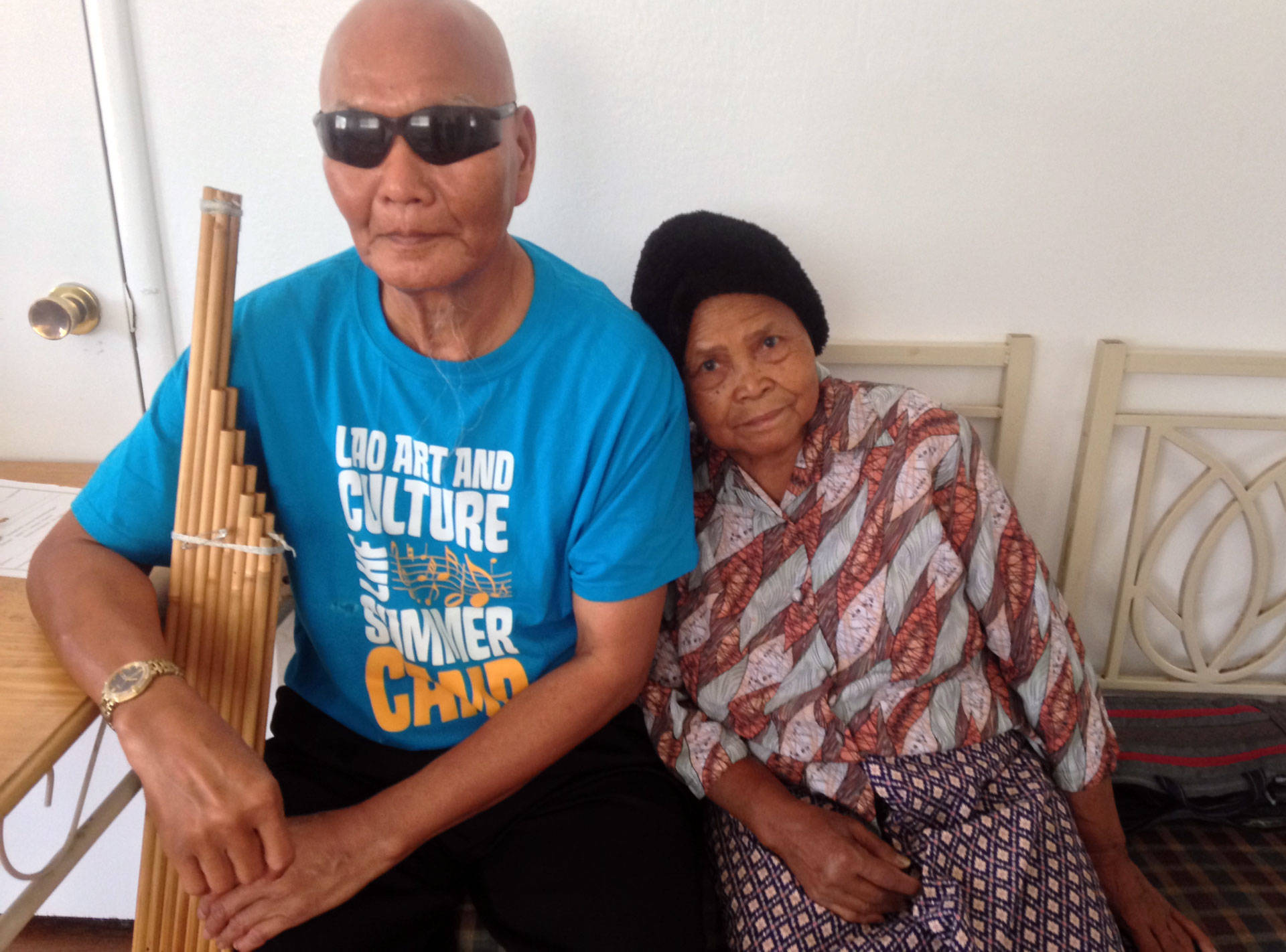
"caption": "Bounxeung Synanonh (L) is a master of the khaen, a traditional Laotian bamboo mouth organ. He met his wife Kham Souvanakhyly (R) in Fresno. She says she doesn’t care if Synanonh can’t see her because she knows he loves her.",
"description": "Bounxeung Synanonh (L) is a master of the khaen, a traditional Laotian bamboo mouth organ. He met his wife Kham Souvanakhyly (R) in Fresno. She says she doesn’t care if Synanonh can’t see her because she knows he loves her.",
"title": "LaoMusician",
"credit": "Alice Daniel/KQED",
"status": "inherit",
"isLoading": false,
"fetchFailed": false
},
"news_11100560": {
"type": "attachments",
"id": "news_11100560",
"meta": {
"index": "attachments_1716263798",
"site": "news",
"id": "11100560",
"found": true
},
"parent": 11100554,
"imgSizes": {
"twentyfourteen-full-width": {
"file": "https://ww2.kqed.org/app/uploads/sites/10/2016/09/HomelessKitchen-1038x576.jpg",
"width": 1038,
"mimeType": "image/jpeg",
"height": 576
},
"thumbnail": {
"file": "https://ww2.kqed.org/app/uploads/sites/10/2016/09/HomelessKitchen-400x268.jpg",
"width": 400,
"mimeType": "image/jpeg",
"height": 268
},
"fd-sm": {
"file": "https://ww2.kqed.org/app/uploads/sites/10/2016/09/HomelessKitchen-960x642.jpg",
"width": 960,
"mimeType": "image/jpeg",
"height": 642
},
"post-thumbnail": {
"file": "https://ww2.kqed.org/app/uploads/sites/10/2016/09/HomelessKitchen-672x372.jpg",
"width": 672,
"mimeType": "image/jpeg",
"height": 372
},
"kqedFullSize": {
"file": "https://ww2.kqed.org/app/uploads/sites/10/2016/09/HomelessKitchen.jpg",
"width": 1920,
"height": 1284
},
"large": {
"file": "https://ww2.kqed.org/app/uploads/sites/10/2016/09/HomelessKitchen-1920x1284.jpg",
"width": 1920,
"mimeType": "image/jpeg",
"height": 1284
},
"guest-author-50": {
"file": "https://ww2.kqed.org/app/uploads/sites/10/2016/09/HomelessKitchen-50x50.jpg",
"width": 50,
"mimeType": "image/jpeg",
"height": 50
},
"guest-author-96": {
"file": "https://ww2.kqed.org/app/uploads/sites/10/2016/09/HomelessKitchen-96x96.jpg",
"width": 96,
"mimeType": "image/jpeg",
"height": 96
},
"medium": {
"file": "https://ww2.kqed.org/app/uploads/sites/10/2016/09/HomelessKitchen-800x535.jpg",
"width": 800,
"mimeType": "image/jpeg",
"height": 535
},
"guest-author-64": {
"file": "https://ww2.kqed.org/app/uploads/sites/10/2016/09/HomelessKitchen-64x64.jpg",
"width": 64,
"mimeType": "image/jpeg",
"height": 64
},
"guest-author-32": {
"file": "https://ww2.kqed.org/app/uploads/sites/10/2016/09/HomelessKitchen-32x32.jpg",
"width": 32,
"mimeType": "image/jpeg",
"height": 32
},
"jmtc-small-thumb": {
"file": "https://ww2.kqed.org/app/uploads/sites/10/2016/09/HomelessKitchen-280x150.jpg",
"width": 280,
"mimeType": "image/jpeg",
"height": 150
},
"fd-lrg": {
"file": "https://ww2.kqed.org/app/uploads/sites/10/2016/09/HomelessKitchen-1920x1284.jpg",
"width": 1920,
"mimeType": "image/jpeg",
"height": 1284
},
"fd-med": {
"file": "https://ww2.kqed.org/app/uploads/sites/10/2016/09/HomelessKitchen-1180x789.jpg",
"width": 1180,
"mimeType": "image/jpeg",
"height": 789
},
"detail": {
"file": "https://ww2.kqed.org/app/uploads/sites/10/2016/09/HomelessKitchen-150x150.jpg",
"width": 150,
"mimeType": "image/jpeg",
"height": 150
},
"guest-author-128": {
"file": "https://ww2.kqed.org/app/uploads/sites/10/2016/09/HomelessKitchen-128x128.jpg",
"width": 128,
"mimeType": "image/jpeg",
"height": 128
}
},
"publishDate": 1474661225,
"modified": 1474666583,
"caption": "Homeless men tuck into a homemade evening meal at Proyecto Pastoral on July 13, 2016. The organization has been providing 90-day temporary shelter and meals to homeless men for years.",
"description": "Homeless men tuck into a homemade evening meal at Proyecto Pastoral on July 13, 2016. The organization has been providing 90-day temporary shelter and meals to homeless men for more than 20 years.",
"title": "HomelessKitchen",
"credit": "Dan Tuffs/KPCC",
"status": "inherit",
"isLoading": false,
"fetchFailed": false
}
},
"audioPlayerReducer": {
"postId": "stream_live",
"isPaused": true,
"isPlaying": false,
"pfsActive": false,
"pledgeModalIsOpen": true,
"playerDrawerIsOpen": false,
"liveAudioPlayStartedAt": 0,
"liveAudioPlayContext": ""
},
"authorsReducer": {
"byline_news_11174390": {
"type": "authors",
"id": "byline_news_11174390",
"meta": {
"override": true
},
"slug": "byline_news_11174390",
"name": "Associated Press",
"isLoading": false
},
"byline_news_11174246": {
"type": "authors",
"id": "byline_news_11174246",
"meta": {
"override": true
},
"slug": "byline_news_11174246",
"name": "Janie Har \u003cbr> Associated Press",
"isLoading": false
},
"byline_news_11173855": {
"type": "authors",
"id": "byline_news_11173855",
"meta": {
"override": true
},
"slug": "byline_news_11173855",
"name": "\u003cstrong>\u003ca href=\"http://www.npr.org/people/14562108/bill-chappell\">Bill Chappell\u003c/a> \u003cbr> \u003ca href=\"http://www.npr.org/\">NPR\u003c/a>\u003c/strong>",
"isLoading": false
},
"byline_news_11166117": {
"type": "authors",
"id": "byline_news_11166117",
"meta": {
"override": true
},
"slug": "byline_news_11166117",
"name": "Camila Domonoske",
"isLoading": false
},
"byline_news_11129573": {
"type": "authors",
"id": "byline_news_11129573",
"meta": {
"override": true
},
"slug": "byline_news_11129573",
"name": "\u003cstrong>Janie Har \u003cbr> Associated Press\u003c/strong>",
"isLoading": false
},
"byline_news_11100554": {
"type": "authors",
"id": "byline_news_11100554",
"meta": {
"override": true
},
"slug": "byline_news_11100554",
"name": "\u003cstrong>\u003ca href=\"http://www.scpr.org/about/people/staff/leslie-berestein-rojas\">Leslie Berestein Rojas\u003c/a>\u003cbr>\u003ca href=\"http://www.scpr.org/\">KPCC\u003c/a>\u003c/strong>",
"isLoading": false
},
"aliceldaniel": {
"type": "authors",
"id": "208",
"meta": {
"index": "authors_1716337520",
"id": "208",
"found": true
},
"name": "Alice Daniel",
"firstName": "Alice",
"lastName": "Daniel",
"slug": "aliceldaniel",
"email": "adaniel@kqed.org",
"display_author_email": false,
"staff_mastheads": [],
"title": null,
"bio": "Alice Daniel loves the listening aspect of reporting because she gets to briefly walk in other people’s shoes. She has rappelled down into caves and gone up in helicopters for KQED’s The California Report but her favorite place to pursue a story is the High Sierra or any family-run bakery, of course. Alice has a masters in journalism from Columbia University and teaches at Fresno State. She is a California Healthline Regional Correspondent and a frequent contributor to Success magazine. In her free time, she skis and hikes, throws pottery, practices piano and looks out the window.",
"avatar": "https://secure.gravatar.com/avatar/e611aa06593b114a67f9f123a8e875ad?s=600&d=blank&r=g",
"twitter": null,
"facebook": null,
"instagram": null,
"linkedin": null,
"sites": [
{
"site": "news",
"roles": [
"author"
]
},
{
"site": "stateofhealth",
"roles": [
"author"
]
}
],
"headData": {
"title": "Alice Daniel | KQED",
"description": null,
"ogImgSrc": "https://secure.gravatar.com/avatar/e611aa06593b114a67f9f123a8e875ad?s=600&d=blank&r=g",
"twImgSrc": "https://secure.gravatar.com/avatar/e611aa06593b114a67f9f123a8e875ad?s=600&d=blank&r=g"
},
"isLoading": false,
"link": "/author/aliceldaniel"
},
"sasha-khokha": {
"type": "authors",
"id": "254",
"meta": {
"index": "authors_1716337520",
"id": "254",
"found": true
},
"name": "Sasha Khokha",
"firstName": "Sasha",
"lastName": "Khokha",
"slug": "sasha-khokha",
"email": "skhokha@kqed.org",
"display_author_email": true,
"staff_mastheads": [
"news"
],
"title": "Host, The California Report Magazine",
"bio": "Sasha Khokha is the host of \u003cem>The California Report's \u003c/em> weekly magazine program, which takes listeners on sound-rich excursions to meet the people that make the Golden State unique -- through audio documentaries and long-form stories. As \u003cem>The California Report's\u003c/em> Central Valley Bureau Chief based in Fresno for nearly a dozen years, Sasha brought the lives and concerns of rural Californians to listeners around the state. Her reporting helped expose the hidden price immigrant women janitors and farmworkers may pay to keep their jobs: sexual assault at work. It inspired two new California laws to protect them from sexual harassment. She was a key member of the reporting team for the Frontline film \u003cem>Rape on the Night Shift, \u003c/em>which was nominated for two national Emmys. Sasha has also won a national Edward R. Murrow and a national PRNDI award for investigative reporting, as well as multiple prizes from the Society for Professional Journalists. Sasha is a proud alum of the UC Berkeley Graduate School of Journalism and Brown University and a member of the South Asian Journalists Association.",
"avatar": "https://secure.gravatar.com/avatar/e4b5e1541aaeea2aa356aa1fb2a68950?s=600&d=blank&r=g",
"twitter": "KQEDSashaKhokha",
"facebook": null,
"instagram": null,
"linkedin": null,
"sites": [
{
"site": "news",
"roles": [
"editor"
]
},
{
"site": "stateofhealth",
"roles": [
"author"
]
},
{
"site": "science",
"roles": [
"author"
]
},
{
"site": "quest",
"roles": [
"subscriber"
]
}
],
"headData": {
"title": "Sasha Khokha | KQED",
"description": "Host, The California Report Magazine",
"ogImgSrc": "https://secure.gravatar.com/avatar/e4b5e1541aaeea2aa356aa1fb2a68950?s=600&d=blank&r=g",
"twImgSrc": "https://secure.gravatar.com/avatar/e4b5e1541aaeea2aa356aa1fb2a68950?s=600&d=blank&r=g"
},
"isLoading": false,
"link": "/author/sasha-khokha"
},
"zstavely": {
"type": "authors",
"id": "3225",
"meta": {
"index": "authors_1716337520",
"id": "3225",
"found": true
},
"name": "Zaidee Stavely",
"firstName": "Zaidee",
"lastName": "Stavely",
"slug": "zstavely",
"email": "zstavely@gmail.com",
"display_author_email": false,
"staff_mastheads": [],
"title": "KQED Contributor",
"bio": "Zaidee Stavely is an award-winning reporter who writes about race, equity, immigration, and education.",
"avatar": "https://secure.gravatar.com/avatar/5154b3ee56a721c916ca429372ae629c?s=600&d=blank&r=g",
"twitter": null,
"facebook": null,
"instagram": null,
"linkedin": null,
"sites": [
{
"site": "news",
"roles": [
"subscriber"
]
},
{
"site": "mindshift",
"roles": [
"contributor"
]
}
],
"headData": {
"title": "Zaidee Stavely | KQED",
"description": "KQED Contributor",
"ogImgSrc": "https://secure.gravatar.com/avatar/5154b3ee56a721c916ca429372ae629c?s=600&d=blank&r=g",
"twImgSrc": "https://secure.gravatar.com/avatar/5154b3ee56a721c916ca429372ae629c?s=600&d=blank&r=g"
},
"isLoading": false,
"link": "/author/zstavely"
},
"lmorehouse": {
"type": "authors",
"id": "3229",
"meta": {
"index": "authors_1716337520",
"id": "3229",
"found": true
},
"name": "Lisa Morehouse",
"firstName": "Lisa",
"lastName": "Morehouse",
"slug": "lmorehouse",
"email": "morehouse.lisa@gmail.com",
"display_author_email": false,
"staff_mastheads": [],
"title": "KQED Contributor",
"bio": "Lisa Morehouse is an award-winning public radio and print journalist, who has filed for National Public Radio, American Public Media, KQED Public Radio, Edutopia, and McSweeney’s. Her reporting has taken her from Samoan traveling circuses to Mississippi Delta classrooms to the homes of Lao refugees in rural Iowa. In addition to reporting, she teaches radio production to at-risk youth in the Bay Area. Her series \u003ca href=\"http://afterthegoldrushradio.com/\">After the Gold Rush\u003c/a> featured the changing industries, populations and identities of rural towns throughout California. She’s now producing \u003ca href=\"http://www.californiafoodways.com/\">California Foodways\u003c/a>, a series exploring the intersections of food, culture, economics, history and labor. Follow along on the \u003ca href=\"https://www.facebook.com/californiafoodways?ref=hl\">Facebook page\u003c/a> or on Twitter @cafoodways.",
"avatar": "https://secure.gravatar.com/avatar/dae74b002a6e256f39abb19d6f5acaea?s=600&d=blank&r=g",
"twitter": null,
"facebook": null,
"instagram": null,
"linkedin": null,
"sites": [
{
"site": "",
"roles": [
"editor"
]
},
{
"site": "news",
"roles": [
"author"
]
}
],
"headData": {
"title": "Lisa Morehouse | KQED",
"description": "KQED Contributor",
"ogImgSrc": "https://secure.gravatar.com/avatar/dae74b002a6e256f39abb19d6f5acaea?s=600&d=blank&r=g",
"twImgSrc": "https://secure.gravatar.com/avatar/dae74b002a6e256f39abb19d6f5acaea?s=600&d=blank&r=g"
},
"isLoading": false,
"link": "/author/lmorehouse"
},
"jsepulvado": {
"type": "authors",
"id": "11298",
"meta": {
"index": "authors_1716337520",
"id": "11298",
"found": true
},
"name": "John Sepulvado",
"firstName": "John",
"lastName": "Sepulvado",
"slug": "jsepulvado",
"email": "jsepulvado@KQED.org",
"display_author_email": false,
"staff_mastheads": [],
"title": null,
"bio": "John Sepulvado is a former morning host of \u003cem>The California Report\u003c/em>. Prior to joining KQED in September 2016, John was the local host of NPR’s \u003cem>Weekend Edition\u003c/em> at Oregon Public Broadcasting (OPB). He has also served as a producer for America Public Media’s \u003cem>Marketplace Weekend\u003c/em> and worked as a national correspondent for CNN and as news director at WUSF in Tampa, Florida. John has earned prestigious RTDNA Murrow and PRNDI awards for investigative reporting, and helped CNN take home a Peabody Award for coverage of the 2010 Gulf oil spill. John attended Florida A&M in Tallahassee and is also a member of Phi Theta Kappa. He left KQED in 2019.",
"avatar": "https://secure.gravatar.com/avatar/b976d3c4cf11750a793b670e5acb7a1c?s=600&d=blank&r=g",
"twitter": null,
"facebook": null,
"instagram": null,
"linkedin": null,
"sites": [
{
"site": "news",
"roles": [
"author",
"edit_others_posts"
]
}
],
"headData": {
"title": "John Sepulvado | KQED",
"description": null,
"ogImgSrc": "https://secure.gravatar.com/avatar/b976d3c4cf11750a793b670e5acb7a1c?s=600&d=blank&r=g",
"twImgSrc": "https://secure.gravatar.com/avatar/b976d3c4cf11750a793b670e5acb7a1c?s=600&d=blank&r=g"
},
"isLoading": false,
"link": "/author/jsepulvado"
}
},
"pagesReducer": {
"news_category_immigration": {
"type": "terms",
"id": "news_1169",
"meta": {
"index": "terms_1716263798",
"site": "news",
"id": "1169",
"score": 10.909983
},
"featImg": null,
"name": "Immigration",
"description": null,
"taxonomy": "category",
"headData": {
"twImgId": null,
"twTitle": null,
"ogTitle": null,
"ogImgId": null,
"twDescription": null,
"description": null,
"title": "Immigration Archives | KQED News",
"ogDescription": null
},
"ttid": 1180,
"slug": "immigration",
"isLoading": false,
"title": "Immigration",
"pageMeta": {
"site": "news",
"WpPageTemplate": "page-topic-editorial",
"currentPage": 176
},
"blocks": [
{
"blockName": "kqed/post-list",
"attrs": {
"layout": "cardArticle2",
"query": "posts/news?category=immigration",
"seeMore": false,
"paginated": true,
"page": 176
}
},
{
"blockName": "kqed/ad"
}
]
}
},
"pfsSessionReducer": {},
"postsReducer": {
"stream_live": {
"type": "live",
"id": "stream_live",
"audioUrl": "https://streams.kqed.org/kqedradio",
"title": "Live Stream",
"excerpt": "Live Stream information currently unavailable.",
"link": "/radio",
"featImg": "",
"label": {
"name": "KQED Live",
"link": "/"
}
},
"stream_kqedNewscast": {
"type": "posts",
"id": "stream_kqedNewscast",
"audioUrl": "https://www.kqed.org/.stream/anon/radio/RDnews/newscast.mp3?_=1",
"title": "KQED Newscast",
"featImg": "",
"label": {
"name": "88.5 FM",
"link": "/"
}
},
"news_11179989": {
"type": "posts",
"id": "news_11179989",
"meta": {
"index": "posts_1716263798",
"site": "news",
"id": "11179989",
"score": null,
"sort": [
1479665132000
]
},
"parent": 0,
"labelTerm": {
"site": "news",
"term": 72
},
"blocks": [],
"publishDate": 1479665132,
"format": "standard",
"disqusTitle": "Helping Third-Graders Cope With Post-Election Fears",
"title": "Helping Third-Graders Cope With Post-Election Fears",
"headTitle": "The California Report | KQED News",
"content": "\u003cp>Third-graders at Cali Calmécac Language Academy in Windsor are in the middle of presenting book reports to each other when one little boy bursts into tears. Their teacher, Rosa Villalpando, pulls him aside to check in. Sobbing, he tells her that, as a result of the presidential election, he’s afraid he’ll have to move to Mexico. Some kids on his street won’t play with him anymore, he says.\u003c/p>\n\u003cp>\"They won’t let me because they’re like, 'You’re a different color from us. Since Trump’s president, we can’t play with you,' \" he explains between sobs. \"And my friend is moving to Canada, and other friends are going to Mexico. I want us to stay here and play with them. But I don’t have much time because I might move to Mexico.\"\u003c/p>\n\u003cp>Villalpando leans in closer. \"Know that I’m here and you can talk to me, OK?\" she says. \"Let’s breathe together, OK? You ready?\" The two take long, deep breaths together, and the boy slowly calms down.\u003c/p>\n\u003cp>[soundcloud url=\"https://api.soundcloud.com/tracks/293729327\" params=\"color=ff5500&auto_play=false&hide_related=false&show_comments=true&show_user=true&show_reposts=false\" width=\"100%\" height=\"166\" iframe=\"true\" /]\u003c/p>\n\u003cp>Some children at this Spanish-English dual immersion school in Sonoma County have been anxious since the primary election, crying in class or complaining of stomach aches. Most students here are Latino, and even kids whose families have been here for generations, and whose parents are U.S. citizens, worry their families or friends could be separated under Donald Trump’s proposed immigration policies.\u003c/p>\n\u003cp>[ad fullwidth]\u003c/p>\n\u003cp>\"The night of the election, that was the hardest part, to know I would have to come in and face the children on their worst nightmare,\" Villalpando says. \"I mean the way that they’ve been presenting their anxiety and fear.\"\u003c/p>\n\u003cp>Teachers all over California are grappling with this: how to create a safe space for students to express their fears, while also remaining \u003ca href=\"http://www.sfchronicle.com/bayarea/article/Tension-flares-over-how-to-talk-about-Trump-in-10621977.php?ipid=gsa-sfgate-result\">nonpartisan\u003c/a> and respectful of all political views. Most people in Sonoma County voted for Hillary Clinton, but a little more than a fifth voted for Trump.\u003c/p>\n\u003cfigure id=\"attachment_11180354\" class=\"wp-caption aligncenter\" style=\"max-width: 800px\">\u003cimg class=\"size-medium wp-image-11180354\" src=\"http://ww2.kqed.org/news/wp-content/uploads/sites/10/2016/11/RS22129_IMG_20161115_111730-qut-800x600.jpg\" alt=\"Community members flooded the school with messages of support after anti-immigrant graffitti was sprayed on the walls.\" width=\"800\" height=\"600\" srcset=\"https://ww2.kqed.org/app/uploads/sites/10/2016/11/RS22129_IMG_20161115_111730-qut-800x600.jpg 800w, https://ww2.kqed.org/app/uploads/sites/10/2016/11/RS22129_IMG_20161115_111730-qut-160x120.jpg 160w, https://ww2.kqed.org/app/uploads/sites/10/2016/11/RS22129_IMG_20161115_111730-qut-1020x765.jpg 1020w, https://ww2.kqed.org/app/uploads/sites/10/2016/11/RS22129_IMG_20161115_111730-qut.jpg 1920w, https://ww2.kqed.org/app/uploads/sites/10/2016/11/RS22129_IMG_20161115_111730-qut-1180x885.jpg 1180w, https://ww2.kqed.org/app/uploads/sites/10/2016/11/RS22129_IMG_20161115_111730-qut-960x720.jpg 960w, https://ww2.kqed.org/app/uploads/sites/10/2016/11/RS22129_IMG_20161115_111730-qut-240x180.jpg 240w, https://ww2.kqed.org/app/uploads/sites/10/2016/11/RS22129_IMG_20161115_111730-qut-375x281.jpg 375w, https://ww2.kqed.org/app/uploads/sites/10/2016/11/RS22129_IMG_20161115_111730-qut-520x390.jpg 520w\" sizes=\"(max-width: 800px) 100vw, 800px\">\u003cfigcaption class=\"wp-caption-text\">Community members flooded the school with messages of support after anti-immigrant graffitti was sprayed on the walls. \u003ccite>(Zaidee Stavely/KQED)\u003c/cite>\u003c/figcaption>\u003c/figure>\n\u003cp>Villalpando asks her students to get out their journals and read what they wrote the day after the election.\u003c/p>\n\u003cp>\"It's always a good thing to talk about how we're feeling,\" she reminds the class, \"and then how do we turn those feelings into something positive? Or, if you are happy, then to rejoice in it, whatever it is.\"\u003c/p>\n\u003cp>A few students wrote in their journals that their parents voted for Trump or that Clinton was a mean person. But most share that they feel scared, mad or sad about the new president-elect.\u003c/p>\n\u003cp>\"Donald Trump may take my family away,\" a girl named Saraí reads from her journal. \"I don't want my family away from me because I love them so much.\"\u003c/p>\n\u003cp>For a lot of students here, the president-elect's immigration rhetoric feels personal. Many identify as Mexican, even when they, and often their parents, are U.S. citizens. So when Trump said he would build a wall and deport Mexican immigrants, some kids thought he meant them or their families, even when many of their families could not be deported.\u003c/p>\n\u003cp>\"I feel ashamed that America voted for Donald Trump,\" says 8-year-old Cruz. \"I feel like a lot of people are prejudiced because they voted for him. Donald Trump is prejudiced. And I don’t think it was really fair that he got to win.\"\u003c/p>\n\u003cp>Overcome with emotion, Cruz begins to shake with deep sobbing breaths. A classmate sits down next to him to breathe with him.\u003c/p>\n\u003cfigure id=\"attachment_11180355\" class=\"wp-caption aligncenter\" style=\"max-width: 800px\">\u003cimg class=\"size-medium wp-image-11180355\" src=\"http://ww2.kqed.org/news/wp-content/uploads/sites/10/2016/11/RS22132_IMG_20161115_110710-qut-800x1067.jpg\" alt=\"One third grader expressed his feelings after the election this way.\" width=\"800\" height=\"1067\" srcset=\"https://ww2.kqed.org/app/uploads/sites/10/2016/11/RS22132_IMG_20161115_110710-qut-800x1067.jpg 800w, https://ww2.kqed.org/app/uploads/sites/10/2016/11/RS22132_IMG_20161115_110710-qut-160x213.jpg 160w, https://ww2.kqed.org/app/uploads/sites/10/2016/11/RS22132_IMG_20161115_110710-qut-1020x1360.jpg 1020w, https://ww2.kqed.org/app/uploads/sites/10/2016/11/RS22132_IMG_20161115_110710-qut.jpg 1920w, https://ww2.kqed.org/app/uploads/sites/10/2016/11/RS22132_IMG_20161115_110710-qut-1180x1573.jpg 1180w, https://ww2.kqed.org/app/uploads/sites/10/2016/11/RS22132_IMG_20161115_110710-qut-960x1280.jpg 960w, https://ww2.kqed.org/app/uploads/sites/10/2016/11/RS22132_IMG_20161115_110710-qut-240x320.jpg 240w, https://ww2.kqed.org/app/uploads/sites/10/2016/11/RS22132_IMG_20161115_110710-qut-375x500.jpg 375w, https://ww2.kqed.org/app/uploads/sites/10/2016/11/RS22132_IMG_20161115_110710-qut-520x693.jpg 520w\" sizes=\"(max-width: 800px) 100vw, 800px\">\u003cfigcaption class=\"wp-caption-text\">One third grader expressed his feelings after the election this way. \u003ccite>(Zaidee Stavely/KQED)\u003c/cite>\u003c/figcaption>\u003c/figure>\n\u003cp>\"I can relate to the children’s fears, and I think maybe that’s why I’m sensitive to what they’re feeling,\" Villalpando says. \"I grew up in the United States, I came here when I was 4½\"\u003c/p>\n\u003cp>She points to a framed photograph on a bookshelf in her classroom. In it, she's sitting with five brothers and sisters, next to their mom.\u003c/p>\n\u003cp>\"I lived with fear because we were undocumented, and I did not become documented until I was 14,\" Villalpando says. \"We had a fear of \u003cem>la migra\u003c/em>. But now this fear seems different to me, because not only is it governmental, but it could be anybody around you that may not agree with you. So it feels so much more personal.\"\u003c/p>\n\u003cp>It feels more personal in part because a couple of weeks before the election, graffiti was splattered over the walls of the school with the words “Build the Wall Higher” and “Trump 2016.” Some kids were so upset they didn’t want to come to school the next day.\u003c/p>\n\u003cp>Still, the graffiti gave Villalpando a powerful lesson to teach her students. Two days later, community members lined the sidewalk outside the school, welcoming the kids with posters that said things like, “There are no walls in Windsor.”\u003c/p>\n\u003cp>\"So I took that upon myself to ask them, what kind of things do we do for others?\" Villalpando says. \"And they came up with lists: Open the door for others, write thank-you cards, pick flowers for someone we love, just smile ... so we turned it around and we did something positive with it.\"\u003c/p>\n\u003cfigure id=\"attachment_11180353\" class=\"wp-caption aligncenter\" style=\"max-width: 800px\">\u003cimg class=\"size-medium wp-image-11180353\" src=\"http://ww2.kqed.org/news/wp-content/uploads/sites/10/2016/11/RS22133_IMG_20161115_103234-qut-800x600.jpg\" alt=\"Rosa Villalpando keeps a childhood picture in her classroom.\" width=\"800\" height=\"600\" srcset=\"https://ww2.kqed.org/app/uploads/sites/10/2016/11/RS22133_IMG_20161115_103234-qut-800x600.jpg 800w, https://ww2.kqed.org/app/uploads/sites/10/2016/11/RS22133_IMG_20161115_103234-qut-160x120.jpg 160w, https://ww2.kqed.org/app/uploads/sites/10/2016/11/RS22133_IMG_20161115_103234-qut-1020x765.jpg 1020w, https://ww2.kqed.org/app/uploads/sites/10/2016/11/RS22133_IMG_20161115_103234-qut.jpg 1920w, https://ww2.kqed.org/app/uploads/sites/10/2016/11/RS22133_IMG_20161115_103234-qut-1180x885.jpg 1180w, https://ww2.kqed.org/app/uploads/sites/10/2016/11/RS22133_IMG_20161115_103234-qut-960x720.jpg 960w, https://ww2.kqed.org/app/uploads/sites/10/2016/11/RS22133_IMG_20161115_103234-qut-240x180.jpg 240w, https://ww2.kqed.org/app/uploads/sites/10/2016/11/RS22133_IMG_20161115_103234-qut-375x281.jpg 375w, https://ww2.kqed.org/app/uploads/sites/10/2016/11/RS22133_IMG_20161115_103234-qut-520x390.jpg 520w\" sizes=\"(max-width: 800px) 100vw, 800px\">\u003cfigcaption class=\"wp-caption-text\">Rosa Villalpando keeps a childhood picture in her classroom. \u003ccite>(Zaidee Stavely/KQED)\u003c/cite>\u003c/figcaption>\u003c/figure>\n\u003cp>Those lessons about community and kindness are coming in handy after the election. Villalpando comes back to the list on the wall again and again, to remind her students that even if we don't agree, we are a community that supports each other. She wants them to know that they are part of this country. She's proud of a student who wrote in his journal, \"We have a new president, but I know if it is Trump, we could work together, 'cause all of us are the same. And we know that we could 'cause all of us are human.\"\u003c/p>\n\u003cp>\"It’s such a great time to be a teacher,\" Villalpando says. \"It is our place to show them love and show them acceptance, of course, every day, but right now when they need it the most, that security. Just the open forum. Some people may think it's maybe doing too much, but I think it’s just important. We can’t pretend it’s not happening.\"\u003c/p>\n\u003cp>Some parents say Villalpando's approach seems to be working.\u003c/p>\n\u003cp>\"The children’s stress has gone down a lot,\" mom Patricia Figueroa says. \"It’s not like when it first happened when they would come home really worried. So I think the teachers are doing a really good job.\"\u003c/p>\n\u003cp>[ad floatright]\u003c/p>\n\u003cp>Even so, she says, her daughter still comes home and asks her, \"Mommy, are you going to have to go to Mexico?\"\u003c/p>\n\n",
"disqusIdentifier": "11179989 http://ww2.kqed.org/news/?p=11179989",
"disqusUrl": "https://ww2.kqed.org/news/2016/11/20/helping-third-graders-cope-with-post-election-fears/",
"stats": {
"hasVideo": false,
"hasChartOrMap": false,
"hasAudio": false,
"hasPolis": false,
"wordCount": 1240,
"hasGoogleForm": false,
"hasGallery": false,
"hasHearkenModule": false,
"iframeSrcs": [],
"paragraphCount": 27
},
"modified": 1479753636,
"excerpt": "A teacher struggles to calm her third-graders at a bilingual school in Sonoma County, who are bursting into tears in class after the election.",
"headData": {
"twImgId": "",
"twTitle": "",
"ogTitle": "",
"ogImgId": "",
"twDescription": "",
"description": "A teacher struggles to calm her third-graders at a bilingual school in Sonoma County, who are bursting into tears in class after the election.",
"title": "Helping Third-Graders Cope With Post-Election Fears | KQED",
"ogDescription": "",
"schema": {
"@context": "https://schema.org",
"@type": "NewsArticle",
"headline": "Helping Third-Graders Cope With Post-Election Fears",
"datePublished": "2016-11-20T10:05:32-08:00",
"dateModified": "2016-11-21T10:40:36-08:00",
"image": "https://cdn.kqed.org/wp-content/uploads/2020/02/KQED-OG-Image@1x.png",
"isAccessibleForFree": "True",
"publisher": {
"@type": "NewsMediaOrganization",
"@id": "https://www.kqed.org/#organization",
"name": "KQED",
"logo": "https://cdn.kqed.org/wp-content/uploads/2020/02/KQED-OG-Image@1x.png",
"url": "https://www.kqed.org",
"sameAs": [
"https://www.facebook.com/KQED",
"https://twitter.com/KQED",
"https://www.instagram.com/kqed/",
"https://www.tiktok.com/@kqedofficial",
"https://www.linkedin.com/company/kqed",
"https://www.youtube.com/channel/UCeC0IOo7i1P_61zVUWbJ4nw"
]
}
}
},
"guestAuthors": [],
"slug": "helping-third-graders-cope-with-post-election-fears",
"status": "publish",
"path": "/news/11179989/helping-third-graders-cope-with-post-election-fears",
"audioTrackLength": null,
"parsedContent": [
{
"type": "contentString",
"content": "\u003cdiv class=\"post-body\">\u003cp>\u003cp>Third-graders at Cali Calmécac Language Academy in Windsor are in the middle of presenting book reports to each other when one little boy bursts into tears. Their teacher, Rosa Villalpando, pulls him aside to check in. Sobbing, he tells her that, as a result of the presidential election, he’s afraid he’ll have to move to Mexico. Some kids on his street won’t play with him anymore, he says.\u003c/p>\n\u003cp>\"They won’t let me because they’re like, 'You’re a different color from us. Since Trump’s president, we can’t play with you,' \" he explains between sobs. \"And my friend is moving to Canada, and other friends are going to Mexico. I want us to stay here and play with them. But I don’t have much time because I might move to Mexico.\"\u003c/p>\n\u003cp>Villalpando leans in closer. \"Know that I’m here and you can talk to me, OK?\" she says. \"Let’s breathe together, OK? You ready?\" The two take long, deep breaths together, and the boy slowly calms down.\u003c/p>\n\u003cp>\u003c/p>\u003cp>\u003cdiv class='utils-parseShortcode-shortcodes-__shortcodes__shortcodeWrapper'>\n \u003ciframe width='100%' height='166'\n scrolling='no' frameborder='no'\n src='https://w.soundcloud.com/player/?url=https://api.soundcloud.com/tracks/293729327&visual=true&color=ff5500&auto_play=false&hide_related=false&show_comments=true&show_user=true&show_reposts=false'\n title='https://api.soundcloud.com/tracks/293729327'>\n \u003c/iframe>\n \u003c/div>\u003c/p>\u003cp>\u003c/p>\n\u003cp>Some children at this Spanish-English dual immersion school in Sonoma County have been anxious since the primary election, crying in class or complaining of stomach aches. Most students here are Latino, and even kids whose families have been here for generations, and whose parents are U.S. citizens, worry their families or friends could be separated under Donald Trump’s proposed immigration policies.\u003c/p>\n\u003cp>\u003c/p>\u003c/div>",
"attributes": {
"named": {},
"numeric": []
}
},
{
"type": "component",
"content": "",
"name": "ad",
"attributes": {
"named": {
"label": "fullwidth"
},
"numeric": [
"fullwidth"
]
}
},
{
"type": "contentString",
"content": "\u003cdiv class=\"post-body\">\u003cp>\u003c/p>\n\u003cp>\"The night of the election, that was the hardest part, to know I would have to come in and face the children on their worst nightmare,\" Villalpando says. \"I mean the way that they’ve been presenting their anxiety and fear.\"\u003c/p>\n\u003cp>Teachers all over California are grappling with this: how to create a safe space for students to express their fears, while also remaining \u003ca href=\"http://www.sfchronicle.com/bayarea/article/Tension-flares-over-how-to-talk-about-Trump-in-10621977.php?ipid=gsa-sfgate-result\">nonpartisan\u003c/a> and respectful of all political views. Most people in Sonoma County voted for Hillary Clinton, but a little more than a fifth voted for Trump.\u003c/p>\n\u003cfigure id=\"attachment_11180354\" class=\"wp-caption aligncenter\" style=\"max-width: 800px\">\u003cimg class=\"size-medium wp-image-11180354\" src=\"http://ww2.kqed.org/news/wp-content/uploads/sites/10/2016/11/RS22129_IMG_20161115_111730-qut-800x600.jpg\" alt=\"Community members flooded the school with messages of support after anti-immigrant graffitti was sprayed on the walls.\" width=\"800\" height=\"600\" srcset=\"https://ww2.kqed.org/app/uploads/sites/10/2016/11/RS22129_IMG_20161115_111730-qut-800x600.jpg 800w, https://ww2.kqed.org/app/uploads/sites/10/2016/11/RS22129_IMG_20161115_111730-qut-160x120.jpg 160w, https://ww2.kqed.org/app/uploads/sites/10/2016/11/RS22129_IMG_20161115_111730-qut-1020x765.jpg 1020w, https://ww2.kqed.org/app/uploads/sites/10/2016/11/RS22129_IMG_20161115_111730-qut.jpg 1920w, https://ww2.kqed.org/app/uploads/sites/10/2016/11/RS22129_IMG_20161115_111730-qut-1180x885.jpg 1180w, https://ww2.kqed.org/app/uploads/sites/10/2016/11/RS22129_IMG_20161115_111730-qut-960x720.jpg 960w, https://ww2.kqed.org/app/uploads/sites/10/2016/11/RS22129_IMG_20161115_111730-qut-240x180.jpg 240w, https://ww2.kqed.org/app/uploads/sites/10/2016/11/RS22129_IMG_20161115_111730-qut-375x281.jpg 375w, https://ww2.kqed.org/app/uploads/sites/10/2016/11/RS22129_IMG_20161115_111730-qut-520x390.jpg 520w\" sizes=\"(max-width: 800px) 100vw, 800px\">\u003cfigcaption class=\"wp-caption-text\">Community members flooded the school with messages of support after anti-immigrant graffitti was sprayed on the walls. \u003ccite>(Zaidee Stavely/KQED)\u003c/cite>\u003c/figcaption>\u003c/figure>\n\u003cp>Villalpando asks her students to get out their journals and read what they wrote the day after the election.\u003c/p>\n\u003cp>\"It's always a good thing to talk about how we're feeling,\" she reminds the class, \"and then how do we turn those feelings into something positive? Or, if you are happy, then to rejoice in it, whatever it is.\"\u003c/p>\n\u003cp>A few students wrote in their journals that their parents voted for Trump or that Clinton was a mean person. But most share that they feel scared, mad or sad about the new president-elect.\u003c/p>\n\u003cp>\"Donald Trump may take my family away,\" a girl named Saraí reads from her journal. \"I don't want my family away from me because I love them so much.\"\u003c/p>\n\u003cp>For a lot of students here, the president-elect's immigration rhetoric feels personal. Many identify as Mexican, even when they, and often their parents, are U.S. citizens. So when Trump said he would build a wall and deport Mexican immigrants, some kids thought he meant them or their families, even when many of their families could not be deported.\u003c/p>\n\u003cp>\"I feel ashamed that America voted for Donald Trump,\" says 8-year-old Cruz. \"I feel like a lot of people are prejudiced because they voted for him. Donald Trump is prejudiced. And I don’t think it was really fair that he got to win.\"\u003c/p>\n\u003cp>Overcome with emotion, Cruz begins to shake with deep sobbing breaths. A classmate sits down next to him to breathe with him.\u003c/p>\n\u003cfigure id=\"attachment_11180355\" class=\"wp-caption aligncenter\" style=\"max-width: 800px\">\u003cimg class=\"size-medium wp-image-11180355\" src=\"http://ww2.kqed.org/news/wp-content/uploads/sites/10/2016/11/RS22132_IMG_20161115_110710-qut-800x1067.jpg\" alt=\"One third grader expressed his feelings after the election this way.\" width=\"800\" height=\"1067\" srcset=\"https://ww2.kqed.org/app/uploads/sites/10/2016/11/RS22132_IMG_20161115_110710-qut-800x1067.jpg 800w, https://ww2.kqed.org/app/uploads/sites/10/2016/11/RS22132_IMG_20161115_110710-qut-160x213.jpg 160w, https://ww2.kqed.org/app/uploads/sites/10/2016/11/RS22132_IMG_20161115_110710-qut-1020x1360.jpg 1020w, https://ww2.kqed.org/app/uploads/sites/10/2016/11/RS22132_IMG_20161115_110710-qut.jpg 1920w, https://ww2.kqed.org/app/uploads/sites/10/2016/11/RS22132_IMG_20161115_110710-qut-1180x1573.jpg 1180w, https://ww2.kqed.org/app/uploads/sites/10/2016/11/RS22132_IMG_20161115_110710-qut-960x1280.jpg 960w, https://ww2.kqed.org/app/uploads/sites/10/2016/11/RS22132_IMG_20161115_110710-qut-240x320.jpg 240w, https://ww2.kqed.org/app/uploads/sites/10/2016/11/RS22132_IMG_20161115_110710-qut-375x500.jpg 375w, https://ww2.kqed.org/app/uploads/sites/10/2016/11/RS22132_IMG_20161115_110710-qut-520x693.jpg 520w\" sizes=\"(max-width: 800px) 100vw, 800px\">\u003cfigcaption class=\"wp-caption-text\">One third grader expressed his feelings after the election this way. \u003ccite>(Zaidee Stavely/KQED)\u003c/cite>\u003c/figcaption>\u003c/figure>\n\u003cp>\"I can relate to the children’s fears, and I think maybe that’s why I’m sensitive to what they’re feeling,\" Villalpando says. \"I grew up in the United States, I came here when I was 4½\"\u003c/p>\n\u003cp>She points to a framed photograph on a bookshelf in her classroom. In it, she's sitting with five brothers and sisters, next to their mom.\u003c/p>\n\u003cp>\"I lived with fear because we were undocumented, and I did not become documented until I was 14,\" Villalpando says. \"We had a fear of \u003cem>la migra\u003c/em>. But now this fear seems different to me, because not only is it governmental, but it could be anybody around you that may not agree with you. So it feels so much more personal.\"\u003c/p>\n\u003cp>It feels more personal in part because a couple of weeks before the election, graffiti was splattered over the walls of the school with the words “Build the Wall Higher” and “Trump 2016.” Some kids were so upset they didn’t want to come to school the next day.\u003c/p>\n\u003cp>Still, the graffiti gave Villalpando a powerful lesson to teach her students. Two days later, community members lined the sidewalk outside the school, welcoming the kids with posters that said things like, “There are no walls in Windsor.”\u003c/p>\n\u003cp>\"So I took that upon myself to ask them, what kind of things do we do for others?\" Villalpando says. \"And they came up with lists: Open the door for others, write thank-you cards, pick flowers for someone we love, just smile ... so we turned it around and we did something positive with it.\"\u003c/p>\n\u003cfigure id=\"attachment_11180353\" class=\"wp-caption aligncenter\" style=\"max-width: 800px\">\u003cimg class=\"size-medium wp-image-11180353\" src=\"http://ww2.kqed.org/news/wp-content/uploads/sites/10/2016/11/RS22133_IMG_20161115_103234-qut-800x600.jpg\" alt=\"Rosa Villalpando keeps a childhood picture in her classroom.\" width=\"800\" height=\"600\" srcset=\"https://ww2.kqed.org/app/uploads/sites/10/2016/11/RS22133_IMG_20161115_103234-qut-800x600.jpg 800w, https://ww2.kqed.org/app/uploads/sites/10/2016/11/RS22133_IMG_20161115_103234-qut-160x120.jpg 160w, https://ww2.kqed.org/app/uploads/sites/10/2016/11/RS22133_IMG_20161115_103234-qut-1020x765.jpg 1020w, https://ww2.kqed.org/app/uploads/sites/10/2016/11/RS22133_IMG_20161115_103234-qut.jpg 1920w, https://ww2.kqed.org/app/uploads/sites/10/2016/11/RS22133_IMG_20161115_103234-qut-1180x885.jpg 1180w, https://ww2.kqed.org/app/uploads/sites/10/2016/11/RS22133_IMG_20161115_103234-qut-960x720.jpg 960w, https://ww2.kqed.org/app/uploads/sites/10/2016/11/RS22133_IMG_20161115_103234-qut-240x180.jpg 240w, https://ww2.kqed.org/app/uploads/sites/10/2016/11/RS22133_IMG_20161115_103234-qut-375x281.jpg 375w, https://ww2.kqed.org/app/uploads/sites/10/2016/11/RS22133_IMG_20161115_103234-qut-520x390.jpg 520w\" sizes=\"(max-width: 800px) 100vw, 800px\">\u003cfigcaption class=\"wp-caption-text\">Rosa Villalpando keeps a childhood picture in her classroom. \u003ccite>(Zaidee Stavely/KQED)\u003c/cite>\u003c/figcaption>\u003c/figure>\n\u003cp>Those lessons about community and kindness are coming in handy after the election. Villalpando comes back to the list on the wall again and again, to remind her students that even if we don't agree, we are a community that supports each other. She wants them to know that they are part of this country. She's proud of a student who wrote in his journal, \"We have a new president, but I know if it is Trump, we could work together, 'cause all of us are the same. And we know that we could 'cause all of us are human.\"\u003c/p>\n\u003cp>\"It’s such a great time to be a teacher,\" Villalpando says. \"It is our place to show them love and show them acceptance, of course, every day, but right now when they need it the most, that security. Just the open forum. Some people may think it's maybe doing too much, but I think it’s just important. We can’t pretend it’s not happening.\"\u003c/p>\n\u003cp>Some parents say Villalpando's approach seems to be working.\u003c/p>\n\u003cp>\"The children’s stress has gone down a lot,\" mom Patricia Figueroa says. \"It’s not like when it first happened when they would come home really worried. So I think the teachers are doing a really good job.\"\u003c/p>\n\u003cp>\u003c/p>\u003c/div>",
"attributes": {
"named": {},
"numeric": []
}
},
{
"type": "component",
"content": "",
"name": "ad",
"attributes": {
"named": {
"label": "floatright"
},
"numeric": [
"floatright"
]
}
},
{
"type": "contentString",
"content": "\u003cdiv class=\"post-body\">\u003cp>\u003c/p>\n\u003cp>Even so, she says, her daughter still comes home and asks her, \"Mommy, are you going to have to go to Mexico?\"\u003c/p>\n\n\u003c/div>\u003c/p>",
"attributes": {
"named": {},
"numeric": []
}
}
],
"link": "/news/11179989/helping-third-graders-cope-with-post-election-fears",
"authors": [
"3225"
],
"programs": [
"news_6944",
"news_72"
],
"categories": [
"news_18540",
"news_1169",
"news_8"
],
"tags": [
"news_1323",
"news_19542",
"news_20202",
"news_17286",
"news_17041"
],
"featImg": "news_11180356",
"label": "news_72"
},
"news_11176037": {
"type": "posts",
"id": "news_11176037",
"meta": {
"index": "posts_1716263798",
"site": "news",
"id": "11176037",
"score": null,
"sort": [
1479371402000
]
},
"guestAuthors": [],
"slug": "families-with-undocumented-members-anxious-about-trump-presidency",
"title": "Families With Undocumented Members Anxious About Trump Presidency",
"publishDate": 1479371402,
"format": "standard",
"headTitle": "Families With Undocumented Members Anxious About Trump Presidency | KQED",
"labelTerm": {
"term": 72,
"site": "news"
},
"content": "\u003cp>It’s a school night and inside Maria Vargas’ Fresno home — she asked us not to use her real name — the sounds of four lively kids fill the kitchen and dining area. The toddler is babbling and dumping pens out of a container. One daughter is taking a break from her homework to retell the story of why her mom is \u003cem>so\u003c/em> afraid of snakes (she was taking out the trash when she was little and a snake slithered out). Another is begging her mom to read to her. And the older son is getting ready to go to church with his dad.\u003c/p>\n\u003cp>But when the topic turns to the recent election, all the kids — except for the littlest one — start talking about one person: Donald Trump.\u003c/p>\n\u003cp>All four kids were born in the United States, but their parents are from Mexico. And they’ve heard Trump \u003ca href=\"http://www.huffingtonpost.com/entry/9-outrageous-things-donald-trump-has-said-about-latinos_us_55e483a1e4b0c818f618904b\">say a lot of things\u003c/a> about Mexicans.\u003c/p>\n\u003cp>[soundcloud url=”https://api.soundcloud.com/tracks/293383457″ params=”color=ff5500&auto_play=false&hide_related=false&show_comments=true&show_user=true&show_reposts=false” width=”100%” height=”166″ iframe=”true” /]\u003c/p>\n\u003cp>In fact, Trump has been part of the family conversation for so long that Vargas’ younger daughter thinks her mother knows Trump personally.\u003c/p>\n\u003cp>[ad fullwidth]\u003c/p>\n\u003cp>“I think my mom knowed him since she was little,” she says. But Vargas gently corrects her. “I knew Donald Duck but not Donald Trump,” she says.\u003c/p>\n\u003cp>Vargas and her husband are undocumented. And with Trump’s election, they question their future here. They’ve been in the United States for about 15 years. They work hard. They pay taxes.\u003c/p>\n\u003cp>“We don’t live off the system,” says Vargas. “We work for whatever we have.” They’d like to be residents. But now, she says, that’s unlikely. The family had been hoping that Clinton would be elected and take on immigration reform, and that eventually they could get some kind of residency.\u003c/p>\n\u003caside class=\"pullquote alignright\">On election night, the 9-year-old started packing a bag. She’s never been to Mexico, but she figured she better get ready.\u003c/aside>\n\u003cp>“All those hopes are gone because he said, ‘No, I’m just gonna deport all the people. They’re lazy people. Just stealing, drug dealers.’ I’m like, ‘really, hmmm, OK.’ ”\u003c/p>\n\u003cp>Vargas is afraid of being deported because Trump has made so many references to deporting people from Mexico who aren’t documented. Her 9-year-old daughter says she worries about her parents and other people she knows.\u003c/p>\n\u003cp>“We don’t know what he might do with them. He might send them back. We just don’t know,” she says. And then she takes a stance. “If he’s gonna do that, we should fight back and we shouldn’t just stand around. Us children need to do something about this world.”\u003c/p>\n\u003cp>In fact, on the night of the election, the 9-year-old started packing a bag. Like her siblings, she’s never even been to Mexico, but she figured she better get ready.\u003c/p>\n\u003cp>Vargas says she also worries that overt racism will become more common under a Trump presidency. “He just put all this hate toward people coming from other countries because they don’t speak the language or they have different color skin.”\u003c/p>\n\u003cp>The 9-year-old says a former neighbor told her she hated Mexicans. Vargas hopes these kinds of comments don’t increase.\u003c/p>\n\u003cp>She turns to her daughter. “Nobody has the right to treat you that way. You’re not less than no one. Nobody has the right to treat you like nothing,” she says gently.\u003c/p>\n\u003cp>Vargas’ older son says he’s not scared. He’s taking a wait-and-see approach with Trump.\u003c/p>\n\u003cp>“We have to see what he’s doing first to understand what his real plan is for the country.”\u003c/p>\n\u003cp>\u003c/p>\n\u003cp>And maybe that’s the hardest part — waiting.\u003c/p>\n\n",
"blocks": [],
"excerpt": "Many American-born kids of undocumented immigrants worry about what will happen to their family under President-elect Donald Trump.",
"status": "publish",
"parent": 0,
"modified": 1728428048,
"stats": {
"hasAudio": false,
"hasVideo": false,
"hasChartOrMap": false,
"iframeSrcs": [],
"hasGoogleForm": false,
"hasGallery": false,
"hasHearkenModule": false,
"hasPolis": false,
"paragraphCount": 20,
"wordCount": 715
},
"headData": {
"title": "Families With Undocumented Members Anxious About Trump Presidency | KQED",
"description": "Many American-born kids of undocumented immigrants worry about what will happen to their family under President-elect Donald Trump.",
"ogTitle": "",
"ogDescription": "",
"ogImgId": "",
"twTitle": "",
"twDescription": "",
"twImgId": "",
"schema": {
"@context": "https://schema.org",
"@type": "NewsArticle",
"headline": "Families With Undocumented Members Anxious About Trump Presidency",
"datePublished": "2016-11-17T00:30:02-08:00",
"dateModified": "2024-10-08T15:54:08-07:00",
"image": "https://cdn.kqed.org/wp-content/uploads/2020/02/KQED-OG-Image@1x.png",
"isAccessibleForFree": "True",
"publisher": {
"@type": "NewsMediaOrganization",
"@id": "https://www.kqed.org/#organization",
"name": "KQED",
"logo": "https://cdn.kqed.org/wp-content/uploads/2020/02/KQED-OG-Image@1x.png",
"url": "https://www.kqed.org",
"sameAs": [
"https://www.facebook.com/KQED",
"https://twitter.com/KQED",
"https://www.instagram.com/kqed/",
"https://www.tiktok.com/@kqedofficial",
"https://www.linkedin.com/company/kqed",
"https://www.youtube.com/channel/UCeC0IOo7i1P_61zVUWbJ4nw"
]
}
}
},
"sticky": false,
"path": "/news/11176037/families-with-undocumented-members-anxious-about-trump-presidency",
"audioTrackLength": null,
"parsedContent": [
{
"type": "contentString",
"content": "\u003cdiv class=\"post-body\">\u003cp>\u003cp>It’s a school night and inside Maria Vargas’ Fresno home — she asked us not to use her real name — the sounds of four lively kids fill the kitchen and dining area. The toddler is babbling and dumping pens out of a container. One daughter is taking a break from her homework to retell the story of why her mom is \u003cem>so\u003c/em> afraid of snakes (she was taking out the trash when she was little and a snake slithered out). Another is begging her mom to read to her. And the older son is getting ready to go to church with his dad.\u003c/p>\n\u003cp>But when the topic turns to the recent election, all the kids — except for the littlest one — start talking about one person: Donald Trump.\u003c/p>\n\u003cp>All four kids were born in the United States, but their parents are from Mexico. And they’ve heard Trump \u003ca href=\"http://www.huffingtonpost.com/entry/9-outrageous-things-donald-trump-has-said-about-latinos_us_55e483a1e4b0c818f618904b\">say a lot of things\u003c/a> about Mexicans.\u003c/p>\n\u003cp>\u003c/p>\u003cp>\u003cdiv class='utils-parseShortcode-shortcodes-__shortcodes__shortcodeWrapper'>\n \u003ciframe width='”100%”' height='”166″'\n scrolling='no' frameborder='no'\n src='https://w.soundcloud.com/player/?url=”https://api.soundcloud.com/tracks/293383457″&visual=true&”color=ff5500&auto_play=false&hide_related=false&show_comments=true&show_user=true&show_reposts=false”'\n title='”https://api.soundcloud.com/tracks/293383457″'>\n \u003c/iframe>\n \u003c/div>\u003c/p>\u003cp>\u003c/p>\n\u003cp>In fact, Trump has been part of the family conversation for so long that Vargas’ younger daughter thinks her mother knows Trump personally.\u003c/p>\n\u003cp>\u003c/p>\u003c/div>",
"attributes": {
"named": {},
"numeric": []
}
},
{
"type": "component",
"content": "",
"name": "ad",
"attributes": {
"named": {
"label": "fullwidth"
},
"numeric": [
"fullwidth"
]
}
},
{
"type": "contentString",
"content": "\u003cdiv class=\"post-body\">\u003cp>\u003c/p>\n\u003cp>“I think my mom knowed him since she was little,” she says. But Vargas gently corrects her. “I knew Donald Duck but not Donald Trump,” she says.\u003c/p>\n\u003cp>Vargas and her husband are undocumented. And with Trump’s election, they question their future here. They’ve been in the United States for about 15 years. They work hard. They pay taxes.\u003c/p>\n\u003cp>“We don’t live off the system,” says Vargas. “We work for whatever we have.” They’d like to be residents. But now, she says, that’s unlikely. The family had been hoping that Clinton would be elected and take on immigration reform, and that eventually they could get some kind of residency.\u003c/p>\n\u003caside class=\"pullquote alignright\">On election night, the 9-year-old started packing a bag. She’s never been to Mexico, but she figured she better get ready.\u003c/aside>\n\u003cp>“All those hopes are gone because he said, ‘No, I’m just gonna deport all the people. They’re lazy people. Just stealing, drug dealers.’ I’m like, ‘really, hmmm, OK.’ ”\u003c/p>\n\u003cp>Vargas is afraid of being deported because Trump has made so many references to deporting people from Mexico who aren’t documented. Her 9-year-old daughter says she worries about her parents and other people she knows.\u003c/p>\n\u003cp>“We don’t know what he might do with them. He might send them back. We just don’t know,” she says. And then she takes a stance. “If he’s gonna do that, we should fight back and we shouldn’t just stand around. Us children need to do something about this world.”\u003c/p>\n\u003cp>In fact, on the night of the election, the 9-year-old started packing a bag. Like her siblings, she’s never even been to Mexico, but she figured she better get ready.\u003c/p>\n\u003cp>Vargas says she also worries that overt racism will become more common under a Trump presidency. “He just put all this hate toward people coming from other countries because they don’t speak the language or they have different color skin.”\u003c/p>\n\u003cp>The 9-year-old says a former neighbor told her she hated Mexicans. Vargas hopes these kinds of comments don’t increase.\u003c/p>\n\u003cp>She turns to her daughter. “Nobody has the right to treat you that way. You’re not less than no one. Nobody has the right to treat you like nothing,” she says gently.\u003c/p>\n\u003cp>Vargas’ older son says he’s not scared. He’s taking a wait-and-see approach with Trump.\u003c/p>\n\u003cp>“We have to see what he’s doing first to understand what his real plan is for the country.”\u003c/p>\n\u003cp>\u003c/p>\n\u003cp>And maybe that’s the hardest part — waiting.\u003c/p>\n\n\u003c/div>\u003c/p>",
"attributes": {
"named": {},
"numeric": []
}
}
],
"link": "/news/11176037/families-with-undocumented-members-anxious-about-trump-presidency",
"authors": [
"208"
],
"programs": [
"news_72"
],
"series": [
"news_19101"
],
"categories": [
"news_1169",
"news_6188",
"news_33520",
"news_13"
],
"tags": [
"news_1323",
"news_17286",
"news_244"
],
"featImg": "news_11180059",
"label": "news_72"
},
"news_11176782": {
"type": "posts",
"id": "news_11176782",
"meta": {
"index": "posts_1716263798",
"site": "news",
"id": "11176782",
"score": null,
"sort": [
1479337260000
]
},
"guestAuthors": [],
"slug": "gop-lawmaker-sees-military-as-path-to-citizenship-but-what-about-trump",
"title": "GOP Lawmaker Sees Military as Path to Citizenship, But What About Trump?",
"publishDate": 1479337260,
"format": "standard",
"headTitle": "GOP Lawmaker Sees Military as Path to Citizenship, But What About Trump? | KQED",
"labelTerm": {
"term": 72,
"site": "news"
},
"content": "\u003cp>In 2013, GOP Rep. Jeff Denham bucked his party and joined with Democrats to support a pathway to citizenship for some undocumented immigrants.\u003c/p>\n\u003cp>“I’m the first Republican,” the Modesto congressman said at the time. “I expect more to come on board.”\u003c/p>\n\u003cp>Three years later — with Donald Trump as the incoming president — Denham is still pushing a path toward citizenship for some undocumented immigrants. He says he will renew his calls for Congress to pass the ENLIST Act, which he authored. The proposal would allow some undocumented residents a pathway to citizenship if they serve in the U.S. armed forces.\u003c/p>\n\u003cp>[soundcloud url=”https://api.soundcloud.com/tracks/293372382″ params=”color=ff5500&auto_play=false&hide_related=false&show_comments=true&show_user=true&show_reposts=false” width=”100%” height=”166″ iframe=”true” /]\u003c/p>\n\u003cp>“We’ve always had immigrants serving side by side in every war and every conflict,” Denham tells \u003cem>The California Report\u003c/em>. “I see no better way to have the best and brightest [undocumented residents] be able to qualify [for citizenship].”\u003c/p>\n\u003cp>[ad fullwidth]\u003c/p>\n\u003cp>Yet, many people who voted for the incoming president do not see undocumented people of Latino and Hispanic origin as “the best and the brightest.”\u003c/p>\n\u003cp>That includes Donald Trump himself.\u003c/p>\n\u003cp>“The Mexican government is forcing their most unwanted people in the United States,” the president-elect said in 2015. “They’re bringing drugs. They’re bringing crime. They’re rapists. And some, I assume, are good people.”\u003c/p>\n\u003cp>Meanwhile, Trump had also said that federal Judge Gonzalo Curiel — who is overseeing the \u003ca href=\"https://ww2.kqed.org/news/2016/11/16/trump-faces-multiple-lawsuits-as-he-prepares-to-take-office/\" target=\"_blank\" rel=\"noopener\">lawsuit against Trump University\u003c/a> — is biased because “he’s a Mexican.”\u003c/p>\n\u003cp>So if undocumented Latinos are “the most unwanted” and unable to make good judgments — as the president-elect says — can there be popular support to have them serve in the U.S. armed forces?\u003c/p>\n\u003cp>Denham says that’s the wrong question.\u003c/p>\n\u003cp>“As the media continues to perpetuate a story, that does create some controversy that continues to cause challenges for Congress to be able to have a bipartisan solution,” Denham says. “We need to fix our broken immigration system and have a real debate, a real discussion, without the media coming in and inciting a bias or to push the debate in the wrong direction.”\u003c/p>\n\u003cp>Denham acknowledges Trump hasn’t spoken about his proposed border wall or mass deportation “to great detail,” but the three-term congressman says Trump has indicated he likes the idea of the ENLIST Act.\u003c/p>\n\u003cp>[contextly_sidebar id=”0D4i5hwTXV9um36yRXIdWWSw0Rlhz713″]\u003c/p>\n\u003cp>“I’m hoping that the media will engage in that discussion rather than create bias,” Denham says. “Many who cross the border illegally do cause challenges.”\u003c/p>\n\u003cp>President-elect Trump agrees, and has vowed to rid the country of “bad hombres.”\u003c/p>\n\u003cp>So, how does one tell the difference between the “unwanted” — as Trump calls many undocumented — and what Denham describes as the “best and the brightest?”\u003c/p>\n\u003cp>“We need to bring people out of the shadows,” Denham says. “That means law enforcement needs to arrest those that are preying on our communities.”\u003c/p>\n\u003cp>Violent crime in the United States is down almost 17 percent from 10 years ago, although higher than the previous year by 3.9 percent, according to the FBI. Meanwhile, there are an estimated 1.9 million undocumented residents who have overstayed visas or committed other low-level crimes throughout the country.\u003c/p>\n\u003cp>\u003c/p>\n\u003cp>“There are many different challenges facing our immigration system,” Denham says. “We have a broken visa system as well.”\u003c/p>\n\n",
"blocks": [],
"excerpt": "Rep. Jeff Denham sees 'no better way to have the best and brightest undocumented residents be able to qualify for citizenship.' So how to tell the difference between the 'unwanted' -- as Donald Trump calls many undocumented -- and the 'best and the brightest?'",
"status": "publish",
"parent": 0,
"modified": 1728428064,
"stats": {
"hasAudio": false,
"hasVideo": false,
"hasChartOrMap": false,
"iframeSrcs": [],
"hasGoogleForm": false,
"hasGallery": false,
"hasHearkenModule": false,
"hasPolis": false,
"paragraphCount": 22,
"wordCount": 640
},
"headData": {
"title": "GOP Lawmaker Sees Military as Path to Citizenship, But What About Trump? | KQED",
"description": "Rep. Jeff Denham sees 'no better way to have the best and brightest undocumented residents be able to qualify for citizenship.' So how to tell the difference between the 'unwanted' -- as Donald Trump calls many undocumented -- and the 'best and the brightest?'",
"ogTitle": "",
"ogDescription": "",
"ogImgId": "",
"twTitle": "",
"twDescription": "",
"twImgId": "",
"schema": {
"@context": "https://schema.org",
"@type": "NewsArticle",
"headline": "GOP Lawmaker Sees Military as Path to Citizenship, But What About Trump?",
"datePublished": "2016-11-16T15:01:00-08:00",
"dateModified": "2024-10-08T15:54:24-07:00",
"image": "https://cdn.kqed.org/wp-content/uploads/2020/02/KQED-OG-Image@1x.png",
"isAccessibleForFree": "True",
"publisher": {
"@type": "NewsMediaOrganization",
"@id": "https://www.kqed.org/#organization",
"name": "KQED",
"logo": "https://cdn.kqed.org/wp-content/uploads/2020/02/KQED-OG-Image@1x.png",
"url": "https://www.kqed.org",
"sameAs": [
"https://www.facebook.com/KQED",
"https://twitter.com/KQED",
"https://www.instagram.com/kqed/",
"https://www.tiktok.com/@kqedofficial",
"https://www.linkedin.com/company/kqed",
"https://www.youtube.com/channel/UCeC0IOo7i1P_61zVUWbJ4nw"
]
}
}
},
"sticky": false,
"path": "/news/11176782/gop-lawmaker-sees-military-as-path-to-citizenship-but-what-about-trump",
"audioTrackLength": null,
"parsedContent": [
{
"type": "contentString",
"content": "\u003cdiv class=\"post-body\">\u003cp>\u003cp>In 2013, GOP Rep. Jeff Denham bucked his party and joined with Democrats to support a pathway to citizenship for some undocumented immigrants.\u003c/p>\n\u003cp>“I’m the first Republican,” the Modesto congressman said at the time. “I expect more to come on board.”\u003c/p>\n\u003cp>Three years later — with Donald Trump as the incoming president — Denham is still pushing a path toward citizenship for some undocumented immigrants. He says he will renew his calls for Congress to pass the ENLIST Act, which he authored. The proposal would allow some undocumented residents a pathway to citizenship if they serve in the U.S. armed forces.\u003c/p>\n\u003cp>\u003c/p>\u003cp>\u003cdiv class='utils-parseShortcode-shortcodes-__shortcodes__shortcodeWrapper'>\n \u003ciframe width='”100%”' height='”166″'\n scrolling='no' frameborder='no'\n src='https://w.soundcloud.com/player/?url=”https://api.soundcloud.com/tracks/293372382″&visual=true&”color=ff5500&auto_play=false&hide_related=false&show_comments=true&show_user=true&show_reposts=false”'\n title='”https://api.soundcloud.com/tracks/293372382″'>\n \u003c/iframe>\n \u003c/div>\u003c/p>\u003cp>\u003c/p>\n\u003cp>“We’ve always had immigrants serving side by side in every war and every conflict,” Denham tells \u003cem>The California Report\u003c/em>. “I see no better way to have the best and brightest [undocumented residents] be able to qualify [for citizenship].”\u003c/p>\n\u003cp>\u003c/p>\u003c/div>",
"attributes": {
"named": {},
"numeric": []
}
},
{
"type": "component",
"content": "",
"name": "ad",
"attributes": {
"named": {
"label": "fullwidth"
},
"numeric": [
"fullwidth"
]
}
},
{
"type": "contentString",
"content": "\u003cdiv class=\"post-body\">\u003cp>\u003c/p>\n\u003cp>Yet, many people who voted for the incoming president do not see undocumented people of Latino and Hispanic origin as “the best and the brightest.”\u003c/p>\n\u003cp>That includes Donald Trump himself.\u003c/p>\n\u003cp>“The Mexican government is forcing their most unwanted people in the United States,” the president-elect said in 2015. “They’re bringing drugs. They’re bringing crime. They’re rapists. And some, I assume, are good people.”\u003c/p>\n\u003cp>Meanwhile, Trump had also said that federal Judge Gonzalo Curiel — who is overseeing the \u003ca href=\"https://ww2.kqed.org/news/2016/11/16/trump-faces-multiple-lawsuits-as-he-prepares-to-take-office/\" target=\"_blank\" rel=\"noopener\">lawsuit against Trump University\u003c/a> — is biased because “he’s a Mexican.”\u003c/p>\n\u003cp>So if undocumented Latinos are “the most unwanted” and unable to make good judgments — as the president-elect says — can there be popular support to have them serve in the U.S. armed forces?\u003c/p>\n\u003cp>Denham says that’s the wrong question.\u003c/p>\n\u003cp>“As the media continues to perpetuate a story, that does create some controversy that continues to cause challenges for Congress to be able to have a bipartisan solution,” Denham says. “We need to fix our broken immigration system and have a real debate, a real discussion, without the media coming in and inciting a bias or to push the debate in the wrong direction.”\u003c/p>\n\u003cp>Denham acknowledges Trump hasn’t spoken about his proposed border wall or mass deportation “to great detail,” but the three-term congressman says Trump has indicated he likes the idea of the ENLIST Act.\u003c/p>\n\u003cp>\u003c/p>\u003cp>\u003c/p>\u003cp>\u003c/p>\n\u003cp>“I’m hoping that the media will engage in that discussion rather than create bias,” Denham says. “Many who cross the border illegally do cause challenges.”\u003c/p>\n\u003cp>President-elect Trump agrees, and has vowed to rid the country of “bad hombres.”\u003c/p>\n\u003cp>So, how does one tell the difference between the “unwanted” — as Trump calls many undocumented — and what Denham describes as the “best and the brightest?”\u003c/p>\n\u003cp>“We need to bring people out of the shadows,” Denham says. “That means law enforcement needs to arrest those that are preying on our communities.”\u003c/p>\n\u003cp>Violent crime in the United States is down almost 17 percent from 10 years ago, although higher than the previous year by 3.9 percent, according to the FBI. Meanwhile, there are an estimated 1.9 million undocumented residents who have overstayed visas or committed other low-level crimes throughout the country.\u003c/p>\n\u003cp>\u003c/p>\n\u003cp>“There are many different challenges facing our immigration system,” Denham says. “We have a broken visa system as well.”\u003c/p>\n\n\u003c/div>\u003c/p>",
"attributes": {
"named": {},
"numeric": []
}
}
],
"link": "/news/11176782/gop-lawmaker-sees-military-as-path-to-citizenship-but-what-about-trump",
"authors": [
"11298"
],
"programs": [
"news_6944",
"news_72"
],
"series": [
"news_19101"
],
"categories": [
"news_1169",
"news_8",
"news_33520",
"news_13"
],
"tags": [
"news_20149",
"news_1323",
"news_4874",
"news_18142",
"news_80",
"news_17286",
"news_244"
],
"featImg": "news_11177129",
"label": "news_72"
},
"news_11174390": {
"type": "posts",
"id": "news_11174390",
"meta": {
"index": "posts_1716263798",
"site": "news",
"id": "11174390",
"score": null,
"sort": [
1479173945000
]
},
"guestAuthors": [],
"slug": "no-immigration-role-for-lapd-under-trump-chief-says",
"title": "No Immigration Role for LAPD Under Trump, Chief Says",
"publishDate": 1479173945,
"format": "standard",
"headTitle": "No Immigration Role for LAPD Under Trump, Chief Says | KQED",
"labelTerm": {
"term": 72,
"site": "news"
},
"content": "\u003cp>LOS ANGELES — Los Angeles Police Chief Charlie Beck says President-elect Donald Trump’s \u003ca href=\"http://elections.kqed.org/article/11173855/donald-trump-says-hell-deport-2-3-million-people-once-in-office\" target=\"_blank\" rel=\"noopener\">vows to deport millions \u003c/a>after taking office will not affect his department’s long-standing policy of staying out of immigration issues.\u003c/p>\n\u003cp>Beck \u003ca href=\"http://www.latimes.com/local/lanow/la-me-ln-los-angeles-police-immigration-20161114-story.html\" target=\"_blank\" rel=\"noopener\">told the Los Angeles Times\u003c/a> on Monday that his officers are “not going to engage in law enforcement activities solely based on somebody’s immigration status.”\u003c/p>\n\u003cp>[contextly_sidebar id=”4z8UOXYtDbehICrgz20QUgU6hIxAQAfr”]\u003c/p>\n\u003cp>Beck says it is not the LAPD’s job to work in conjunction on deportation with Homeland Security, and that’s not going to change.\u003c/p>\n\u003cp>It has been department policy for decades not to initiate contact with someone solely to determine whether they are in the country legally.\u003c/p>\n\u003cp>[ad fullwidth]\u003c/p>\n\u003cp>\u003c/p>\n\u003cp>During Beck’s tenure he has taken this further and avoided turning over people with questionable immigration status who are arrested for low-level crimes.\u003c/p>\n\n",
"blocks": [],
"excerpt": "Los Angeles Police Chief Charlie Beck says his officers are 'not going to engage in law enforcement activities solely based on somebody's immigration status.'",
"status": "publish",
"parent": 0,
"modified": 1728428107,
"stats": {
"hasAudio": false,
"hasVideo": false,
"hasChartOrMap": false,
"iframeSrcs": [],
"hasGoogleForm": false,
"hasGallery": false,
"hasHearkenModule": false,
"hasPolis": false,
"paragraphCount": 8,
"wordCount": 152
},
"headData": {
"title": "No Immigration Role for LAPD Under Trump, Chief Says | KQED",
"description": "Los Angeles Police Chief Charlie Beck says his officers are 'not going to engage in law enforcement activities solely based on somebody's immigration status.'",
"ogTitle": "",
"ogDescription": "",
"ogImgId": "",
"twTitle": "",
"twDescription": "",
"twImgId": "",
"schema": {
"@context": "https://schema.org",
"@type": "NewsArticle",
"headline": "No Immigration Role for LAPD Under Trump, Chief Says",
"datePublished": "2016-11-14T17:39:05-08:00",
"dateModified": "2024-10-08T15:55:07-07:00",
"image": "https://cdn.kqed.org/wp-content/uploads/2020/02/KQED-OG-Image@1x.png",
"isAccessibleForFree": "True",
"publisher": {
"@type": "NewsMediaOrganization",
"@id": "https://www.kqed.org/#organization",
"name": "KQED",
"logo": "https://cdn.kqed.org/wp-content/uploads/2020/02/KQED-OG-Image@1x.png",
"url": "https://www.kqed.org",
"sameAs": [
"https://www.facebook.com/KQED",
"https://twitter.com/KQED",
"https://www.instagram.com/kqed/",
"https://www.tiktok.com/@kqedofficial",
"https://www.linkedin.com/company/kqed",
"https://www.youtube.com/channel/UCeC0IOo7i1P_61zVUWbJ4nw"
]
}
}
},
"sticky": false,
"nprByline": "Associated Press",
"path": "/news/11174390/no-immigration-role-for-lapd-under-trump-chief-says",
"audioTrackLength": null,
"parsedContent": [
{
"type": "contentString",
"content": "\u003cdiv class=\"post-body\">\u003cp>\u003cp>LOS ANGELES — Los Angeles Police Chief Charlie Beck says President-elect Donald Trump’s \u003ca href=\"http://elections.kqed.org/article/11173855/donald-trump-says-hell-deport-2-3-million-people-once-in-office\" target=\"_blank\" rel=\"noopener\">vows to deport millions \u003c/a>after taking office will not affect his department’s long-standing policy of staying out of immigration issues.\u003c/p>\n\u003cp>Beck \u003ca href=\"http://www.latimes.com/local/lanow/la-me-ln-los-angeles-police-immigration-20161114-story.html\" target=\"_blank\" rel=\"noopener\">told the Los Angeles Times\u003c/a> on Monday that his officers are “not going to engage in law enforcement activities solely based on somebody’s immigration status.”\u003c/p>\n\u003cp>\u003c/p>\u003cp>\u003c/p>\u003cp>\u003c/p>\n\u003cp>Beck says it is not the LAPD’s job to work in conjunction on deportation with Homeland Security, and that’s not going to change.\u003c/p>\n\u003cp>It has been department policy for decades not to initiate contact with someone solely to determine whether they are in the country legally.\u003c/p>\n\u003cp>\u003c/p>\u003c/div>",
"attributes": {
"named": {},
"numeric": []
}
},
{
"type": "component",
"content": "",
"name": "ad",
"attributes": {
"named": {
"label": "fullwidth"
},
"numeric": [
"fullwidth"
]
}
},
{
"type": "contentString",
"content": "\u003cdiv class=\"post-body\">\u003cp>\u003c/p>\n\u003cp>\u003c/p>\n\u003cp>During Beck’s tenure he has taken this further and avoided turning over people with questionable immigration status who are arrested for low-level crimes.\u003c/p>\n\n\u003c/div>\u003c/p>",
"attributes": {
"named": {},
"numeric": []
}
}
],
"link": "/news/11174390/no-immigration-role-for-lapd-under-trump-chief-says",
"authors": [
"byline_news_11174390"
],
"programs": [
"news_6944",
"news_72"
],
"series": [
"news_19101"
],
"categories": [
"news_1169",
"news_6188",
"news_8",
"news_33520",
"news_13"
],
"tags": [
"news_1323",
"news_1470",
"news_17286"
],
"featImg": "news_11174394",
"label": "news_72"
},
"news_11174246": {
"type": "posts",
"id": "news_11174246",
"meta": {
"index": "posts_1716263798",
"site": "news",
"id": "11174246",
"score": null,
"sort": [
1479168918000
]
},
"guestAuthors": [],
"slug": "defiant-san-francisco-vows-to-remain-sanctuary-city",
"title": "Defiant San Francisco Vows to Remain Sanctuary City",
"publishDate": 1479168918,
"format": "standard",
"headTitle": "Defiant San Francisco Vows to Remain Sanctuary City | KQED",
"labelTerm": {
"term": 72,
"site": "news"
},
"content": "\u003cp>A large crowd cheered Monday as San Francisco Mayor Ed Lee vowed that the city will remain a sanctuary for immigrants, gays and lesbians, and religious minorities despite the election of a president who strikes fear into many of those communities.\u003c/p>\n\u003cp>President-elect Donald Trump has promised to cancel federal funding for sanctuary cities such as San Francisco that decline to cooperate with federal immigration authorities. He also said he \u003ca href=\"http://elections.kqed.org/article/11173855/donald-trump-says-hell-deport-2-3-million-people-once-in-office\" target=\"_blank\" rel=\"noopener\">plans to deport millions\u003c/a> of criminals who are living in the country illegally.\u003c/p>\n\u003cp>“We will always be San Francisco,” said Lee from the Rotunda of City Hall as dozens of people roared with approval at an event that featured the San Francisco Gay Men’s Chorus and a host of public elected officials.\u003c/p>\n\u003cp>“I know that there are a lot of people who are angry and frustrated and fearful, but our city’s never been about that. We have been and always have been a city of refuge, a city of sanctuary, a city of love.”\u003c/p>\n\u003cp>https://twitter.com/jachristian/status/798230864765194244\u003c/p>\n\u003cp>[ad fullwidth]\u003c/p>\n\u003cp>San Francisco receives roughly $480 million directly from the federal government and more than $900 million from the state, much of it pass-through federal money, city Controller Ben Rosenfield said. The largest share goes toward health care, but federal dollars also fund public assistance and infrastructure, he said. The city’s budget is $9.6 billion.\u003c/p>\n\u003cp>It’s uncertain how the city would recoup that money should Trump make good on his promise to cut off sanctuary cities.\u003c/p>\n\u003cp>Trump excoriated San Francisco last year when 32-year-old \u003ca href=\"https://ww2.kqed.org/news/tag/kate-steinle/\" target=\"_blank\" rel=\"noopener\">Kate Steinle was shot and killed\u003c/a> by a Mexican native who said he had found a gun and it accidentally fired.\u003c/p>\n\u003cp>\u003ca href=\"https://ww2.kqed.org/news/tag/juan-francisco-lopez-sanchez/\" target=\"_blank\" rel=\"noopener\">Juan Francisco Lopez-Sanchez\u003c/a> had a federal detainer on him, but he was released from San Francisco’s jail after the district attorney declined to prosecute a decades-old marijuana sales charge. The sheriff at the time freed Lopez-Sanchez in keeping with city laws not to cooperate with federal immigration authorities.\u003c/p>\n\u003cp>[contextly_sidebar id=”R40L8SsqsJU28AWmdriSNVizCVzcqYxy”]\u003c/p>\n\u003cp>San Francisco’s sanctuary policy, which was tweaked and re-affirmed earlier this year, bars city employees from cooperating with federal immigration officials in deportation efforts. The law dates to 1989.\u003c/p>\n\u003cp>The current sheriff, Vicki Hennessy, also supports sanctuary policy as a public safety tool. Sanctuary advocates say people who live in the country illegally are more likely to report crimes to local police if they know they won’t be deported.\u003c/p>\n\u003cp>Hennessy said Monday that she’s concerned but is taking a wait-and-see approach to a Trump presidency\u003c/p>\n\u003cp>\u003c/p>\n\u003cp>“I’m following Hillary Clinton’s advice in her concession speech, which was to give the new president a chance to lead, and hopefully he’ll lead with compassion and understanding, as well as making sure our cities are safe for everybody,” Hennessy said.\u003c/p>\n\n",
"blocks": [],
"excerpt": "Mayor Ed Lee says the city will remain a sanctuary for immigrants, gays and lesbians, and religious minorities despite the election of a president who strikes fear into many of those communities.",
"status": "publish",
"parent": 0,
"modified": 1728428115,
"stats": {
"hasAudio": false,
"hasVideo": false,
"hasChartOrMap": false,
"iframeSrcs": [],
"hasGoogleForm": false,
"hasGallery": false,
"hasHearkenModule": false,
"hasPolis": false,
"paragraphCount": 15,
"wordCount": 493
},
"headData": {
"title": "Defiant San Francisco Vows to Remain Sanctuary City | KQED",
"description": "Mayor Ed Lee says the city will remain a sanctuary for immigrants, gays and lesbians, and religious minorities despite the election of a president who strikes fear into many of those communities.",
"ogTitle": "",
"ogDescription": "",
"ogImgId": "",
"twTitle": "",
"twDescription": "",
"twImgId": "",
"schema": {
"@context": "https://schema.org",
"@type": "NewsArticle",
"headline": "Defiant San Francisco Vows to Remain Sanctuary City",
"datePublished": "2016-11-14T16:15:18-08:00",
"dateModified": "2024-10-08T15:55:15-07:00",
"image": "https://cdn.kqed.org/wp-content/uploads/2020/02/KQED-OG-Image@1x.png",
"isAccessibleForFree": "True",
"publisher": {
"@type": "NewsMediaOrganization",
"@id": "https://www.kqed.org/#organization",
"name": "KQED",
"logo": "https://cdn.kqed.org/wp-content/uploads/2020/02/KQED-OG-Image@1x.png",
"url": "https://www.kqed.org",
"sameAs": [
"https://www.facebook.com/KQED",
"https://twitter.com/KQED",
"https://www.instagram.com/kqed/",
"https://www.tiktok.com/@kqedofficial",
"https://www.linkedin.com/company/kqed",
"https://www.youtube.com/channel/UCeC0IOo7i1P_61zVUWbJ4nw"
]
}
}
},
"sticky": false,
"nprByline": "Janie Har \u003cbr> Associated Press",
"path": "/news/11174246/defiant-san-francisco-vows-to-remain-sanctuary-city",
"audioTrackLength": null,
"parsedContent": [
{
"type": "contentString",
"content": "\u003cdiv class=\"post-body\">\u003cp>\u003cp>A large crowd cheered Monday as San Francisco Mayor Ed Lee vowed that the city will remain a sanctuary for immigrants, gays and lesbians, and religious minorities despite the election of a president who strikes fear into many of those communities.\u003c/p>\n\u003cp>President-elect Donald Trump has promised to cancel federal funding for sanctuary cities such as San Francisco that decline to cooperate with federal immigration authorities. He also said he \u003ca href=\"http://elections.kqed.org/article/11173855/donald-trump-says-hell-deport-2-3-million-people-once-in-office\" target=\"_blank\" rel=\"noopener\">plans to deport millions\u003c/a> of criminals who are living in the country illegally.\u003c/p>\n\u003cp>“We will always be San Francisco,” said Lee from the Rotunda of City Hall as dozens of people roared with approval at an event that featured the San Francisco Gay Men’s Chorus and a host of public elected officials.\u003c/p>\n\u003cp>“I know that there are a lot of people who are angry and frustrated and fearful, but our city’s never been about that. We have been and always have been a city of refuge, a city of sanctuary, a city of love.”\u003c/p>\u003c/p>\u003c/div>",
"attributes": {
"named": {},
"numeric": []
}
},
{
"type": "component",
"content": "",
"name": "singleTwitterStatus",
"attributes": {
"named": {
"id": "798230864765194244"
},
"numeric": []
}
},
{
"type": "contentString",
"content": "\u003cdiv class=\"post-body\">\u003cp>\n\u003cp>\u003c/p>\u003c/div>",
"attributes": {
"named": {},
"numeric": []
}
},
{
"type": "component",
"content": "",
"name": "ad",
"attributes": {
"named": {
"label": "fullwidth"
},
"numeric": [
"fullwidth"
]
}
},
{
"type": "contentString",
"content": "\u003cdiv class=\"post-body\">\u003cp>\u003c/p>\n\u003cp>San Francisco receives roughly $480 million directly from the federal government and more than $900 million from the state, much of it pass-through federal money, city Controller Ben Rosenfield said. The largest share goes toward health care, but federal dollars also fund public assistance and infrastructure, he said. The city’s budget is $9.6 billion.\u003c/p>\n\u003cp>It’s uncertain how the city would recoup that money should Trump make good on his promise to cut off sanctuary cities.\u003c/p>\n\u003cp>Trump excoriated San Francisco last year when 32-year-old \u003ca href=\"https://ww2.kqed.org/news/tag/kate-steinle/\" target=\"_blank\" rel=\"noopener\">Kate Steinle was shot and killed\u003c/a> by a Mexican native who said he had found a gun and it accidentally fired.\u003c/p>\n\u003cp>\u003ca href=\"https://ww2.kqed.org/news/tag/juan-francisco-lopez-sanchez/\" target=\"_blank\" rel=\"noopener\">Juan Francisco Lopez-Sanchez\u003c/a> had a federal detainer on him, but he was released from San Francisco’s jail after the district attorney declined to prosecute a decades-old marijuana sales charge. The sheriff at the time freed Lopez-Sanchez in keeping with city laws not to cooperate with federal immigration authorities.\u003c/p>\n\u003cp>\u003c/p>\u003cp>\u003c/p>\u003cp>\u003c/p>\n\u003cp>San Francisco’s sanctuary policy, which was tweaked and re-affirmed earlier this year, bars city employees from cooperating with federal immigration officials in deportation efforts. The law dates to 1989.\u003c/p>\n\u003cp>The current sheriff, Vicki Hennessy, also supports sanctuary policy as a public safety tool. Sanctuary advocates say people who live in the country illegally are more likely to report crimes to local police if they know they won’t be deported.\u003c/p>\n\u003cp>Hennessy said Monday that she’s concerned but is taking a wait-and-see approach to a Trump presidency\u003c/p>\n\u003cp>\u003c/p>\n\u003cp>“I’m following Hillary Clinton’s advice in her concession speech, which was to give the new president a chance to lead, and hopefully he’ll lead with compassion and understanding, as well as making sure our cities are safe for everybody,” Hennessy said.\u003c/p>\n\n\u003c/div>\u003c/p>",
"attributes": {
"named": {},
"numeric": []
}
}
],
"link": "/news/11174246/defiant-san-francisco-vows-to-remain-sanctuary-city",
"authors": [
"byline_news_11174246"
],
"programs": [
"news_6944",
"news_72"
],
"series": [
"news_19101"
],
"categories": [
"news_1169",
"news_6188",
"news_8",
"news_33520",
"news_13"
],
"tags": [
"news_1323",
"news_18775",
"news_17286",
"news_244"
],
"featImg": "news_11174308",
"label": "news_72"
},
"news_11173855": {
"type": "posts",
"id": "news_11173855",
"meta": {
"index": "posts_1716263798",
"site": "news",
"id": "11173855",
"score": null,
"sort": [
1479149193000
]
},
"guestAuthors": [],
"slug": "donald-trump-says-hell-deport-2-3-million-people-once-in-office",
"title": "Donald Trump Says He'll Deport 2-3 Million People Once in Office",
"publishDate": 1479149193,
"format": "standard",
"headTitle": "Donald Trump Says He’ll Deport 2-3 Million People Once in Office | KQED",
"labelTerm": {},
"content": "\u003cp>He’ll build a border wall and he’ll deport millions of people who are in the U.S. illegally, President-elect Donald Trump says, promising to keep his campaign pledges on immigration in his first prolonged interview since winning the White House.\u003c/p>\n\u003cp>Saying that his administration will deport “probably 2 million” — and possibly 3 million — people who are in the country illegally, Trump told \u003cem>60 Minutes’\u003c/em> Lesley Stahl that he wants to secure the border. Trump also seemed willing to consider the plan some of his fellow Republicans have aired, of securing some parts of the border with a fence.\u003c/p>\n\u003cp>The interview with Trump aired on CBS Sunday night; it also includes members of his family. The interview was taped Friday at Trump’s Fifth Avenue residence in New York City. It comes after \u003ca href=\"http://www.npr.org/sections/thetwo-way/2016/11/12/501836108/anti-trump-demonstrations-continue-man-shoots-protester-in-portland\">days of anti-Trump protests\u003c/a> in more than a dozen American cities, where demonstrators have criticized the incoming president’s immigration stance.\u003c/p>\n\u003cfigure id=\"attachment_11173863\" class=\"wp-caption aligncenter\" style=\"max-width: 800px\">\u003cimg loading=\"lazy\" decoding=\"async\" class=\"wp-image-11173863 size-medium\" src=\"http://ww2.kqed.org/news/wp-content/uploads/sites/10/2016/11/OaklandProtesters-800x430.jpg\" alt=\"Thousands of people attend an anti-Trump protest in Oakland on November 9, 2016.\" width=\"800\" height=\"430\" srcset=\"https://cdn.kqed.org/wp-content/uploads/sites/10/2016/11/OaklandProtesters-800x430.jpg 800w, https://cdn.kqed.org/wp-content/uploads/sites/10/2016/11/OaklandProtesters-160x86.jpg 160w, https://cdn.kqed.org/wp-content/uploads/sites/10/2016/11/OaklandProtesters-1020x548.jpg 1020w, https://cdn.kqed.org/wp-content/uploads/sites/10/2016/11/OaklandProtesters.jpg 1920w, https://cdn.kqed.org/wp-content/uploads/sites/10/2016/11/OaklandProtesters-1180x634.jpg 1180w, https://cdn.kqed.org/wp-content/uploads/sites/10/2016/11/OaklandProtesters-960x516.jpg 960w, https://cdn.kqed.org/wp-content/uploads/sites/10/2016/11/OaklandProtesters-240x129.jpg 240w, https://cdn.kqed.org/wp-content/uploads/sites/10/2016/11/OaklandProtesters-375x201.jpg 375w, https://cdn.kqed.org/wp-content/uploads/sites/10/2016/11/OaklandProtesters-520x279.jpg 520w, https://cdn.kqed.org/wp-content/uploads/sites/10/2016/11/OaklandProtesters-280x150.jpg 280w\" sizes=\"(max-width: 800px) 100vw, 800px\">\u003cfigcaption class=\"wp-caption-text\">Thousands of people attend an anti-Trump protest in Oakland on Nov. 9, 2016. \u003ccite>(Brittany Hosea-Small/KQED)\u003c/cite>\u003c/figcaption>\u003c/figure>\n\u003cp>On another campaign promise, Trump affirmed his plan to \u003ca href=\"https://twitter.com/60Minutes/status/797873052503736320\">repeal and replace the Affordable Care Act\u003c/a>, also known as Obamacare.\u003c/p>\n\u003cp>But Trump also wants to keep some parts of the plan. For instance, he told Stahl that he’ll maintain coverage for people with pre-existing conditions, “because it happens to be one of the strongest assets” of the plan.\u003c/p>\n\u003cp>[ad fullwidth]\u003c/p>\n\u003cp>Trump also said he wants to keep a portion of the law that covers children living with their parents for an extended period.\u003c/p>\n\u003cp>As for how the change from one sphere of coverage to another might work, Trump promised it would be smooth, saying, “We’re going to do it simultaneously. It’ll be just fine. That’s what I do. I do a good job. You know, I mean, I know how to do this stuff.”\u003c/p>\n\u003cp>He continued: “We’re going to repeal it and replace it. And we’re not going to have, like, a two-day period and we’re not going to have a two-year period where there’s nothing. It will be repealed and replaced. I mean, you’ll know. And it’ll be great health care for much less money.”\u003c/p>\n\u003cp>\u003ca href=\"http://www.cbsnews.com/news/60-minutes-donald-trump-wall-mexican-border-fence-segments/\">Here’s what Trump told\u003c/a> \u003cem>60 Minutes\u003c/em> when he was asked about undocumented immigrants in the U.S.:\u003c/p>\n\u003cblockquote>\u003cp>“What we are going to do is get the people that are criminal and have criminal records — gang members, drug dealers — we have a lot of these people, probably 2 million, it could be even 3 million. We’re getting them out of our country or we’re going to incarcerate. But we’re getting them out of our country, they’re here illegally.\u003c/p>\n\u003cp>“After the border is secured, and after everything gets normalized, we’re going to make a determination on the people that you’re talking about — who are terrific people, they’re terrific people. But we’re going to make a determination … but before we make that determination, Lesley, it’s very important, we’re going to secure our border.”\u003c/p>\u003c/blockquote>\n\u003cp>For comparison purposes, we’ll note that in President Obama’s first term, his administration carried out a \u003ca href=\"http://www.npr.org/sections/itsallpolitics/2012/12/24/167970002/obama-administration-deported-record-1-5-million-people\">record 1.5 million deportations\u003c/a> — including more than 400,000 in fiscal year 2012. The figure declined to 235,413 in fiscal year 2015, and as \u003ca href=\"http://www.npr.org/2016/08/31/491965912/5-things-to-know-about-obamas-enforcement-of-immigration-laws\">NPR’s Scott Horsley reported\u003c/a> this summer, the Obama administration has shifted its focus to deporting criminals, people caught near the border, and those who recently came to the country without securing documents.\u003c/p>\n\u003cp>As Horsley noted in a review of recent U.S. immigration policy, the rate of deportations went up under Obama, just as it had under the previous two presidents. And Trump took notice, back in August.\u003c/p>\n\u003cp>“What people don’t know is that Obama got tremendous numbers of people out of the country,” Trump told Fox News’ Bill O’Reilly. “Bush, the same thing. Lots of people were brought out of the country with the existing laws. Well, I’m going to do the same thing.”\u003c/p>\n\u003cp>The plan for a wall along the U.S. border with Mexico is Trump’s new facet in immigration policy. Here’s his exchange with Stahl, discussing the idea:\u003c/p>\n\u003cblockquote>\u003cp>“Are you really going to build a wall?” Stahl asks.\u003c/p>\n\u003cp>“Yes,” Trump says.\u003c/p>\n\u003cp>“They’re talking about a fence in the Republican Congress. Would you accept a fence?”\u003c/p>\n\u003cp>“For certain areas I would — but certain areas, a wall is more appropriate. I’m very good at this, it’s called construction.”\u003c/p>\n\u003cp>“So, part wall, part fence?\u003c/p>\n\u003cp>“Yeah, it could be some fencing.”\u003c/p>\u003c/blockquote>\n\u003cp>In the course of the interview, Trump remained noncommittal on several topics that informed his campaign.\u003c/p>\n\u003cul>\n\u003cli>On whether he will appoint a special prosecutor to investigate Hillary Clinton: “They’re good people; I don’t want to hurt them,” Trump said, telling Stahl he will give a “very good and definitive answer the next time we do \u003cem>60 Minutes\u003c/em> together.”\u003c/li>\n\u003cli>On whether he will release his tax returns: “At the appropriate time, I will release them. But right now I’m under routine audit. Nobody cares. The only one who cares is, you know, you and a few people that asked that question.”\u003c/li>\n\u003cli>On the presence of lobbyists on his transition team, despite his pledge to “drain the swamp” of lobbyists and special interests in Washington: “That’s the only people you have down here,” he said, later adding: “I’m saying that they know the system right now, but we’re going to phase that out.”\u003c/li>\n\u003c/ul>\n\u003cp>Asked about his personal views on same-sex marriage, Trump said, “It’s irrelevant, because it was already settled. It’s law. It was settled in the Supreme Court. I mean, it’s done.”\u003c/p>\n\u003cp>And when pressed on the fears felt by African-Americans, American Muslims and other minorities since the election, Trump dismissed the anxieties as products of the media. “I think it’s built up by the press because, frankly, they’ll take every single little incident that they can find in this country, which could’ve been there before. If I weren’t even around doing this, and they’ll make into an event because that’s the way the press is.”\u003c/p>\n\u003cp>As for the \u003ca href=\"http://www.npr.org/2016/11/13/501935930/threats-and-intimidation-against-minorities-reported-nationwide\">dozens of acts of harassment and intimidation\u003c/a> against minorities that have been reported this week, many of which were allegedly performed in his name, Trump said he’s surprised to hear of them. “I’m so saddened to hear that,” he said. “And I say, stop it. If it — if it helps, I will say this and I will say right to the cameras: Stop it.”\u003c/p>\n\u003cp>[ad floatright]\u003c/p>\n\u003cp>Copyright 2016 NPR. To see more, visit \u003ca href=\"http://www.npr.org/\" target=\"_blank\" rel=\"noopener\">NPR.org\u003c/a>.\u003c/p>\n\n",
"blocks": [],
"excerpt": "In his first prolonged interview since the election, President-elect Donald Trump promised to keep campaign pledges on immigration and to keep some parts of Obamacare.",
"status": "publish",
"parent": 0,
"modified": 1728428131,
"stats": {
"hasAudio": false,
"hasVideo": false,
"hasChartOrMap": false,
"iframeSrcs": [],
"hasGoogleForm": false,
"hasGallery": false,
"hasHearkenModule": false,
"hasPolis": false,
"paragraphCount": 28,
"wordCount": 1231
},
"headData": {
"title": "Donald Trump Says He'll Deport 2-3 Million People Once in Office | KQED",
"description": "In his first prolonged interview since the election, President-elect Donald Trump promised to keep campaign pledges on immigration and to keep some parts of Obamacare.",
"ogTitle": "",
"ogDescription": "",
"ogImgId": "",
"twTitle": "",
"twDescription": "",
"twImgId": "",
"schema": {
"@context": "https://schema.org",
"@type": "NewsArticle",
"headline": "Donald Trump Says He'll Deport 2-3 Million People Once in Office",
"datePublished": "2016-11-14T10:46:33-08:00",
"dateModified": "2024-10-08T15:55:31-07:00",
"image": "https://cdn.kqed.org/wp-content/uploads/2020/02/KQED-OG-Image@1x.png",
"isAccessibleForFree": "True",
"publisher": {
"@type": "NewsMediaOrganization",
"@id": "https://www.kqed.org/#organization",
"name": "KQED",
"logo": "https://cdn.kqed.org/wp-content/uploads/2020/02/KQED-OG-Image@1x.png",
"url": "https://www.kqed.org",
"sameAs": [
"https://www.facebook.com/KQED",
"https://twitter.com/KQED",
"https://www.instagram.com/kqed/",
"https://www.tiktok.com/@kqedofficial",
"https://www.linkedin.com/company/kqed",
"https://www.youtube.com/channel/UCeC0IOo7i1P_61zVUWbJ4nw"
]
}
}
},
"source": "NPR",
"sourceUrl": "http://www.npr.org/",
"sticky": false,
"nprImageCredit": "Ethan Miller",
"nprByline": "\u003cstrong>\u003ca href=\"http://www.npr.org/people/14562108/bill-chappell\">Bill Chappell\u003c/a> \u003cbr> \u003ca href=\"http://www.npr.org/\">NPR\u003c/a>\u003c/strong>",
"nprImageAgency": "Getty Images",
"nprStoryId": "501921177",
"nprApiLink": "http://api.npr.org/query?id=501921177&apiKey=MDAxOTAwOTE4MDEyMTkxMDAzNjczZDljZA004",
"nprHtmlLink": "http://www.npr.org/sections/thetwo-way/2016/11/13/501921177/donald-trump-says-hell-deport-2-3-million-people-once-in-office?ft=nprml&f=501921177",
"nprRetrievedStory": "1",
"nprPubDate": "Sun, 13 Nov 2016 20:01:00 -0500",
"nprStoryDate": "Sun, 13 Nov 2016 12:45:00 -0500",
"nprLastModifiedDate": "Sun, 13 Nov 2016 21:10:02 -0500",
"path": "/news/11173855/donald-trump-says-hell-deport-2-3-million-people-once-in-office",
"audioTrackLength": null,
"parsedContent": [
{
"type": "contentString",
"content": "\u003cdiv class=\"post-body\">\u003cp>\u003cp>He’ll build a border wall and he’ll deport millions of people who are in the U.S. illegally, President-elect Donald Trump says, promising to keep his campaign pledges on immigration in his first prolonged interview since winning the White House.\u003c/p>\n\u003cp>Saying that his administration will deport “probably 2 million” — and possibly 3 million — people who are in the country illegally, Trump told \u003cem>60 Minutes’\u003c/em> Lesley Stahl that he wants to secure the border. Trump also seemed willing to consider the plan some of his fellow Republicans have aired, of securing some parts of the border with a fence.\u003c/p>\n\u003cp>The interview with Trump aired on CBS Sunday night; it also includes members of his family. The interview was taped Friday at Trump’s Fifth Avenue residence in New York City. It comes after \u003ca href=\"http://www.npr.org/sections/thetwo-way/2016/11/12/501836108/anti-trump-demonstrations-continue-man-shoots-protester-in-portland\">days of anti-Trump protests\u003c/a> in more than a dozen American cities, where demonstrators have criticized the incoming president’s immigration stance.\u003c/p>\n\u003cfigure id=\"attachment_11173863\" class=\"wp-caption aligncenter\" style=\"max-width: 800px\">\u003cimg loading=\"lazy\" decoding=\"async\" class=\"wp-image-11173863 size-medium\" src=\"http://ww2.kqed.org/news/wp-content/uploads/sites/10/2016/11/OaklandProtesters-800x430.jpg\" alt=\"Thousands of people attend an anti-Trump protest in Oakland on November 9, 2016.\" width=\"800\" height=\"430\" srcset=\"https://cdn.kqed.org/wp-content/uploads/sites/10/2016/11/OaklandProtesters-800x430.jpg 800w, https://cdn.kqed.org/wp-content/uploads/sites/10/2016/11/OaklandProtesters-160x86.jpg 160w, https://cdn.kqed.org/wp-content/uploads/sites/10/2016/11/OaklandProtesters-1020x548.jpg 1020w, https://cdn.kqed.org/wp-content/uploads/sites/10/2016/11/OaklandProtesters.jpg 1920w, https://cdn.kqed.org/wp-content/uploads/sites/10/2016/11/OaklandProtesters-1180x634.jpg 1180w, https://cdn.kqed.org/wp-content/uploads/sites/10/2016/11/OaklandProtesters-960x516.jpg 960w, https://cdn.kqed.org/wp-content/uploads/sites/10/2016/11/OaklandProtesters-240x129.jpg 240w, https://cdn.kqed.org/wp-content/uploads/sites/10/2016/11/OaklandProtesters-375x201.jpg 375w, https://cdn.kqed.org/wp-content/uploads/sites/10/2016/11/OaklandProtesters-520x279.jpg 520w, https://cdn.kqed.org/wp-content/uploads/sites/10/2016/11/OaklandProtesters-280x150.jpg 280w\" sizes=\"(max-width: 800px) 100vw, 800px\">\u003cfigcaption class=\"wp-caption-text\">Thousands of people attend an anti-Trump protest in Oakland on Nov. 9, 2016. \u003ccite>(Brittany Hosea-Small/KQED)\u003c/cite>\u003c/figcaption>\u003c/figure>\n\u003cp>On another campaign promise, Trump affirmed his plan to \u003ca href=\"https://twitter.com/60Minutes/status/797873052503736320\">repeal and replace the Affordable Care Act\u003c/a>, also known as Obamacare.\u003c/p>\n\u003cp>But Trump also wants to keep some parts of the plan. For instance, he told Stahl that he’ll maintain coverage for people with pre-existing conditions, “because it happens to be one of the strongest assets” of the plan.\u003c/p>\n\u003cp>\u003c/p>\u003c/div>",
"attributes": {
"named": {},
"numeric": []
}
},
{
"type": "component",
"content": "",
"name": "ad",
"attributes": {
"named": {
"label": "fullwidth"
},
"numeric": [
"fullwidth"
]
}
},
{
"type": "contentString",
"content": "\u003cdiv class=\"post-body\">\u003cp>\u003c/p>\n\u003cp>Trump also said he wants to keep a portion of the law that covers children living with their parents for an extended period.\u003c/p>\n\u003cp>As for how the change from one sphere of coverage to another might work, Trump promised it would be smooth, saying, “We’re going to do it simultaneously. It’ll be just fine. That’s what I do. I do a good job. You know, I mean, I know how to do this stuff.”\u003c/p>\n\u003cp>He continued: “We’re going to repeal it and replace it. And we’re not going to have, like, a two-day period and we’re not going to have a two-year period where there’s nothing. It will be repealed and replaced. I mean, you’ll know. And it’ll be great health care for much less money.”\u003c/p>\n\u003cp>\u003ca href=\"http://www.cbsnews.com/news/60-minutes-donald-trump-wall-mexican-border-fence-segments/\">Here’s what Trump told\u003c/a> \u003cem>60 Minutes\u003c/em> when he was asked about undocumented immigrants in the U.S.:\u003c/p>\n\u003cblockquote>\u003cp>“What we are going to do is get the people that are criminal and have criminal records — gang members, drug dealers — we have a lot of these people, probably 2 million, it could be even 3 million. We’re getting them out of our country or we’re going to incarcerate. But we’re getting them out of our country, they’re here illegally.\u003c/p>\n\u003cp>“After the border is secured, and after everything gets normalized, we’re going to make a determination on the people that you’re talking about — who are terrific people, they’re terrific people. But we’re going to make a determination … but before we make that determination, Lesley, it’s very important, we’re going to secure our border.”\u003c/p>\u003c/blockquote>\n\u003cp>For comparison purposes, we’ll note that in President Obama’s first term, his administration carried out a \u003ca href=\"http://www.npr.org/sections/itsallpolitics/2012/12/24/167970002/obama-administration-deported-record-1-5-million-people\">record 1.5 million deportations\u003c/a> — including more than 400,000 in fiscal year 2012. The figure declined to 235,413 in fiscal year 2015, and as \u003ca href=\"http://www.npr.org/2016/08/31/491965912/5-things-to-know-about-obamas-enforcement-of-immigration-laws\">NPR’s Scott Horsley reported\u003c/a> this summer, the Obama administration has shifted its focus to deporting criminals, people caught near the border, and those who recently came to the country without securing documents.\u003c/p>\n\u003cp>As Horsley noted in a review of recent U.S. immigration policy, the rate of deportations went up under Obama, just as it had under the previous two presidents. And Trump took notice, back in August.\u003c/p>\n\u003cp>“What people don’t know is that Obama got tremendous numbers of people out of the country,” Trump told Fox News’ Bill O’Reilly. “Bush, the same thing. Lots of people were brought out of the country with the existing laws. Well, I’m going to do the same thing.”\u003c/p>\n\u003cp>The plan for a wall along the U.S. border with Mexico is Trump’s new facet in immigration policy. Here’s his exchange with Stahl, discussing the idea:\u003c/p>\n\u003cblockquote>\u003cp>“Are you really going to build a wall?” Stahl asks.\u003c/p>\n\u003cp>“Yes,” Trump says.\u003c/p>\n\u003cp>“They’re talking about a fence in the Republican Congress. Would you accept a fence?”\u003c/p>\n\u003cp>“For certain areas I would — but certain areas, a wall is more appropriate. I’m very good at this, it’s called construction.”\u003c/p>\n\u003cp>“So, part wall, part fence?\u003c/p>\n\u003cp>“Yeah, it could be some fencing.”\u003c/p>\u003c/blockquote>\n\u003cp>In the course of the interview, Trump remained noncommittal on several topics that informed his campaign.\u003c/p>\n\u003cul>\n\u003cli>On whether he will appoint a special prosecutor to investigate Hillary Clinton: “They’re good people; I don’t want to hurt them,” Trump said, telling Stahl he will give a “very good and definitive answer the next time we do \u003cem>60 Minutes\u003c/em> together.”\u003c/li>\n\u003cli>On whether he will release his tax returns: “At the appropriate time, I will release them. But right now I’m under routine audit. Nobody cares. The only one who cares is, you know, you and a few people that asked that question.”\u003c/li>\n\u003cli>On the presence of lobbyists on his transition team, despite his pledge to “drain the swamp” of lobbyists and special interests in Washington: “That’s the only people you have down here,” he said, later adding: “I’m saying that they know the system right now, but we’re going to phase that out.”\u003c/li>\n\u003c/ul>\n\u003cp>Asked about his personal views on same-sex marriage, Trump said, “It’s irrelevant, because it was already settled. It’s law. It was settled in the Supreme Court. I mean, it’s done.”\u003c/p>\n\u003cp>And when pressed on the fears felt by African-Americans, American Muslims and other minorities since the election, Trump dismissed the anxieties as products of the media. “I think it’s built up by the press because, frankly, they’ll take every single little incident that they can find in this country, which could’ve been there before. If I weren’t even around doing this, and they’ll make into an event because that’s the way the press is.”\u003c/p>\n\u003cp>As for the \u003ca href=\"http://www.npr.org/2016/11/13/501935930/threats-and-intimidation-against-minorities-reported-nationwide\">dozens of acts of harassment and intimidation\u003c/a> against minorities that have been reported this week, many of which were allegedly performed in his name, Trump said he’s surprised to hear of them. “I’m so saddened to hear that,” he said. “And I say, stop it. If it — if it helps, I will say this and I will say right to the cameras: Stop it.”\u003c/p>\n\u003cp>\u003c/p>\u003c/div>",
"attributes": {
"named": {},
"numeric": []
}
},
{
"type": "component",
"content": "",
"name": "ad",
"attributes": {
"named": {
"label": "floatright"
},
"numeric": [
"floatright"
]
}
},
{
"type": "contentString",
"content": "\u003cdiv class=\"post-body\">\u003cp>\u003c/p>\n\u003cp>Copyright 2016 NPR. To see more, visit \u003ca href=\"http://www.npr.org/\" target=\"_blank\" rel=\"noopener\">NPR.org\u003c/a>.\u003c/p>\n\n\u003c/div>\u003c/p>",
"attributes": {
"named": {},
"numeric": []
}
}
],
"link": "/news/11173855/donald-trump-says-hell-deport-2-3-million-people-once-in-office",
"authors": [
"byline_news_11173855"
],
"programs": [
"news_6944",
"news_72"
],
"series": [
"news_19101"
],
"categories": [
"news_1169",
"news_8",
"news_33520",
"news_13"
],
"tags": [
"news_1323",
"news_17286",
"news_17041",
"news_244"
],
"affiliates": [
"news_253"
],
"featImg": "news_11173856",
"label": "source_news_11173855"
},
"news_11166117": {
"type": "posts",
"id": "news_11166117",
"meta": {
"index": "posts_1716263798",
"site": "news",
"id": "11166117",
"score": null,
"sort": [
1478679390000
]
},
"guestAuthors": [],
"slug": "canadas-immigration-website-has-been-down-for-hours",
"title": "Canada's Immigration Website Has Been Down for Hours",
"publishDate": 1478679390,
"format": "standard",
"headTitle": "Canada’s Immigration Website Has Been Down for Hours | KQED",
"labelTerm": {},
"content": "\u003cp>Canada’s Immigration and Citizenship site has been down for hours — apparently due to a spike in searches by Americans watching the presidential election.\u003c/p>\n\u003cp>Search traffic for “Canada immigration,” “Canada” and “move to Canada” has increased in the United States relative to the last seven days, according to Google Trends. Google reports that the search terms were particularly popular in Oregon, Washington, Vermont and California.\u003c/p>\n\u003cp>Meanwhile, Business Insider \u003ca href=\"http://www.businessinsider.com/canadian-immigration-site-crash-election-2016-11\">reports\u003c/a> that a story called “\u003ca href=\"http://www.businessinsider.com/how-to-move-canada-2016-11\">How to move to Canada and become a Canadian citizen\u003c/a>” has been the top story on the site on Tuesday night.\u003c/p>\n\u003cp>The Wayback Machine has an archive of the currently inaccessible site, if you’re curious, including the page with information on \u003ca href=\"https://web.archive.org/web/20160715203209/http://www.cic.gc.ca/english/immigrate/index.asp\">“how you can immigrate to Canada.”\u003c/a>\u003c/p>\n\u003cp>Will anyone actually do it?\u003c/p>\n\u003cp>[ad fullwidth]\u003c/p>\n\u003cp>NPR’s Danielle Kurtzleben took \u003ca href=\"http://www.npr.org/2016/03/30/472279572/do-americans-actually-follow-through-on-election-threats-to-move-to-canada\">a long look\u003c/a> at that question earlier this year.\u003c/p>\n\u003cp>“Every election, there’s that chorus of people who insist they are moving to Canada if candidate so-and-so wins. Everyone knows these people. They’re tweeting and \u003ca href=\"http://thehill.com/blogs/ballot-box/presidential-races/google-searches-move-to-canada-donald-trump-super-tuesday\">Googling\u003c/a> about it as you read this,” she wrote. (Which is undoubtedly true right now.)\u003c/p>\n\u003cp>\u003c/p>\n\u003cp>Determining how many people actually follow through is surprisingly difficult, Kurtzleben found. The short answer is: a few, but probably for reasons more complicated than pure politics.\u003c/p>\n\u003cdiv class=\"fullattribution\">Copyright 2016 NPR. To see more, visit http://www.npr.org/.\u003cimg decoding=\"async\" src=\"http://www.google-analytics.com/__utm.gif?utmac=UA-5828686-4&utmdt=Canada%27s+Immigration+Website+Has+Been+Down+For+Hours&utme=8(APIKey)9(MDAxOTAwOTE4MDEyMTkxMDAzNjczZDljZA004)\">\u003c/div>\n\n",
"blocks": [],
"excerpt": "Search traffic for 'Canada,' 'Canada immigration' and 'move to Canada' increased on election night, according to Google Trends.",
"status": "publish",
"parent": 0,
"modified": 1728428323,
"stats": {
"hasAudio": false,
"hasVideo": false,
"hasChartOrMap": false,
"iframeSrcs": [],
"hasGoogleForm": false,
"hasGallery": false,
"hasHearkenModule": false,
"hasPolis": false,
"paragraphCount": 10,
"wordCount": 242
},
"headData": {
"title": "Canada's Immigration Website Has Been Down for Hours | KQED",
"description": "Search traffic for 'Canada,' 'Canada immigration' and 'move to Canada' increased on election night, according to Google Trends.",
"ogTitle": "",
"ogDescription": "",
"ogImgId": "",
"twTitle": "",
"twDescription": "",
"twImgId": "",
"schema": {
"@context": "https://schema.org",
"@type": "NewsArticle",
"headline": "Canada's Immigration Website Has Been Down for Hours",
"datePublished": "2016-11-09T00:16:30-08:00",
"dateModified": "2024-10-08T15:58:43-07:00",
"image": "https://cdn.kqed.org/wp-content/uploads/2020/02/KQED-OG-Image@1x.png",
"isAccessibleForFree": "True",
"publisher": {
"@type": "NewsMediaOrganization",
"@id": "https://www.kqed.org/#organization",
"name": "KQED",
"logo": "https://cdn.kqed.org/wp-content/uploads/2020/02/KQED-OG-Image@1x.png",
"url": "https://www.kqed.org",
"sameAs": [
"https://www.facebook.com/KQED",
"https://twitter.com/KQED",
"https://www.instagram.com/kqed/",
"https://www.tiktok.com/@kqedofficial",
"https://www.linkedin.com/company/kqed",
"https://www.youtube.com/channel/UCeC0IOo7i1P_61zVUWbJ4nw"
]
}
}
},
"source": "NPR",
"sourceUrl": "http://www.npr.org/",
"sticky": false,
"nprByline": "Camila Domonoske",
"nprImageAgency": "Open Grid Scheduler/Grid Engine via Flickr",
"nprStoryId": "501352852",
"nprApiLink": "http://api.npr.org/query?id=501352852&apiKey=MDAxOTAwOTE4MDEyMTkxMDAzNjczZDljZA004",
"nprHtmlLink": "http://www.npr.org/sections/thetwo-way/2016/11/09/501352852/canadas-immigration-website-has-been-down-for-hours?ft=nprml&f=501352852",
"nprRetrievedStory": "1",
"nprPubDate": "Wed, 09 Nov 2016 02:03:00 -0500",
"nprStoryDate": "Wed, 09 Nov 2016 01:43:00 -0500",
"nprLastModifiedDate": "Wed, 09 Nov 2016 02:03:57 -0500",
"path": "/news/11166117/canadas-immigration-website-has-been-down-for-hours",
"audioTrackLength": null,
"parsedContent": [
{
"type": "contentString",
"content": "\u003cdiv class=\"post-body\">\u003cp>\u003cp>Canada’s Immigration and Citizenship site has been down for hours — apparently due to a spike in searches by Americans watching the presidential election.\u003c/p>\n\u003cp>Search traffic for “Canada immigration,” “Canada” and “move to Canada” has increased in the United States relative to the last seven days, according to Google Trends. Google reports that the search terms were particularly popular in Oregon, Washington, Vermont and California.\u003c/p>\n\u003cp>Meanwhile, Business Insider \u003ca href=\"http://www.businessinsider.com/canadian-immigration-site-crash-election-2016-11\">reports\u003c/a> that a story called “\u003ca href=\"http://www.businessinsider.com/how-to-move-canada-2016-11\">How to move to Canada and become a Canadian citizen\u003c/a>” has been the top story on the site on Tuesday night.\u003c/p>\n\u003cp>The Wayback Machine has an archive of the currently inaccessible site, if you’re curious, including the page with information on \u003ca href=\"https://web.archive.org/web/20160715203209/http://www.cic.gc.ca/english/immigrate/index.asp\">“how you can immigrate to Canada.”\u003c/a>\u003c/p>\n\u003cp>Will anyone actually do it?\u003c/p>\n\u003cp>\u003c/p>\u003c/div>",
"attributes": {
"named": {},
"numeric": []
}
},
{
"type": "component",
"content": "",
"name": "ad",
"attributes": {
"named": {
"label": "fullwidth"
},
"numeric": [
"fullwidth"
]
}
},
{
"type": "contentString",
"content": "\u003cdiv class=\"post-body\">\u003cp>\u003c/p>\n\u003cp>NPR’s Danielle Kurtzleben took \u003ca href=\"http://www.npr.org/2016/03/30/472279572/do-americans-actually-follow-through-on-election-threats-to-move-to-canada\">a long look\u003c/a> at that question earlier this year.\u003c/p>\n\u003cp>“Every election, there’s that chorus of people who insist they are moving to Canada if candidate so-and-so wins. Everyone knows these people. They’re tweeting and \u003ca href=\"http://thehill.com/blogs/ballot-box/presidential-races/google-searches-move-to-canada-donald-trump-super-tuesday\">Googling\u003c/a> about it as you read this,” she wrote. (Which is undoubtedly true right now.)\u003c/p>\n\u003cp>\u003c/p>\n\u003cp>Determining how many people actually follow through is surprisingly difficult, Kurtzleben found. The short answer is: a few, but probably for reasons more complicated than pure politics.\u003c/p>\n\u003cdiv class=\"fullattribution\">Copyright 2016 NPR. To see more, visit http://www.npr.org/.\u003cimg decoding=\"async\" src=\"http://www.google-analytics.com/__utm.gif?utmac=UA-5828686-4&utmdt=Canada%27s+Immigration+Website+Has+Been+Down+For+Hours&utme=8(APIKey)9(MDAxOTAwOTE4MDEyMTkxMDAzNjczZDljZA004)\">\u003c/div>\n\n\u003c/div>\u003c/p>",
"attributes": {
"named": {},
"numeric": []
}
}
],
"link": "/news/11166117/canadas-immigration-website-has-been-down-for-hours",
"authors": [
"byline_news_11166117"
],
"programs": [
"news_6944",
"news_72"
],
"series": [
"news_19101"
],
"categories": [
"news_1169",
"news_8",
"news_33520",
"news_13"
],
"tags": [
"news_20189",
"news_1323",
"news_23394",
"news_1866",
"news_17286"
],
"affiliates": [
"news_253"
],
"featImg": "news_11166118",
"label": "source_news_11166117"
},
"news_11155240": {
"type": "posts",
"id": "news_11155240",
"meta": {
"index": "posts_1716263798",
"site": "news",
"id": "11155240",
"score": null,
"sort": [
1478329500000
]
},
"parent": 0,
"labelTerm": {
"site": "news",
"term": 72
},
"blocks": [],
"publishDate": 1478329500,
"format": "image",
"disqusTitle": "How a Farmworker ‘Company Town’ Is Taking Shape in the Salinas Valley",
"title": "How a Farmworker ‘Company Town’ Is Taking Shape in the Salinas Valley",
"headTitle": "California Foodways | The California Report | KQED News",
"content": "\u003cp>If you’ve read your John Steinbeck and listened to your Merle Haggard, or if you grew up in a farmworker family, you know that farm laborers in California have struggled to find decent housing for decades.\u003c/p>\n\u003cp>Except in a few cases, growers have no legal obligation to house employees, and there’s not a lot of state and federal money earmarked for farmworker housing. In the Salinas Valley -- the fifth- least-affordable place to live in the country -- there’s just not enough decent housing for all the people needed to pick crops like lettuce and strawberries.\u003c/p>\n\u003cp>If you’re a farmworker in the Salinas Valley, odds are, you’re living in the neighborhood of East Salinas. When I visit 18-year-old Rocio Tafoya at her apartment here, one of the first things she shows me is the bathroom. It has water damage and mold, and a tiny shower she can barely turn around in.\u003c/p>\n\u003cp>\"This is how we open the cold water.\" She grabs a wrench, and yanks on what’s left of the knob. “We don't have hot water right now, it's just cold.\"\u003c/p>\n\u003cp>[soundcloud url=\"https://api.soundcloud.com/tracks/291572885\" params=\"auto_play=false&hide_related=false&show_comments=true&show_user=true&show_reposts=false&visual=true\" width=\"100%\" height=\"450\" iframe=\"true\" /]\u003c/p>\n\u003cp>This is the only bathroom shared by the 11 people who live in this barely two-bedroom house. Her mother, also named Rocio Tafoya, walks in the door after a day working in the fields transplanting broccoli, cauliflower and radicchio. She wears a blue hardhat for safety, a bandana to protect her from both sun and cold, and carries a transistor radio in another bandana attached to her belt loop.\u003c/p>\n\u003cp>[ad fullwidth]\u003c/p>\n\u003cp>In Spanish she says, \"I have to have my music!\" and laughs.\u003c/p>\n\u003cp>I ask how much she makes.\u003c/p>\n\u003cp>\"I usually make $500 or $600 a week.\"\u003c/p>\n\u003cp>But rent is $1,600 a month, for a house where she says she can hear “rats dancing.” Her teenage daughters work with her during the summer, but, I ask, how does she make that math work?\u003c/p>\n\u003cp>“Well, with the help of God,” she says.\u003c/p>\n\u003cp>Her oldest daughter, Rocio, tells me this is better than their last place.\u003c/p>\n\u003cp>\"That house, no lie, we used to live 34 people in total,\" she says.\u003c/p>\n\u003cp>Her family of nine shared one room. She says the landlady even made bunk beds in the laundry room, which she would rent out to older men, often drug addicts and drunkards. When her mom would leave for the fields at 3 or 4 in the morning, Rocio Tafoya says sometimes they'd come knocking on the door.\u003c/p>\n\u003cp>\"Trying to make us open the door,\" she says. \"That's something scary I don't want to experience again.\"\u003c/p>\n\u003cfigure id=\"attachment_11159786\" class=\"wp-caption aligncenter\" style=\"max-width: 800px\">\u003cimg class=\"size-medium wp-image-11159786\" src=\"http://ww2.kqed.org/news/wp-content/uploads/sites/10/2016/11/FamilyHouse-800x511.jpg\" alt=\"Rocio Tafoya (in green) with some of her children at the East Salinas apartment they rent.\" width=\"800\" height=\"511\" srcset=\"https://ww2.kqed.org/app/uploads/sites/10/2016/11/FamilyHouse-800x511.jpg 800w, https://ww2.kqed.org/app/uploads/sites/10/2016/11/FamilyHouse-160x102.jpg 160w, https://ww2.kqed.org/app/uploads/sites/10/2016/11/FamilyHouse-1020x651.jpg 1020w, https://ww2.kqed.org/app/uploads/sites/10/2016/11/FamilyHouse.jpg 1920w, https://ww2.kqed.org/app/uploads/sites/10/2016/11/FamilyHouse-1180x753.jpg 1180w, https://ww2.kqed.org/app/uploads/sites/10/2016/11/FamilyHouse-960x613.jpg 960w, https://ww2.kqed.org/app/uploads/sites/10/2016/11/FamilyHouse-240x153.jpg 240w, https://ww2.kqed.org/app/uploads/sites/10/2016/11/FamilyHouse-375x239.jpg 375w, https://ww2.kqed.org/app/uploads/sites/10/2016/11/FamilyHouse-520x332.jpg 520w\" sizes=\"(max-width: 800px) 100vw, 800px\">\u003cfigcaption class=\"wp-caption-text\">Rocio Tafoya (in green) with some of her children at the East Salinas apartment they rent. \u003ccite>(Lisa Morehouse/KQED)\u003c/cite>\u003c/figcaption>\u003c/figure>\n\u003cp>I meet the Tafoya family through community organizer Joel Hernandez, who gives me a tour of East Salinas, where he grew up. The housing density is claustrophobic.\u003c/p>\n\u003cp>\"You’ll see just apartment complexes everywhere,” he says. “Every single piece of property is crowded with one, two, three layers of them.\"\u003c/p>\n\u003cp>He points out mobile homes and converted sheds stuffed into available yard spaces.\u003c/p>\n\u003cp>\"In some situations, garages are being rented out,\" he says.\u003c/p>\n\u003cp>Where houses stand alone, the number of vehicles overflowing from the street, parked on lawns, indicate these aren’t single-family homes. Hernandez says typically renters won’t report substandard conditions for fear of becoming homeless.\u003c/p>\n\u003cp>Today’s Salinas Valley would be unrecognizable to those who lived here in the late 1800s, according to community historians Jim Ross Riley and Ken Dursa.\u003c/p>\n\u003cp>“The Salinas Valley was just grains, hay and grains, and cattle,” says Riley.\u003c/p>\n\u003cp>When “suddenly the industrial revolution shows up in 1898, big time, big time,” Dursa says.\u003c/p>\n\u003cfigure id=\"attachment_11159794\" class=\"wp-caption aligncenter\" style=\"max-width: 800px\">\u003cimg class=\"size-medium wp-image-11159794\" src=\"http://ww2.kqed.org/news/wp-content/uploads/sites/10/2016/11/Riley-800x549.jpg\" alt=\"Ken Dursa stands in front of the former “company home” he owns in Spreckels. Dursa worked at the Spreckels Sugar factory’s warehouse and electric shop and represented the union for years. \" width=\"800\" height=\"549\" srcset=\"https://ww2.kqed.org/app/uploads/sites/10/2016/11/Riley-800x549.jpg 800w, https://ww2.kqed.org/app/uploads/sites/10/2016/11/Riley-160x110.jpg 160w, https://ww2.kqed.org/app/uploads/sites/10/2016/11/Riley-1020x700.jpg 1020w, https://ww2.kqed.org/app/uploads/sites/10/2016/11/Riley.jpg 1920w, https://ww2.kqed.org/app/uploads/sites/10/2016/11/Riley-1180x809.jpg 1180w, https://ww2.kqed.org/app/uploads/sites/10/2016/11/Riley-960x659.jpg 960w, https://ww2.kqed.org/app/uploads/sites/10/2016/11/Riley-240x165.jpg 240w, https://ww2.kqed.org/app/uploads/sites/10/2016/11/Riley-375x257.jpg 375w, https://ww2.kqed.org/app/uploads/sites/10/2016/11/Riley-520x357.jpg 520w\" sizes=\"(max-width: 800px) 100vw, 800px\">\u003cfigcaption class=\"wp-caption-text\">Ken Dursa stands in front of the former 'company home' he owns in Spreckels. Dursa worked at the Spreckels Sugar factory’s warehouse and electric shop and represented the union for years. \u003ccite>(Lisa Morehouse/KQED)\u003c/cite>\u003c/figcaption>\u003c/figure>\n\u003cp>International sugar production magnate Claus Spreckels \u003ca href=\"http://www.spreckelssugar.com/history.aspx\">convinced local farmers to grow sugar beets\u003c/a>, and he built a state-of-the-art factory, the biggest in the world, just outside Salinas.\u003c/p>\n\u003cp>“That was his trademark,” says Dursa. “The biggest and the best. The most modern.”\u003c/p>\n\u003cp>Around his factory, Spreckels built a town he named after himself, with simple, four-room houses for some workers, grander homes around the park for supervisors.\u003c/p>\n\u003cp>“You had to work for Spreckels Sugar to live in the town,” says Riley, who still lives in the house his grandfather got to rent, dirt cheap.\u003c/p>\n\u003cp>[contextly_sidebar id=\"YOjvu1TH7VzqHtrRahIKuzMMuMFGvad5\"]\u003c/p>\n\u003cp>Ken Dursa worked in the warehouse and electric shop and represented the union for years.\u003c/p>\n\u003cp>“The whistle went day and night like an air raid siren,” he says. “They even ran it at midnight,” for folks working graveyard shift.\u003c/p>\n\u003cp>Dursa rifles through memorabilia, showing me the time cards of one John Steinbeck. He tells me, during the big sugar processing campaigns, “If you were anybody you worked at the factory.”\u003c/p>\n\u003cp>John Steinbeck may have made agriculture in this valley famous, but Claus Spreckels made it possible.\u003c/p>\n\u003cp>“He introduced modern row crop agriculture to the entire Salinas Valley,” says Riley.\u003c/p>\n\u003cp>Dursa adds, “The main impact was irrigation. He built the ditches, built the pumps, laid out fields, brought in agronomists. No irrigation, no sugar beets.”\u003c/p>\n\u003cfigure id=\"attachment_11159799\" class=\"wp-caption aligncenter\" style=\"max-width: 800px\">\u003cimg class=\"size-medium wp-image-11159799\" src=\"http://ww2.kqed.org/news/wp-content/uploads/sites/10/2016/11/FactoryBroccoli-800x515.jpg\" alt=\"Broccoli fields now occupy land in front of the old Spreckels sugar factory site.\" width=\"800\" height=\"515\" srcset=\"https://ww2.kqed.org/app/uploads/sites/10/2016/11/FactoryBroccoli-800x515.jpg 800w, https://ww2.kqed.org/app/uploads/sites/10/2016/11/FactoryBroccoli-160x103.jpg 160w, https://ww2.kqed.org/app/uploads/sites/10/2016/11/FactoryBroccoli-1020x656.jpg 1020w, https://ww2.kqed.org/app/uploads/sites/10/2016/11/FactoryBroccoli.jpg 1920w, https://ww2.kqed.org/app/uploads/sites/10/2016/11/FactoryBroccoli-1180x759.jpg 1180w, https://ww2.kqed.org/app/uploads/sites/10/2016/11/FactoryBroccoli-960x618.jpg 960w, https://ww2.kqed.org/app/uploads/sites/10/2016/11/FactoryBroccoli-240x154.jpg 240w, https://ww2.kqed.org/app/uploads/sites/10/2016/11/FactoryBroccoli-375x241.jpg 375w, https://ww2.kqed.org/app/uploads/sites/10/2016/11/FactoryBroccoli-520x334.jpg 520w\" sizes=\"(max-width: 800px) 100vw, 800px\">\u003cfigcaption class=\"wp-caption-text\">Broccoli fields now occupy land in front of the old Spreckels Sugar factory site. \u003ccite>(Lisa Morehouse/KQED)\u003c/cite>\u003c/figcaption>\u003c/figure>\n\u003cp>Those innovations had unintended consequences down the line. Crops like lettuce flourished (people referred to iceberg as “green gold”) and became more profitable than sugar beets. Local farmers stopped growing them, and transportation of beets from other parts of the state became too expensive. The factory stopped all operations in 1995.\u003c/p>\n\u003cp>“And it’s gone now,” says Ken Dursa, tearing up. “The factory’s what fed us. Fed us and supported us. A lot of good people worked there and it’s just gone.”\u003c/p>\n\u003cp>Two years later the site was purchased by agriculture giant \u003ca href=\"http://www.taproduce.com/\">Tanimura and Antle\u003c/a> -- which probably grew the lettuce in your last salad. This past spring, the company built new housing for workers where the factory once stood.\u003c/p>\n\u003cp>After eight hours packing artisan romaine lettuce, Lucia Jaquez and Maricela Williams show me the apartment they share with three other women. Two bedroom/bathroom suites open onto a common living room and kitchen. It’s like a suite at a really spacious dorm.\u003c/p>\n\u003cfigure id=\"attachment_11159806\" class=\"wp-caption aligncenter\" style=\"max-width: 800px\">\u003cimg class=\"size-medium wp-image-11159806\" src=\"http://ww2.kqed.org/news/wp-content/uploads/sites/10/2016/11/MakingDinner-800x540.jpg\" alt=\"Maricela Williams and Lucia Jacquez cook at their apartment built by Tanimura and Antle.\" width=\"800\" height=\"540\" srcset=\"https://ww2.kqed.org/app/uploads/sites/10/2016/11/MakingDinner-800x540.jpg 800w, https://ww2.kqed.org/app/uploads/sites/10/2016/11/MakingDinner-160x108.jpg 160w, https://ww2.kqed.org/app/uploads/sites/10/2016/11/MakingDinner-1020x689.jpg 1020w, https://ww2.kqed.org/app/uploads/sites/10/2016/11/MakingDinner.jpg 1920w, https://ww2.kqed.org/app/uploads/sites/10/2016/11/MakingDinner-1180x797.jpg 1180w, https://ww2.kqed.org/app/uploads/sites/10/2016/11/MakingDinner-960x648.jpg 960w, https://ww2.kqed.org/app/uploads/sites/10/2016/11/MakingDinner-240x162.jpg 240w, https://ww2.kqed.org/app/uploads/sites/10/2016/11/MakingDinner-375x253.jpg 375w, https://ww2.kqed.org/app/uploads/sites/10/2016/11/MakingDinner-520x351.jpg 520w\" sizes=\"(max-width: 800px) 100vw, 800px\">\u003cfigcaption class=\"wp-caption-text\">Maricela Williams and Lucia Jaquez cook at their apartment built by Tanimura and Antle. \u003ccite>(Lisa Morehouse/KQED)\u003c/cite>\u003c/figcaption>\u003c/figure>\n\u003cp>They invite me to stay for dinner -- chicken mole and rice. Both women are based near Yuma, Arizona, and work for Tanimura and Antle there. But last year, Jaquez decided to come up to work for the company for the Salinas Valley’s longer, more profitable season.\u003c/p>\n\u003cp>All she could afford to rent was a single, windowless room on a tough East Salinas street. With no access to a kitchen, she had to eat out, and some days she could afford only one meal. She says she felt so uncomfortable and unsafe, she swore she’d never return.\u003c/p>\n\u003cp>At this new worker housing called \u003ca href=\"http://www.avilaconst.com/Avila/Agriculture/Pages/Spreckels_Crossing,_Spreckles.html\">Spreckels Crossing\u003c/a>, she has private security and low rent and lots of amenities like laundry and a convenience store, even sports fields and ESL classes. That seems great, except to a number of residents of modern-day Spreckels.\u003c/p>\n\u003cfigure id=\"attachment_11159824\" class=\"wp-caption aligncenter\" style=\"max-width: 800px\">\u003cimg class=\"size-medium wp-image-11159824\" src=\"http://ww2.kqed.org/news/wp-content/uploads/sites/10/2016/11/NewHousing-800x534.jpg\" alt=\"Ag giant Tanimura and Antle, after struggling to find workers in 2015, built these new apartments in anticipation of needing temporary guest workers (H2A), for whom they would need to provide housing.\" width=\"800\" height=\"534\" srcset=\"https://ww2.kqed.org/app/uploads/sites/10/2016/11/NewHousing-800x534.jpg 800w, https://ww2.kqed.org/app/uploads/sites/10/2016/11/NewHousing-160x107.jpg 160w, https://ww2.kqed.org/app/uploads/sites/10/2016/11/NewHousing-1020x681.jpg 1020w, https://ww2.kqed.org/app/uploads/sites/10/2016/11/NewHousing.jpg 1920w, https://ww2.kqed.org/app/uploads/sites/10/2016/11/NewHousing-1180x787.jpg 1180w, https://ww2.kqed.org/app/uploads/sites/10/2016/11/NewHousing-960x641.jpg 960w, https://ww2.kqed.org/app/uploads/sites/10/2016/11/NewHousing-240x160.jpg 240w, https://ww2.kqed.org/app/uploads/sites/10/2016/11/NewHousing-375x250.jpg 375w, https://ww2.kqed.org/app/uploads/sites/10/2016/11/NewHousing-520x347.jpg 520w\" sizes=\"(max-width: 800px) 100vw, 800px\">\u003cfigcaption class=\"wp-caption-text\">Ag giant Tanimura and Antle, after struggling to find workers in 2015, built these new apartments in anticipation of needing temporary guest workers (H2A), for whom they would need to provide housing. \u003ccite>(Lisa Morehouse/KQED)\u003c/cite>\u003c/figcaption>\u003c/figure>\n\u003cp>The town is a quiet, peaceful enclave, only four blocks square with just over 700 residents. It has one park, one church, one general store without much on its shelves. The surprise announcement that Tanimura and Antle wanted to house up to 800 single workers in apartments on the edge of town made some residents worry their quality of life was in jeopardy.\u003c/p>\n\u003cp>In public meetings, they raised concerns about the well-being of the farmworkers, especially citing the isolation they might feel so far from shopping and activities in Salinas. They also worried about infrastructure like water and sewage and traffic, about potential drops in housing prices. Some feared the project could draw prostitution, drug use, cockfights. Lifelong resident Jim Ross Riley collected and presented many of his neighbors’ concerns.\u003c/p>\n\u003cp>\"Some news media said that we were racist,\" Riley says. \"I don’t care what church, or race or nationality they are, they are single males in their 20s and 30s and they don’t stay home and knit.\"\u003c/p>\n\u003cp>It got pretty heated. But nothing compared to what happened in the town of Nipomo, two hours south. Seven farmworker houses under construction were burned to the ground. Everyone I talked to in Spreckels says that would never happen here.\u003c/p>\n\u003cp>\"I am not against farmworkers coming to the area,\" says Riley. “They are needed. I’m very concerned about their living conditions.\"\u003c/p>\n\u003cfigure id=\"attachment_11159816\" class=\"wp-caption aligncenter\" style=\"max-width: 800px\">\u003cimg class=\"size-medium wp-image-11159816\" src=\"http://ww2.kqed.org/news/wp-content/uploads/sites/10/2016/11/Riley-1-800x471.jpg\" alt=\"Jim Ross Riley is a life-long resident of Spreckels. His grandfather moved here to work for the Spreckels Sugar factory.\" width=\"800\" height=\"471\" srcset=\"https://ww2.kqed.org/app/uploads/sites/10/2016/11/Riley-1-800x471.jpg 800w, https://ww2.kqed.org/app/uploads/sites/10/2016/11/Riley-1-160x94.jpg 160w, https://ww2.kqed.org/app/uploads/sites/10/2016/11/Riley-1-1020x600.jpg 1020w, https://ww2.kqed.org/app/uploads/sites/10/2016/11/Riley-1.jpg 1920w, https://ww2.kqed.org/app/uploads/sites/10/2016/11/Riley-1-1180x694.jpg 1180w, https://ww2.kqed.org/app/uploads/sites/10/2016/11/Riley-1-960x565.jpg 960w, https://ww2.kqed.org/app/uploads/sites/10/2016/11/Riley-1-240x141.jpg 240w, https://ww2.kqed.org/app/uploads/sites/10/2016/11/Riley-1-375x221.jpg 375w, https://ww2.kqed.org/app/uploads/sites/10/2016/11/Riley-1-520x306.jpg 520w\" sizes=\"(max-width: 800px) 100vw, 800px\">\u003cfigcaption class=\"wp-caption-text\">Jim Ross Riley is a lifelong resident of Spreckels. His grandfather moved here to work for the Spreckels Sugar factory. \u003ccite>(Lisa Morehouse/KQED)\u003c/cite>\u003c/figcaption>\u003c/figure>\n\u003cp>But some Spreckels residents say Tanimura and Antle isn’t paying enough attention to their concerns.\u003c/p>\n\u003cp>\"That's what upsets people is they get to do whatever they want,\" Riley says.\u003c/p>\n\u003cp>And Tanimura and Antle wanted worker housing. Let’s be really clear. This was a business decision.\u003c/p>\n\u003cp>President and CEO Rick Antle says the company never had a problem attracting workers in the Salinas Valley, “but in April of 2015, we actually depleted all of our lists of people looking for jobs, and we ended up about 200, 300 workers short,” he explains.\u003c/p>\n\u003cp>That's about 15 percent of their workforce. He says crops rotted in the field. “What it told us was that the situation was only going to get worse.\"\u003c/p>\n\u003cfigure id=\"attachment_11159827\" class=\"wp-caption aligncenter\" style=\"max-width: 800px\">\u003cimg class=\"size-medium wp-image-11159827\" src=\"http://ww2.kqed.org/news/wp-content/uploads/sites/10/2016/11/Farmworkers-800x525.jpg\" alt=\"Farmworkers labor in a field near Spreckels.\" width=\"800\" height=\"525\" srcset=\"https://ww2.kqed.org/app/uploads/sites/10/2016/11/Farmworkers-800x525.jpg 800w, https://ww2.kqed.org/app/uploads/sites/10/2016/11/Farmworkers-160x105.jpg 160w, https://ww2.kqed.org/app/uploads/sites/10/2016/11/Farmworkers-1020x669.jpg 1020w, https://ww2.kqed.org/app/uploads/sites/10/2016/11/Farmworkers.jpg 1920w, https://ww2.kqed.org/app/uploads/sites/10/2016/11/Farmworkers-1180x774.jpg 1180w, https://ww2.kqed.org/app/uploads/sites/10/2016/11/Farmworkers-960x630.jpg 960w, https://ww2.kqed.org/app/uploads/sites/10/2016/11/Farmworkers-240x158.jpg 240w, https://ww2.kqed.org/app/uploads/sites/10/2016/11/Farmworkers-375x246.jpg 375w, https://ww2.kqed.org/app/uploads/sites/10/2016/11/Farmworkers-520x341.jpg 520w\" sizes=\"(max-width: 800px) 100vw, 800px\">\u003cfigcaption class=\"wp-caption-text\">Farmworkers labor in a field near Spreckels. \u003ccite>(Lisa Morehouse/KQED)\u003c/cite>\u003c/figcaption>\u003c/figure>\n\u003cp>Now, he’d heard the stories of 20 workers sharing two-bedroom homes, and people living in garages -- but the company hadn’t made the connection between the housing shortage and the labor shortage.\u003c/p>\n\u003cp>So Tanimura and Antle started planning to hire temporary guest workers on what’s called H2A visas. California is bringing them in at a faster rate than the rest of the country, and the Salinas Valley is driving that surge. Employers must provide housing for temporary workers. Some growers and labor contractors rented out whole hotels, but Antle says the company decided to build their own, at a cost of $17 million.\u003c/p>\n\u003cp>To the company’s surprise, their domestic workers based in the San Joaquin Valley and Arizona -- people like Lucia Jaquez and Maricela Williams -- said, \"If you build affordable housing in Spreckels, we’ll come.\" Nearly 300 employees did.\u003c/p>\n\u003cp>“With that we’ve been about to fully staff our crews,” Antle says. “We’ve had no losses in crops this year.”\u003c/p>\n\u003cfigure id=\"attachment_11159834\" class=\"wp-caption aligncenter\" style=\"max-width: 800px\">\u003cimg class=\"size-medium wp-image-11159834\" src=\"http://ww2.kqed.org/news/wp-content/uploads/sites/10/2016/11/TinyRoom-800x534.jpg\" alt=\"Tafoya family friend Ricardo rents a closet-sized room in their East Salinas apartment.\" width=\"800\" height=\"534\" srcset=\"https://ww2.kqed.org/app/uploads/sites/10/2016/11/TinyRoom-800x534.jpg 800w, https://ww2.kqed.org/app/uploads/sites/10/2016/11/TinyRoom-160x107.jpg 160w, https://ww2.kqed.org/app/uploads/sites/10/2016/11/TinyRoom-1020x681.jpg 1020w, https://ww2.kqed.org/app/uploads/sites/10/2016/11/TinyRoom.jpg 1920w, https://ww2.kqed.org/app/uploads/sites/10/2016/11/TinyRoom-1180x787.jpg 1180w, https://ww2.kqed.org/app/uploads/sites/10/2016/11/TinyRoom-960x641.jpg 960w, https://ww2.kqed.org/app/uploads/sites/10/2016/11/TinyRoom-240x160.jpg 240w, https://ww2.kqed.org/app/uploads/sites/10/2016/11/TinyRoom-375x250.jpg 375w, https://ww2.kqed.org/app/uploads/sites/10/2016/11/TinyRoom-520x347.jpg 520w\" sizes=\"(max-width: 800px) 100vw, 800px\">\u003cfigcaption class=\"wp-caption-text\">Tafoya family friend Ricardo rents a closet-size room in their East Salinas apartment. \u003ccite>(Lisa Morehouse/KQED)\u003c/cite>\u003c/figcaption>\u003c/figure>\n\u003cp>For much of the last century, workers in the Salinas Valley and across California often lived in worker housing: labor camps, close to the fields on growers’ land. Historians and housing advocates told me that, in the 1970s, after victories in the farmworker movement, the state enacted laws regulating employee housing. Many growers started tearing down substandard camps. Now, many workers have to find their own housing, and nonprofits are trying to fill in the gaps.\u003c/p>\n\u003cp>Housing advocates are holding up Tanimura and Antle’s project as a model, but most growers can’t afford such an investment. Plus, this housing’s not a fix for year-round Salinas Valley workers. And even though it’s estimated that 80 percent of California farmworkers have home bases and families, Tanimura and Antle’s housing is only for employees: no kids allowed. I ask Antle: Isn’t the real need for farmworker family housing?\u003c/p>\n\u003cp>\"Yes,\" he says. “And we’ll be addressing that.\"\u003c/p>\n\u003cp>While he wouldn’t give me more details, he later pointed out two huge storage sheds right next to the new housing he says will be Phase Two. Meanwhile, one nearby grower is getting permits to build similar apartments, and local governments are investing in a farmworker housing study.\u003c/p>\n\u003cfigure id=\"attachment_11159839\" class=\"wp-caption aligncenter\" style=\"max-width: 800px\">\u003cimg class=\"size-medium wp-image-11159839\" src=\"http://ww2.kqed.org/news/wp-content/uploads/sites/10/2016/11/Futbol-800x559.jpg\" alt=\"With remnants of the old sugar factory in the background, Tanimura and Antle employees play soccer after working in the fields.\" width=\"800\" height=\"559\" srcset=\"https://ww2.kqed.org/app/uploads/sites/10/2016/11/Futbol-800x559.jpg 800w, https://ww2.kqed.org/app/uploads/sites/10/2016/11/Futbol-160x112.jpg 160w, https://ww2.kqed.org/app/uploads/sites/10/2016/11/Futbol-1020x712.jpg 1020w, https://ww2.kqed.org/app/uploads/sites/10/2016/11/Futbol.jpg 1920w, https://ww2.kqed.org/app/uploads/sites/10/2016/11/Futbol-1180x824.jpg 1180w, https://ww2.kqed.org/app/uploads/sites/10/2016/11/Futbol-960x671.jpg 960w, https://ww2.kqed.org/app/uploads/sites/10/2016/11/Futbol-240x168.jpg 240w, https://ww2.kqed.org/app/uploads/sites/10/2016/11/Futbol-375x262.jpg 375w, https://ww2.kqed.org/app/uploads/sites/10/2016/11/Futbol-520x363.jpg 520w\" sizes=\"(max-width: 800px) 100vw, 800px\">\u003cfigcaption class=\"wp-caption-text\">With remnants of the old sugar factory in the background, Tanimura and Antle employees play soccer after working in the fields. \u003ccite>(Lisa Morehouse/KQED)\u003c/cite>\u003c/figcaption>\u003c/figure>\n\u003cp>This doesn’t change life for the Tafoya family in that cramped East Salinas house. That study won’t address their immediate needs, and, as a family, they wouldn’t qualify for worker-only housing. I ask: Who’s responsible for making sure there’s affordable housing for farmworkers? Mom says local politicians are. She and her daughter, Rocio Tafoya, both say growers should chip in. Then the younger Tafoya points out the bigger picture.\u003c/p>\n\u003cp>\"California is the one that produces the lettuce for everyone in the United States and probably it's something the state should do, too,\" Tafoya says, \"because we're the workers. I don't want to say we feed you, but ...\"\u003c/p>\n\u003cp>She says they deserve better.\u003c/p>\n\u003cp>[ad floatright]\u003c/p>\n\u003cp>\u003cem>Lisa Morehouse reported this story as part of the UC Berkeley-11th Hour Food and Farming Journalism Fellowship. California Foodways is supported in part by California Humanities. She received research help from Meradith Hoddinott.\u003c/em>\u003c/p>\n\n",
"disqusIdentifier": "11155240 http://ww2.kqed.org/news/?p=11155240",
"disqusUrl": "https://ww2.kqed.org/news/2016/11/05/how-a-farmworker-company-town-is-taking-shape-in-the-salinas-valley/",
"stats": {
"hasVideo": false,
"hasChartOrMap": false,
"hasAudio": false,
"hasPolis": false,
"wordCount": 2336,
"hasGoogleForm": false,
"hasGallery": false,
"hasHearkenModule": false,
"iframeSrcs": [],
"paragraphCount": 65
},
"modified": 1478544333,
"excerpt": "After a serious farmworker shortage, a light bulb went on for a Salinas Valley ag company: build affordable, safe housing for farmworkers.",
"headData": {
"twImgId": "",
"twTitle": "",
"ogTitle": "",
"ogImgId": "",
"twDescription": "",
"description": "After a serious farmworker shortage, a light bulb went on for a Salinas Valley ag company: build affordable, safe housing for farmworkers.",
"title": "How a Farmworker ‘Company Town’ Is Taking Shape in the Salinas Valley | KQED",
"ogDescription": "",
"schema": {
"@context": "https://schema.org",
"@type": "NewsArticle",
"headline": "How a Farmworker ‘Company Town’ Is Taking Shape in the Salinas Valley",
"datePublished": "2016-11-05T00:05:00-07:00",
"dateModified": "2016-11-07T10:45:33-08:00",
"image": "https://cdn.kqed.org/wp-content/uploads/2020/02/KQED-OG-Image@1x.png",
"isAccessibleForFree": "True",
"publisher": {
"@type": "NewsMediaOrganization",
"@id": "https://www.kqed.org/#organization",
"name": "KQED",
"logo": "https://cdn.kqed.org/wp-content/uploads/2020/02/KQED-OG-Image@1x.png",
"url": "https://www.kqed.org",
"sameAs": [
"https://www.facebook.com/KQED",
"https://twitter.com/KQED",
"https://www.instagram.com/kqed/",
"https://www.tiktok.com/@kqedofficial",
"https://www.linkedin.com/company/kqed",
"https://www.youtube.com/channel/UCeC0IOo7i1P_61zVUWbJ4nw"
]
}
}
},
"guestAuthors": [],
"slug": "how-a-farmworker-company-town-is-taking-shape-in-the-salinas-valley",
"status": "publish",
"path": "/news/11155240/how-a-farmworker-company-town-is-taking-shape-in-the-salinas-valley",
"audioTrackLength": null,
"parsedContent": [
{
"type": "contentString",
"content": "\u003cdiv class=\"post-body\">\u003cp>\u003cp>If you’ve read your John Steinbeck and listened to your Merle Haggard, or if you grew up in a farmworker family, you know that farm laborers in California have struggled to find decent housing for decades.\u003c/p>\n\u003cp>Except in a few cases, growers have no legal obligation to house employees, and there’s not a lot of state and federal money earmarked for farmworker housing. In the Salinas Valley -- the fifth- least-affordable place to live in the country -- there’s just not enough decent housing for all the people needed to pick crops like lettuce and strawberries.\u003c/p>\n\u003cp>If you’re a farmworker in the Salinas Valley, odds are, you’re living in the neighborhood of East Salinas. When I visit 18-year-old Rocio Tafoya at her apartment here, one of the first things she shows me is the bathroom. It has water damage and mold, and a tiny shower she can barely turn around in.\u003c/p>\n\u003cp>\"This is how we open the cold water.\" She grabs a wrench, and yanks on what’s left of the knob. “We don't have hot water right now, it's just cold.\"\u003c/p>\n\u003cp>\u003c/p>\u003cp>\u003cdiv class='utils-parseShortcode-shortcodes-__shortcodes__shortcodeWrapper'>\n \u003ciframe width='100%' height='450'\n scrolling='no' frameborder='no'\n src='https://w.soundcloud.com/player/?url=https://api.soundcloud.com/tracks/291572885&visual=true&auto_play=false&hide_related=false&show_comments=true&show_user=true&show_reposts=false&visual=true'\n title='https://api.soundcloud.com/tracks/291572885'>\n \u003c/iframe>\n \u003c/div>\u003c/p>\u003cp>\u003c/p>\n\u003cp>This is the only bathroom shared by the 11 people who live in this barely two-bedroom house. Her mother, also named Rocio Tafoya, walks in the door after a day working in the fields transplanting broccoli, cauliflower and radicchio. She wears a blue hardhat for safety, a bandana to protect her from both sun and cold, and carries a transistor radio in another bandana attached to her belt loop.\u003c/p>\n\u003cp>\u003c/p>\u003c/div>",
"attributes": {
"named": {},
"numeric": []
}
},
{
"type": "component",
"content": "",
"name": "ad",
"attributes": {
"named": {
"label": "fullwidth"
},
"numeric": [
"fullwidth"
]
}
},
{
"type": "contentString",
"content": "\u003cdiv class=\"post-body\">\u003cp>\u003c/p>\n\u003cp>In Spanish she says, \"I have to have my music!\" and laughs.\u003c/p>\n\u003cp>I ask how much she makes.\u003c/p>\n\u003cp>\"I usually make $500 or $600 a week.\"\u003c/p>\n\u003cp>But rent is $1,600 a month, for a house where she says she can hear “rats dancing.” Her teenage daughters work with her during the summer, but, I ask, how does she make that math work?\u003c/p>\n\u003cp>“Well, with the help of God,” she says.\u003c/p>\n\u003cp>Her oldest daughter, Rocio, tells me this is better than their last place.\u003c/p>\n\u003cp>\"That house, no lie, we used to live 34 people in total,\" she says.\u003c/p>\n\u003cp>Her family of nine shared one room. She says the landlady even made bunk beds in the laundry room, which she would rent out to older men, often drug addicts and drunkards. When her mom would leave for the fields at 3 or 4 in the morning, Rocio Tafoya says sometimes they'd come knocking on the door.\u003c/p>\n\u003cp>\"Trying to make us open the door,\" she says. \"That's something scary I don't want to experience again.\"\u003c/p>\n\u003cfigure id=\"attachment_11159786\" class=\"wp-caption aligncenter\" style=\"max-width: 800px\">\u003cimg class=\"size-medium wp-image-11159786\" src=\"http://ww2.kqed.org/news/wp-content/uploads/sites/10/2016/11/FamilyHouse-800x511.jpg\" alt=\"Rocio Tafoya (in green) with some of her children at the East Salinas apartment they rent.\" width=\"800\" height=\"511\" srcset=\"https://ww2.kqed.org/app/uploads/sites/10/2016/11/FamilyHouse-800x511.jpg 800w, https://ww2.kqed.org/app/uploads/sites/10/2016/11/FamilyHouse-160x102.jpg 160w, https://ww2.kqed.org/app/uploads/sites/10/2016/11/FamilyHouse-1020x651.jpg 1020w, https://ww2.kqed.org/app/uploads/sites/10/2016/11/FamilyHouse.jpg 1920w, https://ww2.kqed.org/app/uploads/sites/10/2016/11/FamilyHouse-1180x753.jpg 1180w, https://ww2.kqed.org/app/uploads/sites/10/2016/11/FamilyHouse-960x613.jpg 960w, https://ww2.kqed.org/app/uploads/sites/10/2016/11/FamilyHouse-240x153.jpg 240w, https://ww2.kqed.org/app/uploads/sites/10/2016/11/FamilyHouse-375x239.jpg 375w, https://ww2.kqed.org/app/uploads/sites/10/2016/11/FamilyHouse-520x332.jpg 520w\" sizes=\"(max-width: 800px) 100vw, 800px\">\u003cfigcaption class=\"wp-caption-text\">Rocio Tafoya (in green) with some of her children at the East Salinas apartment they rent. \u003ccite>(Lisa Morehouse/KQED)\u003c/cite>\u003c/figcaption>\u003c/figure>\n\u003cp>I meet the Tafoya family through community organizer Joel Hernandez, who gives me a tour of East Salinas, where he grew up. The housing density is claustrophobic.\u003c/p>\n\u003cp>\"You’ll see just apartment complexes everywhere,” he says. “Every single piece of property is crowded with one, two, three layers of them.\"\u003c/p>\n\u003cp>He points out mobile homes and converted sheds stuffed into available yard spaces.\u003c/p>\n\u003cp>\"In some situations, garages are being rented out,\" he says.\u003c/p>\n\u003cp>Where houses stand alone, the number of vehicles overflowing from the street, parked on lawns, indicate these aren’t single-family homes. Hernandez says typically renters won’t report substandard conditions for fear of becoming homeless.\u003c/p>\n\u003cp>Today’s Salinas Valley would be unrecognizable to those who lived here in the late 1800s, according to community historians Jim Ross Riley and Ken Dursa.\u003c/p>\n\u003cp>“The Salinas Valley was just grains, hay and grains, and cattle,” says Riley.\u003c/p>\n\u003cp>When “suddenly the industrial revolution shows up in 1898, big time, big time,” Dursa says.\u003c/p>\n\u003cfigure id=\"attachment_11159794\" class=\"wp-caption aligncenter\" style=\"max-width: 800px\">\u003cimg class=\"size-medium wp-image-11159794\" src=\"http://ww2.kqed.org/news/wp-content/uploads/sites/10/2016/11/Riley-800x549.jpg\" alt=\"Ken Dursa stands in front of the former “company home” he owns in Spreckels. Dursa worked at the Spreckels Sugar factory’s warehouse and electric shop and represented the union for years. \" width=\"800\" height=\"549\" srcset=\"https://ww2.kqed.org/app/uploads/sites/10/2016/11/Riley-800x549.jpg 800w, https://ww2.kqed.org/app/uploads/sites/10/2016/11/Riley-160x110.jpg 160w, https://ww2.kqed.org/app/uploads/sites/10/2016/11/Riley-1020x700.jpg 1020w, https://ww2.kqed.org/app/uploads/sites/10/2016/11/Riley.jpg 1920w, https://ww2.kqed.org/app/uploads/sites/10/2016/11/Riley-1180x809.jpg 1180w, https://ww2.kqed.org/app/uploads/sites/10/2016/11/Riley-960x659.jpg 960w, https://ww2.kqed.org/app/uploads/sites/10/2016/11/Riley-240x165.jpg 240w, https://ww2.kqed.org/app/uploads/sites/10/2016/11/Riley-375x257.jpg 375w, https://ww2.kqed.org/app/uploads/sites/10/2016/11/Riley-520x357.jpg 520w\" sizes=\"(max-width: 800px) 100vw, 800px\">\u003cfigcaption class=\"wp-caption-text\">Ken Dursa stands in front of the former 'company home' he owns in Spreckels. Dursa worked at the Spreckels Sugar factory’s warehouse and electric shop and represented the union for years. \u003ccite>(Lisa Morehouse/KQED)\u003c/cite>\u003c/figcaption>\u003c/figure>\n\u003cp>International sugar production magnate Claus Spreckels \u003ca href=\"http://www.spreckelssugar.com/history.aspx\">convinced local farmers to grow sugar beets\u003c/a>, and he built a state-of-the-art factory, the biggest in the world, just outside Salinas.\u003c/p>\n\u003cp>“That was his trademark,” says Dursa. “The biggest and the best. The most modern.”\u003c/p>\n\u003cp>Around his factory, Spreckels built a town he named after himself, with simple, four-room houses for some workers, grander homes around the park for supervisors.\u003c/p>\n\u003cp>“You had to work for Spreckels Sugar to live in the town,” says Riley, who still lives in the house his grandfather got to rent, dirt cheap.\u003c/p>\n\u003cp>\u003c/p>\u003cp>\u003c/p>\u003cp>\u003c/p>\n\u003cp>Ken Dursa worked in the warehouse and electric shop and represented the union for years.\u003c/p>\n\u003cp>“The whistle went day and night like an air raid siren,” he says. “They even ran it at midnight,” for folks working graveyard shift.\u003c/p>\n\u003cp>Dursa rifles through memorabilia, showing me the time cards of one John Steinbeck. He tells me, during the big sugar processing campaigns, “If you were anybody you worked at the factory.”\u003c/p>\n\u003cp>John Steinbeck may have made agriculture in this valley famous, but Claus Spreckels made it possible.\u003c/p>\n\u003cp>“He introduced modern row crop agriculture to the entire Salinas Valley,” says Riley.\u003c/p>\n\u003cp>Dursa adds, “The main impact was irrigation. He built the ditches, built the pumps, laid out fields, brought in agronomists. No irrigation, no sugar beets.”\u003c/p>\n\u003cfigure id=\"attachment_11159799\" class=\"wp-caption aligncenter\" style=\"max-width: 800px\">\u003cimg class=\"size-medium wp-image-11159799\" src=\"http://ww2.kqed.org/news/wp-content/uploads/sites/10/2016/11/FactoryBroccoli-800x515.jpg\" alt=\"Broccoli fields now occupy land in front of the old Spreckels sugar factory site.\" width=\"800\" height=\"515\" srcset=\"https://ww2.kqed.org/app/uploads/sites/10/2016/11/FactoryBroccoli-800x515.jpg 800w, https://ww2.kqed.org/app/uploads/sites/10/2016/11/FactoryBroccoli-160x103.jpg 160w, https://ww2.kqed.org/app/uploads/sites/10/2016/11/FactoryBroccoli-1020x656.jpg 1020w, https://ww2.kqed.org/app/uploads/sites/10/2016/11/FactoryBroccoli.jpg 1920w, https://ww2.kqed.org/app/uploads/sites/10/2016/11/FactoryBroccoli-1180x759.jpg 1180w, https://ww2.kqed.org/app/uploads/sites/10/2016/11/FactoryBroccoli-960x618.jpg 960w, https://ww2.kqed.org/app/uploads/sites/10/2016/11/FactoryBroccoli-240x154.jpg 240w, https://ww2.kqed.org/app/uploads/sites/10/2016/11/FactoryBroccoli-375x241.jpg 375w, https://ww2.kqed.org/app/uploads/sites/10/2016/11/FactoryBroccoli-520x334.jpg 520w\" sizes=\"(max-width: 800px) 100vw, 800px\">\u003cfigcaption class=\"wp-caption-text\">Broccoli fields now occupy land in front of the old Spreckels Sugar factory site. \u003ccite>(Lisa Morehouse/KQED)\u003c/cite>\u003c/figcaption>\u003c/figure>\n\u003cp>Those innovations had unintended consequences down the line. Crops like lettuce flourished (people referred to iceberg as “green gold”) and became more profitable than sugar beets. Local farmers stopped growing them, and transportation of beets from other parts of the state became too expensive. The factory stopped all operations in 1995.\u003c/p>\n\u003cp>“And it’s gone now,” says Ken Dursa, tearing up. “The factory’s what fed us. Fed us and supported us. A lot of good people worked there and it’s just gone.”\u003c/p>\n\u003cp>Two years later the site was purchased by agriculture giant \u003ca href=\"http://www.taproduce.com/\">Tanimura and Antle\u003c/a> -- which probably grew the lettuce in your last salad. This past spring, the company built new housing for workers where the factory once stood.\u003c/p>\n\u003cp>After eight hours packing artisan romaine lettuce, Lucia Jaquez and Maricela Williams show me the apartment they share with three other women. Two bedroom/bathroom suites open onto a common living room and kitchen. It’s like a suite at a really spacious dorm.\u003c/p>\n\u003cfigure id=\"attachment_11159806\" class=\"wp-caption aligncenter\" style=\"max-width: 800px\">\u003cimg class=\"size-medium wp-image-11159806\" src=\"http://ww2.kqed.org/news/wp-content/uploads/sites/10/2016/11/MakingDinner-800x540.jpg\" alt=\"Maricela Williams and Lucia Jacquez cook at their apartment built by Tanimura and Antle.\" width=\"800\" height=\"540\" srcset=\"https://ww2.kqed.org/app/uploads/sites/10/2016/11/MakingDinner-800x540.jpg 800w, https://ww2.kqed.org/app/uploads/sites/10/2016/11/MakingDinner-160x108.jpg 160w, https://ww2.kqed.org/app/uploads/sites/10/2016/11/MakingDinner-1020x689.jpg 1020w, https://ww2.kqed.org/app/uploads/sites/10/2016/11/MakingDinner.jpg 1920w, https://ww2.kqed.org/app/uploads/sites/10/2016/11/MakingDinner-1180x797.jpg 1180w, https://ww2.kqed.org/app/uploads/sites/10/2016/11/MakingDinner-960x648.jpg 960w, https://ww2.kqed.org/app/uploads/sites/10/2016/11/MakingDinner-240x162.jpg 240w, https://ww2.kqed.org/app/uploads/sites/10/2016/11/MakingDinner-375x253.jpg 375w, https://ww2.kqed.org/app/uploads/sites/10/2016/11/MakingDinner-520x351.jpg 520w\" sizes=\"(max-width: 800px) 100vw, 800px\">\u003cfigcaption class=\"wp-caption-text\">Maricela Williams and Lucia Jaquez cook at their apartment built by Tanimura and Antle. \u003ccite>(Lisa Morehouse/KQED)\u003c/cite>\u003c/figcaption>\u003c/figure>\n\u003cp>They invite me to stay for dinner -- chicken mole and rice. Both women are based near Yuma, Arizona, and work for Tanimura and Antle there. But last year, Jaquez decided to come up to work for the company for the Salinas Valley’s longer, more profitable season.\u003c/p>\n\u003cp>All she could afford to rent was a single, windowless room on a tough East Salinas street. With no access to a kitchen, she had to eat out, and some days she could afford only one meal. She says she felt so uncomfortable and unsafe, she swore she’d never return.\u003c/p>\n\u003cp>At this new worker housing called \u003ca href=\"http://www.avilaconst.com/Avila/Agriculture/Pages/Spreckels_Crossing,_Spreckles.html\">Spreckels Crossing\u003c/a>, she has private security and low rent and lots of amenities like laundry and a convenience store, even sports fields and ESL classes. That seems great, except to a number of residents of modern-day Spreckels.\u003c/p>\n\u003cfigure id=\"attachment_11159824\" class=\"wp-caption aligncenter\" style=\"max-width: 800px\">\u003cimg class=\"size-medium wp-image-11159824\" src=\"http://ww2.kqed.org/news/wp-content/uploads/sites/10/2016/11/NewHousing-800x534.jpg\" alt=\"Ag giant Tanimura and Antle, after struggling to find workers in 2015, built these new apartments in anticipation of needing temporary guest workers (H2A), for whom they would need to provide housing.\" width=\"800\" height=\"534\" srcset=\"https://ww2.kqed.org/app/uploads/sites/10/2016/11/NewHousing-800x534.jpg 800w, https://ww2.kqed.org/app/uploads/sites/10/2016/11/NewHousing-160x107.jpg 160w, https://ww2.kqed.org/app/uploads/sites/10/2016/11/NewHousing-1020x681.jpg 1020w, https://ww2.kqed.org/app/uploads/sites/10/2016/11/NewHousing.jpg 1920w, https://ww2.kqed.org/app/uploads/sites/10/2016/11/NewHousing-1180x787.jpg 1180w, https://ww2.kqed.org/app/uploads/sites/10/2016/11/NewHousing-960x641.jpg 960w, https://ww2.kqed.org/app/uploads/sites/10/2016/11/NewHousing-240x160.jpg 240w, https://ww2.kqed.org/app/uploads/sites/10/2016/11/NewHousing-375x250.jpg 375w, https://ww2.kqed.org/app/uploads/sites/10/2016/11/NewHousing-520x347.jpg 520w\" sizes=\"(max-width: 800px) 100vw, 800px\">\u003cfigcaption class=\"wp-caption-text\">Ag giant Tanimura and Antle, after struggling to find workers in 2015, built these new apartments in anticipation of needing temporary guest workers (H2A), for whom they would need to provide housing. \u003ccite>(Lisa Morehouse/KQED)\u003c/cite>\u003c/figcaption>\u003c/figure>\n\u003cp>The town is a quiet, peaceful enclave, only four blocks square with just over 700 residents. It has one park, one church, one general store without much on its shelves. The surprise announcement that Tanimura and Antle wanted to house up to 800 single workers in apartments on the edge of town made some residents worry their quality of life was in jeopardy.\u003c/p>\n\u003cp>In public meetings, they raised concerns about the well-being of the farmworkers, especially citing the isolation they might feel so far from shopping and activities in Salinas. They also worried about infrastructure like water and sewage and traffic, about potential drops in housing prices. Some feared the project could draw prostitution, drug use, cockfights. Lifelong resident Jim Ross Riley collected and presented many of his neighbors’ concerns.\u003c/p>\n\u003cp>\"Some news media said that we were racist,\" Riley says. \"I don’t care what church, or race or nationality they are, they are single males in their 20s and 30s and they don’t stay home and knit.\"\u003c/p>\n\u003cp>It got pretty heated. But nothing compared to what happened in the town of Nipomo, two hours south. Seven farmworker houses under construction were burned to the ground. Everyone I talked to in Spreckels says that would never happen here.\u003c/p>\n\u003cp>\"I am not against farmworkers coming to the area,\" says Riley. “They are needed. I’m very concerned about their living conditions.\"\u003c/p>\n\u003cfigure id=\"attachment_11159816\" class=\"wp-caption aligncenter\" style=\"max-width: 800px\">\u003cimg class=\"size-medium wp-image-11159816\" src=\"http://ww2.kqed.org/news/wp-content/uploads/sites/10/2016/11/Riley-1-800x471.jpg\" alt=\"Jim Ross Riley is a life-long resident of Spreckels. His grandfather moved here to work for the Spreckels Sugar factory.\" width=\"800\" height=\"471\" srcset=\"https://ww2.kqed.org/app/uploads/sites/10/2016/11/Riley-1-800x471.jpg 800w, https://ww2.kqed.org/app/uploads/sites/10/2016/11/Riley-1-160x94.jpg 160w, https://ww2.kqed.org/app/uploads/sites/10/2016/11/Riley-1-1020x600.jpg 1020w, https://ww2.kqed.org/app/uploads/sites/10/2016/11/Riley-1.jpg 1920w, https://ww2.kqed.org/app/uploads/sites/10/2016/11/Riley-1-1180x694.jpg 1180w, https://ww2.kqed.org/app/uploads/sites/10/2016/11/Riley-1-960x565.jpg 960w, https://ww2.kqed.org/app/uploads/sites/10/2016/11/Riley-1-240x141.jpg 240w, https://ww2.kqed.org/app/uploads/sites/10/2016/11/Riley-1-375x221.jpg 375w, https://ww2.kqed.org/app/uploads/sites/10/2016/11/Riley-1-520x306.jpg 520w\" sizes=\"(max-width: 800px) 100vw, 800px\">\u003cfigcaption class=\"wp-caption-text\">Jim Ross Riley is a lifelong resident of Spreckels. His grandfather moved here to work for the Spreckels Sugar factory. \u003ccite>(Lisa Morehouse/KQED)\u003c/cite>\u003c/figcaption>\u003c/figure>\n\u003cp>But some Spreckels residents say Tanimura and Antle isn’t paying enough attention to their concerns.\u003c/p>\n\u003cp>\"That's what upsets people is they get to do whatever they want,\" Riley says.\u003c/p>\n\u003cp>And Tanimura and Antle wanted worker housing. Let’s be really clear. This was a business decision.\u003c/p>\n\u003cp>President and CEO Rick Antle says the company never had a problem attracting workers in the Salinas Valley, “but in April of 2015, we actually depleted all of our lists of people looking for jobs, and we ended up about 200, 300 workers short,” he explains.\u003c/p>\n\u003cp>That's about 15 percent of their workforce. He says crops rotted in the field. “What it told us was that the situation was only going to get worse.\"\u003c/p>\n\u003cfigure id=\"attachment_11159827\" class=\"wp-caption aligncenter\" style=\"max-width: 800px\">\u003cimg class=\"size-medium wp-image-11159827\" src=\"http://ww2.kqed.org/news/wp-content/uploads/sites/10/2016/11/Farmworkers-800x525.jpg\" alt=\"Farmworkers labor in a field near Spreckels.\" width=\"800\" height=\"525\" srcset=\"https://ww2.kqed.org/app/uploads/sites/10/2016/11/Farmworkers-800x525.jpg 800w, https://ww2.kqed.org/app/uploads/sites/10/2016/11/Farmworkers-160x105.jpg 160w, https://ww2.kqed.org/app/uploads/sites/10/2016/11/Farmworkers-1020x669.jpg 1020w, https://ww2.kqed.org/app/uploads/sites/10/2016/11/Farmworkers.jpg 1920w, https://ww2.kqed.org/app/uploads/sites/10/2016/11/Farmworkers-1180x774.jpg 1180w, https://ww2.kqed.org/app/uploads/sites/10/2016/11/Farmworkers-960x630.jpg 960w, https://ww2.kqed.org/app/uploads/sites/10/2016/11/Farmworkers-240x158.jpg 240w, https://ww2.kqed.org/app/uploads/sites/10/2016/11/Farmworkers-375x246.jpg 375w, https://ww2.kqed.org/app/uploads/sites/10/2016/11/Farmworkers-520x341.jpg 520w\" sizes=\"(max-width: 800px) 100vw, 800px\">\u003cfigcaption class=\"wp-caption-text\">Farmworkers labor in a field near Spreckels. \u003ccite>(Lisa Morehouse/KQED)\u003c/cite>\u003c/figcaption>\u003c/figure>\n\u003cp>Now, he’d heard the stories of 20 workers sharing two-bedroom homes, and people living in garages -- but the company hadn’t made the connection between the housing shortage and the labor shortage.\u003c/p>\n\u003cp>So Tanimura and Antle started planning to hire temporary guest workers on what’s called H2A visas. California is bringing them in at a faster rate than the rest of the country, and the Salinas Valley is driving that surge. Employers must provide housing for temporary workers. Some growers and labor contractors rented out whole hotels, but Antle says the company decided to build their own, at a cost of $17 million.\u003c/p>\n\u003cp>To the company’s surprise, their domestic workers based in the San Joaquin Valley and Arizona -- people like Lucia Jaquez and Maricela Williams -- said, \"If you build affordable housing in Spreckels, we’ll come.\" Nearly 300 employees did.\u003c/p>\n\u003cp>“With that we’ve been about to fully staff our crews,” Antle says. “We’ve had no losses in crops this year.”\u003c/p>\n\u003cfigure id=\"attachment_11159834\" class=\"wp-caption aligncenter\" style=\"max-width: 800px\">\u003cimg class=\"size-medium wp-image-11159834\" src=\"http://ww2.kqed.org/news/wp-content/uploads/sites/10/2016/11/TinyRoom-800x534.jpg\" alt=\"Tafoya family friend Ricardo rents a closet-sized room in their East Salinas apartment.\" width=\"800\" height=\"534\" srcset=\"https://ww2.kqed.org/app/uploads/sites/10/2016/11/TinyRoom-800x534.jpg 800w, https://ww2.kqed.org/app/uploads/sites/10/2016/11/TinyRoom-160x107.jpg 160w, https://ww2.kqed.org/app/uploads/sites/10/2016/11/TinyRoom-1020x681.jpg 1020w, https://ww2.kqed.org/app/uploads/sites/10/2016/11/TinyRoom.jpg 1920w, https://ww2.kqed.org/app/uploads/sites/10/2016/11/TinyRoom-1180x787.jpg 1180w, https://ww2.kqed.org/app/uploads/sites/10/2016/11/TinyRoom-960x641.jpg 960w, https://ww2.kqed.org/app/uploads/sites/10/2016/11/TinyRoom-240x160.jpg 240w, https://ww2.kqed.org/app/uploads/sites/10/2016/11/TinyRoom-375x250.jpg 375w, https://ww2.kqed.org/app/uploads/sites/10/2016/11/TinyRoom-520x347.jpg 520w\" sizes=\"(max-width: 800px) 100vw, 800px\">\u003cfigcaption class=\"wp-caption-text\">Tafoya family friend Ricardo rents a closet-size room in their East Salinas apartment. \u003ccite>(Lisa Morehouse/KQED)\u003c/cite>\u003c/figcaption>\u003c/figure>\n\u003cp>For much of the last century, workers in the Salinas Valley and across California often lived in worker housing: labor camps, close to the fields on growers’ land. Historians and housing advocates told me that, in the 1970s, after victories in the farmworker movement, the state enacted laws regulating employee housing. Many growers started tearing down substandard camps. Now, many workers have to find their own housing, and nonprofits are trying to fill in the gaps.\u003c/p>\n\u003cp>Housing advocates are holding up Tanimura and Antle’s project as a model, but most growers can’t afford such an investment. Plus, this housing’s not a fix for year-round Salinas Valley workers. And even though it’s estimated that 80 percent of California farmworkers have home bases and families, Tanimura and Antle’s housing is only for employees: no kids allowed. I ask Antle: Isn’t the real need for farmworker family housing?\u003c/p>\n\u003cp>\"Yes,\" he says. “And we’ll be addressing that.\"\u003c/p>\n\u003cp>While he wouldn’t give me more details, he later pointed out two huge storage sheds right next to the new housing he says will be Phase Two. Meanwhile, one nearby grower is getting permits to build similar apartments, and local governments are investing in a farmworker housing study.\u003c/p>\n\u003cfigure id=\"attachment_11159839\" class=\"wp-caption aligncenter\" style=\"max-width: 800px\">\u003cimg class=\"size-medium wp-image-11159839\" src=\"http://ww2.kqed.org/news/wp-content/uploads/sites/10/2016/11/Futbol-800x559.jpg\" alt=\"With remnants of the old sugar factory in the background, Tanimura and Antle employees play soccer after working in the fields.\" width=\"800\" height=\"559\" srcset=\"https://ww2.kqed.org/app/uploads/sites/10/2016/11/Futbol-800x559.jpg 800w, https://ww2.kqed.org/app/uploads/sites/10/2016/11/Futbol-160x112.jpg 160w, https://ww2.kqed.org/app/uploads/sites/10/2016/11/Futbol-1020x712.jpg 1020w, https://ww2.kqed.org/app/uploads/sites/10/2016/11/Futbol.jpg 1920w, https://ww2.kqed.org/app/uploads/sites/10/2016/11/Futbol-1180x824.jpg 1180w, https://ww2.kqed.org/app/uploads/sites/10/2016/11/Futbol-960x671.jpg 960w, https://ww2.kqed.org/app/uploads/sites/10/2016/11/Futbol-240x168.jpg 240w, https://ww2.kqed.org/app/uploads/sites/10/2016/11/Futbol-375x262.jpg 375w, https://ww2.kqed.org/app/uploads/sites/10/2016/11/Futbol-520x363.jpg 520w\" sizes=\"(max-width: 800px) 100vw, 800px\">\u003cfigcaption class=\"wp-caption-text\">With remnants of the old sugar factory in the background, Tanimura and Antle employees play soccer after working in the fields. \u003ccite>(Lisa Morehouse/KQED)\u003c/cite>\u003c/figcaption>\u003c/figure>\n\u003cp>This doesn’t change life for the Tafoya family in that cramped East Salinas house. That study won’t address their immediate needs, and, as a family, they wouldn’t qualify for worker-only housing. I ask: Who’s responsible for making sure there’s affordable housing for farmworkers? Mom says local politicians are. She and her daughter, Rocio Tafoya, both say growers should chip in. Then the younger Tafoya points out the bigger picture.\u003c/p>\n\u003cp>\"California is the one that produces the lettuce for everyone in the United States and probably it's something the state should do, too,\" Tafoya says, \"because we're the workers. I don't want to say we feed you, but ...\"\u003c/p>\n\u003cp>She says they deserve better.\u003c/p>\n\u003cp>\u003c/p>\u003c/div>",
"attributes": {
"named": {},
"numeric": []
}
},
{
"type": "component",
"content": "",
"name": "ad",
"attributes": {
"named": {
"label": "floatright"
},
"numeric": [
"floatright"
]
}
},
{
"type": "contentString",
"content": "\u003cdiv class=\"post-body\">\u003cp>\u003c/p>\n\u003cp>\u003cem>Lisa Morehouse reported this story as part of the UC Berkeley-11th Hour Food and Farming Journalism Fellowship. California Foodways is supported in part by California Humanities. She received research help from Meradith Hoddinott.\u003c/em>\u003c/p>\n\n\u003c/div>\u003c/p>",
"attributes": {
"named": {},
"numeric": []
}
}
],
"link": "/news/11155240/how-a-farmworker-company-town-is-taking-shape-in-the-salinas-valley",
"authors": [
"3229"
],
"programs": [
"news_72"
],
"series": [
"news_17045"
],
"categories": [
"news_6266",
"news_1169",
"news_8"
],
"tags": [
"news_3921",
"news_18269",
"news_19542",
"news_333",
"news_1775",
"news_19904",
"news_4889",
"news_17286",
"news_17041"
],
"featImg": "news_11159709",
"label": "news_72"
},
"news_11129573": {
"type": "posts",
"id": "news_11129573",
"meta": {
"index": "posts_1716263798",
"site": "news",
"id": "11129573",
"score": null,
"sort": [
1476465484000
]
},
"guestAuthors": [],
"slug": "last-surviving-resident-of-historic-chinese-safe-haven-dies",
"title": "At Marin Shrimping Village, a Fading History of Chinese Immigrants",
"publishDate": 1476465484,
"format": "standard",
"headTitle": "At Marin Shrimping Village, a Fading History of Chinese Immigrants | KQED",
"labelTerm": {
"term": 72,
"site": "news"
},
"content": "\u003cp>When the last resident of a ramshackle Chinese shrimping village died, so did a link to a history little known to the hikers and bikers who visit this shoreline park in Northern California’s Marin County.\u003c/p>\n\u003cp>Frank Quan was days from his 91st birthday when he died of natural causes in August at \u003ca href=\"http://www.parks.ca.gov/?page_id=466\">China Camp State Park\u003c/a>. His fishing village was among more than two dozen around the San Francisco Bay Area that provided sanctuary for immigrants fleeing growing\u003ca href=\"https://ww2.kqed.org/news/2015/02/12/boomtown-history-2b/\"> anti-Chinese sentiment in the 19th century.\u003c/a>\u003c/p>\n\u003cp>In his long life, Quan watched as the village that once housed hundreds dwindled in size, eventually becoming a state park that had to fight off closure.\u003c/p>\n\u003cp>The World War II veteran is scheduled to be honored Saturday at a public memorial featuring Chinese lion dancers, a U.S. Navy flag ceremony and music from the 1940s, his favorite.\u003c/p>\n\u003cp>Friends and family described Quan as the embodiment of the historic village, a reticent man who became the face of a place nurtured and destroyed by prejudice. In doing so, he helped preserve its legacy.\u003c/p>\n\u003cfigure id=\"attachment_11129577\" class=\"wp-caption aligncenter\" style=\"max-width: 800px\">\u003cimg loading=\"lazy\" decoding=\"async\" class=\"wp-image-11129577 size-medium\" src=\"http://ww2.kqed.org/news/wp-content/uploads/sites/10/2016/10/RS1670_ChinaCampFrank-dock-800x450.png\" alt=\"Frank Quan \" width=\"800\" height=\"450\" srcset=\"https://cdn.kqed.org/wp-content/uploads/sites/10/2016/10/RS1670_ChinaCampFrank-dock-800x450.png 800w, https://cdn.kqed.org/wp-content/uploads/sites/10/2016/10/RS1670_ChinaCampFrank-dock-400x225.png 400w, https://cdn.kqed.org/wp-content/uploads/sites/10/2016/10/RS1670_ChinaCampFrank-dock-960x540.png 960w, https://cdn.kqed.org/wp-content/uploads/sites/10/2016/10/RS1670_ChinaCampFrank-dock.png 1000w\" sizes=\"(max-width: 800px) 100vw, 800px\">\u003cfigcaption class=\"wp-caption-text\">Frank Quan. \u003ccite>(Carrie Ching/California Watch)\u003c/cite>\u003c/figcaption>\u003c/figure>\n\u003cp>“He had to fight his shyness. But he tried because he was in the public eye, and he served the public and the park, and he had to be outgoing,” says Georgette Quan Dahlka, a cousin who also grew up in China Camp and later ran a small snack shack with Quan at the park.\u003c/p>\n\u003cp>[ad fullwidth]\u003c/p>\n\u003cp>At its peak in the 1880s the camp north of San Francisco housed about 500 people and had general stores, a marine supply store and barber shop. Residents caught and shipped shrimp back to China.\u003c/p>\n\u003cp>By the time Quan was born, however, the village was declining. The 1882 Chinese Exclusion Act shut out new immigrants. Later, lawmakers banned shrimp exports as well as the net bags used by Chinese.\u003c/p>\n\u003cp>“We used to pull out 3 million pounds of shrimp a year around here. One boat could bring in two tons a day,” Quan told The Associated Press in 2011. “It’s hard to see this all go to hell in a lifetime.”\u003c/p>\n\u003cp>Quan was the oldest of four children born to Henry and Grace Quan, a white woman who had to marry her husband in Nevada because California prohibited mixed-race marriages at the time.\u003c/p>\n\u003cp>Quan’s grandfather had come from China and opened a general store at the camp. Henry and his brother George grew up to operate the family’s shrimping business, boat rentals and cafe. Their six children helped out after school.\u003c/p>\n\u003cp>Frank wanted to be an architect, says sister Bertha Quan Chew, but he returned to the village after their father died in 1950. He became the shrimper, helping support their mother and aunt, also widowed.\u003c/p>\n\u003cp>“He knew he couldn’t do what he wanted to do. He had to take care of the family,” she said on a recent Saturday, the park crowded with picnickers and sunbathers.\u003c/p>\n\u003cfigure id=\"attachment_11129575\" class=\"wp-caption aligncenter\" style=\"max-width: 800px\">\u003cimg loading=\"lazy\" decoding=\"async\" class=\"wp-image-11129575 size-medium\" src=\"http://ww2.kqed.org/news/wp-content/uploads/sites/10/2016/10/14204489287_30afe459d9_k-800x600.jpg\" width=\"800\" height=\"600\">\u003cfigcaption class=\"wp-caption-text\">At its peak in the 1880s the camp north of San Francisco housed about 500 people. \u003ccite>(Roger Hsu/\u003ca href=\"https://www.flickr.com/photos/125382597@N08/14204489287/\">Flickr\u003c/a>)\u003c/cite>\u003c/figcaption>\u003c/figure>\n\u003cp>Quan was generous and kind, his friends say, a doting older brother and fabulous cook who presided over holiday meals with gourmet lamb roasts and dressing. Except for his time as a Navy signalman in World War II, he lived his life at China Camp. He never married.\u003c/p>\n\u003cp>Quan played a key role in turning China Camp into a state park in the 1970s after a developer donated the land as a memorial to the Bay Area’s Chinese-American history.\u003c/p>\n\u003cp>Statewide budget cuts in 2011 almost closed the park, but a group called Friends of China Camp mounted a grassroots campaign to keep it open. Operating China Camp costs about $600,000 a year ate, said the nonprofit’s executive director, Martin Lowenstein. The money comes from user fees and donations, not the state.\u003c/p>\n\u003cp>It’s unclear what will happen to the snack shop or to Quan’s house.\u003cbr>\nOutside the snack shop is a small memorial. Flowers surround a framed photo of Quan on a lace-topped table. Taped to the window above are sheets of white paper filled with handwritten goodbye notes. They thank Quan for his clam chowder, for the memories, for protecting a special part of history.\u003c/p>\n\u003cp>“I thought I just saw you in the sparkle on the water,” reads one note.\u003cbr>\nCyclists buy drinks from the shop before going out on the pier. Marin native Lilli Ferguson and other visitors wander through a small museum, marveling at what used to be there.\u003c/p>\n\u003cp>\u003c/p>\n\u003cp>“If you didn’t have all this interpretation, you would never have known about this community being here way back when,” she says.\u003c/p>\n\n",
"blocks": [],
"excerpt": "At its peak in the 1880s, the camp north of San Francisco housed about 500 people fleeing anti-Chinese sentiment in the Bay Area.",
"status": "publish",
"parent": 0,
"modified": 1721147734,
"stats": {
"hasAudio": false,
"hasVideo": false,
"hasChartOrMap": false,
"iframeSrcs": [],
"hasGoogleForm": false,
"hasGallery": false,
"hasHearkenModule": false,
"hasPolis": false,
"paragraphCount": 21,
"wordCount": 807
},
"headData": {
"title": "At Marin Shrimping Village, a Fading History of Chinese Immigrants | KQED",
"description": "At its peak in the 1880s, the camp north of San Francisco housed about 500 people fleeing anti-Chinese sentiment in the Bay Area.",
"ogTitle": "",
"ogDescription": "",
"ogImgId": "",
"twTitle": "",
"twDescription": "",
"twImgId": "",
"schema": {
"@context": "https://schema.org",
"@type": "NewsArticle",
"headline": "At Marin Shrimping Village, a Fading History of Chinese Immigrants",
"datePublished": "2016-10-14T10:18:04-07:00",
"dateModified": "2024-07-16T09:35:34-07:00",
"image": "https://cdn.kqed.org/wp-content/uploads/2020/02/KQED-OG-Image@1x.png",
"isAccessibleForFree": "True",
"publisher": {
"@type": "NewsMediaOrganization",
"@id": "https://www.kqed.org/#organization",
"name": "KQED",
"logo": "https://cdn.kqed.org/wp-content/uploads/2020/02/KQED-OG-Image@1x.png",
"url": "https://www.kqed.org",
"sameAs": [
"https://www.facebook.com/KQED",
"https://twitter.com/KQED",
"https://www.instagram.com/kqed/",
"https://www.tiktok.com/@kqedofficial",
"https://www.linkedin.com/company/kqed",
"https://www.youtube.com/channel/UCeC0IOo7i1P_61zVUWbJ4nw"
]
}
}
},
"sticky": false,
"nprByline": "\u003cstrong>Janie Har \u003cbr> Associated Press\u003c/strong>",
"path": "/news/11129573/last-surviving-resident-of-historic-chinese-safe-haven-dies",
"audioTrackLength": null,
"parsedContent": [
{
"type": "contentString",
"content": "\u003cdiv class=\"post-body\">\u003cp>\u003cp>When the last resident of a ramshackle Chinese shrimping village died, so did a link to a history little known to the hikers and bikers who visit this shoreline park in Northern California’s Marin County.\u003c/p>\n\u003cp>Frank Quan was days from his 91st birthday when he died of natural causes in August at \u003ca href=\"http://www.parks.ca.gov/?page_id=466\">China Camp State Park\u003c/a>. His fishing village was among more than two dozen around the San Francisco Bay Area that provided sanctuary for immigrants fleeing growing\u003ca href=\"https://ww2.kqed.org/news/2015/02/12/boomtown-history-2b/\"> anti-Chinese sentiment in the 19th century.\u003c/a>\u003c/p>\n\u003cp>In his long life, Quan watched as the village that once housed hundreds dwindled in size, eventually becoming a state park that had to fight off closure.\u003c/p>\n\u003cp>The World War II veteran is scheduled to be honored Saturday at a public memorial featuring Chinese lion dancers, a U.S. Navy flag ceremony and music from the 1940s, his favorite.\u003c/p>\n\u003cp>Friends and family described Quan as the embodiment of the historic village, a reticent man who became the face of a place nurtured and destroyed by prejudice. In doing so, he helped preserve its legacy.\u003c/p>\n\u003cfigure id=\"attachment_11129577\" class=\"wp-caption aligncenter\" style=\"max-width: 800px\">\u003cimg loading=\"lazy\" decoding=\"async\" class=\"wp-image-11129577 size-medium\" src=\"http://ww2.kqed.org/news/wp-content/uploads/sites/10/2016/10/RS1670_ChinaCampFrank-dock-800x450.png\" alt=\"Frank Quan \" width=\"800\" height=\"450\" srcset=\"https://cdn.kqed.org/wp-content/uploads/sites/10/2016/10/RS1670_ChinaCampFrank-dock-800x450.png 800w, https://cdn.kqed.org/wp-content/uploads/sites/10/2016/10/RS1670_ChinaCampFrank-dock-400x225.png 400w, https://cdn.kqed.org/wp-content/uploads/sites/10/2016/10/RS1670_ChinaCampFrank-dock-960x540.png 960w, https://cdn.kqed.org/wp-content/uploads/sites/10/2016/10/RS1670_ChinaCampFrank-dock.png 1000w\" sizes=\"(max-width: 800px) 100vw, 800px\">\u003cfigcaption class=\"wp-caption-text\">Frank Quan. \u003ccite>(Carrie Ching/California Watch)\u003c/cite>\u003c/figcaption>\u003c/figure>\n\u003cp>“He had to fight his shyness. But he tried because he was in the public eye, and he served the public and the park, and he had to be outgoing,” says Georgette Quan Dahlka, a cousin who also grew up in China Camp and later ran a small snack shack with Quan at the park.\u003c/p>\n\u003cp>\u003c/p>\u003c/div>",
"attributes": {
"named": {},
"numeric": []
}
},
{
"type": "component",
"content": "",
"name": "ad",
"attributes": {
"named": {
"label": "fullwidth"
},
"numeric": [
"fullwidth"
]
}
},
{
"type": "contentString",
"content": "\u003cdiv class=\"post-body\">\u003cp>\u003c/p>\n\u003cp>At its peak in the 1880s the camp north of San Francisco housed about 500 people and had general stores, a marine supply store and barber shop. Residents caught and shipped shrimp back to China.\u003c/p>\n\u003cp>By the time Quan was born, however, the village was declining. The 1882 Chinese Exclusion Act shut out new immigrants. Later, lawmakers banned shrimp exports as well as the net bags used by Chinese.\u003c/p>\n\u003cp>“We used to pull out 3 million pounds of shrimp a year around here. One boat could bring in two tons a day,” Quan told The Associated Press in 2011. “It’s hard to see this all go to hell in a lifetime.”\u003c/p>\n\u003cp>Quan was the oldest of four children born to Henry and Grace Quan, a white woman who had to marry her husband in Nevada because California prohibited mixed-race marriages at the time.\u003c/p>\n\u003cp>Quan’s grandfather had come from China and opened a general store at the camp. Henry and his brother George grew up to operate the family’s shrimping business, boat rentals and cafe. Their six children helped out after school.\u003c/p>\n\u003cp>Frank wanted to be an architect, says sister Bertha Quan Chew, but he returned to the village after their father died in 1950. He became the shrimper, helping support their mother and aunt, also widowed.\u003c/p>\n\u003cp>“He knew he couldn’t do what he wanted to do. He had to take care of the family,” she said on a recent Saturday, the park crowded with picnickers and sunbathers.\u003c/p>\n\u003cfigure id=\"attachment_11129575\" class=\"wp-caption aligncenter\" style=\"max-width: 800px\">\u003cimg loading=\"lazy\" decoding=\"async\" class=\"wp-image-11129575 size-medium\" src=\"http://ww2.kqed.org/news/wp-content/uploads/sites/10/2016/10/14204489287_30afe459d9_k-800x600.jpg\" width=\"800\" height=\"600\">\u003cfigcaption class=\"wp-caption-text\">At its peak in the 1880s the camp north of San Francisco housed about 500 people. \u003ccite>(Roger Hsu/\u003ca href=\"https://www.flickr.com/photos/125382597@N08/14204489287/\">Flickr\u003c/a>)\u003c/cite>\u003c/figcaption>\u003c/figure>\n\u003cp>Quan was generous and kind, his friends say, a doting older brother and fabulous cook who presided over holiday meals with gourmet lamb roasts and dressing. Except for his time as a Navy signalman in World War II, he lived his life at China Camp. He never married.\u003c/p>\n\u003cp>Quan played a key role in turning China Camp into a state park in the 1970s after a developer donated the land as a memorial to the Bay Area’s Chinese-American history.\u003c/p>\n\u003cp>Statewide budget cuts in 2011 almost closed the park, but a group called Friends of China Camp mounted a grassroots campaign to keep it open. Operating China Camp costs about $600,000 a year ate, said the nonprofit’s executive director, Martin Lowenstein. The money comes from user fees and donations, not the state.\u003c/p>\n\u003cp>It’s unclear what will happen to the snack shop or to Quan’s house.\u003cbr>\nOutside the snack shop is a small memorial. Flowers surround a framed photo of Quan on a lace-topped table. Taped to the window above are sheets of white paper filled with handwritten goodbye notes. They thank Quan for his clam chowder, for the memories, for protecting a special part of history.\u003c/p>\n\u003cp>“I thought I just saw you in the sparkle on the water,” reads one note.\u003cbr>\nCyclists buy drinks from the shop before going out on the pier. Marin native Lilli Ferguson and other visitors wander through a small museum, marveling at what used to be there.\u003c/p>\n\u003cp>\u003c/p>\n\u003cp>“If you didn’t have all this interpretation, you would never have known about this community being here way back when,” she says.\u003c/p>\n\n\u003c/div>\u003c/p>",
"attributes": {
"named": {},
"numeric": []
}
}
],
"link": "/news/11129573/last-surviving-resident-of-historic-chinese-safe-haven-dies",
"authors": [
"byline_news_11129573"
],
"programs": [
"news_6944",
"news_72"
],
"categories": [
"news_1169",
"news_8"
],
"tags": [
"news_17653",
"news_17041"
],
"featImg": "news_11129576",
"label": "news_72"
},
"news_11116275": {
"type": "posts",
"id": "news_11116275",
"meta": {
"index": "posts_1716263798",
"site": "news",
"id": "11116275",
"score": null,
"sort": [
1475874839000
]
},
"parent": 0,
"labelTerm": {
"site": "news",
"term": 72
},
"blocks": [],
"publishDate": 1475874839,
"format": "audio",
"disqusTitle": "Young, Latino, and Hanging Onto the California Dream",
"title": "Young, Latino, and Hanging Onto the California Dream",
"headTitle": "The California Report | KQED News",
"content": "\u003cp>Latinos make up the majority of California's young people. So their future helps shape the future of the state. That’s why we dedicated a special edition of our broadcast last week to exploring challenges Latino youth face when it comes to education, jobs and financial security.\u003c/p>\n\u003cp>It’s part of a collaboration with NPR called \u003ca href=\"https://ww2.kqed.org/news/tag/a-nation-engaged/\" target=\"_blank\">A Nation Engaged\u003c/a>, about unlocking economic opportunities for more Americans.\u003c/p>\n\u003cp>We met UC students mired in debt, a teen who has to take a long bus ride to get on the internet and a young single mom who’s struggling to get her GED.\u003c/p>\n\u003ch2>\u003ca href=\"https://ww2.kqed.org/news/2016/10/02/when-a-jobs-not-enough-to-get-you-off-food-stamps/\" target=\"_blank\">When a Job’s Not Enough to Get You Off Food Stamps\u003c/a>\u003c/h2>\n\u003cfigure id=\"attachment_11120016\" class=\"wp-caption aligncenter\" style=\"max-width: 800px\">\u003cimg class=\"wp-image-11120016 size-medium\" src=\"http://ww2.kqed.org/news/wp-content/uploads/sites/10/2016/10/Lupe-800x523.jpg\" alt='“I need to get this diploma,” says Guadalupe Beltran. “I need to get this out of the way, it’s like a big ol’ stone that’s right there. I need to move it.\"' width=\"800\" height=\"523\" srcset=\"https://ww2.kqed.org/app/uploads/sites/10/2016/10/Lupe-800x523.jpg 800w, https://ww2.kqed.org/app/uploads/sites/10/2016/10/Lupe-400x261.jpg 400w, https://ww2.kqed.org/app/uploads/sites/10/2016/10/Lupe.jpg 1920w, https://ww2.kqed.org/app/uploads/sites/10/2016/10/Lupe-1180x771.jpg 1180w, https://ww2.kqed.org/app/uploads/sites/10/2016/10/Lupe-960x628.jpg 960w\" sizes=\"(max-width: 800px) 100vw, 800px\">\u003cfigcaption class=\"wp-caption-text\">Young mom Guadalupe Beltran got a job and got off welfare, but five years later she's still not making enough to get by without food stamps. \u003ccite>(Vanessa Rancano/KQED)\u003c/cite>\u003c/figcaption>\u003c/figure>\n\u003cp>\u003cstrong>Guadalupe Beltran\u003c/strong> is a young mom who's working full time, but who still relies on food stamps. She’s part of a program in Fresno that’s trying to get her into a higher-paying job. But first, she needs to get her GED.\u003c/p>\n\u003cp>\"I need to get this diploma,\" says Beltran. “I need to get this out of the way, it’s like a big ole’ stone that’s right there. I need to move it.\"\u003c/p>\n\u003ch2>\u003ca href=\"https://ww2.kqed.org/news/2016/10/03/the-evolution-of-californias-college-promise-as-told-through-4-students/\" target=\"_blank\">The Evolution of California’s ‘College Promise,’ as Told Through 4 Students\u003c/a>\u003c/h2>\n\u003cfigure id=\"attachment_11120073\" class=\"wp-caption aligncenter\" style=\"max-width: 800px\">\u003cimg class=\"wp-image-11120073 size-medium\" src=\"http://ww2.kqed.org/news/wp-content/uploads/sites/10/2016/10/Guillermo-800x525-1-800x525.jpg\" alt=\"A recent graduate of UC Santa Cruz, Guillermo Rogel qualified for the Blue and Gold Opportunity Plan — but he’s still $45,000 in debt. \" width=\"800\" height=\"525\" srcset=\"https://ww2.kqed.org/app/uploads/sites/10/2016/10/Guillermo-800x525-1.jpg 800w, https://ww2.kqed.org/app/uploads/sites/10/2016/10/Guillermo-800x525-1-400x263.jpg 400w\" sizes=\"(max-width: 800px) 100vw, 800px\">\u003cfigcaption class=\"wp-caption-text\">A recent graduate of UC Santa Cruz, Guillermo Rogel, qualified for the Blue and Gold Opportunity Plan — but he’s still $45,000 in debt. \u003ccite>(John O’Brein/KUOW)\u003c/cite>\u003c/figcaption>\u003c/figure>\n\u003cp>\u003cstrong>Guillermo Rogel\u003c/strong> is a 22-year-old from Riverside who reached his dream of graduating from a UC campus. But now he’s saddled with $45,000 in debt. Experts say if current trends in tuition increases persist, the University of California will become the most expensive public higher education system in the country. We hear from four UC alums and students -- from the 1950s to the present -- about the evolving promise of a free college education.\u003c/p>\n\u003cp>[ad fullwidth]\u003c/p>\n\u003cp>“It definitely is a scary thought to think about. There’s $45,000 in debt that I have to get over before I can really take on the rest of life,” says Rogel.\u003c/p>\n\u003ch2>\u003ca href=\"https://ww2.kqed.org/news/2016/10/01/how-far-would-you-ride-a-bus-to-get-your-homework-done/\" target=\"_blank\">How Far Would You Ride a Bus to Get Your Homework Done?\u003c/a>\u003c/h2>\n\u003cfigure id=\"attachment_11120082\" class=\"wp-caption aligncenter\" style=\"max-width: 800px\">\u003cimg class=\"size-medium wp-image-11120082\" src=\"http://ww2.kqed.org/news/wp-content/uploads/sites/10/2016/10/Rosy-1920x1324-800x552.jpg\" alt=\"Rosy Mendez (L) rides a slow-moving bus through the Eastern Coachella valley to get to the library to get her homework done.\" width=\"800\" height=\"552\" srcset=\"https://ww2.kqed.org/app/uploads/sites/10/2016/10/Rosy-1920x1324-800x552.jpg 800w, https://ww2.kqed.org/app/uploads/sites/10/2016/10/Rosy-1920x1324-400x276.jpg 400w, https://ww2.kqed.org/app/uploads/sites/10/2016/10/Rosy-1920x1324.jpg 1920w, https://ww2.kqed.org/app/uploads/sites/10/2016/10/Rosy-1920x1324-1180x814.jpg 1180w, https://ww2.kqed.org/app/uploads/sites/10/2016/10/Rosy-1920x1324-960x662.jpg 960w\" sizes=\"(max-width: 800px) 100vw, 800px\">\u003cfigcaption class=\"wp-caption-text\">Rosy Mendez (L) rides a slow-moving bus through the Eastern Coachella Valley to get to the library to get her homework done. \u003ccite>(Bryan Mendez/Coachella Unincorporated)\u003c/cite>\u003c/figcaption>\u003c/figure>\n\u003cp>\u003cstrong>Rosy Mendez\u003c/strong> has to take a windy, slow-moving bus through the desert to the public library each day to be able to do her homework. The daughter of farmworkers, she has no internet service at home. We teamed up with youth reporters from \u003ca href=\"http://coachellaunincorporated.org/\">Coachella Unincorporated\u003c/a> to explore how transportation challenges can affect opportunities for Latino youth in the Coachella Valley desert.\u003c/p>\n\u003cp>\"Transportation does have a lot to do with the opportunity you’re afforded,” says youth reporter Karla Martinez, who interviewed Rosy Mendez on the bus. “It kind of limits you. Like, can I get to the next stop, can I get to the next goal in my life?\"\u003c/p>\n\u003cp>Listen to the full show:\u003c/p>\n\u003cp>\u003c/p>\n\u003cp>[soundcloud url=\"https://api.soundcloud.com/tracks/286623632\" params=\"auto_play=false&hide_related=false&show_comments=true&show_user=true&show_reposts=false&visual=true\" width=\"100%\" height=\"450\" iframe=\"true\" /]\u003c/p>\n\n",
"disqusIdentifier": "11116275 http://ww2.kqed.org/news/?p=11116275",
"disqusUrl": "https://ww2.kqed.org/news/2016/10/07/young-latino-and-hanging-onto-the-california-dream/",
"stats": {
"hasVideo": false,
"hasChartOrMap": false,
"hasAudio": false,
"hasPolis": false,
"wordCount": 583,
"hasGoogleForm": false,
"hasGallery": false,
"hasHearkenModule": false,
"iframeSrcs": [],
"paragraphCount": 13
},
"modified": 1475889435,
"excerpt": "In a special broadcast we talk to UC students mired in debt, a teen who has to take a long bus ride to get on the internet and a young single mom who’s struggling to get her GED.",
"headData": {
"twImgId": "",
"twTitle": "",
"ogTitle": "",
"ogImgId": "",
"twDescription": "",
"description": "In a special broadcast we talk to UC students mired in debt, a teen who has to take a long bus ride to get on the internet and a young single mom who’s struggling to get her GED.",
"title": "Young, Latino, and Hanging Onto the California Dream | KQED",
"ogDescription": "",
"schema": {
"@context": "https://schema.org",
"@type": "NewsArticle",
"headline": "Young, Latino, and Hanging Onto the California Dream",
"datePublished": "2016-10-07T14:13:59-07:00",
"dateModified": "2016-10-07T18:17:15-07:00",
"image": "https://cdn.kqed.org/wp-content/uploads/2020/02/KQED-OG-Image@1x.png",
"isAccessibleForFree": "True",
"publisher": {
"@type": "NewsMediaOrganization",
"@id": "https://www.kqed.org/#organization",
"name": "KQED",
"logo": "https://cdn.kqed.org/wp-content/uploads/2020/02/KQED-OG-Image@1x.png",
"url": "https://www.kqed.org",
"sameAs": [
"https://www.facebook.com/KQED",
"https://twitter.com/KQED",
"https://www.instagram.com/kqed/",
"https://www.tiktok.com/@kqedofficial",
"https://www.linkedin.com/company/kqed",
"https://www.youtube.com/channel/UCeC0IOo7i1P_61zVUWbJ4nw"
]
}
}
},
"guestAuthors": [],
"slug": "young-latino-and-hanging-onto-the-california-dream",
"status": "publish",
"audioUrl": "http://www.kqed.org/.stream/anon/radio/tcrmag/2016/09/2016-09-30-tcrmag.mp3",
"guestFields": "0",
"nprStoryId": "497093373",
"path": "/news/11116275/young-latino-and-hanging-onto-the-california-dream",
"audioTrackLength": null,
"parsedContent": [
{
"type": "contentString",
"content": "\u003cdiv class=\"post-body\">\u003cp>\u003cp>Latinos make up the majority of California's young people. So their future helps shape the future of the state. That’s why we dedicated a special edition of our broadcast last week to exploring challenges Latino youth face when it comes to education, jobs and financial security.\u003c/p>\n\u003cp>It’s part of a collaboration with NPR called \u003ca href=\"https://ww2.kqed.org/news/tag/a-nation-engaged/\" target=\"_blank\">A Nation Engaged\u003c/a>, about unlocking economic opportunities for more Americans.\u003c/p>\n\u003cp>We met UC students mired in debt, a teen who has to take a long bus ride to get on the internet and a young single mom who’s struggling to get her GED.\u003c/p>\n\u003ch2>\u003ca href=\"https://ww2.kqed.org/news/2016/10/02/when-a-jobs-not-enough-to-get-you-off-food-stamps/\" target=\"_blank\">When a Job’s Not Enough to Get You Off Food Stamps\u003c/a>\u003c/h2>\n\u003cfigure id=\"attachment_11120016\" class=\"wp-caption aligncenter\" style=\"max-width: 800px\">\u003cimg class=\"wp-image-11120016 size-medium\" src=\"http://ww2.kqed.org/news/wp-content/uploads/sites/10/2016/10/Lupe-800x523.jpg\" alt='“I need to get this diploma,” says Guadalupe Beltran. “I need to get this out of the way, it’s like a big ol’ stone that’s right there. I need to move it.\"' width=\"800\" height=\"523\" srcset=\"https://ww2.kqed.org/app/uploads/sites/10/2016/10/Lupe-800x523.jpg 800w, https://ww2.kqed.org/app/uploads/sites/10/2016/10/Lupe-400x261.jpg 400w, https://ww2.kqed.org/app/uploads/sites/10/2016/10/Lupe.jpg 1920w, https://ww2.kqed.org/app/uploads/sites/10/2016/10/Lupe-1180x771.jpg 1180w, https://ww2.kqed.org/app/uploads/sites/10/2016/10/Lupe-960x628.jpg 960w\" sizes=\"(max-width: 800px) 100vw, 800px\">\u003cfigcaption class=\"wp-caption-text\">Young mom Guadalupe Beltran got a job and got off welfare, but five years later she's still not making enough to get by without food stamps. \u003ccite>(Vanessa Rancano/KQED)\u003c/cite>\u003c/figcaption>\u003c/figure>\n\u003cp>\u003cstrong>Guadalupe Beltran\u003c/strong> is a young mom who's working full time, but who still relies on food stamps. She’s part of a program in Fresno that’s trying to get her into a higher-paying job. But first, she needs to get her GED.\u003c/p>\n\u003cp>\"I need to get this diploma,\" says Beltran. “I need to get this out of the way, it’s like a big ole’ stone that’s right there. I need to move it.\"\u003c/p>\n\u003ch2>\u003ca href=\"https://ww2.kqed.org/news/2016/10/03/the-evolution-of-californias-college-promise-as-told-through-4-students/\" target=\"_blank\">The Evolution of California’s ‘College Promise,’ as Told Through 4 Students\u003c/a>\u003c/h2>\n\u003cfigure id=\"attachment_11120073\" class=\"wp-caption aligncenter\" style=\"max-width: 800px\">\u003cimg class=\"wp-image-11120073 size-medium\" src=\"http://ww2.kqed.org/news/wp-content/uploads/sites/10/2016/10/Guillermo-800x525-1-800x525.jpg\" alt=\"A recent graduate of UC Santa Cruz, Guillermo Rogel qualified for the Blue and Gold Opportunity Plan — but he’s still $45,000 in debt. \" width=\"800\" height=\"525\" srcset=\"https://ww2.kqed.org/app/uploads/sites/10/2016/10/Guillermo-800x525-1.jpg 800w, https://ww2.kqed.org/app/uploads/sites/10/2016/10/Guillermo-800x525-1-400x263.jpg 400w\" sizes=\"(max-width: 800px) 100vw, 800px\">\u003cfigcaption class=\"wp-caption-text\">A recent graduate of UC Santa Cruz, Guillermo Rogel, qualified for the Blue and Gold Opportunity Plan — but he’s still $45,000 in debt. \u003ccite>(John O’Brein/KUOW)\u003c/cite>\u003c/figcaption>\u003c/figure>\n\u003cp>\u003cstrong>Guillermo Rogel\u003c/strong> is a 22-year-old from Riverside who reached his dream of graduating from a UC campus. But now he’s saddled with $45,000 in debt. Experts say if current trends in tuition increases persist, the University of California will become the most expensive public higher education system in the country. We hear from four UC alums and students -- from the 1950s to the present -- about the evolving promise of a free college education.\u003c/p>\n\u003cp>\u003c/p>\u003c/div>",
"attributes": {
"named": {},
"numeric": []
}
},
{
"type": "component",
"content": "",
"name": "ad",
"attributes": {
"named": {
"label": "fullwidth"
},
"numeric": [
"fullwidth"
]
}
},
{
"type": "contentString",
"content": "\u003cdiv class=\"post-body\">\u003cp>\u003c/p>\n\u003cp>“It definitely is a scary thought to think about. There’s $45,000 in debt that I have to get over before I can really take on the rest of life,” says Rogel.\u003c/p>\n\u003ch2>\u003ca href=\"https://ww2.kqed.org/news/2016/10/01/how-far-would-you-ride-a-bus-to-get-your-homework-done/\" target=\"_blank\">How Far Would You Ride a Bus to Get Your Homework Done?\u003c/a>\u003c/h2>\n\u003cfigure id=\"attachment_11120082\" class=\"wp-caption aligncenter\" style=\"max-width: 800px\">\u003cimg class=\"size-medium wp-image-11120082\" src=\"http://ww2.kqed.org/news/wp-content/uploads/sites/10/2016/10/Rosy-1920x1324-800x552.jpg\" alt=\"Rosy Mendez (L) rides a slow-moving bus through the Eastern Coachella valley to get to the library to get her homework done.\" width=\"800\" height=\"552\" srcset=\"https://ww2.kqed.org/app/uploads/sites/10/2016/10/Rosy-1920x1324-800x552.jpg 800w, https://ww2.kqed.org/app/uploads/sites/10/2016/10/Rosy-1920x1324-400x276.jpg 400w, https://ww2.kqed.org/app/uploads/sites/10/2016/10/Rosy-1920x1324.jpg 1920w, https://ww2.kqed.org/app/uploads/sites/10/2016/10/Rosy-1920x1324-1180x814.jpg 1180w, https://ww2.kqed.org/app/uploads/sites/10/2016/10/Rosy-1920x1324-960x662.jpg 960w\" sizes=\"(max-width: 800px) 100vw, 800px\">\u003cfigcaption class=\"wp-caption-text\">Rosy Mendez (L) rides a slow-moving bus through the Eastern Coachella Valley to get to the library to get her homework done. \u003ccite>(Bryan Mendez/Coachella Unincorporated)\u003c/cite>\u003c/figcaption>\u003c/figure>\n\u003cp>\u003cstrong>Rosy Mendez\u003c/strong> has to take a windy, slow-moving bus through the desert to the public library each day to be able to do her homework. The daughter of farmworkers, she has no internet service at home. We teamed up with youth reporters from \u003ca href=\"http://coachellaunincorporated.org/\">Coachella Unincorporated\u003c/a> to explore how transportation challenges can affect opportunities for Latino youth in the Coachella Valley desert.\u003c/p>\n\u003cp>\"Transportation does have a lot to do with the opportunity you’re afforded,” says youth reporter Karla Martinez, who interviewed Rosy Mendez on the bus. “It kind of limits you. Like, can I get to the next stop, can I get to the next goal in my life?\"\u003c/p>\n\u003cp>Listen to the full show:\u003c/p>\n\u003cp>\u003c/p>\n\u003cp>\u003c/p>\u003cp>\u003cdiv class='utils-parseShortcode-shortcodes-__shortcodes__shortcodeWrapper'>\n \u003ciframe width='100%' height='450'\n scrolling='no' frameborder='no'\n src='https://w.soundcloud.com/player/?url=https://api.soundcloud.com/tracks/286623632&visual=true&auto_play=false&hide_related=false&show_comments=true&show_user=true&show_reposts=false&visual=true'\n title='https://api.soundcloud.com/tracks/286623632'>\n \u003c/iframe>\n \u003c/div>\u003c/p>\u003cp>\u003c/p>\n\n\u003c/div>\u003c/p>",
"attributes": {
"named": {},
"numeric": []
}
}
],
"link": "/news/11116275/young-latino-and-hanging-onto-the-california-dream",
"authors": [
"254"
],
"programs": [
"news_72"
],
"categories": [
"news_1758",
"news_18540",
"news_1169",
"news_8",
"news_1397"
],
"tags": [
"news_19958",
"news_18142",
"news_17286"
],
"affiliates": [
"news_20012"
],
"featImg": "news_11120167",
"label": "news_72"
},
"news_11090501": {
"type": "posts",
"id": "news_11090501",
"meta": {
"index": "posts_1716263798",
"site": "news",
"id": "11090501",
"score": null,
"sort": [
1474708257000
]
},
"guestAuthors": [],
"slug": "meet-the-laotian-master-musician-who-won-americas-highest-folk-arts-award",
"title": "Meet the Laotian Master Musician Who Won America’s Highest Folk Arts Award",
"publishDate": 1474708257,
"format": "standard",
"headTitle": "Meet the Laotian Master Musician Who Won America’s Highest Folk Arts Award | KQED",
"labelTerm": {
"term": 72,
"site": "news"
},
"content": "\u003cp>Clothes hang to dry on a metal fence surrounding the one-story apartment complex where Bounxeung Synanonh lives. A few toys litter the thirsty lawn.\u003c/p>\n\u003cp>But open the front door going directly into Synanonh’s tidy living room, and suddenly signs of ordinary life fade away to the sound of the \u003ca href=\"http://www.ksanti.net/free-reed/essays/khaenlaos.html\">khaen\u003c/a>, a traditional Laotian bamboo mouth organ.\u003c/p>\n\u003cp>Yes, off the beaten path in central Fresno, you’ll find a masterful musician, so well regarded that he was recently chosen as one of only nine artists in the United States to receive the \u003ca href=\"https://www.arts.gov/honors/heritage\">National Heritage Fellowship\u003c/a> from the National Endowment for the Arts.\u003c/p>\n\u003cp>[soundcloud url=”https://api.soundcloud.com/tracks/284372971″ params=”color=ff5500&auto_play=false&hide_related=false&show_comments=true&show_user=true&show_reposts=false” width=”100%” height=”166″ iframe=”true” /]\u003c/p>\n\u003cp>There’s no higher award honoring traditional and folk artists in America. Some past recipients include BB King, the creator of bluegrass Bill Monroe, and ballad singer and storyteller Sheila Kay Adams. Rarely are the artists as famous as the king of the blues, but they are masters of their work, connecting people to a sense of place.\u003c/p>\n\u003cp>[ad fullwidth]\u003c/p>\n\u003cp>And every time \u003ca href=\"https://www.arts.gov/honors/heritage/fellows/bounxeung-synanonh\">Synanonh plays the khaen\u003c/a>, he is playing nothing less than the sound of home for the Laotian diaspora in Fresno and beyond. Playing the khaen is kind of like playing the harmonica in that the musician inhales and exhales through the instrument, allowing for a continuous sound.\u003c/p>\n\u003cp>But the khaen looks nothing like a harmonica. It has 16 long bamboo pipes or “flutes.” Synanonh blows through only one hole and plays notes with his fingers on the bamboo pipes. Each one of the pipes has a small metal reed in it.\u003c/p>\n\u003cp>When Synanonh was 15, he learned to play the khaen from his uncle and other village elders in Laos. That same year, he lost his eyesight. He says being blind forced him to learn only by ear.\u003c/p>\n\u003cp>“Once he got blind, and can’t see, then he plays more and more, and now he becomes an expert,” says Sonny Somchitvongsa, Synanonh’s interpreter.\u003c/p>\n\u003cp>In fact, Lao communities all over the country invite Synanonh to perform and even teach music lessons. This summer, he performed in Washington, D.C., at the \u003ca href=\"http://www.festival.si.edu/\">Smithsonian Folklife Festival\u003c/a>. His dedication to preserving the tradition of the khaen is one reason why he won a National Heritage Fellowship, which includes a $25,000 award.\u003c/p>\n\u003cfigure id=\"attachment_11101008\" class=\"wp-caption alignright\" style=\"max-width: 800px\">\u003cimg loading=\"lazy\" decoding=\"async\" src=\"http://ww2.kqed.org/news/wp-content/uploads/sites/10/2016/09/khaen-800x1051.jpg\" alt=\"Bounxeung Synanonh plays the khaen, which he says takes a lot of lung power.\" width=\"800\" height=\"1051\" class=\"size-medium wp-image-11101008\" srcset=\"https://cdn.kqed.org/wp-content/uploads/sites/10/2016/09/khaen-800x1051.jpg 800w, https://cdn.kqed.org/wp-content/uploads/sites/10/2016/09/khaen-400x526.jpg 400w, https://cdn.kqed.org/wp-content/uploads/sites/10/2016/09/khaen.jpg 1920w, https://cdn.kqed.org/wp-content/uploads/sites/10/2016/09/khaen-1180x1551.jpg 1180w, https://cdn.kqed.org/wp-content/uploads/sites/10/2016/09/khaen-960x1262.jpg 960w\" sizes=\"(max-width: 800px) 100vw, 800px\">\u003cfigcaption class=\"wp-caption-text\">Bounxeung Synanonh plays the khaen, which he says takes a lot of lung power. \u003ccite>(Alice Daniel/KQED)\u003c/cite>\u003c/figcaption>\u003c/figure>\n\u003cp>The khaen is not only a rich solo instrument; it’s also used to accompany storytelling in song.\u003c/p>\n\u003cp>Somchitvongsa is happy to demonstrate but he first he has to make sure Synanonh is in the right key.\u003c/p>\n\u003cp>“I can’t sing the high key, too high,” he says, and then sings a few words. “OK. Now it’s ready.”\u003c/p>\n\u003cp>He sings a song called “Tai Dam Lam Phanh.” It’s about an ethnic group called Tai Dam that has to flee its homeland because of all the bombing during the CIA’s secret war in Laos.\u003c/p>\n\u003cp>It’s a story Synanonh knows all too well. Like many Lao refugees here in the United States, he fled his homeland in the late 1970s for Thailand, where he ended up in a refugee camp. In 1981, when he was 32, he came to the U.S.\u003c/p>\n\u003cp>“I landed in Iowa, I lived there, but there’s no Lao people there,” he says. “Life is not too happy, and also it’s cold, and there’s snow.”\u003c/p>\n\u003cp>He lasted about a year in Iowa, until friends and cousins in Fresno urged him to move here where the weather is warm.\u003c/p>\n\u003cp>His wife, Kham Souvanakhyly, is happy he came to Fresno, too. She is also a refugee from Laos, but the couple met in the Central Valley. She has nine children from a previous marriage. Synanonh has tried to teach some of his stepchildren to play the khaen but they haven’t shown much interest, he says. Still, there are plenty of other students interested in learning from him.\u003c/p>\n\u003cp>Souvanakhyly says she is very proud of her husband. It makes her happy to hear him play. But, she says, every time he plays, she misses her homeland.\u003c/p>\n\u003cp>\u003c/p>\n\u003cp>She says she yearns for Laos. And like others who are part of the diaspora, when she hears the khaen, memories of what she left behind so many years ago come flooding back. Bounxeung Synanonh will receive his award at the Library of Congress in Washington later this month.\u003c/p>\n\n",
"blocks": [],
"excerpt": "Fresno-based Bounxeung Synanonh has played the khaen for half a century -- and he’s finally getting some major recognition.",
"status": "publish",
"parent": 0,
"modified": 1721151359,
"stats": {
"hasAudio": false,
"hasVideo": false,
"hasChartOrMap": false,
"iframeSrcs": [],
"hasGoogleForm": false,
"hasGallery": false,
"hasHearkenModule": false,
"hasPolis": false,
"paragraphCount": 22,
"wordCount": 805
},
"headData": {
"title": "Meet the Laotian Master Musician Who Won America’s Highest Folk Arts Award | KQED",
"description": "Fresno-based Bounxeung Synanonh has played the khaen for half a century -- and he’s finally getting some major recognition.",
"ogTitle": "",
"ogDescription": "",
"ogImgId": "",
"twTitle": "",
"twDescription": "",
"twImgId": "",
"schema": {
"@context": "https://schema.org",
"@type": "NewsArticle",
"headline": "Meet the Laotian Master Musician Who Won America’s Highest Folk Arts Award",
"datePublished": "2016-09-24T02:10:57-07:00",
"dateModified": "2024-07-16T10:35:59-07:00",
"image": "https://cdn.kqed.org/wp-content/uploads/2020/02/KQED-OG-Image@1x.png",
"isAccessibleForFree": "True",
"publisher": {
"@type": "NewsMediaOrganization",
"@id": "https://www.kqed.org/#organization",
"name": "KQED",
"logo": "https://cdn.kqed.org/wp-content/uploads/2020/02/KQED-OG-Image@1x.png",
"url": "https://www.kqed.org",
"sameAs": [
"https://www.facebook.com/KQED",
"https://twitter.com/KQED",
"https://www.instagram.com/kqed/",
"https://www.tiktok.com/@kqedofficial",
"https://www.linkedin.com/company/kqed",
"https://www.youtube.com/channel/UCeC0IOo7i1P_61zVUWbJ4nw"
]
}
}
},
"sticky": false,
"nprStoryId": "495287057",
"path": "/news/11090501/meet-the-laotian-master-musician-who-won-americas-highest-folk-arts-award",
"audioTrackLength": null,
"parsedContent": [
{
"type": "contentString",
"content": "\u003cdiv class=\"post-body\">\u003cp>\u003cp>Clothes hang to dry on a metal fence surrounding the one-story apartment complex where Bounxeung Synanonh lives. A few toys litter the thirsty lawn.\u003c/p>\n\u003cp>But open the front door going directly into Synanonh’s tidy living room, and suddenly signs of ordinary life fade away to the sound of the \u003ca href=\"http://www.ksanti.net/free-reed/essays/khaenlaos.html\">khaen\u003c/a>, a traditional Laotian bamboo mouth organ.\u003c/p>\n\u003cp>Yes, off the beaten path in central Fresno, you’ll find a masterful musician, so well regarded that he was recently chosen as one of only nine artists in the United States to receive the \u003ca href=\"https://www.arts.gov/honors/heritage\">National Heritage Fellowship\u003c/a> from the National Endowment for the Arts.\u003c/p>\n\u003cp>\u003c/p>\u003cp>\u003cdiv class='utils-parseShortcode-shortcodes-__shortcodes__shortcodeWrapper'>\n \u003ciframe width='”100%”' height='”166″'\n scrolling='no' frameborder='no'\n src='https://w.soundcloud.com/player/?url=”https://api.soundcloud.com/tracks/284372971″&visual=true&”color=ff5500&auto_play=false&hide_related=false&show_comments=true&show_user=true&show_reposts=false”'\n title='”https://api.soundcloud.com/tracks/284372971″'>\n \u003c/iframe>\n \u003c/div>\u003c/p>\u003cp>\u003c/p>\n\u003cp>There’s no higher award honoring traditional and folk artists in America. Some past recipients include BB King, the creator of bluegrass Bill Monroe, and ballad singer and storyteller Sheila Kay Adams. Rarely are the artists as famous as the king of the blues, but they are masters of their work, connecting people to a sense of place.\u003c/p>\n\u003cp>\u003c/p>\u003c/div>",
"attributes": {
"named": {},
"numeric": []
}
},
{
"type": "component",
"content": "",
"name": "ad",
"attributes": {
"named": {
"label": "fullwidth"
},
"numeric": [
"fullwidth"
]
}
},
{
"type": "contentString",
"content": "\u003cdiv class=\"post-body\">\u003cp>\u003c/p>\n\u003cp>And every time \u003ca href=\"https://www.arts.gov/honors/heritage/fellows/bounxeung-synanonh\">Synanonh plays the khaen\u003c/a>, he is playing nothing less than the sound of home for the Laotian diaspora in Fresno and beyond. Playing the khaen is kind of like playing the harmonica in that the musician inhales and exhales through the instrument, allowing for a continuous sound.\u003c/p>\n\u003cp>But the khaen looks nothing like a harmonica. It has 16 long bamboo pipes or “flutes.” Synanonh blows through only one hole and plays notes with his fingers on the bamboo pipes. Each one of the pipes has a small metal reed in it.\u003c/p>\n\u003cp>When Synanonh was 15, he learned to play the khaen from his uncle and other village elders in Laos. That same year, he lost his eyesight. He says being blind forced him to learn only by ear.\u003c/p>\n\u003cp>“Once he got blind, and can’t see, then he plays more and more, and now he becomes an expert,” says Sonny Somchitvongsa, Synanonh’s interpreter.\u003c/p>\n\u003cp>In fact, Lao communities all over the country invite Synanonh to perform and even teach music lessons. This summer, he performed in Washington, D.C., at the \u003ca href=\"http://www.festival.si.edu/\">Smithsonian Folklife Festival\u003c/a>. His dedication to preserving the tradition of the khaen is one reason why he won a National Heritage Fellowship, which includes a $25,000 award.\u003c/p>\n\u003cfigure id=\"attachment_11101008\" class=\"wp-caption alignright\" style=\"max-width: 800px\">\u003cimg loading=\"lazy\" decoding=\"async\" src=\"http://ww2.kqed.org/news/wp-content/uploads/sites/10/2016/09/khaen-800x1051.jpg\" alt=\"Bounxeung Synanonh plays the khaen, which he says takes a lot of lung power.\" width=\"800\" height=\"1051\" class=\"size-medium wp-image-11101008\" srcset=\"https://cdn.kqed.org/wp-content/uploads/sites/10/2016/09/khaen-800x1051.jpg 800w, https://cdn.kqed.org/wp-content/uploads/sites/10/2016/09/khaen-400x526.jpg 400w, https://cdn.kqed.org/wp-content/uploads/sites/10/2016/09/khaen.jpg 1920w, https://cdn.kqed.org/wp-content/uploads/sites/10/2016/09/khaen-1180x1551.jpg 1180w, https://cdn.kqed.org/wp-content/uploads/sites/10/2016/09/khaen-960x1262.jpg 960w\" sizes=\"(max-width: 800px) 100vw, 800px\">\u003cfigcaption class=\"wp-caption-text\">Bounxeung Synanonh plays the khaen, which he says takes a lot of lung power. \u003ccite>(Alice Daniel/KQED)\u003c/cite>\u003c/figcaption>\u003c/figure>\n\u003cp>The khaen is not only a rich solo instrument; it’s also used to accompany storytelling in song.\u003c/p>\n\u003cp>Somchitvongsa is happy to demonstrate but he first he has to make sure Synanonh is in the right key.\u003c/p>\n\u003cp>“I can’t sing the high key, too high,” he says, and then sings a few words. “OK. Now it’s ready.”\u003c/p>\n\u003cp>He sings a song called “Tai Dam Lam Phanh.” It’s about an ethnic group called Tai Dam that has to flee its homeland because of all the bombing during the CIA’s secret war in Laos.\u003c/p>\n\u003cp>It’s a story Synanonh knows all too well. Like many Lao refugees here in the United States, he fled his homeland in the late 1970s for Thailand, where he ended up in a refugee camp. In 1981, when he was 32, he came to the U.S.\u003c/p>\n\u003cp>“I landed in Iowa, I lived there, but there’s no Lao people there,” he says. “Life is not too happy, and also it’s cold, and there’s snow.”\u003c/p>\n\u003cp>He lasted about a year in Iowa, until friends and cousins in Fresno urged him to move here where the weather is warm.\u003c/p>\n\u003cp>His wife, Kham Souvanakhyly, is happy he came to Fresno, too. She is also a refugee from Laos, but the couple met in the Central Valley. She has nine children from a previous marriage. Synanonh has tried to teach some of his stepchildren to play the khaen but they haven’t shown much interest, he says. Still, there are plenty of other students interested in learning from him.\u003c/p>\n\u003cp>Souvanakhyly says she is very proud of her husband. It makes her happy to hear him play. But, she says, every time he plays, she misses her homeland.\u003c/p>\n\u003cp>\u003c/p>\n\u003cp>She says she yearns for Laos. And like others who are part of the diaspora, when she hears the khaen, memories of what she left behind so many years ago come flooding back. Bounxeung Synanonh will receive his award at the Library of Congress in Washington later this month.\u003c/p>\n\n\u003c/div>\u003c/p>",
"attributes": {
"named": {},
"numeric": []
}
}
],
"link": "/news/11090501/meet-the-laotian-master-musician-who-won-americas-highest-folk-arts-award",
"authors": [
"208"
],
"programs": [
"news_72"
],
"categories": [
"news_223",
"news_1169"
],
"tags": [
"news_1425",
"news_17286",
"news_17041"
],
"featImg": "news_11100935",
"label": "news_72"
},
"news_11100554": {
"type": "posts",
"id": "news_11100554",
"meta": {
"index": "posts_1716263798",
"site": "news",
"id": "11100554",
"score": null,
"sort": [
1474663518000
]
},
"parent": 0,
"labelTerm": {},
"blocks": [],
"publishDate": 1474663518,
"format": "standard",
"disqusTitle": "Immigrants a Largely Hidden Segment of L.A.'s Homeless Population",
"title": "Immigrants a Largely Hidden Segment of L.A.'s Homeless Population",
"headTitle": "The California Report | KQED News",
"content": "\u003cp>Los Angeles County's growing homeless population includes one group that’s not so visible: immigrants who came to the United States to earn a better living but couldn’t, and are ending up without shelter.\u003c/p>\n\u003cp>On any given day at a Cypress Park Community Job Center, located in the parking lot of a busy Home Depot, some of the day laborers waiting for work don't have a home.\u003c/p>\n\u003cp>“A lot of them are staying on the streets,\" said Luis Valentan, who manages the day labor center, which is run by Instituto de Educacion Popular del Sur de California, \u003ca href=\"http://idepsca.org/\">a community nonprofit\u003c/a>. \"We know a couple of workers that sleep in the back of a truck or under a bridge, or in a park,\" he said.\u003c/p>\n\u003cp>[soundcloud url=\"https://api.soundcloud.com/tracks/284292368\" params=\"color=ff5500&auto_play=false&hide_related=false&show_comments=true&show_user=true&show_reposts=false\" width=\"100%\" height=\"166\" iframe=\"true\" /]\u003c/p>\n\u003cp>Among the day laborers is a 51-year-old man who goes by Alonso. He did not want to use his full name because he doesn't have legal status and he does not want this family to know he's homeless. He said he's been that way for about four years.\u003c/p>\n\u003cp>[ad fullwidth]\u003c/p>\n\u003cp>“I sleep on the street, not in the open street, but someplace where I have a tent,\" said Alonso.\u003c/p>\n\u003cp>Alonso said he camps high up in Elysian Park, about a 15-minute walk from the Home Depot. He shows up for work looking clean and presentable. He said he tries to use public showers when he can, but other times, washes in the L.A. River or in the nearby Arroyo Seco.\u003c/p>\n\u003caside class=\"pullquote alignright\">'There is no way for a worker that is not working every day to pay a decent rent. ... There are no more decent rents.'\u003c/aside>\n\u003cp>“I bathe when it rains and it is clean,\" he said in Spanish.\u003c/p>\n\u003cp>Alonso has struggled since the recession. Until about four years ago, he was able to rent a room nearby. But the work dried up, and the money wasn't enough. He stopped sending money home to his parents.\u003c/p>\n\u003cp>Others who came to the U.S. to find work have found themselves on similar footing, Valentan said.\u003c/p>\n\u003cp>\"It's more about survival,\" Valentan said. \"This gentrification that is happening in Los Angeles, it is leaving pretty much everybody without opportunities. Like rents are very expensive now. There is no way for a worker that is not working every day to pay a decent rent. There are no more decent rents.\"\u003c/p>\n\u003cfigure id=\"attachment_11100566\" class=\"wp-caption aligncenter\" style=\"max-width: 800px\">\u003cimg class=\"wp-image-11100566 size-medium\" src=\"http://ww2.kqed.org/news/wp-content/uploads/sites/10/2016/09/IntakeCoord-800x529.jpg\" alt=\"Rigoberto Bejarano (L) talks with intake coordinator Salvador Mendoza at Proyecto Pastoral. The group established The Guadalupe Homeless Project in 1988.\" width=\"800\" height=\"529\" srcset=\"https://ww2.kqed.org/app/uploads/sites/10/2016/09/IntakeCoord-800x529.jpg 800w, https://ww2.kqed.org/app/uploads/sites/10/2016/09/IntakeCoord-400x264.jpg 400w, https://ww2.kqed.org/app/uploads/sites/10/2016/09/IntakeCoord.jpg 1920w, https://ww2.kqed.org/app/uploads/sites/10/2016/09/IntakeCoord-1180x780.jpg 1180w, https://ww2.kqed.org/app/uploads/sites/10/2016/09/IntakeCoord-960x635.jpg 960w\" sizes=\"(max-width: 800px) 100vw, 800px\">\u003cfigcaption class=\"wp-caption-text\">Rigoberto Bejarano (L) talks with intake coordinator Salvador Mendoza at Proyecto Pastoral. The group established the Guadalupe Homeless Project in 1988. \u003ccite>(Dan Tuffs/KPCC)\u003c/cite>\u003c/figcaption>\u003c/figure>\n\u003cp>Lately, Valentan and the job center staff have referred a growing number of workers to the \u003ca href=\"http://www.dolores-mission.org/\">Dolores Mission\u003c/a> in Boyle Heights. The shelter is unique in that it caters to Spanish-speaking immigrants.\u003c/p>\n\u003cp>\"Overall, we have seen a huge increase in the number of people coming to us, and newly homeless, since 2009,\" said Cynthia Sanchez, director of Proyecto Pastoral, the nonprofit that runs the shelter at Dolores Mission Church.\u003c/p>\n\u003cp>The church shelter first opened its doors nearly 30 years ago to house refugees fleeing war-torn Central America. Now, it shelters a different crowd.\u003c/p>\n\u003cp>“Most of them are day laborers. They work in construction or they work in restaurants, they work in landscaping,\" Sanchez said.\u003c/p>\n\u003cp>Twenty-six men sleep inside the church sanctuary and several others sleep in adjacent buildings. A smaller women's shelter opened a year and a half ago, housing mostly older women who work in domestic jobs.\u003c/p>\n\u003cp>Most of those who wind up on the street are single men, Sanchez said. They are here on their own, without families in the U.S., and often send money back home to relatives.\u003c/p>\n\u003cp>\u003cstrong>'Shadow' Population\u003c/strong>\u003c/p>\n\u003cp>Sanchez and others who work with the homeless immigrants see them as a shadow population within Los Angeles' growing homeless ranks. Since last year, the number of homeless in Los Angeles County rose by almost 6 percent over the past year to 46,874 people, according to \u003ca href=\"http://www.scpr.org/news/2016/05/04/60286/la-homelessness-up-6-percent-over-last-year/\">a census of the homeless\u003c/a> released in May.\u003c/p>\n\u003cp>The immigrant homeless are part of this population, but there are barriers to assisting them. Many are reluctant to seek services or go to shelters, according to local day labor centers and others who work with them. They said they are afraid of others on the street who are mentally ill or use drugs. Some from foreign countries are fearful of the black homeless population.\u003c/p>\n\u003cp>[contextly_sidebar id=\"S0uDkOER4VT30ZR60ZpzaYElt0IUuC09\"]\u003c/p>\n\u003cp>There is also a sense of shame, Sanchez said. Some among the immigrant homeless are reluctant to accept help.\u003c/p>\n\u003cp>“You know, they don’t see themselves as being homeless or as needing shelter, but rather as needing support so they can work,\" Sanchez said.\u003c/p>\n\u003cp>Their lack of legal status in the U.S. also makes them reluctant to step forward, whether to report a crime or to enter a shelter.\u003c/p>\n\u003cp>\"Even when they come here to the program, and we start putting their information into the computer, they ask: Where does this information go? Is it going to affect us?\" said Salvador Mendoza, who handles intake at Dolores Mission.\u003c/p>\n\u003cp>County officials said those who lack legal status also have other issues accessing services.\u003c/p>\n\u003cp>\"For the most part, undocumented immigrants are not eligible for public benefits, that being federal housing subsidies, or CalFresh benefits, formerly known as food stamps,\" said Phil Ansell, director of Los Angeles County's new \u003ca href=\"http://priorities.lacounty.gov/homeless/\">Homeless Initiative\u003c/a>.\u003c/p>\n\u003cp>Ansell said that's not to say U.S. citizens and legal residents who are homeless have it much easier. He said there isn't enough federal Section 8 housing assistance to go around.\u003c/p>\n\u003cp>\"The overall challenge is that rents are high and that wages are low,\" Ansell said. \"And that is the same challenge that faces most other homeless families and individuals.\"\u003c/p>\n\u003cp>Ansell said he hoped recent minimum wage and anti-wage theft laws might help. Wage theft -- when employers withhold wages or benefits owed to an employee -- is rampant in day labor and other low-wage industries that attract immigrants.\u003c/p>\n\u003cp>Sanchez at Dolores Mission said for now, their best solution for moving people into permanent housing is to place them with roommates in private rentals. But rising rents lately have made that difficult.\u003c/p>\n\u003cp>\u003cstrong>Getting Off the Streets\u003c/strong>\u003c/p>\n\u003cp>Every night at the Dolores Mission, after dinner, the cots go up inside the church, even where the altar stands.\u003c/p>\n\u003cp>“It gets pushed to the side to allow space for eight cots to go up on the altar,” Sanchez said.\u003c/p>\n\u003cfigure id=\"attachment_11100573\" class=\"wp-caption aligncenter\" style=\"max-width: 800px\">\u003cimg class=\"size-medium wp-image-11100573\" src=\"http://ww2.kqed.org/news/wp-content/uploads/sites/10/2016/09/DoloresMission-800x534.jpg\" alt=\"Dolores Mission, where evening meals are served at Proyecto Pastoral.\" width=\"800\" height=\"534\" srcset=\"https://ww2.kqed.org/app/uploads/sites/10/2016/09/DoloresMission-800x534.jpg 800w, https://ww2.kqed.org/app/uploads/sites/10/2016/09/DoloresMission-400x267.jpg 400w, https://ww2.kqed.org/app/uploads/sites/10/2016/09/DoloresMission.jpg 1920w, https://ww2.kqed.org/app/uploads/sites/10/2016/09/DoloresMission-1180x787.jpg 1180w, https://ww2.kqed.org/app/uploads/sites/10/2016/09/DoloresMission-960x641.jpg 960w\" sizes=\"(max-width: 800px) 100vw, 800px\">\u003cfigcaption class=\"wp-caption-text\">Dolores Mission, where evening meals are served at Proyecto Pastoral. \u003ccite>(Dan Tuffs/KPCC)\u003c/cite>\u003c/figcaption>\u003c/figure>\n\u003cp>Twenty-six men sleep in the church. Others sleep in adjacent buildings. Altogether the men's shelter houses 45. There is also a smaller women's shelter that opened a year and a half ago.\u003c/p>\n\u003cp>One recent evening, a few of the men gathered around the TV before dinner. Among them was 59-year-old Andres Gonzales Perez, a relatively recent arrival to the mission.\u003c/p>\n\u003cp>“I’ve been here for two months,\" Gonzales said. \"It is the first time I am here at a mission, unfortunately.\"\u003c/p>\n\u003cp>Gonzales said it's the first time he has been homeless. He used to work as a baker, but became sick with a lung ailment that needed treatment and couldn’t keep working. He tried unsuccessfully staying with his brother. About three months ago, he wound up on the street.\u003c/p>\n\u003cp>\"It was very cold,\" Gonzales said. \"I got an ugly cough.”\u003c/p>\n\u003cp>Rigoberto Bejerano has been on the street longer. He said he tried staying for a time downtown, near Skid Row, where all the services are, but he found that frightening.\u003c/p>\n\u003cp>\"There’s lots of drugs, lots of alcoholism, lots of perdition, lots of vandalism,\" said Bejerano, who has worked as a handyman. \"People don’t have any money, so they attack others to get what they want. It’s dangerous living downtown.\"\u003c/p>\n\u003cp>Back in Cypress Park, Alonso said one reason he camps in the hills is to avoid the dangers of the streets. He said he's been thinking lately about heading back to Mexico after 16 years in the U.S.\u003c/p>\n\u003cp>He said he hasn't talked to his parents since he’s been on the street. At first, he told them everything was OK. Then he stopped calling.\u003c/p>\n\u003cp>\"Instead of making them happy to hear from me, it would make them upset,\" he said.\u003c/p>\n\u003cp>It's been years now since he had contact.\u003c/p>\n\u003cp>\"What really breaks my heart is that I don’t know if my dad is alive, if my mom is alive, if my siblings are OK,\" Alonso said. \"I love them very much ... and I’m afraid they will think that I am ingrate, that I don’t want to help them, that I forgot about them -- and it’s not like that.\"\u003c/p>\n\u003cp>[ad floatright]\u003c/p>\n\u003cp>He said that if things don’t get better within a couple of years, he’ll head home.\u003c/p>\n\n",
"disqusIdentifier": "11100554 http://ww2.kqed.org/news/?p=11100554",
"disqusUrl": "https://ww2.kqed.org/news/2016/09/23/immigrants-a-largely-hidden-segment-of-l-a-s-homeless-population/",
"stats": {
"hasVideo": false,
"hasChartOrMap": false,
"hasAudio": false,
"hasPolis": false,
"wordCount": 1542,
"hasGoogleForm": false,
"hasGallery": false,
"hasHearkenModule": false,
"iframeSrcs": [],
"paragraphCount": 49
},
"modified": 1474666602,
"excerpt": "For the undocumented, a lack of legal status makes them reluctant to step forward, whether to report a crime or to enter a shelter.",
"headData": {
"twImgId": "",
"twTitle": "",
"ogTitle": "",
"ogImgId": "",
"twDescription": "",
"description": "For the undocumented, a lack of legal status makes them reluctant to step forward, whether to report a crime or to enter a shelter.",
"title": "Immigrants a Largely Hidden Segment of L.A.'s Homeless Population | KQED",
"ogDescription": "",
"schema": {
"@context": "https://schema.org",
"@type": "NewsArticle",
"headline": "Immigrants a Largely Hidden Segment of L.A.'s Homeless Population",
"datePublished": "2016-09-23T13:45:18-07:00",
"dateModified": "2016-09-23T14:36:42-07:00",
"image": "https://cdn.kqed.org/wp-content/uploads/2020/02/KQED-OG-Image@1x.png",
"isAccessibleForFree": "True",
"publisher": {
"@type": "NewsMediaOrganization",
"@id": "https://www.kqed.org/#organization",
"name": "KQED",
"logo": "https://cdn.kqed.org/wp-content/uploads/2020/02/KQED-OG-Image@1x.png",
"url": "https://www.kqed.org",
"sameAs": [
"https://www.facebook.com/KQED",
"https://twitter.com/KQED",
"https://www.instagram.com/kqed/",
"https://www.tiktok.com/@kqedofficial",
"https://www.linkedin.com/company/kqed",
"https://www.youtube.com/channel/UCeC0IOo7i1P_61zVUWbJ4nw"
]
}
}
},
"guestAuthors": [],
"slug": "immigrants-a-largely-hidden-segment-of-l-a-s-homeless-population",
"status": "publish",
"sourceUrl": "http://www.scpr.org/",
"nprByline": "\u003cstrong>\u003ca href=\"http://www.scpr.org/about/people/staff/leslie-berestein-rojas\">Leslie Berestein Rojas\u003c/a>\u003cbr>\u003ca href=\"http://www.scpr.org/\">KPCC\u003c/a>\u003c/strong>",
"source": "KPCC",
"nprStoryId": "495234460",
"path": "/news/11100554/immigrants-a-largely-hidden-segment-of-l-a-s-homeless-population",
"audioTrackLength": null,
"parsedContent": [
{
"type": "contentString",
"content": "\u003cdiv class=\"post-body\">\u003cp>\u003cp>Los Angeles County's growing homeless population includes one group that’s not so visible: immigrants who came to the United States to earn a better living but couldn’t, and are ending up without shelter.\u003c/p>\n\u003cp>On any given day at a Cypress Park Community Job Center, located in the parking lot of a busy Home Depot, some of the day laborers waiting for work don't have a home.\u003c/p>\n\u003cp>“A lot of them are staying on the streets,\" said Luis Valentan, who manages the day labor center, which is run by Instituto de Educacion Popular del Sur de California, \u003ca href=\"http://idepsca.org/\">a community nonprofit\u003c/a>. \"We know a couple of workers that sleep in the back of a truck or under a bridge, or in a park,\" he said.\u003c/p>\n\u003cp>\u003c/p>\u003cp>\u003cdiv class='utils-parseShortcode-shortcodes-__shortcodes__shortcodeWrapper'>\n \u003ciframe width='100%' height='166'\n scrolling='no' frameborder='no'\n src='https://w.soundcloud.com/player/?url=https://api.soundcloud.com/tracks/284292368&visual=true&color=ff5500&auto_play=false&hide_related=false&show_comments=true&show_user=true&show_reposts=false'\n title='https://api.soundcloud.com/tracks/284292368'>\n \u003c/iframe>\n \u003c/div>\u003c/p>\u003cp>\u003c/p>\n\u003cp>Among the day laborers is a 51-year-old man who goes by Alonso. He did not want to use his full name because he doesn't have legal status and he does not want this family to know he's homeless. He said he's been that way for about four years.\u003c/p>\n\u003cp>\u003c/p>\u003c/div>",
"attributes": {
"named": {},
"numeric": []
}
},
{
"type": "component",
"content": "",
"name": "ad",
"attributes": {
"named": {
"label": "fullwidth"
},
"numeric": [
"fullwidth"
]
}
},
{
"type": "contentString",
"content": "\u003cdiv class=\"post-body\">\u003cp>\u003c/p>\n\u003cp>“I sleep on the street, not in the open street, but someplace where I have a tent,\" said Alonso.\u003c/p>\n\u003cp>Alonso said he camps high up in Elysian Park, about a 15-minute walk from the Home Depot. He shows up for work looking clean and presentable. He said he tries to use public showers when he can, but other times, washes in the L.A. River or in the nearby Arroyo Seco.\u003c/p>\n\u003caside class=\"pullquote alignright\">'There is no way for a worker that is not working every day to pay a decent rent. ... There are no more decent rents.'\u003c/aside>\n\u003cp>“I bathe when it rains and it is clean,\" he said in Spanish.\u003c/p>\n\u003cp>Alonso has struggled since the recession. Until about four years ago, he was able to rent a room nearby. But the work dried up, and the money wasn't enough. He stopped sending money home to his parents.\u003c/p>\n\u003cp>Others who came to the U.S. to find work have found themselves on similar footing, Valentan said.\u003c/p>\n\u003cp>\"It's more about survival,\" Valentan said. \"This gentrification that is happening in Los Angeles, it is leaving pretty much everybody without opportunities. Like rents are very expensive now. There is no way for a worker that is not working every day to pay a decent rent. There are no more decent rents.\"\u003c/p>\n\u003cfigure id=\"attachment_11100566\" class=\"wp-caption aligncenter\" style=\"max-width: 800px\">\u003cimg class=\"wp-image-11100566 size-medium\" src=\"http://ww2.kqed.org/news/wp-content/uploads/sites/10/2016/09/IntakeCoord-800x529.jpg\" alt=\"Rigoberto Bejarano (L) talks with intake coordinator Salvador Mendoza at Proyecto Pastoral. The group established The Guadalupe Homeless Project in 1988.\" width=\"800\" height=\"529\" srcset=\"https://ww2.kqed.org/app/uploads/sites/10/2016/09/IntakeCoord-800x529.jpg 800w, https://ww2.kqed.org/app/uploads/sites/10/2016/09/IntakeCoord-400x264.jpg 400w, https://ww2.kqed.org/app/uploads/sites/10/2016/09/IntakeCoord.jpg 1920w, https://ww2.kqed.org/app/uploads/sites/10/2016/09/IntakeCoord-1180x780.jpg 1180w, https://ww2.kqed.org/app/uploads/sites/10/2016/09/IntakeCoord-960x635.jpg 960w\" sizes=\"(max-width: 800px) 100vw, 800px\">\u003cfigcaption class=\"wp-caption-text\">Rigoberto Bejarano (L) talks with intake coordinator Salvador Mendoza at Proyecto Pastoral. The group established the Guadalupe Homeless Project in 1988. \u003ccite>(Dan Tuffs/KPCC)\u003c/cite>\u003c/figcaption>\u003c/figure>\n\u003cp>Lately, Valentan and the job center staff have referred a growing number of workers to the \u003ca href=\"http://www.dolores-mission.org/\">Dolores Mission\u003c/a> in Boyle Heights. The shelter is unique in that it caters to Spanish-speaking immigrants.\u003c/p>\n\u003cp>\"Overall, we have seen a huge increase in the number of people coming to us, and newly homeless, since 2009,\" said Cynthia Sanchez, director of Proyecto Pastoral, the nonprofit that runs the shelter at Dolores Mission Church.\u003c/p>\n\u003cp>The church shelter first opened its doors nearly 30 years ago to house refugees fleeing war-torn Central America. Now, it shelters a different crowd.\u003c/p>\n\u003cp>“Most of them are day laborers. They work in construction or they work in restaurants, they work in landscaping,\" Sanchez said.\u003c/p>\n\u003cp>Twenty-six men sleep inside the church sanctuary and several others sleep in adjacent buildings. A smaller women's shelter opened a year and a half ago, housing mostly older women who work in domestic jobs.\u003c/p>\n\u003cp>Most of those who wind up on the street are single men, Sanchez said. They are here on their own, without families in the U.S., and often send money back home to relatives.\u003c/p>\n\u003cp>\u003cstrong>'Shadow' Population\u003c/strong>\u003c/p>\n\u003cp>Sanchez and others who work with the homeless immigrants see them as a shadow population within Los Angeles' growing homeless ranks. Since last year, the number of homeless in Los Angeles County rose by almost 6 percent over the past year to 46,874 people, according to \u003ca href=\"http://www.scpr.org/news/2016/05/04/60286/la-homelessness-up-6-percent-over-last-year/\">a census of the homeless\u003c/a> released in May.\u003c/p>\n\u003cp>The immigrant homeless are part of this population, but there are barriers to assisting them. Many are reluctant to seek services or go to shelters, according to local day labor centers and others who work with them. They said they are afraid of others on the street who are mentally ill or use drugs. Some from foreign countries are fearful of the black homeless population.\u003c/p>\n\u003cp>\u003c/p>\u003cp>\u003c/p>\u003cp>\u003c/p>\n\u003cp>There is also a sense of shame, Sanchez said. Some among the immigrant homeless are reluctant to accept help.\u003c/p>\n\u003cp>“You know, they don’t see themselves as being homeless or as needing shelter, but rather as needing support so they can work,\" Sanchez said.\u003c/p>\n\u003cp>Their lack of legal status in the U.S. also makes them reluctant to step forward, whether to report a crime or to enter a shelter.\u003c/p>\n\u003cp>\"Even when they come here to the program, and we start putting their information into the computer, they ask: Where does this information go? Is it going to affect us?\" said Salvador Mendoza, who handles intake at Dolores Mission.\u003c/p>\n\u003cp>County officials said those who lack legal status also have other issues accessing services.\u003c/p>\n\u003cp>\"For the most part, undocumented immigrants are not eligible for public benefits, that being federal housing subsidies, or CalFresh benefits, formerly known as food stamps,\" said Phil Ansell, director of Los Angeles County's new \u003ca href=\"http://priorities.lacounty.gov/homeless/\">Homeless Initiative\u003c/a>.\u003c/p>\n\u003cp>Ansell said that's not to say U.S. citizens and legal residents who are homeless have it much easier. He said there isn't enough federal Section 8 housing assistance to go around.\u003c/p>\n\u003cp>\"The overall challenge is that rents are high and that wages are low,\" Ansell said. \"And that is the same challenge that faces most other homeless families and individuals.\"\u003c/p>\n\u003cp>Ansell said he hoped recent minimum wage and anti-wage theft laws might help. Wage theft -- when employers withhold wages or benefits owed to an employee -- is rampant in day labor and other low-wage industries that attract immigrants.\u003c/p>\n\u003cp>Sanchez at Dolores Mission said for now, their best solution for moving people into permanent housing is to place them with roommates in private rentals. But rising rents lately have made that difficult.\u003c/p>\n\u003cp>\u003cstrong>Getting Off the Streets\u003c/strong>\u003c/p>\n\u003cp>Every night at the Dolores Mission, after dinner, the cots go up inside the church, even where the altar stands.\u003c/p>\n\u003cp>“It gets pushed to the side to allow space for eight cots to go up on the altar,” Sanchez said.\u003c/p>\n\u003cfigure id=\"attachment_11100573\" class=\"wp-caption aligncenter\" style=\"max-width: 800px\">\u003cimg class=\"size-medium wp-image-11100573\" src=\"http://ww2.kqed.org/news/wp-content/uploads/sites/10/2016/09/DoloresMission-800x534.jpg\" alt=\"Dolores Mission, where evening meals are served at Proyecto Pastoral.\" width=\"800\" height=\"534\" srcset=\"https://ww2.kqed.org/app/uploads/sites/10/2016/09/DoloresMission-800x534.jpg 800w, https://ww2.kqed.org/app/uploads/sites/10/2016/09/DoloresMission-400x267.jpg 400w, https://ww2.kqed.org/app/uploads/sites/10/2016/09/DoloresMission.jpg 1920w, https://ww2.kqed.org/app/uploads/sites/10/2016/09/DoloresMission-1180x787.jpg 1180w, https://ww2.kqed.org/app/uploads/sites/10/2016/09/DoloresMission-960x641.jpg 960w\" sizes=\"(max-width: 800px) 100vw, 800px\">\u003cfigcaption class=\"wp-caption-text\">Dolores Mission, where evening meals are served at Proyecto Pastoral. \u003ccite>(Dan Tuffs/KPCC)\u003c/cite>\u003c/figcaption>\u003c/figure>\n\u003cp>Twenty-six men sleep in the church. Others sleep in adjacent buildings. Altogether the men's shelter houses 45. There is also a smaller women's shelter that opened a year and a half ago.\u003c/p>\n\u003cp>One recent evening, a few of the men gathered around the TV before dinner. Among them was 59-year-old Andres Gonzales Perez, a relatively recent arrival to the mission.\u003c/p>\n\u003cp>“I’ve been here for two months,\" Gonzales said. \"It is the first time I am here at a mission, unfortunately.\"\u003c/p>\n\u003cp>Gonzales said it's the first time he has been homeless. He used to work as a baker, but became sick with a lung ailment that needed treatment and couldn’t keep working. He tried unsuccessfully staying with his brother. About three months ago, he wound up on the street.\u003c/p>\n\u003cp>\"It was very cold,\" Gonzales said. \"I got an ugly cough.”\u003c/p>\n\u003cp>Rigoberto Bejerano has been on the street longer. He said he tried staying for a time downtown, near Skid Row, where all the services are, but he found that frightening.\u003c/p>\n\u003cp>\"There’s lots of drugs, lots of alcoholism, lots of perdition, lots of vandalism,\" said Bejerano, who has worked as a handyman. \"People don’t have any money, so they attack others to get what they want. It’s dangerous living downtown.\"\u003c/p>\n\u003cp>Back in Cypress Park, Alonso said one reason he camps in the hills is to avoid the dangers of the streets. He said he's been thinking lately about heading back to Mexico after 16 years in the U.S.\u003c/p>\n\u003cp>He said he hasn't talked to his parents since he’s been on the street. At first, he told them everything was OK. Then he stopped calling.\u003c/p>\n\u003cp>\"Instead of making them happy to hear from me, it would make them upset,\" he said.\u003c/p>\n\u003cp>It's been years now since he had contact.\u003c/p>\n\u003cp>\"What really breaks my heart is that I don’t know if my dad is alive, if my mom is alive, if my siblings are OK,\" Alonso said. \"I love them very much ... and I’m afraid they will think that I am ingrate, that I don’t want to help them, that I forgot about them -- and it’s not like that.\"\u003c/p>\n\u003cp>\u003c/p>\u003c/div>",
"attributes": {
"named": {},
"numeric": []
}
},
{
"type": "component",
"content": "",
"name": "ad",
"attributes": {
"named": {
"label": "floatright"
},
"numeric": [
"floatright"
]
}
},
{
"type": "contentString",
"content": "\u003cdiv class=\"post-body\">\u003cp>\u003c/p>\n\u003cp>He said that if things don’t get better within a couple of years, he’ll head home.\u003c/p>\n\n\u003c/div>\u003c/p>",
"attributes": {
"named": {},
"numeric": []
}
}
],
"link": "/news/11100554/immigrants-a-largely-hidden-segment-of-l-a-s-homeless-population",
"authors": [
"byline_news_11100554"
],
"programs": [
"news_72"
],
"categories": [
"news_1758",
"news_6266",
"news_1169",
"news_8"
],
"tags": [
"news_4020",
"news_4",
"news_17286"
],
"affiliates": [
"news_7055"
],
"featImg": "news_11100560",
"label": "source_news_11100554"
}
},
"podcastsReducer": {
"isFetching": false,
"fetchFailed": false,
"hasFetched": false,
"podcasts": {}
},
"radioProgramsReducer": {
"isFetching": false,
"fetchFailed": false,
"hasFetched": false,
"radioPrograms": {}
},
"radioSearchSegmentsReducer": {},
"programsReducer": {
"all-things-considered": {
"id": "all-things-considered",
"title": "All Things Considered",
"info": "Every weekday, \u003cem>All Things Considered\u003c/em> hosts Robert Siegel, Audie Cornish, Ari Shapiro, and Kelly McEvers present the program's trademark mix of news, interviews, commentaries, reviews, and offbeat features. Michel Martin hosts on the weekends.",
"airtime": "MON-FRI 1pm-2pm, 4:30pm-6:30pm\u003cbr />SAT-SUN 5pm-6pm",
"imageSrc": "https://cdn.kqed.org/wp-content/uploads/2024/04/All-Things-Considered-Podcast-Tile-360x360-1.jpg",
"officialWebsiteLink": "https://www.npr.org/programs/all-things-considered/",
"meta": {
"site": "news",
"source": "npr"
},
"link": "/radio/program/all-things-considered"
},
"american-suburb-podcast": {
"id": "american-suburb-podcast",
"title": "American Suburb: The Podcast",
"tagline": "The flip side of gentrification, told through one town",
"info": "Gentrification is changing cities across America, forcing people from neighborhoods they have long called home. Call them the displaced. Now those priced out of the Bay Area are looking for a better life in an unlikely place. American Suburb follows this migration to one California town along the Delta, 45 miles from San Francisco. But is this once sleepy suburb ready for them?",
"imageSrc": "https://cdn.kqed.org/wp-content/uploads/2024/04/American-Suburb-Podcast-Tile-703x703-1.jpg",
"officialWebsiteLink": "/news/series/american-suburb-podcast",
"meta": {
"site": "news",
"source": "kqed",
"order": 19
},
"link": "/news/series/american-suburb-podcast/",
"subscribe": {
"npr": "https://rpb3r.app.goo.gl/RBrW",
"apple": "https://itunes.apple.com/WebObjects/MZStore.woa/wa/viewPodcast?mt=2&id=1287748328",
"tuneIn": "https://tunein.com/radio/American-Suburb-p1086805/",
"rss": "https://ww2.kqed.org/news/series/american-suburb-podcast/feed/podcast",
"google": "https://podcasts.google.com/feed/aHR0cHM6Ly9mZWVkcy5tZWdhcGhvbmUuZm0vS1FJTkMzMDExODgxNjA5"
}
},
"baycurious": {
"id": "baycurious",
"title": "Bay Curious",
"tagline": "Exploring the Bay Area, one question at a time",
"info": "KQED’s new podcast, Bay Curious, gets to the bottom of the mysteries — both profound and peculiar — that give the Bay Area its unique identity. And we’ll do it with your help! You ask the questions. You decide what Bay Curious investigates. And you join us on the journey to find the answers.",
"imageSrc": "https://cdn.kqed.org/wp-content/uploads/2024/04/Bay-Curious-Podcast-Tile-703x703-1.jpg",
"imageAlt": "KQED Bay Curious",
"officialWebsiteLink": "/news/series/baycurious",
"meta": {
"site": "news",
"source": "kqed",
"order": 3
},
"link": "/podcasts/baycurious",
"subscribe": {
"apple": "https://podcasts.apple.com/us/podcast/bay-curious/id1172473406",
"npr": "https://www.npr.org/podcasts/500557090/bay-curious",
"rss": "https://ww2.kqed.org/news/category/bay-curious-podcast/feed/podcast",
"amazon": "https://music.amazon.com/podcasts/9a90d476-aa04-455d-9a4c-0871ed6216d4/bay-curious",
"stitcher": "https://www.stitcher.com/podcast/kqed/bay-curious",
"spotify": "https://open.spotify.com/show/6O76IdmhixfijmhTZLIJ8k"
}
},
"bbc-world-service": {
"id": "bbc-world-service",
"title": "BBC World Service",
"info": "The day's top stories from BBC News compiled twice daily in the week, once at weekends.",
"airtime": "MON-FRI 9pm-10pm, TUE-FRI 1am-2am",
"imageSrc": "https://cdn.kqed.org/wp-content/uploads/2024/04/BBC-World-Service-Podcast-Tile-360x360-1.jpg",
"officialWebsiteLink": "https://www.bbc.co.uk/sounds/play/live:bbc_world_service",
"meta": {
"site": "news",
"source": "BBC World Service"
},
"link": "/radio/program/bbc-world-service",
"subscribe": {
"apple": "https://itunes.apple.com/us/podcast/global-news-podcast/id135067274?mt=2",
"tuneIn": "https://tunein.com/radio/BBC-World-Service-p455581/",
"rss": "https://podcasts.files.bbci.co.uk/p02nq0gn.rss"
}
},
"californiareport": {
"id": "californiareport",
"title": "The California Report",
"tagline": "California, day by day",
"info": "KQED’s statewide radio news program providing daily coverage of issues, trends and public policy decisions.",
"imageSrc": "https://cdn.kqed.org/wp-content/uploads/2024/04/The-California-Report-Podcast-Tile-703x703-1.jpg",
"imageAlt": "KQED The California Report",
"officialWebsiteLink": "/californiareport",
"meta": {
"site": "news",
"source": "kqed",
"order": 8
},
"link": "/californiareport",
"subscribe": {
"apple": "https://podcasts.apple.com/us/podcast/kqeds-the-california-report/id79681292",
"amazon": "https://music.amazon.com/podcasts/26099305-72af-4542-9dde-ac1807fe36d5/kqed-s-the-california-report",
"npr": "https://www.npr.org/podcasts/432285393/the-california-report",
"stitcher": "https://www.stitcher.com/podcast/kqedfm-kqeds-the-california-report-podcast-8838",
"rss": "https://ww2.kqed.org/news/tag/tcram/feed/podcast"
}
},
"californiareportmagazine": {
"id": "californiareportmagazine",
"title": "The California Report Magazine",
"tagline": "Your state, your stories",
"info": "Every week, The California Report Magazine takes you on a road trip for the ears: to visit the places and meet the people who make California unique. The in-depth storytelling podcast from the California Report.",
"airtime": "FRI 4:30pm-5pm, 6:30pm-7pm, 11pm-11:30pm",
"imageSrc": "https://cdn.kqed.org/wp-content/uploads/2024/04/The-California-Report-Magazine-Podcast-Tile-703x703-1.jpg",
"imageAlt": "KQED The California Report Magazine",
"officialWebsiteLink": "/californiareportmagazine",
"meta": {
"site": "news",
"source": "kqed",
"order": 10
},
"link": "/californiareportmagazine",
"subscribe": {
"apple": "https://podcasts.apple.com/us/podcast/the-california-report-magazine/id1314750545",
"google": "https://podcasts.google.com/feed/aHR0cHM6Ly9mZWVkcy5tZWdhcGhvbmUuZm0vS1FJTkM3NjkwNjk1OTAz",
"npr": "https://www.npr.org/podcasts/564733126/the-california-report-magazine",
"stitcher": "https://www.stitcher.com/podcast/kqed/the-california-report-magazine",
"rss": "https://ww2.kqed.org/news/tag/tcrmag/feed/podcast"
}
},
"city-arts": {
"id": "city-arts",
"title": "City Arts & Lectures",
"info": "A one-hour radio program to hear celebrated writers, artists and thinkers address contemporary ideas and values, often discussing the creative process. Please note: tapes or transcripts are not available",
"imageSrc": "https://ww2.kqed.org/radio/wp-content/uploads/sites/50/2018/05/cityartsandlecture-300x300.jpg",
"officialWebsiteLink": "https://www.cityarts.net/",
"airtime": "SUN 1pm-2pm, TUE 10pm, WED 1am",
"meta": {
"site": "news",
"source": "City Arts & Lectures"
},
"link": "https://www.cityarts.net",
"subscribe": {
"tuneIn": "https://tunein.com/radio/City-Arts-and-Lectures-p692/",
"rss": "https://www.cityarts.net/feed/"
}
},
"closealltabs": {
"id": "closealltabs",
"title": "Close All Tabs",
"tagline": "Your irreverent guide to the trends redefining our world",
"info": "Close All Tabs breaks down how digital culture shapes our world through thoughtful insights and irreverent humor.",
"imageSrc": "https://cdn.kqed.org/wp-content/uploads/2025/02/CAT_2_Tile-scaled.jpg",
"imageAlt": "KQED Close All Tabs",
"officialWebsiteLink": "/podcasts/closealltabs",
"meta": {
"site": "news",
"source": "kqed",
"order": 1
},
"link": "/podcasts/closealltabs",
"subscribe": {
"apple": "https://podcasts.apple.com/us/podcast/close-all-tabs/id214663465",
"rss": "https://feeds.megaphone.fm/KQINC6993880386",
"amazon": "https://music.amazon.com/podcasts/92d9d4ac-67a3-4eed-b10a-fb45d45b1ef2/close-all-tabs",
"spotify": "https://open.spotify.com/show/6LAJFHnGK1pYXYzv6SIol6?si=deb0cae19813417c"
}
},
"code-switch-life-kit": {
"id": "code-switch-life-kit",
"title": "Code Switch / Life Kit",
"info": "\u003cem>Code Switch\u003c/em>, which listeners will hear in the first part of the hour, has fearless and much-needed conversations about race. Hosted by journalists of color, the show tackles the subject of race head-on, exploring how it impacts every part of society — from politics and pop culture to history, sports and more.\u003cbr />\u003cbr />\u003cem>Life Kit\u003c/em>, which will be in the second part of the hour, guides you through spaces and feelings no one prepares you for — from finances to mental health, from workplace microaggressions to imposter syndrome, from relationships to parenting. The show features experts with real world experience and shares their knowledge. Because everyone needs a little help being human.\u003cbr />\u003cbr />\u003ca href=\"https://www.npr.org/podcasts/510312/codeswitch\">\u003cem>Code Switch\u003c/em> offical site and podcast\u003c/a>\u003cbr />\u003ca href=\"https://www.npr.org/lifekit\">\u003cem>Life Kit\u003c/em> offical site and podcast\u003c/a>\u003cbr />",
"airtime": "SUN 9pm-10pm",
"imageSrc": "https://cdn.kqed.org/wp-content/uploads/2024/04/Code-Switch-Life-Kit-Podcast-Tile-360x360-1.jpg",
"meta": {
"site": "radio",
"source": "npr"
},
"link": "/radio/program/code-switch-life-kit",
"subscribe": {
"apple": "https://podcasts.apple.com/podcast/1112190608?mt=2&at=11l79Y&ct=nprdirectory",
"google": "https://podcasts.google.com/feed/aHR0cHM6Ly93d3cubnByLm9yZy9yc3MvcG9kY2FzdC5waHA_aWQ9NTEwMzEy",
"spotify": "https://open.spotify.com/show/3bExJ9JQpkwNhoHvaIIuyV",
"rss": "https://feeds.npr.org/510312/podcast.xml"
}
},
"commonwealth-club": {
"id": "commonwealth-club",
"title": "Commonwealth Club of California Podcast",
"info": "The Commonwealth Club of California is the nation's oldest and largest public affairs forum. As a non-partisan forum, The Club brings to the public airwaves diverse viewpoints on important topics. The Club's weekly radio broadcast - the oldest in the U.S., dating back to 1924 - is carried across the nation on public radio stations and is now podcasting. Our website archive features audio of our recent programs, as well as selected speeches from our long and distinguished history. This podcast feed is usually updated twice a week and is always un-edited.",
"airtime": "THU 10pm, FRI 1am",
"imageSrc": "https://cdn.kqed.org/wp-content/uploads/2024/04/Commonwealth-Club-Podcast-Tile-360x360-1.jpg",
"officialWebsiteLink": "https://www.commonwealthclub.org/podcasts",
"meta": {
"site": "news",
"source": "Commonwealth Club of California"
},
"link": "/radio/program/commonwealth-club",
"subscribe": {
"apple": "https://itunes.apple.com/us/podcast/commonwealth-club-of-california-podcast/id976334034?mt=2",
"google": "https://podcasts.google.com/feed/aHR0cDovL3d3dy5jb21tb253ZWFsdGhjbHViLm9yZy9hdWRpby9wb2RjYXN0L3dlZWtseS54bWw",
"tuneIn": "https://tunein.com/radio/Commonwealth-Club-of-California-p1060/"
}
},
"forum": {
"id": "forum",
"title": "Forum",
"tagline": "The conversation starts here",
"info": "KQED’s live call-in program discussing local, state, national and international issues, as well as in-depth interviews.",
"airtime": "MON-FRI 9am-11am, 10pm-11pm",
"imageSrc": "https://cdn.kqed.org/wp-content/uploads/2024/04/Forum-Podcast-Tile-703x703-1.jpg",
"imageAlt": "KQED Forum with Mina Kim and Alexis Madrigal",
"officialWebsiteLink": "/forum",
"meta": {
"site": "news",
"source": "kqed",
"order": 9
},
"link": "/forum",
"subscribe": {
"apple": "https://podcasts.apple.com/us/podcast/kqeds-forum/id73329719",
"google": "https://podcasts.google.com/feed/aHR0cHM6Ly9mZWVkcy5tZWdhcGhvbmUuZm0vS1FJTkM5NTU3MzgxNjMz",
"npr": "https://www.npr.org/podcasts/432307980/forum",
"stitcher": "https://www.stitcher.com/podcast/kqedfm-kqeds-forum-podcast",
"rss": "https://feeds.megaphone.fm/KQINC9557381633"
}
},
"freakonomics-radio": {
"id": "freakonomics-radio",
"title": "Freakonomics Radio",
"info": "Freakonomics Radio is a one-hour award-winning podcast and public-radio project hosted by Stephen Dubner, with co-author Steve Levitt as a regular guest. It is produced in partnership with WNYC.",
"imageSrc": "https://ww2.kqed.org/news/wp-content/uploads/sites/10/2018/05/freakonomicsRadio.png",
"officialWebsiteLink": "http://freakonomics.com/",
"airtime": "SUN 1am-2am, SAT 3pm-4pm",
"meta": {
"site": "radio",
"source": "WNYC"
},
"link": "/radio/program/freakonomics-radio",
"subscribe": {
"npr": "https://rpb3r.app.goo.gl/4s8b",
"apple": "https://itunes.apple.com/us/podcast/freakonomics-radio/id354668519",
"tuneIn": "https://tunein.com/podcasts/WNYC-Podcasts/Freakonomics-Radio-p272293/",
"rss": "https://feeds.feedburner.com/freakonomicsradio"
}
},
"fresh-air": {
"id": "fresh-air",
"title": "Fresh Air",
"info": "Hosted by Terry Gross, \u003cem>Fresh Air from WHYY\u003c/em> is the Peabody Award-winning weekday magazine of contemporary arts and issues. One of public radio's most popular programs, Fresh Air features intimate conversations with today's biggest luminaries.",
"airtime": "MON-FRI 7pm-8pm",
"imageSrc": "https://cdn.kqed.org/wp-content/uploads/2024/04/Fresh-Air-Podcast-Tile-360x360-1.jpg",
"officialWebsiteLink": "https://www.npr.org/programs/fresh-air/",
"meta": {
"site": "radio",
"source": "npr"
},
"link": "/radio/program/fresh-air",
"subscribe": {
"npr": "https://rpb3r.app.goo.gl/4s8b",
"apple": "https://itunes.apple.com/WebObjects/MZStore.woa/wa/viewPodcast?s=143441&mt=2&id=214089682&at=11l79Y&ct=nprdirectory",
"tuneIn": "https://tunein.com/radio/Fresh-Air-p17/",
"rss": "https://feeds.npr.org/381444908/podcast.xml"
}
},
"here-and-now": {
"id": "here-and-now",
"title": "Here & Now",
"info": "A live production of NPR and WBUR Boston, in collaboration with stations across the country, Here & Now reflects the fluid world of news as it's happening in the middle of the day, with timely, in-depth news, interviews and conversation. Hosted by Robin Young, Jeremy Hobson and Tonya Mosley.",
"airtime": "MON-THU 11am-12pm",
"imageSrc": "https://cdn.kqed.org/wp-content/uploads/2024/04/Here-And-Now-Podcast-Tile-360x360-1.jpg",
"officialWebsiteLink": "http://www.wbur.org/hereandnow",
"meta": {
"site": "news",
"source": "npr"
},
"link": "/radio/program/here-and-now",
"subsdcribe": {
"apple": "https://itunes.apple.com/WebObjects/MZStore.woa/wa/viewPodcast?mt=2&id=426698661",
"tuneIn": "https://tunein.com/radio/Here--Now-p211/",
"rss": "https://feeds.npr.org/510051/podcast.xml"
}
},
"hidden-brain": {
"id": "hidden-brain",
"title": "Hidden Brain",
"info": "Shankar Vedantam uses science and storytelling to reveal the unconscious patterns that drive human behavior, shape our choices and direct our relationships.",
"imageSrc": "https://ww2.kqed.org/radio/wp-content/uploads/sites/50/2018/05/hiddenbrain.jpg",
"officialWebsiteLink": "https://www.npr.org/series/423302056/hidden-brain",
"airtime": "SUN 7pm-8pm",
"meta": {
"site": "news",
"source": "NPR"
},
"link": "/radio/program/hidden-brain",
"subscribe": {
"apple": "https://itunes.apple.com/us/podcast/hidden-brain/id1028908750?mt=2",
"tuneIn": "https://tunein.com/podcasts/Science-Podcasts/Hidden-Brain-p787503/",
"rss": "https://feeds.npr.org/510308/podcast.xml"
}
},
"how-i-built-this": {
"id": "how-i-built-this",
"title": "How I Built This with Guy Raz",
"info": "Guy Raz dives into the stories behind some of the world's best known companies. How I Built This weaves a narrative journey about innovators, entrepreneurs and idealists—and the movements they built.",
"imageSrc": "https://ww2.kqed.org/news/wp-content/uploads/sites/10/2018/05/howIBuiltThis.png",
"officialWebsiteLink": "https://www.npr.org/podcasts/510313/how-i-built-this",
"airtime": "SUN 7:30pm-8pm",
"meta": {
"site": "news",
"source": "npr"
},
"link": "/radio/program/how-i-built-this",
"subscribe": {
"npr": "https://rpb3r.app.goo.gl/3zxy",
"apple": "https://itunes.apple.com/us/podcast/how-i-built-this-with-guy-raz/id1150510297?mt=2",
"tuneIn": "https://tunein.com/podcasts/Arts--Culture-Podcasts/How-I-Built-This-p910896/",
"rss": "https://feeds.npr.org/510313/podcast.xml"
}
},
"hyphenacion": {
"id": "hyphenacion",
"title": "Hyphenación",
"tagline": "Where conversation and cultura meet",
"info": "What kind of no sabo word is Hyphenación? For us, it’s about living within a hyphenation. Like being a third-gen Mexican-American from the Texas border now living that Bay Area Chicano life. Like Xorje! Each week we bring together a couple of hyphenated Latinos to talk all about personal life choices: family, careers, relationships, belonging … everything is on the table. ",
"imageSrc": "https://cdn.kqed.org/wp-content/uploads/2025/03/Hyphenacion_FinalAssets_PodcastTile.png",
"imageAlt": "KQED Hyphenación",
"officialWebsiteLink": "/podcasts/hyphenacion",
"meta": {
"site": "news",
"source": "kqed",
"order": 15
},
"link": "/podcasts/hyphenacion",
"subscribe": {
"apple": "https://podcasts.apple.com/us/podcast/hyphenaci%C3%B3n/id1191591838",
"spotify": "https://open.spotify.com/show/2p3Fifq96nw9BPcmFdIq0o?si=39209f7b25774f38",
"youtube": "https://www.youtube.com/c/kqedarts",
"amazon": "https://music.amazon.com/podcasts/6c3dd23c-93fb-4aab-97ba-1725fa6315f1/hyphenaci%C3%B3n",
"rss": "https://feeds.megaphone.fm/KQINC2275451163"
}
},
"jerrybrown": {
"id": "jerrybrown",
"title": "The Political Mind of Jerry Brown",
"tagline": "Lessons from a lifetime in politics",
"info": "The Political Mind of Jerry Brown brings listeners the wisdom of the former Governor, Mayor, and presidential candidate. Scott Shafer interviewed Brown for more than 40 hours, covering the former governor's life and half-century in the political game – and Brown has some lessons he'd like to share. ",
"imageSrc": "https://cdn.kqed.org/wp-content/uploads/2024/04/The-Political-Mind-of-Jerry-Brown-Podcast-Tile-703x703-1.jpg",
"imageAlt": "KQED The Political Mind of Jerry Brown",
"officialWebsiteLink": "/podcasts/jerrybrown",
"meta": {
"site": "news",
"source": "kqed",
"order": 18
},
"link": "/podcasts/jerrybrown",
"subscribe": {
"npr": "https://www.npr.org/podcasts/790253322/the-political-mind-of-jerry-brown",
"apple": "https://itunes.apple.com/us/podcast/id1492194549",
"rss": "https://ww2.kqed.org/news/series/jerrybrown/feed/podcast/",
"tuneIn": "http://tun.in/pjGcK",
"stitcher": "https://www.stitcher.com/podcast/kqed/the-political-mind-of-jerry-brown",
"spotify": "https://open.spotify.com/show/54C1dmuyFyKMFttY6X2j6r?si=K8SgRCoISNK6ZbjpXrX5-w",
"amazon": "https://music.amazon.com/podcasts/44420f75-3b0e-4301-ab3b-16da6b09e543/the-political-mind-of-jerry-brown"
}
},
"latino-usa": {
"id": "latino-usa",
"title": "Latino USA",
"airtime": "MON 1am-2am, SUN 6pm-7pm",
"info": "Latino USA, the radio journal of news and culture, is the only national, English-language radio program produced from a Latino perspective.",
"imageSrc": "https://ww2.kqed.org/radio/wp-content/uploads/sites/50/2018/04/latinoUsa.jpg",
"officialWebsiteLink": "http://latinousa.org/",
"meta": {
"site": "news",
"source": "npr"
},
"link": "/radio/program/latino-usa",
"subscribe": {
"npr": "https://rpb3r.app.goo.gl/xtTd",
"apple": "https://itunes.apple.com/WebObjects/MZStore.woa/wa/viewPodcast?s=143441&mt=2&id=79681317&at=11l79Y&ct=nprdirectory",
"tuneIn": "https://tunein.com/radio/Latino-USA-p621/",
"rss": "https://feeds.npr.org/510016/podcast.xml"
}
},
"marketplace": {
"id": "marketplace",
"title": "Marketplace",
"info": "Our flagship program, helmed by Kai Ryssdal, examines what the day in money delivered, through stories, conversations, newsworthy numbers and more. Updated Monday through Friday at about 3:30 p.m. PT.",
"airtime": "MON-FRI 4pm-4:30pm, MON-WED 6:30pm-7pm",
"imageSrc": "https://cdn.kqed.org/wp-content/uploads/2024/04/Marketplace-Podcast-Tile-360x360-1.jpg",
"officialWebsiteLink": "https://www.marketplace.org/",
"meta": {
"site": "news",
"source": "American Public Media"
},
"link": "/radio/program/marketplace",
"subscribe": {
"apple": "https://itunes.apple.com/WebObjects/MZStore.woa/wa/viewPodcast?s=143441&mt=2&id=201853034&at=11l79Y&ct=nprdirectory",
"tuneIn": "https://tunein.com/radio/APM-Marketplace-p88/",
"rss": "https://feeds.publicradio.org/public_feeds/marketplace-pm/rss/rss"
}
},
"masters-of-scale": {
"id": "masters-of-scale",
"title": "Masters of Scale",
"info": "Masters of Scale is an original podcast in which LinkedIn co-founder and Greylock Partner Reid Hoffman sets out to describe and prove theories that explain how great entrepreneurs take their companies from zero to a gazillion in ingenious fashion.",
"airtime": "Every other Wednesday June 12 through October 16 at 8pm (repeats Thursdays at 2am)",
"imageSrc": "https://cdn.kqed.org/wp-content/uploads/2024/04/Masters-of-Scale-Podcast-Tile-360x360-1.jpg",
"officialWebsiteLink": "https://mastersofscale.com/",
"meta": {
"site": "radio",
"source": "WaitWhat"
},
"link": "/radio/program/masters-of-scale",
"subscribe": {
"apple": "http://mastersofscale.app.link/",
"rss": "https://rss.art19.com/masters-of-scale"
}
},
"mindshift": {
"id": "mindshift",
"title": "MindShift",
"tagline": "A podcast about the future of learning and how we raise our kids",
"info": "The MindShift podcast explores the innovations in education that are shaping how kids learn. Hosts Ki Sung and Katrina Schwartz introduce listeners to educators, researchers, parents and students who are developing effective ways to improve how kids learn. We cover topics like how fed-up administrators are developing surprising tactics to deal with classroom disruptions; how listening to podcasts are helping kids develop reading skills; the consequences of overparenting; and why interdisciplinary learning can engage students on all ends of the traditional achievement spectrum. This podcast is part of the MindShift education site, a division of KQED News. KQED is an NPR/PBS member station based in San Francisco. You can also visit the MindShift website for episodes and supplemental blog posts or tweet us \u003ca href=\"https://twitter.com/MindShiftKQED\">@MindShiftKQED\u003c/a> or visit us at \u003ca href=\"/mindshift\">MindShift.KQED.org\u003c/a>",
"imageSrc": "https://cdn.kqed.org/wp-content/uploads/2024/04/Mindshift-Podcast-Tile-703x703-1.jpg",
"imageAlt": "KQED MindShift: How We Will Learn",
"officialWebsiteLink": "/mindshift/",
"meta": {
"site": "news",
"source": "kqed",
"order": 12
},
"link": "/podcasts/mindshift",
"subscribe": {
"apple": "https://podcasts.apple.com/us/podcast/mindshift-podcast/id1078765985",
"google": "https://podcasts.google.com/feed/aHR0cHM6Ly9mZWVkcy5tZWdhcGhvbmUuZm0vS1FJTkM1NzY0NjAwNDI5",
"npr": "https://www.npr.org/podcasts/464615685/mind-shift-podcast",
"stitcher": "https://www.stitcher.com/podcast/kqed/stories-teachers-share",
"spotify": "https://open.spotify.com/show/0MxSpNYZKNprFLCl7eEtyx"
}
},
"morning-edition": {
"id": "morning-edition",
"title": "Morning Edition",
"info": "\u003cem>Morning Edition\u003c/em> takes listeners around the country and the world with multi-faceted stories and commentaries every weekday. Hosts Steve Inskeep, David Greene and Rachel Martin bring you the latest breaking news and features to prepare you for the day.",
"airtime": "MON-FRI 3am-9am",
"imageSrc": "https://cdn.kqed.org/wp-content/uploads/2024/04/Morning-Edition-Podcast-Tile-360x360-1.jpg",
"officialWebsiteLink": "https://www.npr.org/programs/morning-edition/",
"meta": {
"site": "news",
"source": "npr"
},
"link": "/radio/program/morning-edition"
},
"onourwatch": {
"id": "onourwatch",
"title": "On Our Watch",
"tagline": "Deeply-reported investigative journalism",
"info": "For decades, the process for how police police themselves has been inconsistent – if not opaque. In some states, like California, these proceedings were completely hidden. After a new police transparency law unsealed scores of internal affairs files, our reporters set out to examine these cases and the shadow world of police discipline. On Our Watch brings listeners into the rooms where officers are questioned and witnesses are interrogated to find out who this system is really protecting. Is it the officers, or the public they've sworn to serve?",
"imageSrc": "https://cdn.kqed.org/wp-content/uploads/2024/04/On-Our-Watch-Podcast-Tile-703x703-1.jpg",
"imageAlt": "On Our Watch from NPR and KQED",
"officialWebsiteLink": "/podcasts/onourwatch",
"meta": {
"site": "news",
"source": "kqed",
"order": 11
},
"link": "/podcasts/onourwatch",
"subscribe": {
"apple": "https://podcasts.apple.com/podcast/id1567098962",
"google": "https://podcasts.google.com/feed/aHR0cHM6Ly9mZWVkcy5ucHIub3JnLzUxMDM2MC9wb2RjYXN0LnhtbD9zYz1nb29nbGVwb2RjYXN0cw",
"npr": "https://rpb3r.app.goo.gl/onourwatch",
"spotify": "https://open.spotify.com/show/0OLWoyizopu6tY1XiuX70x",
"tuneIn": "https://tunein.com/radio/On-Our-Watch-p1436229/",
"stitcher": "https://www.stitcher.com/show/on-our-watch",
"rss": "https://feeds.npr.org/510360/podcast.xml"
}
},
"on-the-media": {
"id": "on-the-media",
"title": "On The Media",
"info": "Our weekly podcast explores how the media 'sausage' is made, casts an incisive eye on fluctuations in the marketplace of ideas, and examines threats to the freedom of information and expression in America and abroad. For one hour a week, the show tries to lift the veil from the process of \"making media,\" especially news media, because it's through that lens that we see the world and the world sees us",
"airtime": "SUN 2pm-3pm, MON 12am-1am",
"imageSrc": "https://ww2.kqed.org/radio/wp-content/uploads/sites/50/2018/04/onTheMedia.png",
"officialWebsiteLink": "https://www.wnycstudios.org/shows/otm",
"meta": {
"site": "news",
"source": "wnyc"
},
"link": "/radio/program/on-the-media",
"subscribe": {
"apple": "https://itunes.apple.com/us/podcast/on-the-media/id73330715?mt=2",
"tuneIn": "https://tunein.com/radio/On-the-Media-p69/",
"rss": "http://feeds.wnyc.org/onthemedia"
}
},
"pbs-newshour": {
"id": "pbs-newshour",
"title": "PBS NewsHour",
"info": "Analysis, background reports and updates from the PBS NewsHour putting today's news in context.",
"airtime": "MON-FRI 3pm-4pm",
"imageSrc": "https://cdn.kqed.org/wp-content/uploads/2024/04/PBS-News-Hour-Podcast-Tile-360x360-1.jpg",
"officialWebsiteLink": "https://www.pbs.org/newshour/",
"meta": {
"site": "news",
"source": "pbs"
},
"link": "/radio/program/pbs-newshour",
"subscribe": {
"apple": "https://itunes.apple.com/us/podcast/pbs-newshour-full-show/id394432287?mt=2",
"tuneIn": "https://tunein.com/radio/PBS-NewsHour---Full-Show-p425698/",
"rss": "https://www.pbs.org/newshour/feeds/rss/podcasts/show"
}
},
"perspectives": {
"id": "perspectives",
"title": "Perspectives",
"tagline": "KQED's series of daily listener commentaries since 1991",
"info": "KQED's series of daily listener commentaries since 1991.",
"imageSrc": "https://cdn.kqed.org/wp-content/uploads/2025/01/Perspectives_Tile_Final.jpg",
"imageAlt": "KQED Perspectives",
"officialWebsiteLink": "/perspectives/",
"meta": {
"site": "radio",
"source": "kqed",
"order": 14
},
"link": "/perspectives",
"subscribe": {
"apple": "https://podcasts.apple.com/us/podcast/id73801135",
"npr": "https://www.npr.org/podcasts/432309616/perspectives",
"rss": "https://ww2.kqed.org/perspectives/category/perspectives/feed/",
"google": "https://podcasts.google.com/feed/aHR0cHM6Ly93dzIua3FlZC5vcmcvcGVyc3BlY3RpdmVzL2NhdGVnb3J5L3BlcnNwZWN0aXZlcy9mZWVkLw"
}
},
"planet-money": {
"id": "planet-money",
"title": "Planet Money",
"info": "The economy explained. Imagine you could call up a friend and say, Meet me at the bar and tell me what's going on with the economy. Now imagine that's actually a fun evening.",
"airtime": "SUN 3pm-4pm",
"imageSrc": "https://ww2.kqed.org/radio/wp-content/uploads/sites/50/2018/04/planetmoney.jpg",
"officialWebsiteLink": "https://www.npr.org/sections/money/",
"meta": {
"site": "news",
"source": "npr"
},
"link": "/radio/program/planet-money",
"subscribe": {
"npr": "https://rpb3r.app.goo.gl/M4f5",
"apple": "https://itunes.apple.com/us/podcast/planet-money/id290783428?mt=2",
"tuneIn": "https://tunein.com/podcasts/Business--Economics-Podcasts/Planet-Money-p164680/",
"rss": "https://feeds.npr.org/510289/podcast.xml"
}
},
"politicalbreakdown": {
"id": "politicalbreakdown",
"title": "Political Breakdown",
"tagline": "Politics from a personal perspective",
"info": "Political Breakdown is a new series that explores the political intersection of California and the nation. Each week hosts Scott Shafer and Marisa Lagos are joined with a new special guest to unpack politics -- with personality — and offer an insider’s glimpse at how politics happens.",
"airtime": "THU 6:30pm-7pm",
"imageSrc": "https://cdn.kqed.org/wp-content/uploads/2024/04/Political-Breakdown-2024-Podcast-Tile-703x703-1.jpg",
"imageAlt": "KQED Political Breakdown",
"officialWebsiteLink": "/podcasts/politicalbreakdown",
"meta": {
"site": "radio",
"source": "kqed",
"order": 5
},
"link": "/podcasts/politicalbreakdown",
"subscribe": {
"apple": "https://podcasts.apple.com/us/podcast/political-breakdown/id1327641087",
"amazon": "https://music.amazon.com/podcasts/e0c2d153-ad36-4c8d-901d-f1da6a724824/political-breakdown",
"npr": "https://www.npr.org/podcasts/572155894/political-breakdown",
"stitcher": "https://www.stitcher.com/podcast/kqed/political-breakdown",
"spotify": "https://open.spotify.com/show/07RVyIjIdk2WDuVehvBMoN",
"rss": "https://ww2.kqed.org/news/tag/political-breakdown/feed/podcast"
}
},
"possible": {
"id": "possible",
"title": "Possible",
"info": "Possible is hosted by entrepreneur Reid Hoffman and writer Aria Finger. Together in Possible, Hoffman and Finger lead enlightening discussions about building a brighter collective future. The show features interviews with visionary guests like Trevor Noah, Sam Altman and Janette Sadik-Khan. Possible paints an optimistic portrait of the world we can create through science, policy, business, art and our shared humanity. It asks: What if everything goes right for once? How can we get there? Each episode also includes a short fiction story generated by advanced AI GPT-4, serving as a thought-provoking springboard to speculate how humanity could leverage technology for good.",
"airtime": "SUN 2pm",
"imageSrc": "https://cdn.kqed.org/wp-content/uploads/2024/04/Possible-Podcast-Tile-360x360-1.jpg",
"officialWebsiteLink": "https://www.possible.fm/",
"meta": {
"site": "news",
"source": "Possible"
},
"link": "/radio/program/possible",
"subscribe": {
"apple": "https://podcasts.apple.com/us/podcast/possible/id1677184070",
"spotify": "https://open.spotify.com/show/730YpdUSNlMyPQwNnyjp4k"
}
},
"pri-the-world": {
"id": "pri-the-world",
"title": "PRI's The World: Latest Edition",
"info": "Each weekday, host Marco Werman and his team of producers bring you the world's most interesting stories in an hour of radio that reminds us just how small our planet really is.",
"airtime": "MON-FRI 2pm-3pm",
"imageSrc": "https://cdn.kqed.org/wp-content/uploads/2024/04/The-World-Podcast-Tile-360x360-1.jpg",
"officialWebsiteLink": "https://www.pri.org/programs/the-world",
"meta": {
"site": "news",
"source": "PRI"
},
"link": "/radio/program/pri-the-world",
"subscribe": {
"apple": "https://itunes.apple.com/us/podcast/pris-the-world-latest-edition/id278196007?mt=2",
"tuneIn": "https://tunein.com/podcasts/News--Politics-Podcasts/PRIs-The-World-p24/",
"rss": "http://feeds.feedburner.com/pri/theworld"
}
},
"radiolab": {
"id": "radiolab",
"title": "Radiolab",
"info": "A two-time Peabody Award-winner, Radiolab is an investigation told through sounds and stories, and centered around one big idea. In the Radiolab world, information sounds like music and science and culture collide. Hosted by Jad Abumrad and Robert Krulwich, the show is designed for listeners who demand skepticism, but appreciate wonder. WNYC Studios is the producer of other leading podcasts including Freakonomics Radio, Death, Sex & Money, On the Media and many more.",
"airtime": "SUN 12am-1am, SAT 2pm-3pm",
"imageSrc": "https://ww2.kqed.org/radio/wp-content/uploads/sites/50/2018/04/radiolab1400.png",
"officialWebsiteLink": "https://www.wnycstudios.org/shows/radiolab/",
"meta": {
"site": "science",
"source": "WNYC"
},
"link": "/radio/program/radiolab",
"subscribe": {
"apple": "https://itunes.apple.com/us/podcast/radiolab/id152249110?mt=2",
"tuneIn": "https://tunein.com/radio/RadioLab-p68032/",
"rss": "https://feeds.wnyc.org/radiolab"
}
},
"reveal": {
"id": "reveal",
"title": "Reveal",
"info": "Created by The Center for Investigative Reporting and PRX, Reveal is public radios first one-hour weekly radio show and podcast dedicated to investigative reporting. Credible, fact based and without a partisan agenda, Reveal combines the power and artistry of driveway moment storytelling with data-rich reporting on critically important issues. The result is stories that inform and inspire, arming our listeners with information to right injustices, hold the powerful accountable and improve lives.Reveal is hosted by Al Letson and showcases the award-winning work of CIR and newsrooms large and small across the nation. In a radio and podcast market crowded with choices, Reveal focuses on important and often surprising stories that illuminate the world for our listeners.",
"airtime": "SAT 4pm-5pm",
"imageSrc": "https://ww2.kqed.org/radio/wp-content/uploads/sites/50/2018/04/reveal300px.png",
"officialWebsiteLink": "https://www.revealnews.org/episodes/",
"meta": {
"site": "news",
"source": "npr"
},
"link": "/radio/program/reveal",
"subscribe": {
"apple": "https://itunes.apple.com/us/podcast/reveal/id886009669",
"tuneIn": "https://tunein.com/radio/Reveal-p679597/",
"rss": "http://feeds.revealradio.org/revealpodcast"
}
},
"rightnowish": {
"id": "rightnowish",
"title": "Rightnowish",
"tagline": "Art is where you find it",
"info": "Rightnowish digs into life in the Bay Area right now… ish. Journalist Pendarvis Harshaw takes us to galleries painted on the sides of liquor stores in West Oakland. We'll dance in warehouses in the Bayview, make smoothies with kids in South Berkeley, and listen to classical music in a 1984 Cutlass Supreme in Richmond. Every week, Pen talks to movers and shakers about how the Bay Area shapes what they create, and how they shape the place we call home.",
"imageSrc": "https://cdn.kqed.org/wp-content/uploads/2024/04/Rightnowish-Podcast-Tile-500x500-1.jpg",
"imageAlt": "KQED Rightnowish with Pendarvis Harshaw",
"officialWebsiteLink": "/podcasts/rightnowish",
"meta": {
"site": "arts",
"source": "kqed",
"order": 16
},
"link": "/podcasts/rightnowish",
"subscribe": {
"npr": "https://www.npr.org/podcasts/721590300/rightnowish",
"rss": "https://ww2.kqed.org/arts/programs/rightnowish/feed/podcast",
"apple": "https://podcasts.apple.com/us/podcast/rightnowish/id1482187648",
"stitcher": "https://www.stitcher.com/podcast/kqed/rightnowish",
"google": "https://podcasts.google.com/feed/aHR0cHM6Ly9mZWVkcy5tZWdhcGhvbmUuZm0vS1FJTkMxMjU5MTY3NDc4",
"spotify": "https://open.spotify.com/show/7kEJuafTzTVan7B78ttz1I"
}
},
"science-friday": {
"id": "science-friday",
"title": "Science Friday",
"info": "Science Friday is a weekly science talk show, broadcast live over public radio stations nationwide. Each week, the show focuses on science topics that are in the news and tries to bring an educated, balanced discussion to bear on the scientific issues at hand. Panels of expert guests join host Ira Flatow, a veteran science journalist, to discuss science and to take questions from listeners during the call-in portion of the program.",
"airtime": "FRI 11am-1pm",
"imageSrc": "https://cdn.kqed.org/wp-content/uploads/2024/04/Science-Friday-Podcast-Tile-360x360-1.jpg",
"officialWebsiteLink": "https://www.wnycstudios.org/shows/science-friday",
"meta": {
"site": "news",
"source": "npr"
},
"link": "/radio/program/science-friday",
"subscribe": {
"apple": "https://itunes.apple.com/WebObjects/MZStore.woa/wa/viewPodcast?s=143441&mt=2&id=73329284&at=11l79Y&ct=nprdirectory",
"tuneIn": "https://tunein.com/radio/Science-Friday-p394/",
"rss": "http://feeds.wnyc.org/science-friday"
}
},
"snap-judgment": {
"id": "snap-judgment",
"title": "Snap Judgment",
"tagline": "Real stories with killer beats",
"info": "The Snap Judgment radio show and podcast mixes real stories with killer beats to produce cinematic, dramatic radio. Snap's musical brand of storytelling dares listeners to see the world through the eyes of another. This is storytelling... with a BEAT!! Snap first aired on public radio stations nationwide in July 2010. Today, Snap Judgment airs on over 450 public radio stations and is brought to the airwaves by KQED & PRX.",
"airtime": "SAT 1pm-2pm, 9pm-10pm",
"imageSrc": "https://cdn.kqed.org/wp-content/uploads/2024/05/Snap-Judgment-Podcast-Tile-703x703-1.jpg",
"imageAlt": "KQED Snap Judgment",
"officialWebsiteLink": "https://snapjudgment.org",
"meta": {
"site": "arts",
"source": "kqed",
"order": 4
},
"link": "https://snapjudgment.org",
"subscribe": {
"apple": "https://podcasts.apple.com/us/podcast/snap-judgment/id283657561",
"npr": "https://www.npr.org/podcasts/449018144/snap-judgment",
"stitcher": "https://www.pandora.com/podcast/snap-judgment/PC:241?source=stitcher-sunset",
"spotify": "https://open.spotify.com/show/3Cct7ZWmxHNAtLgBTqjC5v",
"rss": "https://snap.feed.snapjudgment.org/"
}
},
"soldout": {
"id": "soldout",
"title": "SOLD OUT: Rethinking Housing in America",
"tagline": "A new future for housing",
"info": "Sold Out: Rethinking Housing in America",
"imageSrc": "https://cdn.kqed.org/wp-content/uploads/2024/04/Sold-Out-Podcast-Tile-703x703-1.jpg",
"imageAlt": "KQED Sold Out: Rethinking Housing in America",
"officialWebsiteLink": "/podcasts/soldout",
"meta": {
"site": "news",
"source": "kqed",
"order": 13
},
"link": "/podcasts/soldout",
"subscribe": {
"npr": "https://www.npr.org/podcasts/911586047/s-o-l-d-o-u-t-a-new-future-for-housing",
"apple": "https://podcasts.apple.com/us/podcast/introducing-sold-out-rethinking-housing-in-america/id1531354937",
"rss": "https://feeds.megaphone.fm/soldout",
"spotify": "https://open.spotify.com/show/38dTBSk2ISFoPiyYNoKn1X",
"stitcher": "https://www.stitcher.com/podcast/kqed/sold-out-rethinking-housing-in-america",
"tunein": "https://tunein.com/radio/SOLD-OUT-Rethinking-Housing-in-America-p1365871/"
}
},
"spooked": {
"id": "spooked",
"title": "Spooked",
"tagline": "True-life supernatural stories",
"info": "",
"imageSrc": "https://cdn.kqed.org/wp-content/uploads/2024/10/Spooked-Podcast-Tile-703x703-1.jpg",
"imageAlt": "KQED Spooked",
"officialWebsiteLink": "https://spookedpodcast.org/",
"meta": {
"site": "news",
"source": "kqed",
"order": 7
},
"link": "https://spookedpodcast.org/",
"subscribe": {
"apple": "https://podcasts.apple.com/us/podcast/spooked/id1279361017",
"npr": "https://www.npr.org/podcasts/549547848/snap-judgment-presents-spooked",
"spotify": "https://open.spotify.com/show/76571Rfl3m7PLJQZKQIGCT",
"rss": "https://feeds.simplecast.com/TBotaapn"
}
},
"tech-nation": {
"id": "tech-nation",
"title": "Tech Nation Radio Podcast",
"info": "Tech Nation is a weekly public radio program, hosted by Dr. Moira Gunn. Founded in 1993, it has grown from a simple interview show to a multi-faceted production, featuring conversations with noted technology and science leaders, and a weekly science and technology-related commentary.",
"airtime": "FRI 10pm",
"imageSrc": "https://cdn.kqed.org/wp-content/uploads/2024/04/Tech-Nation-Radio-Podcast-Tile-360x360-1.jpg",
"officialWebsiteLink": "http://technation.podomatic.com/",
"meta": {
"site": "science",
"source": "Tech Nation Media"
},
"link": "/radio/program/tech-nation",
"subscribe": {
"rss": "https://technation.podomatic.com/rss2.xml"
}
},
"ted-radio-hour": {
"id": "ted-radio-hour",
"title": "TED Radio Hour",
"info": "The TED Radio Hour is a journey through fascinating ideas, astonishing inventions, fresh approaches to old problems, and new ways to think and create.",
"airtime": "SUN 3pm-4pm, SAT 10pm-11pm",
"imageSrc": "https://ww2.kqed.org/radio/wp-content/uploads/sites/50/2018/04/tedRadioHour.jpg",
"officialWebsiteLink": "https://www.npr.org/programs/ted-radio-hour/?showDate=2018-06-22",
"meta": {
"site": "news",
"source": "npr"
},
"link": "/radio/program/ted-radio-hour",
"subscribe": {
"npr": "https://rpb3r.app.goo.gl/8vsS",
"apple": "https://itunes.apple.com/WebObjects/MZStore.woa/wa/viewPodcast?s=143441&mt=2&id=523121474&at=11l79Y&ct=nprdirectory",
"tuneIn": "https://tunein.com/radio/TED-Radio-Hour-p418021/",
"rss": "https://feeds.npr.org/510298/podcast.xml"
}
},
"thebay": {
"id": "thebay",
"title": "The Bay",
"tagline": "Local news to keep you rooted",
"info": "Host Devin Katayama walks you through the biggest story of the day with reporters and newsmakers.",
"imageSrc": "https://cdn.kqed.org/wp-content/uploads/2024/04/The-Bay-Podcast-Tile-703x703-1.jpg",
"imageAlt": "KQED The Bay",
"officialWebsiteLink": "/podcasts/thebay",
"meta": {
"site": "radio",
"source": "kqed",
"order": 2
},
"link": "/podcasts/thebay",
"subscribe": {
"apple": "https://podcasts.apple.com/us/podcast/the-bay/id1350043452",
"amazon": "https://music.amazon.com/podcasts/d800ea4c-7a2c-42f2-b861-edaf78a5db0b/the-bay",
"npr": "https://www.npr.org/podcasts/586725995/the-bay",
"stitcher": "https://www.stitcher.com/podcast/kqed/the-bay",
"spotify": "https://open.spotify.com/show/4BIKBKIujizLHlIlBNaAqQ",
"rss": "https://feeds.megaphone.fm/KQINC8259786327"
}
},
"thelatest": {
"id": "thelatest",
"title": "The Latest",
"tagline": "Trusted local news in real time",
"info": "",
"imageSrc": "https://cdn.kqed.org/wp-content/uploads/2025/05/The-Latest-2025-Podcast-Tile-703x703-1.jpg",
"imageAlt": "KQED The Latest",
"officialWebsiteLink": "/thelatest",
"meta": {
"site": "news",
"source": "kqed",
"order": 6
},
"link": "/thelatest",
"subscribe": {
"apple": "https://podcasts.apple.com/us/podcast/the-latest-from-kqed/id1197721799",
"npr": "https://www.npr.org/podcasts/1257949365/the-latest-from-k-q-e-d",
"spotify": "https://open.spotify.com/show/5KIIXMgM9GTi5AepwOYvIZ?si=bd3053fec7244dba",
"rss": "https://feeds.megaphone.fm/KQINC9137121918"
}
},
"theleap": {
"id": "theleap",
"title": "The Leap",
"tagline": "What if you closed your eyes, and jumped?",
"info": "Stories about people making dramatic, risky changes, told by award-winning public radio reporter Judy Campbell.",
"imageSrc": "https://cdn.kqed.org/wp-content/uploads/2024/04/The-Leap-Podcast-Tile-703x703-1.jpg",
"imageAlt": "KQED The Leap",
"officialWebsiteLink": "/podcasts/theleap",
"meta": {
"site": "news",
"source": "kqed",
"order": 17
},
"link": "/podcasts/theleap",
"subscribe": {
"apple": "https://podcasts.apple.com/us/podcast/the-leap/id1046668171",
"npr": "https://www.npr.org/podcasts/447248267/the-leap",
"stitcher": "https://www.stitcher.com/podcast/kqed/the-leap",
"spotify": "https://open.spotify.com/show/3sSlVHHzU0ytLwuGs1SD1U",
"rss": "https://ww2.kqed.org/news/programs/the-leap/feed/podcast"
}
},
"the-moth-radio-hour": {
"id": "the-moth-radio-hour",
"title": "The Moth Radio Hour",
"info": "Since its launch in 1997, The Moth has presented thousands of true stories, told live and without notes, to standing-room-only crowds worldwide. Moth storytellers stand alone, under a spotlight, with only a microphone and a roomful of strangers. The storyteller and the audience embark on a high-wire act of shared experience which is both terrifying and exhilarating. Since 2008, The Moth podcast has featured many of our favorite stories told live on Moth stages around the country. For information on all of our programs and live events, visit themoth.org.",
"airtime": "SAT 8pm-9pm and SUN 11am-12pm",
"imageSrc": "https://ww2.kqed.org/radio/wp-content/uploads/sites/50/2018/04/theMoth.jpg",
"officialWebsiteLink": "https://themoth.org/",
"meta": {
"site": "arts",
"source": "prx"
},
"link": "/radio/program/the-moth-radio-hour",
"subscribe": {
"apple": "https://itunes.apple.com/us/podcast/the-moth-podcast/id275699983?mt=2",
"tuneIn": "https://tunein.com/radio/The-Moth-p273888/",
"rss": "http://feeds.themoth.org/themothpodcast"
}
},
"the-new-yorker-radio-hour": {
"id": "the-new-yorker-radio-hour",
"title": "The New Yorker Radio Hour",
"info": "The New Yorker Radio Hour is a weekly program presented by the magazine's editor, David Remnick, and produced by WNYC Studios and The New Yorker. Each episode features a diverse mix of interviews, profiles, storytelling, and an occasional burst of humor inspired by the magazine, and shaped by its writers, artists, and editors. This isn't a radio version of a magazine, but something all its own, reflecting the rich possibilities of audio storytelling and conversation. Theme music for the show was composed and performed by Merrill Garbus of tUnE-YArDs.",
"airtime": "SAT 10am-11am",
"imageSrc": "https://cdn.kqed.org/wp-content/uploads/2024/04/The-New-Yorker-Podcast-Tile-360x360-1.jpg",
"officialWebsiteLink": "https://www.wnycstudios.org/shows/tnyradiohour",
"meta": {
"site": "arts",
"source": "WNYC"
},
"link": "/radio/program/the-new-yorker-radio-hour",
"subscribe": {
"apple": "https://itunes.apple.com/us/podcast/id1050430296",
"tuneIn": "https://tunein.com/podcasts/WNYC-Podcasts/New-Yorker-Radio-Hour-p803804/",
"rss": "https://feeds.feedburner.com/newyorkerradiohour"
}
},
"the-sam-sanders-show": {
"id": "the-sam-sanders-show",
"title": "The Sam Sanders Show",
"info": "One of public radio's most dynamic voices, Sam Sanders helped launch The NPR Politics Podcast and hosted NPR's hit show It's Been A Minute. Now, the award-winning host returns with something brand new, The Sam Sanders Show. Every week, Sam Sanders and friends dig into the culture that shapes our lives: what's driving the biggest trends, how artists really think, and even the memes you can't stop scrolling past. Sam is beloved for his way of unpacking the world and bringing you up close to fresh currents and engaging conversations. The Sam Sanders Show is smart, funny and always a good time.",
"airtime": "FRI 12-1pm AND SAT 11am-12pm",
"imageSrc": "https://cdn.kqed.org/wp-content/uploads/2025/11/The-Sam-Sanders-Show-Podcast-Tile-400x400-1.jpg",
"officialWebsiteLink": "https://www.kcrw.com/shows/the-sam-sanders-show/latest",
"meta": {
"site": "arts",
"source": "KCRW"
},
"link": "https://www.kcrw.com/shows/the-sam-sanders-show/latest",
"subscribe": {
"rss": "https://feed.cdnstream1.com/zjb/feed/download/ac/28/59/ac28594c-e1d0-4231-8728-61865cdc80e8.xml"
}
},
"the-splendid-table": {
"id": "the-splendid-table",
"title": "The Splendid Table",
"info": "\u003cem>The Splendid Table\u003c/em> hosts our nation's conversations about cooking, sustainability and food culture.",
"imageSrc": "https://cdn.kqed.org/wp-content/uploads/2024/04/The-Splendid-Table-Podcast-Tile-360x360-1.jpg",
"officialWebsiteLink": "https://www.splendidtable.org/",
"airtime": "SUN 10-11 pm",
"meta": {
"site": "radio",
"source": "npr"
},
"link": "/radio/program/the-splendid-table"
},
"this-american-life": {
"id": "this-american-life",
"title": "This American Life",
"info": "This American Life is a weekly public radio show, heard by 2.2 million people on more than 500 stations. Another 2.5 million people download the weekly podcast. It is hosted by Ira Glass, produced in collaboration with Chicago Public Media, delivered to stations by PRX The Public Radio Exchange, and has won all of the major broadcasting awards.",
"airtime": "SAT 12pm-1pm, 7pm-8pm",
"imageSrc": "https://ww2.kqed.org/radio/wp-content/uploads/sites/50/2018/04/thisAmericanLife.png",
"officialWebsiteLink": "https://www.thisamericanlife.org/",
"meta": {
"site": "news",
"source": "wbez"
},
"link": "/radio/program/this-american-life",
"subscribe": {
"apple": "https://itunes.apple.com/WebObjects/MZStore.woa/wa/viewPodcast?s=143441&mt=2&id=201671138&at=11l79Y&ct=nprdirectory",
"rss": "https://www.thisamericanlife.org/podcast/rss.xml"
}
},
"tinydeskradio": {
"id": "tinydeskradio",
"title": "Tiny Desk Radio",
"info": "We're bringing the best of Tiny Desk to the airwaves, only on public radio.",
"airtime": "SUN 8pm and SAT 9pm",
"imageSrc": "https://cdn.kqed.org/wp-content/uploads/2025/04/300x300-For-Member-Station-Logo-Tiny-Desk-Radio-@2x.png",
"officialWebsiteLink": "https://www.npr.org/series/g-s1-52030/tiny-desk-radio",
"meta": {
"site": "news",
"source": "npr"
},
"link": "/radio/program/tinydeskradio",
"subscribe": {
"rss": "https://feeds.npr.org/g-s1-52030/rss.xml"
}
},
"wait-wait-dont-tell-me": {
"id": "wait-wait-dont-tell-me",
"title": "Wait Wait... Don't Tell Me!",
"info": "Peter Sagal and Bill Kurtis host the weekly NPR News quiz show alongside some of the best and brightest news and entertainment personalities.",
"airtime": "SUN 10am-11am, SAT 11am-12pm, SAT 6pm-7pm",
"imageSrc": "https://cdn.kqed.org/wp-content/uploads/2024/04/Wait-Wait-Podcast-Tile-300x300-1.jpg",
"officialWebsiteLink": "https://www.npr.org/programs/wait-wait-dont-tell-me/",
"meta": {
"site": "news",
"source": "npr"
},
"link": "/radio/program/wait-wait-dont-tell-me",
"subscribe": {
"npr": "https://rpb3r.app.goo.gl/Xogv",
"apple": "https://itunes.apple.com/WebObjects/MZStore.woa/wa/viewPodcast?s=143441&mt=2&id=121493804&at=11l79Y&ct=nprdirectory",
"tuneIn": "https://tunein.com/radio/Wait-Wait-Dont-Tell-Me-p46/",
"rss": "https://feeds.npr.org/344098539/podcast.xml"
}
},
"weekend-edition-saturday": {
"id": "weekend-edition-saturday",
"title": "Weekend Edition Saturday",
"info": "Weekend Edition Saturday wraps up the week's news and offers a mix of analysis and features on a wide range of topics, including arts, sports, entertainment, and human interest stories. The two-hour program is hosted by NPR's Peabody Award-winning Scott Simon.",
"airtime": "SAT 5am-10am",
"imageSrc": "https://cdn.kqed.org/wp-content/uploads/2024/04/Weekend-Edition-Podcast-Tile-360x360-1.jpg",
"officialWebsiteLink": "https://www.npr.org/programs/weekend-edition-saturday/",
"meta": {
"site": "news",
"source": "npr"
},
"link": "/radio/program/weekend-edition-saturday"
},
"weekend-edition-sunday": {
"id": "weekend-edition-sunday",
"title": "Weekend Edition Sunday",
"info": "Weekend Edition Sunday features interviews with newsmakers, artists, scientists, politicians, musicians, writers, theologians and historians. The program has covered news events from Nelson Mandela's 1990 release from a South African prison to the capture of Saddam Hussein.",
"airtime": "SUN 5am-10am",
"imageSrc": "https://cdn.kqed.org/wp-content/uploads/2024/04/Weekend-Edition-Podcast-Tile-360x360-1.jpg",
"officialWebsiteLink": "https://www.npr.org/programs/weekend-edition-sunday/",
"meta": {
"site": "news",
"source": "npr"
},
"link": "/radio/program/weekend-edition-sunday"
}
},
"racesReducer": {},
"racesGenElectionReducer": {},
"racesGenElection2026Reducer": {},
"racesGenElection2026PresidentialReducer": {},
"radioSchedulesReducer": {},
"listsReducer": {
"posts/news?category=immigration": {
"isFetching": false,
"latestQuery": {
"from": 2100,
"size": 12
},
"vitalsOnly": false,
"totalRequested": 12,
"isLoading": false,
"isLoadingMore": true,
"total": {
"value": 2387,
"relation": "eq"
},
"items": [
"news_11179989",
"news_11176037",
"news_11176782",
"news_11174390",
"news_11174246",
"news_11173855",
"news_11166117",
"news_11155240",
"news_11129573",
"news_11116275",
"news_11090501",
"news_11100554"
],
"complete": true
}
},
"recallGuideReducer": {
"intros": {},
"policy": {},
"candidates": {}
},
"savedArticleReducer": {
"articles": [],
"status": {}
},
"newslettersReducer": {
"isFetching": false,
"fetchFailed": false,
"hasFetched": false,
"newsletters": {},
"isSubscribing": false,
"isUnsubscribing": false,
"subscribedNewsletters": {}
},
"termsReducer": {
"about": {
"name": "About",
"type": "terms",
"id": "about",
"slug": "about",
"link": "/about",
"taxonomy": "site"
},
"arts": {
"name": "Arts & Culture",
"grouping": [
"arts",
"pop",
"trulyca"
],
"description": "KQED Arts provides daily in-depth coverage of the Bay Area's music, art, film, performing arts, literature and arts news, as well as cultural commentary and criticism.",
"type": "terms",
"id": "arts",
"slug": "arts",
"link": "/arts",
"taxonomy": "site"
},
"artschool": {
"name": "Art School",
"parent": "arts",
"type": "terms",
"id": "artschool",
"slug": "artschool",
"link": "/artschool",
"taxonomy": "site"
},
"bayareabites": {
"name": "KQED food",
"grouping": [
"food",
"bayareabites",
"checkplease"
],
"parent": "food",
"type": "terms",
"id": "bayareabites",
"slug": "bayareabites",
"link": "/food",
"taxonomy": "site"
},
"bayareahiphop": {
"name": "Bay Area Hiphop",
"type": "terms",
"id": "bayareahiphop",
"slug": "bayareahiphop",
"link": "/bayareahiphop",
"taxonomy": "site"
},
"campaign21": {
"name": "Campaign 21",
"type": "terms",
"id": "campaign21",
"slug": "campaign21",
"link": "/campaign21",
"taxonomy": "site"
},
"careers": {
"name": "Careers",
"type": "terms",
"id": "careers",
"slug": "careers",
"link": "/careers",
"taxonomy": "site"
},
"checkplease": {
"name": "KQED food",
"grouping": [
"food",
"bayareabites",
"checkplease"
],
"parent": "food",
"type": "terms",
"id": "checkplease",
"slug": "checkplease",
"link": "/food",
"taxonomy": "site"
},
"education": {
"name": "Education",
"grouping": [
"education"
],
"type": "terms",
"id": "education",
"slug": "education",
"link": "/education",
"taxonomy": "site"
},
"elections": {
"name": "Elections",
"type": "terms",
"id": "elections",
"slug": "elections",
"link": "/elections",
"taxonomy": "site"
},
"events": {
"name": "Events",
"type": "terms",
"id": "events",
"slug": "events",
"link": "/events",
"taxonomy": "site"
},
"event": {
"name": "Event",
"alias": "events",
"type": "terms",
"id": "event",
"slug": "event",
"link": "/event",
"taxonomy": "site"
},
"filmschoolshorts": {
"name": "Film School Shorts",
"type": "terms",
"id": "filmschoolshorts",
"slug": "filmschoolshorts",
"link": "/filmschoolshorts",
"taxonomy": "site"
},
"food": {
"name": "KQED food",
"grouping": [
"food",
"bayareabites",
"checkplease"
],
"type": "terms",
"id": "food",
"slug": "food",
"link": "/food",
"taxonomy": "site"
},
"forum": {
"name": "Forum",
"relatedContentQuery": "posts/forum?",
"parent": "news",
"type": "terms",
"id": "forum",
"slug": "forum",
"link": "/forum",
"taxonomy": "site"
},
"futureofyou": {
"name": "Future of You",
"grouping": [
"science",
"futureofyou"
],
"parent": "science",
"type": "terms",
"id": "futureofyou",
"slug": "futureofyou",
"link": "/futureofyou",
"taxonomy": "site"
},
"jpepinheart": {
"name": "KQED food",
"relatedContentQuery": "posts/food,bayareabites,checkplease",
"parent": "food",
"type": "terms",
"id": "jpepinheart",
"slug": "jpepinheart",
"link": "/food",
"taxonomy": "site"
},
"liveblog": {
"name": "Live Blog",
"type": "terms",
"id": "liveblog",
"slug": "liveblog",
"link": "/liveblog",
"taxonomy": "site"
},
"livetv": {
"name": "Live TV",
"parent": "tv",
"type": "terms",
"id": "livetv",
"slug": "livetv",
"link": "/livetv",
"taxonomy": "site"
},
"lowdown": {
"name": "The Lowdown",
"relatedContentQuery": "posts/lowdown?",
"parent": "news",
"type": "terms",
"id": "lowdown",
"slug": "lowdown",
"link": "/lowdown",
"taxonomy": "site"
},
"mindshift": {
"name": "Mindshift",
"parent": "news",
"description": "MindShift explores the future of education by highlighting the innovative – and sometimes counterintuitive – ways educators and parents are helping all children succeed.",
"type": "terms",
"id": "mindshift",
"slug": "mindshift",
"link": "/mindshift",
"taxonomy": "site"
},
"news": {
"name": "News",
"grouping": [
"news",
"forum"
],
"type": "terms",
"id": "news",
"slug": "news",
"link": "/news",
"taxonomy": "site"
},
"newsletters": {
"name": "newsletters",
"type": "terms",
"id": "newsletters",
"slug": "newsletters",
"link": "/newsletters",
"taxonomy": "site"
},
"perspectives": {
"name": "Perspectives",
"parent": "radio",
"type": "terms",
"id": "perspectives",
"slug": "perspectives",
"link": "/perspectives",
"taxonomy": "site"
},
"podcasts": {
"name": "Podcasts",
"type": "terms",
"id": "podcasts",
"slug": "podcasts",
"link": "/podcasts",
"taxonomy": "site"
},
"pop": {
"name": "Pop",
"parent": "arts",
"type": "terms",
"id": "pop",
"slug": "pop",
"link": "/pop",
"taxonomy": "site"
},
"pressroom": {
"name": "Pressroom",
"type": "terms",
"id": "pressroom",
"slug": "pressroom",
"link": "/pressroom",
"taxonomy": "site"
},
"quest": {
"name": "Quest",
"parent": "science",
"type": "terms",
"id": "quest",
"slug": "quest",
"link": "/quest",
"taxonomy": "site"
},
"radio": {
"name": "Radio",
"grouping": [
"forum",
"perspectives"
],
"description": "Listen to KQED Public Radio – home of Forum and The California Report – on 88.5 FM in San Francisco, 89.3 FM in Sacramento, 88.3 FM in Santa Rosa and 88.1 FM in Martinez.",
"type": "terms",
"id": "radio",
"slug": "radio",
"link": "/radio",
"taxonomy": "site"
},
"root": {
"name": "KQED",
"image": "https://ww2.kqed.org/app/uploads/2020/02/KQED-OG-Image@1x.png",
"imageWidth": 1200,
"imageHeight": 630,
"headData": {
"title": "KQED | News, Radio, Podcasts, TV | Public Media for Northern California",
"description": "KQED provides public radio, television, and independent reporting on issues that matter to the Bay Area. We’re the NPR and PBS member station for Northern California."
},
"type": "terms",
"id": "root",
"slug": "root",
"link": "/root",
"taxonomy": "site"
},
"science": {
"name": "Science",
"grouping": [
"science",
"futureofyou"
],
"description": "KQED Science brings you award-winning science and environment coverage from the Bay Area and beyond.",
"type": "terms",
"id": "science",
"slug": "science",
"link": "/science",
"taxonomy": "site"
},
"stateofhealth": {
"name": "State of Health",
"parent": "science",
"type": "terms",
"id": "stateofhealth",
"slug": "stateofhealth",
"link": "/stateofhealth",
"taxonomy": "site"
},
"support": {
"name": "Support",
"type": "terms",
"id": "support",
"slug": "support",
"link": "/support",
"taxonomy": "site"
},
"thedolist": {
"name": "The Do List",
"parent": "arts",
"type": "terms",
"id": "thedolist",
"slug": "thedolist",
"link": "/thedolist",
"taxonomy": "site"
},
"trulyca": {
"name": "Truly CA",
"grouping": [
"arts",
"pop",
"trulyca"
],
"parent": "arts",
"type": "terms",
"id": "trulyca",
"slug": "trulyca",
"link": "/trulyca",
"taxonomy": "site"
},
"tv": {
"name": "TV",
"type": "terms",
"id": "tv",
"slug": "tv",
"link": "/tv",
"taxonomy": "site"
},
"voterguide": {
"name": "Voter Guide",
"parent": "elections",
"alias": "elections",
"type": "terms",
"id": "voterguide",
"slug": "voterguide",
"link": "/voterguide",
"taxonomy": "site"
},
"guiaelectoral": {
"name": "Guia Electoral",
"parent": "elections",
"alias": "elections",
"type": "terms",
"id": "guiaelectoral",
"slug": "guiaelectoral",
"link": "/guiaelectoral",
"taxonomy": "site"
},
"news_category_immigration": {
"isLoading": true
},
"news_1169": {
"type": "terms",
"id": "news_1169",
"meta": {
"index": "terms_1716263798",
"site": "news",
"id": "1169",
"found": true
},
"relationships": {},
"featImg": null,
"name": "Immigration",
"description": null,
"taxonomy": "category",
"headData": {
"twImgId": null,
"twTitle": null,
"ogTitle": null,
"ogImgId": null,
"twDescription": null,
"description": null,
"title": "Immigration Archives | KQED News",
"ogDescription": null
},
"ttid": 1180,
"slug": "immigration",
"isLoading": false,
"link": "/news/category/immigration"
},
"source_news_11173855": {
"type": "terms",
"id": "source_news_11173855",
"meta": {
"override": true
},
"name": "NPR",
"link": "http://www.npr.org/",
"isLoading": false
},
"source_news_11166117": {
"type": "terms",
"id": "source_news_11166117",
"meta": {
"override": true
},
"name": "NPR",
"link": "http://www.npr.org/",
"isLoading": false
},
"source_news_11100554": {
"type": "terms",
"id": "source_news_11100554",
"meta": {
"override": true
},
"name": "KPCC",
"link": "http://www.scpr.org/",
"isLoading": false
},
"news_6944": {
"type": "terms",
"id": "news_6944",
"meta": {
"index": "terms_1716263798",
"site": "news",
"id": "6944",
"found": true
},
"relationships": {},
"featImg": "https://ww2.kqed.org/app/uploads/sites/10/2014/10/News-Fix-Logo-Web-Banners-04.png",
"name": "News Fix",
"description": null,
"taxonomy": "program",
"headData": {
"twImgId": null,
"twTitle": null,
"ogTitle": null,
"ogImgId": null,
"twDescription": null,
"description": "The News Fix is a daily news podcast from KQED that breaks down the latest headlines and provides in-depth analysis of the stories that matter to the Bay Area.",
"title": "News Fix - Daily Dose of Bay Area News | KQED",
"ogDescription": null
},
"ttid": 6968,
"slug": "news-fix",
"isLoading": false,
"link": "/news/program/news-fix"
},
"news_72": {
"type": "terms",
"id": "news_72",
"meta": {
"index": "terms_1716263798",
"site": "news",
"id": "72",
"found": true
},
"relationships": {},
"featImg": "https://ww2.kqed.org/app/uploads/sites/10/2014/10/TCR-2-Logo-Web-Banners-03.png",
"name": "The California Report",
"description": null,
"taxonomy": "program",
"headData": {
"twImgId": null,
"twTitle": null,
"ogTitle": null,
"ogImgId": null,
"twDescription": null,
"description": null,
"title": "The California Report Archives | KQED News",
"ogDescription": null
},
"ttid": 6969,
"slug": "the-california-report",
"isLoading": false,
"link": "/news/program/the-california-report"
},
"news_18540": {
"type": "terms",
"id": "news_18540",
"meta": {
"index": "terms_1716263798",
"site": "news",
"id": "18540",
"found": true
},
"relationships": {},
"featImg": null,
"name": "Education",
"description": null,
"taxonomy": "category",
"headData": {
"twImgId": null,
"twTitle": null,
"ogTitle": null,
"ogImgId": null,
"twDescription": null,
"description": null,
"title": "Education Archives | KQED News",
"ogDescription": null
},
"ttid": 2595,
"slug": "education",
"isLoading": false,
"link": "/news/category/education"
},
"news_8": {
"type": "terms",
"id": "news_8",
"meta": {
"index": "terms_1716263798",
"site": "news",
"id": "8",
"found": true
},
"relationships": {},
"featImg": null,
"name": "News",
"description": null,
"taxonomy": "category",
"headData": {
"twImgId": null,
"twTitle": null,
"ogTitle": null,
"ogImgId": null,
"twDescription": null,
"description": null,
"title": "News Archives | KQED News",
"ogDescription": null
},
"ttid": 8,
"slug": "news",
"isLoading": false,
"link": "/news/category/news"
},
"news_1323": {
"type": "terms",
"id": "news_1323",
"meta": {
"index": "terms_1716263798",
"site": "news",
"id": "1323",
"found": true
},
"relationships": {},
"featImg": null,
"name": "Donald Trump",
"description": null,
"taxonomy": "tag",
"headData": {
"twImgId": null,
"twTitle": null,
"ogTitle": null,
"ogImgId": null,
"twDescription": null,
"description": null,
"title": "Donald Trump Archives | KQED News",
"ogDescription": null
},
"ttid": 1335,
"slug": "donald-trump",
"isLoading": false,
"link": "/news/tag/donald-trump"
},
"news_19542": {
"type": "terms",
"id": "news_19542",
"meta": {
"index": "terms_1716263798",
"site": "news",
"id": "19542",
"found": true
},
"relationships": {},
"featImg": null,
"name": "featured",
"description": null,
"taxonomy": "tag",
"headData": {
"twImgId": null,
"twTitle": null,
"ogTitle": null,
"ogImgId": null,
"twDescription": null,
"description": null,
"title": "featured Archives | KQED News",
"ogDescription": null
},
"ttid": 19559,
"slug": "featured",
"isLoading": false,
"link": "/news/tag/featured"
},
"news_20202": {
"type": "terms",
"id": "news_20202",
"meta": {
"index": "terms_1716263798",
"site": "news",
"id": "20202",
"found": true
},
"relationships": {},
"featImg": null,
"name": "immigration",
"description": null,
"taxonomy": "tag",
"headData": {
"twImgId": null,
"twTitle": null,
"ogTitle": null,
"ogImgId": null,
"twDescription": null,
"description": null,
"title": "immigration Archives | KQED News",
"ogDescription": null
},
"ttid": 20219,
"slug": "immigration",
"isLoading": false,
"link": "/news/tag/immigration"
},
"news_17286": {
"type": "terms",
"id": "news_17286",
"meta": {
"index": "terms_1716263798",
"site": "news",
"id": "17286",
"found": true
},
"relationships": {},
"featImg": null,
"name": "tcr",
"description": null,
"taxonomy": "tag",
"headData": {
"twImgId": null,
"twTitle": null,
"ogTitle": null,
"ogImgId": null,
"twDescription": null,
"description": null,
"title": "tcr Archives | KQED News",
"ogDescription": null
},
"ttid": 17318,
"slug": "tcr",
"isLoading": false,
"link": "/news/tag/tcr"
},
"news_17041": {
"type": "terms",
"id": "news_17041",
"meta": {
"index": "terms_1716263798",
"site": "news",
"id": "17041",
"found": true
},
"relationships": {},
"featImg": null,
"name": "the-california-report-featured",
"description": null,
"taxonomy": "tag",
"headData": {
"twImgId": null,
"twTitle": null,
"ogTitle": null,
"ogImgId": null,
"twDescription": null,
"description": null,
"title": "the-california-report-featured Archives | KQED News",
"ogDescription": null
},
"ttid": 17067,
"slug": "the-california-report-featured",
"isLoading": false,
"link": "/news/tag/the-california-report-featured"
},
"news_19101": {
"type": "terms",
"id": "news_19101",
"meta": {
"index": "terms_1716263798",
"site": "news",
"id": "19101",
"found": true
},
"relationships": {},
"featImg": "https://ww2.kqed.org/app/uploads/sites/10/2016/04/election2016_hor.png",
"name": "Election 2016",
"description": null,
"taxonomy": "series",
"headData": {
"twImgId": null,
"twTitle": null,
"ogTitle": null,
"ogImgId": null,
"twDescription": null,
"description": null,
"title": "Election 2016 Archives | KQED News",
"ogDescription": null
},
"ttid": 19118,
"slug": "election-2016",
"isLoading": false,
"link": "/news/series/election-2016"
},
"news_6188": {
"type": "terms",
"id": "news_6188",
"meta": {
"index": "terms_1716263798",
"site": "news",
"id": "6188",
"found": true
},
"relationships": {},
"featImg": null,
"name": "Law and Justice",
"description": null,
"taxonomy": "category",
"headData": {
"twImgId": null,
"twTitle": null,
"ogTitle": null,
"ogImgId": null,
"twDescription": null,
"description": null,
"title": "Law and Justice Archives | KQED News",
"ogDescription": null
},
"ttid": 6212,
"slug": "law-and-justice",
"isLoading": false,
"link": "/news/category/law-and-justice"
},
"news_33520": {
"type": "terms",
"id": "news_33520",
"meta": {
"index": "terms_1716263798",
"site": "news",
"id": "33520",
"found": true
},
"relationships": {},
"featImg": null,
"name": "Podcast",
"description": null,
"taxonomy": "category",
"headData": {
"twImgId": null,
"twTitle": null,
"ogTitle": null,
"ogImgId": null,
"twDescription": null,
"description": null,
"title": "Podcast Archives | KQED News",
"ogDescription": null
},
"ttid": 33537,
"slug": "podcast",
"isLoading": false,
"link": "/news/category/podcast"
},
"news_13": {
"type": "terms",
"id": "news_13",
"meta": {
"index": "terms_1716263798",
"site": "news",
"id": "13",
"found": true
},
"relationships": {},
"name": "Politics",
"slug": "politics",
"taxonomy": "category",
"description": null,
"featImg": null,
"headData": {
"title": "Politics | KQED News",
"description": null,
"ogTitle": null,
"ogDescription": null,
"ogImgId": null,
"twTitle": null,
"twDescription": null,
"twImgId": null
},
"ttid": 13,
"isLoading": false,
"link": "/news/category/politics"
},
"news_244": {
"type": "terms",
"id": "news_244",
"meta": {
"index": "terms_1716263798",
"site": "news",
"id": "244",
"found": true
},
"relationships": {},
"featImg": null,
"name": "undocumented immigrants",
"description": null,
"taxonomy": "tag",
"headData": {
"twImgId": null,
"twTitle": null,
"ogTitle": null,
"ogImgId": null,
"twDescription": null,
"description": null,
"title": "undocumented immigrants Archives | KQED News",
"ogDescription": null
},
"ttid": 252,
"slug": "undocumented-immigrants",
"isLoading": false,
"link": "/news/tag/undocumented-immigrants"
},
"news_20149": {
"type": "terms",
"id": "news_20149",
"meta": {
"index": "terms_1716263798",
"site": "news",
"id": "20149",
"found": true
},
"relationships": {},
"featImg": null,
"name": "Congress",
"description": null,
"taxonomy": "tag",
"headData": {
"twImgId": null,
"twTitle": null,
"ogTitle": null,
"ogImgId": null,
"twDescription": null,
"description": null,
"title": "Congress Archives | KQED News",
"ogDescription": null
},
"ttid": 20166,
"slug": "congress",
"isLoading": false,
"link": "/news/tag/congress"
},
"news_4874": {
"type": "terms",
"id": "news_4874",
"meta": {
"index": "terms_1716263798",
"site": "news",
"id": "4874",
"found": true
},
"relationships": {},
"featImg": null,
"name": "Jeff Denham",
"description": null,
"taxonomy": "tag",
"headData": {
"twImgId": null,
"twTitle": null,
"ogTitle": null,
"ogImgId": null,
"twDescription": null,
"description": null,
"title": "Jeff Denham Archives | KQED News",
"ogDescription": null
},
"ttid": 4893,
"slug": "jeff-denham",
"isLoading": false,
"link": "/news/tag/jeff-denham"
},
"news_18142": {
"type": "terms",
"id": "news_18142",
"meta": {
"index": "terms_1716263798",
"site": "news",
"id": "18142",
"found": true
},
"relationships": {},
"featImg": null,
"name": "Latinos",
"description": null,
"taxonomy": "tag",
"headData": {
"twImgId": null,
"twTitle": null,
"ogTitle": null,
"ogImgId": null,
"twDescription": null,
"description": null,
"title": "Latinos Archives | KQED News",
"ogDescription": null
},
"ttid": 18176,
"slug": "latinos",
"isLoading": false,
"link": "/news/tag/latinos"
},
"news_80": {
"type": "terms",
"id": "news_80",
"meta": {
"index": "terms_1716263798",
"site": "news",
"id": "80",
"found": true
},
"relationships": {},
"featImg": null,
"name": "Military",
"description": null,
"taxonomy": "tag",
"headData": {
"twImgId": null,
"twTitle": null,
"ogTitle": null,
"ogImgId": null,
"twDescription": null,
"description": null,
"title": "Military Archives | KQED News",
"ogDescription": null
},
"ttid": 81,
"slug": "military",
"isLoading": false,
"link": "/news/tag/military"
},
"news_1470": {
"type": "terms",
"id": "news_1470",
"meta": {
"index": "terms_1716263798",
"site": "news",
"id": "1470",
"found": true
},
"relationships": {},
"featImg": null,
"name": "LAPD",
"description": null,
"taxonomy": "tag",
"headData": {
"twImgId": null,
"twTitle": null,
"ogTitle": null,
"ogImgId": null,
"twDescription": null,
"description": null,
"title": "LAPD Archives | KQED News",
"ogDescription": null
},
"ttid": 1482,
"slug": "lapd",
"isLoading": false,
"link": "/news/tag/lapd"
},
"news_18775": {
"type": "terms",
"id": "news_18775",
"meta": {
"index": "terms_1716263798",
"site": "news",
"id": "18775",
"found": true
},
"relationships": {},
"featImg": null,
"name": "sanctuary city",
"description": null,
"taxonomy": "tag",
"headData": {
"twImgId": null,
"twTitle": null,
"ogTitle": null,
"ogImgId": null,
"twDescription": null,
"description": null,
"title": "sanctuary city Archives | KQED News",
"ogDescription": null
},
"ttid": 18792,
"slug": "sanctuary-city",
"isLoading": false,
"link": "/news/tag/sanctuary-city"
},
"news_253": {
"type": "terms",
"id": "news_253",
"meta": {
"index": "terms_1716263798",
"site": "news",
"id": "253",
"found": true
},
"relationships": {},
"featImg": null,
"name": "NPR",
"description": null,
"taxonomy": "affiliate",
"headData": {
"twImgId": null,
"twTitle": null,
"ogTitle": null,
"ogImgId": null,
"twDescription": null,
"description": "KQED is the NPR station for the Bay Area, providing award-winning news, programming, and community engagement.",
"title": "NPR Archives - Get the Latest News and Reports from California | KQED",
"ogDescription": null
},
"ttid": 7083,
"slug": "npr",
"isLoading": false,
"link": "/news/affiliate/npr"
},
"news_20189": {
"type": "terms",
"id": "news_20189",
"meta": {
"index": "terms_1716263798",
"site": "news",
"id": "20189",
"found": true
},
"relationships": {},
"featImg": null,
"name": "canada",
"description": null,
"taxonomy": "tag",
"headData": {
"twImgId": null,
"twTitle": null,
"ogTitle": null,
"ogImgId": null,
"twDescription": null,
"description": null,
"title": "canada Archives | KQED News",
"ogDescription": null
},
"ttid": 20206,
"slug": "canada",
"isLoading": false,
"link": "/news/tag/canada"
},
"news_23394": {
"type": "terms",
"id": "news_23394",
"meta": {
"index": "terms_1716263798",
"site": "news",
"id": "23394",
"found": true
},
"relationships": {},
"featImg": null,
"name": "elections",
"description": null,
"taxonomy": "tag",
"headData": {
"twImgId": null,
"twTitle": null,
"ogTitle": null,
"ogImgId": null,
"twDescription": null,
"description": null,
"title": "elections Archives | KQED News",
"ogDescription": null
},
"ttid": 23411,
"slug": "elections",
"isLoading": false,
"link": "/news/tag/elections"
},
"news_1866": {
"type": "terms",
"id": "news_1866",
"meta": {
"index": "terms_1716263798",
"site": "news",
"id": "1866",
"found": true
},
"relationships": {},
"featImg": null,
"name": "Hillary Clinton",
"description": null,
"taxonomy": "tag",
"headData": {
"twImgId": null,
"twTitle": null,
"ogTitle": null,
"ogImgId": null,
"twDescription": null,
"description": null,
"title": "Hillary Clinton Archives | KQED News",
"ogDescription": null
},
"ttid": 1881,
"slug": "hillary-clinton",
"isLoading": false,
"link": "/news/tag/hillary-clinton"
},
"news_17045": {
"type": "terms",
"id": "news_17045",
"meta": {
"index": "terms_1716263798",
"site": "news",
"id": "17045",
"found": true
},
"relationships": {},
"featImg": null,
"name": "California Foodways",
"description": "\u003ca href=\"http://www.californiafoodways.com/\" target=\"_blank\">California Foodways\u003c/a> is a series by independent producer Lisa Morehouse. She's traveling county by county reporting on people and places at the intersection of food, culture, history and economy.\r\n\r\nFollow the series on \u003ca href=\"https://www.facebook.com/californiafoodways\">Facebook\u003c/a> and Twitter \u003ca href=\"https://twitter.com/cafoodways\">@cafoodways.\r\n\u003c/a>\r\n\u003cem>Funded in part by \u003ca href=\"http://www.calhum.org/\">Cal Humanities\u003c/a>.\u003c/em>",
"taxonomy": "series",
"headData": {
"twImgId": null,
"twTitle": null,
"ogTitle": null,
"ogImgId": null,
"twDescription": null,
"description": "California Foodways is a series by independent producer Lisa Morehouse. She's traveling county by county reporting on people and places at the intersection of food, culture, history and economy. Follow the series on Facebook and Twitter @cafoodways. Funded in part by Cal Humanities.",
"title": "California Foodways Archives | KQED News",
"ogDescription": null
},
"ttid": 17073,
"slug": "california-foodways",
"isLoading": false,
"link": "/news/series/california-foodways"
},
"news_6266": {
"type": "terms",
"id": "news_6266",
"meta": {
"index": "terms_1716263798",
"site": "news",
"id": "6266",
"found": true
},
"relationships": {},
"featImg": null,
"name": "Housing",
"description": null,
"taxonomy": "category",
"headData": {
"twImgId": null,
"twTitle": null,
"ogTitle": null,
"ogImgId": null,
"twDescription": null,
"description": null,
"title": "Housing Archives | KQED News",
"ogDescription": null
},
"ttid": 6290,
"slug": "housing",
"isLoading": false,
"link": "/news/category/housing"
},
"news_3921": {
"type": "terms",
"id": "news_3921",
"meta": {
"index": "terms_1716263798",
"site": "news",
"id": "3921",
"found": true
},
"relationships": {},
"featImg": null,
"name": "affordable housing",
"description": null,
"taxonomy": "tag",
"headData": {
"twImgId": null,
"twTitle": null,
"ogTitle": null,
"ogImgId": null,
"twDescription": null,
"description": null,
"title": "affordable housing Archives | KQED News",
"ogDescription": null
},
"ttid": 3940,
"slug": "affordable-housing",
"isLoading": false,
"link": "/news/tag/affordable-housing"
},
"news_18269": {
"type": "terms",
"id": "news_18269",
"meta": {
"index": "terms_1716263798",
"site": "news",
"id": "18269",
"found": true
},
"relationships": {},
"featImg": null,
"name": "farmworkers",
"description": null,
"taxonomy": "tag",
"headData": {
"twImgId": null,
"twTitle": null,
"ogTitle": null,
"ogImgId": null,
"twDescription": null,
"description": null,
"title": "farmworkers Archives | KQED News",
"ogDescription": null
},
"ttid": 18303,
"slug": "farmworkers",
"isLoading": false,
"link": "/news/tag/farmworkers"
},
"news_333": {
"type": "terms",
"id": "news_333",
"meta": {
"index": "terms_1716263798",
"site": "news",
"id": "333",
"found": true
},
"relationships": {},
"featImg": null,
"name": "Food",
"description": null,
"taxonomy": "tag",
"headData": {
"twImgId": null,
"twTitle": null,
"ogTitle": null,
"ogImgId": null,
"twDescription": null,
"description": null,
"title": "Food Archives | KQED News",
"ogDescription": null
},
"ttid": 341,
"slug": "food",
"isLoading": false,
"link": "/news/tag/food"
},
"news_1775": {
"type": "terms",
"id": "news_1775",
"meta": {
"index": "terms_1716263798",
"site": "news",
"id": "1775",
"found": true
},
"relationships": {},
"featImg": null,
"name": "housing",
"description": null,
"taxonomy": "tag",
"headData": {
"twImgId": null,
"twTitle": null,
"ogTitle": null,
"ogImgId": null,
"twDescription": null,
"description": null,
"title": "housing Archives | KQED News",
"ogDescription": null
},
"ttid": 1790,
"slug": "housing",
"isLoading": false,
"link": "/news/tag/housing"
},
"news_19904": {
"type": "terms",
"id": "news_19904",
"meta": {
"index": "terms_1716263798",
"site": "news",
"id": "19904",
"found": true
},
"relationships": {},
"name": "Labor",
"slug": "labor",
"taxonomy": "tag",
"description": null,
"featImg": null,
"headData": {
"title": "Labor | KQED News",
"description": null,
"ogTitle": null,
"ogDescription": null,
"ogImgId": null,
"twTitle": null,
"twDescription": null,
"twImgId": null
},
"ttid": 19921,
"isLoading": false,
"link": "/news/tag/labor"
},
"news_4889": {
"type": "terms",
"id": "news_4889",
"meta": {
"index": "terms_1716263798",
"site": "news",
"id": "4889",
"found": true
},
"relationships": {},
"featImg": null,
"name": "Salinas",
"description": null,
"taxonomy": "tag",
"headData": {
"twImgId": null,
"twTitle": null,
"ogTitle": null,
"ogImgId": null,
"twDescription": null,
"description": null,
"title": "Salinas Archives | KQED News",
"ogDescription": null
},
"ttid": 4908,
"slug": "salinas",
"isLoading": false,
"link": "/news/tag/salinas"
},
"news_17653": {
"type": "terms",
"id": "news_17653",
"meta": {
"index": "terms_1716263798",
"site": "news",
"id": "17653",
"found": true
},
"relationships": {},
"featImg": null,
"name": "Chinese",
"description": null,
"taxonomy": "tag",
"headData": {
"twImgId": null,
"twTitle": null,
"ogTitle": null,
"ogImgId": null,
"twDescription": null,
"description": null,
"title": "Chinese Archives | KQED News",
"ogDescription": null
},
"ttid": 17687,
"slug": "chinese",
"isLoading": false,
"link": "/news/tag/chinese"
},
"news_1758": {
"type": "terms",
"id": "news_1758",
"meta": {
"index": "terms_1716263798",
"site": "news",
"id": "1758",
"found": true
},
"relationships": {},
"featImg": null,
"name": "Economy",
"description": null,
"taxonomy": "category",
"headData": {
"twImgId": null,
"twTitle": null,
"ogTitle": null,
"ogImgId": null,
"twDescription": null,
"description": "Full coverage of the economy",
"title": "Economy Archives | KQED News",
"ogDescription": null
},
"ttid": 2648,
"slug": "economy",
"isLoading": false,
"link": "/news/category/economy"
},
"news_1397": {
"type": "terms",
"id": "news_1397",
"meta": {
"index": "terms_1716263798",
"site": "news",
"id": "1397",
"found": true
},
"relationships": {},
"featImg": null,
"name": "Transportation",
"description": null,
"taxonomy": "category",
"headData": {
"twImgId": null,
"twTitle": null,
"ogTitle": null,
"ogImgId": null,
"twDescription": null,
"description": null,
"title": "Transportation Archives | KQED News",
"ogDescription": null
},
"ttid": 1409,
"slug": "transportation",
"isLoading": false,
"link": "/news/category/transportation"
},
"news_19958": {
"type": "terms",
"id": "news_19958",
"meta": {
"index": "terms_1716263798",
"site": "news",
"id": "19958",
"found": true
},
"relationships": {},
"name": "A Nation Engaged",
"slug": "a-nation-engaged",
"taxonomy": "tag",
"description": null,
"featImg": null,
"headData": {
"title": "A Nation Engaged | KQED News",
"description": null,
"ogTitle": null,
"ogDescription": null,
"ogImgId": null,
"twTitle": null,
"twDescription": null,
"twImgId": null,
"metaRobotsNoIndex": "noindex"
},
"ttid": 19975,
"isLoading": false,
"link": "/news/tag/a-nation-engaged"
},
"news_20012": {
"type": "terms",
"id": "news_20012",
"meta": {
"index": "terms_1716263798",
"site": "news",
"id": "20012",
"found": true
},
"relationships": {},
"featImg": null,
"name": "Youth Wire",
"description": null,
"taxonomy": "affiliate",
"headData": {
"twImgId": null,
"twTitle": null,
"ogTitle": null,
"ogImgId": null,
"twDescription": null,
"description": null,
"title": "Youth Wire Archives | KQED Arts",
"ogDescription": null
},
"ttid": 20029,
"slug": "youth-wire",
"isLoading": false,
"link": "/news/affiliate/youth-wire"
},
"news_223": {
"type": "terms",
"id": "news_223",
"meta": {
"index": "terms_1716263798",
"site": "news",
"id": "223",
"found": true
},
"relationships": {},
"featImg": null,
"name": "Arts and Culture",
"description": null,
"taxonomy": "category",
"headData": {
"twImgId": null,
"twTitle": null,
"ogTitle": null,
"ogImgId": null,
"twDescription": null,
"description": null,
"title": "Arts and Culture Archives | KQED News",
"ogDescription": null
},
"ttid": 231,
"slug": "arts-and-culture",
"isLoading": false,
"link": "/news/category/arts-and-culture"
},
"news_1425": {
"type": "terms",
"id": "news_1425",
"meta": {
"index": "terms_1716263798",
"site": "news",
"id": "1425",
"found": true
},
"relationships": {},
"featImg": null,
"name": "music",
"description": null,
"taxonomy": "tag",
"headData": {
"twImgId": null,
"twTitle": null,
"ogTitle": null,
"ogImgId": null,
"twDescription": null,
"description": null,
"title": "music Archives | KQED News",
"ogDescription": null
},
"ttid": 1437,
"slug": "music",
"isLoading": false,
"link": "/news/tag/music"
},
"news_4020": {
"type": "terms",
"id": "news_4020",
"meta": {
"index": "terms_1716263798",
"site": "news",
"id": "4020",
"found": true
},
"relationships": {},
"name": "Homelessness",
"slug": "homelessness",
"taxonomy": "tag",
"description": null,
"featImg": null,
"headData": {
"title": "Homelessness | KQED News",
"description": null,
"ogTitle": null,
"ogDescription": null,
"ogImgId": null,
"twTitle": null,
"twDescription": null,
"twImgId": null,
"metaRobotsNoIndex": "index"
},
"ttid": 4039,
"isLoading": false,
"link": "/news/tag/homelessness"
},
"news_4": {
"type": "terms",
"id": "news_4",
"meta": {
"index": "terms_1716263798",
"site": "news",
"id": "4",
"found": true
},
"relationships": {},
"featImg": null,
"name": "los angeles",
"description": null,
"taxonomy": "tag",
"headData": {
"twImgId": null,
"twTitle": null,
"ogTitle": null,
"ogImgId": null,
"twDescription": null,
"description": null,
"title": "los angeles Archives | KQED News",
"ogDescription": null
},
"ttid": 4,
"slug": "los-angeles",
"isLoading": false,
"link": "/news/tag/los-angeles"
},
"news_7055": {
"type": "terms",
"id": "news_7055",
"meta": {
"index": "terms_1716263798",
"site": "news",
"id": "7055",
"found": true
},
"relationships": {},
"featImg": null,
"name": "KPCC",
"description": null,
"taxonomy": "affiliate",
"headData": {
"twImgId": null,
"twTitle": null,
"ogTitle": null,
"ogImgId": null,
"twDescription": null,
"description": null,
"title": "KPCC Archives | KQED Arts",
"ogDescription": null
},
"ttid": 7082,
"slug": "kpcc",
"isLoading": false,
"link": "/news/affiliate/kpcc"
}
},
"userPermissionsReducer": {
"wpLoggedIn": false
},
"eventsReducer": {},
"fssReducer": {},
"tvDailyScheduleReducer": {},
"tvWeeklyScheduleReducer": {},
"tvPrimetimeScheduleReducer": {},
"tvMonthlyScheduleReducer": {},
"userAccountReducer": {
"user": {
"email": null,
"emailStatus": "EMAIL_UNVALIDATED",
"loggedStatus": "LOGGED_OUT",
"loggingChecked": false,
"articles": [],
"firstName": null,
"lastName": null,
"phoneNumber": null,
"fetchingMembership": false,
"membershipError": false,
"memberships": [
{
"id": null,
"startDate": null,
"firstName": null,
"lastName": null,
"familyNumber": null,
"memberNumber": null,
"memberSince": null,
"expirationDate": null,
"pfsEligible": false,
"isSustaining": false,
"membershipLevel": "Prospect",
"membershipStatus": "Non Member",
"lastGiftDate": null,
"renewalDate": null,
"lastDonationAmount": null
}
]
},
"authModal": {
"isOpen": false,
"view": "LANDING_VIEW"
},
"error": null
},
"youthMediaReducer": {},
"checkPleaseReducer": {
"filterData": {
"region": {
"key": "Restaurant Region",
"filters": [
"Any Region"
]
},
"cuisine": {
"key": "Restaurant Cuisine",
"filters": [
"Any Cuisine"
]
}
},
"restaurantDataById": {},
"restaurantIdsSorted": [],
"error": null
},
"userAgentReducer": {
"userAgent": "Mozilla/5.0 AppleWebKit/537.36 (KHTML, like Gecko; compatible; ClaudeBot/1.0; +claudebot@anthropic.com)",
"isBot": true
},
"requestOutcomesReducer": {
"notFound": []
}
}