window.__IS_SSR__=true
window.__INITIAL_STATE__={
"attachmentsReducer": {
"audio_0": {
"type": "attachments",
"id": "audio_0",
"imgSizes": {
"kqedFullSize": {
"file": "https://ww2.kqed.org/news/wp-content/themes/KQED-unified/img/audio_bgs/background0.jpg"
}
}
},
"audio_1": {
"type": "attachments",
"id": "audio_1",
"imgSizes": {
"kqedFullSize": {
"file": "https://ww2.kqed.org/news/wp-content/themes/KQED-unified/img/audio_bgs/background1.jpg"
}
}
},
"audio_2": {
"type": "attachments",
"id": "audio_2",
"imgSizes": {
"kqedFullSize": {
"file": "https://ww2.kqed.org/news/wp-content/themes/KQED-unified/img/audio_bgs/background2.jpg"
}
}
},
"audio_3": {
"type": "attachments",
"id": "audio_3",
"imgSizes": {
"kqedFullSize": {
"file": "https://ww2.kqed.org/news/wp-content/themes/KQED-unified/img/audio_bgs/background3.jpg"
}
}
},
"audio_4": {
"type": "attachments",
"id": "audio_4",
"imgSizes": {
"kqedFullSize": {
"file": "https://ww2.kqed.org/news/wp-content/themes/KQED-unified/img/audio_bgs/background4.jpg"
}
}
},
"placeholder": {
"type": "attachments",
"id": "placeholder",
"imgSizes": {
"thumbnail": {
"file": "https://cdn.kqed.org/wp-content/uploads/2024/12/KQED-Default-Image-816638274-2000x1333-1-160x107.jpg",
"width": 160,
"height": 107,
"mimeType": "image/jpeg"
},
"medium": {
"file": "https://cdn.kqed.org/wp-content/uploads/2024/12/KQED-Default-Image-816638274-2000x1333-1-800x533.jpg",
"width": 800,
"height": 533,
"mimeType": "image/jpeg"
},
"medium_large": {
"file": "https://cdn.kqed.org/wp-content/uploads/2024/12/KQED-Default-Image-816638274-2000x1333-1-768x512.jpg",
"width": 768,
"height": 512,
"mimeType": "image/jpeg"
},
"large": {
"file": "https://cdn.kqed.org/wp-content/uploads/2024/12/KQED-Default-Image-816638274-2000x1333-1-1020x680.jpg",
"width": 1020,
"height": 680,
"mimeType": "image/jpeg"
},
"1536x1536": {
"file": "https://cdn.kqed.org/wp-content/uploads/2024/12/KQED-Default-Image-816638274-2000x1333-1-1536x1024.jpg",
"width": 1536,
"height": 1024,
"mimeType": "image/jpeg"
},
"fd-lrg": {
"file": "https://cdn.kqed.org/wp-content/uploads/2024/12/KQED-Default-Image-816638274-2000x1333-1-1536x1024.jpg",
"width": 1536,
"height": 1024,
"mimeType": "image/jpeg"
},
"fd-med": {
"file": "https://cdn.kqed.org/wp-content/uploads/2024/12/KQED-Default-Image-816638274-2000x1333-1-1020x680.jpg",
"width": 1020,
"height": 680,
"mimeType": "image/jpeg"
},
"fd-sm": {
"file": "https://cdn.kqed.org/wp-content/uploads/2024/12/KQED-Default-Image-816638274-2000x1333-1-800x533.jpg",
"width": 800,
"height": 533,
"mimeType": "image/jpeg"
},
"post-thumbnail": {
"file": "https://cdn.kqed.org/wp-content/uploads/2024/12/KQED-Default-Image-816638274-2000x1333-1-672x372.jpg",
"width": 672,
"height": 372,
"mimeType": "image/jpeg"
},
"twentyfourteen-full-width": {
"file": "https://cdn.kqed.org/wp-content/uploads/2024/12/KQED-Default-Image-816638274-2000x1333-1-1038x576.jpg",
"width": 1038,
"height": 576,
"mimeType": "image/jpeg"
},
"xxsmall": {
"file": "https://cdn.kqed.org/wp-content/uploads/2024/12/KQED-Default-Image-816638274-2000x1333-1-160x107.jpg",
"width": 160,
"height": 107,
"mimeType": "image/jpeg"
},
"xsmall": {
"file": "https://cdn.kqed.org/wp-content/uploads/2024/12/KQED-Default-Image-816638274-2000x1333-1-672x372.jpg",
"width": 672,
"height": 372,
"mimeType": "image/jpeg"
},
"small": {
"file": "https://cdn.kqed.org/wp-content/uploads/2024/12/KQED-Default-Image-816638274-2000x1333-1-672x372.jpg",
"width": 672,
"height": 372,
"mimeType": "image/jpeg"
},
"xlarge": {
"file": "https://cdn.kqed.org/wp-content/uploads/2024/12/KQED-Default-Image-816638274-2000x1333-1-1020x680.jpg",
"width": 1020,
"height": 680,
"mimeType": "image/jpeg"
},
"full-width": {
"file": "https://cdn.kqed.org/wp-content/uploads/2024/12/KQED-Default-Image-816638274-2000x1333-1-1920x1280.jpg",
"width": 1920,
"height": 1280,
"mimeType": "image/jpeg"
},
"guest-author-32": {
"file": "https://cdn.kqed.org/wp-content/uploads/2025/01/KQED-Default-Image-816638274-1333x1333-1-160x160.jpg",
"width": 32,
"height": 32,
"mimeType": "image/jpeg"
},
"guest-author-50": {
"file": "https://cdn.kqed.org/wp-content/uploads/2025/01/KQED-Default-Image-816638274-1333x1333-1-160x160.jpg",
"width": 50,
"height": 50,
"mimeType": "image/jpeg"
},
"guest-author-64": {
"file": "https://cdn.kqed.org/wp-content/uploads/2025/01/KQED-Default-Image-816638274-1333x1333-1-160x160.jpg",
"width": 64,
"height": 64,
"mimeType": "image/jpeg"
},
"guest-author-96": {
"file": "https://cdn.kqed.org/wp-content/uploads/2025/01/KQED-Default-Image-816638274-1333x1333-1-160x160.jpg",
"width": 96,
"height": 96,
"mimeType": "image/jpeg"
},
"guest-author-128": {
"file": "https://cdn.kqed.org/wp-content/uploads/2025/01/KQED-Default-Image-816638274-1333x1333-1-160x160.jpg",
"width": 128,
"height": 128,
"mimeType": "image/jpeg"
},
"detail": {
"file": "https://cdn.kqed.org/wp-content/uploads/2025/01/KQED-Default-Image-816638274-1333x1333-1-160x160.jpg",
"width": 160,
"height": 160,
"mimeType": "image/jpeg"
},
"kqedFullSize": {
"file": "https://cdn.kqed.org/wp-content/uploads/2024/12/KQED-Default-Image-816638274-2000x1333-1.jpg",
"width": 2000,
"height": 1333
}
}
},
"news_11440198": {
"type": "attachments",
"id": "news_11440198",
"meta": {
"index": "attachments_1716263798",
"site": "news",
"id": "11440198",
"found": true
},
"parent": 11440179,
"imgSizes": {
"small": {
"file": "https://ww2.kqed.org/app/uploads/sites/10/2017/05/AptForRent-520x330.jpg",
"width": 520,
"mimeType": "image/jpeg",
"height": 330
},
"twentyfourteen-full-width": {
"file": "https://ww2.kqed.org/app/uploads/sites/10/2017/05/AptForRent-1038x576.jpg",
"width": 1038,
"mimeType": "image/jpeg",
"height": 576
},
"thumbnail": {
"file": "https://ww2.kqed.org/app/uploads/sites/10/2017/05/AptForRent-160x101.jpg",
"width": 160,
"mimeType": "image/jpeg",
"height": 101
},
"fd-sm": {
"file": "https://ww2.kqed.org/app/uploads/sites/10/2017/05/AptForRent-960x609.jpg",
"width": 960,
"mimeType": "image/jpeg",
"height": 609
},
"post-thumbnail": {
"file": "https://ww2.kqed.org/app/uploads/sites/10/2017/05/AptForRent-672x372.jpg",
"width": 672,
"mimeType": "image/jpeg",
"height": 372
},
"xsmall": {
"file": "https://ww2.kqed.org/app/uploads/sites/10/2017/05/AptForRent-375x238.jpg",
"width": 375,
"mimeType": "image/jpeg",
"height": 238
},
"kqedFullSize": {
"file": "https://ww2.kqed.org/app/uploads/sites/10/2017/05/AptForRent.jpg",
"width": 1920,
"height": 1217
},
"large": {
"file": "https://ww2.kqed.org/app/uploads/sites/10/2017/05/AptForRent-1020x647.jpg",
"width": 1020,
"mimeType": "image/jpeg",
"height": 647
},
"xlarge": {
"file": "https://ww2.kqed.org/app/uploads/sites/10/2017/05/AptForRent-1180x748.jpg",
"width": 1180,
"mimeType": "image/jpeg",
"height": 748
},
"guest-author-50": {
"file": "https://ww2.kqed.org/app/uploads/sites/10/2017/05/AptForRent-50x50.jpg",
"width": 50,
"mimeType": "image/jpeg",
"height": 50
},
"guest-author-96": {
"file": "https://ww2.kqed.org/app/uploads/sites/10/2017/05/AptForRent-96x96.jpg",
"width": 96,
"mimeType": "image/jpeg",
"height": 96
},
"medium": {
"file": "https://ww2.kqed.org/app/uploads/sites/10/2017/05/AptForRent-800x507.jpg",
"width": 800,
"mimeType": "image/jpeg",
"height": 507
},
"guest-author-64": {
"file": "https://ww2.kqed.org/app/uploads/sites/10/2017/05/AptForRent-64x64.jpg",
"width": 64,
"mimeType": "image/jpeg",
"height": 64
},
"guest-author-32": {
"file": "https://ww2.kqed.org/app/uploads/sites/10/2017/05/AptForRent-32x32.jpg",
"width": 32,
"mimeType": "image/jpeg",
"height": 32
},
"fd-lrg": {
"file": "https://ww2.kqed.org/app/uploads/sites/10/2017/05/AptForRent-1920x1217.jpg",
"width": 1920,
"mimeType": "image/jpeg",
"height": 1217
},
"fd-med": {
"file": "https://ww2.kqed.org/app/uploads/sites/10/2017/05/AptForRent-1180x748.jpg",
"width": 1180,
"mimeType": "image/jpeg",
"height": 748
},
"full-width": {
"file": "https://ww2.kqed.org/app/uploads/sites/10/2017/05/AptForRent-1920x1217.jpg",
"width": 1920,
"mimeType": "image/jpeg",
"height": 1217
},
"detail": {
"file": "https://ww2.kqed.org/app/uploads/sites/10/2017/05/AptForRent-150x150.jpg",
"width": 150,
"mimeType": "image/jpeg",
"height": 150
},
"guest-author-128": {
"file": "https://ww2.kqed.org/app/uploads/sites/10/2017/05/AptForRent-128x128.jpg",
"width": 128,
"mimeType": "image/jpeg",
"height": 128
},
"xxsmall": {
"file": "https://ww2.kqed.org/app/uploads/sites/10/2017/05/AptForRent-240x152.jpg",
"width": 240,
"mimeType": "image/jpeg",
"height": 152
}
},
"publishDate": 1493920212,
"modified": 1493920374,
"caption": "A bill before the California Legislature would bar landlords from using immigration status as a way to threaten tenants.",
"description": "A bill before the California Legislature would bar landlords from using immigration status as a way to threaten tenants.",
"title": "AptForRent",
"credit": "Justin Sullivan/Getty Images",
"status": "inherit",
"isLoading": false,
"fetchFailed": false
},
"news_11437440": {
"type": "attachments",
"id": "news_11437440",
"meta": {
"index": "attachments_1716263798",
"site": "news",
"id": "11437440",
"found": true
},
"parent": 11437439,
"imgSizes": {
"small": {
"file": "https://ww2.kqed.org/app/uploads/sites/10/2017/05/RobinLopez_Selfie-520x293.jpg",
"width": 520,
"mimeType": "image/jpeg",
"height": 293
},
"twentyfourteen-full-width": {
"file": "https://ww2.kqed.org/app/uploads/sites/10/2017/05/RobinLopez_Selfie-1038x576.jpg",
"width": 1038,
"mimeType": "image/jpeg",
"height": 576
},
"thumbnail": {
"file": "https://ww2.kqed.org/app/uploads/sites/10/2017/05/RobinLopez_Selfie-160x90.jpg",
"width": 160,
"mimeType": "image/jpeg",
"height": 90
},
"fd-sm": {
"file": "https://ww2.kqed.org/app/uploads/sites/10/2017/05/RobinLopez_Selfie-960x540.jpg",
"width": 960,
"mimeType": "image/jpeg",
"height": 540
},
"post-thumbnail": {
"file": "https://ww2.kqed.org/app/uploads/sites/10/2017/05/RobinLopez_Selfie-672x372.jpg",
"width": 672,
"mimeType": "image/jpeg",
"height": 372
},
"xsmall": {
"file": "https://ww2.kqed.org/app/uploads/sites/10/2017/05/RobinLopez_Selfie-375x211.jpg",
"width": 375,
"mimeType": "image/jpeg",
"height": 211
},
"kqedFullSize": {
"file": "https://ww2.kqed.org/app/uploads/sites/10/2017/05/RobinLopez_Selfie.jpg",
"width": 1280,
"height": 720
},
"large": {
"file": "https://ww2.kqed.org/app/uploads/sites/10/2017/05/RobinLopez_Selfie-1020x574.jpg",
"width": 1020,
"mimeType": "image/jpeg",
"height": 574
},
"xlarge": {
"file": "https://ww2.kqed.org/app/uploads/sites/10/2017/05/RobinLopez_Selfie-1180x664.jpg",
"width": 1180,
"mimeType": "image/jpeg",
"height": 664
},
"guest-author-50": {
"file": "https://ww2.kqed.org/app/uploads/sites/10/2017/05/RobinLopez_Selfie-50x50.jpg",
"width": 50,
"mimeType": "image/jpeg",
"height": 50
},
"guest-author-96": {
"file": "https://ww2.kqed.org/app/uploads/sites/10/2017/05/RobinLopez_Selfie-96x96.jpg",
"width": 96,
"mimeType": "image/jpeg",
"height": 96
},
"medium": {
"file": "https://ww2.kqed.org/app/uploads/sites/10/2017/05/RobinLopez_Selfie-800x450.jpg",
"width": 800,
"mimeType": "image/jpeg",
"height": 450
},
"guest-author-64": {
"file": "https://ww2.kqed.org/app/uploads/sites/10/2017/05/RobinLopez_Selfie-64x64.jpg",
"width": 64,
"mimeType": "image/jpeg",
"height": 64
},
"guest-author-32": {
"file": "https://ww2.kqed.org/app/uploads/sites/10/2017/05/RobinLopez_Selfie-32x32.jpg",
"width": 32,
"mimeType": "image/jpeg",
"height": 32
},
"fd-med": {
"file": "https://ww2.kqed.org/app/uploads/sites/10/2017/05/RobinLopez_Selfie-1180x664.jpg",
"width": 1180,
"mimeType": "image/jpeg",
"height": 664
},
"detail": {
"file": "https://ww2.kqed.org/app/uploads/sites/10/2017/05/RobinLopez_Selfie-150x150.jpg",
"width": 150,
"mimeType": "image/jpeg",
"height": 150
},
"guest-author-128": {
"file": "https://ww2.kqed.org/app/uploads/sites/10/2017/05/RobinLopez_Selfie-128x128.jpg",
"width": 128,
"mimeType": "image/jpeg",
"height": 128
},
"xxsmall": {
"file": "https://ww2.kqed.org/app/uploads/sites/10/2017/05/RobinLopez_Selfie-240x135.jpg",
"width": 240,
"mimeType": "image/jpeg",
"height": 135
}
},
"publishDate": 1493762107,
"modified": 1493762107,
"caption": null,
"description": null,
"title": "RobinLopez_Selfie",
"credit": null,
"status": "inherit",
"isLoading": false,
"fetchFailed": false
},
"news_11437233": {
"type": "attachments",
"id": "news_11437233",
"meta": {
"index": "attachments_1716263798",
"site": "news",
"id": "11437233",
"found": true
},
"parent": 11437232,
"imgSizes": {
"small": {
"file": "https://ww2.kqed.org/app/uploads/sites/10/2017/05/gettyimages-665981706_wide-a007df159bd5bf7a6ca3665c5db000d7c1bdfe91-520x292.jpg",
"width": 520,
"mimeType": "image/jpeg",
"height": 292
},
"twentyfourteen-full-width": {
"file": "https://ww2.kqed.org/app/uploads/sites/10/2017/05/gettyimages-665981706_wide-a007df159bd5bf7a6ca3665c5db000d7c1bdfe91-1038x576.jpg",
"width": 1038,
"mimeType": "image/jpeg",
"height": 576
},
"thumbnail": {
"file": "https://ww2.kqed.org/app/uploads/sites/10/2017/05/gettyimages-665981706_wide-a007df159bd5bf7a6ca3665c5db000d7c1bdfe91-160x90.jpg",
"width": 160,
"mimeType": "image/jpeg",
"height": 90
},
"fd-sm": {
"file": "https://ww2.kqed.org/app/uploads/sites/10/2017/05/gettyimages-665981706_wide-a007df159bd5bf7a6ca3665c5db000d7c1bdfe91-960x540.jpg",
"width": 960,
"mimeType": "image/jpeg",
"height": 540
},
"post-thumbnail": {
"file": "https://ww2.kqed.org/app/uploads/sites/10/2017/05/gettyimages-665981706_wide-a007df159bd5bf7a6ca3665c5db000d7c1bdfe91-672x372.jpg",
"width": 672,
"mimeType": "image/jpeg",
"height": 372
},
"xsmall": {
"file": "https://ww2.kqed.org/app/uploads/sites/10/2017/05/gettyimages-665981706_wide-a007df159bd5bf7a6ca3665c5db000d7c1bdfe91-375x211.jpg",
"width": 375,
"mimeType": "image/jpeg",
"height": 211
},
"kqedFullSize": {
"file": "https://ww2.kqed.org/app/uploads/sites/10/2017/05/gettyimages-665981706_wide-a007df159bd5bf7a6ca3665c5db000d7c1bdfe91-e1493748492807.jpg",
"width": 1920,
"height": 1080
},
"large": {
"file": "https://ww2.kqed.org/app/uploads/sites/10/2017/05/gettyimages-665981706_wide-a007df159bd5bf7a6ca3665c5db000d7c1bdfe91-1020x574.jpg",
"width": 1020,
"mimeType": "image/jpeg",
"height": 574
},
"xlarge": {
"file": "https://ww2.kqed.org/app/uploads/sites/10/2017/05/gettyimages-665981706_wide-a007df159bd5bf7a6ca3665c5db000d7c1bdfe91-1180x664.jpg",
"width": 1180,
"mimeType": "image/jpeg",
"height": 664
},
"guest-author-50": {
"file": "https://ww2.kqed.org/app/uploads/sites/10/2017/05/gettyimages-665981706_wide-a007df159bd5bf7a6ca3665c5db000d7c1bdfe91-50x50.jpg",
"width": 50,
"mimeType": "image/jpeg",
"height": 50
},
"guest-author-96": {
"file": "https://ww2.kqed.org/app/uploads/sites/10/2017/05/gettyimages-665981706_wide-a007df159bd5bf7a6ca3665c5db000d7c1bdfe91-96x96.jpg",
"width": 96,
"mimeType": "image/jpeg",
"height": 96
},
"medium": {
"file": "https://ww2.kqed.org/app/uploads/sites/10/2017/05/gettyimages-665981706_wide-a007df159bd5bf7a6ca3665c5db000d7c1bdfe91-800x450.jpg",
"width": 800,
"mimeType": "image/jpeg",
"height": 450
},
"guest-author-64": {
"file": "https://ww2.kqed.org/app/uploads/sites/10/2017/05/gettyimages-665981706_wide-a007df159bd5bf7a6ca3665c5db000d7c1bdfe91-64x64.jpg",
"width": 64,
"mimeType": "image/jpeg",
"height": 64
},
"guest-author-32": {
"file": "https://ww2.kqed.org/app/uploads/sites/10/2017/05/gettyimages-665981706_wide-a007df159bd5bf7a6ca3665c5db000d7c1bdfe91-32x32.jpg",
"width": 32,
"mimeType": "image/jpeg",
"height": 32
},
"fd-lrg": {
"file": "https://ww2.kqed.org/app/uploads/sites/10/2017/05/gettyimages-665981706_wide-a007df159bd5bf7a6ca3665c5db000d7c1bdfe91-1920x1080.jpg",
"width": 1920,
"mimeType": "image/jpeg",
"height": 1080
},
"fd-med": {
"file": "https://ww2.kqed.org/app/uploads/sites/10/2017/05/gettyimages-665981706_wide-a007df159bd5bf7a6ca3665c5db000d7c1bdfe91-1180x664.jpg",
"width": 1180,
"mimeType": "image/jpeg",
"height": 664
},
"full-width": {
"file": "https://ww2.kqed.org/app/uploads/sites/10/2017/05/gettyimages-665981706_wide-a007df159bd5bf7a6ca3665c5db000d7c1bdfe91-1920x1080.jpg",
"width": 1920,
"mimeType": "image/jpeg",
"height": 1080
},
"detail": {
"file": "https://ww2.kqed.org/app/uploads/sites/10/2017/05/gettyimages-665981706_wide-a007df159bd5bf7a6ca3665c5db000d7c1bdfe91-150x150.jpg",
"width": 150,
"mimeType": "image/jpeg",
"height": 150
},
"guest-author-128": {
"file": "https://ww2.kqed.org/app/uploads/sites/10/2017/05/gettyimages-665981706_wide-a007df159bd5bf7a6ca3665c5db000d7c1bdfe91-128x128.jpg",
"width": 128,
"mimeType": "image/jpeg",
"height": 128
},
"xxsmall": {
"file": "https://ww2.kqed.org/app/uploads/sites/10/2017/05/gettyimages-665981706_wide-a007df159bd5bf7a6ca3665c5db000d7c1bdfe91-240x135.jpg",
"width": 240,
"mimeType": "image/jpeg",
"height": 135
}
},
"publishDate": 1493748355,
"modified": 1493748483,
"caption": "The metal fence along the border between Sonoyta, Mexico, and the Arizona desert in the United States.",
"description": "The metal fence along the border between Sonoyta, Mexico, and the Arizona desert in the United States.",
"title": "The metal fence along the border between Sonoyta, Mexico, and the Arizona desert in the United States.",
"credit": "Pedro Pardo/AFP/Getty Images",
"status": "inherit",
"isLoading": false,
"fetchFailed": false
},
"news_11437522": {
"type": "attachments",
"id": "news_11437522",
"meta": {
"index": "attachments_1716263798",
"site": "news",
"id": "11437522",
"found": true
},
"parent": 11429750,
"imgSizes": {
"small": {
"file": "https://ww2.kqed.org/app/uploads/sites/10/2017/05/3Lawmakers-520x262.jpg",
"width": 520,
"mimeType": "image/jpeg",
"height": 262
},
"twentyfourteen-full-width": {
"file": "https://ww2.kqed.org/app/uploads/sites/10/2017/05/3Lawmakers-1038x576.jpg",
"width": 1038,
"mimeType": "image/jpeg",
"height": 576
},
"thumbnail": {
"file": "https://ww2.kqed.org/app/uploads/sites/10/2017/05/3Lawmakers-160x81.jpg",
"width": 160,
"mimeType": "image/jpeg",
"height": 81
},
"fd-sm": {
"file": "https://ww2.kqed.org/app/uploads/sites/10/2017/05/3Lawmakers-960x485.jpg",
"width": 960,
"mimeType": "image/jpeg",
"height": 485
},
"post-thumbnail": {
"file": "https://ww2.kqed.org/app/uploads/sites/10/2017/05/3Lawmakers-672x372.jpg",
"width": 672,
"mimeType": "image/jpeg",
"height": 372
},
"xsmall": {
"file": "https://ww2.kqed.org/app/uploads/sites/10/2017/05/3Lawmakers-375x189.jpg",
"width": 375,
"mimeType": "image/jpeg",
"height": 189
},
"kqedFullSize": {
"file": "https://ww2.kqed.org/app/uploads/sites/10/2017/05/3Lawmakers.jpg",
"width": 1920,
"height": 969
},
"large": {
"file": "https://ww2.kqed.org/app/uploads/sites/10/2017/05/3Lawmakers-1020x515.jpg",
"width": 1020,
"mimeType": "image/jpeg",
"height": 515
},
"xlarge": {
"file": "https://ww2.kqed.org/app/uploads/sites/10/2017/05/3Lawmakers-1180x596.jpg",
"width": 1180,
"mimeType": "image/jpeg",
"height": 596
},
"guest-author-50": {
"file": "https://ww2.kqed.org/app/uploads/sites/10/2017/05/3Lawmakers-50x50.jpg",
"width": 50,
"mimeType": "image/jpeg",
"height": 50
},
"guest-author-96": {
"file": "https://ww2.kqed.org/app/uploads/sites/10/2017/05/3Lawmakers-96x96.jpg",
"width": 96,
"mimeType": "image/jpeg",
"height": 96
},
"medium": {
"file": "https://ww2.kqed.org/app/uploads/sites/10/2017/05/3Lawmakers-800x404.jpg",
"width": 800,
"mimeType": "image/jpeg",
"height": 404
},
"guest-author-64": {
"file": "https://ww2.kqed.org/app/uploads/sites/10/2017/05/3Lawmakers-64x64.jpg",
"width": 64,
"mimeType": "image/jpeg",
"height": 64
},
"guest-author-32": {
"file": "https://ww2.kqed.org/app/uploads/sites/10/2017/05/3Lawmakers-32x32.jpg",
"width": 32,
"mimeType": "image/jpeg",
"height": 32
},
"fd-lrg": {
"file": "https://ww2.kqed.org/app/uploads/sites/10/2017/05/3Lawmakers-1920x969.jpg",
"width": 1920,
"mimeType": "image/jpeg",
"height": 969
},
"fd-med": {
"file": "https://ww2.kqed.org/app/uploads/sites/10/2017/05/3Lawmakers-1180x596.jpg",
"width": 1180,
"mimeType": "image/jpeg",
"height": 596
},
"full-width": {
"file": "https://ww2.kqed.org/app/uploads/sites/10/2017/05/3Lawmakers-1920x969.jpg",
"width": 1920,
"mimeType": "image/jpeg",
"height": 969
},
"detail": {
"file": "https://ww2.kqed.org/app/uploads/sites/10/2017/05/3Lawmakers-150x150.jpg",
"width": 150,
"mimeType": "image/jpeg",
"height": 150
},
"guest-author-128": {
"file": "https://ww2.kqed.org/app/uploads/sites/10/2017/05/3Lawmakers-128x128.jpg",
"width": 128,
"mimeType": "image/jpeg",
"height": 128
},
"xxsmall": {
"file": "https://ww2.kqed.org/app/uploads/sites/10/2017/05/3Lawmakers-240x121.jpg",
"width": 240,
"mimeType": "image/jpeg",
"height": 121
}
},
"publishDate": 1493764509,
"modified": 1493764622,
"caption": "Assemblyman Ash Kalra (L), Assemblywoman Blanca Rubio and Assemblyman Ed Chau",
"description": "Assemblyman Ash Kalra (L), Assemblywoman Blanca Rubio and Assemblyman Ed Chau",
"title": "3Lawmakers",
"credit": null,
"status": "inherit",
"isLoading": false,
"fetchFailed": false
},
"news_11436499": {
"type": "attachments",
"id": "news_11436499",
"meta": {
"index": "attachments_1716263798",
"site": "news",
"id": "11436499",
"found": true
},
"parent": 11435606,
"imgSizes": {
"small": {
"file": "https://ww2.kqed.org/app/uploads/sites/10/2017/05/20170501_MayDayfeat_credit_BertJohnson-1-520x347.jpg",
"width": 520,
"mimeType": "image/jpeg",
"height": 347
},
"twentyfourteen-full-width": {
"file": "https://ww2.kqed.org/app/uploads/sites/10/2017/05/20170501_MayDayfeat_credit_BertJohnson-1-1038x576.jpg",
"width": 1038,
"mimeType": "image/jpeg",
"height": 576
},
"thumbnail": {
"file": "https://ww2.kqed.org/app/uploads/sites/10/2017/05/20170501_MayDayfeat_credit_BertJohnson-1-160x107.jpg",
"width": 160,
"mimeType": "image/jpeg",
"height": 107
},
"fd-sm": {
"file": "https://ww2.kqed.org/app/uploads/sites/10/2017/05/20170501_MayDayfeat_credit_BertJohnson-1-960x640.jpg",
"width": 960,
"mimeType": "image/jpeg",
"height": 640
},
"post-thumbnail": {
"file": "https://ww2.kqed.org/app/uploads/sites/10/2017/05/20170501_MayDayfeat_credit_BertJohnson-1-672x372.jpg",
"width": 672,
"mimeType": "image/jpeg",
"height": 372
},
"xsmall": {
"file": "https://ww2.kqed.org/app/uploads/sites/10/2017/05/20170501_MayDayfeat_credit_BertJohnson-1-375x250.jpg",
"width": 375,
"mimeType": "image/jpeg",
"height": 250
},
"kqedFullSize": {
"file": "https://ww2.kqed.org/app/uploads/sites/10/2017/05/20170501_MayDayfeat_credit_BertJohnson-1.jpg",
"width": 1920,
"height": 1280
},
"large": {
"file": "https://ww2.kqed.org/app/uploads/sites/10/2017/05/20170501_MayDayfeat_credit_BertJohnson-1-1020x680.jpg",
"width": 1020,
"mimeType": "image/jpeg",
"height": 680
},
"xlarge": {
"file": "https://ww2.kqed.org/app/uploads/sites/10/2017/05/20170501_MayDayfeat_credit_BertJohnson-1-1180x787.jpg",
"width": 1180,
"mimeType": "image/jpeg",
"height": 787
},
"guest-author-50": {
"file": "https://ww2.kqed.org/app/uploads/sites/10/2017/05/20170501_MayDayfeat_credit_BertJohnson-1-50x50.jpg",
"width": 50,
"mimeType": "image/jpeg",
"height": 50
},
"guest-author-96": {
"file": "https://ww2.kqed.org/app/uploads/sites/10/2017/05/20170501_MayDayfeat_credit_BertJohnson-1-96x96.jpg",
"width": 96,
"mimeType": "image/jpeg",
"height": 96
},
"medium": {
"file": "https://ww2.kqed.org/app/uploads/sites/10/2017/05/20170501_MayDayfeat_credit_BertJohnson-1-800x533.jpg",
"width": 800,
"mimeType": "image/jpeg",
"height": 533
},
"guest-author-64": {
"file": "https://ww2.kqed.org/app/uploads/sites/10/2017/05/20170501_MayDayfeat_credit_BertJohnson-1-64x64.jpg",
"width": 64,
"mimeType": "image/jpeg",
"height": 64
},
"guest-author-32": {
"file": "https://ww2.kqed.org/app/uploads/sites/10/2017/05/20170501_MayDayfeat_credit_BertJohnson-1-32x32.jpg",
"width": 32,
"mimeType": "image/jpeg",
"height": 32
},
"fd-lrg": {
"file": "https://ww2.kqed.org/app/uploads/sites/10/2017/05/20170501_MayDayfeat_credit_BertJohnson-1-1920x1280.jpg",
"width": 1920,
"mimeType": "image/jpeg",
"height": 1280
},
"fd-med": {
"file": "https://ww2.kqed.org/app/uploads/sites/10/2017/05/20170501_MayDayfeat_credit_BertJohnson-1-1180x787.jpg",
"width": 1180,
"mimeType": "image/jpeg",
"height": 787
},
"full-width": {
"file": "https://ww2.kqed.org/app/uploads/sites/10/2017/05/20170501_MayDayfeat_credit_BertJohnson-1-1920x1280.jpg",
"width": 1920,
"mimeType": "image/jpeg",
"height": 1280
},
"detail": {
"file": "https://ww2.kqed.org/app/uploads/sites/10/2017/05/20170501_MayDayfeat_credit_BertJohnson-1-150x150.jpg",
"width": 150,
"mimeType": "image/jpeg",
"height": 150
},
"guest-author-128": {
"file": "https://ww2.kqed.org/app/uploads/sites/10/2017/05/20170501_MayDayfeat_credit_BertJohnson-1-128x128.jpg",
"width": 128,
"mimeType": "image/jpeg",
"height": 128
},
"xxsmall": {
"file": "https://ww2.kqed.org/app/uploads/sites/10/2017/05/20170501_MayDayfeat_credit_BertJohnson-1-240x160.jpg",
"width": 240,
"mimeType": "image/jpeg",
"height": 160
}
},
"publishDate": 1493703417,
"modified": 1493703442,
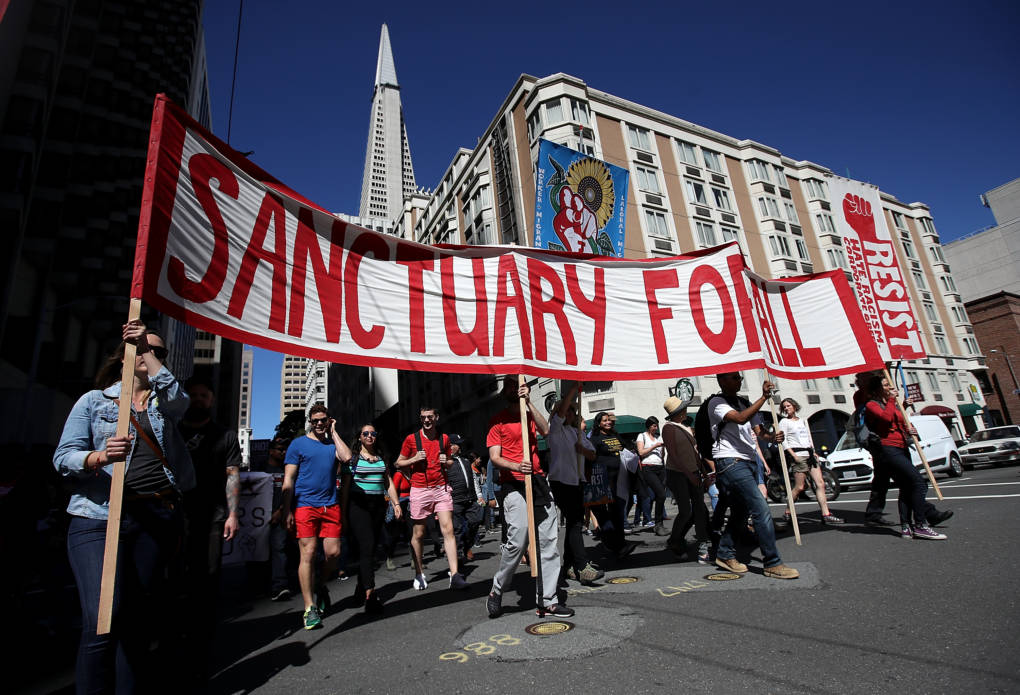
"caption": "Thousands of people marched through downtown San Francisco for May Day on May 1, 2017. The holiday is also known as International Workers' Day and Bay Area protests focused on the concerns of immigrant workers, including undocumented laborers.",
"description": null,
"title": "20170501_MayDayfeat_credit_BertJohnson-1",
"credit": "Bert Johnson/KQED",
"status": "inherit",
"isLoading": false,
"fetchFailed": false
},
"news_11436014": {
"type": "attachments",
"id": "news_11436014",
"meta": {
"index": "attachments_1716263798",
"site": "news",
"id": "11436014",
"found": true
},
"parent": 11435473,
"imgSizes": {
"small": {
"file": "https://ww2.kqed.org/app/uploads/sites/10/2017/05/GettyImages-675552308-520x354.jpg",
"width": 520,
"mimeType": "image/jpeg",
"height": 354
},
"twentyfourteen-full-width": {
"file": "https://ww2.kqed.org/app/uploads/sites/10/2017/05/GettyImages-675552308-1038x576.jpg",
"width": 1038,
"mimeType": "image/jpeg",
"height": 576
},
"thumbnail": {
"file": "https://ww2.kqed.org/app/uploads/sites/10/2017/05/GettyImages-675552308-160x109.jpg",
"width": 160,
"mimeType": "image/jpeg",
"height": 109
},
"fd-sm": {
"file": "https://ww2.kqed.org/app/uploads/sites/10/2017/05/GettyImages-675552308-960x654.jpg",
"width": 960,
"mimeType": "image/jpeg",
"height": 654
},
"post-thumbnail": {
"file": "https://ww2.kqed.org/app/uploads/sites/10/2017/05/GettyImages-675552308-672x372.jpg",
"width": 672,
"mimeType": "image/jpeg",
"height": 372
},
"xsmall": {
"file": "https://ww2.kqed.org/app/uploads/sites/10/2017/05/GettyImages-675552308-375x256.jpg",
"width": 375,
"mimeType": "image/jpeg",
"height": 256
},
"kqedFullSize": {
"file": "https://ww2.kqed.org/app/uploads/sites/10/2017/05/GettyImages-675552308-e1493676060209.jpg",
"width": 1920,
"height": 1309
},
"large": {
"file": "https://ww2.kqed.org/app/uploads/sites/10/2017/05/GettyImages-675552308-1020x695.jpg",
"width": 1020,
"mimeType": "image/jpeg",
"height": 695
},
"xlarge": {
"file": "https://ww2.kqed.org/app/uploads/sites/10/2017/05/GettyImages-675552308-1180x804.jpg",
"width": 1180,
"mimeType": "image/jpeg",
"height": 804
},
"guest-author-50": {
"file": "https://ww2.kqed.org/app/uploads/sites/10/2017/05/GettyImages-675552308-50x50.jpg",
"width": 50,
"mimeType": "image/jpeg",
"height": 50
},
"guest-author-96": {
"file": "https://ww2.kqed.org/app/uploads/sites/10/2017/05/GettyImages-675552308-96x96.jpg",
"width": 96,
"mimeType": "image/jpeg",
"height": 96
},
"medium": {
"file": "https://ww2.kqed.org/app/uploads/sites/10/2017/05/GettyImages-675552308-800x545.jpg",
"width": 800,
"mimeType": "image/jpeg",
"height": 545
},
"guest-author-64": {
"file": "https://ww2.kqed.org/app/uploads/sites/10/2017/05/GettyImages-675552308-64x64.jpg",
"width": 64,
"mimeType": "image/jpeg",
"height": 64
},
"guest-author-32": {
"file": "https://ww2.kqed.org/app/uploads/sites/10/2017/05/GettyImages-675552308-32x32.jpg",
"width": 32,
"mimeType": "image/jpeg",
"height": 32
},
"fd-lrg": {
"file": "https://ww2.kqed.org/app/uploads/sites/10/2017/05/GettyImages-675552308-1920x1309.jpg",
"width": 1920,
"mimeType": "image/jpeg",
"height": 1309
},
"fd-med": {
"file": "https://ww2.kqed.org/app/uploads/sites/10/2017/05/GettyImages-675552308-1180x804.jpg",
"width": 1180,
"mimeType": "image/jpeg",
"height": 804
},
"full-width": {
"file": "https://ww2.kqed.org/app/uploads/sites/10/2017/05/GettyImages-675552308-1920x1309.jpg",
"width": 1920,
"mimeType": "image/jpeg",
"height": 1309
},
"detail": {
"file": "https://ww2.kqed.org/app/uploads/sites/10/2017/05/GettyImages-675552308-150x150.jpg",
"width": 150,
"mimeType": "image/jpeg",
"height": 150
},
"guest-author-128": {
"file": "https://ww2.kqed.org/app/uploads/sites/10/2017/05/GettyImages-675552308-128x128.jpg",
"width": 128,
"mimeType": "image/jpeg",
"height": 128
},
"xxsmall": {
"file": "https://ww2.kqed.org/app/uploads/sites/10/2017/05/GettyImages-675552308-240x164.jpg",
"width": 240,
"mimeType": "image/jpeg",
"height": 164
}
},
"publishDate": 1493676013,
"modified": 1493676053,
"caption": "Protesters carry signs as they march during a May Day demonstration in San Francisco.",
"description": null,
"title": "Thousands Attend May Day Protests Across The U.S.",
"credit": "Justin Sullivan/Getty Images",
"status": "inherit",
"isLoading": false,
"fetchFailed": false
},
"news_11431960": {
"type": "attachments",
"id": "news_11431960",
"meta": {
"index": "attachments_1716263798",
"site": "news",
"id": "11431960",
"found": true
},
"parent": 11406733,
"imgSizes": {
"small": {
"file": "https://ww2.kqed.org/app/uploads/sites/10/2017/04/FloresFam-520x321.jpg",
"width": 520,
"mimeType": "image/jpeg",
"height": 321
},
"twentyfourteen-full-width": {
"file": "https://ww2.kqed.org/app/uploads/sites/10/2017/04/FloresFam-1038x576.jpg",
"width": 1038,
"mimeType": "image/jpeg",
"height": 576
},
"thumbnail": {
"file": "https://ww2.kqed.org/app/uploads/sites/10/2017/04/FloresFam-160x99.jpg",
"width": 160,
"mimeType": "image/jpeg",
"height": 99
},
"fd-sm": {
"file": "https://ww2.kqed.org/app/uploads/sites/10/2017/04/FloresFam-960x593.jpg",
"width": 960,
"mimeType": "image/jpeg",
"height": 593
},
"post-thumbnail": {
"file": "https://ww2.kqed.org/app/uploads/sites/10/2017/04/FloresFam-672x372.jpg",
"width": 672,
"mimeType": "image/jpeg",
"height": 372
},
"xsmall": {
"file": "https://ww2.kqed.org/app/uploads/sites/10/2017/04/FloresFam-375x231.jpg",
"width": 375,
"mimeType": "image/jpeg",
"height": 231
},
"kqedFullSize": {
"file": "https://ww2.kqed.org/app/uploads/sites/10/2017/04/FloresFam.jpg",
"width": 1920,
"height": 1185
},
"large": {
"file": "https://ww2.kqed.org/app/uploads/sites/10/2017/04/FloresFam-1020x630.jpg",
"width": 1020,
"mimeType": "image/jpeg",
"height": 630
},
"xlarge": {
"file": "https://ww2.kqed.org/app/uploads/sites/10/2017/04/FloresFam-1180x728.jpg",
"width": 1180,
"mimeType": "image/jpeg",
"height": 728
},
"guest-author-50": {
"file": "https://ww2.kqed.org/app/uploads/sites/10/2017/04/FloresFam-50x50.jpg",
"width": 50,
"mimeType": "image/jpeg",
"height": 50
},
"guest-author-96": {
"file": "https://ww2.kqed.org/app/uploads/sites/10/2017/04/FloresFam-96x96.jpg",
"width": 96,
"mimeType": "image/jpeg",
"height": 96
},
"medium": {
"file": "https://ww2.kqed.org/app/uploads/sites/10/2017/04/FloresFam-800x494.jpg",
"width": 800,
"mimeType": "image/jpeg",
"height": 494
},
"guest-author-64": {
"file": "https://ww2.kqed.org/app/uploads/sites/10/2017/04/FloresFam-64x64.jpg",
"width": 64,
"mimeType": "image/jpeg",
"height": 64
},
"guest-author-32": {
"file": "https://ww2.kqed.org/app/uploads/sites/10/2017/04/FloresFam-32x32.jpg",
"width": 32,
"mimeType": "image/jpeg",
"height": 32
},
"fd-lrg": {
"file": "https://ww2.kqed.org/app/uploads/sites/10/2017/04/FloresFam-1920x1185.jpg",
"width": 1920,
"mimeType": "image/jpeg",
"height": 1185
},
"fd-med": {
"file": "https://ww2.kqed.org/app/uploads/sites/10/2017/04/FloresFam-1180x728.jpg",
"width": 1180,
"mimeType": "image/jpeg",
"height": 728
},
"full-width": {
"file": "https://ww2.kqed.org/app/uploads/sites/10/2017/04/FloresFam-1920x1185.jpg",
"width": 1920,
"mimeType": "image/jpeg",
"height": 1185
},
"detail": {
"file": "https://ww2.kqed.org/app/uploads/sites/10/2017/04/FloresFam-150x150.jpg",
"width": 150,
"mimeType": "image/jpeg",
"height": 150
},
"guest-author-128": {
"file": "https://ww2.kqed.org/app/uploads/sites/10/2017/04/FloresFam-128x128.jpg",
"width": 128,
"mimeType": "image/jpeg",
"height": 128
},
"xxsmall": {
"file": "https://ww2.kqed.org/app/uploads/sites/10/2017/04/FloresFam-240x148.jpg",
"width": 240,
"mimeType": "image/jpeg",
"height": 148
}
},
"publishDate": 1493426463,
"modified": 1493426488,
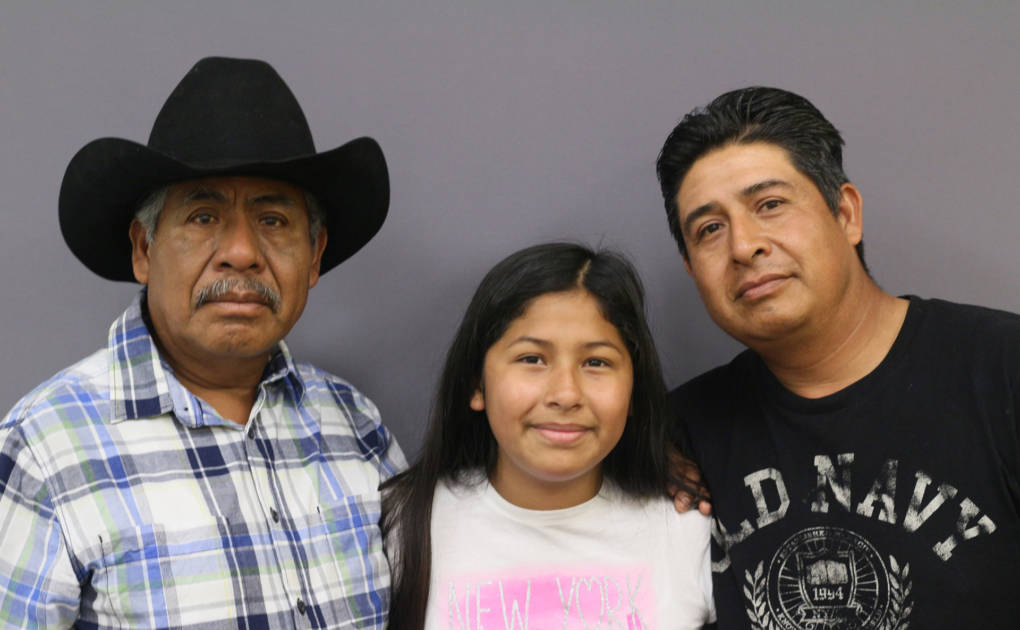
"caption": "59-year-old Julián Flores, his 12-year-old granddaughter Angelina and his 36-year-old son Luis talked about Julian's life growing up in Mexico and moving his family to the United States. ",
"description": "59-year-old Julián Flores, his 12-year-old granddaughter Angelina and his 36-year-old son Luis talked about Julian's life growing up in Mexico and moving his family to the United States. ",
"title": "FloresFam",
"credit": "Photo courtesy of StoryCorps",
"status": "inherit",
"isLoading": false,
"fetchFailed": false
},
"news_11429831": {
"type": "attachments",
"id": "news_11429831",
"meta": {
"index": "attachments_1716263798",
"site": "news",
"id": "11429831",
"found": true
},
"parent": 11429742,
"imgSizes": {
"small": {
"file": "https://ww2.kqed.org/app/uploads/sites/10/2017/04/TESS-AND-MARCO-WALKING-520x390.jpg",
"width": 520,
"mimeType": "image/jpeg",
"height": 390
},
"twentyfourteen-full-width": {
"file": "https://ww2.kqed.org/app/uploads/sites/10/2017/04/TESS-AND-MARCO-WALKING-1038x576.jpg",
"width": 1038,
"mimeType": "image/jpeg",
"height": 576
},
"thumbnail": {
"file": "https://ww2.kqed.org/app/uploads/sites/10/2017/04/TESS-AND-MARCO-WALKING-160x120.jpg",
"width": 160,
"mimeType": "image/jpeg",
"height": 120
},
"fd-sm": {
"file": "https://ww2.kqed.org/app/uploads/sites/10/2017/04/TESS-AND-MARCO-WALKING-960x720.jpg",
"width": 960,
"mimeType": "image/jpeg",
"height": 720
},
"post-thumbnail": {
"file": "https://ww2.kqed.org/app/uploads/sites/10/2017/04/TESS-AND-MARCO-WALKING-672x372.jpg",
"width": 672,
"mimeType": "image/jpeg",
"height": 372
},
"xsmall": {
"file": "https://ww2.kqed.org/app/uploads/sites/10/2017/04/TESS-AND-MARCO-WALKING-375x281.jpg",
"width": 375,
"mimeType": "image/jpeg",
"height": 281
},
"kqedFullSize": {
"file": "https://ww2.kqed.org/app/uploads/sites/10/2017/04/TESS-AND-MARCO-WALKING.jpg",
"width": 4032,
"height": 3024
},
"large": {
"file": "https://ww2.kqed.org/app/uploads/sites/10/2017/04/TESS-AND-MARCO-WALKING-1020x765.jpg",
"width": 1020,
"mimeType": "image/jpeg",
"height": 765
},
"xlarge": {
"file": "https://ww2.kqed.org/app/uploads/sites/10/2017/04/TESS-AND-MARCO-WALKING-1180x885.jpg",
"width": 1180,
"mimeType": "image/jpeg",
"height": 885
},
"guest-author-50": {
"file": "https://ww2.kqed.org/app/uploads/sites/10/2017/04/TESS-AND-MARCO-WALKING-50x50.jpg",
"width": 50,
"mimeType": "image/jpeg",
"height": 50
},
"guest-author-96": {
"file": "https://ww2.kqed.org/app/uploads/sites/10/2017/04/TESS-AND-MARCO-WALKING-96x96.jpg",
"width": 96,
"mimeType": "image/jpeg",
"height": 96
},
"medium": {
"file": "https://ww2.kqed.org/app/uploads/sites/10/2017/04/TESS-AND-MARCO-WALKING-800x600.jpg",
"width": 800,
"mimeType": "image/jpeg",
"height": 600
},
"guest-author-64": {
"file": "https://ww2.kqed.org/app/uploads/sites/10/2017/04/TESS-AND-MARCO-WALKING-64x64.jpg",
"width": 64,
"mimeType": "image/jpeg",
"height": 64
},
"guest-author-32": {
"file": "https://ww2.kqed.org/app/uploads/sites/10/2017/04/TESS-AND-MARCO-WALKING-32x32.jpg",
"width": 32,
"mimeType": "image/jpeg",
"height": 32
},
"fd-lrg": {
"file": "https://ww2.kqed.org/app/uploads/sites/10/2017/04/TESS-AND-MARCO-WALKING-1920x1440.jpg",
"width": 1920,
"mimeType": "image/jpeg",
"height": 1440
},
"fd-med": {
"file": "https://ww2.kqed.org/app/uploads/sites/10/2017/04/TESS-AND-MARCO-WALKING-1180x885.jpg",
"width": 1180,
"mimeType": "image/jpeg",
"height": 885
},
"full-width": {
"file": "https://ww2.kqed.org/app/uploads/sites/10/2017/04/TESS-AND-MARCO-WALKING-1920x1440.jpg",
"width": 1920,
"mimeType": "image/jpeg",
"height": 1440
},
"detail": {
"file": "https://ww2.kqed.org/app/uploads/sites/10/2017/04/TESS-AND-MARCO-WALKING-150x150.jpg",
"width": 150,
"mimeType": "image/jpeg",
"height": 150
},
"guest-author-128": {
"file": "https://ww2.kqed.org/app/uploads/sites/10/2017/04/TESS-AND-MARCO-WALKING-128x128.jpg",
"width": 128,
"mimeType": "image/jpeg",
"height": 128
},
"xxsmall": {
"file": "https://ww2.kqed.org/app/uploads/sites/10/2017/04/TESS-AND-MARCO-WALKING-240x180.jpg",
"width": 240,
"mimeType": "image/jpeg",
"height": 180
}
},
"publishDate": 1493319578,
"modified": 1493401592,
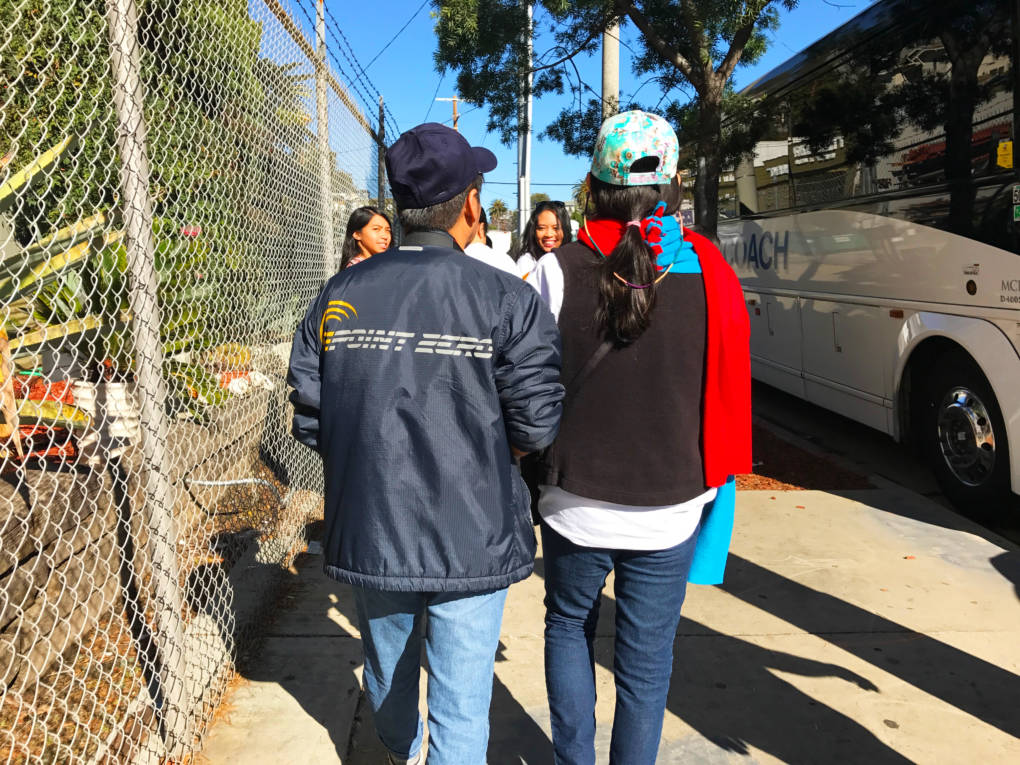
"caption": "Tess and Marco are navigating life together as undocumented Filipino immigrants in Los Angeles. ",
"description": null,
"title": "TESS AND MARCO WALKING",
"credit": "Paola Mardo",
"status": "inherit",
"isLoading": false,
"fetchFailed": false
},
"news_11431952": {
"type": "attachments",
"id": "news_11431952",
"meta": {
"index": "attachments_1716263798",
"site": "news",
"id": "11431952",
"found": true
},
"parent": 11431950,
"imgSizes": {
"small": {
"file": "https://ww2.kqed.org/app/uploads/sites/10/2017/04/Show-Marquee-520x293.jpg",
"width": 520,
"mimeType": "image/jpeg",
"height": 293
},
"twentyfourteen-full-width": {
"file": "https://ww2.kqed.org/app/uploads/sites/10/2017/04/Show-Marquee-1038x576.jpg",
"width": 1038,
"mimeType": "image/jpeg",
"height": 576
},
"thumbnail": {
"file": "https://ww2.kqed.org/app/uploads/sites/10/2017/04/Show-Marquee-160x90.jpg",
"width": 160,
"mimeType": "image/jpeg",
"height": 90
},
"fd-sm": {
"file": "https://ww2.kqed.org/app/uploads/sites/10/2017/04/Show-Marquee-960x540.jpg",
"width": 960,
"mimeType": "image/jpeg",
"height": 540
},
"post-thumbnail": {
"file": "https://ww2.kqed.org/app/uploads/sites/10/2017/04/Show-Marquee-672x372.jpg",
"width": 672,
"mimeType": "image/jpeg",
"height": 372
},
"xsmall": {
"file": "https://ww2.kqed.org/app/uploads/sites/10/2017/04/Show-Marquee-375x211.jpg",
"width": 375,
"mimeType": "image/jpeg",
"height": 211
},
"kqedFullSize": {
"file": "https://ww2.kqed.org/app/uploads/sites/10/2017/04/Show-Marquee.jpg",
"width": 5333,
"height": 3000
},
"large": {
"file": "https://ww2.kqed.org/app/uploads/sites/10/2017/04/Show-Marquee-1020x574.jpg",
"width": 1020,
"mimeType": "image/jpeg",
"height": 574
},
"xlarge": {
"file": "https://ww2.kqed.org/app/uploads/sites/10/2017/04/Show-Marquee-1180x664.jpg",
"width": 1180,
"mimeType": "image/jpeg",
"height": 664
},
"guest-author-50": {
"file": "https://ww2.kqed.org/app/uploads/sites/10/2017/04/Show-Marquee-50x50.jpg",
"width": 50,
"mimeType": "image/jpeg",
"height": 50
},
"guest-author-96": {
"file": "https://ww2.kqed.org/app/uploads/sites/10/2017/04/Show-Marquee-96x96.jpg",
"width": 96,
"mimeType": "image/jpeg",
"height": 96
},
"medium": {
"file": "https://ww2.kqed.org/app/uploads/sites/10/2017/04/Show-Marquee-800x450.jpg",
"width": 800,
"mimeType": "image/jpeg",
"height": 450
},
"guest-author-64": {
"file": "https://ww2.kqed.org/app/uploads/sites/10/2017/04/Show-Marquee-64x64.jpg",
"width": 64,
"mimeType": "image/jpeg",
"height": 64
},
"guest-author-32": {
"file": "https://ww2.kqed.org/app/uploads/sites/10/2017/04/Show-Marquee-32x32.jpg",
"width": 32,
"mimeType": "image/jpeg",
"height": 32
},
"fd-lrg": {
"file": "https://ww2.kqed.org/app/uploads/sites/10/2017/04/Show-Marquee-1920x1080.jpg",
"width": 1920,
"mimeType": "image/jpeg",
"height": 1080
},
"fd-med": {
"file": "https://ww2.kqed.org/app/uploads/sites/10/2017/04/Show-Marquee-1180x664.jpg",
"width": 1180,
"mimeType": "image/jpeg",
"height": 664
},
"full-width": {
"file": "https://ww2.kqed.org/app/uploads/sites/10/2017/04/Show-Marquee-1920x1080.jpg",
"width": 1920,
"mimeType": "image/jpeg",
"height": 1080
},
"detail": {
"file": "https://ww2.kqed.org/app/uploads/sites/10/2017/04/Show-Marquee-150x150.jpg",
"width": 150,
"mimeType": "image/jpeg",
"height": 150
},
"guest-author-128": {
"file": "https://ww2.kqed.org/app/uploads/sites/10/2017/04/Show-Marquee-128x128.jpg",
"width": 128,
"mimeType": "image/jpeg",
"height": 128
},
"xxsmall": {
"file": "https://ww2.kqed.org/app/uploads/sites/10/2017/04/Show-Marquee-240x135.jpg",
"width": 240,
"mimeType": "image/jpeg",
"height": 135
}
},
"publishDate": 1493425152,
"modified": 1493425152,
"caption": null,
"description": null,
"title": "Show Marquee",
"credit": null,
"status": "inherit",
"isLoading": false,
"fetchFailed": false
},
"news_11430120": {
"type": "attachments",
"id": "news_11430120",
"meta": {
"index": "attachments_1716263798",
"site": "news",
"id": "11430120",
"found": true
},
"parent": 11430115,
"imgSizes": {
"small": {
"file": "https://ww2.kqed.org/app/uploads/sites/10/2017/04/gettyimages-590845140-edit_custom-3605edd0a8516b336bab82adca0804ada4a5d53a-s800-c85-520x346.jpg",
"width": 520,
"mimeType": "image/jpeg",
"height": 346
},
"thumbnail": {
"file": "https://ww2.kqed.org/app/uploads/sites/10/2017/04/gettyimages-590845140-edit_custom-3605edd0a8516b336bab82adca0804ada4a5d53a-s800-c85-160x106.jpg",
"width": 160,
"mimeType": "image/jpeg",
"height": 106
},
"post-thumbnail": {
"file": "https://ww2.kqed.org/app/uploads/sites/10/2017/04/gettyimages-590845140-edit_custom-3605edd0a8516b336bab82adca0804ada4a5d53a-s800-c85-672x372.jpg",
"width": 672,
"mimeType": "image/jpeg",
"height": 372
},
"xsmall": {
"file": "https://ww2.kqed.org/app/uploads/sites/10/2017/04/gettyimages-590845140-edit_custom-3605edd0a8516b336bab82adca0804ada4a5d53a-s800-c85-375x249.jpg",
"width": 375,
"mimeType": "image/jpeg",
"height": 249
},
"kqedFullSize": {
"file": "https://ww2.kqed.org/app/uploads/sites/10/2017/04/gettyimages-590845140-edit_custom-3605edd0a8516b336bab82adca0804ada4a5d53a-s800-c85.jpg",
"width": 800,
"height": 532
},
"guest-author-50": {
"file": "https://ww2.kqed.org/app/uploads/sites/10/2017/04/gettyimages-590845140-edit_custom-3605edd0a8516b336bab82adca0804ada4a5d53a-s800-c85-50x50.jpg",
"width": 50,
"mimeType": "image/jpeg",
"height": 50
},
"guest-author-96": {
"file": "https://ww2.kqed.org/app/uploads/sites/10/2017/04/gettyimages-590845140-edit_custom-3605edd0a8516b336bab82adca0804ada4a5d53a-s800-c85-96x96.jpg",
"width": 96,
"mimeType": "image/jpeg",
"height": 96
},
"medium": {
"file": "https://ww2.kqed.org/app/uploads/sites/10/2017/04/gettyimages-590845140-edit_custom-3605edd0a8516b336bab82adca0804ada4a5d53a-s800-c85-800x532.jpg",
"width": 800,
"mimeType": "image/jpeg",
"height": 532
},
"guest-author-64": {
"file": "https://ww2.kqed.org/app/uploads/sites/10/2017/04/gettyimages-590845140-edit_custom-3605edd0a8516b336bab82adca0804ada4a5d53a-s800-c85-64x64.jpg",
"width": 64,
"mimeType": "image/jpeg",
"height": 64
},
"guest-author-32": {
"file": "https://ww2.kqed.org/app/uploads/sites/10/2017/04/gettyimages-590845140-edit_custom-3605edd0a8516b336bab82adca0804ada4a5d53a-s800-c85-32x32.jpg",
"width": 32,
"mimeType": "image/jpeg",
"height": 32
},
"detail": {
"file": "https://ww2.kqed.org/app/uploads/sites/10/2017/04/gettyimages-590845140-edit_custom-3605edd0a8516b336bab82adca0804ada4a5d53a-s800-c85-150x150.jpg",
"width": 150,
"mimeType": "image/jpeg",
"height": 150
},
"guest-author-128": {
"file": "https://ww2.kqed.org/app/uploads/sites/10/2017/04/gettyimages-590845140-edit_custom-3605edd0a8516b336bab82adca0804ada4a5d53a-s800-c85-128x128.jpg",
"width": 128,
"mimeType": "image/jpeg",
"height": 128
},
"xxsmall": {
"file": "https://ww2.kqed.org/app/uploads/sites/10/2017/04/gettyimages-590845140-edit_custom-3605edd0a8516b336bab82adca0804ada4a5d53a-s800-c85-240x160.jpg",
"width": 240,
"mimeType": "image/jpeg",
"height": 160
}
},
"publishDate": 1493331335,
"modified": 1493419354,
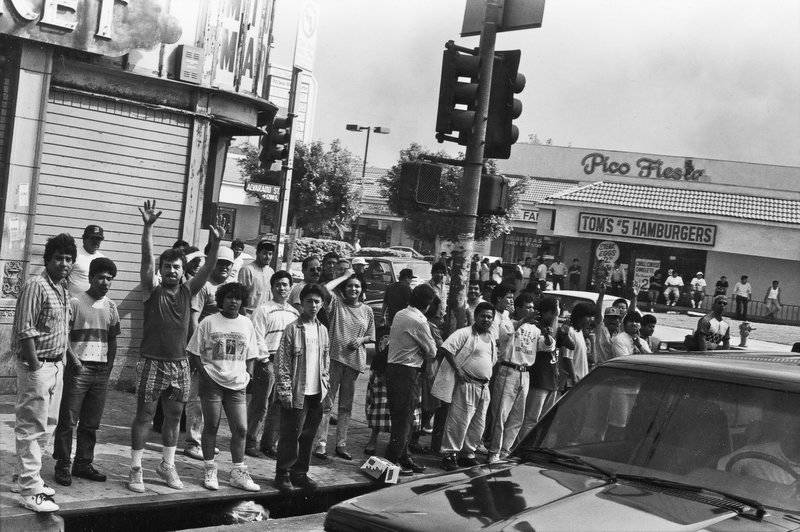
"caption": "People gather in the Pico-Union neighborhood of Los Angeles during rioting following the acquittal of four police officers in the beating of Rodney King in 1992. The neighborhood looks similar today to what it was like 25 years ago. It's still more than 80 percent Latino, with lots of immigrant families from Mexico and Central America.",
"description": "People gather in the Pico-Union neighborhood of Los Angeles during rioting following the acquittal of four police officers in the beating of Rodney King in 1992. The neighborhood looks similar today as it did 25 years ago. It's still more than 80 percent Latino, with lots of immigrant families from Mexico and Central America.",
"title": "gettyimages-590845140-edit_custom-3605edd0a8516b336bab82adca0804ada4a5d53a-s800-c85",
"credit": "Gary Leonard/Corbis via Getty Images",
"status": "inherit",
"isLoading": false,
"fetchFailed": false
},
"news_11429746": {
"type": "attachments",
"id": "news_11429746",
"meta": {
"index": "attachments_1716263798",
"site": "news",
"id": "11429746",
"found": true
},
"parent": 11429745,
"imgSizes": {
"small": {
"file": "https://ww2.kqed.org/app/uploads/sites/10/2017/04/gettyimages-633227514_custom-f3d33891d31460d514708007592db70a299968fb-520x337.jpg",
"width": 520,
"mimeType": "image/jpeg",
"height": 337
},
"twentyfourteen-full-width": {
"file": "https://ww2.kqed.org/app/uploads/sites/10/2017/04/gettyimages-633227514_custom-f3d33891d31460d514708007592db70a299968fb-1038x576.jpg",
"width": 1038,
"mimeType": "image/jpeg",
"height": 576
},
"thumbnail": {
"file": "https://ww2.kqed.org/app/uploads/sites/10/2017/04/gettyimages-633227514_custom-f3d33891d31460d514708007592db70a299968fb-160x104.jpg",
"width": 160,
"mimeType": "image/jpeg",
"height": 104
},
"fd-sm": {
"file": "https://ww2.kqed.org/app/uploads/sites/10/2017/04/gettyimages-633227514_custom-f3d33891d31460d514708007592db70a299968fb-960x623.jpg",
"width": 960,
"mimeType": "image/jpeg",
"height": 623
},
"post-thumbnail": {
"file": "https://ww2.kqed.org/app/uploads/sites/10/2017/04/gettyimages-633227514_custom-f3d33891d31460d514708007592db70a299968fb-672x372.jpg",
"width": 672,
"mimeType": "image/jpeg",
"height": 372
},
"xsmall": {
"file": "https://ww2.kqed.org/app/uploads/sites/10/2017/04/gettyimages-633227514_custom-f3d33891d31460d514708007592db70a299968fb-375x243.jpg",
"width": 375,
"mimeType": "image/jpeg",
"height": 243
},
"kqedFullSize": {
"file": "https://ww2.kqed.org/app/uploads/sites/10/2017/04/gettyimages-633227514_custom-f3d33891d31460d514708007592db70a299968fb-e1493317857959.jpg",
"width": 1920,
"height": 1245
},
"large": {
"file": "https://ww2.kqed.org/app/uploads/sites/10/2017/04/gettyimages-633227514_custom-f3d33891d31460d514708007592db70a299968fb-1020x661.jpg",
"width": 1020,
"mimeType": "image/jpeg",
"height": 661
},
"xlarge": {
"file": "https://ww2.kqed.org/app/uploads/sites/10/2017/04/gettyimages-633227514_custom-f3d33891d31460d514708007592db70a299968fb-1180x765.jpg",
"width": 1180,
"mimeType": "image/jpeg",
"height": 765
},
"guest-author-50": {
"file": "https://ww2.kqed.org/app/uploads/sites/10/2017/04/gettyimages-633227514_custom-f3d33891d31460d514708007592db70a299968fb-50x50.jpg",
"width": 50,
"mimeType": "image/jpeg",
"height": 50
},
"guest-author-96": {
"file": "https://ww2.kqed.org/app/uploads/sites/10/2017/04/gettyimages-633227514_custom-f3d33891d31460d514708007592db70a299968fb-96x96.jpg",
"width": 96,
"mimeType": "image/jpeg",
"height": 96
},
"medium": {
"file": "https://ww2.kqed.org/app/uploads/sites/10/2017/04/gettyimages-633227514_custom-f3d33891d31460d514708007592db70a299968fb-800x519.jpg",
"width": 800,
"mimeType": "image/jpeg",
"height": 519
},
"guest-author-64": {
"file": "https://ww2.kqed.org/app/uploads/sites/10/2017/04/gettyimages-633227514_custom-f3d33891d31460d514708007592db70a299968fb-64x64.jpg",
"width": 64,
"mimeType": "image/jpeg",
"height": 64
},
"guest-author-32": {
"file": "https://ww2.kqed.org/app/uploads/sites/10/2017/04/gettyimages-633227514_custom-f3d33891d31460d514708007592db70a299968fb-32x32.jpg",
"width": 32,
"mimeType": "image/jpeg",
"height": 32
},
"fd-lrg": {
"file": "https://ww2.kqed.org/app/uploads/sites/10/2017/04/gettyimages-633227514_custom-f3d33891d31460d514708007592db70a299968fb-1920x1245.jpg",
"width": 1920,
"mimeType": "image/jpeg",
"height": 1245
},
"fd-med": {
"file": "https://ww2.kqed.org/app/uploads/sites/10/2017/04/gettyimages-633227514_custom-f3d33891d31460d514708007592db70a299968fb-1180x765.jpg",
"width": 1180,
"mimeType": "image/jpeg",
"height": 765
},
"full-width": {
"file": "https://ww2.kqed.org/app/uploads/sites/10/2017/04/gettyimages-633227514_custom-f3d33891d31460d514708007592db70a299968fb-1920x1245.jpg",
"width": 1920,
"mimeType": "image/jpeg",
"height": 1245
},
"detail": {
"file": "https://ww2.kqed.org/app/uploads/sites/10/2017/04/gettyimages-633227514_custom-f3d33891d31460d514708007592db70a299968fb-150x150.jpg",
"width": 150,
"mimeType": "image/jpeg",
"height": 150
},
"guest-author-128": {
"file": "https://ww2.kqed.org/app/uploads/sites/10/2017/04/gettyimages-633227514_custom-f3d33891d31460d514708007592db70a299968fb-128x128.jpg",
"width": 128,
"mimeType": "image/jpeg",
"height": 128
},
"xxsmall": {
"file": "https://ww2.kqed.org/app/uploads/sites/10/2017/04/gettyimages-633227514_custom-f3d33891d31460d514708007592db70a299968fb-240x156.jpg",
"width": 240,
"mimeType": "image/jpeg",
"height": 156
}
},
"publishDate": 1493317721,
"modified": 1493317899,
"caption": "A Border Patrol agent looks over the U.S.-Mexico border wall in Calexico on Jan. 31. Apprehensions at the southern border fell dramatically: from more than 40,000 per month late last year to 18,754 in February, and just 12,193 in March.",
"description": "A Border Patrol agent looks over the U.S.-Mexico border wall in Calexico on Jan. 31. Apprehensions at the southern border fell dramatically: from more than 40,000 per month late last year to 18,754 in February, and just 12,193 in March.",
"title": "A Border Patrol agent looks over the U.S.-Mexico border wall in Calexico, Calif., on Jan. 31. Apprehensions at the southern border fell dramatically: from more than 40,000 per month late last year to 18,754 in February, and just 12,193 in March.",
"credit": "Sandy Huffaker/AFP/Getty Images",
"status": "inherit",
"isLoading": false,
"fetchFailed": false
},
"news_11425329": {
"type": "attachments",
"id": "news_11425329",
"meta": {
"index": "attachments_1716263798",
"site": "news",
"id": "11425329",
"found": true
},
"parent": 11425256,
"imgSizes": {
"small": {
"file": "https://ww2.kqed.org/app/uploads/sites/10/2017/04/RS25029_20170424_May1presser_Credit_BertJohnson-5-qut-520x347.jpg",
"width": 520,
"mimeType": "image/jpeg",
"height": 347
},
"twentyfourteen-full-width": {
"file": "https://ww2.kqed.org/app/uploads/sites/10/2017/04/RS25029_20170424_May1presser_Credit_BertJohnson-5-qut-1038x576.jpg",
"width": 1038,
"mimeType": "image/jpeg",
"height": 576
},
"thumbnail": {
"file": "https://ww2.kqed.org/app/uploads/sites/10/2017/04/RS25029_20170424_May1presser_Credit_BertJohnson-5-qut-160x107.jpg",
"width": 160,
"mimeType": "image/jpeg",
"height": 107
},
"fd-sm": {
"file": "https://ww2.kqed.org/app/uploads/sites/10/2017/04/RS25029_20170424_May1presser_Credit_BertJohnson-5-qut-960x640.jpg",
"width": 960,
"mimeType": "image/jpeg",
"height": 640
},
"post-thumbnail": {
"file": "https://ww2.kqed.org/app/uploads/sites/10/2017/04/RS25029_20170424_May1presser_Credit_BertJohnson-5-qut-672x372.jpg",
"width": 672,
"mimeType": "image/jpeg",
"height": 372
},
"xsmall": {
"file": "https://ww2.kqed.org/app/uploads/sites/10/2017/04/RS25029_20170424_May1presser_Credit_BertJohnson-5-qut-375x250.jpg",
"width": 375,
"mimeType": "image/jpeg",
"height": 250
},
"kqedFullSize": {
"file": "https://ww2.kqed.org/app/uploads/sites/10/2017/04/RS25029_20170424_May1presser_Credit_BertJohnson-5-qut.jpg",
"width": 1920,
"height": 1280
},
"large": {
"file": "https://ww2.kqed.org/app/uploads/sites/10/2017/04/RS25029_20170424_May1presser_Credit_BertJohnson-5-qut-1020x680.jpg",
"width": 1020,
"mimeType": "image/jpeg",
"height": 680
},
"xlarge": {
"file": "https://ww2.kqed.org/app/uploads/sites/10/2017/04/RS25029_20170424_May1presser_Credit_BertJohnson-5-qut-1180x787.jpg",
"width": 1180,
"mimeType": "image/jpeg",
"height": 787
},
"guest-author-50": {
"file": "https://ww2.kqed.org/app/uploads/sites/10/2017/04/RS25029_20170424_May1presser_Credit_BertJohnson-5-qut-50x50.jpg",
"width": 50,
"mimeType": "image/jpeg",
"height": 50
},
"guest-author-96": {
"file": "https://ww2.kqed.org/app/uploads/sites/10/2017/04/RS25029_20170424_May1presser_Credit_BertJohnson-5-qut-96x96.jpg",
"width": 96,
"mimeType": "image/jpeg",
"height": 96
},
"medium": {
"file": "https://ww2.kqed.org/app/uploads/sites/10/2017/04/RS25029_20170424_May1presser_Credit_BertJohnson-5-qut-800x533.jpg",
"width": 800,
"mimeType": "image/jpeg",
"height": 533
},
"guest-author-64": {
"file": "https://ww2.kqed.org/app/uploads/sites/10/2017/04/RS25029_20170424_May1presser_Credit_BertJohnson-5-qut-64x64.jpg",
"width": 64,
"mimeType": "image/jpeg",
"height": 64
},
"guest-author-32": {
"file": "https://ww2.kqed.org/app/uploads/sites/10/2017/04/RS25029_20170424_May1presser_Credit_BertJohnson-5-qut-32x32.jpg",
"width": 32,
"mimeType": "image/jpeg",
"height": 32
},
"fd-lrg": {
"file": "https://ww2.kqed.org/app/uploads/sites/10/2017/04/RS25029_20170424_May1presser_Credit_BertJohnson-5-qut-1920x1280.jpg",
"width": 1920,
"mimeType": "image/jpeg",
"height": 1280
},
"fd-med": {
"file": "https://ww2.kqed.org/app/uploads/sites/10/2017/04/RS25029_20170424_May1presser_Credit_BertJohnson-5-qut-1180x787.jpg",
"width": 1180,
"mimeType": "image/jpeg",
"height": 787
},
"full-width": {
"file": "https://ww2.kqed.org/app/uploads/sites/10/2017/04/RS25029_20170424_May1presser_Credit_BertJohnson-5-qut-1920x1280.jpg",
"width": 1920,
"mimeType": "image/jpeg",
"height": 1280
},
"detail": {
"file": "https://ww2.kqed.org/app/uploads/sites/10/2017/04/RS25029_20170424_May1presser_Credit_BertJohnson-5-qut-150x150.jpg",
"width": 150,
"mimeType": "image/jpeg",
"height": 150
},
"guest-author-128": {
"file": "https://ww2.kqed.org/app/uploads/sites/10/2017/04/RS25029_20170424_May1presser_Credit_BertJohnson-5-qut-128x128.jpg",
"width": 128,
"mimeType": "image/jpeg",
"height": 128
},
"xxsmall": {
"file": "https://ww2.kqed.org/app/uploads/sites/10/2017/04/RS25029_20170424_May1presser_Credit_BertJohnson-5-qut-240x160.jpg",
"width": 240,
"mimeType": "image/jpeg",
"height": 160
}
},
"publishDate": 1493082152,
"modified": 1493082180,
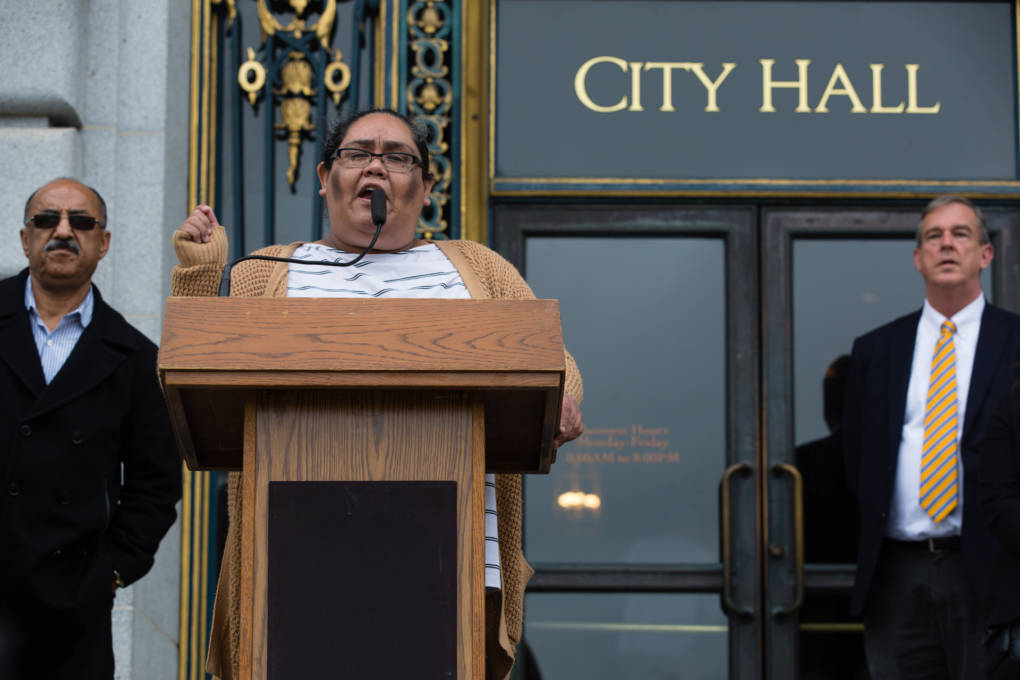
"caption": "Olga Miranda spoke during a press conference in front of San Francisco City Hall on April 24, 2017. She and other members of the May 1st Coalition were announcing their participation in the upcoming May Day protest.",
"description": null,
"title": "RS25029_20170424_May1presser_Credit_BertJohnson-5-qut",
"credit": "Bert Johnson/KQED",
"status": "inherit",
"isLoading": false,
"fetchFailed": false
}
},
"audioPlayerReducer": {
"postId": "stream_live",
"isPaused": true,
"isPlaying": false,
"pfsActive": false,
"pledgeModalIsOpen": true,
"playerDrawerIsOpen": false,
"liveAudioPlayStartedAt": 0,
"liveAudioPlayContext": ""
},
"authorsReducer": {
"byline_news_11440179": {
"type": "authors",
"id": "byline_news_11440179",
"meta": {
"override": true
},
"slug": "byline_news_11440179",
"name": "\u003cstrong>\u003ca href=\"http://www.scpr.org/about/people/staff/josie-huang\">Josie Huang\u003c/a>\u003cbr>\u003ca href=\"http://www.scpr.org/\">KPCC\u003c/a>\u003c/strong>",
"isLoading": false
},
"byline_news_11437232": {
"type": "authors",
"id": "byline_news_11437232",
"meta": {
"override": true
},
"slug": "byline_news_11437232",
"name": "Ben Adler",
"isLoading": false
},
"byline_news_11429742": {
"type": "authors",
"id": "byline_news_11429742",
"meta": {
"override": true
},
"slug": "byline_news_11429742",
"name": "Paola Mardo",
"isLoading": false
},
"byline_news_11430115": {
"type": "authors",
"id": "byline_news_11430115",
"meta": {
"override": true
},
"slug": "byline_news_11430115",
"name": "Shereen Marisol Meraji",
"isLoading": false
},
"byline_news_11429745": {
"type": "authors",
"id": "byline_news_11429745",
"meta": {
"override": true
},
"slug": "byline_news_11429745",
"name": "Joel Rose",
"isLoading": false
},
"byline_news_11425256": {
"type": "authors",
"id": "byline_news_11425256",
"meta": {
"override": true
},
"slug": "byline_news_11425256",
"name": "\u003cstrong>\u003ca href=\"https://twitter.com/marianaurbannew\">Mariana Urban\u003c/a> and \u003ca href=\"https://twitter.com/bertjohnsonfoto\">Bert Johnson\u003c/a> \u003c/strong>",
"isLoading": false
},
"kqed": {
"type": "authors",
"id": "236",
"meta": {
"index": "authors_1716337520",
"id": "236",
"found": true
},
"name": "KQED News Staff",
"firstName": "KQED News Staff",
"lastName": null,
"slug": "kqed",
"email": "faq@kqed.org",
"display_author_email": false,
"staff_mastheads": [],
"title": null,
"bio": null,
"avatar": "https://secure.gravatar.com/avatar/ef0e801a68c4c54afa9180db14084167?s=600&d=blank&r=g",
"twitter": null,
"facebook": null,
"instagram": null,
"linkedin": null,
"sites": [
{
"site": "arts",
"roles": [
"contributor"
]
},
{
"site": "news",
"roles": [
"editor"
]
},
{
"site": "futureofyou",
"roles": [
"author"
]
}
],
"headData": {
"title": "KQED News Staff | KQED",
"description": null,
"ogImgSrc": "https://secure.gravatar.com/avatar/ef0e801a68c4c54afa9180db14084167?s=600&d=blank&r=g",
"twImgSrc": "https://secure.gravatar.com/avatar/ef0e801a68c4c54afa9180db14084167?s=600&d=blank&r=g"
},
"isLoading": false,
"link": "/author/kqed"
},
"sheraz-sadiq": {
"type": "authors",
"id": "6176",
"meta": {
"index": "authors_1716337520",
"id": "6176",
"found": true
},
"name": "Sheraz Sadiq",
"firstName": "Sheraz",
"lastName": "Sadiq",
"slug": "sheraz-sadiq",
"email": "ssadiq@kqed.org",
"display_author_email": false,
"staff_mastheads": [],
"title": "KQED Contributor",
"bio": "Sheraz Sadiq is an Emmy Award-winning producer at San Francisco PBS affiliate KQED. In 2012, he received the AAAS Kavli Science Journalism award for a story he produced about the seismic retrofit of the Hetch Hetchy water delivery system which serves the San Francisco Bay Area. In addition to producing television content for KQED Science, he has also created online features and written news articles on scientific subjects ranging from astronomy to synthetic biology.",
"avatar": "https://secure.gravatar.com/avatar/d88c61c214e477c4c6f0ebaed4f581bf7c9b1dafd94cd4361285d427107adb8d?s=600&d=blank&r=g",
"twitter": null,
"bluesky": null,
"facebook": null,
"instagram": null,
"linkedin": null,
"sites": [
{
"site": "arts",
"roles": [
"subscriber"
]
},
{
"site": "news",
"roles": [
"subscriber"
]
},
{
"site": "futureofyou",
"roles": [
"subscriber"
]
},
{
"site": "science",
"roles": [
"subscriber"
]
},
{
"site": "quest",
"roles": [
"leadcoordinator",
"subscriber"
]
}
],
"headData": {
"title": "Sheraz Sadiq | KQED",
"description": "KQED Contributor",
"ogImgSrc": "https://secure.gravatar.com/avatar/d88c61c214e477c4c6f0ebaed4f581bf7c9b1dafd94cd4361285d427107adb8d?s=600&d=blank&r=g",
"twImgSrc": "https://secure.gravatar.com/avatar/d88c61c214e477c4c6f0ebaed4f581bf7c9b1dafd94cd4361285d427107adb8d?s=600&d=blank&r=g"
},
"isLoading": false,
"link": "/author/sheraz-sadiq"
},
"korr": {
"type": "authors",
"id": "11200",
"meta": {
"index": "authors_1716337520",
"id": "11200",
"found": true
},
"name": "Katie Orr",
"firstName": "Katie",
"lastName": "Orr",
"slug": "korr",
"email": "korr@kqed.org",
"display_author_email": false,
"staff_mastheads": [],
"title": "KQED Contributor",
"bio": "Katie Orr was a Sacramento-based reporter for KQED's Politics and Government Desk, covering the state Capitol and a variety of issues including women in politics, voting and elections and legislation. Prior to joining KQED in 2016, Katie was state government reporter for Capital Public Radio in Sacramento. She's also worked for KPBS in San Diego, where she covered City Hall.\r\n\r\nKatie received her masters degree in political science from San Diego State University and holds a Bachelors degree in broadcast journalism from Arizona State University.\r\n\r\nIn 2015 Katie won a national Clarion Award for a series of stories she did on women in California politics. She's been honored by the Society for Professional Journalists and, in 2013, was named by \u003cem>The Washington Post\u003c/em> as one of the country's top state Capitol reporters. She's also reported for the award-winning documentary series \u003cem>The View from Here \u003c/em>and was part of the team that won national PRNDI and Gabriel Awards in 2015. She lives in Sacramento with her husband. Twitter: @1KatieOrr",
"avatar": "https://secure.gravatar.com/avatar/41a40b25845adc78f50808670860449e?s=600&d=blank&r=g",
"twitter": "1katieorr",
"facebook": null,
"instagram": null,
"linkedin": null,
"sites": [
{
"site": "news",
"roles": [
"subscriber"
]
},
{
"site": "stateofhealth",
"roles": [
"author"
]
},
{
"site": "forum",
"roles": [
"author"
]
}
],
"headData": {
"title": "Katie Orr | KQED",
"description": "KQED Contributor",
"ogImgSrc": "https://secure.gravatar.com/avatar/41a40b25845adc78f50808670860449e?s=600&d=blank&r=g",
"twImgSrc": "https://secure.gravatar.com/avatar/41a40b25845adc78f50808670860449e?s=600&d=blank&r=g"
},
"isLoading": false,
"link": "/author/korr"
},
"rlevi": {
"type": "authors",
"id": "11260",
"meta": {
"index": "authors_1716337520",
"id": "11260",
"found": true
},
"name": "Ryan Levi",
"firstName": "Ryan",
"lastName": "Levi",
"slug": "rlevi",
"email": "rlevi@KQED.org",
"display_author_email": false,
"staff_mastheads": [],
"title": "KQED Contributor",
"bio": "Ryan Levi was a reporter and podcast producer at KQED News from 2016-2019. He worked on \u003ca href=\"https://www.kqed.org/news/series/baycurious\">Bay Curious\u003c/a>, \u003ca href=\"https://www.kqed.org/news/tag/the-bay/\">The Bay, \u003c/a>and \u003ca href=\"https://podcasts.apple.com/us/podcast/the-california-report-magazine/id1314750545\">The California Report Magazine\u003c/a>, as well as hosting and producing the weekly \u003ca href=\"https://www.kqed.org/news/program/qedup/\">Q'ed Up podcast. \u003c/a>He also helped inaugurate KQED's weekend news coverage in 2017 as one of two original digital producers. Ryan holds degrees in multimedia journalism and Spanish from the University of Missouri.",
"avatar": "https://secure.gravatar.com/avatar/4cb2ddd028ac8807d1adf09609c5555d?s=600&d=blank&r=g",
"twitter": "ryan_levi",
"facebook": null,
"instagram": null,
"linkedin": null,
"sites": [
{
"site": "arts",
"roles": [
"editor"
]
},
{
"site": "news",
"roles": [
"subscriber"
]
},
{
"site": "stateofhealth",
"roles": [
"editor"
]
},
{
"site": "science",
"roles": [
"editor"
]
},
{
"site": "forum",
"roles": [
"administrator"
]
},
{
"site": "perspectives",
"roles": [
"administrator"
]
}
],
"headData": {
"title": "Ryan Levi | KQED",
"description": "KQED Contributor",
"ogImgSrc": "https://secure.gravatar.com/avatar/4cb2ddd028ac8807d1adf09609c5555d?s=600&d=blank&r=g",
"twImgSrc": "https://secure.gravatar.com/avatar/4cb2ddd028ac8807d1adf09609c5555d?s=600&d=blank&r=g"
},
"isLoading": false,
"link": "/author/rlevi"
}
},
"pagesReducer": {
"news_category_immigration": {
"type": "terms",
"id": "news_1169",
"meta": {
"index": "terms_1716263798",
"site": "news",
"id": "1169",
"score": 10.910194
},
"featImg": null,
"name": "Immigration",
"description": null,
"taxonomy": "category",
"headData": {
"twImgId": null,
"twTitle": null,
"ogTitle": null,
"ogImgId": null,
"twDescription": null,
"description": null,
"title": "Immigration Archives | KQED News",
"ogDescription": null
},
"ttid": 1180,
"slug": "immigration",
"isLoading": false,
"title": "Immigration",
"pageMeta": {
"site": "news",
"WpPageTemplate": "page-topic-editorial",
"currentPage": 162
},
"blocks": [
{
"blockName": "kqed/post-list",
"attrs": {
"layout": "cardArticle2",
"query": "posts/news?category=immigration",
"seeMore": false,
"paginated": true,
"page": 162
}
},
{
"blockName": "kqed/ad"
}
]
}
},
"pfsSessionReducer": {},
"postsReducer": {
"stream_live": {
"type": "live",
"id": "stream_live",
"audioUrl": "https://streams.kqed.org/kqedradio",
"title": "Live Stream",
"excerpt": "Live Stream information currently unavailable.",
"link": "/radio",
"featImg": "",
"label": {
"name": "KQED Live",
"link": "/"
}
},
"stream_kqedNewscast": {
"type": "posts",
"id": "stream_kqedNewscast",
"audioUrl": "https://www.kqed.org/.stream/anon/radio/RDnews/newscast.mp3?_=1",
"title": "KQED Newscast",
"featImg": "",
"label": {
"name": "88.5 FM",
"link": "/"
}
},
"news_11440179": {
"type": "posts",
"id": "news_11440179",
"meta": {
"index": "posts_1716263798",
"site": "news",
"id": "11440179",
"score": null,
"sort": [
1493921108000
]
},
"parent": 0,
"labelTerm": {
"site": "news",
"term": 72
},
"blocks": [],
"publishDate": 1493921108,
"format": "audio",
"disqusTitle": "Bill Would Block Landlords From Threatening Tenants With Deportation",
"title": "Bill Would Block Landlords From Threatening Tenants With Deportation",
"headTitle": "The California Report | KQED News",
"content": "\u003cp>A bill making its way through the state Legislature to strengthen tenant protections for immigrants without legal residency status is drawing support from advocates around the state, like David Aigboboh.\u003c/p>\n\u003cp>A lawyer for the Inner City Law Center in Los Angeles, Aigboboh represents a man fighting eviction from the apartment he's called home for the last 30 or so years.\u003c/p>\n\u003cp>Aigboboh thinks he has a case. The landlord wants to give his client's unit to a resident manager, even though Aigboboh said there hasn't been a manager before. The tenant lacks residency papers, so when the landlord's attorney asked him about his immigration status during a deposition in February, it made him \"very, very scared.\"\u003c/p>\n\u003cp>\"Now that his case is going to trial, he has expressed some concern about coming to the court to testify because he has seen the \u003ca href=\"https://ww2.kqed.org/news/2017/03/31/states-chief-justice-doubles-down-on-criticism-of-immigration-enforcement-in-courthouses/\">stories\u003c/a> about (Immigration and Customs Enforcement agents) appearing at courthouses,\" Aigboboh said.\u003c/p>\n\u003cp>Questioning a tenant about his or her immigration status would be barred in court under \u003ca href=\"https://leginfo.legislature.ca.gov/faces/billNavClient.xhtml?bill_id=201720180AB291\">AB 291\u003c/a>, sponsored by Assemblyman David Chiu (D-San Francisco).\u003c/p>\n\u003cp>[ad fullwidth]\u003c/p>\n\u003cp>Also, landlords would be banned from threatening to report tenants to immigration agents. If that were to happen, tenants would have the backing of the law to sue the landlord.\u003c/p>\n\u003cp>The bill's supporters maintain that landlords are using threats against immigrant tenants as a way to get them to vacate their rent-controlled apartments, which would allow landlords to hike up the rent.\u003c/p>\n\u003cp>Because the overwhelming majority of immigrants lacking status are renters, they're in an especially vulnerable position, their advocates say.\u003c/p>\n\u003cp>[contextly_sidebar id=\"kka2g0aBtax96w2mI3kd1OjPnw2NAAeU\"]\u003c/p>\n\u003cp>The bill, which is expected go for a vote before the state Assembly in the coming weeks, also has the backing of the state's biggest trade group for owners and property managers. The \u003ca href=\"https://caanet.org/\">California Apartment Association\u003c/a> is on a list of more than 50 supporters around the state, mostly housing and legal advocates.\u003c/p>\n\u003cp>Debra Carlton, senior vice president of public affairs for the California Apartment Association, maintains the number of problem landlords who would use deportation threats is small.\u003c/p>\n\u003cp>\"These would be unscrupulous landlords that don’t subscribe to any kind of good landlord policies, so they operate on the fringes,\" Carlton said.\u003c/p>\n\u003cp>Carlton said her group advises members to never turn over tenants' immigration information to authorities unless ordered by a court.\u003c/p>\n\u003cp>Housing and legal advocates believe that a growing number of landlords have been emboldened by the Trump administration and its aggressive efforts to crack down on illegal immigration. But advocates suspect that targeted immigrants are not reporting these problems because they fear drawing further attention to themselves, making the prevalence of these incidents hard to pin down.\u003c/p>\n\u003cp>Favian Gonzalez said that, as an organizer at \u003ca href=\"http://www.saje.net/\">Strategic Actions for a Just Economy\u003c/a> (SAJE) in Los Angeles, he's gotten a handful of reports this year of undocumented tenants threatened by landlords.\u003c/p>\n\u003cp>\u003c/p>\n\u003cp>\"This political climate is making us kind of keep an eye out now,\" Gonzalez said.\u003c/p>\n\n",
"disqusIdentifier": "11440179 https://ww2.kqed.org/news/?p=11440179",
"disqusUrl": "https://ww2.kqed.org/news/2017/05/04/bill-would-block-landlords-from-threatening-tenants-with-deportation/",
"stats": {
"hasVideo": false,
"hasChartOrMap": false,
"hasAudio": false,
"hasPolis": false,
"wordCount": 505,
"hasGoogleForm": false,
"hasGallery": false,
"hasHearkenModule": false,
"iframeSrcs": [],
"paragraphCount": 18
},
"modified": 1494032238,
"excerpt": "The bill's supporters say landlords are using threats against immigrant tenants as a way to get them to vacate their rent-controlled apartments.",
"headData": {
"twImgId": "",
"twTitle": "",
"ogTitle": "",
"ogImgId": "",
"twDescription": "",
"description": "The bill's supporters say landlords are using threats against immigrant tenants as a way to get them to vacate their rent-controlled apartments.",
"title": "Bill Would Block Landlords From Threatening Tenants With Deportation | KQED",
"ogDescription": "",
"schema": {
"@context": "https://schema.org",
"@type": "NewsArticle",
"headline": "Bill Would Block Landlords From Threatening Tenants With Deportation",
"datePublished": "2017-05-04T11:05:08-07:00",
"dateModified": "2017-05-05T17:57:18-07:00",
"image": "https://cdn.kqed.org/wp-content/uploads/2020/02/KQED-OG-Image@1x.png",
"isAccessibleForFree": "True",
"publisher": {
"@type": "NewsMediaOrganization",
"@id": "https://www.kqed.org/#organization",
"name": "KQED",
"logo": "https://cdn.kqed.org/wp-content/uploads/2020/02/KQED-OG-Image@1x.png",
"url": "https://www.kqed.org",
"sameAs": [
"https://www.facebook.com/KQED",
"https://twitter.com/KQED",
"https://www.instagram.com/kqed/",
"https://www.tiktok.com/@kqedofficial",
"https://www.linkedin.com/company/kqed",
"https://www.youtube.com/channel/UCeC0IOo7i1P_61zVUWbJ4nw"
]
}
}
},
"guestAuthors": [],
"slug": "bill-would-block-landlords-from-threatening-tenants-with-deportation",
"status": "publish",
"audioUrl": "http://www.kqed.org/.stream/anon/radio/tcr/2017/05/2017-05-04d-tcr.mp3",
"nprByline": "\u003cstrong>\u003ca href=\"http://www.scpr.org/about/people/staff/josie-huang\">Josie Huang\u003c/a>\u003cbr>\u003ca href=\"http://www.scpr.org/\">KPCC\u003c/a>\u003c/strong>",
"guestFields": "0",
"path": "/news/11440179/bill-would-block-landlords-from-threatening-tenants-with-deportation",
"audioTrackLength": null,
"parsedContent": [
{
"type": "contentString",
"content": "\u003cdiv class=\"post-body\">\u003cp>\u003cp>A bill making its way through the state Legislature to strengthen tenant protections for immigrants without legal residency status is drawing support from advocates around the state, like David Aigboboh.\u003c/p>\n\u003cp>A lawyer for the Inner City Law Center in Los Angeles, Aigboboh represents a man fighting eviction from the apartment he's called home for the last 30 or so years.\u003c/p>\n\u003cp>Aigboboh thinks he has a case. The landlord wants to give his client's unit to a resident manager, even though Aigboboh said there hasn't been a manager before. The tenant lacks residency papers, so when the landlord's attorney asked him about his immigration status during a deposition in February, it made him \"very, very scared.\"\u003c/p>\n\u003cp>\"Now that his case is going to trial, he has expressed some concern about coming to the court to testify because he has seen the \u003ca href=\"https://ww2.kqed.org/news/2017/03/31/states-chief-justice-doubles-down-on-criticism-of-immigration-enforcement-in-courthouses/\">stories\u003c/a> about (Immigration and Customs Enforcement agents) appearing at courthouses,\" Aigboboh said.\u003c/p>\n\u003cp>Questioning a tenant about his or her immigration status would be barred in court under \u003ca href=\"https://leginfo.legislature.ca.gov/faces/billNavClient.xhtml?bill_id=201720180AB291\">AB 291\u003c/a>, sponsored by Assemblyman David Chiu (D-San Francisco).\u003c/p>\n\u003cp>\u003c/p>\u003c/div>",
"attributes": {
"named": {},
"numeric": []
}
},
{
"type": "component",
"content": "",
"name": "ad",
"attributes": {
"named": {
"label": "fullwidth"
},
"numeric": [
"fullwidth"
]
}
},
{
"type": "contentString",
"content": "\u003cdiv class=\"post-body\">\u003cp>\u003c/p>\n\u003cp>Also, landlords would be banned from threatening to report tenants to immigration agents. If that were to happen, tenants would have the backing of the law to sue the landlord.\u003c/p>\n\u003cp>The bill's supporters maintain that landlords are using threats against immigrant tenants as a way to get them to vacate their rent-controlled apartments, which would allow landlords to hike up the rent.\u003c/p>\n\u003cp>Because the overwhelming majority of immigrants lacking status are renters, they're in an especially vulnerable position, their advocates say.\u003c/p>\n\u003cp>\u003c/p>\u003cp>\u003c/p>\u003cp>\u003c/p>\n\u003cp>The bill, which is expected go for a vote before the state Assembly in the coming weeks, also has the backing of the state's biggest trade group for owners and property managers. The \u003ca href=\"https://caanet.org/\">California Apartment Association\u003c/a> is on a list of more than 50 supporters around the state, mostly housing and legal advocates.\u003c/p>\n\u003cp>Debra Carlton, senior vice president of public affairs for the California Apartment Association, maintains the number of problem landlords who would use deportation threats is small.\u003c/p>\n\u003cp>\"These would be unscrupulous landlords that don’t subscribe to any kind of good landlord policies, so they operate on the fringes,\" Carlton said.\u003c/p>\n\u003cp>Carlton said her group advises members to never turn over tenants' immigration information to authorities unless ordered by a court.\u003c/p>\n\u003cp>Housing and legal advocates believe that a growing number of landlords have been emboldened by the Trump administration and its aggressive efforts to crack down on illegal immigration. But advocates suspect that targeted immigrants are not reporting these problems because they fear drawing further attention to themselves, making the prevalence of these incidents hard to pin down.\u003c/p>\n\u003cp>Favian Gonzalez said that, as an organizer at \u003ca href=\"http://www.saje.net/\">Strategic Actions for a Just Economy\u003c/a> (SAJE) in Los Angeles, he's gotten a handful of reports this year of undocumented tenants threatened by landlords.\u003c/p>\n\u003cp>\u003c/p>\n\u003cp>\"This political climate is making us kind of keep an eye out now,\" Gonzalez said.\u003c/p>\n\n\u003c/div>\u003c/p>",
"attributes": {
"named": {},
"numeric": []
}
}
],
"link": "/news/11440179/bill-would-block-landlords-from-threatening-tenants-with-deportation",
"authors": [
"byline_news_11440179"
],
"programs": [
"news_6944",
"news_72"
],
"categories": [
"news_6266",
"news_1169",
"news_8",
"news_13"
],
"tags": [
"news_17286",
"news_244"
],
"affiliates": [
"news_7055"
],
"featImg": "news_11440198",
"label": "news_72"
},
"news_11437439": {
"type": "posts",
"id": "news_11437439",
"meta": {
"index": "posts_1716263798",
"site": "news",
"id": "11437439",
"score": null,
"sort": [
1493763214000
]
},
"guestAuthors": [],
"slug": "resisting-president-trump-with-a-march-for-science",
"title": "Resisting President Trump with a March for Science",
"publishDate": 1493763214,
"format": "video",
"headTitle": "Resisting President Trump with a March for Science | KQED",
"labelTerm": {
"term": 7052,
"site": "news"
},
"content": "\u003cp>On April 22nd, the March for Science was held in hundreds of cities around the world. Robin Lopez, a young climate change researcher from Richmond, California, helped organize the San Francisco rally, which drew 50,000 people to show their support for scientific research and scientists. Lopez felt motivated to get involved and be a part of this historic movement because of the Trump administration’s policies on immigration and science, particularly around climate change. \u003c/p>\n\u003cp>[ad fullwidth]\u003c/p>\u003cp>\u003c/p>\n",
"blocks": [],
"excerpt": "Robin Lopez helped organize a rally to protest the Trump administration's policies on science and immigration ",
"status": "publish",
"parent": 0,
"modified": 1738179107,
"stats": {
"hasAudio": false,
"hasVideo": false,
"hasChartOrMap": false,
"iframeSrcs": [],
"hasGoogleForm": false,
"hasGallery": false,
"hasHearkenModule": false,
"hasPolis": false,
"paragraphCount": 3,
"wordCount": 78
},
"headData": {
"title": "Resisting President Trump with a March for Science | KQED",
"description": "Robin Lopez helped organize a rally to protest the Trump administration's policies on science and immigration ",
"ogTitle": "",
"ogDescription": "",
"ogImgId": "",
"twTitle": "",
"twDescription": "",
"twImgId": "",
"schema": {
"@context": "https://schema.org",
"@type": "NewsArticle",
"headline": "Resisting President Trump with a March for Science",
"datePublished": "2017-05-02T15:13:34-07:00",
"dateModified": "2025-01-29T11:31:47-08:00",
"image": "https://cdn.kqed.org/wp-content/uploads/2020/02/KQED-OG-Image@1x.png",
"isAccessibleForFree": "True",
"publisher": {
"@type": "NewsMediaOrganization",
"@id": "https://www.kqed.org/#organization",
"name": "KQED",
"logo": "https://cdn.kqed.org/wp-content/uploads/2020/02/KQED-OG-Image@1x.png",
"url": "https://www.kqed.org",
"sameAs": [
"https://www.facebook.com/KQED",
"https://twitter.com/KQED",
"https://www.instagram.com/kqed/",
"https://www.tiktok.com/@kqedofficial",
"https://www.linkedin.com/company/kqed",
"https://www.youtube.com/channel/UCeC0IOo7i1P_61zVUWbJ4nw"
]
}
}
},
"videoEmbed": "https://youtu.be/Ic63AW3HkBU",
"sticky": false,
"path": "/news/11437439/resisting-president-trump-with-a-march-for-science",
"audioTrackLength": null,
"parsedContent": [
{
"type": "contentString",
"content": "\u003cdiv class=\"post-body\">\u003cp>\u003cp>On April 22nd, the March for Science was held in hundreds of cities around the world. Robin Lopez, a young climate change researcher from Richmond, California, helped organize the San Francisco rally, which drew 50,000 people to show their support for scientific research and scientists. Lopez felt motivated to get involved and be a part of this historic movement because of the Trump administration’s policies on immigration and science, particularly around climate change. \u003c/p>\n\u003cp>\u003c/p>\u003c/div>",
"attributes": {
"named": {},
"numeric": []
}
},
{
"type": "component",
"content": "",
"name": "ad",
"attributes": {
"named": {
"label": "fullwidth"
},
"numeric": [
"fullwidth"
]
}
},
{
"type": "contentString",
"content": "\u003cdiv class=\"post-body\">\u003cp>\u003c/p>\u003cp>\u003c/p>\n\u003c/div>\u003c/p>",
"attributes": {
"named": {},
"numeric": []
}
}
],
"link": "/news/11437439/resisting-president-trump-with-a-march-for-science",
"authors": [
"6176"
],
"programs": [
"news_7052"
],
"categories": [
"news_1169",
"news_8"
],
"tags": [
"news_255",
"news_1323",
"news_20202",
"news_4593",
"news_20052"
],
"featImg": "news_11437440",
"label": "news_7052"
},
"news_11437232": {
"type": "posts",
"id": "news_11437232",
"meta": {
"index": "posts_1716263798",
"site": "news",
"id": "11437232",
"score": null,
"sort": [
1493749237000
]
},
"parent": 0,
"labelTerm": {},
"blocks": [],
"publishDate": 1493749237,
"format": "image",
"disqusTitle": "Blacklisted for Building Trump's Wall? California Considers It",
"title": "Blacklisted for Building Trump's Wall? California Considers It",
"headTitle": "The California Report | KQED News",
"content": "\u003cp>Democrats at the state level are getting increasingly elaborate in their efforts to oppose President Trump at every turn. You might even say they're trolling him.\u003c/p>\n\u003cp>And nowhere is that more evident than in several blue-state efforts to hinder or outright block the president's long-promised southern border wall.\u003c/p>\n\u003cp>In California, state lawmakers are debating whether to blacklist contractors who help build the president's proposed border wall.\u003c/p>\n\u003cp>\"If you're a business that wants to do work with Trump's proposed wall, then quite frankly, California doesn't want to do business with you,\" said Democratic state Sen. Ricardo Lara, who represents Los Angeles County.\u003c/p>\n\u003cp>Lara's bill would ban the state from contracting with any company that provides goods or services to the federal government for a federally funded southern border wall.\u003c/p>\n\u003cp>[ad fullwidth]\u003c/p>\n\u003cp>\"What would we think of businesses that would work on an internment camp?\" Lara asked. \"What would we think of businesses that work on segregated schools? I mean, these were legitimate projects back in the day. And if they so happened to exist in this time, would we be OK with businesses contributing to that?\"\u003c/p>\n\u003cp>Contractors, of course, see big problems with this legislation.\u003c/p>\n\u003cp>\u003c!-- iframe plugin v.4.3 wordpress.org/plugins/iframe/ -->\u003cbr>\n\u003ciframe src=\"https://www.npr.org/player/embed/526514203/526514204\" width=\"100%\" height=\"290\" frameborder=\"0\" scrolling=\"no\" title=\"NPR embedded audio player\" class=\"iframe-class\">\u003c/iframe>\u003c/p>\n\u003cp>\"What we're doing here is very dangerous in that we're creating a slippery slope and hand-picking projects that are not politically favorable to the California Legislature,\" said former Democratic Assemblyman Felipe Fuentes, who's now a lobbyist for California contractors.\u003c/p>\n\u003cp>At a recent committee hearing, Fuentes told lawmakers that he opposes the border wall, but \"if we have jobs or contracts that are out to bid for prisons, or for Planned Parenthood clinics -- at what point do we stop hand-picking projects and put them in the crosshairs of these political conversations?\"\u003c/p>\n\u003cp>This debate is also playing out in statehouses across the country, especially the ones controlled by Democrats.\u003c/p>\n\u003cp>New York has a bill that would blacklist border wall contractors and force public pension funds to divest from them. So does Arizona, although that proposal would appear to be a long shot in a state controlled by Republicans.\u003c/p>\n\u003cp>[contextly_sidebar id=\"6q9pyhPqk1HJWSocWcqbNIdG1XiEWJ4s\"]\u003c/p>\n\u003cp>A divestment bill in Rhode Island has a committee hearing scheduled for Wednesday. And while divestment proposals in California and Illinois have stalled, they're likely to return.\u003c/p>\n\u003cp>State lawmakers are increasingly turning to divestment bills as a tool to drive public policy. California, for example, has banned its massive public pension funds from investing in the coal industry and certain companies that do business in Iran.\u003c/p>\n\u003cp>Meanwhile, the New Mexico Legislature is debating whether to ban the sale of 22 miles of state-owned land along the border.\u003c/p>\n\u003cp>The border wall isn't the only battleground for Democrats seeking to attack Trump. Several states, including California, have bills that would require presidential candidates to release their tax returns in order to make the ballot.\u003c/p>\n\u003cp>\u003c/p>\n\u003cp>But the fates of all these bills are far from clear. They'll need to win approval from state lawmakers, governors and, quite possibly, courts.\u003c/p>\n\u003cdiv class=\"fullattribution\">Copyright 2017 Capital Public Radio. To see more, visit \u003ca href=\"http://www.capradio.org\">Capital Public Radio\u003c/a>.\u003cimg src=\"https://www.google-analytics.com/__utm.gif?utmac=UA-5828686-4&utmdt=Blacklisted+For+Building+Trump%27s+Wall%3F+California+Considers+It&utme=8(APIKey)9(MDAxOTAwOTE4MDEyMTkxMDAzNjczZDljZA004)\">\u003c/div>\n\n",
"disqusIdentifier": "11437232 https://ww2.kqed.org/news/?p=11437232",
"disqusUrl": "https://ww2.kqed.org/news/2017/05/02/blacklisted-for-building-trumps-wall-california-considers-it/",
"stats": {
"hasVideo": false,
"hasChartOrMap": false,
"hasAudio": false,
"hasPolis": false,
"wordCount": 519,
"hasGoogleForm": false,
"hasGallery": false,
"hasHearkenModule": false,
"iframeSrcs": [],
"paragraphCount": 20
},
"modified": 1493762812,
"excerpt": "'If you're a business that wants to do work with Trump's proposed wall, then quite frankly, California doesn't want to do business with you,' state Sen. Ricardo Lara says.",
"headData": {
"twImgId": "",
"twTitle": "",
"ogTitle": "",
"ogImgId": "",
"twDescription": "",
"description": "'If you're a business that wants to do work with Trump's proposed wall, then quite frankly, California doesn't want to do business with you,' state Sen. Ricardo Lara says.",
"title": "Blacklisted for Building Trump's Wall? California Considers It | KQED",
"ogDescription": "",
"schema": {
"@context": "https://schema.org",
"@type": "NewsArticle",
"headline": "Blacklisted for Building Trump's Wall? California Considers It",
"datePublished": "2017-05-02T11:20:37-07:00",
"dateModified": "2017-05-02T15:06:52-07:00",
"image": "https://cdn.kqed.org/wp-content/uploads/2020/02/KQED-OG-Image@1x.png",
"isAccessibleForFree": "True",
"publisher": {
"@type": "NewsMediaOrganization",
"@id": "https://www.kqed.org/#organization",
"name": "KQED",
"logo": "https://cdn.kqed.org/wp-content/uploads/2020/02/KQED-OG-Image@1x.png",
"url": "https://www.kqed.org",
"sameAs": [
"https://www.facebook.com/KQED",
"https://twitter.com/KQED",
"https://www.instagram.com/kqed/",
"https://www.tiktok.com/@kqedofficial",
"https://www.linkedin.com/company/kqed",
"https://www.youtube.com/channel/UCeC0IOo7i1P_61zVUWbJ4nw"
]
}
}
},
"guestAuthors": [],
"slug": "blacklisted-for-building-trumps-wall-california-considers-it",
"status": "publish",
"nprApiLink": "http://api.npr.org/query?id=526514203&apiKey=MDAxOTAwOTE4MDEyMTkxMDAzNjczZDljZA004",
"nprStoryDate": "Tue, 02 May 2017 05:10:00 -0400",
"nprLastModifiedDate": "Tue, 02 May 2017 09:28:24 -0400",
"nprHtmlLink": "http://www.npr.org/2017/05/02/526514203/states-move-to-blacklist-southern-border-wall-contractors?ft=nprml&f=526514203",
"nprAudio": "https://ondemand.npr.org/anon.npr-mp3/npr/me/2017/05/20170502_me_states_move_to_blacklist_border_wall_contractors.mp3?orgId=285&topicId=1091&d=106&p=3&story=526514203&t=progseg&e=526514132&seg=12&ft=nprml&f=526514203",
"nprImageAgency": "AFP/Getty Images",
"source": "NPR",
"nprAudioM3u": "http://api.npr.org/m3u/1526514204-d6cb0b.m3u?orgId=285&topicId=1091&d=106&p=3&story=526514203&t=progseg&e=526514132&seg=12&ft=nprml&f=526514203",
"nprStoryId": "526514203",
"sourceUrl": "http://www.npr.org/",
"nprByline": "Ben Adler",
"nprImageCredit": "Pedro Pardo",
"nprRetrievedStory": "1",
"nprPubDate": "Tue, 02 May 2017 09:28:00 -0400",
"path": "/news/11437232/blacklisted-for-building-trumps-wall-california-considers-it",
"audioUrl": "https://ondemand.npr.org/anon.npr-mp3/npr/me/2017/05/20170502_me_states_move_to_blacklist_border_wall_contractors.mp3?orgId=285&topicId=1091&d=106&p=3&story=526514203&t=progseg&e=526514132&seg=12&ft=nprml&f=526514203",
"audioTrackLength": null,
"parsedContent": [
{
"type": "contentString",
"content": "\u003cdiv class=\"post-body\">\u003cp>\u003cp>Democrats at the state level are getting increasingly elaborate in their efforts to oppose President Trump at every turn. You might even say they're trolling him.\u003c/p>\n\u003cp>And nowhere is that more evident than in several blue-state efforts to hinder or outright block the president's long-promised southern border wall.\u003c/p>\n\u003cp>In California, state lawmakers are debating whether to blacklist contractors who help build the president's proposed border wall.\u003c/p>\n\u003cp>\"If you're a business that wants to do work with Trump's proposed wall, then quite frankly, California doesn't want to do business with you,\" said Democratic state Sen. Ricardo Lara, who represents Los Angeles County.\u003c/p>\n\u003cp>Lara's bill would ban the state from contracting with any company that provides goods or services to the federal government for a federally funded southern border wall.\u003c/p>\n\u003cp>\u003c/p>\u003c/div>",
"attributes": {
"named": {},
"numeric": []
}
},
{
"type": "component",
"content": "",
"name": "ad",
"attributes": {
"named": {
"label": "fullwidth"
},
"numeric": [
"fullwidth"
]
}
},
{
"type": "contentString",
"content": "\u003cdiv class=\"post-body\">\u003cp>\u003c/p>\n\u003cp>\"What would we think of businesses that would work on an internment camp?\" Lara asked. \"What would we think of businesses that work on segregated schools? I mean, these were legitimate projects back in the day. And if they so happened to exist in this time, would we be OK with businesses contributing to that?\"\u003c/p>\n\u003cp>Contractors, of course, see big problems with this legislation.\u003c/p>\n\u003cp>\u003c!-- iframe plugin v.4.3 wordpress.org/plugins/iframe/ -->\u003cbr>\n\u003ciframe src=\"https://www.npr.org/player/embed/526514203/526514204\" width=\"100%\" height=\"290\" frameborder=\"0\" scrolling=\"no\" title=\"NPR embedded audio player\" class=\"iframe-class\">\u003c/iframe>\u003c/p>\n\u003cp>\"What we're doing here is very dangerous in that we're creating a slippery slope and hand-picking projects that are not politically favorable to the California Legislature,\" said former Democratic Assemblyman Felipe Fuentes, who's now a lobbyist for California contractors.\u003c/p>\n\u003cp>At a recent committee hearing, Fuentes told lawmakers that he opposes the border wall, but \"if we have jobs or contracts that are out to bid for prisons, or for Planned Parenthood clinics -- at what point do we stop hand-picking projects and put them in the crosshairs of these political conversations?\"\u003c/p>\n\u003cp>This debate is also playing out in statehouses across the country, especially the ones controlled by Democrats.\u003c/p>\n\u003cp>New York has a bill that would blacklist border wall contractors and force public pension funds to divest from them. So does Arizona, although that proposal would appear to be a long shot in a state controlled by Republicans.\u003c/p>\n\u003cp>\u003c/p>\u003cp>\u003c/p>\u003cp>\u003c/p>\n\u003cp>A divestment bill in Rhode Island has a committee hearing scheduled for Wednesday. And while divestment proposals in California and Illinois have stalled, they're likely to return.\u003c/p>\n\u003cp>State lawmakers are increasingly turning to divestment bills as a tool to drive public policy. California, for example, has banned its massive public pension funds from investing in the coal industry and certain companies that do business in Iran.\u003c/p>\n\u003cp>Meanwhile, the New Mexico Legislature is debating whether to ban the sale of 22 miles of state-owned land along the border.\u003c/p>\n\u003cp>The border wall isn't the only battleground for Democrats seeking to attack Trump. Several states, including California, have bills that would require presidential candidates to release their tax returns in order to make the ballot.\u003c/p>\n\u003cp>\u003c/p>\n\u003cp>But the fates of all these bills are far from clear. They'll need to win approval from state lawmakers, governors and, quite possibly, courts.\u003c/p>\n\u003cdiv class=\"fullattribution\">Copyright 2017 Capital Public Radio. To see more, visit \u003ca href=\"http://www.capradio.org\">Capital Public Radio\u003c/a>.\u003cimg src=\"https://www.google-analytics.com/__utm.gif?utmac=UA-5828686-4&utmdt=Blacklisted+For+Building+Trump%27s+Wall%3F+California+Considers+It&utme=8(APIKey)9(MDAxOTAwOTE4MDEyMTkxMDAzNjczZDljZA004)\">\u003c/div>\n\n\u003c/div>\u003c/p>",
"attributes": {
"named": {},
"numeric": []
}
}
],
"link": "/news/11437232/blacklisted-for-building-trumps-wall-california-considers-it",
"authors": [
"byline_news_11437232"
],
"programs": [
"news_6944",
"news_72"
],
"categories": [
"news_1758",
"news_1169",
"news_8",
"news_13"
],
"tags": [
"news_20446",
"news_17611",
"news_1323",
"news_17286",
"news_244"
],
"featImg": "news_11437233",
"label": "source_news_11437232"
},
"news_11429750": {
"type": "posts",
"id": "news_11429750",
"meta": {
"index": "posts_1716263798",
"site": "news",
"id": "11429750",
"score": null,
"sort": [
1493708727000
]
},
"parent": 0,
"labelTerm": {
"site": "news",
"term": 72
},
"blocks": [],
"publishDate": 1493708727,
"format": "standard",
"disqusTitle": "Meet the Immigrant Legislators Putting Their Stamp on the Capitol",
"title": "Meet the Immigrant Legislators Putting Their Stamp on the Capitol",
"headTitle": "The California Report | KQED News",
"content": "\u003cp>Immigration, both documented and undocumented, has come under more scrutiny since President Trump took office. Since California is home to an estimated \u003ca href=\"http://www.ppic.org/main/publication_show.asp?i=258\" target=\"_blank\">10 million or more immigrants\u003c/a>, the issue has particular resonance here.\u003c/p>\n\u003cp>As a result, state government is increasingly taking up bills supporters say will help protect that population. And immigrants themselves are becoming more involved in the political process. These eight immigrants are members of the state Legislature, and are helping to craft policy at the state Capitol -- or in some cases to oppose it.\u003c/p>\n\u003ch3>Assemblywoman Blanca Rubio, (D-Baldwin Park), Mexico\u003c/h3>\n\u003cfigure id=\"attachment_11435722\" class=\"wp-caption alignnone\" style=\"max-width: 800px\">\u003cimg class=\"wp-image-11435722 size-medium\" src=\"https://ww2.kqed.org/news/wp-content/uploads/sites/10/2017/05/RS25108_Rubio-yard-qut-800x450.jpg\" alt=\"Asm. Blanca Rubio (center) with her sisters Sylvia (left) and Susan (right) at her Baldwin Park home.\" width=\"800\" height=\"450\" srcset=\"https://ww2.kqed.org/app/uploads/sites/10/2017/05/RS25108_Rubio-yard-qut-800x450.jpg 800w, https://ww2.kqed.org/app/uploads/sites/10/2017/05/RS25108_Rubio-yard-qut-160x90.jpg 160w, https://ww2.kqed.org/app/uploads/sites/10/2017/05/RS25108_Rubio-yard-qut-1020x574.jpg 1020w, https://ww2.kqed.org/app/uploads/sites/10/2017/05/RS25108_Rubio-yard-qut.jpg 1920w, https://ww2.kqed.org/app/uploads/sites/10/2017/05/RS25108_Rubio-yard-qut-1180x664.jpg 1180w, https://ww2.kqed.org/app/uploads/sites/10/2017/05/RS25108_Rubio-yard-qut-960x540.jpg 960w, https://ww2.kqed.org/app/uploads/sites/10/2017/05/RS25108_Rubio-yard-qut-240x135.jpg 240w, https://ww2.kqed.org/app/uploads/sites/10/2017/05/RS25108_Rubio-yard-qut-375x211.jpg 375w, https://ww2.kqed.org/app/uploads/sites/10/2017/05/RS25108_Rubio-yard-qut-520x293.jpg 520w\" sizes=\"(max-width: 800px) 100vw, 800px\">\u003cfigcaption class=\"wp-caption-text\">Assemblywoman Blanca Rubio (center) with her sisters Sylvia (left) and Susan (right) at her Baldwin Park home. \u003ccite>(Katie Orr/KQED)\u003c/cite>\u003c/figcaption>\u003c/figure>\n\u003cp>Blanca Rubio was elected to the Assembly last November. The oldest of five children, Rubio spent her early years in Juarez, Mexico. When she was a young girl, Rubio moved with her parents to a small town in Texas, where her father had a construction job but no work permit. Her father was eventually found out and the family was deported to Mexico.\u003c/p>\n\u003cp>When she was 8 years old, Rubio and her family successfully arrived in Los Angeles, again as undocumented immigrants. She spoke English, but her younger brother Robert did not.\u003c/p>\n\u003cp>“Instead of putting him in an (English as a Second Language) class, they put him in a special education classroom. And to this day he’s suffered the effects of being, basically, misdiagnosed,\" she says.\u003c/p>\n\u003cp>[ad fullwidth]\u003c/p>\n\u003cp>Her brother’s experience is what pushed Rubio to become politically involved.\u003c/p>\n\u003cp>\"I couldn’t do anything. I was 8 and my parents didn’t speak English,\" she says. \"I feel like every time I’m speaking up for somebody, I want to save my brother, and I can’t do that.”\u003c/p>\n\u003cp>[audio src=\"http://www.kqed.org/.stream/anon/radio/tcr/2017/05/2017-05-02c-tcr.mp3\" Image=\"https://u.s.kqed.net/2017/05/02/RubioBabyPic.jpg\" Title=\"Blanca Rubio: An Immigrant Legislator Putting Her Stamp on the Capitol\" program=\"The California Report\"]\u003c/p>\n\u003cp>Rubio, who eventually became a citizen, says she now sees it as part of her job to humanize undocumented immigrants for some of her more conservative colleagues.\u003c/p>\n\u003cp>“At least if I can change their perspective on it, I’m a real person,\" Rubio says. \"Like, we hang out, we went to dinner, we had a drink, all of that. I was undocumented. So I’m not this evil person.\"\u003c/p>\n\u003cp>Rubio's sister, \u003ca href=\"http://www.latimes.com/politics/la-pol-sac-essential-politics-roger-hern-ndez-susan-rubio-1466127211-htmlstory.html\" target=\"_blank\">Susan\u003c/a>, the current mayor pro tem of Baldwin Park, is running for the state Senate in 2018. Rubio says that, together, they’d be a force to be reckoned with.\u003c/p>\n\u003ch3>Senator Janet Nguyen, (R- Garden Grove), Vietnam\u003c/h3>\n\u003cp>[audio src=\"http://www.kqed.org/.stream/anon/radio/tcr/2017/05/2017-05-03c-tcr.mp3\" Image=\"https://u.s.kqed.net/2017/05/03/Nguyen.jpg\" Title=\"Janet Nguyen: An Immigrant Legislator Putting Her Stamp on the Capitol\" program=\"The California Report\"]\u003c/p>\n\u003cp>Janet Nguyen drew attention recently when she was \u003ca href=\"http://www.latimes.com/politics/la-me-ln-janet-nguyen-speech-adv-20170313-story.html\" target=\"_blank\">removed from the Senate floor\u003c/a> after criticizing the late state Sen. Tom Hayden. Nguyen and her family fled Vietnam after the war, and she was speaking out against Hayden’s support of communist North Vietnam during the war.\u003c/p>\n\u003caside class=\"pullquote alignright\">'Everything we do in our life is governed by government, whether we like it or not. I wanted to be there when laws were created for or against someone like me.'\u003ccite>Sen. Janet Nguyen\u003c/cite>\u003c/aside>\n\u003cp>Nguyen was born in Saigon in 1976. Her father served in the South Vietnamese Army, helping the U.S. during the war. After Saigon fell to the communists in 1975, Nguyen’s family was faced with the prospect of being sent to a “re-education camp.”\u003c/p>\n\u003cp>Instead they left Saigon and went to live in her grandmother’s village until they could escape the country on a boat. Nguyen’s father and brother went first. She, her mom and sister followed about a year later.\u003c/p>\n\u003cp>\"By the time we got to Thailand, (the) government was so full of refugees that they weren’t taking in any more,\" she says. \"When we got there, every time our boat came in they would drag our boat back out.\"\u003c/p>\n\u003cfigure id=\"attachment_11431699\" class=\"wp-caption alignnone\" style=\"max-width: 800px\">\u003cimg class=\"size-medium wp-image-11431699\" src=\"https://ww2.kqed.org/news/wp-content/uploads/sites/10/2017/04/RS25090_janet-refugee-800x1170.jpg\" alt=\"Sen. Janet Nguyen after arriving in California as a Vietnamese refugee.\" width=\"800\" height=\"1170\" srcset=\"https://ww2.kqed.org/app/uploads/sites/10/2017/04/RS25090_janet-refugee-800x1170.jpg 800w, https://ww2.kqed.org/app/uploads/sites/10/2017/04/RS25090_janet-refugee-160x234.jpg 160w, https://ww2.kqed.org/app/uploads/sites/10/2017/04/RS25090_janet-refugee-1020x1491.jpg 1020w, https://ww2.kqed.org/app/uploads/sites/10/2017/04/RS25090_janet-refugee-960x1403.jpg 960w, https://ww2.kqed.org/app/uploads/sites/10/2017/04/RS25090_janet-refugee-240x351.jpg 240w, https://ww2.kqed.org/app/uploads/sites/10/2017/04/RS25090_janet-refugee-375x548.jpg 375w, https://ww2.kqed.org/app/uploads/sites/10/2017/04/RS25090_janet-refugee-520x760.jpg 520w, https://ww2.kqed.org/app/uploads/sites/10/2017/04/RS25090_janet-refugee.jpg 1169w\" sizes=\"(max-width: 800px) 100vw, 800px\">\u003cfigcaption class=\"wp-caption-text\">Sen. Janet Nguyen after arriving in California as a Vietnamese refugee. \u003ccite>(Sen. Janet Nguyen)\u003c/cite>\u003c/figcaption>\u003c/figure>\n\u003cp>The group ended up swimming to shore in Thailand. Eventually the family was reunited and sponsored as refugees by a California church group. They arrived in the state in 1981, just as Ronald Reagan was putting his stamp on the Republican Party. The family, and many Vietnamese, saw him as the person who gave them refuge and took a strong stance against communism.\u003c/p>\n\u003cp>Nguyen says she worked hard and eventually found herself at UC Irvine. During her sophomore year she took a politics class, which led to Nguyen changing her major to political science.\u003c/p>\n\u003cp>“A year after I changed my major is when I told my parents,\" Nguyen recalls. \"And what they said to me is, 'Wait a minute, we escaped the government. Now you’re one of them,' \" she says.\u003c/p>\n\u003cp>\"What I realized, though, is everything we do in our life is governed by government, whether we like it or not. I wanted to be there when laws were created for or against someone like me.”\u003c/p>\n\u003cp>[contextly_sidebar id=\"lYX5J0GNd3QW1ooTG2QHl1K6EQLsFtGq\"]\u003c/p>\n\u003cp>Nguyen went on to win election to the Garden Grove City Council, then the Orange County Board of Supervisors in 2007. In 2014 she was elected to the state Senate. Nguyen says people in her community require good-paying jobs and quality schools, but also help when they need it.\u003c/p>\n\u003cp>“I always tell my constituents when you need me the most, the government, I will always be here for you,\" she says. \"But when you are so done with me, hand it back to me and I can help the next Janet Nguyen family.”\u003c/p>\n\u003ch3>Assemblyman Ash Kalra, (D-San Jose), Canada\u003c/h3>\n\u003cfigure id=\"attachment_11435791\" class=\"wp-caption alignnone\" style=\"max-width: 800px\">\u003cimg class=\"wp-image-11435791 size-medium\" src=\"https://ww2.kqed.org/news/wp-content/uploads/sites/10/2017/05/RS25110_Kalra-2-800x547.jpg\" alt=\"Asm. Ash Kalra with his parents and older brother.\" width=\"800\" height=\"547\" srcset=\"https://ww2.kqed.org/app/uploads/sites/10/2017/05/RS25110_Kalra-2-800x547.jpg 800w, https://ww2.kqed.org/app/uploads/sites/10/2017/05/RS25110_Kalra-2-160x109.jpg 160w, https://ww2.kqed.org/app/uploads/sites/10/2017/05/RS25110_Kalra-2-1020x697.jpg 1020w, https://ww2.kqed.org/app/uploads/sites/10/2017/05/RS25110_Kalra-2-1180x806.jpg 1180w, https://ww2.kqed.org/app/uploads/sites/10/2017/05/RS25110_Kalra-2-960x656.jpg 960w, https://ww2.kqed.org/app/uploads/sites/10/2017/05/RS25110_Kalra-2-240x164.jpg 240w, https://ww2.kqed.org/app/uploads/sites/10/2017/05/RS25110_Kalra-2-375x256.jpg 375w, https://ww2.kqed.org/app/uploads/sites/10/2017/05/RS25110_Kalra-2-520x355.jpg 520w, https://ww2.kqed.org/app/uploads/sites/10/2017/05/RS25110_Kalra-2.jpg 1500w\" sizes=\"(max-width: 800px) 100vw, 800px\">\u003cfigcaption class=\"wp-caption-text\">Assemblyman Ash Kalra with his parents and older brother.\u003c/figcaption>\u003c/figure>\n\u003cp>Ash Kalra's parents are natives of India, but were living in Canada when he was born. The family moved to San Jose when he was 6. Kalra became San Jose’s first Indian-American City Council member when he won a seat in 2008. He says his desire to enter public service developed early during a childhood trip to India.\u003c/p>\n\u003cp>\"I would see boys my age that looked like me, coming up to me begging me for money. That was the first realization I had that there was a difference in my life compared to so many others,\" he says.\u003c/p>\n\u003cp>\"It wasn’t just the sense of feeling lucky, but also the sense of obligation that, even at that young age, I carried with me in the back of my mind.\"\u003c/p>\n\u003cp>[audio src=\"http://www.kqed.org/.stream/anon/radio/tcr/2017/05/2017-05-09c-tcr.mp3\" Image=\"https://ww2.kqed.org/news/wp-content/uploads/sites/10/2017/05/AhsDesk-800x667.jpg\" Title=\"California's Immigrant Legislators: Ash Kalra\" program=\"The California Report\"]\u003c/p>\n\u003cp>His political victories have gotten him lots of attention in his community. He won election to the Assembly in November, where he’s not only the \u003ca href=\"http://www.nbcbayarea.com/news/local/San-Jose-Councilman-Ash-Kalra-Elected-to-California-Assembly-First-Indian-American-400853471.html\" target=\"_blank\">first Indian-American to serve\u003c/a>, but also the first Hindu. And Kalra says many in the community look to him on big issues like immigration. For instance, he says the media often focuses on Latinos when talking about undocumented immigrants. But he points out many living here illegally are also Asian and Pacific Islanders (API).\u003c/p>\n\u003cp>“API at times can feel invisible on these larger conversations,\" he says. \"Part of it is self-inflicted, where we are not as vocal on the issues that impact us. And some of it is that we just haven’t been as thoroughly engaged.\"\u003c/p>\n\u003cp>Kalra says he’s seeing more Indians like himself getting involved in politics as the field becomes more accepted within his community. He's part of a growing number of Indian-American lawmakers, including U.S. Sen. Kamala Harris and Silicon Valley congressman Ro Khanna.\u003c/p>\n\u003ch2>\u003cem>How has being an immigrant affected the way you approach legislation and issues relevant to your district?\u003c/em>\u003c/h2>\n\u003cp>We asked the following lawmakers:\u003c/p>\n\u003ch3>Assemblyman Adrin Nazarian, (D-Sherman Oaks), Iran\u003c/h3>\n\u003cfigure id=\"attachment_11436124\" class=\"wp-caption aligncenter\" style=\"max-width: 800px\">\u003cimg class=\"wp-image-11436124 size-medium\" src=\"https://ww2.kqed.org/news/wp-content/uploads/sites/10/2017/05/Nazarian-800x571.jpg\" alt=\"Asm. Adrin Nazarian speaks on the Assembly floor.\" width=\"800\" height=\"571\" srcset=\"https://ww2.kqed.org/app/uploads/sites/10/2017/05/Nazarian-800x571.jpg 800w, https://ww2.kqed.org/app/uploads/sites/10/2017/05/Nazarian-160x114.jpg 160w, https://ww2.kqed.org/app/uploads/sites/10/2017/05/Nazarian-1020x728.jpg 1020w, https://ww2.kqed.org/app/uploads/sites/10/2017/05/Nazarian.jpg 1920w, https://ww2.kqed.org/app/uploads/sites/10/2017/05/Nazarian-1180x843.jpg 1180w, https://ww2.kqed.org/app/uploads/sites/10/2017/05/Nazarian-960x686.jpg 960w, https://ww2.kqed.org/app/uploads/sites/10/2017/05/Nazarian-240x171.jpg 240w, https://ww2.kqed.org/app/uploads/sites/10/2017/05/Nazarian-375x268.jpg 375w, https://ww2.kqed.org/app/uploads/sites/10/2017/05/Nazarian-520x371.jpg 520w\" sizes=\"(max-width: 800px) 100vw, 800px\">\u003cfigcaption class=\"wp-caption-text\">Assemblyman Adrin Nazarian speaks on the Assembly floor. \u003ccite>(Assembly Democratic Caucus)\u003c/cite>\u003c/figcaption>\u003c/figure>\n\u003cp>\"I was very young when my parents made the difficult decision to leave Iran. I remember hiding in our building’s basement while exploding bombs rocked the foundation of my childhood home. The sadness I felt when my family was separated. My mother and me fleeing to Cyprus, and then Germany; finally arriving in our new home: the San Fernando Valley.\u003c/p>\n\u003cp>\"War is unforgiving and incomprehensible through the eyes of a child, but the compassion of strangers, small acts of community along the journey to safety, stood out.\u003c/p>\n\u003cp>\"As I got older, I saw that my community -- a community that was largely distrusting of the government -- was missing out on being represented, on having our voices heard. So I got involved, going door to door, registering voters, and engaging my community in issues that affected us. I worked with others to identify and empower people in our community to run for local office and spread awareness even further.\u003c/p>\n\u003cp>\"My aim as a legislator is to give voice to all of my constituents. I find it extremely important to connect with people on a human level, and meeting with constituents is always one of my biggest privileges and priorities. I want to break down barriers and help my constituents realize that politics is power, and to have a voice, they need to speak up! The issues that affect our communities — affordable housing, education, eradicating homelessness, clean water, quality health care, and efficient transportation options -- impact us all, regardless of where we may have been born.\"\u003c/p>\n\u003ch3>Assemblyman Ed Chau, (D-Monterey Park), Hong Kong\u003c/h3>\n\u003cfigure id=\"attachment_11431706\" class=\"wp-caption aligncenter\" style=\"max-width: 800px\">\u003cimg class=\"size-medium wp-image-11431706\" src=\"https://ww2.kqed.org/news/wp-content/uploads/sites/10/2017/04/RS25092_Asm-Ed-Chau-qut-800x1128.jpg\" alt=\"Asm. Ed Chau\" width=\"800\" height=\"1128\" srcset=\"https://ww2.kqed.org/app/uploads/sites/10/2017/04/RS25092_Asm-Ed-Chau-qut-800x1128.jpg 800w, https://ww2.kqed.org/app/uploads/sites/10/2017/04/RS25092_Asm-Ed-Chau-qut-160x226.jpg 160w, https://ww2.kqed.org/app/uploads/sites/10/2017/04/RS25092_Asm-Ed-Chau-qut-1020x1438.jpg 1020w, https://ww2.kqed.org/app/uploads/sites/10/2017/04/RS25092_Asm-Ed-Chau-qut.jpg 1920w, https://ww2.kqed.org/app/uploads/sites/10/2017/04/RS25092_Asm-Ed-Chau-qut-1180x1663.jpg 1180w, https://ww2.kqed.org/app/uploads/sites/10/2017/04/RS25092_Asm-Ed-Chau-qut-960x1353.jpg 960w, https://ww2.kqed.org/app/uploads/sites/10/2017/04/RS25092_Asm-Ed-Chau-qut-240x338.jpg 240w, https://ww2.kqed.org/app/uploads/sites/10/2017/04/RS25092_Asm-Ed-Chau-qut-375x529.jpg 375w, https://ww2.kqed.org/app/uploads/sites/10/2017/04/RS25092_Asm-Ed-Chau-qut-520x733.jpg 520w\" sizes=\"(max-width: 800px) 100vw, 800px\">\u003cfigcaption class=\"wp-caption-text\">Assemblyman Ed Chau \u003ccite>(Asm. Ed Chau)\u003c/cite>\u003c/figcaption>\u003c/figure>\n\u003cp>\"As the legislator for the 49th Assembly District, representing the first state district in which Asian-Americans make up a majority of the population and where we have a large number of foreign-born voters, I strive to serve the diverse needs of the district's constituents; particularly in the areas of language access, mental health, education and small business assistance.\u003c/p>\n\u003cp>\"Being a first-generation lawmaker provides me the opportunity to communicate with many of these constituents, oftentimes in their language or dialect. I am also able to identify with their obstacles, and, as a result, encourage them to get involved in the political process. By soliciting input about their struggles, I am also able to give voice to issues of importance to them that sometimes may go unnoticed or unspoken.”\u003c/p>\n\u003ch3>Assemblyman Kansen Chu, (D-San Jose), Taiwan\u003c/h3>\n\u003cfigure id=\"attachment_11436201\" class=\"wp-caption aligncenter\" style=\"max-width: 800px\">\u003cimg class=\"wp-image-11436201 size-medium\" src=\"https://ww2.kqed.org/news/wp-content/uploads/sites/10/2017/05/ChuGranddaughter-800x589.jpg\" alt=\"Asm. Kansen Chu with his granddaughter Kimberly at a swearing in ceremony.\" width=\"800\" height=\"589\" srcset=\"https://ww2.kqed.org/app/uploads/sites/10/2017/05/ChuGranddaughter-800x589.jpg 800w, https://ww2.kqed.org/app/uploads/sites/10/2017/05/ChuGranddaughter-160x118.jpg 160w, https://ww2.kqed.org/app/uploads/sites/10/2017/05/ChuGranddaughter-1020x751.jpg 1020w, https://ww2.kqed.org/app/uploads/sites/10/2017/05/ChuGranddaughter.jpg 1920w, https://ww2.kqed.org/app/uploads/sites/10/2017/05/ChuGranddaughter-1180x868.jpg 1180w, https://ww2.kqed.org/app/uploads/sites/10/2017/05/ChuGranddaughter-960x707.jpg 960w, https://ww2.kqed.org/app/uploads/sites/10/2017/05/ChuGranddaughter-240x177.jpg 240w, https://ww2.kqed.org/app/uploads/sites/10/2017/05/ChuGranddaughter-375x276.jpg 375w, https://ww2.kqed.org/app/uploads/sites/10/2017/05/ChuGranddaughter-520x383.jpg 520w\" sizes=\"(max-width: 800px) 100vw, 800px\">\u003cfigcaption class=\"wp-caption-text\">Assemblyman Kansen Chu with his granddaughter, Kimberly, at a swearing-in ceremony. \u003ccite>(Asm. Kansen Chu)\u003c/cite>\u003c/figcaption>\u003c/figure>\n\u003cp>\"I was born in Taiwan and moved to the United States in 1976 as a graduate student. I had the honor of serving on the San Jose City Council for seven years. I was the first Chinese-American to serve on that region's council. Previous to City Council, I served on the Berryessa Union School Board for five years.\u003c/p>\n\u003cp>\"My personal story reflects that of many first-generation immigrant families in California. I represent the 25th Assembly District, one of the most ethnically diverse districts in all of California. It is one that embodies a rich tapestry of culture, language, belief systems and stories similar like mine. That is why when I am in Sacramento, I prioritize making decisions that will directly benefit my constituents.\u003c/p>\n\u003cp>\"As an example, with the uptick of hate crimes within the Asian, Muslim and Indian American communities, I authored AB 158, a bill that will create uniform hate crime reporting for law enforcement. I also was appointed the chair of the Assembly Select Committee on Hate Crimes to provide opportunities for my constituents to have a direct seat at the table to discuss these critical issues.\"\u003c/p>\n\u003ch3>Assemblyman Steven Choi, (R-Irvine), South Korea\u003c/h3>\n\u003cfigure id=\"attachment_11435715\" class=\"wp-caption aligncenter\" style=\"max-width: 800px\">\u003cimg class=\"wp-image-11435715 size-medium\" src=\"https://ww2.kqed.org/news/wp-content/uploads/sites/10/2017/05/RS25106_choibalcony-qut-800x1205.jpg\" alt=\"Asm. Steven Choi\" width=\"800\" height=\"1205\" srcset=\"https://ww2.kqed.org/app/uploads/sites/10/2017/05/RS25106_choibalcony-qut-800x1205.jpg 800w, https://ww2.kqed.org/app/uploads/sites/10/2017/05/RS25106_choibalcony-qut-160x241.jpg 160w, https://ww2.kqed.org/app/uploads/sites/10/2017/05/RS25106_choibalcony-qut-1020x1536.jpg 1020w, https://ww2.kqed.org/app/uploads/sites/10/2017/05/RS25106_choibalcony-qut-1920x2891.jpg 1920w, https://ww2.kqed.org/app/uploads/sites/10/2017/05/RS25106_choibalcony-qut-1180x1777.jpg 1180w, https://ww2.kqed.org/app/uploads/sites/10/2017/05/RS25106_choibalcony-qut-960x1446.jpg 960w, https://ww2.kqed.org/app/uploads/sites/10/2017/05/RS25106_choibalcony-qut-240x361.jpg 240w, https://ww2.kqed.org/app/uploads/sites/10/2017/05/RS25106_choibalcony-qut-375x565.jpg 375w, https://ww2.kqed.org/app/uploads/sites/10/2017/05/RS25106_choibalcony-qut-520x783.jpg 520w, https://ww2.kqed.org/app/uploads/sites/10/2017/05/RS25106_choibalcony-qut.jpg 1360w\" sizes=\"(max-width: 800px) 100vw, 800px\">\u003cfigcaption class=\"wp-caption-text\">Assemblyman Steven Choi \u003ccite>(Asm. Steven Choi)\u003c/cite>\u003c/figcaption>\u003c/figure>\n\u003cp>\u003cem>Assemblyman Choi did not provide an answer.\u003c/em>\u003c/p>\n\u003cp>Choi was born in South Korea and earned his bachelor's degree from Kyung Hee University in Seoul. He came to the United States as a Peace Corps language instructor for the State Department in August 1968. Choi went on to earn his master's degree in library science from Louisiana State University, and his Ph.D. in library and information science at the University of Pittsburgh.\u003c/p>\n\u003cp>He was elected to the Irvine City Council in 2004 and was elected mayor in 2012. He won election to the State Assembly in 2016.\u003c/p>\n\u003ch3>Senator John Moorlach, (R-Costa Mesa), Netherlands\u003c/h3>\n\u003cfigure id=\"attachment_11431707\" class=\"wp-caption aligncenter\" style=\"max-width: 800px\">\u003cimg class=\"size-medium wp-image-11431707\" src=\"https://ww2.kqed.org/news/wp-content/uploads/sites/10/2017/04/RS25093_151217_Moorlach_2015DeskHeadshot-1-qut-800x688.jpg\" alt=\"Sen. John Moorlach\" width=\"800\" height=\"688\" srcset=\"https://ww2.kqed.org/app/uploads/sites/10/2017/04/RS25093_151217_Moorlach_2015DeskHeadshot-1-qut-800x688.jpg 800w, https://ww2.kqed.org/app/uploads/sites/10/2017/04/RS25093_151217_Moorlach_2015DeskHeadshot-1-qut-160x138.jpg 160w, https://ww2.kqed.org/app/uploads/sites/10/2017/04/RS25093_151217_Moorlach_2015DeskHeadshot-1-qut-1020x877.jpg 1020w, https://ww2.kqed.org/app/uploads/sites/10/2017/04/RS25093_151217_Moorlach_2015DeskHeadshot-1-qut-1180x1015.jpg 1180w, https://ww2.kqed.org/app/uploads/sites/10/2017/04/RS25093_151217_Moorlach_2015DeskHeadshot-1-qut-960x826.jpg 960w, https://ww2.kqed.org/app/uploads/sites/10/2017/04/RS25093_151217_Moorlach_2015DeskHeadshot-1-qut-240x206.jpg 240w, https://ww2.kqed.org/app/uploads/sites/10/2017/04/RS25093_151217_Moorlach_2015DeskHeadshot-1-qut-375x323.jpg 375w, https://ww2.kqed.org/app/uploads/sites/10/2017/04/RS25093_151217_Moorlach_2015DeskHeadshot-1-qut-520x447.jpg 520w, https://ww2.kqed.org/app/uploads/sites/10/2017/04/RS25093_151217_Moorlach_2015DeskHeadshot-1-qut.jpg 1200w\" sizes=\"(max-width: 800px) 100vw, 800px\">\u003cfigcaption class=\"wp-caption-text\">Sen. John Moorlach \u003ccite>(Sen. John Moorlach)\u003c/cite>\u003c/figcaption>\u003c/figure>\n\u003cp>\u003cem>Sen. Moorlach did not provide an answer.\u003c/em>\u003c/p>\n\u003cp>[ad floatright]\u003c/p>\n\u003cp>Moorlach came to the United States with his family from the Netherlands when he was 4. He's a certified public accountant and certified financial planner, and served as the Orange County treasurer-tax collector. In 2006 he was elected to the Orange County Board of Supervisors. He was elected to the state Senate in 2015.\u003c/p>\n\n",
"disqusIdentifier": "11429750 https://ww2.kqed.org/news/?p=11429750",
"disqusUrl": "https://ww2.kqed.org/news/2017/05/02/meet-the-immigrant-legislators-putting-their-stamp-on-the-capitol/",
"stats": {
"hasVideo": false,
"hasChartOrMap": false,
"hasAudio": true,
"hasPolis": false,
"wordCount": 2245,
"hasGoogleForm": false,
"hasGallery": false,
"hasHearkenModule": false,
"iframeSrcs": [],
"paragraphCount": 44
},
"modified": 1494352663,
"excerpt": "California's government is increasingly taking up bills supporters say will help protect immigrants -- and immigrants themselves are becoming more involved in the political process.",
"headData": {
"twImgId": "",
"twTitle": "",
"ogTitle": "",
"ogImgId": "",
"twDescription": "",
"description": "California's government is increasingly taking up bills supporters say will help protect immigrants -- and immigrants themselves are becoming more involved in the political process.",
"title": "Meet the Immigrant Legislators Putting Their Stamp on the Capitol | KQED",
"ogDescription": "",
"schema": {
"@context": "https://schema.org",
"@type": "NewsArticle",
"headline": "Meet the Immigrant Legislators Putting Their Stamp on the Capitol",
"datePublished": "2017-05-02T00:05:27-07:00",
"dateModified": "2017-05-09T10:57:43-07:00",
"image": "https://cdn.kqed.org/wp-content/uploads/2020/02/KQED-OG-Image@1x.png",
"isAccessibleForFree": "True",
"publisher": {
"@type": "NewsMediaOrganization",
"@id": "https://www.kqed.org/#organization",
"name": "KQED",
"logo": "https://cdn.kqed.org/wp-content/uploads/2020/02/KQED-OG-Image@1x.png",
"url": "https://www.kqed.org",
"sameAs": [
"https://www.facebook.com/KQED",
"https://twitter.com/KQED",
"https://www.instagram.com/kqed/",
"https://www.tiktok.com/@kqedofficial",
"https://www.linkedin.com/company/kqed",
"https://www.youtube.com/channel/UCeC0IOo7i1P_61zVUWbJ4nw"
]
}
}
},
"guestAuthors": [],
"slug": "meet-the-immigrant-legislators-putting-their-stamp-on-the-capitol",
"status": "publish",
"path": "/news/11429750/meet-the-immigrant-legislators-putting-their-stamp-on-the-capitol",
"audioTrackLength": null,
"parsedContent": [
{
"type": "contentString",
"content": "\u003cdiv class=\"post-body\">\u003cp>\u003cp>Immigration, both documented and undocumented, has come under more scrutiny since President Trump took office. Since California is home to an estimated \u003ca href=\"http://www.ppic.org/main/publication_show.asp?i=258\" target=\"_blank\">10 million or more immigrants\u003c/a>, the issue has particular resonance here.\u003c/p>\n\u003cp>As a result, state government is increasingly taking up bills supporters say will help protect that population. And immigrants themselves are becoming more involved in the political process. These eight immigrants are members of the state Legislature, and are helping to craft policy at the state Capitol -- or in some cases to oppose it.\u003c/p>\n\u003ch3>Assemblywoman Blanca Rubio, (D-Baldwin Park), Mexico\u003c/h3>\n\u003cfigure id=\"attachment_11435722\" class=\"wp-caption alignnone\" style=\"max-width: 800px\">\u003cimg class=\"wp-image-11435722 size-medium\" src=\"https://ww2.kqed.org/news/wp-content/uploads/sites/10/2017/05/RS25108_Rubio-yard-qut-800x450.jpg\" alt=\"Asm. Blanca Rubio (center) with her sisters Sylvia (left) and Susan (right) at her Baldwin Park home.\" width=\"800\" height=\"450\" srcset=\"https://ww2.kqed.org/app/uploads/sites/10/2017/05/RS25108_Rubio-yard-qut-800x450.jpg 800w, https://ww2.kqed.org/app/uploads/sites/10/2017/05/RS25108_Rubio-yard-qut-160x90.jpg 160w, https://ww2.kqed.org/app/uploads/sites/10/2017/05/RS25108_Rubio-yard-qut-1020x574.jpg 1020w, https://ww2.kqed.org/app/uploads/sites/10/2017/05/RS25108_Rubio-yard-qut.jpg 1920w, https://ww2.kqed.org/app/uploads/sites/10/2017/05/RS25108_Rubio-yard-qut-1180x664.jpg 1180w, https://ww2.kqed.org/app/uploads/sites/10/2017/05/RS25108_Rubio-yard-qut-960x540.jpg 960w, https://ww2.kqed.org/app/uploads/sites/10/2017/05/RS25108_Rubio-yard-qut-240x135.jpg 240w, https://ww2.kqed.org/app/uploads/sites/10/2017/05/RS25108_Rubio-yard-qut-375x211.jpg 375w, https://ww2.kqed.org/app/uploads/sites/10/2017/05/RS25108_Rubio-yard-qut-520x293.jpg 520w\" sizes=\"(max-width: 800px) 100vw, 800px\">\u003cfigcaption class=\"wp-caption-text\">Assemblywoman Blanca Rubio (center) with her sisters Sylvia (left) and Susan (right) at her Baldwin Park home. \u003ccite>(Katie Orr/KQED)\u003c/cite>\u003c/figcaption>\u003c/figure>\n\u003cp>Blanca Rubio was elected to the Assembly last November. The oldest of five children, Rubio spent her early years in Juarez, Mexico. When she was a young girl, Rubio moved with her parents to a small town in Texas, where her father had a construction job but no work permit. Her father was eventually found out and the family was deported to Mexico.\u003c/p>\n\u003cp>When she was 8 years old, Rubio and her family successfully arrived in Los Angeles, again as undocumented immigrants. She spoke English, but her younger brother Robert did not.\u003c/p>\n\u003cp>“Instead of putting him in an (English as a Second Language) class, they put him in a special education classroom. And to this day he’s suffered the effects of being, basically, misdiagnosed,\" she says.\u003c/p>\n\u003cp>\u003c/p>\u003c/div>",
"attributes": {
"named": {},
"numeric": []
}
},
{
"type": "component",
"content": "",
"name": "ad",
"attributes": {
"named": {
"label": "fullwidth"
},
"numeric": [
"fullwidth"
]
}
},
{
"type": "contentString",
"content": "\u003cdiv class=\"post-body\">\u003cp>\u003c/p>\n\u003cp>Her brother’s experience is what pushed Rubio to become politically involved.\u003c/p>\n\u003cp>\"I couldn’t do anything. I was 8 and my parents didn’t speak English,\" she says. \"I feel like every time I’m speaking up for somebody, I want to save my brother, and I can’t do that.”\u003c/p>\n\u003cp>\u003c/p>\u003c/div>",
"attributes": {
"named": {},
"numeric": []
}
},
{
"type": "component",
"content": "",
"name": "audio",
"attributes": {
"named": {
"src": "http://www.kqed.org/.stream/anon/radio/tcr/2017/05/2017-05-02c-tcr.mp3",
"image": "https://u.s.kqed.net/2017/05/02/RubioBabyPic.jpg",
"title": "Blanca Rubio: An Immigrant Legislator Putting Her Stamp on the Capitol",
"program": "The California Report",
"label": ""
},
"numeric": []
}
},
{
"type": "contentString",
"content": "\u003cdiv class=\"post-body\">\u003cp>\u003c/p>\n\u003cp>Rubio, who eventually became a citizen, says she now sees it as part of her job to humanize undocumented immigrants for some of her more conservative colleagues.\u003c/p>\n\u003cp>“At least if I can change their perspective on it, I’m a real person,\" Rubio says. \"Like, we hang out, we went to dinner, we had a drink, all of that. I was undocumented. So I’m not this evil person.\"\u003c/p>\n\u003cp>Rubio's sister, \u003ca href=\"http://www.latimes.com/politics/la-pol-sac-essential-politics-roger-hern-ndez-susan-rubio-1466127211-htmlstory.html\" target=\"_blank\">Susan\u003c/a>, the current mayor pro tem of Baldwin Park, is running for the state Senate in 2018. Rubio says that, together, they’d be a force to be reckoned with.\u003c/p>\n\u003ch3>Senator Janet Nguyen, (R- Garden Grove), Vietnam\u003c/h3>\n\u003cp>\u003c/p>\u003c/div>",
"attributes": {
"named": {},
"numeric": []
}
},
{
"type": "component",
"content": "",
"name": "audio",
"attributes": {
"named": {
"src": "http://www.kqed.org/.stream/anon/radio/tcr/2017/05/2017-05-03c-tcr.mp3",
"image": "https://u.s.kqed.net/2017/05/03/Nguyen.jpg",
"title": "Janet Nguyen: An Immigrant Legislator Putting Her Stamp on the Capitol",
"program": "The California Report",
"label": ""
},
"numeric": []
}
},
{
"type": "contentString",
"content": "\u003cdiv class=\"post-body\">\u003cp>\u003c/p>\n\u003cp>Janet Nguyen drew attention recently when she was \u003ca href=\"http://www.latimes.com/politics/la-me-ln-janet-nguyen-speech-adv-20170313-story.html\" target=\"_blank\">removed from the Senate floor\u003c/a> after criticizing the late state Sen. Tom Hayden. Nguyen and her family fled Vietnam after the war, and she was speaking out against Hayden’s support of communist North Vietnam during the war.\u003c/p>\n\u003caside class=\"pullquote alignright\">'Everything we do in our life is governed by government, whether we like it or not. I wanted to be there when laws were created for or against someone like me.'\u003ccite>Sen. Janet Nguyen\u003c/cite>\u003c/aside>\n\u003cp>Nguyen was born in Saigon in 1976. Her father served in the South Vietnamese Army, helping the U.S. during the war. After Saigon fell to the communists in 1975, Nguyen’s family was faced with the prospect of being sent to a “re-education camp.”\u003c/p>\n\u003cp>Instead they left Saigon and went to live in her grandmother’s village until they could escape the country on a boat. Nguyen’s father and brother went first. She, her mom and sister followed about a year later.\u003c/p>\n\u003cp>\"By the time we got to Thailand, (the) government was so full of refugees that they weren’t taking in any more,\" she says. \"When we got there, every time our boat came in they would drag our boat back out.\"\u003c/p>\n\u003cfigure id=\"attachment_11431699\" class=\"wp-caption alignnone\" style=\"max-width: 800px\">\u003cimg class=\"size-medium wp-image-11431699\" src=\"https://ww2.kqed.org/news/wp-content/uploads/sites/10/2017/04/RS25090_janet-refugee-800x1170.jpg\" alt=\"Sen. Janet Nguyen after arriving in California as a Vietnamese refugee.\" width=\"800\" height=\"1170\" srcset=\"https://ww2.kqed.org/app/uploads/sites/10/2017/04/RS25090_janet-refugee-800x1170.jpg 800w, https://ww2.kqed.org/app/uploads/sites/10/2017/04/RS25090_janet-refugee-160x234.jpg 160w, https://ww2.kqed.org/app/uploads/sites/10/2017/04/RS25090_janet-refugee-1020x1491.jpg 1020w, https://ww2.kqed.org/app/uploads/sites/10/2017/04/RS25090_janet-refugee-960x1403.jpg 960w, https://ww2.kqed.org/app/uploads/sites/10/2017/04/RS25090_janet-refugee-240x351.jpg 240w, https://ww2.kqed.org/app/uploads/sites/10/2017/04/RS25090_janet-refugee-375x548.jpg 375w, https://ww2.kqed.org/app/uploads/sites/10/2017/04/RS25090_janet-refugee-520x760.jpg 520w, https://ww2.kqed.org/app/uploads/sites/10/2017/04/RS25090_janet-refugee.jpg 1169w\" sizes=\"(max-width: 800px) 100vw, 800px\">\u003cfigcaption class=\"wp-caption-text\">Sen. Janet Nguyen after arriving in California as a Vietnamese refugee. \u003ccite>(Sen. Janet Nguyen)\u003c/cite>\u003c/figcaption>\u003c/figure>\n\u003cp>The group ended up swimming to shore in Thailand. Eventually the family was reunited and sponsored as refugees by a California church group. They arrived in the state in 1981, just as Ronald Reagan was putting his stamp on the Republican Party. The family, and many Vietnamese, saw him as the person who gave them refuge and took a strong stance against communism.\u003c/p>\n\u003cp>Nguyen says she worked hard and eventually found herself at UC Irvine. During her sophomore year she took a politics class, which led to Nguyen changing her major to political science.\u003c/p>\n\u003cp>“A year after I changed my major is when I told my parents,\" Nguyen recalls. \"And what they said to me is, 'Wait a minute, we escaped the government. Now you’re one of them,' \" she says.\u003c/p>\n\u003cp>\"What I realized, though, is everything we do in our life is governed by government, whether we like it or not. I wanted to be there when laws were created for or against someone like me.”\u003c/p>\n\u003cp>\u003c/p>\u003cp>\u003c/p>\u003cp>\u003c/p>\n\u003cp>Nguyen went on to win election to the Garden Grove City Council, then the Orange County Board of Supervisors in 2007. In 2014 she was elected to the state Senate. Nguyen says people in her community require good-paying jobs and quality schools, but also help when they need it.\u003c/p>\n\u003cp>“I always tell my constituents when you need me the most, the government, I will always be here for you,\" she says. \"But when you are so done with me, hand it back to me and I can help the next Janet Nguyen family.”\u003c/p>\n\u003ch3>Assemblyman Ash Kalra, (D-San Jose), Canada\u003c/h3>\n\u003cfigure id=\"attachment_11435791\" class=\"wp-caption alignnone\" style=\"max-width: 800px\">\u003cimg class=\"wp-image-11435791 size-medium\" src=\"https://ww2.kqed.org/news/wp-content/uploads/sites/10/2017/05/RS25110_Kalra-2-800x547.jpg\" alt=\"Asm. Ash Kalra with his parents and older brother.\" width=\"800\" height=\"547\" srcset=\"https://ww2.kqed.org/app/uploads/sites/10/2017/05/RS25110_Kalra-2-800x547.jpg 800w, https://ww2.kqed.org/app/uploads/sites/10/2017/05/RS25110_Kalra-2-160x109.jpg 160w, https://ww2.kqed.org/app/uploads/sites/10/2017/05/RS25110_Kalra-2-1020x697.jpg 1020w, https://ww2.kqed.org/app/uploads/sites/10/2017/05/RS25110_Kalra-2-1180x806.jpg 1180w, https://ww2.kqed.org/app/uploads/sites/10/2017/05/RS25110_Kalra-2-960x656.jpg 960w, https://ww2.kqed.org/app/uploads/sites/10/2017/05/RS25110_Kalra-2-240x164.jpg 240w, https://ww2.kqed.org/app/uploads/sites/10/2017/05/RS25110_Kalra-2-375x256.jpg 375w, https://ww2.kqed.org/app/uploads/sites/10/2017/05/RS25110_Kalra-2-520x355.jpg 520w, https://ww2.kqed.org/app/uploads/sites/10/2017/05/RS25110_Kalra-2.jpg 1500w\" sizes=\"(max-width: 800px) 100vw, 800px\">\u003cfigcaption class=\"wp-caption-text\">Assemblyman Ash Kalra with his parents and older brother.\u003c/figcaption>\u003c/figure>\n\u003cp>Ash Kalra's parents are natives of India, but were living in Canada when he was born. The family moved to San Jose when he was 6. Kalra became San Jose’s first Indian-American City Council member when he won a seat in 2008. He says his desire to enter public service developed early during a childhood trip to India.\u003c/p>\n\u003cp>\"I would see boys my age that looked like me, coming up to me begging me for money. That was the first realization I had that there was a difference in my life compared to so many others,\" he says.\u003c/p>\n\u003cp>\"It wasn’t just the sense of feeling lucky, but also the sense of obligation that, even at that young age, I carried with me in the back of my mind.\"\u003c/p>\n\u003cp>\u003c/p>\u003c/div>",
"attributes": {
"named": {},
"numeric": []
}
},
{
"type": "component",
"content": "",
"name": "audio",
"attributes": {
"named": {
"src": "http://www.kqed.org/.stream/anon/radio/tcr/2017/05/2017-05-09c-tcr.mp3",
"image": "https://ww2.kqed.org/news/wp-content/uploads/sites/10/2017/05/AhsDesk-800x667.jpg",
"title": "California's Immigrant Legislators: Ash Kalra",
"program": "The California Report",
"label": ""
},
"numeric": []
}
},
{
"type": "contentString",
"content": "\u003cdiv class=\"post-body\">\u003cp>\u003c/p>\n\u003cp>His political victories have gotten him lots of attention in his community. He won election to the Assembly in November, where he’s not only the \u003ca href=\"http://www.nbcbayarea.com/news/local/San-Jose-Councilman-Ash-Kalra-Elected-to-California-Assembly-First-Indian-American-400853471.html\" target=\"_blank\">first Indian-American to serve\u003c/a>, but also the first Hindu. And Kalra says many in the community look to him on big issues like immigration. For instance, he says the media often focuses on Latinos when talking about undocumented immigrants. But he points out many living here illegally are also Asian and Pacific Islanders (API).\u003c/p>\n\u003cp>“API at times can feel invisible on these larger conversations,\" he says. \"Part of it is self-inflicted, where we are not as vocal on the issues that impact us. And some of it is that we just haven’t been as thoroughly engaged.\"\u003c/p>\n\u003cp>Kalra says he’s seeing more Indians like himself getting involved in politics as the field becomes more accepted within his community. He's part of a growing number of Indian-American lawmakers, including U.S. Sen. Kamala Harris and Silicon Valley congressman Ro Khanna.\u003c/p>\n\u003ch2>\u003cem>How has being an immigrant affected the way you approach legislation and issues relevant to your district?\u003c/em>\u003c/h2>\n\u003cp>We asked the following lawmakers:\u003c/p>\n\u003ch3>Assemblyman Adrin Nazarian, (D-Sherman Oaks), Iran\u003c/h3>\n\u003cfigure id=\"attachment_11436124\" class=\"wp-caption aligncenter\" style=\"max-width: 800px\">\u003cimg class=\"wp-image-11436124 size-medium\" src=\"https://ww2.kqed.org/news/wp-content/uploads/sites/10/2017/05/Nazarian-800x571.jpg\" alt=\"Asm. Adrin Nazarian speaks on the Assembly floor.\" width=\"800\" height=\"571\" srcset=\"https://ww2.kqed.org/app/uploads/sites/10/2017/05/Nazarian-800x571.jpg 800w, https://ww2.kqed.org/app/uploads/sites/10/2017/05/Nazarian-160x114.jpg 160w, https://ww2.kqed.org/app/uploads/sites/10/2017/05/Nazarian-1020x728.jpg 1020w, https://ww2.kqed.org/app/uploads/sites/10/2017/05/Nazarian.jpg 1920w, https://ww2.kqed.org/app/uploads/sites/10/2017/05/Nazarian-1180x843.jpg 1180w, https://ww2.kqed.org/app/uploads/sites/10/2017/05/Nazarian-960x686.jpg 960w, https://ww2.kqed.org/app/uploads/sites/10/2017/05/Nazarian-240x171.jpg 240w, https://ww2.kqed.org/app/uploads/sites/10/2017/05/Nazarian-375x268.jpg 375w, https://ww2.kqed.org/app/uploads/sites/10/2017/05/Nazarian-520x371.jpg 520w\" sizes=\"(max-width: 800px) 100vw, 800px\">\u003cfigcaption class=\"wp-caption-text\">Assemblyman Adrin Nazarian speaks on the Assembly floor. \u003ccite>(Assembly Democratic Caucus)\u003c/cite>\u003c/figcaption>\u003c/figure>\n\u003cp>\"I was very young when my parents made the difficult decision to leave Iran. I remember hiding in our building’s basement while exploding bombs rocked the foundation of my childhood home. The sadness I felt when my family was separated. My mother and me fleeing to Cyprus, and then Germany; finally arriving in our new home: the San Fernando Valley.\u003c/p>\n\u003cp>\"War is unforgiving and incomprehensible through the eyes of a child, but the compassion of strangers, small acts of community along the journey to safety, stood out.\u003c/p>\n\u003cp>\"As I got older, I saw that my community -- a community that was largely distrusting of the government -- was missing out on being represented, on having our voices heard. So I got involved, going door to door, registering voters, and engaging my community in issues that affected us. I worked with others to identify and empower people in our community to run for local office and spread awareness even further.\u003c/p>\n\u003cp>\"My aim as a legislator is to give voice to all of my constituents. I find it extremely important to connect with people on a human level, and meeting with constituents is always one of my biggest privileges and priorities. I want to break down barriers and help my constituents realize that politics is power, and to have a voice, they need to speak up! The issues that affect our communities — affordable housing, education, eradicating homelessness, clean water, quality health care, and efficient transportation options -- impact us all, regardless of where we may have been born.\"\u003c/p>\n\u003ch3>Assemblyman Ed Chau, (D-Monterey Park), Hong Kong\u003c/h3>\n\u003cfigure id=\"attachment_11431706\" class=\"wp-caption aligncenter\" style=\"max-width: 800px\">\u003cimg class=\"size-medium wp-image-11431706\" src=\"https://ww2.kqed.org/news/wp-content/uploads/sites/10/2017/04/RS25092_Asm-Ed-Chau-qut-800x1128.jpg\" alt=\"Asm. Ed Chau\" width=\"800\" height=\"1128\" srcset=\"https://ww2.kqed.org/app/uploads/sites/10/2017/04/RS25092_Asm-Ed-Chau-qut-800x1128.jpg 800w, https://ww2.kqed.org/app/uploads/sites/10/2017/04/RS25092_Asm-Ed-Chau-qut-160x226.jpg 160w, https://ww2.kqed.org/app/uploads/sites/10/2017/04/RS25092_Asm-Ed-Chau-qut-1020x1438.jpg 1020w, https://ww2.kqed.org/app/uploads/sites/10/2017/04/RS25092_Asm-Ed-Chau-qut.jpg 1920w, https://ww2.kqed.org/app/uploads/sites/10/2017/04/RS25092_Asm-Ed-Chau-qut-1180x1663.jpg 1180w, https://ww2.kqed.org/app/uploads/sites/10/2017/04/RS25092_Asm-Ed-Chau-qut-960x1353.jpg 960w, https://ww2.kqed.org/app/uploads/sites/10/2017/04/RS25092_Asm-Ed-Chau-qut-240x338.jpg 240w, https://ww2.kqed.org/app/uploads/sites/10/2017/04/RS25092_Asm-Ed-Chau-qut-375x529.jpg 375w, https://ww2.kqed.org/app/uploads/sites/10/2017/04/RS25092_Asm-Ed-Chau-qut-520x733.jpg 520w\" sizes=\"(max-width: 800px) 100vw, 800px\">\u003cfigcaption class=\"wp-caption-text\">Assemblyman Ed Chau \u003ccite>(Asm. Ed Chau)\u003c/cite>\u003c/figcaption>\u003c/figure>\n\u003cp>\"As the legislator for the 49th Assembly District, representing the first state district in which Asian-Americans make up a majority of the population and where we have a large number of foreign-born voters, I strive to serve the diverse needs of the district's constituents; particularly in the areas of language access, mental health, education and small business assistance.\u003c/p>\n\u003cp>\"Being a first-generation lawmaker provides me the opportunity to communicate with many of these constituents, oftentimes in their language or dialect. I am also able to identify with their obstacles, and, as a result, encourage them to get involved in the political process. By soliciting input about their struggles, I am also able to give voice to issues of importance to them that sometimes may go unnoticed or unspoken.”\u003c/p>\n\u003ch3>Assemblyman Kansen Chu, (D-San Jose), Taiwan\u003c/h3>\n\u003cfigure id=\"attachment_11436201\" class=\"wp-caption aligncenter\" style=\"max-width: 800px\">\u003cimg class=\"wp-image-11436201 size-medium\" src=\"https://ww2.kqed.org/news/wp-content/uploads/sites/10/2017/05/ChuGranddaughter-800x589.jpg\" alt=\"Asm. Kansen Chu with his granddaughter Kimberly at a swearing in ceremony.\" width=\"800\" height=\"589\" srcset=\"https://ww2.kqed.org/app/uploads/sites/10/2017/05/ChuGranddaughter-800x589.jpg 800w, https://ww2.kqed.org/app/uploads/sites/10/2017/05/ChuGranddaughter-160x118.jpg 160w, https://ww2.kqed.org/app/uploads/sites/10/2017/05/ChuGranddaughter-1020x751.jpg 1020w, https://ww2.kqed.org/app/uploads/sites/10/2017/05/ChuGranddaughter.jpg 1920w, https://ww2.kqed.org/app/uploads/sites/10/2017/05/ChuGranddaughter-1180x868.jpg 1180w, https://ww2.kqed.org/app/uploads/sites/10/2017/05/ChuGranddaughter-960x707.jpg 960w, https://ww2.kqed.org/app/uploads/sites/10/2017/05/ChuGranddaughter-240x177.jpg 240w, https://ww2.kqed.org/app/uploads/sites/10/2017/05/ChuGranddaughter-375x276.jpg 375w, https://ww2.kqed.org/app/uploads/sites/10/2017/05/ChuGranddaughter-520x383.jpg 520w\" sizes=\"(max-width: 800px) 100vw, 800px\">\u003cfigcaption class=\"wp-caption-text\">Assemblyman Kansen Chu with his granddaughter, Kimberly, at a swearing-in ceremony. \u003ccite>(Asm. Kansen Chu)\u003c/cite>\u003c/figcaption>\u003c/figure>\n\u003cp>\"I was born in Taiwan and moved to the United States in 1976 as a graduate student. I had the honor of serving on the San Jose City Council for seven years. I was the first Chinese-American to serve on that region's council. Previous to City Council, I served on the Berryessa Union School Board for five years.\u003c/p>\n\u003cp>\"My personal story reflects that of many first-generation immigrant families in California. I represent the 25th Assembly District, one of the most ethnically diverse districts in all of California. It is one that embodies a rich tapestry of culture, language, belief systems and stories similar like mine. That is why when I am in Sacramento, I prioritize making decisions that will directly benefit my constituents.\u003c/p>\n\u003cp>\"As an example, with the uptick of hate crimes within the Asian, Muslim and Indian American communities, I authored AB 158, a bill that will create uniform hate crime reporting for law enforcement. I also was appointed the chair of the Assembly Select Committee on Hate Crimes to provide opportunities for my constituents to have a direct seat at the table to discuss these critical issues.\"\u003c/p>\n\u003ch3>Assemblyman Steven Choi, (R-Irvine), South Korea\u003c/h3>\n\u003cfigure id=\"attachment_11435715\" class=\"wp-caption aligncenter\" style=\"max-width: 800px\">\u003cimg class=\"wp-image-11435715 size-medium\" src=\"https://ww2.kqed.org/news/wp-content/uploads/sites/10/2017/05/RS25106_choibalcony-qut-800x1205.jpg\" alt=\"Asm. Steven Choi\" width=\"800\" height=\"1205\" srcset=\"https://ww2.kqed.org/app/uploads/sites/10/2017/05/RS25106_choibalcony-qut-800x1205.jpg 800w, https://ww2.kqed.org/app/uploads/sites/10/2017/05/RS25106_choibalcony-qut-160x241.jpg 160w, https://ww2.kqed.org/app/uploads/sites/10/2017/05/RS25106_choibalcony-qut-1020x1536.jpg 1020w, https://ww2.kqed.org/app/uploads/sites/10/2017/05/RS25106_choibalcony-qut-1920x2891.jpg 1920w, https://ww2.kqed.org/app/uploads/sites/10/2017/05/RS25106_choibalcony-qut-1180x1777.jpg 1180w, https://ww2.kqed.org/app/uploads/sites/10/2017/05/RS25106_choibalcony-qut-960x1446.jpg 960w, https://ww2.kqed.org/app/uploads/sites/10/2017/05/RS25106_choibalcony-qut-240x361.jpg 240w, https://ww2.kqed.org/app/uploads/sites/10/2017/05/RS25106_choibalcony-qut-375x565.jpg 375w, https://ww2.kqed.org/app/uploads/sites/10/2017/05/RS25106_choibalcony-qut-520x783.jpg 520w, https://ww2.kqed.org/app/uploads/sites/10/2017/05/RS25106_choibalcony-qut.jpg 1360w\" sizes=\"(max-width: 800px) 100vw, 800px\">\u003cfigcaption class=\"wp-caption-text\">Assemblyman Steven Choi \u003ccite>(Asm. Steven Choi)\u003c/cite>\u003c/figcaption>\u003c/figure>\n\u003cp>\u003cem>Assemblyman Choi did not provide an answer.\u003c/em>\u003c/p>\n\u003cp>Choi was born in South Korea and earned his bachelor's degree from Kyung Hee University in Seoul. He came to the United States as a Peace Corps language instructor for the State Department in August 1968. Choi went on to earn his master's degree in library science from Louisiana State University, and his Ph.D. in library and information science at the University of Pittsburgh.\u003c/p>\n\u003cp>He was elected to the Irvine City Council in 2004 and was elected mayor in 2012. He won election to the State Assembly in 2016.\u003c/p>\n\u003ch3>Senator John Moorlach, (R-Costa Mesa), Netherlands\u003c/h3>\n\u003cfigure id=\"attachment_11431707\" class=\"wp-caption aligncenter\" style=\"max-width: 800px\">\u003cimg class=\"size-medium wp-image-11431707\" src=\"https://ww2.kqed.org/news/wp-content/uploads/sites/10/2017/04/RS25093_151217_Moorlach_2015DeskHeadshot-1-qut-800x688.jpg\" alt=\"Sen. John Moorlach\" width=\"800\" height=\"688\" srcset=\"https://ww2.kqed.org/app/uploads/sites/10/2017/04/RS25093_151217_Moorlach_2015DeskHeadshot-1-qut-800x688.jpg 800w, https://ww2.kqed.org/app/uploads/sites/10/2017/04/RS25093_151217_Moorlach_2015DeskHeadshot-1-qut-160x138.jpg 160w, https://ww2.kqed.org/app/uploads/sites/10/2017/04/RS25093_151217_Moorlach_2015DeskHeadshot-1-qut-1020x877.jpg 1020w, https://ww2.kqed.org/app/uploads/sites/10/2017/04/RS25093_151217_Moorlach_2015DeskHeadshot-1-qut-1180x1015.jpg 1180w, https://ww2.kqed.org/app/uploads/sites/10/2017/04/RS25093_151217_Moorlach_2015DeskHeadshot-1-qut-960x826.jpg 960w, https://ww2.kqed.org/app/uploads/sites/10/2017/04/RS25093_151217_Moorlach_2015DeskHeadshot-1-qut-240x206.jpg 240w, https://ww2.kqed.org/app/uploads/sites/10/2017/04/RS25093_151217_Moorlach_2015DeskHeadshot-1-qut-375x323.jpg 375w, https://ww2.kqed.org/app/uploads/sites/10/2017/04/RS25093_151217_Moorlach_2015DeskHeadshot-1-qut-520x447.jpg 520w, https://ww2.kqed.org/app/uploads/sites/10/2017/04/RS25093_151217_Moorlach_2015DeskHeadshot-1-qut.jpg 1200w\" sizes=\"(max-width: 800px) 100vw, 800px\">\u003cfigcaption class=\"wp-caption-text\">Sen. John Moorlach \u003ccite>(Sen. John Moorlach)\u003c/cite>\u003c/figcaption>\u003c/figure>\n\u003cp>\u003cem>Sen. Moorlach did not provide an answer.\u003c/em>\u003c/p>\n\u003cp>\u003c/p>\u003c/div>",
"attributes": {
"named": {},
"numeric": []
}
},
{
"type": "component",
"content": "",
"name": "ad",
"attributes": {
"named": {
"label": "floatright"
},
"numeric": [
"floatright"
]
}
},
{
"type": "contentString",
"content": "\u003cdiv class=\"post-body\">\u003cp>\u003c/p>\n\u003cp>Moorlach came to the United States with his family from the Netherlands when he was 4. He's a certified public accountant and certified financial planner, and served as the Orange County treasurer-tax collector. In 2006 he was elected to the Orange County Board of Supervisors. He was elected to the state Senate in 2015.\u003c/p>\n\n\u003c/div>\u003c/p>",
"attributes": {
"named": {},
"numeric": []
}
}
],
"link": "/news/11429750/meet-the-immigrant-legislators-putting-their-stamp-on-the-capitol",
"authors": [
"11200"
],
"programs": [
"news_72"
],
"categories": [
"news_1169",
"news_8",
"news_13"
],
"tags": [
"news_19542",
"news_17286",
"news_17041",
"news_244"
],
"featImg": "news_11437522",
"label": "news_72"
},
"news_11435606": {
"type": "posts",
"id": "news_11435606",
"meta": {
"index": "posts_1716263798",
"site": "news",
"id": "11435606",
"score": null,
"sort": [
1493661909000
]
},
"guestAuthors": [],
"slug": "photos-may-day-rallies-across-the-bay-area-l-a",
"title": "PHOTOS: May Day Rallies Across the Bay Area, L.A.",
"publishDate": 1493661909,
"format": "image",
"headTitle": "PHOTOS: May Day Rallies Across the Bay Area, L.A. | KQED",
"labelTerm": {
"term": 72,
"site": "news"
},
"content": "\u003cp>Since 2006, Latinos have turned out on May Day to protest U.S. immigration policies. But this year, International Workers’ Day marches are expected to draw a larger coalition of those immigrants rights groups, women’s groups and LGBTQ advocates.\u003c/p>\n\u003cp>Labor and immigrant advocates are planning walkouts and protests, gearing up this time for big crowds in light of President Trump’s proposed immigration policies.\u003c/p>\n\u003cp>Here are photos from today’s rallies taking place in Los Angeles and across the Bay Area.\u003c/p>\n\u003cfigure id=\"attachment_11436501\" class=\"wp-caption aligncenter\" style=\"max-width: 640px\">\u003cimg loading=\"lazy\" decoding=\"async\" class=\"wp-image-11436501 size-large\" src=\"https://ww2.kqed.org/news/wp-content/uploads/sites/10/2017/05/RS25113_20170501_MayDay_credit_BertJohnson-2-qut-1020x680.jpg\" alt=\"\" width=\"640\" height=\"427\" srcset=\"https://cdn.kqed.org/wp-content/uploads/sites/10/2017/05/RS25113_20170501_MayDay_credit_BertJohnson-2-qut-1020x680.jpg 1020w, https://cdn.kqed.org/wp-content/uploads/sites/10/2017/05/RS25113_20170501_MayDay_credit_BertJohnson-2-qut-160x107.jpg 160w, https://cdn.kqed.org/wp-content/uploads/sites/10/2017/05/RS25113_20170501_MayDay_credit_BertJohnson-2-qut-800x533.jpg 800w, https://cdn.kqed.org/wp-content/uploads/sites/10/2017/05/RS25113_20170501_MayDay_credit_BertJohnson-2-qut.jpg 1920w, https://cdn.kqed.org/wp-content/uploads/sites/10/2017/05/RS25113_20170501_MayDay_credit_BertJohnson-2-qut-1180x787.jpg 1180w, https://cdn.kqed.org/wp-content/uploads/sites/10/2017/05/RS25113_20170501_MayDay_credit_BertJohnson-2-qut-960x640.jpg 960w, https://cdn.kqed.org/wp-content/uploads/sites/10/2017/05/RS25113_20170501_MayDay_credit_BertJohnson-2-qut-240x160.jpg 240w, https://cdn.kqed.org/wp-content/uploads/sites/10/2017/05/RS25113_20170501_MayDay_credit_BertJohnson-2-qut-375x250.jpg 375w, https://cdn.kqed.org/wp-content/uploads/sites/10/2017/05/RS25113_20170501_MayDay_credit_BertJohnson-2-qut-520x347.jpg 520w\" sizes=\"auto, (max-width: 640px) 100vw, 640px\">\u003cfigcaption class=\"wp-caption-text\">Activists with the Bay Resistance coalition blocked the entrance to a parking lot behind the San Francisco ICE building during May Day protests on May 1, 2017. The day’s events were called “A Day Without Immigrants” to highlight the pressures immigrant workers say they face under a Trump administration. \u003ccite>(Bert Johnson/KQED)\u003c/cite>\u003c/figcaption>\u003c/figure>\n\u003cfigure id=\"attachment_11436500\" class=\"wp-caption aligncenter\" style=\"max-width: 600px\">\u003cimg loading=\"lazy\" decoding=\"async\" class=\"wp-image-11436500\" src=\"https://ww2.kqed.org/news/wp-content/uploads/sites/10/2017/05/20170501_MayDay_credit_BertJohnson-1-800x1200.jpg\" alt=\"\" width=\"600\" height=\"900\" srcset=\"https://cdn.kqed.org/wp-content/uploads/sites/10/2017/05/20170501_MayDay_credit_BertJohnson-1-800x1200.jpg 800w, https://cdn.kqed.org/wp-content/uploads/sites/10/2017/05/20170501_MayDay_credit_BertJohnson-1-160x240.jpg 160w, https://cdn.kqed.org/wp-content/uploads/sites/10/2017/05/20170501_MayDay_credit_BertJohnson-1-1020x1530.jpg 1020w, https://cdn.kqed.org/wp-content/uploads/sites/10/2017/05/20170501_MayDay_credit_BertJohnson-1-1920x2880.jpg 1920w, https://cdn.kqed.org/wp-content/uploads/sites/10/2017/05/20170501_MayDay_credit_BertJohnson-1-1180x1770.jpg 1180w, https://cdn.kqed.org/wp-content/uploads/sites/10/2017/05/20170501_MayDay_credit_BertJohnson-1-960x1440.jpg 960w, https://cdn.kqed.org/wp-content/uploads/sites/10/2017/05/20170501_MayDay_credit_BertJohnson-1-240x360.jpg 240w, https://cdn.kqed.org/wp-content/uploads/sites/10/2017/05/20170501_MayDay_credit_BertJohnson-1-375x563.jpg 375w, https://cdn.kqed.org/wp-content/uploads/sites/10/2017/05/20170501_MayDay_credit_BertJohnson-1-520x780.jpg 520w, https://cdn.kqed.org/wp-content/uploads/sites/10/2017/05/20170501_MayDay_credit_BertJohnson-1.jpg 1365w\" sizes=\"auto, (max-width: 600px) 100vw, 600px\">\u003cfigcaption class=\"wp-caption-text\">Members of Danza Xitlalli, an indigenous Mexican dance troupe, performed during May Day protests in San Francisco on May 1, 2017. \u003ccite>(Bert Johnson/KQED)\u003c/cite>\u003c/figcaption>\u003c/figure>\n\u003cfigure id=\"attachment_11435695\" class=\"wp-caption aligncenter\" style=\"max-width: 640px\">\u003cimg loading=\"lazy\" decoding=\"async\" class=\"wp-image-11435695 size-large\" src=\"https://ww2.kqed.org/news/wp-content/uploads/sites/10/2017/05/U.S.-1020x713.jpg\" alt=\"\" width=\"640\" height=\"447\" srcset=\"https://cdn.kqed.org/wp-content/uploads/sites/10/2017/05/U.S.-1020x713.jpg 1020w, https://cdn.kqed.org/wp-content/uploads/sites/10/2017/05/U.S.-160x112.jpg 160w, https://cdn.kqed.org/wp-content/uploads/sites/10/2017/05/U.S.-800x559.jpg 800w, https://cdn.kqed.org/wp-content/uploads/sites/10/2017/05/U.S.-1920x1341.jpg 1920w, https://cdn.kqed.org/wp-content/uploads/sites/10/2017/05/U.S.-1180x824.jpg 1180w, https://cdn.kqed.org/wp-content/uploads/sites/10/2017/05/U.S.-960x671.jpg 960w, https://cdn.kqed.org/wp-content/uploads/sites/10/2017/05/U.S.-240x168.jpg 240w, https://cdn.kqed.org/wp-content/uploads/sites/10/2017/05/U.S.-375x262.jpg 375w, https://cdn.kqed.org/wp-content/uploads/sites/10/2017/05/U.S.-520x363.jpg 520w\" sizes=\"auto, (max-width: 640px) 100vw, 640px\">\u003cfigcaption class=\"wp-caption-text\">Protesters chant during a May Day demonstration outside a U.S. Immigration and Customs Enforcement (ICE) office in San Francisco. \u003ccite>(Justin Sullivan/Getty Images)\u003c/cite>\u003c/figcaption>\u003c/figure>\n\u003cfigure id=\"attachment_11436502\" class=\"wp-caption aligncenter\" style=\"max-width: 640px\">\u003cimg loading=\"lazy\" decoding=\"async\" class=\"wp-image-11436502 size-large\" src=\"https://ww2.kqed.org/news/wp-content/uploads/sites/10/2017/05/RS25115_20170501_MayDay_credit_BertJohnson-4-qut-1020x680.jpg\" alt=\"\" width=\"640\" height=\"427\" srcset=\"https://cdn.kqed.org/wp-content/uploads/sites/10/2017/05/RS25115_20170501_MayDay_credit_BertJohnson-4-qut-1020x680.jpg 1020w, https://cdn.kqed.org/wp-content/uploads/sites/10/2017/05/RS25115_20170501_MayDay_credit_BertJohnson-4-qut-160x107.jpg 160w, https://cdn.kqed.org/wp-content/uploads/sites/10/2017/05/RS25115_20170501_MayDay_credit_BertJohnson-4-qut-800x533.jpg 800w, https://cdn.kqed.org/wp-content/uploads/sites/10/2017/05/RS25115_20170501_MayDay_credit_BertJohnson-4-qut.jpg 1920w, https://cdn.kqed.org/wp-content/uploads/sites/10/2017/05/RS25115_20170501_MayDay_credit_BertJohnson-4-qut-1180x787.jpg 1180w, https://cdn.kqed.org/wp-content/uploads/sites/10/2017/05/RS25115_20170501_MayDay_credit_BertJohnson-4-qut-960x640.jpg 960w, https://cdn.kqed.org/wp-content/uploads/sites/10/2017/05/RS25115_20170501_MayDay_credit_BertJohnson-4-qut-240x160.jpg 240w, https://cdn.kqed.org/wp-content/uploads/sites/10/2017/05/RS25115_20170501_MayDay_credit_BertJohnson-4-qut-375x250.jpg 375w, https://cdn.kqed.org/wp-content/uploads/sites/10/2017/05/RS25115_20170501_MayDay_credit_BertJohnson-4-qut-520x347.jpg 520w\" sizes=\"auto, (max-width: 640px) 100vw, 640px\">\u003cfigcaption class=\"wp-caption-text\">Thousands of people marched through downtown San Francisco for May Day on May 1, 2017. The holiday is also known as International Workers’ Day and Bay Area protests focused on the concerns of immigrant workers, including undocumented laborers. \u003ccite>(Bert Johnson/KQED)\u003c/cite>\u003c/figcaption>\u003c/figure>\n\u003cfigure id=\"attachment_11435611\" class=\"wp-caption aligncenter\" style=\"max-width: 640px\">\u003cimg loading=\"lazy\" decoding=\"async\" class=\"size-large wp-image-11435611\" src=\"https://ww2.kqed.org/news/wp-content/uploads/sites/10/2017/05/C-wYmqkWsAEhVbl-1020x765.jpg\" alt=\"\" width=\"640\" height=\"480\" srcset=\"https://cdn.kqed.org/wp-content/uploads/sites/10/2017/05/C-wYmqkWsAEhVbl-1020x765.jpg 1020w, https://cdn.kqed.org/wp-content/uploads/sites/10/2017/05/C-wYmqkWsAEhVbl-160x120.jpg 160w, https://cdn.kqed.org/wp-content/uploads/sites/10/2017/05/C-wYmqkWsAEhVbl-800x600.jpg 800w, https://cdn.kqed.org/wp-content/uploads/sites/10/2017/05/C-wYmqkWsAEhVbl-1180x885.jpg 1180w, https://cdn.kqed.org/wp-content/uploads/sites/10/2017/05/C-wYmqkWsAEhVbl-960x720.jpg 960w, https://cdn.kqed.org/wp-content/uploads/sites/10/2017/05/C-wYmqkWsAEhVbl-240x180.jpg 240w, https://cdn.kqed.org/wp-content/uploads/sites/10/2017/05/C-wYmqkWsAEhVbl-375x281.jpg 375w, https://cdn.kqed.org/wp-content/uploads/sites/10/2017/05/C-wYmqkWsAEhVbl-520x390.jpg 520w, https://cdn.kqed.org/wp-content/uploads/sites/10/2017/05/C-wYmqkWsAEhVbl.jpg 1200w\" sizes=\"auto, (max-width: 640px) 100vw, 640px\">\u003cfigcaption class=\"wp-caption-text\">Marchers hold space around the ICE building on Sansome Street. They will join other marches at Justin Herman Plaza. \u003ccite>(Bert Johnson/KQED)\u003c/cite>\u003c/figcaption>\u003c/figure>\n\u003cfigure id=\"attachment_11436503\" class=\"wp-caption aligncenter\" style=\"max-width: 640px\">\u003cimg loading=\"lazy\" decoding=\"async\" class=\"wp-image-11436503 size-large\" src=\"https://ww2.kqed.org/news/wp-content/uploads/sites/10/2017/05/RS25120_20170501_MayDay_credit_BertJohnson-10-qut-1020x680.jpg\" alt=\"\" width=\"640\" height=\"427\" srcset=\"https://cdn.kqed.org/wp-content/uploads/sites/10/2017/05/RS25120_20170501_MayDay_credit_BertJohnson-10-qut-1020x680.jpg 1020w, https://cdn.kqed.org/wp-content/uploads/sites/10/2017/05/RS25120_20170501_MayDay_credit_BertJohnson-10-qut-160x107.jpg 160w, https://cdn.kqed.org/wp-content/uploads/sites/10/2017/05/RS25120_20170501_MayDay_credit_BertJohnson-10-qut-800x533.jpg 800w, https://cdn.kqed.org/wp-content/uploads/sites/10/2017/05/RS25120_20170501_MayDay_credit_BertJohnson-10-qut.jpg 1920w, https://cdn.kqed.org/wp-content/uploads/sites/10/2017/05/RS25120_20170501_MayDay_credit_BertJohnson-10-qut-1180x787.jpg 1180w, https://cdn.kqed.org/wp-content/uploads/sites/10/2017/05/RS25120_20170501_MayDay_credit_BertJohnson-10-qut-960x640.jpg 960w, https://cdn.kqed.org/wp-content/uploads/sites/10/2017/05/RS25120_20170501_MayDay_credit_BertJohnson-10-qut-240x160.jpg 240w, https://cdn.kqed.org/wp-content/uploads/sites/10/2017/05/RS25120_20170501_MayDay_credit_BertJohnson-10-qut-375x250.jpg 375w, https://cdn.kqed.org/wp-content/uploads/sites/10/2017/05/RS25120_20170501_MayDay_credit_BertJohnson-10-qut-520x347.jpg 520w\" sizes=\"auto, (max-width: 640px) 100vw, 640px\">\u003cfigcaption class=\"wp-caption-text\">A May Day march through Oakland’s Fruitvale district drew hundreds on May 1, 2017. Unlike the sister event in San Francisco, Oakland’s protest passed through a largely residential area and drew curious neighbors out of their homes. \u003ccite>(Bert Johnson/KQED)\u003c/cite>\u003c/figcaption>\u003c/figure>\n\u003cfigure id=\"attachment_11435922\" class=\"wp-caption aligncenter\" style=\"max-width: 640px\">\u003cimg loading=\"lazy\" decoding=\"async\" class=\"size-large wp-image-11435922\" src=\"https://ww2.kqed.org/news/wp-content/uploads/sites/10/2017/05/IMG_6433-1020x765.jpg\" alt=\"\" width=\"640\" height=\"480\" srcset=\"https://cdn.kqed.org/wp-content/uploads/sites/10/2017/05/IMG_6433-1020x765.jpg 1020w, https://cdn.kqed.org/wp-content/uploads/sites/10/2017/05/IMG_6433-160x120.jpg 160w, https://cdn.kqed.org/wp-content/uploads/sites/10/2017/05/IMG_6433-800x600.jpg 800w, https://cdn.kqed.org/wp-content/uploads/sites/10/2017/05/IMG_6433-1920x1440.jpg 1920w, https://cdn.kqed.org/wp-content/uploads/sites/10/2017/05/IMG_6433-1180x885.jpg 1180w, https://cdn.kqed.org/wp-content/uploads/sites/10/2017/05/IMG_6433-960x720.jpg 960w, https://cdn.kqed.org/wp-content/uploads/sites/10/2017/05/IMG_6433-240x180.jpg 240w, https://cdn.kqed.org/wp-content/uploads/sites/10/2017/05/IMG_6433-375x281.jpg 375w, https://cdn.kqed.org/wp-content/uploads/sites/10/2017/05/IMG_6433-520x390.jpg 520w, https://cdn.kqed.org/wp-content/uploads/sites/10/2017/05/IMG_6433.jpg 2048w\" sizes=\"auto, (max-width: 640px) 100vw, 640px\">\u003cfigcaption class=\"wp-caption-text\">The Filipino Workers Center represents at the May Day march in L.A., where Executive Director Aquilina Versoza says she wants to “uplift” the visibility of Filipino immigrants. \u003ccite>(Deepa Fernandes/KQED)\u003c/cite>\u003c/figcaption>\u003c/figure>\n\u003cfigure id=\"attachment_11435620\" class=\"wp-caption aligncenter\" style=\"max-width: 480px\">\u003cimg loading=\"lazy\" decoding=\"async\" class=\"wp-image-11435620\" src=\"https://ww2.kqed.org/news/wp-content/uploads/sites/10/2017/05/C-wk5WVXcAEKZdP-800x1067.jpg\" alt=\"\" width=\"480\" height=\"640\" srcset=\"https://cdn.kqed.org/wp-content/uploads/sites/10/2017/05/C-wk5WVXcAEKZdP-800x1067.jpg 800w, https://cdn.kqed.org/wp-content/uploads/sites/10/2017/05/C-wk5WVXcAEKZdP-160x213.jpg 160w, https://cdn.kqed.org/wp-content/uploads/sites/10/2017/05/C-wk5WVXcAEKZdP-240x320.jpg 240w, https://cdn.kqed.org/wp-content/uploads/sites/10/2017/05/C-wk5WVXcAEKZdP-375x500.jpg 375w, https://cdn.kqed.org/wp-content/uploads/sites/10/2017/05/C-wk5WVXcAEKZdP-520x693.jpg 520w, https://cdn.kqed.org/wp-content/uploads/sites/10/2017/05/C-wk5WVXcAEKZdP.jpg 900w\" sizes=\"auto, (max-width: 480px) 100vw, 480px\">\u003cfigcaption class=\"wp-caption-text\">Berta Ramírez is here for her family and to protect those without papers. Don’t be afraid, come out and March, she says. \u003ccite>(Deepa Fernandes/KQED)\u003c/cite>\u003c/figcaption>\u003c/figure>\n\u003cfigure id=\"attachment_11435614\" class=\"wp-caption aligncenter\" style=\"max-width: 640px\">\u003cimg loading=\"lazy\" decoding=\"async\" class=\"size-large wp-image-11435614\" src=\"https://ww2.kqed.org/news/wp-content/uploads/sites/10/2017/05/C-wYlHEV0AAYNgo-1020x765.jpg\" alt=\"\" width=\"640\" height=\"480\" srcset=\"https://cdn.kqed.org/wp-content/uploads/sites/10/2017/05/C-wYlHEV0AAYNgo-1020x765.jpg 1020w, https://cdn.kqed.org/wp-content/uploads/sites/10/2017/05/C-wYlHEV0AAYNgo-160x120.jpg 160w, https://cdn.kqed.org/wp-content/uploads/sites/10/2017/05/C-wYlHEV0AAYNgo-800x600.jpg 800w, https://cdn.kqed.org/wp-content/uploads/sites/10/2017/05/C-wYlHEV0AAYNgo-960x720.jpg 960w, https://cdn.kqed.org/wp-content/uploads/sites/10/2017/05/C-wYlHEV0AAYNgo-240x180.jpg 240w, https://cdn.kqed.org/wp-content/uploads/sites/10/2017/05/C-wYlHEV0AAYNgo-375x281.jpg 375w, https://cdn.kqed.org/wp-content/uploads/sites/10/2017/05/C-wYlHEV0AAYNgo-520x390.jpg 520w, https://cdn.kqed.org/wp-content/uploads/sites/10/2017/05/C-wYlHEV0AAYNgo.jpg 1024w\" sizes=\"auto, (max-width: 640px) 100vw, 640px\">\u003cfigcaption class=\"wp-caption-text\">Peaceful protest of local police’s collaboration with ICE at the County of Alameda Administration Building in Oakland. \u003ccite>(Sam Harnett/KQED)\u003c/cite>\u003c/figcaption>\u003c/figure>\n\u003cfigure id=\"attachment_11435707\" class=\"wp-caption aligncenter\" style=\"max-width: 640px\">\u003cimg loading=\"lazy\" decoding=\"async\" class=\"wp-image-11435707 size-large\" src=\"https://ww2.kqed.org/news/wp-content/uploads/sites/10/2017/05/C-wrRlJWsAAMK5d-1020x765.jpg\" alt=\"\" width=\"640\" height=\"480\" srcset=\"https://cdn.kqed.org/wp-content/uploads/sites/10/2017/05/C-wrRlJWsAAMK5d-1020x765.jpg 1020w, https://cdn.kqed.org/wp-content/uploads/sites/10/2017/05/C-wrRlJWsAAMK5d-160x120.jpg 160w, https://cdn.kqed.org/wp-content/uploads/sites/10/2017/05/C-wrRlJWsAAMK5d-800x600.jpg 800w, https://cdn.kqed.org/wp-content/uploads/sites/10/2017/05/C-wrRlJWsAAMK5d-1180x885.jpg 1180w, https://cdn.kqed.org/wp-content/uploads/sites/10/2017/05/C-wrRlJWsAAMK5d-960x720.jpg 960w, https://cdn.kqed.org/wp-content/uploads/sites/10/2017/05/C-wrRlJWsAAMK5d-240x180.jpg 240w, https://cdn.kqed.org/wp-content/uploads/sites/10/2017/05/C-wrRlJWsAAMK5d-375x281.jpg 375w, https://cdn.kqed.org/wp-content/uploads/sites/10/2017/05/C-wrRlJWsAAMK5d-520x390.jpg 520w, https://cdn.kqed.org/wp-content/uploads/sites/10/2017/05/C-wrRlJWsAAMK5d.jpg 1200w\" sizes=\"auto, (max-width: 640px) 100vw, 640px\">\u003cfigcaption class=\"wp-caption-text\">Unions out at the May Day rally in Los Angeles, including SEIU Local 99, United Here and Roofers Local 36. \u003ccite>(Deepa Fernandes/KQED)\u003c/cite>\u003c/figcaption>\u003c/figure>\n\u003cfigure id=\"attachment_11435616\" class=\"wp-caption aligncenter\" style=\"max-width: 640px\">\u003cimg loading=\"lazy\" decoding=\"async\" class=\"size-large wp-image-11435616\" src=\"https://ww2.kqed.org/news/wp-content/uploads/sites/10/2017/05/C-wKw5_W0AAwrqY-1020x765.jpg\" alt=\"\" width=\"640\" height=\"480\" srcset=\"https://cdn.kqed.org/wp-content/uploads/sites/10/2017/05/C-wKw5_W0AAwrqY-1020x765.jpg 1020w, https://cdn.kqed.org/wp-content/uploads/sites/10/2017/05/C-wKw5_W0AAwrqY-160x120.jpg 160w, https://cdn.kqed.org/wp-content/uploads/sites/10/2017/05/C-wKw5_W0AAwrqY-800x600.jpg 800w, https://cdn.kqed.org/wp-content/uploads/sites/10/2017/05/C-wKw5_W0AAwrqY-1180x885.jpg 1180w, https://cdn.kqed.org/wp-content/uploads/sites/10/2017/05/C-wKw5_W0AAwrqY-960x720.jpg 960w, https://cdn.kqed.org/wp-content/uploads/sites/10/2017/05/C-wKw5_W0AAwrqY-240x180.jpg 240w, https://cdn.kqed.org/wp-content/uploads/sites/10/2017/05/C-wKw5_W0AAwrqY-375x281.jpg 375w, https://cdn.kqed.org/wp-content/uploads/sites/10/2017/05/C-wKw5_W0AAwrqY-520x390.jpg 520w, https://cdn.kqed.org/wp-content/uploads/sites/10/2017/05/C-wKw5_W0AAwrqY.jpg 1200w\" sizes=\"auto, (max-width: 640px) 100vw, 640px\">\u003cfigcaption class=\"wp-caption-text\">Raquel Ortega of San Francisco is at May Day rally to “fight for prosperity and Justice for all people.” \u003ccite>(Bert Johnson/KQED)\u003c/cite>\u003c/figcaption>\u003c/figure>\n\u003cfigure id=\"attachment_11436191\" class=\"wp-caption aligncenter\" style=\"max-width: 640px\">\u003cimg loading=\"lazy\" decoding=\"async\" class=\"wp-image-11436191 size-large\" src=\"https://ww2.kqed.org/news/wp-content/uploads/sites/10/2017/05/sf-butterfly-1920-1020x680.jpg\" alt=\"\" width=\"640\" height=\"427\" srcset=\"https://cdn.kqed.org/wp-content/uploads/sites/10/2017/05/sf-butterfly-1920-1020x680.jpg 1020w, https://cdn.kqed.org/wp-content/uploads/sites/10/2017/05/sf-butterfly-1920-160x107.jpg 160w, https://cdn.kqed.org/wp-content/uploads/sites/10/2017/05/sf-butterfly-1920-800x533.jpg 800w, https://cdn.kqed.org/wp-content/uploads/sites/10/2017/05/sf-butterfly-1920.jpg 1920w, https://cdn.kqed.org/wp-content/uploads/sites/10/2017/05/sf-butterfly-1920-1180x787.jpg 1180w, https://cdn.kqed.org/wp-content/uploads/sites/10/2017/05/sf-butterfly-1920-960x640.jpg 960w, https://cdn.kqed.org/wp-content/uploads/sites/10/2017/05/sf-butterfly-1920-240x160.jpg 240w, https://cdn.kqed.org/wp-content/uploads/sites/10/2017/05/sf-butterfly-1920-375x250.jpg 375w, https://cdn.kqed.org/wp-content/uploads/sites/10/2017/05/sf-butterfly-1920-520x347.jpg 520w\" sizes=\"auto, (max-width: 640px) 100vw, 640px\">\u003cfigcaption class=\"wp-caption-text\">Velinda Wallace is a student at San Francisco State University double majoring in Latino studies and biology. “It’s truly an honor to be here because, with papers or without papers you know, nobody was born in this land, you know just Native Americans. So we should all be out here no matter who you are, what race, what color skin you are, what country, you know, we have to fight for this.” \u003ccite>(Mariana Urban/KQED)\u003c/cite>\u003c/figcaption>\u003c/figure>\n\u003cp>[ad fullwidth]\u003c/p>\u003cp>\u003c/p>\n",
"blocks": [],
"excerpt": "This year's May Day marches are expected to draw a larger coalition of those immigrants rights groups, women’s groups and LGBTQ advocates.",
"status": "publish",
"parent": 0,
"modified": 1738109508,
"stats": {
"hasAudio": false,
"hasVideo": false,
"hasChartOrMap": false,
"iframeSrcs": [],
"hasGoogleForm": false,
"hasGallery": false,
"hasHearkenModule": false,
"hasPolis": false,
"paragraphCount": 5,
"wordCount": 513
},
"headData": {
"title": "PHOTOS: May Day Rallies Across the Bay Area, L.A. | KQED",
"description": "This year's May Day marches are expected to draw a larger coalition of those immigrants rights groups, women’s groups and LGBTQ advocates.",
"ogTitle": "",
"ogDescription": "",
"ogImgId": "",
"twTitle": "",
"twDescription": "",
"twImgId": "",
"schema": {
"@context": "https://schema.org",
"@type": "NewsArticle",
"headline": "PHOTOS: May Day Rallies Across the Bay Area, L.A.",
"datePublished": "2017-05-01T11:05:09-07:00",
"dateModified": "2025-01-28T16:11:48-08:00",
"image": "https://cdn.kqed.org/wp-content/uploads/2020/02/KQED-OG-Image@1x.png",
"isAccessibleForFree": "True",
"publisher": {
"@type": "NewsMediaOrganization",
"@id": "https://www.kqed.org/#organization",
"name": "KQED",
"logo": "https://cdn.kqed.org/wp-content/uploads/2020/02/KQED-OG-Image@1x.png",
"url": "https://www.kqed.org",
"sameAs": [
"https://www.facebook.com/KQED",
"https://twitter.com/KQED",
"https://www.instagram.com/kqed/",
"https://www.tiktok.com/@kqedofficial",
"https://www.linkedin.com/company/kqed",
"https://www.youtube.com/channel/UCeC0IOo7i1P_61zVUWbJ4nw"
]
}
}
},
"sticky": false,
"path": "/news/11435606/photos-may-day-rallies-across-the-bay-area-l-a",
"audioTrackLength": null,
"parsedContent": [
{
"type": "contentString",
"content": "\u003cdiv class=\"post-body\">\u003cp>\u003cp>Since 2006, Latinos have turned out on May Day to protest U.S. immigration policies. But this year, International Workers’ Day marches are expected to draw a larger coalition of those immigrants rights groups, women’s groups and LGBTQ advocates.\u003c/p>\n\u003cp>Labor and immigrant advocates are planning walkouts and protests, gearing up this time for big crowds in light of President Trump’s proposed immigration policies.\u003c/p>\n\u003cp>Here are photos from today’s rallies taking place in Los Angeles and across the Bay Area.\u003c/p>\n\u003cfigure id=\"attachment_11436501\" class=\"wp-caption aligncenter\" style=\"max-width: 640px\">\u003cimg loading=\"lazy\" decoding=\"async\" class=\"wp-image-11436501 size-large\" src=\"https://ww2.kqed.org/news/wp-content/uploads/sites/10/2017/05/RS25113_20170501_MayDay_credit_BertJohnson-2-qut-1020x680.jpg\" alt=\"\" width=\"640\" height=\"427\" srcset=\"https://cdn.kqed.org/wp-content/uploads/sites/10/2017/05/RS25113_20170501_MayDay_credit_BertJohnson-2-qut-1020x680.jpg 1020w, https://cdn.kqed.org/wp-content/uploads/sites/10/2017/05/RS25113_20170501_MayDay_credit_BertJohnson-2-qut-160x107.jpg 160w, https://cdn.kqed.org/wp-content/uploads/sites/10/2017/05/RS25113_20170501_MayDay_credit_BertJohnson-2-qut-800x533.jpg 800w, https://cdn.kqed.org/wp-content/uploads/sites/10/2017/05/RS25113_20170501_MayDay_credit_BertJohnson-2-qut.jpg 1920w, https://cdn.kqed.org/wp-content/uploads/sites/10/2017/05/RS25113_20170501_MayDay_credit_BertJohnson-2-qut-1180x787.jpg 1180w, https://cdn.kqed.org/wp-content/uploads/sites/10/2017/05/RS25113_20170501_MayDay_credit_BertJohnson-2-qut-960x640.jpg 960w, https://cdn.kqed.org/wp-content/uploads/sites/10/2017/05/RS25113_20170501_MayDay_credit_BertJohnson-2-qut-240x160.jpg 240w, https://cdn.kqed.org/wp-content/uploads/sites/10/2017/05/RS25113_20170501_MayDay_credit_BertJohnson-2-qut-375x250.jpg 375w, https://cdn.kqed.org/wp-content/uploads/sites/10/2017/05/RS25113_20170501_MayDay_credit_BertJohnson-2-qut-520x347.jpg 520w\" sizes=\"auto, (max-width: 640px) 100vw, 640px\">\u003cfigcaption class=\"wp-caption-text\">Activists with the Bay Resistance coalition blocked the entrance to a parking lot behind the San Francisco ICE building during May Day protests on May 1, 2017. The day’s events were called “A Day Without Immigrants” to highlight the pressures immigrant workers say they face under a Trump administration. \u003ccite>(Bert Johnson/KQED)\u003c/cite>\u003c/figcaption>\u003c/figure>\n\u003cfigure id=\"attachment_11436500\" class=\"wp-caption aligncenter\" style=\"max-width: 600px\">\u003cimg loading=\"lazy\" decoding=\"async\" class=\"wp-image-11436500\" src=\"https://ww2.kqed.org/news/wp-content/uploads/sites/10/2017/05/20170501_MayDay_credit_BertJohnson-1-800x1200.jpg\" alt=\"\" width=\"600\" height=\"900\" srcset=\"https://cdn.kqed.org/wp-content/uploads/sites/10/2017/05/20170501_MayDay_credit_BertJohnson-1-800x1200.jpg 800w, https://cdn.kqed.org/wp-content/uploads/sites/10/2017/05/20170501_MayDay_credit_BertJohnson-1-160x240.jpg 160w, https://cdn.kqed.org/wp-content/uploads/sites/10/2017/05/20170501_MayDay_credit_BertJohnson-1-1020x1530.jpg 1020w, https://cdn.kqed.org/wp-content/uploads/sites/10/2017/05/20170501_MayDay_credit_BertJohnson-1-1920x2880.jpg 1920w, https://cdn.kqed.org/wp-content/uploads/sites/10/2017/05/20170501_MayDay_credit_BertJohnson-1-1180x1770.jpg 1180w, https://cdn.kqed.org/wp-content/uploads/sites/10/2017/05/20170501_MayDay_credit_BertJohnson-1-960x1440.jpg 960w, https://cdn.kqed.org/wp-content/uploads/sites/10/2017/05/20170501_MayDay_credit_BertJohnson-1-240x360.jpg 240w, https://cdn.kqed.org/wp-content/uploads/sites/10/2017/05/20170501_MayDay_credit_BertJohnson-1-375x563.jpg 375w, https://cdn.kqed.org/wp-content/uploads/sites/10/2017/05/20170501_MayDay_credit_BertJohnson-1-520x780.jpg 520w, https://cdn.kqed.org/wp-content/uploads/sites/10/2017/05/20170501_MayDay_credit_BertJohnson-1.jpg 1365w\" sizes=\"auto, (max-width: 600px) 100vw, 600px\">\u003cfigcaption class=\"wp-caption-text\">Members of Danza Xitlalli, an indigenous Mexican dance troupe, performed during May Day protests in San Francisco on May 1, 2017. \u003ccite>(Bert Johnson/KQED)\u003c/cite>\u003c/figcaption>\u003c/figure>\n\u003cfigure id=\"attachment_11435695\" class=\"wp-caption aligncenter\" style=\"max-width: 640px\">\u003cimg loading=\"lazy\" decoding=\"async\" class=\"wp-image-11435695 size-large\" src=\"https://ww2.kqed.org/news/wp-content/uploads/sites/10/2017/05/U.S.-1020x713.jpg\" alt=\"\" width=\"640\" height=\"447\" srcset=\"https://cdn.kqed.org/wp-content/uploads/sites/10/2017/05/U.S.-1020x713.jpg 1020w, https://cdn.kqed.org/wp-content/uploads/sites/10/2017/05/U.S.-160x112.jpg 160w, https://cdn.kqed.org/wp-content/uploads/sites/10/2017/05/U.S.-800x559.jpg 800w, https://cdn.kqed.org/wp-content/uploads/sites/10/2017/05/U.S.-1920x1341.jpg 1920w, https://cdn.kqed.org/wp-content/uploads/sites/10/2017/05/U.S.-1180x824.jpg 1180w, https://cdn.kqed.org/wp-content/uploads/sites/10/2017/05/U.S.-960x671.jpg 960w, https://cdn.kqed.org/wp-content/uploads/sites/10/2017/05/U.S.-240x168.jpg 240w, https://cdn.kqed.org/wp-content/uploads/sites/10/2017/05/U.S.-375x262.jpg 375w, https://cdn.kqed.org/wp-content/uploads/sites/10/2017/05/U.S.-520x363.jpg 520w\" sizes=\"auto, (max-width: 640px) 100vw, 640px\">\u003cfigcaption class=\"wp-caption-text\">Protesters chant during a May Day demonstration outside a U.S. Immigration and Customs Enforcement (ICE) office in San Francisco. \u003ccite>(Justin Sullivan/Getty Images)\u003c/cite>\u003c/figcaption>\u003c/figure>\n\u003cfigure id=\"attachment_11436502\" class=\"wp-caption aligncenter\" style=\"max-width: 640px\">\u003cimg loading=\"lazy\" decoding=\"async\" class=\"wp-image-11436502 size-large\" src=\"https://ww2.kqed.org/news/wp-content/uploads/sites/10/2017/05/RS25115_20170501_MayDay_credit_BertJohnson-4-qut-1020x680.jpg\" alt=\"\" width=\"640\" height=\"427\" srcset=\"https://cdn.kqed.org/wp-content/uploads/sites/10/2017/05/RS25115_20170501_MayDay_credit_BertJohnson-4-qut-1020x680.jpg 1020w, https://cdn.kqed.org/wp-content/uploads/sites/10/2017/05/RS25115_20170501_MayDay_credit_BertJohnson-4-qut-160x107.jpg 160w, https://cdn.kqed.org/wp-content/uploads/sites/10/2017/05/RS25115_20170501_MayDay_credit_BertJohnson-4-qut-800x533.jpg 800w, https://cdn.kqed.org/wp-content/uploads/sites/10/2017/05/RS25115_20170501_MayDay_credit_BertJohnson-4-qut.jpg 1920w, https://cdn.kqed.org/wp-content/uploads/sites/10/2017/05/RS25115_20170501_MayDay_credit_BertJohnson-4-qut-1180x787.jpg 1180w, https://cdn.kqed.org/wp-content/uploads/sites/10/2017/05/RS25115_20170501_MayDay_credit_BertJohnson-4-qut-960x640.jpg 960w, https://cdn.kqed.org/wp-content/uploads/sites/10/2017/05/RS25115_20170501_MayDay_credit_BertJohnson-4-qut-240x160.jpg 240w, https://cdn.kqed.org/wp-content/uploads/sites/10/2017/05/RS25115_20170501_MayDay_credit_BertJohnson-4-qut-375x250.jpg 375w, https://cdn.kqed.org/wp-content/uploads/sites/10/2017/05/RS25115_20170501_MayDay_credit_BertJohnson-4-qut-520x347.jpg 520w\" sizes=\"auto, (max-width: 640px) 100vw, 640px\">\u003cfigcaption class=\"wp-caption-text\">Thousands of people marched through downtown San Francisco for May Day on May 1, 2017. The holiday is also known as International Workers’ Day and Bay Area protests focused on the concerns of immigrant workers, including undocumented laborers. \u003ccite>(Bert Johnson/KQED)\u003c/cite>\u003c/figcaption>\u003c/figure>\n\u003cfigure id=\"attachment_11435611\" class=\"wp-caption aligncenter\" style=\"max-width: 640px\">\u003cimg loading=\"lazy\" decoding=\"async\" class=\"size-large wp-image-11435611\" src=\"https://ww2.kqed.org/news/wp-content/uploads/sites/10/2017/05/C-wYmqkWsAEhVbl-1020x765.jpg\" alt=\"\" width=\"640\" height=\"480\" srcset=\"https://cdn.kqed.org/wp-content/uploads/sites/10/2017/05/C-wYmqkWsAEhVbl-1020x765.jpg 1020w, https://cdn.kqed.org/wp-content/uploads/sites/10/2017/05/C-wYmqkWsAEhVbl-160x120.jpg 160w, https://cdn.kqed.org/wp-content/uploads/sites/10/2017/05/C-wYmqkWsAEhVbl-800x600.jpg 800w, https://cdn.kqed.org/wp-content/uploads/sites/10/2017/05/C-wYmqkWsAEhVbl-1180x885.jpg 1180w, https://cdn.kqed.org/wp-content/uploads/sites/10/2017/05/C-wYmqkWsAEhVbl-960x720.jpg 960w, https://cdn.kqed.org/wp-content/uploads/sites/10/2017/05/C-wYmqkWsAEhVbl-240x180.jpg 240w, https://cdn.kqed.org/wp-content/uploads/sites/10/2017/05/C-wYmqkWsAEhVbl-375x281.jpg 375w, https://cdn.kqed.org/wp-content/uploads/sites/10/2017/05/C-wYmqkWsAEhVbl-520x390.jpg 520w, https://cdn.kqed.org/wp-content/uploads/sites/10/2017/05/C-wYmqkWsAEhVbl.jpg 1200w\" sizes=\"auto, (max-width: 640px) 100vw, 640px\">\u003cfigcaption class=\"wp-caption-text\">Marchers hold space around the ICE building on Sansome Street. They will join other marches at Justin Herman Plaza. \u003ccite>(Bert Johnson/KQED)\u003c/cite>\u003c/figcaption>\u003c/figure>\n\u003cfigure id=\"attachment_11436503\" class=\"wp-caption aligncenter\" style=\"max-width: 640px\">\u003cimg loading=\"lazy\" decoding=\"async\" class=\"wp-image-11436503 size-large\" src=\"https://ww2.kqed.org/news/wp-content/uploads/sites/10/2017/05/RS25120_20170501_MayDay_credit_BertJohnson-10-qut-1020x680.jpg\" alt=\"\" width=\"640\" height=\"427\" srcset=\"https://cdn.kqed.org/wp-content/uploads/sites/10/2017/05/RS25120_20170501_MayDay_credit_BertJohnson-10-qut-1020x680.jpg 1020w, https://cdn.kqed.org/wp-content/uploads/sites/10/2017/05/RS25120_20170501_MayDay_credit_BertJohnson-10-qut-160x107.jpg 160w, https://cdn.kqed.org/wp-content/uploads/sites/10/2017/05/RS25120_20170501_MayDay_credit_BertJohnson-10-qut-800x533.jpg 800w, https://cdn.kqed.org/wp-content/uploads/sites/10/2017/05/RS25120_20170501_MayDay_credit_BertJohnson-10-qut.jpg 1920w, https://cdn.kqed.org/wp-content/uploads/sites/10/2017/05/RS25120_20170501_MayDay_credit_BertJohnson-10-qut-1180x787.jpg 1180w, https://cdn.kqed.org/wp-content/uploads/sites/10/2017/05/RS25120_20170501_MayDay_credit_BertJohnson-10-qut-960x640.jpg 960w, https://cdn.kqed.org/wp-content/uploads/sites/10/2017/05/RS25120_20170501_MayDay_credit_BertJohnson-10-qut-240x160.jpg 240w, https://cdn.kqed.org/wp-content/uploads/sites/10/2017/05/RS25120_20170501_MayDay_credit_BertJohnson-10-qut-375x250.jpg 375w, https://cdn.kqed.org/wp-content/uploads/sites/10/2017/05/RS25120_20170501_MayDay_credit_BertJohnson-10-qut-520x347.jpg 520w\" sizes=\"auto, (max-width: 640px) 100vw, 640px\">\u003cfigcaption class=\"wp-caption-text\">A May Day march through Oakland’s Fruitvale district drew hundreds on May 1, 2017. Unlike the sister event in San Francisco, Oakland’s protest passed through a largely residential area and drew curious neighbors out of their homes. \u003ccite>(Bert Johnson/KQED)\u003c/cite>\u003c/figcaption>\u003c/figure>\n\u003cfigure id=\"attachment_11435922\" class=\"wp-caption aligncenter\" style=\"max-width: 640px\">\u003cimg loading=\"lazy\" decoding=\"async\" class=\"size-large wp-image-11435922\" src=\"https://ww2.kqed.org/news/wp-content/uploads/sites/10/2017/05/IMG_6433-1020x765.jpg\" alt=\"\" width=\"640\" height=\"480\" srcset=\"https://cdn.kqed.org/wp-content/uploads/sites/10/2017/05/IMG_6433-1020x765.jpg 1020w, https://cdn.kqed.org/wp-content/uploads/sites/10/2017/05/IMG_6433-160x120.jpg 160w, https://cdn.kqed.org/wp-content/uploads/sites/10/2017/05/IMG_6433-800x600.jpg 800w, https://cdn.kqed.org/wp-content/uploads/sites/10/2017/05/IMG_6433-1920x1440.jpg 1920w, https://cdn.kqed.org/wp-content/uploads/sites/10/2017/05/IMG_6433-1180x885.jpg 1180w, https://cdn.kqed.org/wp-content/uploads/sites/10/2017/05/IMG_6433-960x720.jpg 960w, https://cdn.kqed.org/wp-content/uploads/sites/10/2017/05/IMG_6433-240x180.jpg 240w, https://cdn.kqed.org/wp-content/uploads/sites/10/2017/05/IMG_6433-375x281.jpg 375w, https://cdn.kqed.org/wp-content/uploads/sites/10/2017/05/IMG_6433-520x390.jpg 520w, https://cdn.kqed.org/wp-content/uploads/sites/10/2017/05/IMG_6433.jpg 2048w\" sizes=\"auto, (max-width: 640px) 100vw, 640px\">\u003cfigcaption class=\"wp-caption-text\">The Filipino Workers Center represents at the May Day march in L.A., where Executive Director Aquilina Versoza says she wants to “uplift” the visibility of Filipino immigrants. \u003ccite>(Deepa Fernandes/KQED)\u003c/cite>\u003c/figcaption>\u003c/figure>\n\u003cfigure id=\"attachment_11435620\" class=\"wp-caption aligncenter\" style=\"max-width: 480px\">\u003cimg loading=\"lazy\" decoding=\"async\" class=\"wp-image-11435620\" src=\"https://ww2.kqed.org/news/wp-content/uploads/sites/10/2017/05/C-wk5WVXcAEKZdP-800x1067.jpg\" alt=\"\" width=\"480\" height=\"640\" srcset=\"https://cdn.kqed.org/wp-content/uploads/sites/10/2017/05/C-wk5WVXcAEKZdP-800x1067.jpg 800w, https://cdn.kqed.org/wp-content/uploads/sites/10/2017/05/C-wk5WVXcAEKZdP-160x213.jpg 160w, https://cdn.kqed.org/wp-content/uploads/sites/10/2017/05/C-wk5WVXcAEKZdP-240x320.jpg 240w, https://cdn.kqed.org/wp-content/uploads/sites/10/2017/05/C-wk5WVXcAEKZdP-375x500.jpg 375w, https://cdn.kqed.org/wp-content/uploads/sites/10/2017/05/C-wk5WVXcAEKZdP-520x693.jpg 520w, https://cdn.kqed.org/wp-content/uploads/sites/10/2017/05/C-wk5WVXcAEKZdP.jpg 900w\" sizes=\"auto, (max-width: 480px) 100vw, 480px\">\u003cfigcaption class=\"wp-caption-text\">Berta Ramírez is here for her family and to protect those without papers. Don’t be afraid, come out and March, she says. \u003ccite>(Deepa Fernandes/KQED)\u003c/cite>\u003c/figcaption>\u003c/figure>\n\u003cfigure id=\"attachment_11435614\" class=\"wp-caption aligncenter\" style=\"max-width: 640px\">\u003cimg loading=\"lazy\" decoding=\"async\" class=\"size-large wp-image-11435614\" src=\"https://ww2.kqed.org/news/wp-content/uploads/sites/10/2017/05/C-wYlHEV0AAYNgo-1020x765.jpg\" alt=\"\" width=\"640\" height=\"480\" srcset=\"https://cdn.kqed.org/wp-content/uploads/sites/10/2017/05/C-wYlHEV0AAYNgo-1020x765.jpg 1020w, https://cdn.kqed.org/wp-content/uploads/sites/10/2017/05/C-wYlHEV0AAYNgo-160x120.jpg 160w, https://cdn.kqed.org/wp-content/uploads/sites/10/2017/05/C-wYlHEV0AAYNgo-800x600.jpg 800w, https://cdn.kqed.org/wp-content/uploads/sites/10/2017/05/C-wYlHEV0AAYNgo-960x720.jpg 960w, https://cdn.kqed.org/wp-content/uploads/sites/10/2017/05/C-wYlHEV0AAYNgo-240x180.jpg 240w, https://cdn.kqed.org/wp-content/uploads/sites/10/2017/05/C-wYlHEV0AAYNgo-375x281.jpg 375w, https://cdn.kqed.org/wp-content/uploads/sites/10/2017/05/C-wYlHEV0AAYNgo-520x390.jpg 520w, https://cdn.kqed.org/wp-content/uploads/sites/10/2017/05/C-wYlHEV0AAYNgo.jpg 1024w\" sizes=\"auto, (max-width: 640px) 100vw, 640px\">\u003cfigcaption class=\"wp-caption-text\">Peaceful protest of local police’s collaboration with ICE at the County of Alameda Administration Building in Oakland. \u003ccite>(Sam Harnett/KQED)\u003c/cite>\u003c/figcaption>\u003c/figure>\n\u003cfigure id=\"attachment_11435707\" class=\"wp-caption aligncenter\" style=\"max-width: 640px\">\u003cimg loading=\"lazy\" decoding=\"async\" class=\"wp-image-11435707 size-large\" src=\"https://ww2.kqed.org/news/wp-content/uploads/sites/10/2017/05/C-wrRlJWsAAMK5d-1020x765.jpg\" alt=\"\" width=\"640\" height=\"480\" srcset=\"https://cdn.kqed.org/wp-content/uploads/sites/10/2017/05/C-wrRlJWsAAMK5d-1020x765.jpg 1020w, https://cdn.kqed.org/wp-content/uploads/sites/10/2017/05/C-wrRlJWsAAMK5d-160x120.jpg 160w, https://cdn.kqed.org/wp-content/uploads/sites/10/2017/05/C-wrRlJWsAAMK5d-800x600.jpg 800w, https://cdn.kqed.org/wp-content/uploads/sites/10/2017/05/C-wrRlJWsAAMK5d-1180x885.jpg 1180w, https://cdn.kqed.org/wp-content/uploads/sites/10/2017/05/C-wrRlJWsAAMK5d-960x720.jpg 960w, https://cdn.kqed.org/wp-content/uploads/sites/10/2017/05/C-wrRlJWsAAMK5d-240x180.jpg 240w, https://cdn.kqed.org/wp-content/uploads/sites/10/2017/05/C-wrRlJWsAAMK5d-375x281.jpg 375w, https://cdn.kqed.org/wp-content/uploads/sites/10/2017/05/C-wrRlJWsAAMK5d-520x390.jpg 520w, https://cdn.kqed.org/wp-content/uploads/sites/10/2017/05/C-wrRlJWsAAMK5d.jpg 1200w\" sizes=\"auto, (max-width: 640px) 100vw, 640px\">\u003cfigcaption class=\"wp-caption-text\">Unions out at the May Day rally in Los Angeles, including SEIU Local 99, United Here and Roofers Local 36. \u003ccite>(Deepa Fernandes/KQED)\u003c/cite>\u003c/figcaption>\u003c/figure>\n\u003cfigure id=\"attachment_11435616\" class=\"wp-caption aligncenter\" style=\"max-width: 640px\">\u003cimg loading=\"lazy\" decoding=\"async\" class=\"size-large wp-image-11435616\" src=\"https://ww2.kqed.org/news/wp-content/uploads/sites/10/2017/05/C-wKw5_W0AAwrqY-1020x765.jpg\" alt=\"\" width=\"640\" height=\"480\" srcset=\"https://cdn.kqed.org/wp-content/uploads/sites/10/2017/05/C-wKw5_W0AAwrqY-1020x765.jpg 1020w, https://cdn.kqed.org/wp-content/uploads/sites/10/2017/05/C-wKw5_W0AAwrqY-160x120.jpg 160w, https://cdn.kqed.org/wp-content/uploads/sites/10/2017/05/C-wKw5_W0AAwrqY-800x600.jpg 800w, https://cdn.kqed.org/wp-content/uploads/sites/10/2017/05/C-wKw5_W0AAwrqY-1180x885.jpg 1180w, https://cdn.kqed.org/wp-content/uploads/sites/10/2017/05/C-wKw5_W0AAwrqY-960x720.jpg 960w, https://cdn.kqed.org/wp-content/uploads/sites/10/2017/05/C-wKw5_W0AAwrqY-240x180.jpg 240w, https://cdn.kqed.org/wp-content/uploads/sites/10/2017/05/C-wKw5_W0AAwrqY-375x281.jpg 375w, https://cdn.kqed.org/wp-content/uploads/sites/10/2017/05/C-wKw5_W0AAwrqY-520x390.jpg 520w, https://cdn.kqed.org/wp-content/uploads/sites/10/2017/05/C-wKw5_W0AAwrqY.jpg 1200w\" sizes=\"auto, (max-width: 640px) 100vw, 640px\">\u003cfigcaption class=\"wp-caption-text\">Raquel Ortega of San Francisco is at May Day rally to “fight for prosperity and Justice for all people.” \u003ccite>(Bert Johnson/KQED)\u003c/cite>\u003c/figcaption>\u003c/figure>\n\u003cfigure id=\"attachment_11436191\" class=\"wp-caption aligncenter\" style=\"max-width: 640px\">\u003cimg loading=\"lazy\" decoding=\"async\" class=\"wp-image-11436191 size-large\" src=\"https://ww2.kqed.org/news/wp-content/uploads/sites/10/2017/05/sf-butterfly-1920-1020x680.jpg\" alt=\"\" width=\"640\" height=\"427\" srcset=\"https://cdn.kqed.org/wp-content/uploads/sites/10/2017/05/sf-butterfly-1920-1020x680.jpg 1020w, https://cdn.kqed.org/wp-content/uploads/sites/10/2017/05/sf-butterfly-1920-160x107.jpg 160w, https://cdn.kqed.org/wp-content/uploads/sites/10/2017/05/sf-butterfly-1920-800x533.jpg 800w, https://cdn.kqed.org/wp-content/uploads/sites/10/2017/05/sf-butterfly-1920.jpg 1920w, https://cdn.kqed.org/wp-content/uploads/sites/10/2017/05/sf-butterfly-1920-1180x787.jpg 1180w, https://cdn.kqed.org/wp-content/uploads/sites/10/2017/05/sf-butterfly-1920-960x640.jpg 960w, https://cdn.kqed.org/wp-content/uploads/sites/10/2017/05/sf-butterfly-1920-240x160.jpg 240w, https://cdn.kqed.org/wp-content/uploads/sites/10/2017/05/sf-butterfly-1920-375x250.jpg 375w, https://cdn.kqed.org/wp-content/uploads/sites/10/2017/05/sf-butterfly-1920-520x347.jpg 520w\" sizes=\"auto, (max-width: 640px) 100vw, 640px\">\u003cfigcaption class=\"wp-caption-text\">Velinda Wallace is a student at San Francisco State University double majoring in Latino studies and biology. “It’s truly an honor to be here because, with papers or without papers you know, nobody was born in this land, you know just Native Americans. So we should all be out here no matter who you are, what race, what color skin you are, what country, you know, we have to fight for this.” \u003ccite>(Mariana Urban/KQED)\u003c/cite>\u003c/figcaption>\u003c/figure>\n\u003cp>\u003c/p>\u003c/div>",
"attributes": {
"named": {},
"numeric": []
}
},
{
"type": "component",
"content": "",
"name": "ad",
"attributes": {
"named": {
"label": "fullwidth"
},
"numeric": [
"fullwidth"
]
}
},
{
"type": "contentString",
"content": "\u003cdiv class=\"post-body\">\u003cp>\u003c/p>\u003cp>\u003c/p>\n\u003c/div>\u003c/p>",
"attributes": {
"named": {},
"numeric": []
}
}
],
"link": "/news/11435606/photos-may-day-rallies-across-the-bay-area-l-a",
"authors": [
"236"
],
"programs": [
"news_6944",
"news_72"
],
"categories": [
"news_1169",
"news_6188",
"news_8",
"news_33520",
"news_13"
],
"tags": [
"news_1323",
"news_2494",
"news_20529"
],
"featImg": "news_11436499",
"label": "news_72"
},
"news_11435473": {
"type": "posts",
"id": "news_11435473",
"meta": {
"index": "posts_1716263798",
"site": "news",
"id": "11435473",
"score": null,
"sort": [
1493656018000
]
},
"parent": 0,
"labelTerm": {
"site": "news",
"term": 72
},
"blocks": [],
"publishDate": 1493656018,
"format": "standard",
"disqusTitle": "'We All Belong Here': May Day Rallies Draw Large Crowds",
"title": "'We All Belong Here': May Day Rallies Draw Large Crowds",
"headTitle": "The California Report | KQED News",
"content": "\u003cp>\u003cstrong>Update, 4:27 p.m. PT\u003c/strong>\u003c/p>\n\u003cp>Students at Camino Nuevo Charter School flocked to the windows to watch a civics lesson unfold as thousands of May Day marchers in Los Angeles made their way to City Hall in opposition to President Donald Trump's crackdown on immigration.\u003c/p>\n\u003cp>People could be heard chanting \"Somos indígenas, no ilegales!\" (\"We're indigenous, not illegal!\")\u003c/p>\n\u003cblockquote class=\"twitter-tweet\" data-width=\"550\" data-dnt=\"true\">\n\u003cp lang=\"en\" dir=\"ltr\">Silverio Pelayo concerned dad w/ daughter Mezli Luna, 8 months. Has undocumented family who he's here \"representing.\" \u003ca href=\"https://twitter.com/hashtag/MayDay2017?src=hash&ref_src=twsrc%5Etfw\">#MayDay2017\u003c/a> \u003ca href=\"https://twitter.com/KQEDnews?ref_src=twsrc%5Etfw\">@KQEDnews\u003c/a> \u003ca href=\"https://t.co/kcTkxiZTO2\">pic.twitter.com/kcTkxiZTO2\u003c/a>\u003c/p>\n\u003cp>— Deepa Fernandes (@deepafern) \u003ca href=\"https://twitter.com/deepafern/status/859114005721251840?ref_src=twsrc%5Etfw\">May 1, 2017\u003c/a>\u003c/p>\u003c/blockquote>\n\u003cp>\u003cscript async src=\"https://platform.twitter.com/widgets.js\" charset=\"utf-8\">\u003c/script>\u003c/p>\n\u003cp>Among those gathered was Silverio Pelayo, who brought his 8-month-old daughter Mezli Luna. Originally from San Fernando Valley, Pelayo said he came to express his desire for a better world for his daughter and his undocumented family members.\u003c/p>\n\u003cp>[ad fullwidth]\u003c/p>\n\u003cp>\"I want to make sure my daughter embraces the understanding that we are all interconnected,\" he said. \"For all of us to be well, each of us has to be well.\"\u003c/p>\n\u003cp>[audio src=\"http://www.kqed.org/.stream/anon/radio/tcr/2017/05/2017-05-02b-tcr.mp3\" Image=\"https://ww2.kqed.org/news/wp-content/uploads/sites/10/2017/05/RS25113_20170501_MayDay_credit_BertJohnson-2-qut-1020x680.jpg\" Title=\"May Day Rallies Draw Crowds Across State\" program=\"The California Report\"]\u003c/p>\n\u003cp>A bright orange jeep carrying Filipinos in traditional clothing stood out at the L.A. gathering. Aquilina Versoza, executive director of the Pilipino Workers Center and board president of the National Domestic Worker Alliance, said she was there to bring attention to the hidden fears of Filipinos immigrants, especially those who work as caregivers and domestic workers.\u003c/p>\n\u003cblockquote class=\"twitter-tweet\" data-width=\"550\" data-dnt=\"true\">\n\u003cp lang=\"en\" dir=\"ltr\">Cultural representation at LA \u003ca href=\"https://twitter.com/hashtag/MayDay2017?src=hash&ref_src=twsrc%5Etfw\">#MayDay2017\u003c/a> - Pilipino Workers, say community is under attack, here to standup 4 domestic workers. \u003ca href=\"https://twitter.com/KQEDnews?ref_src=twsrc%5Etfw\">@KQEDnews\u003c/a> \u003ca href=\"https://t.co/pspalKzWvt\">pic.twitter.com/pspalKzWvt\u003c/a>\u003c/p>\n\u003cp>— Deepa Fernandes (@deepafern) \u003ca href=\"https://twitter.com/deepafern/status/859119773069656068?ref_src=twsrc%5Etfw\">May 1, 2017\u003c/a>\u003c/p>\u003c/blockquote>\n\u003cp>\u003cscript async src=\"https://platform.twitter.com/widgets.js\" charset=\"utf-8\">\u003c/script>\u003c/p>\n\u003cp>\u003cspan style=\"font-weight: 400\">“Filipinos are the largest Asian Pacific Islander demographic here in California, but we’re not as visible as other communities,\" she said. \"We want to continue the resistance and the fight back. We are not content with the way things are.\" \u003c/span>\u003c/p>\n\u003cp>Organizers in San Francisco blocked the entrance to the Immigration and Customs Enforcement office downtown, chanting \"Sanctuary for all!\" in one of the first local actions in commemoration of May Day.\u003c/p>\n\u003cp>Thousands participated in a march from Justin Herman Plaza to Civic Center Plaza. Among them were 500 teachers, according to a school district spokesman. More students were absent than usual, too.\u003c/p>\n\u003cp>Gabriela Contreras-Cisneros, a fifth grade teacher at Buena Vista Horace Mann School, said she and other faculty staged a \"sick out\" to attend Monday's march.\u003c/p>\n\u003cp>\"I am the daughter of immigrants, \u003cspan style=\"font-weight: 400\">and a lot of my students are immigrants and I think it is important to show students and the community that we need to leave the classroom sometimes to stand for what we believe in.\"\u003c/span>\u003c/p>\n\u003cp>Kati Barahona-Lopez, senior case manager from the Central American Resource Center, said she wants people to know that President Trump's immigration policies are tearing the fabric of immigrant communities in the United States. But she also wants people to know that strong coalitions are coming together in response to such policies.\u003c/p>\n\u003cp>\"I think it's really important to remember that there's a coalition of black, Latino, Asian, Pacific Islander [and] queer communities that stand not only with the immigrant community but with young people [and] folks that are experiencing violence not only here in the United States but throughout the world.\"\u003c/p>\n\u003cp>In Oakland, protesters staged a die-in on the pavement in front of the Alameda County Administrator's Office where more than 100 people gathered to demand an end to local law enforcement's collaboration with U.S. Immigration and Customs Enforcement agents.\u003c/p>\n\u003cp>Protesters say Oakland is a sanctuary city in name only, faulting local police for enforcing Trump's immigration policies.\u003c/p>\n\u003cblockquote class=\"twitter-tweet\" data-width=\"550\" data-dnt=\"true\">\n\u003cp lang=\"en\" dir=\"ltr\">Protestors stage a 'die-in' to protest against local police's collaboration with ICE. \u003ca href=\"https://twitter.com/KQEDnews?ref_src=twsrc%5Etfw\">@KQEDnews\u003c/a> \u003ca href=\"https://t.co/Ab78RvZ8Vt\">pic.twitter.com/Ab78RvZ8Vt\u003c/a>\u003c/p>\n\u003cp>— Sam Harnett (@SamWHarnett) \u003ca href=\"https://twitter.com/SamWHarnett/status/859094510877294592?ref_src=twsrc%5Etfw\">May 1, 2017\u003c/a>\u003c/p>\u003c/blockquote>\n\u003cp>\u003cscript async src=\"https://platform.twitter.com/widgets.js\" charset=\"utf-8\">\u003c/script>\u003c/p>\n\u003cp>\u003cspan style=\"font-weight: 400\">Isaac Ontiveros, an organizer with Oakland Sin Fronteras, said today's rallies will be a test of the priorities of local governments. \u003c/span>\u003c/p>\n\u003cp>\u003cspan style=\"font-weight: 400\">\"What we’re doing is in some ways trying to get ahead of the game and say: OK Alameda County, which side of history do you want to stand on?\"\u003c/span>\u003c/p>\n\u003cp>\u003cstrong>Original Post:\u003c/strong>\u003c/p>\n\u003cp>Since 2006, Latinos have turned out on May Day to protest U.S. immigration policies. But this year, May Day marches are expected to draw a larger coalition of those immigrants rights groups, women's groups and LGBTQ advocates.\u003c/p>\n\u003cp>Labor and immigrant advocates are planning walkouts and protests, gearing up this time for big crowds in light of President Donald Trump's proposed immigration policies. The marches also coincide with International Workers' Day.\u003c/p>\n\u003cp>Denise Solis, Northern California Director of Service Employees International Union (SEIU), said this year's event has taken on more importance than previous ones.\u003c/p>\n\u003cp>\"This is a time for us to really look at how all of us can come together across our history, across where we came from, what language we speak, what color we are, who we love, how we worship and just fight for the type of country we want to belong to,\" said Solis.\u003c/p>\n\u003cblockquote class=\"twitter-tweet\" data-width=\"550\" data-dnt=\"true\">\n\u003cp lang=\"en\" dir=\"ltr\">The scene at \u003ca href=\"https://twitter.com/hashtag/MayDay2017?src=hash&ref_src=twsrc%5Etfw\">#MayDay2017\u003c/a> in front of ICE office at 630 Sansome \u003ca href=\"https://twitter.com/KQEDnews?ref_src=twsrc%5Etfw\">@KQEDnews\u003c/a> \u003ca href=\"https://t.co/t0KegilZhY\">pic.twitter.com/t0KegilZhY\u003c/a>\u003c/p>\n\u003cp>— Bert Johnson (@bertjohnsonfoto) \u003ca href=\"https://twitter.com/bertjohnsonfoto/status/859067494647988224?ref_src=twsrc%5Etfw\">May 1, 2017\u003c/a>\u003c/p>\u003c/blockquote>\n\u003cp>\u003cscript async src=\"https://platform.twitter.com/widgets.js\" charset=\"utf-8\">\u003c/script>\u003c/p>\n\u003cp>May Day participants are planning to march from Justin Herman Plaza to the Civic Center in downtown San Francisco. Similar rallies are being held in Oakland, Los Angeles, San Jose, Morgan Hill, Santa Rosa, Mountain View and cities worldwide.\u003c/p>\n\u003cp>In Silicon Valley, where tech workers are beginning to flex their political muscle, companies like Google and Facebook say they won't retaliate against contract workers if they take time off to participate in protests.\u003c/p>\n\u003cp>Olga Miranda, president of Service Employees International Union (SEIU) Local 87, invited local residents to wear white as a symbol of peace and nonviolence.\u003c/p>\n\u003cp>White T-shirts were prominent at the historic 2006 May Day marches, too, where hundreds of thousands of protesters marched in Los Angeles -- making it one of the largest immigrant rights marches in U.S. history.\u003c/p>\n\u003cp>\u003c/p>\n\u003cp>\u003cem>We will continue to update this post as the story develops. \u003c/em>\u003c/p>\n\n",
"disqusIdentifier": "11435473 https://ww2.kqed.org/news/?p=11435473",
"disqusUrl": "https://ww2.kqed.org/news/2017/05/01/we-all-belong-here-may-day-rallies-expected-to-draw-big-crowds/",
"stats": {
"hasVideo": false,
"hasChartOrMap": false,
"hasAudio": true,
"hasPolis": false,
"wordCount": 1072,
"hasGoogleForm": false,
"hasGallery": false,
"hasHearkenModule": false,
"iframeSrcs": [],
"paragraphCount": 37
},
"modified": 1493753586,
"excerpt": "Organizers say this year's event has taken on greater importance in light of the Trump administration’s hard-line immigration policies.",
"headData": {
"twImgId": "",
"twTitle": "",
"ogTitle": "",
"ogImgId": "",
"twDescription": "",
"description": "Organizers say this year's event has taken on greater importance in light of the Trump administration’s hard-line immigration policies.",
"title": "'We All Belong Here': May Day Rallies Draw Large Crowds | KQED",
"ogDescription": "",
"schema": {
"@context": "https://schema.org",
"@type": "NewsArticle",
"headline": "'We All Belong Here': May Day Rallies Draw Large Crowds",
"datePublished": "2017-05-01T09:26:58-07:00",
"dateModified": "2017-05-02T12:33:06-07:00",
"image": "https://cdn.kqed.org/wp-content/uploads/2020/02/KQED-OG-Image@1x.png",
"isAccessibleForFree": "True",
"publisher": {
"@type": "NewsMediaOrganization",
"@id": "https://www.kqed.org/#organization",
"name": "KQED",
"logo": "https://cdn.kqed.org/wp-content/uploads/2020/02/KQED-OG-Image@1x.png",
"url": "https://www.kqed.org",
"sameAs": [
"https://www.facebook.com/KQED",
"https://twitter.com/KQED",
"https://www.instagram.com/kqed/",
"https://www.tiktok.com/@kqedofficial",
"https://www.linkedin.com/company/kqed",
"https://www.youtube.com/channel/UCeC0IOo7i1P_61zVUWbJ4nw"
]
}
}
},
"guestAuthors": [],
"slug": "we-all-belong-here-may-day-rallies-expected-to-draw-big-crowds",
"status": "publish",
"path": "/news/11435473/we-all-belong-here-may-day-rallies-expected-to-draw-big-crowds",
"audioTrackLength": null,
"parsedContent": [
{
"type": "contentString",
"content": "\u003cdiv class=\"post-body\">\u003cp>\u003cp>\u003cstrong>Update, 4:27 p.m. PT\u003c/strong>\u003c/p>\n\u003cp>Students at Camino Nuevo Charter School flocked to the windows to watch a civics lesson unfold as thousands of May Day marchers in Los Angeles made their way to City Hall in opposition to President Donald Trump's crackdown on immigration.\u003c/p>\n\u003cp>People could be heard chanting \"Somos indígenas, no ilegales!\" (\"We're indigenous, not illegal!\")\u003c/p>\n\u003cblockquote class=\"twitter-tweet\" data-width=\"550\" data-dnt=\"true\">\n\u003cp lang=\"en\" dir=\"ltr\">Silverio Pelayo concerned dad w/ daughter Mezli Luna, 8 months. Has undocumented family who he's here \"representing.\" \u003ca href=\"https://twitter.com/hashtag/MayDay2017?src=hash&ref_src=twsrc%5Etfw\">#MayDay2017\u003c/a> \u003ca href=\"https://twitter.com/KQEDnews?ref_src=twsrc%5Etfw\">@KQEDnews\u003c/a> \u003ca href=\"https://t.co/kcTkxiZTO2\">pic.twitter.com/kcTkxiZTO2\u003c/a>\u003c/p>\n\u003cp>— Deepa Fernandes (@deepafern) \u003ca href=\"https://twitter.com/deepafern/status/859114005721251840?ref_src=twsrc%5Etfw\">May 1, 2017\u003c/a>\u003c/p>\u003c/blockquote>\n\u003cp>\u003cscript async src=\"https://platform.twitter.com/widgets.js\" charset=\"utf-8\">\u003c/script>\u003c/p>\n\u003cp>Among those gathered was Silverio Pelayo, who brought his 8-month-old daughter Mezli Luna. Originally from San Fernando Valley, Pelayo said he came to express his desire for a better world for his daughter and his undocumented family members.\u003c/p>\n\u003cp>\u003c/p>\u003c/div>",
"attributes": {
"named": {},
"numeric": []
}
},
{
"type": "component",
"content": "",
"name": "ad",
"attributes": {
"named": {
"label": "fullwidth"
},
"numeric": [
"fullwidth"
]
}
},
{
"type": "contentString",
"content": "\u003cdiv class=\"post-body\">\u003cp>\u003c/p>\n\u003cp>\"I want to make sure my daughter embraces the understanding that we are all interconnected,\" he said. \"For all of us to be well, each of us has to be well.\"\u003c/p>\n\u003cp>\u003c/p>\u003c/div>",
"attributes": {
"named": {},
"numeric": []
}
},
{
"type": "component",
"content": "",
"name": "audio",
"attributes": {
"named": {
"src": "http://www.kqed.org/.stream/anon/radio/tcr/2017/05/2017-05-02b-tcr.mp3",
"image": "https://ww2.kqed.org/news/wp-content/uploads/sites/10/2017/05/RS25113_20170501_MayDay_credit_BertJohnson-2-qut-1020x680.jpg",
"title": "May Day Rallies Draw Crowds Across State",
"program": "The California Report",
"label": ""
},
"numeric": []
}
},
{
"type": "contentString",
"content": "\u003cdiv class=\"post-body\">\u003cp>\u003c/p>\n\u003cp>A bright orange jeep carrying Filipinos in traditional clothing stood out at the L.A. gathering. Aquilina Versoza, executive director of the Pilipino Workers Center and board president of the National Domestic Worker Alliance, said she was there to bring attention to the hidden fears of Filipinos immigrants, especially those who work as caregivers and domestic workers.\u003c/p>\n\u003cblockquote class=\"twitter-tweet\" data-width=\"550\" data-dnt=\"true\">\n\u003cp lang=\"en\" dir=\"ltr\">Cultural representation at LA \u003ca href=\"https://twitter.com/hashtag/MayDay2017?src=hash&ref_src=twsrc%5Etfw\">#MayDay2017\u003c/a> - Pilipino Workers, say community is under attack, here to standup 4 domestic workers. \u003ca href=\"https://twitter.com/KQEDnews?ref_src=twsrc%5Etfw\">@KQEDnews\u003c/a> \u003ca href=\"https://t.co/pspalKzWvt\">pic.twitter.com/pspalKzWvt\u003c/a>\u003c/p>\n\u003cp>— Deepa Fernandes (@deepafern) \u003ca href=\"https://twitter.com/deepafern/status/859119773069656068?ref_src=twsrc%5Etfw\">May 1, 2017\u003c/a>\u003c/p>\u003c/blockquote>\n\u003cp>\u003cscript async src=\"https://platform.twitter.com/widgets.js\" charset=\"utf-8\">\u003c/script>\u003c/p>\n\u003cp>\u003cspan style=\"font-weight: 400\">“Filipinos are the largest Asian Pacific Islander demographic here in California, but we’re not as visible as other communities,\" she said. \"We want to continue the resistance and the fight back. We are not content with the way things are.\" \u003c/span>\u003c/p>\n\u003cp>Organizers in San Francisco blocked the entrance to the Immigration and Customs Enforcement office downtown, chanting \"Sanctuary for all!\" in one of the first local actions in commemoration of May Day.\u003c/p>\n\u003cp>Thousands participated in a march from Justin Herman Plaza to Civic Center Plaza. Among them were 500 teachers, according to a school district spokesman. More students were absent than usual, too.\u003c/p>\n\u003cp>Gabriela Contreras-Cisneros, a fifth grade teacher at Buena Vista Horace Mann School, said she and other faculty staged a \"sick out\" to attend Monday's march.\u003c/p>\n\u003cp>\"I am the daughter of immigrants, \u003cspan style=\"font-weight: 400\">and a lot of my students are immigrants and I think it is important to show students and the community that we need to leave the classroom sometimes to stand for what we believe in.\"\u003c/span>\u003c/p>\n\u003cp>Kati Barahona-Lopez, senior case manager from the Central American Resource Center, said she wants people to know that President Trump's immigration policies are tearing the fabric of immigrant communities in the United States. But she also wants people to know that strong coalitions are coming together in response to such policies.\u003c/p>\n\u003cp>\"I think it's really important to remember that there's a coalition of black, Latino, Asian, Pacific Islander [and] queer communities that stand not only with the immigrant community but with young people [and] folks that are experiencing violence not only here in the United States but throughout the world.\"\u003c/p>\n\u003cp>In Oakland, protesters staged a die-in on the pavement in front of the Alameda County Administrator's Office where more than 100 people gathered to demand an end to local law enforcement's collaboration with U.S. Immigration and Customs Enforcement agents.\u003c/p>\n\u003cp>Protesters say Oakland is a sanctuary city in name only, faulting local police for enforcing Trump's immigration policies.\u003c/p>\n\u003cblockquote class=\"twitter-tweet\" data-width=\"550\" data-dnt=\"true\">\n\u003cp lang=\"en\" dir=\"ltr\">Protestors stage a 'die-in' to protest against local police's collaboration with ICE. \u003ca href=\"https://twitter.com/KQEDnews?ref_src=twsrc%5Etfw\">@KQEDnews\u003c/a> \u003ca href=\"https://t.co/Ab78RvZ8Vt\">pic.twitter.com/Ab78RvZ8Vt\u003c/a>\u003c/p>\n\u003cp>— Sam Harnett (@SamWHarnett) \u003ca href=\"https://twitter.com/SamWHarnett/status/859094510877294592?ref_src=twsrc%5Etfw\">May 1, 2017\u003c/a>\u003c/p>\u003c/blockquote>\n\u003cp>\u003cscript async src=\"https://platform.twitter.com/widgets.js\" charset=\"utf-8\">\u003c/script>\u003c/p>\n\u003cp>\u003cspan style=\"font-weight: 400\">Isaac Ontiveros, an organizer with Oakland Sin Fronteras, said today's rallies will be a test of the priorities of local governments. \u003c/span>\u003c/p>\n\u003cp>\u003cspan style=\"font-weight: 400\">\"What we’re doing is in some ways trying to get ahead of the game and say: OK Alameda County, which side of history do you want to stand on?\"\u003c/span>\u003c/p>\n\u003cp>\u003cstrong>Original Post:\u003c/strong>\u003c/p>\n\u003cp>Since 2006, Latinos have turned out on May Day to protest U.S. immigration policies. But this year, May Day marches are expected to draw a larger coalition of those immigrants rights groups, women's groups and LGBTQ advocates.\u003c/p>\n\u003cp>Labor and immigrant advocates are planning walkouts and protests, gearing up this time for big crowds in light of President Donald Trump's proposed immigration policies. The marches also coincide with International Workers' Day.\u003c/p>\n\u003cp>Denise Solis, Northern California Director of Service Employees International Union (SEIU), said this year's event has taken on more importance than previous ones.\u003c/p>\n\u003cp>\"This is a time for us to really look at how all of us can come together across our history, across where we came from, what language we speak, what color we are, who we love, how we worship and just fight for the type of country we want to belong to,\" said Solis.\u003c/p>\n\u003cblockquote class=\"twitter-tweet\" data-width=\"550\" data-dnt=\"true\">\n\u003cp lang=\"en\" dir=\"ltr\">The scene at \u003ca href=\"https://twitter.com/hashtag/MayDay2017?src=hash&ref_src=twsrc%5Etfw\">#MayDay2017\u003c/a> in front of ICE office at 630 Sansome \u003ca href=\"https://twitter.com/KQEDnews?ref_src=twsrc%5Etfw\">@KQEDnews\u003c/a> \u003ca href=\"https://t.co/t0KegilZhY\">pic.twitter.com/t0KegilZhY\u003c/a>\u003c/p>\n\u003cp>— Bert Johnson (@bertjohnsonfoto) \u003ca href=\"https://twitter.com/bertjohnsonfoto/status/859067494647988224?ref_src=twsrc%5Etfw\">May 1, 2017\u003c/a>\u003c/p>\u003c/blockquote>\n\u003cp>\u003cscript async src=\"https://platform.twitter.com/widgets.js\" charset=\"utf-8\">\u003c/script>\u003c/p>\n\u003cp>May Day participants are planning to march from Justin Herman Plaza to the Civic Center in downtown San Francisco. Similar rallies are being held in Oakland, Los Angeles, San Jose, Morgan Hill, Santa Rosa, Mountain View and cities worldwide.\u003c/p>\n\u003cp>In Silicon Valley, where tech workers are beginning to flex their political muscle, companies like Google and Facebook say they won't retaliate against contract workers if they take time off to participate in protests.\u003c/p>\n\u003cp>Olga Miranda, president of Service Employees International Union (SEIU) Local 87, invited local residents to wear white as a symbol of peace and nonviolence.\u003c/p>\n\u003cp>White T-shirts were prominent at the historic 2006 May Day marches, too, where hundreds of thousands of protesters marched in Los Angeles -- making it one of the largest immigrant rights marches in U.S. history.\u003c/p>\n\u003cp>\u003c/p>\n\u003cp>\u003cem>We will continue to update this post as the story develops. \u003c/em>\u003c/p>\n\n\u003c/div>\u003c/p>",
"attributes": {
"named": {},
"numeric": []
}
}
],
"link": "/news/11435473/we-all-belong-here-may-day-rallies-expected-to-draw-big-crowds",
"authors": [
"236"
],
"programs": [
"news_6944",
"news_72"
],
"categories": [
"news_1169",
"news_6188",
"news_8",
"news_13"
],
"tags": [
"news_1323",
"news_19542",
"news_2494",
"news_17041",
"news_20529"
],
"featImg": "news_11436014",
"label": "news_72"
},
"news_11406733": {
"type": "posts",
"id": "news_11406733",
"meta": {
"index": "posts_1716263798",
"site": "news",
"id": "11406733",
"score": null,
"sort": [
1493492416000
]
},
"guestAuthors": [],
"slug": "grandfather-shares-his-mexican-roots-with-mijita",
"title": "A Grandfather Shares His Mexican Roots With 'Mijita'",
"publishDate": 1493492416,
"format": "audio",
"headTitle": "A Grandfather Shares His Mexican Roots With ‘Mijita’ | KQED",
"labelTerm": {
"term": 72,
"site": "news"
},
"content": "\u003cp>\u003cem>The\u003ca href=\"https://library.fresnostate.edu/about\"> Henry Madden Library\u003c/a> at California State University, Fresno has partnered with \u003ca href=\"http://www.storycorps.org/\" target=\"_blank\" rel=\"noopener\">StoryCorps\u003c/a> to \u003ca href=\"http://www.fresnostatenews.com/2016/02/11/madden-library-partners-with-storycorps-to-record-stories-of-area-latino-families/\" target=\"_blank\" rel=\"noopener\">record and preserve\u003c/a> the stories of Latino families in the San Joaquin Valley. \u003c/em>\u003c/p>\n\u003cp>\u003cem>We’re airing excerpts of some of those conversations on \u003c/em>The California Report Magazine. \u003cem>Our final conversation includes three languages (English, Spanish and \u003ca href=\"http://www.omniglot.com/writing/mixtec.htm\" target=\"_blank\" rel=\"noopener\">Mixteco\u003c/a>) and three generations of the Flores family: 12-year-old Angelina, her 36-year-old father Luis and her 58-year-old grandfather Julián, who tells his family about his life growing up as an immigrant from Mexico.\u003c/em>\u003c/p>\n\u003cp>Julián Flores started working when he was seven years old in Mexico.\u003c/p>\n\u003cp>“I didn’t have a choice,” Julián tells his son Luis and his granddaughter Angelina of going to work at such a young age. “I didn’t have a chance to go to school. That’s why I can’t read.”\u003c/p>\n\u003cp>He also only spoke the indigenous language Mixteco. Not being able to communicate in Spanish made his job delivering lunches to laborers sometimes difficult.\u003c/p>\n\u003cp>[ad fullwidth]\u003c/p>\n\u003cp>“I suffered a lot because sometimes the bosses would send me to get something, and I didn’t know how to ask for it,” Julián says.\u003c/p>\n\u003cfigure id=\"attachment_11406898\" class=\"wp-caption alignright\" style=\"max-width: 800px\">\u003cimg loading=\"lazy\" decoding=\"async\" class=\"wp-image-11406898 size-medium\" src=\"https://ww2.kqed.org/news/wp-content/uploads/sites/10/2017/04/Angelina-and-Julian-800x1200.jpg\" alt=\""I want to thank him because without him being from Mexico, we wouldn't have all this culture. And I think it's really special that we have all this," says Angelina Flores to her grandfather Julián Flores, who brought the family from Mexico to California.\" width=\"800\" height=\"1200\" srcset=\"https://cdn.kqed.org/wp-content/uploads/sites/10/2017/04/Angelina-and-Julian-800x1200.jpg 800w, https://cdn.kqed.org/wp-content/uploads/sites/10/2017/04/Angelina-and-Julian-160x240.jpg 160w, https://cdn.kqed.org/wp-content/uploads/sites/10/2017/04/Angelina-and-Julian-1020x1530.jpg 1020w, https://cdn.kqed.org/wp-content/uploads/sites/10/2017/04/Angelina-and-Julian-1920x2880.jpg 1920w, https://cdn.kqed.org/wp-content/uploads/sites/10/2017/04/Angelina-and-Julian-1180x1770.jpg 1180w, https://cdn.kqed.org/wp-content/uploads/sites/10/2017/04/Angelina-and-Julian-960x1440.jpg 960w, https://cdn.kqed.org/wp-content/uploads/sites/10/2017/04/Angelina-and-Julian-240x360.jpg 240w, https://cdn.kqed.org/wp-content/uploads/sites/10/2017/04/Angelina-and-Julian-375x563.jpg 375w, https://cdn.kqed.org/wp-content/uploads/sites/10/2017/04/Angelina-and-Julian-520x780.jpg 520w\" sizes=\"(max-width: 800px) 100vw, 800px\">\u003cfigcaption class=\"wp-caption-text\">“I want to thank him because without him being from Mexico, we wouldn’t have all this culture. And I think it’s really special that we have all this,” says Angelina Flores to her grandfather Julián Flores, who speaks the indigenous language Mixteco, and brought the family from Mexico to California. \u003ccite>(Photo courtesy of StoryCorps)\u003c/cite>\u003c/figcaption>\u003c/figure>\n\u003cp>Julián first came to California when he was 16 for seasonal farm labor, picking strawberries in Carlsbad. Years later, he moved his family to California permanently.\u003c/p>\n\u003cp>Angelina asks her dad if he thinks their life would be different if not for their Mexican heritage.\u003c/p>\n\u003cp>“I think it would have been a bit different because you wouldn’t have this culture,” he says. “You wouldn’t have this history that your grandfather is telling us about, how he grew up and how he suffered to bring us here to the United States.”\u003c/p>\n\u003cp>Angelina ends the interview by thanking her grandfather for being from Mexico and making that culture a part of her life.\u003c/p>\n\u003cp>\u003c/p>\n\u003cp>“I think it’s really special that we have all this,” she says.\u003c/p>\n\n",
"blocks": [],
"excerpt": "Julián Flores tells his son Luis and granddaughter Angelina more about their family's story over three generations, and in three languages: English, Spanish and Mixteco.",
"status": "publish",
"parent": 0,
"modified": 1721152421,
"stats": {
"hasAudio": false,
"hasVideo": false,
"hasChartOrMap": false,
"iframeSrcs": [],
"hasGoogleForm": false,
"hasGallery": false,
"hasHearkenModule": false,
"hasPolis": false,
"paragraphCount": 13,
"wordCount": 420
},
"headData": {
"title": "A Grandfather Shares His Mexican Roots With 'Mijita' | KQED",
"description": "Julián Flores tells his son Luis and granddaughter Angelina more about their family's story over three generations, and in three languages: English, Spanish and Mixteco.",
"ogTitle": "",
"ogDescription": "",
"ogImgId": "",
"twTitle": "",
"twDescription": "",
"twImgId": "",
"schema": {
"@context": "https://schema.org",
"@type": "NewsArticle",
"headline": "A Grandfather Shares His Mexican Roots With 'Mijita'",
"datePublished": "2017-04-29T12:00:16-07:00",
"dateModified": "2024-07-16T10:53:41-07:00",
"image": "https://cdn.kqed.org/wp-content/uploads/2020/02/KQED-OG-Image@1x.png",
"isAccessibleForFree": "True",
"publisher": {
"@type": "NewsMediaOrganization",
"@id": "https://www.kqed.org/#organization",
"name": "KQED",
"logo": "https://cdn.kqed.org/wp-content/uploads/2020/02/KQED-OG-Image@1x.png",
"url": "https://www.kqed.org",
"sameAs": [
"https://www.facebook.com/KQED",
"https://twitter.com/KQED",
"https://www.instagram.com/kqed/",
"https://www.tiktok.com/@kqedofficial",
"https://www.linkedin.com/company/kqed",
"https://www.youtube.com/channel/UCeC0IOo7i1P_61zVUWbJ4nw"
]
}
}
},
"audioUrl": "http://www.kqed.org/.stream/anon/radio/tcrmag/2017/04/2017-04-28d-tcrmag.mp3",
"guestFields": "0",
"sticky": false,
"path": "/news/11406733/grandfather-shares-his-mexican-roots-with-mijita",
"audioTrackLength": null,
"parsedContent": [
{
"type": "contentString",
"content": "\u003cdiv class=\"post-body\">\u003cp>\u003cp>\u003cem>The\u003ca href=\"https://library.fresnostate.edu/about\"> Henry Madden Library\u003c/a> at California State University, Fresno has partnered with \u003ca href=\"http://www.storycorps.org/\" target=\"_blank\" rel=\"noopener\">StoryCorps\u003c/a> to \u003ca href=\"http://www.fresnostatenews.com/2016/02/11/madden-library-partners-with-storycorps-to-record-stories-of-area-latino-families/\" target=\"_blank\" rel=\"noopener\">record and preserve\u003c/a> the stories of Latino families in the San Joaquin Valley. \u003c/em>\u003c/p>\n\u003cp>\u003cem>We’re airing excerpts of some of those conversations on \u003c/em>The California Report Magazine. \u003cem>Our final conversation includes three languages (English, Spanish and \u003ca href=\"http://www.omniglot.com/writing/mixtec.htm\" target=\"_blank\" rel=\"noopener\">Mixteco\u003c/a>) and three generations of the Flores family: 12-year-old Angelina, her 36-year-old father Luis and her 58-year-old grandfather Julián, who tells his family about his life growing up as an immigrant from Mexico.\u003c/em>\u003c/p>\n\u003cp>Julián Flores started working when he was seven years old in Mexico.\u003c/p>\n\u003cp>“I didn’t have a choice,” Julián tells his son Luis and his granddaughter Angelina of going to work at such a young age. “I didn’t have a chance to go to school. That’s why I can’t read.”\u003c/p>\n\u003cp>He also only spoke the indigenous language Mixteco. Not being able to communicate in Spanish made his job delivering lunches to laborers sometimes difficult.\u003c/p>\n\u003cp>\u003c/p>\u003c/div>",
"attributes": {
"named": {},
"numeric": []
}
},
{
"type": "component",
"content": "",
"name": "ad",
"attributes": {
"named": {
"label": "fullwidth"
},
"numeric": [
"fullwidth"
]
}
},
{
"type": "contentString",
"content": "\u003cdiv class=\"post-body\">\u003cp>\u003c/p>\n\u003cp>“I suffered a lot because sometimes the bosses would send me to get something, and I didn’t know how to ask for it,” Julián says.\u003c/p>\n\u003cfigure id=\"attachment_11406898\" class=\"wp-caption alignright\" style=\"max-width: 800px\">\u003cimg loading=\"lazy\" decoding=\"async\" class=\"wp-image-11406898 size-medium\" src=\"https://ww2.kqed.org/news/wp-content/uploads/sites/10/2017/04/Angelina-and-Julian-800x1200.jpg\" alt=\""I want to thank him because without him being from Mexico, we wouldn't have all this culture. And I think it's really special that we have all this," says Angelina Flores to her grandfather Julián Flores, who brought the family from Mexico to California.\" width=\"800\" height=\"1200\" srcset=\"https://cdn.kqed.org/wp-content/uploads/sites/10/2017/04/Angelina-and-Julian-800x1200.jpg 800w, https://cdn.kqed.org/wp-content/uploads/sites/10/2017/04/Angelina-and-Julian-160x240.jpg 160w, https://cdn.kqed.org/wp-content/uploads/sites/10/2017/04/Angelina-and-Julian-1020x1530.jpg 1020w, https://cdn.kqed.org/wp-content/uploads/sites/10/2017/04/Angelina-and-Julian-1920x2880.jpg 1920w, https://cdn.kqed.org/wp-content/uploads/sites/10/2017/04/Angelina-and-Julian-1180x1770.jpg 1180w, https://cdn.kqed.org/wp-content/uploads/sites/10/2017/04/Angelina-and-Julian-960x1440.jpg 960w, https://cdn.kqed.org/wp-content/uploads/sites/10/2017/04/Angelina-and-Julian-240x360.jpg 240w, https://cdn.kqed.org/wp-content/uploads/sites/10/2017/04/Angelina-and-Julian-375x563.jpg 375w, https://cdn.kqed.org/wp-content/uploads/sites/10/2017/04/Angelina-and-Julian-520x780.jpg 520w\" sizes=\"(max-width: 800px) 100vw, 800px\">\u003cfigcaption class=\"wp-caption-text\">“I want to thank him because without him being from Mexico, we wouldn’t have all this culture. And I think it’s really special that we have all this,” says Angelina Flores to her grandfather Julián Flores, who speaks the indigenous language Mixteco, and brought the family from Mexico to California. \u003ccite>(Photo courtesy of StoryCorps)\u003c/cite>\u003c/figcaption>\u003c/figure>\n\u003cp>Julián first came to California when he was 16 for seasonal farm labor, picking strawberries in Carlsbad. Years later, he moved his family to California permanently.\u003c/p>\n\u003cp>Angelina asks her dad if he thinks their life would be different if not for their Mexican heritage.\u003c/p>\n\u003cp>“I think it would have been a bit different because you wouldn’t have this culture,” he says. “You wouldn’t have this history that your grandfather is telling us about, how he grew up and how he suffered to bring us here to the United States.”\u003c/p>\n\u003cp>Angelina ends the interview by thanking her grandfather for being from Mexico and making that culture a part of her life.\u003c/p>\n\u003cp>\u003c/p>\n\u003cp>“I think it’s really special that we have all this,” she says.\u003c/p>\n\n\u003c/div>\u003c/p>",
"attributes": {
"named": {},
"numeric": []
}
}
],
"link": "/news/11406733/grandfather-shares-his-mexican-roots-with-mijita",
"authors": [
"11260"
],
"programs": [
"news_72"
],
"categories": [
"news_1169",
"news_8"
],
"tags": [
"news_18143",
"news_18269",
"news_18142",
"news_17286"
],
"featImg": "news_11431960",
"label": "news_72"
},
"news_11429742": {
"type": "posts",
"id": "news_11429742",
"meta": {
"index": "posts_1716263798",
"site": "news",
"id": "11429742",
"score": null,
"sort": [
1493481604000
]
},
"guestAuthors": [],
"slug": "an-immigrant-love-story-four-decades-in-the-making",
"title": "An Immigrant Love Story, Four Decades in the Making",
"publishDate": 1493481604,
"format": "audio",
"headTitle": "An Immigrant Love Story, Four Decades in the Making | KQED",
"labelTerm": {
"term": 72,
"site": "news"
},
"content": "\u003cp>\u003cem>This story is part of “\u003ca href=\"http://annenberg.usc.edu/news/students/usc-annenberg-student-journalists-kqeds-california-report-publish-joint-investigation\">At Risk in the Trump Era\u003c/a>,” a four-month investigation by USC Annenberg advanced radio students, exploring how vulnerable communities across Southern California react to the first months of Donald Trump’s presidency. The series profiles individuals burdened by new worries — looking for work, signing up for school, or even deciding whether to publicly express their sexual orientation or religious affiliation. \u003c/em>\u003c/p>\n\u003cp>\u003cem>\u003ca href=\"http://paolamardo.com/\">Paola Mardo’\u003c/a>s story focuses on “Tess” and “Marco,” who are among the more than 300,000 undocumented Filipinos in the U.S. — forced from their home country because of poverty, corruption and a deadly drug war. They’ve asked to change their names for this story because they don’t want to put their community or their relationship at risk.\u003c/em>\u003c/p>\n\u003cp>Tess and Marco’s love story started when they were teenagers. It was Marco who first caught the love bug.\u003c/p>\n\u003cp>“I love her since we were in high school,” says Marco.\u003c/p>\n\u003cp>“He was my buddy-buddy and he was my best friend. And I didn’t even know that he got interest in me,” Tess smiles.\u003c/p>\n\u003cp>[ad fullwidth]\u003c/p>\n\u003cp>Tess didn’t know about Marco’s feelings partly because he was planning to be a priest. His Catholic family and everyone at school knew it. So even though they cared for each other, Tess and Marco stayed “buddy-buddy” in high school, and then parted ways after graduation.\u003c/p>\n\u003cp>But when priesthood didn’t work out, Marco always kept Tess in mind.\u003c/p>\n\u003cp>“Four times I dream of her,” Marco remembers. “1989, 1992, ’98, and 2002.”\u003c/p>\n\u003cp>[contextly_sidebar id=”9o1Bghaic4Q7ZjmfMnN3z1Hl0oVg1n6Q”]\u003c/p>\n\u003cp>Then in 2012, 37 years after graduation, they finally reconnected. Their romance rekindled when Marco began searching for Tess on Facebook.\u003c/p>\n\u003cp>One day, Marco got the idea to search for his high school class. “Ping! Voila,” he grins.\u003c/p>\n\u003cp>“‘Hi. Remember me?’ That’s what he said.” Tess recalls. He sent her a few more messages after that: “‘I’m adding you as a friend. You’re not accepting yet.'”\u003c/p>\n\u003cp>It took Tess a few days to confirm this was the Marco she knew from high school decades ago. So much time had passed and she wanted to be sure.\u003c/p>\n\u003cp>When she got Marco’s message, Tess was in Los Angeles working as a caregiver and domestic worker for the sick and elderly. Marco was in Saudi Arabia, managing a printing press for an Arabic newspaper. Though they were 8,000 miles apart, they began messaging each other or having online video chats almost every day.\u003c/p>\n\u003cfigure id=\"attachment_11429832\" class=\"wp-caption alignnone\" style=\"max-width: 800px\">\u003cimg loading=\"lazy\" decoding=\"async\" class=\"wp-image-11429832 size-medium\" src=\"https://ww2.kqed.org/news/wp-content/uploads/sites/10/2017/04/TESS-AND-MARCO-HANDS-800x600.jpg\" alt=\"Tess and Marco play sungka, a traditional Filipino mancala game.\" width=\"800\" height=\"600\" srcset=\"https://cdn.kqed.org/wp-content/uploads/sites/10/2017/04/TESS-AND-MARCO-HANDS-800x600.jpg 800w, https://cdn.kqed.org/wp-content/uploads/sites/10/2017/04/TESS-AND-MARCO-HANDS-160x120.jpg 160w, https://cdn.kqed.org/wp-content/uploads/sites/10/2017/04/TESS-AND-MARCO-HANDS-1020x765.jpg 1020w, https://cdn.kqed.org/wp-content/uploads/sites/10/2017/04/TESS-AND-MARCO-HANDS-1920x1440.jpg 1920w, https://cdn.kqed.org/wp-content/uploads/sites/10/2017/04/TESS-AND-MARCO-HANDS-1180x885.jpg 1180w, https://cdn.kqed.org/wp-content/uploads/sites/10/2017/04/TESS-AND-MARCO-HANDS-960x720.jpg 960w, https://cdn.kqed.org/wp-content/uploads/sites/10/2017/04/TESS-AND-MARCO-HANDS-240x180.jpg 240w, https://cdn.kqed.org/wp-content/uploads/sites/10/2017/04/TESS-AND-MARCO-HANDS-375x281.jpg 375w, https://cdn.kqed.org/wp-content/uploads/sites/10/2017/04/TESS-AND-MARCO-HANDS-520x390.jpg 520w\" sizes=\"(max-width: 800px) 100vw, 800px\">\u003cfigcaption class=\"wp-caption-text\">Tess and Marco play sungka, a traditional Filipino mancala game. \u003ccite>(Paola Mardo)\u003c/cite>\u003c/figcaption>\u003c/figure>\n\u003cp>Marco sifts through their old Facebook messages and reads them aloud. “I told her, ‘Take care always and bear in mind always that I love you very much.'”\u003c/p>\n\u003cp>“We felt like we’re in high school again,” says Tess. “But it was so corny. So corny because we’re already old!”\u003c/p>\n\u003cp>Marco translates another message and laughs. “I told her, ‘You look old!’ She told me, ‘What do you expect? \u003cem>Sa hirap ng pinagdaanan ko\u003c/em>?’ (After the difficulties I’ve been through?)”\u003c/p>\n\u003cp>Tess’s life was troubled after high school. Before coming to America, she was married to an abusive husband in Manila. Tess says he was possessive, hit her and was emotionally abusive.\u003c/p>\n\u003cp>After her husband left his job and gambled away their savings, Tess was forced to look for overseas caregiver jobs to support their kids and make ends meet.\u003c/p>\n\u003cp>Many of these jobs were in the U.S., where she was forced to work long hours. Tess recalls a harrowing experience in which one employer refused to feed her, and she was forced to eat dog food.\u003c/p>\n\u003cfigure id=\"attachment_11429835\" class=\"wp-caption alignnone\" style=\"max-width: 800px\">\u003cimg loading=\"lazy\" decoding=\"async\" class=\"wp-image-11429835 size-medium\" src=\"https://ww2.kqed.org/news/wp-content/uploads/sites/10/2017/04/TESS_PAINTING-800x600.jpg\" alt=\"Tess paints at home to take her mind off recent immigration news.\" width=\"800\" height=\"600\" srcset=\"https://cdn.kqed.org/wp-content/uploads/sites/10/2017/04/TESS_PAINTING-800x600.jpg 800w, https://cdn.kqed.org/wp-content/uploads/sites/10/2017/04/TESS_PAINTING-160x120.jpg 160w, https://cdn.kqed.org/wp-content/uploads/sites/10/2017/04/TESS_PAINTING-1020x765.jpg 1020w, https://cdn.kqed.org/wp-content/uploads/sites/10/2017/04/TESS_PAINTING-1920x1440.jpg 1920w, https://cdn.kqed.org/wp-content/uploads/sites/10/2017/04/TESS_PAINTING-1180x885.jpg 1180w, https://cdn.kqed.org/wp-content/uploads/sites/10/2017/04/TESS_PAINTING-960x720.jpg 960w, https://cdn.kqed.org/wp-content/uploads/sites/10/2017/04/TESS_PAINTING-240x180.jpg 240w, https://cdn.kqed.org/wp-content/uploads/sites/10/2017/04/TESS_PAINTING-375x281.jpg 375w, https://cdn.kqed.org/wp-content/uploads/sites/10/2017/04/TESS_PAINTING-520x390.jpg 520w\" sizes=\"(max-width: 800px) 100vw, 800px\">\u003cfigcaption class=\"wp-caption-text\">Tess paints at home to take her mind off recent immigration news. \u003ccite>(Paola Mardo)\u003c/cite>\u003c/figcaption>\u003c/figure>\n\u003cp>Tess rarely saw the money she was paid for these jobs. It wasn’t until much later that she realized she’d been a victim of labor trafficking. When she finally escaped her last abusive employer, she followed one of her daughters, who had moved to Los Angeles. It wasn’t an easy transition.\u003c/p>\n\u003cp>“I worked job after job,” Tess recalls. “I was homeless that time, trying to establish myself alone.”\u003c/p>\n\u003cp>Tess got a divorce and wanted to restart her life. Marco was in a similar rut. He grew tired of living so far from friends and family in Saudi Arabia. That’s when he sent Tess that fateful friend request. And after months of chatting, he saved up some money to visit her in L.A.\u003c/p>\n\u003cp>Tess remembers the moment she saw Marco at the airport, the first time she laid eyes on him after 37 years. “I said, ‘This is for real? Wow, he’s still cute!’ ” She beats her chest and voices the sound of a fast-beating heart: “Boog-boog! Boog-boog!”\u003c/p>\n\u003cp>“We just meet at the middle and then I kiss her,” Marco recalls, smacking his lips together. “Muah! Only in cheek. I whisper her, ‘I’m going to kneel and then propose with you to marry me.’ And then she told me, ‘No, no! Not here!’ ”\u003c/p>\n\u003cfigure id=\"attachment_11429834\" class=\"wp-caption alignnone\" style=\"max-width: 800px\">\u003cimg loading=\"lazy\" decoding=\"async\" class=\"wp-image-11429834 size-medium\" src=\"https://ww2.kqed.org/news/wp-content/uploads/sites/10/2017/04/FLAGS-800x600.jpg\" alt=\"Tess and Marco visit a community center where the flags of the United States and the Philippines are displayed next to images of Filipino veterans of the United States Army Forces in the Far East (USAFFE).\" width=\"800\" height=\"600\" srcset=\"https://cdn.kqed.org/wp-content/uploads/sites/10/2017/04/FLAGS-800x600.jpg 800w, https://cdn.kqed.org/wp-content/uploads/sites/10/2017/04/FLAGS-160x120.jpg 160w, https://cdn.kqed.org/wp-content/uploads/sites/10/2017/04/FLAGS-1020x765.jpg 1020w, https://cdn.kqed.org/wp-content/uploads/sites/10/2017/04/FLAGS-1920x1440.jpg 1920w, https://cdn.kqed.org/wp-content/uploads/sites/10/2017/04/FLAGS-1180x885.jpg 1180w, https://cdn.kqed.org/wp-content/uploads/sites/10/2017/04/FLAGS-960x720.jpg 960w, https://cdn.kqed.org/wp-content/uploads/sites/10/2017/04/FLAGS-240x180.jpg 240w, https://cdn.kqed.org/wp-content/uploads/sites/10/2017/04/FLAGS-375x281.jpg 375w, https://cdn.kqed.org/wp-content/uploads/sites/10/2017/04/FLAGS-520x390.jpg 520w\" sizes=\"(max-width: 800px) 100vw, 800px\">\u003cfigcaption class=\"wp-caption-text\">Tess and Marco visit a community center where the flags of the United States and the Philippines are displayed next to images of Filipino veterans of the United States Army Forces in the Far East (USAFFE). \u003ccite>(Paola Mardo)\u003c/cite>\u003c/figcaption>\u003c/figure>\n\u003cp>Tess had overstayed her visa. She was worried she would get picked up by U.S. customs agents if they attracted too much attention at the airport. So Marco withheld his proposal, but he moved in with her.\u003c/p>\n\u003cp>“When his visa is about to expire, I said to him, ‘So what’s your plan? You can go back.’ ” Tess said. “He said, ‘No, I’m not going to leave you anymore with these things happening to you. We’re going to live here.’ ”\u003c/p>\n\u003cp>Tess is now a caregiver for employers that she says treat her well and give her fair pay. Marco is a maintenance worker and usually the house chef.\u003c/p>\n\u003cp>[contextly_sidebar id=”2pbzTxX7TULwqIjsDVdgOapotRq3txhJ”]\u003c/p>\n\u003cp>He and Tess share a laugh. But the risk is real.\u003c/p>\n\u003cp>After hearing about an immigration raid in Los Angeles targeting undocumented Filipinos, Tess and Marco attend a “Know Your Rights” workshop. In a crowded room, undocumented Filipino immigrants watch as volunteers act out what to do if ICE comes knocking: Don’t sign anything, don’t give agents permission to search you or your home.\u003c/p>\n\u003cp>After the workshop, Tess leads the group in a Tagalog song about the struggles of the immigrant experience: “\u003cem>Ang buhay ng migrante isang mahabang laban\u003c/em>,” or “The life of an immigrant is one long fight.”\u003c/p>\n\u003cfigure id=\"attachment_11429836\" class=\"wp-caption alignnone\" style=\"max-width: 800px\">\u003cimg loading=\"lazy\" decoding=\"async\" class=\"wp-image-11429836 size-medium\" src=\"https://ww2.kqed.org/news/wp-content/uploads/sites/10/2017/04/FIGHTERS-800x600.jpg\" alt=\"A poster hangs by the entrance to a community center that Tess and Marco visit.\" width=\"800\" height=\"600\" srcset=\"https://cdn.kqed.org/wp-content/uploads/sites/10/2017/04/FIGHTERS-800x600.jpg 800w, https://cdn.kqed.org/wp-content/uploads/sites/10/2017/04/FIGHTERS-160x120.jpg 160w, https://cdn.kqed.org/wp-content/uploads/sites/10/2017/04/FIGHTERS-1020x765.jpg 1020w, https://cdn.kqed.org/wp-content/uploads/sites/10/2017/04/FIGHTERS-1920x1440.jpg 1920w, https://cdn.kqed.org/wp-content/uploads/sites/10/2017/04/FIGHTERS-1180x885.jpg 1180w, https://cdn.kqed.org/wp-content/uploads/sites/10/2017/04/FIGHTERS-960x720.jpg 960w, https://cdn.kqed.org/wp-content/uploads/sites/10/2017/04/FIGHTERS-240x180.jpg 240w, https://cdn.kqed.org/wp-content/uploads/sites/10/2017/04/FIGHTERS-375x281.jpg 375w, https://cdn.kqed.org/wp-content/uploads/sites/10/2017/04/FIGHTERS-520x390.jpg 520w\" sizes=\"(max-width: 800px) 100vw, 800px\">\u003cfigcaption class=\"wp-caption-text\">A poster hangs by the entrance to a community center that Tess and Marco visit. \u003ccite>(Paola Mardo)\u003c/cite>\u003c/figcaption>\u003c/figure>\n\u003cp>Tess looks around the room. Though most people are in good spirits, there are many scared and anxious faces.\u003c/p>\n\u003cp>There’s an old saying in Tagalog: “\u003cem>Bahala na\u003c/em>.” It means “come what may” or “whatever happens, happens.” It’s how Tess and Marco look at their situation. Fate brought them together, and fate will keep them together in America, they say, no matter what.\u003c/p>\n\u003cp>“We have established a good life here in America. We built our dream after 37 years,” Tess says. “But if I’ll be deported, I’ll fight for my rights. Until the last breath. I’ll fight for it.”\u003c/p>\n\u003cp>[ad floatright]\u003c/p>\n\u003cp>“We will fight,” Marco says. “Fight, fight, fight.”\u003c/p>\n\n",
"blocks": [],
"excerpt": "Undocumented couple say fate brought them together, and fate will keep them together in America.",
"status": "publish",
"parent": 0,
"modified": 1721149740,
"stats": {
"hasAudio": false,
"hasVideo": false,
"hasChartOrMap": false,
"iframeSrcs": [],
"hasGoogleForm": false,
"hasGallery": false,
"hasHearkenModule": false,
"hasPolis": false,
"paragraphCount": 38,
"wordCount": 1363
},
"headData": {
"title": "An Immigrant Love Story, Four Decades in the Making | KQED",
"description": "Undocumented couple say fate brought them together, and fate will keep them together in America.",
"ogTitle": "",
"ogDescription": "",
"ogImgId": "",
"twTitle": "",
"twDescription": "",
"twImgId": "",
"schema": {
"@context": "https://schema.org",
"@type": "NewsArticle",
"headline": "An Immigrant Love Story, Four Decades in the Making",
"datePublished": "2017-04-29T09:00:04-07:00",
"dateModified": "2024-07-16T10:09:00-07:00",
"image": "https://cdn.kqed.org/wp-content/uploads/2020/02/KQED-OG-Image@1x.png",
"isAccessibleForFree": "True",
"publisher": {
"@type": "NewsMediaOrganization",
"@id": "https://www.kqed.org/#organization",
"name": "KQED",
"logo": "https://cdn.kqed.org/wp-content/uploads/2020/02/KQED-OG-Image@1x.png",
"url": "https://www.kqed.org",
"sameAs": [
"https://www.facebook.com/KQED",
"https://twitter.com/KQED",
"https://www.instagram.com/kqed/",
"https://www.tiktok.com/@kqedofficial",
"https://www.linkedin.com/company/kqed",
"https://www.youtube.com/channel/UCeC0IOo7i1P_61zVUWbJ4nw"
]
}
}
},
"audioUrl": "http://www.kqed.org/.stream/anon/radio/tcrmag/2017/04/2017-04-28b-tcrmag.mp3",
"guestFields": "0",
"sticky": false,
"nprByline": "Paola Mardo",
"path": "/news/11429742/an-immigrant-love-story-four-decades-in-the-making",
"audioTrackLength": null,
"parsedContent": [
{
"type": "contentString",
"content": "\u003cdiv class=\"post-body\">\u003cp>\u003cp>\u003cem>This story is part of “\u003ca href=\"http://annenberg.usc.edu/news/students/usc-annenberg-student-journalists-kqeds-california-report-publish-joint-investigation\">At Risk in the Trump Era\u003c/a>,” a four-month investigation by USC Annenberg advanced radio students, exploring how vulnerable communities across Southern California react to the first months of Donald Trump’s presidency. The series profiles individuals burdened by new worries — looking for work, signing up for school, or even deciding whether to publicly express their sexual orientation or religious affiliation. \u003c/em>\u003c/p>\n\u003cp>\u003cem>\u003ca href=\"http://paolamardo.com/\">Paola Mardo’\u003c/a>s story focuses on “Tess” and “Marco,” who are among the more than 300,000 undocumented Filipinos in the U.S. — forced from their home country because of poverty, corruption and a deadly drug war. They’ve asked to change their names for this story because they don’t want to put their community or their relationship at risk.\u003c/em>\u003c/p>\n\u003cp>Tess and Marco’s love story started when they were teenagers. It was Marco who first caught the love bug.\u003c/p>\n\u003cp>“I love her since we were in high school,” says Marco.\u003c/p>\n\u003cp>“He was my buddy-buddy and he was my best friend. And I didn’t even know that he got interest in me,” Tess smiles.\u003c/p>\n\u003cp>\u003c/p>\u003c/div>",
"attributes": {
"named": {},
"numeric": []
}
},
{
"type": "component",
"content": "",
"name": "ad",
"attributes": {
"named": {
"label": "fullwidth"
},
"numeric": [
"fullwidth"
]
}
},
{
"type": "contentString",
"content": "\u003cdiv class=\"post-body\">\u003cp>\u003c/p>\n\u003cp>Tess didn’t know about Marco’s feelings partly because he was planning to be a priest. His Catholic family and everyone at school knew it. So even though they cared for each other, Tess and Marco stayed “buddy-buddy” in high school, and then parted ways after graduation.\u003c/p>\n\u003cp>But when priesthood didn’t work out, Marco always kept Tess in mind.\u003c/p>\n\u003cp>“Four times I dream of her,” Marco remembers. “1989, 1992, ’98, and 2002.”\u003c/p>\n\u003cp>\u003c/p>\u003cp>\u003c/p>\u003cp>\u003c/p>\n\u003cp>Then in 2012, 37 years after graduation, they finally reconnected. Their romance rekindled when Marco began searching for Tess on Facebook.\u003c/p>\n\u003cp>One day, Marco got the idea to search for his high school class. “Ping! Voila,” he grins.\u003c/p>\n\u003cp>“‘Hi. Remember me?’ That’s what he said.” Tess recalls. He sent her a few more messages after that: “‘I’m adding you as a friend. You’re not accepting yet.'”\u003c/p>\n\u003cp>It took Tess a few days to confirm this was the Marco she knew from high school decades ago. So much time had passed and she wanted to be sure.\u003c/p>\n\u003cp>When she got Marco’s message, Tess was in Los Angeles working as a caregiver and domestic worker for the sick and elderly. Marco was in Saudi Arabia, managing a printing press for an Arabic newspaper. Though they were 8,000 miles apart, they began messaging each other or having online video chats almost every day.\u003c/p>\n\u003cfigure id=\"attachment_11429832\" class=\"wp-caption alignnone\" style=\"max-width: 800px\">\u003cimg loading=\"lazy\" decoding=\"async\" class=\"wp-image-11429832 size-medium\" src=\"https://ww2.kqed.org/news/wp-content/uploads/sites/10/2017/04/TESS-AND-MARCO-HANDS-800x600.jpg\" alt=\"Tess and Marco play sungka, a traditional Filipino mancala game.\" width=\"800\" height=\"600\" srcset=\"https://cdn.kqed.org/wp-content/uploads/sites/10/2017/04/TESS-AND-MARCO-HANDS-800x600.jpg 800w, https://cdn.kqed.org/wp-content/uploads/sites/10/2017/04/TESS-AND-MARCO-HANDS-160x120.jpg 160w, https://cdn.kqed.org/wp-content/uploads/sites/10/2017/04/TESS-AND-MARCO-HANDS-1020x765.jpg 1020w, https://cdn.kqed.org/wp-content/uploads/sites/10/2017/04/TESS-AND-MARCO-HANDS-1920x1440.jpg 1920w, https://cdn.kqed.org/wp-content/uploads/sites/10/2017/04/TESS-AND-MARCO-HANDS-1180x885.jpg 1180w, https://cdn.kqed.org/wp-content/uploads/sites/10/2017/04/TESS-AND-MARCO-HANDS-960x720.jpg 960w, https://cdn.kqed.org/wp-content/uploads/sites/10/2017/04/TESS-AND-MARCO-HANDS-240x180.jpg 240w, https://cdn.kqed.org/wp-content/uploads/sites/10/2017/04/TESS-AND-MARCO-HANDS-375x281.jpg 375w, https://cdn.kqed.org/wp-content/uploads/sites/10/2017/04/TESS-AND-MARCO-HANDS-520x390.jpg 520w\" sizes=\"(max-width: 800px) 100vw, 800px\">\u003cfigcaption class=\"wp-caption-text\">Tess and Marco play sungka, a traditional Filipino mancala game. \u003ccite>(Paola Mardo)\u003c/cite>\u003c/figcaption>\u003c/figure>\n\u003cp>Marco sifts through their old Facebook messages and reads them aloud. “I told her, ‘Take care always and bear in mind always that I love you very much.'”\u003c/p>\n\u003cp>“We felt like we’re in high school again,” says Tess. “But it was so corny. So corny because we’re already old!”\u003c/p>\n\u003cp>Marco translates another message and laughs. “I told her, ‘You look old!’ She told me, ‘What do you expect? \u003cem>Sa hirap ng pinagdaanan ko\u003c/em>?’ (After the difficulties I’ve been through?)”\u003c/p>\n\u003cp>Tess’s life was troubled after high school. Before coming to America, she was married to an abusive husband in Manila. Tess says he was possessive, hit her and was emotionally abusive.\u003c/p>\n\u003cp>After her husband left his job and gambled away their savings, Tess was forced to look for overseas caregiver jobs to support their kids and make ends meet.\u003c/p>\n\u003cp>Many of these jobs were in the U.S., where she was forced to work long hours. Tess recalls a harrowing experience in which one employer refused to feed her, and she was forced to eat dog food.\u003c/p>\n\u003cfigure id=\"attachment_11429835\" class=\"wp-caption alignnone\" style=\"max-width: 800px\">\u003cimg loading=\"lazy\" decoding=\"async\" class=\"wp-image-11429835 size-medium\" src=\"https://ww2.kqed.org/news/wp-content/uploads/sites/10/2017/04/TESS_PAINTING-800x600.jpg\" alt=\"Tess paints at home to take her mind off recent immigration news.\" width=\"800\" height=\"600\" srcset=\"https://cdn.kqed.org/wp-content/uploads/sites/10/2017/04/TESS_PAINTING-800x600.jpg 800w, https://cdn.kqed.org/wp-content/uploads/sites/10/2017/04/TESS_PAINTING-160x120.jpg 160w, https://cdn.kqed.org/wp-content/uploads/sites/10/2017/04/TESS_PAINTING-1020x765.jpg 1020w, https://cdn.kqed.org/wp-content/uploads/sites/10/2017/04/TESS_PAINTING-1920x1440.jpg 1920w, https://cdn.kqed.org/wp-content/uploads/sites/10/2017/04/TESS_PAINTING-1180x885.jpg 1180w, https://cdn.kqed.org/wp-content/uploads/sites/10/2017/04/TESS_PAINTING-960x720.jpg 960w, https://cdn.kqed.org/wp-content/uploads/sites/10/2017/04/TESS_PAINTING-240x180.jpg 240w, https://cdn.kqed.org/wp-content/uploads/sites/10/2017/04/TESS_PAINTING-375x281.jpg 375w, https://cdn.kqed.org/wp-content/uploads/sites/10/2017/04/TESS_PAINTING-520x390.jpg 520w\" sizes=\"(max-width: 800px) 100vw, 800px\">\u003cfigcaption class=\"wp-caption-text\">Tess paints at home to take her mind off recent immigration news. \u003ccite>(Paola Mardo)\u003c/cite>\u003c/figcaption>\u003c/figure>\n\u003cp>Tess rarely saw the money she was paid for these jobs. It wasn’t until much later that she realized she’d been a victim of labor trafficking. When she finally escaped her last abusive employer, she followed one of her daughters, who had moved to Los Angeles. It wasn’t an easy transition.\u003c/p>\n\u003cp>“I worked job after job,” Tess recalls. “I was homeless that time, trying to establish myself alone.”\u003c/p>\n\u003cp>Tess got a divorce and wanted to restart her life. Marco was in a similar rut. He grew tired of living so far from friends and family in Saudi Arabia. That’s when he sent Tess that fateful friend request. And after months of chatting, he saved up some money to visit her in L.A.\u003c/p>\n\u003cp>Tess remembers the moment she saw Marco at the airport, the first time she laid eyes on him after 37 years. “I said, ‘This is for real? Wow, he’s still cute!’ ” She beats her chest and voices the sound of a fast-beating heart: “Boog-boog! Boog-boog!”\u003c/p>\n\u003cp>“We just meet at the middle and then I kiss her,” Marco recalls, smacking his lips together. “Muah! Only in cheek. I whisper her, ‘I’m going to kneel and then propose with you to marry me.’ And then she told me, ‘No, no! Not here!’ ”\u003c/p>\n\u003cfigure id=\"attachment_11429834\" class=\"wp-caption alignnone\" style=\"max-width: 800px\">\u003cimg loading=\"lazy\" decoding=\"async\" class=\"wp-image-11429834 size-medium\" src=\"https://ww2.kqed.org/news/wp-content/uploads/sites/10/2017/04/FLAGS-800x600.jpg\" alt=\"Tess and Marco visit a community center where the flags of the United States and the Philippines are displayed next to images of Filipino veterans of the United States Army Forces in the Far East (USAFFE).\" width=\"800\" height=\"600\" srcset=\"https://cdn.kqed.org/wp-content/uploads/sites/10/2017/04/FLAGS-800x600.jpg 800w, https://cdn.kqed.org/wp-content/uploads/sites/10/2017/04/FLAGS-160x120.jpg 160w, https://cdn.kqed.org/wp-content/uploads/sites/10/2017/04/FLAGS-1020x765.jpg 1020w, https://cdn.kqed.org/wp-content/uploads/sites/10/2017/04/FLAGS-1920x1440.jpg 1920w, https://cdn.kqed.org/wp-content/uploads/sites/10/2017/04/FLAGS-1180x885.jpg 1180w, https://cdn.kqed.org/wp-content/uploads/sites/10/2017/04/FLAGS-960x720.jpg 960w, https://cdn.kqed.org/wp-content/uploads/sites/10/2017/04/FLAGS-240x180.jpg 240w, https://cdn.kqed.org/wp-content/uploads/sites/10/2017/04/FLAGS-375x281.jpg 375w, https://cdn.kqed.org/wp-content/uploads/sites/10/2017/04/FLAGS-520x390.jpg 520w\" sizes=\"(max-width: 800px) 100vw, 800px\">\u003cfigcaption class=\"wp-caption-text\">Tess and Marco visit a community center where the flags of the United States and the Philippines are displayed next to images of Filipino veterans of the United States Army Forces in the Far East (USAFFE). \u003ccite>(Paola Mardo)\u003c/cite>\u003c/figcaption>\u003c/figure>\n\u003cp>Tess had overstayed her visa. She was worried she would get picked up by U.S. customs agents if they attracted too much attention at the airport. So Marco withheld his proposal, but he moved in with her.\u003c/p>\n\u003cp>“When his visa is about to expire, I said to him, ‘So what’s your plan? You can go back.’ ” Tess said. “He said, ‘No, I’m not going to leave you anymore with these things happening to you. We’re going to live here.’ ”\u003c/p>\n\u003cp>Tess is now a caregiver for employers that she says treat her well and give her fair pay. Marco is a maintenance worker and usually the house chef.\u003c/p>\n\u003cp>\u003c/p>\u003cp>\u003c/p>\u003cp>\u003c/p>\n\u003cp>He and Tess share a laugh. But the risk is real.\u003c/p>\n\u003cp>After hearing about an immigration raid in Los Angeles targeting undocumented Filipinos, Tess and Marco attend a “Know Your Rights” workshop. In a crowded room, undocumented Filipino immigrants watch as volunteers act out what to do if ICE comes knocking: Don’t sign anything, don’t give agents permission to search you or your home.\u003c/p>\n\u003cp>After the workshop, Tess leads the group in a Tagalog song about the struggles of the immigrant experience: “\u003cem>Ang buhay ng migrante isang mahabang laban\u003c/em>,” or “The life of an immigrant is one long fight.”\u003c/p>\n\u003cfigure id=\"attachment_11429836\" class=\"wp-caption alignnone\" style=\"max-width: 800px\">\u003cimg loading=\"lazy\" decoding=\"async\" class=\"wp-image-11429836 size-medium\" src=\"https://ww2.kqed.org/news/wp-content/uploads/sites/10/2017/04/FIGHTERS-800x600.jpg\" alt=\"A poster hangs by the entrance to a community center that Tess and Marco visit.\" width=\"800\" height=\"600\" srcset=\"https://cdn.kqed.org/wp-content/uploads/sites/10/2017/04/FIGHTERS-800x600.jpg 800w, https://cdn.kqed.org/wp-content/uploads/sites/10/2017/04/FIGHTERS-160x120.jpg 160w, https://cdn.kqed.org/wp-content/uploads/sites/10/2017/04/FIGHTERS-1020x765.jpg 1020w, https://cdn.kqed.org/wp-content/uploads/sites/10/2017/04/FIGHTERS-1920x1440.jpg 1920w, https://cdn.kqed.org/wp-content/uploads/sites/10/2017/04/FIGHTERS-1180x885.jpg 1180w, https://cdn.kqed.org/wp-content/uploads/sites/10/2017/04/FIGHTERS-960x720.jpg 960w, https://cdn.kqed.org/wp-content/uploads/sites/10/2017/04/FIGHTERS-240x180.jpg 240w, https://cdn.kqed.org/wp-content/uploads/sites/10/2017/04/FIGHTERS-375x281.jpg 375w, https://cdn.kqed.org/wp-content/uploads/sites/10/2017/04/FIGHTERS-520x390.jpg 520w\" sizes=\"(max-width: 800px) 100vw, 800px\">\u003cfigcaption class=\"wp-caption-text\">A poster hangs by the entrance to a community center that Tess and Marco visit. \u003ccite>(Paola Mardo)\u003c/cite>\u003c/figcaption>\u003c/figure>\n\u003cp>Tess looks around the room. Though most people are in good spirits, there are many scared and anxious faces.\u003c/p>\n\u003cp>There’s an old saying in Tagalog: “\u003cem>Bahala na\u003c/em>.” It means “come what may” or “whatever happens, happens.” It’s how Tess and Marco look at their situation. Fate brought them together, and fate will keep them together in America, they say, no matter what.\u003c/p>\n\u003cp>“We have established a good life here in America. We built our dream after 37 years,” Tess says. “But if I’ll be deported, I’ll fight for my rights. Until the last breath. I’ll fight for it.”\u003c/p>\n\u003cp>\u003c/p>\u003c/div>",
"attributes": {
"named": {},
"numeric": []
}
},
{
"type": "component",
"content": "",
"name": "ad",
"attributes": {
"named": {
"label": "floatright"
},
"numeric": [
"floatright"
]
}
},
{
"type": "contentString",
"content": "\u003cdiv class=\"post-body\">\u003cp>\u003c/p>\n\u003cp>“We will fight,” Marco says. “Fight, fight, fight.”\u003c/p>\n\n\u003c/div>\u003c/p>",
"attributes": {
"named": {},
"numeric": []
}
}
],
"link": "/news/11429742/an-immigrant-love-story-four-decades-in-the-making",
"authors": [
"byline_news_11429742"
],
"programs": [
"news_72"
],
"series": [
"news_20860"
],
"categories": [
"news_1169",
"news_8"
],
"tags": [
"news_5056",
"news_20856",
"news_5055",
"news_17286",
"news_20529",
"news_244"
],
"featImg": "news_11429831",
"label": "news_72"
},
"news_11431950": {
"type": "posts",
"id": "news_11431950",
"meta": {
"index": "posts_1716263798",
"site": "news",
"id": "11431950",
"score": null,
"sort": [
1493433012000
]
},
"guestAuthors": [],
"slug": "kqed-newsroom-special-trumps-first-100-days",
"title": "KQED Newsroom Special: Trump’s First 100 Days",
"publishDate": 1493433012,
"format": "video",
"headTitle": "KQED Newsroom Special: Trump’s First 100 Days | KQED",
"labelTerm": {
"term": 7052,
"site": "news"
},
"content": "\u003cp>\u003cstrong>California Congressman Adam Schiff\u003cbr>\n\u003c/strong>From President Trump’s proposed tax cuts to foreign policy, Democratic congressman Adam Schiff gives his report card for the administration’s first 100 days and how it directly affects California.\u003c/p>\n\u003cp>\u003cstrong>Political Analysis\u003cbr>\n\u003c/strong>KQED senior editor for Politics and Government Scott Shafer takes a broader look at President Trump’s first 100 days in office.\u003c/p>\n\u003cp>Guests:\u003c/p>\n\u003cul>\n\u003cli>Harmeet Dhillon, RNC National Committeewoman for California\u003c/li>\n\u003cli>Sean Walsh, Wilson Walsh Consulting\u003c/li>\n\u003cli>Joe Garofoli, San Francisco Chronicle political reporter\u003c/li>\n\u003c/ul>\n\u003cp>\u003cstrong> Marching for the First Time\u003cbr>\n\u003c/strong>For Eleanor Chang, Donald Trump’s election was a turning point — one that inspired her to become more involved in politics. At the age of 60, San Francisco retiree Chang found herself with a new calling for political action, both online and in the streets.\u003c/p>\n\u003cp>\u003cstrong>Trump and the Courts\u003cbr>\n\u003c/strong>In blocking President Trump’s executive orders on travel and immigration, lawyers and judges have played a key role in the first 100 days of the new administration. Interim Dean of UC Berkeley Law School Melissa Murray offers legal analysis.\u003c/p>\n\u003cp>[ad fullwidth]\u003c/p>\n\u003cp>\u003cstrong>Bay Area Trump Supporters\u003cbr>\n\u003c/strong>KQED Politics and Government reporter Marisa Lagos talks to three Bay Area women who voted for President Trump about their impressions of the first 100 days and their hopes for the future.\u003c/p>\n\u003cp>Guests:\u003c/p>\n\u003cul>\n\u003cli>Claire Chiara, UC Berkeley student\u003c/li>\n\u003cli>Corrin Rankin, California director of African Americans for Trump\u003c/li>\n\u003cli>Sue Caro, Alameda County Republican Party chairman\u003c/li>\n\u003c/ul>\n\u003cp>\u003cstrong>Marching for Science\u003cbr>\n\u003c/strong>Robin Lopez is the first in his family to attend college. The young scientist helped organize the March for Science, saying it’s all about championing the importance of science in everyday life.\u003c/p>\n\u003cp>\u003c/p>\n\u003cp>\u003cstrong>Regional Analysis\u003cbr>\n\u003c/strong>We check in with KQED reporters from around the state to discuss what they’re hearing in their regions.\u003c/p>\n\u003cul>\n\u003cli>Katie Orr, KQED Sacramento Politics and Government reporter\u003c/li>\n\u003cli>Vanessa Rancano, KQED Central Valley reporter\u003c/li>\n\u003cli>Steven Cuevas, KQED Southern California bureau chief\u003c/li>\n\u003c/ul>\n\n",
"blocks": [],
"excerpt": "KQED Newsroom reflects on what President Trump and his administration have accomplished in 100 days.\r\n\r\n",
"status": "publish",
"parent": 0,
"modified": 1738109520,
"stats": {
"hasAudio": false,
"hasVideo": false,
"hasChartOrMap": false,
"iframeSrcs": [],
"hasGoogleForm": false,
"hasGallery": false,
"hasHearkenModule": false,
"hasPolis": false,
"paragraphCount": 10,
"wordCount": 321
},
"headData": {
"title": "KQED Newsroom Special: Trump’s First 100 Days | KQED",
"description": "KQED Newsroom reflects on what President Trump and his administration have accomplished in 100 days.\r\n\r\n",
"ogTitle": "",
"ogDescription": "",
"ogImgId": "",
"twTitle": "",
"twDescription": "",
"twImgId": "",
"schema": {
"@context": "https://schema.org",
"@type": "NewsArticle",
"headline": "KQED Newsroom Special: Trump’s First 100 Days",
"datePublished": "2017-04-28T19:30:12-07:00",
"dateModified": "2025-01-28T16:12:00-08:00",
"image": "https://cdn.kqed.org/wp-content/uploads/2020/02/KQED-OG-Image@1x.png",
"isAccessibleForFree": "True",
"publisher": {
"@type": "NewsMediaOrganization",
"@id": "https://www.kqed.org/#organization",
"name": "KQED",
"logo": "https://cdn.kqed.org/wp-content/uploads/2020/02/KQED-OG-Image@1x.png",
"url": "https://www.kqed.org",
"sameAs": [
"https://www.facebook.com/KQED",
"https://twitter.com/KQED",
"https://www.instagram.com/kqed/",
"https://www.tiktok.com/@kqedofficial",
"https://www.linkedin.com/company/kqed",
"https://www.youtube.com/channel/UCeC0IOo7i1P_61zVUWbJ4nw"
]
}
}
},
"videoEmbed": "https://youtu.be/kPzReKNe4yE",
"sticky": false,
"path": "/news/11431950/kqed-newsroom-special-trumps-first-100-days",
"audioTrackLength": null,
"parsedContent": [
{
"type": "contentString",
"content": "\u003cdiv class=\"post-body\">\u003cp>\u003cp>\u003cstrong>California Congressman Adam Schiff\u003cbr>\n\u003c/strong>From President Trump’s proposed tax cuts to foreign policy, Democratic congressman Adam Schiff gives his report card for the administration’s first 100 days and how it directly affects California.\u003c/p>\n\u003cp>\u003cstrong>Political Analysis\u003cbr>\n\u003c/strong>KQED senior editor for Politics and Government Scott Shafer takes a broader look at President Trump’s first 100 days in office.\u003c/p>\n\u003cp>Guests:\u003c/p>\n\u003cul>\n\u003cli>Harmeet Dhillon, RNC National Committeewoman for California\u003c/li>\n\u003cli>Sean Walsh, Wilson Walsh Consulting\u003c/li>\n\u003cli>Joe Garofoli, San Francisco Chronicle political reporter\u003c/li>\n\u003c/ul>\n\u003cp>\u003cstrong> Marching for the First Time\u003cbr>\n\u003c/strong>For Eleanor Chang, Donald Trump’s election was a turning point — one that inspired her to become more involved in politics. At the age of 60, San Francisco retiree Chang found herself with a new calling for political action, both online and in the streets.\u003c/p>\n\u003cp>\u003cstrong>Trump and the Courts\u003cbr>\n\u003c/strong>In blocking President Trump’s executive orders on travel and immigration, lawyers and judges have played a key role in the first 100 days of the new administration. Interim Dean of UC Berkeley Law School Melissa Murray offers legal analysis.\u003c/p>\n\u003cp>\u003c/p>\u003c/div>",
"attributes": {
"named": {},
"numeric": []
}
},
{
"type": "component",
"content": "",
"name": "ad",
"attributes": {
"named": {
"label": "fullwidth"
},
"numeric": [
"fullwidth"
]
}
},
{
"type": "contentString",
"content": "\u003cdiv class=\"post-body\">\u003cp>\u003c/p>\n\u003cp>\u003cstrong>Bay Area Trump Supporters\u003cbr>\n\u003c/strong>KQED Politics and Government reporter Marisa Lagos talks to three Bay Area women who voted for President Trump about their impressions of the first 100 days and their hopes for the future.\u003c/p>\n\u003cp>Guests:\u003c/p>\n\u003cul>\n\u003cli>Claire Chiara, UC Berkeley student\u003c/li>\n\u003cli>Corrin Rankin, California director of African Americans for Trump\u003c/li>\n\u003cli>Sue Caro, Alameda County Republican Party chairman\u003c/li>\n\u003c/ul>\n\u003cp>\u003cstrong>Marching for Science\u003cbr>\n\u003c/strong>Robin Lopez is the first in his family to attend college. The young scientist helped organize the March for Science, saying it’s all about championing the importance of science in everyday life.\u003c/p>\n\u003cp>\u003c/p>\n\u003cp>\u003cstrong>Regional Analysis\u003cbr>\n\u003c/strong>We check in with KQED reporters from around the state to discuss what they’re hearing in their regions.\u003c/p>\n\u003cul>\n\u003cli>Katie Orr, KQED Sacramento Politics and Government reporter\u003c/li>\n\u003cli>Vanessa Rancano, KQED Central Valley reporter\u003c/li>\n\u003cli>Steven Cuevas, KQED Southern California bureau chief\u003c/li>\n\u003c/ul>\n\n\u003c/div>\u003c/p>",
"attributes": {
"named": {},
"numeric": []
}
}
],
"link": "/news/11431950/kqed-newsroom-special-trumps-first-100-days",
"authors": [
"236"
],
"programs": [
"news_7052"
],
"categories": [
"news_1758",
"news_19906",
"news_457",
"news_1169",
"news_6188",
"news_8",
"news_13",
"news_356"
],
"tags": [
"news_20716",
"news_129",
"news_1323",
"news_20023",
"news_20359",
"news_20202",
"news_3682",
"news_20870",
"news_20297",
"news_19177",
"news_17968",
"news_20871",
"news_20467",
"news_17907",
"news_20357"
],
"featImg": "news_11431952",
"label": "news_7052"
},
"news_11430115": {
"type": "posts",
"id": "news_11430115",
"meta": {
"index": "posts_1716263798",
"site": "news",
"id": "11430115",
"score": null,
"sort": [
1493388034000
]
},
"parent": 0,
"labelTerm": {},
"blocks": [],
"publishDate": 1493388034,
"format": "standard",
"disqusTitle": "As Los Angeles Burned, the Border Patrol Swooped In",
"title": "As Los Angeles Burned, the Border Patrol Swooped In",
"headTitle": "The California Report | KQED News",
"content": "\u003cp>Looking back at the 1992 Los Angeles riots, people often remember tensions between African-Americans, white law enforcement officers and Korean small-business owners. That story gets even more complicated when you step into Pico-Union — a neighborhood that was, and still is, predominantly Latino.\u003c/p>\n\u003cp>In the wake of the Rodney King verdict, riots broke out around the city. The first day, they erupted in South Central; by the second, they had spread north to Pico-Union. And while people all over the city had to deal with looting, fires and general chaos, many residents of Pico Union had to deal with an additional fear — the threat of deportation.\u003c/p>\n\u003cp>[contextly_sidebar id=\"Lfts020aCRBQQPItCHFHG6sHK0BAyGmz\"]\u003c/p>\n\u003cp>Mike Hernandez was the neighborhood's city councilman in 1992. He said that in the 25 years since the riots, Pico-Union hasn't changed that much. The area is still more than 80 percent Latino, with lots of immigrant families from Mexico and Central America. And, in 1992, a majority of Pico-Union constituents were living below the poverty line in crowded conditions. Hernandez said he knew long before the riots started that Pico-Union was just as combustible as South Central L.A.\u003c/p>\n\u003cp>\"We had twice the density here of Manhattan,\" Hernandez said. \"And our fire station here, Fire Station 11, was the busiest fire station in the nation.\"\u003c/p>\n\u003cp>[ad fullwidth]\u003c/p>\n\u003cp>But in the midst of the burning and looting, Hernandez said the few law enforcement officers who made it to Pico-Union were not protecting and serving. He partially blamed it on the fact that in the early 1990s, \"Latino\" was often synonymous with \"illegal\" in California. In a 1992 interview, he told NPR that his request for reinforcement during the unrest didn't get him the results he wanted. \"The response to me when I said I needed the National Guard to protect the people of the area and I needed to protect the businesses and protect the homes, they gave me the Border Patrol. It was totally an insult,\" he said.\u003c/p>\n\u003cfigure id=\"attachment_11430116\" class=\"wp-caption aligncenter\" style=\"max-width: 800px\">\u003cimg class=\"size-medium wp-image-11430116\" src=\"https://ww2.kqed.org/news/wp-content/uploads/sites/10/2017/04/pico-union-img_2240_custom-bd719b7fd8a74479207699263dadd75c74b67218-800x533.jpg\" alt=\"Former City Councilman Mike Hernandez visits the Pico-Union neighborhood of Los Angeles 25 years after the riots.\" width=\"800\" height=\"533\">\u003cfigcaption class=\"wp-caption-text\">Former City Councilman Mike Hernandez visits the Pico-Union neighborhood of Los Angeles 25 years after the riots. \u003ccite>(Shereen Marisol Meraji/NPR)\u003c/cite>\u003c/figcaption>\u003c/figure>\n\u003cp>Hernandez doesn't deny that people in Pico-Union were among the looters, but he said he saw people taking basics, like food and diapers. The vast majority of his constituents were scared out of their minds and hiding in their homes. The rioting and chaos, he said, triggered past trauma for many of the Central American immigrants who had fled civil war. And the presence of the Immigration and Naturalization Service, which included the Border Patrol back then, seemed to be fueling that fear — with good reason.\u003c/p>\n\u003cp>[contextly_sidebar id=\"WOK5TDFsZXVkbT3fxGLptGo4tOk1Qi3o\"]\u003c/p>\n\u003cp>Documents gathered during the Webster Commission, the FBI's months-long investigation into the Los Angeles Police Department's response to the riots, included \u003ca href=\"http://articles.latimes.com/1992-05-20/local/me-325_1_police-commission\">declarations\u003c/a> from Pico-Union residents. Many of them were arrested by the LAPD for illegally residing in the U.S. and turned over to the INS.\u003c/p>\n\u003cp>During the L.A. riots, Madeline Janis ran a Pico-Union based non-profit called \u003ca href=\"http://www.carecen-la.org/press\">CARECEN\u003c/a> (Central American Resource Center), which is still in the neighborhood and provides multiple services to immigrants. In the aftermath of the unrest, Janis, an attorney, helped a couple of dozen people facing deportation — people like Martha Campos, a Salvadoran woman arrested by the LAPD at 3 in the afternoon on April 30, 1992, while drinking a fruit juice in front of a convenience store. At the time, Campos was 18 years old.\u003c/p>\n\u003cp>\"An officer demanded to know my name, if I had any immigration papers and what country I was from,\" Campos said in her declaration, taken after two weeks in immigration detention at Terminal Island in San Pedro. She added that the LAPD questioned her about her immigration status. \"I responded that I had no papers and I told him what country I was from...I was then taken to a police station with many other people. Immigration arrived in several vans and took me and many other people away.\"\u003c/p>\n\u003cp>Campos said that in detention she slept on narrow concrete benches, was fed dry meat and old bread, and not allowed to bathe. She was seven months pregnant. Campos said that she was afraid that the treatment she endured while in INS custody could cause serious harm to her or her baby.\u003c/p>\n\u003cp>[contextly_sidebar id=\"BNY2Cxfg8jEPv685CcquZWSfVrB1kPU8\"]\u003c/p>\n\u003cp>Madeline Janis said she's almost positive she was able to get Campos a hearing in immigration court, even though the 18-year old signed a voluntary departure document the day of her arrest. (NPR tried to find Campos and other detainees who gave declarations, but was unable to locate anyone 25 years after the incident.) Janis said the entire ordeal was so upsetting that it was hard for her to recall the events after our initial interview request. \"This was so awful, I think I blocked it out of my memory. I think it's because people suffered so much that I really ... just blocked it.\"\u003c/p>\n\u003cfigure id=\"attachment_11430127\" class=\"wp-caption aligncenter\" style=\"max-width: 800px\">\u003cimg class=\"size-medium wp-image-11430127\" src=\"https://ww2.kqed.org/news/wp-content/uploads/sites/10/2017/04/gettyimages-539923592-edit_custom-c2c02f9731fbecf0095d6fbc402bf336261ed529-s800-c85-800x521.jpg\" alt=\"The Pathfinder bookstore on Pico Blvd. burns in the Pico-Union area of Los Angeles during the riots in 1992.\" width=\"800\" height=\"521\" srcset=\"https://ww2.kqed.org/app/uploads/sites/10/2017/04/gettyimages-539923592-edit_custom-c2c02f9731fbecf0095d6fbc402bf336261ed529-s800-c85.jpg 800w, https://ww2.kqed.org/app/uploads/sites/10/2017/04/gettyimages-539923592-edit_custom-c2c02f9731fbecf0095d6fbc402bf336261ed529-s800-c85-160x104.jpg 160w, https://ww2.kqed.org/app/uploads/sites/10/2017/04/gettyimages-539923592-edit_custom-c2c02f9731fbecf0095d6fbc402bf336261ed529-s800-c85-240x156.jpg 240w, https://ww2.kqed.org/app/uploads/sites/10/2017/04/gettyimages-539923592-edit_custom-c2c02f9731fbecf0095d6fbc402bf336261ed529-s800-c85-375x244.jpg 375w, https://ww2.kqed.org/app/uploads/sites/10/2017/04/gettyimages-539923592-edit_custom-c2c02f9731fbecf0095d6fbc402bf336261ed529-s800-c85-520x339.jpg 520w\" sizes=\"(max-width: 800px) 100vw, 800px\">\u003cfigcaption class=\"wp-caption-text\">The Pathfinder bookstore on Pico Boulevard burns in the Pico-Union area of Los Angeles during the riots in 1992. \u003ccite>(Ted Soqui/Corbis via Getty Images)\u003c/cite>\u003c/figcaption>\u003c/figure>\n\u003cp>What happened to Martha Campos shouldn't have.\u003c/p>\n\u003cp>According to a rule called Special Order 40, which has been around since the late '70s, the Los Angeles Police Department wasn't, and still isn't, allowed to \"initiate police action with the objective of discovering the alien status of a person.\" They can involve immigration enforcement only when an unauthorized person has been arrested for serious misdemeanors or a felony. Among the Webster Commission documents archived in 40 cardboard boxes at the USC library, there were Immigration and Naturalization Service documents that show 86 percent of more than 1,200 undocumented \"riot aliens\" they received from the L.A. County Jail, the LAPD and other law enforcement were deported. Those documents cover only May 1 to May 4, 1992 (the unrest began on April 29th); and they do not specify what crimes those detained and deported were charged with.\u003c/p>\n\u003cp>Robert Moschorak was the district director of the INS in Los Angeles during the unrest. He remembers the riots differently than people like Hernandez and Janis. Moschorak, who has been retired for 23 years, said the riots were an all-hands-on-deck situation, and he sent in agents to help as requested, sometimes to just interpret for LAPD officers. As for Special Order 40, he told me he wasn't aware of it then, and doesn't agree with the policy now.\u003c/p>\n\u003cp>\"I think that's ridiculous,\" Moschorak said. \"You know, many people don't realize that illegal entry into the United States is a misdemeanor in and of itself, a violation of 8USC1325 and re-entry is a felony. How long are we going to accept that in our society?\"\u003c/p>\n\u003cfigure id=\"attachment_11430117\" class=\"wp-caption aligncenter\" style=\"max-width: 800px\">\u003cimg class=\"size-medium wp-image-11430117\" src=\"https://ww2.kqed.org/news/wp-content/uploads/sites/10/2017/04/gettyimages-643900306_custom-1426e7db8bf989029bc727dfeb6621bedab99b9e-800x559.jpg\" alt=\"Los Angeles Mayor Eric Garcetti speaks during a town hall on the Affordable Care Act in Los Angeles on Feb. 22. Garcetti said he's trying to quell fears stoked in the city's immigrant communities by President Trump's calls for more cooperation between local law enforcement and federal immigration authorities.\" width=\"800\" height=\"559\">\u003cfigcaption class=\"wp-caption-text\">Los Angeles Mayor Eric Garcetti speaks during a town hall on the Affordable Care Act in Los Angeles on Feb. 22. Garcetti said he's trying to quell fears stoked in the city's immigrant communities by President Trump's calls for more cooperation between local law enforcement and federal immigration authorities. \u003ccite>(Justin Sullivan/Getty Images)\u003c/cite>\u003c/figcaption>\u003c/figure>\n\u003cp>Not everyone shares Moschorak's contempt for the order.\u003c/p>\n\u003cp>Charlie Beck, the current LAPD chief, said he has accepted that there are a couple of hundred thousand immigrants living in Los Angeles who don't have legal status. \"And I got to be their police chief, too,\" Beck said. \"I'm not just a police chief to property owners. I'm not just a police chief to business owners. We're in charge of everybody's safety.\"\u003c/p>\n\u003cp>Chief Beck has been at the LAPD as long as Special Order 40 has been around, and said he can't recall a time it wasn't followed, even after learning about the Webster Commission documents that show otherwise. Regardless, Beck said it has long been crucial that the LAPD isn't thought of as immigration enforcement, because it erodes trust and immigrants stop reporting crime.\u003c/p>\n\u003cp>Just last month, L.A. Mayor Eric Garcetti expanded Special Order 40 to include firefighters, port and airport police. At the event where Garcetti signed the executive directive, Beck told the audience that crime reporting has dropped significantly in Latino communities this year over fear that interacting with local law enforcement may lead to deportation.\u003c/p>\n\u003cp>\u003c!-- iframe plugin v.4.3 wordpress.org/plugins/iframe/ -->\u003cbr>\n\u003ciframe src=\"https://www.npr.org/player/embed/525188083/525188084\" width=\"100%\" height=\"290\" frameborder=\"0\" scrolling=\"no\" title=\"NPR embedded audio player\" class=\"iframe-class\">\u003c/iframe>\u003c/p>\n\u003cp>Immigrant rights activists in 1992, and a new generation of activists today, don't think the order goes far enough to protect L.A.'s immigrants — no matter how it's implemented. Many in California's immigrant rights movement are calling for zero cooperation between local law enforcement and federal immigration enforcement. (And a bill under consideration in the state Legislature may decide that issue statewide.)\u003c/p>\n\u003cp>Garcetti said he's trying to quell fears stoked in L.A.'s immigrant communities by President Trump's calls for more cooperation between local law enforcement and federal immigration authorities. \"So to make our city safer, we're focused on keeping those bridges from being burned down right now,\" Garcetti said.\u003c/p>\n\u003cp>But 25 years ago, when Los Angeles was burning, Special Order 40 appears to have been an afterthought amid the chaos. Garcetti said that this new generation of police officers understand the need for Special Order 40 from both moral and practical terms. Garcetti said that it's one thing to have a policy on the books, \"but it's another thing to make sure that it's enforced, and enforced by \u003cem>everybody\u003c/em>.\"\u003c/p>\n\u003cp>The mayor added that we continue to learn lessons from the L.A. riots 25 years later. \"We're not perfect, but in this imperfect paradise that we call Los Angeles, I think we're better and more resilient because of what we went through in 1992.\"\u003c/p>\n\u003cp>[ad floatright]\u003c/p>\n\u003cp>\u003cem>Parker Yesko of the National Desk and Leah Donnella of Code Switch contributed to this report.\u003c/em>\u003c/p>\n\u003cdiv class=\"fullattribution\">Copyright 2017 NPR. To see more, visit http://www.npr.org/.\u003cimg src=\"https://www.google-analytics.com/__utm.gif?utmac=UA-5828686-4&utmdt=As+Los+Angeles+Burned%2C+The+Border+Patrol+Swooped+In&utme=8(APIKey)9(MDAxOTAwOTE4MDEyMTkxMDAzNjczZDljZA004)\">\u003c/div>\n\n",
"disqusIdentifier": "11430115 https://ww2.kqed.org/news/?p=11430115",
"disqusUrl": "https://ww2.kqed.org/news/2017/04/28/as-los-angeles-burned-the-border-patrol-swooped-in/",
"stats": {
"hasVideo": false,
"hasChartOrMap": false,
"hasAudio": false,
"hasPolis": false,
"wordCount": 1673,
"hasGoogleForm": false,
"hasGallery": false,
"hasHearkenModule": false,
"iframeSrcs": [],
"paragraphCount": 30
},
"modified": 1493421887,
"excerpt": "Remembering the L.A. riots, people think of tensions between African-Americans, white cops and Korean business owners. It gets more complicated when you step into a Latino neighborhood.",
"headData": {
"twImgId": "",
"twTitle": "",
"ogTitle": "",
"ogImgId": "",
"twDescription": "",
"description": "Remembering the L.A. riots, people think of tensions between African-Americans, white cops and Korean business owners. It gets more complicated when you step into a Latino neighborhood.",
"title": "As Los Angeles Burned, the Border Patrol Swooped In | KQED",
"ogDescription": "",
"schema": {
"@context": "https://schema.org",
"@type": "NewsArticle",
"headline": "As Los Angeles Burned, the Border Patrol Swooped In",
"datePublished": "2017-04-28T07:00:34-07:00",
"dateModified": "2017-04-28T16:24:47-07:00",
"image": "https://cdn.kqed.org/wp-content/uploads/2020/02/KQED-OG-Image@1x.png",
"isAccessibleForFree": "True",
"publisher": {
"@type": "NewsMediaOrganization",
"@id": "https://www.kqed.org/#organization",
"name": "KQED",
"logo": "https://cdn.kqed.org/wp-content/uploads/2020/02/KQED-OG-Image@1x.png",
"url": "https://www.kqed.org",
"sameAs": [
"https://www.facebook.com/KQED",
"https://twitter.com/KQED",
"https://www.instagram.com/kqed/",
"https://www.tiktok.com/@kqedofficial",
"https://www.linkedin.com/company/kqed",
"https://www.youtube.com/channel/UCeC0IOo7i1P_61zVUWbJ4nw"
]
}
}
},
"guestAuthors": [],
"slug": "as-los-angeles-burned-the-border-patrol-swooped-in",
"status": "publish",
"sourceUrl": "http://www.npr.org/",
"nprApiLink": "http://api.npr.org/query?id=525619864&apiKey=MDAxOTAwOTE4MDEyMTkxMDAzNjczZDljZA004",
"nprByline": "Shereen Marisol Meraji",
"nprStoryDate": "Thu, 27 Apr 2017 18:06:20 -0400",
"nprLastModifiedDate": "Thu, 27 Apr 2017 18:06:20 -0400",
"nprHtmlLink": "http://www.npr.org/sections/codeswitch/2017/04/27/525619864/as-los-angeles-burned-the-border-patrol-swooped-in?ft=nprml&f=525619864",
"source": "NPR",
"nprStoryId": "525619864",
"nprRetrievedStory": "1",
"nprPubDate": "Thu, 27 Apr 2017 18:07:00 -0400",
"path": "/news/11430115/as-los-angeles-burned-the-border-patrol-swooped-in",
"audioTrackLength": null,
"parsedContent": [
{
"type": "contentString",
"content": "\u003cdiv class=\"post-body\">\u003cp>\u003cp>Looking back at the 1992 Los Angeles riots, people often remember tensions between African-Americans, white law enforcement officers and Korean small-business owners. That story gets even more complicated when you step into Pico-Union — a neighborhood that was, and still is, predominantly Latino.\u003c/p>\n\u003cp>In the wake of the Rodney King verdict, riots broke out around the city. The first day, they erupted in South Central; by the second, they had spread north to Pico-Union. And while people all over the city had to deal with looting, fires and general chaos, many residents of Pico Union had to deal with an additional fear — the threat of deportation.\u003c/p>\n\u003cp>\u003c/p>\u003cp>\u003c/p>\u003cp>\u003c/p>\n\u003cp>Mike Hernandez was the neighborhood's city councilman in 1992. He said that in the 25 years since the riots, Pico-Union hasn't changed that much. The area is still more than 80 percent Latino, with lots of immigrant families from Mexico and Central America. And, in 1992, a majority of Pico-Union constituents were living below the poverty line in crowded conditions. Hernandez said he knew long before the riots started that Pico-Union was just as combustible as South Central L.A.\u003c/p>\n\u003cp>\"We had twice the density here of Manhattan,\" Hernandez said. \"And our fire station here, Fire Station 11, was the busiest fire station in the nation.\"\u003c/p>\n\u003cp>\u003c/p>\u003c/div>",
"attributes": {
"named": {},
"numeric": []
}
},
{
"type": "component",
"content": "",
"name": "ad",
"attributes": {
"named": {
"label": "fullwidth"
},
"numeric": [
"fullwidth"
]
}
},
{
"type": "contentString",
"content": "\u003cdiv class=\"post-body\">\u003cp>\u003c/p>\n\u003cp>But in the midst of the burning and looting, Hernandez said the few law enforcement officers who made it to Pico-Union were not protecting and serving. He partially blamed it on the fact that in the early 1990s, \"Latino\" was often synonymous with \"illegal\" in California. In a 1992 interview, he told NPR that his request for reinforcement during the unrest didn't get him the results he wanted. \"The response to me when I said I needed the National Guard to protect the people of the area and I needed to protect the businesses and protect the homes, they gave me the Border Patrol. It was totally an insult,\" he said.\u003c/p>\n\u003cfigure id=\"attachment_11430116\" class=\"wp-caption aligncenter\" style=\"max-width: 800px\">\u003cimg class=\"size-medium wp-image-11430116\" src=\"https://ww2.kqed.org/news/wp-content/uploads/sites/10/2017/04/pico-union-img_2240_custom-bd719b7fd8a74479207699263dadd75c74b67218-800x533.jpg\" alt=\"Former City Councilman Mike Hernandez visits the Pico-Union neighborhood of Los Angeles 25 years after the riots.\" width=\"800\" height=\"533\">\u003cfigcaption class=\"wp-caption-text\">Former City Councilman Mike Hernandez visits the Pico-Union neighborhood of Los Angeles 25 years after the riots. \u003ccite>(Shereen Marisol Meraji/NPR)\u003c/cite>\u003c/figcaption>\u003c/figure>\n\u003cp>Hernandez doesn't deny that people in Pico-Union were among the looters, but he said he saw people taking basics, like food and diapers. The vast majority of his constituents were scared out of their minds and hiding in their homes. The rioting and chaos, he said, triggered past trauma for many of the Central American immigrants who had fled civil war. And the presence of the Immigration and Naturalization Service, which included the Border Patrol back then, seemed to be fueling that fear — with good reason.\u003c/p>\n\u003cp>\u003c/p>\u003cp>\u003c/p>\u003cp>\u003c/p>\n\u003cp>Documents gathered during the Webster Commission, the FBI's months-long investigation into the Los Angeles Police Department's response to the riots, included \u003ca href=\"http://articles.latimes.com/1992-05-20/local/me-325_1_police-commission\">declarations\u003c/a> from Pico-Union residents. Many of them were arrested by the LAPD for illegally residing in the U.S. and turned over to the INS.\u003c/p>\n\u003cp>During the L.A. riots, Madeline Janis ran a Pico-Union based non-profit called \u003ca href=\"http://www.carecen-la.org/press\">CARECEN\u003c/a> (Central American Resource Center), which is still in the neighborhood and provides multiple services to immigrants. In the aftermath of the unrest, Janis, an attorney, helped a couple of dozen people facing deportation — people like Martha Campos, a Salvadoran woman arrested by the LAPD at 3 in the afternoon on April 30, 1992, while drinking a fruit juice in front of a convenience store. At the time, Campos was 18 years old.\u003c/p>\n\u003cp>\"An officer demanded to know my name, if I had any immigration papers and what country I was from,\" Campos said in her declaration, taken after two weeks in immigration detention at Terminal Island in San Pedro. She added that the LAPD questioned her about her immigration status. \"I responded that I had no papers and I told him what country I was from...I was then taken to a police station with many other people. Immigration arrived in several vans and took me and many other people away.\"\u003c/p>\n\u003cp>Campos said that in detention she slept on narrow concrete benches, was fed dry meat and old bread, and not allowed to bathe. She was seven months pregnant. Campos said that she was afraid that the treatment she endured while in INS custody could cause serious harm to her or her baby.\u003c/p>\n\u003cp>\u003c/p>\u003cp>\u003c/p>\u003cp>\u003c/p>\n\u003cp>Madeline Janis said she's almost positive she was able to get Campos a hearing in immigration court, even though the 18-year old signed a voluntary departure document the day of her arrest. (NPR tried to find Campos and other detainees who gave declarations, but was unable to locate anyone 25 years after the incident.) Janis said the entire ordeal was so upsetting that it was hard for her to recall the events after our initial interview request. \"This was so awful, I think I blocked it out of my memory. I think it's because people suffered so much that I really ... just blocked it.\"\u003c/p>\n\u003cfigure id=\"attachment_11430127\" class=\"wp-caption aligncenter\" style=\"max-width: 800px\">\u003cimg class=\"size-medium wp-image-11430127\" src=\"https://ww2.kqed.org/news/wp-content/uploads/sites/10/2017/04/gettyimages-539923592-edit_custom-c2c02f9731fbecf0095d6fbc402bf336261ed529-s800-c85-800x521.jpg\" alt=\"The Pathfinder bookstore on Pico Blvd. burns in the Pico-Union area of Los Angeles during the riots in 1992.\" width=\"800\" height=\"521\" srcset=\"https://ww2.kqed.org/app/uploads/sites/10/2017/04/gettyimages-539923592-edit_custom-c2c02f9731fbecf0095d6fbc402bf336261ed529-s800-c85.jpg 800w, https://ww2.kqed.org/app/uploads/sites/10/2017/04/gettyimages-539923592-edit_custom-c2c02f9731fbecf0095d6fbc402bf336261ed529-s800-c85-160x104.jpg 160w, https://ww2.kqed.org/app/uploads/sites/10/2017/04/gettyimages-539923592-edit_custom-c2c02f9731fbecf0095d6fbc402bf336261ed529-s800-c85-240x156.jpg 240w, https://ww2.kqed.org/app/uploads/sites/10/2017/04/gettyimages-539923592-edit_custom-c2c02f9731fbecf0095d6fbc402bf336261ed529-s800-c85-375x244.jpg 375w, https://ww2.kqed.org/app/uploads/sites/10/2017/04/gettyimages-539923592-edit_custom-c2c02f9731fbecf0095d6fbc402bf336261ed529-s800-c85-520x339.jpg 520w\" sizes=\"(max-width: 800px) 100vw, 800px\">\u003cfigcaption class=\"wp-caption-text\">The Pathfinder bookstore on Pico Boulevard burns in the Pico-Union area of Los Angeles during the riots in 1992. \u003ccite>(Ted Soqui/Corbis via Getty Images)\u003c/cite>\u003c/figcaption>\u003c/figure>\n\u003cp>What happened to Martha Campos shouldn't have.\u003c/p>\n\u003cp>According to a rule called Special Order 40, which has been around since the late '70s, the Los Angeles Police Department wasn't, and still isn't, allowed to \"initiate police action with the objective of discovering the alien status of a person.\" They can involve immigration enforcement only when an unauthorized person has been arrested for serious misdemeanors or a felony. Among the Webster Commission documents archived in 40 cardboard boxes at the USC library, there were Immigration and Naturalization Service documents that show 86 percent of more than 1,200 undocumented \"riot aliens\" they received from the L.A. County Jail, the LAPD and other law enforcement were deported. Those documents cover only May 1 to May 4, 1992 (the unrest began on April 29th); and they do not specify what crimes those detained and deported were charged with.\u003c/p>\n\u003cp>Robert Moschorak was the district director of the INS in Los Angeles during the unrest. He remembers the riots differently than people like Hernandez and Janis. Moschorak, who has been retired for 23 years, said the riots were an all-hands-on-deck situation, and he sent in agents to help as requested, sometimes to just interpret for LAPD officers. As for Special Order 40, he told me he wasn't aware of it then, and doesn't agree with the policy now.\u003c/p>\n\u003cp>\"I think that's ridiculous,\" Moschorak said. \"You know, many people don't realize that illegal entry into the United States is a misdemeanor in and of itself, a violation of 8USC1325 and re-entry is a felony. How long are we going to accept that in our society?\"\u003c/p>\n\u003cfigure id=\"attachment_11430117\" class=\"wp-caption aligncenter\" style=\"max-width: 800px\">\u003cimg class=\"size-medium wp-image-11430117\" src=\"https://ww2.kqed.org/news/wp-content/uploads/sites/10/2017/04/gettyimages-643900306_custom-1426e7db8bf989029bc727dfeb6621bedab99b9e-800x559.jpg\" alt=\"Los Angeles Mayor Eric Garcetti speaks during a town hall on the Affordable Care Act in Los Angeles on Feb. 22. Garcetti said he's trying to quell fears stoked in the city's immigrant communities by President Trump's calls for more cooperation between local law enforcement and federal immigration authorities.\" width=\"800\" height=\"559\">\u003cfigcaption class=\"wp-caption-text\">Los Angeles Mayor Eric Garcetti speaks during a town hall on the Affordable Care Act in Los Angeles on Feb. 22. Garcetti said he's trying to quell fears stoked in the city's immigrant communities by President Trump's calls for more cooperation between local law enforcement and federal immigration authorities. \u003ccite>(Justin Sullivan/Getty Images)\u003c/cite>\u003c/figcaption>\u003c/figure>\n\u003cp>Not everyone shares Moschorak's contempt for the order.\u003c/p>\n\u003cp>Charlie Beck, the current LAPD chief, said he has accepted that there are a couple of hundred thousand immigrants living in Los Angeles who don't have legal status. \"And I got to be their police chief, too,\" Beck said. \"I'm not just a police chief to property owners. I'm not just a police chief to business owners. We're in charge of everybody's safety.\"\u003c/p>\n\u003cp>Chief Beck has been at the LAPD as long as Special Order 40 has been around, and said he can't recall a time it wasn't followed, even after learning about the Webster Commission documents that show otherwise. Regardless, Beck said it has long been crucial that the LAPD isn't thought of as immigration enforcement, because it erodes trust and immigrants stop reporting crime.\u003c/p>\n\u003cp>Just last month, L.A. Mayor Eric Garcetti expanded Special Order 40 to include firefighters, port and airport police. At the event where Garcetti signed the executive directive, Beck told the audience that crime reporting has dropped significantly in Latino communities this year over fear that interacting with local law enforcement may lead to deportation.\u003c/p>\n\u003cp>\u003c!-- iframe plugin v.4.3 wordpress.org/plugins/iframe/ -->\u003cbr>\n\u003ciframe src=\"https://www.npr.org/player/embed/525188083/525188084\" width=\"100%\" height=\"290\" frameborder=\"0\" scrolling=\"no\" title=\"NPR embedded audio player\" class=\"iframe-class\">\u003c/iframe>\u003c/p>\n\u003cp>Immigrant rights activists in 1992, and a new generation of activists today, don't think the order goes far enough to protect L.A.'s immigrants — no matter how it's implemented. Many in California's immigrant rights movement are calling for zero cooperation between local law enforcement and federal immigration enforcement. (And a bill under consideration in the state Legislature may decide that issue statewide.)\u003c/p>\n\u003cp>Garcetti said he's trying to quell fears stoked in L.A.'s immigrant communities by President Trump's calls for more cooperation between local law enforcement and federal immigration authorities. \"So to make our city safer, we're focused on keeping those bridges from being burned down right now,\" Garcetti said.\u003c/p>\n\u003cp>But 25 years ago, when Los Angeles was burning, Special Order 40 appears to have been an afterthought amid the chaos. Garcetti said that this new generation of police officers understand the need for Special Order 40 from both moral and practical terms. Garcetti said that it's one thing to have a policy on the books, \"but it's another thing to make sure that it's enforced, and enforced by \u003cem>everybody\u003c/em>.\"\u003c/p>\n\u003cp>The mayor added that we continue to learn lessons from the L.A. riots 25 years later. \"We're not perfect, but in this imperfect paradise that we call Los Angeles, I think we're better and more resilient because of what we went through in 1992.\"\u003c/p>\n\u003cp>\u003c/p>\u003c/div>",
"attributes": {
"named": {},
"numeric": []
}
},
{
"type": "component",
"content": "",
"name": "ad",
"attributes": {
"named": {
"label": "floatright"
},
"numeric": [
"floatright"
]
}
},
{
"type": "contentString",
"content": "\u003cdiv class=\"post-body\">\u003cp>\u003c/p>\n\u003cp>\u003cem>Parker Yesko of the National Desk and Leah Donnella of Code Switch contributed to this report.\u003c/em>\u003c/p>\n\u003cdiv class=\"fullattribution\">Copyright 2017 NPR. To see more, visit http://www.npr.org/.\u003cimg src=\"https://www.google-analytics.com/__utm.gif?utmac=UA-5828686-4&utmdt=As+Los+Angeles+Burned%2C+The+Border+Patrol+Swooped+In&utme=8(APIKey)9(MDAxOTAwOTE4MDEyMTkxMDAzNjczZDljZA004)\">\u003c/div>\n\n\u003c/div>\u003c/p>",
"attributes": {
"named": {},
"numeric": []
}
}
],
"link": "/news/11430115/as-los-angeles-burned-the-border-patrol-swooped-in",
"authors": [
"byline_news_11430115"
],
"programs": [
"news_72"
],
"categories": [
"news_1169",
"news_6188",
"news_8",
"news_13"
],
"tags": [
"news_20397",
"news_2481",
"news_4",
"news_17286",
"news_17041"
],
"affiliates": [
"news_253"
],
"featImg": "news_11430120",
"label": "source_news_11430115"
},
"news_11429745": {
"type": "posts",
"id": "news_11429745",
"meta": {
"index": "posts_1716263798",
"site": "news",
"id": "11429745",
"score": null,
"sort": [
1493319193000
]
},
"parent": 0,
"labelTerm": {},
"blocks": [],
"publishDate": 1493319193,
"format": "image",
"disqusTitle": "In Trump's First 100 Days, a Dramatic Reduction in Immigration",
"title": "In Trump's First 100 Days, a Dramatic Reduction in Immigration",
"headTitle": "The California Report | KQED News",
"content": "\u003cp>Nearly 100 days into his administration, President Trump has drastically reduced the flow of immigration, both legal and illegal, to the U.S. He's been able to accomplish that without any new legislation — and without many of his signature ideas solidly in place, including executive orders that have been put on hold by the courts and a proposed wall on the Mexican border.\u003c/p>\n\u003cp>In a matter of months, the Trump administration has made it harder to get into the U.S for all kinds of people. From refugees and visa holders, to asylum seekers and illegal border-crossers arriving at the southern border, the numbers have plummeted.\u003c/p>\n\u003cp>And this may be just the beginning.\u003c/p>\n\u003cp>A leaked draft of a progress report shows that the Department of Homeland Security has begun laying the groundwork to do more. The agency has identified more detention beds for immigrants in the country illegally, set aside money to start designing the border wall and sped up the hiring of thousands of federal immigration agents.\u003c/p>\n\u003cp>[contextly_sidebar id=\"bKKksVIBhsq4UYtlHwnp5wrxGJnRGpYc\"]\u003c/p>\n\u003cp>\"There's an effort now to deter, to terrify,\" says Donald Kerwin, executive director of the Center for Migration Studies, a think tank in New York devoted to protecting the rights of migrants. Kerwin says even Trump's own rhetoric is aimed at deterring immigrants.\u003c/p>\n\u003cp>[ad fullwidth]\u003c/p>\n\u003cp>\"What they're trying to do are very splashy, draconian enforcement efforts that are really meant to tell people: nobody is safe, and nobody should come that's not documented,\" Kerwin says.\u003c/p>\n\u003cp>[RefugeeAdmissions]\u003c/p>\n\u003cp>That message may be getting through. Apprehensions at the \u003ca href=\"https://www.cbp.gov/newsroom/stats/sw-border-migration\" target=\"_blank\">southern border fell dramatically\u003c/a> from more than 40,000 per month late last year to 18,754 in February, and just 12,193 in March. The administration is going out of its way to highlight those numbers.\u003c/p>\n\u003cp>\"Last month was the lowest month for immigration illegally into our country in 17 years,\" said Attorney General Jeff Sessions at a news conference in El Paso, Texas, last week. \"That is a remarkable thing to accomplish.\"\u003c/p>\n\u003cp>Away from the border, arrests by immigration agents were up by about a third during the first three months of the year, to 21,362, compared with 16,104 during the same period in 2016, according to \u003ca href=\"http://www.npr.org/documents/2017/apr/detainers_arrests.pdf\" target=\"_blank\">data provided by U.S. Immigration and Customs Enforcement\u003c/a>. The data also show that federal agents are arresting more unauthorized immigrants who don't have criminal records: 5,441 during the first few months of the year, compared with 2,278 last year.\u003c/p>\n\u003cp>A senior official with Immigration and Customs Enforcement tells NPR that the agency has been able to \"open the aperture\" on the types of immigrants it can target.\u003c/p>\n\u003cp>\u003c!-- iframe plugin v.4.3 wordpress.org/plugins/iframe/ -->\u003cbr>\n\u003ciframe src=\"https://www.npr.org/player/embed/525584236/525833294\" width=\"100%\" height=\"290\" frameborder=\"0\" scrolling=\"no\" title=\"NPR embedded audio player\" class=\"iframe-class\">\u003c/iframe>\u003c/p>\n\u003cp>Reactions across the country reflect a divided America.\u003c/p>\n\u003cp>\"We're seeing mothers and fathers torn away from their families, many with no criminal histories at all, or with just minor past convictions,\" says Tom Jawetz, a vice president at the Center for American Progress, a left-leaning think tank in Washington.\u003c/p>\n\u003cp>Robin Hvidston sees it differently. She's the director of We the People Rising, an organization in California that advocates tougher enforcement. \"I have not heard a presidential candidate in my lifetime address this topic,\" Hvidston says. \"And I think he does want to take action against more criminal activity.\"\u003c/p>\n\u003cp>[contextly_sidebar id=\"d9XrXgxS2wMNQ7pXOsa9tcPJvsDGPbfT\"]\u003c/p>\n\u003cp>Courts have twice blocked Trump's effort to suspend the U.S. refugee program. In the meantime, the administration has simply stopped accepting as many refugees. The \u003ca href=\"http://www.wrapsnet.org/admissions-and-arrivals/\" target=\"_blank\">numbers have dropped significantly\u003c/a>: from nearly 10,000 a month last fall to just 2,070 in March, according to the State Department's Bureau of Population, Refugees and Migration.\u003c/p>\n\u003cp>\"We still have families who are separated, who we want to see rejoined,\" said Rebecca Liberato, a case manager in the Jersey City, N.J., office of Church World Service, a refugee resettlement agency. \"They're scared for their loved ones across seas as well.\"\u003c/p>\n\u003cp>\u003c/p>\n\u003cp>Just this week, a federal judge in San Francisco \u003ca href=\"https://ww2.kqed.org/news/2017/04/25/federal-judge-blocks-trump-order-on-sanctuary-city-funding/\" target=\"_blank\">blocked another Trump executive order\u003c/a>, this one punishing so-called sanctuary cities that limit cooperation with federal authorities. But that's not stopping the administration's agenda. In fact, it's signing up other cities to help enforce immigration law. \u003c/p>\n\u003cdiv class=\"fullattribution\">Copyright 2017 NPR. To see more, visit http://www.npr.org/.\u003cimg src=\"https://www.google-analytics.com/__utm.gif?utmac=UA-5828686-4&utmdt=In+Trump%27s+First+100+Days%2C+A+Dramatic+Reduction+In+Immigration&utme=8(APIKey)9(MDAxOTAwOTE4MDEyMTkxMDAzNjczZDljZA004)\">\u003c/div>\n\n",
"disqusIdentifier": "11429745 https://ww2.kqed.org/news/?p=11429745",
"disqusUrl": "https://ww2.kqed.org/news/2017/04/27/in-trumps-first-100-days-a-dramatic-reduction-in-immigration/",
"stats": {
"hasVideo": false,
"hasChartOrMap": false,
"hasAudio": false,
"hasPolis": false,
"wordCount": 711,
"hasGoogleForm": false,
"hasGallery": false,
"hasHearkenModule": false,
"iframeSrcs": [],
"paragraphCount": 22
},
"modified": 1493319193,
"excerpt": "From refugees and visa holders to asylum seekers and illegal border-crossers arriving at the southern border, the flow of immigrants to the U.S. has plummeted.",
"headData": {
"twImgId": "",
"twTitle": "",
"ogTitle": "",
"ogImgId": "",
"twDescription": "",
"description": "From refugees and visa holders to asylum seekers and illegal border-crossers arriving at the southern border, the flow of immigrants to the U.S. has plummeted.",
"title": "In Trump's First 100 Days, a Dramatic Reduction in Immigration | KQED",
"ogDescription": "",
"schema": {
"@context": "https://schema.org",
"@type": "NewsArticle",
"headline": "In Trump's First 100 Days, a Dramatic Reduction in Immigration",
"datePublished": "2017-04-27T11:53:13-07:00",
"dateModified": "2017-04-27T11:53:13-07:00",
"image": "https://cdn.kqed.org/wp-content/uploads/2020/02/KQED-OG-Image@1x.png",
"isAccessibleForFree": "True",
"publisher": {
"@type": "NewsMediaOrganization",
"@id": "https://www.kqed.org/#organization",
"name": "KQED",
"logo": "https://cdn.kqed.org/wp-content/uploads/2020/02/KQED-OG-Image@1x.png",
"url": "https://www.kqed.org",
"sameAs": [
"https://www.facebook.com/KQED",
"https://twitter.com/KQED",
"https://www.instagram.com/kqed/",
"https://www.tiktok.com/@kqedofficial",
"https://www.linkedin.com/company/kqed",
"https://www.youtube.com/channel/UCeC0IOo7i1P_61zVUWbJ4nw"
]
}
}
},
"guestAuthors": [],
"slug": "in-trumps-first-100-days-a-dramatic-reduction-in-immigration",
"status": "publish",
"nprApiLink": "http://api.npr.org/query?id=525584236&apiKey=MDAxOTAwOTE4MDEyMTkxMDAzNjczZDljZA004",
"nprStoryDate": "Thu, 27 Apr 2017 05:10:00 -0400",
"nprLastModifiedDate": "Thu, 27 Apr 2017 11:59:44 -0400",
"nprHtmlLink": "http://www.npr.org/2017/04/27/525584236/in-trumps-first-100-days-a-dramatic-reduction-in-immigration?ft=nprml&f=525584236",
"nprAudio": "https://ondemand.npr.org/anon.npr-mp3/npr/me/2017/04/20170427_me_in_trumps_first_100_days_a_dramatic_reduction_in_immigration.mp3?orgId=1&topicId=1091&d=229&p=3&story=525584236&t=progseg&e=525832200&seg=16&ft=nprml&f=525584236",
"nprImageAgency": "AFP/Getty Images",
"source": "NPR",
"nprAudioM3u": "http://api.npr.org/m3u/1525833294-0f542d.m3u?orgId=1&topicId=1091&d=229&p=3&story=525584236&t=progseg&e=525832200&seg=16&ft=nprml&f=525584236",
"nprStoryId": "525584236",
"sourceUrl": "http://www.npr.org/",
"nprByline": "Joel Rose",
"nprImageCredit": "Sandy Huffaker",
"nprRetrievedStory": "1",
"nprPubDate": "Thu, 27 Apr 2017 09:17:00 -0400",
"path": "/news/11429745/in-trumps-first-100-days-a-dramatic-reduction-in-immigration",
"audioUrl": "https://ondemand.npr.org/anon.npr-mp3/npr/me/2017/04/20170427_me_in_trumps_first_100_days_a_dramatic_reduction_in_immigration.mp3?orgId=1&topicId=1091&d=229&p=3&story=525584236&t=progseg&e=525832200&seg=16&ft=nprml&f=525584236",
"audioTrackLength": null,
"parsedContent": [
{
"type": "contentString",
"content": "\u003cdiv class=\"post-body\">\u003cp>\u003cp>Nearly 100 days into his administration, President Trump has drastically reduced the flow of immigration, both legal and illegal, to the U.S. He's been able to accomplish that without any new legislation — and without many of his signature ideas solidly in place, including executive orders that have been put on hold by the courts and a proposed wall on the Mexican border.\u003c/p>\n\u003cp>In a matter of months, the Trump administration has made it harder to get into the U.S for all kinds of people. From refugees and visa holders, to asylum seekers and illegal border-crossers arriving at the southern border, the numbers have plummeted.\u003c/p>\n\u003cp>And this may be just the beginning.\u003c/p>\n\u003cp>A leaked draft of a progress report shows that the Department of Homeland Security has begun laying the groundwork to do more. The agency has identified more detention beds for immigrants in the country illegally, set aside money to start designing the border wall and sped up the hiring of thousands of federal immigration agents.\u003c/p>\n\u003cp>\u003c/p>\u003cp>\u003c/p>\u003cp>\u003c/p>\n\u003cp>\"There's an effort now to deter, to terrify,\" says Donald Kerwin, executive director of the Center for Migration Studies, a think tank in New York devoted to protecting the rights of migrants. Kerwin says even Trump's own rhetoric is aimed at deterring immigrants.\u003c/p>\n\u003cp>\u003c/p>\u003c/div>",
"attributes": {
"named": {},
"numeric": []
}
},
{
"type": "component",
"content": "",
"name": "ad",
"attributes": {
"named": {
"label": "fullwidth"
},
"numeric": [
"fullwidth"
]
}
},
{
"type": "contentString",
"content": "\u003cdiv class=\"post-body\">\u003cp>\u003c/p>\n\u003cp>\"What they're trying to do are very splashy, draconian enforcement efforts that are really meant to tell people: nobody is safe, and nobody should come that's not documented,\" Kerwin says.\u003c/p>\n\u003cp>[RefugeeAdmissions]\u003c/p>\n\u003cp>That message may be getting through. Apprehensions at the \u003ca href=\"https://www.cbp.gov/newsroom/stats/sw-border-migration\" target=\"_blank\">southern border fell dramatically\u003c/a> from more than 40,000 per month late last year to 18,754 in February, and just 12,193 in March. The administration is going out of its way to highlight those numbers.\u003c/p>\n\u003cp>\"Last month was the lowest month for immigration illegally into our country in 17 years,\" said Attorney General Jeff Sessions at a news conference in El Paso, Texas, last week. \"That is a remarkable thing to accomplish.\"\u003c/p>\n\u003cp>Away from the border, arrests by immigration agents were up by about a third during the first three months of the year, to 21,362, compared with 16,104 during the same period in 2016, according to \u003ca href=\"http://www.npr.org/documents/2017/apr/detainers_arrests.pdf\" target=\"_blank\">data provided by U.S. Immigration and Customs Enforcement\u003c/a>. The data also show that federal agents are arresting more unauthorized immigrants who don't have criminal records: 5,441 during the first few months of the year, compared with 2,278 last year.\u003c/p>\n\u003cp>A senior official with Immigration and Customs Enforcement tells NPR that the agency has been able to \"open the aperture\" on the types of immigrants it can target.\u003c/p>\n\u003cp>\u003c!-- iframe plugin v.4.3 wordpress.org/plugins/iframe/ -->\u003cbr>\n\u003ciframe src=\"https://www.npr.org/player/embed/525584236/525833294\" width=\"100%\" height=\"290\" frameborder=\"0\" scrolling=\"no\" title=\"NPR embedded audio player\" class=\"iframe-class\">\u003c/iframe>\u003c/p>\n\u003cp>Reactions across the country reflect a divided America.\u003c/p>\n\u003cp>\"We're seeing mothers and fathers torn away from their families, many with no criminal histories at all, or with just minor past convictions,\" says Tom Jawetz, a vice president at the Center for American Progress, a left-leaning think tank in Washington.\u003c/p>\n\u003cp>Robin Hvidston sees it differently. She's the director of We the People Rising, an organization in California that advocates tougher enforcement. \"I have not heard a presidential candidate in my lifetime address this topic,\" Hvidston says. \"And I think he does want to take action against more criminal activity.\"\u003c/p>\n\u003cp>\u003c/p>\u003cp>\u003c/p>\u003cp>\u003c/p>\n\u003cp>Courts have twice blocked Trump's effort to suspend the U.S. refugee program. In the meantime, the administration has simply stopped accepting as many refugees. The \u003ca href=\"http://www.wrapsnet.org/admissions-and-arrivals/\" target=\"_blank\">numbers have dropped significantly\u003c/a>: from nearly 10,000 a month last fall to just 2,070 in March, according to the State Department's Bureau of Population, Refugees and Migration.\u003c/p>\n\u003cp>\"We still have families who are separated, who we want to see rejoined,\" said Rebecca Liberato, a case manager in the Jersey City, N.J., office of Church World Service, a refugee resettlement agency. \"They're scared for their loved ones across seas as well.\"\u003c/p>\n\u003cp>\u003c/p>\n\u003cp>Just this week, a federal judge in San Francisco \u003ca href=\"https://ww2.kqed.org/news/2017/04/25/federal-judge-blocks-trump-order-on-sanctuary-city-funding/\" target=\"_blank\">blocked another Trump executive order\u003c/a>, this one punishing so-called sanctuary cities that limit cooperation with federal authorities. But that's not stopping the administration's agenda. In fact, it's signing up other cities to help enforce immigration law. \u003c/p>\n\u003cdiv class=\"fullattribution\">Copyright 2017 NPR. To see more, visit http://www.npr.org/.\u003cimg src=\"https://www.google-analytics.com/__utm.gif?utmac=UA-5828686-4&utmdt=In+Trump%27s+First+100+Days%2C+A+Dramatic+Reduction+In+Immigration&utme=8(APIKey)9(MDAxOTAwOTE4MDEyMTkxMDAzNjczZDljZA004)\">\u003c/div>\n\n\u003c/div>\u003c/p>",
"attributes": {
"named": {},
"numeric": []
}
}
],
"link": "/news/11429745/in-trumps-first-100-days-a-dramatic-reduction-in-immigration",
"authors": [
"byline_news_11429745"
],
"programs": [
"news_6944",
"news_72"
],
"categories": [
"news_1169",
"news_6188",
"news_8",
"news_13"
],
"tags": [
"news_1323",
"news_19006",
"news_17286",
"news_20529",
"news_244"
],
"affiliates": [
"news_253"
],
"featImg": "news_11429746",
"label": "source_news_11429745"
},
"news_11425256": {
"type": "posts",
"id": "news_11425256",
"meta": {
"index": "posts_1716263798",
"site": "news",
"id": "11425256",
"score": null,
"sort": [
1493231534000
]
},
"parent": 0,
"labelTerm": {
"site": "news",
"term": 6944
},
"blocks": [],
"publishDate": 1493231534,
"format": "standard",
"disqusTitle": "May Day Organizers Call for 'A Day Without Immigrants'",
"title": "May Day Organizers Call for 'A Day Without Immigrants'",
"headTitle": "News Fix | KQED News",
"content": "\u003cp>Labor and immigrant advocates are planning to mark May Day on Monday with walkouts and protests opposing the Trump administration's immigration policy.\u003c/p>\n\u003cp>The holiday, also called International Workers' Day, has become a day for action on behalf of undocumented workers in recent years. In San Francisco, participants will march from Justin Herman Plaza to the Civic Center.\u003c/p>\n\u003cp>Members of Service Employees International Union (SEIU) Local 87 and the May 1st Coalition of San Francisco held a press conference Monday announcing their planned actions.\u003c/p>\n\u003cp>Their coalition will lead a walkout to highlight the rights of immigrant workers, called \"Un Dia Sin Inmigrantes.\" In a press release, they demanded \"immediate comprehensive immigration reform,\" and called for an end to ICE raids and deportations.\u003c/p>\n\u003cfigure id=\"attachment_11425330\" class=\"wp-caption aligncenter\" style=\"max-width: 800px\">\u003cimg class=\"wp-image-11425330 size-medium\" src=\"https://ww2.kqed.org/news/wp-content/uploads/sites/10/2017/04/RS25032_20170424_May1presser_Credit_BertJohnson-2-qut-800x533.jpg\" alt=\"Sandra, who declined to give her last name, is a member of traditional dance troupe Xiuhcoatl Danza Azteca. They performed before a press conference in front of San Francisco City Hall on April 24, 2017 that was organized by members of the May 1st Coalition, who were announcing their participation in the upcoming May Day protest.\" width=\"800\" height=\"533\" srcset=\"https://ww2.kqed.org/app/uploads/sites/10/2017/04/RS25032_20170424_May1presser_Credit_BertJohnson-2-qut-800x533.jpg 800w, https://ww2.kqed.org/app/uploads/sites/10/2017/04/RS25032_20170424_May1presser_Credit_BertJohnson-2-qut-160x107.jpg 160w, https://ww2.kqed.org/app/uploads/sites/10/2017/04/RS25032_20170424_May1presser_Credit_BertJohnson-2-qut-1020x680.jpg 1020w, https://ww2.kqed.org/app/uploads/sites/10/2017/04/RS25032_20170424_May1presser_Credit_BertJohnson-2-qut.jpg 1920w, https://ww2.kqed.org/app/uploads/sites/10/2017/04/RS25032_20170424_May1presser_Credit_BertJohnson-2-qut-1180x787.jpg 1180w, https://ww2.kqed.org/app/uploads/sites/10/2017/04/RS25032_20170424_May1presser_Credit_BertJohnson-2-qut-960x640.jpg 960w, https://ww2.kqed.org/app/uploads/sites/10/2017/04/RS25032_20170424_May1presser_Credit_BertJohnson-2-qut-240x160.jpg 240w, https://ww2.kqed.org/app/uploads/sites/10/2017/04/RS25032_20170424_May1presser_Credit_BertJohnson-2-qut-375x250.jpg 375w, https://ww2.kqed.org/app/uploads/sites/10/2017/04/RS25032_20170424_May1presser_Credit_BertJohnson-2-qut-520x347.jpg 520w\" sizes=\"(max-width: 800px) 100vw, 800px\">\u003cfigcaption class=\"wp-caption-text\">Sandra, who declined to give her last name, is a member of traditional dance troupe Xiuhcoatl Danza Azteca. They performed before the May 1st Coalition's press conference in front of San Francisco City Hall on April 24, 2017. \u003ccite>(Bert Johnson/KQED)\u003c/cite>\u003c/figcaption>\u003c/figure>\n\u003cp>Olga Miranda, president of SEIU Local 87, invited local residents to join the demonstrations, but asked for calm.\u003c/p>\n\u003cp>[ad fullwidth]\u003c/p>\n\u003cp>\"We ask everybody to wear white. We want to make sure that it's a day of peace and nonviolence in our respective communities,\" she said.\u003c/p>\n\u003cp>In an interview, Miranda said she hopes immigrants will be joined by U.S. citizens who support them.\u003c/p>\n\u003cp>\"Stand up for the people who don't have their papers in order, but that have children that are waiting to become somebody great,\" she said, adding that immigrants \"are contributing to this country. They are not taking anybody’s jobs. In fact they are doing the jobs that nobody wants to do but everybody wants to be served on.\"\u003c/p>\n\u003cfigure id=\"attachment_11425334\" class=\"wp-caption alignright\" style=\"max-width: 800px\">\u003cimg class=\"wp-image-11425334 size-medium\" src=\"https://ww2.kqed.org/news/wp-content/uploads/sites/10/2017/04/RS25030_20170424_May1presser_Credit_BertJohnson-4-qut-800x533.jpg\" alt=\"Sergio Estrella, a member of SEIU Local 87, held a banner during a press conference in front of San Francisco City Hall on April 24, 2017. He appeared with members of the May 1st Coalition, who were announcing their participation in the upcoming May Day protest.\" width=\"800\" height=\"533\" srcset=\"https://ww2.kqed.org/app/uploads/sites/10/2017/04/RS25030_20170424_May1presser_Credit_BertJohnson-4-qut-800x533.jpg 800w, https://ww2.kqed.org/app/uploads/sites/10/2017/04/RS25030_20170424_May1presser_Credit_BertJohnson-4-qut-160x107.jpg 160w, https://ww2.kqed.org/app/uploads/sites/10/2017/04/RS25030_20170424_May1presser_Credit_BertJohnson-4-qut-1020x680.jpg 1020w, https://ww2.kqed.org/app/uploads/sites/10/2017/04/RS25030_20170424_May1presser_Credit_BertJohnson-4-qut.jpg 1920w, https://ww2.kqed.org/app/uploads/sites/10/2017/04/RS25030_20170424_May1presser_Credit_BertJohnson-4-qut-1180x787.jpg 1180w, https://ww2.kqed.org/app/uploads/sites/10/2017/04/RS25030_20170424_May1presser_Credit_BertJohnson-4-qut-960x640.jpg 960w, https://ww2.kqed.org/app/uploads/sites/10/2017/04/RS25030_20170424_May1presser_Credit_BertJohnson-4-qut-240x160.jpg 240w, https://ww2.kqed.org/app/uploads/sites/10/2017/04/RS25030_20170424_May1presser_Credit_BertJohnson-4-qut-375x250.jpg 375w, https://ww2.kqed.org/app/uploads/sites/10/2017/04/RS25030_20170424_May1presser_Credit_BertJohnson-4-qut-520x347.jpg 520w\" sizes=\"(max-width: 800px) 100vw, 800px\">\u003cfigcaption class=\"wp-caption-text\">Sergio Estrella, a member of SEIU Local 87, held a banner that said \"Off your laptops & onto the streets\" in front of San Francisco City Hall on April 24, 2017. \u003ccite>(Bert Johnson/KQED)\u003c/cite>\u003c/figcaption>\u003c/figure>\n\u003cp>Miranda also believes that the Trump administration is creating an atmosphere of hatred, and it is important for citizens to come out in solidarity. She hopes the May Day march will be an opportunity for immigrants and their families to unify: \"We are trying to demonstrate that we will not be pushed into fear, and that we are standing together.\"\u003c/p>\n\u003cp>\u003c/p>\n\u003cp>Demonstrations and work stoppages are also planned in Oakland, San Jose, Santa Rosa and Concord.\u003c/p>\n\n",
"disqusIdentifier": "11425256 https://ww2.kqed.org/news/?p=11425256",
"disqusUrl": "https://ww2.kqed.org/news/2017/04/26/may-day-organizers-call-for-a-day-without-immigrants/",
"stats": {
"hasVideo": false,
"hasChartOrMap": false,
"hasAudio": false,
"hasPolis": false,
"wordCount": 398,
"hasGoogleForm": false,
"hasGallery": false,
"hasHearkenModule": false,
"iframeSrcs": [],
"paragraphCount": 12
},
"modified": 1493231534,
"excerpt": "Bay Area activists will mark May Day by protesting against Trump's immigration policy.",
"headData": {
"twImgId": "",
"twTitle": "",
"ogTitle": "",
"ogImgId": "",
"twDescription": "",
"description": "Bay Area activists will mark May Day by protesting against Trump's immigration policy.",
"title": "May Day Organizers Call for 'A Day Without Immigrants' | KQED",
"ogDescription": "",
"schema": {
"@context": "https://schema.org",
"@type": "NewsArticle",
"headline": "May Day Organizers Call for 'A Day Without Immigrants'",
"datePublished": "2017-04-26T11:32:14-07:00",
"dateModified": "2017-04-26T11:32:14-07:00",
"image": "https://cdn.kqed.org/wp-content/uploads/2020/02/KQED-OG-Image@1x.png",
"isAccessibleForFree": "True",
"publisher": {
"@type": "NewsMediaOrganization",
"@id": "https://www.kqed.org/#organization",
"name": "KQED",
"logo": "https://cdn.kqed.org/wp-content/uploads/2020/02/KQED-OG-Image@1x.png",
"url": "https://www.kqed.org",
"sameAs": [
"https://www.facebook.com/KQED",
"https://twitter.com/KQED",
"https://www.instagram.com/kqed/",
"https://www.tiktok.com/@kqedofficial",
"https://www.linkedin.com/company/kqed",
"https://www.youtube.com/channel/UCeC0IOo7i1P_61zVUWbJ4nw"
]
}
}
},
"guestAuthors": [],
"slug": "may-day-organizers-call-for-a-day-without-immigrants",
"status": "publish",
"nprByline": "\u003cstrong>\u003ca href=\"https://twitter.com/marianaurbannew\">Mariana Urban\u003c/a> and \u003ca href=\"https://twitter.com/bertjohnsonfoto\">Bert Johnson\u003c/a> \u003c/strong>",
"path": "/news/11425256/may-day-organizers-call-for-a-day-without-immigrants",
"audioTrackLength": null,
"parsedContent": [
{
"type": "contentString",
"content": "\u003cdiv class=\"post-body\">\u003cp>\u003cp>Labor and immigrant advocates are planning to mark May Day on Monday with walkouts and protests opposing the Trump administration's immigration policy.\u003c/p>\n\u003cp>The holiday, also called International Workers' Day, has become a day for action on behalf of undocumented workers in recent years. In San Francisco, participants will march from Justin Herman Plaza to the Civic Center.\u003c/p>\n\u003cp>Members of Service Employees International Union (SEIU) Local 87 and the May 1st Coalition of San Francisco held a press conference Monday announcing their planned actions.\u003c/p>\n\u003cp>Their coalition will lead a walkout to highlight the rights of immigrant workers, called \"Un Dia Sin Inmigrantes.\" In a press release, they demanded \"immediate comprehensive immigration reform,\" and called for an end to ICE raids and deportations.\u003c/p>\n\u003cfigure id=\"attachment_11425330\" class=\"wp-caption aligncenter\" style=\"max-width: 800px\">\u003cimg class=\"wp-image-11425330 size-medium\" src=\"https://ww2.kqed.org/news/wp-content/uploads/sites/10/2017/04/RS25032_20170424_May1presser_Credit_BertJohnson-2-qut-800x533.jpg\" alt=\"Sandra, who declined to give her last name, is a member of traditional dance troupe Xiuhcoatl Danza Azteca. They performed before a press conference in front of San Francisco City Hall on April 24, 2017 that was organized by members of the May 1st Coalition, who were announcing their participation in the upcoming May Day protest.\" width=\"800\" height=\"533\" srcset=\"https://ww2.kqed.org/app/uploads/sites/10/2017/04/RS25032_20170424_May1presser_Credit_BertJohnson-2-qut-800x533.jpg 800w, https://ww2.kqed.org/app/uploads/sites/10/2017/04/RS25032_20170424_May1presser_Credit_BertJohnson-2-qut-160x107.jpg 160w, https://ww2.kqed.org/app/uploads/sites/10/2017/04/RS25032_20170424_May1presser_Credit_BertJohnson-2-qut-1020x680.jpg 1020w, https://ww2.kqed.org/app/uploads/sites/10/2017/04/RS25032_20170424_May1presser_Credit_BertJohnson-2-qut.jpg 1920w, https://ww2.kqed.org/app/uploads/sites/10/2017/04/RS25032_20170424_May1presser_Credit_BertJohnson-2-qut-1180x787.jpg 1180w, https://ww2.kqed.org/app/uploads/sites/10/2017/04/RS25032_20170424_May1presser_Credit_BertJohnson-2-qut-960x640.jpg 960w, https://ww2.kqed.org/app/uploads/sites/10/2017/04/RS25032_20170424_May1presser_Credit_BertJohnson-2-qut-240x160.jpg 240w, https://ww2.kqed.org/app/uploads/sites/10/2017/04/RS25032_20170424_May1presser_Credit_BertJohnson-2-qut-375x250.jpg 375w, https://ww2.kqed.org/app/uploads/sites/10/2017/04/RS25032_20170424_May1presser_Credit_BertJohnson-2-qut-520x347.jpg 520w\" sizes=\"(max-width: 800px) 100vw, 800px\">\u003cfigcaption class=\"wp-caption-text\">Sandra, who declined to give her last name, is a member of traditional dance troupe Xiuhcoatl Danza Azteca. They performed before the May 1st Coalition's press conference in front of San Francisco City Hall on April 24, 2017. \u003ccite>(Bert Johnson/KQED)\u003c/cite>\u003c/figcaption>\u003c/figure>\n\u003cp>Olga Miranda, president of SEIU Local 87, invited local residents to join the demonstrations, but asked for calm.\u003c/p>\n\u003cp>\u003c/p>\u003c/div>",
"attributes": {
"named": {},
"numeric": []
}
},
{
"type": "component",
"content": "",
"name": "ad",
"attributes": {
"named": {
"label": "fullwidth"
},
"numeric": [
"fullwidth"
]
}
},
{
"type": "contentString",
"content": "\u003cdiv class=\"post-body\">\u003cp>\u003c/p>\n\u003cp>\"We ask everybody to wear white. We want to make sure that it's a day of peace and nonviolence in our respective communities,\" she said.\u003c/p>\n\u003cp>In an interview, Miranda said she hopes immigrants will be joined by U.S. citizens who support them.\u003c/p>\n\u003cp>\"Stand up for the people who don't have their papers in order, but that have children that are waiting to become somebody great,\" she said, adding that immigrants \"are contributing to this country. They are not taking anybody’s jobs. In fact they are doing the jobs that nobody wants to do but everybody wants to be served on.\"\u003c/p>\n\u003cfigure id=\"attachment_11425334\" class=\"wp-caption alignright\" style=\"max-width: 800px\">\u003cimg class=\"wp-image-11425334 size-medium\" src=\"https://ww2.kqed.org/news/wp-content/uploads/sites/10/2017/04/RS25030_20170424_May1presser_Credit_BertJohnson-4-qut-800x533.jpg\" alt=\"Sergio Estrella, a member of SEIU Local 87, held a banner during a press conference in front of San Francisco City Hall on April 24, 2017. He appeared with members of the May 1st Coalition, who were announcing their participation in the upcoming May Day protest.\" width=\"800\" height=\"533\" srcset=\"https://ww2.kqed.org/app/uploads/sites/10/2017/04/RS25030_20170424_May1presser_Credit_BertJohnson-4-qut-800x533.jpg 800w, https://ww2.kqed.org/app/uploads/sites/10/2017/04/RS25030_20170424_May1presser_Credit_BertJohnson-4-qut-160x107.jpg 160w, https://ww2.kqed.org/app/uploads/sites/10/2017/04/RS25030_20170424_May1presser_Credit_BertJohnson-4-qut-1020x680.jpg 1020w, https://ww2.kqed.org/app/uploads/sites/10/2017/04/RS25030_20170424_May1presser_Credit_BertJohnson-4-qut.jpg 1920w, https://ww2.kqed.org/app/uploads/sites/10/2017/04/RS25030_20170424_May1presser_Credit_BertJohnson-4-qut-1180x787.jpg 1180w, https://ww2.kqed.org/app/uploads/sites/10/2017/04/RS25030_20170424_May1presser_Credit_BertJohnson-4-qut-960x640.jpg 960w, https://ww2.kqed.org/app/uploads/sites/10/2017/04/RS25030_20170424_May1presser_Credit_BertJohnson-4-qut-240x160.jpg 240w, https://ww2.kqed.org/app/uploads/sites/10/2017/04/RS25030_20170424_May1presser_Credit_BertJohnson-4-qut-375x250.jpg 375w, https://ww2.kqed.org/app/uploads/sites/10/2017/04/RS25030_20170424_May1presser_Credit_BertJohnson-4-qut-520x347.jpg 520w\" sizes=\"(max-width: 800px) 100vw, 800px\">\u003cfigcaption class=\"wp-caption-text\">Sergio Estrella, a member of SEIU Local 87, held a banner that said \"Off your laptops & onto the streets\" in front of San Francisco City Hall on April 24, 2017. \u003ccite>(Bert Johnson/KQED)\u003c/cite>\u003c/figcaption>\u003c/figure>\n\u003cp>Miranda also believes that the Trump administration is creating an atmosphere of hatred, and it is important for citizens to come out in solidarity. She hopes the May Day march will be an opportunity for immigrants and their families to unify: \"We are trying to demonstrate that we will not be pushed into fear, and that we are standing together.\"\u003c/p>\n\u003cp>\u003c/p>\n\u003cp>Demonstrations and work stoppages are also planned in Oakland, San Jose, Santa Rosa and Concord.\u003c/p>\n\n\u003c/div>\u003c/p>",
"attributes": {
"named": {},
"numeric": []
}
}
],
"link": "/news/11425256/may-day-organizers-call-for-a-day-without-immigrants",
"authors": [
"byline_news_11425256"
],
"programs": [
"news_6944"
],
"categories": [
"news_1758",
"news_1169",
"news_8",
"news_13"
],
"tags": [
"news_2494",
"news_1100",
"news_244"
],
"featImg": "news_11425329",
"label": "news_6944"
}
},
"podcastsReducer": {
"isFetching": false,
"fetchFailed": false,
"hasFetched": false,
"podcasts": {}
},
"radioProgramsReducer": {
"isFetching": false,
"fetchFailed": false,
"hasFetched": false,
"radioPrograms": {}
},
"radioSearchSegmentsReducer": {},
"programsReducer": {
"all-things-considered": {
"id": "all-things-considered",
"title": "All Things Considered",
"info": "Every weekday, \u003cem>All Things Considered\u003c/em> hosts Robert Siegel, Audie Cornish, Ari Shapiro, and Kelly McEvers present the program's trademark mix of news, interviews, commentaries, reviews, and offbeat features. Michel Martin hosts on the weekends.",
"airtime": "MON-FRI 1pm-2pm, 4:30pm-6:30pm\u003cbr />SAT-SUN 5pm-6pm",
"imageSrc": "https://cdn.kqed.org/wp-content/uploads/2024/04/All-Things-Considered-Podcast-Tile-360x360-1.jpg",
"officialWebsiteLink": "https://www.npr.org/programs/all-things-considered/",
"meta": {
"site": "news",
"source": "npr"
},
"link": "/radio/program/all-things-considered"
},
"american-suburb-podcast": {
"id": "american-suburb-podcast",
"title": "American Suburb: The Podcast",
"tagline": "The flip side of gentrification, told through one town",
"info": "Gentrification is changing cities across America, forcing people from neighborhoods they have long called home. Call them the displaced. Now those priced out of the Bay Area are looking for a better life in an unlikely place. American Suburb follows this migration to one California town along the Delta, 45 miles from San Francisco. But is this once sleepy suburb ready for them?",
"imageSrc": "https://cdn.kqed.org/wp-content/uploads/2024/04/American-Suburb-Podcast-Tile-703x703-1.jpg",
"officialWebsiteLink": "/news/series/american-suburb-podcast",
"meta": {
"site": "news",
"source": "kqed",
"order": 19
},
"link": "/news/series/american-suburb-podcast/",
"subscribe": {
"npr": "https://rpb3r.app.goo.gl/RBrW",
"apple": "https://itunes.apple.com/WebObjects/MZStore.woa/wa/viewPodcast?mt=2&id=1287748328",
"tuneIn": "https://tunein.com/radio/American-Suburb-p1086805/",
"rss": "https://ww2.kqed.org/news/series/american-suburb-podcast/feed/podcast",
"google": "https://podcasts.google.com/feed/aHR0cHM6Ly9mZWVkcy5tZWdhcGhvbmUuZm0vS1FJTkMzMDExODgxNjA5"
}
},
"baycurious": {
"id": "baycurious",
"title": "Bay Curious",
"tagline": "Exploring the Bay Area, one question at a time",
"info": "KQED’s new podcast, Bay Curious, gets to the bottom of the mysteries — both profound and peculiar — that give the Bay Area its unique identity. And we’ll do it with your help! You ask the questions. You decide what Bay Curious investigates. And you join us on the journey to find the answers.",
"imageSrc": "https://cdn.kqed.org/wp-content/uploads/2024/04/Bay-Curious-Podcast-Tile-703x703-1.jpg",
"imageAlt": "KQED Bay Curious",
"officialWebsiteLink": "/news/series/baycurious",
"meta": {
"site": "news",
"source": "kqed",
"order": 3
},
"link": "/podcasts/baycurious",
"subscribe": {
"apple": "https://podcasts.apple.com/us/podcast/bay-curious/id1172473406",
"npr": "https://www.npr.org/podcasts/500557090/bay-curious",
"rss": "https://ww2.kqed.org/news/category/bay-curious-podcast/feed/podcast",
"amazon": "https://music.amazon.com/podcasts/9a90d476-aa04-455d-9a4c-0871ed6216d4/bay-curious",
"stitcher": "https://www.stitcher.com/podcast/kqed/bay-curious",
"spotify": "https://open.spotify.com/show/6O76IdmhixfijmhTZLIJ8k"
}
},
"bbc-world-service": {
"id": "bbc-world-service",
"title": "BBC World Service",
"info": "The day's top stories from BBC News compiled twice daily in the week, once at weekends.",
"airtime": "MON-FRI 9pm-10pm, TUE-FRI 1am-2am",
"imageSrc": "https://cdn.kqed.org/wp-content/uploads/2024/04/BBC-World-Service-Podcast-Tile-360x360-1.jpg",
"officialWebsiteLink": "https://www.bbc.co.uk/sounds/play/live:bbc_world_service",
"meta": {
"site": "news",
"source": "BBC World Service"
},
"link": "/radio/program/bbc-world-service",
"subscribe": {
"apple": "https://itunes.apple.com/us/podcast/global-news-podcast/id135067274?mt=2",
"tuneIn": "https://tunein.com/radio/BBC-World-Service-p455581/",
"rss": "https://podcasts.files.bbci.co.uk/p02nq0gn.rss"
}
},
"californiareport": {
"id": "californiareport",
"title": "The California Report",
"tagline": "California, day by day",
"info": "KQED’s statewide radio news program providing daily coverage of issues, trends and public policy decisions.",
"imageSrc": "https://cdn.kqed.org/wp-content/uploads/2024/04/The-California-Report-Podcast-Tile-703x703-1.jpg",
"imageAlt": "KQED The California Report",
"officialWebsiteLink": "/californiareport",
"meta": {
"site": "news",
"source": "kqed",
"order": 8
},
"link": "/californiareport",
"subscribe": {
"apple": "https://podcasts.apple.com/us/podcast/kqeds-the-california-report/id79681292",
"amazon": "https://music.amazon.com/podcasts/26099305-72af-4542-9dde-ac1807fe36d5/kqed-s-the-california-report",
"npr": "https://www.npr.org/podcasts/432285393/the-california-report",
"stitcher": "https://www.stitcher.com/podcast/kqedfm-kqeds-the-california-report-podcast-8838",
"rss": "https://ww2.kqed.org/news/tag/tcram/feed/podcast"
}
},
"californiareportmagazine": {
"id": "californiareportmagazine",
"title": "The California Report Magazine",
"tagline": "Your state, your stories",
"info": "Every week, The California Report Magazine takes you on a road trip for the ears: to visit the places and meet the people who make California unique. The in-depth storytelling podcast from the California Report.",
"airtime": "FRI 4:30pm-5pm, 6:30pm-7pm, 11pm-11:30pm",
"imageSrc": "https://cdn.kqed.org/wp-content/uploads/2024/04/The-California-Report-Magazine-Podcast-Tile-703x703-1.jpg",
"imageAlt": "KQED The California Report Magazine",
"officialWebsiteLink": "/californiareportmagazine",
"meta": {
"site": "news",
"source": "kqed",
"order": 10
},
"link": "/californiareportmagazine",
"subscribe": {
"apple": "https://podcasts.apple.com/us/podcast/the-california-report-magazine/id1314750545",
"google": "https://podcasts.google.com/feed/aHR0cHM6Ly9mZWVkcy5tZWdhcGhvbmUuZm0vS1FJTkM3NjkwNjk1OTAz",
"npr": "https://www.npr.org/podcasts/564733126/the-california-report-magazine",
"stitcher": "https://www.stitcher.com/podcast/kqed/the-california-report-magazine",
"rss": "https://ww2.kqed.org/news/tag/tcrmag/feed/podcast"
}
},
"city-arts": {
"id": "city-arts",
"title": "City Arts & Lectures",
"info": "A one-hour radio program to hear celebrated writers, artists and thinkers address contemporary ideas and values, often discussing the creative process. Please note: tapes or transcripts are not available",
"imageSrc": "https://ww2.kqed.org/radio/wp-content/uploads/sites/50/2018/05/cityartsandlecture-300x300.jpg",
"officialWebsiteLink": "https://www.cityarts.net/",
"airtime": "SUN 1pm-2pm, TUE 10pm, WED 1am",
"meta": {
"site": "news",
"source": "City Arts & Lectures"
},
"link": "https://www.cityarts.net",
"subscribe": {
"tuneIn": "https://tunein.com/radio/City-Arts-and-Lectures-p692/",
"rss": "https://www.cityarts.net/feed/"
}
},
"closealltabs": {
"id": "closealltabs",
"title": "Close All Tabs",
"tagline": "Your irreverent guide to the trends redefining our world",
"info": "Close All Tabs breaks down how digital culture shapes our world through thoughtful insights and irreverent humor.",
"imageSrc": "https://cdn.kqed.org/wp-content/uploads/2025/02/CAT_2_Tile-scaled.jpg",
"imageAlt": "KQED Close All Tabs",
"officialWebsiteLink": "/podcasts/closealltabs",
"meta": {
"site": "news",
"source": "kqed",
"order": 1
},
"link": "/podcasts/closealltabs",
"subscribe": {
"apple": "https://podcasts.apple.com/us/podcast/close-all-tabs/id214663465",
"rss": "https://feeds.megaphone.fm/KQINC6993880386",
"amazon": "https://music.amazon.com/podcasts/92d9d4ac-67a3-4eed-b10a-fb45d45b1ef2/close-all-tabs",
"spotify": "https://open.spotify.com/show/6LAJFHnGK1pYXYzv6SIol6?si=deb0cae19813417c"
}
},
"code-switch-life-kit": {
"id": "code-switch-life-kit",
"title": "Code Switch / Life Kit",
"info": "\u003cem>Code Switch\u003c/em>, which listeners will hear in the first part of the hour, has fearless and much-needed conversations about race. Hosted by journalists of color, the show tackles the subject of race head-on, exploring how it impacts every part of society — from politics and pop culture to history, sports and more.\u003cbr />\u003cbr />\u003cem>Life Kit\u003c/em>, which will be in the second part of the hour, guides you through spaces and feelings no one prepares you for — from finances to mental health, from workplace microaggressions to imposter syndrome, from relationships to parenting. The show features experts with real world experience and shares their knowledge. Because everyone needs a little help being human.\u003cbr />\u003cbr />\u003ca href=\"https://www.npr.org/podcasts/510312/codeswitch\">\u003cem>Code Switch\u003c/em> offical site and podcast\u003c/a>\u003cbr />\u003ca href=\"https://www.npr.org/lifekit\">\u003cem>Life Kit\u003c/em> offical site and podcast\u003c/a>\u003cbr />",
"airtime": "SUN 9pm-10pm",
"imageSrc": "https://cdn.kqed.org/wp-content/uploads/2024/04/Code-Switch-Life-Kit-Podcast-Tile-360x360-1.jpg",
"meta": {
"site": "radio",
"source": "npr"
},
"link": "/radio/program/code-switch-life-kit",
"subscribe": {
"apple": "https://podcasts.apple.com/podcast/1112190608?mt=2&at=11l79Y&ct=nprdirectory",
"google": "https://podcasts.google.com/feed/aHR0cHM6Ly93d3cubnByLm9yZy9yc3MvcG9kY2FzdC5waHA_aWQ9NTEwMzEy",
"spotify": "https://open.spotify.com/show/3bExJ9JQpkwNhoHvaIIuyV",
"rss": "https://feeds.npr.org/510312/podcast.xml"
}
},
"commonwealth-club": {
"id": "commonwealth-club",
"title": "Commonwealth Club of California Podcast",
"info": "The Commonwealth Club of California is the nation's oldest and largest public affairs forum. As a non-partisan forum, The Club brings to the public airwaves diverse viewpoints on important topics. The Club's weekly radio broadcast - the oldest in the U.S., dating back to 1924 - is carried across the nation on public radio stations and is now podcasting. Our website archive features audio of our recent programs, as well as selected speeches from our long and distinguished history. This podcast feed is usually updated twice a week and is always un-edited.",
"airtime": "THU 10pm, FRI 1am",
"imageSrc": "https://cdn.kqed.org/wp-content/uploads/2024/04/Commonwealth-Club-Podcast-Tile-360x360-1.jpg",
"officialWebsiteLink": "https://www.commonwealthclub.org/podcasts",
"meta": {
"site": "news",
"source": "Commonwealth Club of California"
},
"link": "/radio/program/commonwealth-club",
"subscribe": {
"apple": "https://itunes.apple.com/us/podcast/commonwealth-club-of-california-podcast/id976334034?mt=2",
"google": "https://podcasts.google.com/feed/aHR0cDovL3d3dy5jb21tb253ZWFsdGhjbHViLm9yZy9hdWRpby9wb2RjYXN0L3dlZWtseS54bWw",
"tuneIn": "https://tunein.com/radio/Commonwealth-Club-of-California-p1060/"
}
},
"forum": {
"id": "forum",
"title": "Forum",
"tagline": "The conversation starts here",
"info": "KQED’s live call-in program discussing local, state, national and international issues, as well as in-depth interviews.",
"airtime": "MON-FRI 9am-11am, 10pm-11pm",
"imageSrc": "https://cdn.kqed.org/wp-content/uploads/2024/04/Forum-Podcast-Tile-703x703-1.jpg",
"imageAlt": "KQED Forum with Mina Kim and Alexis Madrigal",
"officialWebsiteLink": "/forum",
"meta": {
"site": "news",
"source": "kqed",
"order": 9
},
"link": "/forum",
"subscribe": {
"apple": "https://podcasts.apple.com/us/podcast/kqeds-forum/id73329719",
"google": "https://podcasts.google.com/feed/aHR0cHM6Ly9mZWVkcy5tZWdhcGhvbmUuZm0vS1FJTkM5NTU3MzgxNjMz",
"npr": "https://www.npr.org/podcasts/432307980/forum",
"stitcher": "https://www.stitcher.com/podcast/kqedfm-kqeds-forum-podcast",
"rss": "https://feeds.megaphone.fm/KQINC9557381633"
}
},
"freakonomics-radio": {
"id": "freakonomics-radio",
"title": "Freakonomics Radio",
"info": "Freakonomics Radio is a one-hour award-winning podcast and public-radio project hosted by Stephen Dubner, with co-author Steve Levitt as a regular guest. It is produced in partnership with WNYC.",
"imageSrc": "https://ww2.kqed.org/news/wp-content/uploads/sites/10/2018/05/freakonomicsRadio.png",
"officialWebsiteLink": "http://freakonomics.com/",
"airtime": "SUN 1am-2am, SAT 3pm-4pm",
"meta": {
"site": "radio",
"source": "WNYC"
},
"link": "/radio/program/freakonomics-radio",
"subscribe": {
"npr": "https://rpb3r.app.goo.gl/4s8b",
"apple": "https://itunes.apple.com/us/podcast/freakonomics-radio/id354668519",
"tuneIn": "https://tunein.com/podcasts/WNYC-Podcasts/Freakonomics-Radio-p272293/",
"rss": "https://feeds.feedburner.com/freakonomicsradio"
}
},
"fresh-air": {
"id": "fresh-air",
"title": "Fresh Air",
"info": "Hosted by Terry Gross, \u003cem>Fresh Air from WHYY\u003c/em> is the Peabody Award-winning weekday magazine of contemporary arts and issues. One of public radio's most popular programs, Fresh Air features intimate conversations with today's biggest luminaries.",
"airtime": "MON-FRI 7pm-8pm",
"imageSrc": "https://cdn.kqed.org/wp-content/uploads/2024/04/Fresh-Air-Podcast-Tile-360x360-1.jpg",
"officialWebsiteLink": "https://www.npr.org/programs/fresh-air/",
"meta": {
"site": "radio",
"source": "npr"
},
"link": "/radio/program/fresh-air",
"subscribe": {
"npr": "https://rpb3r.app.goo.gl/4s8b",
"apple": "https://itunes.apple.com/WebObjects/MZStore.woa/wa/viewPodcast?s=143441&mt=2&id=214089682&at=11l79Y&ct=nprdirectory",
"tuneIn": "https://tunein.com/radio/Fresh-Air-p17/",
"rss": "https://feeds.npr.org/381444908/podcast.xml"
}
},
"here-and-now": {
"id": "here-and-now",
"title": "Here & Now",
"info": "A live production of NPR and WBUR Boston, in collaboration with stations across the country, Here & Now reflects the fluid world of news as it's happening in the middle of the day, with timely, in-depth news, interviews and conversation. Hosted by Robin Young, Jeremy Hobson and Tonya Mosley.",
"airtime": "MON-THU 11am-12pm",
"imageSrc": "https://cdn.kqed.org/wp-content/uploads/2024/04/Here-And-Now-Podcast-Tile-360x360-1.jpg",
"officialWebsiteLink": "http://www.wbur.org/hereandnow",
"meta": {
"site": "news",
"source": "npr"
},
"link": "/radio/program/here-and-now",
"subsdcribe": {
"apple": "https://itunes.apple.com/WebObjects/MZStore.woa/wa/viewPodcast?mt=2&id=426698661",
"tuneIn": "https://tunein.com/radio/Here--Now-p211/",
"rss": "https://feeds.npr.org/510051/podcast.xml"
}
},
"hidden-brain": {
"id": "hidden-brain",
"title": "Hidden Brain",
"info": "Shankar Vedantam uses science and storytelling to reveal the unconscious patterns that drive human behavior, shape our choices and direct our relationships.",
"imageSrc": "https://ww2.kqed.org/radio/wp-content/uploads/sites/50/2018/05/hiddenbrain.jpg",
"officialWebsiteLink": "https://www.npr.org/series/423302056/hidden-brain",
"airtime": "SUN 7pm-8pm",
"meta": {
"site": "news",
"source": "NPR"
},
"link": "/radio/program/hidden-brain",
"subscribe": {
"apple": "https://itunes.apple.com/us/podcast/hidden-brain/id1028908750?mt=2",
"tuneIn": "https://tunein.com/podcasts/Science-Podcasts/Hidden-Brain-p787503/",
"rss": "https://feeds.npr.org/510308/podcast.xml"
}
},
"how-i-built-this": {
"id": "how-i-built-this",
"title": "How I Built This with Guy Raz",
"info": "Guy Raz dives into the stories behind some of the world's best known companies. How I Built This weaves a narrative journey about innovators, entrepreneurs and idealists—and the movements they built.",
"imageSrc": "https://ww2.kqed.org/news/wp-content/uploads/sites/10/2018/05/howIBuiltThis.png",
"officialWebsiteLink": "https://www.npr.org/podcasts/510313/how-i-built-this",
"airtime": "SUN 7:30pm-8pm",
"meta": {
"site": "news",
"source": "npr"
},
"link": "/radio/program/how-i-built-this",
"subscribe": {
"npr": "https://rpb3r.app.goo.gl/3zxy",
"apple": "https://itunes.apple.com/us/podcast/how-i-built-this-with-guy-raz/id1150510297?mt=2",
"tuneIn": "https://tunein.com/podcasts/Arts--Culture-Podcasts/How-I-Built-This-p910896/",
"rss": "https://feeds.npr.org/510313/podcast.xml"
}
},
"hyphenacion": {
"id": "hyphenacion",
"title": "Hyphenación",
"tagline": "Where conversation and cultura meet",
"info": "What kind of no sabo word is Hyphenación? For us, it’s about living within a hyphenation. Like being a third-gen Mexican-American from the Texas border now living that Bay Area Chicano life. Like Xorje! Each week we bring together a couple of hyphenated Latinos to talk all about personal life choices: family, careers, relationships, belonging … everything is on the table. ",
"imageSrc": "https://cdn.kqed.org/wp-content/uploads/2025/03/Hyphenacion_FinalAssets_PodcastTile.png",
"imageAlt": "KQED Hyphenación",
"officialWebsiteLink": "/podcasts/hyphenacion",
"meta": {
"site": "news",
"source": "kqed",
"order": 15
},
"link": "/podcasts/hyphenacion",
"subscribe": {
"apple": "https://podcasts.apple.com/us/podcast/hyphenaci%C3%B3n/id1191591838",
"spotify": "https://open.spotify.com/show/2p3Fifq96nw9BPcmFdIq0o?si=39209f7b25774f38",
"youtube": "https://www.youtube.com/c/kqedarts",
"amazon": "https://music.amazon.com/podcasts/6c3dd23c-93fb-4aab-97ba-1725fa6315f1/hyphenaci%C3%B3n",
"rss": "https://feeds.megaphone.fm/KQINC2275451163"
}
},
"jerrybrown": {
"id": "jerrybrown",
"title": "The Political Mind of Jerry Brown",
"tagline": "Lessons from a lifetime in politics",
"info": "The Political Mind of Jerry Brown brings listeners the wisdom of the former Governor, Mayor, and presidential candidate. Scott Shafer interviewed Brown for more than 40 hours, covering the former governor's life and half-century in the political game – and Brown has some lessons he'd like to share. ",
"imageSrc": "https://cdn.kqed.org/wp-content/uploads/2024/04/The-Political-Mind-of-Jerry-Brown-Podcast-Tile-703x703-1.jpg",
"imageAlt": "KQED The Political Mind of Jerry Brown",
"officialWebsiteLink": "/podcasts/jerrybrown",
"meta": {
"site": "news",
"source": "kqed",
"order": 18
},
"link": "/podcasts/jerrybrown",
"subscribe": {
"npr": "https://www.npr.org/podcasts/790253322/the-political-mind-of-jerry-brown",
"apple": "https://itunes.apple.com/us/podcast/id1492194549",
"rss": "https://ww2.kqed.org/news/series/jerrybrown/feed/podcast/",
"tuneIn": "http://tun.in/pjGcK",
"stitcher": "https://www.stitcher.com/podcast/kqed/the-political-mind-of-jerry-brown",
"spotify": "https://open.spotify.com/show/54C1dmuyFyKMFttY6X2j6r?si=K8SgRCoISNK6ZbjpXrX5-w",
"amazon": "https://music.amazon.com/podcasts/44420f75-3b0e-4301-ab3b-16da6b09e543/the-political-mind-of-jerry-brown"
}
},
"latino-usa": {
"id": "latino-usa",
"title": "Latino USA",
"airtime": "MON 1am-2am, SUN 6pm-7pm",
"info": "Latino USA, the radio journal of news and culture, is the only national, English-language radio program produced from a Latino perspective.",
"imageSrc": "https://ww2.kqed.org/radio/wp-content/uploads/sites/50/2018/04/latinoUsa.jpg",
"officialWebsiteLink": "http://latinousa.org/",
"meta": {
"site": "news",
"source": "npr"
},
"link": "/radio/program/latino-usa",
"subscribe": {
"npr": "https://rpb3r.app.goo.gl/xtTd",
"apple": "https://itunes.apple.com/WebObjects/MZStore.woa/wa/viewPodcast?s=143441&mt=2&id=79681317&at=11l79Y&ct=nprdirectory",
"tuneIn": "https://tunein.com/radio/Latino-USA-p621/",
"rss": "https://feeds.npr.org/510016/podcast.xml"
}
},
"marketplace": {
"id": "marketplace",
"title": "Marketplace",
"info": "Our flagship program, helmed by Kai Ryssdal, examines what the day in money delivered, through stories, conversations, newsworthy numbers and more. Updated Monday through Friday at about 3:30 p.m. PT.",
"airtime": "MON-FRI 4pm-4:30pm, MON-WED 6:30pm-7pm",
"imageSrc": "https://cdn.kqed.org/wp-content/uploads/2024/04/Marketplace-Podcast-Tile-360x360-1.jpg",
"officialWebsiteLink": "https://www.marketplace.org/",
"meta": {
"site": "news",
"source": "American Public Media"
},
"link": "/radio/program/marketplace",
"subscribe": {
"apple": "https://itunes.apple.com/WebObjects/MZStore.woa/wa/viewPodcast?s=143441&mt=2&id=201853034&at=11l79Y&ct=nprdirectory",
"tuneIn": "https://tunein.com/radio/APM-Marketplace-p88/",
"rss": "https://feeds.publicradio.org/public_feeds/marketplace-pm/rss/rss"
}
},
"masters-of-scale": {
"id": "masters-of-scale",
"title": "Masters of Scale",
"info": "Masters of Scale is an original podcast in which LinkedIn co-founder and Greylock Partner Reid Hoffman sets out to describe and prove theories that explain how great entrepreneurs take their companies from zero to a gazillion in ingenious fashion.",
"airtime": "Every other Wednesday June 12 through October 16 at 8pm (repeats Thursdays at 2am)",
"imageSrc": "https://cdn.kqed.org/wp-content/uploads/2024/04/Masters-of-Scale-Podcast-Tile-360x360-1.jpg",
"officialWebsiteLink": "https://mastersofscale.com/",
"meta": {
"site": "radio",
"source": "WaitWhat"
},
"link": "/radio/program/masters-of-scale",
"subscribe": {
"apple": "http://mastersofscale.app.link/",
"rss": "https://rss.art19.com/masters-of-scale"
}
},
"mindshift": {
"id": "mindshift",
"title": "MindShift",
"tagline": "A podcast about the future of learning and how we raise our kids",
"info": "The MindShift podcast explores the innovations in education that are shaping how kids learn. Hosts Ki Sung and Katrina Schwartz introduce listeners to educators, researchers, parents and students who are developing effective ways to improve how kids learn. We cover topics like how fed-up administrators are developing surprising tactics to deal with classroom disruptions; how listening to podcasts are helping kids develop reading skills; the consequences of overparenting; and why interdisciplinary learning can engage students on all ends of the traditional achievement spectrum. This podcast is part of the MindShift education site, a division of KQED News. KQED is an NPR/PBS member station based in San Francisco. You can also visit the MindShift website for episodes and supplemental blog posts or tweet us \u003ca href=\"https://twitter.com/MindShiftKQED\">@MindShiftKQED\u003c/a> or visit us at \u003ca href=\"/mindshift\">MindShift.KQED.org\u003c/a>",
"imageSrc": "https://cdn.kqed.org/wp-content/uploads/2024/04/Mindshift-Podcast-Tile-703x703-1.jpg",
"imageAlt": "KQED MindShift: How We Will Learn",
"officialWebsiteLink": "/mindshift/",
"meta": {
"site": "news",
"source": "kqed",
"order": 12
},
"link": "/podcasts/mindshift",
"subscribe": {
"apple": "https://podcasts.apple.com/us/podcast/mindshift-podcast/id1078765985",
"google": "https://podcasts.google.com/feed/aHR0cHM6Ly9mZWVkcy5tZWdhcGhvbmUuZm0vS1FJTkM1NzY0NjAwNDI5",
"npr": "https://www.npr.org/podcasts/464615685/mind-shift-podcast",
"stitcher": "https://www.stitcher.com/podcast/kqed/stories-teachers-share",
"spotify": "https://open.spotify.com/show/0MxSpNYZKNprFLCl7eEtyx"
}
},
"morning-edition": {
"id": "morning-edition",
"title": "Morning Edition",
"info": "\u003cem>Morning Edition\u003c/em> takes listeners around the country and the world with multi-faceted stories and commentaries every weekday. Hosts Steve Inskeep, David Greene and Rachel Martin bring you the latest breaking news and features to prepare you for the day.",
"airtime": "MON-FRI 3am-9am",
"imageSrc": "https://cdn.kqed.org/wp-content/uploads/2024/04/Morning-Edition-Podcast-Tile-360x360-1.jpg",
"officialWebsiteLink": "https://www.npr.org/programs/morning-edition/",
"meta": {
"site": "news",
"source": "npr"
},
"link": "/radio/program/morning-edition"
},
"onourwatch": {
"id": "onourwatch",
"title": "On Our Watch",
"tagline": "Deeply-reported investigative journalism",
"info": "For decades, the process for how police police themselves has been inconsistent – if not opaque. In some states, like California, these proceedings were completely hidden. After a new police transparency law unsealed scores of internal affairs files, our reporters set out to examine these cases and the shadow world of police discipline. On Our Watch brings listeners into the rooms where officers are questioned and witnesses are interrogated to find out who this system is really protecting. Is it the officers, or the public they've sworn to serve?",
"imageSrc": "https://cdn.kqed.org/wp-content/uploads/2024/04/On-Our-Watch-Podcast-Tile-703x703-1.jpg",
"imageAlt": "On Our Watch from NPR and KQED",
"officialWebsiteLink": "/podcasts/onourwatch",
"meta": {
"site": "news",
"source": "kqed",
"order": 11
},
"link": "/podcasts/onourwatch",
"subscribe": {
"apple": "https://podcasts.apple.com/podcast/id1567098962",
"google": "https://podcasts.google.com/feed/aHR0cHM6Ly9mZWVkcy5ucHIub3JnLzUxMDM2MC9wb2RjYXN0LnhtbD9zYz1nb29nbGVwb2RjYXN0cw",
"npr": "https://rpb3r.app.goo.gl/onourwatch",
"spotify": "https://open.spotify.com/show/0OLWoyizopu6tY1XiuX70x",
"tuneIn": "https://tunein.com/radio/On-Our-Watch-p1436229/",
"stitcher": "https://www.stitcher.com/show/on-our-watch",
"rss": "https://feeds.npr.org/510360/podcast.xml"
}
},
"on-the-media": {
"id": "on-the-media",
"title": "On The Media",
"info": "Our weekly podcast explores how the media 'sausage' is made, casts an incisive eye on fluctuations in the marketplace of ideas, and examines threats to the freedom of information and expression in America and abroad. For one hour a week, the show tries to lift the veil from the process of \"making media,\" especially news media, because it's through that lens that we see the world and the world sees us",
"airtime": "SUN 2pm-3pm, MON 12am-1am",
"imageSrc": "https://ww2.kqed.org/radio/wp-content/uploads/sites/50/2018/04/onTheMedia.png",
"officialWebsiteLink": "https://www.wnycstudios.org/shows/otm",
"meta": {
"site": "news",
"source": "wnyc"
},
"link": "/radio/program/on-the-media",
"subscribe": {
"apple": "https://itunes.apple.com/us/podcast/on-the-media/id73330715?mt=2",
"tuneIn": "https://tunein.com/radio/On-the-Media-p69/",
"rss": "http://feeds.wnyc.org/onthemedia"
}
},
"pbs-newshour": {
"id": "pbs-newshour",
"title": "PBS NewsHour",
"info": "Analysis, background reports and updates from the PBS NewsHour putting today's news in context.",
"airtime": "MON-FRI 3pm-4pm",
"imageSrc": "https://cdn.kqed.org/wp-content/uploads/2024/04/PBS-News-Hour-Podcast-Tile-360x360-1.jpg",
"officialWebsiteLink": "https://www.pbs.org/newshour/",
"meta": {
"site": "news",
"source": "pbs"
},
"link": "/radio/program/pbs-newshour",
"subscribe": {
"apple": "https://itunes.apple.com/us/podcast/pbs-newshour-full-show/id394432287?mt=2",
"tuneIn": "https://tunein.com/radio/PBS-NewsHour---Full-Show-p425698/",
"rss": "https://www.pbs.org/newshour/feeds/rss/podcasts/show"
}
},
"perspectives": {
"id": "perspectives",
"title": "Perspectives",
"tagline": "KQED's series of daily listener commentaries since 1991",
"info": "KQED's series of daily listener commentaries since 1991.",
"imageSrc": "https://cdn.kqed.org/wp-content/uploads/2025/01/Perspectives_Tile_Final.jpg",
"imageAlt": "KQED Perspectives",
"officialWebsiteLink": "/perspectives/",
"meta": {
"site": "radio",
"source": "kqed",
"order": 14
},
"link": "/perspectives",
"subscribe": {
"apple": "https://podcasts.apple.com/us/podcast/id73801135",
"npr": "https://www.npr.org/podcasts/432309616/perspectives",
"rss": "https://ww2.kqed.org/perspectives/category/perspectives/feed/",
"google": "https://podcasts.google.com/feed/aHR0cHM6Ly93dzIua3FlZC5vcmcvcGVyc3BlY3RpdmVzL2NhdGVnb3J5L3BlcnNwZWN0aXZlcy9mZWVkLw"
}
},
"planet-money": {
"id": "planet-money",
"title": "Planet Money",
"info": "The economy explained. Imagine you could call up a friend and say, Meet me at the bar and tell me what's going on with the economy. Now imagine that's actually a fun evening.",
"airtime": "SUN 3pm-4pm",
"imageSrc": "https://ww2.kqed.org/radio/wp-content/uploads/sites/50/2018/04/planetmoney.jpg",
"officialWebsiteLink": "https://www.npr.org/sections/money/",
"meta": {
"site": "news",
"source": "npr"
},
"link": "/radio/program/planet-money",
"subscribe": {
"npr": "https://rpb3r.app.goo.gl/M4f5",
"apple": "https://itunes.apple.com/us/podcast/planet-money/id290783428?mt=2",
"tuneIn": "https://tunein.com/podcasts/Business--Economics-Podcasts/Planet-Money-p164680/",
"rss": "https://feeds.npr.org/510289/podcast.xml"
}
},
"politicalbreakdown": {
"id": "politicalbreakdown",
"title": "Political Breakdown",
"tagline": "Politics from a personal perspective",
"info": "Political Breakdown is a new series that explores the political intersection of California and the nation. Each week hosts Scott Shafer and Marisa Lagos are joined with a new special guest to unpack politics -- with personality — and offer an insider’s glimpse at how politics happens.",
"airtime": "THU 6:30pm-7pm",
"imageSrc": "https://cdn.kqed.org/wp-content/uploads/2024/04/Political-Breakdown-2024-Podcast-Tile-703x703-1.jpg",
"imageAlt": "KQED Political Breakdown",
"officialWebsiteLink": "/podcasts/politicalbreakdown",
"meta": {
"site": "radio",
"source": "kqed",
"order": 5
},
"link": "/podcasts/politicalbreakdown",
"subscribe": {
"apple": "https://podcasts.apple.com/us/podcast/political-breakdown/id1327641087",
"amazon": "https://music.amazon.com/podcasts/e0c2d153-ad36-4c8d-901d-f1da6a724824/political-breakdown",
"npr": "https://www.npr.org/podcasts/572155894/political-breakdown",
"stitcher": "https://www.stitcher.com/podcast/kqed/political-breakdown",
"spotify": "https://open.spotify.com/show/07RVyIjIdk2WDuVehvBMoN",
"rss": "https://ww2.kqed.org/news/tag/political-breakdown/feed/podcast"
}
},
"possible": {
"id": "possible",
"title": "Possible",
"info": "Possible is hosted by entrepreneur Reid Hoffman and writer Aria Finger. Together in Possible, Hoffman and Finger lead enlightening discussions about building a brighter collective future. The show features interviews with visionary guests like Trevor Noah, Sam Altman and Janette Sadik-Khan. Possible paints an optimistic portrait of the world we can create through science, policy, business, art and our shared humanity. It asks: What if everything goes right for once? How can we get there? Each episode also includes a short fiction story generated by advanced AI GPT-4, serving as a thought-provoking springboard to speculate how humanity could leverage technology for good.",
"airtime": "SUN 2pm",
"imageSrc": "https://cdn.kqed.org/wp-content/uploads/2024/04/Possible-Podcast-Tile-360x360-1.jpg",
"officialWebsiteLink": "https://www.possible.fm/",
"meta": {
"site": "news",
"source": "Possible"
},
"link": "/radio/program/possible",
"subscribe": {
"apple": "https://podcasts.apple.com/us/podcast/possible/id1677184070",
"spotify": "https://open.spotify.com/show/730YpdUSNlMyPQwNnyjp4k"
}
},
"pri-the-world": {
"id": "pri-the-world",
"title": "PRI's The World: Latest Edition",
"info": "Each weekday, host Marco Werman and his team of producers bring you the world's most interesting stories in an hour of radio that reminds us just how small our planet really is.",
"airtime": "MON-FRI 2pm-3pm",
"imageSrc": "https://cdn.kqed.org/wp-content/uploads/2024/04/The-World-Podcast-Tile-360x360-1.jpg",
"officialWebsiteLink": "https://www.pri.org/programs/the-world",
"meta": {
"site": "news",
"source": "PRI"
},
"link": "/radio/program/pri-the-world",
"subscribe": {
"apple": "https://itunes.apple.com/us/podcast/pris-the-world-latest-edition/id278196007?mt=2",
"tuneIn": "https://tunein.com/podcasts/News--Politics-Podcasts/PRIs-The-World-p24/",
"rss": "http://feeds.feedburner.com/pri/theworld"
}
},
"radiolab": {
"id": "radiolab",
"title": "Radiolab",
"info": "A two-time Peabody Award-winner, Radiolab is an investigation told through sounds and stories, and centered around one big idea. In the Radiolab world, information sounds like music and science and culture collide. Hosted by Jad Abumrad and Robert Krulwich, the show is designed for listeners who demand skepticism, but appreciate wonder. WNYC Studios is the producer of other leading podcasts including Freakonomics Radio, Death, Sex & Money, On the Media and many more.",
"airtime": "SUN 12am-1am, SAT 2pm-3pm",
"imageSrc": "https://ww2.kqed.org/radio/wp-content/uploads/sites/50/2018/04/radiolab1400.png",
"officialWebsiteLink": "https://www.wnycstudios.org/shows/radiolab/",
"meta": {
"site": "science",
"source": "WNYC"
},
"link": "/radio/program/radiolab",
"subscribe": {
"apple": "https://itunes.apple.com/us/podcast/radiolab/id152249110?mt=2",
"tuneIn": "https://tunein.com/radio/RadioLab-p68032/",
"rss": "https://feeds.wnyc.org/radiolab"
}
},
"reveal": {
"id": "reveal",
"title": "Reveal",
"info": "Created by The Center for Investigative Reporting and PRX, Reveal is public radios first one-hour weekly radio show and podcast dedicated to investigative reporting. Credible, fact based and without a partisan agenda, Reveal combines the power and artistry of driveway moment storytelling with data-rich reporting on critically important issues. The result is stories that inform and inspire, arming our listeners with information to right injustices, hold the powerful accountable and improve lives.Reveal is hosted by Al Letson and showcases the award-winning work of CIR and newsrooms large and small across the nation. In a radio and podcast market crowded with choices, Reveal focuses on important and often surprising stories that illuminate the world for our listeners.",
"airtime": "SAT 4pm-5pm",
"imageSrc": "https://ww2.kqed.org/radio/wp-content/uploads/sites/50/2018/04/reveal300px.png",
"officialWebsiteLink": "https://www.revealnews.org/episodes/",
"meta": {
"site": "news",
"source": "npr"
},
"link": "/radio/program/reveal",
"subscribe": {
"apple": "https://itunes.apple.com/us/podcast/reveal/id886009669",
"tuneIn": "https://tunein.com/radio/Reveal-p679597/",
"rss": "http://feeds.revealradio.org/revealpodcast"
}
},
"rightnowish": {
"id": "rightnowish",
"title": "Rightnowish",
"tagline": "Art is where you find it",
"info": "Rightnowish digs into life in the Bay Area right now… ish. Journalist Pendarvis Harshaw takes us to galleries painted on the sides of liquor stores in West Oakland. We'll dance in warehouses in the Bayview, make smoothies with kids in South Berkeley, and listen to classical music in a 1984 Cutlass Supreme in Richmond. Every week, Pen talks to movers and shakers about how the Bay Area shapes what they create, and how they shape the place we call home.",
"imageSrc": "https://cdn.kqed.org/wp-content/uploads/2024/04/Rightnowish-Podcast-Tile-500x500-1.jpg",
"imageAlt": "KQED Rightnowish with Pendarvis Harshaw",
"officialWebsiteLink": "/podcasts/rightnowish",
"meta": {
"site": "arts",
"source": "kqed",
"order": 16
},
"link": "/podcasts/rightnowish",
"subscribe": {
"npr": "https://www.npr.org/podcasts/721590300/rightnowish",
"rss": "https://ww2.kqed.org/arts/programs/rightnowish/feed/podcast",
"apple": "https://podcasts.apple.com/us/podcast/rightnowish/id1482187648",
"stitcher": "https://www.stitcher.com/podcast/kqed/rightnowish",
"google": "https://podcasts.google.com/feed/aHR0cHM6Ly9mZWVkcy5tZWdhcGhvbmUuZm0vS1FJTkMxMjU5MTY3NDc4",
"spotify": "https://open.spotify.com/show/7kEJuafTzTVan7B78ttz1I"
}
},
"science-friday": {
"id": "science-friday",
"title": "Science Friday",
"info": "Science Friday is a weekly science talk show, broadcast live over public radio stations nationwide. Each week, the show focuses on science topics that are in the news and tries to bring an educated, balanced discussion to bear on the scientific issues at hand. Panels of expert guests join host Ira Flatow, a veteran science journalist, to discuss science and to take questions from listeners during the call-in portion of the program.",
"airtime": "FRI 11am-1pm",
"imageSrc": "https://cdn.kqed.org/wp-content/uploads/2024/04/Science-Friday-Podcast-Tile-360x360-1.jpg",
"officialWebsiteLink": "https://www.wnycstudios.org/shows/science-friday",
"meta": {
"site": "news",
"source": "npr"
},
"link": "/radio/program/science-friday",
"subscribe": {
"apple": "https://itunes.apple.com/WebObjects/MZStore.woa/wa/viewPodcast?s=143441&mt=2&id=73329284&at=11l79Y&ct=nprdirectory",
"tuneIn": "https://tunein.com/radio/Science-Friday-p394/",
"rss": "http://feeds.wnyc.org/science-friday"
}
},
"snap-judgment": {
"id": "snap-judgment",
"title": "Snap Judgment",
"tagline": "Real stories with killer beats",
"info": "The Snap Judgment radio show and podcast mixes real stories with killer beats to produce cinematic, dramatic radio. Snap's musical brand of storytelling dares listeners to see the world through the eyes of another. This is storytelling... with a BEAT!! Snap first aired on public radio stations nationwide in July 2010. Today, Snap Judgment airs on over 450 public radio stations and is brought to the airwaves by KQED & PRX.",
"airtime": "SAT 1pm-2pm, 9pm-10pm",
"imageSrc": "https://cdn.kqed.org/wp-content/uploads/2024/05/Snap-Judgment-Podcast-Tile-703x703-1.jpg",
"imageAlt": "KQED Snap Judgment",
"officialWebsiteLink": "https://snapjudgment.org",
"meta": {
"site": "arts",
"source": "kqed",
"order": 4
},
"link": "https://snapjudgment.org",
"subscribe": {
"apple": "https://podcasts.apple.com/us/podcast/snap-judgment/id283657561",
"npr": "https://www.npr.org/podcasts/449018144/snap-judgment",
"stitcher": "https://www.pandora.com/podcast/snap-judgment/PC:241?source=stitcher-sunset",
"spotify": "https://open.spotify.com/show/3Cct7ZWmxHNAtLgBTqjC5v",
"rss": "https://snap.feed.snapjudgment.org/"
}
},
"soldout": {
"id": "soldout",
"title": "SOLD OUT: Rethinking Housing in America",
"tagline": "A new future for housing",
"info": "Sold Out: Rethinking Housing in America",
"imageSrc": "https://cdn.kqed.org/wp-content/uploads/2024/04/Sold-Out-Podcast-Tile-703x703-1.jpg",
"imageAlt": "KQED Sold Out: Rethinking Housing in America",
"officialWebsiteLink": "/podcasts/soldout",
"meta": {
"site": "news",
"source": "kqed",
"order": 13
},
"link": "/podcasts/soldout",
"subscribe": {
"npr": "https://www.npr.org/podcasts/911586047/s-o-l-d-o-u-t-a-new-future-for-housing",
"apple": "https://podcasts.apple.com/us/podcast/introducing-sold-out-rethinking-housing-in-america/id1531354937",
"rss": "https://feeds.megaphone.fm/soldout",
"spotify": "https://open.spotify.com/show/38dTBSk2ISFoPiyYNoKn1X",
"stitcher": "https://www.stitcher.com/podcast/kqed/sold-out-rethinking-housing-in-america",
"tunein": "https://tunein.com/radio/SOLD-OUT-Rethinking-Housing-in-America-p1365871/"
}
},
"spooked": {
"id": "spooked",
"title": "Spooked",
"tagline": "True-life supernatural stories",
"info": "",
"imageSrc": "https://cdn.kqed.org/wp-content/uploads/2024/10/Spooked-Podcast-Tile-703x703-1.jpg",
"imageAlt": "KQED Spooked",
"officialWebsiteLink": "https://spookedpodcast.org/",
"meta": {
"site": "news",
"source": "kqed",
"order": 7
},
"link": "https://spookedpodcast.org/",
"subscribe": {
"apple": "https://podcasts.apple.com/us/podcast/spooked/id1279361017",
"npr": "https://www.npr.org/podcasts/549547848/snap-judgment-presents-spooked",
"spotify": "https://open.spotify.com/show/76571Rfl3m7PLJQZKQIGCT",
"rss": "https://feeds.simplecast.com/TBotaapn"
}
},
"tech-nation": {
"id": "tech-nation",
"title": "Tech Nation Radio Podcast",
"info": "Tech Nation is a weekly public radio program, hosted by Dr. Moira Gunn. Founded in 1993, it has grown from a simple interview show to a multi-faceted production, featuring conversations with noted technology and science leaders, and a weekly science and technology-related commentary.",
"airtime": "FRI 10pm",
"imageSrc": "https://cdn.kqed.org/wp-content/uploads/2024/04/Tech-Nation-Radio-Podcast-Tile-360x360-1.jpg",
"officialWebsiteLink": "http://technation.podomatic.com/",
"meta": {
"site": "science",
"source": "Tech Nation Media"
},
"link": "/radio/program/tech-nation",
"subscribe": {
"rss": "https://technation.podomatic.com/rss2.xml"
}
},
"ted-radio-hour": {
"id": "ted-radio-hour",
"title": "TED Radio Hour",
"info": "The TED Radio Hour is a journey through fascinating ideas, astonishing inventions, fresh approaches to old problems, and new ways to think and create.",
"airtime": "SUN 3pm-4pm, SAT 10pm-11pm",
"imageSrc": "https://ww2.kqed.org/radio/wp-content/uploads/sites/50/2018/04/tedRadioHour.jpg",
"officialWebsiteLink": "https://www.npr.org/programs/ted-radio-hour/?showDate=2018-06-22",
"meta": {
"site": "news",
"source": "npr"
},
"link": "/radio/program/ted-radio-hour",
"subscribe": {
"npr": "https://rpb3r.app.goo.gl/8vsS",
"apple": "https://itunes.apple.com/WebObjects/MZStore.woa/wa/viewPodcast?s=143441&mt=2&id=523121474&at=11l79Y&ct=nprdirectory",
"tuneIn": "https://tunein.com/radio/TED-Radio-Hour-p418021/",
"rss": "https://feeds.npr.org/510298/podcast.xml"
}
},
"thebay": {
"id": "thebay",
"title": "The Bay",
"tagline": "Local news to keep you rooted",
"info": "Host Devin Katayama walks you through the biggest story of the day with reporters and newsmakers.",
"imageSrc": "https://cdn.kqed.org/wp-content/uploads/2024/04/The-Bay-Podcast-Tile-703x703-1.jpg",
"imageAlt": "KQED The Bay",
"officialWebsiteLink": "/podcasts/thebay",
"meta": {
"site": "radio",
"source": "kqed",
"order": 2
},
"link": "/podcasts/thebay",
"subscribe": {
"apple": "https://podcasts.apple.com/us/podcast/the-bay/id1350043452",
"amazon": "https://music.amazon.com/podcasts/d800ea4c-7a2c-42f2-b861-edaf78a5db0b/the-bay",
"npr": "https://www.npr.org/podcasts/586725995/the-bay",
"stitcher": "https://www.stitcher.com/podcast/kqed/the-bay",
"spotify": "https://open.spotify.com/show/4BIKBKIujizLHlIlBNaAqQ",
"rss": "https://feeds.megaphone.fm/KQINC8259786327"
}
},
"thelatest": {
"id": "thelatest",
"title": "The Latest",
"tagline": "Trusted local news in real time",
"info": "",
"imageSrc": "https://cdn.kqed.org/wp-content/uploads/2025/05/The-Latest-2025-Podcast-Tile-703x703-1.jpg",
"imageAlt": "KQED The Latest",
"officialWebsiteLink": "/thelatest",
"meta": {
"site": "news",
"source": "kqed",
"order": 6
},
"link": "/thelatest",
"subscribe": {
"apple": "https://podcasts.apple.com/us/podcast/the-latest-from-kqed/id1197721799",
"npr": "https://www.npr.org/podcasts/1257949365/the-latest-from-k-q-e-d",
"spotify": "https://open.spotify.com/show/5KIIXMgM9GTi5AepwOYvIZ?si=bd3053fec7244dba",
"rss": "https://feeds.megaphone.fm/KQINC9137121918"
}
},
"theleap": {
"id": "theleap",
"title": "The Leap",
"tagline": "What if you closed your eyes, and jumped?",
"info": "Stories about people making dramatic, risky changes, told by award-winning public radio reporter Judy Campbell.",
"imageSrc": "https://cdn.kqed.org/wp-content/uploads/2024/04/The-Leap-Podcast-Tile-703x703-1.jpg",
"imageAlt": "KQED The Leap",
"officialWebsiteLink": "/podcasts/theleap",
"meta": {
"site": "news",
"source": "kqed",
"order": 17
},
"link": "/podcasts/theleap",
"subscribe": {
"apple": "https://podcasts.apple.com/us/podcast/the-leap/id1046668171",
"npr": "https://www.npr.org/podcasts/447248267/the-leap",
"stitcher": "https://www.stitcher.com/podcast/kqed/the-leap",
"spotify": "https://open.spotify.com/show/3sSlVHHzU0ytLwuGs1SD1U",
"rss": "https://ww2.kqed.org/news/programs/the-leap/feed/podcast"
}
},
"the-moth-radio-hour": {
"id": "the-moth-radio-hour",
"title": "The Moth Radio Hour",
"info": "Since its launch in 1997, The Moth has presented thousands of true stories, told live and without notes, to standing-room-only crowds worldwide. Moth storytellers stand alone, under a spotlight, with only a microphone and a roomful of strangers. The storyteller and the audience embark on a high-wire act of shared experience which is both terrifying and exhilarating. Since 2008, The Moth podcast has featured many of our favorite stories told live on Moth stages around the country. For information on all of our programs and live events, visit themoth.org.",
"airtime": "SAT 8pm-9pm and SUN 11am-12pm",
"imageSrc": "https://ww2.kqed.org/radio/wp-content/uploads/sites/50/2018/04/theMoth.jpg",
"officialWebsiteLink": "https://themoth.org/",
"meta": {
"site": "arts",
"source": "prx"
},
"link": "/radio/program/the-moth-radio-hour",
"subscribe": {
"apple": "https://itunes.apple.com/us/podcast/the-moth-podcast/id275699983?mt=2",
"tuneIn": "https://tunein.com/radio/The-Moth-p273888/",
"rss": "http://feeds.themoth.org/themothpodcast"
}
},
"the-new-yorker-radio-hour": {
"id": "the-new-yorker-radio-hour",
"title": "The New Yorker Radio Hour",
"info": "The New Yorker Radio Hour is a weekly program presented by the magazine's editor, David Remnick, and produced by WNYC Studios and The New Yorker. Each episode features a diverse mix of interviews, profiles, storytelling, and an occasional burst of humor inspired by the magazine, and shaped by its writers, artists, and editors. This isn't a radio version of a magazine, but something all its own, reflecting the rich possibilities of audio storytelling and conversation. Theme music for the show was composed and performed by Merrill Garbus of tUnE-YArDs.",
"airtime": "SAT 10am-11am",
"imageSrc": "https://cdn.kqed.org/wp-content/uploads/2024/04/The-New-Yorker-Podcast-Tile-360x360-1.jpg",
"officialWebsiteLink": "https://www.wnycstudios.org/shows/tnyradiohour",
"meta": {
"site": "arts",
"source": "WNYC"
},
"link": "/radio/program/the-new-yorker-radio-hour",
"subscribe": {
"apple": "https://itunes.apple.com/us/podcast/id1050430296",
"tuneIn": "https://tunein.com/podcasts/WNYC-Podcasts/New-Yorker-Radio-Hour-p803804/",
"rss": "https://feeds.feedburner.com/newyorkerradiohour"
}
},
"the-sam-sanders-show": {
"id": "the-sam-sanders-show",
"title": "The Sam Sanders Show",
"info": "One of public radio's most dynamic voices, Sam Sanders helped launch The NPR Politics Podcast and hosted NPR's hit show It's Been A Minute. Now, the award-winning host returns with something brand new, The Sam Sanders Show. Every week, Sam Sanders and friends dig into the culture that shapes our lives: what's driving the biggest trends, how artists really think, and even the memes you can't stop scrolling past. Sam is beloved for his way of unpacking the world and bringing you up close to fresh currents and engaging conversations. The Sam Sanders Show is smart, funny and always a good time.",
"airtime": "FRI 12-1pm AND SAT 11am-12pm",
"imageSrc": "https://cdn.kqed.org/wp-content/uploads/2025/11/The-Sam-Sanders-Show-Podcast-Tile-400x400-1.jpg",
"officialWebsiteLink": "https://www.kcrw.com/shows/the-sam-sanders-show/latest",
"meta": {
"site": "arts",
"source": "KCRW"
},
"link": "https://www.kcrw.com/shows/the-sam-sanders-show/latest",
"subscribe": {
"rss": "https://feed.cdnstream1.com/zjb/feed/download/ac/28/59/ac28594c-e1d0-4231-8728-61865cdc80e8.xml"
}
},
"the-splendid-table": {
"id": "the-splendid-table",
"title": "The Splendid Table",
"info": "\u003cem>The Splendid Table\u003c/em> hosts our nation's conversations about cooking, sustainability and food culture.",
"imageSrc": "https://cdn.kqed.org/wp-content/uploads/2024/04/The-Splendid-Table-Podcast-Tile-360x360-1.jpg",
"officialWebsiteLink": "https://www.splendidtable.org/",
"airtime": "SUN 10-11 pm",
"meta": {
"site": "radio",
"source": "npr"
},
"link": "/radio/program/the-splendid-table"
},
"this-american-life": {
"id": "this-american-life",
"title": "This American Life",
"info": "This American Life is a weekly public radio show, heard by 2.2 million people on more than 500 stations. Another 2.5 million people download the weekly podcast. It is hosted by Ira Glass, produced in collaboration with Chicago Public Media, delivered to stations by PRX The Public Radio Exchange, and has won all of the major broadcasting awards.",
"airtime": "SAT 12pm-1pm, 7pm-8pm",
"imageSrc": "https://ww2.kqed.org/radio/wp-content/uploads/sites/50/2018/04/thisAmericanLife.png",
"officialWebsiteLink": "https://www.thisamericanlife.org/",
"meta": {
"site": "news",
"source": "wbez"
},
"link": "/radio/program/this-american-life",
"subscribe": {
"apple": "https://itunes.apple.com/WebObjects/MZStore.woa/wa/viewPodcast?s=143441&mt=2&id=201671138&at=11l79Y&ct=nprdirectory",
"rss": "https://www.thisamericanlife.org/podcast/rss.xml"
}
},
"tinydeskradio": {
"id": "tinydeskradio",
"title": "Tiny Desk Radio",
"info": "We're bringing the best of Tiny Desk to the airwaves, only on public radio.",
"airtime": "SUN 8pm and SAT 9pm",
"imageSrc": "https://cdn.kqed.org/wp-content/uploads/2025/04/300x300-For-Member-Station-Logo-Tiny-Desk-Radio-@2x.png",
"officialWebsiteLink": "https://www.npr.org/series/g-s1-52030/tiny-desk-radio",
"meta": {
"site": "news",
"source": "npr"
},
"link": "/radio/program/tinydeskradio",
"subscribe": {
"rss": "https://feeds.npr.org/g-s1-52030/rss.xml"
}
},
"wait-wait-dont-tell-me": {
"id": "wait-wait-dont-tell-me",
"title": "Wait Wait... Don't Tell Me!",
"info": "Peter Sagal and Bill Kurtis host the weekly NPR News quiz show alongside some of the best and brightest news and entertainment personalities.",
"airtime": "SUN 10am-11am, SAT 11am-12pm, SAT 6pm-7pm",
"imageSrc": "https://cdn.kqed.org/wp-content/uploads/2024/04/Wait-Wait-Podcast-Tile-300x300-1.jpg",
"officialWebsiteLink": "https://www.npr.org/programs/wait-wait-dont-tell-me/",
"meta": {
"site": "news",
"source": "npr"
},
"link": "/radio/program/wait-wait-dont-tell-me",
"subscribe": {
"npr": "https://rpb3r.app.goo.gl/Xogv",
"apple": "https://itunes.apple.com/WebObjects/MZStore.woa/wa/viewPodcast?s=143441&mt=2&id=121493804&at=11l79Y&ct=nprdirectory",
"tuneIn": "https://tunein.com/radio/Wait-Wait-Dont-Tell-Me-p46/",
"rss": "https://feeds.npr.org/344098539/podcast.xml"
}
},
"weekend-edition-saturday": {
"id": "weekend-edition-saturday",
"title": "Weekend Edition Saturday",
"info": "Weekend Edition Saturday wraps up the week's news and offers a mix of analysis and features on a wide range of topics, including arts, sports, entertainment, and human interest stories. The two-hour program is hosted by NPR's Peabody Award-winning Scott Simon.",
"airtime": "SAT 5am-10am",
"imageSrc": "https://cdn.kqed.org/wp-content/uploads/2024/04/Weekend-Edition-Podcast-Tile-360x360-1.jpg",
"officialWebsiteLink": "https://www.npr.org/programs/weekend-edition-saturday/",
"meta": {
"site": "news",
"source": "npr"
},
"link": "/radio/program/weekend-edition-saturday"
},
"weekend-edition-sunday": {
"id": "weekend-edition-sunday",
"title": "Weekend Edition Sunday",
"info": "Weekend Edition Sunday features interviews with newsmakers, artists, scientists, politicians, musicians, writers, theologians and historians. The program has covered news events from Nelson Mandela's 1990 release from a South African prison to the capture of Saddam Hussein.",
"airtime": "SUN 5am-10am",
"imageSrc": "https://cdn.kqed.org/wp-content/uploads/2024/04/Weekend-Edition-Podcast-Tile-360x360-1.jpg",
"officialWebsiteLink": "https://www.npr.org/programs/weekend-edition-sunday/",
"meta": {
"site": "news",
"source": "npr"
},
"link": "/radio/program/weekend-edition-sunday"
}
},
"racesReducer": {},
"racesGenElectionReducer": {},
"racesGenElection2026Reducer": {},
"racesGenElection2026PresidentialReducer": {},
"radioSchedulesReducer": {},
"listsReducer": {
"posts/news?category=immigration": {
"isFetching": false,
"latestQuery": {
"from": 1932,
"size": 12
},
"vitalsOnly": false,
"totalRequested": 12,
"isLoading": false,
"isLoadingMore": true,
"total": {
"value": 2387,
"relation": "eq"
},
"items": [
"news_11440179",
"news_11437439",
"news_11437232",
"news_11429750",
"news_11435606",
"news_11435473",
"news_11406733",
"news_11429742",
"news_11431950",
"news_11430115",
"news_11429745",
"news_11425256"
],
"complete": true
}
},
"recallGuideReducer": {
"intros": {},
"policy": {},
"candidates": {}
},
"savedArticleReducer": {
"articles": [],
"status": {}
},
"newslettersReducer": {
"isFetching": false,
"fetchFailed": false,
"hasFetched": false,
"newsletters": {},
"isSubscribing": false,
"isUnsubscribing": false,
"subscribedNewsletters": {}
},
"termsReducer": {
"about": {
"name": "About",
"type": "terms",
"id": "about",
"slug": "about",
"link": "/about",
"taxonomy": "site"
},
"arts": {
"name": "Arts & Culture",
"grouping": [
"arts",
"pop",
"trulyca"
],
"description": "KQED Arts provides daily in-depth coverage of the Bay Area's music, art, film, performing arts, literature and arts news, as well as cultural commentary and criticism.",
"type": "terms",
"id": "arts",
"slug": "arts",
"link": "/arts",
"taxonomy": "site"
},
"artschool": {
"name": "Art School",
"parent": "arts",
"type": "terms",
"id": "artschool",
"slug": "artschool",
"link": "/artschool",
"taxonomy": "site"
},
"bayareabites": {
"name": "KQED food",
"grouping": [
"food",
"bayareabites",
"checkplease"
],
"parent": "food",
"type": "terms",
"id": "bayareabites",
"slug": "bayareabites",
"link": "/food",
"taxonomy": "site"
},
"bayareahiphop": {
"name": "Bay Area Hiphop",
"type": "terms",
"id": "bayareahiphop",
"slug": "bayareahiphop",
"link": "/bayareahiphop",
"taxonomy": "site"
},
"campaign21": {
"name": "Campaign 21",
"type": "terms",
"id": "campaign21",
"slug": "campaign21",
"link": "/campaign21",
"taxonomy": "site"
},
"careers": {
"name": "Careers",
"type": "terms",
"id": "careers",
"slug": "careers",
"link": "/careers",
"taxonomy": "site"
},
"checkplease": {
"name": "KQED food",
"grouping": [
"food",
"bayareabites",
"checkplease"
],
"parent": "food",
"type": "terms",
"id": "checkplease",
"slug": "checkplease",
"link": "/food",
"taxonomy": "site"
},
"education": {
"name": "Education",
"grouping": [
"education"
],
"type": "terms",
"id": "education",
"slug": "education",
"link": "/education",
"taxonomy": "site"
},
"elections": {
"name": "Elections",
"type": "terms",
"id": "elections",
"slug": "elections",
"link": "/elections",
"taxonomy": "site"
},
"events": {
"name": "Events",
"type": "terms",
"id": "events",
"slug": "events",
"link": "/events",
"taxonomy": "site"
},
"event": {
"name": "Event",
"alias": "events",
"type": "terms",
"id": "event",
"slug": "event",
"link": "/event",
"taxonomy": "site"
},
"filmschoolshorts": {
"name": "Film School Shorts",
"type": "terms",
"id": "filmschoolshorts",
"slug": "filmschoolshorts",
"link": "/filmschoolshorts",
"taxonomy": "site"
},
"food": {
"name": "KQED food",
"grouping": [
"food",
"bayareabites",
"checkplease"
],
"type": "terms",
"id": "food",
"slug": "food",
"link": "/food",
"taxonomy": "site"
},
"forum": {
"name": "Forum",
"relatedContentQuery": "posts/forum?",
"parent": "news",
"type": "terms",
"id": "forum",
"slug": "forum",
"link": "/forum",
"taxonomy": "site"
},
"futureofyou": {
"name": "Future of You",
"grouping": [
"science",
"futureofyou"
],
"parent": "science",
"type": "terms",
"id": "futureofyou",
"slug": "futureofyou",
"link": "/futureofyou",
"taxonomy": "site"
},
"jpepinheart": {
"name": "KQED food",
"relatedContentQuery": "posts/food,bayareabites,checkplease",
"parent": "food",
"type": "terms",
"id": "jpepinheart",
"slug": "jpepinheart",
"link": "/food",
"taxonomy": "site"
},
"liveblog": {
"name": "Live Blog",
"type": "terms",
"id": "liveblog",
"slug": "liveblog",
"link": "/liveblog",
"taxonomy": "site"
},
"livetv": {
"name": "Live TV",
"parent": "tv",
"type": "terms",
"id": "livetv",
"slug": "livetv",
"link": "/livetv",
"taxonomy": "site"
},
"lowdown": {
"name": "The Lowdown",
"relatedContentQuery": "posts/lowdown?",
"parent": "news",
"type": "terms",
"id": "lowdown",
"slug": "lowdown",
"link": "/lowdown",
"taxonomy": "site"
},
"mindshift": {
"name": "Mindshift",
"parent": "news",
"description": "MindShift explores the future of education by highlighting the innovative – and sometimes counterintuitive – ways educators and parents are helping all children succeed.",
"type": "terms",
"id": "mindshift",
"slug": "mindshift",
"link": "/mindshift",
"taxonomy": "site"
},
"news": {
"name": "News",
"grouping": [
"news",
"forum"
],
"type": "terms",
"id": "news",
"slug": "news",
"link": "/news",
"taxonomy": "site"
},
"newsletters": {
"name": "newsletters",
"type": "terms",
"id": "newsletters",
"slug": "newsletters",
"link": "/newsletters",
"taxonomy": "site"
},
"perspectives": {
"name": "Perspectives",
"parent": "radio",
"type": "terms",
"id": "perspectives",
"slug": "perspectives",
"link": "/perspectives",
"taxonomy": "site"
},
"podcasts": {
"name": "Podcasts",
"type": "terms",
"id": "podcasts",
"slug": "podcasts",
"link": "/podcasts",
"taxonomy": "site"
},
"pop": {
"name": "Pop",
"parent": "arts",
"type": "terms",
"id": "pop",
"slug": "pop",
"link": "/pop",
"taxonomy": "site"
},
"pressroom": {
"name": "Pressroom",
"type": "terms",
"id": "pressroom",
"slug": "pressroom",
"link": "/pressroom",
"taxonomy": "site"
},
"quest": {
"name": "Quest",
"parent": "science",
"type": "terms",
"id": "quest",
"slug": "quest",
"link": "/quest",
"taxonomy": "site"
},
"radio": {
"name": "Radio",
"grouping": [
"forum",
"perspectives"
],
"description": "Listen to KQED Public Radio – home of Forum and The California Report – on 88.5 FM in San Francisco, 89.3 FM in Sacramento, 88.3 FM in Santa Rosa and 88.1 FM in Martinez.",
"type": "terms",
"id": "radio",
"slug": "radio",
"link": "/radio",
"taxonomy": "site"
},
"root": {
"name": "KQED",
"image": "https://ww2.kqed.org/app/uploads/2020/02/KQED-OG-Image@1x.png",
"imageWidth": 1200,
"imageHeight": 630,
"headData": {
"title": "KQED | News, Radio, Podcasts, TV | Public Media for Northern California",
"description": "KQED provides public radio, television, and independent reporting on issues that matter to the Bay Area. We’re the NPR and PBS member station for Northern California."
},
"type": "terms",
"id": "root",
"slug": "root",
"link": "/root",
"taxonomy": "site"
},
"science": {
"name": "Science",
"grouping": [
"science",
"futureofyou"
],
"description": "KQED Science brings you award-winning science and environment coverage from the Bay Area and beyond.",
"type": "terms",
"id": "science",
"slug": "science",
"link": "/science",
"taxonomy": "site"
},
"stateofhealth": {
"name": "State of Health",
"parent": "science",
"type": "terms",
"id": "stateofhealth",
"slug": "stateofhealth",
"link": "/stateofhealth",
"taxonomy": "site"
},
"support": {
"name": "Support",
"type": "terms",
"id": "support",
"slug": "support",
"link": "/support",
"taxonomy": "site"
},
"thedolist": {
"name": "The Do List",
"parent": "arts",
"type": "terms",
"id": "thedolist",
"slug": "thedolist",
"link": "/thedolist",
"taxonomy": "site"
},
"trulyca": {
"name": "Truly CA",
"grouping": [
"arts",
"pop",
"trulyca"
],
"parent": "arts",
"type": "terms",
"id": "trulyca",
"slug": "trulyca",
"link": "/trulyca",
"taxonomy": "site"
},
"tv": {
"name": "TV",
"type": "terms",
"id": "tv",
"slug": "tv",
"link": "/tv",
"taxonomy": "site"
},
"voterguide": {
"name": "Voter Guide",
"parent": "elections",
"alias": "elections",
"type": "terms",
"id": "voterguide",
"slug": "voterguide",
"link": "/voterguide",
"taxonomy": "site"
},
"guiaelectoral": {
"name": "Guia Electoral",
"parent": "elections",
"alias": "elections",
"type": "terms",
"id": "guiaelectoral",
"slug": "guiaelectoral",
"link": "/guiaelectoral",
"taxonomy": "site"
},
"news_category_immigration": {
"isLoading": true
},
"news_1169": {
"type": "terms",
"id": "news_1169",
"meta": {
"index": "terms_1716263798",
"site": "news",
"id": "1169",
"found": true
},
"relationships": {},
"featImg": null,
"name": "Immigration",
"description": null,
"taxonomy": "category",
"headData": {
"twImgId": null,
"twTitle": null,
"ogTitle": null,
"ogImgId": null,
"twDescription": null,
"description": null,
"title": "Immigration Archives | KQED News",
"ogDescription": null
},
"ttid": 1180,
"slug": "immigration",
"isLoading": false,
"link": "/news/category/immigration"
},
"source_news_11437232": {
"type": "terms",
"id": "source_news_11437232",
"meta": {
"override": true
},
"name": "NPR",
"link": "http://www.npr.org/",
"isLoading": false
},
"source_news_11430115": {
"type": "terms",
"id": "source_news_11430115",
"meta": {
"override": true
},
"name": "NPR",
"link": "http://www.npr.org/",
"isLoading": false
},
"source_news_11429745": {
"type": "terms",
"id": "source_news_11429745",
"meta": {
"override": true
},
"name": "NPR",
"link": "http://www.npr.org/",
"isLoading": false
},
"news_6944": {
"type": "terms",
"id": "news_6944",
"meta": {
"index": "terms_1716263798",
"site": "news",
"id": "6944",
"found": true
},
"relationships": {},
"featImg": "https://ww2.kqed.org/app/uploads/sites/10/2014/10/News-Fix-Logo-Web-Banners-04.png",
"name": "News Fix",
"description": null,
"taxonomy": "program",
"headData": {
"twImgId": null,
"twTitle": null,
"ogTitle": null,
"ogImgId": null,
"twDescription": null,
"description": "The News Fix is a daily news podcast from KQED that breaks down the latest headlines and provides in-depth analysis of the stories that matter to the Bay Area.",
"title": "News Fix - Daily Dose of Bay Area News | KQED",
"ogDescription": null
},
"ttid": 6968,
"slug": "news-fix",
"isLoading": false,
"link": "/news/program/news-fix"
},
"news_72": {
"type": "terms",
"id": "news_72",
"meta": {
"index": "terms_1716263798",
"site": "news",
"id": "72",
"found": true
},
"relationships": {},
"featImg": "https://ww2.kqed.org/app/uploads/sites/10/2014/10/TCR-2-Logo-Web-Banners-03.png",
"name": "The California Report",
"description": null,
"taxonomy": "program",
"headData": {
"twImgId": null,
"twTitle": null,
"ogTitle": null,
"ogImgId": null,
"twDescription": null,
"description": null,
"title": "The California Report Archives | KQED News",
"ogDescription": null
},
"ttid": 6969,
"slug": "the-california-report",
"isLoading": false,
"link": "/news/program/the-california-report"
},
"news_6266": {
"type": "terms",
"id": "news_6266",
"meta": {
"index": "terms_1716263798",
"site": "news",
"id": "6266",
"found": true
},
"relationships": {},
"featImg": null,
"name": "Housing",
"description": null,
"taxonomy": "category",
"headData": {
"twImgId": null,
"twTitle": null,
"ogTitle": null,
"ogImgId": null,
"twDescription": null,
"description": null,
"title": "Housing Archives | KQED News",
"ogDescription": null
},
"ttid": 6290,
"slug": "housing",
"isLoading": false,
"link": "/news/category/housing"
},
"news_8": {
"type": "terms",
"id": "news_8",
"meta": {
"index": "terms_1716263798",
"site": "news",
"id": "8",
"found": true
},
"relationships": {},
"featImg": null,
"name": "News",
"description": null,
"taxonomy": "category",
"headData": {
"twImgId": null,
"twTitle": null,
"ogTitle": null,
"ogImgId": null,
"twDescription": null,
"description": null,
"title": "News Archives | KQED News",
"ogDescription": null
},
"ttid": 8,
"slug": "news",
"isLoading": false,
"link": "/news/category/news"
},
"news_13": {
"type": "terms",
"id": "news_13",
"meta": {
"index": "terms_1716263798",
"site": "news",
"id": "13",
"found": true
},
"relationships": {},
"name": "Politics",
"slug": "politics",
"taxonomy": "category",
"description": null,
"featImg": null,
"headData": {
"title": "Politics | KQED News",
"description": null,
"ogTitle": null,
"ogDescription": null,
"ogImgId": null,
"twTitle": null,
"twDescription": null,
"twImgId": null
},
"ttid": 13,
"isLoading": false,
"link": "/news/category/politics"
},
"news_17286": {
"type": "terms",
"id": "news_17286",
"meta": {
"index": "terms_1716263798",
"site": "news",
"id": "17286",
"found": true
},
"relationships": {},
"featImg": null,
"name": "tcr",
"description": null,
"taxonomy": "tag",
"headData": {
"twImgId": null,
"twTitle": null,
"ogTitle": null,
"ogImgId": null,
"twDescription": null,
"description": null,
"title": "tcr Archives | KQED News",
"ogDescription": null
},
"ttid": 17318,
"slug": "tcr",
"isLoading": false,
"link": "/news/tag/tcr"
},
"news_244": {
"type": "terms",
"id": "news_244",
"meta": {
"index": "terms_1716263798",
"site": "news",
"id": "244",
"found": true
},
"relationships": {},
"featImg": null,
"name": "undocumented immigrants",
"description": null,
"taxonomy": "tag",
"headData": {
"twImgId": null,
"twTitle": null,
"ogTitle": null,
"ogImgId": null,
"twDescription": null,
"description": null,
"title": "undocumented immigrants Archives | KQED News",
"ogDescription": null
},
"ttid": 252,
"slug": "undocumented-immigrants",
"isLoading": false,
"link": "/news/tag/undocumented-immigrants"
},
"news_7055": {
"type": "terms",
"id": "news_7055",
"meta": {
"index": "terms_1716263798",
"site": "news",
"id": "7055",
"found": true
},
"relationships": {},
"featImg": null,
"name": "KPCC",
"description": null,
"taxonomy": "affiliate",
"headData": {
"twImgId": null,
"twTitle": null,
"ogTitle": null,
"ogImgId": null,
"twDescription": null,
"description": null,
"title": "KPCC Archives | KQED Arts",
"ogDescription": null
},
"ttid": 7082,
"slug": "kpcc",
"isLoading": false,
"link": "/news/affiliate/kpcc"
},
"news_7052": {
"type": "terms",
"id": "news_7052",
"meta": {
"index": "terms_1716263798",
"site": "news",
"id": "7052",
"found": true
},
"relationships": {
"ogImgId": {
"data": {
"type": "attachments",
"id": "news_117396"
}
}
},
"featImg": "https://ww2.kqed.org/app/uploads/sites/10/2014/10/KQED-Newsroom-Logo-Web-Banners-051.png",
"name": "KQED Newsroom",
"description": null,
"taxonomy": "program",
"headData": {
"twImgId": null,
"twTitle": null,
"ogTitle": "KQED Newsroom",
"ogImgId": "news_117396",
"twDescription": null,
"description": "KQED Newsroom airs every Friday on KQED-9",
"title": "KQED Newsroom | KQED Arts",
"ogDescription": "KQED Newsroom is our weekly show highlighting the issues that matter most to the people of Northern California."
},
"ttid": 7078,
"slug": "kqed-newsroom",
"isLoading": false,
"link": "/news/program/kqed-newsroom"
},
"news_255": {
"type": "terms",
"id": "news_255",
"meta": {
"index": "terms_1716263798",
"site": "news",
"id": "255",
"found": true
},
"relationships": {},
"featImg": null,
"name": "climate change",
"description": null,
"taxonomy": "tag",
"headData": {
"twImgId": null,
"twTitle": null,
"ogTitle": null,
"ogImgId": null,
"twDescription": null,
"description": null,
"title": "climate change Archives | KQED News",
"ogDescription": null
},
"ttid": 263,
"slug": "climate-change",
"isLoading": false,
"link": "/news/tag/climate-change"
},
"news_1323": {
"type": "terms",
"id": "news_1323",
"meta": {
"index": "terms_1716263798",
"site": "news",
"id": "1323",
"found": true
},
"relationships": {},
"featImg": null,
"name": "Donald Trump",
"description": null,
"taxonomy": "tag",
"headData": {
"twImgId": null,
"twTitle": null,
"ogTitle": null,
"ogImgId": null,
"twDescription": null,
"description": null,
"title": "Donald Trump Archives | KQED News",
"ogDescription": null
},
"ttid": 1335,
"slug": "donald-trump",
"isLoading": false,
"link": "/news/tag/donald-trump"
},
"news_20202": {
"type": "terms",
"id": "news_20202",
"meta": {
"index": "terms_1716263798",
"site": "news",
"id": "20202",
"found": true
},
"relationships": {},
"featImg": null,
"name": "immigration",
"description": null,
"taxonomy": "tag",
"headData": {
"twImgId": null,
"twTitle": null,
"ogTitle": null,
"ogImgId": null,
"twDescription": null,
"description": null,
"title": "immigration Archives | KQED News",
"ogDescription": null
},
"ttid": 20219,
"slug": "immigration",
"isLoading": false,
"link": "/news/tag/immigration"
},
"news_4593": {
"type": "terms",
"id": "news_4593",
"meta": {
"index": "terms_1716263798",
"site": "news",
"id": "4593",
"found": true
},
"relationships": {},
"featImg": null,
"name": "KQED newsroom",
"description": null,
"taxonomy": "tag",
"headData": {
"twImgId": null,
"twTitle": null,
"ogTitle": null,
"ogImgId": null,
"twDescription": null,
"description": null,
"title": "KQED newsroom Archives | KQED News",
"ogDescription": null
},
"ttid": 4612,
"slug": "newsroom-kqed",
"isLoading": false,
"link": "/news/tag/newsroom-kqed"
},
"news_20052": {
"type": "terms",
"id": "news_20052",
"meta": {
"index": "terms_1716263798",
"site": "news",
"id": "20052",
"found": true
},
"relationships": {},
"featImg": null,
"name": "KQED Newsroom Segments",
"description": null,
"taxonomy": "tag",
"headData": {
"twImgId": null,
"twTitle": null,
"ogTitle": null,
"ogImgId": null,
"twDescription": null,
"description": null,
"title": "KQED Newsroom Segments Archives | KQED News",
"ogDescription": null
},
"ttid": 20069,
"slug": "kqed-newsroom-video",
"isLoading": false,
"link": "/news/tag/kqed-newsroom-video"
},
"news_1758": {
"type": "terms",
"id": "news_1758",
"meta": {
"index": "terms_1716263798",
"site": "news",
"id": "1758",
"found": true
},
"relationships": {},
"featImg": null,
"name": "Economy",
"description": null,
"taxonomy": "category",
"headData": {
"twImgId": null,
"twTitle": null,
"ogTitle": null,
"ogImgId": null,
"twDescription": null,
"description": "Full coverage of the economy",
"title": "Economy Archives | KQED News",
"ogDescription": null
},
"ttid": 2648,
"slug": "economy",
"isLoading": false,
"link": "/news/category/economy"
},
"news_20446": {
"type": "terms",
"id": "news_20446",
"meta": {
"index": "terms_1716263798",
"site": "news",
"id": "20446",
"found": true
},
"relationships": {},
"featImg": null,
"name": "Border Wall",
"description": null,
"taxonomy": "tag",
"headData": {
"twImgId": null,
"twTitle": null,
"ogTitle": null,
"ogImgId": null,
"twDescription": null,
"description": null,
"title": "Border Wall Archives | KQED News",
"ogDescription": null
},
"ttid": 20463,
"slug": "border-wall",
"isLoading": false,
"link": "/news/tag/border-wall"
},
"news_17611": {
"type": "terms",
"id": "news_17611",
"meta": {
"index": "terms_1716263798",
"site": "news",
"id": "17611",
"found": true
},
"relationships": {},
"featImg": null,
"name": "business",
"description": null,
"taxonomy": "tag",
"headData": {
"twImgId": null,
"twTitle": null,
"ogTitle": null,
"ogImgId": null,
"twDescription": null,
"description": null,
"title": "business Archives | KQED News",
"ogDescription": null
},
"ttid": 17645,
"slug": "business",
"isLoading": false,
"link": "/news/tag/business"
},
"news_19542": {
"type": "terms",
"id": "news_19542",
"meta": {
"index": "terms_1716263798",
"site": "news",
"id": "19542",
"found": true
},
"relationships": {},
"featImg": null,
"name": "featured",
"description": null,
"taxonomy": "tag",
"headData": {
"twImgId": null,
"twTitle": null,
"ogTitle": null,
"ogImgId": null,
"twDescription": null,
"description": null,
"title": "featured Archives | KQED News",
"ogDescription": null
},
"ttid": 19559,
"slug": "featured",
"isLoading": false,
"link": "/news/tag/featured"
},
"news_17041": {
"type": "terms",
"id": "news_17041",
"meta": {
"index": "terms_1716263798",
"site": "news",
"id": "17041",
"found": true
},
"relationships": {},
"featImg": null,
"name": "the-california-report-featured",
"description": null,
"taxonomy": "tag",
"headData": {
"twImgId": null,
"twTitle": null,
"ogTitle": null,
"ogImgId": null,
"twDescription": null,
"description": null,
"title": "the-california-report-featured Archives | KQED News",
"ogDescription": null
},
"ttid": 17067,
"slug": "the-california-report-featured",
"isLoading": false,
"link": "/news/tag/the-california-report-featured"
},
"news_6188": {
"type": "terms",
"id": "news_6188",
"meta": {
"index": "terms_1716263798",
"site": "news",
"id": "6188",
"found": true
},
"relationships": {},
"featImg": null,
"name": "Law and Justice",
"description": null,
"taxonomy": "category",
"headData": {
"twImgId": null,
"twTitle": null,
"ogTitle": null,
"ogImgId": null,
"twDescription": null,
"description": null,
"title": "Law and Justice Archives | KQED News",
"ogDescription": null
},
"ttid": 6212,
"slug": "law-and-justice",
"isLoading": false,
"link": "/news/category/law-and-justice"
},
"news_33520": {
"type": "terms",
"id": "news_33520",
"meta": {
"index": "terms_1716263798",
"site": "news",
"id": "33520",
"found": true
},
"relationships": {},
"featImg": null,
"name": "Podcast",
"description": null,
"taxonomy": "category",
"headData": {
"twImgId": null,
"twTitle": null,
"ogTitle": null,
"ogImgId": null,
"twDescription": null,
"description": null,
"title": "Podcast Archives | KQED News",
"ogDescription": null
},
"ttid": 33537,
"slug": "podcast",
"isLoading": false,
"link": "/news/category/podcast"
},
"news_2494": {
"type": "terms",
"id": "news_2494",
"meta": {
"index": "terms_1716263798",
"site": "news",
"id": "2494",
"found": true
},
"relationships": {},
"featImg": null,
"name": "May Day",
"description": null,
"taxonomy": "tag",
"headData": {
"twImgId": null,
"twTitle": null,
"ogTitle": null,
"ogImgId": null,
"twDescription": null,
"description": null,
"title": "May Day Archives | KQED News",
"ogDescription": null
},
"ttid": 2509,
"slug": "may-day",
"isLoading": false,
"link": "/news/tag/may-day"
},
"news_20529": {
"type": "terms",
"id": "news_20529",
"meta": {
"index": "terms_1716263798",
"site": "news",
"id": "20529",
"found": true
},
"relationships": {},
"featImg": null,
"name": "U.S. Immigration and Customs Enforcement",
"description": null,
"taxonomy": "tag",
"headData": {
"twImgId": null,
"twTitle": null,
"ogTitle": null,
"ogImgId": null,
"twDescription": null,
"description": null,
"title": "U.S. Immigration and Customs Enforcement Archives | KQED News",
"ogDescription": null
},
"ttid": 20546,
"slug": "u-s-immigration-and-customs-enforcement",
"isLoading": false,
"link": "/news/tag/u-s-immigration-and-customs-enforcement"
},
"news_18143": {
"type": "terms",
"id": "news_18143",
"meta": {
"index": "terms_1716263798",
"site": "news",
"id": "18143",
"found": true
},
"relationships": {},
"featImg": null,
"name": "family",
"description": null,
"taxonomy": "tag",
"headData": {
"twImgId": null,
"twTitle": null,
"ogTitle": null,
"ogImgId": null,
"twDescription": null,
"description": null,
"title": "family Archives | KQED News",
"ogDescription": null
},
"ttid": 18177,
"slug": "family",
"isLoading": false,
"link": "/news/tag/family"
},
"news_18269": {
"type": "terms",
"id": "news_18269",
"meta": {
"index": "terms_1716263798",
"site": "news",
"id": "18269",
"found": true
},
"relationships": {},
"featImg": null,
"name": "farmworkers",
"description": null,
"taxonomy": "tag",
"headData": {
"twImgId": null,
"twTitle": null,
"ogTitle": null,
"ogImgId": null,
"twDescription": null,
"description": null,
"title": "farmworkers Archives | KQED News",
"ogDescription": null
},
"ttid": 18303,
"slug": "farmworkers",
"isLoading": false,
"link": "/news/tag/farmworkers"
},
"news_18142": {
"type": "terms",
"id": "news_18142",
"meta": {
"index": "terms_1716263798",
"site": "news",
"id": "18142",
"found": true
},
"relationships": {},
"featImg": null,
"name": "Latinos",
"description": null,
"taxonomy": "tag",
"headData": {
"twImgId": null,
"twTitle": null,
"ogTitle": null,
"ogImgId": null,
"twDescription": null,
"description": null,
"title": "Latinos Archives | KQED News",
"ogDescription": null
},
"ttid": 18176,
"slug": "latinos",
"isLoading": false,
"link": "/news/tag/latinos"
},
"news_20860": {
"type": "terms",
"id": "news_20860",
"meta": {
"index": "terms_1716263798",
"site": "news",
"id": "20860",
"found": true
},
"relationships": {},
"featImg": null,
"name": "USC",
"description": null,
"taxonomy": "series",
"headData": {
"twImgId": null,
"twTitle": null,
"ogTitle": null,
"ogImgId": null,
"twDescription": null,
"description": null,
"title": "USC Archives | KQED News",
"ogDescription": null
},
"ttid": 20877,
"slug": "usc",
"isLoading": false,
"link": "/news/series/usc"
},
"news_5056": {
"type": "terms",
"id": "news_5056",
"meta": {
"index": "terms_1716263798",
"site": "news",
"id": "5056",
"found": true
},
"relationships": {},
"featImg": null,
"name": "Filipino Americans",
"description": null,
"taxonomy": "tag",
"headData": {
"twImgId": null,
"twTitle": null,
"ogTitle": null,
"ogImgId": null,
"twDescription": null,
"description": null,
"title": "Filipino Americans Archives | KQED News",
"ogDescription": null
},
"ttid": 5077,
"slug": "filipino-americans",
"isLoading": false,
"link": "/news/tag/filipino-americans"
},
"news_20856": {
"type": "terms",
"id": "news_20856",
"meta": {
"index": "terms_1716263798",
"site": "news",
"id": "20856",
"found": true
},
"relationships": {},
"featImg": null,
"name": "Love",
"description": null,
"taxonomy": "tag",
"headData": {
"twImgId": null,
"twTitle": null,
"ogTitle": null,
"ogImgId": null,
"twDescription": null,
"description": null,
"title": "Love Archives | KQED News",
"ogDescription": null
},
"ttid": 20873,
"slug": "love",
"isLoading": false,
"link": "/news/tag/love"
},
"news_5055": {
"type": "terms",
"id": "news_5055",
"meta": {
"index": "terms_1716263798",
"site": "news",
"id": "5055",
"found": true
},
"relationships": {},
"featImg": null,
"name": "Philippines",
"description": null,
"taxonomy": "tag",
"headData": {
"twImgId": null,
"twTitle": null,
"ogTitle": null,
"ogImgId": null,
"twDescription": null,
"description": null,
"title": "Philippines Archives | KQED News",
"ogDescription": null
},
"ttid": 5076,
"slug": "philippines",
"isLoading": false,
"link": "/news/tag/philippines"
},
"news_19906": {
"type": "terms",
"id": "news_19906",
"meta": {
"index": "terms_1716263798",
"site": "news",
"id": "19906",
"found": true
},
"relationships": {},
"featImg": null,
"name": "Environment",
"description": null,
"taxonomy": "category",
"headData": {
"twImgId": null,
"twTitle": null,
"ogTitle": null,
"ogImgId": null,
"twDescription": null,
"description": null,
"title": "Environment Archives | KQED News",
"ogDescription": null
},
"ttid": 19923,
"slug": "environment",
"isLoading": false,
"link": "/news/category/environment"
},
"news_457": {
"type": "terms",
"id": "news_457",
"meta": {
"index": "terms_1716263798",
"site": "news",
"id": "457",
"found": true
},
"relationships": {},
"featImg": null,
"name": "Health",
"description": null,
"taxonomy": "category",
"headData": {
"twImgId": null,
"twTitle": null,
"ogTitle": null,
"ogImgId": null,
"twDescription": null,
"description": null,
"title": "Health Archives | KQED News",
"ogDescription": null
},
"ttid": 16998,
"slug": "health",
"isLoading": false,
"link": "/news/category/health"
},
"news_356": {
"type": "terms",
"id": "news_356",
"meta": {
"index": "terms_1716263798",
"site": "news",
"id": "356",
"found": true
},
"relationships": {},
"featImg": null,
"name": "Science",
"description": null,
"taxonomy": "category",
"headData": {
"twImgId": null,
"twTitle": null,
"ogTitle": null,
"ogImgId": null,
"twDescription": null,
"description": null,
"title": "Science Archives | KQED News",
"ogDescription": null
},
"ttid": 364,
"slug": "science",
"isLoading": false,
"link": "/news/category/science"
},
"news_20716": {
"type": "terms",
"id": "news_20716",
"meta": {
"index": "terms_1716263798",
"site": "news",
"id": "20716",
"found": true
},
"relationships": {},
"featImg": null,
"name": "Adam Schiff",
"description": null,
"taxonomy": "tag",
"headData": {
"twImgId": null,
"twTitle": null,
"ogTitle": null,
"ogImgId": null,
"twDescription": null,
"description": null,
"title": "Adam Schiff Archives | KQED News",
"ogDescription": null
},
"ttid": 20733,
"slug": "adam-schiff",
"isLoading": false,
"link": "/news/tag/adam-schiff"
},
"news_129": {
"type": "terms",
"id": "news_129",
"meta": {
"index": "terms_1716263798",
"site": "news",
"id": "129",
"found": true
},
"relationships": {},
"featImg": null,
"name": "Berkeley",
"description": null,
"taxonomy": "tag",
"headData": {
"twImgId": null,
"twTitle": null,
"ogTitle": null,
"ogImgId": null,
"twDescription": null,
"description": null,
"title": "Berkeley Archives | KQED News",
"ogDescription": null
},
"ttid": 133,
"slug": "berkeley",
"isLoading": false,
"link": "/news/tag/berkeley"
},
"news_20023": {
"type": "terms",
"id": "news_20023",
"meta": {
"index": "terms_1716263798",
"site": "news",
"id": "20023",
"found": true
},
"relationships": {},
"featImg": null,
"name": "environment",
"description": null,
"taxonomy": "tag",
"headData": {
"twImgId": null,
"twTitle": null,
"ogTitle": null,
"ogImgId": null,
"twDescription": null,
"description": null,
"title": "environment Archives | KQED News",
"ogDescription": null
},
"ttid": 20040,
"slug": "environment",
"isLoading": false,
"link": "/news/tag/environment"
},
"news_20359": {
"type": "terms",
"id": "news_20359",
"meta": {
"index": "terms_1716263798",
"site": "news",
"id": "20359",
"found": true
},
"relationships": {},
"featImg": null,
"name": "Harmeet Dhillon",
"description": null,
"taxonomy": "tag",
"headData": {
"twImgId": null,
"twTitle": null,
"ogTitle": null,
"ogImgId": null,
"twDescription": null,
"description": null,
"title": "Harmeet Dhillon Archives | KQED News",
"ogDescription": null
},
"ttid": 20376,
"slug": "harmeet-dhillon",
"isLoading": false,
"link": "/news/tag/harmeet-dhillon"
},
"news_3682": {
"type": "terms",
"id": "news_3682",
"meta": {
"index": "terms_1716263798",
"site": "news",
"id": "3682",
"found": true
},
"relationships": {},
"featImg": null,
"name": "Joe Garofoli",
"description": null,
"taxonomy": "tag",
"headData": {
"twImgId": null,
"twTitle": null,
"ogTitle": null,
"ogImgId": null,
"twDescription": null,
"description": null,
"title": "Joe Garofoli Archives | KQED News",
"ogDescription": null
},
"ttid": 3700,
"slug": "joe-garofoli",
"isLoading": false,
"link": "/news/tag/joe-garofoli"
},
"news_20870": {
"type": "terms",
"id": "news_20870",
"meta": {
"index": "terms_1716263798",
"site": "news",
"id": "20870",
"found": true
},
"relationships": {},
"featImg": null,
"name": "katie orr",
"description": null,
"taxonomy": "tag",
"headData": {
"twImgId": null,
"twTitle": null,
"ogTitle": null,
"ogImgId": null,
"twDescription": null,
"description": null,
"title": "katie orr Archives | KQED News",
"ogDescription": null
},
"ttid": 20887,
"slug": "katie-orr",
"isLoading": false,
"link": "/news/tag/katie-orr"
},
"news_20297": {
"type": "terms",
"id": "news_20297",
"meta": {
"index": "terms_1716263798",
"site": "news",
"id": "20297",
"found": true
},
"relationships": {},
"featImg": "https://ww2.kqed.org/app/uploads/sites/10/2014/10/KQED-Newsroom-Logo-Web-Banners-051.png",
"name": "KQED Newsroom Full Episodes",
"description": null,
"taxonomy": "tag",
"headData": {
"twImgId": null,
"twTitle": null,
"ogTitle": null,
"ogImgId": null,
"twDescription": null,
"description": null,
"title": "KQED Newsroom Full Episodes Archives | KQED News",
"ogDescription": null
},
"ttid": 20314,
"slug": "kqed-newsroom-episode",
"isLoading": false,
"link": "/news/tag/kqed-newsroom-episode"
},
"news_19177": {
"type": "terms",
"id": "news_19177",
"meta": {
"index": "terms_1716263798",
"site": "news",
"id": "19177",
"found": true
},
"relationships": {},
"featImg": null,
"name": "kqed-newsroom-featured",
"description": null,
"taxonomy": "tag",
"headData": {
"twImgId": null,
"twTitle": null,
"ogTitle": null,
"ogImgId": null,
"twDescription": null,
"description": null,
"title": "kqed-newsroom-featured Archives | KQED News",
"ogDescription": null
},
"ttid": 19194,
"slug": "kqed-newsroom-featured",
"isLoading": false,
"link": "/news/tag/kqed-newsroom-featured"
},
"news_17968": {
"type": "terms",
"id": "news_17968",
"meta": {
"index": "terms_1716263798",
"site": "news",
"id": "17968",
"found": true
},
"relationships": {},
"name": "Politics",
"slug": "politics",
"taxonomy": "tag",
"description": null,
"featImg": null,
"headData": {
"title": "Politics | KQED News",
"description": null,
"ogTitle": null,
"ogDescription": null,
"ogImgId": null,
"twTitle": null,
"twDescription": null,
"twImgId": null
},
"ttid": 18002,
"isLoading": false,
"link": "/news/tag/politics"
},
"news_20871": {
"type": "terms",
"id": "news_20871",
"meta": {
"index": "terms_1716263798",
"site": "news",
"id": "20871",
"found": true
},
"relationships": {},
"featImg": null,
"name": "sean walsh",
"description": null,
"taxonomy": "tag",
"headData": {
"twImgId": null,
"twTitle": null,
"ogTitle": null,
"ogImgId": null,
"twDescription": null,
"description": null,
"title": "sean walsh Archives | KQED News",
"ogDescription": null
},
"ttid": 20888,
"slug": "sean-walsh",
"isLoading": false,
"link": "/news/tag/sean-walsh"
},
"news_20467": {
"type": "terms",
"id": "news_20467",
"meta": {
"index": "terms_1716263798",
"site": "news",
"id": "20467",
"found": true
},
"relationships": {},
"featImg": null,
"name": "Travel Ban",
"description": null,
"taxonomy": "tag",
"headData": {
"twImgId": null,
"twTitle": null,
"ogTitle": null,
"ogImgId": null,
"twDescription": null,
"description": null,
"title": "Travel Ban Archives | KQED News",
"ogDescription": null
},
"ttid": 20484,
"slug": "travel-ban",
"isLoading": false,
"link": "/news/tag/travel-ban"
},
"news_17907": {
"type": "terms",
"id": "news_17907",
"meta": {
"index": "terms_1716263798",
"site": "news",
"id": "17907",
"found": true
},
"relationships": {},
"featImg": null,
"name": "U.S. 9th Circuit Court of Appeals",
"description": null,
"taxonomy": "tag",
"headData": {
"twImgId": null,
"twTitle": null,
"ogTitle": null,
"ogImgId": null,
"twDescription": null,
"description": null,
"title": "U.S. 9th Circuit Court of Appeals Archives | KQED News",
"ogDescription": null
},
"ttid": 17941,
"slug": "u-s-9th-circuit-court-of-appeals",
"isLoading": false,
"link": "/news/tag/u-s-9th-circuit-court-of-appeals"
},
"news_20357": {
"type": "terms",
"id": "news_20357",
"meta": {
"index": "terms_1716263798",
"site": "news",
"id": "20357",
"found": true
},
"relationships": {},
"featImg": null,
"name": "women's march",
"description": null,
"taxonomy": "tag",
"headData": {
"twImgId": null,
"twTitle": null,
"ogTitle": null,
"ogImgId": null,
"twDescription": null,
"description": null,
"title": "women's march Archives | KQED News",
"ogDescription": null
},
"ttid": 20374,
"slug": "womens-march",
"isLoading": false,
"link": "/news/tag/womens-march"
},
"news_20397": {
"type": "terms",
"id": "news_20397",
"meta": {
"index": "terms_1716263798",
"site": "news",
"id": "20397",
"found": true
},
"relationships": {},
"featImg": null,
"name": "California history",
"description": null,
"taxonomy": "tag",
"headData": {
"twImgId": null,
"twTitle": null,
"ogTitle": null,
"ogImgId": null,
"twDescription": null,
"description": null,
"title": "California history Archives | KQED News",
"ogDescription": null
},
"ttid": 20414,
"slug": "california-history",
"isLoading": false,
"link": "/news/tag/california-history"
},
"news_2481": {
"type": "terms",
"id": "news_2481",
"meta": {
"index": "terms_1716263798",
"site": "news",
"id": "2481",
"found": true
},
"relationships": {},
"name": "LA riots",
"slug": "la-riots",
"taxonomy": "tag",
"description": null,
"featImg": null,
"headData": {
"title": "LA riots | KQED News",
"description": null,
"ogTitle": null,
"ogDescription": null,
"ogImgId": null,
"twTitle": null,
"twDescription": null,
"twImgId": null,
"metaRobotsNoIndex": "noindex"
},
"ttid": 2496,
"isLoading": false,
"link": "/news/tag/la-riots"
},
"news_4": {
"type": "terms",
"id": "news_4",
"meta": {
"index": "terms_1716263798",
"site": "news",
"id": "4",
"found": true
},
"relationships": {},
"featImg": null,
"name": "los angeles",
"description": null,
"taxonomy": "tag",
"headData": {
"twImgId": null,
"twTitle": null,
"ogTitle": null,
"ogImgId": null,
"twDescription": null,
"description": null,
"title": "los angeles Archives | KQED News",
"ogDescription": null
},
"ttid": 4,
"slug": "los-angeles",
"isLoading": false,
"link": "/news/tag/los-angeles"
},
"news_253": {
"type": "terms",
"id": "news_253",
"meta": {
"index": "terms_1716263798",
"site": "news",
"id": "253",
"found": true
},
"relationships": {},
"featImg": null,
"name": "NPR",
"description": null,
"taxonomy": "affiliate",
"headData": {
"twImgId": null,
"twTitle": null,
"ogTitle": null,
"ogImgId": null,
"twDescription": null,
"description": "KQED is the NPR station for the Bay Area, providing award-winning news, programming, and community engagement.",
"title": "NPR Archives - Get the Latest News and Reports from California | KQED",
"ogDescription": null
},
"ttid": 7083,
"slug": "npr",
"isLoading": false,
"link": "/news/affiliate/npr"
},
"news_19006": {
"type": "terms",
"id": "news_19006",
"meta": {
"index": "terms_1716263798",
"site": "news",
"id": "19006",
"found": true
},
"relationships": {},
"featImg": null,
"name": "refugees",
"description": null,
"taxonomy": "tag",
"headData": {
"twImgId": null,
"twTitle": null,
"ogTitle": null,
"ogImgId": null,
"twDescription": null,
"description": null,
"title": "refugees Archives | KQED News",
"ogDescription": null
},
"ttid": 19023,
"slug": "refugees",
"isLoading": false,
"link": "/news/tag/refugees"
},
"news_1100": {
"type": "terms",
"id": "news_1100",
"meta": {
"index": "terms_1716263798",
"site": "news",
"id": "1100",
"found": true
},
"relationships": {},
"featImg": null,
"name": "protest",
"description": null,
"taxonomy": "tag",
"headData": {
"twImgId": null,
"twTitle": null,
"ogTitle": null,
"ogImgId": null,
"twDescription": null,
"description": null,
"title": "protest Archives | KQED News",
"ogDescription": null
},
"ttid": 1111,
"slug": "protest",
"isLoading": false,
"link": "/news/tag/protest"
}
},
"userPermissionsReducer": {
"wpLoggedIn": false
},
"eventsReducer": {},
"fssReducer": {},
"tvDailyScheduleReducer": {},
"tvWeeklyScheduleReducer": {},
"tvPrimetimeScheduleReducer": {},
"tvMonthlyScheduleReducer": {},
"userAccountReducer": {
"user": {
"email": null,
"emailStatus": "EMAIL_UNVALIDATED",
"loggedStatus": "LOGGED_OUT",
"loggingChecked": false,
"articles": [],
"firstName": null,
"lastName": null,
"phoneNumber": null,
"fetchingMembership": false,
"membershipError": false,
"memberships": [
{
"id": null,
"startDate": null,
"firstName": null,
"lastName": null,
"familyNumber": null,
"memberNumber": null,
"memberSince": null,
"expirationDate": null,
"pfsEligible": false,
"isSustaining": false,
"membershipLevel": "Prospect",
"membershipStatus": "Non Member",
"lastGiftDate": null,
"renewalDate": null,
"lastDonationAmount": null
}
]
},
"authModal": {
"isOpen": false,
"view": "LANDING_VIEW"
},
"error": null
},
"youthMediaReducer": {},
"checkPleaseReducer": {
"filterData": {
"region": {
"key": "Restaurant Region",
"filters": [
"Any Region"
]
},
"cuisine": {
"key": "Restaurant Cuisine",
"filters": [
"Any Cuisine"
]
}
},
"restaurantDataById": {},
"restaurantIdsSorted": [],
"error": null
},
"userAgentReducer": {
"userAgent": "Mozilla/5.0 AppleWebKit/537.36 (KHTML, like Gecko; compatible; ClaudeBot/1.0; +claudebot@anthropic.com)",
"isBot": true
},
"requestOutcomesReducer": {
"notFound": []
}
}