window.__IS_SSR__=true
window.__INITIAL_STATE__={
"attachmentsReducer": {
"audio_0": {
"type": "attachments",
"id": "audio_0",
"imgSizes": {
"kqedFullSize": {
"file": "https://ww2.kqed.org/news/wp-content/themes/KQED-unified/img/audio_bgs/background0.jpg"
}
}
},
"audio_1": {
"type": "attachments",
"id": "audio_1",
"imgSizes": {
"kqedFullSize": {
"file": "https://ww2.kqed.org/news/wp-content/themes/KQED-unified/img/audio_bgs/background1.jpg"
}
}
},
"audio_2": {
"type": "attachments",
"id": "audio_2",
"imgSizes": {
"kqedFullSize": {
"file": "https://ww2.kqed.org/news/wp-content/themes/KQED-unified/img/audio_bgs/background2.jpg"
}
}
},
"audio_3": {
"type": "attachments",
"id": "audio_3",
"imgSizes": {
"kqedFullSize": {
"file": "https://ww2.kqed.org/news/wp-content/themes/KQED-unified/img/audio_bgs/background3.jpg"
}
}
},
"audio_4": {
"type": "attachments",
"id": "audio_4",
"imgSizes": {
"kqedFullSize": {
"file": "https://ww2.kqed.org/news/wp-content/themes/KQED-unified/img/audio_bgs/background4.jpg"
}
}
},
"placeholder": {
"type": "attachments",
"id": "placeholder",
"imgSizes": {
"thumbnail": {
"file": "https://cdn.kqed.org/wp-content/uploads/2024/12/KQED-Default-Image-816638274-2000x1333-1-160x107.jpg",
"width": 160,
"height": 107,
"mimeType": "image/jpeg"
},
"medium": {
"file": "https://cdn.kqed.org/wp-content/uploads/2024/12/KQED-Default-Image-816638274-2000x1333-1-800x533.jpg",
"width": 800,
"height": 533,
"mimeType": "image/jpeg"
},
"medium_large": {
"file": "https://cdn.kqed.org/wp-content/uploads/2024/12/KQED-Default-Image-816638274-2000x1333-1-768x512.jpg",
"width": 768,
"height": 512,
"mimeType": "image/jpeg"
},
"large": {
"file": "https://cdn.kqed.org/wp-content/uploads/2024/12/KQED-Default-Image-816638274-2000x1333-1-1020x680.jpg",
"width": 1020,
"height": 680,
"mimeType": "image/jpeg"
},
"1536x1536": {
"file": "https://cdn.kqed.org/wp-content/uploads/2024/12/KQED-Default-Image-816638274-2000x1333-1-1536x1024.jpg",
"width": 1536,
"height": 1024,
"mimeType": "image/jpeg"
},
"fd-lrg": {
"file": "https://cdn.kqed.org/wp-content/uploads/2024/12/KQED-Default-Image-816638274-2000x1333-1-1536x1024.jpg",
"width": 1536,
"height": 1024,
"mimeType": "image/jpeg"
},
"fd-med": {
"file": "https://cdn.kqed.org/wp-content/uploads/2024/12/KQED-Default-Image-816638274-2000x1333-1-1020x680.jpg",
"width": 1020,
"height": 680,
"mimeType": "image/jpeg"
},
"fd-sm": {
"file": "https://cdn.kqed.org/wp-content/uploads/2024/12/KQED-Default-Image-816638274-2000x1333-1-800x533.jpg",
"width": 800,
"height": 533,
"mimeType": "image/jpeg"
},
"post-thumbnail": {
"file": "https://cdn.kqed.org/wp-content/uploads/2024/12/KQED-Default-Image-816638274-2000x1333-1-672x372.jpg",
"width": 672,
"height": 372,
"mimeType": "image/jpeg"
},
"twentyfourteen-full-width": {
"file": "https://cdn.kqed.org/wp-content/uploads/2024/12/KQED-Default-Image-816638274-2000x1333-1-1038x576.jpg",
"width": 1038,
"height": 576,
"mimeType": "image/jpeg"
},
"xxsmall": {
"file": "https://cdn.kqed.org/wp-content/uploads/2024/12/KQED-Default-Image-816638274-2000x1333-1-160x107.jpg",
"width": 160,
"height": 107,
"mimeType": "image/jpeg"
},
"xsmall": {
"file": "https://cdn.kqed.org/wp-content/uploads/2024/12/KQED-Default-Image-816638274-2000x1333-1-672x372.jpg",
"width": 672,
"height": 372,
"mimeType": "image/jpeg"
},
"small": {
"file": "https://cdn.kqed.org/wp-content/uploads/2024/12/KQED-Default-Image-816638274-2000x1333-1-672x372.jpg",
"width": 672,
"height": 372,
"mimeType": "image/jpeg"
},
"xlarge": {
"file": "https://cdn.kqed.org/wp-content/uploads/2024/12/KQED-Default-Image-816638274-2000x1333-1-1020x680.jpg",
"width": 1020,
"height": 680,
"mimeType": "image/jpeg"
},
"full-width": {
"file": "https://cdn.kqed.org/wp-content/uploads/2024/12/KQED-Default-Image-816638274-2000x1333-1-1920x1280.jpg",
"width": 1920,
"height": 1280,
"mimeType": "image/jpeg"
},
"guest-author-32": {
"file": "https://cdn.kqed.org/wp-content/uploads/2025/01/KQED-Default-Image-816638274-1333x1333-1-160x160.jpg",
"width": 32,
"height": 32,
"mimeType": "image/jpeg"
},
"guest-author-50": {
"file": "https://cdn.kqed.org/wp-content/uploads/2025/01/KQED-Default-Image-816638274-1333x1333-1-160x160.jpg",
"width": 50,
"height": 50,
"mimeType": "image/jpeg"
},
"guest-author-64": {
"file": "https://cdn.kqed.org/wp-content/uploads/2025/01/KQED-Default-Image-816638274-1333x1333-1-160x160.jpg",
"width": 64,
"height": 64,
"mimeType": "image/jpeg"
},
"guest-author-96": {
"file": "https://cdn.kqed.org/wp-content/uploads/2025/01/KQED-Default-Image-816638274-1333x1333-1-160x160.jpg",
"width": 96,
"height": 96,
"mimeType": "image/jpeg"
},
"guest-author-128": {
"file": "https://cdn.kqed.org/wp-content/uploads/2025/01/KQED-Default-Image-816638274-1333x1333-1-160x160.jpg",
"width": 128,
"height": 128,
"mimeType": "image/jpeg"
},
"detail": {
"file": "https://cdn.kqed.org/wp-content/uploads/2025/01/KQED-Default-Image-816638274-1333x1333-1-160x160.jpg",
"width": 160,
"height": 160,
"mimeType": "image/jpeg"
},
"kqedFullSize": {
"file": "https://cdn.kqed.org/wp-content/uploads/2024/12/KQED-Default-Image-816638274-2000x1333-1.jpg",
"width": 2000,
"height": 1333
}
}
},
"news_11568045": {
"type": "attachments",
"id": "news_11568045",
"meta": {
"index": "attachments_1716263798",
"site": "news",
"id": "11568045",
"found": true
},
"parent": 11512311,
"imgSizes": {
"small": {
"file": "https://ww2.kqed.org/app/uploads/sites/10/2017/07/NoLongerNameless1-520x270.jpg",
"width": 520,
"mimeType": "image/jpeg",
"height": 270
},
"twentyfourteen-full-width": {
"file": "https://ww2.kqed.org/app/uploads/sites/10/2017/07/NoLongerNameless1-1038x576.jpg",
"width": 1038,
"mimeType": "image/jpeg",
"height": 576
},
"thumbnail": {
"file": "https://ww2.kqed.org/app/uploads/sites/10/2017/07/NoLongerNameless1-160x83.jpg",
"width": 160,
"mimeType": "image/jpeg",
"height": 83
},
"fd-sm": {
"file": "https://ww2.kqed.org/app/uploads/sites/10/2017/07/NoLongerNameless1-960x499.jpg",
"width": 960,
"mimeType": "image/jpeg",
"height": 499
},
"post-thumbnail": {
"file": "https://ww2.kqed.org/app/uploads/sites/10/2017/07/NoLongerNameless1-672x372.jpg",
"width": 672,
"mimeType": "image/jpeg",
"height": 372
},
"xsmall": {
"file": "https://ww2.kqed.org/app/uploads/sites/10/2017/07/NoLongerNameless1-375x195.jpg",
"width": 375,
"mimeType": "image/jpeg",
"height": 195
},
"kqedFullSize": {
"file": "https://ww2.kqed.org/app/uploads/sites/10/2017/07/NoLongerNameless1.jpg",
"width": 1920,
"height": 997
},
"large": {
"file": "https://ww2.kqed.org/app/uploads/sites/10/2017/07/NoLongerNameless1-1020x530.jpg",
"width": 1020,
"mimeType": "image/jpeg",
"height": 530
},
"xlarge": {
"file": "https://ww2.kqed.org/app/uploads/sites/10/2017/07/NoLongerNameless1-1180x613.jpg",
"width": 1180,
"mimeType": "image/jpeg",
"height": 613
},
"guest-author-50": {
"file": "https://ww2.kqed.org/app/uploads/sites/10/2017/07/NoLongerNameless1-50x50.jpg",
"width": 50,
"mimeType": "image/jpeg",
"height": 50
},
"guest-author-96": {
"file": "https://ww2.kqed.org/app/uploads/sites/10/2017/07/NoLongerNameless1-96x96.jpg",
"width": 96,
"mimeType": "image/jpeg",
"height": 96
},
"medium": {
"file": "https://ww2.kqed.org/app/uploads/sites/10/2017/07/NoLongerNameless1-800x415.jpg",
"width": 800,
"mimeType": "image/jpeg",
"height": 415
},
"guest-author-64": {
"file": "https://ww2.kqed.org/app/uploads/sites/10/2017/07/NoLongerNameless1-64x64.jpg",
"width": 64,
"mimeType": "image/jpeg",
"height": 64
},
"guest-author-32": {
"file": "https://ww2.kqed.org/app/uploads/sites/10/2017/07/NoLongerNameless1-32x32.jpg",
"width": 32,
"mimeType": "image/jpeg",
"height": 32
},
"fd-lrg": {
"file": "https://ww2.kqed.org/app/uploads/sites/10/2017/07/NoLongerNameless1-1920x997.jpg",
"width": 1920,
"mimeType": "image/jpeg",
"height": 997
},
"fd-med": {
"file": "https://ww2.kqed.org/app/uploads/sites/10/2017/07/NoLongerNameless1-1180x613.jpg",
"width": 1180,
"mimeType": "image/jpeg",
"height": 613
},
"full-width": {
"file": "https://ww2.kqed.org/app/uploads/sites/10/2017/07/NoLongerNameless1-1920x997.jpg",
"width": 1920,
"mimeType": "image/jpeg",
"height": 997
},
"detail": {
"file": "https://ww2.kqed.org/app/uploads/sites/10/2017/07/NoLongerNameless1-150x150.jpg",
"width": 150,
"mimeType": "image/jpeg",
"height": 150
},
"guest-author-128": {
"file": "https://ww2.kqed.org/app/uploads/sites/10/2017/07/NoLongerNameless1-128x128.jpg",
"width": 128,
"mimeType": "image/jpeg",
"height": 128
},
"xxsmall": {
"file": "https://ww2.kqed.org/app/uploads/sites/10/2017/07/NoLongerNameless1-240x125.jpg",
"width": 240,
"mimeType": "image/jpeg",
"height": 125
}
},
"publishDate": 1500070484,
"modified": 1500076813,
"caption": "A video for Lance Canales and the Flood's version of Woody Guthrie’s ballad 'Deportee' features author Tim Z. Hernandez whispering the names of those who died in the 1948 plane crash, and of people holding signs painted with those names.",
"description": "A video for Lance Canales and the Flood's version of Woodie Guthrie’s ballad 'Deportee' features author Tim Z. Hernandez whispering the names of those who died in the 1948 plane crash, and of people holding signs painted with those names.",
"title": "NoLongerNameless1",
"credit": "YouTube",
"status": "inherit",
"isLoading": false,
"fetchFailed": false
},
"news_11567373": {
"type": "attachments",
"id": "news_11567373",
"meta": {
"index": "attachments_1716263798",
"site": "news",
"id": "11567373",
"found": true
},
"parent": 11567370,
"imgSizes": {
"small": {
"file": "https://ww2.kqed.org/app/uploads/sites/10/2017/07/RS23929_GettyImages-633034358-qut-520x345.jpg",
"width": 520,
"mimeType": "image/jpeg",
"height": 345
},
"twentyfourteen-full-width": {
"file": "https://ww2.kqed.org/app/uploads/sites/10/2017/07/RS23929_GettyImages-633034358-qut-1038x576.jpg",
"width": 1038,
"mimeType": "image/jpeg",
"height": 576
},
"thumbnail": {
"file": "https://ww2.kqed.org/app/uploads/sites/10/2017/07/RS23929_GettyImages-633034358-qut-160x106.jpg",
"width": 160,
"mimeType": "image/jpeg",
"height": 106
},
"fd-sm": {
"file": "https://ww2.kqed.org/app/uploads/sites/10/2017/07/RS23929_GettyImages-633034358-qut-960x637.jpg",
"width": 960,
"mimeType": "image/jpeg",
"height": 637
},
"post-thumbnail": {
"file": "https://ww2.kqed.org/app/uploads/sites/10/2017/07/RS23929_GettyImages-633034358-qut-672x372.jpg",
"width": 672,
"mimeType": "image/jpeg",
"height": 372
},
"xsmall": {
"file": "https://ww2.kqed.org/app/uploads/sites/10/2017/07/RS23929_GettyImages-633034358-qut-375x249.jpg",
"width": 375,
"mimeType": "image/jpeg",
"height": 249
},
"kqedFullSize": {
"file": "https://ww2.kqed.org/app/uploads/sites/10/2017/07/RS23929_GettyImages-633034358-qut.jpg",
"width": 1920,
"height": 1274
},
"large": {
"file": "https://ww2.kqed.org/app/uploads/sites/10/2017/07/RS23929_GettyImages-633034358-qut-1020x677.jpg",
"width": 1020,
"mimeType": "image/jpeg",
"height": 677
},
"xlarge": {
"file": "https://ww2.kqed.org/app/uploads/sites/10/2017/07/RS23929_GettyImages-633034358-qut-1180x783.jpg",
"width": 1180,
"mimeType": "image/jpeg",
"height": 783
},
"guest-author-50": {
"file": "https://ww2.kqed.org/app/uploads/sites/10/2017/07/RS23929_GettyImages-633034358-qut-50x50.jpg",
"width": 50,
"mimeType": "image/jpeg",
"height": 50
},
"guest-author-96": {
"file": "https://ww2.kqed.org/app/uploads/sites/10/2017/07/RS23929_GettyImages-633034358-qut-96x96.jpg",
"width": 96,
"mimeType": "image/jpeg",
"height": 96
},
"medium": {
"file": "https://ww2.kqed.org/app/uploads/sites/10/2017/07/RS23929_GettyImages-633034358-qut-800x531.jpg",
"width": 800,
"mimeType": "image/jpeg",
"height": 531
},
"guest-author-64": {
"file": "https://ww2.kqed.org/app/uploads/sites/10/2017/07/RS23929_GettyImages-633034358-qut-64x64.jpg",
"width": 64,
"mimeType": "image/jpeg",
"height": 64
},
"guest-author-32": {
"file": "https://ww2.kqed.org/app/uploads/sites/10/2017/07/RS23929_GettyImages-633034358-qut-32x32.jpg",
"width": 32,
"mimeType": "image/jpeg",
"height": 32
},
"fd-lrg": {
"file": "https://ww2.kqed.org/app/uploads/sites/10/2017/07/RS23929_GettyImages-633034358-qut-1920x1274.jpg",
"width": 1920,
"mimeType": "image/jpeg",
"height": 1274
},
"fd-med": {
"file": "https://ww2.kqed.org/app/uploads/sites/10/2017/07/RS23929_GettyImages-633034358-qut-1180x783.jpg",
"width": 1180,
"mimeType": "image/jpeg",
"height": 783
},
"full-width": {
"file": "https://ww2.kqed.org/app/uploads/sites/10/2017/07/RS23929_GettyImages-633034358-qut-1920x1274.jpg",
"width": 1920,
"mimeType": "image/jpeg",
"height": 1274
},
"detail": {
"file": "https://ww2.kqed.org/app/uploads/sites/10/2017/07/RS23929_GettyImages-633034358-qut-150x150.jpg",
"width": 150,
"mimeType": "image/jpeg",
"height": 150
},
"guest-author-128": {
"file": "https://ww2.kqed.org/app/uploads/sites/10/2017/07/RS23929_GettyImages-633034358-qut-128x128.jpg",
"width": 128,
"mimeType": "image/jpeg",
"height": 128
},
"xxsmall": {
"file": "https://ww2.kqed.org/app/uploads/sites/10/2017/07/RS23929_GettyImages-633034358-qut-240x159.jpg",
"width": 240,
"mimeType": "image/jpeg",
"height": 159
}
},
"publishDate": 1500046763,
"modified": 1500076064,
"caption": "Protesters hold signs during a demonstration against the immigration ban that was imposed by U.S. President Trump at Los Angeles International Airport on Jan. 29, 2017. ",
"description": null,
"title": "RS23929_GettyImages-633034358-qut",
"credit": "Justin Sullivan/Getty Images",
"status": "inherit",
"isLoading": false,
"fetchFailed": false
},
"bayareabites_119113": {
"type": "attachments",
"id": "bayareabites_119113",
"meta": {
"index": "attachments_1716263798",
"site": "bayareabites",
"id": "119113",
"found": true
},
"parent": 119112,
"imgSizes": {
"small": {
"file": "https://ww2.kqed.org/app/uploads/sites/24/2017/07/ho-po_sq-127369c2e65bc54adcb3d96966979fa6b30cbb26-520x520.jpg",
"width": 520,
"mimeType": "image/jpeg",
"height": 520
},
"twentyfourteen-full-width": {
"file": "https://ww2.kqed.org/app/uploads/sites/24/2017/07/ho-po_sq-127369c2e65bc54adcb3d96966979fa6b30cbb26-1038x576.jpg",
"width": 1038,
"mimeType": "image/jpeg",
"height": 576
},
"thumbnail": {
"file": "https://ww2.kqed.org/app/uploads/sites/24/2017/07/ho-po_sq-127369c2e65bc54adcb3d96966979fa6b30cbb26-160x160.jpg",
"width": 160,
"mimeType": "image/jpeg",
"height": 160
},
"fd-sm": {
"file": "https://ww2.kqed.org/app/uploads/sites/24/2017/07/ho-po_sq-127369c2e65bc54adcb3d96966979fa6b30cbb26-960x960.jpg",
"width": 960,
"mimeType": "image/jpeg",
"height": 960
},
"post-thumbnail": {
"file": "https://ww2.kqed.org/app/uploads/sites/24/2017/07/ho-po_sq-127369c2e65bc54adcb3d96966979fa6b30cbb26-672x372.jpg",
"width": 672,
"mimeType": "image/jpeg",
"height": 372
},
"xsmall": {
"file": "https://ww2.kqed.org/app/uploads/sites/24/2017/07/ho-po_sq-127369c2e65bc54adcb3d96966979fa6b30cbb26-375x375.jpg",
"width": 375,
"mimeType": "image/jpeg",
"height": 375
},
"kqedFullSize": {
"file": "https://ww2.kqed.org/app/uploads/sites/24/2017/07/ho-po_sq-127369c2e65bc54adcb3d96966979fa6b30cbb26-e1499978486820.jpg",
"width": 1920,
"height": 1921
},
"large": {
"file": "https://ww2.kqed.org/app/uploads/sites/24/2017/07/ho-po_sq-127369c2e65bc54adcb3d96966979fa6b30cbb26-1020x1021.jpg",
"width": 1020,
"mimeType": "image/jpeg",
"height": 1021
},
"xlarge": {
"file": "https://ww2.kqed.org/app/uploads/sites/24/2017/07/ho-po_sq-127369c2e65bc54adcb3d96966979fa6b30cbb26-1180x1181.jpg",
"width": 1180,
"mimeType": "image/jpeg",
"height": 1181
},
"guest-author-50": {
"file": "https://ww2.kqed.org/app/uploads/sites/24/2017/07/ho-po_sq-127369c2e65bc54adcb3d96966979fa6b30cbb26-50x50.jpg",
"width": 50,
"mimeType": "image/jpeg",
"height": 50
},
"guest-author-96": {
"file": "https://ww2.kqed.org/app/uploads/sites/24/2017/07/ho-po_sq-127369c2e65bc54adcb3d96966979fa6b30cbb26-96x96.jpg",
"width": 96,
"mimeType": "image/jpeg",
"height": 96
},
"medium": {
"file": "https://ww2.kqed.org/app/uploads/sites/24/2017/07/ho-po_sq-127369c2e65bc54adcb3d96966979fa6b30cbb26-800x800.jpg",
"width": 800,
"mimeType": "image/jpeg",
"height": 800
},
"guest-author-64": {
"file": "https://ww2.kqed.org/app/uploads/sites/24/2017/07/ho-po_sq-127369c2e65bc54adcb3d96966979fa6b30cbb26-64x64.jpg",
"width": 64,
"mimeType": "image/jpeg",
"height": 64
},
"guest-author-32": {
"file": "https://ww2.kqed.org/app/uploads/sites/24/2017/07/ho-po_sq-127369c2e65bc54adcb3d96966979fa6b30cbb26-32x32.jpg",
"width": 32,
"mimeType": "image/jpeg",
"height": 32
},
"fd-lrg": {
"file": "https://ww2.kqed.org/app/uploads/sites/24/2017/07/ho-po_sq-127369c2e65bc54adcb3d96966979fa6b30cbb26-1920x1921.jpg",
"width": 1920,
"mimeType": "image/jpeg",
"height": 1921
},
"fd-med": {
"file": "https://ww2.kqed.org/app/uploads/sites/24/2017/07/ho-po_sq-127369c2e65bc54adcb3d96966979fa6b30cbb26-1180x1181.jpg",
"width": 1180,
"mimeType": "image/jpeg",
"height": 1181
},
"full-width": {
"file": "https://ww2.kqed.org/app/uploads/sites/24/2017/07/ho-po_sq-127369c2e65bc54adcb3d96966979fa6b30cbb26-1920x1921.jpg",
"width": 1920,
"mimeType": "image/jpeg",
"height": 1921
},
"detail": {
"file": "https://ww2.kqed.org/app/uploads/sites/24/2017/07/ho-po_sq-127369c2e65bc54adcb3d96966979fa6b30cbb26-150x150.jpg",
"width": 150,
"mimeType": "image/jpeg",
"height": 150
},
"medium_large": {
"file": "https://ww2.kqed.org/app/uploads/sites/24/2017/07/ho-po_sq-127369c2e65bc54adcb3d96966979fa6b30cbb26-768x768.jpg",
"width": 768,
"mimeType": "image/jpeg",
"height": 768
},
"guest-author-128": {
"file": "https://ww2.kqed.org/app/uploads/sites/24/2017/07/ho-po_sq-127369c2e65bc54adcb3d96966979fa6b30cbb26-128x128.jpg",
"width": 128,
"mimeType": "image/jpeg",
"height": 128
},
"xxsmall": {
"file": "https://ww2.kqed.org/app/uploads/sites/24/2017/07/ho-po_sq-127369c2e65bc54adcb3d96966979fa6b30cbb26-240x240.jpg",
"width": 240,
"mimeType": "image/jpeg",
"height": 240
}
},
"publishDate": 1499978104,
"modified": 1499978478,
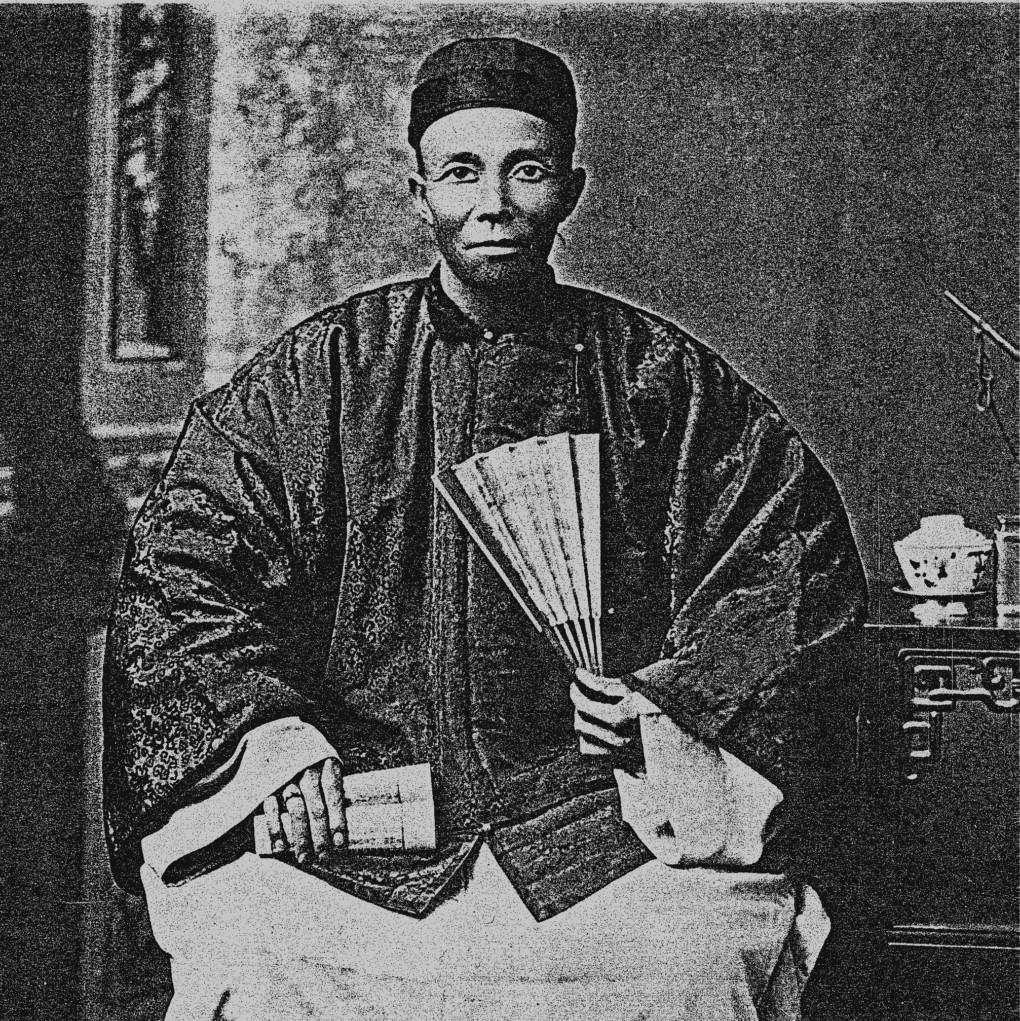
"caption": "Ho Po, a Chinese labor contractor from San Francisco, sent 150 of his countrymen to build Buena Vista.",
"description": "Ho Po, a Chinese labor contractor from San Francisco, sent 150 of his countrymen to build Buena Vista.",
"title": "Ho Po, a Chinese labor contractor from San Francisco, sent 150 of his countrymen to build Buena Vista.",
"credit": "Courtesy of Buena Vista winery",
"status": "inherit",
"isLoading": false,
"fetchFailed": false
},
"news_11490861": {
"type": "attachments",
"id": "news_11490861",
"meta": {
"index": "attachments_1716263798",
"site": "news",
"id": "11490861",
"found": true
},
"parent": 11490732,
"imgSizes": {
"small": {
"file": "https://ww2.kqed.org/app/uploads/sites/10/2017/06/borderwall-520x347.jpg",
"width": 520,
"mimeType": "image/jpeg",
"height": 347
},
"twentyfourteen-full-width": {
"file": "https://ww2.kqed.org/app/uploads/sites/10/2017/06/borderwall-1038x576.jpg",
"width": 1038,
"mimeType": "image/jpeg",
"height": 576
},
"thumbnail": {
"file": "https://ww2.kqed.org/app/uploads/sites/10/2017/06/borderwall-160x107.jpg",
"width": 160,
"mimeType": "image/jpeg",
"height": 107
},
"fd-sm": {
"file": "https://ww2.kqed.org/app/uploads/sites/10/2017/06/borderwall-960x640.jpg",
"width": 960,
"mimeType": "image/jpeg",
"height": 640
},
"post-thumbnail": {
"file": "https://ww2.kqed.org/app/uploads/sites/10/2017/06/borderwall-672x372.jpg",
"width": 672,
"mimeType": "image/jpeg",
"height": 372
},
"xsmall": {
"file": "https://ww2.kqed.org/app/uploads/sites/10/2017/06/borderwall-375x250.jpg",
"width": 375,
"mimeType": "image/jpeg",
"height": 250
},
"kqedFullSize": {
"file": "https://ww2.kqed.org/app/uploads/sites/10/2017/06/borderwall-e1499464757173.jpg",
"width": 1920,
"height": 1280
},
"large": {
"file": "https://ww2.kqed.org/app/uploads/sites/10/2017/06/borderwall-1020x680.jpg",
"width": 1020,
"mimeType": "image/jpeg",
"height": 680
},
"xlarge": {
"file": "https://ww2.kqed.org/app/uploads/sites/10/2017/06/borderwall-1180x787.jpg",
"width": 1180,
"mimeType": "image/jpeg",
"height": 787
},
"guest-author-50": {
"file": "https://ww2.kqed.org/app/uploads/sites/10/2017/06/borderwall-50x50.jpg",
"width": 50,
"mimeType": "image/jpeg",
"height": 50
},
"guest-author-96": {
"file": "https://ww2.kqed.org/app/uploads/sites/10/2017/06/borderwall-96x96.jpg",
"width": 96,
"mimeType": "image/jpeg",
"height": 96
},
"medium": {
"file": "https://ww2.kqed.org/app/uploads/sites/10/2017/06/borderwall-800x533.jpg",
"width": 800,
"mimeType": "image/jpeg",
"height": 533
},
"guest-author-64": {
"file": "https://ww2.kqed.org/app/uploads/sites/10/2017/06/borderwall-64x64.jpg",
"width": 64,
"mimeType": "image/jpeg",
"height": 64
},
"guest-author-32": {
"file": "https://ww2.kqed.org/app/uploads/sites/10/2017/06/borderwall-32x32.jpg",
"width": 32,
"mimeType": "image/jpeg",
"height": 32
},
"fd-lrg": {
"file": "https://ww2.kqed.org/app/uploads/sites/10/2017/06/borderwall-1920x1280.jpg",
"width": 1920,
"mimeType": "image/jpeg",
"height": 1280
},
"fd-med": {
"file": "https://ww2.kqed.org/app/uploads/sites/10/2017/06/borderwall-1180x787.jpg",
"width": 1180,
"mimeType": "image/jpeg",
"height": 787
},
"full-width": {
"file": "https://ww2.kqed.org/app/uploads/sites/10/2017/06/borderwall-1920x1280.jpg",
"width": 1920,
"mimeType": "image/jpeg",
"height": 1280
},
"detail": {
"file": "https://ww2.kqed.org/app/uploads/sites/10/2017/06/borderwall-150x150.jpg",
"width": 150,
"mimeType": "image/jpeg",
"height": 150
},
"guest-author-128": {
"file": "https://ww2.kqed.org/app/uploads/sites/10/2017/06/borderwall-128x128.jpg",
"width": 128,
"mimeType": "image/jpeg",
"height": 128
},
"xxsmall": {
"file": "https://ww2.kqed.org/app/uploads/sites/10/2017/06/borderwall-240x160.jpg",
"width": 240,
"mimeType": "image/jpeg",
"height": 160
}
},
"publishDate": 1496426426,
"modified": 1499895664,
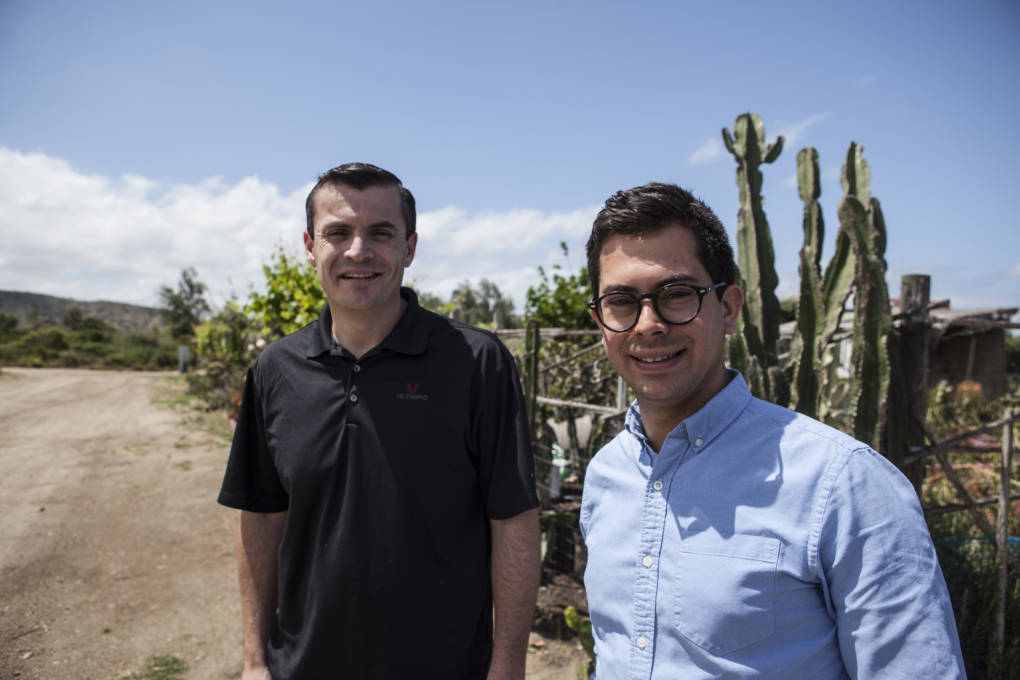
"caption": "Brian Holley (L) and Miguel Marshall meet 1 mile away from the U.S.-Mexico border to talk about how President Trump's proposed border wall affects both of their businesses. ",
"description": "Brian Holley (L), and Miguel Marshall meet one mile away from the U.S.-Mexico border to talk about how President Trump's proposed border wall affects both of their businesses. ",
"title": "Start the Conversation",
"credit": "Erin Siegal McIntyre/KQED",
"status": "inherit",
"isLoading": false,
"fetchFailed": false
},
"news_11553719": {
"type": "attachments",
"id": "news_11553719",
"meta": {
"index": "attachments_1716263798",
"site": "news",
"id": "11553719",
"found": true
},
"parent": 11553712,
"imgSizes": {
"small": {
"file": "https://ww2.kqed.org/app/uploads/sites/10/2017/07/Woychowski-520x378.jpg",
"width": 520,
"mimeType": "image/jpeg",
"height": 378
},
"thumbnail": {
"file": "https://ww2.kqed.org/app/uploads/sites/10/2017/07/Woychowski-160x116.jpg",
"width": 160,
"mimeType": "image/jpeg",
"height": 116
},
"post-thumbnail": {
"file": "https://ww2.kqed.org/app/uploads/sites/10/2017/07/Woychowski-640x372.jpg",
"width": 640,
"mimeType": "image/jpeg",
"height": 372
},
"xsmall": {
"file": "https://ww2.kqed.org/app/uploads/sites/10/2017/07/Woychowski-375x272.jpg",
"width": 375,
"mimeType": "image/jpeg",
"height": 272
},
"kqedFullSize": {
"file": "https://ww2.kqed.org/app/uploads/sites/10/2017/07/Woychowski.jpg",
"width": 640,
"height": 465
},
"guest-author-50": {
"file": "https://ww2.kqed.org/app/uploads/sites/10/2017/07/Woychowski-50x50.jpg",
"width": 50,
"mimeType": "image/jpeg",
"height": 50
},
"guest-author-96": {
"file": "https://ww2.kqed.org/app/uploads/sites/10/2017/07/Woychowski-96x96.jpg",
"width": 96,
"mimeType": "image/jpeg",
"height": 96
},
"guest-author-64": {
"file": "https://ww2.kqed.org/app/uploads/sites/10/2017/07/Woychowski-64x64.jpg",
"width": 64,
"mimeType": "image/jpeg",
"height": 64
},
"detail": {
"file": "https://ww2.kqed.org/app/uploads/sites/10/2017/07/Woychowski-150x150.jpg",
"width": 150,
"mimeType": "image/jpeg",
"height": 150
},
"guest-author-32": {
"file": "https://ww2.kqed.org/app/uploads/sites/10/2017/07/Woychowski-32x32.jpg",
"width": 32,
"mimeType": "image/jpeg",
"height": 32
},
"guest-author-128": {
"file": "https://ww2.kqed.org/app/uploads/sites/10/2017/07/Woychowski-128x128.jpg",
"width": 128,
"mimeType": "image/jpeg",
"height": 128
},
"xxsmall": {
"file": "https://ww2.kqed.org/app/uploads/sites/10/2017/07/Woychowski-240x174.jpg",
"width": 240,
"mimeType": "image/jpeg",
"height": 174
}
},
"publishDate": 1499453493,
"modified": 1499454160,
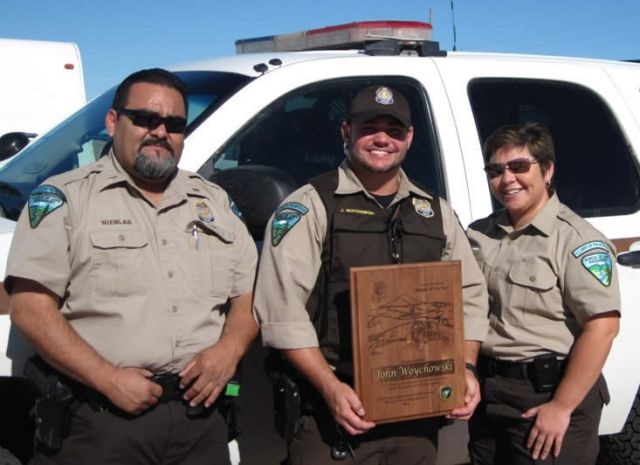
"caption": "Bureau of Land Management Ranger John Woychowski was named El Centro Field Office 'Ranger of the Year' in 2011.",
"description": "Bureau of Land Management Ranger John Woychowski was named El Centro Field Office 'Ranger of the Year' in 2011.",
"title": "Woychowski",
"credit": "Bureau of Land Management California via Internet Archive",
"status": "inherit",
"isLoading": false,
"fetchFailed": false
},
"news_11553697": {
"type": "attachments",
"id": "news_11553697",
"meta": {
"index": "attachments_1716263798",
"site": "news",
"id": "11553697",
"found": true
},
"parent": 11550057,
"imgSizes": {
"small": {
"file": "https://ww2.kqed.org/app/uploads/sites/10/2017/07/MigrantGirls-520x326.jpg",
"width": 520,
"mimeType": "image/jpeg",
"height": 326
},
"twentyfourteen-full-width": {
"file": "https://ww2.kqed.org/app/uploads/sites/10/2017/07/MigrantGirls-1038x576.jpg",
"width": 1038,
"mimeType": "image/jpeg",
"height": 576
},
"thumbnail": {
"file": "https://ww2.kqed.org/app/uploads/sites/10/2017/07/MigrantGirls-160x100.jpg",
"width": 160,
"mimeType": "image/jpeg",
"height": 100
},
"fd-sm": {
"file": "https://ww2.kqed.org/app/uploads/sites/10/2017/07/MigrantGirls-960x601.jpg",
"width": 960,
"mimeType": "image/jpeg",
"height": 601
},
"post-thumbnail": {
"file": "https://ww2.kqed.org/app/uploads/sites/10/2017/07/MigrantGirls-672x372.jpg",
"width": 672,
"mimeType": "image/jpeg",
"height": 372
},
"xsmall": {
"file": "https://ww2.kqed.org/app/uploads/sites/10/2017/07/MigrantGirls-375x235.jpg",
"width": 375,
"mimeType": "image/jpeg",
"height": 235
},
"kqedFullSize": {
"file": "https://ww2.kqed.org/app/uploads/sites/10/2017/07/MigrantGirls.jpg",
"width": 1920,
"height": 1202
},
"large": {
"file": "https://ww2.kqed.org/app/uploads/sites/10/2017/07/MigrantGirls-1020x639.jpg",
"width": 1020,
"mimeType": "image/jpeg",
"height": 639
},
"xlarge": {
"file": "https://ww2.kqed.org/app/uploads/sites/10/2017/07/MigrantGirls-1180x739.jpg",
"width": 1180,
"mimeType": "image/jpeg",
"height": 739
},
"guest-author-50": {
"file": "https://ww2.kqed.org/app/uploads/sites/10/2017/07/MigrantGirls-50x50.jpg",
"width": 50,
"mimeType": "image/jpeg",
"height": 50
},
"guest-author-96": {
"file": "https://ww2.kqed.org/app/uploads/sites/10/2017/07/MigrantGirls-96x96.jpg",
"width": 96,
"mimeType": "image/jpeg",
"height": 96
},
"medium": {
"file": "https://ww2.kqed.org/app/uploads/sites/10/2017/07/MigrantGirls-800x501.jpg",
"width": 800,
"mimeType": "image/jpeg",
"height": 501
},
"guest-author-64": {
"file": "https://ww2.kqed.org/app/uploads/sites/10/2017/07/MigrantGirls-64x64.jpg",
"width": 64,
"mimeType": "image/jpeg",
"height": 64
},
"guest-author-32": {
"file": "https://ww2.kqed.org/app/uploads/sites/10/2017/07/MigrantGirls-32x32.jpg",
"width": 32,
"mimeType": "image/jpeg",
"height": 32
},
"fd-lrg": {
"file": "https://ww2.kqed.org/app/uploads/sites/10/2017/07/MigrantGirls-1920x1202.jpg",
"width": 1920,
"mimeType": "image/jpeg",
"height": 1202
},
"fd-med": {
"file": "https://ww2.kqed.org/app/uploads/sites/10/2017/07/MigrantGirls-1180x739.jpg",
"width": 1180,
"mimeType": "image/jpeg",
"height": 739
},
"full-width": {
"file": "https://ww2.kqed.org/app/uploads/sites/10/2017/07/MigrantGirls-1920x1202.jpg",
"width": 1920,
"mimeType": "image/jpeg",
"height": 1202
},
"detail": {
"file": "https://ww2.kqed.org/app/uploads/sites/10/2017/07/MigrantGirls-150x150.jpg",
"width": 150,
"mimeType": "image/jpeg",
"height": 150
},
"guest-author-128": {
"file": "https://ww2.kqed.org/app/uploads/sites/10/2017/07/MigrantGirls-128x128.jpg",
"width": 128,
"mimeType": "image/jpeg",
"height": 128
},
"xxsmall": {
"file": "https://ww2.kqed.org/app/uploads/sites/10/2017/07/MigrantGirls-240x150.jpg",
"width": 240,
"mimeType": "image/jpeg",
"height": 150
}
},
"publishDate": 1499450897,
"modified": 1499451007,
"caption": "Two young girls sit in a holding area where hundreds of mostly Central American immigrant children were being processed and held at a U.S. Customs and Border Protection facility in 2014.",
"description": "Two young girls sit in a holding area where hundreds of mostly Central American immigrant children were being processed and held at a U.S. Customs and Border Protection facility in 2014.",
"title": "MigrantGirls",
"credit": "Ross D. Franklin-Pool/Getty Images",
"status": "inherit",
"isLoading": false,
"fetchFailed": false
},
"news_11551678": {
"type": "attachments",
"id": "news_11551678",
"meta": {
"index": "attachments_1716263798",
"site": "news",
"id": "11551678",
"found": true
},
"parent": 11551674,
"imgSizes": {
"small": {
"file": "https://ww2.kqed.org/app/uploads/sites/10/2017/07/geo_070617_final-520x520.jpg",
"width": 520,
"mimeType": "image/jpeg",
"height": 520
},
"twentyfourteen-full-width": {
"file": "https://ww2.kqed.org/app/uploads/sites/10/2017/07/geo_070617_final-1038x576.jpg",
"width": 1038,
"mimeType": "image/jpeg",
"height": 576
},
"thumbnail": {
"file": "https://ww2.kqed.org/app/uploads/sites/10/2017/07/geo_070617_final-160x160.jpg",
"width": 160,
"mimeType": "image/jpeg",
"height": 160
},
"fd-sm": {
"file": "https://ww2.kqed.org/app/uploads/sites/10/2017/07/geo_070617_final-960x960.jpg",
"width": 960,
"mimeType": "image/jpeg",
"height": 960
},
"post-thumbnail": {
"file": "https://ww2.kqed.org/app/uploads/sites/10/2017/07/geo_070617_final-672x372.jpg",
"width": 672,
"mimeType": "image/jpeg",
"height": 372
},
"xsmall": {
"file": "https://ww2.kqed.org/app/uploads/sites/10/2017/07/geo_070617_final-375x375.jpg",
"width": 375,
"mimeType": "image/jpeg",
"height": 375
},
"kqedFullSize": {
"file": "https://ww2.kqed.org/app/uploads/sites/10/2017/07/geo_070617_final.jpg",
"width": 1920,
"height": 1920
},
"large": {
"file": "https://ww2.kqed.org/app/uploads/sites/10/2017/07/geo_070617_final-1020x1020.jpg",
"width": 1020,
"mimeType": "image/jpeg",
"height": 1020
},
"xlarge": {
"file": "https://ww2.kqed.org/app/uploads/sites/10/2017/07/geo_070617_final-1180x1180.jpg",
"width": 1180,
"mimeType": "image/jpeg",
"height": 1180
},
"guest-author-50": {
"file": "https://ww2.kqed.org/app/uploads/sites/10/2017/07/geo_070617_final-50x50.jpg",
"width": 50,
"mimeType": "image/jpeg",
"height": 50
},
"guest-author-96": {
"file": "https://ww2.kqed.org/app/uploads/sites/10/2017/07/geo_070617_final-96x96.jpg",
"width": 96,
"mimeType": "image/jpeg",
"height": 96
},
"medium": {
"file": "https://ww2.kqed.org/app/uploads/sites/10/2017/07/geo_070617_final-800x800.jpg",
"width": 800,
"mimeType": "image/jpeg",
"height": 800
},
"guest-author-64": {
"file": "https://ww2.kqed.org/app/uploads/sites/10/2017/07/geo_070617_final-64x64.jpg",
"width": 64,
"mimeType": "image/jpeg",
"height": 64
},
"guest-author-32": {
"file": "https://ww2.kqed.org/app/uploads/sites/10/2017/07/geo_070617_final-32x32.jpg",
"width": 32,
"mimeType": "image/jpeg",
"height": 32
},
"fd-lrg": {
"file": "https://ww2.kqed.org/app/uploads/sites/10/2017/07/geo_070617_final-1920x1920.jpg",
"width": 1920,
"mimeType": "image/jpeg",
"height": 1920
},
"fd-med": {
"file": "https://ww2.kqed.org/app/uploads/sites/10/2017/07/geo_070617_final-1180x1180.jpg",
"width": 1180,
"mimeType": "image/jpeg",
"height": 1180
},
"full-width": {
"file": "https://ww2.kqed.org/app/uploads/sites/10/2017/07/geo_070617_final-1920x1920.jpg",
"width": 1920,
"mimeType": "image/jpeg",
"height": 1920
},
"detail": {
"file": "https://ww2.kqed.org/app/uploads/sites/10/2017/07/geo_070617_final-150x150.jpg",
"width": 150,
"mimeType": "image/jpeg",
"height": 150
},
"guest-author-128": {
"file": "https://ww2.kqed.org/app/uploads/sites/10/2017/07/geo_070617_final-128x128.jpg",
"width": 128,
"mimeType": "image/jpeg",
"height": 128
},
"xxsmall": {
"file": "https://ww2.kqed.org/app/uploads/sites/10/2017/07/geo_070617_final-240x240.jpg",
"width": 240,
"mimeType": "image/jpeg",
"height": 240
}
},
"publishDate": 1499367032,
"modified": 1499367079,
"caption": null,
"description": null,
"title": "geo_070617_final",
"credit": null,
"status": "inherit",
"isLoading": false,
"fetchFailed": false
},
"news_11549951": {
"type": "attachments",
"id": "news_11549951",
"meta": {
"index": "attachments_1716263798",
"site": "news",
"id": "11549951",
"found": true
},
"parent": 11549587,
"imgSizes": {
"small": {
"file": "https://ww2.kqed.org/app/uploads/sites/10/2017/07/RS25905_GettyImages-450371315-qut-520x356.jpg",
"width": 520,
"mimeType": "image/jpeg",
"height": 356
},
"twentyfourteen-full-width": {
"file": "https://ww2.kqed.org/app/uploads/sites/10/2017/07/RS25905_GettyImages-450371315-qut-1038x576.jpg",
"width": 1038,
"mimeType": "image/jpeg",
"height": 576
},
"thumbnail": {
"file": "https://ww2.kqed.org/app/uploads/sites/10/2017/07/RS25905_GettyImages-450371315-qut-160x110.jpg",
"width": 160,
"mimeType": "image/jpeg",
"height": 110
},
"fd-sm": {
"file": "https://ww2.kqed.org/app/uploads/sites/10/2017/07/RS25905_GettyImages-450371315-qut-960x657.jpg",
"width": 960,
"mimeType": "image/jpeg",
"height": 657
},
"post-thumbnail": {
"file": "https://ww2.kqed.org/app/uploads/sites/10/2017/07/RS25905_GettyImages-450371315-qut-672x372.jpg",
"width": 672,
"mimeType": "image/jpeg",
"height": 372
},
"xsmall": {
"file": "https://ww2.kqed.org/app/uploads/sites/10/2017/07/RS25905_GettyImages-450371315-qut-375x257.jpg",
"width": 375,
"mimeType": "image/jpeg",
"height": 257
},
"kqedFullSize": {
"file": "https://ww2.kqed.org/app/uploads/sites/10/2017/07/RS25905_GettyImages-450371315-qut.jpg",
"width": 1920,
"height": 1314
},
"large": {
"file": "https://ww2.kqed.org/app/uploads/sites/10/2017/07/RS25905_GettyImages-450371315-qut-1020x698.jpg",
"width": 1020,
"mimeType": "image/jpeg",
"height": 698
},
"xlarge": {
"file": "https://ww2.kqed.org/app/uploads/sites/10/2017/07/RS25905_GettyImages-450371315-qut-1180x808.jpg",
"width": 1180,
"mimeType": "image/jpeg",
"height": 808
},
"guest-author-50": {
"file": "https://ww2.kqed.org/app/uploads/sites/10/2017/07/RS25905_GettyImages-450371315-qut-50x50.jpg",
"width": 50,
"mimeType": "image/jpeg",
"height": 50
},
"guest-author-96": {
"file": "https://ww2.kqed.org/app/uploads/sites/10/2017/07/RS25905_GettyImages-450371315-qut-96x96.jpg",
"width": 96,
"mimeType": "image/jpeg",
"height": 96
},
"medium": {
"file": "https://ww2.kqed.org/app/uploads/sites/10/2017/07/RS25905_GettyImages-450371315-qut-800x548.jpg",
"width": 800,
"mimeType": "image/jpeg",
"height": 548
},
"guest-author-64": {
"file": "https://ww2.kqed.org/app/uploads/sites/10/2017/07/RS25905_GettyImages-450371315-qut-64x64.jpg",
"width": 64,
"mimeType": "image/jpeg",
"height": 64
},
"guest-author-32": {
"file": "https://ww2.kqed.org/app/uploads/sites/10/2017/07/RS25905_GettyImages-450371315-qut-32x32.jpg",
"width": 32,
"mimeType": "image/jpeg",
"height": 32
},
"fd-lrg": {
"file": "https://ww2.kqed.org/app/uploads/sites/10/2017/07/RS25905_GettyImages-450371315-qut-1920x1314.jpg",
"width": 1920,
"mimeType": "image/jpeg",
"height": 1314
},
"fd-med": {
"file": "https://ww2.kqed.org/app/uploads/sites/10/2017/07/RS25905_GettyImages-450371315-qut-1180x808.jpg",
"width": 1180,
"mimeType": "image/jpeg",
"height": 808
},
"full-width": {
"file": "https://ww2.kqed.org/app/uploads/sites/10/2017/07/RS25905_GettyImages-450371315-qut-1920x1314.jpg",
"width": 1920,
"mimeType": "image/jpeg",
"height": 1314
},
"detail": {
"file": "https://ww2.kqed.org/app/uploads/sites/10/2017/07/RS25905_GettyImages-450371315-qut-150x150.jpg",
"width": 150,
"mimeType": "image/jpeg",
"height": 150
},
"guest-author-128": {
"file": "https://ww2.kqed.org/app/uploads/sites/10/2017/07/RS25905_GettyImages-450371315-qut-128x128.jpg",
"width": 128,
"mimeType": "image/jpeg",
"height": 128
},
"xxsmall": {
"file": "https://ww2.kqed.org/app/uploads/sites/10/2017/07/RS25905_GettyImages-450371315-qut-240x164.jpg",
"width": 240,
"mimeType": "image/jpeg",
"height": 164
}
},
"publishDate": 1499292167,
"modified": 1499292204,
"caption": "A guard escorts an immigrant detainee from his 'segregation cell' back into the general population at the Adelanto Detention Facility on November 15, 2013 in Adelanto, California.",
"description": null,
"title": "ICE Holds Immigrants At Adelanto Detention Facility",
"credit": "John Moore/Getty Images",
"status": "inherit",
"isLoading": false,
"fetchFailed": false
},
"news_11541054": {
"type": "attachments",
"id": "news_11541054",
"meta": {
"index": "attachments_1716263798",
"site": "news",
"id": "11541054",
"found": true
},
"parent": 11540717,
"imgSizes": {
"small": {
"file": "https://ww2.kqed.org/app/uploads/sites/10/2017/06/RefugeesWelcomeSign-520x344.jpg",
"width": 520,
"mimeType": "image/jpeg",
"height": 344
},
"twentyfourteen-full-width": {
"file": "https://ww2.kqed.org/app/uploads/sites/10/2017/06/RefugeesWelcomeSign-1038x576.jpg",
"width": 1038,
"mimeType": "image/jpeg",
"height": 576
},
"thumbnail": {
"file": "https://ww2.kqed.org/app/uploads/sites/10/2017/06/RefugeesWelcomeSign-160x106.jpg",
"width": 160,
"mimeType": "image/jpeg",
"height": 106
},
"fd-sm": {
"file": "https://ww2.kqed.org/app/uploads/sites/10/2017/06/RefugeesWelcomeSign-960x635.jpg",
"width": 960,
"mimeType": "image/jpeg",
"height": 635
},
"post-thumbnail": {
"file": "https://ww2.kqed.org/app/uploads/sites/10/2017/06/RefugeesWelcomeSign-672x372.jpg",
"width": 672,
"mimeType": "image/jpeg",
"height": 372
},
"xsmall": {
"file": "https://ww2.kqed.org/app/uploads/sites/10/2017/06/RefugeesWelcomeSign-375x248.jpg",
"width": 375,
"mimeType": "image/jpeg",
"height": 248
},
"kqedFullSize": {
"file": "https://ww2.kqed.org/app/uploads/sites/10/2017/06/RefugeesWelcomeSign.jpg",
"width": 1920,
"height": 1270
},
"large": {
"file": "https://ww2.kqed.org/app/uploads/sites/10/2017/06/RefugeesWelcomeSign-1020x675.jpg",
"width": 1020,
"mimeType": "image/jpeg",
"height": 675
},
"xlarge": {
"file": "https://ww2.kqed.org/app/uploads/sites/10/2017/06/RefugeesWelcomeSign-1180x781.jpg",
"width": 1180,
"mimeType": "image/jpeg",
"height": 781
},
"guest-author-50": {
"file": "https://ww2.kqed.org/app/uploads/sites/10/2017/06/RefugeesWelcomeSign-50x50.jpg",
"width": 50,
"mimeType": "image/jpeg",
"height": 50
},
"guest-author-96": {
"file": "https://ww2.kqed.org/app/uploads/sites/10/2017/06/RefugeesWelcomeSign-96x96.jpg",
"width": 96,
"mimeType": "image/jpeg",
"height": 96
},
"medium": {
"file": "https://ww2.kqed.org/app/uploads/sites/10/2017/06/RefugeesWelcomeSign-800x529.jpg",
"width": 800,
"mimeType": "image/jpeg",
"height": 529
},
"guest-author-64": {
"file": "https://ww2.kqed.org/app/uploads/sites/10/2017/06/RefugeesWelcomeSign-64x64.jpg",
"width": 64,
"mimeType": "image/jpeg",
"height": 64
},
"guest-author-32": {
"file": "https://ww2.kqed.org/app/uploads/sites/10/2017/06/RefugeesWelcomeSign-32x32.jpg",
"width": 32,
"mimeType": "image/jpeg",
"height": 32
},
"fd-lrg": {
"file": "https://ww2.kqed.org/app/uploads/sites/10/2017/06/RefugeesWelcomeSign-1920x1270.jpg",
"width": 1920,
"mimeType": "image/jpeg",
"height": 1270
},
"fd-med": {
"file": "https://ww2.kqed.org/app/uploads/sites/10/2017/06/RefugeesWelcomeSign-1180x781.jpg",
"width": 1180,
"mimeType": "image/jpeg",
"height": 781
},
"full-width": {
"file": "https://ww2.kqed.org/app/uploads/sites/10/2017/06/RefugeesWelcomeSign-1920x1270.jpg",
"width": 1920,
"mimeType": "image/jpeg",
"height": 1270
},
"detail": {
"file": "https://ww2.kqed.org/app/uploads/sites/10/2017/06/RefugeesWelcomeSign-150x150.jpg",
"width": 150,
"mimeType": "image/jpeg",
"height": 150
},
"guest-author-128": {
"file": "https://ww2.kqed.org/app/uploads/sites/10/2017/06/RefugeesWelcomeSign-128x128.jpg",
"width": 128,
"mimeType": "image/jpeg",
"height": 128
},
"xxsmall": {
"file": "https://ww2.kqed.org/app/uploads/sites/10/2017/06/RefugeesWelcomeSign-240x159.jpg",
"width": 240,
"mimeType": "image/jpeg",
"height": 159
}
},
"publishDate": 1498858430,
"modified": 1498858523,
"caption": "Protesters rally in front of the Trump Building on Wall Street in response to the Trump administration's proposed travel ban and refugee policies on March 28, 2017.",
"description": "Protesters rally in front of the Trump Building on Wall Street in response to the Trump administration's proposed travel ban and refugee policies on March 28, 2017.",
"title": "RefugeesWelcomeSign",
"credit": "Drew Angerer/Getty Images",
"status": "inherit",
"isLoading": false,
"fetchFailed": false
},
"news_11541167": {
"type": "attachments",
"id": "news_11541167",
"meta": {
"index": "attachments_1716263798",
"site": "news",
"id": "11541167",
"found": true
},
"parent": 11540906,
"imgSizes": {
"small": {
"file": "https://ww2.kqed.org/app/uploads/sites/10/2017/06/RS25903_GettyImages-697936930-qut-520x347.jpg",
"width": 520,
"mimeType": "image/jpeg",
"height": 347
},
"twentyfourteen-full-width": {
"file": "https://ww2.kqed.org/app/uploads/sites/10/2017/06/RS25903_GettyImages-697936930-qut-1038x576.jpg",
"width": 1038,
"mimeType": "image/jpeg",
"height": 576
},
"thumbnail": {
"file": "https://ww2.kqed.org/app/uploads/sites/10/2017/06/RS25903_GettyImages-697936930-qut-160x107.jpg",
"width": 160,
"mimeType": "image/jpeg",
"height": 107
},
"fd-sm": {
"file": "https://ww2.kqed.org/app/uploads/sites/10/2017/06/RS25903_GettyImages-697936930-qut-960x640.jpg",
"width": 960,
"mimeType": "image/jpeg",
"height": 640
},
"post-thumbnail": {
"file": "https://ww2.kqed.org/app/uploads/sites/10/2017/06/RS25903_GettyImages-697936930-qut-672x372.jpg",
"width": 672,
"mimeType": "image/jpeg",
"height": 372
},
"xsmall": {
"file": "https://ww2.kqed.org/app/uploads/sites/10/2017/06/RS25903_GettyImages-697936930-qut-375x250.jpg",
"width": 375,
"mimeType": "image/jpeg",
"height": 250
},
"kqedFullSize": {
"file": "https://ww2.kqed.org/app/uploads/sites/10/2017/06/RS25903_GettyImages-697936930-qut.jpg",
"width": 1920,
"height": 1280
},
"large": {
"file": "https://ww2.kqed.org/app/uploads/sites/10/2017/06/RS25903_GettyImages-697936930-qut-1020x680.jpg",
"width": 1020,
"mimeType": "image/jpeg",
"height": 680
},
"xlarge": {
"file": "https://ww2.kqed.org/app/uploads/sites/10/2017/06/RS25903_GettyImages-697936930-qut-1180x787.jpg",
"width": 1180,
"mimeType": "image/jpeg",
"height": 787
},
"guest-author-50": {
"file": "https://ww2.kqed.org/app/uploads/sites/10/2017/06/RS25903_GettyImages-697936930-qut-50x50.jpg",
"width": 50,
"mimeType": "image/jpeg",
"height": 50
},
"guest-author-96": {
"file": "https://ww2.kqed.org/app/uploads/sites/10/2017/06/RS25903_GettyImages-697936930-qut-96x96.jpg",
"width": 96,
"mimeType": "image/jpeg",
"height": 96
},
"medium": {
"file": "https://ww2.kqed.org/app/uploads/sites/10/2017/06/RS25903_GettyImages-697936930-qut-800x533.jpg",
"width": 800,
"mimeType": "image/jpeg",
"height": 533
},
"guest-author-64": {
"file": "https://ww2.kqed.org/app/uploads/sites/10/2017/06/RS25903_GettyImages-697936930-qut-64x64.jpg",
"width": 64,
"mimeType": "image/jpeg",
"height": 64
},
"guest-author-32": {
"file": "https://ww2.kqed.org/app/uploads/sites/10/2017/06/RS25903_GettyImages-697936930-qut-32x32.jpg",
"width": 32,
"mimeType": "image/jpeg",
"height": 32
},
"fd-lrg": {
"file": "https://ww2.kqed.org/app/uploads/sites/10/2017/06/RS25903_GettyImages-697936930-qut-1920x1280.jpg",
"width": 1920,
"mimeType": "image/jpeg",
"height": 1280
},
"fd-med": {
"file": "https://ww2.kqed.org/app/uploads/sites/10/2017/06/RS25903_GettyImages-697936930-qut-1180x787.jpg",
"width": 1180,
"mimeType": "image/jpeg",
"height": 787
},
"full-width": {
"file": "https://ww2.kqed.org/app/uploads/sites/10/2017/06/RS25903_GettyImages-697936930-qut-1920x1280.jpg",
"width": 1920,
"mimeType": "image/jpeg",
"height": 1280
},
"detail": {
"file": "https://ww2.kqed.org/app/uploads/sites/10/2017/06/RS25903_GettyImages-697936930-qut-150x150.jpg",
"width": 150,
"mimeType": "image/jpeg",
"height": 150
},
"guest-author-128": {
"file": "https://ww2.kqed.org/app/uploads/sites/10/2017/06/RS25903_GettyImages-697936930-qut-128x128.jpg",
"width": 128,
"mimeType": "image/jpeg",
"height": 128
},
"xxsmall": {
"file": "https://ww2.kqed.org/app/uploads/sites/10/2017/06/RS25903_GettyImages-697936930-qut-240x160.jpg",
"width": 240,
"mimeType": "image/jpeg",
"height": 160
}
},
"publishDate": 1498860681,
"modified": 1498862204,
"caption": "Newly naturalized citizens wave American flags after being sworn in as U.S. citizens during a naturalization ceremony on June 19, 2017, in San Francisco.",
"description": "Newly naturalized citizens wave American flags after being sworn in as U.S. citizens during a naturalization ceremony on June 19 in San Francisco.",
"title": "Former Refugees To U.S. Sworn In As American Citizens In San Francisco",
"credit": "Justin Sullivan/Getty Images",
"status": "inherit",
"isLoading": false,
"fetchFailed": false
},
"news_11539521": {
"type": "attachments",
"id": "news_11539521",
"meta": {
"index": "attachments_1716263798",
"site": "news",
"id": "11539521",
"found": true
},
"parent": 11539520,
"imgSizes": {
"small": {
"file": "https://ww2.kqed.org/app/uploads/sites/10/2017/06/GettyImages-683409230-520x386.jpg",
"width": 520,
"mimeType": "image/jpeg",
"height": 386
},
"twentyfourteen-full-width": {
"file": "https://ww2.kqed.org/app/uploads/sites/10/2017/06/GettyImages-683409230-1038x576.jpg",
"width": 1038,
"mimeType": "image/jpeg",
"height": 576
},
"thumbnail": {
"file": "https://ww2.kqed.org/app/uploads/sites/10/2017/06/GettyImages-683409230-160x119.jpg",
"width": 160,
"mimeType": "image/jpeg",
"height": 119
},
"fd-sm": {
"file": "https://ww2.kqed.org/app/uploads/sites/10/2017/06/GettyImages-683409230-960x712.jpg",
"width": 960,
"mimeType": "image/jpeg",
"height": 712
},
"post-thumbnail": {
"file": "https://ww2.kqed.org/app/uploads/sites/10/2017/06/GettyImages-683409230-672x372.jpg",
"width": 672,
"mimeType": "image/jpeg",
"height": 372
},
"xsmall": {
"file": "https://ww2.kqed.org/app/uploads/sites/10/2017/06/GettyImages-683409230-375x278.jpg",
"width": 375,
"mimeType": "image/jpeg",
"height": 278
},
"kqedFullSize": {
"file": "https://ww2.kqed.org/app/uploads/sites/10/2017/06/GettyImages-683409230-e1498782151463.jpg",
"width": 1920,
"height": 1424
},
"large": {
"file": "https://ww2.kqed.org/app/uploads/sites/10/2017/06/GettyImages-683409230-1020x756.jpg",
"width": 1020,
"mimeType": "image/jpeg",
"height": 756
},
"xlarge": {
"file": "https://ww2.kqed.org/app/uploads/sites/10/2017/06/GettyImages-683409230-1180x875.jpg",
"width": 1180,
"mimeType": "image/jpeg",
"height": 875
},
"guest-author-50": {
"file": "https://ww2.kqed.org/app/uploads/sites/10/2017/06/GettyImages-683409230-50x50.jpg",
"width": 50,
"mimeType": "image/jpeg",
"height": 50
},
"guest-author-96": {
"file": "https://ww2.kqed.org/app/uploads/sites/10/2017/06/GettyImages-683409230-96x96.jpg",
"width": 96,
"mimeType": "image/jpeg",
"height": 96
},
"medium": {
"file": "https://ww2.kqed.org/app/uploads/sites/10/2017/06/GettyImages-683409230-800x593.jpg",
"width": 800,
"mimeType": "image/jpeg",
"height": 593
},
"guest-author-64": {
"file": "https://ww2.kqed.org/app/uploads/sites/10/2017/06/GettyImages-683409230-64x64.jpg",
"width": 64,
"mimeType": "image/jpeg",
"height": 64
},
"guest-author-32": {
"file": "https://ww2.kqed.org/app/uploads/sites/10/2017/06/GettyImages-683409230-32x32.jpg",
"width": 32,
"mimeType": "image/jpeg",
"height": 32
},
"fd-lrg": {
"file": "https://ww2.kqed.org/app/uploads/sites/10/2017/06/GettyImages-683409230-1920x1424.jpg",
"width": 1920,
"mimeType": "image/jpeg",
"height": 1424
},
"fd-med": {
"file": "https://ww2.kqed.org/app/uploads/sites/10/2017/06/GettyImages-683409230-1180x875.jpg",
"width": 1180,
"mimeType": "image/jpeg",
"height": 875
},
"full-width": {
"file": "https://ww2.kqed.org/app/uploads/sites/10/2017/06/GettyImages-683409230-1920x1424.jpg",
"width": 1920,
"mimeType": "image/jpeg",
"height": 1424
},
"detail": {
"file": "https://ww2.kqed.org/app/uploads/sites/10/2017/06/GettyImages-683409230-150x150.jpg",
"width": 150,
"mimeType": "image/jpeg",
"height": 150
},
"guest-author-128": {
"file": "https://ww2.kqed.org/app/uploads/sites/10/2017/06/GettyImages-683409230-128x128.jpg",
"width": 128,
"mimeType": "image/jpeg",
"height": 128
},
"xxsmall": {
"file": "https://ww2.kqed.org/app/uploads/sites/10/2017/06/GettyImages-683409230-240x178.jpg",
"width": 240,
"mimeType": "image/jpeg",
"height": 178
}
},
"publishDate": 1498781849,
"modified": 1498784506,
"caption": "In this file photo, Hawaii Attorney General Douglas Chin speaks to media outside U.S. Court of Appeals in Seattle, Washington, about the travel ban on May 15, 2017.",
"description": null,
"title": "US-POLITICS-TRUMP-TRAVEL BAN PROTEST",
"credit": "Jason Redmond/AFP/Getty Images",
"status": "inherit",
"isLoading": false,
"fetchFailed": false
},
"news_11539017": {
"type": "attachments",
"id": "news_11539017",
"meta": {
"index": "attachments_1716263798",
"site": "news",
"id": "11539017",
"found": true
},
"parent": 0,
"imgSizes": {
"small": {
"file": "https://ww2.kqed.org/app/uploads/sites/10/2017/06/20170629_120834-520x314.jpg",
"width": 520,
"mimeType": "image/jpeg",
"height": 314
},
"twentyfourteen-full-width": {
"file": "https://ww2.kqed.org/app/uploads/sites/10/2017/06/20170629_120834-1038x576.jpg",
"width": 1038,
"mimeType": "image/jpeg",
"height": 576
},
"thumbnail": {
"file": "https://ww2.kqed.org/app/uploads/sites/10/2017/06/20170629_120834-160x97.jpg",
"width": 160,
"mimeType": "image/jpeg",
"height": 97
},
"fd-sm": {
"file": "https://ww2.kqed.org/app/uploads/sites/10/2017/06/20170629_120834-960x580.jpg",
"width": 960,
"mimeType": "image/jpeg",
"height": 580
},
"post-thumbnail": {
"file": "https://ww2.kqed.org/app/uploads/sites/10/2017/06/20170629_120834-672x372.jpg",
"width": 672,
"mimeType": "image/jpeg",
"height": 372
},
"xsmall": {
"file": "https://ww2.kqed.org/app/uploads/sites/10/2017/06/20170629_120834-375x227.jpg",
"width": 375,
"mimeType": "image/jpeg",
"height": 227
},
"kqedFullSize": {
"file": "https://ww2.kqed.org/app/uploads/sites/10/2017/06/20170629_120834-e1498767339480.jpg",
"width": 1920,
"height": 1161
},
"large": {
"file": "https://ww2.kqed.org/app/uploads/sites/10/2017/06/20170629_120834-1020x617.jpg",
"width": 1020,
"mimeType": "image/jpeg",
"height": 617
},
"xlarge": {
"file": "https://ww2.kqed.org/app/uploads/sites/10/2017/06/20170629_120834-1180x713.jpg",
"width": 1180,
"mimeType": "image/jpeg",
"height": 713
},
"guest-author-50": {
"file": "https://ww2.kqed.org/app/uploads/sites/10/2017/06/20170629_120834-50x50.jpg",
"width": 50,
"mimeType": "image/jpeg",
"height": 50
},
"guest-author-96": {
"file": "https://ww2.kqed.org/app/uploads/sites/10/2017/06/20170629_120834-96x96.jpg",
"width": 96,
"mimeType": "image/jpeg",
"height": 96
},
"medium": {
"file": "https://ww2.kqed.org/app/uploads/sites/10/2017/06/20170629_120834-800x484.jpg",
"width": 800,
"mimeType": "image/jpeg",
"height": 484
},
"guest-author-64": {
"file": "https://ww2.kqed.org/app/uploads/sites/10/2017/06/20170629_120834-64x64.jpg",
"width": 64,
"mimeType": "image/jpeg",
"height": 64
},
"guest-author-32": {
"file": "https://ww2.kqed.org/app/uploads/sites/10/2017/06/20170629_120834-32x32.jpg",
"width": 32,
"mimeType": "image/jpeg",
"height": 32
},
"fd-lrg": {
"file": "https://ww2.kqed.org/app/uploads/sites/10/2017/06/20170629_120834-1920x1161.jpg",
"width": 1920,
"mimeType": "image/jpeg",
"height": 1161
},
"fd-med": {
"file": "https://ww2.kqed.org/app/uploads/sites/10/2017/06/20170629_120834-1180x713.jpg",
"width": 1180,
"mimeType": "image/jpeg",
"height": 713
},
"full-width": {
"file": "https://ww2.kqed.org/app/uploads/sites/10/2017/06/20170629_120834-1920x1161.jpg",
"width": 1920,
"mimeType": "image/jpeg",
"height": 1161
},
"detail": {
"file": "https://ww2.kqed.org/app/uploads/sites/10/2017/06/20170629_120834-150x150.jpg",
"width": 150,
"mimeType": "image/jpeg",
"height": 150
},
"guest-author-128": {
"file": "https://ww2.kqed.org/app/uploads/sites/10/2017/06/20170629_120834-128x128.jpg",
"width": 128,
"mimeType": "image/jpeg",
"height": 128
},
"xxsmall": {
"file": "https://ww2.kqed.org/app/uploads/sites/10/2017/06/20170629_120834-240x145.jpg",
"width": 240,
"mimeType": "image/jpeg",
"height": 145
}
},
"publishDate": 1498767268,
"modified": 1498767499,
"caption": "Moriah Arnold with the the San Francisco Bay Area chapter of the Council on American-Islamic Relations holds a sign directing arrivals at San Francisco International Airport to civil rights attorneys on hand in anticipation of President Trump's ban on travel from six Muslim-majority nations taking effect on June 29.",
"description": null,
"title": "20170629_120834",
"credit": "Alex Emslie/KQED",
"status": "inherit",
"isLoading": false,
"fetchFailed": false
}
},
"audioPlayerReducer": {
"postId": "stream_live",
"isPaused": true,
"isPlaying": false,
"pfsActive": false,
"pledgeModalIsOpen": true,
"playerDrawerIsOpen": false,
"liveAudioPlayStartedAt": 0,
"liveAudioPlayContext": ""
},
"authorsReducer": {
"byline_news_11567370": {
"type": "authors",
"id": "byline_news_11567370",
"meta": {
"override": true
},
"slug": "byline_news_11567370",
"name": "Jim Kane",
"isLoading": false
},
"byline_bayareabites_119112": {
"type": "authors",
"id": "byline_bayareabites_119112",
"meta": {
"override": true
},
"slug": "byline_bayareabites_119112",
"name": "Grace Hwang Lynch, \u003ca href=\"https://ww2.kqed.org/bayareabites/author/nprfood/\">NPR Food\u003c/a>",
"isLoading": false
},
"byline_news_11539520": {
"type": "authors",
"id": "byline_news_11539520",
"meta": {
"override": true
},
"slug": "byline_news_11539520",
"name": "\u003cstrong>Associated Press\u003c/strong>",
"isLoading": false
},
"lisapickoffwhite-2": {
"type": "authors",
"id": "199",
"meta": {
"index": "authors_1716337520",
"id": "199",
"found": true
},
"name": "Lisa Pickoff-White",
"firstName": "Lisa",
"lastName": "Pickoff-White",
"slug": "lisapickoffwhite-2",
"email": "lpickoffwhite@kqed.org",
"display_author_email": false,
"staff_mastheads": [
"news"
],
"title": "Data Journalist, Senior Producer",
"bio": "Lisa Pickoff-White is KQED's data reporter. Lisa specializes in simplifying complex topics and bringing them to life through compelling visuals, including photography and data visualizations. She previously has worked at the Center for Investigative Reporting and other national outlets. Her work has been honored with awards from the Online News Association, Investigative Reporters and Editors, the Society of Professional Journalists and SXSW Interactive. \u003cstrong> \u003c/strong>",
"avatar": "https://secure.gravatar.com/avatar/5513c5f3967df792aa65bee2501e84d6?s=600&d=blank&r=g",
"twitter": "pickoffwhite",
"facebook": null,
"instagram": null,
"linkedin": null,
"sites": [
{
"site": "",
"roles": [
"editor"
]
},
{
"site": "arts",
"roles": []
},
{
"site": "news",
"roles": [
"administrator"
]
},
{
"site": "about",
"roles": [
"editor"
]
},
{
"site": "stateofhealth",
"roles": [
"administrator"
]
},
{
"site": "science",
"roles": [
"editor"
]
},
{
"site": "quest",
"roles": [
"editor"
]
},
{
"site": "forum",
"roles": [
"editor"
]
}
],
"headData": {
"title": "Lisa Pickoff-White | KQED",
"description": "Data Journalist, Senior Producer",
"ogImgSrc": "https://secure.gravatar.com/avatar/5513c5f3967df792aa65bee2501e84d6?s=600&d=blank&r=g",
"twImgSrc": "https://secure.gravatar.com/avatar/5513c5f3967df792aa65bee2501e84d6?s=600&d=blank&r=g"
},
"isLoading": false,
"link": "/author/lisapickoffwhite-2"
},
"sasha-khokha": {
"type": "authors",
"id": "254",
"meta": {
"index": "authors_1716337520",
"id": "254",
"found": true
},
"name": "Sasha Khokha",
"firstName": "Sasha",
"lastName": "Khokha",
"slug": "sasha-khokha",
"email": "skhokha@kqed.org",
"display_author_email": true,
"staff_mastheads": [
"news"
],
"title": "Host, The California Report Magazine",
"bio": "Sasha Khokha is the host of \u003cem>The California Report's \u003c/em> weekly magazine program, which takes listeners on sound-rich excursions to meet the people that make the Golden State unique -- through audio documentaries and long-form stories. As \u003cem>The California Report's\u003c/em> Central Valley Bureau Chief based in Fresno for nearly a dozen years, Sasha brought the lives and concerns of rural Californians to listeners around the state. Her reporting helped expose the hidden price immigrant women janitors and farmworkers may pay to keep their jobs: sexual assault at work. It inspired two new California laws to protect them from sexual harassment. She was a key member of the reporting team for the Frontline film \u003cem>Rape on the Night Shift, \u003c/em>which was nominated for two national Emmys. Sasha has also won a national Edward R. Murrow and a national PRNDI award for investigative reporting, as well as multiple prizes from the Society for Professional Journalists. Sasha is a proud alum of the UC Berkeley Graduate School of Journalism and Brown University and a member of the South Asian Journalists Association.",
"avatar": "https://secure.gravatar.com/avatar/e4b5e1541aaeea2aa356aa1fb2a68950?s=600&d=blank&r=g",
"twitter": "KQEDSashaKhokha",
"facebook": null,
"instagram": null,
"linkedin": null,
"sites": [
{
"site": "news",
"roles": [
"editor"
]
},
{
"site": "stateofhealth",
"roles": [
"author"
]
},
{
"site": "science",
"roles": [
"author"
]
},
{
"site": "quest",
"roles": [
"subscriber"
]
}
],
"headData": {
"title": "Sasha Khokha | KQED",
"description": "Host, The California Report Magazine",
"ogImgSrc": "https://secure.gravatar.com/avatar/e4b5e1541aaeea2aa356aa1fb2a68950?s=600&d=blank&r=g",
"twImgSrc": "https://secure.gravatar.com/avatar/e4b5e1541aaeea2aa356aa1fb2a68950?s=600&d=blank&r=g"
},
"isLoading": false,
"link": "/author/sasha-khokha"
},
"tychehendricks": {
"type": "authors",
"id": "259",
"meta": {
"index": "authors_1716337520",
"id": "259",
"found": true
},
"name": "Tyche Hendricks",
"firstName": "Tyche",
"lastName": "Hendricks",
"slug": "tychehendricks",
"email": "thendricks@kqed.org",
"display_author_email": true,
"staff_mastheads": [
"news"
],
"title": "KQED Senior Editor, Immigration",
"bio": "\u003cspan style=\"font-weight: 400;\">Tyche Hendricks is KQED’s senior editor for immigration, leading coverage of the policy and politics that affect California’s immigrant communities. Her work for KQED’s radio and online audiences is also carried on NPR and other national outlets. She has been recognized with awards from the Radio and Television News Directors Association, the Society for Professional Journalists; the Education Writers Association; the Best of the West and the National Federation of Community Broadcasters. Before joining KQED in 2010, Tyche spent more than a dozen years as a newspaper reporter, notably at the \u003c/span>\u003ci>\u003cspan style=\"font-weight: 400;\">San Francisco Chronicle\u003c/span>\u003c/i>\u003cspan style=\"font-weight: 400;\">. At different times she has covered criminal justice, government and politics and urban planning. Tyche has taught in the MFA Creative Writing program at the University of San Francisco and at UC Berkeley’s Graduate School of Journalism, where she was co-director of a national immigration symposium for professional journalists. She is the author of \u003c/span>\u003ci>\u003cspan style=\"font-weight: 400;\">The Wind Doesn't Need a Passport: Stories from the U.S.-Mexico Borderlands\u003c/span>\u003c/i>\u003cspan style=\"font-weight: 400;\"> (University of California Press). \u003c/span>",
"avatar": "https://secure.gravatar.com/avatar/b8ee458e2731c2d43df86882ce17267e?s=600&d=blank&r=g",
"twitter": "tychehendricks",
"facebook": null,
"instagram": null,
"linkedin": null,
"sites": [
{
"site": "news",
"roles": [
"editor"
]
},
{
"site": "stateofhealth",
"roles": [
"editor"
]
}
],
"headData": {
"title": "Tyche Hendricks | KQED",
"description": "KQED Senior Editor, Immigration",
"ogImgSrc": "https://secure.gravatar.com/avatar/b8ee458e2731c2d43df86882ce17267e?s=600&d=blank&r=g",
"twImgSrc": "https://secure.gravatar.com/avatar/b8ee458e2731c2d43df86882ce17267e?s=600&d=blank&r=g"
},
"isLoading": false,
"link": "/author/tychehendricks"
},
"aemslie": {
"type": "authors",
"id": "3206",
"meta": {
"index": "authors_1716337520",
"id": "3206",
"found": true
},
"name": "Alex Emslie",
"firstName": "Alex",
"lastName": "Emslie",
"slug": "aemslie",
"email": "aemslie@kqed.org",
"display_author_email": true,
"staff_mastheads": [
"news"
],
"title": "KQED Senior Editor",
"bio": "Alex Emslie is senior editor of talent and development at KQED, where he manages dozens of early career journalists and oversees news department internships.\r\n\r\nHe is a former carpenter and proud graduate of City College of San Francisco and San Francisco State University, where he studied journalism and criminal justice before joining KQED in 2013.\r\n\r\nAlex produced investigative journalism focused on \u003ca href=\"https://www.kqed.org/news/11667594/the-trials-of-marvin-mutch-video\">criminal justice\u003c/a> and policing for most of a decade. He has broken major stories about \u003ca href=\"https://www.kqed.org/news/135682/amid-a-series-of-vallejo-police-shootings-one-officers-name-stands-out\">police use of deadly force\u003c/a>, \u003ca href=\"https://www.kqed.org/news/10454955/racist-texts-prompt-sfpd-internal-investigation\">officer misconduct\u003c/a> and \u003ca href=\"https://www.kqed.org/news/11712239/terrorist-or-troll-judge-to-weigh-whether-oakland-man-really-intended-to-attack-bay-area\">other\u003c/a> \u003ca href=\"https://www.kqed.org/news/11221414/hayward-paid-159000-to-husband-of-retired-police-chief-documents-show\">high\u003c/a>-\u003ca href=\"https://www.kqed.org/news/10622762/the-forgotten-tracking-two-homicides-in-san-francisco-public-housing\">profile\u003c/a> \u003ca href=\"https://www.kqed.org/news/11624516/federal-agency-promoted-ranger-just-months-after-his-gun-was-stolen-and-used-in-steinle-killing\">cases\u003c/a>. He co-founded the \u003ca href=\"https://projects.scpr.org/california-reporting-project/\">California Reporting Project\u003c/a> in 2019 to obtain and report on previously confidential police internal investigations. The effort produced well over 100 original stories and changed the course of multiple criminal cases.\r\n\r\nHis work has been recognized with numerous journalism awards, including a national Edward R. Murrow award for several years of \u003ca href=\"https://www.kqed.org/news/11688481/sfpd-officers-in-mario-woods-case-recount-shooting-in-newly-filed-depositions\">reporting\u003c/a> on the San Francisco Police shooting of Mario Woods. His \u003ca href=\"https://www.kqed.org/news/147854/half-of-those-killed-by-san-francisco-police-are-mentally-ill\">reporting\u003c/a> on police killings of people in psychiatric crisis was cited in amicus briefs before the U.S. Supreme Court.\r\n\r\nAlex now enjoys mentoring the next generation of journalists at KQED.",
"avatar": "https://secure.gravatar.com/avatar/e691e65209f20e9da202bd730ead5663?s=600&d=blank&r=g",
"twitter": "SFNewsReporter",
"facebook": null,
"instagram": null,
"linkedin": null,
"sites": [
{
"site": "arts",
"roles": [
"editor"
]
},
{
"site": "news",
"roles": [
"editor"
]
},
{
"site": "mindshift",
"roles": [
"editor"
]
},
{
"site": "stateofhealth",
"roles": [
"editor"
]
},
{
"site": "science",
"roles": [
"administrator"
]
}
],
"headData": {
"title": "Alex Emslie | KQED",
"description": "KQED Senior Editor",
"ogImgSrc": "https://secure.gravatar.com/avatar/e691e65209f20e9da202bd730ead5663?s=600&d=blank&r=g",
"twImgSrc": "https://secure.gravatar.com/avatar/e691e65209f20e9da202bd730ead5663?s=600&d=blank&r=g"
},
"isLoading": false,
"link": "/author/aemslie"
},
"markfiore": {
"type": "authors",
"id": "3236",
"meta": {
"index": "authors_1716337520",
"id": "3236",
"found": true
},
"name": "Mark Fiore",
"firstName": "Mark",
"lastName": "Fiore",
"slug": "markfiore",
"email": "mark@markfiore.com",
"display_author_email": false,
"staff_mastheads": [
"news"
],
"title": "KQED News Cartoonist",
"bio": "\u003ca href=\"http://www.MarkFiore.com\">MarkFiore.com\u003c/a> | \u003ca href=\"https://twitter.com/markfiore\">Follow on Twitter\u003c/a> | \u003ca href=\"https://www.facebook.com/pages/Mark-Fiore-Animated-Political-Cartoons/94451707396?ref=bookmarks\">Facebook\u003c/a> | \u003ca href=\"mailto:mark@markfiore.com\">email\u003c/a>\r\n\r\nPulitzer Prize-winner, Mark Fiore, who the Wall Street Journal has called “the undisputed guru of the form,” creates animated political cartoons in San Francisco, where his work has been featured regularly on the San Francisco Chronicle’s web site, SFGate.com. His work has appeared on Newsweek.com, Slate.com, CBSNews.com, MotherJones.com, DailyKos.com and NPR’s web site. Fiore’s political animation has appeared on CNN, Frontline, Bill Moyers Journal, Salon.com and cable and broadcast outlets across the globe.\r\n\r\nBeginning his professional life by drawing traditional political cartoons for newspapers, Fiore’s work appeared in publications ranging from the Washington Post to the Los Angeles Times. In the late 1990s, he began to experiment with animating political cartoons and, after a short stint at the San Jose Mercury News as their staff cartoonist, Fiore devoted all his energies to animation.\r\nGrowing up in California, Fiore also spent a good portion of his life in the backwoods of Idaho. It was this combination that shaped him politically. Mark majored in political science at Colorado College, where, in a perfect send-off for a cartoonist, he received his diploma in 1991 as commencement speaker Dick Cheney smiled approvingly.\r\nMark Fiore was awarded the Pulitzer Prize for political cartooning in 2010, a Robert F. Kennedy Journalism Award in 2004 and has twice received an Online Journalism Award for commentary from the Online News Association (2002, 2008). Fiore has received two awards for his work in new media from the National Cartoonists Society (2001, 2002), and in 2006 received The James Madison Freedom of Information Award from The Society of Professional Journalists.",
"avatar": "https://secure.gravatar.com/avatar/fc4e2a612b15b67bad0c6f0e1db4ca9b?s=600&d=blank&r=g",
"twitter": "MarkFiore",
"facebook": null,
"instagram": "https://www.instagram.com/markfiore/?hl=en",
"linkedin": null,
"sites": [
{
"site": "arts",
"roles": [
"contributor"
]
},
{
"site": "news",
"roles": [
"editor"
]
},
{
"site": "futureofyou",
"roles": [
"editor"
]
},
{
"site": "science",
"roles": [
"editor"
]
}
],
"headData": {
"title": "Mark Fiore | KQED",
"description": "KQED News Cartoonist",
"ogImgSrc": "https://secure.gravatar.com/avatar/fc4e2a612b15b67bad0c6f0e1db4ca9b?s=600&d=blank&r=g",
"twImgSrc": "https://secure.gravatar.com/avatar/fc4e2a612b15b67bad0c6f0e1db4ca9b?s=600&d=blank&r=g"
},
"isLoading": false,
"link": "/author/markfiore"
},
"fjhabvala": {
"type": "authors",
"id": "8659",
"meta": {
"index": "authors_1716337520",
"id": "8659",
"found": true
},
"name": "Farida Jhabvala Romero",
"firstName": "Farida",
"lastName": "Jhabvala Romero",
"slug": "fjhabvala",
"email": "fjhabvala@kqed.org",
"display_author_email": true,
"staff_mastheads": [
"news"
],
"title": "KQED Contributor",
"bio": "Farida Jhabvala Romero is a Labor Correspondent for KQED. She previously covered immigration. Farida was \u003ca href=\"https://www.ccnma.org/2022-most-influential-latina-journalists\">named\u003c/a> one of the 10 Most Influential Latina Journalists in California in 2022 by the California Chicano News Media Association. Her work has won awards from the Society of Professional Journalists (Northern California), as well as a national and regional Edward M. Murrow Award for the collaborative reporting projects “Dangerous Air” and “Graying California.” Before joining KQED, Farida worked as a producer at Radio Bilingüe, a national public radio network. Farida earned her master’s degree in journalism from Stanford University.",
"avatar": "https://secure.gravatar.com/avatar/f9f022d4e2609741874222a1e9d41f48fea74011aa7c615eef91d9a50c944ebe?s=600&d=blank&r=g",
"twitter": "FaridaJhabvala",
"bluesky": null,
"facebook": null,
"instagram": null,
"linkedin": "https://www.linkedin.com/in/faridajhabvala/",
"sites": [
{
"site": "news",
"roles": [
"editor"
]
},
{
"site": "stateofhealth",
"roles": [
"author"
]
},
{
"site": "liveblog",
"roles": [
"author"
]
}
],
"headData": {
"title": "Farida Jhabvala Romero | KQED",
"description": "KQED Contributor",
"ogImgSrc": "https://secure.gravatar.com/avatar/f9f022d4e2609741874222a1e9d41f48fea74011aa7c615eef91d9a50c944ebe?s=600&d=blank&r=g",
"twImgSrc": "https://secure.gravatar.com/avatar/f9f022d4e2609741874222a1e9d41f48fea74011aa7c615eef91d9a50c944ebe?s=600&d=blank&r=g"
},
"isLoading": false,
"link": "/author/fjhabvala"
},
"scraig": {
"type": "authors",
"id": "11327",
"meta": {
"index": "authors_1716337520",
"id": "11327",
"found": true
},
"name": "Sarah Craig",
"firstName": "Sarah",
"lastName": "Craig",
"slug": "scraig",
"email": "scraig@KQED.org",
"display_author_email": false,
"staff_mastheads": [],
"title": "KQED Contributor",
"bio": "Sarah Craig is a freelance radio reporter and documentary photographer. She is currently working on \u003cem>Dreams of Dust\u003c/em>, @dreamsofdust, a multimedia project that documents stories of climate migration in California’s Central Valley, previously funded by the California Humanities. Her completed projects include \u003cem>\u003ca href=\"http://www.facesoffracking.org/\" target=\"_blank\" rel=\"nofollow noopener noreferrer\">Faces of Fracking\u003c/a>,\u003c/em> an investigation into the impact of fracking on the people and places of California, and \u003cem>\u003ca href=\"http://sarahcraig.visura.co/gulf-disaster-2\" target=\"_blank\" rel=\"nofollow noopener noreferrer\">The Gulf Disaster\u003c/a>,\u003c/em> stories on the lives of fishermen in the aftermath of the BP spill. Her work has been published by Marketplace, KQED's Bay Curious and Q'ed Up podcasts, KQED's California Report Magazine, KALW's Crosscurrents, Grist.org, High Country News, Earth Island Journal, and others. Sarah received a B.A. in Geography at Vassar College and attended the \u003ca href=\"http://www.salt.edu/\" target=\"_blank\" rel=\"nofollow noopener noreferrer\">Salt Institute of Documentary Studies\u003c/a> in Portland, ME. She recently received an Excellence in Journalism Award from the NorCal Society of Professional Journalists for her documentary radio piece, \u003ca href=\"http://kalw.org/post/215-will-water-come#stream/0\">\"Will the Water Come.\"\u003c/a> Email: scraig@kqed.org Twitter: @sarahcraigmedia Website: sarahcraigmedia.com",
"avatar": "https://secure.gravatar.com/avatar/97f17950c828429d3df9f2907412a50b?s=600&d=blank&r=g",
"twitter": null,
"facebook": null,
"instagram": null,
"linkedin": null,
"sites": [
{
"site": "news",
"roles": [
"subscriber"
]
},
{
"site": "science",
"roles": [
"editor"
]
}
],
"headData": {
"title": "Sarah Craig | KQED",
"description": "KQED Contributor",
"ogImgSrc": "https://secure.gravatar.com/avatar/97f17950c828429d3df9f2907412a50b?s=600&d=blank&r=g",
"twImgSrc": "https://secure.gravatar.com/avatar/97f17950c828429d3df9f2907412a50b?s=600&d=blank&r=g"
},
"isLoading": false,
"link": "/author/scraig"
}
},
"pagesReducer": {
"news_category_immigration": {
"type": "terms",
"id": "news_1169",
"meta": {
"index": "terms_1716263798",
"site": "news",
"id": "1169",
"score": 10.910236
},
"featImg": null,
"name": "Immigration",
"description": null,
"taxonomy": "category",
"headData": {
"twImgId": null,
"twTitle": null,
"ogTitle": null,
"ogImgId": null,
"twDescription": null,
"description": null,
"title": "Immigration Archives | KQED News",
"ogDescription": null
},
"ttid": 1180,
"slug": "immigration",
"isLoading": false,
"title": "Immigration",
"pageMeta": {
"site": "news",
"WpPageTemplate": "page-topic-editorial",
"currentPage": 158
},
"blocks": [
{
"blockName": "kqed/post-list",
"attrs": {
"layout": "cardArticle2",
"query": "posts/news?category=immigration",
"seeMore": false,
"paginated": true,
"page": 158
}
},
{
"blockName": "kqed/ad"
}
]
}
},
"pfsSessionReducer": {},
"postsReducer": {
"stream_live": {
"type": "live",
"id": "stream_live",
"audioUrl": "https://streams.kqed.org/kqedradio",
"title": "Live Stream",
"excerpt": "Live Stream information currently unavailable.",
"link": "/radio",
"featImg": "",
"label": {
"name": "KQED Live",
"link": "/"
}
},
"stream_kqedNewscast": {
"type": "posts",
"id": "stream_kqedNewscast",
"audioUrl": "https://www.kqed.org/.stream/anon/radio/RDnews/newscast.mp3?_=1",
"title": "KQED Newscast",
"featImg": "",
"label": {
"name": "88.5 FM",
"link": "/"
}
},
"news_11512311": {
"type": "posts",
"id": "news_11512311",
"meta": {
"index": "posts_1716263798",
"site": "news",
"id": "11512311",
"score": null,
"sort": [
1500073267000
]
},
"parent": 0,
"labelTerm": {
"site": "news",
"term": 72
},
"blocks": [],
"publishDate": 1500073267,
"format": "audio",
"disqusTitle": "Immortalized by Woody Guthrie, ‘Deportees’ Who Died in Plane Crash Are Nameless No Longer",
"title": "Immortalized by Woody Guthrie, ‘Deportees’ Who Died in Plane Crash Are Nameless No Longer",
"headTitle": "The California Report | KQED News",
"content": "\u003cp>So many artists -- from Bruce Springsteen to Bob Dylan -- have recorded Woody Guthrie's famous ballad \"Deportee,\" about one of the worst airplane disasters in California history. But a big piece of the story was missing. Until now.\u003c/p>\n\u003cp>One cold winter morning in January 1948, 32 passengers were killed when a plane crashed in Los Gatos Canyon, near the Central Valley town of Coalinga.\u003c/p>\n\u003cp>The dead included 28 Mexican workers in the process of being deported by the U.S. government. Guthrie was outraged that newspaper accounts of the crash omitted the names of the Mexican passengers, simply calling them “deportees.\" So he penned a song, giving symbolic names to the dead:\u003c/p>\n\u003cp>\u003ci>\u003cspan style=\"font-weight: 400\">Goodbye to my Juan, g\u003c/span>\u003c/i>\u003ci>\u003cspan style=\"font-weight: 400\">oodbye, Rosalita\u003cbr>\n\u003c/span>\u003c/i>\u003ci>\u003cspan style=\"font-weight: 400\">Adios mis Amigos, Jesus y Maria;\u003cbr>\n\u003c/span>\u003c/i>\u003ci>\u003cspan style=\"font-weight: 400\">You won’t have your names when you ride the big airplane,\u003cbr>\n\u003c/span>\u003c/i>\u003ci>\u003cspan style=\"font-weight: 400\">All they will call you will be \"deportees\"\u003c/span>\u003c/i>\u003c/p>\n\u003cp>For seven decades, the real names of those deportees were unknown, their bodies buried in a mass grave in Fresno. Until \u003ca href=\"https://timzhernandez.com/\">Tim Z. Hernandez\u003c/a> -- a previous winner of the American Book Award for poetry -- spent years investigating in both Mexico and the U.S., interviewing families and unearthing records.\u003c/p>\n\u003cp>[ad fullwidth]\u003c/p>\n\u003cp>The band Lance Canales and the Flood play a version of Woody Guthrie's \"Deportee,\" with author Tim Z. Hernandez whispering the names of those who died in the 1948 plane crash.\u003c/p>\n\u003cp>https://www.youtube.com/watch?v=CeCstLTB0EI\u003c/p>\n\u003cp>Hernandez's new book, “\u003ca href=\"http://www.uapress.arizona.edu/Books/bid2680.htm\">All They Will Call You\u003c/a>,” explores his journey uncovering their stories. From the book's forward:\u003c/p>\n\u003cblockquote>\u003cp>To stumble upon a plane crash is to stumble upon the fragmented and broken shards of stories, and to have faith that from these clues, our own glaring humanity offers enough light to fill in the unknown. The facts of what occurred on that day are not, nor have they ever been, the purpose of this book. The telling is not interested in the calculable details, but rather, the testimonies themselves, from the people whose lives were touched in incalculable ways. How a tragedy and a song had a profound, lasting effect on the people who lived it.\u003c/p>\u003c/blockquote>\n\u003cfigure id=\"attachment_11567947\" class=\"wp-caption aligncenter\" style=\"max-width: 800px\">\u003cimg class=\"size-medium wp-image-11567947\" src=\"https://ww2.kqed.org/news/wp-content/uploads/sites/10/2017/07/HernandezDC3-800x589.jpg\" alt=\"Author Tim Z. Hernandez inside a Douglas DC-3 airplane, similar to the one that crashed in 1948.\" width=\"800\" height=\"589\" srcset=\"https://ww2.kqed.org/app/uploads/sites/10/2017/07/HernandezDC3.jpg 800w, https://ww2.kqed.org/app/uploads/sites/10/2017/07/HernandezDC3-160x118.jpg 160w, https://ww2.kqed.org/app/uploads/sites/10/2017/07/HernandezDC3-240x177.jpg 240w, https://ww2.kqed.org/app/uploads/sites/10/2017/07/HernandezDC3-375x276.jpg 375w, https://ww2.kqed.org/app/uploads/sites/10/2017/07/HernandezDC3-520x383.jpg 520w\" sizes=\"(max-width: 800px) 100vw, 800px\">\u003cfigcaption class=\"wp-caption-text\">Author Tim Z. Hernandez inside a Douglas DC-3 airplane, similar to the one that crashed in 1948. \u003ccite>(Courtesy Tim Z. Hernandez)\u003c/cite>\u003c/figcaption>\u003c/figure>\n\u003cp>\"I’m the son of migrant farmworkers,\" explains Hernandez. \"It was raw curiosity that sprung me forth to look for these names. I wanted to know who they were.\"\u003c/p>\n\u003cp>But he had few leads to go on. Only a single shred of newspaper from an Associated Press report after the crash, which didn’t include any names of the Mexican passengers. He found an erroneous list of names Guthrie fans had tried to compile on the internet. He then went to Fresno's Holy Cross Cemetery, where the remains of the Mexican passengers were buried in an unmarked grave. The cemetery had a list, but instead of individual names, it logged the term “Mexican National” 28 times.\u003c/p>\n\u003cp>Hernandez pushed on, digging up records and putting an ad in a bilingual newspaper looking for family members. After years of traveling across the U.S. and Mexico, he managed to locate the families of seven passengers.\u003c/p>\n\u003cfigure id=\"attachment_11512422\" class=\"wp-caption aligncenter\" style=\"max-width: 640px\">\u003cimg class=\"wp-image-11512422 size-full\" src=\"https://ww2.kqed.org/news/wp-content/uploads/sites/10/2017/06/RS25685_image002-qut.jpg\" alt=\"Guillermo and Jaime Ramirez, brothers who are related to two of the passengers who died in the 1948 plane crash.\" width=\"640\" height=\"480\" srcset=\"https://ww2.kqed.org/app/uploads/sites/10/2017/06/RS25685_image002-qut.jpg 640w, https://ww2.kqed.org/app/uploads/sites/10/2017/06/RS25685_image002-qut-160x120.jpg 160w, https://ww2.kqed.org/app/uploads/sites/10/2017/06/RS25685_image002-qut-240x180.jpg 240w, https://ww2.kqed.org/app/uploads/sites/10/2017/06/RS25685_image002-qut-375x281.jpg 375w, https://ww2.kqed.org/app/uploads/sites/10/2017/06/RS25685_image002-qut-520x390.jpg 520w\" sizes=\"(max-width: 640px) 100vw, 640px\">\u003cfigcaption class=\"wp-caption-text\">Guillermo and Jaime Ramirez, brothers who are related to two of the passengers who died in the 1948 plane crash. \u003ccite>(Photo courtesy of Tim Z. Hernandez)\u003c/cite>\u003c/figcaption>\u003c/figure>\n\u003cp>The book reconstructs profiles of those passengers, fleshing out their love affairs, families and histories -- expanding the narrative of their lives beyond their identities as laborers or farmworkers.\u003c/p>\n\u003cp>Like Ramon Paredes Gonzales, who crossed back and forth to work in the U.S. for years, and whose daughter, Caratina Paredes Murillo, was just 10 years old when he died in the crash. Decades later, an elderly Murillo still remembers the lyrics of the song her father sang every time he returned to their village.\u003c/p>\n\u003cp>\"For so grim a subject, one of the jobs was to find the light in each of their stories,\" says Hernandez. \"I always asked the families to tell me one of their fondest memories of their relatives.\"\u003c/p>\n\u003cp>The book doesn’t just include the intimate stories of the Mexican farmworkers, but also the stories of witnesses to the crash, the pilot, stewardess and the immigration agent accompanying the deportees.\u003c/p>\n\u003cfigure id=\"attachment_11567953\" class=\"wp-caption aligncenter\" style=\"max-width: 800px\">\u003cimg class=\"size-medium wp-image-11567953\" src=\"https://ww2.kqed.org/news/wp-content/uploads/sites/10/2017/07/HernandezStone-800x493.jpg\" alt=\"Tim Z. Hernandez with the updated headstone that lists the full names of those who died in the plane crash. \" width=\"800\" height=\"493\" srcset=\"https://ww2.kqed.org/app/uploads/sites/10/2017/07/HernandezStone-800x493.jpg 800w, https://ww2.kqed.org/app/uploads/sites/10/2017/07/HernandezStone-160x99.jpg 160w, https://ww2.kqed.org/app/uploads/sites/10/2017/07/HernandezStone-1020x629.jpg 1020w, https://ww2.kqed.org/app/uploads/sites/10/2017/07/HernandezStone.jpg 1920w, https://ww2.kqed.org/app/uploads/sites/10/2017/07/HernandezStone-1180x728.jpg 1180w, https://ww2.kqed.org/app/uploads/sites/10/2017/07/HernandezStone-960x592.jpg 960w, https://ww2.kqed.org/app/uploads/sites/10/2017/07/HernandezStone-240x148.jpg 240w, https://ww2.kqed.org/app/uploads/sites/10/2017/07/HernandezStone-375x231.jpg 375w, https://ww2.kqed.org/app/uploads/sites/10/2017/07/HernandezStone-520x321.jpg 520w\" sizes=\"(max-width: 800px) 100vw, 800px\">\u003cfigcaption class=\"wp-caption-text\">Tim Z. Hernandez with the updated headstone that lists the full names of those who died in the plane crash. \u003ccite>(Juan Esparza Loera)\u003c/cite>\u003c/figcaption>\u003c/figure>\n\u003cp>\"Omissions are wrong,\" says Hernandez. \"Erasure is wrong, no matter what your background is, or nationality you are. Let's talk about the Mexican nationals, and the pilot and the stewardess, the family who owned the ranch whose children saw people falling out of the sky. And later on, how the song affected the people who made the melody, who sang it. This one incident had such a ripple effect across borders, and across lives.\"\u003c/p>\n\u003cp>Hernandez \u003ca href=\"http://audio.californiareport.org/archive/R201303291630/c\">helped get a headstone \u003c/a>with some of the names he discovered placed on the mass grave for the deportees. People all over the San Joaquin Valley helped raise money to make these names visible.\u003c/p>\n\u003cp>Hernandez also re-recorded a new version of the song with musician Lance Canales. He whispers the actual names as Canales sings the lyrics.\u003c/p>\n\u003cp>“It’s important to honor all of us. To honor that we have had a history and a legacy, and that we once were here on earth, loving,” says Hernandez.\u003c/p>\n\u003cfigure id=\"attachment_11512426\" class=\"wp-caption aligncenter\" style=\"max-width: 800px\">\u003cimg class=\"size-medium wp-image-11512426\" src=\"https://ww2.kqed.org/news/wp-content/uploads/sites/10/2017/06/RS25684_image001-qut-800x600.jpg\" alt=\"\" width=\"800\" height=\"600\" srcset=\"https://ww2.kqed.org/app/uploads/sites/10/2017/06/RS25684_image001-qut.jpg 800w, https://ww2.kqed.org/app/uploads/sites/10/2017/06/RS25684_image001-qut-160x120.jpg 160w, https://ww2.kqed.org/app/uploads/sites/10/2017/06/RS25684_image001-qut-240x180.jpg 240w, https://ww2.kqed.org/app/uploads/sites/10/2017/06/RS25684_image001-qut-375x281.jpg 375w, https://ww2.kqed.org/app/uploads/sites/10/2017/06/RS25684_image001-qut-520x390.jpg 520w\" sizes=\"(max-width: 800px) 100vw, 800px\">\u003cfigcaption class=\"wp-caption-text\">Author Tim Z. Hernandez with the families of two of the passengers in Charco de Pantoja, Guanajuato, Mexico. \u003ccite>(Courtesy Tim Z. Hernandez)\u003c/cite>\u003c/figcaption>\u003c/figure>\n\u003cp>\"We have much more in common side by side than we do differences, and certainly, this airplane that crashed, becomes almost a kind of analogy,\" he adds. \"We’re all in this ship together, hurling toward a common fate.\"\u003c/p>\n\u003cp>The story, he says, is deeply relevant to today’s political climate.\u003c/p>\n\u003cp>[ad floatright]\u003c/p>\n\u003cp>“Back then, they referred to the Mexican passengers simply as 'deportees.' That kind of rhetoric perpetuates this idea of a single narrative, one way of looking at these folks who come to this country and work to feed us,\" he says. \"Today we hear other words being used, 'illegal,' or 'alien.' All those kind of abstractions are used to erase the face, or the stories, of the people we’re talking about.\"\u003c/p>\n\n",
"disqusIdentifier": "11512311 https://ww2.kqed.org/news/?p=11512311",
"disqusUrl": "https://ww2.kqed.org/news/2017/07/14/immortalized-by-woody-guthrie-deportees-who-died-in-plane-crash-are-nameless-no-longer/",
"stats": {
"hasVideo": true,
"hasChartOrMap": false,
"hasAudio": false,
"hasPolis": false,
"wordCount": 1064,
"hasGoogleForm": false,
"hasGallery": false,
"hasHearkenModule": false,
"iframeSrcs": [],
"paragraphCount": 24
},
"modified": 1500664441,
"excerpt": "Tim Z. Hernandez spent years unearthing the names and stories of 28 people who died in one of California's worst plane crashes, until now identified only as ‘deportees.’",
"headData": {
"twImgId": "",
"twTitle": "",
"ogTitle": "",
"ogImgId": "",
"twDescription": "",
"description": "Tim Z. Hernandez spent years unearthing the names and stories of 28 people who died in one of California's worst plane crashes, until now identified only as ‘deportees.’",
"title": "Immortalized by Woody Guthrie, ‘Deportees’ Who Died in Plane Crash Are Nameless No Longer | KQED",
"ogDescription": "",
"schema": {
"@context": "https://schema.org",
"@type": "NewsArticle",
"headline": "Immortalized by Woody Guthrie, ‘Deportees’ Who Died in Plane Crash Are Nameless No Longer",
"datePublished": "2017-07-14T16:01:07-07:00",
"dateModified": "2017-07-21T12:14:01-07:00",
"image": "https://cdn.kqed.org/wp-content/uploads/2020/02/KQED-OG-Image@1x.png",
"isAccessibleForFree": "True",
"publisher": {
"@type": "NewsMediaOrganization",
"@id": "https://www.kqed.org/#organization",
"name": "KQED",
"logo": "https://cdn.kqed.org/wp-content/uploads/2020/02/KQED-OG-Image@1x.png",
"url": "https://www.kqed.org",
"sameAs": [
"https://www.facebook.com/KQED",
"https://twitter.com/KQED",
"https://www.instagram.com/kqed/",
"https://www.tiktok.com/@kqedofficial",
"https://www.linkedin.com/company/kqed",
"https://www.youtube.com/channel/UCeC0IOo7i1P_61zVUWbJ4nw"
]
}
}
},
"guestAuthors": [],
"slug": "immortalized-by-woody-guthrie-deportees-who-died-in-plane-crash-are-nameless-no-longer",
"status": "publish",
"audioUrl": "http://www.kqed.org/.stream/anon/radio/tcrmag/2017/07/Deportees.mp3",
"guestFields": "0",
"path": "/news/11512311/immortalized-by-woody-guthrie-deportees-who-died-in-plane-crash-are-nameless-no-longer",
"audioTrackLength": null,
"parsedContent": [
{
"type": "contentString",
"content": "\u003cdiv class=\"post-body\">\u003cp>\u003cp>So many artists -- from Bruce Springsteen to Bob Dylan -- have recorded Woody Guthrie's famous ballad \"Deportee,\" about one of the worst airplane disasters in California history. But a big piece of the story was missing. Until now.\u003c/p>\n\u003cp>One cold winter morning in January 1948, 32 passengers were killed when a plane crashed in Los Gatos Canyon, near the Central Valley town of Coalinga.\u003c/p>\n\u003cp>The dead included 28 Mexican workers in the process of being deported by the U.S. government. Guthrie was outraged that newspaper accounts of the crash omitted the names of the Mexican passengers, simply calling them “deportees.\" So he penned a song, giving symbolic names to the dead:\u003c/p>\n\u003cp>\u003ci>\u003cspan style=\"font-weight: 400\">Goodbye to my Juan, g\u003c/span>\u003c/i>\u003ci>\u003cspan style=\"font-weight: 400\">oodbye, Rosalita\u003cbr>\n\u003c/span>\u003c/i>\u003ci>\u003cspan style=\"font-weight: 400\">Adios mis Amigos, Jesus y Maria;\u003cbr>\n\u003c/span>\u003c/i>\u003ci>\u003cspan style=\"font-weight: 400\">You won’t have your names when you ride the big airplane,\u003cbr>\n\u003c/span>\u003c/i>\u003ci>\u003cspan style=\"font-weight: 400\">All they will call you will be \"deportees\"\u003c/span>\u003c/i>\u003c/p>\n\u003cp>For seven decades, the real names of those deportees were unknown, their bodies buried in a mass grave in Fresno. Until \u003ca href=\"https://timzhernandez.com/\">Tim Z. Hernandez\u003c/a> -- a previous winner of the American Book Award for poetry -- spent years investigating in both Mexico and the U.S., interviewing families and unearthing records.\u003c/p>\n\u003cp>\u003c/p>\u003c/div>",
"attributes": {
"named": {},
"numeric": []
}
},
{
"type": "component",
"content": "",
"name": "ad",
"attributes": {
"named": {
"label": "fullwidth"
},
"numeric": [
"fullwidth"
]
}
},
{
"type": "contentString",
"content": "\u003cdiv class=\"post-body\">\u003cp>\u003c/p>\n\u003cp>The band Lance Canales and the Flood play a version of Woody Guthrie's \"Deportee,\" with author Tim Z. Hernandez whispering the names of those who died in the 1948 plane crash.\u003c/p>\u003c/p>\u003cp>\u003cspan class='utils-parseShortcode-shortcodes-__youtubeShortcode__embedYoutube'>\n \u003cspan class='utils-parseShortcode-shortcodes-__youtubeShortcode__embedYoutubeInside'>\n \u003ciframe\n loading='lazy'\n class='utils-parseShortcode-shortcodes-__youtubeShortcode__youtubePlayer'\n type='text/html'\n src='//www.youtube.com/embed/CeCstLTB0EI'\n title='//www.youtube.com/embed/CeCstLTB0EI'\n allowfullscreen='true'\n style='border:0;'>\u003c/iframe>\n \u003c/span>\n \u003c/span>\u003c/p>\u003cp>\u003cp>Hernandez's new book, “\u003ca href=\"http://www.uapress.arizona.edu/Books/bid2680.htm\">All They Will Call You\u003c/a>,” explores his journey uncovering their stories. From the book's forward:\u003c/p>\n\u003cblockquote>\u003cp>To stumble upon a plane crash is to stumble upon the fragmented and broken shards of stories, and to have faith that from these clues, our own glaring humanity offers enough light to fill in the unknown. The facts of what occurred on that day are not, nor have they ever been, the purpose of this book. The telling is not interested in the calculable details, but rather, the testimonies themselves, from the people whose lives were touched in incalculable ways. How a tragedy and a song had a profound, lasting effect on the people who lived it.\u003c/p>\u003c/blockquote>\n\u003cfigure id=\"attachment_11567947\" class=\"wp-caption aligncenter\" style=\"max-width: 800px\">\u003cimg class=\"size-medium wp-image-11567947\" src=\"https://ww2.kqed.org/news/wp-content/uploads/sites/10/2017/07/HernandezDC3-800x589.jpg\" alt=\"Author Tim Z. Hernandez inside a Douglas DC-3 airplane, similar to the one that crashed in 1948.\" width=\"800\" height=\"589\" srcset=\"https://ww2.kqed.org/app/uploads/sites/10/2017/07/HernandezDC3.jpg 800w, https://ww2.kqed.org/app/uploads/sites/10/2017/07/HernandezDC3-160x118.jpg 160w, https://ww2.kqed.org/app/uploads/sites/10/2017/07/HernandezDC3-240x177.jpg 240w, https://ww2.kqed.org/app/uploads/sites/10/2017/07/HernandezDC3-375x276.jpg 375w, https://ww2.kqed.org/app/uploads/sites/10/2017/07/HernandezDC3-520x383.jpg 520w\" sizes=\"(max-width: 800px) 100vw, 800px\">\u003cfigcaption class=\"wp-caption-text\">Author Tim Z. Hernandez inside a Douglas DC-3 airplane, similar to the one that crashed in 1948. \u003ccite>(Courtesy Tim Z. Hernandez)\u003c/cite>\u003c/figcaption>\u003c/figure>\n\u003cp>\"I’m the son of migrant farmworkers,\" explains Hernandez. \"It was raw curiosity that sprung me forth to look for these names. I wanted to know who they were.\"\u003c/p>\n\u003cp>But he had few leads to go on. Only a single shred of newspaper from an Associated Press report after the crash, which didn’t include any names of the Mexican passengers. He found an erroneous list of names Guthrie fans had tried to compile on the internet. He then went to Fresno's Holy Cross Cemetery, where the remains of the Mexican passengers were buried in an unmarked grave. The cemetery had a list, but instead of individual names, it logged the term “Mexican National” 28 times.\u003c/p>\n\u003cp>Hernandez pushed on, digging up records and putting an ad in a bilingual newspaper looking for family members. After years of traveling across the U.S. and Mexico, he managed to locate the families of seven passengers.\u003c/p>\n\u003cfigure id=\"attachment_11512422\" class=\"wp-caption aligncenter\" style=\"max-width: 640px\">\u003cimg class=\"wp-image-11512422 size-full\" src=\"https://ww2.kqed.org/news/wp-content/uploads/sites/10/2017/06/RS25685_image002-qut.jpg\" alt=\"Guillermo and Jaime Ramirez, brothers who are related to two of the passengers who died in the 1948 plane crash.\" width=\"640\" height=\"480\" srcset=\"https://ww2.kqed.org/app/uploads/sites/10/2017/06/RS25685_image002-qut.jpg 640w, https://ww2.kqed.org/app/uploads/sites/10/2017/06/RS25685_image002-qut-160x120.jpg 160w, https://ww2.kqed.org/app/uploads/sites/10/2017/06/RS25685_image002-qut-240x180.jpg 240w, https://ww2.kqed.org/app/uploads/sites/10/2017/06/RS25685_image002-qut-375x281.jpg 375w, https://ww2.kqed.org/app/uploads/sites/10/2017/06/RS25685_image002-qut-520x390.jpg 520w\" sizes=\"(max-width: 640px) 100vw, 640px\">\u003cfigcaption class=\"wp-caption-text\">Guillermo and Jaime Ramirez, brothers who are related to two of the passengers who died in the 1948 plane crash. \u003ccite>(Photo courtesy of Tim Z. Hernandez)\u003c/cite>\u003c/figcaption>\u003c/figure>\n\u003cp>The book reconstructs profiles of those passengers, fleshing out their love affairs, families and histories -- expanding the narrative of their lives beyond their identities as laborers or farmworkers.\u003c/p>\n\u003cp>Like Ramon Paredes Gonzales, who crossed back and forth to work in the U.S. for years, and whose daughter, Caratina Paredes Murillo, was just 10 years old when he died in the crash. Decades later, an elderly Murillo still remembers the lyrics of the song her father sang every time he returned to their village.\u003c/p>\n\u003cp>\"For so grim a subject, one of the jobs was to find the light in each of their stories,\" says Hernandez. \"I always asked the families to tell me one of their fondest memories of their relatives.\"\u003c/p>\n\u003cp>The book doesn’t just include the intimate stories of the Mexican farmworkers, but also the stories of witnesses to the crash, the pilot, stewardess and the immigration agent accompanying the deportees.\u003c/p>\n\u003cfigure id=\"attachment_11567953\" class=\"wp-caption aligncenter\" style=\"max-width: 800px\">\u003cimg class=\"size-medium wp-image-11567953\" src=\"https://ww2.kqed.org/news/wp-content/uploads/sites/10/2017/07/HernandezStone-800x493.jpg\" alt=\"Tim Z. Hernandez with the updated headstone that lists the full names of those who died in the plane crash. \" width=\"800\" height=\"493\" srcset=\"https://ww2.kqed.org/app/uploads/sites/10/2017/07/HernandezStone-800x493.jpg 800w, https://ww2.kqed.org/app/uploads/sites/10/2017/07/HernandezStone-160x99.jpg 160w, https://ww2.kqed.org/app/uploads/sites/10/2017/07/HernandezStone-1020x629.jpg 1020w, https://ww2.kqed.org/app/uploads/sites/10/2017/07/HernandezStone.jpg 1920w, https://ww2.kqed.org/app/uploads/sites/10/2017/07/HernandezStone-1180x728.jpg 1180w, https://ww2.kqed.org/app/uploads/sites/10/2017/07/HernandezStone-960x592.jpg 960w, https://ww2.kqed.org/app/uploads/sites/10/2017/07/HernandezStone-240x148.jpg 240w, https://ww2.kqed.org/app/uploads/sites/10/2017/07/HernandezStone-375x231.jpg 375w, https://ww2.kqed.org/app/uploads/sites/10/2017/07/HernandezStone-520x321.jpg 520w\" sizes=\"(max-width: 800px) 100vw, 800px\">\u003cfigcaption class=\"wp-caption-text\">Tim Z. Hernandez with the updated headstone that lists the full names of those who died in the plane crash. \u003ccite>(Juan Esparza Loera)\u003c/cite>\u003c/figcaption>\u003c/figure>\n\u003cp>\"Omissions are wrong,\" says Hernandez. \"Erasure is wrong, no matter what your background is, or nationality you are. Let's talk about the Mexican nationals, and the pilot and the stewardess, the family who owned the ranch whose children saw people falling out of the sky. And later on, how the song affected the people who made the melody, who sang it. This one incident had such a ripple effect across borders, and across lives.\"\u003c/p>\n\u003cp>Hernandez \u003ca href=\"http://audio.californiareport.org/archive/R201303291630/c\">helped get a headstone \u003c/a>with some of the names he discovered placed on the mass grave for the deportees. People all over the San Joaquin Valley helped raise money to make these names visible.\u003c/p>\n\u003cp>Hernandez also re-recorded a new version of the song with musician Lance Canales. He whispers the actual names as Canales sings the lyrics.\u003c/p>\n\u003cp>“It’s important to honor all of us. To honor that we have had a history and a legacy, and that we once were here on earth, loving,” says Hernandez.\u003c/p>\n\u003cfigure id=\"attachment_11512426\" class=\"wp-caption aligncenter\" style=\"max-width: 800px\">\u003cimg class=\"size-medium wp-image-11512426\" src=\"https://ww2.kqed.org/news/wp-content/uploads/sites/10/2017/06/RS25684_image001-qut-800x600.jpg\" alt=\"\" width=\"800\" height=\"600\" srcset=\"https://ww2.kqed.org/app/uploads/sites/10/2017/06/RS25684_image001-qut.jpg 800w, https://ww2.kqed.org/app/uploads/sites/10/2017/06/RS25684_image001-qut-160x120.jpg 160w, https://ww2.kqed.org/app/uploads/sites/10/2017/06/RS25684_image001-qut-240x180.jpg 240w, https://ww2.kqed.org/app/uploads/sites/10/2017/06/RS25684_image001-qut-375x281.jpg 375w, https://ww2.kqed.org/app/uploads/sites/10/2017/06/RS25684_image001-qut-520x390.jpg 520w\" sizes=\"(max-width: 800px) 100vw, 800px\">\u003cfigcaption class=\"wp-caption-text\">Author Tim Z. Hernandez with the families of two of the passengers in Charco de Pantoja, Guanajuato, Mexico. \u003ccite>(Courtesy Tim Z. Hernandez)\u003c/cite>\u003c/figcaption>\u003c/figure>\n\u003cp>\"We have much more in common side by side than we do differences, and certainly, this airplane that crashed, becomes almost a kind of analogy,\" he adds. \"We’re all in this ship together, hurling toward a common fate.\"\u003c/p>\n\u003cp>The story, he says, is deeply relevant to today’s political climate.\u003c/p>\n\u003cp>\u003c/p>\u003c/div>",
"attributes": {
"named": {},
"numeric": []
}
},
{
"type": "component",
"content": "",
"name": "ad",
"attributes": {
"named": {
"label": "floatright"
},
"numeric": [
"floatright"
]
}
},
{
"type": "contentString",
"content": "\u003cdiv class=\"post-body\">\u003cp>\u003c/p>\n\u003cp>“Back then, they referred to the Mexican passengers simply as 'deportees.' That kind of rhetoric perpetuates this idea of a single narrative, one way of looking at these folks who come to this country and work to feed us,\" he says. \"Today we hear other words being used, 'illegal,' or 'alien.' All those kind of abstractions are used to erase the face, or the stories, of the people we’re talking about.\"\u003c/p>\n\n\u003c/div>\u003c/p>",
"attributes": {
"named": {},
"numeric": []
}
}
],
"link": "/news/11512311/immortalized-by-woody-guthrie-deportees-who-died-in-plane-crash-are-nameless-no-longer",
"authors": [
"254"
],
"programs": [
"news_72"
],
"categories": [
"news_223",
"news_1169",
"news_8"
],
"tags": [
"news_20397",
"news_311",
"news_18269",
"news_160",
"news_18142",
"news_1425",
"news_17286",
"news_17041"
],
"featImg": "news_11568045",
"label": "news_72"
},
"news_11567370": {
"type": "posts",
"id": "news_11567370",
"meta": {
"index": "posts_1716263798",
"site": "news",
"id": "11567370",
"score": null,
"sort": [
1500046945000
]
},
"parent": 0,
"labelTerm": {},
"blocks": [],
"publishDate": 1500046945,
"format": "standard",
"disqusTitle": "Hawaii Judge Exempts Grandparents and Other Relatives From Trump Travel Ban",
"title": "Hawaii Judge Exempts Grandparents and Other Relatives From Trump Travel Ban",
"headTitle": "News Fix | KQED News",
"content": "\u003cp>\u003cstrong>Updated 1:30 p.m. Friday:\u003c/strong>\u003c/p>\n\u003cp>A federal judge in Hawaii has put new limits on the Trump administration's travel ban on people from six predominantly Muslim countries. The judge is allowing entry by grandparents, grandchildren and other family members of people in the United States.\u003c/p>\n\u003cp>In an order issued late Thursday, federal District Court Judge Derrick Watson also found that any refugees with ties to resettlement agencies in the U.S. that are preparing to receive them should be exempt from the travel ban.\u003c/p>\n\u003cp>It's another legal setback for an executive order that's been tied up in court for months. Attorney General Jeff Sessions says the administration will ask the U.S. Supreme Court to void the judge's ruling.\u003c/p>\n\u003cp>The Supreme Court ruled in June that a scaled-back version of the ban on people seeking to travel here from Iran, Libya, Somalia, Sudan, Syria and Yemen could proceed. But the high court said it could not be enforced against those who have a \"bona fide relationship\" with people in the U.S.\u003c/p>\n\u003cp>[ad fullwidth]\u003c/p>\n\u003cp>The Trump administration said that would include parents, spouses, fiances, sons, daughters, sons-in-law, daughters-in-law or siblings. But the government excluded grandparents and grandchildren from its definition of \"close family,\" along with brothers-in-law, sisters-in-law, aunts, uncles, nieces, nephews and cousins.\u003c/p>\n\u003cp>\"[T]he Government's definition represents the antithesis of common sense,\" Watson wrote. \"Common sense, for instance, dictates that close family members be defined to include grandparents. Indeed, grandparents are the epitome of close family members. The Government's definition excludes them. That simply cannot be.\"\u003c/p>\n\u003cp>Watson's order is also a win for refugee resettlement agencies. They argued that their relationship with refugees who have already been approved to travel to the U.S. should count as \"bona fide\" under the Supreme Court's order. Lawyers for the Trump administration argued otherwise, because the State Department acts as an intermediary until the refugee actually arrives in the U.S.\u003c/p>\n\u003cp>But the judge rejected the administration's argument.\u003c/p>\n\u003cp>\"An assurance from a United States refugee resettlement agency, in fact, meets each of the Supreme Court's touchstones: it is formal, it is a documented contract, it is binding, it triggers responsibilities and obligations,\" Watson wrote. \"Bona fide does not get any more bona fide than that.\"\u003c/p>\n\u003cp>Watson's decision could open the door for tens of thousands of additional refugees who have been approved for travel, but would have been barred from entry into the U.S. under the travel ban. Earlier this week, the refugee program reached the cap of 50,000 refugees – not necessarily with family ties – for the 2017 fiscal year that was imposed by the executive order.\u003c/p>\n\u003cp>Thursday's ruling came in response to the state of Hawaii's request for an injunction against the Trump administration's enforcement of the ban on expanded family members and refugees.\u003c/p>\n\u003cp>\u003ca href=\"https://ag.hawaii.gov/wp-content/uploads/2017/01/News-Release-2017-90.pdf\">In a statement\u003c/a>, Hawaii Attorney General Douglas Chin said, \"The federal court today makes clear that the U.S. Government may not ignore the scope of the partial travel ban as it sees fit. Family members have been separated and real people have suffered enough. Courts have found that this Executive Order has no basis in stopping terrorism and is just a pretext for illegal and unconstitutional discrimination. We will continue preparing for arguments before the U.S. Supreme Court in October.\"\u003c/p>\n\u003cp>\u003c/p>\n\u003cp>In Washington, Attorney General Sessions released a statement saying, \"Once again, we are faced with a situation in which a single federal district court has undertaken by a nationwide injunction to micromanage decisions of the co-equal Executive Branch related to our national security.\" He said he will appeal the Hawaii judge's action to the Supreme Court to \"vindicate the rule of law and the Executive Branch's duty to protect the nation.\"\u003c/p>\n\u003cdiv class=\"fullattribution\">Copyright 2017 NPR. To see more, visit http://www.npr.org/.\u003cimg src=\"https://www.google-analytics.com/__utm.gif?utmac=UA-5828686-4&utmdt=Hawaii+Judge+Exempts+Grandparents+And+Other+Relatives+From+Trump+Travel+Ban&utme=8(APIKey)9(MDAxOTAwOTE4MDEyMTkxMDAzNjczZDljZA004)\">\u003c/div>\n\n",
"disqusIdentifier": "11567370 https://ww2.kqed.org/news/?p=11567370",
"disqusUrl": "https://ww2.kqed.org/news/2017/07/14/hawaii-judge-exempts-grandparents-and-other-relatives-from-trump-travel-ban/",
"stats": {
"hasVideo": false,
"hasChartOrMap": false,
"hasAudio": false,
"hasPolis": false,
"wordCount": 658,
"hasGoogleForm": false,
"hasGallery": false,
"hasHearkenModule": false,
"iframeSrcs": [],
"paragraphCount": 16
},
"modified": 1500076068,
"excerpt": "A U.S. District Court judge in Hawaii ordered the Trump administration not to enforce the travel ban on grandparents, grandchildren, aunts, uncle, and other relatives.",
"headData": {
"twImgId": "",
"twTitle": "",
"ogTitle": "",
"ogImgId": "",
"twDescription": "",
"description": "A U.S. District Court judge in Hawaii ordered the Trump administration not to enforce the travel ban on grandparents, grandchildren, aunts, uncle, and other relatives.",
"title": "Hawaii Judge Exempts Grandparents and Other Relatives From Trump Travel Ban | KQED",
"ogDescription": "",
"schema": {
"@context": "https://schema.org",
"@type": "NewsArticle",
"headline": "Hawaii Judge Exempts Grandparents and Other Relatives From Trump Travel Ban",
"datePublished": "2017-07-14T08:42:25-07:00",
"dateModified": "2017-07-14T16:47:48-07:00",
"image": "https://cdn.kqed.org/wp-content/uploads/2020/02/KQED-OG-Image@1x.png",
"isAccessibleForFree": "True",
"publisher": {
"@type": "NewsMediaOrganization",
"@id": "https://www.kqed.org/#organization",
"name": "KQED",
"logo": "https://cdn.kqed.org/wp-content/uploads/2020/02/KQED-OG-Image@1x.png",
"url": "https://www.kqed.org",
"sameAs": [
"https://www.facebook.com/KQED",
"https://twitter.com/KQED",
"https://www.instagram.com/kqed/",
"https://www.tiktok.com/@kqedofficial",
"https://www.linkedin.com/company/kqed",
"https://www.youtube.com/channel/UCeC0IOo7i1P_61zVUWbJ4nw"
]
}
}
},
"guestAuthors": [],
"slug": "hawaii-judge-exempts-grandparents-and-other-relatives-from-trump-travel-ban",
"status": "publish",
"sourceUrl": "http://www.npr.org",
"nprApiLink": "http://api.npr.org/query?id=537159288&apiKey=MDAxOTAwOTE4MDEyMTkxMDAzNjczZDljZA004",
"nprByline": "Jim Kane",
"nprStoryDate": "Fri, 14 Jul 2017 02:11:00 -0400",
"nprLastModifiedDate": "Fri, 14 Jul 2017 02:12:10 -0400",
"nprHtmlLink": "http://www.npr.org/sections/thetwo-way/2017/07/14/537159288/hawaii-judge-exempts-grandparents-and-other-relatives-from-trump-travel-ban?ft=nprml&f=537159288",
"nprImageAgency": "AP",
"nprImageCredit": "Caleb Jones",
"source": "NPR",
"nprStoryId": "537159288",
"nprRetrievedStory": "1",
"nprPubDate": "Fri, 14 Jul 2017 02:11:00 -0400",
"path": "/news/11567370/hawaii-judge-exempts-grandparents-and-other-relatives-from-trump-travel-ban",
"audioTrackLength": null,
"parsedContent": [
{
"type": "contentString",
"content": "\u003cdiv class=\"post-body\">\u003cp>\u003cp>\u003cstrong>Updated 1:30 p.m. Friday:\u003c/strong>\u003c/p>\n\u003cp>A federal judge in Hawaii has put new limits on the Trump administration's travel ban on people from six predominantly Muslim countries. The judge is allowing entry by grandparents, grandchildren and other family members of people in the United States.\u003c/p>\n\u003cp>In an order issued late Thursday, federal District Court Judge Derrick Watson also found that any refugees with ties to resettlement agencies in the U.S. that are preparing to receive them should be exempt from the travel ban.\u003c/p>\n\u003cp>It's another legal setback for an executive order that's been tied up in court for months. Attorney General Jeff Sessions says the administration will ask the U.S. Supreme Court to void the judge's ruling.\u003c/p>\n\u003cp>The Supreme Court ruled in June that a scaled-back version of the ban on people seeking to travel here from Iran, Libya, Somalia, Sudan, Syria and Yemen could proceed. But the high court said it could not be enforced against those who have a \"bona fide relationship\" with people in the U.S.\u003c/p>\n\u003cp>\u003c/p>\u003c/div>",
"attributes": {
"named": {},
"numeric": []
}
},
{
"type": "component",
"content": "",
"name": "ad",
"attributes": {
"named": {
"label": "fullwidth"
},
"numeric": [
"fullwidth"
]
}
},
{
"type": "contentString",
"content": "\u003cdiv class=\"post-body\">\u003cp>\u003c/p>\n\u003cp>The Trump administration said that would include parents, spouses, fiances, sons, daughters, sons-in-law, daughters-in-law or siblings. But the government excluded grandparents and grandchildren from its definition of \"close family,\" along with brothers-in-law, sisters-in-law, aunts, uncles, nieces, nephews and cousins.\u003c/p>\n\u003cp>\"[T]he Government's definition represents the antithesis of common sense,\" Watson wrote. \"Common sense, for instance, dictates that close family members be defined to include grandparents. Indeed, grandparents are the epitome of close family members. The Government's definition excludes them. That simply cannot be.\"\u003c/p>\n\u003cp>Watson's order is also a win for refugee resettlement agencies. They argued that their relationship with refugees who have already been approved to travel to the U.S. should count as \"bona fide\" under the Supreme Court's order. Lawyers for the Trump administration argued otherwise, because the State Department acts as an intermediary until the refugee actually arrives in the U.S.\u003c/p>\n\u003cp>But the judge rejected the administration's argument.\u003c/p>\n\u003cp>\"An assurance from a United States refugee resettlement agency, in fact, meets each of the Supreme Court's touchstones: it is formal, it is a documented contract, it is binding, it triggers responsibilities and obligations,\" Watson wrote. \"Bona fide does not get any more bona fide than that.\"\u003c/p>\n\u003cp>Watson's decision could open the door for tens of thousands of additional refugees who have been approved for travel, but would have been barred from entry into the U.S. under the travel ban. Earlier this week, the refugee program reached the cap of 50,000 refugees – not necessarily with family ties – for the 2017 fiscal year that was imposed by the executive order.\u003c/p>\n\u003cp>Thursday's ruling came in response to the state of Hawaii's request for an injunction against the Trump administration's enforcement of the ban on expanded family members and refugees.\u003c/p>\n\u003cp>\u003ca href=\"https://ag.hawaii.gov/wp-content/uploads/2017/01/News-Release-2017-90.pdf\">In a statement\u003c/a>, Hawaii Attorney General Douglas Chin said, \"The federal court today makes clear that the U.S. Government may not ignore the scope of the partial travel ban as it sees fit. Family members have been separated and real people have suffered enough. Courts have found that this Executive Order has no basis in stopping terrorism and is just a pretext for illegal and unconstitutional discrimination. We will continue preparing for arguments before the U.S. Supreme Court in October.\"\u003c/p>\n\u003cp>\u003c/p>\n\u003cp>In Washington, Attorney General Sessions released a statement saying, \"Once again, we are faced with a situation in which a single federal district court has undertaken by a nationwide injunction to micromanage decisions of the co-equal Executive Branch related to our national security.\" He said he will appeal the Hawaii judge's action to the Supreme Court to \"vindicate the rule of law and the Executive Branch's duty to protect the nation.\"\u003c/p>\n\u003cdiv class=\"fullattribution\">Copyright 2017 NPR. To see more, visit http://www.npr.org/.\u003cimg src=\"https://www.google-analytics.com/__utm.gif?utmac=UA-5828686-4&utmdt=Hawaii+Judge+Exempts+Grandparents+And+Other+Relatives+From+Trump+Travel+Ban&utme=8(APIKey)9(MDAxOTAwOTE4MDEyMTkxMDAzNjczZDljZA004)\">\u003c/div>\n\n\u003c/div>\u003c/p>",
"attributes": {
"named": {},
"numeric": []
}
}
],
"link": "/news/11567370/hawaii-judge-exempts-grandparents-and-other-relatives-from-trump-travel-ban",
"authors": [
"byline_news_11567370"
],
"programs": [
"news_6944"
],
"categories": [
"news_1169",
"news_6188",
"news_8",
"news_13"
],
"tags": [
"news_19542",
"news_20467"
],
"featImg": "news_11567373",
"label": "source_news_11567370"
},
"bayareabites_119112": {
"type": "posts",
"id": "bayareabites_119112",
"meta": {
"index": "posts_1716263798",
"site": "bayareabites",
"id": "119112",
"score": null,
"sort": [
1499978802000
]
},
"parent": 0,
"labelTerm": {},
"blocks": [],
"publishDate": 1499978802,
"format": "aside",
"disqusTitle": "Chinese Laborers Built Sonoma's Wineries. Racist Neighbors Drove Them Out",
"title": "Chinese Laborers Built Sonoma's Wineries. Racist Neighbors Drove Them Out",
"headTitle": "Bay Area Bites | KQED Food",
"content": "\u003cfigure id=\"attachment_119114\" class=\"wp-caption aligncenter\" style=\"max-width: 1920px\">\u003cimg src=\"https://ww2.kqed.org/bayareabites/wp-content/uploads/sites/24/2017/07/transporting-wine-95f9af075d22ecf0aef6d5e5429b26f9702c44ff-e1499978410695.jpg\" alt=\"Chinese workers transport wine at Buena Vista, the oldest winery in California's Sonoma County, built in the mid-1800s. From the backbreaking labor of clearing roads and digging out caves to highly skilled horticultural work, Chinese laborers helped build Sonoma's wine country.\" width=\"1920\" height=\"1439\" class=\"size-full wp-image-119114\">\u003cfigcaption class=\"wp-caption-text\">Chinese workers transport wine at Buena Vista, the oldest winery in California's Sonoma County, built in the mid-1800s. From the backbreaking labor of clearing roads and digging out caves to highly skilled horticultural work, Chinese laborers helped build Sonoma's wine country. \u003ccite>(Courtesy of Buena Vista winery)\u003c/cite>\u003c/figcaption>\u003c/figure>\n\u003cp>In Sonoma Valley about an hour north of San Francisco, there are many reminders of the immigrants who built California's wine industry: tasting rooms that look like Italian villas or signs bearing French names. But you won't see any vestiges of the group that made up an estimated 80 percent of the workforce that first put Sonoma vineyards on the map: the Chinese.\u003c/p>\n\u003cp>\"Not many Chinese people in this little town now,\" says Jack Ding, an immigrant from Jiangsu, China, who has been living in Sonoma since 2008. \"But some of my neighbors and friends said, 'Hey Jack, you're Chinese. Let me tell you stories of Chinese who lived here 50, 100 or 150 years ago.' These were verbal stories from the family, generation by generation.\"\u003c/p>\n\u003cp>One of those friends was Gordon Phillips, a retired attorney and local historian who spent nine years researching the history of Chinese in Sonoma, poring over books, census data and old newspapers searching for articles, editorials and political advertisements mentioning Chinese workers. \"All these vintners were making money off these initial Chinese workers and nobody knows about it,\" Phillips says.\u003c/p>\n\u003cp>To understand how Chinese workers arrived in California's wine country, one must look to the east — to the Sierra Nevada. As the Gold Rush of the mid-1800s petered out and the construction of the transcontinental railroad neared completion, there were Chinese immigrants looking for work. That's where two key immigrants came into play. In 1857, a wealthy Hungarian named Agoston Haraszthy purchased a ranch in Sonoma Valley and named it Buena Vista, with the vision of introducing winemaking techniques from his homeland. Historian Charles L. Sullivan, author of numerous books about California's wine industry, calls Haraszthy \"the great supporter of Chinese labor in the vineyards.\"\u003c/p>\n\u003cfigure id=\"attachment_119113\" class=\"wp-caption aligncenter\" style=\"max-width: 1920px\">\u003cimg src=\"https://ww2.kqed.org/bayareabites/wp-content/uploads/sites/24/2017/07/ho-po_sq-127369c2e65bc54adcb3d96966979fa6b30cbb26-e1499978486820.jpg\" alt=\"Ho Po, a Chinese labor contractor from San Francisco, sent 150 of his countrymen to build Buena Vista.\" width=\"1920\" height=\"1921\" class=\"size-full wp-image-119113\">\u003cfigcaption class=\"wp-caption-text\">Ho Po, a Chinese labor contractor from San Francisco, sent 150 of his countrymen to build Buena Vista. \u003ccite>(Courtesy of Buena Vista winery)\u003c/cite>\u003c/figcaption>\u003c/figure>\n\u003cp>Haraszthy turned to Ho Po, a Chinese labor contractor from San Francisco, who sent 150 of his countrymen to build Buena Vista, Sonoma's oldest commercial winery.\u003c/p>\n\u003cp>[ad fullwidth]\u003c/p>\n\u003cp>Those caves are still in use today at Buena Vista winery, where visitors can tour the 15-by-30-foot spaces carved out of rock. \"Workers literally dug the caves by hand,\" says Tom Blackwood, general manager of Buena Vista Winery. \"They still have the original markings. Those were the same skills they were using through the railroad.\"\u003c/p>\n\u003cp>Photos of Chinese men working in the fields and bottling wine are displayed in Buena Vista's tasting room. \"We feel it's more important than ever to talk about the reason we exist and the people who contributed to it — Chinese, Hungarian, French,\" says Jean-Charles Boisset, whose family company, Boisset Collection, bought the winery in 2011.\u003c/p>\n\u003cp>Cecilia Tsu, a history professor at the University of California, Davis who studies Asian-Americans in the West, points out that winemaking is much more labor-intensive than wheat or other crops grown earlier in the state.\u003c/p>\n\u003cfigure id=\"attachment_119115\" class=\"wp-caption aligncenter\" style=\"max-width: 641px\">\u003cimg src=\"https://ww2.kqed.org/bayareabites/wp-content/uploads/sites/24/2017/07/bottlingatbuenavista_sq-f6d676a14a65b0faf288d661312b4ccec578023c.jpg\" alt=\"Photos of Chinese men working in the fields and bottling wine are displayed in Buena Vista's tasting room. "We feel it's more important than ever to talk about the reason we exist and the people who contributed to it − Chinese, Hungarian, French," says Jean-Charles Boisset, whose family company, Boisset Collection, bought the winery in 2011.\" width=\"641\" height=\"641\" class=\"size-full wp-image-119115\" srcset=\"https://ww2.kqed.org/app/uploads/sites/24/2017/07/bottlingatbuenavista_sq-f6d676a14a65b0faf288d661312b4ccec578023c.jpg 641w, https://ww2.kqed.org/app/uploads/sites/24/2017/07/bottlingatbuenavista_sq-f6d676a14a65b0faf288d661312b4ccec578023c-160x160.jpg 160w, https://ww2.kqed.org/app/uploads/sites/24/2017/07/bottlingatbuenavista_sq-f6d676a14a65b0faf288d661312b4ccec578023c-240x240.jpg 240w, https://ww2.kqed.org/app/uploads/sites/24/2017/07/bottlingatbuenavista_sq-f6d676a14a65b0faf288d661312b4ccec578023c-375x375.jpg 375w, https://ww2.kqed.org/app/uploads/sites/24/2017/07/bottlingatbuenavista_sq-f6d676a14a65b0faf288d661312b4ccec578023c-520x520.jpg 520w, https://ww2.kqed.org/app/uploads/sites/24/2017/07/bottlingatbuenavista_sq-f6d676a14a65b0faf288d661312b4ccec578023c-32x32.jpg 32w, https://ww2.kqed.org/app/uploads/sites/24/2017/07/bottlingatbuenavista_sq-f6d676a14a65b0faf288d661312b4ccec578023c-50x50.jpg 50w, https://ww2.kqed.org/app/uploads/sites/24/2017/07/bottlingatbuenavista_sq-f6d676a14a65b0faf288d661312b4ccec578023c-64x64.jpg 64w, https://ww2.kqed.org/app/uploads/sites/24/2017/07/bottlingatbuenavista_sq-f6d676a14a65b0faf288d661312b4ccec578023c-96x96.jpg 96w, https://ww2.kqed.org/app/uploads/sites/24/2017/07/bottlingatbuenavista_sq-f6d676a14a65b0faf288d661312b4ccec578023c-128x128.jpg 128w, https://ww2.kqed.org/app/uploads/sites/24/2017/07/bottlingatbuenavista_sq-f6d676a14a65b0faf288d661312b4ccec578023c-150x150.jpg 150w\" sizes=\"(max-width: 641px) 100vw, 641px\">\u003cfigcaption class=\"wp-caption-text\">Photos of Chinese men working in the fields and bottling wine are displayed in Buena Vista's tasting room. \"We feel it's more important than ever to talk about the reason we exist and the people who contributed to it − Chinese, Hungarian, French,\" says Jean-Charles Boisset, whose family company, Boisset Collection, bought the winery in 2011. \u003ccite>( Eadweard Muybridge/Courtesy of Buena Vista winery)\u003c/cite>\u003c/figcaption>\u003c/figure>\n\u003cp>\"Chinese immigrants were indispensable on multiple levels,\" says Tsu. \"They built roads; cleared land for farming; planted, pruned and harvested grapes. They did backbreaking, physical labor, as well as horticultural work that required significant knowledge and skill.\"\u003c/p>\n\u003cp>Without Chinese workers, perhaps California wouldn't be famous for its most popular varietals. In his 2004 book \u003cem>The Beasts of the Field,\u003c/em> Richard Steven Street notes that between 1856 and 1869, Chinese planted the majority of Sonoma County's 3.2 million grapevines. \"The Chinese also played a key role in improving wine quality by ripping out old mission grape vineyards and replanting them with Riesling, Muscatel, Traminer, Black Hamburg, Cabernet Sauvignon, Chardonnay, and other fine French and European varieties,\" writes Street.\u003c/p>\n\u003cp>However, as the vineyards grew, so did backlash against the Chinese on the West Coast. Anti-Chinese leagues were formed in many counties, with whites accusing Chinese of undercutting wages. Asians were paid about $30 per month, while white workers were paid up to $50 monthly. Others complained that the Chinese were unable to assimilate into local culture. Racism was common in nearby wine-producing areas, such as Napa and the Russian River Valley, although the Sonoma Valley might have been more hospitable.\u003c/p>\n\u003cp>\"There was virtually no organized anti-Chinese agitation in the Sonoma Valley during the 1870s, much unlike what was common throughout much of the Bay Area, particularly in San Jose, Santa Rosa and Petaluma, even Napa,\" writes Sullivan in a \u003ca href=\"http://waywardtendrils.com/pdfs/vol.24_2014.pdf\">2014 article in the Wayward Tendrils Quarterly\u003c/a>. Haraszthy refused to stop employing Chinese at Buena Vista, despite the growing political opposition. He began carrying a gun to protect himself, and in 1868, he fled to Nicaragua to produce rum.\u003c/p>\n\u003cp>Meanwhile in wine country, nativist sentiments continued to take root. By 1877, lawmakers in Washington, D.C., debated a bill to stop Chinese immigration. Sonoma Valley grape grower John Hill testified in Congress to defend Chinese labor. \"He explained that Sonoma Valley grape growers depended on the 500 Chinese laborers employed in his 'neighborhood,' \" Phillips wrote in his 2015 thesis for his master's degree from Sonoma State University.\u003c/p>\n\u003cp>But spurred on by Denis Kearney's Workingmen's Party, a labor-oriented political group that supported nativist policies, Congress eventually passed the Chinese Exclusion Act in 1882, barring nearly all immigration from China. And whites drove out Chinese from many rural areas throughout the West. \"There was a movement to forcibly remove all the Chinese from Sonoma by starving them out — don't hire, don't patronize any shops that hire Chinese. During that period, a lot of Chinese left Sonoma. They were chewing on weeds down by the riverbanks, things got so bad,\" explains Phillips. According to U.S. Census data, the Chinese population in Sonoma County dropped \u003ca href=\"https://www2.census.gov/prod2/decennial/documents/1890a_v1-13.pdf\">from 1,145 in 1890\u003c/a> to \u003ca href=\"https://www2.census.gov/prod2/decennial/documents/1890a_v1-13.pdf\">fewer than 200 in 1930\u003c/a>.\u003c/p>\n\u003cp>That ugly past isn't always highlighted in the popular lore of the West. Nor are the contributions of the Chinese. \"We tend to assume that native-born American growers and maybe some European immigrants were pioneers of viticulture in California,\" Tsu says. \"[But] in reality, they were utterly dependent on Chinese immigrant labor.\"\u003c/p>\n\u003cp>That erasure bothers Ding. \"It feels bad,\" he says. \"I went to a bookstore to look at Sonoma history books. I bought one, and I didn't see any pictures of the Chinese laborers.\"\u003c/p>\n\u003cp>Recently, there's been a movement to call attention to the Chinese legacy in wine country. Last fall, Phillips and Ding — along with the Sonoma-Penglai Sister City Committee — went before the Sonoma City Council to propose the building of a monument to the early Chinese. The council unanimously voted to approve the construction of a \u003cem>ting\u003c/em> (a tile-roofed covered pavilion) in a city park. \"It's a physical object that people can see is Chinese,\" explains Phillips. \"It'll attract their attention to something Chinese. When they read the plaque, they'll realize the vineyards are here based on a lot of Chinese labor.\"\u003c/p>\n\u003cp>However, the city isn't funding the $75,000 cost of construction. The northeastern Chinese city of Penglai, also known for wine production, is donating $25,000. With other \u003ca href=\"https://sonomasistercitiesassociation.org/donors-to-the-wine-country-chinese-legacy-project-we-thank-you/\">fundraising\u003c/a>, the volunteers have raised $50,000. Construction is expected to begin as soon as the remainder of the money is raised.\u003c/p>\n\u003chr>\n\u003cp>\u003cem>Grace Hwang Lynch is a multimedia journalist based in the San Francisco Bay Area. She is currently working on a memoir about food, identity and caretaking. Follow her blog, \u003c/em>\u003ca href=\"http://hapamama.com/\">HapaMama.com\u003c/a>\u003cem>, or on Twitter @GraceHwangLynch.\u003c/em> \u003c/p>\n\u003cp>[ad floatright]\u003c/p>\n\u003cp>Copyright 2017 \u003ca href=\"http://www.npr.org/\">NPR\u003c/a>. \u003c/p>\n\n",
"disqusIdentifier": "119112 https://ww2.kqed.org/bayareabites/?p=119112",
"disqusUrl": "https://ww2.kqed.org/bayareabites/2017/07/13/chinese-laborers-built-sonomas-wineries-racist-neighbors-drove-them-out/",
"stats": {
"hasVideo": false,
"hasChartOrMap": false,
"hasAudio": false,
"hasPolis": false,
"wordCount": 1380,
"hasGoogleForm": false,
"hasGallery": false,
"hasHearkenModule": false,
"iframeSrcs": [],
"paragraphCount": 22
},
"modified": 1499978802,
"excerpt": "Enjoying a chardonnay or cabernet sauvignon? In the 1800s, Chinese immigrants helped introduce those iconic varietals to California's wine country. But as vineyards grew, so did anti-Chinese fervor.",
"headData": {
"twImgId": "",
"twTitle": "",
"ogTitle": "",
"ogImgId": "",
"twDescription": "",
"description": "Enjoying a chardonnay or cabernet sauvignon? In the 1800s, Chinese immigrants helped introduce those iconic varietals to California's wine country. But as vineyards grew, so did anti-Chinese fervor.",
"title": "Chinese Laborers Built Sonoma's Wineries. Racist Neighbors Drove Them Out | KQED",
"ogDescription": "",
"schema": {
"@context": "https://schema.org",
"@type": "Article",
"headline": "Chinese Laborers Built Sonoma's Wineries. Racist Neighbors Drove Them Out",
"datePublished": "2017-07-13T13:46:42-07:00",
"dateModified": "2017-07-13T13:46:42-07:00",
"image": "https://cdn.kqed.org/wp-content/uploads/2020/02/KQED-OG-Image@1x.png"
}
},
"guestAuthors": [],
"slug": "chinese-laborers-built-sonomas-wineries-racist-neighbors-drove-them-out",
"status": "publish",
"sourceUrl": "https://ww2.kqed.org/bayareabites/category/food-history-and-celebrities/",
"nprApiLink": "http://api.npr.org/query?id=536822541&apiKey=MDAxOTAwOTE4MDEyMTkxMDAzNjczZDljZA004",
"nprByline": "Grace Hwang Lynch, \u003ca href=\"https://ww2.kqed.org/bayareabites/author/nprfood/\">NPR Food\u003c/a>",
"nprStoryDate": "Thu, 13 Jul 2017 13:51:00 -0400",
"nprLastModifiedDate": "Thu, 13 Jul 2017 16:04:48 -0400",
"nprHtmlLink": "http://www.npr.org/sections/thesalt/2017/07/13/536822541/the-forgotten-chinese-who-built-sonoma-s-wineries?ft=nprml&f=536822541",
"nprImageAgency": "Courtesy of Buena Vista winery",
"source": "Food History",
"nprStoryId": "536822541",
"nprRetrievedStory": "1",
"nprPubDate": "Thu, 13 Jul 2017 16:04:00 -0400",
"path": "/bayareabites/119112/chinese-laborers-built-sonomas-wineries-racist-neighbors-drove-them-out",
"audioTrackLength": null,
"parsedContent": [
{
"type": "contentString",
"content": "\u003cdiv class=\"post-body\">\u003cp>\u003cfigure id=\"attachment_119114\" class=\"wp-caption aligncenter\" style=\"max-width: 1920px\">\u003cimg src=\"https://ww2.kqed.org/bayareabites/wp-content/uploads/sites/24/2017/07/transporting-wine-95f9af075d22ecf0aef6d5e5429b26f9702c44ff-e1499978410695.jpg\" alt=\"Chinese workers transport wine at Buena Vista, the oldest winery in California's Sonoma County, built in the mid-1800s. From the backbreaking labor of clearing roads and digging out caves to highly skilled horticultural work, Chinese laborers helped build Sonoma's wine country.\" width=\"1920\" height=\"1439\" class=\"size-full wp-image-119114\">\u003cfigcaption class=\"wp-caption-text\">Chinese workers transport wine at Buena Vista, the oldest winery in California's Sonoma County, built in the mid-1800s. From the backbreaking labor of clearing roads and digging out caves to highly skilled horticultural work, Chinese laborers helped build Sonoma's wine country. \u003ccite>(Courtesy of Buena Vista winery)\u003c/cite>\u003c/figcaption>\u003c/figure>\n\u003cp>In Sonoma Valley about an hour north of San Francisco, there are many reminders of the immigrants who built California's wine industry: tasting rooms that look like Italian villas or signs bearing French names. But you won't see any vestiges of the group that made up an estimated 80 percent of the workforce that first put Sonoma vineyards on the map: the Chinese.\u003c/p>\n\u003cp>\"Not many Chinese people in this little town now,\" says Jack Ding, an immigrant from Jiangsu, China, who has been living in Sonoma since 2008. \"But some of my neighbors and friends said, 'Hey Jack, you're Chinese. Let me tell you stories of Chinese who lived here 50, 100 or 150 years ago.' These were verbal stories from the family, generation by generation.\"\u003c/p>\n\u003cp>One of those friends was Gordon Phillips, a retired attorney and local historian who spent nine years researching the history of Chinese in Sonoma, poring over books, census data and old newspapers searching for articles, editorials and political advertisements mentioning Chinese workers. \"All these vintners were making money off these initial Chinese workers and nobody knows about it,\" Phillips says.\u003c/p>\n\u003cp>To understand how Chinese workers arrived in California's wine country, one must look to the east — to the Sierra Nevada. As the Gold Rush of the mid-1800s petered out and the construction of the transcontinental railroad neared completion, there were Chinese immigrants looking for work. That's where two key immigrants came into play. In 1857, a wealthy Hungarian named Agoston Haraszthy purchased a ranch in Sonoma Valley and named it Buena Vista, with the vision of introducing winemaking techniques from his homeland. Historian Charles L. Sullivan, author of numerous books about California's wine industry, calls Haraszthy \"the great supporter of Chinese labor in the vineyards.\"\u003c/p>\n\u003cfigure id=\"attachment_119113\" class=\"wp-caption aligncenter\" style=\"max-width: 1920px\">\u003cimg src=\"https://ww2.kqed.org/bayareabites/wp-content/uploads/sites/24/2017/07/ho-po_sq-127369c2e65bc54adcb3d96966979fa6b30cbb26-e1499978486820.jpg\" alt=\"Ho Po, a Chinese labor contractor from San Francisco, sent 150 of his countrymen to build Buena Vista.\" width=\"1920\" height=\"1921\" class=\"size-full wp-image-119113\">\u003cfigcaption class=\"wp-caption-text\">Ho Po, a Chinese labor contractor from San Francisco, sent 150 of his countrymen to build Buena Vista. \u003ccite>(Courtesy of Buena Vista winery)\u003c/cite>\u003c/figcaption>\u003c/figure>\n\u003cp>Haraszthy turned to Ho Po, a Chinese labor contractor from San Francisco, who sent 150 of his countrymen to build Buena Vista, Sonoma's oldest commercial winery.\u003c/p>\n\u003cp>\u003c/p>\u003c/div>",
"attributes": {
"named": {},
"numeric": []
}
},
{
"type": "component",
"content": "",
"name": "ad",
"attributes": {
"named": {
"label": "fullwidth"
},
"numeric": [
"fullwidth"
]
}
},
{
"type": "contentString",
"content": "\u003cdiv class=\"post-body\">\u003cp>\u003c/p>\n\u003cp>Those caves are still in use today at Buena Vista winery, where visitors can tour the 15-by-30-foot spaces carved out of rock. \"Workers literally dug the caves by hand,\" says Tom Blackwood, general manager of Buena Vista Winery. \"They still have the original markings. Those were the same skills they were using through the railroad.\"\u003c/p>\n\u003cp>Photos of Chinese men working in the fields and bottling wine are displayed in Buena Vista's tasting room. \"We feel it's more important than ever to talk about the reason we exist and the people who contributed to it — Chinese, Hungarian, French,\" says Jean-Charles Boisset, whose family company, Boisset Collection, bought the winery in 2011.\u003c/p>\n\u003cp>Cecilia Tsu, a history professor at the University of California, Davis who studies Asian-Americans in the West, points out that winemaking is much more labor-intensive than wheat or other crops grown earlier in the state.\u003c/p>\n\u003cfigure id=\"attachment_119115\" class=\"wp-caption aligncenter\" style=\"max-width: 641px\">\u003cimg src=\"https://ww2.kqed.org/bayareabites/wp-content/uploads/sites/24/2017/07/bottlingatbuenavista_sq-f6d676a14a65b0faf288d661312b4ccec578023c.jpg\" alt=\"Photos of Chinese men working in the fields and bottling wine are displayed in Buena Vista's tasting room. "We feel it's more important than ever to talk about the reason we exist and the people who contributed to it − Chinese, Hungarian, French," says Jean-Charles Boisset, whose family company, Boisset Collection, bought the winery in 2011.\" width=\"641\" height=\"641\" class=\"size-full wp-image-119115\" srcset=\"https://ww2.kqed.org/app/uploads/sites/24/2017/07/bottlingatbuenavista_sq-f6d676a14a65b0faf288d661312b4ccec578023c.jpg 641w, https://ww2.kqed.org/app/uploads/sites/24/2017/07/bottlingatbuenavista_sq-f6d676a14a65b0faf288d661312b4ccec578023c-160x160.jpg 160w, https://ww2.kqed.org/app/uploads/sites/24/2017/07/bottlingatbuenavista_sq-f6d676a14a65b0faf288d661312b4ccec578023c-240x240.jpg 240w, https://ww2.kqed.org/app/uploads/sites/24/2017/07/bottlingatbuenavista_sq-f6d676a14a65b0faf288d661312b4ccec578023c-375x375.jpg 375w, https://ww2.kqed.org/app/uploads/sites/24/2017/07/bottlingatbuenavista_sq-f6d676a14a65b0faf288d661312b4ccec578023c-520x520.jpg 520w, https://ww2.kqed.org/app/uploads/sites/24/2017/07/bottlingatbuenavista_sq-f6d676a14a65b0faf288d661312b4ccec578023c-32x32.jpg 32w, https://ww2.kqed.org/app/uploads/sites/24/2017/07/bottlingatbuenavista_sq-f6d676a14a65b0faf288d661312b4ccec578023c-50x50.jpg 50w, https://ww2.kqed.org/app/uploads/sites/24/2017/07/bottlingatbuenavista_sq-f6d676a14a65b0faf288d661312b4ccec578023c-64x64.jpg 64w, https://ww2.kqed.org/app/uploads/sites/24/2017/07/bottlingatbuenavista_sq-f6d676a14a65b0faf288d661312b4ccec578023c-96x96.jpg 96w, https://ww2.kqed.org/app/uploads/sites/24/2017/07/bottlingatbuenavista_sq-f6d676a14a65b0faf288d661312b4ccec578023c-128x128.jpg 128w, https://ww2.kqed.org/app/uploads/sites/24/2017/07/bottlingatbuenavista_sq-f6d676a14a65b0faf288d661312b4ccec578023c-150x150.jpg 150w\" sizes=\"(max-width: 641px) 100vw, 641px\">\u003cfigcaption class=\"wp-caption-text\">Photos of Chinese men working in the fields and bottling wine are displayed in Buena Vista's tasting room. \"We feel it's more important than ever to talk about the reason we exist and the people who contributed to it − Chinese, Hungarian, French,\" says Jean-Charles Boisset, whose family company, Boisset Collection, bought the winery in 2011. \u003ccite>( Eadweard Muybridge/Courtesy of Buena Vista winery)\u003c/cite>\u003c/figcaption>\u003c/figure>\n\u003cp>\"Chinese immigrants were indispensable on multiple levels,\" says Tsu. \"They built roads; cleared land for farming; planted, pruned and harvested grapes. They did backbreaking, physical labor, as well as horticultural work that required significant knowledge and skill.\"\u003c/p>\n\u003cp>Without Chinese workers, perhaps California wouldn't be famous for its most popular varietals. In his 2004 book \u003cem>The Beasts of the Field,\u003c/em> Richard Steven Street notes that between 1856 and 1869, Chinese planted the majority of Sonoma County's 3.2 million grapevines. \"The Chinese also played a key role in improving wine quality by ripping out old mission grape vineyards and replanting them with Riesling, Muscatel, Traminer, Black Hamburg, Cabernet Sauvignon, Chardonnay, and other fine French and European varieties,\" writes Street.\u003c/p>\n\u003cp>However, as the vineyards grew, so did backlash against the Chinese on the West Coast. Anti-Chinese leagues were formed in many counties, with whites accusing Chinese of undercutting wages. Asians were paid about $30 per month, while white workers were paid up to $50 monthly. Others complained that the Chinese were unable to assimilate into local culture. Racism was common in nearby wine-producing areas, such as Napa and the Russian River Valley, although the Sonoma Valley might have been more hospitable.\u003c/p>\n\u003cp>\"There was virtually no organized anti-Chinese agitation in the Sonoma Valley during the 1870s, much unlike what was common throughout much of the Bay Area, particularly in San Jose, Santa Rosa and Petaluma, even Napa,\" writes Sullivan in a \u003ca href=\"http://waywardtendrils.com/pdfs/vol.24_2014.pdf\">2014 article in the Wayward Tendrils Quarterly\u003c/a>. Haraszthy refused to stop employing Chinese at Buena Vista, despite the growing political opposition. He began carrying a gun to protect himself, and in 1868, he fled to Nicaragua to produce rum.\u003c/p>\n\u003cp>Meanwhile in wine country, nativist sentiments continued to take root. By 1877, lawmakers in Washington, D.C., debated a bill to stop Chinese immigration. Sonoma Valley grape grower John Hill testified in Congress to defend Chinese labor. \"He explained that Sonoma Valley grape growers depended on the 500 Chinese laborers employed in his 'neighborhood,' \" Phillips wrote in his 2015 thesis for his master's degree from Sonoma State University.\u003c/p>\n\u003cp>But spurred on by Denis Kearney's Workingmen's Party, a labor-oriented political group that supported nativist policies, Congress eventually passed the Chinese Exclusion Act in 1882, barring nearly all immigration from China. And whites drove out Chinese from many rural areas throughout the West. \"There was a movement to forcibly remove all the Chinese from Sonoma by starving them out — don't hire, don't patronize any shops that hire Chinese. During that period, a lot of Chinese left Sonoma. They were chewing on weeds down by the riverbanks, things got so bad,\" explains Phillips. According to U.S. Census data, the Chinese population in Sonoma County dropped \u003ca href=\"https://www2.census.gov/prod2/decennial/documents/1890a_v1-13.pdf\">from 1,145 in 1890\u003c/a> to \u003ca href=\"https://www2.census.gov/prod2/decennial/documents/1890a_v1-13.pdf\">fewer than 200 in 1930\u003c/a>.\u003c/p>\n\u003cp>That ugly past isn't always highlighted in the popular lore of the West. Nor are the contributions of the Chinese. \"We tend to assume that native-born American growers and maybe some European immigrants were pioneers of viticulture in California,\" Tsu says. \"[But] in reality, they were utterly dependent on Chinese immigrant labor.\"\u003c/p>\n\u003cp>That erasure bothers Ding. \"It feels bad,\" he says. \"I went to a bookstore to look at Sonoma history books. I bought one, and I didn't see any pictures of the Chinese laborers.\"\u003c/p>\n\u003cp>Recently, there's been a movement to call attention to the Chinese legacy in wine country. Last fall, Phillips and Ding — along with the Sonoma-Penglai Sister City Committee — went before the Sonoma City Council to propose the building of a monument to the early Chinese. The council unanimously voted to approve the construction of a \u003cem>ting\u003c/em> (a tile-roofed covered pavilion) in a city park. \"It's a physical object that people can see is Chinese,\" explains Phillips. \"It'll attract their attention to something Chinese. When they read the plaque, they'll realize the vineyards are here based on a lot of Chinese labor.\"\u003c/p>\n\u003cp>However, the city isn't funding the $75,000 cost of construction. The northeastern Chinese city of Penglai, also known for wine production, is donating $25,000. With other \u003ca href=\"https://sonomasistercitiesassociation.org/donors-to-the-wine-country-chinese-legacy-project-we-thank-you/\">fundraising\u003c/a>, the volunteers have raised $50,000. Construction is expected to begin as soon as the remainder of the money is raised.\u003c/p>\n\u003chr>\n\u003cp>\u003cem>Grace Hwang Lynch is a multimedia journalist based in the San Francisco Bay Area. She is currently working on a memoir about food, identity and caretaking. Follow her blog, \u003c/em>\u003ca href=\"http://hapamama.com/\">HapaMama.com\u003c/a>\u003cem>, or on Twitter @GraceHwangLynch.\u003c/em> \u003c/p>\n\u003cp>\u003c/p>\u003c/div>",
"attributes": {
"named": {},
"numeric": []
}
},
{
"type": "component",
"content": "",
"name": "ad",
"attributes": {
"named": {
"label": "floatright"
},
"numeric": [
"floatright"
]
}
},
{
"type": "contentString",
"content": "\u003cdiv class=\"post-body\">\u003cp>\u003c/p>\n\u003cp>Copyright 2017 \u003ca href=\"http://www.npr.org/\">NPR\u003c/a>. \u003c/p>\n\n\u003c/div>\u003c/p>",
"attributes": {
"named": {},
"numeric": []
}
}
],
"link": "/bayareabites/119112/chinese-laborers-built-sonomas-wineries-racist-neighbors-drove-them-out",
"authors": [
"byline_bayareabites_119112"
],
"categories": [
"bayareabites_2998",
"bayareabites_109",
"bayareabites_11028",
"bayareabites_2090",
"bayareabites_10028",
"bayareabites_15155",
"bayareabites_2035",
"bayareabites_119"
],
"tags": [
"bayareabites_475"
],
"featImg": "bayareabites_119113",
"label": "source_bayareabites_119112"
},
"news_11490732": {
"type": "posts",
"id": "news_11490732",
"meta": {
"index": "posts_1716263798",
"site": "news",
"id": "11490732",
"score": null,
"sort": [
1499844628000
]
},
"parent": 0,
"labelTerm": {
"site": "news",
"term": 72
},
"blocks": [],
"publishDate": 1499844628,
"format": "audio",
"disqusTitle": "Two Business Owners, on Opposite Sides of the Border, Try to Find Common Ground",
"title": "Two Business Owners, on Opposite Sides of the Border, Try to Find Common Ground",
"headTitle": "Start the Conversation | The California Report | KQED News",
"content": "\u003cp>\u003cem>For our series \u003ca href=\"https://ww2.kqed.org/news/series/start-the-conversation/\">Start the Conversation\u003c/a>, we’ve been bringing people together who sit on different sides of a political or cultural divide, to talk about the issues that are important to them.\u003c/em>\u003c/p>\n\u003cp>\u003cem>They’re civil dialogues, not debates -- and we hope they’re a way to try to bridge some of the divisions between us in this politically charged time.\u003c/em>\u003c/p>\n\u003cp>\u003cem>Miguel Marshall and Brian Holley have a conversation about the Border Wall. They both run businesses in the border region but on different sides of the divide.\u003c/em>\u003c/p>\n\u003cp>Miguel Marshall was born in San Diego and now lives in Tijuana. He's the CEO of \u003ca href=\"http://www.centroventures.com/\" target=\"_blank\" rel=\"noopener noreferrer\">Centro Ventures\u003c/a> -- a real estate development company that operates in Mexico. Marshall is a dual citizen, and splits his time between projects on both sides of the border.\u003c/p>\n\u003cp>Brian Holley lives in San Diego and is the vice president of \u003ca href=\"http://vscenario.com/\" target=\"_blank\" rel=\"noopener noreferrer\">vScenario\u003c/a>, one of the companies that recently bid on the Trump administration’s border wall project.\u003c/p>\n\u003cp>[ad fullwidth]\u003c/p>\n\u003cp>We invited the two to have a discussion in the heart of the \u003ca href=\"http://www.sdparks.org/content/sdparks/en/park-pages/TJRVRP.html\" target=\"_blank\" rel=\"noopener noreferrer\">Tijuana River Valley\u003c/a>. They sat in a parked car in the Tijuana Community Garden along a quiet street lined with ranches, a mile from the actual border. They talked about their hopes for the region, and found they agreed on more than they thought they would.\u003c/p>\n\u003cfigure id=\"attachment_11490862\" class=\"wp-caption aligncenter\" style=\"max-width: 800px\">\u003cimg class=\"size-medium wp-image-11490862\" src=\"https://ww2.kqed.org/news/wp-content/uploads/sites/10/2017/06/borderwalltwo-800x533.jpg\" alt=\"Brian Holley (L), and Miguel Marshall meet one mile away from the U.S.-Mexico border to talk about how President Trump's proposed border wall affects both of their businesses. \" width=\"800\" height=\"533\">\u003cfigcaption class=\"wp-caption-text\">Brian Holley (L), and Miguel Marshall meet 1 mile away from the U.S.-Mexico border to talk about how President Trump's proposed border wall affects both of their businesses. \u003ccite>(Erin Siegal McIntyre/KQED)\u003c/cite>\u003c/figcaption>\u003c/figure>\n\u003ch3>On the need for border security:\u003c/h3>\n\u003cp>\u003cstrong>Brian\u003c/strong>: I do think it's important for the U.S. and Mexico to upgrade the border security and the wall. The barrier itself will be very instrumental to the security of both sides.\u003c/p>\n\u003cp>\u003cstrong>Miguel\u003c/strong>: \u003cspan style=\"font-weight: 400\">What I do believe is other type of things for border security, [like technology], would be more effective.\u003c/span>\u003c/p>\n\u003cp>\u003cstrong>Brian\u003c/strong>: There's a lot of technology options that can achieve the same border security goals and not create such a physical reminder of a barrier between nations, as well as not be as expensive, which is obviously a concern.\u003c/p>\n\u003ch3>On the political rhetoric surrounding the wall:\u003c/h3>\n\u003cp>\u003cstrong>Miguel\u003c/strong>: Well, if the border security becomes a wall, I know it's going to be very polarizing. It's gonna create friction. A wall wouldn't be at all healthy, I would say, just because of the term \"wall.\" Wall versus bridge. So, which one do you choose?\u003c/p>\n\u003cp>\u003cstrong>Brian\u003c/strong>: I believe the term, when it is trumped up to say wall, it causes people to go in a very defensive mode and it's not healthy for reaching what could be a very productive conclusion. You know, I was a Trump voter, I am a supporter of the border security being increased. However, I was not a supporter of and don't agree with the rhetoric that he uses.\u003c/p>\n\u003cp>\u003cstrong>Miguel\u003c/strong>: Well, everyone who is doing business on both sides of the border, we're going to choose \"bridge.\" We're going to choose making things smoother, making things faster, making things more efficient. A wall basically stops everything. So using the term wall in any way, it’s not going to help.\u003c/p>\n\u003ch3>On being neighborly:\u003c/h3>\n\u003cp>\u003cstrong>Brian\u003c/strong>: I mean, if Miguel and I are neighbors and we don't have a fence and I have a dog that is going into his property or he's got a horse that's going into my property and we say, \"Hey, why don't we build a fence between our backyards?\" We're still neighbors. I'm still going to reach over the fence and say hello or have you over for dinner.\u003c/p>\n\u003cp>\u003cstrong>Miguel\u003c/strong>: We have people who are leaving from Tijuana and San Diego. We have people working from Tijuana, from San Diego. We have that cross-border relationship on a very small scale, but it can be replicated on a larger scale. So, it's all going to depend on what we can do as individuals and continue doing, even though the policy and rhetoric on both sides is being negative. If you increase border security, increase trade relations. We need to do business, we need to continue providing for the citizens that live on both sides of the border.\u003c/p>\n\u003cp>\u003c/p>\n\u003cp>\u003cem>Erin Siegal McIntyre helped produce this story.\u003c/em>\u003c/p>\n\n",
"disqusIdentifier": "11490732 https://ww2.kqed.org/news/?p=11490732",
"disqusUrl": "https://ww2.kqed.org/news/2017/07/12/two-business-owners-on-opposite-sides-of-the-border-try-to-find-common-ground/",
"stats": {
"hasVideo": false,
"hasChartOrMap": false,
"hasAudio": false,
"hasPolis": false,
"wordCount": 729,
"hasGoogleForm": false,
"hasGallery": false,
"hasHearkenModule": false,
"iframeSrcs": [],
"paragraphCount": 17
},
"modified": 1500497701,
"excerpt": "Two business owners from opposite sides of the U.S.-Mexico border talk security and being neighborly. ",
"headData": {
"twImgId": "",
"twTitle": "",
"ogTitle": "",
"ogImgId": "",
"twDescription": "",
"description": "Two business owners from opposite sides of the U.S.-Mexico border talk security and being neighborly. ",
"title": "Two Business Owners, on Opposite Sides of the Border, Try to Find Common Ground | KQED",
"ogDescription": "",
"schema": {
"@context": "https://schema.org",
"@type": "NewsArticle",
"headline": "Two Business Owners, on Opposite Sides of the Border, Try to Find Common Ground",
"datePublished": "2017-07-12T00:30:28-07:00",
"dateModified": "2017-07-19T13:55:01-07:00",
"image": "https://cdn.kqed.org/wp-content/uploads/2020/02/KQED-OG-Image@1x.png",
"isAccessibleForFree": "True",
"publisher": {
"@type": "NewsMediaOrganization",
"@id": "https://www.kqed.org/#organization",
"name": "KQED",
"logo": "https://cdn.kqed.org/wp-content/uploads/2020/02/KQED-OG-Image@1x.png",
"url": "https://www.kqed.org",
"sameAs": [
"https://www.facebook.com/KQED",
"https://twitter.com/KQED",
"https://www.instagram.com/kqed/",
"https://www.tiktok.com/@kqedofficial",
"https://www.linkedin.com/company/kqed",
"https://www.youtube.com/channel/UCeC0IOo7i1P_61zVUWbJ4nw"
]
}
}
},
"guestAuthors": [],
"slug": "two-business-owners-on-opposite-sides-of-the-border-try-to-find-common-ground",
"status": "publish",
"audioUrl": "http://www.kqed.org/.stream/anon/radio/tcrmag/2017/07/BorderWallConvo.mp3",
"guestFields": "0",
"path": "/news/11490732/two-business-owners-on-opposite-sides-of-the-border-try-to-find-common-ground",
"audioTrackLength": null,
"parsedContent": [
{
"type": "contentString",
"content": "\u003cdiv class=\"post-body\">\u003cp>\u003cp>\u003cem>For our series \u003ca href=\"https://ww2.kqed.org/news/series/start-the-conversation/\">Start the Conversation\u003c/a>, we’ve been bringing people together who sit on different sides of a political or cultural divide, to talk about the issues that are important to them.\u003c/em>\u003c/p>\n\u003cp>\u003cem>They’re civil dialogues, not debates -- and we hope they’re a way to try to bridge some of the divisions between us in this politically charged time.\u003c/em>\u003c/p>\n\u003cp>\u003cem>Miguel Marshall and Brian Holley have a conversation about the Border Wall. They both run businesses in the border region but on different sides of the divide.\u003c/em>\u003c/p>\n\u003cp>Miguel Marshall was born in San Diego and now lives in Tijuana. He's the CEO of \u003ca href=\"http://www.centroventures.com/\" target=\"_blank\" rel=\"noopener noreferrer\">Centro Ventures\u003c/a> -- a real estate development company that operates in Mexico. Marshall is a dual citizen, and splits his time between projects on both sides of the border.\u003c/p>\n\u003cp>Brian Holley lives in San Diego and is the vice president of \u003ca href=\"http://vscenario.com/\" target=\"_blank\" rel=\"noopener noreferrer\">vScenario\u003c/a>, one of the companies that recently bid on the Trump administration’s border wall project.\u003c/p>\n\u003cp>\u003c/p>\u003c/div>",
"attributes": {
"named": {},
"numeric": []
}
},
{
"type": "component",
"content": "",
"name": "ad",
"attributes": {
"named": {
"label": "fullwidth"
},
"numeric": [
"fullwidth"
]
}
},
{
"type": "contentString",
"content": "\u003cdiv class=\"post-body\">\u003cp>\u003c/p>\n\u003cp>We invited the two to have a discussion in the heart of the \u003ca href=\"http://www.sdparks.org/content/sdparks/en/park-pages/TJRVRP.html\" target=\"_blank\" rel=\"noopener noreferrer\">Tijuana River Valley\u003c/a>. They sat in a parked car in the Tijuana Community Garden along a quiet street lined with ranches, a mile from the actual border. They talked about their hopes for the region, and found they agreed on more than they thought they would.\u003c/p>\n\u003cfigure id=\"attachment_11490862\" class=\"wp-caption aligncenter\" style=\"max-width: 800px\">\u003cimg class=\"size-medium wp-image-11490862\" src=\"https://ww2.kqed.org/news/wp-content/uploads/sites/10/2017/06/borderwalltwo-800x533.jpg\" alt=\"Brian Holley (L), and Miguel Marshall meet one mile away from the U.S.-Mexico border to talk about how President Trump's proposed border wall affects both of their businesses. \" width=\"800\" height=\"533\">\u003cfigcaption class=\"wp-caption-text\">Brian Holley (L), and Miguel Marshall meet 1 mile away from the U.S.-Mexico border to talk about how President Trump's proposed border wall affects both of their businesses. \u003ccite>(Erin Siegal McIntyre/KQED)\u003c/cite>\u003c/figcaption>\u003c/figure>\n\u003ch3>On the need for border security:\u003c/h3>\n\u003cp>\u003cstrong>Brian\u003c/strong>: I do think it's important for the U.S. and Mexico to upgrade the border security and the wall. The barrier itself will be very instrumental to the security of both sides.\u003c/p>\n\u003cp>\u003cstrong>Miguel\u003c/strong>: \u003cspan style=\"font-weight: 400\">What I do believe is other type of things for border security, [like technology], would be more effective.\u003c/span>\u003c/p>\n\u003cp>\u003cstrong>Brian\u003c/strong>: There's a lot of technology options that can achieve the same border security goals and not create such a physical reminder of a barrier between nations, as well as not be as expensive, which is obviously a concern.\u003c/p>\n\u003ch3>On the political rhetoric surrounding the wall:\u003c/h3>\n\u003cp>\u003cstrong>Miguel\u003c/strong>: Well, if the border security becomes a wall, I know it's going to be very polarizing. It's gonna create friction. A wall wouldn't be at all healthy, I would say, just because of the term \"wall.\" Wall versus bridge. So, which one do you choose?\u003c/p>\n\u003cp>\u003cstrong>Brian\u003c/strong>: I believe the term, when it is trumped up to say wall, it causes people to go in a very defensive mode and it's not healthy for reaching what could be a very productive conclusion. You know, I was a Trump voter, I am a supporter of the border security being increased. However, I was not a supporter of and don't agree with the rhetoric that he uses.\u003c/p>\n\u003cp>\u003cstrong>Miguel\u003c/strong>: Well, everyone who is doing business on both sides of the border, we're going to choose \"bridge.\" We're going to choose making things smoother, making things faster, making things more efficient. A wall basically stops everything. So using the term wall in any way, it’s not going to help.\u003c/p>\n\u003ch3>On being neighborly:\u003c/h3>\n\u003cp>\u003cstrong>Brian\u003c/strong>: I mean, if Miguel and I are neighbors and we don't have a fence and I have a dog that is going into his property or he's got a horse that's going into my property and we say, \"Hey, why don't we build a fence between our backyards?\" We're still neighbors. I'm still going to reach over the fence and say hello or have you over for dinner.\u003c/p>\n\u003cp>\u003cstrong>Miguel\u003c/strong>: We have people who are leaving from Tijuana and San Diego. We have people working from Tijuana, from San Diego. We have that cross-border relationship on a very small scale, but it can be replicated on a larger scale. So, it's all going to depend on what we can do as individuals and continue doing, even though the policy and rhetoric on both sides is being negative. If you increase border security, increase trade relations. We need to do business, we need to continue providing for the citizens that live on both sides of the border.\u003c/p>\n\u003cp>\u003c/p>\n\u003cp>\u003cem>Erin Siegal McIntyre helped produce this story.\u003c/em>\u003c/p>\n\n\u003c/div>\u003c/p>",
"attributes": {
"named": {},
"numeric": []
}
}
],
"link": "/news/11490732/two-business-owners-on-opposite-sides-of-the-border-try-to-find-common-ground",
"authors": [
"11327"
],
"programs": [
"news_72"
],
"series": [
"news_20558"
],
"categories": [
"news_1758",
"news_1169",
"news_8",
"news_13"
],
"tags": [
"news_20446",
"news_17611",
"news_1323",
"news_17286",
"news_21038"
],
"featImg": "news_11490861",
"label": "news_72"
},
"news_11553712": {
"type": "posts",
"id": "news_11553712",
"meta": {
"index": "posts_1716263798",
"site": "news",
"id": "11553712",
"score": null,
"sort": [
1499465066000
]
},
"parent": 0,
"labelTerm": {
"site": "news",
"term": 72
},
"blocks": [],
"publishDate": 1499465066,
"format": "standard",
"disqusTitle": "Court Filing IDs Fed Whose Stolen Gun Was Used in Kathryn Steinle Killing",
"title": "Court Filing IDs Fed Whose Stolen Gun Was Used in Kathryn Steinle Killing",
"headTitle": "The California Report | KQED News",
"content": "\u003cp>A public defender representing the man charged with fatally shooting Kathryn Steinle wants the federal law enforcement officer whose gun was used in the killing to testify in the case, according to a document filed last week in San Francisco County Superior Court.\u003c/p>\n\u003cp>The June 29 filing seeks the appearance of Bureau of Land Management Ranger John Woychowski in court and marks the first time he has been publicly identified as the officer who allegedly left his duty weapon unsecured in a car while stopping in San Francisco.\u003c/p>\n\u003cp>His vehicle was burglarized and the gun was stolen four days before Juan Francisco Lopez Sanchez, a Mexican national with a long record of entering the United States illegally, allegedly fired the weapon while handling it near a public pier close to the Ferry Building in San Francisco.\u003c/p>\n\u003cp>The bullet appears to have ricocheted before striking Steinle in the back, according to testimony at a preliminary hearing in the case. Lopez Sanchez is scheduled to stand trial for murder next week, though the case will likely be delayed.\u003c/p>\n\u003cp>The July 1, 2015, incident on Pier 14 immediately became the focus of the national debate over tougher immigration laws.\u003c/p>\n\u003cp>[ad fullwidth]\u003c/p>\n\u003cp>The San Francisco Police Department received criticism for its initial investigation of the gun theft, which did not involve crime scene investigators, according to a \u003ca href=\"http://www.sfgate.com/crime/article/S-F-police-didn-t-investigate-gun-theft-before-6376393.php\" target=\"_blank\" rel=\"noopener noreferrer\">report in the San Francisco Chronicle\u003c/a>. Woychowski immediately called police after he discovered his .40-caliber handgun, reportedly left in a bag in his vehicle, was missing.\u003c/p>\n\u003cp>Without identifying Woychowski by name, a Bureau of Land Management spokeswoman said after Steinle's killing that the ranger was traveling through San Francisco on official government business when his gun was stolen.\u003c/p>\n\u003cp>It's currently unknown how the weapon came into Lopez Sanchez's possession, but that hasn't restrained the rhetoric from Republicans in Congress, who have championed a bill they're calling \"Kate's Law.\" The legislation, which strengthens penalties for those arrested with prior convictions for entering the country illegally, passed the House of Representatives on June 29.\u003c/p>\n\u003cp>House Speaker Paul Ryan wrote in a June 29 web post titled \"\u003ca href=\"http://www.speaker.gov/general/law-kate\" target=\"_blank\" rel=\"noopener noreferrer\">This Law is for Kate\u003c/a>\" that Lopez Sanchez \"stole a gun out of a federal officer’s car, fired shots in public, and shot Kate Steinle in the back.\"\u003c/p>\n\u003cp>In fact, there's no evidence that Lopez Sanchez committed the initial burglary. He told reporters in a jailhouse interview after Steinle's death that he found the gun wrapped in a T-shirt under a bench, though it's not clear Lopez Sanchez understood the questions or the answers he was giving.\u003c/p>\n\u003cp>Attempts to reach Woychowski on Friday by phone and emails were unsuccessful. The supervisor at the BLM's El Centro (Imperial County) field office, where it appears Woychowski is based, did not return a phone call seeking verification of Woychowski's current employment with the office. A state-level BLM spokeswoman did not return calls and emails.\u003c/p>\n\u003cp>The San Francisco Public Defender's Office, which is representing Lopez Sanchez, declined comment on the court filing naming Woychowski.\u003c/p>\n\u003cp>Woychowski is listed as a \"purchase card holder\" based in El Centro on a Department of the Interior \u003ca href=\"https://www.doi.gov/sites/doi.gov/files/migrated/pam/programs/chargecard/upload/FOIA_LISTING_BLM_11-19-2009.pdf\" target=\"_blank\" rel=\"noopener noreferrer\">document from 2009\u003c/a>. He was given the field office's Ranger of the Year award in 2011 for \"exemplary protection of our public lands and unwavering dedication to visitor safety,\" according to a BLM news posting from the time that has since been taken down.\u003c/p>\n\u003cp>KQED accessed an \u003ca href=\"https://web.archive.org/web/20120114224541/http://www.blm.gov/ca/st/en/info/newsbytes/2011/509xtra_ranger_year_ecfo.html\" target=\"_blank\" rel=\"noopener noreferrer\">archived version\u003c/a> of the article, which was taken down sometime after Steinle was killed.\u003c/p>\n\u003cp>The article indicates that, at the time, Woychowski was a field training officer whose \"dedication to the BLM Law Enforcement Field Training Program has insured (sic) that the BLM will be provided with newly skilled and knowledgeable Law Enforcement Rangers for years to come.\"\u003c/p>\n\u003cp>\"It is an honor to give him this award,\" then-El Centro field manager Margaret Gordo is quoted as saying in the article. \"John is a phenomenal ranger.\"\u003c/p>\n\u003cp>An older archived version of the article includes a photograph of Woychowski holding his award plaque with two unidentified employees.\u003c/p>\n\u003cp>Chief Deputy Public Defender Matt Gonzalez, who represents Lopez Sanchez, wrote an op-ed \u003ca href=\"http://www.sfchronicle.com/opinion/openforum/article/Proposed-Kate-s-Law-would-not-have-saved-Kate-11264771.php\" target=\"_blank\" rel=\"noopener noreferrer\">published in the San Francisco Chronicle\u003c/a> last week that outlines his argument for the ranger's culpability in the case, while not identifying him by name.\u003c/p>\n\u003cp>\"The firearm should never have been on the streets,\" Gonzalez wrote. \"The Bureau of Land Management official who left his loaded weapon unsecured in a car that was burglarized has never accounted for his negligence in starting the chain of events that resulted in Steinle’s death.\"\u003c/p>\n\u003cp>The Steinle killing is one of several that inspired \u003ca href=\"http://www.mercurynews.com/2016/09/26/kate-steinle-killing-bill-to-curb-police-gun-thefts-signed-by-governor-brown/\" target=\"_blank\" rel=\"noopener noreferrer\">state legislation last year\u003c/a> requiring law enforcement officers to lock up firearms when they store them in parked vehicles. The law makes failure to do so an infraction carrying a $1,000 fine.\u003c/p>\n\u003cp>A \u003ca href=\"http://extras.mercurynews.com/policeguns/\" target=\"_blank\" rel=\"noopener noreferrer\">Bay Area News Group investigation\u003c/a> published last year found that the problem of lost or stolen law enforcement firearms is widespread, with California officers losing possession of at least 944 weapons since 2010.\u003c/p>\n\u003cp>In his filing seeking Woychowski's testimony, which requests the information be sealed by the court, Gonzalez wrote:\u003c/p>\n\u003cp>\"The witness listed above is the owner of the firearm at issue in this case and his testimony is material and necessary to the defense,\" according to the filing. \"This witness is critical to Mr. Lopez Sanchez's defense and he must testify in order for Mr. Lopez Sanchez to have a fair trial.\"\u003c/p>\n\u003cp>\u003c/p>\n\u003cp>[documentcloud url=\"https://www.documentcloud.org/documents/3890956-Certificate-of-Judge-Requesting-Out-of-County\" notes=\"true\" text=\"true\" search=\"true\" sidebar=\"true\" pdf=\"true\" responsive=\"true\" page=\"1\"]\u003c/p>\n\n",
"disqusIdentifier": "11553712 https://ww2.kqed.org/news/?p=11553712",
"disqusUrl": "https://ww2.kqed.org/news/2017/07/07/court-filing-ids-fed-whose-stolen-gun-was-used-in-kate-steinle-killing/",
"stats": {
"hasVideo": false,
"hasChartOrMap": false,
"hasAudio": false,
"hasPolis": false,
"wordCount": 952,
"hasGoogleForm": false,
"hasGallery": false,
"hasHearkenModule": false,
"iframeSrcs": [],
"paragraphCount": 26
},
"modified": 1618878650,
"excerpt": "Attorney for man accused of 2015 slaying wants Bureau of Land Management ranger to testify in murder trial. ",
"headData": {
"twImgId": "",
"twTitle": "",
"ogTitle": "",
"ogImgId": "",
"twDescription": "",
"description": "Attorney for man accused of 2015 slaying wants Bureau of Land Management ranger to testify in murder trial. ",
"title": "Court Filing IDs Fed Whose Stolen Gun Was Used in Kathryn Steinle Killing | KQED",
"ogDescription": "",
"schema": {
"@context": "https://schema.org",
"@type": "NewsArticle",
"headline": "Court Filing IDs Fed Whose Stolen Gun Was Used in Kathryn Steinle Killing",
"datePublished": "2017-07-07T15:04:26-07:00",
"dateModified": "2021-04-19T17:30:50-07:00",
"image": "https://cdn.kqed.org/wp-content/uploads/2020/02/KQED-OG-Image@1x.png",
"isAccessibleForFree": "True",
"publisher": {
"@type": "NewsMediaOrganization",
"@id": "https://www.kqed.org/#organization",
"name": "KQED",
"logo": "https://cdn.kqed.org/wp-content/uploads/2020/02/KQED-OG-Image@1x.png",
"url": "https://www.kqed.org",
"sameAs": [
"https://www.facebook.com/KQED",
"https://twitter.com/KQED",
"https://www.instagram.com/kqed/",
"https://www.tiktok.com/@kqedofficial",
"https://www.linkedin.com/company/kqed",
"https://www.youtube.com/channel/UCeC0IOo7i1P_61zVUWbJ4nw"
]
}
}
},
"guestAuthors": [],
"slug": "court-filing-ids-fed-whose-stolen-gun-was-used-in-kate-steinle-killing",
"status": "publish",
"templateType": "standard",
"featuredImageType": "standard",
"path": "/news/11553712/court-filing-ids-fed-whose-stolen-gun-was-used-in-kate-steinle-killing",
"audioTrackLength": null,
"parsedContent": [
{
"type": "contentString",
"content": "\u003cdiv class=\"post-body\">\u003cp>\u003cp>A public defender representing the man charged with fatally shooting Kathryn Steinle wants the federal law enforcement officer whose gun was used in the killing to testify in the case, according to a document filed last week in San Francisco County Superior Court.\u003c/p>\n\u003cp>The June 29 filing seeks the appearance of Bureau of Land Management Ranger John Woychowski in court and marks the first time he has been publicly identified as the officer who allegedly left his duty weapon unsecured in a car while stopping in San Francisco.\u003c/p>\n\u003cp>His vehicle was burglarized and the gun was stolen four days before Juan Francisco Lopez Sanchez, a Mexican national with a long record of entering the United States illegally, allegedly fired the weapon while handling it near a public pier close to the Ferry Building in San Francisco.\u003c/p>\n\u003cp>The bullet appears to have ricocheted before striking Steinle in the back, according to testimony at a preliminary hearing in the case. Lopez Sanchez is scheduled to stand trial for murder next week, though the case will likely be delayed.\u003c/p>\n\u003cp>The July 1, 2015, incident on Pier 14 immediately became the focus of the national debate over tougher immigration laws.\u003c/p>\n\u003cp>\u003c/p>\u003c/div>",
"attributes": {
"named": {},
"numeric": []
}
},
{
"type": "component",
"content": "",
"name": "ad",
"attributes": {
"named": {
"label": "fullwidth"
},
"numeric": [
"fullwidth"
]
}
},
{
"type": "contentString",
"content": "\u003cdiv class=\"post-body\">\u003cp>\u003c/p>\n\u003cp>The San Francisco Police Department received criticism for its initial investigation of the gun theft, which did not involve crime scene investigators, according to a \u003ca href=\"http://www.sfgate.com/crime/article/S-F-police-didn-t-investigate-gun-theft-before-6376393.php\" target=\"_blank\" rel=\"noopener noreferrer\">report in the San Francisco Chronicle\u003c/a>. Woychowski immediately called police after he discovered his .40-caliber handgun, reportedly left in a bag in his vehicle, was missing.\u003c/p>\n\u003cp>Without identifying Woychowski by name, a Bureau of Land Management spokeswoman said after Steinle's killing that the ranger was traveling through San Francisco on official government business when his gun was stolen.\u003c/p>\n\u003cp>It's currently unknown how the weapon came into Lopez Sanchez's possession, but that hasn't restrained the rhetoric from Republicans in Congress, who have championed a bill they're calling \"Kate's Law.\" The legislation, which strengthens penalties for those arrested with prior convictions for entering the country illegally, passed the House of Representatives on June 29.\u003c/p>\n\u003cp>House Speaker Paul Ryan wrote in a June 29 web post titled \"\u003ca href=\"http://www.speaker.gov/general/law-kate\" target=\"_blank\" rel=\"noopener noreferrer\">This Law is for Kate\u003c/a>\" that Lopez Sanchez \"stole a gun out of a federal officer’s car, fired shots in public, and shot Kate Steinle in the back.\"\u003c/p>\n\u003cp>In fact, there's no evidence that Lopez Sanchez committed the initial burglary. He told reporters in a jailhouse interview after Steinle's death that he found the gun wrapped in a T-shirt under a bench, though it's not clear Lopez Sanchez understood the questions or the answers he was giving.\u003c/p>\n\u003cp>Attempts to reach Woychowski on Friday by phone and emails were unsuccessful. The supervisor at the BLM's El Centro (Imperial County) field office, where it appears Woychowski is based, did not return a phone call seeking verification of Woychowski's current employment with the office. A state-level BLM spokeswoman did not return calls and emails.\u003c/p>\n\u003cp>The San Francisco Public Defender's Office, which is representing Lopez Sanchez, declined comment on the court filing naming Woychowski.\u003c/p>\n\u003cp>Woychowski is listed as a \"purchase card holder\" based in El Centro on a Department of the Interior \u003ca href=\"https://www.doi.gov/sites/doi.gov/files/migrated/pam/programs/chargecard/upload/FOIA_LISTING_BLM_11-19-2009.pdf\" target=\"_blank\" rel=\"noopener noreferrer\">document from 2009\u003c/a>. He was given the field office's Ranger of the Year award in 2011 for \"exemplary protection of our public lands and unwavering dedication to visitor safety,\" according to a BLM news posting from the time that has since been taken down.\u003c/p>\n\u003cp>KQED accessed an \u003ca href=\"https://web.archive.org/web/20120114224541/http://www.blm.gov/ca/st/en/info/newsbytes/2011/509xtra_ranger_year_ecfo.html\" target=\"_blank\" rel=\"noopener noreferrer\">archived version\u003c/a> of the article, which was taken down sometime after Steinle was killed.\u003c/p>\n\u003cp>The article indicates that, at the time, Woychowski was a field training officer whose \"dedication to the BLM Law Enforcement Field Training Program has insured (sic) that the BLM will be provided with newly skilled and knowledgeable Law Enforcement Rangers for years to come.\"\u003c/p>\n\u003cp>\"It is an honor to give him this award,\" then-El Centro field manager Margaret Gordo is quoted as saying in the article. \"John is a phenomenal ranger.\"\u003c/p>\n\u003cp>An older archived version of the article includes a photograph of Woychowski holding his award plaque with two unidentified employees.\u003c/p>\n\u003cp>Chief Deputy Public Defender Matt Gonzalez, who represents Lopez Sanchez, wrote an op-ed \u003ca href=\"http://www.sfchronicle.com/opinion/openforum/article/Proposed-Kate-s-Law-would-not-have-saved-Kate-11264771.php\" target=\"_blank\" rel=\"noopener noreferrer\">published in the San Francisco Chronicle\u003c/a> last week that outlines his argument for the ranger's culpability in the case, while not identifying him by name.\u003c/p>\n\u003cp>\"The firearm should never have been on the streets,\" Gonzalez wrote. \"The Bureau of Land Management official who left his loaded weapon unsecured in a car that was burglarized has never accounted for his negligence in starting the chain of events that resulted in Steinle’s death.\"\u003c/p>\n\u003cp>The Steinle killing is one of several that inspired \u003ca href=\"http://www.mercurynews.com/2016/09/26/kate-steinle-killing-bill-to-curb-police-gun-thefts-signed-by-governor-brown/\" target=\"_blank\" rel=\"noopener noreferrer\">state legislation last year\u003c/a> requiring law enforcement officers to lock up firearms when they store them in parked vehicles. The law makes failure to do so an infraction carrying a $1,000 fine.\u003c/p>\n\u003cp>A \u003ca href=\"http://extras.mercurynews.com/policeguns/\" target=\"_blank\" rel=\"noopener noreferrer\">Bay Area News Group investigation\u003c/a> published last year found that the problem of lost or stolen law enforcement firearms is widespread, with California officers losing possession of at least 944 weapons since 2010.\u003c/p>\n\u003cp>In his filing seeking Woychowski's testimony, which requests the information be sealed by the court, Gonzalez wrote:\u003c/p>\n\u003cp>\"The witness listed above is the owner of the firearm at issue in this case and his testimony is material and necessary to the defense,\" according to the filing. \"This witness is critical to Mr. Lopez Sanchez's defense and he must testify in order for Mr. Lopez Sanchez to have a fair trial.\"\u003c/p>\n\u003cp>\u003c/p>\n\u003cp>\u003c/p>\u003c/div>",
"attributes": {
"named": {},
"numeric": []
}
},
{
"type": "component",
"content": "",
"name": "documentcloud",
"attributes": {
"named": {
"url": "https://www.documentcloud.org/documents/3890956-Certificate-of-Judge-Requesting-Out-of-County",
"notes": "true",
"text": "true",
"search": "true",
"sidebar": "true",
"pdf": "true",
"responsive": "true",
"page": "1",
"label": ""
},
"numeric": []
}
},
{
"type": "contentString",
"content": "\u003cdiv class=\"post-body\">\u003cp>\u003c/p>\n\n\u003c/div>\u003c/p>",
"attributes": {
"named": {},
"numeric": []
}
}
],
"link": "/news/11553712/court-filing-ids-fed-whose-stolen-gun-was-used-in-kate-steinle-killing",
"authors": [
"3206"
],
"programs": [
"news_6944",
"news_72"
],
"categories": [
"news_1169",
"news_6188",
"news_8"
],
"tags": [
"news_18310",
"news_18308"
],
"featImg": "news_11553719",
"label": "news_72"
},
"news_11550057": {
"type": "posts",
"id": "news_11550057",
"meta": {
"index": "posts_1716263798",
"site": "news",
"id": "11550057",
"score": null,
"sort": [
1499450481000
]
},
"parent": 0,
"labelTerm": {
"site": "news",
"term": 72
},
"blocks": [],
"publishDate": 1499450481,
"format": "audio",
"disqusTitle": "9th Circuit: Detained Immigrant Children Entitled to Court Hearing",
"title": "9th Circuit: Detained Immigrant Children Entitled to Court Hearing",
"headTitle": "The California Report | KQED News",
"content": "\u003cp>Children detained by immigration authorities have the right to a hearing before an immigration judge to consider their release, according to a federal appeals court in San Francisco.\u003c/p>\n\u003cp>The \u003ca href=\"http://cdn.ca9.uscourts.gov/datastore/opinions/2017/07/05/17-55208.pdf\">ruling \u003c/a>Wednesday by the 9th U.S. Circuit Court of Appeals will allow thousands of children to petition a judge to be released while they await their day in immigration court, just as most adults in immigration custody can do.\u003c/p>\n\u003cp>\"It's important because we've seen children detained in excess of a year with no reason given for their detention,\" said Holly Cooper, an attorney for the plaintiffs and co-director of the Immigration Law Clinic at the UC Davis School of Law.\u003c/p>\n\u003cp>The appeals court found that a 1997 lawsuit settlement that set standards for immigration detention of minors is still in force -- including a provision that guarantees custody hearings -- in spite of two laws passed by Congress since then dealing with immigrant children who cross the border unaccompanied by a parent.\u003c/p>\n\u003caside class=\"pullquote alignright\">'In the absence of such hearings, these children are held in bureaucratic limbo, left to rely upon the agency's alleged benevolence and opaque decision making.'\u003ccite>Judge Stephen Reinhardt\u003c/cite>\u003c/aside>\n\u003cp>The \u003ca href=\"https://www.aclu.org/legal-document/flores-v-meese-stipulated-settlement-agreement-plus-extension-settlement\">settlement\u003c/a>, \u003cspan style=\"line-height: 1.5\">known today as Flores v. Sessions (the case was Fl\u003c/span>\u003cspan style=\"line-height: 1.5\">ores v. Reno back in 1997), favors family reunification and says children should be placed \"in the least restrictive setting appropriate to the minor’s age and special needs.\"\u003c/span>\u003c/p>\n\u003cp>[ad fullwidth]\u003c/p>\n\u003cp>A three-judge panel of the 9th Circuit rejected the federal government's argument that the more recent laws eliminated the right to a bond hearing under the Flores settlement because they didn't specifically mention such hearings.\u003c/p>\n\u003cp>\"Without such hearings, these children have no meaningful forum in which to challenge ORR’s decisions regarding their detention or even to discover why those decisions have been made,\" wrote Judge Stephen Reinhardt for the court. He was referring to the \u003ca href=\"https://www.acf.hhs.gov/orr/programs/ucs\" target=\"_blank\" rel=\"noopener noreferrer\">Office of Refugee Resettlement (ORR)\u003c/a>, the agency charged with the care and placement of unaccompanied minors in immigration proceedings.\u003c/p>\n\u003cp>Reinhardt went on: \"In the absence of such hearings, these children are held in bureaucratic limbo, left to rely upon the agency’s alleged benevolence and opaque decision making.\"\u003c/p>\n\u003cp>When adults in deportation proceedings are detained, they are held by Immigration and Customs Enforcement. But for the past 15 years, unaccompanied immigrant children are turned over to the ORR, which is part of the U.S. Health and Human Services agency. ORR officials have maintained that they alone have the authority to decide whether to release a child from custody.\u003c/p>\n\u003cp>Cooper said she and other advocates decided to challenge that in court because they felt that vulnerable children -- some as young as 8 years old -- were being denied their rights.\u003c/p>\n\u003cp>[contextly_sidebar id=\"enpTs1CeqR2jZSbdkLMOSUTXDRLdbEHw\"]\u003c/p>\n\u003cp>\"In every other detention context we could find, the individual was given an immediate right to a hearing on the legality and necessity of their detention -- whether at Guantanamo, or someone mentally ill or a child,\" she said. \"This is a modest win, because all we've done is bring the kids up to the level of rights of every other detainee. If we had lost, it would've been a very dire blow.\"\u003c/p>\n\u003cp>The decision upholds a January ruling by U.S. District Court Judge Dolly M. Gee, based in Los Angeles. The federal government could decide to appeal, requesting review by either the full 9th Circuit or the U.S. Supreme Court.\u003c/p>\n\u003cp>\"The Justice Department is reviewing the Court’s ruling and considering next steps in the litigation,\" said department spokeswoman Nicole Navas Oxman in an email.\u003c/p>\n\u003cp>The right to a bond hearing affords children the right to a lawyer, if they can find or pay for one (\u003ca href=\"http://trac.syr.edu/phptools/immigration/juvenile/\">fewer than half\u003c/a> of the kids in deportation proceedings have legal counsel). That's something kids in ORR custody have been denied, Cooper and other lawyers say.\u003c/p>\n\u003cp>With her students at the UC Davis Immigration Law Clinic, Cooper has represented several immigrant teenagers held at the Yolo County Juvenile Detention Facility. ORR has a contract with the county to detain up to 30 youths in the locked juvenile jail.\u003c/p>\n\u003cp>One such teenager, Pablo Aguilar, spent 2½ years in immigration custody. In 2014 Aguilar fled a gang in El Salvador that had kidnapped, and probably killed, his brother. He came to the United States to seek asylum and reunite with his mother, who lives in Los Angeles. But despite finding his mother to be a fit parent, \u003ca href=\"https://ww2.kqed.org/news/2016/04/11/hundreds-of-migrant-teens-are-being-held-indefinitely-in-locked-detention/\">ORR would not release Pablo\u003c/a> and would not explain why.\u003c/p>\n\u003cfigure id=\"attachment_11553693\" class=\"wp-caption aligncenter\" style=\"max-width: 800px\">\u003cimg class=\"size-medium wp-image-11553693\" src=\"https://ww2.kqed.org/news/wp-content/uploads/sites/10/2017/07/momAndPhoto-800x742-800x742.jpg\" alt=\"Evelyn Aguilar holds up a photo of herself visiting with her son, Pablo, when he was detained at a facility in Oregon in 2015. Her friend, Mario, is in the background.\" width=\"800\" height=\"742\" srcset=\"https://ww2.kqed.org/app/uploads/sites/10/2017/07/momAndPhoto-800x742.jpg 800w, https://ww2.kqed.org/app/uploads/sites/10/2017/07/momAndPhoto-800x742-160x148.jpg 160w, https://ww2.kqed.org/app/uploads/sites/10/2017/07/momAndPhoto-800x742-240x223.jpg 240w, https://ww2.kqed.org/app/uploads/sites/10/2017/07/momAndPhoto-800x742-375x348.jpg 375w, https://ww2.kqed.org/app/uploads/sites/10/2017/07/momAndPhoto-800x742-520x482.jpg 520w\" sizes=\"(max-width: 800px) 100vw, 800px\">\u003cfigcaption class=\"wp-caption-text\">Pablo Aguilar's mother holds up a photo of herself visiting with Pablo when he was detained at a facility in Oregon in 2015. Her friend, Mario, is in the background. \u003ccite>(Tyche Hendricks/KQED)\u003c/cite>\u003c/figcaption>\u003c/figure>\n\u003cp>\"What will be nice about having a judge's review is that the government will have to come up with some kind of evidence,\" said Cooper. \"If we put forth evidence that he's a good kid and has a mom, ORR or ICE will have to come up with something that shows he's [a flight risk or a danger]. It will give a greater level of transparency.\"\u003c/p>\n\u003cp>Over the past five years, more than 200,000 migrant children traveling without their parents have been detained at the U.S.-Mexico border. Tens of thousands more have been picked up with a parent. Most are from El Salvador, Honduras and Guatemala, and many report fleeing violence, as criminal gangs there operate with impunity and governments struggle to respond.\u003c/p>\n\u003cp>The vast majority of children detained by immigration authorities spend a month or so in an ORR shelter and are then placed with a relative or another sponsor while their case works its way through immigration court. But hundreds are placed in locked group homes or juvenile jails, as Pablo Aguilar was, and can be held for months or even years.\u003c/p>\n\u003cp>The 9th Circuit noted that even if an immigration judge determines a child is eligible for release, ORR must still identify a safe and secure placement into which the child can be released.\u003c/p>\n\u003cp>\u003c/p>\n\u003cp>\u003cem>This post has been updated.\u003c/em>\u003c/p>\n\n",
"disqusIdentifier": "11550057 https://ww2.kqed.org/news/?p=11550057",
"disqusUrl": "https://ww2.kqed.org/news/2017/07/07/9th-circuit-detained-immigrant-children-entitled-to-court-hearing/",
"stats": {
"hasVideo": false,
"hasChartOrMap": false,
"hasAudio": false,
"hasPolis": false,
"wordCount": 1046,
"hasGoogleForm": false,
"hasGallery": false,
"hasHearkenModule": false,
"iframeSrcs": [],
"paragraphCount": 24
},
"modified": 1499464049,
"excerpt": "Thousands of children in immigration custody may petition a judge for freedom under a ruling this week by the 9th U.S. Circuit Court of Appeals.",
"headData": {
"twImgId": "",
"twTitle": "",
"ogTitle": "",
"ogImgId": "",
"twDescription": "",
"description": "Thousands of children in immigration custody may petition a judge for freedom under a ruling this week by the 9th U.S. Circuit Court of Appeals.",
"title": "9th Circuit: Detained Immigrant Children Entitled to Court Hearing | KQED",
"ogDescription": "",
"schema": {
"@context": "https://schema.org",
"@type": "NewsArticle",
"headline": "9th Circuit: Detained Immigrant Children Entitled to Court Hearing",
"datePublished": "2017-07-07T11:01:21-07:00",
"dateModified": "2017-07-07T14:47:29-07:00",
"image": "https://cdn.kqed.org/wp-content/uploads/2020/02/KQED-OG-Image@1x.png",
"isAccessibleForFree": "True",
"publisher": {
"@type": "NewsMediaOrganization",
"@id": "https://www.kqed.org/#organization",
"name": "KQED",
"logo": "https://cdn.kqed.org/wp-content/uploads/2020/02/KQED-OG-Image@1x.png",
"url": "https://www.kqed.org",
"sameAs": [
"https://www.facebook.com/KQED",
"https://twitter.com/KQED",
"https://www.instagram.com/kqed/",
"https://www.tiktok.com/@kqedofficial",
"https://www.linkedin.com/company/kqed",
"https://www.youtube.com/channel/UCeC0IOo7i1P_61zVUWbJ4nw"
]
}
}
},
"guestAuthors": [],
"slug": "9th-circuit-detained-immigrant-children-entitled-to-court-hearing",
"status": "publish",
"audioUrl": "http://www.kqed.org/.stream/anon/radio/tcr/2017/07/2017-07-07c-tcr.mp3",
"guestFields": "0",
"path": "/news/11550057/9th-circuit-detained-immigrant-children-entitled-to-court-hearing",
"audioTrackLength": null,
"parsedContent": [
{
"type": "contentString",
"content": "\u003cdiv class=\"post-body\">\u003cp>\u003cp>Children detained by immigration authorities have the right to a hearing before an immigration judge to consider their release, according to a federal appeals court in San Francisco.\u003c/p>\n\u003cp>The \u003ca href=\"http://cdn.ca9.uscourts.gov/datastore/opinions/2017/07/05/17-55208.pdf\">ruling \u003c/a>Wednesday by the 9th U.S. Circuit Court of Appeals will allow thousands of children to petition a judge to be released while they await their day in immigration court, just as most adults in immigration custody can do.\u003c/p>\n\u003cp>\"It's important because we've seen children detained in excess of a year with no reason given for their detention,\" said Holly Cooper, an attorney for the plaintiffs and co-director of the Immigration Law Clinic at the UC Davis School of Law.\u003c/p>\n\u003cp>The appeals court found that a 1997 lawsuit settlement that set standards for immigration detention of minors is still in force -- including a provision that guarantees custody hearings -- in spite of two laws passed by Congress since then dealing with immigrant children who cross the border unaccompanied by a parent.\u003c/p>\n\u003caside class=\"pullquote alignright\">'In the absence of such hearings, these children are held in bureaucratic limbo, left to rely upon the agency's alleged benevolence and opaque decision making.'\u003ccite>Judge Stephen Reinhardt\u003c/cite>\u003c/aside>\n\u003cp>The \u003ca href=\"https://www.aclu.org/legal-document/flores-v-meese-stipulated-settlement-agreement-plus-extension-settlement\">settlement\u003c/a>, \u003cspan style=\"line-height: 1.5\">known today as Flores v. Sessions (the case was Fl\u003c/span>\u003cspan style=\"line-height: 1.5\">ores v. Reno back in 1997), favors family reunification and says children should be placed \"in the least restrictive setting appropriate to the minor’s age and special needs.\"\u003c/span>\u003c/p>\n\u003cp>\u003c/p>\u003c/div>",
"attributes": {
"named": {},
"numeric": []
}
},
{
"type": "component",
"content": "",
"name": "ad",
"attributes": {
"named": {
"label": "fullwidth"
},
"numeric": [
"fullwidth"
]
}
},
{
"type": "contentString",
"content": "\u003cdiv class=\"post-body\">\u003cp>\u003c/p>\n\u003cp>A three-judge panel of the 9th Circuit rejected the federal government's argument that the more recent laws eliminated the right to a bond hearing under the Flores settlement because they didn't specifically mention such hearings.\u003c/p>\n\u003cp>\"Without such hearings, these children have no meaningful forum in which to challenge ORR’s decisions regarding their detention or even to discover why those decisions have been made,\" wrote Judge Stephen Reinhardt for the court. He was referring to the \u003ca href=\"https://www.acf.hhs.gov/orr/programs/ucs\" target=\"_blank\" rel=\"noopener noreferrer\">Office of Refugee Resettlement (ORR)\u003c/a>, the agency charged with the care and placement of unaccompanied minors in immigration proceedings.\u003c/p>\n\u003cp>Reinhardt went on: \"In the absence of such hearings, these children are held in bureaucratic limbo, left to rely upon the agency’s alleged benevolence and opaque decision making.\"\u003c/p>\n\u003cp>When adults in deportation proceedings are detained, they are held by Immigration and Customs Enforcement. But for the past 15 years, unaccompanied immigrant children are turned over to the ORR, which is part of the U.S. Health and Human Services agency. ORR officials have maintained that they alone have the authority to decide whether to release a child from custody.\u003c/p>\n\u003cp>Cooper said she and other advocates decided to challenge that in court because they felt that vulnerable children -- some as young as 8 years old -- were being denied their rights.\u003c/p>\n\u003cp>\u003c/p>\u003cp>\u003c/p>\u003cp>\u003c/p>\n\u003cp>\"In every other detention context we could find, the individual was given an immediate right to a hearing on the legality and necessity of their detention -- whether at Guantanamo, or someone mentally ill or a child,\" she said. \"This is a modest win, because all we've done is bring the kids up to the level of rights of every other detainee. If we had lost, it would've been a very dire blow.\"\u003c/p>\n\u003cp>The decision upholds a January ruling by U.S. District Court Judge Dolly M. Gee, based in Los Angeles. The federal government could decide to appeal, requesting review by either the full 9th Circuit or the U.S. Supreme Court.\u003c/p>\n\u003cp>\"The Justice Department is reviewing the Court’s ruling and considering next steps in the litigation,\" said department spokeswoman Nicole Navas Oxman in an email.\u003c/p>\n\u003cp>The right to a bond hearing affords children the right to a lawyer, if they can find or pay for one (\u003ca href=\"http://trac.syr.edu/phptools/immigration/juvenile/\">fewer than half\u003c/a> of the kids in deportation proceedings have legal counsel). That's something kids in ORR custody have been denied, Cooper and other lawyers say.\u003c/p>\n\u003cp>With her students at the UC Davis Immigration Law Clinic, Cooper has represented several immigrant teenagers held at the Yolo County Juvenile Detention Facility. ORR has a contract with the county to detain up to 30 youths in the locked juvenile jail.\u003c/p>\n\u003cp>One such teenager, Pablo Aguilar, spent 2½ years in immigration custody. In 2014 Aguilar fled a gang in El Salvador that had kidnapped, and probably killed, his brother. He came to the United States to seek asylum and reunite with his mother, who lives in Los Angeles. But despite finding his mother to be a fit parent, \u003ca href=\"https://ww2.kqed.org/news/2016/04/11/hundreds-of-migrant-teens-are-being-held-indefinitely-in-locked-detention/\">ORR would not release Pablo\u003c/a> and would not explain why.\u003c/p>\n\u003cfigure id=\"attachment_11553693\" class=\"wp-caption aligncenter\" style=\"max-width: 800px\">\u003cimg class=\"size-medium wp-image-11553693\" src=\"https://ww2.kqed.org/news/wp-content/uploads/sites/10/2017/07/momAndPhoto-800x742-800x742.jpg\" alt=\"Evelyn Aguilar holds up a photo of herself visiting with her son, Pablo, when he was detained at a facility in Oregon in 2015. Her friend, Mario, is in the background.\" width=\"800\" height=\"742\" srcset=\"https://ww2.kqed.org/app/uploads/sites/10/2017/07/momAndPhoto-800x742.jpg 800w, https://ww2.kqed.org/app/uploads/sites/10/2017/07/momAndPhoto-800x742-160x148.jpg 160w, https://ww2.kqed.org/app/uploads/sites/10/2017/07/momAndPhoto-800x742-240x223.jpg 240w, https://ww2.kqed.org/app/uploads/sites/10/2017/07/momAndPhoto-800x742-375x348.jpg 375w, https://ww2.kqed.org/app/uploads/sites/10/2017/07/momAndPhoto-800x742-520x482.jpg 520w\" sizes=\"(max-width: 800px) 100vw, 800px\">\u003cfigcaption class=\"wp-caption-text\">Pablo Aguilar's mother holds up a photo of herself visiting with Pablo when he was detained at a facility in Oregon in 2015. Her friend, Mario, is in the background. \u003ccite>(Tyche Hendricks/KQED)\u003c/cite>\u003c/figcaption>\u003c/figure>\n\u003cp>\"What will be nice about having a judge's review is that the government will have to come up with some kind of evidence,\" said Cooper. \"If we put forth evidence that he's a good kid and has a mom, ORR or ICE will have to come up with something that shows he's [a flight risk or a danger]. It will give a greater level of transparency.\"\u003c/p>\n\u003cp>Over the past five years, more than 200,000 migrant children traveling without their parents have been detained at the U.S.-Mexico border. Tens of thousands more have been picked up with a parent. Most are from El Salvador, Honduras and Guatemala, and many report fleeing violence, as criminal gangs there operate with impunity and governments struggle to respond.\u003c/p>\n\u003cp>The vast majority of children detained by immigration authorities spend a month or so in an ORR shelter and are then placed with a relative or another sponsor while their case works its way through immigration court. But hundreds are placed in locked group homes or juvenile jails, as Pablo Aguilar was, and can be held for months or even years.\u003c/p>\n\u003cp>The 9th Circuit noted that even if an immigration judge determines a child is eligible for release, ORR must still identify a safe and secure placement into which the child can be released.\u003c/p>\n\u003cp>\u003c/p>\n\u003cp>\u003cem>This post has been updated.\u003c/em>\u003c/p>\n\n\u003c/div>\u003c/p>",
"attributes": {
"named": {},
"numeric": []
}
}
],
"link": "/news/11550057/9th-circuit-detained-immigrant-children-entitled-to-court-hearing",
"authors": [
"259"
],
"programs": [
"news_6944",
"news_72"
],
"categories": [
"news_1169",
"news_6188",
"news_8"
],
"tags": [
"news_6904",
"news_17286",
"news_20529",
"news_6886"
],
"featImg": "news_11553697",
"label": "news_72"
},
"news_11551674": {
"type": "posts",
"id": "news_11551674",
"meta": {
"index": "posts_1716263798",
"site": "news",
"id": "11551674",
"score": null,
"sort": [
1499372132000
]
},
"parent": 0,
"labelTerm": {
"site": "news",
"term": 18515
},
"blocks": [],
"publishDate": 1499372132,
"format": "standard",
"disqusTitle": "Hunger Strikes at California's Largest Immigration Detention Facility",
"title": "Hunger Strikes at California's Largest Immigration Detention Facility",
"headTitle": "Mark Fiore: Drawn to the Bay | KQED News",
"content": "\u003cp>California's biggest immigration detention center, run by the private prison company GEO Group, \u003ca href=\"https://ww2.kqed.org/news/2017/07/05/hunger-strike-at-californias-biggest-immigration-detention-center/\">has seen four hunger strikes and three deaths\u003c/a> since March. \u003c/p>\n\u003cp>GEO Group's stock has climbed dramatically since the presidential election last November. \"Getting tough\" on immigration, however, may be easier said than done.\u003c/p>\n\u003cp>[ad fullwidth]\u003c/p>\u003cp>\u003c/p>\n",
"disqusIdentifier": "11551674 https://ww2.kqed.org/news/?p=11551674",
"disqusUrl": "https://ww2.kqed.org/news/2017/07/06/hunger-strikes-at-californias-largest-immigration-detention-facility/",
"stats": {
"hasVideo": false,
"hasChartOrMap": false,
"hasAudio": false,
"hasPolis": false,
"wordCount": 52,
"hasGoogleForm": false,
"hasGallery": false,
"hasHearkenModule": false,
"iframeSrcs": [],
"paragraphCount": 4
},
"modified": 1499370268,
"excerpt": "California's biggest immigration detention center, run by the private prison company GEO Group, has seen four hunger strikes and three deaths since March. ",
"headData": {
"twImgId": "",
"twTitle": "",
"ogTitle": "",
"ogImgId": "",
"twDescription": "",
"description": "California's biggest immigration detention center, run by the private prison company GEO Group, has seen four hunger strikes and three deaths since March. ",
"title": "Hunger Strikes at California's Largest Immigration Detention Facility | KQED",
"ogDescription": "",
"schema": {
"@context": "https://schema.org",
"@type": "NewsArticle",
"headline": "Hunger Strikes at California's Largest Immigration Detention Facility",
"datePublished": "2017-07-06T13:15:32-07:00",
"dateModified": "2017-07-06T12:44:28-07:00",
"image": "https://cdn.kqed.org/wp-content/uploads/2020/02/KQED-OG-Image@1x.png",
"isAccessibleForFree": "True",
"publisher": {
"@type": "NewsMediaOrganization",
"@id": "https://www.kqed.org/#organization",
"name": "KQED",
"logo": "https://cdn.kqed.org/wp-content/uploads/2020/02/KQED-OG-Image@1x.png",
"url": "https://www.kqed.org",
"sameAs": [
"https://www.facebook.com/KQED",
"https://twitter.com/KQED",
"https://www.instagram.com/kqed/",
"https://www.tiktok.com/@kqedofficial",
"https://www.linkedin.com/company/kqed",
"https://www.youtube.com/channel/UCeC0IOo7i1P_61zVUWbJ4nw"
]
}
}
},
"guestAuthors": [],
"slug": "hunger-strikes-at-californias-largest-immigration-detention-facility",
"status": "publish",
"path": "/news/11551674/hunger-strikes-at-californias-largest-immigration-detention-facility",
"audioTrackLength": null,
"parsedContent": [
{
"type": "contentString",
"content": "\u003cdiv class=\"post-body\">\u003cp>\u003cp>California's biggest immigration detention center, run by the private prison company GEO Group, \u003ca href=\"https://ww2.kqed.org/news/2017/07/05/hunger-strike-at-californias-biggest-immigration-detention-center/\">has seen four hunger strikes and three deaths\u003c/a> since March. \u003c/p>\n\u003cp>GEO Group's stock has climbed dramatically since the presidential election last November. \"Getting tough\" on immigration, however, may be easier said than done.\u003c/p>\n\u003cp>\u003c/p>\u003c/div>",
"attributes": {
"named": {},
"numeric": []
}
},
{
"type": "component",
"content": "",
"name": "ad",
"attributes": {
"named": {
"label": "fullwidth"
},
"numeric": [
"fullwidth"
]
}
},
{
"type": "contentString",
"content": "\u003cdiv class=\"post-body\">\u003cp>\u003c/p>\u003cp>\u003c/p>\n\u003c/div>\u003c/p>",
"attributes": {
"named": {},
"numeric": []
}
}
],
"link": "/news/11551674/hunger-strikes-at-californias-largest-immigration-detention-facility",
"authors": [
"3236"
],
"series": [
"news_18515"
],
"categories": [
"news_1758",
"news_1169",
"news_6188",
"news_8"
],
"tags": [
"news_20901",
"news_1323",
"news_20150",
"news_20202",
"news_20949",
"news_2728"
],
"featImg": "news_11551678",
"label": "news_18515"
},
"news_11549587": {
"type": "posts",
"id": "news_11549587",
"meta": {
"index": "posts_1716263798",
"site": "news",
"id": "11549587",
"score": null,
"sort": [
1499302821000
]
},
"parent": 0,
"labelTerm": {
"site": "news",
"term": 72
},
"blocks": [],
"publishDate": 1499302821,
"format": "standard",
"disqusTitle": "Hunger Strike at California’s Biggest Immigration Detention Center",
"title": "Hunger Strike at California’s Biggest Immigration Detention Center",
"headTitle": "The California Report | KQED News",
"content": "\u003cp>Activists say that more than 30 people began a hunger strike at the Adelanto Detention Facility on Tuesday, seeking better medical care and release pending their immigration court dates.\u003c/p>\n\u003cp>In the last five years, six people have died while being detained -- three of them since March 22 -- at the San Bernardino County facility, the largest immigration detention center in California. It can hold about 1,900 detainees and was almost at capacity in March, according to data from Immigration and Customs Enforcement.\u003c/p>\n\u003cp>Detainees say this is the fourth hunger strike they've conducted at the facility since June 12. During breakfast that morning nine men, mostly asylum-seekers from El Salvador, linked arms and refused to return to their cells until they could speak to guards about their concerns. Guards used pepper spray and physically removed the men to solitary cells, according to Tristan Call, a spokesman for the detainees, and ICE spokeswoman Virginia Kice.\u003c/p>\n\u003cp>Then they began the hunger strike.\u003c/p>\n\u003cp>[audio src=\"http://www.kqed.org/.stream/anon/radio/tcr/2017/07/2017-07-06d-tcr.mp3\" Image=\"https://ww2.kqed.org/news/wp-content/uploads/sites/10/2017/04/AdelantoDetention-1920x1280.jpg\" Title=\"Hunger Strike at California’s Biggest Immigration Detention Center\" program=\"The California Report\"]\u003c/p>\n\u003cp>\"We are not anyone's toys,\" said Isaac Lopez Castillo, a 27-year-old from El Salvador, in a \u003ca href=\"https://www.facebook.com/SurenxsEnAccion/videos/1704665619840959/\" target=\"_blank\">Facebook video\u003c/a> about the strike.\u003c/p>\n\u003cp>[ad fullwidth]\u003c/p>\n\u003cp>The men filed a \u003ca href=\"https://www.documentcloud.org/documents/3887174-Adelanto-Hunger-Strike-Complaint-to-DHS-Office.html\" target=\"_blank\" rel=\"noopener noreferrer\">complaint\u003c/a> with the Department of Homeland Security's Office for Civil Rights and Civil Liberties alleging that they were beaten and denied medical care and access to their attorneys.\u003c/p>\n\u003cp>GEO Group, the private prison company that owns and operates the facility, is investigating the incident, and ICE officials will review that probe, according to Kice.\u003c/p>\n\u003cp>\"The claim the men involved in this disturbance were beaten is a gross and regrettable exaggeration,\" wrote Kice in an email.\u003c/p>\n\u003cp>[contextly_sidebar id=\"vYuELrN2KNZ72uqYKKDCWROldmBzsHmS\"]\u003c/p>\n\u003cp>On June 14, a group of nearly 30 women refused to eat for about 24 hours -- asking for medical care, \"basic respect\" from jail guards, lower bond rates and to be reunited with their families. Call said that they ended the strike after many of the women received medical care on June 15.\u003c/p>\n\u003cp>Then, on June 22, eight of the same men from the June 12 action began a new hunger strike, after one was deported. Call said that detainees throughout the facility have refused food periodically since they began striking on June 12.\u003c/p>\n\u003cp>Kice says that the agency will implement hunger strike protocols, including medical supervision, if detainees refuse food for more than 72 hours.\u003c/p>\n\u003ch3>Ongoing Problems with Medical Care\u003c/h3>\n\u003cp>While the city of Adelanto holds the contract with ICE to detain immigrants in the facility, the city also has a contract with GEO Group to run it. Early last year, GEO Group stopped providing its own medical care and subcontracted with Correct Care Solutions, keeping on many of the same staff.\u003c/p>\n\u003cp>ICE’s \u003ca href=\"https://www.documentcloud.org/documents/3480649-adelantoCorrectionalFac-Adelanto-CA-Sept-18-20.html\" target=\"_blank\" rel=\"noopener noreferrer\">own investigators\u003c/a> found problems at the facility, including health care delays, poor record keeping and failures to properly report sexual assaults.\u003c/p>\n\u003cp>In a \u003ca href=\"https://www.documentcloud.org/documents/3480650-Ddr-Morales.html\" target=\"_blank\" rel=\"noopener noreferrer\">federal investigation\u003c/a> into one of the California deaths, inspectors noted that the person who died had waited more than a year to see a specialist, that the high turnover of medical staff led to inadequate care and that a dearth of laboratory services led to delays in treatment.\u003c/p>\n\u003cp>Independent medical experts \u003ca href=\"https://www.hrw.org/report/2017/05/08/systemic-indifference/dangerous-substandard-medical-care-us-immigration-detention\" target=\"_blank\" rel=\"noopener noreferrer\">for Human Rights Watch\u003c/a> analyzing ICE’s investigation found that the man probably suffered from symptoms of cancer for two years.\u003c/p>\n\u003ch3>Long Stays in Detention\u003c/h3>\n\u003cp>Detainees are also requesting to be released on their own recognizance, on bond or to receive a monitoring device.\u003c/p>\n\u003cp>Immigrant detainees, including asylum-seekers, can wait weeks, months and even years for their day in immigration court. There are currently 326 immigration judges nationwide — and they’re handling nearly 600,000 pending cases, according to the \u003ca href=\"https://www.justice.gov/eoir/pr/executive-office-immigration-review-swears-11-immigration-judges\" target=\"_blank\" rel=\"noopener noreferrer\">Department of Justice\u003c/a> and \u003ca href=\"http://trac.syr.edu/phptools/immigration/court_backlog/\" target=\"_blank\" rel=\"noopener noreferrer\">data from Syracuse University’s TRAC research center\u003c/a>. Even if the immigration courts didn’t accept a single additional case, it would take longer than two years to go through the backlog, according to TRAC.\u003c/p>\n\u003cp>Both ICE and immigration judges can release people. ICE officers make an initial determination about whether people should be detained while their immigration cases are pending.\u003c/p>\n\u003cp>\"ICE makes such determinations on an individual basis taking into account all facets of the person's situation, including the individual's immigration history and criminal record, if applicable. Likewise, the agency also considers an alien's family ties, any humanitarian issues that may be involved, and whether the person is a potential flight risk,\" wrote Kice.\u003c/p>\n\u003cp>Detainees who have been convicted of criminal activity are mandatorily held in detention.\u003c/p>\n\u003cp>Currently, the U.S. Supreme Court is set to \u003ca href=\"https://ww2.kqed.org/news/2017/06/26/supreme-court-will-hear-california-immigrant-detention-case-again/\" target=\"_blank\" rel=\"noopener noreferrer\">rehear a case\u003c/a> that could require immigration courts to conduct bond hearings every six months. The named plaintiff in the case, Alejandro Rodriguez, spent three years in ICE detention without a hearing for his release.\u003c/p>\n\u003cp>Court records \u003ca href=\"http://trac.syr.edu/immigration/reports/438/\" target=\"_blank\" rel=\"noopener noreferrer\">analyzed by TRAC\u003c/a> showed that at least half -- and in some years upward of two-thirds -- of people are held in ICE detention while the DHS begins court proceedings to deport them. The median immigration bond was set at $8,000 in fiscal year 2016. About one in five people granted bond stayed in detention, presumably because they can't afford it.\u003c/p>\n\u003cp>In \u003ca href=\"https://www.facebook.com/PuebloSF/posts/1775784845781542:0\" target=\"_blank\" rel=\"noopener noreferrer\">a statement\u003c/a> during the first hunger strike, the men wrote that they cannot afford bail:\u003c/p>\n\u003cp>\u003c/p>\n\u003cp>\"We are from El Salvador, Honduras, and Guatemala. We ask for your attention, because Adelanto is one of the prisons which exists for those who are seeking political asylum, and in reality our records are clean, none of us have prior criminal records. The bail is set impossibly high, and it’s a humiliating joke because we are poor, we don’t have that kind of money.\"\u003c/p>\n\n",
"disqusIdentifier": "11549587 https://ww2.kqed.org/news/?p=11549587",
"disqusUrl": "https://ww2.kqed.org/news/2017/07/05/hunger-strike-at-californias-biggest-immigration-detention-center/",
"stats": {
"hasVideo": false,
"hasChartOrMap": false,
"hasAudio": true,
"hasPolis": false,
"wordCount": 982,
"hasGoogleForm": false,
"hasGallery": false,
"hasHearkenModule": false,
"iframeSrcs": [],
"paragraphCount": 27
},
"modified": 1499363589,
"excerpt": "Women and men have staged four hunger strikes asking for better medical care and to be released pending their immigration court dates.",
"headData": {
"twImgId": "",
"twTitle": "",
"ogTitle": "",
"ogImgId": "",
"twDescription": "",
"description": "Women and men have staged four hunger strikes asking for better medical care and to be released pending their immigration court dates.",
"title": "Hunger Strike at California’s Biggest Immigration Detention Center | KQED",
"ogDescription": "",
"schema": {
"@context": "https://schema.org",
"@type": "NewsArticle",
"headline": "Hunger Strike at California’s Biggest Immigration Detention Center",
"datePublished": "2017-07-05T18:00:21-07:00",
"dateModified": "2017-07-06T10:53:09-07:00",
"image": "https://cdn.kqed.org/wp-content/uploads/2020/02/KQED-OG-Image@1x.png",
"isAccessibleForFree": "True",
"publisher": {
"@type": "NewsMediaOrganization",
"@id": "https://www.kqed.org/#organization",
"name": "KQED",
"logo": "https://cdn.kqed.org/wp-content/uploads/2020/02/KQED-OG-Image@1x.png",
"url": "https://www.kqed.org",
"sameAs": [
"https://www.facebook.com/KQED",
"https://twitter.com/KQED",
"https://www.instagram.com/kqed/",
"https://www.tiktok.com/@kqedofficial",
"https://www.linkedin.com/company/kqed",
"https://www.youtube.com/channel/UCeC0IOo7i1P_61zVUWbJ4nw"
]
}
}
},
"guestAuthors": [],
"slug": "hunger-strike-at-californias-biggest-immigration-detention-center",
"status": "publish",
"path": "/news/11549587/hunger-strike-at-californias-biggest-immigration-detention-center",
"audioTrackLength": null,
"parsedContent": [
{
"type": "contentString",
"content": "\u003cdiv class=\"post-body\">\u003cp>\u003cp>Activists say that more than 30 people began a hunger strike at the Adelanto Detention Facility on Tuesday, seeking better medical care and release pending their immigration court dates.\u003c/p>\n\u003cp>In the last five years, six people have died while being detained -- three of them since March 22 -- at the San Bernardino County facility, the largest immigration detention center in California. It can hold about 1,900 detainees and was almost at capacity in March, according to data from Immigration and Customs Enforcement.\u003c/p>\n\u003cp>Detainees say this is the fourth hunger strike they've conducted at the facility since June 12. During breakfast that morning nine men, mostly asylum-seekers from El Salvador, linked arms and refused to return to their cells until they could speak to guards about their concerns. Guards used pepper spray and physically removed the men to solitary cells, according to Tristan Call, a spokesman for the detainees, and ICE spokeswoman Virginia Kice.\u003c/p>\n\u003cp>Then they began the hunger strike.\u003c/p>\n\u003cp>\u003c/p>\u003c/div>",
"attributes": {
"named": {},
"numeric": []
}
},
{
"type": "component",
"content": "",
"name": "audio",
"attributes": {
"named": {
"src": "http://www.kqed.org/.stream/anon/radio/tcr/2017/07/2017-07-06d-tcr.mp3",
"image": "https://ww2.kqed.org/news/wp-content/uploads/sites/10/2017/04/AdelantoDetention-1920x1280.jpg",
"title": "Hunger Strike at California’s Biggest Immigration Detention Center",
"program": "The California Report",
"label": ""
},
"numeric": []
}
},
{
"type": "contentString",
"content": "\u003cdiv class=\"post-body\">\u003cp>\u003c/p>\n\u003cp>\"We are not anyone's toys,\" said Isaac Lopez Castillo, a 27-year-old from El Salvador, in a \u003ca href=\"https://www.facebook.com/SurenxsEnAccion/videos/1704665619840959/\" target=\"_blank\">Facebook video\u003c/a> about the strike.\u003c/p>\n\u003cp>\u003c/p>\u003c/div>",
"attributes": {
"named": {},
"numeric": []
}
},
{
"type": "component",
"content": "",
"name": "ad",
"attributes": {
"named": {
"label": "fullwidth"
},
"numeric": [
"fullwidth"
]
}
},
{
"type": "contentString",
"content": "\u003cdiv class=\"post-body\">\u003cp>\u003c/p>\n\u003cp>The men filed a \u003ca href=\"https://www.documentcloud.org/documents/3887174-Adelanto-Hunger-Strike-Complaint-to-DHS-Office.html\" target=\"_blank\" rel=\"noopener noreferrer\">complaint\u003c/a> with the Department of Homeland Security's Office for Civil Rights and Civil Liberties alleging that they were beaten and denied medical care and access to their attorneys.\u003c/p>\n\u003cp>GEO Group, the private prison company that owns and operates the facility, is investigating the incident, and ICE officials will review that probe, according to Kice.\u003c/p>\n\u003cp>\"The claim the men involved in this disturbance were beaten is a gross and regrettable exaggeration,\" wrote Kice in an email.\u003c/p>\n\u003cp>\u003c/p>\u003cp>\u003c/p>\u003cp>\u003c/p>\n\u003cp>On June 14, a group of nearly 30 women refused to eat for about 24 hours -- asking for medical care, \"basic respect\" from jail guards, lower bond rates and to be reunited with their families. Call said that they ended the strike after many of the women received medical care on June 15.\u003c/p>\n\u003cp>Then, on June 22, eight of the same men from the June 12 action began a new hunger strike, after one was deported. Call said that detainees throughout the facility have refused food periodically since they began striking on June 12.\u003c/p>\n\u003cp>Kice says that the agency will implement hunger strike protocols, including medical supervision, if detainees refuse food for more than 72 hours.\u003c/p>\n\u003ch3>Ongoing Problems with Medical Care\u003c/h3>\n\u003cp>While the city of Adelanto holds the contract with ICE to detain immigrants in the facility, the city also has a contract with GEO Group to run it. Early last year, GEO Group stopped providing its own medical care and subcontracted with Correct Care Solutions, keeping on many of the same staff.\u003c/p>\n\u003cp>ICE’s \u003ca href=\"https://www.documentcloud.org/documents/3480649-adelantoCorrectionalFac-Adelanto-CA-Sept-18-20.html\" target=\"_blank\" rel=\"noopener noreferrer\">own investigators\u003c/a> found problems at the facility, including health care delays, poor record keeping and failures to properly report sexual assaults.\u003c/p>\n\u003cp>In a \u003ca href=\"https://www.documentcloud.org/documents/3480650-Ddr-Morales.html\" target=\"_blank\" rel=\"noopener noreferrer\">federal investigation\u003c/a> into one of the California deaths, inspectors noted that the person who died had waited more than a year to see a specialist, that the high turnover of medical staff led to inadequate care and that a dearth of laboratory services led to delays in treatment.\u003c/p>\n\u003cp>Independent medical experts \u003ca href=\"https://www.hrw.org/report/2017/05/08/systemic-indifference/dangerous-substandard-medical-care-us-immigration-detention\" target=\"_blank\" rel=\"noopener noreferrer\">for Human Rights Watch\u003c/a> analyzing ICE’s investigation found that the man probably suffered from symptoms of cancer for two years.\u003c/p>\n\u003ch3>Long Stays in Detention\u003c/h3>\n\u003cp>Detainees are also requesting to be released on their own recognizance, on bond or to receive a monitoring device.\u003c/p>\n\u003cp>Immigrant detainees, including asylum-seekers, can wait weeks, months and even years for their day in immigration court. There are currently 326 immigration judges nationwide — and they’re handling nearly 600,000 pending cases, according to the \u003ca href=\"https://www.justice.gov/eoir/pr/executive-office-immigration-review-swears-11-immigration-judges\" target=\"_blank\" rel=\"noopener noreferrer\">Department of Justice\u003c/a> and \u003ca href=\"http://trac.syr.edu/phptools/immigration/court_backlog/\" target=\"_blank\" rel=\"noopener noreferrer\">data from Syracuse University’s TRAC research center\u003c/a>. Even if the immigration courts didn’t accept a single additional case, it would take longer than two years to go through the backlog, according to TRAC.\u003c/p>\n\u003cp>Both ICE and immigration judges can release people. ICE officers make an initial determination about whether people should be detained while their immigration cases are pending.\u003c/p>\n\u003cp>\"ICE makes such determinations on an individual basis taking into account all facets of the person's situation, including the individual's immigration history and criminal record, if applicable. Likewise, the agency also considers an alien's family ties, any humanitarian issues that may be involved, and whether the person is a potential flight risk,\" wrote Kice.\u003c/p>\n\u003cp>Detainees who have been convicted of criminal activity are mandatorily held in detention.\u003c/p>\n\u003cp>Currently, the U.S. Supreme Court is set to \u003ca href=\"https://ww2.kqed.org/news/2017/06/26/supreme-court-will-hear-california-immigrant-detention-case-again/\" target=\"_blank\" rel=\"noopener noreferrer\">rehear a case\u003c/a> that could require immigration courts to conduct bond hearings every six months. The named plaintiff in the case, Alejandro Rodriguez, spent three years in ICE detention without a hearing for his release.\u003c/p>\n\u003cp>Court records \u003ca href=\"http://trac.syr.edu/immigration/reports/438/\" target=\"_blank\" rel=\"noopener noreferrer\">analyzed by TRAC\u003c/a> showed that at least half -- and in some years upward of two-thirds -- of people are held in ICE detention while the DHS begins court proceedings to deport them. The median immigration bond was set at $8,000 in fiscal year 2016. About one in five people granted bond stayed in detention, presumably because they can't afford it.\u003c/p>\n\u003cp>In \u003ca href=\"https://www.facebook.com/PuebloSF/posts/1775784845781542:0\" target=\"_blank\" rel=\"noopener noreferrer\">a statement\u003c/a> during the first hunger strike, the men wrote that they cannot afford bail:\u003c/p>\n\u003cp>\u003c/p>\n\u003cp>\"We are from El Salvador, Honduras, and Guatemala. We ask for your attention, because Adelanto is one of the prisons which exists for those who are seeking political asylum, and in reality our records are clean, none of us have prior criminal records. The bail is set impossibly high, and it’s a humiliating joke because we are poor, we don’t have that kind of money.\"\u003c/p>\n\n\u003c/div>\u003c/p>",
"attributes": {
"named": {},
"numeric": []
}
}
],
"link": "/news/11549587/hunger-strike-at-californias-biggest-immigration-detention-center",
"authors": [
"199"
],
"programs": [
"news_6944",
"news_72"
],
"categories": [
"news_1169",
"news_6188",
"news_8",
"news_13"
],
"tags": [
"news_20901",
"news_19542",
"news_20857",
"news_17286",
"news_17041"
],
"featImg": "news_11549951",
"label": "news_72"
},
"news_11540717": {
"type": "posts",
"id": "news_11540717",
"meta": {
"index": "posts_1716263798",
"site": "news",
"id": "11540717",
"score": null,
"sort": [
1498864056000
]
},
"guestAuthors": [],
"slug": "resettlement-agencies-worry-about-would-be-refugees-after-travel-ban",
"title": "Resettlement Agencies Worry About Would-Be Refugees After Travel Ban Returns",
"publishDate": 1498864056,
"format": "audio",
"headTitle": "Resettlement Agencies Worry About Would-Be Refugees After Travel Ban Returns | KQED",
"labelTerm": {
"term": 72,
"site": "news"
},
"content": "\u003cp>Refugees from around the world hoping to resettle in the U.S. stand to face far more restrictive admissions procedures during the next four months and possibly later on, after the Trump administration \u003ca href=\"https://ww2.kqed.org/news/2017/06/29/trump-travel-ban-close-family-ties-job-offers-deemed-bona-fide/\" target=\"_blank\" rel=\"noopener noreferrer\">began implementing a partial travel ban\u003c/a> Thursday evening.\u003c/p>\n\u003cp>In California, the state with the \u003ca href=\"https://static1.squarespace.com/static/580e4274e58c624696efadc6/t/5936ce6946c3c496baa4ccbf/1496764011135/Arrivals+by+State+-+Map%286.5.17%29.pdf\" target=\"_blank\" rel=\"noopener noreferrer\">most refugee arrivals\u003c/a> in the current fiscal year, resettlement agencies foresee a drop in the number of people who could qualify for entry under the new federal guidelines.\u003c/p>\n\u003cp>Under President Trump’s executive order, refugee admissions will be suspended for 120 days, while the entry of citizens from six Muslim-majority countries will be halted for a 90-day period — with some exceptions in both cases.\u003c/p>\n\u003cp>The Supreme Court decided Monday it will hear oral arguments on the constitutionality of the ban this fall, and allowed parts of the travel ban to be implemented. The justices said foreign travelers with a “bona fide relationship” to individuals or entities in the U.S. should be exempt from such restrictions.\u003c/p>\n\u003cp>Refugees booked to travel by July 6 should be permitted entry even without qualifying for the exemption, said senior administration officials during a recent call with reporters. They added that the U.S. has admitted just over 49,000 refugees this fiscal year — close to the cap of 50,000 set by the Trump administration.\u003c/p>\n\u003cp>[ad fullwidth]\u003c/p>\n\u003cp>That cap represents a 41 percent reduction in the number of refugees resettled in U.S. communities \u003ca href=\"https://www.state.gov/j/prm/releases/factsheets/2017/266365.htm\" target=\"_blank\" rel=\"noopener noreferrer\">the previous year\u003c/a>.\u003c/p>\n\u003cp>“Can you imagine that if you yourself are a refugee from a country that you are fleeing from persecutions and you are not allowed to come in, what is your future?”said Sister Elisabeth Lang, who directs the refugee resettlement program at Catholic Charities of the East Bay. “It’s devastating.”\u003c/p>\n\u003cp>Lang, who was a refugee from Vietnam, has worked since 1975 to find apartments, jobs and schools for refugees arriving in Oakland.\u003c/p>\n\u003cp>“I hope the administration continues to open the door and welcome refugees especially, because these are people who want to come here to rebuild their lives,” said Lang.\u003c/p>\n\u003cfigure id=\"attachment_11540988\" class=\"wp-caption aligncenter\" style=\"max-width: 800px\">\u003cimg loading=\"lazy\" decoding=\"async\" class=\"size-medium wp-image-11540988\" src=\"https://ww2.kqed.org/news/wp-content/uploads/sites/10/2017/06/SisterLang-800x557.jpg\" alt=\"Sister Elisabeth Lang, of Catholic Charities of the East Bay in Oakland, heads the organization's refugee resettlement program.\" width=\"800\" height=\"557\" srcset=\"https://cdn.kqed.org/wp-content/uploads/sites/10/2017/06/SisterLang-800x557.jpg 800w, https://cdn.kqed.org/wp-content/uploads/sites/10/2017/06/SisterLang-160x111.jpg 160w, https://cdn.kqed.org/wp-content/uploads/sites/10/2017/06/SisterLang-1020x710.jpg 1020w, https://cdn.kqed.org/wp-content/uploads/sites/10/2017/06/SisterLang.jpg 1920w, https://cdn.kqed.org/wp-content/uploads/sites/10/2017/06/SisterLang-1180x822.jpg 1180w, https://cdn.kqed.org/wp-content/uploads/sites/10/2017/06/SisterLang-960x669.jpg 960w, https://cdn.kqed.org/wp-content/uploads/sites/10/2017/06/SisterLang-240x167.jpg 240w, https://cdn.kqed.org/wp-content/uploads/sites/10/2017/06/SisterLang-375x261.jpg 375w, https://cdn.kqed.org/wp-content/uploads/sites/10/2017/06/SisterLang-520x362.jpg 520w\" sizes=\"(max-width: 800px) 100vw, 800px\">\u003cfigcaption class=\"wp-caption-text\">Sister Elisabeth Lang, of Catholic Charities of the East Bay in Oakland, heads the organization’s refugee resettlement program. \u003ccite>(Farida Jhabvala Romero/KQED)\u003c/cite>\u003c/figcaption>\u003c/figure>\n\u003cp>Lang and employees at other resettlement agencies initially hoped the Trump administration would consider a “bona fide relationship” as an established link between their agencies and would-be refugees. But those prospects were dashed when the federal government sent new guidelines to U.S. consulates and embassies abroad earlier this week.\u003c/p>\n\u003cp>To count for the exemption, relationships with entities such as a business or university in the U.S. must be formal and documented. But for refugees seeking admission, a long-standing connection with a resettlement agency is not sufficient, said senior administration officials.\u003c/p>\n\u003cp>[contextly_sidebar id=”sjfsnS5GhY3wY9tL9Q7KPRL0eiZKt4fl”]\u003c/p>\n\u003cp>As far as links to relatives, the Trump administration is taking what critics consider a narrow and quirky interpretation of the Supreme Court’s decision. All refugees and travelers from the six Muslim-majority countries targeted by the ban with a parent, spouse or son or daughter in the U.S. might be exempt, according to senior administration officials. But a grandparent or aunt does not qualify as a “bona fide relationship.”\u003c/p>\n\u003cp>Officials at the White House and the State Department insisted Trump’s executive order has the purpose of keeping potential terrorists out of the country.\u003c/p>\n\u003cp>“He believes the United States needs to do more to enhance our screening procedures and to take a better look at people who will be coming into the United States,” said Heather Nauert, a State Department spokeswoman. “Because the safety and security of Americans comes first.”\u003c/p>\n\u003cp>As details of the travel ban’s implementation continue to be released, attorneys with the ACLU, the Council on American-Islamic Relations and other organizations set up shop at San Francisco International Airport and other airports, offering free legal aid.\u003c/p>\n\u003cfigure id=\"attachment_11541058\" class=\"wp-caption aligncenter\" style=\"max-width: 800px\">\u003cimg loading=\"lazy\" decoding=\"async\" class=\"size-medium wp-image-11541058\" src=\"https://ww2.kqed.org/news/wp-content/uploads/sites/10/2017/06/RefugeeSigns-800x544.jpg\" alt=\"The offices at Catholic Charities of the East Bay display posters welcoming refugees.\" width=\"800\" height=\"544\" srcset=\"https://cdn.kqed.org/wp-content/uploads/sites/10/2017/06/RefugeeSigns-800x544.jpg 800w, https://cdn.kqed.org/wp-content/uploads/sites/10/2017/06/RefugeeSigns-160x109.jpg 160w, https://cdn.kqed.org/wp-content/uploads/sites/10/2017/06/RefugeeSigns-1020x693.jpg 1020w, https://cdn.kqed.org/wp-content/uploads/sites/10/2017/06/RefugeeSigns.jpg 1920w, https://cdn.kqed.org/wp-content/uploads/sites/10/2017/06/RefugeeSigns-1180x802.jpg 1180w, https://cdn.kqed.org/wp-content/uploads/sites/10/2017/06/RefugeeSigns-960x653.jpg 960w, https://cdn.kqed.org/wp-content/uploads/sites/10/2017/06/RefugeeSigns-240x163.jpg 240w, https://cdn.kqed.org/wp-content/uploads/sites/10/2017/06/RefugeeSigns-375x255.jpg 375w, https://cdn.kqed.org/wp-content/uploads/sites/10/2017/06/RefugeeSigns-520x353.jpg 520w\" sizes=\"(max-width: 800px) 100vw, 800px\">\u003cfigcaption class=\"wp-caption-text\">The offices at Catholic Charities of the East Bay display posters welcoming refugees. \u003ccite>(Farida Jhabvala Romero/KQED)\u003c/cite>\u003c/figcaption>\u003c/figure>\n\u003cp>Michael Risher, an attorney with the ACLU of Northern California — one of the groups that is fighting Trump’s travel ban in court — said the administration’s definitions of who can be admitted into the country seem too restrictive. His group and others will continue monitoring the rollout of the president’s executive order, and any official documents released by the administration, before devising next steps.\u003c/p>\n\u003cp>“If people see that the administration is violating the rules set down by the Supreme Court, they will bring it to the attention of one of the judges who is already hearing one of these cases,” said Risher.\u003c/p>\n\u003cp>[contextly_sidebar id=”AL9nZJaXOxmMXP4TA5HJoj2BrwGYjj2N”]\u003c/p>\n\u003cp>The state of Hawaii \u003ca href=\"https://ww2.kqed.org/news/2017/06/29/hawaii-challenges-family-rules-on-travel-ban/\" target=\"_blank\" rel=\"noopener noreferrer\">filed a challenge\u003c/a> Thursday to the administration’s definition of “bona fide relationship,” asking a federal judge to clarify who can be excluded from the U.S.\u003c/p>\n\u003cp>The attorney general of Hawaii, Douglas Chin, said \u003ca href=\"https://ag.hawaii.gov/wp-content/uploads/2017/01/News-Release-2017-77.pdf\" target=\"_blank\" rel=\"noopener noreferrer\">in a statement\u003c/a> that his state seeks clarification on “the controversial bans against fiances, grandparents, grandchildren, brothers-in-law, sisters-in-law, aunts, uncles, nieces, nephews and cousins of people currently living in the United States,” as reported by NPR.\u003c/p>\n\u003cp>\u003c/p>\n\u003cp>The U.S. Supreme Court is expected to take up the constitutionality of the president’s executive order in October.\u003c/p>\n\n",
"blocks": [],
"excerpt": "In California, resettlement agencies are scrambling to understand how Trump’s newly revised travel ban will affect thousands of refugees seeking to enter the U.S.",
"status": "publish",
"parent": 0,
"modified": 1721110378,
"stats": {
"hasAudio": false,
"hasVideo": false,
"hasChartOrMap": false,
"iframeSrcs": [],
"hasGoogleForm": false,
"hasGallery": false,
"hasHearkenModule": false,
"hasPolis": false,
"paragraphCount": 24,
"wordCount": 942
},
"headData": {
"title": "Resettlement Agencies Worry About Would-Be Refugees After Travel Ban Returns | KQED",
"description": "In California, resettlement agencies are scrambling to understand how Trump’s newly revised travel ban will affect thousands of refugees seeking to enter the U.S.",
"ogTitle": "",
"ogDescription": "",
"ogImgId": "",
"twTitle": "",
"twDescription": "",
"twImgId": "",
"schema": {
"@context": "https://schema.org",
"@type": "NewsArticle",
"headline": "Resettlement Agencies Worry About Would-Be Refugees After Travel Ban Returns",
"datePublished": "2017-06-30T16:07:36-07:00",
"dateModified": "2024-07-15T23:12:58-07:00",
"image": "https://cdn.kqed.org/wp-content/uploads/2020/02/KQED-OG-Image@1x.png",
"isAccessibleForFree": "True",
"publisher": {
"@type": "NewsMediaOrganization",
"@id": "https://www.kqed.org/#organization",
"name": "KQED",
"logo": "https://cdn.kqed.org/wp-content/uploads/2020/02/KQED-OG-Image@1x.png",
"url": "https://www.kqed.org",
"sameAs": [
"https://www.facebook.com/KQED",
"https://twitter.com/KQED",
"https://www.instagram.com/kqed/",
"https://www.tiktok.com/@kqedofficial",
"https://www.linkedin.com/company/kqed",
"https://www.youtube.com/channel/UCeC0IOo7i1P_61zVUWbJ4nw"
]
}
}
},
"audioUrl": "http://www.kqed.org/.stream/anon/radio/tcr/2017/06/2017-06-30e-tcr.mp3",
"guestFields": "0",
"sticky": false,
"path": "/news/11540717/resettlement-agencies-worry-about-would-be-refugees-after-travel-ban",
"audioTrackLength": null,
"parsedContent": [
{
"type": "contentString",
"content": "\u003cdiv class=\"post-body\">\u003cp>\u003cp>Refugees from around the world hoping to resettle in the U.S. stand to face far more restrictive admissions procedures during the next four months and possibly later on, after the Trump administration \u003ca href=\"https://ww2.kqed.org/news/2017/06/29/trump-travel-ban-close-family-ties-job-offers-deemed-bona-fide/\" target=\"_blank\" rel=\"noopener noreferrer\">began implementing a partial travel ban\u003c/a> Thursday evening.\u003c/p>\n\u003cp>In California, the state with the \u003ca href=\"https://static1.squarespace.com/static/580e4274e58c624696efadc6/t/5936ce6946c3c496baa4ccbf/1496764011135/Arrivals+by+State+-+Map%286.5.17%29.pdf\" target=\"_blank\" rel=\"noopener noreferrer\">most refugee arrivals\u003c/a> in the current fiscal year, resettlement agencies foresee a drop in the number of people who could qualify for entry under the new federal guidelines.\u003c/p>\n\u003cp>Under President Trump’s executive order, refugee admissions will be suspended for 120 days, while the entry of citizens from six Muslim-majority countries will be halted for a 90-day period — with some exceptions in both cases.\u003c/p>\n\u003cp>The Supreme Court decided Monday it will hear oral arguments on the constitutionality of the ban this fall, and allowed parts of the travel ban to be implemented. The justices said foreign travelers with a “bona fide relationship” to individuals or entities in the U.S. should be exempt from such restrictions.\u003c/p>\n\u003cp>Refugees booked to travel by July 6 should be permitted entry even without qualifying for the exemption, said senior administration officials during a recent call with reporters. They added that the U.S. has admitted just over 49,000 refugees this fiscal year — close to the cap of 50,000 set by the Trump administration.\u003c/p>\n\u003cp>\u003c/p>\u003c/div>",
"attributes": {
"named": {},
"numeric": []
}
},
{
"type": "component",
"content": "",
"name": "ad",
"attributes": {
"named": {
"label": "fullwidth"
},
"numeric": [
"fullwidth"
]
}
},
{
"type": "contentString",
"content": "\u003cdiv class=\"post-body\">\u003cp>\u003c/p>\n\u003cp>That cap represents a 41 percent reduction in the number of refugees resettled in U.S. communities \u003ca href=\"https://www.state.gov/j/prm/releases/factsheets/2017/266365.htm\" target=\"_blank\" rel=\"noopener noreferrer\">the previous year\u003c/a>.\u003c/p>\n\u003cp>“Can you imagine that if you yourself are a refugee from a country that you are fleeing from persecutions and you are not allowed to come in, what is your future?”said Sister Elisabeth Lang, who directs the refugee resettlement program at Catholic Charities of the East Bay. “It’s devastating.”\u003c/p>\n\u003cp>Lang, who was a refugee from Vietnam, has worked since 1975 to find apartments, jobs and schools for refugees arriving in Oakland.\u003c/p>\n\u003cp>“I hope the administration continues to open the door and welcome refugees especially, because these are people who want to come here to rebuild their lives,” said Lang.\u003c/p>\n\u003cfigure id=\"attachment_11540988\" class=\"wp-caption aligncenter\" style=\"max-width: 800px\">\u003cimg loading=\"lazy\" decoding=\"async\" class=\"size-medium wp-image-11540988\" src=\"https://ww2.kqed.org/news/wp-content/uploads/sites/10/2017/06/SisterLang-800x557.jpg\" alt=\"Sister Elisabeth Lang, of Catholic Charities of the East Bay in Oakland, heads the organization's refugee resettlement program.\" width=\"800\" height=\"557\" srcset=\"https://cdn.kqed.org/wp-content/uploads/sites/10/2017/06/SisterLang-800x557.jpg 800w, https://cdn.kqed.org/wp-content/uploads/sites/10/2017/06/SisterLang-160x111.jpg 160w, https://cdn.kqed.org/wp-content/uploads/sites/10/2017/06/SisterLang-1020x710.jpg 1020w, https://cdn.kqed.org/wp-content/uploads/sites/10/2017/06/SisterLang.jpg 1920w, https://cdn.kqed.org/wp-content/uploads/sites/10/2017/06/SisterLang-1180x822.jpg 1180w, https://cdn.kqed.org/wp-content/uploads/sites/10/2017/06/SisterLang-960x669.jpg 960w, https://cdn.kqed.org/wp-content/uploads/sites/10/2017/06/SisterLang-240x167.jpg 240w, https://cdn.kqed.org/wp-content/uploads/sites/10/2017/06/SisterLang-375x261.jpg 375w, https://cdn.kqed.org/wp-content/uploads/sites/10/2017/06/SisterLang-520x362.jpg 520w\" sizes=\"(max-width: 800px) 100vw, 800px\">\u003cfigcaption class=\"wp-caption-text\">Sister Elisabeth Lang, of Catholic Charities of the East Bay in Oakland, heads the organization’s refugee resettlement program. \u003ccite>(Farida Jhabvala Romero/KQED)\u003c/cite>\u003c/figcaption>\u003c/figure>\n\u003cp>Lang and employees at other resettlement agencies initially hoped the Trump administration would consider a “bona fide relationship” as an established link between their agencies and would-be refugees. But those prospects were dashed when the federal government sent new guidelines to U.S. consulates and embassies abroad earlier this week.\u003c/p>\n\u003cp>To count for the exemption, relationships with entities such as a business or university in the U.S. must be formal and documented. But for refugees seeking admission, a long-standing connection with a resettlement agency is not sufficient, said senior administration officials.\u003c/p>\n\u003cp>\u003c/p>\u003cp>\u003c/p>\u003cp>\u003c/p>\n\u003cp>As far as links to relatives, the Trump administration is taking what critics consider a narrow and quirky interpretation of the Supreme Court’s decision. All refugees and travelers from the six Muslim-majority countries targeted by the ban with a parent, spouse or son or daughter in the U.S. might be exempt, according to senior administration officials. But a grandparent or aunt does not qualify as a “bona fide relationship.”\u003c/p>\n\u003cp>Officials at the White House and the State Department insisted Trump’s executive order has the purpose of keeping potential terrorists out of the country.\u003c/p>\n\u003cp>“He believes the United States needs to do more to enhance our screening procedures and to take a better look at people who will be coming into the United States,” said Heather Nauert, a State Department spokeswoman. “Because the safety and security of Americans comes first.”\u003c/p>\n\u003cp>As details of the travel ban’s implementation continue to be released, attorneys with the ACLU, the Council on American-Islamic Relations and other organizations set up shop at San Francisco International Airport and other airports, offering free legal aid.\u003c/p>\n\u003cfigure id=\"attachment_11541058\" class=\"wp-caption aligncenter\" style=\"max-width: 800px\">\u003cimg loading=\"lazy\" decoding=\"async\" class=\"size-medium wp-image-11541058\" src=\"https://ww2.kqed.org/news/wp-content/uploads/sites/10/2017/06/RefugeeSigns-800x544.jpg\" alt=\"The offices at Catholic Charities of the East Bay display posters welcoming refugees.\" width=\"800\" height=\"544\" srcset=\"https://cdn.kqed.org/wp-content/uploads/sites/10/2017/06/RefugeeSigns-800x544.jpg 800w, https://cdn.kqed.org/wp-content/uploads/sites/10/2017/06/RefugeeSigns-160x109.jpg 160w, https://cdn.kqed.org/wp-content/uploads/sites/10/2017/06/RefugeeSigns-1020x693.jpg 1020w, https://cdn.kqed.org/wp-content/uploads/sites/10/2017/06/RefugeeSigns.jpg 1920w, https://cdn.kqed.org/wp-content/uploads/sites/10/2017/06/RefugeeSigns-1180x802.jpg 1180w, https://cdn.kqed.org/wp-content/uploads/sites/10/2017/06/RefugeeSigns-960x653.jpg 960w, https://cdn.kqed.org/wp-content/uploads/sites/10/2017/06/RefugeeSigns-240x163.jpg 240w, https://cdn.kqed.org/wp-content/uploads/sites/10/2017/06/RefugeeSigns-375x255.jpg 375w, https://cdn.kqed.org/wp-content/uploads/sites/10/2017/06/RefugeeSigns-520x353.jpg 520w\" sizes=\"(max-width: 800px) 100vw, 800px\">\u003cfigcaption class=\"wp-caption-text\">The offices at Catholic Charities of the East Bay display posters welcoming refugees. \u003ccite>(Farida Jhabvala Romero/KQED)\u003c/cite>\u003c/figcaption>\u003c/figure>\n\u003cp>Michael Risher, an attorney with the ACLU of Northern California — one of the groups that is fighting Trump’s travel ban in court — said the administration’s definitions of who can be admitted into the country seem too restrictive. His group and others will continue monitoring the rollout of the president’s executive order, and any official documents released by the administration, before devising next steps.\u003c/p>\n\u003cp>“If people see that the administration is violating the rules set down by the Supreme Court, they will bring it to the attention of one of the judges who is already hearing one of these cases,” said Risher.\u003c/p>\n\u003cp>\u003c/p>\u003cp>\u003c/p>\u003cp>\u003c/p>\n\u003cp>The state of Hawaii \u003ca href=\"https://ww2.kqed.org/news/2017/06/29/hawaii-challenges-family-rules-on-travel-ban/\" target=\"_blank\" rel=\"noopener noreferrer\">filed a challenge\u003c/a> Thursday to the administration’s definition of “bona fide relationship,” asking a federal judge to clarify who can be excluded from the U.S.\u003c/p>\n\u003cp>The attorney general of Hawaii, Douglas Chin, said \u003ca href=\"https://ag.hawaii.gov/wp-content/uploads/2017/01/News-Release-2017-77.pdf\" target=\"_blank\" rel=\"noopener noreferrer\">in a statement\u003c/a> that his state seeks clarification on “the controversial bans against fiances, grandparents, grandchildren, brothers-in-law, sisters-in-law, aunts, uncles, nieces, nephews and cousins of people currently living in the United States,” as reported by NPR.\u003c/p>\n\u003cp>\u003c/p>\n\u003cp>The U.S. Supreme Court is expected to take up the constitutionality of the president’s executive order in October.\u003c/p>\n\n\u003c/div>\u003c/p>",
"attributes": {
"named": {},
"numeric": []
}
}
],
"link": "/news/11540717/resettlement-agencies-worry-about-would-be-refugees-after-travel-ban",
"authors": [
"8659"
],
"programs": [
"news_6944",
"news_72"
],
"categories": [
"news_1169",
"news_8",
"news_13"
],
"tags": [
"news_1323",
"news_20202",
"news_19006",
"news_17286",
"news_20467"
],
"featImg": "news_11541054",
"label": "news_72"
},
"news_11540906": {
"type": "posts",
"id": "news_11540906",
"meta": {
"index": "posts_1716263798",
"site": "news",
"id": "11540906",
"score": null,
"sort": [
1498862724000
]
},
"parent": 0,
"labelTerm": {
"site": "news",
"term": 72
},
"blocks": [],
"publishDate": 1498862724,
"format": "standard",
"disqusTitle": "California Crime Drop Linked to Rise in Immigration: Report",
"title": "California Crime Drop Linked to Rise in Immigration: Report",
"headTitle": "The California Report | KQED News",
"content": "\u003cp>\u003cem>Updated Friday, 7:45 p.m.\u003c/em>\u003c/p>\n\u003cp>A recent \u003ca href=\"#report\">report\u003c/a> by the San Francisco-based Center on Juvenile and Criminal Justice finds a correlation between California's immigration-driven diversifying population and a drop in crime rates over the past 35 years.\u003c/p>\n\u003cp>Titled \"Refuting Fear: Immigration, Youth, and California's Stunning Declines in Crime and Violence,\" the report comes amid national efforts pushed by President Trump to restrict immigration and crack down on those living in the U.S. without authorization -- largely based on arguments about crimes committed by undocumented immigrants and concerns over terrorist attacks.\u003cbr>\n[contextly_sidebar id=\"zuXmsZX9NbPK9DFxny2zr3FQ5GTZa1FY\"]\u003cbr>\n\"President Donald Trump is blaming people of color -- specifically immigrants from Muslim-majority countries and Mexico -- for causing increased crime, drug-related death, and 'American carnage,' \" the report says. \"However, California's crime trends in the all-minority population era have proven to be more positive than the nation overall. This is especially apparent in California's largest cities, many of which have established local policies, or must adhere to state policy, limiting cooperation with federal Immigration and Customs Enforcement (ICE).\"\u003c/p>\n\u003cp>Policies limiting local law enforcement assistance to federal immigration authorities are commonly known as \"sanctuary\" policies, although no uniform legal definition exists. \"Sanctuary cities,\" which include San Francisco, San Jose, Oakland and hundreds more across the U.S., have been targeted by the president through an executive order blocked by a federal court and by Republican legislation in Congress.\u003c/p>\n\u003cp>The U.S. House of Representatives passed two bills on Thursday related to \"sanctuary\" cities: One would revoke some federal grants to those cities, detain more people who are awaiting deportation hearings and allow crime victims to sue cities that refuse to detain people for immigration authorities. Another called \"Kate's Law,\" named for Kate Steinle, who was fatally shot in San Francisco in 2015 allegedly by an undocumented immigrant who had been deported several times, would increase criminal sentences for people caught re-entering the U.S. after a previous removal.\u003cbr>\n[contextly_sidebar id=\"hfQ0Grz8GWBzZoeC048oCNdEEAOby5Yt\"]\u003cbr>\n\"There are a lot of parallel trends that suggest that immigration has an extremely positive impact on California,\" said Mike Males, the report's author. \"It’s just the opposite of what the debate in the U.S. House of Representatives yesterday would make you think is going on.\"\u003c/p>\n\u003cp>[ad fullwidth]\u003c/p>\n\u003cp>The report notes that 28 percent of California youth (under 25) are white, compared to 60 percent in 1980. Today, more than 60 percent of California residents are people of color. Crime rates across the U.S. have steadily declined since the mid-1990s, when California's homicide rate was well above the national average. But in both general crime rates and violent crime, the Golden State has seen larger reductions than the rest of the country.\u003c/p>\n\u003cp>\"If you don't believe the fact that there are 11,000 undocumented felons serving in California prisons, then you are a crime denier,\" state Sen. Joel Anderson, R-San Diego, said in a statement responding to the report. Anderson is a leading opponent of Senate Bill 54, known as the \"sanctuary state\" bill currently in the Assembly. \"SB 54 continues to shield convicted felons serving time in our prisons from ICE, and I believe every one of them should be deported.\"\u003c/p>\n\u003cfigure id=\"attachment_11541176\" class=\"wp-caption alignnone\" style=\"max-width: 800px\">\u003cimg class=\"size-medium wp-image-11541176\" src=\"https://ww2.kqed.org/news/wp-content/uploads/sites/10/2017/06/CJCJ-Chart-800x412.jpg\" alt=\"A graph in the Center on Juvenile and Criminal Justice report shows California's demographic changes and crime rates since 1980.\" width=\"800\" height=\"412\" srcset=\"https://ww2.kqed.org/app/uploads/sites/10/2017/06/CJCJ-Chart-800x412.jpg 800w, https://ww2.kqed.org/app/uploads/sites/10/2017/06/CJCJ-Chart-160x82.jpg 160w, https://ww2.kqed.org/app/uploads/sites/10/2017/06/CJCJ-Chart-1020x525.jpg 1020w, https://ww2.kqed.org/app/uploads/sites/10/2017/06/CJCJ-Chart-1180x607.jpg 1180w, https://ww2.kqed.org/app/uploads/sites/10/2017/06/CJCJ-Chart-960x494.jpg 960w, https://ww2.kqed.org/app/uploads/sites/10/2017/06/CJCJ-Chart-240x123.jpg 240w, https://ww2.kqed.org/app/uploads/sites/10/2017/06/CJCJ-Chart-375x193.jpg 375w, https://ww2.kqed.org/app/uploads/sites/10/2017/06/CJCJ-Chart-520x268.jpg 520w, https://ww2.kqed.org/app/uploads/sites/10/2017/06/CJCJ-Chart.jpg 1716w\" sizes=\"(max-width: 800px) 100vw, 800px\">\u003cfigcaption class=\"wp-caption-text\">A graph in the Center on Juvenile and Criminal Justice report shows demographic changes among California's youth and violent crime rates since 1980.\u003c/figcaption>\u003c/figure>\n\u003cp>Researcher Mike Males said estimating crime rates for solely undocumented immigrants is difficult because those arrested, convicted and incarcerated are not tracked by citizenship status on the state level. But there are indications that undocumented immigrants are not unusually prone to crime, he said. In fact, it's the opposite.\u003c/p>\n\u003cp>\"If undocumented immigrants were committing a scourge of crime in California, we would expect the crime rate of Latinos to go through the roof, they’d be sky high, and they’re not,\" he said. \"I would expect them to be going up and they’re not. They’re going down.\"\u003c/p>\n\u003cp>The report found the crime rate reductions are \"concentrated in the groups most impacted by immigration,\" including areas with higher proportions of immigrants and groups more likely to include higher rates of recent immigrants, like Latino and Asian populations.\u003c/p>\n\u003cp>\"[I]mmigration may be contributing, in part, to reduced risk,\" the report says. \"While causal factors remain multifarious and unstudied, there appears to be a complex interaction in which younger and more diverse age groups are less involved with crime, violence, and drugs than the state's older residents.\"\u003cbr>\n\u003ca name=\"report\">\u003c/a>\u003cbr>\nIt continues: \"This correlation contradicts claims that increasing immigration will negatively impact society, that 'sanctuary cities' such as those in California 'breed crime,' or that California is 'out of control,' \" quoting the president.\u003c/p>\n\u003cp>\u003c/p>\n\u003cp>http://www.cjcj.org/uploads/cjcj/documents/refuting_fear_-_immigration_youth_and_californias_stunning_declines_in_crime_and_violence.pdf\u003c/p>\n\n",
"disqusIdentifier": "11540906 https://ww2.kqed.org/news/?p=11540906",
"disqusUrl": "https://ww2.kqed.org/news/2017/06/30/report-california-crime-drop-linked-to-immigration-diversifying-population/",
"stats": {
"hasVideo": false,
"hasChartOrMap": false,
"hasAudio": false,
"hasPolis": false,
"wordCount": 804,
"hasGoogleForm": false,
"hasGallery": false,
"hasHearkenModule": false,
"iframeSrcs": [],
"paragraphCount": 13
},
"modified": 1498877376,
"excerpt": "California proves larger immigrant populations do not cause increases in crime, report says, despite rhetoric and legislation in Washington, D.C.",
"headData": {
"twImgId": "",
"twTitle": "",
"ogTitle": "",
"ogImgId": "",
"twDescription": "",
"description": "California proves larger immigrant populations do not cause increases in crime, report says, despite rhetoric and legislation in Washington, D.C.",
"title": "California Crime Drop Linked to Rise in Immigration: Report | KQED",
"ogDescription": "",
"schema": {
"@context": "https://schema.org",
"@type": "NewsArticle",
"headline": "California Crime Drop Linked to Rise in Immigration: Report",
"datePublished": "2017-06-30T15:45:24-07:00",
"dateModified": "2017-06-30T19:49:36-07:00",
"image": "https://cdn.kqed.org/wp-content/uploads/2020/02/KQED-OG-Image@1x.png",
"isAccessibleForFree": "True",
"publisher": {
"@type": "NewsMediaOrganization",
"@id": "https://www.kqed.org/#organization",
"name": "KQED",
"logo": "https://cdn.kqed.org/wp-content/uploads/2020/02/KQED-OG-Image@1x.png",
"url": "https://www.kqed.org",
"sameAs": [
"https://www.facebook.com/KQED",
"https://twitter.com/KQED",
"https://www.instagram.com/kqed/",
"https://www.tiktok.com/@kqedofficial",
"https://www.linkedin.com/company/kqed",
"https://www.youtube.com/channel/UCeC0IOo7i1P_61zVUWbJ4nw"
]
}
}
},
"guestAuthors": [],
"slug": "report-california-crime-drop-linked-to-immigration-diversifying-population",
"status": "publish",
"path": "/news/11540906/report-california-crime-drop-linked-to-immigration-diversifying-population",
"audioTrackLength": null,
"parsedContent": [
{
"type": "contentString",
"content": "\u003cdiv class=\"post-body\">\u003cp>\u003cp>\u003cem>Updated Friday, 7:45 p.m.\u003c/em>\u003c/p>\n\u003cp>A recent \u003ca href=\"#report\">report\u003c/a> by the San Francisco-based Center on Juvenile and Criminal Justice finds a correlation between California's immigration-driven diversifying population and a drop in crime rates over the past 35 years.\u003c/p>\n\u003cp>Titled \"Refuting Fear: Immigration, Youth, and California's Stunning Declines in Crime and Violence,\" the report comes amid national efforts pushed by President Trump to restrict immigration and crack down on those living in the U.S. without authorization -- largely based on arguments about crimes committed by undocumented immigrants and concerns over terrorist attacks.\u003cbr>\n\u003c/p>\u003cp>\u003c/p>\u003cp>\u003cbr>\n\"President Donald Trump is blaming people of color -- specifically immigrants from Muslim-majority countries and Mexico -- for causing increased crime, drug-related death, and 'American carnage,' \" the report says. \"However, California's crime trends in the all-minority population era have proven to be more positive than the nation overall. This is especially apparent in California's largest cities, many of which have established local policies, or must adhere to state policy, limiting cooperation with federal Immigration and Customs Enforcement (ICE).\"\u003c/p>\n\u003cp>Policies limiting local law enforcement assistance to federal immigration authorities are commonly known as \"sanctuary\" policies, although no uniform legal definition exists. \"Sanctuary cities,\" which include San Francisco, San Jose, Oakland and hundreds more across the U.S., have been targeted by the president through an executive order blocked by a federal court and by Republican legislation in Congress.\u003c/p>\n\u003cp>The U.S. House of Representatives passed two bills on Thursday related to \"sanctuary\" cities: One would revoke some federal grants to those cities, detain more people who are awaiting deportation hearings and allow crime victims to sue cities that refuse to detain people for immigration authorities. Another called \"Kate's Law,\" named for Kate Steinle, who was fatally shot in San Francisco in 2015 allegedly by an undocumented immigrant who had been deported several times, would increase criminal sentences for people caught re-entering the U.S. after a previous removal.\u003cbr>\n\u003c/p>\u003cp>\u003c/p>\u003cp>\u003cbr>\n\"There are a lot of parallel trends that suggest that immigration has an extremely positive impact on California,\" said Mike Males, the report's author. \"It’s just the opposite of what the debate in the U.S. House of Representatives yesterday would make you think is going on.\"\u003c/p>\n\u003cp>\u003c/p>\u003c/div>",
"attributes": {
"named": {},
"numeric": []
}
},
{
"type": "component",
"content": "",
"name": "ad",
"attributes": {
"named": {
"label": "fullwidth"
},
"numeric": [
"fullwidth"
]
}
},
{
"type": "contentString",
"content": "\u003cdiv class=\"post-body\">\u003cp>\u003c/p>\n\u003cp>The report notes that 28 percent of California youth (under 25) are white, compared to 60 percent in 1980. Today, more than 60 percent of California residents are people of color. Crime rates across the U.S. have steadily declined since the mid-1990s, when California's homicide rate was well above the national average. But in both general crime rates and violent crime, the Golden State has seen larger reductions than the rest of the country.\u003c/p>\n\u003cp>\"If you don't believe the fact that there are 11,000 undocumented felons serving in California prisons, then you are a crime denier,\" state Sen. Joel Anderson, R-San Diego, said in a statement responding to the report. Anderson is a leading opponent of Senate Bill 54, known as the \"sanctuary state\" bill currently in the Assembly. \"SB 54 continues to shield convicted felons serving time in our prisons from ICE, and I believe every one of them should be deported.\"\u003c/p>\n\u003cfigure id=\"attachment_11541176\" class=\"wp-caption alignnone\" style=\"max-width: 800px\">\u003cimg class=\"size-medium wp-image-11541176\" src=\"https://ww2.kqed.org/news/wp-content/uploads/sites/10/2017/06/CJCJ-Chart-800x412.jpg\" alt=\"A graph in the Center on Juvenile and Criminal Justice report shows California's demographic changes and crime rates since 1980.\" width=\"800\" height=\"412\" srcset=\"https://ww2.kqed.org/app/uploads/sites/10/2017/06/CJCJ-Chart-800x412.jpg 800w, https://ww2.kqed.org/app/uploads/sites/10/2017/06/CJCJ-Chart-160x82.jpg 160w, https://ww2.kqed.org/app/uploads/sites/10/2017/06/CJCJ-Chart-1020x525.jpg 1020w, https://ww2.kqed.org/app/uploads/sites/10/2017/06/CJCJ-Chart-1180x607.jpg 1180w, https://ww2.kqed.org/app/uploads/sites/10/2017/06/CJCJ-Chart-960x494.jpg 960w, https://ww2.kqed.org/app/uploads/sites/10/2017/06/CJCJ-Chart-240x123.jpg 240w, https://ww2.kqed.org/app/uploads/sites/10/2017/06/CJCJ-Chart-375x193.jpg 375w, https://ww2.kqed.org/app/uploads/sites/10/2017/06/CJCJ-Chart-520x268.jpg 520w, https://ww2.kqed.org/app/uploads/sites/10/2017/06/CJCJ-Chart.jpg 1716w\" sizes=\"(max-width: 800px) 100vw, 800px\">\u003cfigcaption class=\"wp-caption-text\">A graph in the Center on Juvenile and Criminal Justice report shows demographic changes among California's youth and violent crime rates since 1980.\u003c/figcaption>\u003c/figure>\n\u003cp>Researcher Mike Males said estimating crime rates for solely undocumented immigrants is difficult because those arrested, convicted and incarcerated are not tracked by citizenship status on the state level. But there are indications that undocumented immigrants are not unusually prone to crime, he said. In fact, it's the opposite.\u003c/p>\n\u003cp>\"If undocumented immigrants were committing a scourge of crime in California, we would expect the crime rate of Latinos to go through the roof, they’d be sky high, and they’re not,\" he said. \"I would expect them to be going up and they’re not. They’re going down.\"\u003c/p>\n\u003cp>The report found the crime rate reductions are \"concentrated in the groups most impacted by immigration,\" including areas with higher proportions of immigrants and groups more likely to include higher rates of recent immigrants, like Latino and Asian populations.\u003c/p>\n\u003cp>\"[I]mmigration may be contributing, in part, to reduced risk,\" the report says. \"While causal factors remain multifarious and unstudied, there appears to be a complex interaction in which younger and more diverse age groups are less involved with crime, violence, and drugs than the state's older residents.\"\u003cbr>\n\u003ca name=\"report\">\u003c/a>\u003cbr>\nIt continues: \"This correlation contradicts claims that increasing immigration will negatively impact society, that 'sanctuary cities' such as those in California 'breed crime,' or that California is 'out of control,' \" quoting the president.\u003c/p>\n\u003cp>\u003c/p>\n\u003cp>http://www.cjcj.org/uploads/cjcj/documents/refuting_fear_-_immigration_youth_and_californias_stunning_declines_in_crime_and_violence.pdf\u003c/p>\n\n\u003c/div>\u003c/p>",
"attributes": {
"named": {},
"numeric": []
}
}
],
"link": "/news/11540906/report-california-crime-drop-linked-to-immigration-diversifying-population",
"authors": [
"3206"
],
"programs": [
"news_6944",
"news_72"
],
"categories": [
"news_1169",
"news_6188",
"news_8",
"news_13"
],
"tags": [
"news_20445"
],
"featImg": "news_11541167",
"label": "news_72"
},
"news_11539520": {
"type": "posts",
"id": "news_11539520",
"meta": {
"index": "posts_1716263798",
"site": "news",
"id": "11539520",
"score": null,
"sort": [
1498782159000
]
},
"parent": 0,
"labelTerm": {
"site": "news",
"term": 72
},
"blocks": [],
"publishDate": 1498782159,
"format": "standard",
"disqusTitle": "Hawaii Challenges Family Rules on Travel Ban",
"title": "Hawaii Challenges Family Rules on Travel Ban",
"headTitle": "The California Report | KQED News",
"content": "\u003cp>Hawaii has filed a court challenge to the Trump administration's limitations on the family relationships that people from six mostly Muslim countries need to claim in order to avoid a travel ban.\u003cbr>\n[contextly_sidebar id=\"baQJvgDZTRqAKaZGgG2K8WLOrUz23PR7\"]\u003cbr>\nThe U.S. Supreme Court on Monday exempted people from the ban if they can prove a \"bone fide\" relationship with a U.S. citizen or entity. The Trump administration had said the exemption would apply to citizens of Syria, Sudan, Somalia, Libya, Iran and Yemen with a parent, spouse, child, adult son or daughter, son-in-law, daughter-in-law or sibling already in the U.S.\u003c/p>\n\u003cp>Hawaii Attorney General Doug Chin says he's concerned the Trump administration may be violating the U.S. Supreme Court's travel ban ruling.\u003c/p>\n\u003cp>A federal judge in Hawaii is expected to issue a ruling on Hawaii's motion asking for clarification that the administration can't enforce the ban against fiances or relatives not defined by the administration guidelines.\u003c/p>\n\u003cp>Chin says many of the people who the federal government decided to exclude are considered \"close family\" in Hawaii.\u003c/p>\n\u003cp>The ban is taking effect because of a Supreme Court opinion this week. The order doesn't block anyone with a valid visa from entering the country. Refugees vetted and approved to move to the U.S. through July 6 are also being allowed in.\u003c/p>\n\u003cp>[ad fullwidth]\u003c/p>\u003cp>\u003c/p>\n",
"disqusIdentifier": "11539520 https://ww2.kqed.org/news/?p=11539520",
"disqusUrl": "https://ww2.kqed.org/news/2017/06/29/hawaii-challenges-family-rules-on-travel-ban/",
"stats": {
"hasVideo": false,
"hasChartOrMap": false,
"hasAudio": false,
"hasPolis": false,
"wordCount": 230,
"hasGoogleForm": false,
"hasGallery": false,
"hasHearkenModule": false,
"iframeSrcs": [],
"paragraphCount": 7
},
"modified": 1498784510,
"excerpt": "Hawaii filed an emergency motion asking a judge to clarify that the administration cannot enforce the ban against relatives not defined by the administration guidelines.\r\n",
"headData": {
"twImgId": "",
"twTitle": "",
"ogTitle": "",
"ogImgId": "",
"twDescription": "",
"description": "Hawaii filed an emergency motion asking a judge to clarify that the administration cannot enforce the ban against relatives not defined by the administration guidelines.\r\n",
"title": "Hawaii Challenges Family Rules on Travel Ban | KQED",
"ogDescription": "",
"schema": {
"@context": "https://schema.org",
"@type": "NewsArticle",
"headline": "Hawaii Challenges Family Rules on Travel Ban",
"datePublished": "2017-06-29T17:22:39-07:00",
"dateModified": "2017-06-29T18:01:50-07:00",
"image": "https://cdn.kqed.org/wp-content/uploads/2020/02/KQED-OG-Image@1x.png",
"isAccessibleForFree": "True",
"publisher": {
"@type": "NewsMediaOrganization",
"@id": "https://www.kqed.org/#organization",
"name": "KQED",
"logo": "https://cdn.kqed.org/wp-content/uploads/2020/02/KQED-OG-Image@1x.png",
"url": "https://www.kqed.org",
"sameAs": [
"https://www.facebook.com/KQED",
"https://twitter.com/KQED",
"https://www.instagram.com/kqed/",
"https://www.tiktok.com/@kqedofficial",
"https://www.linkedin.com/company/kqed",
"https://www.youtube.com/channel/UCeC0IOo7i1P_61zVUWbJ4nw"
]
}
}
},
"guestAuthors": [],
"slug": "hawaii-challenges-family-rules-on-travel-ban",
"status": "publish",
"nprByline": "\u003cstrong>Associated Press\u003c/strong>",
"path": "/news/11539520/hawaii-challenges-family-rules-on-travel-ban",
"audioTrackLength": null,
"parsedContent": [
{
"type": "contentString",
"content": "\u003cdiv class=\"post-body\">\u003cp>\u003cp>Hawaii has filed a court challenge to the Trump administration's limitations on the family relationships that people from six mostly Muslim countries need to claim in order to avoid a travel ban.\u003cbr>\n\u003c/p>\u003cp>\u003c/p>\u003cp>\u003cbr>\nThe U.S. Supreme Court on Monday exempted people from the ban if they can prove a \"bone fide\" relationship with a U.S. citizen or entity. The Trump administration had said the exemption would apply to citizens of Syria, Sudan, Somalia, Libya, Iran and Yemen with a parent, spouse, child, adult son or daughter, son-in-law, daughter-in-law or sibling already in the U.S.\u003c/p>\n\u003cp>Hawaii Attorney General Doug Chin says he's concerned the Trump administration may be violating the U.S. Supreme Court's travel ban ruling.\u003c/p>\n\u003cp>A federal judge in Hawaii is expected to issue a ruling on Hawaii's motion asking for clarification that the administration can't enforce the ban against fiances or relatives not defined by the administration guidelines.\u003c/p>\n\u003cp>Chin says many of the people who the federal government decided to exclude are considered \"close family\" in Hawaii.\u003c/p>\n\u003cp>The ban is taking effect because of a Supreme Court opinion this week. The order doesn't block anyone with a valid visa from entering the country. Refugees vetted and approved to move to the U.S. through July 6 are also being allowed in.\u003c/p>\n\u003cp>\u003c/p>\u003c/div>",
"attributes": {
"named": {},
"numeric": []
}
},
{
"type": "component",
"content": "",
"name": "ad",
"attributes": {
"named": {
"label": "fullwidth"
},
"numeric": [
"fullwidth"
]
}
},
{
"type": "contentString",
"content": "\u003cdiv class=\"post-body\">\u003cp>\u003c/p>\u003cp>\u003c/p>\n\u003c/div>\u003c/p>",
"attributes": {
"named": {},
"numeric": []
}
}
],
"link": "/news/11539520/hawaii-challenges-family-rules-on-travel-ban",
"authors": [
"byline_news_11539520"
],
"programs": [
"news_6944",
"news_72"
],
"categories": [
"news_1169",
"news_6188",
"news_13"
],
"tags": [
"news_20467"
],
"featImg": "news_11539521",
"label": "news_72"
},
"news_11538969": {
"type": "posts",
"id": "news_11538969",
"meta": {
"index": "posts_1716263798",
"site": "news",
"id": "11538969",
"score": null,
"sort": [
1498778842000
]
},
"parent": 0,
"labelTerm": {
"site": "news",
"term": 6944
},
"blocks": [],
"publishDate": 1498778842,
"format": "standard",
"disqusTitle": "Attorneys Poised at Bay Area Airports for New Trump Travel Ban",
"title": "Attorneys Poised at Bay Area Airports for New Trump Travel Ban",
"headTitle": "News Fix | KQED News",
"content": "\u003cp>A dozen or so civil rights attorneys from several immigrant advocacy groups stationed themselves outside the arrivals area for foreign flights at San Francisco International Airport on Thursday, the day President Trump's \u003ca href=\"https://ww2.kqed.org/news/2017/06/29/trump-travel-ban-close-family-ties-job-offers-deemed-bona-fide/\" target=\"_blank\" rel=\"noopener noreferrer\">revised travel ban is due to take effect\u003c/a>.\u003c/p>\n\u003cp>The organizations also deployed attorneys to airports in San Jose and Oakland.\u003c/p>\n\u003cp>When the Trump administration's first order blocking U.S. entry from seven Muslim-majority nations went into effect in January, it \u003ca href=\"https://ww2.kqed.org/news/2017/01/29/trump-travel-ban-continues-to-spread-confusion-protests/\" target=\"_blank\" rel=\"noopener noreferrer\">created chaos\u003c/a> at airports across the country. The latest version of the executive order, banning a narrower group of visitors and refugees from six of those countries, is so far marked by quiet confusion.\u003c/p>\n\u003cp>The revised executive order blocks U.S. entry for certain travelers from Iran, Libya, Somalia, Sudan, Syria and Yemen. \u003ca href=\"https://ww2.kqed.org/news/2017/06/26/supreme-court-will-rule-on-president-trumps-travel-ban/\" target=\"_blank\" rel=\"noopener noreferrer\">Under a ruling Monday from the U.S. Supreme Court\u003c/a>, the federal government may bar people from those countries if they lack a \"bona fide relationship with any person or entity in the United States.\"\u003c/p>\n\u003cp>\"The biggest challenge right now is that there is so much uncertainty about how this version of the ban will play out,\" said Zahra Billoo, executive director for the Bay Area chapter of the Council on American-Islamic Relations, who was at SFO. \"For example, just last night we learned that grandparents and fiances would not be considered close enough relatives to come into the United States, according to the government’s interpretation of the court opinion.\"\u003c/p>\n\u003cp>[ad fullwidth]\u003c/p>\n\u003cp>Billoo referred to direction from the U.S. Department of State, distributed Wednesday night and \u003ca href=\"http://live.reuters.com/Event/Live_US_Politics/989297085\" target=\"_blank\" rel=\"noopener noreferrer\">published by Reuters\u003c/a>. Government attorneys reportedly scrambled this week to write guidelines to comply with the Supreme Court ruling.\u003c/p>\n\u003cp>The State Department cable, according to Reuters, gives the following direction on what constitutes a \"bona fide\" familial connection to the U.S.:\u003c/p>\n\u003cblockquote>\u003cp>“Close family” is defined as a parent (including parent-in-law), spouse, child, adult son or daughter, son-in-law, daughter-in-law, sibling, whether whole or half. This includes step relationships. “Close family” does not include grandparents, grandchildren, aunts, uncles, nieces, nephews, cousins, brothers-laws and sisters-in-law, fiancés, and any other “extended” family members.\u003c/p>\u003c/blockquote>\n\u003cp>People with documented relationships to U.S. entities, like universities or businesses, would also be exempt from the ban, but only if authorities believe the relationship wasn't created simply to thwart the executive order.\u003c/p>\n\u003cp>Officials with the Departments of State, Justice and Homeland Security held a \u003ca href=\"https://www.state.gov/r/pa/prs/ps/2017/06/272281.htm\">background briefing\u003c/a> call with reporters Thursday morning to begin to explain the new order, which will be implemented as of 5 p.m. PT.\u003c/p>\n\u003cp>Travelers from the six countries who already have visas and show up at U.S. ports of entry will be allowed to enter the United States, unless the government has some other reason for not admitting them, according to one senior administration official.\u003c/p>\n\u003cp>Another official said that refugees who have booked travel through July 6 will be admitted and will not be subject to the ban's restrictions. However, going forward, a relationship with a refugee resettlement agency will not be considered a \"bona fide\" relationship with a U.S. entity, so refugees who lack other relationships may be kept out, the official added.\u003c/p>\n\u003cp>\u003ca href=\"https://ww2.kqed.org/news/2017/06/29/qa-border-officers-will-play-key-role-in-enforcing-travel-ban/\" target=\"_blank\" rel=\"noopener noreferrer\">U.S. Customs and Border Protection\u003c/a> expects \"business as usual\" at the nation's airports and other ports of entry Thursday, according to a statement from the agency.\u003c/p>\n\u003cp>\"U.S. Customs and Border Protection Officers have received guidance on the Supreme Court ruling and the President's Executive Order and will carry out their duties in accordance with the law and regulations,\" the statement says, adding that the order only applies to people seeking entry to the U.S. after the order takes effect. Those who had approved visas on Wednesday, for example, would not be affected.\u003c/p>\n\u003cp>\"It would not affect persons who arrive at our ports of entry with legitimate travel documents,\" the statement continues. \"The professional men and women of CBP expect 'business as usual' at our ports of entry upon implementation of the March 6 Executive Order today [Thursday, June 29].\"\u003c/p>\n\u003cp>Billoo and other lawyers at SFO were poised to assess the affect of the travel ban and to provide information and legal aid to families and associates of travelers if needed.\u003c/p>\n\u003cp>She said that as of late Thursday morning, her organization was unaware of a single detention related to the executive order, but she expects that to change over the next three months that the order is slated to be in place.\u003c/p>\n\u003cp>\"We’re really worried that the Trump administration will be emboldened by the Supreme Court decision,\" said Billoo. \"Our concern is that this is an administration that has issued not one but two Muslim bans and then amended the second one so it would be in effect right now. There is a possibility that they will attempt to add more countries or extend the timeline on these bans, which is why it’s so important that advocates and allies stay vigilant and continue to resist.\"\u003c/p>\n\u003cp>\u003c/p>\n\u003cp>The interim executive order will remain in effect until the U.S. Supreme Court rules on the constitutionality of the Trump administration's original order. The court is due to take up the case in October.\u003c/p>\n\n",
"disqusIdentifier": "11538969 https://ww2.kqed.org/news/?p=11538969",
"disqusUrl": "https://ww2.kqed.org/news/2017/06/29/attorneys-poised-at-bay-area-airports-for-new-trump-travel-ban/",
"stats": {
"hasVideo": false,
"hasChartOrMap": false,
"hasAudio": false,
"hasPolis": false,
"wordCount": 888,
"hasGoogleForm": false,
"hasGallery": false,
"hasHearkenModule": false,
"iframeSrcs": [],
"paragraphCount": 21
},
"modified": 1498783892,
"excerpt": "Advocates are ready to offer legal advice if travelers are detained after the president's executive order takes effect Thursday evening.",
"headData": {
"twImgId": "",
"twTitle": "",
"ogTitle": "",
"ogImgId": "",
"twDescription": "",
"description": "Advocates are ready to offer legal advice if travelers are detained after the president's executive order takes effect Thursday evening.",
"title": "Attorneys Poised at Bay Area Airports for New Trump Travel Ban | KQED",
"ogDescription": "",
"schema": {
"@context": "https://schema.org",
"@type": "NewsArticle",
"headline": "Attorneys Poised at Bay Area Airports for New Trump Travel Ban",
"datePublished": "2017-06-29T16:27:22-07:00",
"dateModified": "2017-06-29T17:51:32-07:00",
"image": "https://cdn.kqed.org/wp-content/uploads/2020/02/KQED-OG-Image@1x.png",
"isAccessibleForFree": "True",
"publisher": {
"@type": "NewsMediaOrganization",
"@id": "https://www.kqed.org/#organization",
"name": "KQED",
"logo": "https://cdn.kqed.org/wp-content/uploads/2020/02/KQED-OG-Image@1x.png",
"url": "https://www.kqed.org",
"sameAs": [
"https://www.facebook.com/KQED",
"https://twitter.com/KQED",
"https://www.instagram.com/kqed/",
"https://www.tiktok.com/@kqedofficial",
"https://www.linkedin.com/company/kqed",
"https://www.youtube.com/channel/UCeC0IOo7i1P_61zVUWbJ4nw"
]
}
}
},
"guestAuthors": [],
"slug": "attorneys-poised-at-bay-area-airports-for-new-trump-travel-ban",
"status": "publish",
"path": "/news/11538969/attorneys-poised-at-bay-area-airports-for-new-trump-travel-ban",
"audioTrackLength": null,
"parsedContent": [
{
"type": "contentString",
"content": "\u003cdiv class=\"post-body\">\u003cp>\u003cp>A dozen or so civil rights attorneys from several immigrant advocacy groups stationed themselves outside the arrivals area for foreign flights at San Francisco International Airport on Thursday, the day President Trump's \u003ca href=\"https://ww2.kqed.org/news/2017/06/29/trump-travel-ban-close-family-ties-job-offers-deemed-bona-fide/\" target=\"_blank\" rel=\"noopener noreferrer\">revised travel ban is due to take effect\u003c/a>.\u003c/p>\n\u003cp>The organizations also deployed attorneys to airports in San Jose and Oakland.\u003c/p>\n\u003cp>When the Trump administration's first order blocking U.S. entry from seven Muslim-majority nations went into effect in January, it \u003ca href=\"https://ww2.kqed.org/news/2017/01/29/trump-travel-ban-continues-to-spread-confusion-protests/\" target=\"_blank\" rel=\"noopener noreferrer\">created chaos\u003c/a> at airports across the country. The latest version of the executive order, banning a narrower group of visitors and refugees from six of those countries, is so far marked by quiet confusion.\u003c/p>\n\u003cp>The revised executive order blocks U.S. entry for certain travelers from Iran, Libya, Somalia, Sudan, Syria and Yemen. \u003ca href=\"https://ww2.kqed.org/news/2017/06/26/supreme-court-will-rule-on-president-trumps-travel-ban/\" target=\"_blank\" rel=\"noopener noreferrer\">Under a ruling Monday from the U.S. Supreme Court\u003c/a>, the federal government may bar people from those countries if they lack a \"bona fide relationship with any person or entity in the United States.\"\u003c/p>\n\u003cp>\"The biggest challenge right now is that there is so much uncertainty about how this version of the ban will play out,\" said Zahra Billoo, executive director for the Bay Area chapter of the Council on American-Islamic Relations, who was at SFO. \"For example, just last night we learned that grandparents and fiances would not be considered close enough relatives to come into the United States, according to the government’s interpretation of the court opinion.\"\u003c/p>\n\u003cp>\u003c/p>\u003c/div>",
"attributes": {
"named": {},
"numeric": []
}
},
{
"type": "component",
"content": "",
"name": "ad",
"attributes": {
"named": {
"label": "fullwidth"
},
"numeric": [
"fullwidth"
]
}
},
{
"type": "contentString",
"content": "\u003cdiv class=\"post-body\">\u003cp>\u003c/p>\n\u003cp>Billoo referred to direction from the U.S. Department of State, distributed Wednesday night and \u003ca href=\"http://live.reuters.com/Event/Live_US_Politics/989297085\" target=\"_blank\" rel=\"noopener noreferrer\">published by Reuters\u003c/a>. Government attorneys reportedly scrambled this week to write guidelines to comply with the Supreme Court ruling.\u003c/p>\n\u003cp>The State Department cable, according to Reuters, gives the following direction on what constitutes a \"bona fide\" familial connection to the U.S.:\u003c/p>\n\u003cblockquote>\u003cp>“Close family” is defined as a parent (including parent-in-law), spouse, child, adult son or daughter, son-in-law, daughter-in-law, sibling, whether whole or half. This includes step relationships. “Close family” does not include grandparents, grandchildren, aunts, uncles, nieces, nephews, cousins, brothers-laws and sisters-in-law, fiancés, and any other “extended” family members.\u003c/p>\u003c/blockquote>\n\u003cp>People with documented relationships to U.S. entities, like universities or businesses, would also be exempt from the ban, but only if authorities believe the relationship wasn't created simply to thwart the executive order.\u003c/p>\n\u003cp>Officials with the Departments of State, Justice and Homeland Security held a \u003ca href=\"https://www.state.gov/r/pa/prs/ps/2017/06/272281.htm\">background briefing\u003c/a> call with reporters Thursday morning to begin to explain the new order, which will be implemented as of 5 p.m. PT.\u003c/p>\n\u003cp>Travelers from the six countries who already have visas and show up at U.S. ports of entry will be allowed to enter the United States, unless the government has some other reason for not admitting them, according to one senior administration official.\u003c/p>\n\u003cp>Another official said that refugees who have booked travel through July 6 will be admitted and will not be subject to the ban's restrictions. However, going forward, a relationship with a refugee resettlement agency will not be considered a \"bona fide\" relationship with a U.S. entity, so refugees who lack other relationships may be kept out, the official added.\u003c/p>\n\u003cp>\u003ca href=\"https://ww2.kqed.org/news/2017/06/29/qa-border-officers-will-play-key-role-in-enforcing-travel-ban/\" target=\"_blank\" rel=\"noopener noreferrer\">U.S. Customs and Border Protection\u003c/a> expects \"business as usual\" at the nation's airports and other ports of entry Thursday, according to a statement from the agency.\u003c/p>\n\u003cp>\"U.S. Customs and Border Protection Officers have received guidance on the Supreme Court ruling and the President's Executive Order and will carry out their duties in accordance with the law and regulations,\" the statement says, adding that the order only applies to people seeking entry to the U.S. after the order takes effect. Those who had approved visas on Wednesday, for example, would not be affected.\u003c/p>\n\u003cp>\"It would not affect persons who arrive at our ports of entry with legitimate travel documents,\" the statement continues. \"The professional men and women of CBP expect 'business as usual' at our ports of entry upon implementation of the March 6 Executive Order today [Thursday, June 29].\"\u003c/p>\n\u003cp>Billoo and other lawyers at SFO were poised to assess the affect of the travel ban and to provide information and legal aid to families and associates of travelers if needed.\u003c/p>\n\u003cp>She said that as of late Thursday morning, her organization was unaware of a single detention related to the executive order, but she expects that to change over the next three months that the order is slated to be in place.\u003c/p>\n\u003cp>\"We’re really worried that the Trump administration will be emboldened by the Supreme Court decision,\" said Billoo. \"Our concern is that this is an administration that has issued not one but two Muslim bans and then amended the second one so it would be in effect right now. There is a possibility that they will attempt to add more countries or extend the timeline on these bans, which is why it’s so important that advocates and allies stay vigilant and continue to resist.\"\u003c/p>\n\u003cp>\u003c/p>\n\u003cp>The interim executive order will remain in effect until the U.S. Supreme Court rules on the constitutionality of the Trump administration's original order. The court is due to take up the case in October.\u003c/p>\n\n\u003c/div>\u003c/p>",
"attributes": {
"named": {},
"numeric": []
}
}
],
"link": "/news/11538969/attorneys-poised-at-bay-area-airports-for-new-trump-travel-ban",
"authors": [
"3206"
],
"programs": [
"news_6944"
],
"categories": [
"news_1169",
"news_6188",
"news_8",
"news_13"
],
"tags": [
"news_21200",
"news_1323",
"news_19542",
"news_20467"
],
"featImg": "news_11539017",
"label": "news_6944"
}
},
"podcastsReducer": {
"isFetching": false,
"fetchFailed": false,
"hasFetched": false,
"podcasts": {}
},
"radioProgramsReducer": {
"isFetching": false,
"fetchFailed": false,
"hasFetched": false,
"radioPrograms": {}
},
"radioSearchSegmentsReducer": {},
"programsReducer": {
"all-things-considered": {
"id": "all-things-considered",
"title": "All Things Considered",
"info": "Every weekday, \u003cem>All Things Considered\u003c/em> hosts Robert Siegel, Audie Cornish, Ari Shapiro, and Kelly McEvers present the program's trademark mix of news, interviews, commentaries, reviews, and offbeat features. Michel Martin hosts on the weekends.",
"airtime": "MON-FRI 1pm-2pm, 4:30pm-6:30pm\u003cbr />SAT-SUN 5pm-6pm",
"imageSrc": "https://cdn.kqed.org/wp-content/uploads/2024/04/All-Things-Considered-Podcast-Tile-360x360-1.jpg",
"officialWebsiteLink": "https://www.npr.org/programs/all-things-considered/",
"meta": {
"site": "news",
"source": "npr"
},
"link": "/radio/program/all-things-considered"
},
"american-suburb-podcast": {
"id": "american-suburb-podcast",
"title": "American Suburb: The Podcast",
"tagline": "The flip side of gentrification, told through one town",
"info": "Gentrification is changing cities across America, forcing people from neighborhoods they have long called home. Call them the displaced. Now those priced out of the Bay Area are looking for a better life in an unlikely place. American Suburb follows this migration to one California town along the Delta, 45 miles from San Francisco. But is this once sleepy suburb ready for them?",
"imageSrc": "https://cdn.kqed.org/wp-content/uploads/2024/04/American-Suburb-Podcast-Tile-703x703-1.jpg",
"officialWebsiteLink": "/news/series/american-suburb-podcast",
"meta": {
"site": "news",
"source": "kqed",
"order": 19
},
"link": "/news/series/american-suburb-podcast/",
"subscribe": {
"npr": "https://rpb3r.app.goo.gl/RBrW",
"apple": "https://itunes.apple.com/WebObjects/MZStore.woa/wa/viewPodcast?mt=2&id=1287748328",
"tuneIn": "https://tunein.com/radio/American-Suburb-p1086805/",
"rss": "https://ww2.kqed.org/news/series/american-suburb-podcast/feed/podcast",
"google": "https://podcasts.google.com/feed/aHR0cHM6Ly9mZWVkcy5tZWdhcGhvbmUuZm0vS1FJTkMzMDExODgxNjA5"
}
},
"baycurious": {
"id": "baycurious",
"title": "Bay Curious",
"tagline": "Exploring the Bay Area, one question at a time",
"info": "KQED’s new podcast, Bay Curious, gets to the bottom of the mysteries — both profound and peculiar — that give the Bay Area its unique identity. And we’ll do it with your help! You ask the questions. You decide what Bay Curious investigates. And you join us on the journey to find the answers.",
"imageSrc": "https://cdn.kqed.org/wp-content/uploads/2024/04/Bay-Curious-Podcast-Tile-703x703-1.jpg",
"imageAlt": "KQED Bay Curious",
"officialWebsiteLink": "/news/series/baycurious",
"meta": {
"site": "news",
"source": "kqed",
"order": 3
},
"link": "/podcasts/baycurious",
"subscribe": {
"apple": "https://podcasts.apple.com/us/podcast/bay-curious/id1172473406",
"npr": "https://www.npr.org/podcasts/500557090/bay-curious",
"rss": "https://ww2.kqed.org/news/category/bay-curious-podcast/feed/podcast",
"amazon": "https://music.amazon.com/podcasts/9a90d476-aa04-455d-9a4c-0871ed6216d4/bay-curious",
"stitcher": "https://www.stitcher.com/podcast/kqed/bay-curious",
"spotify": "https://open.spotify.com/show/6O76IdmhixfijmhTZLIJ8k"
}
},
"bbc-world-service": {
"id": "bbc-world-service",
"title": "BBC World Service",
"info": "The day's top stories from BBC News compiled twice daily in the week, once at weekends.",
"airtime": "MON-FRI 9pm-10pm, TUE-FRI 1am-2am",
"imageSrc": "https://cdn.kqed.org/wp-content/uploads/2024/04/BBC-World-Service-Podcast-Tile-360x360-1.jpg",
"officialWebsiteLink": "https://www.bbc.co.uk/sounds/play/live:bbc_world_service",
"meta": {
"site": "news",
"source": "BBC World Service"
},
"link": "/radio/program/bbc-world-service",
"subscribe": {
"apple": "https://itunes.apple.com/us/podcast/global-news-podcast/id135067274?mt=2",
"tuneIn": "https://tunein.com/radio/BBC-World-Service-p455581/",
"rss": "https://podcasts.files.bbci.co.uk/p02nq0gn.rss"
}
},
"californiareport": {
"id": "californiareport",
"title": "The California Report",
"tagline": "California, day by day",
"info": "KQED’s statewide radio news program providing daily coverage of issues, trends and public policy decisions.",
"imageSrc": "https://cdn.kqed.org/wp-content/uploads/2024/04/The-California-Report-Podcast-Tile-703x703-1.jpg",
"imageAlt": "KQED The California Report",
"officialWebsiteLink": "/californiareport",
"meta": {
"site": "news",
"source": "kqed",
"order": 8
},
"link": "/californiareport",
"subscribe": {
"apple": "https://podcasts.apple.com/us/podcast/kqeds-the-california-report/id79681292",
"amazon": "https://music.amazon.com/podcasts/26099305-72af-4542-9dde-ac1807fe36d5/kqed-s-the-california-report",
"npr": "https://www.npr.org/podcasts/432285393/the-california-report",
"stitcher": "https://www.stitcher.com/podcast/kqedfm-kqeds-the-california-report-podcast-8838",
"rss": "https://ww2.kqed.org/news/tag/tcram/feed/podcast"
}
},
"californiareportmagazine": {
"id": "californiareportmagazine",
"title": "The California Report Magazine",
"tagline": "Your state, your stories",
"info": "Every week, The California Report Magazine takes you on a road trip for the ears: to visit the places and meet the people who make California unique. The in-depth storytelling podcast from the California Report.",
"airtime": "FRI 4:30pm-5pm, 6:30pm-7pm, 11pm-11:30pm",
"imageSrc": "https://cdn.kqed.org/wp-content/uploads/2024/04/The-California-Report-Magazine-Podcast-Tile-703x703-1.jpg",
"imageAlt": "KQED The California Report Magazine",
"officialWebsiteLink": "/californiareportmagazine",
"meta": {
"site": "news",
"source": "kqed",
"order": 10
},
"link": "/californiareportmagazine",
"subscribe": {
"apple": "https://podcasts.apple.com/us/podcast/the-california-report-magazine/id1314750545",
"google": "https://podcasts.google.com/feed/aHR0cHM6Ly9mZWVkcy5tZWdhcGhvbmUuZm0vS1FJTkM3NjkwNjk1OTAz",
"npr": "https://www.npr.org/podcasts/564733126/the-california-report-magazine",
"stitcher": "https://www.stitcher.com/podcast/kqed/the-california-report-magazine",
"rss": "https://ww2.kqed.org/news/tag/tcrmag/feed/podcast"
}
},
"city-arts": {
"id": "city-arts",
"title": "City Arts & Lectures",
"info": "A one-hour radio program to hear celebrated writers, artists and thinkers address contemporary ideas and values, often discussing the creative process. Please note: tapes or transcripts are not available",
"imageSrc": "https://ww2.kqed.org/radio/wp-content/uploads/sites/50/2018/05/cityartsandlecture-300x300.jpg",
"officialWebsiteLink": "https://www.cityarts.net/",
"airtime": "SUN 1pm-2pm, TUE 10pm, WED 1am",
"meta": {
"site": "news",
"source": "City Arts & Lectures"
},
"link": "https://www.cityarts.net",
"subscribe": {
"tuneIn": "https://tunein.com/radio/City-Arts-and-Lectures-p692/",
"rss": "https://www.cityarts.net/feed/"
}
},
"closealltabs": {
"id": "closealltabs",
"title": "Close All Tabs",
"tagline": "Your irreverent guide to the trends redefining our world",
"info": "Close All Tabs breaks down how digital culture shapes our world through thoughtful insights and irreverent humor.",
"imageSrc": "https://cdn.kqed.org/wp-content/uploads/2025/02/CAT_2_Tile-scaled.jpg",
"imageAlt": "KQED Close All Tabs",
"officialWebsiteLink": "/podcasts/closealltabs",
"meta": {
"site": "news",
"source": "kqed",
"order": 1
},
"link": "/podcasts/closealltabs",
"subscribe": {
"apple": "https://podcasts.apple.com/us/podcast/close-all-tabs/id214663465",
"rss": "https://feeds.megaphone.fm/KQINC6993880386",
"amazon": "https://music.amazon.com/podcasts/92d9d4ac-67a3-4eed-b10a-fb45d45b1ef2/close-all-tabs",
"spotify": "https://open.spotify.com/show/6LAJFHnGK1pYXYzv6SIol6?si=deb0cae19813417c"
}
},
"code-switch-life-kit": {
"id": "code-switch-life-kit",
"title": "Code Switch / Life Kit",
"info": "\u003cem>Code Switch\u003c/em>, which listeners will hear in the first part of the hour, has fearless and much-needed conversations about race. Hosted by journalists of color, the show tackles the subject of race head-on, exploring how it impacts every part of society — from politics and pop culture to history, sports and more.\u003cbr />\u003cbr />\u003cem>Life Kit\u003c/em>, which will be in the second part of the hour, guides you through spaces and feelings no one prepares you for — from finances to mental health, from workplace microaggressions to imposter syndrome, from relationships to parenting. The show features experts with real world experience and shares their knowledge. Because everyone needs a little help being human.\u003cbr />\u003cbr />\u003ca href=\"https://www.npr.org/podcasts/510312/codeswitch\">\u003cem>Code Switch\u003c/em> offical site and podcast\u003c/a>\u003cbr />\u003ca href=\"https://www.npr.org/lifekit\">\u003cem>Life Kit\u003c/em> offical site and podcast\u003c/a>\u003cbr />",
"airtime": "SUN 9pm-10pm",
"imageSrc": "https://cdn.kqed.org/wp-content/uploads/2024/04/Code-Switch-Life-Kit-Podcast-Tile-360x360-1.jpg",
"meta": {
"site": "radio",
"source": "npr"
},
"link": "/radio/program/code-switch-life-kit",
"subscribe": {
"apple": "https://podcasts.apple.com/podcast/1112190608?mt=2&at=11l79Y&ct=nprdirectory",
"google": "https://podcasts.google.com/feed/aHR0cHM6Ly93d3cubnByLm9yZy9yc3MvcG9kY2FzdC5waHA_aWQ9NTEwMzEy",
"spotify": "https://open.spotify.com/show/3bExJ9JQpkwNhoHvaIIuyV",
"rss": "https://feeds.npr.org/510312/podcast.xml"
}
},
"commonwealth-club": {
"id": "commonwealth-club",
"title": "Commonwealth Club of California Podcast",
"info": "The Commonwealth Club of California is the nation's oldest and largest public affairs forum. As a non-partisan forum, The Club brings to the public airwaves diverse viewpoints on important topics. The Club's weekly radio broadcast - the oldest in the U.S., dating back to 1924 - is carried across the nation on public radio stations and is now podcasting. Our website archive features audio of our recent programs, as well as selected speeches from our long and distinguished history. This podcast feed is usually updated twice a week and is always un-edited.",
"airtime": "THU 10pm, FRI 1am",
"imageSrc": "https://cdn.kqed.org/wp-content/uploads/2024/04/Commonwealth-Club-Podcast-Tile-360x360-1.jpg",
"officialWebsiteLink": "https://www.commonwealthclub.org/podcasts",
"meta": {
"site": "news",
"source": "Commonwealth Club of California"
},
"link": "/radio/program/commonwealth-club",
"subscribe": {
"apple": "https://itunes.apple.com/us/podcast/commonwealth-club-of-california-podcast/id976334034?mt=2",
"google": "https://podcasts.google.com/feed/aHR0cDovL3d3dy5jb21tb253ZWFsdGhjbHViLm9yZy9hdWRpby9wb2RjYXN0L3dlZWtseS54bWw",
"tuneIn": "https://tunein.com/radio/Commonwealth-Club-of-California-p1060/"
}
},
"forum": {
"id": "forum",
"title": "Forum",
"tagline": "The conversation starts here",
"info": "KQED’s live call-in program discussing local, state, national and international issues, as well as in-depth interviews.",
"airtime": "MON-FRI 9am-11am, 10pm-11pm",
"imageSrc": "https://cdn.kqed.org/wp-content/uploads/2024/04/Forum-Podcast-Tile-703x703-1.jpg",
"imageAlt": "KQED Forum with Mina Kim and Alexis Madrigal",
"officialWebsiteLink": "/forum",
"meta": {
"site": "news",
"source": "kqed",
"order": 9
},
"link": "/forum",
"subscribe": {
"apple": "https://podcasts.apple.com/us/podcast/kqeds-forum/id73329719",
"google": "https://podcasts.google.com/feed/aHR0cHM6Ly9mZWVkcy5tZWdhcGhvbmUuZm0vS1FJTkM5NTU3MzgxNjMz",
"npr": "https://www.npr.org/podcasts/432307980/forum",
"stitcher": "https://www.stitcher.com/podcast/kqedfm-kqeds-forum-podcast",
"rss": "https://feeds.megaphone.fm/KQINC9557381633"
}
},
"freakonomics-radio": {
"id": "freakonomics-radio",
"title": "Freakonomics Radio",
"info": "Freakonomics Radio is a one-hour award-winning podcast and public-radio project hosted by Stephen Dubner, with co-author Steve Levitt as a regular guest. It is produced in partnership with WNYC.",
"imageSrc": "https://ww2.kqed.org/news/wp-content/uploads/sites/10/2018/05/freakonomicsRadio.png",
"officialWebsiteLink": "http://freakonomics.com/",
"airtime": "SUN 1am-2am, SAT 3pm-4pm",
"meta": {
"site": "radio",
"source": "WNYC"
},
"link": "/radio/program/freakonomics-radio",
"subscribe": {
"npr": "https://rpb3r.app.goo.gl/4s8b",
"apple": "https://itunes.apple.com/us/podcast/freakonomics-radio/id354668519",
"tuneIn": "https://tunein.com/podcasts/WNYC-Podcasts/Freakonomics-Radio-p272293/",
"rss": "https://feeds.feedburner.com/freakonomicsradio"
}
},
"fresh-air": {
"id": "fresh-air",
"title": "Fresh Air",
"info": "Hosted by Terry Gross, \u003cem>Fresh Air from WHYY\u003c/em> is the Peabody Award-winning weekday magazine of contemporary arts and issues. One of public radio's most popular programs, Fresh Air features intimate conversations with today's biggest luminaries.",
"airtime": "MON-FRI 7pm-8pm",
"imageSrc": "https://cdn.kqed.org/wp-content/uploads/2024/04/Fresh-Air-Podcast-Tile-360x360-1.jpg",
"officialWebsiteLink": "https://www.npr.org/programs/fresh-air/",
"meta": {
"site": "radio",
"source": "npr"
},
"link": "/radio/program/fresh-air",
"subscribe": {
"npr": "https://rpb3r.app.goo.gl/4s8b",
"apple": "https://itunes.apple.com/WebObjects/MZStore.woa/wa/viewPodcast?s=143441&mt=2&id=214089682&at=11l79Y&ct=nprdirectory",
"tuneIn": "https://tunein.com/radio/Fresh-Air-p17/",
"rss": "https://feeds.npr.org/381444908/podcast.xml"
}
},
"here-and-now": {
"id": "here-and-now",
"title": "Here & Now",
"info": "A live production of NPR and WBUR Boston, in collaboration with stations across the country, Here & Now reflects the fluid world of news as it's happening in the middle of the day, with timely, in-depth news, interviews and conversation. Hosted by Robin Young, Jeremy Hobson and Tonya Mosley.",
"airtime": "MON-THU 11am-12pm",
"imageSrc": "https://cdn.kqed.org/wp-content/uploads/2024/04/Here-And-Now-Podcast-Tile-360x360-1.jpg",
"officialWebsiteLink": "http://www.wbur.org/hereandnow",
"meta": {
"site": "news",
"source": "npr"
},
"link": "/radio/program/here-and-now",
"subsdcribe": {
"apple": "https://itunes.apple.com/WebObjects/MZStore.woa/wa/viewPodcast?mt=2&id=426698661",
"tuneIn": "https://tunein.com/radio/Here--Now-p211/",
"rss": "https://feeds.npr.org/510051/podcast.xml"
}
},
"hidden-brain": {
"id": "hidden-brain",
"title": "Hidden Brain",
"info": "Shankar Vedantam uses science and storytelling to reveal the unconscious patterns that drive human behavior, shape our choices and direct our relationships.",
"imageSrc": "https://ww2.kqed.org/radio/wp-content/uploads/sites/50/2018/05/hiddenbrain.jpg",
"officialWebsiteLink": "https://www.npr.org/series/423302056/hidden-brain",
"airtime": "SUN 7pm-8pm",
"meta": {
"site": "news",
"source": "NPR"
},
"link": "/radio/program/hidden-brain",
"subscribe": {
"apple": "https://itunes.apple.com/us/podcast/hidden-brain/id1028908750?mt=2",
"tuneIn": "https://tunein.com/podcasts/Science-Podcasts/Hidden-Brain-p787503/",
"rss": "https://feeds.npr.org/510308/podcast.xml"
}
},
"how-i-built-this": {
"id": "how-i-built-this",
"title": "How I Built This with Guy Raz",
"info": "Guy Raz dives into the stories behind some of the world's best known companies. How I Built This weaves a narrative journey about innovators, entrepreneurs and idealists—and the movements they built.",
"imageSrc": "https://ww2.kqed.org/news/wp-content/uploads/sites/10/2018/05/howIBuiltThis.png",
"officialWebsiteLink": "https://www.npr.org/podcasts/510313/how-i-built-this",
"airtime": "SUN 7:30pm-8pm",
"meta": {
"site": "news",
"source": "npr"
},
"link": "/radio/program/how-i-built-this",
"subscribe": {
"npr": "https://rpb3r.app.goo.gl/3zxy",
"apple": "https://itunes.apple.com/us/podcast/how-i-built-this-with-guy-raz/id1150510297?mt=2",
"tuneIn": "https://tunein.com/podcasts/Arts--Culture-Podcasts/How-I-Built-This-p910896/",
"rss": "https://feeds.npr.org/510313/podcast.xml"
}
},
"hyphenacion": {
"id": "hyphenacion",
"title": "Hyphenación",
"tagline": "Where conversation and cultura meet",
"info": "What kind of no sabo word is Hyphenación? For us, it’s about living within a hyphenation. Like being a third-gen Mexican-American from the Texas border now living that Bay Area Chicano life. Like Xorje! Each week we bring together a couple of hyphenated Latinos to talk all about personal life choices: family, careers, relationships, belonging … everything is on the table. ",
"imageSrc": "https://cdn.kqed.org/wp-content/uploads/2025/03/Hyphenacion_FinalAssets_PodcastTile.png",
"imageAlt": "KQED Hyphenación",
"officialWebsiteLink": "/podcasts/hyphenacion",
"meta": {
"site": "news",
"source": "kqed",
"order": 15
},
"link": "/podcasts/hyphenacion",
"subscribe": {
"apple": "https://podcasts.apple.com/us/podcast/hyphenaci%C3%B3n/id1191591838",
"spotify": "https://open.spotify.com/show/2p3Fifq96nw9BPcmFdIq0o?si=39209f7b25774f38",
"youtube": "https://www.youtube.com/c/kqedarts",
"amazon": "https://music.amazon.com/podcasts/6c3dd23c-93fb-4aab-97ba-1725fa6315f1/hyphenaci%C3%B3n",
"rss": "https://feeds.megaphone.fm/KQINC2275451163"
}
},
"jerrybrown": {
"id": "jerrybrown",
"title": "The Political Mind of Jerry Brown",
"tagline": "Lessons from a lifetime in politics",
"info": "The Political Mind of Jerry Brown brings listeners the wisdom of the former Governor, Mayor, and presidential candidate. Scott Shafer interviewed Brown for more than 40 hours, covering the former governor's life and half-century in the political game – and Brown has some lessons he'd like to share. ",
"imageSrc": "https://cdn.kqed.org/wp-content/uploads/2024/04/The-Political-Mind-of-Jerry-Brown-Podcast-Tile-703x703-1.jpg",
"imageAlt": "KQED The Political Mind of Jerry Brown",
"officialWebsiteLink": "/podcasts/jerrybrown",
"meta": {
"site": "news",
"source": "kqed",
"order": 18
},
"link": "/podcasts/jerrybrown",
"subscribe": {
"npr": "https://www.npr.org/podcasts/790253322/the-political-mind-of-jerry-brown",
"apple": "https://itunes.apple.com/us/podcast/id1492194549",
"rss": "https://ww2.kqed.org/news/series/jerrybrown/feed/podcast/",
"tuneIn": "http://tun.in/pjGcK",
"stitcher": "https://www.stitcher.com/podcast/kqed/the-political-mind-of-jerry-brown",
"spotify": "https://open.spotify.com/show/54C1dmuyFyKMFttY6X2j6r?si=K8SgRCoISNK6ZbjpXrX5-w",
"amazon": "https://music.amazon.com/podcasts/44420f75-3b0e-4301-ab3b-16da6b09e543/the-political-mind-of-jerry-brown"
}
},
"latino-usa": {
"id": "latino-usa",
"title": "Latino USA",
"airtime": "MON 1am-2am, SUN 6pm-7pm",
"info": "Latino USA, the radio journal of news and culture, is the only national, English-language radio program produced from a Latino perspective.",
"imageSrc": "https://ww2.kqed.org/radio/wp-content/uploads/sites/50/2018/04/latinoUsa.jpg",
"officialWebsiteLink": "http://latinousa.org/",
"meta": {
"site": "news",
"source": "npr"
},
"link": "/radio/program/latino-usa",
"subscribe": {
"npr": "https://rpb3r.app.goo.gl/xtTd",
"apple": "https://itunes.apple.com/WebObjects/MZStore.woa/wa/viewPodcast?s=143441&mt=2&id=79681317&at=11l79Y&ct=nprdirectory",
"tuneIn": "https://tunein.com/radio/Latino-USA-p621/",
"rss": "https://feeds.npr.org/510016/podcast.xml"
}
},
"marketplace": {
"id": "marketplace",
"title": "Marketplace",
"info": "Our flagship program, helmed by Kai Ryssdal, examines what the day in money delivered, through stories, conversations, newsworthy numbers and more. Updated Monday through Friday at about 3:30 p.m. PT.",
"airtime": "MON-FRI 4pm-4:30pm, MON-WED 6:30pm-7pm",
"imageSrc": "https://cdn.kqed.org/wp-content/uploads/2024/04/Marketplace-Podcast-Tile-360x360-1.jpg",
"officialWebsiteLink": "https://www.marketplace.org/",
"meta": {
"site": "news",
"source": "American Public Media"
},
"link": "/radio/program/marketplace",
"subscribe": {
"apple": "https://itunes.apple.com/WebObjects/MZStore.woa/wa/viewPodcast?s=143441&mt=2&id=201853034&at=11l79Y&ct=nprdirectory",
"tuneIn": "https://tunein.com/radio/APM-Marketplace-p88/",
"rss": "https://feeds.publicradio.org/public_feeds/marketplace-pm/rss/rss"
}
},
"masters-of-scale": {
"id": "masters-of-scale",
"title": "Masters of Scale",
"info": "Masters of Scale is an original podcast in which LinkedIn co-founder and Greylock Partner Reid Hoffman sets out to describe and prove theories that explain how great entrepreneurs take their companies from zero to a gazillion in ingenious fashion.",
"airtime": "Every other Wednesday June 12 through October 16 at 8pm (repeats Thursdays at 2am)",
"imageSrc": "https://cdn.kqed.org/wp-content/uploads/2024/04/Masters-of-Scale-Podcast-Tile-360x360-1.jpg",
"officialWebsiteLink": "https://mastersofscale.com/",
"meta": {
"site": "radio",
"source": "WaitWhat"
},
"link": "/radio/program/masters-of-scale",
"subscribe": {
"apple": "http://mastersofscale.app.link/",
"rss": "https://rss.art19.com/masters-of-scale"
}
},
"mindshift": {
"id": "mindshift",
"title": "MindShift",
"tagline": "A podcast about the future of learning and how we raise our kids",
"info": "The MindShift podcast explores the innovations in education that are shaping how kids learn. Hosts Ki Sung and Katrina Schwartz introduce listeners to educators, researchers, parents and students who are developing effective ways to improve how kids learn. We cover topics like how fed-up administrators are developing surprising tactics to deal with classroom disruptions; how listening to podcasts are helping kids develop reading skills; the consequences of overparenting; and why interdisciplinary learning can engage students on all ends of the traditional achievement spectrum. This podcast is part of the MindShift education site, a division of KQED News. KQED is an NPR/PBS member station based in San Francisco. You can also visit the MindShift website for episodes and supplemental blog posts or tweet us \u003ca href=\"https://twitter.com/MindShiftKQED\">@MindShiftKQED\u003c/a> or visit us at \u003ca href=\"/mindshift\">MindShift.KQED.org\u003c/a>",
"imageSrc": "https://cdn.kqed.org/wp-content/uploads/2024/04/Mindshift-Podcast-Tile-703x703-1.jpg",
"imageAlt": "KQED MindShift: How We Will Learn",
"officialWebsiteLink": "/mindshift/",
"meta": {
"site": "news",
"source": "kqed",
"order": 12
},
"link": "/podcasts/mindshift",
"subscribe": {
"apple": "https://podcasts.apple.com/us/podcast/mindshift-podcast/id1078765985",
"google": "https://podcasts.google.com/feed/aHR0cHM6Ly9mZWVkcy5tZWdhcGhvbmUuZm0vS1FJTkM1NzY0NjAwNDI5",
"npr": "https://www.npr.org/podcasts/464615685/mind-shift-podcast",
"stitcher": "https://www.stitcher.com/podcast/kqed/stories-teachers-share",
"spotify": "https://open.spotify.com/show/0MxSpNYZKNprFLCl7eEtyx"
}
},
"morning-edition": {
"id": "morning-edition",
"title": "Morning Edition",
"info": "\u003cem>Morning Edition\u003c/em> takes listeners around the country and the world with multi-faceted stories and commentaries every weekday. Hosts Steve Inskeep, David Greene and Rachel Martin bring you the latest breaking news and features to prepare you for the day.",
"airtime": "MON-FRI 3am-9am",
"imageSrc": "https://cdn.kqed.org/wp-content/uploads/2024/04/Morning-Edition-Podcast-Tile-360x360-1.jpg",
"officialWebsiteLink": "https://www.npr.org/programs/morning-edition/",
"meta": {
"site": "news",
"source": "npr"
},
"link": "/radio/program/morning-edition"
},
"onourwatch": {
"id": "onourwatch",
"title": "On Our Watch",
"tagline": "Deeply-reported investigative journalism",
"info": "For decades, the process for how police police themselves has been inconsistent – if not opaque. In some states, like California, these proceedings were completely hidden. After a new police transparency law unsealed scores of internal affairs files, our reporters set out to examine these cases and the shadow world of police discipline. On Our Watch brings listeners into the rooms where officers are questioned and witnesses are interrogated to find out who this system is really protecting. Is it the officers, or the public they've sworn to serve?",
"imageSrc": "https://cdn.kqed.org/wp-content/uploads/2024/04/On-Our-Watch-Podcast-Tile-703x703-1.jpg",
"imageAlt": "On Our Watch from NPR and KQED",
"officialWebsiteLink": "/podcasts/onourwatch",
"meta": {
"site": "news",
"source": "kqed",
"order": 11
},
"link": "/podcasts/onourwatch",
"subscribe": {
"apple": "https://podcasts.apple.com/podcast/id1567098962",
"google": "https://podcasts.google.com/feed/aHR0cHM6Ly9mZWVkcy5ucHIub3JnLzUxMDM2MC9wb2RjYXN0LnhtbD9zYz1nb29nbGVwb2RjYXN0cw",
"npr": "https://rpb3r.app.goo.gl/onourwatch",
"spotify": "https://open.spotify.com/show/0OLWoyizopu6tY1XiuX70x",
"tuneIn": "https://tunein.com/radio/On-Our-Watch-p1436229/",
"stitcher": "https://www.stitcher.com/show/on-our-watch",
"rss": "https://feeds.npr.org/510360/podcast.xml"
}
},
"on-the-media": {
"id": "on-the-media",
"title": "On The Media",
"info": "Our weekly podcast explores how the media 'sausage' is made, casts an incisive eye on fluctuations in the marketplace of ideas, and examines threats to the freedom of information and expression in America and abroad. For one hour a week, the show tries to lift the veil from the process of \"making media,\" especially news media, because it's through that lens that we see the world and the world sees us",
"airtime": "SUN 2pm-3pm, MON 12am-1am",
"imageSrc": "https://ww2.kqed.org/radio/wp-content/uploads/sites/50/2018/04/onTheMedia.png",
"officialWebsiteLink": "https://www.wnycstudios.org/shows/otm",
"meta": {
"site": "news",
"source": "wnyc"
},
"link": "/radio/program/on-the-media",
"subscribe": {
"apple": "https://itunes.apple.com/us/podcast/on-the-media/id73330715?mt=2",
"tuneIn": "https://tunein.com/radio/On-the-Media-p69/",
"rss": "http://feeds.wnyc.org/onthemedia"
}
},
"pbs-newshour": {
"id": "pbs-newshour",
"title": "PBS NewsHour",
"info": "Analysis, background reports and updates from the PBS NewsHour putting today's news in context.",
"airtime": "MON-FRI 3pm-4pm",
"imageSrc": "https://cdn.kqed.org/wp-content/uploads/2024/04/PBS-News-Hour-Podcast-Tile-360x360-1.jpg",
"officialWebsiteLink": "https://www.pbs.org/newshour/",
"meta": {
"site": "news",
"source": "pbs"
},
"link": "/radio/program/pbs-newshour",
"subscribe": {
"apple": "https://itunes.apple.com/us/podcast/pbs-newshour-full-show/id394432287?mt=2",
"tuneIn": "https://tunein.com/radio/PBS-NewsHour---Full-Show-p425698/",
"rss": "https://www.pbs.org/newshour/feeds/rss/podcasts/show"
}
},
"perspectives": {
"id": "perspectives",
"title": "Perspectives",
"tagline": "KQED's series of daily listener commentaries since 1991",
"info": "KQED's series of daily listener commentaries since 1991.",
"imageSrc": "https://cdn.kqed.org/wp-content/uploads/2025/01/Perspectives_Tile_Final.jpg",
"imageAlt": "KQED Perspectives",
"officialWebsiteLink": "/perspectives/",
"meta": {
"site": "radio",
"source": "kqed",
"order": 14
},
"link": "/perspectives",
"subscribe": {
"apple": "https://podcasts.apple.com/us/podcast/id73801135",
"npr": "https://www.npr.org/podcasts/432309616/perspectives",
"rss": "https://ww2.kqed.org/perspectives/category/perspectives/feed/",
"google": "https://podcasts.google.com/feed/aHR0cHM6Ly93dzIua3FlZC5vcmcvcGVyc3BlY3RpdmVzL2NhdGVnb3J5L3BlcnNwZWN0aXZlcy9mZWVkLw"
}
},
"planet-money": {
"id": "planet-money",
"title": "Planet Money",
"info": "The economy explained. Imagine you could call up a friend and say, Meet me at the bar and tell me what's going on with the economy. Now imagine that's actually a fun evening.",
"airtime": "SUN 3pm-4pm",
"imageSrc": "https://ww2.kqed.org/radio/wp-content/uploads/sites/50/2018/04/planetmoney.jpg",
"officialWebsiteLink": "https://www.npr.org/sections/money/",
"meta": {
"site": "news",
"source": "npr"
},
"link": "/radio/program/planet-money",
"subscribe": {
"npr": "https://rpb3r.app.goo.gl/M4f5",
"apple": "https://itunes.apple.com/us/podcast/planet-money/id290783428?mt=2",
"tuneIn": "https://tunein.com/podcasts/Business--Economics-Podcasts/Planet-Money-p164680/",
"rss": "https://feeds.npr.org/510289/podcast.xml"
}
},
"politicalbreakdown": {
"id": "politicalbreakdown",
"title": "Political Breakdown",
"tagline": "Politics from a personal perspective",
"info": "Political Breakdown is a new series that explores the political intersection of California and the nation. Each week hosts Scott Shafer and Marisa Lagos are joined with a new special guest to unpack politics -- with personality — and offer an insider’s glimpse at how politics happens.",
"airtime": "THU 6:30pm-7pm",
"imageSrc": "https://cdn.kqed.org/wp-content/uploads/2024/04/Political-Breakdown-2024-Podcast-Tile-703x703-1.jpg",
"imageAlt": "KQED Political Breakdown",
"officialWebsiteLink": "/podcasts/politicalbreakdown",
"meta": {
"site": "radio",
"source": "kqed",
"order": 5
},
"link": "/podcasts/politicalbreakdown",
"subscribe": {
"apple": "https://podcasts.apple.com/us/podcast/political-breakdown/id1327641087",
"amazon": "https://music.amazon.com/podcasts/e0c2d153-ad36-4c8d-901d-f1da6a724824/political-breakdown",
"npr": "https://www.npr.org/podcasts/572155894/political-breakdown",
"stitcher": "https://www.stitcher.com/podcast/kqed/political-breakdown",
"spotify": "https://open.spotify.com/show/07RVyIjIdk2WDuVehvBMoN",
"rss": "https://ww2.kqed.org/news/tag/political-breakdown/feed/podcast"
}
},
"possible": {
"id": "possible",
"title": "Possible",
"info": "Possible is hosted by entrepreneur Reid Hoffman and writer Aria Finger. Together in Possible, Hoffman and Finger lead enlightening discussions about building a brighter collective future. The show features interviews with visionary guests like Trevor Noah, Sam Altman and Janette Sadik-Khan. Possible paints an optimistic portrait of the world we can create through science, policy, business, art and our shared humanity. It asks: What if everything goes right for once? How can we get there? Each episode also includes a short fiction story generated by advanced AI GPT-4, serving as a thought-provoking springboard to speculate how humanity could leverage technology for good.",
"airtime": "SUN 2pm",
"imageSrc": "https://cdn.kqed.org/wp-content/uploads/2024/04/Possible-Podcast-Tile-360x360-1.jpg",
"officialWebsiteLink": "https://www.possible.fm/",
"meta": {
"site": "news",
"source": "Possible"
},
"link": "/radio/program/possible",
"subscribe": {
"apple": "https://podcasts.apple.com/us/podcast/possible/id1677184070",
"spotify": "https://open.spotify.com/show/730YpdUSNlMyPQwNnyjp4k"
}
},
"pri-the-world": {
"id": "pri-the-world",
"title": "PRI's The World: Latest Edition",
"info": "Each weekday, host Marco Werman and his team of producers bring you the world's most interesting stories in an hour of radio that reminds us just how small our planet really is.",
"airtime": "MON-FRI 2pm-3pm",
"imageSrc": "https://cdn.kqed.org/wp-content/uploads/2024/04/The-World-Podcast-Tile-360x360-1.jpg",
"officialWebsiteLink": "https://www.pri.org/programs/the-world",
"meta": {
"site": "news",
"source": "PRI"
},
"link": "/radio/program/pri-the-world",
"subscribe": {
"apple": "https://itunes.apple.com/us/podcast/pris-the-world-latest-edition/id278196007?mt=2",
"tuneIn": "https://tunein.com/podcasts/News--Politics-Podcasts/PRIs-The-World-p24/",
"rss": "http://feeds.feedburner.com/pri/theworld"
}
},
"radiolab": {
"id": "radiolab",
"title": "Radiolab",
"info": "A two-time Peabody Award-winner, Radiolab is an investigation told through sounds and stories, and centered around one big idea. In the Radiolab world, information sounds like music and science and culture collide. Hosted by Jad Abumrad and Robert Krulwich, the show is designed for listeners who demand skepticism, but appreciate wonder. WNYC Studios is the producer of other leading podcasts including Freakonomics Radio, Death, Sex & Money, On the Media and many more.",
"airtime": "SUN 12am-1am, SAT 2pm-3pm",
"imageSrc": "https://ww2.kqed.org/radio/wp-content/uploads/sites/50/2018/04/radiolab1400.png",
"officialWebsiteLink": "https://www.wnycstudios.org/shows/radiolab/",
"meta": {
"site": "science",
"source": "WNYC"
},
"link": "/radio/program/radiolab",
"subscribe": {
"apple": "https://itunes.apple.com/us/podcast/radiolab/id152249110?mt=2",
"tuneIn": "https://tunein.com/radio/RadioLab-p68032/",
"rss": "https://feeds.wnyc.org/radiolab"
}
},
"reveal": {
"id": "reveal",
"title": "Reveal",
"info": "Created by The Center for Investigative Reporting and PRX, Reveal is public radios first one-hour weekly radio show and podcast dedicated to investigative reporting. Credible, fact based and without a partisan agenda, Reveal combines the power and artistry of driveway moment storytelling with data-rich reporting on critically important issues. The result is stories that inform and inspire, arming our listeners with information to right injustices, hold the powerful accountable and improve lives.Reveal is hosted by Al Letson and showcases the award-winning work of CIR and newsrooms large and small across the nation. In a radio and podcast market crowded with choices, Reveal focuses on important and often surprising stories that illuminate the world for our listeners.",
"airtime": "SAT 4pm-5pm",
"imageSrc": "https://ww2.kqed.org/radio/wp-content/uploads/sites/50/2018/04/reveal300px.png",
"officialWebsiteLink": "https://www.revealnews.org/episodes/",
"meta": {
"site": "news",
"source": "npr"
},
"link": "/radio/program/reveal",
"subscribe": {
"apple": "https://itunes.apple.com/us/podcast/reveal/id886009669",
"tuneIn": "https://tunein.com/radio/Reveal-p679597/",
"rss": "http://feeds.revealradio.org/revealpodcast"
}
},
"rightnowish": {
"id": "rightnowish",
"title": "Rightnowish",
"tagline": "Art is where you find it",
"info": "Rightnowish digs into life in the Bay Area right now… ish. Journalist Pendarvis Harshaw takes us to galleries painted on the sides of liquor stores in West Oakland. We'll dance in warehouses in the Bayview, make smoothies with kids in South Berkeley, and listen to classical music in a 1984 Cutlass Supreme in Richmond. Every week, Pen talks to movers and shakers about how the Bay Area shapes what they create, and how they shape the place we call home.",
"imageSrc": "https://cdn.kqed.org/wp-content/uploads/2024/04/Rightnowish-Podcast-Tile-500x500-1.jpg",
"imageAlt": "KQED Rightnowish with Pendarvis Harshaw",
"officialWebsiteLink": "/podcasts/rightnowish",
"meta": {
"site": "arts",
"source": "kqed",
"order": 16
},
"link": "/podcasts/rightnowish",
"subscribe": {
"npr": "https://www.npr.org/podcasts/721590300/rightnowish",
"rss": "https://ww2.kqed.org/arts/programs/rightnowish/feed/podcast",
"apple": "https://podcasts.apple.com/us/podcast/rightnowish/id1482187648",
"stitcher": "https://www.stitcher.com/podcast/kqed/rightnowish",
"google": "https://podcasts.google.com/feed/aHR0cHM6Ly9mZWVkcy5tZWdhcGhvbmUuZm0vS1FJTkMxMjU5MTY3NDc4",
"spotify": "https://open.spotify.com/show/7kEJuafTzTVan7B78ttz1I"
}
},
"science-friday": {
"id": "science-friday",
"title": "Science Friday",
"info": "Science Friday is a weekly science talk show, broadcast live over public radio stations nationwide. Each week, the show focuses on science topics that are in the news and tries to bring an educated, balanced discussion to bear on the scientific issues at hand. Panels of expert guests join host Ira Flatow, a veteran science journalist, to discuss science and to take questions from listeners during the call-in portion of the program.",
"airtime": "FRI 11am-1pm",
"imageSrc": "https://cdn.kqed.org/wp-content/uploads/2024/04/Science-Friday-Podcast-Tile-360x360-1.jpg",
"officialWebsiteLink": "https://www.wnycstudios.org/shows/science-friday",
"meta": {
"site": "news",
"source": "npr"
},
"link": "/radio/program/science-friday",
"subscribe": {
"apple": "https://itunes.apple.com/WebObjects/MZStore.woa/wa/viewPodcast?s=143441&mt=2&id=73329284&at=11l79Y&ct=nprdirectory",
"tuneIn": "https://tunein.com/radio/Science-Friday-p394/",
"rss": "http://feeds.wnyc.org/science-friday"
}
},
"snap-judgment": {
"id": "snap-judgment",
"title": "Snap Judgment",
"tagline": "Real stories with killer beats",
"info": "The Snap Judgment radio show and podcast mixes real stories with killer beats to produce cinematic, dramatic radio. Snap's musical brand of storytelling dares listeners to see the world through the eyes of another. This is storytelling... with a BEAT!! Snap first aired on public radio stations nationwide in July 2010. Today, Snap Judgment airs on over 450 public radio stations and is brought to the airwaves by KQED & PRX.",
"airtime": "SAT 1pm-2pm, 9pm-10pm",
"imageSrc": "https://cdn.kqed.org/wp-content/uploads/2024/05/Snap-Judgment-Podcast-Tile-703x703-1.jpg",
"imageAlt": "KQED Snap Judgment",
"officialWebsiteLink": "https://snapjudgment.org",
"meta": {
"site": "arts",
"source": "kqed",
"order": 4
},
"link": "https://snapjudgment.org",
"subscribe": {
"apple": "https://podcasts.apple.com/us/podcast/snap-judgment/id283657561",
"npr": "https://www.npr.org/podcasts/449018144/snap-judgment",
"stitcher": "https://www.pandora.com/podcast/snap-judgment/PC:241?source=stitcher-sunset",
"spotify": "https://open.spotify.com/show/3Cct7ZWmxHNAtLgBTqjC5v",
"rss": "https://snap.feed.snapjudgment.org/"
}
},
"soldout": {
"id": "soldout",
"title": "SOLD OUT: Rethinking Housing in America",
"tagline": "A new future for housing",
"info": "Sold Out: Rethinking Housing in America",
"imageSrc": "https://cdn.kqed.org/wp-content/uploads/2024/04/Sold-Out-Podcast-Tile-703x703-1.jpg",
"imageAlt": "KQED Sold Out: Rethinking Housing in America",
"officialWebsiteLink": "/podcasts/soldout",
"meta": {
"site": "news",
"source": "kqed",
"order": 13
},
"link": "/podcasts/soldout",
"subscribe": {
"npr": "https://www.npr.org/podcasts/911586047/s-o-l-d-o-u-t-a-new-future-for-housing",
"apple": "https://podcasts.apple.com/us/podcast/introducing-sold-out-rethinking-housing-in-america/id1531354937",
"rss": "https://feeds.megaphone.fm/soldout",
"spotify": "https://open.spotify.com/show/38dTBSk2ISFoPiyYNoKn1X",
"stitcher": "https://www.stitcher.com/podcast/kqed/sold-out-rethinking-housing-in-america",
"tunein": "https://tunein.com/radio/SOLD-OUT-Rethinking-Housing-in-America-p1365871/"
}
},
"spooked": {
"id": "spooked",
"title": "Spooked",
"tagline": "True-life supernatural stories",
"info": "",
"imageSrc": "https://cdn.kqed.org/wp-content/uploads/2024/10/Spooked-Podcast-Tile-703x703-1.jpg",
"imageAlt": "KQED Spooked",
"officialWebsiteLink": "https://spookedpodcast.org/",
"meta": {
"site": "news",
"source": "kqed",
"order": 7
},
"link": "https://spookedpodcast.org/",
"subscribe": {
"apple": "https://podcasts.apple.com/us/podcast/spooked/id1279361017",
"npr": "https://www.npr.org/podcasts/549547848/snap-judgment-presents-spooked",
"spotify": "https://open.spotify.com/show/76571Rfl3m7PLJQZKQIGCT",
"rss": "https://feeds.simplecast.com/TBotaapn"
}
},
"tech-nation": {
"id": "tech-nation",
"title": "Tech Nation Radio Podcast",
"info": "Tech Nation is a weekly public radio program, hosted by Dr. Moira Gunn. Founded in 1993, it has grown from a simple interview show to a multi-faceted production, featuring conversations with noted technology and science leaders, and a weekly science and technology-related commentary.",
"airtime": "FRI 10pm",
"imageSrc": "https://cdn.kqed.org/wp-content/uploads/2024/04/Tech-Nation-Radio-Podcast-Tile-360x360-1.jpg",
"officialWebsiteLink": "http://technation.podomatic.com/",
"meta": {
"site": "science",
"source": "Tech Nation Media"
},
"link": "/radio/program/tech-nation",
"subscribe": {
"rss": "https://technation.podomatic.com/rss2.xml"
}
},
"ted-radio-hour": {
"id": "ted-radio-hour",
"title": "TED Radio Hour",
"info": "The TED Radio Hour is a journey through fascinating ideas, astonishing inventions, fresh approaches to old problems, and new ways to think and create.",
"airtime": "SUN 3pm-4pm, SAT 10pm-11pm",
"imageSrc": "https://ww2.kqed.org/radio/wp-content/uploads/sites/50/2018/04/tedRadioHour.jpg",
"officialWebsiteLink": "https://www.npr.org/programs/ted-radio-hour/?showDate=2018-06-22",
"meta": {
"site": "news",
"source": "npr"
},
"link": "/radio/program/ted-radio-hour",
"subscribe": {
"npr": "https://rpb3r.app.goo.gl/8vsS",
"apple": "https://itunes.apple.com/WebObjects/MZStore.woa/wa/viewPodcast?s=143441&mt=2&id=523121474&at=11l79Y&ct=nprdirectory",
"tuneIn": "https://tunein.com/radio/TED-Radio-Hour-p418021/",
"rss": "https://feeds.npr.org/510298/podcast.xml"
}
},
"thebay": {
"id": "thebay",
"title": "The Bay",
"tagline": "Local news to keep you rooted",
"info": "Host Devin Katayama walks you through the biggest story of the day with reporters and newsmakers.",
"imageSrc": "https://cdn.kqed.org/wp-content/uploads/2024/04/The-Bay-Podcast-Tile-703x703-1.jpg",
"imageAlt": "KQED The Bay",
"officialWebsiteLink": "/podcasts/thebay",
"meta": {
"site": "radio",
"source": "kqed",
"order": 2
},
"link": "/podcasts/thebay",
"subscribe": {
"apple": "https://podcasts.apple.com/us/podcast/the-bay/id1350043452",
"amazon": "https://music.amazon.com/podcasts/d800ea4c-7a2c-42f2-b861-edaf78a5db0b/the-bay",
"npr": "https://www.npr.org/podcasts/586725995/the-bay",
"stitcher": "https://www.stitcher.com/podcast/kqed/the-bay",
"spotify": "https://open.spotify.com/show/4BIKBKIujizLHlIlBNaAqQ",
"rss": "https://feeds.megaphone.fm/KQINC8259786327"
}
},
"thelatest": {
"id": "thelatest",
"title": "The Latest",
"tagline": "Trusted local news in real time",
"info": "",
"imageSrc": "https://cdn.kqed.org/wp-content/uploads/2025/05/The-Latest-2025-Podcast-Tile-703x703-1.jpg",
"imageAlt": "KQED The Latest",
"officialWebsiteLink": "/thelatest",
"meta": {
"site": "news",
"source": "kqed",
"order": 6
},
"link": "/thelatest",
"subscribe": {
"apple": "https://podcasts.apple.com/us/podcast/the-latest-from-kqed/id1197721799",
"npr": "https://www.npr.org/podcasts/1257949365/the-latest-from-k-q-e-d",
"spotify": "https://open.spotify.com/show/5KIIXMgM9GTi5AepwOYvIZ?si=bd3053fec7244dba",
"rss": "https://feeds.megaphone.fm/KQINC9137121918"
}
},
"theleap": {
"id": "theleap",
"title": "The Leap",
"tagline": "What if you closed your eyes, and jumped?",
"info": "Stories about people making dramatic, risky changes, told by award-winning public radio reporter Judy Campbell.",
"imageSrc": "https://cdn.kqed.org/wp-content/uploads/2024/04/The-Leap-Podcast-Tile-703x703-1.jpg",
"imageAlt": "KQED The Leap",
"officialWebsiteLink": "/podcasts/theleap",
"meta": {
"site": "news",
"source": "kqed",
"order": 17
},
"link": "/podcasts/theleap",
"subscribe": {
"apple": "https://podcasts.apple.com/us/podcast/the-leap/id1046668171",
"npr": "https://www.npr.org/podcasts/447248267/the-leap",
"stitcher": "https://www.stitcher.com/podcast/kqed/the-leap",
"spotify": "https://open.spotify.com/show/3sSlVHHzU0ytLwuGs1SD1U",
"rss": "https://ww2.kqed.org/news/programs/the-leap/feed/podcast"
}
},
"the-moth-radio-hour": {
"id": "the-moth-radio-hour",
"title": "The Moth Radio Hour",
"info": "Since its launch in 1997, The Moth has presented thousands of true stories, told live and without notes, to standing-room-only crowds worldwide. Moth storytellers stand alone, under a spotlight, with only a microphone and a roomful of strangers. The storyteller and the audience embark on a high-wire act of shared experience which is both terrifying and exhilarating. Since 2008, The Moth podcast has featured many of our favorite stories told live on Moth stages around the country. For information on all of our programs and live events, visit themoth.org.",
"airtime": "SAT 8pm-9pm and SUN 11am-12pm",
"imageSrc": "https://ww2.kqed.org/radio/wp-content/uploads/sites/50/2018/04/theMoth.jpg",
"officialWebsiteLink": "https://themoth.org/",
"meta": {
"site": "arts",
"source": "prx"
},
"link": "/radio/program/the-moth-radio-hour",
"subscribe": {
"apple": "https://itunes.apple.com/us/podcast/the-moth-podcast/id275699983?mt=2",
"tuneIn": "https://tunein.com/radio/The-Moth-p273888/",
"rss": "http://feeds.themoth.org/themothpodcast"
}
},
"the-new-yorker-radio-hour": {
"id": "the-new-yorker-radio-hour",
"title": "The New Yorker Radio Hour",
"info": "The New Yorker Radio Hour is a weekly program presented by the magazine's editor, David Remnick, and produced by WNYC Studios and The New Yorker. Each episode features a diverse mix of interviews, profiles, storytelling, and an occasional burst of humor inspired by the magazine, and shaped by its writers, artists, and editors. This isn't a radio version of a magazine, but something all its own, reflecting the rich possibilities of audio storytelling and conversation. Theme music for the show was composed and performed by Merrill Garbus of tUnE-YArDs.",
"airtime": "SAT 10am-11am",
"imageSrc": "https://cdn.kqed.org/wp-content/uploads/2024/04/The-New-Yorker-Podcast-Tile-360x360-1.jpg",
"officialWebsiteLink": "https://www.wnycstudios.org/shows/tnyradiohour",
"meta": {
"site": "arts",
"source": "WNYC"
},
"link": "/radio/program/the-new-yorker-radio-hour",
"subscribe": {
"apple": "https://itunes.apple.com/us/podcast/id1050430296",
"tuneIn": "https://tunein.com/podcasts/WNYC-Podcasts/New-Yorker-Radio-Hour-p803804/",
"rss": "https://feeds.feedburner.com/newyorkerradiohour"
}
},
"the-sam-sanders-show": {
"id": "the-sam-sanders-show",
"title": "The Sam Sanders Show",
"info": "One of public radio's most dynamic voices, Sam Sanders helped launch The NPR Politics Podcast and hosted NPR's hit show It's Been A Minute. Now, the award-winning host returns with something brand new, The Sam Sanders Show. Every week, Sam Sanders and friends dig into the culture that shapes our lives: what's driving the biggest trends, how artists really think, and even the memes you can't stop scrolling past. Sam is beloved for his way of unpacking the world and bringing you up close to fresh currents and engaging conversations. The Sam Sanders Show is smart, funny and always a good time.",
"airtime": "FRI 12-1pm AND SAT 11am-12pm",
"imageSrc": "https://cdn.kqed.org/wp-content/uploads/2025/11/The-Sam-Sanders-Show-Podcast-Tile-400x400-1.jpg",
"officialWebsiteLink": "https://www.kcrw.com/shows/the-sam-sanders-show/latest",
"meta": {
"site": "arts",
"source": "KCRW"
},
"link": "https://www.kcrw.com/shows/the-sam-sanders-show/latest",
"subscribe": {
"rss": "https://feed.cdnstream1.com/zjb/feed/download/ac/28/59/ac28594c-e1d0-4231-8728-61865cdc80e8.xml"
}
},
"the-splendid-table": {
"id": "the-splendid-table",
"title": "The Splendid Table",
"info": "\u003cem>The Splendid Table\u003c/em> hosts our nation's conversations about cooking, sustainability and food culture.",
"imageSrc": "https://cdn.kqed.org/wp-content/uploads/2024/04/The-Splendid-Table-Podcast-Tile-360x360-1.jpg",
"officialWebsiteLink": "https://www.splendidtable.org/",
"airtime": "SUN 10-11 pm",
"meta": {
"site": "radio",
"source": "npr"
},
"link": "/radio/program/the-splendid-table"
},
"this-american-life": {
"id": "this-american-life",
"title": "This American Life",
"info": "This American Life is a weekly public radio show, heard by 2.2 million people on more than 500 stations. Another 2.5 million people download the weekly podcast. It is hosted by Ira Glass, produced in collaboration with Chicago Public Media, delivered to stations by PRX The Public Radio Exchange, and has won all of the major broadcasting awards.",
"airtime": "SAT 12pm-1pm, 7pm-8pm",
"imageSrc": "https://ww2.kqed.org/radio/wp-content/uploads/sites/50/2018/04/thisAmericanLife.png",
"officialWebsiteLink": "https://www.thisamericanlife.org/",
"meta": {
"site": "news",
"source": "wbez"
},
"link": "/radio/program/this-american-life",
"subscribe": {
"apple": "https://itunes.apple.com/WebObjects/MZStore.woa/wa/viewPodcast?s=143441&mt=2&id=201671138&at=11l79Y&ct=nprdirectory",
"rss": "https://www.thisamericanlife.org/podcast/rss.xml"
}
},
"tinydeskradio": {
"id": "tinydeskradio",
"title": "Tiny Desk Radio",
"info": "We're bringing the best of Tiny Desk to the airwaves, only on public radio.",
"airtime": "SUN 8pm and SAT 9pm",
"imageSrc": "https://cdn.kqed.org/wp-content/uploads/2025/04/300x300-For-Member-Station-Logo-Tiny-Desk-Radio-@2x.png",
"officialWebsiteLink": "https://www.npr.org/series/g-s1-52030/tiny-desk-radio",
"meta": {
"site": "news",
"source": "npr"
},
"link": "/radio/program/tinydeskradio",
"subscribe": {
"rss": "https://feeds.npr.org/g-s1-52030/rss.xml"
}
},
"wait-wait-dont-tell-me": {
"id": "wait-wait-dont-tell-me",
"title": "Wait Wait... Don't Tell Me!",
"info": "Peter Sagal and Bill Kurtis host the weekly NPR News quiz show alongside some of the best and brightest news and entertainment personalities.",
"airtime": "SUN 10am-11am, SAT 11am-12pm, SAT 6pm-7pm",
"imageSrc": "https://cdn.kqed.org/wp-content/uploads/2024/04/Wait-Wait-Podcast-Tile-300x300-1.jpg",
"officialWebsiteLink": "https://www.npr.org/programs/wait-wait-dont-tell-me/",
"meta": {
"site": "news",
"source": "npr"
},
"link": "/radio/program/wait-wait-dont-tell-me",
"subscribe": {
"npr": "https://rpb3r.app.goo.gl/Xogv",
"apple": "https://itunes.apple.com/WebObjects/MZStore.woa/wa/viewPodcast?s=143441&mt=2&id=121493804&at=11l79Y&ct=nprdirectory",
"tuneIn": "https://tunein.com/radio/Wait-Wait-Dont-Tell-Me-p46/",
"rss": "https://feeds.npr.org/344098539/podcast.xml"
}
},
"weekend-edition-saturday": {
"id": "weekend-edition-saturday",
"title": "Weekend Edition Saturday",
"info": "Weekend Edition Saturday wraps up the week's news and offers a mix of analysis and features on a wide range of topics, including arts, sports, entertainment, and human interest stories. The two-hour program is hosted by NPR's Peabody Award-winning Scott Simon.",
"airtime": "SAT 5am-10am",
"imageSrc": "https://cdn.kqed.org/wp-content/uploads/2024/04/Weekend-Edition-Podcast-Tile-360x360-1.jpg",
"officialWebsiteLink": "https://www.npr.org/programs/weekend-edition-saturday/",
"meta": {
"site": "news",
"source": "npr"
},
"link": "/radio/program/weekend-edition-saturday"
},
"weekend-edition-sunday": {
"id": "weekend-edition-sunday",
"title": "Weekend Edition Sunday",
"info": "Weekend Edition Sunday features interviews with newsmakers, artists, scientists, politicians, musicians, writers, theologians and historians. The program has covered news events from Nelson Mandela's 1990 release from a South African prison to the capture of Saddam Hussein.",
"airtime": "SUN 5am-10am",
"imageSrc": "https://cdn.kqed.org/wp-content/uploads/2024/04/Weekend-Edition-Podcast-Tile-360x360-1.jpg",
"officialWebsiteLink": "https://www.npr.org/programs/weekend-edition-sunday/",
"meta": {
"site": "news",
"source": "npr"
},
"link": "/radio/program/weekend-edition-sunday"
}
},
"racesReducer": {},
"racesGenElectionReducer": {},
"racesGenElection2026Reducer": {},
"racesGenElection2026PresidentialReducer": {},
"radioSchedulesReducer": {},
"listsReducer": {
"posts/news?category=immigration": {
"isFetching": false,
"latestQuery": {
"from": 1884,
"size": 12
},
"vitalsOnly": false,
"totalRequested": 12,
"isLoading": false,
"isLoadingMore": true,
"total": {
"value": 2388,
"relation": "eq"
},
"items": [
"news_11512311",
"news_11567370",
"bayareabites_119112",
"news_11490732",
"news_11553712",
"news_11550057",
"news_11551674",
"news_11549587",
"news_11540717",
"news_11540906",
"news_11539520",
"news_11538969"
],
"complete": true
}
},
"recallGuideReducer": {
"intros": {},
"policy": {},
"candidates": {}
},
"savedArticleReducer": {
"articles": [],
"status": {}
},
"newslettersReducer": {
"isFetching": false,
"fetchFailed": false,
"hasFetched": false,
"newsletters": {},
"isSubscribing": false,
"isUnsubscribing": false,
"subscribedNewsletters": {}
},
"termsReducer": {
"about": {
"name": "About",
"type": "terms",
"id": "about",
"slug": "about",
"link": "/about",
"taxonomy": "site"
},
"arts": {
"name": "Arts & Culture",
"grouping": [
"arts",
"pop",
"trulyca"
],
"description": "KQED Arts provides daily in-depth coverage of the Bay Area's music, art, film, performing arts, literature and arts news, as well as cultural commentary and criticism.",
"type": "terms",
"id": "arts",
"slug": "arts",
"link": "/arts",
"taxonomy": "site"
},
"artschool": {
"name": "Art School",
"parent": "arts",
"type": "terms",
"id": "artschool",
"slug": "artschool",
"link": "/artschool",
"taxonomy": "site"
},
"bayareabites": {
"name": "KQED food",
"grouping": [
"food",
"bayareabites",
"checkplease"
],
"parent": "food",
"type": "terms",
"id": "bayareabites",
"slug": "bayareabites",
"link": "/food",
"taxonomy": "site"
},
"bayareahiphop": {
"name": "Bay Area Hiphop",
"type": "terms",
"id": "bayareahiphop",
"slug": "bayareahiphop",
"link": "/bayareahiphop",
"taxonomy": "site"
},
"campaign21": {
"name": "Campaign 21",
"type": "terms",
"id": "campaign21",
"slug": "campaign21",
"link": "/campaign21",
"taxonomy": "site"
},
"careers": {
"name": "Careers",
"type": "terms",
"id": "careers",
"slug": "careers",
"link": "/careers",
"taxonomy": "site"
},
"checkplease": {
"name": "KQED food",
"grouping": [
"food",
"bayareabites",
"checkplease"
],
"parent": "food",
"type": "terms",
"id": "checkplease",
"slug": "checkplease",
"link": "/food",
"taxonomy": "site"
},
"education": {
"name": "Education",
"grouping": [
"education"
],
"type": "terms",
"id": "education",
"slug": "education",
"link": "/education",
"taxonomy": "site"
},
"elections": {
"name": "Elections",
"type": "terms",
"id": "elections",
"slug": "elections",
"link": "/elections",
"taxonomy": "site"
},
"events": {
"name": "Events",
"type": "terms",
"id": "events",
"slug": "events",
"link": "/events",
"taxonomy": "site"
},
"event": {
"name": "Event",
"alias": "events",
"type": "terms",
"id": "event",
"slug": "event",
"link": "/event",
"taxonomy": "site"
},
"filmschoolshorts": {
"name": "Film School Shorts",
"type": "terms",
"id": "filmschoolshorts",
"slug": "filmschoolshorts",
"link": "/filmschoolshorts",
"taxonomy": "site"
},
"food": {
"name": "KQED food",
"grouping": [
"food",
"bayareabites",
"checkplease"
],
"type": "terms",
"id": "food",
"slug": "food",
"link": "/food",
"taxonomy": "site"
},
"forum": {
"name": "Forum",
"relatedContentQuery": "posts/forum?",
"parent": "news",
"type": "terms",
"id": "forum",
"slug": "forum",
"link": "/forum",
"taxonomy": "site"
},
"futureofyou": {
"name": "Future of You",
"grouping": [
"science",
"futureofyou"
],
"parent": "science",
"type": "terms",
"id": "futureofyou",
"slug": "futureofyou",
"link": "/futureofyou",
"taxonomy": "site"
},
"jpepinheart": {
"name": "KQED food",
"relatedContentQuery": "posts/food,bayareabites,checkplease",
"parent": "food",
"type": "terms",
"id": "jpepinheart",
"slug": "jpepinheart",
"link": "/food",
"taxonomy": "site"
},
"liveblog": {
"name": "Live Blog",
"type": "terms",
"id": "liveblog",
"slug": "liveblog",
"link": "/liveblog",
"taxonomy": "site"
},
"livetv": {
"name": "Live TV",
"parent": "tv",
"type": "terms",
"id": "livetv",
"slug": "livetv",
"link": "/livetv",
"taxonomy": "site"
},
"lowdown": {
"name": "The Lowdown",
"relatedContentQuery": "posts/lowdown?",
"parent": "news",
"type": "terms",
"id": "lowdown",
"slug": "lowdown",
"link": "/lowdown",
"taxonomy": "site"
},
"mindshift": {
"name": "Mindshift",
"parent": "news",
"description": "MindShift explores the future of education by highlighting the innovative – and sometimes counterintuitive – ways educators and parents are helping all children succeed.",
"type": "terms",
"id": "mindshift",
"slug": "mindshift",
"link": "/mindshift",
"taxonomy": "site"
},
"news": {
"name": "News",
"grouping": [
"news",
"forum"
],
"type": "terms",
"id": "news",
"slug": "news",
"link": "/news",
"taxonomy": "site"
},
"newsletters": {
"name": "newsletters",
"type": "terms",
"id": "newsletters",
"slug": "newsletters",
"link": "/newsletters",
"taxonomy": "site"
},
"perspectives": {
"name": "Perspectives",
"parent": "radio",
"type": "terms",
"id": "perspectives",
"slug": "perspectives",
"link": "/perspectives",
"taxonomy": "site"
},
"podcasts": {
"name": "Podcasts",
"type": "terms",
"id": "podcasts",
"slug": "podcasts",
"link": "/podcasts",
"taxonomy": "site"
},
"pop": {
"name": "Pop",
"parent": "arts",
"type": "terms",
"id": "pop",
"slug": "pop",
"link": "/pop",
"taxonomy": "site"
},
"pressroom": {
"name": "Pressroom",
"type": "terms",
"id": "pressroom",
"slug": "pressroom",
"link": "/pressroom",
"taxonomy": "site"
},
"quest": {
"name": "Quest",
"parent": "science",
"type": "terms",
"id": "quest",
"slug": "quest",
"link": "/quest",
"taxonomy": "site"
},
"radio": {
"name": "Radio",
"grouping": [
"forum",
"perspectives"
],
"description": "Listen to KQED Public Radio – home of Forum and The California Report – on 88.5 FM in San Francisco, 89.3 FM in Sacramento, 88.3 FM in Santa Rosa and 88.1 FM in Martinez.",
"type": "terms",
"id": "radio",
"slug": "radio",
"link": "/radio",
"taxonomy": "site"
},
"root": {
"name": "KQED",
"image": "https://ww2.kqed.org/app/uploads/2020/02/KQED-OG-Image@1x.png",
"imageWidth": 1200,
"imageHeight": 630,
"headData": {
"title": "KQED | News, Radio, Podcasts, TV | Public Media for Northern California",
"description": "KQED provides public radio, television, and independent reporting on issues that matter to the Bay Area. We’re the NPR and PBS member station for Northern California."
},
"type": "terms",
"id": "root",
"slug": "root",
"link": "/root",
"taxonomy": "site"
},
"science": {
"name": "Science",
"grouping": [
"science",
"futureofyou"
],
"description": "KQED Science brings you award-winning science and environment coverage from the Bay Area and beyond.",
"type": "terms",
"id": "science",
"slug": "science",
"link": "/science",
"taxonomy": "site"
},
"stateofhealth": {
"name": "State of Health",
"parent": "science",
"type": "terms",
"id": "stateofhealth",
"slug": "stateofhealth",
"link": "/stateofhealth",
"taxonomy": "site"
},
"support": {
"name": "Support",
"type": "terms",
"id": "support",
"slug": "support",
"link": "/support",
"taxonomy": "site"
},
"thedolist": {
"name": "The Do List",
"parent": "arts",
"type": "terms",
"id": "thedolist",
"slug": "thedolist",
"link": "/thedolist",
"taxonomy": "site"
},
"trulyca": {
"name": "Truly CA",
"grouping": [
"arts",
"pop",
"trulyca"
],
"parent": "arts",
"type": "terms",
"id": "trulyca",
"slug": "trulyca",
"link": "/trulyca",
"taxonomy": "site"
},
"tv": {
"name": "TV",
"type": "terms",
"id": "tv",
"slug": "tv",
"link": "/tv",
"taxonomy": "site"
},
"voterguide": {
"name": "Voter Guide",
"parent": "elections",
"alias": "elections",
"type": "terms",
"id": "voterguide",
"slug": "voterguide",
"link": "/voterguide",
"taxonomy": "site"
},
"guiaelectoral": {
"name": "Guia Electoral",
"parent": "elections",
"alias": "elections",
"type": "terms",
"id": "guiaelectoral",
"slug": "guiaelectoral",
"link": "/guiaelectoral",
"taxonomy": "site"
},
"news_category_immigration": {
"isLoading": true
},
"news_1169": {
"type": "terms",
"id": "news_1169",
"meta": {
"index": "terms_1716263798",
"site": "news",
"id": "1169",
"found": true
},
"relationships": {},
"featImg": null,
"name": "Immigration",
"description": null,
"taxonomy": "category",
"headData": {
"twImgId": null,
"twTitle": null,
"ogTitle": null,
"ogImgId": null,
"twDescription": null,
"description": null,
"title": "Immigration Archives | KQED News",
"ogDescription": null
},
"ttid": 1180,
"slug": "immigration",
"isLoading": false,
"link": "/news/category/immigration"
},
"source_news_11567370": {
"type": "terms",
"id": "source_news_11567370",
"meta": {
"override": true
},
"name": "NPR",
"link": "http://www.npr.org",
"isLoading": false
},
"source_bayareabites_119112": {
"type": "terms",
"id": "source_bayareabites_119112",
"meta": {
"override": true
},
"name": "Food History",
"link": "https://ww2.kqed.org/bayareabites/category/food-history-and-celebrities/",
"isLoading": false
},
"news_72": {
"type": "terms",
"id": "news_72",
"meta": {
"index": "terms_1716263798",
"site": "news",
"id": "72",
"found": true
},
"relationships": {},
"featImg": "https://ww2.kqed.org/app/uploads/sites/10/2014/10/TCR-2-Logo-Web-Banners-03.png",
"name": "The California Report",
"description": null,
"taxonomy": "program",
"headData": {
"twImgId": null,
"twTitle": null,
"ogTitle": null,
"ogImgId": null,
"twDescription": null,
"description": null,
"title": "The California Report Archives | KQED News",
"ogDescription": null
},
"ttid": 6969,
"slug": "the-california-report",
"isLoading": false,
"link": "/news/program/the-california-report"
},
"news_223": {
"type": "terms",
"id": "news_223",
"meta": {
"index": "terms_1716263798",
"site": "news",
"id": "223",
"found": true
},
"relationships": {},
"featImg": null,
"name": "Arts and Culture",
"description": null,
"taxonomy": "category",
"headData": {
"twImgId": null,
"twTitle": null,
"ogTitle": null,
"ogImgId": null,
"twDescription": null,
"description": null,
"title": "Arts and Culture Archives | KQED News",
"ogDescription": null
},
"ttid": 231,
"slug": "arts-and-culture",
"isLoading": false,
"link": "/news/category/arts-and-culture"
},
"news_8": {
"type": "terms",
"id": "news_8",
"meta": {
"index": "terms_1716263798",
"site": "news",
"id": "8",
"found": true
},
"relationships": {},
"featImg": null,
"name": "News",
"description": null,
"taxonomy": "category",
"headData": {
"twImgId": null,
"twTitle": null,
"ogTitle": null,
"ogImgId": null,
"twDescription": null,
"description": null,
"title": "News Archives | KQED News",
"ogDescription": null
},
"ttid": 8,
"slug": "news",
"isLoading": false,
"link": "/news/category/news"
},
"news_20397": {
"type": "terms",
"id": "news_20397",
"meta": {
"index": "terms_1716263798",
"site": "news",
"id": "20397",
"found": true
},
"relationships": {},
"featImg": null,
"name": "California history",
"description": null,
"taxonomy": "tag",
"headData": {
"twImgId": null,
"twTitle": null,
"ogTitle": null,
"ogImgId": null,
"twDescription": null,
"description": null,
"title": "California history Archives | KQED News",
"ogDescription": null
},
"ttid": 20414,
"slug": "california-history",
"isLoading": false,
"link": "/news/tag/california-history"
},
"news_311": {
"type": "terms",
"id": "news_311",
"meta": {
"index": "terms_1716263798",
"site": "news",
"id": "311",
"found": true
},
"relationships": {},
"featImg": null,
"name": "Central Valley",
"description": null,
"taxonomy": "tag",
"headData": {
"twImgId": null,
"twTitle": null,
"ogTitle": null,
"ogImgId": null,
"twDescription": null,
"description": null,
"title": "Central Valley Archives | KQED News",
"ogDescription": null
},
"ttid": 319,
"slug": "central-valley",
"isLoading": false,
"link": "/news/tag/central-valley"
},
"news_18269": {
"type": "terms",
"id": "news_18269",
"meta": {
"index": "terms_1716263798",
"site": "news",
"id": "18269",
"found": true
},
"relationships": {},
"featImg": null,
"name": "farmworkers",
"description": null,
"taxonomy": "tag",
"headData": {
"twImgId": null,
"twTitle": null,
"ogTitle": null,
"ogImgId": null,
"twDescription": null,
"description": null,
"title": "farmworkers Archives | KQED News",
"ogDescription": null
},
"ttid": 18303,
"slug": "farmworkers",
"isLoading": false,
"link": "/news/tag/farmworkers"
},
"news_160": {
"type": "terms",
"id": "news_160",
"meta": {
"index": "terms_1716263798",
"site": "news",
"id": "160",
"found": true
},
"relationships": {},
"featImg": null,
"name": "history",
"description": null,
"taxonomy": "tag",
"headData": {
"twImgId": null,
"twTitle": null,
"ogTitle": null,
"ogImgId": null,
"twDescription": null,
"description": null,
"title": "history Archives | KQED News",
"ogDescription": null
},
"ttid": 167,
"slug": "history",
"isLoading": false,
"link": "/news/tag/history"
},
"news_18142": {
"type": "terms",
"id": "news_18142",
"meta": {
"index": "terms_1716263798",
"site": "news",
"id": "18142",
"found": true
},
"relationships": {},
"featImg": null,
"name": "Latinos",
"description": null,
"taxonomy": "tag",
"headData": {
"twImgId": null,
"twTitle": null,
"ogTitle": null,
"ogImgId": null,
"twDescription": null,
"description": null,
"title": "Latinos Archives | KQED News",
"ogDescription": null
},
"ttid": 18176,
"slug": "latinos",
"isLoading": false,
"link": "/news/tag/latinos"
},
"news_1425": {
"type": "terms",
"id": "news_1425",
"meta": {
"index": "terms_1716263798",
"site": "news",
"id": "1425",
"found": true
},
"relationships": {},
"featImg": null,
"name": "music",
"description": null,
"taxonomy": "tag",
"headData": {
"twImgId": null,
"twTitle": null,
"ogTitle": null,
"ogImgId": null,
"twDescription": null,
"description": null,
"title": "music Archives | KQED News",
"ogDescription": null
},
"ttid": 1437,
"slug": "music",
"isLoading": false,
"link": "/news/tag/music"
},
"news_17286": {
"type": "terms",
"id": "news_17286",
"meta": {
"index": "terms_1716263798",
"site": "news",
"id": "17286",
"found": true
},
"relationships": {},
"featImg": null,
"name": "tcr",
"description": null,
"taxonomy": "tag",
"headData": {
"twImgId": null,
"twTitle": null,
"ogTitle": null,
"ogImgId": null,
"twDescription": null,
"description": null,
"title": "tcr Archives | KQED News",
"ogDescription": null
},
"ttid": 17318,
"slug": "tcr",
"isLoading": false,
"link": "/news/tag/tcr"
},
"news_17041": {
"type": "terms",
"id": "news_17041",
"meta": {
"index": "terms_1716263798",
"site": "news",
"id": "17041",
"found": true
},
"relationships": {},
"featImg": null,
"name": "the-california-report-featured",
"description": null,
"taxonomy": "tag",
"headData": {
"twImgId": null,
"twTitle": null,
"ogTitle": null,
"ogImgId": null,
"twDescription": null,
"description": null,
"title": "the-california-report-featured Archives | KQED News",
"ogDescription": null
},
"ttid": 17067,
"slug": "the-california-report-featured",
"isLoading": false,
"link": "/news/tag/the-california-report-featured"
},
"news_6944": {
"type": "terms",
"id": "news_6944",
"meta": {
"index": "terms_1716263798",
"site": "news",
"id": "6944",
"found": true
},
"relationships": {},
"featImg": "https://ww2.kqed.org/app/uploads/sites/10/2014/10/News-Fix-Logo-Web-Banners-04.png",
"name": "News Fix",
"description": null,
"taxonomy": "program",
"headData": {
"twImgId": null,
"twTitle": null,
"ogTitle": null,
"ogImgId": null,
"twDescription": null,
"description": "The News Fix is a daily news podcast from KQED that breaks down the latest headlines and provides in-depth analysis of the stories that matter to the Bay Area.",
"title": "News Fix - Daily Dose of Bay Area News | KQED",
"ogDescription": null
},
"ttid": 6968,
"slug": "news-fix",
"isLoading": false,
"link": "/news/program/news-fix"
},
"news_6188": {
"type": "terms",
"id": "news_6188",
"meta": {
"index": "terms_1716263798",
"site": "news",
"id": "6188",
"found": true
},
"relationships": {},
"featImg": null,
"name": "Law and Justice",
"description": null,
"taxonomy": "category",
"headData": {
"twImgId": null,
"twTitle": null,
"ogTitle": null,
"ogImgId": null,
"twDescription": null,
"description": null,
"title": "Law and Justice Archives | KQED News",
"ogDescription": null
},
"ttid": 6212,
"slug": "law-and-justice",
"isLoading": false,
"link": "/news/category/law-and-justice"
},
"news_13": {
"type": "terms",
"id": "news_13",
"meta": {
"index": "terms_1716263798",
"site": "news",
"id": "13",
"found": true
},
"relationships": {},
"name": "Politics",
"slug": "politics",
"taxonomy": "category",
"description": null,
"featImg": null,
"headData": {
"title": "Politics | KQED News",
"description": null,
"ogTitle": null,
"ogDescription": null,
"ogImgId": null,
"twTitle": null,
"twDescription": null,
"twImgId": null
},
"ttid": 13,
"isLoading": false,
"link": "/news/category/politics"
},
"news_19542": {
"type": "terms",
"id": "news_19542",
"meta": {
"index": "terms_1716263798",
"site": "news",
"id": "19542",
"found": true
},
"relationships": {},
"featImg": null,
"name": "featured",
"description": null,
"taxonomy": "tag",
"headData": {
"twImgId": null,
"twTitle": null,
"ogTitle": null,
"ogImgId": null,
"twDescription": null,
"description": null,
"title": "featured Archives | KQED News",
"ogDescription": null
},
"ttid": 19559,
"slug": "featured",
"isLoading": false,
"link": "/news/tag/featured"
},
"news_20467": {
"type": "terms",
"id": "news_20467",
"meta": {
"index": "terms_1716263798",
"site": "news",
"id": "20467",
"found": true
},
"relationships": {},
"featImg": null,
"name": "Travel Ban",
"description": null,
"taxonomy": "tag",
"headData": {
"twImgId": null,
"twTitle": null,
"ogTitle": null,
"ogImgId": null,
"twDescription": null,
"description": null,
"title": "Travel Ban Archives | KQED News",
"ogDescription": null
},
"ttid": 20484,
"slug": "travel-ban",
"isLoading": false,
"link": "/news/tag/travel-ban"
},
"bayareabites_2998": {
"type": "terms",
"id": "bayareabites_2998",
"meta": {
"index": "terms_1716263798",
"site": "bayareabites",
"id": "2998",
"found": true
},
"relationships": {},
"featImg": null,
"name": "asian food and drink",
"description": null,
"taxonomy": "category",
"headData": {
"twImgId": null,
"twTitle": null,
"ogTitle": null,
"ogImgId": null,
"twDescription": null,
"description": null,
"title": "asian food and drink Archives | KQED Bay Area Bites",
"ogDescription": null
},
"ttid": 58,
"slug": "asian-food-and-drink",
"isLoading": false,
"link": "/bayareabites/category/asian-food-and-drink"
},
"bayareabites_109": {
"type": "terms",
"id": "bayareabites_109",
"meta": {
"index": "terms_1716263798",
"site": "bayareabites",
"id": "109",
"found": true
},
"relationships": {},
"featImg": null,
"name": "bay area",
"description": null,
"taxonomy": "category",
"headData": {
"twImgId": null,
"twTitle": null,
"ogTitle": null,
"ogImgId": null,
"twDescription": null,
"description": null,
"title": "bay area Archives | KQED Bay Area Bites",
"ogDescription": null
},
"ttid": 73,
"slug": "bay-area",
"isLoading": false,
"link": "/bayareabites/category/bay-area"
},
"bayareabites_11028": {
"type": "terms",
"id": "bayareabites_11028",
"meta": {
"index": "terms_1716263798",
"site": "bayareabites",
"id": "11028",
"found": true
},
"relationships": {},
"featImg": null,
"name": "food art",
"description": null,
"taxonomy": "category",
"headData": {
"twImgId": null,
"twTitle": null,
"ogTitle": null,
"ogImgId": null,
"twDescription": null,
"description": null,
"title": "food art Archives | KQED Bay Area Bites",
"ogDescription": null
},
"ttid": 7736,
"slug": "food-art",
"isLoading": false,
"link": "/bayareabites/category/food-art"
},
"bayareabites_2090": {
"type": "terms",
"id": "bayareabites_2090",
"meta": {
"index": "terms_1716263798",
"site": "bayareabites",
"id": "2090",
"found": true
},
"relationships": {},
"featImg": null,
"name": "food history and celebrities",
"description": null,
"taxonomy": "category",
"headData": {
"twImgId": null,
"twTitle": null,
"ogTitle": null,
"ogImgId": null,
"twDescription": null,
"description": null,
"title": "food history and celebrities Archives | KQED Bay Area Bites",
"ogDescription": null
},
"ttid": 1561,
"slug": "food-history-and-celebrities",
"isLoading": false,
"link": "/bayareabites/category/food-history-and-celebrities"
},
"bayareabites_10028": {
"type": "terms",
"id": "bayareabites_10028",
"meta": {
"index": "terms_1716263798",
"site": "bayareabites",
"id": "10028",
"found": true
},
"relationships": {},
"featImg": null,
"name": "food news",
"description": null,
"taxonomy": "category",
"headData": {
"twImgId": null,
"twTitle": null,
"ogTitle": null,
"ogImgId": null,
"twDescription": null,
"description": null,
"title": "food news Archives | KQED Bay Area Bites",
"ogDescription": null
},
"ttid": 8301,
"slug": "food-news",
"isLoading": false,
"link": "/bayareabites/category/food-news"
},
"bayareabites_15155": {
"type": "terms",
"id": "bayareabites_15155",
"meta": {
"index": "terms_1716263798",
"site": "bayareabites",
"id": "15155",
"found": true
},
"relationships": {},
"featImg": null,
"name": "north bay",
"description": null,
"taxonomy": "category",
"headData": {
"twImgId": null,
"twTitle": null,
"ogTitle": null,
"ogImgId": null,
"twDescription": null,
"description": null,
"title": "north bay Archives | KQED Bay Area Bites",
"ogDescription": null
},
"ttid": 99485,
"slug": "north-bay",
"isLoading": false,
"link": "/bayareabites/category/north-bay"
},
"bayareabites_2035": {
"type": "terms",
"id": "bayareabites_2035",
"meta": {
"index": "terms_1716263798",
"site": "bayareabites",
"id": "2035",
"found": true
},
"relationships": {},
"featImg": null,
"name": "politics, activism, food safety",
"description": null,
"taxonomy": "category",
"headData": {
"twImgId": null,
"twTitle": null,
"ogTitle": null,
"ogImgId": null,
"twDescription": null,
"description": null,
"title": "politics, activism, food safety Archives | KQED Bay Area Bites",
"ogDescription": null
},
"ttid": 943,
"slug": "politics-activism-food-safety",
"isLoading": false,
"link": "/bayareabites/category/politics-activism-food-safety"
},
"bayareabites_119": {
"type": "terms",
"id": "bayareabites_119",
"meta": {
"index": "terms_1716263798",
"site": "bayareabites",
"id": "119",
"found": true
},
"relationships": {},
"featImg": null,
"name": "wine",
"description": null,
"taxonomy": "category",
"headData": {
"twImgId": null,
"twTitle": null,
"ogTitle": null,
"ogImgId": null,
"twDescription": null,
"description": null,
"title": "wine Archives | KQED Bay Area Bites",
"ogDescription": null
},
"ttid": 83,
"slug": "wine",
"isLoading": false,
"link": "/bayareabites/category/wine"
},
"bayareabites_475": {
"type": "terms",
"id": "bayareabites_475",
"meta": {
"index": "terms_1716263798",
"site": "bayareabites",
"id": "475",
"found": true
},
"relationships": {},
"featImg": null,
"name": "chinese",
"description": null,
"taxonomy": "tag",
"headData": {
"twImgId": null,
"twTitle": null,
"ogTitle": null,
"ogImgId": null,
"twDescription": null,
"description": null,
"title": "chinese Archives | KQED Bay Area Bites",
"ogDescription": null
},
"ttid": 440,
"slug": "chinese",
"isLoading": false,
"link": "/bayareabites/tag/chinese"
},
"news_20558": {
"type": "terms",
"id": "news_20558",
"meta": {
"index": "terms_1716263798",
"site": "news",
"id": "20558",
"found": true
},
"relationships": {},
"featImg": null,
"name": "Start the Conversation",
"description": null,
"taxonomy": "series",
"headData": {
"twImgId": null,
"twTitle": null,
"ogTitle": null,
"ogImgId": null,
"twDescription": null,
"description": null,
"title": "Start the Conversation Archives | KQED News",
"ogDescription": null
},
"ttid": 20575,
"slug": "start-the-conversation",
"isLoading": false,
"link": "/news/series/start-the-conversation"
},
"news_1758": {
"type": "terms",
"id": "news_1758",
"meta": {
"index": "terms_1716263798",
"site": "news",
"id": "1758",
"found": true
},
"relationships": {},
"featImg": null,
"name": "Economy",
"description": null,
"taxonomy": "category",
"headData": {
"twImgId": null,
"twTitle": null,
"ogTitle": null,
"ogImgId": null,
"twDescription": null,
"description": "Full coverage of the economy",
"title": "Economy Archives | KQED News",
"ogDescription": null
},
"ttid": 2648,
"slug": "economy",
"isLoading": false,
"link": "/news/category/economy"
},
"news_20446": {
"type": "terms",
"id": "news_20446",
"meta": {
"index": "terms_1716263798",
"site": "news",
"id": "20446",
"found": true
},
"relationships": {},
"featImg": null,
"name": "Border Wall",
"description": null,
"taxonomy": "tag",
"headData": {
"twImgId": null,
"twTitle": null,
"ogTitle": null,
"ogImgId": null,
"twDescription": null,
"description": null,
"title": "Border Wall Archives | KQED News",
"ogDescription": null
},
"ttid": 20463,
"slug": "border-wall",
"isLoading": false,
"link": "/news/tag/border-wall"
},
"news_17611": {
"type": "terms",
"id": "news_17611",
"meta": {
"index": "terms_1716263798",
"site": "news",
"id": "17611",
"found": true
},
"relationships": {},
"featImg": null,
"name": "business",
"description": null,
"taxonomy": "tag",
"headData": {
"twImgId": null,
"twTitle": null,
"ogTitle": null,
"ogImgId": null,
"twDescription": null,
"description": null,
"title": "business Archives | KQED News",
"ogDescription": null
},
"ttid": 17645,
"slug": "business",
"isLoading": false,
"link": "/news/tag/business"
},
"news_1323": {
"type": "terms",
"id": "news_1323",
"meta": {
"index": "terms_1716263798",
"site": "news",
"id": "1323",
"found": true
},
"relationships": {},
"featImg": null,
"name": "Donald Trump",
"description": null,
"taxonomy": "tag",
"headData": {
"twImgId": null,
"twTitle": null,
"ogTitle": null,
"ogImgId": null,
"twDescription": null,
"description": null,
"title": "Donald Trump Archives | KQED News",
"ogDescription": null
},
"ttid": 1335,
"slug": "donald-trump",
"isLoading": false,
"link": "/news/tag/donald-trump"
},
"news_21038": {
"type": "terms",
"id": "news_21038",
"meta": {
"index": "terms_1716263798",
"site": "news",
"id": "21038",
"found": true
},
"relationships": {},
"featImg": null,
"name": "U.S. Mexico border",
"description": null,
"taxonomy": "tag",
"headData": {
"twImgId": null,
"twTitle": null,
"ogTitle": null,
"ogImgId": null,
"twDescription": null,
"description": null,
"title": "U.S. Mexico border Archives | KQED News",
"ogDescription": null
},
"ttid": 21055,
"slug": "u-s-mexico-border",
"isLoading": false,
"link": "/news/tag/u-s-mexico-border"
},
"news_18310": {
"type": "terms",
"id": "news_18310",
"meta": {
"index": "terms_1716263798",
"site": "news",
"id": "18310",
"found": true
},
"relationships": {},
"featImg": null,
"name": "Juan Francisco Lopez-Sanchez",
"description": null,
"taxonomy": "tag",
"headData": {
"twImgId": null,
"twTitle": null,
"ogTitle": null,
"ogImgId": null,
"twDescription": null,
"description": null,
"title": "Juan Francisco Lopez-Sanchez Archives | KQED News",
"ogDescription": null
},
"ttid": 18344,
"slug": "juan-francisco-lopez-sanchez",
"isLoading": false,
"link": "/news/tag/juan-francisco-lopez-sanchez"
},
"news_18308": {
"type": "terms",
"id": "news_18308",
"meta": {
"index": "terms_1716263798",
"site": "news",
"id": "18308",
"found": true
},
"relationships": {},
"featImg": null,
"name": "Kathryn Steinle",
"description": null,
"taxonomy": "tag",
"headData": {
"twImgId": null,
"twTitle": null,
"ogTitle": null,
"ogImgId": null,
"twDescription": null,
"description": null,
"title": "Kathryn Steinle Archives | KQED News",
"ogDescription": null
},
"ttid": 18342,
"slug": "kathryn-steinle",
"isLoading": false,
"link": "/news/tag/kathryn-steinle"
},
"news_6904": {
"type": "terms",
"id": "news_6904",
"meta": {
"index": "terms_1716263798",
"site": "news",
"id": "6904",
"found": true
},
"relationships": {},
"featImg": null,
"name": "immigrant children",
"description": null,
"taxonomy": "tag",
"headData": {
"twImgId": null,
"twTitle": null,
"ogTitle": null,
"ogImgId": null,
"twDescription": null,
"description": null,
"title": "immigrant children Archives | KQED News",
"ogDescription": null
},
"ttid": 6928,
"slug": "immigrant-children",
"isLoading": false,
"link": "/news/tag/immigrant-children"
},
"news_20529": {
"type": "terms",
"id": "news_20529",
"meta": {
"index": "terms_1716263798",
"site": "news",
"id": "20529",
"found": true
},
"relationships": {},
"featImg": null,
"name": "U.S. Immigration and Customs Enforcement",
"description": null,
"taxonomy": "tag",
"headData": {
"twImgId": null,
"twTitle": null,
"ogTitle": null,
"ogImgId": null,
"twDescription": null,
"description": null,
"title": "U.S. Immigration and Customs Enforcement Archives | KQED News",
"ogDescription": null
},
"ttid": 20546,
"slug": "u-s-immigration-and-customs-enforcement",
"isLoading": false,
"link": "/news/tag/u-s-immigration-and-customs-enforcement"
},
"news_6886": {
"type": "terms",
"id": "news_6886",
"meta": {
"index": "terms_1716263798",
"site": "news",
"id": "6886",
"found": true
},
"relationships": {},
"featImg": null,
"name": "unaccompanied minors",
"description": null,
"taxonomy": "tag",
"headData": {
"twImgId": null,
"twTitle": null,
"ogTitle": null,
"ogImgId": null,
"twDescription": null,
"description": null,
"title": "unaccompanied minors Archives | KQED News",
"ogDescription": null
},
"ttid": 6910,
"slug": "unaccompanied-minors",
"isLoading": false,
"link": "/news/tag/unaccompanied-minors"
},
"news_18515": {
"type": "terms",
"id": "news_18515",
"meta": {
"index": "terms_1716263798",
"site": "news",
"id": "18515",
"found": true
},
"relationships": {},
"featImg": "https://ww2.kqed.org/app/uploads/sites/10/2015/09/DrawnBayHeader.jpg",
"name": "Mark Fiore: Drawn to the Bay",
"description": "\"Mark Fiore: Drawn to the Bay\" is a look at the Bay Area through the eyes of a longtime local cartoonist. Sometimes current, sometimes quirky, always interesting and engaging, you can find Drawn to the Bay here and on KQED’s Facebook, Twitter and Instagram feeds Monday through Friday. Mark Fiore is a Pulitzer Prize-winning political animator and cartoonist who hatched in California before the Intertubes were even invented.\r\n",
"taxonomy": "series",
"headData": {
"twImgId": null,
"twTitle": null,
"ogTitle": null,
"ogImgId": null,
"twDescription": null,
"description": "\"Mark Fiore: Drawn to the Bay\" is a look at the Bay Area through the eyes of a longtime local cartoonist. Sometimes current, sometimes quirky, always interesting and engaging, you can find Drawn to the Bay here and on KQED’s Facebook, Twitter and Instagram feeds Monday through Friday. Mark Fiore is a Pulitzer Prize-winning political animator and cartoonist who hatched in California before the Intertubes were even invented.",
"title": "Mark Fiore: Drawn to the Bay Archives | KQED News",
"ogDescription": null
},
"ttid": 18549,
"slug": "mark-fiore-drawn-to-the-bay",
"isLoading": false,
"link": "/news/series/mark-fiore-drawn-to-the-bay"
},
"news_20901": {
"type": "terms",
"id": "news_20901",
"meta": {
"index": "terms_1716263798",
"site": "news",
"id": "20901",
"found": true
},
"relationships": {},
"name": "Adelanto",
"slug": "adelanto",
"taxonomy": "tag",
"description": null,
"featImg": null,
"headData": {
"title": "Adelanto | KQED News",
"description": null,
"ogTitle": null,
"ogDescription": null,
"ogImgId": null,
"twTitle": null,
"twDescription": null,
"twImgId": null,
"metaRobotsNoIndex": "noindex"
},
"ttid": 20918,
"isLoading": false,
"link": "/news/tag/adelanto"
},
"news_20150": {
"type": "terms",
"id": "news_20150",
"meta": {
"index": "terms_1716263798",
"site": "news",
"id": "20150",
"found": true
},
"relationships": {},
"featImg": null,
"name": "exclude",
"description": null,
"taxonomy": "tag",
"headData": {
"twImgId": null,
"twTitle": null,
"ogTitle": null,
"ogImgId": null,
"twDescription": null,
"description": null,
"title": "exclude Archives | KQED News",
"ogDescription": null
},
"ttid": 20167,
"slug": "exclude",
"isLoading": false,
"link": "/news/tag/exclude"
},
"news_20202": {
"type": "terms",
"id": "news_20202",
"meta": {
"index": "terms_1716263798",
"site": "news",
"id": "20202",
"found": true
},
"relationships": {},
"featImg": null,
"name": "immigration",
"description": null,
"taxonomy": "tag",
"headData": {
"twImgId": null,
"twTitle": null,
"ogTitle": null,
"ogImgId": null,
"twDescription": null,
"description": null,
"title": "immigration Archives | KQED News",
"ogDescription": null
},
"ttid": 20219,
"slug": "immigration",
"isLoading": false,
"link": "/news/tag/immigration"
},
"news_20949": {
"type": "terms",
"id": "news_20949",
"meta": {
"index": "terms_1716263798",
"site": "news",
"id": "20949",
"found": true
},
"relationships": {},
"featImg": null,
"name": "mark-fiore-drawn-to-the-bay-featured",
"description": null,
"taxonomy": "tag",
"headData": {
"twImgId": null,
"twTitle": null,
"ogTitle": null,
"ogImgId": null,
"twDescription": null,
"description": null,
"title": "mark-fiore-drawn-to-the-bay-featured Archives | KQED News",
"ogDescription": null
},
"ttid": 20966,
"slug": "mark-fiore-drawn-to-the-bay-featured",
"isLoading": false,
"link": "/news/tag/mark-fiore-drawn-to-the-bay-featured"
},
"news_2728": {
"type": "terms",
"id": "news_2728",
"meta": {
"index": "terms_1716263798",
"site": "news",
"id": "2728",
"found": true
},
"relationships": {},
"featImg": null,
"name": "private prisons",
"description": null,
"taxonomy": "tag",
"headData": {
"twImgId": null,
"twTitle": null,
"ogTitle": null,
"ogImgId": null,
"twDescription": null,
"description": null,
"title": "private prisons Archives | KQED News",
"ogDescription": null
},
"ttid": 2746,
"slug": "private-prisons",
"isLoading": false,
"link": "/news/tag/private-prisons"
},
"news_20857": {
"type": "terms",
"id": "news_20857",
"meta": {
"index": "terms_1716263798",
"site": "news",
"id": "20857",
"found": true
},
"relationships": {},
"featImg": null,
"name": "Immigration Customs and Enforcement",
"description": null,
"taxonomy": "tag",
"headData": {
"twImgId": null,
"twTitle": null,
"ogTitle": null,
"ogImgId": null,
"twDescription": null,
"description": null,
"title": "Immigration Customs and Enforcement Archives | KQED News",
"ogDescription": null
},
"ttid": 20874,
"slug": "immigration-customs-and-enforcement",
"isLoading": false,
"link": "/news/tag/immigration-customs-and-enforcement"
},
"news_19006": {
"type": "terms",
"id": "news_19006",
"meta": {
"index": "terms_1716263798",
"site": "news",
"id": "19006",
"found": true
},
"relationships": {},
"featImg": null,
"name": "refugees",
"description": null,
"taxonomy": "tag",
"headData": {
"twImgId": null,
"twTitle": null,
"ogTitle": null,
"ogImgId": null,
"twDescription": null,
"description": null,
"title": "refugees Archives | KQED News",
"ogDescription": null
},
"ttid": 19023,
"slug": "refugees",
"isLoading": false,
"link": "/news/tag/refugees"
},
"news_20445": {
"type": "terms",
"id": "news_20445",
"meta": {
"index": "terms_1716263798",
"site": "news",
"id": "20445",
"found": true
},
"relationships": {},
"featImg": null,
"name": "Sanctuary Cities",
"description": null,
"taxonomy": "tag",
"headData": {
"twImgId": null,
"twTitle": null,
"ogTitle": null,
"ogImgId": null,
"twDescription": null,
"description": null,
"title": "Sanctuary Cities Archives | KQED News",
"ogDescription": null
},
"ttid": 20462,
"slug": "sanctuary-cities",
"isLoading": false,
"link": "/news/tag/sanctuary-cities"
},
"news_21200": {
"type": "terms",
"id": "news_21200",
"meta": {
"index": "terms_1716263798",
"site": "news",
"id": "21200",
"found": true
},
"relationships": {},
"featImg": null,
"name": "Customs and Border Protection",
"description": null,
"taxonomy": "tag",
"headData": {
"twImgId": null,
"twTitle": null,
"ogTitle": null,
"ogImgId": null,
"twDescription": null,
"description": null,
"title": "Customs and Border Protection Archives | KQED News",
"ogDescription": null
},
"ttid": 21217,
"slug": "customs-and-border-protection",
"isLoading": false,
"link": "/news/tag/customs-and-border-protection"
}
},
"userPermissionsReducer": {
"wpLoggedIn": false
},
"eventsReducer": {},
"fssReducer": {},
"tvDailyScheduleReducer": {},
"tvWeeklyScheduleReducer": {},
"tvPrimetimeScheduleReducer": {},
"tvMonthlyScheduleReducer": {},
"userAccountReducer": {
"user": {
"email": null,
"emailStatus": "EMAIL_UNVALIDATED",
"loggedStatus": "LOGGED_OUT",
"loggingChecked": false,
"articles": [],
"firstName": null,
"lastName": null,
"phoneNumber": null,
"fetchingMembership": false,
"membershipError": false,
"memberships": [
{
"id": null,
"startDate": null,
"firstName": null,
"lastName": null,
"familyNumber": null,
"memberNumber": null,
"memberSince": null,
"expirationDate": null,
"pfsEligible": false,
"isSustaining": false,
"membershipLevel": "Prospect",
"membershipStatus": "Non Member",
"lastGiftDate": null,
"renewalDate": null,
"lastDonationAmount": null
}
]
},
"authModal": {
"isOpen": false,
"view": "LANDING_VIEW"
},
"error": null
},
"youthMediaReducer": {},
"checkPleaseReducer": {
"filterData": {
"region": {
"key": "Restaurant Region",
"filters": [
"Any Region"
]
},
"cuisine": {
"key": "Restaurant Cuisine",
"filters": [
"Any Cuisine"
]
}
},
"restaurantDataById": {},
"restaurantIdsSorted": [],
"error": null
},
"userAgentReducer": {
"userAgent": "Mozilla/5.0 AppleWebKit/537.36 (KHTML, like Gecko; compatible; ClaudeBot/1.0; +claudebot@anthropic.com)",
"isBot": true
},
"requestOutcomesReducer": {
"notFound": []
}
}