window.__IS_SSR__=true
window.__INITIAL_STATE__={
"attachmentsReducer": {
"audio_0": {
"type": "attachments",
"id": "audio_0",
"imgSizes": {
"kqedFullSize": {
"file": "https://ww2.kqed.org/news/wp-content/themes/KQED-unified/img/audio_bgs/background0.jpg"
}
}
},
"audio_1": {
"type": "attachments",
"id": "audio_1",
"imgSizes": {
"kqedFullSize": {
"file": "https://ww2.kqed.org/news/wp-content/themes/KQED-unified/img/audio_bgs/background1.jpg"
}
}
},
"audio_2": {
"type": "attachments",
"id": "audio_2",
"imgSizes": {
"kqedFullSize": {
"file": "https://ww2.kqed.org/news/wp-content/themes/KQED-unified/img/audio_bgs/background2.jpg"
}
}
},
"audio_3": {
"type": "attachments",
"id": "audio_3",
"imgSizes": {
"kqedFullSize": {
"file": "https://ww2.kqed.org/news/wp-content/themes/KQED-unified/img/audio_bgs/background3.jpg"
}
}
},
"audio_4": {
"type": "attachments",
"id": "audio_4",
"imgSizes": {
"kqedFullSize": {
"file": "https://ww2.kqed.org/news/wp-content/themes/KQED-unified/img/audio_bgs/background4.jpg"
}
}
},
"placeholder": {
"type": "attachments",
"id": "placeholder",
"imgSizes": {
"thumbnail": {
"file": "https://cdn.kqed.org/wp-content/uploads/2024/12/KQED-Default-Image-816638274-2000x1333-1-160x107.jpg",
"width": 160,
"height": 107,
"mimeType": "image/jpeg"
},
"medium": {
"file": "https://cdn.kqed.org/wp-content/uploads/2024/12/KQED-Default-Image-816638274-2000x1333-1-800x533.jpg",
"width": 800,
"height": 533,
"mimeType": "image/jpeg"
},
"medium_large": {
"file": "https://cdn.kqed.org/wp-content/uploads/2024/12/KQED-Default-Image-816638274-2000x1333-1-768x512.jpg",
"width": 768,
"height": 512,
"mimeType": "image/jpeg"
},
"large": {
"file": "https://cdn.kqed.org/wp-content/uploads/2024/12/KQED-Default-Image-816638274-2000x1333-1-1020x680.jpg",
"width": 1020,
"height": 680,
"mimeType": "image/jpeg"
},
"1536x1536": {
"file": "https://cdn.kqed.org/wp-content/uploads/2024/12/KQED-Default-Image-816638274-2000x1333-1-1536x1024.jpg",
"width": 1536,
"height": 1024,
"mimeType": "image/jpeg"
},
"fd-lrg": {
"file": "https://cdn.kqed.org/wp-content/uploads/2024/12/KQED-Default-Image-816638274-2000x1333-1-1536x1024.jpg",
"width": 1536,
"height": 1024,
"mimeType": "image/jpeg"
},
"fd-med": {
"file": "https://cdn.kqed.org/wp-content/uploads/2024/12/KQED-Default-Image-816638274-2000x1333-1-1020x680.jpg",
"width": 1020,
"height": 680,
"mimeType": "image/jpeg"
},
"fd-sm": {
"file": "https://cdn.kqed.org/wp-content/uploads/2024/12/KQED-Default-Image-816638274-2000x1333-1-800x533.jpg",
"width": 800,
"height": 533,
"mimeType": "image/jpeg"
},
"post-thumbnail": {
"file": "https://cdn.kqed.org/wp-content/uploads/2024/12/KQED-Default-Image-816638274-2000x1333-1-672x372.jpg",
"width": 672,
"height": 372,
"mimeType": "image/jpeg"
},
"twentyfourteen-full-width": {
"file": "https://cdn.kqed.org/wp-content/uploads/2024/12/KQED-Default-Image-816638274-2000x1333-1-1038x576.jpg",
"width": 1038,
"height": 576,
"mimeType": "image/jpeg"
},
"xxsmall": {
"file": "https://cdn.kqed.org/wp-content/uploads/2024/12/KQED-Default-Image-816638274-2000x1333-1-160x107.jpg",
"width": 160,
"height": 107,
"mimeType": "image/jpeg"
},
"xsmall": {
"file": "https://cdn.kqed.org/wp-content/uploads/2024/12/KQED-Default-Image-816638274-2000x1333-1-672x372.jpg",
"width": 672,
"height": 372,
"mimeType": "image/jpeg"
},
"small": {
"file": "https://cdn.kqed.org/wp-content/uploads/2024/12/KQED-Default-Image-816638274-2000x1333-1-672x372.jpg",
"width": 672,
"height": 372,
"mimeType": "image/jpeg"
},
"xlarge": {
"file": "https://cdn.kqed.org/wp-content/uploads/2024/12/KQED-Default-Image-816638274-2000x1333-1-1020x680.jpg",
"width": 1020,
"height": 680,
"mimeType": "image/jpeg"
},
"full-width": {
"file": "https://cdn.kqed.org/wp-content/uploads/2024/12/KQED-Default-Image-816638274-2000x1333-1-1920x1280.jpg",
"width": 1920,
"height": 1280,
"mimeType": "image/jpeg"
},
"guest-author-32": {
"file": "https://cdn.kqed.org/wp-content/uploads/2025/01/KQED-Default-Image-816638274-1333x1333-1-160x160.jpg",
"width": 32,
"height": 32,
"mimeType": "image/jpeg"
},
"guest-author-50": {
"file": "https://cdn.kqed.org/wp-content/uploads/2025/01/KQED-Default-Image-816638274-1333x1333-1-160x160.jpg",
"width": 50,
"height": 50,
"mimeType": "image/jpeg"
},
"guest-author-64": {
"file": "https://cdn.kqed.org/wp-content/uploads/2025/01/KQED-Default-Image-816638274-1333x1333-1-160x160.jpg",
"width": 64,
"height": 64,
"mimeType": "image/jpeg"
},
"guest-author-96": {
"file": "https://cdn.kqed.org/wp-content/uploads/2025/01/KQED-Default-Image-816638274-1333x1333-1-160x160.jpg",
"width": 96,
"height": 96,
"mimeType": "image/jpeg"
},
"guest-author-128": {
"file": "https://cdn.kqed.org/wp-content/uploads/2025/01/KQED-Default-Image-816638274-1333x1333-1-160x160.jpg",
"width": 128,
"height": 128,
"mimeType": "image/jpeg"
},
"detail": {
"file": "https://cdn.kqed.org/wp-content/uploads/2025/01/KQED-Default-Image-816638274-1333x1333-1-160x160.jpg",
"width": 160,
"height": 160,
"mimeType": "image/jpeg"
},
"kqedFullSize": {
"file": "https://cdn.kqed.org/wp-content/uploads/2024/12/KQED-Default-Image-816638274-2000x1333-1.jpg",
"width": 2000,
"height": 1333
}
}
},
"news_11613268": {
"type": "attachments",
"id": "news_11613268",
"meta": {
"index": "attachments_1716263798",
"site": "news",
"id": "11613268",
"found": true
},
"parent": 11613192,
"imgSizes": {
"small": {
"file": "https://ww2.kqed.org/app/uploads/sites/10/2017/08/IMG_1456-520x388.jpg",
"width": 520,
"mimeType": "image/jpeg",
"height": 388
},
"twentyfourteen-full-width": {
"file": "https://ww2.kqed.org/app/uploads/sites/10/2017/08/IMG_1456-1038x576.jpg",
"width": 1038,
"mimeType": "image/jpeg",
"height": 576
},
"thumbnail": {
"file": "https://ww2.kqed.org/app/uploads/sites/10/2017/08/IMG_1456-160x120.jpg",
"width": 160,
"mimeType": "image/jpeg",
"height": 120
},
"fd-sm": {
"file": "https://ww2.kqed.org/app/uploads/sites/10/2017/08/IMG_1456-960x717.jpg",
"width": 960,
"mimeType": "image/jpeg",
"height": 717
},
"post-thumbnail": {
"file": "https://ww2.kqed.org/app/uploads/sites/10/2017/08/IMG_1456-672x372.jpg",
"width": 672,
"mimeType": "image/jpeg",
"height": 372
},
"xsmall": {
"file": "https://ww2.kqed.org/app/uploads/sites/10/2017/08/IMG_1456-375x280.jpg",
"width": 375,
"mimeType": "image/jpeg",
"height": 280
},
"kqedFullSize": {
"file": "https://ww2.kqed.org/app/uploads/sites/10/2017/08/IMG_1456-e1503361753649.jpg",
"width": 1920,
"height": 1434
},
"large": {
"file": "https://ww2.kqed.org/app/uploads/sites/10/2017/08/IMG_1456-1020x762.jpg",
"width": 1020,
"mimeType": "image/jpeg",
"height": 762
},
"xlarge": {
"file": "https://ww2.kqed.org/app/uploads/sites/10/2017/08/IMG_1456-1180x882.jpg",
"width": 1180,
"mimeType": "image/jpeg",
"height": 882
},
"guest-author-50": {
"file": "https://ww2.kqed.org/app/uploads/sites/10/2017/08/IMG_1456-50x50.jpg",
"width": 50,
"mimeType": "image/jpeg",
"height": 50
},
"guest-author-96": {
"file": "https://ww2.kqed.org/app/uploads/sites/10/2017/08/IMG_1456-96x96.jpg",
"width": 96,
"mimeType": "image/jpeg",
"height": 96
},
"medium": {
"file": "https://ww2.kqed.org/app/uploads/sites/10/2017/08/IMG_1456-800x598.jpg",
"width": 800,
"mimeType": "image/jpeg",
"height": 598
},
"guest-author-64": {
"file": "https://ww2.kqed.org/app/uploads/sites/10/2017/08/IMG_1456-64x64.jpg",
"width": 64,
"mimeType": "image/jpeg",
"height": 64
},
"guest-author-32": {
"file": "https://ww2.kqed.org/app/uploads/sites/10/2017/08/IMG_1456-32x32.jpg",
"width": 32,
"mimeType": "image/jpeg",
"height": 32
},
"fd-lrg": {
"file": "https://ww2.kqed.org/app/uploads/sites/10/2017/08/IMG_1456-1920x1434.jpg",
"width": 1920,
"mimeType": "image/jpeg",
"height": 1434
},
"fd-med": {
"file": "https://ww2.kqed.org/app/uploads/sites/10/2017/08/IMG_1456-1180x882.jpg",
"width": 1180,
"mimeType": "image/jpeg",
"height": 882
},
"full-width": {
"file": "https://ww2.kqed.org/app/uploads/sites/10/2017/08/IMG_1456-1920x1434.jpg",
"width": 1920,
"mimeType": "image/jpeg",
"height": 1434
},
"detail": {
"file": "https://ww2.kqed.org/app/uploads/sites/10/2017/08/IMG_1456-150x150.jpg",
"width": 150,
"mimeType": "image/jpeg",
"height": 150
},
"guest-author-128": {
"file": "https://ww2.kqed.org/app/uploads/sites/10/2017/08/IMG_1456-128x128.jpg",
"width": 128,
"mimeType": "image/jpeg",
"height": 128
},
"xxsmall": {
"file": "https://ww2.kqed.org/app/uploads/sites/10/2017/08/IMG_1456-240x179.jpg",
"width": 240,
"mimeType": "image/jpeg",
"height": 179
}
},
"publishDate": 1503361669,
"modified": 1503361741,
"caption": "About two dozen people showed up at Laguna Beach Sunday for an America First! rally and vigil they said was in honor of people killed or harmed by immigrants living in the country illegally.",
"description": "About two dozen people showed up at Laguna Beach Sunday for an America First! rally and vigil they said was in honor of people killed or harmed by immigrants living in the country illegally.",
"title": "IMG_1456",
"credit": "George Lavender/KCRW",
"status": "inherit",
"isLoading": false,
"fetchFailed": false
},
"news_11613181": {
"type": "attachments",
"id": "news_11613181",
"meta": {
"index": "attachments_1716263798",
"site": "news",
"id": "11613181",
"found": true
},
"parent": 11613179,
"imgSizes": {
"small": {
"file": "https://ww2.kqed.org/app/uploads/sites/10/2017/08/RS26097_20170722_144909-qut-1-520x390.jpg",
"width": 520,
"mimeType": "image/jpeg",
"height": 390
},
"twentyfourteen-full-width": {
"file": "https://ww2.kqed.org/app/uploads/sites/10/2017/08/RS26097_20170722_144909-qut-1-1038x576.jpg",
"width": 1038,
"mimeType": "image/jpeg",
"height": 576
},
"thumbnail": {
"file": "https://ww2.kqed.org/app/uploads/sites/10/2017/08/RS26097_20170722_144909-qut-1-160x120.jpg",
"width": 160,
"mimeType": "image/jpeg",
"height": 120
},
"fd-sm": {
"file": "https://ww2.kqed.org/app/uploads/sites/10/2017/08/RS26097_20170722_144909-qut-1-960x720.jpg",
"width": 960,
"mimeType": "image/jpeg",
"height": 720
},
"post-thumbnail": {
"file": "https://ww2.kqed.org/app/uploads/sites/10/2017/08/RS26097_20170722_144909-qut-1-672x372.jpg",
"width": 672,
"mimeType": "image/jpeg",
"height": 372
},
"xsmall": {
"file": "https://ww2.kqed.org/app/uploads/sites/10/2017/08/RS26097_20170722_144909-qut-1-375x281.jpg",
"width": 375,
"mimeType": "image/jpeg",
"height": 281
},
"kqedFullSize": {
"file": "https://ww2.kqed.org/app/uploads/sites/10/2017/08/RS26097_20170722_144909-qut-1.jpg",
"width": 1920,
"height": 1440
},
"large": {
"file": "https://ww2.kqed.org/app/uploads/sites/10/2017/08/RS26097_20170722_144909-qut-1-1020x765.jpg",
"width": 1020,
"mimeType": "image/jpeg",
"height": 765
},
"xlarge": {
"file": "https://ww2.kqed.org/app/uploads/sites/10/2017/08/RS26097_20170722_144909-qut-1-1180x885.jpg",
"width": 1180,
"mimeType": "image/jpeg",
"height": 885
},
"guest-author-50": {
"file": "https://ww2.kqed.org/app/uploads/sites/10/2017/08/RS26097_20170722_144909-qut-1-50x50.jpg",
"width": 50,
"mimeType": "image/jpeg",
"height": 50
},
"guest-author-96": {
"file": "https://ww2.kqed.org/app/uploads/sites/10/2017/08/RS26097_20170722_144909-qut-1-96x96.jpg",
"width": 96,
"mimeType": "image/jpeg",
"height": 96
},
"medium": {
"file": "https://ww2.kqed.org/app/uploads/sites/10/2017/08/RS26097_20170722_144909-qut-1-800x600.jpg",
"width": 800,
"mimeType": "image/jpeg",
"height": 600
},
"guest-author-64": {
"file": "https://ww2.kqed.org/app/uploads/sites/10/2017/08/RS26097_20170722_144909-qut-1-64x64.jpg",
"width": 64,
"mimeType": "image/jpeg",
"height": 64
},
"guest-author-32": {
"file": "https://ww2.kqed.org/app/uploads/sites/10/2017/08/RS26097_20170722_144909-qut-1-32x32.jpg",
"width": 32,
"mimeType": "image/jpeg",
"height": 32
},
"fd-lrg": {
"file": "https://ww2.kqed.org/app/uploads/sites/10/2017/08/RS26097_20170722_144909-qut-1-1920x1440.jpg",
"width": 1920,
"mimeType": "image/jpeg",
"height": 1440
},
"fd-med": {
"file": "https://ww2.kqed.org/app/uploads/sites/10/2017/08/RS26097_20170722_144909-qut-1-1180x885.jpg",
"width": 1180,
"mimeType": "image/jpeg",
"height": 885
},
"full-width": {
"file": "https://ww2.kqed.org/app/uploads/sites/10/2017/08/RS26097_20170722_144909-qut-1-1920x1440.jpg",
"width": 1920,
"mimeType": "image/jpeg",
"height": 1440
},
"detail": {
"file": "https://ww2.kqed.org/app/uploads/sites/10/2017/08/RS26097_20170722_144909-qut-1-150x150.jpg",
"width": 150,
"mimeType": "image/jpeg",
"height": 150
},
"guest-author-128": {
"file": "https://ww2.kqed.org/app/uploads/sites/10/2017/08/RS26097_20170722_144909-qut-1-128x128.jpg",
"width": 128,
"mimeType": "image/jpeg",
"height": 128
},
"xxsmall": {
"file": "https://ww2.kqed.org/app/uploads/sites/10/2017/08/RS26097_20170722_144909-qut-1-240x180.jpg",
"width": 240,
"mimeType": "image/jpeg",
"height": 180
}
},
"publishDate": 1503344088,
"modified": 1503344135,
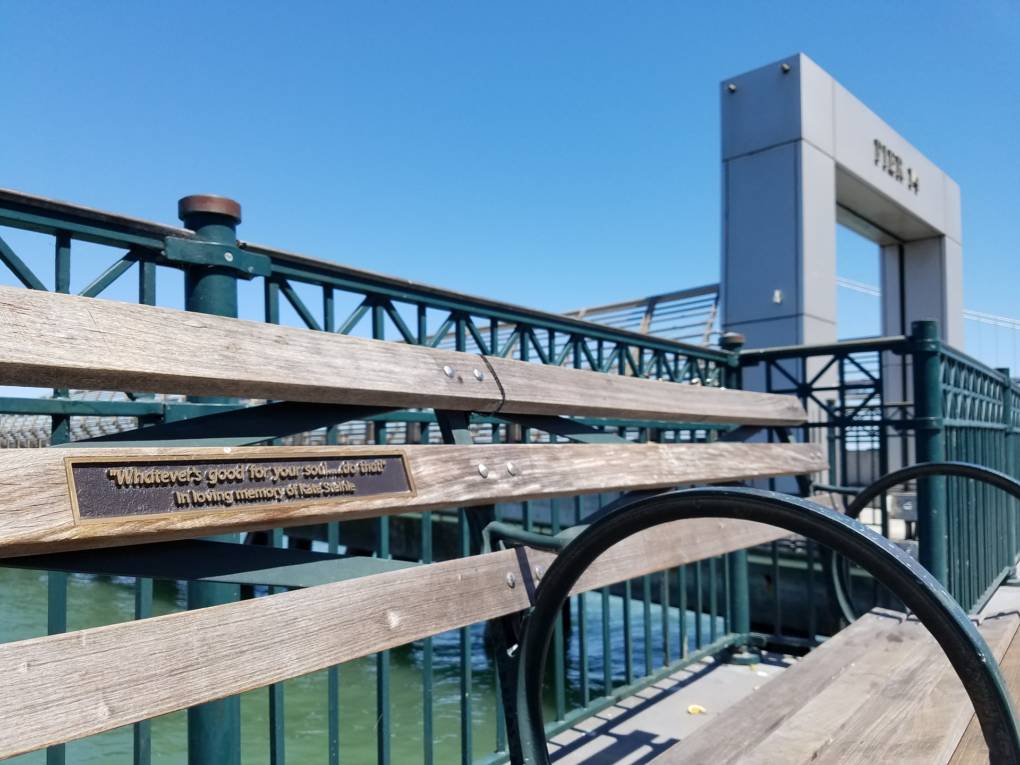
"caption": "A bench with a plaque commemorating Kathryn Steinle is seen near San Francisco's Pier 14 on July 22, 2017.",
"description": "A bench with a plaque commemorating Kathryn Steinle is seen near San Francisco's Pier 14 on July 22, 2017.",
"title": "RS26097_20170722_144909-qut (1)",
"credit": "Alex Emslie/KQED",
"status": "inherit",
"isLoading": false,
"fetchFailed": false
},
"news_11613190": {
"type": "attachments",
"id": "news_11613190",
"meta": {
"index": "attachments_1716263798",
"site": "news",
"id": "11613190",
"found": true
},
"parent": 11613189,
"imgSizes": {
"small": {
"file": "https://ww2.kqed.org/app/uploads/sites/10/2017/08/RS10904_DriversEd4-520x348.jpg",
"width": 520,
"mimeType": "image/jpeg",
"height": 348
},
"twentyfourteen-full-width": {
"file": "https://ww2.kqed.org/app/uploads/sites/10/2017/08/RS10904_DriversEd4-1038x576.jpg",
"width": 1038,
"mimeType": "image/jpeg",
"height": 576
},
"thumbnail": {
"file": "https://ww2.kqed.org/app/uploads/sites/10/2017/08/RS10904_DriversEd4-160x107.jpg",
"width": 160,
"mimeType": "image/jpeg",
"height": 107
},
"fd-sm": {
"file": "https://ww2.kqed.org/app/uploads/sites/10/2017/08/RS10904_DriversEd4-960x642.jpg",
"width": 960,
"mimeType": "image/jpeg",
"height": 642
},
"post-thumbnail": {
"file": "https://ww2.kqed.org/app/uploads/sites/10/2017/08/RS10904_DriversEd4-672x372.jpg",
"width": 672,
"mimeType": "image/jpeg",
"height": 372
},
"xsmall": {
"file": "https://ww2.kqed.org/app/uploads/sites/10/2017/08/RS10904_DriversEd4-375x251.jpg",
"width": 375,
"mimeType": "image/jpeg",
"height": 251
},
"kqedFullSize": {
"file": "https://ww2.kqed.org/app/uploads/sites/10/2017/08/RS10904_DriversEd4-e1503348993557.jpg",
"width": 1920,
"height": 1284
},
"large": {
"file": "https://ww2.kqed.org/app/uploads/sites/10/2017/08/RS10904_DriversEd4-1020x682.jpg",
"width": 1020,
"mimeType": "image/jpeg",
"height": 682
},
"xlarge": {
"file": "https://ww2.kqed.org/app/uploads/sites/10/2017/08/RS10904_DriversEd4-1180x789.jpg",
"width": 1180,
"mimeType": "image/jpeg",
"height": 789
},
"guest-author-50": {
"file": "https://ww2.kqed.org/app/uploads/sites/10/2017/08/RS10904_DriversEd4-50x50.jpg",
"width": 50,
"mimeType": "image/jpeg",
"height": 50
},
"guest-author-96": {
"file": "https://ww2.kqed.org/app/uploads/sites/10/2017/08/RS10904_DriversEd4-96x96.jpg",
"width": 96,
"mimeType": "image/jpeg",
"height": 96
},
"medium": {
"file": "https://ww2.kqed.org/app/uploads/sites/10/2017/08/RS10904_DriversEd4-800x535.jpg",
"width": 800,
"mimeType": "image/jpeg",
"height": 535
},
"guest-author-64": {
"file": "https://ww2.kqed.org/app/uploads/sites/10/2017/08/RS10904_DriversEd4-64x64.jpg",
"width": 64,
"mimeType": "image/jpeg",
"height": 64
},
"guest-author-32": {
"file": "https://ww2.kqed.org/app/uploads/sites/10/2017/08/RS10904_DriversEd4-32x32.jpg",
"width": 32,
"mimeType": "image/jpeg",
"height": 32
},
"fd-lrg": {
"file": "https://ww2.kqed.org/app/uploads/sites/10/2017/08/RS10904_DriversEd4-1920x1284.jpg",
"width": 1920,
"mimeType": "image/jpeg",
"height": 1284
},
"fd-med": {
"file": "https://ww2.kqed.org/app/uploads/sites/10/2017/08/RS10904_DriversEd4-1180x789.jpg",
"width": 1180,
"mimeType": "image/jpeg",
"height": 789
},
"full-width": {
"file": "https://ww2.kqed.org/app/uploads/sites/10/2017/08/RS10904_DriversEd4-1920x1284.jpg",
"width": 1920,
"mimeType": "image/jpeg",
"height": 1284
},
"detail": {
"file": "https://ww2.kqed.org/app/uploads/sites/10/2017/08/RS10904_DriversEd4-150x150.jpg",
"width": 150,
"mimeType": "image/jpeg",
"height": 150
},
"guest-author-128": {
"file": "https://ww2.kqed.org/app/uploads/sites/10/2017/08/RS10904_DriversEd4-128x128.jpg",
"width": 128,
"mimeType": "image/jpeg",
"height": 128
},
"xxsmall": {
"file": "https://ww2.kqed.org/app/uploads/sites/10/2017/08/RS10904_DriversEd4-240x160.jpg",
"width": 240,
"mimeType": "image/jpeg",
"height": 160
}
},
"publishDate": 1503348903,
"modified": 1503348983,
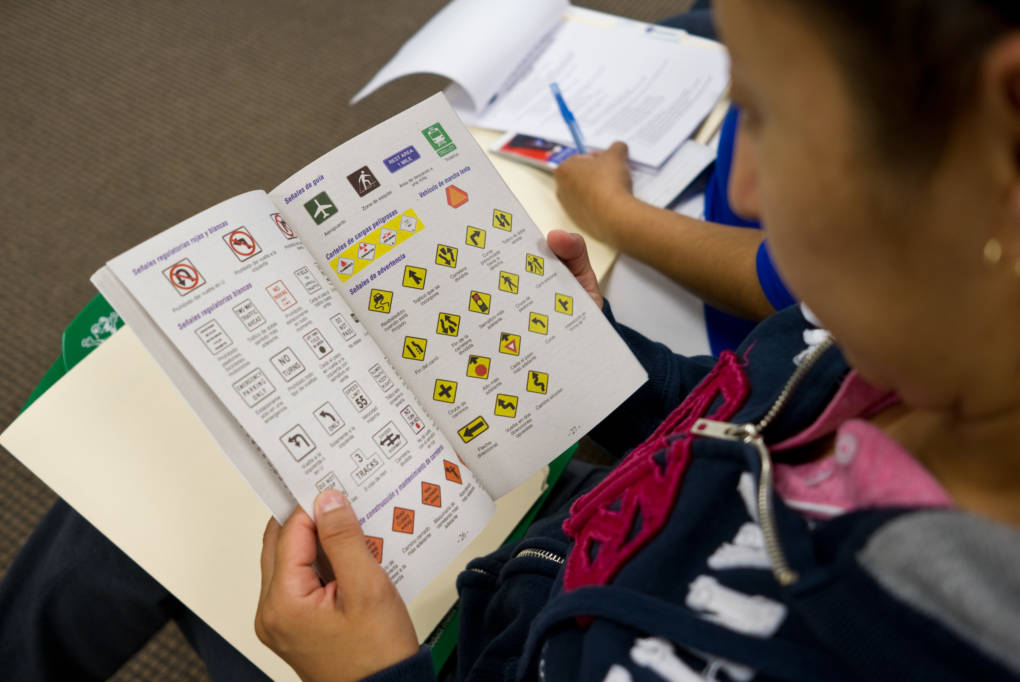
"caption": "A woman studies road signs at a driver's ed class for undocumented immigrants in Santa Ana. ",
"description": "A woman studies road signs at a driver's ed class for undocumented immigrants in Santa Ana. ",
"title": "RS10904_DriversEd4",
"credit": "Marcus Teply/KQED",
"status": "inherit",
"isLoading": false,
"fetchFailed": false
},
"news_11612570": {
"type": "attachments",
"id": "news_11612570",
"meta": {
"index": "attachments_1716263798",
"site": "news",
"id": "11612570",
"found": true
},
"parent": 11612563,
"imgSizes": {
"small": {
"file": "https://ww2.kqed.org/app/uploads/sites/10/2017/08/Mom__MG_3186-qut-520x347.jpg",
"width": 520,
"mimeType": "image/jpeg",
"height": 347
},
"twentyfourteen-full-width": {
"file": "https://ww2.kqed.org/app/uploads/sites/10/2017/08/Mom__MG_3186-qut-1038x576.jpg",
"width": 1038,
"mimeType": "image/jpeg",
"height": 576
},
"thumbnail": {
"file": "https://ww2.kqed.org/app/uploads/sites/10/2017/08/Mom__MG_3186-qut-160x107.jpg",
"width": 160,
"mimeType": "image/jpeg",
"height": 107
},
"fd-sm": {
"file": "https://ww2.kqed.org/app/uploads/sites/10/2017/08/Mom__MG_3186-qut-960x640.jpg",
"width": 960,
"mimeType": "image/jpeg",
"height": 640
},
"post-thumbnail": {
"file": "https://ww2.kqed.org/app/uploads/sites/10/2017/08/Mom__MG_3186-qut-672x372.jpg",
"width": 672,
"mimeType": "image/jpeg",
"height": 372
},
"xsmall": {
"file": "https://ww2.kqed.org/app/uploads/sites/10/2017/08/Mom__MG_3186-qut-375x250.jpg",
"width": 375,
"mimeType": "image/jpeg",
"height": 250
},
"kqedFullSize": {
"file": "https://ww2.kqed.org/app/uploads/sites/10/2017/08/Mom__MG_3186-qut.jpg",
"width": 1920,
"height": 1280
},
"large": {
"file": "https://ww2.kqed.org/app/uploads/sites/10/2017/08/Mom__MG_3186-qut-1020x680.jpg",
"width": 1020,
"mimeType": "image/jpeg",
"height": 680
},
"xlarge": {
"file": "https://ww2.kqed.org/app/uploads/sites/10/2017/08/Mom__MG_3186-qut-1180x787.jpg",
"width": 1180,
"mimeType": "image/jpeg",
"height": 787
},
"guest-author-50": {
"file": "https://ww2.kqed.org/app/uploads/sites/10/2017/08/Mom__MG_3186-qut-50x50.jpg",
"width": 50,
"mimeType": "image/jpeg",
"height": 50
},
"guest-author-96": {
"file": "https://ww2.kqed.org/app/uploads/sites/10/2017/08/Mom__MG_3186-qut-96x96.jpg",
"width": 96,
"mimeType": "image/jpeg",
"height": 96
},
"medium": {
"file": "https://ww2.kqed.org/app/uploads/sites/10/2017/08/Mom__MG_3186-qut-800x533.jpg",
"width": 800,
"mimeType": "image/jpeg",
"height": 533
},
"guest-author-64": {
"file": "https://ww2.kqed.org/app/uploads/sites/10/2017/08/Mom__MG_3186-qut-64x64.jpg",
"width": 64,
"mimeType": "image/jpeg",
"height": 64
},
"guest-author-32": {
"file": "https://ww2.kqed.org/app/uploads/sites/10/2017/08/Mom__MG_3186-qut-32x32.jpg",
"width": 32,
"mimeType": "image/jpeg",
"height": 32
},
"fd-lrg": {
"file": "https://ww2.kqed.org/app/uploads/sites/10/2017/08/Mom__MG_3186-qut-1920x1280.jpg",
"width": 1920,
"mimeType": "image/jpeg",
"height": 1280
},
"fd-med": {
"file": "https://ww2.kqed.org/app/uploads/sites/10/2017/08/Mom__MG_3186-qut-1180x787.jpg",
"width": 1180,
"mimeType": "image/jpeg",
"height": 787
},
"full-width": {
"file": "https://ww2.kqed.org/app/uploads/sites/10/2017/08/Mom__MG_3186-qut-1920x1280.jpg",
"width": 1920,
"mimeType": "image/jpeg",
"height": 1280
},
"detail": {
"file": "https://ww2.kqed.org/app/uploads/sites/10/2017/08/Mom__MG_3186-qut-150x150.jpg",
"width": 150,
"mimeType": "image/jpeg",
"height": 150
},
"guest-author-128": {
"file": "https://ww2.kqed.org/app/uploads/sites/10/2017/08/Mom__MG_3186-qut-128x128.jpg",
"width": 128,
"mimeType": "image/jpeg",
"height": 128
},
"xxsmall": {
"file": "https://ww2.kqed.org/app/uploads/sites/10/2017/08/Mom__MG_3186-qut-240x160.jpg",
"width": 240,
"mimeType": "image/jpeg",
"height": 160
}
},
"publishDate": 1502986704,
"modified": 1503004366,
"caption": "Maria Mendoza-Sanchez clutches a pillow in her Oakland home on Wednesday, Aug. 16, 2017, hours before she, her husband and their son left the U.S. for Mexico after federal immigration authorities denied their request for a reprieve. ",
"description": null,
"title": "Mom__MG_3186-qut",
"credit": "Deborah Svoboda/KQED",
"status": "inherit",
"isLoading": false,
"fetchFailed": false
},
"news_11612612": {
"type": "attachments",
"id": "news_11612612",
"meta": {
"index": "attachments_1716263798",
"site": "news",
"id": "11612612",
"found": true
},
"parent": 11612609,
"imgSizes": {
"small": {
"file": "https://ww2.kqed.org/app/uploads/sites/10/2017/08/Arpaio_Trump-qut-520x347.jpg",
"width": 520,
"mimeType": "image/jpeg",
"height": 347
},
"twentyfourteen-full-width": {
"file": "https://ww2.kqed.org/app/uploads/sites/10/2017/08/Arpaio_Trump-qut-1038x576.jpg",
"width": 1038,
"mimeType": "image/jpeg",
"height": 576
},
"thumbnail": {
"file": "https://ww2.kqed.org/app/uploads/sites/10/2017/08/Arpaio_Trump-qut-160x107.jpg",
"width": 160,
"mimeType": "image/jpeg",
"height": 107
},
"fd-sm": {
"file": "https://ww2.kqed.org/app/uploads/sites/10/2017/08/Arpaio_Trump-qut-960x640.jpg",
"width": 960,
"mimeType": "image/jpeg",
"height": 640
},
"post-thumbnail": {
"file": "https://ww2.kqed.org/app/uploads/sites/10/2017/08/Arpaio_Trump-qut-672x372.jpg",
"width": 672,
"mimeType": "image/jpeg",
"height": 372
},
"xsmall": {
"file": "https://ww2.kqed.org/app/uploads/sites/10/2017/08/Arpaio_Trump-qut-375x250.jpg",
"width": 375,
"mimeType": "image/jpeg",
"height": 250
},
"kqedFullSize": {
"file": "https://ww2.kqed.org/app/uploads/sites/10/2017/08/Arpaio_Trump-qut.jpg",
"width": 1920,
"height": 1280
},
"large": {
"file": "https://ww2.kqed.org/app/uploads/sites/10/2017/08/Arpaio_Trump-qut-1020x680.jpg",
"width": 1020,
"mimeType": "image/jpeg",
"height": 680
},
"xlarge": {
"file": "https://ww2.kqed.org/app/uploads/sites/10/2017/08/Arpaio_Trump-qut-1180x787.jpg",
"width": 1180,
"mimeType": "image/jpeg",
"height": 787
},
"guest-author-50": {
"file": "https://ww2.kqed.org/app/uploads/sites/10/2017/08/Arpaio_Trump-qut-50x50.jpg",
"width": 50,
"mimeType": "image/jpeg",
"height": 50
},
"guest-author-96": {
"file": "https://ww2.kqed.org/app/uploads/sites/10/2017/08/Arpaio_Trump-qut-96x96.jpg",
"width": 96,
"mimeType": "image/jpeg",
"height": 96
},
"medium": {
"file": "https://ww2.kqed.org/app/uploads/sites/10/2017/08/Arpaio_Trump-qut-800x533.jpg",
"width": 800,
"mimeType": "image/jpeg",
"height": 533
},
"guest-author-64": {
"file": "https://ww2.kqed.org/app/uploads/sites/10/2017/08/Arpaio_Trump-qut-64x64.jpg",
"width": 64,
"mimeType": "image/jpeg",
"height": 64
},
"guest-author-32": {
"file": "https://ww2.kqed.org/app/uploads/sites/10/2017/08/Arpaio_Trump-qut-32x32.jpg",
"width": 32,
"mimeType": "image/jpeg",
"height": 32
},
"fd-lrg": {
"file": "https://ww2.kqed.org/app/uploads/sites/10/2017/08/Arpaio_Trump-qut-1920x1280.jpg",
"width": 1920,
"mimeType": "image/jpeg",
"height": 1280
},
"fd-med": {
"file": "https://ww2.kqed.org/app/uploads/sites/10/2017/08/Arpaio_Trump-qut-1180x787.jpg",
"width": 1180,
"mimeType": "image/jpeg",
"height": 787
},
"full-width": {
"file": "https://ww2.kqed.org/app/uploads/sites/10/2017/08/Arpaio_Trump-qut-1920x1280.jpg",
"width": 1920,
"mimeType": "image/jpeg",
"height": 1280
},
"detail": {
"file": "https://ww2.kqed.org/app/uploads/sites/10/2017/08/Arpaio_Trump-qut-150x150.jpg",
"width": 150,
"mimeType": "image/jpeg",
"height": 150
},
"guest-author-128": {
"file": "https://ww2.kqed.org/app/uploads/sites/10/2017/08/Arpaio_Trump-qut-128x128.jpg",
"width": 128,
"mimeType": "image/jpeg",
"height": 128
},
"xxsmall": {
"file": "https://ww2.kqed.org/app/uploads/sites/10/2017/08/Arpaio_Trump-qut-240x160.jpg",
"width": 240,
"mimeType": "image/jpeg",
"height": 160
}
},
"publishDate": 1502990435,
"modified": 1503008860,
"caption": "Joe Arpaio, right, endorses then Republican presidential candidate Donald Trump on Jan. 26, 2016, in Marshalltown, Iowa. ",
"description": null,
"title": "Republican Presidential Candidate Donald Trump Campaigns Throughout Iowa",
"credit": "Scott Olson/Getty Images",
"status": "inherit",
"isLoading": false,
"fetchFailed": false
},
"news_11611877": {
"type": "attachments",
"id": "news_11611877",
"meta": {
"index": "attachments_1716263798",
"site": "news",
"id": "11611877",
"found": true
},
"parent": 11611839,
"imgSizes": {
"small": {
"file": "https://ww2.kqed.org/app/uploads/sites/10/2017/08/RS24378_GettyImages-492659108-qut-520x350.jpg",
"width": 520,
"mimeType": "image/jpeg",
"height": 350
},
"twentyfourteen-full-width": {
"file": "https://ww2.kqed.org/app/uploads/sites/10/2017/08/RS24378_GettyImages-492659108-qut-1038x576.jpg",
"width": 1038,
"mimeType": "image/jpeg",
"height": 576
},
"thumbnail": {
"file": "https://ww2.kqed.org/app/uploads/sites/10/2017/08/RS24378_GettyImages-492659108-qut-160x108.jpg",
"width": 160,
"mimeType": "image/jpeg",
"height": 108
},
"fd-sm": {
"file": "https://ww2.kqed.org/app/uploads/sites/10/2017/08/RS24378_GettyImages-492659108-qut-960x647.jpg",
"width": 960,
"mimeType": "image/jpeg",
"height": 647
},
"post-thumbnail": {
"file": "https://ww2.kqed.org/app/uploads/sites/10/2017/08/RS24378_GettyImages-492659108-qut-672x372.jpg",
"width": 672,
"mimeType": "image/jpeg",
"height": 372
},
"xsmall": {
"file": "https://ww2.kqed.org/app/uploads/sites/10/2017/08/RS24378_GettyImages-492659108-qut-375x253.jpg",
"width": 375,
"mimeType": "image/jpeg",
"height": 253
},
"kqedFullSize": {
"file": "https://ww2.kqed.org/app/uploads/sites/10/2017/08/RS24378_GettyImages-492659108-qut.jpg",
"width": 1920,
"height": 1293
},
"large": {
"file": "https://ww2.kqed.org/app/uploads/sites/10/2017/08/RS24378_GettyImages-492659108-qut-1020x687.jpg",
"width": 1020,
"mimeType": "image/jpeg",
"height": 687
},
"xlarge": {
"file": "https://ww2.kqed.org/app/uploads/sites/10/2017/08/RS24378_GettyImages-492659108-qut-1180x795.jpg",
"width": 1180,
"mimeType": "image/jpeg",
"height": 795
},
"guest-author-50": {
"file": "https://ww2.kqed.org/app/uploads/sites/10/2017/08/RS24378_GettyImages-492659108-qut-50x50.jpg",
"width": 50,
"mimeType": "image/jpeg",
"height": 50
},
"guest-author-96": {
"file": "https://ww2.kqed.org/app/uploads/sites/10/2017/08/RS24378_GettyImages-492659108-qut-96x96.jpg",
"width": 96,
"mimeType": "image/jpeg",
"height": 96
},
"medium": {
"file": "https://ww2.kqed.org/app/uploads/sites/10/2017/08/RS24378_GettyImages-492659108-qut-800x539.jpg",
"width": 800,
"mimeType": "image/jpeg",
"height": 539
},
"guest-author-64": {
"file": "https://ww2.kqed.org/app/uploads/sites/10/2017/08/RS24378_GettyImages-492659108-qut-64x64.jpg",
"width": 64,
"mimeType": "image/jpeg",
"height": 64
},
"guest-author-32": {
"file": "https://ww2.kqed.org/app/uploads/sites/10/2017/08/RS24378_GettyImages-492659108-qut-32x32.jpg",
"width": 32,
"mimeType": "image/jpeg",
"height": 32
},
"fd-lrg": {
"file": "https://ww2.kqed.org/app/uploads/sites/10/2017/08/RS24378_GettyImages-492659108-qut-1920x1293.jpg",
"width": 1920,
"mimeType": "image/jpeg",
"height": 1293
},
"fd-med": {
"file": "https://ww2.kqed.org/app/uploads/sites/10/2017/08/RS24378_GettyImages-492659108-qut-1180x795.jpg",
"width": 1180,
"mimeType": "image/jpeg",
"height": 795
},
"full-width": {
"file": "https://ww2.kqed.org/app/uploads/sites/10/2017/08/RS24378_GettyImages-492659108-qut-1920x1293.jpg",
"width": 1920,
"mimeType": "image/jpeg",
"height": 1293
},
"detail": {
"file": "https://ww2.kqed.org/app/uploads/sites/10/2017/08/RS24378_GettyImages-492659108-qut-150x150.jpg",
"width": 150,
"mimeType": "image/jpeg",
"height": 150
},
"guest-author-128": {
"file": "https://ww2.kqed.org/app/uploads/sites/10/2017/08/RS24378_GettyImages-492659108-qut-128x128.jpg",
"width": 128,
"mimeType": "image/jpeg",
"height": 128
},
"xxsmall": {
"file": "https://ww2.kqed.org/app/uploads/sites/10/2017/08/RS24378_GettyImages-492659108-qut-240x162.jpg",
"width": 240,
"mimeType": "image/jpeg",
"height": 162
}
},
"publishDate": 1502749169,
"modified": 1502833950,
"caption": "An immigrant walks in chains through a U.S. Immigration and Customs Enforcement (ICE) processing center after being detained.",
"description": null,
"title": "RS24378_GettyImages-492659108-qut",
"credit": "John Moore/Getty Images",
"status": "inherit",
"isLoading": false,
"fetchFailed": false
},
"news_11612165": {
"type": "attachments",
"id": "news_11612165",
"meta": {
"index": "attachments_1716263798",
"site": "news",
"id": "11612165",
"found": true
},
"parent": 11611998,
"imgSizes": {
"small": {
"file": "https://ww2.kqed.org/app/uploads/sites/10/2017/08/RS26227_IMG_0297-qut-520x390.jpg",
"width": 520,
"mimeType": "image/jpeg",
"height": 390
},
"twentyfourteen-full-width": {
"file": "https://ww2.kqed.org/app/uploads/sites/10/2017/08/RS26227_IMG_0297-qut-1038x576.jpg",
"width": 1038,
"mimeType": "image/jpeg",
"height": 576
},
"thumbnail": {
"file": "https://ww2.kqed.org/app/uploads/sites/10/2017/08/RS26227_IMG_0297-qut-160x120.jpg",
"width": 160,
"mimeType": "image/jpeg",
"height": 120
},
"fd-sm": {
"file": "https://ww2.kqed.org/app/uploads/sites/10/2017/08/RS26227_IMG_0297-qut-960x720.jpg",
"width": 960,
"mimeType": "image/jpeg",
"height": 720
},
"post-thumbnail": {
"file": "https://ww2.kqed.org/app/uploads/sites/10/2017/08/RS26227_IMG_0297-qut-672x372.jpg",
"width": 672,
"mimeType": "image/jpeg",
"height": 372
},
"xsmall": {
"file": "https://ww2.kqed.org/app/uploads/sites/10/2017/08/RS26227_IMG_0297-qut-375x281.jpg",
"width": 375,
"mimeType": "image/jpeg",
"height": 281
},
"kqedFullSize": {
"file": "https://ww2.kqed.org/app/uploads/sites/10/2017/08/RS26227_IMG_0297-qut.jpg",
"width": 1920,
"height": 1440
},
"large": {
"file": "https://ww2.kqed.org/app/uploads/sites/10/2017/08/RS26227_IMG_0297-qut-1020x765.jpg",
"width": 1020,
"mimeType": "image/jpeg",
"height": 765
},
"xlarge": {
"file": "https://ww2.kqed.org/app/uploads/sites/10/2017/08/RS26227_IMG_0297-qut-1180x885.jpg",
"width": 1180,
"mimeType": "image/jpeg",
"height": 885
},
"guest-author-50": {
"file": "https://ww2.kqed.org/app/uploads/sites/10/2017/08/RS26227_IMG_0297-qut-50x50.jpg",
"width": 50,
"mimeType": "image/jpeg",
"height": 50
},
"guest-author-96": {
"file": "https://ww2.kqed.org/app/uploads/sites/10/2017/08/RS26227_IMG_0297-qut-96x96.jpg",
"width": 96,
"mimeType": "image/jpeg",
"height": 96
},
"medium": {
"file": "https://ww2.kqed.org/app/uploads/sites/10/2017/08/RS26227_IMG_0297-qut-800x600.jpg",
"width": 800,
"mimeType": "image/jpeg",
"height": 600
},
"guest-author-64": {
"file": "https://ww2.kqed.org/app/uploads/sites/10/2017/08/RS26227_IMG_0297-qut-64x64.jpg",
"width": 64,
"mimeType": "image/jpeg",
"height": 64
},
"guest-author-32": {
"file": "https://ww2.kqed.org/app/uploads/sites/10/2017/08/RS26227_IMG_0297-qut-32x32.jpg",
"width": 32,
"mimeType": "image/jpeg",
"height": 32
},
"fd-lrg": {
"file": "https://ww2.kqed.org/app/uploads/sites/10/2017/08/RS26227_IMG_0297-qut-1920x1440.jpg",
"width": 1920,
"mimeType": "image/jpeg",
"height": 1440
},
"fd-med": {
"file": "https://ww2.kqed.org/app/uploads/sites/10/2017/08/RS26227_IMG_0297-qut-1180x885.jpg",
"width": 1180,
"mimeType": "image/jpeg",
"height": 885
},
"full-width": {
"file": "https://ww2.kqed.org/app/uploads/sites/10/2017/08/RS26227_IMG_0297-qut-1920x1440.jpg",
"width": 1920,
"mimeType": "image/jpeg",
"height": 1440
},
"detail": {
"file": "https://ww2.kqed.org/app/uploads/sites/10/2017/08/RS26227_IMG_0297-qut-150x150.jpg",
"width": 150,
"mimeType": "image/jpeg",
"height": 150
},
"guest-author-128": {
"file": "https://ww2.kqed.org/app/uploads/sites/10/2017/08/RS26227_IMG_0297-qut-128x128.jpg",
"width": 128,
"mimeType": "image/jpeg",
"height": 128
},
"xxsmall": {
"file": "https://ww2.kqed.org/app/uploads/sites/10/2017/08/RS26227_IMG_0297-qut-240x180.jpg",
"width": 240,
"mimeType": "image/jpeg",
"height": 180
}
},
"publishDate": 1502836981,
"modified": 1502931184,
"caption": "Jasmine Mongue, Kim Wilson and Caitlin Lang (L-R) hold signs at a pro-DACA rally in San Francisco's Financial District on Tuesday, Aug. 15, 2017. It was the fifth anniversary of the program, which provides work permits and protection from deportation for children brought to the country illegally.",
"description": "Jasmine Mongue, Kim Wilson and Caitlin Lang (L-R) hold signs at a pro-DACA rally in San Francisco's Financial District on Tuesday, August 15, 2017. It was the fifth anniversary of the program which provides work permits and protection from deportation for children brought to the country illegally.",
"title": "RS26227_IMG_0297-qut",
"credit": "Ryan Levi/KQED",
"status": "inherit",
"isLoading": false,
"fetchFailed": false
},
"news_11611803": {
"type": "attachments",
"id": "news_11611803",
"meta": {
"index": "attachments_1716263798",
"site": "news",
"id": "11611803",
"found": true
},
"parent": 11611739,
"imgSizes": {
"small": {
"file": "https://ww2.kqed.org/app/uploads/sites/10/2017/08/BecerraHerrera-520x366.jpg",
"width": 520,
"mimeType": "image/jpeg",
"height": 366
},
"twentyfourteen-full-width": {
"file": "https://ww2.kqed.org/app/uploads/sites/10/2017/08/BecerraHerrera-1038x576.jpg",
"width": 1038,
"mimeType": "image/jpeg",
"height": 576
},
"thumbnail": {
"file": "https://ww2.kqed.org/app/uploads/sites/10/2017/08/BecerraHerrera-160x113.jpg",
"width": 160,
"mimeType": "image/jpeg",
"height": 113
},
"fd-sm": {
"file": "https://ww2.kqed.org/app/uploads/sites/10/2017/08/BecerraHerrera-960x677.jpg",
"width": 960,
"mimeType": "image/jpeg",
"height": 677
},
"post-thumbnail": {
"file": "https://ww2.kqed.org/app/uploads/sites/10/2017/08/BecerraHerrera-672x372.jpg",
"width": 672,
"mimeType": "image/jpeg",
"height": 372
},
"xsmall": {
"file": "https://ww2.kqed.org/app/uploads/sites/10/2017/08/BecerraHerrera-375x264.jpg",
"width": 375,
"mimeType": "image/jpeg",
"height": 264
},
"kqedFullSize": {
"file": "https://ww2.kqed.org/app/uploads/sites/10/2017/08/BecerraHerrera.jpg",
"width": 1920,
"height": 1353
},
"large": {
"file": "https://ww2.kqed.org/app/uploads/sites/10/2017/08/BecerraHerrera-1020x719.jpg",
"width": 1020,
"mimeType": "image/jpeg",
"height": 719
},
"xlarge": {
"file": "https://ww2.kqed.org/app/uploads/sites/10/2017/08/BecerraHerrera-1180x832.jpg",
"width": 1180,
"mimeType": "image/jpeg",
"height": 832
},
"guest-author-50": {
"file": "https://ww2.kqed.org/app/uploads/sites/10/2017/08/BecerraHerrera-50x50.jpg",
"width": 50,
"mimeType": "image/jpeg",
"height": 50
},
"guest-author-96": {
"file": "https://ww2.kqed.org/app/uploads/sites/10/2017/08/BecerraHerrera-96x96.jpg",
"width": 96,
"mimeType": "image/jpeg",
"height": 96
},
"medium": {
"file": "https://ww2.kqed.org/app/uploads/sites/10/2017/08/BecerraHerrera-800x564.jpg",
"width": 800,
"mimeType": "image/jpeg",
"height": 564
},
"guest-author-64": {
"file": "https://ww2.kqed.org/app/uploads/sites/10/2017/08/BecerraHerrera-64x64.jpg",
"width": 64,
"mimeType": "image/jpeg",
"height": 64
},
"guest-author-32": {
"file": "https://ww2.kqed.org/app/uploads/sites/10/2017/08/BecerraHerrera-32x32.jpg",
"width": 32,
"mimeType": "image/jpeg",
"height": 32
},
"fd-lrg": {
"file": "https://ww2.kqed.org/app/uploads/sites/10/2017/08/BecerraHerrera-1920x1353.jpg",
"width": 1920,
"mimeType": "image/jpeg",
"height": 1353
},
"fd-med": {
"file": "https://ww2.kqed.org/app/uploads/sites/10/2017/08/BecerraHerrera-1180x832.jpg",
"width": 1180,
"mimeType": "image/jpeg",
"height": 832
},
"full-width": {
"file": "https://ww2.kqed.org/app/uploads/sites/10/2017/08/BecerraHerrera-1920x1353.jpg",
"width": 1920,
"mimeType": "image/jpeg",
"height": 1353
},
"detail": {
"file": "https://ww2.kqed.org/app/uploads/sites/10/2017/08/BecerraHerrera-150x150.jpg",
"width": 150,
"mimeType": "image/jpeg",
"height": 150
},
"guest-author-128": {
"file": "https://ww2.kqed.org/app/uploads/sites/10/2017/08/BecerraHerrera-128x128.jpg",
"width": 128,
"mimeType": "image/jpeg",
"height": 128
},
"xxsmall": {
"file": "https://ww2.kqed.org/app/uploads/sites/10/2017/08/BecerraHerrera-240x169.jpg",
"width": 240,
"mimeType": "image/jpeg",
"height": 169
}
},
"publishDate": 1502738683,
"modified": 1502738710,
"caption": "California Attorney General Xavier Becerra and San Francisco City Attorney Dennis Herrera announce new litigation against President Trump's latest policy to withhold federal justice assistance grants from 'sanctuary cities.'",
"description": "California Attorney General Xavier Becerra and San Francisco City Attorney Dennis Herrera announce new litigation against President Trump's latest policy to withhold federal justice assistance grants from 'sanctuary cities.'",
"title": "BecerraHerrera",
"credit": "Ryan Levi/KQED",
"status": "inherit",
"isLoading": false,
"fetchFailed": false
},
"news_11611364": {
"type": "attachments",
"id": "news_11611364",
"meta": {
"index": "attachments_1716263798",
"site": "news",
"id": "11611364",
"found": true
},
"parent": 11611353,
"imgSizes": {
"small": {
"file": "https://ww2.kqed.org/app/uploads/sites/10/2017/08/FreeRomuloProtest-520x331.jpg",
"width": 520,
"mimeType": "image/jpeg",
"height": 331
},
"twentyfourteen-full-width": {
"file": "https://ww2.kqed.org/app/uploads/sites/10/2017/08/FreeRomuloProtest-1038x576.jpg",
"width": 1038,
"mimeType": "image/jpeg",
"height": 576
},
"thumbnail": {
"file": "https://ww2.kqed.org/app/uploads/sites/10/2017/08/FreeRomuloProtest-160x102.jpg",
"width": 160,
"mimeType": "image/jpeg",
"height": 102
},
"fd-sm": {
"file": "https://ww2.kqed.org/app/uploads/sites/10/2017/08/FreeRomuloProtest-960x611.jpg",
"width": 960,
"mimeType": "image/jpeg",
"height": 611
},
"post-thumbnail": {
"file": "https://ww2.kqed.org/app/uploads/sites/10/2017/08/FreeRomuloProtest-672x372.jpg",
"width": 672,
"mimeType": "image/jpeg",
"height": 372
},
"xsmall": {
"file": "https://ww2.kqed.org/app/uploads/sites/10/2017/08/FreeRomuloProtest-375x238.jpg",
"width": 375,
"mimeType": "image/jpeg",
"height": 238
},
"kqedFullSize": {
"file": "https://ww2.kqed.org/app/uploads/sites/10/2017/08/FreeRomuloProtest.jpg",
"width": 1920,
"height": 1221
},
"large": {
"file": "https://ww2.kqed.org/app/uploads/sites/10/2017/08/FreeRomuloProtest-1020x649.jpg",
"width": 1020,
"mimeType": "image/jpeg",
"height": 649
},
"xlarge": {
"file": "https://ww2.kqed.org/app/uploads/sites/10/2017/08/FreeRomuloProtest-1180x750.jpg",
"width": 1180,
"mimeType": "image/jpeg",
"height": 750
},
"guest-author-50": {
"file": "https://ww2.kqed.org/app/uploads/sites/10/2017/08/FreeRomuloProtest-50x50.jpg",
"width": 50,
"mimeType": "image/jpeg",
"height": 50
},
"guest-author-96": {
"file": "https://ww2.kqed.org/app/uploads/sites/10/2017/08/FreeRomuloProtest-96x96.jpg",
"width": 96,
"mimeType": "image/jpeg",
"height": 96
},
"medium": {
"file": "https://ww2.kqed.org/app/uploads/sites/10/2017/08/FreeRomuloProtest-800x509.jpg",
"width": 800,
"mimeType": "image/jpeg",
"height": 509
},
"guest-author-64": {
"file": "https://ww2.kqed.org/app/uploads/sites/10/2017/08/FreeRomuloProtest-64x64.jpg",
"width": 64,
"mimeType": "image/jpeg",
"height": 64
},
"guest-author-32": {
"file": "https://ww2.kqed.org/app/uploads/sites/10/2017/08/FreeRomuloProtest-32x32.jpg",
"width": 32,
"mimeType": "image/jpeg",
"height": 32
},
"fd-lrg": {
"file": "https://ww2.kqed.org/app/uploads/sites/10/2017/08/FreeRomuloProtest-1920x1221.jpg",
"width": 1920,
"mimeType": "image/jpeg",
"height": 1221
},
"fd-med": {
"file": "https://ww2.kqed.org/app/uploads/sites/10/2017/08/FreeRomuloProtest-1180x750.jpg",
"width": 1180,
"mimeType": "image/jpeg",
"height": 750
},
"full-width": {
"file": "https://ww2.kqed.org/app/uploads/sites/10/2017/08/FreeRomuloProtest-1920x1221.jpg",
"width": 1920,
"mimeType": "image/jpeg",
"height": 1221
},
"detail": {
"file": "https://ww2.kqed.org/app/uploads/sites/10/2017/08/FreeRomuloProtest-150x150.jpg",
"width": 150,
"mimeType": "image/jpeg",
"height": 150
},
"guest-author-128": {
"file": "https://ww2.kqed.org/app/uploads/sites/10/2017/08/FreeRomuloProtest-128x128.jpg",
"width": 128,
"mimeType": "image/jpeg",
"height": 128
},
"xxsmall": {
"file": "https://ww2.kqed.org/app/uploads/sites/10/2017/08/FreeRomuloProtest-240x153.jpg",
"width": 240,
"mimeType": "image/jpeg",
"height": 153
}
},
"publishDate": 1502479295,
"modified": 1502492768,
"caption": "Daughters of Romulo Avelica-Gonzalez, Jocelyn, 19, (L) Fatima, 13, and Yuleni, 12, (R), attend a rally for his release outside U.S. Immigration and Customs Enforcement (ICE) offices on March 13, 2017, in Los Angeles.",
"description": "Daughters of Romulo Avelica-Gonzalez, Jocelyn, 19, (L) Fatima, 13, and Yuleni, 12, (R), attend a rally for his release outside U.S. Immigration and Customs Enforcement (ICE) offices on March 13, 2017 in Los Angeles.",
"title": "FreeRomuloProtest",
"credit": "David McNew/Getty Images",
"status": "inherit",
"isLoading": false,
"fetchFailed": false
},
"news_11610239": {
"type": "attachments",
"id": "news_11610239",
"meta": {
"index": "attachments_1716263798",
"site": "news",
"id": "11610239",
"found": true
},
"parent": 11610230,
"imgSizes": {
"small": {
"file": "https://ww2.kqed.org/app/uploads/sites/10/2017/08/CARNE-Y-ARENA-VR-interior-520x347.jpg",
"width": 520,
"mimeType": "image/jpeg",
"height": 347
},
"twentyfourteen-full-width": {
"file": "https://ww2.kqed.org/app/uploads/sites/10/2017/08/CARNE-Y-ARENA-VR-interior-1038x576.jpg",
"width": 1038,
"mimeType": "image/jpeg",
"height": 576
},
"thumbnail": {
"file": "https://ww2.kqed.org/app/uploads/sites/10/2017/08/CARNE-Y-ARENA-VR-interior-160x107.jpg",
"width": 160,
"mimeType": "image/jpeg",
"height": 107
},
"fd-sm": {
"file": "https://ww2.kqed.org/app/uploads/sites/10/2017/08/CARNE-Y-ARENA-VR-interior-960x641.jpg",
"width": 960,
"mimeType": "image/jpeg",
"height": 641
},
"post-thumbnail": {
"file": "https://ww2.kqed.org/app/uploads/sites/10/2017/08/CARNE-Y-ARENA-VR-interior-672x372.jpg",
"width": 672,
"mimeType": "image/jpeg",
"height": 372
},
"xsmall": {
"file": "https://ww2.kqed.org/app/uploads/sites/10/2017/08/CARNE-Y-ARENA-VR-interior-375x250.jpg",
"width": 375,
"mimeType": "image/jpeg",
"height": 250
},
"kqedFullSize": {
"file": "https://ww2.kqed.org/app/uploads/sites/10/2017/08/CARNE-Y-ARENA-VR-interior.jpg",
"width": 1920,
"height": 1281
},
"large": {
"file": "https://ww2.kqed.org/app/uploads/sites/10/2017/08/CARNE-Y-ARENA-VR-interior-1020x681.jpg",
"width": 1020,
"mimeType": "image/jpeg",
"height": 681
},
"xlarge": {
"file": "https://ww2.kqed.org/app/uploads/sites/10/2017/08/CARNE-Y-ARENA-VR-interior-1180x787.jpg",
"width": 1180,
"mimeType": "image/jpeg",
"height": 787
},
"guest-author-50": {
"file": "https://ww2.kqed.org/app/uploads/sites/10/2017/08/CARNE-Y-ARENA-VR-interior-50x50.jpg",
"width": 50,
"mimeType": "image/jpeg",
"height": 50
},
"guest-author-96": {
"file": "https://ww2.kqed.org/app/uploads/sites/10/2017/08/CARNE-Y-ARENA-VR-interior-96x96.jpg",
"width": 96,
"mimeType": "image/jpeg",
"height": 96
},
"medium": {
"file": "https://ww2.kqed.org/app/uploads/sites/10/2017/08/CARNE-Y-ARENA-VR-interior-800x534.jpg",
"width": 800,
"mimeType": "image/jpeg",
"height": 534
},
"guest-author-64": {
"file": "https://ww2.kqed.org/app/uploads/sites/10/2017/08/CARNE-Y-ARENA-VR-interior-64x64.jpg",
"width": 64,
"mimeType": "image/jpeg",
"height": 64
},
"guest-author-32": {
"file": "https://ww2.kqed.org/app/uploads/sites/10/2017/08/CARNE-Y-ARENA-VR-interior-32x32.jpg",
"width": 32,
"mimeType": "image/jpeg",
"height": 32
},
"fd-lrg": {
"file": "https://ww2.kqed.org/app/uploads/sites/10/2017/08/CARNE-Y-ARENA-VR-interior-1920x1281.jpg",
"width": 1920,
"mimeType": "image/jpeg",
"height": 1281
},
"fd-med": {
"file": "https://ww2.kqed.org/app/uploads/sites/10/2017/08/CARNE-Y-ARENA-VR-interior-1180x787.jpg",
"width": 1180,
"mimeType": "image/jpeg",
"height": 787
},
"full-width": {
"file": "https://ww2.kqed.org/app/uploads/sites/10/2017/08/CARNE-Y-ARENA-VR-interior-1920x1281.jpg",
"width": 1920,
"mimeType": "image/jpeg",
"height": 1281
},
"detail": {
"file": "https://ww2.kqed.org/app/uploads/sites/10/2017/08/CARNE-Y-ARENA-VR-interior-150x150.jpg",
"width": 150,
"mimeType": "image/jpeg",
"height": 150
},
"guest-author-128": {
"file": "https://ww2.kqed.org/app/uploads/sites/10/2017/08/CARNE-Y-ARENA-VR-interior-128x128.jpg",
"width": 128,
"mimeType": "image/jpeg",
"height": 128
},
"xxsmall": {
"file": "https://ww2.kqed.org/app/uploads/sites/10/2017/08/CARNE-Y-ARENA-VR-interior-240x160.jpg",
"width": 240,
"mimeType": "image/jpeg",
"height": 160
}
},
"publishDate": 1501882938,
"modified": 1502233295,
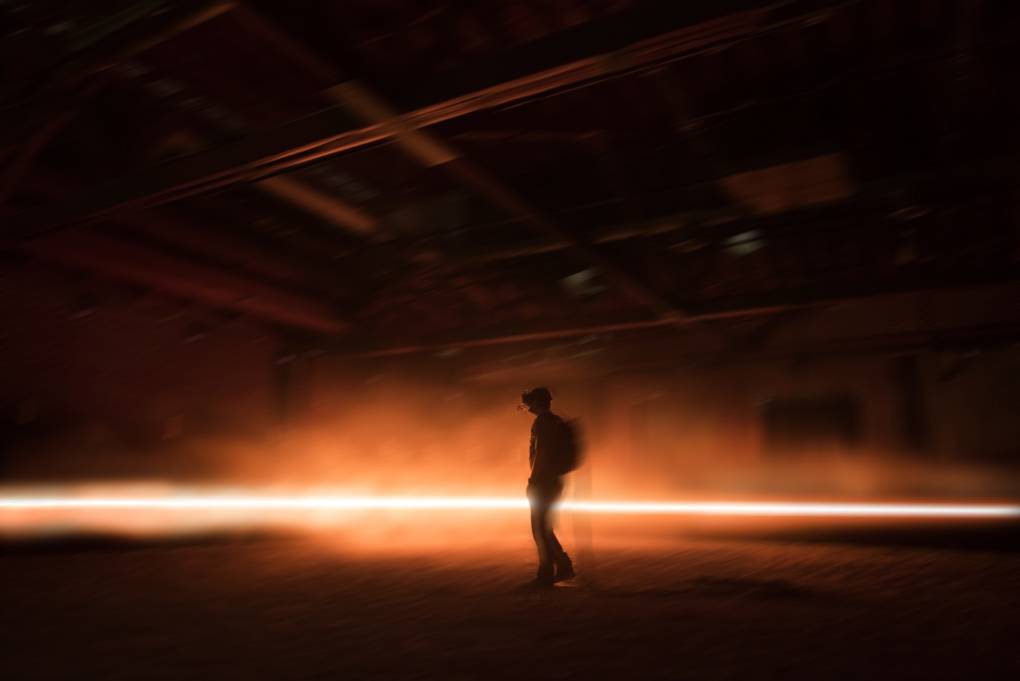
"caption": "A museum visitor experiences the 'Carne y Arena' VR installation.",
"description": "An exhibit goer experiences the Carne y Arena VR installation.",
"title": "CARNE Y ARENA VR interior",
"credit": "Emmanuel Lubezki",
"status": "inherit",
"isLoading": false,
"fetchFailed": false
},
"news_11610470": {
"type": "attachments",
"id": "news_11610470",
"meta": {
"index": "attachments_1716263798",
"site": "news",
"id": "11610470",
"found": true
},
"parent": 11610466,
"imgSizes": {
"small": {
"file": "https://ww2.kqed.org/app/uploads/sites/10/2017/08/DaughterFatima-520x338.jpg",
"width": 520,
"mimeType": "image/jpeg",
"height": 338
},
"twentyfourteen-full-width": {
"file": "https://ww2.kqed.org/app/uploads/sites/10/2017/08/DaughterFatima-1038x576.jpg",
"width": 1038,
"mimeType": "image/jpeg",
"height": 576
},
"thumbnail": {
"file": "https://ww2.kqed.org/app/uploads/sites/10/2017/08/DaughterFatima-160x104.jpg",
"width": 160,
"mimeType": "image/jpeg",
"height": 104
},
"fd-sm": {
"file": "https://ww2.kqed.org/app/uploads/sites/10/2017/08/DaughterFatima-960x625.jpg",
"width": 960,
"mimeType": "image/jpeg",
"height": 625
},
"post-thumbnail": {
"file": "https://ww2.kqed.org/app/uploads/sites/10/2017/08/DaughterFatima-672x372.jpg",
"width": 672,
"mimeType": "image/jpeg",
"height": 372
},
"xsmall": {
"file": "https://ww2.kqed.org/app/uploads/sites/10/2017/08/DaughterFatima-375x244.jpg",
"width": 375,
"mimeType": "image/jpeg",
"height": 244
},
"kqedFullSize": {
"file": "https://ww2.kqed.org/app/uploads/sites/10/2017/08/DaughterFatima.jpg",
"width": 1920,
"height": 1249
},
"large": {
"file": "https://ww2.kqed.org/app/uploads/sites/10/2017/08/DaughterFatima-1020x664.jpg",
"width": 1020,
"mimeType": "image/jpeg",
"height": 664
},
"xlarge": {
"file": "https://ww2.kqed.org/app/uploads/sites/10/2017/08/DaughterFatima-1180x768.jpg",
"width": 1180,
"mimeType": "image/jpeg",
"height": 768
},
"guest-author-50": {
"file": "https://ww2.kqed.org/app/uploads/sites/10/2017/08/DaughterFatima-50x50.jpg",
"width": 50,
"mimeType": "image/jpeg",
"height": 50
},
"guest-author-96": {
"file": "https://ww2.kqed.org/app/uploads/sites/10/2017/08/DaughterFatima-96x96.jpg",
"width": 96,
"mimeType": "image/jpeg",
"height": 96
},
"medium": {
"file": "https://ww2.kqed.org/app/uploads/sites/10/2017/08/DaughterFatima-800x520.jpg",
"width": 800,
"mimeType": "image/jpeg",
"height": 520
},
"guest-author-64": {
"file": "https://ww2.kqed.org/app/uploads/sites/10/2017/08/DaughterFatima-64x64.jpg",
"width": 64,
"mimeType": "image/jpeg",
"height": 64
},
"guest-author-32": {
"file": "https://ww2.kqed.org/app/uploads/sites/10/2017/08/DaughterFatima-32x32.jpg",
"width": 32,
"mimeType": "image/jpeg",
"height": 32
},
"fd-lrg": {
"file": "https://ww2.kqed.org/app/uploads/sites/10/2017/08/DaughterFatima-1920x1249.jpg",
"width": 1920,
"mimeType": "image/jpeg",
"height": 1249
},
"fd-med": {
"file": "https://ww2.kqed.org/app/uploads/sites/10/2017/08/DaughterFatima-1180x768.jpg",
"width": 1180,
"mimeType": "image/jpeg",
"height": 768
},
"full-width": {
"file": "https://ww2.kqed.org/app/uploads/sites/10/2017/08/DaughterFatima-1920x1249.jpg",
"width": 1920,
"mimeType": "image/jpeg",
"height": 1249
},
"detail": {
"file": "https://ww2.kqed.org/app/uploads/sites/10/2017/08/DaughterFatima-150x150.jpg",
"width": 150,
"mimeType": "image/jpeg",
"height": 150
},
"guest-author-128": {
"file": "https://ww2.kqed.org/app/uploads/sites/10/2017/08/DaughterFatima-128x128.jpg",
"width": 128,
"mimeType": "image/jpeg",
"height": 128
},
"xxsmall": {
"file": "https://ww2.kqed.org/app/uploads/sites/10/2017/08/DaughterFatima-240x156.jpg",
"width": 240,
"mimeType": "image/jpeg",
"height": 156
}
},
"publishDate": 1502143790,
"modified": 1502147745,
"caption": "Fatima Avelica, 13, daughter of Romulo Avelica-Gonzalez, attends a rally with loved ones and supporters for his release outside U.S. Immigration and Customs Enforcement (ICE) offices on March 13, 2017, in Los Angeles.",
"description": "Fatima Avelica, 13, daughter of of Romulo Avelica-Gonzalez, attends a rally with loved ones and supporters for his release outside U.S. Immigration and Customs Enforcement (ICE) offices on March 13, 2017 in Los Angeles.",
"title": "DaughterFatima",
"credit": "David McNew/Getty Images",
"status": "inherit",
"isLoading": false,
"fetchFailed": false
},
"news_11610330": {
"type": "attachments",
"id": "news_11610330",
"meta": {
"index": "attachments_1716263798",
"site": "news",
"id": "11610330",
"found": true
},
"parent": 11610289,
"imgSizes": {
"small": {
"file": "https://ww2.kqed.org/app/uploads/sites/10/2017/08/swalwell-web-marq-520x293.jpg",
"width": 520,
"mimeType": "image/jpeg",
"height": 293
},
"twentyfourteen-full-width": {
"file": "https://ww2.kqed.org/app/uploads/sites/10/2017/08/swalwell-web-marq-1038x576.jpg",
"width": 1038,
"mimeType": "image/jpeg",
"height": 576
},
"thumbnail": {
"file": "https://ww2.kqed.org/app/uploads/sites/10/2017/08/swalwell-web-marq-160x90.jpg",
"width": 160,
"mimeType": "image/jpeg",
"height": 90
},
"fd-sm": {
"file": "https://ww2.kqed.org/app/uploads/sites/10/2017/08/swalwell-web-marq-960x540.jpg",
"width": 960,
"mimeType": "image/jpeg",
"height": 540
},
"post-thumbnail": {
"file": "https://ww2.kqed.org/app/uploads/sites/10/2017/08/swalwell-web-marq-672x372.jpg",
"width": 672,
"mimeType": "image/jpeg",
"height": 372
},
"xsmall": {
"file": "https://ww2.kqed.org/app/uploads/sites/10/2017/08/swalwell-web-marq-375x211.jpg",
"width": 375,
"mimeType": "image/jpeg",
"height": 211
},
"kqedFullSize": {
"file": "https://ww2.kqed.org/app/uploads/sites/10/2017/08/swalwell-web-marq.jpg",
"width": 1280,
"height": 720
},
"large": {
"file": "https://ww2.kqed.org/app/uploads/sites/10/2017/08/swalwell-web-marq-1020x574.jpg",
"width": 1020,
"mimeType": "image/jpeg",
"height": 574
},
"xlarge": {
"file": "https://ww2.kqed.org/app/uploads/sites/10/2017/08/swalwell-web-marq-1180x664.jpg",
"width": 1180,
"mimeType": "image/jpeg",
"height": 664
},
"guest-author-50": {
"file": "https://ww2.kqed.org/app/uploads/sites/10/2017/08/swalwell-web-marq-50x50.jpg",
"width": 50,
"mimeType": "image/jpeg",
"height": 50
},
"guest-author-96": {
"file": "https://ww2.kqed.org/app/uploads/sites/10/2017/08/swalwell-web-marq-96x96.jpg",
"width": 96,
"mimeType": "image/jpeg",
"height": 96
},
"medium": {
"file": "https://ww2.kqed.org/app/uploads/sites/10/2017/08/swalwell-web-marq-800x450.jpg",
"width": 800,
"mimeType": "image/jpeg",
"height": 450
},
"guest-author-64": {
"file": "https://ww2.kqed.org/app/uploads/sites/10/2017/08/swalwell-web-marq-64x64.jpg",
"width": 64,
"mimeType": "image/jpeg",
"height": 64
},
"guest-author-32": {
"file": "https://ww2.kqed.org/app/uploads/sites/10/2017/08/swalwell-web-marq-32x32.jpg",
"width": 32,
"mimeType": "image/jpeg",
"height": 32
},
"fd-med": {
"file": "https://ww2.kqed.org/app/uploads/sites/10/2017/08/swalwell-web-marq-1180x664.jpg",
"width": 1180,
"mimeType": "image/jpeg",
"height": 664
},
"detail": {
"file": "https://ww2.kqed.org/app/uploads/sites/10/2017/08/swalwell-web-marq-150x150.jpg",
"width": 150,
"mimeType": "image/jpeg",
"height": 150
},
"guest-author-128": {
"file": "https://ww2.kqed.org/app/uploads/sites/10/2017/08/swalwell-web-marq-128x128.jpg",
"width": 128,
"mimeType": "image/jpeg",
"height": 128
},
"xxsmall": {
"file": "https://ww2.kqed.org/app/uploads/sites/10/2017/08/swalwell-web-marq-240x135.jpg",
"width": 240,
"mimeType": "image/jpeg",
"height": 135
}
},
"publishDate": 1501895512,
"modified": 1501895512,
"caption": null,
"description": null,
"title": "swalwell web marq",
"credit": null,
"status": "inherit",
"isLoading": false,
"fetchFailed": false
}
},
"audioPlayerReducer": {
"postId": "stream_live",
"isPaused": true,
"isPlaying": false,
"pfsActive": false,
"pledgeModalIsOpen": true,
"playerDrawerIsOpen": false,
"liveAudioPlayStartedAt": 0,
"liveAudioPlayContext": ""
},
"authorsReducer": {
"byline_news_11613192": {
"type": "authors",
"id": "byline_news_11613192",
"meta": {
"override": true
},
"slug": "byline_news_11613192",
"name": "\u003cstrong>George Lavender\u003c/strong>",
"isLoading": false
},
"byline_news_11613189": {
"type": "authors",
"id": "byline_news_11613189",
"meta": {
"override": true
},
"slug": "byline_news_11613189",
"name": "\u003cstrong>Leslie Berestein Rojas\u003c/strong> ",
"isLoading": false
},
"byline_news_11612563": {
"type": "authors",
"id": "byline_news_11612563",
"meta": {
"override": true
},
"slug": "byline_news_11612563",
"name": "\u003cstrong>Alyssa J. Perry\u003c/strong> and \u003cstrong>Deborah Svoboda\u003c/strong>",
"isLoading": false
},
"byline_news_11612609": {
"type": "authors",
"id": "byline_news_11612609",
"meta": {
"override": true
},
"slug": "byline_news_11612609",
"name": "\u003cstrong>Bill Chappell\u003c/strong>",
"isLoading": false
},
"byline_news_11611353": {
"type": "authors",
"id": "byline_news_11611353",
"meta": {
"override": true
},
"slug": "byline_news_11611353",
"name": "\u003cstrong>\u003ca href=\"http://www.scpr.org/about/people/staff/josie-huang\">Josie Huang\u003c/a>\u003c/strong>",
"isLoading": false
},
"byline_news_11610466": {
"type": "authors",
"id": "byline_news_11610466",
"meta": {
"override": true
},
"slug": "byline_news_11610466",
"name": "KPCC staff",
"isLoading": false
},
"lisapickoffwhite-2": {
"type": "authors",
"id": "199",
"meta": {
"index": "authors_1716337520",
"id": "199",
"found": true
},
"name": "Lisa Pickoff-White",
"firstName": "Lisa",
"lastName": "Pickoff-White",
"slug": "lisapickoffwhite-2",
"email": "lpickoffwhite@kqed.org",
"display_author_email": false,
"staff_mastheads": [
"news"
],
"title": "Data Journalist, Senior Producer",
"bio": "Lisa Pickoff-White is KQED's data reporter. Lisa specializes in simplifying complex topics and bringing them to life through compelling visuals, including photography and data visualizations. She previously has worked at the Center for Investigative Reporting and other national outlets. Her work has been honored with awards from the Online News Association, Investigative Reporters and Editors, the Society of Professional Journalists and SXSW Interactive. \u003cstrong> \u003c/strong>",
"avatar": "https://secure.gravatar.com/avatar/5513c5f3967df792aa65bee2501e84d6?s=600&d=blank&r=g",
"twitter": "pickoffwhite",
"facebook": null,
"instagram": null,
"linkedin": null,
"sites": [
{
"site": "",
"roles": [
"editor"
]
},
{
"site": "arts",
"roles": []
},
{
"site": "news",
"roles": [
"administrator"
]
},
{
"site": "about",
"roles": [
"editor"
]
},
{
"site": "stateofhealth",
"roles": [
"administrator"
]
},
{
"site": "science",
"roles": [
"editor"
]
},
{
"site": "quest",
"roles": [
"editor"
]
},
{
"site": "forum",
"roles": [
"editor"
]
}
],
"headData": {
"title": "Lisa Pickoff-White | KQED",
"description": "Data Journalist, Senior Producer",
"ogImgSrc": "https://secure.gravatar.com/avatar/5513c5f3967df792aa65bee2501e84d6?s=600&d=blank&r=g",
"twImgSrc": "https://secure.gravatar.com/avatar/5513c5f3967df792aa65bee2501e84d6?s=600&d=blank&r=g"
},
"isLoading": false,
"link": "/author/lisapickoffwhite-2"
},
"kqed": {
"type": "authors",
"id": "236",
"meta": {
"index": "authors_1716337520",
"id": "236",
"found": true
},
"name": "KQED News Staff",
"firstName": "KQED News Staff",
"lastName": null,
"slug": "kqed",
"email": "faq@kqed.org",
"display_author_email": false,
"staff_mastheads": [],
"title": null,
"bio": null,
"avatar": "https://secure.gravatar.com/avatar/ef0e801a68c4c54afa9180db14084167?s=600&d=blank&r=g",
"twitter": null,
"facebook": null,
"instagram": null,
"linkedin": null,
"sites": [
{
"site": "arts",
"roles": [
"contributor"
]
},
{
"site": "news",
"roles": [
"editor"
]
},
{
"site": "futureofyou",
"roles": [
"author"
]
}
],
"headData": {
"title": "KQED News Staff | KQED",
"description": null,
"ogImgSrc": "https://secure.gravatar.com/avatar/ef0e801a68c4c54afa9180db14084167?s=600&d=blank&r=g",
"twImgSrc": "https://secure.gravatar.com/avatar/ef0e801a68c4c54afa9180db14084167?s=600&d=blank&r=g"
},
"isLoading": false,
"link": "/author/kqed"
},
"scuevas": {
"type": "authors",
"id": "2600",
"meta": {
"index": "authors_1716337520",
"id": "2600",
"found": true
},
"name": "Steven Cuevas",
"firstName": "Steven",
"lastName": "Cuevas",
"slug": "scuevas",
"email": "scuevas@kqed.org",
"display_author_email": false,
"staff_mastheads": [],
"title": "KQED Contributor",
"bio": "Steven is a former Los Angeles bureau chief for The California Report.\r\n\r\nHe reports on an array of issues across the Southland, from immigration and regional politics to religion, the performing arts and pop culture.\r\n\r\nPrior to joining KQED in 2012, Steven covered Inland southern California for KPCC in Pasadena. He also helped establish the first newsroom at \u003ca href=\"http://kut.org/\">KUT\u003c/a> in Austin, Texas where he was a general assignment reporter.\r\n\r\nSteven has received numerous awards for his reporting including an RTNDA Edward R. Murrow Award for investigative reporting in addition to awards from the LA Press Club, the Associated Press and the Society for Professional Journalists.\r\n\r\nSteven grew up in and around San Francisco and now lives in Pasadena just a short jog from the foot of the San Gabriel Mountains.",
"avatar": "https://secure.gravatar.com/avatar/2d253580794f8e026100fae05cfabbbd4889b4fe15146146cacb82a01974c538?s=600&d=blank&r=g",
"twitter": null,
"bluesky": null,
"facebook": null,
"instagram": null,
"linkedin": null,
"sites": [
{
"site": "news",
"roles": [
"subscriber"
]
}
],
"headData": {
"title": "Steven Cuevas | KQED",
"description": "KQED Contributor",
"ogImgSrc": "https://secure.gravatar.com/avatar/2d253580794f8e026100fae05cfabbbd4889b4fe15146146cacb82a01974c538?s=600&d=blank&r=g",
"twImgSrc": "https://secure.gravatar.com/avatar/2d253580794f8e026100fae05cfabbbd4889b4fe15146146cacb82a01974c538?s=600&d=blank&r=g"
},
"isLoading": false,
"link": "/author/scuevas"
},
"aemslie": {
"type": "authors",
"id": "3206",
"meta": {
"index": "authors_1716337520",
"id": "3206",
"found": true
},
"name": "Alex Emslie",
"firstName": "Alex",
"lastName": "Emslie",
"slug": "aemslie",
"email": "aemslie@kqed.org",
"display_author_email": true,
"staff_mastheads": [
"news"
],
"title": "KQED Senior Editor",
"bio": "Alex Emslie is senior editor of talent and development at KQED, where he manages dozens of early career journalists and oversees news department internships.\r\n\r\nHe is a former carpenter and proud graduate of City College of San Francisco and San Francisco State University, where he studied journalism and criminal justice before joining KQED in 2013.\r\n\r\nAlex produced investigative journalism focused on \u003ca href=\"https://www.kqed.org/news/11667594/the-trials-of-marvin-mutch-video\">criminal justice\u003c/a> and policing for most of a decade. He has broken major stories about \u003ca href=\"https://www.kqed.org/news/135682/amid-a-series-of-vallejo-police-shootings-one-officers-name-stands-out\">police use of deadly force\u003c/a>, \u003ca href=\"https://www.kqed.org/news/10454955/racist-texts-prompt-sfpd-internal-investigation\">officer misconduct\u003c/a> and \u003ca href=\"https://www.kqed.org/news/11712239/terrorist-or-troll-judge-to-weigh-whether-oakland-man-really-intended-to-attack-bay-area\">other\u003c/a> \u003ca href=\"https://www.kqed.org/news/11221414/hayward-paid-159000-to-husband-of-retired-police-chief-documents-show\">high\u003c/a>-\u003ca href=\"https://www.kqed.org/news/10622762/the-forgotten-tracking-two-homicides-in-san-francisco-public-housing\">profile\u003c/a> \u003ca href=\"https://www.kqed.org/news/11624516/federal-agency-promoted-ranger-just-months-after-his-gun-was-stolen-and-used-in-steinle-killing\">cases\u003c/a>. He co-founded the \u003ca href=\"https://projects.scpr.org/california-reporting-project/\">California Reporting Project\u003c/a> in 2019 to obtain and report on previously confidential police internal investigations. The effort produced well over 100 original stories and changed the course of multiple criminal cases.\r\n\r\nHis work has been recognized with numerous journalism awards, including a national Edward R. Murrow award for several years of \u003ca href=\"https://www.kqed.org/news/11688481/sfpd-officers-in-mario-woods-case-recount-shooting-in-newly-filed-depositions\">reporting\u003c/a> on the San Francisco Police shooting of Mario Woods. His \u003ca href=\"https://www.kqed.org/news/147854/half-of-those-killed-by-san-francisco-police-are-mentally-ill\">reporting\u003c/a> on police killings of people in psychiatric crisis was cited in amicus briefs before the U.S. Supreme Court.\r\n\r\nAlex now enjoys mentoring the next generation of journalists at KQED.",
"avatar": "https://secure.gravatar.com/avatar/e691e65209f20e9da202bd730ead5663?s=600&d=blank&r=g",
"twitter": "SFNewsReporter",
"facebook": null,
"instagram": null,
"linkedin": null,
"sites": [
{
"site": "arts",
"roles": [
"editor"
]
},
{
"site": "news",
"roles": [
"editor"
]
},
{
"site": "mindshift",
"roles": [
"editor"
]
},
{
"site": "stateofhealth",
"roles": [
"editor"
]
},
{
"site": "science",
"roles": [
"administrator"
]
}
],
"headData": {
"title": "Alex Emslie | KQED",
"description": "KQED Senior Editor",
"ogImgSrc": "https://secure.gravatar.com/avatar/e691e65209f20e9da202bd730ead5663?s=600&d=blank&r=g",
"twImgSrc": "https://secure.gravatar.com/avatar/e691e65209f20e9da202bd730ead5663?s=600&d=blank&r=g"
},
"isLoading": false,
"link": "/author/aemslie"
},
"jsmall": {
"type": "authors",
"id": "6625",
"meta": {
"index": "authors_1716337520",
"id": "6625",
"found": true
},
"name": "Julie Small",
"firstName": "Julie",
"lastName": "Small",
"slug": "jsmall",
"email": "jsmall@kqed.org",
"display_author_email": true,
"staff_mastheads": [
"news"
],
"title": "KQED Contributor",
"bio": "Julie Small reports on criminal justice and immigration.\r\n\r\nShe was part of a team at KQED awarded a regional 2019 Edward R. Murrow award for continuing coverage of the Trump Administration's family separation policy.\r\n\r\nThe Society for Professional Journalists recognized Julie's 2018 \u003ca href=\"https://www.kqed.org/news/11636262/the-officer-tased-him-31-times-the-sheriff-called-his-death-an-accident\">reporting\u003c/a> on the San Joaquin County Sheriff's \u003ca href=\"https://www.kqed.org/news/11634689/autopsy-doctors-sheriff-overrode-death-findings-to-protect-law-enforcement\">interference\u003c/a> in death investigations with an Excellence in Journalism Award for Ongoing Coverage.\r\n\r\nJulie's\u003ca href=\"https://www.kqed.org/news/11039666/two-mentally-ill-inmates-died-one-month-in-santa-clara\"> reporting\u003c/a> with Lisa Pickoff-White on the treatment of mentally ill offenders in California jails earned a 2017 regional Edward R. Murrow Award for news reporting and an investigative reporting award from the SPJ of Northern California.\r\n\r\nBefore joining KQED, Julie covered government and politics in Sacramento for Southern California Public Radio (SCPR). Her 2010 \u003ca href=\"https://www.scpr.org/specials/prisonmedical/\">series\u003c/a> on lapses in California’s prison medical care also won a regional Edward R. Murrow Award for investigative reporting and a Golden Mic Award from the RTNDA of Southern California.\r\n\r\nJulie began her career in journalism in 2000 as the deputy foreign editor for public radio's \u003cem>Marketplace, \u003c/em>while earning her master's degree in journalism from USC’s Annenberg School of Communication.",
"avatar": "https://secure.gravatar.com/avatar/4baedf201468df97be97c2a9dd7585d0?s=600&d=blank&r=g",
"twitter": "@SmallRadio2",
"facebook": null,
"instagram": null,
"linkedin": null,
"sites": [
{
"site": "news",
"roles": [
"editor"
]
},
{
"site": "stateofhealth",
"roles": [
"author"
]
},
{
"site": "science",
"roles": [
"author"
]
}
],
"headData": {
"title": "Julie Small | KQED",
"description": "KQED Contributor",
"ogImgSrc": "https://secure.gravatar.com/avatar/4baedf201468df97be97c2a9dd7585d0?s=600&d=blank&r=g",
"twImgSrc": "https://secure.gravatar.com/avatar/4baedf201468df97be97c2a9dd7585d0?s=600&d=blank&r=g"
},
"isLoading": false,
"link": "/author/jsmall"
},
"rlevi": {
"type": "authors",
"id": "11260",
"meta": {
"index": "authors_1716337520",
"id": "11260",
"found": true
},
"name": "Ryan Levi",
"firstName": "Ryan",
"lastName": "Levi",
"slug": "rlevi",
"email": "rlevi@KQED.org",
"display_author_email": false,
"staff_mastheads": [],
"title": "KQED Contributor",
"bio": "Ryan Levi was a reporter and podcast producer at KQED News from 2016-2019. He worked on \u003ca href=\"https://www.kqed.org/news/series/baycurious\">Bay Curious\u003c/a>, \u003ca href=\"https://www.kqed.org/news/tag/the-bay/\">The Bay, \u003c/a>and \u003ca href=\"https://podcasts.apple.com/us/podcast/the-california-report-magazine/id1314750545\">The California Report Magazine\u003c/a>, as well as hosting and producing the weekly \u003ca href=\"https://www.kqed.org/news/program/qedup/\">Q'ed Up podcast. \u003c/a>He also helped inaugurate KQED's weekend news coverage in 2017 as one of two original digital producers. Ryan holds degrees in multimedia journalism and Spanish from the University of Missouri.",
"avatar": "https://secure.gravatar.com/avatar/4cb2ddd028ac8807d1adf09609c5555d?s=600&d=blank&r=g",
"twitter": "ryan_levi",
"facebook": null,
"instagram": null,
"linkedin": null,
"sites": [
{
"site": "arts",
"roles": [
"editor"
]
},
{
"site": "news",
"roles": [
"subscriber"
]
},
{
"site": "stateofhealth",
"roles": [
"editor"
]
},
{
"site": "science",
"roles": [
"editor"
]
},
{
"site": "forum",
"roles": [
"administrator"
]
},
{
"site": "perspectives",
"roles": [
"administrator"
]
}
],
"headData": {
"title": "Ryan Levi | KQED",
"description": "KQED Contributor",
"ogImgSrc": "https://secure.gravatar.com/avatar/4cb2ddd028ac8807d1adf09609c5555d?s=600&d=blank&r=g",
"twImgSrc": "https://secure.gravatar.com/avatar/4cb2ddd028ac8807d1adf09609c5555d?s=600&d=blank&r=g"
},
"isLoading": false,
"link": "/author/rlevi"
}
},
"pagesReducer": {
"news_category_immigration": {
"type": "terms",
"id": "news_1169",
"meta": {
"index": "terms_1716263798",
"site": "news",
"id": "1169",
"score": 10.910194
},
"featImg": null,
"name": "Immigration",
"description": null,
"taxonomy": "category",
"headData": {
"twImgId": null,
"twTitle": null,
"ogTitle": null,
"ogImgId": null,
"twDescription": null,
"description": null,
"title": "Immigration Archives | KQED News",
"ogDescription": null
},
"ttid": 1180,
"slug": "immigration",
"isLoading": false,
"title": "Immigration",
"pageMeta": {
"site": "news",
"WpPageTemplate": "page-topic-editorial",
"currentPage": 156
},
"blocks": [
{
"blockName": "kqed/post-list",
"attrs": {
"layout": "cardArticle2",
"query": "posts/news?category=immigration",
"seeMore": false,
"paginated": true,
"page": 156
}
},
{
"blockName": "kqed/ad"
}
]
}
},
"pfsSessionReducer": {},
"postsReducer": {
"stream_live": {
"type": "live",
"id": "stream_live",
"audioUrl": "https://streams.kqed.org/kqedradio",
"title": "Live Stream",
"excerpt": "Live Stream information currently unavailable.",
"link": "/radio",
"featImg": "",
"label": {
"name": "KQED Live",
"link": "/"
}
},
"stream_kqedNewscast": {
"type": "posts",
"id": "stream_kqedNewscast",
"audioUrl": "https://www.kqed.org/.stream/anon/radio/RDnews/newscast.mp3?_=1",
"title": "KQED Newscast",
"featImg": "",
"label": {
"name": "88.5 FM",
"link": "/"
}
},
"news_11613192": {
"type": "posts",
"id": "news_11613192",
"meta": {
"index": "posts_1716263798",
"site": "news",
"id": "11613192",
"score": null,
"sort": [
1503366803000
]
},
"parent": 0,
"labelTerm": {
"site": "news",
"term": 72
},
"blocks": [],
"publishDate": 1503366803,
"format": "audio",
"disqusTitle": "Counterprotesters Swamp Anti-Immigrant Demonstration in Laguna Beach",
"title": "Counterprotesters Swamp Anti-Immigrant Demonstration in Laguna Beach",
"headTitle": "The California Report | KQED News",
"content": "\u003cp>LAGUNA BEACH -- Most Sundays Laguna Beach is a prime spot for sunning and relaxing. But this past weekend it became the latest flashpoint in an escalating war of words and activism over the politics of race, identity and immigration.\u003c/p>\n\u003cp>About two dozen demonstrators arrived early in the afternoon draped in American flags for a vigil they said was meant to honor people killed or harmed by immigrants who came to the country illegally.\u003c/p>\n\u003cp>It was the fourth such right-wing rally this summer. But in the wake of the violent eruption in Charlottesville, Virginia, on Aug. 12, counterprotesters \u003ca href=\"http://www.ocregister.com/2017/08/20/america-first-rally-begins-in-laguna-beach/\" target=\"_blank\" rel=\"noopener noreferrer\">showed up\u003c/a> in droves to spread a message of unity for all races and creeds.\u003c/p>\n\u003cp>An estimated 2,500 people converged on the quiet Orange County beach town.\u003c/p>\n\u003cp>The Rev. Kent Doss from Tapestry, a Unitarian Universalist Congregation in Mission Viejo, was one of the organizers of the counterdemonstration. He said he was part of a civil rights initiative called “\u003ca href=\"http://www.showingupforracialjustice.org/\" target=\"_blank\" rel=\"noopener noreferrer\">Showing Up for Love and Justice\u003c/a>.\"\u003c/p>\n\u003cp>[ad fullwidth]\u003c/p>\n\u003cp>He said he initially feared the protests could be dehumanizing and devolve into violence, but instead he found them mostly a celebration “of love and compassion.”\u003c/p>\n\u003cfigure id=\"attachment_11613267\" class=\"wp-caption aligncenter\" style=\"max-width: 800px\">\u003cimg class=\"size-medium wp-image-11613267\" src=\"https://ww2.kqed.org/news/wp-content/uploads/sites/10/2017/08/IMG_1442-800x600.jpg\" alt=\"Pastor Trena Turner prays alongside other members of the clergy during a counter-protest in Laguna Beach Sunday. Turner works with a Central Valley faith-based organization called Faith in the Valley.\" width=\"800\" height=\"600\" srcset=\"https://ww2.kqed.org/app/uploads/sites/10/2017/08/IMG_1442-800x600.jpg 800w, https://ww2.kqed.org/app/uploads/sites/10/2017/08/IMG_1442-160x120.jpg 160w, https://ww2.kqed.org/app/uploads/sites/10/2017/08/IMG_1442-1020x765.jpg 1020w, https://ww2.kqed.org/app/uploads/sites/10/2017/08/IMG_1442-1920x1440.jpg 1920w, https://ww2.kqed.org/app/uploads/sites/10/2017/08/IMG_1442-1180x885.jpg 1180w, https://ww2.kqed.org/app/uploads/sites/10/2017/08/IMG_1442-960x720.jpg 960w, https://ww2.kqed.org/app/uploads/sites/10/2017/08/IMG_1442-240x180.jpg 240w, https://ww2.kqed.org/app/uploads/sites/10/2017/08/IMG_1442-375x281.jpg 375w, https://ww2.kqed.org/app/uploads/sites/10/2017/08/IMG_1442-520x390.jpg 520w\" sizes=\"(max-width: 800px) 100vw, 800px\">\u003cfigcaption class=\"wp-caption-text\">The Rev. Trena Turner prays alongside other members of the clergy during a counterprotest in Laguna Beach Sunday. Turner works with a Central Valley faith-based organization called Faith in the Valley. \u003ccite>(George Lavender/KCRW)\u003c/cite>\u003c/figcaption>\u003c/figure>\n\u003cp>For days before, there were debates and disagreements over how to respond to the America First! event. Some people raised safety concerns after the violence that had erupted in Charlottesville. A young woman, Heather Heyer, was killed when a car allegedly driven by a white supremacist plowed into a group of demonstrators.\u003c/p>\n\u003cp>On Saturday about 300 people held a rally they called a unity event and hung brightly colored ribbons on lampposts and trees. They urged people not to confront America First!\u003c/p>\n\u003cp>But many people felt compelled to show up anyway Sunday to protest the rally against illegal immigration, which began in the late afternoon and lasted until after 9 p.m.\u003c/p>\n\u003cp>“Ignoring bullies doesn’t work and ignoring racism in our country has not worked for hundreds of years,” said Doss. “So when it shows up I feel like it's my responsibility as a faith leader to show up.”\u003c/p>\n\u003cp>Doss added that, as a gay man who had at times felt unsafe in conservative parts of the country, “I have a strong commitment to show up when marginalized groups of people feel unsafe in any situation because of their identity.”\u003c/p>\n\u003cp>Several participants in the America First! event blamed the media for unfairly characterizing them as white supremacists or neo-Nazis.\u003c/p>\n\u003cp>“That’s a bunch of baloney,” said Robert Smith. He described himself as “an old-fashioned conservative Christian,” and said he was there for two reasons: free speech and his opposition to illegal immigration.\u003c/p>\n\u003cp>“We’d welcome immigrants with open arms but they’ve just got to come here legally.”\u003c/p>\n\u003cp>Johnny Benitez, the organizer of the rally, said he is neither a white supremacist nor a neo-Nazi and that he opposes the use of racial epithets.\u003c/p>\n\u003cp>Benitez confirmed\u003ca href=\"http://www.latimes.com/socal/daily-pilot/news/tn-dpt-me-lb-indivisible-rally-20170816-story.html\" target=\"_blank\" rel=\"noopener noreferrer\"> \u003c/a>that his legal name is Juan Cadavid, as \u003ca href=\"http://www.ocweekly.com/news/a-rising-star-in-pro-trump-circles-isnt-who-he-says-he-is-or-is-he-8066499\" target=\"_blank\" rel=\"noopener noreferrer\">reported \u003c/a>by the Orange County Weekly, but said he's using his mother's maiden name and an anglicized version of his first name.\u003c/p>\n\u003cp>\"I think people of all races have the right to advocate for their identity groups,\" he said. \"I would not like to see this country become a white minority.\"\u003c/p>\n\u003cfigure id=\"attachment_11613271\" class=\"wp-caption aligncenter\" style=\"max-width: 800px\">\u003cimg class=\"size-medium wp-image-11613271\" src=\"https://ww2.kqed.org/news/wp-content/uploads/sites/10/2017/08/America-First-organizer-Johnny-Benitez-800x600.jpg\" alt=\"A man who uses the name Johnny Benitez for organizing, but whose legal name is Juan Cavidad, was a rally organizer. He holds an American flag just before he and others with the group America First! were escorted off the beach by police and sheriff’s deputies attempting to maintain a physical barrier between America First! demonstrators and the large group of counter-protesters who showed up at Laguna Beach Sunday.\" width=\"800\" height=\"600\" srcset=\"https://ww2.kqed.org/app/uploads/sites/10/2017/08/America-First-organizer-Johnny-Benitez-800x600.jpg 800w, https://ww2.kqed.org/app/uploads/sites/10/2017/08/America-First-organizer-Johnny-Benitez-160x120.jpg 160w, https://ww2.kqed.org/app/uploads/sites/10/2017/08/America-First-organizer-Johnny-Benitez-1020x765.jpg 1020w, https://ww2.kqed.org/app/uploads/sites/10/2017/08/America-First-organizer-Johnny-Benitez-1920x1440.jpg 1920w, https://ww2.kqed.org/app/uploads/sites/10/2017/08/America-First-organizer-Johnny-Benitez-1180x885.jpg 1180w, https://ww2.kqed.org/app/uploads/sites/10/2017/08/America-First-organizer-Johnny-Benitez-960x720.jpg 960w, https://ww2.kqed.org/app/uploads/sites/10/2017/08/America-First-organizer-Johnny-Benitez-240x180.jpg 240w, https://ww2.kqed.org/app/uploads/sites/10/2017/08/America-First-organizer-Johnny-Benitez-375x281.jpg 375w, https://ww2.kqed.org/app/uploads/sites/10/2017/08/America-First-organizer-Johnny-Benitez-520x390.jpg 520w\" sizes=\"(max-width: 800px) 100vw, 800px\">\u003cfigcaption class=\"wp-caption-text\">A man who uses the name Johnny Benitez for organizing, but whose legal name is Juan Cavidad, was a rally organizer. He holds an American flag just before he and others with the group America First! were escorted off the beach by police and sheriff’s deputies attempting to maintain a physical barrier between America First! demonstrators and the large group of counterprotesters who showed up at Laguna Beach Sunday. \u003ccite>(George Lavender/KCRW)\u003c/cite>\u003c/figcaption>\u003c/figure>\n\u003cp>He said the public attention generated by the standoff on Sunday could be beneficial.\u003c/p>\n\u003cp>Amid a heavy police presence that largely kept the two sides apart, there were some isolated skirmishes in which demonstrators on both sides were pepper-sprayed. Police made three arrests.\u003c/p>\n\u003cp>“There is some value in the violence in how much attention it draws,” Benitez said, adding that he would prefer to have debates and discussion.\u003c/p>\n\u003cp>Nevertheless, he said he's planning another vigil in Laguna Beach for next month.\u003c/p>\n\u003cp>\u003c/p>\n\u003cp>\u003cem>KCRW reporter Jenny Hamel contributed to this story.\u003c/em>\u003c/p>\n\n",
"disqusIdentifier": "11613192 https://ww2.kqed.org/news/?p=11613192",
"disqusUrl": "https://ww2.kqed.org/news/2017/08/21/counterprotesters-swamp-anti-immigrant-demonstration-in-laguna-beach/",
"stats": {
"hasVideo": false,
"hasChartOrMap": false,
"hasAudio": false,
"hasPolis": false,
"wordCount": 780,
"hasGoogleForm": false,
"hasGallery": false,
"hasHearkenModule": false,
"iframeSrcs": [],
"paragraphCount": 24
},
"modified": 1503434229,
"excerpt": "Nationalist group promises more rallies, even as those opposing their views vow to drown out their rhetoric.",
"headData": {
"twImgId": "",
"twTitle": "",
"ogTitle": "",
"ogImgId": "",
"twDescription": "",
"description": "Nationalist group promises more rallies, even as those opposing their views vow to drown out their rhetoric.",
"title": "Counterprotesters Swamp Anti-Immigrant Demonstration in Laguna Beach | KQED",
"ogDescription": "",
"schema": {
"@context": "https://schema.org",
"@type": "NewsArticle",
"headline": "Counterprotesters Swamp Anti-Immigrant Demonstration in Laguna Beach",
"datePublished": "2017-08-21T18:53:23-07:00",
"dateModified": "2017-08-22T13:37:09-07:00",
"image": "https://cdn.kqed.org/wp-content/uploads/2020/02/KQED-OG-Image@1x.png",
"isAccessibleForFree": "True",
"publisher": {
"@type": "NewsMediaOrganization",
"@id": "https://www.kqed.org/#organization",
"name": "KQED",
"logo": "https://cdn.kqed.org/wp-content/uploads/2020/02/KQED-OG-Image@1x.png",
"url": "https://www.kqed.org",
"sameAs": [
"https://www.facebook.com/KQED",
"https://twitter.com/KQED",
"https://www.instagram.com/kqed/",
"https://www.tiktok.com/@kqedofficial",
"https://www.linkedin.com/company/kqed",
"https://www.youtube.com/channel/UCeC0IOo7i1P_61zVUWbJ4nw"
]
}
}
},
"guestAuthors": [],
"slug": "counterprotesters-swamp-anti-immigrant-demonstration-in-laguna-beach",
"status": "publish",
"audioUrl": "http://www.kqed.org/.stream/anon/radio/tcr/2017/08/170821btcr.mp3",
"nprByline": "\u003cstrong>George Lavender\u003c/strong>",
"guestFields": "0",
"path": "/news/11613192/counterprotesters-swamp-anti-immigrant-demonstration-in-laguna-beach",
"audioTrackLength": null,
"parsedContent": [
{
"type": "contentString",
"content": "\u003cdiv class=\"post-body\">\u003cp>\u003cp>LAGUNA BEACH -- Most Sundays Laguna Beach is a prime spot for sunning and relaxing. But this past weekend it became the latest flashpoint in an escalating war of words and activism over the politics of race, identity and immigration.\u003c/p>\n\u003cp>About two dozen demonstrators arrived early in the afternoon draped in American flags for a vigil they said was meant to honor people killed or harmed by immigrants who came to the country illegally.\u003c/p>\n\u003cp>It was the fourth such right-wing rally this summer. But in the wake of the violent eruption in Charlottesville, Virginia, on Aug. 12, counterprotesters \u003ca href=\"http://www.ocregister.com/2017/08/20/america-first-rally-begins-in-laguna-beach/\" target=\"_blank\" rel=\"noopener noreferrer\">showed up\u003c/a> in droves to spread a message of unity for all races and creeds.\u003c/p>\n\u003cp>An estimated 2,500 people converged on the quiet Orange County beach town.\u003c/p>\n\u003cp>The Rev. Kent Doss from Tapestry, a Unitarian Universalist Congregation in Mission Viejo, was one of the organizers of the counterdemonstration. He said he was part of a civil rights initiative called “\u003ca href=\"http://www.showingupforracialjustice.org/\" target=\"_blank\" rel=\"noopener noreferrer\">Showing Up for Love and Justice\u003c/a>.\"\u003c/p>\n\u003cp>\u003c/p>\u003c/div>",
"attributes": {
"named": {},
"numeric": []
}
},
{
"type": "component",
"content": "",
"name": "ad",
"attributes": {
"named": {
"label": "fullwidth"
},
"numeric": [
"fullwidth"
]
}
},
{
"type": "contentString",
"content": "\u003cdiv class=\"post-body\">\u003cp>\u003c/p>\n\u003cp>He said he initially feared the protests could be dehumanizing and devolve into violence, but instead he found them mostly a celebration “of love and compassion.”\u003c/p>\n\u003cfigure id=\"attachment_11613267\" class=\"wp-caption aligncenter\" style=\"max-width: 800px\">\u003cimg class=\"size-medium wp-image-11613267\" src=\"https://ww2.kqed.org/news/wp-content/uploads/sites/10/2017/08/IMG_1442-800x600.jpg\" alt=\"Pastor Trena Turner prays alongside other members of the clergy during a counter-protest in Laguna Beach Sunday. Turner works with a Central Valley faith-based organization called Faith in the Valley.\" width=\"800\" height=\"600\" srcset=\"https://ww2.kqed.org/app/uploads/sites/10/2017/08/IMG_1442-800x600.jpg 800w, https://ww2.kqed.org/app/uploads/sites/10/2017/08/IMG_1442-160x120.jpg 160w, https://ww2.kqed.org/app/uploads/sites/10/2017/08/IMG_1442-1020x765.jpg 1020w, https://ww2.kqed.org/app/uploads/sites/10/2017/08/IMG_1442-1920x1440.jpg 1920w, https://ww2.kqed.org/app/uploads/sites/10/2017/08/IMG_1442-1180x885.jpg 1180w, https://ww2.kqed.org/app/uploads/sites/10/2017/08/IMG_1442-960x720.jpg 960w, https://ww2.kqed.org/app/uploads/sites/10/2017/08/IMG_1442-240x180.jpg 240w, https://ww2.kqed.org/app/uploads/sites/10/2017/08/IMG_1442-375x281.jpg 375w, https://ww2.kqed.org/app/uploads/sites/10/2017/08/IMG_1442-520x390.jpg 520w\" sizes=\"(max-width: 800px) 100vw, 800px\">\u003cfigcaption class=\"wp-caption-text\">The Rev. Trena Turner prays alongside other members of the clergy during a counterprotest in Laguna Beach Sunday. Turner works with a Central Valley faith-based organization called Faith in the Valley. \u003ccite>(George Lavender/KCRW)\u003c/cite>\u003c/figcaption>\u003c/figure>\n\u003cp>For days before, there were debates and disagreements over how to respond to the America First! event. Some people raised safety concerns after the violence that had erupted in Charlottesville. A young woman, Heather Heyer, was killed when a car allegedly driven by a white supremacist plowed into a group of demonstrators.\u003c/p>\n\u003cp>On Saturday about 300 people held a rally they called a unity event and hung brightly colored ribbons on lampposts and trees. They urged people not to confront America First!\u003c/p>\n\u003cp>But many people felt compelled to show up anyway Sunday to protest the rally against illegal immigration, which began in the late afternoon and lasted until after 9 p.m.\u003c/p>\n\u003cp>“Ignoring bullies doesn’t work and ignoring racism in our country has not worked for hundreds of years,” said Doss. “So when it shows up I feel like it's my responsibility as a faith leader to show up.”\u003c/p>\n\u003cp>Doss added that, as a gay man who had at times felt unsafe in conservative parts of the country, “I have a strong commitment to show up when marginalized groups of people feel unsafe in any situation because of their identity.”\u003c/p>\n\u003cp>Several participants in the America First! event blamed the media for unfairly characterizing them as white supremacists or neo-Nazis.\u003c/p>\n\u003cp>“That’s a bunch of baloney,” said Robert Smith. He described himself as “an old-fashioned conservative Christian,” and said he was there for two reasons: free speech and his opposition to illegal immigration.\u003c/p>\n\u003cp>“We’d welcome immigrants with open arms but they’ve just got to come here legally.”\u003c/p>\n\u003cp>Johnny Benitez, the organizer of the rally, said he is neither a white supremacist nor a neo-Nazi and that he opposes the use of racial epithets.\u003c/p>\n\u003cp>Benitez confirmed\u003ca href=\"http://www.latimes.com/socal/daily-pilot/news/tn-dpt-me-lb-indivisible-rally-20170816-story.html\" target=\"_blank\" rel=\"noopener noreferrer\"> \u003c/a>that his legal name is Juan Cadavid, as \u003ca href=\"http://www.ocweekly.com/news/a-rising-star-in-pro-trump-circles-isnt-who-he-says-he-is-or-is-he-8066499\" target=\"_blank\" rel=\"noopener noreferrer\">reported \u003c/a>by the Orange County Weekly, but said he's using his mother's maiden name and an anglicized version of his first name.\u003c/p>\n\u003cp>\"I think people of all races have the right to advocate for their identity groups,\" he said. \"I would not like to see this country become a white minority.\"\u003c/p>\n\u003cfigure id=\"attachment_11613271\" class=\"wp-caption aligncenter\" style=\"max-width: 800px\">\u003cimg class=\"size-medium wp-image-11613271\" src=\"https://ww2.kqed.org/news/wp-content/uploads/sites/10/2017/08/America-First-organizer-Johnny-Benitez-800x600.jpg\" alt=\"A man who uses the name Johnny Benitez for organizing, but whose legal name is Juan Cavidad, was a rally organizer. He holds an American flag just before he and others with the group America First! were escorted off the beach by police and sheriff’s deputies attempting to maintain a physical barrier between America First! demonstrators and the large group of counter-protesters who showed up at Laguna Beach Sunday.\" width=\"800\" height=\"600\" srcset=\"https://ww2.kqed.org/app/uploads/sites/10/2017/08/America-First-organizer-Johnny-Benitez-800x600.jpg 800w, https://ww2.kqed.org/app/uploads/sites/10/2017/08/America-First-organizer-Johnny-Benitez-160x120.jpg 160w, https://ww2.kqed.org/app/uploads/sites/10/2017/08/America-First-organizer-Johnny-Benitez-1020x765.jpg 1020w, https://ww2.kqed.org/app/uploads/sites/10/2017/08/America-First-organizer-Johnny-Benitez-1920x1440.jpg 1920w, https://ww2.kqed.org/app/uploads/sites/10/2017/08/America-First-organizer-Johnny-Benitez-1180x885.jpg 1180w, https://ww2.kqed.org/app/uploads/sites/10/2017/08/America-First-organizer-Johnny-Benitez-960x720.jpg 960w, https://ww2.kqed.org/app/uploads/sites/10/2017/08/America-First-organizer-Johnny-Benitez-240x180.jpg 240w, https://ww2.kqed.org/app/uploads/sites/10/2017/08/America-First-organizer-Johnny-Benitez-375x281.jpg 375w, https://ww2.kqed.org/app/uploads/sites/10/2017/08/America-First-organizer-Johnny-Benitez-520x390.jpg 520w\" sizes=\"(max-width: 800px) 100vw, 800px\">\u003cfigcaption class=\"wp-caption-text\">A man who uses the name Johnny Benitez for organizing, but whose legal name is Juan Cavidad, was a rally organizer. He holds an American flag just before he and others with the group America First! were escorted off the beach by police and sheriff’s deputies attempting to maintain a physical barrier between America First! demonstrators and the large group of counterprotesters who showed up at Laguna Beach Sunday. \u003ccite>(George Lavender/KCRW)\u003c/cite>\u003c/figcaption>\u003c/figure>\n\u003cp>He said the public attention generated by the standoff on Sunday could be beneficial.\u003c/p>\n\u003cp>Amid a heavy police presence that largely kept the two sides apart, there were some isolated skirmishes in which demonstrators on both sides were pepper-sprayed. Police made three arrests.\u003c/p>\n\u003cp>“There is some value in the violence in how much attention it draws,” Benitez said, adding that he would prefer to have debates and discussion.\u003c/p>\n\u003cp>Nevertheless, he said he's planning another vigil in Laguna Beach for next month.\u003c/p>\n\u003cp>\u003c/p>\n\u003cp>\u003cem>KCRW reporter Jenny Hamel contributed to this story.\u003c/em>\u003c/p>\n\n\u003c/div>\u003c/p>",
"attributes": {
"named": {},
"numeric": []
}
}
],
"link": "/news/11613192/counterprotesters-swamp-anti-immigrant-demonstration-in-laguna-beach",
"authors": [
"byline_news_11613192"
],
"programs": [
"news_72"
],
"categories": [
"news_1169",
"news_8",
"news_13"
],
"tags": [
"news_21505",
"news_19216",
"news_17286",
"news_21449"
],
"featImg": "news_11613268",
"label": "news_72"
},
"news_11613179": {
"type": "posts",
"id": "news_11613179",
"meta": {
"index": "posts_1716263798",
"site": "news",
"id": "11613179",
"score": null,
"sort": [
1503363825000
]
},
"parent": 0,
"labelTerm": {
"site": "news",
"term": 72
},
"blocks": [],
"publishDate": 1503363825,
"format": "standard",
"disqusTitle": "Second Auto Burglary at Play as Steinle Murder Trial Opens in S.F.",
"title": "Second Auto Burglary at Play as Steinle Murder Trial Opens in S.F.",
"headTitle": "The California Report | KQED News",
"content": "\u003cp>As the high-profile murder trial over the 2015 slaying of Kathryn Steinle opened in San Francisco Monday, defense attorneys argued to include testimony about a previously undisclosed auto burglary they say is related to the case.\u003c/p>\n\u003cp>Steinle's death fueled a hard-line stance on immigration enforcement championed by President Trump and Republican lawmakers. The case inspired \"Kate's Law,\" which \u003ca href=\"https://ww2.kqed.org/news/2017/06/29/congress-approves-law-to-punish-sanctuary-cities-california-attorney-general-pushes-back/\" target=\"_blank\" rel=\"noopener noreferrer\">passed the House in June\u003c/a> and would impose harsher criminal sentences for people who repeatedly enter the U.S. illegally, as defendant Jose Inez Garcia Zarate did.\u003c/p>\n\u003cp>Garcia Zarate, who was previously identified as Juan Francisco Lopez Sanchez, is facing a first-degree murder charge for allegedly firing the \u003ca href=\"http://www.sfgate.com/crime/article/Attorneys-for-Pier-14-suspect-Fatal-bullet-was-6467414.php\" target=\"_blank\" rel=\"noopener noreferrer\">shot that ricocheted\u003c/a> off San Francisco's Pier 14 and fatally struck Steinle in the back on July 1, 2015. But exactly how Garcia Zarate came to possess the Sig Sauer P239 handgun, apparently stolen from a federal Bureau of Land Management ranger's car four days before the shooting, is a cornerstone of his defense.\u003c/p>\n\u003cp>His attorneys plan to argue that Garcia Zarate found the gun wrapped in a T-shirt somewhere near the pier. They say this type of gun -- a favorite of law enforcement -- has a near-hair-trigger pull if it's cocked. They say the gun went off accidentally as Garcia Zarate handled it.\u003cbr>\n[contextly_sidebar id=\"mnaQD0YmRpIm5Uz4GQHI2aZnD14XJptI\"]\u003cbr>\nThe burglary of the BLM ranger's car was made public shortly after the shooting, and San Francisco Superior Court Judge Samuel Feng ruled Monday that Ranger John Woychowski's testimony is relevant to the trial, over the prosecution's objection.\u003c/p>\n\u003cp>Assistant District Attorney Diana Garcia argued that the auto burglary is irrelevant to the charges against Garcia Zarate.\u003c/p>\n\u003cp>[ad fullwidth]\u003c/p>\n\u003cp>\"It’s our theory that he had the gun -- he chose where he wanted to fire it,\" Garcia said in court. \"The people are not arguing that he stole the gun.\"\u003c/p>\n\u003cp>She added: \"I don't want the jury deliberating on how officers should store their gun in their car.\"\u003c/p>\n\u003cp>Feng disagreed, saying the ranger's testimony is appropriate.\u003cbr>\n[contextly_sidebar id=\"W8z6DYm7PfZlPxQeFtLN4mpP4NyVH2EC\"]\u003cbr>\n\"He is the only person that can testify as to this gun, no one else,\" Feng said from the bench. \"In addition, as to the gun’s condition, how many bullets in the cartridge, was it cocked? De-cocked? He’s the only one.\"\u003c/p>\n\u003cp>But in a new wrinkle, Garcia Zarate's defense attorneys are seeking more information on a second car break-in that apparently occurred near the burglary of the BLM ranger's car. Items stolen from Woychowski's car, including an extra magazine for his service weapon, were reportedly found inside the second car, according to defense attorneys.\u003c/p>\n\u003cp>\"There’s in effect another crime scene, neither of which can be tied to Garcia Zarate,\" Chief Deputy Public Defender Matt Gonzalez said after the hearing.\u003c/p>\n\u003cp>Gonzalez says the two auto burglaries are relevant to the murder trial because the path the gun traveled from Woychowski's car to Pier 14 establishes that Garcia Zarate didn't steal the gun but stumbled on it by accident.\u003cbr>\n[contextly_sidebar id=\"zfxo5pk3WV8JSoPh7l5wznjz5VOS3tfS\"]\u003cbr>\n\"The excising of this part of the narrative, to go straight to the pier, it would invite speculation on the part of the jury,\" Gonzalez told the judge, in arguing for evidence about the second car break-in to be included in the trial.\u003c/p>\n\u003cp>The public, however, won't be left to speculate on the arguments of attorneys over evidence and testimony in the trial, despite the defense's attempt to seal those records. Gonzalez said the extensive media attention on the case could bias potential jurors.\u003c/p>\n\u003cp>Feng said the defense's application to seal all pretrial motions in the case was \"improper and has minimal respect for the case law.\"\u003c/p>\n\u003cp>\"We are balancing free speech against fair trials,\" Feng said from the bench, noting that much of the evidence in the case is already in the public sphere.\u003cbr>\n[contextly_sidebar id=\"buYYALlKAwkbuve0cT3odbgZXx5ABQR7\"]\u003cbr>\nThe prosecution opposed sealing the motions, which would also have likely required closed hearings to debate them.\u003c/p>\n\u003cp>\"Sealing such an incredibly public case to begin with -- something that's been in the national dialogue -- was something we thought was problematic and a disservice to the public interest,\" district attorney's spokesman Max Szabo said after the hearing.\u003c/p>\n\u003cp>\"The people would advocate for a public and open forum in this case,\" prosecutor Diana Garcia said in court.\u003c/p>\n\u003cp>\u003c/p>\n\u003cp>Feng did not make a final determination on how much, if any, information about the second auto burglary will make it into the trial. The next hearing in the case is scheduled for Sept. 5.\u003c/p>\n\n",
"disqusIdentifier": "11613179 https://ww2.kqed.org/news/?p=11613179",
"disqusUrl": "https://ww2.kqed.org/news/2017/08/21/second-auto-burglary-at-play-as-steinle-murder-trial-opens-in-s-f/",
"stats": {
"hasVideo": false,
"hasChartOrMap": false,
"hasAudio": false,
"hasPolis": false,
"wordCount": 779,
"hasGoogleForm": false,
"hasGallery": false,
"hasHearkenModule": false,
"iframeSrcs": [],
"paragraphCount": 19
},
"modified": 1503419763,
"excerpt": "Items stolen from a Bureau of Land Management ranger's car -- including a magazine for the gun used to kill Kathryn Steinle -- were reportedly found in another nearby car that was also burglarized.",
"headData": {
"twImgId": "",
"twTitle": "",
"ogTitle": "",
"ogImgId": "",
"twDescription": "",
"description": "Items stolen from a Bureau of Land Management ranger's car -- including a magazine for the gun used to kill Kathryn Steinle -- were reportedly found in another nearby car that was also burglarized.",
"title": "Second Auto Burglary at Play as Steinle Murder Trial Opens in S.F. | KQED",
"ogDescription": "",
"schema": {
"@context": "https://schema.org",
"@type": "NewsArticle",
"headline": "Second Auto Burglary at Play as Steinle Murder Trial Opens in S.F.",
"datePublished": "2017-08-21T18:03:45-07:00",
"dateModified": "2017-08-22T09:36:03-07:00",
"image": "https://cdn.kqed.org/wp-content/uploads/2020/02/KQED-OG-Image@1x.png",
"isAccessibleForFree": "True",
"publisher": {
"@type": "NewsMediaOrganization",
"@id": "https://www.kqed.org/#organization",
"name": "KQED",
"logo": "https://cdn.kqed.org/wp-content/uploads/2020/02/KQED-OG-Image@1x.png",
"url": "https://www.kqed.org",
"sameAs": [
"https://www.facebook.com/KQED",
"https://twitter.com/KQED",
"https://www.instagram.com/kqed/",
"https://www.tiktok.com/@kqedofficial",
"https://www.linkedin.com/company/kqed",
"https://www.youtube.com/channel/UCeC0IOo7i1P_61zVUWbJ4nw"
]
}
}
},
"guestAuthors": [],
"slug": "second-auto-burglary-at-play-as-steinle-murder-trial-opens-in-s-f",
"status": "publish",
"path": "/news/11613179/second-auto-burglary-at-play-as-steinle-murder-trial-opens-in-s-f",
"audioTrackLength": null,
"parsedContent": [
{
"type": "contentString",
"content": "\u003cdiv class=\"post-body\">\u003cp>\u003cp>As the high-profile murder trial over the 2015 slaying of Kathryn Steinle opened in San Francisco Monday, defense attorneys argued to include testimony about a previously undisclosed auto burglary they say is related to the case.\u003c/p>\n\u003cp>Steinle's death fueled a hard-line stance on immigration enforcement championed by President Trump and Republican lawmakers. The case inspired \"Kate's Law,\" which \u003ca href=\"https://ww2.kqed.org/news/2017/06/29/congress-approves-law-to-punish-sanctuary-cities-california-attorney-general-pushes-back/\" target=\"_blank\" rel=\"noopener noreferrer\">passed the House in June\u003c/a> and would impose harsher criminal sentences for people who repeatedly enter the U.S. illegally, as defendant Jose Inez Garcia Zarate did.\u003c/p>\n\u003cp>Garcia Zarate, who was previously identified as Juan Francisco Lopez Sanchez, is facing a first-degree murder charge for allegedly firing the \u003ca href=\"http://www.sfgate.com/crime/article/Attorneys-for-Pier-14-suspect-Fatal-bullet-was-6467414.php\" target=\"_blank\" rel=\"noopener noreferrer\">shot that ricocheted\u003c/a> off San Francisco's Pier 14 and fatally struck Steinle in the back on July 1, 2015. But exactly how Garcia Zarate came to possess the Sig Sauer P239 handgun, apparently stolen from a federal Bureau of Land Management ranger's car four days before the shooting, is a cornerstone of his defense.\u003c/p>\n\u003cp>His attorneys plan to argue that Garcia Zarate found the gun wrapped in a T-shirt somewhere near the pier. They say this type of gun -- a favorite of law enforcement -- has a near-hair-trigger pull if it's cocked. They say the gun went off accidentally as Garcia Zarate handled it.\u003cbr>\n\u003c/p>\u003cp>\u003c/p>\u003cp>\u003cbr>\nThe burglary of the BLM ranger's car was made public shortly after the shooting, and San Francisco Superior Court Judge Samuel Feng ruled Monday that Ranger John Woychowski's testimony is relevant to the trial, over the prosecution's objection.\u003c/p>\n\u003cp>Assistant District Attorney Diana Garcia argued that the auto burglary is irrelevant to the charges against Garcia Zarate.\u003c/p>\n\u003cp>\u003c/p>\u003c/div>",
"attributes": {
"named": {},
"numeric": []
}
},
{
"type": "component",
"content": "",
"name": "ad",
"attributes": {
"named": {
"label": "fullwidth"
},
"numeric": [
"fullwidth"
]
}
},
{
"type": "contentString",
"content": "\u003cdiv class=\"post-body\">\u003cp>\u003c/p>\n\u003cp>\"It’s our theory that he had the gun -- he chose where he wanted to fire it,\" Garcia said in court. \"The people are not arguing that he stole the gun.\"\u003c/p>\n\u003cp>She added: \"I don't want the jury deliberating on how officers should store their gun in their car.\"\u003c/p>\n\u003cp>Feng disagreed, saying the ranger's testimony is appropriate.\u003cbr>\n\u003c/p>\u003cp>\u003c/p>\u003cp>\u003cbr>\n\"He is the only person that can testify as to this gun, no one else,\" Feng said from the bench. \"In addition, as to the gun’s condition, how many bullets in the cartridge, was it cocked? De-cocked? He’s the only one.\"\u003c/p>\n\u003cp>But in a new wrinkle, Garcia Zarate's defense attorneys are seeking more information on a second car break-in that apparently occurred near the burglary of the BLM ranger's car. Items stolen from Woychowski's car, including an extra magazine for his service weapon, were reportedly found inside the second car, according to defense attorneys.\u003c/p>\n\u003cp>\"There’s in effect another crime scene, neither of which can be tied to Garcia Zarate,\" Chief Deputy Public Defender Matt Gonzalez said after the hearing.\u003c/p>\n\u003cp>Gonzalez says the two auto burglaries are relevant to the murder trial because the path the gun traveled from Woychowski's car to Pier 14 establishes that Garcia Zarate didn't steal the gun but stumbled on it by accident.\u003cbr>\n\u003c/p>\u003cp>\u003c/p>\u003cp>\u003cbr>\n\"The excising of this part of the narrative, to go straight to the pier, it would invite speculation on the part of the jury,\" Gonzalez told the judge, in arguing for evidence about the second car break-in to be included in the trial.\u003c/p>\n\u003cp>The public, however, won't be left to speculate on the arguments of attorneys over evidence and testimony in the trial, despite the defense's attempt to seal those records. Gonzalez said the extensive media attention on the case could bias potential jurors.\u003c/p>\n\u003cp>Feng said the defense's application to seal all pretrial motions in the case was \"improper and has minimal respect for the case law.\"\u003c/p>\n\u003cp>\"We are balancing free speech against fair trials,\" Feng said from the bench, noting that much of the evidence in the case is already in the public sphere.\u003cbr>\n\u003c/p>\u003cp>\u003c/p>\u003cp>\u003cbr>\nThe prosecution opposed sealing the motions, which would also have likely required closed hearings to debate them.\u003c/p>\n\u003cp>\"Sealing such an incredibly public case to begin with -- something that's been in the national dialogue -- was something we thought was problematic and a disservice to the public interest,\" district attorney's spokesman Max Szabo said after the hearing.\u003c/p>\n\u003cp>\"The people would advocate for a public and open forum in this case,\" prosecutor Diana Garcia said in court.\u003c/p>\n\u003cp>\u003c/p>\n\u003cp>Feng did not make a final determination on how much, if any, information about the second auto burglary will make it into the trial. The next hearing in the case is scheduled for Sept. 5.\u003c/p>\n\n\u003c/div>\u003c/p>",
"attributes": {
"named": {},
"numeric": []
}
}
],
"link": "/news/11613179/second-auto-burglary-at-play-as-steinle-murder-trial-opens-in-s-f",
"authors": [
"3206"
],
"programs": [
"news_6944",
"news_72"
],
"categories": [
"news_1169",
"news_6188",
"news_8"
],
"tags": [
"news_19542",
"news_18310",
"news_18308"
],
"featImg": "news_11613181",
"label": "news_72"
},
"news_11613189": {
"type": "posts",
"id": "news_11613189",
"meta": {
"index": "posts_1716263798",
"site": "news",
"id": "11613189",
"score": null,
"sort": [
1503349185000
]
},
"guestAuthors": [],
"slug": "applications-for-state-immigrant-drivers-licenses-declining",
"title": "Applications for State Immigrant Driver's Licenses Declining",
"publishDate": 1503349185,
"format": "standard",
"headTitle": "Applications for State Immigrant Driver’s Licenses Declining | KQED",
"labelTerm": {},
"content": "\u003cp>There will soon be a million California drivers who obtained their driver’s licenses under a state law that allowed unauthorized immigrants to apply for permission to drive legally.\u003c/p>\n\u003cp>As of July, about 915,000 immigrants had obtained the special licenses that became available in January 2015. State Department of Motor Vehicles officials anticipate the million mark will be hit in the next few months. Updated license numbers for August will be released next month.\u003c/p>\n\u003cp>While there was an initial rush to apply for the licenses, known as AB 60 for the Assembly bill that was adopted, DMV officials said the number of applicants each month has gradually declined since early last year, from about 27,000 in January 2016 to 11,000 this past June.\u003c/p>\n\u003cp>Officials couldn’t speculate as to why, but some who have followed the program closely say it’s likely a combination of factors: many who were going to apply have already done so and others who have not applied may be reluctant to do so.\u003c/p>\n\u003cp>“The excitement that was part of the initial rollout obviously has waned a little bit,” said Los Angeles City Councilman Gil Cedillo. While a state lawmaker, he championed the licenses. “And then there’s another factor, and we see this in reporting crime, is that immigrants are not participating at the level we would normally expect them, because of the drama created by the Trump administration on the question of immigration.”\u003c/p>\n\u003cp>[ad fullwidth]\u003c/p>\n\u003cp>He said some eligible immigrants might fear deportation if their information is in a government database, and that more outreach may be needed to reach people who haven’t applied.\u003c/p>\n\u003cp>California officials have said they have \u003ca href=\"https://calmatters.org/articles/if-feds-try-to-id-deportable-immigrants-using-cal-data-state-will-block-access/\">no plans to turn over data\u003c/a> to the federal government, although law enforcement agencies do have access to motor vehicle records.\u003c/p>\n\u003cp>According to the California Immigrant Policy Center in Los Angeles, which campaigned heavily for AB 60, about 1.5 million immigrants in California are eligible for the licenses.\u003c/p>\n\u003cp>Carlos Amador, an organizer with the group, said some immigrants may be uninterested in applying for the special licenses because they don’t drive, or can’t afford to.\u003c/p>\n\u003cp>“Many individuals still don’t have a car, or rely mostly on public transportation,” Amador said.\u003c/p>\n\u003cp>AB 60, which was sponsored by state Sen. Ricardo Lara (D-Bell Gardens), \u003ca href=\"http://www.scpr.org/blogs/multiamerican/2013/10/03/14885/undocumented-immigrants-to-legally-obtain-driver-s/\">was signed into law\u003c/a> by Gov. Jerry Brown in 2013. It reversed a state measure that had stood \u003ca href=\"http://www.leginfo.ca.gov/pub/93-94/bill/sen/sb_0951-1000/sb_976_bill_930305_introduced\">since the 1990s\u003c/a> requiring driver’s license applicants to provide a Social Security number and proof that they were living legally in the U.S.\u003c/p>\n\u003cp>The debate over whether to provide unauthorized immigrants with driver’s licenses was a heated one, with opponents arguing that doing so legitimized immigrants living in the country illegally.\u003c/p>\n\u003cp>Proponents argued it would improve public safety by cutting down on unlicensed and uninsured drivers.\u003c/p>\n\u003cp>\u003c/p>\n\u003cp>A \u003ca href=\"http://www.scpr.org/news/2017/04/03/70424/immigrant-driver-s-licenses-may-ease-hit-run-crash/\">Stanford University study\u003c/a> released earlier this year suggested that the driver’s license program led to about 4,000 \u003ca href=\"https://www.gsb.stanford.edu/insights/should-states-give-drivers-licenses-unauthorized-residents\">fewer hit-and-run\u003c/a> accidents in its first year, about a 10 percent drop over the previous year. Researchers concluded this after analyzing state traffic safety data and estimating each county’s share of new AB 60 licenses.\u003c/p>\n\n",
"blocks": [],
"excerpt": "As of this July, about 915,000 unauthorized immigrants had obtained California driver's licenses after they became available in January 2015.",
"status": "publish",
"parent": 0,
"modified": 1721151808,
"stats": {
"hasAudio": false,
"hasVideo": false,
"hasChartOrMap": false,
"iframeSrcs": [],
"hasGoogleForm": false,
"hasGallery": false,
"hasHearkenModule": false,
"hasPolis": false,
"paragraphCount": 16,
"wordCount": 550
},
"headData": {
"title": "Applications for State Immigrant Driver's Licenses Declining | KQED",
"description": "As of this July, about 915,000 unauthorized immigrants had obtained California driver's licenses after they became available in January 2015.",
"ogTitle": "",
"ogDescription": "",
"ogImgId": "",
"twTitle": "",
"twDescription": "",
"twImgId": "",
"schema": {
"@context": "https://schema.org",
"@type": "NewsArticle",
"headline": "Applications for State Immigrant Driver's Licenses Declining",
"datePublished": "2017-08-21T13:59:45-07:00",
"dateModified": "2024-07-16T10:43:28-07:00",
"image": "https://cdn.kqed.org/wp-content/uploads/2020/02/KQED-OG-Image@1x.png",
"isAccessibleForFree": "True",
"publisher": {
"@type": "NewsMediaOrganization",
"@id": "https://www.kqed.org/#organization",
"name": "KQED",
"logo": "https://cdn.kqed.org/wp-content/uploads/2020/02/KQED-OG-Image@1x.png",
"url": "https://www.kqed.org",
"sameAs": [
"https://www.facebook.com/KQED",
"https://twitter.com/KQED",
"https://www.instagram.com/kqed/",
"https://www.tiktok.com/@kqedofficial",
"https://www.linkedin.com/company/kqed",
"https://www.youtube.com/channel/UCeC0IOo7i1P_61zVUWbJ4nw"
]
}
}
},
"source": "KPCC",
"sourceUrl": "http://www.scpr.org/",
"sticky": false,
"nprByline": "\u003cstrong>Leslie Berestein Rojas\u003c/strong> ",
"path": "/news/11613189/applications-for-state-immigrant-drivers-licenses-declining",
"audioTrackLength": null,
"parsedContent": [
{
"type": "contentString",
"content": "\u003cdiv class=\"post-body\">\u003cp>\u003cp>There will soon be a million California drivers who obtained their driver’s licenses under a state law that allowed unauthorized immigrants to apply for permission to drive legally.\u003c/p>\n\u003cp>As of July, about 915,000 immigrants had obtained the special licenses that became available in January 2015. State Department of Motor Vehicles officials anticipate the million mark will be hit in the next few months. Updated license numbers for August will be released next month.\u003c/p>\n\u003cp>While there was an initial rush to apply for the licenses, known as AB 60 for the Assembly bill that was adopted, DMV officials said the number of applicants each month has gradually declined since early last year, from about 27,000 in January 2016 to 11,000 this past June.\u003c/p>\n\u003cp>Officials couldn’t speculate as to why, but some who have followed the program closely say it’s likely a combination of factors: many who were going to apply have already done so and others who have not applied may be reluctant to do so.\u003c/p>\n\u003cp>“The excitement that was part of the initial rollout obviously has waned a little bit,” said Los Angeles City Councilman Gil Cedillo. While a state lawmaker, he championed the licenses. “And then there’s another factor, and we see this in reporting crime, is that immigrants are not participating at the level we would normally expect them, because of the drama created by the Trump administration on the question of immigration.”\u003c/p>\n\u003cp>\u003c/p>\u003c/div>",
"attributes": {
"named": {},
"numeric": []
}
},
{
"type": "component",
"content": "",
"name": "ad",
"attributes": {
"named": {
"label": "fullwidth"
},
"numeric": [
"fullwidth"
]
}
},
{
"type": "contentString",
"content": "\u003cdiv class=\"post-body\">\u003cp>\u003c/p>\n\u003cp>He said some eligible immigrants might fear deportation if their information is in a government database, and that more outreach may be needed to reach people who haven’t applied.\u003c/p>\n\u003cp>California officials have said they have \u003ca href=\"https://calmatters.org/articles/if-feds-try-to-id-deportable-immigrants-using-cal-data-state-will-block-access/\">no plans to turn over data\u003c/a> to the federal government, although law enforcement agencies do have access to motor vehicle records.\u003c/p>\n\u003cp>According to the California Immigrant Policy Center in Los Angeles, which campaigned heavily for AB 60, about 1.5 million immigrants in California are eligible for the licenses.\u003c/p>\n\u003cp>Carlos Amador, an organizer with the group, said some immigrants may be uninterested in applying for the special licenses because they don’t drive, or can’t afford to.\u003c/p>\n\u003cp>“Many individuals still don’t have a car, or rely mostly on public transportation,” Amador said.\u003c/p>\n\u003cp>AB 60, which was sponsored by state Sen. Ricardo Lara (D-Bell Gardens), \u003ca href=\"http://www.scpr.org/blogs/multiamerican/2013/10/03/14885/undocumented-immigrants-to-legally-obtain-driver-s/\">was signed into law\u003c/a> by Gov. Jerry Brown in 2013. It reversed a state measure that had stood \u003ca href=\"http://www.leginfo.ca.gov/pub/93-94/bill/sen/sb_0951-1000/sb_976_bill_930305_introduced\">since the 1990s\u003c/a> requiring driver’s license applicants to provide a Social Security number and proof that they were living legally in the U.S.\u003c/p>\n\u003cp>The debate over whether to provide unauthorized immigrants with driver’s licenses was a heated one, with opponents arguing that doing so legitimized immigrants living in the country illegally.\u003c/p>\n\u003cp>Proponents argued it would improve public safety by cutting down on unlicensed and uninsured drivers.\u003c/p>\n\u003cp>\u003c/p>\n\u003cp>A \u003ca href=\"http://www.scpr.org/news/2017/04/03/70424/immigrant-driver-s-licenses-may-ease-hit-run-crash/\">Stanford University study\u003c/a> released earlier this year suggested that the driver’s license program led to about 4,000 \u003ca href=\"https://www.gsb.stanford.edu/insights/should-states-give-drivers-licenses-unauthorized-residents\">fewer hit-and-run\u003c/a> accidents in its first year, about a 10 percent drop over the previous year. Researchers concluded this after analyzing state traffic safety data and estimating each county’s share of new AB 60 licenses.\u003c/p>\n\n\u003c/div>\u003c/p>",
"attributes": {
"named": {},
"numeric": []
}
}
],
"link": "/news/11613189/applications-for-state-immigrant-drivers-licenses-declining",
"authors": [
"byline_news_11613189"
],
"programs": [
"news_72"
],
"categories": [
"news_1169",
"news_8"
],
"tags": [
"news_2961",
"news_17636",
"news_20202",
"news_17286"
],
"affiliates": [
"news_7055"
],
"featImg": "news_11613190",
"label": "source_news_11613189"
},
"news_11612563": {
"type": "posts",
"id": "news_11612563",
"meta": {
"index": "posts_1716263798",
"site": "news",
"id": "11612563",
"score": null,
"sort": [
1503011887000
]
},
"parent": 0,
"labelTerm": {
"site": "news",
"term": 72
},
"blocks": [],
"publishDate": 1503011887,
"format": "image",
"disqusTitle": "Forced Out: When Leaving the Country Means Leaving Your Kids",
"title": "Forced Out: When Leaving the Country Means Leaving Your Kids",
"headTitle": "The California Report | KQED News",
"content": "\u003cp>Maria Mendoza-Sanchez, a Highland Hospital nurse in Oakland, and her husband this week ended their fight to remain in the U.S. after federal immigration authorities denied a last-ditch plea to stay.\u003c/p>\n\u003cp>Maria, her husband Eusebio Sanchez, and their 12-year-old son, Jesus, boarded a flight at San Francisco International Airport for Mexico City less than an hour before a\u003cstrong> \u003c/strong>federal deportation order expired late Wednesday for the couple -- leaving behind their three daughters, two of them adults and one a teenager.\u003c/p>\n\u003cfigure id=\"attachment_11612669\" class=\"wp-caption aligncenter\" style=\"max-width: 800px\">\u003cimg class=\"size-medium wp-image-11612669\" src=\"https://ww2.kqed.org/news/wp-content/uploads/sites/10/2017/08/Mom_Daughter2__MG_3197-qut-800x533.jpg\" alt=\"\" width=\"800\" height=\"533\" srcset=\"https://ww2.kqed.org/app/uploads/sites/10/2017/08/Mom_Daughter2__MG_3197-qut-800x533.jpg 800w, https://ww2.kqed.org/app/uploads/sites/10/2017/08/Mom_Daughter2__MG_3197-qut-160x107.jpg 160w, https://ww2.kqed.org/app/uploads/sites/10/2017/08/Mom_Daughter2__MG_3197-qut-1020x680.jpg 1020w, https://ww2.kqed.org/app/uploads/sites/10/2017/08/Mom_Daughter2__MG_3197-qut.jpg 1920w, https://ww2.kqed.org/app/uploads/sites/10/2017/08/Mom_Daughter2__MG_3197-qut-1180x787.jpg 1180w, https://ww2.kqed.org/app/uploads/sites/10/2017/08/Mom_Daughter2__MG_3197-qut-960x640.jpg 960w, https://ww2.kqed.org/app/uploads/sites/10/2017/08/Mom_Daughter2__MG_3197-qut-240x160.jpg 240w, https://ww2.kqed.org/app/uploads/sites/10/2017/08/Mom_Daughter2__MG_3197-qut-375x250.jpg 375w, https://ww2.kqed.org/app/uploads/sites/10/2017/08/Mom_Daughter2__MG_3197-qut-520x347.jpg 520w\" sizes=\"(max-width: 800px) 100vw, 800px\">\u003cfigcaption class=\"wp-caption-text\">Maria Mendoza-Sanchez sits on a couch in her Oakland home on Aug. 16, 2017, hours before she, her husband and son leave Oakland for Mexico City. Her daughter, Melin Sanchez, 21, cries as she watches her mother with concern. \u003ccite>(Deborah Svoboda/KQED)\u003c/cite>\u003c/figcaption>\u003c/figure>\n\u003cp>Sanchez spent her last day in the U.S. doing somewhat routine things: She took her daughter, Elizabeth, 16, to her first day of school as a sophomore and she went to the bank.\u003c/p>\n\u003cp>But she did some out-of-the-ordinary things, too: She granted power of attorney to her eldest daughter, Vianney, 23. She packed her belongings. And she put her nursing uniforms into a storage box.\u003c/p>\n\u003cp>[audio src=\"http://www.kqed.org/.stream/anon/radio/RDnews/2017/08/aperrydeportationfamily.mp3\" title=\"Forced Out: When Leaving the Country Means Leaving Your Kids\" program=\"KQED News\" image=\"https://ww2.kqed.org/news/wp-content/uploads/sites/10/2017/08/Mom__MG_3186-qut.jpg\"]\u003c/p>\n\u003cp>“I’m sorry I won’t be there to serve them anymore,” she said of her patients in the oncology and cardiology unit of Highland Hospital, Alameda County’s trauma center. “But one day I will be back, that’s for sure.”\u003c/p>\n\u003cfigure id=\"attachment_11612568\" class=\"wp-caption aligncenter\" style=\"max-width: 800px\">\u003cimg class=\"wp-image-11612568 size-medium\" src=\"https://ww2.kqed.org/news/wp-content/uploads/sites/10/2017/08/Husband_Wife__MG_3176-qut-800x533.jpg\" alt=\"\" width=\"800\" height=\"533\" srcset=\"https://ww2.kqed.org/app/uploads/sites/10/2017/08/Husband_Wife__MG_3176-qut-800x533.jpg 800w, https://ww2.kqed.org/app/uploads/sites/10/2017/08/Husband_Wife__MG_3176-qut-160x107.jpg 160w, https://ww2.kqed.org/app/uploads/sites/10/2017/08/Husband_Wife__MG_3176-qut-1020x680.jpg 1020w, https://ww2.kqed.org/app/uploads/sites/10/2017/08/Husband_Wife__MG_3176-qut.jpg 1920w, https://ww2.kqed.org/app/uploads/sites/10/2017/08/Husband_Wife__MG_3176-qut-1180x787.jpg 1180w, https://ww2.kqed.org/app/uploads/sites/10/2017/08/Husband_Wife__MG_3176-qut-960x640.jpg 960w, https://ww2.kqed.org/app/uploads/sites/10/2017/08/Husband_Wife__MG_3176-qut-240x160.jpg 240w, https://ww2.kqed.org/app/uploads/sites/10/2017/08/Husband_Wife__MG_3176-qut-375x250.jpg 375w, https://ww2.kqed.org/app/uploads/sites/10/2017/08/Husband_Wife__MG_3176-qut-520x347.jpg 520w\" sizes=\"(max-width: 800px) 100vw, 800px\">\u003cfigcaption class=\"wp-caption-text\">Eusebio Sanchez supports his wife, Maria Mendoza-Sanchez, in their Oakland home on Aug. 16, 2017, hours before they leave for Mexico City after federal immigration authorities denied their request for a reprieve. (Deborah Svoboda/KQED)\u003c/figcaption>\u003c/figure>\n\u003cp>The couple came to the U.S. more than 20 years ago, settling in Oakland in 1994. Maria graduated from Holy Names University with a nursing degree while raising their children. Eusebio worked in construction and eventually became a truck driver.\u003c/p>\n\u003cp>[ad fullwidth]\u003c/p>\n\u003cp>The couple have no criminal records, and have been undocumented during their time in the U.S. Vianney is protected under Deferred Action for Childhood Arrivals, while their three younger kids are U.S. citizens.\u003c/p>\n\u003cp>“Fighting an immigration case when you are a Mexican is really three times as difficult as it is other communities,” Maria said as she tried to hold back tears. “It doesn’t matter how hard you work. It doesn’t matter what you do.”\u003c/p>\n\u003cfigure id=\"attachment_11612567\" class=\"wp-caption aligncenter\" style=\"max-width: 800px\">\u003cimg class=\"wp-image-11612567 size-medium\" src=\"https://ww2.kqed.org/news/wp-content/uploads/sites/10/2017/08/Daughters__MG_3177-qut-800x533.jpg\" alt=\"\" width=\"800\" height=\"533\" srcset=\"https://ww2.kqed.org/app/uploads/sites/10/2017/08/Daughters__MG_3177-qut-800x533.jpg 800w, https://ww2.kqed.org/app/uploads/sites/10/2017/08/Daughters__MG_3177-qut-160x107.jpg 160w, https://ww2.kqed.org/app/uploads/sites/10/2017/08/Daughters__MG_3177-qut-1020x680.jpg 1020w, https://ww2.kqed.org/app/uploads/sites/10/2017/08/Daughters__MG_3177-qut.jpg 1920w, https://ww2.kqed.org/app/uploads/sites/10/2017/08/Daughters__MG_3177-qut-1180x787.jpg 1180w, https://ww2.kqed.org/app/uploads/sites/10/2017/08/Daughters__MG_3177-qut-960x640.jpg 960w, https://ww2.kqed.org/app/uploads/sites/10/2017/08/Daughters__MG_3177-qut-240x160.jpg 240w, https://ww2.kqed.org/app/uploads/sites/10/2017/08/Daughters__MG_3177-qut-375x250.jpg 375w, https://ww2.kqed.org/app/uploads/sites/10/2017/08/Daughters__MG_3177-qut-520x347.jpg 520w\" sizes=\"(max-width: 800px) 100vw, 800px\">\u003cfigcaption class=\"wp-caption-text\">Melin Sanchez, 21, cries as she hugs a neighbor who lives across the street. People drop by the Oakland home on Aug. 16, 2017, hours before Melin's mother and father leave for Mexico City after federal immigration authorities rejected their last-ditch appeal to stay. (Deborah Svoboda/KQED)\u003c/figcaption>\u003c/figure>\n\u003cp>Under the Obama administration, the couple received two stays, along with legal work visas, to remain in the U.S. But when they applied for another stay in May 2017, federal immigration officials limited it to 90 days -- after which they would be deported.\u003c/p>\n\u003cp>The family was hoping for a reprieve with the help of Sen. Dianne Feinstein. But on Tuesday afternoon, Feinstein called to tell them that federal immigration agents had denied their request for another stay, the senator's office said.\u003c/p>\n\u003cp>\"All possible avenues to delay their departure have been denied by the Trump administration in what I believe is an act utterly devoid of humanity,\" Feinstein said in a statement. “This is a travesty, plain and simple, and evidence that Donald Trump’s immigration policy is nothing more than a hateful deportation program targeting law-abiding families. It’s shameful and stands against the very ideals upon which this country was founded.\"\u003c/p>\n\u003cfigure id=\"attachment_11612566\" class=\"wp-caption aligncenter\" style=\"max-width: 800px\">\u003cimg class=\"wp-image-11612566 size-medium\" src=\"https://ww2.kqed.org/news/wp-content/uploads/sites/10/2017/08/Daughter_Friend_Arms__MG_3222-qut-800x533.jpg\" alt=\"\" width=\"800\" height=\"533\" srcset=\"https://ww2.kqed.org/app/uploads/sites/10/2017/08/Daughter_Friend_Arms__MG_3222-qut-800x533.jpg 800w, https://ww2.kqed.org/app/uploads/sites/10/2017/08/Daughter_Friend_Arms__MG_3222-qut-160x107.jpg 160w, https://ww2.kqed.org/app/uploads/sites/10/2017/08/Daughter_Friend_Arms__MG_3222-qut-1020x680.jpg 1020w, https://ww2.kqed.org/app/uploads/sites/10/2017/08/Daughter_Friend_Arms__MG_3222-qut.jpg 1920w, https://ww2.kqed.org/app/uploads/sites/10/2017/08/Daughter_Friend_Arms__MG_3222-qut-1180x787.jpg 1180w, https://ww2.kqed.org/app/uploads/sites/10/2017/08/Daughter_Friend_Arms__MG_3222-qut-960x640.jpg 960w, https://ww2.kqed.org/app/uploads/sites/10/2017/08/Daughter_Friend_Arms__MG_3222-qut-240x160.jpg 240w, https://ww2.kqed.org/app/uploads/sites/10/2017/08/Daughter_Friend_Arms__MG_3222-qut-375x250.jpg 375w, https://ww2.kqed.org/app/uploads/sites/10/2017/08/Daughter_Friend_Arms__MG_3222-qut-520x347.jpg 520w\" sizes=\"(max-width: 800px) 100vw, 800px\">\u003cfigcaption class=\"wp-caption-text\">Melin Sanchez, right, is comforted by a friend as they listen to Sanchez's mother, Maria Mendoza-Sanchez, talk to the press hours before she, her husband and their son leave for Mexico City on Aug. 16, 2017. (Deborah Svoboda/KQED)\u003c/figcaption>\u003c/figure>\n\u003cp>In a statement to KQED from Immigration and Customs Enforcement, Western Region, the agency confirmed the denial\u003cstrong>.\u003c/strong> But ICE added that it gave the couple enough time “to get their personal affairs in order and make preparations for their departure.”\u003c/p>\n\u003cp>Sanchez said she and her husband prepared their three daughters for life without them in the U.S.: Vianney, a graduate of UC Santa Cruz, will be the legal guardian of Elizabeth as she finishes high school. Their middle daughter, Melin, 21, will stay to finish her last year at UC Santa Cruz.\u003c/p>\n\u003cp>In Maria's last hours before flying to Mexico City, Elizabeth came home from her first day of school. She sat on the couch next to her mom and rested her head on her mom’s shoulder.\u003c/p>\n\u003cp>[contextly_sidebar id=\"hjNSPKgwGaF8KdFHg0JknbpueMkyLJDZ\"]\u003c/p>\n\u003cp>The two discussed her first day of school — knowing moments like these were coming to an end.\u003c/p>\n\u003cp>Maria said she also had a conversation with her kids that a parent doesn't ever think they'll have.\u003c/p>\n\u003cp>“Yes, indeed, you separate from your parents but you don’t have to worry about rent, you don’t have to worry about food, and then you’ll be able to finish school,” she recalled telling her daughters\u003cem>\u003cstrong>.\u003c/strong>\u003c/em>\u003c/p>\n\u003cfigure id=\"attachment_11612569\" class=\"wp-caption aligncenter\" style=\"max-width: 800px\">\u003cimg class=\"wp-image-11612569 size-medium\" src=\"https://ww2.kqed.org/news/wp-content/uploads/sites/10/2017/08/Luggage__MG_3208-qut-800x533.jpg\" alt=\"\" width=\"800\" height=\"533\" srcset=\"https://ww2.kqed.org/app/uploads/sites/10/2017/08/Luggage__MG_3208-qut-800x533.jpg 800w, https://ww2.kqed.org/app/uploads/sites/10/2017/08/Luggage__MG_3208-qut-160x107.jpg 160w, https://ww2.kqed.org/app/uploads/sites/10/2017/08/Luggage__MG_3208-qut-1020x680.jpg 1020w, https://ww2.kqed.org/app/uploads/sites/10/2017/08/Luggage__MG_3208-qut.jpg 1920w, https://ww2.kqed.org/app/uploads/sites/10/2017/08/Luggage__MG_3208-qut-1180x787.jpg 1180w, https://ww2.kqed.org/app/uploads/sites/10/2017/08/Luggage__MG_3208-qut-960x640.jpg 960w, https://ww2.kqed.org/app/uploads/sites/10/2017/08/Luggage__MG_3208-qut-240x160.jpg 240w, https://ww2.kqed.org/app/uploads/sites/10/2017/08/Luggage__MG_3208-qut-375x250.jpg 375w, https://ww2.kqed.org/app/uploads/sites/10/2017/08/Luggage__MG_3208-qut-520x347.jpg 520w\" sizes=\"(max-width: 800px) 100vw, 800px\">\u003cfigcaption class=\"wp-caption-text\">Luggage for Maria Mendoza-Sanchez, her husband Eusebio, and their 12-year-old son, Jesus, stacked near the door of their Oakland home on Aug. 16, 2017. They left for Mexico City late Wednesday after living in the U.S. for more than 20 years. (Deborah Svoboda/KQED)\u003c/figcaption>\u003c/figure>\n\u003cp>Though she is having to leave, Sanchez said what she's taking with her to Mexico -- her memories -- no one can take away.\u003c/p>\n\u003cp>\u003c/p>\n\u003cp>\"Because it’s in my heart and it’s in my mind,\" she said.\u003c/p>\n\u003cfigure id=\"attachment_11612564\" class=\"wp-caption aligncenter\" style=\"max-width: 800px\">\u003cimg class=\"wp-image-11612564 size-medium\" src=\"https://ww2.kqed.org/news/wp-content/uploads/sites/10/2017/08/Dad__MG_3211-qut-800x533.jpg\" alt=\"\" width=\"800\" height=\"533\" srcset=\"https://ww2.kqed.org/app/uploads/sites/10/2017/08/Dad__MG_3211-qut-800x533.jpg 800w, https://ww2.kqed.org/app/uploads/sites/10/2017/08/Dad__MG_3211-qut-160x107.jpg 160w, https://ww2.kqed.org/app/uploads/sites/10/2017/08/Dad__MG_3211-qut-1020x680.jpg 1020w, https://ww2.kqed.org/app/uploads/sites/10/2017/08/Dad__MG_3211-qut.jpg 1920w, https://ww2.kqed.org/app/uploads/sites/10/2017/08/Dad__MG_3211-qut-1180x787.jpg 1180w, https://ww2.kqed.org/app/uploads/sites/10/2017/08/Dad__MG_3211-qut-960x640.jpg 960w, https://ww2.kqed.org/app/uploads/sites/10/2017/08/Dad__MG_3211-qut-240x160.jpg 240w, https://ww2.kqed.org/app/uploads/sites/10/2017/08/Dad__MG_3211-qut-375x250.jpg 375w, https://ww2.kqed.org/app/uploads/sites/10/2017/08/Dad__MG_3211-qut-520x347.jpg 520w\" sizes=\"(max-width: 800px) 100vw, 800px\">\u003cfigcaption class=\"wp-caption-text\">Photos of the Sanchez family and a sign about nursing decorate a shelf in their home in Oakland on Aug. 16, 2017. (Deborah Svoboda/KQED)\u003c/figcaption>\u003c/figure>\n\n",
"disqusIdentifier": "11612563 https://ww2.kqed.org/news/?p=11612563",
"disqusUrl": "https://ww2.kqed.org/news/2017/08/17/forced-out-when-leaving-the-country-means-leaving-your-kids/",
"stats": {
"hasVideo": false,
"hasChartOrMap": false,
"hasAudio": true,
"hasPolis": false,
"wordCount": 1064,
"hasGoogleForm": false,
"hasGallery": false,
"hasHearkenModule": false,
"iframeSrcs": [],
"paragraphCount": 22
},
"modified": 1503098788,
"excerpt": "Sen. Dianne Feinstein: 'All possible avenues to delay their departure have been denied by the Trump administration in what I believe is an act utterly devoid of humanity.'",
"headData": {
"twImgId": "",
"twTitle": "",
"ogTitle": "",
"ogImgId": "",
"twDescription": "",
"description": "Sen. Dianne Feinstein: 'All possible avenues to delay their departure have been denied by the Trump administration in what I believe is an act utterly devoid of humanity.'",
"title": "Forced Out: When Leaving the Country Means Leaving Your Kids | KQED",
"ogDescription": "",
"schema": {
"@context": "https://schema.org",
"@type": "NewsArticle",
"headline": "Forced Out: When Leaving the Country Means Leaving Your Kids",
"datePublished": "2017-08-17T16:18:07-07:00",
"dateModified": "2017-08-18T16:26:28-07:00",
"image": "https://cdn.kqed.org/wp-content/uploads/2020/02/KQED-OG-Image@1x.png",
"isAccessibleForFree": "True",
"publisher": {
"@type": "NewsMediaOrganization",
"@id": "https://www.kqed.org/#organization",
"name": "KQED",
"logo": "https://cdn.kqed.org/wp-content/uploads/2020/02/KQED-OG-Image@1x.png",
"url": "https://www.kqed.org",
"sameAs": [
"https://www.facebook.com/KQED",
"https://twitter.com/KQED",
"https://www.instagram.com/kqed/",
"https://www.tiktok.com/@kqedofficial",
"https://www.linkedin.com/company/kqed",
"https://www.youtube.com/channel/UCeC0IOo7i1P_61zVUWbJ4nw"
]
}
}
},
"guestAuthors": [],
"slug": "forced-out-when-leaving-the-country-means-leaving-your-kids",
"status": "publish",
"nprByline": "\u003cstrong>Alyssa J. Perry\u003c/strong> and \u003cstrong>Deborah Svoboda\u003c/strong>",
"path": "/news/11612563/forced-out-when-leaving-the-country-means-leaving-your-kids",
"audioTrackLength": null,
"parsedContent": [
{
"type": "contentString",
"content": "\u003cdiv class=\"post-body\">\u003cp>\u003cp>Maria Mendoza-Sanchez, a Highland Hospital nurse in Oakland, and her husband this week ended their fight to remain in the U.S. after federal immigration authorities denied a last-ditch plea to stay.\u003c/p>\n\u003cp>Maria, her husband Eusebio Sanchez, and their 12-year-old son, Jesus, boarded a flight at San Francisco International Airport for Mexico City less than an hour before a\u003cstrong> \u003c/strong>federal deportation order expired late Wednesday for the couple -- leaving behind their three daughters, two of them adults and one a teenager.\u003c/p>\n\u003cfigure id=\"attachment_11612669\" class=\"wp-caption aligncenter\" style=\"max-width: 800px\">\u003cimg class=\"size-medium wp-image-11612669\" src=\"https://ww2.kqed.org/news/wp-content/uploads/sites/10/2017/08/Mom_Daughter2__MG_3197-qut-800x533.jpg\" alt=\"\" width=\"800\" height=\"533\" srcset=\"https://ww2.kqed.org/app/uploads/sites/10/2017/08/Mom_Daughter2__MG_3197-qut-800x533.jpg 800w, https://ww2.kqed.org/app/uploads/sites/10/2017/08/Mom_Daughter2__MG_3197-qut-160x107.jpg 160w, https://ww2.kqed.org/app/uploads/sites/10/2017/08/Mom_Daughter2__MG_3197-qut-1020x680.jpg 1020w, https://ww2.kqed.org/app/uploads/sites/10/2017/08/Mom_Daughter2__MG_3197-qut.jpg 1920w, https://ww2.kqed.org/app/uploads/sites/10/2017/08/Mom_Daughter2__MG_3197-qut-1180x787.jpg 1180w, https://ww2.kqed.org/app/uploads/sites/10/2017/08/Mom_Daughter2__MG_3197-qut-960x640.jpg 960w, https://ww2.kqed.org/app/uploads/sites/10/2017/08/Mom_Daughter2__MG_3197-qut-240x160.jpg 240w, https://ww2.kqed.org/app/uploads/sites/10/2017/08/Mom_Daughter2__MG_3197-qut-375x250.jpg 375w, https://ww2.kqed.org/app/uploads/sites/10/2017/08/Mom_Daughter2__MG_3197-qut-520x347.jpg 520w\" sizes=\"(max-width: 800px) 100vw, 800px\">\u003cfigcaption class=\"wp-caption-text\">Maria Mendoza-Sanchez sits on a couch in her Oakland home on Aug. 16, 2017, hours before she, her husband and son leave Oakland for Mexico City. Her daughter, Melin Sanchez, 21, cries as she watches her mother with concern. \u003ccite>(Deborah Svoboda/KQED)\u003c/cite>\u003c/figcaption>\u003c/figure>\n\u003cp>Sanchez spent her last day in the U.S. doing somewhat routine things: She took her daughter, Elizabeth, 16, to her first day of school as a sophomore and she went to the bank.\u003c/p>\n\u003cp>But she did some out-of-the-ordinary things, too: She granted power of attorney to her eldest daughter, Vianney, 23. She packed her belongings. And she put her nursing uniforms into a storage box.\u003c/p>\n\u003cp>\u003c/p>\u003c/div>",
"attributes": {
"named": {},
"numeric": []
}
},
{
"type": "component",
"content": "",
"name": "audio",
"attributes": {
"named": {
"src": "http://www.kqed.org/.stream/anon/radio/RDnews/2017/08/aperrydeportationfamily.mp3",
"title": "Forced Out: When Leaving the Country Means Leaving Your Kids",
"program": "KQED News",
"image": "https://ww2.kqed.org/news/wp-content/uploads/sites/10/2017/08/Mom__MG_3186-qut.jpg",
"label": ""
},
"numeric": []
}
},
{
"type": "contentString",
"content": "\u003cdiv class=\"post-body\">\u003cp>\u003c/p>\n\u003cp>“I’m sorry I won’t be there to serve them anymore,” she said of her patients in the oncology and cardiology unit of Highland Hospital, Alameda County’s trauma center. “But one day I will be back, that’s for sure.”\u003c/p>\n\u003cfigure id=\"attachment_11612568\" class=\"wp-caption aligncenter\" style=\"max-width: 800px\">\u003cimg class=\"wp-image-11612568 size-medium\" src=\"https://ww2.kqed.org/news/wp-content/uploads/sites/10/2017/08/Husband_Wife__MG_3176-qut-800x533.jpg\" alt=\"\" width=\"800\" height=\"533\" srcset=\"https://ww2.kqed.org/app/uploads/sites/10/2017/08/Husband_Wife__MG_3176-qut-800x533.jpg 800w, https://ww2.kqed.org/app/uploads/sites/10/2017/08/Husband_Wife__MG_3176-qut-160x107.jpg 160w, https://ww2.kqed.org/app/uploads/sites/10/2017/08/Husband_Wife__MG_3176-qut-1020x680.jpg 1020w, https://ww2.kqed.org/app/uploads/sites/10/2017/08/Husband_Wife__MG_3176-qut.jpg 1920w, https://ww2.kqed.org/app/uploads/sites/10/2017/08/Husband_Wife__MG_3176-qut-1180x787.jpg 1180w, https://ww2.kqed.org/app/uploads/sites/10/2017/08/Husband_Wife__MG_3176-qut-960x640.jpg 960w, https://ww2.kqed.org/app/uploads/sites/10/2017/08/Husband_Wife__MG_3176-qut-240x160.jpg 240w, https://ww2.kqed.org/app/uploads/sites/10/2017/08/Husband_Wife__MG_3176-qut-375x250.jpg 375w, https://ww2.kqed.org/app/uploads/sites/10/2017/08/Husband_Wife__MG_3176-qut-520x347.jpg 520w\" sizes=\"(max-width: 800px) 100vw, 800px\">\u003cfigcaption class=\"wp-caption-text\">Eusebio Sanchez supports his wife, Maria Mendoza-Sanchez, in their Oakland home on Aug. 16, 2017, hours before they leave for Mexico City after federal immigration authorities denied their request for a reprieve. (Deborah Svoboda/KQED)\u003c/figcaption>\u003c/figure>\n\u003cp>The couple came to the U.S. more than 20 years ago, settling in Oakland in 1994. Maria graduated from Holy Names University with a nursing degree while raising their children. Eusebio worked in construction and eventually became a truck driver.\u003c/p>\n\u003cp>\u003c/p>\u003c/div>",
"attributes": {
"named": {},
"numeric": []
}
},
{
"type": "component",
"content": "",
"name": "ad",
"attributes": {
"named": {
"label": "fullwidth"
},
"numeric": [
"fullwidth"
]
}
},
{
"type": "contentString",
"content": "\u003cdiv class=\"post-body\">\u003cp>\u003c/p>\n\u003cp>The couple have no criminal records, and have been undocumented during their time in the U.S. Vianney is protected under Deferred Action for Childhood Arrivals, while their three younger kids are U.S. citizens.\u003c/p>\n\u003cp>“Fighting an immigration case when you are a Mexican is really three times as difficult as it is other communities,” Maria said as she tried to hold back tears. “It doesn’t matter how hard you work. It doesn’t matter what you do.”\u003c/p>\n\u003cfigure id=\"attachment_11612567\" class=\"wp-caption aligncenter\" style=\"max-width: 800px\">\u003cimg class=\"wp-image-11612567 size-medium\" src=\"https://ww2.kqed.org/news/wp-content/uploads/sites/10/2017/08/Daughters__MG_3177-qut-800x533.jpg\" alt=\"\" width=\"800\" height=\"533\" srcset=\"https://ww2.kqed.org/app/uploads/sites/10/2017/08/Daughters__MG_3177-qut-800x533.jpg 800w, https://ww2.kqed.org/app/uploads/sites/10/2017/08/Daughters__MG_3177-qut-160x107.jpg 160w, https://ww2.kqed.org/app/uploads/sites/10/2017/08/Daughters__MG_3177-qut-1020x680.jpg 1020w, https://ww2.kqed.org/app/uploads/sites/10/2017/08/Daughters__MG_3177-qut.jpg 1920w, https://ww2.kqed.org/app/uploads/sites/10/2017/08/Daughters__MG_3177-qut-1180x787.jpg 1180w, https://ww2.kqed.org/app/uploads/sites/10/2017/08/Daughters__MG_3177-qut-960x640.jpg 960w, https://ww2.kqed.org/app/uploads/sites/10/2017/08/Daughters__MG_3177-qut-240x160.jpg 240w, https://ww2.kqed.org/app/uploads/sites/10/2017/08/Daughters__MG_3177-qut-375x250.jpg 375w, https://ww2.kqed.org/app/uploads/sites/10/2017/08/Daughters__MG_3177-qut-520x347.jpg 520w\" sizes=\"(max-width: 800px) 100vw, 800px\">\u003cfigcaption class=\"wp-caption-text\">Melin Sanchez, 21, cries as she hugs a neighbor who lives across the street. People drop by the Oakland home on Aug. 16, 2017, hours before Melin's mother and father leave for Mexico City after federal immigration authorities rejected their last-ditch appeal to stay. (Deborah Svoboda/KQED)\u003c/figcaption>\u003c/figure>\n\u003cp>Under the Obama administration, the couple received two stays, along with legal work visas, to remain in the U.S. But when they applied for another stay in May 2017, federal immigration officials limited it to 90 days -- after which they would be deported.\u003c/p>\n\u003cp>The family was hoping for a reprieve with the help of Sen. Dianne Feinstein. But on Tuesday afternoon, Feinstein called to tell them that federal immigration agents had denied their request for another stay, the senator's office said.\u003c/p>\n\u003cp>\"All possible avenues to delay their departure have been denied by the Trump administration in what I believe is an act utterly devoid of humanity,\" Feinstein said in a statement. “This is a travesty, plain and simple, and evidence that Donald Trump’s immigration policy is nothing more than a hateful deportation program targeting law-abiding families. It’s shameful and stands against the very ideals upon which this country was founded.\"\u003c/p>\n\u003cfigure id=\"attachment_11612566\" class=\"wp-caption aligncenter\" style=\"max-width: 800px\">\u003cimg class=\"wp-image-11612566 size-medium\" src=\"https://ww2.kqed.org/news/wp-content/uploads/sites/10/2017/08/Daughter_Friend_Arms__MG_3222-qut-800x533.jpg\" alt=\"\" width=\"800\" height=\"533\" srcset=\"https://ww2.kqed.org/app/uploads/sites/10/2017/08/Daughter_Friend_Arms__MG_3222-qut-800x533.jpg 800w, https://ww2.kqed.org/app/uploads/sites/10/2017/08/Daughter_Friend_Arms__MG_3222-qut-160x107.jpg 160w, https://ww2.kqed.org/app/uploads/sites/10/2017/08/Daughter_Friend_Arms__MG_3222-qut-1020x680.jpg 1020w, https://ww2.kqed.org/app/uploads/sites/10/2017/08/Daughter_Friend_Arms__MG_3222-qut.jpg 1920w, https://ww2.kqed.org/app/uploads/sites/10/2017/08/Daughter_Friend_Arms__MG_3222-qut-1180x787.jpg 1180w, https://ww2.kqed.org/app/uploads/sites/10/2017/08/Daughter_Friend_Arms__MG_3222-qut-960x640.jpg 960w, https://ww2.kqed.org/app/uploads/sites/10/2017/08/Daughter_Friend_Arms__MG_3222-qut-240x160.jpg 240w, https://ww2.kqed.org/app/uploads/sites/10/2017/08/Daughter_Friend_Arms__MG_3222-qut-375x250.jpg 375w, https://ww2.kqed.org/app/uploads/sites/10/2017/08/Daughter_Friend_Arms__MG_3222-qut-520x347.jpg 520w\" sizes=\"(max-width: 800px) 100vw, 800px\">\u003cfigcaption class=\"wp-caption-text\">Melin Sanchez, right, is comforted by a friend as they listen to Sanchez's mother, Maria Mendoza-Sanchez, talk to the press hours before she, her husband and their son leave for Mexico City on Aug. 16, 2017. (Deborah Svoboda/KQED)\u003c/figcaption>\u003c/figure>\n\u003cp>In a statement to KQED from Immigration and Customs Enforcement, Western Region, the agency confirmed the denial\u003cstrong>.\u003c/strong> But ICE added that it gave the couple enough time “to get their personal affairs in order and make preparations for their departure.”\u003c/p>\n\u003cp>Sanchez said she and her husband prepared their three daughters for life without them in the U.S.: Vianney, a graduate of UC Santa Cruz, will be the legal guardian of Elizabeth as she finishes high school. Their middle daughter, Melin, 21, will stay to finish her last year at UC Santa Cruz.\u003c/p>\n\u003cp>In Maria's last hours before flying to Mexico City, Elizabeth came home from her first day of school. She sat on the couch next to her mom and rested her head on her mom’s shoulder.\u003c/p>\n\u003cp>\u003c/p>\u003cp>\u003c/p>\u003cp>\u003c/p>\n\u003cp>The two discussed her first day of school — knowing moments like these were coming to an end.\u003c/p>\n\u003cp>Maria said she also had a conversation with her kids that a parent doesn't ever think they'll have.\u003c/p>\n\u003cp>“Yes, indeed, you separate from your parents but you don’t have to worry about rent, you don’t have to worry about food, and then you’ll be able to finish school,” she recalled telling her daughters\u003cem>\u003cstrong>.\u003c/strong>\u003c/em>\u003c/p>\n\u003cfigure id=\"attachment_11612569\" class=\"wp-caption aligncenter\" style=\"max-width: 800px\">\u003cimg class=\"wp-image-11612569 size-medium\" src=\"https://ww2.kqed.org/news/wp-content/uploads/sites/10/2017/08/Luggage__MG_3208-qut-800x533.jpg\" alt=\"\" width=\"800\" height=\"533\" srcset=\"https://ww2.kqed.org/app/uploads/sites/10/2017/08/Luggage__MG_3208-qut-800x533.jpg 800w, https://ww2.kqed.org/app/uploads/sites/10/2017/08/Luggage__MG_3208-qut-160x107.jpg 160w, https://ww2.kqed.org/app/uploads/sites/10/2017/08/Luggage__MG_3208-qut-1020x680.jpg 1020w, https://ww2.kqed.org/app/uploads/sites/10/2017/08/Luggage__MG_3208-qut.jpg 1920w, https://ww2.kqed.org/app/uploads/sites/10/2017/08/Luggage__MG_3208-qut-1180x787.jpg 1180w, https://ww2.kqed.org/app/uploads/sites/10/2017/08/Luggage__MG_3208-qut-960x640.jpg 960w, https://ww2.kqed.org/app/uploads/sites/10/2017/08/Luggage__MG_3208-qut-240x160.jpg 240w, https://ww2.kqed.org/app/uploads/sites/10/2017/08/Luggage__MG_3208-qut-375x250.jpg 375w, https://ww2.kqed.org/app/uploads/sites/10/2017/08/Luggage__MG_3208-qut-520x347.jpg 520w\" sizes=\"(max-width: 800px) 100vw, 800px\">\u003cfigcaption class=\"wp-caption-text\">Luggage for Maria Mendoza-Sanchez, her husband Eusebio, and their 12-year-old son, Jesus, stacked near the door of their Oakland home on Aug. 16, 2017. They left for Mexico City late Wednesday after living in the U.S. for more than 20 years. (Deborah Svoboda/KQED)\u003c/figcaption>\u003c/figure>\n\u003cp>Though she is having to leave, Sanchez said what she's taking with her to Mexico -- her memories -- no one can take away.\u003c/p>\n\u003cp>\u003c/p>\n\u003cp>\"Because it’s in my heart and it’s in my mind,\" she said.\u003c/p>\n\u003cfigure id=\"attachment_11612564\" class=\"wp-caption aligncenter\" style=\"max-width: 800px\">\u003cimg class=\"wp-image-11612564 size-medium\" src=\"https://ww2.kqed.org/news/wp-content/uploads/sites/10/2017/08/Dad__MG_3211-qut-800x533.jpg\" alt=\"\" width=\"800\" height=\"533\" srcset=\"https://ww2.kqed.org/app/uploads/sites/10/2017/08/Dad__MG_3211-qut-800x533.jpg 800w, https://ww2.kqed.org/app/uploads/sites/10/2017/08/Dad__MG_3211-qut-160x107.jpg 160w, https://ww2.kqed.org/app/uploads/sites/10/2017/08/Dad__MG_3211-qut-1020x680.jpg 1020w, https://ww2.kqed.org/app/uploads/sites/10/2017/08/Dad__MG_3211-qut.jpg 1920w, https://ww2.kqed.org/app/uploads/sites/10/2017/08/Dad__MG_3211-qut-1180x787.jpg 1180w, https://ww2.kqed.org/app/uploads/sites/10/2017/08/Dad__MG_3211-qut-960x640.jpg 960w, https://ww2.kqed.org/app/uploads/sites/10/2017/08/Dad__MG_3211-qut-240x160.jpg 240w, https://ww2.kqed.org/app/uploads/sites/10/2017/08/Dad__MG_3211-qut-375x250.jpg 375w, https://ww2.kqed.org/app/uploads/sites/10/2017/08/Dad__MG_3211-qut-520x347.jpg 520w\" sizes=\"(max-width: 800px) 100vw, 800px\">\u003cfigcaption class=\"wp-caption-text\">Photos of the Sanchez family and a sign about nursing decorate a shelf in their home in Oakland on Aug. 16, 2017. (Deborah Svoboda/KQED)\u003c/figcaption>\u003c/figure>\n\n\u003c/div>\u003c/p>",
"attributes": {
"named": {},
"numeric": []
}
}
],
"link": "/news/11612563/forced-out-when-leaving-the-country-means-leaving-your-kids",
"authors": [
"byline_news_11612563"
],
"programs": [
"news_6944",
"news_72"
],
"categories": [
"news_1169",
"news_6188",
"news_8",
"news_13"
],
"tags": [
"news_18123",
"news_2403",
"news_18",
"news_17041"
],
"featImg": "news_11612570",
"label": "news_72"
},
"news_11612609": {
"type": "posts",
"id": "news_11612609",
"meta": {
"index": "posts_1716263798",
"site": "news",
"id": "11612609",
"score": null,
"sort": [
1502993869000
]
},
"guestAuthors": [],
"slug": "phoenix-mayor-asks-trump-to-delay-visit-hoping-for-more-sound-judgment",
"title": "Phoenix Mayor Asks Trump To Delay Visit, Hoping For 'More Sound Judgment'",
"publishDate": 1502993869,
"format": "standard",
"headTitle": "Phoenix Mayor Asks Trump To Delay Visit, Hoping For ‘More Sound Judgment’ | KQED",
"labelTerm": {},
"content": "\u003cp>Shortly after President Trump posted a link for tickets to a rally in Phoenix, the city’s mayor issued a statement asking the president not to come, saying, “our nation is still healing from the tragic events in Charlottesville.”\u003c/p>\n\u003cp>Mayor Greg Stanton \u003ca href=\"https://twitter.com/MayorStanton/status/897963549514911744\">continued\u003c/a>, “If President Trump is coming to Phoenix to announce a pardon for former Sheriff Joe Arpaio, then it will be clear that his true intent is to enflame emotions and further divide our nation.”\u003c/p>\n\u003cp>Stanton, a Democrat, is in his second term as Phoenix’s mayor, having won re-election last November.\u003c/p>\n\u003cp>Trump’s announcement of an Aug. 22 rally at the Phoenix Convention Center didn’t mention Arpaio, but it immediately renewed speculation that he might use the event to pardon the controversial former sheriff who became famous for his tough stance on illegal immigration.\u003c/p>\n\u003cp>Trump’s responses to the violence at a white supremacist rally in Charlottesville, Virginia, have been widely criticized. After a deadly attack led to a murder charge and prompted his fellow Republicans to decry domestic terrorism, the president said there was “blame on both sides.”\u003c/p>\n\u003cp>[ad fullwidth]\u003c/p>\n\u003cp>By planning a rally and \u003ca href=\"http://www.foxnews.com/politics/2017/08/14/trump-seriously-considering-pardon-for-sheriff-joe-arpaio.html\">reportedly stating\u003c/a> that he is “seriously considering” a pardon for Arpaio, Trump is seen as attempting to change the subject — and perhaps to further unite his base of support — in the face of criticism.\u003c/p>\n\u003cp>At the rally, Trump is also expected to speak in favor of a candidate he’s backing in the upcoming midterm elections; on Thursday, he tweeted his support for Kelli Ward, the challenger to Republican Sen. Jeff Flake. In recent interviews and in his new book, Flake, who refused to vote for Trump, said Republicans \u003ca href=\"http://www.npr.org/2017/08/08/542069448/jeff-flake-has-taken-on-trump-and-the-gop-but-will-it-matter\">made a “Faustian bargain”\u003c/a> by backing him.\u003c/p>\n\u003cp>Arpaio, 85, was voted out of the Maricopa County office in November; last month, he was found \u003ca href=\"http://www.npr.org/sections/thetwo-way/2017/07/31/540629884/ex-sheriff-joe-arpaio-convicted-of-criminal-contempt\">guilty of criminal contempt\u003c/a> by a federal judge in Arizona over his refusal to stop targeting Latinos for more than a year after a court order barred his deputies from detaining immigrants.\u003c/p>\n\u003cp>Arpaio is facing a potential six-month prison term; he’s not scheduled to be sentenced until Oct. 5.\u003c/p>\n\u003cp>Trump and Arpaio have often spoken of their support for each another; the former sheriff backed Trump’s presidential campaign and spoke at events on his behalf.\u003c/p>\n\u003cp>News of the Phoenix rally \u003ca href=\"https://twitter.com/realDonaldTrump/status/897974118959783937\">came via Twitter\u003c/a> on Wednesday night, when Trump posted a link to his campaign’s site where prospective attendees could register for tickets.\u003c/p>\n\u003cp>In a statement about the planned Trump rally, Stanton said, “It is my hope that more sound judgment prevails and that he delays his visit.”\u003c/p>\n\u003cp>\u003c/p>\n\u003cp>He added that his city will prepare to protect First Amendment rights — and the public’s safety — if the rally goes ahead as planned.\u003c/p>\n\n",
"blocks": [],
"excerpt": "President Trump says he's \"seriously considering\" a pardon for former Sheriff Joe Arpaio. ",
"status": "publish",
"parent": 0,
"modified": 1721111642,
"stats": {
"hasAudio": false,
"hasVideo": false,
"hasChartOrMap": false,
"iframeSrcs": [],
"hasGoogleForm": false,
"hasGallery": false,
"hasHearkenModule": false,
"hasPolis": false,
"paragraphCount": 15,
"wordCount": 485
},
"headData": {
"title": "Phoenix Mayor Asks Trump To Delay Visit, Hoping For 'More Sound Judgment' | KQED",
"description": "President Trump says he's "seriously considering" a pardon for former Sheriff Joe Arpaio. ",
"ogTitle": "",
"ogDescription": "",
"ogImgId": "",
"twTitle": "",
"twDescription": "",
"twImgId": "",
"schema": {
"@context": "https://schema.org",
"@type": "NewsArticle",
"headline": "Phoenix Mayor Asks Trump To Delay Visit, Hoping For 'More Sound Judgment'",
"datePublished": "2017-08-17T11:17:49-07:00",
"dateModified": "2024-07-15T23:34:02-07:00",
"image": "https://cdn.kqed.org/wp-content/uploads/2020/02/KQED-OG-Image@1x.png",
"isAccessibleForFree": "True",
"publisher": {
"@type": "NewsMediaOrganization",
"@id": "https://www.kqed.org/#organization",
"name": "KQED",
"logo": "https://cdn.kqed.org/wp-content/uploads/2020/02/KQED-OG-Image@1x.png",
"url": "https://www.kqed.org",
"sameAs": [
"https://www.facebook.com/KQED",
"https://twitter.com/KQED",
"https://www.instagram.com/kqed/",
"https://www.tiktok.com/@kqedofficial",
"https://www.linkedin.com/company/kqed",
"https://www.youtube.com/channel/UCeC0IOo7i1P_61zVUWbJ4nw"
]
}
}
},
"source": "NPR",
"sourceUrl": "http://www.npr.org/",
"sticky": false,
"nprImageCredit": "Mary Altaffer",
"nprByline": "\u003cstrong>Bill Chappell\u003c/strong>",
"nprImageAgency": "AP",
"nprStoryId": "544113745",
"nprApiLink": "http://api.npr.org/query?id=544113745&apiKey=MDAxOTAwOTE4MDEyMTkxMDAzNjczZDljZA004",
"nprHtmlLink": "http://www.npr.org/sections/thetwo-way/2017/08/17/544113745/phoenix-mayor-asks-trump-to-delay-visit-hoping-for-more-sound-judgment?ft=nprml&f=544113745",
"nprRetrievedStory": "1",
"nprPubDate": "Thu, 17 Aug 2017 09:18:00 -0400",
"nprStoryDate": "Thu, 17 Aug 2017 08:28:00 -0400",
"nprLastModifiedDate": "Thu, 17 Aug 2017 12:20:25 -0400",
"path": "/news/11612609/phoenix-mayor-asks-trump-to-delay-visit-hoping-for-more-sound-judgment",
"audioTrackLength": null,
"parsedContent": [
{
"type": "contentString",
"content": "\u003cdiv class=\"post-body\">\u003cp>\u003cp>Shortly after President Trump posted a link for tickets to a rally in Phoenix, the city’s mayor issued a statement asking the president not to come, saying, “our nation is still healing from the tragic events in Charlottesville.”\u003c/p>\n\u003cp>Mayor Greg Stanton \u003ca href=\"https://twitter.com/MayorStanton/status/897963549514911744\">continued\u003c/a>, “If President Trump is coming to Phoenix to announce a pardon for former Sheriff Joe Arpaio, then it will be clear that his true intent is to enflame emotions and further divide our nation.”\u003c/p>\n\u003cp>Stanton, a Democrat, is in his second term as Phoenix’s mayor, having won re-election last November.\u003c/p>\n\u003cp>Trump’s announcement of an Aug. 22 rally at the Phoenix Convention Center didn’t mention Arpaio, but it immediately renewed speculation that he might use the event to pardon the controversial former sheriff who became famous for his tough stance on illegal immigration.\u003c/p>\n\u003cp>Trump’s responses to the violence at a white supremacist rally in Charlottesville, Virginia, have been widely criticized. After a deadly attack led to a murder charge and prompted his fellow Republicans to decry domestic terrorism, the president said there was “blame on both sides.”\u003c/p>\n\u003cp>\u003c/p>\u003c/div>",
"attributes": {
"named": {},
"numeric": []
}
},
{
"type": "component",
"content": "",
"name": "ad",
"attributes": {
"named": {
"label": "fullwidth"
},
"numeric": [
"fullwidth"
]
}
},
{
"type": "contentString",
"content": "\u003cdiv class=\"post-body\">\u003cp>\u003c/p>\n\u003cp>By planning a rally and \u003ca href=\"http://www.foxnews.com/politics/2017/08/14/trump-seriously-considering-pardon-for-sheriff-joe-arpaio.html\">reportedly stating\u003c/a> that he is “seriously considering” a pardon for Arpaio, Trump is seen as attempting to change the subject — and perhaps to further unite his base of support — in the face of criticism.\u003c/p>\n\u003cp>At the rally, Trump is also expected to speak in favor of a candidate he’s backing in the upcoming midterm elections; on Thursday, he tweeted his support for Kelli Ward, the challenger to Republican Sen. Jeff Flake. In recent interviews and in his new book, Flake, who refused to vote for Trump, said Republicans \u003ca href=\"http://www.npr.org/2017/08/08/542069448/jeff-flake-has-taken-on-trump-and-the-gop-but-will-it-matter\">made a “Faustian bargain”\u003c/a> by backing him.\u003c/p>\n\u003cp>Arpaio, 85, was voted out of the Maricopa County office in November; last month, he was found \u003ca href=\"http://www.npr.org/sections/thetwo-way/2017/07/31/540629884/ex-sheriff-joe-arpaio-convicted-of-criminal-contempt\">guilty of criminal contempt\u003c/a> by a federal judge in Arizona over his refusal to stop targeting Latinos for more than a year after a court order barred his deputies from detaining immigrants.\u003c/p>\n\u003cp>Arpaio is facing a potential six-month prison term; he’s not scheduled to be sentenced until Oct. 5.\u003c/p>\n\u003cp>Trump and Arpaio have often spoken of their support for each another; the former sheriff backed Trump’s presidential campaign and spoke at events on his behalf.\u003c/p>\n\u003cp>News of the Phoenix rally \u003ca href=\"https://twitter.com/realDonaldTrump/status/897974118959783937\">came via Twitter\u003c/a> on Wednesday night, when Trump posted a link to his campaign’s site where prospective attendees could register for tickets.\u003c/p>\n\u003cp>In a statement about the planned Trump rally, Stanton said, “It is my hope that more sound judgment prevails and that he delays his visit.”\u003c/p>\n\u003cp>\u003c/p>\n\u003cp>He added that his city will prepare to protect First Amendment rights — and the public’s safety — if the rally goes ahead as planned.\u003c/p>\n\n\u003c/div>\u003c/p>",
"attributes": {
"named": {},
"numeric": []
}
}
],
"link": "/news/11612609/phoenix-mayor-asks-trump-to-delay-visit-hoping-for-more-sound-judgment",
"authors": [
"byline_news_11612609"
],
"programs": [
"news_6944",
"news_72"
],
"categories": [
"news_1169",
"news_6188",
"news_8",
"news_13"
],
"tags": [
"news_21477",
"news_1323",
"news_20202",
"news_17968"
],
"featImg": "news_11612612",
"label": "source_news_11612609"
},
"news_11611839": {
"type": "posts",
"id": "news_11611839",
"meta": {
"index": "posts_1716263798",
"site": "news",
"id": "11611839",
"score": null,
"sort": [
1502868041000
]
},
"parent": 0,
"labelTerm": {
"site": "news",
"term": 72
},
"blocks": [],
"publishDate": 1502868041,
"format": "standard",
"disqusTitle": "Immigration Arrests Increase in Northern California",
"title": "Immigration Arrests Increase in Northern California",
"headTitle": "The California Report | KQED News",
"content": "\u003cp>Immigration officials arrested more people in their Northern California jurisdiction in June than in any other month this year, according to data from U.S. Immigration and Customs Enforcement.\u003c/p>\n\u003cp>The data also reveal that since President Trump took office, ICE officers have arrested nearly 54,700 people nationally who were known to be, or suspected of being, in the country illegally from January through June. That’s 37 percent more arrests than in the same period last year.\u003cbr>\n[contextly_sidebar id=\"eASAMweZhQqdDj7RHCTpKyG65cObre93\"]\u003cbr>\nTrump made tougher immigration enforcement a priority of his campaign. Just a few days after being sworn in as president he issued \u003ca href=\"https://www.federalregister.gov/documents/2017/01/30/2017-02102/enhancing-public-safety-in-the-interior-of-the-united-states\" target=\"_blank\" rel=\"noopener noreferrer\">an executive order\u003c/a>, expanding deportation priorities to include people charged with crimes and those considered suspect by immigration officers.\u003c/p>\n\u003cp>In a previous statement about the increase in arrests, Acting ICE Director Thomas Homan said: “ICE agents and officers have been given clear direction to focus on threats to public safety and national security, which has resulted in a substantial increase in the arrest of convicted criminal aliens. However, when we encounter others who are in the country unlawfully, we will execute our sworn duty and enforce the law.”\u003c/p>\n\u003cp>The number of ICE arrests nationally of immigrants with no criminal history has more than doubled under Trump. About 11,700 more people with no criminal history have been arrested from January through June than during the same time period last year. People who have been previously deported are counted in the data as having a criminal history.\u003c/p>\n\u003cp>[ICEarrestJune2]\u003c/p>\n\u003cp>That confirms what local immigration attorneys say they've seen. Attorney Jackie Gonzalez, with \u003ca href=\"http://www.lrcl.org/legal-services/immigration-law-program/\" target=\"_blank\" rel=\"noopener noreferrer\">Centro Legal de la Raza\u003c/a>, said she's seen more people with no criminal history and no prior deportations locked up.\u003c/p>\n\u003cp>[ad fullwidth]\u003c/p>\n\u003cp>\"There's a strong directive to really arrest not just people with a criminal background or a complicated immigration history, but just anybody that they encounter,\" she said.\u003c/p>\n\u003cp>For instance, ICE recently arrested two men in Hayward who happened to be near the apartment of the agents' original target.\u003c/p>\n\u003cp>\u003ca href=\"https://ww2.kqed.org/news/2017/05/17/immigration-arrests-climb-by-almost-40-percent-under-trump/\" target=\"_blank\" rel=\"noopener noreferrer\">Earlier this year\u003c/a>, from January through April, there was a slight decline in arrests by immigration officials in the territory covered by the Northern California field office, which also includes Hawaii, Guam and Saipan. But that trend was reversed in May and June. Also, compared to the first six months of 2016, data show that arrests in that region have jumped about 10 percent in the same period this year.\u003c/p>\n\u003cp>[ICEarrestJuneSF]\u003c/p>\n\u003cp>\u003c/p>\n\u003cp>These numbers do not include people arrested on immigration violations by U.S. Customs and Border Protection.\u003c/p>\n\n",
"disqusIdentifier": "11611839 https://ww2.kqed.org/news/?p=11611839",
"disqusUrl": "https://ww2.kqed.org/news/2017/08/16/immigration-arrests-increase-in-northern-california/",
"stats": {
"hasVideo": false,
"hasChartOrMap": false,
"hasAudio": false,
"hasPolis": false,
"wordCount": 427,
"hasGoogleForm": false,
"hasGallery": false,
"hasHearkenModule": false,
"iframeSrcs": [],
"paragraphCount": 13
},
"modified": 1502842841,
"excerpt": "More people were arrested in this region in June than in any other month this year.",
"headData": {
"twImgId": "",
"twTitle": "",
"ogTitle": "",
"ogImgId": "",
"twDescription": "",
"description": "More people were arrested in this region in June than in any other month this year.",
"title": "Immigration Arrests Increase in Northern California | KQED",
"ogDescription": "",
"schema": {
"@context": "https://schema.org",
"@type": "NewsArticle",
"headline": "Immigration Arrests Increase in Northern California",
"datePublished": "2017-08-16T00:20:41-07:00",
"dateModified": "2017-08-15T17:20:41-07:00",
"image": "https://cdn.kqed.org/wp-content/uploads/2020/02/KQED-OG-Image@1x.png",
"isAccessibleForFree": "True",
"publisher": {
"@type": "NewsMediaOrganization",
"@id": "https://www.kqed.org/#organization",
"name": "KQED",
"logo": "https://cdn.kqed.org/wp-content/uploads/2020/02/KQED-OG-Image@1x.png",
"url": "https://www.kqed.org",
"sameAs": [
"https://www.facebook.com/KQED",
"https://twitter.com/KQED",
"https://www.instagram.com/kqed/",
"https://www.tiktok.com/@kqedofficial",
"https://www.linkedin.com/company/kqed",
"https://www.youtube.com/channel/UCeC0IOo7i1P_61zVUWbJ4nw"
]
}
}
},
"guestAuthors": [],
"slug": "immigration-arrests-increase-in-northern-california",
"status": "publish",
"path": "/news/11611839/immigration-arrests-increase-in-northern-california",
"audioTrackLength": null,
"parsedContent": [
{
"type": "contentString",
"content": "\u003cdiv class=\"post-body\">\u003cp>\u003cp>Immigration officials arrested more people in their Northern California jurisdiction in June than in any other month this year, according to data from U.S. Immigration and Customs Enforcement.\u003c/p>\n\u003cp>The data also reveal that since President Trump took office, ICE officers have arrested nearly 54,700 people nationally who were known to be, or suspected of being, in the country illegally from January through June. That’s 37 percent more arrests than in the same period last year.\u003cbr>\n\u003c/p>\u003cp>\u003c/p>\u003cp>\u003cbr>\nTrump made tougher immigration enforcement a priority of his campaign. Just a few days after being sworn in as president he issued \u003ca href=\"https://www.federalregister.gov/documents/2017/01/30/2017-02102/enhancing-public-safety-in-the-interior-of-the-united-states\" target=\"_blank\" rel=\"noopener noreferrer\">an executive order\u003c/a>, expanding deportation priorities to include people charged with crimes and those considered suspect by immigration officers.\u003c/p>\n\u003cp>In a previous statement about the increase in arrests, Acting ICE Director Thomas Homan said: “ICE agents and officers have been given clear direction to focus on threats to public safety and national security, which has resulted in a substantial increase in the arrest of convicted criminal aliens. However, when we encounter others who are in the country unlawfully, we will execute our sworn duty and enforce the law.”\u003c/p>\n\u003cp>The number of ICE arrests nationally of immigrants with no criminal history has more than doubled under Trump. About 11,700 more people with no criminal history have been arrested from January through June than during the same time period last year. People who have been previously deported are counted in the data as having a criminal history.\u003c/p>\n\u003cp>[ICEarrestJune2]\u003c/p>\n\u003cp>That confirms what local immigration attorneys say they've seen. Attorney Jackie Gonzalez, with \u003ca href=\"http://www.lrcl.org/legal-services/immigration-law-program/\" target=\"_blank\" rel=\"noopener noreferrer\">Centro Legal de la Raza\u003c/a>, said she's seen more people with no criminal history and no prior deportations locked up.\u003c/p>\n\u003cp>\u003c/p>\u003c/div>",
"attributes": {
"named": {},
"numeric": []
}
},
{
"type": "component",
"content": "",
"name": "ad",
"attributes": {
"named": {
"label": "fullwidth"
},
"numeric": [
"fullwidth"
]
}
},
{
"type": "contentString",
"content": "\u003cdiv class=\"post-body\">\u003cp>\u003c/p>\n\u003cp>\"There's a strong directive to really arrest not just people with a criminal background or a complicated immigration history, but just anybody that they encounter,\" she said.\u003c/p>\n\u003cp>For instance, ICE recently arrested two men in Hayward who happened to be near the apartment of the agents' original target.\u003c/p>\n\u003cp>\u003ca href=\"https://ww2.kqed.org/news/2017/05/17/immigration-arrests-climb-by-almost-40-percent-under-trump/\" target=\"_blank\" rel=\"noopener noreferrer\">Earlier this year\u003c/a>, from January through April, there was a slight decline in arrests by immigration officials in the territory covered by the Northern California field office, which also includes Hawaii, Guam and Saipan. But that trend was reversed in May and June. Also, compared to the first six months of 2016, data show that arrests in that region have jumped about 10 percent in the same period this year.\u003c/p>\n\u003cp>[ICEarrestJuneSF]\u003c/p>\n\u003cp>\u003c/p>\n\u003cp>These numbers do not include people arrested on immigration violations by U.S. Customs and Border Protection.\u003c/p>\n\n\u003c/div>\u003c/p>",
"attributes": {
"named": {},
"numeric": []
}
}
],
"link": "/news/11611839/immigration-arrests-increase-in-northern-california",
"authors": [
"199",
"6625"
],
"programs": [
"news_6944",
"news_72"
],
"categories": [
"news_1169",
"news_6188",
"news_8",
"news_13"
],
"tags": [
"news_19542",
"news_20857",
"news_17041"
],
"featImg": "news_11611877",
"label": "news_72"
},
"news_11611998": {
"type": "posts",
"id": "news_11611998",
"meta": {
"index": "posts_1716263798",
"site": "news",
"id": "11611998",
"score": null,
"sort": [
1502843163000
]
},
"parent": 0,
"labelTerm": {
"site": "news",
"term": 72
},
"blocks": [],
"publishDate": 1502843163,
"format": "audio",
"disqusTitle": "Advocates Rally, Opponents Threaten Lawsuit After 5 Years of DACA",
"title": "Advocates Rally, Opponents Threaten Lawsuit After 5 Years of DACA",
"headTitle": "The California Report | KQED News",
"content": "\u003cp>Supporters of undocumented immigrants in San Francisco and Los Angeles rallied Tuesday on the fifth anniversary of the Obama-era program offering protection from deportation and work permits for some 750,000 people who were brought to the United States as children.\u003c/p>\n\u003cp>More than 50 people converged on McKesson Plaza in San Francisco's Financial District and dozens joined together at Vista Hermosa Natural Park in downtown Los Angeles to voice their support for Deferred Action for Childhood Arrivals — or DACA — which has allowed more than 200,000 Californians to avoid deportation in the past five years.\u003c/p>\n\u003cp>But the program has been a consistent target for Republican lawmakers, including — at times — President Trump.\u003c/p>\n\u003cp>Most recently, the attorneys general of 10 states and the governor of Idaho \u003ca href=\"https://www.texasattorneygeneral.gov/files/epress/DACA_letter_6_29_2017.pdf?cachebuster:5\" target=\"_blank\" rel=\"noopener noreferrer\">sent a letter\u003c/a> on June 29 to U.S. Attorney General Jeff Sessions urging the Trump administration to phase out DACA by Sept. 5 and threatening to sue the federal government if the program remains in place.\u003c/p>\n\u003cfigure id=\"attachment_11612173\" class=\"wp-caption aligncenter\" style=\"max-width: 800px\">\u003cimg class=\"size-medium wp-image-11612173\" src=\"https://ww2.kqed.org/news/wp-content/uploads/sites/10/2017/08/RS26228_IMG_0299-qut-800x600.jpg\" alt=\"Scores of people gathered at McKesson Plaza in San Francisco's Financial District on Tuesday, August 15, 2017, to mark the fifth anniversary of the implementation of Deferred Action for Childhood Arrivals or DACA.\" width=\"800\" height=\"600\" srcset=\"https://ww2.kqed.org/app/uploads/sites/10/2017/08/RS26228_IMG_0299-qut-800x600.jpg 800w, https://ww2.kqed.org/app/uploads/sites/10/2017/08/RS26228_IMG_0299-qut-160x120.jpg 160w, https://ww2.kqed.org/app/uploads/sites/10/2017/08/RS26228_IMG_0299-qut-1020x765.jpg 1020w, https://ww2.kqed.org/app/uploads/sites/10/2017/08/RS26228_IMG_0299-qut.jpg 1920w, https://ww2.kqed.org/app/uploads/sites/10/2017/08/RS26228_IMG_0299-qut-1180x885.jpg 1180w, https://ww2.kqed.org/app/uploads/sites/10/2017/08/RS26228_IMG_0299-qut-960x720.jpg 960w, https://ww2.kqed.org/app/uploads/sites/10/2017/08/RS26228_IMG_0299-qut-240x180.jpg 240w, https://ww2.kqed.org/app/uploads/sites/10/2017/08/RS26228_IMG_0299-qut-375x281.jpg 375w, https://ww2.kqed.org/app/uploads/sites/10/2017/08/RS26228_IMG_0299-qut-520x390.jpg 520w\" sizes=\"(max-width: 800px) 100vw, 800px\">\u003cfigcaption class=\"wp-caption-text\">Scores of people gathered at McKesson Plaza in San Francisco's Financial District on Tuesday, Aug. 15, 2017, to mark the fifth anniversary of the implementation of Deferred Action for Childhood Arrivals, or DACA. \u003ccite>(Ryan Levi/KQED)\u003c/cite>\u003c/figcaption>\u003c/figure>\n\u003cp>\"I think President Obama made a promise on behalf of our government and that we need to respect that promise,\" said Cherie Newell, a member of Indivisible Berkeley who attended the rally in San Francisco. \"I think it's despicable that the young folks who came out and trusted the government now have to live in fear every day.\"\u003c/p>\n\u003cp>[ad fullwidth]\u003c/p>\n\u003cp>Rally-goers in San Francisco took turns addressing the crowd with strong denunciations of the Trump administration and calls to support all undocumented immigrants, including those not covered by DACA. The group broke into song multiple times, including a rendition of \"You've Got to Be Carefully Taught\" from the 1949 Broadway musical \"South Pacific.\"\u003c/p>\n\u003cp>https://twitter.com/ryan_levi/status/897543595493806080\u003c/p>\n\u003cp>During the presidential campaign, Trump promised to end DACA, but soon after taking office he said that DACA recipients \"shouldn't be very worried.\" In June, the Department of Homeland Security said it would not be making any changes to DACA, explicitly stating that \u003ca href=\"http://www.npr.org/2017/06/16/533255575/trump-allows-dreamers-to-stay-removes-protections-for-parents\" target=\"_blank\" rel=\"noopener noreferrer\">no changes would be made\u003c/a> to eligibility requirements and no work permits would be terminated. But stories of Dreamers being picked up in immigration sweeps and \u003ca href=\"http://www.npr.org/sections/thetwo-way/2017/04/18/524610150/first-dreamer-protected-by-deferred-action-program-is-deported\" target=\"_blank\" rel=\"noopener noreferrer\">even deported\u003c/a> have raised concerns in the undocumented community.\u003c/p>\n\u003cp>\"I'm still in fear,\" said Cintia Davila, a DACA recipient who spoke through tears at the San Francisco rally. \"I don't know if my permit will be revoked by whatever is going to happen.\"\u003c/p>\n\u003cp>Davila recently had her DACA renewed for another two years and moved to the Bay Area from Chicago for a job as a software engineer with Google. She said the uncertainty of DACA under the Trump administration has forced her to think about what would happen if she were deported to Mexico.\u003c/p>\n\u003cp>She hasn't lived there for 19 years.\u003c/p>\n\u003cp>\"Am I OK living in my home country? Would I be able to find a job in my home country? What is it like to be in my home country?\" Davila said.\u003c/p>\n\u003cp>https://twitter.com/KQED_Cuevas/status/897503353399201792\u003c/p>\n\u003cp>Manny Jimenez said he was a sophomore in high school when he qualified for DACA four years ago.\u003c/p>\n\u003cp>“Previous to that, going to college was more of a far-fetched dream,” Jimenez said at the rally in Los Angeles. \"Post-DACA, that dream became more of a reality.\"\u003c/p>\n\u003cp>DACA enabled Jimenez to enroll in college, where he's currently a biology major with plans of going to medical school and becoming a neurosurgeon.\u003c/p>\n\u003cfigure id=\"attachment_11612052\" class=\"wp-caption aligncenter\" style=\"max-width: 800px\">\u003cimg class=\"size-medium wp-image-11612052\" src=\"https://ww2.kqed.org/news/wp-content/uploads/sites/10/2017/08/DACA-anniv-1-800x600.jpg\" alt=\"Dozens of young people, parents and politicians rallied in downtown Los Angeles on Tuesday, August 15, 2017, in support of the Obama administration’s Deferred Action for Childhood Arrivals program.\" width=\"800\" height=\"600\" srcset=\"https://ww2.kqed.org/app/uploads/sites/10/2017/08/DACA-anniv-1-800x600.jpg 800w, https://ww2.kqed.org/app/uploads/sites/10/2017/08/DACA-anniv-1-160x120.jpg 160w, https://ww2.kqed.org/app/uploads/sites/10/2017/08/DACA-anniv-1-1020x765.jpg 1020w, https://ww2.kqed.org/app/uploads/sites/10/2017/08/DACA-anniv-1.jpg 1920w, https://ww2.kqed.org/app/uploads/sites/10/2017/08/DACA-anniv-1-1180x885.jpg 1180w, https://ww2.kqed.org/app/uploads/sites/10/2017/08/DACA-anniv-1-960x720.jpg 960w, https://ww2.kqed.org/app/uploads/sites/10/2017/08/DACA-anniv-1-240x180.jpg 240w, https://ww2.kqed.org/app/uploads/sites/10/2017/08/DACA-anniv-1-375x281.jpg 375w, https://ww2.kqed.org/app/uploads/sites/10/2017/08/DACA-anniv-1-520x390.jpg 520w\" sizes=\"(max-width: 800px) 100vw, 800px\">\u003cfigcaption class=\"wp-caption-text\">Dozens of young people, parents and politicians rallied in downtown Los Angeles on Tuesday, Aug. 15, 2017, in support of the Obama administration’s Deferred Action for Childhood Arrivals program. \u003ccite>(Steven Cuevas/KQED)\u003c/cite>\u003c/figcaption>\u003c/figure>\n\u003cp>Jimenez and Davila are among the nearly 750,000 people who have already taken advantage of DACA. But the current uncertainty makes things harder for people considering applying for the first time.\u003c/p>\n\u003cp>“It’s a real challenge to weigh the risks and benefits,\" said Jayashri Srikantiah, the director of the Immigration Rights' Clinic at Stanford Law School. \"It’s a real gamble to apply and make yourself known to the authorities.”\u003c/p>\n\u003cp>Srikantiah said a potential lawsuit by states challenging DACA could be a tough sell since the program has been operating for five years, but that doesn't mean a judge couldn't temporarily freeze DACA if a suit was filed, which she said \"would deal a significant blow\" to the program.\u003c/p>\n\u003cp>[contextly_sidebar id=\"phP0puohI4bP7egiQeJ4HoKpLrcl7u6N\"]\u003c/p>\n\u003cp>\"We cannot allow our immigrant communities to be trampled upon,\" said U.S. Rep. Judy Chu at the Los Angeles rally.\u003c/p>\n\u003cp>More than 100 mayors and county officials from across the country -- including the mayors of Los Angeles, San Francisco, San Jose, Oakland and 16 other California elected officials -- signed a letter addressed to Trump on Tuesday urging the president to support DACA and work with Congress on \u003ca href=\"https://www.washingtonpost.com/local/immigration/durbin-graham-file-dream-act-hoping-to-ward-off-legal-challenge-to-daca/2017/07/20/19ade326-6cd4-11e7-b9e2-2056e768a7e5_story.html?utm_term=.1a02d8e8bb24\" target=\"_blank\" rel=\"noopener noreferrer\">bipartisan legislation\u003c/a> introduced in July that would provide a path to legal status for people who were brought to the country illegally as children.\u003c/p>\n\u003cp>\"Allowing these young people to remain in the country with DACA or permanently through a legislative solution -- a position supported by the vast majority of American voters across the political spectrum -- would only further reveal the vast potential of these young people,\" the letter says.\u003c/p>\n\u003cp>In July, California Attorney General Xavier Becerra led 19 other states in \u003ca href=\"https://ww2.kqed.org/news/2017/07/21/california-urges-trump-to-affirm-american-values-keep-daca/\" target=\"_blank\" rel=\"noopener noreferrer\">penning a letter\u003c/a> to Trump urging him to ignore those threatening to sue over DACA and \"affirm America’s values and tradition as a nation of immigrants and make clear that you will not only continue DACA, but that you will defend it.\"\u003c/p>\n\u003cp>Becerra said Tuesday on a conference call with reporters that DACA has been an overwhelming success for California and stands on solid legal ground.\u003c/p>\n\u003cp>\"[DACA recipients] have earned a chance to grow, contribute and build our economy and enrich our communities,\" Becerra said.\u003c/p>\n\u003cp>\u003cem>Read the Tuesday letter from 108 mayors and municipal leaders belonging to the coalition Cities for Action, a group pushing immigration reform, below.\u003c/em>\u003c/p>\n\u003cp>[documentcloud url=\"https://www.documentcloud.org/documents/3933265-C4A-DACA-Letter-17-08-15\" notes=\"true\" text=\"true\" search=\"true\" sidebar=\"true\" pdf=\"true\" responsive=\"true\" page=\"1\"]\u003c/p>\n\u003cp>[ad floatright]\u003c/p>\n\u003cp>\u003cem>KQED's Peter Jon Shuler contributed reporting to this story.\u003c/em>\u003c/p>\n\n",
"disqusIdentifier": "11611998 https://ww2.kqed.org/news/?p=11611998",
"disqusUrl": "https://ww2.kqed.org/news/2017/08/15/advocates-rally-opponents-threaten-lawsuit-after-five-years-of-daca/",
"stats": {
"hasVideo": false,
"hasChartOrMap": false,
"hasAudio": false,
"hasPolis": false,
"wordCount": 1081,
"hasGoogleForm": false,
"hasGallery": false,
"hasHearkenModule": false,
"iframeSrcs": [],
"paragraphCount": 29
},
"modified": 1618878318,
"excerpt": "Supporters of the Obama-era program offering protection from deportation to some 750,000 people are preparing for a Sept. 5 deadline and looming challenge to DACA's legality.",
"headData": {
"twImgId": "",
"twTitle": "",
"ogTitle": "",
"ogImgId": "",
"twDescription": "",
"description": "Supporters of the Obama-era program offering protection from deportation to some 750,000 people are preparing for a Sept. 5 deadline and looming challenge to DACA's legality.",
"title": "Advocates Rally, Opponents Threaten Lawsuit After 5 Years of DACA | KQED",
"ogDescription": "",
"schema": {
"@context": "https://schema.org",
"@type": "NewsArticle",
"headline": "Advocates Rally, Opponents Threaten Lawsuit After 5 Years of DACA",
"datePublished": "2017-08-15T17:26:03-07:00",
"dateModified": "2021-04-19T17:25:18-07:00",
"image": "https://cdn.kqed.org/wp-content/uploads/2020/02/KQED-OG-Image@1x.png",
"isAccessibleForFree": "True",
"publisher": {
"@type": "NewsMediaOrganization",
"@id": "https://www.kqed.org/#organization",
"name": "KQED",
"logo": "https://cdn.kqed.org/wp-content/uploads/2020/02/KQED-OG-Image@1x.png",
"url": "https://www.kqed.org",
"sameAs": [
"https://www.facebook.com/KQED",
"https://twitter.com/KQED",
"https://www.instagram.com/kqed/",
"https://www.tiktok.com/@kqedofficial",
"https://www.linkedin.com/company/kqed",
"https://www.youtube.com/channel/UCeC0IOo7i1P_61zVUWbJ4nw"
]
}
}
},
"guestAuthors": [],
"slug": "advocates-rally-opponents-threaten-lawsuit-after-five-years-of-daca",
"status": "publish",
"templateType": "standard",
"audioUrl": "http://www.kqed.org/.stream/anon/radio/tcr/2017/08/170816ctcr.mp3",
"featuredImageType": "standard",
"path": "/news/11611998/advocates-rally-opponents-threaten-lawsuit-after-five-years-of-daca",
"audioTrackLength": null,
"parsedContent": [
{
"type": "contentString",
"content": "\u003cdiv class=\"post-body\">\u003cp>\u003cp>Supporters of undocumented immigrants in San Francisco and Los Angeles rallied Tuesday on the fifth anniversary of the Obama-era program offering protection from deportation and work permits for some 750,000 people who were brought to the United States as children.\u003c/p>\n\u003cp>More than 50 people converged on McKesson Plaza in San Francisco's Financial District and dozens joined together at Vista Hermosa Natural Park in downtown Los Angeles to voice their support for Deferred Action for Childhood Arrivals — or DACA — which has allowed more than 200,000 Californians to avoid deportation in the past five years.\u003c/p>\n\u003cp>But the program has been a consistent target for Republican lawmakers, including — at times — President Trump.\u003c/p>\n\u003cp>Most recently, the attorneys general of 10 states and the governor of Idaho \u003ca href=\"https://www.texasattorneygeneral.gov/files/epress/DACA_letter_6_29_2017.pdf?cachebuster:5\" target=\"_blank\" rel=\"noopener noreferrer\">sent a letter\u003c/a> on June 29 to U.S. Attorney General Jeff Sessions urging the Trump administration to phase out DACA by Sept. 5 and threatening to sue the federal government if the program remains in place.\u003c/p>\n\u003cfigure id=\"attachment_11612173\" class=\"wp-caption aligncenter\" style=\"max-width: 800px\">\u003cimg class=\"size-medium wp-image-11612173\" src=\"https://ww2.kqed.org/news/wp-content/uploads/sites/10/2017/08/RS26228_IMG_0299-qut-800x600.jpg\" alt=\"Scores of people gathered at McKesson Plaza in San Francisco's Financial District on Tuesday, August 15, 2017, to mark the fifth anniversary of the implementation of Deferred Action for Childhood Arrivals or DACA.\" width=\"800\" height=\"600\" srcset=\"https://ww2.kqed.org/app/uploads/sites/10/2017/08/RS26228_IMG_0299-qut-800x600.jpg 800w, https://ww2.kqed.org/app/uploads/sites/10/2017/08/RS26228_IMG_0299-qut-160x120.jpg 160w, https://ww2.kqed.org/app/uploads/sites/10/2017/08/RS26228_IMG_0299-qut-1020x765.jpg 1020w, https://ww2.kqed.org/app/uploads/sites/10/2017/08/RS26228_IMG_0299-qut.jpg 1920w, https://ww2.kqed.org/app/uploads/sites/10/2017/08/RS26228_IMG_0299-qut-1180x885.jpg 1180w, https://ww2.kqed.org/app/uploads/sites/10/2017/08/RS26228_IMG_0299-qut-960x720.jpg 960w, https://ww2.kqed.org/app/uploads/sites/10/2017/08/RS26228_IMG_0299-qut-240x180.jpg 240w, https://ww2.kqed.org/app/uploads/sites/10/2017/08/RS26228_IMG_0299-qut-375x281.jpg 375w, https://ww2.kqed.org/app/uploads/sites/10/2017/08/RS26228_IMG_0299-qut-520x390.jpg 520w\" sizes=\"(max-width: 800px) 100vw, 800px\">\u003cfigcaption class=\"wp-caption-text\">Scores of people gathered at McKesson Plaza in San Francisco's Financial District on Tuesday, Aug. 15, 2017, to mark the fifth anniversary of the implementation of Deferred Action for Childhood Arrivals, or DACA. \u003ccite>(Ryan Levi/KQED)\u003c/cite>\u003c/figcaption>\u003c/figure>\n\u003cp>\"I think President Obama made a promise on behalf of our government and that we need to respect that promise,\" said Cherie Newell, a member of Indivisible Berkeley who attended the rally in San Francisco. \"I think it's despicable that the young folks who came out and trusted the government now have to live in fear every day.\"\u003c/p>\n\u003cp>\u003c/p>\u003c/div>",
"attributes": {
"named": {},
"numeric": []
}
},
{
"type": "component",
"content": "",
"name": "ad",
"attributes": {
"named": {
"label": "fullwidth"
},
"numeric": [
"fullwidth"
]
}
},
{
"type": "contentString",
"content": "\u003cdiv class=\"post-body\">\u003cp>\u003c/p>\n\u003cp>Rally-goers in San Francisco took turns addressing the crowd with strong denunciations of the Trump administration and calls to support all undocumented immigrants, including those not covered by DACA. The group broke into song multiple times, including a rendition of \"You've Got to Be Carefully Taught\" from the 1949 Broadway musical \"South Pacific.\"\u003c/p>\u003c/p>\u003c/div>",
"attributes": {
"named": {},
"numeric": []
}
},
{
"type": "component",
"content": "",
"name": "singleTwitterStatus",
"attributes": {
"named": {
"id": "897543595493806080"
},
"numeric": []
}
},
{
"type": "contentString",
"content": "\u003cdiv class=\"post-body\">\u003cp>\n\u003cp>During the presidential campaign, Trump promised to end DACA, but soon after taking office he said that DACA recipients \"shouldn't be very worried.\" In June, the Department of Homeland Security said it would not be making any changes to DACA, explicitly stating that \u003ca href=\"http://www.npr.org/2017/06/16/533255575/trump-allows-dreamers-to-stay-removes-protections-for-parents\" target=\"_blank\" rel=\"noopener noreferrer\">no changes would be made\u003c/a> to eligibility requirements and no work permits would be terminated. But stories of Dreamers being picked up in immigration sweeps and \u003ca href=\"http://www.npr.org/sections/thetwo-way/2017/04/18/524610150/first-dreamer-protected-by-deferred-action-program-is-deported\" target=\"_blank\" rel=\"noopener noreferrer\">even deported\u003c/a> have raised concerns in the undocumented community.\u003c/p>\n\u003cp>\"I'm still in fear,\" said Cintia Davila, a DACA recipient who spoke through tears at the San Francisco rally. \"I don't know if my permit will be revoked by whatever is going to happen.\"\u003c/p>\n\u003cp>Davila recently had her DACA renewed for another two years and moved to the Bay Area from Chicago for a job as a software engineer with Google. She said the uncertainty of DACA under the Trump administration has forced her to think about what would happen if she were deported to Mexico.\u003c/p>\n\u003cp>She hasn't lived there for 19 years.\u003c/p>\n\u003cp>\"Am I OK living in my home country? Would I be able to find a job in my home country? What is it like to be in my home country?\" Davila said.\u003c/p>\u003c/p>\u003c/div>",
"attributes": {
"named": {},
"numeric": []
}
},
{
"type": "component",
"content": "",
"name": "singleTwitterStatus",
"attributes": {
"named": {
"id": "897503353399201792"
},
"numeric": []
}
},
{
"type": "contentString",
"content": "\u003cdiv class=\"post-body\">\u003cp>\n\u003cp>Manny Jimenez said he was a sophomore in high school when he qualified for DACA four years ago.\u003c/p>\n\u003cp>“Previous to that, going to college was more of a far-fetched dream,” Jimenez said at the rally in Los Angeles. \"Post-DACA, that dream became more of a reality.\"\u003c/p>\n\u003cp>DACA enabled Jimenez to enroll in college, where he's currently a biology major with plans of going to medical school and becoming a neurosurgeon.\u003c/p>\n\u003cfigure id=\"attachment_11612052\" class=\"wp-caption aligncenter\" style=\"max-width: 800px\">\u003cimg class=\"size-medium wp-image-11612052\" src=\"https://ww2.kqed.org/news/wp-content/uploads/sites/10/2017/08/DACA-anniv-1-800x600.jpg\" alt=\"Dozens of young people, parents and politicians rallied in downtown Los Angeles on Tuesday, August 15, 2017, in support of the Obama administration’s Deferred Action for Childhood Arrivals program.\" width=\"800\" height=\"600\" srcset=\"https://ww2.kqed.org/app/uploads/sites/10/2017/08/DACA-anniv-1-800x600.jpg 800w, https://ww2.kqed.org/app/uploads/sites/10/2017/08/DACA-anniv-1-160x120.jpg 160w, https://ww2.kqed.org/app/uploads/sites/10/2017/08/DACA-anniv-1-1020x765.jpg 1020w, https://ww2.kqed.org/app/uploads/sites/10/2017/08/DACA-anniv-1.jpg 1920w, https://ww2.kqed.org/app/uploads/sites/10/2017/08/DACA-anniv-1-1180x885.jpg 1180w, https://ww2.kqed.org/app/uploads/sites/10/2017/08/DACA-anniv-1-960x720.jpg 960w, https://ww2.kqed.org/app/uploads/sites/10/2017/08/DACA-anniv-1-240x180.jpg 240w, https://ww2.kqed.org/app/uploads/sites/10/2017/08/DACA-anniv-1-375x281.jpg 375w, https://ww2.kqed.org/app/uploads/sites/10/2017/08/DACA-anniv-1-520x390.jpg 520w\" sizes=\"(max-width: 800px) 100vw, 800px\">\u003cfigcaption class=\"wp-caption-text\">Dozens of young people, parents and politicians rallied in downtown Los Angeles on Tuesday, Aug. 15, 2017, in support of the Obama administration’s Deferred Action for Childhood Arrivals program. \u003ccite>(Steven Cuevas/KQED)\u003c/cite>\u003c/figcaption>\u003c/figure>\n\u003cp>Jimenez and Davila are among the nearly 750,000 people who have already taken advantage of DACA. But the current uncertainty makes things harder for people considering applying for the first time.\u003c/p>\n\u003cp>“It’s a real challenge to weigh the risks and benefits,\" said Jayashri Srikantiah, the director of the Immigration Rights' Clinic at Stanford Law School. \"It’s a real gamble to apply and make yourself known to the authorities.”\u003c/p>\n\u003cp>Srikantiah said a potential lawsuit by states challenging DACA could be a tough sell since the program has been operating for five years, but that doesn't mean a judge couldn't temporarily freeze DACA if a suit was filed, which she said \"would deal a significant blow\" to the program.\u003c/p>\n\u003cp>\u003c/p>\u003cp>\u003c/p>\u003cp>\u003c/p>\n\u003cp>\"We cannot allow our immigrant communities to be trampled upon,\" said U.S. Rep. Judy Chu at the Los Angeles rally.\u003c/p>\n\u003cp>More than 100 mayors and county officials from across the country -- including the mayors of Los Angeles, San Francisco, San Jose, Oakland and 16 other California elected officials -- signed a letter addressed to Trump on Tuesday urging the president to support DACA and work with Congress on \u003ca href=\"https://www.washingtonpost.com/local/immigration/durbin-graham-file-dream-act-hoping-to-ward-off-legal-challenge-to-daca/2017/07/20/19ade326-6cd4-11e7-b9e2-2056e768a7e5_story.html?utm_term=.1a02d8e8bb24\" target=\"_blank\" rel=\"noopener noreferrer\">bipartisan legislation\u003c/a> introduced in July that would provide a path to legal status for people who were brought to the country illegally as children.\u003c/p>\n\u003cp>\"Allowing these young people to remain in the country with DACA or permanently through a legislative solution -- a position supported by the vast majority of American voters across the political spectrum -- would only further reveal the vast potential of these young people,\" the letter says.\u003c/p>\n\u003cp>In July, California Attorney General Xavier Becerra led 19 other states in \u003ca href=\"https://ww2.kqed.org/news/2017/07/21/california-urges-trump-to-affirm-american-values-keep-daca/\" target=\"_blank\" rel=\"noopener noreferrer\">penning a letter\u003c/a> to Trump urging him to ignore those threatening to sue over DACA and \"affirm America’s values and tradition as a nation of immigrants and make clear that you will not only continue DACA, but that you will defend it.\"\u003c/p>\n\u003cp>Becerra said Tuesday on a conference call with reporters that DACA has been an overwhelming success for California and stands on solid legal ground.\u003c/p>\n\u003cp>\"[DACA recipients] have earned a chance to grow, contribute and build our economy and enrich our communities,\" Becerra said.\u003c/p>\n\u003cp>\u003cem>Read the Tuesday letter from 108 mayors and municipal leaders belonging to the coalition Cities for Action, a group pushing immigration reform, below.\u003c/em>\u003c/p>\n\u003cp>\u003c/p>\u003c/div>",
"attributes": {
"named": {},
"numeric": []
}
},
{
"type": "component",
"content": "",
"name": "documentcloud",
"attributes": {
"named": {
"url": "https://www.documentcloud.org/documents/3933265-C4A-DACA-Letter-17-08-15",
"notes": "true",
"text": "true",
"search": "true",
"sidebar": "true",
"pdf": "true",
"responsive": "true",
"page": "1",
"label": ""
},
"numeric": []
}
},
{
"type": "contentString",
"content": "\u003cdiv class=\"post-body\">\u003cp>\u003c/p>\n\u003cp>\u003c/p>\u003c/div>",
"attributes": {
"named": {},
"numeric": []
}
},
{
"type": "component",
"content": "",
"name": "ad",
"attributes": {
"named": {
"label": "floatright"
},
"numeric": [
"floatright"
]
}
},
{
"type": "contentString",
"content": "\u003cdiv class=\"post-body\">\u003cp>\u003c/p>\n\u003cp>\u003cem>KQED's Peter Jon Shuler contributed reporting to this story.\u003c/em>\u003c/p>\n\n\u003c/div>\u003c/p>",
"attributes": {
"named": {},
"numeric": []
}
}
],
"link": "/news/11611998/advocates-rally-opponents-threaten-lawsuit-after-five-years-of-daca",
"authors": [
"11260",
"2600"
],
"programs": [
"news_6944",
"news_72"
],
"categories": [
"news_1169",
"news_6188",
"news_8",
"news_13"
],
"tags": [
"news_20226",
"news_21021",
"news_17286"
],
"featImg": "news_11612165",
"label": "news_72"
},
"news_11611739": {
"type": "posts",
"id": "news_11611739",
"meta": {
"index": "posts_1716263798",
"site": "news",
"id": "11611739",
"score": null,
"sort": [
1502735001000
]
},
"parent": 0,
"labelTerm": {
"site": "news",
"term": 72
},
"blocks": [],
"publishDate": 1502735001,
"format": "standard",
"disqusTitle": "S.F. and California Attorney General Announce Lawsuit Challenging Latest Trump 'Sanctuary City' Policies",
"title": "S.F. and California Attorney General Announce Lawsuit Challenging Latest Trump 'Sanctuary City' Policies",
"headTitle": "The California Report | KQED News",
"content": "\u003cp>San Francisco City Attorney Dennis Herrera announced the city's latest legal challenge Monday to President Trump's efforts to withhold federal funding from \"sanctuary cities,\" jurisdictions that minimize local law enforcement cooperation with immigration enforcement.\u003c/p>\n\u003cp>It follows a lawsuit in January that challenged Trump's broader threat to funding for sanctuary cities. The latest suit names U.S. Attorney General Jeff Sessions and challenges conditions announced July 25 on certain grants from the federal Department of Justice.\u003c/p>\n\u003cp>\"The president is once again attempting to end-run the Constitution,\" Herrera said. \"In the name of public safety, this president is undercutting law enforcement by withholding money used to reduce crime.\"\u003c/p>\n\u003cp>California Attorney General Xavier Becerra joined Herrera's announcement and said he plans to soon file a similar lawsuit on behalf of all the state's jurisdictions, which stand to lose more than $28 million in Byrne Justice Assistance Grants (JAG) if the latest, paired-down threat to federal funding in sanctuary cities is carried out. Herrera said San Francisco receives about $1.5 million in JAG funds.\u003c/p>\n\u003cp>\"We all rely on those grants for crime-fighting,\" Becerra said, adding that the grants often help fund policing as well as programs to reduce recidivism.\u003c/p>\n\u003cp>[ad fullwidth]\u003c/p>\n\u003cp>The suit on behalf of California will be the first of its kind, Becerra said, brought by an entire state that challenges the constitutionality of cutting federal grants for cities that minimize cooperation with U.S. immigration agents. Becerra had previously written in support of San Francisco's suit against Trump's executive order.\u003c/p>\n\u003cp>\"Today we will file a lawsuit to join with the city of San Francisco to make it clear we’re intent on fighting crime,\" Becerra said. \"We’re intent on gaining the resources we need.\"\u003c/p>\n\u003cp>Both Herrera and Becerra stressed that local and state law enforcement officials are in the best position to make decisions about how California and its cities should use its resources, not the federal government. Becerra said the state has the resources that many smaller localities don’t have to take on the “bullying” of the federal government.\u003c/p>\n\u003cp>\"What the Trump administration is trying to do is unconstitutional,\" Becerra said. \"It’s unlawful. Why should I permit that to occur? We abide by federal law. We abide by the Constitution. So should the federal government.\"\u003c/p>\n\u003cp>San Francisco's first lawsuit against the Trump administration over sanctuary cities led a federal judge in April to \u003ca href=\"https://ww2.kqed.org/news/2017/04/25/federal-judge-blocks-trump-order-on-sanctuary-city-funding/\" target=\"_blank\" rel=\"noopener noreferrer\">block the president's executive order\u003c/a>, which would have broadly denied federal funding to sanctuary cities.\u003c/p>\n\u003cp>In May, Sessions released \u003ca href=\"https://www.washingtonpost.com/local/social-issues/sessions-memo-defines-sanctuary-cities--and-hints-that-the-definition-may-widen/2017/05/22/68f8c9ec-3f1a-11e7-9869-bac8b446820a_story.html?utm_term=.d847f697ab2f\" target=\"_blank\" rel=\"noopener noreferrer\">a memo\u003c/a> narrowing the executive order's scope to deny only select federal law enforcement grants — JAG funds — to cities that do not willingly exchange information about the immigration status of an individual. The memo left open the possibility that the federal government could impose additional conditions on future grants, which is exactly what happened last month.\u003c/p>\n\u003cp>The Department of Justice \u003ca href=\"https://www.justice.gov/opa/pr/attorney-general-sessions-announces-immigration-compliance-requirements-edward-byrne-memorial\" target=\"_blank\" rel=\"noopener noreferrer\">announced on July 25\u003c/a> that jurisdictions requesting JAG funds for the upcoming fiscal year would have to agree to provide immigration officials access to local jails and alert them 48 hours before undocumented immigrants were set to be released.\u003c/p>\n\u003cp>\"There is nothing in the Byrne grant statute that would suggest that this was an appropriate part of the program,\" said Lena Graber, an attorney with the Washington, D.C.-based Immigrant Legal Resource Center. \"It seems clearly illegal, but the administration doesn't care because they're just determined to take whatever steps they can to really force local law enforcement agencies and local governments to be the foot soldiers in their anti-immigrant campaigns.\"\u003c/p>\n\u003cp>On Monday, Becerra cited studies finding that sanctuary policies have a positive impact on public safety and said federal immigration policy is based on the misguided belief that immigrant communities pose a danger to public safety.\u003c/p>\n\u003cp>\"We are here to say to every one of the people who lives in our city and in our state, if you're here to build this city and our state, if you're here to work hard, then we want you to know that you'll be safe,\" Becerra said.\u003c/p>\n\u003cp>Chicago filed a similar lawsuit \u003ca href=\"http://www.latimes.com/nation/ct-rahm-emanuel-donald-trump-lawsuit-met-0808-2-20170807-story.html\" target=\"_blank\" rel=\"noopener noreferrer\">last week\u003c/a>, arguing that the Trump administration's bid to withhold public safety grants from so-called sanctuary cities is illegal.\u003c/p>\n\u003cp>Sessions has said the Trump administration \"will not simply give away grant dollars to city governments that proudly violate the rule of law and protect criminal aliens.\"\u003c/p>\n\u003cp>In a statement on Monday, a U.S. Department of Justice spokesman said: \"Given the multiple high-profile incidents that have occurred in California in recent years, it is especially disappointing that state leaders would take steps to limit cooperation between local jurisdictions and immigration authorities that are trying to keep Californians safe.\"\u003c/p>\n\u003cp>\u003cem>Read San Francisco's latest lawsuit below.\u003c/em>\u003c/p>\n\u003cp>[documentcloud url=\"https://www.documentcloud.org/documents/3931913-Sf-v-Sessions-Complaint-Only\" notes=\"true\" text=\"true\" search=\"true\" sidebar=\"true\" pdf=\"true\" responsive=\"true\" page=\"1\"]\u003c/p>\n\u003cp>\u003c/p>\n\u003cp>\u003cem>This post contains reporting from the Associated Press.\u003c/em>\u003c/p>\n\n",
"disqusIdentifier": "11611739 https://ww2.kqed.org/news/?p=11611739",
"disqusUrl": "https://ww2.kqed.org/news/2017/08/14/s-f-and-california-attorney-general-announce-lawsuit-challenging-latest-trump-sanctuary-city-policies/",
"stats": {
"hasVideo": false,
"hasChartOrMap": false,
"hasAudio": false,
"hasPolis": false,
"wordCount": 847,
"hasGoogleForm": false,
"hasGallery": false,
"hasHearkenModule": false,
"iframeSrcs": [],
"paragraphCount": 23
},
"modified": 1618878333,
"excerpt": "Litigation challenges policies outlined by U.S. Attorney Jeff Sessions that would withhold more than $28 million from 'sanctuary cities.'",
"headData": {
"twImgId": "",
"twTitle": "",
"ogTitle": "",
"ogImgId": "",
"twDescription": "",
"description": "Litigation challenges policies outlined by U.S. Attorney Jeff Sessions that would withhold more than $28 million from 'sanctuary cities.'",
"title": "S.F. and California Attorney General Announce Lawsuit Challenging Latest Trump 'Sanctuary City' Policies | KQED",
"ogDescription": "",
"schema": {
"@context": "https://schema.org",
"@type": "NewsArticle",
"headline": "S.F. and California Attorney General Announce Lawsuit Challenging Latest Trump 'Sanctuary City' Policies",
"datePublished": "2017-08-14T11:23:21-07:00",
"dateModified": "2021-04-19T17:25:33-07:00",
"image": "https://cdn.kqed.org/wp-content/uploads/2020/02/KQED-OG-Image@1x.png",
"isAccessibleForFree": "True",
"publisher": {
"@type": "NewsMediaOrganization",
"@id": "https://www.kqed.org/#organization",
"name": "KQED",
"logo": "https://cdn.kqed.org/wp-content/uploads/2020/02/KQED-OG-Image@1x.png",
"url": "https://www.kqed.org",
"sameAs": [
"https://www.facebook.com/KQED",
"https://twitter.com/KQED",
"https://www.instagram.com/kqed/",
"https://www.tiktok.com/@kqedofficial",
"https://www.linkedin.com/company/kqed",
"https://www.youtube.com/channel/UCeC0IOo7i1P_61zVUWbJ4nw"
]
}
}
},
"guestAuthors": [],
"slug": "s-f-and-california-attorney-general-announce-lawsuit-challenging-latest-trump-sanctuary-city-policies",
"status": "publish",
"templateType": "standard",
"featuredImageType": "standard",
"path": "/news/11611739/s-f-and-california-attorney-general-announce-lawsuit-challenging-latest-trump-sanctuary-city-policies",
"audioTrackLength": null,
"parsedContent": [
{
"type": "contentString",
"content": "\u003cdiv class=\"post-body\">\u003cp>\u003cp>San Francisco City Attorney Dennis Herrera announced the city's latest legal challenge Monday to President Trump's efforts to withhold federal funding from \"sanctuary cities,\" jurisdictions that minimize local law enforcement cooperation with immigration enforcement.\u003c/p>\n\u003cp>It follows a lawsuit in January that challenged Trump's broader threat to funding for sanctuary cities. The latest suit names U.S. Attorney General Jeff Sessions and challenges conditions announced July 25 on certain grants from the federal Department of Justice.\u003c/p>\n\u003cp>\"The president is once again attempting to end-run the Constitution,\" Herrera said. \"In the name of public safety, this president is undercutting law enforcement by withholding money used to reduce crime.\"\u003c/p>\n\u003cp>California Attorney General Xavier Becerra joined Herrera's announcement and said he plans to soon file a similar lawsuit on behalf of all the state's jurisdictions, which stand to lose more than $28 million in Byrne Justice Assistance Grants (JAG) if the latest, paired-down threat to federal funding in sanctuary cities is carried out. Herrera said San Francisco receives about $1.5 million in JAG funds.\u003c/p>\n\u003cp>\"We all rely on those grants for crime-fighting,\" Becerra said, adding that the grants often help fund policing as well as programs to reduce recidivism.\u003c/p>\n\u003cp>\u003c/p>\u003c/div>",
"attributes": {
"named": {},
"numeric": []
}
},
{
"type": "component",
"content": "",
"name": "ad",
"attributes": {
"named": {
"label": "fullwidth"
},
"numeric": [
"fullwidth"
]
}
},
{
"type": "contentString",
"content": "\u003cdiv class=\"post-body\">\u003cp>\u003c/p>\n\u003cp>The suit on behalf of California will be the first of its kind, Becerra said, brought by an entire state that challenges the constitutionality of cutting federal grants for cities that minimize cooperation with U.S. immigration agents. Becerra had previously written in support of San Francisco's suit against Trump's executive order.\u003c/p>\n\u003cp>\"Today we will file a lawsuit to join with the city of San Francisco to make it clear we’re intent on fighting crime,\" Becerra said. \"We’re intent on gaining the resources we need.\"\u003c/p>\n\u003cp>Both Herrera and Becerra stressed that local and state law enforcement officials are in the best position to make decisions about how California and its cities should use its resources, not the federal government. Becerra said the state has the resources that many smaller localities don’t have to take on the “bullying” of the federal government.\u003c/p>\n\u003cp>\"What the Trump administration is trying to do is unconstitutional,\" Becerra said. \"It’s unlawful. Why should I permit that to occur? We abide by federal law. We abide by the Constitution. So should the federal government.\"\u003c/p>\n\u003cp>San Francisco's first lawsuit against the Trump administration over sanctuary cities led a federal judge in April to \u003ca href=\"https://ww2.kqed.org/news/2017/04/25/federal-judge-blocks-trump-order-on-sanctuary-city-funding/\" target=\"_blank\" rel=\"noopener noreferrer\">block the president's executive order\u003c/a>, which would have broadly denied federal funding to sanctuary cities.\u003c/p>\n\u003cp>In May, Sessions released \u003ca href=\"https://www.washingtonpost.com/local/social-issues/sessions-memo-defines-sanctuary-cities--and-hints-that-the-definition-may-widen/2017/05/22/68f8c9ec-3f1a-11e7-9869-bac8b446820a_story.html?utm_term=.d847f697ab2f\" target=\"_blank\" rel=\"noopener noreferrer\">a memo\u003c/a> narrowing the executive order's scope to deny only select federal law enforcement grants — JAG funds — to cities that do not willingly exchange information about the immigration status of an individual. The memo left open the possibility that the federal government could impose additional conditions on future grants, which is exactly what happened last month.\u003c/p>\n\u003cp>The Department of Justice \u003ca href=\"https://www.justice.gov/opa/pr/attorney-general-sessions-announces-immigration-compliance-requirements-edward-byrne-memorial\" target=\"_blank\" rel=\"noopener noreferrer\">announced on July 25\u003c/a> that jurisdictions requesting JAG funds for the upcoming fiscal year would have to agree to provide immigration officials access to local jails and alert them 48 hours before undocumented immigrants were set to be released.\u003c/p>\n\u003cp>\"There is nothing in the Byrne grant statute that would suggest that this was an appropriate part of the program,\" said Lena Graber, an attorney with the Washington, D.C.-based Immigrant Legal Resource Center. \"It seems clearly illegal, but the administration doesn't care because they're just determined to take whatever steps they can to really force local law enforcement agencies and local governments to be the foot soldiers in their anti-immigrant campaigns.\"\u003c/p>\n\u003cp>On Monday, Becerra cited studies finding that sanctuary policies have a positive impact on public safety and said federal immigration policy is based on the misguided belief that immigrant communities pose a danger to public safety.\u003c/p>\n\u003cp>\"We are here to say to every one of the people who lives in our city and in our state, if you're here to build this city and our state, if you're here to work hard, then we want you to know that you'll be safe,\" Becerra said.\u003c/p>\n\u003cp>Chicago filed a similar lawsuit \u003ca href=\"http://www.latimes.com/nation/ct-rahm-emanuel-donald-trump-lawsuit-met-0808-2-20170807-story.html\" target=\"_blank\" rel=\"noopener noreferrer\">last week\u003c/a>, arguing that the Trump administration's bid to withhold public safety grants from so-called sanctuary cities is illegal.\u003c/p>\n\u003cp>Sessions has said the Trump administration \"will not simply give away grant dollars to city governments that proudly violate the rule of law and protect criminal aliens.\"\u003c/p>\n\u003cp>In a statement on Monday, a U.S. Department of Justice spokesman said: \"Given the multiple high-profile incidents that have occurred in California in recent years, it is especially disappointing that state leaders would take steps to limit cooperation between local jurisdictions and immigration authorities that are trying to keep Californians safe.\"\u003c/p>\n\u003cp>\u003cem>Read San Francisco's latest lawsuit below.\u003c/em>\u003c/p>\n\u003cp>\u003c/p>\u003c/div>",
"attributes": {
"named": {},
"numeric": []
}
},
{
"type": "component",
"content": "",
"name": "documentcloud",
"attributes": {
"named": {
"url": "https://www.documentcloud.org/documents/3931913-Sf-v-Sessions-Complaint-Only",
"notes": "true",
"text": "true",
"search": "true",
"sidebar": "true",
"pdf": "true",
"responsive": "true",
"page": "1",
"label": ""
},
"numeric": []
}
},
{
"type": "contentString",
"content": "\u003cdiv class=\"post-body\">\u003cp>\u003c/p>\n\u003cp>\u003c/p>\n\u003cp>\u003cem>This post contains reporting from the Associated Press.\u003c/em>\u003c/p>\n\n\u003c/div>\u003c/p>",
"attributes": {
"named": {},
"numeric": []
}
}
],
"link": "/news/11611739/s-f-and-california-attorney-general-announce-lawsuit-challenging-latest-trump-sanctuary-city-policies",
"authors": [
"11260",
"3206"
],
"programs": [
"news_6944",
"news_72"
],
"categories": [
"news_1169",
"news_6188",
"news_8"
],
"tags": [
"news_1692",
"news_20445",
"news_17286",
"news_20378"
],
"featImg": "news_11611803",
"label": "news_72"
},
"news_11611353": {
"type": "posts",
"id": "news_11611353",
"meta": {
"index": "posts_1716263798",
"site": "news",
"id": "11611353",
"score": null,
"sort": [
1502479614000
]
},
"parent": 0,
"labelTerm": {},
"blocks": [],
"publishDate": 1502479614,
"format": "audio",
"disqusTitle": "Appeals Panel Tosses Out Deportation Order Against Immigrant Dad",
"title": "Appeals Panel Tosses Out Deportation Order Against Immigrant Dad",
"headTitle": "The California Report | KQED News",
"content": "\u003cp>A Lincoln Heights man notched a major victory in his fight to stay in the U.S., when the country's top immigration appeals panel on Thursday vacated the deportation order against him.\u003c/p>\n\u003cp>The Board of Immigration Appeals sent Romulo Avelica-Gonzalez's case back to a lower immigration court in Los Angeles for reconsideration, which could take years to be resolved.\u003c/p>\n\u003cp>Avelica-Gonzalez has been held at the Adelanto Detention Facility in San Bernardino County since he was arrested in February while dropping off his daughters at school. His legal team is pressing Immigration and Customs Enforcement (ICE) officials to release him as his case proceeds. Barring that, his attorney, Alan Diamante, is hopeful they can win his release during an Aug. 30 bond hearing before an immigration judge in Adelanto.\u003c/p>\n\u003cp>\"I'm very delighted that everything worked out,\" Diamante said. \"I just wish I could get him released sooner.\"\u003c/p>\n\u003cp>Avelica-Gonzalez's case has drawn national attention, thanks in large part to the video one of his four daughters made of his arrest that went viral.\u003c/p>\n\u003cp>[ad fullwidth]\u003c/p>\n\u003cp>https://www.youtube.com/watch?time_continue=98&v=MDHM7Ef59FQ\u003c/p>\n\u003cp>His story has resonated with critics of President Trump's hardline approach to illegal immigration, who view his forced separation from his wife and children as a cruel outcome of the administration's crackdown.\u003c/p>\n\u003cp>His backers also say he is not the serious criminal that law enforcement should be targeting. Avelica-Gonzalez's record has two misdemeanor convictions for receiving stolen car tags and driving under the influence. That led immigration officials to begin deportation proceedings against him, but in June his attorney successfully won a bid to set aside both convictions.\u003c/p>\n\u003cp>Then on Monday, the Board of Immigration Appeals threw Avelica-Gonzalez another lifeline when it \u003ca href=\"https://ww2.kqed.org/news/2017/08/07/immigrant-dad-gets-an-emergency-stay-from-deportation/\" target=\"_blank\" rel=\"noopener noreferrer\">granted his request for an emergency stay of deportation\u003c/a> while it reviewed his case. Avelica-Gonzalez had been in imminent danger of removal to Mexico; an earlier stay of deportation granted by the 9th U.S. Circuit Court of Appeals had expired that same day.\u003c/p>\n\u003cp>[contextly_sidebar id=\"nqZzajdoWrweld1uUhbDMbue5xa6EcOK\"]\u003c/p>\n\u003cp>Diamante said that his client -- a cook -- has been heartened by recent developments.\u003c/p>\n\u003cp>\"He's very pleased,\" Diamante said. \"He's promised to prepare a typical Mexican dish for me.\"\u003c/p>\n\u003cp>Aside from fighting for legal status in the courts, Avelica-Gonzalez is also pursuing another strategy. His wife is applying for what's known as a U-Visa, which is reserved for victims of crimes and their immediate family members.\u003c/p>\n\u003cp>A spokeswoman for ICE said she was precluded from commenting on Avelica-Gonzalez's case at this time.\u003c/p>\n\u003cp>\u003c/p>\n\u003cp>Immigration officials have maintained that despite Avelica-Gonzalez's years in the U.S., he is living in the country illegally and is subject to deportation.\u003c/p>\n\n",
"disqusIdentifier": "11611353 https://ww2.kqed.org/news/?p=11611353",
"disqusUrl": "https://ww2.kqed.org/news/2017/08/11/appeals-panel-tosses-out-deportation-order-against-immigrant-dad/",
"stats": {
"hasVideo": true,
"hasChartOrMap": false,
"hasAudio": false,
"hasPolis": false,
"wordCount": 461,
"hasGoogleForm": false,
"hasGallery": false,
"hasHearkenModule": false,
"iframeSrcs": [],
"paragraphCount": 16
},
"modified": 1504290337,
"excerpt": "Romulo Avelica-Gonzalez has been held at a detention facility since his arrest in February while dropping off his kids at school. His case now goes back to a lower immigration court in L.A.",
"headData": {
"twImgId": "",
"twTitle": "",
"ogTitle": "",
"ogImgId": "",
"twDescription": "",
"description": "Romulo Avelica-Gonzalez has been held at a detention facility since his arrest in February while dropping off his kids at school. His case now goes back to a lower immigration court in L.A.",
"title": "Appeals Panel Tosses Out Deportation Order Against Immigrant Dad | KQED",
"ogDescription": "",
"schema": {
"@context": "https://schema.org",
"@type": "NewsArticle",
"headline": "Appeals Panel Tosses Out Deportation Order Against Immigrant Dad",
"datePublished": "2017-08-11T12:26:54-07:00",
"dateModified": "2017-09-01T11:25:37-07:00",
"image": "https://cdn.kqed.org/wp-content/uploads/2020/02/KQED-OG-Image@1x.png",
"isAccessibleForFree": "True",
"publisher": {
"@type": "NewsMediaOrganization",
"@id": "https://www.kqed.org/#organization",
"name": "KQED",
"logo": "https://cdn.kqed.org/wp-content/uploads/2020/02/KQED-OG-Image@1x.png",
"url": "https://www.kqed.org",
"sameAs": [
"https://www.facebook.com/KQED",
"https://twitter.com/KQED",
"https://www.instagram.com/kqed/",
"https://www.tiktok.com/@kqedofficial",
"https://www.linkedin.com/company/kqed",
"https://www.youtube.com/channel/UCeC0IOo7i1P_61zVUWbJ4nw"
]
}
}
},
"guestAuthors": [],
"slug": "appeals-panel-tosses-out-deportation-order-against-immigrant-dad",
"status": "publish",
"sourceUrl": "http://www.scpr.org/",
"audioUrl": "http://www.kqed.org/.stream/anon/radio//2017/08/tcrmixdown.mp3",
"nprByline": "\u003cstrong>\u003ca href=\"http://www.scpr.org/about/people/staff/josie-huang\">Josie Huang\u003c/a>\u003c/strong>",
"source": "KPCC",
"path": "/news/11611353/appeals-panel-tosses-out-deportation-order-against-immigrant-dad",
"audioTrackLength": null,
"parsedContent": [
{
"type": "contentString",
"content": "\u003cdiv class=\"post-body\">\u003cp>\u003cp>A Lincoln Heights man notched a major victory in his fight to stay in the U.S., when the country's top immigration appeals panel on Thursday vacated the deportation order against him.\u003c/p>\n\u003cp>The Board of Immigration Appeals sent Romulo Avelica-Gonzalez's case back to a lower immigration court in Los Angeles for reconsideration, which could take years to be resolved.\u003c/p>\n\u003cp>Avelica-Gonzalez has been held at the Adelanto Detention Facility in San Bernardino County since he was arrested in February while dropping off his daughters at school. His legal team is pressing Immigration and Customs Enforcement (ICE) officials to release him as his case proceeds. Barring that, his attorney, Alan Diamante, is hopeful they can win his release during an Aug. 30 bond hearing before an immigration judge in Adelanto.\u003c/p>\n\u003cp>\"I'm very delighted that everything worked out,\" Diamante said. \"I just wish I could get him released sooner.\"\u003c/p>\n\u003cp>Avelica-Gonzalez's case has drawn national attention, thanks in large part to the video one of his four daughters made of his arrest that went viral.\u003c/p>\n\u003cp>\u003c/p>\u003c/div>",
"attributes": {
"named": {},
"numeric": []
}
},
{
"type": "component",
"content": "",
"name": "ad",
"attributes": {
"named": {
"label": "fullwidth"
},
"numeric": [
"fullwidth"
]
}
},
{
"type": "contentString",
"content": "\u003cdiv class=\"post-body\">\u003cp>\u003c/p>\u003c/p>\u003cp>\u003cspan class='utils-parseShortcode-shortcodes-__youtubeShortcode__embedYoutube'>\n \u003cspan class='utils-parseShortcode-shortcodes-__youtubeShortcode__embedYoutubeInside'>\n \u003ciframe\n loading='lazy'\n class='utils-parseShortcode-shortcodes-__youtubeShortcode__youtubePlayer'\n type='text/html'\n src='//www.youtube.com/embed/MDHM7Ef59FQ'\n title='//www.youtube.com/embed/MDHM7Ef59FQ'\n allowfullscreen='true'\n style='border:0;'>\u003c/iframe>\n \u003c/span>\n \u003c/span>\u003c/p>\u003cp>\u003cp>His story has resonated with critics of President Trump's hardline approach to illegal immigration, who view his forced separation from his wife and children as a cruel outcome of the administration's crackdown.\u003c/p>\n\u003cp>His backers also say he is not the serious criminal that law enforcement should be targeting. Avelica-Gonzalez's record has two misdemeanor convictions for receiving stolen car tags and driving under the influence. That led immigration officials to begin deportation proceedings against him, but in June his attorney successfully won a bid to set aside both convictions.\u003c/p>\n\u003cp>Then on Monday, the Board of Immigration Appeals threw Avelica-Gonzalez another lifeline when it \u003ca href=\"https://ww2.kqed.org/news/2017/08/07/immigrant-dad-gets-an-emergency-stay-from-deportation/\" target=\"_blank\" rel=\"noopener noreferrer\">granted his request for an emergency stay of deportation\u003c/a> while it reviewed his case. Avelica-Gonzalez had been in imminent danger of removal to Mexico; an earlier stay of deportation granted by the 9th U.S. Circuit Court of Appeals had expired that same day.\u003c/p>\n\u003cp>\u003c/p>\u003cp>\u003c/p>\u003cp>\u003c/p>\n\u003cp>Diamante said that his client -- a cook -- has been heartened by recent developments.\u003c/p>\n\u003cp>\"He's very pleased,\" Diamante said. \"He's promised to prepare a typical Mexican dish for me.\"\u003c/p>\n\u003cp>Aside from fighting for legal status in the courts, Avelica-Gonzalez is also pursuing another strategy. His wife is applying for what's known as a U-Visa, which is reserved for victims of crimes and their immediate family members.\u003c/p>\n\u003cp>A spokeswoman for ICE said she was precluded from commenting on Avelica-Gonzalez's case at this time.\u003c/p>\n\u003cp>\u003c/p>\n\u003cp>Immigration officials have maintained that despite Avelica-Gonzalez's years in the U.S., he is living in the country illegally and is subject to deportation.\u003c/p>\n\n\u003c/div>\u003c/p>",
"attributes": {
"named": {},
"numeric": []
}
}
],
"link": "/news/11611353/appeals-panel-tosses-out-deportation-order-against-immigrant-dad",
"authors": [
"byline_news_11611353"
],
"programs": [
"news_72"
],
"categories": [
"news_1169",
"news_6188",
"news_8",
"news_13"
],
"tags": [
"news_4",
"news_17286",
"news_20529",
"news_244"
],
"affiliates": [
"news_7055"
],
"featImg": "news_11611364",
"label": "source_news_11611353"
},
"news_11610230": {
"type": "posts",
"id": "news_11610230",
"meta": {
"index": "posts_1716263798",
"site": "news",
"id": "11610230",
"score": null,
"sort": [
1502221891000
]
},
"parent": 0,
"labelTerm": {
"site": "news",
"term": 72
},
"blocks": [],
"publishDate": 1502221891,
"format": "standard",
"disqusTitle": "New VR Exhibit Lets Viewers Experience Mexican Migrants' Harrowing Journey",
"title": "New VR Exhibit Lets Viewers Experience Mexican Migrants' Harrowing Journey",
"headTitle": "The California Report | KQED News",
"content": "\u003cp>Mexican director \u003ca href=\"http://www.interviewmagazine.com/film/alejandro-gonzalez-inarritu/\" target=\"_blank\" rel=\"noopener noreferrer\">Alejandro Iñárritu's\u003c/a> 2006 film \"\u003ca href=\"https://www.youtube.com/watch?v=gzrHrTVaqJs\" target=\"_blank\" rel=\"noopener noreferrer\">Babel\u003c/a>\" includes as one of its interweaving narratives the story of an undocumented immigrant, a nanny searching the desert for two lost children under her care.\u003c/p>\n\u003cp>His latest mixed media project,\u003ca href=\"http://www.lacma.org/carne-y-arena#landing\" target=\"_blank\" rel=\"noopener noreferrer\">\u003cem>\"Carne y Arena,\"\u003c/em>\u003c/a> or \"Flesh and Sand,\" at the\u003ca href=\"http://www.lacma.org/\" target=\"_blank\" rel=\"noopener noreferrer\"> Los Angeles County Museum of Art\u003c/a>, builds on the theme of immigration and cross-border tension.\u003c/p>\n\u003cp>The interactive, virtual reality experience plunges the viewer quite literally into the footsteps of migrants on their desert journey.\u003c/p>\n\u003cp>\"Carne y Arena\" unfolds across three spaces. In the first, viewers are ushered alone into a frigid holding cell and instructed to remove their socks and shoes. You might wait shivering by yourself for 15 minutes or more.\u003c/p>\n\u003cp>[audio src=\"http://www.kqed.org/.stream/anon/radio/tcr/2017/08/20170807btcr.mp3\" Image=\"https://ww2.kqed.org/news/wp-content/uploads/sites/10/2017/08/carne-ENTER-800x616.jpg\" Title=\"New VR Exhibit Lets Viewers Experience Mexican Migrants' Harrowing Journey\" program=\"The California Report\"]\u003c/p>\n\u003cp>The cement floor is littered with plastic water jugs and piles of footwear: dirty cowboy boots, sun-warped high tops, plastic baby sandals. All collected along a busy migrant corridor in the Arizona desert.\u003c/p>\n\u003cp>[ad fullwidth]\u003c/p>\n\u003cp>“And it felt like a (real) detention center actually,” says reporter Sergio Burstein from the Spanish-language newspaper \u003ca href=\"http://www.hoylosangeles.com/\" target=\"_blank\" rel=\"noopener noreferrer\">Hoy Los Angeles. \u003c/a>who ventured through the exhibit right after me.\u003c/p>\n\u003cp>“Obviously, it’s a very uncomfortable situation for someone who is detained,” says Burstein.\u003c/p>\n\u003cp>A loud buzzer breaks the spell, signaling me to move to the next space. The icy floor beneath my bare feet gives way to sand.\u003c/p>\n\u003cp>I’m alone in a large dark room, except for two technicians. They help me attach virtual reality goggles and headphones, and assure me it’s safe to walk in any direction. They’ll tug me back if I get too close to a wall.\u003c/p>\n\u003cp>Within seconds the room disappears.\u003c/p>\n\u003cp>I’m surrounded on all sides by an immense desert, whichever way I turn my head. If I walk toward some desert scrub, it gets closer, just as it would in real time. It shimmers in the predawn darkness.\u003c/p>\n\u003cp>I look up and a ribbon of morning light slowly spreads over a mountain range. Then I hear voices coming closer, and hurried footsteps thudding across the sand.\u003c/p>\n\u003cfigure id=\"attachment_11610244\" class=\"wp-caption aligncenter\" style=\"max-width: 800px\">\u003cimg class=\"size-medium wp-image-11610244\" src=\"https://ww2.kqed.org/news/wp-content/uploads/sites/10/2017/08/CARNE-y-heart-desert-800x415.jpg\" alt=\"\" width=\"800\" height=\"415\" srcset=\"https://ww2.kqed.org/app/uploads/sites/10/2017/08/CARNE-y-heart-desert-800x415.jpg 800w, https://ww2.kqed.org/app/uploads/sites/10/2017/08/CARNE-y-heart-desert-160x83.jpg 160w, https://ww2.kqed.org/app/uploads/sites/10/2017/08/CARNE-y-heart-desert-1020x530.jpg 1020w, https://ww2.kqed.org/app/uploads/sites/10/2017/08/CARNE-y-heart-desert.jpg 1920w, https://ww2.kqed.org/app/uploads/sites/10/2017/08/CARNE-y-heart-desert-1180x613.jpg 1180w, https://ww2.kqed.org/app/uploads/sites/10/2017/08/CARNE-y-heart-desert-960x499.jpg 960w, https://ww2.kqed.org/app/uploads/sites/10/2017/08/CARNE-y-heart-desert-240x125.jpg 240w, https://ww2.kqed.org/app/uploads/sites/10/2017/08/CARNE-y-heart-desert-375x195.jpg 375w, https://ww2.kqed.org/app/uploads/sites/10/2017/08/CARNE-y-heart-desert-520x270.jpg 520w\" sizes=\"(max-width: 800px) 100vw, 800px\">\u003cfigcaption class=\"wp-caption-text\">Neil Kellerhouse's 'Carne y Arena' exhibit design \u003ccite>(Neil Kellerhouse)\u003c/cite>\u003c/figcaption>\u003c/figure>\n\u003cp>A group of breathless immigrants stumbles out and spreads around me across the sand.\u003c/p>\n\u003cp>A woman shushes a sobbing child. I turn around and see a mother cradling the child in her lap.\u003c/p>\n\u003cp>Out of nowhere it seems an SUV appears and screeches to a halt just feet from us. Whether I like it or not, I am now with this group of migrants.\u003c/p>\n\u003cp>There’s dust, shouting, people running. Guns are drawn. A helicopter roars overhead and shoots down a blinding spotlight.\u003c/p>\n\u003cp>A border agent shouts in my direction.\u003c/p>\n\u003cp>“Get down on the ground now!” he yells, his eyes fixed on me. I spot his rifle’s muzzle in the flashlight glare.\u003c/p>\n\u003cp>“Yeah, I started walking toward him like I wanted to punch him in the face,” says Burstein of his own experience. “That was crazy because it felt like a real thing, that was scary.”\u003c/p>\n\u003cp>This exhibit is Iñárritu's first major venture in the virtual reality plain, a project he worked on over a period of four years.\u003c/p>\n\u003cfigure id=\"attachment_11610247\" class=\"wp-caption aligncenter\" style=\"max-width: 800px\">\u003cimg class=\"size-medium wp-image-11610247\" src=\"https://ww2.kqed.org/news/wp-content/uploads/sites/10/2017/08/CARNE-Y-ARENA-inarritu-800x555.jpg\" alt=\"\" width=\"800\" height=\"555\" srcset=\"https://ww2.kqed.org/app/uploads/sites/10/2017/08/CARNE-Y-ARENA-inarritu-800x555.jpg 800w, https://ww2.kqed.org/app/uploads/sites/10/2017/08/CARNE-Y-ARENA-inarritu-160x111.jpg 160w, https://ww2.kqed.org/app/uploads/sites/10/2017/08/CARNE-Y-ARENA-inarritu-1020x708.jpg 1020w, https://ww2.kqed.org/app/uploads/sites/10/2017/08/CARNE-Y-ARENA-inarritu.jpg 1920w, https://ww2.kqed.org/app/uploads/sites/10/2017/08/CARNE-Y-ARENA-inarritu-1180x819.jpg 1180w, https://ww2.kqed.org/app/uploads/sites/10/2017/08/CARNE-Y-ARENA-inarritu-960x666.jpg 960w, https://ww2.kqed.org/app/uploads/sites/10/2017/08/CARNE-Y-ARENA-inarritu-240x167.jpg 240w, https://ww2.kqed.org/app/uploads/sites/10/2017/08/CARNE-Y-ARENA-inarritu-375x260.jpg 375w, https://ww2.kqed.org/app/uploads/sites/10/2017/08/CARNE-Y-ARENA-inarritu-520x361.jpg 520w\" sizes=\"(max-width: 800px) 100vw, 800px\">\u003cfigcaption class=\"wp-caption-text\">Alejandro G. Iñárritu directs a baker from El Salvador named Yoni, who is dressed in a motion-capture suit and re-creates a harrowing moment on his journey. \u003ccite>(Chachi Ramirez.)\u003c/cite>\u003c/figcaption>\u003c/figure>\n\u003cp>“I think that virtual reality allows the people to experience at least a fragment of a real event that happened to some person, for them to understand, deeper, a reality,” Iñárritu said during an \u003ca href=\"https://www.youtube.com/watch?v=VpFFr8swBgE\" target=\"_blank\" rel=\"noopener noreferrer\">interview sponsored by the Cannes Film Festival\u003c/a>.\u003c/p>\n\u003cp>“The definition of cinema is: a reality that is composed within a frame. Virtual reality does not have a frame, so the limits dissolve. And it’s something you don't see only, but (that) you experience, too,\" Iñárritu said.\u003c/p>\n\u003cp>I was not able to speak to Iñárritu for this story, nor have reporters for most other media outlets. Media, and the general public, are also prohibited from recording or photographing any aspect of the exhibit.\u003c/p>\n\u003caside class=\"pullquote alignright\">'There is no human being who as a result of desiring to build a better life should be declared illegal or considered disposable.'\u003ccite>Alejandro Iñárritu\u003c/cite>\u003c/aside>\n\u003cp>The artist and the museum are trying to strike a delicate balance. There’s a concerted effort to keep exposure to a minimum so as to avoid spoilers and preserve the exhibit’s integrity, while making sure the message of the project reaches a large audience.\u003c/p>\n\u003cp>There’s no fixed end date for Alejandro Iñárritu's \"Carne y Arena\" exhibit, though tickets are sold out through early September.\u003c/p>\n\u003cp>\"Carne y Arena’s\" reality may be “virtual” but it does make the often abstract issue of immigration feel all too real, says Santa Monica-based filmmaker \u003ca href=\"http://www.rpscinema.com/\" target=\"_blank\" rel=\"noopener noreferrer\">Ric Perez-Selsky\u003c/a>. He’s been exploring the virtual reality realm in his own work.\u003c/p>\n\u003cp>“There was young men, there was old men, children. This (exhibit) really put a face on these people -- and it was the face of everyone across humanity,” says Perez-Selsky.\u003c/p>\n\u003cp>Once they move through the reality warp of the virtual experience, visitors get back into their shoes and slip into a dark space where they can regain their senses.\u003c/p>\n\u003cfigure id=\"attachment_11610254\" class=\"wp-caption aligncenter\" style=\"max-width: 800px\">\u003cimg class=\"size-medium wp-image-11610254\" src=\"https://ww2.kqed.org/news/wp-content/uploads/sites/10/2017/08/CARNE-heart-close-800x600.jpg\" alt=\"\" width=\"800\" height=\"600\" srcset=\"https://ww2.kqed.org/app/uploads/sites/10/2017/08/CARNE-heart-close-800x600.jpg 800w, https://ww2.kqed.org/app/uploads/sites/10/2017/08/CARNE-heart-close-160x120.jpg 160w, https://ww2.kqed.org/app/uploads/sites/10/2017/08/CARNE-heart-close-1020x765.jpg 1020w, https://ww2.kqed.org/app/uploads/sites/10/2017/08/CARNE-heart-close.jpg 1920w, https://ww2.kqed.org/app/uploads/sites/10/2017/08/CARNE-heart-close-1180x885.jpg 1180w, https://ww2.kqed.org/app/uploads/sites/10/2017/08/CARNE-heart-close-960x720.jpg 960w, https://ww2.kqed.org/app/uploads/sites/10/2017/08/CARNE-heart-close-240x180.jpg 240w, https://ww2.kqed.org/app/uploads/sites/10/2017/08/CARNE-heart-close-375x281.jpg 375w, https://ww2.kqed.org/app/uploads/sites/10/2017/08/CARNE-heart-close-520x390.jpg 520w\" sizes=\"(max-width: 800px) 100vw, 800px\">\u003cfigcaption class=\"wp-caption-text\">Detail of Neil Kellerhouse's 'heart map' graphic for 'Carne y Arena.' \u003ccite>(Steven Cuevas / KQED)\u003c/cite>\u003c/figcaption>\u003c/figure>\n\u003cp>The walls are lined with portholes. Peer inside and a face blinks back at you. These are video portraits of immigrants whose real-life cross-border experiences informed details of the virtual reality segment.\u003c/p>\n\u003cp>They say nothing in the videos, just keep their gaze fixed in front. Text is superimposed over their impassive expressions. As you read their stories you’ve no choice but to look them in the eyes.\u003c/p>\n\u003cp>“There is no human being who as a result of desiring to build a better life should be declared illegal or considered disposable,” said \u003ca href=\"https://www.youtube.com/watch?v=_olS-gAp0UI\" target=\"_blank\" rel=\"noopener noreferrer\">Alejandro Iñárritu while speaking \u003c/a>to an audience at LACMA's 2015 Art + Film Gala.\u003c/p>\n\u003cp>“I would rather propose to call these people undocumented dreamers, as were most of the people who founded this country,” says Iñárritu.\u003c/p>\n\u003cp>[ad floatright]\u003c/p>\n\u003cp>“By naming them that, we can start a real human conversation with the most precious emotion a human being can have: compassion.”\u003c/p>\n\n",
"disqusIdentifier": "11610230 https://ww2.kqed.org/news/?p=11610230",
"disqusUrl": "https://ww2.kqed.org/news/2017/08/08/new-vr-exhibit-lets-viewers-experience-mexican-migrants-harrowing-journey/",
"stats": {
"hasVideo": false,
"hasChartOrMap": false,
"hasAudio": true,
"hasPolis": false,
"wordCount": 1155,
"hasGoogleForm": false,
"hasGallery": false,
"hasHearkenModule": false,
"iframeSrcs": [],
"paragraphCount": 35
},
"modified": 1502234858,
"excerpt": "Mexican filmmaker Alejandro Iñárritu's new exhibition at LACMA plunges you into the footsteps of migrants, from desert journey to ICE detention.",
"headData": {
"twImgId": "",
"twTitle": "",
"ogTitle": "",
"ogImgId": "",
"twDescription": "",
"description": "Mexican filmmaker Alejandro Iñárritu's new exhibition at LACMA plunges you into the footsteps of migrants, from desert journey to ICE detention.",
"title": "New VR Exhibit Lets Viewers Experience Mexican Migrants' Harrowing Journey | KQED",
"ogDescription": "",
"schema": {
"@context": "https://schema.org",
"@type": "NewsArticle",
"headline": "New VR Exhibit Lets Viewers Experience Mexican Migrants' Harrowing Journey",
"datePublished": "2017-08-08T12:51:31-07:00",
"dateModified": "2017-08-08T16:27:38-07:00",
"image": "https://cdn.kqed.org/wp-content/uploads/2020/02/KQED-OG-Image@1x.png",
"isAccessibleForFree": "True",
"publisher": {
"@type": "NewsMediaOrganization",
"@id": "https://www.kqed.org/#organization",
"name": "KQED",
"logo": "https://cdn.kqed.org/wp-content/uploads/2020/02/KQED-OG-Image@1x.png",
"url": "https://www.kqed.org",
"sameAs": [
"https://www.facebook.com/KQED",
"https://twitter.com/KQED",
"https://www.instagram.com/kqed/",
"https://www.tiktok.com/@kqedofficial",
"https://www.linkedin.com/company/kqed",
"https://www.youtube.com/channel/UCeC0IOo7i1P_61zVUWbJ4nw"
]
}
}
},
"guestAuthors": [],
"slug": "new-vr-exhibit-lets-viewers-experience-mexican-migrants-harrowing-journey",
"status": "publish",
"path": "/news/11610230/new-vr-exhibit-lets-viewers-experience-mexican-migrants-harrowing-journey",
"audioTrackLength": null,
"parsedContent": [
{
"type": "contentString",
"content": "\u003cdiv class=\"post-body\">\u003cp>\u003cp>Mexican director \u003ca href=\"http://www.interviewmagazine.com/film/alejandro-gonzalez-inarritu/\" target=\"_blank\" rel=\"noopener noreferrer\">Alejandro Iñárritu's\u003c/a> 2006 film \"\u003ca href=\"https://www.youtube.com/watch?v=gzrHrTVaqJs\" target=\"_blank\" rel=\"noopener noreferrer\">Babel\u003c/a>\" includes as one of its interweaving narratives the story of an undocumented immigrant, a nanny searching the desert for two lost children under her care.\u003c/p>\n\u003cp>His latest mixed media project,\u003ca href=\"http://www.lacma.org/carne-y-arena#landing\" target=\"_blank\" rel=\"noopener noreferrer\">\u003cem>\"Carne y Arena,\"\u003c/em>\u003c/a> or \"Flesh and Sand,\" at the\u003ca href=\"http://www.lacma.org/\" target=\"_blank\" rel=\"noopener noreferrer\"> Los Angeles County Museum of Art\u003c/a>, builds on the theme of immigration and cross-border tension.\u003c/p>\n\u003cp>The interactive, virtual reality experience plunges the viewer quite literally into the footsteps of migrants on their desert journey.\u003c/p>\n\u003cp>\"Carne y Arena\" unfolds across three spaces. In the first, viewers are ushered alone into a frigid holding cell and instructed to remove their socks and shoes. You might wait shivering by yourself for 15 minutes or more.\u003c/p>\n\u003cp>\u003c/p>\u003c/div>",
"attributes": {
"named": {},
"numeric": []
}
},
{
"type": "component",
"content": "",
"name": "audio",
"attributes": {
"named": {
"src": "http://www.kqed.org/.stream/anon/radio/tcr/2017/08/20170807btcr.mp3",
"image": "https://ww2.kqed.org/news/wp-content/uploads/sites/10/2017/08/carne-ENTER-800x616.jpg",
"title": "New VR Exhibit Lets Viewers Experience Mexican Migrants' Harrowing Journey",
"program": "The California Report",
"label": ""
},
"numeric": []
}
},
{
"type": "contentString",
"content": "\u003cdiv class=\"post-body\">\u003cp>\u003c/p>\n\u003cp>The cement floor is littered with plastic water jugs and piles of footwear: dirty cowboy boots, sun-warped high tops, plastic baby sandals. All collected along a busy migrant corridor in the Arizona desert.\u003c/p>\n\u003cp>\u003c/p>\u003c/div>",
"attributes": {
"named": {},
"numeric": []
}
},
{
"type": "component",
"content": "",
"name": "ad",
"attributes": {
"named": {
"label": "fullwidth"
},
"numeric": [
"fullwidth"
]
}
},
{
"type": "contentString",
"content": "\u003cdiv class=\"post-body\">\u003cp>\u003c/p>\n\u003cp>“And it felt like a (real) detention center actually,” says reporter Sergio Burstein from the Spanish-language newspaper \u003ca href=\"http://www.hoylosangeles.com/\" target=\"_blank\" rel=\"noopener noreferrer\">Hoy Los Angeles. \u003c/a>who ventured through the exhibit right after me.\u003c/p>\n\u003cp>“Obviously, it’s a very uncomfortable situation for someone who is detained,” says Burstein.\u003c/p>\n\u003cp>A loud buzzer breaks the spell, signaling me to move to the next space. The icy floor beneath my bare feet gives way to sand.\u003c/p>\n\u003cp>I’m alone in a large dark room, except for two technicians. They help me attach virtual reality goggles and headphones, and assure me it’s safe to walk in any direction. They’ll tug me back if I get too close to a wall.\u003c/p>\n\u003cp>Within seconds the room disappears.\u003c/p>\n\u003cp>I’m surrounded on all sides by an immense desert, whichever way I turn my head. If I walk toward some desert scrub, it gets closer, just as it would in real time. It shimmers in the predawn darkness.\u003c/p>\n\u003cp>I look up and a ribbon of morning light slowly spreads over a mountain range. Then I hear voices coming closer, and hurried footsteps thudding across the sand.\u003c/p>\n\u003cfigure id=\"attachment_11610244\" class=\"wp-caption aligncenter\" style=\"max-width: 800px\">\u003cimg class=\"size-medium wp-image-11610244\" src=\"https://ww2.kqed.org/news/wp-content/uploads/sites/10/2017/08/CARNE-y-heart-desert-800x415.jpg\" alt=\"\" width=\"800\" height=\"415\" srcset=\"https://ww2.kqed.org/app/uploads/sites/10/2017/08/CARNE-y-heart-desert-800x415.jpg 800w, https://ww2.kqed.org/app/uploads/sites/10/2017/08/CARNE-y-heart-desert-160x83.jpg 160w, https://ww2.kqed.org/app/uploads/sites/10/2017/08/CARNE-y-heart-desert-1020x530.jpg 1020w, https://ww2.kqed.org/app/uploads/sites/10/2017/08/CARNE-y-heart-desert.jpg 1920w, https://ww2.kqed.org/app/uploads/sites/10/2017/08/CARNE-y-heart-desert-1180x613.jpg 1180w, https://ww2.kqed.org/app/uploads/sites/10/2017/08/CARNE-y-heart-desert-960x499.jpg 960w, https://ww2.kqed.org/app/uploads/sites/10/2017/08/CARNE-y-heart-desert-240x125.jpg 240w, https://ww2.kqed.org/app/uploads/sites/10/2017/08/CARNE-y-heart-desert-375x195.jpg 375w, https://ww2.kqed.org/app/uploads/sites/10/2017/08/CARNE-y-heart-desert-520x270.jpg 520w\" sizes=\"(max-width: 800px) 100vw, 800px\">\u003cfigcaption class=\"wp-caption-text\">Neil Kellerhouse's 'Carne y Arena' exhibit design \u003ccite>(Neil Kellerhouse)\u003c/cite>\u003c/figcaption>\u003c/figure>\n\u003cp>A group of breathless immigrants stumbles out and spreads around me across the sand.\u003c/p>\n\u003cp>A woman shushes a sobbing child. I turn around and see a mother cradling the child in her lap.\u003c/p>\n\u003cp>Out of nowhere it seems an SUV appears and screeches to a halt just feet from us. Whether I like it or not, I am now with this group of migrants.\u003c/p>\n\u003cp>There’s dust, shouting, people running. Guns are drawn. A helicopter roars overhead and shoots down a blinding spotlight.\u003c/p>\n\u003cp>A border agent shouts in my direction.\u003c/p>\n\u003cp>“Get down on the ground now!” he yells, his eyes fixed on me. I spot his rifle’s muzzle in the flashlight glare.\u003c/p>\n\u003cp>“Yeah, I started walking toward him like I wanted to punch him in the face,” says Burstein of his own experience. “That was crazy because it felt like a real thing, that was scary.”\u003c/p>\n\u003cp>This exhibit is Iñárritu's first major venture in the virtual reality plain, a project he worked on over a period of four years.\u003c/p>\n\u003cfigure id=\"attachment_11610247\" class=\"wp-caption aligncenter\" style=\"max-width: 800px\">\u003cimg class=\"size-medium wp-image-11610247\" src=\"https://ww2.kqed.org/news/wp-content/uploads/sites/10/2017/08/CARNE-Y-ARENA-inarritu-800x555.jpg\" alt=\"\" width=\"800\" height=\"555\" srcset=\"https://ww2.kqed.org/app/uploads/sites/10/2017/08/CARNE-Y-ARENA-inarritu-800x555.jpg 800w, https://ww2.kqed.org/app/uploads/sites/10/2017/08/CARNE-Y-ARENA-inarritu-160x111.jpg 160w, https://ww2.kqed.org/app/uploads/sites/10/2017/08/CARNE-Y-ARENA-inarritu-1020x708.jpg 1020w, https://ww2.kqed.org/app/uploads/sites/10/2017/08/CARNE-Y-ARENA-inarritu.jpg 1920w, https://ww2.kqed.org/app/uploads/sites/10/2017/08/CARNE-Y-ARENA-inarritu-1180x819.jpg 1180w, https://ww2.kqed.org/app/uploads/sites/10/2017/08/CARNE-Y-ARENA-inarritu-960x666.jpg 960w, https://ww2.kqed.org/app/uploads/sites/10/2017/08/CARNE-Y-ARENA-inarritu-240x167.jpg 240w, https://ww2.kqed.org/app/uploads/sites/10/2017/08/CARNE-Y-ARENA-inarritu-375x260.jpg 375w, https://ww2.kqed.org/app/uploads/sites/10/2017/08/CARNE-Y-ARENA-inarritu-520x361.jpg 520w\" sizes=\"(max-width: 800px) 100vw, 800px\">\u003cfigcaption class=\"wp-caption-text\">Alejandro G. Iñárritu directs a baker from El Salvador named Yoni, who is dressed in a motion-capture suit and re-creates a harrowing moment on his journey. \u003ccite>(Chachi Ramirez.)\u003c/cite>\u003c/figcaption>\u003c/figure>\n\u003cp>“I think that virtual reality allows the people to experience at least a fragment of a real event that happened to some person, for them to understand, deeper, a reality,” Iñárritu said during an \u003ca href=\"https://www.youtube.com/watch?v=VpFFr8swBgE\" target=\"_blank\" rel=\"noopener noreferrer\">interview sponsored by the Cannes Film Festival\u003c/a>.\u003c/p>\n\u003cp>“The definition of cinema is: a reality that is composed within a frame. Virtual reality does not have a frame, so the limits dissolve. And it’s something you don't see only, but (that) you experience, too,\" Iñárritu said.\u003c/p>\n\u003cp>I was not able to speak to Iñárritu for this story, nor have reporters for most other media outlets. Media, and the general public, are also prohibited from recording or photographing any aspect of the exhibit.\u003c/p>\n\u003caside class=\"pullquote alignright\">'There is no human being who as a result of desiring to build a better life should be declared illegal or considered disposable.'\u003ccite>Alejandro Iñárritu\u003c/cite>\u003c/aside>\n\u003cp>The artist and the museum are trying to strike a delicate balance. There’s a concerted effort to keep exposure to a minimum so as to avoid spoilers and preserve the exhibit’s integrity, while making sure the message of the project reaches a large audience.\u003c/p>\n\u003cp>There’s no fixed end date for Alejandro Iñárritu's \"Carne y Arena\" exhibit, though tickets are sold out through early September.\u003c/p>\n\u003cp>\"Carne y Arena’s\" reality may be “virtual” but it does make the often abstract issue of immigration feel all too real, says Santa Monica-based filmmaker \u003ca href=\"http://www.rpscinema.com/\" target=\"_blank\" rel=\"noopener noreferrer\">Ric Perez-Selsky\u003c/a>. He’s been exploring the virtual reality realm in his own work.\u003c/p>\n\u003cp>“There was young men, there was old men, children. This (exhibit) really put a face on these people -- and it was the face of everyone across humanity,” says Perez-Selsky.\u003c/p>\n\u003cp>Once they move through the reality warp of the virtual experience, visitors get back into their shoes and slip into a dark space where they can regain their senses.\u003c/p>\n\u003cfigure id=\"attachment_11610254\" class=\"wp-caption aligncenter\" style=\"max-width: 800px\">\u003cimg class=\"size-medium wp-image-11610254\" src=\"https://ww2.kqed.org/news/wp-content/uploads/sites/10/2017/08/CARNE-heart-close-800x600.jpg\" alt=\"\" width=\"800\" height=\"600\" srcset=\"https://ww2.kqed.org/app/uploads/sites/10/2017/08/CARNE-heart-close-800x600.jpg 800w, https://ww2.kqed.org/app/uploads/sites/10/2017/08/CARNE-heart-close-160x120.jpg 160w, https://ww2.kqed.org/app/uploads/sites/10/2017/08/CARNE-heart-close-1020x765.jpg 1020w, https://ww2.kqed.org/app/uploads/sites/10/2017/08/CARNE-heart-close.jpg 1920w, https://ww2.kqed.org/app/uploads/sites/10/2017/08/CARNE-heart-close-1180x885.jpg 1180w, https://ww2.kqed.org/app/uploads/sites/10/2017/08/CARNE-heart-close-960x720.jpg 960w, https://ww2.kqed.org/app/uploads/sites/10/2017/08/CARNE-heart-close-240x180.jpg 240w, https://ww2.kqed.org/app/uploads/sites/10/2017/08/CARNE-heart-close-375x281.jpg 375w, https://ww2.kqed.org/app/uploads/sites/10/2017/08/CARNE-heart-close-520x390.jpg 520w\" sizes=\"(max-width: 800px) 100vw, 800px\">\u003cfigcaption class=\"wp-caption-text\">Detail of Neil Kellerhouse's 'heart map' graphic for 'Carne y Arena.' \u003ccite>(Steven Cuevas / KQED)\u003c/cite>\u003c/figcaption>\u003c/figure>\n\u003cp>The walls are lined with portholes. Peer inside and a face blinks back at you. These are video portraits of immigrants whose real-life cross-border experiences informed details of the virtual reality segment.\u003c/p>\n\u003cp>They say nothing in the videos, just keep their gaze fixed in front. Text is superimposed over their impassive expressions. As you read their stories you’ve no choice but to look them in the eyes.\u003c/p>\n\u003cp>“There is no human being who as a result of desiring to build a better life should be declared illegal or considered disposable,” said \u003ca href=\"https://www.youtube.com/watch?v=_olS-gAp0UI\" target=\"_blank\" rel=\"noopener noreferrer\">Alejandro Iñárritu while speaking \u003c/a>to an audience at LACMA's 2015 Art + Film Gala.\u003c/p>\n\u003cp>“I would rather propose to call these people undocumented dreamers, as were most of the people who founded this country,” says Iñárritu.\u003c/p>\n\u003cp>\u003c/p>\u003c/div>",
"attributes": {
"named": {},
"numeric": []
}
},
{
"type": "component",
"content": "",
"name": "ad",
"attributes": {
"named": {
"label": "floatright"
},
"numeric": [
"floatright"
]
}
},
{
"type": "contentString",
"content": "\u003cdiv class=\"post-body\">\u003cp>\u003c/p>\n\u003cp>“By naming them that, we can start a real human conversation with the most precious emotion a human being can have: compassion.”\u003c/p>\n\n\u003c/div>\u003c/p>",
"attributes": {
"named": {},
"numeric": []
}
}
],
"link": "/news/11610230/new-vr-exhibit-lets-viewers-experience-mexican-migrants-harrowing-journey",
"authors": [
"2600"
],
"programs": [
"news_72"
],
"categories": [
"news_223",
"news_1169",
"news_13"
],
"tags": [
"news_17719",
"news_2403",
"news_17286",
"news_17041",
"news_244",
"news_6813"
],
"featImg": "news_11610239",
"label": "news_72"
},
"news_11610466": {
"type": "posts",
"id": "news_11610466",
"meta": {
"index": "posts_1716263798",
"site": "news",
"id": "11610466",
"score": null,
"sort": [
1502145056000
]
},
"parent": 0,
"labelTerm": {},
"blocks": [],
"publishDate": 1502145056,
"format": "standard",
"disqusTitle": "Immigrant Dad Gets an Emergency Stay From Deportation",
"title": "Immigrant Dad Gets an Emergency Stay From Deportation",
"headTitle": "The California Report | KQED News",
"content": "\u003cp>An emergency stay was issued Monday to keep Romulo Avelica-Gonzalez, 48, from being deported, according to a statement from the National Day Laborer Organizing Network (NDLON).\u003c/p>\n\u003cp>Avelica-Gonzalez was arrested Feb. 28 by immigration officials while dropping his daughters off at school, according to NDLON. He had previously received a stay from the 9th U.S. Circuit Court of Appeals that was due to expire Monday.\u003c/p>\n\u003cp>\"This is my country. I have roots and family here,\" Avelica-Gonzalez said in a statement.\u003c/p>\n\u003cp>Avelica-Gonzalez was targeted by ICE \"because relevant databases indicate he has multiple prior criminal convictions, including a DUI in 2009, as well an outstanding order of removal dating back to 2014,\" according to a statement issued after his release. He'd also received a misdemeanor conviction 18 years ago for possessing a car with an illegally obtained vehicle registration sticker, according to his attorney.\u003c/p>\n\u003cp>[contextly_sidebar id=\"mjwxIbRH7vqGZFs2pfly5kkCkWBOvVWy\"]\u003c/p>\n\u003cp>The convictions for the DUI and registration sticker \u003ca href=\"http://www.scpr.org/news/2017/06/21/73130/highland-park-father-fighting-deportation-has-old/\">have been set aside by judges\u003c/a>, but he is still in the country illegally, which means his potential deportation remains at the discretion of the federal government.\u003c/p>\n\u003cp>[ad fullwidth]\u003c/p>\n\u003cp>Avelica-Gonzalez of Lincoln Heights has lived in Los Angeles for 25 years and has four children who are U.S. citizens, according to NDLON. He was working as a cook at the time of his arrest.\u003c/p>\n\u003cp>\"He should not be imprisoned just for trying to live a better life and stay with his family,\" Avelica-Gonzalez's 13-year-old daughter, Fatima, said in a statement.\u003c/p>\n\u003cp>She took video of her father's arrest, which went viral online.\u003c/p>\n\u003cp>https://www.youtube.com/watch?time_continue=98&v=MDHM7Ef59FQ\u003c/p>\n\u003cp>Avelica-Gonzalez and his wife \u003ca href=\"https://www.scpr.org/news/2017/07/31/74259/highland-park-father-fighting-deportation-is-one-s/\">have applied for legal status\u003c/a>, with his wife applying for what's known as a U-Visa, which is reserved for victims of crimes.\u003c/p>\n\u003cp>\"Our district is dealing with the aftermath of having ICE raids in our community,\" City Councilman Gil Cedillo said in a statement. \"His deportation would be detrimental to his family and unnerving to the entire community.\"\u003c/p>\n\u003cp>\u003c/p>\n\u003cp>Kenneth Gardner, a spokesman for the Department of Justice, said officials had no comment about the decision by the Board of Immigration Appeals. \"The decision speaks for itself,\" Gardner wrote in an email.\u003c/p>\n\n",
"disqusIdentifier": "11610466 https://ww2.kqed.org/news/?p=11610466",
"disqusUrl": "https://ww2.kqed.org/news/2017/08/07/immigrant-dad-gets-an-emergency-stay-from-deportation/",
"stats": {
"hasVideo": true,
"hasChartOrMap": false,
"hasAudio": false,
"hasPolis": false,
"wordCount": 377,
"hasGoogleForm": false,
"hasGallery": false,
"hasHearkenModule": false,
"iframeSrcs": [],
"paragraphCount": 14
},
"modified": 1504290303,
"excerpt": "The stay, issued Monday, keeps Romulo Avelica-Gonzalez from being deported. He was arrested Feb. 28 by immigration officials while dropping his daughters off at school in L.A.",
"headData": {
"twImgId": "",
"twTitle": "",
"ogTitle": "",
"ogImgId": "",
"twDescription": "",
"description": "The stay, issued Monday, keeps Romulo Avelica-Gonzalez from being deported. He was arrested Feb. 28 by immigration officials while dropping his daughters off at school in L.A.",
"title": "Immigrant Dad Gets an Emergency Stay From Deportation | KQED",
"ogDescription": "",
"schema": {
"@context": "https://schema.org",
"@type": "NewsArticle",
"headline": "Immigrant Dad Gets an Emergency Stay From Deportation",
"datePublished": "2017-08-07T15:30:56-07:00",
"dateModified": "2017-09-01T11:25:03-07:00",
"image": "https://cdn.kqed.org/wp-content/uploads/2020/02/KQED-OG-Image@1x.png",
"isAccessibleForFree": "True",
"publisher": {
"@type": "NewsMediaOrganization",
"@id": "https://www.kqed.org/#organization",
"name": "KQED",
"logo": "https://cdn.kqed.org/wp-content/uploads/2020/02/KQED-OG-Image@1x.png",
"url": "https://www.kqed.org",
"sameAs": [
"https://www.facebook.com/KQED",
"https://twitter.com/KQED",
"https://www.instagram.com/kqed/",
"https://www.tiktok.com/@kqedofficial",
"https://www.linkedin.com/company/kqed",
"https://www.youtube.com/channel/UCeC0IOo7i1P_61zVUWbJ4nw"
]
}
}
},
"guestAuthors": [],
"slug": "immigrant-dad-gets-an-emergency-stay-from-deportation",
"status": "publish",
"sourceUrl": "http://www.scpr.org/",
"nprByline": "KPCC staff",
"source": "KPCC",
"path": "/news/11610466/immigrant-dad-gets-an-emergency-stay-from-deportation",
"audioTrackLength": null,
"parsedContent": [
{
"type": "contentString",
"content": "\u003cdiv class=\"post-body\">\u003cp>\u003cp>An emergency stay was issued Monday to keep Romulo Avelica-Gonzalez, 48, from being deported, according to a statement from the National Day Laborer Organizing Network (NDLON).\u003c/p>\n\u003cp>Avelica-Gonzalez was arrested Feb. 28 by immigration officials while dropping his daughters off at school, according to NDLON. He had previously received a stay from the 9th U.S. Circuit Court of Appeals that was due to expire Monday.\u003c/p>\n\u003cp>\"This is my country. I have roots and family here,\" Avelica-Gonzalez said in a statement.\u003c/p>\n\u003cp>Avelica-Gonzalez was targeted by ICE \"because relevant databases indicate he has multiple prior criminal convictions, including a DUI in 2009, as well an outstanding order of removal dating back to 2014,\" according to a statement issued after his release. He'd also received a misdemeanor conviction 18 years ago for possessing a car with an illegally obtained vehicle registration sticker, according to his attorney.\u003c/p>\n\u003cp>\u003c/p>\u003cp>\u003c/p>\u003cp>\u003c/p>\n\u003cp>The convictions for the DUI and registration sticker \u003ca href=\"http://www.scpr.org/news/2017/06/21/73130/highland-park-father-fighting-deportation-has-old/\">have been set aside by judges\u003c/a>, but he is still in the country illegally, which means his potential deportation remains at the discretion of the federal government.\u003c/p>\n\u003cp>\u003c/p>\u003c/div>",
"attributes": {
"named": {},
"numeric": []
}
},
{
"type": "component",
"content": "",
"name": "ad",
"attributes": {
"named": {
"label": "fullwidth"
},
"numeric": [
"fullwidth"
]
}
},
{
"type": "contentString",
"content": "\u003cdiv class=\"post-body\">\u003cp>\u003c/p>\n\u003cp>Avelica-Gonzalez of Lincoln Heights has lived in Los Angeles for 25 years and has four children who are U.S. citizens, according to NDLON. He was working as a cook at the time of his arrest.\u003c/p>\n\u003cp>\"He should not be imprisoned just for trying to live a better life and stay with his family,\" Avelica-Gonzalez's 13-year-old daughter, Fatima, said in a statement.\u003c/p>\n\u003cp>She took video of her father's arrest, which went viral online.\u003c/p>\u003c/p>\u003cp>\u003cspan class='utils-parseShortcode-shortcodes-__youtubeShortcode__embedYoutube'>\n \u003cspan class='utils-parseShortcode-shortcodes-__youtubeShortcode__embedYoutubeInside'>\n \u003ciframe\n loading='lazy'\n class='utils-parseShortcode-shortcodes-__youtubeShortcode__youtubePlayer'\n type='text/html'\n src='//www.youtube.com/embed/MDHM7Ef59FQ'\n title='//www.youtube.com/embed/MDHM7Ef59FQ'\n allowfullscreen='true'\n style='border:0;'>\u003c/iframe>\n \u003c/span>\n \u003c/span>\u003c/p>\u003cp>\u003cp>Avelica-Gonzalez and his wife \u003ca href=\"https://www.scpr.org/news/2017/07/31/74259/highland-park-father-fighting-deportation-is-one-s/\">have applied for legal status\u003c/a>, with his wife applying for what's known as a U-Visa, which is reserved for victims of crimes.\u003c/p>\n\u003cp>\"Our district is dealing with the aftermath of having ICE raids in our community,\" City Councilman Gil Cedillo said in a statement. \"His deportation would be detrimental to his family and unnerving to the entire community.\"\u003c/p>\n\u003cp>\u003c/p>\n\u003cp>Kenneth Gardner, a spokesman for the Department of Justice, said officials had no comment about the decision by the Board of Immigration Appeals. \"The decision speaks for itself,\" Gardner wrote in an email.\u003c/p>\n\n\u003c/div>\u003c/p>",
"attributes": {
"named": {},
"numeric": []
}
}
],
"link": "/news/11610466/immigrant-dad-gets-an-emergency-stay-from-deportation",
"authors": [
"byline_news_11610466"
],
"programs": [
"news_6944",
"news_72"
],
"categories": [
"news_1169",
"news_6188",
"news_8",
"news_13"
],
"tags": [
"news_18123",
"news_4",
"news_17286",
"news_20529",
"news_244"
],
"affiliates": [
"news_7055"
],
"featImg": "news_11610470",
"label": "source_news_11610466"
},
"news_11610289": {
"type": "posts",
"id": "news_11610289",
"meta": {
"index": "posts_1716263798",
"site": "news",
"id": "11610289",
"score": null,
"sort": [
1501898245000
]
},
"guestAuthors": [],
"slug": "congressman-eric-swalwell-justice-department-cracks-down-on-leaks-an-inconvenient-sequel-truth-to-power",
"title": "Congressman Eric Swalwell, Justice Department Cracks Down on Leaks, \"An Inconvenient Sequel: Truth to Power\"",
"publishDate": 1501898245,
"format": "video",
"headTitle": "Congressman Eric Swalwell, Justice Department Cracks Down on Leaks, “An Inconvenient Sequel: Truth to Power” | KQED",
"labelTerm": {
"term": 7052,
"site": "news"
},
"content": "\u003cp>\u003cstrong>Congressman Eric Swalwell\u003c/strong>\u003c/p>\n\u003cp>U.S. Rep Eric Swalwell (D-Pleasanton) discusses rising tensions with Russia, North Korea’s escalating missile tests and the status of the investigation into Russian meddling in the 2016 election.\u003c/p>\n\u003cp>\u003cstrong>Justice Department Cracks Down on Leaks\u003c/strong>\u003c/p>\n\u003cp>We analyze the week’s big political developments, ranging from Attorney General Jeff Sessions’ announcement that the Justice Department is tripling investigations into leaks of classified information, to President Trump’s support for a bill that would cut legal immigration to the U.S. by half. Also, we discuss the widening investigation into ties between Russia and the Trump campaign, as special counsel Robert Mueller and a grand jury issue subpoenas.\u003c/p>\n\u003cp>Guests:\u003c/p>\n\u003cul>\n\u003cli> Carla Marinucci, Politico senior writer\u003c/li>\n\u003cli> Prof. Melissa Murray, UC Berkeley School of Law\u003c/li>\n\u003cli> Prof. James Taylor, University of San Francisco\u003c/li>\n\u003c/ul>\n\u003cp>\u003cstrong>\u003cem>An Inconvenient Sequel: Truth to Power\u003c/em>\u003c/strong>\u003c/p>\n\u003cp>[ad fullwidth]\u003c/p>\n\u003cp>\u003c/p>\n\u003cp>This week, the documentary \u003cem>An Inconvenient Sequel: Truth to Power\u003c/em> opens in theaters across the country. Ten years after he won an Oscar for \u003cem>An Inconvenient Truth\u003c/em>, the sequel follows Al Gore as he travels the world to champion clean energy. We caught up with the former vice president last week and sat down with the filmmakers behind the sequel, Bonni Cohen and Jon Shenk.\u003cbr>\n\u003cstrong>See also: \u003c/strong>\u003ca href=\"https://ww2.kqed.org/arts/2017/08/03/high-stakes-al-gore-inconvenient-sequel-make-documentary-drama/\">\u003cstrong>High Stakes of Al Gore’s ‘Inconvenient Sequel’ Make for Documentary Drama\u003c/strong>\u003c/a>\u003c/p>\n\n",
"blocks": [],
"excerpt": "We discuss this week's big political news including an announcement made by Attorney General Jeff Sessions that the justice department is tripling investigations into leaks of classified information.",
"status": "publish",
"parent": 0,
"modified": 1721152741,
"stats": {
"hasAudio": false,
"hasVideo": false,
"hasChartOrMap": false,
"iframeSrcs": [],
"hasGoogleForm": false,
"hasGallery": false,
"hasHearkenModule": false,
"hasPolis": false,
"paragraphCount": 9,
"wordCount": 250
},
"headData": {
"title": "Congressman Eric Swalwell, Justice Department Cracks Down on Leaks, \"An Inconvenient Sequel: Truth to Power\" | KQED",
"description": "We discuss this week's big political news including an announcement made by Attorney General Jeff Sessions that the justice department is tripling investigations into leaks of classified information.",
"ogTitle": "",
"ogDescription": "",
"ogImgId": "",
"twTitle": "",
"twDescription": "",
"twImgId": "",
"schema": {
"@context": "https://schema.org",
"@type": "NewsArticle",
"headline": "Congressman Eric Swalwell, Justice Department Cracks Down on Leaks, \"An Inconvenient Sequel: Truth to Power\"",
"datePublished": "2017-08-04T18:57:25-07:00",
"dateModified": "2024-07-16T10:59:01-07:00",
"image": "https://cdn.kqed.org/wp-content/uploads/2020/02/KQED-OG-Image@1x.png",
"isAccessibleForFree": "True",
"publisher": {
"@type": "NewsMediaOrganization",
"@id": "https://www.kqed.org/#organization",
"name": "KQED",
"logo": "https://cdn.kqed.org/wp-content/uploads/2020/02/KQED-OG-Image@1x.png",
"url": "https://www.kqed.org",
"sameAs": [
"https://www.facebook.com/KQED",
"https://twitter.com/KQED",
"https://www.instagram.com/kqed/",
"https://www.tiktok.com/@kqedofficial",
"https://www.linkedin.com/company/kqed",
"https://www.youtube.com/channel/UCeC0IOo7i1P_61zVUWbJ4nw"
]
}
}
},
"videoEmbed": "https://youtu.be/H3CveAHVdFc",
"sticky": false,
"path": "/news/11610289/congressman-eric-swalwell-justice-department-cracks-down-on-leaks-an-inconvenient-sequel-truth-to-power",
"audioTrackLength": null,
"parsedContent": [
{
"type": "contentString",
"content": "\u003cdiv class=\"post-body\">\u003cp>\u003cp>\u003cstrong>Congressman Eric Swalwell\u003c/strong>\u003c/p>\n\u003cp>U.S. Rep Eric Swalwell (D-Pleasanton) discusses rising tensions with Russia, North Korea’s escalating missile tests and the status of the investigation into Russian meddling in the 2016 election.\u003c/p>\n\u003cp>\u003cstrong>Justice Department Cracks Down on Leaks\u003c/strong>\u003c/p>\n\u003cp>We analyze the week’s big political developments, ranging from Attorney General Jeff Sessions’ announcement that the Justice Department is tripling investigations into leaks of classified information, to President Trump’s support for a bill that would cut legal immigration to the U.S. by half. Also, we discuss the widening investigation into ties between Russia and the Trump campaign, as special counsel Robert Mueller and a grand jury issue subpoenas.\u003c/p>\n\u003cp>Guests:\u003c/p>\n\u003cul>\n\u003cli> Carla Marinucci, Politico senior writer\u003c/li>\n\u003cli> Prof. Melissa Murray, UC Berkeley School of Law\u003c/li>\n\u003cli> Prof. James Taylor, University of San Francisco\u003c/li>\n\u003c/ul>\n\u003cp>\u003cstrong>\u003cem>An Inconvenient Sequel: Truth to Power\u003c/em>\u003c/strong>\u003c/p>\n\u003cp>\u003c/p>\u003c/div>",
"attributes": {
"named": {},
"numeric": []
}
},
{
"type": "component",
"content": "",
"name": "ad",
"attributes": {
"named": {
"label": "fullwidth"
},
"numeric": [
"fullwidth"
]
}
},
{
"type": "contentString",
"content": "\u003cdiv class=\"post-body\">\u003cp>\u003c/p>\n\u003cp>\u003c/p>\n\u003cp>This week, the documentary \u003cem>An Inconvenient Sequel: Truth to Power\u003c/em> opens in theaters across the country. Ten years after he won an Oscar for \u003cem>An Inconvenient Truth\u003c/em>, the sequel follows Al Gore as he travels the world to champion clean energy. We caught up with the former vice president last week and sat down with the filmmakers behind the sequel, Bonni Cohen and Jon Shenk.\u003cbr>\n\u003cstrong>See also: \u003c/strong>\u003ca href=\"https://ww2.kqed.org/arts/2017/08/03/high-stakes-al-gore-inconvenient-sequel-make-documentary-drama/\">\u003cstrong>High Stakes of Al Gore’s ‘Inconvenient Sequel’ Make for Documentary Drama\u003c/strong>\u003c/a>\u003c/p>\n\n\u003c/div>\u003c/p>",
"attributes": {
"named": {},
"numeric": []
}
}
],
"link": "/news/11610289/congressman-eric-swalwell-justice-department-cracks-down-on-leaks-an-inconvenient-sequel-truth-to-power",
"authors": [
"236"
],
"programs": [
"news_7052"
],
"categories": [
"news_223",
"news_19906",
"news_1169",
"news_6188",
"news_8",
"news_13",
"news_356"
],
"tags": [
"news_262",
"news_255",
"news_20910",
"news_20377",
"news_2240",
"news_20297",
"news_19177",
"news_2166",
"news_17968",
"news_20963",
"news_21120"
],
"featImg": "news_11610330",
"label": "news_7052"
}
},
"podcastsReducer": {
"isFetching": false,
"fetchFailed": false,
"hasFetched": false,
"podcasts": {}
},
"radioProgramsReducer": {
"isFetching": false,
"fetchFailed": false,
"hasFetched": false,
"radioPrograms": {}
},
"radioSearchSegmentsReducer": {},
"programsReducer": {
"all-things-considered": {
"id": "all-things-considered",
"title": "All Things Considered",
"info": "Every weekday, \u003cem>All Things Considered\u003c/em> hosts Robert Siegel, Audie Cornish, Ari Shapiro, and Kelly McEvers present the program's trademark mix of news, interviews, commentaries, reviews, and offbeat features. Michel Martin hosts on the weekends.",
"airtime": "MON-FRI 1pm-2pm, 4:30pm-6:30pm\u003cbr />SAT-SUN 5pm-6pm",
"imageSrc": "https://cdn.kqed.org/wp-content/uploads/2024/04/All-Things-Considered-Podcast-Tile-360x360-1.jpg",
"officialWebsiteLink": "https://www.npr.org/programs/all-things-considered/",
"meta": {
"site": "news",
"source": "npr"
},
"link": "/radio/program/all-things-considered"
},
"american-suburb-podcast": {
"id": "american-suburb-podcast",
"title": "American Suburb: The Podcast",
"tagline": "The flip side of gentrification, told through one town",
"info": "Gentrification is changing cities across America, forcing people from neighborhoods they have long called home. Call them the displaced. Now those priced out of the Bay Area are looking for a better life in an unlikely place. American Suburb follows this migration to one California town along the Delta, 45 miles from San Francisco. But is this once sleepy suburb ready for them?",
"imageSrc": "https://cdn.kqed.org/wp-content/uploads/2024/04/American-Suburb-Podcast-Tile-703x703-1.jpg",
"officialWebsiteLink": "/news/series/american-suburb-podcast",
"meta": {
"site": "news",
"source": "kqed",
"order": 19
},
"link": "/news/series/american-suburb-podcast/",
"subscribe": {
"npr": "https://rpb3r.app.goo.gl/RBrW",
"apple": "https://itunes.apple.com/WebObjects/MZStore.woa/wa/viewPodcast?mt=2&id=1287748328",
"tuneIn": "https://tunein.com/radio/American-Suburb-p1086805/",
"rss": "https://ww2.kqed.org/news/series/american-suburb-podcast/feed/podcast",
"google": "https://podcasts.google.com/feed/aHR0cHM6Ly9mZWVkcy5tZWdhcGhvbmUuZm0vS1FJTkMzMDExODgxNjA5"
}
},
"baycurious": {
"id": "baycurious",
"title": "Bay Curious",
"tagline": "Exploring the Bay Area, one question at a time",
"info": "KQED’s new podcast, Bay Curious, gets to the bottom of the mysteries — both profound and peculiar — that give the Bay Area its unique identity. And we’ll do it with your help! You ask the questions. You decide what Bay Curious investigates. And you join us on the journey to find the answers.",
"imageSrc": "https://cdn.kqed.org/wp-content/uploads/2024/04/Bay-Curious-Podcast-Tile-703x703-1.jpg",
"imageAlt": "KQED Bay Curious",
"officialWebsiteLink": "/news/series/baycurious",
"meta": {
"site": "news",
"source": "kqed",
"order": 3
},
"link": "/podcasts/baycurious",
"subscribe": {
"apple": "https://podcasts.apple.com/us/podcast/bay-curious/id1172473406",
"npr": "https://www.npr.org/podcasts/500557090/bay-curious",
"rss": "https://ww2.kqed.org/news/category/bay-curious-podcast/feed/podcast",
"amazon": "https://music.amazon.com/podcasts/9a90d476-aa04-455d-9a4c-0871ed6216d4/bay-curious",
"stitcher": "https://www.stitcher.com/podcast/kqed/bay-curious",
"spotify": "https://open.spotify.com/show/6O76IdmhixfijmhTZLIJ8k"
}
},
"bbc-world-service": {
"id": "bbc-world-service",
"title": "BBC World Service",
"info": "The day's top stories from BBC News compiled twice daily in the week, once at weekends.",
"airtime": "MON-FRI 9pm-10pm, TUE-FRI 1am-2am",
"imageSrc": "https://cdn.kqed.org/wp-content/uploads/2024/04/BBC-World-Service-Podcast-Tile-360x360-1.jpg",
"officialWebsiteLink": "https://www.bbc.co.uk/sounds/play/live:bbc_world_service",
"meta": {
"site": "news",
"source": "BBC World Service"
},
"link": "/radio/program/bbc-world-service",
"subscribe": {
"apple": "https://itunes.apple.com/us/podcast/global-news-podcast/id135067274?mt=2",
"tuneIn": "https://tunein.com/radio/BBC-World-Service-p455581/",
"rss": "https://podcasts.files.bbci.co.uk/p02nq0gn.rss"
}
},
"californiareport": {
"id": "californiareport",
"title": "The California Report",
"tagline": "California, day by day",
"info": "KQED’s statewide radio news program providing daily coverage of issues, trends and public policy decisions.",
"imageSrc": "https://cdn.kqed.org/wp-content/uploads/2024/04/The-California-Report-Podcast-Tile-703x703-1.jpg",
"imageAlt": "KQED The California Report",
"officialWebsiteLink": "/californiareport",
"meta": {
"site": "news",
"source": "kqed",
"order": 8
},
"link": "/californiareport",
"subscribe": {
"apple": "https://podcasts.apple.com/us/podcast/kqeds-the-california-report/id79681292",
"amazon": "https://music.amazon.com/podcasts/26099305-72af-4542-9dde-ac1807fe36d5/kqed-s-the-california-report",
"npr": "https://www.npr.org/podcasts/432285393/the-california-report",
"stitcher": "https://www.stitcher.com/podcast/kqedfm-kqeds-the-california-report-podcast-8838",
"rss": "https://ww2.kqed.org/news/tag/tcram/feed/podcast"
}
},
"californiareportmagazine": {
"id": "californiareportmagazine",
"title": "The California Report Magazine",
"tagline": "Your state, your stories",
"info": "Every week, The California Report Magazine takes you on a road trip for the ears: to visit the places and meet the people who make California unique. The in-depth storytelling podcast from the California Report.",
"airtime": "FRI 4:30pm-5pm, 6:30pm-7pm, 11pm-11:30pm",
"imageSrc": "https://cdn.kqed.org/wp-content/uploads/2024/04/The-California-Report-Magazine-Podcast-Tile-703x703-1.jpg",
"imageAlt": "KQED The California Report Magazine",
"officialWebsiteLink": "/californiareportmagazine",
"meta": {
"site": "news",
"source": "kqed",
"order": 10
},
"link": "/californiareportmagazine",
"subscribe": {
"apple": "https://podcasts.apple.com/us/podcast/the-california-report-magazine/id1314750545",
"google": "https://podcasts.google.com/feed/aHR0cHM6Ly9mZWVkcy5tZWdhcGhvbmUuZm0vS1FJTkM3NjkwNjk1OTAz",
"npr": "https://www.npr.org/podcasts/564733126/the-california-report-magazine",
"stitcher": "https://www.stitcher.com/podcast/kqed/the-california-report-magazine",
"rss": "https://ww2.kqed.org/news/tag/tcrmag/feed/podcast"
}
},
"city-arts": {
"id": "city-arts",
"title": "City Arts & Lectures",
"info": "A one-hour radio program to hear celebrated writers, artists and thinkers address contemporary ideas and values, often discussing the creative process. Please note: tapes or transcripts are not available",
"imageSrc": "https://ww2.kqed.org/radio/wp-content/uploads/sites/50/2018/05/cityartsandlecture-300x300.jpg",
"officialWebsiteLink": "https://www.cityarts.net/",
"airtime": "SUN 1pm-2pm, TUE 10pm, WED 1am",
"meta": {
"site": "news",
"source": "City Arts & Lectures"
},
"link": "https://www.cityarts.net",
"subscribe": {
"tuneIn": "https://tunein.com/radio/City-Arts-and-Lectures-p692/",
"rss": "https://www.cityarts.net/feed/"
}
},
"closealltabs": {
"id": "closealltabs",
"title": "Close All Tabs",
"tagline": "Your irreverent guide to the trends redefining our world",
"info": "Close All Tabs breaks down how digital culture shapes our world through thoughtful insights and irreverent humor.",
"imageSrc": "https://cdn.kqed.org/wp-content/uploads/2025/02/CAT_2_Tile-scaled.jpg",
"imageAlt": "KQED Close All Tabs",
"officialWebsiteLink": "/podcasts/closealltabs",
"meta": {
"site": "news",
"source": "kqed",
"order": 1
},
"link": "/podcasts/closealltabs",
"subscribe": {
"apple": "https://podcasts.apple.com/us/podcast/close-all-tabs/id214663465",
"rss": "https://feeds.megaphone.fm/KQINC6993880386",
"amazon": "https://music.amazon.com/podcasts/92d9d4ac-67a3-4eed-b10a-fb45d45b1ef2/close-all-tabs",
"spotify": "https://open.spotify.com/show/6LAJFHnGK1pYXYzv6SIol6?si=deb0cae19813417c"
}
},
"code-switch-life-kit": {
"id": "code-switch-life-kit",
"title": "Code Switch / Life Kit",
"info": "\u003cem>Code Switch\u003c/em>, which listeners will hear in the first part of the hour, has fearless and much-needed conversations about race. Hosted by journalists of color, the show tackles the subject of race head-on, exploring how it impacts every part of society — from politics and pop culture to history, sports and more.\u003cbr />\u003cbr />\u003cem>Life Kit\u003c/em>, which will be in the second part of the hour, guides you through spaces and feelings no one prepares you for — from finances to mental health, from workplace microaggressions to imposter syndrome, from relationships to parenting. The show features experts with real world experience and shares their knowledge. Because everyone needs a little help being human.\u003cbr />\u003cbr />\u003ca href=\"https://www.npr.org/podcasts/510312/codeswitch\">\u003cem>Code Switch\u003c/em> offical site and podcast\u003c/a>\u003cbr />\u003ca href=\"https://www.npr.org/lifekit\">\u003cem>Life Kit\u003c/em> offical site and podcast\u003c/a>\u003cbr />",
"airtime": "SUN 9pm-10pm",
"imageSrc": "https://cdn.kqed.org/wp-content/uploads/2024/04/Code-Switch-Life-Kit-Podcast-Tile-360x360-1.jpg",
"meta": {
"site": "radio",
"source": "npr"
},
"link": "/radio/program/code-switch-life-kit",
"subscribe": {
"apple": "https://podcasts.apple.com/podcast/1112190608?mt=2&at=11l79Y&ct=nprdirectory",
"google": "https://podcasts.google.com/feed/aHR0cHM6Ly93d3cubnByLm9yZy9yc3MvcG9kY2FzdC5waHA_aWQ9NTEwMzEy",
"spotify": "https://open.spotify.com/show/3bExJ9JQpkwNhoHvaIIuyV",
"rss": "https://feeds.npr.org/510312/podcast.xml"
}
},
"commonwealth-club": {
"id": "commonwealth-club",
"title": "Commonwealth Club of California Podcast",
"info": "The Commonwealth Club of California is the nation's oldest and largest public affairs forum. As a non-partisan forum, The Club brings to the public airwaves diverse viewpoints on important topics. The Club's weekly radio broadcast - the oldest in the U.S., dating back to 1924 - is carried across the nation on public radio stations and is now podcasting. Our website archive features audio of our recent programs, as well as selected speeches from our long and distinguished history. This podcast feed is usually updated twice a week and is always un-edited.",
"airtime": "THU 10pm, FRI 1am",
"imageSrc": "https://cdn.kqed.org/wp-content/uploads/2024/04/Commonwealth-Club-Podcast-Tile-360x360-1.jpg",
"officialWebsiteLink": "https://www.commonwealthclub.org/podcasts",
"meta": {
"site": "news",
"source": "Commonwealth Club of California"
},
"link": "/radio/program/commonwealth-club",
"subscribe": {
"apple": "https://itunes.apple.com/us/podcast/commonwealth-club-of-california-podcast/id976334034?mt=2",
"google": "https://podcasts.google.com/feed/aHR0cDovL3d3dy5jb21tb253ZWFsdGhjbHViLm9yZy9hdWRpby9wb2RjYXN0L3dlZWtseS54bWw",
"tuneIn": "https://tunein.com/radio/Commonwealth-Club-of-California-p1060/"
}
},
"forum": {
"id": "forum",
"title": "Forum",
"tagline": "The conversation starts here",
"info": "KQED’s live call-in program discussing local, state, national and international issues, as well as in-depth interviews.",
"airtime": "MON-FRI 9am-11am, 10pm-11pm",
"imageSrc": "https://cdn.kqed.org/wp-content/uploads/2024/04/Forum-Podcast-Tile-703x703-1.jpg",
"imageAlt": "KQED Forum with Mina Kim and Alexis Madrigal",
"officialWebsiteLink": "/forum",
"meta": {
"site": "news",
"source": "kqed",
"order": 9
},
"link": "/forum",
"subscribe": {
"apple": "https://podcasts.apple.com/us/podcast/kqeds-forum/id73329719",
"google": "https://podcasts.google.com/feed/aHR0cHM6Ly9mZWVkcy5tZWdhcGhvbmUuZm0vS1FJTkM5NTU3MzgxNjMz",
"npr": "https://www.npr.org/podcasts/432307980/forum",
"stitcher": "https://www.stitcher.com/podcast/kqedfm-kqeds-forum-podcast",
"rss": "https://feeds.megaphone.fm/KQINC9557381633"
}
},
"freakonomics-radio": {
"id": "freakonomics-radio",
"title": "Freakonomics Radio",
"info": "Freakonomics Radio is a one-hour award-winning podcast and public-radio project hosted by Stephen Dubner, with co-author Steve Levitt as a regular guest. It is produced in partnership with WNYC.",
"imageSrc": "https://ww2.kqed.org/news/wp-content/uploads/sites/10/2018/05/freakonomicsRadio.png",
"officialWebsiteLink": "http://freakonomics.com/",
"airtime": "SUN 1am-2am, SAT 3pm-4pm",
"meta": {
"site": "radio",
"source": "WNYC"
},
"link": "/radio/program/freakonomics-radio",
"subscribe": {
"npr": "https://rpb3r.app.goo.gl/4s8b",
"apple": "https://itunes.apple.com/us/podcast/freakonomics-radio/id354668519",
"tuneIn": "https://tunein.com/podcasts/WNYC-Podcasts/Freakonomics-Radio-p272293/",
"rss": "https://feeds.feedburner.com/freakonomicsradio"
}
},
"fresh-air": {
"id": "fresh-air",
"title": "Fresh Air",
"info": "Hosted by Terry Gross, \u003cem>Fresh Air from WHYY\u003c/em> is the Peabody Award-winning weekday magazine of contemporary arts and issues. One of public radio's most popular programs, Fresh Air features intimate conversations with today's biggest luminaries.",
"airtime": "MON-FRI 7pm-8pm",
"imageSrc": "https://cdn.kqed.org/wp-content/uploads/2024/04/Fresh-Air-Podcast-Tile-360x360-1.jpg",
"officialWebsiteLink": "https://www.npr.org/programs/fresh-air/",
"meta": {
"site": "radio",
"source": "npr"
},
"link": "/radio/program/fresh-air",
"subscribe": {
"npr": "https://rpb3r.app.goo.gl/4s8b",
"apple": "https://itunes.apple.com/WebObjects/MZStore.woa/wa/viewPodcast?s=143441&mt=2&id=214089682&at=11l79Y&ct=nprdirectory",
"tuneIn": "https://tunein.com/radio/Fresh-Air-p17/",
"rss": "https://feeds.npr.org/381444908/podcast.xml"
}
},
"here-and-now": {
"id": "here-and-now",
"title": "Here & Now",
"info": "A live production of NPR and WBUR Boston, in collaboration with stations across the country, Here & Now reflects the fluid world of news as it's happening in the middle of the day, with timely, in-depth news, interviews and conversation. Hosted by Robin Young, Jeremy Hobson and Tonya Mosley.",
"airtime": "MON-THU 11am-12pm",
"imageSrc": "https://cdn.kqed.org/wp-content/uploads/2024/04/Here-And-Now-Podcast-Tile-360x360-1.jpg",
"officialWebsiteLink": "http://www.wbur.org/hereandnow",
"meta": {
"site": "news",
"source": "npr"
},
"link": "/radio/program/here-and-now",
"subsdcribe": {
"apple": "https://itunes.apple.com/WebObjects/MZStore.woa/wa/viewPodcast?mt=2&id=426698661",
"tuneIn": "https://tunein.com/radio/Here--Now-p211/",
"rss": "https://feeds.npr.org/510051/podcast.xml"
}
},
"hidden-brain": {
"id": "hidden-brain",
"title": "Hidden Brain",
"info": "Shankar Vedantam uses science and storytelling to reveal the unconscious patterns that drive human behavior, shape our choices and direct our relationships.",
"imageSrc": "https://ww2.kqed.org/radio/wp-content/uploads/sites/50/2018/05/hiddenbrain.jpg",
"officialWebsiteLink": "https://www.npr.org/series/423302056/hidden-brain",
"airtime": "SUN 7pm-8pm",
"meta": {
"site": "news",
"source": "NPR"
},
"link": "/radio/program/hidden-brain",
"subscribe": {
"apple": "https://itunes.apple.com/us/podcast/hidden-brain/id1028908750?mt=2",
"tuneIn": "https://tunein.com/podcasts/Science-Podcasts/Hidden-Brain-p787503/",
"rss": "https://feeds.npr.org/510308/podcast.xml"
}
},
"how-i-built-this": {
"id": "how-i-built-this",
"title": "How I Built This with Guy Raz",
"info": "Guy Raz dives into the stories behind some of the world's best known companies. How I Built This weaves a narrative journey about innovators, entrepreneurs and idealists—and the movements they built.",
"imageSrc": "https://ww2.kqed.org/news/wp-content/uploads/sites/10/2018/05/howIBuiltThis.png",
"officialWebsiteLink": "https://www.npr.org/podcasts/510313/how-i-built-this",
"airtime": "SUN 7:30pm-8pm",
"meta": {
"site": "news",
"source": "npr"
},
"link": "/radio/program/how-i-built-this",
"subscribe": {
"npr": "https://rpb3r.app.goo.gl/3zxy",
"apple": "https://itunes.apple.com/us/podcast/how-i-built-this-with-guy-raz/id1150510297?mt=2",
"tuneIn": "https://tunein.com/podcasts/Arts--Culture-Podcasts/How-I-Built-This-p910896/",
"rss": "https://feeds.npr.org/510313/podcast.xml"
}
},
"hyphenacion": {
"id": "hyphenacion",
"title": "Hyphenación",
"tagline": "Where conversation and cultura meet",
"info": "What kind of no sabo word is Hyphenación? For us, it’s about living within a hyphenation. Like being a third-gen Mexican-American from the Texas border now living that Bay Area Chicano life. Like Xorje! Each week we bring together a couple of hyphenated Latinos to talk all about personal life choices: family, careers, relationships, belonging … everything is on the table. ",
"imageSrc": "https://cdn.kqed.org/wp-content/uploads/2025/03/Hyphenacion_FinalAssets_PodcastTile.png",
"imageAlt": "KQED Hyphenación",
"officialWebsiteLink": "/podcasts/hyphenacion",
"meta": {
"site": "news",
"source": "kqed",
"order": 15
},
"link": "/podcasts/hyphenacion",
"subscribe": {
"apple": "https://podcasts.apple.com/us/podcast/hyphenaci%C3%B3n/id1191591838",
"spotify": "https://open.spotify.com/show/2p3Fifq96nw9BPcmFdIq0o?si=39209f7b25774f38",
"youtube": "https://www.youtube.com/c/kqedarts",
"amazon": "https://music.amazon.com/podcasts/6c3dd23c-93fb-4aab-97ba-1725fa6315f1/hyphenaci%C3%B3n",
"rss": "https://feeds.megaphone.fm/KQINC2275451163"
}
},
"jerrybrown": {
"id": "jerrybrown",
"title": "The Political Mind of Jerry Brown",
"tagline": "Lessons from a lifetime in politics",
"info": "The Political Mind of Jerry Brown brings listeners the wisdom of the former Governor, Mayor, and presidential candidate. Scott Shafer interviewed Brown for more than 40 hours, covering the former governor's life and half-century in the political game – and Brown has some lessons he'd like to share. ",
"imageSrc": "https://cdn.kqed.org/wp-content/uploads/2024/04/The-Political-Mind-of-Jerry-Brown-Podcast-Tile-703x703-1.jpg",
"imageAlt": "KQED The Political Mind of Jerry Brown",
"officialWebsiteLink": "/podcasts/jerrybrown",
"meta": {
"site": "news",
"source": "kqed",
"order": 18
},
"link": "/podcasts/jerrybrown",
"subscribe": {
"npr": "https://www.npr.org/podcasts/790253322/the-political-mind-of-jerry-brown",
"apple": "https://itunes.apple.com/us/podcast/id1492194549",
"rss": "https://ww2.kqed.org/news/series/jerrybrown/feed/podcast/",
"tuneIn": "http://tun.in/pjGcK",
"stitcher": "https://www.stitcher.com/podcast/kqed/the-political-mind-of-jerry-brown",
"spotify": "https://open.spotify.com/show/54C1dmuyFyKMFttY6X2j6r?si=K8SgRCoISNK6ZbjpXrX5-w",
"amazon": "https://music.amazon.com/podcasts/44420f75-3b0e-4301-ab3b-16da6b09e543/the-political-mind-of-jerry-brown"
}
},
"latino-usa": {
"id": "latino-usa",
"title": "Latino USA",
"airtime": "MON 1am-2am, SUN 6pm-7pm",
"info": "Latino USA, the radio journal of news and culture, is the only national, English-language radio program produced from a Latino perspective.",
"imageSrc": "https://ww2.kqed.org/radio/wp-content/uploads/sites/50/2018/04/latinoUsa.jpg",
"officialWebsiteLink": "http://latinousa.org/",
"meta": {
"site": "news",
"source": "npr"
},
"link": "/radio/program/latino-usa",
"subscribe": {
"npr": "https://rpb3r.app.goo.gl/xtTd",
"apple": "https://itunes.apple.com/WebObjects/MZStore.woa/wa/viewPodcast?s=143441&mt=2&id=79681317&at=11l79Y&ct=nprdirectory",
"tuneIn": "https://tunein.com/radio/Latino-USA-p621/",
"rss": "https://feeds.npr.org/510016/podcast.xml"
}
},
"marketplace": {
"id": "marketplace",
"title": "Marketplace",
"info": "Our flagship program, helmed by Kai Ryssdal, examines what the day in money delivered, through stories, conversations, newsworthy numbers and more. Updated Monday through Friday at about 3:30 p.m. PT.",
"airtime": "MON-FRI 4pm-4:30pm, MON-WED 6:30pm-7pm",
"imageSrc": "https://cdn.kqed.org/wp-content/uploads/2024/04/Marketplace-Podcast-Tile-360x360-1.jpg",
"officialWebsiteLink": "https://www.marketplace.org/",
"meta": {
"site": "news",
"source": "American Public Media"
},
"link": "/radio/program/marketplace",
"subscribe": {
"apple": "https://itunes.apple.com/WebObjects/MZStore.woa/wa/viewPodcast?s=143441&mt=2&id=201853034&at=11l79Y&ct=nprdirectory",
"tuneIn": "https://tunein.com/radio/APM-Marketplace-p88/",
"rss": "https://feeds.publicradio.org/public_feeds/marketplace-pm/rss/rss"
}
},
"masters-of-scale": {
"id": "masters-of-scale",
"title": "Masters of Scale",
"info": "Masters of Scale is an original podcast in which LinkedIn co-founder and Greylock Partner Reid Hoffman sets out to describe and prove theories that explain how great entrepreneurs take their companies from zero to a gazillion in ingenious fashion.",
"airtime": "Every other Wednesday June 12 through October 16 at 8pm (repeats Thursdays at 2am)",
"imageSrc": "https://cdn.kqed.org/wp-content/uploads/2024/04/Masters-of-Scale-Podcast-Tile-360x360-1.jpg",
"officialWebsiteLink": "https://mastersofscale.com/",
"meta": {
"site": "radio",
"source": "WaitWhat"
},
"link": "/radio/program/masters-of-scale",
"subscribe": {
"apple": "http://mastersofscale.app.link/",
"rss": "https://rss.art19.com/masters-of-scale"
}
},
"mindshift": {
"id": "mindshift",
"title": "MindShift",
"tagline": "A podcast about the future of learning and how we raise our kids",
"info": "The MindShift podcast explores the innovations in education that are shaping how kids learn. Hosts Ki Sung and Katrina Schwartz introduce listeners to educators, researchers, parents and students who are developing effective ways to improve how kids learn. We cover topics like how fed-up administrators are developing surprising tactics to deal with classroom disruptions; how listening to podcasts are helping kids develop reading skills; the consequences of overparenting; and why interdisciplinary learning can engage students on all ends of the traditional achievement spectrum. This podcast is part of the MindShift education site, a division of KQED News. KQED is an NPR/PBS member station based in San Francisco. You can also visit the MindShift website for episodes and supplemental blog posts or tweet us \u003ca href=\"https://twitter.com/MindShiftKQED\">@MindShiftKQED\u003c/a> or visit us at \u003ca href=\"/mindshift\">MindShift.KQED.org\u003c/a>",
"imageSrc": "https://cdn.kqed.org/wp-content/uploads/2024/04/Mindshift-Podcast-Tile-703x703-1.jpg",
"imageAlt": "KQED MindShift: How We Will Learn",
"officialWebsiteLink": "/mindshift/",
"meta": {
"site": "news",
"source": "kqed",
"order": 12
},
"link": "/podcasts/mindshift",
"subscribe": {
"apple": "https://podcasts.apple.com/us/podcast/mindshift-podcast/id1078765985",
"google": "https://podcasts.google.com/feed/aHR0cHM6Ly9mZWVkcy5tZWdhcGhvbmUuZm0vS1FJTkM1NzY0NjAwNDI5",
"npr": "https://www.npr.org/podcasts/464615685/mind-shift-podcast",
"stitcher": "https://www.stitcher.com/podcast/kqed/stories-teachers-share",
"spotify": "https://open.spotify.com/show/0MxSpNYZKNprFLCl7eEtyx"
}
},
"morning-edition": {
"id": "morning-edition",
"title": "Morning Edition",
"info": "\u003cem>Morning Edition\u003c/em> takes listeners around the country and the world with multi-faceted stories and commentaries every weekday. Hosts Steve Inskeep, David Greene and Rachel Martin bring you the latest breaking news and features to prepare you for the day.",
"airtime": "MON-FRI 3am-9am",
"imageSrc": "https://cdn.kqed.org/wp-content/uploads/2024/04/Morning-Edition-Podcast-Tile-360x360-1.jpg",
"officialWebsiteLink": "https://www.npr.org/programs/morning-edition/",
"meta": {
"site": "news",
"source": "npr"
},
"link": "/radio/program/morning-edition"
},
"onourwatch": {
"id": "onourwatch",
"title": "On Our Watch",
"tagline": "Deeply-reported investigative journalism",
"info": "For decades, the process for how police police themselves has been inconsistent – if not opaque. In some states, like California, these proceedings were completely hidden. After a new police transparency law unsealed scores of internal affairs files, our reporters set out to examine these cases and the shadow world of police discipline. On Our Watch brings listeners into the rooms where officers are questioned and witnesses are interrogated to find out who this system is really protecting. Is it the officers, or the public they've sworn to serve?",
"imageSrc": "https://cdn.kqed.org/wp-content/uploads/2024/04/On-Our-Watch-Podcast-Tile-703x703-1.jpg",
"imageAlt": "On Our Watch from NPR and KQED",
"officialWebsiteLink": "/podcasts/onourwatch",
"meta": {
"site": "news",
"source": "kqed",
"order": 11
},
"link": "/podcasts/onourwatch",
"subscribe": {
"apple": "https://podcasts.apple.com/podcast/id1567098962",
"google": "https://podcasts.google.com/feed/aHR0cHM6Ly9mZWVkcy5ucHIub3JnLzUxMDM2MC9wb2RjYXN0LnhtbD9zYz1nb29nbGVwb2RjYXN0cw",
"npr": "https://rpb3r.app.goo.gl/onourwatch",
"spotify": "https://open.spotify.com/show/0OLWoyizopu6tY1XiuX70x",
"tuneIn": "https://tunein.com/radio/On-Our-Watch-p1436229/",
"stitcher": "https://www.stitcher.com/show/on-our-watch",
"rss": "https://feeds.npr.org/510360/podcast.xml"
}
},
"on-the-media": {
"id": "on-the-media",
"title": "On The Media",
"info": "Our weekly podcast explores how the media 'sausage' is made, casts an incisive eye on fluctuations in the marketplace of ideas, and examines threats to the freedom of information and expression in America and abroad. For one hour a week, the show tries to lift the veil from the process of \"making media,\" especially news media, because it's through that lens that we see the world and the world sees us",
"airtime": "SUN 2pm-3pm, MON 12am-1am",
"imageSrc": "https://ww2.kqed.org/radio/wp-content/uploads/sites/50/2018/04/onTheMedia.png",
"officialWebsiteLink": "https://www.wnycstudios.org/shows/otm",
"meta": {
"site": "news",
"source": "wnyc"
},
"link": "/radio/program/on-the-media",
"subscribe": {
"apple": "https://itunes.apple.com/us/podcast/on-the-media/id73330715?mt=2",
"tuneIn": "https://tunein.com/radio/On-the-Media-p69/",
"rss": "http://feeds.wnyc.org/onthemedia"
}
},
"pbs-newshour": {
"id": "pbs-newshour",
"title": "PBS NewsHour",
"info": "Analysis, background reports and updates from the PBS NewsHour putting today's news in context.",
"airtime": "MON-FRI 3pm-4pm",
"imageSrc": "https://cdn.kqed.org/wp-content/uploads/2024/04/PBS-News-Hour-Podcast-Tile-360x360-1.jpg",
"officialWebsiteLink": "https://www.pbs.org/newshour/",
"meta": {
"site": "news",
"source": "pbs"
},
"link": "/radio/program/pbs-newshour",
"subscribe": {
"apple": "https://itunes.apple.com/us/podcast/pbs-newshour-full-show/id394432287?mt=2",
"tuneIn": "https://tunein.com/radio/PBS-NewsHour---Full-Show-p425698/",
"rss": "https://www.pbs.org/newshour/feeds/rss/podcasts/show"
}
},
"perspectives": {
"id": "perspectives",
"title": "Perspectives",
"tagline": "KQED's series of daily listener commentaries since 1991",
"info": "KQED's series of daily listener commentaries since 1991.",
"imageSrc": "https://cdn.kqed.org/wp-content/uploads/2025/01/Perspectives_Tile_Final.jpg",
"imageAlt": "KQED Perspectives",
"officialWebsiteLink": "/perspectives/",
"meta": {
"site": "radio",
"source": "kqed",
"order": 14
},
"link": "/perspectives",
"subscribe": {
"apple": "https://podcasts.apple.com/us/podcast/id73801135",
"npr": "https://www.npr.org/podcasts/432309616/perspectives",
"rss": "https://ww2.kqed.org/perspectives/category/perspectives/feed/",
"google": "https://podcasts.google.com/feed/aHR0cHM6Ly93dzIua3FlZC5vcmcvcGVyc3BlY3RpdmVzL2NhdGVnb3J5L3BlcnNwZWN0aXZlcy9mZWVkLw"
}
},
"planet-money": {
"id": "planet-money",
"title": "Planet Money",
"info": "The economy explained. Imagine you could call up a friend and say, Meet me at the bar and tell me what's going on with the economy. Now imagine that's actually a fun evening.",
"airtime": "SUN 3pm-4pm",
"imageSrc": "https://ww2.kqed.org/radio/wp-content/uploads/sites/50/2018/04/planetmoney.jpg",
"officialWebsiteLink": "https://www.npr.org/sections/money/",
"meta": {
"site": "news",
"source": "npr"
},
"link": "/radio/program/planet-money",
"subscribe": {
"npr": "https://rpb3r.app.goo.gl/M4f5",
"apple": "https://itunes.apple.com/us/podcast/planet-money/id290783428?mt=2",
"tuneIn": "https://tunein.com/podcasts/Business--Economics-Podcasts/Planet-Money-p164680/",
"rss": "https://feeds.npr.org/510289/podcast.xml"
}
},
"politicalbreakdown": {
"id": "politicalbreakdown",
"title": "Political Breakdown",
"tagline": "Politics from a personal perspective",
"info": "Political Breakdown is a new series that explores the political intersection of California and the nation. Each week hosts Scott Shafer and Marisa Lagos are joined with a new special guest to unpack politics -- with personality — and offer an insider’s glimpse at how politics happens.",
"airtime": "THU 6:30pm-7pm",
"imageSrc": "https://cdn.kqed.org/wp-content/uploads/2024/04/Political-Breakdown-2024-Podcast-Tile-703x703-1.jpg",
"imageAlt": "KQED Political Breakdown",
"officialWebsiteLink": "/podcasts/politicalbreakdown",
"meta": {
"site": "radio",
"source": "kqed",
"order": 5
},
"link": "/podcasts/politicalbreakdown",
"subscribe": {
"apple": "https://podcasts.apple.com/us/podcast/political-breakdown/id1327641087",
"amazon": "https://music.amazon.com/podcasts/e0c2d153-ad36-4c8d-901d-f1da6a724824/political-breakdown",
"npr": "https://www.npr.org/podcasts/572155894/political-breakdown",
"stitcher": "https://www.stitcher.com/podcast/kqed/political-breakdown",
"spotify": "https://open.spotify.com/show/07RVyIjIdk2WDuVehvBMoN",
"rss": "https://ww2.kqed.org/news/tag/political-breakdown/feed/podcast"
}
},
"possible": {
"id": "possible",
"title": "Possible",
"info": "Possible is hosted by entrepreneur Reid Hoffman and writer Aria Finger. Together in Possible, Hoffman and Finger lead enlightening discussions about building a brighter collective future. The show features interviews with visionary guests like Trevor Noah, Sam Altman and Janette Sadik-Khan. Possible paints an optimistic portrait of the world we can create through science, policy, business, art and our shared humanity. It asks: What if everything goes right for once? How can we get there? Each episode also includes a short fiction story generated by advanced AI GPT-4, serving as a thought-provoking springboard to speculate how humanity could leverage technology for good.",
"airtime": "SUN 2pm",
"imageSrc": "https://cdn.kqed.org/wp-content/uploads/2024/04/Possible-Podcast-Tile-360x360-1.jpg",
"officialWebsiteLink": "https://www.possible.fm/",
"meta": {
"site": "news",
"source": "Possible"
},
"link": "/radio/program/possible",
"subscribe": {
"apple": "https://podcasts.apple.com/us/podcast/possible/id1677184070",
"spotify": "https://open.spotify.com/show/730YpdUSNlMyPQwNnyjp4k"
}
},
"pri-the-world": {
"id": "pri-the-world",
"title": "PRI's The World: Latest Edition",
"info": "Each weekday, host Marco Werman and his team of producers bring you the world's most interesting stories in an hour of radio that reminds us just how small our planet really is.",
"airtime": "MON-FRI 2pm-3pm",
"imageSrc": "https://cdn.kqed.org/wp-content/uploads/2024/04/The-World-Podcast-Tile-360x360-1.jpg",
"officialWebsiteLink": "https://www.pri.org/programs/the-world",
"meta": {
"site": "news",
"source": "PRI"
},
"link": "/radio/program/pri-the-world",
"subscribe": {
"apple": "https://itunes.apple.com/us/podcast/pris-the-world-latest-edition/id278196007?mt=2",
"tuneIn": "https://tunein.com/podcasts/News--Politics-Podcasts/PRIs-The-World-p24/",
"rss": "http://feeds.feedburner.com/pri/theworld"
}
},
"radiolab": {
"id": "radiolab",
"title": "Radiolab",
"info": "A two-time Peabody Award-winner, Radiolab is an investigation told through sounds and stories, and centered around one big idea. In the Radiolab world, information sounds like music and science and culture collide. Hosted by Jad Abumrad and Robert Krulwich, the show is designed for listeners who demand skepticism, but appreciate wonder. WNYC Studios is the producer of other leading podcasts including Freakonomics Radio, Death, Sex & Money, On the Media and many more.",
"airtime": "SUN 12am-1am, SAT 2pm-3pm",
"imageSrc": "https://ww2.kqed.org/radio/wp-content/uploads/sites/50/2018/04/radiolab1400.png",
"officialWebsiteLink": "https://www.wnycstudios.org/shows/radiolab/",
"meta": {
"site": "science",
"source": "WNYC"
},
"link": "/radio/program/radiolab",
"subscribe": {
"apple": "https://itunes.apple.com/us/podcast/radiolab/id152249110?mt=2",
"tuneIn": "https://tunein.com/radio/RadioLab-p68032/",
"rss": "https://feeds.wnyc.org/radiolab"
}
},
"reveal": {
"id": "reveal",
"title": "Reveal",
"info": "Created by The Center for Investigative Reporting and PRX, Reveal is public radios first one-hour weekly radio show and podcast dedicated to investigative reporting. Credible, fact based and without a partisan agenda, Reveal combines the power and artistry of driveway moment storytelling with data-rich reporting on critically important issues. The result is stories that inform and inspire, arming our listeners with information to right injustices, hold the powerful accountable and improve lives.Reveal is hosted by Al Letson and showcases the award-winning work of CIR and newsrooms large and small across the nation. In a radio and podcast market crowded with choices, Reveal focuses on important and often surprising stories that illuminate the world for our listeners.",
"airtime": "SAT 4pm-5pm",
"imageSrc": "https://ww2.kqed.org/radio/wp-content/uploads/sites/50/2018/04/reveal300px.png",
"officialWebsiteLink": "https://www.revealnews.org/episodes/",
"meta": {
"site": "news",
"source": "npr"
},
"link": "/radio/program/reveal",
"subscribe": {
"apple": "https://itunes.apple.com/us/podcast/reveal/id886009669",
"tuneIn": "https://tunein.com/radio/Reveal-p679597/",
"rss": "http://feeds.revealradio.org/revealpodcast"
}
},
"rightnowish": {
"id": "rightnowish",
"title": "Rightnowish",
"tagline": "Art is where you find it",
"info": "Rightnowish digs into life in the Bay Area right now… ish. Journalist Pendarvis Harshaw takes us to galleries painted on the sides of liquor stores in West Oakland. We'll dance in warehouses in the Bayview, make smoothies with kids in South Berkeley, and listen to classical music in a 1984 Cutlass Supreme in Richmond. Every week, Pen talks to movers and shakers about how the Bay Area shapes what they create, and how they shape the place we call home.",
"imageSrc": "https://cdn.kqed.org/wp-content/uploads/2024/04/Rightnowish-Podcast-Tile-500x500-1.jpg",
"imageAlt": "KQED Rightnowish with Pendarvis Harshaw",
"officialWebsiteLink": "/podcasts/rightnowish",
"meta": {
"site": "arts",
"source": "kqed",
"order": 16
},
"link": "/podcasts/rightnowish",
"subscribe": {
"npr": "https://www.npr.org/podcasts/721590300/rightnowish",
"rss": "https://ww2.kqed.org/arts/programs/rightnowish/feed/podcast",
"apple": "https://podcasts.apple.com/us/podcast/rightnowish/id1482187648",
"stitcher": "https://www.stitcher.com/podcast/kqed/rightnowish",
"google": "https://podcasts.google.com/feed/aHR0cHM6Ly9mZWVkcy5tZWdhcGhvbmUuZm0vS1FJTkMxMjU5MTY3NDc4",
"spotify": "https://open.spotify.com/show/7kEJuafTzTVan7B78ttz1I"
}
},
"science-friday": {
"id": "science-friday",
"title": "Science Friday",
"info": "Science Friday is a weekly science talk show, broadcast live over public radio stations nationwide. Each week, the show focuses on science topics that are in the news and tries to bring an educated, balanced discussion to bear on the scientific issues at hand. Panels of expert guests join host Ira Flatow, a veteran science journalist, to discuss science and to take questions from listeners during the call-in portion of the program.",
"airtime": "FRI 11am-1pm",
"imageSrc": "https://cdn.kqed.org/wp-content/uploads/2024/04/Science-Friday-Podcast-Tile-360x360-1.jpg",
"officialWebsiteLink": "https://www.wnycstudios.org/shows/science-friday",
"meta": {
"site": "news",
"source": "npr"
},
"link": "/radio/program/science-friday",
"subscribe": {
"apple": "https://itunes.apple.com/WebObjects/MZStore.woa/wa/viewPodcast?s=143441&mt=2&id=73329284&at=11l79Y&ct=nprdirectory",
"tuneIn": "https://tunein.com/radio/Science-Friday-p394/",
"rss": "http://feeds.wnyc.org/science-friday"
}
},
"snap-judgment": {
"id": "snap-judgment",
"title": "Snap Judgment",
"tagline": "Real stories with killer beats",
"info": "The Snap Judgment radio show and podcast mixes real stories with killer beats to produce cinematic, dramatic radio. Snap's musical brand of storytelling dares listeners to see the world through the eyes of another. This is storytelling... with a BEAT!! Snap first aired on public radio stations nationwide in July 2010. Today, Snap Judgment airs on over 450 public radio stations and is brought to the airwaves by KQED & PRX.",
"airtime": "SAT 1pm-2pm, 9pm-10pm",
"imageSrc": "https://cdn.kqed.org/wp-content/uploads/2024/05/Snap-Judgment-Podcast-Tile-703x703-1.jpg",
"imageAlt": "KQED Snap Judgment",
"officialWebsiteLink": "https://snapjudgment.org",
"meta": {
"site": "arts",
"source": "kqed",
"order": 4
},
"link": "https://snapjudgment.org",
"subscribe": {
"apple": "https://podcasts.apple.com/us/podcast/snap-judgment/id283657561",
"npr": "https://www.npr.org/podcasts/449018144/snap-judgment",
"stitcher": "https://www.pandora.com/podcast/snap-judgment/PC:241?source=stitcher-sunset",
"spotify": "https://open.spotify.com/show/3Cct7ZWmxHNAtLgBTqjC5v",
"rss": "https://snap.feed.snapjudgment.org/"
}
},
"soldout": {
"id": "soldout",
"title": "SOLD OUT: Rethinking Housing in America",
"tagline": "A new future for housing",
"info": "Sold Out: Rethinking Housing in America",
"imageSrc": "https://cdn.kqed.org/wp-content/uploads/2024/04/Sold-Out-Podcast-Tile-703x703-1.jpg",
"imageAlt": "KQED Sold Out: Rethinking Housing in America",
"officialWebsiteLink": "/podcasts/soldout",
"meta": {
"site": "news",
"source": "kqed",
"order": 13
},
"link": "/podcasts/soldout",
"subscribe": {
"npr": "https://www.npr.org/podcasts/911586047/s-o-l-d-o-u-t-a-new-future-for-housing",
"apple": "https://podcasts.apple.com/us/podcast/introducing-sold-out-rethinking-housing-in-america/id1531354937",
"rss": "https://feeds.megaphone.fm/soldout",
"spotify": "https://open.spotify.com/show/38dTBSk2ISFoPiyYNoKn1X",
"stitcher": "https://www.stitcher.com/podcast/kqed/sold-out-rethinking-housing-in-america",
"tunein": "https://tunein.com/radio/SOLD-OUT-Rethinking-Housing-in-America-p1365871/"
}
},
"spooked": {
"id": "spooked",
"title": "Spooked",
"tagline": "True-life supernatural stories",
"info": "",
"imageSrc": "https://cdn.kqed.org/wp-content/uploads/2024/10/Spooked-Podcast-Tile-703x703-1.jpg",
"imageAlt": "KQED Spooked",
"officialWebsiteLink": "https://spookedpodcast.org/",
"meta": {
"site": "news",
"source": "kqed",
"order": 7
},
"link": "https://spookedpodcast.org/",
"subscribe": {
"apple": "https://podcasts.apple.com/us/podcast/spooked/id1279361017",
"npr": "https://www.npr.org/podcasts/549547848/snap-judgment-presents-spooked",
"spotify": "https://open.spotify.com/show/76571Rfl3m7PLJQZKQIGCT",
"rss": "https://feeds.simplecast.com/TBotaapn"
}
},
"tech-nation": {
"id": "tech-nation",
"title": "Tech Nation Radio Podcast",
"info": "Tech Nation is a weekly public radio program, hosted by Dr. Moira Gunn. Founded in 1993, it has grown from a simple interview show to a multi-faceted production, featuring conversations with noted technology and science leaders, and a weekly science and technology-related commentary.",
"airtime": "FRI 10pm",
"imageSrc": "https://cdn.kqed.org/wp-content/uploads/2024/04/Tech-Nation-Radio-Podcast-Tile-360x360-1.jpg",
"officialWebsiteLink": "http://technation.podomatic.com/",
"meta": {
"site": "science",
"source": "Tech Nation Media"
},
"link": "/radio/program/tech-nation",
"subscribe": {
"rss": "https://technation.podomatic.com/rss2.xml"
}
},
"ted-radio-hour": {
"id": "ted-radio-hour",
"title": "TED Radio Hour",
"info": "The TED Radio Hour is a journey through fascinating ideas, astonishing inventions, fresh approaches to old problems, and new ways to think and create.",
"airtime": "SUN 3pm-4pm, SAT 10pm-11pm",
"imageSrc": "https://ww2.kqed.org/radio/wp-content/uploads/sites/50/2018/04/tedRadioHour.jpg",
"officialWebsiteLink": "https://www.npr.org/programs/ted-radio-hour/?showDate=2018-06-22",
"meta": {
"site": "news",
"source": "npr"
},
"link": "/radio/program/ted-radio-hour",
"subscribe": {
"npr": "https://rpb3r.app.goo.gl/8vsS",
"apple": "https://itunes.apple.com/WebObjects/MZStore.woa/wa/viewPodcast?s=143441&mt=2&id=523121474&at=11l79Y&ct=nprdirectory",
"tuneIn": "https://tunein.com/radio/TED-Radio-Hour-p418021/",
"rss": "https://feeds.npr.org/510298/podcast.xml"
}
},
"thebay": {
"id": "thebay",
"title": "The Bay",
"tagline": "Local news to keep you rooted",
"info": "Host Devin Katayama walks you through the biggest story of the day with reporters and newsmakers.",
"imageSrc": "https://cdn.kqed.org/wp-content/uploads/2024/04/The-Bay-Podcast-Tile-703x703-1.jpg",
"imageAlt": "KQED The Bay",
"officialWebsiteLink": "/podcasts/thebay",
"meta": {
"site": "radio",
"source": "kqed",
"order": 2
},
"link": "/podcasts/thebay",
"subscribe": {
"apple": "https://podcasts.apple.com/us/podcast/the-bay/id1350043452",
"amazon": "https://music.amazon.com/podcasts/d800ea4c-7a2c-42f2-b861-edaf78a5db0b/the-bay",
"npr": "https://www.npr.org/podcasts/586725995/the-bay",
"stitcher": "https://www.stitcher.com/podcast/kqed/the-bay",
"spotify": "https://open.spotify.com/show/4BIKBKIujizLHlIlBNaAqQ",
"rss": "https://feeds.megaphone.fm/KQINC8259786327"
}
},
"thelatest": {
"id": "thelatest",
"title": "The Latest",
"tagline": "Trusted local news in real time",
"info": "",
"imageSrc": "https://cdn.kqed.org/wp-content/uploads/2025/05/The-Latest-2025-Podcast-Tile-703x703-1.jpg",
"imageAlt": "KQED The Latest",
"officialWebsiteLink": "/thelatest",
"meta": {
"site": "news",
"source": "kqed",
"order": 6
},
"link": "/thelatest",
"subscribe": {
"apple": "https://podcasts.apple.com/us/podcast/the-latest-from-kqed/id1197721799",
"npr": "https://www.npr.org/podcasts/1257949365/the-latest-from-k-q-e-d",
"spotify": "https://open.spotify.com/show/5KIIXMgM9GTi5AepwOYvIZ?si=bd3053fec7244dba",
"rss": "https://feeds.megaphone.fm/KQINC9137121918"
}
},
"theleap": {
"id": "theleap",
"title": "The Leap",
"tagline": "What if you closed your eyes, and jumped?",
"info": "Stories about people making dramatic, risky changes, told by award-winning public radio reporter Judy Campbell.",
"imageSrc": "https://cdn.kqed.org/wp-content/uploads/2024/04/The-Leap-Podcast-Tile-703x703-1.jpg",
"imageAlt": "KQED The Leap",
"officialWebsiteLink": "/podcasts/theleap",
"meta": {
"site": "news",
"source": "kqed",
"order": 17
},
"link": "/podcasts/theleap",
"subscribe": {
"apple": "https://podcasts.apple.com/us/podcast/the-leap/id1046668171",
"npr": "https://www.npr.org/podcasts/447248267/the-leap",
"stitcher": "https://www.stitcher.com/podcast/kqed/the-leap",
"spotify": "https://open.spotify.com/show/3sSlVHHzU0ytLwuGs1SD1U",
"rss": "https://ww2.kqed.org/news/programs/the-leap/feed/podcast"
}
},
"the-moth-radio-hour": {
"id": "the-moth-radio-hour",
"title": "The Moth Radio Hour",
"info": "Since its launch in 1997, The Moth has presented thousands of true stories, told live and without notes, to standing-room-only crowds worldwide. Moth storytellers stand alone, under a spotlight, with only a microphone and a roomful of strangers. The storyteller and the audience embark on a high-wire act of shared experience which is both terrifying and exhilarating. Since 2008, The Moth podcast has featured many of our favorite stories told live on Moth stages around the country. For information on all of our programs and live events, visit themoth.org.",
"airtime": "SAT 8pm-9pm and SUN 11am-12pm",
"imageSrc": "https://ww2.kqed.org/radio/wp-content/uploads/sites/50/2018/04/theMoth.jpg",
"officialWebsiteLink": "https://themoth.org/",
"meta": {
"site": "arts",
"source": "prx"
},
"link": "/radio/program/the-moth-radio-hour",
"subscribe": {
"apple": "https://itunes.apple.com/us/podcast/the-moth-podcast/id275699983?mt=2",
"tuneIn": "https://tunein.com/radio/The-Moth-p273888/",
"rss": "http://feeds.themoth.org/themothpodcast"
}
},
"the-new-yorker-radio-hour": {
"id": "the-new-yorker-radio-hour",
"title": "The New Yorker Radio Hour",
"info": "The New Yorker Radio Hour is a weekly program presented by the magazine's editor, David Remnick, and produced by WNYC Studios and The New Yorker. Each episode features a diverse mix of interviews, profiles, storytelling, and an occasional burst of humor inspired by the magazine, and shaped by its writers, artists, and editors. This isn't a radio version of a magazine, but something all its own, reflecting the rich possibilities of audio storytelling and conversation. Theme music for the show was composed and performed by Merrill Garbus of tUnE-YArDs.",
"airtime": "SAT 10am-11am",
"imageSrc": "https://cdn.kqed.org/wp-content/uploads/2024/04/The-New-Yorker-Podcast-Tile-360x360-1.jpg",
"officialWebsiteLink": "https://www.wnycstudios.org/shows/tnyradiohour",
"meta": {
"site": "arts",
"source": "WNYC"
},
"link": "/radio/program/the-new-yorker-radio-hour",
"subscribe": {
"apple": "https://itunes.apple.com/us/podcast/id1050430296",
"tuneIn": "https://tunein.com/podcasts/WNYC-Podcasts/New-Yorker-Radio-Hour-p803804/",
"rss": "https://feeds.feedburner.com/newyorkerradiohour"
}
},
"the-sam-sanders-show": {
"id": "the-sam-sanders-show",
"title": "The Sam Sanders Show",
"info": "One of public radio's most dynamic voices, Sam Sanders helped launch The NPR Politics Podcast and hosted NPR's hit show It's Been A Minute. Now, the award-winning host returns with something brand new, The Sam Sanders Show. Every week, Sam Sanders and friends dig into the culture that shapes our lives: what's driving the biggest trends, how artists really think, and even the memes you can't stop scrolling past. Sam is beloved for his way of unpacking the world and bringing you up close to fresh currents and engaging conversations. The Sam Sanders Show is smart, funny and always a good time.",
"airtime": "FRI 12-1pm AND SAT 11am-12pm",
"imageSrc": "https://cdn.kqed.org/wp-content/uploads/2025/11/The-Sam-Sanders-Show-Podcast-Tile-400x400-1.jpg",
"officialWebsiteLink": "https://www.kcrw.com/shows/the-sam-sanders-show/latest",
"meta": {
"site": "arts",
"source": "KCRW"
},
"link": "https://www.kcrw.com/shows/the-sam-sanders-show/latest",
"subscribe": {
"rss": "https://feed.cdnstream1.com/zjb/feed/download/ac/28/59/ac28594c-e1d0-4231-8728-61865cdc80e8.xml"
}
},
"the-splendid-table": {
"id": "the-splendid-table",
"title": "The Splendid Table",
"info": "\u003cem>The Splendid Table\u003c/em> hosts our nation's conversations about cooking, sustainability and food culture.",
"imageSrc": "https://cdn.kqed.org/wp-content/uploads/2024/04/The-Splendid-Table-Podcast-Tile-360x360-1.jpg",
"officialWebsiteLink": "https://www.splendidtable.org/",
"airtime": "SUN 10-11 pm",
"meta": {
"site": "radio",
"source": "npr"
},
"link": "/radio/program/the-splendid-table"
},
"this-american-life": {
"id": "this-american-life",
"title": "This American Life",
"info": "This American Life is a weekly public radio show, heard by 2.2 million people on more than 500 stations. Another 2.5 million people download the weekly podcast. It is hosted by Ira Glass, produced in collaboration with Chicago Public Media, delivered to stations by PRX The Public Radio Exchange, and has won all of the major broadcasting awards.",
"airtime": "SAT 12pm-1pm, 7pm-8pm",
"imageSrc": "https://ww2.kqed.org/radio/wp-content/uploads/sites/50/2018/04/thisAmericanLife.png",
"officialWebsiteLink": "https://www.thisamericanlife.org/",
"meta": {
"site": "news",
"source": "wbez"
},
"link": "/radio/program/this-american-life",
"subscribe": {
"apple": "https://itunes.apple.com/WebObjects/MZStore.woa/wa/viewPodcast?s=143441&mt=2&id=201671138&at=11l79Y&ct=nprdirectory",
"rss": "https://www.thisamericanlife.org/podcast/rss.xml"
}
},
"tinydeskradio": {
"id": "tinydeskradio",
"title": "Tiny Desk Radio",
"info": "We're bringing the best of Tiny Desk to the airwaves, only on public radio.",
"airtime": "SUN 8pm and SAT 9pm",
"imageSrc": "https://cdn.kqed.org/wp-content/uploads/2025/04/300x300-For-Member-Station-Logo-Tiny-Desk-Radio-@2x.png",
"officialWebsiteLink": "https://www.npr.org/series/g-s1-52030/tiny-desk-radio",
"meta": {
"site": "news",
"source": "npr"
},
"link": "/radio/program/tinydeskradio",
"subscribe": {
"rss": "https://feeds.npr.org/g-s1-52030/rss.xml"
}
},
"wait-wait-dont-tell-me": {
"id": "wait-wait-dont-tell-me",
"title": "Wait Wait... Don't Tell Me!",
"info": "Peter Sagal and Bill Kurtis host the weekly NPR News quiz show alongside some of the best and brightest news and entertainment personalities.",
"airtime": "SUN 10am-11am, SAT 11am-12pm, SAT 6pm-7pm",
"imageSrc": "https://cdn.kqed.org/wp-content/uploads/2024/04/Wait-Wait-Podcast-Tile-300x300-1.jpg",
"officialWebsiteLink": "https://www.npr.org/programs/wait-wait-dont-tell-me/",
"meta": {
"site": "news",
"source": "npr"
},
"link": "/radio/program/wait-wait-dont-tell-me",
"subscribe": {
"npr": "https://rpb3r.app.goo.gl/Xogv",
"apple": "https://itunes.apple.com/WebObjects/MZStore.woa/wa/viewPodcast?s=143441&mt=2&id=121493804&at=11l79Y&ct=nprdirectory",
"tuneIn": "https://tunein.com/radio/Wait-Wait-Dont-Tell-Me-p46/",
"rss": "https://feeds.npr.org/344098539/podcast.xml"
}
},
"weekend-edition-saturday": {
"id": "weekend-edition-saturday",
"title": "Weekend Edition Saturday",
"info": "Weekend Edition Saturday wraps up the week's news and offers a mix of analysis and features on a wide range of topics, including arts, sports, entertainment, and human interest stories. The two-hour program is hosted by NPR's Peabody Award-winning Scott Simon.",
"airtime": "SAT 5am-10am",
"imageSrc": "https://cdn.kqed.org/wp-content/uploads/2024/04/Weekend-Edition-Podcast-Tile-360x360-1.jpg",
"officialWebsiteLink": "https://www.npr.org/programs/weekend-edition-saturday/",
"meta": {
"site": "news",
"source": "npr"
},
"link": "/radio/program/weekend-edition-saturday"
},
"weekend-edition-sunday": {
"id": "weekend-edition-sunday",
"title": "Weekend Edition Sunday",
"info": "Weekend Edition Sunday features interviews with newsmakers, artists, scientists, politicians, musicians, writers, theologians and historians. The program has covered news events from Nelson Mandela's 1990 release from a South African prison to the capture of Saddam Hussein.",
"airtime": "SUN 5am-10am",
"imageSrc": "https://cdn.kqed.org/wp-content/uploads/2024/04/Weekend-Edition-Podcast-Tile-360x360-1.jpg",
"officialWebsiteLink": "https://www.npr.org/programs/weekend-edition-sunday/",
"meta": {
"site": "news",
"source": "npr"
},
"link": "/radio/program/weekend-edition-sunday"
}
},
"racesReducer": {},
"racesGenElectionReducer": {},
"racesGenElection2026Reducer": {},
"racesGenElection2026PresidentialReducer": {},
"radioSchedulesReducer": {},
"listsReducer": {
"posts/news?category=immigration": {
"isFetching": false,
"latestQuery": {
"from": 1860,
"size": 12
},
"vitalsOnly": false,
"totalRequested": 12,
"isLoading": false,
"isLoadingMore": true,
"total": {
"value": 2388,
"relation": "eq"
},
"items": [
"news_11613192",
"news_11613179",
"news_11613189",
"news_11612563",
"news_11612609",
"news_11611839",
"news_11611998",
"news_11611739",
"news_11611353",
"news_11610230",
"news_11610466",
"news_11610289"
],
"complete": true
}
},
"recallGuideReducer": {
"intros": {},
"policy": {},
"candidates": {}
},
"savedArticleReducer": {
"articles": [],
"status": {}
},
"newslettersReducer": {
"isFetching": false,
"fetchFailed": false,
"hasFetched": false,
"newsletters": {},
"isSubscribing": false,
"isUnsubscribing": false,
"subscribedNewsletters": {}
},
"termsReducer": {
"about": {
"name": "About",
"type": "terms",
"id": "about",
"slug": "about",
"link": "/about",
"taxonomy": "site"
},
"arts": {
"name": "Arts & Culture",
"grouping": [
"arts",
"pop",
"trulyca"
],
"description": "KQED Arts provides daily in-depth coverage of the Bay Area's music, art, film, performing arts, literature and arts news, as well as cultural commentary and criticism.",
"type": "terms",
"id": "arts",
"slug": "arts",
"link": "/arts",
"taxonomy": "site"
},
"artschool": {
"name": "Art School",
"parent": "arts",
"type": "terms",
"id": "artschool",
"slug": "artschool",
"link": "/artschool",
"taxonomy": "site"
},
"bayareabites": {
"name": "KQED food",
"grouping": [
"food",
"bayareabites",
"checkplease"
],
"parent": "food",
"type": "terms",
"id": "bayareabites",
"slug": "bayareabites",
"link": "/food",
"taxonomy": "site"
},
"bayareahiphop": {
"name": "Bay Area Hiphop",
"type": "terms",
"id": "bayareahiphop",
"slug": "bayareahiphop",
"link": "/bayareahiphop",
"taxonomy": "site"
},
"campaign21": {
"name": "Campaign 21",
"type": "terms",
"id": "campaign21",
"slug": "campaign21",
"link": "/campaign21",
"taxonomy": "site"
},
"careers": {
"name": "Careers",
"type": "terms",
"id": "careers",
"slug": "careers",
"link": "/careers",
"taxonomy": "site"
},
"checkplease": {
"name": "KQED food",
"grouping": [
"food",
"bayareabites",
"checkplease"
],
"parent": "food",
"type": "terms",
"id": "checkplease",
"slug": "checkplease",
"link": "/food",
"taxonomy": "site"
},
"education": {
"name": "Education",
"grouping": [
"education"
],
"type": "terms",
"id": "education",
"slug": "education",
"link": "/education",
"taxonomy": "site"
},
"elections": {
"name": "Elections",
"type": "terms",
"id": "elections",
"slug": "elections",
"link": "/elections",
"taxonomy": "site"
},
"events": {
"name": "Events",
"type": "terms",
"id": "events",
"slug": "events",
"link": "/events",
"taxonomy": "site"
},
"event": {
"name": "Event",
"alias": "events",
"type": "terms",
"id": "event",
"slug": "event",
"link": "/event",
"taxonomy": "site"
},
"filmschoolshorts": {
"name": "Film School Shorts",
"type": "terms",
"id": "filmschoolshorts",
"slug": "filmschoolshorts",
"link": "/filmschoolshorts",
"taxonomy": "site"
},
"food": {
"name": "KQED food",
"grouping": [
"food",
"bayareabites",
"checkplease"
],
"type": "terms",
"id": "food",
"slug": "food",
"link": "/food",
"taxonomy": "site"
},
"forum": {
"name": "Forum",
"relatedContentQuery": "posts/forum?",
"parent": "news",
"type": "terms",
"id": "forum",
"slug": "forum",
"link": "/forum",
"taxonomy": "site"
},
"futureofyou": {
"name": "Future of You",
"grouping": [
"science",
"futureofyou"
],
"parent": "science",
"type": "terms",
"id": "futureofyou",
"slug": "futureofyou",
"link": "/futureofyou",
"taxonomy": "site"
},
"jpepinheart": {
"name": "KQED food",
"relatedContentQuery": "posts/food,bayareabites,checkplease",
"parent": "food",
"type": "terms",
"id": "jpepinheart",
"slug": "jpepinheart",
"link": "/food",
"taxonomy": "site"
},
"liveblog": {
"name": "Live Blog",
"type": "terms",
"id": "liveblog",
"slug": "liveblog",
"link": "/liveblog",
"taxonomy": "site"
},
"livetv": {
"name": "Live TV",
"parent": "tv",
"type": "terms",
"id": "livetv",
"slug": "livetv",
"link": "/livetv",
"taxonomy": "site"
},
"lowdown": {
"name": "The Lowdown",
"relatedContentQuery": "posts/lowdown?",
"parent": "news",
"type": "terms",
"id": "lowdown",
"slug": "lowdown",
"link": "/lowdown",
"taxonomy": "site"
},
"mindshift": {
"name": "Mindshift",
"parent": "news",
"description": "MindShift explores the future of education by highlighting the innovative – and sometimes counterintuitive – ways educators and parents are helping all children succeed.",
"type": "terms",
"id": "mindshift",
"slug": "mindshift",
"link": "/mindshift",
"taxonomy": "site"
},
"news": {
"name": "News",
"grouping": [
"news",
"forum"
],
"type": "terms",
"id": "news",
"slug": "news",
"link": "/news",
"taxonomy": "site"
},
"newsletters": {
"name": "newsletters",
"type": "terms",
"id": "newsletters",
"slug": "newsletters",
"link": "/newsletters",
"taxonomy": "site"
},
"perspectives": {
"name": "Perspectives",
"parent": "radio",
"type": "terms",
"id": "perspectives",
"slug": "perspectives",
"link": "/perspectives",
"taxonomy": "site"
},
"podcasts": {
"name": "Podcasts",
"type": "terms",
"id": "podcasts",
"slug": "podcasts",
"link": "/podcasts",
"taxonomy": "site"
},
"pop": {
"name": "Pop",
"parent": "arts",
"type": "terms",
"id": "pop",
"slug": "pop",
"link": "/pop",
"taxonomy": "site"
},
"pressroom": {
"name": "Pressroom",
"type": "terms",
"id": "pressroom",
"slug": "pressroom",
"link": "/pressroom",
"taxonomy": "site"
},
"quest": {
"name": "Quest",
"parent": "science",
"type": "terms",
"id": "quest",
"slug": "quest",
"link": "/quest",
"taxonomy": "site"
},
"radio": {
"name": "Radio",
"grouping": [
"forum",
"perspectives"
],
"description": "Listen to KQED Public Radio – home of Forum and The California Report – on 88.5 FM in San Francisco, 89.3 FM in Sacramento, 88.3 FM in Santa Rosa and 88.1 FM in Martinez.",
"type": "terms",
"id": "radio",
"slug": "radio",
"link": "/radio",
"taxonomy": "site"
},
"root": {
"name": "KQED",
"image": "https://ww2.kqed.org/app/uploads/2020/02/KQED-OG-Image@1x.png",
"imageWidth": 1200,
"imageHeight": 630,
"headData": {
"title": "KQED | News, Radio, Podcasts, TV | Public Media for Northern California",
"description": "KQED provides public radio, television, and independent reporting on issues that matter to the Bay Area. We’re the NPR and PBS member station for Northern California."
},
"type": "terms",
"id": "root",
"slug": "root",
"link": "/root",
"taxonomy": "site"
},
"science": {
"name": "Science",
"grouping": [
"science",
"futureofyou"
],
"description": "KQED Science brings you award-winning science and environment coverage from the Bay Area and beyond.",
"type": "terms",
"id": "science",
"slug": "science",
"link": "/science",
"taxonomy": "site"
},
"stateofhealth": {
"name": "State of Health",
"parent": "science",
"type": "terms",
"id": "stateofhealth",
"slug": "stateofhealth",
"link": "/stateofhealth",
"taxonomy": "site"
},
"support": {
"name": "Support",
"type": "terms",
"id": "support",
"slug": "support",
"link": "/support",
"taxonomy": "site"
},
"thedolist": {
"name": "The Do List",
"parent": "arts",
"type": "terms",
"id": "thedolist",
"slug": "thedolist",
"link": "/thedolist",
"taxonomy": "site"
},
"trulyca": {
"name": "Truly CA",
"grouping": [
"arts",
"pop",
"trulyca"
],
"parent": "arts",
"type": "terms",
"id": "trulyca",
"slug": "trulyca",
"link": "/trulyca",
"taxonomy": "site"
},
"tv": {
"name": "TV",
"type": "terms",
"id": "tv",
"slug": "tv",
"link": "/tv",
"taxonomy": "site"
},
"voterguide": {
"name": "Voter Guide",
"parent": "elections",
"alias": "elections",
"type": "terms",
"id": "voterguide",
"slug": "voterguide",
"link": "/voterguide",
"taxonomy": "site"
},
"guiaelectoral": {
"name": "Guia Electoral",
"parent": "elections",
"alias": "elections",
"type": "terms",
"id": "guiaelectoral",
"slug": "guiaelectoral",
"link": "/guiaelectoral",
"taxonomy": "site"
},
"news_category_immigration": {
"isLoading": true
},
"news_1169": {
"type": "terms",
"id": "news_1169",
"meta": {
"index": "terms_1716263798",
"site": "news",
"id": "1169",
"found": true
},
"relationships": {},
"featImg": null,
"name": "Immigration",
"description": null,
"taxonomy": "category",
"headData": {
"twImgId": null,
"twTitle": null,
"ogTitle": null,
"ogImgId": null,
"twDescription": null,
"description": null,
"title": "Immigration Archives | KQED News",
"ogDescription": null
},
"ttid": 1180,
"slug": "immigration",
"isLoading": false,
"link": "/news/category/immigration"
},
"source_news_11613189": {
"type": "terms",
"id": "source_news_11613189",
"meta": {
"override": true
},
"name": "KPCC",
"link": "http://www.scpr.org/",
"isLoading": false
},
"source_news_11612609": {
"type": "terms",
"id": "source_news_11612609",
"meta": {
"override": true
},
"name": "NPR",
"link": "http://www.npr.org/",
"isLoading": false
},
"source_news_11611353": {
"type": "terms",
"id": "source_news_11611353",
"meta": {
"override": true
},
"name": "KPCC",
"link": "http://www.scpr.org/",
"isLoading": false
},
"source_news_11610466": {
"type": "terms",
"id": "source_news_11610466",
"meta": {
"override": true
},
"name": "KPCC",
"link": "http://www.scpr.org/",
"isLoading": false
},
"news_72": {
"type": "terms",
"id": "news_72",
"meta": {
"index": "terms_1716263798",
"site": "news",
"id": "72",
"found": true
},
"relationships": {},
"featImg": "https://ww2.kqed.org/app/uploads/sites/10/2014/10/TCR-2-Logo-Web-Banners-03.png",
"name": "The California Report",
"description": null,
"taxonomy": "program",
"headData": {
"twImgId": null,
"twTitle": null,
"ogTitle": null,
"ogImgId": null,
"twDescription": null,
"description": null,
"title": "The California Report Archives | KQED News",
"ogDescription": null
},
"ttid": 6969,
"slug": "the-california-report",
"isLoading": false,
"link": "/news/program/the-california-report"
},
"news_8": {
"type": "terms",
"id": "news_8",
"meta": {
"index": "terms_1716263798",
"site": "news",
"id": "8",
"found": true
},
"relationships": {},
"featImg": null,
"name": "News",
"description": null,
"taxonomy": "category",
"headData": {
"twImgId": null,
"twTitle": null,
"ogTitle": null,
"ogImgId": null,
"twDescription": null,
"description": null,
"title": "News Archives | KQED News",
"ogDescription": null
},
"ttid": 8,
"slug": "news",
"isLoading": false,
"link": "/news/category/news"
},
"news_13": {
"type": "terms",
"id": "news_13",
"meta": {
"index": "terms_1716263798",
"site": "news",
"id": "13",
"found": true
},
"relationships": {},
"name": "Politics",
"slug": "politics",
"taxonomy": "category",
"description": null,
"featImg": null,
"headData": {
"title": "Politics | KQED News",
"description": null,
"ogTitle": null,
"ogDescription": null,
"ogImgId": null,
"twTitle": null,
"twDescription": null,
"twImgId": null
},
"ttid": 13,
"isLoading": false,
"link": "/news/category/politics"
},
"news_21505": {
"type": "terms",
"id": "news_21505",
"meta": {
"index": "terms_1716263798",
"site": "news",
"id": "21505",
"found": true
},
"relationships": {},
"featImg": null,
"name": "Neo-Nazi",
"description": null,
"taxonomy": "tag",
"headData": {
"twImgId": null,
"twTitle": null,
"ogTitle": null,
"ogImgId": null,
"twDescription": null,
"description": null,
"title": "Neo-Nazi Archives | KQED News",
"ogDescription": null
},
"ttid": 21522,
"slug": "neo-nazi",
"isLoading": false,
"link": "/news/tag/neo-nazi"
},
"news_19216": {
"type": "terms",
"id": "news_19216",
"meta": {
"index": "terms_1716263798",
"site": "news",
"id": "19216",
"found": true
},
"relationships": {},
"featImg": null,
"name": "racism",
"description": null,
"taxonomy": "tag",
"headData": {
"twImgId": null,
"twTitle": null,
"ogTitle": null,
"ogImgId": null,
"twDescription": null,
"description": null,
"title": "racism Archives | KQED News",
"ogDescription": null
},
"ttid": 19233,
"slug": "racism",
"isLoading": false,
"link": "/news/tag/racism"
},
"news_17286": {
"type": "terms",
"id": "news_17286",
"meta": {
"index": "terms_1716263798",
"site": "news",
"id": "17286",
"found": true
},
"relationships": {},
"featImg": null,
"name": "tcr",
"description": null,
"taxonomy": "tag",
"headData": {
"twImgId": null,
"twTitle": null,
"ogTitle": null,
"ogImgId": null,
"twDescription": null,
"description": null,
"title": "tcr Archives | KQED News",
"ogDescription": null
},
"ttid": 17318,
"slug": "tcr",
"isLoading": false,
"link": "/news/tag/tcr"
},
"news_6944": {
"type": "terms",
"id": "news_6944",
"meta": {
"index": "terms_1716263798",
"site": "news",
"id": "6944",
"found": true
},
"relationships": {},
"featImg": "https://ww2.kqed.org/app/uploads/sites/10/2014/10/News-Fix-Logo-Web-Banners-04.png",
"name": "News Fix",
"description": null,
"taxonomy": "program",
"headData": {
"twImgId": null,
"twTitle": null,
"ogTitle": null,
"ogImgId": null,
"twDescription": null,
"description": "The News Fix is a daily news podcast from KQED that breaks down the latest headlines and provides in-depth analysis of the stories that matter to the Bay Area.",
"title": "News Fix - Daily Dose of Bay Area News | KQED",
"ogDescription": null
},
"ttid": 6968,
"slug": "news-fix",
"isLoading": false,
"link": "/news/program/news-fix"
},
"news_6188": {
"type": "terms",
"id": "news_6188",
"meta": {
"index": "terms_1716263798",
"site": "news",
"id": "6188",
"found": true
},
"relationships": {},
"featImg": null,
"name": "Law and Justice",
"description": null,
"taxonomy": "category",
"headData": {
"twImgId": null,
"twTitle": null,
"ogTitle": null,
"ogImgId": null,
"twDescription": null,
"description": null,
"title": "Law and Justice Archives | KQED News",
"ogDescription": null
},
"ttid": 6212,
"slug": "law-and-justice",
"isLoading": false,
"link": "/news/category/law-and-justice"
},
"news_19542": {
"type": "terms",
"id": "news_19542",
"meta": {
"index": "terms_1716263798",
"site": "news",
"id": "19542",
"found": true
},
"relationships": {},
"featImg": null,
"name": "featured",
"description": null,
"taxonomy": "tag",
"headData": {
"twImgId": null,
"twTitle": null,
"ogTitle": null,
"ogImgId": null,
"twDescription": null,
"description": null,
"title": "featured Archives | KQED News",
"ogDescription": null
},
"ttid": 19559,
"slug": "featured",
"isLoading": false,
"link": "/news/tag/featured"
},
"news_18310": {
"type": "terms",
"id": "news_18310",
"meta": {
"index": "terms_1716263798",
"site": "news",
"id": "18310",
"found": true
},
"relationships": {},
"featImg": null,
"name": "Juan Francisco Lopez-Sanchez",
"description": null,
"taxonomy": "tag",
"headData": {
"twImgId": null,
"twTitle": null,
"ogTitle": null,
"ogImgId": null,
"twDescription": null,
"description": null,
"title": "Juan Francisco Lopez-Sanchez Archives | KQED News",
"ogDescription": null
},
"ttid": 18344,
"slug": "juan-francisco-lopez-sanchez",
"isLoading": false,
"link": "/news/tag/juan-francisco-lopez-sanchez"
},
"news_18308": {
"type": "terms",
"id": "news_18308",
"meta": {
"index": "terms_1716263798",
"site": "news",
"id": "18308",
"found": true
},
"relationships": {},
"featImg": null,
"name": "Kathryn Steinle",
"description": null,
"taxonomy": "tag",
"headData": {
"twImgId": null,
"twTitle": null,
"ogTitle": null,
"ogImgId": null,
"twDescription": null,
"description": null,
"title": "Kathryn Steinle Archives | KQED News",
"ogDescription": null
},
"ttid": 18342,
"slug": "kathryn-steinle",
"isLoading": false,
"link": "/news/tag/kathryn-steinle"
},
"news_2961": {
"type": "terms",
"id": "news_2961",
"meta": {
"index": "terms_1716263798",
"site": "news",
"id": "2961",
"found": true
},
"relationships": {},
"featImg": null,
"name": "Department of Motor Vehicles",
"description": null,
"taxonomy": "tag",
"headData": {
"twImgId": null,
"twTitle": null,
"ogTitle": null,
"ogImgId": null,
"twDescription": null,
"description": null,
"title": "Department of Motor Vehicles Archives | KQED News",
"ogDescription": null
},
"ttid": 2979,
"slug": "department-of-motor-vehicles",
"isLoading": false,
"link": "/news/tag/department-of-motor-vehicles"
},
"news_17636": {
"type": "terms",
"id": "news_17636",
"meta": {
"index": "terms_1716263798",
"site": "news",
"id": "17636",
"found": true
},
"relationships": {},
"featImg": null,
"name": "DMV",
"description": null,
"taxonomy": "tag",
"headData": {
"twImgId": null,
"twTitle": null,
"ogTitle": null,
"ogImgId": null,
"twDescription": null,
"description": null,
"title": "DMV Archives | KQED News",
"ogDescription": null
},
"ttid": 17670,
"slug": "dmv",
"isLoading": false,
"link": "/news/tag/dmv"
},
"news_20202": {
"type": "terms",
"id": "news_20202",
"meta": {
"index": "terms_1716263798",
"site": "news",
"id": "20202",
"found": true
},
"relationships": {},
"featImg": null,
"name": "immigration",
"description": null,
"taxonomy": "tag",
"headData": {
"twImgId": null,
"twTitle": null,
"ogTitle": null,
"ogImgId": null,
"twDescription": null,
"description": null,
"title": "immigration Archives | KQED News",
"ogDescription": null
},
"ttid": 20219,
"slug": "immigration",
"isLoading": false,
"link": "/news/tag/immigration"
},
"news_7055": {
"type": "terms",
"id": "news_7055",
"meta": {
"index": "terms_1716263798",
"site": "news",
"id": "7055",
"found": true
},
"relationships": {},
"featImg": null,
"name": "KPCC",
"description": null,
"taxonomy": "affiliate",
"headData": {
"twImgId": null,
"twTitle": null,
"ogTitle": null,
"ogImgId": null,
"twDescription": null,
"description": null,
"title": "KPCC Archives | KQED Arts",
"ogDescription": null
},
"ttid": 7082,
"slug": "kpcc",
"isLoading": false,
"link": "/news/affiliate/kpcc"
},
"news_18123": {
"type": "terms",
"id": "news_18123",
"meta": {
"index": "terms_1716263798",
"site": "news",
"id": "18123",
"found": true
},
"relationships": {},
"featImg": null,
"name": "deportation",
"description": null,
"taxonomy": "tag",
"headData": {
"twImgId": null,
"twTitle": null,
"ogTitle": null,
"ogImgId": null,
"twDescription": null,
"description": null,
"title": "deportation Archives | KQED News",
"ogDescription": null
},
"ttid": 18157,
"slug": "deportation",
"isLoading": false,
"link": "/news/tag/deportation"
},
"news_2403": {
"type": "terms",
"id": "news_2403",
"meta": {
"index": "terms_1716263798",
"site": "news",
"id": "2403",
"found": true
},
"relationships": {},
"featImg": null,
"name": "Mexico",
"description": null,
"taxonomy": "tag",
"headData": {
"twImgId": null,
"twTitle": null,
"ogTitle": null,
"ogImgId": null,
"twDescription": null,
"description": null,
"title": "Mexico Archives | KQED News",
"ogDescription": null
},
"ttid": 2418,
"slug": "mexico",
"isLoading": false,
"link": "/news/tag/mexico"
},
"news_17041": {
"type": "terms",
"id": "news_17041",
"meta": {
"index": "terms_1716263798",
"site": "news",
"id": "17041",
"found": true
},
"relationships": {},
"featImg": null,
"name": "the-california-report-featured",
"description": null,
"taxonomy": "tag",
"headData": {
"twImgId": null,
"twTitle": null,
"ogTitle": null,
"ogImgId": null,
"twDescription": null,
"description": null,
"title": "the-california-report-featured Archives | KQED News",
"ogDescription": null
},
"ttid": 17067,
"slug": "the-california-report-featured",
"isLoading": false,
"link": "/news/tag/the-california-report-featured"
},
"news_21477": {
"type": "terms",
"id": "news_21477",
"meta": {
"index": "terms_1716263798",
"site": "news",
"id": "21477",
"found": true
},
"relationships": {},
"featImg": null,
"name": "Arizona",
"description": null,
"taxonomy": "tag",
"headData": {
"twImgId": null,
"twTitle": null,
"ogTitle": null,
"ogImgId": null,
"twDescription": null,
"description": null,
"title": "Arizona Archives | KQED News",
"ogDescription": null
},
"ttid": 21494,
"slug": "arizona",
"isLoading": false,
"link": "/news/tag/arizona"
},
"news_1323": {
"type": "terms",
"id": "news_1323",
"meta": {
"index": "terms_1716263798",
"site": "news",
"id": "1323",
"found": true
},
"relationships": {},
"featImg": null,
"name": "Donald Trump",
"description": null,
"taxonomy": "tag",
"headData": {
"twImgId": null,
"twTitle": null,
"ogTitle": null,
"ogImgId": null,
"twDescription": null,
"description": null,
"title": "Donald Trump Archives | KQED News",
"ogDescription": null
},
"ttid": 1335,
"slug": "donald-trump",
"isLoading": false,
"link": "/news/tag/donald-trump"
},
"news_17968": {
"type": "terms",
"id": "news_17968",
"meta": {
"index": "terms_1716263798",
"site": "news",
"id": "17968",
"found": true
},
"relationships": {},
"name": "Politics",
"slug": "politics",
"taxonomy": "tag",
"description": null,
"featImg": null,
"headData": {
"title": "Politics | KQED News",
"description": null,
"ogTitle": null,
"ogDescription": null,
"ogImgId": null,
"twTitle": null,
"twDescription": null,
"twImgId": null
},
"ttid": 18002,
"isLoading": false,
"link": "/news/tag/politics"
},
"news_20857": {
"type": "terms",
"id": "news_20857",
"meta": {
"index": "terms_1716263798",
"site": "news",
"id": "20857",
"found": true
},
"relationships": {},
"featImg": null,
"name": "Immigration Customs and Enforcement",
"description": null,
"taxonomy": "tag",
"headData": {
"twImgId": null,
"twTitle": null,
"ogTitle": null,
"ogImgId": null,
"twDescription": null,
"description": null,
"title": "Immigration Customs and Enforcement Archives | KQED News",
"ogDescription": null
},
"ttid": 20874,
"slug": "immigration-customs-and-enforcement",
"isLoading": false,
"link": "/news/tag/immigration-customs-and-enforcement"
},
"news_20226": {
"type": "terms",
"id": "news_20226",
"meta": {
"index": "terms_1716263798",
"site": "news",
"id": "20226",
"found": true
},
"relationships": {},
"featImg": null,
"name": "DACA",
"description": null,
"taxonomy": "tag",
"headData": {
"twImgId": null,
"twTitle": null,
"ogTitle": null,
"ogImgId": null,
"twDescription": null,
"description": null,
"title": "DACA Archives | KQED News",
"ogDescription": null
},
"ttid": 20243,
"slug": "daca",
"isLoading": false,
"link": "/news/tag/daca"
},
"news_21021": {
"type": "terms",
"id": "news_21021",
"meta": {
"index": "terms_1716263798",
"site": "news",
"id": "21021",
"found": true
},
"relationships": {},
"featImg": null,
"name": "Deferred Action for Childhood Arrivals",
"description": null,
"taxonomy": "tag",
"headData": {
"twImgId": null,
"twTitle": null,
"ogTitle": null,
"ogImgId": null,
"twDescription": null,
"description": null,
"title": "Deferred Action for Childhood Arrivals Archives | KQED News",
"ogDescription": null
},
"ttid": 21038,
"slug": "deferred-action-for-childhood-arrivals",
"isLoading": false,
"link": "/news/tag/deferred-action-for-childhood-arrivals"
},
"news_1692": {
"type": "terms",
"id": "news_1692",
"meta": {
"index": "terms_1716263798",
"site": "news",
"id": "1692",
"found": true
},
"relationships": {},
"featImg": null,
"name": "Dennis Herrera",
"description": null,
"taxonomy": "tag",
"headData": {
"twImgId": null,
"twTitle": null,
"ogTitle": null,
"ogImgId": null,
"twDescription": null,
"description": null,
"title": "Dennis Herrera Archives | KQED News",
"ogDescription": null
},
"ttid": 1704,
"slug": "dennis-herrera",
"isLoading": false,
"link": "/news/tag/dennis-herrera"
},
"news_20445": {
"type": "terms",
"id": "news_20445",
"meta": {
"index": "terms_1716263798",
"site": "news",
"id": "20445",
"found": true
},
"relationships": {},
"featImg": null,
"name": "Sanctuary Cities",
"description": null,
"taxonomy": "tag",
"headData": {
"twImgId": null,
"twTitle": null,
"ogTitle": null,
"ogImgId": null,
"twDescription": null,
"description": null,
"title": "Sanctuary Cities Archives | KQED News",
"ogDescription": null
},
"ttid": 20462,
"slug": "sanctuary-cities",
"isLoading": false,
"link": "/news/tag/sanctuary-cities"
},
"news_20378": {
"type": "terms",
"id": "news_20378",
"meta": {
"index": "terms_1716263798",
"site": "news",
"id": "20378",
"found": true
},
"relationships": {},
"featImg": null,
"name": "Xavier Becerra",
"description": null,
"taxonomy": "tag",
"headData": {
"twImgId": null,
"twTitle": null,
"ogTitle": null,
"ogImgId": null,
"twDescription": null,
"description": null,
"title": "Xavier Becerra Archives | KQED News",
"ogDescription": null
},
"ttid": 20395,
"slug": "xavier-becerra",
"isLoading": false,
"link": "/news/tag/xavier-becerra"
},
"news_4": {
"type": "terms",
"id": "news_4",
"meta": {
"index": "terms_1716263798",
"site": "news",
"id": "4",
"found": true
},
"relationships": {},
"featImg": null,
"name": "los angeles",
"description": null,
"taxonomy": "tag",
"headData": {
"twImgId": null,
"twTitle": null,
"ogTitle": null,
"ogImgId": null,
"twDescription": null,
"description": null,
"title": "los angeles Archives | KQED News",
"ogDescription": null
},
"ttid": 4,
"slug": "los-angeles",
"isLoading": false,
"link": "/news/tag/los-angeles"
},
"news_20529": {
"type": "terms",
"id": "news_20529",
"meta": {
"index": "terms_1716263798",
"site": "news",
"id": "20529",
"found": true
},
"relationships": {},
"featImg": null,
"name": "U.S. Immigration and Customs Enforcement",
"description": null,
"taxonomy": "tag",
"headData": {
"twImgId": null,
"twTitle": null,
"ogTitle": null,
"ogImgId": null,
"twDescription": null,
"description": null,
"title": "U.S. Immigration and Customs Enforcement Archives | KQED News",
"ogDescription": null
},
"ttid": 20546,
"slug": "u-s-immigration-and-customs-enforcement",
"isLoading": false,
"link": "/news/tag/u-s-immigration-and-customs-enforcement"
},
"news_244": {
"type": "terms",
"id": "news_244",
"meta": {
"index": "terms_1716263798",
"site": "news",
"id": "244",
"found": true
},
"relationships": {},
"featImg": null,
"name": "undocumented immigrants",
"description": null,
"taxonomy": "tag",
"headData": {
"twImgId": null,
"twTitle": null,
"ogTitle": null,
"ogImgId": null,
"twDescription": null,
"description": null,
"title": "undocumented immigrants Archives | KQED News",
"ogDescription": null
},
"ttid": 252,
"slug": "undocumented-immigrants",
"isLoading": false,
"link": "/news/tag/undocumented-immigrants"
},
"news_223": {
"type": "terms",
"id": "news_223",
"meta": {
"index": "terms_1716263798",
"site": "news",
"id": "223",
"found": true
},
"relationships": {},
"featImg": null,
"name": "Arts and Culture",
"description": null,
"taxonomy": "category",
"headData": {
"twImgId": null,
"twTitle": null,
"ogTitle": null,
"ogImgId": null,
"twDescription": null,
"description": null,
"title": "Arts and Culture Archives | KQED News",
"ogDescription": null
},
"ttid": 231,
"slug": "arts-and-culture",
"isLoading": false,
"link": "/news/category/arts-and-culture"
},
"news_17719": {
"type": "terms",
"id": "news_17719",
"meta": {
"index": "terms_1716263798",
"site": "news",
"id": "17719",
"found": true
},
"relationships": {},
"featImg": null,
"name": "film",
"description": null,
"taxonomy": "tag",
"headData": {
"twImgId": null,
"twTitle": null,
"ogTitle": null,
"ogImgId": null,
"twDescription": null,
"description": null,
"title": "film Archives | KQED News",
"ogDescription": null
},
"ttid": 17753,
"slug": "film",
"isLoading": false,
"link": "/news/tag/film"
},
"news_6813": {
"type": "terms",
"id": "news_6813",
"meta": {
"index": "terms_1716263798",
"site": "news",
"id": "6813",
"found": true
},
"relationships": {},
"featImg": null,
"name": "virtual reality",
"description": null,
"taxonomy": "tag",
"headData": {
"twImgId": null,
"twTitle": null,
"ogTitle": null,
"ogImgId": null,
"twDescription": null,
"description": null,
"title": "virtual reality Archives | KQED News",
"ogDescription": null
},
"ttid": 6837,
"slug": "virtual-reality",
"isLoading": false,
"link": "/news/tag/virtual-reality"
},
"news_7052": {
"type": "terms",
"id": "news_7052",
"meta": {
"index": "terms_1716263798",
"site": "news",
"id": "7052",
"found": true
},
"relationships": {
"ogImgId": {
"data": {
"type": "attachments",
"id": "news_117396"
}
}
},
"featImg": "https://ww2.kqed.org/app/uploads/sites/10/2014/10/KQED-Newsroom-Logo-Web-Banners-051.png",
"name": "KQED Newsroom",
"description": null,
"taxonomy": "program",
"headData": {
"twImgId": null,
"twTitle": null,
"ogTitle": "KQED Newsroom",
"ogImgId": "news_117396",
"twDescription": null,
"description": "KQED Newsroom airs every Friday on KQED-9",
"title": "KQED Newsroom | KQED Arts",
"ogDescription": "KQED Newsroom is our weekly show highlighting the issues that matter most to the people of Northern California."
},
"ttid": 7078,
"slug": "kqed-newsroom",
"isLoading": false,
"link": "/news/program/kqed-newsroom"
},
"news_19906": {
"type": "terms",
"id": "news_19906",
"meta": {
"index": "terms_1716263798",
"site": "news",
"id": "19906",
"found": true
},
"relationships": {},
"featImg": null,
"name": "Environment",
"description": null,
"taxonomy": "category",
"headData": {
"twImgId": null,
"twTitle": null,
"ogTitle": null,
"ogImgId": null,
"twDescription": null,
"description": null,
"title": "Environment Archives | KQED News",
"ogDescription": null
},
"ttid": 19923,
"slug": "environment",
"isLoading": false,
"link": "/news/category/environment"
},
"news_356": {
"type": "terms",
"id": "news_356",
"meta": {
"index": "terms_1716263798",
"site": "news",
"id": "356",
"found": true
},
"relationships": {},
"featImg": null,
"name": "Science",
"description": null,
"taxonomy": "category",
"headData": {
"twImgId": null,
"twTitle": null,
"ogTitle": null,
"ogImgId": null,
"twDescription": null,
"description": null,
"title": "Science Archives | KQED News",
"ogDescription": null
},
"ttid": 364,
"slug": "science",
"isLoading": false,
"link": "/news/category/science"
},
"news_262": {
"type": "terms",
"id": "news_262",
"meta": {
"index": "terms_1716263798",
"site": "news",
"id": "262",
"found": true
},
"relationships": {},
"featImg": null,
"name": "Carla Marinucci",
"description": null,
"taxonomy": "tag",
"headData": {
"twImgId": null,
"twTitle": null,
"ogTitle": null,
"ogImgId": null,
"twDescription": null,
"description": null,
"title": "Carla Marinucci Archives | KQED News",
"ogDescription": null
},
"ttid": 270,
"slug": "carla-marinucci",
"isLoading": false,
"link": "/news/tag/carla-marinucci"
},
"news_255": {
"type": "terms",
"id": "news_255",
"meta": {
"index": "terms_1716263798",
"site": "news",
"id": "255",
"found": true
},
"relationships": {},
"featImg": null,
"name": "climate change",
"description": null,
"taxonomy": "tag",
"headData": {
"twImgId": null,
"twTitle": null,
"ogTitle": null,
"ogImgId": null,
"twDescription": null,
"description": null,
"title": "climate change Archives | KQED News",
"ogDescription": null
},
"ttid": 263,
"slug": "climate-change",
"isLoading": false,
"link": "/news/tag/climate-change"
},
"news_20910": {
"type": "terms",
"id": "news_20910",
"meta": {
"index": "terms_1716263798",
"site": "news",
"id": "20910",
"found": true
},
"relationships": {},
"featImg": null,
"name": "Eric Swalwell",
"description": null,
"taxonomy": "tag",
"headData": {
"twImgId": null,
"twTitle": null,
"ogTitle": null,
"ogImgId": null,
"twDescription": null,
"description": null,
"title": "Eric Swalwell Archives | KQED News",
"ogDescription": null
},
"ttid": 20927,
"slug": "eric-swalwell",
"isLoading": false,
"link": "/news/tag/eric-swalwell"
},
"news_20377": {
"type": "terms",
"id": "news_20377",
"meta": {
"index": "terms_1716263798",
"site": "news",
"id": "20377",
"found": true
},
"relationships": {},
"featImg": null,
"name": "jeff sessions",
"description": null,
"taxonomy": "tag",
"headData": {
"twImgId": null,
"twTitle": null,
"ogTitle": null,
"ogImgId": null,
"twDescription": null,
"description": null,
"title": "jeff sessions Archives | KQED News",
"ogDescription": null
},
"ttid": 20394,
"slug": "jeff-sessions",
"isLoading": false,
"link": "/news/tag/jeff-sessions"
},
"news_2240": {
"type": "terms",
"id": "news_2240",
"meta": {
"index": "terms_1716263798",
"site": "news",
"id": "2240",
"found": true
},
"relationships": {},
"featImg": null,
"name": "Justice Department",
"description": null,
"taxonomy": "tag",
"headData": {
"twImgId": null,
"twTitle": null,
"ogTitle": null,
"ogImgId": null,
"twDescription": null,
"description": null,
"title": "Justice Department Archives | KQED News",
"ogDescription": null
},
"ttid": 2255,
"slug": "justice-department",
"isLoading": false,
"link": "/news/tag/justice-department"
},
"news_20297": {
"type": "terms",
"id": "news_20297",
"meta": {
"index": "terms_1716263798",
"site": "news",
"id": "20297",
"found": true
},
"relationships": {},
"featImg": "https://ww2.kqed.org/app/uploads/sites/10/2014/10/KQED-Newsroom-Logo-Web-Banners-051.png",
"name": "KQED Newsroom Full Episodes",
"description": null,
"taxonomy": "tag",
"headData": {
"twImgId": null,
"twTitle": null,
"ogTitle": null,
"ogImgId": null,
"twDescription": null,
"description": null,
"title": "KQED Newsroom Full Episodes Archives | KQED News",
"ogDescription": null
},
"ttid": 20314,
"slug": "kqed-newsroom-episode",
"isLoading": false,
"link": "/news/tag/kqed-newsroom-episode"
},
"news_19177": {
"type": "terms",
"id": "news_19177",
"meta": {
"index": "terms_1716263798",
"site": "news",
"id": "19177",
"found": true
},
"relationships": {},
"featImg": null,
"name": "kqed-newsroom-featured",
"description": null,
"taxonomy": "tag",
"headData": {
"twImgId": null,
"twTitle": null,
"ogTitle": null,
"ogImgId": null,
"twDescription": null,
"description": null,
"title": "kqed-newsroom-featured Archives | KQED News",
"ogDescription": null
},
"ttid": 19194,
"slug": "kqed-newsroom-featured",
"isLoading": false,
"link": "/news/tag/kqed-newsroom-featured"
},
"news_2166": {
"type": "terms",
"id": "news_2166",
"meta": {
"index": "terms_1716263798",
"site": "news",
"id": "2166",
"found": true
},
"relationships": {},
"featImg": null,
"name": "North Korea",
"description": null,
"taxonomy": "tag",
"headData": {
"twImgId": null,
"twTitle": null,
"ogTitle": null,
"ogImgId": null,
"twDescription": null,
"description": null,
"title": "North Korea Archives | KQED News",
"ogDescription": null
},
"ttid": 2181,
"slug": "north-korea",
"isLoading": false,
"link": "/news/tag/north-korea"
},
"news_20963": {
"type": "terms",
"id": "news_20963",
"meta": {
"index": "terms_1716263798",
"site": "news",
"id": "20963",
"found": true
},
"relationships": {},
"featImg": null,
"name": "Robert Mueller",
"description": null,
"taxonomy": "tag",
"headData": {
"twImgId": null,
"twTitle": null,
"ogTitle": null,
"ogImgId": null,
"twDescription": null,
"description": null,
"title": "Robert Mueller Archives | KQED News",
"ogDescription": null
},
"ttid": 20980,
"slug": "robert-mueller",
"isLoading": false,
"link": "/news/tag/robert-mueller"
},
"news_21120": {
"type": "terms",
"id": "news_21120",
"meta": {
"index": "terms_1716263798",
"site": "news",
"id": "21120",
"found": true
},
"relationships": {},
"featImg": null,
"name": "Russia investigation",
"description": null,
"taxonomy": "tag",
"headData": {
"twImgId": null,
"twTitle": null,
"ogTitle": null,
"ogImgId": null,
"twDescription": null,
"description": null,
"title": "Russia investigation Archives | KQED News",
"ogDescription": null
},
"ttid": 21137,
"slug": "russia-investigation",
"isLoading": false,
"link": "/news/tag/russia-investigation"
}
},
"userPermissionsReducer": {
"wpLoggedIn": false
},
"eventsReducer": {},
"fssReducer": {},
"tvDailyScheduleReducer": {},
"tvWeeklyScheduleReducer": {},
"tvPrimetimeScheduleReducer": {},
"tvMonthlyScheduleReducer": {},
"userAccountReducer": {
"user": {
"email": null,
"emailStatus": "EMAIL_UNVALIDATED",
"loggedStatus": "LOGGED_OUT",
"loggingChecked": false,
"articles": [],
"firstName": null,
"lastName": null,
"phoneNumber": null,
"fetchingMembership": false,
"membershipError": false,
"memberships": [
{
"id": null,
"startDate": null,
"firstName": null,
"lastName": null,
"familyNumber": null,
"memberNumber": null,
"memberSince": null,
"expirationDate": null,
"pfsEligible": false,
"isSustaining": false,
"membershipLevel": "Prospect",
"membershipStatus": "Non Member",
"lastGiftDate": null,
"renewalDate": null,
"lastDonationAmount": null
}
]
},
"authModal": {
"isOpen": false,
"view": "LANDING_VIEW"
},
"error": null
},
"youthMediaReducer": {},
"checkPleaseReducer": {
"filterData": {
"region": {
"key": "Restaurant Region",
"filters": [
"Any Region"
]
},
"cuisine": {
"key": "Restaurant Cuisine",
"filters": [
"Any Cuisine"
]
}
},
"restaurantDataById": {},
"restaurantIdsSorted": [],
"error": null
},
"userAgentReducer": {
"userAgent": "Mozilla/5.0 AppleWebKit/537.36 (KHTML, like Gecko; compatible; ClaudeBot/1.0; +claudebot@anthropic.com)",
"isBot": true
},
"requestOutcomesReducer": {
"notFound": []
}
}