window.__IS_SSR__=true
window.__INITIAL_STATE__={
"attachmentsReducer": {
"audio_0": {
"type": "attachments",
"id": "audio_0",
"imgSizes": {
"kqedFullSize": {
"file": "https://ww2.kqed.org/news/wp-content/themes/KQED-unified/img/audio_bgs/background0.jpg"
}
}
},
"audio_1": {
"type": "attachments",
"id": "audio_1",
"imgSizes": {
"kqedFullSize": {
"file": "https://ww2.kqed.org/news/wp-content/themes/KQED-unified/img/audio_bgs/background1.jpg"
}
}
},
"audio_2": {
"type": "attachments",
"id": "audio_2",
"imgSizes": {
"kqedFullSize": {
"file": "https://ww2.kqed.org/news/wp-content/themes/KQED-unified/img/audio_bgs/background2.jpg"
}
}
},
"audio_3": {
"type": "attachments",
"id": "audio_3",
"imgSizes": {
"kqedFullSize": {
"file": "https://ww2.kqed.org/news/wp-content/themes/KQED-unified/img/audio_bgs/background3.jpg"
}
}
},
"audio_4": {
"type": "attachments",
"id": "audio_4",
"imgSizes": {
"kqedFullSize": {
"file": "https://ww2.kqed.org/news/wp-content/themes/KQED-unified/img/audio_bgs/background4.jpg"
}
}
},
"placeholder": {
"type": "attachments",
"id": "placeholder",
"imgSizes": {
"thumbnail": {
"file": "https://cdn.kqed.org/wp-content/uploads/2024/12/KQED-Default-Image-816638274-2000x1333-1-160x107.jpg",
"width": 160,
"height": 107,
"mimeType": "image/jpeg"
},
"medium": {
"file": "https://cdn.kqed.org/wp-content/uploads/2024/12/KQED-Default-Image-816638274-2000x1333-1-800x533.jpg",
"width": 800,
"height": 533,
"mimeType": "image/jpeg"
},
"medium_large": {
"file": "https://cdn.kqed.org/wp-content/uploads/2024/12/KQED-Default-Image-816638274-2000x1333-1-768x512.jpg",
"width": 768,
"height": 512,
"mimeType": "image/jpeg"
},
"large": {
"file": "https://cdn.kqed.org/wp-content/uploads/2024/12/KQED-Default-Image-816638274-2000x1333-1-1020x680.jpg",
"width": 1020,
"height": 680,
"mimeType": "image/jpeg"
},
"1536x1536": {
"file": "https://cdn.kqed.org/wp-content/uploads/2024/12/KQED-Default-Image-816638274-2000x1333-1-1536x1024.jpg",
"width": 1536,
"height": 1024,
"mimeType": "image/jpeg"
},
"fd-lrg": {
"file": "https://cdn.kqed.org/wp-content/uploads/2024/12/KQED-Default-Image-816638274-2000x1333-1-1536x1024.jpg",
"width": 1536,
"height": 1024,
"mimeType": "image/jpeg"
},
"fd-med": {
"file": "https://cdn.kqed.org/wp-content/uploads/2024/12/KQED-Default-Image-816638274-2000x1333-1-1020x680.jpg",
"width": 1020,
"height": 680,
"mimeType": "image/jpeg"
},
"fd-sm": {
"file": "https://cdn.kqed.org/wp-content/uploads/2024/12/KQED-Default-Image-816638274-2000x1333-1-800x533.jpg",
"width": 800,
"height": 533,
"mimeType": "image/jpeg"
},
"post-thumbnail": {
"file": "https://cdn.kqed.org/wp-content/uploads/2024/12/KQED-Default-Image-816638274-2000x1333-1-672x372.jpg",
"width": 672,
"height": 372,
"mimeType": "image/jpeg"
},
"twentyfourteen-full-width": {
"file": "https://cdn.kqed.org/wp-content/uploads/2024/12/KQED-Default-Image-816638274-2000x1333-1-1038x576.jpg",
"width": 1038,
"height": 576,
"mimeType": "image/jpeg"
},
"xxsmall": {
"file": "https://cdn.kqed.org/wp-content/uploads/2024/12/KQED-Default-Image-816638274-2000x1333-1-160x107.jpg",
"width": 160,
"height": 107,
"mimeType": "image/jpeg"
},
"xsmall": {
"file": "https://cdn.kqed.org/wp-content/uploads/2024/12/KQED-Default-Image-816638274-2000x1333-1-672x372.jpg",
"width": 672,
"height": 372,
"mimeType": "image/jpeg"
},
"small": {
"file": "https://cdn.kqed.org/wp-content/uploads/2024/12/KQED-Default-Image-816638274-2000x1333-1-672x372.jpg",
"width": 672,
"height": 372,
"mimeType": "image/jpeg"
},
"xlarge": {
"file": "https://cdn.kqed.org/wp-content/uploads/2024/12/KQED-Default-Image-816638274-2000x1333-1-1020x680.jpg",
"width": 1020,
"height": 680,
"mimeType": "image/jpeg"
},
"full-width": {
"file": "https://cdn.kqed.org/wp-content/uploads/2024/12/KQED-Default-Image-816638274-2000x1333-1-1920x1280.jpg",
"width": 1920,
"height": 1280,
"mimeType": "image/jpeg"
},
"guest-author-32": {
"file": "https://cdn.kqed.org/wp-content/uploads/2025/01/KQED-Default-Image-816638274-1333x1333-1-160x160.jpg",
"width": 32,
"height": 32,
"mimeType": "image/jpeg"
},
"guest-author-50": {
"file": "https://cdn.kqed.org/wp-content/uploads/2025/01/KQED-Default-Image-816638274-1333x1333-1-160x160.jpg",
"width": 50,
"height": 50,
"mimeType": "image/jpeg"
},
"guest-author-64": {
"file": "https://cdn.kqed.org/wp-content/uploads/2025/01/KQED-Default-Image-816638274-1333x1333-1-160x160.jpg",
"width": 64,
"height": 64,
"mimeType": "image/jpeg"
},
"guest-author-96": {
"file": "https://cdn.kqed.org/wp-content/uploads/2025/01/KQED-Default-Image-816638274-1333x1333-1-160x160.jpg",
"width": 96,
"height": 96,
"mimeType": "image/jpeg"
},
"guest-author-128": {
"file": "https://cdn.kqed.org/wp-content/uploads/2025/01/KQED-Default-Image-816638274-1333x1333-1-160x160.jpg",
"width": 128,
"height": 128,
"mimeType": "image/jpeg"
},
"detail": {
"file": "https://cdn.kqed.org/wp-content/uploads/2025/01/KQED-Default-Image-816638274-1333x1333-1-160x160.jpg",
"width": 160,
"height": 160,
"mimeType": "image/jpeg"
},
"kqedFullSize": {
"file": "https://cdn.kqed.org/wp-content/uploads/2024/12/KQED-Default-Image-816638274-2000x1333-1.jpg",
"width": 2000,
"height": 1333
}
}
},
"news_11638096": {
"type": "attachments",
"id": "news_11638096",
"meta": {
"index": "attachments_1716263798",
"site": "news",
"id": "11638096",
"found": true
},
"parent": 11638070,
"imgSizes": {
"thumbnail": {
"file": "https://ww2.kqed.org/app/uploads/sites/10/2017/12/mchavez_crop-160x167.png",
"width": 160,
"mimeType": "image/png",
"height": 167
},
"post-thumbnail": {
"file": "https://ww2.kqed.org/app/uploads/sites/10/2017/12/mchavez_crop-418x372.png",
"width": 418,
"mimeType": "image/png",
"height": 372
},
"xsmall": {
"file": "https://ww2.kqed.org/app/uploads/sites/10/2017/12/mchavez_crop-375x391.png",
"width": 375,
"mimeType": "image/png",
"height": 391
},
"kqedFullSize": {
"file": "https://ww2.kqed.org/app/uploads/sites/10/2017/12/mchavez_crop.png",
"width": 418,
"height": 436
},
"guest-author-50": {
"file": "https://ww2.kqed.org/app/uploads/sites/10/2017/12/mchavez_crop-50x50.png",
"width": 50,
"mimeType": "image/png",
"height": 50
},
"guest-author-96": {
"file": "https://ww2.kqed.org/app/uploads/sites/10/2017/12/mchavez_crop-96x96.png",
"width": 96,
"mimeType": "image/png",
"height": 96
},
"guest-author-64": {
"file": "https://ww2.kqed.org/app/uploads/sites/10/2017/12/mchavez_crop-64x64.png",
"width": 64,
"mimeType": "image/png",
"height": 64
},
"detail": {
"file": "https://ww2.kqed.org/app/uploads/sites/10/2017/12/mchavez_crop-150x150.png",
"width": 150,
"mimeType": "image/png",
"height": 150
},
"guest-author-32": {
"file": "https://ww2.kqed.org/app/uploads/sites/10/2017/12/mchavez_crop-32x32.png",
"width": 32,
"mimeType": "image/png",
"height": 32
},
"guest-author-128": {
"file": "https://ww2.kqed.org/app/uploads/sites/10/2017/12/mchavez_crop-128x128.png",
"width": 128,
"mimeType": "image/png",
"height": 128
},
"xxsmall": {
"file": "https://ww2.kqed.org/app/uploads/sites/10/2017/12/mchavez_crop-240x250.png",
"width": 240,
"mimeType": "image/png",
"height": 250
}
},
"publishDate": 1513649688,
"modified": 1513650004,
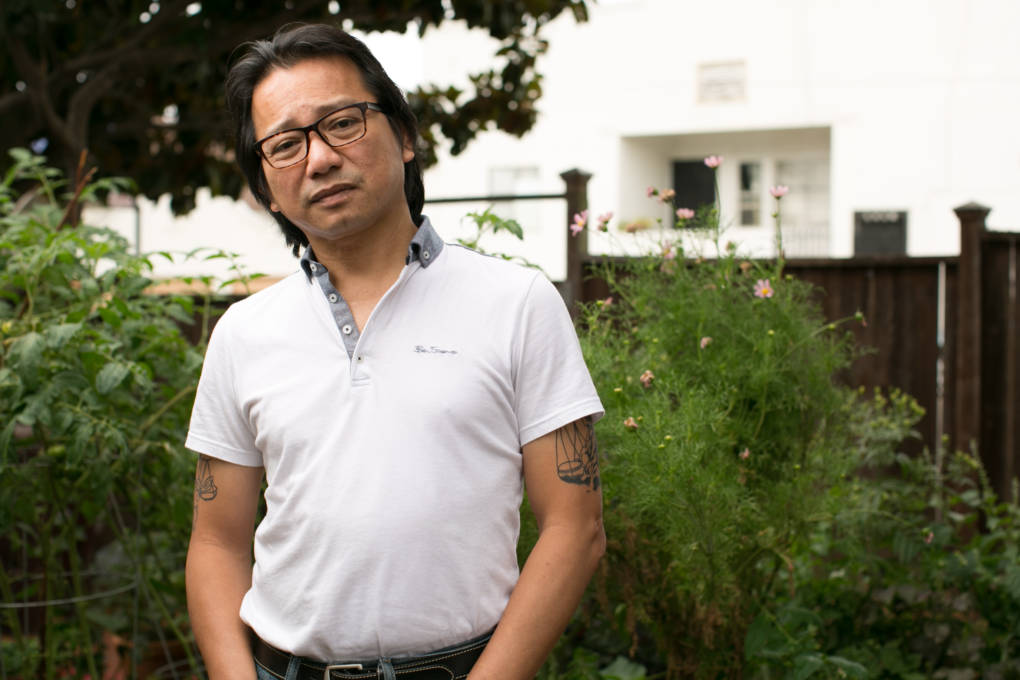
"caption": "Former Marine Marco Chavez, who was deported to Mexico 15 years ago after he was convicted of a minor offense, has won his fight to return to the United States and regain his permanent U.S. residency.",
"description": null,
"title": "mchavez_crop",
"credit": "Courtesy of Honorably Discharged, Dishonorably Deported",
"status": "inherit",
"isLoading": false,
"fetchFailed": false
},
"news_11599246": {
"type": "attachments",
"id": "news_11599246",
"meta": {
"index": "attachments_1716263798",
"site": "news",
"id": "11599246",
"found": true
},
"parent": 11597341,
"imgSizes": {
"small": {
"file": "https://ww2.kqed.org/app/uploads/sites/10/2019/07/women-detainees-520x361.jpg",
"width": 520,
"mimeType": "image/jpeg",
"height": 361
},
"twentyfourteen-full-width": {
"file": "https://ww2.kqed.org/app/uploads/sites/10/2019/07/women-detainees-1038x576.jpg",
"width": 1038,
"mimeType": "image/jpeg",
"height": 576
},
"thumbnail": {
"file": "https://ww2.kqed.org/app/uploads/sites/10/2019/07/women-detainees-160x111.jpg",
"width": 160,
"mimeType": "image/jpeg",
"height": 111
},
"fd-sm": {
"file": "https://ww2.kqed.org/app/uploads/sites/10/2019/07/women-detainees-960x667.jpg",
"width": 960,
"mimeType": "image/jpeg",
"height": 667
},
"post-thumbnail": {
"file": "https://ww2.kqed.org/app/uploads/sites/10/2019/07/women-detainees-672x372.jpg",
"width": 672,
"mimeType": "image/jpeg",
"height": 372
},
"xsmall": {
"file": "https://ww2.kqed.org/app/uploads/sites/10/2019/07/women-detainees-375x260.jpg",
"width": 375,
"mimeType": "image/jpeg",
"height": 260
},
"kqedFullSize": {
"file": "https://ww2.kqed.org/app/uploads/sites/10/2019/07/women-detainees.jpg",
"width": 1920,
"height": 1333
},
"large": {
"file": "https://ww2.kqed.org/app/uploads/sites/10/2019/07/women-detainees-1020x708.jpg",
"width": 1020,
"mimeType": "image/jpeg",
"height": 708
},
"xlarge": {
"file": "https://ww2.kqed.org/app/uploads/sites/10/2019/07/women-detainees-1180x819.jpg",
"width": 1180,
"mimeType": "image/jpeg",
"height": 819
},
"guest-author-50": {
"file": "https://ww2.kqed.org/app/uploads/sites/10/2019/07/women-detainees-50x50.jpg",
"width": 50,
"mimeType": "image/jpeg",
"height": 50
},
"guest-author-96": {
"file": "https://ww2.kqed.org/app/uploads/sites/10/2019/07/women-detainees-96x96.jpg",
"width": 96,
"mimeType": "image/jpeg",
"height": 96
},
"medium": {
"file": "https://ww2.kqed.org/app/uploads/sites/10/2019/07/women-detainees-800x555.jpg",
"width": 800,
"mimeType": "image/jpeg",
"height": 555
},
"guest-author-64": {
"file": "https://ww2.kqed.org/app/uploads/sites/10/2019/07/women-detainees-64x64.jpg",
"width": 64,
"mimeType": "image/jpeg",
"height": 64
},
"guest-author-32": {
"file": "https://ww2.kqed.org/app/uploads/sites/10/2019/07/women-detainees-32x32.jpg",
"width": 32,
"mimeType": "image/jpeg",
"height": 32
},
"fd-lrg": {
"file": "https://ww2.kqed.org/app/uploads/sites/10/2019/07/women-detainees-1920x1333.jpg",
"width": 1920,
"mimeType": "image/jpeg",
"height": 1333
},
"fd-med": {
"file": "https://ww2.kqed.org/app/uploads/sites/10/2019/07/women-detainees-1180x819.jpg",
"width": 1180,
"mimeType": "image/jpeg",
"height": 819
},
"full-width": {
"file": "https://ww2.kqed.org/app/uploads/sites/10/2019/07/women-detainees-1920x1333.jpg",
"width": 1920,
"mimeType": "image/jpeg",
"height": 1333
},
"detail": {
"file": "https://ww2.kqed.org/app/uploads/sites/10/2019/07/women-detainees-150x150.jpg",
"width": 150,
"mimeType": "image/jpeg",
"height": 150
},
"guest-author-128": {
"file": "https://ww2.kqed.org/app/uploads/sites/10/2019/07/women-detainees-128x128.jpg",
"width": 128,
"mimeType": "image/jpeg",
"height": 128
},
"xxsmall": {
"file": "https://ww2.kqed.org/app/uploads/sites/10/2019/07/women-detainees-240x167.jpg",
"width": 240,
"mimeType": "image/jpeg",
"height": 167
}
},
"publishDate": 1501285822,
"modified": 1513644680,
"caption": "Immigrant detainees help a sheriff's deputy carry items to a truck outside the Yuba County Jail.",
"description": "Immigrant detainees help a sheriff's deputy carry items to a truck outside of the Yuba County Jail.",
"title": "women-detainees",
"credit": "Lisa Pickoff-White/KQED",
"status": "inherit",
"isLoading": false,
"fetchFailed": false
},
"news_11637528": {
"type": "attachments",
"id": "news_11637528",
"meta": {
"index": "attachments_1716263798",
"site": "news",
"id": "11637528",
"found": true
},
"parent": 11637466,
"imgSizes": {
"small": {
"file": "https://ww2.kqed.org/app/uploads/sites/10/2017/12/GettyImages-654263570-520x346.jpg",
"width": 520,
"mimeType": "image/jpeg",
"height": 346
},
"twentyfourteen-full-width": {
"file": "https://ww2.kqed.org/app/uploads/sites/10/2017/12/GettyImages-654263570-1038x576.jpg",
"width": 1038,
"mimeType": "image/jpeg",
"height": 576
},
"thumbnail": {
"file": "https://ww2.kqed.org/app/uploads/sites/10/2017/12/GettyImages-654263570-160x106.jpg",
"width": 160,
"mimeType": "image/jpeg",
"height": 106
},
"fd-sm": {
"file": "https://ww2.kqed.org/app/uploads/sites/10/2017/12/GettyImages-654263570-960x639.jpg",
"width": 960,
"mimeType": "image/jpeg",
"height": 639
},
"post-thumbnail": {
"file": "https://ww2.kqed.org/app/uploads/sites/10/2017/12/GettyImages-654263570-672x372.jpg",
"width": 672,
"mimeType": "image/jpeg",
"height": 372
},
"xsmall": {
"file": "https://ww2.kqed.org/app/uploads/sites/10/2017/12/GettyImages-654263570-375x250.jpg",
"width": 375,
"mimeType": "image/jpeg",
"height": 250
},
"kqedFullSize": {
"file": "https://ww2.kqed.org/app/uploads/sites/10/2017/12/GettyImages-654263570-e1513387051410.jpg",
"width": 1920,
"height": 1278
},
"large": {
"file": "https://ww2.kqed.org/app/uploads/sites/10/2017/12/GettyImages-654263570-1020x679.jpg",
"width": 1020,
"mimeType": "image/jpeg",
"height": 679
},
"xlarge": {
"file": "https://ww2.kqed.org/app/uploads/sites/10/2017/12/GettyImages-654263570-1180x785.jpg",
"width": 1180,
"mimeType": "image/jpeg",
"height": 785
},
"guest-author-50": {
"file": "https://ww2.kqed.org/app/uploads/sites/10/2017/12/GettyImages-654263570-50x50.jpg",
"width": 50,
"mimeType": "image/jpeg",
"height": 50
},
"guest-author-96": {
"file": "https://ww2.kqed.org/app/uploads/sites/10/2017/12/GettyImages-654263570-96x96.jpg",
"width": 96,
"mimeType": "image/jpeg",
"height": 96
},
"medium": {
"file": "https://ww2.kqed.org/app/uploads/sites/10/2017/12/GettyImages-654263570-800x532.jpg",
"width": 800,
"mimeType": "image/jpeg",
"height": 532
},
"guest-author-64": {
"file": "https://ww2.kqed.org/app/uploads/sites/10/2017/12/GettyImages-654263570-64x64.jpg",
"width": 64,
"mimeType": "image/jpeg",
"height": 64
},
"guest-author-32": {
"file": "https://ww2.kqed.org/app/uploads/sites/10/2017/12/GettyImages-654263570-32x32.jpg",
"width": 32,
"mimeType": "image/jpeg",
"height": 32
},
"fd-lrg": {
"file": "https://ww2.kqed.org/app/uploads/sites/10/2017/12/GettyImages-654263570-1920x1278.jpg",
"width": 1920,
"mimeType": "image/jpeg",
"height": 1278
},
"fd-med": {
"file": "https://ww2.kqed.org/app/uploads/sites/10/2017/12/GettyImages-654263570-1180x785.jpg",
"width": 1180,
"mimeType": "image/jpeg",
"height": 785
},
"full-width": {
"file": "https://ww2.kqed.org/app/uploads/sites/10/2017/12/GettyImages-654263570-1920x1278.jpg",
"width": 1920,
"mimeType": "image/jpeg",
"height": 1278
},
"detail": {
"file": "https://ww2.kqed.org/app/uploads/sites/10/2017/12/GettyImages-654263570-150x150.jpg",
"width": 150,
"mimeType": "image/jpeg",
"height": 150
},
"guest-author-128": {
"file": "https://ww2.kqed.org/app/uploads/sites/10/2017/12/GettyImages-654263570-128x128.jpg",
"width": 128,
"mimeType": "image/jpeg",
"height": 128
},
"xxsmall": {
"file": "https://ww2.kqed.org/app/uploads/sites/10/2017/12/GettyImages-654263570-240x160.jpg",
"width": 240,
"mimeType": "image/jpeg",
"height": 160
}
},
"publishDate": 1513387004,
"modified": 1513387045,
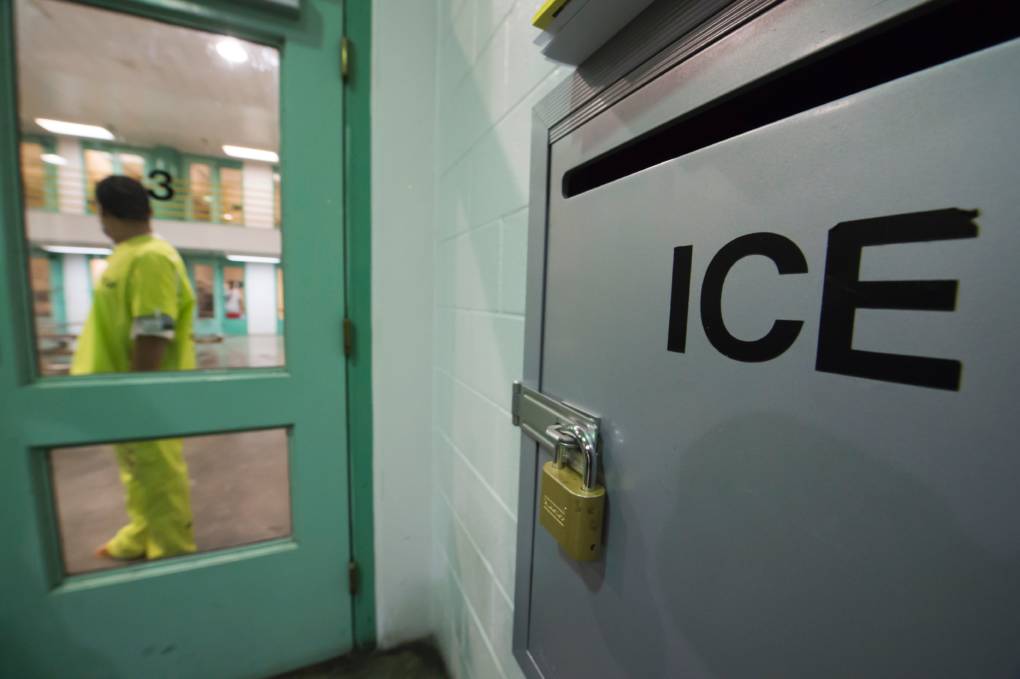
"caption": "An immigration detainee stands near an US Immigration and Customs Enforcement (ICE) grievance box at the Theo Lacy Facility.",
"description": null,
"title": "US-IMMIGRATION-DENTION-CENTER-ICE",
"credit": "Robyn Beck/AFP/Getty Images",
"status": "inherit",
"isLoading": false,
"fetchFailed": false
},
"news_11403895": {
"type": "attachments",
"id": "news_11403895",
"meta": {
"index": "attachments_1716263798",
"site": "news",
"id": "11403895",
"found": true
},
"parent": 11403828,
"imgSizes": {
"small": {
"file": "https://ww2.kqed.org/app/uploads/sites/10/2017/04/AdelantoDetention-520x347.jpg",
"width": 520,
"mimeType": "image/jpeg",
"height": 347
},
"twentyfourteen-full-width": {
"file": "https://ww2.kqed.org/app/uploads/sites/10/2017/04/AdelantoDetention-1038x576.jpg",
"width": 1038,
"mimeType": "image/jpeg",
"height": 576
},
"thumbnail": {
"file": "https://ww2.kqed.org/app/uploads/sites/10/2017/04/AdelantoDetention-160x107.jpg",
"width": 160,
"mimeType": "image/jpeg",
"height": 107
},
"fd-sm": {
"file": "https://ww2.kqed.org/app/uploads/sites/10/2017/04/AdelantoDetention-960x640.jpg",
"width": 960,
"mimeType": "image/jpeg",
"height": 640
},
"post-thumbnail": {
"file": "https://ww2.kqed.org/app/uploads/sites/10/2017/04/AdelantoDetention-672x372.jpg",
"width": 672,
"mimeType": "image/jpeg",
"height": 372
},
"xsmall": {
"file": "https://ww2.kqed.org/app/uploads/sites/10/2017/04/AdelantoDetention-375x250.jpg",
"width": 375,
"mimeType": "image/jpeg",
"height": 250
},
"kqedFullSize": {
"file": "https://ww2.kqed.org/app/uploads/sites/10/2017/04/AdelantoDetention.jpg",
"width": 1920,
"height": 1280
},
"large": {
"file": "https://ww2.kqed.org/app/uploads/sites/10/2017/04/AdelantoDetention-1020x680.jpg",
"width": 1020,
"mimeType": "image/jpeg",
"height": 680
},
"xlarge": {
"file": "https://ww2.kqed.org/app/uploads/sites/10/2017/04/AdelantoDetention-1180x787.jpg",
"width": 1180,
"mimeType": "image/jpeg",
"height": 787
},
"guest-author-50": {
"file": "https://ww2.kqed.org/app/uploads/sites/10/2017/04/AdelantoDetention-50x50.jpg",
"width": 50,
"mimeType": "image/jpeg",
"height": 50
},
"guest-author-96": {
"file": "https://ww2.kqed.org/app/uploads/sites/10/2017/04/AdelantoDetention-96x96.jpg",
"width": 96,
"mimeType": "image/jpeg",
"height": 96
},
"medium": {
"file": "https://ww2.kqed.org/app/uploads/sites/10/2017/04/AdelantoDetention-800x533.jpg",
"width": 800,
"mimeType": "image/jpeg",
"height": 533
},
"guest-author-64": {
"file": "https://ww2.kqed.org/app/uploads/sites/10/2017/04/AdelantoDetention-64x64.jpg",
"width": 64,
"mimeType": "image/jpeg",
"height": 64
},
"guest-author-32": {
"file": "https://ww2.kqed.org/app/uploads/sites/10/2017/04/AdelantoDetention-32x32.jpg",
"width": 32,
"mimeType": "image/jpeg",
"height": 32
},
"fd-lrg": {
"file": "https://ww2.kqed.org/app/uploads/sites/10/2017/04/AdelantoDetention-1920x1280.jpg",
"width": 1920,
"mimeType": "image/jpeg",
"height": 1280
},
"fd-med": {
"file": "https://ww2.kqed.org/app/uploads/sites/10/2017/04/AdelantoDetention-1180x787.jpg",
"width": 1180,
"mimeType": "image/jpeg",
"height": 787
},
"full-width": {
"file": "https://ww2.kqed.org/app/uploads/sites/10/2017/04/AdelantoDetention-1920x1280.jpg",
"width": 1920,
"mimeType": "image/jpeg",
"height": 1280
},
"detail": {
"file": "https://ww2.kqed.org/app/uploads/sites/10/2017/04/AdelantoDetention-150x150.jpg",
"width": 150,
"mimeType": "image/jpeg",
"height": 150
},
"guest-author-128": {
"file": "https://ww2.kqed.org/app/uploads/sites/10/2017/04/AdelantoDetention-128x128.jpg",
"width": 128,
"mimeType": "image/jpeg",
"height": 128
},
"xxsmall": {
"file": "https://ww2.kqed.org/app/uploads/sites/10/2017/04/AdelantoDetention-240x160.jpg",
"width": 240,
"mimeType": "image/jpeg",
"height": 160
}
},
"publishDate": 1491951479,
"modified": 1513383351,
"caption": "Immigrants stand in shackles at California's Adelanto Detention Facility. Adelanto was not one of the five detention facilities inspected by the Inspector General's Office of the Department of Homeland Security.",
"description": "Immigrants stand in shackles at California's Adelanto Detention Facility. Adelanto was not one of the five detention facilities inspected by the Inspector General's Office of the Department of Homeland Security.",
"title": "AdelantoDetention",
"credit": "John Moore/Getty Images",
"status": "inherit",
"isLoading": false,
"fetchFailed": false
},
"news_11636441": {
"type": "attachments",
"id": "news_11636441",
"meta": {
"index": "attachments_1716263798",
"site": "news",
"id": "11636441",
"found": true
},
"parent": 11636436,
"imgSizes": {
"small": {
"file": "https://ww2.kqed.org/app/uploads/sites/10/2017/12/IceDetained-520x359.jpg",
"width": 520,
"mimeType": "image/jpeg",
"height": 359
},
"twentyfourteen-full-width": {
"file": "https://ww2.kqed.org/app/uploads/sites/10/2017/12/IceDetained-1038x576.jpg",
"width": 1038,
"mimeType": "image/jpeg",
"height": 576
},
"thumbnail": {
"file": "https://ww2.kqed.org/app/uploads/sites/10/2017/12/IceDetained-160x111.jpg",
"width": 160,
"mimeType": "image/jpeg",
"height": 111
},
"fd-sm": {
"file": "https://ww2.kqed.org/app/uploads/sites/10/2017/12/IceDetained-960x664.jpg",
"width": 960,
"mimeType": "image/jpeg",
"height": 664
},
"post-thumbnail": {
"file": "https://ww2.kqed.org/app/uploads/sites/10/2017/12/IceDetained-672x372.jpg",
"width": 672,
"mimeType": "image/jpeg",
"height": 372
},
"xsmall": {
"file": "https://ww2.kqed.org/app/uploads/sites/10/2017/12/IceDetained-375x259.jpg",
"width": 375,
"mimeType": "image/jpeg",
"height": 259
},
"kqedFullSize": {
"file": "https://ww2.kqed.org/app/uploads/sites/10/2017/12/IceDetained.jpg",
"width": 1920,
"height": 1327
},
"large": {
"file": "https://ww2.kqed.org/app/uploads/sites/10/2017/12/IceDetained-1020x705.jpg",
"width": 1020,
"mimeType": "image/jpeg",
"height": 705
},
"xlarge": {
"file": "https://ww2.kqed.org/app/uploads/sites/10/2017/12/IceDetained-1180x816.jpg",
"width": 1180,
"mimeType": "image/jpeg",
"height": 816
},
"guest-author-50": {
"file": "https://ww2.kqed.org/app/uploads/sites/10/2017/12/IceDetained-50x50.jpg",
"width": 50,
"mimeType": "image/jpeg",
"height": 50
},
"guest-author-96": {
"file": "https://ww2.kqed.org/app/uploads/sites/10/2017/12/IceDetained-96x96.jpg",
"width": 96,
"mimeType": "image/jpeg",
"height": 96
},
"medium": {
"file": "https://ww2.kqed.org/app/uploads/sites/10/2017/12/IceDetained-800x553.jpg",
"width": 800,
"mimeType": "image/jpeg",
"height": 553
},
"guest-author-64": {
"file": "https://ww2.kqed.org/app/uploads/sites/10/2017/12/IceDetained-64x64.jpg",
"width": 64,
"mimeType": "image/jpeg",
"height": 64
},
"guest-author-32": {
"file": "https://ww2.kqed.org/app/uploads/sites/10/2017/12/IceDetained-32x32.jpg",
"width": 32,
"mimeType": "image/jpeg",
"height": 32
},
"fd-lrg": {
"file": "https://ww2.kqed.org/app/uploads/sites/10/2017/12/IceDetained-1920x1327.jpg",
"width": 1920,
"mimeType": "image/jpeg",
"height": 1327
},
"fd-med": {
"file": "https://ww2.kqed.org/app/uploads/sites/10/2017/12/IceDetained-1180x816.jpg",
"width": 1180,
"mimeType": "image/jpeg",
"height": 816
},
"full-width": {
"file": "https://ww2.kqed.org/app/uploads/sites/10/2017/12/IceDetained-1920x1327.jpg",
"width": 1920,
"mimeType": "image/jpeg",
"height": 1327
},
"detail": {
"file": "https://ww2.kqed.org/app/uploads/sites/10/2017/12/IceDetained-150x150.jpg",
"width": 150,
"mimeType": "image/jpeg",
"height": 150
},
"guest-author-128": {
"file": "https://ww2.kqed.org/app/uploads/sites/10/2017/12/IceDetained-128x128.jpg",
"width": 128,
"mimeType": "image/jpeg",
"height": 128
},
"xxsmall": {
"file": "https://ww2.kqed.org/app/uploads/sites/10/2017/12/IceDetained-240x166.jpg",
"width": 240,
"mimeType": "image/jpeg",
"height": 166
}
},
"publishDate": 1513110601,
"modified": 1513129657,
"caption": "A man is detained by Immigration and Customs Enforcement (ICE) agents in October 2015 in Los Angeles",
"description": "A man is detained by Immigration and Customs Enforcement (ICE), agents in October, 2015 in Los Angeles.",
"title": "IceDetained",
"credit": "John Moore/Getty Images",
"status": "inherit",
"isLoading": false,
"fetchFailed": false
},
"news_11624499": {
"type": "attachments",
"id": "news_11624499",
"meta": {
"index": "attachments_1716263798",
"site": "news",
"id": "11624499",
"found": true
},
"parent": 11624387,
"imgSizes": {
"small": {
"file": "https://ww2.kqed.org/app/uploads/sites/10/2017/10/SteinleMain-520x358.jpg",
"width": 520,
"mimeType": "image/jpeg",
"height": 358
},
"twentyfourteen-full-width": {
"file": "https://ww2.kqed.org/app/uploads/sites/10/2017/10/SteinleMain-1038x576.jpg",
"width": 1038,
"mimeType": "image/jpeg",
"height": 576
},
"thumbnail": {
"file": "https://ww2.kqed.org/app/uploads/sites/10/2017/10/SteinleMain-160x110.jpg",
"width": 160,
"mimeType": "image/jpeg",
"height": 110
},
"fd-sm": {
"file": "https://ww2.kqed.org/app/uploads/sites/10/2017/10/SteinleMain-960x661.jpg",
"width": 960,
"mimeType": "image/jpeg",
"height": 661
},
"post-thumbnail": {
"file": "https://ww2.kqed.org/app/uploads/sites/10/2017/10/SteinleMain-672x372.jpg",
"width": 672,
"mimeType": "image/jpeg",
"height": 372
},
"xsmall": {
"file": "https://ww2.kqed.org/app/uploads/sites/10/2017/10/SteinleMain-375x258.jpg",
"width": 375,
"mimeType": "image/jpeg",
"height": 258
},
"kqedFullSize": {
"file": "https://ww2.kqed.org/app/uploads/sites/10/2017/10/SteinleMain.jpg",
"width": 1920,
"height": 1322
},
"large": {
"file": "https://ww2.kqed.org/app/uploads/sites/10/2017/10/SteinleMain-1020x702.jpg",
"width": 1020,
"mimeType": "image/jpeg",
"height": 702
},
"xlarge": {
"file": "https://ww2.kqed.org/app/uploads/sites/10/2017/10/SteinleMain-1180x812.jpg",
"width": 1180,
"mimeType": "image/jpeg",
"height": 812
},
"guest-author-50": {
"file": "https://ww2.kqed.org/app/uploads/sites/10/2017/10/SteinleMain-50x50.jpg",
"width": 50,
"mimeType": "image/jpeg",
"height": 50
},
"guest-author-96": {
"file": "https://ww2.kqed.org/app/uploads/sites/10/2017/10/SteinleMain-96x96.jpg",
"width": 96,
"mimeType": "image/jpeg",
"height": 96
},
"medium": {
"file": "https://ww2.kqed.org/app/uploads/sites/10/2017/10/SteinleMain-800x551.jpg",
"width": 800,
"mimeType": "image/jpeg",
"height": 551
},
"guest-author-64": {
"file": "https://ww2.kqed.org/app/uploads/sites/10/2017/10/SteinleMain-64x64.jpg",
"width": 64,
"mimeType": "image/jpeg",
"height": 64
},
"guest-author-32": {
"file": "https://ww2.kqed.org/app/uploads/sites/10/2017/10/SteinleMain-32x32.jpg",
"width": 32,
"mimeType": "image/jpeg",
"height": 32
},
"fd-lrg": {
"file": "https://ww2.kqed.org/app/uploads/sites/10/2017/10/SteinleMain-1920x1322.jpg",
"width": 1920,
"mimeType": "image/jpeg",
"height": 1322
},
"fd-med": {
"file": "https://ww2.kqed.org/app/uploads/sites/10/2017/10/SteinleMain-1180x812.jpg",
"width": 1180,
"mimeType": "image/jpeg",
"height": 812
},
"full-width": {
"file": "https://ww2.kqed.org/app/uploads/sites/10/2017/10/SteinleMain-1920x1322.jpg",
"width": 1920,
"mimeType": "image/jpeg",
"height": 1322
},
"detail": {
"file": "https://ww2.kqed.org/app/uploads/sites/10/2017/10/SteinleMain-150x150.jpg",
"width": 150,
"mimeType": "image/jpeg",
"height": 150
},
"guest-author-128": {
"file": "https://ww2.kqed.org/app/uploads/sites/10/2017/10/SteinleMain-128x128.jpg",
"width": 128,
"mimeType": "image/jpeg",
"height": 128
},
"xxsmall": {
"file": "https://ww2.kqed.org/app/uploads/sites/10/2017/10/SteinleMain-240x165.jpg",
"width": 240,
"mimeType": "image/jpeg",
"height": 165
}
},
"publishDate": 1508375551,
"modified": 1508375596,
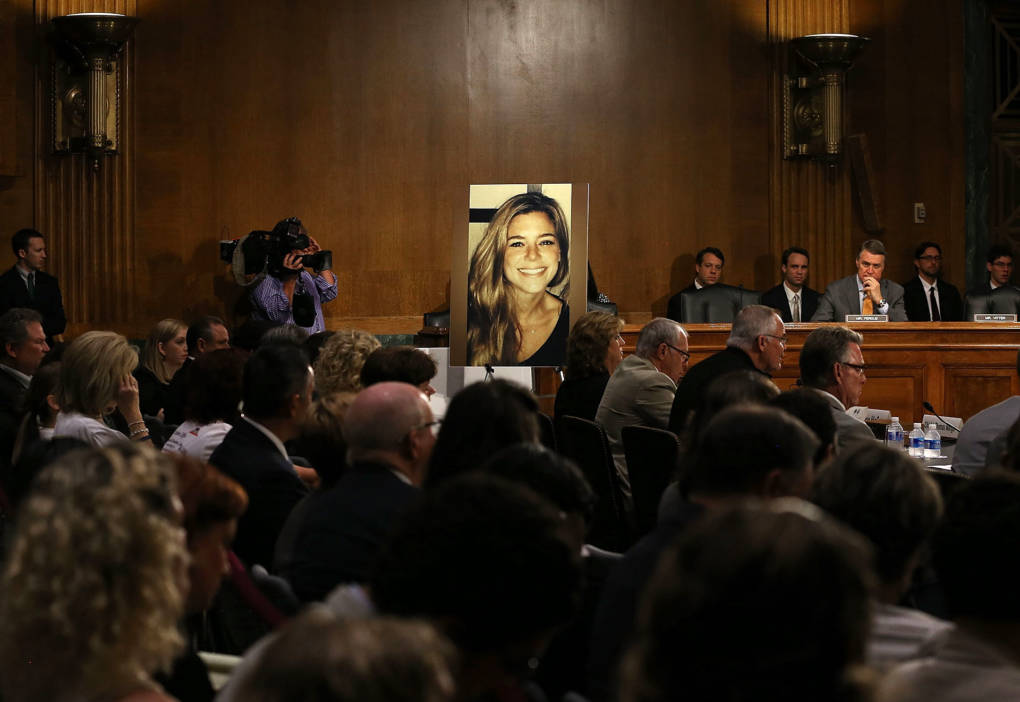
"caption": "A large photo of Kathryn Steinle is shown while her dad, James Steinle, testifies during a Senate Judiciary Committee hearing on Capitol Hill, July 21, 2015, in Washington, D.C. The committee heard testimony from family members who have had loved ones killed by undocumented immigrants.",
"description": "A large photo of Kathryn Steinle is shown while her dad, James Steinle, testifies during a Senate Judiciary Committee hearing on Capitol Hill, July 21, 2015, in Washington, D.C. The committee heard testimony from family members who have had loved ones killed by undocumented immigrants.",
"title": "SteinleMain",
"credit": "Mark Wilson/Getty Images",
"status": "inherit",
"isLoading": false,
"fetchFailed": false
},
"news_11634974": {
"type": "attachments",
"id": "news_11634974",
"meta": {
"index": "attachments_1716263798",
"site": "news",
"id": "11634974",
"found": true
},
"parent": 11634973,
"imgSizes": {
"small": {
"file": "https://ww2.kqed.org/app/uploads/sites/10/2017/12/gettyimages-869110684_slide-0a4b7d1d63292e390b9b5facdd8f1b6409020c44-520x347.jpg",
"width": 520,
"mimeType": "image/jpeg",
"height": 347
},
"twentyfourteen-full-width": {
"file": "https://ww2.kqed.org/app/uploads/sites/10/2017/12/gettyimages-869110684_slide-0a4b7d1d63292e390b9b5facdd8f1b6409020c44-1038x576.jpg",
"width": 1038,
"mimeType": "image/jpeg",
"height": 576
},
"thumbnail": {
"file": "https://ww2.kqed.org/app/uploads/sites/10/2017/12/gettyimages-869110684_slide-0a4b7d1d63292e390b9b5facdd8f1b6409020c44-160x107.jpg",
"width": 160,
"mimeType": "image/jpeg",
"height": 107
},
"fd-sm": {
"file": "https://ww2.kqed.org/app/uploads/sites/10/2017/12/gettyimages-869110684_slide-0a4b7d1d63292e390b9b5facdd8f1b6409020c44-960x640.jpg",
"width": 960,
"mimeType": "image/jpeg",
"height": 640
},
"post-thumbnail": {
"file": "https://ww2.kqed.org/app/uploads/sites/10/2017/12/gettyimages-869110684_slide-0a4b7d1d63292e390b9b5facdd8f1b6409020c44-672x372.jpg",
"width": 672,
"mimeType": "image/jpeg",
"height": 372
},
"xsmall": {
"file": "https://ww2.kqed.org/app/uploads/sites/10/2017/12/gettyimages-869110684_slide-0a4b7d1d63292e390b9b5facdd8f1b6409020c44-375x250.jpg",
"width": 375,
"mimeType": "image/jpeg",
"height": 250
},
"kqedFullSize": {
"file": "https://ww2.kqed.org/app/uploads/sites/10/2017/12/gettyimages-869110684_slide-0a4b7d1d63292e390b9b5facdd8f1b6409020c44-e1512506238302.jpg",
"width": 1920,
"height": 1280
},
"large": {
"file": "https://ww2.kqed.org/app/uploads/sites/10/2017/12/gettyimages-869110684_slide-0a4b7d1d63292e390b9b5facdd8f1b6409020c44-1020x680.jpg",
"width": 1020,
"mimeType": "image/jpeg",
"height": 680
},
"xlarge": {
"file": "https://ww2.kqed.org/app/uploads/sites/10/2017/12/gettyimages-869110684_slide-0a4b7d1d63292e390b9b5facdd8f1b6409020c44-1180x786.jpg",
"width": 1180,
"mimeType": "image/jpeg",
"height": 786
},
"guest-author-50": {
"file": "https://ww2.kqed.org/app/uploads/sites/10/2017/12/gettyimages-869110684_slide-0a4b7d1d63292e390b9b5facdd8f1b6409020c44-50x50.jpg",
"width": 50,
"mimeType": "image/jpeg",
"height": 50
},
"guest-author-96": {
"file": "https://ww2.kqed.org/app/uploads/sites/10/2017/12/gettyimages-869110684_slide-0a4b7d1d63292e390b9b5facdd8f1b6409020c44-96x96.jpg",
"width": 96,
"mimeType": "image/jpeg",
"height": 96
},
"medium": {
"file": "https://ww2.kqed.org/app/uploads/sites/10/2017/12/gettyimages-869110684_slide-0a4b7d1d63292e390b9b5facdd8f1b6409020c44-800x533.jpg",
"width": 800,
"mimeType": "image/jpeg",
"height": 533
},
"guest-author-64": {
"file": "https://ww2.kqed.org/app/uploads/sites/10/2017/12/gettyimages-869110684_slide-0a4b7d1d63292e390b9b5facdd8f1b6409020c44-64x64.jpg",
"width": 64,
"mimeType": "image/jpeg",
"height": 64
},
"guest-author-32": {
"file": "https://ww2.kqed.org/app/uploads/sites/10/2017/12/gettyimages-869110684_slide-0a4b7d1d63292e390b9b5facdd8f1b6409020c44-32x32.jpg",
"width": 32,
"mimeType": "image/jpeg",
"height": 32
},
"fd-lrg": {
"file": "https://ww2.kqed.org/app/uploads/sites/10/2017/12/gettyimages-869110684_slide-0a4b7d1d63292e390b9b5facdd8f1b6409020c44-1920x1280.jpg",
"width": 1920,
"mimeType": "image/jpeg",
"height": 1280
},
"fd-med": {
"file": "https://ww2.kqed.org/app/uploads/sites/10/2017/12/gettyimages-869110684_slide-0a4b7d1d63292e390b9b5facdd8f1b6409020c44-1180x786.jpg",
"width": 1180,
"mimeType": "image/jpeg",
"height": 786
},
"full-width": {
"file": "https://ww2.kqed.org/app/uploads/sites/10/2017/12/gettyimages-869110684_slide-0a4b7d1d63292e390b9b5facdd8f1b6409020c44-1920x1280.jpg",
"width": 1920,
"mimeType": "image/jpeg",
"height": 1280
},
"detail": {
"file": "https://ww2.kqed.org/app/uploads/sites/10/2017/12/gettyimages-869110684_slide-0a4b7d1d63292e390b9b5facdd8f1b6409020c44-150x150.jpg",
"width": 150,
"mimeType": "image/jpeg",
"height": 150
},
"guest-author-128": {
"file": "https://ww2.kqed.org/app/uploads/sites/10/2017/12/gettyimages-869110684_slide-0a4b7d1d63292e390b9b5facdd8f1b6409020c44-128x128.jpg",
"width": 128,
"mimeType": "image/jpeg",
"height": 128
},
"xxsmall": {
"file": "https://ww2.kqed.org/app/uploads/sites/10/2017/12/gettyimages-869110684_slide-0a4b7d1d63292e390b9b5facdd8f1b6409020c44-240x160.jpg",
"width": 240,
"mimeType": "image/jpeg",
"height": 160
}
},
"publishDate": 1512506158,
"modified": 1512506259,
"caption": "A U.S. Border Patrol officer stands near prototypes of President Trump's proposed border wall in San Diego. Border officers apprehended 310,531 people for being in the country illegally in fiscal 2017, a 25 percent decrease from the year before.",
"description": "A U.S. Border Patrol officer stands near prototypes of President Trump's proposed border wall in San Diego. Border officers apprehended 310,531 people for being in the country illegally in fiscal 2017, a 25 percent decrease from the year before.",
"title": "A U.S. Border Patrol officer stands near prototypes of President Trump's proposed border wall in San Diego. Border officers apprehended 310,531 people for being in the country illegally in fiscal 2017, a 25 percent decrease from the year before.",
"credit": "Frederic J. Brown/AFP/Getty Images",
"status": "inherit",
"isLoading": false,
"fetchFailed": false
},
"news_11634761": {
"type": "attachments",
"id": "news_11634761",
"meta": {
"index": "attachments_1716263798",
"site": "news",
"id": "11634761",
"found": true
},
"parent": 11634756,
"imgSizes": {
"small": {
"file": "https://ww2.kqed.org/app/uploads/sites/10/2017/12/RS23929_GettyImages-633034358-qut-520x345.jpg",
"width": 520,
"mimeType": "image/jpeg",
"height": 345
},
"twentyfourteen-full-width": {
"file": "https://ww2.kqed.org/app/uploads/sites/10/2017/12/RS23929_GettyImages-633034358-qut-1038x576.jpg",
"width": 1038,
"mimeType": "image/jpeg",
"height": 576
},
"thumbnail": {
"file": "https://ww2.kqed.org/app/uploads/sites/10/2017/12/RS23929_GettyImages-633034358-qut-160x106.jpg",
"width": 160,
"mimeType": "image/jpeg",
"height": 106
},
"fd-sm": {
"file": "https://ww2.kqed.org/app/uploads/sites/10/2017/12/RS23929_GettyImages-633034358-qut-960x637.jpg",
"width": 960,
"mimeType": "image/jpeg",
"height": 637
},
"post-thumbnail": {
"file": "https://ww2.kqed.org/app/uploads/sites/10/2017/12/RS23929_GettyImages-633034358-qut-672x372.jpg",
"width": 672,
"mimeType": "image/jpeg",
"height": 372
},
"xsmall": {
"file": "https://ww2.kqed.org/app/uploads/sites/10/2017/12/RS23929_GettyImages-633034358-qut-375x249.jpg",
"width": 375,
"mimeType": "image/jpeg",
"height": 249
},
"kqedFullSize": {
"file": "https://ww2.kqed.org/app/uploads/sites/10/2017/12/RS23929_GettyImages-633034358-qut.jpg",
"width": 1920,
"height": 1274
},
"large": {
"file": "https://ww2.kqed.org/app/uploads/sites/10/2017/12/RS23929_GettyImages-633034358-qut-1020x677.jpg",
"width": 1020,
"mimeType": "image/jpeg",
"height": 677
},
"xlarge": {
"file": "https://ww2.kqed.org/app/uploads/sites/10/2017/12/RS23929_GettyImages-633034358-qut-1180x783.jpg",
"width": 1180,
"mimeType": "image/jpeg",
"height": 783
},
"guest-author-50": {
"file": "https://ww2.kqed.org/app/uploads/sites/10/2017/12/RS23929_GettyImages-633034358-qut-50x50.jpg",
"width": 50,
"mimeType": "image/jpeg",
"height": 50
},
"guest-author-96": {
"file": "https://ww2.kqed.org/app/uploads/sites/10/2017/12/RS23929_GettyImages-633034358-qut-96x96.jpg",
"width": 96,
"mimeType": "image/jpeg",
"height": 96
},
"medium": {
"file": "https://ww2.kqed.org/app/uploads/sites/10/2017/12/RS23929_GettyImages-633034358-qut-800x531.jpg",
"width": 800,
"mimeType": "image/jpeg",
"height": 531
},
"guest-author-64": {
"file": "https://ww2.kqed.org/app/uploads/sites/10/2017/12/RS23929_GettyImages-633034358-qut-64x64.jpg",
"width": 64,
"mimeType": "image/jpeg",
"height": 64
},
"guest-author-32": {
"file": "https://ww2.kqed.org/app/uploads/sites/10/2017/12/RS23929_GettyImages-633034358-qut-32x32.jpg",
"width": 32,
"mimeType": "image/jpeg",
"height": 32
},
"fd-lrg": {
"file": "https://ww2.kqed.org/app/uploads/sites/10/2017/12/RS23929_GettyImages-633034358-qut-1920x1274.jpg",
"width": 1920,
"mimeType": "image/jpeg",
"height": 1274
},
"fd-med": {
"file": "https://ww2.kqed.org/app/uploads/sites/10/2017/12/RS23929_GettyImages-633034358-qut-1180x783.jpg",
"width": 1180,
"mimeType": "image/jpeg",
"height": 783
},
"full-width": {
"file": "https://ww2.kqed.org/app/uploads/sites/10/2017/12/RS23929_GettyImages-633034358-qut-1920x1274.jpg",
"width": 1920,
"mimeType": "image/jpeg",
"height": 1274
},
"detail": {
"file": "https://ww2.kqed.org/app/uploads/sites/10/2017/12/RS23929_GettyImages-633034358-qut-150x150.jpg",
"width": 150,
"mimeType": "image/jpeg",
"height": 150
},
"guest-author-128": {
"file": "https://ww2.kqed.org/app/uploads/sites/10/2017/12/RS23929_GettyImages-633034358-qut-128x128.jpg",
"width": 128,
"mimeType": "image/jpeg",
"height": 128
},
"xxsmall": {
"file": "https://ww2.kqed.org/app/uploads/sites/10/2017/12/RS23929_GettyImages-633034358-qut-240x159.jpg",
"width": 240,
"mimeType": "image/jpeg",
"height": 159
}
},
"publishDate": 1512427819,
"modified": 1512437967,
"caption": "Protesters hold signs during a demonstration at Los Angeles International Airport on Jan. 29, 2017, against the immigration ban that was imposed by President Trump.",
"description": "Protesters hold signs during a demonstration against the immigration ban that was imposed by U.S. President Donald Trump at Los Angeles International Airport on January 29, 2017 in Los Angeles, California.",
"title": "RS23929_GettyImages-633034358-qut",
"credit": "Justin Sullivan/Getty Images",
"status": "inherit",
"isLoading": false,
"fetchFailed": false
},
"news_11624315": {
"type": "attachments",
"id": "news_11624315",
"meta": {
"index": "attachments_1716263798",
"site": "news",
"id": "11624315",
"found": true
},
"parent": 11624256,
"imgSizes": {
"small": {
"file": "https://ww2.kqed.org/app/uploads/sites/10/2017/10/20170912_VietnamStories_SonnyLe_Credit_BertJohnson-5-520x347.jpg",
"width": 520,
"mimeType": "image/jpeg",
"height": 347
},
"twentyfourteen-full-width": {
"file": "https://ww2.kqed.org/app/uploads/sites/10/2017/10/20170912_VietnamStories_SonnyLe_Credit_BertJohnson-5-1038x576.jpg",
"width": 1038,
"mimeType": "image/jpeg",
"height": 576
},
"thumbnail": {
"file": "https://ww2.kqed.org/app/uploads/sites/10/2017/10/20170912_VietnamStories_SonnyLe_Credit_BertJohnson-5-160x107.jpg",
"width": 160,
"mimeType": "image/jpeg",
"height": 107
},
"fd-sm": {
"file": "https://ww2.kqed.org/app/uploads/sites/10/2017/10/20170912_VietnamStories_SonnyLe_Credit_BertJohnson-5-960x640.jpg",
"width": 960,
"mimeType": "image/jpeg",
"height": 640
},
"post-thumbnail": {
"file": "https://ww2.kqed.org/app/uploads/sites/10/2017/10/20170912_VietnamStories_SonnyLe_Credit_BertJohnson-5-672x372.jpg",
"width": 672,
"mimeType": "image/jpeg",
"height": 372
},
"xsmall": {
"file": "https://ww2.kqed.org/app/uploads/sites/10/2017/10/20170912_VietnamStories_SonnyLe_Credit_BertJohnson-5-375x250.jpg",
"width": 375,
"mimeType": "image/jpeg",
"height": 250
},
"kqedFullSize": {
"file": "https://ww2.kqed.org/app/uploads/sites/10/2017/10/20170912_VietnamStories_SonnyLe_Credit_BertJohnson-5-e1508356464343.jpg",
"width": 1920,
"height": 1280
},
"large": {
"file": "https://ww2.kqed.org/app/uploads/sites/10/2017/10/20170912_VietnamStories_SonnyLe_Credit_BertJohnson-5-1020x680.jpg",
"width": 1020,
"mimeType": "image/jpeg",
"height": 680
},
"xlarge": {
"file": "https://ww2.kqed.org/app/uploads/sites/10/2017/10/20170912_VietnamStories_SonnyLe_Credit_BertJohnson-5-1180x787.jpg",
"width": 1180,
"mimeType": "image/jpeg",
"height": 787
},
"guest-author-50": {
"file": "https://ww2.kqed.org/app/uploads/sites/10/2017/10/20170912_VietnamStories_SonnyLe_Credit_BertJohnson-5-50x50.jpg",
"width": 50,
"mimeType": "image/jpeg",
"height": 50
},
"guest-author-96": {
"file": "https://ww2.kqed.org/app/uploads/sites/10/2017/10/20170912_VietnamStories_SonnyLe_Credit_BertJohnson-5-96x96.jpg",
"width": 96,
"mimeType": "image/jpeg",
"height": 96
},
"medium": {
"file": "https://ww2.kqed.org/app/uploads/sites/10/2017/10/20170912_VietnamStories_SonnyLe_Credit_BertJohnson-5-800x533.jpg",
"width": 800,
"mimeType": "image/jpeg",
"height": 533
},
"guest-author-64": {
"file": "https://ww2.kqed.org/app/uploads/sites/10/2017/10/20170912_VietnamStories_SonnyLe_Credit_BertJohnson-5-64x64.jpg",
"width": 64,
"mimeType": "image/jpeg",
"height": 64
},
"guest-author-32": {
"file": "https://ww2.kqed.org/app/uploads/sites/10/2017/10/20170912_VietnamStories_SonnyLe_Credit_BertJohnson-5-32x32.jpg",
"width": 32,
"mimeType": "image/jpeg",
"height": 32
},
"fd-lrg": {
"file": "https://ww2.kqed.org/app/uploads/sites/10/2017/10/20170912_VietnamStories_SonnyLe_Credit_BertJohnson-5-1920x1280.jpg",
"width": 1920,
"mimeType": "image/jpeg",
"height": 1280
},
"fd-med": {
"file": "https://ww2.kqed.org/app/uploads/sites/10/2017/10/20170912_VietnamStories_SonnyLe_Credit_BertJohnson-5-1180x787.jpg",
"width": 1180,
"mimeType": "image/jpeg",
"height": 787
},
"full-width": {
"file": "https://ww2.kqed.org/app/uploads/sites/10/2017/10/20170912_VietnamStories_SonnyLe_Credit_BertJohnson-5-1920x1280.jpg",
"width": 1920,
"mimeType": "image/jpeg",
"height": 1280
},
"detail": {
"file": "https://ww2.kqed.org/app/uploads/sites/10/2017/10/20170912_VietnamStories_SonnyLe_Credit_BertJohnson-5-150x150.jpg",
"width": 150,
"mimeType": "image/jpeg",
"height": 150
},
"guest-author-128": {
"file": "https://ww2.kqed.org/app/uploads/sites/10/2017/10/20170912_VietnamStories_SonnyLe_Credit_BertJohnson-5-128x128.jpg",
"width": 128,
"mimeType": "image/jpeg",
"height": 128
},
"xxsmall": {
"file": "https://ww2.kqed.org/app/uploads/sites/10/2017/10/20170912_VietnamStories_SonnyLe_Credit_BertJohnson-5-240x160.jpg",
"width": 240,
"mimeType": "image/jpeg",
"height": 160
}
},
"publishDate": 1508356417,
"modified": 1511919369,
"caption": "Sonny Lê was born in Vietnam during the war. He and his family had to shelter in place during the fall of the South Vietnamese government at the end of the war, and he later fled the country by taking a dangerous trip on a fishing boat packed with other refugees.",
"description": null,
"title": "20170912_VietnamStories_SonnyLe_Credit_BertJohnson-5",
"credit": "Bert Johnson/KQED",
"status": "inherit",
"isLoading": false,
"fetchFailed": false
},
"news_11634450": {
"type": "attachments",
"id": "news_11634450",
"meta": {
"index": "attachments_1716263798",
"site": "news",
"id": "11634450",
"found": true
},
"parent": 11634447,
"imgSizes": {
"small": {
"file": "https://ww2.kqed.org/app/uploads/sites/10/2017/12/SHOW-MARQUEE-508-520x293.jpg",
"width": 520,
"mimeType": "image/jpeg",
"height": 293
},
"twentyfourteen-full-width": {
"file": "https://ww2.kqed.org/app/uploads/sites/10/2017/12/SHOW-MARQUEE-508-1038x576.jpg",
"width": 1038,
"mimeType": "image/jpeg",
"height": 576
},
"thumbnail": {
"file": "https://ww2.kqed.org/app/uploads/sites/10/2017/12/SHOW-MARQUEE-508-160x90.jpg",
"width": 160,
"mimeType": "image/jpeg",
"height": 90
},
"fd-sm": {
"file": "https://ww2.kqed.org/app/uploads/sites/10/2017/12/SHOW-MARQUEE-508-960x540.jpg",
"width": 960,
"mimeType": "image/jpeg",
"height": 540
},
"post-thumbnail": {
"file": "https://ww2.kqed.org/app/uploads/sites/10/2017/12/SHOW-MARQUEE-508-672x372.jpg",
"width": 672,
"mimeType": "image/jpeg",
"height": 372
},
"xsmall": {
"file": "https://ww2.kqed.org/app/uploads/sites/10/2017/12/SHOW-MARQUEE-508-375x211.jpg",
"width": 375,
"mimeType": "image/jpeg",
"height": 211
},
"kqedFullSize": {
"file": "https://ww2.kqed.org/app/uploads/sites/10/2017/12/SHOW-MARQUEE-508.jpg",
"width": 1280,
"height": 720
},
"large": {
"file": "https://ww2.kqed.org/app/uploads/sites/10/2017/12/SHOW-MARQUEE-508-1020x574.jpg",
"width": 1020,
"mimeType": "image/jpeg",
"height": 574
},
"xlarge": {
"file": "https://ww2.kqed.org/app/uploads/sites/10/2017/12/SHOW-MARQUEE-508-1180x664.jpg",
"width": 1180,
"mimeType": "image/jpeg",
"height": 664
},
"guest-author-50": {
"file": "https://ww2.kqed.org/app/uploads/sites/10/2017/12/SHOW-MARQUEE-508-50x50.jpg",
"width": 50,
"mimeType": "image/jpeg",
"height": 50
},
"guest-author-96": {
"file": "https://ww2.kqed.org/app/uploads/sites/10/2017/12/SHOW-MARQUEE-508-96x96.jpg",
"width": 96,
"mimeType": "image/jpeg",
"height": 96
},
"medium": {
"file": "https://ww2.kqed.org/app/uploads/sites/10/2017/12/SHOW-MARQUEE-508-800x450.jpg",
"width": 800,
"mimeType": "image/jpeg",
"height": 450
},
"guest-author-64": {
"file": "https://ww2.kqed.org/app/uploads/sites/10/2017/12/SHOW-MARQUEE-508-64x64.jpg",
"width": 64,
"mimeType": "image/jpeg",
"height": 64
},
"guest-author-32": {
"file": "https://ww2.kqed.org/app/uploads/sites/10/2017/12/SHOW-MARQUEE-508-32x32.jpg",
"width": 32,
"mimeType": "image/jpeg",
"height": 32
},
"fd-med": {
"file": "https://ww2.kqed.org/app/uploads/sites/10/2017/12/SHOW-MARQUEE-508-1180x664.jpg",
"width": 1180,
"mimeType": "image/jpeg",
"height": 664
},
"detail": {
"file": "https://ww2.kqed.org/app/uploads/sites/10/2017/12/SHOW-MARQUEE-508-150x150.jpg",
"width": 150,
"mimeType": "image/jpeg",
"height": 150
},
"guest-author-128": {
"file": "https://ww2.kqed.org/app/uploads/sites/10/2017/12/SHOW-MARQUEE-508-128x128.jpg",
"width": 128,
"mimeType": "image/jpeg",
"height": 128
},
"xxsmall": {
"file": "https://ww2.kqed.org/app/uploads/sites/10/2017/12/SHOW-MARQUEE-508-240x135.jpg",
"width": 240,
"mimeType": "image/jpeg",
"height": 135
}
},
"publishDate": 1512181282,
"modified": 1512181282,
"caption": null,
"description": null,
"title": "SHOW MARQUEE 508",
"credit": null,
"status": "inherit",
"isLoading": false,
"fetchFailed": false
},
"news_11634327": {
"type": "attachments",
"id": "news_11634327",
"meta": {
"index": "attachments_1716263798",
"site": "news",
"id": "11634327",
"found": true
},
"parent": 11634306,
"imgSizes": {
"small": {
"file": "https://ww2.kqed.org/app/uploads/sites/10/2017/12/Becerra1-1280x800-520x325.jpg",
"width": 520,
"mimeType": "image/jpeg",
"height": 325
},
"twentyfourteen-full-width": {
"file": "https://ww2.kqed.org/app/uploads/sites/10/2017/12/Becerra1-1280x800-1038x576.jpg",
"width": 1038,
"mimeType": "image/jpeg",
"height": 576
},
"thumbnail": {
"file": "https://ww2.kqed.org/app/uploads/sites/10/2017/12/Becerra1-1280x800-160x100.jpg",
"width": 160,
"mimeType": "image/jpeg",
"height": 100
},
"fd-sm": {
"file": "https://ww2.kqed.org/app/uploads/sites/10/2017/12/Becerra1-1280x800-960x600.jpg",
"width": 960,
"mimeType": "image/jpeg",
"height": 600
},
"post-thumbnail": {
"file": "https://ww2.kqed.org/app/uploads/sites/10/2017/12/Becerra1-1280x800-672x372.jpg",
"width": 672,
"mimeType": "image/jpeg",
"height": 372
},
"xsmall": {
"file": "https://ww2.kqed.org/app/uploads/sites/10/2017/12/Becerra1-1280x800-375x234.jpg",
"width": 375,
"mimeType": "image/jpeg",
"height": 234
},
"kqedFullSize": {
"file": "https://ww2.kqed.org/app/uploads/sites/10/2017/12/Becerra1-1280x800.jpg",
"width": 1280,
"height": 800
},
"large": {
"file": "https://ww2.kqed.org/app/uploads/sites/10/2017/12/Becerra1-1280x800-1020x638.jpg",
"width": 1020,
"mimeType": "image/jpeg",
"height": 638
},
"xlarge": {
"file": "https://ww2.kqed.org/app/uploads/sites/10/2017/12/Becerra1-1280x800-1180x738.jpg",
"width": 1180,
"mimeType": "image/jpeg",
"height": 738
},
"guest-author-50": {
"file": "https://ww2.kqed.org/app/uploads/sites/10/2017/12/Becerra1-1280x800-50x50.jpg",
"width": 50,
"mimeType": "image/jpeg",
"height": 50
},
"guest-author-96": {
"file": "https://ww2.kqed.org/app/uploads/sites/10/2017/12/Becerra1-1280x800-96x96.jpg",
"width": 96,
"mimeType": "image/jpeg",
"height": 96
},
"medium": {
"file": "https://ww2.kqed.org/app/uploads/sites/10/2017/12/Becerra1-1280x800-800x500.jpg",
"width": 800,
"mimeType": "image/jpeg",
"height": 500
},
"guest-author-64": {
"file": "https://ww2.kqed.org/app/uploads/sites/10/2017/12/Becerra1-1280x800-64x64.jpg",
"width": 64,
"mimeType": "image/jpeg",
"height": 64
},
"guest-author-32": {
"file": "https://ww2.kqed.org/app/uploads/sites/10/2017/12/Becerra1-1280x800-32x32.jpg",
"width": 32,
"mimeType": "image/jpeg",
"height": 32
},
"fd-med": {
"file": "https://ww2.kqed.org/app/uploads/sites/10/2017/12/Becerra1-1280x800-1180x738.jpg",
"width": 1180,
"mimeType": "image/jpeg",
"height": 738
},
"detail": {
"file": "https://ww2.kqed.org/app/uploads/sites/10/2017/12/Becerra1-1280x800-150x150.jpg",
"width": 150,
"mimeType": "image/jpeg",
"height": 150
},
"guest-author-128": {
"file": "https://ww2.kqed.org/app/uploads/sites/10/2017/12/Becerra1-1280x800-128x128.jpg",
"width": 128,
"mimeType": "image/jpeg",
"height": 128
},
"xxsmall": {
"file": "https://ww2.kqed.org/app/uploads/sites/10/2017/12/Becerra1-1280x800-240x150.jpg",
"width": 240,
"mimeType": "image/jpeg",
"height": 150
}
},
"publishDate": 1512162664,
"modified": 1512162757,
"caption": "California Attorney General Xavier Becerra has become a regular legal adversary of the Trump administration.",
"description": null,
"title": "Becerra1-1280x800",
"credit": "Ben Christopher/CALmatters",
"status": "inherit",
"isLoading": false,
"fetchFailed": false
},
"news_11634341": {
"type": "attachments",
"id": "news_11634341",
"meta": {
"index": "attachments_1716263798",
"site": "news",
"id": "11634341",
"found": true
},
"parent": 11634337,
"imgSizes": {
"small": {
"file": "https://ww2.kqed.org/app/uploads/sites/10/2017/12/badnews_120117_final-520x520.jpg",
"width": 520,
"mimeType": "image/jpeg",
"height": 520
},
"twentyfourteen-full-width": {
"file": "https://ww2.kqed.org/app/uploads/sites/10/2017/12/badnews_120117_final-1038x576.jpg",
"width": 1038,
"mimeType": "image/jpeg",
"height": 576
},
"thumbnail": {
"file": "https://ww2.kqed.org/app/uploads/sites/10/2017/12/badnews_120117_final-160x160.jpg",
"width": 160,
"mimeType": "image/jpeg",
"height": 160
},
"fd-sm": {
"file": "https://ww2.kqed.org/app/uploads/sites/10/2017/12/badnews_120117_final-960x960.jpg",
"width": 960,
"mimeType": "image/jpeg",
"height": 960
},
"post-thumbnail": {
"file": "https://ww2.kqed.org/app/uploads/sites/10/2017/12/badnews_120117_final-672x372.jpg",
"width": 672,
"mimeType": "image/jpeg",
"height": 372
},
"xsmall": {
"file": "https://ww2.kqed.org/app/uploads/sites/10/2017/12/badnews_120117_final-375x375.jpg",
"width": 375,
"mimeType": "image/jpeg",
"height": 375
},
"kqedFullSize": {
"file": "https://ww2.kqed.org/app/uploads/sites/10/2017/12/badnews_120117_final.jpg",
"width": 1920,
"height": 1920
},
"large": {
"file": "https://ww2.kqed.org/app/uploads/sites/10/2017/12/badnews_120117_final-1020x1020.jpg",
"width": 1020,
"mimeType": "image/jpeg",
"height": 1020
},
"xlarge": {
"file": "https://ww2.kqed.org/app/uploads/sites/10/2017/12/badnews_120117_final-1180x1180.jpg",
"width": 1180,
"mimeType": "image/jpeg",
"height": 1180
},
"guest-author-50": {
"file": "https://ww2.kqed.org/app/uploads/sites/10/2017/12/badnews_120117_final-50x50.jpg",
"width": 50,
"mimeType": "image/jpeg",
"height": 50
},
"guest-author-96": {
"file": "https://ww2.kqed.org/app/uploads/sites/10/2017/12/badnews_120117_final-96x96.jpg",
"width": 96,
"mimeType": "image/jpeg",
"height": 96
},
"medium": {
"file": "https://ww2.kqed.org/app/uploads/sites/10/2017/12/badnews_120117_final-800x800.jpg",
"width": 800,
"mimeType": "image/jpeg",
"height": 800
},
"guest-author-64": {
"file": "https://ww2.kqed.org/app/uploads/sites/10/2017/12/badnews_120117_final-64x64.jpg",
"width": 64,
"mimeType": "image/jpeg",
"height": 64
},
"guest-author-32": {
"file": "https://ww2.kqed.org/app/uploads/sites/10/2017/12/badnews_120117_final-32x32.jpg",
"width": 32,
"mimeType": "image/jpeg",
"height": 32
},
"fd-lrg": {
"file": "https://ww2.kqed.org/app/uploads/sites/10/2017/12/badnews_120117_final-1920x1920.jpg",
"width": 1920,
"mimeType": "image/jpeg",
"height": 1920
},
"fd-med": {
"file": "https://ww2.kqed.org/app/uploads/sites/10/2017/12/badnews_120117_final-1180x1180.jpg",
"width": 1180,
"mimeType": "image/jpeg",
"height": 1180
},
"full-width": {
"file": "https://ww2.kqed.org/app/uploads/sites/10/2017/12/badnews_120117_final-1920x1920.jpg",
"width": 1920,
"mimeType": "image/jpeg",
"height": 1920
},
"detail": {
"file": "https://ww2.kqed.org/app/uploads/sites/10/2017/12/badnews_120117_final-150x150.jpg",
"width": 150,
"mimeType": "image/jpeg",
"height": 150
},
"guest-author-128": {
"file": "https://ww2.kqed.org/app/uploads/sites/10/2017/12/badnews_120117_final-128x128.jpg",
"width": 128,
"mimeType": "image/jpeg",
"height": 128
},
"xxsmall": {
"file": "https://ww2.kqed.org/app/uploads/sites/10/2017/12/badnews_120117_final-240x240.jpg",
"width": 240,
"mimeType": "image/jpeg",
"height": 240
}
},
"publishDate": 1512165382,
"modified": 1512165410,
"caption": null,
"description": null,
"title": "badnews_120117_final",
"credit": null,
"status": "inherit",
"isLoading": false,
"fetchFailed": false
}
},
"audioPlayerReducer": {
"postId": "stream_live",
"isPaused": true,
"isPlaying": false,
"pfsActive": false,
"pledgeModalIsOpen": true,
"playerDrawerIsOpen": false,
"liveAudioPlayStartedAt": 0,
"liveAudioPlayContext": ""
},
"authorsReducer": {
"byline_news_11638070": {
"type": "authors",
"id": "byline_news_11638070",
"meta": {
"override": true
},
"slug": "byline_news_11638070",
"name": "Julie Watson \u003cbr> Associated Press",
"isLoading": false
},
"byline_news_11637292": {
"type": "authors",
"id": "byline_news_11637292",
"meta": {
"override": true
},
"slug": "byline_news_11637292",
"name": "Richard Gonzales",
"isLoading": false
},
"byline_news_11636436": {
"type": "authors",
"id": "byline_news_11636436",
"meta": {
"override": true
},
"slug": "byline_news_11636436",
"name": "\u003cstrong>\u003ca href=\"https://calmatters.org/articles/author/elizabeth-aguilera/\">Elizabeth Aguilera\u003c/a>\u003c/strong>",
"isLoading": false
},
"byline_news_11634973": {
"type": "authors",
"id": "byline_news_11634973",
"meta": {
"override": true
},
"slug": "byline_news_11634973",
"name": "John Burnett",
"isLoading": false
},
"byline_news_11634756": {
"type": "authors",
"id": "byline_news_11634756",
"meta": {
"override": true
},
"slug": "byline_news_11634756",
"name": "\u003cb>Richard Gonzales \u003cbr>NPR\u003c/b>",
"isLoading": false
},
"byline_news_11624256": {
"type": "authors",
"id": "byline_news_11624256",
"meta": {
"override": true
},
"slug": "byline_news_11624256",
"name": "\u003cstrong>Sonny Lê\u003c/strong>",
"isLoading": false
},
"byline_news_11634306": {
"type": "authors",
"id": "byline_news_11634306",
"meta": {
"override": true
},
"slug": "byline_news_11634306",
"name": "\u003cstrong>\u003ca href=\"https://calmatters.org/articles/author/ben-christopher/\">Ben Christopher\u003c/a>\u003cbr />CALmatters\u003c/strong>",
"isLoading": false
},
"lisapickoffwhite-2": {
"type": "authors",
"id": "199",
"meta": {
"index": "authors_1716337520",
"id": "199",
"found": true
},
"name": "Lisa Pickoff-White",
"firstName": "Lisa",
"lastName": "Pickoff-White",
"slug": "lisapickoffwhite-2",
"email": "lpickoffwhite@kqed.org",
"display_author_email": false,
"staff_mastheads": [
"news"
],
"title": "Data Journalist, Senior Producer",
"bio": "Lisa Pickoff-White is KQED's data reporter. Lisa specializes in simplifying complex topics and bringing them to life through compelling visuals, including photography and data visualizations. She previously has worked at the Center for Investigative Reporting and other national outlets. Her work has been honored with awards from the Online News Association, Investigative Reporters and Editors, the Society of Professional Journalists and SXSW Interactive. \u003cstrong> \u003c/strong>",
"avatar": "https://secure.gravatar.com/avatar/5513c5f3967df792aa65bee2501e84d6?s=600&d=blank&r=g",
"twitter": "pickoffwhite",
"facebook": null,
"instagram": null,
"linkedin": null,
"sites": [
{
"site": "",
"roles": [
"editor"
]
},
{
"site": "arts",
"roles": []
},
{
"site": "news",
"roles": [
"administrator"
]
},
{
"site": "about",
"roles": [
"editor"
]
},
{
"site": "stateofhealth",
"roles": [
"administrator"
]
},
{
"site": "science",
"roles": [
"editor"
]
},
{
"site": "quest",
"roles": [
"editor"
]
},
{
"site": "forum",
"roles": [
"editor"
]
}
],
"headData": {
"title": "Lisa Pickoff-White | KQED",
"description": "Data Journalist, Senior Producer",
"ogImgSrc": "https://secure.gravatar.com/avatar/5513c5f3967df792aa65bee2501e84d6?s=600&d=blank&r=g",
"twImgSrc": "https://secure.gravatar.com/avatar/5513c5f3967df792aa65bee2501e84d6?s=600&d=blank&r=g"
},
"isLoading": false,
"link": "/author/lisapickoffwhite-2"
},
"gmarzorati": {
"type": "authors",
"id": "227",
"meta": {
"index": "authors_1716337520",
"id": "227",
"found": true
},
"name": "Guy Marzorati",
"firstName": "Guy",
"lastName": "Marzorati",
"slug": "gmarzorati",
"email": "gmarzorati@KQED.org",
"display_author_email": true,
"staff_mastheads": [
"news"
],
"title": "Correspondent",
"bio": "Guy Marzorati is a correspondent on KQED's California Politics and Government Desk, based in San Jose. A graduate of Santa Clara University, Guy joined KQED in 2013. He reports on state and local politics and produces KQED's digital voter guide.",
"avatar": "https://secure.gravatar.com/avatar/e7038b8dbfd55b104369b76b1cd0b9de?s=600&d=blank&r=g",
"twitter": "guymarzorati",
"facebook": null,
"instagram": null,
"linkedin": null,
"sites": [
{
"site": "",
"roles": [
"editor"
]
},
{
"site": "news",
"roles": [
"editor"
]
},
{
"site": "science",
"roles": [
"editor"
]
},
{
"site": "forum",
"roles": [
"editor"
]
},
{
"site": "elections",
"roles": [
"editor"
]
},
{
"site": "liveblog",
"roles": [
"editor"
]
}
],
"headData": {
"title": "Guy Marzorati | KQED",
"description": "Correspondent",
"ogImgSrc": "https://secure.gravatar.com/avatar/e7038b8dbfd55b104369b76b1cd0b9de?s=600&d=blank&r=g",
"twImgSrc": "https://secure.gravatar.com/avatar/e7038b8dbfd55b104369b76b1cd0b9de?s=600&d=blank&r=g"
},
"isLoading": false,
"link": "/author/gmarzorati"
},
"kqed": {
"type": "authors",
"id": "236",
"meta": {
"index": "authors_1716337520",
"id": "236",
"found": true
},
"name": "KQED News Staff",
"firstName": "KQED News Staff",
"lastName": null,
"slug": "kqed",
"email": "faq@kqed.org",
"display_author_email": false,
"staff_mastheads": [],
"title": null,
"bio": null,
"avatar": "https://secure.gravatar.com/avatar/ef0e801a68c4c54afa9180db14084167?s=600&d=blank&r=g",
"twitter": null,
"facebook": null,
"instagram": null,
"linkedin": null,
"sites": [
{
"site": "arts",
"roles": [
"contributor"
]
},
{
"site": "news",
"roles": [
"editor"
]
},
{
"site": "futureofyou",
"roles": [
"author"
]
}
],
"headData": {
"title": "KQED News Staff | KQED",
"description": null,
"ogImgSrc": "https://secure.gravatar.com/avatar/ef0e801a68c4c54afa9180db14084167?s=600&d=blank&r=g",
"twImgSrc": "https://secure.gravatar.com/avatar/ef0e801a68c4c54afa9180db14084167?s=600&d=blank&r=g"
},
"isLoading": false,
"link": "/author/kqed"
},
"markfiore": {
"type": "authors",
"id": "3236",
"meta": {
"index": "authors_1716337520",
"id": "3236",
"found": true
},
"name": "Mark Fiore",
"firstName": "Mark",
"lastName": "Fiore",
"slug": "markfiore",
"email": "mark@markfiore.com",
"display_author_email": false,
"staff_mastheads": [
"news"
],
"title": "KQED News Cartoonist",
"bio": "\u003ca href=\"http://www.MarkFiore.com\">MarkFiore.com\u003c/a> | \u003ca href=\"https://twitter.com/markfiore\">Follow on Twitter\u003c/a> | \u003ca href=\"https://www.facebook.com/pages/Mark-Fiore-Animated-Political-Cartoons/94451707396?ref=bookmarks\">Facebook\u003c/a> | \u003ca href=\"mailto:mark@markfiore.com\">email\u003c/a>\r\n\r\nPulitzer Prize-winner, Mark Fiore, who the Wall Street Journal has called “the undisputed guru of the form,” creates animated political cartoons in San Francisco, where his work has been featured regularly on the San Francisco Chronicle’s web site, SFGate.com. His work has appeared on Newsweek.com, Slate.com, CBSNews.com, MotherJones.com, DailyKos.com and NPR’s web site. Fiore’s political animation has appeared on CNN, Frontline, Bill Moyers Journal, Salon.com and cable and broadcast outlets across the globe.\r\n\r\nBeginning his professional life by drawing traditional political cartoons for newspapers, Fiore’s work appeared in publications ranging from the Washington Post to the Los Angeles Times. In the late 1990s, he began to experiment with animating political cartoons and, after a short stint at the San Jose Mercury News as their staff cartoonist, Fiore devoted all his energies to animation.\r\nGrowing up in California, Fiore also spent a good portion of his life in the backwoods of Idaho. It was this combination that shaped him politically. Mark majored in political science at Colorado College, where, in a perfect send-off for a cartoonist, he received his diploma in 1991 as commencement speaker Dick Cheney smiled approvingly.\r\nMark Fiore was awarded the Pulitzer Prize for political cartooning in 2010, a Robert F. Kennedy Journalism Award in 2004 and has twice received an Online Journalism Award for commentary from the Online News Association (2002, 2008). Fiore has received two awards for his work in new media from the National Cartoonists Society (2001, 2002), and in 2006 received The James Madison Freedom of Information Award from The Society of Professional Journalists.",
"avatar": "https://secure.gravatar.com/avatar/fc4e2a612b15b67bad0c6f0e1db4ca9b?s=600&d=blank&r=g",
"twitter": "MarkFiore",
"facebook": null,
"instagram": "https://www.instagram.com/markfiore/?hl=en",
"linkedin": null,
"sites": [
{
"site": "arts",
"roles": [
"contributor"
]
},
{
"site": "news",
"roles": [
"editor"
]
},
{
"site": "futureofyou",
"roles": [
"editor"
]
},
{
"site": "science",
"roles": [
"editor"
]
}
],
"headData": {
"title": "Mark Fiore | KQED",
"description": "KQED News Cartoonist",
"ogImgSrc": "https://secure.gravatar.com/avatar/fc4e2a612b15b67bad0c6f0e1db4ca9b?s=600&d=blank&r=g",
"twImgSrc": "https://secure.gravatar.com/avatar/fc4e2a612b15b67bad0c6f0e1db4ca9b?s=600&d=blank&r=g"
},
"isLoading": false,
"link": "/author/markfiore"
},
"jsmall": {
"type": "authors",
"id": "6625",
"meta": {
"index": "authors_1716337520",
"id": "6625",
"found": true
},
"name": "Julie Small",
"firstName": "Julie",
"lastName": "Small",
"slug": "jsmall",
"email": "jsmall@kqed.org",
"display_author_email": true,
"staff_mastheads": [
"news"
],
"title": "KQED Contributor",
"bio": "Julie Small reports on criminal justice and immigration.\r\n\r\nShe was part of a team at KQED awarded a regional 2019 Edward R. Murrow award for continuing coverage of the Trump Administration's family separation policy.\r\n\r\nThe Society for Professional Journalists recognized Julie's 2018 \u003ca href=\"https://www.kqed.org/news/11636262/the-officer-tased-him-31-times-the-sheriff-called-his-death-an-accident\">reporting\u003c/a> on the San Joaquin County Sheriff's \u003ca href=\"https://www.kqed.org/news/11634689/autopsy-doctors-sheriff-overrode-death-findings-to-protect-law-enforcement\">interference\u003c/a> in death investigations with an Excellence in Journalism Award for Ongoing Coverage.\r\n\r\nJulie's\u003ca href=\"https://www.kqed.org/news/11039666/two-mentally-ill-inmates-died-one-month-in-santa-clara\"> reporting\u003c/a> with Lisa Pickoff-White on the treatment of mentally ill offenders in California jails earned a 2017 regional Edward R. Murrow Award for news reporting and an investigative reporting award from the SPJ of Northern California.\r\n\r\nBefore joining KQED, Julie covered government and politics in Sacramento for Southern California Public Radio (SCPR). Her 2010 \u003ca href=\"https://www.scpr.org/specials/prisonmedical/\">series\u003c/a> on lapses in California’s prison medical care also won a regional Edward R. Murrow Award for investigative reporting and a Golden Mic Award from the RTNDA of Southern California.\r\n\r\nJulie began her career in journalism in 2000 as the deputy foreign editor for public radio's \u003cem>Marketplace, \u003c/em>while earning her master's degree in journalism from USC’s Annenberg School of Communication.",
"avatar": "https://secure.gravatar.com/avatar/4baedf201468df97be97c2a9dd7585d0?s=600&d=blank&r=g",
"twitter": "@SmallRadio2",
"facebook": null,
"instagram": null,
"linkedin": null,
"sites": [
{
"site": "news",
"roles": [
"editor"
]
},
{
"site": "stateofhealth",
"roles": [
"author"
]
},
{
"site": "science",
"roles": [
"author"
]
}
],
"headData": {
"title": "Julie Small | KQED",
"description": "KQED Contributor",
"ogImgSrc": "https://secure.gravatar.com/avatar/4baedf201468df97be97c2a9dd7585d0?s=600&d=blank&r=g",
"twImgSrc": "https://secure.gravatar.com/avatar/4baedf201468df97be97c2a9dd7585d0?s=600&d=blank&r=g"
},
"isLoading": false,
"link": "/author/jsmall"
},
"sdirks": {
"type": "authors",
"id": "7239",
"meta": {
"index": "authors_1716337520",
"id": "7239",
"found": true
},
"name": "Sandhya Dirks",
"firstName": "Sandhya",
"lastName": "Dirks",
"slug": "sdirks",
"email": "sdirks@kqed.org",
"display_author_email": true,
"staff_mastheads": [],
"title": null,
"bio": "Sandhya Dirks was the race and equity reporter at KQED. She approaches race and equity not as a beat, but as a fundamental lens for all investigative and explanatory reporting.\r\n\r\nSandhya covered policing, housing, social justice movements, and the shifting demographics of cities and suburbs.\r\n\r\nShe was the creator and co-host of the podcast American Suburb, about the transformation of suburbia into the most diverse space in American life. She was the editor for Truth Be Told, an advice show for and by people of color. \r\n\r\nHer stories about race, space, and belonging were part of KQED's So Well Spoken project, which won RNDTA's Kaleidoscope award, honoring outstanding achievements in the coverage of diversity.\r\n\r\nPrior to joining KQED in 2015, Sandhya covered the 2012 presidential election from the swing state of Iowa for Iowa Public Radio. At KPBS in San Diego, she broke the story of a sexual harassment scandal that led to the mayor's resignation.\r\n\r\nShe got her start in radio working on documentaries about Oakland that investigated the high drop-out rate in public schools and mistrust between the police and the community.\r\n\r\nSandhya lives in Oakland and believes all stories are stories about power.",
"avatar": "https://secure.gravatar.com/avatar/c0247cb15929cd4c197672fd73d45300?s=600&d=blank&r=g",
"twitter": "audiosand",
"facebook": null,
"instagram": null,
"linkedin": null,
"sites": [
{
"site": "news",
"roles": [
"subscriber"
]
},
{
"site": "stateofhealth",
"roles": [
"author"
]
}
],
"headData": {
"title": "Sandhya Dirks | KQED",
"description": null,
"ogImgSrc": "https://secure.gravatar.com/avatar/c0247cb15929cd4c197672fd73d45300?s=600&d=blank&r=g",
"twImgSrc": "https://secure.gravatar.com/avatar/c0247cb15929cd4c197672fd73d45300?s=600&d=blank&r=g"
},
"isLoading": false,
"link": "/author/sdirks"
}
},
"pagesReducer": {
"news_category_immigration": {
"type": "terms",
"id": "news_1169",
"meta": {
"index": "terms_1716263798",
"site": "news",
"id": "1169",
"score": 10.910448
},
"featImg": null,
"name": "Immigration",
"description": null,
"taxonomy": "category",
"headData": {
"twImgId": null,
"twTitle": null,
"ogTitle": null,
"ogImgId": null,
"twDescription": null,
"description": null,
"title": "Immigration Archives | KQED News",
"ogDescription": null
},
"ttid": 1180,
"slug": "immigration",
"isLoading": false,
"title": "Immigration",
"pageMeta": {
"site": "news",
"WpPageTemplate": "page-topic-editorial",
"currentPage": 148
},
"blocks": [
{
"blockName": "kqed/post-list",
"attrs": {
"layout": "cardArticle2",
"query": "posts/news?category=immigration",
"seeMore": false,
"paginated": true,
"page": 148
}
},
{
"blockName": "kqed/ad"
}
]
}
},
"pfsSessionReducer": {},
"postsReducer": {
"stream_live": {
"type": "live",
"id": "stream_live",
"audioUrl": "https://streams.kqed.org/kqedradio",
"title": "Live Stream",
"excerpt": "Live Stream information currently unavailable.",
"link": "/radio",
"featImg": "",
"label": {
"name": "KQED Live",
"link": "/"
}
},
"stream_kqedNewscast": {
"type": "posts",
"id": "stream_kqedNewscast",
"audioUrl": "https://www.kqed.org/.stream/anon/radio/RDnews/newscast.mp3?_=1",
"title": "KQED Newscast",
"featImg": "",
"label": {
"name": "88.5 FM",
"link": "/"
}
},
"news_11638070": {
"type": "posts",
"id": "news_11638070",
"meta": {
"index": "posts_1716263798",
"site": "news",
"id": "11638070",
"score": null,
"sort": [
1513650022000
]
},
"guestAuthors": [],
"slug": "deported-ex-marine-wins-case-to-return-to-u-s-from-mexico",
"title": "Deported Ex-Marine Wins Case to Return to U.S. from Mexico",
"publishDate": 1513650022,
"format": "standard",
"headTitle": "Deported Ex-Marine Wins Case to Return to U.S. from Mexico | KQED",
"labelTerm": {
"term": 72,
"site": "news"
},
"content": "\u003cp>SAN DIEGO — A former Marine deported to Mexico 15 years ago after he was convicted of a minor offense has won his fight to return to the United States and regain his permanent U.S. residency.\u003c/p>\n\u003cp>Marco Chavez told The Associated Press on Monday that he was looking forward to reuniting with his three sons in Iowa after missing their childhoods. He is now 45 and they range in age from 17 to 21.\u003c/p>\n\u003cp>“One of the things I wanted to let my kids know is they did have a father and I did not plan to leave them,” said Chavez, who has been living in the border city of Tijuana. “That wasn’t part of the plan with me and my ex-wife. I just want to be there to support them. They still might have resentment but that’s understandable.”\u003c/p>\n\u003cp>An immigration judge’s ruling last month is allowing Chavez’ return. It came after California Gov. Jerry Brown, a Democrat, pardoned Chavez. He was convicted in 1998 of animal cruelty for a dog beating but said another person was responsible. He was sentenced to two years in state prison, was released after 15 months because of good behavior and later deported.\u003c/p>\n\u003cp>Brown said Chavez “served our country, earned a pardon and deserves to come back home.”\u003c/p>\n\u003cp>[ad fullwidth]\u003c/p>\n\u003cp>His wife initially moved to Tijuana with their sons so they could all be together, but life was too hard for the family in the violence-plagued border city, where the schools were not as good and jobs were scarce, Chavez said.\u003c/p>\n\u003cp>The couple divorced and she moved to Iowa with their children. He plans to meet his parents at the U.S.-Mexico border crossing in San Diego before Christmas and will live in Los Angeles with them for several months while he deals with his residency paperwork. He then will move to Iowa and try to rebuild a relationship with his children. Chavez last saw his sons when they visited him in Tijuana in 2013.\u003c/p>\n\u003cp>Chavez was a baby when his parents took him to the United States. He served four years in the Marine Corps and was honorably discharged. After getting deported in 2002, he had to learn Spanish and find work in a land that was foreign to him.\u003c/p>\n\u003cp>“Life is possible in Mexico, but it’s not comfortable,” said Chavez, who found work as a security guard and later used his English working for a call center in Tijuana for U.S. companies.\u003c/p>\n\u003cp>“Now I understand why everybody tries to cross by any means possible,” he said.\u003c/p>\n\u003cp>American Civil Liberties Union attorney Jennie Pasquarella said the case gives hope to other deported veterans, including two other veterans also pardoned by Brown who are in Mexico and have lawyers trying to win permission for them to return to the United States.\u003c/p>\n\u003cp>The Tijuana-based Deported Veterans Support House says it has documented at least 301 cases of veterans being deported to some 30 countries. More than 60 of them are Mexican.\u003c/p>\n\u003cp>\u003c/p>\n\u003cp>\u003cem>Associated Press writer Don Thompson in Sacramento contributed to this report.\u003c/em>\u003c/p>\n\n",
"blocks": [],
"excerpt": "The ACLU says the case gives hope to other deported veterans, including two other veterans also pardoned by Brown who are in Mexico.",
"status": "publish",
"parent": 0,
"modified": 1721113490,
"stats": {
"hasAudio": false,
"hasVideo": false,
"hasChartOrMap": false,
"iframeSrcs": [],
"hasGoogleForm": false,
"hasGallery": false,
"hasHearkenModule": false,
"hasPolis": false,
"paragraphCount": 15,
"wordCount": 532
},
"headData": {
"title": "Deported Ex-Marine Wins Case to Return to U.S. from Mexico | KQED",
"description": "The ACLU says the case gives hope to other deported veterans, including two other veterans also pardoned by Brown who are in Mexico.",
"ogTitle": "",
"ogDescription": "",
"ogImgId": "",
"twTitle": "",
"twDescription": "",
"twImgId": "",
"schema": {
"@context": "https://schema.org",
"@type": "NewsArticle",
"headline": "Deported Ex-Marine Wins Case to Return to U.S. from Mexico",
"datePublished": "2017-12-18T18:20:22-08:00",
"dateModified": "2024-07-16T00:04:50-07:00",
"image": "https://cdn.kqed.org/wp-content/uploads/2020/02/KQED-OG-Image@1x.png",
"isAccessibleForFree": "True",
"publisher": {
"@type": "NewsMediaOrganization",
"@id": "https://www.kqed.org/#organization",
"name": "KQED",
"logo": "https://cdn.kqed.org/wp-content/uploads/2020/02/KQED-OG-Image@1x.png",
"url": "https://www.kqed.org",
"sameAs": [
"https://www.facebook.com/KQED",
"https://twitter.com/KQED",
"https://www.instagram.com/kqed/",
"https://www.tiktok.com/@kqedofficial",
"https://www.linkedin.com/company/kqed",
"https://www.youtube.com/channel/UCeC0IOo7i1P_61zVUWbJ4nw"
]
}
}
},
"sticky": false,
"nprByline": "Julie Watson \u003cbr> Associated Press",
"path": "/news/11638070/deported-ex-marine-wins-case-to-return-to-u-s-from-mexico",
"audioTrackLength": null,
"parsedContent": [
{
"type": "contentString",
"content": "\u003cdiv class=\"post-body\">\u003cp>\u003cp>SAN DIEGO — A former Marine deported to Mexico 15 years ago after he was convicted of a minor offense has won his fight to return to the United States and regain his permanent U.S. residency.\u003c/p>\n\u003cp>Marco Chavez told The Associated Press on Monday that he was looking forward to reuniting with his three sons in Iowa after missing their childhoods. He is now 45 and they range in age from 17 to 21.\u003c/p>\n\u003cp>“One of the things I wanted to let my kids know is they did have a father and I did not plan to leave them,” said Chavez, who has been living in the border city of Tijuana. “That wasn’t part of the plan with me and my ex-wife. I just want to be there to support them. They still might have resentment but that’s understandable.”\u003c/p>\n\u003cp>An immigration judge’s ruling last month is allowing Chavez’ return. It came after California Gov. Jerry Brown, a Democrat, pardoned Chavez. He was convicted in 1998 of animal cruelty for a dog beating but said another person was responsible. He was sentenced to two years in state prison, was released after 15 months because of good behavior and later deported.\u003c/p>\n\u003cp>Brown said Chavez “served our country, earned a pardon and deserves to come back home.”\u003c/p>\n\u003cp>\u003c/p>\u003c/div>",
"attributes": {
"named": {},
"numeric": []
}
},
{
"type": "component",
"content": "",
"name": "ad",
"attributes": {
"named": {
"label": "fullwidth"
},
"numeric": [
"fullwidth"
]
}
},
{
"type": "contentString",
"content": "\u003cdiv class=\"post-body\">\u003cp>\u003c/p>\n\u003cp>His wife initially moved to Tijuana with their sons so they could all be together, but life was too hard for the family in the violence-plagued border city, where the schools were not as good and jobs were scarce, Chavez said.\u003c/p>\n\u003cp>The couple divorced and she moved to Iowa with their children. He plans to meet his parents at the U.S.-Mexico border crossing in San Diego before Christmas and will live in Los Angeles with them for several months while he deals with his residency paperwork. He then will move to Iowa and try to rebuild a relationship with his children. Chavez last saw his sons when they visited him in Tijuana in 2013.\u003c/p>\n\u003cp>Chavez was a baby when his parents took him to the United States. He served four years in the Marine Corps and was honorably discharged. After getting deported in 2002, he had to learn Spanish and find work in a land that was foreign to him.\u003c/p>\n\u003cp>“Life is possible in Mexico, but it’s not comfortable,” said Chavez, who found work as a security guard and later used his English working for a call center in Tijuana for U.S. companies.\u003c/p>\n\u003cp>“Now I understand why everybody tries to cross by any means possible,” he said.\u003c/p>\n\u003cp>American Civil Liberties Union attorney Jennie Pasquarella said the case gives hope to other deported veterans, including two other veterans also pardoned by Brown who are in Mexico and have lawyers trying to win permission for them to return to the United States.\u003c/p>\n\u003cp>The Tijuana-based Deported Veterans Support House says it has documented at least 301 cases of veterans being deported to some 30 countries. More than 60 of them are Mexican.\u003c/p>\n\u003cp>\u003c/p>\n\u003cp>\u003cem>Associated Press writer Don Thompson in Sacramento contributed to this report.\u003c/em>\u003c/p>\n\n\u003c/div>\u003c/p>",
"attributes": {
"named": {},
"numeric": []
}
}
],
"link": "/news/11638070/deported-ex-marine-wins-case-to-return-to-u-s-from-mexico",
"authors": [
"byline_news_11638070"
],
"programs": [
"news_6944",
"news_72"
],
"categories": [
"news_1169",
"news_8"
],
"tags": [
"news_17725",
"news_30",
"news_21708",
"news_237"
],
"featImg": "news_11638096",
"label": "news_72"
},
"news_11637855": {
"type": "posts",
"id": "news_11637855",
"meta": {
"index": "posts_1716263798",
"site": "news",
"id": "11637855",
"score": null,
"sort": [
1513624849000
]
},
"parent": 0,
"labelTerm": {
"site": "news",
"term": 72
},
"blocks": [],
"publishDate": 1513624849,
"format": "standard",
"disqusTitle": "Democrats Call for Probe of Sexual Assaults, Harassment Claims by Immigrants in Detention",
"title": "Democrats Call for Probe of Sexual Assaults, Harassment Claims by Immigrants in Detention",
"headTitle": "The California Report | KQED News",
"content": "\u003cp>\u003cstrong>\u003cem>Updated Monday, 3:15 p.m.\u003c/em>\u003c/strong>\u003c/p>\n\u003cp>More than 70 members of Congress signed a letter Monday urging the U.S. Department of Homeland Security to investigate “the prevalence of reports of sexual abuse, assault and harassment of immigrants in U.S. immigration detention.\"\u003c/p>\n\u003cp>“These are immigrants who are undergoing asylum requests or deportation hearings, and they are put completely at the mercy of others who are sometimes abusing in unscrupulous ways,” said Los Angeles area congresswoman Judy Chu, a Democrat.\u003c/p>\n\u003cp>Chu co-wrote the letter with Arizona Democratic congressman Raul Grijalva. They're calling for the creation of a special committee in the U.S. Department of Justice to look for a “pattern or practice” of sexual assault in detention facilities that hold immigrants facing deportation.\u003c/p>\n\u003cp>Thirteen other Democratic representatives from California signed the letter.\u003c/p>\n\u003cp>[ad fullwidth]\u003c/p>\n\u003cp>[contextly_sidebar id=\"nXQdqqxWg0uDAjhqfY52Ctads27Yr7WS\"]\u003c/p>\n\u003cp>The letter cites data obtained by advocates for immigrants who filed a federal complaint in April with the DHS Office for Civil Rights and Civil Liberties. There were 1,016 detainee reports of sexual abuse or assault between May 2014 and July 2016, according to data from the DHS Office of Inspector General. The office investigated just 24, about 2 percent of those allegations.\u003c/p>\n\u003cp>The advocacy group Community Initiatives for Visiting Immigrants in Confinement (CIVIC) obtained the data through the Freedom of Information Act. The nonprofits' analysis found that the DHS investigated less than 1 percent of sexual and physical abuse cases between 2010 and 2016.\u003c/p>\n\u003cp>U.S. Immigration and Customs Enforcement spokeswoman Jennifer Elzea responded to the congressional letter Monday in a written statement, saying, \"The agency has zero tolerance for sexual abuse and assault and takes every allegation seriously.\"\u003c/p>\n\u003cp>Elzea asserted that ICE provided \"strong protections against sexual abuse and assault of individuals in our custody, including with respect to screening, staff training, detainee education, medical and mental health care, reporting, investigation, and oversight. \"\u003c/p>\n\u003cp>In 2014, ICE established new regulations around detention abuse that included mandatory sexual assault training for all staff.\u003c/p>\n\u003cp>[contextly_sidebar id=\"zKrFYtx0U5ZnMtEk68KXaAqWfySprxbu\"]\u003c/p>\n\u003cp>Elzea also emphasized that ICE facilities are inspected and audited annually, \"with safeguards against sexual assault as a primary focus.\"\u003c/p>\n\u003cp>\"Homeland Security has established a zero tolerance policy for sexual assault,\" acknowledged Christina Fialho, an attorney and the executive director of CIVIC, \"but this policy is not properly enforced.\"\u003c/p>\n\u003cp>Fialho said that, as far as she knew, \"nothing has been done to curb sexual abuse at ICE facilities since we filed our civil rights complaint in April.\"\u003c/p>\n\u003cp>CIVIC also analyzed data ICE collected on immigrant calls to a detention reporting hotline.\u003c/p>\n\u003cp>From October 2012 to March 2016, the greatest number of calls on sexual and/or physical abuse were incidents that occurred at five privately run facilities, including the \u003ca href=\"https://ww2.kqed.org/news/2017/09/11/could-congress-and-california-thwart-trumps-mass-immigration-detention-plans/\" target=\"_blank\" rel=\"noopener noreferrer\">Adelanto Correctional Facility\u003c/a> in San Bernardino County and the San Diego Contract Facility near the U.S.-Mexico border.\u003c/p>\n\u003cp>The California facilities are run by the GEO Group and CoreCivic respectively.\u003c/p>\n\u003cp>\u003cem>Read the letter:\u003c/em>\u003c/p>\n\u003cp>\u003c/p>\n\u003cp>[documentcloud url=\"https://www.documentcloud.org/documents/4332250-2017-12-18-DHS-Nielsen-Sexual-Assault-in-ICE\" notes=\"true\" text=\"true\" search=\"true\" sidebar=\"true\" pdf=\"true\" responsive=\"true\" page=\"1\"]\u003c/p>\n\n",
"disqusIdentifier": "11637855 https://ww2.kqed.org/news/?p=11637855",
"disqusUrl": "https://ww2.kqed.org/news/2017/12/18/democrats-call-for-probe-of-sexual-assaults-harassment-claims-by-immigrants-in-detention/",
"stats": {
"hasVideo": false,
"hasChartOrMap": false,
"hasAudio": false,
"hasPolis": false,
"wordCount": 531,
"hasGoogleForm": false,
"hasGallery": false,
"hasHearkenModule": false,
"iframeSrcs": [],
"paragraphCount": 22
},
"modified": 1618877886,
"excerpt": "Letter calls for an investigation to look for a 'pattern or practice' of sexual assault in detention facilities that hold immigrants facing deportation.",
"headData": {
"twImgId": "",
"twTitle": "",
"ogTitle": "",
"ogImgId": "",
"twDescription": "",
"description": "Letter calls for an investigation to look for a 'pattern or practice' of sexual assault in detention facilities that hold immigrants facing deportation.",
"title": "Democrats Call for Probe of Sexual Assaults, Harassment Claims by Immigrants in Detention | KQED",
"ogDescription": "",
"schema": {
"@context": "https://schema.org",
"@type": "NewsArticle",
"headline": "Democrats Call for Probe of Sexual Assaults, Harassment Claims by Immigrants in Detention",
"datePublished": "2017-12-18T11:20:49-08:00",
"dateModified": "2021-04-19T17:18:06-07:00",
"image": "https://cdn.kqed.org/wp-content/uploads/2020/02/KQED-OG-Image@1x.png",
"isAccessibleForFree": "True",
"publisher": {
"@type": "NewsMediaOrganization",
"@id": "https://www.kqed.org/#organization",
"name": "KQED",
"logo": "https://cdn.kqed.org/wp-content/uploads/2020/02/KQED-OG-Image@1x.png",
"url": "https://www.kqed.org",
"sameAs": [
"https://www.facebook.com/KQED",
"https://twitter.com/KQED",
"https://www.instagram.com/kqed/",
"https://www.tiktok.com/@kqedofficial",
"https://www.linkedin.com/company/kqed",
"https://www.youtube.com/channel/UCeC0IOo7i1P_61zVUWbJ4nw"
]
}
}
},
"guestAuthors": [],
"slug": "democrats-call-for-probe-of-sexual-assaults-harassment-claims-by-immigrants-in-detention",
"status": "publish",
"templateType": "standard",
"featuredImageType": "standard",
"path": "/news/11637855/democrats-call-for-probe-of-sexual-assaults-harassment-claims-by-immigrants-in-detention",
"audioTrackLength": null,
"parsedContent": [
{
"type": "contentString",
"content": "\u003cdiv class=\"post-body\">\u003cp>\u003cp>\u003cstrong>\u003cem>Updated Monday, 3:15 p.m.\u003c/em>\u003c/strong>\u003c/p>\n\u003cp>More than 70 members of Congress signed a letter Monday urging the U.S. Department of Homeland Security to investigate “the prevalence of reports of sexual abuse, assault and harassment of immigrants in U.S. immigration detention.\"\u003c/p>\n\u003cp>“These are immigrants who are undergoing asylum requests or deportation hearings, and they are put completely at the mercy of others who are sometimes abusing in unscrupulous ways,” said Los Angeles area congresswoman Judy Chu, a Democrat.\u003c/p>\n\u003cp>Chu co-wrote the letter with Arizona Democratic congressman Raul Grijalva. They're calling for the creation of a special committee in the U.S. Department of Justice to look for a “pattern or practice” of sexual assault in detention facilities that hold immigrants facing deportation.\u003c/p>\n\u003cp>Thirteen other Democratic representatives from California signed the letter.\u003c/p>\n\u003cp>\u003c/p>\u003c/div>",
"attributes": {
"named": {},
"numeric": []
}
},
{
"type": "component",
"content": "",
"name": "ad",
"attributes": {
"named": {
"label": "fullwidth"
},
"numeric": [
"fullwidth"
]
}
},
{
"type": "contentString",
"content": "\u003cdiv class=\"post-body\">\u003cp>\u003c/p>\n\u003cp>\u003c/p>\u003cp>\u003c/p>\u003cp>\u003c/p>\n\u003cp>The letter cites data obtained by advocates for immigrants who filed a federal complaint in April with the DHS Office for Civil Rights and Civil Liberties. There were 1,016 detainee reports of sexual abuse or assault between May 2014 and July 2016, according to data from the DHS Office of Inspector General. The office investigated just 24, about 2 percent of those allegations.\u003c/p>\n\u003cp>The advocacy group Community Initiatives for Visiting Immigrants in Confinement (CIVIC) obtained the data through the Freedom of Information Act. The nonprofits' analysis found that the DHS investigated less than 1 percent of sexual and physical abuse cases between 2010 and 2016.\u003c/p>\n\u003cp>U.S. Immigration and Customs Enforcement spokeswoman Jennifer Elzea responded to the congressional letter Monday in a written statement, saying, \"The agency has zero tolerance for sexual abuse and assault and takes every allegation seriously.\"\u003c/p>\n\u003cp>Elzea asserted that ICE provided \"strong protections against sexual abuse and assault of individuals in our custody, including with respect to screening, staff training, detainee education, medical and mental health care, reporting, investigation, and oversight. \"\u003c/p>\n\u003cp>In 2014, ICE established new regulations around detention abuse that included mandatory sexual assault training for all staff.\u003c/p>\n\u003cp>\u003c/p>\u003cp>\u003c/p>\u003cp>\u003c/p>\n\u003cp>Elzea also emphasized that ICE facilities are inspected and audited annually, \"with safeguards against sexual assault as a primary focus.\"\u003c/p>\n\u003cp>\"Homeland Security has established a zero tolerance policy for sexual assault,\" acknowledged Christina Fialho, an attorney and the executive director of CIVIC, \"but this policy is not properly enforced.\"\u003c/p>\n\u003cp>Fialho said that, as far as she knew, \"nothing has been done to curb sexual abuse at ICE facilities since we filed our civil rights complaint in April.\"\u003c/p>\n\u003cp>CIVIC also analyzed data ICE collected on immigrant calls to a detention reporting hotline.\u003c/p>\n\u003cp>From October 2012 to March 2016, the greatest number of calls on sexual and/or physical abuse were incidents that occurred at five privately run facilities, including the \u003ca href=\"https://ww2.kqed.org/news/2017/09/11/could-congress-and-california-thwart-trumps-mass-immigration-detention-plans/\" target=\"_blank\" rel=\"noopener noreferrer\">Adelanto Correctional Facility\u003c/a> in San Bernardino County and the San Diego Contract Facility near the U.S.-Mexico border.\u003c/p>\n\u003cp>The California facilities are run by the GEO Group and CoreCivic respectively.\u003c/p>\n\u003cp>\u003cem>Read the letter:\u003c/em>\u003c/p>\n\u003cp>\u003c/p>\n\u003cp>\u003c/p>\u003c/div>",
"attributes": {
"named": {},
"numeric": []
}
},
{
"type": "component",
"content": "",
"name": "documentcloud",
"attributes": {
"named": {
"url": "https://www.documentcloud.org/documents/4332250-2017-12-18-DHS-Nielsen-Sexual-Assault-in-ICE",
"notes": "true",
"text": "true",
"search": "true",
"sidebar": "true",
"pdf": "true",
"responsive": "true",
"page": "1",
"label": ""
},
"numeric": []
}
},
{
"type": "contentString",
"content": "\u003cdiv class=\"post-body\">\u003cp>\u003c/p>\n\n\u003c/div>\u003c/p>",
"attributes": {
"named": {},
"numeric": []
}
}
],
"link": "/news/11637855/democrats-call-for-probe-of-sexual-assaults-harassment-claims-by-immigrants-in-detention",
"authors": [
"6625",
"227"
],
"programs": [
"news_6944",
"news_72"
],
"categories": [
"news_1169",
"news_6188",
"news_8"
],
"tags": [
"news_17286",
"news_22226",
"news_20529"
],
"featImg": "news_11599246",
"label": "news_72"
},
"news_11637466": {
"type": "posts",
"id": "news_11637466",
"meta": {
"index": "posts_1716263798",
"site": "news",
"id": "11637466",
"score": null,
"sort": [
1513390959000
]
},
"guestAuthors": [],
"slug": "california-lawmakers-call-for-better-conditions-at-immigration-detention-facilities",
"title": "California Lawmakers Call for Better Conditions at Immigration Detention Facilities",
"publishDate": 1513390959,
"format": "standard",
"headTitle": "California Lawmakers Call for Better Conditions at Immigration Detention Facilities | KQED",
"labelTerm": {
"term": 72,
"site": "news"
},
"content": "\u003cp>A growing chorus of U.S. lawmakers from California are calling for better safety standards and investigations into facilities that hold immigrant detainees.\u003c/p>\n\u003cp>In a \u003ca href=\"https://www.documentcloud.org/documents/4330169-OIG-18-32-Dec17.html\">report released this week\u003c/a>, the Department of Homeland Security Office of Inspector General outlined problems at a sample of detention facilities throughout the country. Agents say they found “significant issues” at four of the facilities, including Santa Ana City Jail.\u003c/p>\n\u003cp>[contextly_sidebar id=”6Nv2RPtMo7HzSv07nklXjwagXuTbCUAN”]Earlier this year, \u003ca href=\"https://www.documentcloud.org/documents/3514968-Management-Alert-on-Issues-Requiring-Immediate.html\" rel=\"noopener noreferrer\" target=\"_blank\">inspectors found\u003c/a> dirty, moldy facilities at the Theo Lacy Facility in Orange County and rotten meat being served to detainees. They also found that many of the facility’s phones were broken, there was an excessive use of solitary confinement, detainees did not have a way to properly file grievances and high and low-risk detainees were often housed together.\u003c/p>\n\u003cp>U.S. Immigration and Customs Enforcement \u003ca href=\"https://ww2.kqed.org/news/2017/02/24/ice-ends-detention-contract-with-santa-ana/\" rel=\"noopener noreferrer\" target=\"_blank\">ended the contract with Santa Ana\u003c/a> in February after city officials voted unanimously to phase it out by 2020.\u003c/p>\n\u003cp>DHS inspectors wrote that a Santa Ana jail guard yelled at immigrant detainees “in a hostile and prolonged rant” that included the threat of a lock down. Detainees there also reported long waits for medical care. Auditors also found that guards regularly strip searched all immigrant detainees, which goes against newer policies that state immigrant detainees should only be strip searched with reasonable suspicion based on “specific and articulable facts that would lead a reasonable officer to believe that a specific detainee is in possession of contraband.”\u003c/p>\n\u003cp>[ad fullwidth]\u003c/p>\n\u003cp>Immigrant detainees are typically held in three types of facilities: Local jails run by cities and counties, privately operated facilities and institutions run by ICE. In 2017, about two-thirds of all detainees were held in privately operated prisons, \u003ca href=\"https://ww2.kqed.org/news/2017/08/02/map-where-ice-detains-people/\" rel=\"noopener noreferrer\" target=\"_blank\">according to data from ICE\u003c/a>.\u003c/p>\n\u003cp>However, many county jails, like Theo Lacy, use older detention standards. On Friday, Senator Kamala Harris (D-CA) and Tammy Duckworth (D-IL) led a group of Senate Democrats to urge House and Senate Appropriation subcommittees to force all facilities to meet the newer standards, known as the ICE 2011 Performance-Based National Detention Standards.\u003c/p>\n\u003cp>The senators \u003ca href=\"https://www.documentcloud.org/documents/4330127-Letter-to-Appropriations-on-Detention-Standards.html\" rel=\"noopener noreferrer\" target=\"_blank\">wrote in a letter\u003c/a> that “poor conditions and inhumane treatment of immigrants within ICE detention facilities continue to fuel tragic and unjust consequences.”\u003c/p>\n\u003cp>“Immigrants suffer mentally and physically – some have even lost their lives – as a result of dangerous, cruel, and unsanitary conditions and medical negligence within some facilities,” the letter says.\u003c/p>\n\u003cp>Currently, none of the 11 city or county jails in California that hold immigrant detainees uses the higher standards. However, Gov. Jerry Brown \u003ca href=\"https://ww2.kqed.org/news/2017/09/11/could-congress-and-california-thwart-trumps-mass-immigration-detention-plans/\" rel=\"noopener noreferrer\" target=\"_blank\">signed a new law\u003c/a> this fall mandating that all facilities in the state move to those higher standards.\u003c/p>\n\u003cp>Many privately operated immigration detention facilities on the newer standards also have medical and safety problems, though, according to reports by ICE, auditors and activists. Three inmates died in three months at the Adelanto Detention Facility in San Bernardino County. ICE’s \u003ca href=\"https://ww2.kqed.org/news/2017/07/05/hunger-strike-at-californias-biggest-immigration-detention-center/\" rel=\"noopener noreferrer\" target=\"_blank\">own investigators found problems\u003c/a> at the facility, including health care delays, poor record keeping and failures to properly report sexual assaults.\u003c/p>\n\u003cp>Last month Sen. Dianne Feinstein (D-CA) and Rep. Mark DeSaulnier (D-Concord) \u003ca href=\"https://ww2.kqed.org/news/2017/11/27/east-bay-congressman-wants-federal-probe-of-ice-detainee-abuse-claims-at-contra-costa-jail/\" rel=\"noopener noreferrer\" target=\"_blank\">called for an investigation\u003c/a> of ICE detention conditions at the Contra Costa West County Detention Facility in Richmond. DeSaulnier toured the facility after allegations surfaced that immigrant detainees there were being confined to their cells for 23 hours a day, and in some cases prevented from using the restroom.\u003c/p>\n\u003cp>\u003cem>Read the latest Department of Homeland Security Office of the Inspector General report below.\u003c/em>\u003c/p>\n\u003cp>\u003c/p>\n\u003cp>[documentcloud url=\"https://www.documentcloud.org/documents/4330169-OIG-18-32-Dec17\" notes=\"true\" text=\"true\" search=\"true\" sidebar=\"true\" pdf=\"true\" responsive=\"true\" page=\"1\"]\u003c/p>\n\n",
"blocks": [],
"excerpt": "After a Homeland Security Inspector General report found 'significant problems' at immigration detention facilities, California lawmakers are asking for improved safety standards.",
"status": "publish",
"parent": 0,
"modified": 1721107761,
"stats": {
"hasAudio": false,
"hasVideo": false,
"hasChartOrMap": false,
"iframeSrcs": [],
"hasGoogleForm": false,
"hasGallery": false,
"hasHearkenModule": false,
"hasPolis": false,
"paragraphCount": 16,
"wordCount": 620
},
"headData": {
"title": "California Lawmakers Call for Better Conditions at Immigration Detention Facilities | KQED",
"description": "After a Homeland Security Inspector General report found 'significant problems' at immigration detention facilities, California lawmakers are asking for improved safety standards.",
"ogTitle": "",
"ogDescription": "",
"ogImgId": "",
"twTitle": "",
"twDescription": "",
"twImgId": "",
"schema": {
"@context": "https://schema.org",
"@type": "NewsArticle",
"headline": "California Lawmakers Call for Better Conditions at Immigration Detention Facilities",
"datePublished": "2017-12-15T18:22:39-08:00",
"dateModified": "2024-07-15T22:29:21-07:00",
"image": "https://cdn.kqed.org/wp-content/uploads/2020/02/KQED-OG-Image@1x.png",
"isAccessibleForFree": "True",
"publisher": {
"@type": "NewsMediaOrganization",
"@id": "https://www.kqed.org/#organization",
"name": "KQED",
"logo": "https://cdn.kqed.org/wp-content/uploads/2020/02/KQED-OG-Image@1x.png",
"url": "https://www.kqed.org",
"sameAs": [
"https://www.facebook.com/KQED",
"https://twitter.com/KQED",
"https://www.instagram.com/kqed/",
"https://www.tiktok.com/@kqedofficial",
"https://www.linkedin.com/company/kqed",
"https://www.youtube.com/channel/UCeC0IOo7i1P_61zVUWbJ4nw"
]
}
}
},
"sticky": false,
"templateType": "standard",
"featuredImageType": "standard",
"path": "/news/11637466/california-lawmakers-call-for-better-conditions-at-immigration-detention-facilities",
"audioTrackLength": null,
"parsedContent": [
{
"type": "contentString",
"content": "\u003cdiv class=\"post-body\">\u003cp>\u003cp>A growing chorus of U.S. lawmakers from California are calling for better safety standards and investigations into facilities that hold immigrant detainees.\u003c/p>\n\u003cp>In a \u003ca href=\"https://www.documentcloud.org/documents/4330169-OIG-18-32-Dec17.html\">report released this week\u003c/a>, the Department of Homeland Security Office of Inspector General outlined problems at a sample of detention facilities throughout the country. Agents say they found “significant issues” at four of the facilities, including Santa Ana City Jail.\u003c/p>\n\u003cp>\u003c/p>\u003cp>\u003c/p>\u003cp>Earlier this year, \u003ca href=\"https://www.documentcloud.org/documents/3514968-Management-Alert-on-Issues-Requiring-Immediate.html\" rel=\"noopener noreferrer\" target=\"_blank\">inspectors found\u003c/a> dirty, moldy facilities at the Theo Lacy Facility in Orange County and rotten meat being served to detainees. They also found that many of the facility’s phones were broken, there was an excessive use of solitary confinement, detainees did not have a way to properly file grievances and high and low-risk detainees were often housed together.\u003c/p>\n\u003cp>U.S. Immigration and Customs Enforcement \u003ca href=\"https://ww2.kqed.org/news/2017/02/24/ice-ends-detention-contract-with-santa-ana/\" rel=\"noopener noreferrer\" target=\"_blank\">ended the contract with Santa Ana\u003c/a> in February after city officials voted unanimously to phase it out by 2020.\u003c/p>\n\u003cp>DHS inspectors wrote that a Santa Ana jail guard yelled at immigrant detainees “in a hostile and prolonged rant” that included the threat of a lock down. Detainees there also reported long waits for medical care. Auditors also found that guards regularly strip searched all immigrant detainees, which goes against newer policies that state immigrant detainees should only be strip searched with reasonable suspicion based on “specific and articulable facts that would lead a reasonable officer to believe that a specific detainee is in possession of contraband.”\u003c/p>\n\u003cp>\u003c/p>\u003c/div>",
"attributes": {
"named": {},
"numeric": []
}
},
{
"type": "component",
"content": "",
"name": "ad",
"attributes": {
"named": {
"label": "fullwidth"
},
"numeric": [
"fullwidth"
]
}
},
{
"type": "contentString",
"content": "\u003cdiv class=\"post-body\">\u003cp>\u003c/p>\n\u003cp>Immigrant detainees are typically held in three types of facilities: Local jails run by cities and counties, privately operated facilities and institutions run by ICE. In 2017, about two-thirds of all detainees were held in privately operated prisons, \u003ca href=\"https://ww2.kqed.org/news/2017/08/02/map-where-ice-detains-people/\" rel=\"noopener noreferrer\" target=\"_blank\">according to data from ICE\u003c/a>.\u003c/p>\n\u003cp>However, many county jails, like Theo Lacy, use older detention standards. On Friday, Senator Kamala Harris (D-CA) and Tammy Duckworth (D-IL) led a group of Senate Democrats to urge House and Senate Appropriation subcommittees to force all facilities to meet the newer standards, known as the ICE 2011 Performance-Based National Detention Standards.\u003c/p>\n\u003cp>The senators \u003ca href=\"https://www.documentcloud.org/documents/4330127-Letter-to-Appropriations-on-Detention-Standards.html\" rel=\"noopener noreferrer\" target=\"_blank\">wrote in a letter\u003c/a> that “poor conditions and inhumane treatment of immigrants within ICE detention facilities continue to fuel tragic and unjust consequences.”\u003c/p>\n\u003cp>“Immigrants suffer mentally and physically – some have even lost their lives – as a result of dangerous, cruel, and unsanitary conditions and medical negligence within some facilities,” the letter says.\u003c/p>\n\u003cp>Currently, none of the 11 city or county jails in California that hold immigrant detainees uses the higher standards. However, Gov. Jerry Brown \u003ca href=\"https://ww2.kqed.org/news/2017/09/11/could-congress-and-california-thwart-trumps-mass-immigration-detention-plans/\" rel=\"noopener noreferrer\" target=\"_blank\">signed a new law\u003c/a> this fall mandating that all facilities in the state move to those higher standards.\u003c/p>\n\u003cp>Many privately operated immigration detention facilities on the newer standards also have medical and safety problems, though, according to reports by ICE, auditors and activists. Three inmates died in three months at the Adelanto Detention Facility in San Bernardino County. ICE’s \u003ca href=\"https://ww2.kqed.org/news/2017/07/05/hunger-strike-at-californias-biggest-immigration-detention-center/\" rel=\"noopener noreferrer\" target=\"_blank\">own investigators found problems\u003c/a> at the facility, including health care delays, poor record keeping and failures to properly report sexual assaults.\u003c/p>\n\u003cp>Last month Sen. Dianne Feinstein (D-CA) and Rep. Mark DeSaulnier (D-Concord) \u003ca href=\"https://ww2.kqed.org/news/2017/11/27/east-bay-congressman-wants-federal-probe-of-ice-detainee-abuse-claims-at-contra-costa-jail/\" rel=\"noopener noreferrer\" target=\"_blank\">called for an investigation\u003c/a> of ICE detention conditions at the Contra Costa West County Detention Facility in Richmond. DeSaulnier toured the facility after allegations surfaced that immigrant detainees there were being confined to their cells for 23 hours a day, and in some cases prevented from using the restroom.\u003c/p>\n\u003cp>\u003cem>Read the latest Department of Homeland Security Office of the Inspector General report below.\u003c/em>\u003c/p>\n\u003cp>\u003c/p>\n\u003cp>\u003c/p>\u003c/div>",
"attributes": {
"named": {},
"numeric": []
}
},
{
"type": "component",
"content": "",
"name": "documentcloud",
"attributes": {
"named": {
"url": "https://www.documentcloud.org/documents/4330169-OIG-18-32-Dec17",
"notes": "true",
"text": "true",
"search": "true",
"sidebar": "true",
"pdf": "true",
"responsive": "true",
"page": "1",
"label": ""
},
"numeric": []
}
},
{
"type": "contentString",
"content": "\u003cdiv class=\"post-body\">\u003cp>\u003c/p>\n\n\u003c/div>\u003c/p>",
"attributes": {
"named": {},
"numeric": []
}
}
],
"link": "/news/11637466/california-lawmakers-call-for-better-conditions-at-immigration-detention-facilities",
"authors": [
"199"
],
"programs": [
"news_6944",
"news_72"
],
"categories": [
"news_1169",
"news_6188",
"news_8",
"news_13"
],
"tags": [
"news_20901",
"news_20584",
"news_61",
"news_17286"
],
"featImg": "news_11637528",
"label": "news_72"
},
"news_11637292": {
"type": "posts",
"id": "news_11637292",
"meta": {
"index": "posts_1716263798",
"site": "news",
"id": "11637292",
"score": null,
"sort": [
1513383386000
]
},
"parent": 0,
"labelTerm": {},
"blocks": [],
"publishDate": 1513383386,
"format": "standard",
"disqusTitle": "Federal Probe Finds 'Significant Issues' At Immigrant Detention Centers",
"title": "Federal Probe Finds 'Significant Issues' At Immigrant Detention Centers",
"headTitle": "The California Report | KQED News",
"content": "\u003cp>\u003cstrong>Updated Dec. 15\u003c/strong>\u003c/p>\n\u003cp>Immigrants detained at four large centers used by Immigration and Customs Enforcement are subject to inhumane treatment, given insufficient hygiene supplies and medical care, and provided with potentially unsafe food, according to a federal \u003ca href=\"https://www.oig.dhs.gov/sites/default/files/assets/2017-12/OIG-18-32-Dec17.pdf\">report\u003c/a>.\u003c/p>\n\u003cp>The \"concerns\" about the treatment of detained immigrants in facilities in California, Georgia, New Jersey and New Mexico is summarized in a report issued by the Inspector General's Office of the Department of Homeland Security.\u003c/p>\n\u003cp>As NPR's Joel Rose reports:\u003c/p>\n\u003cblockquote>\u003cp>\"The findings are similar to those of outside groups that have alleged 'extensive' human rights abuses at ICE detention centers.\u003c/p>\n\u003cp>\"The inspector general's report comes as the Trump administration is asking Congress for funding to expand the immigration detention system.\u003c/p>\n\u003cp>\"ICE says some of its existing facilities are short-staffed. And the acting director has agreed to the report's recommendations.\"\u003c/p>\u003c/blockquote>\n\u003cp>The report was based on inspections of five detention facilities, four of which failed to meet certain federal standards, although \"not every problem was present in all of them.\"\u003c/p>\n\u003cp>[ad fullwidth]\u003c/p>\n\u003cp>The report summarized the results of the inspections:\u003c/p>\n\u003cblockquote>\u003cp>\"Upon entering some facilities, detainees were housed incorrectly based on their criminal history. Further, in violation of standards, all detainees entering one facility were strip searched. Available language services were not always used to facilitate communication with detainees. Some facility staff reportedly deterred detainees from filing grievances and did not thoroughly document resolution of grievances. Staff did not always treat detainees respectfully and professionally, and some facilities may have misused segregation. Finally, we observed potentially unsafe and unhealthy detention conditions.\u003c/p>\n\u003cp>Detainees ... reported long waits for provision of medical care, poor conditions in bathrooms and insufficient hygiene supplies. OIG inspectors also observed expired, moldy, and spoiled foods in the kitchen in four facilities.\"\u003c/p>\u003c/blockquote>\n\u003cp>The report also recommends that ICE improve its oversight of detention facility management and operations. In an official response, ICE concurred with the findings and promised to strengthen oversight and improve overall conditions.\u003c/p>\n\u003cp>Critics of President Trump's immigration policies say the findings are not new, as they predate the current administration.\u003c/p>\n\u003cp>A 2015 \u003ca href=\"http://www.immigrantjustice.org/lives-peril-how-ineffective-inspections-make-ice-complicit-detention-center-abuse-0?q=livesinperil\">report\u003c/a> by the National Immigrant Justice Center questioned ICE's ability to oversee the detention centers it uses.\u003c/p>\n\u003cp>In a statement on the 2017 report, the center's executive director, Mary Meg McCarthy, said:\u003c/p>\n\u003cblockquote>\u003cp>\"ICE's inability to provide for the safety and health of the tens of thousands of immigrants in its custody has been documented for years. Today, we are calling on Congress to demand accountability and drastically reduce ICE's detention budget.\u003c/p>\n\u003cp>\"While the Inspector General's report provides documentation of extensive abuses, its remedy is incredibly insufficient: it directs ICE field office directors to review the areas of concern. We know from earlier directives that ICE's internal review processes fail to generate meaningful change.\"\u003c/p>\u003c/blockquote>\n\u003cp>The Women's Refugee Commission said the report is consistent with what the organization and its partners have \"documented for years\" from visits to ICE detention facilities, as well as with research it has conducted over 20 years. Katharina Obser, senior program officer at WRC, said in a statement:\u003c/p>\n\u003cblockquote>\u003cp>\"This week's OIG report spells out what WRC and our partners have documented for years, making clear the critical need for greater oversight and reform. Instead, the Trump administration is intent on lowering or eliminating standards for immigration detention – putting detainees' lives at risk – all while promising to \u003ca href=\"https://www.womensrefugeecommission.org/news/press-releases-and-statements/2645-women-s-refugee-commission-responds-to-dhs-funding-bill\">ramp up detention\u003c/a> on a grand scale. As Congress continues to debate DHS FY 18 appropriations, the OIG's findings show that now is not the time to expand a detention system that ICE is not capable of effectively and safely running. Detention must be reduced and, where needed, humane alternatives to detention, implemented in its place.\"\u003c/p>\u003c/blockquote>\n\u003cp>\u003c/p>\n\u003cp>Three years ago, the Department of Homeland Security Inspector General's Office \u003ca href=\"https://www.washingtonpost.com/news/federal-eye/wp/2014/08/01/heres-what-dhs-found-at-its-detention-centers-for-immigrant-children/?utm_term=.2d2925327588\">reported\u003c/a> on a series of unannounced visits to detention centers for unaccompanied children. The inquiry found evidence of inadequate food, temperature control problems and inconsistent employee-to-detainee ratios.\u003c/p>\n\n",
"disqusIdentifier": "11637292 https://ww2.kqed.org/news/?p=11637292",
"disqusUrl": "https://ww2.kqed.org/news/2017/12/15/federal-probe-finds-significant-issues-at-immigrant-detention-centers/",
"stats": {
"hasVideo": false,
"hasChartOrMap": false,
"hasAudio": false,
"hasPolis": false,
"wordCount": 665,
"hasGoogleForm": false,
"hasGallery": false,
"hasHearkenModule": false,
"iframeSrcs": [],
"paragraphCount": 22
},
"modified": 1513384747,
"excerpt": "Federal report says immigrant detainees' rights, health and safety are compromised in four facilities. In response, ICE agrees to strengthen oversight and improve conditions.",
"headData": {
"twImgId": "",
"twTitle": "",
"ogTitle": "",
"ogImgId": "",
"twDescription": "",
"description": "Federal report says immigrant detainees' rights, health and safety are compromised in four facilities. In response, ICE agrees to strengthen oversight and improve conditions.",
"title": "Federal Probe Finds 'Significant Issues' At Immigrant Detention Centers | KQED",
"ogDescription": "",
"schema": {
"@context": "https://schema.org",
"@type": "NewsArticle",
"headline": "Federal Probe Finds 'Significant Issues' At Immigrant Detention Centers",
"datePublished": "2017-12-15T16:16:26-08:00",
"dateModified": "2017-12-15T16:39:07-08:00",
"image": "https://cdn.kqed.org/wp-content/uploads/2020/02/KQED-OG-Image@1x.png",
"isAccessibleForFree": "True",
"publisher": {
"@type": "NewsMediaOrganization",
"@id": "https://www.kqed.org/#organization",
"name": "KQED",
"logo": "https://cdn.kqed.org/wp-content/uploads/2020/02/KQED-OG-Image@1x.png",
"url": "https://www.kqed.org",
"sameAs": [
"https://www.facebook.com/KQED",
"https://twitter.com/KQED",
"https://www.instagram.com/kqed/",
"https://www.tiktok.com/@kqedofficial",
"https://www.linkedin.com/company/kqed",
"https://www.youtube.com/channel/UCeC0IOo7i1P_61zVUWbJ4nw"
]
}
}
},
"guestAuthors": [],
"slug": "federal-probe-finds-significant-issues-at-immigrant-detention-centers",
"status": "publish",
"sourceUrl": "http://www.npr.org/",
"nprApiLink": "http://api.npr.org/query?id=570984026&apiKey=MDAxOTAwOTE4MDEyMTkxMDAzNjczZDljZA004",
"nprByline": "Richard Gonzales",
"nprStoryDate": "Thu, 14 Dec 2017 21:09:36 -0500",
"nprLastModifiedDate": "Fri, 15 Dec 2017 09:35:09 -0500",
"nprHtmlLink": "https://www.npr.org/sections/thetwo-way/2017/12/14/570984026/federal-investigation-finds-significant-issues-at-immigrant-detention-centers?ft=nprml&f=570984026",
"nprImageAgency": "ASSOCIATED PRESS",
"nprImageCredit": "Kate Brumback",
"source": "NPR",
"nprStoryId": "570984026",
"nprRetrievedStory": "1",
"nprPubDate": "Fri, 15 Dec 2017 09:35:00 -0500",
"path": "/news/11637292/federal-probe-finds-significant-issues-at-immigrant-detention-centers",
"audioTrackLength": null,
"parsedContent": [
{
"type": "contentString",
"content": "\u003cdiv class=\"post-body\">\u003cp>\u003cp>\u003cstrong>Updated Dec. 15\u003c/strong>\u003c/p>\n\u003cp>Immigrants detained at four large centers used by Immigration and Customs Enforcement are subject to inhumane treatment, given insufficient hygiene supplies and medical care, and provided with potentially unsafe food, according to a federal \u003ca href=\"https://www.oig.dhs.gov/sites/default/files/assets/2017-12/OIG-18-32-Dec17.pdf\">report\u003c/a>.\u003c/p>\n\u003cp>The \"concerns\" about the treatment of detained immigrants in facilities in California, Georgia, New Jersey and New Mexico is summarized in a report issued by the Inspector General's Office of the Department of Homeland Security.\u003c/p>\n\u003cp>As NPR's Joel Rose reports:\u003c/p>\n\u003cblockquote>\u003cp>\"The findings are similar to those of outside groups that have alleged 'extensive' human rights abuses at ICE detention centers.\u003c/p>\n\u003cp>\"The inspector general's report comes as the Trump administration is asking Congress for funding to expand the immigration detention system.\u003c/p>\n\u003cp>\"ICE says some of its existing facilities are short-staffed. And the acting director has agreed to the report's recommendations.\"\u003c/p>\u003c/blockquote>\n\u003cp>The report was based on inspections of five detention facilities, four of which failed to meet certain federal standards, although \"not every problem was present in all of them.\"\u003c/p>\n\u003cp>\u003c/p>\u003c/div>",
"attributes": {
"named": {},
"numeric": []
}
},
{
"type": "component",
"content": "",
"name": "ad",
"attributes": {
"named": {
"label": "fullwidth"
},
"numeric": [
"fullwidth"
]
}
},
{
"type": "contentString",
"content": "\u003cdiv class=\"post-body\">\u003cp>\u003c/p>\n\u003cp>The report summarized the results of the inspections:\u003c/p>\n\u003cblockquote>\u003cp>\"Upon entering some facilities, detainees were housed incorrectly based on their criminal history. Further, in violation of standards, all detainees entering one facility were strip searched. Available language services were not always used to facilitate communication with detainees. Some facility staff reportedly deterred detainees from filing grievances and did not thoroughly document resolution of grievances. Staff did not always treat detainees respectfully and professionally, and some facilities may have misused segregation. Finally, we observed potentially unsafe and unhealthy detention conditions.\u003c/p>\n\u003cp>Detainees ... reported long waits for provision of medical care, poor conditions in bathrooms and insufficient hygiene supplies. OIG inspectors also observed expired, moldy, and spoiled foods in the kitchen in four facilities.\"\u003c/p>\u003c/blockquote>\n\u003cp>The report also recommends that ICE improve its oversight of detention facility management and operations. In an official response, ICE concurred with the findings and promised to strengthen oversight and improve overall conditions.\u003c/p>\n\u003cp>Critics of President Trump's immigration policies say the findings are not new, as they predate the current administration.\u003c/p>\n\u003cp>A 2015 \u003ca href=\"http://www.immigrantjustice.org/lives-peril-how-ineffective-inspections-make-ice-complicit-detention-center-abuse-0?q=livesinperil\">report\u003c/a> by the National Immigrant Justice Center questioned ICE's ability to oversee the detention centers it uses.\u003c/p>\n\u003cp>In a statement on the 2017 report, the center's executive director, Mary Meg McCarthy, said:\u003c/p>\n\u003cblockquote>\u003cp>\"ICE's inability to provide for the safety and health of the tens of thousands of immigrants in its custody has been documented for years. Today, we are calling on Congress to demand accountability and drastically reduce ICE's detention budget.\u003c/p>\n\u003cp>\"While the Inspector General's report provides documentation of extensive abuses, its remedy is incredibly insufficient: it directs ICE field office directors to review the areas of concern. We know from earlier directives that ICE's internal review processes fail to generate meaningful change.\"\u003c/p>\u003c/blockquote>\n\u003cp>The Women's Refugee Commission said the report is consistent with what the organization and its partners have \"documented for years\" from visits to ICE detention facilities, as well as with research it has conducted over 20 years. Katharina Obser, senior program officer at WRC, said in a statement:\u003c/p>\n\u003cblockquote>\u003cp>\"This week's OIG report spells out what WRC and our partners have documented for years, making clear the critical need for greater oversight and reform. Instead, the Trump administration is intent on lowering or eliminating standards for immigration detention – putting detainees' lives at risk – all while promising to \u003ca href=\"https://www.womensrefugeecommission.org/news/press-releases-and-statements/2645-women-s-refugee-commission-responds-to-dhs-funding-bill\">ramp up detention\u003c/a> on a grand scale. As Congress continues to debate DHS FY 18 appropriations, the OIG's findings show that now is not the time to expand a detention system that ICE is not capable of effectively and safely running. Detention must be reduced and, where needed, humane alternatives to detention, implemented in its place.\"\u003c/p>\u003c/blockquote>\n\u003cp>\u003c/p>\n\u003cp>Three years ago, the Department of Homeland Security Inspector General's Office \u003ca href=\"https://www.washingtonpost.com/news/federal-eye/wp/2014/08/01/heres-what-dhs-found-at-its-detention-centers-for-immigrant-children/?utm_term=.2d2925327588\">reported\u003c/a> on a series of unannounced visits to detention centers for unaccompanied children. The inquiry found evidence of inadequate food, temperature control problems and inconsistent employee-to-detainee ratios.\u003c/p>\n\n\u003c/div>\u003c/p>",
"attributes": {
"named": {},
"numeric": []
}
}
],
"link": "/news/11637292/federal-probe-finds-significant-issues-at-immigrant-detention-centers",
"authors": [
"byline_news_11637292"
],
"programs": [
"news_6944",
"news_72"
],
"categories": [
"news_1169",
"news_8"
],
"tags": [
"news_22215",
"news_17708"
],
"featImg": "news_11403895",
"label": "source_news_11637292"
},
"news_11636436": {
"type": "posts",
"id": "news_11636436",
"meta": {
"index": "posts_1716263798",
"site": "news",
"id": "11636436",
"score": null,
"sort": [
1513125040000
]
},
"parent": 0,
"labelTerm": {},
"blocks": [],
"publishDate": 1513125040,
"format": "image",
"disqusTitle": "California's New 'Sanctuary' Law Will Aid Some Immigrants, But Not All",
"title": "California's New 'Sanctuary' Law Will Aid Some Immigrants, But Not All",
"headTitle": "The California Report | KQED News",
"content": "\u003cp>One of the most controversial issues in Sacramento this year has been widely referred to as the \u003ca href=\"https://ww2.kqed.org/news/2017/10/05/governor-jerry-brown-signs-sanctuary-state-bill-setting-up-standoff-with-trump-adminstration/\" target=\"_blank\" rel=\"noopener\">“sanctuary state” law\u003c/a>, which will take effect Jan. 1.\u003c/p>\n\u003cp>It is intended to protect law-abiding immigrants from being set on a path to deportation after interactions with local police. But in immigrant communities and elsewhere, there is confusion about how the law will work and exactly what protection it provides.\u003c/p>\n\u003cp>Gov. Jerry Brown signed the measure, named the \u003ca href=\"https://leginfo.legislature.ca.gov/faces/billTextClient.xhtml?bill_id=201720180SB54\">California Values Act\u003c/a>, into law after negotiations made it more palatable to law enforcers, who had protested it initially.\u003c/p>\n\u003ch2>Why call it the 'sanctuary state' law when the senator who wrote it says that phrase is a misnomer?\u003c/h2>\n\u003cp>The author, state Senate leader Kevin de Léon, a Los Angeles Democrat, and others say the label is confusing because the term “sanctuary” has become \u003ca href=\"http://www.latimes.com/politics/la-pol-sac-skelton-sanctuary-state-compromise-20170316-story.html\">political\u003c/a>—a flashpoint in the immigration debate. The phrase originated with people who took sanctuary in \u003ca href=\"http://www.cnn.com/2017/02/17/us/immigrants-sanctuary-churches-legality-trnd/index.html\">churches\u003c/a>. Undocumented immigrants continue to do this, and so far immigration officials have not gone to places of worship to arrest them. However, just being in California does not mean blanket protection from federal authorities.\u003c/p>\n\u003cp>The state law sets up guidelines for California law enforcement agencies’ interaction with federal immigration authorities. Undocumented immigrants may still face deportation if they have committed crimes or are swept up in raids by federal agents at workplaces, in neighborhoods or other venues or are arrested individually.\u003c/p>\n\u003cp>[ad fullwidth]\u003c/p>\n\u003cp>The Values Act has been called a tool for public safety, put in place to ensure that immigrants continue to feel safe cooperating with local police as reporters of crimes and witnesses in court. Some police officials, including the chief of police in Los Angeles, endorsed the law for this reason.\u003c/p>\n\u003cfigure id=\"attachment_11636459\" class=\"wp-caption aligncenter\" style=\"max-width: 800px\">\u003cimg class=\"size-medium wp-image-11636459\" src=\"https://ww2.kqed.org/news/wp-content/uploads/sites/10/2017/12/RS15578_BUDGET_34-qut-800x533.jpg\" alt=\"Senate leader Kevin de Léon, author of the California Values Act.\" width=\"800\" height=\"533\" srcset=\"https://ww2.kqed.org/app/uploads/sites/10/2017/12/RS15578_BUDGET_34-qut-800x533.jpg 800w, https://ww2.kqed.org/app/uploads/sites/10/2017/12/RS15578_BUDGET_34-qut-160x107.jpg 160w, https://ww2.kqed.org/app/uploads/sites/10/2017/12/RS15578_BUDGET_34-qut-1020x680.jpg 1020w, https://ww2.kqed.org/app/uploads/sites/10/2017/12/RS15578_BUDGET_34-qut.jpg 1920w, https://ww2.kqed.org/app/uploads/sites/10/2017/12/RS15578_BUDGET_34-qut-1180x787.jpg 1180w, https://ww2.kqed.org/app/uploads/sites/10/2017/12/RS15578_BUDGET_34-qut-960x640.jpg 960w, https://ww2.kqed.org/app/uploads/sites/10/2017/12/RS15578_BUDGET_34-qut-240x160.jpg 240w, https://ww2.kqed.org/app/uploads/sites/10/2017/12/RS15578_BUDGET_34-qut-375x250.jpg 375w, https://ww2.kqed.org/app/uploads/sites/10/2017/12/RS15578_BUDGET_34-qut-520x347.jpg 520w\" sizes=\"(max-width: 800px) 100vw, 800px\">\u003cfigcaption class=\"wp-caption-text\">Senate leader Kevin de Léon, author of the California Values Act. \u003ccite>(Max Whittaker/KQED)\u003c/cite>\u003c/figcaption>\u003c/figure>\n\u003ch2>What does the new law actually do?\u003c/h2>\n\u003cp>The measure erects a barrier between state and local law enforcement and federal immigration agencies. It doesn’t completely prohibit cooperation or the transfer of certain felons to federal custody. It creates a framework for when state agencies may cooperate with federal agencies, and that is only when required by federal law. Previously, state and local authorities could use their discretion in many circumstances.\u003c/p>\n\u003cp>For people convicted of certain crimes—as many as 800, identified in a 2013 law called the \u003ca href=\"https://leginfo.legislature.ca.gov/faces/billNavClient.xhtml?bill_id=201320140AB4\">Trust Act\u003c/a>—there is little protection. Those infractions range from violent crimes and other serious offenses to felony drunk driving. State and local police agencies will still be allowed to let federal immigration authorities know when individuals are to be released and to hand them over to those agents. However, individuals cannot be held beyond their release dates even if they have committed serious crimes.\u003c/p>\n\u003cp>The law does allow state corrections officials to continue to work with federal immigration agencies for those who are incarcerated and who face deportation after serving their sentences. They will continue to communicate with federal authorities about who is in prison and their expected release dates and to hand those individuals over to federal agents upon release.\u003c/p>\n\u003cp>[contextly_sidebar id=\"bzuYmY6PaC9ZSYwpoAZYGhGUgZyaN588\"]\u003c/p>\n\u003cp>But it prohibits new or expanded contracts between the federal government and local facilities to be used as \u003ca href=\"https://calmatters.org/articles/feds-seek-beds-lock-deportable-immigrants-california-may-try-thwart/\">detention centers\u003c/a>. Existing contracts are allowed to continue. The law also designates all courts, schools, libraries and hospitals as safe zones, immune to immigration enforcement as long as federal law does not require arrests there.\u003c/p>\n\u003cp>Police and sheriffs will not be allowed to act as immigration authorities, inquire about a person’s immigration status, detain someone based only on a federal hold request, participate in arrests based on immigration status, assist immigration authorities in arrests or transfer people to federal custody without a warrant or certain other criteria.\u003c/p>\n\u003ch2>Does the Values Act mean immigration agents can't deport people in California?\u003c/h2>\n\u003cp>No. No one can claim that living in California makes them exempt from deportation.\u003c/p>\n\u003cp>Federal authorities can conduct raids, arrest suspected undocumented immigrants and do other work separately from state and local law enforcement. In addition, they can continue to communicate with local agencies about arrestees who have committed certain crimes and will be able to take custody of those individuals from local lockups when they are released. Agencies will not honor “hold requests” from federal immigration agencies that previously could last up to 48 hours.\u003c/p>\n\u003ch2>Does it mean undocumented immigrants won't be deported if they commit violent crimes?\u003c/h2>\n\u003cp>No. Immigrants—those here both legally and illegally—are not safe from deportation under the new law.\u003c/p>\n\u003cp>Undocumented immigrants who are convicted of certain crimes will continue to be reported to federal immigration officials for deportation. The list of relevant crimes was not included when the Values Act was originally proposed.\u003c/p>\n\u003cp>[contextly_sidebar id=\"uop5ZLOuwChhV2AWGmhRyusJH41N7m7Y\"]\u003c/p>\n\u003cp>However, Gov. Jerry Brown negotiated with de León to ensure that those who commit serious crimes, including homicide, sexual assault and theft, will not be allowed to stay, but those arrested for a minor offense will not be held for deportation.\u003c/p>\n\u003ch2>What will happen if a county or city does not follow the new law and allows its jail authorities to cooperate with immigration agents?\u003c/h2>\n\u003cp>Local agencies that do not follow the new law could face lawsuits by advocacy groups or others for failing to uphold it or for constitutional claims such as wrongful detention.\u003c/p>\n\u003cp>They could also face action from the state attorney general. Some law enforcement groups that had \u003ca href=\"http://www.dailynews.com/2017/09/12/despite-compromise-california-law-enforcement-mixed-on-sanctuary-state-bill/\">criticized\u003c/a> the measure dropped their opposition when the list of excluded crimes was increased from 60 to 800.\u003c/p>\n\u003cp>\u003c/p>\n\u003cp>\u003cem>CALmatters.org is a nonprofit, nonpartisan media venture explaining California policies and politics.\u003c/em>\u003c/p>\n\n",
"disqusIdentifier": "11636436 https://ww2.kqed.org/news/?p=11636436",
"disqusUrl": "https://ww2.kqed.org/news/2017/12/12/californias-new-sanctuary-law-will-aid-some-immigrants-but-not-all/",
"stats": {
"hasVideo": false,
"hasChartOrMap": false,
"hasAudio": false,
"hasPolis": false,
"wordCount": 952,
"hasGoogleForm": false,
"hasGallery": false,
"hasHearkenModule": false,
"iframeSrcs": [],
"paragraphCount": 23
},
"modified": 1513129726,
"excerpt": "It is intended to protect law-abiding immigrants from being set on a path to deportation after interactions with local police. ",
"headData": {
"twImgId": "",
"twTitle": "",
"ogTitle": "",
"ogImgId": "",
"twDescription": "",
"description": "It is intended to protect law-abiding immigrants from being set on a path to deportation after interactions with local police. ",
"title": "California's New 'Sanctuary' Law Will Aid Some Immigrants, But Not All | KQED",
"ogDescription": "",
"schema": {
"@context": "https://schema.org",
"@type": "NewsArticle",
"headline": "California's New 'Sanctuary' Law Will Aid Some Immigrants, But Not All",
"datePublished": "2017-12-12T16:30:40-08:00",
"dateModified": "2017-12-12T17:48:46-08:00",
"image": "https://cdn.kqed.org/wp-content/uploads/2020/02/KQED-OG-Image@1x.png",
"isAccessibleForFree": "True",
"publisher": {
"@type": "NewsMediaOrganization",
"@id": "https://www.kqed.org/#organization",
"name": "KQED",
"logo": "https://cdn.kqed.org/wp-content/uploads/2020/02/KQED-OG-Image@1x.png",
"url": "https://www.kqed.org",
"sameAs": [
"https://www.facebook.com/KQED",
"https://twitter.com/KQED",
"https://www.instagram.com/kqed/",
"https://www.tiktok.com/@kqedofficial",
"https://www.linkedin.com/company/kqed",
"https://www.youtube.com/channel/UCeC0IOo7i1P_61zVUWbJ4nw"
]
}
}
},
"guestAuthors": [],
"slug": "californias-new-sanctuary-law-will-aid-some-immigrants-but-not-all",
"status": "publish",
"sourceUrl": "https://calmatters.org/",
"nprByline": "\u003cstrong>\u003ca href=\"https://calmatters.org/articles/author/elizabeth-aguilera/\">Elizabeth Aguilera\u003c/a>\u003c/strong>",
"source": "CALmatters",
"path": "/news/11636436/californias-new-sanctuary-law-will-aid-some-immigrants-but-not-all",
"audioTrackLength": null,
"parsedContent": [
{
"type": "contentString",
"content": "\u003cdiv class=\"post-body\">\u003cp>\u003cp>One of the most controversial issues in Sacramento this year has been widely referred to as the \u003ca href=\"https://ww2.kqed.org/news/2017/10/05/governor-jerry-brown-signs-sanctuary-state-bill-setting-up-standoff-with-trump-adminstration/\" target=\"_blank\" rel=\"noopener\">“sanctuary state” law\u003c/a>, which will take effect Jan. 1.\u003c/p>\n\u003cp>It is intended to protect law-abiding immigrants from being set on a path to deportation after interactions with local police. But in immigrant communities and elsewhere, there is confusion about how the law will work and exactly what protection it provides.\u003c/p>\n\u003cp>Gov. Jerry Brown signed the measure, named the \u003ca href=\"https://leginfo.legislature.ca.gov/faces/billTextClient.xhtml?bill_id=201720180SB54\">California Values Act\u003c/a>, into law after negotiations made it more palatable to law enforcers, who had protested it initially.\u003c/p>\n\u003ch2>Why call it the 'sanctuary state' law when the senator who wrote it says that phrase is a misnomer?\u003c/h2>\n\u003cp>The author, state Senate leader Kevin de Léon, a Los Angeles Democrat, and others say the label is confusing because the term “sanctuary” has become \u003ca href=\"http://www.latimes.com/politics/la-pol-sac-skelton-sanctuary-state-compromise-20170316-story.html\">political\u003c/a>—a flashpoint in the immigration debate. The phrase originated with people who took sanctuary in \u003ca href=\"http://www.cnn.com/2017/02/17/us/immigrants-sanctuary-churches-legality-trnd/index.html\">churches\u003c/a>. Undocumented immigrants continue to do this, and so far immigration officials have not gone to places of worship to arrest them. However, just being in California does not mean blanket protection from federal authorities.\u003c/p>\n\u003cp>The state law sets up guidelines for California law enforcement agencies’ interaction with federal immigration authorities. Undocumented immigrants may still face deportation if they have committed crimes or are swept up in raids by federal agents at workplaces, in neighborhoods or other venues or are arrested individually.\u003c/p>\n\u003cp>\u003c/p>\u003c/div>",
"attributes": {
"named": {},
"numeric": []
}
},
{
"type": "component",
"content": "",
"name": "ad",
"attributes": {
"named": {
"label": "fullwidth"
},
"numeric": [
"fullwidth"
]
}
},
{
"type": "contentString",
"content": "\u003cdiv class=\"post-body\">\u003cp>\u003c/p>\n\u003cp>The Values Act has been called a tool for public safety, put in place to ensure that immigrants continue to feel safe cooperating with local police as reporters of crimes and witnesses in court. Some police officials, including the chief of police in Los Angeles, endorsed the law for this reason.\u003c/p>\n\u003cfigure id=\"attachment_11636459\" class=\"wp-caption aligncenter\" style=\"max-width: 800px\">\u003cimg class=\"size-medium wp-image-11636459\" src=\"https://ww2.kqed.org/news/wp-content/uploads/sites/10/2017/12/RS15578_BUDGET_34-qut-800x533.jpg\" alt=\"Senate leader Kevin de Léon, author of the California Values Act.\" width=\"800\" height=\"533\" srcset=\"https://ww2.kqed.org/app/uploads/sites/10/2017/12/RS15578_BUDGET_34-qut-800x533.jpg 800w, https://ww2.kqed.org/app/uploads/sites/10/2017/12/RS15578_BUDGET_34-qut-160x107.jpg 160w, https://ww2.kqed.org/app/uploads/sites/10/2017/12/RS15578_BUDGET_34-qut-1020x680.jpg 1020w, https://ww2.kqed.org/app/uploads/sites/10/2017/12/RS15578_BUDGET_34-qut.jpg 1920w, https://ww2.kqed.org/app/uploads/sites/10/2017/12/RS15578_BUDGET_34-qut-1180x787.jpg 1180w, https://ww2.kqed.org/app/uploads/sites/10/2017/12/RS15578_BUDGET_34-qut-960x640.jpg 960w, https://ww2.kqed.org/app/uploads/sites/10/2017/12/RS15578_BUDGET_34-qut-240x160.jpg 240w, https://ww2.kqed.org/app/uploads/sites/10/2017/12/RS15578_BUDGET_34-qut-375x250.jpg 375w, https://ww2.kqed.org/app/uploads/sites/10/2017/12/RS15578_BUDGET_34-qut-520x347.jpg 520w\" sizes=\"(max-width: 800px) 100vw, 800px\">\u003cfigcaption class=\"wp-caption-text\">Senate leader Kevin de Léon, author of the California Values Act. \u003ccite>(Max Whittaker/KQED)\u003c/cite>\u003c/figcaption>\u003c/figure>\n\u003ch2>What does the new law actually do?\u003c/h2>\n\u003cp>The measure erects a barrier between state and local law enforcement and federal immigration agencies. It doesn’t completely prohibit cooperation or the transfer of certain felons to federal custody. It creates a framework for when state agencies may cooperate with federal agencies, and that is only when required by federal law. Previously, state and local authorities could use their discretion in many circumstances.\u003c/p>\n\u003cp>For people convicted of certain crimes—as many as 800, identified in a 2013 law called the \u003ca href=\"https://leginfo.legislature.ca.gov/faces/billNavClient.xhtml?bill_id=201320140AB4\">Trust Act\u003c/a>—there is little protection. Those infractions range from violent crimes and other serious offenses to felony drunk driving. State and local police agencies will still be allowed to let federal immigration authorities know when individuals are to be released and to hand them over to those agents. However, individuals cannot be held beyond their release dates even if they have committed serious crimes.\u003c/p>\n\u003cp>The law does allow state corrections officials to continue to work with federal immigration agencies for those who are incarcerated and who face deportation after serving their sentences. They will continue to communicate with federal authorities about who is in prison and their expected release dates and to hand those individuals over to federal agents upon release.\u003c/p>\n\u003cp>\u003c/p>\u003cp>\u003c/p>\u003cp>\u003c/p>\n\u003cp>But it prohibits new or expanded contracts between the federal government and local facilities to be used as \u003ca href=\"https://calmatters.org/articles/feds-seek-beds-lock-deportable-immigrants-california-may-try-thwart/\">detention centers\u003c/a>. Existing contracts are allowed to continue. The law also designates all courts, schools, libraries and hospitals as safe zones, immune to immigration enforcement as long as federal law does not require arrests there.\u003c/p>\n\u003cp>Police and sheriffs will not be allowed to act as immigration authorities, inquire about a person’s immigration status, detain someone based only on a federal hold request, participate in arrests based on immigration status, assist immigration authorities in arrests or transfer people to federal custody without a warrant or certain other criteria.\u003c/p>\n\u003ch2>Does the Values Act mean immigration agents can't deport people in California?\u003c/h2>\n\u003cp>No. No one can claim that living in California makes them exempt from deportation.\u003c/p>\n\u003cp>Federal authorities can conduct raids, arrest suspected undocumented immigrants and do other work separately from state and local law enforcement. In addition, they can continue to communicate with local agencies about arrestees who have committed certain crimes and will be able to take custody of those individuals from local lockups when they are released. Agencies will not honor “hold requests” from federal immigration agencies that previously could last up to 48 hours.\u003c/p>\n\u003ch2>Does it mean undocumented immigrants won't be deported if they commit violent crimes?\u003c/h2>\n\u003cp>No. Immigrants—those here both legally and illegally—are not safe from deportation under the new law.\u003c/p>\n\u003cp>Undocumented immigrants who are convicted of certain crimes will continue to be reported to federal immigration officials for deportation. The list of relevant crimes was not included when the Values Act was originally proposed.\u003c/p>\n\u003cp>\u003c/p>\u003cp>\u003c/p>\u003cp>\u003c/p>\n\u003cp>However, Gov. Jerry Brown negotiated with de León to ensure that those who commit serious crimes, including homicide, sexual assault and theft, will not be allowed to stay, but those arrested for a minor offense will not be held for deportation.\u003c/p>\n\u003ch2>What will happen if a county or city does not follow the new law and allows its jail authorities to cooperate with immigration agents?\u003c/h2>\n\u003cp>Local agencies that do not follow the new law could face lawsuits by advocacy groups or others for failing to uphold it or for constitutional claims such as wrongful detention.\u003c/p>\n\u003cp>They could also face action from the state attorney general. Some law enforcement groups that had \u003ca href=\"http://www.dailynews.com/2017/09/12/despite-compromise-california-law-enforcement-mixed-on-sanctuary-state-bill/\">criticized\u003c/a> the measure dropped their opposition when the list of excluded crimes was increased from 60 to 800.\u003c/p>\n\u003cp>\u003c/p>\n\u003cp>\u003cem>CALmatters.org is a nonprofit, nonpartisan media venture explaining California policies and politics.\u003c/em>\u003c/p>\n\n\u003c/div>\u003c/p>",
"attributes": {
"named": {},
"numeric": []
}
}
],
"link": "/news/11636436/californias-new-sanctuary-law-will-aid-some-immigrants-but-not-all",
"authors": [
"byline_news_11636436"
],
"programs": [
"news_6944",
"news_72"
],
"categories": [
"news_1169",
"news_6188",
"news_8",
"news_13"
],
"tags": [
"news_18391",
"news_20445",
"news_17286",
"news_244"
],
"affiliates": [
"news_18481"
],
"featImg": "news_11636441",
"label": "source_news_11636436"
},
"news_11635488": {
"type": "posts",
"id": "news_11635488",
"meta": {
"index": "posts_1716263798",
"site": "news",
"id": "11635488",
"score": null,
"sort": [
1512631158000
]
},
"guestAuthors": [],
"slug": "the-verdict-a-killing-on-a-san-francisco-pier",
"title": "The Verdict: A Killing on a San Francisco Pier",
"publishDate": 1512631158,
"format": "audio",
"headTitle": "The Verdict: A Killing on a San Francisco Pier | KQED",
"labelTerm": {
"term": 20407,
"site": "news"
},
"content": "\u003cp>The 2015 death of Kathryn Steinle created a furor over undocumented immigration and sanctuary cities. That’s because the man accused of her murder, Jose Ines Garcia Zarate, is an undocumented Mexican National. He had been jailed and deported several times, but was then homeless on the streets of San Francisco — in part because of the city’s sanctuary policies. Then presidential-candidate Donald Trump and right-wing media got involved, using the tragedy to advance a nativist narrative of dangerous immigrants flooding over the border. Now, over two years later a jury has found Garcia Zarate not guilty of Steinle’s murder.\u003c/p>\n\u003cp>In this episode of Q’ed Up we go back over the case, dig into the surprising verdict, and examine how a death on a downtown pier became a political lightning rod.\u003c/p>\n\u003cp>[ad fullwidth]\u003c/p>\u003cp>\u003c/p>\n",
"blocks": [],
"excerpt": "How a death on a downtown pier in San Francisco became a national political lightning rod.",
"status": "publish",
"parent": 0,
"modified": 1738179069,
"stats": {
"hasAudio": false,
"hasVideo": false,
"hasChartOrMap": false,
"iframeSrcs": [],
"hasGoogleForm": false,
"hasGallery": false,
"hasHearkenModule": false,
"hasPolis": false,
"paragraphCount": 4,
"wordCount": 143
},
"headData": {
"title": "The Verdict: A Killing on a San Francisco Pier | KQED",
"description": "How a death on a downtown pier in San Francisco became a national political lightning rod.",
"ogTitle": "",
"ogDescription": "",
"ogImgId": "",
"twTitle": "",
"twDescription": "",
"twImgId": "",
"schema": {
"@context": "https://schema.org",
"@type": "NewsArticle",
"headline": "The Verdict: A Killing on a San Francisco Pier",
"datePublished": "2017-12-06T23:19:18-08:00",
"dateModified": "2025-01-29T11:31:09-08:00",
"image": "https://cdn.kqed.org/wp-content/uploads/2020/02/KQED-OG-Image@1x.png",
"isAccessibleForFree": "True",
"publisher": {
"@type": "NewsMediaOrganization",
"@id": "https://www.kqed.org/#organization",
"name": "KQED",
"logo": "https://cdn.kqed.org/wp-content/uploads/2020/02/KQED-OG-Image@1x.png",
"url": "https://www.kqed.org",
"sameAs": [
"https://www.facebook.com/KQED",
"https://twitter.com/KQED",
"https://www.instagram.com/kqed/",
"https://www.tiktok.com/@kqedofficial",
"https://www.linkedin.com/company/kqed",
"https://www.youtube.com/channel/UCeC0IOo7i1P_61zVUWbJ4nw"
]
}
}
},
"audioUrl": "https://www.kqed.org/.stream/anon/radio/qed-up/2017/12/steinleverdictfinal.mp3",
"sticky": false,
"path": "/news/11635488/the-verdict-a-killing-on-a-san-francisco-pier",
"audioTrackLength": null,
"parsedContent": [
{
"type": "contentString",
"content": "\u003cdiv class=\"post-body\">\u003cp>\u003cp>The 2015 death of Kathryn Steinle created a furor over undocumented immigration and sanctuary cities. That’s because the man accused of her murder, Jose Ines Garcia Zarate, is an undocumented Mexican National. He had been jailed and deported several times, but was then homeless on the streets of San Francisco — in part because of the city’s sanctuary policies. Then presidential-candidate Donald Trump and right-wing media got involved, using the tragedy to advance a nativist narrative of dangerous immigrants flooding over the border. Now, over two years later a jury has found Garcia Zarate not guilty of Steinle’s murder.\u003c/p>\n\u003cp>In this episode of Q’ed Up we go back over the case, dig into the surprising verdict, and examine how a death on a downtown pier became a political lightning rod.\u003c/p>\n\u003cp>\u003c/p>\u003c/div>",
"attributes": {
"named": {},
"numeric": []
}
},
{
"type": "component",
"content": "",
"name": "ad",
"attributes": {
"named": {
"label": "fullwidth"
},
"numeric": [
"fullwidth"
]
}
},
{
"type": "contentString",
"content": "\u003cdiv class=\"post-body\">\u003cp>\u003c/p>\u003cp>\u003c/p>\n\u003c/div>\u003c/p>",
"attributes": {
"named": {},
"numeric": []
}
}
],
"link": "/news/11635488/the-verdict-a-killing-on-a-san-francisco-pier",
"authors": [
"7239"
],
"programs": [
"news_20407"
],
"categories": [
"news_34167",
"news_1169",
"news_8"
],
"tags": [
"news_17725",
"news_1323",
"news_20202",
"news_244"
],
"featImg": "news_11624499",
"label": "news_20407"
},
"news_11634973": {
"type": "posts",
"id": "news_11634973",
"meta": {
"index": "posts_1716263798",
"site": "news",
"id": "11634973",
"score": null,
"sort": [
1512507198000
]
},
"parent": 0,
"labelTerm": {},
"blocks": [],
"publishDate": 1512507198,
"format": "image",
"disqusTitle": "Arrests for Illegal Border Crossings Hit 46-Year Low",
"title": "Arrests for Illegal Border Crossings Hit 46-Year Low",
"headTitle": "The California Report | KQED News",
"content": "\u003cp>Arrests of people trying to cross illegally into the U.S. from Mexico plunged to the lowest level since 1971, as fewer people attempted the trek, the Department of Homeland Security announced Tuesday.\u003c/p>\n\u003cp>Meanwhile, immigration arrests in the interior of the country increased by 25 percent, the data show.\u003c/p>\n\u003cp>The newly released data provides the most comprehensive look yet at how immigration enforcement is changing under the Trump administration.\u003c/p>\n\u003cp>The dramatic shift in arrests of undocumented immigrants from the Southwest border to the interior of the nation continues to be a prominent feature of the Trump presidency.\u003c/p>\n\u003cp>\"Overall, removals are down because the border's under better control than it has been in 45 years,\" said Tom Homan, acting director of Immigration and Customs Enforcement.\u003c/p>\n\u003cp>[ad fullwidth]\u003c/p>\n\u003cp>New data released by DHS show that Border Patrol arrests are at a 46-year low. Border officers apprehended 310,531 people for being in the country illegally in fiscal 2017, a 25 percent decrease from the year before. Meanwhile, arrests by agents with ICE in the interior of the country spiked from the year before to 143,470 immigrants — mostly Central Americans.\u003c/p>\n\u003cp>Shortly after taking office, Trump ordered immigration agents to change their priorities. No longer would they arrest only unauthorized immigrants who had committed serious crimes or had entered the country recently. Under Trump's crackdown, federal officers were encouraged to arrest anyone they come across who is in the country illegally.\u003c/p>\n\u003cp>[contextly_sidebar id=\"CCYd6dztNL9aNJC9LEoQLy8n0mP2jzvM\"]\u003c/p>\n\u003cp>As a result, arrests of \"non-criminal aliens\" — immigrants whose only crime was an immigrant violation — have risen 42 percent. ICE acting chief Homan says arrests of gang members — including the violent MS-13 gang — have jumped 83 percent.\u003c/p>\n\u003cp>Homan stressed that 92 percent of all ICE arrests this fiscal year were of those who had criminal convictions. The arrests were of immigration fugitives or those who illegally re-entered the country. \"We arrested more criminals this year than last year,\" Homan said.\u003c/p>\n\u003cp>While the numbers of people trying to cross the southern border declined 25 percent, Ron Vitiello, acting deputy commissioner of Customs and Border Protection, said the agency is still concerned about continuing illegal entries by families and unaccompanied children from Central America.\u003c/p>\n\u003cp>\u003c/p>\n\u003cp>Some immigrants in shelters in Mexican border cities say they are now afraid to cross because of tough talk coming from Washington and stepped-up arrests in the interior. Additionally, families living in the country illegally say they are fearful of going to work, shopping at the supermarket, picking their kids up at school or attending church.\u003c/p>\n\u003cdiv class=\"fullattribution\">Copyright 2017 NPR. To see more, visit http://www.npr.org/.\u003cimg src=\"https://www.google-analytics.com/__utm.gif?utmac=UA-5828686-4&utmdt=Arrests+For+Illegal+Border+Crossings+Hit+46-Year+Low&utme=8(APIKey)9(MDAxOTAwOTE4MDEyMTkxMDAzNjczZDljZA004)\">\u003c/div>\n\n",
"disqusIdentifier": "11634973 https://ww2.kqed.org/news/?p=11634973",
"disqusUrl": "https://ww2.kqed.org/news/2017/12/05/arrests-for-illegal-border-crossings-hit-46-year-low/",
"stats": {
"hasVideo": false,
"hasChartOrMap": false,
"hasAudio": false,
"hasPolis": false,
"wordCount": 442,
"hasGoogleForm": false,
"hasGallery": false,
"hasHearkenModule": false,
"iframeSrcs": [],
"paragraphCount": 14
},
"modified": 1512526922,
"excerpt": "Under the Trump presidency, there has been a dramatic shift in arrests of undocumented immigrants from the Southwest border to the interior of the nation.",
"headData": {
"twImgId": "",
"twTitle": "",
"ogTitle": "",
"ogImgId": "",
"twDescription": "",
"description": "Under the Trump presidency, there has been a dramatic shift in arrests of undocumented immigrants from the Southwest border to the interior of the nation.",
"title": "Arrests for Illegal Border Crossings Hit 46-Year Low | KQED",
"ogDescription": "",
"schema": {
"@context": "https://schema.org",
"@type": "NewsArticle",
"headline": "Arrests for Illegal Border Crossings Hit 46-Year Low",
"datePublished": "2017-12-05T12:53:18-08:00",
"dateModified": "2017-12-05T18:22:02-08:00",
"image": "https://cdn.kqed.org/wp-content/uploads/2020/02/KQED-OG-Image@1x.png",
"isAccessibleForFree": "True",
"publisher": {
"@type": "NewsMediaOrganization",
"@id": "https://www.kqed.org/#organization",
"name": "KQED",
"logo": "https://cdn.kqed.org/wp-content/uploads/2020/02/KQED-OG-Image@1x.png",
"url": "https://www.kqed.org",
"sameAs": [
"https://www.facebook.com/KQED",
"https://twitter.com/KQED",
"https://www.instagram.com/kqed/",
"https://www.tiktok.com/@kqedofficial",
"https://www.linkedin.com/company/kqed",
"https://www.youtube.com/channel/UCeC0IOo7i1P_61zVUWbJ4nw"
]
}
}
},
"guestAuthors": [],
"slug": "arrests-for-illegal-border-crossings-hit-46-year-low",
"status": "publish",
"sourceUrl": "https://www.npr.org/",
"nprApiLink": "http://api.npr.org/query?id=568546381&apiKey=MDAxOTAwOTE4MDEyMTkxMDAzNjczZDljZA004",
"nprByline": "John Burnett",
"nprStoryDate": "Tue, 05 Dec 2017 11:10:54 -0500",
"nprLastModifiedDate": "Tue, 05 Dec 2017 15:28:56 -0500",
"nprHtmlLink": "https://www.npr.org/2017/12/05/568546381/arrests-for-illegal-border-crossings-hit-46-year-low?ft=nprml&f=568546381",
"nprImageAgency": "AFP/Getty Images",
"nprImageCredit": "Frederic J. Brown",
"source": "NPR",
"nprStoryId": "568546381",
"nprRetrievedStory": "1",
"nprPubDate": "Tue, 05 Dec 2017 15:28:00 -0500",
"path": "/news/11634973/arrests-for-illegal-border-crossings-hit-46-year-low",
"audioTrackLength": null,
"parsedContent": [
{
"type": "contentString",
"content": "\u003cdiv class=\"post-body\">\u003cp>\u003cp>Arrests of people trying to cross illegally into the U.S. from Mexico plunged to the lowest level since 1971, as fewer people attempted the trek, the Department of Homeland Security announced Tuesday.\u003c/p>\n\u003cp>Meanwhile, immigration arrests in the interior of the country increased by 25 percent, the data show.\u003c/p>\n\u003cp>The newly released data provides the most comprehensive look yet at how immigration enforcement is changing under the Trump administration.\u003c/p>\n\u003cp>The dramatic shift in arrests of undocumented immigrants from the Southwest border to the interior of the nation continues to be a prominent feature of the Trump presidency.\u003c/p>\n\u003cp>\"Overall, removals are down because the border's under better control than it has been in 45 years,\" said Tom Homan, acting director of Immigration and Customs Enforcement.\u003c/p>\n\u003cp>\u003c/p>\u003c/div>",
"attributes": {
"named": {},
"numeric": []
}
},
{
"type": "component",
"content": "",
"name": "ad",
"attributes": {
"named": {
"label": "fullwidth"
},
"numeric": [
"fullwidth"
]
}
},
{
"type": "contentString",
"content": "\u003cdiv class=\"post-body\">\u003cp>\u003c/p>\n\u003cp>New data released by DHS show that Border Patrol arrests are at a 46-year low. Border officers apprehended 310,531 people for being in the country illegally in fiscal 2017, a 25 percent decrease from the year before. Meanwhile, arrests by agents with ICE in the interior of the country spiked from the year before to 143,470 immigrants — mostly Central Americans.\u003c/p>\n\u003cp>Shortly after taking office, Trump ordered immigration agents to change their priorities. No longer would they arrest only unauthorized immigrants who had committed serious crimes or had entered the country recently. Under Trump's crackdown, federal officers were encouraged to arrest anyone they come across who is in the country illegally.\u003c/p>\n\u003cp>\u003c/p>\u003cp>\u003c/p>\u003cp>\u003c/p>\n\u003cp>As a result, arrests of \"non-criminal aliens\" — immigrants whose only crime was an immigrant violation — have risen 42 percent. ICE acting chief Homan says arrests of gang members — including the violent MS-13 gang — have jumped 83 percent.\u003c/p>\n\u003cp>Homan stressed that 92 percent of all ICE arrests this fiscal year were of those who had criminal convictions. The arrests were of immigration fugitives or those who illegally re-entered the country. \"We arrested more criminals this year than last year,\" Homan said.\u003c/p>\n\u003cp>While the numbers of people trying to cross the southern border declined 25 percent, Ron Vitiello, acting deputy commissioner of Customs and Border Protection, said the agency is still concerned about continuing illegal entries by families and unaccompanied children from Central America.\u003c/p>\n\u003cp>\u003c/p>\n\u003cp>Some immigrants in shelters in Mexican border cities say they are now afraid to cross because of tough talk coming from Washington and stepped-up arrests in the interior. Additionally, families living in the country illegally say they are fearful of going to work, shopping at the supermarket, picking their kids up at school or attending church.\u003c/p>\n\u003cdiv class=\"fullattribution\">Copyright 2017 NPR. To see more, visit http://www.npr.org/.\u003cimg src=\"https://www.google-analytics.com/__utm.gif?utmac=UA-5828686-4&utmdt=Arrests+For+Illegal+Border+Crossings+Hit+46-Year+Low&utme=8(APIKey)9(MDAxOTAwOTE4MDEyMTkxMDAzNjczZDljZA004)\">\u003c/div>\n\n\u003c/div>\u003c/p>",
"attributes": {
"named": {},
"numeric": []
}
}
],
"link": "/news/11634973/arrests-for-illegal-border-crossings-hit-46-year-low",
"authors": [
"byline_news_11634973"
],
"programs": [
"news_6944",
"news_72"
],
"categories": [
"news_1169",
"news_6188",
"news_8",
"news_13"
],
"tags": [
"news_20446",
"news_1323",
"news_21038",
"news_244"
],
"affiliates": [
"news_253"
],
"featImg": "news_11634974",
"label": "source_news_11634973"
},
"news_11634756": {
"type": "posts",
"id": "news_11634756",
"meta": {
"index": "posts_1716263798",
"site": "news",
"id": "11634756",
"score": null,
"sort": [
1512428136000
]
},
"parent": 0,
"labelTerm": {},
"blocks": [],
"publishDate": 1512428136,
"format": "standard",
"disqusTitle": "Supreme Court OKs Trump Travel Ban Pending Lower Court Rulings",
"title": "Supreme Court OKs Trump Travel Ban Pending Lower Court Rulings",
"headTitle": "The California Report | KQED News",
"content": "\u003cp>The U.S. Supreme Court will allow the Trump administration to fully enforce its revised ban on allowing entry to the United States by residents of eight countries while legal challenges are heard by a federal appeals court.\u003c/p>\n\u003cp>Six of the countries — Syria, Libya, Iran, Yemen, Chad and Somalia — are majority-Muslim nations. The other two are North Korea and Venezuela.\u003c/p>\n\u003cp>The announcement that the high court sided with the administration, which had requested a lifting of lower courts' rulings preventing full enforcement of the travel ban, came in a terse \u003ca href=\"https://www.supremecourt.gov/orders/courtorders/120417zr_4gd5.pdf\" target=\"_blank\" rel=\"noopener\">order\u003c/a> without explanation of its reasoning. The justices also said that they expect the U.S. Court of Appeals for the 9th Circuit to issue its ruling \"with appropriate dispatch.\"\u003c/p>\n\u003cp>Justices Ruth Bader Ginsburg and Sonia Sotomayor were dissenting votes.\u003c/p>\n\u003cp>Copyright 2017 NPR. To see more, visit http://www.npr.org/.\u003c/p>\n\u003cp>[ad fullwidth]\u003c/p>\u003cp>\u003c/p>\n",
"disqusIdentifier": "11634756 https://ww2.kqed.org/news/?p=11634756",
"disqusUrl": "https://ww2.kqed.org/news/2017/12/04/supreme-court-oks-trump-travel-ban-pending-lower-court-rulings/",
"stats": {
"hasVideo": false,
"hasChartOrMap": false,
"hasAudio": false,
"hasPolis": false,
"wordCount": 148,
"hasGoogleForm": false,
"hasGallery": false,
"hasHearkenModule": false,
"iframeSrcs": [],
"paragraphCount": 7
},
"modified": 1512437987,
"excerpt": "Trump administration can fully enforce its revised ban on allowing entry to U.S. by residents of 8 countries while legal challenges are heard by a federal appeals court.",
"headData": {
"twImgId": "",
"twTitle": "",
"ogTitle": "",
"ogImgId": "",
"twDescription": "",
"description": "Trump administration can fully enforce its revised ban on allowing entry to U.S. by residents of 8 countries while legal challenges are heard by a federal appeals court.",
"title": "Supreme Court OKs Trump Travel Ban Pending Lower Court Rulings | KQED",
"ogDescription": "",
"schema": {
"@context": "https://schema.org",
"@type": "NewsArticle",
"headline": "Supreme Court OKs Trump Travel Ban Pending Lower Court Rulings",
"datePublished": "2017-12-04T14:55:36-08:00",
"dateModified": "2017-12-04T17:39:47-08:00",
"image": "https://cdn.kqed.org/wp-content/uploads/2020/02/KQED-OG-Image@1x.png",
"isAccessibleForFree": "True",
"publisher": {
"@type": "NewsMediaOrganization",
"@id": "https://www.kqed.org/#organization",
"name": "KQED",
"logo": "https://cdn.kqed.org/wp-content/uploads/2020/02/KQED-OG-Image@1x.png",
"url": "https://www.kqed.org",
"sameAs": [
"https://www.facebook.com/KQED",
"https://twitter.com/KQED",
"https://www.instagram.com/kqed/",
"https://www.tiktok.com/@kqedofficial",
"https://www.linkedin.com/company/kqed",
"https://www.youtube.com/channel/UCeC0IOo7i1P_61zVUWbJ4nw"
]
}
}
},
"guestAuthors": [],
"slug": "supreme-court-oks-trump-travel-ban-pending-lower-court-rulings",
"status": "publish",
"sourceUrl": "npr.org",
"nprByline": "\u003cb>Richard Gonzales \u003cbr>NPR\u003c/b>",
"source": "NPR",
"path": "/news/11634756/supreme-court-oks-trump-travel-ban-pending-lower-court-rulings",
"audioTrackLength": null,
"parsedContent": [
{
"type": "contentString",
"content": "\u003cdiv class=\"post-body\">\u003cp>\u003cp>The U.S. Supreme Court will allow the Trump administration to fully enforce its revised ban on allowing entry to the United States by residents of eight countries while legal challenges are heard by a federal appeals court.\u003c/p>\n\u003cp>Six of the countries — Syria, Libya, Iran, Yemen, Chad and Somalia — are majority-Muslim nations. The other two are North Korea and Venezuela.\u003c/p>\n\u003cp>The announcement that the high court sided with the administration, which had requested a lifting of lower courts' rulings preventing full enforcement of the travel ban, came in a terse \u003ca href=\"https://www.supremecourt.gov/orders/courtorders/120417zr_4gd5.pdf\" target=\"_blank\" rel=\"noopener\">order\u003c/a> without explanation of its reasoning. The justices also said that they expect the U.S. Court of Appeals for the 9th Circuit to issue its ruling \"with appropriate dispatch.\"\u003c/p>\n\u003cp>Justices Ruth Bader Ginsburg and Sonia Sotomayor were dissenting votes.\u003c/p>\n\u003cp>Copyright 2017 NPR. To see more, visit http://www.npr.org/.\u003c/p>\n\u003cp>\u003c/p>\u003c/div>",
"attributes": {
"named": {},
"numeric": []
}
},
{
"type": "component",
"content": "",
"name": "ad",
"attributes": {
"named": {
"label": "fullwidth"
},
"numeric": [
"fullwidth"
]
}
},
{
"type": "contentString",
"content": "\u003cdiv class=\"post-body\">\u003cp>\u003c/p>\u003cp>\u003c/p>\n\u003c/div>\u003c/p>",
"attributes": {
"named": {},
"numeric": []
}
}
],
"link": "/news/11634756/supreme-court-oks-trump-travel-ban-pending-lower-court-rulings",
"authors": [
"byline_news_11634756"
],
"programs": [
"news_72"
],
"categories": [
"news_1169",
"news_6188",
"news_8",
"news_13"
],
"tags": [
"news_20202",
"news_17286",
"news_20467"
],
"affiliates": [
"news_253"
],
"featImg": "news_11634761",
"label": "source_news_11634756"
},
"news_11624256": {
"type": "posts",
"id": "news_11624256",
"meta": {
"index": "posts_1716263798",
"site": "news",
"id": "11624256",
"score": null,
"sort": [
1512234932000
]
},
"parent": 0,
"labelTerm": {
"site": "news",
"term": 72
},
"blocks": [],
"publishDate": 1512234932,
"format": "image",
"disqusTitle": "'We Made It by Praying to Everybody'",
"title": "'We Made It by Praying to Everybody'",
"headTitle": "The California Report | KQED News",
"content": "\u003cp>\u003cem>This story is part of a series called \"Faces of the Vietnam War.\" KQED recently asked our audience to submit their stories about the Vietnam War. We heard from refugees, military veterans, journalists, activists and more. This story comes from Oakland resident Sonny Lê, who was born in South Vietnam during the war.\u003c/em>\u003c/p>\n\u003cp>I grew up in the Mekong Delta. You could say that's the deep, deep south. Back in the days, it would take you about six hours to travel from Saigon, or Ho Chi Minh City, to the Mekong Delta region along the coast bordering Cambodia.\u003c/p>\n\u003cp>That was the southern hideout area of the National Liberation Front, or Viet Cong. We used to have a saying: “Day and night.” We literally meant who was who. So daytime belonged to the Republicans -- that would be the U.S.-backed regime, South Vietnam.\u003c/p>\n\u003cp>Nighttime was when it belonged to the National Liberation Front guerrillas. At night, they came home to see their wives, their kids. And then during the day they disappeared again. I mean, you couldn't tell who the enemies were. Basically the American soldier couldn’t, even the Vietnamese couldn't tell.\u003c/p>\n\u003cp>Throughout my childhood the war was the backdrop, because my father was working for the government. He was a communications officer for the U.S. and for the Vietnamese military. So the war was always part of us.\u003c/p>\n\u003cp>[ad fullwidth]\u003c/p>\n\u003cp>Up until 1975, Vietnam wasn't at peace for centuries. By the time the U.S. got involved in Vietnam, it was called the Second Indochinese War. The first one was with the French. In Vietnam, at that point, we were so inured to the sounds of war that we simply said, “Yeah, but it's over there.”\u003c/p>\n\u003cfigure id=\"attachment_11624400\" class=\"wp-caption aligncenter\" style=\"max-width: 800px\">\u003cimg class=\"size-medium wp-image-11624400\" src=\"https://ww2.kqed.org/news/wp-content/uploads/sites/10/2018/10/temple-800x459.jpg\" alt=\"\" width=\"800\" height=\"459\" srcset=\"https://ww2.kqed.org/app/uploads/sites/10/2018/10/temple-800x459.jpg 800w, https://ww2.kqed.org/app/uploads/sites/10/2018/10/temple-160x92.jpg 160w, https://ww2.kqed.org/app/uploads/sites/10/2018/10/temple-1020x585.jpg 1020w, https://ww2.kqed.org/app/uploads/sites/10/2018/10/temple-1920x1102.jpg 1920w, https://ww2.kqed.org/app/uploads/sites/10/2018/10/temple-1180x677.jpg 1180w, https://ww2.kqed.org/app/uploads/sites/10/2018/10/temple-960x551.jpg 960w, https://ww2.kqed.org/app/uploads/sites/10/2018/10/temple-240x138.jpg 240w, https://ww2.kqed.org/app/uploads/sites/10/2018/10/temple-375x215.jpg 375w, https://ww2.kqed.org/app/uploads/sites/10/2018/10/temple-520x298.jpg 520w\" sizes=\"(max-width: 800px) 100vw, 800px\">\u003cfigcaption class=\"wp-caption-text\">On the left is the house where Sonny Lê lived with his family in 1975. On the right, a Cao Đài Buddhist temple founded by his grandmother, photographed in 2015. \u003ccite>(Courtesy Sonny Lê)\u003c/cite>\u003c/figcaption>\u003c/figure>\n\u003cp>For kids, war is a lot of fun. We helped carry these shells for fun because, within these shells, you have these gunpowder pellets. They look just like fish feed pellets and they were fantastic! You take a little bit of aluminum foil, you wrap it around, you light it up and whoosh! It's like the gunpowder pellets were out of firecrackers and fireworks. The soldiers would give them to us, the kids, to play with. That was our reward for helping the soldiers carrying those shells.\u003c/p>\n\u003caside class=\"pullquote alignleft\">'The worst thing about artillery is that they land where they land.'\u003cbr>\n\u003ccite>Sonny Lê, Vietnamese refugee\u003c/cite>\u003c/aside>\n\u003cp>April 30 is considered the day that the country was reunified. That night, we heard on the radio that the national radio broadcast was cut off -- radio silence. South Vietnam had lost; the country basically was gone.\u003c/p>\n\u003cp>The night of April 30, we heard sporadic gunfire. Back in those days, nearly every house had a bomb shelter. It was basically a big earthen pot underneath the ground and we all got in there, under the bed. We were hiding in that pot and we heard footsteps running back and forth on the road and then we heard sounds of tires screeching -- the former South Vietnamese soldiers running away, or being chased.\u003c/p>\n\u003cp>You thought, “We're going to die,” because the biggest fear at that point was bombings or artillery. The worst thing about artillery is that they land where they land. They don't have names on those shells and so they just could land anywhere.\u003c/p>\n\u003cp>I don't think my father came home until a week later. We thought he either died or [was] captured during the chaos. The very people who came to relieve my father were his drinking buddies, but they were undercover commies. On May 1, he was their captive.\u003c/p>\n\u003cp>My dad's brothers-in-law -- two of them were commies, too, and we didn't know until after the war. One of them was a high-ranking member. The other was running guns for the National Liberation Front. The Vietnam War divided families and family members were fighting on both sides, sometimes against each other.\u003c/p>\n\u003cp>When I left I was going on 17, so I was that close to drafting age. Vietnam was fighting two wars: in the north with China, in the south with Cambodia. At the time Vietnam was broken, economically speaking, and Vietnam was in a panic. So any Vietnamese, even northerners, had to flee for their lives.\u003c/p>\n\u003cfigure id=\"attachment_11624407\" class=\"wp-caption alignright\" style=\"max-width: 640px\">\u003cimg class=\"size-large wp-image-11624407\" src=\"https://ww2.kqed.org/news/wp-content/uploads/sites/10/2018/10/SCAN0037-1-1020x1516.jpg\" alt=\"\" width=\"640\" height=\"951\" srcset=\"https://ww2.kqed.org/app/uploads/sites/10/2018/10/SCAN0037-1-1020x1516.jpg 1020w, https://ww2.kqed.org/app/uploads/sites/10/2018/10/SCAN0037-1-160x238.jpg 160w, https://ww2.kqed.org/app/uploads/sites/10/2018/10/SCAN0037-1-800x1189.jpg 800w, https://ww2.kqed.org/app/uploads/sites/10/2018/10/SCAN0037-1-960x1427.jpg 960w, https://ww2.kqed.org/app/uploads/sites/10/2018/10/SCAN0037-1-240x357.jpg 240w, https://ww2.kqed.org/app/uploads/sites/10/2018/10/SCAN0037-1-375x557.jpg 375w, https://ww2.kqed.org/app/uploads/sites/10/2018/10/SCAN0037-1-520x773.jpg 520w, https://ww2.kqed.org/app/uploads/sites/10/2018/10/SCAN0037-1.jpg 1152w\" sizes=\"(max-width: 640px) 100vw, 640px\">\u003cfigcaption class=\"wp-caption-text\">Sonny Lê's father (center) and uncles. \u003ccite>(Courtesy Sonny Lê)\u003c/cite>\u003c/figcaption>\u003c/figure>\n\u003cp>My boat left in 1980, with some cousins, and then subsequently there was another boat planned for 1981 that would have been my uncles and possibly my family, but that boat got caught. They got busted, and so they went to jail.\u003c/p>\n\u003cp>A lot of people went to jail and [got] tortured pretty good, but thankfully some of our family members were part of the communist regime so they rescued their own brothers-in-law. So that's how I ended up here without my family. That wasn't intentional.\u003c/p>\n\u003cp>Another thing is that most refugees who fled by boat had no idea where we were headed. I mean, if you look on the map, in theory you could see the other side, right? I mean, on a map it looks hella small! If we keep going we're going to hit shore, right?\u003c/p>\n\u003cp>But you have no idea how vast the ocean is. It's scary vast and when you go out, so far out when there is no land, the depth of the ocean is as far as the eye can see. You’re scared, but you stop being scared because you know death was imminent. When your death [is] imminent, you’re just trying to reconcile with death. We made it by praying to everybody. If Prince was around, I would have prayed to him, too!\u003c/p>\n\u003cp>Our boat had 302 people on board and it was steaming hot. And we hired a captain who claimed to have traveled the high seas and he had seen the other side -- of course, he fibbed. By the second day we snuck out of the river mouth, heading for the South China Sea. That was on the night of the 19th of May, 1980. That night was pitch black, no moon. It was low tide, but we didn't know we ran into fishing nets.\u003c/p>\n\u003cp>The fishermen would string these big nets in the river mouth to catch the fish going out. The boat kept going in a circle, because the nets kept drawing us back. So we put the engine pedal to the metal, to the point that we broke the nets. But we also cracked the hull of the boat and broke the engine.\u003c/p>\n\u003caside class=\"pullquote alignleft\">'We didn't think we'd make it.'\u003cbr>\n\u003ccite>Sonny Lê, Vietnamese refugee\u003c/cite>\u003c/aside>\n\u003cp>By the morning we were already adrift at sea. The thing about [being] adrift at sea is that you begin to see debris, and that's when we saw the debris of all the boats that may have sunk. And then we saw some bodies floating.\u003c/p>\n\u003cp>We didn't think we'd make it. It's like 100 degrees -- sun, humidity, stifling heat in the boat. The smell of sweat, urine, vomit and fecal matter together. It smells horrible and I can still smell that in my nostrils. I call it the stench of death.\u003c/p>\n\u003cp>And then towards the morning of the sixth day, there was this gigantic ship -- turned out to be an oil tanker. That was the George F. Getty II. We're screaming at the top of our lungs. We would strip our clothes down all the way and we burned them in this big old pot on top of the deck of the boat. Hopefully, we [could] raise hell and people [would] see and turn around.\u003c/p>\n\u003cfigure id=\"attachment_11624396\" class=\"wp-caption alignright\" style=\"max-width: 285px\">\u003cimg class=\"wp-image-11624396 size-full\" src=\"https://ww2.kqed.org/news/wp-content/uploads/sites/10/2018/10/1Css9jgkQb48dd8UZSFwZuw.jpeg\" alt=\"\" width=\"285\" height=\"400\" srcset=\"https://ww2.kqed.org/app/uploads/sites/10/2018/10/1Css9jgkQb48dd8UZSFwZuw.jpeg 285w, https://ww2.kqed.org/app/uploads/sites/10/2018/10/1Css9jgkQb48dd8UZSFwZuw-160x225.jpeg 160w, https://ww2.kqed.org/app/uploads/sites/10/2018/10/1Css9jgkQb48dd8UZSFwZuw-240x337.jpeg 240w\" sizes=\"(max-width: 285px) 100vw, 285px\">\u003cfigcaption class=\"wp-caption-text\">The author in a refugee camp in Singapore, May 1980. \u003ccite>(Courtesy Sonny Lê)\u003c/cite>\u003c/figcaption>\u003c/figure>\n\u003cp>All of a sudden, it stopped and made a U-turn. But that was even scarier, when that little tiny wooden boat [was] next to the ship -- it makes quite an impression. Our boat nearly sank because of the waves in the wake of that ship. About 5 a.m., the ship dropped these ladders down to our boat. That's when we knew that we were safe: when the ladders came down and the deckhands of the oil tanker came down.\u003c/p>\n\u003cp>It was a Filipino crew and the ship captain was Italian. The next day we had our spaghetti with meatballs on that ship! They turned the tanker around and it dropped us off in Singapore the next morning, on the sixth day after we had left Vietnam.\u003c/p>\n\u003cp>But some of us didn't make it. A lot of people, when they were adrift at sea for so long, they resorted to cannibalism. A lot of Vietnamese refugees ate each other to survive. And the most harrowing experience was the women were being raped by pirates.\u003c/p>\n\u003cp>The war not only decimated lives and livelihoods, but also it forced people to come up with different narratives for their own lives. Many of us were farmers, fishers, nobodies. So when we landed in America we had a chance to reinvent who we were. A lot of Vietnamese families have these stories that haven't been told. Whoever they were before the war and during the war -- to their kids, they're different people. The war made them want to forget what it was like. This is understandable, but it's history.\u003c/p>\n\u003cp>[ad floatright]\u003c/p>\n\u003cp>\u003cem>KQED's Bert Johnson and Bianca Taylor produced this report. \u003c/em>\u003cem>This piece was taken from an interview with Lê, which has been edited for length and clarity.\u003c/em>\u003c/p>\n\n",
"disqusIdentifier": "11624256 https://ww2.kqed.org/news/?p=11624256",
"disqusUrl": "https://ww2.kqed.org/news/2017/12/02/we-made-it-by-praying-to-everybody/",
"stats": {
"hasVideo": false,
"hasChartOrMap": false,
"hasAudio": false,
"hasPolis": false,
"wordCount": 1647,
"hasGoogleForm": false,
"hasGallery": false,
"hasHearkenModule": false,
"iframeSrcs": [],
"paragraphCount": 29
},
"modified": 1512174037,
"excerpt": "Sonny Lê was born in the Mekong Delta region during the Vietnam War. When he was 16, he was forced to flee the country by boat.",
"headData": {
"twImgId": "",
"twTitle": "",
"ogTitle": "",
"ogImgId": "",
"twDescription": "",
"description": "Sonny Lê was born in the Mekong Delta region during the Vietnam War. When he was 16, he was forced to flee the country by boat.",
"title": "'We Made It by Praying to Everybody' | KQED",
"ogDescription": "",
"schema": {
"@context": "https://schema.org",
"@type": "NewsArticle",
"headline": "'We Made It by Praying to Everybody'",
"datePublished": "2017-12-02T09:15:32-08:00",
"dateModified": "2017-12-01T16:20:37-08:00",
"image": "https://cdn.kqed.org/wp-content/uploads/2020/02/KQED-OG-Image@1x.png",
"isAccessibleForFree": "True",
"publisher": {
"@type": "NewsMediaOrganization",
"@id": "https://www.kqed.org/#organization",
"name": "KQED",
"logo": "https://cdn.kqed.org/wp-content/uploads/2020/02/KQED-OG-Image@1x.png",
"url": "https://www.kqed.org",
"sameAs": [
"https://www.facebook.com/KQED",
"https://twitter.com/KQED",
"https://www.instagram.com/kqed/",
"https://www.tiktok.com/@kqedofficial",
"https://www.linkedin.com/company/kqed",
"https://www.youtube.com/channel/UCeC0IOo7i1P_61zVUWbJ4nw"
]
}
}
},
"guestAuthors": [],
"slug": "we-made-it-by-praying-to-everybody",
"status": "publish",
"nprByline": "\u003cstrong>Sonny Lê\u003c/strong>",
"path": "/news/11624256/we-made-it-by-praying-to-everybody",
"audioTrackLength": null,
"parsedContent": [
{
"type": "contentString",
"content": "\u003cdiv class=\"post-body\">\u003cp>\u003cp>\u003cem>This story is part of a series called \"Faces of the Vietnam War.\" KQED recently asked our audience to submit their stories about the Vietnam War. We heard from refugees, military veterans, journalists, activists and more. This story comes from Oakland resident Sonny Lê, who was born in South Vietnam during the war.\u003c/em>\u003c/p>\n\u003cp>I grew up in the Mekong Delta. You could say that's the deep, deep south. Back in the days, it would take you about six hours to travel from Saigon, or Ho Chi Minh City, to the Mekong Delta region along the coast bordering Cambodia.\u003c/p>\n\u003cp>That was the southern hideout area of the National Liberation Front, or Viet Cong. We used to have a saying: “Day and night.” We literally meant who was who. So daytime belonged to the Republicans -- that would be the U.S.-backed regime, South Vietnam.\u003c/p>\n\u003cp>Nighttime was when it belonged to the National Liberation Front guerrillas. At night, they came home to see their wives, their kids. And then during the day they disappeared again. I mean, you couldn't tell who the enemies were. Basically the American soldier couldn’t, even the Vietnamese couldn't tell.\u003c/p>\n\u003cp>Throughout my childhood the war was the backdrop, because my father was working for the government. He was a communications officer for the U.S. and for the Vietnamese military. So the war was always part of us.\u003c/p>\n\u003cp>\u003c/p>\u003c/div>",
"attributes": {
"named": {},
"numeric": []
}
},
{
"type": "component",
"content": "",
"name": "ad",
"attributes": {
"named": {
"label": "fullwidth"
},
"numeric": [
"fullwidth"
]
}
},
{
"type": "contentString",
"content": "\u003cdiv class=\"post-body\">\u003cp>\u003c/p>\n\u003cp>Up until 1975, Vietnam wasn't at peace for centuries. By the time the U.S. got involved in Vietnam, it was called the Second Indochinese War. The first one was with the French. In Vietnam, at that point, we were so inured to the sounds of war that we simply said, “Yeah, but it's over there.”\u003c/p>\n\u003cfigure id=\"attachment_11624400\" class=\"wp-caption aligncenter\" style=\"max-width: 800px\">\u003cimg class=\"size-medium wp-image-11624400\" src=\"https://ww2.kqed.org/news/wp-content/uploads/sites/10/2018/10/temple-800x459.jpg\" alt=\"\" width=\"800\" height=\"459\" srcset=\"https://ww2.kqed.org/app/uploads/sites/10/2018/10/temple-800x459.jpg 800w, https://ww2.kqed.org/app/uploads/sites/10/2018/10/temple-160x92.jpg 160w, https://ww2.kqed.org/app/uploads/sites/10/2018/10/temple-1020x585.jpg 1020w, https://ww2.kqed.org/app/uploads/sites/10/2018/10/temple-1920x1102.jpg 1920w, https://ww2.kqed.org/app/uploads/sites/10/2018/10/temple-1180x677.jpg 1180w, https://ww2.kqed.org/app/uploads/sites/10/2018/10/temple-960x551.jpg 960w, https://ww2.kqed.org/app/uploads/sites/10/2018/10/temple-240x138.jpg 240w, https://ww2.kqed.org/app/uploads/sites/10/2018/10/temple-375x215.jpg 375w, https://ww2.kqed.org/app/uploads/sites/10/2018/10/temple-520x298.jpg 520w\" sizes=\"(max-width: 800px) 100vw, 800px\">\u003cfigcaption class=\"wp-caption-text\">On the left is the house where Sonny Lê lived with his family in 1975. On the right, a Cao Đài Buddhist temple founded by his grandmother, photographed in 2015. \u003ccite>(Courtesy Sonny Lê)\u003c/cite>\u003c/figcaption>\u003c/figure>\n\u003cp>For kids, war is a lot of fun. We helped carry these shells for fun because, within these shells, you have these gunpowder pellets. They look just like fish feed pellets and they were fantastic! You take a little bit of aluminum foil, you wrap it around, you light it up and whoosh! It's like the gunpowder pellets were out of firecrackers and fireworks. The soldiers would give them to us, the kids, to play with. That was our reward for helping the soldiers carrying those shells.\u003c/p>\n\u003caside class=\"pullquote alignleft\">'The worst thing about artillery is that they land where they land.'\u003cbr>\n\u003ccite>Sonny Lê, Vietnamese refugee\u003c/cite>\u003c/aside>\n\u003cp>April 30 is considered the day that the country was reunified. That night, we heard on the radio that the national radio broadcast was cut off -- radio silence. South Vietnam had lost; the country basically was gone.\u003c/p>\n\u003cp>The night of April 30, we heard sporadic gunfire. Back in those days, nearly every house had a bomb shelter. It was basically a big earthen pot underneath the ground and we all got in there, under the bed. We were hiding in that pot and we heard footsteps running back and forth on the road and then we heard sounds of tires screeching -- the former South Vietnamese soldiers running away, or being chased.\u003c/p>\n\u003cp>You thought, “We're going to die,” because the biggest fear at that point was bombings or artillery. The worst thing about artillery is that they land where they land. They don't have names on those shells and so they just could land anywhere.\u003c/p>\n\u003cp>I don't think my father came home until a week later. We thought he either died or [was] captured during the chaos. The very people who came to relieve my father were his drinking buddies, but they were undercover commies. On May 1, he was their captive.\u003c/p>\n\u003cp>My dad's brothers-in-law -- two of them were commies, too, and we didn't know until after the war. One of them was a high-ranking member. The other was running guns for the National Liberation Front. The Vietnam War divided families and family members were fighting on both sides, sometimes against each other.\u003c/p>\n\u003cp>When I left I was going on 17, so I was that close to drafting age. Vietnam was fighting two wars: in the north with China, in the south with Cambodia. At the time Vietnam was broken, economically speaking, and Vietnam was in a panic. So any Vietnamese, even northerners, had to flee for their lives.\u003c/p>\n\u003cfigure id=\"attachment_11624407\" class=\"wp-caption alignright\" style=\"max-width: 640px\">\u003cimg class=\"size-large wp-image-11624407\" src=\"https://ww2.kqed.org/news/wp-content/uploads/sites/10/2018/10/SCAN0037-1-1020x1516.jpg\" alt=\"\" width=\"640\" height=\"951\" srcset=\"https://ww2.kqed.org/app/uploads/sites/10/2018/10/SCAN0037-1-1020x1516.jpg 1020w, https://ww2.kqed.org/app/uploads/sites/10/2018/10/SCAN0037-1-160x238.jpg 160w, https://ww2.kqed.org/app/uploads/sites/10/2018/10/SCAN0037-1-800x1189.jpg 800w, https://ww2.kqed.org/app/uploads/sites/10/2018/10/SCAN0037-1-960x1427.jpg 960w, https://ww2.kqed.org/app/uploads/sites/10/2018/10/SCAN0037-1-240x357.jpg 240w, https://ww2.kqed.org/app/uploads/sites/10/2018/10/SCAN0037-1-375x557.jpg 375w, https://ww2.kqed.org/app/uploads/sites/10/2018/10/SCAN0037-1-520x773.jpg 520w, https://ww2.kqed.org/app/uploads/sites/10/2018/10/SCAN0037-1.jpg 1152w\" sizes=\"(max-width: 640px) 100vw, 640px\">\u003cfigcaption class=\"wp-caption-text\">Sonny Lê's father (center) and uncles. \u003ccite>(Courtesy Sonny Lê)\u003c/cite>\u003c/figcaption>\u003c/figure>\n\u003cp>My boat left in 1980, with some cousins, and then subsequently there was another boat planned for 1981 that would have been my uncles and possibly my family, but that boat got caught. They got busted, and so they went to jail.\u003c/p>\n\u003cp>A lot of people went to jail and [got] tortured pretty good, but thankfully some of our family members were part of the communist regime so they rescued their own brothers-in-law. So that's how I ended up here without my family. That wasn't intentional.\u003c/p>\n\u003cp>Another thing is that most refugees who fled by boat had no idea where we were headed. I mean, if you look on the map, in theory you could see the other side, right? I mean, on a map it looks hella small! If we keep going we're going to hit shore, right?\u003c/p>\n\u003cp>But you have no idea how vast the ocean is. It's scary vast and when you go out, so far out when there is no land, the depth of the ocean is as far as the eye can see. You’re scared, but you stop being scared because you know death was imminent. When your death [is] imminent, you’re just trying to reconcile with death. We made it by praying to everybody. If Prince was around, I would have prayed to him, too!\u003c/p>\n\u003cp>Our boat had 302 people on board and it was steaming hot. And we hired a captain who claimed to have traveled the high seas and he had seen the other side -- of course, he fibbed. By the second day we snuck out of the river mouth, heading for the South China Sea. That was on the night of the 19th of May, 1980. That night was pitch black, no moon. It was low tide, but we didn't know we ran into fishing nets.\u003c/p>\n\u003cp>The fishermen would string these big nets in the river mouth to catch the fish going out. The boat kept going in a circle, because the nets kept drawing us back. So we put the engine pedal to the metal, to the point that we broke the nets. But we also cracked the hull of the boat and broke the engine.\u003c/p>\n\u003caside class=\"pullquote alignleft\">'We didn't think we'd make it.'\u003cbr>\n\u003ccite>Sonny Lê, Vietnamese refugee\u003c/cite>\u003c/aside>\n\u003cp>By the morning we were already adrift at sea. The thing about [being] adrift at sea is that you begin to see debris, and that's when we saw the debris of all the boats that may have sunk. And then we saw some bodies floating.\u003c/p>\n\u003cp>We didn't think we'd make it. It's like 100 degrees -- sun, humidity, stifling heat in the boat. The smell of sweat, urine, vomit and fecal matter together. It smells horrible and I can still smell that in my nostrils. I call it the stench of death.\u003c/p>\n\u003cp>And then towards the morning of the sixth day, there was this gigantic ship -- turned out to be an oil tanker. That was the George F. Getty II. We're screaming at the top of our lungs. We would strip our clothes down all the way and we burned them in this big old pot on top of the deck of the boat. Hopefully, we [could] raise hell and people [would] see and turn around.\u003c/p>\n\u003cfigure id=\"attachment_11624396\" class=\"wp-caption alignright\" style=\"max-width: 285px\">\u003cimg class=\"wp-image-11624396 size-full\" src=\"https://ww2.kqed.org/news/wp-content/uploads/sites/10/2018/10/1Css9jgkQb48dd8UZSFwZuw.jpeg\" alt=\"\" width=\"285\" height=\"400\" srcset=\"https://ww2.kqed.org/app/uploads/sites/10/2018/10/1Css9jgkQb48dd8UZSFwZuw.jpeg 285w, https://ww2.kqed.org/app/uploads/sites/10/2018/10/1Css9jgkQb48dd8UZSFwZuw-160x225.jpeg 160w, https://ww2.kqed.org/app/uploads/sites/10/2018/10/1Css9jgkQb48dd8UZSFwZuw-240x337.jpeg 240w\" sizes=\"(max-width: 285px) 100vw, 285px\">\u003cfigcaption class=\"wp-caption-text\">The author in a refugee camp in Singapore, May 1980. \u003ccite>(Courtesy Sonny Lê)\u003c/cite>\u003c/figcaption>\u003c/figure>\n\u003cp>All of a sudden, it stopped and made a U-turn. But that was even scarier, when that little tiny wooden boat [was] next to the ship -- it makes quite an impression. Our boat nearly sank because of the waves in the wake of that ship. About 5 a.m., the ship dropped these ladders down to our boat. That's when we knew that we were safe: when the ladders came down and the deckhands of the oil tanker came down.\u003c/p>\n\u003cp>It was a Filipino crew and the ship captain was Italian. The next day we had our spaghetti with meatballs on that ship! They turned the tanker around and it dropped us off in Singapore the next morning, on the sixth day after we had left Vietnam.\u003c/p>\n\u003cp>But some of us didn't make it. A lot of people, when they were adrift at sea for so long, they resorted to cannibalism. A lot of Vietnamese refugees ate each other to survive. And the most harrowing experience was the women were being raped by pirates.\u003c/p>\n\u003cp>The war not only decimated lives and livelihoods, but also it forced people to come up with different narratives for their own lives. Many of us were farmers, fishers, nobodies. So when we landed in America we had a chance to reinvent who we were. A lot of Vietnamese families have these stories that haven't been told. Whoever they were before the war and during the war -- to their kids, they're different people. The war made them want to forget what it was like. This is understandable, but it's history.\u003c/p>\n\u003cp>\u003c/p>\u003c/div>",
"attributes": {
"named": {},
"numeric": []
}
},
{
"type": "component",
"content": "",
"name": "ad",
"attributes": {
"named": {
"label": "floatright"
},
"numeric": [
"floatright"
]
}
},
{
"type": "contentString",
"content": "\u003cdiv class=\"post-body\">\u003cp>\u003c/p>\n\u003cp>\u003cem>KQED's Bert Johnson and Bianca Taylor produced this report. \u003c/em>\u003cem>This piece was taken from an interview with Lê, which has been edited for length and clarity.\u003c/em>\u003c/p>\n\n\u003c/div>\u003c/p>",
"attributes": {
"named": {},
"numeric": []
}
}
],
"link": "/news/11624256/we-made-it-by-praying-to-everybody",
"authors": [
"byline_news_11624256"
],
"programs": [
"news_72"
],
"categories": [
"news_1169",
"news_8"
],
"tags": [
"news_17708",
"news_20463",
"news_17286",
"news_21633",
"news_5067",
"news_20043"
],
"featImg": "news_11624315",
"label": "news_72"
},
"news_11634447": {
"type": "posts",
"id": "news_11634447",
"meta": {
"index": "posts_1716263798",
"site": "news",
"id": "11634447",
"score": null,
"sort": [
1512181686000
]
},
"parent": 0,
"labelTerm": {
"site": "news",
"term": 7052
},
"blocks": [],
"publishDate": 1512181686,
"format": "video",
"disqusTitle": "Flynn Guilty Plea, Reza Aslan, Kathryn Steinle Verdict, Hari Kondabolu",
"title": "Flynn Guilty Plea, Reza Aslan, Kathryn Steinle Verdict, Hari Kondabolu",
"headTitle": "KQED Newsroom | KQED News",
"content": "\u003cp>\u003cstrong>Political Analysis: Michael Flynn, Sexual Harassment Hearings, GOP Tax Bill\u003cbr>\n\u003c/strong>President Trump’s former national security adviser, Michael Flynn, pleaded guilty to lying to the FBI this week and agreed to cooperate with special counselor Robert Mueller in his investigation into Russian meddling in the 2016 elections. Also today, U.S. Senate majority leader Mitch McConnell announced he has the votes to pass the GOP tax reform plan. And, as the list of men in entertainment, media and politics accused of sexual misconduct grows, lawmakers in Sacramento held a hearing to examine how sexual harassment allegations are handled and investigated.\u003c/p>\n\u003cp>Guests:\u003c/p>\n\u003cul>\n\u003cli> Lanhee Chen, Hoover Institution fellow\u003c/li>\n\u003cli> Katie Orr, KQED politics and government reporter\u003c/li>\n\u003c/ul>\n\u003cp>\u003cstrong>Reza Aslan on \u003cem>God: A Human History\u003cbr>\n\u003c/em>\u003c/strong>We hear from religious scholar Reza Aslan about the intersection of religion and politics, from President Trump’s retweeting of inflammatory anti-Muslim videos to the so-called travel ban. Aslan’s latest book, \u003cem>God: A Human History,\u003c/em> explores the evolution of the concept of God.\u003c/p>\n\u003cp>\u003cstrong>Kathryn Steinle Verdict: Garcia Zarate Acquitted of Homicide\u003cbr>\n\u003c/strong>After six days of deliberation, a jury found the man accused of shooting and killing Kathryn Steinle not guilty of murder and manslaughter. The trial of undocumented Mexican immigrant Jose Ines Garcia Zarate has generated national debate over immigration policy and so-called sanctuary cities. We hear from KQED criminal justice reporter Alex Emslie, who followed the case closely.\u003c/p>\n\u003cp>\u003cstrong>Hari Kondabolu and “The Problem with Apu” Takes Aim at Racial Stereotypes\u003cbr>\n\u003c/strong>Comedian and writer Hari Kondabolu’s new documentary, “The Problem with Apu,” challenges racial and ethnic stereotypes. While “The Simpsons” was his favorite TV show, his least favorite character.\u003c/p>\n\u003cp>[ad fullwidth]\u003c/p>\u003cp>\u003c/p>\n",
"disqusIdentifier": "11634447 https://ww2.kqed.org/news/?p=11634447",
"disqusUrl": "https://ww2.kqed.org/news/2017/12/01/flynn-guilty-plea-reza-aslan-kathryn-steinle-verdict-hari-kondabolu/",
"stats": {
"hasVideo": false,
"hasChartOrMap": false,
"hasAudio": false,
"hasPolis": false,
"wordCount": 305,
"hasGoogleForm": false,
"hasGallery": false,
"hasHearkenModule": false,
"iframeSrcs": [],
"paragraphCount": 7
},
"modified": 1528491293,
"excerpt": null,
"headData": {
"twImgId": "",
"twTitle": "",
"ogTitle": "",
"ogImgId": "",
"twDescription": "",
"description": "Political Analysis: Michael Flynn, Sexual Harassment Hearings, GOP Tax Bill President Trump’s former national security adviser, Michael Flynn, pleaded guilty to lying to the FBI this week and agreed to cooperate with special counselor Robert Mueller in his investigation into Russian meddling in the 2016 elections. Also today, U.S. Senate majority leader Mitch McConnell announced",
"title": "Flynn Guilty Plea, Reza Aslan, Kathryn Steinle Verdict, Hari Kondabolu | KQED",
"ogDescription": "",
"schema": {
"@context": "https://schema.org",
"@type": "NewsArticle",
"headline": "Flynn Guilty Plea, Reza Aslan, Kathryn Steinle Verdict, Hari Kondabolu",
"datePublished": "2017-12-01T18:28:06-08:00",
"dateModified": "2018-06-08T13:54:53-07:00",
"image": "https://cdn.kqed.org/wp-content/uploads/2020/02/KQED-OG-Image@1x.png",
"isAccessibleForFree": "True",
"publisher": {
"@type": "NewsMediaOrganization",
"@id": "https://www.kqed.org/#organization",
"name": "KQED",
"logo": "https://cdn.kqed.org/wp-content/uploads/2020/02/KQED-OG-Image@1x.png",
"url": "https://www.kqed.org",
"sameAs": [
"https://www.facebook.com/KQED",
"https://twitter.com/KQED",
"https://www.instagram.com/kqed/",
"https://www.tiktok.com/@kqedofficial",
"https://www.linkedin.com/company/kqed",
"https://www.youtube.com/channel/UCeC0IOo7i1P_61zVUWbJ4nw"
]
}
}
},
"guestAuthors": [],
"slug": "flynn-guilty-plea-reza-aslan-kathryn-steinle-verdict-hari-kondabolu",
"status": "publish",
"videoEmbed": "https://youtu.be/fRAKVgaK8qw",
"path": "/news/11634447/flynn-guilty-plea-reza-aslan-kathryn-steinle-verdict-hari-kondabolu",
"audioTrackLength": null,
"parsedContent": [
{
"type": "contentString",
"content": "\u003cdiv class=\"post-body\">\u003cp>\u003cp>\u003cstrong>Political Analysis: Michael Flynn, Sexual Harassment Hearings, GOP Tax Bill\u003cbr>\n\u003c/strong>President Trump’s former national security adviser, Michael Flynn, pleaded guilty to lying to the FBI this week and agreed to cooperate with special counselor Robert Mueller in his investigation into Russian meddling in the 2016 elections. Also today, U.S. Senate majority leader Mitch McConnell announced he has the votes to pass the GOP tax reform plan. And, as the list of men in entertainment, media and politics accused of sexual misconduct grows, lawmakers in Sacramento held a hearing to examine how sexual harassment allegations are handled and investigated.\u003c/p>\n\u003cp>Guests:\u003c/p>\n\u003cul>\n\u003cli> Lanhee Chen, Hoover Institution fellow\u003c/li>\n\u003cli> Katie Orr, KQED politics and government reporter\u003c/li>\n\u003c/ul>\n\u003cp>\u003cstrong>Reza Aslan on \u003cem>God: A Human History\u003cbr>\n\u003c/em>\u003c/strong>We hear from religious scholar Reza Aslan about the intersection of religion and politics, from President Trump’s retweeting of inflammatory anti-Muslim videos to the so-called travel ban. Aslan’s latest book, \u003cem>God: A Human History,\u003c/em> explores the evolution of the concept of God.\u003c/p>\n\u003cp>\u003cstrong>Kathryn Steinle Verdict: Garcia Zarate Acquitted of Homicide\u003cbr>\n\u003c/strong>After six days of deliberation, a jury found the man accused of shooting and killing Kathryn Steinle not guilty of murder and manslaughter. The trial of undocumented Mexican immigrant Jose Ines Garcia Zarate has generated national debate over immigration policy and so-called sanctuary cities. We hear from KQED criminal justice reporter Alex Emslie, who followed the case closely.\u003c/p>\n\u003cp>\u003cstrong>Hari Kondabolu and “The Problem with Apu” Takes Aim at Racial Stereotypes\u003cbr>\n\u003c/strong>Comedian and writer Hari Kondabolu’s new documentary, “The Problem with Apu,” challenges racial and ethnic stereotypes. While “The Simpsons” was his favorite TV show, his least favorite character.\u003c/p>\n\u003cp>\u003c/p>\u003c/div>",
"attributes": {
"named": {},
"numeric": []
}
},
{
"type": "component",
"content": "",
"name": "ad",
"attributes": {
"named": {
"label": "fullwidth"
},
"numeric": [
"fullwidth"
]
}
},
{
"type": "contentString",
"content": "\u003cdiv class=\"post-body\">\u003cp>\u003c/p>\u003cp>\u003c/p>\n\u003c/div>\u003c/p>",
"attributes": {
"named": {},
"numeric": []
}
}
],
"link": "/news/11634447/flynn-guilty-plea-reza-aslan-kathryn-steinle-verdict-hari-kondabolu",
"authors": [
"236"
],
"programs": [
"news_7052"
],
"categories": [
"news_1169",
"news_6188",
"news_8",
"news_13"
],
"tags": [
"news_18308",
"news_20297",
"news_19177",
"news_20963",
"news_2838"
],
"featImg": "news_11634450",
"label": "news_7052"
},
"news_11634306": {
"type": "posts",
"id": "news_11634306",
"meta": {
"index": "posts_1716263798",
"site": "news",
"id": "11634306",
"score": null,
"sort": [
1512173845000
]
},
"parent": 0,
"labelTerm": {},
"blocks": [],
"publishDate": 1512173845,
"format": "standard",
"disqusTitle": "For California Attorney General, Suing Trump Again and Again Is a Team Sport",
"title": "For California Attorney General, Suing Trump Again and Again Is a Team Sport",
"headTitle": "The California Report | KQED News",
"content": "\u003cp>\u003cem>Jump to our \u003ca href=\"#lawsuit\">lawsuit interactive below\u003c/a>.\u003c/em>\u003c/p>\n\u003cp>For a man who has alternatively been called the \u003ca href=\"https://www.nbcnews.com/news/latino/how-u-s-rep-xavier-becerra-may-become-face-trump-n691836\" rel=\"noopener\" target=\"_blank\">face\u003c/a>, the \u003ca href=\"http://www.sfchronicle.com/opinion/diaz/article/State-attorney-general-leader-of-the-California-11243773.php\" rel=\"noopener\" target=\"_blank\">leader\u003c/a>, and the \u003ca href=\"http://blueprint.ucla.edu/feature/xavier-becerra-leading-the-trump-resistance/\" rel=\"noopener\" target=\"_blank\">speartip\u003c/a> of the progressive “resistance” to the Trump administration, Xavier Becerra seems comfortable working outside the spotlight.\u003c/p>\n\u003cp>When Gov. Jerry Brown tapped Becerra to replace U.S. Senate-bound Kamala Harris as California’s attorney general, the 59-year-old congressman came with more than two decades of experience cutting deals and building coalitions as a high-ranking, but (outside certain political circles) little-known representative.\u003c/p>\n\u003cp>Now, almost a year into his Sacramento gig as the state’s top lawyer, Becerra’s office has put its name on 21 lawsuits against the Trump administration. By volume, that represents a rate of litigiousness unmatched by any of his counterparts in other states. But whereas the attorneys general of Washington, Hawaii, Maryland, and New York have been the first to file some of the year’s most headline grabbing cases—the travel ban, the DACA case, and the Emoluments Clause suit, to name a few—Becerra has been more likely to spearhead lower-profile challenges or sit back and provide support while others take the lead.\u003c/p>\n\u003cp>“Public service is a team sport,” he told CALmatters of his efforts working with attorneys general in other states. “You can’t get things done -- whether it’s as a member of Congress or as an attorney general -- without relying on a team.”\u003c/p>\n\u003cp>[ad fullwidth]\u003c/p>\n\u003cp>The approach is consistent with the public persona that Becerra—who was raised in Sacramento, represented part of Los Angeles in the House of Representatives, and was tasked with keeping his colleagues unified as \u003ca href=\"http://thehill.com/latino/311112-xavier-becerra-moves-back-to-california-after-24-years\" rel=\"noopener\" target=\"_blank\">chairman\u003c/a> of the House Democratic Caucus—has \u003ca href=\"https://calmatters.org/articles/california-attorney-general/\" rel=\"noopener\" target=\"_blank\">cultivated\u003c/a> for himself as a careful, dispassionate and capable public servant.\u003c/p>\n\u003cp>“We’re not looking to pick a fight, but we’re ready for one,” he said during his state confirmation hearing, and many times since—including during an interview this week. Before hitting the “nuclear option” of a lawsuit, he said, “we’d like to resolve things if possible. That’s what I had to do when I was in Congress.”\u003c/p>\n\u003cp>But by his definition, Becerra isn’t afraid to go nuclear. Beyond the 21 lawsuits, he has filed nearly 20 friend-of-the-court briefs, an avalanche of sternly worded letters, and a handful of cases in which the state has intervened on the same side as federal agencies sued by conservative groups or businesses, anticipating a half-hearted defense from the Trump administration.\u003c/p>\n\u003cp>Still, if California is the Democratic state leading “the resistance” against an aggressive Republican administration, it appears to be leading from behind at times.\u003c/p>\n\u003cp>When President Trump issued his first two travel bans, which barred citizens from more than half a dozen Muslim-majority countries from entering the United States, it was the attorneys general of Washington and Hawaii who led the charge, with California only joining later.\u003c/p>\n\u003cp>When the president announced that he was ending the Deferred Action for Childhood Arrivals immigration program, which allowed those who entered the United States illegally as minors to remain on a temporary basis, 15 states and the District of Columbia sued within 24 hours. California’s suit came a week later.\u003c/p>\n\u003cp>When the top law enforcement officers from Maryland and D.C. filed a suit claiming that the president had violated the anti-corruption Emoluments Clause of the Constitution, there was silence from Sacramento.\u003c/p>\n\u003cp>And when liberal comedy show host Samantha Bee \u003ca href=\"https://www.youtube.com/watch?v=E5_buE1b21U\" rel=\"noopener\" target=\"_blank\">interviewed\u003c/a> New York’s Attorney General Eric Schneiderman, characterizing him as a literal comic book superhero battling to save progressive America from the Trump regime, Becerra went unmentioned.\u003c/p>\n\u003cp>President Trump’s legal \u003ca href=\"https://www.politico.com/magazine/story/2017/02/eric-schneiderman-donald-trump-new-york-214734\" rel=\"noopener\" target=\"_blank\">tangles\u003c/a> with Schneiderman pre-date his presidency—he has called the New York AG a “lightweight” and a “hack” out to get him. But the White House has refrained from striking back against Becerra in a direct way, instead insisting that lawsuit challenges are wrong-headed and expressing confidence that the administration will ultimately prevail in the courts.\u003c/p>\n\u003cp>Whether the California attorney general’s relatively low profile exemplifies political deftness and pragmatism, or merely a lack of gusto, depends on whom you ask.\u003c/p>\n\u003cp>Former Maine Attorney General James Tierney, for one, says Becerra has demonstrated national leadership “even in cases where his name is not in the headlines.” The skills that he developed in the House, building consensus and holding a caucus together, seem to have served Becerra in building ties with attorneys general in other states, said Tierney, a lecturer at Harvard Law School who teaches a class on the role of attorneys general. “He knew from his congressional experience that everybody counts.”\u003c/p>\n\u003cp>Since before President Trump’s inauguration, staff from the 21 Democratic state attorneys general offices have been holding weekly conference calls to share notes, anticipate the president’s next move, and build a nationwide strategy of litigative resistance.\u003c/p>\n\u003cp>“California, to its credit, has really stepped up under Becerra,” said George Jepsen, the attorney general of Connecticut, who has filed or signed onto eight lawsuits against the administration, six of them alongside California.\u003c/p>\n\u003cp>But while some see a team player, others call for a team captain. In that camp is Dave Jones, California’s Democratic state’s insurance commissioner, who hopes to unseat Becerra in next year’s election.\u003c/p>\n\u003cp>“We have a lot at stake in California and so we ought to be leading,” Jones said. “Much of what the attorney general has done is to join others’ lawsuits and I think you lose control—you’re not able to bring to bear the expertise of the California Department of Justice.”\u003c/p>\n\u003cp>Jones attributes what he characterizes as Becerra’s chief failure to a lack of legal experience.\u003c/p>\n\u003cp>“Mr. Becerra has been in Congress for 23 years. He hasn’t been practicing law,” he said. “What I bring to this is direct experience as a practicing lawyer, as a litigator who has been practicing law and preparing himself for the office of attorney general for my entire career. This is not something that just fell into my lap.”\u003c/p>\n\u003cp>Becerra’s qualifications for the job notwithstanding—prior to his legislative career, he served as deputy state attorney general—his appointment by Gov. Brown last December couldn’t have come at a better time. A late 2015 \u003ca href=\"https://www.politico.com/story/2015/12/xavier-becerra-democrats-house-216783\" rel=\"noopener\" target=\"_blank\">profile\u003c/a> in Politico described the congressman as a perennial “up-and-comer,” whose rising political star was tethered by the shortage of available positions at the top of the party and a lack of broader name recognition. Maybe he could run for the U.S. Senate, the profile noted, but “his name ID outside Los Angeles (is) in the low single digits.”\u003c/p>\n\u003cp>That may be changing. If January 2017 represents a political nadir for the Democratic party nationwide, it was just about the best time to be a Democratic attorney general. In a state where voters turned against the current president by a two-to-one margin and when late night comedy hosts are treating litigants against the president as superheros, what left-of-center politician wouldn’t jump at the chance to be chief thorn in the president’s side?\u003c/p>\n\u003cp>On the right, not surprisingly, the California GOP has slammed the attorney general for a perceived fixation on the Trump administration. In an online political ad, Steven Bailey, one of two Republicans registered to run for the seat, bemoans the fact that the state’s top law enforcement officer “seems more occupied with fighting with the federal government in Washington than doing his job here in California“ over a video clip of Becerra speaking at the U.S.-Mexico border. He and other Republicans have argued that the attorney general’s office should instead focus on curbing the recent \u003ca href=\"https://openjustice.doj.ca.gov/resources/publications\" rel=\"noopener\" target=\"_blank\">increase\u003c/a> in the statewide violent crime rate.\u003c/p>\n\u003cp>But given the blue hue of California’s electorate, the question of who is best suited to take on the Trump administration is likely to dominate next year’s race.\u003c/p>\n\u003cp>“That’s a really fundamental shift in the nature of the job,” said Paul Nolette, a political science assistant professor at Marquette University. “One of the things that attorneys general are supposed to do is represent the state’s interest in court, but they have increasingly defined those state interests through a partisan lens.”\u003c/p>\n\u003cp>That shift began in the last few years of the Obama administration, when red state attorneys general such as Greg Abbott of Texas (now the state’s governor) and Oklahoma’s Scott Pruitt (now leading President Trump’s Environmental Protection Agency) led a conservative “rapid response team” against the Obama White House. Thus the famous quote from Abbott describing his job as the Lone Star state’s top lawyer: “I go into the office in the morning, I sue Barack Obama, and then I go home.”\u003c/p>\n\u003cp>Becerra may insist that he’s not looking to pick a fight, but that Texas approach has continued under Trump, stronger than ever.\u003c/p>\n\u003cp>“If you compare Becerra to AGs even 10 years ago, he’s very aggressive in terms of how rapidly he’s responding,” said Nolette. “I guess it’s all relative.”\u003c/p>\n\u003cp>\u003cem>\u003ca href=\"https://calmatters.org/\" rel=\"noopener\" target=\"_blank\">CALmatters.org\u003c/a> is a nonprofit, nonpartisan media venture explaining California policies and politics.\u003c/em>\u003c/p>\n\u003cp>\u003ca id=\"lawsuit\">Becerra v Trump: How California Is Using the Courts to Fight the Administration\u003c/a>\u003c/p>\n\u003cp>[ad floatright]\u003c/p>\n\u003cp>\u003c!-- iframe plugin v.4.3 wordpress.org/plugins/iframe/ -->\u003cbr>\n\u003ciframe src=\"https://calmatters.org/wp-content/products/interactives/trump-lawsuit-2017/\" width=\"100%\" height=\"700\" frameborder=\"0\" scrolling=\"yes\" class=\"iframe-class\">\u003c/iframe>\u003c/p>\n\n",
"disqusIdentifier": "11634306 https://ww2.kqed.org/news/?p=11634306",
"disqusUrl": "https://ww2.kqed.org/news/2017/12/01/for-california-attorney-general-suing-trump-again-and-again-is-a-team-sport/",
"stats": {
"hasVideo": false,
"hasChartOrMap": false,
"hasAudio": false,
"hasPolis": false,
"wordCount": 1644,
"hasGoogleForm": false,
"hasGallery": false,
"hasHearkenModule": false,
"iframeSrcs": [],
"paragraphCount": 35
},
"modified": 1512236168,
"excerpt": "Almost a year into his Sacramento gig as the state’s top lawyer, Becerra’s office has put its name on 21 lawsuits against the Trump administration.",
"headData": {
"twImgId": "",
"twTitle": "",
"ogTitle": "",
"ogImgId": "",
"twDescription": "",
"description": "Almost a year into his Sacramento gig as the state’s top lawyer, Becerra’s office has put its name on 21 lawsuits against the Trump administration.",
"title": "For California Attorney General, Suing Trump Again and Again Is a Team Sport | KQED",
"ogDescription": "",
"schema": {
"@context": "https://schema.org",
"@type": "NewsArticle",
"headline": "For California Attorney General, Suing Trump Again and Again Is a Team Sport",
"datePublished": "2017-12-01T16:17:25-08:00",
"dateModified": "2017-12-02T09:36:08-08:00",
"image": "https://cdn.kqed.org/wp-content/uploads/2020/02/KQED-OG-Image@1x.png",
"isAccessibleForFree": "True",
"publisher": {
"@type": "NewsMediaOrganization",
"@id": "https://www.kqed.org/#organization",
"name": "KQED",
"logo": "https://cdn.kqed.org/wp-content/uploads/2020/02/KQED-OG-Image@1x.png",
"url": "https://www.kqed.org",
"sameAs": [
"https://www.facebook.com/KQED",
"https://twitter.com/KQED",
"https://www.instagram.com/kqed/",
"https://www.tiktok.com/@kqedofficial",
"https://www.linkedin.com/company/kqed",
"https://www.youtube.com/channel/UCeC0IOo7i1P_61zVUWbJ4nw"
]
}
}
},
"guestAuthors": [],
"slug": "for-california-attorney-general-suing-trump-again-and-again-is-a-team-sport",
"status": "publish",
"sourceUrl": "https://calmatters.org/",
"nprByline": "\u003cstrong>\u003ca href=\"https://calmatters.org/articles/author/ben-christopher/\">Ben Christopher\u003c/a>\u003cbr />CALmatters\u003c/strong>",
"source": "CALmatters",
"path": "/news/11634306/for-california-attorney-general-suing-trump-again-and-again-is-a-team-sport",
"audioTrackLength": null,
"parsedContent": [
{
"type": "contentString",
"content": "\u003cdiv class=\"post-body\">\u003cp>\u003cp>\u003cem>Jump to our \u003ca href=\"#lawsuit\">lawsuit interactive below\u003c/a>.\u003c/em>\u003c/p>\n\u003cp>For a man who has alternatively been called the \u003ca href=\"https://www.nbcnews.com/news/latino/how-u-s-rep-xavier-becerra-may-become-face-trump-n691836\" rel=\"noopener\" target=\"_blank\">face\u003c/a>, the \u003ca href=\"http://www.sfchronicle.com/opinion/diaz/article/State-attorney-general-leader-of-the-California-11243773.php\" rel=\"noopener\" target=\"_blank\">leader\u003c/a>, and the \u003ca href=\"http://blueprint.ucla.edu/feature/xavier-becerra-leading-the-trump-resistance/\" rel=\"noopener\" target=\"_blank\">speartip\u003c/a> of the progressive “resistance” to the Trump administration, Xavier Becerra seems comfortable working outside the spotlight.\u003c/p>\n\u003cp>When Gov. Jerry Brown tapped Becerra to replace U.S. Senate-bound Kamala Harris as California’s attorney general, the 59-year-old congressman came with more than two decades of experience cutting deals and building coalitions as a high-ranking, but (outside certain political circles) little-known representative.\u003c/p>\n\u003cp>Now, almost a year into his Sacramento gig as the state’s top lawyer, Becerra’s office has put its name on 21 lawsuits against the Trump administration. By volume, that represents a rate of litigiousness unmatched by any of his counterparts in other states. But whereas the attorneys general of Washington, Hawaii, Maryland, and New York have been the first to file some of the year’s most headline grabbing cases—the travel ban, the DACA case, and the Emoluments Clause suit, to name a few—Becerra has been more likely to spearhead lower-profile challenges or sit back and provide support while others take the lead.\u003c/p>\n\u003cp>“Public service is a team sport,” he told CALmatters of his efforts working with attorneys general in other states. “You can’t get things done -- whether it’s as a member of Congress or as an attorney general -- without relying on a team.”\u003c/p>\n\u003cp>\u003c/p>\u003c/div>",
"attributes": {
"named": {},
"numeric": []
}
},
{
"type": "component",
"content": "",
"name": "ad",
"attributes": {
"named": {
"label": "fullwidth"
},
"numeric": [
"fullwidth"
]
}
},
{
"type": "contentString",
"content": "\u003cdiv class=\"post-body\">\u003cp>\u003c/p>\n\u003cp>The approach is consistent with the public persona that Becerra—who was raised in Sacramento, represented part of Los Angeles in the House of Representatives, and was tasked with keeping his colleagues unified as \u003ca href=\"http://thehill.com/latino/311112-xavier-becerra-moves-back-to-california-after-24-years\" rel=\"noopener\" target=\"_blank\">chairman\u003c/a> of the House Democratic Caucus—has \u003ca href=\"https://calmatters.org/articles/california-attorney-general/\" rel=\"noopener\" target=\"_blank\">cultivated\u003c/a> for himself as a careful, dispassionate and capable public servant.\u003c/p>\n\u003cp>“We’re not looking to pick a fight, but we’re ready for one,” he said during his state confirmation hearing, and many times since—including during an interview this week. Before hitting the “nuclear option” of a lawsuit, he said, “we’d like to resolve things if possible. That’s what I had to do when I was in Congress.”\u003c/p>\n\u003cp>But by his definition, Becerra isn’t afraid to go nuclear. Beyond the 21 lawsuits, he has filed nearly 20 friend-of-the-court briefs, an avalanche of sternly worded letters, and a handful of cases in which the state has intervened on the same side as federal agencies sued by conservative groups or businesses, anticipating a half-hearted defense from the Trump administration.\u003c/p>\n\u003cp>Still, if California is the Democratic state leading “the resistance” against an aggressive Republican administration, it appears to be leading from behind at times.\u003c/p>\n\u003cp>When President Trump issued his first two travel bans, which barred citizens from more than half a dozen Muslim-majority countries from entering the United States, it was the attorneys general of Washington and Hawaii who led the charge, with California only joining later.\u003c/p>\n\u003cp>When the president announced that he was ending the Deferred Action for Childhood Arrivals immigration program, which allowed those who entered the United States illegally as minors to remain on a temporary basis, 15 states and the District of Columbia sued within 24 hours. California’s suit came a week later.\u003c/p>\n\u003cp>When the top law enforcement officers from Maryland and D.C. filed a suit claiming that the president had violated the anti-corruption Emoluments Clause of the Constitution, there was silence from Sacramento.\u003c/p>\n\u003cp>And when liberal comedy show host Samantha Bee \u003ca href=\"https://www.youtube.com/watch?v=E5_buE1b21U\" rel=\"noopener\" target=\"_blank\">interviewed\u003c/a> New York’s Attorney General Eric Schneiderman, characterizing him as a literal comic book superhero battling to save progressive America from the Trump regime, Becerra went unmentioned.\u003c/p>\n\u003cp>President Trump’s legal \u003ca href=\"https://www.politico.com/magazine/story/2017/02/eric-schneiderman-donald-trump-new-york-214734\" rel=\"noopener\" target=\"_blank\">tangles\u003c/a> with Schneiderman pre-date his presidency—he has called the New York AG a “lightweight” and a “hack” out to get him. But the White House has refrained from striking back against Becerra in a direct way, instead insisting that lawsuit challenges are wrong-headed and expressing confidence that the administration will ultimately prevail in the courts.\u003c/p>\n\u003cp>Whether the California attorney general’s relatively low profile exemplifies political deftness and pragmatism, or merely a lack of gusto, depends on whom you ask.\u003c/p>\n\u003cp>Former Maine Attorney General James Tierney, for one, says Becerra has demonstrated national leadership “even in cases where his name is not in the headlines.” The skills that he developed in the House, building consensus and holding a caucus together, seem to have served Becerra in building ties with attorneys general in other states, said Tierney, a lecturer at Harvard Law School who teaches a class on the role of attorneys general. “He knew from his congressional experience that everybody counts.”\u003c/p>\n\u003cp>Since before President Trump’s inauguration, staff from the 21 Democratic state attorneys general offices have been holding weekly conference calls to share notes, anticipate the president’s next move, and build a nationwide strategy of litigative resistance.\u003c/p>\n\u003cp>“California, to its credit, has really stepped up under Becerra,” said George Jepsen, the attorney general of Connecticut, who has filed or signed onto eight lawsuits against the administration, six of them alongside California.\u003c/p>\n\u003cp>But while some see a team player, others call for a team captain. In that camp is Dave Jones, California’s Democratic state’s insurance commissioner, who hopes to unseat Becerra in next year’s election.\u003c/p>\n\u003cp>“We have a lot at stake in California and so we ought to be leading,” Jones said. “Much of what the attorney general has done is to join others’ lawsuits and I think you lose control—you’re not able to bring to bear the expertise of the California Department of Justice.”\u003c/p>\n\u003cp>Jones attributes what he characterizes as Becerra’s chief failure to a lack of legal experience.\u003c/p>\n\u003cp>“Mr. Becerra has been in Congress for 23 years. He hasn’t been practicing law,” he said. “What I bring to this is direct experience as a practicing lawyer, as a litigator who has been practicing law and preparing himself for the office of attorney general for my entire career. This is not something that just fell into my lap.”\u003c/p>\n\u003cp>Becerra’s qualifications for the job notwithstanding—prior to his legislative career, he served as deputy state attorney general—his appointment by Gov. Brown last December couldn’t have come at a better time. A late 2015 \u003ca href=\"https://www.politico.com/story/2015/12/xavier-becerra-democrats-house-216783\" rel=\"noopener\" target=\"_blank\">profile\u003c/a> in Politico described the congressman as a perennial “up-and-comer,” whose rising political star was tethered by the shortage of available positions at the top of the party and a lack of broader name recognition. Maybe he could run for the U.S. Senate, the profile noted, but “his name ID outside Los Angeles (is) in the low single digits.”\u003c/p>\n\u003cp>That may be changing. If January 2017 represents a political nadir for the Democratic party nationwide, it was just about the best time to be a Democratic attorney general. In a state where voters turned against the current president by a two-to-one margin and when late night comedy hosts are treating litigants against the president as superheros, what left-of-center politician wouldn’t jump at the chance to be chief thorn in the president’s side?\u003c/p>\n\u003cp>On the right, not surprisingly, the California GOP has slammed the attorney general for a perceived fixation on the Trump administration. In an online political ad, Steven Bailey, one of two Republicans registered to run for the seat, bemoans the fact that the state’s top law enforcement officer “seems more occupied with fighting with the federal government in Washington than doing his job here in California“ over a video clip of Becerra speaking at the U.S.-Mexico border. He and other Republicans have argued that the attorney general’s office should instead focus on curbing the recent \u003ca href=\"https://openjustice.doj.ca.gov/resources/publications\" rel=\"noopener\" target=\"_blank\">increase\u003c/a> in the statewide violent crime rate.\u003c/p>\n\u003cp>But given the blue hue of California’s electorate, the question of who is best suited to take on the Trump administration is likely to dominate next year’s race.\u003c/p>\n\u003cp>“That’s a really fundamental shift in the nature of the job,” said Paul Nolette, a political science assistant professor at Marquette University. “One of the things that attorneys general are supposed to do is represent the state’s interest in court, but they have increasingly defined those state interests through a partisan lens.”\u003c/p>\n\u003cp>That shift began in the last few years of the Obama administration, when red state attorneys general such as Greg Abbott of Texas (now the state’s governor) and Oklahoma’s Scott Pruitt (now leading President Trump’s Environmental Protection Agency) led a conservative “rapid response team” against the Obama White House. Thus the famous quote from Abbott describing his job as the Lone Star state’s top lawyer: “I go into the office in the morning, I sue Barack Obama, and then I go home.”\u003c/p>\n\u003cp>Becerra may insist that he’s not looking to pick a fight, but that Texas approach has continued under Trump, stronger than ever.\u003c/p>\n\u003cp>“If you compare Becerra to AGs even 10 years ago, he’s very aggressive in terms of how rapidly he’s responding,” said Nolette. “I guess it’s all relative.”\u003c/p>\n\u003cp>\u003cem>\u003ca href=\"https://calmatters.org/\" rel=\"noopener\" target=\"_blank\">CALmatters.org\u003c/a> is a nonprofit, nonpartisan media venture explaining California policies and politics.\u003c/em>\u003c/p>\n\u003cp>\u003ca id=\"lawsuit\">Becerra v Trump: How California Is Using the Courts to Fight the Administration\u003c/a>\u003c/p>\n\u003cp>\u003c/p>\u003c/div>",
"attributes": {
"named": {},
"numeric": []
}
},
{
"type": "component",
"content": "",
"name": "ad",
"attributes": {
"named": {
"label": "floatright"
},
"numeric": [
"floatright"
]
}
},
{
"type": "contentString",
"content": "\u003cdiv class=\"post-body\">\u003cp>\u003c/p>\n\u003cp>\u003c!-- iframe plugin v.4.3 wordpress.org/plugins/iframe/ -->\u003cbr>\n\u003ciframe src=\"https://calmatters.org/wp-content/products/interactives/trump-lawsuit-2017/\" width=\"100%\" height=\"700\" frameborder=\"0\" scrolling=\"yes\" class=\"iframe-class\">\u003c/iframe>\u003c/p>\n\n\u003c/div>\u003c/p>",
"attributes": {
"named": {},
"numeric": []
}
}
],
"link": "/news/11634306/for-california-attorney-general-suing-trump-again-and-again-is-a-team-sport",
"authors": [
"byline_news_11634306"
],
"programs": [
"news_6944",
"news_72"
],
"categories": [
"news_1169",
"news_6188",
"news_8",
"news_13"
],
"tags": [
"news_1323",
"news_17286",
"news_20378"
],
"affiliates": [
"news_18481"
],
"featImg": "news_11634327",
"label": "source_news_11634306"
},
"news_11634337": {
"type": "posts",
"id": "news_11634337",
"meta": {
"index": "posts_1716263798",
"site": "news",
"id": "11634337",
"score": null,
"sort": [
1512167978000
]
},
"parent": 0,
"labelTerm": {
"site": "news",
"term": 18515
},
"blocks": [],
"publishDate": 1512167978,
"format": "standard",
"disqusTitle": "The Twitter Verdict",
"title": "The Twitter Verdict",
"headTitle": "Mark Fiore: Drawn to the Bay | KQED News",
"content": "\u003cp>Soon after the jury found Jose Ines Garcia Zarate not guilty of homicide, \u003ca href=\"https://ww2.kqed.org/news/2017/11/30/how-the-steinle-verdict-could-alter-the-political-landscape/\">President Trump took to Twitter \u003c/a>to call the verdict in the Steinle case \"disgraceful.\"\u003c/p>\n\u003cp>https://twitter.com/realDonaldTrump/status/936437372706836480\u003c/p>\n\u003cp>The president went on to tweet that Zarate was \"always committing crimes and being violent,\" even though the undocumented immigrant has no history of violent crime.\u003c/p>\n\u003cp>Zarate was convicted on a single count of being a felon in possession of a firearm.\u003c/p>\n\u003cp>Whatever the verdict, this case will continue to impact the \"sanctuary city\" debate for years to come.\u003c/p>\n\u003cp>[ad fullwidth]\u003c/p>\u003cp>\u003c/p>\n",
"disqusIdentifier": "11634337 https://ww2.kqed.org/news/?p=11634337",
"disqusUrl": "https://ww2.kqed.org/news/2017/12/01/the-twitter-verdict/",
"stats": {
"hasVideo": false,
"hasChartOrMap": false,
"hasAudio": false,
"hasPolis": false,
"wordCount": 94,
"hasGoogleForm": false,
"hasGallery": false,
"hasHearkenModule": false,
"iframeSrcs": [],
"paragraphCount": 6
},
"modified": 1512238692,
"excerpt": "Soon after the jury found Jose Ines Garcia Zarate not guilty of homicide, President Trump took to Twitter to call the verdict in the Steinle case 'disgraceful.'",
"headData": {
"twImgId": "",
"twTitle": "",
"ogTitle": "",
"ogImgId": "",
"twDescription": "",
"description": "Soon after the jury found Jose Ines Garcia Zarate not guilty of homicide, President Trump took to Twitter to call the verdict in the Steinle case 'disgraceful.'",
"title": "The Twitter Verdict | KQED",
"ogDescription": "",
"schema": {
"@context": "https://schema.org",
"@type": "NewsArticle",
"headline": "The Twitter Verdict",
"datePublished": "2017-12-01T14:39:38-08:00",
"dateModified": "2017-12-02T10:18:12-08:00",
"image": "https://cdn.kqed.org/wp-content/uploads/2020/02/KQED-OG-Image@1x.png",
"isAccessibleForFree": "True",
"publisher": {
"@type": "NewsMediaOrganization",
"@id": "https://www.kqed.org/#organization",
"name": "KQED",
"logo": "https://cdn.kqed.org/wp-content/uploads/2020/02/KQED-OG-Image@1x.png",
"url": "https://www.kqed.org",
"sameAs": [
"https://www.facebook.com/KQED",
"https://twitter.com/KQED",
"https://www.instagram.com/kqed/",
"https://www.tiktok.com/@kqedofficial",
"https://www.linkedin.com/company/kqed",
"https://www.youtube.com/channel/UCeC0IOo7i1P_61zVUWbJ4nw"
]
}
}
},
"guestAuthors": [],
"slug": "the-twitter-verdict",
"status": "publish",
"path": "/news/11634337/the-twitter-verdict",
"audioTrackLength": null,
"parsedContent": [
{
"type": "contentString",
"content": "\u003cdiv class=\"post-body\">\u003cp>\u003cp>Soon after the jury found Jose Ines Garcia Zarate not guilty of homicide, \u003ca href=\"https://ww2.kqed.org/news/2017/11/30/how-the-steinle-verdict-could-alter-the-political-landscape/\">President Trump took to Twitter \u003c/a>to call the verdict in the Steinle case \"disgraceful.\"\u003c/p>\u003c/p>\u003c/div>",
"attributes": {
"named": {},
"numeric": []
}
},
{
"type": "component",
"content": "",
"name": "singleTwitterStatus",
"attributes": {
"named": {
"id": "936437372706836480"
},
"numeric": []
}
},
{
"type": "contentString",
"content": "\u003cdiv class=\"post-body\">\u003cp>\n\u003cp>The president went on to tweet that Zarate was \"always committing crimes and being violent,\" even though the undocumented immigrant has no history of violent crime.\u003c/p>\n\u003cp>Zarate was convicted on a single count of being a felon in possession of a firearm.\u003c/p>\n\u003cp>Whatever the verdict, this case will continue to impact the \"sanctuary city\" debate for years to come.\u003c/p>\n\u003cp>\u003c/p>\u003c/div>",
"attributes": {
"named": {},
"numeric": []
}
},
{
"type": "component",
"content": "",
"name": "ad",
"attributes": {
"named": {
"label": "fullwidth"
},
"numeric": [
"fullwidth"
]
}
},
{
"type": "contentString",
"content": "\u003cdiv class=\"post-body\">\u003cp>\u003c/p>\u003cp>\u003c/p>\n\u003c/div>\u003c/p>",
"attributes": {
"named": {},
"numeric": []
}
}
],
"link": "/news/11634337/the-twitter-verdict",
"authors": [
"3236"
],
"series": [
"news_18515"
],
"categories": [
"news_1169",
"news_6188",
"news_8",
"news_13"
],
"tags": [
"news_20150",
"news_18308",
"news_20949"
],
"featImg": "news_11634341",
"label": "news_18515"
}
},
"podcastsReducer": {
"isFetching": false,
"fetchFailed": false,
"hasFetched": false,
"podcasts": {}
},
"radioProgramsReducer": {
"isFetching": false,
"fetchFailed": false,
"hasFetched": false,
"radioPrograms": {}
},
"radioSearchSegmentsReducer": {},
"programsReducer": {
"all-things-considered": {
"id": "all-things-considered",
"title": "All Things Considered",
"info": "Every weekday, \u003cem>All Things Considered\u003c/em> hosts Robert Siegel, Audie Cornish, Ari Shapiro, and Kelly McEvers present the program's trademark mix of news, interviews, commentaries, reviews, and offbeat features. Michel Martin hosts on the weekends.",
"airtime": "MON-FRI 1pm-2pm, 4:30pm-6:30pm\u003cbr />SAT-SUN 5pm-6pm",
"imageSrc": "https://cdn.kqed.org/wp-content/uploads/2024/04/All-Things-Considered-Podcast-Tile-360x360-1.jpg",
"officialWebsiteLink": "https://www.npr.org/programs/all-things-considered/",
"meta": {
"site": "news",
"source": "npr"
},
"link": "/radio/program/all-things-considered"
},
"american-suburb-podcast": {
"id": "american-suburb-podcast",
"title": "American Suburb: The Podcast",
"tagline": "The flip side of gentrification, told through one town",
"info": "Gentrification is changing cities across America, forcing people from neighborhoods they have long called home. Call them the displaced. Now those priced out of the Bay Area are looking for a better life in an unlikely place. American Suburb follows this migration to one California town along the Delta, 45 miles from San Francisco. But is this once sleepy suburb ready for them?",
"imageSrc": "https://cdn.kqed.org/wp-content/uploads/2024/04/American-Suburb-Podcast-Tile-703x703-1.jpg",
"officialWebsiteLink": "/news/series/american-suburb-podcast",
"meta": {
"site": "news",
"source": "kqed",
"order": 19
},
"link": "/news/series/american-suburb-podcast/",
"subscribe": {
"npr": "https://rpb3r.app.goo.gl/RBrW",
"apple": "https://itunes.apple.com/WebObjects/MZStore.woa/wa/viewPodcast?mt=2&id=1287748328",
"tuneIn": "https://tunein.com/radio/American-Suburb-p1086805/",
"rss": "https://ww2.kqed.org/news/series/american-suburb-podcast/feed/podcast",
"google": "https://podcasts.google.com/feed/aHR0cHM6Ly9mZWVkcy5tZWdhcGhvbmUuZm0vS1FJTkMzMDExODgxNjA5"
}
},
"baycurious": {
"id": "baycurious",
"title": "Bay Curious",
"tagline": "Exploring the Bay Area, one question at a time",
"info": "KQED’s new podcast, Bay Curious, gets to the bottom of the mysteries — both profound and peculiar — that give the Bay Area its unique identity. And we’ll do it with your help! You ask the questions. You decide what Bay Curious investigates. And you join us on the journey to find the answers.",
"imageSrc": "https://cdn.kqed.org/wp-content/uploads/2024/04/Bay-Curious-Podcast-Tile-703x703-1.jpg",
"imageAlt": "KQED Bay Curious",
"officialWebsiteLink": "/news/series/baycurious",
"meta": {
"site": "news",
"source": "kqed",
"order": 3
},
"link": "/podcasts/baycurious",
"subscribe": {
"apple": "https://podcasts.apple.com/us/podcast/bay-curious/id1172473406",
"npr": "https://www.npr.org/podcasts/500557090/bay-curious",
"rss": "https://ww2.kqed.org/news/category/bay-curious-podcast/feed/podcast",
"amazon": "https://music.amazon.com/podcasts/9a90d476-aa04-455d-9a4c-0871ed6216d4/bay-curious",
"stitcher": "https://www.stitcher.com/podcast/kqed/bay-curious",
"spotify": "https://open.spotify.com/show/6O76IdmhixfijmhTZLIJ8k"
}
},
"bbc-world-service": {
"id": "bbc-world-service",
"title": "BBC World Service",
"info": "The day's top stories from BBC News compiled twice daily in the week, once at weekends.",
"airtime": "MON-FRI 9pm-10pm, TUE-FRI 1am-2am",
"imageSrc": "https://cdn.kqed.org/wp-content/uploads/2024/04/BBC-World-Service-Podcast-Tile-360x360-1.jpg",
"officialWebsiteLink": "https://www.bbc.co.uk/sounds/play/live:bbc_world_service",
"meta": {
"site": "news",
"source": "BBC World Service"
},
"link": "/radio/program/bbc-world-service",
"subscribe": {
"apple": "https://itunes.apple.com/us/podcast/global-news-podcast/id135067274?mt=2",
"tuneIn": "https://tunein.com/radio/BBC-World-Service-p455581/",
"rss": "https://podcasts.files.bbci.co.uk/p02nq0gn.rss"
}
},
"californiareport": {
"id": "californiareport",
"title": "The California Report",
"tagline": "California, day by day",
"info": "KQED’s statewide radio news program providing daily coverage of issues, trends and public policy decisions.",
"imageSrc": "https://cdn.kqed.org/wp-content/uploads/2024/04/The-California-Report-Podcast-Tile-703x703-1.jpg",
"imageAlt": "KQED The California Report",
"officialWebsiteLink": "/californiareport",
"meta": {
"site": "news",
"source": "kqed",
"order": 8
},
"link": "/californiareport",
"subscribe": {
"apple": "https://podcasts.apple.com/us/podcast/kqeds-the-california-report/id79681292",
"amazon": "https://music.amazon.com/podcasts/26099305-72af-4542-9dde-ac1807fe36d5/kqed-s-the-california-report",
"npr": "https://www.npr.org/podcasts/432285393/the-california-report",
"stitcher": "https://www.stitcher.com/podcast/kqedfm-kqeds-the-california-report-podcast-8838",
"rss": "https://ww2.kqed.org/news/tag/tcram/feed/podcast"
}
},
"californiareportmagazine": {
"id": "californiareportmagazine",
"title": "The California Report Magazine",
"tagline": "Your state, your stories",
"info": "Every week, The California Report Magazine takes you on a road trip for the ears: to visit the places and meet the people who make California unique. The in-depth storytelling podcast from the California Report.",
"airtime": "FRI 4:30pm-5pm, 6:30pm-7pm, 11pm-11:30pm",
"imageSrc": "https://cdn.kqed.org/wp-content/uploads/2024/04/The-California-Report-Magazine-Podcast-Tile-703x703-1.jpg",
"imageAlt": "KQED The California Report Magazine",
"officialWebsiteLink": "/californiareportmagazine",
"meta": {
"site": "news",
"source": "kqed",
"order": 10
},
"link": "/californiareportmagazine",
"subscribe": {
"apple": "https://podcasts.apple.com/us/podcast/the-california-report-magazine/id1314750545",
"google": "https://podcasts.google.com/feed/aHR0cHM6Ly9mZWVkcy5tZWdhcGhvbmUuZm0vS1FJTkM3NjkwNjk1OTAz",
"npr": "https://www.npr.org/podcasts/564733126/the-california-report-magazine",
"stitcher": "https://www.stitcher.com/podcast/kqed/the-california-report-magazine",
"rss": "https://ww2.kqed.org/news/tag/tcrmag/feed/podcast"
}
},
"city-arts": {
"id": "city-arts",
"title": "City Arts & Lectures",
"info": "A one-hour radio program to hear celebrated writers, artists and thinkers address contemporary ideas and values, often discussing the creative process. Please note: tapes or transcripts are not available",
"imageSrc": "https://ww2.kqed.org/radio/wp-content/uploads/sites/50/2018/05/cityartsandlecture-300x300.jpg",
"officialWebsiteLink": "https://www.cityarts.net/",
"airtime": "SUN 1pm-2pm, TUE 10pm, WED 1am",
"meta": {
"site": "news",
"source": "City Arts & Lectures"
},
"link": "https://www.cityarts.net",
"subscribe": {
"tuneIn": "https://tunein.com/radio/City-Arts-and-Lectures-p692/",
"rss": "https://www.cityarts.net/feed/"
}
},
"closealltabs": {
"id": "closealltabs",
"title": "Close All Tabs",
"tagline": "Your irreverent guide to the trends redefining our world",
"info": "Close All Tabs breaks down how digital culture shapes our world through thoughtful insights and irreverent humor.",
"imageSrc": "https://cdn.kqed.org/wp-content/uploads/2025/02/CAT_2_Tile-scaled.jpg",
"imageAlt": "KQED Close All Tabs",
"officialWebsiteLink": "/podcasts/closealltabs",
"meta": {
"site": "news",
"source": "kqed",
"order": 1
},
"link": "/podcasts/closealltabs",
"subscribe": {
"apple": "https://podcasts.apple.com/us/podcast/close-all-tabs/id214663465",
"rss": "https://feeds.megaphone.fm/KQINC6993880386",
"amazon": "https://music.amazon.com/podcasts/92d9d4ac-67a3-4eed-b10a-fb45d45b1ef2/close-all-tabs",
"spotify": "https://open.spotify.com/show/6LAJFHnGK1pYXYzv6SIol6?si=deb0cae19813417c"
}
},
"code-switch-life-kit": {
"id": "code-switch-life-kit",
"title": "Code Switch / Life Kit",
"info": "\u003cem>Code Switch\u003c/em>, which listeners will hear in the first part of the hour, has fearless and much-needed conversations about race. Hosted by journalists of color, the show tackles the subject of race head-on, exploring how it impacts every part of society — from politics and pop culture to history, sports and more.\u003cbr />\u003cbr />\u003cem>Life Kit\u003c/em>, which will be in the second part of the hour, guides you through spaces and feelings no one prepares you for — from finances to mental health, from workplace microaggressions to imposter syndrome, from relationships to parenting. The show features experts with real world experience and shares their knowledge. Because everyone needs a little help being human.\u003cbr />\u003cbr />\u003ca href=\"https://www.npr.org/podcasts/510312/codeswitch\">\u003cem>Code Switch\u003c/em> offical site and podcast\u003c/a>\u003cbr />\u003ca href=\"https://www.npr.org/lifekit\">\u003cem>Life Kit\u003c/em> offical site and podcast\u003c/a>\u003cbr />",
"airtime": "SUN 9pm-10pm",
"imageSrc": "https://cdn.kqed.org/wp-content/uploads/2024/04/Code-Switch-Life-Kit-Podcast-Tile-360x360-1.jpg",
"meta": {
"site": "radio",
"source": "npr"
},
"link": "/radio/program/code-switch-life-kit",
"subscribe": {
"apple": "https://podcasts.apple.com/podcast/1112190608?mt=2&at=11l79Y&ct=nprdirectory",
"google": "https://podcasts.google.com/feed/aHR0cHM6Ly93d3cubnByLm9yZy9yc3MvcG9kY2FzdC5waHA_aWQ9NTEwMzEy",
"spotify": "https://open.spotify.com/show/3bExJ9JQpkwNhoHvaIIuyV",
"rss": "https://feeds.npr.org/510312/podcast.xml"
}
},
"commonwealth-club": {
"id": "commonwealth-club",
"title": "Commonwealth Club of California Podcast",
"info": "The Commonwealth Club of California is the nation's oldest and largest public affairs forum. As a non-partisan forum, The Club brings to the public airwaves diverse viewpoints on important topics. The Club's weekly radio broadcast - the oldest in the U.S., dating back to 1924 - is carried across the nation on public radio stations and is now podcasting. Our website archive features audio of our recent programs, as well as selected speeches from our long and distinguished history. This podcast feed is usually updated twice a week and is always un-edited.",
"airtime": "THU 10pm, FRI 1am",
"imageSrc": "https://cdn.kqed.org/wp-content/uploads/2024/04/Commonwealth-Club-Podcast-Tile-360x360-1.jpg",
"officialWebsiteLink": "https://www.commonwealthclub.org/podcasts",
"meta": {
"site": "news",
"source": "Commonwealth Club of California"
},
"link": "/radio/program/commonwealth-club",
"subscribe": {
"apple": "https://itunes.apple.com/us/podcast/commonwealth-club-of-california-podcast/id976334034?mt=2",
"google": "https://podcasts.google.com/feed/aHR0cDovL3d3dy5jb21tb253ZWFsdGhjbHViLm9yZy9hdWRpby9wb2RjYXN0L3dlZWtseS54bWw",
"tuneIn": "https://tunein.com/radio/Commonwealth-Club-of-California-p1060/"
}
},
"forum": {
"id": "forum",
"title": "Forum",
"tagline": "The conversation starts here",
"info": "KQED’s live call-in program discussing local, state, national and international issues, as well as in-depth interviews.",
"airtime": "MON-FRI 9am-11am, 10pm-11pm",
"imageSrc": "https://cdn.kqed.org/wp-content/uploads/2024/04/Forum-Podcast-Tile-703x703-1.jpg",
"imageAlt": "KQED Forum with Mina Kim and Alexis Madrigal",
"officialWebsiteLink": "/forum",
"meta": {
"site": "news",
"source": "kqed",
"order": 9
},
"link": "/forum",
"subscribe": {
"apple": "https://podcasts.apple.com/us/podcast/kqeds-forum/id73329719",
"google": "https://podcasts.google.com/feed/aHR0cHM6Ly9mZWVkcy5tZWdhcGhvbmUuZm0vS1FJTkM5NTU3MzgxNjMz",
"npr": "https://www.npr.org/podcasts/432307980/forum",
"stitcher": "https://www.stitcher.com/podcast/kqedfm-kqeds-forum-podcast",
"rss": "https://feeds.megaphone.fm/KQINC9557381633"
}
},
"freakonomics-radio": {
"id": "freakonomics-radio",
"title": "Freakonomics Radio",
"info": "Freakonomics Radio is a one-hour award-winning podcast and public-radio project hosted by Stephen Dubner, with co-author Steve Levitt as a regular guest. It is produced in partnership with WNYC.",
"imageSrc": "https://ww2.kqed.org/news/wp-content/uploads/sites/10/2018/05/freakonomicsRadio.png",
"officialWebsiteLink": "http://freakonomics.com/",
"airtime": "SUN 1am-2am, SAT 3pm-4pm",
"meta": {
"site": "radio",
"source": "WNYC"
},
"link": "/radio/program/freakonomics-radio",
"subscribe": {
"npr": "https://rpb3r.app.goo.gl/4s8b",
"apple": "https://itunes.apple.com/us/podcast/freakonomics-radio/id354668519",
"tuneIn": "https://tunein.com/podcasts/WNYC-Podcasts/Freakonomics-Radio-p272293/",
"rss": "https://feeds.feedburner.com/freakonomicsradio"
}
},
"fresh-air": {
"id": "fresh-air",
"title": "Fresh Air",
"info": "Hosted by Terry Gross, \u003cem>Fresh Air from WHYY\u003c/em> is the Peabody Award-winning weekday magazine of contemporary arts and issues. One of public radio's most popular programs, Fresh Air features intimate conversations with today's biggest luminaries.",
"airtime": "MON-FRI 7pm-8pm",
"imageSrc": "https://cdn.kqed.org/wp-content/uploads/2024/04/Fresh-Air-Podcast-Tile-360x360-1.jpg",
"officialWebsiteLink": "https://www.npr.org/programs/fresh-air/",
"meta": {
"site": "radio",
"source": "npr"
},
"link": "/radio/program/fresh-air",
"subscribe": {
"npr": "https://rpb3r.app.goo.gl/4s8b",
"apple": "https://itunes.apple.com/WebObjects/MZStore.woa/wa/viewPodcast?s=143441&mt=2&id=214089682&at=11l79Y&ct=nprdirectory",
"tuneIn": "https://tunein.com/radio/Fresh-Air-p17/",
"rss": "https://feeds.npr.org/381444908/podcast.xml"
}
},
"here-and-now": {
"id": "here-and-now",
"title": "Here & Now",
"info": "A live production of NPR and WBUR Boston, in collaboration with stations across the country, Here & Now reflects the fluid world of news as it's happening in the middle of the day, with timely, in-depth news, interviews and conversation. Hosted by Robin Young, Jeremy Hobson and Tonya Mosley.",
"airtime": "MON-THU 11am-12pm",
"imageSrc": "https://cdn.kqed.org/wp-content/uploads/2024/04/Here-And-Now-Podcast-Tile-360x360-1.jpg",
"officialWebsiteLink": "http://www.wbur.org/hereandnow",
"meta": {
"site": "news",
"source": "npr"
},
"link": "/radio/program/here-and-now",
"subsdcribe": {
"apple": "https://itunes.apple.com/WebObjects/MZStore.woa/wa/viewPodcast?mt=2&id=426698661",
"tuneIn": "https://tunein.com/radio/Here--Now-p211/",
"rss": "https://feeds.npr.org/510051/podcast.xml"
}
},
"hidden-brain": {
"id": "hidden-brain",
"title": "Hidden Brain",
"info": "Shankar Vedantam uses science and storytelling to reveal the unconscious patterns that drive human behavior, shape our choices and direct our relationships.",
"imageSrc": "https://ww2.kqed.org/radio/wp-content/uploads/sites/50/2018/05/hiddenbrain.jpg",
"officialWebsiteLink": "https://www.npr.org/series/423302056/hidden-brain",
"airtime": "SUN 7pm-8pm",
"meta": {
"site": "news",
"source": "NPR"
},
"link": "/radio/program/hidden-brain",
"subscribe": {
"apple": "https://itunes.apple.com/us/podcast/hidden-brain/id1028908750?mt=2",
"tuneIn": "https://tunein.com/podcasts/Science-Podcasts/Hidden-Brain-p787503/",
"rss": "https://feeds.npr.org/510308/podcast.xml"
}
},
"how-i-built-this": {
"id": "how-i-built-this",
"title": "How I Built This with Guy Raz",
"info": "Guy Raz dives into the stories behind some of the world's best known companies. How I Built This weaves a narrative journey about innovators, entrepreneurs and idealists—and the movements they built.",
"imageSrc": "https://ww2.kqed.org/news/wp-content/uploads/sites/10/2018/05/howIBuiltThis.png",
"officialWebsiteLink": "https://www.npr.org/podcasts/510313/how-i-built-this",
"airtime": "SUN 7:30pm-8pm",
"meta": {
"site": "news",
"source": "npr"
},
"link": "/radio/program/how-i-built-this",
"subscribe": {
"npr": "https://rpb3r.app.goo.gl/3zxy",
"apple": "https://itunes.apple.com/us/podcast/how-i-built-this-with-guy-raz/id1150510297?mt=2",
"tuneIn": "https://tunein.com/podcasts/Arts--Culture-Podcasts/How-I-Built-This-p910896/",
"rss": "https://feeds.npr.org/510313/podcast.xml"
}
},
"hyphenacion": {
"id": "hyphenacion",
"title": "Hyphenación",
"tagline": "Where conversation and cultura meet",
"info": "What kind of no sabo word is Hyphenación? For us, it’s about living within a hyphenation. Like being a third-gen Mexican-American from the Texas border now living that Bay Area Chicano life. Like Xorje! Each week we bring together a couple of hyphenated Latinos to talk all about personal life choices: family, careers, relationships, belonging … everything is on the table. ",
"imageSrc": "https://cdn.kqed.org/wp-content/uploads/2025/03/Hyphenacion_FinalAssets_PodcastTile.png",
"imageAlt": "KQED Hyphenación",
"officialWebsiteLink": "/podcasts/hyphenacion",
"meta": {
"site": "news",
"source": "kqed",
"order": 15
},
"link": "/podcasts/hyphenacion",
"subscribe": {
"apple": "https://podcasts.apple.com/us/podcast/hyphenaci%C3%B3n/id1191591838",
"spotify": "https://open.spotify.com/show/2p3Fifq96nw9BPcmFdIq0o?si=39209f7b25774f38",
"youtube": "https://www.youtube.com/c/kqedarts",
"amazon": "https://music.amazon.com/podcasts/6c3dd23c-93fb-4aab-97ba-1725fa6315f1/hyphenaci%C3%B3n",
"rss": "https://feeds.megaphone.fm/KQINC2275451163"
}
},
"jerrybrown": {
"id": "jerrybrown",
"title": "The Political Mind of Jerry Brown",
"tagline": "Lessons from a lifetime in politics",
"info": "The Political Mind of Jerry Brown brings listeners the wisdom of the former Governor, Mayor, and presidential candidate. Scott Shafer interviewed Brown for more than 40 hours, covering the former governor's life and half-century in the political game – and Brown has some lessons he'd like to share. ",
"imageSrc": "https://cdn.kqed.org/wp-content/uploads/2024/04/The-Political-Mind-of-Jerry-Brown-Podcast-Tile-703x703-1.jpg",
"imageAlt": "KQED The Political Mind of Jerry Brown",
"officialWebsiteLink": "/podcasts/jerrybrown",
"meta": {
"site": "news",
"source": "kqed",
"order": 18
},
"link": "/podcasts/jerrybrown",
"subscribe": {
"npr": "https://www.npr.org/podcasts/790253322/the-political-mind-of-jerry-brown",
"apple": "https://itunes.apple.com/us/podcast/id1492194549",
"rss": "https://ww2.kqed.org/news/series/jerrybrown/feed/podcast/",
"tuneIn": "http://tun.in/pjGcK",
"stitcher": "https://www.stitcher.com/podcast/kqed/the-political-mind-of-jerry-brown",
"spotify": "https://open.spotify.com/show/54C1dmuyFyKMFttY6X2j6r?si=K8SgRCoISNK6ZbjpXrX5-w",
"amazon": "https://music.amazon.com/podcasts/44420f75-3b0e-4301-ab3b-16da6b09e543/the-political-mind-of-jerry-brown"
}
},
"latino-usa": {
"id": "latino-usa",
"title": "Latino USA",
"airtime": "MON 1am-2am, SUN 6pm-7pm",
"info": "Latino USA, the radio journal of news and culture, is the only national, English-language radio program produced from a Latino perspective.",
"imageSrc": "https://ww2.kqed.org/radio/wp-content/uploads/sites/50/2018/04/latinoUsa.jpg",
"officialWebsiteLink": "http://latinousa.org/",
"meta": {
"site": "news",
"source": "npr"
},
"link": "/radio/program/latino-usa",
"subscribe": {
"npr": "https://rpb3r.app.goo.gl/xtTd",
"apple": "https://itunes.apple.com/WebObjects/MZStore.woa/wa/viewPodcast?s=143441&mt=2&id=79681317&at=11l79Y&ct=nprdirectory",
"tuneIn": "https://tunein.com/radio/Latino-USA-p621/",
"rss": "https://feeds.npr.org/510016/podcast.xml"
}
},
"marketplace": {
"id": "marketplace",
"title": "Marketplace",
"info": "Our flagship program, helmed by Kai Ryssdal, examines what the day in money delivered, through stories, conversations, newsworthy numbers and more. Updated Monday through Friday at about 3:30 p.m. PT.",
"airtime": "MON-FRI 4pm-4:30pm, MON-WED 6:30pm-7pm",
"imageSrc": "https://cdn.kqed.org/wp-content/uploads/2024/04/Marketplace-Podcast-Tile-360x360-1.jpg",
"officialWebsiteLink": "https://www.marketplace.org/",
"meta": {
"site": "news",
"source": "American Public Media"
},
"link": "/radio/program/marketplace",
"subscribe": {
"apple": "https://itunes.apple.com/WebObjects/MZStore.woa/wa/viewPodcast?s=143441&mt=2&id=201853034&at=11l79Y&ct=nprdirectory",
"tuneIn": "https://tunein.com/radio/APM-Marketplace-p88/",
"rss": "https://feeds.publicradio.org/public_feeds/marketplace-pm/rss/rss"
}
},
"masters-of-scale": {
"id": "masters-of-scale",
"title": "Masters of Scale",
"info": "Masters of Scale is an original podcast in which LinkedIn co-founder and Greylock Partner Reid Hoffman sets out to describe and prove theories that explain how great entrepreneurs take their companies from zero to a gazillion in ingenious fashion.",
"airtime": "Every other Wednesday June 12 through October 16 at 8pm (repeats Thursdays at 2am)",
"imageSrc": "https://cdn.kqed.org/wp-content/uploads/2024/04/Masters-of-Scale-Podcast-Tile-360x360-1.jpg",
"officialWebsiteLink": "https://mastersofscale.com/",
"meta": {
"site": "radio",
"source": "WaitWhat"
},
"link": "/radio/program/masters-of-scale",
"subscribe": {
"apple": "http://mastersofscale.app.link/",
"rss": "https://rss.art19.com/masters-of-scale"
}
},
"mindshift": {
"id": "mindshift",
"title": "MindShift",
"tagline": "A podcast about the future of learning and how we raise our kids",
"info": "The MindShift podcast explores the innovations in education that are shaping how kids learn. Hosts Ki Sung and Katrina Schwartz introduce listeners to educators, researchers, parents and students who are developing effective ways to improve how kids learn. We cover topics like how fed-up administrators are developing surprising tactics to deal with classroom disruptions; how listening to podcasts are helping kids develop reading skills; the consequences of overparenting; and why interdisciplinary learning can engage students on all ends of the traditional achievement spectrum. This podcast is part of the MindShift education site, a division of KQED News. KQED is an NPR/PBS member station based in San Francisco. You can also visit the MindShift website for episodes and supplemental blog posts or tweet us \u003ca href=\"https://twitter.com/MindShiftKQED\">@MindShiftKQED\u003c/a> or visit us at \u003ca href=\"/mindshift\">MindShift.KQED.org\u003c/a>",
"imageSrc": "https://cdn.kqed.org/wp-content/uploads/2024/04/Mindshift-Podcast-Tile-703x703-1.jpg",
"imageAlt": "KQED MindShift: How We Will Learn",
"officialWebsiteLink": "/mindshift/",
"meta": {
"site": "news",
"source": "kqed",
"order": 12
},
"link": "/podcasts/mindshift",
"subscribe": {
"apple": "https://podcasts.apple.com/us/podcast/mindshift-podcast/id1078765985",
"google": "https://podcasts.google.com/feed/aHR0cHM6Ly9mZWVkcy5tZWdhcGhvbmUuZm0vS1FJTkM1NzY0NjAwNDI5",
"npr": "https://www.npr.org/podcasts/464615685/mind-shift-podcast",
"stitcher": "https://www.stitcher.com/podcast/kqed/stories-teachers-share",
"spotify": "https://open.spotify.com/show/0MxSpNYZKNprFLCl7eEtyx"
}
},
"morning-edition": {
"id": "morning-edition",
"title": "Morning Edition",
"info": "\u003cem>Morning Edition\u003c/em> takes listeners around the country and the world with multi-faceted stories and commentaries every weekday. Hosts Steve Inskeep, David Greene and Rachel Martin bring you the latest breaking news and features to prepare you for the day.",
"airtime": "MON-FRI 3am-9am",
"imageSrc": "https://cdn.kqed.org/wp-content/uploads/2024/04/Morning-Edition-Podcast-Tile-360x360-1.jpg",
"officialWebsiteLink": "https://www.npr.org/programs/morning-edition/",
"meta": {
"site": "news",
"source": "npr"
},
"link": "/radio/program/morning-edition"
},
"onourwatch": {
"id": "onourwatch",
"title": "On Our Watch",
"tagline": "Deeply-reported investigative journalism",
"info": "For decades, the process for how police police themselves has been inconsistent – if not opaque. In some states, like California, these proceedings were completely hidden. After a new police transparency law unsealed scores of internal affairs files, our reporters set out to examine these cases and the shadow world of police discipline. On Our Watch brings listeners into the rooms where officers are questioned and witnesses are interrogated to find out who this system is really protecting. Is it the officers, or the public they've sworn to serve?",
"imageSrc": "https://cdn.kqed.org/wp-content/uploads/2024/04/On-Our-Watch-Podcast-Tile-703x703-1.jpg",
"imageAlt": "On Our Watch from NPR and KQED",
"officialWebsiteLink": "/podcasts/onourwatch",
"meta": {
"site": "news",
"source": "kqed",
"order": 11
},
"link": "/podcasts/onourwatch",
"subscribe": {
"apple": "https://podcasts.apple.com/podcast/id1567098962",
"google": "https://podcasts.google.com/feed/aHR0cHM6Ly9mZWVkcy5ucHIub3JnLzUxMDM2MC9wb2RjYXN0LnhtbD9zYz1nb29nbGVwb2RjYXN0cw",
"npr": "https://rpb3r.app.goo.gl/onourwatch",
"spotify": "https://open.spotify.com/show/0OLWoyizopu6tY1XiuX70x",
"tuneIn": "https://tunein.com/radio/On-Our-Watch-p1436229/",
"stitcher": "https://www.stitcher.com/show/on-our-watch",
"rss": "https://feeds.npr.org/510360/podcast.xml"
}
},
"on-the-media": {
"id": "on-the-media",
"title": "On The Media",
"info": "Our weekly podcast explores how the media 'sausage' is made, casts an incisive eye on fluctuations in the marketplace of ideas, and examines threats to the freedom of information and expression in America and abroad. For one hour a week, the show tries to lift the veil from the process of \"making media,\" especially news media, because it's through that lens that we see the world and the world sees us",
"airtime": "SUN 2pm-3pm, MON 12am-1am",
"imageSrc": "https://ww2.kqed.org/radio/wp-content/uploads/sites/50/2018/04/onTheMedia.png",
"officialWebsiteLink": "https://www.wnycstudios.org/shows/otm",
"meta": {
"site": "news",
"source": "wnyc"
},
"link": "/radio/program/on-the-media",
"subscribe": {
"apple": "https://itunes.apple.com/us/podcast/on-the-media/id73330715?mt=2",
"tuneIn": "https://tunein.com/radio/On-the-Media-p69/",
"rss": "http://feeds.wnyc.org/onthemedia"
}
},
"pbs-newshour": {
"id": "pbs-newshour",
"title": "PBS NewsHour",
"info": "Analysis, background reports and updates from the PBS NewsHour putting today's news in context.",
"airtime": "MON-FRI 3pm-4pm",
"imageSrc": "https://cdn.kqed.org/wp-content/uploads/2024/04/PBS-News-Hour-Podcast-Tile-360x360-1.jpg",
"officialWebsiteLink": "https://www.pbs.org/newshour/",
"meta": {
"site": "news",
"source": "pbs"
},
"link": "/radio/program/pbs-newshour",
"subscribe": {
"apple": "https://itunes.apple.com/us/podcast/pbs-newshour-full-show/id394432287?mt=2",
"tuneIn": "https://tunein.com/radio/PBS-NewsHour---Full-Show-p425698/",
"rss": "https://www.pbs.org/newshour/feeds/rss/podcasts/show"
}
},
"perspectives": {
"id": "perspectives",
"title": "Perspectives",
"tagline": "KQED's series of daily listener commentaries since 1991",
"info": "KQED's series of daily listener commentaries since 1991.",
"imageSrc": "https://cdn.kqed.org/wp-content/uploads/2025/01/Perspectives_Tile_Final.jpg",
"imageAlt": "KQED Perspectives",
"officialWebsiteLink": "/perspectives/",
"meta": {
"site": "radio",
"source": "kqed",
"order": 14
},
"link": "/perspectives",
"subscribe": {
"apple": "https://podcasts.apple.com/us/podcast/id73801135",
"npr": "https://www.npr.org/podcasts/432309616/perspectives",
"rss": "https://ww2.kqed.org/perspectives/category/perspectives/feed/",
"google": "https://podcasts.google.com/feed/aHR0cHM6Ly93dzIua3FlZC5vcmcvcGVyc3BlY3RpdmVzL2NhdGVnb3J5L3BlcnNwZWN0aXZlcy9mZWVkLw"
}
},
"planet-money": {
"id": "planet-money",
"title": "Planet Money",
"info": "The economy explained. Imagine you could call up a friend and say, Meet me at the bar and tell me what's going on with the economy. Now imagine that's actually a fun evening.",
"airtime": "SUN 3pm-4pm",
"imageSrc": "https://ww2.kqed.org/radio/wp-content/uploads/sites/50/2018/04/planetmoney.jpg",
"officialWebsiteLink": "https://www.npr.org/sections/money/",
"meta": {
"site": "news",
"source": "npr"
},
"link": "/radio/program/planet-money",
"subscribe": {
"npr": "https://rpb3r.app.goo.gl/M4f5",
"apple": "https://itunes.apple.com/us/podcast/planet-money/id290783428?mt=2",
"tuneIn": "https://tunein.com/podcasts/Business--Economics-Podcasts/Planet-Money-p164680/",
"rss": "https://feeds.npr.org/510289/podcast.xml"
}
},
"politicalbreakdown": {
"id": "politicalbreakdown",
"title": "Political Breakdown",
"tagline": "Politics from a personal perspective",
"info": "Political Breakdown is a new series that explores the political intersection of California and the nation. Each week hosts Scott Shafer and Marisa Lagos are joined with a new special guest to unpack politics -- with personality — and offer an insider’s glimpse at how politics happens.",
"airtime": "THU 6:30pm-7pm",
"imageSrc": "https://cdn.kqed.org/wp-content/uploads/2024/04/Political-Breakdown-2024-Podcast-Tile-703x703-1.jpg",
"imageAlt": "KQED Political Breakdown",
"officialWebsiteLink": "/podcasts/politicalbreakdown",
"meta": {
"site": "radio",
"source": "kqed",
"order": 5
},
"link": "/podcasts/politicalbreakdown",
"subscribe": {
"apple": "https://podcasts.apple.com/us/podcast/political-breakdown/id1327641087",
"amazon": "https://music.amazon.com/podcasts/e0c2d153-ad36-4c8d-901d-f1da6a724824/political-breakdown",
"npr": "https://www.npr.org/podcasts/572155894/political-breakdown",
"stitcher": "https://www.stitcher.com/podcast/kqed/political-breakdown",
"spotify": "https://open.spotify.com/show/07RVyIjIdk2WDuVehvBMoN",
"rss": "https://ww2.kqed.org/news/tag/political-breakdown/feed/podcast"
}
},
"possible": {
"id": "possible",
"title": "Possible",
"info": "Possible is hosted by entrepreneur Reid Hoffman and writer Aria Finger. Together in Possible, Hoffman and Finger lead enlightening discussions about building a brighter collective future. The show features interviews with visionary guests like Trevor Noah, Sam Altman and Janette Sadik-Khan. Possible paints an optimistic portrait of the world we can create through science, policy, business, art and our shared humanity. It asks: What if everything goes right for once? How can we get there? Each episode also includes a short fiction story generated by advanced AI GPT-4, serving as a thought-provoking springboard to speculate how humanity could leverage technology for good.",
"airtime": "SUN 2pm",
"imageSrc": "https://cdn.kqed.org/wp-content/uploads/2024/04/Possible-Podcast-Tile-360x360-1.jpg",
"officialWebsiteLink": "https://www.possible.fm/",
"meta": {
"site": "news",
"source": "Possible"
},
"link": "/radio/program/possible",
"subscribe": {
"apple": "https://podcasts.apple.com/us/podcast/possible/id1677184070",
"spotify": "https://open.spotify.com/show/730YpdUSNlMyPQwNnyjp4k"
}
},
"pri-the-world": {
"id": "pri-the-world",
"title": "PRI's The World: Latest Edition",
"info": "Each weekday, host Marco Werman and his team of producers bring you the world's most interesting stories in an hour of radio that reminds us just how small our planet really is.",
"airtime": "MON-FRI 2pm-3pm",
"imageSrc": "https://cdn.kqed.org/wp-content/uploads/2024/04/The-World-Podcast-Tile-360x360-1.jpg",
"officialWebsiteLink": "https://www.pri.org/programs/the-world",
"meta": {
"site": "news",
"source": "PRI"
},
"link": "/radio/program/pri-the-world",
"subscribe": {
"apple": "https://itunes.apple.com/us/podcast/pris-the-world-latest-edition/id278196007?mt=2",
"tuneIn": "https://tunein.com/podcasts/News--Politics-Podcasts/PRIs-The-World-p24/",
"rss": "http://feeds.feedburner.com/pri/theworld"
}
},
"radiolab": {
"id": "radiolab",
"title": "Radiolab",
"info": "A two-time Peabody Award-winner, Radiolab is an investigation told through sounds and stories, and centered around one big idea. In the Radiolab world, information sounds like music and science and culture collide. Hosted by Jad Abumrad and Robert Krulwich, the show is designed for listeners who demand skepticism, but appreciate wonder. WNYC Studios is the producer of other leading podcasts including Freakonomics Radio, Death, Sex & Money, On the Media and many more.",
"airtime": "SUN 12am-1am, SAT 2pm-3pm",
"imageSrc": "https://ww2.kqed.org/radio/wp-content/uploads/sites/50/2018/04/radiolab1400.png",
"officialWebsiteLink": "https://www.wnycstudios.org/shows/radiolab/",
"meta": {
"site": "science",
"source": "WNYC"
},
"link": "/radio/program/radiolab",
"subscribe": {
"apple": "https://itunes.apple.com/us/podcast/radiolab/id152249110?mt=2",
"tuneIn": "https://tunein.com/radio/RadioLab-p68032/",
"rss": "https://feeds.wnyc.org/radiolab"
}
},
"reveal": {
"id": "reveal",
"title": "Reveal",
"info": "Created by The Center for Investigative Reporting and PRX, Reveal is public radios first one-hour weekly radio show and podcast dedicated to investigative reporting. Credible, fact based and without a partisan agenda, Reveal combines the power and artistry of driveway moment storytelling with data-rich reporting on critically important issues. The result is stories that inform and inspire, arming our listeners with information to right injustices, hold the powerful accountable and improve lives.Reveal is hosted by Al Letson and showcases the award-winning work of CIR and newsrooms large and small across the nation. In a radio and podcast market crowded with choices, Reveal focuses on important and often surprising stories that illuminate the world for our listeners.",
"airtime": "SAT 4pm-5pm",
"imageSrc": "https://ww2.kqed.org/radio/wp-content/uploads/sites/50/2018/04/reveal300px.png",
"officialWebsiteLink": "https://www.revealnews.org/episodes/",
"meta": {
"site": "news",
"source": "npr"
},
"link": "/radio/program/reveal",
"subscribe": {
"apple": "https://itunes.apple.com/us/podcast/reveal/id886009669",
"tuneIn": "https://tunein.com/radio/Reveal-p679597/",
"rss": "http://feeds.revealradio.org/revealpodcast"
}
},
"rightnowish": {
"id": "rightnowish",
"title": "Rightnowish",
"tagline": "Art is where you find it",
"info": "Rightnowish digs into life in the Bay Area right now… ish. Journalist Pendarvis Harshaw takes us to galleries painted on the sides of liquor stores in West Oakland. We'll dance in warehouses in the Bayview, make smoothies with kids in South Berkeley, and listen to classical music in a 1984 Cutlass Supreme in Richmond. Every week, Pen talks to movers and shakers about how the Bay Area shapes what they create, and how they shape the place we call home.",
"imageSrc": "https://cdn.kqed.org/wp-content/uploads/2024/04/Rightnowish-Podcast-Tile-500x500-1.jpg",
"imageAlt": "KQED Rightnowish with Pendarvis Harshaw",
"officialWebsiteLink": "/podcasts/rightnowish",
"meta": {
"site": "arts",
"source": "kqed",
"order": 16
},
"link": "/podcasts/rightnowish",
"subscribe": {
"npr": "https://www.npr.org/podcasts/721590300/rightnowish",
"rss": "https://ww2.kqed.org/arts/programs/rightnowish/feed/podcast",
"apple": "https://podcasts.apple.com/us/podcast/rightnowish/id1482187648",
"stitcher": "https://www.stitcher.com/podcast/kqed/rightnowish",
"google": "https://podcasts.google.com/feed/aHR0cHM6Ly9mZWVkcy5tZWdhcGhvbmUuZm0vS1FJTkMxMjU5MTY3NDc4",
"spotify": "https://open.spotify.com/show/7kEJuafTzTVan7B78ttz1I"
}
},
"science-friday": {
"id": "science-friday",
"title": "Science Friday",
"info": "Science Friday is a weekly science talk show, broadcast live over public radio stations nationwide. Each week, the show focuses on science topics that are in the news and tries to bring an educated, balanced discussion to bear on the scientific issues at hand. Panels of expert guests join host Ira Flatow, a veteran science journalist, to discuss science and to take questions from listeners during the call-in portion of the program.",
"airtime": "FRI 11am-1pm",
"imageSrc": "https://cdn.kqed.org/wp-content/uploads/2024/04/Science-Friday-Podcast-Tile-360x360-1.jpg",
"officialWebsiteLink": "https://www.wnycstudios.org/shows/science-friday",
"meta": {
"site": "news",
"source": "npr"
},
"link": "/radio/program/science-friday",
"subscribe": {
"apple": "https://itunes.apple.com/WebObjects/MZStore.woa/wa/viewPodcast?s=143441&mt=2&id=73329284&at=11l79Y&ct=nprdirectory",
"tuneIn": "https://tunein.com/radio/Science-Friday-p394/",
"rss": "http://feeds.wnyc.org/science-friday"
}
},
"snap-judgment": {
"id": "snap-judgment",
"title": "Snap Judgment",
"tagline": "Real stories with killer beats",
"info": "The Snap Judgment radio show and podcast mixes real stories with killer beats to produce cinematic, dramatic radio. Snap's musical brand of storytelling dares listeners to see the world through the eyes of another. This is storytelling... with a BEAT!! Snap first aired on public radio stations nationwide in July 2010. Today, Snap Judgment airs on over 450 public radio stations and is brought to the airwaves by KQED & PRX.",
"airtime": "SAT 1pm-2pm, 9pm-10pm",
"imageSrc": "https://cdn.kqed.org/wp-content/uploads/2024/05/Snap-Judgment-Podcast-Tile-703x703-1.jpg",
"imageAlt": "KQED Snap Judgment",
"officialWebsiteLink": "https://snapjudgment.org",
"meta": {
"site": "arts",
"source": "kqed",
"order": 4
},
"link": "https://snapjudgment.org",
"subscribe": {
"apple": "https://podcasts.apple.com/us/podcast/snap-judgment/id283657561",
"npr": "https://www.npr.org/podcasts/449018144/snap-judgment",
"stitcher": "https://www.pandora.com/podcast/snap-judgment/PC:241?source=stitcher-sunset",
"spotify": "https://open.spotify.com/show/3Cct7ZWmxHNAtLgBTqjC5v",
"rss": "https://snap.feed.snapjudgment.org/"
}
},
"soldout": {
"id": "soldout",
"title": "SOLD OUT: Rethinking Housing in America",
"tagline": "A new future for housing",
"info": "Sold Out: Rethinking Housing in America",
"imageSrc": "https://cdn.kqed.org/wp-content/uploads/2024/04/Sold-Out-Podcast-Tile-703x703-1.jpg",
"imageAlt": "KQED Sold Out: Rethinking Housing in America",
"officialWebsiteLink": "/podcasts/soldout",
"meta": {
"site": "news",
"source": "kqed",
"order": 13
},
"link": "/podcasts/soldout",
"subscribe": {
"npr": "https://www.npr.org/podcasts/911586047/s-o-l-d-o-u-t-a-new-future-for-housing",
"apple": "https://podcasts.apple.com/us/podcast/introducing-sold-out-rethinking-housing-in-america/id1531354937",
"rss": "https://feeds.megaphone.fm/soldout",
"spotify": "https://open.spotify.com/show/38dTBSk2ISFoPiyYNoKn1X",
"stitcher": "https://www.stitcher.com/podcast/kqed/sold-out-rethinking-housing-in-america",
"tunein": "https://tunein.com/radio/SOLD-OUT-Rethinking-Housing-in-America-p1365871/"
}
},
"spooked": {
"id": "spooked",
"title": "Spooked",
"tagline": "True-life supernatural stories",
"info": "",
"imageSrc": "https://cdn.kqed.org/wp-content/uploads/2024/10/Spooked-Podcast-Tile-703x703-1.jpg",
"imageAlt": "KQED Spooked",
"officialWebsiteLink": "https://spookedpodcast.org/",
"meta": {
"site": "news",
"source": "kqed",
"order": 7
},
"link": "https://spookedpodcast.org/",
"subscribe": {
"apple": "https://podcasts.apple.com/us/podcast/spooked/id1279361017",
"npr": "https://www.npr.org/podcasts/549547848/snap-judgment-presents-spooked",
"spotify": "https://open.spotify.com/show/76571Rfl3m7PLJQZKQIGCT",
"rss": "https://feeds.simplecast.com/TBotaapn"
}
},
"tech-nation": {
"id": "tech-nation",
"title": "Tech Nation Radio Podcast",
"info": "Tech Nation is a weekly public radio program, hosted by Dr. Moira Gunn. Founded in 1993, it has grown from a simple interview show to a multi-faceted production, featuring conversations with noted technology and science leaders, and a weekly science and technology-related commentary.",
"airtime": "FRI 10pm",
"imageSrc": "https://cdn.kqed.org/wp-content/uploads/2024/04/Tech-Nation-Radio-Podcast-Tile-360x360-1.jpg",
"officialWebsiteLink": "http://technation.podomatic.com/",
"meta": {
"site": "science",
"source": "Tech Nation Media"
},
"link": "/radio/program/tech-nation",
"subscribe": {
"rss": "https://technation.podomatic.com/rss2.xml"
}
},
"ted-radio-hour": {
"id": "ted-radio-hour",
"title": "TED Radio Hour",
"info": "The TED Radio Hour is a journey through fascinating ideas, astonishing inventions, fresh approaches to old problems, and new ways to think and create.",
"airtime": "SUN 3pm-4pm, SAT 10pm-11pm",
"imageSrc": "https://ww2.kqed.org/radio/wp-content/uploads/sites/50/2018/04/tedRadioHour.jpg",
"officialWebsiteLink": "https://www.npr.org/programs/ted-radio-hour/?showDate=2018-06-22",
"meta": {
"site": "news",
"source": "npr"
},
"link": "/radio/program/ted-radio-hour",
"subscribe": {
"npr": "https://rpb3r.app.goo.gl/8vsS",
"apple": "https://itunes.apple.com/WebObjects/MZStore.woa/wa/viewPodcast?s=143441&mt=2&id=523121474&at=11l79Y&ct=nprdirectory",
"tuneIn": "https://tunein.com/radio/TED-Radio-Hour-p418021/",
"rss": "https://feeds.npr.org/510298/podcast.xml"
}
},
"thebay": {
"id": "thebay",
"title": "The Bay",
"tagline": "Local news to keep you rooted",
"info": "Host Devin Katayama walks you through the biggest story of the day with reporters and newsmakers.",
"imageSrc": "https://cdn.kqed.org/wp-content/uploads/2024/04/The-Bay-Podcast-Tile-703x703-1.jpg",
"imageAlt": "KQED The Bay",
"officialWebsiteLink": "/podcasts/thebay",
"meta": {
"site": "radio",
"source": "kqed",
"order": 2
},
"link": "/podcasts/thebay",
"subscribe": {
"apple": "https://podcasts.apple.com/us/podcast/the-bay/id1350043452",
"amazon": "https://music.amazon.com/podcasts/d800ea4c-7a2c-42f2-b861-edaf78a5db0b/the-bay",
"npr": "https://www.npr.org/podcasts/586725995/the-bay",
"stitcher": "https://www.stitcher.com/podcast/kqed/the-bay",
"spotify": "https://open.spotify.com/show/4BIKBKIujizLHlIlBNaAqQ",
"rss": "https://feeds.megaphone.fm/KQINC8259786327"
}
},
"thelatest": {
"id": "thelatest",
"title": "The Latest",
"tagline": "Trusted local news in real time",
"info": "",
"imageSrc": "https://cdn.kqed.org/wp-content/uploads/2025/05/The-Latest-2025-Podcast-Tile-703x703-1.jpg",
"imageAlt": "KQED The Latest",
"officialWebsiteLink": "/thelatest",
"meta": {
"site": "news",
"source": "kqed",
"order": 6
},
"link": "/thelatest",
"subscribe": {
"apple": "https://podcasts.apple.com/us/podcast/the-latest-from-kqed/id1197721799",
"npr": "https://www.npr.org/podcasts/1257949365/the-latest-from-k-q-e-d",
"spotify": "https://open.spotify.com/show/5KIIXMgM9GTi5AepwOYvIZ?si=bd3053fec7244dba",
"rss": "https://feeds.megaphone.fm/KQINC9137121918"
}
},
"theleap": {
"id": "theleap",
"title": "The Leap",
"tagline": "What if you closed your eyes, and jumped?",
"info": "Stories about people making dramatic, risky changes, told by award-winning public radio reporter Judy Campbell.",
"imageSrc": "https://cdn.kqed.org/wp-content/uploads/2024/04/The-Leap-Podcast-Tile-703x703-1.jpg",
"imageAlt": "KQED The Leap",
"officialWebsiteLink": "/podcasts/theleap",
"meta": {
"site": "news",
"source": "kqed",
"order": 17
},
"link": "/podcasts/theleap",
"subscribe": {
"apple": "https://podcasts.apple.com/us/podcast/the-leap/id1046668171",
"npr": "https://www.npr.org/podcasts/447248267/the-leap",
"stitcher": "https://www.stitcher.com/podcast/kqed/the-leap",
"spotify": "https://open.spotify.com/show/3sSlVHHzU0ytLwuGs1SD1U",
"rss": "https://ww2.kqed.org/news/programs/the-leap/feed/podcast"
}
},
"the-moth-radio-hour": {
"id": "the-moth-radio-hour",
"title": "The Moth Radio Hour",
"info": "Since its launch in 1997, The Moth has presented thousands of true stories, told live and without notes, to standing-room-only crowds worldwide. Moth storytellers stand alone, under a spotlight, with only a microphone and a roomful of strangers. The storyteller and the audience embark on a high-wire act of shared experience which is both terrifying and exhilarating. Since 2008, The Moth podcast has featured many of our favorite stories told live on Moth stages around the country. For information on all of our programs and live events, visit themoth.org.",
"airtime": "SAT 8pm-9pm and SUN 11am-12pm",
"imageSrc": "https://ww2.kqed.org/radio/wp-content/uploads/sites/50/2018/04/theMoth.jpg",
"officialWebsiteLink": "https://themoth.org/",
"meta": {
"site": "arts",
"source": "prx"
},
"link": "/radio/program/the-moth-radio-hour",
"subscribe": {
"apple": "https://itunes.apple.com/us/podcast/the-moth-podcast/id275699983?mt=2",
"tuneIn": "https://tunein.com/radio/The-Moth-p273888/",
"rss": "http://feeds.themoth.org/themothpodcast"
}
},
"the-new-yorker-radio-hour": {
"id": "the-new-yorker-radio-hour",
"title": "The New Yorker Radio Hour",
"info": "The New Yorker Radio Hour is a weekly program presented by the magazine's editor, David Remnick, and produced by WNYC Studios and The New Yorker. Each episode features a diverse mix of interviews, profiles, storytelling, and an occasional burst of humor inspired by the magazine, and shaped by its writers, artists, and editors. This isn't a radio version of a magazine, but something all its own, reflecting the rich possibilities of audio storytelling and conversation. Theme music for the show was composed and performed by Merrill Garbus of tUnE-YArDs.",
"airtime": "SAT 10am-11am",
"imageSrc": "https://cdn.kqed.org/wp-content/uploads/2024/04/The-New-Yorker-Podcast-Tile-360x360-1.jpg",
"officialWebsiteLink": "https://www.wnycstudios.org/shows/tnyradiohour",
"meta": {
"site": "arts",
"source": "WNYC"
},
"link": "/radio/program/the-new-yorker-radio-hour",
"subscribe": {
"apple": "https://itunes.apple.com/us/podcast/id1050430296",
"tuneIn": "https://tunein.com/podcasts/WNYC-Podcasts/New-Yorker-Radio-Hour-p803804/",
"rss": "https://feeds.feedburner.com/newyorkerradiohour"
}
},
"the-sam-sanders-show": {
"id": "the-sam-sanders-show",
"title": "The Sam Sanders Show",
"info": "One of public radio's most dynamic voices, Sam Sanders helped launch The NPR Politics Podcast and hosted NPR's hit show It's Been A Minute. Now, the award-winning host returns with something brand new, The Sam Sanders Show. Every week, Sam Sanders and friends dig into the culture that shapes our lives: what's driving the biggest trends, how artists really think, and even the memes you can't stop scrolling past. Sam is beloved for his way of unpacking the world and bringing you up close to fresh currents and engaging conversations. The Sam Sanders Show is smart, funny and always a good time.",
"airtime": "FRI 12-1pm AND SAT 11am-12pm",
"imageSrc": "https://cdn.kqed.org/wp-content/uploads/2025/11/The-Sam-Sanders-Show-Podcast-Tile-400x400-1.jpg",
"officialWebsiteLink": "https://www.kcrw.com/shows/the-sam-sanders-show/latest",
"meta": {
"site": "arts",
"source": "KCRW"
},
"link": "https://www.kcrw.com/shows/the-sam-sanders-show/latest",
"subscribe": {
"rss": "https://feed.cdnstream1.com/zjb/feed/download/ac/28/59/ac28594c-e1d0-4231-8728-61865cdc80e8.xml"
}
},
"the-splendid-table": {
"id": "the-splendid-table",
"title": "The Splendid Table",
"info": "\u003cem>The Splendid Table\u003c/em> hosts our nation's conversations about cooking, sustainability and food culture.",
"imageSrc": "https://cdn.kqed.org/wp-content/uploads/2024/04/The-Splendid-Table-Podcast-Tile-360x360-1.jpg",
"officialWebsiteLink": "https://www.splendidtable.org/",
"airtime": "SUN 10-11 pm",
"meta": {
"site": "radio",
"source": "npr"
},
"link": "/radio/program/the-splendid-table"
},
"this-american-life": {
"id": "this-american-life",
"title": "This American Life",
"info": "This American Life is a weekly public radio show, heard by 2.2 million people on more than 500 stations. Another 2.5 million people download the weekly podcast. It is hosted by Ira Glass, produced in collaboration with Chicago Public Media, delivered to stations by PRX The Public Radio Exchange, and has won all of the major broadcasting awards.",
"airtime": "SAT 12pm-1pm, 7pm-8pm",
"imageSrc": "https://ww2.kqed.org/radio/wp-content/uploads/sites/50/2018/04/thisAmericanLife.png",
"officialWebsiteLink": "https://www.thisamericanlife.org/",
"meta": {
"site": "news",
"source": "wbez"
},
"link": "/radio/program/this-american-life",
"subscribe": {
"apple": "https://itunes.apple.com/WebObjects/MZStore.woa/wa/viewPodcast?s=143441&mt=2&id=201671138&at=11l79Y&ct=nprdirectory",
"rss": "https://www.thisamericanlife.org/podcast/rss.xml"
}
},
"tinydeskradio": {
"id": "tinydeskradio",
"title": "Tiny Desk Radio",
"info": "We're bringing the best of Tiny Desk to the airwaves, only on public radio.",
"airtime": "SUN 8pm and SAT 9pm",
"imageSrc": "https://cdn.kqed.org/wp-content/uploads/2025/04/300x300-For-Member-Station-Logo-Tiny-Desk-Radio-@2x.png",
"officialWebsiteLink": "https://www.npr.org/series/g-s1-52030/tiny-desk-radio",
"meta": {
"site": "news",
"source": "npr"
},
"link": "/radio/program/tinydeskradio",
"subscribe": {
"rss": "https://feeds.npr.org/g-s1-52030/rss.xml"
}
},
"wait-wait-dont-tell-me": {
"id": "wait-wait-dont-tell-me",
"title": "Wait Wait... Don't Tell Me!",
"info": "Peter Sagal and Bill Kurtis host the weekly NPR News quiz show alongside some of the best and brightest news and entertainment personalities.",
"airtime": "SUN 10am-11am, SAT 11am-12pm, SAT 6pm-7pm",
"imageSrc": "https://cdn.kqed.org/wp-content/uploads/2024/04/Wait-Wait-Podcast-Tile-300x300-1.jpg",
"officialWebsiteLink": "https://www.npr.org/programs/wait-wait-dont-tell-me/",
"meta": {
"site": "news",
"source": "npr"
},
"link": "/radio/program/wait-wait-dont-tell-me",
"subscribe": {
"npr": "https://rpb3r.app.goo.gl/Xogv",
"apple": "https://itunes.apple.com/WebObjects/MZStore.woa/wa/viewPodcast?s=143441&mt=2&id=121493804&at=11l79Y&ct=nprdirectory",
"tuneIn": "https://tunein.com/radio/Wait-Wait-Dont-Tell-Me-p46/",
"rss": "https://feeds.npr.org/344098539/podcast.xml"
}
},
"weekend-edition-saturday": {
"id": "weekend-edition-saturday",
"title": "Weekend Edition Saturday",
"info": "Weekend Edition Saturday wraps up the week's news and offers a mix of analysis and features on a wide range of topics, including arts, sports, entertainment, and human interest stories. The two-hour program is hosted by NPR's Peabody Award-winning Scott Simon.",
"airtime": "SAT 5am-10am",
"imageSrc": "https://cdn.kqed.org/wp-content/uploads/2024/04/Weekend-Edition-Podcast-Tile-360x360-1.jpg",
"officialWebsiteLink": "https://www.npr.org/programs/weekend-edition-saturday/",
"meta": {
"site": "news",
"source": "npr"
},
"link": "/radio/program/weekend-edition-saturday"
},
"weekend-edition-sunday": {
"id": "weekend-edition-sunday",
"title": "Weekend Edition Sunday",
"info": "Weekend Edition Sunday features interviews with newsmakers, artists, scientists, politicians, musicians, writers, theologians and historians. The program has covered news events from Nelson Mandela's 1990 release from a South African prison to the capture of Saddam Hussein.",
"airtime": "SUN 5am-10am",
"imageSrc": "https://cdn.kqed.org/wp-content/uploads/2024/04/Weekend-Edition-Podcast-Tile-360x360-1.jpg",
"officialWebsiteLink": "https://www.npr.org/programs/weekend-edition-sunday/",
"meta": {
"site": "news",
"source": "npr"
},
"link": "/radio/program/weekend-edition-sunday"
}
},
"racesReducer": {},
"racesGenElectionReducer": {},
"racesGenElection2026Reducer": {},
"racesGenElection2026PresidentialReducer": {},
"radioSchedulesReducer": {},
"listsReducer": {
"posts/news?category=immigration": {
"isFetching": false,
"latestQuery": {
"from": 1764,
"size": 12
},
"vitalsOnly": false,
"totalRequested": 12,
"isLoading": false,
"isLoadingMore": true,
"total": {
"value": 2388,
"relation": "eq"
},
"items": [
"news_11638070",
"news_11637855",
"news_11637466",
"news_11637292",
"news_11636436",
"news_11635488",
"news_11634973",
"news_11634756",
"news_11624256",
"news_11634447",
"news_11634306",
"news_11634337"
],
"complete": true
}
},
"recallGuideReducer": {
"intros": {},
"policy": {},
"candidates": {}
},
"savedArticleReducer": {
"articles": [],
"status": {}
},
"newslettersReducer": {
"isFetching": false,
"fetchFailed": false,
"hasFetched": false,
"newsletters": {},
"isSubscribing": false,
"isUnsubscribing": false,
"subscribedNewsletters": {}
},
"termsReducer": {
"about": {
"name": "About",
"type": "terms",
"id": "about",
"slug": "about",
"link": "/about",
"taxonomy": "site"
},
"arts": {
"name": "Arts & Culture",
"grouping": [
"arts",
"pop",
"trulyca"
],
"description": "KQED Arts provides daily in-depth coverage of the Bay Area's music, art, film, performing arts, literature and arts news, as well as cultural commentary and criticism.",
"type": "terms",
"id": "arts",
"slug": "arts",
"link": "/arts",
"taxonomy": "site"
},
"artschool": {
"name": "Art School",
"parent": "arts",
"type": "terms",
"id": "artschool",
"slug": "artschool",
"link": "/artschool",
"taxonomy": "site"
},
"bayareabites": {
"name": "KQED food",
"grouping": [
"food",
"bayareabites",
"checkplease"
],
"parent": "food",
"type": "terms",
"id": "bayareabites",
"slug": "bayareabites",
"link": "/food",
"taxonomy": "site"
},
"bayareahiphop": {
"name": "Bay Area Hiphop",
"type": "terms",
"id": "bayareahiphop",
"slug": "bayareahiphop",
"link": "/bayareahiphop",
"taxonomy": "site"
},
"campaign21": {
"name": "Campaign 21",
"type": "terms",
"id": "campaign21",
"slug": "campaign21",
"link": "/campaign21",
"taxonomy": "site"
},
"careers": {
"name": "Careers",
"type": "terms",
"id": "careers",
"slug": "careers",
"link": "/careers",
"taxonomy": "site"
},
"checkplease": {
"name": "KQED food",
"grouping": [
"food",
"bayareabites",
"checkplease"
],
"parent": "food",
"type": "terms",
"id": "checkplease",
"slug": "checkplease",
"link": "/food",
"taxonomy": "site"
},
"education": {
"name": "Education",
"grouping": [
"education"
],
"type": "terms",
"id": "education",
"slug": "education",
"link": "/education",
"taxonomy": "site"
},
"elections": {
"name": "Elections",
"type": "terms",
"id": "elections",
"slug": "elections",
"link": "/elections",
"taxonomy": "site"
},
"events": {
"name": "Events",
"type": "terms",
"id": "events",
"slug": "events",
"link": "/events",
"taxonomy": "site"
},
"event": {
"name": "Event",
"alias": "events",
"type": "terms",
"id": "event",
"slug": "event",
"link": "/event",
"taxonomy": "site"
},
"filmschoolshorts": {
"name": "Film School Shorts",
"type": "terms",
"id": "filmschoolshorts",
"slug": "filmschoolshorts",
"link": "/filmschoolshorts",
"taxonomy": "site"
},
"food": {
"name": "KQED food",
"grouping": [
"food",
"bayareabites",
"checkplease"
],
"type": "terms",
"id": "food",
"slug": "food",
"link": "/food",
"taxonomy": "site"
},
"forum": {
"name": "Forum",
"relatedContentQuery": "posts/forum?",
"parent": "news",
"type": "terms",
"id": "forum",
"slug": "forum",
"link": "/forum",
"taxonomy": "site"
},
"futureofyou": {
"name": "Future of You",
"grouping": [
"science",
"futureofyou"
],
"parent": "science",
"type": "terms",
"id": "futureofyou",
"slug": "futureofyou",
"link": "/futureofyou",
"taxonomy": "site"
},
"jpepinheart": {
"name": "KQED food",
"relatedContentQuery": "posts/food,bayareabites,checkplease",
"parent": "food",
"type": "terms",
"id": "jpepinheart",
"slug": "jpepinheart",
"link": "/food",
"taxonomy": "site"
},
"liveblog": {
"name": "Live Blog",
"type": "terms",
"id": "liveblog",
"slug": "liveblog",
"link": "/liveblog",
"taxonomy": "site"
},
"livetv": {
"name": "Live TV",
"parent": "tv",
"type": "terms",
"id": "livetv",
"slug": "livetv",
"link": "/livetv",
"taxonomy": "site"
},
"lowdown": {
"name": "The Lowdown",
"relatedContentQuery": "posts/lowdown?",
"parent": "news",
"type": "terms",
"id": "lowdown",
"slug": "lowdown",
"link": "/lowdown",
"taxonomy": "site"
},
"mindshift": {
"name": "Mindshift",
"parent": "news",
"description": "MindShift explores the future of education by highlighting the innovative – and sometimes counterintuitive – ways educators and parents are helping all children succeed.",
"type": "terms",
"id": "mindshift",
"slug": "mindshift",
"link": "/mindshift",
"taxonomy": "site"
},
"news": {
"name": "News",
"grouping": [
"news",
"forum"
],
"type": "terms",
"id": "news",
"slug": "news",
"link": "/news",
"taxonomy": "site"
},
"newsletters": {
"name": "newsletters",
"type": "terms",
"id": "newsletters",
"slug": "newsletters",
"link": "/newsletters",
"taxonomy": "site"
},
"perspectives": {
"name": "Perspectives",
"parent": "radio",
"type": "terms",
"id": "perspectives",
"slug": "perspectives",
"link": "/perspectives",
"taxonomy": "site"
},
"podcasts": {
"name": "Podcasts",
"type": "terms",
"id": "podcasts",
"slug": "podcasts",
"link": "/podcasts",
"taxonomy": "site"
},
"pop": {
"name": "Pop",
"parent": "arts",
"type": "terms",
"id": "pop",
"slug": "pop",
"link": "/pop",
"taxonomy": "site"
},
"pressroom": {
"name": "Pressroom",
"type": "terms",
"id": "pressroom",
"slug": "pressroom",
"link": "/pressroom",
"taxonomy": "site"
},
"quest": {
"name": "Quest",
"parent": "science",
"type": "terms",
"id": "quest",
"slug": "quest",
"link": "/quest",
"taxonomy": "site"
},
"radio": {
"name": "Radio",
"grouping": [
"forum",
"perspectives"
],
"description": "Listen to KQED Public Radio – home of Forum and The California Report – on 88.5 FM in San Francisco, 89.3 FM in Sacramento, 88.3 FM in Santa Rosa and 88.1 FM in Martinez.",
"type": "terms",
"id": "radio",
"slug": "radio",
"link": "/radio",
"taxonomy": "site"
},
"root": {
"name": "KQED",
"image": "https://ww2.kqed.org/app/uploads/2020/02/KQED-OG-Image@1x.png",
"imageWidth": 1200,
"imageHeight": 630,
"headData": {
"title": "KQED | News, Radio, Podcasts, TV | Public Media for Northern California",
"description": "KQED provides public radio, television, and independent reporting on issues that matter to the Bay Area. We’re the NPR and PBS member station for Northern California."
},
"type": "terms",
"id": "root",
"slug": "root",
"link": "/root",
"taxonomy": "site"
},
"science": {
"name": "Science",
"grouping": [
"science",
"futureofyou"
],
"description": "KQED Science brings you award-winning science and environment coverage from the Bay Area and beyond.",
"type": "terms",
"id": "science",
"slug": "science",
"link": "/science",
"taxonomy": "site"
},
"stateofhealth": {
"name": "State of Health",
"parent": "science",
"type": "terms",
"id": "stateofhealth",
"slug": "stateofhealth",
"link": "/stateofhealth",
"taxonomy": "site"
},
"support": {
"name": "Support",
"type": "terms",
"id": "support",
"slug": "support",
"link": "/support",
"taxonomy": "site"
},
"thedolist": {
"name": "The Do List",
"parent": "arts",
"type": "terms",
"id": "thedolist",
"slug": "thedolist",
"link": "/thedolist",
"taxonomy": "site"
},
"trulyca": {
"name": "Truly CA",
"grouping": [
"arts",
"pop",
"trulyca"
],
"parent": "arts",
"type": "terms",
"id": "trulyca",
"slug": "trulyca",
"link": "/trulyca",
"taxonomy": "site"
},
"tv": {
"name": "TV",
"type": "terms",
"id": "tv",
"slug": "tv",
"link": "/tv",
"taxonomy": "site"
},
"voterguide": {
"name": "Voter Guide",
"parent": "elections",
"alias": "elections",
"type": "terms",
"id": "voterguide",
"slug": "voterguide",
"link": "/voterguide",
"taxonomy": "site"
},
"guiaelectoral": {
"name": "Guia Electoral",
"parent": "elections",
"alias": "elections",
"type": "terms",
"id": "guiaelectoral",
"slug": "guiaelectoral",
"link": "/guiaelectoral",
"taxonomy": "site"
},
"news_category_immigration": {
"isLoading": true
},
"news_1169": {
"type": "terms",
"id": "news_1169",
"meta": {
"index": "terms_1716263798",
"site": "news",
"id": "1169",
"found": true
},
"relationships": {},
"featImg": null,
"name": "Immigration",
"description": null,
"taxonomy": "category",
"headData": {
"twImgId": null,
"twTitle": null,
"ogTitle": null,
"ogImgId": null,
"twDescription": null,
"description": null,
"title": "Immigration Archives | KQED News",
"ogDescription": null
},
"ttid": 1180,
"slug": "immigration",
"isLoading": false,
"link": "/news/category/immigration"
},
"source_news_11637292": {
"type": "terms",
"id": "source_news_11637292",
"meta": {
"override": true
},
"name": "NPR",
"link": "http://www.npr.org/",
"isLoading": false
},
"source_news_11636436": {
"type": "terms",
"id": "source_news_11636436",
"meta": {
"override": true
},
"name": "CALmatters",
"link": "https://calmatters.org/",
"isLoading": false
},
"source_news_11634973": {
"type": "terms",
"id": "source_news_11634973",
"meta": {
"override": true
},
"name": "NPR",
"link": "https://www.npr.org/",
"isLoading": false
},
"source_news_11634756": {
"type": "terms",
"id": "source_news_11634756",
"meta": {
"override": true
},
"name": "NPR",
"link": "npr.org",
"isLoading": false
},
"source_news_11634306": {
"type": "terms",
"id": "source_news_11634306",
"meta": {
"override": true
},
"name": "CALmatters",
"link": "https://calmatters.org/",
"isLoading": false
},
"news_6944": {
"type": "terms",
"id": "news_6944",
"meta": {
"index": "terms_1716263798",
"site": "news",
"id": "6944",
"found": true
},
"relationships": {},
"featImg": "https://ww2.kqed.org/app/uploads/sites/10/2014/10/News-Fix-Logo-Web-Banners-04.png",
"name": "News Fix",
"description": null,
"taxonomy": "program",
"headData": {
"twImgId": null,
"twTitle": null,
"ogTitle": null,
"ogImgId": null,
"twDescription": null,
"description": "The News Fix is a daily news podcast from KQED that breaks down the latest headlines and provides in-depth analysis of the stories that matter to the Bay Area.",
"title": "News Fix - Daily Dose of Bay Area News | KQED",
"ogDescription": null
},
"ttid": 6968,
"slug": "news-fix",
"isLoading": false,
"link": "/news/program/news-fix"
},
"news_72": {
"type": "terms",
"id": "news_72",
"meta": {
"index": "terms_1716263798",
"site": "news",
"id": "72",
"found": true
},
"relationships": {},
"featImg": "https://ww2.kqed.org/app/uploads/sites/10/2014/10/TCR-2-Logo-Web-Banners-03.png",
"name": "The California Report",
"description": null,
"taxonomy": "program",
"headData": {
"twImgId": null,
"twTitle": null,
"ogTitle": null,
"ogImgId": null,
"twDescription": null,
"description": null,
"title": "The California Report Archives | KQED News",
"ogDescription": null
},
"ttid": 6969,
"slug": "the-california-report",
"isLoading": false,
"link": "/news/program/the-california-report"
},
"news_8": {
"type": "terms",
"id": "news_8",
"meta": {
"index": "terms_1716263798",
"site": "news",
"id": "8",
"found": true
},
"relationships": {},
"featImg": null,
"name": "News",
"description": null,
"taxonomy": "category",
"headData": {
"twImgId": null,
"twTitle": null,
"ogTitle": null,
"ogImgId": null,
"twDescription": null,
"description": null,
"title": "News Archives | KQED News",
"ogDescription": null
},
"ttid": 8,
"slug": "news",
"isLoading": false,
"link": "/news/category/news"
},
"news_17725": {
"type": "terms",
"id": "news_17725",
"meta": {
"index": "terms_1716263798",
"site": "news",
"id": "17725",
"found": true
},
"relationships": {},
"featImg": null,
"name": "criminal justice",
"description": null,
"taxonomy": "tag",
"headData": {
"twImgId": null,
"twTitle": null,
"ogTitle": null,
"ogImgId": null,
"twDescription": null,
"description": null,
"title": "criminal justice Archives | KQED News",
"ogDescription": null
},
"ttid": 17759,
"slug": "criminal-justice",
"isLoading": false,
"link": "/news/tag/criminal-justice"
},
"news_30": {
"type": "terms",
"id": "news_30",
"meta": {
"index": "terms_1716263798",
"site": "news",
"id": "30",
"found": true
},
"relationships": {},
"featImg": null,
"name": "Jerry Brown",
"description": null,
"taxonomy": "tag",
"headData": {
"twImgId": null,
"twTitle": null,
"ogTitle": null,
"ogImgId": null,
"twDescription": null,
"description": null,
"title": "Jerry Brown Archives | KQED News",
"ogDescription": null
},
"ttid": 30,
"slug": "jerry-brown",
"isLoading": false,
"link": "/news/tag/jerry-brown"
},
"news_21708": {
"type": "terms",
"id": "news_21708",
"meta": {
"index": "terms_1716263798",
"site": "news",
"id": "21708",
"found": true
},
"relationships": {},
"featImg": null,
"name": "Marines",
"description": null,
"taxonomy": "tag",
"headData": {
"twImgId": null,
"twTitle": null,
"ogTitle": null,
"ogImgId": null,
"twDescription": null,
"description": null,
"title": "Marines Archives | KQED News",
"ogDescription": null
},
"ttid": 21725,
"slug": "marines",
"isLoading": false,
"link": "/news/tag/marines"
},
"news_237": {
"type": "terms",
"id": "news_237",
"meta": {
"index": "terms_1716263798",
"site": "news",
"id": "237",
"found": true
},
"relationships": {},
"featImg": null,
"name": "veterans",
"description": null,
"taxonomy": "tag",
"headData": {
"twImgId": null,
"twTitle": null,
"ogTitle": null,
"ogImgId": null,
"twDescription": null,
"description": null,
"title": "veterans Archives | KQED News",
"ogDescription": null
},
"ttid": 245,
"slug": "veterans",
"isLoading": false,
"link": "/news/tag/veterans"
},
"news_6188": {
"type": "terms",
"id": "news_6188",
"meta": {
"index": "terms_1716263798",
"site": "news",
"id": "6188",
"found": true
},
"relationships": {},
"featImg": null,
"name": "Law and Justice",
"description": null,
"taxonomy": "category",
"headData": {
"twImgId": null,
"twTitle": null,
"ogTitle": null,
"ogImgId": null,
"twDescription": null,
"description": null,
"title": "Law and Justice Archives | KQED News",
"ogDescription": null
},
"ttid": 6212,
"slug": "law-and-justice",
"isLoading": false,
"link": "/news/category/law-and-justice"
},
"news_17286": {
"type": "terms",
"id": "news_17286",
"meta": {
"index": "terms_1716263798",
"site": "news",
"id": "17286",
"found": true
},
"relationships": {},
"featImg": null,
"name": "tcr",
"description": null,
"taxonomy": "tag",
"headData": {
"twImgId": null,
"twTitle": null,
"ogTitle": null,
"ogImgId": null,
"twDescription": null,
"description": null,
"title": "tcr Archives | KQED News",
"ogDescription": null
},
"ttid": 17318,
"slug": "tcr",
"isLoading": false,
"link": "/news/tag/tcr"
},
"news_22226": {
"type": "terms",
"id": "news_22226",
"meta": {
"index": "terms_1716263798",
"site": "news",
"id": "22226",
"found": true
},
"relationships": {},
"featImg": null,
"name": "U.S. Department of Homeland Security",
"description": null,
"taxonomy": "tag",
"headData": {
"twImgId": null,
"twTitle": null,
"ogTitle": null,
"ogImgId": null,
"twDescription": null,
"description": null,
"title": "U.S. Department of Homeland Security Archives | KQED News",
"ogDescription": null
},
"ttid": 22243,
"slug": "u-s-department-of-homeland-security",
"isLoading": false,
"link": "/news/tag/u-s-department-of-homeland-security"
},
"news_20529": {
"type": "terms",
"id": "news_20529",
"meta": {
"index": "terms_1716263798",
"site": "news",
"id": "20529",
"found": true
},
"relationships": {},
"featImg": null,
"name": "U.S. Immigration and Customs Enforcement",
"description": null,
"taxonomy": "tag",
"headData": {
"twImgId": null,
"twTitle": null,
"ogTitle": null,
"ogImgId": null,
"twDescription": null,
"description": null,
"title": "U.S. Immigration and Customs Enforcement Archives | KQED News",
"ogDescription": null
},
"ttid": 20546,
"slug": "u-s-immigration-and-customs-enforcement",
"isLoading": false,
"link": "/news/tag/u-s-immigration-and-customs-enforcement"
},
"news_13": {
"type": "terms",
"id": "news_13",
"meta": {
"index": "terms_1716263798",
"site": "news",
"id": "13",
"found": true
},
"relationships": {},
"name": "Politics",
"slug": "politics",
"taxonomy": "category",
"description": null,
"featImg": null,
"headData": {
"title": "Politics | KQED News",
"description": null,
"ogTitle": null,
"ogDescription": null,
"ogImgId": null,
"twTitle": null,
"twDescription": null,
"twImgId": null
},
"ttid": 13,
"isLoading": false,
"link": "/news/category/politics"
},
"news_20901": {
"type": "terms",
"id": "news_20901",
"meta": {
"index": "terms_1716263798",
"site": "news",
"id": "20901",
"found": true
},
"relationships": {},
"name": "Adelanto",
"slug": "adelanto",
"taxonomy": "tag",
"description": null,
"featImg": null,
"headData": {
"title": "Adelanto | KQED News",
"description": null,
"ogTitle": null,
"ogDescription": null,
"ogImgId": null,
"twTitle": null,
"twDescription": null,
"twImgId": null,
"metaRobotsNoIndex": "noindex"
},
"ttid": 20918,
"isLoading": false,
"link": "/news/tag/adelanto"
},
"news_20584": {
"type": "terms",
"id": "news_20584",
"meta": {
"index": "terms_1716263798",
"site": "news",
"id": "20584",
"found": true
},
"relationships": {},
"featImg": null,
"name": "immigration detention",
"description": null,
"taxonomy": "tag",
"headData": {
"twImgId": null,
"twTitle": null,
"ogTitle": null,
"ogImgId": null,
"twDescription": null,
"description": null,
"title": "immigration detention Archives | KQED News",
"ogDescription": null
},
"ttid": 20601,
"slug": "immigration-detention",
"isLoading": false,
"link": "/news/tag/immigration-detention"
},
"news_61": {
"type": "terms",
"id": "news_61",
"meta": {
"index": "terms_1716263798",
"site": "news",
"id": "61",
"found": true
},
"relationships": {},
"name": "Kamala Harris",
"slug": "kamala-harris",
"taxonomy": "tag",
"description": "Browse all our stories on Vice President Kamala Harris, including archive coverage of her accomplishments — and controversies — during her time in Bay Area and California politics before 2020.\r\n\r\nThe Oakland-born, Berkeley-raised Harris was San Francisco district attorney from 2004–10, California attorney general from 2011–17 and United States senator for California from 2017–21. In 2020, she became the first woman, the first Black woman and the first South Asian woman to be elected to vice president.",
"featImg": null,
"headData": {
"title": "Kamala Harris Archives | KQED News",
"description": "Browse all our stories on Vice President Kamala Harris, including archive coverage of her accomplishments — and controversies — during her time in Bay Area and California politics before 2020. The Oakland-born, Berkeley-raised Harris was San Francisco district attorney from 2004–10, California attorney general from 2011–17 and United States senator for California from 2017–21. In 2020, she became the first woman, the first Black woman and the first South Asian woman to be elected to vice president.",
"ogTitle": null,
"ogDescription": null,
"ogImgId": null,
"twTitle": null,
"twDescription": null,
"twImgId": null
},
"ttid": 62,
"isLoading": false,
"link": "/news/tag/kamala-harris"
},
"news_22215": {
"type": "terms",
"id": "news_22215",
"meta": {
"index": "terms_1716263798",
"site": "news",
"id": "22215",
"found": true
},
"relationships": {},
"featImg": null,
"name": "immigrant detention centers",
"description": null,
"taxonomy": "tag",
"headData": {
"twImgId": null,
"twTitle": null,
"ogTitle": null,
"ogImgId": null,
"twDescription": null,
"description": null,
"title": "immigrant detention centers Archives | KQED News",
"ogDescription": null
},
"ttid": 22232,
"slug": "immigrant-detention-centers",
"isLoading": false,
"link": "/news/tag/immigrant-detention-centers"
},
"news_17708": {
"type": "terms",
"id": "news_17708",
"meta": {
"index": "terms_1716263798",
"site": "news",
"id": "17708",
"found": true
},
"relationships": {},
"featImg": null,
"name": "immigrants",
"description": null,
"taxonomy": "tag",
"headData": {
"twImgId": null,
"twTitle": null,
"ogTitle": null,
"ogImgId": null,
"twDescription": null,
"description": null,
"title": "immigrants Archives | KQED News",
"ogDescription": null
},
"ttid": 17742,
"slug": "immigrants",
"isLoading": false,
"link": "/news/tag/immigrants"
},
"news_18391": {
"type": "terms",
"id": "news_18391",
"meta": {
"index": "terms_1716263798",
"site": "news",
"id": "18391",
"found": true
},
"relationships": {},
"featImg": null,
"name": "Kevin de Leon",
"description": null,
"taxonomy": "tag",
"headData": {
"twImgId": null,
"twTitle": null,
"ogTitle": null,
"ogImgId": null,
"twDescription": null,
"description": null,
"title": "Kevin de Leon Archives | KQED News",
"ogDescription": null
},
"ttid": 18425,
"slug": "kevin-de-leon",
"isLoading": false,
"link": "/news/tag/kevin-de-leon"
},
"news_20445": {
"type": "terms",
"id": "news_20445",
"meta": {
"index": "terms_1716263798",
"site": "news",
"id": "20445",
"found": true
},
"relationships": {},
"featImg": null,
"name": "Sanctuary Cities",
"description": null,
"taxonomy": "tag",
"headData": {
"twImgId": null,
"twTitle": null,
"ogTitle": null,
"ogImgId": null,
"twDescription": null,
"description": null,
"title": "Sanctuary Cities Archives | KQED News",
"ogDescription": null
},
"ttid": 20462,
"slug": "sanctuary-cities",
"isLoading": false,
"link": "/news/tag/sanctuary-cities"
},
"news_244": {
"type": "terms",
"id": "news_244",
"meta": {
"index": "terms_1716263798",
"site": "news",
"id": "244",
"found": true
},
"relationships": {},
"featImg": null,
"name": "undocumented immigrants",
"description": null,
"taxonomy": "tag",
"headData": {
"twImgId": null,
"twTitle": null,
"ogTitle": null,
"ogImgId": null,
"twDescription": null,
"description": null,
"title": "undocumented immigrants Archives | KQED News",
"ogDescription": null
},
"ttid": 252,
"slug": "undocumented-immigrants",
"isLoading": false,
"link": "/news/tag/undocumented-immigrants"
},
"news_18481": {
"type": "terms",
"id": "news_18481",
"meta": {
"index": "terms_1716263798",
"site": "news",
"id": "18481",
"found": true
},
"relationships": {},
"featImg": null,
"name": "CALmatters",
"description": null,
"taxonomy": "affiliate",
"headData": {
"twImgId": null,
"twTitle": null,
"ogTitle": null,
"ogImgId": null,
"twDescription": null,
"description": null,
"title": "CALmatters Archives | KQED Arts",
"ogDescription": null
},
"ttid": 18515,
"slug": "calmatters",
"isLoading": false,
"link": "/news/affiliate/calmatters"
},
"news_20407": {
"type": "terms",
"id": "news_20407",
"meta": {
"index": "terms_1716263798",
"site": "news",
"id": "20407",
"found": true
},
"relationships": {},
"featImg": "https://ww2.kqed.org/app/uploads/sites/10/2017/01/QedUp_HorizontalEdit_014.png",
"name": "Q'ed Up",
"description": "\u003caside>\r\n\u003cdiv style=\"width: 100%;padding-right: 20px\">\r\n\r\nQ’ed Up is a weekly podcast that delivers the best local news stories from KQED News directly to your ears. There’s a lot of news happening, and it can be easy to tune out or miss what’s going on outside of Washington D.C. Make sure you don’t miss the voices and stories that are important to your community by listening to Q’ed Up every week.\r\n\r\n\u003cspan class=\"alignleft\">\u003ca href=\"https://itunes.apple.com/us/podcast/id1197721799\">\u003cimg src=\"https://ww2.kqed.org/news/wp-content/uploads/sites/10/2016/11/DownloadOniTunes_100x100.png\" width=\"75px\" />\u003c/a> \u003ca href=\"https://play.google.com/music/m/Izrkn6uu75zcpstnzechu2pnqzu?t=Qed_Up\">\u003cimg src=\"https://ww2.kqed.org/news/wp-content/uploads/sites/10/2016/11/Google_Play_100x100.png\" width=\"75px\" />\u003c/a>\u003c/span>\r\n\r\n\u003c/div>\r\n\u003c/aside>",
"taxonomy": "program",
"headData": {
"twImgId": null,
"twTitle": null,
"ogTitle": null,
"ogImgId": null,
"twDescription": null,
"description": "Q'ed Up is a weekly podcast that delivers a comprehensive look at the week's local news and provides insights to break down what's happening in your community.",
"title": "Q'ed Up - Bay Area's Most Important Issues | KQED",
"ogDescription": null
},
"ttid": 20424,
"slug": "qedup",
"isLoading": false,
"link": "/news/program/qedup"
},
"news_34167": {
"type": "terms",
"id": "news_34167",
"meta": {
"index": "terms_1716263798",
"site": "news",
"id": "34167",
"found": true
},
"relationships": {},
"name": "Criminal Justice",
"slug": "criminal-justice",
"taxonomy": "category",
"description": null,
"featImg": null,
"headData": {
"title": "Criminal Justice Archives | KQED News",
"description": null,
"ogTitle": null,
"ogDescription": null,
"ogImgId": null,
"twTitle": null,
"twDescription": null,
"twImgId": null
},
"ttid": 34184,
"isLoading": false,
"link": "/news/category/criminal-justice"
},
"news_1323": {
"type": "terms",
"id": "news_1323",
"meta": {
"index": "terms_1716263798",
"site": "news",
"id": "1323",
"found": true
},
"relationships": {},
"featImg": null,
"name": "Donald Trump",
"description": null,
"taxonomy": "tag",
"headData": {
"twImgId": null,
"twTitle": null,
"ogTitle": null,
"ogImgId": null,
"twDescription": null,
"description": null,
"title": "Donald Trump Archives | KQED News",
"ogDescription": null
},
"ttid": 1335,
"slug": "donald-trump",
"isLoading": false,
"link": "/news/tag/donald-trump"
},
"news_20202": {
"type": "terms",
"id": "news_20202",
"meta": {
"index": "terms_1716263798",
"site": "news",
"id": "20202",
"found": true
},
"relationships": {},
"featImg": null,
"name": "immigration",
"description": null,
"taxonomy": "tag",
"headData": {
"twImgId": null,
"twTitle": null,
"ogTitle": null,
"ogImgId": null,
"twDescription": null,
"description": null,
"title": "immigration Archives | KQED News",
"ogDescription": null
},
"ttid": 20219,
"slug": "immigration",
"isLoading": false,
"link": "/news/tag/immigration"
},
"news_20446": {
"type": "terms",
"id": "news_20446",
"meta": {
"index": "terms_1716263798",
"site": "news",
"id": "20446",
"found": true
},
"relationships": {},
"featImg": null,
"name": "Border Wall",
"description": null,
"taxonomy": "tag",
"headData": {
"twImgId": null,
"twTitle": null,
"ogTitle": null,
"ogImgId": null,
"twDescription": null,
"description": null,
"title": "Border Wall Archives | KQED News",
"ogDescription": null
},
"ttid": 20463,
"slug": "border-wall",
"isLoading": false,
"link": "/news/tag/border-wall"
},
"news_21038": {
"type": "terms",
"id": "news_21038",
"meta": {
"index": "terms_1716263798",
"site": "news",
"id": "21038",
"found": true
},
"relationships": {},
"featImg": null,
"name": "U.S. Mexico border",
"description": null,
"taxonomy": "tag",
"headData": {
"twImgId": null,
"twTitle": null,
"ogTitle": null,
"ogImgId": null,
"twDescription": null,
"description": null,
"title": "U.S. Mexico border Archives | KQED News",
"ogDescription": null
},
"ttid": 21055,
"slug": "u-s-mexico-border",
"isLoading": false,
"link": "/news/tag/u-s-mexico-border"
},
"news_253": {
"type": "terms",
"id": "news_253",
"meta": {
"index": "terms_1716263798",
"site": "news",
"id": "253",
"found": true
},
"relationships": {},
"featImg": null,
"name": "NPR",
"description": null,
"taxonomy": "affiliate",
"headData": {
"twImgId": null,
"twTitle": null,
"ogTitle": null,
"ogImgId": null,
"twDescription": null,
"description": "KQED is the NPR station for the Bay Area, providing award-winning news, programming, and community engagement.",
"title": "NPR Archives - Get the Latest News and Reports from California | KQED",
"ogDescription": null
},
"ttid": 7083,
"slug": "npr",
"isLoading": false,
"link": "/news/affiliate/npr"
},
"news_20467": {
"type": "terms",
"id": "news_20467",
"meta": {
"index": "terms_1716263798",
"site": "news",
"id": "20467",
"found": true
},
"relationships": {},
"featImg": null,
"name": "Travel Ban",
"description": null,
"taxonomy": "tag",
"headData": {
"twImgId": null,
"twTitle": null,
"ogTitle": null,
"ogImgId": null,
"twDescription": null,
"description": null,
"title": "Travel Ban Archives | KQED News",
"ogDescription": null
},
"ttid": 20484,
"slug": "travel-ban",
"isLoading": false,
"link": "/news/tag/travel-ban"
},
"news_20463": {
"type": "terms",
"id": "news_20463",
"meta": {
"index": "terms_1716263798",
"site": "news",
"id": "20463",
"found": true
},
"relationships": {},
"featImg": null,
"name": "refugee",
"description": null,
"taxonomy": "tag",
"headData": {
"twImgId": null,
"twTitle": null,
"ogTitle": null,
"ogImgId": null,
"twDescription": null,
"description": null,
"title": "refugee Archives | KQED News",
"ogDescription": null
},
"ttid": 20480,
"slug": "refugee",
"isLoading": false,
"link": "/news/tag/refugee"
},
"news_21633": {
"type": "terms",
"id": "news_21633",
"meta": {
"index": "terms_1716263798",
"site": "news",
"id": "21633",
"found": true
},
"relationships": {},
"featImg": null,
"name": "Vietnam stories",
"description": null,
"taxonomy": "tag",
"headData": {
"twImgId": null,
"twTitle": null,
"ogTitle": null,
"ogImgId": null,
"twDescription": null,
"description": null,
"title": "Vietnam stories Archives | KQED News",
"ogDescription": null
},
"ttid": 21650,
"slug": "vietnam-stories",
"isLoading": false,
"link": "/news/tag/vietnam-stories"
},
"news_5067": {
"type": "terms",
"id": "news_5067",
"meta": {
"index": "terms_1716263798",
"site": "news",
"id": "5067",
"found": true
},
"relationships": {},
"featImg": null,
"name": "Vietnam War",
"description": null,
"taxonomy": "tag",
"headData": {
"twImgId": null,
"twTitle": null,
"ogTitle": null,
"ogImgId": null,
"twDescription": null,
"description": null,
"title": "Vietnam War Archives | KQED News",
"ogDescription": null
},
"ttid": 5088,
"slug": "vietnam-war",
"isLoading": false,
"link": "/news/tag/vietnam-war"
},
"news_20043": {
"type": "terms",
"id": "news_20043",
"meta": {
"index": "terms_1716263798",
"site": "news",
"id": "20043",
"found": true
},
"relationships": {},
"featImg": null,
"name": "Vietnamese-Americans",
"description": null,
"taxonomy": "tag",
"headData": {
"twImgId": null,
"twTitle": null,
"ogTitle": null,
"ogImgId": null,
"twDescription": null,
"description": null,
"title": "Vietnamese-Americans Archives | KQED News",
"ogDescription": null
},
"ttid": 20060,
"slug": "vietnamese-americans",
"isLoading": false,
"link": "/news/tag/vietnamese-americans"
},
"news_7052": {
"type": "terms",
"id": "news_7052",
"meta": {
"index": "terms_1716263798",
"site": "news",
"id": "7052",
"found": true
},
"relationships": {
"ogImgId": {
"data": {
"type": "attachments",
"id": "news_117396"
}
}
},
"featImg": "https://ww2.kqed.org/app/uploads/sites/10/2014/10/KQED-Newsroom-Logo-Web-Banners-051.png",
"name": "KQED Newsroom",
"description": null,
"taxonomy": "program",
"headData": {
"twImgId": null,
"twTitle": null,
"ogTitle": "KQED Newsroom",
"ogImgId": "news_117396",
"twDescription": null,
"description": "KQED Newsroom airs every Friday on KQED-9",
"title": "KQED Newsroom | KQED Arts",
"ogDescription": "KQED Newsroom is our weekly show highlighting the issues that matter most to the people of Northern California."
},
"ttid": 7078,
"slug": "kqed-newsroom",
"isLoading": false,
"link": "/news/program/kqed-newsroom"
},
"news_18308": {
"type": "terms",
"id": "news_18308",
"meta": {
"index": "terms_1716263798",
"site": "news",
"id": "18308",
"found": true
},
"relationships": {},
"featImg": null,
"name": "Kathryn Steinle",
"description": null,
"taxonomy": "tag",
"headData": {
"twImgId": null,
"twTitle": null,
"ogTitle": null,
"ogImgId": null,
"twDescription": null,
"description": null,
"title": "Kathryn Steinle Archives | KQED News",
"ogDescription": null
},
"ttid": 18342,
"slug": "kathryn-steinle",
"isLoading": false,
"link": "/news/tag/kathryn-steinle"
},
"news_20297": {
"type": "terms",
"id": "news_20297",
"meta": {
"index": "terms_1716263798",
"site": "news",
"id": "20297",
"found": true
},
"relationships": {},
"featImg": "https://ww2.kqed.org/app/uploads/sites/10/2014/10/KQED-Newsroom-Logo-Web-Banners-051.png",
"name": "KQED Newsroom Full Episodes",
"description": null,
"taxonomy": "tag",
"headData": {
"twImgId": null,
"twTitle": null,
"ogTitle": null,
"ogImgId": null,
"twDescription": null,
"description": null,
"title": "KQED Newsroom Full Episodes Archives | KQED News",
"ogDescription": null
},
"ttid": 20314,
"slug": "kqed-newsroom-episode",
"isLoading": false,
"link": "/news/tag/kqed-newsroom-episode"
},
"news_19177": {
"type": "terms",
"id": "news_19177",
"meta": {
"index": "terms_1716263798",
"site": "news",
"id": "19177",
"found": true
},
"relationships": {},
"featImg": null,
"name": "kqed-newsroom-featured",
"description": null,
"taxonomy": "tag",
"headData": {
"twImgId": null,
"twTitle": null,
"ogTitle": null,
"ogImgId": null,
"twDescription": null,
"description": null,
"title": "kqed-newsroom-featured Archives | KQED News",
"ogDescription": null
},
"ttid": 19194,
"slug": "kqed-newsroom-featured",
"isLoading": false,
"link": "/news/tag/kqed-newsroom-featured"
},
"news_20963": {
"type": "terms",
"id": "news_20963",
"meta": {
"index": "terms_1716263798",
"site": "news",
"id": "20963",
"found": true
},
"relationships": {},
"featImg": null,
"name": "Robert Mueller",
"description": null,
"taxonomy": "tag",
"headData": {
"twImgId": null,
"twTitle": null,
"ogTitle": null,
"ogImgId": null,
"twDescription": null,
"description": null,
"title": "Robert Mueller Archives | KQED News",
"ogDescription": null
},
"ttid": 20980,
"slug": "robert-mueller",
"isLoading": false,
"link": "/news/tag/robert-mueller"
},
"news_2838": {
"type": "terms",
"id": "news_2838",
"meta": {
"index": "terms_1716263798",
"site": "news",
"id": "2838",
"found": true
},
"relationships": {},
"featImg": null,
"name": "sexual harassment",
"description": null,
"taxonomy": "tag",
"headData": {
"twImgId": null,
"twTitle": null,
"ogTitle": null,
"ogImgId": null,
"twDescription": null,
"description": null,
"title": "sexual harassment Archives | KQED News",
"ogDescription": null
},
"ttid": 2856,
"slug": "sexual-harassment",
"isLoading": false,
"link": "/news/tag/sexual-harassment"
},
"news_20378": {
"type": "terms",
"id": "news_20378",
"meta": {
"index": "terms_1716263798",
"site": "news",
"id": "20378",
"found": true
},
"relationships": {},
"featImg": null,
"name": "Xavier Becerra",
"description": null,
"taxonomy": "tag",
"headData": {
"twImgId": null,
"twTitle": null,
"ogTitle": null,
"ogImgId": null,
"twDescription": null,
"description": null,
"title": "Xavier Becerra Archives | KQED News",
"ogDescription": null
},
"ttid": 20395,
"slug": "xavier-becerra",
"isLoading": false,
"link": "/news/tag/xavier-becerra"
},
"news_18515": {
"type": "terms",
"id": "news_18515",
"meta": {
"index": "terms_1716263798",
"site": "news",
"id": "18515",
"found": true
},
"relationships": {},
"featImg": "https://ww2.kqed.org/app/uploads/sites/10/2015/09/DrawnBayHeader.jpg",
"name": "Mark Fiore: Drawn to the Bay",
"description": "\"Mark Fiore: Drawn to the Bay\" is a look at the Bay Area through the eyes of a longtime local cartoonist. Sometimes current, sometimes quirky, always interesting and engaging, you can find Drawn to the Bay here and on KQED’s Facebook, Twitter and Instagram feeds Monday through Friday. Mark Fiore is a Pulitzer Prize-winning political animator and cartoonist who hatched in California before the Intertubes were even invented.\r\n",
"taxonomy": "series",
"headData": {
"twImgId": null,
"twTitle": null,
"ogTitle": null,
"ogImgId": null,
"twDescription": null,
"description": "\"Mark Fiore: Drawn to the Bay\" is a look at the Bay Area through the eyes of a longtime local cartoonist. Sometimes current, sometimes quirky, always interesting and engaging, you can find Drawn to the Bay here and on KQED’s Facebook, Twitter and Instagram feeds Monday through Friday. Mark Fiore is a Pulitzer Prize-winning political animator and cartoonist who hatched in California before the Intertubes were even invented.",
"title": "Mark Fiore: Drawn to the Bay Archives | KQED News",
"ogDescription": null
},
"ttid": 18549,
"slug": "mark-fiore-drawn-to-the-bay",
"isLoading": false,
"link": "/news/series/mark-fiore-drawn-to-the-bay"
},
"news_20150": {
"type": "terms",
"id": "news_20150",
"meta": {
"index": "terms_1716263798",
"site": "news",
"id": "20150",
"found": true
},
"relationships": {},
"featImg": null,
"name": "exclude",
"description": null,
"taxonomy": "tag",
"headData": {
"twImgId": null,
"twTitle": null,
"ogTitle": null,
"ogImgId": null,
"twDescription": null,
"description": null,
"title": "exclude Archives | KQED News",
"ogDescription": null
},
"ttid": 20167,
"slug": "exclude",
"isLoading": false,
"link": "/news/tag/exclude"
},
"news_20949": {
"type": "terms",
"id": "news_20949",
"meta": {
"index": "terms_1716263798",
"site": "news",
"id": "20949",
"found": true
},
"relationships": {},
"featImg": null,
"name": "mark-fiore-drawn-to-the-bay-featured",
"description": null,
"taxonomy": "tag",
"headData": {
"twImgId": null,
"twTitle": null,
"ogTitle": null,
"ogImgId": null,
"twDescription": null,
"description": null,
"title": "mark-fiore-drawn-to-the-bay-featured Archives | KQED News",
"ogDescription": null
},
"ttid": 20966,
"slug": "mark-fiore-drawn-to-the-bay-featured",
"isLoading": false,
"link": "/news/tag/mark-fiore-drawn-to-the-bay-featured"
}
},
"userPermissionsReducer": {
"wpLoggedIn": false
},
"eventsReducer": {},
"fssReducer": {},
"tvDailyScheduleReducer": {},
"tvWeeklyScheduleReducer": {},
"tvPrimetimeScheduleReducer": {},
"tvMonthlyScheduleReducer": {},
"userAccountReducer": {
"user": {
"email": null,
"emailStatus": "EMAIL_UNVALIDATED",
"loggedStatus": "LOGGED_OUT",
"loggingChecked": false,
"articles": [],
"firstName": null,
"lastName": null,
"phoneNumber": null,
"fetchingMembership": false,
"membershipError": false,
"memberships": [
{
"id": null,
"startDate": null,
"firstName": null,
"lastName": null,
"familyNumber": null,
"memberNumber": null,
"memberSince": null,
"expirationDate": null,
"pfsEligible": false,
"isSustaining": false,
"membershipLevel": "Prospect",
"membershipStatus": "Non Member",
"lastGiftDate": null,
"renewalDate": null,
"lastDonationAmount": null
}
]
},
"authModal": {
"isOpen": false,
"view": "LANDING_VIEW"
},
"error": null
},
"youthMediaReducer": {},
"checkPleaseReducer": {
"filterData": {
"region": {
"key": "Restaurant Region",
"filters": [
"Any Region"
]
},
"cuisine": {
"key": "Restaurant Cuisine",
"filters": [
"Any Cuisine"
]
}
},
"restaurantDataById": {},
"restaurantIdsSorted": [],
"error": null
},
"userAgentReducer": {
"userAgent": "Mozilla/5.0 AppleWebKit/537.36 (KHTML, like Gecko; compatible; ClaudeBot/1.0; +claudebot@anthropic.com)",
"isBot": true
},
"requestOutcomesReducer": {
"notFound": []
}
}