window.__IS_SSR__=true
window.__INITIAL_STATE__={
"attachmentsReducer": {
"audio_0": {
"type": "attachments",
"id": "audio_0",
"imgSizes": {
"kqedFullSize": {
"file": "https://ww2.kqed.org/news/wp-content/themes/KQED-unified/img/audio_bgs/background0.jpg"
}
}
},
"audio_1": {
"type": "attachments",
"id": "audio_1",
"imgSizes": {
"kqedFullSize": {
"file": "https://ww2.kqed.org/news/wp-content/themes/KQED-unified/img/audio_bgs/background1.jpg"
}
}
},
"audio_2": {
"type": "attachments",
"id": "audio_2",
"imgSizes": {
"kqedFullSize": {
"file": "https://ww2.kqed.org/news/wp-content/themes/KQED-unified/img/audio_bgs/background2.jpg"
}
}
},
"audio_3": {
"type": "attachments",
"id": "audio_3",
"imgSizes": {
"kqedFullSize": {
"file": "https://ww2.kqed.org/news/wp-content/themes/KQED-unified/img/audio_bgs/background3.jpg"
}
}
},
"audio_4": {
"type": "attachments",
"id": "audio_4",
"imgSizes": {
"kqedFullSize": {
"file": "https://ww2.kqed.org/news/wp-content/themes/KQED-unified/img/audio_bgs/background4.jpg"
}
}
},
"placeholder": {
"type": "attachments",
"id": "placeholder",
"imgSizes": {
"thumbnail": {
"file": "https://cdn.kqed.org/wp-content/uploads/2024/12/KQED-Default-Image-816638274-2000x1333-1-160x107.jpg",
"width": 160,
"height": 107,
"mimeType": "image/jpeg"
},
"medium": {
"file": "https://cdn.kqed.org/wp-content/uploads/2024/12/KQED-Default-Image-816638274-2000x1333-1-800x533.jpg",
"width": 800,
"height": 533,
"mimeType": "image/jpeg"
},
"medium_large": {
"file": "https://cdn.kqed.org/wp-content/uploads/2024/12/KQED-Default-Image-816638274-2000x1333-1-768x512.jpg",
"width": 768,
"height": 512,
"mimeType": "image/jpeg"
},
"large": {
"file": "https://cdn.kqed.org/wp-content/uploads/2024/12/KQED-Default-Image-816638274-2000x1333-1-1020x680.jpg",
"width": 1020,
"height": 680,
"mimeType": "image/jpeg"
},
"1536x1536": {
"file": "https://cdn.kqed.org/wp-content/uploads/2024/12/KQED-Default-Image-816638274-2000x1333-1-1536x1024.jpg",
"width": 1536,
"height": 1024,
"mimeType": "image/jpeg"
},
"fd-lrg": {
"file": "https://cdn.kqed.org/wp-content/uploads/2024/12/KQED-Default-Image-816638274-2000x1333-1-1536x1024.jpg",
"width": 1536,
"height": 1024,
"mimeType": "image/jpeg"
},
"fd-med": {
"file": "https://cdn.kqed.org/wp-content/uploads/2024/12/KQED-Default-Image-816638274-2000x1333-1-1020x680.jpg",
"width": 1020,
"height": 680,
"mimeType": "image/jpeg"
},
"fd-sm": {
"file": "https://cdn.kqed.org/wp-content/uploads/2024/12/KQED-Default-Image-816638274-2000x1333-1-800x533.jpg",
"width": 800,
"height": 533,
"mimeType": "image/jpeg"
},
"post-thumbnail": {
"file": "https://cdn.kqed.org/wp-content/uploads/2024/12/KQED-Default-Image-816638274-2000x1333-1-672x372.jpg",
"width": 672,
"height": 372,
"mimeType": "image/jpeg"
},
"twentyfourteen-full-width": {
"file": "https://cdn.kqed.org/wp-content/uploads/2024/12/KQED-Default-Image-816638274-2000x1333-1-1038x576.jpg",
"width": 1038,
"height": 576,
"mimeType": "image/jpeg"
},
"xxsmall": {
"file": "https://cdn.kqed.org/wp-content/uploads/2024/12/KQED-Default-Image-816638274-2000x1333-1-160x107.jpg",
"width": 160,
"height": 107,
"mimeType": "image/jpeg"
},
"xsmall": {
"file": "https://cdn.kqed.org/wp-content/uploads/2024/12/KQED-Default-Image-816638274-2000x1333-1-672x372.jpg",
"width": 672,
"height": 372,
"mimeType": "image/jpeg"
},
"small": {
"file": "https://cdn.kqed.org/wp-content/uploads/2024/12/KQED-Default-Image-816638274-2000x1333-1-672x372.jpg",
"width": 672,
"height": 372,
"mimeType": "image/jpeg"
},
"xlarge": {
"file": "https://cdn.kqed.org/wp-content/uploads/2024/12/KQED-Default-Image-816638274-2000x1333-1-1020x680.jpg",
"width": 1020,
"height": 680,
"mimeType": "image/jpeg"
},
"full-width": {
"file": "https://cdn.kqed.org/wp-content/uploads/2024/12/KQED-Default-Image-816638274-2000x1333-1-1920x1280.jpg",
"width": 1920,
"height": 1280,
"mimeType": "image/jpeg"
},
"guest-author-32": {
"file": "https://cdn.kqed.org/wp-content/uploads/2025/01/KQED-Default-Image-816638274-1333x1333-1-160x160.jpg",
"width": 32,
"height": 32,
"mimeType": "image/jpeg"
},
"guest-author-50": {
"file": "https://cdn.kqed.org/wp-content/uploads/2025/01/KQED-Default-Image-816638274-1333x1333-1-160x160.jpg",
"width": 50,
"height": 50,
"mimeType": "image/jpeg"
},
"guest-author-64": {
"file": "https://cdn.kqed.org/wp-content/uploads/2025/01/KQED-Default-Image-816638274-1333x1333-1-160x160.jpg",
"width": 64,
"height": 64,
"mimeType": "image/jpeg"
},
"guest-author-96": {
"file": "https://cdn.kqed.org/wp-content/uploads/2025/01/KQED-Default-Image-816638274-1333x1333-1-160x160.jpg",
"width": 96,
"height": 96,
"mimeType": "image/jpeg"
},
"guest-author-128": {
"file": "https://cdn.kqed.org/wp-content/uploads/2025/01/KQED-Default-Image-816638274-1333x1333-1-160x160.jpg",
"width": 128,
"height": 128,
"mimeType": "image/jpeg"
},
"detail": {
"file": "https://cdn.kqed.org/wp-content/uploads/2025/01/KQED-Default-Image-816638274-1333x1333-1-160x160.jpg",
"width": 160,
"height": 160,
"mimeType": "image/jpeg"
},
"kqedFullSize": {
"file": "https://cdn.kqed.org/wp-content/uploads/2024/12/KQED-Default-Image-816638274-2000x1333-1.jpg",
"width": 2000,
"height": 1333
}
}
},
"news_11691901": {
"type": "attachments",
"id": "news_11691901",
"meta": {
"index": "attachments_1716263798",
"site": "news",
"id": "11691901",
"found": true
},
"parent": 11691765,
"imgSizes": {
"small": {
"file": "https://ww2.kqed.org/app/uploads/sites/10/2018/09/RS32769_IMG_0629-qut-520x390.jpg",
"width": 520,
"mimeType": "image/jpeg",
"height": 390
},
"twentyfourteen-full-width": {
"file": "https://ww2.kqed.org/app/uploads/sites/10/2018/09/RS32769_IMG_0629-qut-1038x576.jpg",
"width": 1038,
"mimeType": "image/jpeg",
"height": 576
},
"thumbnail": {
"file": "https://ww2.kqed.org/app/uploads/sites/10/2018/09/RS32769_IMG_0629-qut-160x120.jpg",
"width": 160,
"mimeType": "image/jpeg",
"height": 120
},
"fd-sm": {
"file": "https://ww2.kqed.org/app/uploads/sites/10/2018/09/RS32769_IMG_0629-qut-960x720.jpg",
"width": 960,
"mimeType": "image/jpeg",
"height": 720
},
"post-thumbnail": {
"file": "https://ww2.kqed.org/app/uploads/sites/10/2018/09/RS32769_IMG_0629-qut-672x372.jpg",
"width": 672,
"mimeType": "image/jpeg",
"height": 372
},
"xsmall": {
"file": "https://ww2.kqed.org/app/uploads/sites/10/2018/09/RS32769_IMG_0629-qut-375x281.jpg",
"width": 375,
"mimeType": "image/jpeg",
"height": 281
},
"kqedFullSize": {
"file": "https://ww2.kqed.org/app/uploads/sites/10/2018/09/RS32769_IMG_0629-qut.jpg",
"width": 1920,
"height": 1440
},
"large": {
"file": "https://ww2.kqed.org/app/uploads/sites/10/2018/09/RS32769_IMG_0629-qut-1020x765.jpg",
"width": 1020,
"mimeType": "image/jpeg",
"height": 765
},
"xlarge": {
"file": "https://ww2.kqed.org/app/uploads/sites/10/2018/09/RS32769_IMG_0629-qut-1180x885.jpg",
"width": 1180,
"mimeType": "image/jpeg",
"height": 885
},
"complete_open_graph": {
"file": "https://ww2.kqed.org/app/uploads/sites/10/2018/09/RS32769_IMG_0629-qut-1200x900.jpg",
"width": 1200,
"mimeType": "image/jpeg",
"height": 900
},
"guest-author-50": {
"file": "https://ww2.kqed.org/app/uploads/sites/10/2018/09/RS32769_IMG_0629-qut-50x50.jpg",
"width": 50,
"mimeType": "image/jpeg",
"height": 50
},
"guest-author-96": {
"file": "https://ww2.kqed.org/app/uploads/sites/10/2018/09/RS32769_IMG_0629-qut-96x96.jpg",
"width": 96,
"mimeType": "image/jpeg",
"height": 96
},
"medium": {
"file": "https://ww2.kqed.org/app/uploads/sites/10/2018/09/RS32769_IMG_0629-qut-800x600.jpg",
"width": 800,
"mimeType": "image/jpeg",
"height": 600
},
"guest-author-64": {
"file": "https://ww2.kqed.org/app/uploads/sites/10/2018/09/RS32769_IMG_0629-qut-64x64.jpg",
"width": 64,
"mimeType": "image/jpeg",
"height": 64
},
"guest-author-32": {
"file": "https://ww2.kqed.org/app/uploads/sites/10/2018/09/RS32769_IMG_0629-qut-32x32.jpg",
"width": 32,
"mimeType": "image/jpeg",
"height": 32
},
"fd-lrg": {
"file": "https://ww2.kqed.org/app/uploads/sites/10/2018/09/RS32769_IMG_0629-qut-1920x1440.jpg",
"width": 1920,
"mimeType": "image/jpeg",
"height": 1440
},
"fd-med": {
"file": "https://ww2.kqed.org/app/uploads/sites/10/2018/09/RS32769_IMG_0629-qut-1180x885.jpg",
"width": 1180,
"mimeType": "image/jpeg",
"height": 885
},
"full-width": {
"file": "https://ww2.kqed.org/app/uploads/sites/10/2018/09/RS32769_IMG_0629-qut-1920x1440.jpg",
"width": 1920,
"mimeType": "image/jpeg",
"height": 1440
},
"detail": {
"file": "https://ww2.kqed.org/app/uploads/sites/10/2018/09/RS32769_IMG_0629-qut-150x150.jpg",
"width": 150,
"mimeType": "image/jpeg",
"height": 150
},
"guest-author-128": {
"file": "https://ww2.kqed.org/app/uploads/sites/10/2018/09/RS32769_IMG_0629-qut-128x128.jpg",
"width": 128,
"mimeType": "image/jpeg",
"height": 128
},
"xxsmall": {
"file": "https://ww2.kqed.org/app/uploads/sites/10/2018/09/RS32769_IMG_0629-qut-240x180.jpg",
"width": 240,
"mimeType": "image/jpeg",
"height": 180
}
},
"publishDate": 1536715126,
"modified": 1537063018,
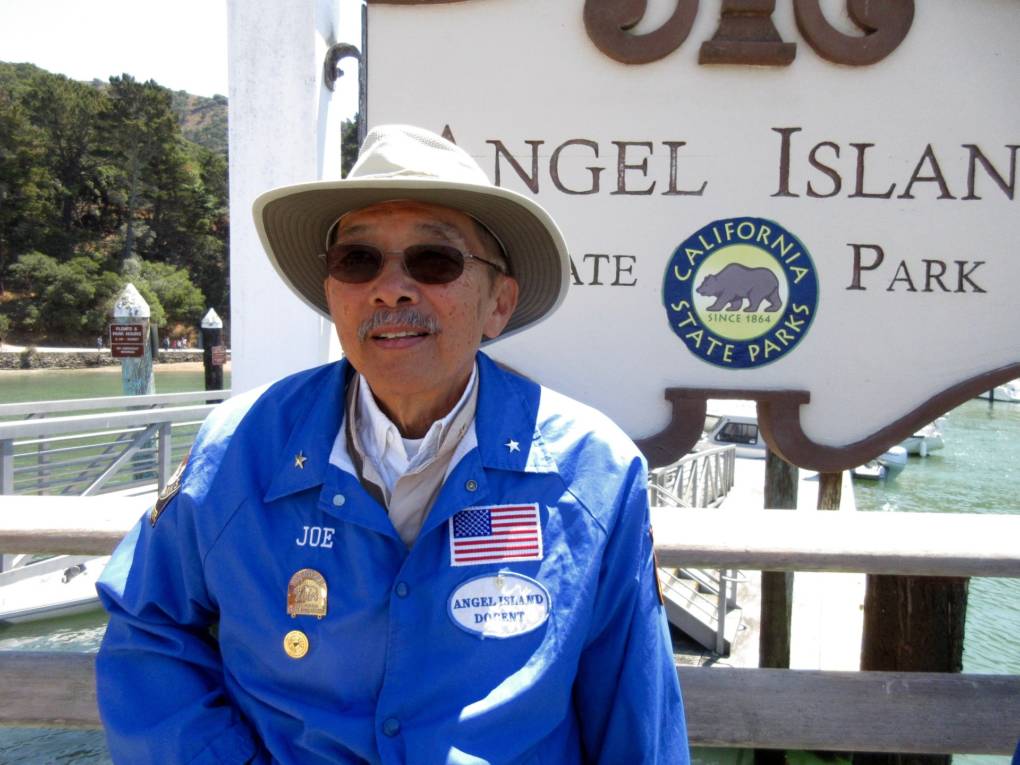
"caption": "Joe Chan, volunteer docent, grew up not knowing his parents were detained at Angel Island. ",
"description": "Joe Chan, volunteer docent, grew up not knowing his parents were detained at Angel Island. ",
"title": "RS32769_IMG_0629-qut",
"credit": "Marisol Medina-Cadena/KQED",
"status": "inherit",
"isLoading": false,
"fetchFailed": false
},
"news_11631267": {
"type": "attachments",
"id": "news_11631267",
"meta": {
"index": "attachments_1716263798",
"site": "news",
"id": "11631267",
"found": true
},
"parent": 0,
"imgSizes": {
"small": {
"file": "https://ww2.kqed.org/app/uploads/sites/10/2017/11/TCRMag_iTunes_3000x3000-520x520.jpg",
"width": 520,
"mimeType": "image/jpeg",
"height": 520
},
"twentyfourteen-full-width": {
"file": "https://ww2.kqed.org/app/uploads/sites/10/2017/11/TCRMag_iTunes_3000x3000-1038x576.jpg",
"width": 1038,
"mimeType": "image/jpeg",
"height": 576
},
"thumbnail": {
"file": "https://ww2.kqed.org/app/uploads/sites/10/2017/11/TCRMag_iTunes_3000x3000-160x160.jpg",
"width": 160,
"mimeType": "image/jpeg",
"height": 160
},
"fd-sm": {
"file": "https://ww2.kqed.org/app/uploads/sites/10/2017/11/TCRMag_iTunes_3000x3000-960x960.jpg",
"width": 960,
"mimeType": "image/jpeg",
"height": 960
},
"post-thumbnail": {
"file": "https://ww2.kqed.org/app/uploads/sites/10/2017/11/TCRMag_iTunes_3000x3000-672x372.jpg",
"width": 672,
"mimeType": "image/jpeg",
"height": 372
},
"xsmall": {
"file": "https://ww2.kqed.org/app/uploads/sites/10/2017/11/TCRMag_iTunes_3000x3000-375x375.jpg",
"width": 375,
"mimeType": "image/jpeg",
"height": 375
},
"kqedFullSize": {
"file": "https://ww2.kqed.org/app/uploads/sites/10/2017/11/TCRMag_iTunes_3000x3000-e1511383661821.jpg",
"width": 1920,
"height": 1920
},
"large": {
"file": "https://ww2.kqed.org/app/uploads/sites/10/2017/11/TCRMag_iTunes_3000x3000-1020x1020.jpg",
"width": 1020,
"mimeType": "image/jpeg",
"height": 1020
},
"xlarge": {
"file": "https://ww2.kqed.org/app/uploads/sites/10/2017/11/TCRMag_iTunes_3000x3000-1180x1180.jpg",
"width": 1180,
"mimeType": "image/jpeg",
"height": 1180
},
"guest-author-50": {
"file": "https://ww2.kqed.org/app/uploads/sites/10/2017/11/TCRMag_iTunes_3000x3000-50x50.jpg",
"width": 50,
"mimeType": "image/jpeg",
"height": 50
},
"guest-author-96": {
"file": "https://ww2.kqed.org/app/uploads/sites/10/2017/11/TCRMag_iTunes_3000x3000-96x96.jpg",
"width": 96,
"mimeType": "image/jpeg",
"height": 96
},
"medium": {
"file": "https://ww2.kqed.org/app/uploads/sites/10/2017/11/TCRMag_iTunes_3000x3000-800x800.jpg",
"width": 800,
"mimeType": "image/jpeg",
"height": 800
},
"guest-author-64": {
"file": "https://ww2.kqed.org/app/uploads/sites/10/2017/11/TCRMag_iTunes_3000x3000-64x64.jpg",
"width": 64,
"mimeType": "image/jpeg",
"height": 64
},
"guest-author-32": {
"file": "https://ww2.kqed.org/app/uploads/sites/10/2017/11/TCRMag_iTunes_3000x3000-32x32.jpg",
"width": 32,
"mimeType": "image/jpeg",
"height": 32
},
"fd-lrg": {
"file": "https://ww2.kqed.org/app/uploads/sites/10/2017/11/TCRMag_iTunes_3000x3000-1920x1920.jpg",
"width": 1920,
"mimeType": "image/jpeg",
"height": 1920
},
"fd-med": {
"file": "https://ww2.kqed.org/app/uploads/sites/10/2017/11/TCRMag_iTunes_3000x3000-1180x1180.jpg",
"width": 1180,
"mimeType": "image/jpeg",
"height": 1180
},
"full-width": {
"file": "https://ww2.kqed.org/app/uploads/sites/10/2017/11/TCRMag_iTunes_3000x3000-1920x1920.jpg",
"width": 1920,
"mimeType": "image/jpeg",
"height": 1920
},
"detail": {
"file": "https://ww2.kqed.org/app/uploads/sites/10/2017/11/TCRMag_iTunes_3000x3000-150x150.jpg",
"width": 150,
"mimeType": "image/jpeg",
"height": 150
},
"guest-author-128": {
"file": "https://ww2.kqed.org/app/uploads/sites/10/2017/11/TCRMag_iTunes_3000x3000-128x128.jpg",
"width": 128,
"mimeType": "image/jpeg",
"height": 128
},
"xxsmall": {
"file": "https://ww2.kqed.org/app/uploads/sites/10/2017/11/TCRMag_iTunes_3000x3000-240x240.jpg",
"width": 240,
"mimeType": "image/jpeg",
"height": 240
}
},
"publishDate": 1510798019,
"modified": 1510965669,
"caption": null,
"description": null,
"title": "TCRMag_iTunes_3000x3000",
"credit": null,
"status": "inherit",
"isLoading": false,
"fetchFailed": false
},
"news_11692617": {
"type": "attachments",
"id": "news_11692617",
"meta": {
"index": "attachments_1716263798",
"site": "news",
"id": "11692617",
"found": true
},
"parent": 11692512,
"imgSizes": {
"small": {
"file": "https://ww2.kqed.org/app/uploads/sites/10/2018/09/SoniaAndFamily-520x376.jpg",
"width": 520,
"mimeType": "image/jpeg",
"height": 376
},
"twentyfourteen-full-width": {
"file": "https://ww2.kqed.org/app/uploads/sites/10/2018/09/SoniaAndFamily-1038x576.jpg",
"width": 1038,
"mimeType": "image/jpeg",
"height": 576
},
"thumbnail": {
"file": "https://ww2.kqed.org/app/uploads/sites/10/2018/09/SoniaAndFamily-160x116.jpg",
"width": 160,
"mimeType": "image/jpeg",
"height": 116
},
"fd-sm": {
"file": "https://ww2.kqed.org/app/uploads/sites/10/2018/09/SoniaAndFamily-960x695.jpg",
"width": 960,
"mimeType": "image/jpeg",
"height": 695
},
"post-thumbnail": {
"file": "https://ww2.kqed.org/app/uploads/sites/10/2018/09/SoniaAndFamily-672x372.jpg",
"width": 672,
"mimeType": "image/jpeg",
"height": 372
},
"xsmall": {
"file": "https://ww2.kqed.org/app/uploads/sites/10/2018/09/SoniaAndFamily-375x271.jpg",
"width": 375,
"mimeType": "image/jpeg",
"height": 271
},
"kqedFullSize": {
"file": "https://ww2.kqed.org/app/uploads/sites/10/2018/09/SoniaAndFamily.jpg",
"width": 1920,
"height": 1389
},
"large": {
"file": "https://ww2.kqed.org/app/uploads/sites/10/2018/09/SoniaAndFamily-1020x738.jpg",
"width": 1020,
"mimeType": "image/jpeg",
"height": 738
},
"xlarge": {
"file": "https://ww2.kqed.org/app/uploads/sites/10/2018/09/SoniaAndFamily-1180x854.jpg",
"width": 1180,
"mimeType": "image/jpeg",
"height": 854
},
"complete_open_graph": {
"file": "https://ww2.kqed.org/app/uploads/sites/10/2018/09/SoniaAndFamily-1200x868.jpg",
"width": 1200,
"mimeType": "image/jpeg",
"height": 868
},
"guest-author-50": {
"file": "https://ww2.kqed.org/app/uploads/sites/10/2018/09/SoniaAndFamily-50x50.jpg",
"width": 50,
"mimeType": "image/jpeg",
"height": 50
},
"guest-author-96": {
"file": "https://ww2.kqed.org/app/uploads/sites/10/2018/09/SoniaAndFamily-96x96.jpg",
"width": 96,
"mimeType": "image/jpeg",
"height": 96
},
"medium": {
"file": "https://ww2.kqed.org/app/uploads/sites/10/2018/09/SoniaAndFamily-800x579.jpg",
"width": 800,
"mimeType": "image/jpeg",
"height": 579
},
"guest-author-64": {
"file": "https://ww2.kqed.org/app/uploads/sites/10/2018/09/SoniaAndFamily-64x64.jpg",
"width": 64,
"mimeType": "image/jpeg",
"height": 64
},
"guest-author-32": {
"file": "https://ww2.kqed.org/app/uploads/sites/10/2018/09/SoniaAndFamily-32x32.jpg",
"width": 32,
"mimeType": "image/jpeg",
"height": 32
},
"fd-lrg": {
"file": "https://ww2.kqed.org/app/uploads/sites/10/2018/09/SoniaAndFamily-1920x1389.jpg",
"width": 1920,
"mimeType": "image/jpeg",
"height": 1389
},
"fd-med": {
"file": "https://ww2.kqed.org/app/uploads/sites/10/2018/09/SoniaAndFamily-1180x854.jpg",
"width": 1180,
"mimeType": "image/jpeg",
"height": 854
},
"full-width": {
"file": "https://ww2.kqed.org/app/uploads/sites/10/2018/09/SoniaAndFamily-1920x1389.jpg",
"width": 1920,
"mimeType": "image/jpeg",
"height": 1389
},
"detail": {
"file": "https://ww2.kqed.org/app/uploads/sites/10/2018/09/SoniaAndFamily-150x150.jpg",
"width": 150,
"mimeType": "image/jpeg",
"height": 150
},
"guest-author-128": {
"file": "https://ww2.kqed.org/app/uploads/sites/10/2018/09/SoniaAndFamily-128x128.jpg",
"width": 128,
"mimeType": "image/jpeg",
"height": 128
},
"xxsmall": {
"file": "https://ww2.kqed.org/app/uploads/sites/10/2018/09/SoniaAndFamily-240x174.jpg",
"width": 240,
"mimeType": "image/jpeg",
"height": 174
}
},
"publishDate": 1536965819,
"modified": 1536965839,
"caption": "Sonia Prasad Quesada with her family.",
"description": "Sonia Prasad Quesada with her family.",
"title": "SoniaAndFamily",
"credit": "Courtesy Sonia Prasad Quesada",
"status": "inherit",
"isLoading": false,
"fetchFailed": false
},
"news_11572756": {
"type": "attachments",
"id": "news_11572756",
"meta": {
"index": "attachments_1716263798",
"site": "news",
"id": "11572756",
"found": true
},
"parent": 0,
"imgSizes": {
"small": {
"file": "https://ww2.kqed.org/app/uploads/sites/10/2017/07/tcr_archive_background-520x195.jpg",
"width": 520,
"mimeType": "image/jpeg",
"height": 195
},
"twentyfourteen-full-width": {
"file": "https://ww2.kqed.org/app/uploads/sites/10/2017/07/tcr_archive_background-1038x450.jpg",
"width": 1038,
"mimeType": "image/jpeg",
"height": 450
},
"thumbnail": {
"file": "https://ww2.kqed.org/app/uploads/sites/10/2017/07/tcr_archive_background-160x60.jpg",
"width": 160,
"mimeType": "image/jpeg",
"height": 60
},
"fd-sm": {
"file": "https://ww2.kqed.org/app/uploads/sites/10/2017/07/tcr_archive_background-960x360.jpg",
"width": 960,
"mimeType": "image/jpeg",
"height": 360
},
"post-thumbnail": {
"file": "https://ww2.kqed.org/app/uploads/sites/10/2017/07/tcr_archive_background-672x372.jpg",
"width": 672,
"mimeType": "image/jpeg",
"height": 372
},
"xsmall": {
"file": "https://ww2.kqed.org/app/uploads/sites/10/2017/07/tcr_archive_background-375x141.jpg",
"width": 375,
"mimeType": "image/jpeg",
"height": 141
},
"kqedFullSize": {
"file": "https://ww2.kqed.org/app/uploads/sites/10/2017/07/tcr_archive_background.jpg",
"width": 1200,
"height": 450
},
"large": {
"file": "https://ww2.kqed.org/app/uploads/sites/10/2017/07/tcr_archive_background-1020x383.jpg",
"width": 1020,
"mimeType": "image/jpeg",
"height": 383
},
"xlarge": {
"file": "https://ww2.kqed.org/app/uploads/sites/10/2017/07/tcr_archive_background-1180x443.jpg",
"width": 1180,
"mimeType": "image/jpeg",
"height": 443
},
"guest-author-50": {
"file": "https://ww2.kqed.org/app/uploads/sites/10/2017/07/tcr_archive_background-50x50.jpg",
"width": 50,
"mimeType": "image/jpeg",
"height": 50
},
"guest-author-96": {
"file": "https://ww2.kqed.org/app/uploads/sites/10/2017/07/tcr_archive_background-96x96.jpg",
"width": 96,
"mimeType": "image/jpeg",
"height": 96
},
"medium": {
"file": "https://ww2.kqed.org/app/uploads/sites/10/2017/07/tcr_archive_background-800x300.jpg",
"width": 800,
"mimeType": "image/jpeg",
"height": 300
},
"guest-author-64": {
"file": "https://ww2.kqed.org/app/uploads/sites/10/2017/07/tcr_archive_background-64x64.jpg",
"width": 64,
"mimeType": "image/jpeg",
"height": 64
},
"guest-author-32": {
"file": "https://ww2.kqed.org/app/uploads/sites/10/2017/07/tcr_archive_background-32x32.jpg",
"width": 32,
"mimeType": "image/jpeg",
"height": 32
},
"fd-med": {
"file": "https://ww2.kqed.org/app/uploads/sites/10/2017/07/tcr_archive_background-1180x443.jpg",
"width": 1180,
"mimeType": "image/jpeg",
"height": 443
},
"detail": {
"file": "https://ww2.kqed.org/app/uploads/sites/10/2017/07/tcr_archive_background-150x150.jpg",
"width": 150,
"mimeType": "image/jpeg",
"height": 150
},
"guest-author-128": {
"file": "https://ww2.kqed.org/app/uploads/sites/10/2017/07/tcr_archive_background-128x128.jpg",
"width": 128,
"mimeType": "image/jpeg",
"height": 128
},
"xxsmall": {
"file": "https://ww2.kqed.org/app/uploads/sites/10/2017/07/tcr_archive_background-240x90.jpg",
"width": 240,
"mimeType": "image/jpeg",
"height": 90
}
},
"publishDate": 1500316142,
"modified": 1500316142,
"caption": null,
"description": null,
"title": "tcr_archive_background",
"credit": null,
"status": "inherit",
"isLoading": false,
"fetchFailed": false
},
"news_11692245": {
"type": "attachments",
"id": "news_11692245",
"meta": {
"index": "attachments_1716263798",
"site": "news",
"id": "11692245",
"found": true
},
"parent": 11692232,
"imgSizes": {
"small": {
"file": "https://ww2.kqed.org/app/uploads/sites/10/2018/09/RS32795_Ya-basta-sign-qut-1-520x347.jpg",
"width": 520,
"mimeType": "image/jpeg",
"height": 347
},
"twentyfourteen-full-width": {
"file": "https://ww2.kqed.org/app/uploads/sites/10/2018/09/RS32795_Ya-basta-sign-qut-1-1038x576.jpg",
"width": 1038,
"mimeType": "image/jpeg",
"height": 576
},
"thumbnail": {
"file": "https://ww2.kqed.org/app/uploads/sites/10/2018/09/RS32795_Ya-basta-sign-qut-1-160x107.jpg",
"width": 160,
"mimeType": "image/jpeg",
"height": 107
},
"fd-sm": {
"file": "https://ww2.kqed.org/app/uploads/sites/10/2018/09/RS32795_Ya-basta-sign-qut-1-960x640.jpg",
"width": 960,
"mimeType": "image/jpeg",
"height": 640
},
"post-thumbnail": {
"file": "https://ww2.kqed.org/app/uploads/sites/10/2018/09/RS32795_Ya-basta-sign-qut-1-672x372.jpg",
"width": 672,
"mimeType": "image/jpeg",
"height": 372
},
"xsmall": {
"file": "https://ww2.kqed.org/app/uploads/sites/10/2018/09/RS32795_Ya-basta-sign-qut-1-375x250.jpg",
"width": 375,
"mimeType": "image/jpeg",
"height": 250
},
"kqedFullSize": {
"file": "https://ww2.kqed.org/app/uploads/sites/10/2018/09/RS32795_Ya-basta-sign-qut-1.jpg",
"width": 1920,
"height": 1280
},
"large": {
"file": "https://ww2.kqed.org/app/uploads/sites/10/2018/09/RS32795_Ya-basta-sign-qut-1-1020x680.jpg",
"width": 1020,
"mimeType": "image/jpeg",
"height": 680
},
"xlarge": {
"file": "https://ww2.kqed.org/app/uploads/sites/10/2018/09/RS32795_Ya-basta-sign-qut-1-1180x787.jpg",
"width": 1180,
"mimeType": "image/jpeg",
"height": 787
},
"complete_open_graph": {
"file": "https://ww2.kqed.org/app/uploads/sites/10/2018/09/RS32795_Ya-basta-sign-qut-1-1200x800.jpg",
"width": 1200,
"mimeType": "image/jpeg",
"height": 800
},
"guest-author-50": {
"file": "https://ww2.kqed.org/app/uploads/sites/10/2018/09/RS32795_Ya-basta-sign-qut-1-50x50.jpg",
"width": 50,
"mimeType": "image/jpeg",
"height": 50
},
"guest-author-96": {
"file": "https://ww2.kqed.org/app/uploads/sites/10/2018/09/RS32795_Ya-basta-sign-qut-1-96x96.jpg",
"width": 96,
"mimeType": "image/jpeg",
"height": 96
},
"medium": {
"file": "https://ww2.kqed.org/app/uploads/sites/10/2018/09/RS32795_Ya-basta-sign-qut-1-800x533.jpg",
"width": 800,
"mimeType": "image/jpeg",
"height": 533
},
"guest-author-64": {
"file": "https://ww2.kqed.org/app/uploads/sites/10/2018/09/RS32795_Ya-basta-sign-qut-1-64x64.jpg",
"width": 64,
"mimeType": "image/jpeg",
"height": 64
},
"guest-author-32": {
"file": "https://ww2.kqed.org/app/uploads/sites/10/2018/09/RS32795_Ya-basta-sign-qut-1-32x32.jpg",
"width": 32,
"mimeType": "image/jpeg",
"height": 32
},
"fd-lrg": {
"file": "https://ww2.kqed.org/app/uploads/sites/10/2018/09/RS32795_Ya-basta-sign-qut-1-1920x1280.jpg",
"width": 1920,
"mimeType": "image/jpeg",
"height": 1280
},
"fd-med": {
"file": "https://ww2.kqed.org/app/uploads/sites/10/2018/09/RS32795_Ya-basta-sign-qut-1-1180x787.jpg",
"width": 1180,
"mimeType": "image/jpeg",
"height": 787
},
"full-width": {
"file": "https://ww2.kqed.org/app/uploads/sites/10/2018/09/RS32795_Ya-basta-sign-qut-1-1920x1280.jpg",
"width": 1920,
"mimeType": "image/jpeg",
"height": 1280
},
"detail": {
"file": "https://ww2.kqed.org/app/uploads/sites/10/2018/09/RS32795_Ya-basta-sign-qut-1-150x150.jpg",
"width": 150,
"mimeType": "image/jpeg",
"height": 150
},
"guest-author-128": {
"file": "https://ww2.kqed.org/app/uploads/sites/10/2018/09/RS32795_Ya-basta-sign-qut-1-128x128.jpg",
"width": 128,
"mimeType": "image/jpeg",
"height": 128
},
"xxsmall": {
"file": "https://ww2.kqed.org/app/uploads/sites/10/2018/09/RS32795_Ya-basta-sign-qut-1-240x160.jpg",
"width": 240,
"mimeType": "image/jpeg",
"height": 160
}
},
"publishDate": 1536872571,
"modified": 1536876054,
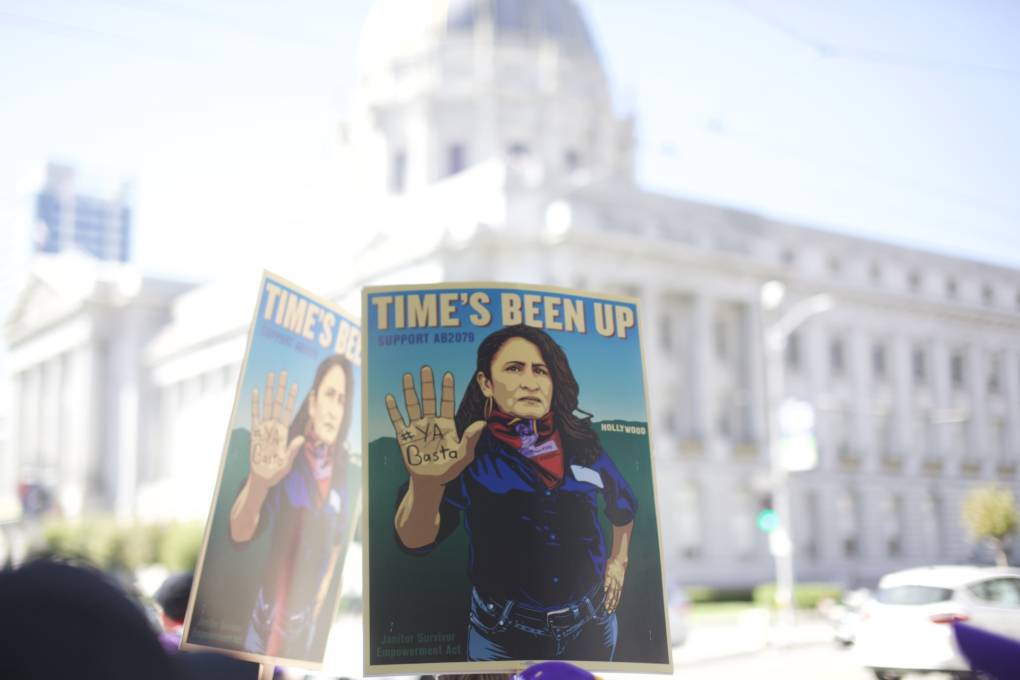
"caption": "A poster of janitor Marta Mejia, one of the 100 janitors marching to Sacramento in support of AB 2079. Many of them have been harassed, groped, even raped in the buildings they clean, often by supervisors who take advantage of their isolated working conditions.",
"description": null,
"title": "RS32795_Ya basta sign-qut (1)",
"credit": "Courtesy John Navales ",
"status": "inherit",
"isLoading": false,
"fetchFailed": false
},
"news_11692190": {
"type": "attachments",
"id": "news_11692190",
"meta": {
"index": "attachments_1716263798",
"site": "news",
"id": "11692190",
"found": true
},
"title": "Asylum seekers line up at the San Ysidro port of entry in Tijuana, Mexico. The ACLU announced today a preliminary agreement with the Trump administration to allow some parents already in the U.S. but separated from their children at the border to apply for asylum.",
"publishDate": 1536864954,
"status": "inherit",
"parent": 11692189,
"modified": 1760642987,
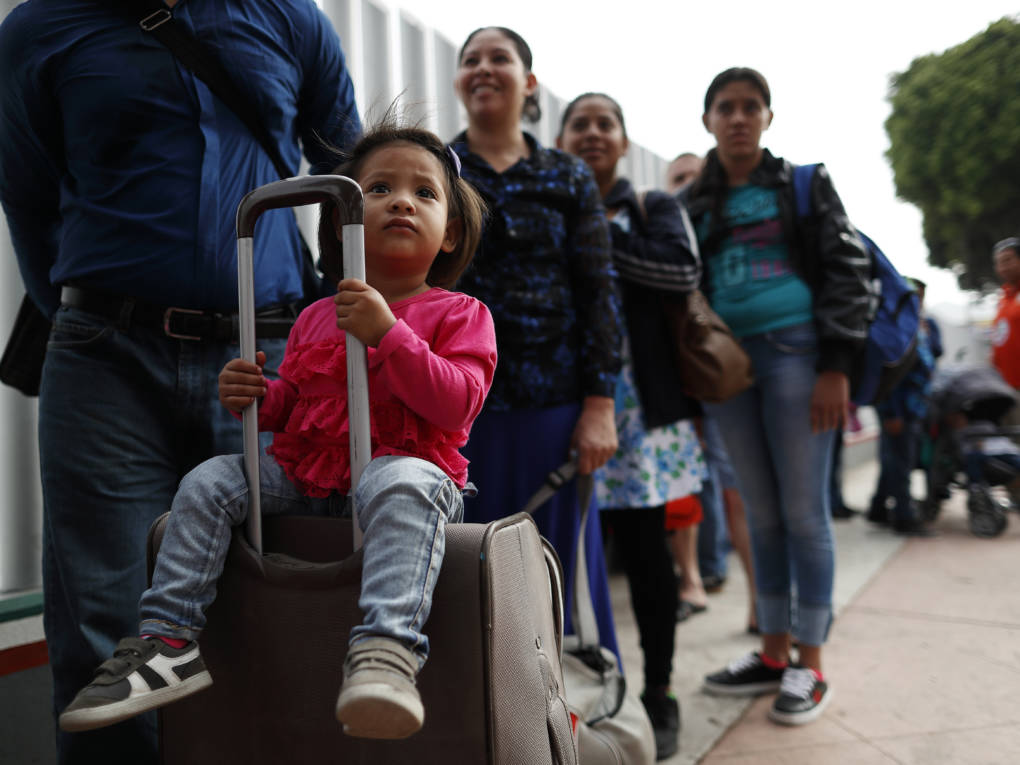
"caption": "Asylum seekers line up at the San Ysidro port of entry in Tijuana, Mexico, on Sept. 13, 2018. The ACLU announced today a preliminary agreement with the Trump administration to allow some parents already in the U.S. but separated from their children at the border to apply for asylum.",
"credit": "Gregory Bull/AP Photo",
"altTag": "Asylum seekers line up at the San Ysidro port of entry in Tijuana, Mexico. The ACLU announced today a preliminary agreement with the Trump administration to allow some parents already in the U.S. but separated from their children at the border to apply for asylum.",
"description": "Asylum seekers line up at the San Ysidro port of entry in Tijuana, Mexico. The ACLU announced today a preliminary agreement with the Trump administration to allow some parents already in the U.S. but separated from their children at the border to apply for asylum.",
"imgSizes": {
"thumbnail": {
"file": "https://cdn.kqed.org/wp-content/uploads/sites/10/2018/09/ap_18207644894177-bf4e7bceee939dda2a4262cf80ca6777a3d16a80-160x120.jpg",
"width": 160,
"height": 120,
"mimeType": "image/jpeg"
},
"medium": {
"file": "https://cdn.kqed.org/wp-content/uploads/sites/10/2018/09/ap_18207644894177-bf4e7bceee939dda2a4262cf80ca6777a3d16a80-800x600.jpg",
"width": 800,
"height": 600,
"mimeType": "image/jpeg"
},
"large": {
"file": "https://cdn.kqed.org/wp-content/uploads/sites/10/2018/09/ap_18207644894177-bf4e7bceee939dda2a4262cf80ca6777a3d16a80-1020x765.jpg",
"width": 1020,
"height": 765,
"mimeType": "image/jpeg"
},
"complete_open_graph": {
"file": "https://cdn.kqed.org/wp-content/uploads/sites/10/2018/09/ap_18207644894177-bf4e7bceee939dda2a4262cf80ca6777a3d16a80-1200x900.jpg",
"width": 1200,
"height": 900,
"mimeType": "image/jpeg"
},
"fd-lrg": {
"file": "https://cdn.kqed.org/wp-content/uploads/sites/10/2018/09/ap_18207644894177-bf4e7bceee939dda2a4262cf80ca6777a3d16a80-1920x1440.jpg",
"width": 1920,
"height": 1440,
"mimeType": "image/jpeg"
},
"fd-med": {
"file": "https://cdn.kqed.org/wp-content/uploads/sites/10/2018/09/ap_18207644894177-bf4e7bceee939dda2a4262cf80ca6777a3d16a80-1180x885.jpg",
"width": 1180,
"height": 885,
"mimeType": "image/jpeg"
},
"fd-sm": {
"file": "https://cdn.kqed.org/wp-content/uploads/sites/10/2018/09/ap_18207644894177-bf4e7bceee939dda2a4262cf80ca6777a3d16a80-960x720.jpg",
"width": 960,
"height": 720,
"mimeType": "image/jpeg"
},
"post-thumbnail": {
"file": "https://cdn.kqed.org/wp-content/uploads/sites/10/2018/09/ap_18207644894177-bf4e7bceee939dda2a4262cf80ca6777a3d16a80-672x372.jpg",
"width": 672,
"height": 372,
"mimeType": "image/jpeg"
},
"twentyfourteen-full-width": {
"file": "https://cdn.kqed.org/wp-content/uploads/sites/10/2018/09/ap_18207644894177-bf4e7bceee939dda2a4262cf80ca6777a3d16a80-1038x576.jpg",
"width": 1038,
"height": 576,
"mimeType": "image/jpeg"
},
"xxsmall": {
"file": "https://cdn.kqed.org/wp-content/uploads/sites/10/2018/09/ap_18207644894177-bf4e7bceee939dda2a4262cf80ca6777a3d16a80-240x180.jpg",
"width": 240,
"height": 180,
"mimeType": "image/jpeg"
},
"xsmall": {
"file": "https://cdn.kqed.org/wp-content/uploads/sites/10/2018/09/ap_18207644894177-bf4e7bceee939dda2a4262cf80ca6777a3d16a80-375x281.jpg",
"width": 375,
"height": 281,
"mimeType": "image/jpeg"
},
"small": {
"file": "https://cdn.kqed.org/wp-content/uploads/sites/10/2018/09/ap_18207644894177-bf4e7bceee939dda2a4262cf80ca6777a3d16a80-520x390.jpg",
"width": 520,
"height": 390,
"mimeType": "image/jpeg"
},
"xlarge": {
"file": "https://cdn.kqed.org/wp-content/uploads/sites/10/2018/09/ap_18207644894177-bf4e7bceee939dda2a4262cf80ca6777a3d16a80-1180x885.jpg",
"width": 1180,
"height": 885,
"mimeType": "image/jpeg"
},
"full-width": {
"file": "https://cdn.kqed.org/wp-content/uploads/sites/10/2018/09/ap_18207644894177-bf4e7bceee939dda2a4262cf80ca6777a3d16a80-1920x1440.jpg",
"width": 1920,
"height": 1440,
"mimeType": "image/jpeg"
},
"guest-author-32": {
"file": "https://cdn.kqed.org/wp-content/uploads/sites/10/2018/09/ap_18207644894177-bf4e7bceee939dda2a4262cf80ca6777a3d16a80-32x32.jpg",
"width": 32,
"height": 32,
"mimeType": "image/jpeg"
},
"guest-author-50": {
"file": "https://cdn.kqed.org/wp-content/uploads/sites/10/2018/09/ap_18207644894177-bf4e7bceee939dda2a4262cf80ca6777a3d16a80-50x50.jpg",
"width": 50,
"height": 50,
"mimeType": "image/jpeg"
},
"guest-author-64": {
"file": "https://cdn.kqed.org/wp-content/uploads/sites/10/2018/09/ap_18207644894177-bf4e7bceee939dda2a4262cf80ca6777a3d16a80-64x64.jpg",
"width": 64,
"height": 64,
"mimeType": "image/jpeg"
},
"guest-author-96": {
"file": "https://cdn.kqed.org/wp-content/uploads/sites/10/2018/09/ap_18207644894177-bf4e7bceee939dda2a4262cf80ca6777a3d16a80-96x96.jpg",
"width": 96,
"height": 96,
"mimeType": "image/jpeg"
},
"guest-author-128": {
"file": "https://cdn.kqed.org/wp-content/uploads/sites/10/2018/09/ap_18207644894177-bf4e7bceee939dda2a4262cf80ca6777a3d16a80-128x128.jpg",
"width": 128,
"height": 128,
"mimeType": "image/jpeg"
},
"detail": {
"file": "https://cdn.kqed.org/wp-content/uploads/sites/10/2018/09/ap_18207644894177-bf4e7bceee939dda2a4262cf80ca6777a3d16a80-150x150.jpg",
"width": 150,
"height": 150,
"mimeType": "image/jpeg"
},
"kqedFullSize": {
"file": "https://cdn.kqed.org/wp-content/uploads/sites/10/2018/09/ap_18207644894177-bf4e7bceee939dda2a4262cf80ca6777a3d16a80-e1536865057762.jpg",
"width": 1920,
"height": 1440
}
},
"isLoading": false,
"fetchFailed": false
},
"news_11690817": {
"type": "attachments",
"id": "news_11690817",
"meta": {
"index": "attachments_1716263798",
"site": "news",
"id": "11690817",
"found": true
},
"parent": 11690816,
"imgSizes": {
"small": {
"file": "https://ww2.kqed.org/app/uploads/sites/10/2018/09/gettyimages-978850064-a4d147f5493ff74287a79f2def81e79174e37d1d-520x390.jpg",
"width": 520,
"mimeType": "image/jpeg",
"height": 390
},
"twentyfourteen-full-width": {
"file": "https://ww2.kqed.org/app/uploads/sites/10/2018/09/gettyimages-978850064-a4d147f5493ff74287a79f2def81e79174e37d1d-1038x576.jpg",
"width": 1038,
"mimeType": "image/jpeg",
"height": 576
},
"thumbnail": {
"file": "https://ww2.kqed.org/app/uploads/sites/10/2018/09/gettyimages-978850064-a4d147f5493ff74287a79f2def81e79174e37d1d-160x120.jpg",
"width": 160,
"mimeType": "image/jpeg",
"height": 120
},
"fd-sm": {
"file": "https://ww2.kqed.org/app/uploads/sites/10/2018/09/gettyimages-978850064-a4d147f5493ff74287a79f2def81e79174e37d1d-960x720.jpg",
"width": 960,
"mimeType": "image/jpeg",
"height": 720
},
"post-thumbnail": {
"file": "https://ww2.kqed.org/app/uploads/sites/10/2018/09/gettyimages-978850064-a4d147f5493ff74287a79f2def81e79174e37d1d-672x372.jpg",
"width": 672,
"mimeType": "image/jpeg",
"height": 372
},
"xsmall": {
"file": "https://ww2.kqed.org/app/uploads/sites/10/2018/09/gettyimages-978850064-a4d147f5493ff74287a79f2def81e79174e37d1d-375x281.jpg",
"width": 375,
"mimeType": "image/jpeg",
"height": 281
},
"kqedFullSize": {
"file": "https://ww2.kqed.org/app/uploads/sites/10/2018/09/gettyimages-978850064-a4d147f5493ff74287a79f2def81e79174e37d1d.jpg",
"width": 2726,
"height": 2044
},
"large": {
"file": "https://ww2.kqed.org/app/uploads/sites/10/2018/09/gettyimages-978850064-a4d147f5493ff74287a79f2def81e79174e37d1d-1020x765.jpg",
"width": 1020,
"mimeType": "image/jpeg",
"height": 765
},
"xlarge": {
"file": "https://ww2.kqed.org/app/uploads/sites/10/2018/09/gettyimages-978850064-a4d147f5493ff74287a79f2def81e79174e37d1d-1180x885.jpg",
"width": 1180,
"mimeType": "image/jpeg",
"height": 885
},
"complete_open_graph": {
"file": "https://ww2.kqed.org/app/uploads/sites/10/2018/09/gettyimages-978850064-a4d147f5493ff74287a79f2def81e79174e37d1d-1200x900.jpg",
"width": 1200,
"mimeType": "image/jpeg",
"height": 900
},
"guest-author-50": {
"file": "https://ww2.kqed.org/app/uploads/sites/10/2018/09/gettyimages-978850064-a4d147f5493ff74287a79f2def81e79174e37d1d-50x50.jpg",
"width": 50,
"mimeType": "image/jpeg",
"height": 50
},
"guest-author-96": {
"file": "https://ww2.kqed.org/app/uploads/sites/10/2018/09/gettyimages-978850064-a4d147f5493ff74287a79f2def81e79174e37d1d-96x96.jpg",
"width": 96,
"mimeType": "image/jpeg",
"height": 96
},
"medium": {
"file": "https://ww2.kqed.org/app/uploads/sites/10/2018/09/gettyimages-978850064-a4d147f5493ff74287a79f2def81e79174e37d1d-800x600.jpg",
"width": 800,
"mimeType": "image/jpeg",
"height": 600
},
"guest-author-64": {
"file": "https://ww2.kqed.org/app/uploads/sites/10/2018/09/gettyimages-978850064-a4d147f5493ff74287a79f2def81e79174e37d1d-64x64.jpg",
"width": 64,
"mimeType": "image/jpeg",
"height": 64
},
"guest-author-32": {
"file": "https://ww2.kqed.org/app/uploads/sites/10/2018/09/gettyimages-978850064-a4d147f5493ff74287a79f2def81e79174e37d1d-32x32.jpg",
"width": 32,
"mimeType": "image/jpeg",
"height": 32
},
"fd-lrg": {
"file": "https://ww2.kqed.org/app/uploads/sites/10/2018/09/gettyimages-978850064-a4d147f5493ff74287a79f2def81e79174e37d1d-1920x1440.jpg",
"width": 1920,
"mimeType": "image/jpeg",
"height": 1440
},
"fd-med": {
"file": "https://ww2.kqed.org/app/uploads/sites/10/2018/09/gettyimages-978850064-a4d147f5493ff74287a79f2def81e79174e37d1d-1180x885.jpg",
"width": 1180,
"mimeType": "image/jpeg",
"height": 885
},
"full-width": {
"file": "https://ww2.kqed.org/app/uploads/sites/10/2018/09/gettyimages-978850064-a4d147f5493ff74287a79f2def81e79174e37d1d-1920x1440.jpg",
"width": 1920,
"mimeType": "image/jpeg",
"height": 1440
},
"detail": {
"file": "https://ww2.kqed.org/app/uploads/sites/10/2018/09/gettyimages-978850064-a4d147f5493ff74287a79f2def81e79174e37d1d-150x150.jpg",
"width": 150,
"mimeType": "image/jpeg",
"height": 150
},
"guest-author-128": {
"file": "https://ww2.kqed.org/app/uploads/sites/10/2018/09/gettyimages-978850064-a4d147f5493ff74287a79f2def81e79174e37d1d-128x128.jpg",
"width": 128,
"mimeType": "image/jpeg",
"height": 128
},
"xxsmall": {
"file": "https://ww2.kqed.org/app/uploads/sites/10/2018/09/gettyimages-978850064-a4d147f5493ff74287a79f2def81e79174e37d1d-240x180.jpg",
"width": 240,
"mimeType": "image/jpeg",
"height": 180
}
},
"publishDate": 1536253366,
"modified": 1536253366,
"caption": null,
"description": "Children and workers are seen at a tent encampment built near the Tornillo Port of Entry in June in Tornillo, Texa",
"title": "Children and workers are seen at a tent encampment built near the Tornillo Port of Entry in June in Tornillo, Texas.",
"credit": null,
"status": "inherit",
"isLoading": false,
"fetchFailed": false
},
"news_11690734": {
"type": "attachments",
"id": "news_11690734",
"meta": {
"index": "attachments_1716263798",
"site": "news",
"id": "11690734",
"found": true
},
"parent": 11690601,
"imgSizes": {
"small": {
"file": "https://ww2.kqed.org/app/uploads/sites/10/2018/09/UrgentCareDetention-520x347.jpg",
"width": 520,
"mimeType": "image/jpeg",
"height": 347
},
"twentyfourteen-full-width": {
"file": "https://ww2.kqed.org/app/uploads/sites/10/2018/09/UrgentCareDetention-1038x576.jpg",
"width": 1038,
"mimeType": "image/jpeg",
"height": 576
},
"thumbnail": {
"file": "https://ww2.kqed.org/app/uploads/sites/10/2018/09/UrgentCareDetention-160x107.jpg",
"width": 160,
"mimeType": "image/jpeg",
"height": 107
},
"fd-sm": {
"file": "https://ww2.kqed.org/app/uploads/sites/10/2018/09/UrgentCareDetention-960x640.jpg",
"width": 960,
"mimeType": "image/jpeg",
"height": 640
},
"post-thumbnail": {
"file": "https://ww2.kqed.org/app/uploads/sites/10/2018/09/UrgentCareDetention-672x372.jpg",
"width": 672,
"mimeType": "image/jpeg",
"height": 372
},
"xsmall": {
"file": "https://ww2.kqed.org/app/uploads/sites/10/2018/09/UrgentCareDetention-375x250.jpg",
"width": 375,
"mimeType": "image/jpeg",
"height": 250
},
"kqedFullSize": {
"file": "https://ww2.kqed.org/app/uploads/sites/10/2018/09/UrgentCareDetention.jpg",
"width": 1920,
"height": 1280
},
"large": {
"file": "https://ww2.kqed.org/app/uploads/sites/10/2018/09/UrgentCareDetention-1020x680.jpg",
"width": 1020,
"mimeType": "image/jpeg",
"height": 680
},
"xlarge": {
"file": "https://ww2.kqed.org/app/uploads/sites/10/2018/09/UrgentCareDetention-1180x787.jpg",
"width": 1180,
"mimeType": "image/jpeg",
"height": 787
},
"complete_open_graph": {
"file": "https://ww2.kqed.org/app/uploads/sites/10/2018/09/UrgentCareDetention-1200x800.jpg",
"width": 1200,
"mimeType": "image/jpeg",
"height": 800
},
"guest-author-50": {
"file": "https://ww2.kqed.org/app/uploads/sites/10/2018/09/UrgentCareDetention-50x50.jpg",
"width": 50,
"mimeType": "image/jpeg",
"height": 50
},
"guest-author-96": {
"file": "https://ww2.kqed.org/app/uploads/sites/10/2018/09/UrgentCareDetention-96x96.jpg",
"width": 96,
"mimeType": "image/jpeg",
"height": 96
},
"medium": {
"file": "https://ww2.kqed.org/app/uploads/sites/10/2018/09/UrgentCareDetention-800x533.jpg",
"width": 800,
"mimeType": "image/jpeg",
"height": 533
},
"guest-author-64": {
"file": "https://ww2.kqed.org/app/uploads/sites/10/2018/09/UrgentCareDetention-64x64.jpg",
"width": 64,
"mimeType": "image/jpeg",
"height": 64
},
"guest-author-32": {
"file": "https://ww2.kqed.org/app/uploads/sites/10/2018/09/UrgentCareDetention-32x32.jpg",
"width": 32,
"mimeType": "image/jpeg",
"height": 32
},
"fd-lrg": {
"file": "https://ww2.kqed.org/app/uploads/sites/10/2018/09/UrgentCareDetention-1920x1280.jpg",
"width": 1920,
"mimeType": "image/jpeg",
"height": 1280
},
"fd-med": {
"file": "https://ww2.kqed.org/app/uploads/sites/10/2018/09/UrgentCareDetention-1180x787.jpg",
"width": 1180,
"mimeType": "image/jpeg",
"height": 787
},
"full-width": {
"file": "https://ww2.kqed.org/app/uploads/sites/10/2018/09/UrgentCareDetention-1920x1280.jpg",
"width": 1920,
"mimeType": "image/jpeg",
"height": 1280
},
"detail": {
"file": "https://ww2.kqed.org/app/uploads/sites/10/2018/09/UrgentCareDetention-150x150.jpg",
"width": 150,
"mimeType": "image/jpeg",
"height": 150
},
"guest-author-128": {
"file": "https://ww2.kqed.org/app/uploads/sites/10/2018/09/UrgentCareDetention-128x128.jpg",
"width": 128,
"mimeType": "image/jpeg",
"height": 128
},
"xxsmall": {
"file": "https://ww2.kqed.org/app/uploads/sites/10/2018/09/UrgentCareDetention-240x160.jpg",
"width": 240,
"mimeType": "image/jpeg",
"height": 160
}
},
"publishDate": 1536200800,
"modified": 1536200831,
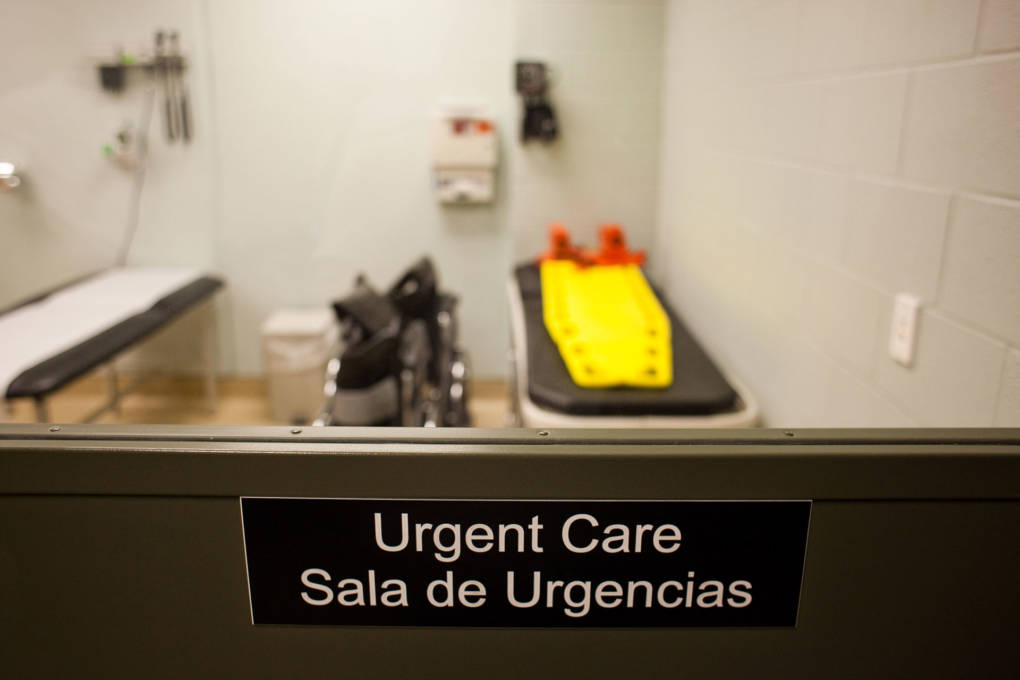
"caption": "A medical facility inside the Karnes County Residential Center, pictured on July 31, 2014 in Karnes City, Texas. ICE uses the center to hold detained immigrant families.",
"description": "A medical facility inside the Karnes County Residential Center, pictured on July 31, 2014 in Karnes City, Texas. ICE uses the center to hold detained immigrant families.",
"title": "UrgentCareDetention",
"credit": "Drew Anthony Smith/Getty Images",
"status": "inherit",
"isLoading": false,
"fetchFailed": false
},
"news_11690087": {
"type": "attachments",
"id": "news_11690087",
"meta": {
"index": "attachments_1716263798",
"site": "news",
"id": "11690087",
"found": true
},
"parent": 11690086,
"imgSizes": {
"small": {
"file": "https://ww2.kqed.org/app/uploads/sites/10/2018/09/Arleene-1_enl-f8447c3bbc0a4f6ed16cb66412af6ab0f7ca568a-520x346.jpg",
"width": 520,
"mimeType": "image/jpeg",
"height": 346
},
"twentyfourteen-full-width": {
"file": "https://ww2.kqed.org/app/uploads/sites/10/2018/09/Arleene-1_enl-f8447c3bbc0a4f6ed16cb66412af6ab0f7ca568a-1038x576.jpg",
"width": 1038,
"mimeType": "image/jpeg",
"height": 576
},
"thumbnail": {
"file": "https://ww2.kqed.org/app/uploads/sites/10/2018/09/Arleene-1_enl-f8447c3bbc0a4f6ed16cb66412af6ab0f7ca568a-160x107.jpg",
"width": 160,
"mimeType": "image/jpeg",
"height": 107
},
"fd-sm": {
"file": "https://ww2.kqed.org/app/uploads/sites/10/2018/09/Arleene-1_enl-f8447c3bbc0a4f6ed16cb66412af6ab0f7ca568a-960x639.jpg",
"width": 960,
"mimeType": "image/jpeg",
"height": 639
},
"post-thumbnail": {
"file": "https://ww2.kqed.org/app/uploads/sites/10/2018/09/Arleene-1_enl-f8447c3bbc0a4f6ed16cb66412af6ab0f7ca568a-672x372.jpg",
"width": 672,
"mimeType": "image/jpeg",
"height": 372
},
"xsmall": {
"file": "https://ww2.kqed.org/app/uploads/sites/10/2018/09/Arleene-1_enl-f8447c3bbc0a4f6ed16cb66412af6ab0f7ca568a-375x250.jpg",
"width": 375,
"mimeType": "image/jpeg",
"height": 250
},
"kqedFullSize": {
"file": "https://ww2.kqed.org/app/uploads/sites/10/2018/09/Arleene-1_enl-f8447c3bbc0a4f6ed16cb66412af6ab0f7ca568a-e1535835596762.jpg",
"width": 1920,
"height": 1279
},
"large": {
"file": "https://ww2.kqed.org/app/uploads/sites/10/2018/09/Arleene-1_enl-f8447c3bbc0a4f6ed16cb66412af6ab0f7ca568a-1020x679.jpg",
"width": 1020,
"mimeType": "image/jpeg",
"height": 679
},
"xlarge": {
"file": "https://ww2.kqed.org/app/uploads/sites/10/2018/09/Arleene-1_enl-f8447c3bbc0a4f6ed16cb66412af6ab0f7ca568a-1180x786.jpg",
"width": 1180,
"mimeType": "image/jpeg",
"height": 786
},
"complete_open_graph": {
"file": "https://ww2.kqed.org/app/uploads/sites/10/2018/09/Arleene-1_enl-f8447c3bbc0a4f6ed16cb66412af6ab0f7ca568a-1200x799.jpg",
"width": 1200,
"mimeType": "image/jpeg",
"height": 799
},
"guest-author-50": {
"file": "https://ww2.kqed.org/app/uploads/sites/10/2018/09/Arleene-1_enl-f8447c3bbc0a4f6ed16cb66412af6ab0f7ca568a-50x50.jpg",
"width": 50,
"mimeType": "image/jpeg",
"height": 50
},
"guest-author-96": {
"file": "https://ww2.kqed.org/app/uploads/sites/10/2018/09/Arleene-1_enl-f8447c3bbc0a4f6ed16cb66412af6ab0f7ca568a-96x96.jpg",
"width": 96,
"mimeType": "image/jpeg",
"height": 96
},
"medium": {
"file": "https://ww2.kqed.org/app/uploads/sites/10/2018/09/Arleene-1_enl-f8447c3bbc0a4f6ed16cb66412af6ab0f7ca568a-800x533.jpg",
"width": 800,
"mimeType": "image/jpeg",
"height": 533
},
"guest-author-64": {
"file": "https://ww2.kqed.org/app/uploads/sites/10/2018/09/Arleene-1_enl-f8447c3bbc0a4f6ed16cb66412af6ab0f7ca568a-64x64.jpg",
"width": 64,
"mimeType": "image/jpeg",
"height": 64
},
"guest-author-32": {
"file": "https://ww2.kqed.org/app/uploads/sites/10/2018/09/Arleene-1_enl-f8447c3bbc0a4f6ed16cb66412af6ab0f7ca568a-32x32.jpg",
"width": 32,
"mimeType": "image/jpeg",
"height": 32
},
"fd-lrg": {
"file": "https://ww2.kqed.org/app/uploads/sites/10/2018/09/Arleene-1_enl-f8447c3bbc0a4f6ed16cb66412af6ab0f7ca568a-1920x1279.jpg",
"width": 1920,
"mimeType": "image/jpeg",
"height": 1279
},
"fd-med": {
"file": "https://ww2.kqed.org/app/uploads/sites/10/2018/09/Arleene-1_enl-f8447c3bbc0a4f6ed16cb66412af6ab0f7ca568a-1180x786.jpg",
"width": 1180,
"mimeType": "image/jpeg",
"height": 786
},
"full-width": {
"file": "https://ww2.kqed.org/app/uploads/sites/10/2018/09/Arleene-1_enl-f8447c3bbc0a4f6ed16cb66412af6ab0f7ca568a-1920x1279.jpg",
"width": 1920,
"mimeType": "image/jpeg",
"height": 1279
},
"detail": {
"file": "https://ww2.kqed.org/app/uploads/sites/10/2018/09/Arleene-1_enl-f8447c3bbc0a4f6ed16cb66412af6ab0f7ca568a-150x150.jpg",
"width": 150,
"mimeType": "image/jpeg",
"height": 150
},
"guest-author-128": {
"file": "https://ww2.kqed.org/app/uploads/sites/10/2018/09/Arleene-1_enl-f8447c3bbc0a4f6ed16cb66412af6ab0f7ca568a-128x128.jpg",
"width": 128,
"mimeType": "image/jpeg",
"height": 128
},
"xxsmall": {
"file": "https://ww2.kqed.org/app/uploads/sites/10/2018/09/Arleene-1_enl-f8447c3bbc0a4f6ed16cb66412af6ab0f7ca568a-240x160.jpg",
"width": 240,
"mimeType": "image/jpeg",
"height": 160
}
},
"publishDate": 1535835342,
"modified": 1535836309,
"caption": "Arleene Correa Valencia works on a painting in her latest series: In Times of Crisis, En Tiempo de Crisis.",
"description": "Arleene Correa Valencia works on a painting in her latest series: In Times of Crisis, En Tiempo de Crisis.",
"title": "Arleene Correa Valencia works on a painting in her latest series: In Times of Crisis, En Tiempo de Crisis.",
"credit": "Rachael Bongiorno for NPR",
"status": "inherit",
"isLoading": false,
"fetchFailed": false
},
"news_11689182": {
"type": "attachments",
"id": "news_11689182",
"meta": {
"index": "attachments_1716263798",
"site": "news",
"id": "11689182",
"found": true
},
"parent": 11689177,
"imgSizes": {
"small": {
"file": "https://ww2.kqed.org/app/uploads/sites/10/2018/08/PELOSI-MARQUEE-2-520x293.jpg",
"width": 520,
"mimeType": "image/jpeg",
"height": 293
},
"twentyfourteen-full-width": {
"file": "https://ww2.kqed.org/app/uploads/sites/10/2018/08/PELOSI-MARQUEE-2-1038x576.jpg",
"width": 1038,
"mimeType": "image/jpeg",
"height": 576
},
"thumbnail": {
"file": "https://ww2.kqed.org/app/uploads/sites/10/2018/08/PELOSI-MARQUEE-2-160x90.jpg",
"width": 160,
"mimeType": "image/jpeg",
"height": 90
},
"fd-sm": {
"file": "https://ww2.kqed.org/app/uploads/sites/10/2018/08/PELOSI-MARQUEE-2-960x540.jpg",
"width": 960,
"mimeType": "image/jpeg",
"height": 540
},
"post-thumbnail": {
"file": "https://ww2.kqed.org/app/uploads/sites/10/2018/08/PELOSI-MARQUEE-2-672x372.jpg",
"width": 672,
"mimeType": "image/jpeg",
"height": 372
},
"xsmall": {
"file": "https://ww2.kqed.org/app/uploads/sites/10/2018/08/PELOSI-MARQUEE-2-375x211.jpg",
"width": 375,
"mimeType": "image/jpeg",
"height": 211
},
"kqedFullSize": {
"file": "https://ww2.kqed.org/app/uploads/sites/10/2018/08/PELOSI-MARQUEE-2.jpg",
"width": 1280,
"height": 720
},
"large": {
"file": "https://ww2.kqed.org/app/uploads/sites/10/2018/08/PELOSI-MARQUEE-2-1020x574.jpg",
"width": 1020,
"mimeType": "image/jpeg",
"height": 574
},
"xlarge": {
"file": "https://ww2.kqed.org/app/uploads/sites/10/2018/08/PELOSI-MARQUEE-2-1180x664.jpg",
"width": 1180,
"mimeType": "image/jpeg",
"height": 664
},
"complete_open_graph": {
"file": "https://ww2.kqed.org/app/uploads/sites/10/2018/08/PELOSI-MARQUEE-2-1200x675.jpg",
"width": 1200,
"mimeType": "image/jpeg",
"height": 675
},
"guest-author-50": {
"file": "https://ww2.kqed.org/app/uploads/sites/10/2018/08/PELOSI-MARQUEE-2-50x50.jpg",
"width": 50,
"mimeType": "image/jpeg",
"height": 50
},
"guest-author-96": {
"file": "https://ww2.kqed.org/app/uploads/sites/10/2018/08/PELOSI-MARQUEE-2-96x96.jpg",
"width": 96,
"mimeType": "image/jpeg",
"height": 96
},
"medium": {
"file": "https://ww2.kqed.org/app/uploads/sites/10/2018/08/PELOSI-MARQUEE-2-800x450.jpg",
"width": 800,
"mimeType": "image/jpeg",
"height": 450
},
"guest-author-64": {
"file": "https://ww2.kqed.org/app/uploads/sites/10/2018/08/PELOSI-MARQUEE-2-64x64.jpg",
"width": 64,
"mimeType": "image/jpeg",
"height": 64
},
"guest-author-32": {
"file": "https://ww2.kqed.org/app/uploads/sites/10/2018/08/PELOSI-MARQUEE-2-32x32.jpg",
"width": 32,
"mimeType": "image/jpeg",
"height": 32
},
"fd-med": {
"file": "https://ww2.kqed.org/app/uploads/sites/10/2018/08/PELOSI-MARQUEE-2-1180x664.jpg",
"width": 1180,
"mimeType": "image/jpeg",
"height": 664
},
"detail": {
"file": "https://ww2.kqed.org/app/uploads/sites/10/2018/08/PELOSI-MARQUEE-2-150x150.jpg",
"width": 150,
"mimeType": "image/jpeg",
"height": 150
},
"guest-author-128": {
"file": "https://ww2.kqed.org/app/uploads/sites/10/2018/08/PELOSI-MARQUEE-2-128x128.jpg",
"width": 128,
"mimeType": "image/jpeg",
"height": 128
},
"xxsmall": {
"file": "https://ww2.kqed.org/app/uploads/sites/10/2018/08/PELOSI-MARQUEE-2-240x135.jpg",
"width": 240,
"mimeType": "image/jpeg",
"height": 135
}
},
"publishDate": 1535491832,
"modified": 1535491832,
"caption": null,
"description": null,
"title": "PELOSI MARQUEE 2",
"credit": null,
"status": "inherit",
"isLoading": false,
"fetchFailed": false
}
},
"audioPlayerReducer": {
"postId": "stream_live",
"isPaused": true,
"isPlaying": false,
"pfsActive": false,
"pledgeModalIsOpen": true,
"playerDrawerIsOpen": false,
"liveAudioPlayStartedAt": 0,
"liveAudioPlayContext": ""
},
"authorsReducer": {
"byline_news_11692512": {
"type": "authors",
"id": "byline_news_11692512",
"meta": {
"override": true
},
"slug": "byline_news_11692512",
"name": "Sonia Prasad Quesada",
"isLoading": false
},
"byline_news_11692189": {
"type": "authors",
"id": "byline_news_11692189",
"meta": {
"override": true
},
"slug": "byline_news_11692189",
"name": "Joel Rose",
"isLoading": false
},
"byline_news_11690816": {
"type": "authors",
"id": "byline_news_11690816",
"meta": {
"override": true
},
"slug": "byline_news_11690816",
"name": "Joel Rose",
"isLoading": false
},
"byline_news_11690086": {
"type": "authors",
"id": "byline_news_11690086",
"meta": {
"override": true
},
"slug": "byline_news_11690086",
"name": "Rachael Bongiorno",
"isLoading": false
},
"kqed": {
"type": "authors",
"id": "236",
"meta": {
"index": "authors_1716337520",
"id": "236",
"found": true
},
"name": "KQED News Staff",
"firstName": "KQED News Staff",
"lastName": null,
"slug": "kqed",
"email": "faq@kqed.org",
"display_author_email": false,
"staff_mastheads": [],
"title": null,
"bio": null,
"avatar": "https://secure.gravatar.com/avatar/ef0e801a68c4c54afa9180db14084167?s=600&d=blank&r=g",
"twitter": null,
"facebook": null,
"instagram": null,
"linkedin": null,
"sites": [
{
"site": "arts",
"roles": [
"contributor"
]
},
{
"site": "news",
"roles": [
"editor"
]
},
{
"site": "futureofyou",
"roles": [
"author"
]
}
],
"headData": {
"title": "KQED News Staff | KQED",
"description": null,
"ogImgSrc": "https://secure.gravatar.com/avatar/ef0e801a68c4c54afa9180db14084167?s=600&d=blank&r=g",
"twImgSrc": "https://secure.gravatar.com/avatar/ef0e801a68c4c54afa9180db14084167?s=600&d=blank&r=g"
},
"isLoading": false,
"link": "/author/kqed"
},
"sasha-khokha": {
"type": "authors",
"id": "254",
"meta": {
"index": "authors_1716337520",
"id": "254",
"found": true
},
"name": "Sasha Khokha",
"firstName": "Sasha",
"lastName": "Khokha",
"slug": "sasha-khokha",
"email": "skhokha@kqed.org",
"display_author_email": true,
"staff_mastheads": [
"news"
],
"title": "Host, The California Report Magazine",
"bio": "Sasha Khokha is the host of \u003cem>The California Report's \u003c/em> weekly magazine program, which takes listeners on sound-rich excursions to meet the people that make the Golden State unique -- through audio documentaries and long-form stories. As \u003cem>The California Report's\u003c/em> Central Valley Bureau Chief based in Fresno for nearly a dozen years, Sasha brought the lives and concerns of rural Californians to listeners around the state. Her reporting helped expose the hidden price immigrant women janitors and farmworkers may pay to keep their jobs: sexual assault at work. It inspired two new California laws to protect them from sexual harassment. She was a key member of the reporting team for the Frontline film \u003cem>Rape on the Night Shift, \u003c/em>which was nominated for two national Emmys. Sasha has also won a national Edward R. Murrow and a national PRNDI award for investigative reporting, as well as multiple prizes from the Society for Professional Journalists. Sasha is a proud alum of the UC Berkeley Graduate School of Journalism and Brown University and a member of the South Asian Journalists Association.",
"avatar": "https://secure.gravatar.com/avatar/e4b5e1541aaeea2aa356aa1fb2a68950?s=600&d=blank&r=g",
"twitter": "KQEDSashaKhokha",
"facebook": null,
"instagram": null,
"linkedin": null,
"sites": [
{
"site": "news",
"roles": [
"editor"
]
},
{
"site": "stateofhealth",
"roles": [
"author"
]
},
{
"site": "science",
"roles": [
"author"
]
},
{
"site": "quest",
"roles": [
"subscriber"
]
}
],
"headData": {
"title": "Sasha Khokha | KQED",
"description": "Host, The California Report Magazine",
"ogImgSrc": "https://secure.gravatar.com/avatar/e4b5e1541aaeea2aa356aa1fb2a68950?s=600&d=blank&r=g",
"twImgSrc": "https://secure.gravatar.com/avatar/e4b5e1541aaeea2aa356aa1fb2a68950?s=600&d=blank&r=g"
},
"isLoading": false,
"link": "/author/sasha-khokha"
},
"jsmall": {
"type": "authors",
"id": "6625",
"meta": {
"index": "authors_1716337520",
"id": "6625",
"found": true
},
"name": "Julie Small",
"firstName": "Julie",
"lastName": "Small",
"slug": "jsmall",
"email": "jsmall@kqed.org",
"display_author_email": true,
"staff_mastheads": [
"news"
],
"title": "KQED Contributor",
"bio": "Julie Small reports on criminal justice and immigration.\r\n\r\nShe was part of a team at KQED awarded a regional 2019 Edward R. Murrow award for continuing coverage of the Trump Administration's family separation policy.\r\n\r\nThe Society for Professional Journalists recognized Julie's 2018 \u003ca href=\"https://www.kqed.org/news/11636262/the-officer-tased-him-31-times-the-sheriff-called-his-death-an-accident\">reporting\u003c/a> on the San Joaquin County Sheriff's \u003ca href=\"https://www.kqed.org/news/11634689/autopsy-doctors-sheriff-overrode-death-findings-to-protect-law-enforcement\">interference\u003c/a> in death investigations with an Excellence in Journalism Award for Ongoing Coverage.\r\n\r\nJulie's\u003ca href=\"https://www.kqed.org/news/11039666/two-mentally-ill-inmates-died-one-month-in-santa-clara\"> reporting\u003c/a> with Lisa Pickoff-White on the treatment of mentally ill offenders in California jails earned a 2017 regional Edward R. Murrow Award for news reporting and an investigative reporting award from the SPJ of Northern California.\r\n\r\nBefore joining KQED, Julie covered government and politics in Sacramento for Southern California Public Radio (SCPR). Her 2010 \u003ca href=\"https://www.scpr.org/specials/prisonmedical/\">series\u003c/a> on lapses in California’s prison medical care also won a regional Edward R. Murrow Award for investigative reporting and a Golden Mic Award from the RTNDA of Southern California.\r\n\r\nJulie began her career in journalism in 2000 as the deputy foreign editor for public radio's \u003cem>Marketplace, \u003c/em>while earning her master's degree in journalism from USC’s Annenberg School of Communication.",
"avatar": "https://secure.gravatar.com/avatar/4baedf201468df97be97c2a9dd7585d0?s=600&d=blank&r=g",
"twitter": "@SmallRadio2",
"facebook": null,
"instagram": null,
"linkedin": null,
"sites": [
{
"site": "news",
"roles": [
"editor"
]
},
{
"site": "stateofhealth",
"roles": [
"author"
]
},
{
"site": "science",
"roles": [
"author"
]
}
],
"headData": {
"title": "Julie Small | KQED",
"description": "KQED Contributor",
"ogImgSrc": "https://secure.gravatar.com/avatar/4baedf201468df97be97c2a9dd7585d0?s=600&d=blank&r=g",
"twImgSrc": "https://secure.gravatar.com/avatar/4baedf201468df97be97c2a9dd7585d0?s=600&d=blank&r=g"
},
"isLoading": false,
"link": "/author/jsmall"
},
"mmedina": {
"type": "authors",
"id": "11528",
"meta": {
"index": "authors_1716337520",
"id": "11528",
"found": true
},
"name": "Marisol Medina-Cadena",
"firstName": "Marisol",
"lastName": "Medina-Cadena",
"slug": "mmedina",
"email": "mmedina@KQED.org",
"display_author_email": true,
"staff_mastheads": [],
"title": "Producer, Rightnowish Podcast",
"bio": "Marisol Medina-Cadena is a radio reporter and podcast producer. Before working at KQED, she produced for PBS member station, KCET, in Los Angeles. In 2017, Marisol won an Emmy Award for her work on the televised documentary, \u003cem>City Rising\u003c/em>, examining California's affordable housing crisis and the historical roots of gentrification.",
"avatar": "https://secure.gravatar.com/avatar/6c3db46a1cabb5e1fe9a365b5f4e681e?s=600&d=blank&r=g",
"twitter": "marisolreports",
"facebook": null,
"instagram": null,
"linkedin": null,
"sites": [
{
"site": "arts",
"roles": []
},
{
"site": "news",
"roles": [
"edit_others_posts"
]
}
],
"headData": {
"title": "Marisol Medina-Cadena | KQED",
"description": "Producer, Rightnowish Podcast",
"ogImgSrc": "https://secure.gravatar.com/avatar/6c3db46a1cabb5e1fe9a365b5f4e681e?s=600&d=blank&r=g",
"twImgSrc": "https://secure.gravatar.com/avatar/6c3db46a1cabb5e1fe9a365b5f4e681e?s=600&d=blank&r=g"
},
"isLoading": false,
"link": "/author/mmedina"
}
},
"pagesReducer": {
"news_category_immigration": {
"type": "terms",
"id": "news_1169",
"meta": {
"index": "terms_1716263798",
"site": "news",
"id": "1169",
"score": 10.910702
},
"featImg": null,
"name": "Immigration",
"description": null,
"taxonomy": "category",
"headData": {
"twImgId": null,
"twTitle": null,
"ogTitle": null,
"ogImgId": null,
"twDescription": null,
"description": null,
"title": "Immigration Archives | KQED News",
"ogDescription": null
},
"ttid": 1180,
"slug": "immigration",
"isLoading": false,
"title": "Immigration",
"pageMeta": {
"site": "news",
"WpPageTemplate": "page-topic-editorial",
"currentPage": 119
},
"blocks": [
{
"blockName": "kqed/post-list",
"attrs": {
"layout": "cardArticle2",
"query": "posts/news?category=immigration",
"seeMore": false,
"paginated": true,
"page": 119
}
},
{
"blockName": "kqed/ad"
}
]
}
},
"pfsSessionReducer": {},
"postsReducer": {
"stream_live": {
"type": "live",
"id": "stream_live",
"audioUrl": "https://streams.kqed.org/kqedradio",
"title": "Live Stream",
"excerpt": "Live Stream information currently unavailable.",
"link": "/radio",
"featImg": "",
"label": {
"name": "KQED Live",
"link": "/"
}
},
"stream_kqedNewscast": {
"type": "posts",
"id": "stream_kqedNewscast",
"audioUrl": "https://www.kqed.org/.stream/anon/radio/RDnews/newscast.mp3?_=1",
"title": "KQED Newscast",
"featImg": "",
"label": {
"name": "88.5 FM",
"link": "/"
}
},
"news_11691765": {
"type": "posts",
"id": "news_11691765",
"meta": {
"index": "posts_1716263798",
"site": "news",
"id": "11691765",
"score": null,
"sort": [
1537119014000
]
},
"guestAuthors": [],
"slug": "breaking-the-silence-on-angel-islands-immigration-station",
"title": "Breaking the Silence on Angel Island’s Immigration Station",
"publishDate": 1537119014,
"format": "image",
"headTitle": "Breaking the Silence on Angel Island’s Immigration Station | KQED",
"labelTerm": {
"term": 72,
"site": "news"
},
"content": "\u003cp>\u003cem>\u003ca href=\"http://itunes.apple.com/us/podcast/the-california-report-magazine/id1314750545?mt=2\" rel=\"noopener\" target=\"_blank\">Listen to this and more in-depth storytelling by subscribing to The California Report Magazine podcast.\u003c/a>\u003c/em>\u003c/p>\n\u003cp>[dropcap]A[/dropcap]ngel Island State Park is just a short ferry ride away from San Francisco’s wharf. Most visitors make the trip to bike, picnic and catch a stunning glimpse of the Golden Gate Bridge.\u003c/p>\n\u003cp>But hidden in plain sight is a remnant of a time when California wasn’t so welcoming to immigrants. It’s a historic landmark that many Bay Area residents and visitors don’t realize exists on the scenic island.\u003c/p>\n\u003cfigure id=\"attachment_11691885\" class=\"wp-caption aligncenter\" style=\"max-width: 800px\">\u003cimg loading=\"lazy\" decoding=\"async\" class=\"size-medium wp-image-11691885\" src=\"https://ww2.kqed.org/news/wp-content/uploads/sites/10/2018/09/RS32763_Angel_Island_Wharf_001-qut-800x419.jpg\" alt=\"\" width=\"800\" height=\"419\" srcset=\"https://cdn.kqed.org/wp-content/uploads/sites/10/2018/09/RS32763_Angel_Island_Wharf_001-qut-800x419.jpg 800w, https://cdn.kqed.org/wp-content/uploads/sites/10/2018/09/RS32763_Angel_Island_Wharf_001-qut-160x84.jpg 160w, https://cdn.kqed.org/wp-content/uploads/sites/10/2018/09/RS32763_Angel_Island_Wharf_001-qut-1020x534.jpg 1020w, https://cdn.kqed.org/wp-content/uploads/sites/10/2018/09/RS32763_Angel_Island_Wharf_001-qut-1200x628.jpg 1200w, https://cdn.kqed.org/wp-content/uploads/sites/10/2018/09/RS32763_Angel_Island_Wharf_001-qut.jpg 1920w, https://cdn.kqed.org/wp-content/uploads/sites/10/2018/09/RS32763_Angel_Island_Wharf_001-qut-1180x618.jpg 1180w, https://cdn.kqed.org/wp-content/uploads/sites/10/2018/09/RS32763_Angel_Island_Wharf_001-qut-960x503.jpg 960w, https://cdn.kqed.org/wp-content/uploads/sites/10/2018/09/RS32763_Angel_Island_Wharf_001-qut-240x126.jpg 240w, https://cdn.kqed.org/wp-content/uploads/sites/10/2018/09/RS32763_Angel_Island_Wharf_001-qut-375x196.jpg 375w, https://cdn.kqed.org/wp-content/uploads/sites/10/2018/09/RS32763_Angel_Island_Wharf_001-qut-520x272.jpg 520w\" sizes=\"(max-width: 800px) 100vw, 800px\">\u003cfigcaption class=\"wp-caption-text\">The U.S. Immigration Station at Angel Island processed nearly a million immigrants from more than 80 countries between 1910-1940. \u003ccite>(Courtesy of National Archive)\u003c/cite>\u003c/figcaption>\u003c/figure>\n\u003cp>A steep, but short, climb up 144 stairs, and a trek over to a hidden cove is required to visit the place often called “\u003ca href=\"http://angelisland.org/history/united-states-immigration-station-usis/\" target=\"_blank\" rel=\"noopener\">The Ellis Island of the West\u003c/a>.”\u003c/p>\n\u003cp>But unlike Ellis Island, the Angel Island Immigration Station was anything but welcoming.\u003c/p>\n\u003cp>[ad fullwidth]\u003c/p>\n\u003cp>It’s where people from over 82 countries — including Russia, the Philippines, Japan and Mexico — were met with strict enforcement of immigration laws. Chinese immigrants made up the majority of newcomers seeking entry at Angel Island.\u003c/p>\n\u003cp>The facility operated for three decades, from 1910 to 1940, and shut down after a fire. What remains has been restored as a museum.\u003c/p>\n\u003cfigure id=\"attachment_11691886\" class=\"wp-caption aligncenter\" style=\"max-width: 800px\">\u003cimg loading=\"lazy\" decoding=\"async\" class=\"size-medium wp-image-11691886\" src=\"https://ww2.kqed.org/news/wp-content/uploads/sites/10/2018/09/RS32766_DSC_0188-qut-800x514.jpg\" alt=\"\" width=\"800\" height=\"514\" srcset=\"https://cdn.kqed.org/wp-content/uploads/sites/10/2018/09/RS32766_DSC_0188-qut-800x514.jpg 800w, https://cdn.kqed.org/wp-content/uploads/sites/10/2018/09/RS32766_DSC_0188-qut-160x103.jpg 160w, https://cdn.kqed.org/wp-content/uploads/sites/10/2018/09/RS32766_DSC_0188-qut-1020x656.jpg 1020w, https://cdn.kqed.org/wp-content/uploads/sites/10/2018/09/RS32766_DSC_0188-qut-1200x771.jpg 1200w, https://cdn.kqed.org/wp-content/uploads/sites/10/2018/09/RS32766_DSC_0188-qut.jpg 1920w, https://cdn.kqed.org/wp-content/uploads/sites/10/2018/09/RS32766_DSC_0188-qut-1180x758.jpg 1180w, https://cdn.kqed.org/wp-content/uploads/sites/10/2018/09/RS32766_DSC_0188-qut-960x617.jpg 960w, https://cdn.kqed.org/wp-content/uploads/sites/10/2018/09/RS32766_DSC_0188-qut-240x154.jpg 240w, https://cdn.kqed.org/wp-content/uploads/sites/10/2018/09/RS32766_DSC_0188-qut-375x241.jpg 375w, https://cdn.kqed.org/wp-content/uploads/sites/10/2018/09/RS32766_DSC_0188-qut-520x334.jpg 520w\" sizes=\"(max-width: 800px) 100vw, 800px\">\u003cfigcaption class=\"wp-caption-text\">Although it’s often called the ‘Ellis Island of the West,’ immigrants did not receive a warm welcome here. \u003ccite>(Marisol Medina-Cadena\\KQED)\u003c/cite>\u003c/figcaption>\u003c/figure>\n\u003cp>Joe Chan, a 76-year-old volunteer docent for the museum, made the rigorous hike this morning without breaking a sweat. A group of a dozen visitors join him for a tour.\u003c/p>\n\u003cp>He starts his tour in front of a large bronze bell. It marks where cargo ships carrying immigrant passengers used to dock.\u003c/p>\n\u003cfigure id=\"attachment_11691887\" class=\"wp-caption alignright\" style=\"max-width: 800px\">\u003cimg loading=\"lazy\" decoding=\"async\" src=\"https://ww2.kqed.org/news/wp-content/uploads/sites/10/2018/09/RS32765_Bell-at-Angel-Island-qut-800x534.jpg\" alt=\"The original bell from 1910 which signaled to large ships blinded by the fog where to dock and unload immigrant passengers.\" width=\"800\" height=\"534\" class=\"size-medium wp-image-11691887\" srcset=\"https://cdn.kqed.org/wp-content/uploads/sites/10/2018/09/RS32765_Bell-at-Angel-Island-qut-800x534.jpg 800w, https://cdn.kqed.org/wp-content/uploads/sites/10/2018/09/RS32765_Bell-at-Angel-Island-qut-160x107.jpg 160w, https://cdn.kqed.org/wp-content/uploads/sites/10/2018/09/RS32765_Bell-at-Angel-Island-qut-1020x680.jpg 1020w, https://cdn.kqed.org/wp-content/uploads/sites/10/2018/09/RS32765_Bell-at-Angel-Island-qut-960x640.jpg 960w, https://cdn.kqed.org/wp-content/uploads/sites/10/2018/09/RS32765_Bell-at-Angel-Island-qut-240x160.jpg 240w, https://cdn.kqed.org/wp-content/uploads/sites/10/2018/09/RS32765_Bell-at-Angel-Island-qut-375x250.jpg 375w, https://cdn.kqed.org/wp-content/uploads/sites/10/2018/09/RS32765_Bell-at-Angel-Island-qut-520x347.jpg 520w, https://cdn.kqed.org/wp-content/uploads/sites/10/2018/09/RS32765_Bell-at-Angel-Island-qut.jpg 1024w\" sizes=\"(max-width: 800px) 100vw, 800px\">\u003cfigcaption class=\"wp-caption-text\">The original bell from 1910 which signaled to large ships blinded by the fog where to dock and unload immigrant passengers. \u003ccite>(Library of Congress)\u003c/cite>\u003c/figcaption>\u003c/figure>\n\u003cp>“The U.S. Immigration Station was open on Angel Island from 1910 until 1940 primarily to enforce the Chinese Exclusion Act of 1882,” Chan explains. “It was the first law designed specifically to keep a group of people from freely entering the United States.”\u003c/p>\n\u003cp>California is now a “sanctuary state” but back in the 19th Century, the state pushed hard for the passage of the Chinese Exclusion Act.\u003c/p>\n\u003cp>The Golden State even had its own laws targeting Chinese people. The immigrant laborers had to pay higher \u003ca href=\"https://www.pbs.org/weta/thewest/program/episodes/three/goldandhope.htm\" target=\"_blank\" rel=\"noopener\">taxes\u003c/a>, couldn’t own \u003ca href=\"https://scholarship.law.berkeley.edu/cgi/viewcontent.cgi?article=3652&context=californialawreview\" target=\"_blank\" rel=\"noopener\">land\u003c/a> or attend \u003ca href=\"https://www.sfchronicle.com/bayarea/article/How-early-SF-kept-Chinese-children-out-of-the-11074408.php\" target=\"_blank\" rel=\"noopener\">public schools\u003c/a>.\u003c/p>\n\u003cfigure id=\"attachment_11691891\" class=\"wp-caption aligncenter\" style=\"max-width: 800px\">\u003cimg loading=\"lazy\" decoding=\"async\" class=\"size-medium wp-image-11691891\" src=\"https://ww2.kqed.org/news/wp-content/uploads/sites/10/2018/09/RS32767_DSC_0194-qut-800x499.jpg\" alt=\"\" width=\"800\" height=\"499\" srcset=\"https://cdn.kqed.org/wp-content/uploads/sites/10/2018/09/RS32767_DSC_0194-qut-800x499.jpg 800w, https://cdn.kqed.org/wp-content/uploads/sites/10/2018/09/RS32767_DSC_0194-qut-160x100.jpg 160w, https://cdn.kqed.org/wp-content/uploads/sites/10/2018/09/RS32767_DSC_0194-qut-1020x636.jpg 1020w, https://cdn.kqed.org/wp-content/uploads/sites/10/2018/09/RS32767_DSC_0194-qut-1200x748.jpg 1200w, https://cdn.kqed.org/wp-content/uploads/sites/10/2018/09/RS32767_DSC_0194-qut.jpg 1920w, https://cdn.kqed.org/wp-content/uploads/sites/10/2018/09/RS32767_DSC_0194-qut-1180x736.jpg 1180w, https://cdn.kqed.org/wp-content/uploads/sites/10/2018/09/RS32767_DSC_0194-qut-960x599.jpg 960w, https://cdn.kqed.org/wp-content/uploads/sites/10/2018/09/RS32767_DSC_0194-qut-240x150.jpg 240w, https://cdn.kqed.org/wp-content/uploads/sites/10/2018/09/RS32767_DSC_0194-qut-375x234.jpg 375w, https://cdn.kqed.org/wp-content/uploads/sites/10/2018/09/RS32767_DSC_0194-qut-520x324.jpg 520w\" sizes=\"(max-width: 800px) 100vw, 800px\">\u003cfigcaption class=\"wp-caption-text\">Most of the 175,000 Chinese immigrants who were processed here were detained for a few weeks or up to three months. \u003ccite>(Marisol Medina-Cadena\\KQED)\u003c/cite>\u003c/figcaption>\u003c/figure>\n\u003cp>On the tour, Chan leads us to a pair of concrete steps that immigrants climbed after they got off the ship.\u003c/p>\n\u003cp>It’s where they were separated according to race, gender and age. There were different entrances into the facility for European immigrants and non-Europeans.\u003c/p>\n\u003cp>“So inside the admin building, they’re greeted by an American doctor wearing a long white lab coat. And the doctor says to each group in turn ‘Strip! Take off [your] clothes,'” Joe says.\u003c/p>\n\u003cp>He tells us immigrants then had to give a stool sample and undergo a humiliating medical examination.\u003c/p>\n\u003cp>“If you were sick, you had to pay for your own medical treatment. If you couldn’t afford it you were deported. If you are not sick you continued on through the maze of the administration building and up the covered stairway and into the barracks where you’d wait for your interrogation.”\u003c/p>\n\u003cfigure id=\"attachment_11691892\" class=\"wp-caption aligncenter\" style=\"max-width: 1000px\">\u003cimg loading=\"lazy\" decoding=\"async\" src=\"https://ww2.kqed.org/news/wp-content/uploads/sites/10/2018/09/RS32729_Chinese_women_children-qut.jpg\" alt=\"Chinese women and children under 12 were held together at the immigration station.\" width=\"1000\" height=\"736\" class=\"size-full wp-image-11691892\" srcset=\"https://cdn.kqed.org/wp-content/uploads/sites/10/2018/09/RS32729_Chinese_women_children-qut.jpg 1000w, https://cdn.kqed.org/wp-content/uploads/sites/10/2018/09/RS32729_Chinese_women_children-qut-160x118.jpg 160w, https://cdn.kqed.org/wp-content/uploads/sites/10/2018/09/RS32729_Chinese_women_children-qut-800x589.jpg 800w, https://cdn.kqed.org/wp-content/uploads/sites/10/2018/09/RS32729_Chinese_women_children-qut-960x707.jpg 960w, https://cdn.kqed.org/wp-content/uploads/sites/10/2018/09/RS32729_Chinese_women_children-qut-240x177.jpg 240w, https://cdn.kqed.org/wp-content/uploads/sites/10/2018/09/RS32729_Chinese_women_children-qut-375x276.jpg 375w, https://cdn.kqed.org/wp-content/uploads/sites/10/2018/09/RS32729_Chinese_women_children-qut-520x383.jpg 520w\" sizes=\"(max-width: 1000px) 100vw, 1000px\">\u003cfigcaption class=\"wp-caption-text\">Chinese women and children under 12 were held together at the immigration station. \u003ccite>(Courtesy of the California Historical Society, CHS2009.091)\u003c/cite>\u003c/figcaption>\u003c/figure>\n\u003cp>Compared to Ellis Island, where immigrants were processed and let through in\u003ca href=\"https://www.parks.ca.gov/?page_id=1309\" target=\"_blank\" rel=\"noopener\"> two to three hours\u003c/a>, Chinese immigrants at Angel Island were detained for an average stay of three weeks to six months. A few were kept nearly two years.\u003c/p>\n\u003cp>The lengthy stay was due to the fact that Chinese immigrants had to explain why they were exempt from the Chinese Exclusion Act. There were some exceptions to the law, which allowed merchants, clergy, diplomats, teachers, students or children of U.S. citizens to enter.\u003c/p>\n\u003cp>And then there was a loophole made possible because of a natural disaster.\u003c/p>\n\u003cp>The 1906 earthquake and fire destroyed San Francisco’s City Hall, which held countless birth certificates.\u003c/p>\n\u003cfigure id=\"attachment_11691895\" class=\"wp-caption aligncenter\" style=\"max-width: 800px\">\u003cimg loading=\"lazy\" decoding=\"async\" class=\"size-medium wp-image-11691895\" src=\"https://ww2.kqed.org/news/wp-content/uploads/sites/10/2018/09/RS32758_sf-earthquake-6-xl-qut-800x1086.jpg\" alt=\"\" width=\"800\" height=\"1086\" srcset=\"https://cdn.kqed.org/wp-content/uploads/sites/10/2018/09/RS32758_sf-earthquake-6-xl-qut-800x1086.jpg 800w, https://cdn.kqed.org/wp-content/uploads/sites/10/2018/09/RS32758_sf-earthquake-6-xl-qut-160x217.jpg 160w, https://cdn.kqed.org/wp-content/uploads/sites/10/2018/09/RS32758_sf-earthquake-6-xl-qut-1020x1384.jpg 1020w, https://cdn.kqed.org/wp-content/uploads/sites/10/2018/09/RS32758_sf-earthquake-6-xl-qut-884x1200.jpg 884w, https://cdn.kqed.org/wp-content/uploads/sites/10/2018/09/RS32758_sf-earthquake-6-xl-qut-1180x1601.jpg 1180w, https://cdn.kqed.org/wp-content/uploads/sites/10/2018/09/RS32758_sf-earthquake-6-xl-qut-960x1303.jpg 960w, https://cdn.kqed.org/wp-content/uploads/sites/10/2018/09/RS32758_sf-earthquake-6-xl-qut-240x326.jpg 240w, https://cdn.kqed.org/wp-content/uploads/sites/10/2018/09/RS32758_sf-earthquake-6-xl-qut-375x509.jpg 375w, https://cdn.kqed.org/wp-content/uploads/sites/10/2018/09/RS32758_sf-earthquake-6-xl-qut-520x706.jpg 520w, https://cdn.kqed.org/wp-content/uploads/sites/10/2018/09/RS32758_sf-earthquake-6-xl-qut.jpg 1582w\" sizes=\"(max-width: 800px) 100vw, 800px\">\u003cfigcaption class=\"wp-caption-text\">The destruction of records at San Francisco’s City Hall in the 1906 earthquake enabled Chinese to claim they were U.S. citizens. \u003ccite>(Courtesy of National Archive/ records of the United States Senate, National Archives)\u003c/cite>\u003c/figcaption>\u003c/figure>\n\u003cp>“And some smart Chinese man stands up proudly and says, ‘I was born right here. And oh by the way I have five sons in China I want to bring over here because that was allowed under the Exclusion Act and you guys can’t prove otherwise because I lost my birth certificate in the Great Fire of 1906,’” Chan says.\u003c/p>\n\u003cp>So many Chinese labors already here — from the Gold Rush era and the construction of the transcontinental railroad — seized the opportunity by claiming they were U.S. citizens with children back in China.\u003c/p>\n\u003cp>Hopeful immigrants paid large sums of money to pretend they were those children: called “paper sons” or “paper daughters.”\u003c/p>\n\u003cp>While sailing across the Pacific they would memorize facts about their new identities because once they got to Angel Island they would have to answer hundreds of questions.\u003c/p>\n\u003cfigure id=\"attachment_11691908\" class=\"wp-caption aligncenter\" style=\"max-width: 800px\">\u003cimg loading=\"lazy\" decoding=\"async\" class=\"wp-image-11691908 size-medium\" src=\"https://ww2.kqed.org/news/wp-content/uploads/sites/10/2018/09/RS32774_interogation-at-angel-island-qut-800x1003.jpg\" alt=\"\" width=\"800\" height=\"1003\" srcset=\"https://cdn.kqed.org/wp-content/uploads/sites/10/2018/09/RS32774_interogation-at-angel-island-qut-800x1003.jpg 800w, https://cdn.kqed.org/wp-content/uploads/sites/10/2018/09/RS32774_interogation-at-angel-island-qut-160x201.jpg 160w, https://cdn.kqed.org/wp-content/uploads/sites/10/2018/09/RS32774_interogation-at-angel-island-qut-1020x1279.jpg 1020w, https://cdn.kqed.org/wp-content/uploads/sites/10/2018/09/RS32774_interogation-at-angel-island-qut-957x1200.jpg 957w, https://cdn.kqed.org/wp-content/uploads/sites/10/2018/09/RS32774_interogation-at-angel-island-qut.jpg 1920w, https://cdn.kqed.org/wp-content/uploads/sites/10/2018/09/RS32774_interogation-at-angel-island-qut-1180x1480.jpg 1180w, https://cdn.kqed.org/wp-content/uploads/sites/10/2018/09/RS32774_interogation-at-angel-island-qut-960x1204.jpg 960w, https://cdn.kqed.org/wp-content/uploads/sites/10/2018/09/RS32774_interogation-at-angel-island-qut-240x301.jpg 240w, https://cdn.kqed.org/wp-content/uploads/sites/10/2018/09/RS32774_interogation-at-angel-island-qut-375x470.jpg 375w, https://cdn.kqed.org/wp-content/uploads/sites/10/2018/09/RS32774_interogation-at-angel-island-qut-520x652.jpg 520w\" sizes=\"(max-width: 800px) 100vw, 800px\">\u003cfigcaption class=\"wp-caption-text\">Photograph of an interrogation at Angel Island. \u003ccite>(National Archives)\u003c/cite>\u003c/figcaption>\u003c/figure>\n\u003cp>Immigration officials asked minute details to try and weed out who was telling the truth and who wasn’t.\u003c/p>\n\u003cp>Sponsoring relatives living in the U.S. were brought in for grueling interrogations as well. Answers had to match up. Otherwise, immigrants risked deportation.\u003c/p>\n\u003cp>The original interrogation room no longer stands, but a granite table engraved with immigrant records recalls what the interrogations were like. Chan stands next to it and fires off a round of questions asked of Chinese immigrants:\u003c/p>\n\u003cp>“What’s the name of your village? Where is it located? There’s a wall around your village? What’s it made out of? How many children do they have? How old are they? What are their names? Who lives next door to you on your left? How many pigs do they own?”\u003c/p>\n\u003cp>Chan knows these were actual questions because he dug up the records from his own father’s interrogation.\u003c/p>\n\u003cp>Chan points to his father’s name and image etched on the granite table. He was held here in 1926 at the age of 15.\u003c/p>\n\u003cfigure id=\"attachment_11691905\" class=\"wp-caption aligncenter\" style=\"max-width: 1920px\">\u003cimg loading=\"lazy\" decoding=\"async\" src=\"https://ww2.kqed.org/news/wp-content/uploads/sites/10/2018/09/RS32773_DSC_0209-qut.jpg\" alt=\"\" width=\"1920\" height=\"1281\" class=\"size-full wp-image-11691905\" srcset=\"https://cdn.kqed.org/wp-content/uploads/sites/10/2018/09/RS32773_DSC_0209-qut.jpg 1920w, https://cdn.kqed.org/wp-content/uploads/sites/10/2018/09/RS32773_DSC_0209-qut-160x107.jpg 160w, https://cdn.kqed.org/wp-content/uploads/sites/10/2018/09/RS32773_DSC_0209-qut-800x534.jpg 800w, https://cdn.kqed.org/wp-content/uploads/sites/10/2018/09/RS32773_DSC_0209-qut-1020x681.jpg 1020w, https://cdn.kqed.org/wp-content/uploads/sites/10/2018/09/RS32773_DSC_0209-qut-1200x801.jpg 1200w, https://cdn.kqed.org/wp-content/uploads/sites/10/2018/09/RS32773_DSC_0209-qut-1180x787.jpg 1180w, https://cdn.kqed.org/wp-content/uploads/sites/10/2018/09/RS32773_DSC_0209-qut-960x641.jpg 960w, https://cdn.kqed.org/wp-content/uploads/sites/10/2018/09/RS32773_DSC_0209-qut-240x160.jpg 240w, https://cdn.kqed.org/wp-content/uploads/sites/10/2018/09/RS32773_DSC_0209-qut-375x250.jpg 375w, https://cdn.kqed.org/wp-content/uploads/sites/10/2018/09/RS32773_DSC_0209-qut-520x347.jpg 520w\" sizes=\"(max-width: 1920px) 100vw, 1920px\">\u003cfigcaption class=\"wp-caption-text\">Many Chinese detainees carved poetry into the wooden walls expressing their despair. \u003ccite>(Marisol Medina-Cadena/KQED)\u003c/cite>\u003c/figcaption>\u003c/figure>\n\u003cp>There’s also a document from his mom’s detention on the Island in 1940. She was actually a passport-holding U.S. citizen, born in Detroit, Michigan. She was just returning from a stay in China but held because she was of Chinese descent.\u003c/p>\n\u003cp>For most of his life, Chan never knew that his parents were detained on the island or that his father was a paper son. It was a family secret.\u003c/p>\n\u003cp>“For his whole life [my father] was looking over his shoulder for the immigration officials to come knocking on the door. He didn’t want me to be implicated in that,” Chan says.\u003c/p>\n\u003cp>He didn’t learn about his father’s detention until after his father died. Now, Chan wants all Californians to know what happened here.\u003c/p>\n\u003cp>“This is not a personal story. This is an American story.”\u003c/p>\n\u003cfigure id=\"attachment_11691896\" class=\"wp-caption aligncenter\" style=\"max-width: 800px\">\u003cimg loading=\"lazy\" decoding=\"async\" class=\"wp-image-11691896 size-medium\" src=\"https://ww2.kqed.org/news/wp-content/uploads/sites/10/2018/09/RS32768_DSC_0212-qut-800x534.jpg\" alt=\"\" width=\"800\" height=\"534\" srcset=\"https://cdn.kqed.org/wp-content/uploads/sites/10/2018/09/RS32768_DSC_0212-qut-800x534.jpg 800w, https://cdn.kqed.org/wp-content/uploads/sites/10/2018/09/RS32768_DSC_0212-qut-160x107.jpg 160w, https://cdn.kqed.org/wp-content/uploads/sites/10/2018/09/RS32768_DSC_0212-qut-1020x681.jpg 1020w, https://cdn.kqed.org/wp-content/uploads/sites/10/2018/09/RS32768_DSC_0212-qut-1200x801.jpg 1200w, https://cdn.kqed.org/wp-content/uploads/sites/10/2018/09/RS32768_DSC_0212-qut.jpg 1920w, https://cdn.kqed.org/wp-content/uploads/sites/10/2018/09/RS32768_DSC_0212-qut-1180x787.jpg 1180w, https://cdn.kqed.org/wp-content/uploads/sites/10/2018/09/RS32768_DSC_0212-qut-960x641.jpg 960w, https://cdn.kqed.org/wp-content/uploads/sites/10/2018/09/RS32768_DSC_0212-qut-240x160.jpg 240w, https://cdn.kqed.org/wp-content/uploads/sites/10/2018/09/RS32768_DSC_0212-qut-375x250.jpg 375w, https://cdn.kqed.org/wp-content/uploads/sites/10/2018/09/RS32768_DSC_0212-qut-520x347.jpg 520w\" sizes=\"(max-width: 800px) 100vw, 800px\">\u003cfigcaption class=\"wp-caption-text\">This recreation of the dormitories depicts how detainees were kept in confined rooms with locked doors, unable to leave without the supervision of an escort guard. \u003ccite>(Marisol Medina-Cadena\\ KQED)\u003c/cite>\u003c/figcaption>\u003c/figure>\n\u003cp>Chan takes the group inside the detention barrack. They are bleak, filled with rows of metal bunk-beds. He says, the larger rooms were meant to house fewer than 60 people, but officials usually crammed 200 inside, worsening the unsanitary living conditions.\u003c/p>\n\u003cp>“The Immigration Service thought the Chinese were a hardy peasant stock used to sleeping on the ground in China. They didn’t need mattresses. But enough complaints arose that mattresses and pillows were soon brought forth,” Chan says.\u003c/p>\n\u003cp>He adds that detainees also rioted until officials agreed to serve Chinese food inside.\u003c/p>\n\u003cp>Walking through the various rooms, Chan rattles off accounts about life inside the barracks. He tells the story of one boy who was detained at 12-years-old.\u003c/p>\n\u003cp>“Since he was tall for his age he was separated from his mother and thrown in with the men,” Chan says.\u003c/p>\n\u003cp>The boy saw his mother twice in a 34 day period through a small window as they passed in the dining hall.\u003c/p>\n\u003cfigure id=\"attachment_11691898\" class=\"wp-caption aligncenter\" style=\"max-width: 800px\">\u003cimg loading=\"lazy\" decoding=\"async\" class=\"size-medium wp-image-11691898\" src=\"https://ww2.kqed.org/news/wp-content/uploads/sites/10/2018/09/RS32772_DSC_0219-qut-800x515.jpg\" alt=\"\" width=\"800\" height=\"515\" srcset=\"https://cdn.kqed.org/wp-content/uploads/sites/10/2018/09/RS32772_DSC_0219-qut-800x515.jpg 800w, https://cdn.kqed.org/wp-content/uploads/sites/10/2018/09/RS32772_DSC_0219-qut-160x103.jpg 160w, https://cdn.kqed.org/wp-content/uploads/sites/10/2018/09/RS32772_DSC_0219-qut-1020x657.jpg 1020w, https://cdn.kqed.org/wp-content/uploads/sites/10/2018/09/RS32772_DSC_0219-qut-1200x773.jpg 1200w, https://cdn.kqed.org/wp-content/uploads/sites/10/2018/09/RS32772_DSC_0219-qut.jpg 1920w, https://cdn.kqed.org/wp-content/uploads/sites/10/2018/09/RS32772_DSC_0219-qut-1180x760.jpg 1180w, https://cdn.kqed.org/wp-content/uploads/sites/10/2018/09/RS32772_DSC_0219-qut-960x619.jpg 960w, https://cdn.kqed.org/wp-content/uploads/sites/10/2018/09/RS32772_DSC_0219-qut-240x155.jpg 240w, https://cdn.kqed.org/wp-content/uploads/sites/10/2018/09/RS32772_DSC_0219-qut-375x242.jpg 375w, https://cdn.kqed.org/wp-content/uploads/sites/10/2018/09/RS32772_DSC_0219-qut-520x335.jpg 520w\" sizes=\"(max-width: 800px) 100vw, 800px\">\u003cfigcaption class=\"wp-caption-text\">View of the San Francisco Bay from detention dormitories. \u003ccite>(Marisol Medina-Cadena\\KQED)\u003c/cite>\u003c/figcaption>\u003c/figure>\n\u003cp>When we reach the end of the tour, Chan pauses and asks us to think how history might be repeating itself.\u003c/p>\n\u003cp>“Consider what our immigration future should be like. Should we be more exclusive, as we’ve done in the past trying to keep more people out of this country?” Chan asks. “Or should we be more inclusive and try to allow more people to come to this country? The future is up to us. It’s up to all of us.”\u003c/p>\n\u003cp>The group applauds, but Chan doesn’t give tours for the praise. He just wants to keep this history alive, especially since previous generations were too scared to talk about this dark period.\u003c/p>\n\u003cp>So he’ll continue to make the tough hike up to the Angel Island’s Immigration Station, persuading people to follow along, and learn what really happened here.\u003c/p>\n\u003cp>[ad floatright]\u003c/p>\n\u003cp>\u003cem>More information about tours at Angel Island’s Immigration Station can be found\u003ca href=\"https://www.aiisf.org/\" target=\"_blank\" rel=\"noopener\"> here.\u003c/a>\u003c/em>\u003c/p>\n\n",
"blocks": [],
"excerpt": "For Joe Chan, keeping the history of Angel Island alive is personal. His parents were detained there under the Chinese Exclusion Act. Now he wants all Californians to know this history. ",
"status": "publish",
"parent": 0,
"modified": 1721115948,
"stats": {
"hasAudio": false,
"hasVideo": false,
"hasChartOrMap": false,
"iframeSrcs": [],
"hasGoogleForm": false,
"hasGallery": false,
"hasHearkenModule": false,
"hasPolis": false,
"paragraphCount": 49,
"wordCount": 1689
},
"headData": {
"title": "Breaking the Silence on Angel Island’s Immigration Station | KQED",
"description": "For Joe Chan, keeping the history of Angel Island alive is personal. His parents were detained there under the Chinese Exclusion Act. Now he wants all Californians to know this history. ",
"ogTitle": "",
"ogDescription": "",
"ogImgId": "",
"twTitle": "",
"twDescription": "",
"twImgId": "",
"schema": {
"@context": "https://schema.org",
"@type": "NewsArticle",
"headline": "Breaking the Silence on Angel Island’s Immigration Station",
"datePublished": "2018-09-16T10:30:14-07:00",
"dateModified": "2024-07-16T00:45:48-07:00",
"image": "https://cdn.kqed.org/wp-content/uploads/2020/02/KQED-OG-Image@1x.png",
"isAccessibleForFree": "True",
"publisher": {
"@type": "NewsMediaOrganization",
"@id": "https://www.kqed.org/#organization",
"name": "KQED",
"logo": "https://cdn.kqed.org/wp-content/uploads/2020/02/KQED-OG-Image@1x.png",
"url": "https://www.kqed.org",
"sameAs": [
"https://www.facebook.com/KQED",
"https://twitter.com/KQED",
"https://www.instagram.com/kqed/",
"https://www.tiktok.com/@kqedofficial",
"https://www.linkedin.com/company/kqed",
"https://www.youtube.com/channel/UCeC0IOo7i1P_61zVUWbJ4nw"
]
}
}
},
"audioUrl": "https://www.kqed.org/.stream/anon/radio/tcrmag/2018/09/AngelIsland.mp3",
"sticky": false,
"audioTrackLength": 410,
"path": "/news/11691765/breaking-the-silence-on-angel-islands-immigration-station",
"audioDuration": 423000,
"parsedContent": [
{
"type": "contentString",
"content": "\u003cdiv class=\"post-body\">\u003cp>\u003cp>\u003cem>\u003ca href=\"http://itunes.apple.com/us/podcast/the-california-report-magazine/id1314750545?mt=2\" rel=\"noopener\" target=\"_blank\">Listen to this and more in-depth storytelling by subscribing to The California Report Magazine podcast.\u003c/a>\u003c/em>\u003c/p>\n\u003cp>\u003c/p>\u003cp>\u003cspan class=\"utils-parseShortcode-shortcodes-__dropcapShortcode__dropcap\">A\u003c/span>\u003c/p>\u003cp>ngel Island State Park is just a short ferry ride away from San Francisco’s wharf. Most visitors make the trip to bike, picnic and catch a stunning glimpse of the Golden Gate Bridge.\u003c/p>\n\u003cp>But hidden in plain sight is a remnant of a time when California wasn’t so welcoming to immigrants. It’s a historic landmark that many Bay Area residents and visitors don’t realize exists on the scenic island.\u003c/p>\n\u003cfigure id=\"attachment_11691885\" class=\"wp-caption aligncenter\" style=\"max-width: 800px\">\u003cimg loading=\"lazy\" decoding=\"async\" class=\"size-medium wp-image-11691885\" src=\"https://ww2.kqed.org/news/wp-content/uploads/sites/10/2018/09/RS32763_Angel_Island_Wharf_001-qut-800x419.jpg\" alt=\"\" width=\"800\" height=\"419\" srcset=\"https://cdn.kqed.org/wp-content/uploads/sites/10/2018/09/RS32763_Angel_Island_Wharf_001-qut-800x419.jpg 800w, https://cdn.kqed.org/wp-content/uploads/sites/10/2018/09/RS32763_Angel_Island_Wharf_001-qut-160x84.jpg 160w, https://cdn.kqed.org/wp-content/uploads/sites/10/2018/09/RS32763_Angel_Island_Wharf_001-qut-1020x534.jpg 1020w, https://cdn.kqed.org/wp-content/uploads/sites/10/2018/09/RS32763_Angel_Island_Wharf_001-qut-1200x628.jpg 1200w, https://cdn.kqed.org/wp-content/uploads/sites/10/2018/09/RS32763_Angel_Island_Wharf_001-qut.jpg 1920w, https://cdn.kqed.org/wp-content/uploads/sites/10/2018/09/RS32763_Angel_Island_Wharf_001-qut-1180x618.jpg 1180w, https://cdn.kqed.org/wp-content/uploads/sites/10/2018/09/RS32763_Angel_Island_Wharf_001-qut-960x503.jpg 960w, https://cdn.kqed.org/wp-content/uploads/sites/10/2018/09/RS32763_Angel_Island_Wharf_001-qut-240x126.jpg 240w, https://cdn.kqed.org/wp-content/uploads/sites/10/2018/09/RS32763_Angel_Island_Wharf_001-qut-375x196.jpg 375w, https://cdn.kqed.org/wp-content/uploads/sites/10/2018/09/RS32763_Angel_Island_Wharf_001-qut-520x272.jpg 520w\" sizes=\"(max-width: 800px) 100vw, 800px\">\u003cfigcaption class=\"wp-caption-text\">The U.S. Immigration Station at Angel Island processed nearly a million immigrants from more than 80 countries between 1910-1940. \u003ccite>(Courtesy of National Archive)\u003c/cite>\u003c/figcaption>\u003c/figure>\n\u003cp>A steep, but short, climb up 144 stairs, and a trek over to a hidden cove is required to visit the place often called “\u003ca href=\"http://angelisland.org/history/united-states-immigration-station-usis/\" target=\"_blank\" rel=\"noopener\">The Ellis Island of the West\u003c/a>.”\u003c/p>\n\u003cp>But unlike Ellis Island, the Angel Island Immigration Station was anything but welcoming.\u003c/p>\n\u003cp>\u003c/p>\u003c/div>",
"attributes": {
"named": {},
"numeric": []
}
},
{
"type": "component",
"content": "",
"name": "ad",
"attributes": {
"named": {
"label": "fullwidth"
},
"numeric": [
"fullwidth"
]
}
},
{
"type": "contentString",
"content": "\u003cdiv class=\"post-body\">\u003cp>\u003c/p>\n\u003cp>It’s where people from over 82 countries — including Russia, the Philippines, Japan and Mexico — were met with strict enforcement of immigration laws. Chinese immigrants made up the majority of newcomers seeking entry at Angel Island.\u003c/p>\n\u003cp>The facility operated for three decades, from 1910 to 1940, and shut down after a fire. What remains has been restored as a museum.\u003c/p>\n\u003cfigure id=\"attachment_11691886\" class=\"wp-caption aligncenter\" style=\"max-width: 800px\">\u003cimg loading=\"lazy\" decoding=\"async\" class=\"size-medium wp-image-11691886\" src=\"https://ww2.kqed.org/news/wp-content/uploads/sites/10/2018/09/RS32766_DSC_0188-qut-800x514.jpg\" alt=\"\" width=\"800\" height=\"514\" srcset=\"https://cdn.kqed.org/wp-content/uploads/sites/10/2018/09/RS32766_DSC_0188-qut-800x514.jpg 800w, https://cdn.kqed.org/wp-content/uploads/sites/10/2018/09/RS32766_DSC_0188-qut-160x103.jpg 160w, https://cdn.kqed.org/wp-content/uploads/sites/10/2018/09/RS32766_DSC_0188-qut-1020x656.jpg 1020w, https://cdn.kqed.org/wp-content/uploads/sites/10/2018/09/RS32766_DSC_0188-qut-1200x771.jpg 1200w, https://cdn.kqed.org/wp-content/uploads/sites/10/2018/09/RS32766_DSC_0188-qut.jpg 1920w, https://cdn.kqed.org/wp-content/uploads/sites/10/2018/09/RS32766_DSC_0188-qut-1180x758.jpg 1180w, https://cdn.kqed.org/wp-content/uploads/sites/10/2018/09/RS32766_DSC_0188-qut-960x617.jpg 960w, https://cdn.kqed.org/wp-content/uploads/sites/10/2018/09/RS32766_DSC_0188-qut-240x154.jpg 240w, https://cdn.kqed.org/wp-content/uploads/sites/10/2018/09/RS32766_DSC_0188-qut-375x241.jpg 375w, https://cdn.kqed.org/wp-content/uploads/sites/10/2018/09/RS32766_DSC_0188-qut-520x334.jpg 520w\" sizes=\"(max-width: 800px) 100vw, 800px\">\u003cfigcaption class=\"wp-caption-text\">Although it’s often called the ‘Ellis Island of the West,’ immigrants did not receive a warm welcome here. \u003ccite>(Marisol Medina-Cadena\\KQED)\u003c/cite>\u003c/figcaption>\u003c/figure>\n\u003cp>Joe Chan, a 76-year-old volunteer docent for the museum, made the rigorous hike this morning without breaking a sweat. A group of a dozen visitors join him for a tour.\u003c/p>\n\u003cp>He starts his tour in front of a large bronze bell. It marks where cargo ships carrying immigrant passengers used to dock.\u003c/p>\n\u003cfigure id=\"attachment_11691887\" class=\"wp-caption alignright\" style=\"max-width: 800px\">\u003cimg loading=\"lazy\" decoding=\"async\" src=\"https://ww2.kqed.org/news/wp-content/uploads/sites/10/2018/09/RS32765_Bell-at-Angel-Island-qut-800x534.jpg\" alt=\"The original bell from 1910 which signaled to large ships blinded by the fog where to dock and unload immigrant passengers.\" width=\"800\" height=\"534\" class=\"size-medium wp-image-11691887\" srcset=\"https://cdn.kqed.org/wp-content/uploads/sites/10/2018/09/RS32765_Bell-at-Angel-Island-qut-800x534.jpg 800w, https://cdn.kqed.org/wp-content/uploads/sites/10/2018/09/RS32765_Bell-at-Angel-Island-qut-160x107.jpg 160w, https://cdn.kqed.org/wp-content/uploads/sites/10/2018/09/RS32765_Bell-at-Angel-Island-qut-1020x680.jpg 1020w, https://cdn.kqed.org/wp-content/uploads/sites/10/2018/09/RS32765_Bell-at-Angel-Island-qut-960x640.jpg 960w, https://cdn.kqed.org/wp-content/uploads/sites/10/2018/09/RS32765_Bell-at-Angel-Island-qut-240x160.jpg 240w, https://cdn.kqed.org/wp-content/uploads/sites/10/2018/09/RS32765_Bell-at-Angel-Island-qut-375x250.jpg 375w, https://cdn.kqed.org/wp-content/uploads/sites/10/2018/09/RS32765_Bell-at-Angel-Island-qut-520x347.jpg 520w, https://cdn.kqed.org/wp-content/uploads/sites/10/2018/09/RS32765_Bell-at-Angel-Island-qut.jpg 1024w\" sizes=\"(max-width: 800px) 100vw, 800px\">\u003cfigcaption class=\"wp-caption-text\">The original bell from 1910 which signaled to large ships blinded by the fog where to dock and unload immigrant passengers. \u003ccite>(Library of Congress)\u003c/cite>\u003c/figcaption>\u003c/figure>\n\u003cp>“The U.S. Immigration Station was open on Angel Island from 1910 until 1940 primarily to enforce the Chinese Exclusion Act of 1882,” Chan explains. “It was the first law designed specifically to keep a group of people from freely entering the United States.”\u003c/p>\n\u003cp>California is now a “sanctuary state” but back in the 19th Century, the state pushed hard for the passage of the Chinese Exclusion Act.\u003c/p>\n\u003cp>The Golden State even had its own laws targeting Chinese people. The immigrant laborers had to pay higher \u003ca href=\"https://www.pbs.org/weta/thewest/program/episodes/three/goldandhope.htm\" target=\"_blank\" rel=\"noopener\">taxes\u003c/a>, couldn’t own \u003ca href=\"https://scholarship.law.berkeley.edu/cgi/viewcontent.cgi?article=3652&context=californialawreview\" target=\"_blank\" rel=\"noopener\">land\u003c/a> or attend \u003ca href=\"https://www.sfchronicle.com/bayarea/article/How-early-SF-kept-Chinese-children-out-of-the-11074408.php\" target=\"_blank\" rel=\"noopener\">public schools\u003c/a>.\u003c/p>\n\u003cfigure id=\"attachment_11691891\" class=\"wp-caption aligncenter\" style=\"max-width: 800px\">\u003cimg loading=\"lazy\" decoding=\"async\" class=\"size-medium wp-image-11691891\" src=\"https://ww2.kqed.org/news/wp-content/uploads/sites/10/2018/09/RS32767_DSC_0194-qut-800x499.jpg\" alt=\"\" width=\"800\" height=\"499\" srcset=\"https://cdn.kqed.org/wp-content/uploads/sites/10/2018/09/RS32767_DSC_0194-qut-800x499.jpg 800w, https://cdn.kqed.org/wp-content/uploads/sites/10/2018/09/RS32767_DSC_0194-qut-160x100.jpg 160w, https://cdn.kqed.org/wp-content/uploads/sites/10/2018/09/RS32767_DSC_0194-qut-1020x636.jpg 1020w, https://cdn.kqed.org/wp-content/uploads/sites/10/2018/09/RS32767_DSC_0194-qut-1200x748.jpg 1200w, https://cdn.kqed.org/wp-content/uploads/sites/10/2018/09/RS32767_DSC_0194-qut.jpg 1920w, https://cdn.kqed.org/wp-content/uploads/sites/10/2018/09/RS32767_DSC_0194-qut-1180x736.jpg 1180w, https://cdn.kqed.org/wp-content/uploads/sites/10/2018/09/RS32767_DSC_0194-qut-960x599.jpg 960w, https://cdn.kqed.org/wp-content/uploads/sites/10/2018/09/RS32767_DSC_0194-qut-240x150.jpg 240w, https://cdn.kqed.org/wp-content/uploads/sites/10/2018/09/RS32767_DSC_0194-qut-375x234.jpg 375w, https://cdn.kqed.org/wp-content/uploads/sites/10/2018/09/RS32767_DSC_0194-qut-520x324.jpg 520w\" sizes=\"(max-width: 800px) 100vw, 800px\">\u003cfigcaption class=\"wp-caption-text\">Most of the 175,000 Chinese immigrants who were processed here were detained for a few weeks or up to three months. \u003ccite>(Marisol Medina-Cadena\\KQED)\u003c/cite>\u003c/figcaption>\u003c/figure>\n\u003cp>On the tour, Chan leads us to a pair of concrete steps that immigrants climbed after they got off the ship.\u003c/p>\n\u003cp>It’s where they were separated according to race, gender and age. There were different entrances into the facility for European immigrants and non-Europeans.\u003c/p>\n\u003cp>“So inside the admin building, they’re greeted by an American doctor wearing a long white lab coat. And the doctor says to each group in turn ‘Strip! Take off [your] clothes,'” Joe says.\u003c/p>\n\u003cp>He tells us immigrants then had to give a stool sample and undergo a humiliating medical examination.\u003c/p>\n\u003cp>“If you were sick, you had to pay for your own medical treatment. If you couldn’t afford it you were deported. If you are not sick you continued on through the maze of the administration building and up the covered stairway and into the barracks where you’d wait for your interrogation.”\u003c/p>\n\u003cfigure id=\"attachment_11691892\" class=\"wp-caption aligncenter\" style=\"max-width: 1000px\">\u003cimg loading=\"lazy\" decoding=\"async\" src=\"https://ww2.kqed.org/news/wp-content/uploads/sites/10/2018/09/RS32729_Chinese_women_children-qut.jpg\" alt=\"Chinese women and children under 12 were held together at the immigration station.\" width=\"1000\" height=\"736\" class=\"size-full wp-image-11691892\" srcset=\"https://cdn.kqed.org/wp-content/uploads/sites/10/2018/09/RS32729_Chinese_women_children-qut.jpg 1000w, https://cdn.kqed.org/wp-content/uploads/sites/10/2018/09/RS32729_Chinese_women_children-qut-160x118.jpg 160w, https://cdn.kqed.org/wp-content/uploads/sites/10/2018/09/RS32729_Chinese_women_children-qut-800x589.jpg 800w, https://cdn.kqed.org/wp-content/uploads/sites/10/2018/09/RS32729_Chinese_women_children-qut-960x707.jpg 960w, https://cdn.kqed.org/wp-content/uploads/sites/10/2018/09/RS32729_Chinese_women_children-qut-240x177.jpg 240w, https://cdn.kqed.org/wp-content/uploads/sites/10/2018/09/RS32729_Chinese_women_children-qut-375x276.jpg 375w, https://cdn.kqed.org/wp-content/uploads/sites/10/2018/09/RS32729_Chinese_women_children-qut-520x383.jpg 520w\" sizes=\"(max-width: 1000px) 100vw, 1000px\">\u003cfigcaption class=\"wp-caption-text\">Chinese women and children under 12 were held together at the immigration station. \u003ccite>(Courtesy of the California Historical Society, CHS2009.091)\u003c/cite>\u003c/figcaption>\u003c/figure>\n\u003cp>Compared to Ellis Island, where immigrants were processed and let through in\u003ca href=\"https://www.parks.ca.gov/?page_id=1309\" target=\"_blank\" rel=\"noopener\"> two to three hours\u003c/a>, Chinese immigrants at Angel Island were detained for an average stay of three weeks to six months. A few were kept nearly two years.\u003c/p>\n\u003cp>The lengthy stay was due to the fact that Chinese immigrants had to explain why they were exempt from the Chinese Exclusion Act. There were some exceptions to the law, which allowed merchants, clergy, diplomats, teachers, students or children of U.S. citizens to enter.\u003c/p>\n\u003cp>And then there was a loophole made possible because of a natural disaster.\u003c/p>\n\u003cp>The 1906 earthquake and fire destroyed San Francisco’s City Hall, which held countless birth certificates.\u003c/p>\n\u003cfigure id=\"attachment_11691895\" class=\"wp-caption aligncenter\" style=\"max-width: 800px\">\u003cimg loading=\"lazy\" decoding=\"async\" class=\"size-medium wp-image-11691895\" src=\"https://ww2.kqed.org/news/wp-content/uploads/sites/10/2018/09/RS32758_sf-earthquake-6-xl-qut-800x1086.jpg\" alt=\"\" width=\"800\" height=\"1086\" srcset=\"https://cdn.kqed.org/wp-content/uploads/sites/10/2018/09/RS32758_sf-earthquake-6-xl-qut-800x1086.jpg 800w, https://cdn.kqed.org/wp-content/uploads/sites/10/2018/09/RS32758_sf-earthquake-6-xl-qut-160x217.jpg 160w, https://cdn.kqed.org/wp-content/uploads/sites/10/2018/09/RS32758_sf-earthquake-6-xl-qut-1020x1384.jpg 1020w, https://cdn.kqed.org/wp-content/uploads/sites/10/2018/09/RS32758_sf-earthquake-6-xl-qut-884x1200.jpg 884w, https://cdn.kqed.org/wp-content/uploads/sites/10/2018/09/RS32758_sf-earthquake-6-xl-qut-1180x1601.jpg 1180w, https://cdn.kqed.org/wp-content/uploads/sites/10/2018/09/RS32758_sf-earthquake-6-xl-qut-960x1303.jpg 960w, https://cdn.kqed.org/wp-content/uploads/sites/10/2018/09/RS32758_sf-earthquake-6-xl-qut-240x326.jpg 240w, https://cdn.kqed.org/wp-content/uploads/sites/10/2018/09/RS32758_sf-earthquake-6-xl-qut-375x509.jpg 375w, https://cdn.kqed.org/wp-content/uploads/sites/10/2018/09/RS32758_sf-earthquake-6-xl-qut-520x706.jpg 520w, https://cdn.kqed.org/wp-content/uploads/sites/10/2018/09/RS32758_sf-earthquake-6-xl-qut.jpg 1582w\" sizes=\"(max-width: 800px) 100vw, 800px\">\u003cfigcaption class=\"wp-caption-text\">The destruction of records at San Francisco’s City Hall in the 1906 earthquake enabled Chinese to claim they were U.S. citizens. \u003ccite>(Courtesy of National Archive/ records of the United States Senate, National Archives)\u003c/cite>\u003c/figcaption>\u003c/figure>\n\u003cp>“And some smart Chinese man stands up proudly and says, ‘I was born right here. And oh by the way I have five sons in China I want to bring over here because that was allowed under the Exclusion Act and you guys can’t prove otherwise because I lost my birth certificate in the Great Fire of 1906,’” Chan says.\u003c/p>\n\u003cp>So many Chinese labors already here — from the Gold Rush era and the construction of the transcontinental railroad — seized the opportunity by claiming they were U.S. citizens with children back in China.\u003c/p>\n\u003cp>Hopeful immigrants paid large sums of money to pretend they were those children: called “paper sons” or “paper daughters.”\u003c/p>\n\u003cp>While sailing across the Pacific they would memorize facts about their new identities because once they got to Angel Island they would have to answer hundreds of questions.\u003c/p>\n\u003cfigure id=\"attachment_11691908\" class=\"wp-caption aligncenter\" style=\"max-width: 800px\">\u003cimg loading=\"lazy\" decoding=\"async\" class=\"wp-image-11691908 size-medium\" src=\"https://ww2.kqed.org/news/wp-content/uploads/sites/10/2018/09/RS32774_interogation-at-angel-island-qut-800x1003.jpg\" alt=\"\" width=\"800\" height=\"1003\" srcset=\"https://cdn.kqed.org/wp-content/uploads/sites/10/2018/09/RS32774_interogation-at-angel-island-qut-800x1003.jpg 800w, https://cdn.kqed.org/wp-content/uploads/sites/10/2018/09/RS32774_interogation-at-angel-island-qut-160x201.jpg 160w, https://cdn.kqed.org/wp-content/uploads/sites/10/2018/09/RS32774_interogation-at-angel-island-qut-1020x1279.jpg 1020w, https://cdn.kqed.org/wp-content/uploads/sites/10/2018/09/RS32774_interogation-at-angel-island-qut-957x1200.jpg 957w, https://cdn.kqed.org/wp-content/uploads/sites/10/2018/09/RS32774_interogation-at-angel-island-qut.jpg 1920w, https://cdn.kqed.org/wp-content/uploads/sites/10/2018/09/RS32774_interogation-at-angel-island-qut-1180x1480.jpg 1180w, https://cdn.kqed.org/wp-content/uploads/sites/10/2018/09/RS32774_interogation-at-angel-island-qut-960x1204.jpg 960w, https://cdn.kqed.org/wp-content/uploads/sites/10/2018/09/RS32774_interogation-at-angel-island-qut-240x301.jpg 240w, https://cdn.kqed.org/wp-content/uploads/sites/10/2018/09/RS32774_interogation-at-angel-island-qut-375x470.jpg 375w, https://cdn.kqed.org/wp-content/uploads/sites/10/2018/09/RS32774_interogation-at-angel-island-qut-520x652.jpg 520w\" sizes=\"(max-width: 800px) 100vw, 800px\">\u003cfigcaption class=\"wp-caption-text\">Photograph of an interrogation at Angel Island. \u003ccite>(National Archives)\u003c/cite>\u003c/figcaption>\u003c/figure>\n\u003cp>Immigration officials asked minute details to try and weed out who was telling the truth and who wasn’t.\u003c/p>\n\u003cp>Sponsoring relatives living in the U.S. were brought in for grueling interrogations as well. Answers had to match up. Otherwise, immigrants risked deportation.\u003c/p>\n\u003cp>The original interrogation room no longer stands, but a granite table engraved with immigrant records recalls what the interrogations were like. Chan stands next to it and fires off a round of questions asked of Chinese immigrants:\u003c/p>\n\u003cp>“What’s the name of your village? Where is it located? There’s a wall around your village? What’s it made out of? How many children do they have? How old are they? What are their names? Who lives next door to you on your left? How many pigs do they own?”\u003c/p>\n\u003cp>Chan knows these were actual questions because he dug up the records from his own father’s interrogation.\u003c/p>\n\u003cp>Chan points to his father’s name and image etched on the granite table. He was held here in 1926 at the age of 15.\u003c/p>\n\u003cfigure id=\"attachment_11691905\" class=\"wp-caption aligncenter\" style=\"max-width: 1920px\">\u003cimg loading=\"lazy\" decoding=\"async\" src=\"https://ww2.kqed.org/news/wp-content/uploads/sites/10/2018/09/RS32773_DSC_0209-qut.jpg\" alt=\"\" width=\"1920\" height=\"1281\" class=\"size-full wp-image-11691905\" srcset=\"https://cdn.kqed.org/wp-content/uploads/sites/10/2018/09/RS32773_DSC_0209-qut.jpg 1920w, https://cdn.kqed.org/wp-content/uploads/sites/10/2018/09/RS32773_DSC_0209-qut-160x107.jpg 160w, https://cdn.kqed.org/wp-content/uploads/sites/10/2018/09/RS32773_DSC_0209-qut-800x534.jpg 800w, https://cdn.kqed.org/wp-content/uploads/sites/10/2018/09/RS32773_DSC_0209-qut-1020x681.jpg 1020w, https://cdn.kqed.org/wp-content/uploads/sites/10/2018/09/RS32773_DSC_0209-qut-1200x801.jpg 1200w, https://cdn.kqed.org/wp-content/uploads/sites/10/2018/09/RS32773_DSC_0209-qut-1180x787.jpg 1180w, https://cdn.kqed.org/wp-content/uploads/sites/10/2018/09/RS32773_DSC_0209-qut-960x641.jpg 960w, https://cdn.kqed.org/wp-content/uploads/sites/10/2018/09/RS32773_DSC_0209-qut-240x160.jpg 240w, https://cdn.kqed.org/wp-content/uploads/sites/10/2018/09/RS32773_DSC_0209-qut-375x250.jpg 375w, https://cdn.kqed.org/wp-content/uploads/sites/10/2018/09/RS32773_DSC_0209-qut-520x347.jpg 520w\" sizes=\"(max-width: 1920px) 100vw, 1920px\">\u003cfigcaption class=\"wp-caption-text\">Many Chinese detainees carved poetry into the wooden walls expressing their despair. \u003ccite>(Marisol Medina-Cadena/KQED)\u003c/cite>\u003c/figcaption>\u003c/figure>\n\u003cp>There’s also a document from his mom’s detention on the Island in 1940. She was actually a passport-holding U.S. citizen, born in Detroit, Michigan. She was just returning from a stay in China but held because she was of Chinese descent.\u003c/p>\n\u003cp>For most of his life, Chan never knew that his parents were detained on the island or that his father was a paper son. It was a family secret.\u003c/p>\n\u003cp>“For his whole life [my father] was looking over his shoulder for the immigration officials to come knocking on the door. He didn’t want me to be implicated in that,” Chan says.\u003c/p>\n\u003cp>He didn’t learn about his father’s detention until after his father died. Now, Chan wants all Californians to know what happened here.\u003c/p>\n\u003cp>“This is not a personal story. This is an American story.”\u003c/p>\n\u003cfigure id=\"attachment_11691896\" class=\"wp-caption aligncenter\" style=\"max-width: 800px\">\u003cimg loading=\"lazy\" decoding=\"async\" class=\"wp-image-11691896 size-medium\" src=\"https://ww2.kqed.org/news/wp-content/uploads/sites/10/2018/09/RS32768_DSC_0212-qut-800x534.jpg\" alt=\"\" width=\"800\" height=\"534\" srcset=\"https://cdn.kqed.org/wp-content/uploads/sites/10/2018/09/RS32768_DSC_0212-qut-800x534.jpg 800w, https://cdn.kqed.org/wp-content/uploads/sites/10/2018/09/RS32768_DSC_0212-qut-160x107.jpg 160w, https://cdn.kqed.org/wp-content/uploads/sites/10/2018/09/RS32768_DSC_0212-qut-1020x681.jpg 1020w, https://cdn.kqed.org/wp-content/uploads/sites/10/2018/09/RS32768_DSC_0212-qut-1200x801.jpg 1200w, https://cdn.kqed.org/wp-content/uploads/sites/10/2018/09/RS32768_DSC_0212-qut.jpg 1920w, https://cdn.kqed.org/wp-content/uploads/sites/10/2018/09/RS32768_DSC_0212-qut-1180x787.jpg 1180w, https://cdn.kqed.org/wp-content/uploads/sites/10/2018/09/RS32768_DSC_0212-qut-960x641.jpg 960w, https://cdn.kqed.org/wp-content/uploads/sites/10/2018/09/RS32768_DSC_0212-qut-240x160.jpg 240w, https://cdn.kqed.org/wp-content/uploads/sites/10/2018/09/RS32768_DSC_0212-qut-375x250.jpg 375w, https://cdn.kqed.org/wp-content/uploads/sites/10/2018/09/RS32768_DSC_0212-qut-520x347.jpg 520w\" sizes=\"(max-width: 800px) 100vw, 800px\">\u003cfigcaption class=\"wp-caption-text\">This recreation of the dormitories depicts how detainees were kept in confined rooms with locked doors, unable to leave without the supervision of an escort guard. \u003ccite>(Marisol Medina-Cadena\\ KQED)\u003c/cite>\u003c/figcaption>\u003c/figure>\n\u003cp>Chan takes the group inside the detention barrack. They are bleak, filled with rows of metal bunk-beds. He says, the larger rooms were meant to house fewer than 60 people, but officials usually crammed 200 inside, worsening the unsanitary living conditions.\u003c/p>\n\u003cp>“The Immigration Service thought the Chinese were a hardy peasant stock used to sleeping on the ground in China. They didn’t need mattresses. But enough complaints arose that mattresses and pillows were soon brought forth,” Chan says.\u003c/p>\n\u003cp>He adds that detainees also rioted until officials agreed to serve Chinese food inside.\u003c/p>\n\u003cp>Walking through the various rooms, Chan rattles off accounts about life inside the barracks. He tells the story of one boy who was detained at 12-years-old.\u003c/p>\n\u003cp>“Since he was tall for his age he was separated from his mother and thrown in with the men,” Chan says.\u003c/p>\n\u003cp>The boy saw his mother twice in a 34 day period through a small window as they passed in the dining hall.\u003c/p>\n\u003cfigure id=\"attachment_11691898\" class=\"wp-caption aligncenter\" style=\"max-width: 800px\">\u003cimg loading=\"lazy\" decoding=\"async\" class=\"size-medium wp-image-11691898\" src=\"https://ww2.kqed.org/news/wp-content/uploads/sites/10/2018/09/RS32772_DSC_0219-qut-800x515.jpg\" alt=\"\" width=\"800\" height=\"515\" srcset=\"https://cdn.kqed.org/wp-content/uploads/sites/10/2018/09/RS32772_DSC_0219-qut-800x515.jpg 800w, https://cdn.kqed.org/wp-content/uploads/sites/10/2018/09/RS32772_DSC_0219-qut-160x103.jpg 160w, https://cdn.kqed.org/wp-content/uploads/sites/10/2018/09/RS32772_DSC_0219-qut-1020x657.jpg 1020w, https://cdn.kqed.org/wp-content/uploads/sites/10/2018/09/RS32772_DSC_0219-qut-1200x773.jpg 1200w, https://cdn.kqed.org/wp-content/uploads/sites/10/2018/09/RS32772_DSC_0219-qut.jpg 1920w, https://cdn.kqed.org/wp-content/uploads/sites/10/2018/09/RS32772_DSC_0219-qut-1180x760.jpg 1180w, https://cdn.kqed.org/wp-content/uploads/sites/10/2018/09/RS32772_DSC_0219-qut-960x619.jpg 960w, https://cdn.kqed.org/wp-content/uploads/sites/10/2018/09/RS32772_DSC_0219-qut-240x155.jpg 240w, https://cdn.kqed.org/wp-content/uploads/sites/10/2018/09/RS32772_DSC_0219-qut-375x242.jpg 375w, https://cdn.kqed.org/wp-content/uploads/sites/10/2018/09/RS32772_DSC_0219-qut-520x335.jpg 520w\" sizes=\"(max-width: 800px) 100vw, 800px\">\u003cfigcaption class=\"wp-caption-text\">View of the San Francisco Bay from detention dormitories. \u003ccite>(Marisol Medina-Cadena\\KQED)\u003c/cite>\u003c/figcaption>\u003c/figure>\n\u003cp>When we reach the end of the tour, Chan pauses and asks us to think how history might be repeating itself.\u003c/p>\n\u003cp>“Consider what our immigration future should be like. Should we be more exclusive, as we’ve done in the past trying to keep more people out of this country?” Chan asks. “Or should we be more inclusive and try to allow more people to come to this country? The future is up to us. It’s up to all of us.”\u003c/p>\n\u003cp>The group applauds, but Chan doesn’t give tours for the praise. He just wants to keep this history alive, especially since previous generations were too scared to talk about this dark period.\u003c/p>\n\u003cp>So he’ll continue to make the tough hike up to the Angel Island’s Immigration Station, persuading people to follow along, and learn what really happened here.\u003c/p>\n\u003cp>\u003c/p>\u003c/div>",
"attributes": {
"named": {},
"numeric": []
}
},
{
"type": "component",
"content": "",
"name": "ad",
"attributes": {
"named": {
"label": "floatright"
},
"numeric": [
"floatright"
]
}
},
{
"type": "contentString",
"content": "\u003cdiv class=\"post-body\">\u003cp>\u003c/p>\n\u003cp>\u003cem>More information about tours at Angel Island’s Immigration Station can be found\u003ca href=\"https://www.aiisf.org/\" target=\"_blank\" rel=\"noopener\"> here.\u003c/a>\u003c/em>\u003c/p>\n\n\u003c/div>\u003c/p>",
"attributes": {
"named": {},
"numeric": []
}
}
],
"link": "/news/11691765/breaking-the-silence-on-angel-islands-immigration-station",
"authors": [
"11528"
],
"programs": [
"news_72"
],
"categories": [
"news_1169",
"news_6188",
"news_8",
"news_13"
],
"tags": [
"news_23078",
"news_17725",
"news_22215"
],
"featImg": "news_11691901",
"label": "news_72"
},
"news_11692514": {
"type": "posts",
"id": "news_11692514",
"meta": {
"index": "posts_1716263798",
"site": "news",
"id": "11692514",
"score": null,
"sort": [
1536969008000
]
},
"parent": 0,
"labelTerm": {},
"blocks": [],
"publishDate": 1536969008,
"format": "audio",
"disqusTitle": "Golden State Plate: Iconic California Recipes",
"title": "Golden State Plate: Iconic California Recipes",
"headTitle": "KQED News",
"content": "\u003ch2>\u003ca href=\"https://www.kqed.org/news/11691757/golden-state-plate-the-unsavory-history-of-green-goddess-dressing\" target=\"_blank\" rel=\"noopener noreferrer\">Golden State Plate: The Unsavory History of Green Goddess Dressing\u003c/a>\u003c/h2>\n\u003cp>California is the birthplace of many iconic foods, from cioppino to the fortune cookie. So The California Report Magazine decided to look into the origin stories of some of those classics -- with a new series called “Golden State Plate.” This week Sasha Khokha looks at the unsavory origins of Green Goddess salad dressing.\u003c/p>\n\u003ch2>\u003ca href=\"https://www.kqed.org/science/1930551/seasons-losing-stability-is-poetic-injustice\" target=\"_blank\" rel=\"noopener noreferrer\">Seasons Losing Stability Is Poetic Injustice\u003c/a>\u003c/h2>\n\u003cp>As environmental leaders and political activists from around the world have gathered in San Francisco this week to talk about strategy on climate change, we've been asking different Californians to tell us how they relate very personally to the issue. This week, we hear from dance instructor and poet Annie Kahane.\u003c/p>\n\u003ch2>Breaking the Silence on Angel Island’s ‘Immigration Station'\u003c/h2>\n\u003cp>We’ve been hearing a lot of stories about detention centers along the U.S.-Mexico border and how many of California’s leaders are pushing back against the federal government’s treatment of immigrants. But one of the oldest detention facilities in the nation actually sits right in the middle of San Francisco Bay. It’s a marker of a time when California wasn’t so welcoming to immigrants. Marisol Medina-Cadena brings us the story of one man keeping this little-known history alive.\u003c/p>\n\u003ch2>\u003ca href=\"https://www.kqed.org/news/11692512/letter-to-my-california-dreamer-from-japan-to-california-via-mexico\" target=\"_blank\" rel=\"noopener noreferrer\">Letter to My California Dreamer: A Granddaughter’s Message to ‘Ojiichan’\u003c/a>\u003c/h2>\n\u003cp>A lot of us with immigrant roots here in California have been digging into our family histories to find out how and why we came to California. That's the idea behind our series “\u003ca href=\"https://www.kqed.org/news/tag/letters-to-my-california-dreamer\" target=\"_blank\" rel=\"noopener noreferrer\">Letter to My California Dreamer\u003c/a>.” We’ve been asking listeners to write a letter to one of the first people in their family who came to California with a dream. This week we hear from Sonia Prasad Quesada.\u003c/p>\n\u003ch2>The Ups and Downs Along Janelle Horne’s First Campaign Trail\u003c/h2>\n\u003cp>Janelle Horn is a mom to four young kids in El Dorado County. She's trying to make the jump from mortgage loan officer to the county's recorder-clerk. She wants to disrupt what she calls \"The Good Ol’ Boys Club\" in local politics. We've asked her to keep an audio diary chronicling her campaign for a project called “\u003ca href=\"https://www.kqed.org/news/tag/the-long-run\" target=\"_blank\" rel=\"noopener noreferrer\">The Long Run\u003c/a>,” about women running for office for the first time.\u003c/p>\n\u003cp>[ad fullwidth]\u003c/p>\u003cp>\u003c/p>\n",
"disqusIdentifier": "11692514 https://ww2.kqed.org/news/?p=11692514",
"disqusUrl": "https://ww2.kqed.org/news/2018/09/14/golden-state-plate-iconic-california-recipes/",
"stats": {
"hasVideo": false,
"hasChartOrMap": false,
"hasAudio": false,
"hasPolis": false,
"wordCount": 404,
"hasGoogleForm": false,
"hasGallery": false,
"hasHearkenModule": false,
"iframeSrcs": [],
"paragraphCount": 7
},
"modified": 1594422425,
"excerpt": "Green Goddess Dressing, Poetry of Climate Change, California’s Original Detention Center, A Granddaughter’s Message to “Ojiichan,” Sign Wars on the Campaign Trail ",
"headData": {
"twImgId": "",
"twTitle": "",
"ogTitle": "",
"ogImgId": "",
"twDescription": "",
"description": "Green Goddess Dressing, Poetry of Climate Change, California’s Original Detention Center, A Granddaughter’s Message to “Ojiichan,” Sign Wars on the Campaign Trail ",
"title": "Golden State Plate: Iconic California Recipes | KQED",
"ogDescription": "",
"schema": {
"@context": "https://schema.org",
"@type": "NewsArticle",
"headline": "Golden State Plate: Iconic California Recipes",
"datePublished": "2018-09-14T16:50:08-07:00",
"dateModified": "2020-07-10T16:07:05-07:00",
"image": "https://cdn.kqed.org/wp-content/uploads/2020/02/KQED-OG-Image@1x.png",
"isAccessibleForFree": "True",
"publisher": {
"@type": "NewsMediaOrganization",
"@id": "https://www.kqed.org/#organization",
"name": "KQED",
"logo": "https://cdn.kqed.org/wp-content/uploads/2020/02/KQED-OG-Image@1x.png",
"url": "https://www.kqed.org",
"sameAs": [
"https://www.facebook.com/KQED",
"https://twitter.com/KQED",
"https://www.instagram.com/kqed/",
"https://www.tiktok.com/@kqedofficial",
"https://www.linkedin.com/company/kqed",
"https://www.youtube.com/channel/UCeC0IOo7i1P_61zVUWbJ4nw"
]
}
}
},
"guestAuthors": [],
"slug": "golden-state-plate-iconic-california-recipes",
"status": "publish",
"sourceUrl": "https://www.kqed.org/news/tag/tcrarchive",
"audioUrl": "https://www.kqed.org/.stream/anon/radio/tcrmag/2018/09/TCRMAG20180914.mp3",
"audioTrackLength": 1718,
"source": "The California Report Magazine",
"path": "/news/11692514/golden-state-plate-iconic-california-recipes",
"audioDuration": 1731000,
"parsedContent": [
{
"type": "contentString",
"content": "\u003cdiv class=\"post-body\">\u003cp>\u003ch2>\u003ca href=\"https://www.kqed.org/news/11691757/golden-state-plate-the-unsavory-history-of-green-goddess-dressing\" target=\"_blank\" rel=\"noopener noreferrer\">Golden State Plate: The Unsavory History of Green Goddess Dressing\u003c/a>\u003c/h2>\n\u003cp>California is the birthplace of many iconic foods, from cioppino to the fortune cookie. So The California Report Magazine decided to look into the origin stories of some of those classics -- with a new series called “Golden State Plate.” This week Sasha Khokha looks at the unsavory origins of Green Goddess salad dressing.\u003c/p>\n\u003ch2>\u003ca href=\"https://www.kqed.org/science/1930551/seasons-losing-stability-is-poetic-injustice\" target=\"_blank\" rel=\"noopener noreferrer\">Seasons Losing Stability Is Poetic Injustice\u003c/a>\u003c/h2>\n\u003cp>As environmental leaders and political activists from around the world have gathered in San Francisco this week to talk about strategy on climate change, we've been asking different Californians to tell us how they relate very personally to the issue. This week, we hear from dance instructor and poet Annie Kahane.\u003c/p>\n\u003ch2>Breaking the Silence on Angel Island’s ‘Immigration Station'\u003c/h2>\n\u003cp>We’ve been hearing a lot of stories about detention centers along the U.S.-Mexico border and how many of California’s leaders are pushing back against the federal government’s treatment of immigrants. But one of the oldest detention facilities in the nation actually sits right in the middle of San Francisco Bay. It’s a marker of a time when California wasn’t so welcoming to immigrants. Marisol Medina-Cadena brings us the story of one man keeping this little-known history alive.\u003c/p>\n\u003ch2>\u003ca href=\"https://www.kqed.org/news/11692512/letter-to-my-california-dreamer-from-japan-to-california-via-mexico\" target=\"_blank\" rel=\"noopener noreferrer\">Letter to My California Dreamer: A Granddaughter’s Message to ‘Ojiichan’\u003c/a>\u003c/h2>\n\u003cp>A lot of us with immigrant roots here in California have been digging into our family histories to find out how and why we came to California. That's the idea behind our series “\u003ca href=\"https://www.kqed.org/news/tag/letters-to-my-california-dreamer\" target=\"_blank\" rel=\"noopener noreferrer\">Letter to My California Dreamer\u003c/a>.” We’ve been asking listeners to write a letter to one of the first people in their family who came to California with a dream. This week we hear from Sonia Prasad Quesada.\u003c/p>\n\u003ch2>The Ups and Downs Along Janelle Horne’s First Campaign Trail\u003c/h2>\n\u003cp>Janelle Horn is a mom to four young kids in El Dorado County. She's trying to make the jump from mortgage loan officer to the county's recorder-clerk. She wants to disrupt what she calls \"The Good Ol’ Boys Club\" in local politics. We've asked her to keep an audio diary chronicling her campaign for a project called “\u003ca href=\"https://www.kqed.org/news/tag/the-long-run\" target=\"_blank\" rel=\"noopener noreferrer\">The Long Run\u003c/a>,” about women running for office for the first time.\u003c/p>\n\u003cp>\u003c/p>\u003c/div>",
"attributes": {
"named": {},
"numeric": []
}
},
{
"type": "component",
"content": "",
"name": "ad",
"attributes": {
"named": {
"label": "fullwidth"
},
"numeric": [
"fullwidth"
]
}
},
{
"type": "contentString",
"content": "\u003cdiv class=\"post-body\">\u003cp>\u003c/p>\u003cp>\u003c/p>\n\u003c/div>\u003c/p>",
"attributes": {
"named": {},
"numeric": []
}
}
],
"link": "/news/11692514/golden-state-plate-iconic-california-recipes",
"authors": [
"236"
],
"categories": [
"news_19906",
"news_1169",
"news_13"
],
"tags": [
"news_21268",
"news_22018",
"news_28235"
],
"featImg": "news_11631267",
"label": "source_news_11692514"
},
"news_11692512": {
"type": "posts",
"id": "news_11692512",
"meta": {
"index": "posts_1716263798",
"site": "news",
"id": "11692512",
"score": null,
"sort": [
1536968458000
]
},
"parent": 0,
"labelTerm": {
"site": "news",
"term": 72
},
"blocks": [],
"publishDate": 1536968458,
"format": "audio",
"disqusTitle": "Letter to My California Dreamer: From Japan to California, via Mexico",
"title": "Letter to My California Dreamer: From Japan to California, via Mexico",
"headTitle": "Letter to My CA Dreamer | The California Report | KQED News",
"content": "\u003cp>For our series \u003ca href=\"https://www.kqed.org/news/tag/letters-to-my-california-dreamer\">“Letters To My California Dreamer,”\u003c/a> we’re asking Californians from all walks of life to \u003ca href=\"https://docs.google.com/forms/d/e/1FAIpQLScVZ3sM0H_4keRP1D28mX4gSSd3IAYjzRgpMZ5xyQhF-5mxvA/viewform\">write a short letter\u003c/a> to one of the first people in their family who came to the Golden State. The letter should explain:\u003c/p>\n\u003cp>\u003cstrong>What was their California Dream?\u003cbr>\nWhat happened to it?\u003cbr>\nIs that California Dream still alive for you?\u003c/strong>\u003c/p>\n\u003cp>Here's a letter from Sonia Prasad Quesada. She has lots of immigrant roots in her family: her dad is from India, her mom is Japanese-American, and she's married to a Filipino-American. This is a letter to her Japanese grandfather:\u003c/p>\n\u003cp style=\"font-family: courier\">Dear Ojiichan (Grandfather),\u003c/p>\n\u003cp style=\"font-family: courier\">In 1929, you embarked on a journey that promised economic opportunity in America. You were just 19 years old.\u003c/p>\n\u003cp>[ad fullwidth]\u003c/p>\n\u003cp style=\"font-family: courier\">You left the family farm in Fukuoka, Japan in hopes of getting a higher education, and someday working in an office. But the Immigration Act of 1924 heavily restricted Japanese immigration into the United States. So, upon arrival in San Francisco, immigration officials ushered you onto a train bound for Mexico, where you had bought 10 acres for $1,000. But the deal was a hoax and you had been swindled. So, you stayed in Mexico and labored on a fishing boat.\u003c/p>\n\u003cfigure id=\"attachment_11692619\" class=\"wp-caption alignright\" style=\"max-width: 800px\">\u003cimg class=\"wp-image-11692619 size-medium\" src=\"https://ww2.kqed.org/news/wp-content/uploads/sites/10/2018/09/AtTheTable-800x777.jpg\" alt=\"Sonia’s grandparents Toshiko Nakamura (L) and Naoki (R), in their San Francisco apartment on Union St, 1937.\" width=\"800\" height=\"777\" srcset=\"https://ww2.kqed.org/app/uploads/sites/10/2018/09/AtTheTable-800x777.jpg 800w, https://ww2.kqed.org/app/uploads/sites/10/2018/09/AtTheTable-160x155.jpg 160w, https://ww2.kqed.org/app/uploads/sites/10/2018/09/AtTheTable-1020x990.jpg 1020w, https://ww2.kqed.org/app/uploads/sites/10/2018/09/AtTheTable-1200x1165.jpg 1200w, https://ww2.kqed.org/app/uploads/sites/10/2018/09/AtTheTable.jpg 1920w, https://ww2.kqed.org/app/uploads/sites/10/2018/09/AtTheTable-1180x1146.jpg 1180w, https://ww2.kqed.org/app/uploads/sites/10/2018/09/AtTheTable-960x932.jpg 960w, https://ww2.kqed.org/app/uploads/sites/10/2018/09/AtTheTable-240x233.jpg 240w, https://ww2.kqed.org/app/uploads/sites/10/2018/09/AtTheTable-375x364.jpg 375w, https://ww2.kqed.org/app/uploads/sites/10/2018/09/AtTheTable-520x505.jpg 520w, https://ww2.kqed.org/app/uploads/sites/10/2018/09/AtTheTable-32x32.jpg 32w, https://ww2.kqed.org/app/uploads/sites/10/2018/09/AtTheTable-50x50.jpg 50w\" sizes=\"(max-width: 800px) 100vw, 800px\">\u003cfigcaption class=\"wp-caption-text\">Sonia’s grandparents Toshiko Nakamura (L) and Naoki (R), in their San Francisco apartment on Union Street in 1937. \u003ccite>(Courtesy Sonia Prasad Quesada)\u003c/cite>\u003c/figcaption>\u003c/figure>\n\u003cp style=\"font-family: courier\">Later you located a family friend in California, and after a perilous border crossing made your way back to San Francisco. There you met, courted and married my grandmother. The two of you settled into a small apartment on Union Street above your newly opened dry cleaning business. The California Dream was blossoming in ways you never imagined.\u003c/p>\n\u003cp style=\"font-family: courier\">But after Japan’s attack on Pearl Harbor, Executive Order 9066 dismantled your life and shattered your dreams.\u003c/p>\n\u003cp style=\"font-family: courier\">Within three months, you, your wife and son were herded into internment camps, along with 120,000 other people of Japanese descent. Like your wife and son, two-thirds of them were American citizens.\u003c/p>\n\u003cp style=\"font-family: courier\">After three years of enduring squalid conditions, sweltering heat and killing frost at Topaz -- called “the Jewel of the Desert” -- you and your family were finally released from that dusty desert prison.\u003c/p>\n\u003cfigure id=\"attachment_11692627\" class=\"wp-caption alignright\" style=\"max-width: 500px\">\u003cimg class=\"size-full wp-image-11692627\" src=\"https://ww2.kqed.org/news/wp-content/uploads/sites/10/2018/09/Apartment500.jpg\" alt=\"Sonia’s grandparents Toshiko Nakamura (L) and Naoki (R), in their San Francisco apartment on Union St, 1937.\" width=\"500\" height=\"598\" srcset=\"https://ww2.kqed.org/app/uploads/sites/10/2018/09/Apartment500.jpg 500w, https://ww2.kqed.org/app/uploads/sites/10/2018/09/Apartment500-160x191.jpg 160w, https://ww2.kqed.org/app/uploads/sites/10/2018/09/Apartment500-240x287.jpg 240w, https://ww2.kqed.org/app/uploads/sites/10/2018/09/Apartment500-375x449.jpg 375w\" sizes=\"(max-width: 500px) 100vw, 500px\">\u003cfigcaption class=\"wp-caption-text\">Sonia’s grandparents Toshiko Nakamura (L) and Naoki (R), in their San Francisco apartment on Union St, 1937. \u003ccite>(Courtesy Sonia Prasad Quesada)\u003c/cite>\u003c/figcaption>\u003c/figure>\n\u003cp style=\"font-family: courier\">You then ventured to Chicago to find a job. Through hard work, you were able to buy a business and a house. In 1961 you returned to California and settled in Palo Alto, where Obaachan, my grandmother, now 101 years old, still lives.\u003c/p>\n\u003cp style=\"font-family: courier\">I miss you, Ojiichan. Although you never realized your dreams of getting a college education or coveted office job, your hard work and commitment to family paved the way for your descendants to realize our dreams. Many of us are still here in California.\u003c/p>\n\u003cp style=\"font-family: courier\">We’ve forged careers in government and military service, business, technology, journalism, academia, and pastoral ministry - to name a handful.\u003c/p>\n\u003cp style=\"font-family: courier\">You’d be proud. But more importantly, your quiet strength and kindness still characterize three generations of family that have come after you.\u003c/p>\n\u003cp style=\"font-family: courier\">Love, Sonia\u003c/p>\n\u003cp>\u003cem>We’d love to see your letter to your family’s California Dreamer. Maybe it was a parent, a great-great grandparent or maybe even you were the first in your family to come to California with a dream. Fill out the form \u003ca href=\"https://docs.google.com/forms/d/e/1FAIpQLScVZ3sM0H_4keRP1D28mX4gSSd3IAYjzRgpMZ5xyQhF-5mxvA/viewform\">here\u003c/a> and share your story with us!\u003c/em>\u003c/p>\n\u003cp>\u003c/p>\n\u003cp>Listen to this and more in-depth storytelling by \u003ca href=\"https://itunes.apple.com/us/podcast/the-california-report-magazine/id1314750545?mt=2\">subscribing to The California Report Magazine podcast\u003c/a>.\u003c/p>\n\n",
"disqusIdentifier": "11692512 https://ww2.kqed.org/news/?p=11692512",
"disqusUrl": "https://ww2.kqed.org/news/2018/09/14/letter-to-my-california-dreamer-from-japan-to-california-via-mexico/",
"stats": {
"hasVideo": false,
"hasChartOrMap": false,
"hasAudio": false,
"hasPolis": false,
"wordCount": 604,
"hasGoogleForm": false,
"hasGallery": false,
"hasHearkenModule": false,
"iframeSrcs": [],
"paragraphCount": 7
},
"modified": 1540422748,
"excerpt": "Sonia Prasad Quesada has lots of immigrant roots in her family. Her dad is from India, her mom is Japanese-American, and she's married to a Filipino-American. She shared a letter to her Japanese grandfather.",
"headData": {
"twImgId": "",
"twTitle": "",
"ogTitle": "",
"ogImgId": "",
"twDescription": "",
"description": "Sonia Prasad Quesada has lots of immigrant roots in her family. Her dad is from India, her mom is Japanese-American, and she's married to a Filipino-American. She shared a letter to her Japanese grandfather.",
"title": "Letter to My California Dreamer: From Japan to California, via Mexico | KQED",
"ogDescription": "",
"schema": {
"@context": "https://schema.org",
"@type": "NewsArticle",
"headline": "Letter to My California Dreamer: From Japan to California, via Mexico",
"datePublished": "2018-09-14T16:40:58-07:00",
"dateModified": "2018-10-24T16:12:28-07:00",
"image": "https://cdn.kqed.org/wp-content/uploads/2020/02/KQED-OG-Image@1x.png",
"isAccessibleForFree": "True",
"publisher": {
"@type": "NewsMediaOrganization",
"@id": "https://www.kqed.org/#organization",
"name": "KQED",
"logo": "https://cdn.kqed.org/wp-content/uploads/2020/02/KQED-OG-Image@1x.png",
"url": "https://www.kqed.org",
"sameAs": [
"https://www.facebook.com/KQED",
"https://twitter.com/KQED",
"https://www.instagram.com/kqed/",
"https://www.tiktok.com/@kqedofficial",
"https://www.linkedin.com/company/kqed",
"https://www.youtube.com/channel/UCeC0IOo7i1P_61zVUWbJ4nw"
]
}
}
},
"guestAuthors": [],
"slug": "letter-to-my-california-dreamer-from-japan-to-california-via-mexico",
"status": "publish",
"audioUrl": "https://www.kqed.org/.stream/anon/radio/tcrmag/2018/09/LetterToMyDreamerSonia.mp3",
"nprByline": "Sonia Prasad Quesada",
"audioTrackLength": 273,
"path": "/news/11692512/letter-to-my-california-dreamer-from-japan-to-california-via-mexico",
"audioDuration": 287000,
"parsedContent": [
{
"type": "contentString",
"content": "\u003cdiv class=\"post-body\">\u003cp>\u003cp>For our series \u003ca href=\"https://www.kqed.org/news/tag/letters-to-my-california-dreamer\">“Letters To My California Dreamer,”\u003c/a> we’re asking Californians from all walks of life to \u003ca href=\"https://docs.google.com/forms/d/e/1FAIpQLScVZ3sM0H_4keRP1D28mX4gSSd3IAYjzRgpMZ5xyQhF-5mxvA/viewform\">write a short letter\u003c/a> to one of the first people in their family who came to the Golden State. The letter should explain:\u003c/p>\n\u003cp>\u003cstrong>What was their California Dream?\u003cbr>\nWhat happened to it?\u003cbr>\nIs that California Dream still alive for you?\u003c/strong>\u003c/p>\n\u003cp>Here's a letter from Sonia Prasad Quesada. She has lots of immigrant roots in her family: her dad is from India, her mom is Japanese-American, and she's married to a Filipino-American. This is a letter to her Japanese grandfather:\u003c/p>\n\u003cp style=\"font-family: courier\">Dear Ojiichan (Grandfather),\u003c/p>\n\u003cp style=\"font-family: courier\">In 1929, you embarked on a journey that promised economic opportunity in America. You were just 19 years old.\u003c/p>\n\u003cp>\u003c/p>\u003c/div>",
"attributes": {
"named": {},
"numeric": []
}
},
{
"type": "component",
"content": "",
"name": "ad",
"attributes": {
"named": {
"label": "fullwidth"
},
"numeric": [
"fullwidth"
]
}
},
{
"type": "contentString",
"content": "\u003cdiv class=\"post-body\">\u003cp>\u003c/p>\n\u003cp style=\"font-family: courier\">You left the family farm in Fukuoka, Japan in hopes of getting a higher education, and someday working in an office. But the Immigration Act of 1924 heavily restricted Japanese immigration into the United States. So, upon arrival in San Francisco, immigration officials ushered you onto a train bound for Mexico, where you had bought 10 acres for $1,000. But the deal was a hoax and you had been swindled. So, you stayed in Mexico and labored on a fishing boat.\u003c/p>\n\u003cfigure id=\"attachment_11692619\" class=\"wp-caption alignright\" style=\"max-width: 800px\">\u003cimg class=\"wp-image-11692619 size-medium\" src=\"https://ww2.kqed.org/news/wp-content/uploads/sites/10/2018/09/AtTheTable-800x777.jpg\" alt=\"Sonia’s grandparents Toshiko Nakamura (L) and Naoki (R), in their San Francisco apartment on Union St, 1937.\" width=\"800\" height=\"777\" srcset=\"https://ww2.kqed.org/app/uploads/sites/10/2018/09/AtTheTable-800x777.jpg 800w, https://ww2.kqed.org/app/uploads/sites/10/2018/09/AtTheTable-160x155.jpg 160w, https://ww2.kqed.org/app/uploads/sites/10/2018/09/AtTheTable-1020x990.jpg 1020w, https://ww2.kqed.org/app/uploads/sites/10/2018/09/AtTheTable-1200x1165.jpg 1200w, https://ww2.kqed.org/app/uploads/sites/10/2018/09/AtTheTable.jpg 1920w, https://ww2.kqed.org/app/uploads/sites/10/2018/09/AtTheTable-1180x1146.jpg 1180w, https://ww2.kqed.org/app/uploads/sites/10/2018/09/AtTheTable-960x932.jpg 960w, https://ww2.kqed.org/app/uploads/sites/10/2018/09/AtTheTable-240x233.jpg 240w, https://ww2.kqed.org/app/uploads/sites/10/2018/09/AtTheTable-375x364.jpg 375w, https://ww2.kqed.org/app/uploads/sites/10/2018/09/AtTheTable-520x505.jpg 520w, https://ww2.kqed.org/app/uploads/sites/10/2018/09/AtTheTable-32x32.jpg 32w, https://ww2.kqed.org/app/uploads/sites/10/2018/09/AtTheTable-50x50.jpg 50w\" sizes=\"(max-width: 800px) 100vw, 800px\">\u003cfigcaption class=\"wp-caption-text\">Sonia’s grandparents Toshiko Nakamura (L) and Naoki (R), in their San Francisco apartment on Union Street in 1937. \u003ccite>(Courtesy Sonia Prasad Quesada)\u003c/cite>\u003c/figcaption>\u003c/figure>\n\u003cp style=\"font-family: courier\">Later you located a family friend in California, and after a perilous border crossing made your way back to San Francisco. There you met, courted and married my grandmother. The two of you settled into a small apartment on Union Street above your newly opened dry cleaning business. The California Dream was blossoming in ways you never imagined.\u003c/p>\n\u003cp style=\"font-family: courier\">But after Japan’s attack on Pearl Harbor, Executive Order 9066 dismantled your life and shattered your dreams.\u003c/p>\n\u003cp style=\"font-family: courier\">Within three months, you, your wife and son were herded into internment camps, along with 120,000 other people of Japanese descent. Like your wife and son, two-thirds of them were American citizens.\u003c/p>\n\u003cp style=\"font-family: courier\">After three years of enduring squalid conditions, sweltering heat and killing frost at Topaz -- called “the Jewel of the Desert” -- you and your family were finally released from that dusty desert prison.\u003c/p>\n\u003cfigure id=\"attachment_11692627\" class=\"wp-caption alignright\" style=\"max-width: 500px\">\u003cimg class=\"size-full wp-image-11692627\" src=\"https://ww2.kqed.org/news/wp-content/uploads/sites/10/2018/09/Apartment500.jpg\" alt=\"Sonia’s grandparents Toshiko Nakamura (L) and Naoki (R), in their San Francisco apartment on Union St, 1937.\" width=\"500\" height=\"598\" srcset=\"https://ww2.kqed.org/app/uploads/sites/10/2018/09/Apartment500.jpg 500w, https://ww2.kqed.org/app/uploads/sites/10/2018/09/Apartment500-160x191.jpg 160w, https://ww2.kqed.org/app/uploads/sites/10/2018/09/Apartment500-240x287.jpg 240w, https://ww2.kqed.org/app/uploads/sites/10/2018/09/Apartment500-375x449.jpg 375w\" sizes=\"(max-width: 500px) 100vw, 500px\">\u003cfigcaption class=\"wp-caption-text\">Sonia’s grandparents Toshiko Nakamura (L) and Naoki (R), in their San Francisco apartment on Union St, 1937. \u003ccite>(Courtesy Sonia Prasad Quesada)\u003c/cite>\u003c/figcaption>\u003c/figure>\n\u003cp style=\"font-family: courier\">You then ventured to Chicago to find a job. Through hard work, you were able to buy a business and a house. In 1961 you returned to California and settled in Palo Alto, where Obaachan, my grandmother, now 101 years old, still lives.\u003c/p>\n\u003cp style=\"font-family: courier\">I miss you, Ojiichan. Although you never realized your dreams of getting a college education or coveted office job, your hard work and commitment to family paved the way for your descendants to realize our dreams. Many of us are still here in California.\u003c/p>\n\u003cp style=\"font-family: courier\">We’ve forged careers in government and military service, business, technology, journalism, academia, and pastoral ministry - to name a handful.\u003c/p>\n\u003cp style=\"font-family: courier\">You’d be proud. But more importantly, your quiet strength and kindness still characterize three generations of family that have come after you.\u003c/p>\n\u003cp style=\"font-family: courier\">Love, Sonia\u003c/p>\n\u003cp>\u003cem>We’d love to see your letter to your family’s California Dreamer. Maybe it was a parent, a great-great grandparent or maybe even you were the first in your family to come to California with a dream. Fill out the form \u003ca href=\"https://docs.google.com/forms/d/e/1FAIpQLScVZ3sM0H_4keRP1D28mX4gSSd3IAYjzRgpMZ5xyQhF-5mxvA/viewform\">here\u003c/a> and share your story with us!\u003c/em>\u003c/p>\n\u003cp>\u003c/p>\n\u003cp>Listen to this and more in-depth storytelling by \u003ca href=\"https://itunes.apple.com/us/podcast/the-california-report-magazine/id1314750545?mt=2\">subscribing to The California Report Magazine podcast\u003c/a>.\u003c/p>\n\n\u003c/div>\u003c/p>",
"attributes": {
"named": {},
"numeric": []
}
}
],
"link": "/news/11692512/letter-to-my-california-dreamer-from-japan-to-california-via-mexico",
"authors": [
"byline_news_11692512"
],
"programs": [
"news_72"
],
"series": [
"news_24148"
],
"categories": [
"news_1169",
"news_8"
],
"tags": [
"news_20397",
"news_17856",
"news_2267",
"news_23351"
],
"featImg": "news_11692617",
"label": "news_72"
},
"news_11692365": {
"type": "posts",
"id": "news_11692365",
"meta": {
"index": "posts_1716263798",
"site": "news",
"id": "11692365",
"score": null,
"sort": [
1536933652000
]
},
"parent": 0,
"labelTerm": {},
"blocks": [],
"publishDate": 1536933652,
"format": "audio",
"disqusTitle": "Paper Names San Diego Priests Accused of Sexual Misconduct",
"title": "Paper Names San Diego Priests Accused of Sexual Misconduct",
"headTitle": "KQED News",
"content": "\u003ch2>Eight San Diego Priests Accused of Sexual Misconduct Named\u003c/h2>\n\u003cp>Eight priests were named in the San Diego Union-Tribune on Thursday, accused of sexual misconduct with minors. These new names were made public after a recent internal review going back more than 50 years.\u003cbr>\n\u003cem>Reporter: Polly Stryker\u003c/em>\u003c/p>\n\u003ch2>Some Advocates Object to ACLU Family Separations Deal\u003c/h2>\n\u003cp>The U.S. Department of Justice and the ACLU reached a deal over the separation of migrant children and their parents at the border this week. But some advocates object to the deal because it excludes a lot of families.\u003cbr>\n\u003cem>Reporter: Julie Small\u003c/em>\u003c/p>\n\u003ch2>\u003ca href=\"https://www.kqed.org/news/11692039/hundreds-of-workers-strike-outside-sun-maid-raisin-factory-near-fresno\">Workers Strike at the Sun-Maid Raisin Factory\u003c/a>\u003c/h2>\n\u003cp>Workers walked off the job at the Sun-Maid raisin factory in Fresno County this week. Contract negotiations fell apart over issues involving proposed wages and healthcare costs.\u003cbr>\n\u003cem>Reporter: Michelle Wiley\u003c/em>\u003c/p>\n\u003ch2>\u003ca href=\"https://www.kqed.org/news/11692232/100-janitors-march-100-miles-to-stop-rape-on-the-night-shift\">Janitors March One-Hundred Miles to Stop Rape on the Night Shift\u003c/a>\u003c/h2>\n\u003cp>One-hundred women who've walked 100 miles will arrive on the steps of the state Capitol this week. They're janitors hoping to get Gov. Jerry Brown to sign a bill that, they say, would go a long way in preventing sexual abuse on the night shift.\u003cbr>\n\u003cem>Reporter: Sasha Khokha\u003c/em>\u003c/p>\n\u003ch2>California Law Banning Cosmetic Testing on Animals Goes to Gov. Brown's Desk\u003c/h2>\n\u003cp>The California Cruelty-Free Cosmetics Act has been approved by lawmakers and now goes to Gov. Jerry Brown for signature. If passed, the legislation banning the testing on animals and the sale of products that have been tested on animals by January 2020.\u003cbr>\n\u003cem>Reporter: Penny Nelson\u003c/em>\u003c/p>\n\u003ch2>\u003ca href=\"http://www.kazu.org/post/sheriff-joe-arpaios-planned-visit-carmel-valley-inspires-protest\">Hundreds Protest Former Arizona Sheriff Joe Arpaio in Monterey Bay\u003c/a>\u003c/h2>\n\u003cp>Protesters greeted former sheriff Joe Arpaio at a Republican Women's Luncheon on Thursday, where he was a featured speaker. Arpaio has been widely criticized for his treatment of prisoners and was convicted of racial profiling, before being pardoned by President Donald Trump.\u003cbr>\n\u003cem>Reporters: Doug McNight & Erika Mahoney\u003c/em>\u003c/p>\n\u003ch2>BTS Concert in Oakland Draws Thousands\u003c/h2>\n\u003cp>Thousands of people turned up early in the morning to line up to see the KPOP boy band BTS. Why did they show up so early? Because this boy band changes lives.\u003cbr>\n\u003cem>Reporter: Hope McKenney\u003c/em>\u003c/p>\n\u003cp>[ad fullwidth]\u003c/p>\u003cp>\u003c/p>\n",
"disqusIdentifier": "11692365 https://ww2.kqed.org/news/?p=11692365",
"disqusUrl": "https://ww2.kqed.org/news/2018/09/14/eight-san-diego-priests-accused-of-sexual-misconduct-named/",
"stats": {
"hasVideo": false,
"hasChartOrMap": false,
"hasAudio": false,
"hasPolis": false,
"wordCount": 364,
"hasGoogleForm": false,
"hasGallery": false,
"hasHearkenModule": false,
"iframeSrcs": [],
"paragraphCount": 9
},
"modified": 1536954348,
"excerpt": null,
"headData": {
"twImgId": "",
"twTitle": "",
"ogTitle": "",
"ogImgId": "",
"twDescription": "",
"description": "Eight San Diego Priests Accused of Sexual Misconduct Named Eight priests were named in the San Diego Union-Tribune on Thursday, accused of sexual misconduct with minors. These new names were made public after a recent internal review going back more than 50 years. Reporter: Polly Stryker Some Advocates Object to ACLU Family Separations Deal The U.S.",
"title": "Paper Names San Diego Priests Accused of Sexual Misconduct | KQED",
"ogDescription": "",
"schema": {
"@context": "https://schema.org",
"@type": "NewsArticle",
"headline": "Paper Names San Diego Priests Accused of Sexual Misconduct",
"datePublished": "2018-09-14T07:00:52-07:00",
"dateModified": "2018-09-14T12:45:48-07:00",
"image": "https://cdn.kqed.org/wp-content/uploads/2020/02/KQED-OG-Image@1x.png",
"isAccessibleForFree": "True",
"publisher": {
"@type": "NewsMediaOrganization",
"@id": "https://www.kqed.org/#organization",
"name": "KQED",
"logo": "https://cdn.kqed.org/wp-content/uploads/2020/02/KQED-OG-Image@1x.png",
"url": "https://www.kqed.org",
"sameAs": [
"https://www.facebook.com/KQED",
"https://twitter.com/KQED",
"https://www.instagram.com/kqed/",
"https://www.tiktok.com/@kqedofficial",
"https://www.linkedin.com/company/kqed",
"https://www.youtube.com/channel/UCeC0IOo7i1P_61zVUWbJ4nw"
]
}
}
},
"guestAuthors": [],
"slug": "eight-san-diego-priests-accused-of-sexual-misconduct-named",
"status": "publish",
"sourceUrl": "https://www.kqed.org/news/tag/tcrarchive/",
"audioUrl": "https://www.kqed.org/.stream/anon/radio//2018/09/TCRAM20180914PODCAST.mp3",
"audioTrackLength": 820,
"source": "Morning Report",
"path": "/news/11692365/eight-san-diego-priests-accused-of-sexual-misconduct-named",
"audioDuration": 820000,
"parsedContent": [
{
"type": "contentString",
"content": "\u003cdiv class=\"post-body\">\u003cp>\u003ch2>Eight San Diego Priests Accused of Sexual Misconduct Named\u003c/h2>\n\u003cp>Eight priests were named in the San Diego Union-Tribune on Thursday, accused of sexual misconduct with minors. These new names were made public after a recent internal review going back more than 50 years.\u003cbr>\n\u003cem>Reporter: Polly Stryker\u003c/em>\u003c/p>\n\u003ch2>Some Advocates Object to ACLU Family Separations Deal\u003c/h2>\n\u003cp>The U.S. Department of Justice and the ACLU reached a deal over the separation of migrant children and their parents at the border this week. But some advocates object to the deal because it excludes a lot of families.\u003cbr>\n\u003cem>Reporter: Julie Small\u003c/em>\u003c/p>\n\u003ch2>\u003ca href=\"https://www.kqed.org/news/11692039/hundreds-of-workers-strike-outside-sun-maid-raisin-factory-near-fresno\">Workers Strike at the Sun-Maid Raisin Factory\u003c/a>\u003c/h2>\n\u003cp>Workers walked off the job at the Sun-Maid raisin factory in Fresno County this week. Contract negotiations fell apart over issues involving proposed wages and healthcare costs.\u003cbr>\n\u003cem>Reporter: Michelle Wiley\u003c/em>\u003c/p>\n\u003ch2>\u003ca href=\"https://www.kqed.org/news/11692232/100-janitors-march-100-miles-to-stop-rape-on-the-night-shift\">Janitors March One-Hundred Miles to Stop Rape on the Night Shift\u003c/a>\u003c/h2>\n\u003cp>One-hundred women who've walked 100 miles will arrive on the steps of the state Capitol this week. They're janitors hoping to get Gov. Jerry Brown to sign a bill that, they say, would go a long way in preventing sexual abuse on the night shift.\u003cbr>\n\u003cem>Reporter: Sasha Khokha\u003c/em>\u003c/p>\n\u003ch2>California Law Banning Cosmetic Testing on Animals Goes to Gov. Brown's Desk\u003c/h2>\n\u003cp>The California Cruelty-Free Cosmetics Act has been approved by lawmakers and now goes to Gov. Jerry Brown for signature. If passed, the legislation banning the testing on animals and the sale of products that have been tested on animals by January 2020.\u003cbr>\n\u003cem>Reporter: Penny Nelson\u003c/em>\u003c/p>\n\u003ch2>\u003ca href=\"http://www.kazu.org/post/sheriff-joe-arpaios-planned-visit-carmel-valley-inspires-protest\">Hundreds Protest Former Arizona Sheriff Joe Arpaio in Monterey Bay\u003c/a>\u003c/h2>\n\u003cp>Protesters greeted former sheriff Joe Arpaio at a Republican Women's Luncheon on Thursday, where he was a featured speaker. Arpaio has been widely criticized for his treatment of prisoners and was convicted of racial profiling, before being pardoned by President Donald Trump.\u003cbr>\n\u003cem>Reporters: Doug McNight & Erika Mahoney\u003c/em>\u003c/p>\n\u003ch2>BTS Concert in Oakland Draws Thousands\u003c/h2>\n\u003cp>Thousands of people turned up early in the morning to line up to see the KPOP boy band BTS. Why did they show up so early? Because this boy band changes lives.\u003cbr>\n\u003cem>Reporter: Hope McKenney\u003c/em>\u003c/p>\n\u003cp>\u003c/p>\u003c/div>",
"attributes": {
"named": {},
"numeric": []
}
},
{
"type": "component",
"content": "",
"name": "ad",
"attributes": {
"named": {
"label": "fullwidth"
},
"numeric": [
"fullwidth"
]
}
},
{
"type": "contentString",
"content": "\u003cdiv class=\"post-body\">\u003cp>\u003c/p>\u003cp>\u003c/p>\n\u003c/div>\u003c/p>",
"attributes": {
"named": {},
"numeric": []
}
}
],
"link": "/news/11692365/eight-san-diego-priests-accused-of-sexual-misconduct-named",
"authors": [
"236"
],
"categories": [
"news_1169",
"news_6188",
"news_13"
],
"tags": [
"news_21998",
"news_21268"
],
"featImg": "news_11572756",
"label": "source_news_11692365"
},
"news_11692232": {
"type": "posts",
"id": "news_11692232",
"meta": {
"index": "posts_1716263798",
"site": "news",
"id": "11692232",
"score": null,
"sort": [
1536877230000
]
},
"parent": 0,
"labelTerm": {
"site": "news",
"term": 72
},
"blocks": [],
"publishDate": 1536877230,
"format": "audio",
"disqusTitle": "100 Janitors March 100 Miles to Stop Rape on the Night Shift",
"title": "100 Janitors March 100 Miles to Stop Rape on the Night Shift",
"headTitle": "The California Report | KQED News",
"content": "\u003cp>It’s the last thing you might expect to see on a suburban street corner in a Northern California town like Lafayette or Martinez: a caravan of women janitors wearing bright red bandannas, carrying giant posters reading “Ya Basta!” (\u003cem>Enough is enough!\u003c/em>) and chanting “Who owns my body? I do!”\u003c/p>\n\u003cfigure id=\"attachment_11692248\" class=\"wp-caption alignnone\" style=\"max-width: 800px\">\u003cimg class=\"size-medium wp-image-11692248\" src=\"https://ww2.kqed.org/news/wp-content/uploads/sites/10/2018/09/RS32789_IMG_9851-3-qut-800x614.jpg\" alt=\"\" width=\"800\" height=\"614\" srcset=\"https://ww2.kqed.org/app/uploads/sites/10/2018/09/RS32789_IMG_9851-3-qut-800x614.jpg 800w, https://ww2.kqed.org/app/uploads/sites/10/2018/09/RS32789_IMG_9851-3-qut-160x123.jpg 160w, https://ww2.kqed.org/app/uploads/sites/10/2018/09/RS32789_IMG_9851-3-qut-1020x783.jpg 1020w, https://ww2.kqed.org/app/uploads/sites/10/2018/09/RS32789_IMG_9851-3-qut-960x737.jpg 960w, https://ww2.kqed.org/app/uploads/sites/10/2018/09/RS32789_IMG_9851-3-qut-240x184.jpg 240w, https://ww2.kqed.org/app/uploads/sites/10/2018/09/RS32789_IMG_9851-3-qut-375x288.jpg 375w, https://ww2.kqed.org/app/uploads/sites/10/2018/09/RS32789_IMG_9851-3-qut-520x399.jpg 520w, https://ww2.kqed.org/app/uploads/sites/10/2018/09/RS32789_IMG_9851-3-qut.jpg 1117w\" sizes=\"(max-width: 800px) 100vw, 800px\">\u003cfigcaption class=\"wp-caption-text\">100 women, mostly janitors and rape survivors, began their march at the Golden Gate Bridge. They're walking to Sacramento to ask Gov. Jerry Brown to sign AB 2079. \u003ccite>(Courtesy John Navales)\u003c/cite>\u003c/figcaption>\u003c/figure>\n\u003cp>The janitors, who come from across California, began their march on Monday at the Golden Gate Bridge. They're expected to arrive in Sacramento Friday for a rally and protest on the Capitol steps. They're asking Gov. Jerry Brown to sign a bill, AB 2079, they say would go a long way to preventing sexual abuse on the night shift. Many of them have been harassed, groped, even raped in the buildings they clean, often by supervisors who take advantage of their isolated working conditions.\u003c/p>\n\u003cfigure id=\"attachment_11692246\" class=\"wp-caption alignnone\" style=\"max-width: 800px\">\u003cimg class=\"size-medium wp-image-11692246\" src=\"https://ww2.kqed.org/news/wp-content/uploads/sites/10/2018/09/RS32792_img_3492-qut-800x533.jpg\" alt=\"\" width=\"800\" height=\"533\" srcset=\"https://ww2.kqed.org/app/uploads/sites/10/2018/09/RS32792_img_3492-qut-800x533.jpg 800w, https://ww2.kqed.org/app/uploads/sites/10/2018/09/RS32792_img_3492-qut-160x107.jpg 160w, https://ww2.kqed.org/app/uploads/sites/10/2018/09/RS32792_img_3492-qut-1020x680.jpg 1020w, https://ww2.kqed.org/app/uploads/sites/10/2018/09/RS32792_img_3492-qut-1200x800.jpg 1200w, https://ww2.kqed.org/app/uploads/sites/10/2018/09/RS32792_img_3492-qut.jpg 1920w, https://ww2.kqed.org/app/uploads/sites/10/2018/09/RS32792_img_3492-qut-1180x787.jpg 1180w, https://ww2.kqed.org/app/uploads/sites/10/2018/09/RS32792_img_3492-qut-960x640.jpg 960w, https://ww2.kqed.org/app/uploads/sites/10/2018/09/RS32792_img_3492-qut-240x160.jpg 240w, https://ww2.kqed.org/app/uploads/sites/10/2018/09/RS32792_img_3492-qut-375x250.jpg 375w, https://ww2.kqed.org/app/uploads/sites/10/2018/09/RS32792_img_3492-qut-520x347.jpg 520w\" sizes=\"(max-width: 800px) 100vw, 800px\">\u003cfigcaption class=\"wp-caption-text\">Janitors took off their T-shirts Monday at San Francisco City Hall to show pride in their bodies and to demand an end to a culture where male supervisors and co-workers sexualize them on the job. \u003ccite>(Courtesy John Navales )\u003c/cite>\u003c/figcaption>\u003c/figure>\n\u003cp>The janitors' campaign was launched after KQED, Reveal, the Investigative Reporting Program at UC Berkeley, Univision and Frontline produced a series called \u003ca href=\"https://www.kqed.org/news/tag/night-shift\" target=\"_blank\" rel=\"noopener\">“Rape on the Night Shift.”\u003c/a>\u003c/p>\n\u003cp>That reporting inspired a \u003ca href=\"https://www.kqed.org/news/11090957/rape-on-the-night-shift-investigation-helps-change-california-law\">law passed last year\u003c/a>, requiring janitorial companies to provide sexual harassment training for all employees. It was sponsored by Assemblywoman Lorena Gonzalez Fletcher of San Diego. She has now pushed through a \u003ca href=\"https://leginfo.legislature.ca.gov/faces/billTextClient.xhtml?bill_id=201720180AB2079\" target=\"_blank\" rel=\"noopener\">second bill\u003c/a>, which would require janitorial companies to allow workers to give that training to each other.\u003c/p>\n\u003cp>“We don’t want human resources or some lawyer to gives us the classes,” says Marta Mejia, a janitor from Los Angeles on the march. “The harassment and violence will just continue at work. It won’t change anything.”\u003c/p>\n\u003cp>[ad fullwidth]\u003c/p>\n\u003cp>Mejia has been training as a promotora, or peer educator, to learn how to talk to other janitors about preventing sexual violence. She and other building cleaners have even been taking \u003ca href=\"https://www.kqed.org/news/11642186/meet-female-janitors-learning-to-fight-back-literally-against-sexual-abuse\" target=\"_blank\" rel=\"noopener\">self-defense classes\u003c/a> to learn how to prevent a supervisor from attacking them if they’re alone at night cleaning an office.\u003c/p>\n\u003cfigure id=\"attachment_11642715\" class=\"wp-caption alignnone\" style=\"max-width: 800px\">\u003cimg class=\"wp-image-11642715 size-medium\" src=\"https://ww2.kqed.org/news/wp-content/uploads/sites/10/2018/01/RS28909_Georgina-Self-Defense-qut-800x450.jpg\" alt=\"Georgina Hernandez attacks a dummy at a self-defense class hosted specifically for janitors by The Maintenance Cooperation Trust Fund. The organization plans to take this training to the buildings where the janitors work at night.\" width=\"800\" height=\"450\" srcset=\"https://ww2.kqed.org/app/uploads/sites/10/2018/01/RS28909_Georgina-Self-Defense-qut-800x450.jpg 800w, https://ww2.kqed.org/app/uploads/sites/10/2018/01/RS28909_Georgina-Self-Defense-qut-160x90.jpg 160w, https://ww2.kqed.org/app/uploads/sites/10/2018/01/RS28909_Georgina-Self-Defense-qut-1020x574.jpg 1020w, https://ww2.kqed.org/app/uploads/sites/10/2018/01/RS28909_Georgina-Self-Defense-qut.jpg 1920w, https://ww2.kqed.org/app/uploads/sites/10/2018/01/RS28909_Georgina-Self-Defense-qut-1180x664.jpg 1180w, https://ww2.kqed.org/app/uploads/sites/10/2018/01/RS28909_Georgina-Self-Defense-qut-960x540.jpg 960w, https://ww2.kqed.org/app/uploads/sites/10/2018/01/RS28909_Georgina-Self-Defense-qut-240x135.jpg 240w, https://ww2.kqed.org/app/uploads/sites/10/2018/01/RS28909_Georgina-Self-Defense-qut-375x211.jpg 375w, https://ww2.kqed.org/app/uploads/sites/10/2018/01/RS28909_Georgina-Self-Defense-qut-520x293.jpg 520w\" sizes=\"(max-width: 800px) 100vw, 800px\">\u003cfigcaption class=\"wp-caption-text\">Georgina Hernandez attacks a dummy at a self-defense class hosted specifically for janitors by the Maintenance Cooperation Trust Fund. The organization plans to take this training to the buildings where the janitors work at night. \u003ccite>(Claudio Rocha/FRONTLINE)\u003c/cite>\u003c/figcaption>\u003c/figure>\n\u003cp>But the union behind the march, Service Employees International Union/United Service Workers West, worries that with a slew of #MeToo bills on his desk, Brown won’t see a reason for a special bill regarding janitors.\u003c/p>\n\u003cp>But the union’s secretary treasurer, Alejandra Valles, says that since Donald Trump was elected, there’s a heightened fear of deportation in the immigrant community, and she thinks women are more likely to confide in another janitor.\u003c/p>\n\u003cfigure id=\"attachment_11692249\" class=\"wp-caption alignnone\" style=\"max-width: 800px\">\u003cimg class=\"size-medium wp-image-11692249\" src=\"https://ww2.kqed.org/news/wp-content/uploads/sites/10/2018/09/RS32794_dsc09386-2-copy-3-qut-800x1200.jpg\" alt=\"\" width=\"800\" height=\"1200\" srcset=\"https://ww2.kqed.org/app/uploads/sites/10/2018/09/RS32794_dsc09386-2-copy-3-qut-800x1200.jpg 800w, https://ww2.kqed.org/app/uploads/sites/10/2018/09/RS32794_dsc09386-2-copy-3-qut-160x240.jpg 160w, https://ww2.kqed.org/app/uploads/sites/10/2018/09/RS32794_dsc09386-2-copy-3-qut-1020x1530.jpg 1020w, https://ww2.kqed.org/app/uploads/sites/10/2018/09/RS32794_dsc09386-2-copy-3-qut.jpg 1920w, https://ww2.kqed.org/app/uploads/sites/10/2018/09/RS32794_dsc09386-2-copy-3-qut-1180x1770.jpg 1180w, https://ww2.kqed.org/app/uploads/sites/10/2018/09/RS32794_dsc09386-2-copy-3-qut-960x1440.jpg 960w, https://ww2.kqed.org/app/uploads/sites/10/2018/09/RS32794_dsc09386-2-copy-3-qut-240x360.jpg 240w, https://ww2.kqed.org/app/uploads/sites/10/2018/09/RS32794_dsc09386-2-copy-3-qut-375x563.jpg 375w, https://ww2.kqed.org/app/uploads/sites/10/2018/09/RS32794_dsc09386-2-copy-3-qut-520x780.jpg 520w\" sizes=\"(max-width: 800px) 100vw, 800px\">\u003cfigcaption class=\"wp-caption-text\">Janitors rally Monday outside San Francisco City Hall. \u003ccite>(Courtesy John Navales)\u003c/cite>\u003c/figcaption>\u003c/figure>\n\u003cp>“Is it going to be somebody in a suit and tie or someone who looks like them?” Valles asks. “It makes the difference between whether that woman is going to live in silence or whether that woman’s going to actually report it.\"\u003c/p>\n\u003cp>“Often times we deal with immigration status and sanctuary state on its own, or sexual violence in a silo, but that is not what's happening,” Valles adds. “This is a moment where California can lead on the intersection of immigration and sexual violence prevention.”\u003c/p>\n\u003cp>The California Chamber of Commerce argues that businesses should be able to decide who gives their HR training and how much to pay them. (The bill would mandate that janitor peer trainers be paid at least twice the state minimum wage.) You can read their opposition letter \u003ca href=\"http://blob.capitoltrack.com/17blobs/296a06e9-93d3-476e-ad77-d82c45016476\">here.\u003c/a>\u003c/p>\n\u003cp>\u003c/p>\n\u003cp>The janitors on the march are planning civil disobedience and a protest at the Capitol Friday. Brown has until Sept. 30 to sign or veto the bill.\u003c/p>\n\n",
"disqusIdentifier": "11692232 https://ww2.kqed.org/news/?p=11692232",
"disqusUrl": "https://ww2.kqed.org/news/2018/09/13/100-janitors-march-100-miles-to-stop-rape-on-the-night-shift/",
"stats": {
"hasVideo": false,
"hasChartOrMap": false,
"hasAudio": false,
"hasPolis": false,
"wordCount": 695,
"hasGoogleForm": false,
"hasGallery": false,
"hasHearkenModule": false,
"iframeSrcs": [],
"paragraphCount": 14
},
"modified": 1536953282,
"excerpt": "The janitors are marching from the Golden Gate Bridge to Sacramento to back a California bill they say will add teeth to sexual harassment training.",
"headData": {
"twImgId": "",
"twTitle": "",
"ogTitle": "",
"ogImgId": "",
"twDescription": "",
"description": "The janitors are marching from the Golden Gate Bridge to Sacramento to back a California bill they say will add teeth to sexual harassment training.",
"title": "100 Janitors March 100 Miles to Stop Rape on the Night Shift | KQED",
"ogDescription": "",
"schema": {
"@context": "https://schema.org",
"@type": "NewsArticle",
"headline": "100 Janitors March 100 Miles to Stop Rape on the Night Shift",
"datePublished": "2018-09-13T15:20:30-07:00",
"dateModified": "2018-09-14T12:28:02-07:00",
"image": "https://cdn.kqed.org/wp-content/uploads/2020/02/KQED-OG-Image@1x.png",
"isAccessibleForFree": "True",
"publisher": {
"@type": "NewsMediaOrganization",
"@id": "https://www.kqed.org/#organization",
"name": "KQED",
"logo": "https://cdn.kqed.org/wp-content/uploads/2020/02/KQED-OG-Image@1x.png",
"url": "https://www.kqed.org",
"sameAs": [
"https://www.facebook.com/KQED",
"https://twitter.com/KQED",
"https://www.instagram.com/kqed/",
"https://www.tiktok.com/@kqedofficial",
"https://www.linkedin.com/company/kqed",
"https://www.youtube.com/channel/UCeC0IOo7i1P_61zVUWbJ4nw"
]
}
}
},
"guestAuthors": [],
"slug": "100-janitors-march-100-miles-to-stop-rape-on-the-night-shift",
"status": "publish",
"audioUrl": "https://www.kqed.org/.stream/anon/radio//2018/09/JanitorsMarchKhokaTCRAM180914.mp3",
"audioTrackLength": 93,
"path": "/news/11692232/100-janitors-march-100-miles-to-stop-rape-on-the-night-shift",
"audioDuration": 93000,
"parsedContent": [
{
"type": "contentString",
"content": "\u003cdiv class=\"post-body\">\u003cp>\u003cp>It’s the last thing you might expect to see on a suburban street corner in a Northern California town like Lafayette or Martinez: a caravan of women janitors wearing bright red bandannas, carrying giant posters reading “Ya Basta!” (\u003cem>Enough is enough!\u003c/em>) and chanting “Who owns my body? I do!”\u003c/p>\n\u003cfigure id=\"attachment_11692248\" class=\"wp-caption alignnone\" style=\"max-width: 800px\">\u003cimg class=\"size-medium wp-image-11692248\" src=\"https://ww2.kqed.org/news/wp-content/uploads/sites/10/2018/09/RS32789_IMG_9851-3-qut-800x614.jpg\" alt=\"\" width=\"800\" height=\"614\" srcset=\"https://ww2.kqed.org/app/uploads/sites/10/2018/09/RS32789_IMG_9851-3-qut-800x614.jpg 800w, https://ww2.kqed.org/app/uploads/sites/10/2018/09/RS32789_IMG_9851-3-qut-160x123.jpg 160w, https://ww2.kqed.org/app/uploads/sites/10/2018/09/RS32789_IMG_9851-3-qut-1020x783.jpg 1020w, https://ww2.kqed.org/app/uploads/sites/10/2018/09/RS32789_IMG_9851-3-qut-960x737.jpg 960w, https://ww2.kqed.org/app/uploads/sites/10/2018/09/RS32789_IMG_9851-3-qut-240x184.jpg 240w, https://ww2.kqed.org/app/uploads/sites/10/2018/09/RS32789_IMG_9851-3-qut-375x288.jpg 375w, https://ww2.kqed.org/app/uploads/sites/10/2018/09/RS32789_IMG_9851-3-qut-520x399.jpg 520w, https://ww2.kqed.org/app/uploads/sites/10/2018/09/RS32789_IMG_9851-3-qut.jpg 1117w\" sizes=\"(max-width: 800px) 100vw, 800px\">\u003cfigcaption class=\"wp-caption-text\">100 women, mostly janitors and rape survivors, began their march at the Golden Gate Bridge. They're walking to Sacramento to ask Gov. Jerry Brown to sign AB 2079. \u003ccite>(Courtesy John Navales)\u003c/cite>\u003c/figcaption>\u003c/figure>\n\u003cp>The janitors, who come from across California, began their march on Monday at the Golden Gate Bridge. They're expected to arrive in Sacramento Friday for a rally and protest on the Capitol steps. They're asking Gov. Jerry Brown to sign a bill, AB 2079, they say would go a long way to preventing sexual abuse on the night shift. Many of them have been harassed, groped, even raped in the buildings they clean, often by supervisors who take advantage of their isolated working conditions.\u003c/p>\n\u003cfigure id=\"attachment_11692246\" class=\"wp-caption alignnone\" style=\"max-width: 800px\">\u003cimg class=\"size-medium wp-image-11692246\" src=\"https://ww2.kqed.org/news/wp-content/uploads/sites/10/2018/09/RS32792_img_3492-qut-800x533.jpg\" alt=\"\" width=\"800\" height=\"533\" srcset=\"https://ww2.kqed.org/app/uploads/sites/10/2018/09/RS32792_img_3492-qut-800x533.jpg 800w, https://ww2.kqed.org/app/uploads/sites/10/2018/09/RS32792_img_3492-qut-160x107.jpg 160w, https://ww2.kqed.org/app/uploads/sites/10/2018/09/RS32792_img_3492-qut-1020x680.jpg 1020w, https://ww2.kqed.org/app/uploads/sites/10/2018/09/RS32792_img_3492-qut-1200x800.jpg 1200w, https://ww2.kqed.org/app/uploads/sites/10/2018/09/RS32792_img_3492-qut.jpg 1920w, https://ww2.kqed.org/app/uploads/sites/10/2018/09/RS32792_img_3492-qut-1180x787.jpg 1180w, https://ww2.kqed.org/app/uploads/sites/10/2018/09/RS32792_img_3492-qut-960x640.jpg 960w, https://ww2.kqed.org/app/uploads/sites/10/2018/09/RS32792_img_3492-qut-240x160.jpg 240w, https://ww2.kqed.org/app/uploads/sites/10/2018/09/RS32792_img_3492-qut-375x250.jpg 375w, https://ww2.kqed.org/app/uploads/sites/10/2018/09/RS32792_img_3492-qut-520x347.jpg 520w\" sizes=\"(max-width: 800px) 100vw, 800px\">\u003cfigcaption class=\"wp-caption-text\">Janitors took off their T-shirts Monday at San Francisco City Hall to show pride in their bodies and to demand an end to a culture where male supervisors and co-workers sexualize them on the job. \u003ccite>(Courtesy John Navales )\u003c/cite>\u003c/figcaption>\u003c/figure>\n\u003cp>The janitors' campaign was launched after KQED, Reveal, the Investigative Reporting Program at UC Berkeley, Univision and Frontline produced a series called \u003ca href=\"https://www.kqed.org/news/tag/night-shift\" target=\"_blank\" rel=\"noopener\">“Rape on the Night Shift.”\u003c/a>\u003c/p>\n\u003cp>That reporting inspired a \u003ca href=\"https://www.kqed.org/news/11090957/rape-on-the-night-shift-investigation-helps-change-california-law\">law passed last year\u003c/a>, requiring janitorial companies to provide sexual harassment training for all employees. It was sponsored by Assemblywoman Lorena Gonzalez Fletcher of San Diego. She has now pushed through a \u003ca href=\"https://leginfo.legislature.ca.gov/faces/billTextClient.xhtml?bill_id=201720180AB2079\" target=\"_blank\" rel=\"noopener\">second bill\u003c/a>, which would require janitorial companies to allow workers to give that training to each other.\u003c/p>\n\u003cp>“We don’t want human resources or some lawyer to gives us the classes,” says Marta Mejia, a janitor from Los Angeles on the march. “The harassment and violence will just continue at work. It won’t change anything.”\u003c/p>\n\u003cp>\u003c/p>\u003c/div>",
"attributes": {
"named": {},
"numeric": []
}
},
{
"type": "component",
"content": "",
"name": "ad",
"attributes": {
"named": {
"label": "fullwidth"
},
"numeric": [
"fullwidth"
]
}
},
{
"type": "contentString",
"content": "\u003cdiv class=\"post-body\">\u003cp>\u003c/p>\n\u003cp>Mejia has been training as a promotora, or peer educator, to learn how to talk to other janitors about preventing sexual violence. She and other building cleaners have even been taking \u003ca href=\"https://www.kqed.org/news/11642186/meet-female-janitors-learning-to-fight-back-literally-against-sexual-abuse\" target=\"_blank\" rel=\"noopener\">self-defense classes\u003c/a> to learn how to prevent a supervisor from attacking them if they’re alone at night cleaning an office.\u003c/p>\n\u003cfigure id=\"attachment_11642715\" class=\"wp-caption alignnone\" style=\"max-width: 800px\">\u003cimg class=\"wp-image-11642715 size-medium\" src=\"https://ww2.kqed.org/news/wp-content/uploads/sites/10/2018/01/RS28909_Georgina-Self-Defense-qut-800x450.jpg\" alt=\"Georgina Hernandez attacks a dummy at a self-defense class hosted specifically for janitors by The Maintenance Cooperation Trust Fund. The organization plans to take this training to the buildings where the janitors work at night.\" width=\"800\" height=\"450\" srcset=\"https://ww2.kqed.org/app/uploads/sites/10/2018/01/RS28909_Georgina-Self-Defense-qut-800x450.jpg 800w, https://ww2.kqed.org/app/uploads/sites/10/2018/01/RS28909_Georgina-Self-Defense-qut-160x90.jpg 160w, https://ww2.kqed.org/app/uploads/sites/10/2018/01/RS28909_Georgina-Self-Defense-qut-1020x574.jpg 1020w, https://ww2.kqed.org/app/uploads/sites/10/2018/01/RS28909_Georgina-Self-Defense-qut.jpg 1920w, https://ww2.kqed.org/app/uploads/sites/10/2018/01/RS28909_Georgina-Self-Defense-qut-1180x664.jpg 1180w, https://ww2.kqed.org/app/uploads/sites/10/2018/01/RS28909_Georgina-Self-Defense-qut-960x540.jpg 960w, https://ww2.kqed.org/app/uploads/sites/10/2018/01/RS28909_Georgina-Self-Defense-qut-240x135.jpg 240w, https://ww2.kqed.org/app/uploads/sites/10/2018/01/RS28909_Georgina-Self-Defense-qut-375x211.jpg 375w, https://ww2.kqed.org/app/uploads/sites/10/2018/01/RS28909_Georgina-Self-Defense-qut-520x293.jpg 520w\" sizes=\"(max-width: 800px) 100vw, 800px\">\u003cfigcaption class=\"wp-caption-text\">Georgina Hernandez attacks a dummy at a self-defense class hosted specifically for janitors by the Maintenance Cooperation Trust Fund. The organization plans to take this training to the buildings where the janitors work at night. \u003ccite>(Claudio Rocha/FRONTLINE)\u003c/cite>\u003c/figcaption>\u003c/figure>\n\u003cp>But the union behind the march, Service Employees International Union/United Service Workers West, worries that with a slew of #MeToo bills on his desk, Brown won’t see a reason for a special bill regarding janitors.\u003c/p>\n\u003cp>But the union’s secretary treasurer, Alejandra Valles, says that since Donald Trump was elected, there’s a heightened fear of deportation in the immigrant community, and she thinks women are more likely to confide in another janitor.\u003c/p>\n\u003cfigure id=\"attachment_11692249\" class=\"wp-caption alignnone\" style=\"max-width: 800px\">\u003cimg class=\"size-medium wp-image-11692249\" src=\"https://ww2.kqed.org/news/wp-content/uploads/sites/10/2018/09/RS32794_dsc09386-2-copy-3-qut-800x1200.jpg\" alt=\"\" width=\"800\" height=\"1200\" srcset=\"https://ww2.kqed.org/app/uploads/sites/10/2018/09/RS32794_dsc09386-2-copy-3-qut-800x1200.jpg 800w, https://ww2.kqed.org/app/uploads/sites/10/2018/09/RS32794_dsc09386-2-copy-3-qut-160x240.jpg 160w, https://ww2.kqed.org/app/uploads/sites/10/2018/09/RS32794_dsc09386-2-copy-3-qut-1020x1530.jpg 1020w, https://ww2.kqed.org/app/uploads/sites/10/2018/09/RS32794_dsc09386-2-copy-3-qut.jpg 1920w, https://ww2.kqed.org/app/uploads/sites/10/2018/09/RS32794_dsc09386-2-copy-3-qut-1180x1770.jpg 1180w, https://ww2.kqed.org/app/uploads/sites/10/2018/09/RS32794_dsc09386-2-copy-3-qut-960x1440.jpg 960w, https://ww2.kqed.org/app/uploads/sites/10/2018/09/RS32794_dsc09386-2-copy-3-qut-240x360.jpg 240w, https://ww2.kqed.org/app/uploads/sites/10/2018/09/RS32794_dsc09386-2-copy-3-qut-375x563.jpg 375w, https://ww2.kqed.org/app/uploads/sites/10/2018/09/RS32794_dsc09386-2-copy-3-qut-520x780.jpg 520w\" sizes=\"(max-width: 800px) 100vw, 800px\">\u003cfigcaption class=\"wp-caption-text\">Janitors rally Monday outside San Francisco City Hall. \u003ccite>(Courtesy John Navales)\u003c/cite>\u003c/figcaption>\u003c/figure>\n\u003cp>“Is it going to be somebody in a suit and tie or someone who looks like them?” Valles asks. “It makes the difference between whether that woman is going to live in silence or whether that woman’s going to actually report it.\"\u003c/p>\n\u003cp>“Often times we deal with immigration status and sanctuary state on its own, or sexual violence in a silo, but that is not what's happening,” Valles adds. “This is a moment where California can lead on the intersection of immigration and sexual violence prevention.”\u003c/p>\n\u003cp>The California Chamber of Commerce argues that businesses should be able to decide who gives their HR training and how much to pay them. (The bill would mandate that janitor peer trainers be paid at least twice the state minimum wage.) You can read their opposition letter \u003ca href=\"http://blob.capitoltrack.com/17blobs/296a06e9-93d3-476e-ad77-d82c45016476\">here.\u003c/a>\u003c/p>\n\u003cp>\u003c/p>\n\u003cp>The janitors on the march are planning civil disobedience and a protest at the Capitol Friday. Brown has until Sept. 30 to sign or veto the bill.\u003c/p>\n\n\u003c/div>\u003c/p>",
"attributes": {
"named": {},
"numeric": []
}
}
],
"link": "/news/11692232/100-janitors-march-100-miles-to-stop-rape-on-the-night-shift",
"authors": [
"254"
],
"programs": [
"news_72"
],
"categories": [
"news_1169",
"news_6188",
"news_8",
"news_13"
],
"tags": [
"news_19948",
"news_18239",
"news_18262",
"news_2700",
"news_20618"
],
"featImg": "news_11692245",
"label": "news_72"
},
"news_11692189": {
"type": "posts",
"id": "news_11692189",
"meta": {
"index": "posts_1716263798",
"site": "news",
"id": "11692189",
"score": null,
"sort": [
1536867180000
]
},
"guestAuthors": [],
"slug": "agreement-would-allow-separated-families-to-seek-asylum-in-u-s",
"title": "Agreement Would Allow Separated Families to Seek Asylum in U.S.",
"publishDate": 1536867180,
"format": "standard",
"headTitle": "Agreement Would Allow Separated Families to Seek Asylum in U.S. | KQED",
"labelTerm": {},
"content": "\u003cp>\u003cstrong>Updated at 3:51 p.m. ET\u003c/strong>\u003c/p>\n\u003cp>The American Civil Liberties Union says it reached an agreement overnight with the Trump administration regarding the future of families separated at the Southwest border.\u003c/p>\n\u003cp>If approved by the court, the agreement would allow many of the parents to apply for asylum, according to the ACLU, even if they had already been issued deportation orders. The agreement would also open the door for parents who have already been deported without their children to return to the U.S. to pursue asylum claims, but only in “rare and unusual” cases.\u003c/p>\n\u003cp>The agreement lays out in detail how asylum claims can proceed, both for hundreds of families that have been reunified in the U.S., and for children whose parents were deported. In some situations, parents whose asylum claims were rejected at the earliest stage — known as the credible fear interview — will get a chance to present new information.\u003c/p>\n\u003cp>For about a thousand families, “it will get them another shot at seeking asylum,” said Lee Gelernt, the deputy director of the ACLU’s Immigrants’ Rights Project, in an interview. \u003c/p>\n\u003cp>[ad fullwidth]\u003c/p>\n\u003cp>“That’s critical, because we don’t feel like these families have these separated families have had proper asylum proceedings up until this point,” Gelernt said. \u003c/p>\n\u003cp>The Trump administration separated more than 2500 children from their parents before abandoning the policy in June. The administration has since reunited nearly 2000 migrant children with their parents after being ordered to do so by a federal judge in California. As of last week, more than 400 children remained in government custody, in most cases because their parents have already been deported to Central America.\u003c/p>\n\u003cp>In some cases, the ACLU says, parents who were deported without their children can ask the court to allow them return to the U.S. to pursue asylum claims. Cases where a parent was “misled or coerced into giving up their right to apply for asylum” might qualify, said Lee Gelernt, if the parent wishes to return to the U.S. and can make a viable asylum claim. \u003c/p>\n\u003cp>The agreement would resolve claims brought under three different lawsuits sparked by the Trump administration’s abandoned family separation policy. It\u003cstrong> \u003c/strong>still requires approval from Federal District Judge Dana Sabraw, who is overseeing the ACLU’s family reunification lawsuit. Details of the agreement are likely to be discussed at a status hearing on Friday.\u003c/p>\n\u003cp>\u003c/p>\n\u003cp>The Department of Justice declined to comment on the proposed agreement. \u003c/p>\n\u003cdiv class=\"fullattribution\">Copyright 2018 NPR. To see more, visit http://www.npr.org/.\u003cimg decoding=\"async\" src=\"https://www.google-analytics.com/__utm.gif?utmac=UA-5828686-4&utmdt=Agreement+Would+Allow+Separated+Families+To+Seek+Asylum+in+U.S.&utme=8(APIKey)9(MDAxOTAwOTE4MDEyMTkxMDAzNjczZDljZA004)\">\u003c/div>\n\n",
"blocks": [],
"excerpt": "The ACLU says a proposed agreement with the Trump administration will give many reunified families a second chance to pursue asylum claims in the U.S.",
"status": "publish",
"parent": 0,
"modified": 1739475194,
"stats": {
"hasAudio": false,
"hasVideo": false,
"hasChartOrMap": false,
"iframeSrcs": [],
"hasGoogleForm": false,
"hasGallery": false,
"hasHearkenModule": false,
"hasPolis": false,
"paragraphCount": 12,
"wordCount": 438
},
"headData": {
"title": "Agreement Would Allow Separated Families to Seek Asylum in U.S. | KQED",
"description": "The ACLU says a proposed agreement with the Trump administration will give many reunified families a second chance to pursue asylum claims in the U.S.",
"ogTitle": "",
"ogDescription": "",
"ogImgId": "",
"twTitle": "",
"twDescription": "",
"twImgId": "",
"schema": {
"@context": "https://schema.org",
"@type": "NewsArticle",
"headline": "Agreement Would Allow Separated Families to Seek Asylum in U.S.",
"datePublished": "2018-09-13T12:33:00-07:00",
"dateModified": "2025-02-13T11:33:14-08:00",
"image": "https://cdn.kqed.org/wp-content/uploads/2020/02/KQED-OG-Image@1x.png",
"isAccessibleForFree": "True",
"publisher": {
"@type": "NewsMediaOrganization",
"@id": "https://www.kqed.org/#organization",
"name": "KQED",
"logo": "https://cdn.kqed.org/wp-content/uploads/2020/02/KQED-OG-Image@1x.png",
"url": "https://www.kqed.org",
"sameAs": [
"https://www.facebook.com/KQED",
"https://twitter.com/KQED",
"https://www.instagram.com/kqed/",
"https://www.tiktok.com/@kqedofficial",
"https://www.linkedin.com/company/kqed",
"https://www.youtube.com/channel/UCeC0IOo7i1P_61zVUWbJ4nw"
]
}
}
},
"source": "NPR",
"sourceUrl": "https://www.npr.org/",
"sticky": false,
"nprImageCredit": "Gregory Bull",
"nprByline": "Joel Rose",
"nprImageAgency": "AP",
"nprStoryId": "647430277",
"nprApiLink": "http://api.npr.org/query?id=647430277&apiKey=MDAxOTAwOTE4MDEyMTkxMDAzNjczZDljZA004",
"nprHtmlLink": "https://www.npr.org/2018/09/13/647430277/agreement-would-allow-separated-families-to-seek-asylum-in-u-s?ft=nprml&f=647430277",
"nprRetrievedStory": "1",
"nprPubDate": "Thu, 13 Sep 2018 15:51:00 -0400",
"nprStoryDate": "Thu, 13 Sep 2018 12:33:00 -0400",
"nprLastModifiedDate": "Thu, 13 Sep 2018 15:51:24 -0400",
"path": "/news/11692189/agreement-would-allow-separated-families-to-seek-asylum-in-u-s",
"audioTrackLength": null,
"parsedContent": [
{
"type": "contentString",
"content": "\u003cdiv class=\"post-body\">\u003cp>\u003cp>\u003cstrong>Updated at 3:51 p.m. ET\u003c/strong>\u003c/p>\n\u003cp>The American Civil Liberties Union says it reached an agreement overnight with the Trump administration regarding the future of families separated at the Southwest border.\u003c/p>\n\u003cp>If approved by the court, the agreement would allow many of the parents to apply for asylum, according to the ACLU, even if they had already been issued deportation orders. The agreement would also open the door for parents who have already been deported without their children to return to the U.S. to pursue asylum claims, but only in “rare and unusual” cases.\u003c/p>\n\u003cp>The agreement lays out in detail how asylum claims can proceed, both for hundreds of families that have been reunified in the U.S., and for children whose parents were deported. In some situations, parents whose asylum claims were rejected at the earliest stage — known as the credible fear interview — will get a chance to present new information.\u003c/p>\n\u003cp>For about a thousand families, “it will get them another shot at seeking asylum,” said Lee Gelernt, the deputy director of the ACLU’s Immigrants’ Rights Project, in an interview. \u003c/p>\n\u003cp>\u003c/p>\u003c/div>",
"attributes": {
"named": {},
"numeric": []
}
},
{
"type": "component",
"content": "",
"name": "ad",
"attributes": {
"named": {
"label": "fullwidth"
},
"numeric": [
"fullwidth"
]
}
},
{
"type": "contentString",
"content": "\u003cdiv class=\"post-body\">\u003cp>\u003c/p>\n\u003cp>“That’s critical, because we don’t feel like these families have these separated families have had proper asylum proceedings up until this point,” Gelernt said. \u003c/p>\n\u003cp>The Trump administration separated more than 2500 children from their parents before abandoning the policy in June. The administration has since reunited nearly 2000 migrant children with their parents after being ordered to do so by a federal judge in California. As of last week, more than 400 children remained in government custody, in most cases because their parents have already been deported to Central America.\u003c/p>\n\u003cp>In some cases, the ACLU says, parents who were deported without their children can ask the court to allow them return to the U.S. to pursue asylum claims. Cases where a parent was “misled or coerced into giving up their right to apply for asylum” might qualify, said Lee Gelernt, if the parent wishes to return to the U.S. and can make a viable asylum claim. \u003c/p>\n\u003cp>The agreement would resolve claims brought under three different lawsuits sparked by the Trump administration’s abandoned family separation policy. It\u003cstrong> \u003c/strong>still requires approval from Federal District Judge Dana Sabraw, who is overseeing the ACLU’s family reunification lawsuit. Details of the agreement are likely to be discussed at a status hearing on Friday.\u003c/p>\n\u003cp>\u003c/p>\n\u003cp>The Department of Justice declined to comment on the proposed agreement. \u003c/p>\n\u003cdiv class=\"fullattribution\">Copyright 2018 NPR. To see more, visit http://www.npr.org/.\u003cimg decoding=\"async\" src=\"https://www.google-analytics.com/__utm.gif?utmac=UA-5828686-4&utmdt=Agreement+Would+Allow+Separated+Families+To+Seek+Asylum+in+U.S.&utme=8(APIKey)9(MDAxOTAwOTE4MDEyMTkxMDAzNjczZDljZA004)\">\u003c/div>\n\n\u003c/div>\u003c/p>",
"attributes": {
"named": {},
"numeric": []
}
}
],
"link": "/news/11692189/agreement-would-allow-separated-families-to-seek-asylum-in-u-s",
"authors": [
"byline_news_11692189"
],
"programs": [
"news_72"
],
"categories": [
"news_1169",
"news_6188",
"news_8",
"news_33520",
"news_13"
],
"tags": [
"news_350",
"news_24082",
"news_1323",
"news_23456",
"news_244"
],
"affiliates": [
"news_253"
],
"featImg": "news_11692190",
"label": "source_news_11692189"
},
"news_11692107": {
"type": "posts",
"id": "news_11692107",
"meta": {
"index": "posts_1716263798",
"site": "news",
"id": "11692107",
"score": null,
"sort": [
1536845539000
]
},
"parent": 0,
"labelTerm": {},
"blocks": [],
"publishDate": 1536845539,
"format": "audio",
"disqusTitle": "Six Dead in Bakersfield Shootings; Gunman Kills Self",
"title": "Six Dead in Bakersfield Shootings; Gunman Kills Self",
"headTitle": "KQED News",
"content": "\u003ch2 class=\"src-routes-Site-routes-Post-components-Post-___Post__post_Title___2xo14\">\u003ca href=\"https://www.kqed.org/news/11692112/5-killed-in-bakersfield-shootings-gunman-kills-self\">Six Dead in Bakersfield Shootings; Gunman Kills Self\u003c/a>\u003c/h2>\n\u003cp>A shooting rampage in Bakersfield on Wednesday evening has left six people dead. The suspect killed five people in multiple locations before turning the gun on himself.\u003cbr>\n\u003cem>Guest: Alex Hall \u003c/em>\u003c/p>\n\u003ch2>ACLU Reaches Settlement with the Trump Administration Over Family Separations\u003c/h2>\n\u003cp>The ACLU has reached an agreement with the Trump administration regarding separated children, allowing over 1,000 people to re-apply for asylum.\u003cbr>\n\u003cem>Guest: Lee Gelernt\u003c/em>\u003c/p>\n\u003ch2>Advocacy Group Seeks to Help Convicts Clear Their Records\u003c/h2>\n\u003cp>California has made some big changes to how it treats criminal offenders, reducing how long many people have to stay in prison or jail. But when they get out, that conviction stays on their record permanently. One group sees \"changing this\" as the next frontier in criminal justice reform.\u003cbr>\n\u003cem>Reporter: Marisa Lagos\u003c/em>\u003c/p>\n\u003ch2>\u003ca href=\"https://www.kqed.org/science/1931186/live-blog-bringing-you-the-global-climate-action-summit\" target=\"_blank\" rel=\"noopener\">Countries Look to California for Climate Leadership\u003c/a>\u003c/h2>\n\u003cp>In San Francisco, the Global Climate Action Summit is being held. Leaders from all over the world are attending the summit, except for the president of the United States. But while President Trump is absent on the world stage, California is stepping up.\u003cbr>\n\u003cem>Guest: Mary Robinson, Foundation for Climate Science President\u003c/em>\u003c/p>\n\u003cp>[ad fullwidth]\u003c/p>\u003cp>\u003c/p>\n",
"disqusIdentifier": "11692107 https://ww2.kqed.org/news/?p=11692107",
"disqusUrl": "https://ww2.kqed.org/news/2018/09/13/six-people-dead-in-bakersfield-mass-shooting/",
"stats": {
"hasVideo": false,
"hasChartOrMap": false,
"hasAudio": false,
"hasPolis": false,
"wordCount": 197,
"hasGoogleForm": false,
"hasGallery": false,
"hasHearkenModule": false,
"iframeSrcs": [],
"paragraphCount": 6
},
"modified": 1536868837,
"excerpt": null,
"headData": {
"twImgId": "",
"twTitle": "",
"ogTitle": "",
"ogImgId": "",
"twDescription": "",
"description": "Six Dead in Bakersfield Shootings; Gunman Kills Self A shooting rampage in Bakersfield on Wednesday evening has left six people dead. The suspect killed five people in multiple locations before turning the gun on himself. Guest: Alex Hall ACLU Reaches Settlement with the Trump Administration Over Family Separations The ACLU has reached an agreement with",
"title": "Six Dead in Bakersfield Shootings; Gunman Kills Self | KQED",
"ogDescription": "",
"schema": {
"@context": "https://schema.org",
"@type": "NewsArticle",
"headline": "Six Dead in Bakersfield Shootings; Gunman Kills Self",
"datePublished": "2018-09-13T06:32:19-07:00",
"dateModified": "2018-09-13T13:00:37-07:00",
"image": "https://cdn.kqed.org/wp-content/uploads/2020/02/KQED-OG-Image@1x.png",
"isAccessibleForFree": "True",
"publisher": {
"@type": "NewsMediaOrganization",
"@id": "https://www.kqed.org/#organization",
"name": "KQED",
"logo": "https://cdn.kqed.org/wp-content/uploads/2020/02/KQED-OG-Image@1x.png",
"url": "https://www.kqed.org",
"sameAs": [
"https://www.facebook.com/KQED",
"https://twitter.com/KQED",
"https://www.instagram.com/kqed/",
"https://www.tiktok.com/@kqedofficial",
"https://www.linkedin.com/company/kqed",
"https://www.youtube.com/channel/UCeC0IOo7i1P_61zVUWbJ4nw"
]
}
}
},
"guestAuthors": [],
"slug": "six-people-dead-in-bakersfield-mass-shooting",
"status": "publish",
"sourceUrl": "https://www.kqed.org/news/tag/tcrarchive",
"audioUrl": "https://www.kqed.org/.stream/anon/radio//2018/09/TCRAM20180913Podcast2.mp3",
"audioTrackLength": 967,
"source": "Morning Report",
"path": "/news/11692107/six-people-dead-in-bakersfield-mass-shooting",
"audioDuration": 967000,
"parsedContent": [
{
"type": "contentString",
"content": "\u003cdiv class=\"post-body\">\u003cp>\u003ch2 class=\"src-routes-Site-routes-Post-components-Post-___Post__post_Title___2xo14\">\u003ca href=\"https://www.kqed.org/news/11692112/5-killed-in-bakersfield-shootings-gunman-kills-self\">Six Dead in Bakersfield Shootings; Gunman Kills Self\u003c/a>\u003c/h2>\n\u003cp>A shooting rampage in Bakersfield on Wednesday evening has left six people dead. The suspect killed five people in multiple locations before turning the gun on himself.\u003cbr>\n\u003cem>Guest: Alex Hall \u003c/em>\u003c/p>\n\u003ch2>ACLU Reaches Settlement with the Trump Administration Over Family Separations\u003c/h2>\n\u003cp>The ACLU has reached an agreement with the Trump administration regarding separated children, allowing over 1,000 people to re-apply for asylum.\u003cbr>\n\u003cem>Guest: Lee Gelernt\u003c/em>\u003c/p>\n\u003ch2>Advocacy Group Seeks to Help Convicts Clear Their Records\u003c/h2>\n\u003cp>California has made some big changes to how it treats criminal offenders, reducing how long many people have to stay in prison or jail. But when they get out, that conviction stays on their record permanently. One group sees \"changing this\" as the next frontier in criminal justice reform.\u003cbr>\n\u003cem>Reporter: Marisa Lagos\u003c/em>\u003c/p>\n\u003ch2>\u003ca href=\"https://www.kqed.org/science/1931186/live-blog-bringing-you-the-global-climate-action-summit\" target=\"_blank\" rel=\"noopener\">Countries Look to California for Climate Leadership\u003c/a>\u003c/h2>\n\u003cp>In San Francisco, the Global Climate Action Summit is being held. Leaders from all over the world are attending the summit, except for the president of the United States. But while President Trump is absent on the world stage, California is stepping up.\u003cbr>\n\u003cem>Guest: Mary Robinson, Foundation for Climate Science President\u003c/em>\u003c/p>\n\u003cp>\u003c/p>\u003c/div>",
"attributes": {
"named": {},
"numeric": []
}
},
{
"type": "component",
"content": "",
"name": "ad",
"attributes": {
"named": {
"label": "fullwidth"
},
"numeric": [
"fullwidth"
]
}
},
{
"type": "contentString",
"content": "\u003cdiv class=\"post-body\">\u003cp>\u003c/p>\u003cp>\u003c/p>\n\u003c/div>\u003c/p>",
"attributes": {
"named": {},
"numeric": []
}
}
],
"link": "/news/11692107/six-people-dead-in-bakersfield-mass-shooting",
"authors": [
"236"
],
"categories": [
"news_19906",
"news_1169",
"news_6188",
"news_13"
],
"tags": [
"news_21998",
"news_21268"
],
"featImg": "news_11572756",
"label": "source_news_11692107"
},
"news_11691920": {
"type": "posts",
"id": "news_11691920",
"meta": {
"index": "posts_1716263798",
"site": "news",
"id": "11691920",
"score": null,
"sort": [
1536761647000
]
},
"parent": 0,
"labelTerm": {},
"blocks": [],
"publishDate": 1536761647,
"format": "audio",
"disqusTitle": "Global Climate Summit Kicks Off in San Francisco",
"title": "Global Climate Summit Kicks Off in San Francisco",
"headTitle": "KQED News",
"content": "\u003ch2>\u003ca href=\"https://www.kqed.org/science/1931085/cities-states-claim-they-can-make-major-climate-gains-on-their-own\" rel=\"noopener\" target=\"_blank\">Global Climate Summit Kicks Off in San Francisco\u003c/a>\u003c/h2>\n\u003cp>Wednesday marks the start of the Global Climate Action Summit in San Francisco. A big part of this conference is to bolster U.S. participation in fighting climate change without help from the Trump administration. Former Sierra Club chief Carl Pope says buildings are a great place to start.\u003cbr>\n\u003cem>Reporter: Craig Miller\u003c/em>\u003c/p>\n\u003ch2>Los Angeles Aims to Cut Air Pollution Before 2028 Olympics\u003c/h2>\n\u003cp>It's been a busy week for climate initiatives. And on Tuesday, the city of Los Angeles unveiled its own goal to reduce smog by 25 percent before the city hosts the Olympics in 10 years.\u003cbr>\n\u003cem>Reporter: Caleigh Wells\u003c/em>\u003c/p>\n\u003ch2>Months Later, Many Migrant Children Are Still Separated From Families\u003c/h2>\n\u003cp>It’s been over two months since a federal judge in San Diego ordered the government to reunify more than 2,500 migrant children taken from parents at the border. Around 400 children remain in the U.S. on their own.\u003cbr>\n\u003cem>Reporter: Julie Small\u003c/em>\u003c/p>\n\u003ch2>\u003ca href=\"https://www.kqed.org/news/11690316/metoo-unmasks-the-open-secret-of-sexual-abuse-in-yoga\">#MeToo Calls Out Sexual Abuse in the Yoga Studio\u003c/a>\u003c/h2>\n\u003cp>The #MeToo movement has permeated Hollywood, the state capital, the workplace, and now the Yoga Studio. KQED's Miranda Leitsinger joins host Lily Jamali to talk about sexual abuse in the world of yoga.\u003cbr>\n\u003cem>Guest: Miranda Leitsinger\u003c/em>\u003c/p>\n\u003ch2>Medi-Cal Offers New Options for Addiction Treatment\u003c/h2>\n\u003cp>California is the first state in the nation to adopt a new Medicaid program to increase treatment options for people dealing with drug and alcohol addiction.\u003cbr>\n\u003cem>Reporter: Alyssa Jeong Perry\u003c/em>\u003c/p>\n\u003cp>[ad fullwidth]\u003c/p>\u003cp>\u003c/p>\n",
"disqusIdentifier": "11691920 https://ww2.kqed.org/news/?p=11691920",
"disqusUrl": "https://ww2.kqed.org/news/2018/09/12/global-climate-summit-kicks-off-in-san-francisco/",
"stats": {
"hasVideo": false,
"hasChartOrMap": false,
"hasAudio": false,
"hasPolis": false,
"wordCount": 250,
"hasGoogleForm": false,
"hasGallery": false,
"hasHearkenModule": false,
"iframeSrcs": [],
"paragraphCount": 7
},
"modified": 1536776689,
"excerpt": null,
"headData": {
"twImgId": "",
"twTitle": "",
"ogTitle": "",
"ogImgId": "",
"twDescription": "",
"description": "Global Climate Summit Kicks Off in San Francisco Wednesday marks the start of the Global Climate Action Summit in San Francisco. A big part of this conference is to bolster U.S. participation in fighting climate change without help from the Trump administration. Former Sierra Club chief Carl Pope says buildings are a great place to",
"title": "Global Climate Summit Kicks Off in San Francisco | KQED",
"ogDescription": "",
"schema": {
"@context": "https://schema.org",
"@type": "NewsArticle",
"headline": "Global Climate Summit Kicks Off in San Francisco",
"datePublished": "2018-09-12T07:14:07-07:00",
"dateModified": "2018-09-12T11:24:49-07:00",
"image": "https://cdn.kqed.org/wp-content/uploads/2020/02/KQED-OG-Image@1x.png",
"isAccessibleForFree": "True",
"publisher": {
"@type": "NewsMediaOrganization",
"@id": "https://www.kqed.org/#organization",
"name": "KQED",
"logo": "https://cdn.kqed.org/wp-content/uploads/2020/02/KQED-OG-Image@1x.png",
"url": "https://www.kqed.org",
"sameAs": [
"https://www.facebook.com/KQED",
"https://twitter.com/KQED",
"https://www.instagram.com/kqed/",
"https://www.tiktok.com/@kqedofficial",
"https://www.linkedin.com/company/kqed",
"https://www.youtube.com/channel/UCeC0IOo7i1P_61zVUWbJ4nw"
]
}
}
},
"guestAuthors": [],
"slug": "global-climate-summit-kicks-off-in-san-francisco",
"status": "publish",
"sourceUrl": "https://www.kqed.org/news/tag/tcrarchive",
"audioUrl": "https://www.kqed.org/.stream/anon/radio/tcr/2018/09/TCRAM0912Podcast2.mp3",
"audioTrackLength": 469,
"source": "Morning Report",
"path": "/news/11691920/global-climate-summit-kicks-off-in-san-francisco",
"audioDuration": 483000,
"parsedContent": [
{
"type": "contentString",
"content": "\u003cdiv class=\"post-body\">\u003cp>\u003ch2>\u003ca href=\"https://www.kqed.org/science/1931085/cities-states-claim-they-can-make-major-climate-gains-on-their-own\" rel=\"noopener\" target=\"_blank\">Global Climate Summit Kicks Off in San Francisco\u003c/a>\u003c/h2>\n\u003cp>Wednesday marks the start of the Global Climate Action Summit in San Francisco. A big part of this conference is to bolster U.S. participation in fighting climate change without help from the Trump administration. Former Sierra Club chief Carl Pope says buildings are a great place to start.\u003cbr>\n\u003cem>Reporter: Craig Miller\u003c/em>\u003c/p>\n\u003ch2>Los Angeles Aims to Cut Air Pollution Before 2028 Olympics\u003c/h2>\n\u003cp>It's been a busy week for climate initiatives. And on Tuesday, the city of Los Angeles unveiled its own goal to reduce smog by 25 percent before the city hosts the Olympics in 10 years.\u003cbr>\n\u003cem>Reporter: Caleigh Wells\u003c/em>\u003c/p>\n\u003ch2>Months Later, Many Migrant Children Are Still Separated From Families\u003c/h2>\n\u003cp>It’s been over two months since a federal judge in San Diego ordered the government to reunify more than 2,500 migrant children taken from parents at the border. Around 400 children remain in the U.S. on their own.\u003cbr>\n\u003cem>Reporter: Julie Small\u003c/em>\u003c/p>\n\u003ch2>\u003ca href=\"https://www.kqed.org/news/11690316/metoo-unmasks-the-open-secret-of-sexual-abuse-in-yoga\">#MeToo Calls Out Sexual Abuse in the Yoga Studio\u003c/a>\u003c/h2>\n\u003cp>The #MeToo movement has permeated Hollywood, the state capital, the workplace, and now the Yoga Studio. KQED's Miranda Leitsinger joins host Lily Jamali to talk about sexual abuse in the world of yoga.\u003cbr>\n\u003cem>Guest: Miranda Leitsinger\u003c/em>\u003c/p>\n\u003ch2>Medi-Cal Offers New Options for Addiction Treatment\u003c/h2>\n\u003cp>California is the first state in the nation to adopt a new Medicaid program to increase treatment options for people dealing with drug and alcohol addiction.\u003cbr>\n\u003cem>Reporter: Alyssa Jeong Perry\u003c/em>\u003c/p>\n\u003cp>\u003c/p>\u003c/div>",
"attributes": {
"named": {},
"numeric": []
}
},
{
"type": "component",
"content": "",
"name": "ad",
"attributes": {
"named": {
"label": "fullwidth"
},
"numeric": [
"fullwidth"
]
}
},
{
"type": "contentString",
"content": "\u003cdiv class=\"post-body\">\u003cp>\u003c/p>\u003cp>\u003c/p>\n\u003c/div>\u003c/p>",
"attributes": {
"named": {},
"numeric": []
}
}
],
"link": "/news/11691920/global-climate-summit-kicks-off-in-san-francisco",
"authors": [
"236"
],
"categories": [
"news_19906",
"news_1169",
"news_6188",
"news_13"
],
"tags": [
"news_21998",
"news_21268"
],
"featImg": "news_11572756",
"label": "source_news_11691920"
},
"news_11690816": {
"type": "posts",
"id": "news_11690816",
"meta": {
"index": "posts_1716263798",
"site": "news",
"id": "11690816",
"score": null,
"sort": [
1536254972000
]
},
"parent": 0,
"labelTerm": {
"site": "news",
"term": 72
},
"blocks": [],
"publishDate": 1536254972,
"format": "audio",
"disqusTitle": "Trump Administration Proposes Rule to Allow Longer Detention of Migrant Children",
"title": "Trump Administration Proposes Rule to Allow Longer Detention of Migrant Children",
"headTitle": "The California Report | KQED News",
"content": "\u003cp>The Trump administration is proposing to lift court-imposed limits on how long it can hold children in immigration detention.\u003c/p>\n\u003cp>Under \u003ca href=\"https://www.documentcloud.org/documents/4834243-Apprehension-Processing-Care-and-Custody-of.html\" target=\"_blank\" rel=\"noopener\">proposed regulations\u003c/a> set to be published in the Federal Register on Friday, the administration seeks to replace the Flores settlement, a decades-old agreement that dictates how long the government can hold migrant children, and under what conditions.\u003c/p>\n\u003caside class=\"alignright\">\n\u003ch4 style=\"text-align: center\">\u003ca href=\"https://www.kqed.org/news/11690601/toddlers-death-after-detention-casts-doubt-on-medical-care-for-migrant-families\" target=\"_blank\" rel=\"noopener\">\u003cspan style=\"color: #000000\">Toddler's Death After ICE Detention Casts Doubt on Medical Care for Migrant Families\u003c/span>\u003c/a>\u003c/h4>\n\u003cfigure>\u003ca href=\"https://www.kqed.org/news/11690601/toddlers-death-after-detention-casts-doubt-on-medical-care-for-migrant-families\" target=\"_blank\" rel=\"noopener\">\u003cimg src=\"https://ww2.kqed.org/news/wp-content/uploads/sites/10/2018/09/UrgentCareDetention.jpg\" alt=\"\">\u003c/a>\u003c/figure>\n\u003c/aside>\n\u003cp>The administration wants to detain migrant families together for as long as their immigration cases are pending. The proposed regulations will satisfy the \"basic purpose\" of Flores, the administration argues, by making sure that children are treated with \"dignity, respect, and special concern for their particular vulnerability as minors.\"\u003c/p>\n\u003cp>\"Today, legal loopholes significantly hinder the Department's ability to appropriately detain and promptly remove family units that have no legal basis to remain in the country,\" said Homeland Security Kirstjen Nielsen in a statement.\u003c/p>\n\u003cp>The proposed changes are expected to face legal challenges. Federal Judge Dolly Gee, who oversees the Flores settlement, recently rejected a separate attempt by the administration to detain children in jail-like settings for more than 20 days.\u003c/p>\n\u003cp>[ad fullwidth]\u003c/p>\n\u003cp>Under the Flores settlement, decided in 1997 and modified in 2015, immigrant minors can't be held in jail-like settings and can't be held for longer than 20 days. The Justice Department had asked the federal court for permission \"to detain alien families together throughout the pendency of criminal proceedings for improper entry or any removal or other immigration proceedings.\" \u003c/p>\n\u003cp>But Gee rejected that request. \"It is apparent that Defendants' Application is a cynical attempt,\" she wrote, \"to shift responsibility to the Judiciary for over 20 years of congressional inaction and ill-considered Executive action that have led to the current stalemate.\"\u003c/p>\n\u003cp>\u003c/p>\n\u003cp>The move comes just months after the Trump administration attempted to discourage illegal immigration by \u003ca href=\"https://www.kqed.org/news/tag/family-separation\" rel=\"noopener\" target=\"_blank\">separating migrant families\u003c/a> at the border, but then backed down because of the resulting uproar. As of last week, nearly 500 children were still in government-run shelters without their parents. \u003c/p>\n\u003cdiv class=\"fullattribution\">Copyright 2018 NPR. To see more, visit http://www.npr.org/.\u003cimg src=\"https://www.google-analytics.com/__utm.gif?utmac=UA-5828686-4&utmdt=Trump+Administration+Proposes+Rule+To+Allow+Longer+Detention+Of+Migrant+Children&utme=8(APIKey)9(MDAxOTAwOTE4MDEyMTkxMDAzNjczZDljZA004)\">\u003c/div>\n\n",
"disqusIdentifier": "11690816 https://ww2.kqed.org/news/?p=11690816",
"disqusUrl": "https://ww2.kqed.org/news/2018/09/06/trump-administration-proposes-rule-to-allow-longer-detention-of-migrant-children/",
"stats": {
"hasVideo": false,
"hasChartOrMap": false,
"hasAudio": false,
"hasPolis": false,
"wordCount": 358,
"hasGoogleForm": false,
"hasGallery": false,
"hasHearkenModule": false,
"iframeSrcs": [],
"paragraphCount": 10
},
"modified": 1565902446,
"excerpt": "Under the Flores settlement, immigrant minors can't be held in jail-like settings and can't be held for longer than 20 days. The government's move to circumvent that will likely end up in court.",
"headData": {
"twImgId": "",
"twTitle": "",
"ogTitle": "",
"ogImgId": "",
"twDescription": "",
"description": "Under the Flores settlement, immigrant minors can't be held in jail-like settings and can't be held for longer than 20 days. The government's move to circumvent that will likely end up in court.",
"title": "Trump Administration Proposes Rule to Allow Longer Detention of Migrant Children | KQED",
"ogDescription": "",
"schema": {
"@context": "https://schema.org",
"@type": "NewsArticle",
"headline": "Trump Administration Proposes Rule to Allow Longer Detention of Migrant Children",
"datePublished": "2018-09-06T10:29:32-07:00",
"dateModified": "2019-08-15T13:54:06-07:00",
"image": "https://cdn.kqed.org/wp-content/uploads/2020/02/KQED-OG-Image@1x.png",
"isAccessibleForFree": "True",
"publisher": {
"@type": "NewsMediaOrganization",
"@id": "https://www.kqed.org/#organization",
"name": "KQED",
"logo": "https://cdn.kqed.org/wp-content/uploads/2020/02/KQED-OG-Image@1x.png",
"url": "https://www.kqed.org",
"sameAs": [
"https://www.facebook.com/KQED",
"https://twitter.com/KQED",
"https://www.instagram.com/kqed/",
"https://www.tiktok.com/@kqedofficial",
"https://www.linkedin.com/company/kqed",
"https://www.youtube.com/channel/UCeC0IOo7i1P_61zVUWbJ4nw"
]
}
}
},
"guestAuthors": [],
"slug": "trump-administration-proposes-rule-to-allow-longer-detention-of-migrant-children",
"status": "publish",
"nprApiLink": "http://api.npr.org/query?id=645195329&apiKey=MDAxOTAwOTE4MDEyMTkxMDAzNjczZDljZA004",
"nprStoryDate": "Thu, 06 Sep 2018 11:10:22 -0400",
"nprLastModifiedDate": "Thu, 06 Sep 2018 12:50:31 -0400",
"nprHtmlLink": "https://www.npr.org/2018/09/06/645195329/trump-administration-proposes-rule-to-allow-longer-detention-of-migrant-children?ft=nprml&f=645195329",
"nprImageAgency": "Getty Images",
"nprStoryId": "645195329",
"audioUrl": "https://www.kqed.org/.stream/anon/radio/tcr/2018/09/SepulvadoHendricksChildDetentionTCRAM180906.mp3",
"nprByline": "Joel Rose",
"audioTrackLength": 213,
"nprImageCredit": "Joe Raedle",
"WpOldSlug": "trump-administration-proposes-rule-to-allow-longer-detention-of-migrant-children__trashed",
"nprRetrievedStory": "1",
"nprPubDate": "Thu, 06 Sep 2018 12:50:00 -0400",
"path": "/news/11690816/trump-administration-proposes-rule-to-allow-longer-detention-of-migrant-children",
"audioDuration": 227000,
"parsedContent": [
{
"type": "contentString",
"content": "\u003cdiv class=\"post-body\">\u003cp>\u003cp>The Trump administration is proposing to lift court-imposed limits on how long it can hold children in immigration detention.\u003c/p>\n\u003cp>Under \u003ca href=\"https://www.documentcloud.org/documents/4834243-Apprehension-Processing-Care-and-Custody-of.html\" target=\"_blank\" rel=\"noopener\">proposed regulations\u003c/a> set to be published in the Federal Register on Friday, the administration seeks to replace the Flores settlement, a decades-old agreement that dictates how long the government can hold migrant children, and under what conditions.\u003c/p>\n\u003caside class=\"alignright\">\n\u003ch4 style=\"text-align: center\">\u003ca href=\"https://www.kqed.org/news/11690601/toddlers-death-after-detention-casts-doubt-on-medical-care-for-migrant-families\" target=\"_blank\" rel=\"noopener\">\u003cspan style=\"color: #000000\">Toddler's Death After ICE Detention Casts Doubt on Medical Care for Migrant Families\u003c/span>\u003c/a>\u003c/h4>\n\u003cfigure>\u003ca href=\"https://www.kqed.org/news/11690601/toddlers-death-after-detention-casts-doubt-on-medical-care-for-migrant-families\" target=\"_blank\" rel=\"noopener\">\u003cimg src=\"https://ww2.kqed.org/news/wp-content/uploads/sites/10/2018/09/UrgentCareDetention.jpg\" alt=\"\">\u003c/a>\u003c/figure>\n\u003c/aside>\n\u003cp>The administration wants to detain migrant families together for as long as their immigration cases are pending. The proposed regulations will satisfy the \"basic purpose\" of Flores, the administration argues, by making sure that children are treated with \"dignity, respect, and special concern for their particular vulnerability as minors.\"\u003c/p>\n\u003cp>\"Today, legal loopholes significantly hinder the Department's ability to appropriately detain and promptly remove family units that have no legal basis to remain in the country,\" said Homeland Security Kirstjen Nielsen in a statement.\u003c/p>\n\u003cp>The proposed changes are expected to face legal challenges. Federal Judge Dolly Gee, who oversees the Flores settlement, recently rejected a separate attempt by the administration to detain children in jail-like settings for more than 20 days.\u003c/p>\n\u003cp>\u003c/p>\u003c/div>",
"attributes": {
"named": {},
"numeric": []
}
},
{
"type": "component",
"content": "",
"name": "ad",
"attributes": {
"named": {
"label": "fullwidth"
},
"numeric": [
"fullwidth"
]
}
},
{
"type": "contentString",
"content": "\u003cdiv class=\"post-body\">\u003cp>\u003c/p>\n\u003cp>Under the Flores settlement, decided in 1997 and modified in 2015, immigrant minors can't be held in jail-like settings and can't be held for longer than 20 days. The Justice Department had asked the federal court for permission \"to detain alien families together throughout the pendency of criminal proceedings for improper entry or any removal or other immigration proceedings.\" \u003c/p>\n\u003cp>But Gee rejected that request. \"It is apparent that Defendants' Application is a cynical attempt,\" she wrote, \"to shift responsibility to the Judiciary for over 20 years of congressional inaction and ill-considered Executive action that have led to the current stalemate.\"\u003c/p>\n\u003cp>\u003c/p>\n\u003cp>The move comes just months after the Trump administration attempted to discourage illegal immigration by \u003ca href=\"https://www.kqed.org/news/tag/family-separation\" rel=\"noopener\" target=\"_blank\">separating migrant families\u003c/a> at the border, but then backed down because of the resulting uproar. As of last week, nearly 500 children were still in government-run shelters without their parents. \u003c/p>\n\u003cdiv class=\"fullattribution\">Copyright 2018 NPR. To see more, visit http://www.npr.org/.\u003cimg src=\"https://www.google-analytics.com/__utm.gif?utmac=UA-5828686-4&utmdt=Trump+Administration+Proposes+Rule+To+Allow+Longer+Detention+Of+Migrant+Children&utme=8(APIKey)9(MDAxOTAwOTE4MDEyMTkxMDAzNjczZDljZA004)\">\u003c/div>\n\n\u003c/div>\u003c/p>",
"attributes": {
"named": {},
"numeric": []
}
}
],
"link": "/news/11690816/trump-administration-proposes-rule-to-allow-longer-detention-of-migrant-children",
"authors": [
"byline_news_11690816"
],
"programs": [
"news_72"
],
"categories": [
"news_1169",
"news_6188",
"news_8",
"news_13"
],
"tags": [
"news_24082",
"news_23720",
"news_23456",
"news_24254",
"news_20529",
"news_244"
],
"featImg": "news_11690817",
"label": "news_72"
},
"news_11690601": {
"type": "posts",
"id": "news_11690601",
"meta": {
"index": "posts_1716263798",
"site": "news",
"id": "11690601",
"score": null,
"sort": [
1536235249000
]
},
"guestAuthors": [],
"slug": "toddlers-death-after-detention-casts-doubt-on-medical-care-for-migrant-families",
"title": "Toddler's Death After ICE Detention Casts Doubt on Medical Care for Migrant Families",
"publishDate": 1536235249,
"format": "image",
"headTitle": "Toddler’s Death After ICE Detention Casts Doubt on Medical Care for Migrant Families | KQED",
"labelTerm": {
"term": 72,
"site": "news"
},
"content": "\u003cp>[dropcap]A[/dropcap]dvocates for immigrant children in California and beyond are raising concerns about medical care in family detention centers run by U.S. Immigration and Customs Enforcement, after news that a toddler who got sick in ICE custody subsequently died. \u003c/p>\n\u003cp>More than 2,000 parents and children are currently being held in three ICE family detention facilities. Among them are roughly 220 children who were reunited with their parents on the orders of a federal judge in San Diego, reversing a government strategy of separating families at the border.\u003c/p>\n\u003ch3>Advocates Claim ICE Staff Fails to Treat Serious or Chronic Illness\u003c/h3>\n\u003cp>At the \u003ca href=\"http://www.correctionscorp.com/facilities/south-texas-family-residential-center\" rel=\"noopener\" target=\"_blank\">South Texas Family Residential Center\u003c/a> in Dilley, Texas, the largest of the three family detention centers, advocates have long complained that medical care is inadequate. The allegation snapped into focus in August, when reports surfaced that a 19-month-old Guatemalan girl, who had been detained there with her mother, died just weeks after the family’s release.\u003c/p>\n\u003cp>Mariee Juarez contracted a respiratory infection a week after she arrived at the Dilley detention center in March. Her mother, Yazmin Juarez, took her to the hospital after they were released but by then her condition was so severe that she died May 10. \u003c/p>\n\u003cp>Mariee’s mother plans to sue ICE for failing to treat the girl. An August 28 \u003ca href=\"https://www.arnoldporter.com/en/perspectives/news/2018/08/ap-files-claim-on-behalf-of-mother\" rel=\"noopener\" target=\"_blank\">claim\u003c/a> notice, filed by her attorneys, alleges that insufficient care at the center caused the toddler’s death. The family is seeking $40 million in damages.\u003c/p>\n\u003cp>[ad fullwidth]\u003c/p>\n\u003cp>“A lot of kids, and mothers as well, aren’t getting the medical care that they need,” said Katy Murdza, the advocacy coordinator for the \u003ca href=\"https://www.immigrationjustice.us/volunteeropportunities/dilley-pro-bono-project\" rel=\"noopener\" target=\"_blank\">Dilley Pro Bono Project\u003c/a>, a non-profit that provides legal help to thousands of families who pass through the facility each year.\u003c/p>\n\u003cp>Murdza said the news of the toddler’s death shortly after her release was devastating but not surprising, given what advocates witness daily. She said mothers complain that medical staff rebuff their requests for care.\u003c/p>\n\u003cp>“People … consistently bring their children back, saying ‘I haven’t seen my child this sick, I really think there’s something bigger going on here.’ And the medical staff [are] just continuing to give them Vick’s VapoRub and saying, to ‘drink more water,’” said Murdza.\u003c/p>\n\u003cp>Lawyers with the American Immigration Council and the American Immigration Lawyers Association have filed formal \u003ca href=\"https://www.americanimmigrationcouncil.org/news/deplorable-medical-treatment-family-detention-centers\" rel=\"noopener\" target=\"_blank\">complaints\u003c/a> with ICE almost daily since the facility opened in 2014, following a surge of families fleeing violence in Central America.\u003c/p>\n\u003cp>Murdza said the lawyers request better care for sick detainees, “and about once a week, we’re saying ‘We don’t believe this family should be here at all. They have a condition that your medical staff isn’t able to treat here.’”\u003c/p>\n\u003ch3>ICE Officials Tout Investments, Commitment to Medical Care\u003c/h3>\n\u003cp>A statement from ICE says the agency spends $250 million a year on comprehensive health care for all detainees, and “takes very seriously the health, safety and welfare of those in our care.”\u003c/p>\n\u003cp>The statement goes on:\u003c/p>\n\u003cblockquote>\u003cp>ICE is committed to ensuring the welfare of all those in the agency’s custody, including providing access to necessary and appropriate medical care. Comprehensive medical care is provided to all individuals in ICE custody. Staffing includes registered nurses and licensed practical nurses, licensed mental health providers, mid-level providers that include a physician’s assistant and nurse practitioner, a physician, dental care, and access to 24-hour emergency care.\n\u003c/p>\u003c/blockquote>\n\u003cp>The agency also points to a June 2017 \u003ca href=\"https://www.oig.dhs.gov/sites/default/files/assets/2017/OIG-17-65-Jun17.pdf?utm_source=E-mail+Updates&utm_campaign=e1d1c3e779-EMAIL_CAMPAIGN_2017_06_16&utm_medium=email&utm_term=0_7dc4c5d977-e1d1c3e779-45096257\" rel=\"noopener\" target=\"_blank\">report\u003c/a> by the Department of Homeland Security’s Inspector General that found family residential centers “clean, well-organized, and efficiently run.”\u003c/p>\n\u003cp>But Peter Schey, a Los Angeles attorney advocating for the humane treatment of migrant children, says ICE is understaffed and under pressure to keep costs down.\u003c/p>\n\u003cp>“I think one of the ways they keep costs down is by not providing adequate medical attention to the children who are in these facilities,” he said.\u003c/p>\n\u003cp>Schey is part of a legal team for plaintiffs in a 1997 consent decree known as the Flores settlement agreement, that governs the care of children in immigration custody. He said ICE does not have to keep parents and children locked up. Instead, officials could return to their previous practice of paroling families from custody to await their immigration court hearings.\u003c/p>\n\u003cp>“For decades various administrations released parents with the children shortly after apprehension,” Schey said.\u003c/p>\n\u003cp>ICE was holding 2,185 adults and children in family detention, as of Aug. 21, according to an agency spokeswoman. \u003c/p>\n\u003cp>The South Texas Family Residential Center held 1,684 people. The \u003ca href=\"https://www.ice.gov/detention-facility/karnes-county-residential-center#wcm-survey-target-id\" rel=\"noopener\" target=\"_blank\">Karnes County Residential Center\u003c/a> in Texas held 461, and the \u003ca href=\"https://www.ice.gov/detention-facility/berks-family-residential-center\" rel=\"noopener\" target=\"_blank\">Berks County Residential Center\u003c/a>, in Pennsylvania, had 40 residents.\u003c/p>\n\u003cp>\u003c/p>\n\u003cp>Trump administration officials have signaled their intention to expand ICE’s capacity to detain families. In June, immigration authorities issued a notice that they may seek up to 15,000 beds to detain families. The judge overseeing the Flores agreement has ruled that children should not be held in locked facilities such as these for more than 20 days.\u003c/p>\n\n",
"blocks": [],
"excerpt": "The child’s death raises questions and criticism on the adequacy of care for migrant families in detention at a time when the Trump administration has signaled it wants to expand the practice of detaining children with their parents.",
"status": "publish",
"parent": 0,
"modified": 1738716022,
"stats": {
"hasAudio": false,
"hasVideo": false,
"hasChartOrMap": false,
"iframeSrcs": [],
"hasGoogleForm": false,
"hasGallery": false,
"hasHearkenModule": false,
"hasPolis": false,
"paragraphCount": 23,
"wordCount": 874
},
"headData": {
"title": "Toddler's Death After ICE Detention Casts Doubt on Medical Care for Migrant Families | KQED",
"description": "The child’s death raises questions and criticism on the adequacy of care for migrant families in detention at a time when the Trump administration has signaled it wants to expand the practice of detaining children with their parents.",
"ogTitle": "",
"ogDescription": "",
"ogImgId": "",
"twTitle": "",
"twDescription": "",
"twImgId": "",
"schema": {
"@context": "https://schema.org",
"@type": "NewsArticle",
"headline": "Toddler's Death After ICE Detention Casts Doubt on Medical Care for Migrant Families",
"datePublished": "2018-09-06T05:00:49-07:00",
"dateModified": "2025-02-04T16:40:22-08:00",
"image": "https://cdn.kqed.org/wp-content/uploads/2020/02/KQED-OG-Image@1x.png",
"isAccessibleForFree": "True",
"publisher": {
"@type": "NewsMediaOrganization",
"@id": "https://www.kqed.org/#organization",
"name": "KQED",
"logo": "https://cdn.kqed.org/wp-content/uploads/2020/02/KQED-OG-Image@1x.png",
"url": "https://www.kqed.org",
"sameAs": [
"https://www.facebook.com/KQED",
"https://twitter.com/KQED",
"https://www.instagram.com/kqed/",
"https://www.tiktok.com/@kqedofficial",
"https://www.linkedin.com/company/kqed",
"https://www.youtube.com/channel/UCeC0IOo7i1P_61zVUWbJ4nw"
]
}
}
},
"audioUrl": "https://www.kqed.org/.stream/anon/radio/tcr/2018/09/TCRAM20180905SmallICEChildDetention.mp3",
"sticky": false,
"audioTrackLength": 132,
"path": "/news/11690601/toddlers-death-after-detention-casts-doubt-on-medical-care-for-migrant-families",
"parsedContent": [
{
"type": "contentString",
"content": "\u003cdiv class=\"post-body\">\u003cp>\u003cp>\u003c/p>\u003cp>\u003cspan class=\"utils-parseShortcode-shortcodes-__dropcapShortcode__dropcap\">A\u003c/span>\u003c/p>\u003cp>dvocates for immigrant children in California and beyond are raising concerns about medical care in family detention centers run by U.S. Immigration and Customs Enforcement, after news that a toddler who got sick in ICE custody subsequently died. \u003c/p>\n\u003cp>More than 2,000 parents and children are currently being held in three ICE family detention facilities. Among them are roughly 220 children who were reunited with their parents on the orders of a federal judge in San Diego, reversing a government strategy of separating families at the border.\u003c/p>\n\u003ch3>Advocates Claim ICE Staff Fails to Treat Serious or Chronic Illness\u003c/h3>\n\u003cp>At the \u003ca href=\"http://www.correctionscorp.com/facilities/south-texas-family-residential-center\" rel=\"noopener\" target=\"_blank\">South Texas Family Residential Center\u003c/a> in Dilley, Texas, the largest of the three family detention centers, advocates have long complained that medical care is inadequate. The allegation snapped into focus in August, when reports surfaced that a 19-month-old Guatemalan girl, who had been detained there with her mother, died just weeks after the family’s release.\u003c/p>\n\u003cp>Mariee Juarez contracted a respiratory infection a week after she arrived at the Dilley detention center in March. Her mother, Yazmin Juarez, took her to the hospital after they were released but by then her condition was so severe that she died May 10. \u003c/p>\n\u003cp>Mariee’s mother plans to sue ICE for failing to treat the girl. An August 28 \u003ca href=\"https://www.arnoldporter.com/en/perspectives/news/2018/08/ap-files-claim-on-behalf-of-mother\" rel=\"noopener\" target=\"_blank\">claim\u003c/a> notice, filed by her attorneys, alleges that insufficient care at the center caused the toddler’s death. The family is seeking $40 million in damages.\u003c/p>\n\u003cp>\u003c/p>\u003c/div>",
"attributes": {
"named": {},
"numeric": []
}
},
{
"type": "component",
"content": "",
"name": "ad",
"attributes": {
"named": {
"label": "fullwidth"
},
"numeric": [
"fullwidth"
]
}
},
{
"type": "contentString",
"content": "\u003cdiv class=\"post-body\">\u003cp>\u003c/p>\n\u003cp>“A lot of kids, and mothers as well, aren’t getting the medical care that they need,” said Katy Murdza, the advocacy coordinator for the \u003ca href=\"https://www.immigrationjustice.us/volunteeropportunities/dilley-pro-bono-project\" rel=\"noopener\" target=\"_blank\">Dilley Pro Bono Project\u003c/a>, a non-profit that provides legal help to thousands of families who pass through the facility each year.\u003c/p>\n\u003cp>Murdza said the news of the toddler’s death shortly after her release was devastating but not surprising, given what advocates witness daily. She said mothers complain that medical staff rebuff their requests for care.\u003c/p>\n\u003cp>“People … consistently bring their children back, saying ‘I haven’t seen my child this sick, I really think there’s something bigger going on here.’ And the medical staff [are] just continuing to give them Vick’s VapoRub and saying, to ‘drink more water,’” said Murdza.\u003c/p>\n\u003cp>Lawyers with the American Immigration Council and the American Immigration Lawyers Association have filed formal \u003ca href=\"https://www.americanimmigrationcouncil.org/news/deplorable-medical-treatment-family-detention-centers\" rel=\"noopener\" target=\"_blank\">complaints\u003c/a> with ICE almost daily since the facility opened in 2014, following a surge of families fleeing violence in Central America.\u003c/p>\n\u003cp>Murdza said the lawyers request better care for sick detainees, “and about once a week, we’re saying ‘We don’t believe this family should be here at all. They have a condition that your medical staff isn’t able to treat here.’”\u003c/p>\n\u003ch3>ICE Officials Tout Investments, Commitment to Medical Care\u003c/h3>\n\u003cp>A statement from ICE says the agency spends $250 million a year on comprehensive health care for all detainees, and “takes very seriously the health, safety and welfare of those in our care.”\u003c/p>\n\u003cp>The statement goes on:\u003c/p>\n\u003cblockquote>\u003cp>ICE is committed to ensuring the welfare of all those in the agency’s custody, including providing access to necessary and appropriate medical care. Comprehensive medical care is provided to all individuals in ICE custody. Staffing includes registered nurses and licensed practical nurses, licensed mental health providers, mid-level providers that include a physician’s assistant and nurse practitioner, a physician, dental care, and access to 24-hour emergency care.\n\u003c/p>\u003c/blockquote>\n\u003cp>The agency also points to a June 2017 \u003ca href=\"https://www.oig.dhs.gov/sites/default/files/assets/2017/OIG-17-65-Jun17.pdf?utm_source=E-mail+Updates&utm_campaign=e1d1c3e779-EMAIL_CAMPAIGN_2017_06_16&utm_medium=email&utm_term=0_7dc4c5d977-e1d1c3e779-45096257\" rel=\"noopener\" target=\"_blank\">report\u003c/a> by the Department of Homeland Security’s Inspector General that found family residential centers “clean, well-organized, and efficiently run.”\u003c/p>\n\u003cp>But Peter Schey, a Los Angeles attorney advocating for the humane treatment of migrant children, says ICE is understaffed and under pressure to keep costs down.\u003c/p>\n\u003cp>“I think one of the ways they keep costs down is by not providing adequate medical attention to the children who are in these facilities,” he said.\u003c/p>\n\u003cp>Schey is part of a legal team for plaintiffs in a 1997 consent decree known as the Flores settlement agreement, that governs the care of children in immigration custody. He said ICE does not have to keep parents and children locked up. Instead, officials could return to their previous practice of paroling families from custody to await their immigration court hearings.\u003c/p>\n\u003cp>“For decades various administrations released parents with the children shortly after apprehension,” Schey said.\u003c/p>\n\u003cp>ICE was holding 2,185 adults and children in family detention, as of Aug. 21, according to an agency spokeswoman. \u003c/p>\n\u003cp>The South Texas Family Residential Center held 1,684 people. The \u003ca href=\"https://www.ice.gov/detention-facility/karnes-county-residential-center#wcm-survey-target-id\" rel=\"noopener\" target=\"_blank\">Karnes County Residential Center\u003c/a> in Texas held 461, and the \u003ca href=\"https://www.ice.gov/detention-facility/berks-family-residential-center\" rel=\"noopener\" target=\"_blank\">Berks County Residential Center\u003c/a>, in Pennsylvania, had 40 residents.\u003c/p>\n\u003cp>\u003c/p>\n\u003cp>Trump administration officials have signaled their intention to expand ICE’s capacity to detain families. In June, immigration authorities issued a notice that they may seek up to 15,000 beds to detain families. The judge overseeing the Flores agreement has ruled that children should not be held in locked facilities such as these for more than 20 days.\u003c/p>\n\n\u003c/div>\u003c/p>",
"attributes": {
"named": {},
"numeric": []
}
}
],
"link": "/news/11690601/toddlers-death-after-detention-casts-doubt-on-medical-care-for-migrant-families",
"authors": [
"6625"
],
"programs": [
"news_72"
],
"categories": [
"news_457",
"news_1169",
"news_6188",
"news_8",
"news_33520"
],
"tags": [
"news_23720",
"news_23456",
"news_22527",
"news_21027",
"news_6904",
"news_20606",
"news_23687",
"news_22215",
"news_20579",
"news_20202",
"news_23792",
"news_23978",
"news_17041"
],
"featImg": "news_11690734",
"label": "news_72"
},
"news_11690086": {
"type": "posts",
"id": "news_11690086",
"meta": {
"index": "posts_1716263798",
"site": "news",
"id": "11690086",
"score": null,
"sort": [
1535836217000
]
},
"guestAuthors": [],
"slug": "after-the-wildfires-artist-captures-plight-of-napas-undocumented-workers",
"title": "After The Wildfires: Artist Captures Plight of Napa's Undocumented Workers",
"publishDate": 1535836217,
"format": "image",
"headTitle": "After The Wildfires: Artist Captures Plight of Napa’s Undocumented Workers | KQED",
"labelTerm": {},
"content": "\u003cp>When wildfires ripped through California’s Napa Valley in October 2017, local artist \u003ca href=\"https://www.correavalencia.com/\" rel=\"noopener\" target=\"_blank\">Arleene Correa Valencia\u003c/a> was shocked to hear that farm workers were continuing to work in the vineyards — even as smoke surrounded the area, and the locals were evacuating.\u003c/p>\n\u003cp>Outraged, Correa turned to her art — painting — to highlight the dangerous conditions in which immigrant workers, particularly undocumented ones, are forced to labor. She took photos of the scene to create oil paintings, which are the focus of her upcoming series, \u003cem>En Tiempo de Crisis, In Times of Crisis.\u003c/em>\u003c/p>\n\u003cp>Standing on the edge of a manicured vineyard on Silverado Road, the main road of Napa Valley’s world-renowned wineries, Correa recalls what she saw as the fires raged.\u003c/p>\n\u003cp>“The moon was out, it was red orange, highlighted by the fires, it was something out of a movie, it was beautiful,” says Correa. “But underneath all that, there were people, and they were not safe. They were hustling up and down these long stretches of vineyard, just running to save the grape.”\u003c/p>\n\u003cp>Correa was born in Michoacán, Mexico, and raised in Napa Valley. Now 24, she is a recipient of Deferred Action for Childhood Arrivals, or DACA — the program that allows undocumented immigrants brought here as children to live and work in the U.S legally. Growing up, she experienced firsthand the contradictions of living in a wealthy area as an undocumented immigrant.\u003c/p>\n\u003cp>[ad fullwidth]\u003c/p>\n\u003cp>“My parents, two siblings and I shared a two-bedroom apartment with 16 people,” says Correa. “We lived in this tiny little place and everybody there were my uncles, my aunts, my cousins. Everybody was just working so that we could all pay rent collectively.”\u003c/p>\n\u003cp>Many of her family members worked in the vineyards. Immigrants play a crucial role in the Napa economy, making up a majority of the \u003ca href=\"https://www.nytimes.com/2017/10/17/us/california-fires-immigrants.html?action=click&module=RelatedCoverage&pgtype=Article®ion=Footer\" rel=\"noopener\" target=\"_blank\">55,000\u003c/a> people employed by its wine industry.\u003c/p>\n\u003cfigure id=\"attachment_11690088\" class=\"wp-caption aligncenter\" style=\"max-width: 1920px\">\u003cimg loading=\"lazy\" decoding=\"async\" src=\"https://ww2.kqed.org/news/wp-content/uploads/sites/10/2018/09/arleene3_enl-22c3597a6abb520526d6f705aed8842cdae9fe4b-e1535835667110.jpg\" alt=\"In one of Correa's oil paintings, a woman harvesting grapes at night ties a bandana around her mouth and nose to protect herself from the smoke permeating the fields.\" width=\"1920\" height=\"1279\" class=\"size-full wp-image-11690088\">\u003cfigcaption class=\"wp-caption-text\">In one of Correa’s oil paintings, a woman harvesting grapes at night ties a bandana around her mouth and nose to protect herself from the smoke permeating the fields. \u003ccite>(Rachael Bongiorno for NPR)\u003c/cite>\u003c/figcaption>\u003c/figure>\n\u003cp>But when a natural disaster strikes, undocumented immigrants are ineligible for most disaster aid or unemployment benefits. Even if an undocumented parent has U.S-born children who are eligible for federal emergency relief funds, the personal information required by these agencies can discourage \u003ca href=\"https://www.sfchronicle.com/bayarea/article/Some-immigrant-fire-victims-forgo-aid-fearing-12306830.php\" rel=\"noopener\" target=\"_blank\">them from applying.\u003c/a> During the 2017 fires, rumors circulated that Immigration and Customs Enforcement (ICE) was going to local evacuation centers. Those rumours were unfounded, but they \u003ca href=\"https://www.sacbee.com/news/state/california/fires/article178502386.html\" rel=\"noopener\" target=\"_blank\">deterred\u003c/a> undocumented immigrants all the same.\u003c/p>\n\u003cp>During last year’s fires, Correa recalls seeing “a flock of people sleeping in the Walmart parking lot in their cars, because they were too afraid to go down to the community college and get a couple of blankets and a cot for their children. … The fear of being deported is keeping them from being helped.”\u003c/p>\n\u003cp>Correa documented what she saw, and the photographs she took inspired her latest oil paintings. In one painting, a woman is bent over a large bin of freshly cut grapes. It’s dark, so she’s wearing a neon orange safety vest, a headlamp to see her work and a bandana tied around her mouth and nose to protect herself from the smoke permeating the fields.\u003c/p>\n\u003cp>Correa, who has asthma, says when she shot the photo the painting is based on, in a local vineyard, she was wearing a particulate respirator mask, yet she still struggled to breathe. But she says the workers she saw were not wearing masks, and only some — like the woman in the painting — wore a bandana over their faces.\u003c/p>\n\u003cp>“Everyone was coughing, especially because they were running up and down, but no one was complaining,” says Correa.\u003c/p>\n\u003cp>Winemakers were under pressure to save the grapes from the fires, as well as from \u003ca href=\"https://www.npr.org/sections/thesalt/2017/12/13/570188980/winemakers-worry-wildfires-will-leave-whiff-of-ashtray-in-their-wine\" rel=\"noopener\" target=\"_blank\">smoke damage\u003c/a>\u003ca href=\"http://www.slate.com/articles/health_and_science/science/2017/10/how_the_fires_might_affect_california_wine.html\" rel=\"noopener\" target=\"_blank\">.\u003c/a> The wine country fires of 2017 proved to be among the costliest in California’s history, generating nearly \u003ca href=\"http://www.latimes.com/local/lanow/la-me-ln-fire-insurance-claims-california-20180131-story.html\" rel=\"noopener\" target=\"_blank\">$10 billion\u003c/a> in insurance claims. Farmworkers felt the pressure, too, Correa says.\u003c/p>\n\u003cp>“This is when they were making the most money,” says Correa, so farmworkers “don’t have the luxury to say, ‘I’m leaving town because it’s unsafe’ or because ‘I don’t want to breathe the air.’ ”\u003c/p>\n\u003cp>When Correa asked the woman she photographed how much money she was making, she said she didn’t know. The woman told her that laborers make around $2,000 per ton of grapes, but this is divided among a complex arrangement of subcontractors, as well as the 20 or so grape pickers for that shift.\u003c/p>\n\u003cp>“They’re independent contractors, so they don’t have to provide them with health insurance, living assistance. They don’t have to provide any of the benefits any normal worker would get,” says Correa. “At the end of the day, these people are doing extremely rigorous physical labor for absolutely nothing.”\u003c/p>\n\u003cfigure id=\"attachment_11690089\" class=\"wp-caption aligncenter\" style=\"max-width: 1920px\">\u003cimg loading=\"lazy\" decoding=\"async\" src=\"https://ww2.kqed.org/news/wp-content/uploads/sites/10/2018/09/arleene2_enl-8018745d9d2a0777c97b9daf39e63a4d6a261d74-e1535835704700.jpg\" alt=\"Arleene Correa Valencia stands by the creek on the Silverado Trail in Napa Valley.\" width=\"1920\" height=\"1279\" class=\"size-full wp-image-11690089\">\u003cfigcaption class=\"wp-caption-text\">Arleene Correa Valencia stands by the creek on the Silverado Trail in Napa Valley. \u003ccite>(Rachael Bongiorno for NPR)\u003c/cite>\u003c/figcaption>\u003c/figure>\n\u003cp>It’s been 10 months since the Napa fires, and organizations that serve the local immigrant communities say that undocumented immigrants are still fearful of accessing services, despite the significant challenges which they experience \u003cstrong>— \u003c/strong>including family trauma, unemployment and a lack of housing.\u003c/p>\n\u003cp>“Landlords have said they need to renovate the apartments after the fires, and then they jack up the rent,” says Josefina Hurtado, executive director of \u003ca href=\"https://www.puertasabiertasnapa.org/\" rel=\"noopener\" target=\"_blank\">Puertas Abiertas Community Resource Center\u003c/a>, an organization which offers counseling, disaster relief, English classes and other social services. “We have families moving from entire apartments to just one room.”\u003c/p>\n\u003cp>When fires burned earlier this summer across central and northern California, ICE issued a statement saying it would suspend routine immigration enforcement operations in the affected areas. But advocacy groups say the overall climate of fear around ICE gives immigrants little reassurance.\u003c/p>\n\u003cp>Correa says even though she is a recipient of DACA, the fear and anxiety of being undocumented hasn’t gone away. But she sees it as her responsibility to use her art to humanize the experience of undocumented immigrants and immigrant workers in general.\u003c/p>\n\u003cp>“My work is made to talk about not only my experience, but the collective experience of the Latino immigrant in the Napa Valley,” says Correa. She is hoping to exhibit the series in a Napa museum in the spring.\u003c/p>\n\u003cp>As someone who appreciates a good glass of Napa Valley wine, she also hopes her art will change the way people think about what goes into making it.\u003c/p>\n\u003cp>[ad floatright]\u003c/p>\n\u003cp>\u003cem>Rachael Bongiorno is a freelance multimedia journalist based in New York City. She often reports on the intersection of immigration, culture, politics and food.\u003c/em> \u003c/p>\n\u003cdiv class=\"fullattribution\">Copyright 2018 NPR. To see more, visit http://www.npr.org/.\u003cimg decoding=\"async\" src=\"https://www.google-analytics.com/__utm.gif?utmac=UA-5828686-4&utmdt=After+The+Wildfires%3A+Artist+Captures+Plight+Of+Napa%27s+Undocumented+Workers+&utme=8(APIKey)9(MDAxOTAwOTE4MDEyMTkxMDAzNjczZDljZA004)\">\u003c/div>\n\n",
"blocks": [],
"excerpt": "Napa Valley's wine industry relies heavily on immigrants, but the undocumented are often ineligible for services when disaster strikes. An artist depicts how the 2017 fires impacted this community.",
"status": "publish",
"parent": 0,
"modified": 1739493841,
"stats": {
"hasAudio": false,
"hasVideo": false,
"hasChartOrMap": false,
"iframeSrcs": [],
"hasGoogleForm": false,
"hasGallery": false,
"hasHearkenModule": false,
"hasPolis": false,
"paragraphCount": 25,
"wordCount": 1175
},
"headData": {
"title": "After The Wildfires: Artist Captures Plight of Napa's Undocumented Workers | KQED",
"description": "Napa Valley's wine industry relies heavily on immigrants, but the undocumented are often ineligible for services when disaster strikes. An artist depicts how the 2017 fires impacted this community.",
"ogTitle": "",
"ogDescription": "",
"ogImgId": "",
"twTitle": "",
"twDescription": "",
"twImgId": "",
"schema": {
"@context": "https://schema.org",
"@type": "NewsArticle",
"headline": "After The Wildfires: Artist Captures Plight of Napa's Undocumented Workers",
"datePublished": "2018-09-01T14:10:17-07:00",
"dateModified": "2025-02-13T16:44:01-08:00",
"image": "https://cdn.kqed.org/wp-content/uploads/2020/02/KQED-OG-Image@1x.png",
"isAccessibleForFree": "True",
"publisher": {
"@type": "NewsMediaOrganization",
"@id": "https://www.kqed.org/#organization",
"name": "KQED",
"logo": "https://cdn.kqed.org/wp-content/uploads/2020/02/KQED-OG-Image@1x.png",
"url": "https://www.kqed.org",
"sameAs": [
"https://www.facebook.com/KQED",
"https://twitter.com/KQED",
"https://www.instagram.com/kqed/",
"https://www.tiktok.com/@kqedofficial",
"https://www.linkedin.com/company/kqed",
"https://www.youtube.com/channel/UCeC0IOo7i1P_61zVUWbJ4nw"
]
}
}
},
"source": "NPR",
"sourceUrl": "https://www.npr.org/",
"sticky": false,
"nprByline": "Rachael Bongiorno",
"nprImageAgency": "Rachael Bongiorno for NPR",
"nprStoryId": "642656221",
"nprApiLink": "http://api.npr.org/query?id=642656221&apiKey=MDAxOTAwOTE4MDEyMTkxMDAzNjczZDljZA004",
"nprHtmlLink": "https://www.npr.org/sections/thesalt/2018/09/01/642656221/after-the-wildfires-artist-captures-plight-of-napas-undocumented-workers?ft=nprml&f=642656221",
"nprRetrievedStory": "1",
"nprPubDate": "Sat, 01 Sep 2018 14:05:00 -0400",
"nprStoryDate": "Sat, 01 Sep 2018 08:35:34 -0400",
"nprLastModifiedDate": "Sat, 01 Sep 2018 08:35:34 -0400",
"nprAudio": "https://ondemand.npr.org/anon.npr-mp3/npr/wesat/2018/09/20180901_wesat_after_the_wildfires_artist_captures_plight_of_napas_undocumented_workers_.mp3?orgId=1&topicId=1003&d=212&p=7&story=642656221&ft=nprml&f=642656221",
"nprAudioM3u": "http://api.npr.org/m3u/1643922060-bb258d.m3u?orgId=1&topicId=1003&d=212&p=7&story=642656221&ft=nprml&f=642656221",
"audioTrackLength": 212,
"path": "/news/11690086/after-the-wildfires-artist-captures-plight-of-napas-undocumented-workers",
"audioUrl": "https://ondemand.npr.org/anon.npr-mp3/npr/wesat/2018/09/20180901_wesat_after_the_wildfires_artist_captures_plight_of_napas_undocumented_workers_.mp3?orgId=1&topicId=1003&d=212&p=7&story=642656221&ft=nprml&f=642656221",
"parsedContent": [
{
"type": "contentString",
"content": "\u003cdiv class=\"post-body\">\u003cp>\u003cp>When wildfires ripped through California’s Napa Valley in October 2017, local artist \u003ca href=\"https://www.correavalencia.com/\" rel=\"noopener\" target=\"_blank\">Arleene Correa Valencia\u003c/a> was shocked to hear that farm workers were continuing to work in the vineyards — even as smoke surrounded the area, and the locals were evacuating.\u003c/p>\n\u003cp>Outraged, Correa turned to her art — painting — to highlight the dangerous conditions in which immigrant workers, particularly undocumented ones, are forced to labor. She took photos of the scene to create oil paintings, which are the focus of her upcoming series, \u003cem>En Tiempo de Crisis, In Times of Crisis.\u003c/em>\u003c/p>\n\u003cp>Standing on the edge of a manicured vineyard on Silverado Road, the main road of Napa Valley’s world-renowned wineries, Correa recalls what she saw as the fires raged.\u003c/p>\n\u003cp>“The moon was out, it was red orange, highlighted by the fires, it was something out of a movie, it was beautiful,” says Correa. “But underneath all that, there were people, and they were not safe. They were hustling up and down these long stretches of vineyard, just running to save the grape.”\u003c/p>\n\u003cp>Correa was born in Michoacán, Mexico, and raised in Napa Valley. Now 24, she is a recipient of Deferred Action for Childhood Arrivals, or DACA — the program that allows undocumented immigrants brought here as children to live and work in the U.S legally. Growing up, she experienced firsthand the contradictions of living in a wealthy area as an undocumented immigrant.\u003c/p>\n\u003cp>\u003c/p>\u003c/div>",
"attributes": {
"named": {},
"numeric": []
}
},
{
"type": "component",
"content": "",
"name": "ad",
"attributes": {
"named": {
"label": "fullwidth"
},
"numeric": [
"fullwidth"
]
}
},
{
"type": "contentString",
"content": "\u003cdiv class=\"post-body\">\u003cp>\u003c/p>\n\u003cp>“My parents, two siblings and I shared a two-bedroom apartment with 16 people,” says Correa. “We lived in this tiny little place and everybody there were my uncles, my aunts, my cousins. Everybody was just working so that we could all pay rent collectively.”\u003c/p>\n\u003cp>Many of her family members worked in the vineyards. Immigrants play a crucial role in the Napa economy, making up a majority of the \u003ca href=\"https://www.nytimes.com/2017/10/17/us/california-fires-immigrants.html?action=click&module=RelatedCoverage&pgtype=Article®ion=Footer\" rel=\"noopener\" target=\"_blank\">55,000\u003c/a> people employed by its wine industry.\u003c/p>\n\u003cfigure id=\"attachment_11690088\" class=\"wp-caption aligncenter\" style=\"max-width: 1920px\">\u003cimg loading=\"lazy\" decoding=\"async\" src=\"https://ww2.kqed.org/news/wp-content/uploads/sites/10/2018/09/arleene3_enl-22c3597a6abb520526d6f705aed8842cdae9fe4b-e1535835667110.jpg\" alt=\"In one of Correa's oil paintings, a woman harvesting grapes at night ties a bandana around her mouth and nose to protect herself from the smoke permeating the fields.\" width=\"1920\" height=\"1279\" class=\"size-full wp-image-11690088\">\u003cfigcaption class=\"wp-caption-text\">In one of Correa’s oil paintings, a woman harvesting grapes at night ties a bandana around her mouth and nose to protect herself from the smoke permeating the fields. \u003ccite>(Rachael Bongiorno for NPR)\u003c/cite>\u003c/figcaption>\u003c/figure>\n\u003cp>But when a natural disaster strikes, undocumented immigrants are ineligible for most disaster aid or unemployment benefits. Even if an undocumented parent has U.S-born children who are eligible for federal emergency relief funds, the personal information required by these agencies can discourage \u003ca href=\"https://www.sfchronicle.com/bayarea/article/Some-immigrant-fire-victims-forgo-aid-fearing-12306830.php\" rel=\"noopener\" target=\"_blank\">them from applying.\u003c/a> During the 2017 fires, rumors circulated that Immigration and Customs Enforcement (ICE) was going to local evacuation centers. Those rumours were unfounded, but they \u003ca href=\"https://www.sacbee.com/news/state/california/fires/article178502386.html\" rel=\"noopener\" target=\"_blank\">deterred\u003c/a> undocumented immigrants all the same.\u003c/p>\n\u003cp>During last year’s fires, Correa recalls seeing “a flock of people sleeping in the Walmart parking lot in their cars, because they were too afraid to go down to the community college and get a couple of blankets and a cot for their children. … The fear of being deported is keeping them from being helped.”\u003c/p>\n\u003cp>Correa documented what she saw, and the photographs she took inspired her latest oil paintings. In one painting, a woman is bent over a large bin of freshly cut grapes. It’s dark, so she’s wearing a neon orange safety vest, a headlamp to see her work and a bandana tied around her mouth and nose to protect herself from the smoke permeating the fields.\u003c/p>\n\u003cp>Correa, who has asthma, says when she shot the photo the painting is based on, in a local vineyard, she was wearing a particulate respirator mask, yet she still struggled to breathe. But she says the workers she saw were not wearing masks, and only some — like the woman in the painting — wore a bandana over their faces.\u003c/p>\n\u003cp>“Everyone was coughing, especially because they were running up and down, but no one was complaining,” says Correa.\u003c/p>\n\u003cp>Winemakers were under pressure to save the grapes from the fires, as well as from \u003ca href=\"https://www.npr.org/sections/thesalt/2017/12/13/570188980/winemakers-worry-wildfires-will-leave-whiff-of-ashtray-in-their-wine\" rel=\"noopener\" target=\"_blank\">smoke damage\u003c/a>\u003ca href=\"http://www.slate.com/articles/health_and_science/science/2017/10/how_the_fires_might_affect_california_wine.html\" rel=\"noopener\" target=\"_blank\">.\u003c/a> The wine country fires of 2017 proved to be among the costliest in California’s history, generating nearly \u003ca href=\"http://www.latimes.com/local/lanow/la-me-ln-fire-insurance-claims-california-20180131-story.html\" rel=\"noopener\" target=\"_blank\">$10 billion\u003c/a> in insurance claims. Farmworkers felt the pressure, too, Correa says.\u003c/p>\n\u003cp>“This is when they were making the most money,” says Correa, so farmworkers “don’t have the luxury to say, ‘I’m leaving town because it’s unsafe’ or because ‘I don’t want to breathe the air.’ ”\u003c/p>\n\u003cp>When Correa asked the woman she photographed how much money she was making, she said she didn’t know. The woman told her that laborers make around $2,000 per ton of grapes, but this is divided among a complex arrangement of subcontractors, as well as the 20 or so grape pickers for that shift.\u003c/p>\n\u003cp>“They’re independent contractors, so they don’t have to provide them with health insurance, living assistance. They don’t have to provide any of the benefits any normal worker would get,” says Correa. “At the end of the day, these people are doing extremely rigorous physical labor for absolutely nothing.”\u003c/p>\n\u003cfigure id=\"attachment_11690089\" class=\"wp-caption aligncenter\" style=\"max-width: 1920px\">\u003cimg loading=\"lazy\" decoding=\"async\" src=\"https://ww2.kqed.org/news/wp-content/uploads/sites/10/2018/09/arleene2_enl-8018745d9d2a0777c97b9daf39e63a4d6a261d74-e1535835704700.jpg\" alt=\"Arleene Correa Valencia stands by the creek on the Silverado Trail in Napa Valley.\" width=\"1920\" height=\"1279\" class=\"size-full wp-image-11690089\">\u003cfigcaption class=\"wp-caption-text\">Arleene Correa Valencia stands by the creek on the Silverado Trail in Napa Valley. \u003ccite>(Rachael Bongiorno for NPR)\u003c/cite>\u003c/figcaption>\u003c/figure>\n\u003cp>It’s been 10 months since the Napa fires, and organizations that serve the local immigrant communities say that undocumented immigrants are still fearful of accessing services, despite the significant challenges which they experience \u003cstrong>— \u003c/strong>including family trauma, unemployment and a lack of housing.\u003c/p>\n\u003cp>“Landlords have said they need to renovate the apartments after the fires, and then they jack up the rent,” says Josefina Hurtado, executive director of \u003ca href=\"https://www.puertasabiertasnapa.org/\" rel=\"noopener\" target=\"_blank\">Puertas Abiertas Community Resource Center\u003c/a>, an organization which offers counseling, disaster relief, English classes and other social services. “We have families moving from entire apartments to just one room.”\u003c/p>\n\u003cp>When fires burned earlier this summer across central and northern California, ICE issued a statement saying it would suspend routine immigration enforcement operations in the affected areas. But advocacy groups say the overall climate of fear around ICE gives immigrants little reassurance.\u003c/p>\n\u003cp>Correa says even though she is a recipient of DACA, the fear and anxiety of being undocumented hasn’t gone away. But she sees it as her responsibility to use her art to humanize the experience of undocumented immigrants and immigrant workers in general.\u003c/p>\n\u003cp>“My work is made to talk about not only my experience, but the collective experience of the Latino immigrant in the Napa Valley,” says Correa. She is hoping to exhibit the series in a Napa museum in the spring.\u003c/p>\n\u003cp>As someone who appreciates a good glass of Napa Valley wine, she also hopes her art will change the way people think about what goes into making it.\u003c/p>\n\u003cp>\u003c/p>\u003c/div>",
"attributes": {
"named": {},
"numeric": []
}
},
{
"type": "component",
"content": "",
"name": "ad",
"attributes": {
"named": {
"label": "floatright"
},
"numeric": [
"floatright"
]
}
},
{
"type": "contentString",
"content": "\u003cdiv class=\"post-body\">\u003cp>\u003c/p>\n\u003cp>\u003cem>Rachael Bongiorno is a freelance multimedia journalist based in New York City. She often reports on the intersection of immigration, culture, politics and food.\u003c/em> \u003c/p>\n\u003cdiv class=\"fullattribution\">Copyright 2018 NPR. To see more, visit http://www.npr.org/.\u003cimg decoding=\"async\" src=\"https://www.google-analytics.com/__utm.gif?utmac=UA-5828686-4&utmdt=After+The+Wildfires%3A+Artist+Captures+Plight+Of+Napa%27s+Undocumented+Workers+&utme=8(APIKey)9(MDAxOTAwOTE4MDEyMTkxMDAzNjczZDljZA004)\">\u003c/div>\n\n\u003c/div>\u003c/p>",
"attributes": {
"named": {},
"numeric": []
}
}
],
"link": "/news/11690086/after-the-wildfires-artist-captures-plight-of-napas-undocumented-workers",
"authors": [
"byline_news_11690086"
],
"programs": [
"news_72"
],
"categories": [
"news_223",
"news_19906",
"news_1169",
"news_8",
"news_33520"
],
"tags": [
"news_2520",
"news_244",
"news_4463"
],
"featImg": "news_11690087",
"label": "source_news_11690086"
},
"news_11689177": {
"type": "posts",
"id": "news_11689177",
"meta": {
"index": "posts_1716263798",
"site": "news",
"id": "11689177",
"score": null,
"sort": [
1535491968000
]
},
"guestAuthors": [],
"slug": "house-minority-leader-nancy-pelosi",
"title": "Nancy Pelosi on Trump Administration, ICE and Upcoming Elections",
"publishDate": 1535491968,
"format": "video",
"headTitle": "Nancy Pelosi on Trump Administration, ICE and Upcoming Elections | KQED",
"labelTerm": {
"term": 7052,
"site": "news"
},
"content": "\u003cp>On Tuesday, President Trump’s former campaign manager, Paul Manafort, was convicted on eight counts of tax and financial fraud, including covering up tens of millions of dollars in income earned while working for Ukrainian politicians. On the same day, the president’s former attorney, Michael Cohen, admitted in a plea deal that he had made payments to two women at the direction of then-candidate Donald Trump, saying that the payments were made with the intention of influencing the 2016 election. Separately, Southern California Republican congressman Duncan Hunter and his wife were indicted for misusing $250,000 in campaign funds for personal expenses. In the wake of these stunning developments, KQED Politics and Government Senior Editor Scott Shafer talked with \u003cb>\u003ci>House Democratic Leader Nancy Pelosi\u003c/i>\u003c/b> to get her perspective.\u003c/p>\n\u003cp>[ad fullwidth]\u003c/p>\u003cp>\u003c/p>\n",
"blocks": [],
"excerpt": null,
"status": "publish",
"parent": 0,
"modified": 1738109390,
"stats": {
"hasAudio": false,
"hasVideo": false,
"hasChartOrMap": false,
"iframeSrcs": [],
"hasGoogleForm": false,
"hasGallery": false,
"hasHearkenModule": false,
"hasPolis": false,
"paragraphCount": 3,
"wordCount": 136
},
"headData": {
"title": "Nancy Pelosi on Trump Administration, ICE and Upcoming Elections | KQED",
"description": "On Tuesday, President Trump’s former campaign manager, Paul Manafort, was convicted on eight counts of tax and financial fraud, including covering up tens of millions of dollars in income earned while working for Ukrainian politicians. On the same day, the president’s former attorney, Michael Cohen, admitted in a plea deal that he had made payments to two women at the direction of then-candidate Donald Trump, saying that the payments were made with the intention of influencing the 2016 election. Separately, Southern California Republican congressman Duncan Hunter and his wife were indicted for misusing $250,000 in campaign funds for personal expenses.",
"ogTitle": "",
"ogDescription": "",
"ogImgId": "",
"twTitle": "",
"twDescription": "",
"twImgId": "",
"schema": {
"@context": "https://schema.org",
"@type": "NewsArticle",
"headline": "Nancy Pelosi on Trump Administration, ICE and Upcoming Elections",
"datePublished": "2018-08-28T14:32:48-07:00",
"dateModified": "2025-01-28T16:09:50-08:00",
"image": "https://cdn.kqed.org/wp-content/uploads/2020/02/KQED-OG-Image@1x.png",
"isAccessibleForFree": "True",
"publisher": {
"@type": "NewsMediaOrganization",
"@id": "https://www.kqed.org/#organization",
"name": "KQED",
"logo": "https://cdn.kqed.org/wp-content/uploads/2020/02/KQED-OG-Image@1x.png",
"url": "https://www.kqed.org",
"sameAs": [
"https://www.facebook.com/KQED",
"https://twitter.com/KQED",
"https://www.instagram.com/kqed/",
"https://www.tiktok.com/@kqedofficial",
"https://www.linkedin.com/company/kqed",
"https://www.youtube.com/channel/UCeC0IOo7i1P_61zVUWbJ4nw"
]
}
}
},
"videoEmbed": "https://youtu.be/huFdSPGzG8k",
"sticky": false,
"path": "/news/11689177/house-minority-leader-nancy-pelosi",
"audioTrackLength": null,
"parsedContent": [
{
"type": "contentString",
"content": "\u003cdiv class=\"post-body\">\u003cp>\u003cp>On Tuesday, President Trump’s former campaign manager, Paul Manafort, was convicted on eight counts of tax and financial fraud, including covering up tens of millions of dollars in income earned while working for Ukrainian politicians. On the same day, the president’s former attorney, Michael Cohen, admitted in a plea deal that he had made payments to two women at the direction of then-candidate Donald Trump, saying that the payments were made with the intention of influencing the 2016 election. Separately, Southern California Republican congressman Duncan Hunter and his wife were indicted for misusing $250,000 in campaign funds for personal expenses. In the wake of these stunning developments, KQED Politics and Government Senior Editor Scott Shafer talked with \u003cb>\u003ci>House Democratic Leader Nancy Pelosi\u003c/i>\u003c/b> to get her perspective.\u003c/p>\n\u003cp>\u003c/p>\u003c/div>",
"attributes": {
"named": {},
"numeric": []
}
},
{
"type": "component",
"content": "",
"name": "ad",
"attributes": {
"named": {
"label": "fullwidth"
},
"numeric": [
"fullwidth"
]
}
},
{
"type": "contentString",
"content": "\u003cdiv class=\"post-body\">\u003cp>\u003c/p>\u003cp>\u003c/p>\n\u003c/div>\u003c/p>",
"attributes": {
"named": {},
"numeric": []
}
}
],
"link": "/news/11689177/house-minority-leader-nancy-pelosi",
"authors": [
"236"
],
"programs": [
"news_7052"
],
"categories": [
"news_1169",
"news_6188",
"news_8",
"news_13"
],
"tags": [
"news_1323",
"news_23993",
"news_20052",
"news_22945",
"news_177",
"news_20696",
"news_163"
],
"featImg": "news_11689182",
"label": "news_7052"
}
},
"podcastsReducer": {
"isFetching": false,
"fetchFailed": false,
"hasFetched": false,
"podcasts": {}
},
"radioProgramsReducer": {
"isFetching": false,
"fetchFailed": false,
"hasFetched": false,
"radioPrograms": {}
},
"radioSearchSegmentsReducer": {},
"programsReducer": {
"all-things-considered": {
"id": "all-things-considered",
"title": "All Things Considered",
"info": "Every weekday, \u003cem>All Things Considered\u003c/em> hosts Robert Siegel, Audie Cornish, Ari Shapiro, and Kelly McEvers present the program's trademark mix of news, interviews, commentaries, reviews, and offbeat features. Michel Martin hosts on the weekends.",
"airtime": "MON-FRI 1pm-2pm, 4:30pm-6:30pm\u003cbr />SAT-SUN 5pm-6pm",
"imageSrc": "https://cdn.kqed.org/wp-content/uploads/2024/04/All-Things-Considered-Podcast-Tile-360x360-1.jpg",
"officialWebsiteLink": "https://www.npr.org/programs/all-things-considered/",
"meta": {
"site": "news",
"source": "npr"
},
"link": "/radio/program/all-things-considered"
},
"american-suburb-podcast": {
"id": "american-suburb-podcast",
"title": "American Suburb: The Podcast",
"tagline": "The flip side of gentrification, told through one town",
"info": "Gentrification is changing cities across America, forcing people from neighborhoods they have long called home. Call them the displaced. Now those priced out of the Bay Area are looking for a better life in an unlikely place. American Suburb follows this migration to one California town along the Delta, 45 miles from San Francisco. But is this once sleepy suburb ready for them?",
"imageSrc": "https://cdn.kqed.org/wp-content/uploads/2024/04/American-Suburb-Podcast-Tile-703x703-1.jpg",
"officialWebsiteLink": "/news/series/american-suburb-podcast",
"meta": {
"site": "news",
"source": "kqed",
"order": 19
},
"link": "/news/series/american-suburb-podcast/",
"subscribe": {
"npr": "https://rpb3r.app.goo.gl/RBrW",
"apple": "https://itunes.apple.com/WebObjects/MZStore.woa/wa/viewPodcast?mt=2&id=1287748328",
"tuneIn": "https://tunein.com/radio/American-Suburb-p1086805/",
"rss": "https://ww2.kqed.org/news/series/american-suburb-podcast/feed/podcast",
"google": "https://podcasts.google.com/feed/aHR0cHM6Ly9mZWVkcy5tZWdhcGhvbmUuZm0vS1FJTkMzMDExODgxNjA5"
}
},
"baycurious": {
"id": "baycurious",
"title": "Bay Curious",
"tagline": "Exploring the Bay Area, one question at a time",
"info": "KQED’s new podcast, Bay Curious, gets to the bottom of the mysteries — both profound and peculiar — that give the Bay Area its unique identity. And we’ll do it with your help! You ask the questions. You decide what Bay Curious investigates. And you join us on the journey to find the answers.",
"imageSrc": "https://cdn.kqed.org/wp-content/uploads/2024/04/Bay-Curious-Podcast-Tile-703x703-1.jpg",
"imageAlt": "KQED Bay Curious",
"officialWebsiteLink": "/news/series/baycurious",
"meta": {
"site": "news",
"source": "kqed",
"order": 3
},
"link": "/podcasts/baycurious",
"subscribe": {
"apple": "https://podcasts.apple.com/us/podcast/bay-curious/id1172473406",
"npr": "https://www.npr.org/podcasts/500557090/bay-curious",
"rss": "https://ww2.kqed.org/news/category/bay-curious-podcast/feed/podcast",
"amazon": "https://music.amazon.com/podcasts/9a90d476-aa04-455d-9a4c-0871ed6216d4/bay-curious",
"stitcher": "https://www.stitcher.com/podcast/kqed/bay-curious",
"spotify": "https://open.spotify.com/show/6O76IdmhixfijmhTZLIJ8k"
}
},
"bbc-world-service": {
"id": "bbc-world-service",
"title": "BBC World Service",
"info": "The day's top stories from BBC News compiled twice daily in the week, once at weekends.",
"airtime": "MON-FRI 9pm-10pm, TUE-FRI 1am-2am",
"imageSrc": "https://cdn.kqed.org/wp-content/uploads/2024/04/BBC-World-Service-Podcast-Tile-360x360-1.jpg",
"officialWebsiteLink": "https://www.bbc.co.uk/sounds/play/live:bbc_world_service",
"meta": {
"site": "news",
"source": "BBC World Service"
},
"link": "/radio/program/bbc-world-service",
"subscribe": {
"apple": "https://itunes.apple.com/us/podcast/global-news-podcast/id135067274?mt=2",
"tuneIn": "https://tunein.com/radio/BBC-World-Service-p455581/",
"rss": "https://podcasts.files.bbci.co.uk/p02nq0gn.rss"
}
},
"californiareport": {
"id": "californiareport",
"title": "The California Report",
"tagline": "California, day by day",
"info": "KQED’s statewide radio news program providing daily coverage of issues, trends and public policy decisions.",
"imageSrc": "https://cdn.kqed.org/wp-content/uploads/2024/04/The-California-Report-Podcast-Tile-703x703-1.jpg",
"imageAlt": "KQED The California Report",
"officialWebsiteLink": "/californiareport",
"meta": {
"site": "news",
"source": "kqed",
"order": 8
},
"link": "/californiareport",
"subscribe": {
"apple": "https://podcasts.apple.com/us/podcast/kqeds-the-california-report/id79681292",
"amazon": "https://music.amazon.com/podcasts/26099305-72af-4542-9dde-ac1807fe36d5/kqed-s-the-california-report",
"npr": "https://www.npr.org/podcasts/432285393/the-california-report",
"stitcher": "https://www.stitcher.com/podcast/kqedfm-kqeds-the-california-report-podcast-8838",
"rss": "https://ww2.kqed.org/news/tag/tcram/feed/podcast"
}
},
"californiareportmagazine": {
"id": "californiareportmagazine",
"title": "The California Report Magazine",
"tagline": "Your state, your stories",
"info": "Every week, The California Report Magazine takes you on a road trip for the ears: to visit the places and meet the people who make California unique. The in-depth storytelling podcast from the California Report.",
"airtime": "FRI 4:30pm-5pm, 6:30pm-7pm, 11pm-11:30pm",
"imageSrc": "https://cdn.kqed.org/wp-content/uploads/2024/04/The-California-Report-Magazine-Podcast-Tile-703x703-1.jpg",
"imageAlt": "KQED The California Report Magazine",
"officialWebsiteLink": "/californiareportmagazine",
"meta": {
"site": "news",
"source": "kqed",
"order": 10
},
"link": "/californiareportmagazine",
"subscribe": {
"apple": "https://podcasts.apple.com/us/podcast/the-california-report-magazine/id1314750545",
"google": "https://podcasts.google.com/feed/aHR0cHM6Ly9mZWVkcy5tZWdhcGhvbmUuZm0vS1FJTkM3NjkwNjk1OTAz",
"npr": "https://www.npr.org/podcasts/564733126/the-california-report-magazine",
"stitcher": "https://www.stitcher.com/podcast/kqed/the-california-report-magazine",
"rss": "https://ww2.kqed.org/news/tag/tcrmag/feed/podcast"
}
},
"city-arts": {
"id": "city-arts",
"title": "City Arts & Lectures",
"info": "A one-hour radio program to hear celebrated writers, artists and thinkers address contemporary ideas and values, often discussing the creative process. Please note: tapes or transcripts are not available",
"imageSrc": "https://ww2.kqed.org/radio/wp-content/uploads/sites/50/2018/05/cityartsandlecture-300x300.jpg",
"officialWebsiteLink": "https://www.cityarts.net/",
"airtime": "SUN 1pm-2pm, TUE 10pm, WED 1am",
"meta": {
"site": "news",
"source": "City Arts & Lectures"
},
"link": "https://www.cityarts.net",
"subscribe": {
"tuneIn": "https://tunein.com/radio/City-Arts-and-Lectures-p692/",
"rss": "https://www.cityarts.net/feed/"
}
},
"closealltabs": {
"id": "closealltabs",
"title": "Close All Tabs",
"tagline": "Your irreverent guide to the trends redefining our world",
"info": "Close All Tabs breaks down how digital culture shapes our world through thoughtful insights and irreverent humor.",
"imageSrc": "https://cdn.kqed.org/wp-content/uploads/2025/02/CAT_2_Tile-scaled.jpg",
"imageAlt": "KQED Close All Tabs",
"officialWebsiteLink": "/podcasts/closealltabs",
"meta": {
"site": "news",
"source": "kqed",
"order": 1
},
"link": "/podcasts/closealltabs",
"subscribe": {
"apple": "https://podcasts.apple.com/us/podcast/close-all-tabs/id214663465",
"rss": "https://feeds.megaphone.fm/KQINC6993880386",
"amazon": "https://music.amazon.com/podcasts/92d9d4ac-67a3-4eed-b10a-fb45d45b1ef2/close-all-tabs",
"spotify": "https://open.spotify.com/show/6LAJFHnGK1pYXYzv6SIol6?si=deb0cae19813417c"
}
},
"code-switch-life-kit": {
"id": "code-switch-life-kit",
"title": "Code Switch / Life Kit",
"info": "\u003cem>Code Switch\u003c/em>, which listeners will hear in the first part of the hour, has fearless and much-needed conversations about race. Hosted by journalists of color, the show tackles the subject of race head-on, exploring how it impacts every part of society — from politics and pop culture to history, sports and more.\u003cbr />\u003cbr />\u003cem>Life Kit\u003c/em>, which will be in the second part of the hour, guides you through spaces and feelings no one prepares you for — from finances to mental health, from workplace microaggressions to imposter syndrome, from relationships to parenting. The show features experts with real world experience and shares their knowledge. Because everyone needs a little help being human.\u003cbr />\u003cbr />\u003ca href=\"https://www.npr.org/podcasts/510312/codeswitch\">\u003cem>Code Switch\u003c/em> offical site and podcast\u003c/a>\u003cbr />\u003ca href=\"https://www.npr.org/lifekit\">\u003cem>Life Kit\u003c/em> offical site and podcast\u003c/a>\u003cbr />",
"airtime": "SUN 9pm-10pm",
"imageSrc": "https://cdn.kqed.org/wp-content/uploads/2024/04/Code-Switch-Life-Kit-Podcast-Tile-360x360-1.jpg",
"meta": {
"site": "radio",
"source": "npr"
},
"link": "/radio/program/code-switch-life-kit",
"subscribe": {
"apple": "https://podcasts.apple.com/podcast/1112190608?mt=2&at=11l79Y&ct=nprdirectory",
"google": "https://podcasts.google.com/feed/aHR0cHM6Ly93d3cubnByLm9yZy9yc3MvcG9kY2FzdC5waHA_aWQ9NTEwMzEy",
"spotify": "https://open.spotify.com/show/3bExJ9JQpkwNhoHvaIIuyV",
"rss": "https://feeds.npr.org/510312/podcast.xml"
}
},
"commonwealth-club": {
"id": "commonwealth-club",
"title": "Commonwealth Club of California Podcast",
"info": "The Commonwealth Club of California is the nation's oldest and largest public affairs forum. As a non-partisan forum, The Club brings to the public airwaves diverse viewpoints on important topics. The Club's weekly radio broadcast - the oldest in the U.S., dating back to 1924 - is carried across the nation on public radio stations and is now podcasting. Our website archive features audio of our recent programs, as well as selected speeches from our long and distinguished history. This podcast feed is usually updated twice a week and is always un-edited.",
"airtime": "THU 10pm, FRI 1am",
"imageSrc": "https://cdn.kqed.org/wp-content/uploads/2024/04/Commonwealth-Club-Podcast-Tile-360x360-1.jpg",
"officialWebsiteLink": "https://www.commonwealthclub.org/podcasts",
"meta": {
"site": "news",
"source": "Commonwealth Club of California"
},
"link": "/radio/program/commonwealth-club",
"subscribe": {
"apple": "https://itunes.apple.com/us/podcast/commonwealth-club-of-california-podcast/id976334034?mt=2",
"google": "https://podcasts.google.com/feed/aHR0cDovL3d3dy5jb21tb253ZWFsdGhjbHViLm9yZy9hdWRpby9wb2RjYXN0L3dlZWtseS54bWw",
"tuneIn": "https://tunein.com/radio/Commonwealth-Club-of-California-p1060/"
}
},
"forum": {
"id": "forum",
"title": "Forum",
"tagline": "The conversation starts here",
"info": "KQED’s live call-in program discussing local, state, national and international issues, as well as in-depth interviews.",
"airtime": "MON-FRI 9am-11am, 10pm-11pm",
"imageSrc": "https://cdn.kqed.org/wp-content/uploads/2024/04/Forum-Podcast-Tile-703x703-1.jpg",
"imageAlt": "KQED Forum with Mina Kim and Alexis Madrigal",
"officialWebsiteLink": "/forum",
"meta": {
"site": "news",
"source": "kqed",
"order": 9
},
"link": "/forum",
"subscribe": {
"apple": "https://podcasts.apple.com/us/podcast/kqeds-forum/id73329719",
"google": "https://podcasts.google.com/feed/aHR0cHM6Ly9mZWVkcy5tZWdhcGhvbmUuZm0vS1FJTkM5NTU3MzgxNjMz",
"npr": "https://www.npr.org/podcasts/432307980/forum",
"stitcher": "https://www.stitcher.com/podcast/kqedfm-kqeds-forum-podcast",
"rss": "https://feeds.megaphone.fm/KQINC9557381633"
}
},
"freakonomics-radio": {
"id": "freakonomics-radio",
"title": "Freakonomics Radio",
"info": "Freakonomics Radio is a one-hour award-winning podcast and public-radio project hosted by Stephen Dubner, with co-author Steve Levitt as a regular guest. It is produced in partnership with WNYC.",
"imageSrc": "https://ww2.kqed.org/news/wp-content/uploads/sites/10/2018/05/freakonomicsRadio.png",
"officialWebsiteLink": "http://freakonomics.com/",
"airtime": "SUN 1am-2am, SAT 3pm-4pm",
"meta": {
"site": "radio",
"source": "WNYC"
},
"link": "/radio/program/freakonomics-radio",
"subscribe": {
"npr": "https://rpb3r.app.goo.gl/4s8b",
"apple": "https://itunes.apple.com/us/podcast/freakonomics-radio/id354668519",
"tuneIn": "https://tunein.com/podcasts/WNYC-Podcasts/Freakonomics-Radio-p272293/",
"rss": "https://feeds.feedburner.com/freakonomicsradio"
}
},
"fresh-air": {
"id": "fresh-air",
"title": "Fresh Air",
"info": "Hosted by Terry Gross, \u003cem>Fresh Air from WHYY\u003c/em> is the Peabody Award-winning weekday magazine of contemporary arts and issues. One of public radio's most popular programs, Fresh Air features intimate conversations with today's biggest luminaries.",
"airtime": "MON-FRI 7pm-8pm",
"imageSrc": "https://cdn.kqed.org/wp-content/uploads/2024/04/Fresh-Air-Podcast-Tile-360x360-1.jpg",
"officialWebsiteLink": "https://www.npr.org/programs/fresh-air/",
"meta": {
"site": "radio",
"source": "npr"
},
"link": "/radio/program/fresh-air",
"subscribe": {
"npr": "https://rpb3r.app.goo.gl/4s8b",
"apple": "https://itunes.apple.com/WebObjects/MZStore.woa/wa/viewPodcast?s=143441&mt=2&id=214089682&at=11l79Y&ct=nprdirectory",
"tuneIn": "https://tunein.com/radio/Fresh-Air-p17/",
"rss": "https://feeds.npr.org/381444908/podcast.xml"
}
},
"here-and-now": {
"id": "here-and-now",
"title": "Here & Now",
"info": "A live production of NPR and WBUR Boston, in collaboration with stations across the country, Here & Now reflects the fluid world of news as it's happening in the middle of the day, with timely, in-depth news, interviews and conversation. Hosted by Robin Young, Jeremy Hobson and Tonya Mosley.",
"airtime": "MON-THU 11am-12pm",
"imageSrc": "https://cdn.kqed.org/wp-content/uploads/2024/04/Here-And-Now-Podcast-Tile-360x360-1.jpg",
"officialWebsiteLink": "http://www.wbur.org/hereandnow",
"meta": {
"site": "news",
"source": "npr"
},
"link": "/radio/program/here-and-now",
"subsdcribe": {
"apple": "https://itunes.apple.com/WebObjects/MZStore.woa/wa/viewPodcast?mt=2&id=426698661",
"tuneIn": "https://tunein.com/radio/Here--Now-p211/",
"rss": "https://feeds.npr.org/510051/podcast.xml"
}
},
"hidden-brain": {
"id": "hidden-brain",
"title": "Hidden Brain",
"info": "Shankar Vedantam uses science and storytelling to reveal the unconscious patterns that drive human behavior, shape our choices and direct our relationships.",
"imageSrc": "https://ww2.kqed.org/radio/wp-content/uploads/sites/50/2018/05/hiddenbrain.jpg",
"officialWebsiteLink": "https://www.npr.org/series/423302056/hidden-brain",
"airtime": "SUN 7pm-8pm",
"meta": {
"site": "news",
"source": "NPR"
},
"link": "/radio/program/hidden-brain",
"subscribe": {
"apple": "https://itunes.apple.com/us/podcast/hidden-brain/id1028908750?mt=2",
"tuneIn": "https://tunein.com/podcasts/Science-Podcasts/Hidden-Brain-p787503/",
"rss": "https://feeds.npr.org/510308/podcast.xml"
}
},
"how-i-built-this": {
"id": "how-i-built-this",
"title": "How I Built This with Guy Raz",
"info": "Guy Raz dives into the stories behind some of the world's best known companies. How I Built This weaves a narrative journey about innovators, entrepreneurs and idealists—and the movements they built.",
"imageSrc": "https://ww2.kqed.org/news/wp-content/uploads/sites/10/2018/05/howIBuiltThis.png",
"officialWebsiteLink": "https://www.npr.org/podcasts/510313/how-i-built-this",
"airtime": "SUN 7:30pm-8pm",
"meta": {
"site": "news",
"source": "npr"
},
"link": "/radio/program/how-i-built-this",
"subscribe": {
"npr": "https://rpb3r.app.goo.gl/3zxy",
"apple": "https://itunes.apple.com/us/podcast/how-i-built-this-with-guy-raz/id1150510297?mt=2",
"tuneIn": "https://tunein.com/podcasts/Arts--Culture-Podcasts/How-I-Built-This-p910896/",
"rss": "https://feeds.npr.org/510313/podcast.xml"
}
},
"hyphenacion": {
"id": "hyphenacion",
"title": "Hyphenación",
"tagline": "Where conversation and cultura meet",
"info": "What kind of no sabo word is Hyphenación? For us, it’s about living within a hyphenation. Like being a third-gen Mexican-American from the Texas border now living that Bay Area Chicano life. Like Xorje! Each week we bring together a couple of hyphenated Latinos to talk all about personal life choices: family, careers, relationships, belonging … everything is on the table. ",
"imageSrc": "https://cdn.kqed.org/wp-content/uploads/2025/03/Hyphenacion_FinalAssets_PodcastTile.png",
"imageAlt": "KQED Hyphenación",
"officialWebsiteLink": "/podcasts/hyphenacion",
"meta": {
"site": "news",
"source": "kqed",
"order": 15
},
"link": "/podcasts/hyphenacion",
"subscribe": {
"apple": "https://podcasts.apple.com/us/podcast/hyphenaci%C3%B3n/id1191591838",
"spotify": "https://open.spotify.com/show/2p3Fifq96nw9BPcmFdIq0o?si=39209f7b25774f38",
"youtube": "https://www.youtube.com/c/kqedarts",
"amazon": "https://music.amazon.com/podcasts/6c3dd23c-93fb-4aab-97ba-1725fa6315f1/hyphenaci%C3%B3n",
"rss": "https://feeds.megaphone.fm/KQINC2275451163"
}
},
"jerrybrown": {
"id": "jerrybrown",
"title": "The Political Mind of Jerry Brown",
"tagline": "Lessons from a lifetime in politics",
"info": "The Political Mind of Jerry Brown brings listeners the wisdom of the former Governor, Mayor, and presidential candidate. Scott Shafer interviewed Brown for more than 40 hours, covering the former governor's life and half-century in the political game – and Brown has some lessons he'd like to share. ",
"imageSrc": "https://cdn.kqed.org/wp-content/uploads/2024/04/The-Political-Mind-of-Jerry-Brown-Podcast-Tile-703x703-1.jpg",
"imageAlt": "KQED The Political Mind of Jerry Brown",
"officialWebsiteLink": "/podcasts/jerrybrown",
"meta": {
"site": "news",
"source": "kqed",
"order": 18
},
"link": "/podcasts/jerrybrown",
"subscribe": {
"npr": "https://www.npr.org/podcasts/790253322/the-political-mind-of-jerry-brown",
"apple": "https://itunes.apple.com/us/podcast/id1492194549",
"rss": "https://ww2.kqed.org/news/series/jerrybrown/feed/podcast/",
"tuneIn": "http://tun.in/pjGcK",
"stitcher": "https://www.stitcher.com/podcast/kqed/the-political-mind-of-jerry-brown",
"spotify": "https://open.spotify.com/show/54C1dmuyFyKMFttY6X2j6r?si=K8SgRCoISNK6ZbjpXrX5-w",
"amazon": "https://music.amazon.com/podcasts/44420f75-3b0e-4301-ab3b-16da6b09e543/the-political-mind-of-jerry-brown"
}
},
"latino-usa": {
"id": "latino-usa",
"title": "Latino USA",
"airtime": "MON 1am-2am, SUN 6pm-7pm",
"info": "Latino USA, the radio journal of news and culture, is the only national, English-language radio program produced from a Latino perspective.",
"imageSrc": "https://ww2.kqed.org/radio/wp-content/uploads/sites/50/2018/04/latinoUsa.jpg",
"officialWebsiteLink": "http://latinousa.org/",
"meta": {
"site": "news",
"source": "npr"
},
"link": "/radio/program/latino-usa",
"subscribe": {
"npr": "https://rpb3r.app.goo.gl/xtTd",
"apple": "https://itunes.apple.com/WebObjects/MZStore.woa/wa/viewPodcast?s=143441&mt=2&id=79681317&at=11l79Y&ct=nprdirectory",
"tuneIn": "https://tunein.com/radio/Latino-USA-p621/",
"rss": "https://feeds.npr.org/510016/podcast.xml"
}
},
"marketplace": {
"id": "marketplace",
"title": "Marketplace",
"info": "Our flagship program, helmed by Kai Ryssdal, examines what the day in money delivered, through stories, conversations, newsworthy numbers and more. Updated Monday through Friday at about 3:30 p.m. PT.",
"airtime": "MON-FRI 4pm-4:30pm, MON-WED 6:30pm-7pm",
"imageSrc": "https://cdn.kqed.org/wp-content/uploads/2024/04/Marketplace-Podcast-Tile-360x360-1.jpg",
"officialWebsiteLink": "https://www.marketplace.org/",
"meta": {
"site": "news",
"source": "American Public Media"
},
"link": "/radio/program/marketplace",
"subscribe": {
"apple": "https://itunes.apple.com/WebObjects/MZStore.woa/wa/viewPodcast?s=143441&mt=2&id=201853034&at=11l79Y&ct=nprdirectory",
"tuneIn": "https://tunein.com/radio/APM-Marketplace-p88/",
"rss": "https://feeds.publicradio.org/public_feeds/marketplace-pm/rss/rss"
}
},
"masters-of-scale": {
"id": "masters-of-scale",
"title": "Masters of Scale",
"info": "Masters of Scale is an original podcast in which LinkedIn co-founder and Greylock Partner Reid Hoffman sets out to describe and prove theories that explain how great entrepreneurs take their companies from zero to a gazillion in ingenious fashion.",
"airtime": "Every other Wednesday June 12 through October 16 at 8pm (repeats Thursdays at 2am)",
"imageSrc": "https://cdn.kqed.org/wp-content/uploads/2024/04/Masters-of-Scale-Podcast-Tile-360x360-1.jpg",
"officialWebsiteLink": "https://mastersofscale.com/",
"meta": {
"site": "radio",
"source": "WaitWhat"
},
"link": "/radio/program/masters-of-scale",
"subscribe": {
"apple": "http://mastersofscale.app.link/",
"rss": "https://rss.art19.com/masters-of-scale"
}
},
"mindshift": {
"id": "mindshift",
"title": "MindShift",
"tagline": "A podcast about the future of learning and how we raise our kids",
"info": "The MindShift podcast explores the innovations in education that are shaping how kids learn. Hosts Ki Sung and Katrina Schwartz introduce listeners to educators, researchers, parents and students who are developing effective ways to improve how kids learn. We cover topics like how fed-up administrators are developing surprising tactics to deal with classroom disruptions; how listening to podcasts are helping kids develop reading skills; the consequences of overparenting; and why interdisciplinary learning can engage students on all ends of the traditional achievement spectrum. This podcast is part of the MindShift education site, a division of KQED News. KQED is an NPR/PBS member station based in San Francisco. You can also visit the MindShift website for episodes and supplemental blog posts or tweet us \u003ca href=\"https://twitter.com/MindShiftKQED\">@MindShiftKQED\u003c/a> or visit us at \u003ca href=\"/mindshift\">MindShift.KQED.org\u003c/a>",
"imageSrc": "https://cdn.kqed.org/wp-content/uploads/2024/04/Mindshift-Podcast-Tile-703x703-1.jpg",
"imageAlt": "KQED MindShift: How We Will Learn",
"officialWebsiteLink": "/mindshift/",
"meta": {
"site": "news",
"source": "kqed",
"order": 12
},
"link": "/podcasts/mindshift",
"subscribe": {
"apple": "https://podcasts.apple.com/us/podcast/mindshift-podcast/id1078765985",
"google": "https://podcasts.google.com/feed/aHR0cHM6Ly9mZWVkcy5tZWdhcGhvbmUuZm0vS1FJTkM1NzY0NjAwNDI5",
"npr": "https://www.npr.org/podcasts/464615685/mind-shift-podcast",
"stitcher": "https://www.stitcher.com/podcast/kqed/stories-teachers-share",
"spotify": "https://open.spotify.com/show/0MxSpNYZKNprFLCl7eEtyx"
}
},
"morning-edition": {
"id": "morning-edition",
"title": "Morning Edition",
"info": "\u003cem>Morning Edition\u003c/em> takes listeners around the country and the world with multi-faceted stories and commentaries every weekday. Hosts Steve Inskeep, David Greene and Rachel Martin bring you the latest breaking news and features to prepare you for the day.",
"airtime": "MON-FRI 3am-9am",
"imageSrc": "https://cdn.kqed.org/wp-content/uploads/2024/04/Morning-Edition-Podcast-Tile-360x360-1.jpg",
"officialWebsiteLink": "https://www.npr.org/programs/morning-edition/",
"meta": {
"site": "news",
"source": "npr"
},
"link": "/radio/program/morning-edition"
},
"onourwatch": {
"id": "onourwatch",
"title": "On Our Watch",
"tagline": "Deeply-reported investigative journalism",
"info": "For decades, the process for how police police themselves has been inconsistent – if not opaque. In some states, like California, these proceedings were completely hidden. After a new police transparency law unsealed scores of internal affairs files, our reporters set out to examine these cases and the shadow world of police discipline. On Our Watch brings listeners into the rooms where officers are questioned and witnesses are interrogated to find out who this system is really protecting. Is it the officers, or the public they've sworn to serve?",
"imageSrc": "https://cdn.kqed.org/wp-content/uploads/2024/04/On-Our-Watch-Podcast-Tile-703x703-1.jpg",
"imageAlt": "On Our Watch from NPR and KQED",
"officialWebsiteLink": "/podcasts/onourwatch",
"meta": {
"site": "news",
"source": "kqed",
"order": 11
},
"link": "/podcasts/onourwatch",
"subscribe": {
"apple": "https://podcasts.apple.com/podcast/id1567098962",
"google": "https://podcasts.google.com/feed/aHR0cHM6Ly9mZWVkcy5ucHIub3JnLzUxMDM2MC9wb2RjYXN0LnhtbD9zYz1nb29nbGVwb2RjYXN0cw",
"npr": "https://rpb3r.app.goo.gl/onourwatch",
"spotify": "https://open.spotify.com/show/0OLWoyizopu6tY1XiuX70x",
"tuneIn": "https://tunein.com/radio/On-Our-Watch-p1436229/",
"stitcher": "https://www.stitcher.com/show/on-our-watch",
"rss": "https://feeds.npr.org/510360/podcast.xml"
}
},
"on-the-media": {
"id": "on-the-media",
"title": "On The Media",
"info": "Our weekly podcast explores how the media 'sausage' is made, casts an incisive eye on fluctuations in the marketplace of ideas, and examines threats to the freedom of information and expression in America and abroad. For one hour a week, the show tries to lift the veil from the process of \"making media,\" especially news media, because it's through that lens that we see the world and the world sees us",
"airtime": "SUN 2pm-3pm, MON 12am-1am",
"imageSrc": "https://ww2.kqed.org/radio/wp-content/uploads/sites/50/2018/04/onTheMedia.png",
"officialWebsiteLink": "https://www.wnycstudios.org/shows/otm",
"meta": {
"site": "news",
"source": "wnyc"
},
"link": "/radio/program/on-the-media",
"subscribe": {
"apple": "https://itunes.apple.com/us/podcast/on-the-media/id73330715?mt=2",
"tuneIn": "https://tunein.com/radio/On-the-Media-p69/",
"rss": "http://feeds.wnyc.org/onthemedia"
}
},
"pbs-newshour": {
"id": "pbs-newshour",
"title": "PBS NewsHour",
"info": "Analysis, background reports and updates from the PBS NewsHour putting today's news in context.",
"airtime": "MON-FRI 3pm-4pm",
"imageSrc": "https://cdn.kqed.org/wp-content/uploads/2024/04/PBS-News-Hour-Podcast-Tile-360x360-1.jpg",
"officialWebsiteLink": "https://www.pbs.org/newshour/",
"meta": {
"site": "news",
"source": "pbs"
},
"link": "/radio/program/pbs-newshour",
"subscribe": {
"apple": "https://itunes.apple.com/us/podcast/pbs-newshour-full-show/id394432287?mt=2",
"tuneIn": "https://tunein.com/radio/PBS-NewsHour---Full-Show-p425698/",
"rss": "https://www.pbs.org/newshour/feeds/rss/podcasts/show"
}
},
"perspectives": {
"id": "perspectives",
"title": "Perspectives",
"tagline": "KQED's series of daily listener commentaries since 1991",
"info": "KQED's series of daily listener commentaries since 1991.",
"imageSrc": "https://cdn.kqed.org/wp-content/uploads/2025/01/Perspectives_Tile_Final.jpg",
"imageAlt": "KQED Perspectives",
"officialWebsiteLink": "/perspectives/",
"meta": {
"site": "radio",
"source": "kqed",
"order": 14
},
"link": "/perspectives",
"subscribe": {
"apple": "https://podcasts.apple.com/us/podcast/id73801135",
"npr": "https://www.npr.org/podcasts/432309616/perspectives",
"rss": "https://ww2.kqed.org/perspectives/category/perspectives/feed/",
"google": "https://podcasts.google.com/feed/aHR0cHM6Ly93dzIua3FlZC5vcmcvcGVyc3BlY3RpdmVzL2NhdGVnb3J5L3BlcnNwZWN0aXZlcy9mZWVkLw"
}
},
"planet-money": {
"id": "planet-money",
"title": "Planet Money",
"info": "The economy explained. Imagine you could call up a friend and say, Meet me at the bar and tell me what's going on with the economy. Now imagine that's actually a fun evening.",
"airtime": "SUN 3pm-4pm",
"imageSrc": "https://ww2.kqed.org/radio/wp-content/uploads/sites/50/2018/04/planetmoney.jpg",
"officialWebsiteLink": "https://www.npr.org/sections/money/",
"meta": {
"site": "news",
"source": "npr"
},
"link": "/radio/program/planet-money",
"subscribe": {
"npr": "https://rpb3r.app.goo.gl/M4f5",
"apple": "https://itunes.apple.com/us/podcast/planet-money/id290783428?mt=2",
"tuneIn": "https://tunein.com/podcasts/Business--Economics-Podcasts/Planet-Money-p164680/",
"rss": "https://feeds.npr.org/510289/podcast.xml"
}
},
"politicalbreakdown": {
"id": "politicalbreakdown",
"title": "Political Breakdown",
"tagline": "Politics from a personal perspective",
"info": "Political Breakdown is a new series that explores the political intersection of California and the nation. Each week hosts Scott Shafer and Marisa Lagos are joined with a new special guest to unpack politics -- with personality — and offer an insider’s glimpse at how politics happens.",
"airtime": "THU 6:30pm-7pm",
"imageSrc": "https://cdn.kqed.org/wp-content/uploads/2024/04/Political-Breakdown-2024-Podcast-Tile-703x703-1.jpg",
"imageAlt": "KQED Political Breakdown",
"officialWebsiteLink": "/podcasts/politicalbreakdown",
"meta": {
"site": "radio",
"source": "kqed",
"order": 5
},
"link": "/podcasts/politicalbreakdown",
"subscribe": {
"apple": "https://podcasts.apple.com/us/podcast/political-breakdown/id1327641087",
"amazon": "https://music.amazon.com/podcasts/e0c2d153-ad36-4c8d-901d-f1da6a724824/political-breakdown",
"npr": "https://www.npr.org/podcasts/572155894/political-breakdown",
"stitcher": "https://www.stitcher.com/podcast/kqed/political-breakdown",
"spotify": "https://open.spotify.com/show/07RVyIjIdk2WDuVehvBMoN",
"rss": "https://ww2.kqed.org/news/tag/political-breakdown/feed/podcast"
}
},
"possible": {
"id": "possible",
"title": "Possible",
"info": "Possible is hosted by entrepreneur Reid Hoffman and writer Aria Finger. Together in Possible, Hoffman and Finger lead enlightening discussions about building a brighter collective future. The show features interviews with visionary guests like Trevor Noah, Sam Altman and Janette Sadik-Khan. Possible paints an optimistic portrait of the world we can create through science, policy, business, art and our shared humanity. It asks: What if everything goes right for once? How can we get there? Each episode also includes a short fiction story generated by advanced AI GPT-4, serving as a thought-provoking springboard to speculate how humanity could leverage technology for good.",
"airtime": "SUN 2pm",
"imageSrc": "https://cdn.kqed.org/wp-content/uploads/2024/04/Possible-Podcast-Tile-360x360-1.jpg",
"officialWebsiteLink": "https://www.possible.fm/",
"meta": {
"site": "news",
"source": "Possible"
},
"link": "/radio/program/possible",
"subscribe": {
"apple": "https://podcasts.apple.com/us/podcast/possible/id1677184070",
"spotify": "https://open.spotify.com/show/730YpdUSNlMyPQwNnyjp4k"
}
},
"pri-the-world": {
"id": "pri-the-world",
"title": "PRI's The World: Latest Edition",
"info": "Each weekday, host Marco Werman and his team of producers bring you the world's most interesting stories in an hour of radio that reminds us just how small our planet really is.",
"airtime": "MON-FRI 2pm-3pm",
"imageSrc": "https://cdn.kqed.org/wp-content/uploads/2024/04/The-World-Podcast-Tile-360x360-1.jpg",
"officialWebsiteLink": "https://www.pri.org/programs/the-world",
"meta": {
"site": "news",
"source": "PRI"
},
"link": "/radio/program/pri-the-world",
"subscribe": {
"apple": "https://itunes.apple.com/us/podcast/pris-the-world-latest-edition/id278196007?mt=2",
"tuneIn": "https://tunein.com/podcasts/News--Politics-Podcasts/PRIs-The-World-p24/",
"rss": "http://feeds.feedburner.com/pri/theworld"
}
},
"radiolab": {
"id": "radiolab",
"title": "Radiolab",
"info": "A two-time Peabody Award-winner, Radiolab is an investigation told through sounds and stories, and centered around one big idea. In the Radiolab world, information sounds like music and science and culture collide. Hosted by Jad Abumrad and Robert Krulwich, the show is designed for listeners who demand skepticism, but appreciate wonder. WNYC Studios is the producer of other leading podcasts including Freakonomics Radio, Death, Sex & Money, On the Media and many more.",
"airtime": "SUN 12am-1am, SAT 2pm-3pm",
"imageSrc": "https://ww2.kqed.org/radio/wp-content/uploads/sites/50/2018/04/radiolab1400.png",
"officialWebsiteLink": "https://www.wnycstudios.org/shows/radiolab/",
"meta": {
"site": "science",
"source": "WNYC"
},
"link": "/radio/program/radiolab",
"subscribe": {
"apple": "https://itunes.apple.com/us/podcast/radiolab/id152249110?mt=2",
"tuneIn": "https://tunein.com/radio/RadioLab-p68032/",
"rss": "https://feeds.wnyc.org/radiolab"
}
},
"reveal": {
"id": "reveal",
"title": "Reveal",
"info": "Created by The Center for Investigative Reporting and PRX, Reveal is public radios first one-hour weekly radio show and podcast dedicated to investigative reporting. Credible, fact based and without a partisan agenda, Reveal combines the power and artistry of driveway moment storytelling with data-rich reporting on critically important issues. The result is stories that inform and inspire, arming our listeners with information to right injustices, hold the powerful accountable and improve lives.Reveal is hosted by Al Letson and showcases the award-winning work of CIR and newsrooms large and small across the nation. In a radio and podcast market crowded with choices, Reveal focuses on important and often surprising stories that illuminate the world for our listeners.",
"airtime": "SAT 4pm-5pm",
"imageSrc": "https://ww2.kqed.org/radio/wp-content/uploads/sites/50/2018/04/reveal300px.png",
"officialWebsiteLink": "https://www.revealnews.org/episodes/",
"meta": {
"site": "news",
"source": "npr"
},
"link": "/radio/program/reveal",
"subscribe": {
"apple": "https://itunes.apple.com/us/podcast/reveal/id886009669",
"tuneIn": "https://tunein.com/radio/Reveal-p679597/",
"rss": "http://feeds.revealradio.org/revealpodcast"
}
},
"rightnowish": {
"id": "rightnowish",
"title": "Rightnowish",
"tagline": "Art is where you find it",
"info": "Rightnowish digs into life in the Bay Area right now… ish. Journalist Pendarvis Harshaw takes us to galleries painted on the sides of liquor stores in West Oakland. We'll dance in warehouses in the Bayview, make smoothies with kids in South Berkeley, and listen to classical music in a 1984 Cutlass Supreme in Richmond. Every week, Pen talks to movers and shakers about how the Bay Area shapes what they create, and how they shape the place we call home.",
"imageSrc": "https://cdn.kqed.org/wp-content/uploads/2024/04/Rightnowish-Podcast-Tile-500x500-1.jpg",
"imageAlt": "KQED Rightnowish with Pendarvis Harshaw",
"officialWebsiteLink": "/podcasts/rightnowish",
"meta": {
"site": "arts",
"source": "kqed",
"order": 16
},
"link": "/podcasts/rightnowish",
"subscribe": {
"npr": "https://www.npr.org/podcasts/721590300/rightnowish",
"rss": "https://ww2.kqed.org/arts/programs/rightnowish/feed/podcast",
"apple": "https://podcasts.apple.com/us/podcast/rightnowish/id1482187648",
"stitcher": "https://www.stitcher.com/podcast/kqed/rightnowish",
"google": "https://podcasts.google.com/feed/aHR0cHM6Ly9mZWVkcy5tZWdhcGhvbmUuZm0vS1FJTkMxMjU5MTY3NDc4",
"spotify": "https://open.spotify.com/show/7kEJuafTzTVan7B78ttz1I"
}
},
"science-friday": {
"id": "science-friday",
"title": "Science Friday",
"info": "Science Friday is a weekly science talk show, broadcast live over public radio stations nationwide. Each week, the show focuses on science topics that are in the news and tries to bring an educated, balanced discussion to bear on the scientific issues at hand. Panels of expert guests join host Ira Flatow, a veteran science journalist, to discuss science and to take questions from listeners during the call-in portion of the program.",
"airtime": "FRI 11am-1pm",
"imageSrc": "https://cdn.kqed.org/wp-content/uploads/2024/04/Science-Friday-Podcast-Tile-360x360-1.jpg",
"officialWebsiteLink": "https://www.wnycstudios.org/shows/science-friday",
"meta": {
"site": "news",
"source": "npr"
},
"link": "/radio/program/science-friday",
"subscribe": {
"apple": "https://itunes.apple.com/WebObjects/MZStore.woa/wa/viewPodcast?s=143441&mt=2&id=73329284&at=11l79Y&ct=nprdirectory",
"tuneIn": "https://tunein.com/radio/Science-Friday-p394/",
"rss": "http://feeds.wnyc.org/science-friday"
}
},
"snap-judgment": {
"id": "snap-judgment",
"title": "Snap Judgment",
"tagline": "Real stories with killer beats",
"info": "The Snap Judgment radio show and podcast mixes real stories with killer beats to produce cinematic, dramatic radio. Snap's musical brand of storytelling dares listeners to see the world through the eyes of another. This is storytelling... with a BEAT!! Snap first aired on public radio stations nationwide in July 2010. Today, Snap Judgment airs on over 450 public radio stations and is brought to the airwaves by KQED & PRX.",
"airtime": "SAT 1pm-2pm, 9pm-10pm",
"imageSrc": "https://cdn.kqed.org/wp-content/uploads/2024/05/Snap-Judgment-Podcast-Tile-703x703-1.jpg",
"imageAlt": "KQED Snap Judgment",
"officialWebsiteLink": "https://snapjudgment.org",
"meta": {
"site": "arts",
"source": "kqed",
"order": 4
},
"link": "https://snapjudgment.org",
"subscribe": {
"apple": "https://podcasts.apple.com/us/podcast/snap-judgment/id283657561",
"npr": "https://www.npr.org/podcasts/449018144/snap-judgment",
"stitcher": "https://www.pandora.com/podcast/snap-judgment/PC:241?source=stitcher-sunset",
"spotify": "https://open.spotify.com/show/3Cct7ZWmxHNAtLgBTqjC5v",
"rss": "https://snap.feed.snapjudgment.org/"
}
},
"soldout": {
"id": "soldout",
"title": "SOLD OUT: Rethinking Housing in America",
"tagline": "A new future for housing",
"info": "Sold Out: Rethinking Housing in America",
"imageSrc": "https://cdn.kqed.org/wp-content/uploads/2024/04/Sold-Out-Podcast-Tile-703x703-1.jpg",
"imageAlt": "KQED Sold Out: Rethinking Housing in America",
"officialWebsiteLink": "/podcasts/soldout",
"meta": {
"site": "news",
"source": "kqed",
"order": 13
},
"link": "/podcasts/soldout",
"subscribe": {
"npr": "https://www.npr.org/podcasts/911586047/s-o-l-d-o-u-t-a-new-future-for-housing",
"apple": "https://podcasts.apple.com/us/podcast/introducing-sold-out-rethinking-housing-in-america/id1531354937",
"rss": "https://feeds.megaphone.fm/soldout",
"spotify": "https://open.spotify.com/show/38dTBSk2ISFoPiyYNoKn1X",
"stitcher": "https://www.stitcher.com/podcast/kqed/sold-out-rethinking-housing-in-america",
"tunein": "https://tunein.com/radio/SOLD-OUT-Rethinking-Housing-in-America-p1365871/"
}
},
"spooked": {
"id": "spooked",
"title": "Spooked",
"tagline": "True-life supernatural stories",
"info": "",
"imageSrc": "https://cdn.kqed.org/wp-content/uploads/2024/10/Spooked-Podcast-Tile-703x703-1.jpg",
"imageAlt": "KQED Spooked",
"officialWebsiteLink": "https://spookedpodcast.org/",
"meta": {
"site": "news",
"source": "kqed",
"order": 7
},
"link": "https://spookedpodcast.org/",
"subscribe": {
"apple": "https://podcasts.apple.com/us/podcast/spooked/id1279361017",
"npr": "https://www.npr.org/podcasts/549547848/snap-judgment-presents-spooked",
"spotify": "https://open.spotify.com/show/76571Rfl3m7PLJQZKQIGCT",
"rss": "https://feeds.simplecast.com/TBotaapn"
}
},
"tech-nation": {
"id": "tech-nation",
"title": "Tech Nation Radio Podcast",
"info": "Tech Nation is a weekly public radio program, hosted by Dr. Moira Gunn. Founded in 1993, it has grown from a simple interview show to a multi-faceted production, featuring conversations with noted technology and science leaders, and a weekly science and technology-related commentary.",
"airtime": "FRI 10pm",
"imageSrc": "https://cdn.kqed.org/wp-content/uploads/2024/04/Tech-Nation-Radio-Podcast-Tile-360x360-1.jpg",
"officialWebsiteLink": "http://technation.podomatic.com/",
"meta": {
"site": "science",
"source": "Tech Nation Media"
},
"link": "/radio/program/tech-nation",
"subscribe": {
"rss": "https://technation.podomatic.com/rss2.xml"
}
},
"ted-radio-hour": {
"id": "ted-radio-hour",
"title": "TED Radio Hour",
"info": "The TED Radio Hour is a journey through fascinating ideas, astonishing inventions, fresh approaches to old problems, and new ways to think and create.",
"airtime": "SUN 3pm-4pm, SAT 10pm-11pm",
"imageSrc": "https://ww2.kqed.org/radio/wp-content/uploads/sites/50/2018/04/tedRadioHour.jpg",
"officialWebsiteLink": "https://www.npr.org/programs/ted-radio-hour/?showDate=2018-06-22",
"meta": {
"site": "news",
"source": "npr"
},
"link": "/radio/program/ted-radio-hour",
"subscribe": {
"npr": "https://rpb3r.app.goo.gl/8vsS",
"apple": "https://itunes.apple.com/WebObjects/MZStore.woa/wa/viewPodcast?s=143441&mt=2&id=523121474&at=11l79Y&ct=nprdirectory",
"tuneIn": "https://tunein.com/radio/TED-Radio-Hour-p418021/",
"rss": "https://feeds.npr.org/510298/podcast.xml"
}
},
"thebay": {
"id": "thebay",
"title": "The Bay",
"tagline": "Local news to keep you rooted",
"info": "Host Devin Katayama walks you through the biggest story of the day with reporters and newsmakers.",
"imageSrc": "https://cdn.kqed.org/wp-content/uploads/2024/04/The-Bay-Podcast-Tile-703x703-1.jpg",
"imageAlt": "KQED The Bay",
"officialWebsiteLink": "/podcasts/thebay",
"meta": {
"site": "radio",
"source": "kqed",
"order": 2
},
"link": "/podcasts/thebay",
"subscribe": {
"apple": "https://podcasts.apple.com/us/podcast/the-bay/id1350043452",
"amazon": "https://music.amazon.com/podcasts/d800ea4c-7a2c-42f2-b861-edaf78a5db0b/the-bay",
"npr": "https://www.npr.org/podcasts/586725995/the-bay",
"stitcher": "https://www.stitcher.com/podcast/kqed/the-bay",
"spotify": "https://open.spotify.com/show/4BIKBKIujizLHlIlBNaAqQ",
"rss": "https://feeds.megaphone.fm/KQINC8259786327"
}
},
"thelatest": {
"id": "thelatest",
"title": "The Latest",
"tagline": "Trusted local news in real time",
"info": "",
"imageSrc": "https://cdn.kqed.org/wp-content/uploads/2025/05/The-Latest-2025-Podcast-Tile-703x703-1.jpg",
"imageAlt": "KQED The Latest",
"officialWebsiteLink": "/thelatest",
"meta": {
"site": "news",
"source": "kqed",
"order": 6
},
"link": "/thelatest",
"subscribe": {
"apple": "https://podcasts.apple.com/us/podcast/the-latest-from-kqed/id1197721799",
"npr": "https://www.npr.org/podcasts/1257949365/the-latest-from-k-q-e-d",
"spotify": "https://open.spotify.com/show/5KIIXMgM9GTi5AepwOYvIZ?si=bd3053fec7244dba",
"rss": "https://feeds.megaphone.fm/KQINC9137121918"
}
},
"theleap": {
"id": "theleap",
"title": "The Leap",
"tagline": "What if you closed your eyes, and jumped?",
"info": "Stories about people making dramatic, risky changes, told by award-winning public radio reporter Judy Campbell.",
"imageSrc": "https://cdn.kqed.org/wp-content/uploads/2024/04/The-Leap-Podcast-Tile-703x703-1.jpg",
"imageAlt": "KQED The Leap",
"officialWebsiteLink": "/podcasts/theleap",
"meta": {
"site": "news",
"source": "kqed",
"order": 17
},
"link": "/podcasts/theleap",
"subscribe": {
"apple": "https://podcasts.apple.com/us/podcast/the-leap/id1046668171",
"npr": "https://www.npr.org/podcasts/447248267/the-leap",
"stitcher": "https://www.stitcher.com/podcast/kqed/the-leap",
"spotify": "https://open.spotify.com/show/3sSlVHHzU0ytLwuGs1SD1U",
"rss": "https://ww2.kqed.org/news/programs/the-leap/feed/podcast"
}
},
"the-moth-radio-hour": {
"id": "the-moth-radio-hour",
"title": "The Moth Radio Hour",
"info": "Since its launch in 1997, The Moth has presented thousands of true stories, told live and without notes, to standing-room-only crowds worldwide. Moth storytellers stand alone, under a spotlight, with only a microphone and a roomful of strangers. The storyteller and the audience embark on a high-wire act of shared experience which is both terrifying and exhilarating. Since 2008, The Moth podcast has featured many of our favorite stories told live on Moth stages around the country. For information on all of our programs and live events, visit themoth.org.",
"airtime": "SAT 8pm-9pm and SUN 11am-12pm",
"imageSrc": "https://ww2.kqed.org/radio/wp-content/uploads/sites/50/2018/04/theMoth.jpg",
"officialWebsiteLink": "https://themoth.org/",
"meta": {
"site": "arts",
"source": "prx"
},
"link": "/radio/program/the-moth-radio-hour",
"subscribe": {
"apple": "https://itunes.apple.com/us/podcast/the-moth-podcast/id275699983?mt=2",
"tuneIn": "https://tunein.com/radio/The-Moth-p273888/",
"rss": "http://feeds.themoth.org/themothpodcast"
}
},
"the-new-yorker-radio-hour": {
"id": "the-new-yorker-radio-hour",
"title": "The New Yorker Radio Hour",
"info": "The New Yorker Radio Hour is a weekly program presented by the magazine's editor, David Remnick, and produced by WNYC Studios and The New Yorker. Each episode features a diverse mix of interviews, profiles, storytelling, and an occasional burst of humor inspired by the magazine, and shaped by its writers, artists, and editors. This isn't a radio version of a magazine, but something all its own, reflecting the rich possibilities of audio storytelling and conversation. Theme music for the show was composed and performed by Merrill Garbus of tUnE-YArDs.",
"airtime": "SAT 10am-11am",
"imageSrc": "https://cdn.kqed.org/wp-content/uploads/2024/04/The-New-Yorker-Podcast-Tile-360x360-1.jpg",
"officialWebsiteLink": "https://www.wnycstudios.org/shows/tnyradiohour",
"meta": {
"site": "arts",
"source": "WNYC"
},
"link": "/radio/program/the-new-yorker-radio-hour",
"subscribe": {
"apple": "https://itunes.apple.com/us/podcast/id1050430296",
"tuneIn": "https://tunein.com/podcasts/WNYC-Podcasts/New-Yorker-Radio-Hour-p803804/",
"rss": "https://feeds.feedburner.com/newyorkerradiohour"
}
},
"the-sam-sanders-show": {
"id": "the-sam-sanders-show",
"title": "The Sam Sanders Show",
"info": "One of public radio's most dynamic voices, Sam Sanders helped launch The NPR Politics Podcast and hosted NPR's hit show It's Been A Minute. Now, the award-winning host returns with something brand new, The Sam Sanders Show. Every week, Sam Sanders and friends dig into the culture that shapes our lives: what's driving the biggest trends, how artists really think, and even the memes you can't stop scrolling past. Sam is beloved for his way of unpacking the world and bringing you up close to fresh currents and engaging conversations. The Sam Sanders Show is smart, funny and always a good time.",
"airtime": "FRI 12-1pm AND SAT 11am-12pm",
"imageSrc": "https://cdn.kqed.org/wp-content/uploads/2025/11/The-Sam-Sanders-Show-Podcast-Tile-400x400-1.jpg",
"officialWebsiteLink": "https://www.kcrw.com/shows/the-sam-sanders-show/latest",
"meta": {
"site": "arts",
"source": "KCRW"
},
"link": "https://www.kcrw.com/shows/the-sam-sanders-show/latest",
"subscribe": {
"rss": "https://feed.cdnstream1.com/zjb/feed/download/ac/28/59/ac28594c-e1d0-4231-8728-61865cdc80e8.xml"
}
},
"the-splendid-table": {
"id": "the-splendid-table",
"title": "The Splendid Table",
"info": "\u003cem>The Splendid Table\u003c/em> hosts our nation's conversations about cooking, sustainability and food culture.",
"imageSrc": "https://cdn.kqed.org/wp-content/uploads/2024/04/The-Splendid-Table-Podcast-Tile-360x360-1.jpg",
"officialWebsiteLink": "https://www.splendidtable.org/",
"airtime": "SUN 10-11 pm",
"meta": {
"site": "radio",
"source": "npr"
},
"link": "/radio/program/the-splendid-table"
},
"this-american-life": {
"id": "this-american-life",
"title": "This American Life",
"info": "This American Life is a weekly public radio show, heard by 2.2 million people on more than 500 stations. Another 2.5 million people download the weekly podcast. It is hosted by Ira Glass, produced in collaboration with Chicago Public Media, delivered to stations by PRX The Public Radio Exchange, and has won all of the major broadcasting awards.",
"airtime": "SAT 12pm-1pm, 7pm-8pm",
"imageSrc": "https://ww2.kqed.org/radio/wp-content/uploads/sites/50/2018/04/thisAmericanLife.png",
"officialWebsiteLink": "https://www.thisamericanlife.org/",
"meta": {
"site": "news",
"source": "wbez"
},
"link": "/radio/program/this-american-life",
"subscribe": {
"apple": "https://itunes.apple.com/WebObjects/MZStore.woa/wa/viewPodcast?s=143441&mt=2&id=201671138&at=11l79Y&ct=nprdirectory",
"rss": "https://www.thisamericanlife.org/podcast/rss.xml"
}
},
"tinydeskradio": {
"id": "tinydeskradio",
"title": "Tiny Desk Radio",
"info": "We're bringing the best of Tiny Desk to the airwaves, only on public radio.",
"airtime": "SUN 8pm and SAT 9pm",
"imageSrc": "https://cdn.kqed.org/wp-content/uploads/2025/04/300x300-For-Member-Station-Logo-Tiny-Desk-Radio-@2x.png",
"officialWebsiteLink": "https://www.npr.org/series/g-s1-52030/tiny-desk-radio",
"meta": {
"site": "news",
"source": "npr"
},
"link": "/radio/program/tinydeskradio",
"subscribe": {
"rss": "https://feeds.npr.org/g-s1-52030/rss.xml"
}
},
"wait-wait-dont-tell-me": {
"id": "wait-wait-dont-tell-me",
"title": "Wait Wait... Don't Tell Me!",
"info": "Peter Sagal and Bill Kurtis host the weekly NPR News quiz show alongside some of the best and brightest news and entertainment personalities.",
"airtime": "SUN 10am-11am, SAT 11am-12pm, SAT 6pm-7pm",
"imageSrc": "https://cdn.kqed.org/wp-content/uploads/2024/04/Wait-Wait-Podcast-Tile-300x300-1.jpg",
"officialWebsiteLink": "https://www.npr.org/programs/wait-wait-dont-tell-me/",
"meta": {
"site": "news",
"source": "npr"
},
"link": "/radio/program/wait-wait-dont-tell-me",
"subscribe": {
"npr": "https://rpb3r.app.goo.gl/Xogv",
"apple": "https://itunes.apple.com/WebObjects/MZStore.woa/wa/viewPodcast?s=143441&mt=2&id=121493804&at=11l79Y&ct=nprdirectory",
"tuneIn": "https://tunein.com/radio/Wait-Wait-Dont-Tell-Me-p46/",
"rss": "https://feeds.npr.org/344098539/podcast.xml"
}
},
"weekend-edition-saturday": {
"id": "weekend-edition-saturday",
"title": "Weekend Edition Saturday",
"info": "Weekend Edition Saturday wraps up the week's news and offers a mix of analysis and features on a wide range of topics, including arts, sports, entertainment, and human interest stories. The two-hour program is hosted by NPR's Peabody Award-winning Scott Simon.",
"airtime": "SAT 5am-10am",
"imageSrc": "https://cdn.kqed.org/wp-content/uploads/2024/04/Weekend-Edition-Podcast-Tile-360x360-1.jpg",
"officialWebsiteLink": "https://www.npr.org/programs/weekend-edition-saturday/",
"meta": {
"site": "news",
"source": "npr"
},
"link": "/radio/program/weekend-edition-saturday"
},
"weekend-edition-sunday": {
"id": "weekend-edition-sunday",
"title": "Weekend Edition Sunday",
"info": "Weekend Edition Sunday features interviews with newsmakers, artists, scientists, politicians, musicians, writers, theologians and historians. The program has covered news events from Nelson Mandela's 1990 release from a South African prison to the capture of Saddam Hussein.",
"airtime": "SUN 5am-10am",
"imageSrc": "https://cdn.kqed.org/wp-content/uploads/2024/04/Weekend-Edition-Podcast-Tile-360x360-1.jpg",
"officialWebsiteLink": "https://www.npr.org/programs/weekend-edition-sunday/",
"meta": {
"site": "news",
"source": "npr"
},
"link": "/radio/program/weekend-edition-sunday"
}
},
"racesReducer": {},
"racesGenElectionReducer": {},
"racesGenElection2026Reducer": {},
"racesGenElection2026PresidentialReducer": {},
"radioSchedulesReducer": {},
"listsReducer": {
"posts/news?category=immigration": {
"isFetching": false,
"latestQuery": {
"from": 1416,
"size": 12
},
"vitalsOnly": false,
"totalRequested": 12,
"isLoading": false,
"isLoadingMore": true,
"total": {
"value": 2391,
"relation": "eq"
},
"items": [
"news_11691765",
"news_11692514",
"news_11692512",
"news_11692365",
"news_11692232",
"news_11692189",
"news_11692107",
"news_11691920",
"news_11690816",
"news_11690601",
"news_11690086",
"news_11689177"
],
"complete": true
}
},
"recallGuideReducer": {
"intros": {},
"policy": {},
"candidates": {}
},
"savedArticleReducer": {
"articles": [],
"status": {}
},
"newslettersReducer": {
"isFetching": false,
"fetchFailed": false,
"hasFetched": false,
"newsletters": {},
"isSubscribing": false,
"isUnsubscribing": false,
"subscribedNewsletters": {}
},
"termsReducer": {
"about": {
"name": "About",
"type": "terms",
"id": "about",
"slug": "about",
"link": "/about",
"taxonomy": "site"
},
"arts": {
"name": "Arts & Culture",
"grouping": [
"arts",
"pop",
"trulyca"
],
"description": "KQED Arts provides daily in-depth coverage of the Bay Area's music, art, film, performing arts, literature and arts news, as well as cultural commentary and criticism.",
"type": "terms",
"id": "arts",
"slug": "arts",
"link": "/arts",
"taxonomy": "site"
},
"artschool": {
"name": "Art School",
"parent": "arts",
"type": "terms",
"id": "artschool",
"slug": "artschool",
"link": "/artschool",
"taxonomy": "site"
},
"bayareabites": {
"name": "KQED food",
"grouping": [
"food",
"bayareabites",
"checkplease"
],
"parent": "food",
"type": "terms",
"id": "bayareabites",
"slug": "bayareabites",
"link": "/food",
"taxonomy": "site"
},
"bayareahiphop": {
"name": "Bay Area Hiphop",
"type": "terms",
"id": "bayareahiphop",
"slug": "bayareahiphop",
"link": "/bayareahiphop",
"taxonomy": "site"
},
"campaign21": {
"name": "Campaign 21",
"type": "terms",
"id": "campaign21",
"slug": "campaign21",
"link": "/campaign21",
"taxonomy": "site"
},
"careers": {
"name": "Careers",
"type": "terms",
"id": "careers",
"slug": "careers",
"link": "/careers",
"taxonomy": "site"
},
"checkplease": {
"name": "KQED food",
"grouping": [
"food",
"bayareabites",
"checkplease"
],
"parent": "food",
"type": "terms",
"id": "checkplease",
"slug": "checkplease",
"link": "/food",
"taxonomy": "site"
},
"education": {
"name": "Education",
"grouping": [
"education"
],
"type": "terms",
"id": "education",
"slug": "education",
"link": "/education",
"taxonomy": "site"
},
"elections": {
"name": "Elections",
"type": "terms",
"id": "elections",
"slug": "elections",
"link": "/elections",
"taxonomy": "site"
},
"events": {
"name": "Events",
"type": "terms",
"id": "events",
"slug": "events",
"link": "/events",
"taxonomy": "site"
},
"event": {
"name": "Event",
"alias": "events",
"type": "terms",
"id": "event",
"slug": "event",
"link": "/event",
"taxonomy": "site"
},
"filmschoolshorts": {
"name": "Film School Shorts",
"type": "terms",
"id": "filmschoolshorts",
"slug": "filmschoolshorts",
"link": "/filmschoolshorts",
"taxonomy": "site"
},
"food": {
"name": "KQED food",
"grouping": [
"food",
"bayareabites",
"checkplease"
],
"type": "terms",
"id": "food",
"slug": "food",
"link": "/food",
"taxonomy": "site"
},
"forum": {
"name": "Forum",
"relatedContentQuery": "posts/forum?",
"parent": "news",
"type": "terms",
"id": "forum",
"slug": "forum",
"link": "/forum",
"taxonomy": "site"
},
"futureofyou": {
"name": "Future of You",
"grouping": [
"science",
"futureofyou"
],
"parent": "science",
"type": "terms",
"id": "futureofyou",
"slug": "futureofyou",
"link": "/futureofyou",
"taxonomy": "site"
},
"jpepinheart": {
"name": "KQED food",
"relatedContentQuery": "posts/food,bayareabites,checkplease",
"parent": "food",
"type": "terms",
"id": "jpepinheart",
"slug": "jpepinheart",
"link": "/food",
"taxonomy": "site"
},
"liveblog": {
"name": "Live Blog",
"type": "terms",
"id": "liveblog",
"slug": "liveblog",
"link": "/liveblog",
"taxonomy": "site"
},
"livetv": {
"name": "Live TV",
"parent": "tv",
"type": "terms",
"id": "livetv",
"slug": "livetv",
"link": "/livetv",
"taxonomy": "site"
},
"lowdown": {
"name": "The Lowdown",
"relatedContentQuery": "posts/lowdown?",
"parent": "news",
"type": "terms",
"id": "lowdown",
"slug": "lowdown",
"link": "/lowdown",
"taxonomy": "site"
},
"mindshift": {
"name": "Mindshift",
"parent": "news",
"description": "MindShift explores the future of education by highlighting the innovative – and sometimes counterintuitive – ways educators and parents are helping all children succeed.",
"type": "terms",
"id": "mindshift",
"slug": "mindshift",
"link": "/mindshift",
"taxonomy": "site"
},
"news": {
"name": "News",
"grouping": [
"news",
"forum"
],
"type": "terms",
"id": "news",
"slug": "news",
"link": "/news",
"taxonomy": "site"
},
"newsletters": {
"name": "newsletters",
"type": "terms",
"id": "newsletters",
"slug": "newsletters",
"link": "/newsletters",
"taxonomy": "site"
},
"perspectives": {
"name": "Perspectives",
"parent": "radio",
"type": "terms",
"id": "perspectives",
"slug": "perspectives",
"link": "/perspectives",
"taxonomy": "site"
},
"podcasts": {
"name": "Podcasts",
"type": "terms",
"id": "podcasts",
"slug": "podcasts",
"link": "/podcasts",
"taxonomy": "site"
},
"pop": {
"name": "Pop",
"parent": "arts",
"type": "terms",
"id": "pop",
"slug": "pop",
"link": "/pop",
"taxonomy": "site"
},
"pressroom": {
"name": "Pressroom",
"type": "terms",
"id": "pressroom",
"slug": "pressroom",
"link": "/pressroom",
"taxonomy": "site"
},
"quest": {
"name": "Quest",
"parent": "science",
"type": "terms",
"id": "quest",
"slug": "quest",
"link": "/quest",
"taxonomy": "site"
},
"radio": {
"name": "Radio",
"grouping": [
"forum",
"perspectives"
],
"description": "Listen to KQED Public Radio – home of Forum and The California Report – on 88.5 FM in San Francisco, 89.3 FM in Sacramento, 88.3 FM in Santa Rosa and 88.1 FM in Martinez.",
"type": "terms",
"id": "radio",
"slug": "radio",
"link": "/radio",
"taxonomy": "site"
},
"root": {
"name": "KQED",
"image": "https://ww2.kqed.org/app/uploads/2020/02/KQED-OG-Image@1x.png",
"imageWidth": 1200,
"imageHeight": 630,
"headData": {
"title": "KQED | News, Radio, Podcasts, TV | Public Media for Northern California",
"description": "KQED provides public radio, television, and independent reporting on issues that matter to the Bay Area. We’re the NPR and PBS member station for Northern California."
},
"type": "terms",
"id": "root",
"slug": "root",
"link": "/root",
"taxonomy": "site"
},
"science": {
"name": "Science",
"grouping": [
"science",
"futureofyou"
],
"description": "KQED Science brings you award-winning science and environment coverage from the Bay Area and beyond.",
"type": "terms",
"id": "science",
"slug": "science",
"link": "/science",
"taxonomy": "site"
},
"stateofhealth": {
"name": "State of Health",
"parent": "science",
"type": "terms",
"id": "stateofhealth",
"slug": "stateofhealth",
"link": "/stateofhealth",
"taxonomy": "site"
},
"support": {
"name": "Support",
"type": "terms",
"id": "support",
"slug": "support",
"link": "/support",
"taxonomy": "site"
},
"thedolist": {
"name": "The Do List",
"parent": "arts",
"type": "terms",
"id": "thedolist",
"slug": "thedolist",
"link": "/thedolist",
"taxonomy": "site"
},
"trulyca": {
"name": "Truly CA",
"grouping": [
"arts",
"pop",
"trulyca"
],
"parent": "arts",
"type": "terms",
"id": "trulyca",
"slug": "trulyca",
"link": "/trulyca",
"taxonomy": "site"
},
"tv": {
"name": "TV",
"type": "terms",
"id": "tv",
"slug": "tv",
"link": "/tv",
"taxonomy": "site"
},
"voterguide": {
"name": "Voter Guide",
"parent": "elections",
"alias": "elections",
"type": "terms",
"id": "voterguide",
"slug": "voterguide",
"link": "/voterguide",
"taxonomy": "site"
},
"guiaelectoral": {
"name": "Guia Electoral",
"parent": "elections",
"alias": "elections",
"type": "terms",
"id": "guiaelectoral",
"slug": "guiaelectoral",
"link": "/guiaelectoral",
"taxonomy": "site"
},
"news_category_immigration": {
"isLoading": true
},
"news_1169": {
"type": "terms",
"id": "news_1169",
"meta": {
"index": "terms_1716263798",
"site": "news",
"id": "1169",
"found": true
},
"relationships": {},
"featImg": null,
"name": "Immigration",
"description": null,
"taxonomy": "category",
"headData": {
"twImgId": null,
"twTitle": null,
"ogTitle": null,
"ogImgId": null,
"twDescription": null,
"description": null,
"title": "Immigration Archives | KQED News",
"ogDescription": null
},
"ttid": 1180,
"slug": "immigration",
"isLoading": false,
"link": "/news/category/immigration"
},
"source_news_11692514": {
"type": "terms",
"id": "source_news_11692514",
"meta": {
"override": true
},
"name": "The California Report Magazine",
"link": "https://www.kqed.org/news/tag/tcrarchive",
"isLoading": false
},
"source_news_11692365": {
"type": "terms",
"id": "source_news_11692365",
"meta": {
"override": true
},
"name": "Morning Report",
"link": "https://www.kqed.org/news/tag/tcrarchive/",
"isLoading": false
},
"source_news_11692189": {
"type": "terms",
"id": "source_news_11692189",
"meta": {
"override": true
},
"name": "NPR",
"link": "https://www.npr.org/",
"isLoading": false
},
"source_news_11692107": {
"type": "terms",
"id": "source_news_11692107",
"meta": {
"override": true
},
"name": "Morning Report",
"link": "https://www.kqed.org/news/tag/tcrarchive",
"isLoading": false
},
"source_news_11691920": {
"type": "terms",
"id": "source_news_11691920",
"meta": {
"override": true
},
"name": "Morning Report",
"link": "https://www.kqed.org/news/tag/tcrarchive",
"isLoading": false
},
"source_news_11690086": {
"type": "terms",
"id": "source_news_11690086",
"meta": {
"override": true
},
"name": "NPR",
"link": "https://www.npr.org/",
"isLoading": false
},
"news_72": {
"type": "terms",
"id": "news_72",
"meta": {
"index": "terms_1716263798",
"site": "news",
"id": "72",
"found": true
},
"relationships": {},
"featImg": "https://ww2.kqed.org/app/uploads/sites/10/2014/10/TCR-2-Logo-Web-Banners-03.png",
"name": "The California Report",
"description": null,
"taxonomy": "program",
"headData": {
"twImgId": null,
"twTitle": null,
"ogTitle": null,
"ogImgId": null,
"twDescription": null,
"description": null,
"title": "The California Report Archives | KQED News",
"ogDescription": null
},
"ttid": 6969,
"slug": "the-california-report",
"isLoading": false,
"link": "/news/program/the-california-report"
},
"news_6188": {
"type": "terms",
"id": "news_6188",
"meta": {
"index": "terms_1716263798",
"site": "news",
"id": "6188",
"found": true
},
"relationships": {},
"featImg": null,
"name": "Law and Justice",
"description": null,
"taxonomy": "category",
"headData": {
"twImgId": null,
"twTitle": null,
"ogTitle": null,
"ogImgId": null,
"twDescription": null,
"description": null,
"title": "Law and Justice Archives | KQED News",
"ogDescription": null
},
"ttid": 6212,
"slug": "law-and-justice",
"isLoading": false,
"link": "/news/category/law-and-justice"
},
"news_8": {
"type": "terms",
"id": "news_8",
"meta": {
"index": "terms_1716263798",
"site": "news",
"id": "8",
"found": true
},
"relationships": {},
"featImg": null,
"name": "News",
"description": null,
"taxonomy": "category",
"headData": {
"twImgId": null,
"twTitle": null,
"ogTitle": null,
"ogImgId": null,
"twDescription": null,
"description": null,
"title": "News Archives | KQED News",
"ogDescription": null
},
"ttid": 8,
"slug": "news",
"isLoading": false,
"link": "/news/category/news"
},
"news_13": {
"type": "terms",
"id": "news_13",
"meta": {
"index": "terms_1716263798",
"site": "news",
"id": "13",
"found": true
},
"relationships": {},
"name": "Politics",
"slug": "politics",
"taxonomy": "category",
"description": null,
"featImg": null,
"headData": {
"title": "Politics | KQED News",
"description": null,
"ogTitle": null,
"ogDescription": null,
"ogImgId": null,
"twTitle": null,
"twDescription": null,
"twImgId": null
},
"ttid": 13,
"isLoading": false,
"link": "/news/category/politics"
},
"news_23078": {
"type": "terms",
"id": "news_23078",
"meta": {
"index": "terms_1716263798",
"site": "news",
"id": "23078",
"found": true
},
"relationships": {},
"featImg": null,
"name": "Chinese Americans",
"description": null,
"taxonomy": "tag",
"headData": {
"twImgId": null,
"twTitle": null,
"ogTitle": null,
"ogImgId": null,
"twDescription": null,
"description": null,
"title": "Chinese Americans Archives | KQED News",
"ogDescription": null
},
"ttid": 23095,
"slug": "chinese-americans",
"isLoading": false,
"link": "/news/tag/chinese-americans"
},
"news_17725": {
"type": "terms",
"id": "news_17725",
"meta": {
"index": "terms_1716263798",
"site": "news",
"id": "17725",
"found": true
},
"relationships": {},
"featImg": null,
"name": "criminal justice",
"description": null,
"taxonomy": "tag",
"headData": {
"twImgId": null,
"twTitle": null,
"ogTitle": null,
"ogImgId": null,
"twDescription": null,
"description": null,
"title": "criminal justice Archives | KQED News",
"ogDescription": null
},
"ttid": 17759,
"slug": "criminal-justice",
"isLoading": false,
"link": "/news/tag/criminal-justice"
},
"news_22215": {
"type": "terms",
"id": "news_22215",
"meta": {
"index": "terms_1716263798",
"site": "news",
"id": "22215",
"found": true
},
"relationships": {},
"featImg": null,
"name": "immigrant detention centers",
"description": null,
"taxonomy": "tag",
"headData": {
"twImgId": null,
"twTitle": null,
"ogTitle": null,
"ogImgId": null,
"twDescription": null,
"description": null,
"title": "immigrant detention centers Archives | KQED News",
"ogDescription": null
},
"ttid": 22232,
"slug": "immigrant-detention-centers",
"isLoading": false,
"link": "/news/tag/immigrant-detention-centers"
},
"news_19906": {
"type": "terms",
"id": "news_19906",
"meta": {
"index": "terms_1716263798",
"site": "news",
"id": "19906",
"found": true
},
"relationships": {},
"featImg": null,
"name": "Environment",
"description": null,
"taxonomy": "category",
"headData": {
"twImgId": null,
"twTitle": null,
"ogTitle": null,
"ogImgId": null,
"twDescription": null,
"description": null,
"title": "Environment Archives | KQED News",
"ogDescription": null
},
"ttid": 19923,
"slug": "environment",
"isLoading": false,
"link": "/news/category/environment"
},
"news_21268": {
"type": "terms",
"id": "news_21268",
"meta": {
"index": "terms_1716263798",
"site": "news",
"id": "21268",
"found": true
},
"relationships": {},
"featImg": null,
"name": "tcrarchive",
"description": null,
"taxonomy": "tag",
"headData": {
"twImgId": null,
"twTitle": null,
"ogTitle": null,
"ogImgId": null,
"twDescription": null,
"description": null,
"title": "tcrarchive Archives | KQED News",
"ogDescription": null
},
"ttid": 21285,
"slug": "tcrarchive",
"isLoading": false,
"link": "/news/tag/tcrarchive"
},
"news_22018": {
"type": "terms",
"id": "news_22018",
"meta": {
"index": "terms_1716263798",
"site": "news",
"id": "22018",
"found": true
},
"relationships": {},
"featImg": null,
"name": "TCRMag",
"description": null,
"taxonomy": "tag",
"headData": {
"twImgId": null,
"twTitle": null,
"ogTitle": null,
"ogImgId": null,
"twDescription": null,
"description": null,
"title": "TCRMag Archives | KQED News",
"ogDescription": null
},
"ttid": 22035,
"slug": "tcrmag",
"isLoading": false,
"link": "/news/tag/tcrmag"
},
"news_28235": {
"type": "terms",
"id": "news_28235",
"meta": {
"index": "terms_1716263798",
"site": "news",
"id": "28235",
"found": true
},
"relationships": {},
"featImg": null,
"name": "tcrmag4",
"description": null,
"taxonomy": "tag",
"headData": {
"twImgId": null,
"twTitle": null,
"ogTitle": null,
"ogImgId": null,
"twDescription": null,
"description": null,
"title": "tcrmag4 Archives | KQED News",
"ogDescription": null
},
"ttid": 28252,
"slug": "tcrmag4",
"isLoading": false,
"link": "/news/tag/tcrmag4"
},
"news_24148": {
"type": "terms",
"id": "news_24148",
"meta": {
"index": "terms_1716263798",
"site": "news",
"id": "24148",
"found": true
},
"relationships": {},
"featImg": null,
"name": "Letter to My CA Dreamer",
"description": null,
"taxonomy": "series",
"headData": {
"twImgId": null,
"twTitle": null,
"ogTitle": null,
"ogImgId": null,
"twDescription": null,
"description": null,
"title": "Letter to My CA Dreamer Archives | KQED News",
"ogDescription": null
},
"ttid": 24165,
"slug": "letter-to-my-ca-dreamer",
"isLoading": false,
"link": "/news/series/letter-to-my-ca-dreamer"
},
"news_20397": {
"type": "terms",
"id": "news_20397",
"meta": {
"index": "terms_1716263798",
"site": "news",
"id": "20397",
"found": true
},
"relationships": {},
"featImg": null,
"name": "California history",
"description": null,
"taxonomy": "tag",
"headData": {
"twImgId": null,
"twTitle": null,
"ogTitle": null,
"ogImgId": null,
"twDescription": null,
"description": null,
"title": "California history Archives | KQED News",
"ogDescription": null
},
"ttid": 20414,
"slug": "california-history",
"isLoading": false,
"link": "/news/tag/california-history"
},
"news_17856": {
"type": "terms",
"id": "news_17856",
"meta": {
"index": "terms_1716263798",
"site": "news",
"id": "17856",
"found": true
},
"relationships": {},
"featImg": null,
"name": "Japanese Americans",
"description": null,
"taxonomy": "tag",
"headData": {
"twImgId": null,
"twTitle": null,
"ogTitle": null,
"ogImgId": null,
"twDescription": null,
"description": null,
"title": "Japanese Americans Archives | KQED News",
"ogDescription": null
},
"ttid": 17890,
"slug": "japanese-americans",
"isLoading": false,
"link": "/news/tag/japanese-americans"
},
"news_2267": {
"type": "terms",
"id": "news_2267",
"meta": {
"index": "terms_1716263798",
"site": "news",
"id": "2267",
"found": true
},
"relationships": {},
"featImg": null,
"name": "Japanese internment",
"description": null,
"taxonomy": "tag",
"headData": {
"twImgId": null,
"twTitle": null,
"ogTitle": null,
"ogImgId": null,
"twDescription": null,
"description": null,
"title": "Japanese internment Archives | KQED News",
"ogDescription": null
},
"ttid": 2282,
"slug": "japanese-internment",
"isLoading": false,
"link": "/news/tag/japanese-internment"
},
"news_23351": {
"type": "terms",
"id": "news_23351",
"meta": {
"index": "terms_1716263798",
"site": "news",
"id": "23351",
"found": true
},
"relationships": {},
"featImg": null,
"name": "Letters to My California Dreamer",
"description": null,
"taxonomy": "tag",
"headData": {
"twImgId": null,
"twTitle": null,
"ogTitle": null,
"ogImgId": null,
"twDescription": null,
"description": null,
"title": "Letters to My California Dreamer Archives | KQED News",
"ogDescription": null
},
"ttid": 23368,
"slug": "letters-to-my-california-dreamer",
"isLoading": false,
"link": "/news/tag/letters-to-my-california-dreamer"
},
"news_21998": {
"type": "terms",
"id": "news_21998",
"meta": {
"index": "terms_1716263798",
"site": "news",
"id": "21998",
"found": true
},
"relationships": {},
"featImg": null,
"name": "TCRAM",
"description": null,
"taxonomy": "tag",
"headData": {
"twImgId": null,
"twTitle": null,
"ogTitle": null,
"ogImgId": null,
"twDescription": null,
"description": null,
"title": "TCRAM Archives | KQED News",
"ogDescription": null
},
"ttid": 22015,
"slug": "tcram",
"isLoading": false,
"link": "/news/tag/tcram"
},
"news_19948": {
"type": "terms",
"id": "news_19948",
"meta": {
"index": "terms_1716263798",
"site": "news",
"id": "19948",
"found": true
},
"relationships": {},
"featImg": null,
"name": "Janitors",
"description": null,
"taxonomy": "tag",
"headData": {
"twImgId": null,
"twTitle": null,
"ogTitle": null,
"ogImgId": null,
"twDescription": null,
"description": null,
"title": "Janitors Archives | KQED News",
"ogDescription": null
},
"ttid": 19965,
"slug": "janitors",
"isLoading": false,
"link": "/news/tag/janitors"
},
"news_18239": {
"type": "terms",
"id": "news_18239",
"meta": {
"index": "terms_1716263798",
"site": "news",
"id": "18239",
"found": true
},
"relationships": {},
"featImg": "https://ww2.kqed.org/app/uploads/sites/10/2015/06/rotns1.jpg",
"name": "Night Shift",
"description": "\u003ca href=\"http://ww2.kqed.org/news/wp-content/uploads/sites/10/2015/06/rotns2.jpg\">\u003cimg class=\"aligncenter size-full wp-image-10573271\" src=\"http://ww2.kqed.org/news/wp-content/uploads/sites/10/2015/06/rotns2.jpg\" alt=\"rotns\" width=\"1920\" height=\"803\" />\u003c/a>\r\n\r\n\u003ca href=\"http://ww2.kqed.org/news/tag/night-shift\">\u003cimg class=\"alignleft size-full wp-image-10573152\" style=\"margin-right: 20px; margin-left: 55px;\" src=\"http://ww2.kqed.org/news/wp-content/uploads/sites/10/2015/06/kqed.jpg\" alt=\"kqed\" width=\"83\" height=\"25\" />\u003c/a>\u003ca href=\"http://www.pbs.org/wgbh/pages/frontline/rape-on-the-night-shift/\">\u003cimg class=\"alignleft size-full wp-image-10573151\" style=\"margin-right: 20px;\" src=\"http://ww2.kqed.org/news/wp-content/uploads/sites/10/2015/06/frontline.jpg\" alt=\"frontline\" width=\"93\" height=\"30\" />\u003c/a>\u003ca href=\"http://noticias.univision.com/article/2375918/2015-06-21/estados-unidos/noticias/violacion-de-un-sueno-jornada-nocturna\">\u003cimg class=\"alignleft size-full wp-image-10573154\" style=\"margin-right: 20px;\" src=\"http://ww2.kqed.org/news/wp-content/uploads/sites/10/2015/06/univision.jpg\" alt=\"univision\" width=\"58\" height=\"50\" />\u003c/a>\u003ca href=\"https://www.revealnews.org/\">\u003cimg class=\"alignleft size-full wp-image-10573155\" style=\"margin-right: 20px;\" src=\"http://ww2.kqed.org/news/wp-content/uploads/sites/10/2015/06/reveal.jpg\" alt=\"reveal\" width=\"123\" height=\"44\" />\u003c/a>\u003ca href=\"https://investigativereportingprogram.com/\">\u003cimg class=\"alignleft size-full wp-image-10573156\" style=\"margin-right: 60px;\" src=\"http://ww2.kqed.org/news/wp-content/uploads/sites/10/2015/06/irp2.jpg\" alt=\"irp2\" width=\"110\" height=\"48\" />\u003c/a>\r\n\r\n\u003cbr clear=\"all\"/>\r\n- \u003ca href=\"https://www.revealnews.org/article/nations-largest-janitorial-company-faces-new-allegations-of-rape/\" target=\"_blank\">Updated reporting \u003c/a> from Reveal on the nation's largest janitorial company\r\n- How a group of janitors \u003ca href=\"https://www.revealnews.org/article/a-group-of-janitors-started-a-movement-to-stop-sexual-abuse/\" target=\"_blank\">started a movement\u003c/a> to stop sexual abuse\r\n- Frontline's updated \u003ca href=\"http://www.pbs.org/wgbh/pages/frontline/rape-on-the-night-shift/\" target=\"_blank\">\"Rape on the Night Shift\" documentary\u003c/a>\r\n- \u003ca href=\"https://www.revealnews.org/article/under-cover-of-darkness-female-janitors-face-rape-and-assault/\" target=\"_blank\">Original in-depth report by Reveal\u003c/a>\r\n- \u003ca href=\"https://www.univision.com/noticias/violacion-de-un-sueno\" target=\"_blank\">Univision: en español\u003c/a>\r\n- Tweet with \u003ca href=\"https://twitter.com/hashtag/TheNightShift?src=hash\" target=\"_blank\">#TheNightShift\u003c/a>",
"taxonomy": "tag",
"headData": {
"twImgId": null,
"twTitle": null,
"ogTitle": null,
"ogImgId": null,
"twDescription": null,
"description": "- Updated reporting from Reveal on the nation's largest janitorial company - How a group of janitors started a movement to stop sexual abuse - Frontline's updated \"Rape on the Night Shift\" documentary - Original in-depth report by Reveal - Univision: en español - Tweet with #TheNightShift",
"title": "Night Shift Archives | KQED News",
"ogDescription": null
},
"ttid": 18273,
"slug": "night-shift",
"isLoading": false,
"link": "/news/tag/night-shift"
},
"news_18262": {
"type": "terms",
"id": "news_18262",
"meta": {
"index": "terms_1716263798",
"site": "news",
"id": "18262",
"found": true
},
"relationships": {},
"name": "Rape on the Night Shift",
"slug": "rape-on-the-night-shift",
"taxonomy": "tag",
"description": null,
"featImg": null,
"headData": {
"title": "Rape on the Night Shift | KQED News",
"description": null,
"ogTitle": null,
"ogDescription": null,
"ogImgId": null,
"twTitle": null,
"twDescription": null,
"twImgId": null,
"metaRobotsNoIndex": "noindex"
},
"ttid": 18296,
"isLoading": false,
"link": "/news/tag/rape-on-the-night-shift"
},
"news_2700": {
"type": "terms",
"id": "news_2700",
"meta": {
"index": "terms_1716263798",
"site": "news",
"id": "2700",
"found": true
},
"relationships": {},
"featImg": null,
"name": "sexual abuse",
"description": null,
"taxonomy": "tag",
"headData": {
"twImgId": null,
"twTitle": null,
"ogTitle": null,
"ogImgId": null,
"twDescription": null,
"description": null,
"title": "sexual abuse Archives | KQED News",
"ogDescription": null
},
"ttid": 2718,
"slug": "sexual-abuse",
"isLoading": false,
"link": "/news/tag/sexual-abuse"
},
"news_20618": {
"type": "terms",
"id": "news_20618",
"meta": {
"index": "terms_1716263798",
"site": "news",
"id": "20618",
"found": true
},
"relationships": {},
"featImg": null,
"name": "sexual misconduct",
"description": null,
"taxonomy": "tag",
"headData": {
"twImgId": null,
"twTitle": null,
"ogTitle": null,
"ogImgId": null,
"twDescription": null,
"description": null,
"title": "sexual misconduct Archives | KQED News",
"ogDescription": null
},
"ttid": 20635,
"slug": "sexual-misconduct",
"isLoading": false,
"link": "/news/tag/sexual-misconduct"
},
"news_33520": {
"type": "terms",
"id": "news_33520",
"meta": {
"index": "terms_1716263798",
"site": "news",
"id": "33520",
"found": true
},
"relationships": {},
"featImg": null,
"name": "Podcast",
"description": null,
"taxonomy": "category",
"headData": {
"twImgId": null,
"twTitle": null,
"ogTitle": null,
"ogImgId": null,
"twDescription": null,
"description": null,
"title": "Podcast Archives | KQED News",
"ogDescription": null
},
"ttid": 33537,
"slug": "podcast",
"isLoading": false,
"link": "/news/category/podcast"
},
"news_350": {
"type": "terms",
"id": "news_350",
"meta": {
"index": "terms_1716263798",
"site": "news",
"id": "350",
"found": true
},
"relationships": {},
"featImg": null,
"name": "ACLU",
"description": null,
"taxonomy": "tag",
"headData": {
"twImgId": null,
"twTitle": null,
"ogTitle": null,
"ogImgId": null,
"twDescription": null,
"description": null,
"title": "ACLU Archives | KQED News",
"ogDescription": null
},
"ttid": 358,
"slug": "aclu",
"isLoading": false,
"link": "/news/tag/aclu"
},
"news_24082": {
"type": "terms",
"id": "news_24082",
"meta": {
"index": "terms_1716263798",
"site": "news",
"id": "24082",
"found": true
},
"relationships": {},
"featImg": null,
"name": "child migrants",
"description": null,
"taxonomy": "tag",
"headData": {
"twImgId": null,
"twTitle": null,
"ogTitle": null,
"ogImgId": null,
"twDescription": null,
"description": null,
"title": "child migrants Archives | KQED News",
"ogDescription": null
},
"ttid": 24099,
"slug": "child-migrants",
"isLoading": false,
"link": "/news/tag/child-migrants"
},
"news_1323": {
"type": "terms",
"id": "news_1323",
"meta": {
"index": "terms_1716263798",
"site": "news",
"id": "1323",
"found": true
},
"relationships": {},
"featImg": null,
"name": "Donald Trump",
"description": null,
"taxonomy": "tag",
"headData": {
"twImgId": null,
"twTitle": null,
"ogTitle": null,
"ogImgId": null,
"twDescription": null,
"description": null,
"title": "Donald Trump Archives | KQED News",
"ogDescription": null
},
"ttid": 1335,
"slug": "donald-trump",
"isLoading": false,
"link": "/news/tag/donald-trump"
},
"news_23456": {
"type": "terms",
"id": "news_23456",
"meta": {
"index": "terms_1716263798",
"site": "news",
"id": "23456",
"found": true
},
"relationships": {},
"featImg": null,
"name": "family separation",
"description": null,
"taxonomy": "tag",
"headData": {
"twImgId": null,
"twTitle": null,
"ogTitle": null,
"ogImgId": null,
"twDescription": null,
"description": null,
"title": "family separation Archives | KQED News",
"ogDescription": null
},
"ttid": 23473,
"slug": "family-separation",
"isLoading": false,
"link": "/news/tag/family-separation"
},
"news_244": {
"type": "terms",
"id": "news_244",
"meta": {
"index": "terms_1716263798",
"site": "news",
"id": "244",
"found": true
},
"relationships": {},
"featImg": null,
"name": "undocumented immigrants",
"description": null,
"taxonomy": "tag",
"headData": {
"twImgId": null,
"twTitle": null,
"ogTitle": null,
"ogImgId": null,
"twDescription": null,
"description": null,
"title": "undocumented immigrants Archives | KQED News",
"ogDescription": null
},
"ttid": 252,
"slug": "undocumented-immigrants",
"isLoading": false,
"link": "/news/tag/undocumented-immigrants"
},
"news_253": {
"type": "terms",
"id": "news_253",
"meta": {
"index": "terms_1716263798",
"site": "news",
"id": "253",
"found": true
},
"relationships": {},
"featImg": null,
"name": "NPR",
"description": null,
"taxonomy": "affiliate",
"headData": {
"twImgId": null,
"twTitle": null,
"ogTitle": null,
"ogImgId": null,
"twDescription": null,
"description": "KQED is the NPR station for the Bay Area, providing award-winning news, programming, and community engagement.",
"title": "NPR Archives - Get the Latest News and Reports from California | KQED",
"ogDescription": null
},
"ttid": 7083,
"slug": "npr",
"isLoading": false,
"link": "/news/affiliate/npr"
},
"news_23720": {
"type": "terms",
"id": "news_23720",
"meta": {
"index": "terms_1716263798",
"site": "news",
"id": "23720",
"found": true
},
"relationships": {},
"featImg": null,
"name": "family reunification",
"description": null,
"taxonomy": "tag",
"headData": {
"twImgId": null,
"twTitle": null,
"ogTitle": null,
"ogImgId": null,
"twDescription": null,
"description": null,
"title": "family reunification Archives | KQED News",
"ogDescription": null
},
"ttid": 23737,
"slug": "family-reunification",
"isLoading": false,
"link": "/news/tag/family-reunification"
},
"news_24254": {
"type": "terms",
"id": "news_24254",
"meta": {
"index": "terms_1716263798",
"site": "news",
"id": "24254",
"found": true
},
"relationships": {},
"featImg": null,
"name": "Flores Settlement",
"description": null,
"taxonomy": "tag",
"headData": {
"twImgId": null,
"twTitle": null,
"ogTitle": null,
"ogImgId": null,
"twDescription": null,
"description": null,
"title": "Flores Settlement Archives | KQED News",
"ogDescription": null
},
"ttid": 24271,
"slug": "flores-settlement",
"isLoading": false,
"link": "/news/tag/flores-settlement"
},
"news_20529": {
"type": "terms",
"id": "news_20529",
"meta": {
"index": "terms_1716263798",
"site": "news",
"id": "20529",
"found": true
},
"relationships": {},
"featImg": null,
"name": "U.S. Immigration and Customs Enforcement",
"description": null,
"taxonomy": "tag",
"headData": {
"twImgId": null,
"twTitle": null,
"ogTitle": null,
"ogImgId": null,
"twDescription": null,
"description": null,
"title": "U.S. Immigration and Customs Enforcement Archives | KQED News",
"ogDescription": null
},
"ttid": 20546,
"slug": "u-s-immigration-and-customs-enforcement",
"isLoading": false,
"link": "/news/tag/u-s-immigration-and-customs-enforcement"
},
"news_457": {
"type": "terms",
"id": "news_457",
"meta": {
"index": "terms_1716263798",
"site": "news",
"id": "457",
"found": true
},
"relationships": {},
"featImg": null,
"name": "Health",
"description": null,
"taxonomy": "category",
"headData": {
"twImgId": null,
"twTitle": null,
"ogTitle": null,
"ogImgId": null,
"twDescription": null,
"description": null,
"title": "Health Archives | KQED News",
"ogDescription": null
},
"ttid": 16998,
"slug": "health",
"isLoading": false,
"link": "/news/category/health"
},
"news_22527": {
"type": "terms",
"id": "news_22527",
"meta": {
"index": "terms_1716263798",
"site": "news",
"id": "22527",
"found": true
},
"relationships": {},
"featImg": null,
"name": "Honduras",
"description": null,
"taxonomy": "tag",
"headData": {
"twImgId": null,
"twTitle": null,
"ogTitle": null,
"ogImgId": null,
"twDescription": null,
"description": null,
"title": "Honduras Archives | KQED News",
"ogDescription": null
},
"ttid": 22544,
"slug": "honduras",
"isLoading": false,
"link": "/news/tag/honduras"
},
"news_21027": {
"type": "terms",
"id": "news_21027",
"meta": {
"index": "terms_1716263798",
"site": "news",
"id": "21027",
"found": true
},
"relationships": {},
"featImg": null,
"name": "ICE",
"description": null,
"taxonomy": "tag",
"headData": {
"twImgId": null,
"twTitle": null,
"ogTitle": null,
"ogImgId": null,
"twDescription": null,
"description": null,
"title": "ICE Archives | KQED News",
"ogDescription": null
},
"ttid": 21044,
"slug": "ice",
"isLoading": false,
"link": "/news/tag/ice"
},
"news_6904": {
"type": "terms",
"id": "news_6904",
"meta": {
"index": "terms_1716263798",
"site": "news",
"id": "6904",
"found": true
},
"relationships": {},
"featImg": null,
"name": "immigrant children",
"description": null,
"taxonomy": "tag",
"headData": {
"twImgId": null,
"twTitle": null,
"ogTitle": null,
"ogImgId": null,
"twDescription": null,
"description": null,
"title": "immigrant children Archives | KQED News",
"ogDescription": null
},
"ttid": 6928,
"slug": "immigrant-children",
"isLoading": false,
"link": "/news/tag/immigrant-children"
},
"news_20606": {
"type": "terms",
"id": "news_20606",
"meta": {
"index": "terms_1716263798",
"site": "news",
"id": "20606",
"found": true
},
"relationships": {},
"featImg": null,
"name": "immigrant detainees",
"description": null,
"taxonomy": "tag",
"headData": {
"twImgId": null,
"twTitle": null,
"ogTitle": null,
"ogImgId": null,
"twDescription": null,
"description": null,
"title": "immigrant detainees Archives | KQED News",
"ogDescription": null
},
"ttid": 20623,
"slug": "immigrant-detainees",
"isLoading": false,
"link": "/news/tag/immigrant-detainees"
},
"news_23687": {
"type": "terms",
"id": "news_23687",
"meta": {
"index": "terms_1716263798",
"site": "news",
"id": "23687",
"found": true
},
"relationships": {},
"featImg": null,
"name": "immigrant detention",
"description": null,
"taxonomy": "tag",
"headData": {
"twImgId": null,
"twTitle": null,
"ogTitle": null,
"ogImgId": null,
"twDescription": null,
"description": null,
"title": "immigrant detention Archives | KQED News",
"ogDescription": null
},
"ttid": 23704,
"slug": "immigrant-detention",
"isLoading": false,
"link": "/news/tag/immigrant-detention"
},
"news_20579": {
"type": "terms",
"id": "news_20579",
"meta": {
"index": "terms_1716263798",
"site": "news",
"id": "20579",
"found": true
},
"relationships": {},
"featImg": null,
"name": "immigrant rights",
"description": null,
"taxonomy": "tag",
"headData": {
"twImgId": null,
"twTitle": null,
"ogTitle": null,
"ogImgId": null,
"twDescription": null,
"description": null,
"title": "immigrant rights Archives | KQED News",
"ogDescription": null
},
"ttid": 20596,
"slug": "immigrant-rights",
"isLoading": false,
"link": "/news/tag/immigrant-rights"
},
"news_20202": {
"type": "terms",
"id": "news_20202",
"meta": {
"index": "terms_1716263798",
"site": "news",
"id": "20202",
"found": true
},
"relationships": {},
"featImg": null,
"name": "immigration",
"description": null,
"taxonomy": "tag",
"headData": {
"twImgId": null,
"twTitle": null,
"ogTitle": null,
"ogImgId": null,
"twDescription": null,
"description": null,
"title": "immigration Archives | KQED News",
"ogDescription": null
},
"ttid": 20219,
"slug": "immigration",
"isLoading": false,
"link": "/news/tag/immigration"
},
"news_23792": {
"type": "terms",
"id": "news_23792",
"meta": {
"index": "terms_1716263798",
"site": "news",
"id": "23792",
"found": true
},
"relationships": {},
"featImg": null,
"name": "migrant families",
"description": null,
"taxonomy": "tag",
"headData": {
"twImgId": null,
"twTitle": null,
"ogTitle": null,
"ogImgId": null,
"twDescription": null,
"description": null,
"title": "migrant families Archives | KQED News",
"ogDescription": null
},
"ttid": 23809,
"slug": "migrant-families",
"isLoading": false,
"link": "/news/tag/migrant-families"
},
"news_23978": {
"type": "terms",
"id": "news_23978",
"meta": {
"index": "terms_1716263798",
"site": "news",
"id": "23978",
"found": true
},
"relationships": {},
"featImg": null,
"name": "migrants",
"description": null,
"taxonomy": "tag",
"headData": {
"twImgId": null,
"twTitle": null,
"ogTitle": null,
"ogImgId": null,
"twDescription": null,
"description": null,
"title": "migrants Archives | KQED News",
"ogDescription": null
},
"ttid": 23995,
"slug": "migrants",
"isLoading": false,
"link": "/news/tag/migrants"
},
"news_17041": {
"type": "terms",
"id": "news_17041",
"meta": {
"index": "terms_1716263798",
"site": "news",
"id": "17041",
"found": true
},
"relationships": {},
"featImg": null,
"name": "the-california-report-featured",
"description": null,
"taxonomy": "tag",
"headData": {
"twImgId": null,
"twTitle": null,
"ogTitle": null,
"ogImgId": null,
"twDescription": null,
"description": null,
"title": "the-california-report-featured Archives | KQED News",
"ogDescription": null
},
"ttid": 17067,
"slug": "the-california-report-featured",
"isLoading": false,
"link": "/news/tag/the-california-report-featured"
},
"news_223": {
"type": "terms",
"id": "news_223",
"meta": {
"index": "terms_1716263798",
"site": "news",
"id": "223",
"found": true
},
"relationships": {},
"featImg": null,
"name": "Arts and Culture",
"description": null,
"taxonomy": "category",
"headData": {
"twImgId": null,
"twTitle": null,
"ogTitle": null,
"ogImgId": null,
"twDescription": null,
"description": null,
"title": "Arts and Culture Archives | KQED News",
"ogDescription": null
},
"ttid": 231,
"slug": "arts-and-culture",
"isLoading": false,
"link": "/news/category/arts-and-culture"
},
"news_2520": {
"type": "terms",
"id": "news_2520",
"meta": {
"index": "terms_1716263798",
"site": "news",
"id": "2520",
"found": true
},
"relationships": {},
"featImg": null,
"name": "Napa",
"description": null,
"taxonomy": "tag",
"headData": {
"twImgId": null,
"twTitle": null,
"ogTitle": null,
"ogImgId": null,
"twDescription": null,
"description": null,
"title": "Napa Archives | KQED News",
"ogDescription": null
},
"ttid": 2535,
"slug": "napa",
"isLoading": false,
"link": "/news/tag/napa"
},
"news_4463": {
"type": "terms",
"id": "news_4463",
"meta": {
"index": "terms_1716263798",
"site": "news",
"id": "4463",
"found": true
},
"relationships": {},
"featImg": null,
"name": "wildfires",
"description": null,
"taxonomy": "tag",
"headData": {
"twImgId": null,
"twTitle": null,
"ogTitle": null,
"ogImgId": null,
"twDescription": null,
"description": null,
"title": "wildfires Archives | KQED News",
"ogDescription": null
},
"ttid": 4482,
"slug": "wildfires",
"isLoading": false,
"link": "/news/tag/wildfires"
},
"news_7052": {
"type": "terms",
"id": "news_7052",
"meta": {
"index": "terms_1716263798",
"site": "news",
"id": "7052",
"found": true
},
"relationships": {
"ogImgId": {
"data": {
"type": "attachments",
"id": "news_117396"
}
}
},
"featImg": "https://ww2.kqed.org/app/uploads/sites/10/2014/10/KQED-Newsroom-Logo-Web-Banners-051.png",
"name": "KQED Newsroom",
"description": null,
"taxonomy": "program",
"headData": {
"twImgId": null,
"twTitle": null,
"ogTitle": "KQED Newsroom",
"ogImgId": "news_117396",
"twDescription": null,
"description": "KQED Newsroom airs every Friday on KQED-9",
"title": "KQED Newsroom | KQED Arts",
"ogDescription": "KQED Newsroom is our weekly show highlighting the issues that matter most to the people of Northern California."
},
"ttid": 7078,
"slug": "kqed-newsroom",
"isLoading": false,
"link": "/news/program/kqed-newsroom"
},
"news_23993": {
"type": "terms",
"id": "news_23993",
"meta": {
"index": "terms_1716263798",
"site": "news",
"id": "23993",
"found": true
},
"relationships": {},
"featImg": null,
"name": "duncan hunter",
"description": null,
"taxonomy": "tag",
"headData": {
"twImgId": null,
"twTitle": null,
"ogTitle": null,
"ogImgId": null,
"twDescription": null,
"description": null,
"title": "duncan hunter Archives | KQED News",
"ogDescription": null
},
"ttid": 24010,
"slug": "duncan-hunter",
"isLoading": false,
"link": "/news/tag/duncan-hunter"
},
"news_20052": {
"type": "terms",
"id": "news_20052",
"meta": {
"index": "terms_1716263798",
"site": "news",
"id": "20052",
"found": true
},
"relationships": {},
"featImg": null,
"name": "KQED Newsroom Segments",
"description": null,
"taxonomy": "tag",
"headData": {
"twImgId": null,
"twTitle": null,
"ogTitle": null,
"ogImgId": null,
"twDescription": null,
"description": null,
"title": "KQED Newsroom Segments Archives | KQED News",
"ogDescription": null
},
"ttid": 20069,
"slug": "kqed-newsroom-video",
"isLoading": false,
"link": "/news/tag/kqed-newsroom-video"
},
"news_22945": {
"type": "terms",
"id": "news_22945",
"meta": {
"index": "terms_1716263798",
"site": "news",
"id": "22945",
"found": true
},
"relationships": {},
"featImg": null,
"name": "Michael Cohen",
"description": null,
"taxonomy": "tag",
"headData": {
"twImgId": null,
"twTitle": null,
"ogTitle": null,
"ogImgId": null,
"twDescription": null,
"description": null,
"title": "Michael Cohen Archives | KQED News",
"ogDescription": null
},
"ttid": 22962,
"slug": "michael-cohen",
"isLoading": false,
"link": "/news/tag/michael-cohen"
},
"news_177": {
"type": "terms",
"id": "news_177",
"meta": {
"index": "terms_1716263798",
"site": "news",
"id": "177",
"found": true
},
"relationships": {},
"featImg": null,
"name": "Nancy Pelosi",
"description": null,
"taxonomy": "tag",
"headData": {
"twImgId": null,
"twTitle": null,
"ogTitle": null,
"ogImgId": null,
"twDescription": null,
"description": null,
"title": "Nancy Pelosi Archives | KQED News",
"ogDescription": null
},
"ttid": 184,
"slug": "nancy-pelosi",
"isLoading": false,
"link": "/news/tag/nancy-pelosi"
},
"news_20696": {
"type": "terms",
"id": "news_20696",
"meta": {
"index": "terms_1716263798",
"site": "news",
"id": "20696",
"found": true
},
"relationships": {},
"featImg": null,
"name": "Paul Manafort",
"description": null,
"taxonomy": "tag",
"headData": {
"twImgId": null,
"twTitle": null,
"ogTitle": null,
"ogImgId": null,
"twDescription": null,
"description": null,
"title": "Paul Manafort Archives | KQED News",
"ogDescription": null
},
"ttid": 20713,
"slug": "paul-manafort",
"isLoading": false,
"link": "/news/tag/paul-manafort"
},
"news_163": {
"type": "terms",
"id": "news_163",
"meta": {
"index": "terms_1716263798",
"site": "news",
"id": "163",
"found": true
},
"relationships": {},
"featImg": null,
"name": "Scott Shafer",
"description": null,
"taxonomy": "tag",
"headData": {
"twImgId": null,
"twTitle": null,
"ogTitle": null,
"ogImgId": null,
"twDescription": null,
"description": null,
"title": "Scott Shafer Archives | KQED News",
"ogDescription": null
},
"ttid": 170,
"slug": "scott-shafer",
"isLoading": false,
"link": "/news/tag/scott-shafer"
}
},
"userPermissionsReducer": {
"wpLoggedIn": false
},
"eventsReducer": {},
"fssReducer": {},
"tvDailyScheduleReducer": {},
"tvWeeklyScheduleReducer": {},
"tvPrimetimeScheduleReducer": {},
"tvMonthlyScheduleReducer": {},
"userAccountReducer": {
"user": {
"email": null,
"emailStatus": "EMAIL_UNVALIDATED",
"loggedStatus": "LOGGED_OUT",
"loggingChecked": false,
"articles": [],
"firstName": null,
"lastName": null,
"phoneNumber": null,
"fetchingMembership": false,
"membershipError": false,
"memberships": [
{
"id": null,
"startDate": null,
"firstName": null,
"lastName": null,
"familyNumber": null,
"memberNumber": null,
"memberSince": null,
"expirationDate": null,
"pfsEligible": false,
"isSustaining": false,
"membershipLevel": "Prospect",
"membershipStatus": "Non Member",
"lastGiftDate": null,
"renewalDate": null,
"lastDonationAmount": null
}
]
},
"authModal": {
"isOpen": false,
"view": "LANDING_VIEW"
},
"error": null
},
"youthMediaReducer": {},
"checkPleaseReducer": {
"filterData": {
"region": {
"key": "Restaurant Region",
"filters": [
"Any Region"
]
},
"cuisine": {
"key": "Restaurant Cuisine",
"filters": [
"Any Cuisine"
]
}
},
"restaurantDataById": {},
"restaurantIdsSorted": [],
"error": null
},
"userAgentReducer": {
"userAgent": "Mozilla/5.0 AppleWebKit/537.36 (KHTML, like Gecko; compatible; ClaudeBot/1.0; +claudebot@anthropic.com)",
"isBot": true
},
"requestOutcomesReducer": {
"notFound": []
}
}