window.__IS_SSR__=true
window.__INITIAL_STATE__={
"attachmentsReducer": {
"audio_0": {
"type": "attachments",
"id": "audio_0",
"imgSizes": {
"kqedFullSize": {
"file": "https://ww2.kqed.org/news/wp-content/themes/KQED-unified/img/audio_bgs/background0.jpg"
}
}
},
"audio_1": {
"type": "attachments",
"id": "audio_1",
"imgSizes": {
"kqedFullSize": {
"file": "https://ww2.kqed.org/news/wp-content/themes/KQED-unified/img/audio_bgs/background1.jpg"
}
}
},
"audio_2": {
"type": "attachments",
"id": "audio_2",
"imgSizes": {
"kqedFullSize": {
"file": "https://ww2.kqed.org/news/wp-content/themes/KQED-unified/img/audio_bgs/background2.jpg"
}
}
},
"audio_3": {
"type": "attachments",
"id": "audio_3",
"imgSizes": {
"kqedFullSize": {
"file": "https://ww2.kqed.org/news/wp-content/themes/KQED-unified/img/audio_bgs/background3.jpg"
}
}
},
"audio_4": {
"type": "attachments",
"id": "audio_4",
"imgSizes": {
"kqedFullSize": {
"file": "https://ww2.kqed.org/news/wp-content/themes/KQED-unified/img/audio_bgs/background4.jpg"
}
}
},
"placeholder": {
"type": "attachments",
"id": "placeholder",
"imgSizes": {
"thumbnail": {
"file": "https://cdn.kqed.org/wp-content/uploads/2024/12/KQED-Default-Image-816638274-2000x1333-1-160x107.jpg",
"width": 160,
"height": 107,
"mimeType": "image/jpeg"
},
"medium": {
"file": "https://cdn.kqed.org/wp-content/uploads/2024/12/KQED-Default-Image-816638274-2000x1333-1-800x533.jpg",
"width": 800,
"height": 533,
"mimeType": "image/jpeg"
},
"medium_large": {
"file": "https://cdn.kqed.org/wp-content/uploads/2024/12/KQED-Default-Image-816638274-2000x1333-1-768x512.jpg",
"width": 768,
"height": 512,
"mimeType": "image/jpeg"
},
"large": {
"file": "https://cdn.kqed.org/wp-content/uploads/2024/12/KQED-Default-Image-816638274-2000x1333-1-1020x680.jpg",
"width": 1020,
"height": 680,
"mimeType": "image/jpeg"
},
"1536x1536": {
"file": "https://cdn.kqed.org/wp-content/uploads/2024/12/KQED-Default-Image-816638274-2000x1333-1-1536x1024.jpg",
"width": 1536,
"height": 1024,
"mimeType": "image/jpeg"
},
"fd-lrg": {
"file": "https://cdn.kqed.org/wp-content/uploads/2024/12/KQED-Default-Image-816638274-2000x1333-1-1536x1024.jpg",
"width": 1536,
"height": 1024,
"mimeType": "image/jpeg"
},
"fd-med": {
"file": "https://cdn.kqed.org/wp-content/uploads/2024/12/KQED-Default-Image-816638274-2000x1333-1-1020x680.jpg",
"width": 1020,
"height": 680,
"mimeType": "image/jpeg"
},
"fd-sm": {
"file": "https://cdn.kqed.org/wp-content/uploads/2024/12/KQED-Default-Image-816638274-2000x1333-1-800x533.jpg",
"width": 800,
"height": 533,
"mimeType": "image/jpeg"
},
"post-thumbnail": {
"file": "https://cdn.kqed.org/wp-content/uploads/2024/12/KQED-Default-Image-816638274-2000x1333-1-672x372.jpg",
"width": 672,
"height": 372,
"mimeType": "image/jpeg"
},
"twentyfourteen-full-width": {
"file": "https://cdn.kqed.org/wp-content/uploads/2024/12/KQED-Default-Image-816638274-2000x1333-1-1038x576.jpg",
"width": 1038,
"height": 576,
"mimeType": "image/jpeg"
},
"xxsmall": {
"file": "https://cdn.kqed.org/wp-content/uploads/2024/12/KQED-Default-Image-816638274-2000x1333-1-160x107.jpg",
"width": 160,
"height": 107,
"mimeType": "image/jpeg"
},
"xsmall": {
"file": "https://cdn.kqed.org/wp-content/uploads/2024/12/KQED-Default-Image-816638274-2000x1333-1-672x372.jpg",
"width": 672,
"height": 372,
"mimeType": "image/jpeg"
},
"small": {
"file": "https://cdn.kqed.org/wp-content/uploads/2024/12/KQED-Default-Image-816638274-2000x1333-1-672x372.jpg",
"width": 672,
"height": 372,
"mimeType": "image/jpeg"
},
"xlarge": {
"file": "https://cdn.kqed.org/wp-content/uploads/2024/12/KQED-Default-Image-816638274-2000x1333-1-1020x680.jpg",
"width": 1020,
"height": 680,
"mimeType": "image/jpeg"
},
"full-width": {
"file": "https://cdn.kqed.org/wp-content/uploads/2024/12/KQED-Default-Image-816638274-2000x1333-1-1920x1280.jpg",
"width": 1920,
"height": 1280,
"mimeType": "image/jpeg"
},
"guest-author-32": {
"file": "https://cdn.kqed.org/wp-content/uploads/2025/01/KQED-Default-Image-816638274-1333x1333-1-160x160.jpg",
"width": 32,
"height": 32,
"mimeType": "image/jpeg"
},
"guest-author-50": {
"file": "https://cdn.kqed.org/wp-content/uploads/2025/01/KQED-Default-Image-816638274-1333x1333-1-160x160.jpg",
"width": 50,
"height": 50,
"mimeType": "image/jpeg"
},
"guest-author-64": {
"file": "https://cdn.kqed.org/wp-content/uploads/2025/01/KQED-Default-Image-816638274-1333x1333-1-160x160.jpg",
"width": 64,
"height": 64,
"mimeType": "image/jpeg"
},
"guest-author-96": {
"file": "https://cdn.kqed.org/wp-content/uploads/2025/01/KQED-Default-Image-816638274-1333x1333-1-160x160.jpg",
"width": 96,
"height": 96,
"mimeType": "image/jpeg"
},
"guest-author-128": {
"file": "https://cdn.kqed.org/wp-content/uploads/2025/01/KQED-Default-Image-816638274-1333x1333-1-160x160.jpg",
"width": 128,
"height": 128,
"mimeType": "image/jpeg"
},
"detail": {
"file": "https://cdn.kqed.org/wp-content/uploads/2025/01/KQED-Default-Image-816638274-1333x1333-1-160x160.jpg",
"width": 160,
"height": 160,
"mimeType": "image/jpeg"
},
"kqedFullSize": {
"file": "https://cdn.kqed.org/wp-content/uploads/2024/12/KQED-Default-Image-816638274-2000x1333-1.jpg",
"width": 2000,
"height": 1333
}
}
},
"news_12027600": {
"type": "attachments",
"id": "news_12027600",
"meta": {
"index": "attachments_1716263798",
"site": "news",
"id": "12027600",
"found": true
},
"title": "IMG_5331_duo",
"publishDate": 1739921094,
"status": "inherit",
"parent": 12027578,
"modified": 1739921555,
"caption": "The Moreno family home in Altadena, California, before and after the Eaton Fire ravaged the community in January.",
"credit": "Courtesy of Moreno family",
"altTag": null,
"description": null,
"imgSizes": {
"medium": {
"file": "https://cdn.kqed.org/wp-content/uploads/sites/10/2025/02/IMG_5331_duo-1-800x396.jpg",
"width": 800,
"height": 396,
"mimeType": "image/jpeg"
},
"large": {
"file": "https://cdn.kqed.org/wp-content/uploads/sites/10/2025/02/IMG_5331_duo-1-1020x505.jpg",
"width": 1020,
"height": 505,
"mimeType": "image/jpeg"
},
"thumbnail": {
"file": "https://cdn.kqed.org/wp-content/uploads/sites/10/2025/02/IMG_5331_duo-1-160x79.jpg",
"width": 160,
"height": 79,
"mimeType": "image/jpeg"
},
"1536x1536": {
"file": "https://cdn.kqed.org/wp-content/uploads/sites/10/2025/02/IMG_5331_duo-1-1536x760.jpg",
"width": 1536,
"height": 760,
"mimeType": "image/jpeg"
},
"post-thumbnail": {
"file": "https://cdn.kqed.org/wp-content/uploads/sites/10/2025/02/IMG_5331_duo-1-672x372.jpg",
"width": 672,
"height": 372,
"mimeType": "image/jpeg"
},
"twentyfourteen-full-width": {
"file": "https://cdn.kqed.org/wp-content/uploads/sites/10/2025/02/IMG_5331_duo-1-1038x576.jpg",
"width": 1038,
"height": 576,
"mimeType": "image/jpeg"
},
"full-width": {
"file": "https://cdn.kqed.org/wp-content/uploads/sites/10/2025/02/IMG_5331_duo-1-1920x950.jpg",
"width": 1920,
"height": 950,
"mimeType": "image/jpeg"
},
"kqedFullSize": {
"file": "https://cdn.kqed.org/wp-content/uploads/sites/10/2025/02/IMG_5331_duo-1.jpg",
"width": 2000,
"height": 990
}
},
"isLoading": false,
"fetchFailed": false
},
"news_12015960": {
"type": "attachments",
"id": "news_12015960",
"meta": {
"index": "attachments_1716263798",
"site": "news",
"id": "12015960",
"found": true
},
"title": "Bay Area Storm",
"publishDate": 1732650527,
"status": "inherit",
"parent": 12015944,
"modified": 1732650607,
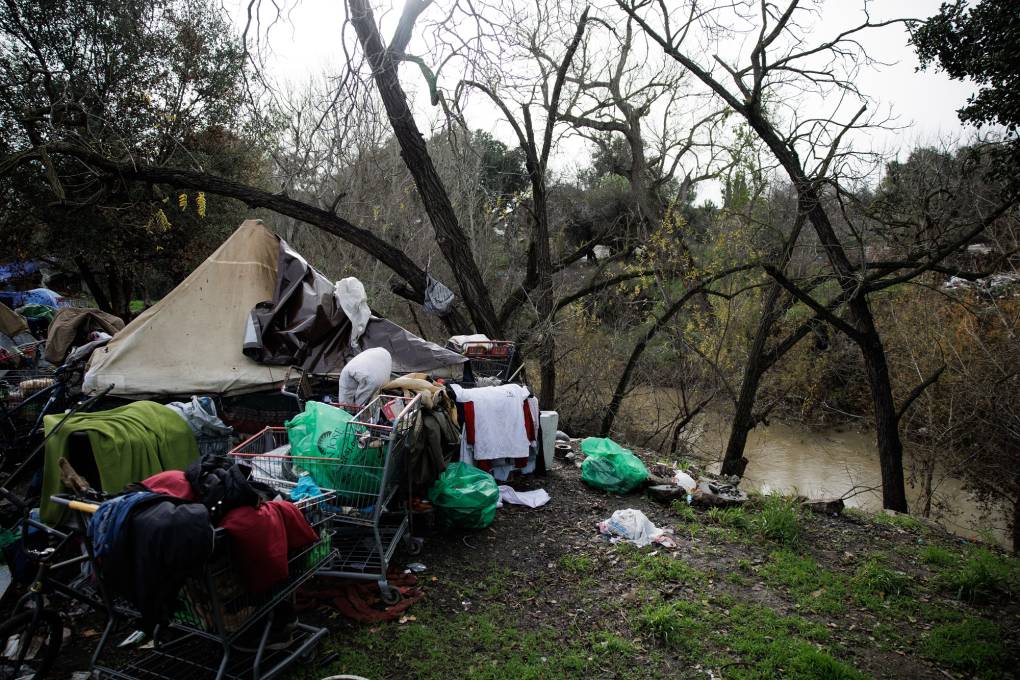
"caption": "Clusters of tents belonging to unhoused residents line the banks of Coyote Creek near Tully Road on Jan. 4, 2023, in San José, California. ",
"credit": "Dai Sugano/MediaNews Group/The Mercury News via Getty Images",
"altTag": null,
"description": null,
"imgSizes": {
"medium": {
"file": "https://cdn.kqed.org/wp-content/uploads/sites/10/2024/11/SantaClaraCountyHomelessnessGetty1-800x533.jpg",
"width": 800,
"height": 533,
"mimeType": "image/jpeg"
},
"large": {
"file": "https://cdn.kqed.org/wp-content/uploads/sites/10/2024/11/SantaClaraCountyHomelessnessGetty1-1020x680.jpg",
"width": 1020,
"height": 680,
"mimeType": "image/jpeg"
},
"thumbnail": {
"file": "https://cdn.kqed.org/wp-content/uploads/sites/10/2024/11/SantaClaraCountyHomelessnessGetty1-160x107.jpg",
"width": 160,
"height": 107,
"mimeType": "image/jpeg"
},
"1536x1536": {
"file": "https://cdn.kqed.org/wp-content/uploads/sites/10/2024/11/SantaClaraCountyHomelessnessGetty1-1536x1024.jpg",
"width": 1536,
"height": 1024,
"mimeType": "image/jpeg"
},
"post-thumbnail": {
"file": "https://cdn.kqed.org/wp-content/uploads/sites/10/2024/11/SantaClaraCountyHomelessnessGetty1-672x372.jpg",
"width": 672,
"height": 372,
"mimeType": "image/jpeg"
},
"twentyfourteen-full-width": {
"file": "https://cdn.kqed.org/wp-content/uploads/sites/10/2024/11/SantaClaraCountyHomelessnessGetty1-1038x576.jpg",
"width": 1038,
"height": 576,
"mimeType": "image/jpeg"
},
"full-width": {
"file": "https://cdn.kqed.org/wp-content/uploads/sites/10/2024/11/SantaClaraCountyHomelessnessGetty1-1920x1280.jpg",
"width": 1920,
"height": 1280,
"mimeType": "image/jpeg"
},
"kqedFullSize": {
"file": "https://cdn.kqed.org/wp-content/uploads/sites/10/2024/11/SantaClaraCountyHomelessnessGetty1.jpg",
"width": 2000,
"height": 1333
}
},
"isLoading": false,
"fetchFailed": false
},
"news_12026494": {
"type": "attachments",
"id": "news_12026494",
"meta": {
"index": "attachments_1716263798",
"site": "news",
"id": "12026494",
"found": true
},
"title": "20250210_Unhoused-Ban_DMB_00250",
"publishDate": 1739225401,
"status": "inherit",
"parent": 0,
"modified": 1739391190,
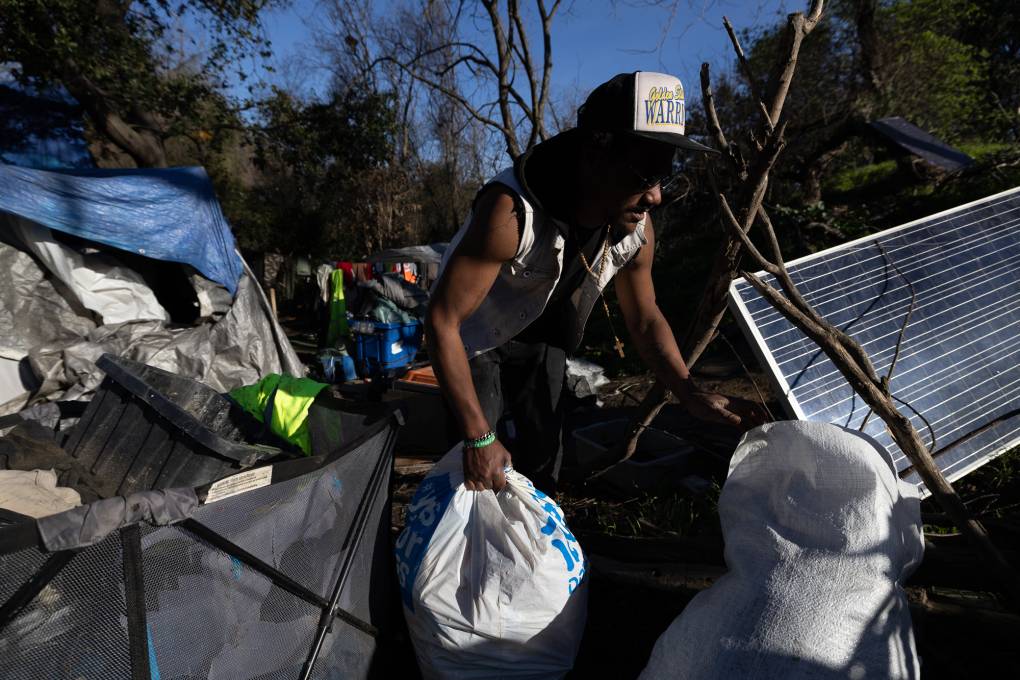
"caption": "Devante Booth works to clean up the area of his makeshift shelter near Quarry Lakes Drive in Fremont, California, on Monday, Feb. 10, 2025. Booth says he grew up in the system after his mother put him in a tub of boiling water at the age of 3. \"We don't choose to live like this,\" Booth says. On Feb. 11, 2025, Fremont city leaders are expected to vote on a proposed public camping ban that extends punishment beyond those living on the streets to people who facilitate or conceal encampments in what is being described as a first-in-the-state ban.",
"credit": "David M. Barreda/KQED",
"altTag": null,
"description": null,
"imgSizes": {
"medium": {
"file": "https://cdn.kqed.org/wp-content/uploads/sites/10/2025/02/20250210_Unhoused-Ban_DMB_00250-800x533.jpg",
"width": 800,
"height": 533,
"mimeType": "image/jpeg"
},
"large": {
"file": "https://cdn.kqed.org/wp-content/uploads/sites/10/2025/02/20250210_Unhoused-Ban_DMB_00250-1020x680.jpg",
"width": 1020,
"height": 680,
"mimeType": "image/jpeg"
},
"thumbnail": {
"file": "https://cdn.kqed.org/wp-content/uploads/sites/10/2025/02/20250210_Unhoused-Ban_DMB_00250-160x107.jpg",
"width": 160,
"height": 107,
"mimeType": "image/jpeg"
},
"1536x1536": {
"file": "https://cdn.kqed.org/wp-content/uploads/sites/10/2025/02/20250210_Unhoused-Ban_DMB_00250-1536x1024.jpg",
"width": 1536,
"height": 1024,
"mimeType": "image/jpeg"
},
"post-thumbnail": {
"file": "https://cdn.kqed.org/wp-content/uploads/sites/10/2025/02/20250210_Unhoused-Ban_DMB_00250-672x372.jpg",
"width": 672,
"height": 372,
"mimeType": "image/jpeg"
},
"twentyfourteen-full-width": {
"file": "https://cdn.kqed.org/wp-content/uploads/sites/10/2025/02/20250210_Unhoused-Ban_DMB_00250-1038x576.jpg",
"width": 1038,
"height": 576,
"mimeType": "image/jpeg"
},
"full-width": {
"file": "https://cdn.kqed.org/wp-content/uploads/sites/10/2025/02/20250210_Unhoused-Ban_DMB_00250-1920x1280.jpg",
"width": 1920,
"height": 1280,
"mimeType": "image/jpeg"
},
"kqedFullSize": {
"file": "https://cdn.kqed.org/wp-content/uploads/sites/10/2025/02/20250210_Unhoused-Ban_DMB_00250.jpg",
"width": 2000,
"height": 1333
}
},
"isLoading": false,
"fetchFailed": false
},
"news_12026688": {
"type": "attachments",
"id": "news_12026688",
"meta": {
"index": "attachments_1716263798",
"site": "news",
"id": "12026688",
"found": true
},
"title": "240109-CAWindStorm-042_qed",
"publishDate": 1739323895,
"status": "inherit",
"parent": 12026682,
"modified": 1739323937,
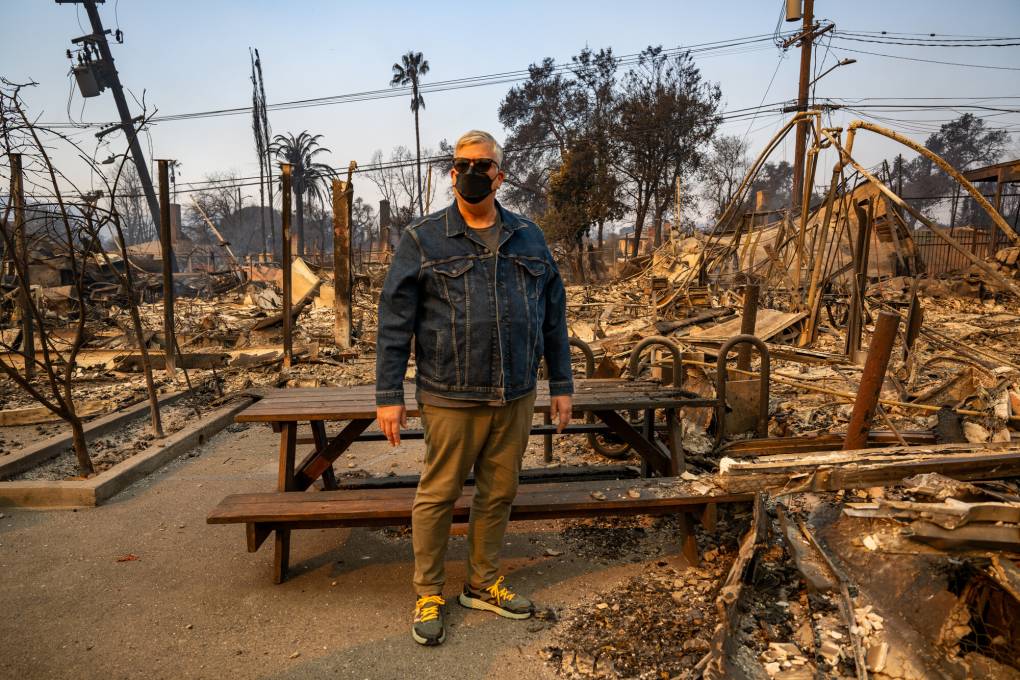
"caption": "Brad Eberhard stands near what remains of Alto Beta, an art gallery, in Altadena, California, after the Eaton Fire destroyed much of the area northeast of Los Angeles, California, on Jan. 9, 2025.",
"credit": "Beth LaBerge/KQED",
"altTag": null,
"description": null,
"imgSizes": {
"medium": {
"file": "https://cdn.kqed.org/wp-content/uploads/sites/10/2025/02/240109-CAWindStorm-042_qed-800x533.jpg",
"width": 800,
"height": 533,
"mimeType": "image/jpeg"
},
"large": {
"file": "https://cdn.kqed.org/wp-content/uploads/sites/10/2025/02/240109-CAWindStorm-042_qed-1020x680.jpg",
"width": 1020,
"height": 680,
"mimeType": "image/jpeg"
},
"thumbnail": {
"file": "https://cdn.kqed.org/wp-content/uploads/sites/10/2025/02/240109-CAWindStorm-042_qed-160x107.jpg",
"width": 160,
"height": 107,
"mimeType": "image/jpeg"
},
"1536x1536": {
"file": "https://cdn.kqed.org/wp-content/uploads/sites/10/2025/02/240109-CAWindStorm-042_qed-1536x1024.jpg",
"width": 1536,
"height": 1024,
"mimeType": "image/jpeg"
},
"post-thumbnail": {
"file": "https://cdn.kqed.org/wp-content/uploads/sites/10/2025/02/240109-CAWindStorm-042_qed-672x372.jpg",
"width": 672,
"height": 372,
"mimeType": "image/jpeg"
},
"twentyfourteen-full-width": {
"file": "https://cdn.kqed.org/wp-content/uploads/sites/10/2025/02/240109-CAWindStorm-042_qed-1038x576.jpg",
"width": 1038,
"height": 576,
"mimeType": "image/jpeg"
},
"full-width": {
"file": "https://cdn.kqed.org/wp-content/uploads/sites/10/2025/02/240109-CAWindStorm-042_qed-1920x1280.jpg",
"width": 1920,
"height": 1280,
"mimeType": "image/jpeg"
},
"kqedFullSize": {
"file": "https://cdn.kqed.org/wp-content/uploads/sites/10/2025/02/240109-CAWindStorm-042_qed.jpg",
"width": 2000,
"height": 1333
}
},
"isLoading": false,
"fetchFailed": false
},
"news_12026672": {
"type": "attachments",
"id": "news_12026672",
"meta": {
"index": "attachments_1716263798",
"site": "news",
"id": "12026672",
"found": true
},
"title": "014_KQED_LagunaHondaHospital_01312023_qed",
"publishDate": 1739320054,
"status": "inherit",
"parent": 12026662,
"modified": 1739320078,
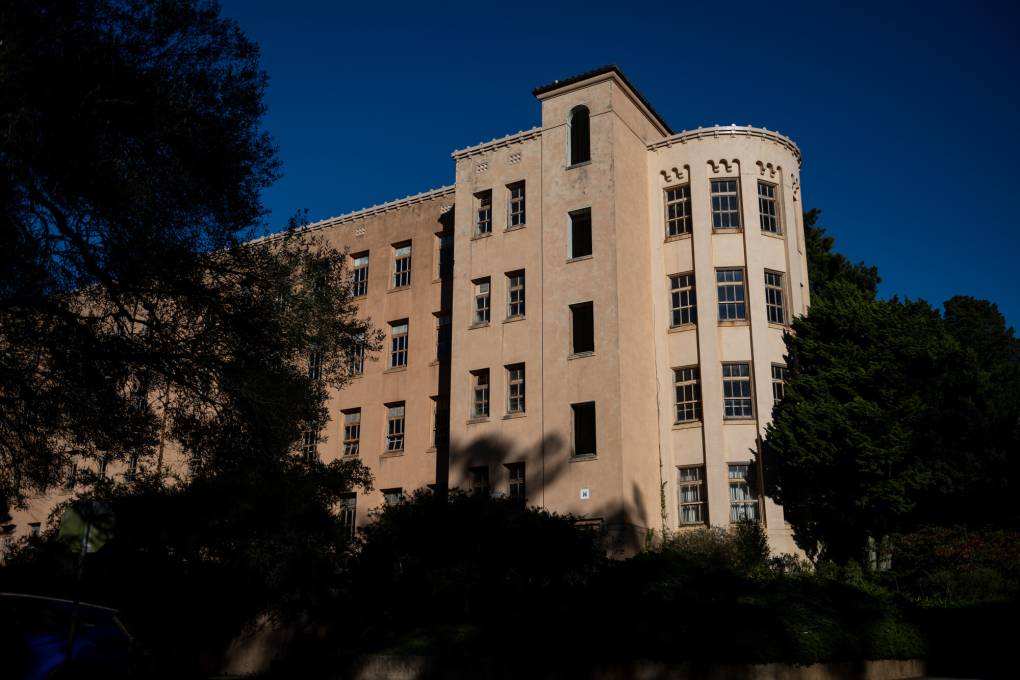
"caption": "San Francisco’s largest skilled nursing facility, Laguna Honda, has hundreds of beds available as the city scrambles to open various health care beds across the city. ",
"credit": "Beth LaBerge/KQED",
"altTag": null,
"description": null,
"imgSizes": {
"medium": {
"file": "https://cdn.kqed.org/wp-content/uploads/sites/10/2025/02/014_KQED_LagunaHondaHospital_01312023_qed-800x533.jpg",
"width": 800,
"height": 533,
"mimeType": "image/jpeg"
},
"large": {
"file": "https://cdn.kqed.org/wp-content/uploads/sites/10/2025/02/014_KQED_LagunaHondaHospital_01312023_qed-1020x680.jpg",
"width": 1020,
"height": 680,
"mimeType": "image/jpeg"
},
"thumbnail": {
"file": "https://cdn.kqed.org/wp-content/uploads/sites/10/2025/02/014_KQED_LagunaHondaHospital_01312023_qed-160x107.jpg",
"width": 160,
"height": 107,
"mimeType": "image/jpeg"
},
"1536x1536": {
"file": "https://cdn.kqed.org/wp-content/uploads/sites/10/2025/02/014_KQED_LagunaHondaHospital_01312023_qed-1536x1024.jpg",
"width": 1536,
"height": 1024,
"mimeType": "image/jpeg"
},
"post-thumbnail": {
"file": "https://cdn.kqed.org/wp-content/uploads/sites/10/2025/02/014_KQED_LagunaHondaHospital_01312023_qed-672x372.jpg",
"width": 672,
"height": 372,
"mimeType": "image/jpeg"
},
"twentyfourteen-full-width": {
"file": "https://cdn.kqed.org/wp-content/uploads/sites/10/2025/02/014_KQED_LagunaHondaHospital_01312023_qed-1038x576.jpg",
"width": 1038,
"height": 576,
"mimeType": "image/jpeg"
},
"full-width": {
"file": "https://cdn.kqed.org/wp-content/uploads/sites/10/2025/02/014_KQED_LagunaHondaHospital_01312023_qed-1920x1280.jpg",
"width": 1920,
"height": 1280,
"mimeType": "image/jpeg"
},
"kqedFullSize": {
"file": "https://cdn.kqed.org/wp-content/uploads/sites/10/2025/02/014_KQED_LagunaHondaHospital_01312023_qed.jpg",
"width": 2000,
"height": 1333
}
},
"isLoading": false,
"fetchFailed": false
},
"news_12026493": {
"type": "attachments",
"id": "news_12026493",
"meta": {
"index": "attachments_1716263798",
"site": "news",
"id": "12026493",
"found": true
},
"title": "20250210_Unhoused-Ban_DMB_00117",
"publishDate": 1739225395,
"status": "inherit",
"parent": 12026580,
"modified": 1739385117,
"caption": "Jasmine Grijalva poses for a portrait near Quarry Lakes Drive in Fremont, California, on Monday, Feb. 10, 2025. Grijalva has been unhoused since moving from the Central Valley to the Bay Area in June 2020. On Feb. 11, 2025, Fremont city leaders are expected to vote on a proposed public camping ban that extends punishment beyond those living on the streets to people who facilitate or conceal encampments in what is described as a first-in-the-state ban.",
"credit": "David M. Barreda/KQED",
"altTag": null,
"description": null,
"imgSizes": {
"medium": {
"file": "https://cdn.kqed.org/wp-content/uploads/sites/10/2025/02/20250210_Unhoused-Ban_DMB_00117-800x533.jpg",
"width": 800,
"height": 533,
"mimeType": "image/jpeg"
},
"large": {
"file": "https://cdn.kqed.org/wp-content/uploads/sites/10/2025/02/20250210_Unhoused-Ban_DMB_00117-1020x680.jpg",
"width": 1020,
"height": 680,
"mimeType": "image/jpeg"
},
"thumbnail": {
"file": "https://cdn.kqed.org/wp-content/uploads/sites/10/2025/02/20250210_Unhoused-Ban_DMB_00117-160x107.jpg",
"width": 160,
"height": 107,
"mimeType": "image/jpeg"
},
"1536x1536": {
"file": "https://cdn.kqed.org/wp-content/uploads/sites/10/2025/02/20250210_Unhoused-Ban_DMB_00117-1536x1024.jpg",
"width": 1536,
"height": 1024,
"mimeType": "image/jpeg"
},
"post-thumbnail": {
"file": "https://cdn.kqed.org/wp-content/uploads/sites/10/2025/02/20250210_Unhoused-Ban_DMB_00117-672x372.jpg",
"width": 672,
"height": 372,
"mimeType": "image/jpeg"
},
"twentyfourteen-full-width": {
"file": "https://cdn.kqed.org/wp-content/uploads/sites/10/2025/02/20250210_Unhoused-Ban_DMB_00117-1038x576.jpg",
"width": 1038,
"height": 576,
"mimeType": "image/jpeg"
},
"full-width": {
"file": "https://cdn.kqed.org/wp-content/uploads/sites/10/2025/02/20250210_Unhoused-Ban_DMB_00117-1920x1280.jpg",
"width": 1920,
"height": 1280,
"mimeType": "image/jpeg"
},
"kqedFullSize": {
"file": "https://cdn.kqed.org/wp-content/uploads/sites/10/2025/02/20250210_Unhoused-Ban_DMB_00117.jpg",
"width": 2000,
"height": 1333
}
},
"isLoading": false,
"fetchFailed": false
},
"news_12026470": {
"type": "attachments",
"id": "news_12026470",
"meta": {
"index": "attachments_1716263798",
"site": "news",
"id": "12026470",
"found": true
},
"title": "240620-AffordableHousingPresser-16-BL_qed",
"publishDate": 1739218616,
"status": "inherit",
"parent": 12026437,
"modified": 1739218629,
"caption": "San José Mayor Matt Mahan speaks during a press conference in support of a regional affordable housing measure at Five88, a mixed-use residential and retail property, in the Mission Bay neighborhood in San Francisco on June 20, 2024.",
"credit": "Beth LaBerge/KQED",
"altTag": null,
"description": null,
"imgSizes": {
"medium": {
"file": "https://cdn.kqed.org/wp-content/uploads/sites/10/2025/02/240620-AffordableHousingPresser-16-BL_qed-800x533.jpg",
"width": 800,
"height": 533,
"mimeType": "image/jpeg"
},
"large": {
"file": "https://cdn.kqed.org/wp-content/uploads/sites/10/2025/02/240620-AffordableHousingPresser-16-BL_qed-1020x680.jpg",
"width": 1020,
"height": 680,
"mimeType": "image/jpeg"
},
"thumbnail": {
"file": "https://cdn.kqed.org/wp-content/uploads/sites/10/2025/02/240620-AffordableHousingPresser-16-BL_qed-160x107.jpg",
"width": 160,
"height": 107,
"mimeType": "image/jpeg"
},
"1536x1536": {
"file": "https://cdn.kqed.org/wp-content/uploads/sites/10/2025/02/240620-AffordableHousingPresser-16-BL_qed-1536x1024.jpg",
"width": 1536,
"height": 1024,
"mimeType": "image/jpeg"
},
"post-thumbnail": {
"file": "https://cdn.kqed.org/wp-content/uploads/sites/10/2025/02/240620-AffordableHousingPresser-16-BL_qed-672x372.jpg",
"width": 672,
"height": 372,
"mimeType": "image/jpeg"
},
"twentyfourteen-full-width": {
"file": "https://cdn.kqed.org/wp-content/uploads/sites/10/2025/02/240620-AffordableHousingPresser-16-BL_qed-1038x576.jpg",
"width": 1038,
"height": 576,
"mimeType": "image/jpeg"
},
"full-width": {
"file": "https://cdn.kqed.org/wp-content/uploads/sites/10/2025/02/240620-AffordableHousingPresser-16-BL_qed-1920x1280.jpg",
"width": 1920,
"height": 1280,
"mimeType": "image/jpeg"
},
"kqedFullSize": {
"file": "https://cdn.kqed.org/wp-content/uploads/sites/10/2025/02/240620-AffordableHousingPresser-16-BL_qed.jpg",
"width": 2000,
"height": 1333
}
},
"isLoading": false,
"fetchFailed": false
},
"news_12026008": {
"type": "attachments",
"id": "news_12026008",
"meta": {
"index": "attachments_1716263798",
"site": "news",
"id": "12026008",
"found": true
},
"title": "IMG_6303",
"publishDate": 1738874080,
"status": "inherit",
"parent": 0,
"modified": 1738874322,
"caption": "Maile, 11, views her home for the first time since it was destroyed by the Eaton Fire.",
"credit": "Courtesy of Chumi Paul ",
"altTag": null,
"description": null,
"imgSizes": {
"medium": {
"file": "https://cdn.kqed.org/wp-content/uploads/sites/10/2025/02/IMG_6303-800x600.jpg",
"width": 800,
"height": 600,
"mimeType": "image/jpeg"
},
"large": {
"file": "https://cdn.kqed.org/wp-content/uploads/sites/10/2025/02/IMG_6303-1020x765.jpg",
"width": 1020,
"height": 765,
"mimeType": "image/jpeg"
},
"thumbnail": {
"file": "https://cdn.kqed.org/wp-content/uploads/sites/10/2025/02/IMG_6303-160x120.jpg",
"width": 160,
"height": 120,
"mimeType": "image/jpeg"
},
"1536x1536": {
"file": "https://cdn.kqed.org/wp-content/uploads/sites/10/2025/02/IMG_6303-1536x1152.jpg",
"width": 1536,
"height": 1152,
"mimeType": "image/jpeg"
},
"post-thumbnail": {
"file": "https://cdn.kqed.org/wp-content/uploads/sites/10/2025/02/IMG_6303-672x372.jpg",
"width": 672,
"height": 372,
"mimeType": "image/jpeg"
},
"twentyfourteen-full-width": {
"file": "https://cdn.kqed.org/wp-content/uploads/sites/10/2025/02/IMG_6303-1038x576.jpg",
"width": 1038,
"height": 576,
"mimeType": "image/jpeg"
},
"full-width": {
"file": "https://cdn.kqed.org/wp-content/uploads/sites/10/2025/02/IMG_6303-1920x1440.jpg",
"width": 1920,
"height": 1440,
"mimeType": "image/jpeg"
},
"kqedFullSize": {
"file": "https://cdn.kqed.org/wp-content/uploads/sites/10/2025/02/IMG_6303.jpg",
"width": 2000,
"height": 1500
}
},
"isLoading": false,
"fetchFailed": false
},
"news_12026074": {
"type": "attachments",
"id": "news_12026074",
"meta": {
"index": "attachments_1716263798",
"site": "news",
"id": "12026074",
"found": true
},
"title": "MPFD0580",
"publishDate": 1738885957,
"status": "inherit",
"parent": 0,
"modified": 1738886389,
"caption": "The cause of a massive fire last year at an affordable housing complex that was under construction near Redwood City is undetermined, fire officials said after finishing their investigation.",
"credit": "Courtesy of Menlo Park Fire Protection District",
"altTag": null,
"description": null,
"imgSizes": {
"medium": {
"file": "https://cdn.kqed.org/wp-content/uploads/sites/10/2025/02/MPFD0580-800x533.jpg",
"width": 800,
"height": 533,
"mimeType": "image/jpeg"
},
"large": {
"file": "https://cdn.kqed.org/wp-content/uploads/sites/10/2025/02/MPFD0580-1020x680.jpg",
"width": 1020,
"height": 680,
"mimeType": "image/jpeg"
},
"thumbnail": {
"file": "https://cdn.kqed.org/wp-content/uploads/sites/10/2025/02/MPFD0580-160x107.jpg",
"width": 160,
"height": 107,
"mimeType": "image/jpeg"
},
"1536x1536": {
"file": "https://cdn.kqed.org/wp-content/uploads/sites/10/2025/02/MPFD0580-1536x1024.jpg",
"width": 1536,
"height": 1024,
"mimeType": "image/jpeg"
},
"post-thumbnail": {
"file": "https://cdn.kqed.org/wp-content/uploads/sites/10/2025/02/MPFD0580-672x372.jpg",
"width": 672,
"height": 372,
"mimeType": "image/jpeg"
},
"twentyfourteen-full-width": {
"file": "https://cdn.kqed.org/wp-content/uploads/sites/10/2025/02/MPFD0580-1038x576.jpg",
"width": 1038,
"height": 576,
"mimeType": "image/jpeg"
},
"full-width": {
"file": "https://cdn.kqed.org/wp-content/uploads/sites/10/2025/02/MPFD0580-1920x1280.jpg",
"width": 1920,
"height": 1280,
"mimeType": "image/jpeg"
},
"kqedFullSize": {
"file": "https://cdn.kqed.org/wp-content/uploads/sites/10/2025/02/MPFD0580.jpg",
"width": 2000,
"height": 1333
}
},
"isLoading": false,
"fetchFailed": false
},
"news_12024374": {
"type": "attachments",
"id": "news_12024374",
"meta": {
"index": "attachments_1716263798",
"site": "news",
"id": "12024374",
"found": true
},
"title": "20250128_RichmondInspections_GC-42",
"publishDate": 1738094110,
"status": "inherit",
"parent": 0,
"modified": 1738786500,
"caption": "Zenaida Gomez poses for a photo at her home in Richmond on Jan. 28, 2025. Gomez has been living with mold since she moved into the unit 20 years ago. A new city program requires nearly all rental properties to undergo inspection every three years.",
"credit": "Gina Castro/KQED",
"altTag": null,
"description": null,
"imgSizes": {
"medium": {
"file": "https://cdn.kqed.org/wp-content/uploads/sites/10/2025/01/20250128_RichmondInspections_GC-42-800x533.jpg",
"width": 800,
"height": 533,
"mimeType": "image/jpeg"
},
"large": {
"file": "https://cdn.kqed.org/wp-content/uploads/sites/10/2025/01/20250128_RichmondInspections_GC-42-1020x680.jpg",
"width": 1020,
"height": 680,
"mimeType": "image/jpeg"
},
"thumbnail": {
"file": "https://cdn.kqed.org/wp-content/uploads/sites/10/2025/01/20250128_RichmondInspections_GC-42-160x107.jpg",
"width": 160,
"height": 107,
"mimeType": "image/jpeg"
},
"1536x1536": {
"file": "https://cdn.kqed.org/wp-content/uploads/sites/10/2025/01/20250128_RichmondInspections_GC-42-1536x1024.jpg",
"width": 1536,
"height": 1024,
"mimeType": "image/jpeg"
},
"post-thumbnail": {
"file": "https://cdn.kqed.org/wp-content/uploads/sites/10/2025/01/20250128_RichmondInspections_GC-42-672x372.jpg",
"width": 672,
"height": 372,
"mimeType": "image/jpeg"
},
"twentyfourteen-full-width": {
"file": "https://cdn.kqed.org/wp-content/uploads/sites/10/2025/01/20250128_RichmondInspections_GC-42-1038x576.jpg",
"width": 1038,
"height": 576,
"mimeType": "image/jpeg"
},
"full-width": {
"file": "https://cdn.kqed.org/wp-content/uploads/sites/10/2025/01/20250128_RichmondInspections_GC-42-1920x1280.jpg",
"width": 1920,
"height": 1280,
"mimeType": "image/jpeg"
},
"kqedFullSize": {
"file": "https://cdn.kqed.org/wp-content/uploads/sites/10/2025/01/20250128_RichmondInspections_GC-42.jpg",
"width": 2000,
"height": 1333
}
},
"isLoading": false,
"fetchFailed": false
},
"news_11992401": {
"type": "attachments",
"id": "news_11992401",
"meta": {
"index": "attachments_1716263798",
"site": "news",
"id": "11992401",
"found": true
},
"title": "Statefarm Raises California Homeowners Insurance Rate By 20 Percent",
"publishDate": 1719602110,
"status": "inherit",
"parent": 11992399,
"modified": 1738616690,
"caption": "A sign is posted in front of a State Farm insurance office on Jan. 3, 2024, in Berkeley, California.",
"credit": "Justin Sullivan/Getty Images",
"altTag": null,
"description": null,
"imgSizes": {
"medium": {
"file": "https://cdn.kqed.org/wp-content/uploads/sites/10/2024/06/StateFarmInsuranceCalifornia01-800x533.jpg",
"width": 800,
"height": 533,
"mimeType": "image/jpeg"
},
"large": {
"file": "https://cdn.kqed.org/wp-content/uploads/sites/10/2024/06/StateFarmInsuranceCalifornia01-1020x680.jpg",
"width": 1020,
"height": 680,
"mimeType": "image/jpeg"
},
"thumbnail": {
"file": "https://cdn.kqed.org/wp-content/uploads/sites/10/2024/06/StateFarmInsuranceCalifornia01-160x107.jpg",
"width": 160,
"height": 107,
"mimeType": "image/jpeg"
},
"1536x1536": {
"file": "https://cdn.kqed.org/wp-content/uploads/sites/10/2024/06/StateFarmInsuranceCalifornia01-1536x1024.jpg",
"width": 1536,
"height": 1024,
"mimeType": "image/jpeg"
},
"post-thumbnail": {
"file": "https://cdn.kqed.org/wp-content/uploads/sites/10/2024/06/StateFarmInsuranceCalifornia01-672x372.jpg",
"width": 672,
"height": 372,
"mimeType": "image/jpeg"
},
"twentyfourteen-full-width": {
"file": "https://cdn.kqed.org/wp-content/uploads/sites/10/2024/06/StateFarmInsuranceCalifornia01-1038x576.jpg",
"width": 1038,
"height": 576,
"mimeType": "image/jpeg"
},
"full-width": {
"file": "https://cdn.kqed.org/wp-content/uploads/sites/10/2024/06/StateFarmInsuranceCalifornia01-1920x1280.jpg",
"width": 1920,
"height": 1280,
"mimeType": "image/jpeg"
},
"kqedFullSize": {
"file": "https://cdn.kqed.org/wp-content/uploads/sites/10/2024/06/StateFarmInsuranceCalifornia01.jpg",
"width": 2000,
"height": 1333
}
},
"isLoading": false,
"fetchFailed": false
},
"news_12025143": {
"type": "attachments",
"id": "news_12025143",
"meta": {
"index": "attachments_1716263798",
"site": "news",
"id": "12025143",
"found": true
},
"title": "230809-SoldOutParadise-59-BL_qed",
"publishDate": 1738359140,
"status": "inherit",
"parent": 12025125,
"modified": 1738359182,
"caption": "A memorial says, 'Faith, Hope, Paradise,' in Paradise, Butte County, on Aug. 9, 2023. The Camp Fire, a deadly fire destroying much of the towns of Paradise and Concow, swept through the area in 2018.",
"credit": "Beth LaBerge/KQED",
"altTag": null,
"description": null,
"imgSizes": {
"medium": {
"file": "https://cdn.kqed.org/wp-content/uploads/sites/10/2025/02/230809-SoldOutParadise-59-BL_qed-800x533.jpg",
"width": 800,
"height": 533,
"mimeType": "image/jpeg"
},
"large": {
"file": "https://cdn.kqed.org/wp-content/uploads/sites/10/2025/02/230809-SoldOutParadise-59-BL_qed-1020x680.jpg",
"width": 1020,
"height": 680,
"mimeType": "image/jpeg"
},
"thumbnail": {
"file": "https://cdn.kqed.org/wp-content/uploads/sites/10/2025/02/230809-SoldOutParadise-59-BL_qed-160x107.jpg",
"width": 160,
"height": 107,
"mimeType": "image/jpeg"
},
"1536x1536": {
"file": "https://cdn.kqed.org/wp-content/uploads/sites/10/2025/02/230809-SoldOutParadise-59-BL_qed-1536x1024.jpg",
"width": 1536,
"height": 1024,
"mimeType": "image/jpeg"
},
"post-thumbnail": {
"file": "https://cdn.kqed.org/wp-content/uploads/sites/10/2025/02/230809-SoldOutParadise-59-BL_qed-672x372.jpg",
"width": 672,
"height": 372,
"mimeType": "image/jpeg"
},
"twentyfourteen-full-width": {
"file": "https://cdn.kqed.org/wp-content/uploads/sites/10/2025/02/230809-SoldOutParadise-59-BL_qed-1038x576.jpg",
"width": 1038,
"height": 576,
"mimeType": "image/jpeg"
},
"full-width": {
"file": "https://cdn.kqed.org/wp-content/uploads/sites/10/2025/02/230809-SoldOutParadise-59-BL_qed-1920x1280.jpg",
"width": 1920,
"height": 1280,
"mimeType": "image/jpeg"
},
"kqedFullSize": {
"file": "https://cdn.kqed.org/wp-content/uploads/sites/10/2025/02/230809-SoldOutParadise-59-BL_qed.jpg",
"width": 2000,
"height": 1333
}
},
"isLoading": false,
"fetchFailed": false
}
},
"audioPlayerReducer": {
"postId": "stream_live",
"isPaused": true,
"isPlaying": false,
"pfsActive": false,
"pledgeModalIsOpen": true,
"playerDrawerIsOpen": false,
"liveAudioPlayStartedAt": 0,
"liveAudioPlayContext": ""
},
"authorsReducer": {
"gmarzorati": {
"type": "authors",
"id": "227",
"meta": {
"index": "authors_1716337520",
"id": "227",
"found": true
},
"name": "Guy Marzorati",
"firstName": "Guy",
"lastName": "Marzorati",
"slug": "gmarzorati",
"email": "gmarzorati@KQED.org",
"display_author_email": true,
"staff_mastheads": [
"news"
],
"title": "Correspondent",
"bio": "Guy Marzorati is a correspondent on KQED's California Politics and Government Desk, based in San Jose. A graduate of Santa Clara University, Guy joined KQED in 2013. He reports on state and local politics and produces KQED's digital voter guide.",
"avatar": "https://secure.gravatar.com/avatar/e7038b8dbfd55b104369b76b1cd0b9de?s=600&d=blank&r=g",
"twitter": "guymarzorati",
"facebook": null,
"instagram": null,
"linkedin": null,
"sites": [
{
"site": "",
"roles": [
"editor"
]
},
{
"site": "news",
"roles": [
"editor"
]
},
{
"site": "science",
"roles": [
"editor"
]
},
{
"site": "forum",
"roles": [
"editor"
]
},
{
"site": "elections",
"roles": [
"editor"
]
},
{
"site": "liveblog",
"roles": [
"editor"
]
}
],
"headData": {
"title": "Guy Marzorati | KQED",
"description": "Correspondent",
"ogImgSrc": "https://secure.gravatar.com/avatar/e7038b8dbfd55b104369b76b1cd0b9de?s=600&d=blank&r=g",
"twImgSrc": "https://secure.gravatar.com/avatar/e7038b8dbfd55b104369b76b1cd0b9de?s=600&d=blank&r=g"
},
"isLoading": false,
"link": "/author/gmarzorati"
},
"minakim": {
"type": "authors",
"id": "243",
"meta": {
"index": "authors_1716337520",
"id": "243",
"found": true
},
"name": "Mina Kim",
"firstName": "Mina",
"lastName": "Kim",
"slug": "minakim",
"email": "mkim@kqed.org",
"display_author_email": false,
"staff_mastheads": [
"news"
],
"title": "Host, Forum",
"bio": "Mina Kim is host of the 10 a.m. statewide hour of Forum; a live daily talk show for curious Californians on issues that matter to the state and nation, with a particular emphasis on race and equity.\r\n\r\nBefore joining the Forum team, Mina was KQED’s evening news anchor, and health reporter for The California Report. Her award-winning work has included natural disasters in Napa and gun violence in Oakland. Mina grew up in St. John’s, Newfoundland.",
"avatar": "https://secure.gravatar.com/avatar/145ce657a2d08cb86d93686beb958982?s=600&d=blank&r=g",
"twitter": "mkimreporter",
"facebook": null,
"instagram": null,
"linkedin": null,
"sites": [
{
"site": "news",
"roles": [
"contributor"
]
},
{
"site": "stateofhealth",
"roles": [
"author"
]
},
{
"site": "forum",
"roles": [
"editor"
]
}
],
"headData": {
"title": "Mina Kim | KQED",
"description": "Host, Forum",
"ogImgSrc": "https://secure.gravatar.com/avatar/145ce657a2d08cb86d93686beb958982?s=600&d=blank&r=g",
"twImgSrc": "https://secure.gravatar.com/avatar/145ce657a2d08cb86d93686beb958982?s=600&d=blank&r=g"
},
"isLoading": false,
"link": "/author/minakim"
},
"rachael-myrow": {
"type": "authors",
"id": "251",
"meta": {
"index": "authors_1716337520",
"id": "251",
"found": true
},
"name": "Rachael Myrow",
"firstName": "Rachael",
"lastName": "Myrow",
"slug": "rachael-myrow",
"email": "rmyrow@kqed.org",
"display_author_email": true,
"staff_mastheads": [
"news"
],
"title": "Senior Editor of KQED's Silicon Valley News Desk",
"bio": "• I write and edit stories about how Silicon Valley power and policies shape everyday life in California. I’m also passionate about making Bay Area history and culture more accessible to a broad public. • I’ve been a journalist for most of my life, starting in high school with The Franklin Press in Los Angeles, where I grew up. While earning my first degree in English at UC Berkeley, I got my start in public radio at KALX-FM. After completing a second degree in journalism at Cal, I landed my first professional job at Marketplace, then moved on to KPCC (now LAist), and then KQED, where I hosted The California Report for more than seven years. • My reporting has appeared on NPR, The World, WBUR’s \u003ci>Here & Now\u003c/i>, and the BBC. I also guest host for KQED’s \u003ci>Forum\u003c/i>, as well as the Commonwealth Club in San Francisco. • I speak periodically on media, democracy and technology issues, and do voiceover work for documentaries and educational video projects. • Outside of the studio, you'll find me hiking Bay Area trails and whipping up Insta-ready meals in my kitchen. • I do not accept gifts, money, or favors from anyone connected to my reporting, I don't pay people for information, and I do not support or donate to political causes. • I strive to treat the people I report on with fairness, honesty, and respect. I also recognize there are often multiple sides to a story and work to verify information through multiple sources and documentation. If I get something wrong, I correct it.",
"avatar": "https://secure.gravatar.com/avatar/3ed8a3c5f26025e4a805ba634cda8cd764906b97438a6d9ce216b044e340da4e?s=600&d=blank&r=g",
"twitter": "rachaelmyrow",
"bluesky": null,
"facebook": null,
"instagram": null,
"linkedin": "https://www.linkedin.com/in/rachaelmyrow/",
"sites": [
{
"site": "arts",
"roles": [
"administrator"
]
},
{
"site": "news",
"roles": [
"edit_others_posts",
"editor"
]
},
{
"site": "futureofyou",
"roles": [
"editor"
]
},
{
"site": "bayareabites",
"roles": [
"editor"
]
},
{
"site": "stateofhealth",
"roles": [
"editor"
]
},
{
"site": "science",
"roles": [
"editor"
]
},
{
"site": "food",
"roles": [
"editor"
]
},
{
"site": "forum",
"roles": [
"editor"
]
},
{
"site": "liveblog",
"roles": [
"author"
]
}
],
"headData": {
"title": "Rachael Myrow | KQED",
"description": "Senior Editor of KQED's Silicon Valley News Desk",
"ogImgSrc": "https://secure.gravatar.com/avatar/3ed8a3c5f26025e4a805ba634cda8cd764906b97438a6d9ce216b044e340da4e?s=600&d=blank&r=g",
"twImgSrc": "https://secure.gravatar.com/avatar/3ed8a3c5f26025e4a805ba634cda8cd764906b97438a6d9ce216b044e340da4e?s=600&d=blank&r=g"
},
"isLoading": false,
"link": "/author/rachael-myrow"
},
"shossaini": {
"type": "authors",
"id": "3214",
"meta": {
"index": "authors_1716337520",
"id": "3214",
"found": true
},
"name": "Sara Hossaini",
"firstName": "Sara",
"lastName": "Hossaini",
"slug": "shossaini",
"email": "shossaini@kqed.org",
"display_author_email": true,
"staff_mastheads": [
"news"
],
"title": "KQED Reporter",
"bio": "Sara Hossaini came to general assignment reporting at KQED in 2013 after two winters reporting at Wyoming Public Radio. She holds a bachelor's degree in broadcast journalism from the University of Nebraska-Lincoln. Her radio romance began after a bitter breakup with documentary film (Ok, maybe it's still complicated). Her first simultaneous jobs in San Francisco were as Associate Producer on a PBS film series through the Center for Asian American Media and as a butler. She likes to trot, plot and make things with her hands.",
"avatar": "https://secure.gravatar.com/avatar/060e9f56b9554e17942e89f413242774?s=600&d=blank&r=g",
"twitter": "mshossaini",
"facebook": null,
"instagram": null,
"linkedin": null,
"sites": [
{
"site": "news",
"roles": [
"author"
]
},
{
"site": "stateofhealth",
"roles": [
"author"
]
}
],
"headData": {
"title": "Sara Hossaini | KQED",
"description": "KQED Reporter",
"ogImgSrc": "https://secure.gravatar.com/avatar/060e9f56b9554e17942e89f413242774?s=600&d=blank&r=g",
"twImgSrc": "https://secure.gravatar.com/avatar/060e9f56b9554e17942e89f413242774?s=600&d=blank&r=g"
},
"isLoading": false,
"link": "/author/shossaini"
},
"lklivans": {
"type": "authors",
"id": "8648",
"meta": {
"index": "authors_1716337520",
"id": "8648",
"found": true
},
"name": "Laura Klivans",
"firstName": "Laura",
"lastName": "Klivans",
"slug": "lklivans",
"email": "lklivans@kqed.org",
"display_author_email": true,
"staff_mastheads": [
"news",
"science"
],
"title": "Reporter",
"bio": "Laura Klivans is an award-winning science reporter for KQED News, where she covers climate change with an eye on both groundbreaking progress and gaps in action. She is the former host of KQED's blockbuster video series about tiny, amazing animals, \u003cem>Deep Look\u003c/em>. Her work reaches national audiences through NPR, \u003cem>Here & Now, \u003c/em>PRI, and other major outlets. \r\n\r\nLaura’s won five Northern California Area Emmy Awards for Deep Look and First Place in the Greater Bay Area Journalism Awards for a podcast exploring how one Oakland neighborhood teamed up to reduce planet-heating pollution.\r\n\r\nBeyond her reporting, she hosts and moderates events. In the past, she taught audio storytelling at the UC Berkeley Graduate School of Journalism, led international education programs, worked with immigrants and refugees along the Thai-Burmese border, taught high schoolers sex ed, and was an actress. \r\n\r\nShe's a former UC Berkeley Human Rights Fellow, USC Center for Health Journalism's California Fellow and Coro Fellow in Public Affairs. Laura has a master’s in journalism from UC Berkeley, a master’s in education from Harvard, and an undergraduate degree from Northwestern University.\r\n\r\nShe loves trying to riddle the meaning out of vanity license plates.",
"avatar": "https://secure.gravatar.com/avatar/2d2ecd1550a494cc10ad4a503406965585902124739e775a9b3817eebf1d88be?s=600&d=blank&r=g",
"twitter": "lauraklivans",
"bluesky": null,
"facebook": null,
"instagram": null,
"linkedin": null,
"sites": [
{
"site": "news",
"roles": [
"editor"
]
},
{
"site": "stateofhealth",
"roles": [
"contributor",
"editor"
]
},
{
"site": "science",
"roles": [
"editor"
]
},
{
"site": "forum",
"roles": [
"editor"
]
}
],
"headData": {
"title": "Laura Klivans | KQED",
"description": "Reporter",
"ogImgSrc": "https://secure.gravatar.com/avatar/2d2ecd1550a494cc10ad4a503406965585902124739e775a9b3817eebf1d88be?s=600&d=blank&r=g",
"twImgSrc": "https://secure.gravatar.com/avatar/2d2ecd1550a494cc10ad4a503406965585902124739e775a9b3817eebf1d88be?s=600&d=blank&r=g"
},
"isLoading": false,
"link": "/author/lklivans"
},
"dventon": {
"type": "authors",
"id": "11088",
"meta": {
"index": "authors_1716337520",
"id": "11088",
"found": true
},
"name": "Danielle Venton",
"firstName": "Danielle",
"lastName": "Venton",
"slug": "dventon",
"email": "dventon@kqed.org",
"display_author_email": true,
"staff_mastheads": [
"science"
],
"title": "Science reporter",
"bio": "Danielle Venton is a reporter for KQED Science. She covers wildfires, space and oceans (though she is prone to sea sickness).\r\n\r\nBefore joining KQED in 2015, Danielle was a staff reporter at KRCB in Sonoma County and a freelancer. She studied science communication at UC Santa Cruz and formerly worked at CERN in Geneva, Switzerland where she wrote about computing. She lives in Sonoma County and enjoys backpacking.",
"avatar": "https://secure.gravatar.com/avatar/37b292b5c40c8d93959c4f48d73b5286f41b7abd8588277e941905a3ed4c801c?s=600&d=blank&r=g",
"twitter": "DanielleVenton",
"bluesky": null,
"facebook": null,
"instagram": null,
"linkedin": null,
"sites": [
{
"site": "arts",
"roles": [
"contributor"
]
},
{
"site": "news",
"roles": [
"editor"
]
},
{
"site": "futureofyou",
"roles": [
"editor"
]
},
{
"site": "science",
"roles": [
"editor"
]
},
{
"site": "liveblog",
"roles": [
"contributor"
]
}
],
"headData": {
"title": "Danielle Venton | KQED",
"description": "Science reporter",
"ogImgSrc": "https://secure.gravatar.com/avatar/37b292b5c40c8d93959c4f48d73b5286f41b7abd8588277e941905a3ed4c801c?s=600&d=blank&r=g",
"twImgSrc": "https://secure.gravatar.com/avatar/37b292b5c40c8d93959c4f48d73b5286f41b7abd8588277e941905a3ed4c801c?s=600&d=blank&r=g"
},
"isLoading": false,
"link": "/author/dventon"
},
"vrancano": {
"type": "authors",
"id": "11276",
"meta": {
"index": "authors_1716337520",
"id": "11276",
"found": true
},
"name": "Vanessa Rancaño",
"firstName": "Vanessa",
"lastName": "Rancaño",
"slug": "vrancano",
"email": "vrancano@kqed.org",
"display_author_email": false,
"staff_mastheads": [
"news"
],
"title": "Reporter",
"bio": "Vanessa Rancaño is a features reporter for KQED. She’s also covered homelessness and education for the station and reported from the Central Valley. Her work has aired across public radio, from flagship national news shows to longform narrative podcasts. Before taking up a mic, she worked as a freelance print journalist. She’s been recognized with a number of national and regional awards. Vanessa grew up in California's Central Valley. She's a former NPR Kroc Fellow, and a graduate of the UC Berkeley Graduate School of Journalism.",
"avatar": "https://secure.gravatar.com/avatar/b3a383dfb0e7ee1c17568f2cf067904ab654d6e3de9743fc661f3c788ade1bed?s=600&d=blank&r=g",
"twitter": "vanessarancano",
"bluesky": null,
"facebook": null,
"instagram": null,
"linkedin": null,
"sites": [
{
"site": "arts",
"roles": [
"editor"
]
},
{
"site": "news",
"roles": [
"editor"
]
},
{
"site": "liveblog",
"roles": [
"contributor"
]
}
],
"headData": {
"title": "Vanessa Rancaño | KQED",
"description": "Reporter",
"ogImgSrc": "https://secure.gravatar.com/avatar/b3a383dfb0e7ee1c17568f2cf067904ab654d6e3de9743fc661f3c788ade1bed?s=600&d=blank&r=g",
"twImgSrc": "https://secure.gravatar.com/avatar/b3a383dfb0e7ee1c17568f2cf067904ab654d6e3de9743fc661f3c788ade1bed?s=600&d=blank&r=g"
},
"isLoading": false,
"link": "/author/vrancano"
},
"csmith": {
"type": "authors",
"id": "11603",
"meta": {
"index": "authors_1716337520",
"id": "11603",
"found": true
},
"name": "Caroline Smith",
"firstName": "Caroline",
"lastName": "Smith",
"slug": "csmith",
"email": "csmith@kqed.org",
"display_author_email": true,
"staff_mastheads": [
"news"
],
"title": "Producer, Forum",
"bio": "Caroline Smith is a producer for \u003cem>Forum\u003c/em>, producing more than 500 segments since joining the team in 2019 as an intern. From the Bay Area, Smith graduated with a B.A. in Rhetoric from UC Berkeley and is an alumnus of \u003cem>The Daily Californian.\u003c/em> They have received multiple San Francisco Press Club awards, a Fulbright scholarship and the ICFJ's Arthur F. Burns Fellowship, through which they reported from Berlin for one of Germany's largest national newspapers.",
"avatar": "https://secure.gravatar.com/avatar/191832bcd9809e2c67810a34b813b4b6c43fcba15f499f526da57b7161b4c778?s=600&d=blank&r=g",
"twitter": null,
"bluesky": null,
"facebook": null,
"instagram": null,
"linkedin": null,
"sites": [
{
"site": "arts",
"roles": [
"editor"
]
},
{
"site": "news",
"roles": [
"author"
]
},
{
"site": "mindshift",
"roles": [
"editor"
]
},
{
"site": "forum",
"roles": [
"administrator"
]
},
{
"site": "perspectives",
"roles": [
"editor"
]
}
],
"headData": {
"title": "Caroline Smith | KQED",
"description": "Producer, Forum",
"ogImgSrc": "https://secure.gravatar.com/avatar/191832bcd9809e2c67810a34b813b4b6c43fcba15f499f526da57b7161b4c778?s=600&d=blank&r=g",
"twImgSrc": "https://secure.gravatar.com/avatar/191832bcd9809e2c67810a34b813b4b6c43fcba15f499f526da57b7161b4c778?s=600&d=blank&r=g"
},
"isLoading": false,
"link": "/author/csmith"
},
"kevinstark": {
"type": "authors",
"id": "11608",
"meta": {
"index": "authors_1716337520",
"id": "11608",
"found": true
},
"name": "Kevin Stark",
"firstName": "Kevin",
"lastName": "Stark",
"slug": "kevinstark",
"email": "kstark@kqed.org",
"display_author_email": true,
"staff_mastheads": [
"science"
],
"title": "Senior Editor",
"bio": "Kevin is a senior editor for KQED Science, managing the station's health and climate desks. His journalism career began in the Pacific Northwest, and he later became a lead reporter for the San Francisco Public Press. His work has appeared in Pacific Standard magazine, the Energy News Network, the Center for Investigative Reporting's Reveal and WBEZ in Chicago. Kevin joined KQED in 2019, and has covered issues related to energy, wildfire, climate change and the environment.",
"avatar": "https://secure.gravatar.com/avatar/365aaa4b597d3a8374f67504ff0facd323d7906e8eb4be0a7efd2427408e802c?s=600&d=blank&r=g",
"twitter": "starkkev",
"bluesky": null,
"facebook": null,
"instagram": null,
"linkedin": null,
"sites": [
{
"site": "",
"roles": [
"editor"
]
},
{
"site": "news",
"roles": [
"editor"
]
},
{
"site": "science",
"roles": [
"administrator"
]
}
],
"headData": {
"title": "Kevin Stark | KQED",
"description": "Senior Editor",
"ogImgSrc": "https://secure.gravatar.com/avatar/365aaa4b597d3a8374f67504ff0facd323d7906e8eb4be0a7efd2427408e802c?s=600&d=blank&r=g",
"twImgSrc": "https://secure.gravatar.com/avatar/365aaa4b597d3a8374f67504ff0facd323d7906e8eb4be0a7efd2427408e802c?s=600&d=blank&r=g"
},
"isLoading": false,
"link": "/author/kevinstark"
},
"ebaldassari": {
"type": "authors",
"id": "11652",
"meta": {
"index": "authors_1716337520",
"id": "11652",
"found": true
},
"name": "Erin Baldassari",
"firstName": "Erin",
"lastName": "Baldassari",
"slug": "ebaldassari",
"email": "ebaldassari@KQED.org",
"display_author_email": true,
"staff_mastheads": [
"news"
],
"title": "Staff Writer",
"bio": "Erin Baldassari covers housing for KQED. She's a former print journalist and most recently worked as the transportation reporter for the \u003cem>Mercury News\u003c/em> and \u003cem>East Bay Times. \u003c/em>There, she focused on how the Bay Area’s housing shortage has changed the way people move around the region. She also served on the \u003cem>East Bay Times\u003c/em>’ 2017 Pulitzer Prize-winning team for coverage of the Ghost Ship Fire in Oakland. Prior to that, Erin worked as a breaking news and general assignment reporter for a variety of outlets in the Bay Area and the greater Boston area. A Tufts University alumna, Erin grew up in the foothills of the Sierra Nevada mountains and in Sonoma County. She is a life-long KQED listener.",
"avatar": "https://secure.gravatar.com/avatar/5e95cad64a8ca08288082212e199d2b0cbeb4fd8e8ef5339395f361032bbe005?s=600&d=blank&r=g",
"twitter": "e_baldi",
"bluesky": null,
"facebook": null,
"instagram": null,
"linkedin": null,
"sites": [
{
"site": "news",
"roles": [
"edit_others_posts",
"editor"
]
},
{
"site": "science",
"roles": [
"editor"
]
},
{
"site": "liveblog",
"roles": [
"editor"
]
}
],
"headData": {
"title": "Erin Baldassari | KQED",
"description": "Staff Writer",
"ogImgSrc": "https://secure.gravatar.com/avatar/5e95cad64a8ca08288082212e199d2b0cbeb4fd8e8ef5339395f361032bbe005?s=600&d=blank&r=g",
"twImgSrc": "https://secure.gravatar.com/avatar/5e95cad64a8ca08288082212e199d2b0cbeb4fd8e8ef5339395f361032bbe005?s=600&d=blank&r=g"
},
"isLoading": false,
"link": "/author/ebaldassari"
},
"abandlamudi": {
"type": "authors",
"id": "11672",
"meta": {
"index": "authors_1716337520",
"id": "11672",
"found": true
},
"name": "Adhiti Bandlamudi",
"firstName": "Adhiti",
"lastName": "Bandlamudi",
"slug": "abandlamudi",
"email": "abandlamudi@kqed.org",
"display_author_email": false,
"staff_mastheads": [
"news"
],
"title": "KQED Housing Reporter",
"bio": "Adhiti Bandlamudi reports for KQED's Housing desk. She focuses on how housing gets built across the Bay Area. Before joining KQED in 2020, she reported for WUNC in Durham, North Carolina, WABE in Atlanta, Georgia and Capital Public Radio in Sacramento. In 2017, she was awarded a Kroc Fellowship at NPR where she reported on everything from sprinkles to the Golden State Killer's arrest. When she's not reporting, she's baking new recipes in her kitchen or watching movies with friends and family. She's originally from Georgia and has strong opinions about Great British Bake Off.",
"avatar": "https://secure.gravatar.com/avatar/868129c8b257bb99a3500e2c86a65400?s=600&d=mm&r=g",
"twitter": "oddity_adhiti",
"facebook": null,
"instagram": null,
"linkedin": null,
"sites": [
{
"site": "arts",
"roles": [
"author"
]
},
{
"site": "news",
"roles": [
"editor"
]
},
{
"site": "liveblog",
"roles": [
"author"
]
}
],
"headData": {
"title": "Adhiti Bandlamudi | KQED",
"description": "KQED Housing Reporter",
"ogImgSrc": "https://secure.gravatar.com/avatar/868129c8b257bb99a3500e2c86a65400?s=600&d=mm&r=g",
"twImgSrc": "https://secure.gravatar.com/avatar/868129c8b257bb99a3500e2c86a65400?s=600&d=mm&r=g"
},
"isLoading": false,
"link": "/author/abandlamudi"
},
"eromero": {
"type": "authors",
"id": "11746",
"meta": {
"index": "authors_1716337520",
"id": "11746",
"found": true
},
"name": "Ezra David Romero",
"firstName": "Ezra David",
"lastName": "Romero",
"slug": "eromero",
"email": "eromero@kqed.org",
"display_author_email": true,
"staff_mastheads": [
"news",
"science"
],
"title": "Climate Reporter",
"bio": "Ezra David Romero is a climate reporter for KQED News. He covers the absence and excess of water in the Bay Area — think sea level rise, flooding and drought. For nearly a decade he’s covered how warming temperatures are altering the lives of Californians. He’s reported on farmers worried their pistachio trees aren’t getting enough sleep, families desperate for water, scientists studying dying giant sequoias, and alongside firefighters containing wildfires. His work has appeared on local stations across California and nationally on public radio shows like Morning Edition, Here and Now, All Things Considered and Science Friday. ",
"avatar": "https://secure.gravatar.com/avatar/c76404d287c10ed40224227551ac36e24352c7306f106632caf6fead76f8801f?s=600&d=blank&r=g",
"twitter": "ezraromero",
"bluesky": null,
"facebook": null,
"instagram": null,
"linkedin": null,
"sites": [
{
"site": "arts",
"roles": [
"editor"
]
},
{
"site": "news",
"roles": [
"editor"
]
},
{
"site": "science",
"roles": [
"editor"
]
},
{
"site": "liveblog",
"roles": [
"author"
]
}
],
"headData": {
"title": "Ezra David Romero | KQED",
"description": "Climate Reporter",
"ogImgSrc": "https://secure.gravatar.com/avatar/c76404d287c10ed40224227551ac36e24352c7306f106632caf6fead76f8801f?s=600&d=blank&r=g",
"twImgSrc": "https://secure.gravatar.com/avatar/c76404d287c10ed40224227551ac36e24352c7306f106632caf6fead76f8801f?s=600&d=blank&r=g"
},
"isLoading": false,
"link": "/author/eromero"
},
"sjohnson": {
"type": "authors",
"id": "11840",
"meta": {
"index": "authors_1716337520",
"id": "11840",
"found": true
},
"name": "Sydney Johnson",
"firstName": "Sydney",
"lastName": "Johnson",
"slug": "sjohnson",
"email": "sjohnson@kqed.org",
"display_author_email": false,
"staff_mastheads": [
"news"
],
"title": "KQED Reporter",
"bio": "Sydney Johnson is a general assignment reporter at KQED. She previously reported on public health and city government at the San Francisco Examiner, and before that, she covered statewide education policy for EdSource. Her reporting has won multiple local, state and national awards. Sydney is a graduate of the University of California, Berkeley and lives in San Francisco.",
"avatar": "https://secure.gravatar.com/avatar/97855f2719b72ad6190b7c535fe642c8?s=600&d=blank&r=g",
"twitter": "sydneyfjohnson",
"facebook": null,
"instagram": null,
"linkedin": null,
"sites": [
{
"site": "news",
"roles": [
"editor"
]
}
],
"headData": {
"title": "Sydney Johnson | KQED",
"description": "KQED Reporter",
"ogImgSrc": "https://secure.gravatar.com/avatar/97855f2719b72ad6190b7c535fe642c8?s=600&d=blank&r=g",
"twImgSrc": "https://secure.gravatar.com/avatar/97855f2719b72ad6190b7c535fe642c8?s=600&d=blank&r=g"
},
"isLoading": false,
"link": "/author/sjohnson"
},
"jgeha": {
"type": "authors",
"id": "11906",
"meta": {
"index": "authors_1716337520",
"id": "11906",
"found": true
},
"name": "Joseph Geha",
"firstName": "Joseph",
"lastName": "Geha",
"slug": "jgeha",
"email": "jgeha@kqed.org",
"display_author_email": false,
"staff_mastheads": [
"news",
"science"
],
"title": "KQED Contributor",
"bio": null,
"avatar": "https://secure.gravatar.com/avatar/ea84d2b6dd93d6369d453edf19dd583f117cd1759d2d9c9c92f9de77017354fe?s=600&d=blank&r=g",
"twitter": null,
"bluesky": null,
"facebook": null,
"instagram": null,
"linkedin": null,
"sites": [
{
"site": "news",
"roles": [
"editor"
]
},
{
"site": "liveblog",
"roles": [
"author"
]
}
],
"headData": {
"title": "Joseph Geha | KQED",
"description": "KQED Contributor",
"ogImgSrc": "https://secure.gravatar.com/avatar/ea84d2b6dd93d6369d453edf19dd583f117cd1759d2d9c9c92f9de77017354fe?s=600&d=blank&r=g",
"twImgSrc": "https://secure.gravatar.com/avatar/ea84d2b6dd93d6369d453edf19dd583f117cd1759d2d9c9c92f9de77017354fe?s=600&d=blank&r=g"
},
"isLoading": false,
"link": "/author/jgeha"
},
"ffenzi": {
"type": "authors",
"id": "11926",
"meta": {
"index": "authors_1716337520",
"id": "11926",
"found": true
},
"name": "Francesca Fenzi",
"firstName": "Francesca",
"lastName": "Fenzi",
"slug": "ffenzi",
"email": "ffenzi@kqed.org",
"display_author_email": false,
"staff_mastheads": [
"news"
],
"title": "Producer, Forum",
"bio": "Francesca Fenzi is a journalist and audio producer focused on making news media as transparent, participatory, and community-driven as possible. Since joining KQED's \u003cem>Forum\u003c/em> team in 2022, she's produced both local and statewide hours of the live public affairs show, and has reported other radio, podcast, and digital content for KQED News. She previously managed \u003ca href=\"https://discord.gg/kqed\">KQED's digital community on Discord\u003c/a> – connecting listeners with journalists, subject matter experts, and each other online.",
"avatar": "https://secure.gravatar.com/avatar/fcda5bbce7779d32c08ad4ff83a25f7a?s=600&d=blank&r=g",
"twitter": null,
"bluesky": null,
"facebook": null,
"instagram": null,
"linkedin": null,
"sites": [
{
"site": "",
"roles": [
"editor"
]
},
{
"site": "news",
"roles": [
"editor"
]
},
{
"site": "about",
"roles": [
"editor"
]
},
{
"site": "forum",
"roles": [
"editor"
]
}
],
"headData": {
"title": "Francesca Fenzi | KQED",
"description": "Producer, Forum",
"ogImgSrc": "https://secure.gravatar.com/avatar/fcda5bbce7779d32c08ad4ff83a25f7a?s=600&d=blank&r=g",
"twImgSrc": "https://secure.gravatar.com/avatar/fcda5bbce7779d32c08ad4ff83a25f7a?s=600&d=blank&r=g"
},
"isLoading": false,
"link": "/author/ffenzi"
}
},
"pagesReducer": {
"news_category_housing": {
"type": "terms",
"id": "news_6266",
"meta": {
"index": "terms_1716263798",
"site": "news",
"id": "6266",
"score": 11.03987
},
"featImg": null,
"name": "Housing",
"description": null,
"taxonomy": "category",
"headData": {
"twImgId": null,
"twTitle": null,
"ogTitle": null,
"ogImgId": null,
"twDescription": null,
"description": null,
"title": "Housing Archives | KQED News",
"ogDescription": null
},
"ttid": 6290,
"slug": "housing",
"isLoading": false,
"title": "Housing",
"pageMeta": {
"site": "news",
"WpPageTemplate": "page-topic-editorial",
"currentPage": 22
},
"blocks": [
{
"blockName": "kqed/post-list",
"attrs": {
"layout": "cardArticle2",
"query": "posts/news?category=housing",
"seeMore": false,
"paginated": true,
"page": 22
}
},
{
"blockName": "kqed/ad"
}
]
}
},
"pfsSessionReducer": {},
"postsReducer": {
"stream_live": {
"type": "live",
"id": "stream_live",
"audioUrl": "https://streams.kqed.org/kqedradio",
"title": "Live Stream",
"excerpt": "Live Stream information currently unavailable.",
"link": "/radio",
"featImg": "",
"label": {
"name": "KQED Live",
"link": "/"
}
},
"stream_kqedNewscast": {
"type": "posts",
"id": "stream_kqedNewscast",
"audioUrl": "https://www.kqed.org/.stream/anon/radio/RDnews/newscast.mp3?_=1",
"title": "KQED Newscast",
"featImg": "",
"label": {
"name": "88.5 FM",
"link": "/"
}
},
"news_12027578": {
"type": "posts",
"id": "news_12027578",
"meta": {
"index": "posts_1716263798",
"site": "news",
"id": "12027578",
"score": null,
"sort": [
1739966404000
]
},
"guestAuthors": [],
"slug": "how-we-rebuild-what-comes-after-the-la-fires",
"title": "How We Rebuild: What Comes After the LA Fires",
"publishDate": 1739966404,
"format": "standard",
"headTitle": "How We Rebuild: What Comes After the LA Fires | KQED",
"labelTerm": {},
"content": "\u003cp>\u003cem>Listen to this episode on \u003ca href=\"https://podcasts.apple.com/us/podcast/sold-out-rethinking-housing-in-america/id1531354937\">Apple Podcasts\u003c/a>, \u003ca href=\"https://open.spotify.com/show/38dTBSk2ISFoPiyYNoKn1X\">Spotify\u003c/a>, or wherever you get your podcasts. This is the second in a special series, check out the first installment \u003ca href=\"https://www.kqed.org/news/12026682/how-we-rebuild-la-recovers-from-wildfire\">here\u003c/a>.\u003c/em>\u003c/p>\n\u003cp>In Los Angeles, survivors of last month’s fires will soon begin the arduous process of rebuilding.\u003c/p>\n\u003cp>In this second installment of a special series from KQED’s podcast, \u003ca href=\"https://www.kqed.org/podcasts/soldout\">\u003cem>SOLD OUT: Rethinking Housing in America\u003c/em>\u003c/a>, host Erin Baldassari brings together stories that examine what happens when people come home.\u003c/p>\n\u003cp>The show features reporting about how the fires are rocking an already shaking insurance industry and what Californians can expect from fires and floods of the future.\u003c/p>\n\u003cp>Survivors of past wildfires reveal how they rebuilt with wildfires in mind and worked with their neighbors to make their communities safer.\u003c/p>\n\u003cp>[ad fullwidth]\u003c/p>\n\u003cp>Here’s what listeners can expect:\u003c/p>\n\u003cp>\u003cstrong>\u003ca href=\"https://www.kqed.org/science/1996110/how-these-former-wildfire-survivors-are-supporting-victims-of-the-la-blazes\">Veteran Wildfire Survivors Help The New Recruits\u003c/a>\u003c/strong>\u003cbr>\nThere are some questions only veterans of past fires can answer, such as, “If you rebuild, does the sense of safety ever return?” That was a question Jodi Moreno, who lost her home in the L.A.’s Eaton Fire, posed to Erica Solove, whose home burned in Colorado’s 2021 Marshall Fire. As KQED’s Laura Klivans reports, Solove and Moreno connected through the group, Extreme Wildfires Survivors, which brings together disaster veterans with new recruits.\u003c/p>\n\u003cp>\u003cstrong>\u003ca href=\"https://www.kqed.org/news/12024420/rebuilding-la-heres-what-fire-survivors-and-experts-say-is-key\">Coffey Strong\u003c/a>\u003c/strong>\u003cbr>\nSanta Rosa’s Coffey Park was all but leveled in the deadly Tubbs Fire of 2017. But go there now, and it would be easy to miss its history and the subtle ways homeowners have rebuilt to better withstand future fires. As KQED’s Adhiti Bandlamudi reports, their experiences offer lessons backed by research for survivors of the Southern California fires.\u003c/p>\n\u003cp>\u003cstrong>\u003ca href=\"https://www.kqed.org/science/1995420/climate-scientists-warn-of-growing-whiplash-effect-on-weather-patterns\">Hydro-Climate Whiplash\u003c/a>\u003c/strong>\u003cbr>\nExtreme floods, extreme heat, extreme fires: This is what residents can expect for California’s future. Ezra David Romero, climate reporter at KQED, spoke with Daniel Swain, a climate scientist with UC Agriculture and Natural Resources and UCLA, who dug into this weather phenomenon. He, along with a team of other researchers, published a new report that gave it a name: hydro-climate whiplash.\u003c/p>\n\u003cp>\u003cstrong>\u003ca href=\"https://www.kqed.org/news/12021019/la-fires-threaten-california-insurance-market-stability-housing-costs\">A Rocky Insurance Market Just Got Shakier\u003c/a>\u003c/strong>\u003cbr>\nEven before the recent wildfires in Los Angeles, insurance carriers had been fleeing California. And this disaster was their worst nightmare: it’s estimated to be the most expensive on record. Carriers already paid out billions of dollars, with more to come. Climate reporter Danielle Venton went down to Los Angeles and spoke with insurance brokers, catastrophe adjusters and others about how these fires could transform the industry.\u003c/p>\n\u003cp>\u003cstrong>Neighbors Band Together\u003c/strong>\u003cbr>\nWhen insurance is working well, it becomes the foundation over which disaster survivors can begin to rebuild their lives. However, ensuring that the foundation is built on solid ground requires a village. That’s what UC Berkeley Professor Nancy Wallace discovered after she lost her home in the 1991 Oakland Hills fire. She spoke with KQED’s Rachael Myrow about how she and her neighbors teamed up to get fair compensation from their insurer.\u003c/p>\n\u003cp>\u003c/p>\n",
"blocks": [],
"excerpt": "In the second installment of a special series from KQED’s podcast, SOLD OUT: Rethinking Housing in America, host Erin Baldassari highlights reporting from the climate and housing desks, looking at what comes after the fires and what it will take to rebuild. ",
"status": "publish",
"parent": 0,
"modified": 1739923126,
"stats": {
"hasAudio": false,
"hasVideo": false,
"hasChartOrMap": false,
"iframeSrcs": [],
"hasGoogleForm": false,
"hasGallery": false,
"hasHearkenModule": false,
"hasPolis": false,
"paragraphCount": 13,
"wordCount": 514
},
"headData": {
"title": "How We Rebuild: What Comes After the LA Fires | KQED",
"description": "In the second installment of a special series from KQED’s podcast, SOLD OUT: Rethinking Housing in America, host Erin Baldassari highlights reporting from the climate and housing desks, looking at what comes after the fires and what it will take to rebuild. ",
"ogTitle": "",
"ogDescription": "",
"ogImgId": "",
"twTitle": "",
"twDescription": "",
"twImgId": "",
"schema": {
"@context": "https://schema.org",
"@type": "NewsArticle",
"headline": "How We Rebuild: What Comes After the LA Fires",
"datePublished": "2025-02-19T04:00:04-08:00",
"dateModified": "2025-02-18T15:58:46-08:00",
"image": "https://cdn.kqed.org/wp-content/uploads/2020/02/KQED-OG-Image@1x.png",
"isAccessibleForFree": "True",
"publisher": {
"@type": "NewsMediaOrganization",
"@id": "https://www.kqed.org/#organization",
"name": "KQED",
"logo": "https://cdn.kqed.org/wp-content/uploads/2020/02/KQED-OG-Image@1x.png",
"url": "https://www.kqed.org",
"sameAs": [
"https://www.facebook.com/KQED",
"https://twitter.com/KQED",
"https://www.instagram.com/kqed/",
"https://www.tiktok.com/@kqedofficial",
"https://www.linkedin.com/company/kqed",
"https://www.youtube.com/channel/UCeC0IOo7i1P_61zVUWbJ4nw"
]
}
}
},
"source": "Sold Out",
"sourceUrl": "https://www.kqed.org/podcasts/soldout",
"audioUrl": "https://www.podtrac.com/pts/redirect.mp3/chrt.fm/track/G6C7C3/traffic.megaphone.fm/KQINC9003594417.mp3?updated=1739916741",
"sticky": false,
"excludeFromSiteSearch": "Include",
"articleAge": "0",
"path": "/news/12027578/how-we-rebuild-what-comes-after-the-la-fires",
"audioTrackLength": null,
"parsedContent": [
{
"type": "contentString",
"content": "\u003cdiv class=\"post-body\">\u003cp>\u003cp>\u003cem>Listen to this episode on \u003ca href=\"https://podcasts.apple.com/us/podcast/sold-out-rethinking-housing-in-america/id1531354937\">Apple Podcasts\u003c/a>, \u003ca href=\"https://open.spotify.com/show/38dTBSk2ISFoPiyYNoKn1X\">Spotify\u003c/a>, or wherever you get your podcasts. This is the second in a special series, check out the first installment \u003ca href=\"https://www.kqed.org/news/12026682/how-we-rebuild-la-recovers-from-wildfire\">here\u003c/a>.\u003c/em>\u003c/p>\n\u003cp>In Los Angeles, survivors of last month’s fires will soon begin the arduous process of rebuilding.\u003c/p>\n\u003cp>In this second installment of a special series from KQED’s podcast, \u003ca href=\"https://www.kqed.org/podcasts/soldout\">\u003cem>SOLD OUT: Rethinking Housing in America\u003c/em>\u003c/a>, host Erin Baldassari brings together stories that examine what happens when people come home.\u003c/p>\n\u003cp>The show features reporting about how the fires are rocking an already shaking insurance industry and what Californians can expect from fires and floods of the future.\u003c/p>\n\u003cp>Survivors of past wildfires reveal how they rebuilt with wildfires in mind and worked with their neighbors to make their communities safer.\u003c/p>\n\u003cp>\u003c/p>\u003c/div>",
"attributes": {
"named": {},
"numeric": []
}
},
{
"type": "component",
"content": "",
"name": "ad",
"attributes": {
"named": {
"label": "fullwidth"
},
"numeric": [
"fullwidth"
]
}
},
{
"type": "contentString",
"content": "\u003cdiv class=\"post-body\">\u003cp>\u003c/p>\n\u003cp>Here’s what listeners can expect:\u003c/p>\n\u003cp>\u003cstrong>\u003ca href=\"https://www.kqed.org/science/1996110/how-these-former-wildfire-survivors-are-supporting-victims-of-the-la-blazes\">Veteran Wildfire Survivors Help The New Recruits\u003c/a>\u003c/strong>\u003cbr>\nThere are some questions only veterans of past fires can answer, such as, “If you rebuild, does the sense of safety ever return?” That was a question Jodi Moreno, who lost her home in the L.A.’s Eaton Fire, posed to Erica Solove, whose home burned in Colorado’s 2021 Marshall Fire. As KQED’s Laura Klivans reports, Solove and Moreno connected through the group, Extreme Wildfires Survivors, which brings together disaster veterans with new recruits.\u003c/p>\n\u003cp>\u003cstrong>\u003ca href=\"https://www.kqed.org/news/12024420/rebuilding-la-heres-what-fire-survivors-and-experts-say-is-key\">Coffey Strong\u003c/a>\u003c/strong>\u003cbr>\nSanta Rosa’s Coffey Park was all but leveled in the deadly Tubbs Fire of 2017. But go there now, and it would be easy to miss its history and the subtle ways homeowners have rebuilt to better withstand future fires. As KQED’s Adhiti Bandlamudi reports, their experiences offer lessons backed by research for survivors of the Southern California fires.\u003c/p>\n\u003cp>\u003cstrong>\u003ca href=\"https://www.kqed.org/science/1995420/climate-scientists-warn-of-growing-whiplash-effect-on-weather-patterns\">Hydro-Climate Whiplash\u003c/a>\u003c/strong>\u003cbr>\nExtreme floods, extreme heat, extreme fires: This is what residents can expect for California’s future. Ezra David Romero, climate reporter at KQED, spoke with Daniel Swain, a climate scientist with UC Agriculture and Natural Resources and UCLA, who dug into this weather phenomenon. He, along with a team of other researchers, published a new report that gave it a name: hydro-climate whiplash.\u003c/p>\n\u003cp>\u003cstrong>\u003ca href=\"https://www.kqed.org/news/12021019/la-fires-threaten-california-insurance-market-stability-housing-costs\">A Rocky Insurance Market Just Got Shakier\u003c/a>\u003c/strong>\u003cbr>\nEven before the recent wildfires in Los Angeles, insurance carriers had been fleeing California. And this disaster was their worst nightmare: it’s estimated to be the most expensive on record. Carriers already paid out billions of dollars, with more to come. Climate reporter Danielle Venton went down to Los Angeles and spoke with insurance brokers, catastrophe adjusters and others about how these fires could transform the industry.\u003c/p>\n\u003cp>\u003cstrong>Neighbors Band Together\u003c/strong>\u003cbr>\nWhen insurance is working well, it becomes the foundation over which disaster survivors can begin to rebuild their lives. However, ensuring that the foundation is built on solid ground requires a village. That’s what UC Berkeley Professor Nancy Wallace discovered after she lost her home in the 1991 Oakland Hills fire. She spoke with KQED’s Rachael Myrow about how she and her neighbors teamed up to get fair compensation from their insurer.\u003c/p>\n\u003cp>\u003c/p>\n\u003c/div>\u003c/p>",
"attributes": {
"named": {},
"numeric": []
}
}
],
"link": "/news/12027578/how-we-rebuild-what-comes-after-the-la-fires",
"authors": [
"11652",
"8648",
"11672",
"11746",
"11088",
"251"
],
"programs": [
"news_33522"
],
"categories": [
"news_31795",
"news_34165",
"news_1758",
"news_19906",
"news_6266",
"news_8",
"news_356"
],
"tags": [
"news_1775",
"news_28541"
],
"featImg": "news_12027600",
"label": "source_news_12027578"
},
"news_12026630": {
"type": "posts",
"id": "news_12026630",
"meta": {
"index": "posts_1716263798",
"site": "news",
"id": "12026630",
"score": null,
"sort": [
1739398137000
]
},
"guestAuthors": [],
"slug": "san-jose-has-an-idea-to-bring-street-homelessness-to-functional-zero-can-it-work",
"title": "San José Has an Idea to Bring Street Homelessness to ‘Functional Zero.’ Can It Work?",
"publishDate": 1739398137,
"format": "standard",
"headTitle": "San José Has an Idea to Bring Street Homelessness to ‘Functional Zero.’ Can It Work? | KQED",
"labelTerm": {
"site": "news"
},
"content": "\u003cp>\u003ca href=\"https://www.kqed.org/news/tag/san-jose\">San José\u003c/a> leaders want to reduce the number of unhoused people living in tents, cars and RVs to “functional zero,” largely through a push for more short-term shelters, but some advocates are concerned that the plan leaves people without a long-term solution to homelessness.\u003c/p>\n\u003cp>Under a preliminary plan laid out during Tuesday’s City Council meeting, San José officials said functional zero means the city would have enough shelter capacity to offer a bed to everyone who needs one, including people who have long been homeless and those who have recently lost their housing. The goal is for more people to be exiting homelessness than entering it every month.\u003c/p>\n\u003cp>Mayor Matt Mahan, who has consistently championed an \u003ca href=\"https://www.kqed.org/news/12026437/san-jose-mayor-proposes-permanent-shift-homeless-funding-from-housing-shelter\">aggressive shift\u003c/a> toward prioritizing interim shelters over permanent affordable housing, is bullish on the new plan that he has put forth, though he acknowledges a timeline isn’t clear.\u003c/p>\n\u003cp>[ad fullwidth]\u003c/p>\n\u003cp>The plan does, however, put an estimate for the first time on how much money it will cost to reduce San José’s unsheltered homelessness to functional zero: $255 million in one-time spending from a mix of city, state and philanthropic sources to build or buy the shelter capacity, and $234 million in annual spending to operate those spaces.\u003c/p>\n\u003cp>“I think we ought to have a safe and dignified place for every person on our street,” Mahan said. “We know we don’t have the resources today to completely end homelessness in our community. What this is is our best mathematical model for a line of sight to that outcome without being able to quite put an exact timeline on it.”\u003c/p>\n\u003cfigure id=\"attachment_12000577\" class=\"wp-caption alignnone\" style=\"max-width: 1999px\">\u003ca href=\"https://cdn.kqed.org/wp-content/uploads/sites/10/2024/08/240409-MAHAN-HOMELESS-JG-01_qed.jpg\">\u003cimg loading=\"lazy\" decoding=\"async\" class=\"size-full wp-image-12000577\" src=\"https://cdn.kqed.org/wp-content/uploads/sites/10/2024/08/240409-MAHAN-HOMELESS-JG-01_qed.jpg\" alt=\"\" width=\"1999\" height=\"1333\" srcset=\"https://cdn.kqed.org/wp-content/uploads/sites/10/2024/08/240409-MAHAN-HOMELESS-JG-01_qed.jpg 1999w, https://cdn.kqed.org/wp-content/uploads/sites/10/2024/08/240409-MAHAN-HOMELESS-JG-01_qed-800x533.jpg 800w, https://cdn.kqed.org/wp-content/uploads/sites/10/2024/08/240409-MAHAN-HOMELESS-JG-01_qed-1020x680.jpg 1020w, https://cdn.kqed.org/wp-content/uploads/sites/10/2024/08/240409-MAHAN-HOMELESS-JG-01_qed-160x107.jpg 160w, https://cdn.kqed.org/wp-content/uploads/sites/10/2024/08/240409-MAHAN-HOMELESS-JG-01_qed-1536x1024.jpg 1536w, https://cdn.kqed.org/wp-content/uploads/sites/10/2024/08/240409-MAHAN-HOMELESS-JG-01_qed-1920x1280.jpg 1920w\" sizes=\"auto, (max-width: 1999px) 100vw, 1999px\">\u003c/a>\u003cfigcaption class=\"wp-caption-text\">San José Mayor Matt Mahan speaks during a press conference in support of a regional affordable housing measure at Five88, a mixed-use residential and retail property, in the Mission Bay neighborhood in San Francisco on June 20, 2024.” \u003ccite>(Joseph Geha/KQED)\u003c/cite>\u003c/figcaption>\u003c/figure>\n\u003cp>However, some advocates for people who are unsheltered are concerned that too much focus on temporary places to live will eventually leave people using those shelters in the lurch.\u003c/p>\n\u003cp>“The first problem is that when people’s temporary stay is over, they have no place to go,” said Sandy Perry, the vice president of the South Bay Community Land Trust, a nonprofit that advocates for affordable housing. “And so what happens is people become unhoused all over again.”\u003c/p>\n\u003cp>“We need both temporary housing and permanent housing,” Perry said. “We need a balanced approach.”\u003c/p>\n\u003cp>City staff estimate 5,477 unsheltered people are living in San José, and the city’s 2,968 shelter spots, run by both the city and Santa Clara County, are already largely full.\u003c/p>\n\u003cp>The city and county expect 1,700 more shelter spots to come online in San José across several other projects over the coming months, but an estimated 3,000 more would be needed to close the gap in the coming five years.\u003c/p>\n\u003cp>[aside postID=news_12026508 hero='https://cdn.kqed.org/wp-content/uploads/sites/10/2025/02/20250210_Unhoused-Ban_DMB_00117.jpg']\u003c/p>\n\u003cp>The kinds of shelter in the city’s functional zero plan could be mixed, including types the city already offers, such as congregate shelter with bunk beds in one large room, \u003ca href=\"https://www.kqed.org/news/11942734/emergency-calls-complaints-are-down-near-san-joses-temporary-housing-sites-so-why-are-they-still-so-politically-risky\">individual tiny homes or cabins\u003c/a>, motel rooms, or safe parking sites where people can sleep in their vehicle in a secured lot.\u003c/p>\n\u003cp>“Unsheltered homelessness is very solvable; it is four walls and a roof. Everything else is a lot harder,” said Elizabeth Funk, the CEO of DignityMoves, a nonprofit that is developing and runs short-term shelters and tiny homes for San José. “But getting people into at least a safe place is very doable. It’s a question of policy priorities.”\u003c/p>\n\u003cp>The council discussed the potential plan and heard from members of the public during a \u003ca href=\"https://www.kqed.org/news/12026772/san-jose-faces-60-million-budget-shortfall-as-negotiations-begin\" target=\"_blank\" rel=\"noopener\">wide-ranging study session\u003c/a> about the city’s coming budget, which overall is projected to be $60 million in the red.\u003c/p>\n\u003cp>Mahan said he feels the city has long clung to “an overly strict” reading of the Housing First approach to addressing homelessness, relying too heavily on building new affordable housing, which can cost nearly $1 million per unit in some cases and takes much longer to stand up.\u003c/p>\n\u003cp>After the city reaches a functional zero goal, Mahan said some of the temporary shelters could be converted into permanent affordable housing for people who are working or receiving federal benefits, cutting down on the time needed for new builds.\u003c/p>\n\u003cp>Some council members expressed skepticism at the mechanics of the plan and how its cost might affect other city functions.\u003c/p>\n\u003cp>City staff reports also noted that about $575 million would be needed to create enough permanent supportive housing for some of those who use the shelters to help shrink the shelter system over time.\u003c/p>\n\u003cp>Housing officials said the funding for both portions of the plan could come from pools of local money, state funds and reimbursements through programs like Medi-Cal, ballot measures to approve bonds, and private philanthropy or support from faith-based organizations.\u003c/p>\n\u003cp>Some residents supported the plan because of its urgency, including Sam Ho, the vice president of the Thousand Oaks Neighborhood Association.\u003c/p>\n\u003cp>“When homelessness is not taken care of right away, it affects our environment, our health, our safety and our fire risk,” Ho told the council. “Therefore, I would put all my money into addressing homelessness right away.”\u003c/p>\n\u003cp>However, Alison Cingolani, director of policy at affordable housing advocacy nonprofit SV@Home, said that while preventing more chronic homelessness is valuable, so is building and maintaining a supply of housing affordable to people at all levels of income.\u003c/p>\n\u003cp>“Our community and our economy depend on it,” Cingolani said. “Without it, we’ll continue to face a declining population, losing our families and risking the vibrancy that we have worked so hard to build in our city.”\u003c/p>\n\u003cp>City officials said residents have consistently ranked homelessness as both San José’s most pressing issue and the one they feel the city has performed the worst in addressing.\u003c/p>\n\u003cp>Mahan said difficult trade-offs would have to be made to see such a plan through but added that residents would likely “throw a parade” if the city were to achieve even a 50% reduction in street homelessness.\u003c/p>\n\u003cp>“Is it more important to incrementally add to the affordable housing stock?” he said. “Is it more important to interrupt the cycle of chronic homelessness and get people into a safe environment earlier before they get to a point where it becomes very difficult to help them turn their lives around?”\u003c/p>\n\u003cp>[ad floatright]\u003c/p>\n",
"blocks": [],
"excerpt": "Officials in the South Bay are pushing a potential plan for a major increase in short-term shelter space, worrying advocates who say long-term affordable housing is critically needed as well. \r\n",
"status": "publish",
"parent": 0,
"modified": 1742323957,
"stats": {
"hasAudio": false,
"hasVideo": false,
"hasChartOrMap": false,
"iframeSrcs": [],
"hasGoogleForm": false,
"hasGallery": false,
"hasHearkenModule": false,
"hasPolis": false,
"paragraphCount": 28,
"wordCount": 1141
},
"headData": {
"title": "San José Has an Idea to Bring Street Homelessness to ‘Functional Zero.’ Can It Work? | KQED",
"description": "Officials in the South Bay are pushing a potential plan for a major increase in short-term shelter space, worrying advocates who say long-term affordable housing is critically needed as well. \r\n",
"ogTitle": "",
"ogDescription": "",
"ogImgId": "",
"twTitle": "",
"twDescription": "",
"twImgId": "",
"schema": {
"@context": "https://schema.org",
"@type": "NewsArticle",
"headline": "San José Has an Idea to Bring Street Homelessness to ‘Functional Zero.’ Can It Work?",
"datePublished": "2025-02-12T14:08:57-08:00",
"dateModified": "2025-03-18T11:52:37-07:00",
"image": "https://cdn.kqed.org/wp-content/uploads/2020/02/KQED-OG-Image@1x.png",
"isAccessibleForFree": "True",
"publisher": {
"@type": "NewsMediaOrganization",
"@id": "https://www.kqed.org/#organization",
"name": "KQED",
"logo": "https://cdn.kqed.org/wp-content/uploads/2020/02/KQED-OG-Image@1x.png",
"url": "https://www.kqed.org",
"sameAs": [
"https://www.facebook.com/KQED",
"https://twitter.com/KQED",
"https://www.instagram.com/kqed/",
"https://www.tiktok.com/@kqedofficial",
"https://www.linkedin.com/company/kqed",
"https://www.youtube.com/channel/UCeC0IOo7i1P_61zVUWbJ4nw"
]
}
}
},
"audioUrl": "https://traffic.omny.fm/d/clips/0af137ef-751e-4b19-a055-aaef00d2d578/ffca7e9f-6831-41c5-bcaf-aaef00f5a073/dc7d9d02-4eba-4ef2-836c-b28a011243d2/audio.mp3",
"sticky": false,
"nprStoryId": "kqed-12026630",
"templateType": "standard",
"featuredImageType": "standard",
"excludeFromSiteSearch": "Include",
"articleAge": "0",
"path": "/news/12026630/san-jose-has-an-idea-to-bring-street-homelessness-to-functional-zero-can-it-work",
"audioTrackLength": null,
"parsedContent": [
{
"type": "contentString",
"content": "\u003cdiv class=\"post-body\">\u003cp>\u003cp>\u003ca href=\"https://www.kqed.org/news/tag/san-jose\">San José\u003c/a> leaders want to reduce the number of unhoused people living in tents, cars and RVs to “functional zero,” largely through a push for more short-term shelters, but some advocates are concerned that the plan leaves people without a long-term solution to homelessness.\u003c/p>\n\u003cp>Under a preliminary plan laid out during Tuesday’s City Council meeting, San José officials said functional zero means the city would have enough shelter capacity to offer a bed to everyone who needs one, including people who have long been homeless and those who have recently lost their housing. The goal is for more people to be exiting homelessness than entering it every month.\u003c/p>\n\u003cp>Mayor Matt Mahan, who has consistently championed an \u003ca href=\"https://www.kqed.org/news/12026437/san-jose-mayor-proposes-permanent-shift-homeless-funding-from-housing-shelter\">aggressive shift\u003c/a> toward prioritizing interim shelters over permanent affordable housing, is bullish on the new plan that he has put forth, though he acknowledges a timeline isn’t clear.\u003c/p>\n\u003cp>\u003c/p>\u003c/div>",
"attributes": {
"named": {},
"numeric": []
}
},
{
"type": "component",
"content": "",
"name": "ad",
"attributes": {
"named": {
"label": "fullwidth"
},
"numeric": [
"fullwidth"
]
}
},
{
"type": "contentString",
"content": "\u003cdiv class=\"post-body\">\u003cp>\u003c/p>\n\u003cp>The plan does, however, put an estimate for the first time on how much money it will cost to reduce San José’s unsheltered homelessness to functional zero: $255 million in one-time spending from a mix of city, state and philanthropic sources to build or buy the shelter capacity, and $234 million in annual spending to operate those spaces.\u003c/p>\n\u003cp>“I think we ought to have a safe and dignified place for every person on our street,” Mahan said. “We know we don’t have the resources today to completely end homelessness in our community. What this is is our best mathematical model for a line of sight to that outcome without being able to quite put an exact timeline on it.”\u003c/p>\n\u003cfigure id=\"attachment_12000577\" class=\"wp-caption alignnone\" style=\"max-width: 1999px\">\u003ca href=\"https://cdn.kqed.org/wp-content/uploads/sites/10/2024/08/240409-MAHAN-HOMELESS-JG-01_qed.jpg\">\u003cimg loading=\"lazy\" decoding=\"async\" class=\"size-full wp-image-12000577\" src=\"https://cdn.kqed.org/wp-content/uploads/sites/10/2024/08/240409-MAHAN-HOMELESS-JG-01_qed.jpg\" alt=\"\" width=\"1999\" height=\"1333\" srcset=\"https://cdn.kqed.org/wp-content/uploads/sites/10/2024/08/240409-MAHAN-HOMELESS-JG-01_qed.jpg 1999w, https://cdn.kqed.org/wp-content/uploads/sites/10/2024/08/240409-MAHAN-HOMELESS-JG-01_qed-800x533.jpg 800w, https://cdn.kqed.org/wp-content/uploads/sites/10/2024/08/240409-MAHAN-HOMELESS-JG-01_qed-1020x680.jpg 1020w, https://cdn.kqed.org/wp-content/uploads/sites/10/2024/08/240409-MAHAN-HOMELESS-JG-01_qed-160x107.jpg 160w, https://cdn.kqed.org/wp-content/uploads/sites/10/2024/08/240409-MAHAN-HOMELESS-JG-01_qed-1536x1024.jpg 1536w, https://cdn.kqed.org/wp-content/uploads/sites/10/2024/08/240409-MAHAN-HOMELESS-JG-01_qed-1920x1280.jpg 1920w\" sizes=\"auto, (max-width: 1999px) 100vw, 1999px\">\u003c/a>\u003cfigcaption class=\"wp-caption-text\">San José Mayor Matt Mahan speaks during a press conference in support of a regional affordable housing measure at Five88, a mixed-use residential and retail property, in the Mission Bay neighborhood in San Francisco on June 20, 2024.” \u003ccite>(Joseph Geha/KQED)\u003c/cite>\u003c/figcaption>\u003c/figure>\n\u003cp>However, some advocates for people who are unsheltered are concerned that too much focus on temporary places to live will eventually leave people using those shelters in the lurch.\u003c/p>\n\u003cp>“The first problem is that when people’s temporary stay is over, they have no place to go,” said Sandy Perry, the vice president of the South Bay Community Land Trust, a nonprofit that advocates for affordable housing. “And so what happens is people become unhoused all over again.”\u003c/p>\n\u003cp>“We need both temporary housing and permanent housing,” Perry said. “We need a balanced approach.”\u003c/p>\n\u003cp>City staff estimate 5,477 unsheltered people are living in San José, and the city’s 2,968 shelter spots, run by both the city and Santa Clara County, are already largely full.\u003c/p>\n\u003cp>The city and county expect 1,700 more shelter spots to come online in San José across several other projects over the coming months, but an estimated 3,000 more would be needed to close the gap in the coming five years.\u003c/p>\n\u003cp>\u003c/p>\u003c/div>",
"attributes": {
"named": {},
"numeric": []
}
},
{
"type": "component",
"content": "",
"name": "aside",
"attributes": {
"named": {
"postid": "news_12026508",
"hero": "https://cdn.kqed.org/wp-content/uploads/sites/10/2025/02/20250210_Unhoused-Ban_DMB_00117.jpg",
"label": ""
},
"numeric": []
}
},
{
"type": "contentString",
"content": "\u003cdiv class=\"post-body\">\u003cp>\u003c/p>\n\u003cp>The kinds of shelter in the city’s functional zero plan could be mixed, including types the city already offers, such as congregate shelter with bunk beds in one large room, \u003ca href=\"https://www.kqed.org/news/11942734/emergency-calls-complaints-are-down-near-san-joses-temporary-housing-sites-so-why-are-they-still-so-politically-risky\">individual tiny homes or cabins\u003c/a>, motel rooms, or safe parking sites where people can sleep in their vehicle in a secured lot.\u003c/p>\n\u003cp>“Unsheltered homelessness is very solvable; it is four walls and a roof. Everything else is a lot harder,” said Elizabeth Funk, the CEO of DignityMoves, a nonprofit that is developing and runs short-term shelters and tiny homes for San José. “But getting people into at least a safe place is very doable. It’s a question of policy priorities.”\u003c/p>\n\u003cp>The council discussed the potential plan and heard from members of the public during a \u003ca href=\"https://www.kqed.org/news/12026772/san-jose-faces-60-million-budget-shortfall-as-negotiations-begin\" target=\"_blank\" rel=\"noopener\">wide-ranging study session\u003c/a> about the city’s coming budget, which overall is projected to be $60 million in the red.\u003c/p>\n\u003cp>Mahan said he feels the city has long clung to “an overly strict” reading of the Housing First approach to addressing homelessness, relying too heavily on building new affordable housing, which can cost nearly $1 million per unit in some cases and takes much longer to stand up.\u003c/p>\n\u003cp>After the city reaches a functional zero goal, Mahan said some of the temporary shelters could be converted into permanent affordable housing for people who are working or receiving federal benefits, cutting down on the time needed for new builds.\u003c/p>\n\u003cp>Some council members expressed skepticism at the mechanics of the plan and how its cost might affect other city functions.\u003c/p>\n\u003cp>City staff reports also noted that about $575 million would be needed to create enough permanent supportive housing for some of those who use the shelters to help shrink the shelter system over time.\u003c/p>\n\u003cp>Housing officials said the funding for both portions of the plan could come from pools of local money, state funds and reimbursements through programs like Medi-Cal, ballot measures to approve bonds, and private philanthropy or support from faith-based organizations.\u003c/p>\n\u003cp>Some residents supported the plan because of its urgency, including Sam Ho, the vice president of the Thousand Oaks Neighborhood Association.\u003c/p>\n\u003cp>“When homelessness is not taken care of right away, it affects our environment, our health, our safety and our fire risk,” Ho told the council. “Therefore, I would put all my money into addressing homelessness right away.”\u003c/p>\n\u003cp>However, Alison Cingolani, director of policy at affordable housing advocacy nonprofit SV@Home, said that while preventing more chronic homelessness is valuable, so is building and maintaining a supply of housing affordable to people at all levels of income.\u003c/p>\n\u003cp>“Our community and our economy depend on it,” Cingolani said. “Without it, we’ll continue to face a declining population, losing our families and risking the vibrancy that we have worked so hard to build in our city.”\u003c/p>\n\u003cp>City officials said residents have consistently ranked homelessness as both San José’s most pressing issue and the one they feel the city has performed the worst in addressing.\u003c/p>\n\u003cp>Mahan said difficult trade-offs would have to be made to see such a plan through but added that residents would likely “throw a parade” if the city were to achieve even a 50% reduction in street homelessness.\u003c/p>\n\u003cp>“Is it more important to incrementally add to the affordable housing stock?” he said. “Is it more important to interrupt the cycle of chronic homelessness and get people into a safe environment earlier before they get to a point where it becomes very difficult to help them turn their lives around?”\u003c/p>\n\u003cp>\u003c/p>\u003c/div>",
"attributes": {
"named": {},
"numeric": []
}
},
{
"type": "component",
"content": "",
"name": "ad",
"attributes": {
"named": {
"label": "floatright"
},
"numeric": [
"floatright"
]
}
},
{
"type": "contentString",
"content": "\u003cdiv class=\"post-body\">\u003cp>\u003c/p>\n\u003c/div>\u003c/p>",
"attributes": {
"named": {},
"numeric": []
}
}
],
"link": "/news/12026630/san-jose-has-an-idea-to-bring-street-homelessness-to-functional-zero-can-it-work",
"authors": [
"11906"
],
"categories": [
"news_31795",
"news_6266",
"news_8"
],
"tags": [
"news_3921",
"news_18538",
"news_1775",
"news_27208",
"news_18541",
"news_21285"
],
"featImg": "news_12015960",
"label": "news"
},
"news_12026580": {
"type": "posts",
"id": "news_12026580",
"meta": {
"index": "posts_1716263798",
"site": "news",
"id": "12026580",
"score": null,
"sort": [
1739385747000
]
},
"guestAuthors": [],
"slug": "this-bay-area-city-just-passed-the-most-extreme-encampment-ban-in-california",
"title": "This Bay Area City Just Passed the Most Extreme Encampment Ban in California",
"publishDate": 1739385747,
"format": "standard",
"headTitle": "This Bay Area City Just Passed the Most Extreme Encampment Ban in California | KQED",
"labelTerm": {
"site": "news"
},
"content": "\u003cp>Fremont city leaders on Tuesday night passed what could be the state’s most extreme \u003ca href=\"https://fremontcityca.iqm2.com/Citizens/Detail_LegiFile.aspx?Frame=&MeetingID=2006&MediaPosition=&ID=5341&CssClass=\">anti-camping law\u003c/a> over widespread condemnation from legal advocates and homeless services providers.\u003c/p>\n\u003cp>The ordinance \u003ca href=\"https://www.kqed.org/news/12026508/this-bay-area-citys-encampment-ban-could-become-the-toughest-in-the-state\">bans camping\u003c/a> on not only public property but also private land, including on residential property, for more than three consecutive nights. In what appears to be the first ban of its kind, it also prohibits anyone from “permitting, aiding, abetting or concealing” camping on those lands — a provision so broad advocates warn it could have a chilling effect on outreach, food distribution and other efforts to provide much-needed help to unhoused people.\u003c/p>\n\u003cp>A violation is punishable by up to six months in jail or a fine of up to $1,000.\u003c/p>\n\u003cp>After four and a half hours of discussion and impassioned public comment, the City Council voted 6–1 in favor of the plan, with only Vice Mayor Desrie Campbell opposed.\u003c/p>\n\u003cp>“We must balance accountability with compassion,” Mayor Raj Salwan said. “We can’t just say, ‘Let’s just leave things as they are,’ because whatever we’re doing is not enough.”\u003c/p>\n\u003cp>[ad fullwidth]\u003c/p>\n\u003cp>Cities across California have \u003ca href=\"https://www.kqed.org/news/11997352/newsom-orders-state-agencies-to-dismantle-homeless-encampments-across-california\">cracked down\u003c/a> on encampments since the Supreme Court gave local officials \u003ca href=\"https://www.kqed.org/news/11991340/supreme-court-says-laws-criminalizing-homeless-camping-do-not-violate-constitution\">more power to do so\u003c/a> last summer, though none to the extent of Fremont.\u003c/p>\n\u003cp>Eric Tars, policy director for the National Homelessness Law Center, called the city’s ordinance “both unprecedented and deeply cruel.”\u003c/p>\n\u003cp>NHLC was among 20 organizations that signed on to a Feb. 7 letter to the council warning that the law could lead to “devastating humanitarian consequences” and arguing that the language was so broad as to be “patently unreasonable,” exposing the city to legal liability.\u003c/p>\n\u003cp>Council members were prepared to amend the ordinance on Tuesday by asking the city attorney to add language clarifying that providing food or clothing to people living on the streets wouldn’t be punishable under the ordinance while helping someone to build a shelter outdoors would.\u003c/p>\n\u003cp>But they opted against that because it would have meant delaying a vote until March.\u003c/p>\n\u003cfigure id=\"attachment_12026493\" class=\"wp-caption aligncenter\" style=\"max-width: 2000px\">\u003cimg loading=\"lazy\" decoding=\"async\" class=\"size-full wp-image-12026493\" src=\"https://cdn.kqed.org/wp-content/uploads/sites/10/2025/02/20250210_Unhoused-Ban_DMB_00117.jpg\" alt=\"\" width=\"2000\" height=\"1333\" srcset=\"https://cdn.kqed.org/wp-content/uploads/sites/10/2025/02/20250210_Unhoused-Ban_DMB_00117.jpg 2000w, https://cdn.kqed.org/wp-content/uploads/sites/10/2025/02/20250210_Unhoused-Ban_DMB_00117-800x533.jpg 800w, https://cdn.kqed.org/wp-content/uploads/sites/10/2025/02/20250210_Unhoused-Ban_DMB_00117-1020x680.jpg 1020w, https://cdn.kqed.org/wp-content/uploads/sites/10/2025/02/20250210_Unhoused-Ban_DMB_00117-160x107.jpg 160w, https://cdn.kqed.org/wp-content/uploads/sites/10/2025/02/20250210_Unhoused-Ban_DMB_00117-1536x1024.jpg 1536w, https://cdn.kqed.org/wp-content/uploads/sites/10/2025/02/20250210_Unhoused-Ban_DMB_00117-1920x1280.jpg 1920w\" sizes=\"auto, (max-width: 2000px) 100vw, 2000px\">\u003cfigcaption class=\"wp-caption-text\">Jasmine Grijalva poses for a portrait near Quarry Lakes Drive in Fremont, California, on Feb. 10, 2025. Grijalva has been unhoused since moving from the Central Valley to the Bay Area in June 2020. \u003ccite>(David M. Barreda/KQED)\u003c/cite>\u003c/figcaption>\u003c/figure>\n\u003cp>Local services providers have raised concerns that they would run afoul of the law by performing core job functions, like handing out water and blankets.\u003c/p>\n\u003cp>“If my staff gives someone a blanket so they don’t freeze at night or a bottle of water, that would be considered aiding, right?” Vivian Wan, CEO of Abode Services, told KQED. Abode runs a shelter and other housing programs in Fremont.\u003c/p>\n\u003cp>Sabyl Landrum, an attorney for the East Bay Community Law Center’s homelessness unit, said the ordinance was so broad that residents could potentially be cited for letting a family member stay in an RV in their driveway or pitch a tent in their backyard if they did so for more than three days in a row.\u003c/p>\n\u003cp>Mayor Salwan dismissed those concerns. In an interview, he said the language in the ordinance had been “weaponized” and insisted the council was taking a “common sense” approach intended to give officials a tool to deal with the camps that have received the most complaints about health and safety hazards.\u003c/p>\n\u003cp>“The goal is not to penalize people for giving water or food or a tent or some support services,” he said. “Absolutely not.”\u003c/p>\n\u003cfigure id=\"attachment_12026496\" class=\"wp-caption aligncenter\" style=\"max-width: 2000px\">\u003cimg loading=\"lazy\" decoding=\"async\" class=\"size-full wp-image-12026496\" src=\"https://cdn.kqed.org/wp-content/uploads/sites/10/2025/02/20250210_Unhoused-Ban_DMB_00457.jpg\" alt=\"\" width=\"2000\" height=\"1333\" srcset=\"https://cdn.kqed.org/wp-content/uploads/sites/10/2025/02/20250210_Unhoused-Ban_DMB_00457.jpg 2000w, https://cdn.kqed.org/wp-content/uploads/sites/10/2025/02/20250210_Unhoused-Ban_DMB_00457-800x533.jpg 800w, https://cdn.kqed.org/wp-content/uploads/sites/10/2025/02/20250210_Unhoused-Ban_DMB_00457-1020x680.jpg 1020w, https://cdn.kqed.org/wp-content/uploads/sites/10/2025/02/20250210_Unhoused-Ban_DMB_00457-160x107.jpg 160w, https://cdn.kqed.org/wp-content/uploads/sites/10/2025/02/20250210_Unhoused-Ban_DMB_00457-1536x1024.jpg 1536w, https://cdn.kqed.org/wp-content/uploads/sites/10/2025/02/20250210_Unhoused-Ban_DMB_00457-1920x1280.jpg 1920w\" sizes=\"auto, (max-width: 2000px) 100vw, 2000px\">\u003cfigcaption class=\"wp-caption-text\">Devante Booth practices the acoustic guitar outside of his makeshift shelter near Quarry Lakes Drive in Fremont, Calif. In addition to playing the guitar, Booth collects Lego sets and repairs bicycles for others in the community. \u003ccite>(David M. Barreda/KQED)\u003c/cite>\u003c/figcaption>\u003c/figure>\n\u003cp>The council heard public comment on Tuesday from over 70 community members, who were deeply divided on the proposal.\u003c/p>\n\u003cp>Those in favor appealed to the council to address trash, noise, loose dogs and campfire smoke in their neighborhoods. They complained about urine-soaked parking lots, people showering in their yards or stealing from them, and worried aloud about encampment fires spreading to their homes.\u003c/p>\n\u003cp>David Gutierrez, a small-business owner, said customers have to navigate an encampment to reach his door and voice concerns about their safety, “or they’ve just decided not to patronize our business at all,” he said.\u003c/p>\n\u003cp>Opponents argued the law was inhumane and counterproductive, misusing money while driving people deeper into homelessness.\u003c/p>\n\u003cp>“There are better ways these funds can be used, such as social services like Housing First initiatives and affordable housing, which are the only true long-term options if you don’t want people to camp,” said resident Sierra Fields, “and these are true public safety options.”\u003c/p>\n\u003cfigure id=\"attachment_12026498\" class=\"wp-caption aligncenter\" style=\"max-width: 2000px\">\u003cimg loading=\"lazy\" decoding=\"async\" class=\"size-full wp-image-12026498\" src=\"https://cdn.kqed.org/wp-content/uploads/sites/10/2025/02/20250210_Unhoused-Ban_DMB_00765.jpg\" alt=\"\" width=\"2000\" height=\"1333\" srcset=\"https://cdn.kqed.org/wp-content/uploads/sites/10/2025/02/20250210_Unhoused-Ban_DMB_00765.jpg 2000w, https://cdn.kqed.org/wp-content/uploads/sites/10/2025/02/20250210_Unhoused-Ban_DMB_00765-800x533.jpg 800w, https://cdn.kqed.org/wp-content/uploads/sites/10/2025/02/20250210_Unhoused-Ban_DMB_00765-1020x680.jpg 1020w, https://cdn.kqed.org/wp-content/uploads/sites/10/2025/02/20250210_Unhoused-Ban_DMB_00765-160x107.jpg 160w, https://cdn.kqed.org/wp-content/uploads/sites/10/2025/02/20250210_Unhoused-Ban_DMB_00765-1536x1024.jpg 1536w, https://cdn.kqed.org/wp-content/uploads/sites/10/2025/02/20250210_Unhoused-Ban_DMB_00765-1920x1280.jpg 1920w\" sizes=\"auto, (max-width: 2000px) 100vw, 2000px\">\u003cfigcaption class=\"wp-caption-text\">Jasmine Grijalva drives a golf ball across open public space as Devante Booth looks on near Quarry Lakes Drive in Fremont, Calif., on Feb. 10, 2025. They are among approximately 40 people who live in an encampment at this location. \u003ccite>(David M. Barreda/KQED)\u003c/cite>\u003c/figcaption>\u003c/figure>\n\u003cp>Salwan and other council members acknowledged that the ordinance is not a solution and said they would continue to invest in emergency shelter and affordable housing.\u003c/p>\n\u003cp>Fremont’s budget for the 2024–25 fiscal year included $8 million on homelessness services and enforcement, according to city staff. The city has \u003ca href=\"https://homelessness.acgov.org/data_point_in_time.page?\">cut homelessness by more than 20% since 2022\u003c/a>, but there were still over 600 people living unsheltered at last count — and the city has just 129 year-round shelter beds.[aside postID=news_11997352 hero='https://cdn.kqed.org/wp-content/uploads/sites/10/2024/07/GavinNewsomGetty.jpg']\u003c/p>\n\u003cp>The new law is set to go into effect in 30 days. Fremont Police Chief Sean Washington told the council his officers would only rely on it in “extreme situations,” where there are health or safety hazards and “we are unable to get voluntary compliance,” he said.\u003c/p>\n\u003cp>Legal advocates emphasized that regardless of agency policies and lawmakers’ intentions, as written, the law’s broad language allows it to be applied broadly.\u003c/p>\n\u003cp>Among those concerned is state Assemblymember Alex Lee, who represents Fremont and said he was “frankly embarrassed” by the city’s move.\u003c/p>\n\u003cp>He said he was looking into legislative action to reign in proliferating laws policing homelessness.\u003c/p>\n\u003cp>“I’m going to continue helping, aiding and abetting unhoused neighbors,” he said. “I’m never going to stop doing that.”\u003c/p>\n\u003cp>https://docs.google.com/forms/d/e/1FAIpQLSfZ-ZKtuSHdeWqxooQwfEcr-oiOpdpJcf2RLZInU7aqjjQlRQ/viewform?embedded=true\u003c/p>\n\u003cp>[ad floatright]\u003c/p>\n",
"blocks": [],
"excerpt": "Fremont’s new law not only restricts camping on public and private property but also prohibits aiding, abetting and concealing it. Advocates warn of unintended consequences — and lawsuits.",
"status": "publish",
"parent": 0,
"modified": 1740528494,
"stats": {
"hasAudio": false,
"hasVideo": false,
"hasChartOrMap": false,
"iframeSrcs": [],
"hasGoogleForm": true,
"hasGallery": false,
"hasHearkenModule": false,
"hasPolis": false,
"paragraphCount": 29,
"wordCount": 1126
},
"headData": {
"title": "This Bay Area City Just Passed the Most Extreme Encampment Ban in California | KQED",
"description": "Fremont’s new law not only restricts camping on public and private property but also prohibits aiding, abetting and concealing it. Advocates warn of unintended consequences — and lawsuits.",
"ogTitle": "",
"ogDescription": "",
"ogImgId": "",
"twTitle": "",
"twDescription": "",
"twImgId": "",
"schema": {
"@context": "https://schema.org",
"@type": "NewsArticle",
"headline": "This Bay Area City Just Passed the Most Extreme Encampment Ban in California",
"datePublished": "2025-02-12T10:42:27-08:00",
"dateModified": "2025-02-25T16:08:14-08:00",
"image": "https://cdn.kqed.org/wp-content/uploads/2020/02/KQED-OG-Image@1x.png",
"isAccessibleForFree": "True",
"publisher": {
"@type": "NewsMediaOrganization",
"@id": "https://www.kqed.org/#organization",
"name": "KQED",
"logo": "https://cdn.kqed.org/wp-content/uploads/2020/02/KQED-OG-Image@1x.png",
"url": "https://www.kqed.org",
"sameAs": [
"https://www.facebook.com/KQED",
"https://twitter.com/KQED",
"https://www.instagram.com/kqed/",
"https://www.tiktok.com/@kqedofficial",
"https://www.linkedin.com/company/kqed",
"https://www.youtube.com/channel/UCeC0IOo7i1P_61zVUWbJ4nw"
]
}
}
},
"sticky": false,
"nprStoryId": "kqed-12026580",
"excludeFromSiteSearch": "Include",
"articleAge": "0",
"path": "/news/12026580/this-bay-area-city-just-passed-the-most-extreme-encampment-ban-in-california",
"audioTrackLength": null,
"parsedContent": [
{
"type": "contentString",
"content": "\u003cdiv class=\"post-body\">\u003cp>\u003cp>Fremont city leaders on Tuesday night passed what could be the state’s most extreme \u003ca href=\"https://fremontcityca.iqm2.com/Citizens/Detail_LegiFile.aspx?Frame=&MeetingID=2006&MediaPosition=&ID=5341&CssClass=\">anti-camping law\u003c/a> over widespread condemnation from legal advocates and homeless services providers.\u003c/p>\n\u003cp>The ordinance \u003ca href=\"https://www.kqed.org/news/12026508/this-bay-area-citys-encampment-ban-could-become-the-toughest-in-the-state\">bans camping\u003c/a> on not only public property but also private land, including on residential property, for more than three consecutive nights. In what appears to be the first ban of its kind, it also prohibits anyone from “permitting, aiding, abetting or concealing” camping on those lands — a provision so broad advocates warn it could have a chilling effect on outreach, food distribution and other efforts to provide much-needed help to unhoused people.\u003c/p>\n\u003cp>A violation is punishable by up to six months in jail or a fine of up to $1,000.\u003c/p>\n\u003cp>After four and a half hours of discussion and impassioned public comment, the City Council voted 6–1 in favor of the plan, with only Vice Mayor Desrie Campbell opposed.\u003c/p>\n\u003cp>“We must balance accountability with compassion,” Mayor Raj Salwan said. “We can’t just say, ‘Let’s just leave things as they are,’ because whatever we’re doing is not enough.”\u003c/p>\n\u003cp>\u003c/p>\u003c/div>",
"attributes": {
"named": {},
"numeric": []
}
},
{
"type": "component",
"content": "",
"name": "ad",
"attributes": {
"named": {
"label": "fullwidth"
},
"numeric": [
"fullwidth"
]
}
},
{
"type": "contentString",
"content": "\u003cdiv class=\"post-body\">\u003cp>\u003c/p>\n\u003cp>Cities across California have \u003ca href=\"https://www.kqed.org/news/11997352/newsom-orders-state-agencies-to-dismantle-homeless-encampments-across-california\">cracked down\u003c/a> on encampments since the Supreme Court gave local officials \u003ca href=\"https://www.kqed.org/news/11991340/supreme-court-says-laws-criminalizing-homeless-camping-do-not-violate-constitution\">more power to do so\u003c/a> last summer, though none to the extent of Fremont.\u003c/p>\n\u003cp>Eric Tars, policy director for the National Homelessness Law Center, called the city’s ordinance “both unprecedented and deeply cruel.”\u003c/p>\n\u003cp>NHLC was among 20 organizations that signed on to a Feb. 7 letter to the council warning that the law could lead to “devastating humanitarian consequences” and arguing that the language was so broad as to be “patently unreasonable,” exposing the city to legal liability.\u003c/p>\n\u003cp>Council members were prepared to amend the ordinance on Tuesday by asking the city attorney to add language clarifying that providing food or clothing to people living on the streets wouldn’t be punishable under the ordinance while helping someone to build a shelter outdoors would.\u003c/p>\n\u003cp>But they opted against that because it would have meant delaying a vote until March.\u003c/p>\n\u003cfigure id=\"attachment_12026493\" class=\"wp-caption aligncenter\" style=\"max-width: 2000px\">\u003cimg loading=\"lazy\" decoding=\"async\" class=\"size-full wp-image-12026493\" src=\"https://cdn.kqed.org/wp-content/uploads/sites/10/2025/02/20250210_Unhoused-Ban_DMB_00117.jpg\" alt=\"\" width=\"2000\" height=\"1333\" srcset=\"https://cdn.kqed.org/wp-content/uploads/sites/10/2025/02/20250210_Unhoused-Ban_DMB_00117.jpg 2000w, https://cdn.kqed.org/wp-content/uploads/sites/10/2025/02/20250210_Unhoused-Ban_DMB_00117-800x533.jpg 800w, https://cdn.kqed.org/wp-content/uploads/sites/10/2025/02/20250210_Unhoused-Ban_DMB_00117-1020x680.jpg 1020w, https://cdn.kqed.org/wp-content/uploads/sites/10/2025/02/20250210_Unhoused-Ban_DMB_00117-160x107.jpg 160w, https://cdn.kqed.org/wp-content/uploads/sites/10/2025/02/20250210_Unhoused-Ban_DMB_00117-1536x1024.jpg 1536w, https://cdn.kqed.org/wp-content/uploads/sites/10/2025/02/20250210_Unhoused-Ban_DMB_00117-1920x1280.jpg 1920w\" sizes=\"auto, (max-width: 2000px) 100vw, 2000px\">\u003cfigcaption class=\"wp-caption-text\">Jasmine Grijalva poses for a portrait near Quarry Lakes Drive in Fremont, California, on Feb. 10, 2025. Grijalva has been unhoused since moving from the Central Valley to the Bay Area in June 2020. \u003ccite>(David M. Barreda/KQED)\u003c/cite>\u003c/figcaption>\u003c/figure>\n\u003cp>Local services providers have raised concerns that they would run afoul of the law by performing core job functions, like handing out water and blankets.\u003c/p>\n\u003cp>“If my staff gives someone a blanket so they don’t freeze at night or a bottle of water, that would be considered aiding, right?” Vivian Wan, CEO of Abode Services, told KQED. Abode runs a shelter and other housing programs in Fremont.\u003c/p>\n\u003cp>Sabyl Landrum, an attorney for the East Bay Community Law Center’s homelessness unit, said the ordinance was so broad that residents could potentially be cited for letting a family member stay in an RV in their driveway or pitch a tent in their backyard if they did so for more than three days in a row.\u003c/p>\n\u003cp>Mayor Salwan dismissed those concerns. In an interview, he said the language in the ordinance had been “weaponized” and insisted the council was taking a “common sense” approach intended to give officials a tool to deal with the camps that have received the most complaints about health and safety hazards.\u003c/p>\n\u003cp>“The goal is not to penalize people for giving water or food or a tent or some support services,” he said. “Absolutely not.”\u003c/p>\n\u003cfigure id=\"attachment_12026496\" class=\"wp-caption aligncenter\" style=\"max-width: 2000px\">\u003cimg loading=\"lazy\" decoding=\"async\" class=\"size-full wp-image-12026496\" src=\"https://cdn.kqed.org/wp-content/uploads/sites/10/2025/02/20250210_Unhoused-Ban_DMB_00457.jpg\" alt=\"\" width=\"2000\" height=\"1333\" srcset=\"https://cdn.kqed.org/wp-content/uploads/sites/10/2025/02/20250210_Unhoused-Ban_DMB_00457.jpg 2000w, https://cdn.kqed.org/wp-content/uploads/sites/10/2025/02/20250210_Unhoused-Ban_DMB_00457-800x533.jpg 800w, https://cdn.kqed.org/wp-content/uploads/sites/10/2025/02/20250210_Unhoused-Ban_DMB_00457-1020x680.jpg 1020w, https://cdn.kqed.org/wp-content/uploads/sites/10/2025/02/20250210_Unhoused-Ban_DMB_00457-160x107.jpg 160w, https://cdn.kqed.org/wp-content/uploads/sites/10/2025/02/20250210_Unhoused-Ban_DMB_00457-1536x1024.jpg 1536w, https://cdn.kqed.org/wp-content/uploads/sites/10/2025/02/20250210_Unhoused-Ban_DMB_00457-1920x1280.jpg 1920w\" sizes=\"auto, (max-width: 2000px) 100vw, 2000px\">\u003cfigcaption class=\"wp-caption-text\">Devante Booth practices the acoustic guitar outside of his makeshift shelter near Quarry Lakes Drive in Fremont, Calif. In addition to playing the guitar, Booth collects Lego sets and repairs bicycles for others in the community. \u003ccite>(David M. Barreda/KQED)\u003c/cite>\u003c/figcaption>\u003c/figure>\n\u003cp>The council heard public comment on Tuesday from over 70 community members, who were deeply divided on the proposal.\u003c/p>\n\u003cp>Those in favor appealed to the council to address trash, noise, loose dogs and campfire smoke in their neighborhoods. They complained about urine-soaked parking lots, people showering in their yards or stealing from them, and worried aloud about encampment fires spreading to their homes.\u003c/p>\n\u003cp>David Gutierrez, a small-business owner, said customers have to navigate an encampment to reach his door and voice concerns about their safety, “or they’ve just decided not to patronize our business at all,” he said.\u003c/p>\n\u003cp>Opponents argued the law was inhumane and counterproductive, misusing money while driving people deeper into homelessness.\u003c/p>\n\u003cp>“There are better ways these funds can be used, such as social services like Housing First initiatives and affordable housing, which are the only true long-term options if you don’t want people to camp,” said resident Sierra Fields, “and these are true public safety options.”\u003c/p>\n\u003cfigure id=\"attachment_12026498\" class=\"wp-caption aligncenter\" style=\"max-width: 2000px\">\u003cimg loading=\"lazy\" decoding=\"async\" class=\"size-full wp-image-12026498\" src=\"https://cdn.kqed.org/wp-content/uploads/sites/10/2025/02/20250210_Unhoused-Ban_DMB_00765.jpg\" alt=\"\" width=\"2000\" height=\"1333\" srcset=\"https://cdn.kqed.org/wp-content/uploads/sites/10/2025/02/20250210_Unhoused-Ban_DMB_00765.jpg 2000w, https://cdn.kqed.org/wp-content/uploads/sites/10/2025/02/20250210_Unhoused-Ban_DMB_00765-800x533.jpg 800w, https://cdn.kqed.org/wp-content/uploads/sites/10/2025/02/20250210_Unhoused-Ban_DMB_00765-1020x680.jpg 1020w, https://cdn.kqed.org/wp-content/uploads/sites/10/2025/02/20250210_Unhoused-Ban_DMB_00765-160x107.jpg 160w, https://cdn.kqed.org/wp-content/uploads/sites/10/2025/02/20250210_Unhoused-Ban_DMB_00765-1536x1024.jpg 1536w, https://cdn.kqed.org/wp-content/uploads/sites/10/2025/02/20250210_Unhoused-Ban_DMB_00765-1920x1280.jpg 1920w\" sizes=\"auto, (max-width: 2000px) 100vw, 2000px\">\u003cfigcaption class=\"wp-caption-text\">Jasmine Grijalva drives a golf ball across open public space as Devante Booth looks on near Quarry Lakes Drive in Fremont, Calif., on Feb. 10, 2025. They are among approximately 40 people who live in an encampment at this location. \u003ccite>(David M. Barreda/KQED)\u003c/cite>\u003c/figcaption>\u003c/figure>\n\u003cp>Salwan and other council members acknowledged that the ordinance is not a solution and said they would continue to invest in emergency shelter and affordable housing.\u003c/p>\n\u003cp>Fremont’s budget for the 2024–25 fiscal year included $8 million on homelessness services and enforcement, according to city staff. The city has \u003ca href=\"https://homelessness.acgov.org/data_point_in_time.page?\">cut homelessness by more than 20% since 2022\u003c/a>, but there were still over 600 people living unsheltered at last count — and the city has just 129 year-round shelter beds.\u003c/p>\u003c/div>",
"attributes": {
"named": {},
"numeric": []
}
},
{
"type": "component",
"content": "",
"name": "aside",
"attributes": {
"named": {
"postid": "news_11997352",
"hero": "https://cdn.kqed.org/wp-content/uploads/sites/10/2024/07/GavinNewsomGetty.jpg",
"label": ""
},
"numeric": []
}
},
{
"type": "contentString",
"content": "\u003cdiv class=\"post-body\">\u003cp>\u003c/p>\n\u003cp>The new law is set to go into effect in 30 days. Fremont Police Chief Sean Washington told the council his officers would only rely on it in “extreme situations,” where there are health or safety hazards and “we are unable to get voluntary compliance,” he said.\u003c/p>\n\u003cp>Legal advocates emphasized that regardless of agency policies and lawmakers’ intentions, as written, the law’s broad language allows it to be applied broadly.\u003c/p>\n\u003cp>Among those concerned is state Assemblymember Alex Lee, who represents Fremont and said he was “frankly embarrassed” by the city’s move.\u003c/p>\n\u003cp>He said he was looking into legislative action to reign in proliferating laws policing homelessness.\u003c/p>\n\u003cp>“I’m going to continue helping, aiding and abetting unhoused neighbors,” he said. “I’m never going to stop doing that.”\u003c/p>\u003c/p>\u003cp>\u003cdiv class='utils-parseShortcode-shortcodes-__shortcodes__shortcodeWrapper'>\n \u003ciframe\n src='https://docs.google.com/forms/d/e/1FAIpQLSfZ-ZKtuSHdeWqxooQwfEcr-oiOpdpJcf2RLZInU7aqjjQlRQ/viewform?embedded=true?embedded=true'\n title='https://docs.google.com/forms/d/e/1FAIpQLSfZ-ZKtuSHdeWqxooQwfEcr-oiOpdpJcf2RLZInU7aqjjQlRQ/viewform?embedded=true'\n width='760' height='500'\n frameborder='0'\n marginheight='0' marginwidth='0'>\u003c/iframe>\u003c/div>\u003c/p>\u003cp>\u003cp>\u003c/p>\u003c/div>",
"attributes": {
"named": {},
"numeric": []
}
},
{
"type": "component",
"content": "",
"name": "ad",
"attributes": {
"named": {
"label": "floatright"
},
"numeric": [
"floatright"
]
}
},
{
"type": "contentString",
"content": "\u003cdiv class=\"post-body\">\u003cp>\u003c/p>\n\u003c/div>\u003c/p>",
"attributes": {
"named": {},
"numeric": []
}
}
],
"link": "/news/12026580/this-bay-area-city-just-passed-the-most-extreme-encampment-ban-in-california",
"authors": [
"11276"
],
"categories": [
"news_31795",
"news_6266",
"news_8"
],
"tags": [
"news_3921",
"news_18538",
"news_27626",
"news_66",
"news_21214",
"news_4020",
"news_1775"
],
"featImg": "news_12026494",
"label": "news"
},
"news_12026682": {
"type": "posts",
"id": "news_12026682",
"meta": {
"index": "posts_1716263798",
"site": "news",
"id": "12026682",
"score": null,
"sort": [
1739383236000
]
},
"guestAuthors": [],
"slug": "how-we-rebuild-la-recovers-from-wildfire",
"title": "How We Rebuild: LA Recovers From Wildfire",
"publishDate": 1739383236,
"format": "standard",
"headTitle": "How We Rebuild: LA Recovers From Wildfire | KQED",
"labelTerm": {},
"content": "\u003cp>\u003cem>Listen to this episode on \u003ca href=\"https://podcasts.apple.com/us/podcast/sold-out-rethinking-housing-in-america/id1531354937\">Apple Podcasts\u003c/a>, \u003ca href=\"https://open.spotify.com/show/38dTBSk2ISFoPiyYNoKn1X\">Spotify\u003c/a>, or wherever you get your podcasts.\u003c/em>\u003c/p>\n\u003cp>Along the perimeter of the Pacific Palisades burn scar, big, beautiful homes stand untouched.\u003c/p>\n\u003cp>The neighborhood is lush with eucalyptus, cedar, bay and palm trees. Bougainvillea vines hug their walls. The homes, snug against California’s coastline, embody what residents love about living in Southern California: a serene radiance that’s difficult to replicate.\u003c/p>\n\u003cp>So, despite the ravage of the recent fires, it is all but certain that people will still want to live there.\u003c/p>\n\u003cp>In a special series from KQED’s podcast, \u003cem>\u003ca href=\"https://www.kqed.org/podcasts/soldout\">SOLD OUT: Rethinking Housing in America\u003c/a>\u003c/em>, host Erin Baldassari walks listeners through this station’s recent reporting from Los Angeles. As the city recovers from catastrophe, the series explores the question: How do we rebuild?\u003c/p>\n\u003cp>[ad fullwidth]\u003c/p>\n\u003cp>Here’s what listeners can expect:\u003c/p>\n\u003cp>\u003cstrong>Disasters Bring Out the Best in Us\u003c/strong>\u003cbr>\nIt always happens this way after a disaster: people help each other. In the first days after the fire, many of the first responders are not wearing a uniform; they’re neighbors. Climate reporter \u003ca href=\"https://www.kqed.org/author/dventon\">Danielle Venton\u003c/a> drove around with one of them, documentary filmmaker Colin Weatherby. He took on a volunteer side gig after the fires and started hauling around whatever his neighbors needed for free.\u003c/p>\n\u003cp>\u003ca href=\"https://www.kqed.org/news/12026093/they-want-to-rebuild-after-the-eaton-fire-but-first-comes-the-struggle-to-survive\">\u003cstrong>Banding Together to Rebuild\u003c/strong>\u003c/a>\u003cbr>\nChumi Paul loves her Altadena neighborhood. Her home, on a cul de sac, butted up against the San Gabriel Mountains National Monument. Built in 1951 with old-growth redwood, It was 1,200 square feet and boasted 26 windows. From those windows, she could watch the local wildlife: mule deer, bobcats, quail, and plenty of birds. Sadly, her home was burned in the Eaton Fire. Afterward, she and her neighbors were left, like so many others, scattered to the four winds. But, as KQED senior editor \u003ca href=\"https://www.kqed.org/author/rachael-myrow\">Rachael Myrow\u003c/a> reports, Paul and her neighbors \u003ca href=\"https://www.kqed.org/news/12026093/they-want-to-rebuild-after-the-eaton-fire-but-first-comes-the-struggle-to-survive\">have already begun planning how they might rebuild\u003c/a>: with community meals and regular get-togethers.\u003c/p>\n\u003cp>\u003c/p>\n\u003cp>\u003ca href=\"https://www.kqed.org/news/12022718/altadena-rallies-to-rebuild-burned-spiritual-centers\">\u003cstrong>Scorched Sanctuaries Find Support\u003c/strong>\u003c/a>\u003cbr>\nFor many people, the idea of home is not bound by the confines of a house. It extends beyond four walls and a roof out into the community and to places of worship. Several of those spiritual sanctuaries were also destroyed in the Eaton Fire. But already, \u003ca href=\"https://www.kqed.org/news/12022718/altadena-rallies-to-rebuild-burned-spiritual-centers\">some have restarted services and are on the path toward rebuilding\u003c/a>. Climate reporter \u003ca href=\"https://www.kqed.org/author/eromero\">Ezra David Romero\u003c/a> visited a church, a synagogue and a mosque to learn how they’re recovering.\u003c/p>\n\n",
"blocks": [],
"excerpt": "In the first installment of a special series from KQED’s podcast, SOLD OUT: Rethinking Housing in America, host Erin Baldassari highlights reporting from the climate and housing desks looking at the immediate aftermath of last month’s fires in Los Angeles.",
"status": "publish",
"parent": 0,
"modified": 1739921789,
"stats": {
"hasAudio": false,
"hasVideo": false,
"hasChartOrMap": false,
"iframeSrcs": [],
"hasGoogleForm": false,
"hasGallery": false,
"hasHearkenModule": false,
"hasPolis": false,
"paragraphCount": 11,
"wordCount": 413
},
"headData": {
"title": "How We Rebuild: LA Recovers From Wildfire | KQED",
"description": "In the first installment of a special series from KQED’s podcast, SOLD OUT: Rethinking Housing in America, host Erin Baldassari highlights reporting from the climate and housing desks looking at the immediate aftermath of last month’s fires in Los Angeles.",
"ogTitle": "",
"ogDescription": "",
"ogImgId": "",
"twTitle": "",
"twDescription": "",
"twImgId": "",
"schema": {
"@context": "https://schema.org",
"@type": "NewsArticle",
"headline": "How We Rebuild: LA Recovers From Wildfire",
"datePublished": "2025-02-12T10:00:36-08:00",
"dateModified": "2025-02-18T15:36:29-08:00",
"image": "https://cdn.kqed.org/wp-content/uploads/2020/02/KQED-OG-Image@1x.png",
"isAccessibleForFree": "True",
"publisher": {
"@type": "NewsMediaOrganization",
"@id": "https://www.kqed.org/#organization",
"name": "KQED",
"logo": "https://cdn.kqed.org/wp-content/uploads/2020/02/KQED-OG-Image@1x.png",
"url": "https://www.kqed.org",
"sameAs": [
"https://www.facebook.com/KQED",
"https://twitter.com/KQED",
"https://www.instagram.com/kqed/",
"https://www.tiktok.com/@kqedofficial",
"https://www.linkedin.com/company/kqed",
"https://www.youtube.com/channel/UCeC0IOo7i1P_61zVUWbJ4nw"
]
}
}
},
"source": "Sold Out",
"sourceUrl": "https://www.kqed.org/podcasts/soldout",
"audioUrl": "https://www.podtrac.com/pts/redirect.mp3/chrt.fm/track/G6C7C3/traffic.megaphone.fm/KQINC6761386585.mp3?updated=1739315980",
"sticky": false,
"nprStoryId": "kqed-12026682",
"excludeFromSiteSearch": "Include",
"articleAge": "0",
"path": "/news/12026682/how-we-rebuild-la-recovers-from-wildfire",
"audioTrackLength": null,
"parsedContent": [
{
"type": "contentString",
"content": "\u003cdiv class=\"post-body\">\u003cp>\u003cp>\u003cem>Listen to this episode on \u003ca href=\"https://podcasts.apple.com/us/podcast/sold-out-rethinking-housing-in-america/id1531354937\">Apple Podcasts\u003c/a>, \u003ca href=\"https://open.spotify.com/show/38dTBSk2ISFoPiyYNoKn1X\">Spotify\u003c/a>, or wherever you get your podcasts.\u003c/em>\u003c/p>\n\u003cp>Along the perimeter of the Pacific Palisades burn scar, big, beautiful homes stand untouched.\u003c/p>\n\u003cp>The neighborhood is lush with eucalyptus, cedar, bay and palm trees. Bougainvillea vines hug their walls. The homes, snug against California’s coastline, embody what residents love about living in Southern California: a serene radiance that’s difficult to replicate.\u003c/p>\n\u003cp>So, despite the ravage of the recent fires, it is all but certain that people will still want to live there.\u003c/p>\n\u003cp>In a special series from KQED’s podcast, \u003cem>\u003ca href=\"https://www.kqed.org/podcasts/soldout\">SOLD OUT: Rethinking Housing in America\u003c/a>\u003c/em>, host Erin Baldassari walks listeners through this station’s recent reporting from Los Angeles. As the city recovers from catastrophe, the series explores the question: How do we rebuild?\u003c/p>\n\u003cp>\u003c/p>\u003c/div>",
"attributes": {
"named": {},
"numeric": []
}
},
{
"type": "component",
"content": "",
"name": "ad",
"attributes": {
"named": {
"label": "fullwidth"
},
"numeric": [
"fullwidth"
]
}
},
{
"type": "contentString",
"content": "\u003cdiv class=\"post-body\">\u003cp>\u003c/p>\n\u003cp>Here’s what listeners can expect:\u003c/p>\n\u003cp>\u003cstrong>Disasters Bring Out the Best in Us\u003c/strong>\u003cbr>\nIt always happens this way after a disaster: people help each other. In the first days after the fire, many of the first responders are not wearing a uniform; they’re neighbors. Climate reporter \u003ca href=\"https://www.kqed.org/author/dventon\">Danielle Venton\u003c/a> drove around with one of them, documentary filmmaker Colin Weatherby. He took on a volunteer side gig after the fires and started hauling around whatever his neighbors needed for free.\u003c/p>\n\u003cp>\u003ca href=\"https://www.kqed.org/news/12026093/they-want-to-rebuild-after-the-eaton-fire-but-first-comes-the-struggle-to-survive\">\u003cstrong>Banding Together to Rebuild\u003c/strong>\u003c/a>\u003cbr>\nChumi Paul loves her Altadena neighborhood. Her home, on a cul de sac, butted up against the San Gabriel Mountains National Monument. Built in 1951 with old-growth redwood, It was 1,200 square feet and boasted 26 windows. From those windows, she could watch the local wildlife: mule deer, bobcats, quail, and plenty of birds. Sadly, her home was burned in the Eaton Fire. Afterward, she and her neighbors were left, like so many others, scattered to the four winds. But, as KQED senior editor \u003ca href=\"https://www.kqed.org/author/rachael-myrow\">Rachael Myrow\u003c/a> reports, Paul and her neighbors \u003ca href=\"https://www.kqed.org/news/12026093/they-want-to-rebuild-after-the-eaton-fire-but-first-comes-the-struggle-to-survive\">have already begun planning how they might rebuild\u003c/a>: with community meals and regular get-togethers.\u003c/p>\n\u003cp>\u003c/p>\n\u003cp>\u003ca href=\"https://www.kqed.org/news/12022718/altadena-rallies-to-rebuild-burned-spiritual-centers\">\u003cstrong>Scorched Sanctuaries Find Support\u003c/strong>\u003c/a>\u003cbr>\nFor many people, the idea of home is not bound by the confines of a house. It extends beyond four walls and a roof out into the community and to places of worship. Several of those spiritual sanctuaries were also destroyed in the Eaton Fire. But already, \u003ca href=\"https://www.kqed.org/news/12022718/altadena-rallies-to-rebuild-burned-spiritual-centers\">some have restarted services and are on the path toward rebuilding\u003c/a>. Climate reporter \u003ca href=\"https://www.kqed.org/author/eromero\">Ezra David Romero\u003c/a> visited a church, a synagogue and a mosque to learn how they’re recovering.\u003c/p>\n\n\u003c/div>\u003c/p>",
"attributes": {
"named": {},
"numeric": []
}
}
],
"link": "/news/12026682/how-we-rebuild-la-recovers-from-wildfire",
"authors": [
"11652",
"11088",
"251",
"11746"
],
"programs": [
"news_33522"
],
"categories": [
"news_31795",
"news_34165",
"news_19906",
"news_6266",
"news_8",
"news_30302"
],
"tags": [
"news_1775",
"news_28541",
"news_4463"
],
"featImg": "news_12026688",
"label": "source_news_12026682"
},
"news_12026662": {
"type": "posts",
"id": "news_12026662",
"meta": {
"index": "posts_1716263798",
"site": "news",
"id": "12026662",
"score": null,
"sort": [
1739361604000
]
},
"guestAuthors": [],
"slug": "why-are-more-than-200-beds-empty-at-this-san-francisco-nursing-home",
"title": "Why Are More Than 200 Beds Empty at This San Francisco Nursing Home?",
"publishDate": 1739361604,
"format": "standard",
"headTitle": "Why Are More Than 200 Beds Empty at This San Francisco Nursing Home? | KQED",
"labelTerm": {
"site": "news"
},
"content": "\u003cp>As one of the city’s remaining nursing homes prepares to close in April, nearly 250 beds are currently sitting empty in San Francisco’s largest public skilled nursing facility.\u003c/p>\n\u003cp>Following a multi-year scandal that \u003ca href=\"https://www.kqed.org/forum/2010101889843/laguna-honda-hospital-has-60-days-to-move-over-600-patients-before-it-shuts-down-its-only-placed-58-so-far\">nearly shuttered the more than 150-year-old facility\u003c/a>, Laguna Honda Hospital and Rehabilitation Center resumed admitting new patients last July after two years of internal reforms and working with federal officials to make good on past infractions.\u003c/p>\n\u003cp>Now, the \u003ca href=\"https://www.kqed.org/news/11952012/san-francisco-to-pay-2-2-million-settlement-to-victims-in-laguna-honda-patient-abuse-scandal\">beleaguered\u003c/a> nursing home \u003ca href=\"https://www.kqed.org/news/11991292/laguna-honda-recertified-by-medicare-in-major-milestone-for-san-francisco-hospital\">is back open for new residents\u003c/a>. However, admissions are off to a slow pace as Laguna Honda remains under the microscope of state and federal regulators despite a growing need for skilled nursing care in San Francisco and across the region.\u003c/p>\n\u003cp>“It is a well-known fact that there is a dearth of nursing home beds in San Francisco,” said Tony Chicotel, an attorney with California Advocates for Nursing Home Reform. “It’s jarring that the facility is allowed to admit residents now and still has so many open beds when we hear from people all the time in the Bay Area that there is no nursing home space for people to go to.”\u003c/p>\n\u003cp>Nursing home experts say San Francisco has a large population of low-income seniors who need round-the-clock care in their community, and \u003ca href=\"https://www.sf.gov/sites/default/files/2024-06/Skilled%20Nursing%20Transfer%20Ordinance%20-%202023%20-%20HC%20Presentation.pdf\">many people have to move out of the county\u003c/a> away from loved ones due to the region’s scant affordable nursing home options.\u003c/p>\n\u003cp>[ad fullwidth]\u003c/p>\n\u003cp>The need is about to get compounded as dozens of elderly residents at St. Anne’s Home on Lake Street near the Presidio \u003ca href=\"https://sfstandard.com/2025/01/09/st-annes-home-little-sisters-poor-to-close-sf/\">will need to find new housing before the facility closes on April 8\u003c/a> due to staffing shortages.\u003c/p>\n\u003cp>Laguna Honda is working with St. Anne’s to bring over residents who are about to lose their homes and has offered beds to past residents who were discharged during Laguna Honda’s recertification process.\u003c/p>\n\u003cp>“I know this is a challenging time, and you have my commitment that the city will support you in this transition,” Mayor Daniel Lurie said at a recent Board of Supervisors meeting, addressing the closure of St. Anne’s. “We must have a broader strategy for seniors to live safely and actively engaged in their community.”\u003c/p>\n\u003cp>There are currently 435 residents at Laguna Honda, compared with the hospital’s licensed bed capacity of 649. The hospital previously had a capacity for nearly 800 residents. However, federal regulation changes after the pandemic required rooms to have no more than three residents, stripping the hospital of 120 beds. Officials at Laguna Honda said they are trying to recertify the 120 beds to bring capacity back up.\u003c/p>\n\u003cp>Laguna Honda has welcomed a total of 78 new residents out of 179 referrals since resuming admissions on July 31, 2024, according to San Francisco’s Department of Public Health.\u003c/p>\n\u003cp>The majority of denials were due to patients deemed to have “behavioral health needs too complex” for a nursing home, including substance use or mental disorders. Others were due to being “too medically complex” and for needing lower levels of care than residential skilled nursing, according to a \u003ca href=\"https://media.api.sf.gov/documents/02032025_LHH_JCC_Exec_Report_Presentation.pdf\">report\u003c/a> shared at the Health Commission meeting on February 3.\u003c/p>\n\u003cp>However, Laguna Honda officials say they are actively welcoming new residents and that there is no waitlist for those who meet its criteria, with a goal to fill the remaining beds by December 2025.\u003c/p>\n\u003cp>“We are admitting anybody who meets the criteria to be in a skilled nursing facility, and we are ramping up admissions,” Laguna Honda CEO Diltar Sidhu told KQED. “Laguna Honda is back.”\u003c/p>\n\u003cp>[aside postID=news_11991292]\u003c/p>\n\u003cp>New patients at Laguna Honda must meet industry-standard nursing home criteria, including being a resident of San Francisco whose primary diagnosis is a medical condition — not psychiatric — who requires nursing facility care, physical or cognitive impairment requiring higher attention than a lower-level board and care facility, or daily rehabilitation.\u003c/p>\n\u003cp>However, after several years of intense oversight, Laguna Honda is taking caution as it moves forward. Officials must walk a fine line to remain in good standing with regulators while responding to the community’s needs in a timely manner. Bringing on new patients is also necessary to receive federal dollars for patients, especially as the city faces a nearly $800 million budget shortfall.\u003c/p>\n\u003cp>“With every bed that sits empty, that’s also reimbursement we aren’t getting, so it’s also a financial issue during a tough budget season,” said Supervisor Myrna Melgar, whose district encompasses Laguna Honda. “I’m hoping the pace of admissions is at least maintained.”\u003c/p>\n\u003cp>Laguna Honda was already under intense scrutiny following a \u003ca href=\"https://www.kqed.org/news/11782161/newly-uncovered-cases-of-patient-abuse-at-laguna-honda-bring-incident-count-to-130\">massive abuse case\u003c/a> affecting nearly 130 patients from 2016 to 2019. Then, in 2022, after two nonfatal overdoses took place at Laguna Honda, the hospital failed to pass a series of inspections and \u003ca href=\"https://www.kqed.org/news/11958392/medi-cal-reinstates-laguna-honda-in-major-win-for-the-states-largest-public-nursing-home\">lost its standing with Medicare and Medi-Cal\u003c/a>, which covers the vast majority of patients at Laguna Honda.\u003c/p>\n\u003cp>“They have to be very careful about people who have behavioral problems,” said Teresa Palmer, a retired physician at Laguna Honda and nursing home advocate. “In a traditional nursing home with frail elders, you need to protect them.”\u003c/p>\n\u003cp>[aside postID=news_11952012]\u003c/p>\n\u003cp>A lawsuit against the hospital \u003ca href=\"https://www.kqed.org/news/11920121/sf-officials-outraged-over-laguna-honda-patient-deaths-following-federally-mandated-transfers\">over deaths and poorly managed discharges\u003c/a> during the recertification process is still active.\u003c/p>\n\u003cp>“The number one issue was that we were admitting dual-diagnosed patients and running Laguna Honda like a hospital instead of a nursing home, which is the license we have,” Melgar said. “So that got us into trouble in the first place. They dinged us.”\u003c/p>\n\u003cp>The empty beds sit at Laguna Honda as Lurie has vowed to open up more treatment facilities and various types of behavioral health and emergency shelter beds. But those efforts are separate from the skilled nursing beds available at Laguna Honda specifically for “traditional” nursing home patients — such as elderly people with chronic illness, dementia and other acute medical or rehabilitation needs.\u003c/p>\n\u003cp>Still, these are not mutually exclusive populations in need of round-the-clock care. Seniors make up the fastest-growing portion of the homeless population, and substance use disorder exists across age groups and other demographics.\u003c/p>\n\u003cp>People who primarily need medical skilled nursing care but also have behavioral or mental health challenges can be admitted, officials said.\u003c/p>\n\u003cp>[ad floatright]\u003c/p>\n\u003cp>“From the perspective of maintaining the federal certification and not creating any waves that could cause more regulatory scrutiny, it would be smart to admit a more traditional nursing home resident,” Chicotel said. “But from the perspective of an institution that is set up to care for the vulnerable residents of the community, I would think they would welcome residents who have skilled nursing needs and other needs as well.”\u003c/p>\n\n",
"blocks": [],
"excerpt": "San Francisco’s largest skilled nursing facility, Laguna Honda, has hundreds of beds available as the city scrambles to open various health care beds across the city. ",
"status": "publish",
"parent": 0,
"modified": 1739923063,
"stats": {
"hasAudio": false,
"hasVideo": false,
"hasChartOrMap": false,
"iframeSrcs": [],
"hasGoogleForm": false,
"hasGallery": false,
"hasHearkenModule": false,
"hasPolis": false,
"paragraphCount": 28,
"wordCount": 1167
},
"headData": {
"title": "Why Are More Than 200 Beds Empty at This San Francisco Nursing Home? | KQED",
"description": "San Francisco’s largest skilled nursing facility, Laguna Honda, has hundreds of beds available as the city scrambles to open various health care beds across the city. ",
"ogTitle": "",
"ogDescription": "",
"ogImgId": "",
"twTitle": "",
"twDescription": "",
"twImgId": "",
"schema": {
"@context": "https://schema.org",
"@type": "NewsArticle",
"headline": "Why Are More Than 200 Beds Empty at This San Francisco Nursing Home?",
"datePublished": "2025-02-12T04:00:04-08:00",
"dateModified": "2025-02-18T15:57:43-08:00",
"image": "https://cdn.kqed.org/wp-content/uploads/2020/02/KQED-OG-Image@1x.png",
"isAccessibleForFree": "True",
"publisher": {
"@type": "NewsMediaOrganization",
"@id": "https://www.kqed.org/#organization",
"name": "KQED",
"logo": "https://cdn.kqed.org/wp-content/uploads/2020/02/KQED-OG-Image@1x.png",
"url": "https://www.kqed.org",
"sameAs": [
"https://www.facebook.com/KQED",
"https://twitter.com/KQED",
"https://www.instagram.com/kqed/",
"https://www.tiktok.com/@kqedofficial",
"https://www.linkedin.com/company/kqed",
"https://www.youtube.com/channel/UCeC0IOo7i1P_61zVUWbJ4nw"
]
}
}
},
"audioUrl": "https://traffic.omny.fm/d/clips/0af137ef-751e-4b19-a055-aaef00d2d578/ffca7e9f-6831-41c5-bcaf-aaef00f5a073/1c212f46-e28d-414f-95d0-b28801176595/audio.mp3",
"sticky": false,
"nprStoryId": "kqed-12026662",
"excludeFromSiteSearch": "Include",
"articleAge": "0",
"path": "/news/12026662/why-are-more-than-200-beds-empty-at-this-san-francisco-nursing-home",
"audioTrackLength": null,
"parsedContent": [
{
"type": "contentString",
"content": "\u003cdiv class=\"post-body\">\u003cp>\u003cp>As one of the city’s remaining nursing homes prepares to close in April, nearly 250 beds are currently sitting empty in San Francisco’s largest public skilled nursing facility.\u003c/p>\n\u003cp>Following a multi-year scandal that \u003ca href=\"https://www.kqed.org/forum/2010101889843/laguna-honda-hospital-has-60-days-to-move-over-600-patients-before-it-shuts-down-its-only-placed-58-so-far\">nearly shuttered the more than 150-year-old facility\u003c/a>, Laguna Honda Hospital and Rehabilitation Center resumed admitting new patients last July after two years of internal reforms and working with federal officials to make good on past infractions.\u003c/p>\n\u003cp>Now, the \u003ca href=\"https://www.kqed.org/news/11952012/san-francisco-to-pay-2-2-million-settlement-to-victims-in-laguna-honda-patient-abuse-scandal\">beleaguered\u003c/a> nursing home \u003ca href=\"https://www.kqed.org/news/11991292/laguna-honda-recertified-by-medicare-in-major-milestone-for-san-francisco-hospital\">is back open for new residents\u003c/a>. However, admissions are off to a slow pace as Laguna Honda remains under the microscope of state and federal regulators despite a growing need for skilled nursing care in San Francisco and across the region.\u003c/p>\n\u003cp>“It is a well-known fact that there is a dearth of nursing home beds in San Francisco,” said Tony Chicotel, an attorney with California Advocates for Nursing Home Reform. “It’s jarring that the facility is allowed to admit residents now and still has so many open beds when we hear from people all the time in the Bay Area that there is no nursing home space for people to go to.”\u003c/p>\n\u003cp>Nursing home experts say San Francisco has a large population of low-income seniors who need round-the-clock care in their community, and \u003ca href=\"https://www.sf.gov/sites/default/files/2024-06/Skilled%20Nursing%20Transfer%20Ordinance%20-%202023%20-%20HC%20Presentation.pdf\">many people have to move out of the county\u003c/a> away from loved ones due to the region’s scant affordable nursing home options.\u003c/p>\n\u003cp>\u003c/p>\u003c/div>",
"attributes": {
"named": {},
"numeric": []
}
},
{
"type": "component",
"content": "",
"name": "ad",
"attributes": {
"named": {
"label": "fullwidth"
},
"numeric": [
"fullwidth"
]
}
},
{
"type": "contentString",
"content": "\u003cdiv class=\"post-body\">\u003cp>\u003c/p>\n\u003cp>The need is about to get compounded as dozens of elderly residents at St. Anne’s Home on Lake Street near the Presidio \u003ca href=\"https://sfstandard.com/2025/01/09/st-annes-home-little-sisters-poor-to-close-sf/\">will need to find new housing before the facility closes on April 8\u003c/a> due to staffing shortages.\u003c/p>\n\u003cp>Laguna Honda is working with St. Anne’s to bring over residents who are about to lose their homes and has offered beds to past residents who were discharged during Laguna Honda’s recertification process.\u003c/p>\n\u003cp>“I know this is a challenging time, and you have my commitment that the city will support you in this transition,” Mayor Daniel Lurie said at a recent Board of Supervisors meeting, addressing the closure of St. Anne’s. “We must have a broader strategy for seniors to live safely and actively engaged in their community.”\u003c/p>\n\u003cp>There are currently 435 residents at Laguna Honda, compared with the hospital’s licensed bed capacity of 649. The hospital previously had a capacity for nearly 800 residents. However, federal regulation changes after the pandemic required rooms to have no more than three residents, stripping the hospital of 120 beds. Officials at Laguna Honda said they are trying to recertify the 120 beds to bring capacity back up.\u003c/p>\n\u003cp>Laguna Honda has welcomed a total of 78 new residents out of 179 referrals since resuming admissions on July 31, 2024, according to San Francisco’s Department of Public Health.\u003c/p>\n\u003cp>The majority of denials were due to patients deemed to have “behavioral health needs too complex” for a nursing home, including substance use or mental disorders. Others were due to being “too medically complex” and for needing lower levels of care than residential skilled nursing, according to a \u003ca href=\"https://media.api.sf.gov/documents/02032025_LHH_JCC_Exec_Report_Presentation.pdf\">report\u003c/a> shared at the Health Commission meeting on February 3.\u003c/p>\n\u003cp>However, Laguna Honda officials say they are actively welcoming new residents and that there is no waitlist for those who meet its criteria, with a goal to fill the remaining beds by December 2025.\u003c/p>\n\u003cp>“We are admitting anybody who meets the criteria to be in a skilled nursing facility, and we are ramping up admissions,” Laguna Honda CEO Diltar Sidhu told KQED. “Laguna Honda is back.”\u003c/p>\n\u003cp>\u003c/p>\u003c/div>",
"attributes": {
"named": {},
"numeric": []
}
},
{
"type": "component",
"content": "",
"name": "aside",
"attributes": {
"named": {
"postid": "news_11991292",
"label": ""
},
"numeric": []
}
},
{
"type": "contentString",
"content": "\u003cdiv class=\"post-body\">\u003cp>\u003c/p>\n\u003cp>New patients at Laguna Honda must meet industry-standard nursing home criteria, including being a resident of San Francisco whose primary diagnosis is a medical condition — not psychiatric — who requires nursing facility care, physical or cognitive impairment requiring higher attention than a lower-level board and care facility, or daily rehabilitation.\u003c/p>\n\u003cp>However, after several years of intense oversight, Laguna Honda is taking caution as it moves forward. Officials must walk a fine line to remain in good standing with regulators while responding to the community’s needs in a timely manner. Bringing on new patients is also necessary to receive federal dollars for patients, especially as the city faces a nearly $800 million budget shortfall.\u003c/p>\n\u003cp>“With every bed that sits empty, that’s also reimbursement we aren’t getting, so it’s also a financial issue during a tough budget season,” said Supervisor Myrna Melgar, whose district encompasses Laguna Honda. “I’m hoping the pace of admissions is at least maintained.”\u003c/p>\n\u003cp>Laguna Honda was already under intense scrutiny following a \u003ca href=\"https://www.kqed.org/news/11782161/newly-uncovered-cases-of-patient-abuse-at-laguna-honda-bring-incident-count-to-130\">massive abuse case\u003c/a> affecting nearly 130 patients from 2016 to 2019. Then, in 2022, after two nonfatal overdoses took place at Laguna Honda, the hospital failed to pass a series of inspections and \u003ca href=\"https://www.kqed.org/news/11958392/medi-cal-reinstates-laguna-honda-in-major-win-for-the-states-largest-public-nursing-home\">lost its standing with Medicare and Medi-Cal\u003c/a>, which covers the vast majority of patients at Laguna Honda.\u003c/p>\n\u003cp>“They have to be very careful about people who have behavioral problems,” said Teresa Palmer, a retired physician at Laguna Honda and nursing home advocate. “In a traditional nursing home with frail elders, you need to protect them.”\u003c/p>\n\u003cp>\u003c/p>\u003c/div>",
"attributes": {
"named": {},
"numeric": []
}
},
{
"type": "component",
"content": "",
"name": "aside",
"attributes": {
"named": {
"postid": "news_11952012",
"label": ""
},
"numeric": []
}
},
{
"type": "contentString",
"content": "\u003cdiv class=\"post-body\">\u003cp>\u003c/p>\n\u003cp>A lawsuit against the hospital \u003ca href=\"https://www.kqed.org/news/11920121/sf-officials-outraged-over-laguna-honda-patient-deaths-following-federally-mandated-transfers\">over deaths and poorly managed discharges\u003c/a> during the recertification process is still active.\u003c/p>\n\u003cp>“The number one issue was that we were admitting dual-diagnosed patients and running Laguna Honda like a hospital instead of a nursing home, which is the license we have,” Melgar said. “So that got us into trouble in the first place. They dinged us.”\u003c/p>\n\u003cp>The empty beds sit at Laguna Honda as Lurie has vowed to open up more treatment facilities and various types of behavioral health and emergency shelter beds. But those efforts are separate from the skilled nursing beds available at Laguna Honda specifically for “traditional” nursing home patients — such as elderly people with chronic illness, dementia and other acute medical or rehabilitation needs.\u003c/p>\n\u003cp>Still, these are not mutually exclusive populations in need of round-the-clock care. Seniors make up the fastest-growing portion of the homeless population, and substance use disorder exists across age groups and other demographics.\u003c/p>\n\u003cp>People who primarily need medical skilled nursing care but also have behavioral or mental health challenges can be admitted, officials said.\u003c/p>\n\u003cp>\u003c/p>\u003c/div>",
"attributes": {
"named": {},
"numeric": []
}
},
{
"type": "component",
"content": "",
"name": "ad",
"attributes": {
"named": {
"label": "floatright"
},
"numeric": [
"floatright"
]
}
},
{
"type": "contentString",
"content": "\u003cdiv class=\"post-body\">\u003cp>\u003c/p>\n\u003cp>“From the perspective of maintaining the federal certification and not creating any waves that could cause more regulatory scrutiny, it would be smart to admit a more traditional nursing home resident,” Chicotel said. “But from the perspective of an institution that is set up to care for the vulnerable residents of the community, I would think they would welcome residents who have skilled nursing needs and other needs as well.”\u003c/p>\n\n\u003c/div>\u003c/p>",
"attributes": {
"named": {},
"numeric": []
}
}
],
"link": "/news/12026662/why-are-more-than-200-beds-empty-at-this-san-francisco-nursing-home",
"authors": [
"11840"
],
"categories": [
"news_457",
"news_6266",
"news_28250",
"news_8",
"news_13"
],
"tags": [
"news_34055",
"news_22072",
"news_18543",
"news_26092",
"news_2813",
"news_38"
],
"featImg": "news_12026672",
"label": "news"
},
"news_12026508": {
"type": "posts",
"id": "news_12026508",
"meta": {
"index": "posts_1716263798",
"site": "news",
"id": "12026508",
"score": null,
"sort": [
1739278842000
]
},
"guestAuthors": [],
"slug": "this-bay-area-citys-encampment-ban-could-become-the-toughest-in-the-state",
"title": "This Bay Area City’s Encampment Ban Could Become the Toughest in the State",
"publishDate": 1739278842,
"format": "standard",
"headTitle": "This Bay Area City’s Encampment Ban Could Become the Toughest in the State | KQED",
"labelTerm": {
"site": "news"
},
"content": "\u003cp>Fremont city leaders are expected Tuesday to consider a \u003ca href=\"https://fremontcityca.iqm2.com/Citizens/Detail_LegiFile.aspx?Frame=&MeetingID=2006&MediaPosition=&ID=5341&CssClass=\">camping ban\u003c/a> that legal advocates say could be among the harshest in the state.\u003c/p>\n\u003cp>It would restrict camping on not only public property but also private property for more than three consecutive nights. And, it would prohibit anyone from “permitting, aiding, abetting or concealing” camping on those lands.\u003c/p>\n\u003cp>If the city council adopts the new rules on Tuesday, they would go into effect in 30 days.\u003c/p>\n\u003cp>Public frustration with widespread homelessness has led cities across California to \u003ca href=\"https://www.kqed.org/news/11997352/newsom-orders-state-agencies-to-dismantle-homeless-encampments-across-california\">crack down\u003c/a> on encampments. And, the Supreme Court last summer gave local officials \u003ca href=\"https://www.kqed.org/news/11991340/supreme-court-says-laws-criminalizing-homeless-camping-do-not-violate-constitution\">more power to do so\u003c/a>. However, advocates say Fremont’s proposed plan goes further than most.\u003c/p>\n\u003cp>Eric Tars, policy director for the National Homelessness Law Center, said that, while other cities may have general clauses in their municipal codes prohibiting “aiding and abetting” any violation, they aren’t generally enforced.\u003c/p>\n\u003cp>[ad fullwidth]\u003c/p>\n\u003cp>“So making it this clear and explicit around people needing to live outside can only mean Fremont is trying to do something different,” he wrote in an email.\u003c/p>\n\u003cp>Advocates for people experiencing homelessness say the proposed law would make it more difficult for them to do their jobs.\u003c/p>\n\u003cp>“If my staff gives someone a blanket so they don’t freeze at night or a bottle of water, that would be considered aiding, right?” said Vivian Wan, CEO of Abode Services, which runs a shelter and other housing programs in Fremont. “If we don’t disclose where someone is sleeping outside, would that be concealing?”\u003c/p>\n\u003cp>Fremont Mayor Raj Salwan refuted the characterization of the plan as uniquely harsh, pointing out that Fremont’s \u003ca href=\"https://www.codepublishing.com/CA/Fremont/html/Fremont01/Fremont0110.html\">existing law\u003c/a> is like other cities’ that prohibit people from aiding and abetting any code violation. He said the language was only restated in this ordinance for the \u003ca href=\"https://www.fremont.gov/home/showdocument?id=17280&t=638745346086012766\">sake of transparency\u003c/a> and dismissed concerns that advocates’ work would be impacted.\u003c/p>\n\u003cp>“The goal is not to penalize people for giving water or food or a tent or some support services,” he said. “Absolutely not.”\u003c/p>\n\u003cp>The aim, he said, is to give the city another tool to deal with the camps that have received the most complaints.\u003c/p>\n\u003cp>“If somebody is doing something that’s not safe, we can say, ‘Hey, you can’t do that.’ And at least they will have some concern that there may be some repercussions,” Salwan said.\u003c/p>\n\u003cfigure id=\"attachment_12026496\" class=\"wp-caption aligncenter\" style=\"max-width: 2000px\">\u003cimg loading=\"lazy\" decoding=\"async\" class=\"wp-image-12026496 size-full\" src=\"https://cdn.kqed.org/wp-content/uploads/sites/10/2025/02/20250210_Unhoused-Ban_DMB_00457.jpg\" alt=\"\" width=\"2000\" height=\"1333\" srcset=\"https://cdn.kqed.org/wp-content/uploads/sites/10/2025/02/20250210_Unhoused-Ban_DMB_00457.jpg 2000w, https://cdn.kqed.org/wp-content/uploads/sites/10/2025/02/20250210_Unhoused-Ban_DMB_00457-800x533.jpg 800w, https://cdn.kqed.org/wp-content/uploads/sites/10/2025/02/20250210_Unhoused-Ban_DMB_00457-1020x680.jpg 1020w, https://cdn.kqed.org/wp-content/uploads/sites/10/2025/02/20250210_Unhoused-Ban_DMB_00457-160x107.jpg 160w, https://cdn.kqed.org/wp-content/uploads/sites/10/2025/02/20250210_Unhoused-Ban_DMB_00457-1536x1024.jpg 1536w, https://cdn.kqed.org/wp-content/uploads/sites/10/2025/02/20250210_Unhoused-Ban_DMB_00457-1920x1280.jpg 1920w\" sizes=\"auto, (max-width: 2000px) 100vw, 2000px\">\u003cfigcaption class=\"wp-caption-text\">Devante Booth practices the acoustic guitar outside of his makeshift shelter near Quarry Lakes Drive in Fremont, California, on Monday, Feb. 10, 2025. In addition to playing the guitar, Booth collects Lego sets and repairs bicycles for others in the community. On Feb. 11, 2025, Fremont city leaders are expected to vote on a proposed public camping ban that extends punishment beyond those living on the streets to people who facilitate or conceal encampments in what is being described as a first-in-the-state ban. \u003ccite>(David M. Barreda/KQED)\u003c/cite>\u003c/figcaption>\u003c/figure>\n\u003cp>Sabyl Landrum, an attorney for the East Bay Community Law Center’s homelessness unit, argued that the ordinance is overly broad, especially with respect to the inclusion of aiding and abetting and private property. The plan bars camping on private property for more than three consecutive nights, so Landrum said residents could potentially be cited for letting a family member stay in an RV in their driveway or pitch a tent in their backyard.\u003c/p>\n\u003cp>\u003cspan style=\"font-weight: 400;\">[aside label=’More Housing Coverage' tag='housing']\u003c/span>\u003c/p>\n\u003cp>Even if that’s not officials’ intention, she said, “They are enacting an ordinance that can be used that way. Courts are going to interpret it based on the language of the ordinance, so they need to change the language.”\u003c/p>\n\u003cp>In \u003ca href=\"https://fremontcityca.iqm2.com/Citizens/Detail_LegiFile.aspx?Frame=&MeetingID=1987&MediaPosition=&ID=5308&CssClass=\">a December report\u003c/a> on the proposed ban, city staff estimated that implementing it would take over a million dollars in ongoing funding for law enforcement, waste management services and outreach.\u003c/p>\n\u003cp>Salwan said the city council will address community concerns before adopting the new rules, pointing out that Fremont has \u003ca href=\"https://homelessness.acgov.org/data_point_in_time.page?\">cut homelessness by more than 20% since 2022\u003c/a>.\u003c/p>\n\u003cp>“Our goal is always to lead with services and safety and to, again, help people get a permanent path to housing,” he said.\u003c/p>\n\u003cp>But right now, unhoused residents and their advocates say there just aren’t enough temporary or permanent placements.\u003c/p>\n\u003cp>Jasmine Grijalva, 33, lives along a creek on the outskirts of Fremont in one of the encampments city leaders are targeting for cleanup. She said she’s been trying to get housing for four years. After working with various services providers, she said she’s finally on the cusp of getting a subsidized apartment.\u003c/p>\n\u003cp>But that’s not the case for most of her neighbors in the camp, she said.\u003c/p>\n\u003cp>“We’re trying to figure out how we can just be corresponding with the world that’s out there. They don’t like looking at us. They don’t want to deal with us,” Grijalva said. “If you’re going to kick us out, give us somewhere else that we can be at. Give us something. Don’t just take it all away.”\u003c/p>\n\u003cp>\u003c/p>\n\u003cp>https://docs.google.com/forms/d/e/1FAIpQLSfZ-ZKtuSHdeWqxooQwfEcr-oiOpdpJcf2RLZInU7aqjjQlRQ/viewform?embedded=true\u003c/p>\n\n",
"blocks": [],
"excerpt": "Fremont’s proposed new law would restrict camping on public and private property and prohibit aiding, abetting and concealing it. Advocates warn of unintended consequences. ",
"status": "publish",
"parent": 0,
"modified": 1739474172,
"stats": {
"hasAudio": false,
"hasVideo": false,
"hasChartOrMap": false,
"iframeSrcs": [],
"hasGoogleForm": true,
"hasGallery": false,
"hasHearkenModule": false,
"hasPolis": false,
"paragraphCount": 24,
"wordCount": 897
},
"headData": {
"title": "This Bay Area City’s Encampment Ban Could Become the Toughest in the State | KQED",
"description": "Fremont’s proposed new law would restrict camping on public and private property and prohibit aiding, abetting and concealing it. Advocates warn of unintended consequences. ",
"ogTitle": "",
"ogDescription": "",
"ogImgId": "",
"twTitle": "",
"twDescription": "",
"twImgId": "",
"schema": {
"@context": "https://schema.org",
"@type": "NewsArticle",
"headline": "This Bay Area City’s Encampment Ban Could Become the Toughest in the State",
"datePublished": "2025-02-11T05:00:42-08:00",
"dateModified": "2025-02-13T11:16:12-08:00",
"image": "https://cdn.kqed.org/wp-content/uploads/2020/02/KQED-OG-Image@1x.png",
"isAccessibleForFree": "True",
"publisher": {
"@type": "NewsMediaOrganization",
"@id": "https://www.kqed.org/#organization",
"name": "KQED",
"logo": "https://cdn.kqed.org/wp-content/uploads/2020/02/KQED-OG-Image@1x.png",
"url": "https://www.kqed.org",
"sameAs": [
"https://www.facebook.com/KQED",
"https://twitter.com/KQED",
"https://www.instagram.com/kqed/",
"https://www.tiktok.com/@kqedofficial",
"https://www.linkedin.com/company/kqed",
"https://www.youtube.com/channel/UCeC0IOo7i1P_61zVUWbJ4nw"
]
}
}
},
"audioUrl": "https://traffic.omny.fm/d/clips/0af137ef-751e-4b19-a055-aaef00d2d578/ffca7e9f-6831-41c5-bcaf-aaef00f5a073/12f55219-f6a4-4e54-a6af-b2810115fa78/audio.mp3",
"sticky": false,
"nprStoryId": "kqed-12026508",
"excludeFromSiteSearch": "Include",
"articleAge": "0",
"path": "/news/12026508/this-bay-area-citys-encampment-ban-could-become-the-toughest-in-the-state",
"audioTrackLength": null,
"parsedContent": [
{
"type": "contentString",
"content": "\u003cdiv class=\"post-body\">\u003cp>\u003cp>Fremont city leaders are expected Tuesday to consider a \u003ca href=\"https://fremontcityca.iqm2.com/Citizens/Detail_LegiFile.aspx?Frame=&MeetingID=2006&MediaPosition=&ID=5341&CssClass=\">camping ban\u003c/a> that legal advocates say could be among the harshest in the state.\u003c/p>\n\u003cp>It would restrict camping on not only public property but also private property for more than three consecutive nights. And, it would prohibit anyone from “permitting, aiding, abetting or concealing” camping on those lands.\u003c/p>\n\u003cp>If the city council adopts the new rules on Tuesday, they would go into effect in 30 days.\u003c/p>\n\u003cp>Public frustration with widespread homelessness has led cities across California to \u003ca href=\"https://www.kqed.org/news/11997352/newsom-orders-state-agencies-to-dismantle-homeless-encampments-across-california\">crack down\u003c/a> on encampments. And, the Supreme Court last summer gave local officials \u003ca href=\"https://www.kqed.org/news/11991340/supreme-court-says-laws-criminalizing-homeless-camping-do-not-violate-constitution\">more power to do so\u003c/a>. However, advocates say Fremont’s proposed plan goes further than most.\u003c/p>\n\u003cp>Eric Tars, policy director for the National Homelessness Law Center, said that, while other cities may have general clauses in their municipal codes prohibiting “aiding and abetting” any violation, they aren’t generally enforced.\u003c/p>\n\u003cp>\u003c/p>\u003c/div>",
"attributes": {
"named": {},
"numeric": []
}
},
{
"type": "component",
"content": "",
"name": "ad",
"attributes": {
"named": {
"label": "fullwidth"
},
"numeric": [
"fullwidth"
]
}
},
{
"type": "contentString",
"content": "\u003cdiv class=\"post-body\">\u003cp>\u003c/p>\n\u003cp>“So making it this clear and explicit around people needing to live outside can only mean Fremont is trying to do something different,” he wrote in an email.\u003c/p>\n\u003cp>Advocates for people experiencing homelessness say the proposed law would make it more difficult for them to do their jobs.\u003c/p>\n\u003cp>“If my staff gives someone a blanket so they don’t freeze at night or a bottle of water, that would be considered aiding, right?” said Vivian Wan, CEO of Abode Services, which runs a shelter and other housing programs in Fremont. “If we don’t disclose where someone is sleeping outside, would that be concealing?”\u003c/p>\n\u003cp>Fremont Mayor Raj Salwan refuted the characterization of the plan as uniquely harsh, pointing out that Fremont’s \u003ca href=\"https://www.codepublishing.com/CA/Fremont/html/Fremont01/Fremont0110.html\">existing law\u003c/a> is like other cities’ that prohibit people from aiding and abetting any code violation. He said the language was only restated in this ordinance for the \u003ca href=\"https://www.fremont.gov/home/showdocument?id=17280&t=638745346086012766\">sake of transparency\u003c/a> and dismissed concerns that advocates’ work would be impacted.\u003c/p>\n\u003cp>“The goal is not to penalize people for giving water or food or a tent or some support services,” he said. “Absolutely not.”\u003c/p>\n\u003cp>The aim, he said, is to give the city another tool to deal with the camps that have received the most complaints.\u003c/p>\n\u003cp>“If somebody is doing something that’s not safe, we can say, ‘Hey, you can’t do that.’ And at least they will have some concern that there may be some repercussions,” Salwan said.\u003c/p>\n\u003cfigure id=\"attachment_12026496\" class=\"wp-caption aligncenter\" style=\"max-width: 2000px\">\u003cimg loading=\"lazy\" decoding=\"async\" class=\"wp-image-12026496 size-full\" src=\"https://cdn.kqed.org/wp-content/uploads/sites/10/2025/02/20250210_Unhoused-Ban_DMB_00457.jpg\" alt=\"\" width=\"2000\" height=\"1333\" srcset=\"https://cdn.kqed.org/wp-content/uploads/sites/10/2025/02/20250210_Unhoused-Ban_DMB_00457.jpg 2000w, https://cdn.kqed.org/wp-content/uploads/sites/10/2025/02/20250210_Unhoused-Ban_DMB_00457-800x533.jpg 800w, https://cdn.kqed.org/wp-content/uploads/sites/10/2025/02/20250210_Unhoused-Ban_DMB_00457-1020x680.jpg 1020w, https://cdn.kqed.org/wp-content/uploads/sites/10/2025/02/20250210_Unhoused-Ban_DMB_00457-160x107.jpg 160w, https://cdn.kqed.org/wp-content/uploads/sites/10/2025/02/20250210_Unhoused-Ban_DMB_00457-1536x1024.jpg 1536w, https://cdn.kqed.org/wp-content/uploads/sites/10/2025/02/20250210_Unhoused-Ban_DMB_00457-1920x1280.jpg 1920w\" sizes=\"auto, (max-width: 2000px) 100vw, 2000px\">\u003cfigcaption class=\"wp-caption-text\">Devante Booth practices the acoustic guitar outside of his makeshift shelter near Quarry Lakes Drive in Fremont, California, on Monday, Feb. 10, 2025. In addition to playing the guitar, Booth collects Lego sets and repairs bicycles for others in the community. On Feb. 11, 2025, Fremont city leaders are expected to vote on a proposed public camping ban that extends punishment beyond those living on the streets to people who facilitate or conceal encampments in what is being described as a first-in-the-state ban. \u003ccite>(David M. Barreda/KQED)\u003c/cite>\u003c/figcaption>\u003c/figure>\n\u003cp>Sabyl Landrum, an attorney for the East Bay Community Law Center’s homelessness unit, argued that the ordinance is overly broad, especially with respect to the inclusion of aiding and abetting and private property. The plan bars camping on private property for more than three consecutive nights, so Landrum said residents could potentially be cited for letting a family member stay in an RV in their driveway or pitch a tent in their backyard.\u003c/p>\n\u003cp>\u003cspan style=\"font-weight: 400;\">\u003c/p>\u003c/div>",
"attributes": {
"named": {},
"numeric": []
}
},
{
"type": "component",
"content": "",
"name": "aside",
"attributes": {
"named": {
"label": "More Housing Coverage'",
"tag": "housing"
},
"numeric": [
"Housing",
"Coverage'"
]
}
},
{
"type": "contentString",
"content": "\u003cdiv class=\"post-body\">\u003cp>\u003c/span>\u003c/p>\n\u003cp>Even if that’s not officials’ intention, she said, “They are enacting an ordinance that can be used that way. Courts are going to interpret it based on the language of the ordinance, so they need to change the language.”\u003c/p>\n\u003cp>In \u003ca href=\"https://fremontcityca.iqm2.com/Citizens/Detail_LegiFile.aspx?Frame=&MeetingID=1987&MediaPosition=&ID=5308&CssClass=\">a December report\u003c/a> on the proposed ban, city staff estimated that implementing it would take over a million dollars in ongoing funding for law enforcement, waste management services and outreach.\u003c/p>\n\u003cp>Salwan said the city council will address community concerns before adopting the new rules, pointing out that Fremont has \u003ca href=\"https://homelessness.acgov.org/data_point_in_time.page?\">cut homelessness by more than 20% since 2022\u003c/a>.\u003c/p>\n\u003cp>“Our goal is always to lead with services and safety and to, again, help people get a permanent path to housing,” he said.\u003c/p>\n\u003cp>But right now, unhoused residents and their advocates say there just aren’t enough temporary or permanent placements.\u003c/p>\n\u003cp>Jasmine Grijalva, 33, lives along a creek on the outskirts of Fremont in one of the encampments city leaders are targeting for cleanup. She said she’s been trying to get housing for four years. After working with various services providers, she said she’s finally on the cusp of getting a subsidized apartment.\u003c/p>\n\u003cp>But that’s not the case for most of her neighbors in the camp, she said.\u003c/p>\n\u003cp>“We’re trying to figure out how we can just be corresponding with the world that’s out there. They don’t like looking at us. They don’t want to deal with us,” Grijalva said. “If you’re going to kick us out, give us somewhere else that we can be at. Give us something. Don’t just take it all away.”\u003c/p>\n\u003cp>\u003c/p>\u003c/p>\u003cp>\u003cdiv class='utils-parseShortcode-shortcodes-__shortcodes__shortcodeWrapper'>\n \u003ciframe\n src='https://docs.google.com/forms/d/e/1FAIpQLSfZ-ZKtuSHdeWqxooQwfEcr-oiOpdpJcf2RLZInU7aqjjQlRQ/viewform?embedded=true?embedded=true'\n title='https://docs.google.com/forms/d/e/1FAIpQLSfZ-ZKtuSHdeWqxooQwfEcr-oiOpdpJcf2RLZInU7aqjjQlRQ/viewform?embedded=true'\n width='760' height='500'\n frameborder='0'\n marginheight='0' marginwidth='0'>\u003c/iframe>\u003c/div>\u003c/p>\u003cp>\n\u003c/div>\u003c/p>",
"attributes": {
"named": {},
"numeric": []
}
}
],
"link": "/news/12026508/this-bay-area-citys-encampment-ban-could-become-the-toughest-in-the-state",
"authors": [
"11276"
],
"categories": [
"news_31795",
"news_6266",
"news_28250",
"news_8",
"news_13"
],
"tags": [
"news_27626",
"news_66",
"news_4020",
"news_1775",
"news_35004"
],
"featImg": "news_12026493",
"label": "news"
},
"news_12026437": {
"type": "posts",
"id": "news_12026437",
"meta": {
"index": "posts_1716263798",
"site": "news",
"id": "12026437",
"score": null,
"sort": [
1739218957000
]
},
"guestAuthors": [],
"slug": "san-jose-mayor-proposes-permanent-shift-homeless-funding-from-housing-shelter",
"title": "San José Mayor Proposes Permanent Shift in Homeless Funding From Housing to Shelter",
"publishDate": 1739218957,
"format": "standard",
"headTitle": "San José Mayor Proposes Permanent Shift in Homeless Funding From Housing to Shelter | KQED",
"labelTerm": {
"site": "news"
},
"content": "\u003cp>Armed \u003ca href=\"https://www.kqed.org/news/12024327/san-jose-council-taps-engineering-executive-carl-salas-vacant-seat\">with a new council majority\u003c/a>, San José Mayor Matt Mahan will propose permanently reshaping the city’s strategy to reduce homelessness in his upcoming budget proposal.\u003c/p>\n\u003cp>During his first two years in office, \u003ca href=\"https://www.kqed.org/news/11989926/san-jose-council-approves-budget-with-historic-shift-in-unhoused-spending\">Mahan has centered his plan to reduce street homelessness on steering Measure E tax dollars\u003c/a> away from the construction of affordable apartments toward the development of interim housing and shelter. The mayor now wants to make that shift permanent, a move that could end yearly budget fights with supporters of affordable housing and cement his vision for homeless spending.\u003c/p>\n\u003cp>“Our strategy for ending unsheltered homelessness in San José has shifted dramatically,” Mahan told KQED. “The council has voted in line with that strategy, but now we need to actually make permanent the Measure E funding to sustain it.”\u003c/p>\n\u003cp>[ad fullwidth]\u003c/p>\n\u003cp>Mahan wants funds from Measure E, a tax on property sales of $2 million or more, to pay for the costs of interim shelter. Only once those costs are covered will excess transfer tax revenue go to building affordable housing.\u003c/p>\n\u003cp>“That’s the ‘nice to have,’” Mahan said. “The ‘need to have’ is getting people into a safe, dignified place today.”\u003c/p>\n\u003cfigure id=\"attachment_11983130\" class=\"wp-caption aligncenter\" style=\"max-width: 1920px\">\u003cimg loading=\"lazy\" decoding=\"async\" class=\"size-full wp-image-11983130\" src=\"https://cdn.kqed.org/wp-content/uploads/sites/10/2024/04/20230801-SJCityHall-27-JY_qut-1.jpg\" alt=\"\" width=\"1920\" height=\"1280\" srcset=\"https://cdn.kqed.org/wp-content/uploads/sites/10/2024/04/20230801-SJCityHall-27-JY_qut-1.jpg 1920w, https://cdn.kqed.org/wp-content/uploads/sites/10/2024/04/20230801-SJCityHall-27-JY_qut-1-800x533.jpg 800w, https://cdn.kqed.org/wp-content/uploads/sites/10/2024/04/20230801-SJCityHall-27-JY_qut-1-1020x680.jpg 1020w, https://cdn.kqed.org/wp-content/uploads/sites/10/2024/04/20230801-SJCityHall-27-JY_qut-1-160x107.jpg 160w, https://cdn.kqed.org/wp-content/uploads/sites/10/2024/04/20230801-SJCityHall-27-JY_qut-1-1536x1024.jpg 1536w\" sizes=\"auto, (max-width: 1920px) 100vw, 1920px\">\u003cfigcaption class=\"wp-caption-text\">City Hall in San José, California, on Tuesday, Aug. 1, 2023. \u003ccite>(Juliana Yamada/KQED)\u003c/cite>\u003c/figcaption>\u003c/figure>\n\u003cp>San José currently has 499 units of interim housing spread across six communities — which \u003ca href=\"https://www.kqed.org/news/11942734/emergency-calls-complaints-are-down-near-san-joses-temporary-housing-sites-so-why-are-they-still-so-politically-risky\">typically consist of small studios with in-unit bathrooms and communal kitchens\u003c/a>. City officials plan to open several new sites this year, in addition to a second managed parking lot for people living in their vehicles.\u003c/p>\n\u003cp>While Measure E tax revenue can technically be spent on any city service, voters approved it in 2020 specifically to increase housing affordability and reduce homelessness. Under the current formula, 75% of Measure E revenue goes to affordable housing, 15% to shelter and 10% to homelessness prevention.\u003c/p>\n\u003cp>In his first two budgets, Mahan pushed to temporarily change this allocation. In 2023, \u003ca href=\"https://www.kqed.org/news/11952913/san-jose-council-approves-modest-shift-toward-temporary-homeless-housing\">he was largely rebuffed by the council\u003c/a>, but last year, he secured unanimous support for spending 65% of Measure E revenue on temporary housing and shelter — arguing that short-term projects were necessary to clear \u003ca href=\"https://www.kqed.org/news/11979482/san-jose-mayor-matt-mahan-calls-for-urgent-action-on-homelessness-in-city-budget-plan\">encampments along the city’s waterways\u003c/a> and avoid water quality fines.\u003c/p>\n\u003cp>[aside postID=news_12026053 hero='https://cdn.kqed.org/wp-content/uploads/sites/10/2025/02/MPFD0580-1020x680.jpg']\u003c/p>\n\u003cp>When the \u003ca href=\"https://www.kqed.org/news/11989926/san-jose-council-approves-budget-with-historic-shift-in-unhoused-spending\">council backed Mahan’s funding shift last year\u003c/a>, they also approved an amendment clarifying that the Measure E spending formula favoring affordable housing would remain the default heading into this year’s budget talks.\u003c/p>\n\u003cp>“It’s a policy decision as to whether or not we’re going to have this fight every single year and have Groundhog Day — or we just acknowledge that this is our strategy and we need to make clear how we’re going to fund it,” Mahan said.\u003c/p>\n\u003cp>Mahan appears to have a six-vote path to implementing these changes in the budget year beginning July 1. Last month, the council \u003ca href=\"https://www.kqed.org/news/12024327/san-jose-council-taps-engineering-executive-carl-salas-vacant-seat\">appointed Carl Salas, an engineering executive supported by Mahan\u003c/a>, to the vacant District 3 seat.\u003c/p>\n\u003cp>During his interview for the job, Salas told the council he agreed with Mahan that the city needs to focus its funding on short-term housing.\u003c/p>\n\u003cp>The mayor’s proposal will likely draw pushback from affordable housing advocates, \u003ca href=\"https://www.kqed.org/news/11949797/in-controversial-plan-san-jose-mayor-seeks-to-use-homelessness-dollars-to-build-more-temporary-shelters-instead-of-permanent-housing\">who have called Mahan’s strategy shortsighted\u003c/a>. Without city funding for the construction of new affordable apartments, they argue that people experiencing homelessness won’t have a place to go after staying in shelters and tiny homes.\u003c/p>\n\u003cp>“It slows the housing production in our community down to a crawl,” said Ray Bramson, chief operating officer of housing nonprofit Destination: Home.\u003c/p>\n\u003cp>“We’ve got a lot of great projects off the ground and running, but now they’re struggling to find that local funding that is so necessary so that they can apply for tax credits and move forward.”\u003c/p>\n\u003cp>Mahan said the shift would allow the city to shave $40 million from an estimated $60 million budget shortfall. That’s because the council previously voted to absorb the construction and operating costs of interim housing into the general fund — an ongoing cost without a dedicated funding source. A city budget forecast released last year found that without a change to Measure E, the interim housing program will require increasing amounts of general fund spending — reaching $70 million in the 2028-29 fiscal year.\u003c/p>\n\u003cp>“This is what we knew was going to happen all along,” Bramson said. “As you build more of these [interim] sites and more of these units, there is a fixed cost you are committing yourself to in perpetuity to keep these places running.”\u003c/p>\n\u003cp>Mahan will provide details of his spending plan when he releases his proposed budget in early March. On Tuesday, the council will review updated budget estimates and begin discussion on closing the $60 million shortfall. The deficit is largely the result of weaker-than-expected sales tax revenue, according to the city manager’s office.\u003c/p>\n\u003cp>\u003c/p>\n",
"blocks": [],
"excerpt": "San José Mayor Matt Mahan wants Measure E tax revenue to cover interim shelter costs before new affordable housing. ",
"status": "publish",
"parent": 0,
"modified": 1739221509,
"stats": {
"hasAudio": false,
"hasVideo": false,
"hasChartOrMap": false,
"iframeSrcs": [],
"hasGoogleForm": false,
"hasGallery": false,
"hasHearkenModule": false,
"hasPolis": false,
"paragraphCount": 21,
"wordCount": 870
},
"headData": {
"title": "San José Mayor Proposes Permanent Shift in Homeless Funding From Housing to Shelter | KQED",
"description": "San José Mayor Matt Mahan wants Measure E tax revenue to cover interim shelter costs before new affordable housing. ",
"ogTitle": "",
"ogDescription": "",
"ogImgId": "",
"twTitle": "",
"twDescription": "",
"twImgId": "",
"schema": {
"@context": "https://schema.org",
"@type": "NewsArticle",
"headline": "San José Mayor Proposes Permanent Shift in Homeless Funding From Housing to Shelter",
"datePublished": "2025-02-10T12:22:37-08:00",
"dateModified": "2025-02-10T13:05:09-08:00",
"image": "https://cdn.kqed.org/wp-content/uploads/2020/02/KQED-OG-Image@1x.png",
"isAccessibleForFree": "True",
"publisher": {
"@type": "NewsMediaOrganization",
"@id": "https://www.kqed.org/#organization",
"name": "KQED",
"logo": "https://cdn.kqed.org/wp-content/uploads/2020/02/KQED-OG-Image@1x.png",
"url": "https://www.kqed.org",
"sameAs": [
"https://www.facebook.com/KQED",
"https://twitter.com/KQED",
"https://www.instagram.com/kqed/",
"https://www.tiktok.com/@kqedofficial",
"https://www.linkedin.com/company/kqed",
"https://www.youtube.com/channel/UCeC0IOo7i1P_61zVUWbJ4nw"
]
}
}
},
"sticky": false,
"nprStoryId": "kqed-12026437",
"excludeFromSiteSearch": "Include",
"articleAge": "0",
"path": "/news/12026437/san-jose-mayor-proposes-permanent-shift-homeless-funding-from-housing-shelter",
"audioTrackLength": null,
"parsedContent": [
{
"type": "contentString",
"content": "\u003cdiv class=\"post-body\">\u003cp>\u003cp>Armed \u003ca href=\"https://www.kqed.org/news/12024327/san-jose-council-taps-engineering-executive-carl-salas-vacant-seat\">with a new council majority\u003c/a>, San José Mayor Matt Mahan will propose permanently reshaping the city’s strategy to reduce homelessness in his upcoming budget proposal.\u003c/p>\n\u003cp>During his first two years in office, \u003ca href=\"https://www.kqed.org/news/11989926/san-jose-council-approves-budget-with-historic-shift-in-unhoused-spending\">Mahan has centered his plan to reduce street homelessness on steering Measure E tax dollars\u003c/a> away from the construction of affordable apartments toward the development of interim housing and shelter. The mayor now wants to make that shift permanent, a move that could end yearly budget fights with supporters of affordable housing and cement his vision for homeless spending.\u003c/p>\n\u003cp>“Our strategy for ending unsheltered homelessness in San José has shifted dramatically,” Mahan told KQED. “The council has voted in line with that strategy, but now we need to actually make permanent the Measure E funding to sustain it.”\u003c/p>\n\u003cp>\u003c/p>\u003c/div>",
"attributes": {
"named": {},
"numeric": []
}
},
{
"type": "component",
"content": "",
"name": "ad",
"attributes": {
"named": {
"label": "fullwidth"
},
"numeric": [
"fullwidth"
]
}
},
{
"type": "contentString",
"content": "\u003cdiv class=\"post-body\">\u003cp>\u003c/p>\n\u003cp>Mahan wants funds from Measure E, a tax on property sales of $2 million or more, to pay for the costs of interim shelter. Only once those costs are covered will excess transfer tax revenue go to building affordable housing.\u003c/p>\n\u003cp>“That’s the ‘nice to have,’” Mahan said. “The ‘need to have’ is getting people into a safe, dignified place today.”\u003c/p>\n\u003cfigure id=\"attachment_11983130\" class=\"wp-caption aligncenter\" style=\"max-width: 1920px\">\u003cimg loading=\"lazy\" decoding=\"async\" class=\"size-full wp-image-11983130\" src=\"https://cdn.kqed.org/wp-content/uploads/sites/10/2024/04/20230801-SJCityHall-27-JY_qut-1.jpg\" alt=\"\" width=\"1920\" height=\"1280\" srcset=\"https://cdn.kqed.org/wp-content/uploads/sites/10/2024/04/20230801-SJCityHall-27-JY_qut-1.jpg 1920w, https://cdn.kqed.org/wp-content/uploads/sites/10/2024/04/20230801-SJCityHall-27-JY_qut-1-800x533.jpg 800w, https://cdn.kqed.org/wp-content/uploads/sites/10/2024/04/20230801-SJCityHall-27-JY_qut-1-1020x680.jpg 1020w, https://cdn.kqed.org/wp-content/uploads/sites/10/2024/04/20230801-SJCityHall-27-JY_qut-1-160x107.jpg 160w, https://cdn.kqed.org/wp-content/uploads/sites/10/2024/04/20230801-SJCityHall-27-JY_qut-1-1536x1024.jpg 1536w\" sizes=\"auto, (max-width: 1920px) 100vw, 1920px\">\u003cfigcaption class=\"wp-caption-text\">City Hall in San José, California, on Tuesday, Aug. 1, 2023. \u003ccite>(Juliana Yamada/KQED)\u003c/cite>\u003c/figcaption>\u003c/figure>\n\u003cp>San José currently has 499 units of interim housing spread across six communities — which \u003ca href=\"https://www.kqed.org/news/11942734/emergency-calls-complaints-are-down-near-san-joses-temporary-housing-sites-so-why-are-they-still-so-politically-risky\">typically consist of small studios with in-unit bathrooms and communal kitchens\u003c/a>. City officials plan to open several new sites this year, in addition to a second managed parking lot for people living in their vehicles.\u003c/p>\n\u003cp>While Measure E tax revenue can technically be spent on any city service, voters approved it in 2020 specifically to increase housing affordability and reduce homelessness. Under the current formula, 75% of Measure E revenue goes to affordable housing, 15% to shelter and 10% to homelessness prevention.\u003c/p>\n\u003cp>In his first two budgets, Mahan pushed to temporarily change this allocation. In 2023, \u003ca href=\"https://www.kqed.org/news/11952913/san-jose-council-approves-modest-shift-toward-temporary-homeless-housing\">he was largely rebuffed by the council\u003c/a>, but last year, he secured unanimous support for spending 65% of Measure E revenue on temporary housing and shelter — arguing that short-term projects were necessary to clear \u003ca href=\"https://www.kqed.org/news/11979482/san-jose-mayor-matt-mahan-calls-for-urgent-action-on-homelessness-in-city-budget-plan\">encampments along the city’s waterways\u003c/a> and avoid water quality fines.\u003c/p>\n\u003cp>\u003c/p>\u003c/div>",
"attributes": {
"named": {},
"numeric": []
}
},
{
"type": "component",
"content": "",
"name": "aside",
"attributes": {
"named": {
"postid": "news_12026053",
"hero": "https://cdn.kqed.org/wp-content/uploads/sites/10/2025/02/MPFD0580-1020x680.jpg",
"label": ""
},
"numeric": []
}
},
{
"type": "contentString",
"content": "\u003cdiv class=\"post-body\">\u003cp>\u003c/p>\n\u003cp>When the \u003ca href=\"https://www.kqed.org/news/11989926/san-jose-council-approves-budget-with-historic-shift-in-unhoused-spending\">council backed Mahan’s funding shift last year\u003c/a>, they also approved an amendment clarifying that the Measure E spending formula favoring affordable housing would remain the default heading into this year’s budget talks.\u003c/p>\n\u003cp>“It’s a policy decision as to whether or not we’re going to have this fight every single year and have Groundhog Day — or we just acknowledge that this is our strategy and we need to make clear how we’re going to fund it,” Mahan said.\u003c/p>\n\u003cp>Mahan appears to have a six-vote path to implementing these changes in the budget year beginning July 1. Last month, the council \u003ca href=\"https://www.kqed.org/news/12024327/san-jose-council-taps-engineering-executive-carl-salas-vacant-seat\">appointed Carl Salas, an engineering executive supported by Mahan\u003c/a>, to the vacant District 3 seat.\u003c/p>\n\u003cp>During his interview for the job, Salas told the council he agreed with Mahan that the city needs to focus its funding on short-term housing.\u003c/p>\n\u003cp>The mayor’s proposal will likely draw pushback from affordable housing advocates, \u003ca href=\"https://www.kqed.org/news/11949797/in-controversial-plan-san-jose-mayor-seeks-to-use-homelessness-dollars-to-build-more-temporary-shelters-instead-of-permanent-housing\">who have called Mahan’s strategy shortsighted\u003c/a>. Without city funding for the construction of new affordable apartments, they argue that people experiencing homelessness won’t have a place to go after staying in shelters and tiny homes.\u003c/p>\n\u003cp>“It slows the housing production in our community down to a crawl,” said Ray Bramson, chief operating officer of housing nonprofit Destination: Home.\u003c/p>\n\u003cp>“We’ve got a lot of great projects off the ground and running, but now they’re struggling to find that local funding that is so necessary so that they can apply for tax credits and move forward.”\u003c/p>\n\u003cp>Mahan said the shift would allow the city to shave $40 million from an estimated $60 million budget shortfall. That’s because the council previously voted to absorb the construction and operating costs of interim housing into the general fund — an ongoing cost without a dedicated funding source. A city budget forecast released last year found that without a change to Measure E, the interim housing program will require increasing amounts of general fund spending — reaching $70 million in the 2028-29 fiscal year.\u003c/p>\n\u003cp>“This is what we knew was going to happen all along,” Bramson said. “As you build more of these [interim] sites and more of these units, there is a fixed cost you are committing yourself to in perpetuity to keep these places running.”\u003c/p>\n\u003cp>Mahan will provide details of his spending plan when he releases his proposed budget in early March. On Tuesday, the council will review updated budget estimates and begin discussion on closing the $60 million shortfall. The deficit is largely the result of weaker-than-expected sales tax revenue, according to the city manager’s office.\u003c/p>\n\u003cp>\u003c/p>\n\u003c/div>\u003c/p>",
"attributes": {
"named": {},
"numeric": []
}
}
],
"link": "/news/12026437/san-jose-mayor-proposes-permanent-shift-homeless-funding-from-housing-shelter",
"authors": [
"227"
],
"categories": [
"news_31795",
"news_6266",
"news_8"
],
"tags": [
"news_3921",
"news_27626",
"news_4020",
"news_1775",
"news_31197",
"news_18541"
],
"featImg": "news_12026470",
"label": "news"
},
"news_12026093": {
"type": "posts",
"id": "news_12026093",
"meta": {
"index": "posts_1716263798",
"site": "news",
"id": "12026093",
"score": null,
"sort": [
1738953036000
]
},
"guestAuthors": [],
"slug": "they-want-to-rebuild-after-the-eaton-fire-but-first-comes-the-struggle-to-survive",
"title": "They Want to Rebuild After the Eaton Fire, but First Comes the Struggle to Survive",
"publishDate": 1738953036,
"format": "standard",
"headTitle": "They Want to Rebuild After the Eaton Fire, but First Comes the Struggle to Survive | KQED",
"labelTerm": {
"term": 26731,
"site": "news"
},
"content": "\u003cp>Chumi Paul rehabilitates bats for a living. She co-founded a nonprofit called \u003ca href=\"https://www.losangelesbatrescue.org\">Los Angeles Bat Rescue\u003c/a>. Her love of the local environment dictated where she chose to buy a house in 2011, in a cul de sac in Altadena that butts up against the \u003ca href=\"https://www.fs.usda.gov/visit/national-monuments/san-gabriel-mountains-national-monument\">San Gabriel Mountains National Monument\u003c/a>. Her home, in a neighborhood nicknamed “The Villas,” wasn’t big, “but it was beautiful,” Paul said.\u003c/p>\n\u003cp>It was 1,200 square feet in size, built in 1951 with old-growth redwood and 26 windows.\u003c/p>\n\u003cp>“One of the things I’ll miss most about our house — apart from how pretty it was — is how big the windows were,” said Paul’s 11-year-old daughter Maile. The two of them could see Canyon bats at dusk in the summer, as well as birds, squirrels, chipmunks, rabbits, bobcats and mule deer all year round, traveling in and out of the parkland nearby.\u003c/p>\n\u003cfigure id=\"attachment_12026028\" class=\"wp-caption aligncenter\" style=\"max-width: 1600px\">\u003cimg loading=\"lazy\" decoding=\"async\" class=\"size-full wp-image-12026028\" src=\"https://cdn.kqed.org/wp-content/uploads/sites/10/2025/02/IMG_6093-e1738888198580.jpg\" alt=\"\" width=\"1600\" height=\"1140\" srcset=\"https://cdn.kqed.org/wp-content/uploads/sites/10/2025/02/IMG_6093-e1738888198580.jpg 1600w, https://cdn.kqed.org/wp-content/uploads/sites/10/2025/02/IMG_6093-e1738888198580-800x570.jpg 800w, https://cdn.kqed.org/wp-content/uploads/sites/10/2025/02/IMG_6093-e1738888198580-1020x727.jpg 1020w, https://cdn.kqed.org/wp-content/uploads/sites/10/2025/02/IMG_6093-e1738888198580-160x114.jpg 160w, https://cdn.kqed.org/wp-content/uploads/sites/10/2025/02/IMG_6093-e1738888198580-1536x1094.jpg 1536w\" sizes=\"auto, (max-width: 1600px) 100vw, 1600px\">\u003cfigcaption class=\"wp-caption-text\">Long before the Eaton Fire destroyed her house in 2025, Maile enjoys Christmas in 2019, when she was 7 years old. \u003ccite>(Courtesy of Chumi Paul)\u003c/cite>\u003c/figcaption>\u003c/figure>\n\u003cp>Paul was close with the human neighbors, too, especially since the pandemic, which encouraged them to talk to each other and band together as a community. “We all help each other. We all feel — felt,” she said, correcting her verb tense mid-sentence, “so lucky to live where we lived in Altadena, but also, in our neighborhood,” Paul said.\u003c/p>\n\u003cp>Three days after the Eaton fire destroyed their home, Paul and Maile were holed up in a Pasadena hotel room. They were still in shock then, full of grief and exhausted, glued to their devices, checking in with friends from the neighborhood and from Maile’s school to see who had also lost their homes. “We’re all just completely shattered, and we’re all in a group chat text chatting every day, processing what has happened,” Paul said.\u003c/p>\n\u003cfigure id=\"attachment_12026009\" class=\"wp-caption aligncenter\" style=\"max-width: 1170px\">\u003cimg loading=\"lazy\" decoding=\"async\" class=\"size-full wp-image-12026009\" src=\"https://cdn.kqed.org/wp-content/uploads/sites/10/2025/02/Text-thread.jpg\" alt=\"\" width=\"1170\" height=\"1853\" srcset=\"https://cdn.kqed.org/wp-content/uploads/sites/10/2025/02/Text-thread.jpg 1170w, https://cdn.kqed.org/wp-content/uploads/sites/10/2025/02/Text-thread-800x1267.jpg 800w, https://cdn.kqed.org/wp-content/uploads/sites/10/2025/02/Text-thread-1020x1615.jpg 1020w, https://cdn.kqed.org/wp-content/uploads/sites/10/2025/02/Text-thread-160x253.jpg 160w, https://cdn.kqed.org/wp-content/uploads/sites/10/2025/02/Text-thread-970x1536.jpg 970w\" sizes=\"auto, (max-width: 1170px) 100vw, 1170px\">\u003cfigcaption class=\"wp-caption-text\">A screenshot of the group text where Chumi Paul and her neighbors have been supporting each other emotionally and practically since the Eaton Fire tore through their neighborhood. \u003ccite>(Courtesy of Chumi Paul)\u003c/cite>\u003c/figcaption>\u003c/figure>\n\u003cp>The Eaton Fire has catapulted Paul, Maile, and their neighbors in The Villas into what promises to be a years-long odyssey. They want to rebuild, but first, they have to find another place to live, work, go to school and plan their return to Altadena.\u003c/p>\n\u003cp>Maile’s in a group chat with 10 close friends, seven of whom have lost their homes. They renamed that chat “70% homeless.” Early hopes of returning to sixth grade at Odyssey Charter Schools’ \u003ca href=\"https://www.bgcpasadena.org/Odyssey-north\">North Campus in Altadena\u003c/a> evaporated because of regional contamination from the Eaton Fire. “I don’t know how they plan on sustaining the school when everybody in Altadena lost their houses. I don’t know how that will work. But we really like our school, so we hope we can go back,” Maile said.\u003c/p>\n\u003cfigure id=\"attachment_12026011\" class=\"wp-caption aligncenter\" style=\"max-width: 2000px\">\u003cimg loading=\"lazy\" decoding=\"async\" class=\"size-full wp-image-12026011\" src=\"https://cdn.kqed.org/wp-content/uploads/sites/10/2025/02/IMG_9386.jpg\" alt=\"\" width=\"2000\" height=\"1500\" srcset=\"https://cdn.kqed.org/wp-content/uploads/sites/10/2025/02/IMG_9386.jpg 2000w, https://cdn.kqed.org/wp-content/uploads/sites/10/2025/02/IMG_9386-800x600.jpg 800w, https://cdn.kqed.org/wp-content/uploads/sites/10/2025/02/IMG_9386-1020x765.jpg 1020w, https://cdn.kqed.org/wp-content/uploads/sites/10/2025/02/IMG_9386-160x120.jpg 160w, https://cdn.kqed.org/wp-content/uploads/sites/10/2025/02/IMG_9386-1536x1152.jpg 1536w, https://cdn.kqed.org/wp-content/uploads/sites/10/2025/02/IMG_9386-1920x1440.jpg 1920w\" sizes=\"auto, (max-width: 2000px) 100vw, 2000px\">\u003cfigcaption class=\"wp-caption-text\">These two stuffed animals, photographed in a hotel room in Pasadena where the family is staying, are all that remain of Maile’s stuffed animal collection. \u003ccite>(Rachael Myrow/KQED)\u003c/cite>\u003c/figcaption>\u003c/figure>\n\u003cp>The community the school served — the students and the teachers and staff — has been scattered to the four winds. Odyssey just found another location for middle schoolers in Pasadena, but Maile wants to go to the new school in Thousand Oaks instead. “There’s not exactly a place to go back to. There aren’t any houses in Altadena to buy. And if there were, the prices would probably go really up because everybody wants to grab a house,” Maile said, sighing. “So I don’t know what’s going to happen.”\u003c/p>\n\u003cp>At least Maile and her mom have each other and their communities of friends on the group chats. A friend has set up a \u003ca href=\"https://www.gofundme.com/f/help-chumi-and-maile-after-the-loss-of-their-altadena-home?attribution_id=sl:cec8c9e3-6c02-4a94-927c-b6b9ca3a6496&utm_campaign=fp_sharesheet&utm_medium=customer&utm_source=copy_link\">GoFundMe for Paul and Maile\u003c/a>, as so many have for their fire-afflicted friends. “There’s so much love coming to the surface. So many people are offering to help. People that I don’t even know, and it’s kind of restored my faith in humanity, in a way,” Paul said.\u003c/p>\n\u003cp>[ad fullwidth]\u003c/p>\n\u003cp>\u003c/p>\n",
"blocks": [],
"excerpt": "A single mom and her 11-year-old daughter are refugees from the Eaton Fire after their home of 10 years burned. ",
"status": "publish",
"parent": 0,
"modified": 1738956771,
"stats": {
"hasAudio": false,
"hasVideo": false,
"hasChartOrMap": false,
"iframeSrcs": [],
"hasGoogleForm": false,
"hasGallery": false,
"hasHearkenModule": false,
"hasPolis": false,
"paragraphCount": 11,
"wordCount": 724
},
"headData": {
"title": "They Want to Rebuild After the Eaton Fire, but First Comes the Struggle to Survive | KQED",
"description": "A single mom and her 11-year-old daughter are refugees from the Eaton Fire after their home of 10 years burned. ",
"ogTitle": "",
"ogDescription": "",
"ogImgId": "",
"twTitle": "",
"twDescription": "",
"twImgId": "",
"schema": {
"@context": "https://schema.org",
"@type": "NewsArticle",
"headline": "They Want to Rebuild After the Eaton Fire, but First Comes the Struggle to Survive",
"datePublished": "2025-02-07T10:30:36-08:00",
"dateModified": "2025-02-07T11:32:51-08:00",
"image": "https://cdn.kqed.org/wp-content/uploads/2020/02/KQED-OG-Image@1x.png",
"isAccessibleForFree": "True",
"publisher": {
"@type": "NewsMediaOrganization",
"@id": "https://www.kqed.org/#organization",
"name": "KQED",
"logo": "https://cdn.kqed.org/wp-content/uploads/2020/02/KQED-OG-Image@1x.png",
"url": "https://www.kqed.org",
"sameAs": [
"https://www.facebook.com/KQED",
"https://twitter.com/KQED",
"https://www.instagram.com/kqed/",
"https://www.tiktok.com/@kqedofficial",
"https://www.linkedin.com/company/kqed",
"https://www.youtube.com/channel/UCeC0IOo7i1P_61zVUWbJ4nw"
]
}
}
},
"audioUrl": "https://cdn.kqed.org/wp-content/uploads/sites/10/2025/02/Mother-and-Daughter-Navigate-Life-After-Losing-Their-Altadena-Home.mp3",
"sticky": false,
"nprStoryId": "kqed-12026093",
"excludeFromSiteSearch": "Include",
"articleAge": "0",
"path": "/news/12026093/they-want-to-rebuild-after-the-eaton-fire-but-first-comes-the-struggle-to-survive",
"audioTrackLength": null,
"parsedContent": [
{
"type": "contentString",
"content": "\u003cdiv class=\"post-body\">\u003cp>\u003cp>Chumi Paul rehabilitates bats for a living. She co-founded a nonprofit called \u003ca href=\"https://www.losangelesbatrescue.org\">Los Angeles Bat Rescue\u003c/a>. Her love of the local environment dictated where she chose to buy a house in 2011, in a cul de sac in Altadena that butts up against the \u003ca href=\"https://www.fs.usda.gov/visit/national-monuments/san-gabriel-mountains-national-monument\">San Gabriel Mountains National Monument\u003c/a>. Her home, in a neighborhood nicknamed “The Villas,” wasn’t big, “but it was beautiful,” Paul said.\u003c/p>\n\u003cp>It was 1,200 square feet in size, built in 1951 with old-growth redwood and 26 windows.\u003c/p>\n\u003cp>“One of the things I’ll miss most about our house — apart from how pretty it was — is how big the windows were,” said Paul’s 11-year-old daughter Maile. The two of them could see Canyon bats at dusk in the summer, as well as birds, squirrels, chipmunks, rabbits, bobcats and mule deer all year round, traveling in and out of the parkland nearby.\u003c/p>\n\u003cfigure id=\"attachment_12026028\" class=\"wp-caption aligncenter\" style=\"max-width: 1600px\">\u003cimg loading=\"lazy\" decoding=\"async\" class=\"size-full wp-image-12026028\" src=\"https://cdn.kqed.org/wp-content/uploads/sites/10/2025/02/IMG_6093-e1738888198580.jpg\" alt=\"\" width=\"1600\" height=\"1140\" srcset=\"https://cdn.kqed.org/wp-content/uploads/sites/10/2025/02/IMG_6093-e1738888198580.jpg 1600w, https://cdn.kqed.org/wp-content/uploads/sites/10/2025/02/IMG_6093-e1738888198580-800x570.jpg 800w, https://cdn.kqed.org/wp-content/uploads/sites/10/2025/02/IMG_6093-e1738888198580-1020x727.jpg 1020w, https://cdn.kqed.org/wp-content/uploads/sites/10/2025/02/IMG_6093-e1738888198580-160x114.jpg 160w, https://cdn.kqed.org/wp-content/uploads/sites/10/2025/02/IMG_6093-e1738888198580-1536x1094.jpg 1536w\" sizes=\"auto, (max-width: 1600px) 100vw, 1600px\">\u003cfigcaption class=\"wp-caption-text\">Long before the Eaton Fire destroyed her house in 2025, Maile enjoys Christmas in 2019, when she was 7 years old. \u003ccite>(Courtesy of Chumi Paul)\u003c/cite>\u003c/figcaption>\u003c/figure>\n\u003cp>Paul was close with the human neighbors, too, especially since the pandemic, which encouraged them to talk to each other and band together as a community. “We all help each other. We all feel — felt,” she said, correcting her verb tense mid-sentence, “so lucky to live where we lived in Altadena, but also, in our neighborhood,” Paul said.\u003c/p>\n\u003cp>Three days after the Eaton fire destroyed their home, Paul and Maile were holed up in a Pasadena hotel room. They were still in shock then, full of grief and exhausted, glued to their devices, checking in with friends from the neighborhood and from Maile’s school to see who had also lost their homes. “We’re all just completely shattered, and we’re all in a group chat text chatting every day, processing what has happened,” Paul said.\u003c/p>\n\u003cfigure id=\"attachment_12026009\" class=\"wp-caption aligncenter\" style=\"max-width: 1170px\">\u003cimg loading=\"lazy\" decoding=\"async\" class=\"size-full wp-image-12026009\" src=\"https://cdn.kqed.org/wp-content/uploads/sites/10/2025/02/Text-thread.jpg\" alt=\"\" width=\"1170\" height=\"1853\" srcset=\"https://cdn.kqed.org/wp-content/uploads/sites/10/2025/02/Text-thread.jpg 1170w, https://cdn.kqed.org/wp-content/uploads/sites/10/2025/02/Text-thread-800x1267.jpg 800w, https://cdn.kqed.org/wp-content/uploads/sites/10/2025/02/Text-thread-1020x1615.jpg 1020w, https://cdn.kqed.org/wp-content/uploads/sites/10/2025/02/Text-thread-160x253.jpg 160w, https://cdn.kqed.org/wp-content/uploads/sites/10/2025/02/Text-thread-970x1536.jpg 970w\" sizes=\"auto, (max-width: 1170px) 100vw, 1170px\">\u003cfigcaption class=\"wp-caption-text\">A screenshot of the group text where Chumi Paul and her neighbors have been supporting each other emotionally and practically since the Eaton Fire tore through their neighborhood. \u003ccite>(Courtesy of Chumi Paul)\u003c/cite>\u003c/figcaption>\u003c/figure>\n\u003cp>The Eaton Fire has catapulted Paul, Maile, and their neighbors in The Villas into what promises to be a years-long odyssey. They want to rebuild, but first, they have to find another place to live, work, go to school and plan their return to Altadena.\u003c/p>\n\u003cp>Maile’s in a group chat with 10 close friends, seven of whom have lost their homes. They renamed that chat “70% homeless.” Early hopes of returning to sixth grade at Odyssey Charter Schools’ \u003ca href=\"https://www.bgcpasadena.org/Odyssey-north\">North Campus in Altadena\u003c/a> evaporated because of regional contamination from the Eaton Fire. “I don’t know how they plan on sustaining the school when everybody in Altadena lost their houses. I don’t know how that will work. But we really like our school, so we hope we can go back,” Maile said.\u003c/p>\n\u003cfigure id=\"attachment_12026011\" class=\"wp-caption aligncenter\" style=\"max-width: 2000px\">\u003cimg loading=\"lazy\" decoding=\"async\" class=\"size-full wp-image-12026011\" src=\"https://cdn.kqed.org/wp-content/uploads/sites/10/2025/02/IMG_9386.jpg\" alt=\"\" width=\"2000\" height=\"1500\" srcset=\"https://cdn.kqed.org/wp-content/uploads/sites/10/2025/02/IMG_9386.jpg 2000w, https://cdn.kqed.org/wp-content/uploads/sites/10/2025/02/IMG_9386-800x600.jpg 800w, https://cdn.kqed.org/wp-content/uploads/sites/10/2025/02/IMG_9386-1020x765.jpg 1020w, https://cdn.kqed.org/wp-content/uploads/sites/10/2025/02/IMG_9386-160x120.jpg 160w, https://cdn.kqed.org/wp-content/uploads/sites/10/2025/02/IMG_9386-1536x1152.jpg 1536w, https://cdn.kqed.org/wp-content/uploads/sites/10/2025/02/IMG_9386-1920x1440.jpg 1920w\" sizes=\"auto, (max-width: 2000px) 100vw, 2000px\">\u003cfigcaption class=\"wp-caption-text\">These two stuffed animals, photographed in a hotel room in Pasadena where the family is staying, are all that remain of Maile’s stuffed animal collection. \u003ccite>(Rachael Myrow/KQED)\u003c/cite>\u003c/figcaption>\u003c/figure>\n\u003cp>The community the school served — the students and the teachers and staff — has been scattered to the four winds. Odyssey just found another location for middle schoolers in Pasadena, but Maile wants to go to the new school in Thousand Oaks instead. “There’s not exactly a place to go back to. There aren’t any houses in Altadena to buy. And if there were, the prices would probably go really up because everybody wants to grab a house,” Maile said, sighing. “So I don’t know what’s going to happen.”\u003c/p>\n\u003cp>At least Maile and her mom have each other and their communities of friends on the group chats. A friend has set up a \u003ca href=\"https://www.gofundme.com/f/help-chumi-and-maile-after-the-loss-of-their-altadena-home?attribution_id=sl:cec8c9e3-6c02-4a94-927c-b6b9ca3a6496&utm_campaign=fp_sharesheet&utm_medium=customer&utm_source=copy_link\">GoFundMe for Paul and Maile\u003c/a>, as so many have for their fire-afflicted friends. “There’s so much love coming to the surface. So many people are offering to help. People that I don’t even know, and it’s kind of restored my faith in humanity, in a way,” Paul said.\u003c/p>\n\u003cp>\u003c/p>\u003c/div>",
"attributes": {
"named": {},
"numeric": []
}
},
{
"type": "component",
"content": "",
"name": "ad",
"attributes": {
"named": {
"label": "fullwidth"
},
"numeric": [
"fullwidth"
]
}
},
{
"type": "contentString",
"content": "\u003cdiv class=\"post-body\">\u003cp>\u003c/p>\n\u003cp>\u003c/p>\n\u003c/div>\u003c/p>",
"attributes": {
"named": {},
"numeric": []
}
}
],
"link": "/news/12026093/they-want-to-rebuild-after-the-eaton-fire-but-first-comes-the-struggle-to-survive",
"authors": [
"251"
],
"programs": [
"news_33522",
"news_72",
"news_26731"
],
"categories": [
"news_34165",
"news_18540",
"news_19906",
"news_6266",
"news_8"
],
"tags": [
"news_34878",
"news_20013",
"news_1775",
"news_34868",
"news_28541",
"news_22018",
"news_4463"
],
"featImg": "news_12026008",
"label": "news_26731"
},
"news_12026053": {
"type": "posts",
"id": "news_12026053",
"meta": {
"index": "posts_1716263798",
"site": "news",
"id": "12026053",
"score": null,
"sort": [
1738884413000
]
},
"guestAuthors": [],
"slug": "after-8-months-no-clear-cause-for-fire-razed-affordable-housing-construction",
"title": "After 8 Months, No Clear Cause for Fire That Razed Affordable Housing Construction",
"publishDate": 1738884413,
"format": "standard",
"headTitle": "After 8 Months, No Clear Cause for Fire That Razed Affordable Housing Construction | KQED",
"labelTerm": {
"site": "news"
},
"content": "\u003cp>\u003cem>Updated 4:45 Thursday\u003c/em>\u003c/p>\n\u003cp>Nearly eight months after a fast-moving fire \u003ca href=\"https://www.kqed.org/news/11988750/massive-fire-burns-affordable-housing-construction-near-redwood-city\">destroyed an affordable housing building\u003c/a> that was under construction near Redwood City, fire officials said they cannot definitively identify a cause.\u003c/p>\n\u003cp>According to a fire investigation report by the Menlo Park Fire District that labels the cause as undetermined, the fire began on the fifth floor in a room in the northwest corner, and it “most likely” started when the plastic wrapping on a package of insulation ignited.\u003c/p>\n\u003cp>How the package was sparked is still unclear, though investigators couldn’t rule out that “an open flame device,” such as a torch used to solder pipes, may have been used in the area and caused an ignition.\u003c/p>\n\u003cp>[ad fullwidth]\u003c/p>\n\u003cp>“We wish we had a more definite answer because we always want to know,” Menlo Park Fire District Marshal Jon Johnston told KQED. Whether the fire was intentionally set or not is also not clear, he said.\u003c/p>\n\u003cp>The fire was reported to 911 around 10:15 a.m. on June 3 at the affordable housing project site known as Middlefield Junction, being built by Mercy Housing California. The project consists of two buildings totaling 179 apartments, located on San Mateo County-owned property at 2700 Middlefield Rd. in the North Fair Oaks neighborhood south of Redwood City.\u003c/p>\n\u003cp>One building, which had 104 planned units, burned down to its concrete foundation, while a neighboring 75-unit building that includes a planned child care center was not damaged.\u003c/p>\n\u003cp>Construction workers at the site tried to put out the blaze with fire extinguishers but were unsuccessful, the fire district said in a Jan. 29 statement. “The building was evacuated safely, 911 was called, and the fire spread quickly consuming the entire structure.”\u003c/p>\n\u003cp>[aside postID=news_11989028 hero='https://cdn.kqed.org/wp-content/uploads/sites/10/2024/06/Redwood-City-Fire-3_qut-1020x740.jpg']\u003c/p>\n\u003cp>The district said 36 fire engines and six ladder trucks from around San Mateo and Santa Clara counties were called in to help control the fire and ultimately contained it to the one building. Some fences and vehicles near the property were damaged due to the fire, Johnston said, but no injuries were reported.\u003c/p>\n\u003cp>The fire’s spread was accelerated because of the exposed wood framing throughout most of the in-progress structure, along with open airflow and other fuel sources, such as construction materials.\u003c/p>\n\u003cp>The building had some windows installed, but it had no doors, was not weather sealed, and was “open to free ventilation,” contributing to a “total burn,” the report said. Fire sprinkler systems were still being installed but not complete.\u003c/p>\n\u003cp>Investigators also received varying reports about the “housekeeping of the construction site,” which could have contributed to the rapid fire spread.\u003c/p>\n\u003cp>The fire district, along with the San Mateo County Fire Investigation Task Force, interviewed witnesses, including site workers and neighbors, and reviewed pictures, videos and other evidence.\u003c/p>\n\u003cp>Crews also conducted tests of different potential ignition sources, documenting how things like a cigarette, chopping saw and a soldering torch might have started the fire.\u003c/p>\n\u003cp>“They had no smoking signs. We are told people smoke, but we don’t know where,” Johnston said. “We also had sparks from cutting tools because we were told that there was some metal cutting going on around that location, or there was also potential for some pipe sweating, but maybe not. So we took that again as a possibility,” Johnston said of the testing.\u003c/p>\n\u003cp>Johnston said the investigation is complete for now but could be reopened if new information is discovered or brought to investigators that warrant follow-up.\u003c/p>\n\u003cp>In the days after the fire, county officials \u003ca href=\"https://www.kqed.org/news/11989028/affordable-housing-building-near-redwood-city-will-be-rebuilt-after-fire\">vowed the housing project would be rebuilt\u003c/a>. A county spokesperson did not immediately respond to a request for comment on Thursday.\u003c/p>\n\u003cp>San Mateo County needs to build more than 1,200 housing units for low- and very-low-income families by 2031 to meet its expected demand, and the damaged complex was among the largest in the county’s development pipeline.\u003c/p>\n\u003cp>Kelly Hollywood, an associate director of real estate for Mercy Housing, said the organization received approvals from the fire district and county building officials and has moved forward with site cleanup and construction.\u003c/p>\n\u003cp>“We are on track to open the first building, featuring 75 apartments, this summer, and the second building, with 104 apartments, in early 2026,” Hollywood said in an email. “Mercy Housing California is thrilled to bring these affordable homes for families and a new childcare center to serve the North Fair Oaks and surrounding communities.”\u003c/p>\n\u003cp>\u003c/p>\n",
"blocks": [],
"excerpt": "The cause of a massive fire last year at an affordable housing complex that was under construction near Redwood City is undetermined, fire officials said after finishing their investigation. ",
"status": "publish",
"parent": 0,
"modified": 1738889119,
"stats": {
"hasAudio": false,
"hasVideo": false,
"hasChartOrMap": false,
"iframeSrcs": [],
"hasGoogleForm": false,
"hasGallery": false,
"hasHearkenModule": false,
"hasPolis": false,
"paragraphCount": 23,
"wordCount": 781
},
"headData": {
"title": "After 8 Months, No Clear Cause for Fire That Razed Affordable Housing Construction | KQED",
"description": "The cause of a massive fire last year at an affordable housing complex that was under construction near Redwood City is undetermined, fire officials said after finishing their investigation. ",
"ogTitle": "",
"ogDescription": "",
"ogImgId": "",
"twTitle": "",
"twDescription": "",
"twImgId": "",
"schema": {
"@context": "https://schema.org",
"@type": "NewsArticle",
"headline": "After 8 Months, No Clear Cause for Fire That Razed Affordable Housing Construction",
"datePublished": "2025-02-06T15:26:53-08:00",
"dateModified": "2025-02-06T16:45:19-08:00",
"image": "https://cdn.kqed.org/wp-content/uploads/2020/02/KQED-OG-Image@1x.png",
"isAccessibleForFree": "True",
"publisher": {
"@type": "NewsMediaOrganization",
"@id": "https://www.kqed.org/#organization",
"name": "KQED",
"logo": "https://cdn.kqed.org/wp-content/uploads/2020/02/KQED-OG-Image@1x.png",
"url": "https://www.kqed.org",
"sameAs": [
"https://www.facebook.com/KQED",
"https://twitter.com/KQED",
"https://www.instagram.com/kqed/",
"https://www.tiktok.com/@kqedofficial",
"https://www.linkedin.com/company/kqed",
"https://www.youtube.com/channel/UCeC0IOo7i1P_61zVUWbJ4nw"
]
}
}
},
"sticky": false,
"nprStoryId": "kqed-12026053",
"excludeFromSiteSearch": "Include",
"articleAge": "0",
"path": "/news/12026053/after-8-months-no-clear-cause-for-fire-razed-affordable-housing-construction",
"audioTrackLength": null,
"parsedContent": [
{
"type": "contentString",
"content": "\u003cdiv class=\"post-body\">\u003cp>\u003cp>\u003cem>Updated 4:45 Thursday\u003c/em>\u003c/p>\n\u003cp>Nearly eight months after a fast-moving fire \u003ca href=\"https://www.kqed.org/news/11988750/massive-fire-burns-affordable-housing-construction-near-redwood-city\">destroyed an affordable housing building\u003c/a> that was under construction near Redwood City, fire officials said they cannot definitively identify a cause.\u003c/p>\n\u003cp>According to a fire investigation report by the Menlo Park Fire District that labels the cause as undetermined, the fire began on the fifth floor in a room in the northwest corner, and it “most likely” started when the plastic wrapping on a package of insulation ignited.\u003c/p>\n\u003cp>How the package was sparked is still unclear, though investigators couldn’t rule out that “an open flame device,” such as a torch used to solder pipes, may have been used in the area and caused an ignition.\u003c/p>\n\u003cp>\u003c/p>\u003c/div>",
"attributes": {
"named": {},
"numeric": []
}
},
{
"type": "component",
"content": "",
"name": "ad",
"attributes": {
"named": {
"label": "fullwidth"
},
"numeric": [
"fullwidth"
]
}
},
{
"type": "contentString",
"content": "\u003cdiv class=\"post-body\">\u003cp>\u003c/p>\n\u003cp>“We wish we had a more definite answer because we always want to know,” Menlo Park Fire District Marshal Jon Johnston told KQED. Whether the fire was intentionally set or not is also not clear, he said.\u003c/p>\n\u003cp>The fire was reported to 911 around 10:15 a.m. on June 3 at the affordable housing project site known as Middlefield Junction, being built by Mercy Housing California. The project consists of two buildings totaling 179 apartments, located on San Mateo County-owned property at 2700 Middlefield Rd. in the North Fair Oaks neighborhood south of Redwood City.\u003c/p>\n\u003cp>One building, which had 104 planned units, burned down to its concrete foundation, while a neighboring 75-unit building that includes a planned child care center was not damaged.\u003c/p>\n\u003cp>Construction workers at the site tried to put out the blaze with fire extinguishers but were unsuccessful, the fire district said in a Jan. 29 statement. “The building was evacuated safely, 911 was called, and the fire spread quickly consuming the entire structure.”\u003c/p>\n\u003cp>\u003c/p>\u003c/div>",
"attributes": {
"named": {},
"numeric": []
}
},
{
"type": "component",
"content": "",
"name": "aside",
"attributes": {
"named": {
"postid": "news_11989028",
"hero": "https://cdn.kqed.org/wp-content/uploads/sites/10/2024/06/Redwood-City-Fire-3_qut-1020x740.jpg",
"label": ""
},
"numeric": []
}
},
{
"type": "contentString",
"content": "\u003cdiv class=\"post-body\">\u003cp>\u003c/p>\n\u003cp>The district said 36 fire engines and six ladder trucks from around San Mateo and Santa Clara counties were called in to help control the fire and ultimately contained it to the one building. Some fences and vehicles near the property were damaged due to the fire, Johnston said, but no injuries were reported.\u003c/p>\n\u003cp>The fire’s spread was accelerated because of the exposed wood framing throughout most of the in-progress structure, along with open airflow and other fuel sources, such as construction materials.\u003c/p>\n\u003cp>The building had some windows installed, but it had no doors, was not weather sealed, and was “open to free ventilation,” contributing to a “total burn,” the report said. Fire sprinkler systems were still being installed but not complete.\u003c/p>\n\u003cp>Investigators also received varying reports about the “housekeeping of the construction site,” which could have contributed to the rapid fire spread.\u003c/p>\n\u003cp>The fire district, along with the San Mateo County Fire Investigation Task Force, interviewed witnesses, including site workers and neighbors, and reviewed pictures, videos and other evidence.\u003c/p>\n\u003cp>Crews also conducted tests of different potential ignition sources, documenting how things like a cigarette, chopping saw and a soldering torch might have started the fire.\u003c/p>\n\u003cp>“They had no smoking signs. We are told people smoke, but we don’t know where,” Johnston said. “We also had sparks from cutting tools because we were told that there was some metal cutting going on around that location, or there was also potential for some pipe sweating, but maybe not. So we took that again as a possibility,” Johnston said of the testing.\u003c/p>\n\u003cp>Johnston said the investigation is complete for now but could be reopened if new information is discovered or brought to investigators that warrant follow-up.\u003c/p>\n\u003cp>In the days after the fire, county officials \u003ca href=\"https://www.kqed.org/news/11989028/affordable-housing-building-near-redwood-city-will-be-rebuilt-after-fire\">vowed the housing project would be rebuilt\u003c/a>. A county spokesperson did not immediately respond to a request for comment on Thursday.\u003c/p>\n\u003cp>San Mateo County needs to build more than 1,200 housing units for low- and very-low-income families by 2031 to meet its expected demand, and the damaged complex was among the largest in the county’s development pipeline.\u003c/p>\n\u003cp>Kelly Hollywood, an associate director of real estate for Mercy Housing, said the organization received approvals from the fire district and county building officials and has moved forward with site cleanup and construction.\u003c/p>\n\u003cp>“We are on track to open the first building, featuring 75 apartments, this summer, and the second building, with 104 apartments, in early 2026,” Hollywood said in an email. “Mercy Housing California is thrilled to bring these affordable homes for families and a new childcare center to serve the North Fair Oaks and surrounding communities.”\u003c/p>\n\u003cp>\u003c/p>\n\u003c/div>\u003c/p>",
"attributes": {
"named": {},
"numeric": []
}
}
],
"link": "/news/12026053/after-8-months-no-clear-cause-for-fire-razed-affordable-housing-construction",
"authors": [
"11906"
],
"categories": [
"news_31795",
"news_6266",
"news_8"
],
"tags": [
"news_3921",
"news_18538",
"news_1775",
"news_17867"
],
"featImg": "news_12026074",
"label": "news"
},
"news_12025792": {
"type": "posts",
"id": "news_12025792",
"meta": {
"index": "posts_1716263798",
"site": "news",
"id": "12025792",
"score": null,
"sort": [
1738843259000
]
},
"guestAuthors": [],
"slug": "this-bay-area-city-is-cracking-down-on-landlord-neglect",
"title": "This Bay Area City Is Cracking Down on Landlord Neglect",
"publishDate": 1738843259,
"format": "standard",
"headTitle": "This Bay Area City Is Cracking Down on Landlord Neglect | KQED",
"labelTerm": {
"site": "news"
},
"content": "\u003cp>No matter how many times she scrubs and paints, the black mold on Zenaida Gomez’s apartment walls always comes back.\u003c/p>\n\u003cp>Equally as stubborn, however, is the Richmond tenant herself, who’s determined to make her two-bedroom apartment of 20 years safe for her and her children.\u003c/p>\n\u003cp>“I’m worried because I have my three youngest children,” Gomez said in Spanish. Her five children have grown up in the apartment. “They have allergies, and one of my sons suffers from asthma because of the damp walls.”\u003c/p>\n\u003cp>Previously, landlords were allowed to self-certify that their buildings were up-to-code. The onus had largely been on renters like Gomez to drive such improvements by filing complaints with the city. However, a new city ordinance, which takes effect Thursday, alleviates some of that burden by making city inspections routine every three years.\u003c/p>\n\u003cp>\u003ca href=\"https://ci.richmond.ca.us/2101/Rental-Inspection-Program\">Richmond’s new rule\u003c/a>, which garnered unanimous City Council support last month, is just the latest win for housing advocates in the city, which already boasts some of the \u003ca href=\"https://www.kqed.org/forum/201507240900/richmond-approves-californias-first-rent-control-ordinance-in-30-years\">strongest tenant protections in California\u003c/a>, including rent control, eviction protections and an ordinance prohibiting tenant-harassment.\u003c/p>\n\u003cp>[ad fullwidth]\u003c/p>\n\u003cp>“We’re just really excited because [the inspections were] kind of one of the last important pieces to making Richmond really have some of the best tenant protections,” said Leah Simon-Weisberg, a longtime tenants rights attorney and director of the California Center for Movement Legal Services.\u003c/p>\n\u003cp>Simon-Weisberg, who helped spearhead the new legislation, said inspections are expected to begin later this year.\u003c/p>\n\u003cp>“Hopefully, what changes for many landlords [is] that they can’t just ignore their buildings,” Simon-Weisberg said. “That when they’re making repairs, they’re a little bit more long-term repairs because they’re going to have the city come in and check.”\u003c/p>\n\u003cfigure id=\"attachment_12024375\" class=\"wp-caption aligncenter\" style=\"max-width: 2000px\">\u003cimg loading=\"lazy\" decoding=\"async\" class=\"size-full wp-image-12024375\" src=\"https://cdn.kqed.org/wp-content/uploads/sites/10/2025/01/20250128_RichmondInspections_GC-51.jpg\" alt=\"\" width=\"2000\" height=\"1333\" srcset=\"https://cdn.kqed.org/wp-content/uploads/sites/10/2025/01/20250128_RichmondInspections_GC-51.jpg 2000w, https://cdn.kqed.org/wp-content/uploads/sites/10/2025/01/20250128_RichmondInspections_GC-51-800x533.jpg 800w, https://cdn.kqed.org/wp-content/uploads/sites/10/2025/01/20250128_RichmondInspections_GC-51-1020x680.jpg 1020w, https://cdn.kqed.org/wp-content/uploads/sites/10/2025/01/20250128_RichmondInspections_GC-51-160x107.jpg 160w, https://cdn.kqed.org/wp-content/uploads/sites/10/2025/01/20250128_RichmondInspections_GC-51-1536x1024.jpg 1536w, https://cdn.kqed.org/wp-content/uploads/sites/10/2025/01/20250128_RichmondInspections_GC-51-1920x1280.jpg 1920w\" sizes=\"auto, (max-width: 2000px) 100vw, 2000px\">\u003cfigcaption class=\"wp-caption-text\">Family photos hang on a wall in Zenaida Gomez’s home in Richmond. Gomez lives with her three sons, one who has asthma. \u003ccite>(Gina Castro/KQED)\u003c/cite>\u003c/figcaption>\u003c/figure>\n\u003cp>Representatives from the East Bay Housing Association and California Apartment Association did not respond to requests for comment. The California Rental Housing Association declined. But Simon-Weisberg said that in earlier conversations with city officials, several landlords, who are responsible for funding inspections, raised concerns that more regular reviews would increase their costs.\u003c/p>\n\u003cp>Landlords must pay a $102 annual registration fee in addition to a $204 per-unit inspection fee at the beginning of each three-year cycle. If inspectors find a violation and need to return, the reinspection fees cost $87.\u003c/p>\n\u003cp>Landlords are on the hook to pay for repairs, but if they need help defraying that cost, they can \u003ca href=\"https://www.ci.richmond.ca.us/3631/Petition-Forms\">petition to raise rents\u003c/a> beyond what is normally allowed under Richmond’s rent control ordinance.\u003c/p>\n\u003cfigure id=\"attachment_12024373\" class=\"wp-caption aligncenter\" style=\"max-width: 2000px\">\u003cimg loading=\"lazy\" decoding=\"async\" class=\"size-full wp-image-12024373\" src=\"https://cdn.kqed.org/wp-content/uploads/sites/10/2025/01/20250128_RichmondInspections_GC-33.jpg\" alt=\"\" width=\"2000\" height=\"1333\" srcset=\"https://cdn.kqed.org/wp-content/uploads/sites/10/2025/01/20250128_RichmondInspections_GC-33.jpg 2000w, https://cdn.kqed.org/wp-content/uploads/sites/10/2025/01/20250128_RichmondInspections_GC-33-800x533.jpg 800w, https://cdn.kqed.org/wp-content/uploads/sites/10/2025/01/20250128_RichmondInspections_GC-33-1020x680.jpg 1020w, https://cdn.kqed.org/wp-content/uploads/sites/10/2025/01/20250128_RichmondInspections_GC-33-160x107.jpg 160w, https://cdn.kqed.org/wp-content/uploads/sites/10/2025/01/20250128_RichmondInspections_GC-33-1536x1024.jpg 1536w, https://cdn.kqed.org/wp-content/uploads/sites/10/2025/01/20250128_RichmondInspections_GC-33-1920x1280.jpg 1920w\" sizes=\"auto, (max-width: 2000px) 100vw, 2000px\">\u003cfigcaption class=\"wp-caption-text\">Mold on the bathroom walls of Zenaida Gomez’s home in Richmond. \u003ccite>(Gina Castro/KQED)\u003c/cite>\u003c/figcaption>\u003c/figure>\n\u003cp>Simon-Weisberg said the city also plans to help connect landlords with available federal funds, if they choose to make repairs with more environmentally friendly alternatives. She said that could include replacing gas with electric appliances or the installation of double-paned windows.\u003c/p>\n\u003cp>A spokesperson from the California Energy Commission confirmed the state has already received the first $80 million of $290 million in federal funding through the Inflation Reduction Act and has begun distributing the money to \u003ca href=\"https://techcleanca.com/incentives/heehrarebates/\">eligible property owners\u003c/a>. However, future funds could be imperiled by President Donald Trump’s attempts to rescind funding for climate and clean energy projects through \u003ca href=\"https://www.whitehouse.gov/presidential-actions/2025/01/unleashing-american-energy/\">a recent executive order\u003c/a>.\u003c/p>\n\u003cp>[aside label='Related Coverage' tag='tenants']\u003c/p>\n\u003cp>Gomez said the city has stepped in at her behest over the years, ordering repairs — such as a bathroom fan or stove hood — but with no regular oversight, the work has been slow going and inadequate, if it’s done at all.\u003c/p>\n\u003cp>“They came and put in a range hood, but it wasn’t in line with what the city was requesting,” Gomez said. “They put in a [bathroom] fan, which isn’t what the city requires, and then tell me they’ll change it out… They were going to send me a dehumidifier, but after all these months, they haven’t sent one.”\u003c/p>\n\u003cp>Attempts to reach Gomez’s landlords, Michael and Elaine Lau, were unsuccessful.\u003c/p>\n\u003cp>While Gomez has been vocal about her unit’s problems, she said others might not speak up for fear they’ll be targeted and displaced — something she hopes the new program will help circumvent. The goal for Gomez, who has worked for years alongside many of her neighbors and the nonprofit Alliance of Californians for Community Empowerment (\u003ca href=\"https://www.acceaction.org/\">ACCE\u003c/a>) on such initiatives, is a cleaner Richmond for all.\u003c/p>\n\u003cp>“We know our outside air is already contaminated by Chevron, right? And we know that our inside air is also contaminated. That’s why I joined the organization to fight for a better environment inside and out,” Gomez said.\u003c/p>\n\u003cp>Simon-Weisberg said inspections are expected to begin later this year.\u003c/p>\n\u003cp>\u003c/p>\n\u003cp>https://docs.google.com/forms/d/e/1FAIpQLSfZ-ZKtuSHdeWqxooQwfEcr-oiOpdpJcf2RLZInU7aqjjQlRQ/viewform?embedded=true\u003c/p>\n\n",
"blocks": [],
"excerpt": "A new program in Richmond requires nearly all rental properties to undergo inspection every three years.",
"status": "publish",
"parent": 0,
"modified": 1738871705,
"stats": {
"hasAudio": false,
"hasVideo": false,
"hasChartOrMap": false,
"iframeSrcs": [],
"hasGoogleForm": true,
"hasGallery": false,
"hasHearkenModule": false,
"hasPolis": false,
"paragraphCount": 22,
"wordCount": 866
},
"headData": {
"title": "This Bay Area City Is Cracking Down on Landlord Neglect | KQED",
"description": "A new program in Richmond requires nearly all rental properties to undergo inspection every three years.",
"ogTitle": "",
"ogDescription": "",
"ogImgId": "",
"twTitle": "",
"twDescription": "",
"twImgId": "",
"schema": {
"@context": "https://schema.org",
"@type": "NewsArticle",
"headline": "This Bay Area City Is Cracking Down on Landlord Neglect",
"datePublished": "2025-02-06T04:00:59-08:00",
"dateModified": "2025-02-06T11:55:05-08:00",
"image": "https://cdn.kqed.org/wp-content/uploads/2020/02/KQED-OG-Image@1x.png",
"isAccessibleForFree": "True",
"publisher": {
"@type": "NewsMediaOrganization",
"@id": "https://www.kqed.org/#organization",
"name": "KQED",
"logo": "https://cdn.kqed.org/wp-content/uploads/2020/02/KQED-OG-Image@1x.png",
"url": "https://www.kqed.org",
"sameAs": [
"https://www.facebook.com/KQED",
"https://twitter.com/KQED",
"https://www.instagram.com/kqed/",
"https://www.tiktok.com/@kqedofficial",
"https://www.linkedin.com/company/kqed",
"https://www.youtube.com/channel/UCeC0IOo7i1P_61zVUWbJ4nw"
]
}
}
},
"audioUrl": "https://traffic.omny.fm/d/clips/0af137ef-751e-4b19-a055-aaef00d2d578/ffca7e9f-6831-41c5-bcaf-aaef00f5a073/ce51aa88-c9b9-4495-b47c-b266011a79f1/audio.mp3",
"sticky": false,
"nprStoryId": "kqed-12025792",
"excludeFromSiteSearch": "Include",
"articleAge": "0",
"path": "/news/12025792/this-bay-area-city-is-cracking-down-on-landlord-neglect",
"audioTrackLength": null,
"parsedContent": [
{
"type": "contentString",
"content": "\u003cdiv class=\"post-body\">\u003cp>\u003cp>No matter how many times she scrubs and paints, the black mold on Zenaida Gomez’s apartment walls always comes back.\u003c/p>\n\u003cp>Equally as stubborn, however, is the Richmond tenant herself, who’s determined to make her two-bedroom apartment of 20 years safe for her and her children.\u003c/p>\n\u003cp>“I’m worried because I have my three youngest children,” Gomez said in Spanish. Her five children have grown up in the apartment. “They have allergies, and one of my sons suffers from asthma because of the damp walls.”\u003c/p>\n\u003cp>Previously, landlords were allowed to self-certify that their buildings were up-to-code. The onus had largely been on renters like Gomez to drive such improvements by filing complaints with the city. However, a new city ordinance, which takes effect Thursday, alleviates some of that burden by making city inspections routine every three years.\u003c/p>\n\u003cp>\u003ca href=\"https://ci.richmond.ca.us/2101/Rental-Inspection-Program\">Richmond’s new rule\u003c/a>, which garnered unanimous City Council support last month, is just the latest win for housing advocates in the city, which already boasts some of the \u003ca href=\"https://www.kqed.org/forum/201507240900/richmond-approves-californias-first-rent-control-ordinance-in-30-years\">strongest tenant protections in California\u003c/a>, including rent control, eviction protections and an ordinance prohibiting tenant-harassment.\u003c/p>\n\u003cp>\u003c/p>\u003c/div>",
"attributes": {
"named": {},
"numeric": []
}
},
{
"type": "component",
"content": "",
"name": "ad",
"attributes": {
"named": {
"label": "fullwidth"
},
"numeric": [
"fullwidth"
]
}
},
{
"type": "contentString",
"content": "\u003cdiv class=\"post-body\">\u003cp>\u003c/p>\n\u003cp>“We’re just really excited because [the inspections were] kind of one of the last important pieces to making Richmond really have some of the best tenant protections,” said Leah Simon-Weisberg, a longtime tenants rights attorney and director of the California Center for Movement Legal Services.\u003c/p>\n\u003cp>Simon-Weisberg, who helped spearhead the new legislation, said inspections are expected to begin later this year.\u003c/p>\n\u003cp>“Hopefully, what changes for many landlords [is] that they can’t just ignore their buildings,” Simon-Weisberg said. “That when they’re making repairs, they’re a little bit more long-term repairs because they’re going to have the city come in and check.”\u003c/p>\n\u003cfigure id=\"attachment_12024375\" class=\"wp-caption aligncenter\" style=\"max-width: 2000px\">\u003cimg loading=\"lazy\" decoding=\"async\" class=\"size-full wp-image-12024375\" src=\"https://cdn.kqed.org/wp-content/uploads/sites/10/2025/01/20250128_RichmondInspections_GC-51.jpg\" alt=\"\" width=\"2000\" height=\"1333\" srcset=\"https://cdn.kqed.org/wp-content/uploads/sites/10/2025/01/20250128_RichmondInspections_GC-51.jpg 2000w, https://cdn.kqed.org/wp-content/uploads/sites/10/2025/01/20250128_RichmondInspections_GC-51-800x533.jpg 800w, https://cdn.kqed.org/wp-content/uploads/sites/10/2025/01/20250128_RichmondInspections_GC-51-1020x680.jpg 1020w, https://cdn.kqed.org/wp-content/uploads/sites/10/2025/01/20250128_RichmondInspections_GC-51-160x107.jpg 160w, https://cdn.kqed.org/wp-content/uploads/sites/10/2025/01/20250128_RichmondInspections_GC-51-1536x1024.jpg 1536w, https://cdn.kqed.org/wp-content/uploads/sites/10/2025/01/20250128_RichmondInspections_GC-51-1920x1280.jpg 1920w\" sizes=\"auto, (max-width: 2000px) 100vw, 2000px\">\u003cfigcaption class=\"wp-caption-text\">Family photos hang on a wall in Zenaida Gomez’s home in Richmond. Gomez lives with her three sons, one who has asthma. \u003ccite>(Gina Castro/KQED)\u003c/cite>\u003c/figcaption>\u003c/figure>\n\u003cp>Representatives from the East Bay Housing Association and California Apartment Association did not respond to requests for comment. The California Rental Housing Association declined. But Simon-Weisberg said that in earlier conversations with city officials, several landlords, who are responsible for funding inspections, raised concerns that more regular reviews would increase their costs.\u003c/p>\n\u003cp>Landlords must pay a $102 annual registration fee in addition to a $204 per-unit inspection fee at the beginning of each three-year cycle. If inspectors find a violation and need to return, the reinspection fees cost $87.\u003c/p>\n\u003cp>Landlords are on the hook to pay for repairs, but if they need help defraying that cost, they can \u003ca href=\"https://www.ci.richmond.ca.us/3631/Petition-Forms\">petition to raise rents\u003c/a> beyond what is normally allowed under Richmond’s rent control ordinance.\u003c/p>\n\u003cfigure id=\"attachment_12024373\" class=\"wp-caption aligncenter\" style=\"max-width: 2000px\">\u003cimg loading=\"lazy\" decoding=\"async\" class=\"size-full wp-image-12024373\" src=\"https://cdn.kqed.org/wp-content/uploads/sites/10/2025/01/20250128_RichmondInspections_GC-33.jpg\" alt=\"\" width=\"2000\" height=\"1333\" srcset=\"https://cdn.kqed.org/wp-content/uploads/sites/10/2025/01/20250128_RichmondInspections_GC-33.jpg 2000w, https://cdn.kqed.org/wp-content/uploads/sites/10/2025/01/20250128_RichmondInspections_GC-33-800x533.jpg 800w, https://cdn.kqed.org/wp-content/uploads/sites/10/2025/01/20250128_RichmondInspections_GC-33-1020x680.jpg 1020w, https://cdn.kqed.org/wp-content/uploads/sites/10/2025/01/20250128_RichmondInspections_GC-33-160x107.jpg 160w, https://cdn.kqed.org/wp-content/uploads/sites/10/2025/01/20250128_RichmondInspections_GC-33-1536x1024.jpg 1536w, https://cdn.kqed.org/wp-content/uploads/sites/10/2025/01/20250128_RichmondInspections_GC-33-1920x1280.jpg 1920w\" sizes=\"auto, (max-width: 2000px) 100vw, 2000px\">\u003cfigcaption class=\"wp-caption-text\">Mold on the bathroom walls of Zenaida Gomez’s home in Richmond. \u003ccite>(Gina Castro/KQED)\u003c/cite>\u003c/figcaption>\u003c/figure>\n\u003cp>Simon-Weisberg said the city also plans to help connect landlords with available federal funds, if they choose to make repairs with more environmentally friendly alternatives. She said that could include replacing gas with electric appliances or the installation of double-paned windows.\u003c/p>\n\u003cp>A spokesperson from the California Energy Commission confirmed the state has already received the first $80 million of $290 million in federal funding through the Inflation Reduction Act and has begun distributing the money to \u003ca href=\"https://techcleanca.com/incentives/heehrarebates/\">eligible property owners\u003c/a>. However, future funds could be imperiled by President Donald Trump’s attempts to rescind funding for climate and clean energy projects through \u003ca href=\"https://www.whitehouse.gov/presidential-actions/2025/01/unleashing-american-energy/\">a recent executive order\u003c/a>.\u003c/p>\n\u003cp>\u003c/p>\u003c/div>",
"attributes": {
"named": {},
"numeric": []
}
},
{
"type": "component",
"content": "",
"name": "aside",
"attributes": {
"named": {
"label": "Related Coverage ",
"tag": "tenants"
},
"numeric": []
}
},
{
"type": "contentString",
"content": "\u003cdiv class=\"post-body\">\u003cp>\u003c/p>\n\u003cp>Gomez said the city has stepped in at her behest over the years, ordering repairs — such as a bathroom fan or stove hood — but with no regular oversight, the work has been slow going and inadequate, if it’s done at all.\u003c/p>\n\u003cp>“They came and put in a range hood, but it wasn’t in line with what the city was requesting,” Gomez said. “They put in a [bathroom] fan, which isn’t what the city requires, and then tell me they’ll change it out… They were going to send me a dehumidifier, but after all these months, they haven’t sent one.”\u003c/p>\n\u003cp>Attempts to reach Gomez’s landlords, Michael and Elaine Lau, were unsuccessful.\u003c/p>\n\u003cp>While Gomez has been vocal about her unit’s problems, she said others might not speak up for fear they’ll be targeted and displaced — something she hopes the new program will help circumvent. The goal for Gomez, who has worked for years alongside many of her neighbors and the nonprofit Alliance of Californians for Community Empowerment (\u003ca href=\"https://www.acceaction.org/\">ACCE\u003c/a>) on such initiatives, is a cleaner Richmond for all.\u003c/p>\n\u003cp>“We know our outside air is already contaminated by Chevron, right? And we know that our inside air is also contaminated. That’s why I joined the organization to fight for a better environment inside and out,” Gomez said.\u003c/p>\n\u003cp>Simon-Weisberg said inspections are expected to begin later this year.\u003c/p>\n\u003cp>\u003c/p>\u003c/p>\u003cp>\u003cdiv class='utils-parseShortcode-shortcodes-__shortcodes__shortcodeWrapper'>\n \u003ciframe\n src='https://docs.google.com/forms/d/e/1FAIpQLSfZ-ZKtuSHdeWqxooQwfEcr-oiOpdpJcf2RLZInU7aqjjQlRQ/viewform?embedded=true?embedded=true'\n title='https://docs.google.com/forms/d/e/1FAIpQLSfZ-ZKtuSHdeWqxooQwfEcr-oiOpdpJcf2RLZInU7aqjjQlRQ/viewform?embedded=true'\n width='760' height='500'\n frameborder='0'\n marginheight='0' marginwidth='0'>\u003c/iframe>\u003c/div>\u003c/p>\u003cp>\n\u003c/div>\u003c/p>",
"attributes": {
"named": {},
"numeric": []
}
}
],
"link": "/news/12025792/this-bay-area-city-is-cracking-down-on-landlord-neglect",
"authors": [
"3214"
],
"categories": [
"news_6266",
"news_8"
],
"tags": [
"news_27626",
"news_1775",
"news_28957",
"news_20967",
"news_579",
"news_27707",
"news_34973"
],
"featImg": "news_12024374",
"label": "news"
},
"news_12025436": {
"type": "posts",
"id": "news_12025436",
"meta": {
"index": "posts_1716263798",
"site": "news",
"id": "12025436",
"score": null,
"sort": [
1738620378000
]
},
"guestAuthors": [],
"slug": "state-farm-seeks-emergency-rate-hike-california-after-la-fires",
"title": "State Farm Seeks Emergency Rate Hike in California After LA Fires",
"publishDate": 1738620378,
"format": "standard",
"headTitle": "State Farm Seeks Emergency Rate Hike in California After LA Fires | KQED",
"labelTerm": {
"site": "news"
},
"content": "\u003cp>\u003cem>Updated 4:30 p.m. Monday\u003c/em>\u003c/p>\n\u003cp>State Farm is asking California regulators to approve a significant emergency rate hike, saying it is needed to avert a “dire situation for our customers and the insurance market in the state” accelerated by the \u003ca href=\"https://www.kqed.org/news/12025125/advice-to-those-recovering-from-wildfire-from-northern-californians-whove-been-there\">disastrous wildfires across Southern California\u003c/a>.\u003c/p>\n\u003cp>The company, California’s largest insurance group, requested “urgent assistance” in a letter to Insurance Commissioner Ricardo Lara on Monday asking for the following average rate hikes to be effective May 1, 2025:\u003c/p>\n\u003cul>\n\u003cli>22% increase in homeowners insurance\u003c/li>\n\u003cli>15% increase in condominium owners insurance\u003c/li>\n\u003cli>38% increase in renters insurance\u003c/li>\n\u003c/ul>\n\u003cp>[ad fullwidth]\u003c/p>\n\u003cp>State Farm General, the company’s California subsidiary, holds millions of policies and represents more than a million homeowners in the state.\u003c/p>\n\u003cp>Last June, the company sought \u003ca href=\"https://www.kqed.org/news/11992399/state-farm-seeks-enormous-rate-increases-in-california-to-prevent-insolvency\">a series of major rate increases to prevent insolvency\u003c/a>, which called its financial stability into doubt amid an ongoing \u003ca href=\"https://www.kqed.org/science/1992401/homeowners-insurance-market-stretched-even-thinner-as-2-more-companies-leave-california\">crisis in the state’s insurance market\u003c/a>.\u003c/p>\n\u003cfigure id=\"attachment_12022616\" class=\"wp-caption aligncenter\" style=\"max-width: 2000px\">\u003cimg loading=\"lazy\" decoding=\"async\" class=\"size-full wp-image-12022616\" src=\"https://cdn.kqed.org/wp-content/uploads/sites/10/2025/01/011525-California-Wildfires-MT-AP-CM-01-copy.jpg\" alt=\"\" width=\"2000\" height=\"1334\" srcset=\"https://cdn.kqed.org/wp-content/uploads/sites/10/2025/01/011525-California-Wildfires-MT-AP-CM-01-copy.jpg 2000w, https://cdn.kqed.org/wp-content/uploads/sites/10/2025/01/011525-California-Wildfires-MT-AP-CM-01-copy-800x534.jpg 800w, https://cdn.kqed.org/wp-content/uploads/sites/10/2025/01/011525-California-Wildfires-MT-AP-CM-01-copy-1020x680.jpg 1020w, https://cdn.kqed.org/wp-content/uploads/sites/10/2025/01/011525-California-Wildfires-MT-AP-CM-01-copy-160x107.jpg 160w, https://cdn.kqed.org/wp-content/uploads/sites/10/2025/01/011525-California-Wildfires-MT-AP-CM-01-copy-1536x1025.jpg 1536w, https://cdn.kqed.org/wp-content/uploads/sites/10/2025/01/011525-California-Wildfires-MT-AP-CM-01-copy-1920x1281.jpg 1920w\" sizes=\"auto, (max-width: 2000px) 100vw, 2000px\">\u003cfigcaption class=\"wp-caption-text\">The devastation from the Palisades Fire is seen from the air in the Pacific Palisades neighborhood of Los Angeles on Jan. 9, 2025. \u003ccite>(Mark J. Terrill/AP Photo)\u003c/cite>\u003c/figcaption>\u003c/figure>\n\u003cp>While regulators are still investigating those requests, which would raise rates an average of 30% for homeowners insurance and 52% for renters insurance, Monday’s letter asked the state to take quick action on an “emergency interim approval.”\u003c/p>\n\u003cp>“State Farm General’s rate filings raise serious questions about its financial condition,” Gabriel Sanchez, California Department of Insurance press secretary, said in a statement.\u003c/p>\n\u003cp>[aside postID=news_12025352 hero='https://cdn.kqed.org/wp-content/uploads/sites/10/2024/11/241122-StormHitsBayArea-06-BL-1020x680.jpg']\u003c/p>\n\u003cp>More than 1 in 5 homeowners have State Farm insurance in California, and that share has been growing in recent years, said Michael Wara, a climate and energy expert at Stanford University.\u003c/p>\n\u003cp>“State Farm isn’t very healthy financially because it has been really trying to stay in the California market and even grow in the California market as opposed to doing what most of the other companies have done, which is to shrink,” he told KQED.\u003c/p>\n\u003cp>“The financial health of State Farm is very significant, particularly to people in the fire footprint who now have claims to file,” Wara added.\u003c/p>\n\u003cp>Thousands of State Farm employees have assisted victims of the L.A. fires, the company said, processing nearly 8,700 claims and paying out more than $1 billion to customers.\u003c/p>\n\u003cp>“We know we will ultimately pay out significantly more, as these fires will collectively be the costliest in the history of the company,” the State Farm letter said, noting that its reinsurance — basically insurance for insurance companies — will assist it in paying out claims.\u003c/p>\n\u003cp>Nevertheless, the costs of these fires will further deplete its capital.\u003c/p>\n\u003cp>“Last year, one rating agency downgraded SFG and, with further capital deterioration as a result of the fires, additional downgrades could follow,” the letter said. “If that were to happen, customers with a mortgage might not be able to use State Farm General insurance as collateral backing for their mortgage.”\u003c/p>\n\u003cp>“Given State Farm’s obligations to policyholders who lost homes in the L.A. wildfires [and] their large share of the overall California market — if they provide data to the state Department of Insurance to substantiate their claim to have paid out their entire surplus already — it’s likely there will be some level of a negotiated emergency increase approval,” said Amy Bach, executive director of United Policyholders, a San Francisco-based nonprofit that advocates for insurance consumers.\u003c/p>\n\u003cp>\u003c/p>\n",
"blocks": [],
"excerpt": "State Farm said its request to California regulators is needed to avert a “dire situation,” raising serious questions about the insurance company’s financial condition.",
"status": "publish",
"parent": 0,
"modified": 1738695035,
"stats": {
"hasAudio": false,
"hasVideo": false,
"hasChartOrMap": false,
"iframeSrcs": [],
"hasGoogleForm": false,
"hasGallery": false,
"hasHearkenModule": false,
"hasPolis": false,
"paragraphCount": 18,
"wordCount": 608
},
"headData": {
"title": "State Farm Seeks Emergency Rate Hike in California After LA Fires | KQED",
"description": "State Farm said its request to California regulators is needed to avert a “dire situation,” raising serious questions about the insurance company’s financial condition.",
"ogTitle": "",
"ogDescription": "",
"ogImgId": "",
"twTitle": "",
"twDescription": "",
"twImgId": "",
"schema": {
"@context": "https://schema.org",
"@type": "NewsArticle",
"headline": "State Farm Seeks Emergency Rate Hike in California After LA Fires",
"datePublished": "2025-02-03T14:06:18-08:00",
"dateModified": "2025-02-04T10:50:35-08:00",
"image": "https://cdn.kqed.org/wp-content/uploads/2020/02/KQED-OG-Image@1x.png",
"isAccessibleForFree": "True",
"publisher": {
"@type": "NewsMediaOrganization",
"@id": "https://www.kqed.org/#organization",
"name": "KQED",
"logo": "https://cdn.kqed.org/wp-content/uploads/2020/02/KQED-OG-Image@1x.png",
"url": "https://www.kqed.org",
"sameAs": [
"https://www.facebook.com/KQED",
"https://twitter.com/KQED",
"https://www.instagram.com/kqed/",
"https://www.tiktok.com/@kqedofficial",
"https://www.linkedin.com/company/kqed",
"https://www.youtube.com/channel/UCeC0IOo7i1P_61zVUWbJ4nw"
]
}
}
},
"audioUrl": "https://traffic.omny.fm/d/clips/0af137ef-751e-4b19-a055-aaef00d2d578/ffca7e9f-6831-41c5-bcaf-aaef00f5a073/7dc24810-a0ea-44bb-aff3-b27a010ef2f5/audio.mp3",
"sticky": false,
"nprStoryId": "kqed-12025436",
"excludeFromSiteSearch": "Include",
"articleAge": "0",
"path": "/news/12025436/state-farm-seeks-emergency-rate-hike-california-after-la-fires",
"audioTrackLength": null,
"parsedContent": [
{
"type": "contentString",
"content": "\u003cdiv class=\"post-body\">\u003cp>\u003cp>\u003cem>Updated 4:30 p.m. Monday\u003c/em>\u003c/p>\n\u003cp>State Farm is asking California regulators to approve a significant emergency rate hike, saying it is needed to avert a “dire situation for our customers and the insurance market in the state” accelerated by the \u003ca href=\"https://www.kqed.org/news/12025125/advice-to-those-recovering-from-wildfire-from-northern-californians-whove-been-there\">disastrous wildfires across Southern California\u003c/a>.\u003c/p>\n\u003cp>The company, California’s largest insurance group, requested “urgent assistance” in a letter to Insurance Commissioner Ricardo Lara on Monday asking for the following average rate hikes to be effective May 1, 2025:\u003c/p>\n\u003cul>\n\u003cli>22% increase in homeowners insurance\u003c/li>\n\u003cli>15% increase in condominium owners insurance\u003c/li>\n\u003cli>38% increase in renters insurance\u003c/li>\n\u003c/ul>\n\u003cp>\u003c/p>\u003c/div>",
"attributes": {
"named": {},
"numeric": []
}
},
{
"type": "component",
"content": "",
"name": "ad",
"attributes": {
"named": {
"label": "fullwidth"
},
"numeric": [
"fullwidth"
]
}
},
{
"type": "contentString",
"content": "\u003cdiv class=\"post-body\">\u003cp>\u003c/p>\n\u003cp>State Farm General, the company’s California subsidiary, holds millions of policies and represents more than a million homeowners in the state.\u003c/p>\n\u003cp>Last June, the company sought \u003ca href=\"https://www.kqed.org/news/11992399/state-farm-seeks-enormous-rate-increases-in-california-to-prevent-insolvency\">a series of major rate increases to prevent insolvency\u003c/a>, which called its financial stability into doubt amid an ongoing \u003ca href=\"https://www.kqed.org/science/1992401/homeowners-insurance-market-stretched-even-thinner-as-2-more-companies-leave-california\">crisis in the state’s insurance market\u003c/a>.\u003c/p>\n\u003cfigure id=\"attachment_12022616\" class=\"wp-caption aligncenter\" style=\"max-width: 2000px\">\u003cimg loading=\"lazy\" decoding=\"async\" class=\"size-full wp-image-12022616\" src=\"https://cdn.kqed.org/wp-content/uploads/sites/10/2025/01/011525-California-Wildfires-MT-AP-CM-01-copy.jpg\" alt=\"\" width=\"2000\" height=\"1334\" srcset=\"https://cdn.kqed.org/wp-content/uploads/sites/10/2025/01/011525-California-Wildfires-MT-AP-CM-01-copy.jpg 2000w, https://cdn.kqed.org/wp-content/uploads/sites/10/2025/01/011525-California-Wildfires-MT-AP-CM-01-copy-800x534.jpg 800w, https://cdn.kqed.org/wp-content/uploads/sites/10/2025/01/011525-California-Wildfires-MT-AP-CM-01-copy-1020x680.jpg 1020w, https://cdn.kqed.org/wp-content/uploads/sites/10/2025/01/011525-California-Wildfires-MT-AP-CM-01-copy-160x107.jpg 160w, https://cdn.kqed.org/wp-content/uploads/sites/10/2025/01/011525-California-Wildfires-MT-AP-CM-01-copy-1536x1025.jpg 1536w, https://cdn.kqed.org/wp-content/uploads/sites/10/2025/01/011525-California-Wildfires-MT-AP-CM-01-copy-1920x1281.jpg 1920w\" sizes=\"auto, (max-width: 2000px) 100vw, 2000px\">\u003cfigcaption class=\"wp-caption-text\">The devastation from the Palisades Fire is seen from the air in the Pacific Palisades neighborhood of Los Angeles on Jan. 9, 2025. \u003ccite>(Mark J. Terrill/AP Photo)\u003c/cite>\u003c/figcaption>\u003c/figure>\n\u003cp>While regulators are still investigating those requests, which would raise rates an average of 30% for homeowners insurance and 52% for renters insurance, Monday’s letter asked the state to take quick action on an “emergency interim approval.”\u003c/p>\n\u003cp>“State Farm General’s rate filings raise serious questions about its financial condition,” Gabriel Sanchez, California Department of Insurance press secretary, said in a statement.\u003c/p>\n\u003cp>\u003c/p>\u003c/div>",
"attributes": {
"named": {},
"numeric": []
}
},
{
"type": "component",
"content": "",
"name": "aside",
"attributes": {
"named": {
"postid": "news_12025352",
"hero": "https://cdn.kqed.org/wp-content/uploads/sites/10/2024/11/241122-StormHitsBayArea-06-BL-1020x680.jpg",
"label": ""
},
"numeric": []
}
},
{
"type": "contentString",
"content": "\u003cdiv class=\"post-body\">\u003cp>\u003c/p>\n\u003cp>More than 1 in 5 homeowners have State Farm insurance in California, and that share has been growing in recent years, said Michael Wara, a climate and energy expert at Stanford University.\u003c/p>\n\u003cp>“State Farm isn’t very healthy financially because it has been really trying to stay in the California market and even grow in the California market as opposed to doing what most of the other companies have done, which is to shrink,” he told KQED.\u003c/p>\n\u003cp>“The financial health of State Farm is very significant, particularly to people in the fire footprint who now have claims to file,” Wara added.\u003c/p>\n\u003cp>Thousands of State Farm employees have assisted victims of the L.A. fires, the company said, processing nearly 8,700 claims and paying out more than $1 billion to customers.\u003c/p>\n\u003cp>“We know we will ultimately pay out significantly more, as these fires will collectively be the costliest in the history of the company,” the State Farm letter said, noting that its reinsurance — basically insurance for insurance companies — will assist it in paying out claims.\u003c/p>\n\u003cp>Nevertheless, the costs of these fires will further deplete its capital.\u003c/p>\n\u003cp>“Last year, one rating agency downgraded SFG and, with further capital deterioration as a result of the fires, additional downgrades could follow,” the letter said. “If that were to happen, customers with a mortgage might not be able to use State Farm General insurance as collateral backing for their mortgage.”\u003c/p>\n\u003cp>“Given State Farm’s obligations to policyholders who lost homes in the L.A. wildfires [and] their large share of the overall California market — if they provide data to the state Department of Insurance to substantiate their claim to have paid out their entire surplus already — it’s likely there will be some level of a negotiated emergency increase approval,” said Amy Bach, executive director of United Policyholders, a San Francisco-based nonprofit that advocates for insurance consumers.\u003c/p>\n\u003cp>\u003c/p>\n\u003c/div>\u003c/p>",
"attributes": {
"named": {},
"numeric": []
}
}
],
"link": "/news/12025436/state-farm-seeks-emergency-rate-hike-california-after-la-fires",
"authors": [
"11608"
],
"categories": [
"news_31795",
"news_34165",
"news_6266",
"news_8"
],
"tags": [
"news_3921",
"news_18538",
"news_19204",
"news_255",
"news_28199",
"news_34178",
"news_1775",
"news_881",
"news_4463"
],
"featImg": "news_11992401",
"label": "news"
},
"news_12025125": {
"type": "posts",
"id": "news_12025125",
"meta": {
"index": "posts_1716263798",
"site": "news",
"id": "12025125",
"score": null,
"sort": [
1738584058000
]
},
"guestAuthors": [],
"slug": "advice-to-those-recovering-from-wildfire-from-northern-californians-whove-been-there",
"title": "Tips for Recovering from Wildfires: Lessons from Survivors",
"publishDate": 1738584058,
"format": "standard",
"headTitle": "Tips for Recovering from Wildfires: Lessons from Survivors | KQED",
"labelTerm": {
"site": "news"
},
"content": "\u003cp>For many of us, the idea of rebuilding your life after losing your home and belongings to a wildfire is unthinkable. But for many in Los Angeles, that’s now the reality after a \u003ca href=\"https://www.kqed.org/news/12020872/la-fires-eaton-fire-palisades-pasadena-wildfire-resources-air-quality\">firestorm leveled thousands of homes and businesses in early January\u003c/a>.\u003c/p>\n\u003cp>This kind of recovery is “a long, hard road,” said Lizz Porter, a small business owner who lives in Colfax. Porter lost her home during the River Fire in Placer County in 2021. The work of rebuilding in the wake of a fire can take years, she said. “It is time consuming. It is heartbreaking. It is exhausting, but it’s also worth it.”\u003c/p>\n\u003cp>Porter is one of many Northern Californians who have survived devastating wildfires in recent years — and endured the process of rebuilding their lives. In \u003ca href=\"https://www.kqed.org/forum/2010101908557/advice-on-recovering-from-a-wildfire-from-californians-whove-been-there\">a conversation broadcast on KQED’s \u003cem>Forum\u003c/em>\u003c/a>, Porter and other fire survivors shared their emotional and practical advice for people who have only recently started along the path to recovery.\u003c/p>\n\u003cp>[ad fullwidth]\u003c/p>\n\u003ch2>Big picture advice for fire survivors\u003c/h2>\n\u003cp>\u003cstrong>Give yourself space, time and compassion — especially in Year One\u003c/strong>\u003c/p>\n\u003cp>“You will get through this. It’s not going to be easy. There will be peaks and valleys, but you will get through this,” said Melissa Schuster, owner of Burnt Barn Distilling Company in Paradise, California. Schuster lost her home to the \u003ca href=\"https://www.kqed.org/news/12015150/life-after-paradise-one-camp-fire-survivors-long-road-to-a-new-home\">Camp Fire in 2018\u003c/a>. “Just take each moment as it comes and each event as it happens.”\u003c/p>\n\u003cp>Jennifer Gray Thompson is the CEO of \u003ca href=\"https://afterthefireusa.org/\">After the Fire\u003c/a>, a nonprofit that helps communities rebuild in the wake of wildfires. Her community in Sonoma was destroyed by the \u003ca href=\"https://www.kqed.org/arts/13828118/up-from-the-ashes-six-months-after-the-north-bay-fires\">North Bay fires in 2017\u003c/a>.\u003c/p>\n\u003cp>“It’s perfectly natural and normal, for the first year in particular, to be very challenging,” said Thompson. “It can be hard to form words. Your fight or flight [response] is completely activated for a very long time.”\u003c/p>\n\u003cp>Once the adrenaline starts to wear off, Thompson added, “a bit of crankiness” can set in. She described the whole first year as “surreal.”\u003c/p>\n\u003cp>“Everything that you thought was true the day before the fire is completely different the day after the fire, especially for those who lost loved ones, who lost homes.”\u003c/p>\n\u003cfigure id=\"attachment_12022580\" class=\"wp-caption aligncenter\" style=\"max-width: 2000px\">\u003cimg loading=\"lazy\" decoding=\"async\" class=\"size-full wp-image-12022580\" src=\"https://cdn.kqed.org/wp-content/uploads/sites/10/2025/01/AP25016124878838-scaled-e1737665727227.jpg\" alt=\"\" width=\"2000\" height=\"1334\">\u003cfigcaption class=\"wp-caption-text\">Residents embrace in front of a fire-ravaged property after the Palisades Fire swept through the Pacific Palisades neighborhood of Los Angeles on Wednesday, Jan. 8, 2025. \u003ccite>(Etienne Laurent/AP Photo)\u003c/cite>\u003c/figcaption>\u003c/figure>\n\u003cp>\u003cstrong>Lean into your community\u003c/strong>\u003c/p>\n\u003cp>Another piece of shared advice from fire survivors: Gather a community of supporters around you. And don’t be afraid to rely on them.\u003c/p>\n\u003cp>“Let people do things for you,” Leigh-Anne Lehrmann suggested. “Do you have a friend that you can send to the store to buy you some basic clothes or comfort foods? Let them do it. They want to help and you don’t need to spend time doing these errands.”\u003c/p>\n\u003cp>For Lehrmann, the “fun” of shopping was gone after she lost her home to the CZU Lightning Complex fire in 2020. “It quickly becomes a chore, because you don’t \u003cem>want \u003c/em>a new shirt,” she explained. “You want the one that you always liked to wear but now it’s gone.”\u003c/p>\n\u003cp>Lehrmann also recommends being transparent about your loss, as you begin to purchase replacement goods and clothing. “Tell the store owner your situation,” she said. “Many stores will give you some level of discount, as their way of helping you.”\u003c/p>\n\u003cp>“Reach out to your work community,” suggested another \u003cem>Forum \u003c/em>listener. “My union was a huge supporter of my family. They asked for my whole family’s clothes sizes. They got us new clothes and suitcases! You always forget that you need a way to carry stuff.”\u003c/p>\n\u003cp>Network, recommended Lehrmann, because you’ll “learn so much from other people as you go through the rebuilding process.” Lehrmann said she and her family formed a special email list with everyone who had the same home insurer, which was “invaluable.”\u003c/p>\n\u003cp>It’s important to remember that you’re not alone, Thompson said. “You are in this very unique club, a terrible club nobody wanted to be in, but it is full of the very best people.”\u003c/p>\n\u003cfigure id=\"attachment_12022769\" class=\"wp-caption aligncenter\" style=\"max-width: 1024px\">\u003cimg loading=\"lazy\" decoding=\"async\" class=\"size-full wp-image-12022769\" src=\"https://cdn.kqed.org/wp-content/uploads/sites/10/2025/01/GettyImages-2193205551.jpg\" alt=\"\" width=\"1024\" height=\"683\" srcset=\"https://cdn.kqed.org/wp-content/uploads/sites/10/2025/01/GettyImages-2193205551.jpg 1024w, https://cdn.kqed.org/wp-content/uploads/sites/10/2025/01/GettyImages-2193205551-800x534.jpg 800w, https://cdn.kqed.org/wp-content/uploads/sites/10/2025/01/GettyImages-2193205551-1020x680.jpg 1020w, https://cdn.kqed.org/wp-content/uploads/sites/10/2025/01/GettyImages-2193205551-160x107.jpg 160w\" sizes=\"auto, (max-width: 1024px) 100vw, 1024px\">\u003cfigcaption class=\"wp-caption-text\">Volunteers carry water for evacuees from the Eaton Fire dwell at a donation center in Santa Anita Park, Arcadia, Los Angeles, on Jan. 13, 2025. \u003ccite>(Etienne Laurent/AFP via Getty Images)\u003c/cite>\u003c/figcaption>\u003c/figure>\n\u003cp>\u003cstrong>Keep yourself open to transformation\u003c/strong>\u003c/p>\n\u003cp>For many people, said fire survivor Melissa Schuster, their first instinct is to “get the stuff that they’ve lost, rebuild the same house.” Schuster saw it more as “an opportunity, really, for us to do something different and do it better.”\u003c/p>\n\u003cp>Among Schuster’s learnings from the experience: “I don’t need the number of clothes and all the fast fashion and all the stuff that I had before the fire. … I can live in a much smaller footprint.”\u003c/p>\n\u003cp>Schuster and her husband ultimately decided to rebuild the home they lost, but not exactly as it was. \u003ca href=\"https://www.kqed.org/news/12024420/rebuilding-la-heres-what-fire-survivors-and-experts-say-is-key\">Their new home is less flammable\u003c/a>, using insulated concrete foam — and it took over five years to construct.\u003c/p>\n\u003cp>“We were in an RV for four and a half years, and I know a lot of people were, too.”\u003c/p>\n\u003ch2>\u003cstrong>Practical steps for fire survivors to take \u003c/strong>\u003c/h2>\n\u003cp>\u003cstrong>Get your bills and finances in order\u003c/strong>\u003c/p>\n\u003cp>Set up a P.O. Box ASAP, says Schuster. “Your mail needs to get to you, and it can’t get [to you] any other way.” You could also lean on a trusted friend or relative for a new mailing address, or redirect mail to your business address, she advised.\u003c/p>\n\u003cp>To accomplish these tasks, Lehrmann said she relied on a checklist. Among her recommendations:\u003c/p>\n\u003cul>\n\u003cli>Quickly download an updated estimated value for your home from a real estate site.\u003c/li>\n\u003cli>Ask your cellphone carrier if they will give you an unlimited data, voice and message plan at a discount.\u003c/li>\n\u003cli>Request a waiver of mortgage payments and interest charges for at least three months.\u003c/li>\n\u003cli>Call all of your utilities and either freeze or cancel service.\u003c/li>\n\u003cli>Stop payments to your homeowners association.\u003c/li>\n\u003cli>Cancel or update magazines and newspapers to online subscriptions.\u003c/li>\n\u003cli>If you lost a car, don’t forget to cancel your car insurance.\u003c/li>\n\u003c/ul>\n\u003cp>But the most important step, according to Lehrmann, is to open a dedicated checking account \u003cem>just \u003c/em>for fire expenses and payments from insurance or relief foundations: “Our credit union did this at no charge, and gave us a debit card for that account.”\u003c/p>\n\u003cp>You should also save receipts carefully, she advised, but having this dedicated checking account and debit card will help with documenting expenses for insurance and tax purposes later.\u003c/p>\n\u003cp>\u003cstrong>Document your losses — and communication\u003c/strong>\u003c/p>\n\u003cp>One of the most difficult parts of the process, survivors agreed, is taking stock of all the personal property you’ve lost. “This is not fun at all,” said Lehrmann. “Be prepared to cry.”\u003c/p>\n\u003cp>To split this task into mentally — and emotionally — manageable chunks, she recommended organizing your list room by room, and listing everything that was there with a replacement cost.[aside label=\"Related Stories\" postID=\"forum_2010101908557,news_12021661,news_11624683\"]Be specific with brand names of the things you owned, she added — because otherwise you could end up with insurance only covering “a crappy generic item.” And the replacement cost should be what it would currently cost to replace your item, she noted — “not the sale price at Walmart.”\u003c/p>\n\u003cp>It’s important to list \u003cem>everything\u003c/em>, even if it is above and beyond your policy limit — because those costs can still be considered a loss and claimed as such on your taxes. This process isn’t linear, Thompson said, and you may remember lost items weeks — or months — later. Her tips: Keep an inventory of things you find and remember — for example, while clearing your property. Collect photos of property and belongings to share with your insurance company, and expect to be updating this inventory for a long time.\u003c/p>\n\u003cp>Colorado-based wildfire survivor Dan Hasselbach suggested that to juggle the huge amount of information, numbers and costs you’ll be discussing, you should record all phone conversations (with permission), request everything in writing, write “confirmation emails” back to insurance adjusters and contractors to make sure you have any information in writing — “to make sure everyone is on the same page, and to jog your memory later.”\u003c/p>\n\u003cp>\u003cstrong>Plan for long-term temporary housing — and get your insurance involved\u003c/strong>\u003c/p>\n\u003cp>Start searching for a long term rental, advised Lehrman — because “everyone will be grabbing whatever they can.”\u003c/p>\n\u003cp>You should plan on renting for between one and two years, she said, but she advised against signing a lease for a full two years, as your circumstances could change\u003cstrong>. \u003c/strong>You should call your homeowners or rental insurance to \u003ca href=\"https://www.nerdwallet.com/article/insurance/loss-of-use-coverage\">trigger “Loss of Use”\u003c/a> coverage, which can help pay for you to live elsewhere.\u003c/p>\n\u003cp>You can also ask your insurance company to ask about allowances for additional living expenses (a.k.a “ALE”) for costs potentially including clothes, toiletries, meal stipends and hotel stays.\u003c/p>\n\u003cp>\u003cstrong>Get familiar with the cleanup and rebuilding process\u003c/strong>\u003c/p>\n\u003cp>You won’t be allowed back inside your home right away after a fire, stressed Thompson — and it helps to know why that is.\u003c/p>\n\u003cp>If a wildfire has resulted in fatalities or missing persons, emergency services first will need to conduct searches in the area. After this, the Environmental Protection Agency (EPA) will move in to remove any hazardous waste — which is why Thompson stressed it’s important to fill out a Right of Entry (ROE) form as soon as possible, to give remediators access to your land. “They really want to do this in blocks in order to make it efficient, especially in a large-scale disaster,” she said. “Not doing that can actually hold up the entire neighborhood.”\u003c/p>\n\u003cfigure id=\"attachment_12021365\" class=\"wp-caption aligncenter\" style=\"max-width: 2000px\">\u003cimg loading=\"lazy\" decoding=\"async\" class=\"size-full wp-image-12021365\" src=\"https://cdn.kqed.org/wp-content/uploads/sites/10/2025/01/240109-CAWindStorm-043-1.jpg\" alt=\"\" width=\"2000\" height=\"1333\" srcset=\"https://cdn.kqed.org/wp-content/uploads/sites/10/2025/01/240109-CAWindStorm-043-1.jpg 2000w, https://cdn.kqed.org/wp-content/uploads/sites/10/2025/01/240109-CAWindStorm-043-1-800x533.jpg 800w, https://cdn.kqed.org/wp-content/uploads/sites/10/2025/01/240109-CAWindStorm-043-1-1020x680.jpg 1020w, https://cdn.kqed.org/wp-content/uploads/sites/10/2025/01/240109-CAWindStorm-043-1-160x107.jpg 160w, https://cdn.kqed.org/wp-content/uploads/sites/10/2025/01/240109-CAWindStorm-043-1-1536x1024.jpg 1536w, https://cdn.kqed.org/wp-content/uploads/sites/10/2025/01/240109-CAWindStorm-043-1-1920x1280.jpg 1920w\" sizes=\"auto, (max-width: 2000px) 100vw, 2000px\">\u003cfigcaption class=\"wp-caption-text\">Fire destruction in downtown Altadena, after the Eaton Fire swept through the area northeast of Los Angeles, on Thursday, Jan. 9, 2025. \u003ccite>(Beth LaBerge/KQED)\u003c/cite>\u003c/figcaption>\u003c/figure>\n\u003cp>Once the EPA has cleared your neighborhood zone, you’re allowed to sift your individual land — although Thompson noted that some people choose not to. Those that do should wear personal protective equipment (PPE), as there may still be hazardous waste and chemicals on the property.\u003c/p>\n\u003cp>Don’t forget that there will almost certainly be permits to account for, said Lehrmann — such as a permit for removing debris from your property. You may also need a permit to put erosion control in place, or to install a temporary power source and trailer while you build. Get the ball rolling on these permits early, advised Thompson, which can help you move quickly once the land is clear — and this is another reason that organizing with your neighbors into zones or blocks, and designating “zone captains” will be really helpful.\u003c/p>\n\u003cp>For example, your home insurance claim may be passed from one insurance adjuster to another over the period it takes to rebuild — perhaps even several times. This means most fire survivors don’t deal with one insurance adjuster who understands the full history of their claim, Thompson explained — and may find themselves having to explain the history of their claim and experience to several adjusters. This is another reason why community is “so important,” she said, and remember that you’re not the only person in your area dealing with this. “You have to be able to lean on your neighbors to share the very best information,” she advised.\u003c/p>\n\u003cp>Zone captains can help collect information for the neighborhood, and help your community advocate collectively with insurance companies and government agencies. Thompson particularly recommended \u003ca href=\"https://uphelp.org/\">UnitedPolicyholders\u003c/a> as “a wonderful resource” for people looking to get organized and informed about their options.\u003c/p>\n\u003cfigure id=\"attachment_12021154\" class=\"wp-caption aligncenter\" style=\"max-width: 1024px\">\u003cimg loading=\"lazy\" decoding=\"async\" class=\"size-full wp-image-12021154\" src=\"https://cdn.kqed.org/wp-content/uploads/sites/10/2025/01/GettyImages-2192407566.jpg\" alt=\"\" width=\"1024\" height=\"683\" srcset=\"https://cdn.kqed.org/wp-content/uploads/sites/10/2025/01/GettyImages-2192407566.jpg 1024w, https://cdn.kqed.org/wp-content/uploads/sites/10/2025/01/GettyImages-2192407566-800x534.jpg 800w, https://cdn.kqed.org/wp-content/uploads/sites/10/2025/01/GettyImages-2192407566-1020x680.jpg 1020w, https://cdn.kqed.org/wp-content/uploads/sites/10/2025/01/GettyImages-2192407566-160x107.jpg 160w\" sizes=\"auto, (max-width: 1024px) 100vw, 1024px\">\u003cfigcaption class=\"wp-caption-text\">Evacuees from the Palisades fire are seen at an evacuation and shelter center at Westwood Recreation Center in Los Angeles, on Jan. 8, 2025. \u003ccite>(Agustin Paullier/AFP via Getty Images)\u003c/cite>\u003c/figcaption>\u003c/figure>\n\u003cp>\u003cstrong>Learn about the agencies and resources you have to work with\u003c/strong>\u003c/p>\n\u003cp>Agencies, organizations and advocacy groups that a wildfire survivor might encounter include:\u003c/p>\n\u003cul>\n\u003cli>\u003ca href=\"https://www.ca.gov/support/\">California Department of Forestry and Fire Protection\u003c/a> (Cal Fire)\u003c/li>\n\u003cli>\u003ca href=\"https://www.fema.gov/assistance\">Federal Emergency Management Agency\u003c/a> (FEMA)\u003c/li>\n\u003cli>\u003ca href=\"https://www.caloes.ca.gov/\">California Governor’s Office of Emergency Services\u003c/a> (CalOES)\u003c/li>\n\u003cli>\u003ca href=\"https://www.fema.gov/assistance/individual/disaster-survivors/state-local-referral-lists/california\">Search for regional offices of emergency management\u003c/a>\u003c/li>\n\u003cli>\u003ca href=\"https://uphelp.org/\">United Policyholders\u003c/a> (nonprofit that supports consumers with insurance)\u003c/li>\n\u003cli>\u003ca href=\"https://afterthefireusa.org/\">After the Fire\u003c/a> (nonprofit that supports fire survivors)\u003c/li>\n\u003c/ul>\n\u003cp>Each jurisdiction will likely set up a recovery center immediately after a wildfire, where representatives from the DMV, the county, the state and insurance companies will gather to field questions from survivors.\u003c/p>\n\u003cp>Lizz Porter said that in the aftermath of the Tubbs Fire, there was a lot of misinformation about what FEMA would or wouldn’t help with. Ignore this, she said, and make an appointment to meet with FEMA anyway — because it will “open doors to other choices.” Porter’s own situation didn’t qualify her for FEMA grants, but it did give her family “the ability to apply for a FEMA disaster recovery loan,” which allowed them to “close that gap between insurance and our actual rebuild cost.”\u003c/p>\n\u003cp>[ad floatright]\u003c/p>\n",
"blocks": [],
"excerpt": "Survivors share their experiences on all the steps you'll need to take on the road to recovering and rebuilding in the aftermath of a disaster.",
"status": "publish",
"parent": 0,
"modified": 1749136433,
"stats": {
"hasAudio": false,
"hasVideo": false,
"hasChartOrMap": false,
"iframeSrcs": [],
"hasGoogleForm": false,
"hasGallery": false,
"hasHearkenModule": false,
"hasPolis": false,
"paragraphCount": 49,
"wordCount": 2293
},
"headData": {
"title": "Recovery Tips from Those Who’ve Survived Wildfires | KQED",
"description": "Gain emotional and practical guidance from Californians who have rebuilt after wildfires. Learn about PO boxes, insurance claims, and self-compassion.",
"ogTitle": "",
"ogDescription": "",
"ogImgId": "",
"twTitle": "",
"twDescription": "",
"twImgId": "",
"socialTitle": "Recovery Tips from Those Who’ve Survived Wildfires | KQED",
"socialDescription": "Gain emotional and practical guidance from Californians who have rebuilt after wildfires. Learn about PO boxes, insurance claims, and self-compassion.",
"schema": {
"@context": "https://schema.org",
"@type": "NewsArticle",
"headline": "Tips for Recovering from Wildfires: Lessons from Survivors",
"datePublished": "2025-02-03T04:00:58-08:00",
"dateModified": "2025-06-05T08:13:53-07:00",
"image": "https://cdn.kqed.org/wp-content/uploads/2020/02/KQED-OG-Image@1x.png",
"isAccessibleForFree": "True",
"publisher": {
"@type": "NewsMediaOrganization",
"@id": "https://www.kqed.org/#organization",
"name": "KQED",
"logo": "https://cdn.kqed.org/wp-content/uploads/2020/02/KQED-OG-Image@1x.png",
"url": "https://www.kqed.org",
"sameAs": [
"https://www.facebook.com/KQED",
"https://twitter.com/KQED",
"https://www.instagram.com/kqed/",
"https://www.tiktok.com/@kqedofficial",
"https://www.linkedin.com/company/kqed",
"https://www.youtube.com/channel/UCeC0IOo7i1P_61zVUWbJ4nw"
]
}
}
},
"sticky": false,
"nprStoryId": "kqed-12025125",
"templateType": "standard",
"featuredImageType": "standard",
"excludeFromSiteSearch": "Include",
"showOnAuthorArchivePages": "No",
"articleAge": "0",
"path": "/news/12025125/advice-to-those-recovering-from-wildfire-from-northern-californians-whove-been-there",
"audioTrackLength": null,
"parsedContent": [
{
"type": "contentString",
"content": "\u003cdiv class=\"post-body\">\u003cp>\u003cp>For many of us, the idea of rebuilding your life after losing your home and belongings to a wildfire is unthinkable. But for many in Los Angeles, that’s now the reality after a \u003ca href=\"https://www.kqed.org/news/12020872/la-fires-eaton-fire-palisades-pasadena-wildfire-resources-air-quality\">firestorm leveled thousands of homes and businesses in early January\u003c/a>.\u003c/p>\n\u003cp>This kind of recovery is “a long, hard road,” said Lizz Porter, a small business owner who lives in Colfax. Porter lost her home during the River Fire in Placer County in 2021. The work of rebuilding in the wake of a fire can take years, she said. “It is time consuming. It is heartbreaking. It is exhausting, but it’s also worth it.”\u003c/p>\n\u003cp>Porter is one of many Northern Californians who have survived devastating wildfires in recent years — and endured the process of rebuilding their lives. In \u003ca href=\"https://www.kqed.org/forum/2010101908557/advice-on-recovering-from-a-wildfire-from-californians-whove-been-there\">a conversation broadcast on KQED’s \u003cem>Forum\u003c/em>\u003c/a>, Porter and other fire survivors shared their emotional and practical advice for people who have only recently started along the path to recovery.\u003c/p>\n\u003cp>\u003c/p>\u003c/div>",
"attributes": {
"named": {},
"numeric": []
}
},
{
"type": "component",
"content": "",
"name": "ad",
"attributes": {
"named": {
"label": "fullwidth"
},
"numeric": [
"fullwidth"
]
}
},
{
"type": "contentString",
"content": "\u003cdiv class=\"post-body\">\u003cp>\u003c/p>\n\u003ch2>Big picture advice for fire survivors\u003c/h2>\n\u003cp>\u003cstrong>Give yourself space, time and compassion — especially in Year One\u003c/strong>\u003c/p>\n\u003cp>“You will get through this. It’s not going to be easy. There will be peaks and valleys, but you will get through this,” said Melissa Schuster, owner of Burnt Barn Distilling Company in Paradise, California. Schuster lost her home to the \u003ca href=\"https://www.kqed.org/news/12015150/life-after-paradise-one-camp-fire-survivors-long-road-to-a-new-home\">Camp Fire in 2018\u003c/a>. “Just take each moment as it comes and each event as it happens.”\u003c/p>\n\u003cp>Jennifer Gray Thompson is the CEO of \u003ca href=\"https://afterthefireusa.org/\">After the Fire\u003c/a>, a nonprofit that helps communities rebuild in the wake of wildfires. Her community in Sonoma was destroyed by the \u003ca href=\"https://www.kqed.org/arts/13828118/up-from-the-ashes-six-months-after-the-north-bay-fires\">North Bay fires in 2017\u003c/a>.\u003c/p>\n\u003cp>“It’s perfectly natural and normal, for the first year in particular, to be very challenging,” said Thompson. “It can be hard to form words. Your fight or flight [response] is completely activated for a very long time.”\u003c/p>\n\u003cp>Once the adrenaline starts to wear off, Thompson added, “a bit of crankiness” can set in. She described the whole first year as “surreal.”\u003c/p>\n\u003cp>“Everything that you thought was true the day before the fire is completely different the day after the fire, especially for those who lost loved ones, who lost homes.”\u003c/p>\n\u003cfigure id=\"attachment_12022580\" class=\"wp-caption aligncenter\" style=\"max-width: 2000px\">\u003cimg loading=\"lazy\" decoding=\"async\" class=\"size-full wp-image-12022580\" src=\"https://cdn.kqed.org/wp-content/uploads/sites/10/2025/01/AP25016124878838-scaled-e1737665727227.jpg\" alt=\"\" width=\"2000\" height=\"1334\">\u003cfigcaption class=\"wp-caption-text\">Residents embrace in front of a fire-ravaged property after the Palisades Fire swept through the Pacific Palisades neighborhood of Los Angeles on Wednesday, Jan. 8, 2025. \u003ccite>(Etienne Laurent/AP Photo)\u003c/cite>\u003c/figcaption>\u003c/figure>\n\u003cp>\u003cstrong>Lean into your community\u003c/strong>\u003c/p>\n\u003cp>Another piece of shared advice from fire survivors: Gather a community of supporters around you. And don’t be afraid to rely on them.\u003c/p>\n\u003cp>“Let people do things for you,” Leigh-Anne Lehrmann suggested. “Do you have a friend that you can send to the store to buy you some basic clothes or comfort foods? Let them do it. They want to help and you don’t need to spend time doing these errands.”\u003c/p>\n\u003cp>For Lehrmann, the “fun” of shopping was gone after she lost her home to the CZU Lightning Complex fire in 2020. “It quickly becomes a chore, because you don’t \u003cem>want \u003c/em>a new shirt,” she explained. “You want the one that you always liked to wear but now it’s gone.”\u003c/p>\n\u003cp>Lehrmann also recommends being transparent about your loss, as you begin to purchase replacement goods and clothing. “Tell the store owner your situation,” she said. “Many stores will give you some level of discount, as their way of helping you.”\u003c/p>\n\u003cp>“Reach out to your work community,” suggested another \u003cem>Forum \u003c/em>listener. “My union was a huge supporter of my family. They asked for my whole family’s clothes sizes. They got us new clothes and suitcases! You always forget that you need a way to carry stuff.”\u003c/p>\n\u003cp>Network, recommended Lehrmann, because you’ll “learn so much from other people as you go through the rebuilding process.” Lehrmann said she and her family formed a special email list with everyone who had the same home insurer, which was “invaluable.”\u003c/p>\n\u003cp>It’s important to remember that you’re not alone, Thompson said. “You are in this very unique club, a terrible club nobody wanted to be in, but it is full of the very best people.”\u003c/p>\n\u003cfigure id=\"attachment_12022769\" class=\"wp-caption aligncenter\" style=\"max-width: 1024px\">\u003cimg loading=\"lazy\" decoding=\"async\" class=\"size-full wp-image-12022769\" src=\"https://cdn.kqed.org/wp-content/uploads/sites/10/2025/01/GettyImages-2193205551.jpg\" alt=\"\" width=\"1024\" height=\"683\" srcset=\"https://cdn.kqed.org/wp-content/uploads/sites/10/2025/01/GettyImages-2193205551.jpg 1024w, https://cdn.kqed.org/wp-content/uploads/sites/10/2025/01/GettyImages-2193205551-800x534.jpg 800w, https://cdn.kqed.org/wp-content/uploads/sites/10/2025/01/GettyImages-2193205551-1020x680.jpg 1020w, https://cdn.kqed.org/wp-content/uploads/sites/10/2025/01/GettyImages-2193205551-160x107.jpg 160w\" sizes=\"auto, (max-width: 1024px) 100vw, 1024px\">\u003cfigcaption class=\"wp-caption-text\">Volunteers carry water for evacuees from the Eaton Fire dwell at a donation center in Santa Anita Park, Arcadia, Los Angeles, on Jan. 13, 2025. \u003ccite>(Etienne Laurent/AFP via Getty Images)\u003c/cite>\u003c/figcaption>\u003c/figure>\n\u003cp>\u003cstrong>Keep yourself open to transformation\u003c/strong>\u003c/p>\n\u003cp>For many people, said fire survivor Melissa Schuster, their first instinct is to “get the stuff that they’ve lost, rebuild the same house.” Schuster saw it more as “an opportunity, really, for us to do something different and do it better.”\u003c/p>\n\u003cp>Among Schuster’s learnings from the experience: “I don’t need the number of clothes and all the fast fashion and all the stuff that I had before the fire. … I can live in a much smaller footprint.”\u003c/p>\n\u003cp>Schuster and her husband ultimately decided to rebuild the home they lost, but not exactly as it was. \u003ca href=\"https://www.kqed.org/news/12024420/rebuilding-la-heres-what-fire-survivors-and-experts-say-is-key\">Their new home is less flammable\u003c/a>, using insulated concrete foam — and it took over five years to construct.\u003c/p>\n\u003cp>“We were in an RV for four and a half years, and I know a lot of people were, too.”\u003c/p>\n\u003ch2>\u003cstrong>Practical steps for fire survivors to take \u003c/strong>\u003c/h2>\n\u003cp>\u003cstrong>Get your bills and finances in order\u003c/strong>\u003c/p>\n\u003cp>Set up a P.O. Box ASAP, says Schuster. “Your mail needs to get to you, and it can’t get [to you] any other way.” You could also lean on a trusted friend or relative for a new mailing address, or redirect mail to your business address, she advised.\u003c/p>\n\u003cp>To accomplish these tasks, Lehrmann said she relied on a checklist. Among her recommendations:\u003c/p>\n\u003cul>\n\u003cli>Quickly download an updated estimated value for your home from a real estate site.\u003c/li>\n\u003cli>Ask your cellphone carrier if they will give you an unlimited data, voice and message plan at a discount.\u003c/li>\n\u003cli>Request a waiver of mortgage payments and interest charges for at least three months.\u003c/li>\n\u003cli>Call all of your utilities and either freeze or cancel service.\u003c/li>\n\u003cli>Stop payments to your homeowners association.\u003c/li>\n\u003cli>Cancel or update magazines and newspapers to online subscriptions.\u003c/li>\n\u003cli>If you lost a car, don’t forget to cancel your car insurance.\u003c/li>\n\u003c/ul>\n\u003cp>But the most important step, according to Lehrmann, is to open a dedicated checking account \u003cem>just \u003c/em>for fire expenses and payments from insurance or relief foundations: “Our credit union did this at no charge, and gave us a debit card for that account.”\u003c/p>\n\u003cp>You should also save receipts carefully, she advised, but having this dedicated checking account and debit card will help with documenting expenses for insurance and tax purposes later.\u003c/p>\n\u003cp>\u003cstrong>Document your losses — and communication\u003c/strong>\u003c/p>\n\u003cp>One of the most difficult parts of the process, survivors agreed, is taking stock of all the personal property you’ve lost. “This is not fun at all,” said Lehrmann. “Be prepared to cry.”\u003c/p>\n\u003cp>To split this task into mentally — and emotionally — manageable chunks, she recommended organizing your list room by room, and listing everything that was there with a replacement cost.\u003c/p>\u003c/div>",
"attributes": {
"named": {},
"numeric": []
}
},
{
"type": "component",
"content": "",
"name": "aside",
"attributes": {
"named": {
"label": "Related Stories ",
"postid": "forum_2010101908557,news_12021661,news_11624683"
},
"numeric": []
}
},
{
"type": "contentString",
"content": "\u003cdiv class=\"post-body\">\u003cp>Be specific with brand names of the things you owned, she added — because otherwise you could end up with insurance only covering “a crappy generic item.” And the replacement cost should be what it would currently cost to replace your item, she noted — “not the sale price at Walmart.”\u003c/p>\n\u003cp>It’s important to list \u003cem>everything\u003c/em>, even if it is above and beyond your policy limit — because those costs can still be considered a loss and claimed as such on your taxes. This process isn’t linear, Thompson said, and you may remember lost items weeks — or months — later. Her tips: Keep an inventory of things you find and remember — for example, while clearing your property. Collect photos of property and belongings to share with your insurance company, and expect to be updating this inventory for a long time.\u003c/p>\n\u003cp>Colorado-based wildfire survivor Dan Hasselbach suggested that to juggle the huge amount of information, numbers and costs you’ll be discussing, you should record all phone conversations (with permission), request everything in writing, write “confirmation emails” back to insurance adjusters and contractors to make sure you have any information in writing — “to make sure everyone is on the same page, and to jog your memory later.”\u003c/p>\n\u003cp>\u003cstrong>Plan for long-term temporary housing — and get your insurance involved\u003c/strong>\u003c/p>\n\u003cp>Start searching for a long term rental, advised Lehrman — because “everyone will be grabbing whatever they can.”\u003c/p>\n\u003cp>You should plan on renting for between one and two years, she said, but she advised against signing a lease for a full two years, as your circumstances could change\u003cstrong>. \u003c/strong>You should call your homeowners or rental insurance to \u003ca href=\"https://www.nerdwallet.com/article/insurance/loss-of-use-coverage\">trigger “Loss of Use”\u003c/a> coverage, which can help pay for you to live elsewhere.\u003c/p>\n\u003cp>You can also ask your insurance company to ask about allowances for additional living expenses (a.k.a “ALE”) for costs potentially including clothes, toiletries, meal stipends and hotel stays.\u003c/p>\n\u003cp>\u003cstrong>Get familiar with the cleanup and rebuilding process\u003c/strong>\u003c/p>\n\u003cp>You won’t be allowed back inside your home right away after a fire, stressed Thompson — and it helps to know why that is.\u003c/p>\n\u003cp>If a wildfire has resulted in fatalities or missing persons, emergency services first will need to conduct searches in the area. After this, the Environmental Protection Agency (EPA) will move in to remove any hazardous waste — which is why Thompson stressed it’s important to fill out a Right of Entry (ROE) form as soon as possible, to give remediators access to your land. “They really want to do this in blocks in order to make it efficient, especially in a large-scale disaster,” she said. “Not doing that can actually hold up the entire neighborhood.”\u003c/p>\n\u003cfigure id=\"attachment_12021365\" class=\"wp-caption aligncenter\" style=\"max-width: 2000px\">\u003cimg loading=\"lazy\" decoding=\"async\" class=\"size-full wp-image-12021365\" src=\"https://cdn.kqed.org/wp-content/uploads/sites/10/2025/01/240109-CAWindStorm-043-1.jpg\" alt=\"\" width=\"2000\" height=\"1333\" srcset=\"https://cdn.kqed.org/wp-content/uploads/sites/10/2025/01/240109-CAWindStorm-043-1.jpg 2000w, https://cdn.kqed.org/wp-content/uploads/sites/10/2025/01/240109-CAWindStorm-043-1-800x533.jpg 800w, https://cdn.kqed.org/wp-content/uploads/sites/10/2025/01/240109-CAWindStorm-043-1-1020x680.jpg 1020w, https://cdn.kqed.org/wp-content/uploads/sites/10/2025/01/240109-CAWindStorm-043-1-160x107.jpg 160w, https://cdn.kqed.org/wp-content/uploads/sites/10/2025/01/240109-CAWindStorm-043-1-1536x1024.jpg 1536w, https://cdn.kqed.org/wp-content/uploads/sites/10/2025/01/240109-CAWindStorm-043-1-1920x1280.jpg 1920w\" sizes=\"auto, (max-width: 2000px) 100vw, 2000px\">\u003cfigcaption class=\"wp-caption-text\">Fire destruction in downtown Altadena, after the Eaton Fire swept through the area northeast of Los Angeles, on Thursday, Jan. 9, 2025. \u003ccite>(Beth LaBerge/KQED)\u003c/cite>\u003c/figcaption>\u003c/figure>\n\u003cp>Once the EPA has cleared your neighborhood zone, you’re allowed to sift your individual land — although Thompson noted that some people choose not to. Those that do should wear personal protective equipment (PPE), as there may still be hazardous waste and chemicals on the property.\u003c/p>\n\u003cp>Don’t forget that there will almost certainly be permits to account for, said Lehrmann — such as a permit for removing debris from your property. You may also need a permit to put erosion control in place, or to install a temporary power source and trailer while you build. Get the ball rolling on these permits early, advised Thompson, which can help you move quickly once the land is clear — and this is another reason that organizing with your neighbors into zones or blocks, and designating “zone captains” will be really helpful.\u003c/p>\n\u003cp>For example, your home insurance claim may be passed from one insurance adjuster to another over the period it takes to rebuild — perhaps even several times. This means most fire survivors don’t deal with one insurance adjuster who understands the full history of their claim, Thompson explained — and may find themselves having to explain the history of their claim and experience to several adjusters. This is another reason why community is “so important,” she said, and remember that you’re not the only person in your area dealing with this. “You have to be able to lean on your neighbors to share the very best information,” she advised.\u003c/p>\n\u003cp>Zone captains can help collect information for the neighborhood, and help your community advocate collectively with insurance companies and government agencies. Thompson particularly recommended \u003ca href=\"https://uphelp.org/\">UnitedPolicyholders\u003c/a> as “a wonderful resource” for people looking to get organized and informed about their options.\u003c/p>\n\u003cfigure id=\"attachment_12021154\" class=\"wp-caption aligncenter\" style=\"max-width: 1024px\">\u003cimg loading=\"lazy\" decoding=\"async\" class=\"size-full wp-image-12021154\" src=\"https://cdn.kqed.org/wp-content/uploads/sites/10/2025/01/GettyImages-2192407566.jpg\" alt=\"\" width=\"1024\" height=\"683\" srcset=\"https://cdn.kqed.org/wp-content/uploads/sites/10/2025/01/GettyImages-2192407566.jpg 1024w, https://cdn.kqed.org/wp-content/uploads/sites/10/2025/01/GettyImages-2192407566-800x534.jpg 800w, https://cdn.kqed.org/wp-content/uploads/sites/10/2025/01/GettyImages-2192407566-1020x680.jpg 1020w, https://cdn.kqed.org/wp-content/uploads/sites/10/2025/01/GettyImages-2192407566-160x107.jpg 160w\" sizes=\"auto, (max-width: 1024px) 100vw, 1024px\">\u003cfigcaption class=\"wp-caption-text\">Evacuees from the Palisades fire are seen at an evacuation and shelter center at Westwood Recreation Center in Los Angeles, on Jan. 8, 2025. \u003ccite>(Agustin Paullier/AFP via Getty Images)\u003c/cite>\u003c/figcaption>\u003c/figure>\n\u003cp>\u003cstrong>Learn about the agencies and resources you have to work with\u003c/strong>\u003c/p>\n\u003cp>Agencies, organizations and advocacy groups that a wildfire survivor might encounter include:\u003c/p>\n\u003cul>\n\u003cli>\u003ca href=\"https://www.ca.gov/support/\">California Department of Forestry and Fire Protection\u003c/a> (Cal Fire)\u003c/li>\n\u003cli>\u003ca href=\"https://www.fema.gov/assistance\">Federal Emergency Management Agency\u003c/a> (FEMA)\u003c/li>\n\u003cli>\u003ca href=\"https://www.caloes.ca.gov/\">California Governor’s Office of Emergency Services\u003c/a> (CalOES)\u003c/li>\n\u003cli>\u003ca href=\"https://www.fema.gov/assistance/individual/disaster-survivors/state-local-referral-lists/california\">Search for regional offices of emergency management\u003c/a>\u003c/li>\n\u003cli>\u003ca href=\"https://uphelp.org/\">United Policyholders\u003c/a> (nonprofit that supports consumers with insurance)\u003c/li>\n\u003cli>\u003ca href=\"https://afterthefireusa.org/\">After the Fire\u003c/a> (nonprofit that supports fire survivors)\u003c/li>\n\u003c/ul>\n\u003cp>Each jurisdiction will likely set up a recovery center immediately after a wildfire, where representatives from the DMV, the county, the state and insurance companies will gather to field questions from survivors.\u003c/p>\n\u003cp>Lizz Porter said that in the aftermath of the Tubbs Fire, there was a lot of misinformation about what FEMA would or wouldn’t help with. Ignore this, she said, and make an appointment to meet with FEMA anyway — because it will “open doors to other choices.” Porter’s own situation didn’t qualify her for FEMA grants, but it did give her family “the ability to apply for a FEMA disaster recovery loan,” which allowed them to “close that gap between insurance and our actual rebuild cost.”\u003c/p>\n\u003cp>\u003c/p>\u003c/div>",
"attributes": {
"named": {},
"numeric": []
}
},
{
"type": "component",
"content": "",
"name": "ad",
"attributes": {
"named": {
"label": "floatright"
},
"numeric": [
"floatright"
]
}
},
{
"type": "contentString",
"content": "\u003cdiv class=\"post-body\">\u003cp>\u003c/p>\n\u003c/div>\u003c/p>",
"attributes": {
"named": {},
"numeric": []
}
}
],
"link": "/news/12025125/advice-to-those-recovering-from-wildfire-from-northern-californians-whove-been-there",
"authors": [
"11926",
"243",
"11603"
],
"categories": [
"news_34165",
"news_34168",
"news_6266",
"news_8",
"news_356"
],
"tags": [
"news_32707",
"news_25135",
"news_19204",
"news_1775",
"news_5946",
"news_4463"
],
"featImg": "news_12025143",
"label": "news"
}
},
"podcastsReducer": {
"isFetching": false,
"fetchFailed": false,
"hasFetched": false,
"podcasts": {}
},
"radioProgramsReducer": {
"isFetching": false,
"fetchFailed": false,
"hasFetched": false,
"radioPrograms": {}
},
"radioSearchSegmentsReducer": {},
"programsReducer": {
"all-things-considered": {
"id": "all-things-considered",
"title": "All Things Considered",
"info": "Every weekday, \u003cem>All Things Considered\u003c/em> hosts Robert Siegel, Audie Cornish, Ari Shapiro, and Kelly McEvers present the program's trademark mix of news, interviews, commentaries, reviews, and offbeat features. Michel Martin hosts on the weekends.",
"airtime": "MON-FRI 1pm-2pm, 4:30pm-6:30pm\u003cbr />SAT-SUN 5pm-6pm",
"imageSrc": "https://cdn.kqed.org/wp-content/uploads/2024/04/All-Things-Considered-Podcast-Tile-360x360-1.jpg",
"officialWebsiteLink": "https://www.npr.org/programs/all-things-considered/",
"meta": {
"site": "news",
"source": "npr"
},
"link": "/radio/program/all-things-considered"
},
"american-suburb-podcast": {
"id": "american-suburb-podcast",
"title": "American Suburb: The Podcast",
"tagline": "The flip side of gentrification, told through one town",
"info": "Gentrification is changing cities across America, forcing people from neighborhoods they have long called home. Call them the displaced. Now those priced out of the Bay Area are looking for a better life in an unlikely place. American Suburb follows this migration to one California town along the Delta, 45 miles from San Francisco. But is this once sleepy suburb ready for them?",
"imageSrc": "https://cdn.kqed.org/wp-content/uploads/2024/04/American-Suburb-Podcast-Tile-703x703-1.jpg",
"officialWebsiteLink": "/news/series/american-suburb-podcast",
"meta": {
"site": "news",
"source": "kqed",
"order": 19
},
"link": "/news/series/american-suburb-podcast/",
"subscribe": {
"npr": "https://rpb3r.app.goo.gl/RBrW",
"apple": "https://itunes.apple.com/WebObjects/MZStore.woa/wa/viewPodcast?mt=2&id=1287748328",
"tuneIn": "https://tunein.com/radio/American-Suburb-p1086805/",
"rss": "https://ww2.kqed.org/news/series/american-suburb-podcast/feed/podcast",
"google": "https://podcasts.google.com/feed/aHR0cHM6Ly9mZWVkcy5tZWdhcGhvbmUuZm0vS1FJTkMzMDExODgxNjA5"
}
},
"baycurious": {
"id": "baycurious",
"title": "Bay Curious",
"tagline": "Exploring the Bay Area, one question at a time",
"info": "KQED’s new podcast, Bay Curious, gets to the bottom of the mysteries — both profound and peculiar — that give the Bay Area its unique identity. And we’ll do it with your help! You ask the questions. You decide what Bay Curious investigates. And you join us on the journey to find the answers.",
"imageSrc": "https://cdn.kqed.org/wp-content/uploads/2024/04/Bay-Curious-Podcast-Tile-703x703-1.jpg",
"imageAlt": "KQED Bay Curious",
"officialWebsiteLink": "/news/series/baycurious",
"meta": {
"site": "news",
"source": "kqed",
"order": 3
},
"link": "/podcasts/baycurious",
"subscribe": {
"apple": "https://podcasts.apple.com/us/podcast/bay-curious/id1172473406",
"npr": "https://www.npr.org/podcasts/500557090/bay-curious",
"rss": "https://ww2.kqed.org/news/category/bay-curious-podcast/feed/podcast",
"amazon": "https://music.amazon.com/podcasts/9a90d476-aa04-455d-9a4c-0871ed6216d4/bay-curious",
"stitcher": "https://www.stitcher.com/podcast/kqed/bay-curious",
"spotify": "https://open.spotify.com/show/6O76IdmhixfijmhTZLIJ8k"
}
},
"bbc-world-service": {
"id": "bbc-world-service",
"title": "BBC World Service",
"info": "The day's top stories from BBC News compiled twice daily in the week, once at weekends.",
"airtime": "MON-FRI 9pm-10pm, TUE-FRI 1am-2am",
"imageSrc": "https://cdn.kqed.org/wp-content/uploads/2024/04/BBC-World-Service-Podcast-Tile-360x360-1.jpg",
"officialWebsiteLink": "https://www.bbc.co.uk/sounds/play/live:bbc_world_service",
"meta": {
"site": "news",
"source": "BBC World Service"
},
"link": "/radio/program/bbc-world-service",
"subscribe": {
"apple": "https://itunes.apple.com/us/podcast/global-news-podcast/id135067274?mt=2",
"tuneIn": "https://tunein.com/radio/BBC-World-Service-p455581/",
"rss": "https://podcasts.files.bbci.co.uk/p02nq0gn.rss"
}
},
"californiareport": {
"id": "californiareport",
"title": "The California Report",
"tagline": "California, day by day",
"info": "KQED’s statewide radio news program providing daily coverage of issues, trends and public policy decisions.",
"imageSrc": "https://cdn.kqed.org/wp-content/uploads/2024/04/The-California-Report-Podcast-Tile-703x703-1.jpg",
"imageAlt": "KQED The California Report",
"officialWebsiteLink": "/californiareport",
"meta": {
"site": "news",
"source": "kqed",
"order": 8
},
"link": "/californiareport",
"subscribe": {
"apple": "https://podcasts.apple.com/us/podcast/kqeds-the-california-report/id79681292",
"amazon": "https://music.amazon.com/podcasts/26099305-72af-4542-9dde-ac1807fe36d5/kqed-s-the-california-report",
"npr": "https://www.npr.org/podcasts/432285393/the-california-report",
"stitcher": "https://www.stitcher.com/podcast/kqedfm-kqeds-the-california-report-podcast-8838",
"rss": "https://ww2.kqed.org/news/tag/tcram/feed/podcast"
}
},
"californiareportmagazine": {
"id": "californiareportmagazine",
"title": "The California Report Magazine",
"tagline": "Your state, your stories",
"info": "Every week, The California Report Magazine takes you on a road trip for the ears: to visit the places and meet the people who make California unique. The in-depth storytelling podcast from the California Report.",
"airtime": "FRI 4:30pm-5pm, 6:30pm-7pm, 11pm-11:30pm",
"imageSrc": "https://cdn.kqed.org/wp-content/uploads/2024/04/The-California-Report-Magazine-Podcast-Tile-703x703-1.jpg",
"imageAlt": "KQED The California Report Magazine",
"officialWebsiteLink": "/californiareportmagazine",
"meta": {
"site": "news",
"source": "kqed",
"order": 10
},
"link": "/californiareportmagazine",
"subscribe": {
"apple": "https://podcasts.apple.com/us/podcast/the-california-report-magazine/id1314750545",
"google": "https://podcasts.google.com/feed/aHR0cHM6Ly9mZWVkcy5tZWdhcGhvbmUuZm0vS1FJTkM3NjkwNjk1OTAz",
"npr": "https://www.npr.org/podcasts/564733126/the-california-report-magazine",
"stitcher": "https://www.stitcher.com/podcast/kqed/the-california-report-magazine",
"rss": "https://ww2.kqed.org/news/tag/tcrmag/feed/podcast"
}
},
"city-arts": {
"id": "city-arts",
"title": "City Arts & Lectures",
"info": "A one-hour radio program to hear celebrated writers, artists and thinkers address contemporary ideas and values, often discussing the creative process. Please note: tapes or transcripts are not available",
"imageSrc": "https://ww2.kqed.org/radio/wp-content/uploads/sites/50/2018/05/cityartsandlecture-300x300.jpg",
"officialWebsiteLink": "https://www.cityarts.net/",
"airtime": "SUN 1pm-2pm, TUE 10pm, WED 1am",
"meta": {
"site": "news",
"source": "City Arts & Lectures"
},
"link": "https://www.cityarts.net",
"subscribe": {
"tuneIn": "https://tunein.com/radio/City-Arts-and-Lectures-p692/",
"rss": "https://www.cityarts.net/feed/"
}
},
"closealltabs": {
"id": "closealltabs",
"title": "Close All Tabs",
"tagline": "Your irreverent guide to the trends redefining our world",
"info": "Close All Tabs breaks down how digital culture shapes our world through thoughtful insights and irreverent humor.",
"imageSrc": "https://cdn.kqed.org/wp-content/uploads/2025/02/CAT_2_Tile-scaled.jpg",
"imageAlt": "KQED Close All Tabs",
"officialWebsiteLink": "/podcasts/closealltabs",
"meta": {
"site": "news",
"source": "kqed",
"order": 1
},
"link": "/podcasts/closealltabs",
"subscribe": {
"apple": "https://podcasts.apple.com/us/podcast/close-all-tabs/id214663465",
"rss": "https://feeds.megaphone.fm/KQINC6993880386",
"amazon": "https://music.amazon.com/podcasts/92d9d4ac-67a3-4eed-b10a-fb45d45b1ef2/close-all-tabs",
"spotify": "https://open.spotify.com/show/6LAJFHnGK1pYXYzv6SIol6?si=deb0cae19813417c"
}
},
"code-switch-life-kit": {
"id": "code-switch-life-kit",
"title": "Code Switch / Life Kit",
"info": "\u003cem>Code Switch\u003c/em>, which listeners will hear in the first part of the hour, has fearless and much-needed conversations about race. Hosted by journalists of color, the show tackles the subject of race head-on, exploring how it impacts every part of society — from politics and pop culture to history, sports and more.\u003cbr />\u003cbr />\u003cem>Life Kit\u003c/em>, which will be in the second part of the hour, guides you through spaces and feelings no one prepares you for — from finances to mental health, from workplace microaggressions to imposter syndrome, from relationships to parenting. The show features experts with real world experience and shares their knowledge. Because everyone needs a little help being human.\u003cbr />\u003cbr />\u003ca href=\"https://www.npr.org/podcasts/510312/codeswitch\">\u003cem>Code Switch\u003c/em> offical site and podcast\u003c/a>\u003cbr />\u003ca href=\"https://www.npr.org/lifekit\">\u003cem>Life Kit\u003c/em> offical site and podcast\u003c/a>\u003cbr />",
"airtime": "SUN 9pm-10pm",
"imageSrc": "https://cdn.kqed.org/wp-content/uploads/2024/04/Code-Switch-Life-Kit-Podcast-Tile-360x360-1.jpg",
"meta": {
"site": "radio",
"source": "npr"
},
"link": "/radio/program/code-switch-life-kit",
"subscribe": {
"apple": "https://podcasts.apple.com/podcast/1112190608?mt=2&at=11l79Y&ct=nprdirectory",
"google": "https://podcasts.google.com/feed/aHR0cHM6Ly93d3cubnByLm9yZy9yc3MvcG9kY2FzdC5waHA_aWQ9NTEwMzEy",
"spotify": "https://open.spotify.com/show/3bExJ9JQpkwNhoHvaIIuyV",
"rss": "https://feeds.npr.org/510312/podcast.xml"
}
},
"commonwealth-club": {
"id": "commonwealth-club",
"title": "Commonwealth Club of California Podcast",
"info": "The Commonwealth Club of California is the nation's oldest and largest public affairs forum. As a non-partisan forum, The Club brings to the public airwaves diverse viewpoints on important topics. The Club's weekly radio broadcast - the oldest in the U.S., dating back to 1924 - is carried across the nation on public radio stations and is now podcasting. Our website archive features audio of our recent programs, as well as selected speeches from our long and distinguished history. This podcast feed is usually updated twice a week and is always un-edited.",
"airtime": "THU 10pm, FRI 1am",
"imageSrc": "https://cdn.kqed.org/wp-content/uploads/2024/04/Commonwealth-Club-Podcast-Tile-360x360-1.jpg",
"officialWebsiteLink": "https://www.commonwealthclub.org/podcasts",
"meta": {
"site": "news",
"source": "Commonwealth Club of California"
},
"link": "/radio/program/commonwealth-club",
"subscribe": {
"apple": "https://itunes.apple.com/us/podcast/commonwealth-club-of-california-podcast/id976334034?mt=2",
"google": "https://podcasts.google.com/feed/aHR0cDovL3d3dy5jb21tb253ZWFsdGhjbHViLm9yZy9hdWRpby9wb2RjYXN0L3dlZWtseS54bWw",
"tuneIn": "https://tunein.com/radio/Commonwealth-Club-of-California-p1060/"
}
},
"forum": {
"id": "forum",
"title": "Forum",
"tagline": "The conversation starts here",
"info": "KQED’s live call-in program discussing local, state, national and international issues, as well as in-depth interviews.",
"airtime": "MON-FRI 9am-11am, 10pm-11pm",
"imageSrc": "https://cdn.kqed.org/wp-content/uploads/2024/04/Forum-Podcast-Tile-703x703-1.jpg",
"imageAlt": "KQED Forum with Mina Kim and Alexis Madrigal",
"officialWebsiteLink": "/forum",
"meta": {
"site": "news",
"source": "kqed",
"order": 9
},
"link": "/forum",
"subscribe": {
"apple": "https://podcasts.apple.com/us/podcast/kqeds-forum/id73329719",
"google": "https://podcasts.google.com/feed/aHR0cHM6Ly9mZWVkcy5tZWdhcGhvbmUuZm0vS1FJTkM5NTU3MzgxNjMz",
"npr": "https://www.npr.org/podcasts/432307980/forum",
"stitcher": "https://www.stitcher.com/podcast/kqedfm-kqeds-forum-podcast",
"rss": "https://feeds.megaphone.fm/KQINC9557381633"
}
},
"freakonomics-radio": {
"id": "freakonomics-radio",
"title": "Freakonomics Radio",
"info": "Freakonomics Radio is a one-hour award-winning podcast and public-radio project hosted by Stephen Dubner, with co-author Steve Levitt as a regular guest. It is produced in partnership with WNYC.",
"imageSrc": "https://ww2.kqed.org/news/wp-content/uploads/sites/10/2018/05/freakonomicsRadio.png",
"officialWebsiteLink": "http://freakonomics.com/",
"airtime": "SUN 1am-2am, SAT 3pm-4pm",
"meta": {
"site": "radio",
"source": "WNYC"
},
"link": "/radio/program/freakonomics-radio",
"subscribe": {
"npr": "https://rpb3r.app.goo.gl/4s8b",
"apple": "https://itunes.apple.com/us/podcast/freakonomics-radio/id354668519",
"tuneIn": "https://tunein.com/podcasts/WNYC-Podcasts/Freakonomics-Radio-p272293/",
"rss": "https://feeds.feedburner.com/freakonomicsradio"
}
},
"fresh-air": {
"id": "fresh-air",
"title": "Fresh Air",
"info": "Hosted by Terry Gross, \u003cem>Fresh Air from WHYY\u003c/em> is the Peabody Award-winning weekday magazine of contemporary arts and issues. One of public radio's most popular programs, Fresh Air features intimate conversations with today's biggest luminaries.",
"airtime": "MON-FRI 7pm-8pm",
"imageSrc": "https://cdn.kqed.org/wp-content/uploads/2024/04/Fresh-Air-Podcast-Tile-360x360-1.jpg",
"officialWebsiteLink": "https://www.npr.org/programs/fresh-air/",
"meta": {
"site": "radio",
"source": "npr"
},
"link": "/radio/program/fresh-air",
"subscribe": {
"npr": "https://rpb3r.app.goo.gl/4s8b",
"apple": "https://itunes.apple.com/WebObjects/MZStore.woa/wa/viewPodcast?s=143441&mt=2&id=214089682&at=11l79Y&ct=nprdirectory",
"tuneIn": "https://tunein.com/radio/Fresh-Air-p17/",
"rss": "https://feeds.npr.org/381444908/podcast.xml"
}
},
"here-and-now": {
"id": "here-and-now",
"title": "Here & Now",
"info": "A live production of NPR and WBUR Boston, in collaboration with stations across the country, Here & Now reflects the fluid world of news as it's happening in the middle of the day, with timely, in-depth news, interviews and conversation. Hosted by Robin Young, Jeremy Hobson and Tonya Mosley.",
"airtime": "MON-THU 11am-12pm",
"imageSrc": "https://cdn.kqed.org/wp-content/uploads/2024/04/Here-And-Now-Podcast-Tile-360x360-1.jpg",
"officialWebsiteLink": "http://www.wbur.org/hereandnow",
"meta": {
"site": "news",
"source": "npr"
},
"link": "/radio/program/here-and-now",
"subsdcribe": {
"apple": "https://itunes.apple.com/WebObjects/MZStore.woa/wa/viewPodcast?mt=2&id=426698661",
"tuneIn": "https://tunein.com/radio/Here--Now-p211/",
"rss": "https://feeds.npr.org/510051/podcast.xml"
}
},
"hidden-brain": {
"id": "hidden-brain",
"title": "Hidden Brain",
"info": "Shankar Vedantam uses science and storytelling to reveal the unconscious patterns that drive human behavior, shape our choices and direct our relationships.",
"imageSrc": "https://ww2.kqed.org/radio/wp-content/uploads/sites/50/2018/05/hiddenbrain.jpg",
"officialWebsiteLink": "https://www.npr.org/series/423302056/hidden-brain",
"airtime": "SUN 7pm-8pm",
"meta": {
"site": "news",
"source": "NPR"
},
"link": "/radio/program/hidden-brain",
"subscribe": {
"apple": "https://itunes.apple.com/us/podcast/hidden-brain/id1028908750?mt=2",
"tuneIn": "https://tunein.com/podcasts/Science-Podcasts/Hidden-Brain-p787503/",
"rss": "https://feeds.npr.org/510308/podcast.xml"
}
},
"how-i-built-this": {
"id": "how-i-built-this",
"title": "How I Built This with Guy Raz",
"info": "Guy Raz dives into the stories behind some of the world's best known companies. How I Built This weaves a narrative journey about innovators, entrepreneurs and idealists—and the movements they built.",
"imageSrc": "https://ww2.kqed.org/news/wp-content/uploads/sites/10/2018/05/howIBuiltThis.png",
"officialWebsiteLink": "https://www.npr.org/podcasts/510313/how-i-built-this",
"airtime": "SUN 7:30pm-8pm",
"meta": {
"site": "news",
"source": "npr"
},
"link": "/radio/program/how-i-built-this",
"subscribe": {
"npr": "https://rpb3r.app.goo.gl/3zxy",
"apple": "https://itunes.apple.com/us/podcast/how-i-built-this-with-guy-raz/id1150510297?mt=2",
"tuneIn": "https://tunein.com/podcasts/Arts--Culture-Podcasts/How-I-Built-This-p910896/",
"rss": "https://feeds.npr.org/510313/podcast.xml"
}
},
"hyphenacion": {
"id": "hyphenacion",
"title": "Hyphenación",
"tagline": "Where conversation and cultura meet",
"info": "What kind of no sabo word is Hyphenación? For us, it’s about living within a hyphenation. Like being a third-gen Mexican-American from the Texas border now living that Bay Area Chicano life. Like Xorje! Each week we bring together a couple of hyphenated Latinos to talk all about personal life choices: family, careers, relationships, belonging … everything is on the table. ",
"imageSrc": "https://cdn.kqed.org/wp-content/uploads/2025/03/Hyphenacion_FinalAssets_PodcastTile.png",
"imageAlt": "KQED Hyphenación",
"officialWebsiteLink": "/podcasts/hyphenacion",
"meta": {
"site": "news",
"source": "kqed",
"order": 15
},
"link": "/podcasts/hyphenacion",
"subscribe": {
"apple": "https://podcasts.apple.com/us/podcast/hyphenaci%C3%B3n/id1191591838",
"spotify": "https://open.spotify.com/show/2p3Fifq96nw9BPcmFdIq0o?si=39209f7b25774f38",
"youtube": "https://www.youtube.com/c/kqedarts",
"amazon": "https://music.amazon.com/podcasts/6c3dd23c-93fb-4aab-97ba-1725fa6315f1/hyphenaci%C3%B3n",
"rss": "https://feeds.megaphone.fm/KQINC2275451163"
}
},
"jerrybrown": {
"id": "jerrybrown",
"title": "The Political Mind of Jerry Brown",
"tagline": "Lessons from a lifetime in politics",
"info": "The Political Mind of Jerry Brown brings listeners the wisdom of the former Governor, Mayor, and presidential candidate. Scott Shafer interviewed Brown for more than 40 hours, covering the former governor's life and half-century in the political game – and Brown has some lessons he'd like to share. ",
"imageSrc": "https://cdn.kqed.org/wp-content/uploads/2024/04/The-Political-Mind-of-Jerry-Brown-Podcast-Tile-703x703-1.jpg",
"imageAlt": "KQED The Political Mind of Jerry Brown",
"officialWebsiteLink": "/podcasts/jerrybrown",
"meta": {
"site": "news",
"source": "kqed",
"order": 18
},
"link": "/podcasts/jerrybrown",
"subscribe": {
"npr": "https://www.npr.org/podcasts/790253322/the-political-mind-of-jerry-brown",
"apple": "https://itunes.apple.com/us/podcast/id1492194549",
"rss": "https://ww2.kqed.org/news/series/jerrybrown/feed/podcast/",
"tuneIn": "http://tun.in/pjGcK",
"stitcher": "https://www.stitcher.com/podcast/kqed/the-political-mind-of-jerry-brown",
"spotify": "https://open.spotify.com/show/54C1dmuyFyKMFttY6X2j6r?si=K8SgRCoISNK6ZbjpXrX5-w",
"amazon": "https://music.amazon.com/podcasts/44420f75-3b0e-4301-ab3b-16da6b09e543/the-political-mind-of-jerry-brown"
}
},
"latino-usa": {
"id": "latino-usa",
"title": "Latino USA",
"airtime": "MON 1am-2am, SUN 6pm-7pm",
"info": "Latino USA, the radio journal of news and culture, is the only national, English-language radio program produced from a Latino perspective.",
"imageSrc": "https://ww2.kqed.org/radio/wp-content/uploads/sites/50/2018/04/latinoUsa.jpg",
"officialWebsiteLink": "http://latinousa.org/",
"meta": {
"site": "news",
"source": "npr"
},
"link": "/radio/program/latino-usa",
"subscribe": {
"npr": "https://rpb3r.app.goo.gl/xtTd",
"apple": "https://itunes.apple.com/WebObjects/MZStore.woa/wa/viewPodcast?s=143441&mt=2&id=79681317&at=11l79Y&ct=nprdirectory",
"tuneIn": "https://tunein.com/radio/Latino-USA-p621/",
"rss": "https://feeds.npr.org/510016/podcast.xml"
}
},
"marketplace": {
"id": "marketplace",
"title": "Marketplace",
"info": "Our flagship program, helmed by Kai Ryssdal, examines what the day in money delivered, through stories, conversations, newsworthy numbers and more. Updated Monday through Friday at about 3:30 p.m. PT.",
"airtime": "MON-FRI 4pm-4:30pm, MON-WED 6:30pm-7pm",
"imageSrc": "https://cdn.kqed.org/wp-content/uploads/2024/04/Marketplace-Podcast-Tile-360x360-1.jpg",
"officialWebsiteLink": "https://www.marketplace.org/",
"meta": {
"site": "news",
"source": "American Public Media"
},
"link": "/radio/program/marketplace",
"subscribe": {
"apple": "https://itunes.apple.com/WebObjects/MZStore.woa/wa/viewPodcast?s=143441&mt=2&id=201853034&at=11l79Y&ct=nprdirectory",
"tuneIn": "https://tunein.com/radio/APM-Marketplace-p88/",
"rss": "https://feeds.publicradio.org/public_feeds/marketplace-pm/rss/rss"
}
},
"masters-of-scale": {
"id": "masters-of-scale",
"title": "Masters of Scale",
"info": "Masters of Scale is an original podcast in which LinkedIn co-founder and Greylock Partner Reid Hoffman sets out to describe and prove theories that explain how great entrepreneurs take their companies from zero to a gazillion in ingenious fashion.",
"airtime": "Every other Wednesday June 12 through October 16 at 8pm (repeats Thursdays at 2am)",
"imageSrc": "https://cdn.kqed.org/wp-content/uploads/2024/04/Masters-of-Scale-Podcast-Tile-360x360-1.jpg",
"officialWebsiteLink": "https://mastersofscale.com/",
"meta": {
"site": "radio",
"source": "WaitWhat"
},
"link": "/radio/program/masters-of-scale",
"subscribe": {
"apple": "http://mastersofscale.app.link/",
"rss": "https://rss.art19.com/masters-of-scale"
}
},
"mindshift": {
"id": "mindshift",
"title": "MindShift",
"tagline": "A podcast about the future of learning and how we raise our kids",
"info": "The MindShift podcast explores the innovations in education that are shaping how kids learn. Hosts Ki Sung and Katrina Schwartz introduce listeners to educators, researchers, parents and students who are developing effective ways to improve how kids learn. We cover topics like how fed-up administrators are developing surprising tactics to deal with classroom disruptions; how listening to podcasts are helping kids develop reading skills; the consequences of overparenting; and why interdisciplinary learning can engage students on all ends of the traditional achievement spectrum. This podcast is part of the MindShift education site, a division of KQED News. KQED is an NPR/PBS member station based in San Francisco. You can also visit the MindShift website for episodes and supplemental blog posts or tweet us \u003ca href=\"https://twitter.com/MindShiftKQED\">@MindShiftKQED\u003c/a> or visit us at \u003ca href=\"/mindshift\">MindShift.KQED.org\u003c/a>",
"imageSrc": "https://cdn.kqed.org/wp-content/uploads/2024/04/Mindshift-Podcast-Tile-703x703-1.jpg",
"imageAlt": "KQED MindShift: How We Will Learn",
"officialWebsiteLink": "/mindshift/",
"meta": {
"site": "news",
"source": "kqed",
"order": 12
},
"link": "/podcasts/mindshift",
"subscribe": {
"apple": "https://podcasts.apple.com/us/podcast/mindshift-podcast/id1078765985",
"google": "https://podcasts.google.com/feed/aHR0cHM6Ly9mZWVkcy5tZWdhcGhvbmUuZm0vS1FJTkM1NzY0NjAwNDI5",
"npr": "https://www.npr.org/podcasts/464615685/mind-shift-podcast",
"stitcher": "https://www.stitcher.com/podcast/kqed/stories-teachers-share",
"spotify": "https://open.spotify.com/show/0MxSpNYZKNprFLCl7eEtyx"
}
},
"morning-edition": {
"id": "morning-edition",
"title": "Morning Edition",
"info": "\u003cem>Morning Edition\u003c/em> takes listeners around the country and the world with multi-faceted stories and commentaries every weekday. Hosts Steve Inskeep, David Greene and Rachel Martin bring you the latest breaking news and features to prepare you for the day.",
"airtime": "MON-FRI 3am-9am",
"imageSrc": "https://cdn.kqed.org/wp-content/uploads/2024/04/Morning-Edition-Podcast-Tile-360x360-1.jpg",
"officialWebsiteLink": "https://www.npr.org/programs/morning-edition/",
"meta": {
"site": "news",
"source": "npr"
},
"link": "/radio/program/morning-edition"
},
"onourwatch": {
"id": "onourwatch",
"title": "On Our Watch",
"tagline": "Deeply-reported investigative journalism",
"info": "For decades, the process for how police police themselves has been inconsistent – if not opaque. In some states, like California, these proceedings were completely hidden. After a new police transparency law unsealed scores of internal affairs files, our reporters set out to examine these cases and the shadow world of police discipline. On Our Watch brings listeners into the rooms where officers are questioned and witnesses are interrogated to find out who this system is really protecting. Is it the officers, or the public they've sworn to serve?",
"imageSrc": "https://cdn.kqed.org/wp-content/uploads/2024/04/On-Our-Watch-Podcast-Tile-703x703-1.jpg",
"imageAlt": "On Our Watch from NPR and KQED",
"officialWebsiteLink": "/podcasts/onourwatch",
"meta": {
"site": "news",
"source": "kqed",
"order": 11
},
"link": "/podcasts/onourwatch",
"subscribe": {
"apple": "https://podcasts.apple.com/podcast/id1567098962",
"google": "https://podcasts.google.com/feed/aHR0cHM6Ly9mZWVkcy5ucHIub3JnLzUxMDM2MC9wb2RjYXN0LnhtbD9zYz1nb29nbGVwb2RjYXN0cw",
"npr": "https://rpb3r.app.goo.gl/onourwatch",
"spotify": "https://open.spotify.com/show/0OLWoyizopu6tY1XiuX70x",
"tuneIn": "https://tunein.com/radio/On-Our-Watch-p1436229/",
"stitcher": "https://www.stitcher.com/show/on-our-watch",
"rss": "https://feeds.npr.org/510360/podcast.xml"
}
},
"on-the-media": {
"id": "on-the-media",
"title": "On The Media",
"info": "Our weekly podcast explores how the media 'sausage' is made, casts an incisive eye on fluctuations in the marketplace of ideas, and examines threats to the freedom of information and expression in America and abroad. For one hour a week, the show tries to lift the veil from the process of \"making media,\" especially news media, because it's through that lens that we see the world and the world sees us",
"airtime": "SUN 2pm-3pm, MON 12am-1am",
"imageSrc": "https://ww2.kqed.org/radio/wp-content/uploads/sites/50/2018/04/onTheMedia.png",
"officialWebsiteLink": "https://www.wnycstudios.org/shows/otm",
"meta": {
"site": "news",
"source": "wnyc"
},
"link": "/radio/program/on-the-media",
"subscribe": {
"apple": "https://itunes.apple.com/us/podcast/on-the-media/id73330715?mt=2",
"tuneIn": "https://tunein.com/radio/On-the-Media-p69/",
"rss": "http://feeds.wnyc.org/onthemedia"
}
},
"pbs-newshour": {
"id": "pbs-newshour",
"title": "PBS NewsHour",
"info": "Analysis, background reports and updates from the PBS NewsHour putting today's news in context.",
"airtime": "MON-FRI 3pm-4pm",
"imageSrc": "https://cdn.kqed.org/wp-content/uploads/2024/04/PBS-News-Hour-Podcast-Tile-360x360-1.jpg",
"officialWebsiteLink": "https://www.pbs.org/newshour/",
"meta": {
"site": "news",
"source": "pbs"
},
"link": "/radio/program/pbs-newshour",
"subscribe": {
"apple": "https://itunes.apple.com/us/podcast/pbs-newshour-full-show/id394432287?mt=2",
"tuneIn": "https://tunein.com/radio/PBS-NewsHour---Full-Show-p425698/",
"rss": "https://www.pbs.org/newshour/feeds/rss/podcasts/show"
}
},
"perspectives": {
"id": "perspectives",
"title": "Perspectives",
"tagline": "KQED's series of daily listener commentaries since 1991",
"info": "KQED's series of daily listener commentaries since 1991.",
"imageSrc": "https://cdn.kqed.org/wp-content/uploads/2025/01/Perspectives_Tile_Final.jpg",
"imageAlt": "KQED Perspectives",
"officialWebsiteLink": "/perspectives/",
"meta": {
"site": "radio",
"source": "kqed",
"order": 14
},
"link": "/perspectives",
"subscribe": {
"apple": "https://podcasts.apple.com/us/podcast/id73801135",
"npr": "https://www.npr.org/podcasts/432309616/perspectives",
"rss": "https://ww2.kqed.org/perspectives/category/perspectives/feed/",
"google": "https://podcasts.google.com/feed/aHR0cHM6Ly93dzIua3FlZC5vcmcvcGVyc3BlY3RpdmVzL2NhdGVnb3J5L3BlcnNwZWN0aXZlcy9mZWVkLw"
}
},
"planet-money": {
"id": "planet-money",
"title": "Planet Money",
"info": "The economy explained. Imagine you could call up a friend and say, Meet me at the bar and tell me what's going on with the economy. Now imagine that's actually a fun evening.",
"airtime": "SUN 3pm-4pm",
"imageSrc": "https://ww2.kqed.org/radio/wp-content/uploads/sites/50/2018/04/planetmoney.jpg",
"officialWebsiteLink": "https://www.npr.org/sections/money/",
"meta": {
"site": "news",
"source": "npr"
},
"link": "/radio/program/planet-money",
"subscribe": {
"npr": "https://rpb3r.app.goo.gl/M4f5",
"apple": "https://itunes.apple.com/us/podcast/planet-money/id290783428?mt=2",
"tuneIn": "https://tunein.com/podcasts/Business--Economics-Podcasts/Planet-Money-p164680/",
"rss": "https://feeds.npr.org/510289/podcast.xml"
}
},
"politicalbreakdown": {
"id": "politicalbreakdown",
"title": "Political Breakdown",
"tagline": "Politics from a personal perspective",
"info": "Political Breakdown is a new series that explores the political intersection of California and the nation. Each week hosts Scott Shafer and Marisa Lagos are joined with a new special guest to unpack politics -- with personality — and offer an insider’s glimpse at how politics happens.",
"airtime": "THU 6:30pm-7pm",
"imageSrc": "https://cdn.kqed.org/wp-content/uploads/2024/04/Political-Breakdown-2024-Podcast-Tile-703x703-1.jpg",
"imageAlt": "KQED Political Breakdown",
"officialWebsiteLink": "/podcasts/politicalbreakdown",
"meta": {
"site": "radio",
"source": "kqed",
"order": 5
},
"link": "/podcasts/politicalbreakdown",
"subscribe": {
"apple": "https://podcasts.apple.com/us/podcast/political-breakdown/id1327641087",
"amazon": "https://music.amazon.com/podcasts/e0c2d153-ad36-4c8d-901d-f1da6a724824/political-breakdown",
"npr": "https://www.npr.org/podcasts/572155894/political-breakdown",
"stitcher": "https://www.stitcher.com/podcast/kqed/political-breakdown",
"spotify": "https://open.spotify.com/show/07RVyIjIdk2WDuVehvBMoN",
"rss": "https://ww2.kqed.org/news/tag/political-breakdown/feed/podcast"
}
},
"possible": {
"id": "possible",
"title": "Possible",
"info": "Possible is hosted by entrepreneur Reid Hoffman and writer Aria Finger. Together in Possible, Hoffman and Finger lead enlightening discussions about building a brighter collective future. The show features interviews with visionary guests like Trevor Noah, Sam Altman and Janette Sadik-Khan. Possible paints an optimistic portrait of the world we can create through science, policy, business, art and our shared humanity. It asks: What if everything goes right for once? How can we get there? Each episode also includes a short fiction story generated by advanced AI GPT-4, serving as a thought-provoking springboard to speculate how humanity could leverage technology for good.",
"airtime": "SUN 2pm",
"imageSrc": "https://cdn.kqed.org/wp-content/uploads/2024/04/Possible-Podcast-Tile-360x360-1.jpg",
"officialWebsiteLink": "https://www.possible.fm/",
"meta": {
"site": "news",
"source": "Possible"
},
"link": "/radio/program/possible",
"subscribe": {
"apple": "https://podcasts.apple.com/us/podcast/possible/id1677184070",
"spotify": "https://open.spotify.com/show/730YpdUSNlMyPQwNnyjp4k"
}
},
"pri-the-world": {
"id": "pri-the-world",
"title": "PRI's The World: Latest Edition",
"info": "Each weekday, host Marco Werman and his team of producers bring you the world's most interesting stories in an hour of radio that reminds us just how small our planet really is.",
"airtime": "MON-FRI 2pm-3pm",
"imageSrc": "https://cdn.kqed.org/wp-content/uploads/2024/04/The-World-Podcast-Tile-360x360-1.jpg",
"officialWebsiteLink": "https://www.pri.org/programs/the-world",
"meta": {
"site": "news",
"source": "PRI"
},
"link": "/radio/program/pri-the-world",
"subscribe": {
"apple": "https://itunes.apple.com/us/podcast/pris-the-world-latest-edition/id278196007?mt=2",
"tuneIn": "https://tunein.com/podcasts/News--Politics-Podcasts/PRIs-The-World-p24/",
"rss": "http://feeds.feedburner.com/pri/theworld"
}
},
"radiolab": {
"id": "radiolab",
"title": "Radiolab",
"info": "A two-time Peabody Award-winner, Radiolab is an investigation told through sounds and stories, and centered around one big idea. In the Radiolab world, information sounds like music and science and culture collide. Hosted by Jad Abumrad and Robert Krulwich, the show is designed for listeners who demand skepticism, but appreciate wonder. WNYC Studios is the producer of other leading podcasts including Freakonomics Radio, Death, Sex & Money, On the Media and many more.",
"airtime": "SUN 12am-1am, SAT 2pm-3pm",
"imageSrc": "https://ww2.kqed.org/radio/wp-content/uploads/sites/50/2018/04/radiolab1400.png",
"officialWebsiteLink": "https://www.wnycstudios.org/shows/radiolab/",
"meta": {
"site": "science",
"source": "WNYC"
},
"link": "/radio/program/radiolab",
"subscribe": {
"apple": "https://itunes.apple.com/us/podcast/radiolab/id152249110?mt=2",
"tuneIn": "https://tunein.com/radio/RadioLab-p68032/",
"rss": "https://feeds.wnyc.org/radiolab"
}
},
"reveal": {
"id": "reveal",
"title": "Reveal",
"info": "Created by The Center for Investigative Reporting and PRX, Reveal is public radios first one-hour weekly radio show and podcast dedicated to investigative reporting. Credible, fact based and without a partisan agenda, Reveal combines the power and artistry of driveway moment storytelling with data-rich reporting on critically important issues. The result is stories that inform and inspire, arming our listeners with information to right injustices, hold the powerful accountable and improve lives.Reveal is hosted by Al Letson and showcases the award-winning work of CIR and newsrooms large and small across the nation. In a radio and podcast market crowded with choices, Reveal focuses on important and often surprising stories that illuminate the world for our listeners.",
"airtime": "SAT 4pm-5pm",
"imageSrc": "https://ww2.kqed.org/radio/wp-content/uploads/sites/50/2018/04/reveal300px.png",
"officialWebsiteLink": "https://www.revealnews.org/episodes/",
"meta": {
"site": "news",
"source": "npr"
},
"link": "/radio/program/reveal",
"subscribe": {
"apple": "https://itunes.apple.com/us/podcast/reveal/id886009669",
"tuneIn": "https://tunein.com/radio/Reveal-p679597/",
"rss": "http://feeds.revealradio.org/revealpodcast"
}
},
"rightnowish": {
"id": "rightnowish",
"title": "Rightnowish",
"tagline": "Art is where you find it",
"info": "Rightnowish digs into life in the Bay Area right now… ish. Journalist Pendarvis Harshaw takes us to galleries painted on the sides of liquor stores in West Oakland. We'll dance in warehouses in the Bayview, make smoothies with kids in South Berkeley, and listen to classical music in a 1984 Cutlass Supreme in Richmond. Every week, Pen talks to movers and shakers about how the Bay Area shapes what they create, and how they shape the place we call home.",
"imageSrc": "https://cdn.kqed.org/wp-content/uploads/2024/04/Rightnowish-Podcast-Tile-500x500-1.jpg",
"imageAlt": "KQED Rightnowish with Pendarvis Harshaw",
"officialWebsiteLink": "/podcasts/rightnowish",
"meta": {
"site": "arts",
"source": "kqed",
"order": 16
},
"link": "/podcasts/rightnowish",
"subscribe": {
"npr": "https://www.npr.org/podcasts/721590300/rightnowish",
"rss": "https://ww2.kqed.org/arts/programs/rightnowish/feed/podcast",
"apple": "https://podcasts.apple.com/us/podcast/rightnowish/id1482187648",
"stitcher": "https://www.stitcher.com/podcast/kqed/rightnowish",
"google": "https://podcasts.google.com/feed/aHR0cHM6Ly9mZWVkcy5tZWdhcGhvbmUuZm0vS1FJTkMxMjU5MTY3NDc4",
"spotify": "https://open.spotify.com/show/7kEJuafTzTVan7B78ttz1I"
}
},
"science-friday": {
"id": "science-friday",
"title": "Science Friday",
"info": "Science Friday is a weekly science talk show, broadcast live over public radio stations nationwide. Each week, the show focuses on science topics that are in the news and tries to bring an educated, balanced discussion to bear on the scientific issues at hand. Panels of expert guests join host Ira Flatow, a veteran science journalist, to discuss science and to take questions from listeners during the call-in portion of the program.",
"airtime": "FRI 11am-1pm",
"imageSrc": "https://cdn.kqed.org/wp-content/uploads/2024/04/Science-Friday-Podcast-Tile-360x360-1.jpg",
"officialWebsiteLink": "https://www.wnycstudios.org/shows/science-friday",
"meta": {
"site": "news",
"source": "npr"
},
"link": "/radio/program/science-friday",
"subscribe": {
"apple": "https://itunes.apple.com/WebObjects/MZStore.woa/wa/viewPodcast?s=143441&mt=2&id=73329284&at=11l79Y&ct=nprdirectory",
"tuneIn": "https://tunein.com/radio/Science-Friday-p394/",
"rss": "http://feeds.wnyc.org/science-friday"
}
},
"snap-judgment": {
"id": "snap-judgment",
"title": "Snap Judgment",
"tagline": "Real stories with killer beats",
"info": "The Snap Judgment radio show and podcast mixes real stories with killer beats to produce cinematic, dramatic radio. Snap's musical brand of storytelling dares listeners to see the world through the eyes of another. This is storytelling... with a BEAT!! Snap first aired on public radio stations nationwide in July 2010. Today, Snap Judgment airs on over 450 public radio stations and is brought to the airwaves by KQED & PRX.",
"airtime": "SAT 1pm-2pm, 9pm-10pm",
"imageSrc": "https://cdn.kqed.org/wp-content/uploads/2024/05/Snap-Judgment-Podcast-Tile-703x703-1.jpg",
"imageAlt": "KQED Snap Judgment",
"officialWebsiteLink": "https://snapjudgment.org",
"meta": {
"site": "arts",
"source": "kqed",
"order": 4
},
"link": "https://snapjudgment.org",
"subscribe": {
"apple": "https://podcasts.apple.com/us/podcast/snap-judgment/id283657561",
"npr": "https://www.npr.org/podcasts/449018144/snap-judgment",
"stitcher": "https://www.pandora.com/podcast/snap-judgment/PC:241?source=stitcher-sunset",
"spotify": "https://open.spotify.com/show/3Cct7ZWmxHNAtLgBTqjC5v",
"rss": "https://snap.feed.snapjudgment.org/"
}
},
"soldout": {
"id": "soldout",
"title": "SOLD OUT: Rethinking Housing in America",
"tagline": "A new future for housing",
"info": "Sold Out: Rethinking Housing in America",
"imageSrc": "https://cdn.kqed.org/wp-content/uploads/2024/04/Sold-Out-Podcast-Tile-703x703-1.jpg",
"imageAlt": "KQED Sold Out: Rethinking Housing in America",
"officialWebsiteLink": "/podcasts/soldout",
"meta": {
"site": "news",
"source": "kqed",
"order": 13
},
"link": "/podcasts/soldout",
"subscribe": {
"npr": "https://www.npr.org/podcasts/911586047/s-o-l-d-o-u-t-a-new-future-for-housing",
"apple": "https://podcasts.apple.com/us/podcast/introducing-sold-out-rethinking-housing-in-america/id1531354937",
"rss": "https://feeds.megaphone.fm/soldout",
"spotify": "https://open.spotify.com/show/38dTBSk2ISFoPiyYNoKn1X",
"stitcher": "https://www.stitcher.com/podcast/kqed/sold-out-rethinking-housing-in-america",
"tunein": "https://tunein.com/radio/SOLD-OUT-Rethinking-Housing-in-America-p1365871/"
}
},
"spooked": {
"id": "spooked",
"title": "Spooked",
"tagline": "True-life supernatural stories",
"info": "",
"imageSrc": "https://cdn.kqed.org/wp-content/uploads/2024/10/Spooked-Podcast-Tile-703x703-1.jpg",
"imageAlt": "KQED Spooked",
"officialWebsiteLink": "https://spookedpodcast.org/",
"meta": {
"site": "news",
"source": "kqed",
"order": 7
},
"link": "https://spookedpodcast.org/",
"subscribe": {
"apple": "https://podcasts.apple.com/us/podcast/spooked/id1279361017",
"npr": "https://www.npr.org/podcasts/549547848/snap-judgment-presents-spooked",
"spotify": "https://open.spotify.com/show/76571Rfl3m7PLJQZKQIGCT",
"rss": "https://feeds.simplecast.com/TBotaapn"
}
},
"tech-nation": {
"id": "tech-nation",
"title": "Tech Nation Radio Podcast",
"info": "Tech Nation is a weekly public radio program, hosted by Dr. Moira Gunn. Founded in 1993, it has grown from a simple interview show to a multi-faceted production, featuring conversations with noted technology and science leaders, and a weekly science and technology-related commentary.",
"airtime": "FRI 10pm",
"imageSrc": "https://cdn.kqed.org/wp-content/uploads/2024/04/Tech-Nation-Radio-Podcast-Tile-360x360-1.jpg",
"officialWebsiteLink": "http://technation.podomatic.com/",
"meta": {
"site": "science",
"source": "Tech Nation Media"
},
"link": "/radio/program/tech-nation",
"subscribe": {
"rss": "https://technation.podomatic.com/rss2.xml"
}
},
"ted-radio-hour": {
"id": "ted-radio-hour",
"title": "TED Radio Hour",
"info": "The TED Radio Hour is a journey through fascinating ideas, astonishing inventions, fresh approaches to old problems, and new ways to think and create.",
"airtime": "SUN 3pm-4pm, SAT 10pm-11pm",
"imageSrc": "https://ww2.kqed.org/radio/wp-content/uploads/sites/50/2018/04/tedRadioHour.jpg",
"officialWebsiteLink": "https://www.npr.org/programs/ted-radio-hour/?showDate=2018-06-22",
"meta": {
"site": "news",
"source": "npr"
},
"link": "/radio/program/ted-radio-hour",
"subscribe": {
"npr": "https://rpb3r.app.goo.gl/8vsS",
"apple": "https://itunes.apple.com/WebObjects/MZStore.woa/wa/viewPodcast?s=143441&mt=2&id=523121474&at=11l79Y&ct=nprdirectory",
"tuneIn": "https://tunein.com/radio/TED-Radio-Hour-p418021/",
"rss": "https://feeds.npr.org/510298/podcast.xml"
}
},
"thebay": {
"id": "thebay",
"title": "The Bay",
"tagline": "Local news to keep you rooted",
"info": "Host Devin Katayama walks you through the biggest story of the day with reporters and newsmakers.",
"imageSrc": "https://cdn.kqed.org/wp-content/uploads/2024/04/The-Bay-Podcast-Tile-703x703-1.jpg",
"imageAlt": "KQED The Bay",
"officialWebsiteLink": "/podcasts/thebay",
"meta": {
"site": "radio",
"source": "kqed",
"order": 2
},
"link": "/podcasts/thebay",
"subscribe": {
"apple": "https://podcasts.apple.com/us/podcast/the-bay/id1350043452",
"amazon": "https://music.amazon.com/podcasts/d800ea4c-7a2c-42f2-b861-edaf78a5db0b/the-bay",
"npr": "https://www.npr.org/podcasts/586725995/the-bay",
"stitcher": "https://www.stitcher.com/podcast/kqed/the-bay",
"spotify": "https://open.spotify.com/show/4BIKBKIujizLHlIlBNaAqQ",
"rss": "https://feeds.megaphone.fm/KQINC8259786327"
}
},
"thelatest": {
"id": "thelatest",
"title": "The Latest",
"tagline": "Trusted local news in real time",
"info": "",
"imageSrc": "https://cdn.kqed.org/wp-content/uploads/2025/05/The-Latest-2025-Podcast-Tile-703x703-1.jpg",
"imageAlt": "KQED The Latest",
"officialWebsiteLink": "/thelatest",
"meta": {
"site": "news",
"source": "kqed",
"order": 6
},
"link": "/thelatest",
"subscribe": {
"apple": "https://podcasts.apple.com/us/podcast/the-latest-from-kqed/id1197721799",
"npr": "https://www.npr.org/podcasts/1257949365/the-latest-from-k-q-e-d",
"spotify": "https://open.spotify.com/show/5KIIXMgM9GTi5AepwOYvIZ?si=bd3053fec7244dba",
"rss": "https://feeds.megaphone.fm/KQINC9137121918"
}
},
"theleap": {
"id": "theleap",
"title": "The Leap",
"tagline": "What if you closed your eyes, and jumped?",
"info": "Stories about people making dramatic, risky changes, told by award-winning public radio reporter Judy Campbell.",
"imageSrc": "https://cdn.kqed.org/wp-content/uploads/2024/04/The-Leap-Podcast-Tile-703x703-1.jpg",
"imageAlt": "KQED The Leap",
"officialWebsiteLink": "/podcasts/theleap",
"meta": {
"site": "news",
"source": "kqed",
"order": 17
},
"link": "/podcasts/theleap",
"subscribe": {
"apple": "https://podcasts.apple.com/us/podcast/the-leap/id1046668171",
"npr": "https://www.npr.org/podcasts/447248267/the-leap",
"stitcher": "https://www.stitcher.com/podcast/kqed/the-leap",
"spotify": "https://open.spotify.com/show/3sSlVHHzU0ytLwuGs1SD1U",
"rss": "https://ww2.kqed.org/news/programs/the-leap/feed/podcast"
}
},
"the-moth-radio-hour": {
"id": "the-moth-radio-hour",
"title": "The Moth Radio Hour",
"info": "Since its launch in 1997, The Moth has presented thousands of true stories, told live and without notes, to standing-room-only crowds worldwide. Moth storytellers stand alone, under a spotlight, with only a microphone and a roomful of strangers. The storyteller and the audience embark on a high-wire act of shared experience which is both terrifying and exhilarating. Since 2008, The Moth podcast has featured many of our favorite stories told live on Moth stages around the country. For information on all of our programs and live events, visit themoth.org.",
"airtime": "SAT 8pm-9pm and SUN 11am-12pm",
"imageSrc": "https://ww2.kqed.org/radio/wp-content/uploads/sites/50/2018/04/theMoth.jpg",
"officialWebsiteLink": "https://themoth.org/",
"meta": {
"site": "arts",
"source": "prx"
},
"link": "/radio/program/the-moth-radio-hour",
"subscribe": {
"apple": "https://itunes.apple.com/us/podcast/the-moth-podcast/id275699983?mt=2",
"tuneIn": "https://tunein.com/radio/The-Moth-p273888/",
"rss": "http://feeds.themoth.org/themothpodcast"
}
},
"the-new-yorker-radio-hour": {
"id": "the-new-yorker-radio-hour",
"title": "The New Yorker Radio Hour",
"info": "The New Yorker Radio Hour is a weekly program presented by the magazine's editor, David Remnick, and produced by WNYC Studios and The New Yorker. Each episode features a diverse mix of interviews, profiles, storytelling, and an occasional burst of humor inspired by the magazine, and shaped by its writers, artists, and editors. This isn't a radio version of a magazine, but something all its own, reflecting the rich possibilities of audio storytelling and conversation. Theme music for the show was composed and performed by Merrill Garbus of tUnE-YArDs.",
"airtime": "SAT 10am-11am",
"imageSrc": "https://cdn.kqed.org/wp-content/uploads/2024/04/The-New-Yorker-Podcast-Tile-360x360-1.jpg",
"officialWebsiteLink": "https://www.wnycstudios.org/shows/tnyradiohour",
"meta": {
"site": "arts",
"source": "WNYC"
},
"link": "/radio/program/the-new-yorker-radio-hour",
"subscribe": {
"apple": "https://itunes.apple.com/us/podcast/id1050430296",
"tuneIn": "https://tunein.com/podcasts/WNYC-Podcasts/New-Yorker-Radio-Hour-p803804/",
"rss": "https://feeds.feedburner.com/newyorkerradiohour"
}
},
"the-sam-sanders-show": {
"id": "the-sam-sanders-show",
"title": "The Sam Sanders Show",
"info": "One of public radio's most dynamic voices, Sam Sanders helped launch The NPR Politics Podcast and hosted NPR's hit show It's Been A Minute. Now, the award-winning host returns with something brand new, The Sam Sanders Show. Every week, Sam Sanders and friends dig into the culture that shapes our lives: what's driving the biggest trends, how artists really think, and even the memes you can't stop scrolling past. Sam is beloved for his way of unpacking the world and bringing you up close to fresh currents and engaging conversations. The Sam Sanders Show is smart, funny and always a good time.",
"airtime": "FRI 12-1pm AND SAT 11am-12pm",
"imageSrc": "https://cdn.kqed.org/wp-content/uploads/2025/11/The-Sam-Sanders-Show-Podcast-Tile-400x400-1.jpg",
"officialWebsiteLink": "https://www.kcrw.com/shows/the-sam-sanders-show/latest",
"meta": {
"site": "arts",
"source": "KCRW"
},
"link": "https://www.kcrw.com/shows/the-sam-sanders-show/latest",
"subscribe": {
"rss": "https://feed.cdnstream1.com/zjb/feed/download/ac/28/59/ac28594c-e1d0-4231-8728-61865cdc80e8.xml"
}
},
"the-splendid-table": {
"id": "the-splendid-table",
"title": "The Splendid Table",
"info": "\u003cem>The Splendid Table\u003c/em> hosts our nation's conversations about cooking, sustainability and food culture.",
"imageSrc": "https://cdn.kqed.org/wp-content/uploads/2024/04/The-Splendid-Table-Podcast-Tile-360x360-1.jpg",
"officialWebsiteLink": "https://www.splendidtable.org/",
"airtime": "SUN 10-11 pm",
"meta": {
"site": "radio",
"source": "npr"
},
"link": "/radio/program/the-splendid-table"
},
"this-american-life": {
"id": "this-american-life",
"title": "This American Life",
"info": "This American Life is a weekly public radio show, heard by 2.2 million people on more than 500 stations. Another 2.5 million people download the weekly podcast. It is hosted by Ira Glass, produced in collaboration with Chicago Public Media, delivered to stations by PRX The Public Radio Exchange, and has won all of the major broadcasting awards.",
"airtime": "SAT 12pm-1pm, 7pm-8pm",
"imageSrc": "https://ww2.kqed.org/radio/wp-content/uploads/sites/50/2018/04/thisAmericanLife.png",
"officialWebsiteLink": "https://www.thisamericanlife.org/",
"meta": {
"site": "news",
"source": "wbez"
},
"link": "/radio/program/this-american-life",
"subscribe": {
"apple": "https://itunes.apple.com/WebObjects/MZStore.woa/wa/viewPodcast?s=143441&mt=2&id=201671138&at=11l79Y&ct=nprdirectory",
"rss": "https://www.thisamericanlife.org/podcast/rss.xml"
}
},
"tinydeskradio": {
"id": "tinydeskradio",
"title": "Tiny Desk Radio",
"info": "We're bringing the best of Tiny Desk to the airwaves, only on public radio.",
"airtime": "SUN 8pm and SAT 9pm",
"imageSrc": "https://cdn.kqed.org/wp-content/uploads/2025/04/300x300-For-Member-Station-Logo-Tiny-Desk-Radio-@2x.png",
"officialWebsiteLink": "https://www.npr.org/series/g-s1-52030/tiny-desk-radio",
"meta": {
"site": "news",
"source": "npr"
},
"link": "/radio/program/tinydeskradio",
"subscribe": {
"rss": "https://feeds.npr.org/g-s1-52030/rss.xml"
}
},
"wait-wait-dont-tell-me": {
"id": "wait-wait-dont-tell-me",
"title": "Wait Wait... Don't Tell Me!",
"info": "Peter Sagal and Bill Kurtis host the weekly NPR News quiz show alongside some of the best and brightest news and entertainment personalities.",
"airtime": "SUN 10am-11am, SAT 11am-12pm, SAT 6pm-7pm",
"imageSrc": "https://cdn.kqed.org/wp-content/uploads/2024/04/Wait-Wait-Podcast-Tile-300x300-1.jpg",
"officialWebsiteLink": "https://www.npr.org/programs/wait-wait-dont-tell-me/",
"meta": {
"site": "news",
"source": "npr"
},
"link": "/radio/program/wait-wait-dont-tell-me",
"subscribe": {
"npr": "https://rpb3r.app.goo.gl/Xogv",
"apple": "https://itunes.apple.com/WebObjects/MZStore.woa/wa/viewPodcast?s=143441&mt=2&id=121493804&at=11l79Y&ct=nprdirectory",
"tuneIn": "https://tunein.com/radio/Wait-Wait-Dont-Tell-Me-p46/",
"rss": "https://feeds.npr.org/344098539/podcast.xml"
}
},
"weekend-edition-saturday": {
"id": "weekend-edition-saturday",
"title": "Weekend Edition Saturday",
"info": "Weekend Edition Saturday wraps up the week's news and offers a mix of analysis and features on a wide range of topics, including arts, sports, entertainment, and human interest stories. The two-hour program is hosted by NPR's Peabody Award-winning Scott Simon.",
"airtime": "SAT 5am-10am",
"imageSrc": "https://cdn.kqed.org/wp-content/uploads/2024/04/Weekend-Edition-Podcast-Tile-360x360-1.jpg",
"officialWebsiteLink": "https://www.npr.org/programs/weekend-edition-saturday/",
"meta": {
"site": "news",
"source": "npr"
},
"link": "/radio/program/weekend-edition-saturday"
},
"weekend-edition-sunday": {
"id": "weekend-edition-sunday",
"title": "Weekend Edition Sunday",
"info": "Weekend Edition Sunday features interviews with newsmakers, artists, scientists, politicians, musicians, writers, theologians and historians. The program has covered news events from Nelson Mandela's 1990 release from a South African prison to the capture of Saddam Hussein.",
"airtime": "SUN 5am-10am",
"imageSrc": "https://cdn.kqed.org/wp-content/uploads/2024/04/Weekend-Edition-Podcast-Tile-360x360-1.jpg",
"officialWebsiteLink": "https://www.npr.org/programs/weekend-edition-sunday/",
"meta": {
"site": "news",
"source": "npr"
},
"link": "/radio/program/weekend-edition-sunday"
}
},
"racesReducer": {},
"racesGenElectionReducer": {},
"racesGenElection2026Reducer": {},
"racesGenElection2026PresidentialReducer": {},
"radioSchedulesReducer": {},
"listsReducer": {
"posts/news?category=housing": {
"isFetching": false,
"latestQuery": {
"from": 252,
"size": 12
},
"vitalsOnly": false,
"totalRequested": 12,
"isLoading": false,
"isLoadingMore": true,
"total": {
"value": 2339,
"relation": "eq"
},
"items": [
"news_12027578",
"news_12026630",
"news_12026580",
"news_12026682",
"news_12026662",
"news_12026508",
"news_12026437",
"news_12026093",
"news_12026053",
"news_12025792",
"news_12025436",
"news_12025125"
],
"complete": true
}
},
"recallGuideReducer": {
"intros": {},
"policy": {},
"candidates": {}
},
"savedArticleReducer": {
"articles": [],
"status": {}
},
"newslettersReducer": {
"isFetching": false,
"fetchFailed": false,
"hasFetched": false,
"newsletters": {},
"isSubscribing": false,
"isUnsubscribing": false,
"subscribedNewsletters": {}
},
"termsReducer": {
"about": {
"name": "About",
"type": "terms",
"id": "about",
"slug": "about",
"link": "/about",
"taxonomy": "site"
},
"arts": {
"name": "Arts & Culture",
"grouping": [
"arts",
"pop",
"trulyca"
],
"description": "KQED Arts provides daily in-depth coverage of the Bay Area's music, art, film, performing arts, literature and arts news, as well as cultural commentary and criticism.",
"type": "terms",
"id": "arts",
"slug": "arts",
"link": "/arts",
"taxonomy": "site"
},
"artschool": {
"name": "Art School",
"parent": "arts",
"type": "terms",
"id": "artschool",
"slug": "artschool",
"link": "/artschool",
"taxonomy": "site"
},
"bayareabites": {
"name": "KQED food",
"grouping": [
"food",
"bayareabites",
"checkplease"
],
"parent": "food",
"type": "terms",
"id": "bayareabites",
"slug": "bayareabites",
"link": "/food",
"taxonomy": "site"
},
"bayareahiphop": {
"name": "Bay Area Hiphop",
"type": "terms",
"id": "bayareahiphop",
"slug": "bayareahiphop",
"link": "/bayareahiphop",
"taxonomy": "site"
},
"campaign21": {
"name": "Campaign 21",
"type": "terms",
"id": "campaign21",
"slug": "campaign21",
"link": "/campaign21",
"taxonomy": "site"
},
"careers": {
"name": "Careers",
"type": "terms",
"id": "careers",
"slug": "careers",
"link": "/careers",
"taxonomy": "site"
},
"checkplease": {
"name": "KQED food",
"grouping": [
"food",
"bayareabites",
"checkplease"
],
"parent": "food",
"type": "terms",
"id": "checkplease",
"slug": "checkplease",
"link": "/food",
"taxonomy": "site"
},
"education": {
"name": "Education",
"grouping": [
"education"
],
"type": "terms",
"id": "education",
"slug": "education",
"link": "/education",
"taxonomy": "site"
},
"elections": {
"name": "Elections",
"type": "terms",
"id": "elections",
"slug": "elections",
"link": "/elections",
"taxonomy": "site"
},
"events": {
"name": "Events",
"type": "terms",
"id": "events",
"slug": "events",
"link": "/events",
"taxonomy": "site"
},
"event": {
"name": "Event",
"alias": "events",
"type": "terms",
"id": "event",
"slug": "event",
"link": "/event",
"taxonomy": "site"
},
"filmschoolshorts": {
"name": "Film School Shorts",
"type": "terms",
"id": "filmschoolshorts",
"slug": "filmschoolshorts",
"link": "/filmschoolshorts",
"taxonomy": "site"
},
"food": {
"name": "KQED food",
"grouping": [
"food",
"bayareabites",
"checkplease"
],
"type": "terms",
"id": "food",
"slug": "food",
"link": "/food",
"taxonomy": "site"
},
"forum": {
"name": "Forum",
"relatedContentQuery": "posts/forum?",
"parent": "news",
"type": "terms",
"id": "forum",
"slug": "forum",
"link": "/forum",
"taxonomy": "site"
},
"futureofyou": {
"name": "Future of You",
"grouping": [
"science",
"futureofyou"
],
"parent": "science",
"type": "terms",
"id": "futureofyou",
"slug": "futureofyou",
"link": "/futureofyou",
"taxonomy": "site"
},
"jpepinheart": {
"name": "KQED food",
"relatedContentQuery": "posts/food,bayareabites,checkplease",
"parent": "food",
"type": "terms",
"id": "jpepinheart",
"slug": "jpepinheart",
"link": "/food",
"taxonomy": "site"
},
"liveblog": {
"name": "Live Blog",
"type": "terms",
"id": "liveblog",
"slug": "liveblog",
"link": "/liveblog",
"taxonomy": "site"
},
"livetv": {
"name": "Live TV",
"parent": "tv",
"type": "terms",
"id": "livetv",
"slug": "livetv",
"link": "/livetv",
"taxonomy": "site"
},
"lowdown": {
"name": "The Lowdown",
"relatedContentQuery": "posts/lowdown?",
"parent": "news",
"type": "terms",
"id": "lowdown",
"slug": "lowdown",
"link": "/lowdown",
"taxonomy": "site"
},
"mindshift": {
"name": "Mindshift",
"parent": "news",
"description": "MindShift explores the future of education by highlighting the innovative – and sometimes counterintuitive – ways educators and parents are helping all children succeed.",
"type": "terms",
"id": "mindshift",
"slug": "mindshift",
"link": "/mindshift",
"taxonomy": "site"
},
"news": {
"name": "News",
"grouping": [
"news",
"forum"
],
"type": "terms",
"id": "news",
"slug": "news",
"link": "/news",
"taxonomy": "site"
},
"newsletters": {
"name": "newsletters",
"type": "terms",
"id": "newsletters",
"slug": "newsletters",
"link": "/newsletters",
"taxonomy": "site"
},
"perspectives": {
"name": "Perspectives",
"parent": "radio",
"type": "terms",
"id": "perspectives",
"slug": "perspectives",
"link": "/perspectives",
"taxonomy": "site"
},
"podcasts": {
"name": "Podcasts",
"type": "terms",
"id": "podcasts",
"slug": "podcasts",
"link": "/podcasts",
"taxonomy": "site"
},
"pop": {
"name": "Pop",
"parent": "arts",
"type": "terms",
"id": "pop",
"slug": "pop",
"link": "/pop",
"taxonomy": "site"
},
"pressroom": {
"name": "Pressroom",
"type": "terms",
"id": "pressroom",
"slug": "pressroom",
"link": "/pressroom",
"taxonomy": "site"
},
"quest": {
"name": "Quest",
"parent": "science",
"type": "terms",
"id": "quest",
"slug": "quest",
"link": "/quest",
"taxonomy": "site"
},
"radio": {
"name": "Radio",
"grouping": [
"forum",
"perspectives"
],
"description": "Listen to KQED Public Radio – home of Forum and The California Report – on 88.5 FM in San Francisco, 89.3 FM in Sacramento, 88.3 FM in Santa Rosa and 88.1 FM in Martinez.",
"type": "terms",
"id": "radio",
"slug": "radio",
"link": "/radio",
"taxonomy": "site"
},
"root": {
"name": "KQED",
"image": "https://ww2.kqed.org/app/uploads/2020/02/KQED-OG-Image@1x.png",
"imageWidth": 1200,
"imageHeight": 630,
"headData": {
"title": "KQED | News, Radio, Podcasts, TV | Public Media for Northern California",
"description": "KQED provides public radio, television, and independent reporting on issues that matter to the Bay Area. We’re the NPR and PBS member station for Northern California."
},
"type": "terms",
"id": "root",
"slug": "root",
"link": "/root",
"taxonomy": "site"
},
"science": {
"name": "Science",
"grouping": [
"science",
"futureofyou"
],
"description": "KQED Science brings you award-winning science and environment coverage from the Bay Area and beyond.",
"type": "terms",
"id": "science",
"slug": "science",
"link": "/science",
"taxonomy": "site"
},
"stateofhealth": {
"name": "State of Health",
"parent": "science",
"type": "terms",
"id": "stateofhealth",
"slug": "stateofhealth",
"link": "/stateofhealth",
"taxonomy": "site"
},
"support": {
"name": "Support",
"type": "terms",
"id": "support",
"slug": "support",
"link": "/support",
"taxonomy": "site"
},
"thedolist": {
"name": "The Do List",
"parent": "arts",
"type": "terms",
"id": "thedolist",
"slug": "thedolist",
"link": "/thedolist",
"taxonomy": "site"
},
"trulyca": {
"name": "Truly CA",
"grouping": [
"arts",
"pop",
"trulyca"
],
"parent": "arts",
"type": "terms",
"id": "trulyca",
"slug": "trulyca",
"link": "/trulyca",
"taxonomy": "site"
},
"tv": {
"name": "TV",
"type": "terms",
"id": "tv",
"slug": "tv",
"link": "/tv",
"taxonomy": "site"
},
"voterguide": {
"name": "Voter Guide",
"parent": "elections",
"alias": "elections",
"type": "terms",
"id": "voterguide",
"slug": "voterguide",
"link": "/voterguide",
"taxonomy": "site"
},
"guiaelectoral": {
"name": "Guia Electoral",
"parent": "elections",
"alias": "elections",
"type": "terms",
"id": "guiaelectoral",
"slug": "guiaelectoral",
"link": "/guiaelectoral",
"taxonomy": "site"
},
"news_category_housing": {
"isLoading": true
},
"news_6266": {
"type": "terms",
"id": "news_6266",
"meta": {
"index": "terms_1716263798",
"site": "news",
"id": "6266",
"found": true
},
"relationships": {},
"featImg": null,
"name": "Housing",
"description": null,
"taxonomy": "category",
"headData": {
"twImgId": null,
"twTitle": null,
"ogTitle": null,
"ogImgId": null,
"twDescription": null,
"description": null,
"title": "Housing Archives | KQED News",
"ogDescription": null
},
"ttid": 6290,
"slug": "housing",
"isLoading": false,
"link": "/news/category/housing"
},
"source_news_12027578": {
"type": "terms",
"id": "source_news_12027578",
"meta": {
"override": true
},
"name": "Sold Out",
"link": "https://www.kqed.org/podcasts/soldout",
"isLoading": false
},
"source_news_12026682": {
"type": "terms",
"id": "source_news_12026682",
"meta": {
"override": true
},
"name": "Sold Out",
"link": "https://www.kqed.org/podcasts/soldout",
"isLoading": false
},
"news_33522": {
"type": "terms",
"id": "news_33522",
"meta": {
"index": "terms_1716263798",
"site": "news",
"id": "33522",
"found": true
},
"relationships": {},
"featImg": null,
"name": "SOLD OUT",
"description": null,
"taxonomy": "program",
"headData": {
"twImgId": null,
"twTitle": null,
"ogTitle": null,
"ogImgId": null,
"twDescription": null,
"description": null,
"title": "SOLD OUT Archives | KQED News",
"ogDescription": null
},
"ttid": 33539,
"slug": "sold-out",
"isLoading": false,
"link": "/news/program/sold-out"
},
"news_31795": {
"type": "terms",
"id": "news_31795",
"meta": {
"index": "terms_1716263798",
"site": "news",
"id": "31795",
"found": true
},
"relationships": {},
"featImg": null,
"name": "California",
"description": null,
"taxonomy": "category",
"headData": {
"twImgId": null,
"twTitle": null,
"ogTitle": null,
"ogImgId": null,
"twDescription": null,
"description": null,
"title": "California Archives | KQED News",
"ogDescription": null
},
"ttid": 31812,
"slug": "california",
"isLoading": false,
"link": "/news/category/california"
},
"news_34165": {
"type": "terms",
"id": "news_34165",
"meta": {
"index": "terms_1716263798",
"site": "news",
"id": "34165",
"found": true
},
"relationships": {},
"name": "Climate",
"slug": "climate",
"taxonomy": "category",
"description": null,
"featImg": null,
"headData": {
"title": "Climate Archives | KQED News",
"description": null,
"ogTitle": null,
"ogDescription": null,
"ogImgId": null,
"twTitle": null,
"twDescription": null,
"twImgId": null
},
"ttid": 34182,
"isLoading": false,
"link": "/news/category/climate"
},
"news_1758": {
"type": "terms",
"id": "news_1758",
"meta": {
"index": "terms_1716263798",
"site": "news",
"id": "1758",
"found": true
},
"relationships": {},
"featImg": null,
"name": "Economy",
"description": null,
"taxonomy": "category",
"headData": {
"twImgId": null,
"twTitle": null,
"ogTitle": null,
"ogImgId": null,
"twDescription": null,
"description": "Full coverage of the economy",
"title": "Economy Archives | KQED News",
"ogDescription": null
},
"ttid": 2648,
"slug": "economy",
"isLoading": false,
"link": "/news/category/economy"
},
"news_19906": {
"type": "terms",
"id": "news_19906",
"meta": {
"index": "terms_1716263798",
"site": "news",
"id": "19906",
"found": true
},
"relationships": {},
"featImg": null,
"name": "Environment",
"description": null,
"taxonomy": "category",
"headData": {
"twImgId": null,
"twTitle": null,
"ogTitle": null,
"ogImgId": null,
"twDescription": null,
"description": null,
"title": "Environment Archives | KQED News",
"ogDescription": null
},
"ttid": 19923,
"slug": "environment",
"isLoading": false,
"link": "/news/category/environment"
},
"news_8": {
"type": "terms",
"id": "news_8",
"meta": {
"index": "terms_1716263798",
"site": "news",
"id": "8",
"found": true
},
"relationships": {},
"featImg": null,
"name": "News",
"description": null,
"taxonomy": "category",
"headData": {
"twImgId": null,
"twTitle": null,
"ogTitle": null,
"ogImgId": null,
"twDescription": null,
"description": null,
"title": "News Archives | KQED News",
"ogDescription": null
},
"ttid": 8,
"slug": "news",
"isLoading": false,
"link": "/news/category/news"
},
"news_356": {
"type": "terms",
"id": "news_356",
"meta": {
"index": "terms_1716263798",
"site": "news",
"id": "356",
"found": true
},
"relationships": {},
"featImg": null,
"name": "Science",
"description": null,
"taxonomy": "category",
"headData": {
"twImgId": null,
"twTitle": null,
"ogTitle": null,
"ogImgId": null,
"twDescription": null,
"description": null,
"title": "Science Archives | KQED News",
"ogDescription": null
},
"ttid": 364,
"slug": "science",
"isLoading": false,
"link": "/news/category/science"
},
"news_1775": {
"type": "terms",
"id": "news_1775",
"meta": {
"index": "terms_1716263798",
"site": "news",
"id": "1775",
"found": true
},
"relationships": {},
"featImg": null,
"name": "housing",
"description": null,
"taxonomy": "tag",
"headData": {
"twImgId": null,
"twTitle": null,
"ogTitle": null,
"ogImgId": null,
"twDescription": null,
"description": null,
"title": "housing Archives | KQED News",
"ogDescription": null
},
"ttid": 1790,
"slug": "housing",
"isLoading": false,
"link": "/news/tag/housing"
},
"news_28541": {
"type": "terms",
"id": "news_28541",
"meta": {
"index": "terms_1716263798",
"site": "news",
"id": "28541",
"found": true
},
"relationships": {},
"featImg": null,
"name": "sold out",
"description": null,
"taxonomy": "tag",
"headData": {
"twImgId": null,
"twTitle": null,
"ogTitle": null,
"ogImgId": null,
"twDescription": null,
"description": null,
"title": "sold out Archives | KQED News",
"ogDescription": null
},
"ttid": 28558,
"slug": "sold-out",
"isLoading": false,
"link": "/news/tag/sold-out"
},
"news_33738": {
"type": "terms",
"id": "news_33738",
"meta": {
"index": "terms_1716263798",
"site": "news",
"id": "33738",
"found": true
},
"relationships": {},
"featImg": null,
"name": "California",
"description": null,
"taxonomy": "interest",
"headData": {
"twImgId": null,
"twTitle": null,
"ogTitle": null,
"ogImgId": null,
"twDescription": null,
"description": null,
"title": "California Archives | KQED News",
"ogDescription": null
},
"ttid": 33755,
"slug": "california",
"isLoading": false,
"link": "/news/interest/california"
},
"news_33750": {
"type": "terms",
"id": "news_33750",
"meta": {
"index": "terms_1716263798",
"site": "news",
"id": "33750",
"found": true
},
"relationships": {},
"featImg": null,
"name": "Climate",
"description": null,
"taxonomy": "interest",
"headData": {
"twImgId": null,
"twTitle": null,
"ogTitle": null,
"ogImgId": null,
"twDescription": null,
"description": null,
"title": "Climate Archives | KQED News",
"ogDescription": null
},
"ttid": 33767,
"slug": "climate",
"isLoading": false,
"link": "/news/interest/climate"
},
"news_33739": {
"type": "terms",
"id": "news_33739",
"meta": {
"index": "terms_1716263798",
"site": "news",
"id": "33739",
"found": true
},
"relationships": {},
"featImg": null,
"name": "Housing",
"description": null,
"taxonomy": "interest",
"headData": {
"twImgId": null,
"twTitle": null,
"ogTitle": null,
"ogImgId": null,
"twDescription": null,
"description": null,
"title": "Housing Archives | KQED News",
"ogDescription": null
},
"ttid": 33756,
"slug": "housing",
"isLoading": false,
"link": "/news/interest/housing"
},
"news_33733": {
"type": "terms",
"id": "news_33733",
"meta": {
"index": "terms_1716263798",
"site": "news",
"id": "33733",
"found": true
},
"relationships": {},
"featImg": null,
"name": "News",
"description": null,
"taxonomy": "interest",
"headData": {
"twImgId": null,
"twTitle": null,
"ogTitle": null,
"ogImgId": null,
"twDescription": null,
"description": null,
"title": "News Archives | KQED News",
"ogDescription": null
},
"ttid": 33750,
"slug": "news",
"isLoading": false,
"link": "/news/interest/news"
},
"news_3921": {
"type": "terms",
"id": "news_3921",
"meta": {
"index": "terms_1716263798",
"site": "news",
"id": "3921",
"found": true
},
"relationships": {},
"featImg": null,
"name": "affordable housing",
"description": null,
"taxonomy": "tag",
"headData": {
"twImgId": null,
"twTitle": null,
"ogTitle": null,
"ogImgId": null,
"twDescription": null,
"description": null,
"title": "affordable housing Archives | KQED News",
"ogDescription": null
},
"ttid": 3940,
"slug": "affordable-housing",
"isLoading": false,
"link": "/news/tag/affordable-housing"
},
"news_18538": {
"type": "terms",
"id": "news_18538",
"meta": {
"index": "terms_1716263798",
"site": "news",
"id": "18538",
"found": true
},
"relationships": {},
"featImg": null,
"name": "California",
"description": null,
"taxonomy": "tag",
"headData": {
"twImgId": null,
"twTitle": null,
"ogTitle": null,
"ogImgId": null,
"twDescription": null,
"description": null,
"title": "California Archives | KQED News",
"ogDescription": null
},
"ttid": 31,
"slug": "california",
"isLoading": false,
"link": "/news/tag/california"
},
"news_27208": {
"type": "terms",
"id": "news_27208",
"meta": {
"index": "terms_1716263798",
"site": "news",
"id": "27208",
"found": true
},
"relationships": {},
"featImg": null,
"name": "housing affordability",
"description": null,
"taxonomy": "tag",
"headData": {
"twImgId": null,
"twTitle": null,
"ogTitle": null,
"ogImgId": null,
"twDescription": null,
"description": null,
"title": "housing affordability Archives | KQED News",
"ogDescription": null
},
"ttid": 27225,
"slug": "housing-affordability",
"isLoading": false,
"link": "/news/tag/housing-affordability"
},
"news_18541": {
"type": "terms",
"id": "news_18541",
"meta": {
"index": "terms_1716263798",
"site": "news",
"id": "18541",
"found": true
},
"relationships": {},
"featImg": null,
"name": "San Jose",
"description": null,
"taxonomy": "tag",
"headData": {
"twImgId": null,
"twTitle": null,
"ogTitle": null,
"ogImgId": null,
"twDescription": null,
"description": null,
"title": "San Jose Archives | KQED News",
"ogDescription": null
},
"ttid": 91,
"slug": "san-jose",
"isLoading": false,
"link": "/news/tag/san-jose"
},
"news_21285": {
"type": "terms",
"id": "news_21285",
"meta": {
"index": "terms_1716263798",
"site": "news",
"id": "21285",
"found": true
},
"relationships": {},
"featImg": null,
"name": "South Bay",
"description": null,
"taxonomy": "tag",
"headData": {
"twImgId": null,
"twTitle": null,
"ogTitle": null,
"ogImgId": null,
"twDescription": null,
"description": null,
"title": "South Bay Archives | KQED News",
"ogDescription": null
},
"ttid": 21302,
"slug": "south-bay",
"isLoading": false,
"link": "/news/tag/south-bay"
},
"news_33731": {
"type": "terms",
"id": "news_33731",
"meta": {
"index": "terms_1716263798",
"site": "news",
"id": "33731",
"found": true
},
"relationships": {},
"featImg": null,
"name": "South Bay",
"description": null,
"taxonomy": "interest",
"headData": {
"twImgId": null,
"twTitle": null,
"ogTitle": null,
"ogImgId": null,
"twDescription": null,
"description": null,
"title": "South Bay Archives | KQED News",
"ogDescription": null
},
"ttid": 33748,
"slug": "south-bay",
"isLoading": false,
"link": "/news/interest/south-bay"
},
"news_27626": {
"type": "terms",
"id": "news_27626",
"meta": {
"index": "terms_1716263798",
"site": "news",
"id": "27626",
"found": true
},
"relationships": {},
"featImg": null,
"name": "featured-news",
"description": null,
"taxonomy": "tag",
"headData": {
"twImgId": null,
"twTitle": null,
"ogTitle": null,
"ogImgId": null,
"twDescription": null,
"description": null,
"title": "featured-news Archives | KQED News",
"ogDescription": null
},
"ttid": 27643,
"slug": "featured-news",
"isLoading": false,
"link": "/news/tag/featured-news"
},
"news_66": {
"type": "terms",
"id": "news_66",
"meta": {
"index": "terms_1716263798",
"site": "news",
"id": "66",
"found": true
},
"relationships": {},
"featImg": null,
"name": "Fremont",
"description": null,
"taxonomy": "tag",
"headData": {
"twImgId": null,
"twTitle": null,
"ogTitle": null,
"ogImgId": null,
"twDescription": null,
"description": null,
"title": "Fremont Archives | KQED News",
"ogDescription": null
},
"ttid": 67,
"slug": "fremont",
"isLoading": false,
"link": "/news/tag/fremont"
},
"news_21214": {
"type": "terms",
"id": "news_21214",
"meta": {
"index": "terms_1716263798",
"site": "news",
"id": "21214",
"found": true
},
"relationships": {},
"featImg": null,
"name": "homeless encampments",
"description": null,
"taxonomy": "tag",
"headData": {
"twImgId": null,
"twTitle": null,
"ogTitle": null,
"ogImgId": null,
"twDescription": null,
"description": null,
"title": "homeless encampments Archives | KQED News",
"ogDescription": null
},
"ttid": 21231,
"slug": "homeless-encampments",
"isLoading": false,
"link": "/news/tag/homeless-encampments"
},
"news_4020": {
"type": "terms",
"id": "news_4020",
"meta": {
"index": "terms_1716263798",
"site": "news",
"id": "4020",
"found": true
},
"relationships": {},
"name": "Homelessness",
"slug": "homelessness",
"taxonomy": "tag",
"description": null,
"featImg": null,
"headData": {
"title": "Homelessness | KQED News",
"description": null,
"ogTitle": null,
"ogDescription": null,
"ogImgId": null,
"twTitle": null,
"twDescription": null,
"twImgId": null,
"metaRobotsNoIndex": "index"
},
"ttid": 4039,
"isLoading": false,
"link": "/news/tag/homelessness"
},
"news_30302": {
"type": "terms",
"id": "news_30302",
"meta": {
"index": "terms_1716263798",
"site": "news",
"id": "30302",
"found": true
},
"relationships": {},
"featImg": null,
"name": "Sold Out",
"description": null,
"taxonomy": "category",
"headData": {
"twImgId": null,
"twTitle": null,
"ogTitle": null,
"ogImgId": null,
"twDescription": null,
"description": null,
"title": "Sold Out Archives | KQED News",
"ogDescription": null
},
"ttid": 30319,
"slug": "sold-out",
"isLoading": false,
"link": "/news/category/sold-out"
},
"news_4463": {
"type": "terms",
"id": "news_4463",
"meta": {
"index": "terms_1716263798",
"site": "news",
"id": "4463",
"found": true
},
"relationships": {},
"featImg": null,
"name": "wildfires",
"description": null,
"taxonomy": "tag",
"headData": {
"twImgId": null,
"twTitle": null,
"ogTitle": null,
"ogImgId": null,
"twDescription": null,
"description": null,
"title": "wildfires Archives | KQED News",
"ogDescription": null
},
"ttid": 4482,
"slug": "wildfires",
"isLoading": false,
"link": "/news/tag/wildfires"
},
"news_457": {
"type": "terms",
"id": "news_457",
"meta": {
"index": "terms_1716263798",
"site": "news",
"id": "457",
"found": true
},
"relationships": {},
"featImg": null,
"name": "Health",
"description": null,
"taxonomy": "category",
"headData": {
"twImgId": null,
"twTitle": null,
"ogTitle": null,
"ogImgId": null,
"twDescription": null,
"description": null,
"title": "Health Archives | KQED News",
"ogDescription": null
},
"ttid": 16998,
"slug": "health",
"isLoading": false,
"link": "/news/category/health"
},
"news_28250": {
"type": "terms",
"id": "news_28250",
"meta": {
"index": "terms_1716263798",
"site": "news",
"id": "28250",
"found": true
},
"relationships": {},
"featImg": null,
"name": "Local",
"description": null,
"taxonomy": "category",
"headData": {
"twImgId": null,
"twTitle": null,
"ogTitle": null,
"ogImgId": null,
"twDescription": null,
"description": null,
"title": "Local Archives | KQED News",
"ogDescription": null
},
"ttid": 28267,
"slug": "local",
"isLoading": false,
"link": "/news/category/local"
},
"news_13": {
"type": "terms",
"id": "news_13",
"meta": {
"index": "terms_1716263798",
"site": "news",
"id": "13",
"found": true
},
"relationships": {},
"name": "Politics",
"slug": "politics",
"taxonomy": "category",
"description": null,
"featImg": null,
"headData": {
"title": "Politics | KQED News",
"description": null,
"ogTitle": null,
"ogDescription": null,
"ogImgId": null,
"twTitle": null,
"twDescription": null,
"twImgId": null
},
"ttid": 13,
"isLoading": false,
"link": "/news/category/politics"
},
"news_34055": {
"type": "terms",
"id": "news_34055",
"meta": {
"index": "terms_1716263798",
"site": "news",
"id": "34055",
"found": true
},
"relationships": {},
"name": "Daniel Lurie",
"slug": "daniel-lurie",
"taxonomy": "tag",
"description": null,
"featImg": null,
"headData": {
"title": "Daniel Lurie | KQED News",
"description": null,
"ogTitle": null,
"ogDescription": null,
"ogImgId": null,
"twTitle": null,
"twDescription": null,
"twImgId": null
},
"ttid": 34072,
"isLoading": false,
"link": "/news/tag/daniel-lurie"
},
"news_22072": {
"type": "terms",
"id": "news_22072",
"meta": {
"index": "terms_1716263798",
"site": "news",
"id": "22072",
"found": true
},
"relationships": {},
"featImg": null,
"name": "elderly",
"description": null,
"taxonomy": "tag",
"headData": {
"twImgId": null,
"twTitle": null,
"ogTitle": null,
"ogImgId": null,
"twDescription": null,
"description": null,
"title": "elderly Archives | KQED News",
"ogDescription": null
},
"ttid": 22089,
"slug": "elderly",
"isLoading": false,
"link": "/news/tag/elderly"
},
"news_18543": {
"type": "terms",
"id": "news_18543",
"meta": {
"index": "terms_1716263798",
"site": "news",
"id": "18543",
"found": true
},
"relationships": {},
"featImg": null,
"name": "Health",
"description": null,
"taxonomy": "tag",
"headData": {
"twImgId": null,
"twTitle": null,
"ogTitle": null,
"ogImgId": null,
"twDescription": null,
"description": null,
"title": "Health Archives | KQED News",
"ogDescription": null
},
"ttid": 466,
"slug": "health",
"isLoading": false,
"link": "/news/tag/health"
},
"news_26092": {
"type": "terms",
"id": "news_26092",
"meta": {
"index": "terms_1716263798",
"site": "news",
"id": "26092",
"found": true
},
"relationships": {},
"featImg": null,
"name": "laguna honda hospital",
"description": null,
"taxonomy": "tag",
"headData": {
"twImgId": null,
"twTitle": null,
"ogTitle": null,
"ogImgId": null,
"twDescription": null,
"description": null,
"title": "laguna honda hospital Archives | KQED News",
"ogDescription": null
},
"ttid": 26109,
"slug": "laguna-honda-hospital",
"isLoading": false,
"link": "/news/tag/laguna-honda-hospital"
},
"news_2813": {
"type": "terms",
"id": "news_2813",
"meta": {
"index": "terms_1716263798",
"site": "news",
"id": "2813",
"found": true
},
"relationships": {},
"featImg": null,
"name": "nursing homes",
"description": null,
"taxonomy": "tag",
"headData": {
"twImgId": null,
"twTitle": null,
"ogTitle": null,
"ogImgId": null,
"twDescription": null,
"description": null,
"title": "nursing homes Archives | KQED News",
"ogDescription": null
},
"ttid": 2831,
"slug": "nursing-homes",
"isLoading": false,
"link": "/news/tag/nursing-homes"
},
"news_38": {
"type": "terms",
"id": "news_38",
"meta": {
"index": "terms_1716263798",
"site": "news",
"id": "38",
"found": true
},
"relationships": {},
"featImg": null,
"name": "San Francisco",
"description": null,
"taxonomy": "tag",
"headData": {
"twImgId": null,
"twTitle": null,
"ogTitle": null,
"ogImgId": null,
"twDescription": null,
"description": null,
"title": "San Francisco Archives | KQED News",
"ogDescription": null
},
"ttid": 58,
"slug": "san-francisco",
"isLoading": false,
"link": "/news/tag/san-francisco"
},
"news_33747": {
"type": "terms",
"id": "news_33747",
"meta": {
"index": "terms_1716263798",
"site": "news",
"id": "33747",
"found": true
},
"relationships": {},
"featImg": null,
"name": "Health",
"description": null,
"taxonomy": "interest",
"headData": {
"twImgId": null,
"twTitle": null,
"ogTitle": null,
"ogImgId": null,
"twDescription": null,
"description": null,
"title": "Health Archives | KQED News",
"ogDescription": null
},
"ttid": 33764,
"slug": "health",
"isLoading": false,
"link": "/news/interest/health"
},
"news_33734": {
"type": "terms",
"id": "news_33734",
"meta": {
"index": "terms_1716263798",
"site": "news",
"id": "33734",
"found": true
},
"relationships": {},
"featImg": null,
"name": "Local Politics",
"description": null,
"taxonomy": "interest",
"headData": {
"twImgId": null,
"twTitle": null,
"ogTitle": null,
"ogImgId": null,
"twDescription": null,
"description": null,
"title": "Local Politics Archives | KQED News",
"ogDescription": null
},
"ttid": 33751,
"slug": "local-politics",
"isLoading": false,
"link": "/news/interest/local-politics"
},
"news_33729": {
"type": "terms",
"id": "news_33729",
"meta": {
"index": "terms_1716263798",
"site": "news",
"id": "33729",
"found": true
},
"relationships": {},
"featImg": null,
"name": "San Francisco",
"description": null,
"taxonomy": "interest",
"headData": {
"twImgId": null,
"twTitle": null,
"ogTitle": null,
"ogImgId": null,
"twDescription": null,
"description": null,
"title": "San Francisco Archives | KQED News",
"ogDescription": null
},
"ttid": 33746,
"slug": "san-francisco",
"isLoading": false,
"link": "/news/interest/san-francisco"
},
"news_35004": {
"type": "terms",
"id": "news_35004",
"meta": {
"index": "terms_1716263798",
"site": "news",
"id": "35004",
"found": true
},
"relationships": {},
"name": "Raj Salwan",
"slug": "raj-salwan",
"taxonomy": "tag",
"description": null,
"featImg": null,
"headData": {
"title": "Raj Salwan | KQED News",
"description": null,
"ogTitle": null,
"ogDescription": null,
"ogImgId": null,
"twTitle": null,
"twDescription": null,
"twImgId": null
},
"ttid": 35021,
"isLoading": false,
"link": "/news/tag/raj-salwan"
},
"news_33741": {
"type": "terms",
"id": "news_33741",
"meta": {
"index": "terms_1716263798",
"site": "news",
"id": "33741",
"found": true
},
"relationships": {},
"featImg": null,
"name": "East Bay",
"description": null,
"taxonomy": "interest",
"headData": {
"twImgId": null,
"twTitle": null,
"ogTitle": null,
"ogImgId": null,
"twDescription": null,
"description": null,
"title": "East Bay Archives | KQED News",
"ogDescription": null
},
"ttid": 33758,
"slug": "east-bay",
"isLoading": false,
"link": "/news/interest/east-bay"
},
"news_31197": {
"type": "terms",
"id": "news_31197",
"meta": {
"index": "terms_1716263798",
"site": "news",
"id": "31197",
"found": true
},
"relationships": {},
"name": "Matt Mahan",
"slug": "matt-mahan",
"taxonomy": "tag",
"description": null,
"featImg": null,
"headData": {
"title": "Matt Mahan | KQED News",
"description": null,
"ogTitle": null,
"ogDescription": null,
"ogImgId": null,
"twTitle": null,
"twDescription": null,
"twImgId": null
},
"ttid": 31214,
"isLoading": false,
"link": "/news/tag/matt-mahan"
},
"news_72": {
"type": "terms",
"id": "news_72",
"meta": {
"index": "terms_1716263798",
"site": "news",
"id": "72",
"found": true
},
"relationships": {},
"featImg": "https://ww2.kqed.org/app/uploads/sites/10/2014/10/TCR-2-Logo-Web-Banners-03.png",
"name": "The California Report",
"description": null,
"taxonomy": "program",
"headData": {
"twImgId": null,
"twTitle": null,
"ogTitle": null,
"ogImgId": null,
"twDescription": null,
"description": null,
"title": "The California Report Archives | KQED News",
"ogDescription": null
},
"ttid": 6969,
"slug": "the-california-report",
"isLoading": false,
"link": "/news/program/the-california-report"
},
"news_26731": {
"type": "terms",
"id": "news_26731",
"meta": {
"index": "terms_1716263798",
"site": "news",
"id": "26731",
"found": true
},
"relationships": {},
"featImg": null,
"name": "The California Report Magazine",
"description": null,
"taxonomy": "program",
"headData": {
"twImgId": null,
"twTitle": null,
"ogTitle": null,
"ogImgId": null,
"twDescription": null,
"description": null,
"title": "The California Report Magazine Archives | KQED News",
"ogDescription": null
},
"ttid": 26748,
"slug": "the-california-report-magazine",
"isLoading": false,
"link": "/news/program/the-california-report-magazine"
},
"news_18540": {
"type": "terms",
"id": "news_18540",
"meta": {
"index": "terms_1716263798",
"site": "news",
"id": "18540",
"found": true
},
"relationships": {},
"featImg": null,
"name": "Education",
"description": null,
"taxonomy": "category",
"headData": {
"twImgId": null,
"twTitle": null,
"ogTitle": null,
"ogImgId": null,
"twDescription": null,
"description": null,
"title": "Education Archives | KQED News",
"ogDescription": null
},
"ttid": 2595,
"slug": "education",
"isLoading": false,
"link": "/news/category/education"
},
"news_34878": {
"type": "terms",
"id": "news_34878",
"meta": {
"index": "terms_1716263798",
"site": "news",
"id": "34878",
"found": true
},
"relationships": {},
"name": "Eaton Fire",
"slug": "eaton-fire",
"taxonomy": "tag",
"description": null,
"featImg": null,
"headData": {
"title": "Eaton Fire | KQED News",
"description": null,
"ogTitle": null,
"ogDescription": null,
"ogImgId": null,
"twTitle": null,
"twDescription": null,
"twImgId": null
},
"ttid": 34895,
"isLoading": false,
"link": "/news/tag/eaton-fire"
},
"news_20013": {
"type": "terms",
"id": "news_20013",
"meta": {
"index": "terms_1716263798",
"site": "news",
"id": "20013",
"found": true
},
"relationships": {},
"featImg": null,
"name": "education",
"description": null,
"taxonomy": "tag",
"headData": {
"twImgId": null,
"twTitle": null,
"ogTitle": null,
"ogImgId": null,
"twDescription": null,
"description": null,
"title": "education Archives | KQED News",
"ogDescription": null
},
"ttid": 20030,
"slug": "education",
"isLoading": false,
"link": "/news/tag/education"
},
"news_34868": {
"type": "terms",
"id": "news_34868",
"meta": {
"index": "terms_1716263798",
"site": "news",
"id": "34868",
"found": true
},
"relationships": {},
"name": "los angeles fires",
"slug": "los-angeles-fires",
"taxonomy": "tag",
"description": null,
"featImg": null,
"headData": {
"title": "los angeles fires | KQED News",
"description": null,
"ogTitle": null,
"ogDescription": null,
"ogImgId": null,
"twTitle": null,
"twDescription": null,
"twImgId": null
},
"ttid": 34885,
"isLoading": false,
"link": "/news/tag/los-angeles-fires"
},
"news_22018": {
"type": "terms",
"id": "news_22018",
"meta": {
"index": "terms_1716263798",
"site": "news",
"id": "22018",
"found": true
},
"relationships": {},
"featImg": null,
"name": "TCRMag",
"description": null,
"taxonomy": "tag",
"headData": {
"twImgId": null,
"twTitle": null,
"ogTitle": null,
"ogImgId": null,
"twDescription": null,
"description": null,
"title": "TCRMag Archives | KQED News",
"ogDescription": null
},
"ttid": 22035,
"slug": "tcrmag",
"isLoading": false,
"link": "/news/tag/tcrmag"
},
"news_33746": {
"type": "terms",
"id": "news_33746",
"meta": {
"index": "terms_1716263798",
"site": "news",
"id": "33746",
"found": true
},
"relationships": {},
"featImg": null,
"name": "Education",
"description": null,
"taxonomy": "interest",
"headData": {
"twImgId": null,
"twTitle": null,
"ogTitle": null,
"ogImgId": null,
"twDescription": null,
"description": null,
"title": "Education Archives | KQED News",
"ogDescription": null
},
"ttid": 33763,
"slug": "education",
"isLoading": false,
"link": "/news/interest/education"
},
"news_17867": {
"type": "terms",
"id": "news_17867",
"meta": {
"index": "terms_1716263798",
"site": "news",
"id": "17867",
"found": true
},
"relationships": {},
"featImg": null,
"name": "Redwood City",
"description": null,
"taxonomy": "tag",
"headData": {
"twImgId": null,
"twTitle": null,
"ogTitle": null,
"ogImgId": null,
"twDescription": null,
"description": null,
"title": "Redwood City Archives | KQED News",
"ogDescription": null
},
"ttid": 17901,
"slug": "redwood-city",
"isLoading": false,
"link": "/news/tag/redwood-city"
},
"news_28957": {
"type": "terms",
"id": "news_28957",
"meta": {
"index": "terms_1716263798",
"site": "news",
"id": "28957",
"found": true
},
"relationships": {},
"featImg": null,
"name": "landlords",
"description": null,
"taxonomy": "tag",
"headData": {
"twImgId": null,
"twTitle": null,
"ogTitle": null,
"ogImgId": null,
"twDescription": null,
"description": null,
"title": "landlords Archives | KQED News",
"ogDescription": null
},
"ttid": 28974,
"slug": "landlords",
"isLoading": false,
"link": "/news/tag/landlords"
},
"news_20967": {
"type": "terms",
"id": "news_20967",
"meta": {
"index": "terms_1716263798",
"site": "news",
"id": "20967",
"found": true
},
"relationships": {},
"featImg": null,
"name": "Rent",
"description": null,
"taxonomy": "tag",
"headData": {
"twImgId": null,
"twTitle": null,
"ogTitle": null,
"ogImgId": null,
"twDescription": null,
"description": null,
"title": "Rent Archives | KQED News",
"ogDescription": null
},
"ttid": 20984,
"slug": "rent",
"isLoading": false,
"link": "/news/tag/rent"
},
"news_579": {
"type": "terms",
"id": "news_579",
"meta": {
"index": "terms_1716263798",
"site": "news",
"id": "579",
"found": true
},
"relationships": {},
"featImg": null,
"name": "Richmond",
"description": null,
"taxonomy": "tag",
"headData": {
"twImgId": null,
"twTitle": null,
"ogTitle": null,
"ogImgId": null,
"twDescription": null,
"description": null,
"title": "Richmond Archives | KQED News",
"ogDescription": null
},
"ttid": 2717,
"slug": "richmond",
"isLoading": false,
"link": "/news/tag/richmond"
},
"news_27707": {
"type": "terms",
"id": "news_27707",
"meta": {
"index": "terms_1716263798",
"site": "news",
"id": "27707",
"found": true
},
"relationships": {},
"featImg": null,
"name": "tenants",
"description": null,
"taxonomy": "tag",
"headData": {
"twImgId": null,
"twTitle": null,
"ogTitle": null,
"ogImgId": null,
"twDescription": null,
"description": null,
"title": "tenants Archives | KQED News",
"ogDescription": null
},
"ttid": 27724,
"slug": "tenants",
"isLoading": false,
"link": "/news/tag/tenants"
},
"news_34973": {
"type": "terms",
"id": "news_34973",
"meta": {
"index": "terms_1716263798",
"site": "news",
"id": "34973",
"found": true
},
"relationships": {},
"name": "tenants rights",
"slug": "tenants-rights",
"taxonomy": "tag",
"description": null,
"featImg": null,
"headData": {
"title": "tenants rights | KQED News",
"description": null,
"ogTitle": null,
"ogDescription": null,
"ogImgId": null,
"twTitle": null,
"twDescription": null,
"twImgId": null
},
"ttid": 34990,
"isLoading": false,
"link": "/news/tag/tenants-rights"
},
"news_19204": {
"type": "terms",
"id": "news_19204",
"meta": {
"index": "terms_1716263798",
"site": "news",
"id": "19204",
"found": true
},
"relationships": {},
"featImg": null,
"name": "climate",
"description": null,
"taxonomy": "tag",
"headData": {
"twImgId": null,
"twTitle": null,
"ogTitle": null,
"ogImgId": null,
"twDescription": null,
"description": null,
"title": "climate Archives | KQED News",
"ogDescription": null
},
"ttid": 19221,
"slug": "climate",
"isLoading": false,
"link": "/news/tag/climate"
},
"news_255": {
"type": "terms",
"id": "news_255",
"meta": {
"index": "terms_1716263798",
"site": "news",
"id": "255",
"found": true
},
"relationships": {},
"featImg": null,
"name": "climate change",
"description": null,
"taxonomy": "tag",
"headData": {
"twImgId": null,
"twTitle": null,
"ogTitle": null,
"ogImgId": null,
"twDescription": null,
"description": null,
"title": "climate change Archives | KQED News",
"ogDescription": null
},
"ttid": 263,
"slug": "climate-change",
"isLoading": false,
"link": "/news/tag/climate-change"
},
"news_28199": {
"type": "terms",
"id": "news_28199",
"meta": {
"index": "terms_1716263798",
"site": "news",
"id": "28199",
"found": true
},
"relationships": {},
"featImg": null,
"name": "featured-science",
"description": null,
"taxonomy": "tag",
"headData": {
"twImgId": null,
"twTitle": null,
"ogTitle": null,
"ogImgId": null,
"twDescription": null,
"description": null,
"title": "featured-science Archives | KQED News",
"ogDescription": null
},
"ttid": 28216,
"slug": "featured-science",
"isLoading": false,
"link": "/news/tag/featured-science"
},
"news_34178": {
"type": "terms",
"id": "news_34178",
"meta": {
"index": "terms_1716263798",
"site": "news",
"id": "34178",
"found": true
},
"relationships": {},
"name": "home insurance",
"slug": "home-insurance",
"taxonomy": "tag",
"description": null,
"featImg": null,
"headData": {
"title": "home insurance Archives | KQED News",
"description": null,
"ogTitle": null,
"ogDescription": null,
"ogImgId": null,
"twTitle": null,
"twDescription": null,
"twImgId": null
},
"ttid": 34195,
"isLoading": false,
"link": "/news/tag/home-insurance"
},
"news_881": {
"type": "terms",
"id": "news_881",
"meta": {
"index": "terms_1716263798",
"site": "news",
"id": "881",
"found": true
},
"relationships": {},
"featImg": null,
"name": "Natural Disasters",
"description": null,
"taxonomy": "tag",
"headData": {
"twImgId": null,
"twTitle": null,
"ogTitle": null,
"ogImgId": null,
"twDescription": null,
"description": null,
"title": "Natural Disasters Archives | KQED News",
"ogDescription": null
},
"ttid": 891,
"slug": "natural-disasters",
"isLoading": false,
"link": "/news/tag/natural-disasters"
},
"news_34168": {
"type": "terms",
"id": "news_34168",
"meta": {
"index": "terms_1716263798",
"site": "news",
"id": "34168",
"found": true
},
"relationships": {},
"name": "Guides and Explainers",
"slug": "guides-and-explainers",
"taxonomy": "category",
"description": null,
"featImg": null,
"headData": {
"title": "Guides and Explainers Archives | KQED News",
"description": null,
"ogTitle": null,
"ogDescription": null,
"ogImgId": null,
"twTitle": null,
"twDescription": null,
"twImgId": null
},
"ttid": 34185,
"isLoading": false,
"link": "/news/category/guides-and-explainers"
},
"news_32707": {
"type": "terms",
"id": "news_32707",
"meta": {
"index": "terms_1716263798",
"site": "news",
"id": "32707",
"found": true
},
"relationships": {},
"featImg": null,
"name": "audience-news",
"description": null,
"taxonomy": "tag",
"headData": {
"twImgId": null,
"twTitle": null,
"ogTitle": null,
"ogImgId": null,
"twDescription": null,
"description": null,
"title": "audience-news Archives | KQED News",
"ogDescription": null
},
"ttid": 32724,
"slug": "audience-news",
"isLoading": false,
"link": "/news/tag/audience-news"
},
"news_25135": {
"type": "terms",
"id": "news_25135",
"meta": {
"index": "terms_1716263798",
"site": "news",
"id": "25135",
"found": true
},
"relationships": {},
"featImg": null,
"name": "California fires",
"description": null,
"taxonomy": "tag",
"headData": {
"twImgId": null,
"twTitle": null,
"ogTitle": null,
"ogImgId": null,
"twDescription": null,
"description": null,
"title": "California fires Archives | KQED News",
"ogDescription": null
},
"ttid": 25152,
"slug": "california-fires",
"isLoading": false,
"link": "/news/tag/california-fires"
},
"news_5946": {
"type": "terms",
"id": "news_5946",
"meta": {
"index": "terms_1716263798",
"site": "news",
"id": "5946",
"found": true
},
"relationships": {},
"featImg": null,
"name": "KQED Forum",
"description": null,
"taxonomy": "tag",
"headData": {
"twImgId": null,
"twTitle": null,
"ogTitle": null,
"ogImgId": null,
"twDescription": null,
"description": null,
"title": "KQED Forum Archives | KQED News",
"ogDescription": null
},
"ttid": 5970,
"slug": "kqed-forum",
"isLoading": false,
"link": "/news/tag/kqed-forum"
},
"news_33737": {
"type": "terms",
"id": "news_33737",
"meta": {
"index": "terms_1716263798",
"site": "news",
"id": "33737",
"found": true
},
"relationships": {},
"featImg": null,
"name": "Science",
"description": null,
"taxonomy": "interest",
"headData": {
"twImgId": null,
"twTitle": null,
"ogTitle": null,
"ogImgId": null,
"twDescription": null,
"description": null,
"title": "Science Archives | KQED News",
"ogDescription": null
},
"ttid": 33754,
"slug": "science",
"isLoading": false,
"link": "/news/interest/science"
}
},
"userPermissionsReducer": {
"wpLoggedIn": false
},
"eventsReducer": {},
"fssReducer": {},
"tvDailyScheduleReducer": {},
"tvWeeklyScheduleReducer": {},
"tvPrimetimeScheduleReducer": {},
"tvMonthlyScheduleReducer": {},
"userAccountReducer": {
"user": {
"email": null,
"emailStatus": "EMAIL_UNVALIDATED",
"loggedStatus": "LOGGED_OUT",
"loggingChecked": false,
"articles": [],
"firstName": null,
"lastName": null,
"phoneNumber": null,
"fetchingMembership": false,
"membershipError": false,
"memberships": [
{
"id": null,
"startDate": null,
"firstName": null,
"lastName": null,
"familyNumber": null,
"memberNumber": null,
"memberSince": null,
"expirationDate": null,
"pfsEligible": false,
"isSustaining": false,
"membershipLevel": "Prospect",
"membershipStatus": "Non Member",
"lastGiftDate": null,
"renewalDate": null,
"lastDonationAmount": null
}
]
},
"authModal": {
"isOpen": false,
"view": "LANDING_VIEW"
},
"error": null
},
"youthMediaReducer": {},
"checkPleaseReducer": {
"filterData": {
"region": {
"key": "Restaurant Region",
"filters": [
"Any Region"
]
},
"cuisine": {
"key": "Restaurant Cuisine",
"filters": [
"Any Cuisine"
]
}
},
"restaurantDataById": {},
"restaurantIdsSorted": [],
"error": null
},
"userAgentReducer": {
"userAgent": "Mozilla/5.0 AppleWebKit/537.36 (KHTML, like Gecko; compatible; ClaudeBot/1.0; +claudebot@anthropic.com)",
"isBot": true
},
"requestOutcomesReducer": {
"notFound": []
}
}