window.__IS_SSR__=true
window.__INITIAL_STATE__={
"attachmentsReducer": {
"audio_0": {
"type": "attachments",
"id": "audio_0",
"imgSizes": {
"kqedFullSize": {
"file": "https://ww2.kqed.org/news/wp-content/themes/KQED-unified/img/audio_bgs/background0.jpg"
}
}
},
"audio_1": {
"type": "attachments",
"id": "audio_1",
"imgSizes": {
"kqedFullSize": {
"file": "https://ww2.kqed.org/news/wp-content/themes/KQED-unified/img/audio_bgs/background1.jpg"
}
}
},
"audio_2": {
"type": "attachments",
"id": "audio_2",
"imgSizes": {
"kqedFullSize": {
"file": "https://ww2.kqed.org/news/wp-content/themes/KQED-unified/img/audio_bgs/background2.jpg"
}
}
},
"audio_3": {
"type": "attachments",
"id": "audio_3",
"imgSizes": {
"kqedFullSize": {
"file": "https://ww2.kqed.org/news/wp-content/themes/KQED-unified/img/audio_bgs/background3.jpg"
}
}
},
"audio_4": {
"type": "attachments",
"id": "audio_4",
"imgSizes": {
"kqedFullSize": {
"file": "https://ww2.kqed.org/news/wp-content/themes/KQED-unified/img/audio_bgs/background4.jpg"
}
}
},
"placeholder": {
"type": "attachments",
"id": "placeholder",
"imgSizes": {
"thumbnail": {
"file": "https://cdn.kqed.org/wp-content/uploads/2024/12/KQED-Default-Image-816638274-2000x1333-1-160x107.jpg",
"width": 160,
"height": 107,
"mimeType": "image/jpeg"
},
"medium": {
"file": "https://cdn.kqed.org/wp-content/uploads/2024/12/KQED-Default-Image-816638274-2000x1333-1-800x533.jpg",
"width": 800,
"height": 533,
"mimeType": "image/jpeg"
},
"medium_large": {
"file": "https://cdn.kqed.org/wp-content/uploads/2024/12/KQED-Default-Image-816638274-2000x1333-1-768x512.jpg",
"width": 768,
"height": 512,
"mimeType": "image/jpeg"
},
"large": {
"file": "https://cdn.kqed.org/wp-content/uploads/2024/12/KQED-Default-Image-816638274-2000x1333-1-1020x680.jpg",
"width": 1020,
"height": 680,
"mimeType": "image/jpeg"
},
"1536x1536": {
"file": "https://cdn.kqed.org/wp-content/uploads/2024/12/KQED-Default-Image-816638274-2000x1333-1-1536x1024.jpg",
"width": 1536,
"height": 1024,
"mimeType": "image/jpeg"
},
"fd-lrg": {
"file": "https://cdn.kqed.org/wp-content/uploads/2024/12/KQED-Default-Image-816638274-2000x1333-1-1536x1024.jpg",
"width": 1536,
"height": 1024,
"mimeType": "image/jpeg"
},
"fd-med": {
"file": "https://cdn.kqed.org/wp-content/uploads/2024/12/KQED-Default-Image-816638274-2000x1333-1-1020x680.jpg",
"width": 1020,
"height": 680,
"mimeType": "image/jpeg"
},
"fd-sm": {
"file": "https://cdn.kqed.org/wp-content/uploads/2024/12/KQED-Default-Image-816638274-2000x1333-1-800x533.jpg",
"width": 800,
"height": 533,
"mimeType": "image/jpeg"
},
"post-thumbnail": {
"file": "https://cdn.kqed.org/wp-content/uploads/2024/12/KQED-Default-Image-816638274-2000x1333-1-672x372.jpg",
"width": 672,
"height": 372,
"mimeType": "image/jpeg"
},
"twentyfourteen-full-width": {
"file": "https://cdn.kqed.org/wp-content/uploads/2024/12/KQED-Default-Image-816638274-2000x1333-1-1038x576.jpg",
"width": 1038,
"height": 576,
"mimeType": "image/jpeg"
},
"xxsmall": {
"file": "https://cdn.kqed.org/wp-content/uploads/2024/12/KQED-Default-Image-816638274-2000x1333-1-160x107.jpg",
"width": 160,
"height": 107,
"mimeType": "image/jpeg"
},
"xsmall": {
"file": "https://cdn.kqed.org/wp-content/uploads/2024/12/KQED-Default-Image-816638274-2000x1333-1-672x372.jpg",
"width": 672,
"height": 372,
"mimeType": "image/jpeg"
},
"small": {
"file": "https://cdn.kqed.org/wp-content/uploads/2024/12/KQED-Default-Image-816638274-2000x1333-1-672x372.jpg",
"width": 672,
"height": 372,
"mimeType": "image/jpeg"
},
"xlarge": {
"file": "https://cdn.kqed.org/wp-content/uploads/2024/12/KQED-Default-Image-816638274-2000x1333-1-1020x680.jpg",
"width": 1020,
"height": 680,
"mimeType": "image/jpeg"
},
"full-width": {
"file": "https://cdn.kqed.org/wp-content/uploads/2024/12/KQED-Default-Image-816638274-2000x1333-1-1920x1280.jpg",
"width": 1920,
"height": 1280,
"mimeType": "image/jpeg"
},
"guest-author-32": {
"file": "https://cdn.kqed.org/wp-content/uploads/2025/01/KQED-Default-Image-816638274-1333x1333-1-160x160.jpg",
"width": 32,
"height": 32,
"mimeType": "image/jpeg"
},
"guest-author-50": {
"file": "https://cdn.kqed.org/wp-content/uploads/2025/01/KQED-Default-Image-816638274-1333x1333-1-160x160.jpg",
"width": 50,
"height": 50,
"mimeType": "image/jpeg"
},
"guest-author-64": {
"file": "https://cdn.kqed.org/wp-content/uploads/2025/01/KQED-Default-Image-816638274-1333x1333-1-160x160.jpg",
"width": 64,
"height": 64,
"mimeType": "image/jpeg"
},
"guest-author-96": {
"file": "https://cdn.kqed.org/wp-content/uploads/2025/01/KQED-Default-Image-816638274-1333x1333-1-160x160.jpg",
"width": 96,
"height": 96,
"mimeType": "image/jpeg"
},
"guest-author-128": {
"file": "https://cdn.kqed.org/wp-content/uploads/2025/01/KQED-Default-Image-816638274-1333x1333-1-160x160.jpg",
"width": 128,
"height": 128,
"mimeType": "image/jpeg"
},
"detail": {
"file": "https://cdn.kqed.org/wp-content/uploads/2025/01/KQED-Default-Image-816638274-1333x1333-1-160x160.jpg",
"width": 160,
"height": 160,
"mimeType": "image/jpeg"
},
"kqedFullSize": {
"file": "https://cdn.kqed.org/wp-content/uploads/2024/12/KQED-Default-Image-816638274-2000x1333-1.jpg",
"width": 2000,
"height": 1333
}
}
},
"news_12025101": {
"type": "attachments",
"id": "news_12025101",
"meta": {
"index": "attachments_1716263798",
"site": "news",
"id": "12025101",
"found": true
},
"title": "npr.brightspotcdn copy",
"publishDate": 1738352308,
"status": "inherit",
"parent": 12025097,
"modified": 1738352346,
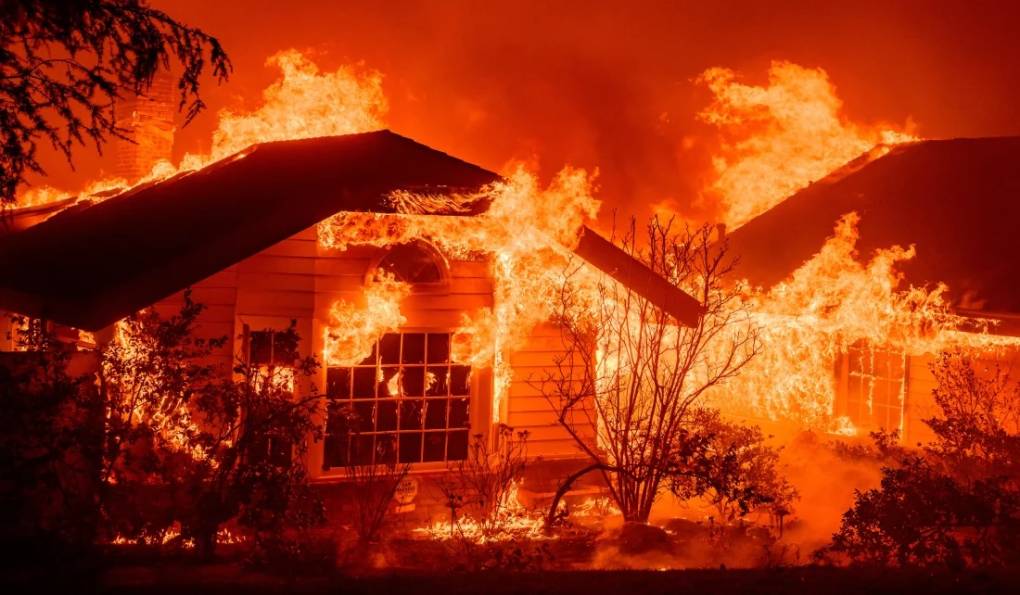
"caption": "A home burns during the Eaton fire in the Altadena area of Los Angeles County on Jan. 8, 2025. ",
"credit": "Josh Edelson/AFP",
"altTag": null,
"description": null,
"imgSizes": {
"medium": {
"file": "https://cdn.kqed.org/wp-content/uploads/sites/10/2025/01/npr.brightspotcdn-copy-58-800x467.jpg",
"width": 800,
"height": 467,
"mimeType": "image/jpeg"
},
"large": {
"file": "https://cdn.kqed.org/wp-content/uploads/sites/10/2025/01/npr.brightspotcdn-copy-58-1020x595.jpg",
"width": 1020,
"height": 595,
"mimeType": "image/jpeg"
},
"thumbnail": {
"file": "https://cdn.kqed.org/wp-content/uploads/sites/10/2025/01/npr.brightspotcdn-copy-58-160x93.jpg",
"width": 160,
"height": 93,
"mimeType": "image/jpeg"
},
"post-thumbnail": {
"file": "https://cdn.kqed.org/wp-content/uploads/sites/10/2025/01/npr.brightspotcdn-copy-58-672x372.jpg",
"width": 672,
"height": 372,
"mimeType": "image/jpeg"
},
"twentyfourteen-full-width": {
"file": "https://cdn.kqed.org/wp-content/uploads/sites/10/2025/01/npr.brightspotcdn-copy-58-1038x576.jpg",
"width": 1038,
"height": 576,
"mimeType": "image/jpeg"
},
"kqedFullSize": {
"file": "https://cdn.kqed.org/wp-content/uploads/sites/10/2025/01/npr.brightspotcdn-copy-58.jpg",
"width": 1100,
"height": 642
}
},
"isLoading": false,
"fetchFailed": false
},
"news_12022237": {
"type": "attachments",
"id": "news_12022237",
"meta": {
"index": "attachments_1716263798",
"site": "news",
"id": "12022237",
"found": true
},
"title": "20250113_North-Beach_DMB_00193",
"publishDate": 1736900775,
"status": "inherit",
"parent": 0,
"modified": 1736902048,
"caption": "Saints Peter and Paul Church and apartment buildings in North Beach, on Monday, Jan. 13, 2025. ",
"credit": "David M. Barreda/KQED",
"altTag": null,
"description": null,
"imgSizes": {
"medium": {
"file": "https://cdn.kqed.org/wp-content/uploads/sites/10/2025/01/20250113_North-Beach_DMB_00193-800x533.jpg",
"width": 800,
"height": 533,
"mimeType": "image/jpeg"
},
"large": {
"file": "https://cdn.kqed.org/wp-content/uploads/sites/10/2025/01/20250113_North-Beach_DMB_00193-1020x680.jpg",
"width": 1020,
"height": 680,
"mimeType": "image/jpeg"
},
"thumbnail": {
"file": "https://cdn.kqed.org/wp-content/uploads/sites/10/2025/01/20250113_North-Beach_DMB_00193-160x107.jpg",
"width": 160,
"height": 107,
"mimeType": "image/jpeg"
},
"1536x1536": {
"file": "https://cdn.kqed.org/wp-content/uploads/sites/10/2025/01/20250113_North-Beach_DMB_00193-1536x1024.jpg",
"width": 1536,
"height": 1024,
"mimeType": "image/jpeg"
},
"post-thumbnail": {
"file": "https://cdn.kqed.org/wp-content/uploads/sites/10/2025/01/20250113_North-Beach_DMB_00193-672x372.jpg",
"width": 672,
"height": 372,
"mimeType": "image/jpeg"
},
"twentyfourteen-full-width": {
"file": "https://cdn.kqed.org/wp-content/uploads/sites/10/2025/01/20250113_North-Beach_DMB_00193-1038x576.jpg",
"width": 1038,
"height": 576,
"mimeType": "image/jpeg"
},
"full-width": {
"file": "https://cdn.kqed.org/wp-content/uploads/sites/10/2025/01/20250113_North-Beach_DMB_00193-1920x1280.jpg",
"width": 1920,
"height": 1280,
"mimeType": "image/jpeg"
},
"kqedFullSize": {
"file": "https://cdn.kqed.org/wp-content/uploads/sites/10/2025/01/20250113_North-Beach_DMB_00193.jpg",
"width": 2000,
"height": 1333
}
},
"isLoading": false,
"fetchFailed": false
},
"news_12024792": {
"type": "attachments",
"id": "news_12024792",
"meta": {
"index": "attachments_1716263798",
"site": "news",
"id": "12024792",
"found": true
},
"title": "GRANTS PASS, OREGON: Unhoused people have set up a tent communi",
"publishDate": 1738260207,
"status": "inherit",
"parent": 12024778,
"modified": 1738262707,
"caption": "Unhoused people have set up a tent community at Riverside Park in Grants Pass, Oregon, on Thursday, March 28, 2024. ",
"credit": "Melina Mara/The Washington Post via Getty Images",
"altTag": null,
"description": null,
"imgSizes": {
"medium": {
"file": "https://cdn.kqed.org/wp-content/uploads/sites/10/2025/01/GettyImages-2147916692-800x450.jpg",
"width": 800,
"height": 450,
"mimeType": "image/jpeg"
},
"large": {
"file": "https://cdn.kqed.org/wp-content/uploads/sites/10/2025/01/GettyImages-2147916692-1020x574.jpg",
"width": 1020,
"height": 574,
"mimeType": "image/jpeg"
},
"thumbnail": {
"file": "https://cdn.kqed.org/wp-content/uploads/sites/10/2025/01/GettyImages-2147916692-160x90.jpg",
"width": 160,
"height": 90,
"mimeType": "image/jpeg"
},
"post-thumbnail": {
"file": "https://cdn.kqed.org/wp-content/uploads/sites/10/2025/01/GettyImages-2147916692-672x372.jpg",
"width": 672,
"height": 372,
"mimeType": "image/jpeg"
},
"kqedFullSize": {
"file": "https://cdn.kqed.org/wp-content/uploads/sites/10/2025/01/GettyImages-2147916692.jpg",
"width": 1024,
"height": 576
}
},
"isLoading": false,
"fetchFailed": false
},
"news_12024517": {
"type": "attachments",
"id": "news_12024517",
"meta": {
"index": "attachments_1716263798",
"site": "news",
"id": "12024517",
"found": true
},
"title": "President Donald Trump Signs More Executive Orders",
"publishDate": 1738124468,
"status": "inherit",
"parent": 12024454,
"modified": 1739562121,
"caption": "U.S. President Donald Trump speaks to reporters after signing a series of executive orders in the Oval Office of the White House on Jan. 23, 2025, in Washington, D.C. ",
"credit": "Anna Moneymaker/Getty Images",
"altTag": null,
"description": null,
"imgSizes": {
"medium": {
"file": "https://cdn.kqed.org/wp-content/uploads/sites/10/2025/01/GettyImages-2195559727-800x534.jpg",
"width": 800,
"height": 534,
"mimeType": "image/jpeg"
},
"large": {
"file": "https://cdn.kqed.org/wp-content/uploads/sites/10/2025/01/GettyImages-2195559727-1020x680.jpg",
"width": 1020,
"height": 680,
"mimeType": "image/jpeg"
},
"thumbnail": {
"file": "https://cdn.kqed.org/wp-content/uploads/sites/10/2025/01/GettyImages-2195559727-160x107.jpg",
"width": 160,
"height": 107,
"mimeType": "image/jpeg"
},
"post-thumbnail": {
"file": "https://cdn.kqed.org/wp-content/uploads/sites/10/2025/01/GettyImages-2195559727-672x372.jpg",
"width": 672,
"height": 372,
"mimeType": "image/jpeg"
},
"twentyfourteen-full-width": {
"file": "https://cdn.kqed.org/wp-content/uploads/sites/10/2025/01/GettyImages-2195559727-1024x576.jpg",
"width": 1024,
"height": 576,
"mimeType": "image/jpeg"
},
"kqedFullSize": {
"file": "https://cdn.kqed.org/wp-content/uploads/sites/10/2025/01/GettyImages-2195559727.jpg",
"width": 1024,
"height": 683
}
},
"isLoading": false,
"fetchFailed": false
},
"news_12024076": {
"type": "attachments",
"id": "news_12024076",
"meta": {
"index": "attachments_1716263798",
"site": "news",
"id": "12024076",
"found": true
},
"title": "20250123_RebuildingAfterWildfire_GC-20",
"publishDate": 1737759186,
"status": "inherit",
"parent": 0,
"modified": 1737759341,
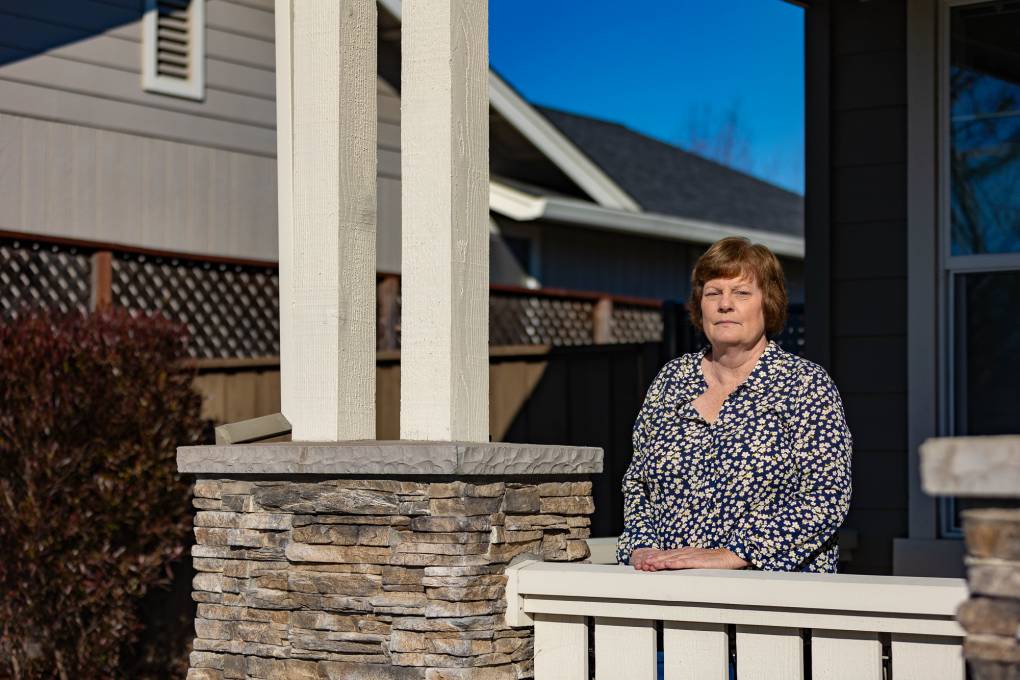
"caption": "Annie Barbour poses for a photo at her former home, where she raised her son, in Santa Rosa on Jan. 23, 2025. Annie’s home burned down during the Tubbs Fire in 2017. Since then, she has rebuilt her home to better protect it from wildfires, where her son and daughter-in-law now live.",
"credit": "Gina Castro/KQED",
"altTag": null,
"description": null,
"imgSizes": {
"medium": {
"file": "https://cdn.kqed.org/wp-content/uploads/sites/10/2025/01/20250123_RebuildingAfterWildfire_GC-20-800x533.jpg",
"width": 800,
"height": 533,
"mimeType": "image/jpeg"
},
"large": {
"file": "https://cdn.kqed.org/wp-content/uploads/sites/10/2025/01/20250123_RebuildingAfterWildfire_GC-20-1020x680.jpg",
"width": 1020,
"height": 680,
"mimeType": "image/jpeg"
},
"thumbnail": {
"file": "https://cdn.kqed.org/wp-content/uploads/sites/10/2025/01/20250123_RebuildingAfterWildfire_GC-20-160x107.jpg",
"width": 160,
"height": 107,
"mimeType": "image/jpeg"
},
"1536x1536": {
"file": "https://cdn.kqed.org/wp-content/uploads/sites/10/2025/01/20250123_RebuildingAfterWildfire_GC-20-1536x1024.jpg",
"width": 1536,
"height": 1024,
"mimeType": "image/jpeg"
},
"post-thumbnail": {
"file": "https://cdn.kqed.org/wp-content/uploads/sites/10/2025/01/20250123_RebuildingAfterWildfire_GC-20-672x372.jpg",
"width": 672,
"height": 372,
"mimeType": "image/jpeg"
},
"twentyfourteen-full-width": {
"file": "https://cdn.kqed.org/wp-content/uploads/sites/10/2025/01/20250123_RebuildingAfterWildfire_GC-20-1038x576.jpg",
"width": 1038,
"height": 576,
"mimeType": "image/jpeg"
},
"full-width": {
"file": "https://cdn.kqed.org/wp-content/uploads/sites/10/2025/01/20250123_RebuildingAfterWildfire_GC-20-1920x1280.jpg",
"width": 1920,
"height": 1280,
"mimeType": "image/jpeg"
},
"kqedFullSize": {
"file": "https://cdn.kqed.org/wp-content/uploads/sites/10/2025/01/20250123_RebuildingAfterWildfire_GC-20.jpg",
"width": 2000,
"height": 1333
}
},
"isLoading": false,
"fetchFailed": false
},
"news_11970570": {
"type": "attachments",
"id": "news_11970570",
"meta": {
"index": "attachments_1716263798",
"site": "news",
"id": "11970570",
"found": true
},
"parent": 11970546,
"imgSizes": {
"twentyfourteen-full-width": {
"file": "https://cdn.kqed.org/wp-content/uploads/sites/10/2023/12/GettyImages-1457400106-1038x576.jpg",
"width": 1038,
"mimeType": "image/jpeg",
"height": 576
},
"thumbnail": {
"file": "https://cdn.kqed.org/wp-content/uploads/sites/10/2023/12/GettyImages-1457400106-160x107.jpg",
"width": 160,
"mimeType": "image/jpeg",
"height": 107
},
"post-thumbnail": {
"file": "https://cdn.kqed.org/wp-content/uploads/sites/10/2023/12/GettyImages-1457400106-672x372.jpg",
"width": 672,
"mimeType": "image/jpeg",
"height": 372
},
"kqedFullSize": {
"file": "https://cdn.kqed.org/wp-content/uploads/sites/10/2023/12/GettyImages-1457400106.jpg",
"width": 2120,
"height": 1414
},
"2048x2048": {
"file": "https://cdn.kqed.org/wp-content/uploads/sites/10/2023/12/GettyImages-1457400106-2048x1366.jpg",
"width": 2048,
"mimeType": "image/jpeg",
"height": 1366
},
"large": {
"file": "https://cdn.kqed.org/wp-content/uploads/sites/10/2023/12/GettyImages-1457400106-1020x680.jpg",
"width": 1020,
"mimeType": "image/jpeg",
"height": 680
},
"1536x1536": {
"file": "https://cdn.kqed.org/wp-content/uploads/sites/10/2023/12/GettyImages-1457400106-1536x1024.jpg",
"width": 1536,
"mimeType": "image/jpeg",
"height": 1024
},
"full-width": {
"file": "https://cdn.kqed.org/wp-content/uploads/sites/10/2023/12/GettyImages-1457400106-1920x1281.jpg",
"width": 1920,
"mimeType": "image/jpeg",
"height": 1281
},
"medium": {
"file": "https://cdn.kqed.org/wp-content/uploads/sites/10/2023/12/GettyImages-1457400106-800x534.jpg",
"width": 800,
"mimeType": "image/jpeg",
"height": 534
}
},
"publishDate": 1703112111,
"modified": 1703116501,
"caption": "California law requires landlords to provide a safe, working heat source in their rental units.",
"description": null,
"title": null,
"credit": "Getty Images",
"status": "inherit",
"altTag": "A young woman wearing a winter hat, wrapped in a blanket, sits on a couch, holding a mug.",
"isLoading": false,
"fetchFailed": false
},
"news_12021200": {
"type": "attachments",
"id": "news_12021200",
"meta": {
"index": "attachments_1716263798",
"site": "news",
"id": "12021200",
"found": true
},
"title": "240109-CAWindStorm-038",
"publishDate": 1736456599,
"status": "inherit",
"parent": 0,
"modified": 1736456756,
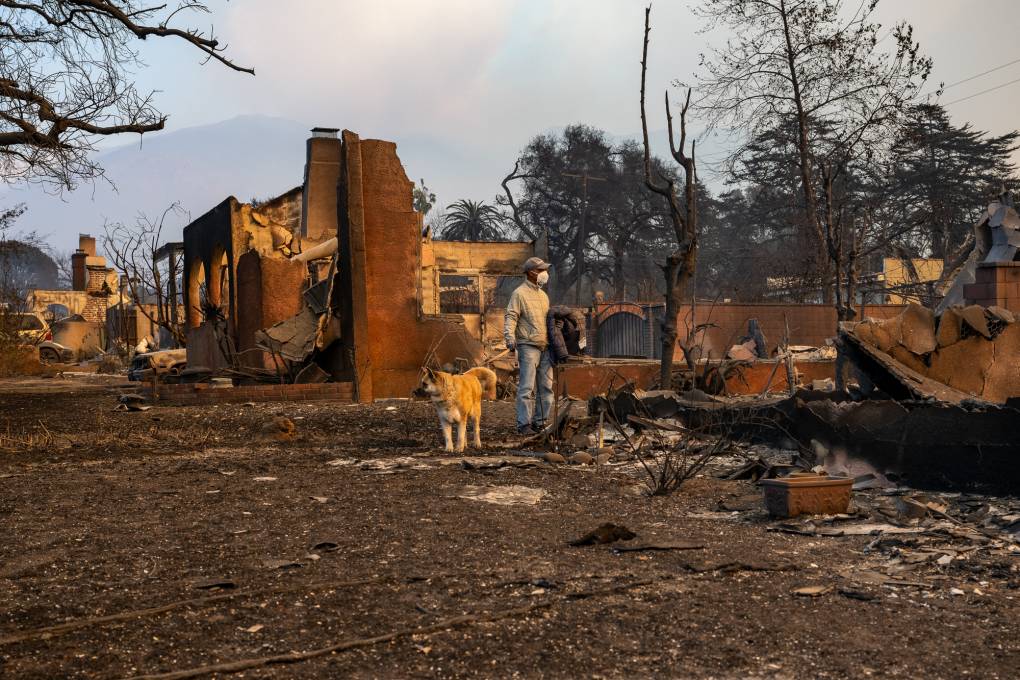
"caption": "Altadena resident Herb Wilson, 67, walks with his dog, Rosie, to survey the home he shares with his wife, Loyda, after it was destroyed in the Eaton Fire northeast of Los Angeles, California, on Thursday, Jan. 9, 2025. The couple was on vacation in Hawaii when the fire broke out, so they could not retrieve any belongings.",
"credit": "Beth LaBerge/KQED",
"altTag": null,
"description": null,
"imgSizes": {
"medium": {
"file": "https://cdn.kqed.org/wp-content/uploads/sites/10/2025/01/240109-CAWindStorm-038-800x533.jpg",
"width": 800,
"height": 533,
"mimeType": "image/jpeg"
},
"large": {
"file": "https://cdn.kqed.org/wp-content/uploads/sites/10/2025/01/240109-CAWindStorm-038-1020x680.jpg",
"width": 1020,
"height": 680,
"mimeType": "image/jpeg"
},
"thumbnail": {
"file": "https://cdn.kqed.org/wp-content/uploads/sites/10/2025/01/240109-CAWindStorm-038-160x107.jpg",
"width": 160,
"height": 107,
"mimeType": "image/jpeg"
},
"1536x1536": {
"file": "https://cdn.kqed.org/wp-content/uploads/sites/10/2025/01/240109-CAWindStorm-038-1536x1024.jpg",
"width": 1536,
"height": 1024,
"mimeType": "image/jpeg"
},
"post-thumbnail": {
"file": "https://cdn.kqed.org/wp-content/uploads/sites/10/2025/01/240109-CAWindStorm-038-672x372.jpg",
"width": 672,
"height": 372,
"mimeType": "image/jpeg"
},
"twentyfourteen-full-width": {
"file": "https://cdn.kqed.org/wp-content/uploads/sites/10/2025/01/240109-CAWindStorm-038-1038x576.jpg",
"width": 1038,
"height": 576,
"mimeType": "image/jpeg"
},
"full-width": {
"file": "https://cdn.kqed.org/wp-content/uploads/sites/10/2025/01/240109-CAWindStorm-038-1920x1280.jpg",
"width": 1920,
"height": 1280,
"mimeType": "image/jpeg"
},
"kqedFullSize": {
"file": "https://cdn.kqed.org/wp-content/uploads/sites/10/2025/01/240109-CAWindStorm-038.jpg",
"width": 2000,
"height": 1333
}
},
"isLoading": false,
"fetchFailed": false
},
"news_12023794": {
"type": "attachments",
"id": "news_12023794",
"meta": {
"index": "attachments_1716263798",
"site": "news",
"id": "12023794",
"found": true
},
"title": "npr.brightspotcdn copy",
"publishDate": 1737662072,
"status": "inherit",
"parent": 12023793,
"modified": 1737669011,
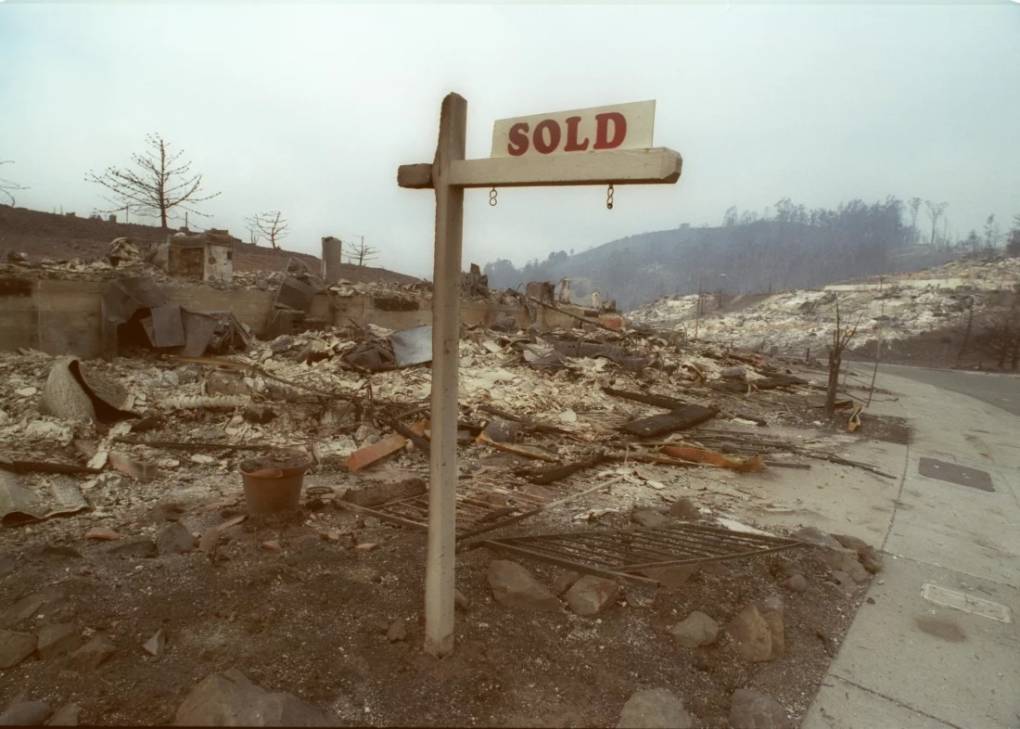
"caption": "Real estate sign left standing amidst smoldering ruins of the Oct. 20, 1991 Oakland hills fire.",
"credit": "San Francisco Chronicle/Hearst Newspapers/Getty Images",
"altTag": null,
"description": null,
"imgSizes": {
"medium": {
"file": "https://cdn.kqed.org/wp-content/uploads/sites/10/2025/01/npr.brightspotcdn-copy-52-800x572.jpg",
"width": 800,
"height": 572,
"mimeType": "image/jpeg"
},
"large": {
"file": "https://cdn.kqed.org/wp-content/uploads/sites/10/2025/01/npr.brightspotcdn-copy-52-1020x729.jpg",
"width": 1020,
"height": 729,
"mimeType": "image/jpeg"
},
"thumbnail": {
"file": "https://cdn.kqed.org/wp-content/uploads/sites/10/2025/01/npr.brightspotcdn-copy-52-160x114.jpg",
"width": 160,
"height": 114,
"mimeType": "image/jpeg"
},
"post-thumbnail": {
"file": "https://cdn.kqed.org/wp-content/uploads/sites/10/2025/01/npr.brightspotcdn-copy-52-672x372.jpg",
"width": 672,
"height": 372,
"mimeType": "image/jpeg"
},
"twentyfourteen-full-width": {
"file": "https://cdn.kqed.org/wp-content/uploads/sites/10/2025/01/npr.brightspotcdn-copy-52-1038x576.jpg",
"width": 1038,
"height": 576,
"mimeType": "image/jpeg"
},
"kqedFullSize": {
"file": "https://cdn.kqed.org/wp-content/uploads/sites/10/2025/01/npr.brightspotcdn-copy-52.jpg",
"width": 1100,
"height": 786
}
},
"isLoading": false,
"fetchFailed": false
},
"news_12023494": {
"type": "attachments",
"id": "news_12023494",
"meta": {
"index": "attachments_1716263798",
"site": "news",
"id": "12023494",
"found": true
},
"title": "npr.brightspotcdn copy",
"publishDate": 1737575419,
"status": "inherit",
"parent": 12023489,
"modified": 1737575448,
"caption": "Jose Villanueva carries siding while building a home, Wednesday, Oct. 25, 2023, in Paradise, Butte County. Most of the town burned in late 2018.",
"credit": "Noah Berger/AP",
"altTag": null,
"description": null,
"imgSizes": {
"medium": {
"file": "https://cdn.kqed.org/wp-content/uploads/sites/10/2025/01/npr.brightspotcdn-copy-51-800x532.jpg",
"width": 800,
"height": 532,
"mimeType": "image/jpeg"
},
"large": {
"file": "https://cdn.kqed.org/wp-content/uploads/sites/10/2025/01/npr.brightspotcdn-copy-51-1020x679.jpg",
"width": 1020,
"height": 679,
"mimeType": "image/jpeg"
},
"thumbnail": {
"file": "https://cdn.kqed.org/wp-content/uploads/sites/10/2025/01/npr.brightspotcdn-copy-51-160x106.jpg",
"width": 160,
"height": 106,
"mimeType": "image/jpeg"
},
"post-thumbnail": {
"file": "https://cdn.kqed.org/wp-content/uploads/sites/10/2025/01/npr.brightspotcdn-copy-51-672x372.jpg",
"width": 672,
"height": 372,
"mimeType": "image/jpeg"
},
"twentyfourteen-full-width": {
"file": "https://cdn.kqed.org/wp-content/uploads/sites/10/2025/01/npr.brightspotcdn-copy-51-1038x576.jpg",
"width": 1038,
"height": 576,
"mimeType": "image/jpeg"
},
"kqedFullSize": {
"file": "https://cdn.kqed.org/wp-content/uploads/sites/10/2025/01/npr.brightspotcdn-copy-51.jpg",
"width": 1100,
"height": 732
}
},
"isLoading": false,
"fetchFailed": false
},
"news_12022923": {
"type": "attachments",
"id": "news_12022923",
"meta": {
"index": "attachments_1716263798",
"site": "news",
"id": "12022923",
"found": true
},
"title": "Powerful Winds Fuel Multiple Fires Across Los Angeles Area",
"publishDate": 1737161336,
"status": "inherit",
"parent": 12022908,
"modified": 1737161406,
"caption": "An aerial view of homes destroyed in the Palisades Fire as wildfires cause damage and loss through the LA region on Jan. 13, 2025 in Pacific Palisades.",
"credit": "Mario Tama/Getty Images",
"altTag": null,
"description": null,
"imgSizes": {
"medium": {
"file": "https://cdn.kqed.org/wp-content/uploads/sites/10/2025/01/GettyImages-2193807239-800x502.jpg",
"width": 800,
"height": 502,
"mimeType": "image/jpeg"
},
"large": {
"file": "https://cdn.kqed.org/wp-content/uploads/sites/10/2025/01/GettyImages-2193807239-1020x640.jpg",
"width": 1020,
"height": 640,
"mimeType": "image/jpeg"
},
"thumbnail": {
"file": "https://cdn.kqed.org/wp-content/uploads/sites/10/2025/01/GettyImages-2193807239-160x100.jpg",
"width": 160,
"height": 100,
"mimeType": "image/jpeg"
},
"post-thumbnail": {
"file": "https://cdn.kqed.org/wp-content/uploads/sites/10/2025/01/GettyImages-2193807239-672x372.jpg",
"width": 672,
"height": 372,
"mimeType": "image/jpeg"
},
"twentyfourteen-full-width": {
"file": "https://cdn.kqed.org/wp-content/uploads/sites/10/2025/01/GettyImages-2193807239-1024x576.jpg",
"width": 1024,
"height": 576,
"mimeType": "image/jpeg"
},
"kqedFullSize": {
"file": "https://cdn.kqed.org/wp-content/uploads/sites/10/2025/01/GettyImages-2193807239.jpg",
"width": 1024,
"height": 643
}
},
"isLoading": false,
"fetchFailed": false
},
"news_12021323": {
"type": "attachments",
"id": "news_12021323",
"meta": {
"index": "attachments_1716263798",
"site": "news",
"id": "12021323",
"found": true
},
"title": "240109-CAWindStorm-056",
"publishDate": 1736467983,
"status": "inherit",
"parent": 0,
"modified": 1737076475,
"caption": "The remains of a house in Altadena, California, after the Eaton Fire swept through the area northeast of Los Angeles on Thursday, Jan. 9, 2025.",
"credit": "Beth LaBerge/KQED",
"altTag": null,
"description": null,
"imgSizes": {
"medium": {
"file": "https://cdn.kqed.org/wp-content/uploads/sites/10/2025/01/240109-CAWindStorm-056-800x533.jpg",
"width": 800,
"height": 533,
"mimeType": "image/jpeg"
},
"large": {
"file": "https://cdn.kqed.org/wp-content/uploads/sites/10/2025/01/240109-CAWindStorm-056-1020x680.jpg",
"width": 1020,
"height": 680,
"mimeType": "image/jpeg"
},
"thumbnail": {
"file": "https://cdn.kqed.org/wp-content/uploads/sites/10/2025/01/240109-CAWindStorm-056-160x107.jpg",
"width": 160,
"height": 107,
"mimeType": "image/jpeg"
},
"1536x1536": {
"file": "https://cdn.kqed.org/wp-content/uploads/sites/10/2025/01/240109-CAWindStorm-056-1536x1024.jpg",
"width": 1536,
"height": 1024,
"mimeType": "image/jpeg"
},
"post-thumbnail": {
"file": "https://cdn.kqed.org/wp-content/uploads/sites/10/2025/01/240109-CAWindStorm-056-672x372.jpg",
"width": 672,
"height": 372,
"mimeType": "image/jpeg"
},
"twentyfourteen-full-width": {
"file": "https://cdn.kqed.org/wp-content/uploads/sites/10/2025/01/240109-CAWindStorm-056-1038x576.jpg",
"width": 1038,
"height": 576,
"mimeType": "image/jpeg"
},
"full-width": {
"file": "https://cdn.kqed.org/wp-content/uploads/sites/10/2025/01/240109-CAWindStorm-056-1920x1280.jpg",
"width": 1920,
"height": 1280,
"mimeType": "image/jpeg"
},
"kqedFullSize": {
"file": "https://cdn.kqed.org/wp-content/uploads/sites/10/2025/01/240109-CAWindStorm-056.jpg",
"width": 2000,
"height": 1333
}
},
"isLoading": false,
"fetchFailed": false
},
"news_12022616": {
"type": "attachments",
"id": "news_12022616",
"meta": {
"index": "attachments_1716263798",
"site": "news",
"id": "12022616",
"found": true
},
"title": "011525-California-Wildfires-MT-AP-CM-01 copy",
"publishDate": 1737058938,
"status": "inherit",
"parent": 12022615,
"modified": 1752102006,
"caption": "The devastation from the Palisades Fire is seen from the air in the Pacific Palisades neighborhood of Los Angeles on Jan. 9, 2025. CalFire is using a chatbot to give Californians better access to real-time emergency information. But CalMatters found it isn't always accurate or reliable. \n",
"credit": "Mark J. Terrill/AP Photo",
"altTag": null,
"description": null,
"imgSizes": {
"medium": {
"file": "https://cdn.kqed.org/wp-content/uploads/sites/10/2025/01/011525-California-Wildfires-MT-AP-CM-01-copy-800x534.jpg",
"width": 800,
"height": 534,
"mimeType": "image/jpeg"
},
"large": {
"file": "https://cdn.kqed.org/wp-content/uploads/sites/10/2025/01/011525-California-Wildfires-MT-AP-CM-01-copy-1020x680.jpg",
"width": 1020,
"height": 680,
"mimeType": "image/jpeg"
},
"thumbnail": {
"file": "https://cdn.kqed.org/wp-content/uploads/sites/10/2025/01/011525-California-Wildfires-MT-AP-CM-01-copy-160x107.jpg",
"width": 160,
"height": 107,
"mimeType": "image/jpeg"
},
"1536x1536": {
"file": "https://cdn.kqed.org/wp-content/uploads/sites/10/2025/01/011525-California-Wildfires-MT-AP-CM-01-copy-1536x1025.jpg",
"width": 1536,
"height": 1025,
"mimeType": "image/jpeg"
},
"post-thumbnail": {
"file": "https://cdn.kqed.org/wp-content/uploads/sites/10/2025/01/011525-California-Wildfires-MT-AP-CM-01-copy-672x372.jpg",
"width": 672,
"height": 372,
"mimeType": "image/jpeg"
},
"twentyfourteen-full-width": {
"file": "https://cdn.kqed.org/wp-content/uploads/sites/10/2025/01/011525-California-Wildfires-MT-AP-CM-01-copy-1038x576.jpg",
"width": 1038,
"height": 576,
"mimeType": "image/jpeg"
},
"full-width": {
"file": "https://cdn.kqed.org/wp-content/uploads/sites/10/2025/01/011525-California-Wildfires-MT-AP-CM-01-copy-1920x1281.jpg",
"width": 1920,
"height": 1281,
"mimeType": "image/jpeg"
},
"kqedFullSize": {
"file": "https://cdn.kqed.org/wp-content/uploads/sites/10/2025/01/011525-California-Wildfires-MT-AP-CM-01-copy.jpg",
"width": 2000,
"height": 1334
}
},
"isLoading": false,
"fetchFailed": false
}
},
"audioPlayerReducer": {
"postId": "stream_live",
"isPaused": true,
"isPlaying": false,
"pfsActive": false,
"pledgeModalIsOpen": true,
"playerDrawerIsOpen": false,
"liveAudioPlayStartedAt": 0,
"liveAudioPlayContext": ""
},
"authorsReducer": {
"byline_news_12025097": {
"type": "authors",
"id": "byline_news_12025097",
"meta": {
"override": true
},
"slug": "byline_news_12025097",
"name": "\u003ca href=\"https://www.npr.org/people/803934365/lauren-sommer\">Lauren Sommer\u003c/a>, NPR",
"isLoading": false
},
"byline_news_12024778": {
"type": "authors",
"id": "byline_news_12024778",
"meta": {
"override": true
},
"slug": "byline_news_12024778",
"name": "Claire Rush, Associated Press",
"isLoading": false
},
"byline_news_12023793": {
"type": "authors",
"id": "byline_news_12023793",
"meta": {
"override": true
},
"slug": "byline_news_12023793",
"name": "\u003ca href=\"https://www.npr.org/people/726239784/greg-rosalsky\">Greg Rosalsky\u003c/a>, NPR",
"isLoading": false
},
"byline_news_12023489": {
"type": "authors",
"id": "byline_news_12023489",
"meta": {
"override": true
},
"slug": "byline_news_12023489",
"name": "\u003ca href=\"https://www.npr.org/people/853773803/taylor-haney\">Taylor Haney\u003c/a>, NPR",
"isLoading": false
},
"byline_news_12022908": {
"type": "authors",
"id": "byline_news_12022908",
"meta": {
"override": true
},
"slug": "byline_news_12022908",
"name": "Trân Nguyễn, Associated Press",
"isLoading": false
},
"byline_news_12022615": {
"type": "authors",
"id": "byline_news_12022615",
"meta": {
"override": true
},
"slug": "byline_news_12022615",
"name": "\u003ca href=\"https://calmatters.org/author/ben-christopher/\">Ben Christopher\u003c/a>, CalMatters",
"isLoading": false
},
"carlysevern": {
"type": "authors",
"id": "3243",
"meta": {
"index": "authors_1716337520",
"id": "3243",
"found": true
},
"name": "Carly Severn",
"firstName": "Carly",
"lastName": "Severn",
"slug": "carlysevern",
"email": "csevern@kqed.org",
"display_author_email": false,
"staff_mastheads": [
"news"
],
"title": "Senior Editor, Audience News ",
"bio": "Carly is KQED's Senior Editor of Audience News on the Digital News team, and has reported for the California Report Magazine, Bay Curious and KQED Arts. She's formerly the host of \u003ca href=\"http://ww2.kqed.org/pop/category/the-cooler/\" rel=\"noopener noreferrer\">The Cooler\u003c/a> podcast.",
"avatar": "https://secure.gravatar.com/avatar/54037bf5c128fe678f0ef26cec97a93f2e7f220a22d7285703328f12c42c1b1d?s=600&d=blank&r=g",
"twitter": "teacupinthebay",
"bluesky": null,
"facebook": null,
"instagram": null,
"linkedin": null,
"sites": [
{
"site": "",
"roles": [
"editor"
]
},
{
"site": "arts",
"roles": [
"editor"
]
},
{
"site": "news",
"roles": [
"administrator"
]
},
{
"site": "pop",
"roles": [
"editor"
]
},
{
"site": "futureofyou",
"roles": [
"editor"
]
},
{
"site": "about",
"roles": [
"administrator"
]
},
{
"site": "mindshift",
"roles": [
"editor"
]
},
{
"site": "bayareabites",
"roles": [
"editor"
]
},
{
"site": "stateofhealth",
"roles": [
"editor"
]
},
{
"site": "science",
"roles": [
"editor"
]
},
{
"site": "food",
"roles": [
"contributor"
]
},
{
"site": "forum",
"roles": [
"editor"
]
},
{
"site": "perspectives",
"roles": [
"administrator"
]
},
{
"site": "liveblog",
"roles": [
"editor"
]
}
],
"headData": {
"title": "Carly Severn | KQED",
"description": "Senior Editor, Audience News ",
"ogImgSrc": "https://secure.gravatar.com/avatar/54037bf5c128fe678f0ef26cec97a93f2e7f220a22d7285703328f12c42c1b1d?s=600&d=blank&r=g",
"twImgSrc": "https://secure.gravatar.com/avatar/54037bf5c128fe678f0ef26cec97a93f2e7f220a22d7285703328f12c42c1b1d?s=600&d=blank&r=g"
},
"isLoading": false,
"link": "/author/carlysevern"
},
"dventon": {
"type": "authors",
"id": "11088",
"meta": {
"index": "authors_1716337520",
"id": "11088",
"found": true
},
"name": "Danielle Venton",
"firstName": "Danielle",
"lastName": "Venton",
"slug": "dventon",
"email": "dventon@kqed.org",
"display_author_email": true,
"staff_mastheads": [
"science"
],
"title": "Science reporter",
"bio": "Danielle Venton is a reporter for KQED Science. She covers wildfires, space and oceans (though she is prone to sea sickness).\r\n\r\nBefore joining KQED in 2015, Danielle was a staff reporter at KRCB in Sonoma County and a freelancer. She studied science communication at UC Santa Cruz and formerly worked at CERN in Geneva, Switzerland where she wrote about computing. She lives in Sonoma County and enjoys backpacking.",
"avatar": "https://secure.gravatar.com/avatar/37b292b5c40c8d93959c4f48d73b5286f41b7abd8588277e941905a3ed4c801c?s=600&d=blank&r=g",
"twitter": "DanielleVenton",
"bluesky": null,
"facebook": null,
"instagram": null,
"linkedin": null,
"sites": [
{
"site": "arts",
"roles": [
"contributor"
]
},
{
"site": "news",
"roles": [
"editor"
]
},
{
"site": "futureofyou",
"roles": [
"editor"
]
},
{
"site": "science",
"roles": [
"editor"
]
},
{
"site": "liveblog",
"roles": [
"contributor"
]
}
],
"headData": {
"title": "Danielle Venton | KQED",
"description": "Science reporter",
"ogImgSrc": "https://secure.gravatar.com/avatar/37b292b5c40c8d93959c4f48d73b5286f41b7abd8588277e941905a3ed4c801c?s=600&d=blank&r=g",
"twImgSrc": "https://secure.gravatar.com/avatar/37b292b5c40c8d93959c4f48d73b5286f41b7abd8588277e941905a3ed4c801c?s=600&d=blank&r=g"
},
"isLoading": false,
"link": "/author/dventon"
},
"msolomon": {
"type": "authors",
"id": "11651",
"meta": {
"index": "authors_1716337520",
"id": "11651",
"found": true
},
"name": "Molly Solomon",
"firstName": "Molly",
"lastName": "Solomon",
"slug": "msolomon",
"email": "msolomon@KQED.org",
"display_author_email": false,
"staff_mastheads": [
"news"
],
"title": "Senior Editor",
"bio": "Molly Solomon is the senior editor of KQED's California Politics and Government Desk. Previously, she was the station's editor-at-large, with a focus on editing early childhood education, politics, and criminal justice. Before that, she managed and edited statewide election coverage for The California Newsroom, a collaboration of local public radio stations, CalMatters and NPR. Molly joined KQED in 2019 to launch the station’s housing affordability desk, where she reported on homelessness, evictions and is the co-host of KQED’s housing podcast, SOLD OUT: Rethinking Housing in America. Before that, she was the Southwest Washington Bureau Chief for Oregon Public Broadcasting and a reporter at Hawaii Public Radio. Her stories have aired on NPR’s \u003cem>Morning Edition\u003c/em>, \u003cem>All Things Considered\u003c/em>, \u003cem>Here & Now\u003c/em>, \u003cem>Science Friday\u003c/em> and \u003cem>Marketplace\u003c/em>. Molly's award-winning reporting has been honored by the Best of the West, Edward R. Murrow awards, Society of Professional Journalists, National Headliner Awards, and the Asian American Journalists Association. Born and raised in Berkeley, Molly is a big fan of burritos and her scruffy terrier, Ollie.",
"avatar": "https://secure.gravatar.com/avatar/9ad9794616923d81c9a79897161545bd?s=600&d=blank&r=g",
"twitter": "solomonout",
"facebook": null,
"instagram": null,
"linkedin": null,
"sites": [
{
"site": "news",
"roles": [
"editor"
]
},
{
"site": "science",
"roles": [
"editor"
]
}
],
"headData": {
"title": "Molly Solomon | KQED",
"description": "Senior Editor",
"ogImgSrc": "https://secure.gravatar.com/avatar/9ad9794616923d81c9a79897161545bd?s=600&d=blank&r=g",
"twImgSrc": "https://secure.gravatar.com/avatar/9ad9794616923d81c9a79897161545bd?s=600&d=blank&r=g"
},
"isLoading": false,
"link": "/author/msolomon"
},
"abandlamudi": {
"type": "authors",
"id": "11672",
"meta": {
"index": "authors_1716337520",
"id": "11672",
"found": true
},
"name": "Adhiti Bandlamudi",
"firstName": "Adhiti",
"lastName": "Bandlamudi",
"slug": "abandlamudi",
"email": "abandlamudi@kqed.org",
"display_author_email": false,
"staff_mastheads": [
"news"
],
"title": "KQED Housing Reporter",
"bio": "Adhiti Bandlamudi reports for KQED's Housing desk. She focuses on how housing gets built across the Bay Area. Before joining KQED in 2020, she reported for WUNC in Durham, North Carolina, WABE in Atlanta, Georgia and Capital Public Radio in Sacramento. In 2017, she was awarded a Kroc Fellowship at NPR where she reported on everything from sprinkles to the Golden State Killer's arrest. When she's not reporting, she's baking new recipes in her kitchen or watching movies with friends and family. She's originally from Georgia and has strong opinions about Great British Bake Off.",
"avatar": "https://secure.gravatar.com/avatar/868129c8b257bb99a3500e2c86a65400?s=600&d=mm&r=g",
"twitter": "oddity_adhiti",
"facebook": null,
"instagram": null,
"linkedin": null,
"sites": [
{
"site": "arts",
"roles": [
"author"
]
},
{
"site": "news",
"roles": [
"editor"
]
},
{
"site": "liveblog",
"roles": [
"author"
]
}
],
"headData": {
"title": "Adhiti Bandlamudi | KQED",
"description": "KQED Housing Reporter",
"ogImgSrc": "https://secure.gravatar.com/avatar/868129c8b257bb99a3500e2c86a65400?s=600&d=mm&r=g",
"twImgSrc": "https://secure.gravatar.com/avatar/868129c8b257bb99a3500e2c86a65400?s=600&d=mm&r=g"
},
"isLoading": false,
"link": "/author/abandlamudi"
},
"ccabreralomeli": {
"type": "authors",
"id": "11708",
"meta": {
"index": "authors_1716337520",
"id": "11708",
"found": true
},
"name": "Carlos Cabrera-Lomelí",
"firstName": "Carlos",
"lastName": "Cabrera-Lomelí",
"slug": "ccabreralomeli",
"email": "ccabreralomeli@KQED.org",
"display_author_email": true,
"staff_mastheads": [
"news"
],
"title": "Community Reporter",
"bio": "Carlos Cabrera-Lomelí is a community reporter with KQED's digital engagement team. He also reports and co-produces for KQED's bilingual news hub KQED en Español. He grew up in San Francisco's Mission District and has previously worked with Univision, 48 Hills and REFORMA in Mexico City.",
"avatar": "https://secure.gravatar.com/avatar/c309be9665e484f887b818c89e273ecc673004f426f36b24d00a4d813a2e0518?s=600&d=blank&r=g",
"twitter": "@LomeliCabrera",
"bluesky": null,
"facebook": null,
"instagram": null,
"linkedin": null,
"sites": [
{
"site": "arts",
"roles": [
"editor"
]
},
{
"site": "news",
"roles": [
"editor"
]
},
{
"site": "about",
"roles": [
"editor"
]
},
{
"site": "science",
"roles": [
"editor"
]
},
{
"site": "perspectives",
"roles": [
"editor"
]
},
{
"site": "elections",
"roles": [
"editor"
]
},
{
"site": "liveblog",
"roles": [
"contributor"
]
}
],
"headData": {
"title": "Carlos Cabrera-Lomelí | KQED",
"description": "Community Reporter",
"ogImgSrc": "https://secure.gravatar.com/avatar/c309be9665e484f887b818c89e273ecc673004f426f36b24d00a4d813a2e0518?s=600&d=blank&r=g",
"twImgSrc": "https://secure.gravatar.com/avatar/c309be9665e484f887b818c89e273ecc673004f426f36b24d00a4d813a2e0518?s=600&d=blank&r=g"
},
"isLoading": false,
"link": "/author/ccabreralomeli"
},
"slim": {
"type": "authors",
"id": "11920",
"meta": {
"index": "authors_1716337520",
"id": "11920",
"found": true
},
"name": "Samantha Lim",
"firstName": "Samantha",
"lastName": "Lim",
"slug": "slim",
"email": "slim@KQED.org",
"display_author_email": false,
"staff_mastheads": [],
"title": "KQED Contributor",
"bio": null,
"avatar": "https://secure.gravatar.com/avatar/82e592e6c15fe1a04d385e8ad0fb0b4e?s=600&d=blank&r=g",
"twitter": null,
"facebook": null,
"instagram": null,
"linkedin": null,
"sites": [
{
"site": "news",
"roles": []
}
],
"headData": {
"title": "Samantha Lim | KQED",
"description": "KQED Contributor",
"ogImgSrc": "https://secure.gravatar.com/avatar/82e592e6c15fe1a04d385e8ad0fb0b4e?s=600&d=blank&r=g",
"twImgSrc": "https://secure.gravatar.com/avatar/82e592e6c15fe1a04d385e8ad0fb0b4e?s=600&d=blank&r=g"
},
"isLoading": false,
"link": "/author/slim"
}
},
"pagesReducer": {
"news_category_housing": {
"type": "terms",
"id": "news_6266",
"meta": {
"index": "terms_1716263798",
"site": "news",
"id": "6266",
"score": 11.03987
},
"featImg": null,
"name": "Housing",
"description": null,
"taxonomy": "category",
"headData": {
"twImgId": null,
"twTitle": null,
"ogTitle": null,
"ogImgId": null,
"twDescription": null,
"description": null,
"title": "Housing Archives | KQED News",
"ogDescription": null
},
"ttid": 6290,
"slug": "housing",
"isLoading": false,
"title": "Housing",
"pageMeta": {
"site": "news",
"WpPageTemplate": "page-topic-editorial",
"currentPage": 23
},
"blocks": [
{
"blockName": "kqed/post-list",
"attrs": {
"layout": "cardArticle2",
"query": "posts/news?category=housing",
"seeMore": false,
"paginated": true,
"page": 23
}
},
{
"blockName": "kqed/ad"
}
]
}
},
"pfsSessionReducer": {},
"postsReducer": {
"stream_live": {
"type": "live",
"id": "stream_live",
"audioUrl": "https://streams.kqed.org/kqedradio",
"title": "Live Stream",
"excerpt": "Live Stream information currently unavailable.",
"link": "/radio",
"featImg": "",
"label": {
"name": "KQED Live",
"link": "/"
}
},
"stream_kqedNewscast": {
"type": "posts",
"id": "stream_kqedNewscast",
"audioUrl": "https://www.kqed.org/.stream/anon/radio/RDnews/newscast.mp3?_=1",
"title": "KQED Newscast",
"featImg": "",
"label": {
"name": "88.5 FM",
"link": "/"
}
},
"news_12025097": {
"type": "posts",
"id": "news_12025097",
"meta": {
"index": "posts_1716263798",
"site": "news",
"id": "12025097",
"score": null,
"sort": [
1738512036000
]
},
"guestAuthors": [],
"slug": "more-houses-are-being-built-in-wildfire-prone-areas-los-angeles-has-a-plan-to-stop",
"title": "'You Just Have to Say No': LA's Plan to Stop Building Homes in Fire Zones",
"publishDate": 1738512036,
"format": "standard",
"headTitle": "‘You Just Have to Say No’: LA’s Plan to Stop Building Homes in Fire Zones | KQED",
"labelTerm": {
"term": 253,
"site": "news"
},
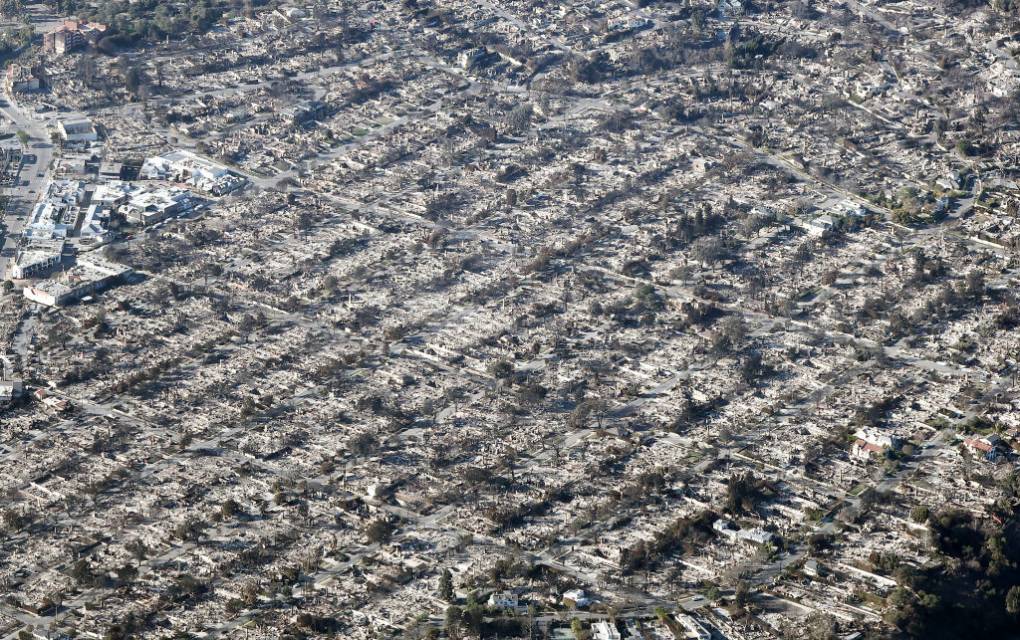
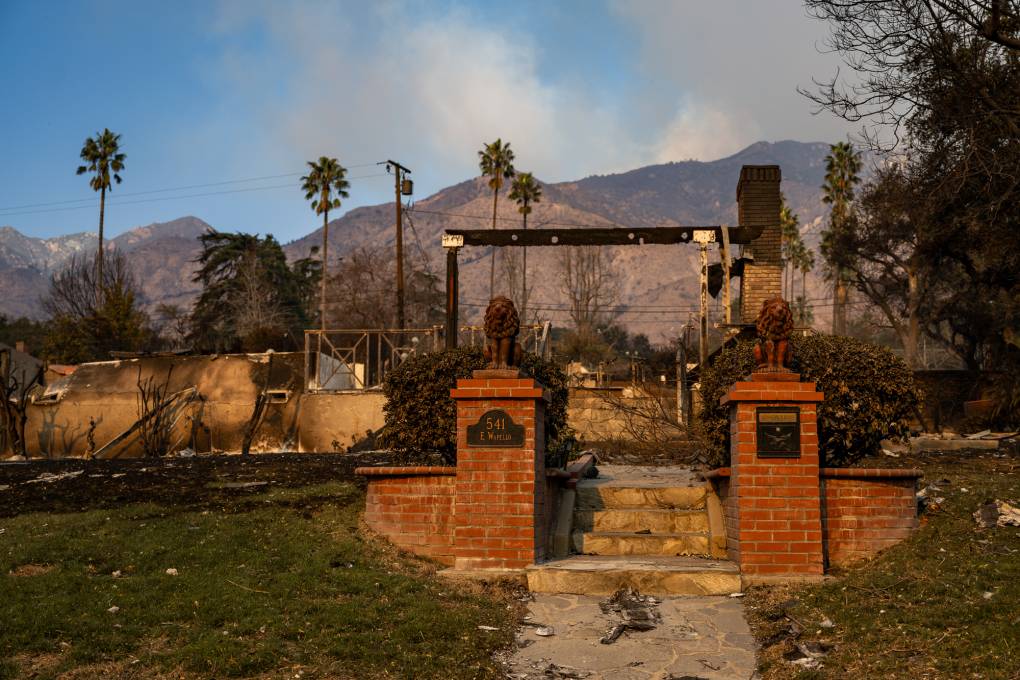
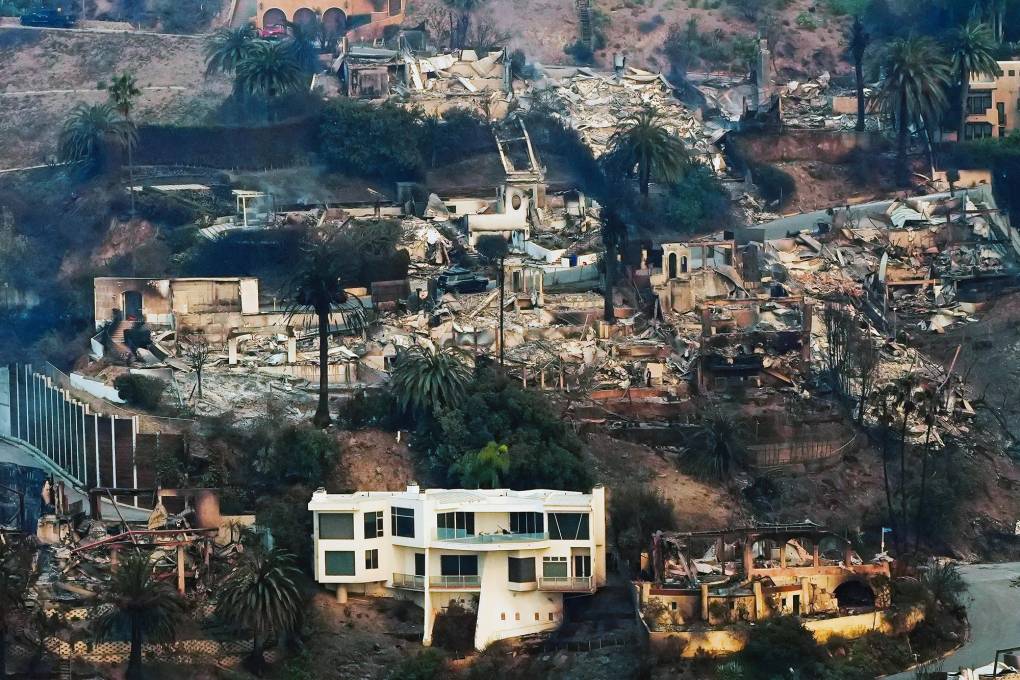
"content": "\u003cp>Months before the Eaton Fire tore through Altadena, Calif., destroying more than 9,400 homes and buildings, the community had already been debating a fateful question: are there places too risky for new housing to be built?\u003c/p>\n\u003cp>Like so many communities, Altadena had grown over decades with little consideration of the risk of wildfires. Houses spread steadily into the foothills, nestled against the dense, flammable brush of the San Gabriel Mountains.\u003c/p>\n\u003cp>In December, Los Angeles County officials considered a new land use plan, one that would control building decisions for Altadena and the surrounding area for decades to come. The plan sought to balance two major problems. To address a housing shortage, more density would be allowed in the interior of Altadena. To reduce the danger from wildfires, new construction would be restricted in the foothills.\u003c/p>\n\u003cp>[ad fullwidth]\u003c/p>\n\u003cp>Some of the affected landowners pushed back, saying the plan devalued their property and their rights to use it. Those same tensions about where to build housing are playing out around the country, as hurricanes, floods and wildfires get more extreme as the climate gets hotter.\u003c/p>\n\u003cp>Building regulation decisions generally fall to local elected officials, who have to balance their constituents’ concerns about land use with the reality of a national housing shortage and growing threat of extreme weather. As a result, few communities around the country have adopted strict development limits to reduce the risk of disasters. Now, as it picks up the pieces after the fires, Altadena will follow those new development rules as it rebuilds.\u003c/p>\n\u003cp>“Nobody likes to hear about constraints but at the same time, do we want our neighborhoods to burn down?” says Jennifer Balch, professor of geography at the University of Colorado Boulder. “There are things that we can do and should be doing to mitigate that risk.”\u003c/p>\n\u003cfigure id=\"attachment_12025114\" class=\"wp-caption aligncenter\" style=\"max-width: 1600px\">\u003cimg loading=\"lazy\" decoding=\"async\" class=\"size-full wp-image-12025114\" src=\"https://cdn.kqed.org/wp-content/uploads/sites/10/2025/01/npr.brightspotcdn-copy-59.jpg\" alt=\"\" width=\"1600\" height=\"531\" srcset=\"https://cdn.kqed.org/wp-content/uploads/sites/10/2025/01/npr.brightspotcdn-copy-59.jpg 1600w, https://cdn.kqed.org/wp-content/uploads/sites/10/2025/01/npr.brightspotcdn-copy-59-800x266.jpg 800w, https://cdn.kqed.org/wp-content/uploads/sites/10/2025/01/npr.brightspotcdn-copy-59-1020x339.jpg 1020w, https://cdn.kqed.org/wp-content/uploads/sites/10/2025/01/npr.brightspotcdn-copy-59-160x53.jpg 160w, https://cdn.kqed.org/wp-content/uploads/sites/10/2025/01/npr.brightspotcdn-copy-59-1536x510.jpg 1536w\" sizes=\"auto, (max-width: 1600px) 100vw, 1600px\">\u003cfigcaption class=\"wp-caption-text\">The danger of wildfires was well-known to Los Angeles County. California is one of a handful of states that has mapped where the highest risk areas are. \u003ccite>(Ryan Kellman/NPR)\u003c/cite>\u003c/figcaption>\u003c/figure>\n\u003ch2>Altadena foreshadows a disaster\u003c/h2>\n\u003cp>In the weeks after the Eaton fire, Nic Arnzen was running on little sleep. He was searching for temporary housing after he and his family lost their Altadena home.\u003c/p>\n\u003cp>“It was completely gone,” Arnzen says. “I keep telling people the fridge was gone. I don’t understand how a fridge just disappears to dust.”\u003c/p>\n\u003cp>At the same time, Arnzen had the whole community to think of. As vice chair of the Altadena Town Council, he and his colleagues were juggling the logistics of a disaster. Already, many residents were vowing to rebuild.\u003c/p>\n\u003cp>“The focus needs to be on: what can we plan for now?” Arnzen says. “How can we know the danger we live in now, and try to improve it?”\u003c/p>\n\u003cp>Altadena had already been trying to plan for wildfires. Los Angeles County officials had been working on the \u003ca href=\"https://planning.lacounty.gov/long-range-planning/wsgvap/\">West San Gabriel Valley Area Plan\u003c/a>, a plan that would control building decisions through new zoning. (Altadena is an unincorporated area, so planning decisions are made at the county level.)\u003c/p>\n\u003cp>Boosting housing is one big focus. Los Angeles is one of the most expensive housing markets in the country and as a whole, the county needs to add more than 90,000 housing units, part of a state requirement. The plan rezones land to allow for higher density of buildings and apartments along Altadena’s central corridors, where there’s already access to transportation and services.\u003c/p>\n\u003cp>At the same time, properties on the outskirts of Altadena would be zoned for a lower density of housing, particularly areas labeled as “very high” risk of wildfires. That would limit the construction of new homes there, part of a larger county-wide policy to \u003ca href=\"https://www.npr.org/2025/01/15/nx-s1-5256348/los-angeles-fires-safety-evacuation-improvement-preparation\">direct development away\u003c/a> from places that are likely to burn.\u003c/p>\n\u003cfigure id=\"attachment_12025105\" class=\"wp-caption aligncenter\" style=\"max-width: 1600px\">\u003cimg loading=\"lazy\" decoding=\"async\" class=\"size-full wp-image-12025105\" src=\"https://cdn.kqed.org/wp-content/uploads/sites/10/2025/01/npr.brightspotcdn-1-copy-9.jpg\" alt=\"\" width=\"1600\" height=\"1067\" srcset=\"https://cdn.kqed.org/wp-content/uploads/sites/10/2025/01/npr.brightspotcdn-1-copy-9.jpg 1600w, https://cdn.kqed.org/wp-content/uploads/sites/10/2025/01/npr.brightspotcdn-1-copy-9-800x534.jpg 800w, https://cdn.kqed.org/wp-content/uploads/sites/10/2025/01/npr.brightspotcdn-1-copy-9-1020x680.jpg 1020w, https://cdn.kqed.org/wp-content/uploads/sites/10/2025/01/npr.brightspotcdn-1-copy-9-160x107.jpg 160w, https://cdn.kqed.org/wp-content/uploads/sites/10/2025/01/npr.brightspotcdn-1-copy-9-1536x1024.jpg 1536w\" sizes=\"auto, (max-width: 1600px) 100vw, 1600px\">\u003cfigcaption class=\"wp-caption-text\">The fires in Los Angeles County could be the most expensive wildfire disaster in history. \u003ccite>(Ryan Kellman/NPR)\u003c/cite>\u003c/figcaption>\u003c/figure>\n\u003cp>“This is the example of why,” Arnzen says, referring to the Eaton Fire. “To make our town safe, we do have to have some supervision. And we hate to dictate to anyone that: no, you can’t develop even though you’ve been waiting forty years to do that.”\u003c/p>\n\u003ch2>Plan comes down to a vote\u003c/h2>\n\u003cp>In December, the Los Angeles County Board of Supervisors heard that exact feedback. A group of residents who own property in the foothills \u003ca href=\"https://www.pasadenastarnews.com/2024/11/30/alan-zorthian-the-problem-with-the-west-san-gabriel-valley-area-plan/\">registered their opposition\u003c/a> during public comments at a hearing for the development plan.\u003c/p>\n\u003cp>“For us, the property is more than just land,” said Altadena resident Joseph DiMassa. “It’s 50+ acres where we imagine buildings, homes for our children, grandchildren, and possibly even future generations. The downzoning of our property from 52 homes to two isn’t just a number, it destroys the dreams we hold for our family’s future.”\u003c/p>\n\u003cp>Still, many of the public comments were in support.\u003c/p>\n\u003cp>“The prevailing sentiment in Altadena is one of endorsement,” Victoria Knapp, chair of Altadena Town Council, testified at the meeting. “The plan will direct development away from the Altadena foothills and other high fire zones.”\u003c/p>\n\u003cp>When it came time to vote, the county supervisors passed the plan. That means as Altadena rebuilds and potentially expands, zoning restrictions limiting growth in the foothills will be in place.\u003c/p>\n\u003cp>After the Eaton Fire, Joseph DiMassa’s daughter, Cara, says her family’s land in the foothills was burned, destroying a summer camp they run there.\u003c/p>\n\u003cp>“I love Altadena so much,” she says. “And all of that really is gone and it’s pretty heart-breaking.”\u003c/p>\n\u003cfigure id=\"attachment_12025106\" class=\"wp-caption aligncenter\" style=\"max-width: 1600px\">\u003cimg loading=\"lazy\" decoding=\"async\" class=\"size-full wp-image-12025106\" src=\"https://cdn.kqed.org/wp-content/uploads/sites/10/2025/01/npr.brightspotcdn-1-copy-10.jpg\" alt=\"\" width=\"1600\" height=\"1074\" srcset=\"https://cdn.kqed.org/wp-content/uploads/sites/10/2025/01/npr.brightspotcdn-1-copy-10.jpg 1600w, https://cdn.kqed.org/wp-content/uploads/sites/10/2025/01/npr.brightspotcdn-1-copy-10-800x537.jpg 800w, https://cdn.kqed.org/wp-content/uploads/sites/10/2025/01/npr.brightspotcdn-1-copy-10-1020x685.jpg 1020w, https://cdn.kqed.org/wp-content/uploads/sites/10/2025/01/npr.brightspotcdn-1-copy-10-160x107.jpg 160w, https://cdn.kqed.org/wp-content/uploads/sites/10/2025/01/npr.brightspotcdn-1-copy-10-1536x1031.jpg 1536w\" sizes=\"auto, (max-width: 1600px) 100vw, 1600px\">\u003cfigcaption class=\"wp-caption-text\">Under Los Angeles County’s new plan, development would be limited in the foothills of Altadena, where the wildfire risk is highest. \u003ccite>(Mario Tama/Getty Images/Getty Images North America)\u003c/cite>\u003c/figcaption>\u003c/figure>\n\u003cp>Her family had opposed the new zoning plan because they felt it drastically limited the housing that could be built on larger properties.\u003c/p>\n\u003cp>“We really feel like the county did not do a great job at taking a look at some of these really large parcels that are family-owned, that suddenly were becoming completely devalued,” she says.\u003c/p>\n\u003cp>Now, with so much devastation from the Eaton Fire, Cara DiMassa is glad the zoning plan is in place.\u003c/p>\n\u003cp>“It gives us hope that our hillsides will be hillsides again and I certainly don’t want to see huge developments go up,” she says.\u003c/p>\n\u003ch2>Tensions of housing needs and wildfire risk\u003c/h2>\n\u003cp>By considering wildfire risk, Los Angeles County’s land use planning is ahead of many other Western communities. County supervisors \u003ca href=\"https://www.npr.org/2025/01/15/nx-s1-5256348/los-angeles-fires-safety-evacuation-improvement-preparation\">are also considering a new ordinance\u003c/a> that would put even more restrictions on construction in risky areas. The county knows which areas to target because the state \u003ca href=\"https://osfm.fire.ca.gov/what-we-do/community-wildfire-preparedness-and-mitigation/fire-hazard-severity-zones\">has mapped wildfire hazard zones\u003c/a>. Other states lack those maps or are in the process of developing them, \u003ca href=\"https://apnews.com/article/oregon-wildfire-hazard-map-45c0335d93632580e07512a276dea7da\">like Oregon\u003c/a>.\u003c/p>\n\u003cp>Across the country, new construction is expanding into areas that are prone to burning, known as the wildland-urban interface. Around \u003ca href=\"https://e3.eurekalert.org/news-releases/884454\">32 million homes were built\u003c/a> there between 1992 and 2015, according to one study.\u003c/p>\n\u003cp>“We’re building into flammable landscapes and just ignoring the fact that we’re building into flammable vegetation,” Balch says. “And we are increasingly doing that, and it’s not changing anytime soon.”\u003c/p>\n\u003cp>Wildfires are also spreading more explosively, driven in part by climate change. A hotter, drier atmosphere pulls the moisture out of vegetation, making it more flammable. Balch and her colleagues found that between 2001 and 2020, there was a \u003ca href=\"https://www.science.org/doi/10.1126/science.adk5737\">400% increase in how fast fires grew\u003c/a> in California.\u003c/p>\n\u003cp>“Fires are getting harder to fight,” Balch says. “So we cannot expect to live in flammable landscapes, and firefighters are going to just come along and put out the ignitions in our homes. This is something we need to address well before the fire actually ignites.”\u003c/p>\n\u003cfigure id=\"attachment_12025108\" class=\"wp-caption aligncenter\" style=\"max-width: 1600px\">\u003cimg loading=\"lazy\" decoding=\"async\" class=\"size-full wp-image-12025108\" src=\"https://cdn.kqed.org/wp-content/uploads/sites/10/2025/01/npr.brightspotcdn-1-copy-11.jpg\" alt=\"\" width=\"1600\" height=\"1067\" srcset=\"https://cdn.kqed.org/wp-content/uploads/sites/10/2025/01/npr.brightspotcdn-1-copy-11.jpg 1600w, https://cdn.kqed.org/wp-content/uploads/sites/10/2025/01/npr.brightspotcdn-1-copy-11-800x534.jpg 800w, https://cdn.kqed.org/wp-content/uploads/sites/10/2025/01/npr.brightspotcdn-1-copy-11-1020x680.jpg 1020w, https://cdn.kqed.org/wp-content/uploads/sites/10/2025/01/npr.brightspotcdn-1-copy-11-160x107.jpg 160w, https://cdn.kqed.org/wp-content/uploads/sites/10/2025/01/npr.brightspotcdn-1-copy-11-1536x1024.jpg 1536w\" sizes=\"auto, (max-width: 1600px) 100vw, 1600px\">\u003cfigcaption class=\"wp-caption-text\">Many communities around the country struggle with balancing the need for new housing with the growing risk from more extreme weather. \u003ccite>(Ryan Kellman/NPR)\u003c/cite>\u003c/figcaption>\u003c/figure>\n\u003cp>Still, many communities are in desperate need of new housing and elected officials may not want to appear anti-growth. New housing also means an increase in local property taxes, a key source of funding.\u003c/p>\n\u003cp>“Zoning laws and development regulations really do happen at local levels and so part of the challenge is: what are the incentive structures?” Balch says.[aside label=\"Related Stories\" postID=\"news_12022146,news_12022375,news_12022615\"]California legislators have attempted to address how communities build in wildfire-prone areas at a statewide level. In 2020, \u003ca href=\"https://leginfo.legislature.ca.gov/faces/billNavClient.xhtml?bill_id=201920200SB182\">a bill was introduced\u003c/a> to put new restrictions on developments in risky areas, requiring them to have adequate evacuation routes and to fund programs to clear flammable vegetation. It was \u003ca href=\"https://www.gov.ca.gov/wp-content/uploads/2020/09/SB-182.pdf\">vetoed by Governor Gavin Newsom (PDF)\u003c/a>, who cited the state’s housing needs. Several similar bills have been introduced since then, but also failed.\u003c/p>\n\u003cp>“The biggest opponents were the builders and realtors,” says Hannah-Beth Jackson, a former California state senator who authored the vetoed bill. “People wanted to just keep building and building. The bottom line is the climate is changing.”\u003c/p>\n\u003cp>When communities build in wildfire-prone areas, there are also \u003ca href=\"https://www.npr.org/2020/11/25/936685629/rebuilding-after-a-wildfire-most-states-dont-require-fire-resistant-materials\">few rules about using fire-resistant materials in most states\u003c/a>. Studies show that following wildfire building codes can improve the chances a home will survive a wildfire. California has passed those codes, which means many homeowners rebuilding in Los Angeles will have to meet them. But the majority of other states have not.\u003c/p>\n\u003cp>While the conversation to build or not build can be tense, Altadena’s Nic Arnzen says, in light of the devastation his community is recovering from, it’s worth having that conversation, no matter the pushback.\u003c/p>\n\u003cp>“To tell people no is a difficult thing to do because you care about them and they’re your constituents,” Arnzen says. “But you have to buffer their anger with your knowledge. And sometimes you have to, as I’ve done as a parent, you just have to say no and take the beating.”\u003c/p>\n\u003cp>[ad floatright]\u003c/p>\n",
"blocks": [],
"excerpt": "L.A. County officials are considering a land use plan, one that would allow more density in the interior of Altadena to address a housing shortage, while restricting new construction in the wildfire-prone foothills.",
"status": "publish",
"parent": 0,
"modified": 1738360295,
"stats": {
"hasAudio": false,
"hasVideo": false,
"hasChartOrMap": false,
"iframeSrcs": [],
"hasGoogleForm": false,
"hasGallery": false,
"hasHearkenModule": false,
"hasPolis": false,
"paragraphCount": 38,
"wordCount": 1733
},
"headData": {
"title": "'You Just Have to Say No': LA's Plan to Stop Building Homes in Fire Zones | KQED",
"description": "L.A. County officials are considering a land use plan, one that would allow more density in the interior of Altadena to address a housing shortage, while restricting new construction in the wildfire-prone foothills.",
"ogTitle": "",
"ogDescription": "",
"ogImgId": "",
"twTitle": "",
"twDescription": "",
"twImgId": "",
"schema": {
"@context": "https://schema.org",
"@type": "NewsArticle",
"headline": "'You Just Have to Say No': LA's Plan to Stop Building Homes in Fire Zones",
"datePublished": "2025-02-02T08:00:36-08:00",
"dateModified": "2025-01-31T13:51:35-08:00",
"image": "https://cdn.kqed.org/wp-content/uploads/2020/02/KQED-OG-Image@1x.png",
"isAccessibleForFree": "True",
"publisher": {
"@type": "NewsMediaOrganization",
"@id": "https://www.kqed.org/#organization",
"name": "KQED",
"logo": "https://cdn.kqed.org/wp-content/uploads/2020/02/KQED-OG-Image@1x.png",
"url": "https://www.kqed.org",
"sameAs": [
"https://www.facebook.com/KQED",
"https://twitter.com/KQED",
"https://www.instagram.com/kqed/",
"https://www.tiktok.com/@kqedofficial",
"https://www.linkedin.com/company/kqed",
"https://www.youtube.com/channel/UCeC0IOo7i1P_61zVUWbJ4nw"
]
}
}
},
"sticky": false,
"nprByline": "\u003ca href=\"https://www.npr.org/people/803934365/lauren-sommer\">Lauren Sommer\u003c/a>, NPR",
"excludeFromSiteSearch": "Include",
"showOnAuthorArchivePages": "No",
"articleAge": "0",
"path": "/news/12025097/more-houses-are-being-built-in-wildfire-prone-areas-los-angeles-has-a-plan-to-stop",
"audioTrackLength": null,
"parsedContent": [
{
"type": "contentString",
"content": "\u003cdiv class=\"post-body\">\u003cp>\u003cp>Months before the Eaton Fire tore through Altadena, Calif., destroying more than 9,400 homes and buildings, the community had already been debating a fateful question: are there places too risky for new housing to be built?\u003c/p>\n\u003cp>Like so many communities, Altadena had grown over decades with little consideration of the risk of wildfires. Houses spread steadily into the foothills, nestled against the dense, flammable brush of the San Gabriel Mountains.\u003c/p>\n\u003cp>In December, Los Angeles County officials considered a new land use plan, one that would control building decisions for Altadena and the surrounding area for decades to come. The plan sought to balance two major problems. To address a housing shortage, more density would be allowed in the interior of Altadena. To reduce the danger from wildfires, new construction would be restricted in the foothills.\u003c/p>\n\u003cp>\u003c/p>\u003c/div>",
"attributes": {
"named": {},
"numeric": []
}
},
{
"type": "component",
"content": "",
"name": "ad",
"attributes": {
"named": {
"label": "fullwidth"
},
"numeric": [
"fullwidth"
]
}
},
{
"type": "contentString",
"content": "\u003cdiv class=\"post-body\">\u003cp>\u003c/p>\n\u003cp>Some of the affected landowners pushed back, saying the plan devalued their property and their rights to use it. Those same tensions about where to build housing are playing out around the country, as hurricanes, floods and wildfires get more extreme as the climate gets hotter.\u003c/p>\n\u003cp>Building regulation decisions generally fall to local elected officials, who have to balance their constituents’ concerns about land use with the reality of a national housing shortage and growing threat of extreme weather. As a result, few communities around the country have adopted strict development limits to reduce the risk of disasters. Now, as it picks up the pieces after the fires, Altadena will follow those new development rules as it rebuilds.\u003c/p>\n\u003cp>“Nobody likes to hear about constraints but at the same time, do we want our neighborhoods to burn down?” says Jennifer Balch, professor of geography at the University of Colorado Boulder. “There are things that we can do and should be doing to mitigate that risk.”\u003c/p>\n\u003cfigure id=\"attachment_12025114\" class=\"wp-caption aligncenter\" style=\"max-width: 1600px\">\u003cimg loading=\"lazy\" decoding=\"async\" class=\"size-full wp-image-12025114\" src=\"https://cdn.kqed.org/wp-content/uploads/sites/10/2025/01/npr.brightspotcdn-copy-59.jpg\" alt=\"\" width=\"1600\" height=\"531\" srcset=\"https://cdn.kqed.org/wp-content/uploads/sites/10/2025/01/npr.brightspotcdn-copy-59.jpg 1600w, https://cdn.kqed.org/wp-content/uploads/sites/10/2025/01/npr.brightspotcdn-copy-59-800x266.jpg 800w, https://cdn.kqed.org/wp-content/uploads/sites/10/2025/01/npr.brightspotcdn-copy-59-1020x339.jpg 1020w, https://cdn.kqed.org/wp-content/uploads/sites/10/2025/01/npr.brightspotcdn-copy-59-160x53.jpg 160w, https://cdn.kqed.org/wp-content/uploads/sites/10/2025/01/npr.brightspotcdn-copy-59-1536x510.jpg 1536w\" sizes=\"auto, (max-width: 1600px) 100vw, 1600px\">\u003cfigcaption class=\"wp-caption-text\">The danger of wildfires was well-known to Los Angeles County. California is one of a handful of states that has mapped where the highest risk areas are. \u003ccite>(Ryan Kellman/NPR)\u003c/cite>\u003c/figcaption>\u003c/figure>\n\u003ch2>Altadena foreshadows a disaster\u003c/h2>\n\u003cp>In the weeks after the Eaton fire, Nic Arnzen was running on little sleep. He was searching for temporary housing after he and his family lost their Altadena home.\u003c/p>\n\u003cp>“It was completely gone,” Arnzen says. “I keep telling people the fridge was gone. I don’t understand how a fridge just disappears to dust.”\u003c/p>\n\u003cp>At the same time, Arnzen had the whole community to think of. As vice chair of the Altadena Town Council, he and his colleagues were juggling the logistics of a disaster. Already, many residents were vowing to rebuild.\u003c/p>\n\u003cp>“The focus needs to be on: what can we plan for now?” Arnzen says. “How can we know the danger we live in now, and try to improve it?”\u003c/p>\n\u003cp>Altadena had already been trying to plan for wildfires. Los Angeles County officials had been working on the \u003ca href=\"https://planning.lacounty.gov/long-range-planning/wsgvap/\">West San Gabriel Valley Area Plan\u003c/a>, a plan that would control building decisions through new zoning. (Altadena is an unincorporated area, so planning decisions are made at the county level.)\u003c/p>\n\u003cp>Boosting housing is one big focus. Los Angeles is one of the most expensive housing markets in the country and as a whole, the county needs to add more than 90,000 housing units, part of a state requirement. The plan rezones land to allow for higher density of buildings and apartments along Altadena’s central corridors, where there’s already access to transportation and services.\u003c/p>\n\u003cp>At the same time, properties on the outskirts of Altadena would be zoned for a lower density of housing, particularly areas labeled as “very high” risk of wildfires. That would limit the construction of new homes there, part of a larger county-wide policy to \u003ca href=\"https://www.npr.org/2025/01/15/nx-s1-5256348/los-angeles-fires-safety-evacuation-improvement-preparation\">direct development away\u003c/a> from places that are likely to burn.\u003c/p>\n\u003cfigure id=\"attachment_12025105\" class=\"wp-caption aligncenter\" style=\"max-width: 1600px\">\u003cimg loading=\"lazy\" decoding=\"async\" class=\"size-full wp-image-12025105\" src=\"https://cdn.kqed.org/wp-content/uploads/sites/10/2025/01/npr.brightspotcdn-1-copy-9.jpg\" alt=\"\" width=\"1600\" height=\"1067\" srcset=\"https://cdn.kqed.org/wp-content/uploads/sites/10/2025/01/npr.brightspotcdn-1-copy-9.jpg 1600w, https://cdn.kqed.org/wp-content/uploads/sites/10/2025/01/npr.brightspotcdn-1-copy-9-800x534.jpg 800w, https://cdn.kqed.org/wp-content/uploads/sites/10/2025/01/npr.brightspotcdn-1-copy-9-1020x680.jpg 1020w, https://cdn.kqed.org/wp-content/uploads/sites/10/2025/01/npr.brightspotcdn-1-copy-9-160x107.jpg 160w, https://cdn.kqed.org/wp-content/uploads/sites/10/2025/01/npr.brightspotcdn-1-copy-9-1536x1024.jpg 1536w\" sizes=\"auto, (max-width: 1600px) 100vw, 1600px\">\u003cfigcaption class=\"wp-caption-text\">The fires in Los Angeles County could be the most expensive wildfire disaster in history. \u003ccite>(Ryan Kellman/NPR)\u003c/cite>\u003c/figcaption>\u003c/figure>\n\u003cp>“This is the example of why,” Arnzen says, referring to the Eaton Fire. “To make our town safe, we do have to have some supervision. And we hate to dictate to anyone that: no, you can’t develop even though you’ve been waiting forty years to do that.”\u003c/p>\n\u003ch2>Plan comes down to a vote\u003c/h2>\n\u003cp>In December, the Los Angeles County Board of Supervisors heard that exact feedback. A group of residents who own property in the foothills \u003ca href=\"https://www.pasadenastarnews.com/2024/11/30/alan-zorthian-the-problem-with-the-west-san-gabriel-valley-area-plan/\">registered their opposition\u003c/a> during public comments at a hearing for the development plan.\u003c/p>\n\u003cp>“For us, the property is more than just land,” said Altadena resident Joseph DiMassa. “It’s 50+ acres where we imagine buildings, homes for our children, grandchildren, and possibly even future generations. The downzoning of our property from 52 homes to two isn’t just a number, it destroys the dreams we hold for our family’s future.”\u003c/p>\n\u003cp>Still, many of the public comments were in support.\u003c/p>\n\u003cp>“The prevailing sentiment in Altadena is one of endorsement,” Victoria Knapp, chair of Altadena Town Council, testified at the meeting. “The plan will direct development away from the Altadena foothills and other high fire zones.”\u003c/p>\n\u003cp>When it came time to vote, the county supervisors passed the plan. That means as Altadena rebuilds and potentially expands, zoning restrictions limiting growth in the foothills will be in place.\u003c/p>\n\u003cp>After the Eaton Fire, Joseph DiMassa’s daughter, Cara, says her family’s land in the foothills was burned, destroying a summer camp they run there.\u003c/p>\n\u003cp>“I love Altadena so much,” she says. “And all of that really is gone and it’s pretty heart-breaking.”\u003c/p>\n\u003cfigure id=\"attachment_12025106\" class=\"wp-caption aligncenter\" style=\"max-width: 1600px\">\u003cimg loading=\"lazy\" decoding=\"async\" class=\"size-full wp-image-12025106\" src=\"https://cdn.kqed.org/wp-content/uploads/sites/10/2025/01/npr.brightspotcdn-1-copy-10.jpg\" alt=\"\" width=\"1600\" height=\"1074\" srcset=\"https://cdn.kqed.org/wp-content/uploads/sites/10/2025/01/npr.brightspotcdn-1-copy-10.jpg 1600w, https://cdn.kqed.org/wp-content/uploads/sites/10/2025/01/npr.brightspotcdn-1-copy-10-800x537.jpg 800w, https://cdn.kqed.org/wp-content/uploads/sites/10/2025/01/npr.brightspotcdn-1-copy-10-1020x685.jpg 1020w, https://cdn.kqed.org/wp-content/uploads/sites/10/2025/01/npr.brightspotcdn-1-copy-10-160x107.jpg 160w, https://cdn.kqed.org/wp-content/uploads/sites/10/2025/01/npr.brightspotcdn-1-copy-10-1536x1031.jpg 1536w\" sizes=\"auto, (max-width: 1600px) 100vw, 1600px\">\u003cfigcaption class=\"wp-caption-text\">Under Los Angeles County’s new plan, development would be limited in the foothills of Altadena, where the wildfire risk is highest. \u003ccite>(Mario Tama/Getty Images/Getty Images North America)\u003c/cite>\u003c/figcaption>\u003c/figure>\n\u003cp>Her family had opposed the new zoning plan because they felt it drastically limited the housing that could be built on larger properties.\u003c/p>\n\u003cp>“We really feel like the county did not do a great job at taking a look at some of these really large parcels that are family-owned, that suddenly were becoming completely devalued,” she says.\u003c/p>\n\u003cp>Now, with so much devastation from the Eaton Fire, Cara DiMassa is glad the zoning plan is in place.\u003c/p>\n\u003cp>“It gives us hope that our hillsides will be hillsides again and I certainly don’t want to see huge developments go up,” she says.\u003c/p>\n\u003ch2>Tensions of housing needs and wildfire risk\u003c/h2>\n\u003cp>By considering wildfire risk, Los Angeles County’s land use planning is ahead of many other Western communities. County supervisors \u003ca href=\"https://www.npr.org/2025/01/15/nx-s1-5256348/los-angeles-fires-safety-evacuation-improvement-preparation\">are also considering a new ordinance\u003c/a> that would put even more restrictions on construction in risky areas. The county knows which areas to target because the state \u003ca href=\"https://osfm.fire.ca.gov/what-we-do/community-wildfire-preparedness-and-mitigation/fire-hazard-severity-zones\">has mapped wildfire hazard zones\u003c/a>. Other states lack those maps or are in the process of developing them, \u003ca href=\"https://apnews.com/article/oregon-wildfire-hazard-map-45c0335d93632580e07512a276dea7da\">like Oregon\u003c/a>.\u003c/p>\n\u003cp>Across the country, new construction is expanding into areas that are prone to burning, known as the wildland-urban interface. Around \u003ca href=\"https://e3.eurekalert.org/news-releases/884454\">32 million homes were built\u003c/a> there between 1992 and 2015, according to one study.\u003c/p>\n\u003cp>“We’re building into flammable landscapes and just ignoring the fact that we’re building into flammable vegetation,” Balch says. “And we are increasingly doing that, and it’s not changing anytime soon.”\u003c/p>\n\u003cp>Wildfires are also spreading more explosively, driven in part by climate change. A hotter, drier atmosphere pulls the moisture out of vegetation, making it more flammable. Balch and her colleagues found that between 2001 and 2020, there was a \u003ca href=\"https://www.science.org/doi/10.1126/science.adk5737\">400% increase in how fast fires grew\u003c/a> in California.\u003c/p>\n\u003cp>“Fires are getting harder to fight,” Balch says. “So we cannot expect to live in flammable landscapes, and firefighters are going to just come along and put out the ignitions in our homes. This is something we need to address well before the fire actually ignites.”\u003c/p>\n\u003cfigure id=\"attachment_12025108\" class=\"wp-caption aligncenter\" style=\"max-width: 1600px\">\u003cimg loading=\"lazy\" decoding=\"async\" class=\"size-full wp-image-12025108\" src=\"https://cdn.kqed.org/wp-content/uploads/sites/10/2025/01/npr.brightspotcdn-1-copy-11.jpg\" alt=\"\" width=\"1600\" height=\"1067\" srcset=\"https://cdn.kqed.org/wp-content/uploads/sites/10/2025/01/npr.brightspotcdn-1-copy-11.jpg 1600w, https://cdn.kqed.org/wp-content/uploads/sites/10/2025/01/npr.brightspotcdn-1-copy-11-800x534.jpg 800w, https://cdn.kqed.org/wp-content/uploads/sites/10/2025/01/npr.brightspotcdn-1-copy-11-1020x680.jpg 1020w, https://cdn.kqed.org/wp-content/uploads/sites/10/2025/01/npr.brightspotcdn-1-copy-11-160x107.jpg 160w, https://cdn.kqed.org/wp-content/uploads/sites/10/2025/01/npr.brightspotcdn-1-copy-11-1536x1024.jpg 1536w\" sizes=\"auto, (max-width: 1600px) 100vw, 1600px\">\u003cfigcaption class=\"wp-caption-text\">Many communities around the country struggle with balancing the need for new housing with the growing risk from more extreme weather. \u003ccite>(Ryan Kellman/NPR)\u003c/cite>\u003c/figcaption>\u003c/figure>\n\u003cp>Still, many communities are in desperate need of new housing and elected officials may not want to appear anti-growth. New housing also means an increase in local property taxes, a key source of funding.\u003c/p>\n\u003cp>“Zoning laws and development regulations really do happen at local levels and so part of the challenge is: what are the incentive structures?” Balch says.\u003c/p>\u003c/div>",
"attributes": {
"named": {},
"numeric": []
}
},
{
"type": "component",
"content": "",
"name": "aside",
"attributes": {
"named": {
"label": "Related Stories ",
"postid": "news_12022146,news_12022375,news_12022615"
},
"numeric": []
}
},
{
"type": "contentString",
"content": "\u003cdiv class=\"post-body\">\u003cp>California legislators have attempted to address how communities build in wildfire-prone areas at a statewide level. In 2020, \u003ca href=\"https://leginfo.legislature.ca.gov/faces/billNavClient.xhtml?bill_id=201920200SB182\">a bill was introduced\u003c/a> to put new restrictions on developments in risky areas, requiring them to have adequate evacuation routes and to fund programs to clear flammable vegetation. It was \u003ca href=\"https://www.gov.ca.gov/wp-content/uploads/2020/09/SB-182.pdf\">vetoed by Governor Gavin Newsom (PDF)\u003c/a>, who cited the state’s housing needs. Several similar bills have been introduced since then, but also failed.\u003c/p>\n\u003cp>“The biggest opponents were the builders and realtors,” says Hannah-Beth Jackson, a former California state senator who authored the vetoed bill. “People wanted to just keep building and building. The bottom line is the climate is changing.”\u003c/p>\n\u003cp>When communities build in wildfire-prone areas, there are also \u003ca href=\"https://www.npr.org/2020/11/25/936685629/rebuilding-after-a-wildfire-most-states-dont-require-fire-resistant-materials\">few rules about using fire-resistant materials in most states\u003c/a>. Studies show that following wildfire building codes can improve the chances a home will survive a wildfire. California has passed those codes, which means many homeowners rebuilding in Los Angeles will have to meet them. But the majority of other states have not.\u003c/p>\n\u003cp>While the conversation to build or not build can be tense, Altadena’s Nic Arnzen says, in light of the devastation his community is recovering from, it’s worth having that conversation, no matter the pushback.\u003c/p>\n\u003cp>“To tell people no is a difficult thing to do because you care about them and they’re your constituents,” Arnzen says. “But you have to buffer their anger with your knowledge. And sometimes you have to, as I’ve done as a parent, you just have to say no and take the beating.”\u003c/p>\n\u003cp>\u003c/p>\u003c/div>",
"attributes": {
"named": {},
"numeric": []
}
},
{
"type": "component",
"content": "",
"name": "ad",
"attributes": {
"named": {
"label": "floatright"
},
"numeric": [
"floatright"
]
}
},
{
"type": "contentString",
"content": "\u003cdiv class=\"post-body\">\u003cp>\u003c/p>\n\u003c/div>\u003c/p>",
"attributes": {
"named": {},
"numeric": []
}
}
],
"link": "/news/12025097/more-houses-are-being-built-in-wildfire-prone-areas-los-angeles-has-a-plan-to-stop",
"authors": [
"byline_news_12025097"
],
"categories": [
"news_34165",
"news_19906",
"news_6266",
"news_8",
"news_356"
],
"tags": [
"news_25135",
"news_1775",
"news_4",
"news_21238",
"news_34868",
"news_4463"
],
"affiliates": [
"news_253"
],
"featImg": "news_12025101",
"label": "news_253"
},
"news_12024770": {
"type": "posts",
"id": "news_12024770",
"meta": {
"index": "posts_1716263798",
"site": "news",
"id": "12024770",
"score": null,
"sort": [
1738266241000
]
},
"guestAuthors": [],
"slug": "north-beach-a-historic-district-not-yet-sf-mayor-lurie-says",
"title": "North Beach as a Historic District? Not Yet, SF Mayor Lurie Says",
"publishDate": 1738266241,
"format": "standard",
"headTitle": "North Beach as a Historic District? Not Yet, SF Mayor Lurie Says | KQED",
"labelTerm": {
"site": "news"
},
"content": "\u003cp>San Francisco Mayor Daniel Lurie is asking a state commission to delay a hearing on whether to \u003ca href=\"https://www.kqed.org/news/12022208/why-a-push-to-make-san-franciscos-north-beach-a-historic-district-has-housing-advocates-worried\">designate North Beach as a historic district\u003c/a> after pushback from housing advocates.\u003c/p>\n\u003cp>The State Historical Resources Commission was scheduled to hear the petition from the Northeast San Francisco Conservancy on Feb. 7. On Monday, however, Lurie sent a letter to the commission urging it to delay, and the item no longer appears on its agenda. Lurie, along with commission members, did not immediately respond to requests for comment.\u003c/p>\n\u003cp>“My office recently learned of this proposal,” Lurie’s letter to the commission reads. “I am respectfully requesting that the commission delay their action on this nomination to allow my office to undertake this due diligence and seek additional feedback from impacted property owners, merchants and tenants in this neighborhood.”\u003c/p>\n\u003cp>[ad fullwidth]\u003c/p>\n\u003cp>The petition requests a historic district designation for \u003ca href=\"https://www.kqed.org/news/12022208/why-a-push-to-make-san-franciscos-north-beach-a-historic-district-has-housing-advocates-worried\">roughly a dozen blocks of\u003c/a> North Beach, including beloved sites such as Washington Square Park, Saint Francis of Assisi Church and City Lights Bookstore.\u003c/p>\n\u003cp>However, housing advocates are concerned that such a designation would exempt the neighborhood from certain state laws and make it nearly impossible to build new housing on the more than 600 sites included in the proposed district.\u003c/p>\n\u003cfigure id=\"attachment_12022236\" class=\"wp-caption aligncenter\" style=\"max-width: 2000px\">\u003cimg loading=\"lazy\" decoding=\"async\" class=\"size-full wp-image-12022236\" src=\"https://cdn.kqed.org/wp-content/uploads/sites/10/2025/01/20250113_North-Beach_DMB_02319.jpg\" alt=\"\" width=\"2000\" height=\"1333\" srcset=\"https://cdn.kqed.org/wp-content/uploads/sites/10/2025/01/20250113_North-Beach_DMB_02319.jpg 2000w, https://cdn.kqed.org/wp-content/uploads/sites/10/2025/01/20250113_North-Beach_DMB_02319-800x533.jpg 800w, https://cdn.kqed.org/wp-content/uploads/sites/10/2025/01/20250113_North-Beach_DMB_02319-1020x680.jpg 1020w, https://cdn.kqed.org/wp-content/uploads/sites/10/2025/01/20250113_North-Beach_DMB_02319-160x107.jpg 160w, https://cdn.kqed.org/wp-content/uploads/sites/10/2025/01/20250113_North-Beach_DMB_02319-1536x1024.jpg 1536w, https://cdn.kqed.org/wp-content/uploads/sites/10/2025/01/20250113_North-Beach_DMB_02319-1920x1280.jpg 1920w\" sizes=\"auto, (max-width: 2000px) 100vw, 2000px\">\u003cfigcaption class=\"wp-caption-text\">An apartment window looks out above Columbus Cafe on Green Street in North Beach, Monday, Jan. 13, 2025. A San Francisco neighborhood group wants to designate North Beach as a historic district, but pro-housing groups are raising their red flags, saying that this move is merely a maneuver to block more housing from being built in this neighborhood. \u003ccite>(David M. Barreda/KQED)\u003c/cite>\u003c/figcaption>\u003c/figure>\n\u003cp>“I am extremely appreciative that the mayor got involved,” said state Sen. Scott Wiener (D–San Francisco), a vocal opponent of the proposal. “This proposed historic district, which encompasses essentially all of North Beach, is abusive and is designed to stop new housing. So, the mayor gets it.”\u003c/p>\n\u003cp>Other neighborhood groups across California, including those in \u003ca href=\"https://www.sfchronicle.com/bayarea/article/housing-nimby-historic-baywood-18450990.php\">San Mateo\u003c/a>, \u003ca href=\"https://www.sgvtribune.com/2024/08/17/former-montebello-seminary-deemed-eligible-for-historic-registry-in-spite-of-owners-opposition/?clearUserState=true\">Los Angeles\u003c/a> and \u003ca href=\"https://www.youtube.com/watch?v=27JKQs1hRzI&t=5712s&ab_channel=CityofSanDiegoPublicHearings\">San Diego\u003c/a>, have used similar tactics to exempt themselves from local and state laws requiring them to plan for their share of the \u003ca href=\"https://statewide-housing-plan-cahcd.hub.arcgis.com/\">2.5 million new homes\u003c/a> the state wants cities to make room for by 2030.\u003c/p>\n\u003cp>The power to designate a place as “historic” lies solely in the hands of the State Historical Resources Commission and does not require input from city leaders. Anyone who can afford to pay architectural experts and historians to write up a report can submit a nomination to the state office, which hears proposals once a quarter.\u003c/p>\n\u003cp>[aside postID=news_12022208 hero='https://cdn.kqed.org/wp-content/uploads/sites/10/2025/01/20250113_North-Beach_DMB_02163-1020x680.jpg']\u003c/p>\n\u003cp>“It’s obvious that this dense and compact neighborhood epitomizes the heart and soul and spirit that is North Beach,” said Katherine Petrin, the architectural historian and planner who prepared the nomination for North Beach. “The bottom line is that this nomination deserves to be heard and approved now.”\u003c/p>\n\u003cp>Former county Supervisor Aaron Peskin, who for a decade represented the district that includes North Beach, was outspoken during his tenure about preserving the \u003ca href=\"https://www.kqed.org/news/12003700/aaron-peskin-wants-to-lead-san-franciscos-journey-to-recovery\">historical character\u003c/a> of certain San Francisco neighborhoods and was behind an effort last year to \u003ca href=\"https://www.kqed.org/news/11980661/sf-supervisors-vote-on-overturning-breed-veto-peskins-housing-density-law\">restrict housing density on the city’s northeast waterfront\u003c/a>. He was not directly involved in the North Beach petition, but his wife, Nancy Shanahan, is the president of the Northeast San Francisco Conservancy, which requested the nomination.\u003c/p>\n\u003cp>Peskin, however, termed out of office. And Danny Sauter, a community organizer from North Beach with endorsements from pro-housing heavy hitters including Wiener, San Francisco YIMBY Action and the Housing Action Coalition, won his seat in November. Sauter did not return a request for comment.\u003c/p>\n\u003cp>It wasn’t immediately clear where Lurie’s request leaves the petition, but proponents have vowed to keep it alive. The next commission hearing is May 8.\u003c/p>\n\u003cp>“I just want it to get back on the agenda,” said Woody LaBounty, president of the preservationist organization SF Heritage and a supporter of the historic district nomination. “We don’t want the classic thing of ‘something needs to be studied more,’ but it just gets killed instead. It’s been decades of work to get here.”\u003c/p>\n\u003cp>\u003c/p>\n",
"blocks": [],
"excerpt": "A petition on San Francisco’s North Beach appears to have been delayed after a letter from Mayor Daniel Lurie. Housing advocates had raised concerns about the historic designation. ",
"status": "publish",
"parent": 0,
"modified": 1739294500,
"stats": {
"hasAudio": false,
"hasVideo": false,
"hasChartOrMap": false,
"iframeSrcs": [],
"hasGoogleForm": false,
"hasGallery": false,
"hasHearkenModule": false,
"hasPolis": false,
"paragraphCount": 16,
"wordCount": 726
},
"headData": {
"title": "North Beach as a Historic District? Not Yet, SF Mayor Lurie Says | KQED",
"description": "A petition on San Francisco’s North Beach appears to have been delayed after a letter from Mayor Daniel Lurie. Housing advocates had raised concerns about the historic designation. ",
"ogTitle": "",
"ogDescription": "",
"ogImgId": "",
"twTitle": "",
"twDescription": "",
"twImgId": "",
"schema": {
"@context": "https://schema.org",
"@type": "NewsArticle",
"headline": "North Beach as a Historic District? Not Yet, SF Mayor Lurie Says",
"datePublished": "2025-01-30T11:44:01-08:00",
"dateModified": "2025-02-11T09:21:40-08:00",
"image": "https://cdn.kqed.org/wp-content/uploads/2020/02/KQED-OG-Image@1x.png",
"isAccessibleForFree": "True",
"publisher": {
"@type": "NewsMediaOrganization",
"@id": "https://www.kqed.org/#organization",
"name": "KQED",
"logo": "https://cdn.kqed.org/wp-content/uploads/2020/02/KQED-OG-Image@1x.png",
"url": "https://www.kqed.org",
"sameAs": [
"https://www.facebook.com/KQED",
"https://twitter.com/KQED",
"https://www.instagram.com/kqed/",
"https://www.tiktok.com/@kqedofficial",
"https://www.linkedin.com/company/kqed",
"https://www.youtube.com/channel/UCeC0IOo7i1P_61zVUWbJ4nw"
]
}
}
},
"audioUrl": "https://traffic.omny.fm/d/clips/0af137ef-751e-4b19-a055-aaef00d2d578/ffca7e9f-6831-41c5-bcaf-aaef00f5a073/86e696f7-52ac-401d-9b43-b28001159f42/audio.mp3",
"sticky": false,
"nprStoryId": "kqed-12024770",
"excludeFromSiteSearch": "Include",
"articleAge": "0",
"path": "/news/12024770/north-beach-a-historic-district-not-yet-sf-mayor-lurie-says",
"audioTrackLength": null,
"parsedContent": [
{
"type": "contentString",
"content": "\u003cdiv class=\"post-body\">\u003cp>\u003cp>San Francisco Mayor Daniel Lurie is asking a state commission to delay a hearing on whether to \u003ca href=\"https://www.kqed.org/news/12022208/why-a-push-to-make-san-franciscos-north-beach-a-historic-district-has-housing-advocates-worried\">designate North Beach as a historic district\u003c/a> after pushback from housing advocates.\u003c/p>\n\u003cp>The State Historical Resources Commission was scheduled to hear the petition from the Northeast San Francisco Conservancy on Feb. 7. On Monday, however, Lurie sent a letter to the commission urging it to delay, and the item no longer appears on its agenda. Lurie, along with commission members, did not immediately respond to requests for comment.\u003c/p>\n\u003cp>“My office recently learned of this proposal,” Lurie’s letter to the commission reads. “I am respectfully requesting that the commission delay their action on this nomination to allow my office to undertake this due diligence and seek additional feedback from impacted property owners, merchants and tenants in this neighborhood.”\u003c/p>\n\u003cp>\u003c/p>\u003c/div>",
"attributes": {
"named": {},
"numeric": []
}
},
{
"type": "component",
"content": "",
"name": "ad",
"attributes": {
"named": {
"label": "fullwidth"
},
"numeric": [
"fullwidth"
]
}
},
{
"type": "contentString",
"content": "\u003cdiv class=\"post-body\">\u003cp>\u003c/p>\n\u003cp>The petition requests a historic district designation for \u003ca href=\"https://www.kqed.org/news/12022208/why-a-push-to-make-san-franciscos-north-beach-a-historic-district-has-housing-advocates-worried\">roughly a dozen blocks of\u003c/a> North Beach, including beloved sites such as Washington Square Park, Saint Francis of Assisi Church and City Lights Bookstore.\u003c/p>\n\u003cp>However, housing advocates are concerned that such a designation would exempt the neighborhood from certain state laws and make it nearly impossible to build new housing on the more than 600 sites included in the proposed district.\u003c/p>\n\u003cfigure id=\"attachment_12022236\" class=\"wp-caption aligncenter\" style=\"max-width: 2000px\">\u003cimg loading=\"lazy\" decoding=\"async\" class=\"size-full wp-image-12022236\" src=\"https://cdn.kqed.org/wp-content/uploads/sites/10/2025/01/20250113_North-Beach_DMB_02319.jpg\" alt=\"\" width=\"2000\" height=\"1333\" srcset=\"https://cdn.kqed.org/wp-content/uploads/sites/10/2025/01/20250113_North-Beach_DMB_02319.jpg 2000w, https://cdn.kqed.org/wp-content/uploads/sites/10/2025/01/20250113_North-Beach_DMB_02319-800x533.jpg 800w, https://cdn.kqed.org/wp-content/uploads/sites/10/2025/01/20250113_North-Beach_DMB_02319-1020x680.jpg 1020w, https://cdn.kqed.org/wp-content/uploads/sites/10/2025/01/20250113_North-Beach_DMB_02319-160x107.jpg 160w, https://cdn.kqed.org/wp-content/uploads/sites/10/2025/01/20250113_North-Beach_DMB_02319-1536x1024.jpg 1536w, https://cdn.kqed.org/wp-content/uploads/sites/10/2025/01/20250113_North-Beach_DMB_02319-1920x1280.jpg 1920w\" sizes=\"auto, (max-width: 2000px) 100vw, 2000px\">\u003cfigcaption class=\"wp-caption-text\">An apartment window looks out above Columbus Cafe on Green Street in North Beach, Monday, Jan. 13, 2025. A San Francisco neighborhood group wants to designate North Beach as a historic district, but pro-housing groups are raising their red flags, saying that this move is merely a maneuver to block more housing from being built in this neighborhood. \u003ccite>(David M. Barreda/KQED)\u003c/cite>\u003c/figcaption>\u003c/figure>\n\u003cp>“I am extremely appreciative that the mayor got involved,” said state Sen. Scott Wiener (D–San Francisco), a vocal opponent of the proposal. “This proposed historic district, which encompasses essentially all of North Beach, is abusive and is designed to stop new housing. So, the mayor gets it.”\u003c/p>\n\u003cp>Other neighborhood groups across California, including those in \u003ca href=\"https://www.sfchronicle.com/bayarea/article/housing-nimby-historic-baywood-18450990.php\">San Mateo\u003c/a>, \u003ca href=\"https://www.sgvtribune.com/2024/08/17/former-montebello-seminary-deemed-eligible-for-historic-registry-in-spite-of-owners-opposition/?clearUserState=true\">Los Angeles\u003c/a> and \u003ca href=\"https://www.youtube.com/watch?v=27JKQs1hRzI&t=5712s&ab_channel=CityofSanDiegoPublicHearings\">San Diego\u003c/a>, have used similar tactics to exempt themselves from local and state laws requiring them to plan for their share of the \u003ca href=\"https://statewide-housing-plan-cahcd.hub.arcgis.com/\">2.5 million new homes\u003c/a> the state wants cities to make room for by 2030.\u003c/p>\n\u003cp>The power to designate a place as “historic” lies solely in the hands of the State Historical Resources Commission and does not require input from city leaders. Anyone who can afford to pay architectural experts and historians to write up a report can submit a nomination to the state office, which hears proposals once a quarter.\u003c/p>\n\u003cp>\u003c/p>\u003c/div>",
"attributes": {
"named": {},
"numeric": []
}
},
{
"type": "component",
"content": "",
"name": "aside",
"attributes": {
"named": {
"postid": "news_12022208",
"hero": "https://cdn.kqed.org/wp-content/uploads/sites/10/2025/01/20250113_North-Beach_DMB_02163-1020x680.jpg",
"label": ""
},
"numeric": []
}
},
{
"type": "contentString",
"content": "\u003cdiv class=\"post-body\">\u003cp>\u003c/p>\n\u003cp>“It’s obvious that this dense and compact neighborhood epitomizes the heart and soul and spirit that is North Beach,” said Katherine Petrin, the architectural historian and planner who prepared the nomination for North Beach. “The bottom line is that this nomination deserves to be heard and approved now.”\u003c/p>\n\u003cp>Former county Supervisor Aaron Peskin, who for a decade represented the district that includes North Beach, was outspoken during his tenure about preserving the \u003ca href=\"https://www.kqed.org/news/12003700/aaron-peskin-wants-to-lead-san-franciscos-journey-to-recovery\">historical character\u003c/a> of certain San Francisco neighborhoods and was behind an effort last year to \u003ca href=\"https://www.kqed.org/news/11980661/sf-supervisors-vote-on-overturning-breed-veto-peskins-housing-density-law\">restrict housing density on the city’s northeast waterfront\u003c/a>. He was not directly involved in the North Beach petition, but his wife, Nancy Shanahan, is the president of the Northeast San Francisco Conservancy, which requested the nomination.\u003c/p>\n\u003cp>Peskin, however, termed out of office. And Danny Sauter, a community organizer from North Beach with endorsements from pro-housing heavy hitters including Wiener, San Francisco YIMBY Action and the Housing Action Coalition, won his seat in November. Sauter did not return a request for comment.\u003c/p>\n\u003cp>It wasn’t immediately clear where Lurie’s request leaves the petition, but proponents have vowed to keep it alive. The next commission hearing is May 8.\u003c/p>\n\u003cp>“I just want it to get back on the agenda,” said Woody LaBounty, president of the preservationist organization SF Heritage and a supporter of the historic district nomination. “We don’t want the classic thing of ‘something needs to be studied more,’ but it just gets killed instead. It’s been decades of work to get here.”\u003c/p>\n\u003cp>\u003c/p>\n\u003c/div>\u003c/p>",
"attributes": {
"named": {},
"numeric": []
}
}
],
"link": "/news/12024770/north-beach-a-historic-district-not-yet-sf-mayor-lurie-says",
"authors": [
"11672"
],
"categories": [
"news_31795",
"news_6266",
"news_8"
],
"tags": [
"news_3921",
"news_34055",
"news_27626",
"news_34377",
"news_1775",
"news_1198",
"news_17968",
"news_38",
"news_1217"
],
"featImg": "news_12022237",
"label": "news"
},
"news_12024778": {
"type": "posts",
"id": "news_12024778",
"meta": {
"index": "posts_1716263798",
"site": "news",
"id": "12024778",
"score": null,
"sort": [
1738261821000
]
},
"guestAuthors": [],
"slug": "oregon-city-at-the-heart-of-a-supreme-court-ruling-sued-over-camping-rules",
"title": "City at Heart of Supreme Court Ruling on Homeless Encampments Sued Over Camping Rules",
"publishDate": 1738261821,
"format": "standard",
"headTitle": "City at Heart of Supreme Court Ruling on Homeless Encampments Sued Over Camping Rules | KQED",
"labelTerm": {
"site": "news"
},
"content": "\u003cp>\u003cem>Updated 2:45 p.m. Thursday\u003c/em>\u003c/p>\n\u003cp>The small Oregon city at the \u003ca href=\"https://apnews.com/article/grants-pass-oregon-supreme-court-homeless-encampments-a8dcddb518bd76b11d409666c06701b8\">heart of a major U.S. Supreme Court ruling\u003c/a> last year that allowed cities across the country to enforce homeless camping bans is facing a fresh lawsuit over its camping rules, as advocates find new ways to challenge them in a legal landscape shifted by the high court’s decision.\u003c/p>\n\u003cp>Disability Rights Oregon sued Grants Pass on Thursday, accusing it of violating a state law requiring cities’ camping regulations to be “objectively reasonable.”\u003c/p>\n\u003cp>“I don’t think that the bad decision from the Supreme Court is the end of homeless advocacy,” Tom Stenson, the group’s deputy legal director, told The Associated Press. “I think we’re going to see that it continues, because the problem isn’t going away. The need for housing is not going away.”\u003c/p>\n\u003cp>Mike Zacchino, the information coordinator for Grants Pass, said in an email that the city had no comment.\u003c/p>\n\u003cp>[ad fullwidth]\u003c/p>\n\u003cp>\u003ca href=\"https://apnews.com/article/supreme-court-homeless-camping-bans-506ac68dc069e3bf456c10fcedfa6bee\">Last June’s Supreme Court ruling\u003c/a> made the southern Oregon mountain town of 40,000 the unlikely face of the nation’s homelessness crisis. It ushered in a new era of homeless policy by allowing cities across the U.S. to ban sleeping outside and fine people for doing so, even when there aren’t enough shelter beds.\u003c/p>\n\u003cp>In Grants Pass — where officials have struggled for years to address a homelessness crisis that has divided residents — the decision paved the way for the new mayor and City Council members elected in November to crack down on camping upon taking office.\u003c/p>\n\u003cp>The high court decision overturned a ruling from a California-based appeals court that found camping bans when shelter space is lacking amounted to cruel and unusual punishment under the U.S. Constitution’s Eighth Amendment. It enabled Grants Pass to enforce local ordinances barring camping on city property such as parks and sidewalks.\u003c/p>\n\u003cp>Grants Pass has just one overnight shelter for adults — the Gospel Rescue Mission — and its rules requiring attendance at religious services and barring pets, alcohol, drugs and smoking mean many won’t stay there.\u003c/p>\n\u003cp>\u003ca href=\"https://apnews.com/article/oregon-homeless-camping-grants-pass-supreme-court-10735d893442aa60f907f1cae7502af3\">After the ruling was issued\u003c/a>, the City Council designated two city-owned properties as the areas where the town’s hundreds of homeless people would be allowed to stay.\u003c/p>\n\u003cp>But last week, the new council closed the larger of the two campsites — which housed roughly 120 tents, the complaint says — and made the remaining smaller one only open from 5 p.m. to 7 a.m., forcing people to pack up their belongings every morning and carry them throughout the day with no place where they can legally set down their things.\u003c/p>\n\u003cfigure id=\"attachment_12024793\" class=\"wp-caption aligncenter\" style=\"max-width: 1024px\">\u003cimg loading=\"lazy\" decoding=\"async\" class=\"size-full wp-image-12024793\" src=\"https://cdn.kqed.org/wp-content/uploads/sites/10/2025/01/GettyImages-2149700693.jpg\" alt=\"\" width=\"1024\" height=\"677\" srcset=\"https://cdn.kqed.org/wp-content/uploads/sites/10/2025/01/GettyImages-2149700693.jpg 1024w, https://cdn.kqed.org/wp-content/uploads/sites/10/2025/01/GettyImages-2149700693-800x529.jpg 800w, https://cdn.kqed.org/wp-content/uploads/sites/10/2025/01/GettyImages-2149700693-1020x674.jpg 1020w, https://cdn.kqed.org/wp-content/uploads/sites/10/2025/01/GettyImages-2149700693-160x106.jpg 160w\" sizes=\"auto, (max-width: 1024px) 100vw, 1024px\">\u003cfigcaption class=\"wp-caption-text\">Homeless rights activists hold a rally outside of the U.S. Supreme Court on April 22, 2024, in Washington, D.C. \u003ccite>(Kevin Dietsch/Getty Images)\u003c/cite>\u003c/figcaption>\u003c/figure>\n\u003cp>“It wants to make being homeless in Grants Pass so unpleasant that people go elsewhere,” Disability Rights Oregon said of the city in its complaint. “Despite the presence of numerous elderly, ill, and disabled people on site, the city increased its draconian restrictions in the dead of winter leaving hundreds of people with no legal option for their continued survival.”\u003c/p>\n\u003cp>Five homeless people with disabilities who live in Grants Pass are named as plaintiffs in the lawsuit. They include people who use wheelchairs and canes, as well as people suffering from the aftermath of a stroke or missing part of their limbs, according to the complaint.\u003c/p>\n\u003cp>Among them is Janine Harris, who has lived in Grants Pass for over two decades and became homeless four years ago. The 57-year-old, who says she struggles with post-traumatic stress disorder and depression, lived at the larger city-sanctioned campsite that closed last week.\u003c/p>\n\u003cp>“A lot of us do not have any idea where to go,” she told the AP on Thursday. “I really am hurting, physically and mentally.”[aside label=\"Related Stories\" postID=\"news_12019944,news_12018466,news_12005474\"]Harris said she joined the lawsuit as a plaintiff because she wants city officials to recognize that homeless people are human beings. “Just because we don’t live in a house doesn’t mean that we’re not,” she said.\u003c/p>\n\u003cp>The complaint says the camping restrictions discriminate against people with disabilities and violate state law, which states that cities’ rules regarding when, where and how homeless people can sleep or keep warm and dry outdoors must be “objectively reasonable.”\u003c/p>\n\u003cp>“The City has discriminated against people with disabilities by imposing standards for participation in its camping program that require people to move themselves and their own belongings frequently and for no good purpose,” the complaint says. “People with physical disabilities affecting their movement or chronic illnesses that make frequent lifting, carrying, and walking distances difficult or impossible have been and will be cited and prosecuted for violating city ordinances regarding camping.”\u003c/p>\n\u003cp>Disability Rights Oregon is asking the court to block the city from enforcing its camping rules.\u003c/p>\n\u003cp>Homelessness continues to be a nationwide crisis. Last year, \u003ca href=\"https://apnews.com/article/homelessness-population-count-2024-hud-migrants-2e0e2b4503b754612a1d0b3b73abf75f\">it increased 18%\u003c/a> in a dramatic rise driven mostly by a lack of \u003ca href=\"https://apnews.com/article/low-income-housing-tax-credit-affordable-harris-8f68bcf189c17f910459142ee8a50289\">affordable housing\u003c/a> as well as \u003ca href=\"https://apnews.com/article/hurricane-helene-florida-georgia-north-carolina-south-carolina-92d5caaafe40644e1db687cf6431395f\">devastating natural disasters\u003c/a> and an \u003ca href=\"https://apnews.com/article/massachusetts-homeless-migrants-shelter-limits-6e447344d46212bc889afb421edd78fc\">increase in migrants\u003c/a> in several parts of the country.\u003c/p>\n\u003cp>\u003cem>This story has been updated to correct that New York did not ban sleeping outside and to clarify that cities across the U.S. are now allowed to do so.\u003c/em>\u003c/p>\n\u003cp>\u003c/p>\n",
"blocks": [],
"excerpt": "A small Oregon city is facing a fresh lawsuit over its homeless camping rules. Disability Rights Oregon sued Grants Pass on Thursday.",
"status": "publish",
"parent": 0,
"modified": 1738277046,
"stats": {
"hasAudio": false,
"hasVideo": false,
"hasChartOrMap": false,
"iframeSrcs": [],
"hasGoogleForm": false,
"hasGallery": false,
"hasHearkenModule": false,
"hasPolis": false,
"paragraphCount": 22,
"wordCount": 943
},
"headData": {
"title": "City at Heart of Supreme Court Ruling on Homeless Encampments Sued Over Camping Rules | KQED",
"description": "A small Oregon city is facing a fresh lawsuit over its homeless camping rules. Disability Rights Oregon sued Grants Pass on Thursday.",
"ogTitle": "",
"ogDescription": "",
"ogImgId": "",
"twTitle": "",
"twDescription": "",
"twImgId": "",
"schema": {
"@context": "https://schema.org",
"@type": "NewsArticle",
"headline": "City at Heart of Supreme Court Ruling on Homeless Encampments Sued Over Camping Rules",
"datePublished": "2025-01-30T10:30:21-08:00",
"dateModified": "2025-01-30T14:44:06-08:00",
"image": "https://cdn.kqed.org/wp-content/uploads/2020/02/KQED-OG-Image@1x.png",
"isAccessibleForFree": "True",
"publisher": {
"@type": "NewsMediaOrganization",
"@id": "https://www.kqed.org/#organization",
"name": "KQED",
"logo": "https://cdn.kqed.org/wp-content/uploads/2020/02/KQED-OG-Image@1x.png",
"url": "https://www.kqed.org",
"sameAs": [
"https://www.facebook.com/KQED",
"https://twitter.com/KQED",
"https://www.instagram.com/kqed/",
"https://www.tiktok.com/@kqedofficial",
"https://www.linkedin.com/company/kqed",
"https://www.youtube.com/channel/UCeC0IOo7i1P_61zVUWbJ4nw"
]
}
}
},
"sticky": false,
"nprByline": "Claire Rush, Associated Press",
"nprStoryId": "kqed-12024778",
"excludeFromSiteSearch": "Include",
"showOnAuthorArchivePages": "No",
"articleAge": "0",
"path": "/news/12024778/oregon-city-at-the-heart-of-a-supreme-court-ruling-sued-over-camping-rules",
"audioTrackLength": null,
"parsedContent": [
{
"type": "contentString",
"content": "\u003cdiv class=\"post-body\">\u003cp>\u003cp>\u003cem>Updated 2:45 p.m. Thursday\u003c/em>\u003c/p>\n\u003cp>The small Oregon city at the \u003ca href=\"https://apnews.com/article/grants-pass-oregon-supreme-court-homeless-encampments-a8dcddb518bd76b11d409666c06701b8\">heart of a major U.S. Supreme Court ruling\u003c/a> last year that allowed cities across the country to enforce homeless camping bans is facing a fresh lawsuit over its camping rules, as advocates find new ways to challenge them in a legal landscape shifted by the high court’s decision.\u003c/p>\n\u003cp>Disability Rights Oregon sued Grants Pass on Thursday, accusing it of violating a state law requiring cities’ camping regulations to be “objectively reasonable.”\u003c/p>\n\u003cp>“I don’t think that the bad decision from the Supreme Court is the end of homeless advocacy,” Tom Stenson, the group’s deputy legal director, told The Associated Press. “I think we’re going to see that it continues, because the problem isn’t going away. The need for housing is not going away.”\u003c/p>\n\u003cp>Mike Zacchino, the information coordinator for Grants Pass, said in an email that the city had no comment.\u003c/p>\n\u003cp>\u003c/p>\u003c/div>",
"attributes": {
"named": {},
"numeric": []
}
},
{
"type": "component",
"content": "",
"name": "ad",
"attributes": {
"named": {
"label": "fullwidth"
},
"numeric": [
"fullwidth"
]
}
},
{
"type": "contentString",
"content": "\u003cdiv class=\"post-body\">\u003cp>\u003c/p>\n\u003cp>\u003ca href=\"https://apnews.com/article/supreme-court-homeless-camping-bans-506ac68dc069e3bf456c10fcedfa6bee\">Last June’s Supreme Court ruling\u003c/a> made the southern Oregon mountain town of 40,000 the unlikely face of the nation’s homelessness crisis. It ushered in a new era of homeless policy by allowing cities across the U.S. to ban sleeping outside and fine people for doing so, even when there aren’t enough shelter beds.\u003c/p>\n\u003cp>In Grants Pass — where officials have struggled for years to address a homelessness crisis that has divided residents — the decision paved the way for the new mayor and City Council members elected in November to crack down on camping upon taking office.\u003c/p>\n\u003cp>The high court decision overturned a ruling from a California-based appeals court that found camping bans when shelter space is lacking amounted to cruel and unusual punishment under the U.S. Constitution’s Eighth Amendment. It enabled Grants Pass to enforce local ordinances barring camping on city property such as parks and sidewalks.\u003c/p>\n\u003cp>Grants Pass has just one overnight shelter for adults — the Gospel Rescue Mission — and its rules requiring attendance at religious services and barring pets, alcohol, drugs and smoking mean many won’t stay there.\u003c/p>\n\u003cp>\u003ca href=\"https://apnews.com/article/oregon-homeless-camping-grants-pass-supreme-court-10735d893442aa60f907f1cae7502af3\">After the ruling was issued\u003c/a>, the City Council designated two city-owned properties as the areas where the town’s hundreds of homeless people would be allowed to stay.\u003c/p>\n\u003cp>But last week, the new council closed the larger of the two campsites — which housed roughly 120 tents, the complaint says — and made the remaining smaller one only open from 5 p.m. to 7 a.m., forcing people to pack up their belongings every morning and carry them throughout the day with no place where they can legally set down their things.\u003c/p>\n\u003cfigure id=\"attachment_12024793\" class=\"wp-caption aligncenter\" style=\"max-width: 1024px\">\u003cimg loading=\"lazy\" decoding=\"async\" class=\"size-full wp-image-12024793\" src=\"https://cdn.kqed.org/wp-content/uploads/sites/10/2025/01/GettyImages-2149700693.jpg\" alt=\"\" width=\"1024\" height=\"677\" srcset=\"https://cdn.kqed.org/wp-content/uploads/sites/10/2025/01/GettyImages-2149700693.jpg 1024w, https://cdn.kqed.org/wp-content/uploads/sites/10/2025/01/GettyImages-2149700693-800x529.jpg 800w, https://cdn.kqed.org/wp-content/uploads/sites/10/2025/01/GettyImages-2149700693-1020x674.jpg 1020w, https://cdn.kqed.org/wp-content/uploads/sites/10/2025/01/GettyImages-2149700693-160x106.jpg 160w\" sizes=\"auto, (max-width: 1024px) 100vw, 1024px\">\u003cfigcaption class=\"wp-caption-text\">Homeless rights activists hold a rally outside of the U.S. Supreme Court on April 22, 2024, in Washington, D.C. \u003ccite>(Kevin Dietsch/Getty Images)\u003c/cite>\u003c/figcaption>\u003c/figure>\n\u003cp>“It wants to make being homeless in Grants Pass so unpleasant that people go elsewhere,” Disability Rights Oregon said of the city in its complaint. “Despite the presence of numerous elderly, ill, and disabled people on site, the city increased its draconian restrictions in the dead of winter leaving hundreds of people with no legal option for their continued survival.”\u003c/p>\n\u003cp>Five homeless people with disabilities who live in Grants Pass are named as plaintiffs in the lawsuit. They include people who use wheelchairs and canes, as well as people suffering from the aftermath of a stroke or missing part of their limbs, according to the complaint.\u003c/p>\n\u003cp>Among them is Janine Harris, who has lived in Grants Pass for over two decades and became homeless four years ago. The 57-year-old, who says she struggles with post-traumatic stress disorder and depression, lived at the larger city-sanctioned campsite that closed last week.\u003c/p>\n\u003cp>“A lot of us do not have any idea where to go,” she told the AP on Thursday. “I really am hurting, physically and mentally.”\u003c/p>\u003c/div>",
"attributes": {
"named": {},
"numeric": []
}
},
{
"type": "component",
"content": "",
"name": "aside",
"attributes": {
"named": {
"label": "Related Stories ",
"postid": "news_12019944,news_12018466,news_12005474"
},
"numeric": []
}
},
{
"type": "contentString",
"content": "\u003cdiv class=\"post-body\">\u003cp>Harris said she joined the lawsuit as a plaintiff because she wants city officials to recognize that homeless people are human beings. “Just because we don’t live in a house doesn’t mean that we’re not,” she said.\u003c/p>\n\u003cp>The complaint says the camping restrictions discriminate against people with disabilities and violate state law, which states that cities’ rules regarding when, where and how homeless people can sleep or keep warm and dry outdoors must be “objectively reasonable.”\u003c/p>\n\u003cp>“The City has discriminated against people with disabilities by imposing standards for participation in its camping program that require people to move themselves and their own belongings frequently and for no good purpose,” the complaint says. “People with physical disabilities affecting their movement or chronic illnesses that make frequent lifting, carrying, and walking distances difficult or impossible have been and will be cited and prosecuted for violating city ordinances regarding camping.”\u003c/p>\n\u003cp>Disability Rights Oregon is asking the court to block the city from enforcing its camping rules.\u003c/p>\n\u003cp>Homelessness continues to be a nationwide crisis. Last year, \u003ca href=\"https://apnews.com/article/homelessness-population-count-2024-hud-migrants-2e0e2b4503b754612a1d0b3b73abf75f\">it increased 18%\u003c/a> in a dramatic rise driven mostly by a lack of \u003ca href=\"https://apnews.com/article/low-income-housing-tax-credit-affordable-harris-8f68bcf189c17f910459142ee8a50289\">affordable housing\u003c/a> as well as \u003ca href=\"https://apnews.com/article/hurricane-helene-florida-georgia-north-carolina-south-carolina-92d5caaafe40644e1db687cf6431395f\">devastating natural disasters\u003c/a> and an \u003ca href=\"https://apnews.com/article/massachusetts-homeless-migrants-shelter-limits-6e447344d46212bc889afb421edd78fc\">increase in migrants\u003c/a> in several parts of the country.\u003c/p>\n\u003cp>\u003cem>This story has been updated to correct that New York did not ban sleeping outside and to clarify that cities across the U.S. are now allowed to do so.\u003c/em>\u003c/p>\n\u003cp>\u003c/p>\n\u003c/div>\u003c/p>",
"attributes": {
"named": {},
"numeric": []
}
}
],
"link": "/news/12024778/oregon-city-at-the-heart-of-a-supreme-court-ruling-sued-over-camping-rules",
"authors": [
"byline_news_12024778"
],
"categories": [
"news_6266",
"news_6188",
"news_8"
],
"tags": [
"news_21214",
"news_4020",
"news_1775",
"news_19954",
"news_1172",
"news_29607"
],
"featImg": "news_12024792",
"label": "news"
},
"news_12024454": {
"type": "posts",
"id": "news_12024454",
"meta": {
"index": "posts_1716263798",
"site": "news",
"id": "12024454",
"score": null,
"sort": [
1738164639000
]
},
"guestAuthors": [],
"slug": "how-will-this-second-trump-presidency-impact-different-parts-of-california-you-told-us",
"title": "How Will This Second Trump Presidency Impact Different Parts of California? You Told Us",
"publishDate": 1738164639,
"format": "standard",
"headTitle": "How Will This Second Trump Presidency Impact Different Parts of California? You Told Us | KQED",
"labelTerm": {
"site": "news"
},
"content": "\u003cp>How do you think the next four years under President Donald Trump will affect your daily life and community?\u003c/p>\n\u003cp>That’s \u003ca href=\"https://www.kqed.org/news/12022187/how-would-another-trump-term-impact-your-corner-of-california\">the question KQED and its California public radio partners in The California Newsroom posed\u003c/a> to our listeners and readers around the state as Trump returned to the White House for a second term. More than 150 of you shared your questions, hopes and fears about the coming years, from concerns about immigration, the economy to social services and the future of California under Trump 2.0.\u003c/p>\n\u003cp>We’ve gathered this selection of responses below from Californians across the state. If these comments strike a chord with you — or if you don’t see your particular issues or concerns reflected below — you can \u003ca href=\"#A\">submit your own thoughts using our Google Form below\u003c/a>. What you share with us could be shared on kqed.org, KQED Public Radio or KQED’s social media.\u003c/p>\n\u003cp>\u003cem>Responses have been lightly edited for brevity and clarity.\u003c/em>\u003c/p>\n\u003ch2>\u003cstrong>The future of California under Trump \u003c/strong>\u003c/h2>\n\u003cfigure id=\"attachment_12004715\" class=\"wp-caption aligncenter\" style=\"max-width: 2000px\">\u003cimg loading=\"lazy\" decoding=\"async\" class=\"size-full wp-image-12004715\" src=\"https://cdn.kqed.org/wp-content/uploads/sites/10/2024/09/240913-TRUMPRALLY-JG-1.jpg\" alt=\"\" width=\"2000\" height=\"1333\" srcset=\"https://cdn.kqed.org/wp-content/uploads/sites/10/2024/09/240913-TRUMPRALLY-JG-1.jpg 2000w, https://cdn.kqed.org/wp-content/uploads/sites/10/2024/09/240913-TRUMPRALLY-JG-1-800x533.jpg 800w, https://cdn.kqed.org/wp-content/uploads/sites/10/2024/09/240913-TRUMPRALLY-JG-1-1020x680.jpg 1020w, https://cdn.kqed.org/wp-content/uploads/sites/10/2024/09/240913-TRUMPRALLY-JG-1-160x107.jpg 160w, https://cdn.kqed.org/wp-content/uploads/sites/10/2024/09/240913-TRUMPRALLY-JG-1-1536x1024.jpg 1536w, https://cdn.kqed.org/wp-content/uploads/sites/10/2024/09/240913-TRUMPRALLY-JG-1-1920x1280.jpg 1920w\" sizes=\"auto, (max-width: 2000px) 100vw, 2000px\">\u003cfigcaption class=\"wp-caption-text\">Paul Nguyen of San José chants on the side of El Camino Real in Palo Alto during a rally supporting Donald Trump for President on Friday, Sept. 13, 2024. \u003ccite>(Joseph Geha/KQED)\u003c/cite>\u003c/figcaption>\u003c/figure>\n\u003cp>Being a California resident for all my life, I feel that Trump policies will have little effect on California residents other than costing taxpayers millions that our state will spend on lawsuits against the federal government. Just seeing California Trump-proof itself by using taxpayer funds to litigate all things Trump instead of looking at the future makes me want to leave this great state in search of a more pleasant and positive place in America. I hope there can be some kind of peaceful alternative to all the upcoming lawsuits.\u003c/p>\n\u003cp>\u003cstrong>– James, Shasta\u003c/strong>\u003c/p>\n\u003cp>Trump’s cabinet selections are to me the most troubling. There are none that aren’t willing to do his bidding, rather than what is in the best interest of the United States … Therefore, they will be willing to take hostages and make California pay for any slight they feel they have suffered. This time around, there will be very few people standing in his way when he wants to enact poor policies that further degrade the environment, the social safety net, and humanitarian relief.\u003c/p>\n\u003cp>\u003cstrong>– Ana, Contra Costa County\u003c/strong>\u003c/p>\n\u003cp>[ad fullwidth]\u003c/p>\n\u003cp>I think that I will benefit from the increased job possibilities from oil drilling and as a business owner I am glad to see limits on the EPA’s oversteps into our daily work. As a realtor I look forward to reduced regulations that will lead to more urgently needed housing being built.\u003c/p>\n\u003cp>\u003cstrong>– Shannon, San Luis Obispo County\u003c/strong>\u003c/p>\n\u003cp>It will be very disruptive. We have just suffered catastrophic wildfires that are still burning, and he doesn’t care. We are a region of immigrants proud of our diversity, and he wants to rip that apart with deportations. We are increasingly harmed by the climate crisis and he calls that a hoax. His tariffs will stop business at our ports. Congress under the Republicans will try to harm us and he will enjoy that.\u003c/p>\n\u003cp>\u003cstrong>– Sally, L.A.\u003c/strong>\u003c/p>\n\u003ch2>\u003cstrong>The economy\u003c/strong>\u003c/h2>\n\u003cfigure id=\"attachment_12024465\" class=\"wp-caption aligncenter\" style=\"max-width: 2000px\">\u003cimg loading=\"lazy\" decoding=\"async\" class=\"size-full wp-image-12024465\" src=\"https://cdn.kqed.org/wp-content/uploads/sites/10/2025/01/food-stamp-cuts-photo-1-_qed.jpg\" alt=\"\" width=\"2000\" height=\"1316\" srcset=\"https://cdn.kqed.org/wp-content/uploads/sites/10/2025/01/food-stamp-cuts-photo-1-_qed.jpg 2000w, https://cdn.kqed.org/wp-content/uploads/sites/10/2025/01/food-stamp-cuts-photo-1-_qed-800x526.jpg 800w, https://cdn.kqed.org/wp-content/uploads/sites/10/2025/01/food-stamp-cuts-photo-1-_qed-1020x671.jpg 1020w, https://cdn.kqed.org/wp-content/uploads/sites/10/2025/01/food-stamp-cuts-photo-1-_qed-160x105.jpg 160w, https://cdn.kqed.org/wp-content/uploads/sites/10/2025/01/food-stamp-cuts-photo-1-_qed-1536x1011.jpg 1536w, https://cdn.kqed.org/wp-content/uploads/sites/10/2025/01/food-stamp-cuts-photo-1-_qed-1920x1263.jpg 1920w\" sizes=\"auto, (max-width: 2000px) 100vw, 2000px\">\u003cfigcaption class=\"wp-caption-text\">Antoinette Martinez does her weekly grocery shopping at FoodMaxx on July 26, 2019. \u003ccite>(Anne Wernikoff/CalMatters)\u003c/cite>\u003c/figcaption>\u003c/figure>\n\u003cp>I can’t help but think his economic ideas will cause problematic inflationary issues. His threats to withhold federal emergency funds cause me to wonder if there’s a way we can “redirect” our federal tax payments to the state of California as a way to challenge his audacity. As he requires quid pro quo of other nations to receive our support, maybe we as a state should enact the same mentality.\u003c/p>\n\u003cp>\u003cstrong>– Carl, Manteca\u003c/strong>\u003c/p>\n\u003cp>I am hoping for lower taxes, cheaper gasoline and utilities, and streamlined regulation for small businesses. I am optimistic about better economic growth and the enforcement of law.\u003c/p>\n\u003cp>\u003cstrong>– Emerson, Pleasant Valley\u003c/strong>\u003c/p>\n\u003cp>I think I’ll be hurt. Silicon Valley has caved to this man and many within that community, while not supporting him philosophically, recognize that economically they will do well. For people like me, who have professional jobs but can’t compete with high tech and finance salaries, the struggle will drive me out or limit my lifestyle. Meanwhile, many of my more privileged friends just want to avoid the news for the next 4 years. That’s not an option. We need to know what is coming at us and our nation.\u003c/p>\n\u003cp>\u003cstrong>– Andria, San José\u003c/strong>\u003c/p>\n\u003cp>People have given up looking for jobs and everything is so expensive I’m going into credit debt. I think the economy will get better and I hope housing prices can go down decreasing the homeless here in CA.\u003c/p>\n\u003cp>\u003cstrong>– John, Folsom\u003c/strong>\u003c/p>\n\u003ch2>\u003cstrong>Discrimination and civil rights\u003c/strong>\u003c/h2>\n\u003cfigure id=\"attachment_12024467\" class=\"wp-caption aligncenter\" style=\"max-width: 1777px\">\u003cimg loading=\"lazy\" decoding=\"async\" class=\"size-full wp-image-12024467\" src=\"https://cdn.kqed.org/wp-content/uploads/sites/10/2025/01/IMG_1361_qed.jpg\" alt=\"\" width=\"1777\" height=\"1333\" srcset=\"https://cdn.kqed.org/wp-content/uploads/sites/10/2025/01/IMG_1361_qed.jpg 1777w, https://cdn.kqed.org/wp-content/uploads/sites/10/2025/01/IMG_1361_qed-800x600.jpg 800w, https://cdn.kqed.org/wp-content/uploads/sites/10/2025/01/IMG_1361_qed-1020x765.jpg 1020w, https://cdn.kqed.org/wp-content/uploads/sites/10/2025/01/IMG_1361_qed-160x120.jpg 160w, https://cdn.kqed.org/wp-content/uploads/sites/10/2025/01/IMG_1361_qed-1536x1152.jpg 1536w\" sizes=\"auto, (max-width: 1777px) 100vw, 1777px\">\u003cfigcaption class=\"wp-caption-text\">People protest President Donald Trump’s decision to bar transgender people from serving in the military, in a march through San Francisco’s Castro neighborhood on July 26, 2017. \u003ccite>(Polly Stryker/KQED)\u003c/cite>\u003c/figcaption>\u003c/figure>\n\u003cp>I am a transgender woman and my life is severely impacted. With the recent passing of executive orders on January 20. With changes like workplace protections and private spaces, I no longer have the safety and security of how I do trivial things like shop, go to a bathroom, workout in a gym, or even use the post office. … Right now my right to live as who I am is under siege, and I don’t see myself staying in the U.S. much longer.\u003c/p>\n\u003cp>\u003cstrong>– Kaedi, Tustin\u003c/strong>\u003c/p>\n\u003cp>Any online interactions have increased bigotry since the bigots feel protected now, which is unfortunate. I am an LGBTQ ally but I wouldn’t consider myself in that bracket. I get attacked online for mentioning that everyone has a right to their opinion and their identity. I’m also concerned for myself that we are regressing in terms of rights for minorities as I am a minority.\u003c/p>\n\u003cp>\u003cstrong>– Alexander, San Francisco\u003c/strong>\u003c/p>\n\u003cp>The media is making a lot of noise, but Trump’s tactics of shock and awe can be very effective. Some fights/policies will fail and some I’ll disagree with, but the nation requires a much needed kick in the ass, so we could lead again, instead of being the woke nation that’s more focused on gender equality and DEI initiatives than creating opportunities for all.\u003c/p>\n\u003cp>\u003cstrong>– Cindy, Encinitas\u003c/strong>\u003c/p>\n\u003cp>I live in East San José, a vibrant and ethnically diverse neighborhood. I also work for the UC system and was a community college counselor for years. I have seen first hand the long term/short term effects of the bigotry, blatant racism, and discrimination against undocumented Americans and folks who identify as LGBTQIA. Former students and their families living under intense fear is detrimental to their health and yet they all work here and pay taxes that they get zero benefits for.\u003c/p>\n\u003cp>\u003cstrong>– Nohemy, San José\u003c/strong>\u003c/p>\n\u003cp>I hope that I am not directly impacted, but I believe that Trump’s elitism and selfishness will empower the rich and the ignorant to treat perceived “others” with discrimination, contempt, or worse. As a white person, I am not that fearful; as a woman, I am extremely anxious and concerned. And for people of color, I am also very anxious and concerned.\u003c/p>\n\u003cp>\u003cstrong>– Sarah, Orange County\u003c/strong>\u003c/p>\n\u003cp>The impact of fear, preparation, and resolve has been felt by the trans community since he was nominated to run for the Republican Party. We began to save medications, learn self-defense, understand our fragile rights, and learn to read legislation and Supreme Court tea leaves. … My optimism comes from knowing my elders have fought this before. Trans people have always, and will always, exist. We find joy in small moments while rusting the gears of the hate machine.\u003c/p>\n\u003cp>\u003cstrong>Chloe, L.A.\u003c/strong>\u003c/p>\n\u003ch2>\u003cstrong>Housing and homelessness\u003c/strong>\u003c/h2>\n\u003cfigure id=\"attachment_12024498\" class=\"wp-caption aligncenter\" style=\"max-width: 2000px\">\u003cimg loading=\"lazy\" decoding=\"async\" class=\"size-full wp-image-12024498\" src=\"https://cdn.kqed.org/wp-content/uploads/sites/10/2025/01/027_KQED_WoodStreetEncampment_07192022_qed.jpg\" alt=\"\" width=\"2000\" height=\"1333\" srcset=\"https://cdn.kqed.org/wp-content/uploads/sites/10/2025/01/027_KQED_WoodStreetEncampment_07192022_qed.jpg 2000w, https://cdn.kqed.org/wp-content/uploads/sites/10/2025/01/027_KQED_WoodStreetEncampment_07192022_qed-800x533.jpg 800w, https://cdn.kqed.org/wp-content/uploads/sites/10/2025/01/027_KQED_WoodStreetEncampment_07192022_qed-1020x680.jpg 1020w, https://cdn.kqed.org/wp-content/uploads/sites/10/2025/01/027_KQED_WoodStreetEncampment_07192022_qed-160x107.jpg 160w, https://cdn.kqed.org/wp-content/uploads/sites/10/2025/01/027_KQED_WoodStreetEncampment_07192022_qed-1536x1024.jpg 1536w, https://cdn.kqed.org/wp-content/uploads/sites/10/2025/01/027_KQED_WoodStreetEncampment_07192022_qed-1920x1280.jpg 1920w\" sizes=\"auto, (max-width: 2000px) 100vw, 2000px\">\u003cfigcaption class=\"wp-caption-text\">A sign says, ‘Housing is a Human Right’ at the Cob on Wood Project at the Wood Street encampment in West Oakland on Tuesday, July 19, 2022. \u003ccite>(Beth LaBerge/KQED)\u003c/cite>\u003c/figcaption>\u003c/figure>\n\u003cp>I wish to see reduced homelessness, easier paths to home construction and easier agricultural access to water. Optimistic about the America First policies to focus on building more homes and propping up businesses by reducing the onerous regulatory state.\u003c/p>\n\u003cp>\u003cstrong>– Shannon, San Luis Obispo \u003c/strong>\u003c/p>\n\u003cp>We need to help the homeless more as well as build housing for them and also for people whose income is considered “extremely low” and “low” income. I live in Senior subsidized housing so I have the lowest rent I can find but I worry if Trump takes away housing subsidies, rent will go up and I’ll be on the street as will many other seniors who live here.I also worry that I won’t be able to afford food.\u003c/p>\n\u003cp>\u003cstrong>– Jody, Contra Costa County\u003c/strong>\u003c/p>\n\u003cp>By no means MAGA, I consider myself pretty moderate. But this state and much of the country needs a hard reboot. Voters feel overburdened with the cost of utilities, gas and housing. … Though Trump will not get some of his agenda accomplished, he’s going to shake things up.\u003c/p>\n\u003cp>\u003cstrong>– Cindy, Encinitas\u003c/strong>\u003c/p>\n\u003ch2>\u003cstrong>Immigration and border security \u003c/strong>\u003c/h2>\n\u003cfigure id=\"attachment_11971660\" class=\"wp-caption aligncenter\" style=\"max-width: 1568px\">\u003cimg loading=\"lazy\" decoding=\"async\" class=\"size-full wp-image-11971660\" src=\"https://cdn.kqed.org/wp-content/uploads/sites/10/2024/01/080923_Salinas-Farmworkers_SN_CM_16-copy.jpg\" alt=\"\" width=\"1568\" height=\"1045\" srcset=\"https://cdn.kqed.org/wp-content/uploads/sites/10/2024/01/080923_Salinas-Farmworkers_SN_CM_16-copy.jpg 1568w, https://cdn.kqed.org/wp-content/uploads/sites/10/2024/01/080923_Salinas-Farmworkers_SN_CM_16-copy-800x533.jpg 800w, https://cdn.kqed.org/wp-content/uploads/sites/10/2024/01/080923_Salinas-Farmworkers_SN_CM_16-copy-1020x680.jpg 1020w, https://cdn.kqed.org/wp-content/uploads/sites/10/2024/01/080923_Salinas-Farmworkers_SN_CM_16-copy-160x107.jpg 160w, https://cdn.kqed.org/wp-content/uploads/sites/10/2024/01/080923_Salinas-Farmworkers_SN_CM_16-copy-1536x1024.jpg 1536w\" sizes=\"auto, (max-width: 1568px) 100vw, 1568px\">\u003cfigcaption class=\"wp-caption-text\">Farmworkers harvest strawberries in Salinas on Aug. 9, 2023. \u003ccite>(Semantha Norris/CalMatters)\u003c/cite>\u003c/figcaption>\u003c/figure>\n\u003cp>I went to work yesterday, the first day of class; the first day since Trump’s executive orders. I am sitting in a circle with my students. These are first generation young adults from all over California and a few international students from Uganda, Nigeria and China. My heart stops. What can I say to them to reassure them? As I pass out markers and construction paper so they can place their names, I add that they can also write their preferred pronoun. “Oops,” I add, “I just broke an executive order.” I refrain from saying that I will defy the other orders. If ICE comes to remove them, they will have to remove me too.\u003c/p>\n\u003cp>\u003cstrong>– Susan, Merced\u003c/strong>\u003c/p>\n\u003cp>We need to prioritize fairness and justice. It’s unacceptable that illegal immigrants are often treated better than our Native American communities — this has to change, and I stand firmly for it. Ending birthright citizenship is a strong first step toward addressing these issues.\u003c/p>\n\u003cp>\u003cstrong>– Amanda, Crescent City\u003c/strong>\u003c/p>\n\u003cp>I live near the border and to see families separated from one another is heartbreaking. I’ve experienced immigration raids when I lived at the racetrack and the agents are completely lacking in compassion. My sister may have a harder time getting the medicine she needs. My adult children are half Mexican and already fear racist policies. I’m a bilingual teacher (white) and I worry for students. I work in minority communities. I’m afraid for the gardener here at the apartment complex where I live. And I’m angry at people who voted for Trump including my younger sister and brother.\u003c/p>\n\u003cp>\u003cstrong>– Stacey, La Mesa\u003c/strong>\u003c/p>\n\u003cp>I am very concerned that we have illegal immigrants, gang members in drug cartels in our community and the state is refusing to work with the Trump administration to clear criminals out. I am concerned that California has become a criminal enabling state.\u003c/p>\n\u003cp>\u003cstrong>– Kerry, Los Angeles\u003c/strong>\u003c/p>\n\u003cp>I am a teacher and I know there are several undocumented families in our community. I fear the day where I might not see my students anymore. I love my students and I will worry about them for the next four years. Also I have undocumented family members. I fear for their safety and whether the last day I saw them would have been my last.\u003c/p>\n\u003cp>\u003cstrong>– Cynthia, Santa Clara County\u003c/strong>\u003c/p>\n\u003cp>If this incoming administration deports undocumented Americans, imagine all the jobs that would be unfilled, education enrollments would continue to drop, tax revenue would decrease, but most tragic of all is that we would lose wonderful people who make our country better. In my 13 plus years of being in education, no one works harder and wants to be a contributor to our country than undocumented Americans.\u003c/p>\n\u003cp>\u003cstrong>– Nohemy, East San José\u003c/strong>\u003c/p>\n\u003ch2>\u003cstrong>Climate and the environment\u003c/strong>\u003c/h2>\n\u003cfigure id=\"attachment_12021737\" class=\"wp-caption aligncenter\" style=\"max-width: 1024px\">\u003cimg loading=\"lazy\" decoding=\"async\" class=\"size-full wp-image-12021737\" src=\"https://cdn.kqed.org/wp-content/uploads/sites/10/2025/01/GettyImages-2192687291.jpg\" alt=\"Firefighters look on as a big red smoky blaze comes over a hill.\" width=\"1024\" height=\"683\" srcset=\"https://cdn.kqed.org/wp-content/uploads/sites/10/2025/01/GettyImages-2192687291.jpg 1024w, https://cdn.kqed.org/wp-content/uploads/sites/10/2025/01/GettyImages-2192687291-800x534.jpg 800w, https://cdn.kqed.org/wp-content/uploads/sites/10/2025/01/GettyImages-2192687291-1020x680.jpg 1020w, https://cdn.kqed.org/wp-content/uploads/sites/10/2025/01/GettyImages-2192687291-160x107.jpg 160w\" sizes=\"auto, (max-width: 1024px) 100vw, 1024px\">\u003cfigcaption class=\"wp-caption-text\">A view of Palisades Fire as firefighting planes and helicopters drop water over flames in Mandeville Canyon in Los Angeles, on Jan. 10, 2025. \u003ccite>(Tayfun Coskun/Anadolu via Getty Images)\u003c/cite>\u003c/figcaption>\u003c/figure>\n\u003cp>I think that I will benefit from the increased job possibilities from oil drilling and as a business owner I am glad to see limits on the EPA’s oversteps into our daily work.\u003c/p>\n\u003cp>\u003cstrong>– Shannon, San Luis Obispo\u003c/strong>\u003c/p>\n\u003cp>I am worried about California receiving financial help for the L.A. fires. And I am afraid Trump will undo all climate change legislation, and as a result there will be more catastrophic weather events.\u003c/p>\n\u003cp>\u003cstrong>– Susan, San José\u003c/strong>\u003c/p>\n\u003cp>It will be very disruptive. We have just suffered catastrophic wildfires that are still burning, and he doesn’t care. We are increasingly harmed by the climate crisis and he calls that a hoax. Our recovery from the Palisades and Eaton fires is likely to be harder, slower and meaner with his administration.\u003c/p>\n\u003cp>\u003cstrong>– Sally, Los Angeles\u003c/strong>\u003c/p>\n\u003ch2>\u003cstrong>Division and anxiety \u003c/strong>\u003c/h2>\n\u003cfigure id=\"attachment_12007728\" class=\"wp-caption aligncenter\" style=\"max-width: 2000px\">\u003cimg loading=\"lazy\" decoding=\"async\" class=\"size-full wp-image-12007728\" src=\"https://cdn.kqed.org/wp-content/uploads/sites/10/2024/10/20240623_GAZAEVACUATION_GC-20-KQED.jpg\" alt=\"\" width=\"2000\" height=\"1333\" srcset=\"https://cdn.kqed.org/wp-content/uploads/sites/10/2024/10/20240623_GAZAEVACUATION_GC-20-KQED.jpg 2000w, https://cdn.kqed.org/wp-content/uploads/sites/10/2024/10/20240623_GAZAEVACUATION_GC-20-KQED-800x533.jpg 800w, https://cdn.kqed.org/wp-content/uploads/sites/10/2024/10/20240623_GAZAEVACUATION_GC-20-KQED-1020x680.jpg 1020w, https://cdn.kqed.org/wp-content/uploads/sites/10/2024/10/20240623_GAZAEVACUATION_GC-20-KQED-160x107.jpg 160w, https://cdn.kqed.org/wp-content/uploads/sites/10/2024/10/20240623_GAZAEVACUATION_GC-20-KQED-1536x1024.jpg 1536w, https://cdn.kqed.org/wp-content/uploads/sites/10/2024/10/20240623_GAZAEVACUATION_GC-20-KQED-1920x1280.jpg 1920w\" sizes=\"auto, (max-width: 2000px) 100vw, 2000px\">\u003cfigcaption class=\"wp-caption-text\">Angelica Davila (right) faces off with a counterprotester at Window on the Bay Park in Monterey on June 23, 2024. Ceasefire demonstrators and Former President Trump supporters rallied at the same park. \u003ccite>(Gina Castro/KQED)\u003c/cite>\u003c/figcaption>\u003c/figure>\n\u003cp>Trump’s presidency is intentionally designed to keep us in constant states of anxiety and depression so that we’ll be worried about what he intends to do next and depressed about what he has done already. He will lie constantly & convince us to mistrust reliable sources of news.\u003c/p>\n\u003cp>\u003cstrong>– Barbara, Newark\u003c/strong>\u003c/p>\n\u003cp>The lies and disinformation that Trump’s team will be spewing out will certainly cause me great emotional distress because I fear it will lead more and more people from factual information and therefore to actions threatening our democracy.\u003c/p>\n\u003cp>\u003cstrong>– Elli, Yolo County\u003c/strong>\u003c/p>\n\u003cp>It will make my life a living hell of chaos and confusion along with the never ending pack of lies that he tells … Why are there two systems of justice in this country? One for white males and the other for the rest of us.\u003c/p>\n\u003cp>\u003cstrong>– D.C., Fresno\u003c/strong>\u003c/p>\n\u003cp>There’s going to be more chaos and hate. Less facts. Unfortunately I live in a predominantly red area in SLO County … I’ve had to be very careful not to discuss politics in any way shape or form for fear of being bullied and insulted for not confirming to the MAGA way.\u003c/p>\n\u003cp>\u003cstrong>– Catherine, Atascadero\u003c/strong>\u003c/p>\n\u003cp>I won’t be decreasing my amitriptyline dose anytime soon.\u003c/p>\n\u003cp>\u003cstrong>– Charmaine, Walnut Creek\u003c/strong>\u003c/p>\n\u003ch2>\u003cstrong>Cuts to social services programs\u003c/strong>\u003c/h2>\n\u003cfigure id=\"attachment_12024503\" class=\"wp-caption aligncenter\" style=\"max-width: 2000px\">\u003cimg loading=\"lazy\" decoding=\"async\" class=\"size-full wp-image-12024503\" src=\"https://cdn.kqed.org/wp-content/uploads/sites/10/2025/01/240903-OverdoseResponse-56-BL_qed.jpg\" alt=\"\" width=\"2000\" height=\"1333\" srcset=\"https://cdn.kqed.org/wp-content/uploads/sites/10/2025/01/240903-OverdoseResponse-56-BL_qed.jpg 2000w, https://cdn.kqed.org/wp-content/uploads/sites/10/2025/01/240903-OverdoseResponse-56-BL_qed-800x533.jpg 800w, https://cdn.kqed.org/wp-content/uploads/sites/10/2025/01/240903-OverdoseResponse-56-BL_qed-1020x680.jpg 1020w, https://cdn.kqed.org/wp-content/uploads/sites/10/2025/01/240903-OverdoseResponse-56-BL_qed-160x107.jpg 160w, https://cdn.kqed.org/wp-content/uploads/sites/10/2025/01/240903-OverdoseResponse-56-BL_qed-1536x1024.jpg 1536w, https://cdn.kqed.org/wp-content/uploads/sites/10/2025/01/240903-OverdoseResponse-56-BL_qed-1920x1280.jpg 1920w\" sizes=\"auto, (max-width: 2000px) 100vw, 2000px\">\u003cfigcaption class=\"wp-caption-text\">Paramedic Isaac James (left) and counselor Chantel Hernandez-Coleman, members of the Street Overdose Response Team, speak with 2 people sitting on the street in the South of Market neighborhood in San Francisco on Sept. 3, 2024. \u003ccite>(Beth LaBerge/KQED)\u003c/cite>\u003c/figcaption>\u003c/figure>\n\u003cp>Since I am disabled & have Medicare & Medi-Cal I worry that funding for my healthcare will be cut. I worry that there may be reduced funding for Section 8 (subsidized housing) and that also will affect me directly.\u003c/p>\n\u003cp>\u003cstrong>– Delia, South San Francisco\u003c/strong>\u003c/p>\n\u003cp>I’m hoping the next four years under [Trump] will have little to no effect on my life or community, since the only effect we might see will be negative. Plans to cut social services, including Medicare and Social Security while cutting taxes for the oligarchs and increasing tariffs on foreign goods, including food, may bankrupt our family and put us out onto the street, worst case.\u003c/p>\n\u003cp>\u003cstrong>– Mike, Merced\u003c/strong>\u003c/p>\n\u003cp>I’m not optimistic that anything will get better. I think he’s out to dismantle health care, Medicare and social security. I’m concerned for the farm workers who are instrumental in our rural agricultural community. His rhetoric is mean spirited and negative.\u003c/p>\n\u003cp>– \u003cstrong>Claudia, Nicolaus\u003c/strong>\u003c/p>\n\u003cp>Prices are going to go crazy and those of us on programs like Medicare, Social Security etc. will shiver in our boots until Trump leaves office. It’s very difficult to live under these threats when you are old and barely getting by as it is.\u003c/p>\n\u003cp>\u003cstrong>– Jody, Contra Costa County\u003c/strong>\u003c/p>\n\u003cp>\u003ca id=\"A\">\u003c/a>\u003cstrong>Tell Us: How Will a Second Trump Presidency Impact Your Corner of California?\u003c/strong>\u003c/p>\n\u003cp>https://docs.google.com/forms/d/e/1FAIpQLSe-6Em0FA1xZECy5BUiL9ZpDYksuiNmoh2TaPYkoWn-fV9wlQ/viewform?usp=preview\u003c/p>\n\u003cp>[ad floatright]\u003c/p>\n",
"blocks": [],
"excerpt": null,
"status": "publish",
"parent": 0,
"modified": 1738179896,
"stats": {
"hasAudio": false,
"hasVideo": false,
"hasChartOrMap": false,
"iframeSrcs": [],
"hasGoogleForm": true,
"hasGallery": false,
"hasHearkenModule": false,
"hasPolis": false,
"paragraphCount": 77,
"wordCount": 2783
},
"headData": {
"title": "How Will This Second Trump Presidency Impact Different Parts of California? You Told Us | KQED",
"description": "How do you think the next four years under President Donald Trump will affect your daily life and community? That’s the question KQED and its California public radio partners in The California Newsroom posed to our listeners and readers around the state as Trump returned to the White House for a second term. More than 150 of you shared your questions, hopes and fears about the coming years, from concerns about immigration, the economy to social services and the future of California under Trump 2.0. We’ve gathered this selection of responses below from Californians across the state. If these comments",
"ogTitle": "",
"ogDescription": "",
"ogImgId": "",
"twTitle": "",
"twDescription": "",
"twImgId": "",
"schema": {
"@context": "https://schema.org",
"@type": "NewsArticle",
"headline": "How Will This Second Trump Presidency Impact Different Parts of California? You Told Us",
"datePublished": "2025-01-29T07:30:39-08:00",
"dateModified": "2025-01-29T11:44:56-08:00",
"image": "https://cdn.kqed.org/wp-content/uploads/2020/02/KQED-OG-Image@1x.png",
"isAccessibleForFree": "True",
"publisher": {
"@type": "NewsMediaOrganization",
"@id": "https://www.kqed.org/#organization",
"name": "KQED",
"logo": "https://cdn.kqed.org/wp-content/uploads/2020/02/KQED-OG-Image@1x.png",
"url": "https://www.kqed.org",
"sameAs": [
"https://www.facebook.com/KQED",
"https://twitter.com/KQED",
"https://www.instagram.com/kqed/",
"https://www.tiktok.com/@kqedofficial",
"https://www.linkedin.com/company/kqed",
"https://www.youtube.com/channel/UCeC0IOo7i1P_61zVUWbJ4nw"
]
}
}
},
"audioUrl": "https://cdn.kqed.org/wp-content/uploads/sites/10/2025/01/KQED-Inauguration-Special.mp3",
"sticky": false,
"nprStoryId": "kqed-12024454",
"excludeFromSiteSearch": "Include",
"articleAge": "0",
"path": "/news/12024454/how-will-this-second-trump-presidency-impact-different-parts-of-california-you-told-us",
"audioTrackLength": null,
"parsedContent": [
{
"type": "contentString",
"content": "\u003cdiv class=\"post-body\">\u003cp>\u003cp>How do you think the next four years under President Donald Trump will affect your daily life and community?\u003c/p>\n\u003cp>That’s \u003ca href=\"https://www.kqed.org/news/12022187/how-would-another-trump-term-impact-your-corner-of-california\">the question KQED and its California public radio partners in The California Newsroom posed\u003c/a> to our listeners and readers around the state as Trump returned to the White House for a second term. More than 150 of you shared your questions, hopes and fears about the coming years, from concerns about immigration, the economy to social services and the future of California under Trump 2.0.\u003c/p>\n\u003cp>We’ve gathered this selection of responses below from Californians across the state. If these comments strike a chord with you — or if you don’t see your particular issues or concerns reflected below — you can \u003ca href=\"#A\">submit your own thoughts using our Google Form below\u003c/a>. What you share with us could be shared on kqed.org, KQED Public Radio or KQED’s social media.\u003c/p>\n\u003cp>\u003cem>Responses have been lightly edited for brevity and clarity.\u003c/em>\u003c/p>\n\u003ch2>\u003cstrong>The future of California under Trump \u003c/strong>\u003c/h2>\n\u003cfigure id=\"attachment_12004715\" class=\"wp-caption aligncenter\" style=\"max-width: 2000px\">\u003cimg loading=\"lazy\" decoding=\"async\" class=\"size-full wp-image-12004715\" src=\"https://cdn.kqed.org/wp-content/uploads/sites/10/2024/09/240913-TRUMPRALLY-JG-1.jpg\" alt=\"\" width=\"2000\" height=\"1333\" srcset=\"https://cdn.kqed.org/wp-content/uploads/sites/10/2024/09/240913-TRUMPRALLY-JG-1.jpg 2000w, https://cdn.kqed.org/wp-content/uploads/sites/10/2024/09/240913-TRUMPRALLY-JG-1-800x533.jpg 800w, https://cdn.kqed.org/wp-content/uploads/sites/10/2024/09/240913-TRUMPRALLY-JG-1-1020x680.jpg 1020w, https://cdn.kqed.org/wp-content/uploads/sites/10/2024/09/240913-TRUMPRALLY-JG-1-160x107.jpg 160w, https://cdn.kqed.org/wp-content/uploads/sites/10/2024/09/240913-TRUMPRALLY-JG-1-1536x1024.jpg 1536w, https://cdn.kqed.org/wp-content/uploads/sites/10/2024/09/240913-TRUMPRALLY-JG-1-1920x1280.jpg 1920w\" sizes=\"auto, (max-width: 2000px) 100vw, 2000px\">\u003cfigcaption class=\"wp-caption-text\">Paul Nguyen of San José chants on the side of El Camino Real in Palo Alto during a rally supporting Donald Trump for President on Friday, Sept. 13, 2024. \u003ccite>(Joseph Geha/KQED)\u003c/cite>\u003c/figcaption>\u003c/figure>\n\u003cp>Being a California resident for all my life, I feel that Trump policies will have little effect on California residents other than costing taxpayers millions that our state will spend on lawsuits against the federal government. Just seeing California Trump-proof itself by using taxpayer funds to litigate all things Trump instead of looking at the future makes me want to leave this great state in search of a more pleasant and positive place in America. I hope there can be some kind of peaceful alternative to all the upcoming lawsuits.\u003c/p>\n\u003cp>\u003cstrong>– James, Shasta\u003c/strong>\u003c/p>\n\u003cp>Trump’s cabinet selections are to me the most troubling. There are none that aren’t willing to do his bidding, rather than what is in the best interest of the United States … Therefore, they will be willing to take hostages and make California pay for any slight they feel they have suffered. This time around, there will be very few people standing in his way when he wants to enact poor policies that further degrade the environment, the social safety net, and humanitarian relief.\u003c/p>\n\u003cp>\u003cstrong>– Ana, Contra Costa County\u003c/strong>\u003c/p>\n\u003cp>\u003c/p>\u003c/div>",
"attributes": {
"named": {},
"numeric": []
}
},
{
"type": "component",
"content": "",
"name": "ad",
"attributes": {
"named": {
"label": "fullwidth"
},
"numeric": [
"fullwidth"
]
}
},
{
"type": "contentString",
"content": "\u003cdiv class=\"post-body\">\u003cp>\u003c/p>\n\u003cp>I think that I will benefit from the increased job possibilities from oil drilling and as a business owner I am glad to see limits on the EPA’s oversteps into our daily work. As a realtor I look forward to reduced regulations that will lead to more urgently needed housing being built.\u003c/p>\n\u003cp>\u003cstrong>– Shannon, San Luis Obispo County\u003c/strong>\u003c/p>\n\u003cp>It will be very disruptive. We have just suffered catastrophic wildfires that are still burning, and he doesn’t care. We are a region of immigrants proud of our diversity, and he wants to rip that apart with deportations. We are increasingly harmed by the climate crisis and he calls that a hoax. His tariffs will stop business at our ports. Congress under the Republicans will try to harm us and he will enjoy that.\u003c/p>\n\u003cp>\u003cstrong>– Sally, L.A.\u003c/strong>\u003c/p>\n\u003ch2>\u003cstrong>The economy\u003c/strong>\u003c/h2>\n\u003cfigure id=\"attachment_12024465\" class=\"wp-caption aligncenter\" style=\"max-width: 2000px\">\u003cimg loading=\"lazy\" decoding=\"async\" class=\"size-full wp-image-12024465\" src=\"https://cdn.kqed.org/wp-content/uploads/sites/10/2025/01/food-stamp-cuts-photo-1-_qed.jpg\" alt=\"\" width=\"2000\" height=\"1316\" srcset=\"https://cdn.kqed.org/wp-content/uploads/sites/10/2025/01/food-stamp-cuts-photo-1-_qed.jpg 2000w, https://cdn.kqed.org/wp-content/uploads/sites/10/2025/01/food-stamp-cuts-photo-1-_qed-800x526.jpg 800w, https://cdn.kqed.org/wp-content/uploads/sites/10/2025/01/food-stamp-cuts-photo-1-_qed-1020x671.jpg 1020w, https://cdn.kqed.org/wp-content/uploads/sites/10/2025/01/food-stamp-cuts-photo-1-_qed-160x105.jpg 160w, https://cdn.kqed.org/wp-content/uploads/sites/10/2025/01/food-stamp-cuts-photo-1-_qed-1536x1011.jpg 1536w, https://cdn.kqed.org/wp-content/uploads/sites/10/2025/01/food-stamp-cuts-photo-1-_qed-1920x1263.jpg 1920w\" sizes=\"auto, (max-width: 2000px) 100vw, 2000px\">\u003cfigcaption class=\"wp-caption-text\">Antoinette Martinez does her weekly grocery shopping at FoodMaxx on July 26, 2019. \u003ccite>(Anne Wernikoff/CalMatters)\u003c/cite>\u003c/figcaption>\u003c/figure>\n\u003cp>I can’t help but think his economic ideas will cause problematic inflationary issues. His threats to withhold federal emergency funds cause me to wonder if there’s a way we can “redirect” our federal tax payments to the state of California as a way to challenge his audacity. As he requires quid pro quo of other nations to receive our support, maybe we as a state should enact the same mentality.\u003c/p>\n\u003cp>\u003cstrong>– Carl, Manteca\u003c/strong>\u003c/p>\n\u003cp>I am hoping for lower taxes, cheaper gasoline and utilities, and streamlined regulation for small businesses. I am optimistic about better economic growth and the enforcement of law.\u003c/p>\n\u003cp>\u003cstrong>– Emerson, Pleasant Valley\u003c/strong>\u003c/p>\n\u003cp>I think I’ll be hurt. Silicon Valley has caved to this man and many within that community, while not supporting him philosophically, recognize that economically they will do well. For people like me, who have professional jobs but can’t compete with high tech and finance salaries, the struggle will drive me out or limit my lifestyle. Meanwhile, many of my more privileged friends just want to avoid the news for the next 4 years. That’s not an option. We need to know what is coming at us and our nation.\u003c/p>\n\u003cp>\u003cstrong>– Andria, San José\u003c/strong>\u003c/p>\n\u003cp>People have given up looking for jobs and everything is so expensive I’m going into credit debt. I think the economy will get better and I hope housing prices can go down decreasing the homeless here in CA.\u003c/p>\n\u003cp>\u003cstrong>– John, Folsom\u003c/strong>\u003c/p>\n\u003ch2>\u003cstrong>Discrimination and civil rights\u003c/strong>\u003c/h2>\n\u003cfigure id=\"attachment_12024467\" class=\"wp-caption aligncenter\" style=\"max-width: 1777px\">\u003cimg loading=\"lazy\" decoding=\"async\" class=\"size-full wp-image-12024467\" src=\"https://cdn.kqed.org/wp-content/uploads/sites/10/2025/01/IMG_1361_qed.jpg\" alt=\"\" width=\"1777\" height=\"1333\" srcset=\"https://cdn.kqed.org/wp-content/uploads/sites/10/2025/01/IMG_1361_qed.jpg 1777w, https://cdn.kqed.org/wp-content/uploads/sites/10/2025/01/IMG_1361_qed-800x600.jpg 800w, https://cdn.kqed.org/wp-content/uploads/sites/10/2025/01/IMG_1361_qed-1020x765.jpg 1020w, https://cdn.kqed.org/wp-content/uploads/sites/10/2025/01/IMG_1361_qed-160x120.jpg 160w, https://cdn.kqed.org/wp-content/uploads/sites/10/2025/01/IMG_1361_qed-1536x1152.jpg 1536w\" sizes=\"auto, (max-width: 1777px) 100vw, 1777px\">\u003cfigcaption class=\"wp-caption-text\">People protest President Donald Trump’s decision to bar transgender people from serving in the military, in a march through San Francisco’s Castro neighborhood on July 26, 2017. \u003ccite>(Polly Stryker/KQED)\u003c/cite>\u003c/figcaption>\u003c/figure>\n\u003cp>I am a transgender woman and my life is severely impacted. With the recent passing of executive orders on January 20. With changes like workplace protections and private spaces, I no longer have the safety and security of how I do trivial things like shop, go to a bathroom, workout in a gym, or even use the post office. … Right now my right to live as who I am is under siege, and I don’t see myself staying in the U.S. much longer.\u003c/p>\n\u003cp>\u003cstrong>– Kaedi, Tustin\u003c/strong>\u003c/p>\n\u003cp>Any online interactions have increased bigotry since the bigots feel protected now, which is unfortunate. I am an LGBTQ ally but I wouldn’t consider myself in that bracket. I get attacked online for mentioning that everyone has a right to their opinion and their identity. I’m also concerned for myself that we are regressing in terms of rights for minorities as I am a minority.\u003c/p>\n\u003cp>\u003cstrong>– Alexander, San Francisco\u003c/strong>\u003c/p>\n\u003cp>The media is making a lot of noise, but Trump’s tactics of shock and awe can be very effective. Some fights/policies will fail and some I’ll disagree with, but the nation requires a much needed kick in the ass, so we could lead again, instead of being the woke nation that’s more focused on gender equality and DEI initiatives than creating opportunities for all.\u003c/p>\n\u003cp>\u003cstrong>– Cindy, Encinitas\u003c/strong>\u003c/p>\n\u003cp>I live in East San José, a vibrant and ethnically diverse neighborhood. I also work for the UC system and was a community college counselor for years. I have seen first hand the long term/short term effects of the bigotry, blatant racism, and discrimination against undocumented Americans and folks who identify as LGBTQIA. Former students and their families living under intense fear is detrimental to their health and yet they all work here and pay taxes that they get zero benefits for.\u003c/p>\n\u003cp>\u003cstrong>– Nohemy, San José\u003c/strong>\u003c/p>\n\u003cp>I hope that I am not directly impacted, but I believe that Trump’s elitism and selfishness will empower the rich and the ignorant to treat perceived “others” with discrimination, contempt, or worse. As a white person, I am not that fearful; as a woman, I am extremely anxious and concerned. And for people of color, I am also very anxious and concerned.\u003c/p>\n\u003cp>\u003cstrong>– Sarah, Orange County\u003c/strong>\u003c/p>\n\u003cp>The impact of fear, preparation, and resolve has been felt by the trans community since he was nominated to run for the Republican Party. We began to save medications, learn self-defense, understand our fragile rights, and learn to read legislation and Supreme Court tea leaves. … My optimism comes from knowing my elders have fought this before. Trans people have always, and will always, exist. We find joy in small moments while rusting the gears of the hate machine.\u003c/p>\n\u003cp>\u003cstrong>Chloe, L.A.\u003c/strong>\u003c/p>\n\u003ch2>\u003cstrong>Housing and homelessness\u003c/strong>\u003c/h2>\n\u003cfigure id=\"attachment_12024498\" class=\"wp-caption aligncenter\" style=\"max-width: 2000px\">\u003cimg loading=\"lazy\" decoding=\"async\" class=\"size-full wp-image-12024498\" src=\"https://cdn.kqed.org/wp-content/uploads/sites/10/2025/01/027_KQED_WoodStreetEncampment_07192022_qed.jpg\" alt=\"\" width=\"2000\" height=\"1333\" srcset=\"https://cdn.kqed.org/wp-content/uploads/sites/10/2025/01/027_KQED_WoodStreetEncampment_07192022_qed.jpg 2000w, https://cdn.kqed.org/wp-content/uploads/sites/10/2025/01/027_KQED_WoodStreetEncampment_07192022_qed-800x533.jpg 800w, https://cdn.kqed.org/wp-content/uploads/sites/10/2025/01/027_KQED_WoodStreetEncampment_07192022_qed-1020x680.jpg 1020w, https://cdn.kqed.org/wp-content/uploads/sites/10/2025/01/027_KQED_WoodStreetEncampment_07192022_qed-160x107.jpg 160w, https://cdn.kqed.org/wp-content/uploads/sites/10/2025/01/027_KQED_WoodStreetEncampment_07192022_qed-1536x1024.jpg 1536w, https://cdn.kqed.org/wp-content/uploads/sites/10/2025/01/027_KQED_WoodStreetEncampment_07192022_qed-1920x1280.jpg 1920w\" sizes=\"auto, (max-width: 2000px) 100vw, 2000px\">\u003cfigcaption class=\"wp-caption-text\">A sign says, ‘Housing is a Human Right’ at the Cob on Wood Project at the Wood Street encampment in West Oakland on Tuesday, July 19, 2022. \u003ccite>(Beth LaBerge/KQED)\u003c/cite>\u003c/figcaption>\u003c/figure>\n\u003cp>I wish to see reduced homelessness, easier paths to home construction and easier agricultural access to water. Optimistic about the America First policies to focus on building more homes and propping up businesses by reducing the onerous regulatory state.\u003c/p>\n\u003cp>\u003cstrong>– Shannon, San Luis Obispo \u003c/strong>\u003c/p>\n\u003cp>We need to help the homeless more as well as build housing for them and also for people whose income is considered “extremely low” and “low” income. I live in Senior subsidized housing so I have the lowest rent I can find but I worry if Trump takes away housing subsidies, rent will go up and I’ll be on the street as will many other seniors who live here.I also worry that I won’t be able to afford food.\u003c/p>\n\u003cp>\u003cstrong>– Jody, Contra Costa County\u003c/strong>\u003c/p>\n\u003cp>By no means MAGA, I consider myself pretty moderate. But this state and much of the country needs a hard reboot. Voters feel overburdened with the cost of utilities, gas and housing. … Though Trump will not get some of his agenda accomplished, he’s going to shake things up.\u003c/p>\n\u003cp>\u003cstrong>– Cindy, Encinitas\u003c/strong>\u003c/p>\n\u003ch2>\u003cstrong>Immigration and border security \u003c/strong>\u003c/h2>\n\u003cfigure id=\"attachment_11971660\" class=\"wp-caption aligncenter\" style=\"max-width: 1568px\">\u003cimg loading=\"lazy\" decoding=\"async\" class=\"size-full wp-image-11971660\" src=\"https://cdn.kqed.org/wp-content/uploads/sites/10/2024/01/080923_Salinas-Farmworkers_SN_CM_16-copy.jpg\" alt=\"\" width=\"1568\" height=\"1045\" srcset=\"https://cdn.kqed.org/wp-content/uploads/sites/10/2024/01/080923_Salinas-Farmworkers_SN_CM_16-copy.jpg 1568w, https://cdn.kqed.org/wp-content/uploads/sites/10/2024/01/080923_Salinas-Farmworkers_SN_CM_16-copy-800x533.jpg 800w, https://cdn.kqed.org/wp-content/uploads/sites/10/2024/01/080923_Salinas-Farmworkers_SN_CM_16-copy-1020x680.jpg 1020w, https://cdn.kqed.org/wp-content/uploads/sites/10/2024/01/080923_Salinas-Farmworkers_SN_CM_16-copy-160x107.jpg 160w, https://cdn.kqed.org/wp-content/uploads/sites/10/2024/01/080923_Salinas-Farmworkers_SN_CM_16-copy-1536x1024.jpg 1536w\" sizes=\"auto, (max-width: 1568px) 100vw, 1568px\">\u003cfigcaption class=\"wp-caption-text\">Farmworkers harvest strawberries in Salinas on Aug. 9, 2023. \u003ccite>(Semantha Norris/CalMatters)\u003c/cite>\u003c/figcaption>\u003c/figure>\n\u003cp>I went to work yesterday, the first day of class; the first day since Trump’s executive orders. I am sitting in a circle with my students. These are first generation young adults from all over California and a few international students from Uganda, Nigeria and China. My heart stops. What can I say to them to reassure them? As I pass out markers and construction paper so they can place their names, I add that they can also write their preferred pronoun. “Oops,” I add, “I just broke an executive order.” I refrain from saying that I will defy the other orders. If ICE comes to remove them, they will have to remove me too.\u003c/p>\n\u003cp>\u003cstrong>– Susan, Merced\u003c/strong>\u003c/p>\n\u003cp>We need to prioritize fairness and justice. It’s unacceptable that illegal immigrants are often treated better than our Native American communities — this has to change, and I stand firmly for it. Ending birthright citizenship is a strong first step toward addressing these issues.\u003c/p>\n\u003cp>\u003cstrong>– Amanda, Crescent City\u003c/strong>\u003c/p>\n\u003cp>I live near the border and to see families separated from one another is heartbreaking. I’ve experienced immigration raids when I lived at the racetrack and the agents are completely lacking in compassion. My sister may have a harder time getting the medicine she needs. My adult children are half Mexican and already fear racist policies. I’m a bilingual teacher (white) and I worry for students. I work in minority communities. I’m afraid for the gardener here at the apartment complex where I live. And I’m angry at people who voted for Trump including my younger sister and brother.\u003c/p>\n\u003cp>\u003cstrong>– Stacey, La Mesa\u003c/strong>\u003c/p>\n\u003cp>I am very concerned that we have illegal immigrants, gang members in drug cartels in our community and the state is refusing to work with the Trump administration to clear criminals out. I am concerned that California has become a criminal enabling state.\u003c/p>\n\u003cp>\u003cstrong>– Kerry, Los Angeles\u003c/strong>\u003c/p>\n\u003cp>I am a teacher and I know there are several undocumented families in our community. I fear the day where I might not see my students anymore. I love my students and I will worry about them for the next four years. Also I have undocumented family members. I fear for their safety and whether the last day I saw them would have been my last.\u003c/p>\n\u003cp>\u003cstrong>– Cynthia, Santa Clara County\u003c/strong>\u003c/p>\n\u003cp>If this incoming administration deports undocumented Americans, imagine all the jobs that would be unfilled, education enrollments would continue to drop, tax revenue would decrease, but most tragic of all is that we would lose wonderful people who make our country better. In my 13 plus years of being in education, no one works harder and wants to be a contributor to our country than undocumented Americans.\u003c/p>\n\u003cp>\u003cstrong>– Nohemy, East San José\u003c/strong>\u003c/p>\n\u003ch2>\u003cstrong>Climate and the environment\u003c/strong>\u003c/h2>\n\u003cfigure id=\"attachment_12021737\" class=\"wp-caption aligncenter\" style=\"max-width: 1024px\">\u003cimg loading=\"lazy\" decoding=\"async\" class=\"size-full wp-image-12021737\" src=\"https://cdn.kqed.org/wp-content/uploads/sites/10/2025/01/GettyImages-2192687291.jpg\" alt=\"Firefighters look on as a big red smoky blaze comes over a hill.\" width=\"1024\" height=\"683\" srcset=\"https://cdn.kqed.org/wp-content/uploads/sites/10/2025/01/GettyImages-2192687291.jpg 1024w, https://cdn.kqed.org/wp-content/uploads/sites/10/2025/01/GettyImages-2192687291-800x534.jpg 800w, https://cdn.kqed.org/wp-content/uploads/sites/10/2025/01/GettyImages-2192687291-1020x680.jpg 1020w, https://cdn.kqed.org/wp-content/uploads/sites/10/2025/01/GettyImages-2192687291-160x107.jpg 160w\" sizes=\"auto, (max-width: 1024px) 100vw, 1024px\">\u003cfigcaption class=\"wp-caption-text\">A view of Palisades Fire as firefighting planes and helicopters drop water over flames in Mandeville Canyon in Los Angeles, on Jan. 10, 2025. \u003ccite>(Tayfun Coskun/Anadolu via Getty Images)\u003c/cite>\u003c/figcaption>\u003c/figure>\n\u003cp>I think that I will benefit from the increased job possibilities from oil drilling and as a business owner I am glad to see limits on the EPA’s oversteps into our daily work.\u003c/p>\n\u003cp>\u003cstrong>– Shannon, San Luis Obispo\u003c/strong>\u003c/p>\n\u003cp>I am worried about California receiving financial help for the L.A. fires. And I am afraid Trump will undo all climate change legislation, and as a result there will be more catastrophic weather events.\u003c/p>\n\u003cp>\u003cstrong>– Susan, San José\u003c/strong>\u003c/p>\n\u003cp>It will be very disruptive. We have just suffered catastrophic wildfires that are still burning, and he doesn’t care. We are increasingly harmed by the climate crisis and he calls that a hoax. Our recovery from the Palisades and Eaton fires is likely to be harder, slower and meaner with his administration.\u003c/p>\n\u003cp>\u003cstrong>– Sally, Los Angeles\u003c/strong>\u003c/p>\n\u003ch2>\u003cstrong>Division and anxiety \u003c/strong>\u003c/h2>\n\u003cfigure id=\"attachment_12007728\" class=\"wp-caption aligncenter\" style=\"max-width: 2000px\">\u003cimg loading=\"lazy\" decoding=\"async\" class=\"size-full wp-image-12007728\" src=\"https://cdn.kqed.org/wp-content/uploads/sites/10/2024/10/20240623_GAZAEVACUATION_GC-20-KQED.jpg\" alt=\"\" width=\"2000\" height=\"1333\" srcset=\"https://cdn.kqed.org/wp-content/uploads/sites/10/2024/10/20240623_GAZAEVACUATION_GC-20-KQED.jpg 2000w, https://cdn.kqed.org/wp-content/uploads/sites/10/2024/10/20240623_GAZAEVACUATION_GC-20-KQED-800x533.jpg 800w, https://cdn.kqed.org/wp-content/uploads/sites/10/2024/10/20240623_GAZAEVACUATION_GC-20-KQED-1020x680.jpg 1020w, https://cdn.kqed.org/wp-content/uploads/sites/10/2024/10/20240623_GAZAEVACUATION_GC-20-KQED-160x107.jpg 160w, https://cdn.kqed.org/wp-content/uploads/sites/10/2024/10/20240623_GAZAEVACUATION_GC-20-KQED-1536x1024.jpg 1536w, https://cdn.kqed.org/wp-content/uploads/sites/10/2024/10/20240623_GAZAEVACUATION_GC-20-KQED-1920x1280.jpg 1920w\" sizes=\"auto, (max-width: 2000px) 100vw, 2000px\">\u003cfigcaption class=\"wp-caption-text\">Angelica Davila (right) faces off with a counterprotester at Window on the Bay Park in Monterey on June 23, 2024. Ceasefire demonstrators and Former President Trump supporters rallied at the same park. \u003ccite>(Gina Castro/KQED)\u003c/cite>\u003c/figcaption>\u003c/figure>\n\u003cp>Trump’s presidency is intentionally designed to keep us in constant states of anxiety and depression so that we’ll be worried about what he intends to do next and depressed about what he has done already. He will lie constantly & convince us to mistrust reliable sources of news.\u003c/p>\n\u003cp>\u003cstrong>– Barbara, Newark\u003c/strong>\u003c/p>\n\u003cp>The lies and disinformation that Trump’s team will be spewing out will certainly cause me great emotional distress because I fear it will lead more and more people from factual information and therefore to actions threatening our democracy.\u003c/p>\n\u003cp>\u003cstrong>– Elli, Yolo County\u003c/strong>\u003c/p>\n\u003cp>It will make my life a living hell of chaos and confusion along with the never ending pack of lies that he tells … Why are there two systems of justice in this country? One for white males and the other for the rest of us.\u003c/p>\n\u003cp>\u003cstrong>– D.C., Fresno\u003c/strong>\u003c/p>\n\u003cp>There’s going to be more chaos and hate. Less facts. Unfortunately I live in a predominantly red area in SLO County … I’ve had to be very careful not to discuss politics in any way shape or form for fear of being bullied and insulted for not confirming to the MAGA way.\u003c/p>\n\u003cp>\u003cstrong>– Catherine, Atascadero\u003c/strong>\u003c/p>\n\u003cp>I won’t be decreasing my amitriptyline dose anytime soon.\u003c/p>\n\u003cp>\u003cstrong>– Charmaine, Walnut Creek\u003c/strong>\u003c/p>\n\u003ch2>\u003cstrong>Cuts to social services programs\u003c/strong>\u003c/h2>\n\u003cfigure id=\"attachment_12024503\" class=\"wp-caption aligncenter\" style=\"max-width: 2000px\">\u003cimg loading=\"lazy\" decoding=\"async\" class=\"size-full wp-image-12024503\" src=\"https://cdn.kqed.org/wp-content/uploads/sites/10/2025/01/240903-OverdoseResponse-56-BL_qed.jpg\" alt=\"\" width=\"2000\" height=\"1333\" srcset=\"https://cdn.kqed.org/wp-content/uploads/sites/10/2025/01/240903-OverdoseResponse-56-BL_qed.jpg 2000w, https://cdn.kqed.org/wp-content/uploads/sites/10/2025/01/240903-OverdoseResponse-56-BL_qed-800x533.jpg 800w, https://cdn.kqed.org/wp-content/uploads/sites/10/2025/01/240903-OverdoseResponse-56-BL_qed-1020x680.jpg 1020w, https://cdn.kqed.org/wp-content/uploads/sites/10/2025/01/240903-OverdoseResponse-56-BL_qed-160x107.jpg 160w, https://cdn.kqed.org/wp-content/uploads/sites/10/2025/01/240903-OverdoseResponse-56-BL_qed-1536x1024.jpg 1536w, https://cdn.kqed.org/wp-content/uploads/sites/10/2025/01/240903-OverdoseResponse-56-BL_qed-1920x1280.jpg 1920w\" sizes=\"auto, (max-width: 2000px) 100vw, 2000px\">\u003cfigcaption class=\"wp-caption-text\">Paramedic Isaac James (left) and counselor Chantel Hernandez-Coleman, members of the Street Overdose Response Team, speak with 2 people sitting on the street in the South of Market neighborhood in San Francisco on Sept. 3, 2024. \u003ccite>(Beth LaBerge/KQED)\u003c/cite>\u003c/figcaption>\u003c/figure>\n\u003cp>Since I am disabled & have Medicare & Medi-Cal I worry that funding for my healthcare will be cut. I worry that there may be reduced funding for Section 8 (subsidized housing) and that also will affect me directly.\u003c/p>\n\u003cp>\u003cstrong>– Delia, South San Francisco\u003c/strong>\u003c/p>\n\u003cp>I’m hoping the next four years under [Trump] will have little to no effect on my life or community, since the only effect we might see will be negative. Plans to cut social services, including Medicare and Social Security while cutting taxes for the oligarchs and increasing tariffs on foreign goods, including food, may bankrupt our family and put us out onto the street, worst case.\u003c/p>\n\u003cp>\u003cstrong>– Mike, Merced\u003c/strong>\u003c/p>\n\u003cp>I’m not optimistic that anything will get better. I think he’s out to dismantle health care, Medicare and social security. I’m concerned for the farm workers who are instrumental in our rural agricultural community. His rhetoric is mean spirited and negative.\u003c/p>\n\u003cp>– \u003cstrong>Claudia, Nicolaus\u003c/strong>\u003c/p>\n\u003cp>Prices are going to go crazy and those of us on programs like Medicare, Social Security etc. will shiver in our boots until Trump leaves office. It’s very difficult to live under these threats when you are old and barely getting by as it is.\u003c/p>\n\u003cp>\u003cstrong>– Jody, Contra Costa County\u003c/strong>\u003c/p>\n\u003cp>\u003ca id=\"A\">\u003c/a>\u003cstrong>Tell Us: How Will a Second Trump Presidency Impact Your Corner of California?\u003c/strong>\u003c/p>\u003c/p>\u003cp>\u003cdiv class='utils-parseShortcode-shortcodes-__shortcodes__shortcodeWrapper'>\n \u003ciframe\n src='https://docs.google.com/forms/d/e/1FAIpQLSe-6Em0FA1xZECy5BUiL9ZpDYksuiNmoh2TaPYkoWn-fV9wlQ/viewform?usp=preview?embedded=true'\n title='https://docs.google.com/forms/d/e/1FAIpQLSe-6Em0FA1xZECy5BUiL9ZpDYksuiNmoh2TaPYkoWn-fV9wlQ/viewform?usp=preview'\n width='760' height='500'\n frameborder='0'\n marginheight='0' marginwidth='0'>\u003c/iframe>\u003c/div>\u003c/p>\u003cp>\u003cp>\u003c/p>\u003c/div>",
"attributes": {
"named": {},
"numeric": []
}
},
{
"type": "component",
"content": "",
"name": "ad",
"attributes": {
"named": {
"label": "floatright"
},
"numeric": [
"floatright"
]
}
},
{
"type": "contentString",
"content": "\u003cdiv class=\"post-body\">\u003cp>\u003c/p>\n\u003c/div>\u003c/p>",
"attributes": {
"named": {},
"numeric": []
}
}
],
"link": "/news/12024454/how-will-this-second-trump-presidency-impact-different-parts-of-california-you-told-us",
"authors": [
"3243",
"11651"
],
"categories": [
"news_31795",
"news_34165",
"news_1758",
"news_19906",
"news_34168",
"news_6266",
"news_1169",
"news_8",
"news_13"
],
"tags": [
"news_32707",
"news_18538",
"news_1323",
"news_18545",
"news_4020",
"news_1775",
"news_20202",
"news_17968"
],
"featImg": "news_12024517",
"label": "news"
},
"news_12024420": {
"type": "posts",
"id": "news_12024420",
"meta": {
"index": "posts_1716263798",
"site": "news",
"id": "12024420",
"score": null,
"sort": [
1738152059000
]
},
"guestAuthors": [],
"slug": "rebuilding-la-heres-what-fire-survivors-and-experts-say-is-key",
"title": "Rebuilding LA: Here's What Fire Survivors and Experts Say Is Key",
"publishDate": 1738152059,
"format": "standard",
"headTitle": "Rebuilding LA: Here’s What Fire Survivors and Experts Say Is Key | KQED",
"labelTerm": {
"site": "news"
},
"content": "\u003cp>Annie Barbour knows what it feels like to lose everything she worked for in an instant.\u003c/p>\n\u003cp>The home she bought in Santa Rosa’s Coffey Park neighborhood in 1989 was almost paid off. She had just started to make renovations to prepare it for her son and his wife to live there someday. Then it burned — along with \u003ca href=\"https://www.fire.ca.gov/incidents/2017/10/8/tubbs-fire-central-lnu-complex/\">more than 5,600 other structures\u003c/a> in the 2017 Tubbs Fire.\u003c/p>\n\u003cp>When she returned to the spot where her home once stood, all she could see was rubble.\u003c/p>\n\u003cp>“This whole place looked like a bomb had gone off,” she said. “You could see all the way through Coffey Park. No houses all the way to the railroad tracks. It was decimated.”\u003c/p>\n\u003cp>Now, there’s a one-story, taupe house with white eaves and a neatly trimmed front yard. Many of her neighbors’ homes have been rebuilt, as well. To the untrained eye, it might look like any other suburban neighborhood in the state, but most of the homes now have features designed to withstand wildfires to come.\u003c/p>\n\u003cp>Barbour and her neighbors’ experiences with rebuilding offer lessons — backed by the latest research from architects and experts — for Southern Californians displaced by January’s wildfires, who are now just beginning to think about whether to rebuild.\u003c/p>\n\u003cfigure id=\"attachment_12024077\" class=\"wp-caption aligncenter\" style=\"max-width: 2000px\">\u003cimg loading=\"lazy\" decoding=\"async\" class=\"size-full wp-image-12024077\" src=\"https://cdn.kqed.org/wp-content/uploads/sites/10/2025/01/20250123_RebuildingAfterWildfire_GC-29.jpg\" alt=\"\" width=\"2000\" height=\"1333\" srcset=\"https://cdn.kqed.org/wp-content/uploads/sites/10/2025/01/20250123_RebuildingAfterWildfire_GC-29.jpg 2000w, https://cdn.kqed.org/wp-content/uploads/sites/10/2025/01/20250123_RebuildingAfterWildfire_GC-29-800x533.jpg 800w, https://cdn.kqed.org/wp-content/uploads/sites/10/2025/01/20250123_RebuildingAfterWildfire_GC-29-1020x680.jpg 1020w, https://cdn.kqed.org/wp-content/uploads/sites/10/2025/01/20250123_RebuildingAfterWildfire_GC-29-160x107.jpg 160w, https://cdn.kqed.org/wp-content/uploads/sites/10/2025/01/20250123_RebuildingAfterWildfire_GC-29-1536x1024.jpg 1536w, https://cdn.kqed.org/wp-content/uploads/sites/10/2025/01/20250123_RebuildingAfterWildfire_GC-29-1920x1280.jpg 1920w\" sizes=\"auto, (max-width: 2000px) 100vw, 2000px\">\u003cfigcaption class=\"wp-caption-text\">From left, fire survivors and neighbors, Annie Barbour, Ernest Chapman and Danielle Bryant in Santa Rosa on Jan. 23, 2025. Their homes burned down during the Tubbs Fire in 2017. \u003ccite>(Gina Castro/KQED)\u003c/cite>\u003c/figcaption>\u003c/figure>\n\u003cp>Barbour said she never considered not rebuilding her home.\u003c/p>\n\u003cp>“We were all in shock,” she said. “And it took us a bit to just get our feet on the ground. But I really felt propelled by my anxiety to move forward.”\u003c/p>\n\u003cp>Not every fire survivor can rebuild. A year after Barbour lost her home in Santa Rosa, the Camp Fire destroyed more than 18,000 structures in Paradise. Remaining residents have slowly built back some of those homes, about \u003ca href=\"https://www.npr.org/2023/11/08/1209471739/a-california-town-wiped-off-the-map-by-wildfire-is-still-recovering-five-years-o\">600 a year\u003c/a>, but the city is significantly less populated than it was before the fire.\u003c/p>\n\u003cp>Since then, the cost to rebuild has only increased and most insurance companies have \u003ca href=\"https://www.kqed.org/forum/2010101906641/california-regulators-roll-out-plan-to-stabilize-home-insurance-market\">limited, or altogether stopped\u003c/a>, offering policies in certain areas with high fire-risks.\u003c/p>\n\u003cp>“People are looking at $10,000 to $20,000 a year for fire insurance, which doesn’t work for middle class Californians or those on a fixed income,” said Dr. Crystal Kolden with UC Merced’s Department of Engineering.\u003c/p>\n\u003cp>[ad fullwidth]\u003c/p>\n\u003cp>But for those who can and want to rebuild, fire experts say understanding how wildfires move and grow can help homeowners protect their house against the next one. That means reducing the fuels that feed fires, said Ian Giammanco, a researcher at the Insurance Institute for Business & Home Safety.\u003c/p>\n\u003cp>“If you think about a hurricane or tornado, they’re not getting more intense because they’ve destroyed a bunch of buildings, but a wildfire absolutely is when it turns into one of these conflagration events,” he said.\u003c/p>\n\u003cp>The solution? Starve the fire of fuels by hardening homes, redesigning yards with fires in mind, and implementing neighborhood-scaled mitigation measures.\u003c/p>\n\u003cfigure id=\"attachment_12024073\" class=\"wp-caption aligncenter\" style=\"max-width: 2000px\">\u003cimg loading=\"lazy\" decoding=\"async\" class=\"size-full wp-image-12024073\" src=\"https://cdn.kqed.org/wp-content/uploads/sites/10/2025/01/20250123_RebuildingAfterWildfire_GC-4.jpg\" alt=\"\" width=\"2000\" height=\"1345\" srcset=\"https://cdn.kqed.org/wp-content/uploads/sites/10/2025/01/20250123_RebuildingAfterWildfire_GC-4.jpg 2000w, https://cdn.kqed.org/wp-content/uploads/sites/10/2025/01/20250123_RebuildingAfterWildfire_GC-4-800x538.jpg 800w, https://cdn.kqed.org/wp-content/uploads/sites/10/2025/01/20250123_RebuildingAfterWildfire_GC-4-1020x686.jpg 1020w, https://cdn.kqed.org/wp-content/uploads/sites/10/2025/01/20250123_RebuildingAfterWildfire_GC-4-160x108.jpg 160w, https://cdn.kqed.org/wp-content/uploads/sites/10/2025/01/20250123_RebuildingAfterWildfire_GC-4-1536x1033.jpg 1536w, https://cdn.kqed.org/wp-content/uploads/sites/10/2025/01/20250123_RebuildingAfterWildfire_GC-4-1920x1291.jpg 1920w\" sizes=\"auto, (max-width: 2000px) 100vw, 2000px\">\u003cfigcaption class=\"wp-caption-text\">Annie Barbour’s former home where she raised her son, in Santa Rosa on Jan. 23, 2025. Annie’s home burned down during the Tubbs Fire in 2017. Since then, she has rebuilt her home to better protect it from wildfires, where her son and daughter-in-law now live. \u003ccite>(Gina Castro/KQED)\u003c/cite>\u003c/figcaption>\u003c/figure>\n\u003ch2>Rebuilding a home with fire-resistant materials\u003c/h2>\n\u003cp>When homeowners consider hardening their homes against earthquakes or hurricanes, they have to consider its structural integrity. With wildfires, it’s all about the outside of the house.\u003c/p>\n\u003cp>Starting from the top, Giammanco said an up-to-date roof can make a world of difference for a home’s chances of surviving a fire. A \u003ca href=\"https://surviving-wildfire.extension.org/fire-ratings-for-roofing-material/#:~:text=Class%20A%20is%20the%20highest,an%20untreated%20wood%20shake%20roof.\">“Class A” roof\u003c/a>, which can be made of asphalt and fiberglass, concrete, clay or other materials, is the most fire resistant and is often required \u003ca href=\"https://codes.iccsafe.org/s/CABC2022P1/chapter-15-roof-assemblies-and-rooftop-structures/CABC2022P1-Ch15-Sec1505.2\">by California’s building code\u003c/a> for new construction in fire-sensitive areas. Some homeowners may choose a metal roof, which can be more expensive than an asphalt one, but is slightly more durable than asphalt.\u003c/p>\n\u003cp>Below the roof, vents and eaves on the outside of the home can sometimes carry embers or hold debris, which can ignite inside or along a home. \u003ca href=\"https://readyforwildfire.org/prepare-for-wildfire/hardening-your-home/\">Cal Fire\u003c/a> recommends installing vents with metal mesh screens, which block the embers before they enter a home and will not immediately melt in the heat, along with closing eaves with similar, nonflammable materials.\u003c/p>\n\u003cfigure id=\"attachment_12024079\" class=\"wp-caption aligncenter\" style=\"max-width: 2000px\">\u003cimg loading=\"lazy\" decoding=\"async\" class=\"size-full wp-image-12024079\" src=\"https://cdn.kqed.org/wp-content/uploads/sites/10/2025/01/20250123_RebuildingAfterWildfire_GC-33.jpg\" alt=\"\" width=\"2000\" height=\"1333\" srcset=\"https://cdn.kqed.org/wp-content/uploads/sites/10/2025/01/20250123_RebuildingAfterWildfire_GC-33.jpg 2000w, https://cdn.kqed.org/wp-content/uploads/sites/10/2025/01/20250123_RebuildingAfterWildfire_GC-33-800x533.jpg 800w, https://cdn.kqed.org/wp-content/uploads/sites/10/2025/01/20250123_RebuildingAfterWildfire_GC-33-1020x680.jpg 1020w, https://cdn.kqed.org/wp-content/uploads/sites/10/2025/01/20250123_RebuildingAfterWildfire_GC-33-160x107.jpg 160w, https://cdn.kqed.org/wp-content/uploads/sites/10/2025/01/20250123_RebuildingAfterWildfire_GC-33-1536x1024.jpg 1536w, https://cdn.kqed.org/wp-content/uploads/sites/10/2025/01/20250123_RebuildingAfterWildfire_GC-33-1920x1280.jpg 1920w\" sizes=\"auto, (max-width: 2000px) 100vw, 2000px\">\u003cfigcaption class=\"wp-caption-text\">Air vents constructed at Annie Barbour’s former home in Santa Rosa on Jan. 23, 2025. \u003ccite>(Gina Castro/KQED)\u003c/cite>\u003c/figcaption>\u003c/figure>\n\u003cp>Moving down, the \u003ca href=\"https://readyforwildfire.org/prepare-for-wildfire/hardening-your-home/\">walls of a home\u003c/a> can also be built using stucco, concrete fiber board siding, or insulated concrete form, all of which are both less combustible and more energy efficient. These building materials are used to construct some homes today, but Giammanco said they would need to be adopted more broadly, especially in fire-prone areas, in order to achieve the scale needed to see them as the default option in homes across the state.\u003c/p>\n\u003cp>“Most of these materials are readily available today,” he said. “We are not asking for something new to be invented. We can take building materials we already know about that we already use and simply apply them in this way.”\u003c/p>\n\u003cp>Lastly, Giammanco said it’s important to make sure the bottom of the house is not sitting on flammable material. The most critical part of the wall is the six inches between the ground and the home, which should be noncombustible, he said. Barbour’s home was rebuilt on a thick concrete slab, which holds the house slightly above the ground.\u003c/p>\n\u003cfigure id=\"attachment_12024492\" class=\"wp-caption aligncenter\" style=\"max-width: 1200px\">\u003cimg loading=\"lazy\" decoding=\"async\" class=\"size-full wp-image-12024492\" src=\"https://cdn.kqed.org/wp-content/uploads/sites/10/2025/01/download-2.jpg\" alt=\"\" width=\"1200\" height=\"800\" srcset=\"https://cdn.kqed.org/wp-content/uploads/sites/10/2025/01/download-2.jpg 1200w, https://cdn.kqed.org/wp-content/uploads/sites/10/2025/01/download-2-800x533.jpg 800w, https://cdn.kqed.org/wp-content/uploads/sites/10/2025/01/download-2-1020x680.jpg 1020w, https://cdn.kqed.org/wp-content/uploads/sites/10/2025/01/download-2-160x107.jpg 160w\" sizes=\"auto, (max-width: 1200px) 100vw, 1200px\">\u003cfigcaption class=\"wp-caption-text\">The bottom of Annie Barbour’s home sits on a concrete slab in Santa Rosa on Jan. 23, 2025. Concrete, which is naturally fire-proof, will protect the bottom of the home from fire damage. \u003ccite>(Gina Castro/KQED)\u003c/cite>\u003c/figcaption>\u003c/figure>\n\u003cp>Architect Brandon Jørgensen had recently finished a home in Napa, when the \u003ca href=\"https://www.fire.ca.gov/incidents/2017/10/9/atlas-fire-southern-lnu-complex\">2017 Atlas Fire\u003c/a> started. The blaze, which broke out the same night as Santa Rosa’s Tubbs Fire, destroyed 783 structures and killed six people.\u003c/p>\n\u003cp>The home was built with a Class A roof, without gutters or vents where embers could collect and had walls made of stone and cedar. Each external wall had several inches of concrete and earthen berms — compacted dirt or gravel — at its base to protect them from embers that could collect there during a fire.\u003c/p>\n\u003cp>“The house took on a large amount of embers and those embers collected in the dead spaces at the base of the walls,” he said. “And the house was undamaged.”\u003c/p>\n\u003ch2>\u003cstrong>Landscaping makes a difference \u003c/strong>\u003c/h2>\n\u003cp>The next line of defense against a wildfire is the area immediately surrounding a home, what researchers call “\u003ca href=\"https://www.fire.ca.gov/dspace\">Zone Zero\u003c/a>.” This area should have \u003ca href=\"https://www.sierraclub.org/sierra/zone-zero-mandates-near-completion-high-wildfire-risk-areas\">nothing combustible within it\u003c/a>. Imagine concrete sidewalks, beds of stone pebbles or gravel around the home instead of shrubs, wood mulch and wooden fences.\u003c/p>\n\u003cp>“Five feet around our homes — it’s the last place where things connect fire physically to our homes,” Giammanco said. “If we can make that noncombustible, we help break that chain.”\u003c/p>\n\u003cp>California’s Mediterranean climate means some of the state’s vegetation is flammable and is adapted to fire, according to Kolden.\u003c/p>\n\u003cp>Two of the most common — and also most flammable — plants Kolden sees in Californians’ yards are Italian cypress trees and juniper shrubs. Italian cypress trees can burn down quickly and spread embers through the air, igniting whatever it lands on.\u003c/p>\n\u003cp>\u003ca href=\"https://www.facebook.com/watch/?v=1604312663660502\">Juniper trees\u003c/a>, when set on fire, can become a “Roman candle” and shower flames around it. As homeowners in Southern California rebuild, Kolden, a former firefighter, hopes they will rethink planting these trees near their homes and instead choose plants that are still aesthetically pleasing, but less flammable, like succulents or flower annuals.\u003c/p>\n\u003cfigure id=\"attachment_12024491\" class=\"wp-caption aligncenter\" style=\"max-width: 1200px\">\u003cimg loading=\"lazy\" decoding=\"async\" class=\"size-full wp-image-12024491\" src=\"https://cdn.kqed.org/wp-content/uploads/sites/10/2025/01/download.jpg\" alt=\"\" width=\"1200\" height=\"800\" srcset=\"https://cdn.kqed.org/wp-content/uploads/sites/10/2025/01/download.jpg 1200w, https://cdn.kqed.org/wp-content/uploads/sites/10/2025/01/download-800x533.jpg 800w, https://cdn.kqed.org/wp-content/uploads/sites/10/2025/01/download-1020x680.jpg 1020w, https://cdn.kqed.org/wp-content/uploads/sites/10/2025/01/download-160x107.jpg 160w\" sizes=\"auto, (max-width: 1200px) 100vw, 1200px\">\u003cfigcaption class=\"wp-caption-text\">A bed of pebbles line up the front yard of Annie Barbour’s former home in Santa Rosa on Jan. 23, 2025. Pebbles are not flammable. \u003ccite>(Gina Castro/KQED)\u003c/cite>\u003c/figcaption>\u003c/figure>\n\u003cp>Before the Tubbs Fire, a wooden fence encircled Barbour’s home and acted as a wick, spreading the fire from house to house. Since then, Barbour has rebuilt much of that fence, but the last five feet — the part that touches her home — was replaced with a metal gate, which can stop the flame from reaching her home.\u003c/p>\n\u003cp>Her neighbors still have wooden fences that touch their homes, but after seeing Barbour’s gate, some have asked her for quotes on how much it might cost to make that change.\u003c/p>\n\u003cp>“My home is paid off, I don’t need to lose it again, so I’ll do whatever I can do,” she said. “It would be really ridiculous for me to not set an example.”\u003c/p>\n\u003cfigure id=\"attachment_12024074\" class=\"wp-caption aligncenter\" style=\"max-width: 2000px\">\u003cimg loading=\"lazy\" decoding=\"async\" class=\"size-full wp-image-12024074\" src=\"https://cdn.kqed.org/wp-content/uploads/sites/10/2025/01/20250123_RebuildingAfterWildfire_GC-13.jpg\" alt=\"\" width=\"2000\" height=\"1333\" srcset=\"https://cdn.kqed.org/wp-content/uploads/sites/10/2025/01/20250123_RebuildingAfterWildfire_GC-13.jpg 2000w, https://cdn.kqed.org/wp-content/uploads/sites/10/2025/01/20250123_RebuildingAfterWildfire_GC-13-800x533.jpg 800w, https://cdn.kqed.org/wp-content/uploads/sites/10/2025/01/20250123_RebuildingAfterWildfire_GC-13-1020x680.jpg 1020w, https://cdn.kqed.org/wp-content/uploads/sites/10/2025/01/20250123_RebuildingAfterWildfire_GC-13-160x107.jpg 160w, https://cdn.kqed.org/wp-content/uploads/sites/10/2025/01/20250123_RebuildingAfterWildfire_GC-13-1536x1024.jpg 1536w, https://cdn.kqed.org/wp-content/uploads/sites/10/2025/01/20250123_RebuildingAfterWildfire_GC-13-1920x1280.jpg 1920w\" sizes=\"auto, (max-width: 2000px) 100vw, 2000px\">\u003cfigcaption class=\"wp-caption-text\">A 5-foot metal gate which separates Annie Barbour’s former home from the neighbor’s home in Santa Rosa on Jan. 23, 2025. The metal gate breaks the spread of a wildfire to the home. \u003ccite>(Gina Castro/KQED)\u003c/cite>\u003c/figcaption>\u003c/figure>\n\u003cp>But a house is still a home, and there are certain changes Barbour knows she needs to make to ensure hers is wildfire-resistant. Though, it doesn’t mean those changes are any less painful to enact.\u003c/p>\n\u003cp>Today, a Japanese maple tree sits in her backyard, a gift a friend gave her after she rebuilt her home. Its branches and brightly colored leaves touch her home’s back wall, closest to the primary bedroom. She knows she will have to cut it down eventually, but she said it will hurt. She recently cut down a blooming wisteria vine on her boyfriend’s property to make it more fire-safe.\u003c/p>\n\u003cp>“It was beautiful, and he was like ‘I’ve trained that for years, it’s one of my happiest features when I come around in the garage, and it is draped around the porch,’” she said. “We finally came to a meeting of minds, and he stayed inside while I hacked it down. It was very hard for him.”\u003c/p>\n\u003ch2>\u003cstrong>Building back your community\u003c/strong>\u003c/h2>\n\u003cp>Many homes in the Pacific Palisades and Malibu that were destroyed in the fires were in an area fire experts call the “wildland-urban interface,” or WUI. \u003ca href=\"https://www.fire.ca.gov/dspace\">According to Cal Fire\u003c/a>, one of the most effective ways to mitigate wildfires is to create a large “defensible space” of clean, noncombustible materials 100 feet around a home.[aside label=\"Related Stories\" postID=\"science_1965575,news_12023793, science_12022615,news_12015150,news_12021019\"] The homes rebuilt there should not only use wildfire-focused building codes to ensure it can meaningfully resist fire, Giammanco said, but should be spaced farther apart from each other, especially if they are within 10 feet of their neighbor’s house.\u003c/p>\n\u003cp>“The key is to make sure the outer ring of structures that butt up against where the wildfire is going to enter that community have as much protection as we can give them,” he said. “It allows us to use almost a perimeter defense working our way inward where we could allow dense construction because we’ve got really good provisions and protections.”\u003c/p>\n\u003cp>In Coffey Park, a cement wall runs along the back of Barbour’s property and the other homes along her street, which is parallel to a busy thoroughfare. This type of wall is commonplace in suburbs across the country. California has spent more than any other state — over \u003ca href=\"https://www.fhwa.dot.gov/environment/noise/noise_barriers/inventory/graphs/graph01.cfm\">$1 billion since 1963\u003c/a> — to construct these walls, which block sound pollution from highways and busy roads.\u003c/p>\n\u003cp>Before the fire, Coffey Park’s wall had a wooden beam running along the top of it, which spread the flames across the neighborhood.\u003c/p>\n\u003cfigure id=\"attachment_12024478\" class=\"wp-caption aligncenter\" style=\"max-width: 2500px\">\u003cimg loading=\"lazy\" decoding=\"async\" class=\"size-full wp-image-12024478\" src=\"https://cdn.kqed.org/wp-content/uploads/sites/10/2025/01/Copy-of-KQED-side-by-side-downpage-image_2.jpg\" alt=\"\" width=\"2500\" height=\"833\" srcset=\"https://cdn.kqed.org/wp-content/uploads/sites/10/2025/01/Copy-of-KQED-side-by-side-downpage-image_2.jpg 2500w, https://cdn.kqed.org/wp-content/uploads/sites/10/2025/01/Copy-of-KQED-side-by-side-downpage-image_2-800x267.jpg 800w, https://cdn.kqed.org/wp-content/uploads/sites/10/2025/01/Copy-of-KQED-side-by-side-downpage-image_2-1020x340.jpg 1020w, https://cdn.kqed.org/wp-content/uploads/sites/10/2025/01/Copy-of-KQED-side-by-side-downpage-image_2-160x53.jpg 160w, https://cdn.kqed.org/wp-content/uploads/sites/10/2025/01/Copy-of-KQED-side-by-side-downpage-image_2-1536x512.jpg 1536w, https://cdn.kqed.org/wp-content/uploads/sites/10/2025/01/Copy-of-KQED-side-by-side-downpage-image_2-2048x682.jpg 2048w, https://cdn.kqed.org/wp-content/uploads/sites/10/2025/01/Copy-of-KQED-side-by-side-downpage-image_2-1920x640.jpg 1920w\" sizes=\"auto, (max-width: 2500px) 100vw, 2500px\">\u003cfigcaption class=\"wp-caption-text\">Left: A hopper wall, seen from Annie Barbour’s former home, built to block out the sound from the busy road, is also fire-resistant, on Jan. 23, 2025. In the inside of the wall is a metal cage with styrofoam inside, supported by rebar and cement, then covered with concrete which makes the wall more fire-resistant than a simple concrete wall. Right: A hopper wall along Hopper St. in Santa Rosa, built to block out the sound from the busy road, is also fire-resistant, on Jan. 23, 2025. In the inside of the wall is a metal cage with styrofoam inside, supported by rebar and cement, then covered with concrete which makes the wall more fire-resistant than a simple concrete wall. \u003ccite>(Gina Castro/KQED)\u003c/cite>\u003c/figcaption>\u003c/figure>\n\u003cp>But these walls, if constructed with fire resistant materials, can also act as a barrier against oncoming flames. Coffey Park’s wall was rebuilt with styrofoam supported by rebar and cement, encased in a metal cage and concrete. Those materials, assembled by the building company\u003ca href=\"https://www.rsg3d.com/\"> RSG-3\u003c/a>, make the wall more fire resistant.\u003c/p>\n\u003cp>As California, and the rest of the world, grapples with the increasingly damaging impacts of climate change, Kolden said the state cannot afford to design its cities the same way it has for decades.\u003c/p>\n\u003cp>“These are places that were predominantly built during an era of really different approaches to building communities — more suburban tracts of cookie-cutter housing was the norm,” she said. “What Altadena and Pacific Palisades have right now is an opportunity to say, ‘Alright, we have a blank slate with a lot of stakeholders, and every parcel owner is a stakeholder in the future.’”\u003c/p>\n\u003cp>[ad floatright]\u003c/p>\n",
"blocks": [],
"excerpt": "The L.A. fires destroyed nearly 12,000 homes so far. As the city rebuilds, what design factors should be considered so that homes can better withstand wildfires and other natural disasters in the face of climate change? ",
"status": "publish",
"parent": 0,
"modified": 1742323878,
"stats": {
"hasAudio": false,
"hasVideo": false,
"hasChartOrMap": false,
"iframeSrcs": [],
"hasGoogleForm": false,
"hasGallery": false,
"hasHearkenModule": false,
"hasPolis": false,
"paragraphCount": 43,
"wordCount": 2324
},
"headData": {
"title": "Rebuilding LA: Here's What Fire Survivors and Experts Say Is Key | KQED",
"description": "The L.A. fires destroyed nearly 12,000 homes so far. As the city rebuilds, what design factors should be considered so that homes can better withstand wildfires and other natural disasters in the face of climate change? ",
"ogTitle": "",
"ogDescription": "",
"ogImgId": "",
"twTitle": "",
"twDescription": "",
"twImgId": "",
"schema": {
"@context": "https://schema.org",
"@type": "NewsArticle",
"headline": "Rebuilding LA: Here's What Fire Survivors and Experts Say Is Key",
"datePublished": "2025-01-29T04:00:59-08:00",
"dateModified": "2025-03-18T11:51:18-07:00",
"image": "https://cdn.kqed.org/wp-content/uploads/2020/02/KQED-OG-Image@1x.png",
"isAccessibleForFree": "True",
"publisher": {
"@type": "NewsMediaOrganization",
"@id": "https://www.kqed.org/#organization",
"name": "KQED",
"logo": "https://cdn.kqed.org/wp-content/uploads/2020/02/KQED-OG-Image@1x.png",
"url": "https://www.kqed.org",
"sameAs": [
"https://www.facebook.com/KQED",
"https://twitter.com/KQED",
"https://www.instagram.com/kqed/",
"https://www.tiktok.com/@kqedofficial",
"https://www.linkedin.com/company/kqed",
"https://www.youtube.com/channel/UCeC0IOo7i1P_61zVUWbJ4nw"
]
}
}
},
"audioUrl": "https://traffic.omny.fm/d/clips/0af137ef-751e-4b19-a055-aaef00d2d578/ffca7e9f-6831-41c5-bcaf-aaef00f5a073/5a94a947-e626-4ff3-a025-b27b01107254/audio.mp3",
"sticky": false,
"nprStoryId": "kqed-12024420",
"templateType": "standard",
"featuredImageType": "standard",
"excludeFromSiteSearch": "Include",
"articleAge": "0",
"path": "/news/12024420/rebuilding-la-heres-what-fire-survivors-and-experts-say-is-key",
"audioTrackLength": null,
"parsedContent": [
{
"type": "contentString",
"content": "\u003cdiv class=\"post-body\">\u003cp>\u003cp>Annie Barbour knows what it feels like to lose everything she worked for in an instant.\u003c/p>\n\u003cp>The home she bought in Santa Rosa’s Coffey Park neighborhood in 1989 was almost paid off. She had just started to make renovations to prepare it for her son and his wife to live there someday. Then it burned — along with \u003ca href=\"https://www.fire.ca.gov/incidents/2017/10/8/tubbs-fire-central-lnu-complex/\">more than 5,600 other structures\u003c/a> in the 2017 Tubbs Fire.\u003c/p>\n\u003cp>When she returned to the spot where her home once stood, all she could see was rubble.\u003c/p>\n\u003cp>“This whole place looked like a bomb had gone off,” she said. “You could see all the way through Coffey Park. No houses all the way to the railroad tracks. It was decimated.”\u003c/p>\n\u003cp>Now, there’s a one-story, taupe house with white eaves and a neatly trimmed front yard. Many of her neighbors’ homes have been rebuilt, as well. To the untrained eye, it might look like any other suburban neighborhood in the state, but most of the homes now have features designed to withstand wildfires to come.\u003c/p>\n\u003cp>Barbour and her neighbors’ experiences with rebuilding offer lessons — backed by the latest research from architects and experts — for Southern Californians displaced by January’s wildfires, who are now just beginning to think about whether to rebuild.\u003c/p>\n\u003cfigure id=\"attachment_12024077\" class=\"wp-caption aligncenter\" style=\"max-width: 2000px\">\u003cimg loading=\"lazy\" decoding=\"async\" class=\"size-full wp-image-12024077\" src=\"https://cdn.kqed.org/wp-content/uploads/sites/10/2025/01/20250123_RebuildingAfterWildfire_GC-29.jpg\" alt=\"\" width=\"2000\" height=\"1333\" srcset=\"https://cdn.kqed.org/wp-content/uploads/sites/10/2025/01/20250123_RebuildingAfterWildfire_GC-29.jpg 2000w, https://cdn.kqed.org/wp-content/uploads/sites/10/2025/01/20250123_RebuildingAfterWildfire_GC-29-800x533.jpg 800w, https://cdn.kqed.org/wp-content/uploads/sites/10/2025/01/20250123_RebuildingAfterWildfire_GC-29-1020x680.jpg 1020w, https://cdn.kqed.org/wp-content/uploads/sites/10/2025/01/20250123_RebuildingAfterWildfire_GC-29-160x107.jpg 160w, https://cdn.kqed.org/wp-content/uploads/sites/10/2025/01/20250123_RebuildingAfterWildfire_GC-29-1536x1024.jpg 1536w, https://cdn.kqed.org/wp-content/uploads/sites/10/2025/01/20250123_RebuildingAfterWildfire_GC-29-1920x1280.jpg 1920w\" sizes=\"auto, (max-width: 2000px) 100vw, 2000px\">\u003cfigcaption class=\"wp-caption-text\">From left, fire survivors and neighbors, Annie Barbour, Ernest Chapman and Danielle Bryant in Santa Rosa on Jan. 23, 2025. Their homes burned down during the Tubbs Fire in 2017. \u003ccite>(Gina Castro/KQED)\u003c/cite>\u003c/figcaption>\u003c/figure>\n\u003cp>Barbour said she never considered not rebuilding her home.\u003c/p>\n\u003cp>“We were all in shock,” she said. “And it took us a bit to just get our feet on the ground. But I really felt propelled by my anxiety to move forward.”\u003c/p>\n\u003cp>Not every fire survivor can rebuild. A year after Barbour lost her home in Santa Rosa, the Camp Fire destroyed more than 18,000 structures in Paradise. Remaining residents have slowly built back some of those homes, about \u003ca href=\"https://www.npr.org/2023/11/08/1209471739/a-california-town-wiped-off-the-map-by-wildfire-is-still-recovering-five-years-o\">600 a year\u003c/a>, but the city is significantly less populated than it was before the fire.\u003c/p>\n\u003cp>Since then, the cost to rebuild has only increased and most insurance companies have \u003ca href=\"https://www.kqed.org/forum/2010101906641/california-regulators-roll-out-plan-to-stabilize-home-insurance-market\">limited, or altogether stopped\u003c/a>, offering policies in certain areas with high fire-risks.\u003c/p>\n\u003cp>“People are looking at $10,000 to $20,000 a year for fire insurance, which doesn’t work for middle class Californians or those on a fixed income,” said Dr. Crystal Kolden with UC Merced’s Department of Engineering.\u003c/p>\n\u003cp>\u003c/p>\u003c/div>",
"attributes": {
"named": {},
"numeric": []
}
},
{
"type": "component",
"content": "",
"name": "ad",
"attributes": {
"named": {
"label": "fullwidth"
},
"numeric": [
"fullwidth"
]
}
},
{
"type": "contentString",
"content": "\u003cdiv class=\"post-body\">\u003cp>\u003c/p>\n\u003cp>But for those who can and want to rebuild, fire experts say understanding how wildfires move and grow can help homeowners protect their house against the next one. That means reducing the fuels that feed fires, said Ian Giammanco, a researcher at the Insurance Institute for Business & Home Safety.\u003c/p>\n\u003cp>“If you think about a hurricane or tornado, they’re not getting more intense because they’ve destroyed a bunch of buildings, but a wildfire absolutely is when it turns into one of these conflagration events,” he said.\u003c/p>\n\u003cp>The solution? Starve the fire of fuels by hardening homes, redesigning yards with fires in mind, and implementing neighborhood-scaled mitigation measures.\u003c/p>\n\u003cfigure id=\"attachment_12024073\" class=\"wp-caption aligncenter\" style=\"max-width: 2000px\">\u003cimg loading=\"lazy\" decoding=\"async\" class=\"size-full wp-image-12024073\" src=\"https://cdn.kqed.org/wp-content/uploads/sites/10/2025/01/20250123_RebuildingAfterWildfire_GC-4.jpg\" alt=\"\" width=\"2000\" height=\"1345\" srcset=\"https://cdn.kqed.org/wp-content/uploads/sites/10/2025/01/20250123_RebuildingAfterWildfire_GC-4.jpg 2000w, https://cdn.kqed.org/wp-content/uploads/sites/10/2025/01/20250123_RebuildingAfterWildfire_GC-4-800x538.jpg 800w, https://cdn.kqed.org/wp-content/uploads/sites/10/2025/01/20250123_RebuildingAfterWildfire_GC-4-1020x686.jpg 1020w, https://cdn.kqed.org/wp-content/uploads/sites/10/2025/01/20250123_RebuildingAfterWildfire_GC-4-160x108.jpg 160w, https://cdn.kqed.org/wp-content/uploads/sites/10/2025/01/20250123_RebuildingAfterWildfire_GC-4-1536x1033.jpg 1536w, https://cdn.kqed.org/wp-content/uploads/sites/10/2025/01/20250123_RebuildingAfterWildfire_GC-4-1920x1291.jpg 1920w\" sizes=\"auto, (max-width: 2000px) 100vw, 2000px\">\u003cfigcaption class=\"wp-caption-text\">Annie Barbour’s former home where she raised her son, in Santa Rosa on Jan. 23, 2025. Annie’s home burned down during the Tubbs Fire in 2017. Since then, she has rebuilt her home to better protect it from wildfires, where her son and daughter-in-law now live. \u003ccite>(Gina Castro/KQED)\u003c/cite>\u003c/figcaption>\u003c/figure>\n\u003ch2>Rebuilding a home with fire-resistant materials\u003c/h2>\n\u003cp>When homeowners consider hardening their homes against earthquakes or hurricanes, they have to consider its structural integrity. With wildfires, it’s all about the outside of the house.\u003c/p>\n\u003cp>Starting from the top, Giammanco said an up-to-date roof can make a world of difference for a home’s chances of surviving a fire. A \u003ca href=\"https://surviving-wildfire.extension.org/fire-ratings-for-roofing-material/#:~:text=Class%20A%20is%20the%20highest,an%20untreated%20wood%20shake%20roof.\">“Class A” roof\u003c/a>, which can be made of asphalt and fiberglass, concrete, clay or other materials, is the most fire resistant and is often required \u003ca href=\"https://codes.iccsafe.org/s/CABC2022P1/chapter-15-roof-assemblies-and-rooftop-structures/CABC2022P1-Ch15-Sec1505.2\">by California’s building code\u003c/a> for new construction in fire-sensitive areas. Some homeowners may choose a metal roof, which can be more expensive than an asphalt one, but is slightly more durable than asphalt.\u003c/p>\n\u003cp>Below the roof, vents and eaves on the outside of the home can sometimes carry embers or hold debris, which can ignite inside or along a home. \u003ca href=\"https://readyforwildfire.org/prepare-for-wildfire/hardening-your-home/\">Cal Fire\u003c/a> recommends installing vents with metal mesh screens, which block the embers before they enter a home and will not immediately melt in the heat, along with closing eaves with similar, nonflammable materials.\u003c/p>\n\u003cfigure id=\"attachment_12024079\" class=\"wp-caption aligncenter\" style=\"max-width: 2000px\">\u003cimg loading=\"lazy\" decoding=\"async\" class=\"size-full wp-image-12024079\" src=\"https://cdn.kqed.org/wp-content/uploads/sites/10/2025/01/20250123_RebuildingAfterWildfire_GC-33.jpg\" alt=\"\" width=\"2000\" height=\"1333\" srcset=\"https://cdn.kqed.org/wp-content/uploads/sites/10/2025/01/20250123_RebuildingAfterWildfire_GC-33.jpg 2000w, https://cdn.kqed.org/wp-content/uploads/sites/10/2025/01/20250123_RebuildingAfterWildfire_GC-33-800x533.jpg 800w, https://cdn.kqed.org/wp-content/uploads/sites/10/2025/01/20250123_RebuildingAfterWildfire_GC-33-1020x680.jpg 1020w, https://cdn.kqed.org/wp-content/uploads/sites/10/2025/01/20250123_RebuildingAfterWildfire_GC-33-160x107.jpg 160w, https://cdn.kqed.org/wp-content/uploads/sites/10/2025/01/20250123_RebuildingAfterWildfire_GC-33-1536x1024.jpg 1536w, https://cdn.kqed.org/wp-content/uploads/sites/10/2025/01/20250123_RebuildingAfterWildfire_GC-33-1920x1280.jpg 1920w\" sizes=\"auto, (max-width: 2000px) 100vw, 2000px\">\u003cfigcaption class=\"wp-caption-text\">Air vents constructed at Annie Barbour’s former home in Santa Rosa on Jan. 23, 2025. \u003ccite>(Gina Castro/KQED)\u003c/cite>\u003c/figcaption>\u003c/figure>\n\u003cp>Moving down, the \u003ca href=\"https://readyforwildfire.org/prepare-for-wildfire/hardening-your-home/\">walls of a home\u003c/a> can also be built using stucco, concrete fiber board siding, or insulated concrete form, all of which are both less combustible and more energy efficient. These building materials are used to construct some homes today, but Giammanco said they would need to be adopted more broadly, especially in fire-prone areas, in order to achieve the scale needed to see them as the default option in homes across the state.\u003c/p>\n\u003cp>“Most of these materials are readily available today,” he said. “We are not asking for something new to be invented. We can take building materials we already know about that we already use and simply apply them in this way.”\u003c/p>\n\u003cp>Lastly, Giammanco said it’s important to make sure the bottom of the house is not sitting on flammable material. The most critical part of the wall is the six inches between the ground and the home, which should be noncombustible, he said. Barbour’s home was rebuilt on a thick concrete slab, which holds the house slightly above the ground.\u003c/p>\n\u003cfigure id=\"attachment_12024492\" class=\"wp-caption aligncenter\" style=\"max-width: 1200px\">\u003cimg loading=\"lazy\" decoding=\"async\" class=\"size-full wp-image-12024492\" src=\"https://cdn.kqed.org/wp-content/uploads/sites/10/2025/01/download-2.jpg\" alt=\"\" width=\"1200\" height=\"800\" srcset=\"https://cdn.kqed.org/wp-content/uploads/sites/10/2025/01/download-2.jpg 1200w, https://cdn.kqed.org/wp-content/uploads/sites/10/2025/01/download-2-800x533.jpg 800w, https://cdn.kqed.org/wp-content/uploads/sites/10/2025/01/download-2-1020x680.jpg 1020w, https://cdn.kqed.org/wp-content/uploads/sites/10/2025/01/download-2-160x107.jpg 160w\" sizes=\"auto, (max-width: 1200px) 100vw, 1200px\">\u003cfigcaption class=\"wp-caption-text\">The bottom of Annie Barbour’s home sits on a concrete slab in Santa Rosa on Jan. 23, 2025. Concrete, which is naturally fire-proof, will protect the bottom of the home from fire damage. \u003ccite>(Gina Castro/KQED)\u003c/cite>\u003c/figcaption>\u003c/figure>\n\u003cp>Architect Brandon Jørgensen had recently finished a home in Napa, when the \u003ca href=\"https://www.fire.ca.gov/incidents/2017/10/9/atlas-fire-southern-lnu-complex\">2017 Atlas Fire\u003c/a> started. The blaze, which broke out the same night as Santa Rosa’s Tubbs Fire, destroyed 783 structures and killed six people.\u003c/p>\n\u003cp>The home was built with a Class A roof, without gutters or vents where embers could collect and had walls made of stone and cedar. Each external wall had several inches of concrete and earthen berms — compacted dirt or gravel — at its base to protect them from embers that could collect there during a fire.\u003c/p>\n\u003cp>“The house took on a large amount of embers and those embers collected in the dead spaces at the base of the walls,” he said. “And the house was undamaged.”\u003c/p>\n\u003ch2>\u003cstrong>Landscaping makes a difference \u003c/strong>\u003c/h2>\n\u003cp>The next line of defense against a wildfire is the area immediately surrounding a home, what researchers call “\u003ca href=\"https://www.fire.ca.gov/dspace\">Zone Zero\u003c/a>.” This area should have \u003ca href=\"https://www.sierraclub.org/sierra/zone-zero-mandates-near-completion-high-wildfire-risk-areas\">nothing combustible within it\u003c/a>. Imagine concrete sidewalks, beds of stone pebbles or gravel around the home instead of shrubs, wood mulch and wooden fences.\u003c/p>\n\u003cp>“Five feet around our homes — it’s the last place where things connect fire physically to our homes,” Giammanco said. “If we can make that noncombustible, we help break that chain.”\u003c/p>\n\u003cp>California’s Mediterranean climate means some of the state’s vegetation is flammable and is adapted to fire, according to Kolden.\u003c/p>\n\u003cp>Two of the most common — and also most flammable — plants Kolden sees in Californians’ yards are Italian cypress trees and juniper shrubs. Italian cypress trees can burn down quickly and spread embers through the air, igniting whatever it lands on.\u003c/p>\n\u003cp>\u003ca href=\"https://www.facebook.com/watch/?v=1604312663660502\">Juniper trees\u003c/a>, when set on fire, can become a “Roman candle” and shower flames around it. As homeowners in Southern California rebuild, Kolden, a former firefighter, hopes they will rethink planting these trees near their homes and instead choose plants that are still aesthetically pleasing, but less flammable, like succulents or flower annuals.\u003c/p>\n\u003cfigure id=\"attachment_12024491\" class=\"wp-caption aligncenter\" style=\"max-width: 1200px\">\u003cimg loading=\"lazy\" decoding=\"async\" class=\"size-full wp-image-12024491\" src=\"https://cdn.kqed.org/wp-content/uploads/sites/10/2025/01/download.jpg\" alt=\"\" width=\"1200\" height=\"800\" srcset=\"https://cdn.kqed.org/wp-content/uploads/sites/10/2025/01/download.jpg 1200w, https://cdn.kqed.org/wp-content/uploads/sites/10/2025/01/download-800x533.jpg 800w, https://cdn.kqed.org/wp-content/uploads/sites/10/2025/01/download-1020x680.jpg 1020w, https://cdn.kqed.org/wp-content/uploads/sites/10/2025/01/download-160x107.jpg 160w\" sizes=\"auto, (max-width: 1200px) 100vw, 1200px\">\u003cfigcaption class=\"wp-caption-text\">A bed of pebbles line up the front yard of Annie Barbour’s former home in Santa Rosa on Jan. 23, 2025. Pebbles are not flammable. \u003ccite>(Gina Castro/KQED)\u003c/cite>\u003c/figcaption>\u003c/figure>\n\u003cp>Before the Tubbs Fire, a wooden fence encircled Barbour’s home and acted as a wick, spreading the fire from house to house. Since then, Barbour has rebuilt much of that fence, but the last five feet — the part that touches her home — was replaced with a metal gate, which can stop the flame from reaching her home.\u003c/p>\n\u003cp>Her neighbors still have wooden fences that touch their homes, but after seeing Barbour’s gate, some have asked her for quotes on how much it might cost to make that change.\u003c/p>\n\u003cp>“My home is paid off, I don’t need to lose it again, so I’ll do whatever I can do,” she said. “It would be really ridiculous for me to not set an example.”\u003c/p>\n\u003cfigure id=\"attachment_12024074\" class=\"wp-caption aligncenter\" style=\"max-width: 2000px\">\u003cimg loading=\"lazy\" decoding=\"async\" class=\"size-full wp-image-12024074\" src=\"https://cdn.kqed.org/wp-content/uploads/sites/10/2025/01/20250123_RebuildingAfterWildfire_GC-13.jpg\" alt=\"\" width=\"2000\" height=\"1333\" srcset=\"https://cdn.kqed.org/wp-content/uploads/sites/10/2025/01/20250123_RebuildingAfterWildfire_GC-13.jpg 2000w, https://cdn.kqed.org/wp-content/uploads/sites/10/2025/01/20250123_RebuildingAfterWildfire_GC-13-800x533.jpg 800w, https://cdn.kqed.org/wp-content/uploads/sites/10/2025/01/20250123_RebuildingAfterWildfire_GC-13-1020x680.jpg 1020w, https://cdn.kqed.org/wp-content/uploads/sites/10/2025/01/20250123_RebuildingAfterWildfire_GC-13-160x107.jpg 160w, https://cdn.kqed.org/wp-content/uploads/sites/10/2025/01/20250123_RebuildingAfterWildfire_GC-13-1536x1024.jpg 1536w, https://cdn.kqed.org/wp-content/uploads/sites/10/2025/01/20250123_RebuildingAfterWildfire_GC-13-1920x1280.jpg 1920w\" sizes=\"auto, (max-width: 2000px) 100vw, 2000px\">\u003cfigcaption class=\"wp-caption-text\">A 5-foot metal gate which separates Annie Barbour’s former home from the neighbor’s home in Santa Rosa on Jan. 23, 2025. The metal gate breaks the spread of a wildfire to the home. \u003ccite>(Gina Castro/KQED)\u003c/cite>\u003c/figcaption>\u003c/figure>\n\u003cp>But a house is still a home, and there are certain changes Barbour knows she needs to make to ensure hers is wildfire-resistant. Though, it doesn’t mean those changes are any less painful to enact.\u003c/p>\n\u003cp>Today, a Japanese maple tree sits in her backyard, a gift a friend gave her after she rebuilt her home. Its branches and brightly colored leaves touch her home’s back wall, closest to the primary bedroom. She knows she will have to cut it down eventually, but she said it will hurt. She recently cut down a blooming wisteria vine on her boyfriend’s property to make it more fire-safe.\u003c/p>\n\u003cp>“It was beautiful, and he was like ‘I’ve trained that for years, it’s one of my happiest features when I come around in the garage, and it is draped around the porch,’” she said. “We finally came to a meeting of minds, and he stayed inside while I hacked it down. It was very hard for him.”\u003c/p>\n\u003ch2>\u003cstrong>Building back your community\u003c/strong>\u003c/h2>\n\u003cp>Many homes in the Pacific Palisades and Malibu that were destroyed in the fires were in an area fire experts call the “wildland-urban interface,” or WUI. \u003ca href=\"https://www.fire.ca.gov/dspace\">According to Cal Fire\u003c/a>, one of the most effective ways to mitigate wildfires is to create a large “defensible space” of clean, noncombustible materials 100 feet around a home.\u003c/p>\u003c/div>",
"attributes": {
"named": {},
"numeric": []
}
},
{
"type": "component",
"content": "",
"name": "aside",
"attributes": {
"named": {
"label": "Related Stories ",
"postid": "science_1965575,news_12023793, science_12022615,news_12015150,news_12021019"
},
"numeric": []
}
},
{
"type": "contentString",
"content": "\u003cdiv class=\"post-body\">\u003cp> The homes rebuilt there should not only use wildfire-focused building codes to ensure it can meaningfully resist fire, Giammanco said, but should be spaced farther apart from each other, especially if they are within 10 feet of their neighbor’s house.\u003c/p>\n\u003cp>“The key is to make sure the outer ring of structures that butt up against where the wildfire is going to enter that community have as much protection as we can give them,” he said. “It allows us to use almost a perimeter defense working our way inward where we could allow dense construction because we’ve got really good provisions and protections.”\u003c/p>\n\u003cp>In Coffey Park, a cement wall runs along the back of Barbour’s property and the other homes along her street, which is parallel to a busy thoroughfare. This type of wall is commonplace in suburbs across the country. California has spent more than any other state — over \u003ca href=\"https://www.fhwa.dot.gov/environment/noise/noise_barriers/inventory/graphs/graph01.cfm\">$1 billion since 1963\u003c/a> — to construct these walls, which block sound pollution from highways and busy roads.\u003c/p>\n\u003cp>Before the fire, Coffey Park’s wall had a wooden beam running along the top of it, which spread the flames across the neighborhood.\u003c/p>\n\u003cfigure id=\"attachment_12024478\" class=\"wp-caption aligncenter\" style=\"max-width: 2500px\">\u003cimg loading=\"lazy\" decoding=\"async\" class=\"size-full wp-image-12024478\" src=\"https://cdn.kqed.org/wp-content/uploads/sites/10/2025/01/Copy-of-KQED-side-by-side-downpage-image_2.jpg\" alt=\"\" width=\"2500\" height=\"833\" srcset=\"https://cdn.kqed.org/wp-content/uploads/sites/10/2025/01/Copy-of-KQED-side-by-side-downpage-image_2.jpg 2500w, https://cdn.kqed.org/wp-content/uploads/sites/10/2025/01/Copy-of-KQED-side-by-side-downpage-image_2-800x267.jpg 800w, https://cdn.kqed.org/wp-content/uploads/sites/10/2025/01/Copy-of-KQED-side-by-side-downpage-image_2-1020x340.jpg 1020w, https://cdn.kqed.org/wp-content/uploads/sites/10/2025/01/Copy-of-KQED-side-by-side-downpage-image_2-160x53.jpg 160w, https://cdn.kqed.org/wp-content/uploads/sites/10/2025/01/Copy-of-KQED-side-by-side-downpage-image_2-1536x512.jpg 1536w, https://cdn.kqed.org/wp-content/uploads/sites/10/2025/01/Copy-of-KQED-side-by-side-downpage-image_2-2048x682.jpg 2048w, https://cdn.kqed.org/wp-content/uploads/sites/10/2025/01/Copy-of-KQED-side-by-side-downpage-image_2-1920x640.jpg 1920w\" sizes=\"auto, (max-width: 2500px) 100vw, 2500px\">\u003cfigcaption class=\"wp-caption-text\">Left: A hopper wall, seen from Annie Barbour’s former home, built to block out the sound from the busy road, is also fire-resistant, on Jan. 23, 2025. In the inside of the wall is a metal cage with styrofoam inside, supported by rebar and cement, then covered with concrete which makes the wall more fire-resistant than a simple concrete wall. Right: A hopper wall along Hopper St. in Santa Rosa, built to block out the sound from the busy road, is also fire-resistant, on Jan. 23, 2025. In the inside of the wall is a metal cage with styrofoam inside, supported by rebar and cement, then covered with concrete which makes the wall more fire-resistant than a simple concrete wall. \u003ccite>(Gina Castro/KQED)\u003c/cite>\u003c/figcaption>\u003c/figure>\n\u003cp>But these walls, if constructed with fire resistant materials, can also act as a barrier against oncoming flames. Coffey Park’s wall was rebuilt with styrofoam supported by rebar and cement, encased in a metal cage and concrete. Those materials, assembled by the building company\u003ca href=\"https://www.rsg3d.com/\"> RSG-3\u003c/a>, make the wall more fire resistant.\u003c/p>\n\u003cp>As California, and the rest of the world, grapples with the increasingly damaging impacts of climate change, Kolden said the state cannot afford to design its cities the same way it has for decades.\u003c/p>\n\u003cp>“These are places that were predominantly built during an era of really different approaches to building communities — more suburban tracts of cookie-cutter housing was the norm,” she said. “What Altadena and Pacific Palisades have right now is an opportunity to say, ‘Alright, we have a blank slate with a lot of stakeholders, and every parcel owner is a stakeholder in the future.’”\u003c/p>\n\u003cp>\u003c/p>\u003c/div>",
"attributes": {
"named": {},
"numeric": []
}
},
{
"type": "component",
"content": "",
"name": "ad",
"attributes": {
"named": {
"label": "floatright"
},
"numeric": [
"floatright"
]
}
},
{
"type": "contentString",
"content": "\u003cdiv class=\"post-body\">\u003cp>\u003c/p>\n\u003c/div>\u003c/p>",
"attributes": {
"named": {},
"numeric": []
}
}
],
"link": "/news/12024420/rebuilding-la-heres-what-fire-survivors-and-experts-say-is-key",
"authors": [
"11672"
],
"categories": [
"news_31795",
"news_34165",
"news_19906",
"news_6266",
"news_8"
],
"tags": [
"news_21759",
"news_6383",
"news_25135",
"news_24483",
"news_27626",
"news_1775",
"news_34868",
"news_21998",
"news_21760",
"news_4463"
],
"featImg": "news_12024076",
"label": "news"
},
"news_11970546": {
"type": "posts",
"id": "news_11970546",
"meta": {
"index": "posts_1716263798",
"site": "news",
"id": "11970546",
"score": null,
"sort": [
1738093841000
]
},
"guestAuthors": [],
"slug": "rental-home-getting-cold-this-winter-what-you-can-legally-ask-of-your-landlord",
"title": "What to Do If Your Rental Home Lacks Adequate Heating",
"publishDate": 1738093841,
"format": "standard",
"headTitle": "What to Do If Your Rental Home Lacks Adequate Heating | KQED",
"labelTerm": {
"site": "news"
},
"content": "\u003cp>It’s been \u003ca href=\"https://www.kqed.org/news/12024274/bay-area-weather-rain-likely-to-return-friday-along-with-sierra-snow\">a cold winter in the Bay Area\u003c/a> — and things are about to get even colder.\u003c/p>\n\u003cp>The National Weather Service \u003ca href=\"https://forecast.weather.gov/wwamap/wwatxtget.php?cwa=MTR&wwa=freeze%20warning\">predicts near-freezing temperatures\u003c/a> (32-35 °F) this week in several parts of the Bay Area, and issued a freeze warning Monday for eastern Santa Clara County and the Central Coast.[aside postID=news_12023805 hero='https://cdn.kqed.org/wp-content/uploads/sites/10/2025/01/P1100923_qed-1020x680.jpg']\u003c/p>\n\u003cp>In a place like the Bay Area where residents see moderate weather for most of the year, many homes are not always prepared for colder temperatures. But if you are a renter, know that California’s protections for tenants include your right to a warm home when it’s cold outside. In fact, state law requires that every rented house includes functioning heating equipment \u003ca href=\"https://nchh.org/resource-library/HH_Codes_CA_9-9-07.pdf\">that can keep the indoor temperature at a minimum of 70 degrees\u003c/a>.\u003c/p>\n\u003cp>That’s right: No matter how old your building is, or whether your landlord thinks “it’s not cold enough yet,” the heating in your home \u003ci>needs\u003c/i> to work — in a specific, measurable way. Additionally, the law also says that hot water (hotter than 110 degrees) must always be available in your home.\u003c/p>\n\u003cp>To clarify: You — the tenant — do not \u003ci>need\u003c/i> to keep your home’s temperature set at 70 degrees. But the heater (or radiator) needs to work and be capable of warming up your home to that temperature. And who is responsible for that? Your landlord, not you.\u003c/p>\n\u003ch2>\u003cb>Why a warm home is important\u003c/b>\u003c/h2>\n\u003cp>“Most landlords do the right thing and maintain their properties,” said Leah Simon-Weisberg, legal director for anti-displacement and land-use programs at the \u003ca href=\"https://www.acceaction.org/\">Alliance of Californians for Community Empowerment\u003c/a> Institute.\u003c/p>\n\u003cp>“But unfortunately, we have more and more who do not,” she acknowledged. “We know that not having your home within a safe range, in terms of temperature, can have huge impacts on your health.”\u003c/p>\n\u003cul>\n\u003cli>\u003cstrong>\u003ca href=\"#tellus\">Tell us: What else do you need information about right now?\u003c/a>\u003c/strong>\u003c/li>\n\u003c/ul>\n\u003cp>A 2015 study by a Yale research team \u003ca href=\"https://www.ncbi.nlm.nih.gov/pmc/articles/PMC4311828/\">confirmed what our parents have been telling us for years\u003c/a>: Colder temperatures make it easier for you to get sick by reducing the ability of your body’s immune system to respond to viral infections. This means that a comfortable, warm home is especially important at this time of year, as \u003ca href=\"https://www.kqed.org/news/11957790/the-new-covid-eris-variant-and-rising-cases-what-you-need-to-know\">levels of respiratory viruses — not just COVID-19, but RSV and flu too — are rising around the state\u003c/a>.\u003c/p>\n\u003cp>Simon-Weisberg said that while a cold home can be especially difficult for folks living with chronic health conditions, it also makes life harder for healthy people as well. “Even for the average person, you don’t sleep as well if you’re cold,” she said.\u003c/p>\n\u003ch2>\u003cb>My heating doesn’t work. How can I get my landlord to fix it?\u003c/b>\u003c/h2>\n\u003cp>Some tenants may know this feeling: Just because the state requires something doesn’t necessarily mean your landlord is doing it.\u003c/p>\n\u003cp>But that also doesn’t mean that you have to live in a home without heating this winter.\u003c/p>\n\u003cp>“At the state level, at the local level, tenants are incredibly protected,” Simon-Weisberg said. “You have a right to a warm home.” With that in mind, here are some steps to get your heat working properly.\u003c/p>\n\u003cp>\u003cb>Start a (written) conversation\u003c/b>\u003c/p>\n\u003cp>First: Your landlord needs to know your heating is not working. Simon-Weisberg recommends giving your landlord a heads-up through writing, like a text or email. If you usually call your landlord, she recommends, after the call, sending a text with a message confirming that the call took place and what was discussed. It doesn’t have to be something overly complicated, but something as simple as, “Thank you for speaking to me and agreeing to address the fact that my heater isn’t working.”\u003c/p>\n\u003cp>\u003cb>Gather some proof\u003c/b>\u003c/p>\n\u003cp>You may also want to record the temperature in your home with a basic, inexpensive thermometer that you can buy online or at a hardware store. Take a photo of the temperature reading, along with some sort of time stamp (maybe show the thermometer next to another phone to confirm the time and date of the reading). Sharing that photo with your landlord can help show how cold things are getting without proper heating (and it provides you with a record that you can use if your landlord is unresponsive).\u003c/p>\n\u003cp>[ad fullwidth]\u003c/p>\n\u003ch2>Consider buying a heater and requesting reimbursement (if things are getting urgent)\u003c/h2>\n\u003cp>If your heater breaks down during a particularly cold night and you have called or written to your landlord several times already and need heat ASAP, one option is to buy a space heater if you don’t have one already.\u003c/p>\n\u003cp>Simon-Weisberg said that if you have notified your landlord of insufficient heating and have not received any response, you have grounds to buy a space heater and discount the cost from your next rental payment.\u003c/p>\n\u003ch2>\u003cb>My landlord isn’t being responsive. What now?\u003c/b>\u003c/h2>\n\u003cp>If weeks pass by and your landlord still hasn’t fixed your heating, should you refuse to pay your rent?\u003c/p>\n\u003cp>Simon-Weisberg recommends against that because it could prompt a landlord to begin eviction proceedings against you. Instead, she suggests that you call your city’s building code enforcement agency. When you file a complaint, either online or by phone, code enforcement staff will contact your landlord.\u003c/p>\n\u003cp>“Landlords will take it more seriously if they are hearing from the city,” said Simon-Weisberg, adding that if they don’t respond to officials after 35 days, landlords can start facing certain financial penalties. In some cities, tenants may even get the opportunity to renegotiate their rent and get a reduction, she said.\u003c/p>\n\u003cp>Below is the contact information for code enforcement agencies for several Bay Area cities. You can also quickly look up the contact information for your city’s agency with an online search. Remember: If the situation in your home has worsened and your life — or someone else’s — is in immediate danger, call 911 straightaway.\u003c/p>\n\u003cul>\n\u003cli>San Francisco: Call 311 or \u003ca href=\"https://dbiweb02.sfgov.org/dbi_complaints/default.aspx?page=AddressQuery\">file a complaint about a San Francisco rental online\u003c/a>.\u003c/li>\n\u003cli>San José: Call 408-535-7770 or \u003ca href=\"https://www.sanjoseca.gov/your-government/departments-offices/planning-building-code-enforcement/code-enforcement/request-service-check-status/code-service-request-form\">file a complaint about a San José rental online\u003c/a>.\u003c/li>\n\u003cli>Oakland: Call 510-238-3444 or \u003ca href=\"https://aca-prod.accela.com/OAKLAND/Cap/CapApplyDisclaimer.aspx?module=Enforcement&TabName=Enforcement\">file a complaint about an Oakland rental online\u003c/a>.\u003c/li>\n\u003cli>Santa Rosa: Email code@srcity.org or \u003ca href=\"https://www.srcity.org/DocumentCenter/View/21358\">file a complaint about a Santa Rosa rental online.\u003c/a>\u003c/li>\n\u003cli>Richmond: Call 311 or 804-646-6398.\u003c/li>\n\u003cli>Vallejo: Call the city’s Building Division at 707-648-4374.\u003c/li>\n\u003c/ul>\n\u003cp>What should you do while you wait for city staff work to hold your landlord accountable? Simon-Weisberg advises looking for temporary solutions to protect yourself from the warmth, like getting a space heater.\u003c/p>\n\u003cp>But one thing you should not do: use your gas range or oven to heat your home. This is not only a major fire risk but\u003ca href=\"https://www.cdc.gov/co/faqs.htm#:~:text=Never%20use%20a%20gas%20range,Never%20burn%20charcoal%20indoors.\"> also causes a buildup of carbon monoxide in your home\u003c/a>, which could be lethal.\u003c/p>\n\u003ch2>\u003cb>I don’t have a formal contract with my landlord. Do these protections also apply to me?\u003c/b>\u003c/h2>\n\u003cp>Absolutely. In California, tenant protections apply even if you currently do not have a written lease contract. The state \u003ca href=\"https://www.dre.ca.gov/files/pdf/refbook/ref09.pdf\">recognizes verbal agreements\u003c/a>: The moment you pay your landlord for a month of rent, you establish a tenancy agreement.[aside postID=\"news_11955006\" hero='https://ww2.kqed.org/app/uploads/sites/10/2023/07/GettyImages-1501211574-1020x680.jpg']“There are some countries where the [tenant’s] rights all come from having a written contract,” Simon-Weisberg said. “But in the United States, those rights for tenants actually come from the law.”\u003c/p>\n\u003cp>Additionally, if you are undocumented, California’s housing laws still protect you.\u003c/p>\n\u003cp>Simon-Weisberg said that one of the things that makes her “most proud” as a Californian is that “regardless of your immigration status, you have the same housing rights.”\u003c/p>\n\u003cp>“You have a right to the same safe housing that is regulated by state law,” she said.\u003c/p>\n\u003ch2>\u003ca id=\"tellus\">\u003c/a>Tell us: What else do you need information about?\u003c/h2>\n\u003cp>At KQED News, we know that it can sometimes be hard to track down the answers to navigate life in the Bay Area. We’ve published \u003ca href=\"https://www.kqed.org/news/tag/coronavirus-resources-and-explainers\">clear, practical explainers and guides about COVID\u003c/a>, \u003ca href=\"https://www.kqed.org/news/11936674/how-to-prepare-for-this-weeks-atmospheric-river-storm-sandbags-emergency-kits-and-more\">how to cope with intense winter weather\u003c/a> and \u003ca href=\"https://www.kqed.org/news/11821950/how-to-safely-attend-a-protest-in-the-bay-area\">how to exercise your right to protest safely\u003c/a>.\u003c/p>\n\u003cp>So tell us: What do you need to know more about? Tell us, and you could see your question answered online or on social media. What you submit will make our reporting stronger, and help us decide what to cover here on our site, and on KQED Public Radio, too.\u003c/p>\n\u003cp>[hearken id=\"10483\" src=\"https://modules.wearehearken.com/kqed/embed/10483.js\"]\u003c/p>\n\u003cp>[ad floatright]\u003c/p>\n",
"blocks": [],
"excerpt": "When the weather gets cold, tenants have legal rights to stay warm in their rental property. Here’s how to speak to your landlord about the heating during winter.",
"status": "publish",
"parent": 0,
"modified": 1766446056,
"stats": {
"hasAudio": false,
"hasVideo": false,
"hasChartOrMap": false,
"iframeSrcs": [],
"hasGoogleForm": false,
"hasGallery": false,
"hasHearkenModule": true,
"hasPolis": false,
"paragraphCount": 33,
"wordCount": 1504
},
"headData": {
"title": "Tenant Rights: Heating Requirements in California | KQED",
"description": "California law mandates landlords provide heat that is capable of maintaining 70°F indoors. Learn your rights & steps to take if your rental lacks proper heat.",
"ogTitle": "",
"ogDescription": "",
"ogImgId": "",
"twTitle": "",
"twDescription": "",
"twImgId": "",
"socialTitle": "Tenant Rights: Heating Requirements in California | KQED",
"socialDescription": "California law mandates landlords provide heat that is capable of maintaining 70°F indoors. Learn your rights & steps to take if your rental lacks proper heat.",
"schema": {
"@context": "https://schema.org",
"@type": "NewsArticle",
"headline": "What to Do If Your Rental Home Lacks Adequate Heating",
"datePublished": "2025-01-28T11:50:41-08:00",
"dateModified": "2025-12-22T15:27:36-08:00",
"image": "https://cdn.kqed.org/wp-content/uploads/2020/02/KQED-OG-Image@1x.png",
"isAccessibleForFree": "True",
"publisher": {
"@type": "NewsMediaOrganization",
"@id": "https://www.kqed.org/#organization",
"name": "KQED",
"logo": "https://cdn.kqed.org/wp-content/uploads/2020/02/KQED-OG-Image@1x.png",
"url": "https://www.kqed.org",
"sameAs": [
"https://www.facebook.com/KQED",
"https://twitter.com/KQED",
"https://www.instagram.com/kqed/",
"https://www.tiktok.com/@kqedofficial",
"https://www.linkedin.com/company/kqed",
"https://www.youtube.com/channel/UCeC0IOo7i1P_61zVUWbJ4nw"
]
}
}
},
"primaryCategory": {
"termId": 6266,
"slug": "housing",
"name": "Housing"
},
"sticky": false,
"templateType": "standard",
"featuredImageType": "standard",
"excludeFromSiteSearch": "Include",
"articleAge": "0",
"path": "/news/11970546/rental-home-getting-cold-this-winter-what-you-can-legally-ask-of-your-landlord",
"audioTrackLength": null,
"parsedContent": [
{
"type": "contentString",
"content": "\u003cdiv class=\"post-body\">\u003cp>\u003cp>It’s been \u003ca href=\"https://www.kqed.org/news/12024274/bay-area-weather-rain-likely-to-return-friday-along-with-sierra-snow\">a cold winter in the Bay Area\u003c/a> — and things are about to get even colder.\u003c/p>\n\u003cp>The National Weather Service \u003ca href=\"https://forecast.weather.gov/wwamap/wwatxtget.php?cwa=MTR&wwa=freeze%20warning\">predicts near-freezing temperatures\u003c/a> (32-35 °F) this week in several parts of the Bay Area, and issued a freeze warning Monday for eastern Santa Clara County and the Central Coast.\u003c/p>\u003c/div>",
"attributes": {
"named": {},
"numeric": []
}
},
{
"type": "component",
"content": "",
"name": "aside",
"attributes": {
"named": {
"postid": "news_12023805",
"hero": "https://cdn.kqed.org/wp-content/uploads/sites/10/2025/01/P1100923_qed-1020x680.jpg",
"label": ""
},
"numeric": []
}
},
{
"type": "contentString",
"content": "\u003cdiv class=\"post-body\">\u003cp>\u003c/p>\n\u003cp>In a place like the Bay Area where residents see moderate weather for most of the year, many homes are not always prepared for colder temperatures. But if you are a renter, know that California’s protections for tenants include your right to a warm home when it’s cold outside. In fact, state law requires that every rented house includes functioning heating equipment \u003ca href=\"https://nchh.org/resource-library/HH_Codes_CA_9-9-07.pdf\">that can keep the indoor temperature at a minimum of 70 degrees\u003c/a>.\u003c/p>\n\u003cp>That’s right: No matter how old your building is, or whether your landlord thinks “it’s not cold enough yet,” the heating in your home \u003ci>needs\u003c/i> to work — in a specific, measurable way. Additionally, the law also says that hot water (hotter than 110 degrees) must always be available in your home.\u003c/p>\n\u003cp>To clarify: You — the tenant — do not \u003ci>need\u003c/i> to keep your home’s temperature set at 70 degrees. But the heater (or radiator) needs to work and be capable of warming up your home to that temperature. And who is responsible for that? Your landlord, not you.\u003c/p>\n\u003ch2>\u003cb>Why a warm home is important\u003c/b>\u003c/h2>\n\u003cp>“Most landlords do the right thing and maintain their properties,” said Leah Simon-Weisberg, legal director for anti-displacement and land-use programs at the \u003ca href=\"https://www.acceaction.org/\">Alliance of Californians for Community Empowerment\u003c/a> Institute.\u003c/p>\n\u003cp>“But unfortunately, we have more and more who do not,” she acknowledged. “We know that not having your home within a safe range, in terms of temperature, can have huge impacts on your health.”\u003c/p>\n\u003cul>\n\u003cli>\u003cstrong>\u003ca href=\"#tellus\">Tell us: What else do you need information about right now?\u003c/a>\u003c/strong>\u003c/li>\n\u003c/ul>\n\u003cp>A 2015 study by a Yale research team \u003ca href=\"https://www.ncbi.nlm.nih.gov/pmc/articles/PMC4311828/\">confirmed what our parents have been telling us for years\u003c/a>: Colder temperatures make it easier for you to get sick by reducing the ability of your body’s immune system to respond to viral infections. This means that a comfortable, warm home is especially important at this time of year, as \u003ca href=\"https://www.kqed.org/news/11957790/the-new-covid-eris-variant-and-rising-cases-what-you-need-to-know\">levels of respiratory viruses — not just COVID-19, but RSV and flu too — are rising around the state\u003c/a>.\u003c/p>\n\u003cp>Simon-Weisberg said that while a cold home can be especially difficult for folks living with chronic health conditions, it also makes life harder for healthy people as well. “Even for the average person, you don’t sleep as well if you’re cold,” she said.\u003c/p>\n\u003ch2>\u003cb>My heating doesn’t work. How can I get my landlord to fix it?\u003c/b>\u003c/h2>\n\u003cp>Some tenants may know this feeling: Just because the state requires something doesn’t necessarily mean your landlord is doing it.\u003c/p>\n\u003cp>But that also doesn’t mean that you have to live in a home without heating this winter.\u003c/p>\n\u003cp>“At the state level, at the local level, tenants are incredibly protected,” Simon-Weisberg said. “You have a right to a warm home.” With that in mind, here are some steps to get your heat working properly.\u003c/p>\n\u003cp>\u003cb>Start a (written) conversation\u003c/b>\u003c/p>\n\u003cp>First: Your landlord needs to know your heating is not working. Simon-Weisberg recommends giving your landlord a heads-up through writing, like a text or email. If you usually call your landlord, she recommends, after the call, sending a text with a message confirming that the call took place and what was discussed. It doesn’t have to be something overly complicated, but something as simple as, “Thank you for speaking to me and agreeing to address the fact that my heater isn’t working.”\u003c/p>\n\u003cp>\u003cb>Gather some proof\u003c/b>\u003c/p>\n\u003cp>You may also want to record the temperature in your home with a basic, inexpensive thermometer that you can buy online or at a hardware store. Take a photo of the temperature reading, along with some sort of time stamp (maybe show the thermometer next to another phone to confirm the time and date of the reading). Sharing that photo with your landlord can help show how cold things are getting without proper heating (and it provides you with a record that you can use if your landlord is unresponsive).\u003c/p>\n\u003cp>\u003c/p>\u003c/div>",
"attributes": {
"named": {},
"numeric": []
}
},
{
"type": "component",
"content": "",
"name": "ad",
"attributes": {
"named": {
"label": "fullwidth"
},
"numeric": [
"fullwidth"
]
}
},
{
"type": "contentString",
"content": "\u003cdiv class=\"post-body\">\u003cp>\u003c/p>\n\u003ch2>Consider buying a heater and requesting reimbursement (if things are getting urgent)\u003c/h2>\n\u003cp>If your heater breaks down during a particularly cold night and you have called or written to your landlord several times already and need heat ASAP, one option is to buy a space heater if you don’t have one already.\u003c/p>\n\u003cp>Simon-Weisberg said that if you have notified your landlord of insufficient heating and have not received any response, you have grounds to buy a space heater and discount the cost from your next rental payment.\u003c/p>\n\u003ch2>\u003cb>My landlord isn’t being responsive. What now?\u003c/b>\u003c/h2>\n\u003cp>If weeks pass by and your landlord still hasn’t fixed your heating, should you refuse to pay your rent?\u003c/p>\n\u003cp>Simon-Weisberg recommends against that because it could prompt a landlord to begin eviction proceedings against you. Instead, she suggests that you call your city’s building code enforcement agency. When you file a complaint, either online or by phone, code enforcement staff will contact your landlord.\u003c/p>\n\u003cp>“Landlords will take it more seriously if they are hearing from the city,” said Simon-Weisberg, adding that if they don’t respond to officials after 35 days, landlords can start facing certain financial penalties. In some cities, tenants may even get the opportunity to renegotiate their rent and get a reduction, she said.\u003c/p>\n\u003cp>Below is the contact information for code enforcement agencies for several Bay Area cities. You can also quickly look up the contact information for your city’s agency with an online search. Remember: If the situation in your home has worsened and your life — or someone else’s — is in immediate danger, call 911 straightaway.\u003c/p>\n\u003cul>\n\u003cli>San Francisco: Call 311 or \u003ca href=\"https://dbiweb02.sfgov.org/dbi_complaints/default.aspx?page=AddressQuery\">file a complaint about a San Francisco rental online\u003c/a>.\u003c/li>\n\u003cli>San José: Call 408-535-7770 or \u003ca href=\"https://www.sanjoseca.gov/your-government/departments-offices/planning-building-code-enforcement/code-enforcement/request-service-check-status/code-service-request-form\">file a complaint about a San José rental online\u003c/a>.\u003c/li>\n\u003cli>Oakland: Call 510-238-3444 or \u003ca href=\"https://aca-prod.accela.com/OAKLAND/Cap/CapApplyDisclaimer.aspx?module=Enforcement&TabName=Enforcement\">file a complaint about an Oakland rental online\u003c/a>.\u003c/li>\n\u003cli>Santa Rosa: Email code@srcity.org or \u003ca href=\"https://www.srcity.org/DocumentCenter/View/21358\">file a complaint about a Santa Rosa rental online.\u003c/a>\u003c/li>\n\u003cli>Richmond: Call 311 or 804-646-6398.\u003c/li>\n\u003cli>Vallejo: Call the city’s Building Division at 707-648-4374.\u003c/li>\n\u003c/ul>\n\u003cp>What should you do while you wait for city staff work to hold your landlord accountable? Simon-Weisberg advises looking for temporary solutions to protect yourself from the warmth, like getting a space heater.\u003c/p>\n\u003cp>But one thing you should not do: use your gas range or oven to heat your home. This is not only a major fire risk but\u003ca href=\"https://www.cdc.gov/co/faqs.htm#:~:text=Never%20use%20a%20gas%20range,Never%20burn%20charcoal%20indoors.\"> also causes a buildup of carbon monoxide in your home\u003c/a>, which could be lethal.\u003c/p>\n\u003ch2>\u003cb>I don’t have a formal contract with my landlord. Do these protections also apply to me?\u003c/b>\u003c/h2>\n\u003cp>Absolutely. In California, tenant protections apply even if you currently do not have a written lease contract. The state \u003ca href=\"https://www.dre.ca.gov/files/pdf/refbook/ref09.pdf\">recognizes verbal agreements\u003c/a>: The moment you pay your landlord for a month of rent, you establish a tenancy agreement.\u003c/p>\u003c/div>",
"attributes": {
"named": {},
"numeric": []
}
},
{
"type": "component",
"content": "",
"name": "aside",
"attributes": {
"named": {
"postid": "news_11955006",
"hero": "https://ww2.kqed.org/app/uploads/sites/10/2023/07/GettyImages-1501211574-1020x680.jpg",
"label": ""
},
"numeric": []
}
},
{
"type": "contentString",
"content": "\u003cdiv class=\"post-body\">\u003cp>“There are some countries where the [tenant’s] rights all come from having a written contract,” Simon-Weisberg said. “But in the United States, those rights for tenants actually come from the law.”\u003c/p>\n\u003cp>Additionally, if you are undocumented, California’s housing laws still protect you.\u003c/p>\n\u003cp>Simon-Weisberg said that one of the things that makes her “most proud” as a Californian is that “regardless of your immigration status, you have the same housing rights.”\u003c/p>\n\u003cp>“You have a right to the same safe housing that is regulated by state law,” she said.\u003c/p>\n\u003ch2>\u003ca id=\"tellus\">\u003c/a>Tell us: What else do you need information about?\u003c/h2>\n\u003cp>At KQED News, we know that it can sometimes be hard to track down the answers to navigate life in the Bay Area. We’ve published \u003ca href=\"https://www.kqed.org/news/tag/coronavirus-resources-and-explainers\">clear, practical explainers and guides about COVID\u003c/a>, \u003ca href=\"https://www.kqed.org/news/11936674/how-to-prepare-for-this-weeks-atmospheric-river-storm-sandbags-emergency-kits-and-more\">how to cope with intense winter weather\u003c/a> and \u003ca href=\"https://www.kqed.org/news/11821950/how-to-safely-attend-a-protest-in-the-bay-area\">how to exercise your right to protest safely\u003c/a>.\u003c/p>\n\u003cp>So tell us: What do you need to know more about? Tell us, and you could see your question answered online or on social media. What you submit will make our reporting stronger, and help us decide what to cover here on our site, and on KQED Public Radio, too.\u003c/p>\n\u003cp>\u003c/p>\u003c/div>",
"attributes": {
"named": {},
"numeric": []
}
},
{
"type": "component",
"content": "",
"name": "hearken",
"attributes": {
"named": {
"id": "10483",
"src": "https://modules.wearehearken.com/kqed/embed/10483.js",
"label": ""
},
"numeric": []
}
},
{
"type": "contentString",
"content": "\u003cdiv class=\"post-body\">\u003cp>\u003c/p>\n\u003cp>\u003c/p>\u003c/div>",
"attributes": {
"named": {},
"numeric": []
}
},
{
"type": "component",
"content": "",
"name": "ad",
"attributes": {
"named": {
"label": "floatright"
},
"numeric": [
"floatright"
]
}
},
{
"type": "contentString",
"content": "\u003cdiv class=\"post-body\">\u003cp>\u003c/p>\n\u003c/div>\u003c/p>",
"attributes": {
"named": {},
"numeric": []
}
}
],
"link": "/news/11970546/rental-home-getting-cold-this-winter-what-you-can-legally-ask-of-your-landlord",
"authors": [
"11708"
],
"categories": [
"news_6266",
"news_8"
],
"tags": [
"news_32707",
"news_27081",
"news_33572",
"news_1775",
"news_27707"
],
"featImg": "news_11970570",
"label": "news"
},
"news_12024206": {
"type": "posts",
"id": "news_12024206",
"meta": {
"index": "posts_1716263798",
"site": "news",
"id": "12024206",
"score": null,
"sort": [
1738020210000
]
},
"guestAuthors": [],
"slug": "fire-survivors-insurers-could-sue-big-oil-climate-disasters-under-california-bill",
"title": "Fire Survivors, Insurers Could Sue Big Oil for Climate Disasters Under California Bill",
"publishDate": 1738020210,
"format": "standard",
"headTitle": "Fire Survivors, Insurers Could Sue Big Oil for Climate Disasters Under California Bill | KQED",
"labelTerm": {
"site": "news"
},
"content": "\u003cp>As climate disasters grow more frequent and costlier, a bill introduced Monday by two California state senators in the wake of the \u003ca href=\"https://www.kqed.org/news/12023814/california-approves-2-5-billion-fire-relief-plan-ahead-of-trumps-pacific-palisades-visit\">devastating Los Angeles fires\u003c/a> seeks to make the industry driving climate change start to pay for it.\u003c/p>\n\u003cp>Senate Bill 222, by Sens. Scott Wiener (D–San Francisco) and Sasha Renée Pérez (D–Pasadena), would allow people who’ve suffered losses in climate disasters to seek damages in court from fossil fuel companies that have done business in California and accuses them of suppressing climate science for decades. It would also allow insurance companies to seek damages from oil and gas companies.\u003c/p>\n\u003cp>The aim, Wiener said, is to allow insurers to recoup losses from climate disasters without having to rely solely on raising rates. “So that those increased costs that insurance companies are facing aren’t only passed along to policyholders,” Wiener said, “but that the fossil fuel companies are also helping.”\u003c/p>\n\u003cp>[ad fullwidth]\u003c/p>\n\u003cp>Consumers and governments generally bear the expense of climate disasters. Fossil fuel giants such as ExxonMobil, meanwhile, have been accused of casting doubt on the effects of human-caused climate change despite having internal research that showed otherwise.\u003c/p>\n\u003cp>“This is an industry that has known that its product was fueling climate change and was going to lead to these disasters,” Wiener said at a Monday press conference. “They sat on that science, \u003ca href=\"https://www.npr.org/2023/01/12/1148376084/exxon-climate-predictions-were-accurate-decades-ago-still-it-sowed-doubt%5d\">they suppressed it\u003c/a>. And then the fossil fuel industry for decades has played a huge role in incapacitating government policymakers from taking the steps that need to be taken to transition away from fossil fuels and towards a clean energy economy.”\u003c/p>\n\u003cfigure id=\"attachment_12010450\" class=\"wp-caption aligncenter\" style=\"max-width: 2000px\">\u003cimg loading=\"lazy\" decoding=\"async\" class=\"size-full wp-image-12010450\" src=\"https://cdn.kqed.org/wp-content/uploads/sites/10/2024/10/241021-SFUSD-BREED-STATE-PRESSER-MD-09-KQED.jpg\" alt=\"\" width=\"2000\" height=\"1333\" srcset=\"https://cdn.kqed.org/wp-content/uploads/sites/10/2024/10/241021-SFUSD-BREED-STATE-PRESSER-MD-09-KQED.jpg 2000w, https://cdn.kqed.org/wp-content/uploads/sites/10/2024/10/241021-SFUSD-BREED-STATE-PRESSER-MD-09-KQED-800x533.jpg 800w, https://cdn.kqed.org/wp-content/uploads/sites/10/2024/10/241021-SFUSD-BREED-STATE-PRESSER-MD-09-KQED-1020x680.jpg 1020w, https://cdn.kqed.org/wp-content/uploads/sites/10/2024/10/241021-SFUSD-BREED-STATE-PRESSER-MD-09-KQED-160x107.jpg 160w, https://cdn.kqed.org/wp-content/uploads/sites/10/2024/10/241021-SFUSD-BREED-STATE-PRESSER-MD-09-KQED-1536x1024.jpg 1536w, https://cdn.kqed.org/wp-content/uploads/sites/10/2024/10/241021-SFUSD-BREED-STATE-PRESSER-MD-09-KQED-1920x1280.jpg 1920w\" sizes=\"auto, (max-width: 2000px) 100vw, 2000px\">\u003cfigcaption class=\"wp-caption-text\">State Sen. Scott Wiener speaks at a press event in front of the SFUSD offices in San Francisco on Oct. 21, 2024. \u003ccite>(Martin do Nascimento/KQED)\u003c/cite>\u003c/figcaption>\u003c/figure>\n\u003cp>The third aspect of the bill is that it opens the possibility that the California FAIR plan, the state’s insurer of last resort, could also sue for damages. The bill calls for an evaluation of whether it makes financial sense for the FAIR plan to do so. If it does, the state’s insurer of last resort will be required to.\u003c/p>\n\u003cp>The FAIR plan, which will be especially strained by its \u003ca href=\"https://www.kqed.org/news/12021019/la-fires-threaten-california-insurance-market-stability-housing-costs\">financial exposure in the area of the Palisades Fire\u003c/a>, is in danger of running out of money. If it does, California policyholders will be chipping in to replenish it.\u003c/p>\n\u003cp>“The oil industry should be part of that solution as well,” Wiener said.\u003c/p>\n\u003cp>There are a number of lawsuits against the fossil fuel industry currently in courts, but they have been so far typically brought by state officials, including officials from Hawaii suing over increased fire risk. Allowing citizens and businesses to seek damages would be a new step.\u003c/p>\n\u003cp>[aside postID=news_12023129 hero='https://cdn.kqed.org/wp-content/uploads/sites/10/2025/01/240116-OaklandHillsHouseFire-30-1020x680.jpg']\u003c/p>\n\u003cp>“This gives consumers a fair shot at getting true accountability for these crises. To improve insurance affordability and availability, we must make fossil fuel companies pay their fair share,” said Consumer Federation of California executive director Robert Herrell, who supports the bill. “This will help level the playing field between consumers and the raw exercise of corporate power that they’re facing.”\u003c/p>\n\u003cp>While insurance companies are accustomed to being able to sue utility companies whose equipment causes wildfires, such as the more than $10 billion PG&E paid to settle claims from the Camp Fire that destroyed Paradise, they have yet to go after fossil fuel companies.\u003c/p>\n\u003cp>Insurance companies, including State Farm, have \u003ca href=\"https://www.wsj.com/us-news/climate-environment/the-two-big-insurers-still-betting-on-fossil-fuels-fa31bb15\">many billions of dollars\u003c/a> invested in fossil fuels (collectively, an estimated \u003ca href=\"https://www.insurancebusinessmag.com/us/news/environmental/insurers-still-have-over-half-a-trillion-invested-in-fossil-fuels-458310.aspx\">half a trillion\u003c/a>).\u003c/p>\n\u003cp>The fossil fuel industry is slamming the proposed bill.\u003c/p>\n\u003cp>“It is a shame that Sen. Scott Wiener and Sen. Sasha Renée Pérez see the Los Angeles fires as nothing more than a political opportunity. We need real solutions to help victims in the wake of this tragedy, not theatrics,” Western States Petroleum Association CEO Catherine Reheis-Boyd said in a statement.\u003c/p>\n\u003cp>“Every day, consumers, including Sen. Wiener, rely on and choose to use gasoline-powered cars and purchase products made from fossil fuels. Our economy depends on oil and gas even as California looks to reduce its carbon footprint,” Reheis-Boyd said. “The vulnerabilities in the existing oil and gas infrastructure must be addressed. Otherwise, technical realities will get in the way of aspirational goals if left ignored.”\u003c/p>\n\u003cp>Last week, in an \u003ca href=\"https://www.nytimes.com/2025/01/22/opinion/los-angeles-wildfires-insurance.html\">opinion piece in \u003cem>The New York Times\u003c/em>\u003c/a>, former California Insurance Commissioner Dave Jones said big oil companies should foot the bill for these disasters.\u003c/p>\n\u003cp>“As the former insurance commissioner of California, I can confirm that private insurance companies cannot continue to provide coverage at anything approaching affordable rates in the face of increasing climate-driven disasters,” Jones wrote. “States, cities and regulators urgently need to hold the oil and gas industry accountable for the devastation that fossil fuels cause.”\u003c/p>\n\u003cp>\u003c/p>\n",
"blocks": [],
"excerpt": "The proposal, introduced in the wake of the L.A. fires, would allow people and insurers who have suffered losses in climate disasters to seek damages in court from fossil fuel companies.",
"status": "publish",
"parent": 0,
"modified": 1738022612,
"stats": {
"hasAudio": false,
"hasVideo": false,
"hasChartOrMap": false,
"iframeSrcs": [],
"hasGoogleForm": false,
"hasGallery": false,
"hasHearkenModule": false,
"hasPolis": false,
"paragraphCount": 20,
"wordCount": 852
},
"headData": {
"title": "Fire Survivors, Insurers Could Sue Big Oil for Climate Disasters Under California Bill | KQED",
"description": "The proposal, introduced in the wake of the L.A. fires, would allow people and insurers who have suffered losses in climate disasters to seek damages in court from fossil fuel companies.",
"ogTitle": "",
"ogDescription": "",
"ogImgId": "",
"twTitle": "",
"twDescription": "",
"twImgId": "",
"schema": {
"@context": "https://schema.org",
"@type": "NewsArticle",
"headline": "Fire Survivors, Insurers Could Sue Big Oil for Climate Disasters Under California Bill",
"datePublished": "2025-01-27T15:23:30-08:00",
"dateModified": "2025-01-27T16:03:32-08:00",
"image": "https://cdn.kqed.org/wp-content/uploads/2020/02/KQED-OG-Image@1x.png",
"isAccessibleForFree": "True",
"publisher": {
"@type": "NewsMediaOrganization",
"@id": "https://www.kqed.org/#organization",
"name": "KQED",
"logo": "https://cdn.kqed.org/wp-content/uploads/2020/02/KQED-OG-Image@1x.png",
"url": "https://www.kqed.org",
"sameAs": [
"https://www.facebook.com/KQED",
"https://twitter.com/KQED",
"https://www.instagram.com/kqed/",
"https://www.tiktok.com/@kqedofficial",
"https://www.linkedin.com/company/kqed",
"https://www.youtube.com/channel/UCeC0IOo7i1P_61zVUWbJ4nw"
]
}
}
},
"sticky": false,
"nprStoryId": "kqed-12024206",
"excludeFromSiteSearch": "Include",
"articleAge": "0",
"path": "/news/12024206/fire-survivors-insurers-could-sue-big-oil-climate-disasters-under-california-bill",
"audioTrackLength": null,
"parsedContent": [
{
"type": "contentString",
"content": "\u003cdiv class=\"post-body\">\u003cp>\u003cp>As climate disasters grow more frequent and costlier, a bill introduced Monday by two California state senators in the wake of the \u003ca href=\"https://www.kqed.org/news/12023814/california-approves-2-5-billion-fire-relief-plan-ahead-of-trumps-pacific-palisades-visit\">devastating Los Angeles fires\u003c/a> seeks to make the industry driving climate change start to pay for it.\u003c/p>\n\u003cp>Senate Bill 222, by Sens. Scott Wiener (D–San Francisco) and Sasha Renée Pérez (D–Pasadena), would allow people who’ve suffered losses in climate disasters to seek damages in court from fossil fuel companies that have done business in California and accuses them of suppressing climate science for decades. It would also allow insurance companies to seek damages from oil and gas companies.\u003c/p>\n\u003cp>The aim, Wiener said, is to allow insurers to recoup losses from climate disasters without having to rely solely on raising rates. “So that those increased costs that insurance companies are facing aren’t only passed along to policyholders,” Wiener said, “but that the fossil fuel companies are also helping.”\u003c/p>\n\u003cp>\u003c/p>\u003c/div>",
"attributes": {
"named": {},
"numeric": []
}
},
{
"type": "component",
"content": "",
"name": "ad",
"attributes": {
"named": {
"label": "fullwidth"
},
"numeric": [
"fullwidth"
]
}
},
{
"type": "contentString",
"content": "\u003cdiv class=\"post-body\">\u003cp>\u003c/p>\n\u003cp>Consumers and governments generally bear the expense of climate disasters. Fossil fuel giants such as ExxonMobil, meanwhile, have been accused of casting doubt on the effects of human-caused climate change despite having internal research that showed otherwise.\u003c/p>\n\u003cp>“This is an industry that has known that its product was fueling climate change and was going to lead to these disasters,” Wiener said at a Monday press conference. “They sat on that science, \u003ca href=\"https://www.npr.org/2023/01/12/1148376084/exxon-climate-predictions-were-accurate-decades-ago-still-it-sowed-doubt%5d\">they suppressed it\u003c/a>. And then the fossil fuel industry for decades has played a huge role in incapacitating government policymakers from taking the steps that need to be taken to transition away from fossil fuels and towards a clean energy economy.”\u003c/p>\n\u003cfigure id=\"attachment_12010450\" class=\"wp-caption aligncenter\" style=\"max-width: 2000px\">\u003cimg loading=\"lazy\" decoding=\"async\" class=\"size-full wp-image-12010450\" src=\"https://cdn.kqed.org/wp-content/uploads/sites/10/2024/10/241021-SFUSD-BREED-STATE-PRESSER-MD-09-KQED.jpg\" alt=\"\" width=\"2000\" height=\"1333\" srcset=\"https://cdn.kqed.org/wp-content/uploads/sites/10/2024/10/241021-SFUSD-BREED-STATE-PRESSER-MD-09-KQED.jpg 2000w, https://cdn.kqed.org/wp-content/uploads/sites/10/2024/10/241021-SFUSD-BREED-STATE-PRESSER-MD-09-KQED-800x533.jpg 800w, https://cdn.kqed.org/wp-content/uploads/sites/10/2024/10/241021-SFUSD-BREED-STATE-PRESSER-MD-09-KQED-1020x680.jpg 1020w, https://cdn.kqed.org/wp-content/uploads/sites/10/2024/10/241021-SFUSD-BREED-STATE-PRESSER-MD-09-KQED-160x107.jpg 160w, https://cdn.kqed.org/wp-content/uploads/sites/10/2024/10/241021-SFUSD-BREED-STATE-PRESSER-MD-09-KQED-1536x1024.jpg 1536w, https://cdn.kqed.org/wp-content/uploads/sites/10/2024/10/241021-SFUSD-BREED-STATE-PRESSER-MD-09-KQED-1920x1280.jpg 1920w\" sizes=\"auto, (max-width: 2000px) 100vw, 2000px\">\u003cfigcaption class=\"wp-caption-text\">State Sen. Scott Wiener speaks at a press event in front of the SFUSD offices in San Francisco on Oct. 21, 2024. \u003ccite>(Martin do Nascimento/KQED)\u003c/cite>\u003c/figcaption>\u003c/figure>\n\u003cp>The third aspect of the bill is that it opens the possibility that the California FAIR plan, the state’s insurer of last resort, could also sue for damages. The bill calls for an evaluation of whether it makes financial sense for the FAIR plan to do so. If it does, the state’s insurer of last resort will be required to.\u003c/p>\n\u003cp>The FAIR plan, which will be especially strained by its \u003ca href=\"https://www.kqed.org/news/12021019/la-fires-threaten-california-insurance-market-stability-housing-costs\">financial exposure in the area of the Palisades Fire\u003c/a>, is in danger of running out of money. If it does, California policyholders will be chipping in to replenish it.\u003c/p>\n\u003cp>“The oil industry should be part of that solution as well,” Wiener said.\u003c/p>\n\u003cp>There are a number of lawsuits against the fossil fuel industry currently in courts, but they have been so far typically brought by state officials, including officials from Hawaii suing over increased fire risk. Allowing citizens and businesses to seek damages would be a new step.\u003c/p>\n\u003cp>\u003c/p>\u003c/div>",
"attributes": {
"named": {},
"numeric": []
}
},
{
"type": "component",
"content": "",
"name": "aside",
"attributes": {
"named": {
"postid": "news_12023129",
"hero": "https://cdn.kqed.org/wp-content/uploads/sites/10/2025/01/240116-OaklandHillsHouseFire-30-1020x680.jpg",
"label": ""
},
"numeric": []
}
},
{
"type": "contentString",
"content": "\u003cdiv class=\"post-body\">\u003cp>\u003c/p>\n\u003cp>“This gives consumers a fair shot at getting true accountability for these crises. To improve insurance affordability and availability, we must make fossil fuel companies pay their fair share,” said Consumer Federation of California executive director Robert Herrell, who supports the bill. “This will help level the playing field between consumers and the raw exercise of corporate power that they’re facing.”\u003c/p>\n\u003cp>While insurance companies are accustomed to being able to sue utility companies whose equipment causes wildfires, such as the more than $10 billion PG&E paid to settle claims from the Camp Fire that destroyed Paradise, they have yet to go after fossil fuel companies.\u003c/p>\n\u003cp>Insurance companies, including State Farm, have \u003ca href=\"https://www.wsj.com/us-news/climate-environment/the-two-big-insurers-still-betting-on-fossil-fuels-fa31bb15\">many billions of dollars\u003c/a> invested in fossil fuels (collectively, an estimated \u003ca href=\"https://www.insurancebusinessmag.com/us/news/environmental/insurers-still-have-over-half-a-trillion-invested-in-fossil-fuels-458310.aspx\">half a trillion\u003c/a>).\u003c/p>\n\u003cp>The fossil fuel industry is slamming the proposed bill.\u003c/p>\n\u003cp>“It is a shame that Sen. Scott Wiener and Sen. Sasha Renée Pérez see the Los Angeles fires as nothing more than a political opportunity. We need real solutions to help victims in the wake of this tragedy, not theatrics,” Western States Petroleum Association CEO Catherine Reheis-Boyd said in a statement.\u003c/p>\n\u003cp>“Every day, consumers, including Sen. Wiener, rely on and choose to use gasoline-powered cars and purchase products made from fossil fuels. Our economy depends on oil and gas even as California looks to reduce its carbon footprint,” Reheis-Boyd said. “The vulnerabilities in the existing oil and gas infrastructure must be addressed. Otherwise, technical realities will get in the way of aspirational goals if left ignored.”\u003c/p>\n\u003cp>Last week, in an \u003ca href=\"https://www.nytimes.com/2025/01/22/opinion/los-angeles-wildfires-insurance.html\">opinion piece in \u003cem>The New York Times\u003c/em>\u003c/a>, former California Insurance Commissioner Dave Jones said big oil companies should foot the bill for these disasters.\u003c/p>\n\u003cp>“As the former insurance commissioner of California, I can confirm that private insurance companies cannot continue to provide coverage at anything approaching affordable rates in the face of increasing climate-driven disasters,” Jones wrote. “States, cities and regulators urgently need to hold the oil and gas industry accountable for the devastation that fossil fuels cause.”\u003c/p>\n\u003cp>\u003c/p>\n\u003c/div>\u003c/p>",
"attributes": {
"named": {},
"numeric": []
}
}
],
"link": "/news/12024206/fire-survivors-insurers-could-sue-big-oil-climate-disasters-under-california-bill",
"authors": [
"11088"
],
"categories": [
"news_31795",
"news_34165",
"news_6266",
"news_8"
],
"tags": [
"news_18538",
"news_19204",
"news_255",
"news_28199",
"news_34178",
"news_881",
"news_38",
"news_1217",
"news_4463"
],
"featImg": "news_12021200",
"label": "news"
},
"news_12023793": {
"type": "posts",
"id": "news_12023793",
"meta": {
"index": "posts_1716263798",
"site": "news",
"id": "12023793",
"score": null,
"sort": [
1737732603000
]
},
"guestAuthors": [],
"slug": "an-economist-who-survived-a-wildfire-is-now-taking-on-californias-insurance-crisis",
"title": "An Economist Who Survived a Wildfire Is Now Taking on California's Insurance Crisis",
"publishDate": 1737732603,
"format": "standard",
"headTitle": "An Economist Who Survived a Wildfire Is Now Taking on California’s Insurance Crisis | KQED",
"labelTerm": {
"term": 253,
"site": "news"
},
"content": "\u003cp>Three decades ago, Nancy Wallace narrowly escaped death in what was then California’s most destructive wildfire. Since then, the problem of wildfires has gotten much worse, so bad in fact that the state now faces a crisis in its market for home insurance. Solving the insurance crisis is something that’s very much in Wallace’s wheelhouse, and she’s been developing some important ideas and tools to try to fix it.\u003c/p>\n\u003cp>Wallace is a professor of finance and real estate at UC Berkeley’s Haas School of Business, and she’s a former adviser to \u003ca href=\"https://click.nl.npr.org/?qs=f4ba191b448cef7518929ced10a9f7f06a8c0ea57e929cddb1c954abd77cee9267cd15ad5db2539db1ff2d2b7789f6c0addedd6066e75004\">the U.S. Treasury Department\u003c/a> and \u003ca href=\"https://click.nl.npr.org/?qs=f4ba191b448cef75b0c04f222950d350d1e6d7870773b9a3bf30fbf2fd253aa66deda96eb6bbfc8448e9f0e97e5ffa877514308f0c876b1c\">Federal Reserve\u003c/a>. She specializes in identifying and mitigating financial risks in housing markets, and she’s conducted some eye-opening studies on the rising risk of wildfires. She’s working with climate scientists to create forecast models that can help rescue failing insurance markets. And she’s advocating for new insurance schemes and financial products that would help California homeowners retrofit their homes and lower the danger that they’re destroyed by future fires.\u003c/p>\n\u003cp>But Wallace’s expertise in this area is more than just academic. It’s informed by her horrifying experience.\u003c/p>\n\u003cp>[ad fullwidth]\u003c/p>\n\u003ch2>A story that begins with fire\u003c/h2>\n\u003cp>On Oct. 20, 1991, Wallace smelled smoke wafting in the air outside of her home, high in the hills above Oakland, Calif. The day before, a fire had broken out down her street. Firefighters had put it out, but she was now on high alert. The air felt dry. The wind was picking up. And the smell of smoke scared her.\u003c/p>\n\u003cp>Wallace grew up in Michigan, never experiencing the danger of wildfires. She and her husband had moved to Oakland a few years earlier when she got a job at nearby UC Berkeley. They scraped together every penny they could and bought a fixer-upper in the Oakland Hills, near the ridgeline of the mountains above the city, surrounded by Monterey pine and eucalyptus trees. They had finished remodeling their home just one month before this fateful day.\u003c/p>\n\u003cp>After smelling smoke, Wallace and her husband grabbed family heirlooms and antiques, important documents, some paintings and clothes, and their cat. They jumped in their car. And that’s when they saw a hurricane of fire engulfing the neighborhood below them.\u003c/p>\n\u003cfigure id=\"attachment_12023795\" class=\"wp-caption aligncenter\" style=\"max-width: 1600px\">\u003cimg loading=\"lazy\" decoding=\"async\" class=\"size-full wp-image-12023795\" src=\"https://cdn.kqed.org/wp-content/uploads/sites/10/2025/01/npr.brightspotcdn-copy-53.jpg\" alt=\"\" width=\"1600\" height=\"1063\" srcset=\"https://cdn.kqed.org/wp-content/uploads/sites/10/2025/01/npr.brightspotcdn-copy-53.jpg 1600w, https://cdn.kqed.org/wp-content/uploads/sites/10/2025/01/npr.brightspotcdn-copy-53-800x532.jpg 800w, https://cdn.kqed.org/wp-content/uploads/sites/10/2025/01/npr.brightspotcdn-copy-53-1020x678.jpg 1020w, https://cdn.kqed.org/wp-content/uploads/sites/10/2025/01/npr.brightspotcdn-copy-53-160x106.jpg 160w, https://cdn.kqed.org/wp-content/uploads/sites/10/2025/01/npr.brightspotcdn-copy-53-1536x1020.jpg 1536w\" sizes=\"auto, (max-width: 1600px) 100vw, 1600px\">\u003cfigcaption class=\"wp-caption-text\">The Oakland Hills fire burned thousands of homes and created a dust cloud that could be seen for miles. Picture taken on Oct. 20, 1991. \u003ccite>(San Francisco Chronicle/Hearst Newspapers/Getty Images)\u003c/cite>\u003c/figcaption>\u003c/figure>\n\u003cp>They turned frantic. When they hit a fork in the road, they hesitated whether to turn right or left. Both directions were being enveloped by flames. Wallace insisted they go right.\u003c/p>\n\u003cp>“Seconds after going right, a car came out of the flames,” Wallace says. “And they said, “If you go up this road, you will die.” They said that power lines had fallen on a truck. A firefighter (who turned out to be Oakland Fire Battalion Chief James M. Riley Jr.) and a passenger he was trying to rescue were both dead, and the truck and power lines were blocking the road. Wallace and her husband were forced to turn around.\u003c/p>\n\u003cp>“At that point our cat shed her fur — literally shed her fur,” Wallace says. “Because the fire was just beating on our car. I thought for sure the car would burst into flames.”\u003c/p>\n\u003cp>They drove the other direction, down a winding, one-lane road through the heart of the inferno. Embers were flying everywhere. Houses and trees were bursting into flames. They saw a motorcyclist on fire. They saw frantic drivers crashing into trees. They saw a heroic policeman — officer John William Grubensky, \u003ca href=\"https://click.nl.npr.org/?qs=f4ba191b448cef75bce67e527b223b6b74454469a6ee4b5c4d28d4b80c1c74ca9c048c5577e51dda01054a7fea5db647bea7c09420b6d60a\">who would soon die attempting to rescue a family from a burning home\u003c/a> — on a loudspeaker, trying to keep people calm and get them out safely.\u003c/p>\n\u003cp>Wallace and her husband got lucky. Their 6-year-old son was miles away, safe and sound during the whole ordeal. He had spent the night at a friend’s house. They were also lucky, of course, to escape with their lives. On the very same narrow street they had escaped on, vehicles after them got stuck behind a car that crashed, blocking their exit route. “Just on that one street, I think there were five people who died, along with officer Grubensky,” Wallace says.\u003c/p>\n\u003cfigure id=\"attachment_12023797\" class=\"wp-caption aligncenter\" style=\"max-width: 1600px\">\u003cimg loading=\"lazy\" decoding=\"async\" class=\"size-full wp-image-12023797\" src=\"https://cdn.kqed.org/wp-content/uploads/sites/10/2025/01/npr.brightspotcdn-copy-54.jpg\" alt=\"\" width=\"1600\" height=\"1218\" srcset=\"https://cdn.kqed.org/wp-content/uploads/sites/10/2025/01/npr.brightspotcdn-copy-54.jpg 1600w, https://cdn.kqed.org/wp-content/uploads/sites/10/2025/01/npr.brightspotcdn-copy-54-800x609.jpg 800w, https://cdn.kqed.org/wp-content/uploads/sites/10/2025/01/npr.brightspotcdn-copy-54-1020x776.jpg 1020w, https://cdn.kqed.org/wp-content/uploads/sites/10/2025/01/npr.brightspotcdn-copy-54-160x122.jpg 160w, https://cdn.kqed.org/wp-content/uploads/sites/10/2025/01/npr.brightspotcdn-copy-54-1536x1169.jpg 1536w\" sizes=\"auto, (max-width: 1600px) 100vw, 1600px\">\u003cfigcaption class=\"wp-caption-text\">The Claremont Hotel in October 1991. \u003ccite>(MediaNews Group/Oakland Tribune/Getty Images)\u003c/cite>\u003c/figcaption>\u003c/figure>\n\u003cp>About two weeks later, Nancy and her family returned to see what happened to their home. It had turned to ash. “In the middle of this ash was a porcelain bowl,” Nancy says. Porcelain apparently doesn’t burn. “It was just sitting on top of the ash by itself. It was surreal. Everything else was gone.”\u003c/p>\n\u003cp>The Oakland Hills fire in 1991 ended up \u003ca href=\"https://click.nl.npr.org/?qs=f4ba191b448cef75485da7a340229be9c97f0e6420bf14a101443bb7f24e1e272415cbf09f6cfd05138067d7b96668b5ed57ec92aea7a128\">killing 25 people\u003c/a>, injuring 150 others, and destroying \u003ca href=\"https://click.nl.npr.org/?qs=f4ba191b448cef75ddd648a58c07d66aa9ddc9ec1529a704070de632598dd8b995cc7f99ca0cc8fa046ac848b82a3c3bd9ad1540bef156c9\">around 3,000 homes\u003c/a>. For a long time, it was \u003ca href=\"https://click.nl.npr.org/?qs=f4ba191b448cef75cf0200df54bf0a3d6ffb6d4f929c601dfc5564db5e40f55c222340b07cef5c051e7e292a3241c323ebbd7261014e0795\">the most destructive fire\u003c/a> in \u003ca href=\"https://click.nl.npr.org/?qs=f4ba191b448cef750b1d7065c27ee79c4534ff1929155f236c2f543cf6e8581b18e39ef69b3bc9665b6e08c77eca56ac00c49a9311d8c1ba\">California history\u003c/a>. That is, until the last decade, when California has seen a mind-boggling uptick in even more destructive fires, including \u003ca href=\"https://click.nl.npr.org/?qs=f4ba191b448cef753f8019c3c068c3eda0100d6cde825c212e8ef4b717d8666b3f4693739937c96492c750fdef03a0565e5a814432f85d38\">two in LA in recent weeks\u003c/a>.\u003c/p>\n\u003ch2>Why California properties got more valuable after fires\u003c/h2>\n\u003cp>Around five years ago, Wallace recounted her incredible story in the Oakland Hills fire to her former PhD student Carles Vergara-Alert, who was back in Berkeley on a sabbatical as a visiting professor, and two other Berkeley economists, Richard Stanton and Paulo Issler. And it inspired them to study how the rising risk of wildfires was affecting housing markets.\u003c/p>\n\u003cp>A pretty weird thing seemed to be happening to properties destroyed by fires. Nancy noticed it in her own community. After the fire, people got insurance money and rebuilt their homes. Their homes seemed to get bigger and nicer. And, like elsewhere in the Bay Area, their home values went on a rocket ship to the moon in the decades after the fire. It was like everyone had forgotten that it was still a risky area.\u003c/p>\n\u003cp>Of course, this was just a casual observation about one place. Wallace, Vergara-Alert, Issler, and Stanton decided they wanted to build a comprehensive dataset to see what happened, more systematically, to California housing markets after they were scorched by wildfires.\u003c/p>\n\u003cp>The dataset they assembled is pretty amazing. After each fire in California, the state’s fire agency, Cal Fire, sends a team of technicians to investigate. They create detailed maps of the burn areas and document, house by house, damages. The economists used this rich data on burn areas between 2001 and 2015, focusing on the houses that burned and the nearby houses that did not. They combined this data with their own comprehensive data on virtually every home in California.\u003c/p>\n\u003cp>You might think that property prices of the houses that burned would plummet. I mean, the house is destroyed, nearby parks, trees, hiking trails, and everything else is scorched, and the home’s views become burn zones, at least in the near-to-medium term, before nature and man-made structures come back from the ashes. Even more, you might think that the risks of living in the area would be top of mind for years to come, suppressing demand to live there. But no. Houses continue to be valuable investments in these fire-prone communities. Not only that. The economists find that, between 2001 and 2015, the properties that burned down and got rebuilt were actually significantly more valuable within five years of the catastrophe. Fire actually boosted their property values![aside label=\"Related Stories\" postID=\"science_1994867,science_1993316,news_12022996,news_12019991\"]One sort of obvious reason for this is these rebuilt houses were newer. And they were built to follow a more modern, state-mandated building code, making them more resistant to fire and earthquakes and generally safer. And, just as Wallace had observed in her own neighborhood, these rebuilt houses tended to be bigger.\u003c/p>\n\u003cp>And, in big wildfires, the houses in whole neighborhoods got built back bigger and better. Because the value of your house is influenced by the value of houses in your neighborhood, that was another boost to property values. Meanwhile, nature recovers — and, Wallace says, it recovers rather quickly in areas with Mediterranean climates — and the amazing beauty of these Californian communities returns.\u003c/p>\n\u003cp>Now, fires are obviously devastating in terms of lives lost, people hurt, disruptions to business, and so on. And for people who don’t have insurance, they cause huge financial losses. But — at least in the period the economists study, when, for the most part, there were functioning private insurance markets that offered full coverage and generous payouts — it seems like fires were actually a financial win for the average insured homeowner who lost their home. They were also a win for developers and construction companies, which rebuilt the homes. And they were at least partially a win for municipalities because rebuilt, more valuable homes meant higher property taxes, offsetting the tremendous taxpayer costs of fighting the fire and cleaning up afterwards.\u003c/p>\n\u003cp>Of course, there was at least one huge financial loser in all of this: insurance companies. They had to foot the massive bill for home reconstructions.\u003c/p>\n\u003cp>In normal insurance markets, that’s fine. People pay premiums, and those premiums are estimated based on the probability of losses. When those losses materialize, the insurance company pays. It’s the whole game.\u003c/p>\n\u003cp>But, Wallace says, something funky began happening in California’s insurance markets, and the state’s insurance system ended up breaking down.\u003c/p>\n\u003ch2>How California’s insurance market failed\u003c/h2>\n\u003cp>First, the state has had restrictive regulations on what insurance companies can charge. Wallace says that a big force behind that was \u003ca href=\"https://click.nl.npr.org/?qs=f4ba191b448cef75935a55e5b4f983979ff21aed4f5612ec244a8152bf65baa21a39f957595996452ef222251e6f34859177d743878725d9\">Proposition 103\u003c/a>, which was championed by Ralph Nader. Back in the 1980s, Nader and other consumer activists argued that insurance companies should be strictly regulated when setting their premium rates. This ballot initiative, which was \u003ca href=\"https://click.nl.npr.org/?qs=f4ba191b448cef754836c5dd42e63930ebfddf0673a0a63f0485dd58d5d3a6a2a18676baafd08074c8a161053c7dda64fb585a2d85138ad3\">narrowly approved\u003c/a> by California voters in 1988, required insurance companies to get rate hikes approved by the California Department of Insurance, and it introduced a bunch of measures that made rate hikes much harder to impose.\u003c/p>\n\u003cp>In this post-Prop 103 regulatory scheme, for example, the state prevented insurance companies from using forward-looking estimates of risk — so-called “catastrophe models” — when setting their rates. Consumer advocates saw these kinds of models, which use computers to forecast an uncertain future, as a Trojan horse for price-gouging. The state forced insurers to only use backward-looking estimates of risk. They figured it was more transparent and fair to use hard, verifiable data from the past. The state required insurers to base their premium rates on a 20-year average of historical losses. It also prevented insurers from pricing into their premiums the cost of “reinsurance,” or insurance for insurers — something that insurers sometimes need after extreme weather events require massive payouts.\u003c/p>\n\u003cp>With these and other measures, the California Department of Insurance effectively kept home insurance premiums artificially low. And, Nancy says, that had some big side effects, like incentivizing more people to live in fire-prone areas.\u003c/p>\n\u003cp>“Prices are important, especially for things like where people locate, where houses are built,” Wallace says. Artificially low insurance prices, for example, may have encouraged cities and developers to build neighborhoods closer to the flammable wilderness. In fact, in recent decades, fire-prone areas have seen some of \u003ca href=\"https://click.nl.npr.org/?qs=f4ba191b448cef752c85f755d7f54f2bc043d7d1d34258eba8e1c7c1ebf06fc3d30eef1874e17199f85a6715f4d26bab2a33138ba2c2c34d\">the fastest population growth\u003c/a> rates in the state.\u003c/p>\n\u003cp>And greater density in fire country may have contributed, Wallace says, to problems like narrow roads prone to traffic jams, making escapes from wildfires — like the one she personally made — much harder. And this increased number of people living in fire-prone areas meant that taxpayers had to invest much more in firefighting and other public services to keep people safe.\u003c/p>\n\u003cp>For a time, California’s insurance system was maybe workable. Big, destructive fires used to be rarer, so the insurance system didn’t experience as much stress. But, Wallace says, around a decade ago, there was a tipping point where big wildfires started becoming more frequent and more destructive. California has seen hotter temperatures. Droughts have increased. Wind speeds have picked up. And big, destructive fires have become more commonplace.\u003c/p>\n\u003cp>With climate change, it has started to become clear that the future will not look like the past, and California’s regulations requiring insurers to make pricing decisions based on backward-looking models of risk have started to look pretty dumb.\u003c/p>\n\u003cp>In a free market for insurance, a higher risk for catastrophe would result in higher insurance premiums. But since California regulations prevented that, insurance premiums stayed artificially low. As big fires began demanding big payouts and the specter of more mass destruction loomed larger, insurance companies struggled to make the math work. And so they began fleeing the state.\u003c/p>\n\u003cp>“The California Department of Insurance is seriously at fault,” Wallace says. “They destroyed the markets.”\u003c/p>\n\u003cp>With no ability to get standard private insurance, many Californians, especially in high-risk areas, were forced onto the state-created insurance plan of last resort, the California FAIR Plan (which is funded by private insurance companies and their policyholders in exchange for these insurers being able to sell property insurance in the state). This plan was not meant to be a permanent solution. It’s a high-risk pool. It’s expensive and it caps insurance payouts, so people with valuable properties, for example, can’t get the full value of their homes insured. (For more on the Fair Plan, listen to \u003cem>The Indicator’s\u003c/em> \u003ca href=\"https://click.nl.npr.org/?qs=f4ba191b448cef752def554e017046c68d64e56d9e122b948668defee7f3d98a8ca83c3b48f68959bbd53a4be40108278e4b49a01efa1366\">recent podcast\u003c/a> episode, “\u003ca href=\"https://click.nl.npr.org/?qs=f4ba191b448cef75ad3ea8e1c631a94cbfd2f84a8bb2e0bdc5c41cb89b0aa89806246574584a2b7a19e0b2d5d203e970a6f94db4ef3aa9cb\">Who’s on the hook for California’s uninsurable homes?”\u003c/a>)\u003c/p>\n\u003cp>Last year, seeing insurers fleeing their state — and perhaps seeing the studies by Wallace and others — California regulators came to the conclusion that the state’s insurance regulations were unworkable. \u003ca href=\"https://click.nl.npr.org/?qs=f4ba191b448cef75a5ff1040268ead24f714da3ba14e4b61045ac73f797c9a64f33b8504aa92ce3015cef0a1f782e8d75cca1ae80db21f3b\">California’s insurance commissioner\u003c/a>, \u003ca href=\"https://click.nl.npr.org/?qs=f4ba191b448cef75afd08e6ec55b098466c8fb29f8a8aa0de37ff268054db7acdfbb72a833abc449d17eeefb0223deb668d431aec9134f60\">supported by Governor Gavin Newsom\u003c/a>, ended the ban on using forward-looking catastrophe models for setting premiums, giving the green light to the insurance industry to start actually trying to price in the rising risk and cost of wildfires. As part of this deal, insurers have agreed to underwrite more policies in fire-prone areas. Those changes took effect mere weeks ago, just before the outbreak of fires around Los Angeles.\u003c/p>\n\u003cp>Governor Newsom \u003ca href=\"https://click.nl.npr.org/?qs=f4ba191b448cef758d671df0f55cb759f76d79ae6a39676c82aaeb68eff8baa39485a93815c0798ffec35d920f986d03e7419e4b2504f677\">recently touted\u003c/a> the fact that, after these changes took effect, \u003ca href=\"https://click.nl.npr.org/?qs=f4ba191b448cef75adaa7ecc510b1f002229dc3a5e52b0f0ba21fc0937c8de1d1ff4406e80c380209a180d0e4c2077bb2cae1b115367d0ca\">a private insurer\u003c/a> agreed to insure homes in the town of Paradise, which notoriously burned entirely to the ground in 2018 (listen to \u003ca href=\"https://click.nl.npr.org/?qs=f4ba191b448cef75923982ac856c35604a589df10ac0713768007a557a138dc8bb106d3a3746a95179e17bd5973a1bde5c377a0be2a53730\">this 2021 \u003cem>Planet Money\u003c/em> episode\u003c/a> about efforts to rebuild the town).\u003c/p>\n\u003cp>“ I thought that was an absolutely crucial step,” Wallace says of California’s recent reforms to how it regulates insurance markets. “Now we have to get to work and figure out what the true pricing should be.”\u003c/p>\n\u003ch2>What is the right price for living in fire country?\u003c/h2>\n\u003cp>Finding the right price for insurance premiums entails building and refining statistical models that can nail down the risks of wildfires for houses and businesses around the state. The current models, Wallace says, are not good enough. Insurance companies and the government, she says, “literally do not know” what the real risks are. There is quite a bit of uncertainty about, for example, how far fires can spread, which exact homes are the most at risk, and whether big fires in certain places are like 50- or 20- or 10-year events. Inaccurate estimates of fire risks, Wallace says, could result in premiums that are too low, as has been the case for a while in much of California, but also too high in some cases.\u003c/p>\n\u003cp>And that’s why she and her colleagues at UC Berkeley, and, more specifically, \u003ca href=\"https://click.nl.npr.org/?qs=f4ba191b448cef754cff7aad12d66d30529af53e60e7510c3c8be12e3638bfe87ffabe5e31efbdeb49c9b5550a39224ede20bbbf4618d619\">Wallace’s lab\u003c/a> at the Fisher Center for Real Estate and Urban Economics, have been building bridges across disciplines, marshaling the data and intellect of climate scientists, computer scientists, engineers, economists, and more to create high-tech models that can better estimate the risk of wildfires.\u003c/p>\n\u003cp>And that’s important. As we’ve seen, the costs of fire destruction are enormous. And someone has to pay for it. If homeowners want to continue living in fire-prone areas, Wallace says, they need to bear more of the risk and, in effect, pay higher insurance premiums.\u003c/p>\n\u003cp>“This risk cannot be borne exclusively by insurance companies,” Wallace says. “It’s also got to be borne by homeowners.” Bearing more of that risk would, she says, incentivize homeowners to take more actions to protect their properties (and fight what economists call “moral hazard,” or people’s tendency to not take steps to mitigate risk when they’re insured).\u003c/p>\n\u003cp>Beyond just accurately pricing wildfire risks, Wallace says, the government and insurance companies should work to incentivize and help homeowners to retrofit older, more flammable homes. Wallace points to \u003ca href=\"https://click.nl.npr.org/?qs=f4ba191b448cef7580942e3312338e3342964bed36821bc9734f89f945bfee110ad76ed39d07fe3c7b1d2fd55489311bdd5196c2579778fd\">a study\u003c/a> by economists Patrick Baylis and Judson Boomhower. The economists find that California houses built after the mid-1990s — and, even more, those built after 2008 — are far more likely to survive wildfires. That’s because the state strengthened its building codes during those years, requiring that homes be built with, for example, more fire-retardant siding and roofs.\u003c/p>\n\u003cp>“In Paradise, in Sonoma, in Napa, the Woolsey fire, the houses that survive are those with the post-2008 building code requirements,” Wallace says. “The major problem in California is that our [older] housing stock is not built to withstand the embers and the radiant heat of fires.”\u003c/p>\n\u003cp>But updating California’s older housing stock is super expensive. Which is why Wallace wants policymakers and businesspeople to create new home loan programs, which would make it feasible for California homeowners to invest in making their homes more resistant to fire. She believes this could even be a money-making product for financial firms. “If you’re a bank, wouldn’t you like to invest in home loans that make the mortgages that you’re also planning to make safer?”\u003c/p>\n\u003cp>Wallace also hopes that, going forward, insurers could offer discounts on home insurance for taking anti-fire measures that lower risks, further incentivizing homeowners to protect their homes and reduce costs. This could be facilitated by technological innovations. For example, Wallace points to a former grad student of hers who actually created an app, \u003ca href=\"https://click.nl.npr.org/?qs=f4ba191b448cef753a638d8caa455b595774d9f5ced2a81e82649b882d660f362509fd0d031d668c994a9f0acd398e197f15bb4e72a30e37\">Firebreak\u003c/a>, which helps homeowners identify fire risks around their properties.\u003c/p>\n\u003ch2>What happens after the fires in the LA hills?\u003c/h2>\n\u003cp>As Wallace and her colleagues found in their study, for a long time, California homes that were destroyed by fires ended up getting bigger, better, and more valuable. Will the same thing happen again in the LA hills after the latest shocking fires?\u003c/p>\n\u003cp>Wallace suggests that it’s possible this time is different. For one, “We don’t have that insurance market anymore,” Wallace says. “It’s been broken by not allowing firms to price the risk.”\u003c/p>\n\u003cp>Many homes in the LA hills were forced off of private insurance policies that gave them full coverage, and they had to turn to the California FAIR Plan, which caps residential coverage at $3 million. There are a significant number of destroyed homes in the LA hills that were worth more than that. Wallace also points to less affluent neighborhoods, like Altadena, where many homeowners did not have insurance (only people with mortgages are required to have fire casualty insurance). Absent some sort of government help, many fire victims will likely be unable to afford reconstruction. In the wake of natural disasters, construction costs tend to surge because tons of people need to build all at once and there are shortages of everything.\u003c/p>\n\u003cp>Another big cost will be building back better. If the city and state are being sensible, Wallace says, they will make investments in better infrastructure, like a less fire-prone electricity grid and better water systems to fight fires, making it less likely for future fires to break out and spread. Even more, she says, the state should continue mandating that builders of new houses follow the building code that’s proven to be more resilient to fires. “It’s absolutely nonsensical to build back in the same risky way,” Wallace says. (Gov. Gavin Newsom recently issued \u003ca href=\"https://click.nl.npr.org/?qs=f4ba191b448cef7510e032185965f148774b9357ac305ff7e327c20e50c1642e00232677078a240787be1e9855470a8a23ef7d9d75f34500\">a vague executive order\u003c/a> on this issue, directing state agencies to waive building regulations to speed up construction, but only those regulations “that can safely be suspended.”)\u003c/p>\n\u003cp>Because of high costs and more limited insurance coverage and other factors, Wallace says, there may be fewer homes built in the L.A. neighborhoods devastated by fires. And, with higher insurance premiums reflecting the risk for buildings there, these neighborhoods will likely become even more exclusive dens for the rich.\u003c/p>\n\u003cp>Despite the current tragic circumstances, however, these burned-down neighborhoods still have a lot going for them. Their views of the ocean and the city are often incredible. Their charred parks and hiking trails will recover. And they’re still close to a legendary metropolis, with a vibrant culture, an incredible economy, and a housing shortage. The land in the L.A. hills is still very valuable.\u003c/p>\n\u003cp>“L.A. is a major, metropolitan, gateway city of the world,” Wallace says. “And it is not going away.”\u003c/p>\n\u003cp>And whether it’s floods or tornados or earthquakes or wildfires, human beings have a remarkable knack for comfortably living in areas with lots of risk.\u003c/p>\n\u003cp>Wallace expects that, if the state pursues the right path to make these neighborhoods more resilient to future fires and follows through with fixing the state’s broken insurance system, destroyed properties in the LA hills will be rebuilt, insurable in the private market, and they’ll eventually “return to trajectory,” increasing in value like they were in the years preceding the devastation.\u003c/p>\n\u003cp>As for the victims who lost everything in the fires, Wallace, reflecting on her own experience losing her home, advises people to begin creating inventories of the things they lost and working with builders to get real estimates of the costs to rebuild, keeping in mind that construction costs will likely climb as everyone else seeks to rebuild. Such information can be critical for getting adequate payouts. Insurers may provide a vital service, she suggests, but they’re not really your friends.\u003c/p>\n\u003cp>\u003cem>This first appeared in the Planet Money newsletter. NPR’s \u003c/em>\u003ca href=\"https://click.nl.npr.org/?qs=f4ba191b448cef753cb9c306d51ac1990911bcebbb0b528f00f65bbeab48dcc02179139055944fdf71b0ce45e6af81dc02169f3fd4392388\">\u003cem>most recent Planet Money episode\u003c/em>\u003c/a>\u003cem> has more on the fires in California. \u003c/em>\u003c/p>\n\u003cp>[ad floatright]\u003c/p>\n",
"blocks": [],
"excerpt": "An economist — and Oakland fire survivor — studied the causes of California's home insurance crisis and considers policies that could benefit both homeowners, banks and insurers moving forward.",
"status": "publish",
"parent": 0,
"modified": 1737757505,
"stats": {
"hasAudio": false,
"hasVideo": false,
"hasChartOrMap": false,
"iframeSrcs": [],
"hasGoogleForm": false,
"hasGallery": false,
"hasHearkenModule": false,
"hasPolis": false,
"paragraphCount": 57,
"wordCount": 3866
},
"headData": {
"title": "An Economist Who Survived a Wildfire Is Now Taking on California's Insurance Crisis | KQED",
"description": "An economist — and Oakland fire survivor — studied the causes of California's home insurance crisis and considers policies that could benefit both homeowners, banks and insurers moving forward.",
"ogTitle": "",
"ogDescription": "",
"ogImgId": "",
"twTitle": "",
"twDescription": "",
"twImgId": "",
"schema": {
"@context": "https://schema.org",
"@type": "NewsArticle",
"headline": "An Economist Who Survived a Wildfire Is Now Taking on California's Insurance Crisis",
"datePublished": "2025-01-24T07:30:03-08:00",
"dateModified": "2025-01-24T14:25:05-08:00",
"image": "https://cdn.kqed.org/wp-content/uploads/2020/02/KQED-OG-Image@1x.png",
"isAccessibleForFree": "True",
"publisher": {
"@type": "NewsMediaOrganization",
"@id": "https://www.kqed.org/#organization",
"name": "KQED",
"logo": "https://cdn.kqed.org/wp-content/uploads/2020/02/KQED-OG-Image@1x.png",
"url": "https://www.kqed.org",
"sameAs": [
"https://www.facebook.com/KQED",
"https://twitter.com/KQED",
"https://www.instagram.com/kqed/",
"https://www.tiktok.com/@kqedofficial",
"https://www.linkedin.com/company/kqed",
"https://www.youtube.com/channel/UCeC0IOo7i1P_61zVUWbJ4nw"
]
}
}
},
"audioUrl": "https://traffic.omny.fm/d/clips/0af137ef-751e-4b19-a055-aaef00d2d578/ffca7e9f-6831-41c5-bcaf-aaef00f5a073/cfe1ea3b-985f-443f-9dbd-b26e011a3060/audio.mp3",
"sticky": false,
"nprByline": "\u003ca href=\"https://www.npr.org/people/726239784/greg-rosalsky\">Greg Rosalsky\u003c/a>, NPR",
"nprStoryId": "kqed-12023793",
"excludeFromSiteSearch": "Include",
"showOnAuthorArchivePages": "No",
"articleAge": "0",
"path": "/news/12023793/an-economist-who-survived-a-wildfire-is-now-taking-on-californias-insurance-crisis",
"audioTrackLength": null,
"parsedContent": [
{
"type": "contentString",
"content": "\u003cdiv class=\"post-body\">\u003cp>\u003cp>Three decades ago, Nancy Wallace narrowly escaped death in what was then California’s most destructive wildfire. Since then, the problem of wildfires has gotten much worse, so bad in fact that the state now faces a crisis in its market for home insurance. Solving the insurance crisis is something that’s very much in Wallace’s wheelhouse, and she’s been developing some important ideas and tools to try to fix it.\u003c/p>\n\u003cp>Wallace is a professor of finance and real estate at UC Berkeley’s Haas School of Business, and she’s a former adviser to \u003ca href=\"https://click.nl.npr.org/?qs=f4ba191b448cef7518929ced10a9f7f06a8c0ea57e929cddb1c954abd77cee9267cd15ad5db2539db1ff2d2b7789f6c0addedd6066e75004\">the U.S. Treasury Department\u003c/a> and \u003ca href=\"https://click.nl.npr.org/?qs=f4ba191b448cef75b0c04f222950d350d1e6d7870773b9a3bf30fbf2fd253aa66deda96eb6bbfc8448e9f0e97e5ffa877514308f0c876b1c\">Federal Reserve\u003c/a>. She specializes in identifying and mitigating financial risks in housing markets, and she’s conducted some eye-opening studies on the rising risk of wildfires. She’s working with climate scientists to create forecast models that can help rescue failing insurance markets. And she’s advocating for new insurance schemes and financial products that would help California homeowners retrofit their homes and lower the danger that they’re destroyed by future fires.\u003c/p>\n\u003cp>But Wallace’s expertise in this area is more than just academic. It’s informed by her horrifying experience.\u003c/p>\n\u003cp>\u003c/p>\u003c/div>",
"attributes": {
"named": {},
"numeric": []
}
},
{
"type": "component",
"content": "",
"name": "ad",
"attributes": {
"named": {
"label": "fullwidth"
},
"numeric": [
"fullwidth"
]
}
},
{
"type": "contentString",
"content": "\u003cdiv class=\"post-body\">\u003cp>\u003c/p>\n\u003ch2>A story that begins with fire\u003c/h2>\n\u003cp>On Oct. 20, 1991, Wallace smelled smoke wafting in the air outside of her home, high in the hills above Oakland, Calif. The day before, a fire had broken out down her street. Firefighters had put it out, but she was now on high alert. The air felt dry. The wind was picking up. And the smell of smoke scared her.\u003c/p>\n\u003cp>Wallace grew up in Michigan, never experiencing the danger of wildfires. She and her husband had moved to Oakland a few years earlier when she got a job at nearby UC Berkeley. They scraped together every penny they could and bought a fixer-upper in the Oakland Hills, near the ridgeline of the mountains above the city, surrounded by Monterey pine and eucalyptus trees. They had finished remodeling their home just one month before this fateful day.\u003c/p>\n\u003cp>After smelling smoke, Wallace and her husband grabbed family heirlooms and antiques, important documents, some paintings and clothes, and their cat. They jumped in their car. And that’s when they saw a hurricane of fire engulfing the neighborhood below them.\u003c/p>\n\u003cfigure id=\"attachment_12023795\" class=\"wp-caption aligncenter\" style=\"max-width: 1600px\">\u003cimg loading=\"lazy\" decoding=\"async\" class=\"size-full wp-image-12023795\" src=\"https://cdn.kqed.org/wp-content/uploads/sites/10/2025/01/npr.brightspotcdn-copy-53.jpg\" alt=\"\" width=\"1600\" height=\"1063\" srcset=\"https://cdn.kqed.org/wp-content/uploads/sites/10/2025/01/npr.brightspotcdn-copy-53.jpg 1600w, https://cdn.kqed.org/wp-content/uploads/sites/10/2025/01/npr.brightspotcdn-copy-53-800x532.jpg 800w, https://cdn.kqed.org/wp-content/uploads/sites/10/2025/01/npr.brightspotcdn-copy-53-1020x678.jpg 1020w, https://cdn.kqed.org/wp-content/uploads/sites/10/2025/01/npr.brightspotcdn-copy-53-160x106.jpg 160w, https://cdn.kqed.org/wp-content/uploads/sites/10/2025/01/npr.brightspotcdn-copy-53-1536x1020.jpg 1536w\" sizes=\"auto, (max-width: 1600px) 100vw, 1600px\">\u003cfigcaption class=\"wp-caption-text\">The Oakland Hills fire burned thousands of homes and created a dust cloud that could be seen for miles. Picture taken on Oct. 20, 1991. \u003ccite>(San Francisco Chronicle/Hearst Newspapers/Getty Images)\u003c/cite>\u003c/figcaption>\u003c/figure>\n\u003cp>They turned frantic. When they hit a fork in the road, they hesitated whether to turn right or left. Both directions were being enveloped by flames. Wallace insisted they go right.\u003c/p>\n\u003cp>“Seconds after going right, a car came out of the flames,” Wallace says. “And they said, “If you go up this road, you will die.” They said that power lines had fallen on a truck. A firefighter (who turned out to be Oakland Fire Battalion Chief James M. Riley Jr.) and a passenger he was trying to rescue were both dead, and the truck and power lines were blocking the road. Wallace and her husband were forced to turn around.\u003c/p>\n\u003cp>“At that point our cat shed her fur — literally shed her fur,” Wallace says. “Because the fire was just beating on our car. I thought for sure the car would burst into flames.”\u003c/p>\n\u003cp>They drove the other direction, down a winding, one-lane road through the heart of the inferno. Embers were flying everywhere. Houses and trees were bursting into flames. They saw a motorcyclist on fire. They saw frantic drivers crashing into trees. They saw a heroic policeman — officer John William Grubensky, \u003ca href=\"https://click.nl.npr.org/?qs=f4ba191b448cef75bce67e527b223b6b74454469a6ee4b5c4d28d4b80c1c74ca9c048c5577e51dda01054a7fea5db647bea7c09420b6d60a\">who would soon die attempting to rescue a family from a burning home\u003c/a> — on a loudspeaker, trying to keep people calm and get them out safely.\u003c/p>\n\u003cp>Wallace and her husband got lucky. Their 6-year-old son was miles away, safe and sound during the whole ordeal. He had spent the night at a friend’s house. They were also lucky, of course, to escape with their lives. On the very same narrow street they had escaped on, vehicles after them got stuck behind a car that crashed, blocking their exit route. “Just on that one street, I think there were five people who died, along with officer Grubensky,” Wallace says.\u003c/p>\n\u003cfigure id=\"attachment_12023797\" class=\"wp-caption aligncenter\" style=\"max-width: 1600px\">\u003cimg loading=\"lazy\" decoding=\"async\" class=\"size-full wp-image-12023797\" src=\"https://cdn.kqed.org/wp-content/uploads/sites/10/2025/01/npr.brightspotcdn-copy-54.jpg\" alt=\"\" width=\"1600\" height=\"1218\" srcset=\"https://cdn.kqed.org/wp-content/uploads/sites/10/2025/01/npr.brightspotcdn-copy-54.jpg 1600w, https://cdn.kqed.org/wp-content/uploads/sites/10/2025/01/npr.brightspotcdn-copy-54-800x609.jpg 800w, https://cdn.kqed.org/wp-content/uploads/sites/10/2025/01/npr.brightspotcdn-copy-54-1020x776.jpg 1020w, https://cdn.kqed.org/wp-content/uploads/sites/10/2025/01/npr.brightspotcdn-copy-54-160x122.jpg 160w, https://cdn.kqed.org/wp-content/uploads/sites/10/2025/01/npr.brightspotcdn-copy-54-1536x1169.jpg 1536w\" sizes=\"auto, (max-width: 1600px) 100vw, 1600px\">\u003cfigcaption class=\"wp-caption-text\">The Claremont Hotel in October 1991. \u003ccite>(MediaNews Group/Oakland Tribune/Getty Images)\u003c/cite>\u003c/figcaption>\u003c/figure>\n\u003cp>About two weeks later, Nancy and her family returned to see what happened to their home. It had turned to ash. “In the middle of this ash was a porcelain bowl,” Nancy says. Porcelain apparently doesn’t burn. “It was just sitting on top of the ash by itself. It was surreal. Everything else was gone.”\u003c/p>\n\u003cp>The Oakland Hills fire in 1991 ended up \u003ca href=\"https://click.nl.npr.org/?qs=f4ba191b448cef75485da7a340229be9c97f0e6420bf14a101443bb7f24e1e272415cbf09f6cfd05138067d7b96668b5ed57ec92aea7a128\">killing 25 people\u003c/a>, injuring 150 others, and destroying \u003ca href=\"https://click.nl.npr.org/?qs=f4ba191b448cef75ddd648a58c07d66aa9ddc9ec1529a704070de632598dd8b995cc7f99ca0cc8fa046ac848b82a3c3bd9ad1540bef156c9\">around 3,000 homes\u003c/a>. For a long time, it was \u003ca href=\"https://click.nl.npr.org/?qs=f4ba191b448cef75cf0200df54bf0a3d6ffb6d4f929c601dfc5564db5e40f55c222340b07cef5c051e7e292a3241c323ebbd7261014e0795\">the most destructive fire\u003c/a> in \u003ca href=\"https://click.nl.npr.org/?qs=f4ba191b448cef750b1d7065c27ee79c4534ff1929155f236c2f543cf6e8581b18e39ef69b3bc9665b6e08c77eca56ac00c49a9311d8c1ba\">California history\u003c/a>. That is, until the last decade, when California has seen a mind-boggling uptick in even more destructive fires, including \u003ca href=\"https://click.nl.npr.org/?qs=f4ba191b448cef753f8019c3c068c3eda0100d6cde825c212e8ef4b717d8666b3f4693739937c96492c750fdef03a0565e5a814432f85d38\">two in LA in recent weeks\u003c/a>.\u003c/p>\n\u003ch2>Why California properties got more valuable after fires\u003c/h2>\n\u003cp>Around five years ago, Wallace recounted her incredible story in the Oakland Hills fire to her former PhD student Carles Vergara-Alert, who was back in Berkeley on a sabbatical as a visiting professor, and two other Berkeley economists, Richard Stanton and Paulo Issler. And it inspired them to study how the rising risk of wildfires was affecting housing markets.\u003c/p>\n\u003cp>A pretty weird thing seemed to be happening to properties destroyed by fires. Nancy noticed it in her own community. After the fire, people got insurance money and rebuilt their homes. Their homes seemed to get bigger and nicer. And, like elsewhere in the Bay Area, their home values went on a rocket ship to the moon in the decades after the fire. It was like everyone had forgotten that it was still a risky area.\u003c/p>\n\u003cp>Of course, this was just a casual observation about one place. Wallace, Vergara-Alert, Issler, and Stanton decided they wanted to build a comprehensive dataset to see what happened, more systematically, to California housing markets after they were scorched by wildfires.\u003c/p>\n\u003cp>The dataset they assembled is pretty amazing. After each fire in California, the state’s fire agency, Cal Fire, sends a team of technicians to investigate. They create detailed maps of the burn areas and document, house by house, damages. The economists used this rich data on burn areas between 2001 and 2015, focusing on the houses that burned and the nearby houses that did not. They combined this data with their own comprehensive data on virtually every home in California.\u003c/p>\n\u003cp>You might think that property prices of the houses that burned would plummet. I mean, the house is destroyed, nearby parks, trees, hiking trails, and everything else is scorched, and the home’s views become burn zones, at least in the near-to-medium term, before nature and man-made structures come back from the ashes. Even more, you might think that the risks of living in the area would be top of mind for years to come, suppressing demand to live there. But no. Houses continue to be valuable investments in these fire-prone communities. Not only that. The economists find that, between 2001 and 2015, the properties that burned down and got rebuilt were actually significantly more valuable within five years of the catastrophe. Fire actually boosted their property values!\u003c/p>\u003c/div>",
"attributes": {
"named": {},
"numeric": []
}
},
{
"type": "component",
"content": "",
"name": "aside",
"attributes": {
"named": {
"label": "Related Stories ",
"postid": "science_1994867,science_1993316,news_12022996,news_12019991"
},
"numeric": []
}
},
{
"type": "contentString",
"content": "\u003cdiv class=\"post-body\">\u003cp>One sort of obvious reason for this is these rebuilt houses were newer. And they were built to follow a more modern, state-mandated building code, making them more resistant to fire and earthquakes and generally safer. And, just as Wallace had observed in her own neighborhood, these rebuilt houses tended to be bigger.\u003c/p>\n\u003cp>And, in big wildfires, the houses in whole neighborhoods got built back bigger and better. Because the value of your house is influenced by the value of houses in your neighborhood, that was another boost to property values. Meanwhile, nature recovers — and, Wallace says, it recovers rather quickly in areas with Mediterranean climates — and the amazing beauty of these Californian communities returns.\u003c/p>\n\u003cp>Now, fires are obviously devastating in terms of lives lost, people hurt, disruptions to business, and so on. And for people who don’t have insurance, they cause huge financial losses. But — at least in the period the economists study, when, for the most part, there were functioning private insurance markets that offered full coverage and generous payouts — it seems like fires were actually a financial win for the average insured homeowner who lost their home. They were also a win for developers and construction companies, which rebuilt the homes. And they were at least partially a win for municipalities because rebuilt, more valuable homes meant higher property taxes, offsetting the tremendous taxpayer costs of fighting the fire and cleaning up afterwards.\u003c/p>\n\u003cp>Of course, there was at least one huge financial loser in all of this: insurance companies. They had to foot the massive bill for home reconstructions.\u003c/p>\n\u003cp>In normal insurance markets, that’s fine. People pay premiums, and those premiums are estimated based on the probability of losses. When those losses materialize, the insurance company pays. It’s the whole game.\u003c/p>\n\u003cp>But, Wallace says, something funky began happening in California’s insurance markets, and the state’s insurance system ended up breaking down.\u003c/p>\n\u003ch2>How California’s insurance market failed\u003c/h2>\n\u003cp>First, the state has had restrictive regulations on what insurance companies can charge. Wallace says that a big force behind that was \u003ca href=\"https://click.nl.npr.org/?qs=f4ba191b448cef75935a55e5b4f983979ff21aed4f5612ec244a8152bf65baa21a39f957595996452ef222251e6f34859177d743878725d9\">Proposition 103\u003c/a>, which was championed by Ralph Nader. Back in the 1980s, Nader and other consumer activists argued that insurance companies should be strictly regulated when setting their premium rates. This ballot initiative, which was \u003ca href=\"https://click.nl.npr.org/?qs=f4ba191b448cef754836c5dd42e63930ebfddf0673a0a63f0485dd58d5d3a6a2a18676baafd08074c8a161053c7dda64fb585a2d85138ad3\">narrowly approved\u003c/a> by California voters in 1988, required insurance companies to get rate hikes approved by the California Department of Insurance, and it introduced a bunch of measures that made rate hikes much harder to impose.\u003c/p>\n\u003cp>In this post-Prop 103 regulatory scheme, for example, the state prevented insurance companies from using forward-looking estimates of risk — so-called “catastrophe models” — when setting their rates. Consumer advocates saw these kinds of models, which use computers to forecast an uncertain future, as a Trojan horse for price-gouging. The state forced insurers to only use backward-looking estimates of risk. They figured it was more transparent and fair to use hard, verifiable data from the past. The state required insurers to base their premium rates on a 20-year average of historical losses. It also prevented insurers from pricing into their premiums the cost of “reinsurance,” or insurance for insurers — something that insurers sometimes need after extreme weather events require massive payouts.\u003c/p>\n\u003cp>With these and other measures, the California Department of Insurance effectively kept home insurance premiums artificially low. And, Nancy says, that had some big side effects, like incentivizing more people to live in fire-prone areas.\u003c/p>\n\u003cp>“Prices are important, especially for things like where people locate, where houses are built,” Wallace says. Artificially low insurance prices, for example, may have encouraged cities and developers to build neighborhoods closer to the flammable wilderness. In fact, in recent decades, fire-prone areas have seen some of \u003ca href=\"https://click.nl.npr.org/?qs=f4ba191b448cef752c85f755d7f54f2bc043d7d1d34258eba8e1c7c1ebf06fc3d30eef1874e17199f85a6715f4d26bab2a33138ba2c2c34d\">the fastest population growth\u003c/a> rates in the state.\u003c/p>\n\u003cp>And greater density in fire country may have contributed, Wallace says, to problems like narrow roads prone to traffic jams, making escapes from wildfires — like the one she personally made — much harder. And this increased number of people living in fire-prone areas meant that taxpayers had to invest much more in firefighting and other public services to keep people safe.\u003c/p>\n\u003cp>For a time, California’s insurance system was maybe workable. Big, destructive fires used to be rarer, so the insurance system didn’t experience as much stress. But, Wallace says, around a decade ago, there was a tipping point where big wildfires started becoming more frequent and more destructive. California has seen hotter temperatures. Droughts have increased. Wind speeds have picked up. And big, destructive fires have become more commonplace.\u003c/p>\n\u003cp>With climate change, it has started to become clear that the future will not look like the past, and California’s regulations requiring insurers to make pricing decisions based on backward-looking models of risk have started to look pretty dumb.\u003c/p>\n\u003cp>In a free market for insurance, a higher risk for catastrophe would result in higher insurance premiums. But since California regulations prevented that, insurance premiums stayed artificially low. As big fires began demanding big payouts and the specter of more mass destruction loomed larger, insurance companies struggled to make the math work. And so they began fleeing the state.\u003c/p>\n\u003cp>“The California Department of Insurance is seriously at fault,” Wallace says. “They destroyed the markets.”\u003c/p>\n\u003cp>With no ability to get standard private insurance, many Californians, especially in high-risk areas, were forced onto the state-created insurance plan of last resort, the California FAIR Plan (which is funded by private insurance companies and their policyholders in exchange for these insurers being able to sell property insurance in the state). This plan was not meant to be a permanent solution. It’s a high-risk pool. It’s expensive and it caps insurance payouts, so people with valuable properties, for example, can’t get the full value of their homes insured. (For more on the Fair Plan, listen to \u003cem>The Indicator’s\u003c/em> \u003ca href=\"https://click.nl.npr.org/?qs=f4ba191b448cef752def554e017046c68d64e56d9e122b948668defee7f3d98a8ca83c3b48f68959bbd53a4be40108278e4b49a01efa1366\">recent podcast\u003c/a> episode, “\u003ca href=\"https://click.nl.npr.org/?qs=f4ba191b448cef75ad3ea8e1c631a94cbfd2f84a8bb2e0bdc5c41cb89b0aa89806246574584a2b7a19e0b2d5d203e970a6f94db4ef3aa9cb\">Who’s on the hook for California’s uninsurable homes?”\u003c/a>)\u003c/p>\n\u003cp>Last year, seeing insurers fleeing their state — and perhaps seeing the studies by Wallace and others — California regulators came to the conclusion that the state’s insurance regulations were unworkable. \u003ca href=\"https://click.nl.npr.org/?qs=f4ba191b448cef75a5ff1040268ead24f714da3ba14e4b61045ac73f797c9a64f33b8504aa92ce3015cef0a1f782e8d75cca1ae80db21f3b\">California’s insurance commissioner\u003c/a>, \u003ca href=\"https://click.nl.npr.org/?qs=f4ba191b448cef75afd08e6ec55b098466c8fb29f8a8aa0de37ff268054db7acdfbb72a833abc449d17eeefb0223deb668d431aec9134f60\">supported by Governor Gavin Newsom\u003c/a>, ended the ban on using forward-looking catastrophe models for setting premiums, giving the green light to the insurance industry to start actually trying to price in the rising risk and cost of wildfires. As part of this deal, insurers have agreed to underwrite more policies in fire-prone areas. Those changes took effect mere weeks ago, just before the outbreak of fires around Los Angeles.\u003c/p>\n\u003cp>Governor Newsom \u003ca href=\"https://click.nl.npr.org/?qs=f4ba191b448cef758d671df0f55cb759f76d79ae6a39676c82aaeb68eff8baa39485a93815c0798ffec35d920f986d03e7419e4b2504f677\">recently touted\u003c/a> the fact that, after these changes took effect, \u003ca href=\"https://click.nl.npr.org/?qs=f4ba191b448cef75adaa7ecc510b1f002229dc3a5e52b0f0ba21fc0937c8de1d1ff4406e80c380209a180d0e4c2077bb2cae1b115367d0ca\">a private insurer\u003c/a> agreed to insure homes in the town of Paradise, which notoriously burned entirely to the ground in 2018 (listen to \u003ca href=\"https://click.nl.npr.org/?qs=f4ba191b448cef75923982ac856c35604a589df10ac0713768007a557a138dc8bb106d3a3746a95179e17bd5973a1bde5c377a0be2a53730\">this 2021 \u003cem>Planet Money\u003c/em> episode\u003c/a> about efforts to rebuild the town).\u003c/p>\n\u003cp>“ I thought that was an absolutely crucial step,” Wallace says of California’s recent reforms to how it regulates insurance markets. “Now we have to get to work and figure out what the true pricing should be.”\u003c/p>\n\u003ch2>What is the right price for living in fire country?\u003c/h2>\n\u003cp>Finding the right price for insurance premiums entails building and refining statistical models that can nail down the risks of wildfires for houses and businesses around the state. The current models, Wallace says, are not good enough. Insurance companies and the government, she says, “literally do not know” what the real risks are. There is quite a bit of uncertainty about, for example, how far fires can spread, which exact homes are the most at risk, and whether big fires in certain places are like 50- or 20- or 10-year events. Inaccurate estimates of fire risks, Wallace says, could result in premiums that are too low, as has been the case for a while in much of California, but also too high in some cases.\u003c/p>\n\u003cp>And that’s why she and her colleagues at UC Berkeley, and, more specifically, \u003ca href=\"https://click.nl.npr.org/?qs=f4ba191b448cef754cff7aad12d66d30529af53e60e7510c3c8be12e3638bfe87ffabe5e31efbdeb49c9b5550a39224ede20bbbf4618d619\">Wallace’s lab\u003c/a> at the Fisher Center for Real Estate and Urban Economics, have been building bridges across disciplines, marshaling the data and intellect of climate scientists, computer scientists, engineers, economists, and more to create high-tech models that can better estimate the risk of wildfires.\u003c/p>\n\u003cp>And that’s important. As we’ve seen, the costs of fire destruction are enormous. And someone has to pay for it. If homeowners want to continue living in fire-prone areas, Wallace says, they need to bear more of the risk and, in effect, pay higher insurance premiums.\u003c/p>\n\u003cp>“This risk cannot be borne exclusively by insurance companies,” Wallace says. “It’s also got to be borne by homeowners.” Bearing more of that risk would, she says, incentivize homeowners to take more actions to protect their properties (and fight what economists call “moral hazard,” or people’s tendency to not take steps to mitigate risk when they’re insured).\u003c/p>\n\u003cp>Beyond just accurately pricing wildfire risks, Wallace says, the government and insurance companies should work to incentivize and help homeowners to retrofit older, more flammable homes. Wallace points to \u003ca href=\"https://click.nl.npr.org/?qs=f4ba191b448cef7580942e3312338e3342964bed36821bc9734f89f945bfee110ad76ed39d07fe3c7b1d2fd55489311bdd5196c2579778fd\">a study\u003c/a> by economists Patrick Baylis and Judson Boomhower. The economists find that California houses built after the mid-1990s — and, even more, those built after 2008 — are far more likely to survive wildfires. That’s because the state strengthened its building codes during those years, requiring that homes be built with, for example, more fire-retardant siding and roofs.\u003c/p>\n\u003cp>“In Paradise, in Sonoma, in Napa, the Woolsey fire, the houses that survive are those with the post-2008 building code requirements,” Wallace says. “The major problem in California is that our [older] housing stock is not built to withstand the embers and the radiant heat of fires.”\u003c/p>\n\u003cp>But updating California’s older housing stock is super expensive. Which is why Wallace wants policymakers and businesspeople to create new home loan programs, which would make it feasible for California homeowners to invest in making their homes more resistant to fire. She believes this could even be a money-making product for financial firms. “If you’re a bank, wouldn’t you like to invest in home loans that make the mortgages that you’re also planning to make safer?”\u003c/p>\n\u003cp>Wallace also hopes that, going forward, insurers could offer discounts on home insurance for taking anti-fire measures that lower risks, further incentivizing homeowners to protect their homes and reduce costs. This could be facilitated by technological innovations. For example, Wallace points to a former grad student of hers who actually created an app, \u003ca href=\"https://click.nl.npr.org/?qs=f4ba191b448cef753a638d8caa455b595774d9f5ced2a81e82649b882d660f362509fd0d031d668c994a9f0acd398e197f15bb4e72a30e37\">Firebreak\u003c/a>, which helps homeowners identify fire risks around their properties.\u003c/p>\n\u003ch2>What happens after the fires in the LA hills?\u003c/h2>\n\u003cp>As Wallace and her colleagues found in their study, for a long time, California homes that were destroyed by fires ended up getting bigger, better, and more valuable. Will the same thing happen again in the LA hills after the latest shocking fires?\u003c/p>\n\u003cp>Wallace suggests that it’s possible this time is different. For one, “We don’t have that insurance market anymore,” Wallace says. “It’s been broken by not allowing firms to price the risk.”\u003c/p>\n\u003cp>Many homes in the LA hills were forced off of private insurance policies that gave them full coverage, and they had to turn to the California FAIR Plan, which caps residential coverage at $3 million. There are a significant number of destroyed homes in the LA hills that were worth more than that. Wallace also points to less affluent neighborhoods, like Altadena, where many homeowners did not have insurance (only people with mortgages are required to have fire casualty insurance). Absent some sort of government help, many fire victims will likely be unable to afford reconstruction. In the wake of natural disasters, construction costs tend to surge because tons of people need to build all at once and there are shortages of everything.\u003c/p>\n\u003cp>Another big cost will be building back better. If the city and state are being sensible, Wallace says, they will make investments in better infrastructure, like a less fire-prone electricity grid and better water systems to fight fires, making it less likely for future fires to break out and spread. Even more, she says, the state should continue mandating that builders of new houses follow the building code that’s proven to be more resilient to fires. “It’s absolutely nonsensical to build back in the same risky way,” Wallace says. (Gov. Gavin Newsom recently issued \u003ca href=\"https://click.nl.npr.org/?qs=f4ba191b448cef7510e032185965f148774b9357ac305ff7e327c20e50c1642e00232677078a240787be1e9855470a8a23ef7d9d75f34500\">a vague executive order\u003c/a> on this issue, directing state agencies to waive building regulations to speed up construction, but only those regulations “that can safely be suspended.”)\u003c/p>\n\u003cp>Because of high costs and more limited insurance coverage and other factors, Wallace says, there may be fewer homes built in the L.A. neighborhoods devastated by fires. And, with higher insurance premiums reflecting the risk for buildings there, these neighborhoods will likely become even more exclusive dens for the rich.\u003c/p>\n\u003cp>Despite the current tragic circumstances, however, these burned-down neighborhoods still have a lot going for them. Their views of the ocean and the city are often incredible. Their charred parks and hiking trails will recover. And they’re still close to a legendary metropolis, with a vibrant culture, an incredible economy, and a housing shortage. The land in the L.A. hills is still very valuable.\u003c/p>\n\u003cp>“L.A. is a major, metropolitan, gateway city of the world,” Wallace says. “And it is not going away.”\u003c/p>\n\u003cp>And whether it’s floods or tornados or earthquakes or wildfires, human beings have a remarkable knack for comfortably living in areas with lots of risk.\u003c/p>\n\u003cp>Wallace expects that, if the state pursues the right path to make these neighborhoods more resilient to future fires and follows through with fixing the state’s broken insurance system, destroyed properties in the LA hills will be rebuilt, insurable in the private market, and they’ll eventually “return to trajectory,” increasing in value like they were in the years preceding the devastation.\u003c/p>\n\u003cp>As for the victims who lost everything in the fires, Wallace, reflecting on her own experience losing her home, advises people to begin creating inventories of the things they lost and working with builders to get real estimates of the costs to rebuild, keeping in mind that construction costs will likely climb as everyone else seeks to rebuild. Such information can be critical for getting adequate payouts. Insurers may provide a vital service, she suggests, but they’re not really your friends.\u003c/p>\n\u003cp>\u003cem>This first appeared in the Planet Money newsletter. NPR’s \u003c/em>\u003ca href=\"https://click.nl.npr.org/?qs=f4ba191b448cef753cb9c306d51ac1990911bcebbb0b528f00f65bbeab48dcc02179139055944fdf71b0ce45e6af81dc02169f3fd4392388\">\u003cem>most recent Planet Money episode\u003c/em>\u003c/a>\u003cem> has more on the fires in California. \u003c/em>\u003c/p>\n\u003cp>\u003c/p>\u003c/div>",
"attributes": {
"named": {},
"numeric": []
}
},
{
"type": "component",
"content": "",
"name": "ad",
"attributes": {
"named": {
"label": "floatright"
},
"numeric": [
"floatright"
]
}
},
{
"type": "contentString",
"content": "\u003cdiv class=\"post-body\">\u003cp>\u003c/p>\n\u003c/div>\u003c/p>",
"attributes": {
"named": {},
"numeric": []
}
}
],
"link": "/news/12023793/an-economist-who-survived-a-wildfire-is-now-taking-on-californias-insurance-crisis",
"authors": [
"byline_news_12023793"
],
"categories": [
"news_34165",
"news_19906",
"news_6266",
"news_8",
"news_356"
],
"tags": [
"news_6383",
"news_25135",
"news_34178",
"news_18159",
"news_34868",
"news_1986",
"news_4463"
],
"affiliates": [
"news_253"
],
"featImg": "news_12023794",
"label": "news_253"
},
"news_12023489": {
"type": "posts",
"id": "news_12023489",
"meta": {
"index": "posts_1716263798",
"site": "news",
"id": "12023489",
"score": null,
"sort": [
1737586812000
]
},
"guestAuthors": [],
"slug": "paradise-burned-in-2018-rebuilding-it-offers-a-look-at-whats-ahead-for-la",
"title": "Paradise’s Recovery From the Camp Fire Holds Lessons for LA",
"publishDate": 1737586812,
"format": "standard",
"headTitle": "Paradise’s Recovery From the Camp Fire Holds Lessons for LA | KQED",
"labelTerm": {
"term": 253,
"site": "news"
},
"content": "\u003cp>You get a glimpse of the road ahead for Los Angeles after its wildfires by looking at a town that has already traveled it.\u003c/p>\n\u003cp>In late 2018, the Camp Fire destroyed about 11,000 homes in Paradise, Calif. and killed 85 people. The mountain town in the Sierra Nevada foothills is still recovering.\u003c/p>\n\u003cp>One person working on Paradise’s revival is Jenn Goodlin. She grew up there, and six years ago, she was living out of state, as almost her entire hometown burned to the ground.\u003c/p>\n\u003cp>[ad fullwidth]\u003c/p>\n\u003cp>“I felt so helpless in Colorado. Like, how many Target gift cards can I send, right?” Goodlin said, speaking to NPR’s \u003cem>Morning Edition\u003c/em>.\u003c/p>\n\u003cp>A visit to Paradise later on made it clear to Goodlin that the best way to help Paradise was to move back and build a home.\u003c/p>\n\u003cfigure id=\"attachment_12023495\" class=\"wp-caption alignright\" style=\"max-width: 160px\">\u003cimg loading=\"lazy\" decoding=\"async\" class=\"size-thumbnail wp-image-12023495\" src=\"https://cdn.kqed.org/wp-content/uploads/sites/10/2025/01/npr.brightspotcdn-1-copy-8-160x213.jpg\" alt=\"\" width=\"160\" height=\"213\" srcset=\"https://cdn.kqed.org/wp-content/uploads/sites/10/2025/01/npr.brightspotcdn-1-copy-8-160x213.jpg 160w, https://cdn.kqed.org/wp-content/uploads/sites/10/2025/01/npr.brightspotcdn-1-copy-8.jpg 600w\" sizes=\"auto, (max-width: 160px) 100vw, 160px\">\u003cfigcaption class=\"wp-caption-text\">Jen Goodlin, executive director of the Rebuild Paradise Foundation, poses with a mural depicting a sunset from handprints of local children, at Paradise Community Park in November 2024. \u003ccite>(Courtesy of Jen Goodlin)\u003c/cite>\u003c/figcaption>\u003c/figure>\n\u003cp>“Dragged my family along, my four children and my husband and said, ‘how about we leave our great life and move to a burnt-down town and live in a trailer for two and a half years?'” she said.\u003c/p>\n\u003cp>She volunteered, helping people get food or sheds to store their tools. Then she took a job as executive director of the Rebuild Paradise Foundation, which finds money to help with rebuilding.\u003c/p>\n\u003cp>While most people never have to build a custom home in their lives, suddenly a town of thousands \u003ca href=\"https://www.npr.org/2023/11/08/1209471739/a-california-town-wiped-off-the-map-by-wildfire-is-still-recovering-five-years-o\">needed funding and knowledge of the basic, bureaucratic hurdles of construction\u003c/a>. The foundation would write people checks to pay for surveys, architecture and engineering fees and permit fees.\u003c/p>\n\u003cp>“Septic was hit heavily, very expensive,” Goodlin said. \u003ca href=\"https://krcrtv.com/news/local/sewer-project-on-hold-for-town-of-paradise\">Without a sewer system\u003c/a>, Paradise relies on septic tanks. “We wanted to ease that burden.”\u003c/p>\n\u003cp>Goodlin said the foundation has a library of floor plans pre-approved by the town and county to help residents break ground more quickly. She said almost 200 new homes have relied on those floor plans.\u003c/p>\n\u003cp>Many residents run into roadblocks with insurance companies that hesitate to cover homes in the so-called “wildland-urban interface” that is prone to fires. To make homes more resilient and more insurable, the foundation gave residents vouchers for gravel to lay down in the 5 feet surrounding their homes.[aside label=\"Related Stories\" postID=\"forum_2010101908557,news_12015150,news_12021661\"]The nitty gritty of building and hardening homes has translated to growth. The \u003ca href=\"https://dof.ca.gov/forecasting/demographics/estimates/e-4-population-estimates-for-cities-counties-and-the-state-2021-2024-with-2020-census-benchmark/\">California Department of Finance\u003c/a>, which estimates populations in the state, said Paradise grew from fewer than 5,000 people in 2020 to nearly 11,000 in 2024. That’s still far from \u003ca href=\"https://dof.ca.gov/forecasting/demographics/estimates/e-4-population-estimates-for-cities-counties-and-the-state-2011-2020-with-2010-census-benchmark-new/\">a pre-Camp Fire population\u003c/a> of more than 26,000 in 2018.\u003c/p>\n\u003cp>From the ground in Paradise, Goodlin has seen more\u003cstrong> \u003c/strong>young families and children in town, noting that the Paradise Unified School District \u003ca href=\"https://krcrtv.com/news/local/cedarwood-elementary-in-magalia-unveils-upgraded-27-million-campus-ahead-of-school-year\">opened a new elementary school\u003c/a> last year.\u003c/p>\n\u003cp>Goodlin’s advice for people in Los Angeles who talk of rebuilding homes is to take it one step at a time. She hopes Paradise’s story can be a survival guide for Altadena and Pacific Palisades.\u003c/p>\n\u003cp>“We are here. Like, we have gone through it — similar but different,” she said. “How can we help you now? People came to our side as well. But that’s now our job.”\u003c/p>\n\u003cp>\u003cem>This article was edited by Obed Manuel.\u003c/em>\u003c/p>\n\u003cp>\u003c/p>\n",
"blocks": [],
"excerpt": "What Los Angeles can learn from the experience of Paradise, a community that has spent more than six years recovering from the Camp Fire that killed 85 people and destroyed 11,000 homes.",
"status": "publish",
"parent": 0,
"modified": 1737580103,
"stats": {
"hasAudio": false,
"hasVideo": false,
"hasChartOrMap": false,
"iframeSrcs": [],
"hasGoogleForm": false,
"hasGallery": false,
"hasHearkenModule": false,
"hasPolis": false,
"paragraphCount": 17,
"wordCount": 597
},
"headData": {
"title": "Paradise’s Recovery From the Camp Fire Holds Lessons for LA | KQED",
"description": "What Los Angeles can learn from the experience of Paradise, a community that has spent more than six years recovering from the Camp Fire that killed 85 people and destroyed 11,000 homes.",
"ogTitle": "",
"ogDescription": "",
"ogImgId": "",
"twTitle": "",
"twDescription": "",
"twImgId": "",
"schema": {
"@context": "https://schema.org",
"@type": "NewsArticle",
"headline": "Paradise’s Recovery From the Camp Fire Holds Lessons for LA",
"datePublished": "2025-01-22T15:00:12-08:00",
"dateModified": "2025-01-22T13:08:23-08:00",
"image": "https://cdn.kqed.org/wp-content/uploads/2020/02/KQED-OG-Image@1x.png",
"isAccessibleForFree": "True",
"publisher": {
"@type": "NewsMediaOrganization",
"@id": "https://www.kqed.org/#organization",
"name": "KQED",
"logo": "https://cdn.kqed.org/wp-content/uploads/2020/02/KQED-OG-Image@1x.png",
"url": "https://www.kqed.org",
"sameAs": [
"https://www.facebook.com/KQED",
"https://twitter.com/KQED",
"https://www.instagram.com/kqed/",
"https://www.tiktok.com/@kqedofficial",
"https://www.linkedin.com/company/kqed",
"https://www.youtube.com/channel/UCeC0IOo7i1P_61zVUWbJ4nw"
]
}
}
},
"sticky": false,
"nprByline": "\u003ca href=\"https://www.npr.org/people/853773803/taylor-haney\">Taylor Haney\u003c/a>, NPR",
"excludeFromSiteSearch": "Include",
"showOnAuthorArchivePages": "No",
"articleAge": "0",
"path": "/news/12023489/paradise-burned-in-2018-rebuilding-it-offers-a-look-at-whats-ahead-for-la",
"audioTrackLength": null,
"parsedContent": [
{
"type": "contentString",
"content": "\u003cdiv class=\"post-body\">\u003cp>\u003cp>You get a glimpse of the road ahead for Los Angeles after its wildfires by looking at a town that has already traveled it.\u003c/p>\n\u003cp>In late 2018, the Camp Fire destroyed about 11,000 homes in Paradise, Calif. and killed 85 people. The mountain town in the Sierra Nevada foothills is still recovering.\u003c/p>\n\u003cp>One person working on Paradise’s revival is Jenn Goodlin. She grew up there, and six years ago, she was living out of state, as almost her entire hometown burned to the ground.\u003c/p>\n\u003cp>\u003c/p>\u003c/div>",
"attributes": {
"named": {},
"numeric": []
}
},
{
"type": "component",
"content": "",
"name": "ad",
"attributes": {
"named": {
"label": "fullwidth"
},
"numeric": [
"fullwidth"
]
}
},
{
"type": "contentString",
"content": "\u003cdiv class=\"post-body\">\u003cp>\u003c/p>\n\u003cp>“I felt so helpless in Colorado. Like, how many Target gift cards can I send, right?” Goodlin said, speaking to NPR’s \u003cem>Morning Edition\u003c/em>.\u003c/p>\n\u003cp>A visit to Paradise later on made it clear to Goodlin that the best way to help Paradise was to move back and build a home.\u003c/p>\n\u003cfigure id=\"attachment_12023495\" class=\"wp-caption alignright\" style=\"max-width: 160px\">\u003cimg loading=\"lazy\" decoding=\"async\" class=\"size-thumbnail wp-image-12023495\" src=\"https://cdn.kqed.org/wp-content/uploads/sites/10/2025/01/npr.brightspotcdn-1-copy-8-160x213.jpg\" alt=\"\" width=\"160\" height=\"213\" srcset=\"https://cdn.kqed.org/wp-content/uploads/sites/10/2025/01/npr.brightspotcdn-1-copy-8-160x213.jpg 160w, https://cdn.kqed.org/wp-content/uploads/sites/10/2025/01/npr.brightspotcdn-1-copy-8.jpg 600w\" sizes=\"auto, (max-width: 160px) 100vw, 160px\">\u003cfigcaption class=\"wp-caption-text\">Jen Goodlin, executive director of the Rebuild Paradise Foundation, poses with a mural depicting a sunset from handprints of local children, at Paradise Community Park in November 2024. \u003ccite>(Courtesy of Jen Goodlin)\u003c/cite>\u003c/figcaption>\u003c/figure>\n\u003cp>“Dragged my family along, my four children and my husband and said, ‘how about we leave our great life and move to a burnt-down town and live in a trailer for two and a half years?'” she said.\u003c/p>\n\u003cp>She volunteered, helping people get food or sheds to store their tools. Then she took a job as executive director of the Rebuild Paradise Foundation, which finds money to help with rebuilding.\u003c/p>\n\u003cp>While most people never have to build a custom home in their lives, suddenly a town of thousands \u003ca href=\"https://www.npr.org/2023/11/08/1209471739/a-california-town-wiped-off-the-map-by-wildfire-is-still-recovering-five-years-o\">needed funding and knowledge of the basic, bureaucratic hurdles of construction\u003c/a>. The foundation would write people checks to pay for surveys, architecture and engineering fees and permit fees.\u003c/p>\n\u003cp>“Septic was hit heavily, very expensive,” Goodlin said. \u003ca href=\"https://krcrtv.com/news/local/sewer-project-on-hold-for-town-of-paradise\">Without a sewer system\u003c/a>, Paradise relies on septic tanks. “We wanted to ease that burden.”\u003c/p>\n\u003cp>Goodlin said the foundation has a library of floor plans pre-approved by the town and county to help residents break ground more quickly. She said almost 200 new homes have relied on those floor plans.\u003c/p>\n\u003cp>Many residents run into roadblocks with insurance companies that hesitate to cover homes in the so-called “wildland-urban interface” that is prone to fires. To make homes more resilient and more insurable, the foundation gave residents vouchers for gravel to lay down in the 5 feet surrounding their homes.\u003c/p>\u003c/div>",
"attributes": {
"named": {},
"numeric": []
}
},
{
"type": "component",
"content": "",
"name": "aside",
"attributes": {
"named": {
"label": "Related Stories ",
"postid": "forum_2010101908557,news_12015150,news_12021661"
},
"numeric": []
}
},
{
"type": "contentString",
"content": "\u003cdiv class=\"post-body\">\u003cp>The nitty gritty of building and hardening homes has translated to growth. The \u003ca href=\"https://dof.ca.gov/forecasting/demographics/estimates/e-4-population-estimates-for-cities-counties-and-the-state-2021-2024-with-2020-census-benchmark/\">California Department of Finance\u003c/a>, which estimates populations in the state, said Paradise grew from fewer than 5,000 people in 2020 to nearly 11,000 in 2024. That’s still far from \u003ca href=\"https://dof.ca.gov/forecasting/demographics/estimates/e-4-population-estimates-for-cities-counties-and-the-state-2011-2020-with-2010-census-benchmark-new/\">a pre-Camp Fire population\u003c/a> of more than 26,000 in 2018.\u003c/p>\n\u003cp>From the ground in Paradise, Goodlin has seen more\u003cstrong> \u003c/strong>young families and children in town, noting that the Paradise Unified School District \u003ca href=\"https://krcrtv.com/news/local/cedarwood-elementary-in-magalia-unveils-upgraded-27-million-campus-ahead-of-school-year\">opened a new elementary school\u003c/a> last year.\u003c/p>\n\u003cp>Goodlin’s advice for people in Los Angeles who talk of rebuilding homes is to take it one step at a time. She hopes Paradise’s story can be a survival guide for Altadena and Pacific Palisades.\u003c/p>\n\u003cp>“We are here. Like, we have gone through it — similar but different,” she said. “How can we help you now? People came to our side as well. But that’s now our job.”\u003c/p>\n\u003cp>\u003cem>This article was edited by Obed Manuel.\u003c/em>\u003c/p>\n\u003cp>\u003c/p>\n\u003c/div>\u003c/p>",
"attributes": {
"named": {},
"numeric": []
}
}
],
"link": "/news/12023489/paradise-burned-in-2018-rebuilding-it-offers-a-look-at-whats-ahead-for-la",
"authors": [
"byline_news_12023489"
],
"categories": [
"news_31795",
"news_34165",
"news_19906",
"news_6266",
"news_8"
],
"tags": [
"news_25135",
"news_34868",
"news_22753",
"news_4463"
],
"affiliates": [
"news_253"
],
"featImg": "news_12023494",
"label": "news_253"
},
"news_12022908": {
"type": "posts",
"id": "news_12022908",
"meta": {
"index": "posts_1716263798",
"site": "news",
"id": "12022908",
"score": null,
"sort": [
1737234056000
]
},
"guestAuthors": [],
"slug": "why-is-california-years-behind-in-implementing-a-law-to-make-homes-more-fire-resistant",
"title": "Why Is California Years Behind in Implementing a Law to Make Homes More Fire Resistant?",
"publishDate": 1737234056,
"format": "standard",
"headTitle": "Why Is California Years Behind in Implementing a Law to Make Homes More Fire Resistant? | KQED",
"labelTerm": {
"site": "news"
},
"content": "\u003cp>Reeling from destructive wildfires, including \u003ca href=\"https://apnews.com/article/north-america-us-news-business-paradise-wildfires-720e09a42e8942ed8bac91b4bcf85b3c\">the deadliest\u003c/a> in California history, state lawmakers in 2020 passed new requirements for clearing combustible materials like dead plants and wooden furniture within 5 feet of homes in risky areas.\u003c/p>\n\u003cp>The rules were set to take effect on Jan. 1, 2023. But as \u003ca href=\"https://apnews.com/article/los-angeles-wildfires-southern-california-212389bfba69f39baaf72579f1644ddd\">Los Angeles grapples with blazes\u003c/a> that have destroyed thousands of homes in what \u003ca href=\"https://apnews.com/article/california-wildfires-natural-disasters-losses-insurance-recovery-d2f24e44d75503118643151eaee947fb\">could be the costliest\u003c/a> natural disaster in U.S. history, the regulations still haven’t been written. The state Board of Forestry and Fire Protection has no firm timeline for completing them.\u003c/p>\n\u003cp>“It’s frustrating at every level of government,” said Democratic state Sen. Henry Stern, who was part of a group of lawmakers who authored the legislation. “I feel like a failure on it, being quite frank.”\u003c/p>\n\u003cp>Most of the neighborhoods ravaged by the Palisades Fire are in areas that must follow state requirements to keep the immediate surroundings of their homes free of combustible materials and would be subject to the new rules because they are deemed at highest fire risk by the California Department of Forestry and Fire Protection. The fire, driven by \u003ca href=\"https://apnews.com/article/los-angeles-wind-wildfires-climate-change-weather-42b55ae1e66b56a6375300e448f01946\">hurricane-force winds\u003c/a> that \u003ca href=\"https://apnews.com/article/california-wildfires-embers-spread-9d2eff9cac9d355f906ea5f63ace1957\">spread embers by air\u003c/a>, destroyed at least 5,000 structures across areas including Pacific Palisades, Malibu and Topanga Canyon.\u003c/p>\n\u003cp>[ad fullwidth]\u003c/p>\n\u003cp>Under the latest proposal, existing homes would have three years to comply with the regulations, so it’s not clear how many homes would have been saved. But clearing the immediate area around homes likely would have made some difference, several experts said.\u003c/p>\n\u003cp>“We feel really strongly that it would” have made a difference in some cases based on previous research, said Steve Hawks, a former state firefighter who now works for an insurance industry research group that supported the law. “There’s no guarantees, of course, particularly when you have a high intensity wildfire like these.”\u003c/p>\n\u003cp>So-called defensible space laws require homeowners in fire-prone places to keep the area immediately around their homes free of landscaping and other materials that could catch fire. California already enforces some of the most stringent defensible space laws in the West. The state began requiring homeowners in high-risk areas to clear flammable materials within 30 feet of their houses in the 1960s and then expanded the rules to include areas within 100 feet of structures in 2006.\u003c/p>\n\u003cp>The latest measure creates a new “ember-resistant” zone, dubbed “zone zero,” that bars things like brush, wooden fencing, furniture, sheds and mulch within 5 feet of homes. The idea is to clear all materials that could catch fire from flying embers carried by winds and spread to the structure. State officials and researchers said embers are responsible for 90% of structures destroyed by wildfire.\u003c/p>\n\u003cp>The zone-zero law passed with bipartisan support after California experienced record-breaking fires in 2017 and 2018, including a fire that wiped out the town of Paradise, destroying more than 17,000 structures and killing 85 people.\u003c/p>\n\u003cp>Homes have a much better chance of surviving a wildfire when homeowners follow defensible space requirements and various home-hardening recommendations like using vent covers to keep out flying embers, said Yana Valachovic, a fire scientist with the University of California’s Cooperative Extension in Humboldt and Del Norte Counties. She is helping CalFire survey the LA fires’ destruction this week.\u003c/p>\n\u003cp>“I’m hesitant to put a number factor on exactly how much greater survival rate we’ll get,” she said. “But, you know, we have to do everything to push the equation.”\u003c/p>\n\u003cfigure id=\"attachment_12022934\" class=\"wp-caption aligncenter\" style=\"max-width: 1024px\">\u003cimg loading=\"lazy\" decoding=\"async\" class=\"size-full wp-image-12022934\" src=\"https://cdn.kqed.org/wp-content/uploads/sites/10/2025/01/GettyImages-2192423304.jpg\" alt=\"\" width=\"1024\" height=\"737\" srcset=\"https://cdn.kqed.org/wp-content/uploads/sites/10/2025/01/GettyImages-2192423304.jpg 1024w, https://cdn.kqed.org/wp-content/uploads/sites/10/2025/01/GettyImages-2192423304-800x576.jpg 800w, https://cdn.kqed.org/wp-content/uploads/sites/10/2025/01/GettyImages-2192423304-1020x734.jpg 1020w, https://cdn.kqed.org/wp-content/uploads/sites/10/2025/01/GettyImages-2192423304-160x115.jpg 160w\" sizes=\"auto, (max-width: 1024px) 100vw, 1024px\">\u003cfigcaption class=\"wp-caption-text\">A firefighter sprays water on a house to protect it from the Eaton Fire in the Altadena neighborhood of Pasadena, Los Angeles County, on Jan. 8, 2025. \u003ccite>(Nick Ut/Getty Images)\u003c/cite>\u003c/figcaption>\u003c/figure>\n\u003cp>The Board of Forestry and Fire Protection said it’s still in “the pre-rulemaking phase” while it finds money to alleviate the potential costs under the new requirements. State officials said in a November meeting that the draft language likely won’t be considered by the board until late this year, though CalFire has already encouraged homeowners to take up the practice on \u003ca href=\"https://readyforwildfire.org/prepare-for-wildfire/defensible-space/\">its website\u003c/a>. The agency recommended the adoption of zone zero requirements as part of a report on fire strategies requested by Gov. Gavin Newsom in 2019.\u003c/p>\n\u003cp>Lawmakers last year also passed legislation to extend the deadline to comply — from one year to three years — for existing homes once the regulations are adopted. Some cities and homeowners are already taking on the practice voluntarily.\u003c/p>\n\u003cp>“There are many facets to consider as part of this complex process,” Edith Hannigan, executive officer of the board, said in a statement to The Associated Press. “This topic remains a priority for the Board of Forestry and Fire Protection, and staff aims to have a draft proposal to present to the Board as soon as is feasible.”\u003c/p>\n\u003cp>On Friday, state officials told The Associated Press that Newsom has planned to direct $25 million to help homeowners create zone zero areas and follow other defensible space requirements in \u003ca href=\"https://apnews.com/article/california-billions-2025-budget-gov-newsom-trump-419a6f75bfbfed26a76fe21870ac37e6\">his budget proposal\u003c/a> unveiled last week. The money will come from \u003ca href=\"https://apnews.com/article/california-budget-deficit-bonds-climate-schools-348b9d64e0813355620bf26056cf0bba\">a $10 billion bond\u003c/a> approved by voters in 2024 to pay for climate change initiatives.[aside label=\"Related Stories\" postID=\"news_12021911,news_11787162,news_11786957,news_11711140\"]Some of the most effective strategies include clearing dead vegetation and debris off a structure’s roof and out of gutters and replacing bark with pea gravel, said Kimiko Barrett, who authored \u003ca href=\"https://headwaterseconomics.org/natural-hazards/retrofitting-home-wildfire-resistance/\">a 2024 study\u003c/a> looking at the costs for retrofitting existing structures in California. Replacing wooden fencing could cost more, but it also helps better protect a home.\u003c/p>\n\u003cp>“The cost of not doing anything could be far, far greater,” Barrett said.\u003c/p>\n\u003cp>Zone zero discussions have been underway for the past decade, and the idea isn’t always popular. Stern, the state senator who also lost his home in another Los Angeles fire in 2018, said he struggles to convince his family to follow the practice. His parents dismissed his advice like clearing out the rosemary bush next to their home as minor things, Stern said.\u003c/p>\n\u003cp>“What I don’t know is whether people are going to see that as a headache,” he said.\u003c/p>\n\u003cp>U.S. Rep. Laura Friedman, a Democrat who led the effort to pass the zone-zero law in 2020 as a state Assembly member, said the implementation “shouldn’t have taken years and years.” She then deferred questions to the state.\u003c/p>\n\u003cp>“I hope that the state acts with the urgency that the issue and these guidelines deserve,” she said.\u003c/p>\n\u003cp>Under the latest draft, the rules would immediately apply to new homes and allow existing buildings three years to comply.\u003c/p>\n\u003cp>[ad floatright]\u003c/p>\n",
"blocks": [],
"excerpt": "A 2020 law aiming to make it harder for homes to burn during a wildfire was slated to take effect in 2023, but the board tasked with developing the regulations has not finalized its guidelines.",
"status": "publish",
"parent": 0,
"modified": 1737234129,
"stats": {
"hasAudio": false,
"hasVideo": false,
"hasChartOrMap": false,
"iframeSrcs": [],
"hasGoogleForm": false,
"hasGallery": false,
"hasHearkenModule": false,
"hasPolis": false,
"paragraphCount": 23,
"wordCount": 1162
},
"headData": {
"title": "Why Is California Years Behind in Implementing a Law to Make Homes More Fire Resistant? | KQED",
"description": "A 2020 law aiming to make it harder for homes to burn during a wildfire was slated to take effect in 2023, but the board tasked with developing the regulations has not finalized its guidelines.",
"ogTitle": "",
"ogDescription": "",
"ogImgId": "",
"twTitle": "",
"twDescription": "",
"twImgId": "",
"schema": {
"@context": "https://schema.org",
"@type": "NewsArticle",
"headline": "Why Is California Years Behind in Implementing a Law to Make Homes More Fire Resistant?",
"datePublished": "2025-01-18T13:00:56-08:00",
"dateModified": "2025-01-18T13:02:09-08:00",
"image": "https://cdn.kqed.org/wp-content/uploads/2020/02/KQED-OG-Image@1x.png",
"isAccessibleForFree": "True",
"publisher": {
"@type": "NewsMediaOrganization",
"@id": "https://www.kqed.org/#organization",
"name": "KQED",
"logo": "https://cdn.kqed.org/wp-content/uploads/2020/02/KQED-OG-Image@1x.png",
"url": "https://www.kqed.org",
"sameAs": [
"https://www.facebook.com/KQED",
"https://twitter.com/KQED",
"https://www.instagram.com/kqed/",
"https://www.tiktok.com/@kqedofficial",
"https://www.linkedin.com/company/kqed",
"https://www.youtube.com/channel/UCeC0IOo7i1P_61zVUWbJ4nw"
]
}
}
},
"sticky": false,
"nprByline": "Trân Nguyễn, Associated Press",
"nprStoryId": "kqed-12022908",
"excludeFromSiteSearch": "Include",
"showOnAuthorArchivePages": "No",
"articleAge": "0",
"path": "/news/12022908/why-is-california-years-behind-in-implementing-a-law-to-make-homes-more-fire-resistant",
"audioTrackLength": null,
"parsedContent": [
{
"type": "contentString",
"content": "\u003cdiv class=\"post-body\">\u003cp>\u003cp>Reeling from destructive wildfires, including \u003ca href=\"https://apnews.com/article/north-america-us-news-business-paradise-wildfires-720e09a42e8942ed8bac91b4bcf85b3c\">the deadliest\u003c/a> in California history, state lawmakers in 2020 passed new requirements for clearing combustible materials like dead plants and wooden furniture within 5 feet of homes in risky areas.\u003c/p>\n\u003cp>The rules were set to take effect on Jan. 1, 2023. But as \u003ca href=\"https://apnews.com/article/los-angeles-wildfires-southern-california-212389bfba69f39baaf72579f1644ddd\">Los Angeles grapples with blazes\u003c/a> that have destroyed thousands of homes in what \u003ca href=\"https://apnews.com/article/california-wildfires-natural-disasters-losses-insurance-recovery-d2f24e44d75503118643151eaee947fb\">could be the costliest\u003c/a> natural disaster in U.S. history, the regulations still haven’t been written. The state Board of Forestry and Fire Protection has no firm timeline for completing them.\u003c/p>\n\u003cp>“It’s frustrating at every level of government,” said Democratic state Sen. Henry Stern, who was part of a group of lawmakers who authored the legislation. “I feel like a failure on it, being quite frank.”\u003c/p>\n\u003cp>Most of the neighborhoods ravaged by the Palisades Fire are in areas that must follow state requirements to keep the immediate surroundings of their homes free of combustible materials and would be subject to the new rules because they are deemed at highest fire risk by the California Department of Forestry and Fire Protection. The fire, driven by \u003ca href=\"https://apnews.com/article/los-angeles-wind-wildfires-climate-change-weather-42b55ae1e66b56a6375300e448f01946\">hurricane-force winds\u003c/a> that \u003ca href=\"https://apnews.com/article/california-wildfires-embers-spread-9d2eff9cac9d355f906ea5f63ace1957\">spread embers by air\u003c/a>, destroyed at least 5,000 structures across areas including Pacific Palisades, Malibu and Topanga Canyon.\u003c/p>\n\u003cp>\u003c/p>\u003c/div>",
"attributes": {
"named": {},
"numeric": []
}
},
{
"type": "component",
"content": "",
"name": "ad",
"attributes": {
"named": {
"label": "fullwidth"
},
"numeric": [
"fullwidth"
]
}
},
{
"type": "contentString",
"content": "\u003cdiv class=\"post-body\">\u003cp>\u003c/p>\n\u003cp>Under the latest proposal, existing homes would have three years to comply with the regulations, so it’s not clear how many homes would have been saved. But clearing the immediate area around homes likely would have made some difference, several experts said.\u003c/p>\n\u003cp>“We feel really strongly that it would” have made a difference in some cases based on previous research, said Steve Hawks, a former state firefighter who now works for an insurance industry research group that supported the law. “There’s no guarantees, of course, particularly when you have a high intensity wildfire like these.”\u003c/p>\n\u003cp>So-called defensible space laws require homeowners in fire-prone places to keep the area immediately around their homes free of landscaping and other materials that could catch fire. California already enforces some of the most stringent defensible space laws in the West. The state began requiring homeowners in high-risk areas to clear flammable materials within 30 feet of their houses in the 1960s and then expanded the rules to include areas within 100 feet of structures in 2006.\u003c/p>\n\u003cp>The latest measure creates a new “ember-resistant” zone, dubbed “zone zero,” that bars things like brush, wooden fencing, furniture, sheds and mulch within 5 feet of homes. The idea is to clear all materials that could catch fire from flying embers carried by winds and spread to the structure. State officials and researchers said embers are responsible for 90% of structures destroyed by wildfire.\u003c/p>\n\u003cp>The zone-zero law passed with bipartisan support after California experienced record-breaking fires in 2017 and 2018, including a fire that wiped out the town of Paradise, destroying more than 17,000 structures and killing 85 people.\u003c/p>\n\u003cp>Homes have a much better chance of surviving a wildfire when homeowners follow defensible space requirements and various home-hardening recommendations like using vent covers to keep out flying embers, said Yana Valachovic, a fire scientist with the University of California’s Cooperative Extension in Humboldt and Del Norte Counties. She is helping CalFire survey the LA fires’ destruction this week.\u003c/p>\n\u003cp>“I’m hesitant to put a number factor on exactly how much greater survival rate we’ll get,” she said. “But, you know, we have to do everything to push the equation.”\u003c/p>\n\u003cfigure id=\"attachment_12022934\" class=\"wp-caption aligncenter\" style=\"max-width: 1024px\">\u003cimg loading=\"lazy\" decoding=\"async\" class=\"size-full wp-image-12022934\" src=\"https://cdn.kqed.org/wp-content/uploads/sites/10/2025/01/GettyImages-2192423304.jpg\" alt=\"\" width=\"1024\" height=\"737\" srcset=\"https://cdn.kqed.org/wp-content/uploads/sites/10/2025/01/GettyImages-2192423304.jpg 1024w, https://cdn.kqed.org/wp-content/uploads/sites/10/2025/01/GettyImages-2192423304-800x576.jpg 800w, https://cdn.kqed.org/wp-content/uploads/sites/10/2025/01/GettyImages-2192423304-1020x734.jpg 1020w, https://cdn.kqed.org/wp-content/uploads/sites/10/2025/01/GettyImages-2192423304-160x115.jpg 160w\" sizes=\"auto, (max-width: 1024px) 100vw, 1024px\">\u003cfigcaption class=\"wp-caption-text\">A firefighter sprays water on a house to protect it from the Eaton Fire in the Altadena neighborhood of Pasadena, Los Angeles County, on Jan. 8, 2025. \u003ccite>(Nick Ut/Getty Images)\u003c/cite>\u003c/figcaption>\u003c/figure>\n\u003cp>The Board of Forestry and Fire Protection said it’s still in “the pre-rulemaking phase” while it finds money to alleviate the potential costs under the new requirements. State officials said in a November meeting that the draft language likely won’t be considered by the board until late this year, though CalFire has already encouraged homeowners to take up the practice on \u003ca href=\"https://readyforwildfire.org/prepare-for-wildfire/defensible-space/\">its website\u003c/a>. The agency recommended the adoption of zone zero requirements as part of a report on fire strategies requested by Gov. Gavin Newsom in 2019.\u003c/p>\n\u003cp>Lawmakers last year also passed legislation to extend the deadline to comply — from one year to three years — for existing homes once the regulations are adopted. Some cities and homeowners are already taking on the practice voluntarily.\u003c/p>\n\u003cp>“There are many facets to consider as part of this complex process,” Edith Hannigan, executive officer of the board, said in a statement to The Associated Press. “This topic remains a priority for the Board of Forestry and Fire Protection, and staff aims to have a draft proposal to present to the Board as soon as is feasible.”\u003c/p>\n\u003cp>On Friday, state officials told The Associated Press that Newsom has planned to direct $25 million to help homeowners create zone zero areas and follow other defensible space requirements in \u003ca href=\"https://apnews.com/article/california-billions-2025-budget-gov-newsom-trump-419a6f75bfbfed26a76fe21870ac37e6\">his budget proposal\u003c/a> unveiled last week. The money will come from \u003ca href=\"https://apnews.com/article/california-budget-deficit-bonds-climate-schools-348b9d64e0813355620bf26056cf0bba\">a $10 billion bond\u003c/a> approved by voters in 2024 to pay for climate change initiatives.\u003c/p>\u003c/div>",
"attributes": {
"named": {},
"numeric": []
}
},
{
"type": "component",
"content": "",
"name": "aside",
"attributes": {
"named": {
"label": "Related Stories ",
"postid": "news_12021911,news_11787162,news_11786957,news_11711140"
},
"numeric": []
}
},
{
"type": "contentString",
"content": "\u003cdiv class=\"post-body\">\u003cp>Some of the most effective strategies include clearing dead vegetation and debris off a structure’s roof and out of gutters and replacing bark with pea gravel, said Kimiko Barrett, who authored \u003ca href=\"https://headwaterseconomics.org/natural-hazards/retrofitting-home-wildfire-resistance/\">a 2024 study\u003c/a> looking at the costs for retrofitting existing structures in California. Replacing wooden fencing could cost more, but it also helps better protect a home.\u003c/p>\n\u003cp>“The cost of not doing anything could be far, far greater,” Barrett said.\u003c/p>\n\u003cp>Zone zero discussions have been underway for the past decade, and the idea isn’t always popular. Stern, the state senator who also lost his home in another Los Angeles fire in 2018, said he struggles to convince his family to follow the practice. His parents dismissed his advice like clearing out the rosemary bush next to their home as minor things, Stern said.\u003c/p>\n\u003cp>“What I don’t know is whether people are going to see that as a headache,” he said.\u003c/p>\n\u003cp>U.S. Rep. Laura Friedman, a Democrat who led the effort to pass the zone-zero law in 2020 as a state Assembly member, said the implementation “shouldn’t have taken years and years.” She then deferred questions to the state.\u003c/p>\n\u003cp>“I hope that the state acts with the urgency that the issue and these guidelines deserve,” she said.\u003c/p>\n\u003cp>Under the latest draft, the rules would immediately apply to new homes and allow existing buildings three years to comply.\u003c/p>\n\u003cp>\u003c/p>\u003c/div>",
"attributes": {
"named": {},
"numeric": []
}
},
{
"type": "component",
"content": "",
"name": "ad",
"attributes": {
"named": {
"label": "floatright"
},
"numeric": [
"floatright"
]
}
},
{
"type": "contentString",
"content": "\u003cdiv class=\"post-body\">\u003cp>\u003c/p>\n\u003c/div>\u003c/p>",
"attributes": {
"named": {},
"numeric": []
}
}
],
"link": "/news/12022908/why-is-california-years-behind-in-implementing-a-law-to-make-homes-more-fire-resistant",
"authors": [
"byline_news_12022908"
],
"categories": [
"news_31795",
"news_34165",
"news_19906",
"news_6266",
"news_8"
],
"tags": [
"news_25135",
"news_20472",
"news_34868",
"news_4463"
],
"featImg": "news_12022923",
"label": "news"
},
"news_12022146": {
"type": "posts",
"id": "news_12022146",
"meta": {
"index": "posts_1716263798",
"site": "news",
"id": "12022146",
"score": null,
"sort": [
1737127859000
]
},
"guestAuthors": [],
"slug": "california-fast-tracks-wildfire-recovery-eases-key-building-regulations-temporarily",
"title": "California Fast-Tracks Wildfire Recovery, Eases Key Building Regulations Temporarily",
"publishDate": 1737127859,
"format": "standard",
"headTitle": "California Fast-Tracks Wildfire Recovery, Eases Key Building Regulations Temporarily | KQED",
"labelTerm": {
"site": "news"
},
"content": "\u003cp>\u003ca href=\"https://www.kqed.org/news/tag/gavin-newsom\">Gov. Gavin Newsom\u003c/a> signed an executive order suspending environmental review processes for victims looking to rebuild after the \u003ca href=\"https://www.kqed.org/news/tag/wildfire\">Los Angeles wildfires\u003c/a> destroyed over 40,000 acres of land and more than 12,000 structures.\u003c/p>\n\u003cp>The decision, which effectively waives the California Environmental Quality Act and the California Coastal Act, comes as a surprise in a state that boasts some of the strictest building regulations and environmental review processes. California has received criticism for the difficulty of getting building projects approved, a process that is also notoriously expensive.\u003c/p>\n\u003cp>Under the order Newsom signed Sunday, state and local agencies are directed to help the residents of Los Angeles and Ventura Counties by expediting processes that would hinder reconstruction. They have also been tasked with identifying additional building codes that can be safely suspended.\u003c/p>\n\u003cp>[ad fullwidth]\u003c/p>\n\u003cp>“When the fires are extinguished, victims who have lost their homes and businesses must be able to rebuild quickly and without roadblocks,” Newsom said in a Sunday \u003ca href=\"https://www.gov.ca.gov/2025/01/12/governor-newsom-signs-executive-order-to-help-los-angeles-rebuild-faster-and-stronger/\">press release\u003c/a>. “The executive order I signed today will help cut permitting delays, an important first step in allowing our communities to recover faster and stronger.”\u003c/p>\n\u003cp>The environmental safety restrictions that govern construction projects are an obstacle for anyone looking to build in the state. Legislators have also expanded regulations aimed at \u003ca href=\"https://www.kqed.org/news/12021125/la-fires-renew-debate-over-prescribed-burns-and-fire-preparedness-in-california\">improving fire and earthquake resilience\u003c/a> in fire-prone neighborhoods. These requirements, like installing sprinkler systems and external water tanks, can be cost-prohibitive for homeowners.\u003c/p>\n\u003cfigure id=\"attachment_12021322\" class=\"wp-caption aligncenter\" style=\"max-width: 2000px\">\u003cimg loading=\"lazy\" decoding=\"async\" class=\"size-full wp-image-12021322\" src=\"https://cdn.kqed.org/wp-content/uploads/sites/10/2025/01/240109-CAWindStorm-055.jpg\" alt=\"\" width=\"2000\" height=\"1333\" srcset=\"https://cdn.kqed.org/wp-content/uploads/sites/10/2025/01/240109-CAWindStorm-055.jpg 2000w, https://cdn.kqed.org/wp-content/uploads/sites/10/2025/01/240109-CAWindStorm-055-800x533.jpg 800w, https://cdn.kqed.org/wp-content/uploads/sites/10/2025/01/240109-CAWindStorm-055-1020x680.jpg 1020w, https://cdn.kqed.org/wp-content/uploads/sites/10/2025/01/240109-CAWindStorm-055-160x107.jpg 160w, https://cdn.kqed.org/wp-content/uploads/sites/10/2025/01/240109-CAWindStorm-055-1536x1024.jpg 1536w, https://cdn.kqed.org/wp-content/uploads/sites/10/2025/01/240109-CAWindStorm-055-1920x1280.jpg 1920w\" sizes=\"auto, (max-width: 2000px) 100vw, 2000px\">\u003cfigcaption class=\"wp-caption-text\">The remains of a house in Altadena, California, after the Eaton Fire swept through the area northeast of Los Angeles, California, on Thursday, Jan. 9, 2025. \u003ccite>(Beth LaBerge/KQED)\u003c/cite>\u003c/figcaption>\u003c/figure>\n\u003cp>Some state residents have also questioned why the process for rebuilding was not streamlined after other wildfires. Republican Assemblymember David Tangipa, who represents the Central Valley, said that wildfire victims are still recovering from the Creek Fire in 2020 in a \u003ca href=\"https://x.com/DavidTangipa/status/1878470719161700812\">social media post\u003c/a> and called on the state government to address the disparity.\u003c/p>\n\u003cp>Matt Sedlar, a climate analyst at the Center for Economic and Policy Research, said the issue is more complex than simply rebuilding. He said he’s worried that Newsom’s order may come with unintended consequences.\u003c/p>\n\u003cp>“CEQA review is something that’s been a thorn in the side of many housing advocates because a lot of localities use that to hold up development,” Sedlar said. “My concern is that there’s a bullet point that directs state agencies to identify additional permanent requirements, including provisions of the building code, that can safely be suspended to accelerate rebuilding.”\u003c/p>\n\u003cp>Sedlar noted that in areas like Los Angeles County, a high risk of wildfires necessitates resiliency measures when it comes to rebuilding.\u003c/p>\n\u003cfigure id=\"attachment_12021263\" class=\"wp-caption aligncenter\" style=\"max-width: 2000px\">\u003cimg loading=\"lazy\" decoding=\"async\" class=\"size-full wp-image-12021263\" src=\"https://cdn.kqed.org/wp-content/uploads/sites/10/2025/01/240109-CAWindStorm-043.jpg\" alt=\"\" width=\"2000\" height=\"1333\" srcset=\"https://cdn.kqed.org/wp-content/uploads/sites/10/2025/01/240109-CAWindStorm-043.jpg 2000w, https://cdn.kqed.org/wp-content/uploads/sites/10/2025/01/240109-CAWindStorm-043-800x533.jpg 800w, https://cdn.kqed.org/wp-content/uploads/sites/10/2025/01/240109-CAWindStorm-043-1020x680.jpg 1020w, https://cdn.kqed.org/wp-content/uploads/sites/10/2025/01/240109-CAWindStorm-043-160x107.jpg 160w, https://cdn.kqed.org/wp-content/uploads/sites/10/2025/01/240109-CAWindStorm-043-1536x1024.jpg 1536w, https://cdn.kqed.org/wp-content/uploads/sites/10/2025/01/240109-CAWindStorm-043-1920x1280.jpg 1920w\" sizes=\"auto, (max-width: 2000px) 100vw, 2000px\">\u003cfigcaption class=\"wp-caption-text\">Buildings are destroyed along Fair Oaks Avenue in Altadena, California, after the Eaton Fire swept through the area northeast of Los Angeles, California, on Thursday, Jan. 9, 2025. \u003ccite>(Beth LaBerge/KQED)\u003c/cite>\u003c/figcaption>\u003c/figure>\n\u003cp>“It wouldn’t make a whole lot of sense to rebuild as things were before because that’s the opposite of adaptive resilience,” he said.\u003c/p>\n\u003cp>The focus instead should be on mitigating the costs associated with making these neighborhoods safer, whether that’s through state or federal assistance, according to Sedlar.\u003c/p>\n\u003cp>In the United States, experts and state officials are working together to find solutions that account for rising building costs, environmental safety and the need for hardened homes. In 2006, Florida legislators introduced \u003ca href=\"https://mysafeflhome.com/\">My Safe Florida Home\u003c/a>, a program that distributes funds to applicants looking to improve the resiliency of their homes against natural disasters like hurricanes. The program is wildly popular.\u003c/p>\n\u003cp>[aside postID=news_12022375 hero='https://cdn.kqed.org/wp-content/uploads/sites/10/2025/01/PacificPalisadesRebuild2-1020x827.jpg']\u003c/p>\n\u003cp>When Florida Gov. Ron DeSantis allocated $200 million to the program in July, funding ran out in less than 10 days, according to \u003ca href=\"https://www.fox13news.com/news/part-my-safe-florida-home-program-runs-out-funding-2-weeks-after-applications-open\">news reports\u003c/a>. Because applications were divided into five groups based on need, only lower-income applicants aged 60 were eligible for consideration.\u003c/p>\n\u003cp>Given California’s large population size, Sedlar said, the state would face similar difficulties in creating a grant program that covers all interested homeowners.\u003c/p>\n\u003cp>“There’s a huge risk of wildfire throughout the state,” Sedlar said. “How do you allocate enough money to cover everyone? Obviously, there are areas that are less susceptible to fires — urban fires, wildfires — than others, but it’s still going to be extremely competitive.”\u003c/p>\n\u003cp>Since the wildfires broke, several conservative politicians, pundits and donors have spread misinformation and criticized state leaders, alleging that inept policymaking led to disaster. President-elect Donald Trump’s comments have caused some state officials to \u003ca href=\"https://www.kqed.org/news/12021435/trumps-misinformation-la-fires-fuels-concerns-over-future-disaster-aid-california\">worry over how a Trump administration may affect future federal aid\u003c/a>.\u003c/p>\n\u003cp>Republican Congressional leaders have touted the idea of \u003ca href=\"https://www.kqed.org/news/12022111/republican-leaders-push-conditions-disaster-relief-california-wildfire-victims\">placing conditions\u003c/a> on federal assistance for California wildfire victims. At a Monday press conference, House Speaker Mike Johnson claimed, without evidence, that state and local officials were complicit in the scope of the fires.\u003c/p>\n\u003cfigure id=\"attachment_12021951\" class=\"wp-caption aligncenter\" style=\"max-width: 2000px\">\u003cimg loading=\"lazy\" decoding=\"async\" class=\"size-full wp-image-12021951\" src=\"https://cdn.kqed.org/wp-content/uploads/sites/10/2025/01/CAWildfireSchoolAP.jpg\" alt=\"\" width=\"2000\" height=\"1328\" srcset=\"https://cdn.kqed.org/wp-content/uploads/sites/10/2025/01/CAWildfireSchoolAP.jpg 2000w, https://cdn.kqed.org/wp-content/uploads/sites/10/2025/01/CAWildfireSchoolAP-800x531.jpg 800w, https://cdn.kqed.org/wp-content/uploads/sites/10/2025/01/CAWildfireSchoolAP-1020x677.jpg 1020w, https://cdn.kqed.org/wp-content/uploads/sites/10/2025/01/CAWildfireSchoolAP-160x106.jpg 160w, https://cdn.kqed.org/wp-content/uploads/sites/10/2025/01/CAWildfireSchoolAP-1536x1020.jpg 1536w, https://cdn.kqed.org/wp-content/uploads/sites/10/2025/01/CAWildfireSchoolAP-1920x1275.jpg 1920w\" sizes=\"auto, (max-width: 2000px) 100vw, 2000px\">\u003cfigcaption class=\"wp-caption-text\">A firefighter studies the charred remains of St. Mark’s School, a preschool and K-6 grade school on Altadena Drive, on Friday, Jan. 10, 2025, in Altadena, California. \u003ccite>(Chris Pizzello/AP Photo)\u003c/cite>\u003c/figcaption>\u003c/figure>\n\u003cp>Johnson and other conservatives have also suggested that federal assistance be made contingent upon California Democrats agreeing to raise the national debt ceiling, an issue that Trump has been vocal about in the past.\u003c/p>\n\u003cp>“What do we need to do to reduce the risk and make the Pacific Palisades buildable again?” said Bill Jackson, who leads the San Francisco Republican Party. “Our national governments are not piggy banks for communities that do not have a realistic approach toward sustaining themselves and defending themselves in the event of a natural disaster.”\u003c/p>\n\u003cp>California leaders have introduced several proposals to address fire mitigation. On Monday, Newsom \u003ca href=\"https://www.kqed.org/news/12021941/newsom-expands-special-session-speed-up-los-angeles-wildfire-relief-funds\">expanded the special session\u003c/a> that began in December to include $1.5 billion for fire preparedness.\u003c/p>\n\u003cp>The California Department of Insurance also introduced plans for a statewide home-hardening grant program that would fund projects such as installing fire-resistant roofs and defensible spaces.\u003c/p>\n\u003cp>“Making homes and communities safer from wildfires needs to be a top priority for our state,” Insurance Commissioner Ricardo Lara said during a press conference last week. “Looking forward, I will also work with the state Legislature and the Governor’s Administration to support my proposal to provide consumers with home hardening grants.”\u003c/p>\n\u003cp>[ad floatright]\u003c/p>\n",
"blocks": [],
"excerpt": "After L.A. wildfires scorched 40,000 acres and 12,000 structures, Gov. Gavin Newsom suspended environmental reviews to speed up rebuilding and reduce costly delays.",
"status": "publish",
"parent": 0,
"modified": 1737076938,
"stats": {
"hasAudio": false,
"hasVideo": false,
"hasChartOrMap": false,
"iframeSrcs": [],
"hasGoogleForm": false,
"hasGallery": false,
"hasHearkenModule": false,
"hasPolis": false,
"paragraphCount": 25,
"wordCount": 1076
},
"headData": {
"title": "California Fast-Tracks Wildfire Recovery, Eases Key Building Regulations Temporarily | KQED",
"description": "After L.A. wildfires scorched 40,000 acres and 12,000 structures, Gov. Gavin Newsom suspended environmental reviews to speed up rebuilding and reduce costly delays.",
"ogTitle": "",
"ogDescription": "",
"ogImgId": "",
"twTitle": "",
"twDescription": "",
"twImgId": "",
"schema": {
"@context": "https://schema.org",
"@type": "NewsArticle",
"headline": "California Fast-Tracks Wildfire Recovery, Eases Key Building Regulations Temporarily",
"datePublished": "2025-01-17T07:30:59-08:00",
"dateModified": "2025-01-16T17:22:18-08:00",
"image": "https://cdn.kqed.org/wp-content/uploads/2020/02/KQED-OG-Image@1x.png",
"isAccessibleForFree": "True",
"publisher": {
"@type": "NewsMediaOrganization",
"@id": "https://www.kqed.org/#organization",
"name": "KQED",
"logo": "https://cdn.kqed.org/wp-content/uploads/2020/02/KQED-OG-Image@1x.png",
"url": "https://www.kqed.org",
"sameAs": [
"https://www.facebook.com/KQED",
"https://twitter.com/KQED",
"https://www.instagram.com/kqed/",
"https://www.tiktok.com/@kqedofficial",
"https://www.linkedin.com/company/kqed",
"https://www.youtube.com/channel/UCeC0IOo7i1P_61zVUWbJ4nw"
]
}
}
},
"sticky": false,
"excludeFromSiteSearch": "Include",
"articleAge": "0",
"path": "/news/12022146/california-fast-tracks-wildfire-recovery-eases-key-building-regulations-temporarily",
"audioTrackLength": null,
"parsedContent": [
{
"type": "contentString",
"content": "\u003cdiv class=\"post-body\">\u003cp>\u003cp>\u003ca href=\"https://www.kqed.org/news/tag/gavin-newsom\">Gov. Gavin Newsom\u003c/a> signed an executive order suspending environmental review processes for victims looking to rebuild after the \u003ca href=\"https://www.kqed.org/news/tag/wildfire\">Los Angeles wildfires\u003c/a> destroyed over 40,000 acres of land and more than 12,000 structures.\u003c/p>\n\u003cp>The decision, which effectively waives the California Environmental Quality Act and the California Coastal Act, comes as a surprise in a state that boasts some of the strictest building regulations and environmental review processes. California has received criticism for the difficulty of getting building projects approved, a process that is also notoriously expensive.\u003c/p>\n\u003cp>Under the order Newsom signed Sunday, state and local agencies are directed to help the residents of Los Angeles and Ventura Counties by expediting processes that would hinder reconstruction. They have also been tasked with identifying additional building codes that can be safely suspended.\u003c/p>\n\u003cp>\u003c/p>\u003c/div>",
"attributes": {
"named": {},
"numeric": []
}
},
{
"type": "component",
"content": "",
"name": "ad",
"attributes": {
"named": {
"label": "fullwidth"
},
"numeric": [
"fullwidth"
]
}
},
{
"type": "contentString",
"content": "\u003cdiv class=\"post-body\">\u003cp>\u003c/p>\n\u003cp>“When the fires are extinguished, victims who have lost their homes and businesses must be able to rebuild quickly and without roadblocks,” Newsom said in a Sunday \u003ca href=\"https://www.gov.ca.gov/2025/01/12/governor-newsom-signs-executive-order-to-help-los-angeles-rebuild-faster-and-stronger/\">press release\u003c/a>. “The executive order I signed today will help cut permitting delays, an important first step in allowing our communities to recover faster and stronger.”\u003c/p>\n\u003cp>The environmental safety restrictions that govern construction projects are an obstacle for anyone looking to build in the state. Legislators have also expanded regulations aimed at \u003ca href=\"https://www.kqed.org/news/12021125/la-fires-renew-debate-over-prescribed-burns-and-fire-preparedness-in-california\">improving fire and earthquake resilience\u003c/a> in fire-prone neighborhoods. These requirements, like installing sprinkler systems and external water tanks, can be cost-prohibitive for homeowners.\u003c/p>\n\u003cfigure id=\"attachment_12021322\" class=\"wp-caption aligncenter\" style=\"max-width: 2000px\">\u003cimg loading=\"lazy\" decoding=\"async\" class=\"size-full wp-image-12021322\" src=\"https://cdn.kqed.org/wp-content/uploads/sites/10/2025/01/240109-CAWindStorm-055.jpg\" alt=\"\" width=\"2000\" height=\"1333\" srcset=\"https://cdn.kqed.org/wp-content/uploads/sites/10/2025/01/240109-CAWindStorm-055.jpg 2000w, https://cdn.kqed.org/wp-content/uploads/sites/10/2025/01/240109-CAWindStorm-055-800x533.jpg 800w, https://cdn.kqed.org/wp-content/uploads/sites/10/2025/01/240109-CAWindStorm-055-1020x680.jpg 1020w, https://cdn.kqed.org/wp-content/uploads/sites/10/2025/01/240109-CAWindStorm-055-160x107.jpg 160w, https://cdn.kqed.org/wp-content/uploads/sites/10/2025/01/240109-CAWindStorm-055-1536x1024.jpg 1536w, https://cdn.kqed.org/wp-content/uploads/sites/10/2025/01/240109-CAWindStorm-055-1920x1280.jpg 1920w\" sizes=\"auto, (max-width: 2000px) 100vw, 2000px\">\u003cfigcaption class=\"wp-caption-text\">The remains of a house in Altadena, California, after the Eaton Fire swept through the area northeast of Los Angeles, California, on Thursday, Jan. 9, 2025. \u003ccite>(Beth LaBerge/KQED)\u003c/cite>\u003c/figcaption>\u003c/figure>\n\u003cp>Some state residents have also questioned why the process for rebuilding was not streamlined after other wildfires. Republican Assemblymember David Tangipa, who represents the Central Valley, said that wildfire victims are still recovering from the Creek Fire in 2020 in a \u003ca href=\"https://x.com/DavidTangipa/status/1878470719161700812\">social media post\u003c/a> and called on the state government to address the disparity.\u003c/p>\n\u003cp>Matt Sedlar, a climate analyst at the Center for Economic and Policy Research, said the issue is more complex than simply rebuilding. He said he’s worried that Newsom’s order may come with unintended consequences.\u003c/p>\n\u003cp>“CEQA review is something that’s been a thorn in the side of many housing advocates because a lot of localities use that to hold up development,” Sedlar said. “My concern is that there’s a bullet point that directs state agencies to identify additional permanent requirements, including provisions of the building code, that can safely be suspended to accelerate rebuilding.”\u003c/p>\n\u003cp>Sedlar noted that in areas like Los Angeles County, a high risk of wildfires necessitates resiliency measures when it comes to rebuilding.\u003c/p>\n\u003cfigure id=\"attachment_12021263\" class=\"wp-caption aligncenter\" style=\"max-width: 2000px\">\u003cimg loading=\"lazy\" decoding=\"async\" class=\"size-full wp-image-12021263\" src=\"https://cdn.kqed.org/wp-content/uploads/sites/10/2025/01/240109-CAWindStorm-043.jpg\" alt=\"\" width=\"2000\" height=\"1333\" srcset=\"https://cdn.kqed.org/wp-content/uploads/sites/10/2025/01/240109-CAWindStorm-043.jpg 2000w, https://cdn.kqed.org/wp-content/uploads/sites/10/2025/01/240109-CAWindStorm-043-800x533.jpg 800w, https://cdn.kqed.org/wp-content/uploads/sites/10/2025/01/240109-CAWindStorm-043-1020x680.jpg 1020w, https://cdn.kqed.org/wp-content/uploads/sites/10/2025/01/240109-CAWindStorm-043-160x107.jpg 160w, https://cdn.kqed.org/wp-content/uploads/sites/10/2025/01/240109-CAWindStorm-043-1536x1024.jpg 1536w, https://cdn.kqed.org/wp-content/uploads/sites/10/2025/01/240109-CAWindStorm-043-1920x1280.jpg 1920w\" sizes=\"auto, (max-width: 2000px) 100vw, 2000px\">\u003cfigcaption class=\"wp-caption-text\">Buildings are destroyed along Fair Oaks Avenue in Altadena, California, after the Eaton Fire swept through the area northeast of Los Angeles, California, on Thursday, Jan. 9, 2025. \u003ccite>(Beth LaBerge/KQED)\u003c/cite>\u003c/figcaption>\u003c/figure>\n\u003cp>“It wouldn’t make a whole lot of sense to rebuild as things were before because that’s the opposite of adaptive resilience,” he said.\u003c/p>\n\u003cp>The focus instead should be on mitigating the costs associated with making these neighborhoods safer, whether that’s through state or federal assistance, according to Sedlar.\u003c/p>\n\u003cp>In the United States, experts and state officials are working together to find solutions that account for rising building costs, environmental safety and the need for hardened homes. In 2006, Florida legislators introduced \u003ca href=\"https://mysafeflhome.com/\">My Safe Florida Home\u003c/a>, a program that distributes funds to applicants looking to improve the resiliency of their homes against natural disasters like hurricanes. The program is wildly popular.\u003c/p>\n\u003cp>\u003c/p>\u003c/div>",
"attributes": {
"named": {},
"numeric": []
}
},
{
"type": "component",
"content": "",
"name": "aside",
"attributes": {
"named": {
"postid": "news_12022375",
"hero": "https://cdn.kqed.org/wp-content/uploads/sites/10/2025/01/PacificPalisadesRebuild2-1020x827.jpg",
"label": ""
},
"numeric": []
}
},
{
"type": "contentString",
"content": "\u003cdiv class=\"post-body\">\u003cp>\u003c/p>\n\u003cp>When Florida Gov. Ron DeSantis allocated $200 million to the program in July, funding ran out in less than 10 days, according to \u003ca href=\"https://www.fox13news.com/news/part-my-safe-florida-home-program-runs-out-funding-2-weeks-after-applications-open\">news reports\u003c/a>. Because applications were divided into five groups based on need, only lower-income applicants aged 60 were eligible for consideration.\u003c/p>\n\u003cp>Given California’s large population size, Sedlar said, the state would face similar difficulties in creating a grant program that covers all interested homeowners.\u003c/p>\n\u003cp>“There’s a huge risk of wildfire throughout the state,” Sedlar said. “How do you allocate enough money to cover everyone? Obviously, there are areas that are less susceptible to fires — urban fires, wildfires — than others, but it’s still going to be extremely competitive.”\u003c/p>\n\u003cp>Since the wildfires broke, several conservative politicians, pundits and donors have spread misinformation and criticized state leaders, alleging that inept policymaking led to disaster. President-elect Donald Trump’s comments have caused some state officials to \u003ca href=\"https://www.kqed.org/news/12021435/trumps-misinformation-la-fires-fuels-concerns-over-future-disaster-aid-california\">worry over how a Trump administration may affect future federal aid\u003c/a>.\u003c/p>\n\u003cp>Republican Congressional leaders have touted the idea of \u003ca href=\"https://www.kqed.org/news/12022111/republican-leaders-push-conditions-disaster-relief-california-wildfire-victims\">placing conditions\u003c/a> on federal assistance for California wildfire victims. At a Monday press conference, House Speaker Mike Johnson claimed, without evidence, that state and local officials were complicit in the scope of the fires.\u003c/p>\n\u003cfigure id=\"attachment_12021951\" class=\"wp-caption aligncenter\" style=\"max-width: 2000px\">\u003cimg loading=\"lazy\" decoding=\"async\" class=\"size-full wp-image-12021951\" src=\"https://cdn.kqed.org/wp-content/uploads/sites/10/2025/01/CAWildfireSchoolAP.jpg\" alt=\"\" width=\"2000\" height=\"1328\" srcset=\"https://cdn.kqed.org/wp-content/uploads/sites/10/2025/01/CAWildfireSchoolAP.jpg 2000w, https://cdn.kqed.org/wp-content/uploads/sites/10/2025/01/CAWildfireSchoolAP-800x531.jpg 800w, https://cdn.kqed.org/wp-content/uploads/sites/10/2025/01/CAWildfireSchoolAP-1020x677.jpg 1020w, https://cdn.kqed.org/wp-content/uploads/sites/10/2025/01/CAWildfireSchoolAP-160x106.jpg 160w, https://cdn.kqed.org/wp-content/uploads/sites/10/2025/01/CAWildfireSchoolAP-1536x1020.jpg 1536w, https://cdn.kqed.org/wp-content/uploads/sites/10/2025/01/CAWildfireSchoolAP-1920x1275.jpg 1920w\" sizes=\"auto, (max-width: 2000px) 100vw, 2000px\">\u003cfigcaption class=\"wp-caption-text\">A firefighter studies the charred remains of St. Mark’s School, a preschool and K-6 grade school on Altadena Drive, on Friday, Jan. 10, 2025, in Altadena, California. \u003ccite>(Chris Pizzello/AP Photo)\u003c/cite>\u003c/figcaption>\u003c/figure>\n\u003cp>Johnson and other conservatives have also suggested that federal assistance be made contingent upon California Democrats agreeing to raise the national debt ceiling, an issue that Trump has been vocal about in the past.\u003c/p>\n\u003cp>“What do we need to do to reduce the risk and make the Pacific Palisades buildable again?” said Bill Jackson, who leads the San Francisco Republican Party. “Our national governments are not piggy banks for communities that do not have a realistic approach toward sustaining themselves and defending themselves in the event of a natural disaster.”\u003c/p>\n\u003cp>California leaders have introduced several proposals to address fire mitigation. On Monday, Newsom \u003ca href=\"https://www.kqed.org/news/12021941/newsom-expands-special-session-speed-up-los-angeles-wildfire-relief-funds\">expanded the special session\u003c/a> that began in December to include $1.5 billion for fire preparedness.\u003c/p>\n\u003cp>The California Department of Insurance also introduced plans for a statewide home-hardening grant program that would fund projects such as installing fire-resistant roofs and defensible spaces.\u003c/p>\n\u003cp>“Making homes and communities safer from wildfires needs to be a top priority for our state,” Insurance Commissioner Ricardo Lara said during a press conference last week. “Looking forward, I will also work with the state Legislature and the Governor’s Administration to support my proposal to provide consumers with home hardening grants.”\u003c/p>\n\u003cp>\u003c/p>\u003c/div>",
"attributes": {
"named": {},
"numeric": []
}
},
{
"type": "component",
"content": "",
"name": "ad",
"attributes": {
"named": {
"label": "floatright"
},
"numeric": [
"floatright"
]
}
},
{
"type": "contentString",
"content": "\u003cdiv class=\"post-body\">\u003cp>\u003c/p>\n\u003c/div>\u003c/p>",
"attributes": {
"named": {},
"numeric": []
}
}
],
"link": "/news/12022146/california-fast-tracks-wildfire-recovery-eases-key-building-regulations-temporarily",
"authors": [
"11920"
],
"categories": [
"news_31795",
"news_6266",
"news_8"
],
"tags": [
"news_3921",
"news_18538",
"news_19204",
"news_255",
"news_1323",
"news_20023",
"news_16",
"news_34178",
"news_1775",
"news_4",
"news_21238",
"news_33426",
"news_881",
"news_4463"
],
"featImg": "news_12021323",
"label": "news"
},
"news_12022615": {
"type": "posts",
"id": "news_12022615",
"meta": {
"index": "posts_1716263798",
"site": "news",
"id": "12022615",
"score": null,
"sort": [
1737064858000
]
},
"guestAuthors": [],
"slug": "why-does-california-keep-putting-homes-where-fires-burn",
"title": "Why Does California Keep Putting Homes Where Fires Burn?",
"publishDate": 1737064858,
"format": "standard",
"headTitle": "Why Does California Keep Putting Homes Where Fires Burn? | KQED",
"labelTerm": {
"term": 18481,
"site": "news"
},
"content": "\u003cp>In 1955, the Ventu Park wildfire tore through the canyons above Malibu, burning nearly 14,000 acres and eight homes. The same area saw two large fires burn hillsides and homes over the next three years. There were two in the 1970s, one in the ’80s and three in the ’90s. This century, those hills saw the Woolsey fire, one of the most destructive burns in California history. The Franklin fire, which scorched the hills just last month, has now been overshadowed by the firestorm that followed.\u003c/p>\n\u003cp>With the Palisades Fire still ripping through that same fire corridor last weekend, Gov. Gavin Newsom vowed to rebuild — and quickly. He signed an \u003ca href=\"https://www.gov.ca.gov/wp-content/uploads/2025/01/EO-N-4-25-Rebuilding-Final-signed.pdf\">executive order (PDF)\u003c/a> suspending environmental laws that might delay reconstruction and ordered the state’s housing agency to identify building codes that could stand in the way of recovery. His administration, he told NBC News, was in the midst of \u003ca href=\"https://www.nbcnews.com/meet-the-press/video/gov-newsom-says-he-s-organizing-a-marshall-plan-to-reimagine-l-a-2-0-after-wildfires-229081157656\">putting together a “Marshall Plan”\u003c/a> for post-fire reconstruction.\u003c/p>\n\u003cp>The impulse to restore all that the fires have stripped away may be a basic human one, and it’s certainly good politics for Newsom.\u003c/p>\n\u003cp>But to many ecologists, economists and other experts on California wildfire risk, the vow to rebuild is part of a familiar California cycle as predictable as the Santa Anas: We keep putting homes in the path of the flames.\u003c/p>\n\u003cp>[ad fullwidth]\u003c/p>\n\u003cp>“The biggest thing to note about these fires in LA is that none of this is surprising,” said Erica Fischer, an Oregon State University professor who studies wildfire impacts on buildings and public infrastructure.\u003c/p>\n\u003cp>Between 1990 and 2020, \u003ca href=\"https://silvis.forest.wisc.edu/data/wui-change/\">nearly 45% of the homes built in California\u003c/a> has broken ground in what researchers and firefighters call the \u003ca href=\"https://silvis.forest.wisc.edu/maps-data/wildland-urban-interface/\">wildland-urban interface\u003c/a>: the hillsides, ravines and canyons where the furthest frontier of residential development meets and merges with the state’s forests, scrublands and grasses. That’s despite the fact that this area makes up less than 7% of all the land in the state.\u003c/p>\n\u003cp>It’s a particularly risky place to reside. Of all the structures destroyed by wildfire between 1985 and 2013, \u003ca href=\"https://www.fs.usda.gov/nrs/pubs/jrnl/2019/nrs_2019_kramer_001.pdf\">more than 80% (PDF)\u003c/a> were in that fire-prone zone.\u003c/p>\n\u003cp>No matter the other precautions a homeowner or local government might take, “you’re still taking a gamble when you place a new development out in an extraordinarily fire-prone environment,” said Alexandra Syphard, an ecologist at the Conservation Biology Institute who studies how land-use decisions affect wildfire risk.\u003c/p>\n\u003cp>“Simply by the law of numbers, the more people you have in an area like that, the higher your likelihood that one of those people will start a fire and the higher the likelihood that that fire is going to reach a house,” she said.\u003c/p>\n\u003cfigure id=\"attachment_12022617\" class=\"wp-caption aligncenter\" style=\"max-width: 1568px\">\u003cimg loading=\"lazy\" decoding=\"async\" class=\"size-full wp-image-12022617\" src=\"https://cdn.kqed.org/wp-content/uploads/sites/10/2025/01/010824_Eaton-Fire_JH_28-copy.jpg\" alt=\"\" width=\"1568\" height=\"1045\" srcset=\"https://cdn.kqed.org/wp-content/uploads/sites/10/2025/01/010824_Eaton-Fire_JH_28-copy.jpg 1568w, https://cdn.kqed.org/wp-content/uploads/sites/10/2025/01/010824_Eaton-Fire_JH_28-copy-800x533.jpg 800w, https://cdn.kqed.org/wp-content/uploads/sites/10/2025/01/010824_Eaton-Fire_JH_28-copy-1020x680.jpg 1020w, https://cdn.kqed.org/wp-content/uploads/sites/10/2025/01/010824_Eaton-Fire_JH_28-copy-160x107.jpg 160w, https://cdn.kqed.org/wp-content/uploads/sites/10/2025/01/010824_Eaton-Fire_JH_28-copy-1536x1024.jpg 1536w\" sizes=\"auto, (max-width: 1568px) 100vw, 1568px\">\u003cfigcaption class=\"wp-caption-text\">A fireplace remains standing from a home that was burned down by the Eaton Fire in the Altadena and Pasadena area on Jan. 8, 2025. \u003ccite>(Jules Hotz for CalMatters)\u003c/cite>\u003c/figcaption>\u003c/figure>\n\u003cp>Once the smoke clears, rebuilding in the same place, often in the same way, is the historic norm. A \u003ca href=\"https://www.fs.usda.gov/nrs/pubs/jrnl/2021/nrs_2021_kramer_001.pdf\">study of 28 catastrophic blazes\u003c/a> across California between 1970 and 2009 found that nearly 60% of all the destroyed buildings were replaced within six years. The study also found “no consistent trend,” suggesting that the homes or communities were rebuilt in a way more likely to resist future fire.\u003c/p>\n\u003cp>Some argue that California doesn’t have the luxury not to build (and rebuild) in fire country. Though the state has a chronic and worsening wildfire crisis, something that rears into public consciousness a few weeks out of every year, it also has a chronic housing crisis caused by a severe shortage of homes. For many Californians and lawmakers, that’s a 365-day concern.\u003c/p>\n\u003cp>“You really hate to take areas off the table for building homes,” said Judson Boomhower, a UC San Diego environmental economist. “We know that we don’t build enough homes. At the same time, you want to make sure that you’re building those homes in a way that’s responsible and safe.”\u003c/p>\n\u003cp>At the urban fringes, the trade-off between housing and fire risk can be a profoundly difficult one to navigate.\u003c/p>\n\u003cp>Miriam Greenberg, an urban sociologist at UC Santa Cruz who studies housing and population growth in California’s wildland-urban interface, said she’s watched the \u003ca href=\"https://santacruzlocal.org/2024/12/05/graham-hill-housing-proposal-challenges/\">debate play out in her own backyard\u003c/a>. “You see at the city council meetings, young people going to these meetings and saying, ‘you know what, I would rather that it weren’t so dangerous. But housing is housing.’ And we need housing,” she said.\u003c/p>\n\u003cp>Greenberg has argued that academics and policymakers need to see residential expansion into the state’s most fire-prone areas as yet another reflection of California’s affordability crisis.\u003c/p>\n\u003cp>“People are looking to the (wildland-urban interface) as one of the only places that has capacity for housing,” she said. Though the wildland-urban interface includes toney enclaves of wealth like Pacific Palisades, it also features some of the more affordable real estate left in the state.\u003c/p>\n\u003cp>Over the last few years a handful of state lawmakers have proposed sharp limits on whether and how homes can be built in high risk areas. None have become law.\u003c/p>\n\u003ch2>Fire-hardened homes\u003c/h2>\n\u003cp>In 2020, then-state Sen. Hannah-Beth Jackson \u003ca href=\"https://leginfo.legislature.ca.gov/faces/billTextClient.xhtml?bill_id=201920200SB182\">introduced a bill\u003c/a> that would have required local governments to impose building code, brush management and road design standards on new homes and subdivisions built in areas deemed by \u003ca href=\"https://osfm.fire.ca.gov/what-we-do/community-wildfire-preparedness-and-mitigation/fire-hazard-severity-zones/fire-hazard-severity-zones-maps-2022\">CalFire to be at high risk\u003c/a>. The bill passed both the Assembly and Senate only to be vetoed by Newsom.\u003c/p>\n\u003cp>“Wildfire resilience must become a more consistent part of land use and development decisions,” the governor wrote at the time. “However, it must be done while meeting our housing needs.”\u003c/p>\n\u003cp>Two years later, Sen. Henry Stern, a Democrat from Calabasas whose district includes Malibu, authored a bill that would have \u003ca href=\"https://leginfo.legislature.ca.gov/faces/billNavClient.xhtml?bill_id=202120220SB55\">imposed severe restrictions\u003c/a> on construction in fire country in exchange for allowing higher, denser development in low-risk areas. Assemblymember Chris Ward, a San Diego Democrat, introduced a \u003ca href=\"https://calmatters.digitaldemocracy.org/bills/ca_202320240ab68\">bill in 2023\u003c/a> with a similar trade-off: Fewer restrictions on dense urban development coupled with fresh limits on growth in the wildland-urban interface.\u003c/p>\n\u003cp>Both bills died without a vote. Both faced stiff opposition from the state building industry.\u003c/p>\n\u003cp>Dan Dunmoyer, president of the California Building Industry Association, a trade group representing the state’s home builders, said blocking development in these areas is not only counterproductive from an affordability perspective, it’s unnecessary.\u003c/p>\n\u003cp>New homes built to current California code “are completely different from the homes in Altadena that were built in the ‘20s and ‘30s,” he said. “We know that we can build master planned communities with hardened homes and hardened neighborhoods that don’t burn.”\u003c/p>\n\u003cp>Buildings can in fact be fire-hardened, if not entirely fire-proofed. That’s often the reason that every California inferno has its share of \u003ca href=\"https://x.com/ChasenGreg/status/1877478755091767732?ref_src=twsrc%5Etfw%7Ctwcamp%5Etweetembed%7Ctwterm%5E1877478755091767732%7Ctwgr%5Eb3bcffafc969834d3532b4f8c38c66cb5579b7ad%7Ctwcon%5Es1_&ref_url=https%3A%2F%2Fwww.buzzfeed.com%2Fmjs538%2Fpalisades-house-survives-fire\">miracle houses\u003c/a>: the rare single structure seemingly untouched by flame and surrounded by the ashes and smoldering foundations of neighboring homes.\u003c/p>\n\u003cp>Since 2008, any new homes built in a high-risk zone are saddled with a wide array of state-set construction requirements that specify the shape and composition of a building’s roof to the siding material that can be used to the vent covers needed to keep wind-surfing embers from wafting into a house.\u003c/p>\n\u003cp>“No other state has as many wildfire requirements in place or direction on what communities have to include in their general plans,” said Molly Mowery, executive director of the Community Wildfire Planning Center, a nonprofit that works with jurisdiction across the West to plan for fires.\u003c/p>\n\u003cfigure id=\"attachment_12022618\" class=\"wp-caption aligncenter\" style=\"max-width: 1568px\">\u003cimg loading=\"lazy\" decoding=\"async\" class=\"size-full wp-image-12022618\" src=\"https://cdn.kqed.org/wp-content/uploads/sites/10/2025/01/010824_Eaton-Fire_JH_CM_18-copy-1.jpg\" alt=\"\" width=\"1568\" height=\"1045\" srcset=\"https://cdn.kqed.org/wp-content/uploads/sites/10/2025/01/010824_Eaton-Fire_JH_CM_18-copy-1.jpg 1568w, https://cdn.kqed.org/wp-content/uploads/sites/10/2025/01/010824_Eaton-Fire_JH_CM_18-copy-1-800x533.jpg 800w, https://cdn.kqed.org/wp-content/uploads/sites/10/2025/01/010824_Eaton-Fire_JH_CM_18-copy-1-1020x680.jpg 1020w, https://cdn.kqed.org/wp-content/uploads/sites/10/2025/01/010824_Eaton-Fire_JH_CM_18-copy-1-160x107.jpg 160w, https://cdn.kqed.org/wp-content/uploads/sites/10/2025/01/010824_Eaton-Fire_JH_CM_18-copy-1-1536x1024.jpg 1536w\" sizes=\"auto, (max-width: 1568px) 100vw, 1568px\">\u003cfigcaption class=\"wp-caption-text\">Smoke from the Eaton Fire fills the sky in La Cañada Flintridge on Jan. 8, 2025. Hills and canyons are critically dry. \u003ccite>(Jules Hotz for CalMatters)\u003c/cite>\u003c/figcaption>\u003c/figure>\n\u003cp>The Board of Supervisors of Los Angeles County is considering a new Community Wildfire Protection ordinance that would codify and enhance some of these same statewide requirements. It would apply in many of the areas that are currently burning or under evacuation order. But the rules would only apply to future development, not the homes already there.\u003c/p>\n\u003cp>That underscores a statewide problem: “We have all these homes that were built in places with pretty high fire risk during a period in which we weren’t thinking as much about the risk and during which the risk may actually have been less than it is now because we know scientifically that the climate is making this worse,” said Boomhower from UC San Diego.\u003c/p>\n\u003cp>Fire-hardening entire communities at once is prohibitively expensive for most localities, even if it’s the only way to effectively protect a neighborhood.\u003c/p>\n\u003cp>“The mitigation for wildfires is very similar to how we think about mitigation for infectious disease,” said Fischer from Oregon State University. “If one person gets vaccinated out of the whole town, it’s not really going to make much of a difference.”\u003c/p>\n\u003ch2>Lawsuits and insurance\u003c/h2>\n\u003cp>While lawmakers have been loath to out-and-out limit development in the most flammable corners of the state, the courts have occasionally stepped in.\u003c/p>\n\u003cp>Environmental preservationists, anti-development activists and even the state’s attorney general have turned to the California Environmental Quality Act to block construction projects.\u003c/p>\n\u003cp>The act requires governments to study and publicly report the environmental consequences of a development before approving it. In October, a \u003ca href=\"https://law.justia.com/cases/california/court-of-appeal/2024/a165677.html\">California appellate court\u003c/a> held that wildfire risk is one of those consequences that may deserve special consideration.[aside label=\"Related Stories\" postID=\"news_12021019,news_12017886,news_12022439\"]Phillip Babich, a real estate attorney, said he expects to see community groups opposed to nature-adjacent developments demanding “more disclosure, more effort in dealing with wildfire risks” as a result of the ruling.\u003c/p>\n\u003cp>Newsom’s executive order has foreclosed that option in Los Angeles.\u003c/p>\n\u003cp>That leaves a final check on whether homes are constructed in fire-prone areas: Insurance.\u003c/p>\n\u003cp>For years, private insurers have been in a \u003ca href=\"https://calmatters.org/housing/2023/05/state-farm-california-insurance/\">slow-motion withdrawal\u003c/a> from California, citing, in part, the state’s increasingly severe wildfire threat and state regulations that prevent them from charging premiums high enough to profitably cover it.\u003c/p>\n\u003cp>A recent \u003ca href=\"https://calmatters.org/economy/2025/01/la-fires-california-insurance/\">raft of state regulatory changes\u003c/a> is aimed at enticing insurers back. That may mean that homeowners who have been shuttered from the market will now have the \u003cem>option\u003c/em> to buy insurance — but at a price they can’t afford.\u003c/p>\n\u003cp>That, ultimately, is how insurance markets are supposed to work, said Victoria Xie, a Santa Clara University economist. When insurance companies refuse to cover an area or will only do so at sky-high rates, that’s a strobing, red light that the risk of residing in such a location is very real and very high.\u003c/p>\n\u003cp>“Maybe households need financial incentives or some sort of help that allows them to make that move,” she said. Because the best long-term outcome is “obviously for us all to instead of frequently fighting these fires and having unaffordable rates to just stay out of these areas.”\u003c/p>\n\u003cp>That would be a painful transition. But it isn’t likely to happen just yet: Last week, Insurance Commissioner Ricardo Lara \u003ca href=\"https://www.cbsnews.com/losangeles/news/california-insurance-commissioner-moratorium-southern-california-homeowners/\">banned insurance companies\u003c/a> from canceling policies or dropping customers in any of the zip codes that have been burned by the Los Angeles fire for the next year.\u003c/p>\n\u003cp>\u003cem>Levi Sumagaysay contributed to this story.\u003c/em>\u003c/p>\n\u003cp>[ad floatright]\u003c/p>\n",
"blocks": [],
"excerpt": "The L.A. fires expose California’s difficult road to navigate between disaster risk and solving the state’s housing crisis.",
"status": "publish",
"parent": 0,
"modified": 1737066309,
"stats": {
"hasAudio": false,
"hasVideo": false,
"hasChartOrMap": false,
"iframeSrcs": [],
"hasGoogleForm": false,
"hasGallery": false,
"hasHearkenModule": false,
"hasPolis": false,
"paragraphCount": 43,
"wordCount": 1991
},
"headData": {
"title": "Why Does California Keep Putting Homes Where Fires Burn? | KQED",
"description": "The L.A. fires expose California’s difficult road to navigate between disaster risk and solving the state’s housing crisis.",
"ogTitle": "",
"ogDescription": "",
"ogImgId": "",
"twTitle": "",
"twDescription": "",
"twImgId": "",
"schema": {
"@context": "https://schema.org",
"@type": "NewsArticle",
"headline": "Why Does California Keep Putting Homes Where Fires Burn?",
"datePublished": "2025-01-16T14:00:58-08:00",
"dateModified": "2025-01-16T14:25:09-08:00",
"image": "https://cdn.kqed.org/wp-content/uploads/2020/02/KQED-OG-Image@1x.png",
"isAccessibleForFree": "True",
"publisher": {
"@type": "NewsMediaOrganization",
"@id": "https://www.kqed.org/#organization",
"name": "KQED",
"logo": "https://cdn.kqed.org/wp-content/uploads/2020/02/KQED-OG-Image@1x.png",
"url": "https://www.kqed.org",
"sameAs": [
"https://www.facebook.com/KQED",
"https://twitter.com/KQED",
"https://www.instagram.com/kqed/",
"https://www.tiktok.com/@kqedofficial",
"https://www.linkedin.com/company/kqed",
"https://www.youtube.com/channel/UCeC0IOo7i1P_61zVUWbJ4nw"
]
}
}
},
"sticky": false,
"nprByline": "\u003ca href=\"https://calmatters.org/author/ben-christopher/\">Ben Christopher\u003c/a>, CalMatters",
"nprStoryId": "kqed-12022615",
"excludeFromSiteSearch": "Include",
"showOnAuthorArchivePages": "No",
"articleAge": "0",
"path": "/news/12022615/why-does-california-keep-putting-homes-where-fires-burn",
"audioTrackLength": null,
"parsedContent": [
{
"type": "contentString",
"content": "\u003cdiv class=\"post-body\">\u003cp>\u003cp>In 1955, the Ventu Park wildfire tore through the canyons above Malibu, burning nearly 14,000 acres and eight homes. The same area saw two large fires burn hillsides and homes over the next three years. There were two in the 1970s, one in the ’80s and three in the ’90s. This century, those hills saw the Woolsey fire, one of the most destructive burns in California history. The Franklin fire, which scorched the hills just last month, has now been overshadowed by the firestorm that followed.\u003c/p>\n\u003cp>With the Palisades Fire still ripping through that same fire corridor last weekend, Gov. Gavin Newsom vowed to rebuild — and quickly. He signed an \u003ca href=\"https://www.gov.ca.gov/wp-content/uploads/2025/01/EO-N-4-25-Rebuilding-Final-signed.pdf\">executive order (PDF)\u003c/a> suspending environmental laws that might delay reconstruction and ordered the state’s housing agency to identify building codes that could stand in the way of recovery. His administration, he told NBC News, was in the midst of \u003ca href=\"https://www.nbcnews.com/meet-the-press/video/gov-newsom-says-he-s-organizing-a-marshall-plan-to-reimagine-l-a-2-0-after-wildfires-229081157656\">putting together a “Marshall Plan”\u003c/a> for post-fire reconstruction.\u003c/p>\n\u003cp>The impulse to restore all that the fires have stripped away may be a basic human one, and it’s certainly good politics for Newsom.\u003c/p>\n\u003cp>But to many ecologists, economists and other experts on California wildfire risk, the vow to rebuild is part of a familiar California cycle as predictable as the Santa Anas: We keep putting homes in the path of the flames.\u003c/p>\n\u003cp>\u003c/p>\u003c/div>",
"attributes": {
"named": {},
"numeric": []
}
},
{
"type": "component",
"content": "",
"name": "ad",
"attributes": {
"named": {
"label": "fullwidth"
},
"numeric": [
"fullwidth"
]
}
},
{
"type": "contentString",
"content": "\u003cdiv class=\"post-body\">\u003cp>\u003c/p>\n\u003cp>“The biggest thing to note about these fires in LA is that none of this is surprising,” said Erica Fischer, an Oregon State University professor who studies wildfire impacts on buildings and public infrastructure.\u003c/p>\n\u003cp>Between 1990 and 2020, \u003ca href=\"https://silvis.forest.wisc.edu/data/wui-change/\">nearly 45% of the homes built in California\u003c/a> has broken ground in what researchers and firefighters call the \u003ca href=\"https://silvis.forest.wisc.edu/maps-data/wildland-urban-interface/\">wildland-urban interface\u003c/a>: the hillsides, ravines and canyons where the furthest frontier of residential development meets and merges with the state’s forests, scrublands and grasses. That’s despite the fact that this area makes up less than 7% of all the land in the state.\u003c/p>\n\u003cp>It’s a particularly risky place to reside. Of all the structures destroyed by wildfire between 1985 and 2013, \u003ca href=\"https://www.fs.usda.gov/nrs/pubs/jrnl/2019/nrs_2019_kramer_001.pdf\">more than 80% (PDF)\u003c/a> were in that fire-prone zone.\u003c/p>\n\u003cp>No matter the other precautions a homeowner or local government might take, “you’re still taking a gamble when you place a new development out in an extraordinarily fire-prone environment,” said Alexandra Syphard, an ecologist at the Conservation Biology Institute who studies how land-use decisions affect wildfire risk.\u003c/p>\n\u003cp>“Simply by the law of numbers, the more people you have in an area like that, the higher your likelihood that one of those people will start a fire and the higher the likelihood that that fire is going to reach a house,” she said.\u003c/p>\n\u003cfigure id=\"attachment_12022617\" class=\"wp-caption aligncenter\" style=\"max-width: 1568px\">\u003cimg loading=\"lazy\" decoding=\"async\" class=\"size-full wp-image-12022617\" src=\"https://cdn.kqed.org/wp-content/uploads/sites/10/2025/01/010824_Eaton-Fire_JH_28-copy.jpg\" alt=\"\" width=\"1568\" height=\"1045\" srcset=\"https://cdn.kqed.org/wp-content/uploads/sites/10/2025/01/010824_Eaton-Fire_JH_28-copy.jpg 1568w, https://cdn.kqed.org/wp-content/uploads/sites/10/2025/01/010824_Eaton-Fire_JH_28-copy-800x533.jpg 800w, https://cdn.kqed.org/wp-content/uploads/sites/10/2025/01/010824_Eaton-Fire_JH_28-copy-1020x680.jpg 1020w, https://cdn.kqed.org/wp-content/uploads/sites/10/2025/01/010824_Eaton-Fire_JH_28-copy-160x107.jpg 160w, https://cdn.kqed.org/wp-content/uploads/sites/10/2025/01/010824_Eaton-Fire_JH_28-copy-1536x1024.jpg 1536w\" sizes=\"auto, (max-width: 1568px) 100vw, 1568px\">\u003cfigcaption class=\"wp-caption-text\">A fireplace remains standing from a home that was burned down by the Eaton Fire in the Altadena and Pasadena area on Jan. 8, 2025. \u003ccite>(Jules Hotz for CalMatters)\u003c/cite>\u003c/figcaption>\u003c/figure>\n\u003cp>Once the smoke clears, rebuilding in the same place, often in the same way, is the historic norm. A \u003ca href=\"https://www.fs.usda.gov/nrs/pubs/jrnl/2021/nrs_2021_kramer_001.pdf\">study of 28 catastrophic blazes\u003c/a> across California between 1970 and 2009 found that nearly 60% of all the destroyed buildings were replaced within six years. The study also found “no consistent trend,” suggesting that the homes or communities were rebuilt in a way more likely to resist future fire.\u003c/p>\n\u003cp>Some argue that California doesn’t have the luxury not to build (and rebuild) in fire country. Though the state has a chronic and worsening wildfire crisis, something that rears into public consciousness a few weeks out of every year, it also has a chronic housing crisis caused by a severe shortage of homes. For many Californians and lawmakers, that’s a 365-day concern.\u003c/p>\n\u003cp>“You really hate to take areas off the table for building homes,” said Judson Boomhower, a UC San Diego environmental economist. “We know that we don’t build enough homes. At the same time, you want to make sure that you’re building those homes in a way that’s responsible and safe.”\u003c/p>\n\u003cp>At the urban fringes, the trade-off between housing and fire risk can be a profoundly difficult one to navigate.\u003c/p>\n\u003cp>Miriam Greenberg, an urban sociologist at UC Santa Cruz who studies housing and population growth in California’s wildland-urban interface, said she’s watched the \u003ca href=\"https://santacruzlocal.org/2024/12/05/graham-hill-housing-proposal-challenges/\">debate play out in her own backyard\u003c/a>. “You see at the city council meetings, young people going to these meetings and saying, ‘you know what, I would rather that it weren’t so dangerous. But housing is housing.’ And we need housing,” she said.\u003c/p>\n\u003cp>Greenberg has argued that academics and policymakers need to see residential expansion into the state’s most fire-prone areas as yet another reflection of California’s affordability crisis.\u003c/p>\n\u003cp>“People are looking to the (wildland-urban interface) as one of the only places that has capacity for housing,” she said. Though the wildland-urban interface includes toney enclaves of wealth like Pacific Palisades, it also features some of the more affordable real estate left in the state.\u003c/p>\n\u003cp>Over the last few years a handful of state lawmakers have proposed sharp limits on whether and how homes can be built in high risk areas. None have become law.\u003c/p>\n\u003ch2>Fire-hardened homes\u003c/h2>\n\u003cp>In 2020, then-state Sen. Hannah-Beth Jackson \u003ca href=\"https://leginfo.legislature.ca.gov/faces/billTextClient.xhtml?bill_id=201920200SB182\">introduced a bill\u003c/a> that would have required local governments to impose building code, brush management and road design standards on new homes and subdivisions built in areas deemed by \u003ca href=\"https://osfm.fire.ca.gov/what-we-do/community-wildfire-preparedness-and-mitigation/fire-hazard-severity-zones/fire-hazard-severity-zones-maps-2022\">CalFire to be at high risk\u003c/a>. The bill passed both the Assembly and Senate only to be vetoed by Newsom.\u003c/p>\n\u003cp>“Wildfire resilience must become a more consistent part of land use and development decisions,” the governor wrote at the time. “However, it must be done while meeting our housing needs.”\u003c/p>\n\u003cp>Two years later, Sen. Henry Stern, a Democrat from Calabasas whose district includes Malibu, authored a bill that would have \u003ca href=\"https://leginfo.legislature.ca.gov/faces/billNavClient.xhtml?bill_id=202120220SB55\">imposed severe restrictions\u003c/a> on construction in fire country in exchange for allowing higher, denser development in low-risk areas. Assemblymember Chris Ward, a San Diego Democrat, introduced a \u003ca href=\"https://calmatters.digitaldemocracy.org/bills/ca_202320240ab68\">bill in 2023\u003c/a> with a similar trade-off: Fewer restrictions on dense urban development coupled with fresh limits on growth in the wildland-urban interface.\u003c/p>\n\u003cp>Both bills died without a vote. Both faced stiff opposition from the state building industry.\u003c/p>\n\u003cp>Dan Dunmoyer, president of the California Building Industry Association, a trade group representing the state’s home builders, said blocking development in these areas is not only counterproductive from an affordability perspective, it’s unnecessary.\u003c/p>\n\u003cp>New homes built to current California code “are completely different from the homes in Altadena that were built in the ‘20s and ‘30s,” he said. “We know that we can build master planned communities with hardened homes and hardened neighborhoods that don’t burn.”\u003c/p>\n\u003cp>Buildings can in fact be fire-hardened, if not entirely fire-proofed. That’s often the reason that every California inferno has its share of \u003ca href=\"https://x.com/ChasenGreg/status/1877478755091767732?ref_src=twsrc%5Etfw%7Ctwcamp%5Etweetembed%7Ctwterm%5E1877478755091767732%7Ctwgr%5Eb3bcffafc969834d3532b4f8c38c66cb5579b7ad%7Ctwcon%5Es1_&ref_url=https%3A%2F%2Fwww.buzzfeed.com%2Fmjs538%2Fpalisades-house-survives-fire\">miracle houses\u003c/a>: the rare single structure seemingly untouched by flame and surrounded by the ashes and smoldering foundations of neighboring homes.\u003c/p>\n\u003cp>Since 2008, any new homes built in a high-risk zone are saddled with a wide array of state-set construction requirements that specify the shape and composition of a building’s roof to the siding material that can be used to the vent covers needed to keep wind-surfing embers from wafting into a house.\u003c/p>\n\u003cp>“No other state has as many wildfire requirements in place or direction on what communities have to include in their general plans,” said Molly Mowery, executive director of the Community Wildfire Planning Center, a nonprofit that works with jurisdiction across the West to plan for fires.\u003c/p>\n\u003cfigure id=\"attachment_12022618\" class=\"wp-caption aligncenter\" style=\"max-width: 1568px\">\u003cimg loading=\"lazy\" decoding=\"async\" class=\"size-full wp-image-12022618\" src=\"https://cdn.kqed.org/wp-content/uploads/sites/10/2025/01/010824_Eaton-Fire_JH_CM_18-copy-1.jpg\" alt=\"\" width=\"1568\" height=\"1045\" srcset=\"https://cdn.kqed.org/wp-content/uploads/sites/10/2025/01/010824_Eaton-Fire_JH_CM_18-copy-1.jpg 1568w, https://cdn.kqed.org/wp-content/uploads/sites/10/2025/01/010824_Eaton-Fire_JH_CM_18-copy-1-800x533.jpg 800w, https://cdn.kqed.org/wp-content/uploads/sites/10/2025/01/010824_Eaton-Fire_JH_CM_18-copy-1-1020x680.jpg 1020w, https://cdn.kqed.org/wp-content/uploads/sites/10/2025/01/010824_Eaton-Fire_JH_CM_18-copy-1-160x107.jpg 160w, https://cdn.kqed.org/wp-content/uploads/sites/10/2025/01/010824_Eaton-Fire_JH_CM_18-copy-1-1536x1024.jpg 1536w\" sizes=\"auto, (max-width: 1568px) 100vw, 1568px\">\u003cfigcaption class=\"wp-caption-text\">Smoke from the Eaton Fire fills the sky in La Cañada Flintridge on Jan. 8, 2025. Hills and canyons are critically dry. \u003ccite>(Jules Hotz for CalMatters)\u003c/cite>\u003c/figcaption>\u003c/figure>\n\u003cp>The Board of Supervisors of Los Angeles County is considering a new Community Wildfire Protection ordinance that would codify and enhance some of these same statewide requirements. It would apply in many of the areas that are currently burning or under evacuation order. But the rules would only apply to future development, not the homes already there.\u003c/p>\n\u003cp>That underscores a statewide problem: “We have all these homes that were built in places with pretty high fire risk during a period in which we weren’t thinking as much about the risk and during which the risk may actually have been less than it is now because we know scientifically that the climate is making this worse,” said Boomhower from UC San Diego.\u003c/p>\n\u003cp>Fire-hardening entire communities at once is prohibitively expensive for most localities, even if it’s the only way to effectively protect a neighborhood.\u003c/p>\n\u003cp>“The mitigation for wildfires is very similar to how we think about mitigation for infectious disease,” said Fischer from Oregon State University. “If one person gets vaccinated out of the whole town, it’s not really going to make much of a difference.”\u003c/p>\n\u003ch2>Lawsuits and insurance\u003c/h2>\n\u003cp>While lawmakers have been loath to out-and-out limit development in the most flammable corners of the state, the courts have occasionally stepped in.\u003c/p>\n\u003cp>Environmental preservationists, anti-development activists and even the state’s attorney general have turned to the California Environmental Quality Act to block construction projects.\u003c/p>\n\u003cp>The act requires governments to study and publicly report the environmental consequences of a development before approving it. In October, a \u003ca href=\"https://law.justia.com/cases/california/court-of-appeal/2024/a165677.html\">California appellate court\u003c/a> held that wildfire risk is one of those consequences that may deserve special consideration.\u003c/p>\u003c/div>",
"attributes": {
"named": {},
"numeric": []
}
},
{
"type": "component",
"content": "",
"name": "aside",
"attributes": {
"named": {
"label": "Related Stories ",
"postid": "news_12021019,news_12017886,news_12022439"
},
"numeric": []
}
},
{
"type": "contentString",
"content": "\u003cdiv class=\"post-body\">\u003cp>Phillip Babich, a real estate attorney, said he expects to see community groups opposed to nature-adjacent developments demanding “more disclosure, more effort in dealing with wildfire risks” as a result of the ruling.\u003c/p>\n\u003cp>Newsom’s executive order has foreclosed that option in Los Angeles.\u003c/p>\n\u003cp>That leaves a final check on whether homes are constructed in fire-prone areas: Insurance.\u003c/p>\n\u003cp>For years, private insurers have been in a \u003ca href=\"https://calmatters.org/housing/2023/05/state-farm-california-insurance/\">slow-motion withdrawal\u003c/a> from California, citing, in part, the state’s increasingly severe wildfire threat and state regulations that prevent them from charging premiums high enough to profitably cover it.\u003c/p>\n\u003cp>A recent \u003ca href=\"https://calmatters.org/economy/2025/01/la-fires-california-insurance/\">raft of state regulatory changes\u003c/a> is aimed at enticing insurers back. That may mean that homeowners who have been shuttered from the market will now have the \u003cem>option\u003c/em> to buy insurance — but at a price they can’t afford.\u003c/p>\n\u003cp>That, ultimately, is how insurance markets are supposed to work, said Victoria Xie, a Santa Clara University economist. When insurance companies refuse to cover an area or will only do so at sky-high rates, that’s a strobing, red light that the risk of residing in such a location is very real and very high.\u003c/p>\n\u003cp>“Maybe households need financial incentives or some sort of help that allows them to make that move,” she said. Because the best long-term outcome is “obviously for us all to instead of frequently fighting these fires and having unaffordable rates to just stay out of these areas.”\u003c/p>\n\u003cp>That would be a painful transition. But it isn’t likely to happen just yet: Last week, Insurance Commissioner Ricardo Lara \u003ca href=\"https://www.cbsnews.com/losangeles/news/california-insurance-commissioner-moratorium-southern-california-homeowners/\">banned insurance companies\u003c/a> from canceling policies or dropping customers in any of the zip codes that have been burned by the Los Angeles fire for the next year.\u003c/p>\n\u003cp>\u003cem>Levi Sumagaysay contributed to this story.\u003c/em>\u003c/p>\n\u003cp>\u003c/p>\u003c/div>",
"attributes": {
"named": {},
"numeric": []
}
},
{
"type": "component",
"content": "",
"name": "ad",
"attributes": {
"named": {
"label": "floatright"
},
"numeric": [
"floatright"
]
}
},
{
"type": "contentString",
"content": "\u003cdiv class=\"post-body\">\u003cp>\u003c/p>\n\u003c/div>\u003c/p>",
"attributes": {
"named": {},
"numeric": []
}
}
],
"link": "/news/12022615/why-does-california-keep-putting-homes-where-fires-burn",
"authors": [
"byline_news_12022615"
],
"categories": [
"news_31795",
"news_34165",
"news_19906",
"news_6266",
"news_8",
"news_13",
"news_356"
],
"tags": [
"news_25135",
"news_20472",
"news_34868",
"news_4463"
],
"affiliates": [
"news_18481"
],
"featImg": "news_12022616",
"label": "news_18481"
}
},
"podcastsReducer": {
"isFetching": false,
"fetchFailed": false,
"hasFetched": false,
"podcasts": {}
},
"radioProgramsReducer": {
"isFetching": false,
"fetchFailed": false,
"hasFetched": false,
"radioPrograms": {}
},
"radioSearchSegmentsReducer": {},
"programsReducer": {
"all-things-considered": {
"id": "all-things-considered",
"title": "All Things Considered",
"info": "Every weekday, \u003cem>All Things Considered\u003c/em> hosts Robert Siegel, Audie Cornish, Ari Shapiro, and Kelly McEvers present the program's trademark mix of news, interviews, commentaries, reviews, and offbeat features. Michel Martin hosts on the weekends.",
"airtime": "MON-FRI 1pm-2pm, 4:30pm-6:30pm\u003cbr />SAT-SUN 5pm-6pm",
"imageSrc": "https://cdn.kqed.org/wp-content/uploads/2024/04/All-Things-Considered-Podcast-Tile-360x360-1.jpg",
"officialWebsiteLink": "https://www.npr.org/programs/all-things-considered/",
"meta": {
"site": "news",
"source": "npr"
},
"link": "/radio/program/all-things-considered"
},
"american-suburb-podcast": {
"id": "american-suburb-podcast",
"title": "American Suburb: The Podcast",
"tagline": "The flip side of gentrification, told through one town",
"info": "Gentrification is changing cities across America, forcing people from neighborhoods they have long called home. Call them the displaced. Now those priced out of the Bay Area are looking for a better life in an unlikely place. American Suburb follows this migration to one California town along the Delta, 45 miles from San Francisco. But is this once sleepy suburb ready for them?",
"imageSrc": "https://cdn.kqed.org/wp-content/uploads/2024/04/American-Suburb-Podcast-Tile-703x703-1.jpg",
"officialWebsiteLink": "/news/series/american-suburb-podcast",
"meta": {
"site": "news",
"source": "kqed",
"order": 19
},
"link": "/news/series/american-suburb-podcast/",
"subscribe": {
"npr": "https://rpb3r.app.goo.gl/RBrW",
"apple": "https://itunes.apple.com/WebObjects/MZStore.woa/wa/viewPodcast?mt=2&id=1287748328",
"tuneIn": "https://tunein.com/radio/American-Suburb-p1086805/",
"rss": "https://ww2.kqed.org/news/series/american-suburb-podcast/feed/podcast",
"google": "https://podcasts.google.com/feed/aHR0cHM6Ly9mZWVkcy5tZWdhcGhvbmUuZm0vS1FJTkMzMDExODgxNjA5"
}
},
"baycurious": {
"id": "baycurious",
"title": "Bay Curious",
"tagline": "Exploring the Bay Area, one question at a time",
"info": "KQED’s new podcast, Bay Curious, gets to the bottom of the mysteries — both profound and peculiar — that give the Bay Area its unique identity. And we’ll do it with your help! You ask the questions. You decide what Bay Curious investigates. And you join us on the journey to find the answers.",
"imageSrc": "https://cdn.kqed.org/wp-content/uploads/2024/04/Bay-Curious-Podcast-Tile-703x703-1.jpg",
"imageAlt": "KQED Bay Curious",
"officialWebsiteLink": "/news/series/baycurious",
"meta": {
"site": "news",
"source": "kqed",
"order": 3
},
"link": "/podcasts/baycurious",
"subscribe": {
"apple": "https://podcasts.apple.com/us/podcast/bay-curious/id1172473406",
"npr": "https://www.npr.org/podcasts/500557090/bay-curious",
"rss": "https://ww2.kqed.org/news/category/bay-curious-podcast/feed/podcast",
"amazon": "https://music.amazon.com/podcasts/9a90d476-aa04-455d-9a4c-0871ed6216d4/bay-curious",
"stitcher": "https://www.stitcher.com/podcast/kqed/bay-curious",
"spotify": "https://open.spotify.com/show/6O76IdmhixfijmhTZLIJ8k"
}
},
"bbc-world-service": {
"id": "bbc-world-service",
"title": "BBC World Service",
"info": "The day's top stories from BBC News compiled twice daily in the week, once at weekends.",
"airtime": "MON-FRI 9pm-10pm, TUE-FRI 1am-2am",
"imageSrc": "https://cdn.kqed.org/wp-content/uploads/2024/04/BBC-World-Service-Podcast-Tile-360x360-1.jpg",
"officialWebsiteLink": "https://www.bbc.co.uk/sounds/play/live:bbc_world_service",
"meta": {
"site": "news",
"source": "BBC World Service"
},
"link": "/radio/program/bbc-world-service",
"subscribe": {
"apple": "https://itunes.apple.com/us/podcast/global-news-podcast/id135067274?mt=2",
"tuneIn": "https://tunein.com/radio/BBC-World-Service-p455581/",
"rss": "https://podcasts.files.bbci.co.uk/p02nq0gn.rss"
}
},
"californiareport": {
"id": "californiareport",
"title": "The California Report",
"tagline": "California, day by day",
"info": "KQED’s statewide radio news program providing daily coverage of issues, trends and public policy decisions.",
"imageSrc": "https://cdn.kqed.org/wp-content/uploads/2024/04/The-California-Report-Podcast-Tile-703x703-1.jpg",
"imageAlt": "KQED The California Report",
"officialWebsiteLink": "/californiareport",
"meta": {
"site": "news",
"source": "kqed",
"order": 8
},
"link": "/californiareport",
"subscribe": {
"apple": "https://podcasts.apple.com/us/podcast/kqeds-the-california-report/id79681292",
"amazon": "https://music.amazon.com/podcasts/26099305-72af-4542-9dde-ac1807fe36d5/kqed-s-the-california-report",
"npr": "https://www.npr.org/podcasts/432285393/the-california-report",
"stitcher": "https://www.stitcher.com/podcast/kqedfm-kqeds-the-california-report-podcast-8838",
"rss": "https://ww2.kqed.org/news/tag/tcram/feed/podcast"
}
},
"californiareportmagazine": {
"id": "californiareportmagazine",
"title": "The California Report Magazine",
"tagline": "Your state, your stories",
"info": "Every week, The California Report Magazine takes you on a road trip for the ears: to visit the places and meet the people who make California unique. The in-depth storytelling podcast from the California Report.",
"airtime": "FRI 4:30pm-5pm, 6:30pm-7pm, 11pm-11:30pm",
"imageSrc": "https://cdn.kqed.org/wp-content/uploads/2024/04/The-California-Report-Magazine-Podcast-Tile-703x703-1.jpg",
"imageAlt": "KQED The California Report Magazine",
"officialWebsiteLink": "/californiareportmagazine",
"meta": {
"site": "news",
"source": "kqed",
"order": 10
},
"link": "/californiareportmagazine",
"subscribe": {
"apple": "https://podcasts.apple.com/us/podcast/the-california-report-magazine/id1314750545",
"google": "https://podcasts.google.com/feed/aHR0cHM6Ly9mZWVkcy5tZWdhcGhvbmUuZm0vS1FJTkM3NjkwNjk1OTAz",
"npr": "https://www.npr.org/podcasts/564733126/the-california-report-magazine",
"stitcher": "https://www.stitcher.com/podcast/kqed/the-california-report-magazine",
"rss": "https://ww2.kqed.org/news/tag/tcrmag/feed/podcast"
}
},
"city-arts": {
"id": "city-arts",
"title": "City Arts & Lectures",
"info": "A one-hour radio program to hear celebrated writers, artists and thinkers address contemporary ideas and values, often discussing the creative process. Please note: tapes or transcripts are not available",
"imageSrc": "https://ww2.kqed.org/radio/wp-content/uploads/sites/50/2018/05/cityartsandlecture-300x300.jpg",
"officialWebsiteLink": "https://www.cityarts.net/",
"airtime": "SUN 1pm-2pm, TUE 10pm, WED 1am",
"meta": {
"site": "news",
"source": "City Arts & Lectures"
},
"link": "https://www.cityarts.net",
"subscribe": {
"tuneIn": "https://tunein.com/radio/City-Arts-and-Lectures-p692/",
"rss": "https://www.cityarts.net/feed/"
}
},
"closealltabs": {
"id": "closealltabs",
"title": "Close All Tabs",
"tagline": "Your irreverent guide to the trends redefining our world",
"info": "Close All Tabs breaks down how digital culture shapes our world through thoughtful insights and irreverent humor.",
"imageSrc": "https://cdn.kqed.org/wp-content/uploads/2025/02/CAT_2_Tile-scaled.jpg",
"imageAlt": "KQED Close All Tabs",
"officialWebsiteLink": "/podcasts/closealltabs",
"meta": {
"site": "news",
"source": "kqed",
"order": 1
},
"link": "/podcasts/closealltabs",
"subscribe": {
"apple": "https://podcasts.apple.com/us/podcast/close-all-tabs/id214663465",
"rss": "https://feeds.megaphone.fm/KQINC6993880386",
"amazon": "https://music.amazon.com/podcasts/92d9d4ac-67a3-4eed-b10a-fb45d45b1ef2/close-all-tabs",
"spotify": "https://open.spotify.com/show/6LAJFHnGK1pYXYzv6SIol6?si=deb0cae19813417c"
}
},
"code-switch-life-kit": {
"id": "code-switch-life-kit",
"title": "Code Switch / Life Kit",
"info": "\u003cem>Code Switch\u003c/em>, which listeners will hear in the first part of the hour, has fearless and much-needed conversations about race. Hosted by journalists of color, the show tackles the subject of race head-on, exploring how it impacts every part of society — from politics and pop culture to history, sports and more.\u003cbr />\u003cbr />\u003cem>Life Kit\u003c/em>, which will be in the second part of the hour, guides you through spaces and feelings no one prepares you for — from finances to mental health, from workplace microaggressions to imposter syndrome, from relationships to parenting. The show features experts with real world experience and shares their knowledge. Because everyone needs a little help being human.\u003cbr />\u003cbr />\u003ca href=\"https://www.npr.org/podcasts/510312/codeswitch\">\u003cem>Code Switch\u003c/em> offical site and podcast\u003c/a>\u003cbr />\u003ca href=\"https://www.npr.org/lifekit\">\u003cem>Life Kit\u003c/em> offical site and podcast\u003c/a>\u003cbr />",
"airtime": "SUN 9pm-10pm",
"imageSrc": "https://cdn.kqed.org/wp-content/uploads/2024/04/Code-Switch-Life-Kit-Podcast-Tile-360x360-1.jpg",
"meta": {
"site": "radio",
"source": "npr"
},
"link": "/radio/program/code-switch-life-kit",
"subscribe": {
"apple": "https://podcasts.apple.com/podcast/1112190608?mt=2&at=11l79Y&ct=nprdirectory",
"google": "https://podcasts.google.com/feed/aHR0cHM6Ly93d3cubnByLm9yZy9yc3MvcG9kY2FzdC5waHA_aWQ9NTEwMzEy",
"spotify": "https://open.spotify.com/show/3bExJ9JQpkwNhoHvaIIuyV",
"rss": "https://feeds.npr.org/510312/podcast.xml"
}
},
"commonwealth-club": {
"id": "commonwealth-club",
"title": "Commonwealth Club of California Podcast",
"info": "The Commonwealth Club of California is the nation's oldest and largest public affairs forum. As a non-partisan forum, The Club brings to the public airwaves diverse viewpoints on important topics. The Club's weekly radio broadcast - the oldest in the U.S., dating back to 1924 - is carried across the nation on public radio stations and is now podcasting. Our website archive features audio of our recent programs, as well as selected speeches from our long and distinguished history. This podcast feed is usually updated twice a week and is always un-edited.",
"airtime": "THU 10pm, FRI 1am",
"imageSrc": "https://cdn.kqed.org/wp-content/uploads/2024/04/Commonwealth-Club-Podcast-Tile-360x360-1.jpg",
"officialWebsiteLink": "https://www.commonwealthclub.org/podcasts",
"meta": {
"site": "news",
"source": "Commonwealth Club of California"
},
"link": "/radio/program/commonwealth-club",
"subscribe": {
"apple": "https://itunes.apple.com/us/podcast/commonwealth-club-of-california-podcast/id976334034?mt=2",
"google": "https://podcasts.google.com/feed/aHR0cDovL3d3dy5jb21tb253ZWFsdGhjbHViLm9yZy9hdWRpby9wb2RjYXN0L3dlZWtseS54bWw",
"tuneIn": "https://tunein.com/radio/Commonwealth-Club-of-California-p1060/"
}
},
"forum": {
"id": "forum",
"title": "Forum",
"tagline": "The conversation starts here",
"info": "KQED’s live call-in program discussing local, state, national and international issues, as well as in-depth interviews.",
"airtime": "MON-FRI 9am-11am, 10pm-11pm",
"imageSrc": "https://cdn.kqed.org/wp-content/uploads/2024/04/Forum-Podcast-Tile-703x703-1.jpg",
"imageAlt": "KQED Forum with Mina Kim and Alexis Madrigal",
"officialWebsiteLink": "/forum",
"meta": {
"site": "news",
"source": "kqed",
"order": 9
},
"link": "/forum",
"subscribe": {
"apple": "https://podcasts.apple.com/us/podcast/kqeds-forum/id73329719",
"google": "https://podcasts.google.com/feed/aHR0cHM6Ly9mZWVkcy5tZWdhcGhvbmUuZm0vS1FJTkM5NTU3MzgxNjMz",
"npr": "https://www.npr.org/podcasts/432307980/forum",
"stitcher": "https://www.stitcher.com/podcast/kqedfm-kqeds-forum-podcast",
"rss": "https://feeds.megaphone.fm/KQINC9557381633"
}
},
"freakonomics-radio": {
"id": "freakonomics-radio",
"title": "Freakonomics Radio",
"info": "Freakonomics Radio is a one-hour award-winning podcast and public-radio project hosted by Stephen Dubner, with co-author Steve Levitt as a regular guest. It is produced in partnership with WNYC.",
"imageSrc": "https://ww2.kqed.org/news/wp-content/uploads/sites/10/2018/05/freakonomicsRadio.png",
"officialWebsiteLink": "http://freakonomics.com/",
"airtime": "SUN 1am-2am, SAT 3pm-4pm",
"meta": {
"site": "radio",
"source": "WNYC"
},
"link": "/radio/program/freakonomics-radio",
"subscribe": {
"npr": "https://rpb3r.app.goo.gl/4s8b",
"apple": "https://itunes.apple.com/us/podcast/freakonomics-radio/id354668519",
"tuneIn": "https://tunein.com/podcasts/WNYC-Podcasts/Freakonomics-Radio-p272293/",
"rss": "https://feeds.feedburner.com/freakonomicsradio"
}
},
"fresh-air": {
"id": "fresh-air",
"title": "Fresh Air",
"info": "Hosted by Terry Gross, \u003cem>Fresh Air from WHYY\u003c/em> is the Peabody Award-winning weekday magazine of contemporary arts and issues. One of public radio's most popular programs, Fresh Air features intimate conversations with today's biggest luminaries.",
"airtime": "MON-FRI 7pm-8pm",
"imageSrc": "https://cdn.kqed.org/wp-content/uploads/2024/04/Fresh-Air-Podcast-Tile-360x360-1.jpg",
"officialWebsiteLink": "https://www.npr.org/programs/fresh-air/",
"meta": {
"site": "radio",
"source": "npr"
},
"link": "/radio/program/fresh-air",
"subscribe": {
"npr": "https://rpb3r.app.goo.gl/4s8b",
"apple": "https://itunes.apple.com/WebObjects/MZStore.woa/wa/viewPodcast?s=143441&mt=2&id=214089682&at=11l79Y&ct=nprdirectory",
"tuneIn": "https://tunein.com/radio/Fresh-Air-p17/",
"rss": "https://feeds.npr.org/381444908/podcast.xml"
}
},
"here-and-now": {
"id": "here-and-now",
"title": "Here & Now",
"info": "A live production of NPR and WBUR Boston, in collaboration with stations across the country, Here & Now reflects the fluid world of news as it's happening in the middle of the day, with timely, in-depth news, interviews and conversation. Hosted by Robin Young, Jeremy Hobson and Tonya Mosley.",
"airtime": "MON-THU 11am-12pm",
"imageSrc": "https://cdn.kqed.org/wp-content/uploads/2024/04/Here-And-Now-Podcast-Tile-360x360-1.jpg",
"officialWebsiteLink": "http://www.wbur.org/hereandnow",
"meta": {
"site": "news",
"source": "npr"
},
"link": "/radio/program/here-and-now",
"subsdcribe": {
"apple": "https://itunes.apple.com/WebObjects/MZStore.woa/wa/viewPodcast?mt=2&id=426698661",
"tuneIn": "https://tunein.com/radio/Here--Now-p211/",
"rss": "https://feeds.npr.org/510051/podcast.xml"
}
},
"hidden-brain": {
"id": "hidden-brain",
"title": "Hidden Brain",
"info": "Shankar Vedantam uses science and storytelling to reveal the unconscious patterns that drive human behavior, shape our choices and direct our relationships.",
"imageSrc": "https://ww2.kqed.org/radio/wp-content/uploads/sites/50/2018/05/hiddenbrain.jpg",
"officialWebsiteLink": "https://www.npr.org/series/423302056/hidden-brain",
"airtime": "SUN 7pm-8pm",
"meta": {
"site": "news",
"source": "NPR"
},
"link": "/radio/program/hidden-brain",
"subscribe": {
"apple": "https://itunes.apple.com/us/podcast/hidden-brain/id1028908750?mt=2",
"tuneIn": "https://tunein.com/podcasts/Science-Podcasts/Hidden-Brain-p787503/",
"rss": "https://feeds.npr.org/510308/podcast.xml"
}
},
"how-i-built-this": {
"id": "how-i-built-this",
"title": "How I Built This with Guy Raz",
"info": "Guy Raz dives into the stories behind some of the world's best known companies. How I Built This weaves a narrative journey about innovators, entrepreneurs and idealists—and the movements they built.",
"imageSrc": "https://ww2.kqed.org/news/wp-content/uploads/sites/10/2018/05/howIBuiltThis.png",
"officialWebsiteLink": "https://www.npr.org/podcasts/510313/how-i-built-this",
"airtime": "SUN 7:30pm-8pm",
"meta": {
"site": "news",
"source": "npr"
},
"link": "/radio/program/how-i-built-this",
"subscribe": {
"npr": "https://rpb3r.app.goo.gl/3zxy",
"apple": "https://itunes.apple.com/us/podcast/how-i-built-this-with-guy-raz/id1150510297?mt=2",
"tuneIn": "https://tunein.com/podcasts/Arts--Culture-Podcasts/How-I-Built-This-p910896/",
"rss": "https://feeds.npr.org/510313/podcast.xml"
}
},
"hyphenacion": {
"id": "hyphenacion",
"title": "Hyphenación",
"tagline": "Where conversation and cultura meet",
"info": "What kind of no sabo word is Hyphenación? For us, it’s about living within a hyphenation. Like being a third-gen Mexican-American from the Texas border now living that Bay Area Chicano life. Like Xorje! Each week we bring together a couple of hyphenated Latinos to talk all about personal life choices: family, careers, relationships, belonging … everything is on the table. ",
"imageSrc": "https://cdn.kqed.org/wp-content/uploads/2025/03/Hyphenacion_FinalAssets_PodcastTile.png",
"imageAlt": "KQED Hyphenación",
"officialWebsiteLink": "/podcasts/hyphenacion",
"meta": {
"site": "news",
"source": "kqed",
"order": 15
},
"link": "/podcasts/hyphenacion",
"subscribe": {
"apple": "https://podcasts.apple.com/us/podcast/hyphenaci%C3%B3n/id1191591838",
"spotify": "https://open.spotify.com/show/2p3Fifq96nw9BPcmFdIq0o?si=39209f7b25774f38",
"youtube": "https://www.youtube.com/c/kqedarts",
"amazon": "https://music.amazon.com/podcasts/6c3dd23c-93fb-4aab-97ba-1725fa6315f1/hyphenaci%C3%B3n",
"rss": "https://feeds.megaphone.fm/KQINC2275451163"
}
},
"jerrybrown": {
"id": "jerrybrown",
"title": "The Political Mind of Jerry Brown",
"tagline": "Lessons from a lifetime in politics",
"info": "The Political Mind of Jerry Brown brings listeners the wisdom of the former Governor, Mayor, and presidential candidate. Scott Shafer interviewed Brown for more than 40 hours, covering the former governor's life and half-century in the political game – and Brown has some lessons he'd like to share. ",
"imageSrc": "https://cdn.kqed.org/wp-content/uploads/2024/04/The-Political-Mind-of-Jerry-Brown-Podcast-Tile-703x703-1.jpg",
"imageAlt": "KQED The Political Mind of Jerry Brown",
"officialWebsiteLink": "/podcasts/jerrybrown",
"meta": {
"site": "news",
"source": "kqed",
"order": 18
},
"link": "/podcasts/jerrybrown",
"subscribe": {
"npr": "https://www.npr.org/podcasts/790253322/the-political-mind-of-jerry-brown",
"apple": "https://itunes.apple.com/us/podcast/id1492194549",
"rss": "https://ww2.kqed.org/news/series/jerrybrown/feed/podcast/",
"tuneIn": "http://tun.in/pjGcK",
"stitcher": "https://www.stitcher.com/podcast/kqed/the-political-mind-of-jerry-brown",
"spotify": "https://open.spotify.com/show/54C1dmuyFyKMFttY6X2j6r?si=K8SgRCoISNK6ZbjpXrX5-w",
"amazon": "https://music.amazon.com/podcasts/44420f75-3b0e-4301-ab3b-16da6b09e543/the-political-mind-of-jerry-brown"
}
},
"latino-usa": {
"id": "latino-usa",
"title": "Latino USA",
"airtime": "MON 1am-2am, SUN 6pm-7pm",
"info": "Latino USA, the radio journal of news and culture, is the only national, English-language radio program produced from a Latino perspective.",
"imageSrc": "https://ww2.kqed.org/radio/wp-content/uploads/sites/50/2018/04/latinoUsa.jpg",
"officialWebsiteLink": "http://latinousa.org/",
"meta": {
"site": "news",
"source": "npr"
},
"link": "/radio/program/latino-usa",
"subscribe": {
"npr": "https://rpb3r.app.goo.gl/xtTd",
"apple": "https://itunes.apple.com/WebObjects/MZStore.woa/wa/viewPodcast?s=143441&mt=2&id=79681317&at=11l79Y&ct=nprdirectory",
"tuneIn": "https://tunein.com/radio/Latino-USA-p621/",
"rss": "https://feeds.npr.org/510016/podcast.xml"
}
},
"marketplace": {
"id": "marketplace",
"title": "Marketplace",
"info": "Our flagship program, helmed by Kai Ryssdal, examines what the day in money delivered, through stories, conversations, newsworthy numbers and more. Updated Monday through Friday at about 3:30 p.m. PT.",
"airtime": "MON-FRI 4pm-4:30pm, MON-WED 6:30pm-7pm",
"imageSrc": "https://cdn.kqed.org/wp-content/uploads/2024/04/Marketplace-Podcast-Tile-360x360-1.jpg",
"officialWebsiteLink": "https://www.marketplace.org/",
"meta": {
"site": "news",
"source": "American Public Media"
},
"link": "/radio/program/marketplace",
"subscribe": {
"apple": "https://itunes.apple.com/WebObjects/MZStore.woa/wa/viewPodcast?s=143441&mt=2&id=201853034&at=11l79Y&ct=nprdirectory",
"tuneIn": "https://tunein.com/radio/APM-Marketplace-p88/",
"rss": "https://feeds.publicradio.org/public_feeds/marketplace-pm/rss/rss"
}
},
"masters-of-scale": {
"id": "masters-of-scale",
"title": "Masters of Scale",
"info": "Masters of Scale is an original podcast in which LinkedIn co-founder and Greylock Partner Reid Hoffman sets out to describe and prove theories that explain how great entrepreneurs take their companies from zero to a gazillion in ingenious fashion.",
"airtime": "Every other Wednesday June 12 through October 16 at 8pm (repeats Thursdays at 2am)",
"imageSrc": "https://cdn.kqed.org/wp-content/uploads/2024/04/Masters-of-Scale-Podcast-Tile-360x360-1.jpg",
"officialWebsiteLink": "https://mastersofscale.com/",
"meta": {
"site": "radio",
"source": "WaitWhat"
},
"link": "/radio/program/masters-of-scale",
"subscribe": {
"apple": "http://mastersofscale.app.link/",
"rss": "https://rss.art19.com/masters-of-scale"
}
},
"mindshift": {
"id": "mindshift",
"title": "MindShift",
"tagline": "A podcast about the future of learning and how we raise our kids",
"info": "The MindShift podcast explores the innovations in education that are shaping how kids learn. Hosts Ki Sung and Katrina Schwartz introduce listeners to educators, researchers, parents and students who are developing effective ways to improve how kids learn. We cover topics like how fed-up administrators are developing surprising tactics to deal with classroom disruptions; how listening to podcasts are helping kids develop reading skills; the consequences of overparenting; and why interdisciplinary learning can engage students on all ends of the traditional achievement spectrum. This podcast is part of the MindShift education site, a division of KQED News. KQED is an NPR/PBS member station based in San Francisco. You can also visit the MindShift website for episodes and supplemental blog posts or tweet us \u003ca href=\"https://twitter.com/MindShiftKQED\">@MindShiftKQED\u003c/a> or visit us at \u003ca href=\"/mindshift\">MindShift.KQED.org\u003c/a>",
"imageSrc": "https://cdn.kqed.org/wp-content/uploads/2024/04/Mindshift-Podcast-Tile-703x703-1.jpg",
"imageAlt": "KQED MindShift: How We Will Learn",
"officialWebsiteLink": "/mindshift/",
"meta": {
"site": "news",
"source": "kqed",
"order": 12
},
"link": "/podcasts/mindshift",
"subscribe": {
"apple": "https://podcasts.apple.com/us/podcast/mindshift-podcast/id1078765985",
"google": "https://podcasts.google.com/feed/aHR0cHM6Ly9mZWVkcy5tZWdhcGhvbmUuZm0vS1FJTkM1NzY0NjAwNDI5",
"npr": "https://www.npr.org/podcasts/464615685/mind-shift-podcast",
"stitcher": "https://www.stitcher.com/podcast/kqed/stories-teachers-share",
"spotify": "https://open.spotify.com/show/0MxSpNYZKNprFLCl7eEtyx"
}
},
"morning-edition": {
"id": "morning-edition",
"title": "Morning Edition",
"info": "\u003cem>Morning Edition\u003c/em> takes listeners around the country and the world with multi-faceted stories and commentaries every weekday. Hosts Steve Inskeep, David Greene and Rachel Martin bring you the latest breaking news and features to prepare you for the day.",
"airtime": "MON-FRI 3am-9am",
"imageSrc": "https://cdn.kqed.org/wp-content/uploads/2024/04/Morning-Edition-Podcast-Tile-360x360-1.jpg",
"officialWebsiteLink": "https://www.npr.org/programs/morning-edition/",
"meta": {
"site": "news",
"source": "npr"
},
"link": "/radio/program/morning-edition"
},
"onourwatch": {
"id": "onourwatch",
"title": "On Our Watch",
"tagline": "Deeply-reported investigative journalism",
"info": "For decades, the process for how police police themselves has been inconsistent – if not opaque. In some states, like California, these proceedings were completely hidden. After a new police transparency law unsealed scores of internal affairs files, our reporters set out to examine these cases and the shadow world of police discipline. On Our Watch brings listeners into the rooms where officers are questioned and witnesses are interrogated to find out who this system is really protecting. Is it the officers, or the public they've sworn to serve?",
"imageSrc": "https://cdn.kqed.org/wp-content/uploads/2024/04/On-Our-Watch-Podcast-Tile-703x703-1.jpg",
"imageAlt": "On Our Watch from NPR and KQED",
"officialWebsiteLink": "/podcasts/onourwatch",
"meta": {
"site": "news",
"source": "kqed",
"order": 11
},
"link": "/podcasts/onourwatch",
"subscribe": {
"apple": "https://podcasts.apple.com/podcast/id1567098962",
"google": "https://podcasts.google.com/feed/aHR0cHM6Ly9mZWVkcy5ucHIub3JnLzUxMDM2MC9wb2RjYXN0LnhtbD9zYz1nb29nbGVwb2RjYXN0cw",
"npr": "https://rpb3r.app.goo.gl/onourwatch",
"spotify": "https://open.spotify.com/show/0OLWoyizopu6tY1XiuX70x",
"tuneIn": "https://tunein.com/radio/On-Our-Watch-p1436229/",
"stitcher": "https://www.stitcher.com/show/on-our-watch",
"rss": "https://feeds.npr.org/510360/podcast.xml"
}
},
"on-the-media": {
"id": "on-the-media",
"title": "On The Media",
"info": "Our weekly podcast explores how the media 'sausage' is made, casts an incisive eye on fluctuations in the marketplace of ideas, and examines threats to the freedom of information and expression in America and abroad. For one hour a week, the show tries to lift the veil from the process of \"making media,\" especially news media, because it's through that lens that we see the world and the world sees us",
"airtime": "SUN 2pm-3pm, MON 12am-1am",
"imageSrc": "https://ww2.kqed.org/radio/wp-content/uploads/sites/50/2018/04/onTheMedia.png",
"officialWebsiteLink": "https://www.wnycstudios.org/shows/otm",
"meta": {
"site": "news",
"source": "wnyc"
},
"link": "/radio/program/on-the-media",
"subscribe": {
"apple": "https://itunes.apple.com/us/podcast/on-the-media/id73330715?mt=2",
"tuneIn": "https://tunein.com/radio/On-the-Media-p69/",
"rss": "http://feeds.wnyc.org/onthemedia"
}
},
"pbs-newshour": {
"id": "pbs-newshour",
"title": "PBS NewsHour",
"info": "Analysis, background reports and updates from the PBS NewsHour putting today's news in context.",
"airtime": "MON-FRI 3pm-4pm",
"imageSrc": "https://cdn.kqed.org/wp-content/uploads/2024/04/PBS-News-Hour-Podcast-Tile-360x360-1.jpg",
"officialWebsiteLink": "https://www.pbs.org/newshour/",
"meta": {
"site": "news",
"source": "pbs"
},
"link": "/radio/program/pbs-newshour",
"subscribe": {
"apple": "https://itunes.apple.com/us/podcast/pbs-newshour-full-show/id394432287?mt=2",
"tuneIn": "https://tunein.com/radio/PBS-NewsHour---Full-Show-p425698/",
"rss": "https://www.pbs.org/newshour/feeds/rss/podcasts/show"
}
},
"perspectives": {
"id": "perspectives",
"title": "Perspectives",
"tagline": "KQED's series of daily listener commentaries since 1991",
"info": "KQED's series of daily listener commentaries since 1991.",
"imageSrc": "https://cdn.kqed.org/wp-content/uploads/2025/01/Perspectives_Tile_Final.jpg",
"imageAlt": "KQED Perspectives",
"officialWebsiteLink": "/perspectives/",
"meta": {
"site": "radio",
"source": "kqed",
"order": 14
},
"link": "/perspectives",
"subscribe": {
"apple": "https://podcasts.apple.com/us/podcast/id73801135",
"npr": "https://www.npr.org/podcasts/432309616/perspectives",
"rss": "https://ww2.kqed.org/perspectives/category/perspectives/feed/",
"google": "https://podcasts.google.com/feed/aHR0cHM6Ly93dzIua3FlZC5vcmcvcGVyc3BlY3RpdmVzL2NhdGVnb3J5L3BlcnNwZWN0aXZlcy9mZWVkLw"
}
},
"planet-money": {
"id": "planet-money",
"title": "Planet Money",
"info": "The economy explained. Imagine you could call up a friend and say, Meet me at the bar and tell me what's going on with the economy. Now imagine that's actually a fun evening.",
"airtime": "SUN 3pm-4pm",
"imageSrc": "https://ww2.kqed.org/radio/wp-content/uploads/sites/50/2018/04/planetmoney.jpg",
"officialWebsiteLink": "https://www.npr.org/sections/money/",
"meta": {
"site": "news",
"source": "npr"
},
"link": "/radio/program/planet-money",
"subscribe": {
"npr": "https://rpb3r.app.goo.gl/M4f5",
"apple": "https://itunes.apple.com/us/podcast/planet-money/id290783428?mt=2",
"tuneIn": "https://tunein.com/podcasts/Business--Economics-Podcasts/Planet-Money-p164680/",
"rss": "https://feeds.npr.org/510289/podcast.xml"
}
},
"politicalbreakdown": {
"id": "politicalbreakdown",
"title": "Political Breakdown",
"tagline": "Politics from a personal perspective",
"info": "Political Breakdown is a new series that explores the political intersection of California and the nation. Each week hosts Scott Shafer and Marisa Lagos are joined with a new special guest to unpack politics -- with personality — and offer an insider’s glimpse at how politics happens.",
"airtime": "THU 6:30pm-7pm",
"imageSrc": "https://cdn.kqed.org/wp-content/uploads/2024/04/Political-Breakdown-2024-Podcast-Tile-703x703-1.jpg",
"imageAlt": "KQED Political Breakdown",
"officialWebsiteLink": "/podcasts/politicalbreakdown",
"meta": {
"site": "radio",
"source": "kqed",
"order": 5
},
"link": "/podcasts/politicalbreakdown",
"subscribe": {
"apple": "https://podcasts.apple.com/us/podcast/political-breakdown/id1327641087",
"amazon": "https://music.amazon.com/podcasts/e0c2d153-ad36-4c8d-901d-f1da6a724824/political-breakdown",
"npr": "https://www.npr.org/podcasts/572155894/political-breakdown",
"stitcher": "https://www.stitcher.com/podcast/kqed/political-breakdown",
"spotify": "https://open.spotify.com/show/07RVyIjIdk2WDuVehvBMoN",
"rss": "https://ww2.kqed.org/news/tag/political-breakdown/feed/podcast"
}
},
"possible": {
"id": "possible",
"title": "Possible",
"info": "Possible is hosted by entrepreneur Reid Hoffman and writer Aria Finger. Together in Possible, Hoffman and Finger lead enlightening discussions about building a brighter collective future. The show features interviews with visionary guests like Trevor Noah, Sam Altman and Janette Sadik-Khan. Possible paints an optimistic portrait of the world we can create through science, policy, business, art and our shared humanity. It asks: What if everything goes right for once? How can we get there? Each episode also includes a short fiction story generated by advanced AI GPT-4, serving as a thought-provoking springboard to speculate how humanity could leverage technology for good.",
"airtime": "SUN 2pm",
"imageSrc": "https://cdn.kqed.org/wp-content/uploads/2024/04/Possible-Podcast-Tile-360x360-1.jpg",
"officialWebsiteLink": "https://www.possible.fm/",
"meta": {
"site": "news",
"source": "Possible"
},
"link": "/radio/program/possible",
"subscribe": {
"apple": "https://podcasts.apple.com/us/podcast/possible/id1677184070",
"spotify": "https://open.spotify.com/show/730YpdUSNlMyPQwNnyjp4k"
}
},
"pri-the-world": {
"id": "pri-the-world",
"title": "PRI's The World: Latest Edition",
"info": "Each weekday, host Marco Werman and his team of producers bring you the world's most interesting stories in an hour of radio that reminds us just how small our planet really is.",
"airtime": "MON-FRI 2pm-3pm",
"imageSrc": "https://cdn.kqed.org/wp-content/uploads/2024/04/The-World-Podcast-Tile-360x360-1.jpg",
"officialWebsiteLink": "https://www.pri.org/programs/the-world",
"meta": {
"site": "news",
"source": "PRI"
},
"link": "/radio/program/pri-the-world",
"subscribe": {
"apple": "https://itunes.apple.com/us/podcast/pris-the-world-latest-edition/id278196007?mt=2",
"tuneIn": "https://tunein.com/podcasts/News--Politics-Podcasts/PRIs-The-World-p24/",
"rss": "http://feeds.feedburner.com/pri/theworld"
}
},
"radiolab": {
"id": "radiolab",
"title": "Radiolab",
"info": "A two-time Peabody Award-winner, Radiolab is an investigation told through sounds and stories, and centered around one big idea. In the Radiolab world, information sounds like music and science and culture collide. Hosted by Jad Abumrad and Robert Krulwich, the show is designed for listeners who demand skepticism, but appreciate wonder. WNYC Studios is the producer of other leading podcasts including Freakonomics Radio, Death, Sex & Money, On the Media and many more.",
"airtime": "SUN 12am-1am, SAT 2pm-3pm",
"imageSrc": "https://ww2.kqed.org/radio/wp-content/uploads/sites/50/2018/04/radiolab1400.png",
"officialWebsiteLink": "https://www.wnycstudios.org/shows/radiolab/",
"meta": {
"site": "science",
"source": "WNYC"
},
"link": "/radio/program/radiolab",
"subscribe": {
"apple": "https://itunes.apple.com/us/podcast/radiolab/id152249110?mt=2",
"tuneIn": "https://tunein.com/radio/RadioLab-p68032/",
"rss": "https://feeds.wnyc.org/radiolab"
}
},
"reveal": {
"id": "reveal",
"title": "Reveal",
"info": "Created by The Center for Investigative Reporting and PRX, Reveal is public radios first one-hour weekly radio show and podcast dedicated to investigative reporting. Credible, fact based and without a partisan agenda, Reveal combines the power and artistry of driveway moment storytelling with data-rich reporting on critically important issues. The result is stories that inform and inspire, arming our listeners with information to right injustices, hold the powerful accountable and improve lives.Reveal is hosted by Al Letson and showcases the award-winning work of CIR and newsrooms large and small across the nation. In a radio and podcast market crowded with choices, Reveal focuses on important and often surprising stories that illuminate the world for our listeners.",
"airtime": "SAT 4pm-5pm",
"imageSrc": "https://ww2.kqed.org/radio/wp-content/uploads/sites/50/2018/04/reveal300px.png",
"officialWebsiteLink": "https://www.revealnews.org/episodes/",
"meta": {
"site": "news",
"source": "npr"
},
"link": "/radio/program/reveal",
"subscribe": {
"apple": "https://itunes.apple.com/us/podcast/reveal/id886009669",
"tuneIn": "https://tunein.com/radio/Reveal-p679597/",
"rss": "http://feeds.revealradio.org/revealpodcast"
}
},
"rightnowish": {
"id": "rightnowish",
"title": "Rightnowish",
"tagline": "Art is where you find it",
"info": "Rightnowish digs into life in the Bay Area right now… ish. Journalist Pendarvis Harshaw takes us to galleries painted on the sides of liquor stores in West Oakland. We'll dance in warehouses in the Bayview, make smoothies with kids in South Berkeley, and listen to classical music in a 1984 Cutlass Supreme in Richmond. Every week, Pen talks to movers and shakers about how the Bay Area shapes what they create, and how they shape the place we call home.",
"imageSrc": "https://cdn.kqed.org/wp-content/uploads/2024/04/Rightnowish-Podcast-Tile-500x500-1.jpg",
"imageAlt": "KQED Rightnowish with Pendarvis Harshaw",
"officialWebsiteLink": "/podcasts/rightnowish",
"meta": {
"site": "arts",
"source": "kqed",
"order": 16
},
"link": "/podcasts/rightnowish",
"subscribe": {
"npr": "https://www.npr.org/podcasts/721590300/rightnowish",
"rss": "https://ww2.kqed.org/arts/programs/rightnowish/feed/podcast",
"apple": "https://podcasts.apple.com/us/podcast/rightnowish/id1482187648",
"stitcher": "https://www.stitcher.com/podcast/kqed/rightnowish",
"google": "https://podcasts.google.com/feed/aHR0cHM6Ly9mZWVkcy5tZWdhcGhvbmUuZm0vS1FJTkMxMjU5MTY3NDc4",
"spotify": "https://open.spotify.com/show/7kEJuafTzTVan7B78ttz1I"
}
},
"science-friday": {
"id": "science-friday",
"title": "Science Friday",
"info": "Science Friday is a weekly science talk show, broadcast live over public radio stations nationwide. Each week, the show focuses on science topics that are in the news and tries to bring an educated, balanced discussion to bear on the scientific issues at hand. Panels of expert guests join host Ira Flatow, a veteran science journalist, to discuss science and to take questions from listeners during the call-in portion of the program.",
"airtime": "FRI 11am-1pm",
"imageSrc": "https://cdn.kqed.org/wp-content/uploads/2024/04/Science-Friday-Podcast-Tile-360x360-1.jpg",
"officialWebsiteLink": "https://www.wnycstudios.org/shows/science-friday",
"meta": {
"site": "news",
"source": "npr"
},
"link": "/radio/program/science-friday",
"subscribe": {
"apple": "https://itunes.apple.com/WebObjects/MZStore.woa/wa/viewPodcast?s=143441&mt=2&id=73329284&at=11l79Y&ct=nprdirectory",
"tuneIn": "https://tunein.com/radio/Science-Friday-p394/",
"rss": "http://feeds.wnyc.org/science-friday"
}
},
"snap-judgment": {
"id": "snap-judgment",
"title": "Snap Judgment",
"tagline": "Real stories with killer beats",
"info": "The Snap Judgment radio show and podcast mixes real stories with killer beats to produce cinematic, dramatic radio. Snap's musical brand of storytelling dares listeners to see the world through the eyes of another. This is storytelling... with a BEAT!! Snap first aired on public radio stations nationwide in July 2010. Today, Snap Judgment airs on over 450 public radio stations and is brought to the airwaves by KQED & PRX.",
"airtime": "SAT 1pm-2pm, 9pm-10pm",
"imageSrc": "https://cdn.kqed.org/wp-content/uploads/2024/05/Snap-Judgment-Podcast-Tile-703x703-1.jpg",
"imageAlt": "KQED Snap Judgment",
"officialWebsiteLink": "https://snapjudgment.org",
"meta": {
"site": "arts",
"source": "kqed",
"order": 4
},
"link": "https://snapjudgment.org",
"subscribe": {
"apple": "https://podcasts.apple.com/us/podcast/snap-judgment/id283657561",
"npr": "https://www.npr.org/podcasts/449018144/snap-judgment",
"stitcher": "https://www.pandora.com/podcast/snap-judgment/PC:241?source=stitcher-sunset",
"spotify": "https://open.spotify.com/show/3Cct7ZWmxHNAtLgBTqjC5v",
"rss": "https://snap.feed.snapjudgment.org/"
}
},
"soldout": {
"id": "soldout",
"title": "SOLD OUT: Rethinking Housing in America",
"tagline": "A new future for housing",
"info": "Sold Out: Rethinking Housing in America",
"imageSrc": "https://cdn.kqed.org/wp-content/uploads/2024/04/Sold-Out-Podcast-Tile-703x703-1.jpg",
"imageAlt": "KQED Sold Out: Rethinking Housing in America",
"officialWebsiteLink": "/podcasts/soldout",
"meta": {
"site": "news",
"source": "kqed",
"order": 13
},
"link": "/podcasts/soldout",
"subscribe": {
"npr": "https://www.npr.org/podcasts/911586047/s-o-l-d-o-u-t-a-new-future-for-housing",
"apple": "https://podcasts.apple.com/us/podcast/introducing-sold-out-rethinking-housing-in-america/id1531354937",
"rss": "https://feeds.megaphone.fm/soldout",
"spotify": "https://open.spotify.com/show/38dTBSk2ISFoPiyYNoKn1X",
"stitcher": "https://www.stitcher.com/podcast/kqed/sold-out-rethinking-housing-in-america",
"tunein": "https://tunein.com/radio/SOLD-OUT-Rethinking-Housing-in-America-p1365871/"
}
},
"spooked": {
"id": "spooked",
"title": "Spooked",
"tagline": "True-life supernatural stories",
"info": "",
"imageSrc": "https://cdn.kqed.org/wp-content/uploads/2024/10/Spooked-Podcast-Tile-703x703-1.jpg",
"imageAlt": "KQED Spooked",
"officialWebsiteLink": "https://spookedpodcast.org/",
"meta": {
"site": "news",
"source": "kqed",
"order": 7
},
"link": "https://spookedpodcast.org/",
"subscribe": {
"apple": "https://podcasts.apple.com/us/podcast/spooked/id1279361017",
"npr": "https://www.npr.org/podcasts/549547848/snap-judgment-presents-spooked",
"spotify": "https://open.spotify.com/show/76571Rfl3m7PLJQZKQIGCT",
"rss": "https://feeds.simplecast.com/TBotaapn"
}
},
"tech-nation": {
"id": "tech-nation",
"title": "Tech Nation Radio Podcast",
"info": "Tech Nation is a weekly public radio program, hosted by Dr. Moira Gunn. Founded in 1993, it has grown from a simple interview show to a multi-faceted production, featuring conversations with noted technology and science leaders, and a weekly science and technology-related commentary.",
"airtime": "FRI 10pm",
"imageSrc": "https://cdn.kqed.org/wp-content/uploads/2024/04/Tech-Nation-Radio-Podcast-Tile-360x360-1.jpg",
"officialWebsiteLink": "http://technation.podomatic.com/",
"meta": {
"site": "science",
"source": "Tech Nation Media"
},
"link": "/radio/program/tech-nation",
"subscribe": {
"rss": "https://technation.podomatic.com/rss2.xml"
}
},
"ted-radio-hour": {
"id": "ted-radio-hour",
"title": "TED Radio Hour",
"info": "The TED Radio Hour is a journey through fascinating ideas, astonishing inventions, fresh approaches to old problems, and new ways to think and create.",
"airtime": "SUN 3pm-4pm, SAT 10pm-11pm",
"imageSrc": "https://ww2.kqed.org/radio/wp-content/uploads/sites/50/2018/04/tedRadioHour.jpg",
"officialWebsiteLink": "https://www.npr.org/programs/ted-radio-hour/?showDate=2018-06-22",
"meta": {
"site": "news",
"source": "npr"
},
"link": "/radio/program/ted-radio-hour",
"subscribe": {
"npr": "https://rpb3r.app.goo.gl/8vsS",
"apple": "https://itunes.apple.com/WebObjects/MZStore.woa/wa/viewPodcast?s=143441&mt=2&id=523121474&at=11l79Y&ct=nprdirectory",
"tuneIn": "https://tunein.com/radio/TED-Radio-Hour-p418021/",
"rss": "https://feeds.npr.org/510298/podcast.xml"
}
},
"thebay": {
"id": "thebay",
"title": "The Bay",
"tagline": "Local news to keep you rooted",
"info": "Host Devin Katayama walks you through the biggest story of the day with reporters and newsmakers.",
"imageSrc": "https://cdn.kqed.org/wp-content/uploads/2024/04/The-Bay-Podcast-Tile-703x703-1.jpg",
"imageAlt": "KQED The Bay",
"officialWebsiteLink": "/podcasts/thebay",
"meta": {
"site": "radio",
"source": "kqed",
"order": 2
},
"link": "/podcasts/thebay",
"subscribe": {
"apple": "https://podcasts.apple.com/us/podcast/the-bay/id1350043452",
"amazon": "https://music.amazon.com/podcasts/d800ea4c-7a2c-42f2-b861-edaf78a5db0b/the-bay",
"npr": "https://www.npr.org/podcasts/586725995/the-bay",
"stitcher": "https://www.stitcher.com/podcast/kqed/the-bay",
"spotify": "https://open.spotify.com/show/4BIKBKIujizLHlIlBNaAqQ",
"rss": "https://feeds.megaphone.fm/KQINC8259786327"
}
},
"thelatest": {
"id": "thelatest",
"title": "The Latest",
"tagline": "Trusted local news in real time",
"info": "",
"imageSrc": "https://cdn.kqed.org/wp-content/uploads/2025/05/The-Latest-2025-Podcast-Tile-703x703-1.jpg",
"imageAlt": "KQED The Latest",
"officialWebsiteLink": "/thelatest",
"meta": {
"site": "news",
"source": "kqed",
"order": 6
},
"link": "/thelatest",
"subscribe": {
"apple": "https://podcasts.apple.com/us/podcast/the-latest-from-kqed/id1197721799",
"npr": "https://www.npr.org/podcasts/1257949365/the-latest-from-k-q-e-d",
"spotify": "https://open.spotify.com/show/5KIIXMgM9GTi5AepwOYvIZ?si=bd3053fec7244dba",
"rss": "https://feeds.megaphone.fm/KQINC9137121918"
}
},
"theleap": {
"id": "theleap",
"title": "The Leap",
"tagline": "What if you closed your eyes, and jumped?",
"info": "Stories about people making dramatic, risky changes, told by award-winning public radio reporter Judy Campbell.",
"imageSrc": "https://cdn.kqed.org/wp-content/uploads/2024/04/The-Leap-Podcast-Tile-703x703-1.jpg",
"imageAlt": "KQED The Leap",
"officialWebsiteLink": "/podcasts/theleap",
"meta": {
"site": "news",
"source": "kqed",
"order": 17
},
"link": "/podcasts/theleap",
"subscribe": {
"apple": "https://podcasts.apple.com/us/podcast/the-leap/id1046668171",
"npr": "https://www.npr.org/podcasts/447248267/the-leap",
"stitcher": "https://www.stitcher.com/podcast/kqed/the-leap",
"spotify": "https://open.spotify.com/show/3sSlVHHzU0ytLwuGs1SD1U",
"rss": "https://ww2.kqed.org/news/programs/the-leap/feed/podcast"
}
},
"the-moth-radio-hour": {
"id": "the-moth-radio-hour",
"title": "The Moth Radio Hour",
"info": "Since its launch in 1997, The Moth has presented thousands of true stories, told live and without notes, to standing-room-only crowds worldwide. Moth storytellers stand alone, under a spotlight, with only a microphone and a roomful of strangers. The storyteller and the audience embark on a high-wire act of shared experience which is both terrifying and exhilarating. Since 2008, The Moth podcast has featured many of our favorite stories told live on Moth stages around the country. For information on all of our programs and live events, visit themoth.org.",
"airtime": "SAT 8pm-9pm and SUN 11am-12pm",
"imageSrc": "https://ww2.kqed.org/radio/wp-content/uploads/sites/50/2018/04/theMoth.jpg",
"officialWebsiteLink": "https://themoth.org/",
"meta": {
"site": "arts",
"source": "prx"
},
"link": "/radio/program/the-moth-radio-hour",
"subscribe": {
"apple": "https://itunes.apple.com/us/podcast/the-moth-podcast/id275699983?mt=2",
"tuneIn": "https://tunein.com/radio/The-Moth-p273888/",
"rss": "http://feeds.themoth.org/themothpodcast"
}
},
"the-new-yorker-radio-hour": {
"id": "the-new-yorker-radio-hour",
"title": "The New Yorker Radio Hour",
"info": "The New Yorker Radio Hour is a weekly program presented by the magazine's editor, David Remnick, and produced by WNYC Studios and The New Yorker. Each episode features a diverse mix of interviews, profiles, storytelling, and an occasional burst of humor inspired by the magazine, and shaped by its writers, artists, and editors. This isn't a radio version of a magazine, but something all its own, reflecting the rich possibilities of audio storytelling and conversation. Theme music for the show was composed and performed by Merrill Garbus of tUnE-YArDs.",
"airtime": "SAT 10am-11am",
"imageSrc": "https://cdn.kqed.org/wp-content/uploads/2024/04/The-New-Yorker-Podcast-Tile-360x360-1.jpg",
"officialWebsiteLink": "https://www.wnycstudios.org/shows/tnyradiohour",
"meta": {
"site": "arts",
"source": "WNYC"
},
"link": "/radio/program/the-new-yorker-radio-hour",
"subscribe": {
"apple": "https://itunes.apple.com/us/podcast/id1050430296",
"tuneIn": "https://tunein.com/podcasts/WNYC-Podcasts/New-Yorker-Radio-Hour-p803804/",
"rss": "https://feeds.feedburner.com/newyorkerradiohour"
}
},
"the-sam-sanders-show": {
"id": "the-sam-sanders-show",
"title": "The Sam Sanders Show",
"info": "One of public radio's most dynamic voices, Sam Sanders helped launch The NPR Politics Podcast and hosted NPR's hit show It's Been A Minute. Now, the award-winning host returns with something brand new, The Sam Sanders Show. Every week, Sam Sanders and friends dig into the culture that shapes our lives: what's driving the biggest trends, how artists really think, and even the memes you can't stop scrolling past. Sam is beloved for his way of unpacking the world and bringing you up close to fresh currents and engaging conversations. The Sam Sanders Show is smart, funny and always a good time.",
"airtime": "FRI 12-1pm AND SAT 11am-12pm",
"imageSrc": "https://cdn.kqed.org/wp-content/uploads/2025/11/The-Sam-Sanders-Show-Podcast-Tile-400x400-1.jpg",
"officialWebsiteLink": "https://www.kcrw.com/shows/the-sam-sanders-show/latest",
"meta": {
"site": "arts",
"source": "KCRW"
},
"link": "https://www.kcrw.com/shows/the-sam-sanders-show/latest",
"subscribe": {
"rss": "https://feed.cdnstream1.com/zjb/feed/download/ac/28/59/ac28594c-e1d0-4231-8728-61865cdc80e8.xml"
}
},
"the-splendid-table": {
"id": "the-splendid-table",
"title": "The Splendid Table",
"info": "\u003cem>The Splendid Table\u003c/em> hosts our nation's conversations about cooking, sustainability and food culture.",
"imageSrc": "https://cdn.kqed.org/wp-content/uploads/2024/04/The-Splendid-Table-Podcast-Tile-360x360-1.jpg",
"officialWebsiteLink": "https://www.splendidtable.org/",
"airtime": "SUN 10-11 pm",
"meta": {
"site": "radio",
"source": "npr"
},
"link": "/radio/program/the-splendid-table"
},
"this-american-life": {
"id": "this-american-life",
"title": "This American Life",
"info": "This American Life is a weekly public radio show, heard by 2.2 million people on more than 500 stations. Another 2.5 million people download the weekly podcast. It is hosted by Ira Glass, produced in collaboration with Chicago Public Media, delivered to stations by PRX The Public Radio Exchange, and has won all of the major broadcasting awards.",
"airtime": "SAT 12pm-1pm, 7pm-8pm",
"imageSrc": "https://ww2.kqed.org/radio/wp-content/uploads/sites/50/2018/04/thisAmericanLife.png",
"officialWebsiteLink": "https://www.thisamericanlife.org/",
"meta": {
"site": "news",
"source": "wbez"
},
"link": "/radio/program/this-american-life",
"subscribe": {
"apple": "https://itunes.apple.com/WebObjects/MZStore.woa/wa/viewPodcast?s=143441&mt=2&id=201671138&at=11l79Y&ct=nprdirectory",
"rss": "https://www.thisamericanlife.org/podcast/rss.xml"
}
},
"tinydeskradio": {
"id": "tinydeskradio",
"title": "Tiny Desk Radio",
"info": "We're bringing the best of Tiny Desk to the airwaves, only on public radio.",
"airtime": "SUN 8pm and SAT 9pm",
"imageSrc": "https://cdn.kqed.org/wp-content/uploads/2025/04/300x300-For-Member-Station-Logo-Tiny-Desk-Radio-@2x.png",
"officialWebsiteLink": "https://www.npr.org/series/g-s1-52030/tiny-desk-radio",
"meta": {
"site": "news",
"source": "npr"
},
"link": "/radio/program/tinydeskradio",
"subscribe": {
"rss": "https://feeds.npr.org/g-s1-52030/rss.xml"
}
},
"wait-wait-dont-tell-me": {
"id": "wait-wait-dont-tell-me",
"title": "Wait Wait... Don't Tell Me!",
"info": "Peter Sagal and Bill Kurtis host the weekly NPR News quiz show alongside some of the best and brightest news and entertainment personalities.",
"airtime": "SUN 10am-11am, SAT 11am-12pm, SAT 6pm-7pm",
"imageSrc": "https://cdn.kqed.org/wp-content/uploads/2024/04/Wait-Wait-Podcast-Tile-300x300-1.jpg",
"officialWebsiteLink": "https://www.npr.org/programs/wait-wait-dont-tell-me/",
"meta": {
"site": "news",
"source": "npr"
},
"link": "/radio/program/wait-wait-dont-tell-me",
"subscribe": {
"npr": "https://rpb3r.app.goo.gl/Xogv",
"apple": "https://itunes.apple.com/WebObjects/MZStore.woa/wa/viewPodcast?s=143441&mt=2&id=121493804&at=11l79Y&ct=nprdirectory",
"tuneIn": "https://tunein.com/radio/Wait-Wait-Dont-Tell-Me-p46/",
"rss": "https://feeds.npr.org/344098539/podcast.xml"
}
},
"weekend-edition-saturday": {
"id": "weekend-edition-saturday",
"title": "Weekend Edition Saturday",
"info": "Weekend Edition Saturday wraps up the week's news and offers a mix of analysis and features on a wide range of topics, including arts, sports, entertainment, and human interest stories. The two-hour program is hosted by NPR's Peabody Award-winning Scott Simon.",
"airtime": "SAT 5am-10am",
"imageSrc": "https://cdn.kqed.org/wp-content/uploads/2024/04/Weekend-Edition-Podcast-Tile-360x360-1.jpg",
"officialWebsiteLink": "https://www.npr.org/programs/weekend-edition-saturday/",
"meta": {
"site": "news",
"source": "npr"
},
"link": "/radio/program/weekend-edition-saturday"
},
"weekend-edition-sunday": {
"id": "weekend-edition-sunday",
"title": "Weekend Edition Sunday",
"info": "Weekend Edition Sunday features interviews with newsmakers, artists, scientists, politicians, musicians, writers, theologians and historians. The program has covered news events from Nelson Mandela's 1990 release from a South African prison to the capture of Saddam Hussein.",
"airtime": "SUN 5am-10am",
"imageSrc": "https://cdn.kqed.org/wp-content/uploads/2024/04/Weekend-Edition-Podcast-Tile-360x360-1.jpg",
"officialWebsiteLink": "https://www.npr.org/programs/weekend-edition-sunday/",
"meta": {
"site": "news",
"source": "npr"
},
"link": "/radio/program/weekend-edition-sunday"
}
},
"racesReducer": {},
"racesGenElectionReducer": {},
"racesGenElection2026Reducer": {},
"racesGenElection2026PresidentialReducer": {},
"radioSchedulesReducer": {},
"listsReducer": {
"posts/news?category=housing": {
"isFetching": false,
"latestQuery": {
"from": 264,
"size": 12
},
"vitalsOnly": false,
"totalRequested": 12,
"isLoading": false,
"isLoadingMore": true,
"total": {
"value": 2339,
"relation": "eq"
},
"items": [
"news_12025097",
"news_12024770",
"news_12024778",
"news_12024454",
"news_12024420",
"news_11970546",
"news_12024206",
"news_12023793",
"news_12023489",
"news_12022908",
"news_12022146",
"news_12022615"
],
"complete": true
}
},
"recallGuideReducer": {
"intros": {},
"policy": {},
"candidates": {}
},
"savedArticleReducer": {
"articles": [],
"status": {}
},
"newslettersReducer": {
"isFetching": false,
"fetchFailed": false,
"hasFetched": false,
"newsletters": {},
"isSubscribing": false,
"isUnsubscribing": false,
"subscribedNewsletters": {}
},
"termsReducer": {
"about": {
"name": "About",
"type": "terms",
"id": "about",
"slug": "about",
"link": "/about",
"taxonomy": "site"
},
"arts": {
"name": "Arts & Culture",
"grouping": [
"arts",
"pop",
"trulyca"
],
"description": "KQED Arts provides daily in-depth coverage of the Bay Area's music, art, film, performing arts, literature and arts news, as well as cultural commentary and criticism.",
"type": "terms",
"id": "arts",
"slug": "arts",
"link": "/arts",
"taxonomy": "site"
},
"artschool": {
"name": "Art School",
"parent": "arts",
"type": "terms",
"id": "artschool",
"slug": "artschool",
"link": "/artschool",
"taxonomy": "site"
},
"bayareabites": {
"name": "KQED food",
"grouping": [
"food",
"bayareabites",
"checkplease"
],
"parent": "food",
"type": "terms",
"id": "bayareabites",
"slug": "bayareabites",
"link": "/food",
"taxonomy": "site"
},
"bayareahiphop": {
"name": "Bay Area Hiphop",
"type": "terms",
"id": "bayareahiphop",
"slug": "bayareahiphop",
"link": "/bayareahiphop",
"taxonomy": "site"
},
"campaign21": {
"name": "Campaign 21",
"type": "terms",
"id": "campaign21",
"slug": "campaign21",
"link": "/campaign21",
"taxonomy": "site"
},
"careers": {
"name": "Careers",
"type": "terms",
"id": "careers",
"slug": "careers",
"link": "/careers",
"taxonomy": "site"
},
"checkplease": {
"name": "KQED food",
"grouping": [
"food",
"bayareabites",
"checkplease"
],
"parent": "food",
"type": "terms",
"id": "checkplease",
"slug": "checkplease",
"link": "/food",
"taxonomy": "site"
},
"education": {
"name": "Education",
"grouping": [
"education"
],
"type": "terms",
"id": "education",
"slug": "education",
"link": "/education",
"taxonomy": "site"
},
"elections": {
"name": "Elections",
"type": "terms",
"id": "elections",
"slug": "elections",
"link": "/elections",
"taxonomy": "site"
},
"events": {
"name": "Events",
"type": "terms",
"id": "events",
"slug": "events",
"link": "/events",
"taxonomy": "site"
},
"event": {
"name": "Event",
"alias": "events",
"type": "terms",
"id": "event",
"slug": "event",
"link": "/event",
"taxonomy": "site"
},
"filmschoolshorts": {
"name": "Film School Shorts",
"type": "terms",
"id": "filmschoolshorts",
"slug": "filmschoolshorts",
"link": "/filmschoolshorts",
"taxonomy": "site"
},
"food": {
"name": "KQED food",
"grouping": [
"food",
"bayareabites",
"checkplease"
],
"type": "terms",
"id": "food",
"slug": "food",
"link": "/food",
"taxonomy": "site"
},
"forum": {
"name": "Forum",
"relatedContentQuery": "posts/forum?",
"parent": "news",
"type": "terms",
"id": "forum",
"slug": "forum",
"link": "/forum",
"taxonomy": "site"
},
"futureofyou": {
"name": "Future of You",
"grouping": [
"science",
"futureofyou"
],
"parent": "science",
"type": "terms",
"id": "futureofyou",
"slug": "futureofyou",
"link": "/futureofyou",
"taxonomy": "site"
},
"jpepinheart": {
"name": "KQED food",
"relatedContentQuery": "posts/food,bayareabites,checkplease",
"parent": "food",
"type": "terms",
"id": "jpepinheart",
"slug": "jpepinheart",
"link": "/food",
"taxonomy": "site"
},
"liveblog": {
"name": "Live Blog",
"type": "terms",
"id": "liveblog",
"slug": "liveblog",
"link": "/liveblog",
"taxonomy": "site"
},
"livetv": {
"name": "Live TV",
"parent": "tv",
"type": "terms",
"id": "livetv",
"slug": "livetv",
"link": "/livetv",
"taxonomy": "site"
},
"lowdown": {
"name": "The Lowdown",
"relatedContentQuery": "posts/lowdown?",
"parent": "news",
"type": "terms",
"id": "lowdown",
"slug": "lowdown",
"link": "/lowdown",
"taxonomy": "site"
},
"mindshift": {
"name": "Mindshift",
"parent": "news",
"description": "MindShift explores the future of education by highlighting the innovative – and sometimes counterintuitive – ways educators and parents are helping all children succeed.",
"type": "terms",
"id": "mindshift",
"slug": "mindshift",
"link": "/mindshift",
"taxonomy": "site"
},
"news": {
"name": "News",
"grouping": [
"news",
"forum"
],
"type": "terms",
"id": "news",
"slug": "news",
"link": "/news",
"taxonomy": "site"
},
"newsletters": {
"name": "newsletters",
"type": "terms",
"id": "newsletters",
"slug": "newsletters",
"link": "/newsletters",
"taxonomy": "site"
},
"perspectives": {
"name": "Perspectives",
"parent": "radio",
"type": "terms",
"id": "perspectives",
"slug": "perspectives",
"link": "/perspectives",
"taxonomy": "site"
},
"podcasts": {
"name": "Podcasts",
"type": "terms",
"id": "podcasts",
"slug": "podcasts",
"link": "/podcasts",
"taxonomy": "site"
},
"pop": {
"name": "Pop",
"parent": "arts",
"type": "terms",
"id": "pop",
"slug": "pop",
"link": "/pop",
"taxonomy": "site"
},
"pressroom": {
"name": "Pressroom",
"type": "terms",
"id": "pressroom",
"slug": "pressroom",
"link": "/pressroom",
"taxonomy": "site"
},
"quest": {
"name": "Quest",
"parent": "science",
"type": "terms",
"id": "quest",
"slug": "quest",
"link": "/quest",
"taxonomy": "site"
},
"radio": {
"name": "Radio",
"grouping": [
"forum",
"perspectives"
],
"description": "Listen to KQED Public Radio – home of Forum and The California Report – on 88.5 FM in San Francisco, 89.3 FM in Sacramento, 88.3 FM in Santa Rosa and 88.1 FM in Martinez.",
"type": "terms",
"id": "radio",
"slug": "radio",
"link": "/radio",
"taxonomy": "site"
},
"root": {
"name": "KQED",
"image": "https://ww2.kqed.org/app/uploads/2020/02/KQED-OG-Image@1x.png",
"imageWidth": 1200,
"imageHeight": 630,
"headData": {
"title": "KQED | News, Radio, Podcasts, TV | Public Media for Northern California",
"description": "KQED provides public radio, television, and independent reporting on issues that matter to the Bay Area. We’re the NPR and PBS member station for Northern California."
},
"type": "terms",
"id": "root",
"slug": "root",
"link": "/root",
"taxonomy": "site"
},
"science": {
"name": "Science",
"grouping": [
"science",
"futureofyou"
],
"description": "KQED Science brings you award-winning science and environment coverage from the Bay Area and beyond.",
"type": "terms",
"id": "science",
"slug": "science",
"link": "/science",
"taxonomy": "site"
},
"stateofhealth": {
"name": "State of Health",
"parent": "science",
"type": "terms",
"id": "stateofhealth",
"slug": "stateofhealth",
"link": "/stateofhealth",
"taxonomy": "site"
},
"support": {
"name": "Support",
"type": "terms",
"id": "support",
"slug": "support",
"link": "/support",
"taxonomy": "site"
},
"thedolist": {
"name": "The Do List",
"parent": "arts",
"type": "terms",
"id": "thedolist",
"slug": "thedolist",
"link": "/thedolist",
"taxonomy": "site"
},
"trulyca": {
"name": "Truly CA",
"grouping": [
"arts",
"pop",
"trulyca"
],
"parent": "arts",
"type": "terms",
"id": "trulyca",
"slug": "trulyca",
"link": "/trulyca",
"taxonomy": "site"
},
"tv": {
"name": "TV",
"type": "terms",
"id": "tv",
"slug": "tv",
"link": "/tv",
"taxonomy": "site"
},
"voterguide": {
"name": "Voter Guide",
"parent": "elections",
"alias": "elections",
"type": "terms",
"id": "voterguide",
"slug": "voterguide",
"link": "/voterguide",
"taxonomy": "site"
},
"guiaelectoral": {
"name": "Guia Electoral",
"parent": "elections",
"alias": "elections",
"type": "terms",
"id": "guiaelectoral",
"slug": "guiaelectoral",
"link": "/guiaelectoral",
"taxonomy": "site"
},
"news_category_housing": {
"isLoading": true
},
"news_6266": {
"type": "terms",
"id": "news_6266",
"meta": {
"index": "terms_1716263798",
"site": "news",
"id": "6266",
"found": true
},
"relationships": {},
"featImg": null,
"name": "Housing",
"description": null,
"taxonomy": "category",
"headData": {
"twImgId": null,
"twTitle": null,
"ogTitle": null,
"ogImgId": null,
"twDescription": null,
"description": null,
"title": "Housing Archives | KQED News",
"ogDescription": null
},
"ttid": 6290,
"slug": "housing",
"isLoading": false,
"link": "/news/category/housing"
},
"news_34165": {
"type": "terms",
"id": "news_34165",
"meta": {
"index": "terms_1716263798",
"site": "news",
"id": "34165",
"found": true
},
"relationships": {},
"name": "Climate",
"slug": "climate",
"taxonomy": "category",
"description": null,
"featImg": null,
"headData": {
"title": "Climate Archives | KQED News",
"description": null,
"ogTitle": null,
"ogDescription": null,
"ogImgId": null,
"twTitle": null,
"twDescription": null,
"twImgId": null
},
"ttid": 34182,
"isLoading": false,
"link": "/news/category/climate"
},
"news_19906": {
"type": "terms",
"id": "news_19906",
"meta": {
"index": "terms_1716263798",
"site": "news",
"id": "19906",
"found": true
},
"relationships": {},
"featImg": null,
"name": "Environment",
"description": null,
"taxonomy": "category",
"headData": {
"twImgId": null,
"twTitle": null,
"ogTitle": null,
"ogImgId": null,
"twDescription": null,
"description": null,
"title": "Environment Archives | KQED News",
"ogDescription": null
},
"ttid": 19923,
"slug": "environment",
"isLoading": false,
"link": "/news/category/environment"
},
"news_8": {
"type": "terms",
"id": "news_8",
"meta": {
"index": "terms_1716263798",
"site": "news",
"id": "8",
"found": true
},
"relationships": {},
"featImg": null,
"name": "News",
"description": null,
"taxonomy": "category",
"headData": {
"twImgId": null,
"twTitle": null,
"ogTitle": null,
"ogImgId": null,
"twDescription": null,
"description": null,
"title": "News Archives | KQED News",
"ogDescription": null
},
"ttid": 8,
"slug": "news",
"isLoading": false,
"link": "/news/category/news"
},
"news_356": {
"type": "terms",
"id": "news_356",
"meta": {
"index": "terms_1716263798",
"site": "news",
"id": "356",
"found": true
},
"relationships": {},
"featImg": null,
"name": "Science",
"description": null,
"taxonomy": "category",
"headData": {
"twImgId": null,
"twTitle": null,
"ogTitle": null,
"ogImgId": null,
"twDescription": null,
"description": null,
"title": "Science Archives | KQED News",
"ogDescription": null
},
"ttid": 364,
"slug": "science",
"isLoading": false,
"link": "/news/category/science"
},
"news_25135": {
"type": "terms",
"id": "news_25135",
"meta": {
"index": "terms_1716263798",
"site": "news",
"id": "25135",
"found": true
},
"relationships": {},
"featImg": null,
"name": "California fires",
"description": null,
"taxonomy": "tag",
"headData": {
"twImgId": null,
"twTitle": null,
"ogTitle": null,
"ogImgId": null,
"twDescription": null,
"description": null,
"title": "California fires Archives | KQED News",
"ogDescription": null
},
"ttid": 25152,
"slug": "california-fires",
"isLoading": false,
"link": "/news/tag/california-fires"
},
"news_1775": {
"type": "terms",
"id": "news_1775",
"meta": {
"index": "terms_1716263798",
"site": "news",
"id": "1775",
"found": true
},
"relationships": {},
"featImg": null,
"name": "housing",
"description": null,
"taxonomy": "tag",
"headData": {
"twImgId": null,
"twTitle": null,
"ogTitle": null,
"ogImgId": null,
"twDescription": null,
"description": null,
"title": "housing Archives | KQED News",
"ogDescription": null
},
"ttid": 1790,
"slug": "housing",
"isLoading": false,
"link": "/news/tag/housing"
},
"news_4": {
"type": "terms",
"id": "news_4",
"meta": {
"index": "terms_1716263798",
"site": "news",
"id": "4",
"found": true
},
"relationships": {},
"featImg": null,
"name": "los angeles",
"description": null,
"taxonomy": "tag",
"headData": {
"twImgId": null,
"twTitle": null,
"ogTitle": null,
"ogImgId": null,
"twDescription": null,
"description": null,
"title": "los angeles Archives | KQED News",
"ogDescription": null
},
"ttid": 4,
"slug": "los-angeles",
"isLoading": false,
"link": "/news/tag/los-angeles"
},
"news_21238": {
"type": "terms",
"id": "news_21238",
"meta": {
"index": "terms_1716263798",
"site": "news",
"id": "21238",
"found": true
},
"relationships": {},
"featImg": null,
"name": "Los Angeles County",
"description": null,
"taxonomy": "tag",
"headData": {
"twImgId": null,
"twTitle": null,
"ogTitle": null,
"ogImgId": null,
"twDescription": null,
"description": null,
"title": "Los Angeles County Archives | KQED News",
"ogDescription": null
},
"ttid": 21255,
"slug": "los-angeles-county",
"isLoading": false,
"link": "/news/tag/los-angeles-county"
},
"news_34868": {
"type": "terms",
"id": "news_34868",
"meta": {
"index": "terms_1716263798",
"site": "news",
"id": "34868",
"found": true
},
"relationships": {},
"name": "los angeles fires",
"slug": "los-angeles-fires",
"taxonomy": "tag",
"description": null,
"featImg": null,
"headData": {
"title": "los angeles fires | KQED News",
"description": null,
"ogTitle": null,
"ogDescription": null,
"ogImgId": null,
"twTitle": null,
"twDescription": null,
"twImgId": null
},
"ttid": 34885,
"isLoading": false,
"link": "/news/tag/los-angeles-fires"
},
"news_4463": {
"type": "terms",
"id": "news_4463",
"meta": {
"index": "terms_1716263798",
"site": "news",
"id": "4463",
"found": true
},
"relationships": {},
"featImg": null,
"name": "wildfires",
"description": null,
"taxonomy": "tag",
"headData": {
"twImgId": null,
"twTitle": null,
"ogTitle": null,
"ogImgId": null,
"twDescription": null,
"description": null,
"title": "wildfires Archives | KQED News",
"ogDescription": null
},
"ttid": 4482,
"slug": "wildfires",
"isLoading": false,
"link": "/news/tag/wildfires"
},
"news_253": {
"type": "terms",
"id": "news_253",
"meta": {
"index": "terms_1716263798",
"site": "news",
"id": "253",
"found": true
},
"relationships": {},
"featImg": null,
"name": "NPR",
"description": null,
"taxonomy": "affiliate",
"headData": {
"twImgId": null,
"twTitle": null,
"ogTitle": null,
"ogImgId": null,
"twDescription": null,
"description": "KQED is the NPR station for the Bay Area, providing award-winning news, programming, and community engagement.",
"title": "NPR Archives - Get the Latest News and Reports from California | KQED",
"ogDescription": null
},
"ttid": 7083,
"slug": "npr",
"isLoading": false,
"link": "/news/affiliate/npr"
},
"news_33750": {
"type": "terms",
"id": "news_33750",
"meta": {
"index": "terms_1716263798",
"site": "news",
"id": "33750",
"found": true
},
"relationships": {},
"featImg": null,
"name": "Climate",
"description": null,
"taxonomy": "interest",
"headData": {
"twImgId": null,
"twTitle": null,
"ogTitle": null,
"ogImgId": null,
"twDescription": null,
"description": null,
"title": "Climate Archives | KQED News",
"ogDescription": null
},
"ttid": 33767,
"slug": "climate",
"isLoading": false,
"link": "/news/interest/climate"
},
"news_33739": {
"type": "terms",
"id": "news_33739",
"meta": {
"index": "terms_1716263798",
"site": "news",
"id": "33739",
"found": true
},
"relationships": {},
"featImg": null,
"name": "Housing",
"description": null,
"taxonomy": "interest",
"headData": {
"twImgId": null,
"twTitle": null,
"ogTitle": null,
"ogImgId": null,
"twDescription": null,
"description": null,
"title": "Housing Archives | KQED News",
"ogDescription": null
},
"ttid": 33756,
"slug": "housing",
"isLoading": false,
"link": "/news/interest/housing"
},
"news_33733": {
"type": "terms",
"id": "news_33733",
"meta": {
"index": "terms_1716263798",
"site": "news",
"id": "33733",
"found": true
},
"relationships": {},
"featImg": null,
"name": "News",
"description": null,
"taxonomy": "interest",
"headData": {
"twImgId": null,
"twTitle": null,
"ogTitle": null,
"ogImgId": null,
"twDescription": null,
"description": null,
"title": "News Archives | KQED News",
"ogDescription": null
},
"ttid": 33750,
"slug": "news",
"isLoading": false,
"link": "/news/interest/news"
},
"news_33737": {
"type": "terms",
"id": "news_33737",
"meta": {
"index": "terms_1716263798",
"site": "news",
"id": "33737",
"found": true
},
"relationships": {},
"featImg": null,
"name": "Science",
"description": null,
"taxonomy": "interest",
"headData": {
"twImgId": null,
"twTitle": null,
"ogTitle": null,
"ogImgId": null,
"twDescription": null,
"description": null,
"title": "Science Archives | KQED News",
"ogDescription": null
},
"ttid": 33754,
"slug": "science",
"isLoading": false,
"link": "/news/interest/science"
},
"news_31795": {
"type": "terms",
"id": "news_31795",
"meta": {
"index": "terms_1716263798",
"site": "news",
"id": "31795",
"found": true
},
"relationships": {},
"featImg": null,
"name": "California",
"description": null,
"taxonomy": "category",
"headData": {
"twImgId": null,
"twTitle": null,
"ogTitle": null,
"ogImgId": null,
"twDescription": null,
"description": null,
"title": "California Archives | KQED News",
"ogDescription": null
},
"ttid": 31812,
"slug": "california",
"isLoading": false,
"link": "/news/category/california"
},
"news_3921": {
"type": "terms",
"id": "news_3921",
"meta": {
"index": "terms_1716263798",
"site": "news",
"id": "3921",
"found": true
},
"relationships": {},
"featImg": null,
"name": "affordable housing",
"description": null,
"taxonomy": "tag",
"headData": {
"twImgId": null,
"twTitle": null,
"ogTitle": null,
"ogImgId": null,
"twDescription": null,
"description": null,
"title": "affordable housing Archives | KQED News",
"ogDescription": null
},
"ttid": 3940,
"slug": "affordable-housing",
"isLoading": false,
"link": "/news/tag/affordable-housing"
},
"news_34055": {
"type": "terms",
"id": "news_34055",
"meta": {
"index": "terms_1716263798",
"site": "news",
"id": "34055",
"found": true
},
"relationships": {},
"name": "Daniel Lurie",
"slug": "daniel-lurie",
"taxonomy": "tag",
"description": null,
"featImg": null,
"headData": {
"title": "Daniel Lurie | KQED News",
"description": null,
"ogTitle": null,
"ogDescription": null,
"ogImgId": null,
"twTitle": null,
"twDescription": null,
"twImgId": null
},
"ttid": 34072,
"isLoading": false,
"link": "/news/tag/daniel-lurie"
},
"news_27626": {
"type": "terms",
"id": "news_27626",
"meta": {
"index": "terms_1716263798",
"site": "news",
"id": "27626",
"found": true
},
"relationships": {},
"featImg": null,
"name": "featured-news",
"description": null,
"taxonomy": "tag",
"headData": {
"twImgId": null,
"twTitle": null,
"ogTitle": null,
"ogImgId": null,
"twDescription": null,
"description": null,
"title": "featured-news Archives | KQED News",
"ogDescription": null
},
"ttid": 27643,
"slug": "featured-news",
"isLoading": false,
"link": "/news/tag/featured-news"
},
"news_34377": {
"type": "terms",
"id": "news_34377",
"meta": {
"index": "terms_1716263798",
"site": "news",
"id": "34377",
"found": true
},
"relationships": {},
"name": "featured-politics",
"slug": "featured-politics",
"taxonomy": "tag",
"description": null,
"featImg": null,
"headData": {
"title": "featured-politics Archives | KQED News",
"description": null,
"ogTitle": null,
"ogDescription": null,
"ogImgId": null,
"twTitle": null,
"twDescription": null,
"twImgId": null
},
"ttid": 34394,
"isLoading": false,
"link": "/news/tag/featured-politics"
},
"news_1198": {
"type": "terms",
"id": "news_1198",
"meta": {
"index": "terms_1716263798",
"site": "news",
"id": "1198",
"found": true
},
"relationships": {},
"featImg": null,
"name": "North Beach",
"description": null,
"taxonomy": "tag",
"headData": {
"twImgId": null,
"twTitle": null,
"ogTitle": null,
"ogImgId": null,
"twDescription": null,
"description": null,
"title": "North Beach Archives | KQED News",
"ogDescription": null
},
"ttid": 1210,
"slug": "north-beach",
"isLoading": false,
"link": "/news/tag/north-beach"
},
"news_17968": {
"type": "terms",
"id": "news_17968",
"meta": {
"index": "terms_1716263798",
"site": "news",
"id": "17968",
"found": true
},
"relationships": {},
"name": "Politics",
"slug": "politics",
"taxonomy": "tag",
"description": null,
"featImg": null,
"headData": {
"title": "Politics | KQED News",
"description": null,
"ogTitle": null,
"ogDescription": null,
"ogImgId": null,
"twTitle": null,
"twDescription": null,
"twImgId": null
},
"ttid": 18002,
"isLoading": false,
"link": "/news/tag/politics"
},
"news_38": {
"type": "terms",
"id": "news_38",
"meta": {
"index": "terms_1716263798",
"site": "news",
"id": "38",
"found": true
},
"relationships": {},
"featImg": null,
"name": "San Francisco",
"description": null,
"taxonomy": "tag",
"headData": {
"twImgId": null,
"twTitle": null,
"ogTitle": null,
"ogImgId": null,
"twDescription": null,
"description": null,
"title": "San Francisco Archives | KQED News",
"ogDescription": null
},
"ttid": 58,
"slug": "san-francisco",
"isLoading": false,
"link": "/news/tag/san-francisco"
},
"news_1217": {
"type": "terms",
"id": "news_1217",
"meta": {
"index": "terms_1716263798",
"site": "news",
"id": "1217",
"found": true
},
"relationships": {},
"featImg": null,
"name": "Scott Wiener",
"description": null,
"taxonomy": "tag",
"headData": {
"twImgId": null,
"twTitle": null,
"ogTitle": null,
"ogImgId": null,
"twDescription": null,
"description": null,
"title": "Scott Wiener Archives | KQED News",
"ogDescription": null
},
"ttid": 1229,
"slug": "scott-wiener",
"isLoading": false,
"link": "/news/tag/scott-wiener"
},
"news_33734": {
"type": "terms",
"id": "news_33734",
"meta": {
"index": "terms_1716263798",
"site": "news",
"id": "33734",
"found": true
},
"relationships": {},
"featImg": null,
"name": "Local Politics",
"description": null,
"taxonomy": "interest",
"headData": {
"twImgId": null,
"twTitle": null,
"ogTitle": null,
"ogImgId": null,
"twDescription": null,
"description": null,
"title": "Local Politics Archives | KQED News",
"ogDescription": null
},
"ttid": 33751,
"slug": "local-politics",
"isLoading": false,
"link": "/news/interest/local-politics"
},
"news_33729": {
"type": "terms",
"id": "news_33729",
"meta": {
"index": "terms_1716263798",
"site": "news",
"id": "33729",
"found": true
},
"relationships": {},
"featImg": null,
"name": "San Francisco",
"description": null,
"taxonomy": "interest",
"headData": {
"twImgId": null,
"twTitle": null,
"ogTitle": null,
"ogImgId": null,
"twDescription": null,
"description": null,
"title": "San Francisco Archives | KQED News",
"ogDescription": null
},
"ttid": 33746,
"slug": "san-francisco",
"isLoading": false,
"link": "/news/interest/san-francisco"
},
"news_6188": {
"type": "terms",
"id": "news_6188",
"meta": {
"index": "terms_1716263798",
"site": "news",
"id": "6188",
"found": true
},
"relationships": {},
"featImg": null,
"name": "Law and Justice",
"description": null,
"taxonomy": "category",
"headData": {
"twImgId": null,
"twTitle": null,
"ogTitle": null,
"ogImgId": null,
"twDescription": null,
"description": null,
"title": "Law and Justice Archives | KQED News",
"ogDescription": null
},
"ttid": 6212,
"slug": "law-and-justice",
"isLoading": false,
"link": "/news/category/law-and-justice"
},
"news_21214": {
"type": "terms",
"id": "news_21214",
"meta": {
"index": "terms_1716263798",
"site": "news",
"id": "21214",
"found": true
},
"relationships": {},
"featImg": null,
"name": "homeless encampments",
"description": null,
"taxonomy": "tag",
"headData": {
"twImgId": null,
"twTitle": null,
"ogTitle": null,
"ogImgId": null,
"twDescription": null,
"description": null,
"title": "homeless encampments Archives | KQED News",
"ogDescription": null
},
"ttid": 21231,
"slug": "homeless-encampments",
"isLoading": false,
"link": "/news/tag/homeless-encampments"
},
"news_4020": {
"type": "terms",
"id": "news_4020",
"meta": {
"index": "terms_1716263798",
"site": "news",
"id": "4020",
"found": true
},
"relationships": {},
"name": "Homelessness",
"slug": "homelessness",
"taxonomy": "tag",
"description": null,
"featImg": null,
"headData": {
"title": "Homelessness | KQED News",
"description": null,
"ogTitle": null,
"ogDescription": null,
"ogImgId": null,
"twTitle": null,
"twDescription": null,
"twImgId": null,
"metaRobotsNoIndex": "index"
},
"ttid": 4039,
"isLoading": false,
"link": "/news/tag/homelessness"
},
"news_19954": {
"type": "terms",
"id": "news_19954",
"meta": {
"index": "terms_1716263798",
"site": "news",
"id": "19954",
"found": true
},
"relationships": {},
"featImg": null,
"name": "Law and Justice",
"description": null,
"taxonomy": "tag",
"headData": {
"twImgId": null,
"twTitle": null,
"ogTitle": null,
"ogImgId": null,
"twDescription": null,
"description": null,
"title": "Law and Justice Archives | KQED News",
"ogDescription": null
},
"ttid": 19971,
"slug": "law-and-justice",
"isLoading": false,
"link": "/news/tag/law-and-justice"
},
"news_1172": {
"type": "terms",
"id": "news_1172",
"meta": {
"index": "terms_1716263798",
"site": "news",
"id": "1172",
"found": true
},
"relationships": {},
"featImg": null,
"name": "U.S. Supreme Court",
"description": null,
"taxonomy": "tag",
"headData": {
"twImgId": null,
"twTitle": null,
"ogTitle": null,
"ogImgId": null,
"twDescription": null,
"description": null,
"title": "U.S. Supreme Court Archives | KQED News",
"ogDescription": null
},
"ttid": 1183,
"slug": "u-s-supreme-court",
"isLoading": false,
"link": "/news/tag/u-s-supreme-court"
},
"news_29607": {
"type": "terms",
"id": "news_29607",
"meta": {
"index": "terms_1716263798",
"site": "news",
"id": "29607",
"found": true
},
"relationships": {},
"featImg": null,
"name": "unhoused",
"description": null,
"taxonomy": "tag",
"headData": {
"twImgId": null,
"twTitle": null,
"ogTitle": null,
"ogImgId": null,
"twDescription": null,
"description": null,
"title": "unhoused Archives | KQED News",
"ogDescription": null
},
"ttid": 29624,
"slug": "unhoused",
"isLoading": false,
"link": "/news/tag/unhoused"
},
"news_1758": {
"type": "terms",
"id": "news_1758",
"meta": {
"index": "terms_1716263798",
"site": "news",
"id": "1758",
"found": true
},
"relationships": {},
"featImg": null,
"name": "Economy",
"description": null,
"taxonomy": "category",
"headData": {
"twImgId": null,
"twTitle": null,
"ogTitle": null,
"ogImgId": null,
"twDescription": null,
"description": "Full coverage of the economy",
"title": "Economy Archives | KQED News",
"ogDescription": null
},
"ttid": 2648,
"slug": "economy",
"isLoading": false,
"link": "/news/category/economy"
},
"news_34168": {
"type": "terms",
"id": "news_34168",
"meta": {
"index": "terms_1716263798",
"site": "news",
"id": "34168",
"found": true
},
"relationships": {},
"name": "Guides and Explainers",
"slug": "guides-and-explainers",
"taxonomy": "category",
"description": null,
"featImg": null,
"headData": {
"title": "Guides and Explainers Archives | KQED News",
"description": null,
"ogTitle": null,
"ogDescription": null,
"ogImgId": null,
"twTitle": null,
"twDescription": null,
"twImgId": null
},
"ttid": 34185,
"isLoading": false,
"link": "/news/category/guides-and-explainers"
},
"news_1169": {
"type": "terms",
"id": "news_1169",
"meta": {
"index": "terms_1716263798",
"site": "news",
"id": "1169",
"found": true
},
"relationships": {},
"featImg": null,
"name": "Immigration",
"description": null,
"taxonomy": "category",
"headData": {
"twImgId": null,
"twTitle": null,
"ogTitle": null,
"ogImgId": null,
"twDescription": null,
"description": null,
"title": "Immigration Archives | KQED News",
"ogDescription": null
},
"ttid": 1180,
"slug": "immigration",
"isLoading": false,
"link": "/news/category/immigration"
},
"news_13": {
"type": "terms",
"id": "news_13",
"meta": {
"index": "terms_1716263798",
"site": "news",
"id": "13",
"found": true
},
"relationships": {},
"name": "Politics",
"slug": "politics",
"taxonomy": "category",
"description": null,
"featImg": null,
"headData": {
"title": "Politics | KQED News",
"description": null,
"ogTitle": null,
"ogDescription": null,
"ogImgId": null,
"twTitle": null,
"twDescription": null,
"twImgId": null
},
"ttid": 13,
"isLoading": false,
"link": "/news/category/politics"
},
"news_32707": {
"type": "terms",
"id": "news_32707",
"meta": {
"index": "terms_1716263798",
"site": "news",
"id": "32707",
"found": true
},
"relationships": {},
"featImg": null,
"name": "audience-news",
"description": null,
"taxonomy": "tag",
"headData": {
"twImgId": null,
"twTitle": null,
"ogTitle": null,
"ogImgId": null,
"twDescription": null,
"description": null,
"title": "audience-news Archives | KQED News",
"ogDescription": null
},
"ttid": 32724,
"slug": "audience-news",
"isLoading": false,
"link": "/news/tag/audience-news"
},
"news_18538": {
"type": "terms",
"id": "news_18538",
"meta": {
"index": "terms_1716263798",
"site": "news",
"id": "18538",
"found": true
},
"relationships": {},
"featImg": null,
"name": "California",
"description": null,
"taxonomy": "tag",
"headData": {
"twImgId": null,
"twTitle": null,
"ogTitle": null,
"ogImgId": null,
"twDescription": null,
"description": null,
"title": "California Archives | KQED News",
"ogDescription": null
},
"ttid": 31,
"slug": "california",
"isLoading": false,
"link": "/news/tag/california"
},
"news_1323": {
"type": "terms",
"id": "news_1323",
"meta": {
"index": "terms_1716263798",
"site": "news",
"id": "1323",
"found": true
},
"relationships": {},
"featImg": null,
"name": "Donald Trump",
"description": null,
"taxonomy": "tag",
"headData": {
"twImgId": null,
"twTitle": null,
"ogTitle": null,
"ogImgId": null,
"twDescription": null,
"description": null,
"title": "Donald Trump Archives | KQED News",
"ogDescription": null
},
"ttid": 1335,
"slug": "donald-trump",
"isLoading": false,
"link": "/news/tag/donald-trump"
},
"news_18545": {
"type": "terms",
"id": "news_18545",
"meta": {
"index": "terms_1716263798",
"site": "news",
"id": "18545",
"found": true
},
"relationships": {},
"featImg": null,
"name": "Economy",
"description": null,
"taxonomy": "tag",
"headData": {
"twImgId": null,
"twTitle": null,
"ogTitle": null,
"ogImgId": null,
"twDescription": null,
"description": null,
"title": "Economy Archives | KQED News",
"ogDescription": null
},
"ttid": 1771,
"slug": "economy",
"isLoading": false,
"link": "/news/tag/economy"
},
"news_20202": {
"type": "terms",
"id": "news_20202",
"meta": {
"index": "terms_1716263798",
"site": "news",
"id": "20202",
"found": true
},
"relationships": {},
"featImg": null,
"name": "immigration",
"description": null,
"taxonomy": "tag",
"headData": {
"twImgId": null,
"twTitle": null,
"ogTitle": null,
"ogImgId": null,
"twDescription": null,
"description": null,
"title": "immigration Archives | KQED News",
"ogDescription": null
},
"ttid": 20219,
"slug": "immigration",
"isLoading": false,
"link": "/news/tag/immigration"
},
"news_33738": {
"type": "terms",
"id": "news_33738",
"meta": {
"index": "terms_1716263798",
"site": "news",
"id": "33738",
"found": true
},
"relationships": {},
"featImg": null,
"name": "California",
"description": null,
"taxonomy": "interest",
"headData": {
"twImgId": null,
"twTitle": null,
"ogTitle": null,
"ogImgId": null,
"twDescription": null,
"description": null,
"title": "California Archives | KQED News",
"ogDescription": null
},
"ttid": 33755,
"slug": "california",
"isLoading": false,
"link": "/news/interest/california"
},
"news_33748": {
"type": "terms",
"id": "news_33748",
"meta": {
"index": "terms_1716263798",
"site": "news",
"id": "33748",
"found": true
},
"relationships": {},
"featImg": null,
"name": "Immigration",
"description": null,
"taxonomy": "interest",
"headData": {
"twImgId": null,
"twTitle": null,
"ogTitle": null,
"ogImgId": null,
"twDescription": null,
"description": null,
"title": "Immigration Archives | KQED News",
"ogDescription": null
},
"ttid": 33765,
"slug": "immigration",
"isLoading": false,
"link": "/news/interest/immigration"
},
"news_21759": {
"type": "terms",
"id": "news_21759",
"meta": {
"index": "terms_1716263798",
"site": "news",
"id": "21759",
"found": true
},
"relationships": {},
"featImg": null,
"name": "Atlas Peak Fire",
"description": null,
"taxonomy": "tag",
"headData": {
"twImgId": null,
"twTitle": null,
"ogTitle": null,
"ogImgId": null,
"twDescription": null,
"description": null,
"title": "Atlas Peak Fire Archives | KQED News",
"ogDescription": null
},
"ttid": 21776,
"slug": "atlas-peak-fire",
"isLoading": false,
"link": "/news/tag/atlas-peak-fire"
},
"news_6383": {
"type": "terms",
"id": "news_6383",
"meta": {
"index": "terms_1716263798",
"site": "news",
"id": "6383",
"found": true
},
"relationships": {},
"featImg": null,
"name": "Cal Fire",
"description": null,
"taxonomy": "tag",
"headData": {
"twImgId": null,
"twTitle": null,
"ogTitle": null,
"ogImgId": null,
"twDescription": null,
"description": null,
"title": "Cal Fire Archives | KQED News",
"ogDescription": null
},
"ttid": 6407,
"slug": "cal-fire",
"isLoading": false,
"link": "/news/tag/cal-fire"
},
"news_24483": {
"type": "terms",
"id": "news_24483",
"meta": {
"index": "terms_1716263798",
"site": "news",
"id": "24483",
"found": true
},
"relationships": {},
"featImg": null,
"name": "Camp Fire",
"description": null,
"taxonomy": "tag",
"headData": {
"twImgId": null,
"twTitle": null,
"ogTitle": null,
"ogImgId": null,
"twDescription": null,
"description": null,
"title": "Camp Fire Archives | KQED News",
"ogDescription": null
},
"ttid": 24500,
"slug": "camp-fire",
"isLoading": false,
"link": "/news/tag/camp-fire"
},
"news_21998": {
"type": "terms",
"id": "news_21998",
"meta": {
"index": "terms_1716263798",
"site": "news",
"id": "21998",
"found": true
},
"relationships": {},
"featImg": null,
"name": "TCRAM",
"description": null,
"taxonomy": "tag",
"headData": {
"twImgId": null,
"twTitle": null,
"ogTitle": null,
"ogImgId": null,
"twDescription": null,
"description": null,
"title": "TCRAM Archives | KQED News",
"ogDescription": null
},
"ttid": 22015,
"slug": "tcram",
"isLoading": false,
"link": "/news/tag/tcram"
},
"news_21760": {
"type": "terms",
"id": "news_21760",
"meta": {
"index": "terms_1716263798",
"site": "news",
"id": "21760",
"found": true
},
"relationships": {},
"featImg": null,
"name": "Tubbs Fire",
"description": null,
"taxonomy": "tag",
"headData": {
"twImgId": null,
"twTitle": null,
"ogTitle": null,
"ogImgId": null,
"twDescription": null,
"description": null,
"title": "Tubbs Fire Archives | KQED News",
"ogDescription": null
},
"ttid": 21777,
"slug": "tubbs-fire",
"isLoading": false,
"link": "/news/tag/tubbs-fire"
},
"news_27081": {
"type": "terms",
"id": "news_27081",
"meta": {
"index": "terms_1716263798",
"site": "news",
"id": "27081",
"found": true
},
"relationships": {},
"featImg": null,
"name": "cold weather",
"description": null,
"taxonomy": "tag",
"headData": {
"twImgId": null,
"twTitle": null,
"ogTitle": null,
"ogImgId": null,
"twDescription": null,
"description": null,
"title": "cold weather Archives | KQED News",
"ogDescription": null
},
"ttid": 27098,
"slug": "cold-weather",
"isLoading": false,
"link": "/news/tag/cold-weather"
},
"news_33572": {
"type": "terms",
"id": "news_33572",
"meta": {
"index": "terms_1716263798",
"site": "news",
"id": "33572",
"found": true
},
"relationships": {},
"featImg": null,
"name": "heating problems",
"description": null,
"taxonomy": "tag",
"headData": {
"twImgId": null,
"twTitle": null,
"ogTitle": null,
"ogImgId": null,
"twDescription": null,
"description": null,
"title": "heating problems Archives | KQED News",
"ogDescription": null
},
"ttid": 33589,
"slug": "heating-problems",
"isLoading": false,
"link": "/news/tag/heating-problems"
},
"news_27707": {
"type": "terms",
"id": "news_27707",
"meta": {
"index": "terms_1716263798",
"site": "news",
"id": "27707",
"found": true
},
"relationships": {},
"featImg": null,
"name": "tenants",
"description": null,
"taxonomy": "tag",
"headData": {
"twImgId": null,
"twTitle": null,
"ogTitle": null,
"ogImgId": null,
"twDescription": null,
"description": null,
"title": "tenants Archives | KQED News",
"ogDescription": null
},
"ttid": 27724,
"slug": "tenants",
"isLoading": false,
"link": "/news/tag/tenants"
},
"news_19204": {
"type": "terms",
"id": "news_19204",
"meta": {
"index": "terms_1716263798",
"site": "news",
"id": "19204",
"found": true
},
"relationships": {},
"featImg": null,
"name": "climate",
"description": null,
"taxonomy": "tag",
"headData": {
"twImgId": null,
"twTitle": null,
"ogTitle": null,
"ogImgId": null,
"twDescription": null,
"description": null,
"title": "climate Archives | KQED News",
"ogDescription": null
},
"ttid": 19221,
"slug": "climate",
"isLoading": false,
"link": "/news/tag/climate"
},
"news_255": {
"type": "terms",
"id": "news_255",
"meta": {
"index": "terms_1716263798",
"site": "news",
"id": "255",
"found": true
},
"relationships": {},
"featImg": null,
"name": "climate change",
"description": null,
"taxonomy": "tag",
"headData": {
"twImgId": null,
"twTitle": null,
"ogTitle": null,
"ogImgId": null,
"twDescription": null,
"description": null,
"title": "climate change Archives | KQED News",
"ogDescription": null
},
"ttid": 263,
"slug": "climate-change",
"isLoading": false,
"link": "/news/tag/climate-change"
},
"news_28199": {
"type": "terms",
"id": "news_28199",
"meta": {
"index": "terms_1716263798",
"site": "news",
"id": "28199",
"found": true
},
"relationships": {},
"featImg": null,
"name": "featured-science",
"description": null,
"taxonomy": "tag",
"headData": {
"twImgId": null,
"twTitle": null,
"ogTitle": null,
"ogImgId": null,
"twDescription": null,
"description": null,
"title": "featured-science Archives | KQED News",
"ogDescription": null
},
"ttid": 28216,
"slug": "featured-science",
"isLoading": false,
"link": "/news/tag/featured-science"
},
"news_34178": {
"type": "terms",
"id": "news_34178",
"meta": {
"index": "terms_1716263798",
"site": "news",
"id": "34178",
"found": true
},
"relationships": {},
"name": "home insurance",
"slug": "home-insurance",
"taxonomy": "tag",
"description": null,
"featImg": null,
"headData": {
"title": "home insurance Archives | KQED News",
"description": null,
"ogTitle": null,
"ogDescription": null,
"ogImgId": null,
"twTitle": null,
"twDescription": null,
"twImgId": null
},
"ttid": 34195,
"isLoading": false,
"link": "/news/tag/home-insurance"
},
"news_881": {
"type": "terms",
"id": "news_881",
"meta": {
"index": "terms_1716263798",
"site": "news",
"id": "881",
"found": true
},
"relationships": {},
"featImg": null,
"name": "Natural Disasters",
"description": null,
"taxonomy": "tag",
"headData": {
"twImgId": null,
"twTitle": null,
"ogTitle": null,
"ogImgId": null,
"twDescription": null,
"description": null,
"title": "Natural Disasters Archives | KQED News",
"ogDescription": null
},
"ttid": 891,
"slug": "natural-disasters",
"isLoading": false,
"link": "/news/tag/natural-disasters"
},
"news_18159": {
"type": "terms",
"id": "news_18159",
"meta": {
"index": "terms_1716263798",
"site": "news",
"id": "18159",
"found": true
},
"relationships": {},
"featImg": null,
"name": "insurance",
"description": null,
"taxonomy": "tag",
"headData": {
"twImgId": null,
"twTitle": null,
"ogTitle": null,
"ogImgId": null,
"twDescription": null,
"description": null,
"title": "insurance Archives | KQED News",
"ogDescription": null
},
"ttid": 18193,
"slug": "insurance",
"isLoading": false,
"link": "/news/tag/insurance"
},
"news_1986": {
"type": "terms",
"id": "news_1986",
"meta": {
"index": "terms_1716263798",
"site": "news",
"id": "1986",
"found": true
},
"relationships": {},
"featImg": null,
"name": "Oakland firestorm",
"description": null,
"taxonomy": "tag",
"headData": {
"twImgId": null,
"twTitle": null,
"ogTitle": null,
"ogImgId": null,
"twDescription": null,
"description": null,
"title": "Oakland firestorm Archives | KQED News",
"ogDescription": null
},
"ttid": 2001,
"slug": "oakland-firestorm",
"isLoading": false,
"link": "/news/tag/oakland-firestorm"
},
"news_33741": {
"type": "terms",
"id": "news_33741",
"meta": {
"index": "terms_1716263798",
"site": "news",
"id": "33741",
"found": true
},
"relationships": {},
"featImg": null,
"name": "East Bay",
"description": null,
"taxonomy": "interest",
"headData": {
"twImgId": null,
"twTitle": null,
"ogTitle": null,
"ogImgId": null,
"twDescription": null,
"description": null,
"title": "East Bay Archives | KQED News",
"ogDescription": null
},
"ttid": 33758,
"slug": "east-bay",
"isLoading": false,
"link": "/news/interest/east-bay"
},
"news_33730": {
"type": "terms",
"id": "news_33730",
"meta": {
"index": "terms_1716263798",
"site": "news",
"id": "33730",
"found": true
},
"relationships": {},
"featImg": null,
"name": "Oakland",
"description": null,
"taxonomy": "interest",
"headData": {
"twImgId": null,
"twTitle": null,
"ogTitle": null,
"ogImgId": null,
"twDescription": null,
"description": null,
"title": "Oakland Archives | KQED News",
"ogDescription": null
},
"ttid": 33747,
"slug": "oakland",
"isLoading": false,
"link": "/news/interest/oakland"
},
"news_22753": {
"type": "terms",
"id": "news_22753",
"meta": {
"index": "terms_1716263798",
"site": "news",
"id": "22753",
"found": true
},
"relationships": {},
"featImg": null,
"name": "Paradise",
"description": null,
"taxonomy": "tag",
"headData": {
"twImgId": null,
"twTitle": null,
"ogTitle": null,
"ogImgId": null,
"twDescription": null,
"description": null,
"title": "Paradise Archives | KQED News",
"ogDescription": null
},
"ttid": 22770,
"slug": "paradise",
"isLoading": false,
"link": "/news/tag/paradise"
},
"news_20472": {
"type": "terms",
"id": "news_20472",
"meta": {
"index": "terms_1716263798",
"site": "news",
"id": "20472",
"found": true
},
"relationships": {},
"featImg": null,
"name": "california housing",
"description": null,
"taxonomy": "tag",
"headData": {
"twImgId": null,
"twTitle": null,
"ogTitle": null,
"ogImgId": null,
"twDescription": null,
"description": null,
"title": "california housing Archives | KQED News",
"ogDescription": null
},
"ttid": 20489,
"slug": "california-housing",
"isLoading": false,
"link": "/news/tag/california-housing"
},
"news_20023": {
"type": "terms",
"id": "news_20023",
"meta": {
"index": "terms_1716263798",
"site": "news",
"id": "20023",
"found": true
},
"relationships": {},
"featImg": null,
"name": "environment",
"description": null,
"taxonomy": "tag",
"headData": {
"twImgId": null,
"twTitle": null,
"ogTitle": null,
"ogImgId": null,
"twDescription": null,
"description": null,
"title": "environment Archives | KQED News",
"ogDescription": null
},
"ttid": 20040,
"slug": "environment",
"isLoading": false,
"link": "/news/tag/environment"
},
"news_16": {
"type": "terms",
"id": "news_16",
"meta": {
"index": "terms_1716263798",
"site": "news",
"id": "16",
"found": true
},
"relationships": {},
"featImg": null,
"name": "Gavin Newsom",
"description": null,
"taxonomy": "tag",
"headData": {
"twImgId": null,
"twTitle": null,
"ogTitle": null,
"ogImgId": null,
"twDescription": null,
"description": null,
"title": "Gavin Newsom Archives | KQED News",
"ogDescription": null
},
"ttid": 16,
"slug": "gavin-newsom",
"isLoading": false,
"link": "/news/tag/gavin-newsom"
},
"news_33426": {
"type": "terms",
"id": "news_33426",
"meta": {
"index": "terms_1716263798",
"site": "news",
"id": "33426",
"found": true
},
"relationships": {},
"featImg": null,
"name": "Mike Johnson",
"description": null,
"taxonomy": "tag",
"headData": {
"twImgId": null,
"twTitle": null,
"ogTitle": null,
"ogImgId": null,
"twDescription": null,
"description": null,
"title": "Mike Johnson Archives | KQED News",
"ogDescription": null
},
"ttid": 33443,
"slug": "mike-johnson",
"isLoading": false,
"link": "/news/tag/mike-johnson"
},
"news_18481": {
"type": "terms",
"id": "news_18481",
"meta": {
"index": "terms_1716263798",
"site": "news",
"id": "18481",
"found": true
},
"relationships": {},
"featImg": null,
"name": "CALmatters",
"description": null,
"taxonomy": "affiliate",
"headData": {
"twImgId": null,
"twTitle": null,
"ogTitle": null,
"ogImgId": null,
"twDescription": null,
"description": null,
"title": "CALmatters Archives | KQED Arts",
"ogDescription": null
},
"ttid": 18515,
"slug": "calmatters",
"isLoading": false,
"link": "/news/affiliate/calmatters"
}
},
"userPermissionsReducer": {
"wpLoggedIn": false
},
"eventsReducer": {},
"fssReducer": {},
"tvDailyScheduleReducer": {},
"tvWeeklyScheduleReducer": {},
"tvPrimetimeScheduleReducer": {},
"tvMonthlyScheduleReducer": {},
"userAccountReducer": {
"user": {
"email": null,
"emailStatus": "EMAIL_UNVALIDATED",
"loggedStatus": "LOGGED_OUT",
"loggingChecked": false,
"articles": [],
"firstName": null,
"lastName": null,
"phoneNumber": null,
"fetchingMembership": false,
"membershipError": false,
"memberships": [
{
"id": null,
"startDate": null,
"firstName": null,
"lastName": null,
"familyNumber": null,
"memberNumber": null,
"memberSince": null,
"expirationDate": null,
"pfsEligible": false,
"isSustaining": false,
"membershipLevel": "Prospect",
"membershipStatus": "Non Member",
"lastGiftDate": null,
"renewalDate": null,
"lastDonationAmount": null
}
]
},
"authModal": {
"isOpen": false,
"view": "LANDING_VIEW"
},
"error": null
},
"youthMediaReducer": {},
"checkPleaseReducer": {
"filterData": {
"region": {
"key": "Restaurant Region",
"filters": [
"Any Region"
]
},
"cuisine": {
"key": "Restaurant Cuisine",
"filters": [
"Any Cuisine"
]
}
},
"restaurantDataById": {},
"restaurantIdsSorted": [],
"error": null
},
"userAgentReducer": {
"userAgent": "Mozilla/5.0 AppleWebKit/537.36 (KHTML, like Gecko; compatible; ClaudeBot/1.0; +claudebot@anthropic.com)",
"isBot": true
},
"requestOutcomesReducer": {
"notFound": []
}
}