window.__IS_SSR__=true
window.__INITIAL_STATE__={
"attachmentsReducer": {
"audio_0": {
"type": "attachments",
"id": "audio_0",
"imgSizes": {
"kqedFullSize": {
"file": "https://ww2.kqed.org/news/wp-content/themes/KQED-unified/img/audio_bgs/background0.jpg"
}
}
},
"audio_1": {
"type": "attachments",
"id": "audio_1",
"imgSizes": {
"kqedFullSize": {
"file": "https://ww2.kqed.org/news/wp-content/themes/KQED-unified/img/audio_bgs/background1.jpg"
}
}
},
"audio_2": {
"type": "attachments",
"id": "audio_2",
"imgSizes": {
"kqedFullSize": {
"file": "https://ww2.kqed.org/news/wp-content/themes/KQED-unified/img/audio_bgs/background2.jpg"
}
}
},
"audio_3": {
"type": "attachments",
"id": "audio_3",
"imgSizes": {
"kqedFullSize": {
"file": "https://ww2.kqed.org/news/wp-content/themes/KQED-unified/img/audio_bgs/background3.jpg"
}
}
},
"audio_4": {
"type": "attachments",
"id": "audio_4",
"imgSizes": {
"kqedFullSize": {
"file": "https://ww2.kqed.org/news/wp-content/themes/KQED-unified/img/audio_bgs/background4.jpg"
}
}
},
"placeholder": {
"type": "attachments",
"id": "placeholder",
"imgSizes": {
"thumbnail": {
"file": "https://cdn.kqed.org/wp-content/uploads/2024/12/KQED-Default-Image-816638274-2000x1333-1-160x107.jpg",
"width": 160,
"height": 107,
"mimeType": "image/jpeg"
},
"medium": {
"file": "https://cdn.kqed.org/wp-content/uploads/2024/12/KQED-Default-Image-816638274-2000x1333-1-800x533.jpg",
"width": 800,
"height": 533,
"mimeType": "image/jpeg"
},
"medium_large": {
"file": "https://cdn.kqed.org/wp-content/uploads/2024/12/KQED-Default-Image-816638274-2000x1333-1-768x512.jpg",
"width": 768,
"height": 512,
"mimeType": "image/jpeg"
},
"large": {
"file": "https://cdn.kqed.org/wp-content/uploads/2024/12/KQED-Default-Image-816638274-2000x1333-1-1020x680.jpg",
"width": 1020,
"height": 680,
"mimeType": "image/jpeg"
},
"1536x1536": {
"file": "https://cdn.kqed.org/wp-content/uploads/2024/12/KQED-Default-Image-816638274-2000x1333-1-1536x1024.jpg",
"width": 1536,
"height": 1024,
"mimeType": "image/jpeg"
},
"fd-lrg": {
"file": "https://cdn.kqed.org/wp-content/uploads/2024/12/KQED-Default-Image-816638274-2000x1333-1-1536x1024.jpg",
"width": 1536,
"height": 1024,
"mimeType": "image/jpeg"
},
"fd-med": {
"file": "https://cdn.kqed.org/wp-content/uploads/2024/12/KQED-Default-Image-816638274-2000x1333-1-1020x680.jpg",
"width": 1020,
"height": 680,
"mimeType": "image/jpeg"
},
"fd-sm": {
"file": "https://cdn.kqed.org/wp-content/uploads/2024/12/KQED-Default-Image-816638274-2000x1333-1-800x533.jpg",
"width": 800,
"height": 533,
"mimeType": "image/jpeg"
},
"post-thumbnail": {
"file": "https://cdn.kqed.org/wp-content/uploads/2024/12/KQED-Default-Image-816638274-2000x1333-1-672x372.jpg",
"width": 672,
"height": 372,
"mimeType": "image/jpeg"
},
"twentyfourteen-full-width": {
"file": "https://cdn.kqed.org/wp-content/uploads/2024/12/KQED-Default-Image-816638274-2000x1333-1-1038x576.jpg",
"width": 1038,
"height": 576,
"mimeType": "image/jpeg"
},
"xxsmall": {
"file": "https://cdn.kqed.org/wp-content/uploads/2024/12/KQED-Default-Image-816638274-2000x1333-1-160x107.jpg",
"width": 160,
"height": 107,
"mimeType": "image/jpeg"
},
"xsmall": {
"file": "https://cdn.kqed.org/wp-content/uploads/2024/12/KQED-Default-Image-816638274-2000x1333-1-672x372.jpg",
"width": 672,
"height": 372,
"mimeType": "image/jpeg"
},
"small": {
"file": "https://cdn.kqed.org/wp-content/uploads/2024/12/KQED-Default-Image-816638274-2000x1333-1-672x372.jpg",
"width": 672,
"height": 372,
"mimeType": "image/jpeg"
},
"xlarge": {
"file": "https://cdn.kqed.org/wp-content/uploads/2024/12/KQED-Default-Image-816638274-2000x1333-1-1020x680.jpg",
"width": 1020,
"height": 680,
"mimeType": "image/jpeg"
},
"full-width": {
"file": "https://cdn.kqed.org/wp-content/uploads/2024/12/KQED-Default-Image-816638274-2000x1333-1-1920x1280.jpg",
"width": 1920,
"height": 1280,
"mimeType": "image/jpeg"
},
"guest-author-32": {
"file": "https://cdn.kqed.org/wp-content/uploads/2025/01/KQED-Default-Image-816638274-1333x1333-1-160x160.jpg",
"width": 32,
"height": 32,
"mimeType": "image/jpeg"
},
"guest-author-50": {
"file": "https://cdn.kqed.org/wp-content/uploads/2025/01/KQED-Default-Image-816638274-1333x1333-1-160x160.jpg",
"width": 50,
"height": 50,
"mimeType": "image/jpeg"
},
"guest-author-64": {
"file": "https://cdn.kqed.org/wp-content/uploads/2025/01/KQED-Default-Image-816638274-1333x1333-1-160x160.jpg",
"width": 64,
"height": 64,
"mimeType": "image/jpeg"
},
"guest-author-96": {
"file": "https://cdn.kqed.org/wp-content/uploads/2025/01/KQED-Default-Image-816638274-1333x1333-1-160x160.jpg",
"width": 96,
"height": 96,
"mimeType": "image/jpeg"
},
"guest-author-128": {
"file": "https://cdn.kqed.org/wp-content/uploads/2025/01/KQED-Default-Image-816638274-1333x1333-1-160x160.jpg",
"width": 128,
"height": 128,
"mimeType": "image/jpeg"
},
"detail": {
"file": "https://cdn.kqed.org/wp-content/uploads/2025/01/KQED-Default-Image-816638274-1333x1333-1-160x160.jpg",
"width": 160,
"height": 160,
"mimeType": "image/jpeg"
},
"kqedFullSize": {
"file": "https://cdn.kqed.org/wp-content/uploads/2024/12/KQED-Default-Image-816638274-2000x1333-1.jpg",
"width": 2000,
"height": 1333
}
}
},
"news_12013319": {
"type": "attachments",
"id": "news_12013319",
"meta": {
"index": "attachments_1716263798",
"site": "news",
"id": "12013319",
"found": true
},
"title": "President Trump Delivers State Of The Union Address To Joint Session Of Congress",
"publishDate": 1730940088,
"status": "inherit",
"parent": 12012387,
"modified": 1741902423,
"caption": "The Trump administration laid off the entire staff running the Low-Income Home Energy Assistance Program, which helps people with utility bills and energy-efficient upgrades.",
"credit": "Zach Gibson/Getty Images",
"altTag": null,
"description": null,
"imgSizes": {
"medium": {
"file": "https://cdn.kqed.org/wp-content/uploads/sites/10/2024/11/02052019_capitol_qed-800x533.jpg",
"width": 800,
"height": 533,
"mimeType": "image/jpeg"
},
"large": {
"file": "https://cdn.kqed.org/wp-content/uploads/sites/10/2024/11/02052019_capitol_qed-1020x680.jpg",
"width": 1020,
"height": 680,
"mimeType": "image/jpeg"
},
"thumbnail": {
"file": "https://cdn.kqed.org/wp-content/uploads/sites/10/2024/11/02052019_capitol_qed-160x107.jpg",
"width": 160,
"height": 107,
"mimeType": "image/jpeg"
},
"1536x1536": {
"file": "https://cdn.kqed.org/wp-content/uploads/sites/10/2024/11/02052019_capitol_qed-1536x1024.jpg",
"width": 1536,
"height": 1024,
"mimeType": "image/jpeg"
},
"post-thumbnail": {
"file": "https://cdn.kqed.org/wp-content/uploads/sites/10/2024/11/02052019_capitol_qed-672x372.jpg",
"width": 672,
"height": 372,
"mimeType": "image/jpeg"
},
"twentyfourteen-full-width": {
"file": "https://cdn.kqed.org/wp-content/uploads/sites/10/2024/11/02052019_capitol_qed-1038x576.jpg",
"width": 1038,
"height": 576,
"mimeType": "image/jpeg"
},
"full-width": {
"file": "https://cdn.kqed.org/wp-content/uploads/sites/10/2024/11/02052019_capitol_qed-1920x1280.jpg",
"width": 1920,
"height": 1280,
"mimeType": "image/jpeg"
},
"kqedFullSize": {
"file": "https://cdn.kqed.org/wp-content/uploads/sites/10/2024/11/02052019_capitol_qed.jpg",
"width": 2000,
"height": 1333
}
},
"isLoading": false,
"fetchFailed": false
},
"news_11792295": {
"type": "attachments",
"id": "news_11792295",
"meta": {
"index": "attachments_1716263798",
"site": "news",
"id": "11792295",
"found": true
},
"parent": 11790591,
"imgSizes": {
"apple_news_ca_landscape_5_5": {
"file": "https://ww2.kqed.org/app/uploads/sites/10/2019/12/RS31143_GettyImages-514351304-qut-1044x783.jpg",
"width": 1044,
"mimeType": "image/jpeg",
"height": 783
},
"apple_news_ca_square_4_0": {
"file": "https://ww2.kqed.org/app/uploads/sites/10/2019/12/RS31143_GettyImages-514351304-qut-470x470.jpg",
"width": 470,
"mimeType": "image/jpeg",
"height": 470
},
"twentyfourteen-full-width": {
"file": "https://ww2.kqed.org/app/uploads/sites/10/2019/12/RS31143_GettyImages-514351304-qut-1038x576.jpg",
"width": 1038,
"mimeType": "image/jpeg",
"height": 576
},
"thumbnail": {
"file": "https://ww2.kqed.org/app/uploads/sites/10/2019/12/RS31143_GettyImages-514351304-qut-160x106.jpg",
"width": 160,
"mimeType": "image/jpeg",
"height": 106
},
"post-thumbnail": {
"file": "https://ww2.kqed.org/app/uploads/sites/10/2019/12/RS31143_GettyImages-514351304-qut-672x372.jpg",
"width": 672,
"mimeType": "image/jpeg",
"height": 372
},
"kqedFullSize": {
"file": "https://ww2.kqed.org/app/uploads/sites/10/2019/12/RS31143_GettyImages-514351304-qut-e1579721602813.jpg",
"width": 1919,
"height": 1267
},
"apple_news_ca_landscape_4_7": {
"file": "https://ww2.kqed.org/app/uploads/sites/10/2019/12/RS31143_GettyImages-514351304-qut-632x474.jpg",
"width": 632,
"mimeType": "image/jpeg",
"height": 474
},
"large": {
"file": "https://ww2.kqed.org/app/uploads/sites/10/2019/12/RS31143_GettyImages-514351304-qut-1020x674.jpg",
"width": 1020,
"mimeType": "image/jpeg",
"height": 674
},
"complete_open_graph": {
"file": "https://ww2.kqed.org/app/uploads/sites/10/2019/12/RS31143_GettyImages-514351304-qut-1200x793.jpg",
"width": 1200,
"mimeType": "image/jpeg",
"height": 793
},
"apple_news_ca_landscape_4_0": {
"file": "https://ww2.kqed.org/app/uploads/sites/10/2019/12/RS31143_GettyImages-514351304-qut-536x402.jpg",
"width": 536,
"mimeType": "image/jpeg",
"height": 402
},
"apple_news_ca_portrait_12_9": {
"file": "https://ww2.kqed.org/app/uploads/sites/10/2019/12/RS31143_GettyImages-514351304-qut-1122x1268.jpg",
"width": 1122,
"mimeType": "image/jpeg",
"height": 1268
},
"medium": {
"file": "https://ww2.kqed.org/app/uploads/sites/10/2019/12/RS31143_GettyImages-514351304-qut-800x528.jpg",
"width": 800,
"mimeType": "image/jpeg",
"height": 528
},
"apple_news_ca_portrait_4_0": {
"file": "https://ww2.kqed.org/app/uploads/sites/10/2019/12/RS31143_GettyImages-514351304-qut-354x472.jpg",
"width": 354,
"mimeType": "image/jpeg",
"height": 472
},
"apple_news_ca_portrait_9_7": {
"file": "https://ww2.kqed.org/app/uploads/sites/10/2019/12/RS31143_GettyImages-514351304-qut-840x1120.jpg",
"width": 840,
"mimeType": "image/jpeg",
"height": 1120
},
"apple_news_ca_landscape_12_9": {
"file": "https://ww2.kqed.org/app/uploads/sites/10/2019/12/RS31143_GettyImages-514351304-qut-1832x1268.jpg",
"width": 1832,
"mimeType": "image/jpeg",
"height": 1268
},
"apple_news_ca_square_9_7": {
"file": "https://ww2.kqed.org/app/uploads/sites/10/2019/12/RS31143_GettyImages-514351304-qut-1104x1104.jpg",
"width": 1104,
"mimeType": "image/jpeg",
"height": 1104
},
"apple_news_ca_portrait_4_7": {
"file": "https://ww2.kqed.org/app/uploads/sites/10/2019/12/RS31143_GettyImages-514351304-qut-414x552.jpg",
"width": 414,
"mimeType": "image/jpeg",
"height": 552
},
"apple_news_ca_square_12_9": {
"file": "https://ww2.kqed.org/app/uploads/sites/10/2019/12/RS31143_GettyImages-514351304-qut-1472x1268.jpg",
"width": 1472,
"mimeType": "image/jpeg",
"height": 1268
},
"apple_news_ca_portrait_5_5": {
"file": "https://ww2.kqed.org/app/uploads/sites/10/2019/12/RS31143_GettyImages-514351304-qut-687x916.jpg",
"width": 687,
"mimeType": "image/jpeg",
"height": 916
},
"full-width": {
"file": "https://ww2.kqed.org/app/uploads/sites/10/2019/12/RS31143_GettyImages-514351304-qut-1920x1268.jpg",
"width": 1920,
"mimeType": "image/jpeg",
"height": 1268
},
"apple_news_ca_square_4_7": {
"file": "https://ww2.kqed.org/app/uploads/sites/10/2019/12/RS31143_GettyImages-514351304-qut-550x550.jpg",
"width": 550,
"mimeType": "image/jpeg",
"height": 550
},
"apple_news_ca_landscape_9_7": {
"file": "https://ww2.kqed.org/app/uploads/sites/10/2019/12/RS31143_GettyImages-514351304-qut-1376x1032.jpg",
"width": 1376,
"mimeType": "image/jpeg",
"height": 1032
},
"apple_news_ca_square_5_5": {
"file": "https://ww2.kqed.org/app/uploads/sites/10/2019/12/RS31143_GettyImages-514351304-qut-912x912.jpg",
"width": 912,
"mimeType": "image/jpeg",
"height": 912
}
},
"publishDate": 1576799719,
"modified": 1579654354,
"caption": "Activists and tenants of a San Francisco apartment building protest the landlord's eviction efforts.",
"description": "Activists and tenants of a San Francisco apartment building protest the landlord's eviction efforts.",
"title": "Activists And Tenants Protest Rising Evictions In San Francisco",
"credit": "Justin Sullivan/Getty Images",
"status": "inherit",
"isLoading": false,
"fetchFailed": false
},
"news_12034409": {
"type": "attachments",
"id": "news_12034409",
"meta": {
"index": "attachments_1716263798",
"site": "news",
"id": "12034409",
"found": true
},
"title": "Houses line a street in San Francisco’s Sunset District on March 25, 2025.",
"publishDate": 1743702595,
"status": "inherit",
"parent": 12033966,
"modified": 1743705463,
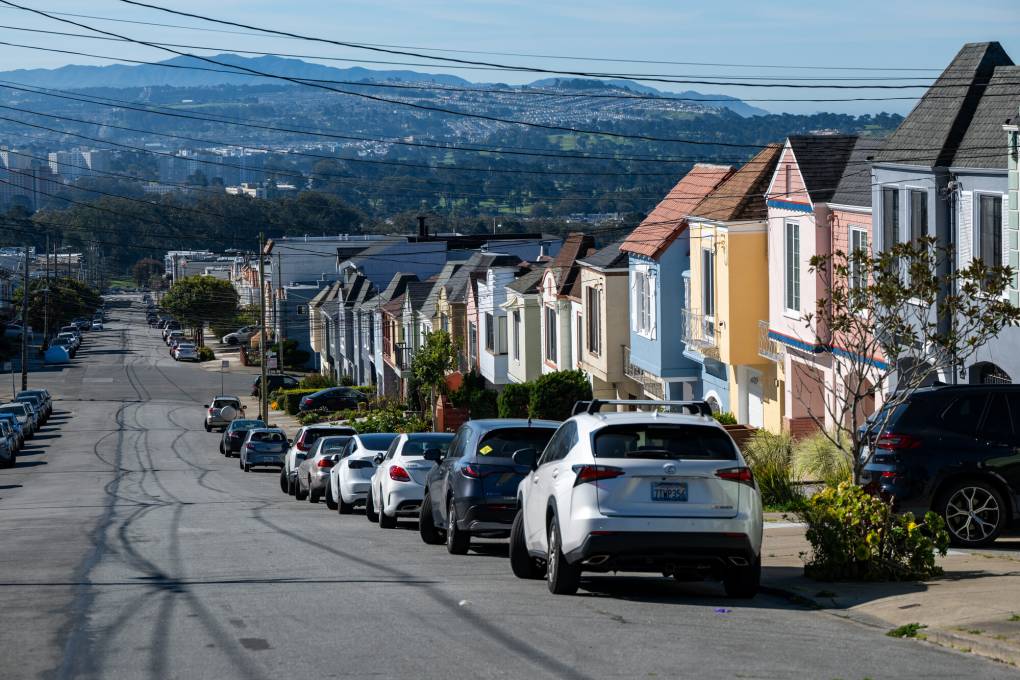
"caption": "Houses line a street in San Francisco’s Sunset District on March 25, 2025.",
"credit": "Beth LaBerge/KQED",
"altTag": null,
"description": null,
"imgSizes": {
"medium": {
"file": "https://cdn.kqed.org/wp-content/uploads/sites/10/2025/04/250325-ApartmentsonWestside-06-BL_qed-800x533.jpg",
"width": 800,
"height": 533,
"mimeType": "image/jpeg"
},
"large": {
"file": "https://cdn.kqed.org/wp-content/uploads/sites/10/2025/04/250325-ApartmentsonWestside-06-BL_qed-1020x680.jpg",
"width": 1020,
"height": 680,
"mimeType": "image/jpeg"
},
"thumbnail": {
"file": "https://cdn.kqed.org/wp-content/uploads/sites/10/2025/04/250325-ApartmentsonWestside-06-BL_qed-160x107.jpg",
"width": 160,
"height": 107,
"mimeType": "image/jpeg"
},
"1536x1536": {
"file": "https://cdn.kqed.org/wp-content/uploads/sites/10/2025/04/250325-ApartmentsonWestside-06-BL_qed-1536x1024.jpg",
"width": 1536,
"height": 1024,
"mimeType": "image/jpeg"
},
"post-thumbnail": {
"file": "https://cdn.kqed.org/wp-content/uploads/sites/10/2025/04/250325-ApartmentsonWestside-06-BL_qed-672x372.jpg",
"width": 672,
"height": 372,
"mimeType": "image/jpeg"
},
"twentyfourteen-full-width": {
"file": "https://cdn.kqed.org/wp-content/uploads/sites/10/2025/04/250325-ApartmentsonWestside-06-BL_qed-1038x576.jpg",
"width": 1038,
"height": 576,
"mimeType": "image/jpeg"
},
"full-width": {
"file": "https://cdn.kqed.org/wp-content/uploads/sites/10/2025/04/250325-ApartmentsonWestside-06-BL_qed-1920x1280.jpg",
"width": 1920,
"height": 1280,
"mimeType": "image/jpeg"
},
"kqedFullSize": {
"file": "https://cdn.kqed.org/wp-content/uploads/sites/10/2025/04/250325-ApartmentsonWestside-06-BL_qed.jpg",
"width": 1999,
"height": 1333
}
},
"isLoading": false,
"fetchFailed": false
},
"news_12034319": {
"type": "attachments",
"id": "news_12034319",
"meta": {
"index": "attachments_1716263798",
"site": "news",
"id": "12034319",
"found": true
},
"title": "024_SanFrancisco_Housing_07292021_qed",
"publishDate": 1743629527,
"status": "inherit",
"parent": 12034212,
"modified": 1749763097,
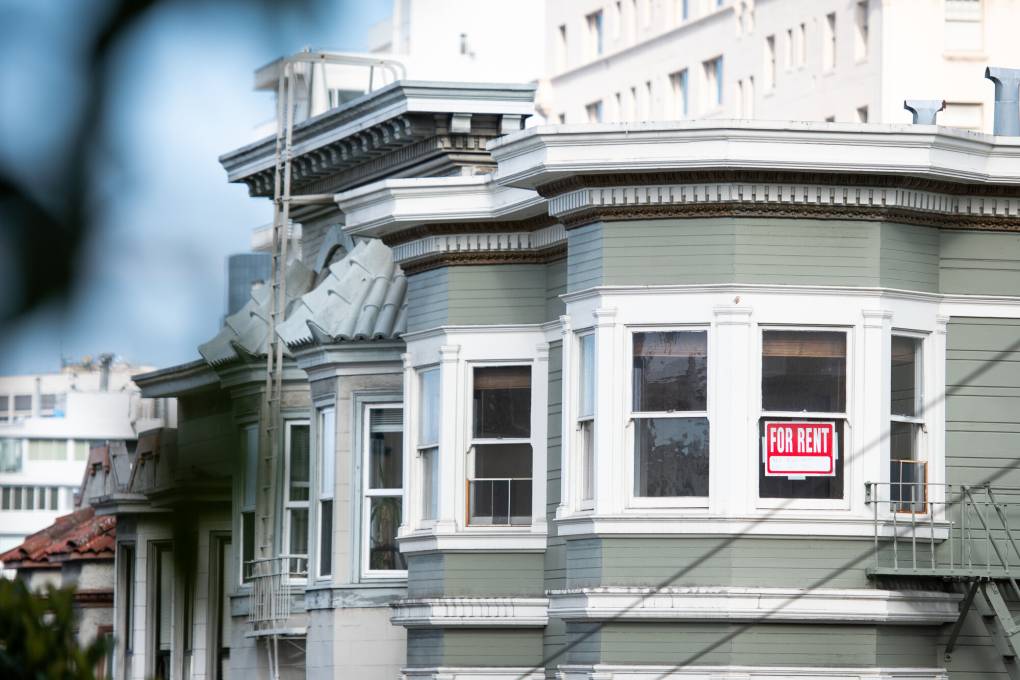
"caption": "A 'For Rent' sign hangs in the window of an apartment building in Nob Hill in San Francisco on July 29, 2021.",
"credit": "Beth LaBerge/KQED",
"altTag": null,
"description": null,
"imgSizes": {
"medium": {
"file": "https://cdn.kqed.org/wp-content/uploads/sites/10/2025/04/024_SanFrancisco_Housing_07292021_qed-800x533.jpg",
"width": 800,
"height": 533,
"mimeType": "image/jpeg"
},
"large": {
"file": "https://cdn.kqed.org/wp-content/uploads/sites/10/2025/04/024_SanFrancisco_Housing_07292021_qed-1020x680.jpg",
"width": 1020,
"height": 680,
"mimeType": "image/jpeg"
},
"thumbnail": {
"file": "https://cdn.kqed.org/wp-content/uploads/sites/10/2025/04/024_SanFrancisco_Housing_07292021_qed-160x107.jpg",
"width": 160,
"height": 107,
"mimeType": "image/jpeg"
},
"1536x1536": {
"file": "https://cdn.kqed.org/wp-content/uploads/sites/10/2025/04/024_SanFrancisco_Housing_07292021_qed-1536x1024.jpg",
"width": 1536,
"height": 1024,
"mimeType": "image/jpeg"
},
"post-thumbnail": {
"file": "https://cdn.kqed.org/wp-content/uploads/sites/10/2025/04/024_SanFrancisco_Housing_07292021_qed-672x372.jpg",
"width": 672,
"height": 372,
"mimeType": "image/jpeg"
},
"twentyfourteen-full-width": {
"file": "https://cdn.kqed.org/wp-content/uploads/sites/10/2025/04/024_SanFrancisco_Housing_07292021_qed-1038x576.jpg",
"width": 1038,
"height": 576,
"mimeType": "image/jpeg"
},
"full-width": {
"file": "https://cdn.kqed.org/wp-content/uploads/sites/10/2025/04/024_SanFrancisco_Housing_07292021_qed-1920x1280.jpg",
"width": 1920,
"height": 1280,
"mimeType": "image/jpeg"
},
"kqedFullSize": {
"file": "https://cdn.kqed.org/wp-content/uploads/sites/10/2025/04/024_SanFrancisco_Housing_07292021_qed.jpg",
"width": 2000,
"height": 1333
}
},
"isLoading": false,
"fetchFailed": false
},
"news_11981484": {
"type": "attachments",
"id": "news_11981484",
"meta": {
"index": "attachments_1716263798",
"site": "news",
"id": "11981484",
"found": true
},
"title": "240328-BAYWOODHISTORICDISTRICT-JY-001-KQED",
"publishDate": 1711975132,
"status": "inherit",
"parent": 0,
"modified": 1743209248,
"caption": "Lead organizer of Less Red Tape, Frank Elliott, stands for a portrait outside his home in San Mateo, California, on Thursday, March 28, 2024. Elliott, who has lived in his home in the Baywood neighborhood of San Mateo since 1997, founded Less Red Tape to protest the designation of Baywood as a historic district.",
"credit": "Juliana Yamada/KQED",
"altTag": null,
"description": null,
"imgSizes": {
"medium": {
"file": "https://cdn.kqed.org/wp-content/uploads/sites/10/2024/04/240328-BAYWOODHISTORICDISTRICT-JY-001-KQED-800x533.jpg",
"width": 800,
"height": 533,
"mimeType": "image/jpeg"
},
"large": {
"file": "https://cdn.kqed.org/wp-content/uploads/sites/10/2024/04/240328-BAYWOODHISTORICDISTRICT-JY-001-KQED-1020x680.jpg",
"width": 1020,
"height": 680,
"mimeType": "image/jpeg"
},
"thumbnail": {
"file": "https://cdn.kqed.org/wp-content/uploads/sites/10/2024/04/240328-BAYWOODHISTORICDISTRICT-JY-001-KQED-160x107.jpg",
"width": 160,
"height": 107,
"mimeType": "image/jpeg"
},
"1536x1536": {
"file": "https://cdn.kqed.org/wp-content/uploads/sites/10/2024/04/240328-BAYWOODHISTORICDISTRICT-JY-001-KQED-1536x1024.jpg",
"width": 1536,
"height": 1024,
"mimeType": "image/jpeg"
},
"post-thumbnail": {
"file": "https://cdn.kqed.org/wp-content/uploads/sites/10/2024/04/240328-BAYWOODHISTORICDISTRICT-JY-001-KQED-672x372.jpg",
"width": 672,
"height": 372,
"mimeType": "image/jpeg"
},
"twentyfourteen-full-width": {
"file": "https://cdn.kqed.org/wp-content/uploads/sites/10/2024/04/240328-BAYWOODHISTORICDISTRICT-JY-001-KQED-1038x576.jpg",
"width": 1038,
"height": 576,
"mimeType": "image/jpeg"
},
"full-width": {
"file": "https://cdn.kqed.org/wp-content/uploads/sites/10/2024/04/240328-BAYWOODHISTORICDISTRICT-JY-001-KQED-1920x1280.jpg",
"width": 1920,
"height": 1280,
"mimeType": "image/jpeg"
},
"kqedFullSize": {
"file": "https://cdn.kqed.org/wp-content/uploads/sites/10/2024/04/240328-BAYWOODHISTORICDISTRICT-JY-001-KQED.jpg",
"width": 2000,
"height": 1333
}
},
"isLoading": false,
"fetchFailed": false
},
"news_12033402": {
"type": "attachments",
"id": "news_12033402",
"meta": {
"index": "attachments_1716263798",
"site": "news",
"id": "12033402",
"found": true
},
"title": "P1100941_qed",
"publishDate": 1743109501,
"status": "inherit",
"parent": 12033386,
"modified": 1743109642,
"caption": "A PG&E service center on Harrison and 18th streets in the Mission District in San Francisco on Jan. 27, 2019.",
"credit": "Sheraz Sadiq/KQED",
"altTag": null,
"description": null,
"imgSizes": {
"medium": {
"file": "https://cdn.kqed.org/wp-content/uploads/sites/10/2025/03/P1100941_qed-800x533.jpg",
"width": 800,
"height": 533,
"mimeType": "image/jpeg"
},
"large": {
"file": "https://cdn.kqed.org/wp-content/uploads/sites/10/2025/03/P1100941_qed-1020x680.jpg",
"width": 1020,
"height": 680,
"mimeType": "image/jpeg"
},
"thumbnail": {
"file": "https://cdn.kqed.org/wp-content/uploads/sites/10/2025/03/P1100941_qed-160x107.jpg",
"width": 160,
"height": 107,
"mimeType": "image/jpeg"
},
"1536x1536": {
"file": "https://cdn.kqed.org/wp-content/uploads/sites/10/2025/03/P1100941_qed-1536x1024.jpg",
"width": 1536,
"height": 1024,
"mimeType": "image/jpeg"
},
"post-thumbnail": {
"file": "https://cdn.kqed.org/wp-content/uploads/sites/10/2025/03/P1100941_qed-672x372.jpg",
"width": 672,
"height": 372,
"mimeType": "image/jpeg"
},
"twentyfourteen-full-width": {
"file": "https://cdn.kqed.org/wp-content/uploads/sites/10/2025/03/P1100941_qed-1038x576.jpg",
"width": 1038,
"height": 576,
"mimeType": "image/jpeg"
},
"full-width": {
"file": "https://cdn.kqed.org/wp-content/uploads/sites/10/2025/03/P1100941_qed-1920x1280.jpg",
"width": 1920,
"height": 1280,
"mimeType": "image/jpeg"
},
"kqedFullSize": {
"file": "https://cdn.kqed.org/wp-content/uploads/sites/10/2025/03/P1100941_qed.jpg",
"width": 2000,
"height": 1333
}
},
"isLoading": false,
"fetchFailed": false
},
"news_12033297": {
"type": "attachments",
"id": "news_12033297",
"meta": {
"index": "attachments_1716263798",
"site": "news",
"id": "12033297",
"found": true
},
"title": "01.16.2025-Alex-01-scaled copy",
"publishDate": 1743095764,
"status": "inherit",
"parent": 12033293,
"modified": 1743095791,
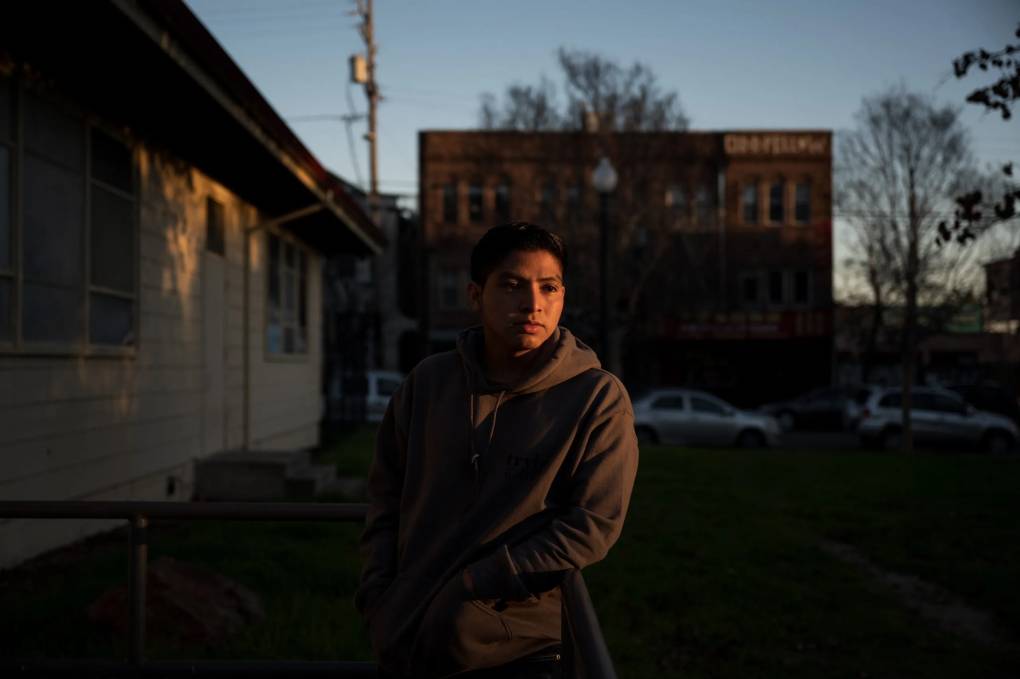
"caption": "Jorge poses for a portrait at a park in East Oakland on Thursday, Jan. 16, 2025. ",
"credit": "Hiram Alejandro Durán for El Tímpano/Catchlight/Report for America corps member",
"altTag": null,
"description": null,
"imgSizes": {
"medium": {
"file": "https://cdn.kqed.org/wp-content/uploads/sites/10/2025/03/01.16.2025-Alex-01-scaled-copy-800x532.jpg",
"width": 800,
"height": 532,
"mimeType": "image/jpeg"
},
"large": {
"file": "https://cdn.kqed.org/wp-content/uploads/sites/10/2025/03/01.16.2025-Alex-01-scaled-copy-1020x679.jpg",
"width": 1020,
"height": 679,
"mimeType": "image/jpeg"
},
"thumbnail": {
"file": "https://cdn.kqed.org/wp-content/uploads/sites/10/2025/03/01.16.2025-Alex-01-scaled-copy-160x106.jpg",
"width": 160,
"height": 106,
"mimeType": "image/jpeg"
},
"1536x1536": {
"file": "https://cdn.kqed.org/wp-content/uploads/sites/10/2025/03/01.16.2025-Alex-01-scaled-copy-1536x1022.jpg",
"width": 1536,
"height": 1022,
"mimeType": "image/jpeg"
},
"2048x2048": {
"file": "https://cdn.kqed.org/wp-content/uploads/sites/10/2025/03/01.16.2025-Alex-01-scaled-copy-2048x1362.jpg",
"width": 2048,
"height": 1362,
"mimeType": "image/jpeg"
},
"post-thumbnail": {
"file": "https://cdn.kqed.org/wp-content/uploads/sites/10/2025/03/01.16.2025-Alex-01-scaled-copy-672x372.jpg",
"width": 672,
"height": 372,
"mimeType": "image/jpeg"
},
"twentyfourteen-full-width": {
"file": "https://cdn.kqed.org/wp-content/uploads/sites/10/2025/03/01.16.2025-Alex-01-scaled-copy-1038x576.jpg",
"width": 1038,
"height": 576,
"mimeType": "image/jpeg"
},
"full-width": {
"file": "https://cdn.kqed.org/wp-content/uploads/sites/10/2025/03/01.16.2025-Alex-01-scaled-copy-1920x1277.jpg",
"width": 1920,
"height": 1277,
"mimeType": "image/jpeg"
},
"kqedFullSize": {
"file": "https://cdn.kqed.org/wp-content/uploads/sites/10/2025/03/01.16.2025-Alex-01-scaled-copy.jpg",
"width": 2560,
"height": 1703
}
},
"isLoading": false,
"fetchFailed": false
},
"news_12033317": {
"type": "attachments",
"id": "news_12033317",
"meta": {
"index": "attachments_1716263798",
"site": "news",
"id": "12033317",
"found": true
},
"title": "New Housing Starts Rise Higher Than Expected In January",
"publishDate": 1743098021,
"status": "inherit",
"parent": 12033092,
"modified": 1743098104,
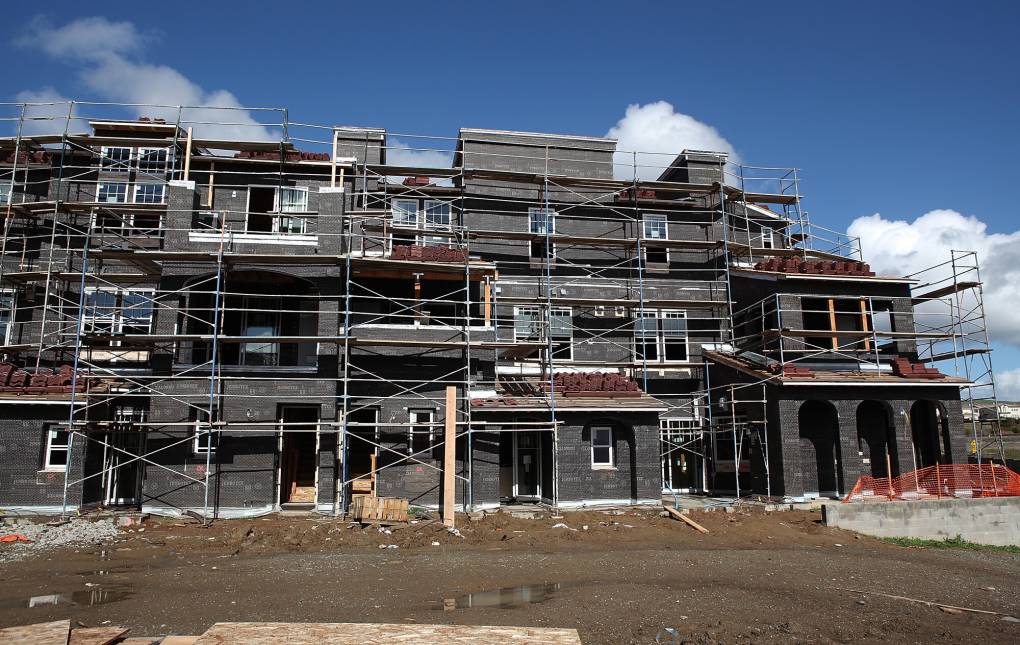
"caption": "A condo complex takes shape in a growing housing development under construction on Feb. 16, 2011, in Dublin, California.",
"credit": "Justin Sullivan/Getty Images",
"altTag": null,
"description": null,
"imgSizes": {
"medium": {
"file": "https://cdn.kqed.org/wp-content/uploads/sites/10/2025/03/construction072011_qed-800x506.jpg",
"width": 800,
"height": 506,
"mimeType": "image/jpeg"
},
"large": {
"file": "https://cdn.kqed.org/wp-content/uploads/sites/10/2025/03/construction072011_qed-1020x645.jpg",
"width": 1020,
"height": 645,
"mimeType": "image/jpeg"
},
"thumbnail": {
"file": "https://cdn.kqed.org/wp-content/uploads/sites/10/2025/03/construction072011_qed-160x101.jpg",
"width": 160,
"height": 101,
"mimeType": "image/jpeg"
},
"1536x1536": {
"file": "https://cdn.kqed.org/wp-content/uploads/sites/10/2025/03/construction072011_qed-1536x971.jpg",
"width": 1536,
"height": 971,
"mimeType": "image/jpeg"
},
"post-thumbnail": {
"file": "https://cdn.kqed.org/wp-content/uploads/sites/10/2025/03/construction072011_qed-672x372.jpg",
"width": 672,
"height": 372,
"mimeType": "image/jpeg"
},
"twentyfourteen-full-width": {
"file": "https://cdn.kqed.org/wp-content/uploads/sites/10/2025/03/construction072011_qed-1038x576.jpg",
"width": 1038,
"height": 576,
"mimeType": "image/jpeg"
},
"full-width": {
"file": "https://cdn.kqed.org/wp-content/uploads/sites/10/2025/03/construction072011_qed-1920x1213.jpg",
"width": 1920,
"height": 1213,
"mimeType": "image/jpeg"
},
"kqedFullSize": {
"file": "https://cdn.kqed.org/wp-content/uploads/sites/10/2025/03/construction072011_qed.jpg",
"width": 2000,
"height": 1264
}
},
"isLoading": false,
"fetchFailed": false
},
"news_12033223": {
"type": "attachments",
"id": "news_12033223",
"meta": {
"index": "attachments_1716263798",
"site": "news",
"id": "12033223",
"found": true
},
"title": "11.21.2024-LeadMuseum-10-scaled copy",
"publishDate": 1743029398,
"status": "inherit",
"parent": 12033218,
"modified": 1743029489,
"caption": "Eloisa Ramos, outreach coordinator at the Alameda County Healthy Homes Department, in their East Oakland office on Thursday, Nov.21, 2024.",
"credit": "Hiram Alejandro Durán for El Tímpano/CatchLight Local/Report for America corps member",
"altTag": "A woman's silhouette seen from behind, sitting on a balcony looking out on a city, trees, cloudy skies.",
"description": null,
"imgSizes": {
"medium": {
"file": "https://cdn.kqed.org/wp-content/uploads/sites/10/2025/03/11.21.2024-LeadMuseum-10-scaled-copy-800x532.jpg",
"width": 800,
"height": 532,
"mimeType": "image/jpeg"
},
"large": {
"file": "https://cdn.kqed.org/wp-content/uploads/sites/10/2025/03/11.21.2024-LeadMuseum-10-scaled-copy-1020x679.jpg",
"width": 1020,
"height": 679,
"mimeType": "image/jpeg"
},
"thumbnail": {
"file": "https://cdn.kqed.org/wp-content/uploads/sites/10/2025/03/11.21.2024-LeadMuseum-10-scaled-copy-160x106.jpg",
"width": 160,
"height": 106,
"mimeType": "image/jpeg"
},
"1536x1536": {
"file": "https://cdn.kqed.org/wp-content/uploads/sites/10/2025/03/11.21.2024-LeadMuseum-10-scaled-copy-1536x1022.jpg",
"width": 1536,
"height": 1022,
"mimeType": "image/jpeg"
},
"2048x2048": {
"file": "https://cdn.kqed.org/wp-content/uploads/sites/10/2025/03/11.21.2024-LeadMuseum-10-scaled-copy-2048x1362.jpg",
"width": 2048,
"height": 1362,
"mimeType": "image/jpeg"
},
"post-thumbnail": {
"file": "https://cdn.kqed.org/wp-content/uploads/sites/10/2025/03/11.21.2024-LeadMuseum-10-scaled-copy-672x372.jpg",
"width": 672,
"height": 372,
"mimeType": "image/jpeg"
},
"twentyfourteen-full-width": {
"file": "https://cdn.kqed.org/wp-content/uploads/sites/10/2025/03/11.21.2024-LeadMuseum-10-scaled-copy-1038x576.jpg",
"width": 1038,
"height": 576,
"mimeType": "image/jpeg"
},
"full-width": {
"file": "https://cdn.kqed.org/wp-content/uploads/sites/10/2025/03/11.21.2024-LeadMuseum-10-scaled-copy-1920x1277.jpg",
"width": 1920,
"height": 1277,
"mimeType": "image/jpeg"
},
"kqedFullSize": {
"file": "https://cdn.kqed.org/wp-content/uploads/sites/10/2025/03/11.21.2024-LeadMuseum-10-scaled-copy.jpg",
"width": 2560,
"height": 1703
}
},
"isLoading": false,
"fetchFailed": false
},
"news_12032921": {
"type": "attachments",
"id": "news_12032921",
"meta": {
"index": "attachments_1716263798",
"site": "news",
"id": "12032921",
"found": true
},
"title": "092024-Salinas-Shelter-MO-CM-36 copy",
"publishDate": 1742925785,
"status": "inherit",
"parent": 12032918,
"modified": 1742925814,
"caption": "The Share Center, a shelter for people experiencing homelessness in Monterey County in Salinas, on Sept. 20, 2024. The center's previous operator faced a long list of allegations, including fraud and inappropriate relationships with clients.",
"credit": "Manuel Obregozo for CalMatters",
"altTag": null,
"description": null,
"imgSizes": {
"medium": {
"file": "https://cdn.kqed.org/wp-content/uploads/sites/10/2025/03/092024-Salinas-Shelter-MO-CM-36-copy-800x533.jpg",
"width": 800,
"height": 533,
"mimeType": "image/jpeg"
},
"large": {
"file": "https://cdn.kqed.org/wp-content/uploads/sites/10/2025/03/092024-Salinas-Shelter-MO-CM-36-copy-1020x680.jpg",
"width": 1020,
"height": 680,
"mimeType": "image/jpeg"
},
"thumbnail": {
"file": "https://cdn.kqed.org/wp-content/uploads/sites/10/2025/03/092024-Salinas-Shelter-MO-CM-36-copy-160x107.jpg",
"width": 160,
"height": 107,
"mimeType": "image/jpeg"
},
"1536x1536": {
"file": "https://cdn.kqed.org/wp-content/uploads/sites/10/2025/03/092024-Salinas-Shelter-MO-CM-36-copy-1536x1024.jpg",
"width": 1536,
"height": 1024,
"mimeType": "image/jpeg"
},
"post-thumbnail": {
"file": "https://cdn.kqed.org/wp-content/uploads/sites/10/2025/03/092024-Salinas-Shelter-MO-CM-36-copy-672x372.jpg",
"width": 672,
"height": 372,
"mimeType": "image/jpeg"
},
"twentyfourteen-full-width": {
"file": "https://cdn.kqed.org/wp-content/uploads/sites/10/2025/03/092024-Salinas-Shelter-MO-CM-36-copy-1038x576.jpg",
"width": 1038,
"height": 576,
"mimeType": "image/jpeg"
},
"full-width": {
"file": "https://cdn.kqed.org/wp-content/uploads/sites/10/2025/03/092024-Salinas-Shelter-MO-CM-36-copy-1920x1280.jpg",
"width": 1920,
"height": 1280,
"mimeType": "image/jpeg"
},
"kqedFullSize": {
"file": "https://cdn.kqed.org/wp-content/uploads/sites/10/2025/03/092024-Salinas-Shelter-MO-CM-36-copy.jpg",
"width": 2000,
"height": 1333
}
},
"isLoading": false,
"fetchFailed": false
},
"news_12032752": {
"type": "attachments",
"id": "news_12032752",
"meta": {
"index": "attachments_1716263798",
"site": "news",
"id": "12032752",
"found": true
},
"title": "005_KQED_WoodStreet_12162022_qed",
"publishDate": 1742839566,
"status": "inherit",
"parent": 12032734,
"modified": 1742927250,
"caption": "A tiny home is trucked into the Wood Street Cabin Community, a planned 100-bed shelter program on the second portion of the Game Changer lot located at 2601 Wood St., in Oakland on Dec. 16, 2022.",
"credit": "Beth LaBerge/KQED",
"altTag": null,
"description": null,
"imgSizes": {
"medium": {
"file": "https://cdn.kqed.org/wp-content/uploads/sites/10/2025/03/005_KQED_WoodStreet_12162022_qed-800x533.jpg",
"width": 800,
"height": 533,
"mimeType": "image/jpeg"
},
"large": {
"file": "https://cdn.kqed.org/wp-content/uploads/sites/10/2025/03/005_KQED_WoodStreet_12162022_qed-1020x680.jpg",
"width": 1020,
"height": 680,
"mimeType": "image/jpeg"
},
"thumbnail": {
"file": "https://cdn.kqed.org/wp-content/uploads/sites/10/2025/03/005_KQED_WoodStreet_12162022_qed-160x107.jpg",
"width": 160,
"height": 107,
"mimeType": "image/jpeg"
},
"1536x1536": {
"file": "https://cdn.kqed.org/wp-content/uploads/sites/10/2025/03/005_KQED_WoodStreet_12162022_qed-1536x1024.jpg",
"width": 1536,
"height": 1024,
"mimeType": "image/jpeg"
},
"post-thumbnail": {
"file": "https://cdn.kqed.org/wp-content/uploads/sites/10/2025/03/005_KQED_WoodStreet_12162022_qed-672x372.jpg",
"width": 672,
"height": 372,
"mimeType": "image/jpeg"
},
"twentyfourteen-full-width": {
"file": "https://cdn.kqed.org/wp-content/uploads/sites/10/2025/03/005_KQED_WoodStreet_12162022_qed-1038x576.jpg",
"width": 1038,
"height": 576,
"mimeType": "image/jpeg"
},
"full-width": {
"file": "https://cdn.kqed.org/wp-content/uploads/sites/10/2025/03/005_KQED_WoodStreet_12162022_qed-1920x1280.jpg",
"width": 1920,
"height": 1280,
"mimeType": "image/jpeg"
},
"kqedFullSize": {
"file": "https://cdn.kqed.org/wp-content/uploads/sites/10/2025/03/005_KQED_WoodStreet_12162022_qed.jpg",
"width": 2000,
"height": 1333
}
},
"isLoading": false,
"fetchFailed": false
},
"news_12031922": {
"type": "attachments",
"id": "news_12031922",
"meta": {
"index": "attachments_1716263798",
"site": "news",
"id": "12031922",
"found": true
},
"title": "240502-CaliforniaForever-43-BL_qed",
"publishDate": 1742335813,
"status": "inherit",
"parent": 12031818,
"modified": 1742335832,
"caption": "Maps show California Forever's potential location at the California Forever office in Rio Vista on May 2, 2024.",
"credit": "Beth LaBerge/KQED",
"altTag": null,
"description": null,
"imgSizes": {
"medium": {
"file": "https://cdn.kqed.org/wp-content/uploads/sites/10/2025/03/240502-CaliforniaForever-43-BL_qed-800x533.jpg",
"width": 800,
"height": 533,
"mimeType": "image/jpeg"
},
"large": {
"file": "https://cdn.kqed.org/wp-content/uploads/sites/10/2025/03/240502-CaliforniaForever-43-BL_qed-1020x680.jpg",
"width": 1020,
"height": 680,
"mimeType": "image/jpeg"
},
"thumbnail": {
"file": "https://cdn.kqed.org/wp-content/uploads/sites/10/2025/03/240502-CaliforniaForever-43-BL_qed-160x107.jpg",
"width": 160,
"height": 107,
"mimeType": "image/jpeg"
},
"1536x1536": {
"file": "https://cdn.kqed.org/wp-content/uploads/sites/10/2025/03/240502-CaliforniaForever-43-BL_qed-1536x1024.jpg",
"width": 1536,
"height": 1024,
"mimeType": "image/jpeg"
},
"post-thumbnail": {
"file": "https://cdn.kqed.org/wp-content/uploads/sites/10/2025/03/240502-CaliforniaForever-43-BL_qed-672x372.jpg",
"width": 672,
"height": 372,
"mimeType": "image/jpeg"
},
"twentyfourteen-full-width": {
"file": "https://cdn.kqed.org/wp-content/uploads/sites/10/2025/03/240502-CaliforniaForever-43-BL_qed-1038x576.jpg",
"width": 1038,
"height": 576,
"mimeType": "image/jpeg"
},
"full-width": {
"file": "https://cdn.kqed.org/wp-content/uploads/sites/10/2025/03/240502-CaliforniaForever-43-BL_qed-1920x1280.jpg",
"width": 1920,
"height": 1280,
"mimeType": "image/jpeg"
},
"kqedFullSize": {
"file": "https://cdn.kqed.org/wp-content/uploads/sites/10/2025/03/240502-CaliforniaForever-43-BL_qed.jpg",
"width": 2000,
"height": 1333
}
},
"isLoading": false,
"fetchFailed": false
}
},
"audioPlayerReducer": {
"postId": "stream_live",
"isPaused": true,
"isPlaying": false,
"pfsActive": false,
"pledgeModalIsOpen": true,
"playerDrawerIsOpen": false,
"liveAudioPlayStartedAt": 0,
"liveAudioPlayContext": ""
},
"authorsReducer": {
"byline_news_12033293": {
"type": "authors",
"id": "byline_news_12033293",
"meta": {
"override": true
},
"slug": "byline_news_12033293",
"name": "\u003ca href=\"https://www.eltimpano.org/author/cgaribay/\">Cassandra Garibay\u003c/a> and \u003ca href=\"https://www.eltimpano.org/author/xloeza/\">Ximena Loeza \u003c/a>, El Tímpano",
"isLoading": false
},
"byline_news_12033218": {
"type": "authors",
"id": "byline_news_12033218",
"meta": {
"override": true
},
"slug": "byline_news_12033218",
"name": "\u003ca href=\"https://www.eltimpano.org/author/jasmine-aguilera/\">Jasmine Aguilera\u003c/a>, El Tímpano",
"isLoading": false
},
"byline_news_12032918": {
"type": "authors",
"id": "byline_news_12032918",
"meta": {
"override": true
},
"slug": "byline_news_12032918",
"name": "\u003ca href=\"https://calmatters.org/author/laurenhepler/\">Lauren Hepler\u003c/a>, CalMatters",
"isLoading": false
},
"matthewgreen": {
"type": "authors",
"id": "1263",
"meta": {
"index": "authors_1716337520",
"id": "1263",
"found": true
},
"name": "Matthew Green",
"firstName": "Matthew",
"lastName": "Green",
"slug": "matthewgreen",
"email": "mgreen@kqed.org",
"display_author_email": false,
"staff_mastheads": [],
"title": "KQED Editor/Reporter",
"bio": "Matthew Green is a digital media producer for KQED News. He previously produced \u003ca href=\"http://www.kqed.org/lowdown\">The Lowdown\u003c/a>, KQED’s multimedia news education blog. Matthew's written for numerous Bay Area publications, including the Oakland Tribune and San Francisco Chronicle. He also taught journalism classes at Fremont High School in East Oakland.\r\n\r\nEmail: mgreen@kqed.org; Twitter: @MGreenKQED",
"avatar": "https://secure.gravatar.com/avatar/3bf498d1267ca02c8494f33d8cfc575e?s=600&d=blank&r=g",
"twitter": "MGreenKQED",
"facebook": null,
"instagram": null,
"linkedin": null,
"sites": [
{
"site": "news",
"roles": []
},
{
"site": "lowdown",
"roles": []
},
{
"site": "science",
"roles": []
},
{
"site": "education",
"roles": []
},
{
"site": "quest",
"roles": []
},
{
"site": "liveblog",
"roles": []
}
],
"headData": {
"title": "Matthew Green | KQED",
"description": "KQED Editor/Reporter",
"ogImgSrc": "https://secure.gravatar.com/avatar/3bf498d1267ca02c8494f33d8cfc575e?s=600&d=blank&r=g",
"twImgSrc": "https://secure.gravatar.com/avatar/3bf498d1267ca02c8494f33d8cfc575e?s=600&d=blank&r=g"
},
"isLoading": false,
"link": "/author/matthewgreen"
},
"vrancano": {
"type": "authors",
"id": "11276",
"meta": {
"index": "authors_1716337520",
"id": "11276",
"found": true
},
"name": "Vanessa Rancaño",
"firstName": "Vanessa",
"lastName": "Rancaño",
"slug": "vrancano",
"email": "vrancano@kqed.org",
"display_author_email": false,
"staff_mastheads": [
"news"
],
"title": "Reporter",
"bio": "Vanessa Rancaño is a features reporter for KQED. She’s also covered homelessness and education for the station and reported from the Central Valley. Her work has aired across public radio, from flagship national news shows to longform narrative podcasts. Before taking up a mic, she worked as a freelance print journalist. She’s been recognized with a number of national and regional awards. Vanessa grew up in California's Central Valley. She's a former NPR Kroc Fellow, and a graduate of the UC Berkeley Graduate School of Journalism.",
"avatar": "https://secure.gravatar.com/avatar/b3a383dfb0e7ee1c17568f2cf067904ab654d6e3de9743fc661f3c788ade1bed?s=600&d=blank&r=g",
"twitter": "vanessarancano",
"bluesky": null,
"facebook": null,
"instagram": null,
"linkedin": null,
"sites": [
{
"site": "arts",
"roles": [
"editor"
]
},
{
"site": "news",
"roles": [
"editor"
]
},
{
"site": "liveblog",
"roles": [
"contributor"
]
}
],
"headData": {
"title": "Vanessa Rancaño | KQED",
"description": "Reporter",
"ogImgSrc": "https://secure.gravatar.com/avatar/b3a383dfb0e7ee1c17568f2cf067904ab654d6e3de9743fc661f3c788ade1bed?s=600&d=blank&r=g",
"twImgSrc": "https://secure.gravatar.com/avatar/b3a383dfb0e7ee1c17568f2cf067904ab654d6e3de9743fc661f3c788ade1bed?s=600&d=blank&r=g"
},
"isLoading": false,
"link": "/author/vrancano"
},
"ebaldassari": {
"type": "authors",
"id": "11652",
"meta": {
"index": "authors_1716337520",
"id": "11652",
"found": true
},
"name": "Erin Baldassari",
"firstName": "Erin",
"lastName": "Baldassari",
"slug": "ebaldassari",
"email": "ebaldassari@KQED.org",
"display_author_email": true,
"staff_mastheads": [
"news"
],
"title": "Staff Writer",
"bio": "Erin Baldassari covers housing for KQED. She's a former print journalist and most recently worked as the transportation reporter for the \u003cem>Mercury News\u003c/em> and \u003cem>East Bay Times. \u003c/em>There, she focused on how the Bay Area’s housing shortage has changed the way people move around the region. She also served on the \u003cem>East Bay Times\u003c/em>’ 2017 Pulitzer Prize-winning team for coverage of the Ghost Ship Fire in Oakland. Prior to that, Erin worked as a breaking news and general assignment reporter for a variety of outlets in the Bay Area and the greater Boston area. A Tufts University alumna, Erin grew up in the foothills of the Sierra Nevada mountains and in Sonoma County. She is a life-long KQED listener.",
"avatar": "https://secure.gravatar.com/avatar/5e95cad64a8ca08288082212e199d2b0cbeb4fd8e8ef5339395f361032bbe005?s=600&d=blank&r=g",
"twitter": "e_baldi",
"bluesky": null,
"facebook": null,
"instagram": null,
"linkedin": null,
"sites": [
{
"site": "news",
"roles": [
"edit_others_posts",
"editor"
]
},
{
"site": "science",
"roles": [
"editor"
]
},
{
"site": "liveblog",
"roles": [
"editor"
]
}
],
"headData": {
"title": "Erin Baldassari | KQED",
"description": "Staff Writer",
"ogImgSrc": "https://secure.gravatar.com/avatar/5e95cad64a8ca08288082212e199d2b0cbeb4fd8e8ef5339395f361032bbe005?s=600&d=blank&r=g",
"twImgSrc": "https://secure.gravatar.com/avatar/5e95cad64a8ca08288082212e199d2b0cbeb4fd8e8ef5339395f361032bbe005?s=600&d=blank&r=g"
},
"isLoading": false,
"link": "/author/ebaldassari"
},
"abandlamudi": {
"type": "authors",
"id": "11672",
"meta": {
"index": "authors_1716337520",
"id": "11672",
"found": true
},
"name": "Adhiti Bandlamudi",
"firstName": "Adhiti",
"lastName": "Bandlamudi",
"slug": "abandlamudi",
"email": "abandlamudi@kqed.org",
"display_author_email": false,
"staff_mastheads": [
"news"
],
"title": "KQED Housing Reporter",
"bio": "Adhiti Bandlamudi reports for KQED's Housing desk. She focuses on how housing gets built across the Bay Area. Before joining KQED in 2020, she reported for WUNC in Durham, North Carolina, WABE in Atlanta, Georgia and Capital Public Radio in Sacramento. In 2017, she was awarded a Kroc Fellowship at NPR where she reported on everything from sprinkles to the Golden State Killer's arrest. When she's not reporting, she's baking new recipes in her kitchen or watching movies with friends and family. She's originally from Georgia and has strong opinions about Great British Bake Off.",
"avatar": "https://secure.gravatar.com/avatar/868129c8b257bb99a3500e2c86a65400?s=600&d=mm&r=g",
"twitter": "oddity_adhiti",
"facebook": null,
"instagram": null,
"linkedin": null,
"sites": [
{
"site": "arts",
"roles": [
"author"
]
},
{
"site": "news",
"roles": [
"editor"
]
},
{
"site": "liveblog",
"roles": [
"author"
]
}
],
"headData": {
"title": "Adhiti Bandlamudi | KQED",
"description": "KQED Housing Reporter",
"ogImgSrc": "https://secure.gravatar.com/avatar/868129c8b257bb99a3500e2c86a65400?s=600&d=mm&r=g",
"twImgSrc": "https://secure.gravatar.com/avatar/868129c8b257bb99a3500e2c86a65400?s=600&d=mm&r=g"
},
"isLoading": false,
"link": "/author/abandlamudi"
},
"nkhan": {
"type": "authors",
"id": "11867",
"meta": {
"index": "authors_1716337520",
"id": "11867",
"found": true
},
"name": "Nisa Khan",
"firstName": "Nisa",
"lastName": "Khan",
"slug": "nkhan",
"email": "nkhan@kqed.org",
"display_author_email": false,
"staff_mastheads": [],
"title": "KQED Contributor",
"bio": "Nisa Khan is a reporter for KQED's Audience News Desk. She was formerly a data reporter at Michigan Radio. She earned a Bachelor of Science in Information from the University of Michigan and a Master of Arts in Communication from Stanford University.",
"avatar": "https://secure.gravatar.com/avatar/8720459eef081ff64582b3506b124d58523e80e120704a0cbd9892533c914991?s=600&d=blank&r=g",
"twitter": "mnisakhan",
"bluesky": null,
"facebook": null,
"instagram": null,
"linkedin": null,
"sites": [
{
"site": "arts",
"roles": [
"editor"
]
},
{
"site": "news",
"roles": [
"editor"
]
},
{
"site": "science",
"roles": [
"editor",
"author"
]
},
{
"site": "forum",
"roles": [
"editor"
]
},
{
"site": "liveblog",
"roles": [
"contributor"
]
}
],
"headData": {
"title": "Nisa Khan | KQED",
"description": "KQED Contributor",
"ogImgSrc": "https://secure.gravatar.com/avatar/8720459eef081ff64582b3506b124d58523e80e120704a0cbd9892533c914991?s=600&d=blank&r=g",
"twImgSrc": "https://secure.gravatar.com/avatar/8720459eef081ff64582b3506b124d58523e80e120704a0cbd9892533c914991?s=600&d=blank&r=g"
},
"isLoading": false,
"link": "/author/nkhan"
},
"kdebenedetti": {
"type": "authors",
"id": "11913",
"meta": {
"index": "authors_1716337520",
"id": "11913",
"found": true
},
"name": "Katie DeBenedetti",
"firstName": "Katie",
"lastName": "DeBenedetti",
"slug": "kdebenedetti",
"email": "kdebenedetti@kqed.org",
"display_author_email": false,
"staff_mastheads": [
"news",
"science"
],
"title": "KQED Contributor",
"bio": "Katie DeBenedetti is a digital reporter covering daily news for the Express Desk. Prior to joining KQED as a culture reporting intern in January 2024, she covered education and city government for the Napa Valley Register.",
"avatar": "https://secure.gravatar.com/avatar/6e31073cb8f7e4214ab03f42771d0f45?s=600&d=blank&r=g",
"twitter": null,
"facebook": null,
"instagram": null,
"linkedin": null,
"sites": [
{
"site": "news",
"roles": [
"author"
]
},
{
"site": "science",
"roles": [
"author"
]
},
{
"site": "liveblog",
"roles": [
"author"
]
}
],
"headData": {
"title": "Katie DeBenedetti | KQED",
"description": "KQED Contributor",
"ogImgSrc": "https://secure.gravatar.com/avatar/6e31073cb8f7e4214ab03f42771d0f45?s=600&d=blank&r=g",
"twImgSrc": "https://secure.gravatar.com/avatar/6e31073cb8f7e4214ab03f42771d0f45?s=600&d=blank&r=g"
},
"isLoading": false,
"link": "/author/kdebenedetti"
},
"slim": {
"type": "authors",
"id": "11920",
"meta": {
"index": "authors_1716337520",
"id": "11920",
"found": true
},
"name": "Samantha Lim",
"firstName": "Samantha",
"lastName": "Lim",
"slug": "slim",
"email": "slim@KQED.org",
"display_author_email": false,
"staff_mastheads": [],
"title": "KQED Contributor",
"bio": null,
"avatar": "https://secure.gravatar.com/avatar/82e592e6c15fe1a04d385e8ad0fb0b4e?s=600&d=blank&r=g",
"twitter": null,
"facebook": null,
"instagram": null,
"linkedin": null,
"sites": [
{
"site": "news",
"roles": []
}
],
"headData": {
"title": "Samantha Lim | KQED",
"description": "KQED Contributor",
"ogImgSrc": "https://secure.gravatar.com/avatar/82e592e6c15fe1a04d385e8ad0fb0b4e?s=600&d=blank&r=g",
"twImgSrc": "https://secure.gravatar.com/avatar/82e592e6c15fe1a04d385e8ad0fb0b4e?s=600&d=blank&r=g"
},
"isLoading": false,
"link": "/author/slim"
}
},
"pagesReducer": {
"news_category_housing": {
"type": "terms",
"id": "news_6266",
"meta": {
"index": "terms_1716263798",
"site": "news",
"id": "6266",
"score": 11.039913
},
"featImg": null,
"name": "Housing",
"description": null,
"taxonomy": "category",
"headData": {
"twImgId": null,
"twTitle": null,
"ogTitle": null,
"ogImgId": null,
"twDescription": null,
"description": null,
"title": "Housing Archives | KQED News",
"ogDescription": null
},
"ttid": 6290,
"slug": "housing",
"isLoading": false,
"title": "Housing",
"pageMeta": {
"site": "news",
"WpPageTemplate": "page-topic-editorial",
"currentPage": 19
},
"blocks": [
{
"blockName": "kqed/post-list",
"attrs": {
"layout": "cardArticle2",
"query": "posts/news?category=housing",
"seeMore": false,
"paginated": true,
"page": 19
}
},
{
"blockName": "kqed/ad"
}
]
}
},
"pfsSessionReducer": {},
"postsReducer": {
"stream_live": {
"type": "live",
"id": "stream_live",
"audioUrl": "https://streams.kqed.org/kqedradio",
"title": "Live Stream",
"excerpt": "Live Stream information currently unavailable.",
"link": "/radio",
"featImg": "",
"label": {
"name": "KQED Live",
"link": "/"
}
},
"stream_kqedNewscast": {
"type": "posts",
"id": "stream_kqedNewscast",
"audioUrl": "https://www.kqed.org/.stream/anon/radio/RDnews/newscast.mp3?_=1",
"title": "KQED Newscast",
"featImg": "",
"label": {
"name": "88.5 FM",
"link": "/"
}
},
"news_12036105": {
"type": "posts",
"id": "news_12036105",
"meta": {
"index": "posts_1716263798",
"site": "news",
"id": "12036105",
"score": null,
"sort": [
1744815633000
]
},
"guestAuthors": [],
"slug": "bay-area-advocates-alarmed-by-mass-firings-at-federal-low-income-energy-program",
"title": "Bay Area Advocates Alarmed by Mass Firings at Federal Low-Income Energy Program",
"publishDate": 1744815633,
"format": "standard",
"headTitle": "Bay Area Advocates Alarmed by Mass Firings at Federal Low-Income Energy Program | KQED",
"labelTerm": {
"site": "news"
},
"content": "\u003cp>Bay Area consumer advocates are sounding alarms after the \u003ca href=\"https://www.kqed.org/news/tag/donald-trump\">Trump administration\u003c/a> this month fired the entire staff running a federal program that helps low-income Americans afford to heat and cool their homes.\u003c/p>\n\u003cp>The Low-Income Home Energy Assistance Program (LIHEAP) distributes federal funds to help \u003ca href=\"https://www.csd.ca.gov/pages/liheapprogram.aspx\">households with their energy needs\u003c/a> through services such as providing one-time financial assistance to pay bills, offering emergency help when utilities are disconnected or upgrading homes to make them more energy-efficient.\u003c/p>\n\u003cp>States use the federal funding to provide those services, but \u003ca href=\"https://www.caliheapapply.com/\">California’s LIHEAP application\u003c/a> warns that executive orders affecting LIHEAP’s “operations and program funding” have left such assistance uncertain.\u003c/p>\n\u003cp>“We encourage you to apply for LIHEAP, but we cannot guarantee a payment assistance benefit, even if you are approved,” the application reads.\u003c/p>\n\u003cp>[ad fullwidth]\u003c/p>\n\u003cp>The uncertainty comes after around \u003ca href=\"https://www.npr.org/sections/shots-health-news/2025/04/01/g-s1-57716/hhs-layoffs-seniors-disabled-liheap-acl\">20 federal employees at the office overseeing LIHEAP\u003c/a> were laid off as part of wide-reaching staff cuts across the \u003ca href=\"https://www.kqed.org/news/12034527/meals-on-wheels-child-welfare-hhs-staff-sf-woke-up-our-jobs-gone\">Department of Health and Human Services\u003c/a> in early April.\u003c/p>\n\u003cp>The Utility Reform Network (TURN), a consumer advocacy group based in Oakland, signed \u003ca href=\"https://www.nclc.org/wp-content/uploads/2025/04/2025.04.11_Letter_Rural-Power-Coalition_LIHEAP-Sign-on-Letter.pdf\">a letter with 220 other groups\u003c/a> last week demanding that Congress reinstate the laid-off federal employees.\u003c/p>\n\u003cp>“If there’s no one working the program, then if you apply, there’s no one going to process that application,” said Lee Trotman, a spokesperson for TURN. “This is a crisis at the federal level. And it’s going to affect Californians.”\u003c/p>\n\u003cp>LIHEAP helps around \u003ca href=\"https://nlihc.org/resource/entire-liheap-staff-hhs-fired-jeopardizing-distribution-home-energy-bill-assistance-low\">6.2 million households across the country\u003c/a>, according to the National Low Income Housing Coalition.\u003c/p>\n\u003cp>[aside postID=news_12035735 hero='https://cdn.kqed.org/wp-content/uploads/sites/10/2025/04/internal-revenue-service_qed-1020x680.jpg']\u003c/p>\n\u003cp>Such aid is especially helpful in Northern California, where the average PG&E \u003ca href=\"https://www.kqed.org/news/12033386/pge-electricity-rates-have-jumped-nearly-70-since-2020\">bill has gone up by 67% since 2020\u003c/a>. A March KQED analysis found that residential ratepayers now pay an average of about $300 a month for their combined gas and electric service, up from $179 in 2020.\u003c/p>\n\u003cp>A program like LIHEAP “basically lowers energy costs for low-income families and gives people breathing room to minimize trade-offs between their energy needs and food, stable housing or medicine,” Trotman said.\u003c/p>\n\u003cp>The letter notes that the Department of Health and Human Services still has $378 million of LIHEAP funding for the fiscal year, which runs through September, and it is “unclear how or if these funds will be distributed” to states.\u003c/p>\n\u003cp>According to the state, California has received over $215 million in LIHEAP funding so far this year.\u003c/p>\n\u003cp>LIHEAP is overseen by the California Department of Community Services and Development (CSD) and is administered by \u003ca href=\"https://www.pge.com/en/account/billing-and-assistance/financial-assistance/low-income-home-energy-assistance-program.html\">31 agencies across the state\u003c/a>.\u003c/p>\n\u003cp>CSD said in a statement to KQED that the department is “committed to understanding the implications of the announcement by the U.S. Department of Health and Human Services (HHS) regarding downsizing in the federal office.”\u003c/p>\n\u003cp>“As of today, we are not experiencing any impacts to LIHEAP’s ability to provide benefits to low-income households. Our priority remains to ensure all Californians continue to receive uninterrupted access to essential LIHEAP services.”\u003c/p>\n\u003ch2>What can you do if you need help with energy bills?\u003c/h2>\n\u003cp>Californians can still \u003ca href=\"https://www.caliheapapply.com/\">apply for LIHEAP online\u003c/a>.\u003c/p>\n\u003cp>Generally, \u003ca href=\"https://www.csd.ca.gov/Pages/LIHEAP-Income-Eligibility.aspx\">eligibility for LIHEAP is based on your household’s income\u003c/a> as follows:\u003c/p>\n\u003cul>\n\u003cli>$3,170.00 monthly income for a household of 1\u003c/li>\n\u003cli>$4,145.41 monthly income for a household of 2\u003c/li>\n\u003cli>$6,096.25 monthly income for a household of 4.\u003c/li>\n\u003c/ul>\n\u003cp>However, eligibility can be affected by other factors like the source of your household’s income, and CSD recommends applicants reach out to their service providers for more information.\u003c/p>\n\u003cp>[aside postID=news_12035871 hero='https://cdn.kqed.org/wp-content/uploads/sites/10/2024/09/012-1020x680.jpg']\u003c/p>\n\u003cp>Trotman said that households may be able to enroll in both LIHEAP and their utility provider’s own discount program.\u003c/p>\n\u003cp>“Federal funding for LIHEAP is limited, and local LIHEAP service providers prioritize benefits and services for particularly vulnerable households,” \u003ca href=\"https://www.csd.ca.gov/pages/liheapprogram.aspx\">the state’s website\u003c/a> reads. “As a result, some households eligible for LIHEAP may not qualify for a benefit in order to prioritize assistance for households with the greatest need.”\u003c/p>\n\u003cp>Trotman said applicants should apply for PG&E’s \u003ca href=\"https://www.pge.com/en/account/billing-and-assistance/financial-assistance/california-alternate-rates-for-energy-program.html\">California Alternate Rates for Energy program\u003c/a> and \u003ca href=\"https://www.pge.com/en/account/billing-and-assistance/financial-assistance/family-electric-rate-assistance-program-fera.html\">Family Electric Rate Assistance (FERA) program\u003c/a>.\u003c/p>\n\u003cp>\u003ca href=\"https://www.kqed.org/news/11972887/pge-rates-are-way-up-do-you-qualify-for-a-discount\">Read more about these discount guides provided by PG&E\u003c/a> and the \u003ca href=\"https://www.kqed.org/news/12023805/pge-bills-keep-rising-what-can-you-do-to-potentially-lower-your-bills\">practical steps you can take to potentially save energy at home\u003c/a>.\u003c/p>\n\u003cp>You can also consult the California Public Utility Commission’s \u003ca href=\"https://www.cpuc.ca.gov/consumer-support/financial-assistance-savings-and-discounts\">listing options for finding more financial assistance and discounts\u003c/a>.\u003c/p>\n\u003cp>\u003c/p>\n",
"blocks": [],
"excerpt": "The Trump administration laid off the entire staff running the Low-Income Home Energy Assistance Program, which helps people with utility bills and energy-efficient upgrades.",
"status": "publish",
"parent": 0,
"modified": 1744765481,
"stats": {
"hasAudio": false,
"hasVideo": false,
"hasChartOrMap": false,
"iframeSrcs": [],
"hasGoogleForm": false,
"hasGallery": false,
"hasHearkenModule": false,
"hasPolis": false,
"paragraphCount": 27,
"wordCount": 790
},
"headData": {
"title": "Bay Area Advocates Alarmed by Mass Firings at Federal Low-Income Energy Program | KQED",
"description": "The Trump administration laid off the entire staff running the Low-Income Home Energy Assistance Program, which helps people with utility bills and energy-efficient upgrades.",
"ogTitle": "",
"ogDescription": "",
"ogImgId": "",
"twTitle": "",
"twDescription": "",
"twImgId": "",
"schema": {
"@context": "https://schema.org",
"@type": "NewsArticle",
"headline": "Bay Area Advocates Alarmed by Mass Firings at Federal Low-Income Energy Program",
"datePublished": "2025-04-16T08:00:33-07:00",
"dateModified": "2025-04-15T18:04:41-07:00",
"image": "https://cdn.kqed.org/wp-content/uploads/2020/02/KQED-OG-Image@1x.png",
"isAccessibleForFree": "True",
"publisher": {
"@type": "NewsMediaOrganization",
"@id": "https://www.kqed.org/#organization",
"name": "KQED",
"logo": "https://cdn.kqed.org/wp-content/uploads/2020/02/KQED-OG-Image@1x.png",
"url": "https://www.kqed.org",
"sameAs": [
"https://www.facebook.com/KQED",
"https://twitter.com/KQED",
"https://www.instagram.com/kqed/",
"https://www.tiktok.com/@kqedofficial",
"https://www.linkedin.com/company/kqed",
"https://www.youtube.com/channel/UCeC0IOo7i1P_61zVUWbJ4nw"
]
}
}
},
"sticky": false,
"templateType": "standard",
"featuredImageType": "standard",
"excludeFromSiteSearch": "Include",
"articleAge": "0",
"path": "/news/12036105/bay-area-advocates-alarmed-by-mass-firings-at-federal-low-income-energy-program",
"audioTrackLength": null,
"parsedContent": [
{
"type": "contentString",
"content": "\u003cdiv class=\"post-body\">\u003cp>\u003cp>Bay Area consumer advocates are sounding alarms after the \u003ca href=\"https://www.kqed.org/news/tag/donald-trump\">Trump administration\u003c/a> this month fired the entire staff running a federal program that helps low-income Americans afford to heat and cool their homes.\u003c/p>\n\u003cp>The Low-Income Home Energy Assistance Program (LIHEAP) distributes federal funds to help \u003ca href=\"https://www.csd.ca.gov/pages/liheapprogram.aspx\">households with their energy needs\u003c/a> through services such as providing one-time financial assistance to pay bills, offering emergency help when utilities are disconnected or upgrading homes to make them more energy-efficient.\u003c/p>\n\u003cp>States use the federal funding to provide those services, but \u003ca href=\"https://www.caliheapapply.com/\">California’s LIHEAP application\u003c/a> warns that executive orders affecting LIHEAP’s “operations and program funding” have left such assistance uncertain.\u003c/p>\n\u003cp>“We encourage you to apply for LIHEAP, but we cannot guarantee a payment assistance benefit, even if you are approved,” the application reads.\u003c/p>\n\u003cp>\u003c/p>\u003c/div>",
"attributes": {
"named": {},
"numeric": []
}
},
{
"type": "component",
"content": "",
"name": "ad",
"attributes": {
"named": {
"label": "fullwidth"
},
"numeric": [
"fullwidth"
]
}
},
{
"type": "contentString",
"content": "\u003cdiv class=\"post-body\">\u003cp>\u003c/p>\n\u003cp>The uncertainty comes after around \u003ca href=\"https://www.npr.org/sections/shots-health-news/2025/04/01/g-s1-57716/hhs-layoffs-seniors-disabled-liheap-acl\">20 federal employees at the office overseeing LIHEAP\u003c/a> were laid off as part of wide-reaching staff cuts across the \u003ca href=\"https://www.kqed.org/news/12034527/meals-on-wheels-child-welfare-hhs-staff-sf-woke-up-our-jobs-gone\">Department of Health and Human Services\u003c/a> in early April.\u003c/p>\n\u003cp>The Utility Reform Network (TURN), a consumer advocacy group based in Oakland, signed \u003ca href=\"https://www.nclc.org/wp-content/uploads/2025/04/2025.04.11_Letter_Rural-Power-Coalition_LIHEAP-Sign-on-Letter.pdf\">a letter with 220 other groups\u003c/a> last week demanding that Congress reinstate the laid-off federal employees.\u003c/p>\n\u003cp>“If there’s no one working the program, then if you apply, there’s no one going to process that application,” said Lee Trotman, a spokesperson for TURN. “This is a crisis at the federal level. And it’s going to affect Californians.”\u003c/p>\n\u003cp>LIHEAP helps around \u003ca href=\"https://nlihc.org/resource/entire-liheap-staff-hhs-fired-jeopardizing-distribution-home-energy-bill-assistance-low\">6.2 million households across the country\u003c/a>, according to the National Low Income Housing Coalition.\u003c/p>\n\u003cp>\u003c/p>\u003c/div>",
"attributes": {
"named": {},
"numeric": []
}
},
{
"type": "component",
"content": "",
"name": "aside",
"attributes": {
"named": {
"postid": "news_12035735",
"hero": "https://cdn.kqed.org/wp-content/uploads/sites/10/2025/04/internal-revenue-service_qed-1020x680.jpg",
"label": ""
},
"numeric": []
}
},
{
"type": "contentString",
"content": "\u003cdiv class=\"post-body\">\u003cp>\u003c/p>\n\u003cp>Such aid is especially helpful in Northern California, where the average PG&E \u003ca href=\"https://www.kqed.org/news/12033386/pge-electricity-rates-have-jumped-nearly-70-since-2020\">bill has gone up by 67% since 2020\u003c/a>. A March KQED analysis found that residential ratepayers now pay an average of about $300 a month for their combined gas and electric service, up from $179 in 2020.\u003c/p>\n\u003cp>A program like LIHEAP “basically lowers energy costs for low-income families and gives people breathing room to minimize trade-offs between their energy needs and food, stable housing or medicine,” Trotman said.\u003c/p>\n\u003cp>The letter notes that the Department of Health and Human Services still has $378 million of LIHEAP funding for the fiscal year, which runs through September, and it is “unclear how or if these funds will be distributed” to states.\u003c/p>\n\u003cp>According to the state, California has received over $215 million in LIHEAP funding so far this year.\u003c/p>\n\u003cp>LIHEAP is overseen by the California Department of Community Services and Development (CSD) and is administered by \u003ca href=\"https://www.pge.com/en/account/billing-and-assistance/financial-assistance/low-income-home-energy-assistance-program.html\">31 agencies across the state\u003c/a>.\u003c/p>\n\u003cp>CSD said in a statement to KQED that the department is “committed to understanding the implications of the announcement by the U.S. Department of Health and Human Services (HHS) regarding downsizing in the federal office.”\u003c/p>\n\u003cp>“As of today, we are not experiencing any impacts to LIHEAP’s ability to provide benefits to low-income households. Our priority remains to ensure all Californians continue to receive uninterrupted access to essential LIHEAP services.”\u003c/p>\n\u003ch2>What can you do if you need help with energy bills?\u003c/h2>\n\u003cp>Californians can still \u003ca href=\"https://www.caliheapapply.com/\">apply for LIHEAP online\u003c/a>.\u003c/p>\n\u003cp>Generally, \u003ca href=\"https://www.csd.ca.gov/Pages/LIHEAP-Income-Eligibility.aspx\">eligibility for LIHEAP is based on your household’s income\u003c/a> as follows:\u003c/p>\n\u003cul>\n\u003cli>$3,170.00 monthly income for a household of 1\u003c/li>\n\u003cli>$4,145.41 monthly income for a household of 2\u003c/li>\n\u003cli>$6,096.25 monthly income for a household of 4.\u003c/li>\n\u003c/ul>\n\u003cp>However, eligibility can be affected by other factors like the source of your household’s income, and CSD recommends applicants reach out to their service providers for more information.\u003c/p>\n\u003cp>\u003c/p>\u003c/div>",
"attributes": {
"named": {},
"numeric": []
}
},
{
"type": "component",
"content": "",
"name": "aside",
"attributes": {
"named": {
"postid": "news_12035871",
"hero": "https://cdn.kqed.org/wp-content/uploads/sites/10/2024/09/012-1020x680.jpg",
"label": ""
},
"numeric": []
}
},
{
"type": "contentString",
"content": "\u003cdiv class=\"post-body\">\u003cp>\u003c/p>\n\u003cp>Trotman said that households may be able to enroll in both LIHEAP and their utility provider’s own discount program.\u003c/p>\n\u003cp>“Federal funding for LIHEAP is limited, and local LIHEAP service providers prioritize benefits and services for particularly vulnerable households,” \u003ca href=\"https://www.csd.ca.gov/pages/liheapprogram.aspx\">the state’s website\u003c/a> reads. “As a result, some households eligible for LIHEAP may not qualify for a benefit in order to prioritize assistance for households with the greatest need.”\u003c/p>\n\u003cp>Trotman said applicants should apply for PG&E’s \u003ca href=\"https://www.pge.com/en/account/billing-and-assistance/financial-assistance/california-alternate-rates-for-energy-program.html\">California Alternate Rates for Energy program\u003c/a> and \u003ca href=\"https://www.pge.com/en/account/billing-and-assistance/financial-assistance/family-electric-rate-assistance-program-fera.html\">Family Electric Rate Assistance (FERA) program\u003c/a>.\u003c/p>\n\u003cp>\u003ca href=\"https://www.kqed.org/news/11972887/pge-rates-are-way-up-do-you-qualify-for-a-discount\">Read more about these discount guides provided by PG&E\u003c/a> and the \u003ca href=\"https://www.kqed.org/news/12023805/pge-bills-keep-rising-what-can-you-do-to-potentially-lower-your-bills\">practical steps you can take to potentially save energy at home\u003c/a>.\u003c/p>\n\u003cp>You can also consult the California Public Utility Commission’s \u003ca href=\"https://www.cpuc.ca.gov/consumer-support/financial-assistance-savings-and-discounts\">listing options for finding more financial assistance and discounts\u003c/a>.\u003c/p>\n\u003cp>\u003c/p>\n\u003c/div>\u003c/p>",
"attributes": {
"named": {},
"numeric": []
}
}
],
"link": "/news/12036105/bay-area-advocates-alarmed-by-mass-firings-at-federal-low-income-energy-program",
"authors": [
"11867"
],
"categories": [
"news_31795",
"news_6266",
"news_34551",
"news_8",
"news_13"
],
"tags": [
"news_3921",
"news_32707",
"news_1386",
"news_18538",
"news_1323",
"news_20466",
"news_1775",
"news_19904",
"news_352",
"news_35193"
],
"featImg": "news_12013319",
"label": "news"
},
"news_12035360": {
"type": "posts",
"id": "news_12035360",
"meta": {
"index": "posts_1716263798",
"site": "news",
"id": "12035360",
"score": null,
"sort": [
1744328854000
]
},
"guestAuthors": [],
"slug": "sf-could-see-homelessness-spike-with-legal-aid-cuts-advocates-warn",
"title": "SF Could See Homelessness Spike With Legal Aid Cuts, Advocates Warn",
"publishDate": 1744328854,
"format": "standard",
"headTitle": "SF Could See Homelessness Spike With Legal Aid Cuts, Advocates Warn | KQED",
"labelTerm": {
"site": "news"
},
"content": "\u003cp>After San Francisco’s housing department told legal nonprofits that the city is slashing funds to balance the city’s budget deficit, organizations defending the city’s most vulnerable in San Francisco say they face an existential threat.\u003c/p>\n\u003cp>The funding cuts will affect seven nonprofits that provide city residents with legal services to lower-income and vulnerable communities who may not have access to private attorneys or other forms of legal representation. The cuts specifically target “general civil legal services,” or legal aid outside of immediate eviction threat, immigration and gender-based violence.\u003c/p>\n\u003cp>At least one affected organization, the Bar Association of San Francisco’s Justice & Diversity Center, may be forced to eliminate all of its general civil legal services in the coming fiscal year as a result of the cuts.\u003c/p>\n\u003cp>[ad fullwidth]\u003c/p>\n\u003cp>“It’s really just distressing and disturbing for people who care about homelessness prevention and taking care of our most vulnerable neighbors,” William Ryland, a granting contracts manager at the Justice & Diversity Center, said. “We will see an increase in homelessness if we do not fund civil legal services.”\u003c/p>\n\u003cp>Ryland said the center stands to lose $650,000 if the city follows through on the cuts. The organization received $3.9 million from the city last year.\u003c/p>\n\u003cp>Other nonprofits at risk include Open Door Legal, the Asian Legal Caucus, Bay Area Legal Aid, Legal Assistance for the Elderly, the AIDS Legal Referral Panel and Legal Link. The nonprofits provide services ranging from representation for lower-income clients facing informal eviction to defense against wage theft, wrongful foreclosures and familial disputes.\u003c/p>\n\u003cp>The cuts, which are set to take effect in July, will amount to an estimated $4.2 million in reduced funding, the nonprofits said.\u003c/p>\n\u003cp>The Bar Association of San Francisco’s pro bono center works directly with unhoused and housing-insecure people seeking public income benefits and provides representation to tenants in conflict with their landlords.\u003c/p>\n\u003cp>[aside postID=news_12034942 hero='https://cdn.kqed.org/wp-content/uploads/sites/10/2025/03/250310-TRUMP-SF-MD-09-KQED-1020x680.jpg']\u003c/p>\n\u003cp>The pre-eviction advocacy program was created in conjunction with the Tenant Right to Counsel project, which was established by Proposition F in 2019. The TRC ensures that services are available to individuals facing an immediate eviction threat but does not extend legal support to tenants who are not facing a formal eviction lawsuit.\u003c/p>\n\u003cp>Funding for immigration legal services and those centered around imminent risk of eviction and gender-based violence will remain, according to the local funding plan released by the Mayor’s Office of Housing and Community Development. Those programs will continue to receive priority funding under the category of “essential community-based services.”\u003c/p>\n\u003cp>“The economic downturn prompted all City departments … to implement mandatory budget reductions for local funding sources,” the Mayor’s Office of Housing and Community Development said in a statement. “We deeply appreciate all organizations that applied for funding and while these reductions were necessary given fiscal constraints, it was not an easy decision.”\u003c/p>\n\u003cp>Open Door Legal, which provides diverse legal services to low-income clients, received $3.5 million from the city last year and is set to lose $2.2 million in the coming fiscal year.\u003c/p>\n\u003cp>A vast majority of the cases handled by the nonprofit fall under the category of general civil matters, said Adrian Tirtanadi, Open Door’s executive director, adding that access to legal aid can be the “difference between life and death” for many of the organization’s clients. If the cuts go through, the nonprofit will have to lay off staff, close at least one office and massively reduce its caseload — around 900 fewer clients will be served, Tirtanadi said.\u003c/p>\n\u003cp>An estimated “60% of people at risk of homelessness had general civil legal issues,” he said, referencing a \u003ca href=\"https://papers.ssrn.com/sol3/papers.cfm?abstract_id=4762824\">study\u003c/a> conducted by Open Door Legal last year. “If you have your wages stolen, then you can’t make your rent. You become homeless. If you’re not providing legal help for wage theft, for example, just defending someone in an eviction is not as helpful.”\u003c/p>\n\u003cp>According to the study, an estimated 46% of people who were at risk of becoming homeless were able to stay housed through access to free civil legal representation.\u003c/p>\n\u003cp>The city of San Francisco faces a \u003ca href=\"https://sfethics.org/commission/budget\">budget shortfall of nearly $1 billion\u003c/a>, according to the city’s ethics commission. Meanwhile, \u003ca href=\"https://www.kqed.org/news/12031581/first-look-sf-mayor-luries-yearlong-plan-homelessness-response\">Mayor Daniel Lurie\u003c/a> pledged to address San Francisco’s high rate of homelessness and housing insecurity by building more shelters and expanding mental health and drug rehabilitation programs for unhoused people.\u003c/p>\n\u003cp>Tirtanadi called the funding cuts to general civil legal services “short sighted.”\u003c/p>\n\u003cp>Each shelter slot costs around $60,000 per person, he said, adding that there’s about $85,000 spent on each unhoused person for emergency services and law enforcement annually. The city needs to focus on prevention instead of mitigation, Tirtanadi said.\u003c/p>\n\u003cp>“If the majority of legal issues causing homelessness are these general issues, and we’re eliminating all funding for general civil legal services, the consequences will be catastrophic.”\u003c/p>\n\u003cp>\u003c/p>\n",
"blocks": [],
"excerpt": "Proposed cuts could force legal aid nonprofits serving San Francisco’s most vulnerable to drop cases and supporters.",
"status": "publish",
"parent": 0,
"modified": 1744337790,
"stats": {
"hasAudio": false,
"hasVideo": false,
"hasChartOrMap": false,
"iframeSrcs": [],
"hasGoogleForm": false,
"hasGallery": false,
"hasHearkenModule": false,
"hasPolis": false,
"paragraphCount": 22,
"wordCount": 882
},
"headData": {
"title": "SF Could See Homelessness Spike With Legal Aid Cuts, Advocates Warn | KQED",
"description": "Proposed cuts could force legal aid nonprofits serving San Francisco’s most vulnerable to drop cases and supporters.",
"ogTitle": "",
"ogDescription": "",
"ogImgId": "",
"twTitle": "",
"twDescription": "",
"twImgId": "",
"schema": {
"@context": "https://schema.org",
"@type": "NewsArticle",
"headline": "SF Could See Homelessness Spike With Legal Aid Cuts, Advocates Warn",
"datePublished": "2025-04-10T16:47:34-07:00",
"dateModified": "2025-04-10T19:16:30-07:00",
"image": "https://cdn.kqed.org/wp-content/uploads/2020/02/KQED-OG-Image@1x.png",
"isAccessibleForFree": "True",
"publisher": {
"@type": "NewsMediaOrganization",
"@id": "https://www.kqed.org/#organization",
"name": "KQED",
"logo": "https://cdn.kqed.org/wp-content/uploads/2020/02/KQED-OG-Image@1x.png",
"url": "https://www.kqed.org",
"sameAs": [
"https://www.facebook.com/KQED",
"https://twitter.com/KQED",
"https://www.instagram.com/kqed/",
"https://www.tiktok.com/@kqedofficial",
"https://www.linkedin.com/company/kqed",
"https://www.youtube.com/channel/UCeC0IOo7i1P_61zVUWbJ4nw"
]
}
}
},
"sticky": false,
"nprStoryId": "kqed-12035360",
"templateType": "standard",
"featuredImageType": "standard",
"excludeFromSiteSearch": "Include",
"articleAge": "0",
"path": "/news/12035360/sf-could-see-homelessness-spike-with-legal-aid-cuts-advocates-warn",
"audioTrackLength": null,
"parsedContent": [
{
"type": "contentString",
"content": "\u003cdiv class=\"post-body\">\u003cp>\u003cp>After San Francisco’s housing department told legal nonprofits that the city is slashing funds to balance the city’s budget deficit, organizations defending the city’s most vulnerable in San Francisco say they face an existential threat.\u003c/p>\n\u003cp>The funding cuts will affect seven nonprofits that provide city residents with legal services to lower-income and vulnerable communities who may not have access to private attorneys or other forms of legal representation. The cuts specifically target “general civil legal services,” or legal aid outside of immediate eviction threat, immigration and gender-based violence.\u003c/p>\n\u003cp>At least one affected organization, the Bar Association of San Francisco’s Justice & Diversity Center, may be forced to eliminate all of its general civil legal services in the coming fiscal year as a result of the cuts.\u003c/p>\n\u003cp>\u003c/p>\u003c/div>",
"attributes": {
"named": {},
"numeric": []
}
},
{
"type": "component",
"content": "",
"name": "ad",
"attributes": {
"named": {
"label": "fullwidth"
},
"numeric": [
"fullwidth"
]
}
},
{
"type": "contentString",
"content": "\u003cdiv class=\"post-body\">\u003cp>\u003c/p>\n\u003cp>“It’s really just distressing and disturbing for people who care about homelessness prevention and taking care of our most vulnerable neighbors,” William Ryland, a granting contracts manager at the Justice & Diversity Center, said. “We will see an increase in homelessness if we do not fund civil legal services.”\u003c/p>\n\u003cp>Ryland said the center stands to lose $650,000 if the city follows through on the cuts. The organization received $3.9 million from the city last year.\u003c/p>\n\u003cp>Other nonprofits at risk include Open Door Legal, the Asian Legal Caucus, Bay Area Legal Aid, Legal Assistance for the Elderly, the AIDS Legal Referral Panel and Legal Link. The nonprofits provide services ranging from representation for lower-income clients facing informal eviction to defense against wage theft, wrongful foreclosures and familial disputes.\u003c/p>\n\u003cp>The cuts, which are set to take effect in July, will amount to an estimated $4.2 million in reduced funding, the nonprofits said.\u003c/p>\n\u003cp>The Bar Association of San Francisco’s pro bono center works directly with unhoused and housing-insecure people seeking public income benefits and provides representation to tenants in conflict with their landlords.\u003c/p>\n\u003cp>\u003c/p>\u003c/div>",
"attributes": {
"named": {},
"numeric": []
}
},
{
"type": "component",
"content": "",
"name": "aside",
"attributes": {
"named": {
"postid": "news_12034942",
"hero": "https://cdn.kqed.org/wp-content/uploads/sites/10/2025/03/250310-TRUMP-SF-MD-09-KQED-1020x680.jpg",
"label": ""
},
"numeric": []
}
},
{
"type": "contentString",
"content": "\u003cdiv class=\"post-body\">\u003cp>\u003c/p>\n\u003cp>The pre-eviction advocacy program was created in conjunction with the Tenant Right to Counsel project, which was established by Proposition F in 2019. The TRC ensures that services are available to individuals facing an immediate eviction threat but does not extend legal support to tenants who are not facing a formal eviction lawsuit.\u003c/p>\n\u003cp>Funding for immigration legal services and those centered around imminent risk of eviction and gender-based violence will remain, according to the local funding plan released by the Mayor’s Office of Housing and Community Development. Those programs will continue to receive priority funding under the category of “essential community-based services.”\u003c/p>\n\u003cp>“The economic downturn prompted all City departments … to implement mandatory budget reductions for local funding sources,” the Mayor’s Office of Housing and Community Development said in a statement. “We deeply appreciate all organizations that applied for funding and while these reductions were necessary given fiscal constraints, it was not an easy decision.”\u003c/p>\n\u003cp>Open Door Legal, which provides diverse legal services to low-income clients, received $3.5 million from the city last year and is set to lose $2.2 million in the coming fiscal year.\u003c/p>\n\u003cp>A vast majority of the cases handled by the nonprofit fall under the category of general civil matters, said Adrian Tirtanadi, Open Door’s executive director, adding that access to legal aid can be the “difference between life and death” for many of the organization’s clients. If the cuts go through, the nonprofit will have to lay off staff, close at least one office and massively reduce its caseload — around 900 fewer clients will be served, Tirtanadi said.\u003c/p>\n\u003cp>An estimated “60% of people at risk of homelessness had general civil legal issues,” he said, referencing a \u003ca href=\"https://papers.ssrn.com/sol3/papers.cfm?abstract_id=4762824\">study\u003c/a> conducted by Open Door Legal last year. “If you have your wages stolen, then you can’t make your rent. You become homeless. If you’re not providing legal help for wage theft, for example, just defending someone in an eviction is not as helpful.”\u003c/p>\n\u003cp>According to the study, an estimated 46% of people who were at risk of becoming homeless were able to stay housed through access to free civil legal representation.\u003c/p>\n\u003cp>The city of San Francisco faces a \u003ca href=\"https://sfethics.org/commission/budget\">budget shortfall of nearly $1 billion\u003c/a>, according to the city’s ethics commission. Meanwhile, \u003ca href=\"https://www.kqed.org/news/12031581/first-look-sf-mayor-luries-yearlong-plan-homelessness-response\">Mayor Daniel Lurie\u003c/a> pledged to address San Francisco’s high rate of homelessness and housing insecurity by building more shelters and expanding mental health and drug rehabilitation programs for unhoused people.\u003c/p>\n\u003cp>Tirtanadi called the funding cuts to general civil legal services “short sighted.”\u003c/p>\n\u003cp>Each shelter slot costs around $60,000 per person, he said, adding that there’s about $85,000 spent on each unhoused person for emergency services and law enforcement annually. The city needs to focus on prevention instead of mitigation, Tirtanadi said.\u003c/p>\n\u003cp>“If the majority of legal issues causing homelessness are these general issues, and we’re eliminating all funding for general civil legal services, the consequences will be catastrophic.”\u003c/p>\n\u003cp>\u003c/p>\n\u003c/div>\u003c/p>",
"attributes": {
"named": {},
"numeric": []
}
}
],
"link": "/news/12035360/sf-could-see-homelessness-spike-with-legal-aid-cuts-advocates-warn",
"authors": [
"11920"
],
"categories": [
"news_6266",
"news_28250",
"news_8"
],
"tags": [
"news_35283",
"news_1775",
"news_38",
"news_6142"
],
"featImg": "news_11792295",
"label": "news"
},
"news_12033966": {
"type": "posts",
"id": "news_12033966",
"meta": {
"index": "posts_1716263798",
"site": "news",
"id": "12033966",
"score": null,
"sort": [
1743714917000
]
},
"guestAuthors": [],
"slug": "sfs-single-family-home-neighborhoods-apartments-65-story-towers-downtown",
"title": "SF’s Single-Family Home Neighborhoods Could See More Apartments, 65-Story Towers Near Downtown",
"publishDate": 1743714917,
"format": "standard",
"headTitle": "SF’s Single-Family Home Neighborhoods Could See More Apartments, 65-Story Towers Near Downtown | KQED",
"labelTerm": {
"site": "news"
},
"content": "\u003cp>San Francisco officials want to make way for \u003ca href=\"https://www.kqed.org/news/11992758/after-missing-housing-goals-sf-has-permit-process-slashed-under-new-state-law\">more housing\u003c/a>. Where to put it? In quiet neighborhoods on the west side, historically known for single-family homes.\u003c/p>\n\u003cp>On Thursday, the city’s planning department will release details of a preliminary proposal to allow mid-rise apartment buildings, up to eight stories tall, along major streets in the Richmond and Sunset districts, along with some other neighborhoods in the northwestern part of the city. It’s also proposing to allow buildings up to 65 stories tall along certain major corridors.\u003c/p>\n\u003cp>The department will host an \u003ca href=\"https://sfplanning.org/planning-commission\">informational \u003c/a>hearing about the plan, \u003ca href=\"https://sanfrancisco.granicus.com/player/camera/50?publish_id=1783&redirect=true\">which will be livestreamed\u003c/a>, on April 10.\u003c/p>\n\u003cp>[ad fullwidth]\u003c/p>\n\u003cp>For decades, city officials \u003ca href=\"https://sfplanning.org/project/expanding-housing-choice\">concentrated\u003c/a> housing development on the \u003ca href=\"https://www.spur.org/news/2025-03-19/why-and-where-san-francisco-needs-allow-more-homes-housing-element-primer\">southeast side\u003c/a> of San Francisco, including the Mission District, South of Market and the Dogpatch, which \u003ca href=\"https://sfplanninggis.org/pim/map/?search=3574009&layers=Height%20and%20Bulk%20Districts\">allow for taller buildings.\u003c/a> Meanwhile, large swaths of the Sunset, Richmond, Marina and Pacific Heights neighborhoods currently only allow for buildings \u003ca href=\"https://sfplanninggis.org/pim/map/?search=3574009&layers=Height%20and%20Bulk%20Districts\">up to four stories tall\u003c/a>.\u003c/p>\n\u003cp>As San Francisco faces pressure from the state to \u003ca href=\"https://sfplanning.org/project/housing-element-update-2022\">plan for more than 82,000 new apartments\u003c/a> by 2031, city officials are considering \u003ca href=\"https://sfplanning.org/project/expanding-housing-choice\">opening these northern and western neighborhoods\u003c/a> to apartments six to \u003ca href=\"https://experience.arcgis.com/experience/6e0e399f9c82456dbda233eacebc433d/\">eight stories tall along major streets\u003c/a>, with some large boulevards, such as Geary Boulevard and Van Ness Avenue, going up to 65 stories tall near the city’s downtown.\u003c/p>\n\u003cfigure id=\"attachment_12033009\" class=\"wp-caption aligncenter\" style=\"max-width: 2000px\">\u003cimg loading=\"lazy\" decoding=\"async\" class=\"wp-image-12033009 size-full\" src=\"https://cdn.kqed.org/wp-content/uploads/sites/10/2025/03/250325-APARTMENTSONWESTSIDE-15-BL-KQED.jpg\" alt=\"\" width=\"2000\" height=\"1333\" srcset=\"https://cdn.kqed.org/wp-content/uploads/sites/10/2025/03/250325-APARTMENTSONWESTSIDE-15-BL-KQED.jpg 2000w, https://cdn.kqed.org/wp-content/uploads/sites/10/2025/03/250325-APARTMENTSONWESTSIDE-15-BL-KQED-800x533.jpg 800w, https://cdn.kqed.org/wp-content/uploads/sites/10/2025/03/250325-APARTMENTSONWESTSIDE-15-BL-KQED-1020x680.jpg 1020w, https://cdn.kqed.org/wp-content/uploads/sites/10/2025/03/250325-APARTMENTSONWESTSIDE-15-BL-KQED-160x107.jpg 160w, https://cdn.kqed.org/wp-content/uploads/sites/10/2025/03/250325-APARTMENTSONWESTSIDE-15-BL-KQED-1536x1024.jpg 1536w, https://cdn.kqed.org/wp-content/uploads/sites/10/2025/03/250325-APARTMENTSONWESTSIDE-15-BL-KQED-1920x1280.jpg 1920w\" sizes=\"auto, (max-width: 2000px) 100vw, 2000px\">\u003cfigcaption class=\"wp-caption-text\">Pedestrians cross the street in San Francisco’s Sunset District on March 25, 2025. \u003ccite>(Beth LaBerge/KQED)\u003c/cite>\u003c/figcaption>\u003c/figure>\n\u003cp>Supervisor Stephen Sherrill, who represents several of the neighborhoods proposed to be rezoned, said the changes could help bring activity back to \u003ca href=\"https://time.com/7086165/san-francisco-economic-recovery/\">once-lively areas\u003c/a> of the city.\u003c/p>\n\u003cp>“Post-pandemic, San Francisco has not rebounded in the way that other cities have, and we have an opportunity to really thoughtfully increase vibrancy in certain areas of the city,” Sherrill said. “By doing that with residents, we can be really effective in planning for the long-term future of the city that stays true with San Francisco.”\u003c/p>\n\u003cp>According to the city’s Principal Planner, Lisa Chen, the decision to add more apartments to the west side is thanks to a state mandate requiring the city to direct new development to well-resourced neighborhoods. People living in the \u003ca href=\"https://belonging.berkeley.edu/sites/default/files/external_pages/unpacked/11484/index.html?t=1743463757#faq\">northern and western neighborhoods\u003c/a> have some of the highest incomes, home values, employment rates and better educational attainment rates than their eastern counterparts.[aside postID=news_12017695 hero='https://cdn.kqed.org/wp-content/uploads/sites/10/2024/12/IMG_3372_qed-1020x680.jpg']Chen said that if the city were to plan for housing in those areas, the people eventually living there would have access to better resources, such as public transit, parks, high-performing public schools, retail, and community facilities.\u003c/p>\n\u003cp>“The reality is that we have already rezoned many parts of the southern and eastern neighborhoods,” Chen said. “While we can continue to look for more opportunities to add housing in those areas, the state is requiring that the emphasis of this rezoning and the majority of units be placed in the well-resourced neighborhoods.”\u003c/p>\n\u003cp>This can be done sensitively, said San Francisco Board of Supervisors President Rafael Mandelman, by focusing development along major corridors in the western and northern parts of the city.\u003c/p>\n\u003cp>“I think people are going to continue to want to work here and live here,” he said. “I think we do need to try as best we can to accommodate that. And I think we can do it without destroying what we love about San Francisco. I think we can balance those things.”\u003c/p>\n\u003cp>However, the plan is receiving mixed reactions from residents, some who want more activity in their suburban-style neighborhoods and others who worry it could displace vulnerable renters and small businesses if the properties they occupy are redeveloped.\u003c/p>\n\u003cfigure id=\"attachment_12033008\" class=\"wp-caption aligncenter\" style=\"max-width: 2000px\">\u003cimg loading=\"lazy\" decoding=\"async\" class=\"size-full wp-image-12033008\" src=\"https://cdn.kqed.org/wp-content/uploads/sites/10/2025/03/250325-APARTMENTSONWESTSIDE-13-BL-KQED.jpg\" alt=\"\" width=\"2000\" height=\"1333\" srcset=\"https://cdn.kqed.org/wp-content/uploads/sites/10/2025/03/250325-APARTMENTSONWESTSIDE-13-BL-KQED.jpg 2000w, https://cdn.kqed.org/wp-content/uploads/sites/10/2025/03/250325-APARTMENTSONWESTSIDE-13-BL-KQED-800x533.jpg 800w, https://cdn.kqed.org/wp-content/uploads/sites/10/2025/03/250325-APARTMENTSONWESTSIDE-13-BL-KQED-1020x680.jpg 1020w, https://cdn.kqed.org/wp-content/uploads/sites/10/2025/03/250325-APARTMENTSONWESTSIDE-13-BL-KQED-160x107.jpg 160w, https://cdn.kqed.org/wp-content/uploads/sites/10/2025/03/250325-APARTMENTSONWESTSIDE-13-BL-KQED-1536x1024.jpg 1536w, https://cdn.kqed.org/wp-content/uploads/sites/10/2025/03/250325-APARTMENTSONWESTSIDE-13-BL-KQED-1920x1280.jpg 1920w\" sizes=\"auto, (max-width: 2000px) 100vw, 2000px\">\u003cfigcaption class=\"wp-caption-text\">Houses line a street in San Francisco’s Sunset District on March 25, 2025. \u003ccite>(Beth LaBerge/KQED)\u003c/cite>\u003c/figcaption>\u003c/figure>\n\u003cp>“I can see people being forced out of their homes, rent-controlled apartments and buildings being destroyed and luxury market-rate housing being built in its place,” said Don Misumi, a member of tenants’ rights group \u003ca href=\"https://www.facebook.com/richmonddistrictrising/\">Richmond District Rising\u003c/a>. “There’s not really much doubt in my mind unless things start to change and I see some concrete proposals that are going to provide tenant protections, that are going to provide protections for small businesses.”\u003c/p>\n\u003cp>San Francisco’s planning department has \u003ca href=\"https://drive.google.com/file/d/11v8sWadgj-MTMLTLRZEBF3wmLc6-ZUxL/view?usp=sharing\">already approved roughly 58,100 new apartments\u003c/a>, largely to be built in the eastern part of the city, that are awaiting construction. However, to reach the state’s goal of planning for more than 82,000 new units, the department is proposing that \u003ca href=\"https://sfplanning.org/sites/default/files/documents/citywide/housing-choice/RHNA-Primer.pdf\">some of the remaining homes\u003c/a> be built in the north and west sides.[aside postID=news_12018940 hero='https://cdn.kqed.org/wp-content/uploads/sites/10/2024/12/OceanTowerRendering2-1020x574.jpg']The city’s preliminary map proposes to \u003ca href=\"https://experience.arcgis.com/experience/6e0e399f9c82456dbda233eacebc433d/#data_s=id%3AdataSource_3-18d42c41053-layer-13%3A43743\">rezone commercial corridors\u003c/a>, including 19th Avenue, Geary Boulevard and Clement Street. The bulk of the proposed rezoning would stretch from Russian Hill to Parkside and could allow for taller buildings — up to 65 stories on certain commercial corridors — creating opportunities for thousands of new homes. The plan also includes increasing height limits in other neighborhoods throughout the city, including along Market Street in the Castro.\u003c/p>\n\u003cp>After multiple informational hearings where residents can offer comments and voice concerns, the proposal will go to the planning commission, where it could be amended or changed. It will ultimately have to go before the Board of Supervisors before the end of January 2026, when the city faces a state-mandated deadline to approve a rezoning plan.\u003c/p>\n\u003cp>If it misses that deadline, \u003ca href=\"https://sfplanning.org/project/expanding-housing-choice#faqs\">it could lose\u003c/a> state funding for affordable housing and public transportation, risk lawsuits, fines and be subject to the\u003ca href=\"https://www.kqed.org/news/11945744/california-building-boom-a-new-law-promised-big-but-has-yet-to-deliver-in-the-bay-area\"> builder’s remedy\u003c/a>, a mechanism that allows developers to circumvent local building rules if the city is out of compliance with state housing law.\u003c/p>\n\u003cp>“The process for our rezoning is a bit of a fait accompli — we already agreed to this,” said Jane Natoli, San Francisco Organizing Director for the pro-housing lobbying group, YIMBY Action. “All we’re trying to do is honor the commitments we told the state we were going to do, at the end of the day, to build the housing we need for San Franciscans.”\u003c/p>\n\u003ch2>From sand dunes to suburban homes\u003c/h2>\n\u003cp>San Francisco’s decision to rezone the western part of the city marks a break from the area’s historically low-density character. Western neighborhoods were some of the \u003ca href=\"https://www.outsidelands.org/richmond_arch.php\">last parts\u003c/a> of the city to be developed.\u003c/p>\n\u003cp>During the mid-to-late 1800s, \u003ca href=\"https://www.outsidelands.org/sunset.php#:~:text=The%201894%20California%20Midwinter%20International,a%20sea%20of%20stucco%20homes\">the Inner Sunset\u003c/a> and \u003ca href=\"https://www.outsidelands.org/richmond_arch.php\">Richmond districts\u003c/a> were home to a handful of dairies, ranches, a chicken farm — even a dynamite factory — while the Outer Sunset stretched out in a yawning sprawl of sand dunes.\u003c/p>\n\u003cfigure id=\"attachment_12033006\" class=\"wp-caption aligncenter\" style=\"max-width: 2000px\">\u003cimg loading=\"lazy\" decoding=\"async\" class=\"size-full wp-image-12033006\" src=\"https://cdn.kqed.org/wp-content/uploads/sites/10/2025/03/250325-APARTMENTSONWESTSIDE-10-BL-KQED.jpg\" alt=\"\" width=\"2000\" height=\"1333\" srcset=\"https://cdn.kqed.org/wp-content/uploads/sites/10/2025/03/250325-APARTMENTSONWESTSIDE-10-BL-KQED.jpg 2000w, https://cdn.kqed.org/wp-content/uploads/sites/10/2025/03/250325-APARTMENTSONWESTSIDE-10-BL-KQED-800x533.jpg 800w, https://cdn.kqed.org/wp-content/uploads/sites/10/2025/03/250325-APARTMENTSONWESTSIDE-10-BL-KQED-1020x680.jpg 1020w, https://cdn.kqed.org/wp-content/uploads/sites/10/2025/03/250325-APARTMENTSONWESTSIDE-10-BL-KQED-160x107.jpg 160w, https://cdn.kqed.org/wp-content/uploads/sites/10/2025/03/250325-APARTMENTSONWESTSIDE-10-BL-KQED-1536x1024.jpg 1536w, https://cdn.kqed.org/wp-content/uploads/sites/10/2025/03/250325-APARTMENTSONWESTSIDE-10-BL-KQED-1920x1280.jpg 1920w\" sizes=\"auto, (max-width: 2000px) 100vw, 2000px\">\u003cfigcaption class=\"wp-caption-text\">A view of the Sunset District and Ocean Beach in San Francisco on March 25, 2025. \u003ccite>(Beth LaBerge/KQED)\u003c/cite>\u003c/figcaption>\u003c/figure>\n\u003cp>In the aftermath of the \u003ca href=\"https://www.conservation.ca.gov/cgs/earthquakes/san-francisco\">devastating 1906 earthquake\u003c/a>, refugee camps sprang up on the city’s underdeveloped western side. Woody LaBounty’s \u003ca href=\"https://www.outsidelands.org/sw17.php\">great-grandparents even met at one of those camps\u003c/a> in the Richmond area, he said. The lifelong Richmond resident and president of the preservationist organization San Francisco Heritage said tract houses soon began popping up atop sand dunes to replace the temporary camps.\u003c/p>\n\u003cp>After World War II, most of the Sunset and Richmond districts had been developed into suburban-style neighborhoods with single-family homes, LaBounty said.\u003c/p>\n\u003cp>“You have a yard for your family to play in, you have multiple bedrooms, you’ve got your own sort of little plot — your little estate,” he said, “even if it’s a 25-by-100-foot lot in the Sunset District.”\u003c/p>\n\u003cp>It’s for that same reason why many westside residents enjoy this part of town today. Paola Soto said she moved to the Outer Sunset five years ago so she and her husband could raise their daughter in a rented single-family home.\u003c/p>\n\u003cp>“We just loved the neighborhood and how family-oriented it is,” she said. “It doesn’t feel like part of the city, but you’re still in the city.”\u003c/p>\n\u003cp>But Soto said there aren’t many amenities or small businesses to patronize on her block. She welcomes the rezoning if it could bring more business activity to her neighborhood but said taller buildings could mean losing “this kind of neighborhood vibe” that she likes.\u003c/p>\n\u003ch2>Picking and choosing\u003c/h2>\n\u003cp>While residents like Soto are hoping the rezoning could bring new small businesses to the Sunset and Richmond, existing business owners are concerned they will be forced out. Yoland Porrata, an esthetician and board member of nonprofit Small Business Forward, owns a skincare studio in the Lower Haight.\u003c/p>\n\u003cp>Right now, she is trying to work with the city to establish new protections against displacement for small business owners, even if they do not own the building.\u003c/p>\n\u003cfigure id=\"attachment_12033010\" class=\"wp-caption aligncenter\" style=\"max-width: 2000px\">\u003cimg loading=\"lazy\" decoding=\"async\" class=\"size-full wp-image-12033010\" src=\"https://cdn.kqed.org/wp-content/uploads/sites/10/2025/03/250325-APARTMENTSONWESTSIDE-16-BL-KQED.jpg\" alt=\"\" width=\"2000\" height=\"1333\" srcset=\"https://cdn.kqed.org/wp-content/uploads/sites/10/2025/03/250325-APARTMENTSONWESTSIDE-16-BL-KQED.jpg 2000w, https://cdn.kqed.org/wp-content/uploads/sites/10/2025/03/250325-APARTMENTSONWESTSIDE-16-BL-KQED-800x533.jpg 800w, https://cdn.kqed.org/wp-content/uploads/sites/10/2025/03/250325-APARTMENTSONWESTSIDE-16-BL-KQED-1020x680.jpg 1020w, https://cdn.kqed.org/wp-content/uploads/sites/10/2025/03/250325-APARTMENTSONWESTSIDE-16-BL-KQED-160x107.jpg 160w, https://cdn.kqed.org/wp-content/uploads/sites/10/2025/03/250325-APARTMENTSONWESTSIDE-16-BL-KQED-1536x1024.jpg 1536w, https://cdn.kqed.org/wp-content/uploads/sites/10/2025/03/250325-APARTMENTSONWESTSIDE-16-BL-KQED-1920x1280.jpg 1920w\" sizes=\"auto, (max-width: 2000px) 100vw, 2000px\">\u003cfigcaption class=\"wp-caption-text\">A bicyclist rides down the street in San Francisco’s Sunset District on March 25, 2025. \u003ccite>(Beth LaBerge/KQED)\u003c/cite>\u003c/figcaption>\u003c/figure>\n\u003cp>“Do we have a right to return?” she asked. “We already have super vulnerable commercial leases that are not nice and tidy in the way that some of the residential leases are.”\u003c/p>\n\u003cp>Along with small business owners, tenants’ rights groups are equally concerned about the city’s plan. San Francisco offers a bevy of tenant protections, but local groups worry the rezoning might encourage landlords to pressure renters to move out or evict them unlawfully.\u003c/p>\n\u003cp>Dyan Ruiz, a member of Race & Equity In All Planning Coalition, said her organization wants to make sure developers are following the city’s laws and that it can make sure tenants aren’t displaced.\u003c/p>\n\u003cp>“We want to increase the accountability and enforcement of existing laws and making sure that there aren’t gaps and loopholes that tenants are falling through,” she said.\u003c/p>\n\u003cp>LaBounty hopes the city can strike some kind of balance — allowing more housing while still retaining the neighborhoods’ quiet charm. Pointing out the coffee shop across the street from where he lives, he said he doesn’t want to see it go.\u003c/p>\n\u003cp>“You got a cafe, a dry cleaner and a bakery right in a row — everybody loves them, you know? Maybe don’t upzone those,” he said. “It feels to me like you could do some picking and choosing, and the neighborhood could totally help you with it too.”\u003c/p>\n\u003cp>[ad floatright]\u003c/p>\n",
"blocks": [],
"excerpt": "San Francisco officials eye the Sunset and Richmond districts for new mid-rise apartments as they work to meet California’s housing mandates and increase density in the city’s north and west side. ",
"status": "publish",
"parent": 0,
"modified": 1744304259,
"stats": {
"hasAudio": false,
"hasVideo": false,
"hasChartOrMap": false,
"iframeSrcs": [],
"hasGoogleForm": false,
"hasGallery": false,
"hasHearkenModule": false,
"hasPolis": false,
"paragraphCount": 35,
"wordCount": 1792
},
"headData": {
"title": "SF’s Single-Family Home Neighborhoods Could See More Apartments, 65-Story Towers Near Downtown | KQED",
"description": "San Francisco officials eye the Sunset and Richmond districts for new mid-rise apartments as they work to meet California’s housing mandates and increase density in the city’s north and west side. ",
"ogTitle": "",
"ogDescription": "",
"ogImgId": "",
"twTitle": "",
"twDescription": "",
"twImgId": "",
"schema": {
"@context": "https://schema.org",
"@type": "NewsArticle",
"headline": "SF’s Single-Family Home Neighborhoods Could See More Apartments, 65-Story Towers Near Downtown",
"datePublished": "2025-04-03T14:15:17-07:00",
"dateModified": "2025-04-10T09:57:39-07:00",
"image": "https://cdn.kqed.org/wp-content/uploads/2020/02/KQED-OG-Image@1x.png",
"isAccessibleForFree": "True",
"publisher": {
"@type": "NewsMediaOrganization",
"@id": "https://www.kqed.org/#organization",
"name": "KQED",
"logo": "https://cdn.kqed.org/wp-content/uploads/2020/02/KQED-OG-Image@1x.png",
"url": "https://www.kqed.org",
"sameAs": [
"https://www.facebook.com/KQED",
"https://twitter.com/KQED",
"https://www.instagram.com/kqed/",
"https://www.tiktok.com/@kqedofficial",
"https://www.linkedin.com/company/kqed",
"https://www.youtube.com/channel/UCeC0IOo7i1P_61zVUWbJ4nw"
]
}
}
},
"audioUrl": "https://traffic.omny.fm/d/clips/0af137ef-751e-4b19-a055-aaef00d2d578/ffca7e9f-6831-41c5-bcaf-aaef00f5a073/1c88fb0e-4c50-4acd-af8b-b2bb0103db41/audio.mp3",
"sticky": false,
"nprStoryId": "kqed-12033966",
"templateType": "standard",
"featuredImageType": "standard",
"excludeFromSiteSearch": "Include",
"articleAge": "0",
"path": "/news/12033966/sfs-single-family-home-neighborhoods-apartments-65-story-towers-downtown",
"audioTrackLength": null,
"parsedContent": [
{
"type": "contentString",
"content": "\u003cdiv class=\"post-body\">\u003cp>\u003cp>San Francisco officials want to make way for \u003ca href=\"https://www.kqed.org/news/11992758/after-missing-housing-goals-sf-has-permit-process-slashed-under-new-state-law\">more housing\u003c/a>. Where to put it? In quiet neighborhoods on the west side, historically known for single-family homes.\u003c/p>\n\u003cp>On Thursday, the city’s planning department will release details of a preliminary proposal to allow mid-rise apartment buildings, up to eight stories tall, along major streets in the Richmond and Sunset districts, along with some other neighborhoods in the northwestern part of the city. It’s also proposing to allow buildings up to 65 stories tall along certain major corridors.\u003c/p>\n\u003cp>The department will host an \u003ca href=\"https://sfplanning.org/planning-commission\">informational \u003c/a>hearing about the plan, \u003ca href=\"https://sanfrancisco.granicus.com/player/camera/50?publish_id=1783&redirect=true\">which will be livestreamed\u003c/a>, on April 10.\u003c/p>\n\u003cp>\u003c/p>\u003c/div>",
"attributes": {
"named": {},
"numeric": []
}
},
{
"type": "component",
"content": "",
"name": "ad",
"attributes": {
"named": {
"label": "fullwidth"
},
"numeric": [
"fullwidth"
]
}
},
{
"type": "contentString",
"content": "\u003cdiv class=\"post-body\">\u003cp>\u003c/p>\n\u003cp>For decades, city officials \u003ca href=\"https://sfplanning.org/project/expanding-housing-choice\">concentrated\u003c/a> housing development on the \u003ca href=\"https://www.spur.org/news/2025-03-19/why-and-where-san-francisco-needs-allow-more-homes-housing-element-primer\">southeast side\u003c/a> of San Francisco, including the Mission District, South of Market and the Dogpatch, which \u003ca href=\"https://sfplanninggis.org/pim/map/?search=3574009&layers=Height%20and%20Bulk%20Districts\">allow for taller buildings.\u003c/a> Meanwhile, large swaths of the Sunset, Richmond, Marina and Pacific Heights neighborhoods currently only allow for buildings \u003ca href=\"https://sfplanninggis.org/pim/map/?search=3574009&layers=Height%20and%20Bulk%20Districts\">up to four stories tall\u003c/a>.\u003c/p>\n\u003cp>As San Francisco faces pressure from the state to \u003ca href=\"https://sfplanning.org/project/housing-element-update-2022\">plan for more than 82,000 new apartments\u003c/a> by 2031, city officials are considering \u003ca href=\"https://sfplanning.org/project/expanding-housing-choice\">opening these northern and western neighborhoods\u003c/a> to apartments six to \u003ca href=\"https://experience.arcgis.com/experience/6e0e399f9c82456dbda233eacebc433d/\">eight stories tall along major streets\u003c/a>, with some large boulevards, such as Geary Boulevard and Van Ness Avenue, going up to 65 stories tall near the city’s downtown.\u003c/p>\n\u003cfigure id=\"attachment_12033009\" class=\"wp-caption aligncenter\" style=\"max-width: 2000px\">\u003cimg loading=\"lazy\" decoding=\"async\" class=\"wp-image-12033009 size-full\" src=\"https://cdn.kqed.org/wp-content/uploads/sites/10/2025/03/250325-APARTMENTSONWESTSIDE-15-BL-KQED.jpg\" alt=\"\" width=\"2000\" height=\"1333\" srcset=\"https://cdn.kqed.org/wp-content/uploads/sites/10/2025/03/250325-APARTMENTSONWESTSIDE-15-BL-KQED.jpg 2000w, https://cdn.kqed.org/wp-content/uploads/sites/10/2025/03/250325-APARTMENTSONWESTSIDE-15-BL-KQED-800x533.jpg 800w, https://cdn.kqed.org/wp-content/uploads/sites/10/2025/03/250325-APARTMENTSONWESTSIDE-15-BL-KQED-1020x680.jpg 1020w, https://cdn.kqed.org/wp-content/uploads/sites/10/2025/03/250325-APARTMENTSONWESTSIDE-15-BL-KQED-160x107.jpg 160w, https://cdn.kqed.org/wp-content/uploads/sites/10/2025/03/250325-APARTMENTSONWESTSIDE-15-BL-KQED-1536x1024.jpg 1536w, https://cdn.kqed.org/wp-content/uploads/sites/10/2025/03/250325-APARTMENTSONWESTSIDE-15-BL-KQED-1920x1280.jpg 1920w\" sizes=\"auto, (max-width: 2000px) 100vw, 2000px\">\u003cfigcaption class=\"wp-caption-text\">Pedestrians cross the street in San Francisco’s Sunset District on March 25, 2025. \u003ccite>(Beth LaBerge/KQED)\u003c/cite>\u003c/figcaption>\u003c/figure>\n\u003cp>Supervisor Stephen Sherrill, who represents several of the neighborhoods proposed to be rezoned, said the changes could help bring activity back to \u003ca href=\"https://time.com/7086165/san-francisco-economic-recovery/\">once-lively areas\u003c/a> of the city.\u003c/p>\n\u003cp>“Post-pandemic, San Francisco has not rebounded in the way that other cities have, and we have an opportunity to really thoughtfully increase vibrancy in certain areas of the city,” Sherrill said. “By doing that with residents, we can be really effective in planning for the long-term future of the city that stays true with San Francisco.”\u003c/p>\n\u003cp>According to the city’s Principal Planner, Lisa Chen, the decision to add more apartments to the west side is thanks to a state mandate requiring the city to direct new development to well-resourced neighborhoods. People living in the \u003ca href=\"https://belonging.berkeley.edu/sites/default/files/external_pages/unpacked/11484/index.html?t=1743463757#faq\">northern and western neighborhoods\u003c/a> have some of the highest incomes, home values, employment rates and better educational attainment rates than their eastern counterparts.\u003c/p>\u003c/div>",
"attributes": {
"named": {},
"numeric": []
}
},
{
"type": "component",
"content": "",
"name": "aside",
"attributes": {
"named": {
"postid": "news_12017695",
"hero": "https://cdn.kqed.org/wp-content/uploads/sites/10/2024/12/IMG_3372_qed-1020x680.jpg",
"label": ""
},
"numeric": []
}
},
{
"type": "contentString",
"content": "\u003cdiv class=\"post-body\">\u003cp>Chen said that if the city were to plan for housing in those areas, the people eventually living there would have access to better resources, such as public transit, parks, high-performing public schools, retail, and community facilities.\u003c/p>\n\u003cp>“The reality is that we have already rezoned many parts of the southern and eastern neighborhoods,” Chen said. “While we can continue to look for more opportunities to add housing in those areas, the state is requiring that the emphasis of this rezoning and the majority of units be placed in the well-resourced neighborhoods.”\u003c/p>\n\u003cp>This can be done sensitively, said San Francisco Board of Supervisors President Rafael Mandelman, by focusing development along major corridors in the western and northern parts of the city.\u003c/p>\n\u003cp>“I think people are going to continue to want to work here and live here,” he said. “I think we do need to try as best we can to accommodate that. And I think we can do it without destroying what we love about San Francisco. I think we can balance those things.”\u003c/p>\n\u003cp>However, the plan is receiving mixed reactions from residents, some who want more activity in their suburban-style neighborhoods and others who worry it could displace vulnerable renters and small businesses if the properties they occupy are redeveloped.\u003c/p>\n\u003cfigure id=\"attachment_12033008\" class=\"wp-caption aligncenter\" style=\"max-width: 2000px\">\u003cimg loading=\"lazy\" decoding=\"async\" class=\"size-full wp-image-12033008\" src=\"https://cdn.kqed.org/wp-content/uploads/sites/10/2025/03/250325-APARTMENTSONWESTSIDE-13-BL-KQED.jpg\" alt=\"\" width=\"2000\" height=\"1333\" srcset=\"https://cdn.kqed.org/wp-content/uploads/sites/10/2025/03/250325-APARTMENTSONWESTSIDE-13-BL-KQED.jpg 2000w, https://cdn.kqed.org/wp-content/uploads/sites/10/2025/03/250325-APARTMENTSONWESTSIDE-13-BL-KQED-800x533.jpg 800w, https://cdn.kqed.org/wp-content/uploads/sites/10/2025/03/250325-APARTMENTSONWESTSIDE-13-BL-KQED-1020x680.jpg 1020w, https://cdn.kqed.org/wp-content/uploads/sites/10/2025/03/250325-APARTMENTSONWESTSIDE-13-BL-KQED-160x107.jpg 160w, https://cdn.kqed.org/wp-content/uploads/sites/10/2025/03/250325-APARTMENTSONWESTSIDE-13-BL-KQED-1536x1024.jpg 1536w, https://cdn.kqed.org/wp-content/uploads/sites/10/2025/03/250325-APARTMENTSONWESTSIDE-13-BL-KQED-1920x1280.jpg 1920w\" sizes=\"auto, (max-width: 2000px) 100vw, 2000px\">\u003cfigcaption class=\"wp-caption-text\">Houses line a street in San Francisco’s Sunset District on March 25, 2025. \u003ccite>(Beth LaBerge/KQED)\u003c/cite>\u003c/figcaption>\u003c/figure>\n\u003cp>“I can see people being forced out of their homes, rent-controlled apartments and buildings being destroyed and luxury market-rate housing being built in its place,” said Don Misumi, a member of tenants’ rights group \u003ca href=\"https://www.facebook.com/richmonddistrictrising/\">Richmond District Rising\u003c/a>. “There’s not really much doubt in my mind unless things start to change and I see some concrete proposals that are going to provide tenant protections, that are going to provide protections for small businesses.”\u003c/p>\n\u003cp>San Francisco’s planning department has \u003ca href=\"https://drive.google.com/file/d/11v8sWadgj-MTMLTLRZEBF3wmLc6-ZUxL/view?usp=sharing\">already approved roughly 58,100 new apartments\u003c/a>, largely to be built in the eastern part of the city, that are awaiting construction. However, to reach the state’s goal of planning for more than 82,000 new units, the department is proposing that \u003ca href=\"https://sfplanning.org/sites/default/files/documents/citywide/housing-choice/RHNA-Primer.pdf\">some of the remaining homes\u003c/a> be built in the north and west sides.\u003c/p>\u003c/div>",
"attributes": {
"named": {},
"numeric": []
}
},
{
"type": "component",
"content": "",
"name": "aside",
"attributes": {
"named": {
"postid": "news_12018940",
"hero": "https://cdn.kqed.org/wp-content/uploads/sites/10/2024/12/OceanTowerRendering2-1020x574.jpg",
"label": ""
},
"numeric": []
}
},
{
"type": "contentString",
"content": "\u003cdiv class=\"post-body\">\u003cp>The city’s preliminary map proposes to \u003ca href=\"https://experience.arcgis.com/experience/6e0e399f9c82456dbda233eacebc433d/#data_s=id%3AdataSource_3-18d42c41053-layer-13%3A43743\">rezone commercial corridors\u003c/a>, including 19th Avenue, Geary Boulevard and Clement Street. The bulk of the proposed rezoning would stretch from Russian Hill to Parkside and could allow for taller buildings — up to 65 stories on certain commercial corridors — creating opportunities for thousands of new homes. The plan also includes increasing height limits in other neighborhoods throughout the city, including along Market Street in the Castro.\u003c/p>\n\u003cp>After multiple informational hearings where residents can offer comments and voice concerns, the proposal will go to the planning commission, where it could be amended or changed. It will ultimately have to go before the Board of Supervisors before the end of January 2026, when the city faces a state-mandated deadline to approve a rezoning plan.\u003c/p>\n\u003cp>If it misses that deadline, \u003ca href=\"https://sfplanning.org/project/expanding-housing-choice#faqs\">it could lose\u003c/a> state funding for affordable housing and public transportation, risk lawsuits, fines and be subject to the\u003ca href=\"https://www.kqed.org/news/11945744/california-building-boom-a-new-law-promised-big-but-has-yet-to-deliver-in-the-bay-area\"> builder’s remedy\u003c/a>, a mechanism that allows developers to circumvent local building rules if the city is out of compliance with state housing law.\u003c/p>\n\u003cp>“The process for our rezoning is a bit of a fait accompli — we already agreed to this,” said Jane Natoli, San Francisco Organizing Director for the pro-housing lobbying group, YIMBY Action. “All we’re trying to do is honor the commitments we told the state we were going to do, at the end of the day, to build the housing we need for San Franciscans.”\u003c/p>\n\u003ch2>From sand dunes to suburban homes\u003c/h2>\n\u003cp>San Francisco’s decision to rezone the western part of the city marks a break from the area’s historically low-density character. Western neighborhoods were some of the \u003ca href=\"https://www.outsidelands.org/richmond_arch.php\">last parts\u003c/a> of the city to be developed.\u003c/p>\n\u003cp>During the mid-to-late 1800s, \u003ca href=\"https://www.outsidelands.org/sunset.php#:~:text=The%201894%20California%20Midwinter%20International,a%20sea%20of%20stucco%20homes\">the Inner Sunset\u003c/a> and \u003ca href=\"https://www.outsidelands.org/richmond_arch.php\">Richmond districts\u003c/a> were home to a handful of dairies, ranches, a chicken farm — even a dynamite factory — while the Outer Sunset stretched out in a yawning sprawl of sand dunes.\u003c/p>\n\u003cfigure id=\"attachment_12033006\" class=\"wp-caption aligncenter\" style=\"max-width: 2000px\">\u003cimg loading=\"lazy\" decoding=\"async\" class=\"size-full wp-image-12033006\" src=\"https://cdn.kqed.org/wp-content/uploads/sites/10/2025/03/250325-APARTMENTSONWESTSIDE-10-BL-KQED.jpg\" alt=\"\" width=\"2000\" height=\"1333\" srcset=\"https://cdn.kqed.org/wp-content/uploads/sites/10/2025/03/250325-APARTMENTSONWESTSIDE-10-BL-KQED.jpg 2000w, https://cdn.kqed.org/wp-content/uploads/sites/10/2025/03/250325-APARTMENTSONWESTSIDE-10-BL-KQED-800x533.jpg 800w, https://cdn.kqed.org/wp-content/uploads/sites/10/2025/03/250325-APARTMENTSONWESTSIDE-10-BL-KQED-1020x680.jpg 1020w, https://cdn.kqed.org/wp-content/uploads/sites/10/2025/03/250325-APARTMENTSONWESTSIDE-10-BL-KQED-160x107.jpg 160w, https://cdn.kqed.org/wp-content/uploads/sites/10/2025/03/250325-APARTMENTSONWESTSIDE-10-BL-KQED-1536x1024.jpg 1536w, https://cdn.kqed.org/wp-content/uploads/sites/10/2025/03/250325-APARTMENTSONWESTSIDE-10-BL-KQED-1920x1280.jpg 1920w\" sizes=\"auto, (max-width: 2000px) 100vw, 2000px\">\u003cfigcaption class=\"wp-caption-text\">A view of the Sunset District and Ocean Beach in San Francisco on March 25, 2025. \u003ccite>(Beth LaBerge/KQED)\u003c/cite>\u003c/figcaption>\u003c/figure>\n\u003cp>In the aftermath of the \u003ca href=\"https://www.conservation.ca.gov/cgs/earthquakes/san-francisco\">devastating 1906 earthquake\u003c/a>, refugee camps sprang up on the city’s underdeveloped western side. Woody LaBounty’s \u003ca href=\"https://www.outsidelands.org/sw17.php\">great-grandparents even met at one of those camps\u003c/a> in the Richmond area, he said. The lifelong Richmond resident and president of the preservationist organization San Francisco Heritage said tract houses soon began popping up atop sand dunes to replace the temporary camps.\u003c/p>\n\u003cp>After World War II, most of the Sunset and Richmond districts had been developed into suburban-style neighborhoods with single-family homes, LaBounty said.\u003c/p>\n\u003cp>“You have a yard for your family to play in, you have multiple bedrooms, you’ve got your own sort of little plot — your little estate,” he said, “even if it’s a 25-by-100-foot lot in the Sunset District.”\u003c/p>\n\u003cp>It’s for that same reason why many westside residents enjoy this part of town today. Paola Soto said she moved to the Outer Sunset five years ago so she and her husband could raise their daughter in a rented single-family home.\u003c/p>\n\u003cp>“We just loved the neighborhood and how family-oriented it is,” she said. “It doesn’t feel like part of the city, but you’re still in the city.”\u003c/p>\n\u003cp>But Soto said there aren’t many amenities or small businesses to patronize on her block. She welcomes the rezoning if it could bring more business activity to her neighborhood but said taller buildings could mean losing “this kind of neighborhood vibe” that she likes.\u003c/p>\n\u003ch2>Picking and choosing\u003c/h2>\n\u003cp>While residents like Soto are hoping the rezoning could bring new small businesses to the Sunset and Richmond, existing business owners are concerned they will be forced out. Yoland Porrata, an esthetician and board member of nonprofit Small Business Forward, owns a skincare studio in the Lower Haight.\u003c/p>\n\u003cp>Right now, she is trying to work with the city to establish new protections against displacement for small business owners, even if they do not own the building.\u003c/p>\n\u003cfigure id=\"attachment_12033010\" class=\"wp-caption aligncenter\" style=\"max-width: 2000px\">\u003cimg loading=\"lazy\" decoding=\"async\" class=\"size-full wp-image-12033010\" src=\"https://cdn.kqed.org/wp-content/uploads/sites/10/2025/03/250325-APARTMENTSONWESTSIDE-16-BL-KQED.jpg\" alt=\"\" width=\"2000\" height=\"1333\" srcset=\"https://cdn.kqed.org/wp-content/uploads/sites/10/2025/03/250325-APARTMENTSONWESTSIDE-16-BL-KQED.jpg 2000w, https://cdn.kqed.org/wp-content/uploads/sites/10/2025/03/250325-APARTMENTSONWESTSIDE-16-BL-KQED-800x533.jpg 800w, https://cdn.kqed.org/wp-content/uploads/sites/10/2025/03/250325-APARTMENTSONWESTSIDE-16-BL-KQED-1020x680.jpg 1020w, https://cdn.kqed.org/wp-content/uploads/sites/10/2025/03/250325-APARTMENTSONWESTSIDE-16-BL-KQED-160x107.jpg 160w, https://cdn.kqed.org/wp-content/uploads/sites/10/2025/03/250325-APARTMENTSONWESTSIDE-16-BL-KQED-1536x1024.jpg 1536w, https://cdn.kqed.org/wp-content/uploads/sites/10/2025/03/250325-APARTMENTSONWESTSIDE-16-BL-KQED-1920x1280.jpg 1920w\" sizes=\"auto, (max-width: 2000px) 100vw, 2000px\">\u003cfigcaption class=\"wp-caption-text\">A bicyclist rides down the street in San Francisco’s Sunset District on March 25, 2025. \u003ccite>(Beth LaBerge/KQED)\u003c/cite>\u003c/figcaption>\u003c/figure>\n\u003cp>“Do we have a right to return?” she asked. “We already have super vulnerable commercial leases that are not nice and tidy in the way that some of the residential leases are.”\u003c/p>\n\u003cp>Along with small business owners, tenants’ rights groups are equally concerned about the city’s plan. San Francisco offers a bevy of tenant protections, but local groups worry the rezoning might encourage landlords to pressure renters to move out or evict them unlawfully.\u003c/p>\n\u003cp>Dyan Ruiz, a member of Race & Equity In All Planning Coalition, said her organization wants to make sure developers are following the city’s laws and that it can make sure tenants aren’t displaced.\u003c/p>\n\u003cp>“We want to increase the accountability and enforcement of existing laws and making sure that there aren’t gaps and loopholes that tenants are falling through,” she said.\u003c/p>\n\u003cp>LaBounty hopes the city can strike some kind of balance — allowing more housing while still retaining the neighborhoods’ quiet charm. Pointing out the coffee shop across the street from where he lives, he said he doesn’t want to see it go.\u003c/p>\n\u003cp>“You got a cafe, a dry cleaner and a bakery right in a row — everybody loves them, you know? Maybe don’t upzone those,” he said. “It feels to me like you could do some picking and choosing, and the neighborhood could totally help you with it too.”\u003c/p>\n\u003cp>\u003c/p>\u003c/div>",
"attributes": {
"named": {},
"numeric": []
}
},
{
"type": "component",
"content": "",
"name": "ad",
"attributes": {
"named": {
"label": "floatright"
},
"numeric": [
"floatright"
]
}
},
{
"type": "contentString",
"content": "\u003cdiv class=\"post-body\">\u003cp>\u003c/p>\n\u003c/div>\u003c/p>",
"attributes": {
"named": {},
"numeric": []
}
}
],
"link": "/news/12033966/sfs-single-family-home-neighborhoods-apartments-65-story-towers-downtown",
"authors": [
"11672"
],
"categories": [
"news_31795",
"news_6266",
"news_8"
],
"tags": [
"news_3921",
"news_34055",
"news_27626",
"news_4020",
"news_1775",
"news_34417",
"news_38",
"news_31584"
],
"featImg": "news_12034409",
"label": "news"
},
"news_12034212": {
"type": "posts",
"id": "news_12034212",
"meta": {
"index": "posts_1716263798",
"site": "news",
"id": "12034212",
"score": null,
"sort": [
1743630243000
]
},
"guestAuthors": [],
"slug": "california-lawmakers-push-lower-rent-cap-expand-protections-property-owners-worried",
"title": "California Lawmakers Push to Lower Rent Cap, Expand Protections. Property Owners Are Worried",
"publishDate": 1743630243,
"format": "standard",
"headTitle": "California Lawmakers Push to Lower Rent Cap, Expand Protections. Property Owners Are Worried | KQED",
"labelTerm": {
"site": "news"
},
"content": "\u003cp>A few months before the 2020 pandemic hit, lawmakers approved \u003ca href=\"https://www.kqed.org/news/11934624/how-much-can-your-landlord-legally-raise-your-rent-this-tool-will-tell-you\">sweeping statewide protections\u003c/a> against evictions and rent increases. Now, a group of legislators wants that law to go further.\u003c/p>\n\u003cp>On Wednesday, Assemblymember Ash Kalra, D-San José, \u003ca href=\"https://a25.asmdc.org/video/20250402-assemblymember-kalra-unveils-bill-permanently-lower-state-rent-cap-affordable-rent\">announced\u003c/a> a new bill, AB 1157, dubbed the “Affordable Rent Act,” that would expand the \u003ca href=\"https://leginfo.legislature.ca.gov/faces/billTextClient.xhtml?bill_id=201920200AB1482\">2019 Tenant Protection Act\u003c/a> to more renters, lower the amount rent can increase each year and make those changes permanent by removing a 2030 sunset date.\u003c/p>\n\u003cp>“For many, the rent just keeps rising by the maximum allowed by state law,” Kalra said at a press conference unveiling the bill. “Areas that were once considered affordable are no longer affordable to the average working-class tenant. Rent is an issue in every corner of this state.”\u003c/p>\n\u003cp>[ad fullwidth]\u003c/p>\n\u003cp>The bill is one of a \u003ca href=\"https://leginfo.legislature.ca.gov/faces/billNavClient.xhtml?bill_id=202520260AB1248\">handful\u003c/a> \u003ca href=\"https://leginfo.legislature.ca.gov/faces/billNavClient.xhtml?bill_id=202520260SB436\">of\u003c/a> \u003ca href=\"https://leginfo.legislature.ca.gov/faces/billTextClient.xhtml?bill_id=202520260SB52\">proposed\u003c/a> \u003ca href=\"https://leginfo.legislature.ca.gov/faces/billNavClient.xhtml?bill_id=202520260SB522\">legislation\u003c/a> aimed at strengthening tenants’ rights. As renters \u003ca href=\"https://www.ppic.org/blog/homeownership-trends-in-california/\">continue\u003c/a> to make up \u003ca href=\"https://www.ppic.org/blog/californias-renters/\">almost half \u003c/a>of the state’s population and are more likely than residents of most other states to spend almost a third of their income on housing costs, tenants’ rights groups say the Affordable Rent Act could help protect millions of renters from displacement.\u003c/p>\n\u003cp>“As a renter in a non-Tenant Protection Act-protected home — a single-family home — I really need this thing to pass,” said Democratic Assemblymember Alex Lee of Milpitas, a co-author of the bill. “We’re in a deficit, and I don’t want to ask for a raise, so I need to pay my rent too.”\u003c/p>\n\u003cfigure id=\"attachment_12034321\" class=\"wp-caption aligncenter\" style=\"max-width: 1999px\">\u003cimg loading=\"lazy\" decoding=\"async\" class=\"size-full wp-image-12034321\" src=\"https://cdn.kqed.org/wp-content/uploads/sites/10/2025/04/003_KQED_SanFrancisco_RentStrike_03312020_qed.jpg\" alt=\"\" width=\"1999\" height=\"1333\" srcset=\"https://cdn.kqed.org/wp-content/uploads/sites/10/2025/04/003_KQED_SanFrancisco_RentStrike_03312020_qed.jpg 1999w, https://cdn.kqed.org/wp-content/uploads/sites/10/2025/04/003_KQED_SanFrancisco_RentStrike_03312020_qed-800x533.jpg 800w, https://cdn.kqed.org/wp-content/uploads/sites/10/2025/04/003_KQED_SanFrancisco_RentStrike_03312020_qed-1020x680.jpg 1020w, https://cdn.kqed.org/wp-content/uploads/sites/10/2025/04/003_KQED_SanFrancisco_RentStrike_03312020_qed-160x107.jpg 160w, https://cdn.kqed.org/wp-content/uploads/sites/10/2025/04/003_KQED_SanFrancisco_RentStrike_03312020_qed-1536x1024.jpg 1536w, https://cdn.kqed.org/wp-content/uploads/sites/10/2025/04/003_KQED_SanFrancisco_RentStrike_03312020_qed-1920x1280.jpg 1920w\" sizes=\"auto, (max-width: 1999px) 100vw, 1999px\">\u003cfigcaption class=\"wp-caption-text\">A “For Rent” sign on a house in the Mission District of San Francisco on Tuesday, March 31, 2020. \u003ccite>(Beth LaBerge/KQED)\u003c/cite>\u003c/figcaption>\u003c/figure>\n\u003cp>But several real estate and property owner groups are concerned it could make the rental market less attractive for a landlord to enter or stay in and they say it undermines the compromise they struck with tenants’ groups in AB 1482, the Tenant Protection Act.\u003c/p>\n\u003cp>The California Apartment Association, the California Building Industry Association, California Association of Realtors and other groups \u003ca href=\"https://cdn.kqed.org/wp-content/uploads/sites/10/2025/04/AB-1157-Kalra-Coalition-Oppose-Lettter.pdf\">sent a letter (PDF)\u003c/a> to Kalra on Tuesday voicing their opposition.\u003c/p>\n\u003cp>“The law struck a careful balance, aiming to prevent rent gouging while protecting California’s efforts to increase housing production,” said Debra Carlton, executive vice president for state and government affairs for the California Apartment Association. “AB 1482 was intended as a temporary, 10-year measure, allowing time for the Legislature to focus on enacting long-term, pro-housing policies.”[aside postID=news_12021928 hero='https://ww2.kqed.org/app/uploads/sites/10/2020/12/RS46311_031_KQED_SanFrancisco_COVIDShutdown_12062020-qut-1020x680.jpg']\u003ca href=\"https://leginfo.legislature.ca.gov/faces/billTextClient.xhtml?bill_id=202520260AB1157\">AB 1157\u003c/a> builds off the 2019 law by lowering the annual rent increase from a maximum of 10% to a maximum of 5%. In the years since the law has been in effect, \u003ca href=\"https://data.bls.gov/timeseries/CUUR0000SA0L1E?output_view=pct_12mths\">inflation has increased\u003c/a> and the amount landlords can raise rents \u003ca href=\"https://caanet.org/all-cpi-figures-for-2024-ab-1482-rent-increases-now-available/\">has crept closer to 10%\u003c/a>.\u003c/p>\n\u003cp>The \u003ca href=\"https://leginfo.legislature.ca.gov/faces/billTextClient.xhtml?bill_id=201920200AB1482\">2019 law \u003c/a>also requires landlords removing a unit from the rental market to pay relocation assistance to evicted tenants and to have a \u003ca href=\"https://leginfo.legislature.ca.gov/faces/codes_displaySection.xhtml?lawCode=CIV§ionNum=1946.2.\">“just cause”\u003c/a> to evict a tenant. While it covers most renters living in multi-family units, it includes exemptions for those living in single-family homes, duplexes and granny flats, among other housing types and living situations.\u003c/p>\n\u003cp>The new bill would remove most of those exemptions.\u003c/p>\n\u003cp>“Stable rents keep communities whole — when people can stay, they build roots, sustain lasting connections and contribute to local economies,” said Rae Huang, a senior organizer with tenants’ rights coalition Housing Now! “Our elected leaders must step up and act now to protect tenants and ensure that all Californians have a place to call home.”\u003c/p>\n\u003cp>Rent control has been a \u003ca href=\"https://www.kqed.org/news/11677380/is-rent-control-working-and-should-we-have-more-or-less-of-it\">recurring point\u003c/a> of debate \u003ca href=\"https://www.kqed.org/news/12008424/prop-33-rent-control-is-on-the-ballot-again-election-2024-california\">across California\u003c/a>, as it has repeatedly appeared on \u003ca href=\"https://www.kqed.org/news/12011500/if-proposition-33-passes-these-bay-area-cities-would-see-big-rent-control-changes\">local \u003c/a>and \u003ca href=\"https://www.kqed.org/elections/results/california/proposition-33\">statewide ballots\u003c/a>. Last November, voters \u003ca href=\"https://www.kqed.org/news/12012553/californians-appear-to-reject-many-rent-control-measures\">shot down Prop 33\u003c/a>, which attempted to repeal the \u003ca href=\"https://leginfo.legislature.ca.gov/faces/codes_displayText.xhtml?article&chapter=2.7.&division=3.&lawCode=CIV&part=4.&title=5.\">Costa-Hawkins Rental Housing Act\u003c/a>. The 1995 law limits how local governments can impose rent control laws. In her letter to Kalra, Carlton pointed to \u003ca href=\"https://pubs.aeaweb.org/doi/pdfplus/10.1257/aer.20181289\">multiple\u003c/a> \u003ca href=\"https://lao.ca.gov/publications/report/3345\">studies\u003c/a> showing that rent control can discourage landlords from placing units on the market and stymie \u003ca href=\"https://www3.mydocsonline.com/pub/hbancstaff/Low-Income-Housing-020816.pdf\">housing construction\u003c/a>.\u003c/p>\n\u003cp>At the press conference, Karla acknowledged that argument but said immediate action is needed while affordable housing is built.\u003c/p>\n\u003cp>“I agree that we do need to build more housing, but we also need to focus on how we keep families from being displaced,” Kalra said. “The number one thing we can do to prevent homelessness is not building housing — it’s keeping people in their homes so they don’t become homeless.”\u003c/p>\n\u003cp>https://docs.google.com/forms/d/e/1FAIpQLSfZ-ZKtuSHdeWqxooQwfEcr-oiOpdpJcf2RLZInU7aqjjQlRQ/viewform?embedded=true\u003c/p>\n\u003cp>\u003c/p>\n",
"blocks": [],
"excerpt": "Tenants’ rights groups say the bill could help renters hold onto an affordable unit, but property owner groups argue it could discourage landlords from staying in the market.",
"status": "publish",
"parent": 0,
"modified": 1744148079,
"stats": {
"hasAudio": false,
"hasVideo": false,
"hasChartOrMap": false,
"iframeSrcs": [],
"hasGoogleForm": true,
"hasGallery": false,
"hasHearkenModule": false,
"hasPolis": false,
"paragraphCount": 16,
"wordCount": 800
},
"headData": {
"title": "California Lawmakers Push to Lower Rent Cap, Expand Protections. Property Owners Are Worried | KQED",
"description": "Tenants’ rights groups say the bill could help renters hold onto an affordable unit, but property owner groups argue it could discourage landlords from staying in the market.",
"ogTitle": "",
"ogDescription": "",
"ogImgId": "",
"twTitle": "",
"twDescription": "",
"twImgId": "",
"schema": {
"@context": "https://schema.org",
"@type": "NewsArticle",
"headline": "California Lawmakers Push to Lower Rent Cap, Expand Protections. Property Owners Are Worried",
"datePublished": "2025-04-02T14:44:03-07:00",
"dateModified": "2025-04-08T14:34:39-07:00",
"image": "https://cdn.kqed.org/wp-content/uploads/2020/02/KQED-OG-Image@1x.png",
"isAccessibleForFree": "True",
"publisher": {
"@type": "NewsMediaOrganization",
"@id": "https://www.kqed.org/#organization",
"name": "KQED",
"logo": "https://cdn.kqed.org/wp-content/uploads/2020/02/KQED-OG-Image@1x.png",
"url": "https://www.kqed.org",
"sameAs": [
"https://www.facebook.com/KQED",
"https://twitter.com/KQED",
"https://www.instagram.com/kqed/",
"https://www.tiktok.com/@kqedofficial",
"https://www.linkedin.com/company/kqed",
"https://www.youtube.com/channel/UCeC0IOo7i1P_61zVUWbJ4nw"
]
}
}
},
"sticky": false,
"nprStoryId": "kqed-12034212",
"templateType": "standard",
"featuredImageType": "standard",
"excludeFromSiteSearch": "Include",
"articleAge": "0",
"path": "/news/12034212/california-lawmakers-push-lower-rent-cap-expand-protections-property-owners-worried",
"audioTrackLength": null,
"parsedContent": [
{
"type": "contentString",
"content": "\u003cdiv class=\"post-body\">\u003cp>\u003cp>A few months before the 2020 pandemic hit, lawmakers approved \u003ca href=\"https://www.kqed.org/news/11934624/how-much-can-your-landlord-legally-raise-your-rent-this-tool-will-tell-you\">sweeping statewide protections\u003c/a> against evictions and rent increases. Now, a group of legislators wants that law to go further.\u003c/p>\n\u003cp>On Wednesday, Assemblymember Ash Kalra, D-San José, \u003ca href=\"https://a25.asmdc.org/video/20250402-assemblymember-kalra-unveils-bill-permanently-lower-state-rent-cap-affordable-rent\">announced\u003c/a> a new bill, AB 1157, dubbed the “Affordable Rent Act,” that would expand the \u003ca href=\"https://leginfo.legislature.ca.gov/faces/billTextClient.xhtml?bill_id=201920200AB1482\">2019 Tenant Protection Act\u003c/a> to more renters, lower the amount rent can increase each year and make those changes permanent by removing a 2030 sunset date.\u003c/p>\n\u003cp>“For many, the rent just keeps rising by the maximum allowed by state law,” Kalra said at a press conference unveiling the bill. “Areas that were once considered affordable are no longer affordable to the average working-class tenant. Rent is an issue in every corner of this state.”\u003c/p>\n\u003cp>\u003c/p>\u003c/div>",
"attributes": {
"named": {},
"numeric": []
}
},
{
"type": "component",
"content": "",
"name": "ad",
"attributes": {
"named": {
"label": "fullwidth"
},
"numeric": [
"fullwidth"
]
}
},
{
"type": "contentString",
"content": "\u003cdiv class=\"post-body\">\u003cp>\u003c/p>\n\u003cp>The bill is one of a \u003ca href=\"https://leginfo.legislature.ca.gov/faces/billNavClient.xhtml?bill_id=202520260AB1248\">handful\u003c/a> \u003ca href=\"https://leginfo.legislature.ca.gov/faces/billNavClient.xhtml?bill_id=202520260SB436\">of\u003c/a> \u003ca href=\"https://leginfo.legislature.ca.gov/faces/billTextClient.xhtml?bill_id=202520260SB52\">proposed\u003c/a> \u003ca href=\"https://leginfo.legislature.ca.gov/faces/billNavClient.xhtml?bill_id=202520260SB522\">legislation\u003c/a> aimed at strengthening tenants’ rights. As renters \u003ca href=\"https://www.ppic.org/blog/homeownership-trends-in-california/\">continue\u003c/a> to make up \u003ca href=\"https://www.ppic.org/blog/californias-renters/\">almost half \u003c/a>of the state’s population and are more likely than residents of most other states to spend almost a third of their income on housing costs, tenants’ rights groups say the Affordable Rent Act could help protect millions of renters from displacement.\u003c/p>\n\u003cp>“As a renter in a non-Tenant Protection Act-protected home — a single-family home — I really need this thing to pass,” said Democratic Assemblymember Alex Lee of Milpitas, a co-author of the bill. “We’re in a deficit, and I don’t want to ask for a raise, so I need to pay my rent too.”\u003c/p>\n\u003cfigure id=\"attachment_12034321\" class=\"wp-caption aligncenter\" style=\"max-width: 1999px\">\u003cimg loading=\"lazy\" decoding=\"async\" class=\"size-full wp-image-12034321\" src=\"https://cdn.kqed.org/wp-content/uploads/sites/10/2025/04/003_KQED_SanFrancisco_RentStrike_03312020_qed.jpg\" alt=\"\" width=\"1999\" height=\"1333\" srcset=\"https://cdn.kqed.org/wp-content/uploads/sites/10/2025/04/003_KQED_SanFrancisco_RentStrike_03312020_qed.jpg 1999w, https://cdn.kqed.org/wp-content/uploads/sites/10/2025/04/003_KQED_SanFrancisco_RentStrike_03312020_qed-800x533.jpg 800w, https://cdn.kqed.org/wp-content/uploads/sites/10/2025/04/003_KQED_SanFrancisco_RentStrike_03312020_qed-1020x680.jpg 1020w, https://cdn.kqed.org/wp-content/uploads/sites/10/2025/04/003_KQED_SanFrancisco_RentStrike_03312020_qed-160x107.jpg 160w, https://cdn.kqed.org/wp-content/uploads/sites/10/2025/04/003_KQED_SanFrancisco_RentStrike_03312020_qed-1536x1024.jpg 1536w, https://cdn.kqed.org/wp-content/uploads/sites/10/2025/04/003_KQED_SanFrancisco_RentStrike_03312020_qed-1920x1280.jpg 1920w\" sizes=\"auto, (max-width: 1999px) 100vw, 1999px\">\u003cfigcaption class=\"wp-caption-text\">A “For Rent” sign on a house in the Mission District of San Francisco on Tuesday, March 31, 2020. \u003ccite>(Beth LaBerge/KQED)\u003c/cite>\u003c/figcaption>\u003c/figure>\n\u003cp>But several real estate and property owner groups are concerned it could make the rental market less attractive for a landlord to enter or stay in and they say it undermines the compromise they struck with tenants’ groups in AB 1482, the Tenant Protection Act.\u003c/p>\n\u003cp>The California Apartment Association, the California Building Industry Association, California Association of Realtors and other groups \u003ca href=\"https://cdn.kqed.org/wp-content/uploads/sites/10/2025/04/AB-1157-Kalra-Coalition-Oppose-Lettter.pdf\">sent a letter (PDF)\u003c/a> to Kalra on Tuesday voicing their opposition.\u003c/p>\n\u003cp>“The law struck a careful balance, aiming to prevent rent gouging while protecting California’s efforts to increase housing production,” said Debra Carlton, executive vice president for state and government affairs for the California Apartment Association. “AB 1482 was intended as a temporary, 10-year measure, allowing time for the Legislature to focus on enacting long-term, pro-housing policies.”\u003c/p>\u003c/div>",
"attributes": {
"named": {},
"numeric": []
}
},
{
"type": "component",
"content": "",
"name": "aside",
"attributes": {
"named": {
"postid": "news_12021928",
"hero": "https://ww2.kqed.org/app/uploads/sites/10/2020/12/RS46311_031_KQED_SanFrancisco_COVIDShutdown_12062020-qut-1020x680.jpg",
"label": ""
},
"numeric": []
}
},
{
"type": "contentString",
"content": "\u003cdiv class=\"post-body\">\u003cp>\u003ca href=\"https://leginfo.legislature.ca.gov/faces/billTextClient.xhtml?bill_id=202520260AB1157\">AB 1157\u003c/a> builds off the 2019 law by lowering the annual rent increase from a maximum of 10% to a maximum of 5%. In the years since the law has been in effect, \u003ca href=\"https://data.bls.gov/timeseries/CUUR0000SA0L1E?output_view=pct_12mths\">inflation has increased\u003c/a> and the amount landlords can raise rents \u003ca href=\"https://caanet.org/all-cpi-figures-for-2024-ab-1482-rent-increases-now-available/\">has crept closer to 10%\u003c/a>.\u003c/p>\n\u003cp>The \u003ca href=\"https://leginfo.legislature.ca.gov/faces/billTextClient.xhtml?bill_id=201920200AB1482\">2019 law \u003c/a>also requires landlords removing a unit from the rental market to pay relocation assistance to evicted tenants and to have a \u003ca href=\"https://leginfo.legislature.ca.gov/faces/codes_displaySection.xhtml?lawCode=CIV§ionNum=1946.2.\">“just cause”\u003c/a> to evict a tenant. While it covers most renters living in multi-family units, it includes exemptions for those living in single-family homes, duplexes and granny flats, among other housing types and living situations.\u003c/p>\n\u003cp>The new bill would remove most of those exemptions.\u003c/p>\n\u003cp>“Stable rents keep communities whole — when people can stay, they build roots, sustain lasting connections and contribute to local economies,” said Rae Huang, a senior organizer with tenants’ rights coalition Housing Now! “Our elected leaders must step up and act now to protect tenants and ensure that all Californians have a place to call home.”\u003c/p>\n\u003cp>Rent control has been a \u003ca href=\"https://www.kqed.org/news/11677380/is-rent-control-working-and-should-we-have-more-or-less-of-it\">recurring point\u003c/a> of debate \u003ca href=\"https://www.kqed.org/news/12008424/prop-33-rent-control-is-on-the-ballot-again-election-2024-california\">across California\u003c/a>, as it has repeatedly appeared on \u003ca href=\"https://www.kqed.org/news/12011500/if-proposition-33-passes-these-bay-area-cities-would-see-big-rent-control-changes\">local \u003c/a>and \u003ca href=\"https://www.kqed.org/elections/results/california/proposition-33\">statewide ballots\u003c/a>. Last November, voters \u003ca href=\"https://www.kqed.org/news/12012553/californians-appear-to-reject-many-rent-control-measures\">shot down Prop 33\u003c/a>, which attempted to repeal the \u003ca href=\"https://leginfo.legislature.ca.gov/faces/codes_displayText.xhtml?article&chapter=2.7.&division=3.&lawCode=CIV&part=4.&title=5.\">Costa-Hawkins Rental Housing Act\u003c/a>. The 1995 law limits how local governments can impose rent control laws. In her letter to Kalra, Carlton pointed to \u003ca href=\"https://pubs.aeaweb.org/doi/pdfplus/10.1257/aer.20181289\">multiple\u003c/a> \u003ca href=\"https://lao.ca.gov/publications/report/3345\">studies\u003c/a> showing that rent control can discourage landlords from placing units on the market and stymie \u003ca href=\"https://www3.mydocsonline.com/pub/hbancstaff/Low-Income-Housing-020816.pdf\">housing construction\u003c/a>.\u003c/p>\n\u003cp>At the press conference, Karla acknowledged that argument but said immediate action is needed while affordable housing is built.\u003c/p>\n\u003cp>“I agree that we do need to build more housing, but we also need to focus on how we keep families from being displaced,” Kalra said. “The number one thing we can do to prevent homelessness is not building housing — it’s keeping people in their homes so they don’t become homeless.”\u003c/p>\u003c/p>\u003cp>\u003cdiv class='utils-parseShortcode-shortcodes-__shortcodes__shortcodeWrapper'>\n \u003ciframe\n src='https://docs.google.com/forms/d/e/1FAIpQLSfZ-ZKtuSHdeWqxooQwfEcr-oiOpdpJcf2RLZInU7aqjjQlRQ/viewform?embedded=true?embedded=true'\n title='https://docs.google.com/forms/d/e/1FAIpQLSfZ-ZKtuSHdeWqxooQwfEcr-oiOpdpJcf2RLZInU7aqjjQlRQ/viewform?embedded=true'\n width='760' height='500'\n frameborder='0'\n marginheight='0' marginwidth='0'>\u003c/iframe>\u003c/div>\u003c/p>\u003cp>\u003cp>\u003c/p>\n\u003c/div>\u003c/p>",
"attributes": {
"named": {},
"numeric": []
}
}
],
"link": "/news/12034212/california-lawmakers-push-lower-rent-cap-expand-protections-property-owners-worried",
"authors": [
"11672"
],
"categories": [
"news_31795",
"news_6266",
"news_8"
],
"tags": [
"news_3921",
"news_1386",
"news_18538",
"news_1775",
"news_20967",
"news_3924",
"news_18541",
"news_27707",
"news_34973"
],
"featImg": "news_12034319",
"label": "news"
},
"news_12033491": {
"type": "posts",
"id": "news_12033491",
"meta": {
"index": "posts_1716263798",
"site": "news",
"id": "12033491",
"score": null,
"sort": [
1743332455000
]
},
"guestAuthors": [],
"slug": "wealthy-bay-area-enclave-battle-historic-homes-hits-boiling-point",
"title": "In Wealthy Bay Area Enclave, a Battle Over ‘Historic’ Homes Hits Boiling Point",
"publishDate": 1743332455,
"format": "standard",
"headTitle": "In Wealthy Bay Area Enclave, a Battle Over ‘Historic’ Homes Hits Boiling Point | KQED",
"labelTerm": {},
"content": "\u003cp>A yearslong, drag-out fight in a wealthy Bay Area enclave over \u003ca href=\"https://www.kqed.org/news/12024770/north-beach-a-historic-district-not-yet-sf-mayor-lurie-says\">what should be considered “historic”\u003c/a> has reached a breaking point.\u003c/p>\n\u003cp>Last week, the San Mateo City Council sent a letter pleading with California’s historic preservation board to delay a decision on whether to deem Baywood, one of its most coveted neighborhoods, eligible for the National Register of Historic Places. The coalition of homeowners who launched the effort shot back, accusing the city of defamation.\u003c/p>\n\u003cp>For four years, a contentious battle has raged between the group, which said it wants to “protect historic resources” in San Mateo, and other homeowners who don’t see their 20th-century homes as particularly extraordinary. It all began when a few homeowners along Fairfax Avenue decided to renovate.\u003c/p>\n\u003cp>[ad fullwidth]\u003c/p>\n\u003cp>One of them was Gene Alston. He and his wife bought their home in 2021 and were drawn to Baywood’s wide, quiet streets, quick commute to their daughters’ school and strong community feel.\u003c/p>\n\u003cp>However, their excitement was quickly tainted. As Alston began preparing to renovate their new home — which included shifting the house forward on the lot, changing the architecture style and building an accessory dwelling unit for his mother-in-law in the backyard — neighbors got wind. They weren’t happy.\u003c/p>\n\u003cp>Flyers stuck in mailboxes warned that the new homeowners were going to destroy a historic property. When Alston hosted a meeting to discuss the remodel with neighbors who live within 500 feet, per city policy, he said a “flash mob” of people who live outside the radius joined the video call.\u003c/p>\n\u003cfigure id=\"attachment_11981486\" class=\"wp-caption aligncenter\" style=\"max-width: 2000px\">\u003cimg loading=\"lazy\" decoding=\"async\" class=\"size-full wp-image-11981486\" src=\"https://cdn.kqed.org/wp-content/uploads/sites/10/2024/04/240328-BAYWOODHISTORICDISTRICT-JY-017-KQED.jpg\" alt=\"\" width=\"2000\" height=\"1333\" srcset=\"https://cdn.kqed.org/wp-content/uploads/sites/10/2024/04/240328-BAYWOODHISTORICDISTRICT-JY-017-KQED.jpg 2000w, https://cdn.kqed.org/wp-content/uploads/sites/10/2024/04/240328-BAYWOODHISTORICDISTRICT-JY-017-KQED-800x533.jpg 800w, https://cdn.kqed.org/wp-content/uploads/sites/10/2024/04/240328-BAYWOODHISTORICDISTRICT-JY-017-KQED-1020x680.jpg 1020w, https://cdn.kqed.org/wp-content/uploads/sites/10/2024/04/240328-BAYWOODHISTORICDISTRICT-JY-017-KQED-160x107.jpg 160w, https://cdn.kqed.org/wp-content/uploads/sites/10/2024/04/240328-BAYWOODHISTORICDISTRICT-JY-017-KQED-1536x1024.jpg 1536w, https://cdn.kqed.org/wp-content/uploads/sites/10/2024/04/240328-BAYWOODHISTORICDISTRICT-JY-017-KQED-1920x1280.jpg 1920w\" sizes=\"auto, (max-width: 2000px) 100vw, 2000px\">\u003cfigcaption class=\"wp-caption-text\">A Less Red Tape yard sign is placed in the yard of a home in the Baywood neighborhood in San Mateo, California, on Thursday, March 28, 2024. Less Red Tape is a neighborhood grassroots organization that aims to stop the designation of Baywood as a historic district, which would prevent homeowners from easily making renovations, as well as drive up the cost. \u003ccite>(Juliana Yamada/KQED)\u003c/cite>\u003c/figcaption>\u003c/figure>\n\u003cp>Leaders of the Baywood Neighborhood Association hired a historic preservation architect who deemed Alston’s home historic and retained attorneys to oppose the remodel. At the time, that included Mike Nash, whose property abuts the Alstons’ and who is married to San Mateo Councilmember Lisa Diaz Nash.\u003c/p>\n\u003cp>Alston, who is Black and Korean, said the effort felt hostile and made his family feel unwelcome.\u003c/p>\n\u003cp>Diaz Nash told KQED at the time that opposition to Alston’s renovation had nothing to do with proximity to her home.\u003c/p>\n\u003cp>“Is it because we are not established residents in Baywood, even though we’re established in San Mateo?” asked Alston, who has lived on the San Francisco Peninsula for decades.\u003c/p>\n\u003cp>The city approved his planning proposal in 2022, but it spurred a larger movement against development in Baywood.\u003c/p>\n\u003ch2>‘It was a catalyst’\u003c/h2>\n\u003cp>A few neighbors who had opposed the renovation of Alston’s home and two others nearby that year formed the San Mateo Heritage Alliance.\u003c/p>\n\u003cp>Under the organization, they applied to have Baywood added to the National Register of Historic Places as a historic district, which requires approval from California’s state historic resources commission. President Laurie Hietter said they wanted to preserve San Mateo’s architecture and history.\u003c/p>\n\u003cfigure id=\"attachment_11981487\" class=\"wp-caption aligncenter\" style=\"max-width: 2000px\">\u003cimg loading=\"lazy\" decoding=\"async\" class=\"size-full wp-image-11981487\" src=\"https://cdn.kqed.org/wp-content/uploads/sites/10/2024/04/240328-BAYWOODHISTORICDISTRICT-JY-023-KQED.jpg\" alt=\"\" width=\"2000\" height=\"1333\" srcset=\"https://cdn.kqed.org/wp-content/uploads/sites/10/2024/04/240328-BAYWOODHISTORICDISTRICT-JY-023-KQED.jpg 2000w, https://cdn.kqed.org/wp-content/uploads/sites/10/2024/04/240328-BAYWOODHISTORICDISTRICT-JY-023-KQED-800x533.jpg 800w, https://cdn.kqed.org/wp-content/uploads/sites/10/2024/04/240328-BAYWOODHISTORICDISTRICT-JY-023-KQED-1020x680.jpg 1020w, https://cdn.kqed.org/wp-content/uploads/sites/10/2024/04/240328-BAYWOODHISTORICDISTRICT-JY-023-KQED-160x107.jpg 160w, https://cdn.kqed.org/wp-content/uploads/sites/10/2024/04/240328-BAYWOODHISTORICDISTRICT-JY-023-KQED-1536x1024.jpg 1536w, https://cdn.kqed.org/wp-content/uploads/sites/10/2024/04/240328-BAYWOODHISTORICDISTRICT-JY-023-KQED-1920x1280.jpg 1920w\" sizes=\"auto, (max-width: 2000px) 100vw, 2000px\">\u003cfigcaption class=\"wp-caption-text\">Houses in the Baywood neighborhood are seen in San Mateo, California, on Thursday, March 28, 2024. The San Mateo Heritage Alliance (SMHA) wants to designate Baywood as a historic district, which would prevent homeowners from making changes to their homes as they would have to adhere to specific guidelines. \u003ccite>(Juliana Yamada/KQED)\u003c/cite>\u003c/figcaption>\u003c/figure>\n\u003cp>Critics of the group stuck yellow signs in their lawns and formed their own organization, Less Red Tape, to inform Baywood residents — most of whom were entirely removed from this debate at the time — about the potential drawbacks of the historic designation, which they said would include stricter environmental impact scrutiny and parameters on how they can renovate the exteriors of their homes in the future.\u003c/p>\n\u003cp>Since then, talk of the looming decision by the state has been continuous, at least at City Hall. Residents of Baywood and nearby neighborhoods have attended City Council meetings and signed petitions — some set on preserving the look of the neighborhood they moved into decades ago, and others arguing that new restrictions would make renovating their homes nearly impossible.\u003c/p>\n\u003cp>In June 2024, the council tried to broker an agreement between SMHA and Less Red Tape, proposing to create its own updated local historic resources program. In the meantime, council members hoped that SMHA would pause its appeal to the state.\u003c/p>\n\u003cp>The deal fell apart, but Hietter said SMHA still pulled back for about six months. In December, she announced that the group would resume its push for state recognition, citing slow movement on the part of the city.\u003c/p>\n\u003cp>In the council’s letter urging the historic resources board not to vote on Baywood’s status during its May meeting, officials said San Mateo had “recently allocated funds to develop a local process for evaluating and designating historic resources, including updates to related ordinances,” which it said would increase community engagement and “build consensus around our historic preservation efforts.”\u003c/p>\n\u003cp>“Should the nomination advance at the state level before our local process is fully developed, it could inadvertently undermine these efforts — not only in Baywood but across the entire City of San Mateo,” the council said.\u003c/p>\n\u003ch2>What makes a neighborhood historic?\u003c/h2>\n\u003cp>According to SMHA’s application to the state board, Baywood became a commuter suburb of San Francisco as the city emerged as an industrial hub in the 1920s and ’30s. Upper and middle-class businesspeople who wanted to get out of the dense cityscape after much of it was destroyed in the 1906 earthquake moved a 20- to 30-minute streetcar ride down the peninsula and built homes in the hills.\u003c/p>\n\u003cp>Hietter said the mix of French, Spanish revival and Tudor style homes are signatories of the time period and important to preserve. But not all Baywood neighbors agree.\u003c/p>\n\u003cfigure id=\"attachment_12033671\" class=\"wp-caption aligncenter\" style=\"max-width: 2000px\">\u003cimg loading=\"lazy\" decoding=\"async\" class=\"size-full wp-image-12033671\" src=\"https://cdn.kqed.org/wp-content/uploads/sites/10/2025/03/240328-BaywoodHistoricDistrict-JY-008_qed.jpg\" alt=\"\" width=\"2000\" height=\"1333\" srcset=\"https://cdn.kqed.org/wp-content/uploads/sites/10/2025/03/240328-BaywoodHistoricDistrict-JY-008_qed.jpg 2000w, https://cdn.kqed.org/wp-content/uploads/sites/10/2025/03/240328-BaywoodHistoricDistrict-JY-008_qed-800x533.jpg 800w, https://cdn.kqed.org/wp-content/uploads/sites/10/2025/03/240328-BaywoodHistoricDistrict-JY-008_qed-1020x680.jpg 1020w, https://cdn.kqed.org/wp-content/uploads/sites/10/2025/03/240328-BaywoodHistoricDistrict-JY-008_qed-160x107.jpg 160w, https://cdn.kqed.org/wp-content/uploads/sites/10/2025/03/240328-BaywoodHistoricDistrict-JY-008_qed-1536x1024.jpg 1536w, https://cdn.kqed.org/wp-content/uploads/sites/10/2025/03/240328-BaywoodHistoricDistrict-JY-008_qed-1920x1280.jpg 1920w\" sizes=\"auto, (max-width: 2000px) 100vw, 2000px\">\u003cfigcaption class=\"wp-caption-text\">Lead organizer of Less Red Tape Frank Elliott stands for a portrait in the Baywood neighborhood in San Mateo, California, on Thursday, March 28, 2024. Elliott, who has lived in his home since 1997, founded Less Red Tape to protest the designation of Baywood as a historic district. \u003ccite>(Juliana Yamada/KQED)\u003c/cite>\u003c/figcaption>\u003c/figure>\n\u003cp>“It’s an invented history,” said Frank Elliott, a fellow resident and founder of Less Red Tape. “The architecture is only distinct because the homes represent styles of houses that were built at the time they were built.”\u003c/p>\n\u003cp>The area that would be covered by the historic designation, which includes about 440 homes, is a mix of over 40 styles designed by more than 20 architects, he argues. Almost 100 have been renovated significantly enough that they no longer qualify as historic on their own, according to SMHA’s application.\u003c/p>\n\u003cp>The city has three existing historic districts, two of which have been recognized at the local level since the early 1990s.\u003c/p>\n\u003cp>Glazenwood — a neighborhood that spans one U-shaped road and a short offshoot just south of the city’s downtown — is the only residential zone considered historic. Most of the 70 single-story homes within the restored white pillars that stand at its three entrances are 1920s-style Spanish colonial structures.\u003c/p>\n\u003cp>The neighborhood was originally part of the estate of Alvinza Hayward, a San Francisco businessman in the late 1800s. When Hayward died, his mansion was turned into the ritzy Peninsula Hotel, which operated until the property burned down in 1920. After the fire, the land was divided into single-family homes, most of which were built between 1922 and 1925 by one company.\u003c/p>\n\u003ch2>Exacerbating patterns of segregation\u003c/h2>\n\u003cp>Just one additional property, the Yoshiko Yamanouchi House, has been deemed historic in San Mateo since the ’90s. However, across California, the number of applications from neighborhoods requesting historic status has been increasing over the last decade, according to Annie Fryman, the director of special projects at the housing advocacy group SPUR.\u003c/p>\n\u003cp>Although no searchable database of historic district nominations exists, according to the state parks department, six neighborhoods in California — including St. Francis Wood in southwest San Francisco — were granted historic status between October 2020 and March 2024 based on applications with the same loose outline as Baywood’s.[aside postID=news_12024770 hero='https://cdn.kqed.org/wp-content/uploads/sites/10/2025/01/20250113_North-Beach_DMB_00193-1020x680.jpg']The increase in historic district applications could be a reaction to new state housing legislation being implemented at the same time, much of which is meant to ease development and help cities meet lofty requirements for building new housing, Fryman said.\u003c/p>\n\u003cp>Many of these laws, which aim to rectify years of housing discrimination, expedite permitting and allow more single-family lots to be subdivided into duplexes. They also carve out exemptions for historic places.\u003c/p>\n\u003cp>“One of the challenges with historic districts is that they’re often exacerbating existing patterns of segregation by saying, ‘This is already a segregated place and nothing here can ever change,’” Fryman said.\u003c/p>\n\u003cp>Disproportionately, neighborhoods that get these designations are in wealthier, more segregated areas.\u003c/p>\n\u003cp>“So many state housing laws are basically attempts on the edges to address existing patterns of segregation,” Fryman told KQED. “And establishing historic districts squarely takes us backwards in that journey. That’s something that hasn’t been reconciled in the field yet.”\u003c/p>\n\u003cp>When Baywood was developed in the 1920s and ’30s, it had housing covenants that blocked Black and Asian people from purchasing homes.\u003c/p>\n\u003cp>Today, it remains one of San Mateo’s most prestigious — and wealthiest — neighborhoods. It’s 70% white, and the median sale price for three-bedroom properties like the one Alston purchased was $3.03 million from 2021 to 2024, according to Zillow, an online real estate marketplace.\u003c/p>\n\u003ch2>More ‘Red Tape’\u003c/h2>\n\u003cp>Elliott and Alston believe the SMHA is motivated by a desire to “control the neighborhood.”\u003c/p>\n\u003cp>A historic designation could force homeowners to hire historic consultants, go through additional California Environmental Quality Act reviews or face lawsuits, making renovations more expensive and resource-intensive, Elliott said. CEQA litigation adds an average of two years to a housing project’s timeline, according to a report from the state’s Little Hoover Commission, an independent oversight agency that investigates state government operations and policy.\u003c/p>\n\u003cfigure id=\"attachment_12033668\" class=\"wp-caption aligncenter\" style=\"max-width: 2000px\">\u003cimg loading=\"lazy\" decoding=\"async\" class=\"size-full wp-image-12033668\" src=\"https://cdn.kqed.org/wp-content/uploads/sites/10/2025/03/240328-BaywoodHistoricDistrict-JY-022_qed.jpg\" alt=\"\" width=\"2000\" height=\"1333\" srcset=\"https://cdn.kqed.org/wp-content/uploads/sites/10/2025/03/240328-BaywoodHistoricDistrict-JY-022_qed.jpg 2000w, https://cdn.kqed.org/wp-content/uploads/sites/10/2025/03/240328-BaywoodHistoricDistrict-JY-022_qed-800x533.jpg 800w, https://cdn.kqed.org/wp-content/uploads/sites/10/2025/03/240328-BaywoodHistoricDistrict-JY-022_qed-1020x680.jpg 1020w, https://cdn.kqed.org/wp-content/uploads/sites/10/2025/03/240328-BaywoodHistoricDistrict-JY-022_qed-160x107.jpg 160w, https://cdn.kqed.org/wp-content/uploads/sites/10/2025/03/240328-BaywoodHistoricDistrict-JY-022_qed-1536x1024.jpg 1536w, https://cdn.kqed.org/wp-content/uploads/sites/10/2025/03/240328-BaywoodHistoricDistrict-JY-022_qed-1920x1280.jpg 1920w\" sizes=\"auto, (max-width: 2000px) 100vw, 2000px\">\u003cfigcaption class=\"wp-caption-text\">Houses in the Baywood neighborhood are seen in San Mateo, California, on Thursday, March 28, 2024. \u003ccite>(Juliana Yamada/KQED)\u003c/cite>\u003c/figcaption>\u003c/figure>\n\u003cp>“In the face of such lengthy delays, financing can vanish, stopping a project even if it would eventually have survived the CEQA process and been approved,” the report said.\u003c/p>\n\u003cp>Hietter argues that a historic designation’s effect on homeowners would be minimal and maintains that the designation is symbolic.\u003c/p>\n\u003cp>Historic resource regulations are enforced at the local level, and it would be up to San Mateo to add Baywood to its historic resource ordinance, Hietter said. San Mateo is considering updating its ordinance, and SMHA would advocate for Baywood to be added, she told KQED.\u003c/p>\n\u003cp>“We’re not looking to have an extremely restrictive ordinance. The ordinance would only apply if you’re doing something that’s visible from the street,” she said.\u003c/p>\n\u003cp>“The gain for us is to raise awareness about historic resources, to have a sign that says, ‘This is a historic district,’ so that if people want to come in here and mow down a house, they’re going to think twice,” Hietter told KQED.\u003c/p>\n\u003ch2>A time-consuming, costly process\u003c/h2>\n\u003cp>The Alstons bought their first home in San Mateo 25 years ago and have built successful careers working for various Silicon Valley tech giants since.\u003c/p>\n\u003cp>After having two daughters and outgrowing that home, they moved around Burlingame and San Mateo several times, finally planning to settle in Baywood. Alston said the neighborhood finally met his wife’s top priority — a strong community feel similar to that of their first home, where young families were always hosting backyard barbecues and birthday celebrations or inviting the kids to shoot hoops and ride bikes.\u003c/p>\n\u003cfigure id=\"attachment_11981485\" class=\"wp-caption aligncenter\" style=\"max-width: 2000px\">\u003cimg loading=\"lazy\" decoding=\"async\" class=\"wp-image-11981485 size-full\" src=\"https://cdn.kqed.org/wp-content/uploads/sites/10/2024/04/240328-BAYWOODHISTORICDISTRICT-JY-016-KQED.jpg\" alt=\"\" width=\"2000\" height=\"1333\" srcset=\"https://cdn.kqed.org/wp-content/uploads/sites/10/2024/04/240328-BAYWOODHISTORICDISTRICT-JY-016-KQED.jpg 2000w, https://cdn.kqed.org/wp-content/uploads/sites/10/2024/04/240328-BAYWOODHISTORICDISTRICT-JY-016-KQED-800x533.jpg 800w, https://cdn.kqed.org/wp-content/uploads/sites/10/2024/04/240328-BAYWOODHISTORICDISTRICT-JY-016-KQED-1020x680.jpg 1020w, https://cdn.kqed.org/wp-content/uploads/sites/10/2024/04/240328-BAYWOODHISTORICDISTRICT-JY-016-KQED-160x107.jpg 160w, https://cdn.kqed.org/wp-content/uploads/sites/10/2024/04/240328-BAYWOODHISTORICDISTRICT-JY-016-KQED-1536x1024.jpg 1536w, https://cdn.kqed.org/wp-content/uploads/sites/10/2024/04/240328-BAYWOODHISTORICDISTRICT-JY-016-KQED-1920x1280.jpg 1920w\" sizes=\"auto, (max-width: 2000px) 100vw, 2000px\">\u003cfigcaption class=\"wp-caption-text\">A Less Red Tape yard sign is placed in the yard of a home in the Baywood neighborhood in San Mateo on March 28, 2024. Less Red Tape is a neighborhood grassroots organization that aims to stop the designation of Baywood as a historic district, which would prevent homeowners from easily making renovations, as well as drive up the cost. \u003ccite>(Juliana Yamada/KQED)\u003c/cite>\u003c/figcaption>\u003c/figure>\n\u003cp>The renovation, though, has been discouraging.\u003c/p>\n\u003cp>After Alston’s project plans were originally approved, neighbors submitted a historic evaluation of his house and a letter from an attorney, asking the city to apply historic preservation restrictions. Alston commissioned his own historic assessment, racked up thousands of dollars in city fees, and fielded multiple nuisance complaints in the following years.\u003c/p>\n\u003cp>His whole family, including his mother-in-law, presented the renovation project to the city’s planning commission in July 2022, anticipating appeals. It was unanimously approved.\u003c/p>\n\u003cp>Alston hoped to complete the renovation last year, but he said that additional pushback — and changes he made to the renovated design to try to nullify some of the controversy — slowed progress. He now believes the time-consuming and costly process will be over in May.\u003c/p>\n\u003cp>Alston said he thinks his project ultimately gained approval because it includes an ADU. California legislation passed in 2021 requires that cities limit project-by-project discretionary reviews of renovations that subdivide single-family lots into duplexes or add junior units.\u003c/p>\n\u003cp>The law, Senate Bill 9, has a carve-out for homes in historic districts.\u003c/p>\n\u003cp>Alston believes that if Baywood had been historic when he started the renovation process four years ago, “you wouldn’t be able to do it. If they for some reason wanted to pick on your project, you couldn’t do it.”\u003c/p>\n\u003cp>[ad floatright]\u003c/p>\n",
"blocks": [],
"excerpt": "For four years, a contentious battle has raged over whether San Mateo’s Baywood neighborhood should be a historic district. The City Council is urging California not to take action.",
"status": "publish",
"parent": 0,
"modified": 1748619129,
"stats": {
"hasAudio": false,
"hasVideo": false,
"hasChartOrMap": false,
"iframeSrcs": [],
"hasGoogleForm": false,
"hasGallery": false,
"hasHearkenModule": false,
"hasPolis": false,
"paragraphCount": 52,
"wordCount": 2375
},
"headData": {
"title": "In Wealthy Bay Area Enclave, a Battle Over ‘Historic’ Homes Hits Boiling Point | KQED",
"description": "For four years, a contentious battle has raged over whether San Mateo’s Baywood neighborhood should be a historic district. The City Council is urging California not to take action.",
"ogTitle": "",
"ogDescription": "",
"ogImgId": "",
"twTitle": "",
"twDescription": "",
"twImgId": "",
"schema": {
"@context": "https://schema.org",
"@type": "NewsArticle",
"headline": "In Wealthy Bay Area Enclave, a Battle Over ‘Historic’ Homes Hits Boiling Point",
"datePublished": "2025-03-30T04:00:55-07:00",
"dateModified": "2025-05-30T08:32:09-07:00",
"image": "https://cdn.kqed.org/wp-content/uploads/2020/02/KQED-OG-Image@1x.png",
"isAccessibleForFree": "True",
"publisher": {
"@type": "NewsMediaOrganization",
"@id": "https://www.kqed.org/#organization",
"name": "KQED",
"logo": "https://cdn.kqed.org/wp-content/uploads/2020/02/KQED-OG-Image@1x.png",
"url": "https://www.kqed.org",
"sameAs": [
"https://www.facebook.com/KQED",
"https://twitter.com/KQED",
"https://www.instagram.com/kqed/",
"https://www.tiktok.com/@kqedofficial",
"https://www.linkedin.com/company/kqed",
"https://www.youtube.com/channel/UCeC0IOo7i1P_61zVUWbJ4nw"
]
}
}
},
"source": "News",
"audioUrl": "https://traffic.omny.fm/d/clips/0af137ef-751e-4b19-a055-aaef00d2d578/ffca7e9f-6831-41c5-bcaf-aaef00f5a073/56ab62f7-af04-4461-8bfd-b2ec0101ae88/audio.mp3",
"sticky": false,
"nprStoryId": "kqed-12033491",
"templateType": "standard",
"featuredImageType": "standard",
"excludeFromSiteSearch": "Include",
"articleAge": "0",
"path": "/news/12033491/wealthy-bay-area-enclave-battle-historic-homes-hits-boiling-point",
"audioTrackLength": null,
"parsedContent": [
{
"type": "contentString",
"content": "\u003cdiv class=\"post-body\">\u003cp>\u003cp>A yearslong, drag-out fight in a wealthy Bay Area enclave over \u003ca href=\"https://www.kqed.org/news/12024770/north-beach-a-historic-district-not-yet-sf-mayor-lurie-says\">what should be considered “historic”\u003c/a> has reached a breaking point.\u003c/p>\n\u003cp>Last week, the San Mateo City Council sent a letter pleading with California’s historic preservation board to delay a decision on whether to deem Baywood, one of its most coveted neighborhoods, eligible for the National Register of Historic Places. The coalition of homeowners who launched the effort shot back, accusing the city of defamation.\u003c/p>\n\u003cp>For four years, a contentious battle has raged between the group, which said it wants to “protect historic resources” in San Mateo, and other homeowners who don’t see their 20th-century homes as particularly extraordinary. It all began when a few homeowners along Fairfax Avenue decided to renovate.\u003c/p>\n\u003cp>\u003c/p>\u003c/div>",
"attributes": {
"named": {},
"numeric": []
}
},
{
"type": "component",
"content": "",
"name": "ad",
"attributes": {
"named": {
"label": "fullwidth"
},
"numeric": [
"fullwidth"
]
}
},
{
"type": "contentString",
"content": "\u003cdiv class=\"post-body\">\u003cp>\u003c/p>\n\u003cp>One of them was Gene Alston. He and his wife bought their home in 2021 and were drawn to Baywood’s wide, quiet streets, quick commute to their daughters’ school and strong community feel.\u003c/p>\n\u003cp>However, their excitement was quickly tainted. As Alston began preparing to renovate their new home — which included shifting the house forward on the lot, changing the architecture style and building an accessory dwelling unit for his mother-in-law in the backyard — neighbors got wind. They weren’t happy.\u003c/p>\n\u003cp>Flyers stuck in mailboxes warned that the new homeowners were going to destroy a historic property. When Alston hosted a meeting to discuss the remodel with neighbors who live within 500 feet, per city policy, he said a “flash mob” of people who live outside the radius joined the video call.\u003c/p>\n\u003cfigure id=\"attachment_11981486\" class=\"wp-caption aligncenter\" style=\"max-width: 2000px\">\u003cimg loading=\"lazy\" decoding=\"async\" class=\"size-full wp-image-11981486\" src=\"https://cdn.kqed.org/wp-content/uploads/sites/10/2024/04/240328-BAYWOODHISTORICDISTRICT-JY-017-KQED.jpg\" alt=\"\" width=\"2000\" height=\"1333\" srcset=\"https://cdn.kqed.org/wp-content/uploads/sites/10/2024/04/240328-BAYWOODHISTORICDISTRICT-JY-017-KQED.jpg 2000w, https://cdn.kqed.org/wp-content/uploads/sites/10/2024/04/240328-BAYWOODHISTORICDISTRICT-JY-017-KQED-800x533.jpg 800w, https://cdn.kqed.org/wp-content/uploads/sites/10/2024/04/240328-BAYWOODHISTORICDISTRICT-JY-017-KQED-1020x680.jpg 1020w, https://cdn.kqed.org/wp-content/uploads/sites/10/2024/04/240328-BAYWOODHISTORICDISTRICT-JY-017-KQED-160x107.jpg 160w, https://cdn.kqed.org/wp-content/uploads/sites/10/2024/04/240328-BAYWOODHISTORICDISTRICT-JY-017-KQED-1536x1024.jpg 1536w, https://cdn.kqed.org/wp-content/uploads/sites/10/2024/04/240328-BAYWOODHISTORICDISTRICT-JY-017-KQED-1920x1280.jpg 1920w\" sizes=\"auto, (max-width: 2000px) 100vw, 2000px\">\u003cfigcaption class=\"wp-caption-text\">A Less Red Tape yard sign is placed in the yard of a home in the Baywood neighborhood in San Mateo, California, on Thursday, March 28, 2024. Less Red Tape is a neighborhood grassroots organization that aims to stop the designation of Baywood as a historic district, which would prevent homeowners from easily making renovations, as well as drive up the cost. \u003ccite>(Juliana Yamada/KQED)\u003c/cite>\u003c/figcaption>\u003c/figure>\n\u003cp>Leaders of the Baywood Neighborhood Association hired a historic preservation architect who deemed Alston’s home historic and retained attorneys to oppose the remodel. At the time, that included Mike Nash, whose property abuts the Alstons’ and who is married to San Mateo Councilmember Lisa Diaz Nash.\u003c/p>\n\u003cp>Alston, who is Black and Korean, said the effort felt hostile and made his family feel unwelcome.\u003c/p>\n\u003cp>Diaz Nash told KQED at the time that opposition to Alston’s renovation had nothing to do with proximity to her home.\u003c/p>\n\u003cp>“Is it because we are not established residents in Baywood, even though we’re established in San Mateo?” asked Alston, who has lived on the San Francisco Peninsula for decades.\u003c/p>\n\u003cp>The city approved his planning proposal in 2022, but it spurred a larger movement against development in Baywood.\u003c/p>\n\u003ch2>‘It was a catalyst’\u003c/h2>\n\u003cp>A few neighbors who had opposed the renovation of Alston’s home and two others nearby that year formed the San Mateo Heritage Alliance.\u003c/p>\n\u003cp>Under the organization, they applied to have Baywood added to the National Register of Historic Places as a historic district, which requires approval from California’s state historic resources commission. President Laurie Hietter said they wanted to preserve San Mateo’s architecture and history.\u003c/p>\n\u003cfigure id=\"attachment_11981487\" class=\"wp-caption aligncenter\" style=\"max-width: 2000px\">\u003cimg loading=\"lazy\" decoding=\"async\" class=\"size-full wp-image-11981487\" src=\"https://cdn.kqed.org/wp-content/uploads/sites/10/2024/04/240328-BAYWOODHISTORICDISTRICT-JY-023-KQED.jpg\" alt=\"\" width=\"2000\" height=\"1333\" srcset=\"https://cdn.kqed.org/wp-content/uploads/sites/10/2024/04/240328-BAYWOODHISTORICDISTRICT-JY-023-KQED.jpg 2000w, https://cdn.kqed.org/wp-content/uploads/sites/10/2024/04/240328-BAYWOODHISTORICDISTRICT-JY-023-KQED-800x533.jpg 800w, https://cdn.kqed.org/wp-content/uploads/sites/10/2024/04/240328-BAYWOODHISTORICDISTRICT-JY-023-KQED-1020x680.jpg 1020w, https://cdn.kqed.org/wp-content/uploads/sites/10/2024/04/240328-BAYWOODHISTORICDISTRICT-JY-023-KQED-160x107.jpg 160w, https://cdn.kqed.org/wp-content/uploads/sites/10/2024/04/240328-BAYWOODHISTORICDISTRICT-JY-023-KQED-1536x1024.jpg 1536w, https://cdn.kqed.org/wp-content/uploads/sites/10/2024/04/240328-BAYWOODHISTORICDISTRICT-JY-023-KQED-1920x1280.jpg 1920w\" sizes=\"auto, (max-width: 2000px) 100vw, 2000px\">\u003cfigcaption class=\"wp-caption-text\">Houses in the Baywood neighborhood are seen in San Mateo, California, on Thursday, March 28, 2024. The San Mateo Heritage Alliance (SMHA) wants to designate Baywood as a historic district, which would prevent homeowners from making changes to their homes as they would have to adhere to specific guidelines. \u003ccite>(Juliana Yamada/KQED)\u003c/cite>\u003c/figcaption>\u003c/figure>\n\u003cp>Critics of the group stuck yellow signs in their lawns and formed their own organization, Less Red Tape, to inform Baywood residents — most of whom were entirely removed from this debate at the time — about the potential drawbacks of the historic designation, which they said would include stricter environmental impact scrutiny and parameters on how they can renovate the exteriors of their homes in the future.\u003c/p>\n\u003cp>Since then, talk of the looming decision by the state has been continuous, at least at City Hall. Residents of Baywood and nearby neighborhoods have attended City Council meetings and signed petitions — some set on preserving the look of the neighborhood they moved into decades ago, and others arguing that new restrictions would make renovating their homes nearly impossible.\u003c/p>\n\u003cp>In June 2024, the council tried to broker an agreement between SMHA and Less Red Tape, proposing to create its own updated local historic resources program. In the meantime, council members hoped that SMHA would pause its appeal to the state.\u003c/p>\n\u003cp>The deal fell apart, but Hietter said SMHA still pulled back for about six months. In December, she announced that the group would resume its push for state recognition, citing slow movement on the part of the city.\u003c/p>\n\u003cp>In the council’s letter urging the historic resources board not to vote on Baywood’s status during its May meeting, officials said San Mateo had “recently allocated funds to develop a local process for evaluating and designating historic resources, including updates to related ordinances,” which it said would increase community engagement and “build consensus around our historic preservation efforts.”\u003c/p>\n\u003cp>“Should the nomination advance at the state level before our local process is fully developed, it could inadvertently undermine these efforts — not only in Baywood but across the entire City of San Mateo,” the council said.\u003c/p>\n\u003ch2>What makes a neighborhood historic?\u003c/h2>\n\u003cp>According to SMHA’s application to the state board, Baywood became a commuter suburb of San Francisco as the city emerged as an industrial hub in the 1920s and ’30s. Upper and middle-class businesspeople who wanted to get out of the dense cityscape after much of it was destroyed in the 1906 earthquake moved a 20- to 30-minute streetcar ride down the peninsula and built homes in the hills.\u003c/p>\n\u003cp>Hietter said the mix of French, Spanish revival and Tudor style homes are signatories of the time period and important to preserve. But not all Baywood neighbors agree.\u003c/p>\n\u003cfigure id=\"attachment_12033671\" class=\"wp-caption aligncenter\" style=\"max-width: 2000px\">\u003cimg loading=\"lazy\" decoding=\"async\" class=\"size-full wp-image-12033671\" src=\"https://cdn.kqed.org/wp-content/uploads/sites/10/2025/03/240328-BaywoodHistoricDistrict-JY-008_qed.jpg\" alt=\"\" width=\"2000\" height=\"1333\" srcset=\"https://cdn.kqed.org/wp-content/uploads/sites/10/2025/03/240328-BaywoodHistoricDistrict-JY-008_qed.jpg 2000w, https://cdn.kqed.org/wp-content/uploads/sites/10/2025/03/240328-BaywoodHistoricDistrict-JY-008_qed-800x533.jpg 800w, https://cdn.kqed.org/wp-content/uploads/sites/10/2025/03/240328-BaywoodHistoricDistrict-JY-008_qed-1020x680.jpg 1020w, https://cdn.kqed.org/wp-content/uploads/sites/10/2025/03/240328-BaywoodHistoricDistrict-JY-008_qed-160x107.jpg 160w, https://cdn.kqed.org/wp-content/uploads/sites/10/2025/03/240328-BaywoodHistoricDistrict-JY-008_qed-1536x1024.jpg 1536w, https://cdn.kqed.org/wp-content/uploads/sites/10/2025/03/240328-BaywoodHistoricDistrict-JY-008_qed-1920x1280.jpg 1920w\" sizes=\"auto, (max-width: 2000px) 100vw, 2000px\">\u003cfigcaption class=\"wp-caption-text\">Lead organizer of Less Red Tape Frank Elliott stands for a portrait in the Baywood neighborhood in San Mateo, California, on Thursday, March 28, 2024. Elliott, who has lived in his home since 1997, founded Less Red Tape to protest the designation of Baywood as a historic district. \u003ccite>(Juliana Yamada/KQED)\u003c/cite>\u003c/figcaption>\u003c/figure>\n\u003cp>“It’s an invented history,” said Frank Elliott, a fellow resident and founder of Less Red Tape. “The architecture is only distinct because the homes represent styles of houses that were built at the time they were built.”\u003c/p>\n\u003cp>The area that would be covered by the historic designation, which includes about 440 homes, is a mix of over 40 styles designed by more than 20 architects, he argues. Almost 100 have been renovated significantly enough that they no longer qualify as historic on their own, according to SMHA’s application.\u003c/p>\n\u003cp>The city has three existing historic districts, two of which have been recognized at the local level since the early 1990s.\u003c/p>\n\u003cp>Glazenwood — a neighborhood that spans one U-shaped road and a short offshoot just south of the city’s downtown — is the only residential zone considered historic. Most of the 70 single-story homes within the restored white pillars that stand at its three entrances are 1920s-style Spanish colonial structures.\u003c/p>\n\u003cp>The neighborhood was originally part of the estate of Alvinza Hayward, a San Francisco businessman in the late 1800s. When Hayward died, his mansion was turned into the ritzy Peninsula Hotel, which operated until the property burned down in 1920. After the fire, the land was divided into single-family homes, most of which were built between 1922 and 1925 by one company.\u003c/p>\n\u003ch2>Exacerbating patterns of segregation\u003c/h2>\n\u003cp>Just one additional property, the Yoshiko Yamanouchi House, has been deemed historic in San Mateo since the ’90s. However, across California, the number of applications from neighborhoods requesting historic status has been increasing over the last decade, according to Annie Fryman, the director of special projects at the housing advocacy group SPUR.\u003c/p>\n\u003cp>Although no searchable database of historic district nominations exists, according to the state parks department, six neighborhoods in California — including St. Francis Wood in southwest San Francisco — were granted historic status between October 2020 and March 2024 based on applications with the same loose outline as Baywood’s.\u003c/p>\u003c/div>",
"attributes": {
"named": {},
"numeric": []
}
},
{
"type": "component",
"content": "",
"name": "aside",
"attributes": {
"named": {
"postid": "news_12024770",
"hero": "https://cdn.kqed.org/wp-content/uploads/sites/10/2025/01/20250113_North-Beach_DMB_00193-1020x680.jpg",
"label": ""
},
"numeric": []
}
},
{
"type": "contentString",
"content": "\u003cdiv class=\"post-body\">\u003cp>The increase in historic district applications could be a reaction to new state housing legislation being implemented at the same time, much of which is meant to ease development and help cities meet lofty requirements for building new housing, Fryman said.\u003c/p>\n\u003cp>Many of these laws, which aim to rectify years of housing discrimination, expedite permitting and allow more single-family lots to be subdivided into duplexes. They also carve out exemptions for historic places.\u003c/p>\n\u003cp>“One of the challenges with historic districts is that they’re often exacerbating existing patterns of segregation by saying, ‘This is already a segregated place and nothing here can ever change,’” Fryman said.\u003c/p>\n\u003cp>Disproportionately, neighborhoods that get these designations are in wealthier, more segregated areas.\u003c/p>\n\u003cp>“So many state housing laws are basically attempts on the edges to address existing patterns of segregation,” Fryman told KQED. “And establishing historic districts squarely takes us backwards in that journey. That’s something that hasn’t been reconciled in the field yet.”\u003c/p>\n\u003cp>When Baywood was developed in the 1920s and ’30s, it had housing covenants that blocked Black and Asian people from purchasing homes.\u003c/p>\n\u003cp>Today, it remains one of San Mateo’s most prestigious — and wealthiest — neighborhoods. It’s 70% white, and the median sale price for three-bedroom properties like the one Alston purchased was $3.03 million from 2021 to 2024, according to Zillow, an online real estate marketplace.\u003c/p>\n\u003ch2>More ‘Red Tape’\u003c/h2>\n\u003cp>Elliott and Alston believe the SMHA is motivated by a desire to “control the neighborhood.”\u003c/p>\n\u003cp>A historic designation could force homeowners to hire historic consultants, go through additional California Environmental Quality Act reviews or face lawsuits, making renovations more expensive and resource-intensive, Elliott said. CEQA litigation adds an average of two years to a housing project’s timeline, according to a report from the state’s Little Hoover Commission, an independent oversight agency that investigates state government operations and policy.\u003c/p>\n\u003cfigure id=\"attachment_12033668\" class=\"wp-caption aligncenter\" style=\"max-width: 2000px\">\u003cimg loading=\"lazy\" decoding=\"async\" class=\"size-full wp-image-12033668\" src=\"https://cdn.kqed.org/wp-content/uploads/sites/10/2025/03/240328-BaywoodHistoricDistrict-JY-022_qed.jpg\" alt=\"\" width=\"2000\" height=\"1333\" srcset=\"https://cdn.kqed.org/wp-content/uploads/sites/10/2025/03/240328-BaywoodHistoricDistrict-JY-022_qed.jpg 2000w, https://cdn.kqed.org/wp-content/uploads/sites/10/2025/03/240328-BaywoodHistoricDistrict-JY-022_qed-800x533.jpg 800w, https://cdn.kqed.org/wp-content/uploads/sites/10/2025/03/240328-BaywoodHistoricDistrict-JY-022_qed-1020x680.jpg 1020w, https://cdn.kqed.org/wp-content/uploads/sites/10/2025/03/240328-BaywoodHistoricDistrict-JY-022_qed-160x107.jpg 160w, https://cdn.kqed.org/wp-content/uploads/sites/10/2025/03/240328-BaywoodHistoricDistrict-JY-022_qed-1536x1024.jpg 1536w, https://cdn.kqed.org/wp-content/uploads/sites/10/2025/03/240328-BaywoodHistoricDistrict-JY-022_qed-1920x1280.jpg 1920w\" sizes=\"auto, (max-width: 2000px) 100vw, 2000px\">\u003cfigcaption class=\"wp-caption-text\">Houses in the Baywood neighborhood are seen in San Mateo, California, on Thursday, March 28, 2024. \u003ccite>(Juliana Yamada/KQED)\u003c/cite>\u003c/figcaption>\u003c/figure>\n\u003cp>“In the face of such lengthy delays, financing can vanish, stopping a project even if it would eventually have survived the CEQA process and been approved,” the report said.\u003c/p>\n\u003cp>Hietter argues that a historic designation’s effect on homeowners would be minimal and maintains that the designation is symbolic.\u003c/p>\n\u003cp>Historic resource regulations are enforced at the local level, and it would be up to San Mateo to add Baywood to its historic resource ordinance, Hietter said. San Mateo is considering updating its ordinance, and SMHA would advocate for Baywood to be added, she told KQED.\u003c/p>\n\u003cp>“We’re not looking to have an extremely restrictive ordinance. The ordinance would only apply if you’re doing something that’s visible from the street,” she said.\u003c/p>\n\u003cp>“The gain for us is to raise awareness about historic resources, to have a sign that says, ‘This is a historic district,’ so that if people want to come in here and mow down a house, they’re going to think twice,” Hietter told KQED.\u003c/p>\n\u003ch2>A time-consuming, costly process\u003c/h2>\n\u003cp>The Alstons bought their first home in San Mateo 25 years ago and have built successful careers working for various Silicon Valley tech giants since.\u003c/p>\n\u003cp>After having two daughters and outgrowing that home, they moved around Burlingame and San Mateo several times, finally planning to settle in Baywood. Alston said the neighborhood finally met his wife’s top priority — a strong community feel similar to that of their first home, where young families were always hosting backyard barbecues and birthday celebrations or inviting the kids to shoot hoops and ride bikes.\u003c/p>\n\u003cfigure id=\"attachment_11981485\" class=\"wp-caption aligncenter\" style=\"max-width: 2000px\">\u003cimg loading=\"lazy\" decoding=\"async\" class=\"wp-image-11981485 size-full\" src=\"https://cdn.kqed.org/wp-content/uploads/sites/10/2024/04/240328-BAYWOODHISTORICDISTRICT-JY-016-KQED.jpg\" alt=\"\" width=\"2000\" height=\"1333\" srcset=\"https://cdn.kqed.org/wp-content/uploads/sites/10/2024/04/240328-BAYWOODHISTORICDISTRICT-JY-016-KQED.jpg 2000w, https://cdn.kqed.org/wp-content/uploads/sites/10/2024/04/240328-BAYWOODHISTORICDISTRICT-JY-016-KQED-800x533.jpg 800w, https://cdn.kqed.org/wp-content/uploads/sites/10/2024/04/240328-BAYWOODHISTORICDISTRICT-JY-016-KQED-1020x680.jpg 1020w, https://cdn.kqed.org/wp-content/uploads/sites/10/2024/04/240328-BAYWOODHISTORICDISTRICT-JY-016-KQED-160x107.jpg 160w, https://cdn.kqed.org/wp-content/uploads/sites/10/2024/04/240328-BAYWOODHISTORICDISTRICT-JY-016-KQED-1536x1024.jpg 1536w, https://cdn.kqed.org/wp-content/uploads/sites/10/2024/04/240328-BAYWOODHISTORICDISTRICT-JY-016-KQED-1920x1280.jpg 1920w\" sizes=\"auto, (max-width: 2000px) 100vw, 2000px\">\u003cfigcaption class=\"wp-caption-text\">A Less Red Tape yard sign is placed in the yard of a home in the Baywood neighborhood in San Mateo on March 28, 2024. Less Red Tape is a neighborhood grassroots organization that aims to stop the designation of Baywood as a historic district, which would prevent homeowners from easily making renovations, as well as drive up the cost. \u003ccite>(Juliana Yamada/KQED)\u003c/cite>\u003c/figcaption>\u003c/figure>\n\u003cp>The renovation, though, has been discouraging.\u003c/p>\n\u003cp>After Alston’s project plans were originally approved, neighbors submitted a historic evaluation of his house and a letter from an attorney, asking the city to apply historic preservation restrictions. Alston commissioned his own historic assessment, racked up thousands of dollars in city fees, and fielded multiple nuisance complaints in the following years.\u003c/p>\n\u003cp>His whole family, including his mother-in-law, presented the renovation project to the city’s planning commission in July 2022, anticipating appeals. It was unanimously approved.\u003c/p>\n\u003cp>Alston hoped to complete the renovation last year, but he said that additional pushback — and changes he made to the renovated design to try to nullify some of the controversy — slowed progress. He now believes the time-consuming and costly process will be over in May.\u003c/p>\n\u003cp>Alston said he thinks his project ultimately gained approval because it includes an ADU. California legislation passed in 2021 requires that cities limit project-by-project discretionary reviews of renovations that subdivide single-family lots into duplexes or add junior units.\u003c/p>\n\u003cp>The law, Senate Bill 9, has a carve-out for homes in historic districts.\u003c/p>\n\u003cp>Alston believes that if Baywood had been historic when he started the renovation process four years ago, “you wouldn’t be able to do it. If they for some reason wanted to pick on your project, you couldn’t do it.”\u003c/p>\n\u003cp>\u003c/p>\u003c/div>",
"attributes": {
"named": {},
"numeric": []
}
},
{
"type": "component",
"content": "",
"name": "ad",
"attributes": {
"named": {
"label": "floatright"
},
"numeric": [
"floatright"
]
}
},
{
"type": "contentString",
"content": "\u003cdiv class=\"post-body\">\u003cp>\u003c/p>\n\u003c/div>\u003c/p>",
"attributes": {
"named": {},
"numeric": []
}
}
],
"link": "/news/12033491/wealthy-bay-area-enclave-battle-historic-homes-hits-boiling-point",
"authors": [
"11913"
],
"series": [
"news_34369"
],
"categories": [
"news_31795",
"news_6266",
"news_8"
],
"tags": [
"news_3921",
"news_18538",
"news_30652",
"news_33935",
"news_27626",
"news_34512",
"news_1775",
"news_34502",
"news_1259",
"news_2923",
"news_19192",
"news_551",
"news_21285"
],
"featImg": "news_11981484",
"label": "source_news_12033491"
},
"news_12033386": {
"type": "posts",
"id": "news_12033386",
"meta": {
"index": "posts_1716263798",
"site": "news",
"id": "12033386",
"score": null,
"sort": [
1743249608000
]
},
"guestAuthors": [],
"slug": "pge-electricity-rates-have-jumped-nearly-70-since-2020",
"title": "The Average PG&E Utility Bill Has Gone Up Nearly 70% Since 2020",
"publishDate": 1743249608,
"format": "standard",
"headTitle": "The Average PG&E Utility Bill Has Gone Up Nearly 70% Since 2020 | KQED",
"labelTerm": {
"site": "news"
},
"content": "\u003cp>The average utility bill for Pacific Gas and Electric Co. customers increased by about 67% over the last five years, driven in large part by a steep hike in electricity rates.\u003c/p>\n\u003cp>That’s according to a KQED analysis of PG&E charges, which found that residential ratepayers now pay an average of about $300 a month for their combined gas and electric service, up from $179 in 2020.\u003c/p>\n\u003cp>[ad fullwidth]\u003c/p>\n\u003cp>Electricity charges, which make up well over half of most ratepayers’ bills, have increased by more than 60% over that time period — from a monthly average of roughly $125 in January 2020 to about $202 in January 2025.\u003c/p>\n\u003cp>The utility’s gas rates have also risen markedly in recent years, including an additional \u003ca href=\"https://www.kqed.org/news/12023805/pge-bills-keep-rising-what-can-you-do-to-potentially-lower-your-bills\">8.6% rate increase\u003c/a> that went into effect in January.\u003c/p>\n\u003cp>\u003c!-- iframe plugin v.4.3 wordpress.org/plugins/iframe/ -->\u003cbr>\n\u003ciframe loading=\"lazy\" title=\"PG&E Average Residential Electricity Rates (per kilowatt hour)\" aria-label=\"Interactive line chart\" id=\"datawrapper-chart-V40Xe\" src=\"https://datawrapper.dwcdn.net/V40Xe/1/\" scrolling=\"no\" frameborder=\"0\" style=\"border: none;\" width=\"800\" height=\"600\" data-external=\"1\" class=\"iframe-class\">\u003c/iframe>\u003c/p>\n\u003cp>The increasingly steep cost of keeping the lights on and the heat flowing comes as PG&E last week asked California regulators if it could \u003ca href=\"https://www.kqed.org/news/12032517/pge-asks-to-raise-rates-again-and-pay-shareholders-higher-profits\">increase the rate of return for its investors\u003c/a>, to 11.3%, up a percentage point from the current limit — a move that would result in yet another rate hike.\u003c/p>\n\u003cp>If PG&E’s application is approved by the California Public Utilities Commission, the average ratepayer would see an increase of about $5.50 per month, starting in January 2026 at the earliest, according to the utility.\u003c/p>\n\u003cp>The company said \u003ca href=\"https://www.pge.com/en/newsroom/currents/energy-savings/pg-e-s-cost-of-capital-application-and-what-it-means-for-custome.html\">in a statement\u003c/a> that it pays the lowest dividend in the utility industry and that the increase is needed to attract investors, who provide the upfront capital for crucial system improvements, wildfire mitigation and safety and reliability projects. PG&E is California’s largest utility, serving more than 5 million customers across a 70,000-square-mile service area in Northern and Central California.\u003c/p>\n\u003cp>\u003c!-- iframe plugin v.4.3 wordpress.org/plugins/iframe/ -->\u003cbr>\n\u003ciframe loading=\"lazy\" title=\"PG&E average residential utility bills since 2020\" aria-label=\"Interactive line chart\" id=\"datawrapper-chart-u8qVW\" src=\"https://datawrapper.dwcdn.net/u8qVW/1/\" scrolling=\"no\" frameborder=\"0\" style=\"border: none;\" width=\"800\" height=\"500\" data-external=\"1\" class=\"iframe-class\">\u003c/iframe>\u003c/p>\n\u003cp>“The trend in rate increases from PG&E is unacceptable,” said Shelly Lyser, a program manager with the Public Advocates Office of the CPUC. “We can’t have this continue. It’s not fair to ratepayers. It’s not fair to the state.”\u003c/p>\n\u003cp>Lyser said her office has outlined multiple opportunities for PG&E to lower its electricity costs, which the utility has largely ignored.\u003c/p>\n\u003cp>“There’s been mandates from the state in order to add protections, harden the system,” she said, noting the increased costs fueled by climate-related disasters. “But I wouldn’t say PG&E has always found the least-cost solutions to doing that.”\u003c/p>\n\u003cp>Lyser noted that Californians already pay \u003ca href=\"https://www.sfchronicle.com/california/article/electricity-price-rate-pge-19429422.php\">some of the highest electricity rates\u003c/a> in the country, which makes it difficult for many lower-income residents to afford them, even with PG&E’s subsidized rate program. As of December 2024, roughly 1 in 5 households served by PG&E, Southern California Edison or San Diego Gas & Electric — the state’s three biggest utilities — was behind on utility bill payments, her office found \u003ca href=\"https://www.publicadvocates.cpuc.ca.gov/-/media/cal-advocates-website/files/press-room/reports-and-analyses/241205-public-advocates-office-q3-2024-rates-report.pdf\">in a recent report\u003c/a>.\u003c/p>\n\u003cp>[aside postID=news_12023805 hero='https://cdn.kqed.org/wp-content/uploads/sites/10/2025/01/P1100923_qed-1020x680.jpg']\u003c/p>\n\u003cp>In its filing last Thursday, PG&E officials argued its investors are taking a major risk, given the many pitfalls of California’s energy landscape and the current economic climate, and said they need to be compensated for that investment.\u003c/p>\n\u003cp>PG&E said that despite its latest request, it is working to “stabilize energy bills.”\u003c/p>\n\u003cp>“Residential electric customers are paying lower bills today than they were a year ago,” said Mike Gazda, a spokesperson for the utility. “Bills for residential customers who receive both gas and electric service from PG&E have remained relatively flat.”\u003c/p>\n\u003cp>But Lee Trotman, with The Utility Reform Network, said PG&E \u003ca href=\"https://abc7news.com/post/pge-reports-profit-247b-2024-shattering-records-second-year-row/15904733/#:~:text=PG%26E%20reports%20profit%20of%20%242.47,a%20row%20%2D%20ABC7%20San%20Francisco\">enjoyed record profits\u003c/a> last year — of $2.47 billion — and shouldn’t need to raise rates to further satisfy its investors.\u003c/p>\n\u003cp>“The overall message is that rates have gone up without fail,” he said. “They’re doing everything they can to make shareholders happy at the cost of ratepayers.”\u003c/p>\n\u003cp>\u003cem>This story includes reporting from KQED’s \u003ca href=\"https://www.kqed.org/author/dventon\">Danielle Venton\u003c/a>.\u003c/em>\u003c/p>\n\u003cp>\u003c/p>\n",
"blocks": [],
"excerpt": "Amid the escalating costs, PG&E last week asked California regulators if it could increase the rate of return for its investors — a move that would result in yet another rate hike.",
"status": "publish",
"parent": 0,
"modified": 1743275850,
"stats": {
"hasAudio": false,
"hasVideo": false,
"hasChartOrMap": true,
"iframeSrcs": [
"https://datawrapper.dwcdn.net/V40Xe/1/",
"https://datawrapper.dwcdn.net/u8qVW/1/"
],
"hasGoogleForm": false,
"hasGallery": false,
"hasHearkenModule": false,
"hasPolis": false,
"paragraphCount": 22,
"wordCount": 710
},
"headData": {
"title": "The Average PG&E Utility Bill Has Gone Up Nearly 70% Since 2020 | KQED",
"description": "Amid the escalating costs, PG&E last week asked California regulators if it could increase the rate of return for its investors — a move that would result in yet another rate hike.",
"ogTitle": "",
"ogDescription": "",
"ogImgId": "",
"twTitle": "",
"twDescription": "",
"twImgId": "",
"schema": {
"@context": "https://schema.org",
"@type": "NewsArticle",
"headline": "The Average PG&E Utility Bill Has Gone Up Nearly 70% Since 2020",
"datePublished": "2025-03-29T05:00:08-07:00",
"dateModified": "2025-03-29T12:17:30-07:00",
"image": "https://cdn.kqed.org/wp-content/uploads/2020/02/KQED-OG-Image@1x.png",
"isAccessibleForFree": "True",
"publisher": {
"@type": "NewsMediaOrganization",
"@id": "https://www.kqed.org/#organization",
"name": "KQED",
"logo": "https://cdn.kqed.org/wp-content/uploads/2020/02/KQED-OG-Image@1x.png",
"url": "https://www.kqed.org",
"sameAs": [
"https://www.facebook.com/KQED",
"https://twitter.com/KQED",
"https://www.instagram.com/kqed/",
"https://www.tiktok.com/@kqedofficial",
"https://www.linkedin.com/company/kqed",
"https://www.youtube.com/channel/UCeC0IOo7i1P_61zVUWbJ4nw"
]
}
}
},
"sticky": false,
"nprStoryId": "kqed-12033386",
"templateType": "standard",
"featuredImageType": "standard",
"excludeFromSiteSearch": "Include",
"articleAge": "0",
"path": "/news/12033386/pge-electricity-rates-have-jumped-nearly-70-since-2020",
"audioTrackLength": null,
"parsedContent": [
{
"type": "contentString",
"content": "\u003cdiv class=\"post-body\">\u003cp>\u003cp>The average utility bill for Pacific Gas and Electric Co. customers increased by about 67% over the last five years, driven in large part by a steep hike in electricity rates.\u003c/p>\n\u003cp>That’s according to a KQED analysis of PG&E charges, which found that residential ratepayers now pay an average of about $300 a month for their combined gas and electric service, up from $179 in 2020.\u003c/p>\n\u003cp>\u003c/p>\u003c/div>",
"attributes": {
"named": {},
"numeric": []
}
},
{
"type": "component",
"content": "",
"name": "ad",
"attributes": {
"named": {
"label": "fullwidth"
},
"numeric": [
"fullwidth"
]
}
},
{
"type": "contentString",
"content": "\u003cdiv class=\"post-body\">\u003cp>\u003c/p>\n\u003cp>Electricity charges, which make up well over half of most ratepayers’ bills, have increased by more than 60% over that time period — from a monthly average of roughly $125 in January 2020 to about $202 in January 2025.\u003c/p>\n\u003cp>The utility’s gas rates have also risen markedly in recent years, including an additional \u003ca href=\"https://www.kqed.org/news/12023805/pge-bills-keep-rising-what-can-you-do-to-potentially-lower-your-bills\">8.6% rate increase\u003c/a> that went into effect in January.\u003c/p>\n\u003cp>\u003c!-- iframe plugin v.4.3 wordpress.org/plugins/iframe/ -->\u003cbr>\n\u003ciframe loading=\"lazy\" title=\"PG&E Average Residential Electricity Rates (per kilowatt hour)\" aria-label=\"Interactive line chart\" id=\"datawrapper-chart-V40Xe\" src=\"https://datawrapper.dwcdn.net/V40Xe/1/\" scrolling=\"no\" frameborder=\"0\" style=\"border: none;\" width=\"800\" height=\"600\" data-external=\"1\" class=\"iframe-class\">\u003c/iframe>\u003c/p>\n\u003cp>The increasingly steep cost of keeping the lights on and the heat flowing comes as PG&E last week asked California regulators if it could \u003ca href=\"https://www.kqed.org/news/12032517/pge-asks-to-raise-rates-again-and-pay-shareholders-higher-profits\">increase the rate of return for its investors\u003c/a>, to 11.3%, up a percentage point from the current limit — a move that would result in yet another rate hike.\u003c/p>\n\u003cp>If PG&E’s application is approved by the California Public Utilities Commission, the average ratepayer would see an increase of about $5.50 per month, starting in January 2026 at the earliest, according to the utility.\u003c/p>\n\u003cp>The company said \u003ca href=\"https://www.pge.com/en/newsroom/currents/energy-savings/pg-e-s-cost-of-capital-application-and-what-it-means-for-custome.html\">in a statement\u003c/a> that it pays the lowest dividend in the utility industry and that the increase is needed to attract investors, who provide the upfront capital for crucial system improvements, wildfire mitigation and safety and reliability projects. PG&E is California’s largest utility, serving more than 5 million customers across a 70,000-square-mile service area in Northern and Central California.\u003c/p>\n\u003cp>\u003c!-- iframe plugin v.4.3 wordpress.org/plugins/iframe/ -->\u003cbr>\n\u003ciframe loading=\"lazy\" title=\"PG&E average residential utility bills since 2020\" aria-label=\"Interactive line chart\" id=\"datawrapper-chart-u8qVW\" src=\"https://datawrapper.dwcdn.net/u8qVW/1/\" scrolling=\"no\" frameborder=\"0\" style=\"border: none;\" width=\"800\" height=\"500\" data-external=\"1\" class=\"iframe-class\">\u003c/iframe>\u003c/p>\n\u003cp>“The trend in rate increases from PG&E is unacceptable,” said Shelly Lyser, a program manager with the Public Advocates Office of the CPUC. “We can’t have this continue. It’s not fair to ratepayers. It’s not fair to the state.”\u003c/p>\n\u003cp>Lyser said her office has outlined multiple opportunities for PG&E to lower its electricity costs, which the utility has largely ignored.\u003c/p>\n\u003cp>“There’s been mandates from the state in order to add protections, harden the system,” she said, noting the increased costs fueled by climate-related disasters. “But I wouldn’t say PG&E has always found the least-cost solutions to doing that.”\u003c/p>\n\u003cp>Lyser noted that Californians already pay \u003ca href=\"https://www.sfchronicle.com/california/article/electricity-price-rate-pge-19429422.php\">some of the highest electricity rates\u003c/a> in the country, which makes it difficult for many lower-income residents to afford them, even with PG&E’s subsidized rate program. As of December 2024, roughly 1 in 5 households served by PG&E, Southern California Edison or San Diego Gas & Electric — the state’s three biggest utilities — was behind on utility bill payments, her office found \u003ca href=\"https://www.publicadvocates.cpuc.ca.gov/-/media/cal-advocates-website/files/press-room/reports-and-analyses/241205-public-advocates-office-q3-2024-rates-report.pdf\">in a recent report\u003c/a>.\u003c/p>\n\u003cp>\u003c/p>\u003c/div>",
"attributes": {
"named": {},
"numeric": []
}
},
{
"type": "component",
"content": "",
"name": "aside",
"attributes": {
"named": {
"postid": "news_12023805",
"hero": "https://cdn.kqed.org/wp-content/uploads/sites/10/2025/01/P1100923_qed-1020x680.jpg",
"label": ""
},
"numeric": []
}
},
{
"type": "contentString",
"content": "\u003cdiv class=\"post-body\">\u003cp>\u003c/p>\n\u003cp>In its filing last Thursday, PG&E officials argued its investors are taking a major risk, given the many pitfalls of California’s energy landscape and the current economic climate, and said they need to be compensated for that investment.\u003c/p>\n\u003cp>PG&E said that despite its latest request, it is working to “stabilize energy bills.”\u003c/p>\n\u003cp>“Residential electric customers are paying lower bills today than they were a year ago,” said Mike Gazda, a spokesperson for the utility. “Bills for residential customers who receive both gas and electric service from PG&E have remained relatively flat.”\u003c/p>\n\u003cp>But Lee Trotman, with The Utility Reform Network, said PG&E \u003ca href=\"https://abc7news.com/post/pge-reports-profit-247b-2024-shattering-records-second-year-row/15904733/#:~:text=PG%26E%20reports%20profit%20of%20%242.47,a%20row%20%2D%20ABC7%20San%20Francisco\">enjoyed record profits\u003c/a> last year — of $2.47 billion — and shouldn’t need to raise rates to further satisfy its investors.\u003c/p>\n\u003cp>“The overall message is that rates have gone up without fail,” he said. “They’re doing everything they can to make shareholders happy at the cost of ratepayers.”\u003c/p>\n\u003cp>\u003cem>This story includes reporting from KQED’s \u003ca href=\"https://www.kqed.org/author/dventon\">Danielle Venton\u003c/a>.\u003c/em>\u003c/p>\n\u003cp>\u003c/p>\n\u003c/div>\u003c/p>",
"attributes": {
"named": {},
"numeric": []
}
}
],
"link": "/news/12033386/pge-electricity-rates-have-jumped-nearly-70-since-2020",
"authors": [
"1263"
],
"categories": [
"news_31795",
"news_6266",
"news_8"
],
"tags": [
"news_18538",
"news_21973",
"news_27626",
"news_140",
"news_33535",
"news_34964",
"news_4511",
"news_34943"
],
"featImg": "news_12033402",
"label": "news"
},
"news_12033293": {
"type": "posts",
"id": "news_12033293",
"meta": {
"index": "posts_1716263798",
"site": "news",
"id": "12033293",
"score": null,
"sort": [
1743184843000
]
},
"guestAuthors": [],
"slug": "soaring-housing-costs-make-life-even-more-challenging-for-oaklands-unaccompanied-minors",
"title": "Soaring Housing Costs Make Life Even More Challenging for Oakland’s Unaccompanied Minors",
"publishDate": 1743184843,
"format": "standard",
"headTitle": "Soaring Housing Costs Make Life Even More Challenging for Oakland’s Unaccompanied Minors | KQED",
"labelTerm": {},
"content": "\u003cp>\u003cem>\u003ca href=\"https://www.eltimpano.org/espanol/vivienda-espanol/el-aumento-del-costo-de-la-vivienda-dificulta-aun-mas-la-vida-de-los-menores-no-acompanados-de-oakland/\">Lea esta historia en español.\u003c/a>\u003c/em>\u003c/p>\n\u003cp>Jorge arrived in the United States aged 16 and roughly $9,000 in debt to those who helped him make the harrowing journey from Guatemala to California.\u003c/p>\n\u003cp>The day after he arrived in Oakland, he found a job cleaning roofs and attics and eventually working in construction.\u003c/p>\n\u003cp>“I didn’t have the opportunity to continue with school or to go to school,” Jorge said in Spanish, though his native tongue is Mam, an indigenous language spoken in Guatemala. “When I came here, finding myself with such a huge debt, with pressure on me like that, [people] asking me to pay that debt, it affected me.”\u003c/p>\n\u003cp>An increasing number of young people like Jorge are arriving in Alameda County. While the exact numbers are unclear, between October 2023 and June 2024, more than 500 unaccompanied minors were released to a sponsor (an adult who takes responsibility for the child while they await immigration proceedings) in Alameda County, \u003ca href=\"https://www.hhs.gov/programs/social-services/unaccompanied-children-released-to-sponsors-by-county-june-2024.html\">according to the latest Health and Human Services data\u003c/a>. Alameda County is second only to Los Angeles County in the number of unaccompanied minors released to sponsors statewide. \u003ca href=\"https://calmatters.org/california-divide/2024/07/unaccompanied-minors-legal-advocacy-ending/\">More than 64,000\u003c/a> unaccompanied children settled in California between January 2015 and May 2023, according to an analysis of federal data by CalMatters.\u003c/p>\n\u003cp>[ad fullwidth]\u003c/p>\n\u003cp>Unaccompanied minors’ journeys to the U.S. leave a lasting mark on their mental health, compounded by the economic demands on them when they arrive. Once here, they face a staggering cost of living fueled by the Bay Area’s housing crisis. Some, like Jorge, must also pay the debt they accumulated getting to the U.S. As the challenges build, so do the traumas, yet the need for mental health care is often lost behind basic survival.\u003c/p>\n\u003cp>“They’ve sometimes experienced layers of trauma and family separation,” explained Lisa Hoffman, the Co-Executive Director of East Bay Sanctuary Covenant (EBSC). “They are incredibly vulnerable and need many layers of support.”\u003c/p>\n\u003cp>Hoffman’s organization works with the Children’s Holistic Immigration Representation Project (CHIRP), a pilot program with the Acacia Center for Justice, a nonprofit, non-governmental organization that pairs a social worker with an immigration lawyer to provide stabilizing and trauma-informed support to unaccompanied minors immigrating into the U.S., while also helping them maneuver the immigration court system. The program is one of few that offers assistance to unaccompanied minors. According to data from CHIRP, between Sept. 1, 2022 and Dec. 31, 2023, legal representation was provided to more than 600 children with immigration cases. CHIRP also accompanied 300 youth to critical appointments including educational or medical services.\u003c/p>\n\u003cp>Governor Gavin Newsom’s proposed budget for 2025–2026 excludes funding for CHIRP, which would leave a more than $17 million gap in the program’s budget.\u003c/p>\n\u003cp>Federal funding for the Acacia Center’s legal aid program for unaccompanied minors is also in flux. On Feb. 18, the Department of Interior emailed a stop-work order to the center to immediately pause services for their Unaccompanied Children Program. The order was lifted by the Trump administration on Feb. 21 and the center issued a statement reading in part: “Children who arrive in the U.S. unaccompanied by parents or legal guardians often have survived targeted violence, abuse, persecution or trafficking. It is unconscionable to think that they should be forced to represent themselves in immigration court against a trained government attorney in an adversarial hearing before a judge, without even a child-friendly orientation or understanding of their legal options.”\u003c/p>\n\u003cp>Unaccompanied minors are a group targeted by the Trump administration’s plans to deport undocumented immigrants, according to \u003ca href=\"https://www.reuters.com/world/us/trump-administration-directs-ice-agents-find-deport-unaccompanied-migrant-2025-02-23/\">Reuters\u003c/a>, which reviewed an \u003ca href=\"https://english.elpais.com/usa/2025-02-25/trump-administration-launches-offensive-to-deport-undocumented-minors-who-entered-us-alone.html\">internal memo\u003c/a> from the administration to ICE detailing those plans.\u003c/p>\n\u003ch2>‘Kids experience trauma in different ways than adults’\u003c/h2>\n\u003cp>The immediate needs of unaccompanied minors can both subsume and multiply their mental health needs.\u003c/p>\n\u003cp>Center on Immigrant Child Welfare Director Kristina Lovato described the experience of these young migrants as the triple-trauma paradigm: the trauma of leaving your home, the trauma of the journey and the trauma of resettling in an ambiguous or even hostile environment.\u003c/p>\n\u003cp>“The mental health needs of unaccompanied minors are severely impacted upon resettlement in the U.S.,” Lovato said. “They’ve dreamed of being in the U.S. for the ability to go to college, the ability to send money back home, but once they arrive here, there’s a different reality and they realize that they have to go to work immediately.”\u003c/p>\n\u003cp>Time constraints and a need to work were significant barriers to establishing a sense of community, further affecting their mental health, Lovato said, according to a forthcoming study in which the Center on Immigrant Child Welfare interviewed 90 unaccompanied minors and young adults across California about their mental health needs.\u003c/p>\n\u003cp>“The need to work is primary and that means other things fall to the wayside, like the ability to go to school, the ability to feel like they can engage in civic life,” Lovato said, as was the case for Jorge.\u003c/p>\n\u003cp>Abigail L’Esperance is the interim co-director of the immigration unit at the East Bay Community Law Center (EBCLC), which provides legal aid for CHIRP participants. She emphasized the importance of trauma-informed practices when working with children, noting that they often have difficulty talking about their experiences because of the trauma they have endured.\u003c/p>\n\u003cp>“Kids experience trauma in different ways than adults,” L’Esperance said. “It takes them longer to build trust with their legal advocate and to also understand what’s happening during the legal process. We’ve learned we need to prioritize the mental health of the child, to avoid having the child be retraumatized during the process.”\u003c/p>\n\u003cp>Jorge came to the U.S. with his brother, following family members who had come to Oakland before them. The brothers were seeking better education and work opportunities. However, the financial support promised by a family member who had said they could help fell through almost immediately. Meanwhile, Jorge was pressured to hand over the money he owed.\u003c/p>\n\u003cp>Jorge said he skipped meals to save money any way he could to pay off his debt within six months and avoid accumulating interest. He didn’t have the time or the financial stability to attend school or socialize. He had bills to pay — rent, a cell phone, car insurance and $1,500 a month towards his debt until it was paid off. At the time, he was making about $120 a day, working five to six days weekly.\u003c/p>\n\u003cp>“I can’t forget, I was able to endure hunger to pay everything I owed,” he said. “I didn’t want people to put more pressure on me, asking me, ‘When are you going to pay me?’”\u003c/p>\n\u003cp>For Jorge, the financial stress was isolating, he said. “I was only thinking about that … I almost didn’t want to talk to other people anymore.” Had he not been able to find work, he added, the stress would have been even more daunting.\u003c/p>\n\u003cfigure id=\"attachment_12033299\" class=\"wp-caption aligncenter\" style=\"max-width: 1568px\">\u003cimg loading=\"lazy\" decoding=\"async\" class=\"size-full wp-image-12033299\" src=\"https://cdn.kqed.org/wp-content/uploads/sites/10/2025/03/01.16.2025-AlexDiptych-01-scaled-copy.jpg\" alt=\"\" width=\"1568\" height=\"1022\" srcset=\"https://cdn.kqed.org/wp-content/uploads/sites/10/2025/03/01.16.2025-AlexDiptych-01-scaled-copy.jpg 1568w, https://cdn.kqed.org/wp-content/uploads/sites/10/2025/03/01.16.2025-AlexDiptych-01-scaled-copy-800x521.jpg 800w, https://cdn.kqed.org/wp-content/uploads/sites/10/2025/03/01.16.2025-AlexDiptych-01-scaled-copy-1020x665.jpg 1020w, https://cdn.kqed.org/wp-content/uploads/sites/10/2025/03/01.16.2025-AlexDiptych-01-scaled-copy-160x104.jpg 160w, https://cdn.kqed.org/wp-content/uploads/sites/10/2025/03/01.16.2025-AlexDiptych-01-scaled-copy-1536x1001.jpg 1536w\" sizes=\"auto, (max-width: 1568px) 100vw, 1568px\">\u003cfigcaption class=\"wp-caption-text\">Left: A letter Jorge wrote in preparation for his interview with El Tímpano and to practice his written Spanish. Right: Jorge stands for a portrait at a park in East Oakland on Thursday, Jan. 16, 2025. \u003ccite>(Hiram Alejandro Durán for El Tímpano/Catchlight/Report for America corps member)\u003c/cite>\u003c/figcaption>\u003c/figure>\n\u003ch2>Housing insecurity and mental health\u003c/h2>\n\u003cp>Even after he paid off his debt, Jorge said working to afford monthly rent and other bills kept him from attending school. A \u003ca href=\"https://achealthyschools.org/wp-content/uploads/2020/04/181_Unaccompanied_Immigrant_Youth_UIY.pdf\">2019 Alameda County report, which is the most recent data (PDF)\u003c/a> on unaccompanied minors, found that they are “highly impacted by the housing crisis.”\u003c/p>\n\u003cp>Some unaccompanied minors live in stable family situations, but others contend with high rent and overcrowded housing. They face a litany of needs, from assistance navigating a byzantine legal system to basic health care like teeth cleaning. But, the report noted, “the need for stable housing seems to be paramount.”\u003c/p>\n\u003cp>During the 2023–2024 school year alone, the Oakland Unified School District (OUSD) had approximately 1,006 immigrant students — 75% of whom were unaccompanied minors — who came to the U.S. in the past three years and are considered housing insecure, according to\u003ca href=\"https://drive.google.com/drive/folders/1wHQAMEDu1GtgGMPtazPOotygX35EGqTR?usp=drive_link\"> the most recent OUSD McKinney-Vento data\u003c/a>, which tracks the number of students considered homeless.\u003c/p>\n\u003cp>OUSD Newcomer and Refugee/Asylum Services Program Manager Nate Dunstan said in a Sept. 2024 interview that almost all the students he works with are housing insecure or living in overcrowded housing. “Either they’re doubled up or they’re in substandard housing,” he said.\u003c/p>\n\u003cp>For many, the lack of basic needs, such as housing, often pushes aside the ability to address mental and emotional needs.\u003c/p>\n\u003cp>“We do see a lot of that,” La Familia Caminos Program Supervisor Elizabeth Ventura said. “We’re client-driven, so if their need is food and basic needs or medical or whatever it is … through that process, we’re planting seeds. We’re planting seeds around mental health.”\u003c/p>\n\u003cp>The Caminos Program, which is a collaboration between Alameda County Health Service’s Healthy Schools and Communities Agency and the nonprofit organization La Familia, was launched in 2013 following an uptick in unaccompanied minors arriving in the county, according to Jasmine Gonzalez, the program coordinator. The program partners with schools around Alameda County to offer training and wraparound support for unaccompanied minors, including mental health support.\u003c/p>\n\u003cp>Gonzalez and Ventura said the program has found success working within schools to build community trust, offer services and sometimes break down the stigma around seeking mental health support.\u003c/p>\n\u003cp>“Schools are a safe place for students to be at when they’re unaccompanied,” Ventura said. “So really working with administration and the school sites … providing that education around [students’] needs and their challenges, so that they can work with them and not work against them.”\u003c/p>\n\u003cp>However, language access, time constraints and navigating health systems are some of the continued barriers unaccompanied minors and recent immigrants face, especially when resources are scarce. Lisa Hoffman with EBSC said she has long dealt with a lack of resources in her work and she expects that scarcity to continue.\u003c/p>\n\u003cp>“There’s not enough lawyers, but there’s also very few mental health professionals who are trained to be able to work with this population in linguistically and culturally accessible ways,” Hoffman said. “Many people in immigrant communities, whether youth or adults, are living in a lot of fear right now, and unaccompanied minors are also absorbing a lot of this rhetoric and fear. It does create even more barriers for them to be able to access the services that they need.”\u003c/p>\n\u003cp>Despite this, Lovato said many of the immigrant youth she has spoken to have developed and relied on social networks and mutual aid in their community for emotional, mental health and basic needs support.\u003c/p>\n\u003ch2>Informal networks of care\u003c/h2>\n\u003cp>Despite the lack of readily available services, some unaccompanied youth not only survive but thrive by drawing connections to the area’s immigrant community.\u003c/p>\n\u003cp>“When they’re unable to access support because of barriers, let’s say because of their [immigration] status, these youth are so resilient,” Lovato said. “I think what’s working well is the ways in which youth find incredible, insightful ways to reach out to one another and be of support to one another, and that’s happening through mutual aid,” she said.\u003c/p>\n\u003cp>Lovato said oftentimes people rely on word-of-mouth and it is a friend or community member of unaccompanied minors and young adults that serves as a connection point to services.\u003c/p>\n\u003cfigure id=\"attachment_12033300\" class=\"wp-caption aligncenter\" style=\"max-width: 1568px\">\u003cimg loading=\"lazy\" decoding=\"async\" class=\"size-full wp-image-12033300\" src=\"https://cdn.kqed.org/wp-content/uploads/sites/10/2025/03/01.16.2025-Alex-03-scaled-copy-e1743096010246.jpg\" alt=\"\" width=\"1568\" height=\"1025\" srcset=\"https://cdn.kqed.org/wp-content/uploads/sites/10/2025/03/01.16.2025-Alex-03-scaled-copy-e1743096010246.jpg 1568w, https://cdn.kqed.org/wp-content/uploads/sites/10/2025/03/01.16.2025-Alex-03-scaled-copy-e1743096010246-800x523.jpg 800w, https://cdn.kqed.org/wp-content/uploads/sites/10/2025/03/01.16.2025-Alex-03-scaled-copy-e1743096010246-1020x667.jpg 1020w, https://cdn.kqed.org/wp-content/uploads/sites/10/2025/03/01.16.2025-Alex-03-scaled-copy-e1743096010246-160x105.jpg 160w, https://cdn.kqed.org/wp-content/uploads/sites/10/2025/03/01.16.2025-Alex-03-scaled-copy-e1743096010246-1536x1004.jpg 1536w\" sizes=\"auto, (max-width: 1568px) 100vw, 1568px\">\u003cfigcaption class=\"wp-caption-text\">Jorge at a park in East Oakland on Thursday, Jan. 16, 2025. \u003ccite>(Hiram Alejandro Durán for El Tímpano/Catchlight/Report for America corps member)\u003c/cite>\u003c/figcaption>\u003c/figure>\n\u003cp>While Jorge didn’t seek out mental health services when experiencing immense stress, he said finding a community meant finding support for goals that once felt out of reach.\u003c/p>\n\u003cp>Now 20, Jorge is a student at an alternative high school where he said he is on track to graduate in May. Jorge said a member of his church introduced him to a community-based nonprofit, where he now works two days a week and is encouraged to attend school, a dream that he had not been able to start for several years living in Oakland.\u003c/p>\n\u003cp>“I never gave up on being in school, maybe at some point I thought about it but I didn’t give up,” Jorge said. “To this day I continue studying, I continue learning new words [in English], I continue meeting more people through school. It has opened more doors for me.”\u003c/p>\n\u003cp>Attending school has not come without its challenges, however. Since he began attending school two days a week, he’s had to give up some work hours and at times has struggled to afford life in Oakland. When he is not in school or working with the nonprofit, he is still working in construction and landscaping. But, Jorge adds, he is committed to finishing school and continuing his education in college, studying either biology or architecture, he hasn’t decided yet. “Biology because I want to help my community,” he said, “and architecture I want to [study] because I have the ability to work in construction, so I want to use my skills.”\u003c/p>\n\u003cp>\u003cem>El Tímpano is part of the \u003c/em>\u003ca href=\"https://mentalhealthjournalism.org/parity-collaborative/\">\u003cem>Mental Health Parity Collaborative\u003c/em>\u003c/a>\u003cem>, a group of newsrooms that are covering stories on mental health care access and inequities in the U.S. The partners on this project include The Carter Center and newsrooms in select states across the country.\u003c/em>\u003c/p>\n\u003cp>[ad floatright]\u003c/p>\n",
"blocks": [],
"excerpt": "Amid staggering cost of living and debt, young migrants’ mental health needs take a back seat.",
"status": "publish",
"parent": 0,
"modified": 1743097196,
"stats": {
"hasAudio": false,
"hasVideo": false,
"hasChartOrMap": false,
"iframeSrcs": [],
"hasGoogleForm": false,
"hasGallery": false,
"hasHearkenModule": false,
"hasPolis": false,
"paragraphCount": 44,
"wordCount": 2380
},
"headData": {
"title": "Soaring Housing Costs Make Life Even More Challenging for Oakland’s Unaccompanied Minors | KQED",
"description": "Amid staggering cost of living and debt, young migrants’ mental health needs take a back seat.",
"ogTitle": "",
"ogDescription": "",
"ogImgId": "",
"twTitle": "",
"twDescription": "",
"twImgId": "",
"schema": {
"@context": "https://schema.org",
"@type": "NewsArticle",
"headline": "Soaring Housing Costs Make Life Even More Challenging for Oakland’s Unaccompanied Minors",
"datePublished": "2025-03-28T11:00:43-07:00",
"dateModified": "2025-03-27T10:39:56-07:00",
"image": "https://cdn.kqed.org/wp-content/uploads/2020/02/KQED-OG-Image@1x.png",
"isAccessibleForFree": "True",
"publisher": {
"@type": "NewsMediaOrganization",
"@id": "https://www.kqed.org/#organization",
"name": "KQED",
"logo": "https://cdn.kqed.org/wp-content/uploads/2020/02/KQED-OG-Image@1x.png",
"url": "https://www.kqed.org",
"sameAs": [
"https://www.facebook.com/KQED",
"https://twitter.com/KQED",
"https://www.instagram.com/kqed/",
"https://www.tiktok.com/@kqedofficial",
"https://www.linkedin.com/company/kqed",
"https://www.youtube.com/channel/UCeC0IOo7i1P_61zVUWbJ4nw"
]
}
}
},
"source": "El Tímpano",
"sourceUrl": "https://www.eltimpano.org/",
"sticky": false,
"nprByline": "\u003ca href=\"https://www.eltimpano.org/author/cgaribay/\">Cassandra Garibay\u003c/a> and \u003ca href=\"https://www.eltimpano.org/author/xloeza/\">Ximena Loeza \u003c/a>, El Tímpano",
"templateType": "standard",
"featuredImageType": "standard",
"excludeFromSiteSearch": "Include",
"showOnAuthorArchivePages": "No",
"articleAge": "0",
"path": "/news/12033293/soaring-housing-costs-make-life-even-more-challenging-for-oaklands-unaccompanied-minors",
"audioTrackLength": null,
"parsedContent": [
{
"type": "contentString",
"content": "\u003cdiv class=\"post-body\">\u003cp>\u003cp>\u003cem>\u003ca href=\"https://www.eltimpano.org/espanol/vivienda-espanol/el-aumento-del-costo-de-la-vivienda-dificulta-aun-mas-la-vida-de-los-menores-no-acompanados-de-oakland/\">Lea esta historia en español.\u003c/a>\u003c/em>\u003c/p>\n\u003cp>Jorge arrived in the United States aged 16 and roughly $9,000 in debt to those who helped him make the harrowing journey from Guatemala to California.\u003c/p>\n\u003cp>The day after he arrived in Oakland, he found a job cleaning roofs and attics and eventually working in construction.\u003c/p>\n\u003cp>“I didn’t have the opportunity to continue with school or to go to school,” Jorge said in Spanish, though his native tongue is Mam, an indigenous language spoken in Guatemala. “When I came here, finding myself with such a huge debt, with pressure on me like that, [people] asking me to pay that debt, it affected me.”\u003c/p>\n\u003cp>An increasing number of young people like Jorge are arriving in Alameda County. While the exact numbers are unclear, between October 2023 and June 2024, more than 500 unaccompanied minors were released to a sponsor (an adult who takes responsibility for the child while they await immigration proceedings) in Alameda County, \u003ca href=\"https://www.hhs.gov/programs/social-services/unaccompanied-children-released-to-sponsors-by-county-june-2024.html\">according to the latest Health and Human Services data\u003c/a>. Alameda County is second only to Los Angeles County in the number of unaccompanied minors released to sponsors statewide. \u003ca href=\"https://calmatters.org/california-divide/2024/07/unaccompanied-minors-legal-advocacy-ending/\">More than 64,000\u003c/a> unaccompanied children settled in California between January 2015 and May 2023, according to an analysis of federal data by CalMatters.\u003c/p>\n\u003cp>\u003c/p>\u003c/div>",
"attributes": {
"named": {},
"numeric": []
}
},
{
"type": "component",
"content": "",
"name": "ad",
"attributes": {
"named": {
"label": "fullwidth"
},
"numeric": [
"fullwidth"
]
}
},
{
"type": "contentString",
"content": "\u003cdiv class=\"post-body\">\u003cp>\u003c/p>\n\u003cp>Unaccompanied minors’ journeys to the U.S. leave a lasting mark on their mental health, compounded by the economic demands on them when they arrive. Once here, they face a staggering cost of living fueled by the Bay Area’s housing crisis. Some, like Jorge, must also pay the debt they accumulated getting to the U.S. As the challenges build, so do the traumas, yet the need for mental health care is often lost behind basic survival.\u003c/p>\n\u003cp>“They’ve sometimes experienced layers of trauma and family separation,” explained Lisa Hoffman, the Co-Executive Director of East Bay Sanctuary Covenant (EBSC). “They are incredibly vulnerable and need many layers of support.”\u003c/p>\n\u003cp>Hoffman’s organization works with the Children’s Holistic Immigration Representation Project (CHIRP), a pilot program with the Acacia Center for Justice, a nonprofit, non-governmental organization that pairs a social worker with an immigration lawyer to provide stabilizing and trauma-informed support to unaccompanied minors immigrating into the U.S., while also helping them maneuver the immigration court system. The program is one of few that offers assistance to unaccompanied minors. According to data from CHIRP, between Sept. 1, 2022 and Dec. 31, 2023, legal representation was provided to more than 600 children with immigration cases. CHIRP also accompanied 300 youth to critical appointments including educational or medical services.\u003c/p>\n\u003cp>Governor Gavin Newsom’s proposed budget for 2025–2026 excludes funding for CHIRP, which would leave a more than $17 million gap in the program’s budget.\u003c/p>\n\u003cp>Federal funding for the Acacia Center’s legal aid program for unaccompanied minors is also in flux. On Feb. 18, the Department of Interior emailed a stop-work order to the center to immediately pause services for their Unaccompanied Children Program. The order was lifted by the Trump administration on Feb. 21 and the center issued a statement reading in part: “Children who arrive in the U.S. unaccompanied by parents or legal guardians often have survived targeted violence, abuse, persecution or trafficking. It is unconscionable to think that they should be forced to represent themselves in immigration court against a trained government attorney in an adversarial hearing before a judge, without even a child-friendly orientation or understanding of their legal options.”\u003c/p>\n\u003cp>Unaccompanied minors are a group targeted by the Trump administration’s plans to deport undocumented immigrants, according to \u003ca href=\"https://www.reuters.com/world/us/trump-administration-directs-ice-agents-find-deport-unaccompanied-migrant-2025-02-23/\">Reuters\u003c/a>, which reviewed an \u003ca href=\"https://english.elpais.com/usa/2025-02-25/trump-administration-launches-offensive-to-deport-undocumented-minors-who-entered-us-alone.html\">internal memo\u003c/a> from the administration to ICE detailing those plans.\u003c/p>\n\u003ch2>‘Kids experience trauma in different ways than adults’\u003c/h2>\n\u003cp>The immediate needs of unaccompanied minors can both subsume and multiply their mental health needs.\u003c/p>\n\u003cp>Center on Immigrant Child Welfare Director Kristina Lovato described the experience of these young migrants as the triple-trauma paradigm: the trauma of leaving your home, the trauma of the journey and the trauma of resettling in an ambiguous or even hostile environment.\u003c/p>\n\u003cp>“The mental health needs of unaccompanied minors are severely impacted upon resettlement in the U.S.,” Lovato said. “They’ve dreamed of being in the U.S. for the ability to go to college, the ability to send money back home, but once they arrive here, there’s a different reality and they realize that they have to go to work immediately.”\u003c/p>\n\u003cp>Time constraints and a need to work were significant barriers to establishing a sense of community, further affecting their mental health, Lovato said, according to a forthcoming study in which the Center on Immigrant Child Welfare interviewed 90 unaccompanied minors and young adults across California about their mental health needs.\u003c/p>\n\u003cp>“The need to work is primary and that means other things fall to the wayside, like the ability to go to school, the ability to feel like they can engage in civic life,” Lovato said, as was the case for Jorge.\u003c/p>\n\u003cp>Abigail L’Esperance is the interim co-director of the immigration unit at the East Bay Community Law Center (EBCLC), which provides legal aid for CHIRP participants. She emphasized the importance of trauma-informed practices when working with children, noting that they often have difficulty talking about their experiences because of the trauma they have endured.\u003c/p>\n\u003cp>“Kids experience trauma in different ways than adults,” L’Esperance said. “It takes them longer to build trust with their legal advocate and to also understand what’s happening during the legal process. We’ve learned we need to prioritize the mental health of the child, to avoid having the child be retraumatized during the process.”\u003c/p>\n\u003cp>Jorge came to the U.S. with his brother, following family members who had come to Oakland before them. The brothers were seeking better education and work opportunities. However, the financial support promised by a family member who had said they could help fell through almost immediately. Meanwhile, Jorge was pressured to hand over the money he owed.\u003c/p>\n\u003cp>Jorge said he skipped meals to save money any way he could to pay off his debt within six months and avoid accumulating interest. He didn’t have the time or the financial stability to attend school or socialize. He had bills to pay — rent, a cell phone, car insurance and $1,500 a month towards his debt until it was paid off. At the time, he was making about $120 a day, working five to six days weekly.\u003c/p>\n\u003cp>“I can’t forget, I was able to endure hunger to pay everything I owed,” he said. “I didn’t want people to put more pressure on me, asking me, ‘When are you going to pay me?’”\u003c/p>\n\u003cp>For Jorge, the financial stress was isolating, he said. “I was only thinking about that … I almost didn’t want to talk to other people anymore.” Had he not been able to find work, he added, the stress would have been even more daunting.\u003c/p>\n\u003cfigure id=\"attachment_12033299\" class=\"wp-caption aligncenter\" style=\"max-width: 1568px\">\u003cimg loading=\"lazy\" decoding=\"async\" class=\"size-full wp-image-12033299\" src=\"https://cdn.kqed.org/wp-content/uploads/sites/10/2025/03/01.16.2025-AlexDiptych-01-scaled-copy.jpg\" alt=\"\" width=\"1568\" height=\"1022\" srcset=\"https://cdn.kqed.org/wp-content/uploads/sites/10/2025/03/01.16.2025-AlexDiptych-01-scaled-copy.jpg 1568w, https://cdn.kqed.org/wp-content/uploads/sites/10/2025/03/01.16.2025-AlexDiptych-01-scaled-copy-800x521.jpg 800w, https://cdn.kqed.org/wp-content/uploads/sites/10/2025/03/01.16.2025-AlexDiptych-01-scaled-copy-1020x665.jpg 1020w, https://cdn.kqed.org/wp-content/uploads/sites/10/2025/03/01.16.2025-AlexDiptych-01-scaled-copy-160x104.jpg 160w, https://cdn.kqed.org/wp-content/uploads/sites/10/2025/03/01.16.2025-AlexDiptych-01-scaled-copy-1536x1001.jpg 1536w\" sizes=\"auto, (max-width: 1568px) 100vw, 1568px\">\u003cfigcaption class=\"wp-caption-text\">Left: A letter Jorge wrote in preparation for his interview with El Tímpano and to practice his written Spanish. Right: Jorge stands for a portrait at a park in East Oakland on Thursday, Jan. 16, 2025. \u003ccite>(Hiram Alejandro Durán for El Tímpano/Catchlight/Report for America corps member)\u003c/cite>\u003c/figcaption>\u003c/figure>\n\u003ch2>Housing insecurity and mental health\u003c/h2>\n\u003cp>Even after he paid off his debt, Jorge said working to afford monthly rent and other bills kept him from attending school. A \u003ca href=\"https://achealthyschools.org/wp-content/uploads/2020/04/181_Unaccompanied_Immigrant_Youth_UIY.pdf\">2019 Alameda County report, which is the most recent data (PDF)\u003c/a> on unaccompanied minors, found that they are “highly impacted by the housing crisis.”\u003c/p>\n\u003cp>Some unaccompanied minors live in stable family situations, but others contend with high rent and overcrowded housing. They face a litany of needs, from assistance navigating a byzantine legal system to basic health care like teeth cleaning. But, the report noted, “the need for stable housing seems to be paramount.”\u003c/p>\n\u003cp>During the 2023–2024 school year alone, the Oakland Unified School District (OUSD) had approximately 1,006 immigrant students — 75% of whom were unaccompanied minors — who came to the U.S. in the past three years and are considered housing insecure, according to\u003ca href=\"https://drive.google.com/drive/folders/1wHQAMEDu1GtgGMPtazPOotygX35EGqTR?usp=drive_link\"> the most recent OUSD McKinney-Vento data\u003c/a>, which tracks the number of students considered homeless.\u003c/p>\n\u003cp>OUSD Newcomer and Refugee/Asylum Services Program Manager Nate Dunstan said in a Sept. 2024 interview that almost all the students he works with are housing insecure or living in overcrowded housing. “Either they’re doubled up or they’re in substandard housing,” he said.\u003c/p>\n\u003cp>For many, the lack of basic needs, such as housing, often pushes aside the ability to address mental and emotional needs.\u003c/p>\n\u003cp>“We do see a lot of that,” La Familia Caminos Program Supervisor Elizabeth Ventura said. “We’re client-driven, so if their need is food and basic needs or medical or whatever it is … through that process, we’re planting seeds. We’re planting seeds around mental health.”\u003c/p>\n\u003cp>The Caminos Program, which is a collaboration between Alameda County Health Service’s Healthy Schools and Communities Agency and the nonprofit organization La Familia, was launched in 2013 following an uptick in unaccompanied minors arriving in the county, according to Jasmine Gonzalez, the program coordinator. The program partners with schools around Alameda County to offer training and wraparound support for unaccompanied minors, including mental health support.\u003c/p>\n\u003cp>Gonzalez and Ventura said the program has found success working within schools to build community trust, offer services and sometimes break down the stigma around seeking mental health support.\u003c/p>\n\u003cp>“Schools are a safe place for students to be at when they’re unaccompanied,” Ventura said. “So really working with administration and the school sites … providing that education around [students’] needs and their challenges, so that they can work with them and not work against them.”\u003c/p>\n\u003cp>However, language access, time constraints and navigating health systems are some of the continued barriers unaccompanied minors and recent immigrants face, especially when resources are scarce. Lisa Hoffman with EBSC said she has long dealt with a lack of resources in her work and she expects that scarcity to continue.\u003c/p>\n\u003cp>“There’s not enough lawyers, but there’s also very few mental health professionals who are trained to be able to work with this population in linguistically and culturally accessible ways,” Hoffman said. “Many people in immigrant communities, whether youth or adults, are living in a lot of fear right now, and unaccompanied minors are also absorbing a lot of this rhetoric and fear. It does create even more barriers for them to be able to access the services that they need.”\u003c/p>\n\u003cp>Despite this, Lovato said many of the immigrant youth she has spoken to have developed and relied on social networks and mutual aid in their community for emotional, mental health and basic needs support.\u003c/p>\n\u003ch2>Informal networks of care\u003c/h2>\n\u003cp>Despite the lack of readily available services, some unaccompanied youth not only survive but thrive by drawing connections to the area’s immigrant community.\u003c/p>\n\u003cp>“When they’re unable to access support because of barriers, let’s say because of their [immigration] status, these youth are so resilient,” Lovato said. “I think what’s working well is the ways in which youth find incredible, insightful ways to reach out to one another and be of support to one another, and that’s happening through mutual aid,” she said.\u003c/p>\n\u003cp>Lovato said oftentimes people rely on word-of-mouth and it is a friend or community member of unaccompanied minors and young adults that serves as a connection point to services.\u003c/p>\n\u003cfigure id=\"attachment_12033300\" class=\"wp-caption aligncenter\" style=\"max-width: 1568px\">\u003cimg loading=\"lazy\" decoding=\"async\" class=\"size-full wp-image-12033300\" src=\"https://cdn.kqed.org/wp-content/uploads/sites/10/2025/03/01.16.2025-Alex-03-scaled-copy-e1743096010246.jpg\" alt=\"\" width=\"1568\" height=\"1025\" srcset=\"https://cdn.kqed.org/wp-content/uploads/sites/10/2025/03/01.16.2025-Alex-03-scaled-copy-e1743096010246.jpg 1568w, https://cdn.kqed.org/wp-content/uploads/sites/10/2025/03/01.16.2025-Alex-03-scaled-copy-e1743096010246-800x523.jpg 800w, https://cdn.kqed.org/wp-content/uploads/sites/10/2025/03/01.16.2025-Alex-03-scaled-copy-e1743096010246-1020x667.jpg 1020w, https://cdn.kqed.org/wp-content/uploads/sites/10/2025/03/01.16.2025-Alex-03-scaled-copy-e1743096010246-160x105.jpg 160w, https://cdn.kqed.org/wp-content/uploads/sites/10/2025/03/01.16.2025-Alex-03-scaled-copy-e1743096010246-1536x1004.jpg 1536w\" sizes=\"auto, (max-width: 1568px) 100vw, 1568px\">\u003cfigcaption class=\"wp-caption-text\">Jorge at a park in East Oakland on Thursday, Jan. 16, 2025. \u003ccite>(Hiram Alejandro Durán for El Tímpano/Catchlight/Report for America corps member)\u003c/cite>\u003c/figcaption>\u003c/figure>\n\u003cp>While Jorge didn’t seek out mental health services when experiencing immense stress, he said finding a community meant finding support for goals that once felt out of reach.\u003c/p>\n\u003cp>Now 20, Jorge is a student at an alternative high school where he said he is on track to graduate in May. Jorge said a member of his church introduced him to a community-based nonprofit, where he now works two days a week and is encouraged to attend school, a dream that he had not been able to start for several years living in Oakland.\u003c/p>\n\u003cp>“I never gave up on being in school, maybe at some point I thought about it but I didn’t give up,” Jorge said. “To this day I continue studying, I continue learning new words [in English], I continue meeting more people through school. It has opened more doors for me.”\u003c/p>\n\u003cp>Attending school has not come without its challenges, however. Since he began attending school two days a week, he’s had to give up some work hours and at times has struggled to afford life in Oakland. When he is not in school or working with the nonprofit, he is still working in construction and landscaping. But, Jorge adds, he is committed to finishing school and continuing his education in college, studying either biology or architecture, he hasn’t decided yet. “Biology because I want to help my community,” he said, “and architecture I want to [study] because I have the ability to work in construction, so I want to use my skills.”\u003c/p>\n\u003cp>\u003cem>El Tímpano is part of the \u003c/em>\u003ca href=\"https://mentalhealthjournalism.org/parity-collaborative/\">\u003cem>Mental Health Parity Collaborative\u003c/em>\u003c/a>\u003cem>, a group of newsrooms that are covering stories on mental health care access and inequities in the U.S. The partners on this project include The Carter Center and newsrooms in select states across the country.\u003c/em>\u003c/p>\n\u003cp>\u003c/p>\u003c/div>",
"attributes": {
"named": {},
"numeric": []
}
},
{
"type": "component",
"content": "",
"name": "ad",
"attributes": {
"named": {
"label": "floatright"
},
"numeric": [
"floatright"
]
}
},
{
"type": "contentString",
"content": "\u003cdiv class=\"post-body\">\u003cp>\u003c/p>\n\u003c/div>\u003c/p>",
"attributes": {
"named": {},
"numeric": []
}
}
],
"link": "/news/12033293/soaring-housing-costs-make-life-even-more-challenging-for-oaklands-unaccompanied-minors",
"authors": [
"byline_news_12033293"
],
"categories": [
"news_457",
"news_6266",
"news_1169",
"news_8"
],
"tags": [
"news_30826",
"news_18543",
"news_4020",
"news_1775",
"news_17708"
],
"featImg": "news_12033297",
"label": "source_news_12033293"
},
"news_12033092": {
"type": "posts",
"id": "news_12033092",
"meta": {
"index": "posts_1716263798",
"site": "news",
"id": "12033092",
"score": null,
"sort": [
1743098816000
]
},
"guestAuthors": [],
"slug": "housing-legislation-snips-away-californias-red-tape",
"title": "Progress By 1,000 Cuts? Housing Legislation Snips Away at California’s Red Tape",
"publishDate": 1743098816,
"format": "standard",
"headTitle": "Progress By 1,000 Cuts? Housing Legislation Snips Away at California’s Red Tape | KQED",
"labelTerm": {
"site": "news"
},
"content": "\u003cp>When it comes to building California out of its \u003ca href=\"https://lao.ca.gov/LAOEconTax/Article/Detail/793\">housing shortage\u003c/a>, some lawmakers say the devil is most often in the details.\u003c/p>\n\u003cp>To begin untangling what they describe as a knotted web of regulation, Assemblymember Buffy Wicks, D-Oakland, on Thursday announced an ambitious and wide-ranging package of more than 20 bills from over a dozen authors. Together, the package seeks to surgically remove red tape at nearly every stage of the permitting journey, from application through construction.\u003c/p>\n\u003cp>The goal, Wicks said, is “clearer rules when it comes to housing, faster timelines and fewer bureaucratic hoops.”\u003c/p>\n\u003cp>[ad fullwidth]\u003c/p>\n\u003cp>The package, which includes at least one Republican-authored bill, is mostly technical in nature: cleaning up or extending prior legislation, expanding existing law to additional agencies and closing loopholes. However, it also includes several proposals that touch on third-rail topics in California, including bills to streamline or exempt certain housing projects from environmental or Coastal Commission review.\u003c/p>\n\u003cp>“This bill package represents iteration,” Wicks said of the overall vision. “Taking a deep dive into the weeds and trying to understand what have been the hurdles? Why has this been so hard? Why is it so difficult to actually permit housing and entitle housing and get it up and running?”\u003c/p>\n\u003cp>Wicks led that deep dive last year, when she helmed an \u003ca href=\"https://calmatters.digitaldemocracy.org/committees/1470#bills-and-hearings\">Assembly Select Committee\u003c/a> that invited practitioners, experts and others to share their experiences and describe the barriers that come with building new housing, transit and clean energy projects.\u003c/p>\n\u003cfigure id=\"attachment_11914459\" class=\"wp-caption aligncenter\" style=\"max-width: 1920px\">\u003cimg loading=\"lazy\" decoding=\"async\" class=\"size-full wp-image-11914459\" src=\"https://cdn.kqed.org/wp-content/uploads/sites/10/2022/05/Buffy-Wicks-scaled-e1652831452424.jpg\" alt=\"\" width=\"1920\" height=\"1371\">\u003cfigcaption class=\"wp-caption-text\">Assemblymember Buffy Wicks speaks on the floor of the state Assembly in January 2020. \u003ccite>(Krishnia Parker/California State Assembly Democratic Caucus)\u003c/cite>\u003c/figcaption>\u003c/figure>\n\u003cp>Wicks’ report on the committee’s findings, released \u003ca href=\"https://a14.asmdc.org/sites/a14.asmdc.org/files/2025-02/assemblyselectcommitteeonpermittingreform-finalreportwithoutappendices-march2025.pdf\">earlier this month\u003c/a>, outlined a goal: that permitting — any “decision point” where a government must give permission for a new project to proceed — should be timely, transparent and consistently applied.\u003c/p>\n\u003cp>But, perhaps above all, the report noted, it should result in actually getting the project built.\u003c/p>\n\u003cp>“We’ve become victims in California of making the process the objective; the process is sacred,” said Matt Regan, a policy lead at the business-oriented Bay Area Council, which helped facilitate the hearings, tours and interviews that informed the committee’s white paper. “What [Wicks is] saying is maybe, the end product is more important.”\u003c/p>\n\u003cp>Republican Asm. Josh Hoover, of Folsom, said there’s a lot in the package with which people in his party can agree. Hoover pins some of the blame for California’s spiraling home costs on an “anti-housing majority” that overregulated the industry into gridlock and said this bill package is a welcome retreat from that trend.\u003c/p>\n\u003cp>“So, I’ve actually really appreciated the work Asm. Wicks is doing because she really is pushing back against a lot of that,” he said. “The only way we’re actually going to build the homes that we need in California is by reforming a lot of these things and getting rid of a lot of these barriers.”\u003c/p>\n\u003ch2>Third-rail politics\u003c/h2>\n\u003cp>While many of the bills in the package are more narrowly focused on the minutiae of the state’s permitting labyrinths, others take aim at issues long seen as sacrosanct.\u003c/p>\n\u003cp>One of Wicks’ own bills, \u003ca href=\"https://leginfo.legislature.ca.gov/faces/billNavClient.xhtml?bill_id=202520260AB609\">AB 609\u003c/a>, would exempt infill housing projects, if they’re consistent with local regulations, from review under the California Environmental Quality Act (CEQA). Another bill, \u003ca href=\"https://leginfo.legislature.ca.gov/faces/billNavClient.xhtml?bill_id=202520260SB607\">SB 607\u003c/a> from Democratic San Francisco state Sen. Scott Wiener, removes what proponents describe as duplicative work that’s currently required under CEQA.\u003c/p>\n\u003cfigure id=\"attachment_12033318\" class=\"wp-caption aligncenter\" style=\"max-width: 2000px\">\u003cimg loading=\"lazy\" decoding=\"async\" class=\"wp-image-12033318 size-full\" src=\"https://cdn.kqed.org/wp-content/uploads/sites/10/2025/03/Bay-Meadows-Sales-Sign.jpg\" alt=\"\" width=\"2000\" height=\"1500\" srcset=\"https://cdn.kqed.org/wp-content/uploads/sites/10/2025/03/Bay-Meadows-Sales-Sign.jpg 2000w, https://cdn.kqed.org/wp-content/uploads/sites/10/2025/03/Bay-Meadows-Sales-Sign-800x600.jpg 800w, https://cdn.kqed.org/wp-content/uploads/sites/10/2025/03/Bay-Meadows-Sales-Sign-1020x765.jpg 1020w, https://cdn.kqed.org/wp-content/uploads/sites/10/2025/03/Bay-Meadows-Sales-Sign-160x120.jpg 160w, https://cdn.kqed.org/wp-content/uploads/sites/10/2025/03/Bay-Meadows-Sales-Sign-1536x1152.jpg 1536w, https://cdn.kqed.org/wp-content/uploads/sites/10/2025/03/Bay-Meadows-Sales-Sign-1920x1440.jpg 1920w\" sizes=\"auto, (max-width: 2000px) 100vw, 2000px\">\u003cfigcaption class=\"wp-caption-text\">Bay Meadows, San Mateo’s largest new development, is transforming a former racetrack into a vibrant community with 1,100 new housing units, commercial spaces, parks and a high school — all still under construction — on Jan. 20, 2015. \u003ccite>(Rachael Myrow/KQED)\u003c/cite>\u003c/figcaption>\u003c/figure>\n\u003cp>The landmark \u003ca href=\"https://www.sierraclub.org/sites/www.sierraclub.org/files/sce/sierra-club-california/PDFs/CEQA_Fact_Sheet.pdf\">1970 environmental regulation\u003c/a>, pronounced \u003cem>sea-kwah\u003c/em> in the state’s housing parlance, requires developers to study potential negative impacts for all kinds of projects.\u003c/p>\n\u003cp>But in the half-century since its passage, it’s become a lightning rod in the \u003ca href=\"https://www.califaep.org/docs/CEQA_and_Housing_Report_1-30-19.pdf\">housing debate\u003c/a> — fiercely defended by those who say it has \u003ca href=\"https://ceja.org/what-we-do/green-zones/ceqa-and-housing-development/#:~:text=While%20CEQA%20%E2%80%9Cstreamlining%E2%80%9D%20policies%20have,state's%20housing%20and%20affordability%20crisis.\">very little impact on development\u003c/a> and blasted by those who claim it’s been \u003ca href=\"https://cayimby.org/blog/how-nimbys-hijacked-ceqa/\">hijacked and distorted\u003c/a> to NIMBYists’ ends.\u003c/p>\n\u003cp>Regan described Wicks’ bill as a “blanket exemption” from the hotly-debated law that gives infill development — housing built within existing urban areas — a “fighting chance to get through the process.”[aside postID=news_12031813 hero='https://cdn.kqed.org/wp-content/uploads/sites/10/2025/03/240409-SJEncampmentBan-045-BL_qed-1020x680.jpg']A representative of the California Environmental Justice Alliance, which \u003ca href=\"https://ceja.org/what-we-do/green-zones/ceqa-case-studies/\">supports robust CEQA protections\u003c/a>, said the organization was still digesting the bill package and deferred comment to a later date.\u003c/p>\n\u003cp>Debates over those two bills, however, will likely be rivaled by discussions over a separate yet \u003ca href=\"https://calmatters.org/housing/2024/03/california-coastal-commission-protections/\">equally\u003c/a> \u003ca href=\"https://calmatters.org/commentary/2024/06/coastal-housing-protections-california-debate/\">contentious\u003c/a> subject within California housing politics: the Coastal Commission. \u003ca href=\"https://leginfo.legislature.ca.gov/faces/billNavClient.xhtml?bill_id=202520260AB357\">AB 357\u003c/a> by Asm. David Alvarez, D-Chula Vista, would allow public colleges and universities to forgo commission approval before building student or faculty and staff housing on its properties.\u003c/p>\n\u003cp>Alvarez anticipates there’ll be pushback but said the proposal was “the minimum” policymakers could do to address \u003ca href=\"https://www.insidehighered.com/news/2022/03/29/housing-demand-far-exceeds-supply-california-colleges#:~:text=In%20California%2C%20where%20public%20in,year%20institution%20or%20graduate%20school.\">rising student\u003c/a> \u003ca href=\"https://hechingerreport.org/the-fastest-growing-college-expense-may-not-be-what-people-think/#:~:text=Yet%20neighborhood%20opposition%2C%20zoning%20restrictions,per%20year%20to%203%2C500%20students.&text=%E2%80%9CI%20expect%20you're%20going,monthly%20rent%20there%20is%20%242%2C299.\">housing costs\u003c/a>.\u003c/p>\n\u003cp>“Nobody’s saying that you don’t have to go through a process, you do,” Alvarez said of his bill. “Go through the regular process that everybody else goes through, but not the additional process of review by the Coastal Commission.”\u003c/p>\n\u003cp>There will likely be dissent from both state and local governments, too, over bills that impact them, Wicks said, but she welcomed it. “We’re gonna have some really important conversations this year that may touch on some third-rail politics in California,” Wicks said, “but I think it’s time that we have them.”\u003c/p>\n\u003ch2>Improving the process\u003c/h2>\n\u003cp>The bulk of the bills are less likely to draw the same kind of attention and are focused on reforming the state’s byzantine permitting processes, which vary from city to city and agency to agency.\u003c/p>\n\u003cp>\u003ca href=\"https://leginfo.legislature.ca.gov/faces/billNavClient.xhtml?bill_id=202520260AB1294\">AB 1294\u003c/a>, from San Francisco Democratic Asm. Matt Haney seeks to smooth some of that variability by requiring the state’s housing department to craft a simplified, universal application, making it easier for developers to operate in a wider range of jurisdictions.\u003c/p>\n\u003cfigure id=\"attachment_12027566\" class=\"wp-caption aligncenter\" style=\"max-width: 2000px\">\u003cimg loading=\"lazy\" decoding=\"async\" class=\"size-full wp-image-12027566\" src=\"https://cdn.kqed.org/wp-content/uploads/sites/10/2025/02/250218-SFDowntown-14-BL.jpg\" alt=\"\" width=\"2000\" height=\"1333\" srcset=\"https://cdn.kqed.org/wp-content/uploads/sites/10/2025/02/250218-SFDowntown-14-BL.jpg 2000w, https://cdn.kqed.org/wp-content/uploads/sites/10/2025/02/250218-SFDowntown-14-BL-800x533.jpg 800w, https://cdn.kqed.org/wp-content/uploads/sites/10/2025/02/250218-SFDowntown-14-BL-1020x680.jpg 1020w, https://cdn.kqed.org/wp-content/uploads/sites/10/2025/02/250218-SFDowntown-14-BL-160x107.jpg 160w, https://cdn.kqed.org/wp-content/uploads/sites/10/2025/02/250218-SFDowntown-14-BL-1536x1024.jpg 1536w, https://cdn.kqed.org/wp-content/uploads/sites/10/2025/02/250218-SFDowntown-14-BL-1920x1280.jpg 1920w\" sizes=\"auto, (max-width: 2000px) 100vw, 2000px\">\u003cfigcaption class=\"wp-caption-text\">Assemblymember Matt Haney speaks during a press conference announcing legislation to increase nightlife in Downtown San Francisco to help the recovery of the neighborhood, in Union Square, San Francisco, on Tuesday, Feb. 18, 2025. \u003ccite>(Beth LaBerge/KQED)\u003c/cite>\u003c/figcaption>\u003c/figure>\n\u003cp>“We have far too complex of a system for folks who want to build new homes in California,” Haney said. “There are still many cities and counties across the state that ask you for all sorts of things up front that cost huge sums of money, take a ton of time and make it very complex and complicated to build new homes.”\u003c/p>\n\u003cp>A spokesperson for the League of California Cities declined to comment, saying the organization is “still reviewing the bill package in its totality and considering its potential impact on local governments.”\u003c/p>\n\u003cp>Fifteen of the bills aim to improve two other crucial steps in the permitting process: the entitlement and post-entitlement phases, when government agencies give developers the green light to move forward with a proposed project and then supply them with the permits to actually begin building.[aside postID=news_12032734 hero='https://cdn.kqed.org/wp-content/uploads/sites/10/2025/03/005_KQED_WoodStreet_12162022_qed-1020x680.jpg']Within that cadre, there are two bills — \u003ca href=\"https://leginfo.legislature.ca.gov/faces/billNavClient.xhtml?bill_id=202520260AB920\">AB 920\u003c/a> and \u003ca href=\"https://leginfo.legislature.ca.gov/faces/billNavClient.xhtml?bill_id=202520260SB489\">SB 489\u003c/a> — that require either larger cities or state agencies, respectively, to post certain information online.\u003c/p>\n\u003cp>Others — such as \u003ca href=\"https://leginfo.legislature.ca.gov/faces/billNavClient.xhtml?bill_id=202520260AB1007\">AB 1007\u003c/a> and \u003ca href=\"https://leginfo.legislature.ca.gov/faces/billNavClient.xhtml?bill_id=202520260AB1026\">AB 1026\u003c/a> — shorten the time it takes to approve or deny housing applications or building permits for local governments or investor-owned utilities, respectively.\u003c/p>\n\u003cp>Corey Smith, executive director of the pro-housing lobbying group, Housing Action Coalition, which is sponsoring AB 1026, described the bill as a “good governance measure” aimed at “getting parity across the board for permit reviews.”\u003c/p>\n\u003cp>\u003ca href=\"https://leginfo.legislature.ca.gov/faces/billNavClient.xhtml?bill_id=202520260AB557\">AB 557\u003c/a> expedites factory-built housing by allowing the state, which already conducts building inspections on modular homes, to also oversee installations.\u003c/p>\n\u003cp>All told, Dan Dunmoyer, president and CEO of the California Building Industry Association, which is sponsoring at least seven bills in the package, said most are not “rock-the-world” bills.\u003c/p>\n\u003cp>“We are chipping away at all the different layers that local governments in the state and others have added,” he said. “There isn’t an omnibus fix-it bill, but there are a collection of measures to, in fact, improve the overarching process.”\u003c/p>\n\u003cp>\u003cem>KQED housing reporter \u003c/em>\u003ca href=\"https://www.kqed.org/author/abandlamudi\">\u003cem>Adhiti Bandlamudi\u003c/em>\u003c/a>\u003cem> contributed to this report. \u003c/em>\u003c/p>\n\u003cp>https://docs.google.com/forms/d/e/1FAIpQLSfZ-ZKtuSHdeWqxooQwfEcr-oiOpdpJcf2RLZInU7aqjjQlRQ/viewform?embedded=true\u003c/p>\n\u003cp>[ad floatright]\u003c/p>\n",
"blocks": [],
"excerpt": "California currently permits around a third of the homes that leaders say are needed to stop home prices from continuing to skyrocket. This slate of bills aims to help.",
"status": "publish",
"parent": 0,
"modified": 1743454967,
"stats": {
"hasAudio": false,
"hasVideo": false,
"hasChartOrMap": false,
"iframeSrcs": [],
"hasGoogleForm": true,
"hasGallery": false,
"hasHearkenModule": false,
"hasPolis": false,
"paragraphCount": 33,
"wordCount": 1522
},
"headData": {
"title": "Progress By 1,000 Cuts? Housing Legislation Snips Away at California’s Red Tape | KQED",
"description": "California currently permits around a third of the homes that leaders say are needed to stop home prices from continuing to skyrocket. This slate of bills aims to help.",
"ogTitle": "",
"ogDescription": "",
"ogImgId": "",
"twTitle": "",
"twDescription": "",
"twImgId": "",
"schema": {
"@context": "https://schema.org",
"@type": "NewsArticle",
"headline": "Progress By 1,000 Cuts? Housing Legislation Snips Away at California’s Red Tape",
"datePublished": "2025-03-27T11:06:56-07:00",
"dateModified": "2025-03-31T14:02:47-07:00",
"image": "https://cdn.kqed.org/wp-content/uploads/2020/02/KQED-OG-Image@1x.png",
"isAccessibleForFree": "True",
"publisher": {
"@type": "NewsMediaOrganization",
"@id": "https://www.kqed.org/#organization",
"name": "KQED",
"logo": "https://cdn.kqed.org/wp-content/uploads/2020/02/KQED-OG-Image@1x.png",
"url": "https://www.kqed.org",
"sameAs": [
"https://www.facebook.com/KQED",
"https://twitter.com/KQED",
"https://www.instagram.com/kqed/",
"https://www.tiktok.com/@kqedofficial",
"https://www.linkedin.com/company/kqed",
"https://www.youtube.com/channel/UCeC0IOo7i1P_61zVUWbJ4nw"
]
}
}
},
"audioUrl": "https://traffic.omny.fm/d/clips/0af137ef-751e-4b19-a055-aaef00d2d578/ffca7e9f-6831-41c5-bcaf-aaef00f5a073/f62312d3-9909-4f27-be1d-b2ae01085f87/audio.mp3",
"sticky": false,
"nprStoryId": "kqed-12033092",
"templateType": "standard",
"featuredImageType": "standard",
"excludeFromSiteSearch": "Include",
"articleAge": "0",
"path": "/news/12033092/housing-legislation-snips-away-californias-red-tape",
"audioTrackLength": null,
"parsedContent": [
{
"type": "contentString",
"content": "\u003cdiv class=\"post-body\">\u003cp>\u003cp>When it comes to building California out of its \u003ca href=\"https://lao.ca.gov/LAOEconTax/Article/Detail/793\">housing shortage\u003c/a>, some lawmakers say the devil is most often in the details.\u003c/p>\n\u003cp>To begin untangling what they describe as a knotted web of regulation, Assemblymember Buffy Wicks, D-Oakland, on Thursday announced an ambitious and wide-ranging package of more than 20 bills from over a dozen authors. Together, the package seeks to surgically remove red tape at nearly every stage of the permitting journey, from application through construction.\u003c/p>\n\u003cp>The goal, Wicks said, is “clearer rules when it comes to housing, faster timelines and fewer bureaucratic hoops.”\u003c/p>\n\u003cp>\u003c/p>\u003c/div>",
"attributes": {
"named": {},
"numeric": []
}
},
{
"type": "component",
"content": "",
"name": "ad",
"attributes": {
"named": {
"label": "fullwidth"
},
"numeric": [
"fullwidth"
]
}
},
{
"type": "contentString",
"content": "\u003cdiv class=\"post-body\">\u003cp>\u003c/p>\n\u003cp>The package, which includes at least one Republican-authored bill, is mostly technical in nature: cleaning up or extending prior legislation, expanding existing law to additional agencies and closing loopholes. However, it also includes several proposals that touch on third-rail topics in California, including bills to streamline or exempt certain housing projects from environmental or Coastal Commission review.\u003c/p>\n\u003cp>“This bill package represents iteration,” Wicks said of the overall vision. “Taking a deep dive into the weeds and trying to understand what have been the hurdles? Why has this been so hard? Why is it so difficult to actually permit housing and entitle housing and get it up and running?”\u003c/p>\n\u003cp>Wicks led that deep dive last year, when she helmed an \u003ca href=\"https://calmatters.digitaldemocracy.org/committees/1470#bills-and-hearings\">Assembly Select Committee\u003c/a> that invited practitioners, experts and others to share their experiences and describe the barriers that come with building new housing, transit and clean energy projects.\u003c/p>\n\u003cfigure id=\"attachment_11914459\" class=\"wp-caption aligncenter\" style=\"max-width: 1920px\">\u003cimg loading=\"lazy\" decoding=\"async\" class=\"size-full wp-image-11914459\" src=\"https://cdn.kqed.org/wp-content/uploads/sites/10/2022/05/Buffy-Wicks-scaled-e1652831452424.jpg\" alt=\"\" width=\"1920\" height=\"1371\">\u003cfigcaption class=\"wp-caption-text\">Assemblymember Buffy Wicks speaks on the floor of the state Assembly in January 2020. \u003ccite>(Krishnia Parker/California State Assembly Democratic Caucus)\u003c/cite>\u003c/figcaption>\u003c/figure>\n\u003cp>Wicks’ report on the committee’s findings, released \u003ca href=\"https://a14.asmdc.org/sites/a14.asmdc.org/files/2025-02/assemblyselectcommitteeonpermittingreform-finalreportwithoutappendices-march2025.pdf\">earlier this month\u003c/a>, outlined a goal: that permitting — any “decision point” where a government must give permission for a new project to proceed — should be timely, transparent and consistently applied.\u003c/p>\n\u003cp>But, perhaps above all, the report noted, it should result in actually getting the project built.\u003c/p>\n\u003cp>“We’ve become victims in California of making the process the objective; the process is sacred,” said Matt Regan, a policy lead at the business-oriented Bay Area Council, which helped facilitate the hearings, tours and interviews that informed the committee’s white paper. “What [Wicks is] saying is maybe, the end product is more important.”\u003c/p>\n\u003cp>Republican Asm. Josh Hoover, of Folsom, said there’s a lot in the package with which people in his party can agree. Hoover pins some of the blame for California’s spiraling home costs on an “anti-housing majority” that overregulated the industry into gridlock and said this bill package is a welcome retreat from that trend.\u003c/p>\n\u003cp>“So, I’ve actually really appreciated the work Asm. Wicks is doing because she really is pushing back against a lot of that,” he said. “The only way we’re actually going to build the homes that we need in California is by reforming a lot of these things and getting rid of a lot of these barriers.”\u003c/p>\n\u003ch2>Third-rail politics\u003c/h2>\n\u003cp>While many of the bills in the package are more narrowly focused on the minutiae of the state’s permitting labyrinths, others take aim at issues long seen as sacrosanct.\u003c/p>\n\u003cp>One of Wicks’ own bills, \u003ca href=\"https://leginfo.legislature.ca.gov/faces/billNavClient.xhtml?bill_id=202520260AB609\">AB 609\u003c/a>, would exempt infill housing projects, if they’re consistent with local regulations, from review under the California Environmental Quality Act (CEQA). Another bill, \u003ca href=\"https://leginfo.legislature.ca.gov/faces/billNavClient.xhtml?bill_id=202520260SB607\">SB 607\u003c/a> from Democratic San Francisco state Sen. Scott Wiener, removes what proponents describe as duplicative work that’s currently required under CEQA.\u003c/p>\n\u003cfigure id=\"attachment_12033318\" class=\"wp-caption aligncenter\" style=\"max-width: 2000px\">\u003cimg loading=\"lazy\" decoding=\"async\" class=\"wp-image-12033318 size-full\" src=\"https://cdn.kqed.org/wp-content/uploads/sites/10/2025/03/Bay-Meadows-Sales-Sign.jpg\" alt=\"\" width=\"2000\" height=\"1500\" srcset=\"https://cdn.kqed.org/wp-content/uploads/sites/10/2025/03/Bay-Meadows-Sales-Sign.jpg 2000w, https://cdn.kqed.org/wp-content/uploads/sites/10/2025/03/Bay-Meadows-Sales-Sign-800x600.jpg 800w, https://cdn.kqed.org/wp-content/uploads/sites/10/2025/03/Bay-Meadows-Sales-Sign-1020x765.jpg 1020w, https://cdn.kqed.org/wp-content/uploads/sites/10/2025/03/Bay-Meadows-Sales-Sign-160x120.jpg 160w, https://cdn.kqed.org/wp-content/uploads/sites/10/2025/03/Bay-Meadows-Sales-Sign-1536x1152.jpg 1536w, https://cdn.kqed.org/wp-content/uploads/sites/10/2025/03/Bay-Meadows-Sales-Sign-1920x1440.jpg 1920w\" sizes=\"auto, (max-width: 2000px) 100vw, 2000px\">\u003cfigcaption class=\"wp-caption-text\">Bay Meadows, San Mateo’s largest new development, is transforming a former racetrack into a vibrant community with 1,100 new housing units, commercial spaces, parks and a high school — all still under construction — on Jan. 20, 2015. \u003ccite>(Rachael Myrow/KQED)\u003c/cite>\u003c/figcaption>\u003c/figure>\n\u003cp>The landmark \u003ca href=\"https://www.sierraclub.org/sites/www.sierraclub.org/files/sce/sierra-club-california/PDFs/CEQA_Fact_Sheet.pdf\">1970 environmental regulation\u003c/a>, pronounced \u003cem>sea-kwah\u003c/em> in the state’s housing parlance, requires developers to study potential negative impacts for all kinds of projects.\u003c/p>\n\u003cp>But in the half-century since its passage, it’s become a lightning rod in the \u003ca href=\"https://www.califaep.org/docs/CEQA_and_Housing_Report_1-30-19.pdf\">housing debate\u003c/a> — fiercely defended by those who say it has \u003ca href=\"https://ceja.org/what-we-do/green-zones/ceqa-and-housing-development/#:~:text=While%20CEQA%20%E2%80%9Cstreamlining%E2%80%9D%20policies%20have,state's%20housing%20and%20affordability%20crisis.\">very little impact on development\u003c/a> and blasted by those who claim it’s been \u003ca href=\"https://cayimby.org/blog/how-nimbys-hijacked-ceqa/\">hijacked and distorted\u003c/a> to NIMBYists’ ends.\u003c/p>\n\u003cp>Regan described Wicks’ bill as a “blanket exemption” from the hotly-debated law that gives infill development — housing built within existing urban areas — a “fighting chance to get through the process.”\u003c/p>\u003c/div>",
"attributes": {
"named": {},
"numeric": []
}
},
{
"type": "component",
"content": "",
"name": "aside",
"attributes": {
"named": {
"postid": "news_12031813",
"hero": "https://cdn.kqed.org/wp-content/uploads/sites/10/2025/03/240409-SJEncampmentBan-045-BL_qed-1020x680.jpg",
"label": ""
},
"numeric": []
}
},
{
"type": "contentString",
"content": "\u003cdiv class=\"post-body\">\u003cp>A representative of the California Environmental Justice Alliance, which \u003ca href=\"https://ceja.org/what-we-do/green-zones/ceqa-case-studies/\">supports robust CEQA protections\u003c/a>, said the organization was still digesting the bill package and deferred comment to a later date.\u003c/p>\n\u003cp>Debates over those two bills, however, will likely be rivaled by discussions over a separate yet \u003ca href=\"https://calmatters.org/housing/2024/03/california-coastal-commission-protections/\">equally\u003c/a> \u003ca href=\"https://calmatters.org/commentary/2024/06/coastal-housing-protections-california-debate/\">contentious\u003c/a> subject within California housing politics: the Coastal Commission. \u003ca href=\"https://leginfo.legislature.ca.gov/faces/billNavClient.xhtml?bill_id=202520260AB357\">AB 357\u003c/a> by Asm. David Alvarez, D-Chula Vista, would allow public colleges and universities to forgo commission approval before building student or faculty and staff housing on its properties.\u003c/p>\n\u003cp>Alvarez anticipates there’ll be pushback but said the proposal was “the minimum” policymakers could do to address \u003ca href=\"https://www.insidehighered.com/news/2022/03/29/housing-demand-far-exceeds-supply-california-colleges#:~:text=In%20California%2C%20where%20public%20in,year%20institution%20or%20graduate%20school.\">rising student\u003c/a> \u003ca href=\"https://hechingerreport.org/the-fastest-growing-college-expense-may-not-be-what-people-think/#:~:text=Yet%20neighborhood%20opposition%2C%20zoning%20restrictions,per%20year%20to%203%2C500%20students.&text=%E2%80%9CI%20expect%20you're%20going,monthly%20rent%20there%20is%20%242%2C299.\">housing costs\u003c/a>.\u003c/p>\n\u003cp>“Nobody’s saying that you don’t have to go through a process, you do,” Alvarez said of his bill. “Go through the regular process that everybody else goes through, but not the additional process of review by the Coastal Commission.”\u003c/p>\n\u003cp>There will likely be dissent from both state and local governments, too, over bills that impact them, Wicks said, but she welcomed it. “We’re gonna have some really important conversations this year that may touch on some third-rail politics in California,” Wicks said, “but I think it’s time that we have them.”\u003c/p>\n\u003ch2>Improving the process\u003c/h2>\n\u003cp>The bulk of the bills are less likely to draw the same kind of attention and are focused on reforming the state’s byzantine permitting processes, which vary from city to city and agency to agency.\u003c/p>\n\u003cp>\u003ca href=\"https://leginfo.legislature.ca.gov/faces/billNavClient.xhtml?bill_id=202520260AB1294\">AB 1294\u003c/a>, from San Francisco Democratic Asm. Matt Haney seeks to smooth some of that variability by requiring the state’s housing department to craft a simplified, universal application, making it easier for developers to operate in a wider range of jurisdictions.\u003c/p>\n\u003cfigure id=\"attachment_12027566\" class=\"wp-caption aligncenter\" style=\"max-width: 2000px\">\u003cimg loading=\"lazy\" decoding=\"async\" class=\"size-full wp-image-12027566\" src=\"https://cdn.kqed.org/wp-content/uploads/sites/10/2025/02/250218-SFDowntown-14-BL.jpg\" alt=\"\" width=\"2000\" height=\"1333\" srcset=\"https://cdn.kqed.org/wp-content/uploads/sites/10/2025/02/250218-SFDowntown-14-BL.jpg 2000w, https://cdn.kqed.org/wp-content/uploads/sites/10/2025/02/250218-SFDowntown-14-BL-800x533.jpg 800w, https://cdn.kqed.org/wp-content/uploads/sites/10/2025/02/250218-SFDowntown-14-BL-1020x680.jpg 1020w, https://cdn.kqed.org/wp-content/uploads/sites/10/2025/02/250218-SFDowntown-14-BL-160x107.jpg 160w, https://cdn.kqed.org/wp-content/uploads/sites/10/2025/02/250218-SFDowntown-14-BL-1536x1024.jpg 1536w, https://cdn.kqed.org/wp-content/uploads/sites/10/2025/02/250218-SFDowntown-14-BL-1920x1280.jpg 1920w\" sizes=\"auto, (max-width: 2000px) 100vw, 2000px\">\u003cfigcaption class=\"wp-caption-text\">Assemblymember Matt Haney speaks during a press conference announcing legislation to increase nightlife in Downtown San Francisco to help the recovery of the neighborhood, in Union Square, San Francisco, on Tuesday, Feb. 18, 2025. \u003ccite>(Beth LaBerge/KQED)\u003c/cite>\u003c/figcaption>\u003c/figure>\n\u003cp>“We have far too complex of a system for folks who want to build new homes in California,” Haney said. “There are still many cities and counties across the state that ask you for all sorts of things up front that cost huge sums of money, take a ton of time and make it very complex and complicated to build new homes.”\u003c/p>\n\u003cp>A spokesperson for the League of California Cities declined to comment, saying the organization is “still reviewing the bill package in its totality and considering its potential impact on local governments.”\u003c/p>\n\u003cp>Fifteen of the bills aim to improve two other crucial steps in the permitting process: the entitlement and post-entitlement phases, when government agencies give developers the green light to move forward with a proposed project and then supply them with the permits to actually begin building.\u003c/p>\u003c/div>",
"attributes": {
"named": {},
"numeric": []
}
},
{
"type": "component",
"content": "",
"name": "aside",
"attributes": {
"named": {
"postid": "news_12032734",
"hero": "https://cdn.kqed.org/wp-content/uploads/sites/10/2025/03/005_KQED_WoodStreet_12162022_qed-1020x680.jpg",
"label": ""
},
"numeric": []
}
},
{
"type": "contentString",
"content": "\u003cdiv class=\"post-body\">\u003cp>Within that cadre, there are two bills — \u003ca href=\"https://leginfo.legislature.ca.gov/faces/billNavClient.xhtml?bill_id=202520260AB920\">AB 920\u003c/a> and \u003ca href=\"https://leginfo.legislature.ca.gov/faces/billNavClient.xhtml?bill_id=202520260SB489\">SB 489\u003c/a> — that require either larger cities or state agencies, respectively, to post certain information online.\u003c/p>\n\u003cp>Others — such as \u003ca href=\"https://leginfo.legislature.ca.gov/faces/billNavClient.xhtml?bill_id=202520260AB1007\">AB 1007\u003c/a> and \u003ca href=\"https://leginfo.legislature.ca.gov/faces/billNavClient.xhtml?bill_id=202520260AB1026\">AB 1026\u003c/a> — shorten the time it takes to approve or deny housing applications or building permits for local governments or investor-owned utilities, respectively.\u003c/p>\n\u003cp>Corey Smith, executive director of the pro-housing lobbying group, Housing Action Coalition, which is sponsoring AB 1026, described the bill as a “good governance measure” aimed at “getting parity across the board for permit reviews.”\u003c/p>\n\u003cp>\u003ca href=\"https://leginfo.legislature.ca.gov/faces/billNavClient.xhtml?bill_id=202520260AB557\">AB 557\u003c/a> expedites factory-built housing by allowing the state, which already conducts building inspections on modular homes, to also oversee installations.\u003c/p>\n\u003cp>All told, Dan Dunmoyer, president and CEO of the California Building Industry Association, which is sponsoring at least seven bills in the package, said most are not “rock-the-world” bills.\u003c/p>\n\u003cp>“We are chipping away at all the different layers that local governments in the state and others have added,” he said. “There isn’t an omnibus fix-it bill, but there are a collection of measures to, in fact, improve the overarching process.”\u003c/p>\n\u003cp>\u003cem>KQED housing reporter \u003c/em>\u003ca href=\"https://www.kqed.org/author/abandlamudi\">\u003cem>Adhiti Bandlamudi\u003c/em>\u003c/a>\u003cem> contributed to this report. \u003c/em>\u003c/p>\u003c/p>\u003cp>\u003cdiv class='utils-parseShortcode-shortcodes-__shortcodes__shortcodeWrapper'>\n \u003ciframe\n src='https://docs.google.com/forms/d/e/1FAIpQLSfZ-ZKtuSHdeWqxooQwfEcr-oiOpdpJcf2RLZInU7aqjjQlRQ/viewform?embedded=true?embedded=true'\n title='https://docs.google.com/forms/d/e/1FAIpQLSfZ-ZKtuSHdeWqxooQwfEcr-oiOpdpJcf2RLZInU7aqjjQlRQ/viewform?embedded=true'\n width='760' height='500'\n frameborder='0'\n marginheight='0' marginwidth='0'>\u003c/iframe>\u003c/div>\u003c/p>\u003cp>\u003cp>\u003c/p>\u003c/div>",
"attributes": {
"named": {},
"numeric": []
}
},
{
"type": "component",
"content": "",
"name": "ad",
"attributes": {
"named": {
"label": "floatright"
},
"numeric": [
"floatright"
]
}
},
{
"type": "contentString",
"content": "\u003cdiv class=\"post-body\">\u003cp>\u003c/p>\n\u003c/div>\u003c/p>",
"attributes": {
"named": {},
"numeric": []
}
}
],
"link": "/news/12033092/housing-legislation-snips-away-californias-red-tape",
"authors": [
"11652"
],
"categories": [
"news_31795",
"news_6266",
"news_8"
],
"tags": [
"news_3921",
"news_20179",
"news_18538",
"news_32695",
"news_4020",
"news_1775",
"news_34417",
"news_25468"
],
"featImg": "news_12033317",
"label": "news"
},
"news_12033218": {
"type": "posts",
"id": "news_12033218",
"meta": {
"index": "posts_1716263798",
"site": "news",
"id": "12033218",
"score": null,
"sort": [
1743098418000
]
},
"guestAuthors": [],
"slug": "it-may-be-too-late-how-oakland-addresses-lead-contamination-puts-children-at-risk-medical-experts-say",
"title": "'It May Be Too Late': How Oakland Addresses Lead Contamination Puts Children at Risk, Medical Experts Say",
"publishDate": 1743098418,
"format": "standard",
"headTitle": "‘It May Be Too Late’: How Oakland Addresses Lead Contamination Puts Children at Risk, Medical Experts Say | KQED",
"labelTerm": {},
"content": "\u003cp>[dropcap]L[/dropcap]ead has been a part of 41-year-old Silvia Guzman’s life since she was a child. She immigrated with her parents and two siblings to San Francisco in 1991. Though the details are fuzzy for her, she said she remembers her mother enrolling her and her siblings in school and telling administrators that her younger brother tested positive for lead when they lived in Mexico. Their response scarred her.\u003c/p>\n\u003cp>“What I recall from that experience is that feeling of everybody shaming us, my parents, the family,” she said. They told her parents, “‘You’re not doing a good job, you brought children in sick. They need to go to treatment. You need to be responsible.’ … When I look back in time, I really don’t think any of us needed to go through that.”\u003c/p>\n\u003cp>The administrators’ reactions, she added, shaped her perception that lead exposure had to do with the fact that she was an immigrant from Mexico — not knowing, yet, that lead is pervasive throughout the Bay Area, and in particular Oakland, where Guzman later relocated and started her own family.\u003c/p>\n\u003cp>[ad fullwidth]\u003c/p>\n\u003cp>“The notion has always been for me internally that people who migrate bring it with us,” she said. “Being of Mexican descent, all my candy was just poisonous … my culture was poisonous.”\u003c/p>\n\u003cp>Now, Guzman works to dispel that myth as a \u003cem>promotora\u003c/em> for La Clinica’s Healthy Housing Champion’s project, an initiative by the health center to inform Oakland’s Spanish-speaking population about the threat of lead in much of the city’s older housing stock, encourage childhood testing and connect them to treatment. According to a city report, all of Oakland’s predominately Latino census tracts are in the top percentile of lead risk in the state of California.\u003c/p>\n\u003cfigure id=\"attachment_12033225\" class=\"wp-caption aligncenter\" style=\"max-width: 1568px\">\u003cimg loading=\"lazy\" decoding=\"async\" class=\"size-full wp-image-12033225\" src=\"https://cdn.kqed.org/wp-content/uploads/sites/10/2025/03/11.21.2024-LeadMuseum-02-scaled-copy.jpg\" alt=\"\" width=\"1568\" height=\"1043\" srcset=\"https://cdn.kqed.org/wp-content/uploads/sites/10/2025/03/11.21.2024-LeadMuseum-02-scaled-copy.jpg 1568w, https://cdn.kqed.org/wp-content/uploads/sites/10/2025/03/11.21.2024-LeadMuseum-02-scaled-copy-800x532.jpg 800w, https://cdn.kqed.org/wp-content/uploads/sites/10/2025/03/11.21.2024-LeadMuseum-02-scaled-copy-1020x678.jpg 1020w, https://cdn.kqed.org/wp-content/uploads/sites/10/2025/03/11.21.2024-LeadMuseum-02-scaled-copy-160x106.jpg 160w, https://cdn.kqed.org/wp-content/uploads/sites/10/2025/03/11.21.2024-LeadMuseum-02-scaled-copy-1536x1022.jpg 1536w\" sizes=\"auto, (max-width: 1568px) 100vw, 1568px\">\u003cfigcaption class=\"wp-caption-text\">Household goods and decorations are labeled with sticky notes to denote the level of lead they contain. The collection, known internally as the ‘Lead Museum,’ is housed inside of the Alameda County Healthy Homes Department offices in East Oakland, and is made up of items the team has collected throughout their years of work in the county. Photographed on Thursday, Nov. 21, 2024. \u003ccite>(Hiram Alejandro Durán for El Tímpano/CatchLight Local/Report for America corps member)\u003c/cite>\u003c/figcaption>\u003c/figure>\n\u003cp>But despite the data, and evidence that no amount of lead is safe to have in the body, Alameda County-run lead abatement efforts typically begin only after a child has tested positive for exposure to the dangerous toxin. Abatement measures — treating the child and the home for lead — mostly range from virtual consultations to home visits to test for the source of the lead contamination and take steps to remove it from the home.\u003c/p>\n\u003cp>[aside postID=news_12016094 hero='https://cdn.kqed.org/wp-content/uploads/sites/10/2024/12/10.09.2024-Yazmin-16-scaled-1-1020x679.jpg']\u003c/p>\n\u003cp>Because a medical test usually triggers the process of abatement, doctors and nurses have become the de facto frontline for abatement efforts throughout Alameda County. Children first test positive for lead, then the source of their contamination is investigated — a system that relies on kids being poisoned before action takes place. Many in the local health care industry have said they resent being placed in this position and have called for change.\u003c/p>\n\u003cp>It’s a flawed system, according to some lead researchers, and culture plays a complicated role in how treatment does and doesn’t work. Parents, like Guzman’s mother, face shame and stigma for having sick kids. Moreover, because many of Oakland’s children testing positive for lead come from Latino households with mixed-status family members, Alameda County nurses dedicated to lead treatment say they sometimes struggle to convince parents to utilize their services.\u003c/p>\n\u003cp>“I think it reflects racial segregation and disadvantage and great income inequality … within California,” said Jessica Wolpaw Reyes, a professor of economics at Amherst College whose research focuses on economic disparities and public and environmental health. “For white kids, California would rank really good on things they do for kids, right? But for Black and Latino kids, no.”\u003c/p>\n\u003ch2>Triggering the system\u003c/h2>\n\u003cfigure id=\"attachment_12033226\" class=\"wp-caption aligncenter\" style=\"max-width: 1568px\">\u003cimg loading=\"lazy\" decoding=\"async\" class=\"size-full wp-image-12033226\" src=\"https://cdn.kqed.org/wp-content/uploads/sites/10/2025/03/11.21.2024-LeadMuseum-05-scaled-copy.jpg\" alt=\"\" width=\"1568\" height=\"1043\" srcset=\"https://cdn.kqed.org/wp-content/uploads/sites/10/2025/03/11.21.2024-LeadMuseum-05-scaled-copy.jpg 1568w, https://cdn.kqed.org/wp-content/uploads/sites/10/2025/03/11.21.2024-LeadMuseum-05-scaled-copy-800x532.jpg 800w, https://cdn.kqed.org/wp-content/uploads/sites/10/2025/03/11.21.2024-LeadMuseum-05-scaled-copy-1020x678.jpg 1020w, https://cdn.kqed.org/wp-content/uploads/sites/10/2025/03/11.21.2024-LeadMuseum-05-scaled-copy-160x106.jpg 160w, https://cdn.kqed.org/wp-content/uploads/sites/10/2025/03/11.21.2024-LeadMuseum-05-scaled-copy-1536x1022.jpg 1536w\" sizes=\"auto, (max-width: 1568px) 100vw, 1568px\">\u003cfigcaption class=\"wp-caption-text\">Marilen Biding, a public health nurse at the Alameda County Healthy Homes Department sits for a portrait on Thursday, Nov. 21, 2024. \u003ccite>(Hiram Alejandro Durán for El Tímpano/CatchLight Local/Report for America corps member)\u003c/cite>\u003c/figcaption>\u003c/figure>\n\u003cp>California children with Medi-Cal coverage, the state’s program for people with low income, are required to be tested for lead at one and two years of age. But according to Oakland’s 2021 Racial Equity Impact Analysis, across Alameda County, the percentage of children enrolled in Medi-Cal who missed their mandatory testing ranged between 37% to 81% per census tract.\u003c/p>\n\u003cp>According to the most recent data from the \u003ca href=\"https://www.cdph.ca.gov/Programs/CCDPHP/DEODC/CLPPB/CDPH%20Document%20Library/CLPPBReport2024.pdf\">California Department of Public Health (PDF)\u003c/a>, more than 14,000 children under the age of six tested positive for low amounts of lead in their blood in 2022. An additional 458 children under six tested positive for amounts of lead higher than 3.5 micrograms per deciliter, a measurement that requires a response from the county.\u003c/p>\n\u003cp>“Families, I can only imagine, are just feeling like, ‘What do I do? I don’t know what I’m supposed to do. I didn’t even know it’s a thing. What do I do now?’” said Marilen Biding, a public health nurse with Alameda County Healthy Homes Department, the office that oversees lead abatement efforts and treatment. “That’s exactly where we come in. We’re on their team and we’re here to support them as much as possible.”\u003c/p>\n\u003cp>But the amount of resources a family receives will vary depending on the severity of the child’s blood lead levels. In cases of blood lead levels above 14.5%, the family “gets the full nine,” Biding says. That involves regular check-ins with a public health nurse like herself, meetings and advice by video calls and in person, a nutrition plan, lab testing of the home to determine the source of the contamination and further blood lead level testing over time to check that the level of contamination is going down.\u003c/p>\n\u003cp>“We don’t have the bandwidth to be able to give all of the cases the same type of service,” Biding said. “We would love to, right, but it’s just not possible frankly.”\u003c/p>\n\u003cp>Cases of children who test lower than 14.5 will be referred to a Community Health Outreach Worker within the department. As of September 2024, the Healthy Homes Department was responding to about 1,200 active cases that fell between 3.5 and 9.4 micrograms per deciliter. Those cases will receive support from an outreach worker for a year who can advise parents about the steps they should take to treat their children and provide referrals for additional testing if necessary. Children whose blood lead levels fall between 9.5 and 14.4 receive additional at-home support.\u003c/p>\n\u003cp>While public health responses might vary per jurisdiction, across the nation most systems are “reactive” to lead poisoning, rather than actively working on prevention, Wolpaw Reyes said. “A kind of reactive, medically centered [process] that burdens pediatricians, I would say is kind of common,” she said.\u003c/p>\n\u003cp>Oakland, now, is considering whether the city should adopt a new model that prioritizes proactive inspections of rental units to test for lead and other hazards without involving tenants or relying on blood lead level tests — a model supported by many of the city’s pediatricians.\u003c/p>\n\u003ch2>‘It may be too late to effectively intervene.’\u003c/h2>\n\u003cp>While resources for those children with the highest levels of lead in their system exist at the county level, there has long been a debate between city and county officials about how to do better for all children with lead exposure.\u003c/p>\n\u003cp>A legal settlement against paint manufacturers that were allegedly selling lead-based paint resulted in the city of Oakland and Alameda County receiving $24 million to address lead hazards. In December 2021, after two years of negotiation, county and city officials agreed that Oakland would receive $4.8 million of the settlement dollars immediately. An El Tímpano investigation found that as of August 2024, that money had not been spent. An additional $9.6 million of the settlement fund will go toward the benefit of Oakland residents at a later date, after a plan for how to spend the money is negotiated between the two jurisdictions.\u003c/p>\n\u003cp>Pediatricians and community health care centers in Alameda County have tried to put pressure on Oakland city officials to move faster on plans to utilize the money already in their accounts. In September 2024, 60 pediatricians in Oakland signed a letter addressed to then-Mayor Sheng Thao urging the city to design a \u003ca href=\"https://www.eltimpano.org/english/housing/making-a-complaint-can-feel-dangerous-oaklands-slow-moves-on-inspections-puts-the-onus-on-tenants/\">Proactive Rental Inspection Program\u003c/a>, which would aim to ease the onus on health care providers and renters to address lead hazards that harm children.\u003c/p>\n\u003cp>A PRIP, the doctors argue, would create a code compliance model that, in theory, would keep children from being exposed to lead hazards in the first place by requiring regular inspections of rental units. At the moment, a landlord isn’t required to test a home for lead unless a tenant complains.\u003c/p>\n\u003cp>“Municipalities typically utilize rental code enforcement to address these problems, which is complaint-based. However, the most vulnerable tenants often do not feel safe lodging complaints against landlords out of fear of eviction, or they may have language barriers or disabilities that make navigating the code enforcement system difficult,” the pediatricians said in their letter. “Heartbreakingly, because of this policy, when we pediatricians identify lead-exposed children it may be too late to effectively intervene.”\u003c/p>\n\u003cp>The city of Oakland announced in the fall of 2024 that it had hired a consultant to evaluate whether a lead hazard abatement program could work alongside a PRIP. The consultant has until mid-2025 to complete their report.\u003c/p>\n\u003cp>“I owe it to my patients to not only know about the risks, but to advocate for change to prevent lead poisoning in the first place,” said Brianna Doherty, a resident physician at UCSF Benioff Children’s Hospital who helped organize the pediatrician’s petition. “It feels incredibly frustrating to wait for change.”\u003c/p>\n\u003ch2>Building trust\u003c/h2>\n\u003cfigure id=\"attachment_12033228\" class=\"wp-caption aligncenter\" style=\"max-width: 1568px\">\u003cimg loading=\"lazy\" decoding=\"async\" class=\"size-full wp-image-12033228\" src=\"https://cdn.kqed.org/wp-content/uploads/sites/10/2025/03/11.21.2024-LeadMuseum-09-scaled-copy-e1743029921775.jpg\" alt=\"\" width=\"1568\" height=\"1262\" srcset=\"https://cdn.kqed.org/wp-content/uploads/sites/10/2025/03/11.21.2024-LeadMuseum-09-scaled-copy-e1743029921775.jpg 1568w, https://cdn.kqed.org/wp-content/uploads/sites/10/2025/03/11.21.2024-LeadMuseum-09-scaled-copy-e1743029921775-800x644.jpg 800w, https://cdn.kqed.org/wp-content/uploads/sites/10/2025/03/11.21.2024-LeadMuseum-09-scaled-copy-e1743029921775-1020x821.jpg 1020w, https://cdn.kqed.org/wp-content/uploads/sites/10/2025/03/11.21.2024-LeadMuseum-09-scaled-copy-e1743029921775-160x129.jpg 160w, https://cdn.kqed.org/wp-content/uploads/sites/10/2025/03/11.21.2024-LeadMuseum-09-scaled-copy-e1743029921775-1536x1236.jpg 1536w\" sizes=\"auto, (max-width: 1568px) 100vw, 1568px\">\u003cfigcaption class=\"wp-caption-text\">Ramos sits for a portrait at the Alameda County Healthy Homes Department office in East Oakland on Thursday, Nov. 21, 2024. \u003ccite>(Hiram Alejandro Durán for El Tímpano/CatchLight Local/Report for America corps member)\u003c/cite>\u003c/figcaption>\u003c/figure>\n\u003cp>Without an alternative, Healthy Home’s community outreach coordinator Eloisa Ramos says her team has to spend time building trust with immigrant families who, in some cases, fear getting involved with government programs.\u003c/p>\n\u003cp>“They have to go to the owners for the owners to address these hazards,” Ramos said. “And that’s when we do get a little bit of a hesitation from those renters because they are afraid of retaliation, and that really just breaks my heart because, obviously, it’s illegal for an owner to retaliate against a tenant for wanting to address these hazards. It’s owners’ responsibility to provide a healthy environment for these tenants.”\u003c/p>\n\u003cp>Ramos said she leans on her language skills to build trust with Spanish-speaking families. “I let them know that I’m only here to help you,” she said. “I’m not here to, you know, gain this information to have it be worked against you. This is just for me to help you and your family.”\u003c/p>\n\u003ch2>What should parents do to advocate for their children?\u003c/h2>\n\u003cp>Guzman said she understands how advocating for children in the doctor’s office can be a challenge — she herself was denied a blood lead level test by a pediatrician when she requested one for her kids.\u003c/p>\n\u003cp>She had found out through a neighbor that she and her children had been living in an apartment complex that contained lead when they were young. She and her family had already moved out of the apartment when she learned the news, so she asked that her children, 12-year-old twins, be tested. The pediatrician, she said, told her that her kids were too old to receive a test and that their risk was now low because they no longer lived in the apartment.\u003c/p>\n\u003cp>“\u003cem>Fue como una burla\u003c/em>,” she said in Spanish, “you know, it was like a joke.”\u003c/p>\n\u003cp>She said she spends significant time providing educational information about lead to members of the Latino immigrant community.\u003c/p>\n\u003cp>The rules guiding who is tested for lead and when the results are shared are perplexing, as Guzman’s experience suggests.\u003c/p>\n\u003cp>Parents should insist on a blood lead level test for their children, and ask the medical provider to record when they deny a test, according to La Clinica de la Raza, which provided advice to attendees of a lead testing workshop hosted by El Tímpano in July.\u003c/p>\n\u003cp>Parents should also request to see the results of the test regardless of the results — in many cases parents won’t receive the results of the test unless the child has a blood lead level of 3.5 or higher.\u003c/p>\n\u003cp>“I think one of the most constant stories that I hear repeat itself over and over is people telling me, grown adults telling me, ‘I thought we would not have these kinds of problems here,’” Guzman said. “A lot of people tell me that they thought lead lived only outside of this country, that this country couldn’t possibly have lead because it is the number one country. I guess with all the money going around, how could this country have lead, or the state?”\u003c/p>\n\u003cp>\u003cem>Former senior housing reporter Cassandra Garibay contributed to this article. This story was produced as part of the Pulitzer Center’s StoryReach U.S. Fellowship.\u003c/em>\u003c/p>\n\u003cp>[ad floatright]\u003c/p>\n",
"blocks": [],
"excerpt": "Lead in homes should identified before, not after, children suffer from lead poisoning, according to pediatricians.",
"status": "publish",
"parent": 0,
"modified": 1743099310,
"stats": {
"hasAudio": false,
"hasVideo": false,
"hasChartOrMap": false,
"iframeSrcs": [],
"hasGoogleForm": false,
"hasGallery": false,
"hasHearkenModule": false,
"hasPolis": false,
"paragraphCount": 39,
"wordCount": 2412
},
"headData": {
"title": "'It May Be Too Late': How Oakland Addresses Lead Contamination Puts Children at Risk, Medical Experts Say | KQED",
"description": "Lead in homes should identified before, not after, children suffer from lead poisoning, according to pediatricians.",
"ogTitle": "",
"ogDescription": "",
"ogImgId": "",
"twTitle": "",
"twDescription": "",
"twImgId": "",
"schema": {
"@context": "https://schema.org",
"@type": "NewsArticle",
"headline": "'It May Be Too Late': How Oakland Addresses Lead Contamination Puts Children at Risk, Medical Experts Say",
"datePublished": "2025-03-27T11:00:18-07:00",
"dateModified": "2025-03-27T11:15:10-07:00",
"image": "https://cdn.kqed.org/wp-content/uploads/2020/02/KQED-OG-Image@1x.png",
"isAccessibleForFree": "True",
"publisher": {
"@type": "NewsMediaOrganization",
"@id": "https://www.kqed.org/#organization",
"name": "KQED",
"logo": "https://cdn.kqed.org/wp-content/uploads/2020/02/KQED-OG-Image@1x.png",
"url": "https://www.kqed.org",
"sameAs": [
"https://www.facebook.com/KQED",
"https://twitter.com/KQED",
"https://www.instagram.com/kqed/",
"https://www.tiktok.com/@kqedofficial",
"https://www.linkedin.com/company/kqed",
"https://www.youtube.com/channel/UCeC0IOo7i1P_61zVUWbJ4nw"
]
}
}
},
"source": "El Tímpano",
"sourceUrl": "https://www.eltimpano.org/",
"sticky": false,
"nprByline": "\u003ca href=\"https://www.eltimpano.org/author/jasmine-aguilera/\">Jasmine Aguilera\u003c/a>, El Tímpano",
"nprStoryId": "kqed-12033218",
"templateType": "standard",
"featuredImageType": "standard",
"excludeFromSiteSearch": "Include",
"showOnAuthorArchivePages": "No",
"articleAge": "0",
"path": "/news/12033218/it-may-be-too-late-how-oakland-addresses-lead-contamination-puts-children-at-risk-medical-experts-say",
"audioTrackLength": null,
"parsedContent": [
{
"type": "contentString",
"content": "\u003cdiv class=\"post-body\">\u003cp>\u003cp>\u003c/p>\u003cp>\u003cspan class=\"utils-parseShortcode-shortcodes-__dropcapShortcode__dropcap\">L\u003c/span>\u003c/p>\u003cp>ead has been a part of 41-year-old Silvia Guzman’s life since she was a child. She immigrated with her parents and two siblings to San Francisco in 1991. Though the details are fuzzy for her, she said she remembers her mother enrolling her and her siblings in school and telling administrators that her younger brother tested positive for lead when they lived in Mexico. Their response scarred her.\u003c/p>\n\u003cp>“What I recall from that experience is that feeling of everybody shaming us, my parents, the family,” she said. They told her parents, “‘You’re not doing a good job, you brought children in sick. They need to go to treatment. You need to be responsible.’ … When I look back in time, I really don’t think any of us needed to go through that.”\u003c/p>\n\u003cp>The administrators’ reactions, she added, shaped her perception that lead exposure had to do with the fact that she was an immigrant from Mexico — not knowing, yet, that lead is pervasive throughout the Bay Area, and in particular Oakland, where Guzman later relocated and started her own family.\u003c/p>\n\u003cp>\u003c/p>\u003c/div>",
"attributes": {
"named": {},
"numeric": []
}
},
{
"type": "component",
"content": "",
"name": "ad",
"attributes": {
"named": {
"label": "fullwidth"
},
"numeric": [
"fullwidth"
]
}
},
{
"type": "contentString",
"content": "\u003cdiv class=\"post-body\">\u003cp>\u003c/p>\n\u003cp>“The notion has always been for me internally that people who migrate bring it with us,” she said. “Being of Mexican descent, all my candy was just poisonous … my culture was poisonous.”\u003c/p>\n\u003cp>Now, Guzman works to dispel that myth as a \u003cem>promotora\u003c/em> for La Clinica’s Healthy Housing Champion’s project, an initiative by the health center to inform Oakland’s Spanish-speaking population about the threat of lead in much of the city’s older housing stock, encourage childhood testing and connect them to treatment. According to a city report, all of Oakland’s predominately Latino census tracts are in the top percentile of lead risk in the state of California.\u003c/p>\n\u003cfigure id=\"attachment_12033225\" class=\"wp-caption aligncenter\" style=\"max-width: 1568px\">\u003cimg loading=\"lazy\" decoding=\"async\" class=\"size-full wp-image-12033225\" src=\"https://cdn.kqed.org/wp-content/uploads/sites/10/2025/03/11.21.2024-LeadMuseum-02-scaled-copy.jpg\" alt=\"\" width=\"1568\" height=\"1043\" srcset=\"https://cdn.kqed.org/wp-content/uploads/sites/10/2025/03/11.21.2024-LeadMuseum-02-scaled-copy.jpg 1568w, https://cdn.kqed.org/wp-content/uploads/sites/10/2025/03/11.21.2024-LeadMuseum-02-scaled-copy-800x532.jpg 800w, https://cdn.kqed.org/wp-content/uploads/sites/10/2025/03/11.21.2024-LeadMuseum-02-scaled-copy-1020x678.jpg 1020w, https://cdn.kqed.org/wp-content/uploads/sites/10/2025/03/11.21.2024-LeadMuseum-02-scaled-copy-160x106.jpg 160w, https://cdn.kqed.org/wp-content/uploads/sites/10/2025/03/11.21.2024-LeadMuseum-02-scaled-copy-1536x1022.jpg 1536w\" sizes=\"auto, (max-width: 1568px) 100vw, 1568px\">\u003cfigcaption class=\"wp-caption-text\">Household goods and decorations are labeled with sticky notes to denote the level of lead they contain. The collection, known internally as the ‘Lead Museum,’ is housed inside of the Alameda County Healthy Homes Department offices in East Oakland, and is made up of items the team has collected throughout their years of work in the county. Photographed on Thursday, Nov. 21, 2024. \u003ccite>(Hiram Alejandro Durán for El Tímpano/CatchLight Local/Report for America corps member)\u003c/cite>\u003c/figcaption>\u003c/figure>\n\u003cp>But despite the data, and evidence that no amount of lead is safe to have in the body, Alameda County-run lead abatement efforts typically begin only after a child has tested positive for exposure to the dangerous toxin. Abatement measures — treating the child and the home for lead — mostly range from virtual consultations to home visits to test for the source of the lead contamination and take steps to remove it from the home.\u003c/p>\n\u003cp>\u003c/p>\u003c/div>",
"attributes": {
"named": {},
"numeric": []
}
},
{
"type": "component",
"content": "",
"name": "aside",
"attributes": {
"named": {
"postid": "news_12016094",
"hero": "https://cdn.kqed.org/wp-content/uploads/sites/10/2024/12/10.09.2024-Yazmin-16-scaled-1-1020x679.jpg",
"label": ""
},
"numeric": []
}
},
{
"type": "contentString",
"content": "\u003cdiv class=\"post-body\">\u003cp>\u003c/p>\n\u003cp>Because a medical test usually triggers the process of abatement, doctors and nurses have become the de facto frontline for abatement efforts throughout Alameda County. Children first test positive for lead, then the source of their contamination is investigated — a system that relies on kids being poisoned before action takes place. Many in the local health care industry have said they resent being placed in this position and have called for change.\u003c/p>\n\u003cp>It’s a flawed system, according to some lead researchers, and culture plays a complicated role in how treatment does and doesn’t work. Parents, like Guzman’s mother, face shame and stigma for having sick kids. Moreover, because many of Oakland’s children testing positive for lead come from Latino households with mixed-status family members, Alameda County nurses dedicated to lead treatment say they sometimes struggle to convince parents to utilize their services.\u003c/p>\n\u003cp>“I think it reflects racial segregation and disadvantage and great income inequality … within California,” said Jessica Wolpaw Reyes, a professor of economics at Amherst College whose research focuses on economic disparities and public and environmental health. “For white kids, California would rank really good on things they do for kids, right? But for Black and Latino kids, no.”\u003c/p>\n\u003ch2>Triggering the system\u003c/h2>\n\u003cfigure id=\"attachment_12033226\" class=\"wp-caption aligncenter\" style=\"max-width: 1568px\">\u003cimg loading=\"lazy\" decoding=\"async\" class=\"size-full wp-image-12033226\" src=\"https://cdn.kqed.org/wp-content/uploads/sites/10/2025/03/11.21.2024-LeadMuseum-05-scaled-copy.jpg\" alt=\"\" width=\"1568\" height=\"1043\" srcset=\"https://cdn.kqed.org/wp-content/uploads/sites/10/2025/03/11.21.2024-LeadMuseum-05-scaled-copy.jpg 1568w, https://cdn.kqed.org/wp-content/uploads/sites/10/2025/03/11.21.2024-LeadMuseum-05-scaled-copy-800x532.jpg 800w, https://cdn.kqed.org/wp-content/uploads/sites/10/2025/03/11.21.2024-LeadMuseum-05-scaled-copy-1020x678.jpg 1020w, https://cdn.kqed.org/wp-content/uploads/sites/10/2025/03/11.21.2024-LeadMuseum-05-scaled-copy-160x106.jpg 160w, https://cdn.kqed.org/wp-content/uploads/sites/10/2025/03/11.21.2024-LeadMuseum-05-scaled-copy-1536x1022.jpg 1536w\" sizes=\"auto, (max-width: 1568px) 100vw, 1568px\">\u003cfigcaption class=\"wp-caption-text\">Marilen Biding, a public health nurse at the Alameda County Healthy Homes Department sits for a portrait on Thursday, Nov. 21, 2024. \u003ccite>(Hiram Alejandro Durán for El Tímpano/CatchLight Local/Report for America corps member)\u003c/cite>\u003c/figcaption>\u003c/figure>\n\u003cp>California children with Medi-Cal coverage, the state’s program for people with low income, are required to be tested for lead at one and two years of age. But according to Oakland’s 2021 Racial Equity Impact Analysis, across Alameda County, the percentage of children enrolled in Medi-Cal who missed their mandatory testing ranged between 37% to 81% per census tract.\u003c/p>\n\u003cp>According to the most recent data from the \u003ca href=\"https://www.cdph.ca.gov/Programs/CCDPHP/DEODC/CLPPB/CDPH%20Document%20Library/CLPPBReport2024.pdf\">California Department of Public Health (PDF)\u003c/a>, more than 14,000 children under the age of six tested positive for low amounts of lead in their blood in 2022. An additional 458 children under six tested positive for amounts of lead higher than 3.5 micrograms per deciliter, a measurement that requires a response from the county.\u003c/p>\n\u003cp>“Families, I can only imagine, are just feeling like, ‘What do I do? I don’t know what I’m supposed to do. I didn’t even know it’s a thing. What do I do now?’” said Marilen Biding, a public health nurse with Alameda County Healthy Homes Department, the office that oversees lead abatement efforts and treatment. “That’s exactly where we come in. We’re on their team and we’re here to support them as much as possible.”\u003c/p>\n\u003cp>But the amount of resources a family receives will vary depending on the severity of the child’s blood lead levels. In cases of blood lead levels above 14.5%, the family “gets the full nine,” Biding says. That involves regular check-ins with a public health nurse like herself, meetings and advice by video calls and in person, a nutrition plan, lab testing of the home to determine the source of the contamination and further blood lead level testing over time to check that the level of contamination is going down.\u003c/p>\n\u003cp>“We don’t have the bandwidth to be able to give all of the cases the same type of service,” Biding said. “We would love to, right, but it’s just not possible frankly.”\u003c/p>\n\u003cp>Cases of children who test lower than 14.5 will be referred to a Community Health Outreach Worker within the department. As of September 2024, the Healthy Homes Department was responding to about 1,200 active cases that fell between 3.5 and 9.4 micrograms per deciliter. Those cases will receive support from an outreach worker for a year who can advise parents about the steps they should take to treat their children and provide referrals for additional testing if necessary. Children whose blood lead levels fall between 9.5 and 14.4 receive additional at-home support.\u003c/p>\n\u003cp>While public health responses might vary per jurisdiction, across the nation most systems are “reactive” to lead poisoning, rather than actively working on prevention, Wolpaw Reyes said. “A kind of reactive, medically centered [process] that burdens pediatricians, I would say is kind of common,” she said.\u003c/p>\n\u003cp>Oakland, now, is considering whether the city should adopt a new model that prioritizes proactive inspections of rental units to test for lead and other hazards without involving tenants or relying on blood lead level tests — a model supported by many of the city’s pediatricians.\u003c/p>\n\u003ch2>‘It may be too late to effectively intervene.’\u003c/h2>\n\u003cp>While resources for those children with the highest levels of lead in their system exist at the county level, there has long been a debate between city and county officials about how to do better for all children with lead exposure.\u003c/p>\n\u003cp>A legal settlement against paint manufacturers that were allegedly selling lead-based paint resulted in the city of Oakland and Alameda County receiving $24 million to address lead hazards. In December 2021, after two years of negotiation, county and city officials agreed that Oakland would receive $4.8 million of the settlement dollars immediately. An El Tímpano investigation found that as of August 2024, that money had not been spent. An additional $9.6 million of the settlement fund will go toward the benefit of Oakland residents at a later date, after a plan for how to spend the money is negotiated between the two jurisdictions.\u003c/p>\n\u003cp>Pediatricians and community health care centers in Alameda County have tried to put pressure on Oakland city officials to move faster on plans to utilize the money already in their accounts. In September 2024, 60 pediatricians in Oakland signed a letter addressed to then-Mayor Sheng Thao urging the city to design a \u003ca href=\"https://www.eltimpano.org/english/housing/making-a-complaint-can-feel-dangerous-oaklands-slow-moves-on-inspections-puts-the-onus-on-tenants/\">Proactive Rental Inspection Program\u003c/a>, which would aim to ease the onus on health care providers and renters to address lead hazards that harm children.\u003c/p>\n\u003cp>A PRIP, the doctors argue, would create a code compliance model that, in theory, would keep children from being exposed to lead hazards in the first place by requiring regular inspections of rental units. At the moment, a landlord isn’t required to test a home for lead unless a tenant complains.\u003c/p>\n\u003cp>“Municipalities typically utilize rental code enforcement to address these problems, which is complaint-based. However, the most vulnerable tenants often do not feel safe lodging complaints against landlords out of fear of eviction, or they may have language barriers or disabilities that make navigating the code enforcement system difficult,” the pediatricians said in their letter. “Heartbreakingly, because of this policy, when we pediatricians identify lead-exposed children it may be too late to effectively intervene.”\u003c/p>\n\u003cp>The city of Oakland announced in the fall of 2024 that it had hired a consultant to evaluate whether a lead hazard abatement program could work alongside a PRIP. The consultant has until mid-2025 to complete their report.\u003c/p>\n\u003cp>“I owe it to my patients to not only know about the risks, but to advocate for change to prevent lead poisoning in the first place,” said Brianna Doherty, a resident physician at UCSF Benioff Children’s Hospital who helped organize the pediatrician’s petition. “It feels incredibly frustrating to wait for change.”\u003c/p>\n\u003ch2>Building trust\u003c/h2>\n\u003cfigure id=\"attachment_12033228\" class=\"wp-caption aligncenter\" style=\"max-width: 1568px\">\u003cimg loading=\"lazy\" decoding=\"async\" class=\"size-full wp-image-12033228\" src=\"https://cdn.kqed.org/wp-content/uploads/sites/10/2025/03/11.21.2024-LeadMuseum-09-scaled-copy-e1743029921775.jpg\" alt=\"\" width=\"1568\" height=\"1262\" srcset=\"https://cdn.kqed.org/wp-content/uploads/sites/10/2025/03/11.21.2024-LeadMuseum-09-scaled-copy-e1743029921775.jpg 1568w, https://cdn.kqed.org/wp-content/uploads/sites/10/2025/03/11.21.2024-LeadMuseum-09-scaled-copy-e1743029921775-800x644.jpg 800w, https://cdn.kqed.org/wp-content/uploads/sites/10/2025/03/11.21.2024-LeadMuseum-09-scaled-copy-e1743029921775-1020x821.jpg 1020w, https://cdn.kqed.org/wp-content/uploads/sites/10/2025/03/11.21.2024-LeadMuseum-09-scaled-copy-e1743029921775-160x129.jpg 160w, https://cdn.kqed.org/wp-content/uploads/sites/10/2025/03/11.21.2024-LeadMuseum-09-scaled-copy-e1743029921775-1536x1236.jpg 1536w\" sizes=\"auto, (max-width: 1568px) 100vw, 1568px\">\u003cfigcaption class=\"wp-caption-text\">Ramos sits for a portrait at the Alameda County Healthy Homes Department office in East Oakland on Thursday, Nov. 21, 2024. \u003ccite>(Hiram Alejandro Durán for El Tímpano/CatchLight Local/Report for America corps member)\u003c/cite>\u003c/figcaption>\u003c/figure>\n\u003cp>Without an alternative, Healthy Home’s community outreach coordinator Eloisa Ramos says her team has to spend time building trust with immigrant families who, in some cases, fear getting involved with government programs.\u003c/p>\n\u003cp>“They have to go to the owners for the owners to address these hazards,” Ramos said. “And that’s when we do get a little bit of a hesitation from those renters because they are afraid of retaliation, and that really just breaks my heart because, obviously, it’s illegal for an owner to retaliate against a tenant for wanting to address these hazards. It’s owners’ responsibility to provide a healthy environment for these tenants.”\u003c/p>\n\u003cp>Ramos said she leans on her language skills to build trust with Spanish-speaking families. “I let them know that I’m only here to help you,” she said. “I’m not here to, you know, gain this information to have it be worked against you. This is just for me to help you and your family.”\u003c/p>\n\u003ch2>What should parents do to advocate for their children?\u003c/h2>\n\u003cp>Guzman said she understands how advocating for children in the doctor’s office can be a challenge — she herself was denied a blood lead level test by a pediatrician when she requested one for her kids.\u003c/p>\n\u003cp>She had found out through a neighbor that she and her children had been living in an apartment complex that contained lead when they were young. She and her family had already moved out of the apartment when she learned the news, so she asked that her children, 12-year-old twins, be tested. The pediatrician, she said, told her that her kids were too old to receive a test and that their risk was now low because they no longer lived in the apartment.\u003c/p>\n\u003cp>“\u003cem>Fue como una burla\u003c/em>,” she said in Spanish, “you know, it was like a joke.”\u003c/p>\n\u003cp>She said she spends significant time providing educational information about lead to members of the Latino immigrant community.\u003c/p>\n\u003cp>The rules guiding who is tested for lead and when the results are shared are perplexing, as Guzman’s experience suggests.\u003c/p>\n\u003cp>Parents should insist on a blood lead level test for their children, and ask the medical provider to record when they deny a test, according to La Clinica de la Raza, which provided advice to attendees of a lead testing workshop hosted by El Tímpano in July.\u003c/p>\n\u003cp>Parents should also request to see the results of the test regardless of the results — in many cases parents won’t receive the results of the test unless the child has a blood lead level of 3.5 or higher.\u003c/p>\n\u003cp>“I think one of the most constant stories that I hear repeat itself over and over is people telling me, grown adults telling me, ‘I thought we would not have these kinds of problems here,’” Guzman said. “A lot of people tell me that they thought lead lived only outside of this country, that this country couldn’t possibly have lead because it is the number one country. I guess with all the money going around, how could this country have lead, or the state?”\u003c/p>\n\u003cp>\u003cem>Former senior housing reporter Cassandra Garibay contributed to this article. This story was produced as part of the Pulitzer Center’s StoryReach U.S. Fellowship.\u003c/em>\u003c/p>\n\u003cp>\u003c/p>\u003c/div>",
"attributes": {
"named": {},
"numeric": []
}
},
{
"type": "component",
"content": "",
"name": "ad",
"attributes": {
"named": {
"label": "floatright"
},
"numeric": [
"floatright"
]
}
},
{
"type": "contentString",
"content": "\u003cdiv class=\"post-body\">\u003cp>\u003c/p>\n\u003c/div>\u003c/p>",
"attributes": {
"named": {},
"numeric": []
}
}
],
"link": "/news/12033218/it-may-be-too-late-how-oakland-addresses-lead-contamination-puts-children-at-risk-medical-experts-say",
"authors": [
"byline_news_12033218"
],
"categories": [
"news_457",
"news_6266",
"news_1169",
"news_8"
],
"tags": [
"news_20202",
"news_3025",
"news_5355",
"news_5356",
"news_34054"
],
"featImg": "news_12033223",
"label": "source_news_12033218"
},
"news_12032918": {
"type": "posts",
"id": "news_12032918",
"meta": {
"index": "posts_1716263798",
"site": "news",
"id": "12032918",
"score": null,
"sort": [
1742932810000
]
},
"guestAuthors": [],
"slug": "california-considers-more-homeless-shelter-oversight-after-calmatters-investigation",
"title": "California Considers More Homeless Shelter Oversight After CalMatters Investigation",
"publishDate": 1742932810,
"format": "standard",
"headTitle": "California Considers More Homeless Shelter Oversight After CalMatters Investigation | KQED",
"labelTerm": {
"term": 18481,
"site": "news"
},
"content": "\u003cp>\u003cem>This story was originally published by \u003ca href=\"https://calmatters.org/\">CalMatters\u003c/a>. \u003ca href=\"https://calmatters.org/subscribe-to-calmatters/\">Sign up\u003c/a> for their newsletters.\u003c/em>\u003c/p>\n\u003cp>A new state bill would add more oversight to California homeless shelters after a \u003ca href=\"https://calmatters.org/housing/2025/02/california-homeless-shelters-purgatory/\">CalMatters investigation exposed\u003c/a> that many taxpayer-funded facilities are plagued by violence, mismanagement and low success rates.\u003c/p>\n\u003cp>The bill would build on an existing state law that was supposed to add basic checks on homeless shelter safety and sanitation. Previous \u003ca href=\"https://calmatters.org/housing/homelessness/2024/07/california-homeless-shelters/\">CalMatters reporting found\u003c/a> all but a handful of cities and counties have ignored the law.\u003c/p>\n\u003cp>Under the new proposal, local governments would be required to perform annual inspections of taxpayer-funded shelters, and cities and counties could lose state funding if they fail to correct code violations or keep neglecting to file mandatory reports. Shelter operators would also have to do more to inform residents of their rights to file complaints.\u003c/p>\n\u003cp>[ad fullwidth]\u003c/p>\n\u003cp>The oversight push comes amid a statewide boom in homeless shelters. California governments have spent at least $1 billion to more than double the state’s emergency shelter beds since 2018, \u003ca href=\"https://www.huduser.gov/portal/datasets/ahar/2024-ahar-part-1-pit-estimates-of-homelessness-in-the-us.html\">federal data\u003c/a> shows. The 61,000 beds aren’t nearly enough; the state still has three times as many homeless residents as shelter beds. Many of those who do get in also report serious problems: violence, filth, theft, mismanagement and a nagging lack of real housing to move onto.\u003c/p>\n\u003cp>[aside postID=news_12032734 hero='https://cdn.kqed.org/wp-content/uploads/sites/10/2025/03/005_KQED_WoodStreet_12162022_qed-1020x680.jpg']\u003c/p>\n\u003cp>“We’re really new in this field of operating shelters in California,” said Assemblymember Sharon Quirk-Silva, a Democrat who represents parts of Orange and L.A. counties. She authored both the initial state law and the new proposed changes. “Local municipalities need to be responsible for upholding basic standards of care, ensuring that shelters are safe, well managed and serving their intended purpose.”\u003c/p>\n\u003cp>Quirk-Silva first proposed more state shelter monitoring after \u003ca href=\"https://www.aclusocal.org/en/publications/thisplaceiskillingme#:~:text=A%20year%2Dlong%20investigation%20by,porta%20potties%3B%20showers%20with%20no\">a 2019 ACLU report\u003c/a> revealed maggots, flooding and sexual harassment in Orange County shelters. Over the past year, \u003ca href=\"https://calmatters.org/housing/homelessness/2025/02/california-homeless-shelters-takeaways/\">CalMatters reviewed\u003c/a> thousands of statewide shelter records, complaints, lawsuits and police logs that reveal lasting and more widespread issues, including stabbings, sex crimes, fraud allegations, staff stealing from homeless clients and shelters that kick out far more people than they house.\u003c/p>\n\u003cp>The existing state shelter law is supposed to require cities and counties to perform inspections and report to the state if they receive complaints about shelter conditions. But public records \u003ca href=\"https://calmatters.org/housing/homelessness/2024/07/california-homeless-shelters/\">requested by CalMatters\u003c/a> from the California Department of Housing and Community Development showed that, as of last summer, just nine of California’s more than 500 total cities and counties had filed the required reports.\u003c/p>\n\u003cp>“It was really some of your work that brought this issue of non-reporting to us,” Quirk-Silva said. “The numbers definitely showed that we had very little compliance.”\u003c/p>\n\u003cp>The new shelter bill, \u003ca href=\"https://calmatters.digitaldemocracy.org/bills/ca_202520260ab750\">AB 750\u003c/a>, is expected to be considered by the California State Assembly Committee on Housing and Community Development in the coming weeks. While the housing agency said it is unable to comment on proposed legislation, Quirk-Silva said that more analysis is forthcoming on the resources that could be required to implement the changes.[aside postID=news_12029706 hero='https://cdn.kqed.org/wp-content/uploads/sites/10/2025/03/051424-OC-Shelter-JAH-CM-32-1020x680.jpg']What happens next will be significant for cities across the state, where officials have rushed to open new shelters in recent years as they \u003ca href=\"https://calmatters.org/housing/homelessness/2025/02/california-homeless-encampment-sweeps/\">ramp up street encampment clearings\u003c/a>. Bunk bed-lined group shelters have existed in big cities since the 1980s, but communities across California are now hiring contract shelter operators to demonstrate that they’re offering alternatives to street crackdowns. The shelters are supposed to get people off the street, connect them to social services, then provide a bridge to permanent housing.\u003c/p>\n\u003cp>Still, statewide \u003ca href=\"https://calmatters.org/housing/2025/02/california-homeless-shelters-purgatory/\">data obtained by CalMatters\u003c/a> shows that fewer than 1 in 4 shelter residents move onto permanent housing. The majority keep cycling through tents, jails, hospitals and other short-term programs.\u003c/p>\n\u003cp>Some shelter operators and local governments say that the challenges are no surprise. The facilities are often manned by low-paid frontline workers who struggle to manage shifting budgets, scarce housing options and residents with drastically different needs — sober and addicted, healthy and severely ill, families and individuals, recently paroled and crime survivors, newly evicted and chronically homeless.\u003c/p>\n\u003cp>The new state shelter bill is limited in scope to focus on inspections and complaints related to building standards for public health and sanitation. Advocates say that could limit recourse for broader issues.\u003c/p>\n\u003cp>“This bill definitely does not at all address these other forms of abuse and malfeasance and sometimes crime,” said Eve Garrow, a senior policy analyst and advocate for the ACLU of Southern California who authored the 2019 Orange County shelter report. “We need other forms of accountability. It really is still the Wild West out there.”\u003c/p>\n\u003cp>Some places, including San Francisco and Monterey County, have created systems for outside groups to review shelter complaints after concerns about lacking follow up and residents facing retaliation for speaking up. Homelessness researchers also emphasize the potential of more specialized shelters to help people work through widely varied health, substance use or financial issues.\u003c/p>\n\u003cp>Longer term, housing experts question how the state is balancing immediate offerings like shelters with solutions to deliver lasting homes. Many favor increasing investment in subsidized housing or redirecting funds to rent assistance programs to quickly get people off the street or keep them from becoming homeless in the first place.\u003c/p>\n\u003cp>“We’re trying to make a broken system a little safer and cleaner,” Garrow said. “But we know that what people actually need is safe, permanent housing that they can afford.”\u003c/p>\n\u003cp>\u003cstrong>Need help? \u003c/strong>\u003cem>Read our guide on how to \u003c/em>\u003ca href=\"https://calmatters.org/housing/homelessness/2025/02/how-to-file-a-complaint-against-a-california-homeless-shelter/\">\u003cem>file a shelter complaint\u003c/em>\u003c/a>\u003cem> or find legal resources.\u003c/em>\u003c/p>\n\u003cp>\u003cstrong>Tell us your story.\u003c/strong>\u003cem> Help us continue reporting on shelter conditions by filling out \u003c/em>\u003ca href=\"https://docs.google.com/forms/d/e/1FAIpQLScr6ZjT38VfmAzm5SkEPuNTyj1gYtNKS1vRQGdgw3xndLVXtA/viewform\">\u003cem>our survey\u003c/em>\u003c/a>\u003cem>.\u003c/em>\u003c/p>\n\u003cp>\u003cem>This article was \u003ca href=\"https://calmatters.org/housing/homelessness/2025/03/homeless-shelter-oversight-bill/\">originally published on CalMatters\u003c/a> and was republished under the \u003ca href=\"https://creativecommons.org/licenses/by-nc-nd/4.0/\">Creative Commons Attribution-NonCommercial-NoDerivatives\u003c/a> license.\u003c/em>\u003c/p>\n\u003cp>\u003c/p>\n",
"blocks": [],
"excerpt": "State lawmakers will debate a bill to require annual inspections, new complaint processes and harsher penalties for local governments that don’t file mandatory reports.",
"status": "publish",
"parent": 0,
"modified": 1742929480,
"stats": {
"hasAudio": false,
"hasVideo": false,
"hasChartOrMap": false,
"iframeSrcs": [],
"hasGoogleForm": false,
"hasGallery": false,
"hasHearkenModule": false,
"hasPolis": false,
"paragraphCount": 23,
"wordCount": 1016
},
"headData": {
"title": "California Considers More Homeless Shelter Oversight After CalMatters Investigation | KQED",
"description": "State lawmakers will debate a bill to require annual inspections, new complaint processes and harsher penalties for local governments that don’t file mandatory reports.",
"ogTitle": "",
"ogDescription": "",
"ogImgId": "",
"twTitle": "",
"twDescription": "",
"twImgId": "",
"schema": {
"@context": "https://schema.org",
"@type": "NewsArticle",
"headline": "California Considers More Homeless Shelter Oversight After CalMatters Investigation",
"datePublished": "2025-03-25T13:00:10-07:00",
"dateModified": "2025-03-25T12:04:40-07:00",
"image": "https://cdn.kqed.org/wp-content/uploads/2020/02/KQED-OG-Image@1x.png",
"isAccessibleForFree": "True",
"publisher": {
"@type": "NewsMediaOrganization",
"@id": "https://www.kqed.org/#organization",
"name": "KQED",
"logo": "https://cdn.kqed.org/wp-content/uploads/2020/02/KQED-OG-Image@1x.png",
"url": "https://www.kqed.org",
"sameAs": [
"https://www.facebook.com/KQED",
"https://twitter.com/KQED",
"https://www.instagram.com/kqed/",
"https://www.tiktok.com/@kqedofficial",
"https://www.linkedin.com/company/kqed",
"https://www.youtube.com/channel/UCeC0IOo7i1P_61zVUWbJ4nw"
]
}
}
},
"sticky": false,
"nprByline": "\u003ca href=\"https://calmatters.org/author/laurenhepler/\">Lauren Hepler\u003c/a>, CalMatters",
"templateType": "standard",
"featuredImageType": "standard",
"excludeFromSiteSearch": "Include",
"showOnAuthorArchivePages": "No",
"articleAge": "0",
"path": "/news/12032918/california-considers-more-homeless-shelter-oversight-after-calmatters-investigation",
"audioTrackLength": null,
"parsedContent": [
{
"type": "contentString",
"content": "\u003cdiv class=\"post-body\">\u003cp>\u003cp>\u003cem>This story was originally published by \u003ca href=\"https://calmatters.org/\">CalMatters\u003c/a>. \u003ca href=\"https://calmatters.org/subscribe-to-calmatters/\">Sign up\u003c/a> for their newsletters.\u003c/em>\u003c/p>\n\u003cp>A new state bill would add more oversight to California homeless shelters after a \u003ca href=\"https://calmatters.org/housing/2025/02/california-homeless-shelters-purgatory/\">CalMatters investigation exposed\u003c/a> that many taxpayer-funded facilities are plagued by violence, mismanagement and low success rates.\u003c/p>\n\u003cp>The bill would build on an existing state law that was supposed to add basic checks on homeless shelter safety and sanitation. Previous \u003ca href=\"https://calmatters.org/housing/homelessness/2024/07/california-homeless-shelters/\">CalMatters reporting found\u003c/a> all but a handful of cities and counties have ignored the law.\u003c/p>\n\u003cp>Under the new proposal, local governments would be required to perform annual inspections of taxpayer-funded shelters, and cities and counties could lose state funding if they fail to correct code violations or keep neglecting to file mandatory reports. Shelter operators would also have to do more to inform residents of their rights to file complaints.\u003c/p>\n\u003cp>\u003c/p>\u003c/div>",
"attributes": {
"named": {},
"numeric": []
}
},
{
"type": "component",
"content": "",
"name": "ad",
"attributes": {
"named": {
"label": "fullwidth"
},
"numeric": [
"fullwidth"
]
}
},
{
"type": "contentString",
"content": "\u003cdiv class=\"post-body\">\u003cp>\u003c/p>\n\u003cp>The oversight push comes amid a statewide boom in homeless shelters. California governments have spent at least $1 billion to more than double the state’s emergency shelter beds since 2018, \u003ca href=\"https://www.huduser.gov/portal/datasets/ahar/2024-ahar-part-1-pit-estimates-of-homelessness-in-the-us.html\">federal data\u003c/a> shows. The 61,000 beds aren’t nearly enough; the state still has three times as many homeless residents as shelter beds. Many of those who do get in also report serious problems: violence, filth, theft, mismanagement and a nagging lack of real housing to move onto.\u003c/p>\n\u003cp>\u003c/p>\u003c/div>",
"attributes": {
"named": {},
"numeric": []
}
},
{
"type": "component",
"content": "",
"name": "aside",
"attributes": {
"named": {
"postid": "news_12032734",
"hero": "https://cdn.kqed.org/wp-content/uploads/sites/10/2025/03/005_KQED_WoodStreet_12162022_qed-1020x680.jpg",
"label": ""
},
"numeric": []
}
},
{
"type": "contentString",
"content": "\u003cdiv class=\"post-body\">\u003cp>\u003c/p>\n\u003cp>“We’re really new in this field of operating shelters in California,” said Assemblymember Sharon Quirk-Silva, a Democrat who represents parts of Orange and L.A. counties. She authored both the initial state law and the new proposed changes. “Local municipalities need to be responsible for upholding basic standards of care, ensuring that shelters are safe, well managed and serving their intended purpose.”\u003c/p>\n\u003cp>Quirk-Silva first proposed more state shelter monitoring after \u003ca href=\"https://www.aclusocal.org/en/publications/thisplaceiskillingme#:~:text=A%20year%2Dlong%20investigation%20by,porta%20potties%3B%20showers%20with%20no\">a 2019 ACLU report\u003c/a> revealed maggots, flooding and sexual harassment in Orange County shelters. Over the past year, \u003ca href=\"https://calmatters.org/housing/homelessness/2025/02/california-homeless-shelters-takeaways/\">CalMatters reviewed\u003c/a> thousands of statewide shelter records, complaints, lawsuits and police logs that reveal lasting and more widespread issues, including stabbings, sex crimes, fraud allegations, staff stealing from homeless clients and shelters that kick out far more people than they house.\u003c/p>\n\u003cp>The existing state shelter law is supposed to require cities and counties to perform inspections and report to the state if they receive complaints about shelter conditions. But public records \u003ca href=\"https://calmatters.org/housing/homelessness/2024/07/california-homeless-shelters/\">requested by CalMatters\u003c/a> from the California Department of Housing and Community Development showed that, as of last summer, just nine of California’s more than 500 total cities and counties had filed the required reports.\u003c/p>\n\u003cp>“It was really some of your work that brought this issue of non-reporting to us,” Quirk-Silva said. “The numbers definitely showed that we had very little compliance.”\u003c/p>\n\u003cp>The new shelter bill, \u003ca href=\"https://calmatters.digitaldemocracy.org/bills/ca_202520260ab750\">AB 750\u003c/a>, is expected to be considered by the California State Assembly Committee on Housing and Community Development in the coming weeks. While the housing agency said it is unable to comment on proposed legislation, Quirk-Silva said that more analysis is forthcoming on the resources that could be required to implement the changes.\u003c/p>\u003c/div>",
"attributes": {
"named": {},
"numeric": []
}
},
{
"type": "component",
"content": "",
"name": "aside",
"attributes": {
"named": {
"postid": "news_12029706",
"hero": "https://cdn.kqed.org/wp-content/uploads/sites/10/2025/03/051424-OC-Shelter-JAH-CM-32-1020x680.jpg",
"label": ""
},
"numeric": []
}
},
{
"type": "contentString",
"content": "\u003cdiv class=\"post-body\">\u003cp>What happens next will be significant for cities across the state, where officials have rushed to open new shelters in recent years as they \u003ca href=\"https://calmatters.org/housing/homelessness/2025/02/california-homeless-encampment-sweeps/\">ramp up street encampment clearings\u003c/a>. Bunk bed-lined group shelters have existed in big cities since the 1980s, but communities across California are now hiring contract shelter operators to demonstrate that they’re offering alternatives to street crackdowns. The shelters are supposed to get people off the street, connect them to social services, then provide a bridge to permanent housing.\u003c/p>\n\u003cp>Still, statewide \u003ca href=\"https://calmatters.org/housing/2025/02/california-homeless-shelters-purgatory/\">data obtained by CalMatters\u003c/a> shows that fewer than 1 in 4 shelter residents move onto permanent housing. The majority keep cycling through tents, jails, hospitals and other short-term programs.\u003c/p>\n\u003cp>Some shelter operators and local governments say that the challenges are no surprise. The facilities are often manned by low-paid frontline workers who struggle to manage shifting budgets, scarce housing options and residents with drastically different needs — sober and addicted, healthy and severely ill, families and individuals, recently paroled and crime survivors, newly evicted and chronically homeless.\u003c/p>\n\u003cp>The new state shelter bill is limited in scope to focus on inspections and complaints related to building standards for public health and sanitation. Advocates say that could limit recourse for broader issues.\u003c/p>\n\u003cp>“This bill definitely does not at all address these other forms of abuse and malfeasance and sometimes crime,” said Eve Garrow, a senior policy analyst and advocate for the ACLU of Southern California who authored the 2019 Orange County shelter report. “We need other forms of accountability. It really is still the Wild West out there.”\u003c/p>\n\u003cp>Some places, including San Francisco and Monterey County, have created systems for outside groups to review shelter complaints after concerns about lacking follow up and residents facing retaliation for speaking up. Homelessness researchers also emphasize the potential of more specialized shelters to help people work through widely varied health, substance use or financial issues.\u003c/p>\n\u003cp>Longer term, housing experts question how the state is balancing immediate offerings like shelters with solutions to deliver lasting homes. Many favor increasing investment in subsidized housing or redirecting funds to rent assistance programs to quickly get people off the street or keep them from becoming homeless in the first place.\u003c/p>\n\u003cp>“We’re trying to make a broken system a little safer and cleaner,” Garrow said. “But we know that what people actually need is safe, permanent housing that they can afford.”\u003c/p>\n\u003cp>\u003cstrong>Need help? \u003c/strong>\u003cem>Read our guide on how to \u003c/em>\u003ca href=\"https://calmatters.org/housing/homelessness/2025/02/how-to-file-a-complaint-against-a-california-homeless-shelter/\">\u003cem>file a shelter complaint\u003c/em>\u003c/a>\u003cem> or find legal resources.\u003c/em>\u003c/p>\n\u003cp>\u003cstrong>Tell us your story.\u003c/strong>\u003cem> Help us continue reporting on shelter conditions by filling out \u003c/em>\u003ca href=\"https://docs.google.com/forms/d/e/1FAIpQLScr6ZjT38VfmAzm5SkEPuNTyj1gYtNKS1vRQGdgw3xndLVXtA/viewform\">\u003cem>our survey\u003c/em>\u003c/a>\u003cem>.\u003c/em>\u003c/p>\n\u003cp>\u003cem>This article was \u003ca href=\"https://calmatters.org/housing/homelessness/2025/03/homeless-shelter-oversight-bill/\">originally published on CalMatters\u003c/a> and was republished under the \u003ca href=\"https://creativecommons.org/licenses/by-nc-nd/4.0/\">Creative Commons Attribution-NonCommercial-NoDerivatives\u003c/a> license.\u003c/em>\u003c/p>\n\u003cp>\u003c/p>\n\u003c/div>\u003c/p>",
"attributes": {
"named": {},
"numeric": []
}
}
],
"link": "/news/12032918/california-considers-more-homeless-shelter-oversight-after-calmatters-investigation",
"authors": [
"byline_news_12032918"
],
"categories": [
"news_6266",
"news_8"
],
"tags": [
"news_4020",
"news_1775"
],
"affiliates": [
"news_18481"
],
"featImg": "news_12032921",
"label": "news_18481"
},
"news_12032734": {
"type": "posts",
"id": "news_12032734",
"meta": {
"index": "posts_1716263798",
"site": "news",
"id": "12032734",
"score": null,
"sort": [
1742926306000
]
},
"guestAuthors": [],
"slug": "homeless-services-nonprofits-oakland-fails-pay-contracts",
"title": "‘It’s a Mess’: Homeless Services Nonprofits Say Oakland Routinely Fails to Pay Contracts",
"publishDate": 1742926306,
"format": "standard",
"headTitle": "‘It’s a Mess’: Homeless Services Nonprofits Say Oakland Routinely Fails to Pay Contracts | KQED",
"labelTerm": {
"site": "news"
},
"content": "\u003cp>\u003cem>Updated 12:07 p.m. Tuesday\u003c/em>\u003c/p>\n\u003cp>A year without pay. Millions in debt. Months without a contract.\u003c/p>\n\u003cp>Those are some of the allegations from homelessness services providers in Oakland that have surfaced since one nonprofit nearly had to shut down two shelters this month. Its experience is shining a spotlight on a broken repayment system that’s thwarting the city’s ability to address one of its most pressing problems.\u003c/p>\n\u003cp>The \u003ca href=\"https://www.oaklandca.gov/news/city-of-oakland-opens-100-bed-cabin-shelter-program-at-wood-street\">Wood Street Community Cabins\u003c/a> and \u003ca href=\"https://www.self-sufficiency.org/rvpark#:~:text=The%20Wood%20Street%20RV%20Safe,support%20to%20find%20permanent%20housing.\">RV safe parking\u003c/a> sites in West Oakland, which consist of 100 cabin beds and 40 RV spots, are slated to close at the end of June but were nearly forced to shut down three months early, after the city missed some five months of payments to the nonprofit running the sites, Building Opportunities for Self-Sufficiency (BOSS).\u003c/p>\n\u003cp>[ad fullwidth]\u003c/p>\n\u003cp>Nonprofits say BOSS’ experience is only the latest example of an ongoing struggle that has them operating under the weight of massive debt as they wait on the city to reimburse them for housing and feeding its most vulnerable residents. And it’s those residents who are hurt most as they contend with subpar living conditions at some sites that are exacerbated by the stymied cash flow.\u003c/p>\n\u003cp>“No one really knows exactly what’s going on,” John Janosko, a former resident of the Wood Street Cabins, said during a Monday press conference outside the shelters, where advocates rebuked the city and lobbied to take over the sites.\u003c/p>\n\u003cfigure id=\"attachment_12032760\" class=\"wp-caption aligncenter\" style=\"max-width: 2000px\">\u003cimg loading=\"lazy\" decoding=\"async\" class=\"size-full wp-image-12032760\" src=\"https://cdn.kqed.org/wp-content/uploads/sites/10/2025/03/016_KQED_WoodStreet_12162022_qed.jpg\" alt=\"\" width=\"2000\" height=\"1333\" srcset=\"https://cdn.kqed.org/wp-content/uploads/sites/10/2025/03/016_KQED_WoodStreet_12162022_qed.jpg 2000w, https://cdn.kqed.org/wp-content/uploads/sites/10/2025/03/016_KQED_WoodStreet_12162022_qed-800x533.jpg 800w, https://cdn.kqed.org/wp-content/uploads/sites/10/2025/03/016_KQED_WoodStreet_12162022_qed-1020x680.jpg 1020w, https://cdn.kqed.org/wp-content/uploads/sites/10/2025/03/016_KQED_WoodStreet_12162022_qed-160x107.jpg 160w, https://cdn.kqed.org/wp-content/uploads/sites/10/2025/03/016_KQED_WoodStreet_12162022_qed-1536x1024.jpg 1536w, https://cdn.kqed.org/wp-content/uploads/sites/10/2025/03/016_KQED_WoodStreet_12162022_qed-1920x1280.jpg 1920w\" sizes=\"auto, (max-width: 2000px) 100vw, 2000px\">\u003cfigcaption class=\"wp-caption-text\">Tiny homes trucked into the Wood Street Cabin Community, a planned 100-bed shelter program on the second portion of the Game Changer lot located at 2601 Wood St., in Oakland, on Dec. 16, 2022. \u003ccite>(Beth LaBerge/KQED)\u003c/cite>\u003c/figcaption>\u003c/figure>\n\u003cp>He said muddled information has left residents uncertain of when they’ll need to find alternative housing, with some expecting to leave in a matter of weeks and others circulating rumors the site may run through the end of the year. According to BOSS, there are currently 70 people living in either the cabins or at the RV site. Of those, 41 are still awaiting a housing placement.\u003c/p>\n\u003cp>“The bottom line is we don’t know, so we’re basically here to help uplift and support our family,” Janosko said.\u003c/p>\n\u003cp>BOSS CEO Donald Frazier said he issued layoff notices to staff last week in preparation to shut down at the end of March after repeated and increasingly urgent requests for payment went unaddressed.\u003c/p>\n\u003cp>It was only after the layoff notices went out that city officials sat down with Frazier and provided assurances the city would make good on its debt. In all, Frazier said the city owes BOSS about $900,000 through April and that the organization will need another $480,000 to fund the programs through June.[aside postID=news_12030792 hero='https://cdn.kqed.org/wp-content/uploads/sites/10/2025/03/001_SanFrancisco_Housing_07292021_qed-1020x680.jpg']“We’ll see,” he said. “Until the money is in our hands, I won’t be content.”\u003c/p>\n\u003cp>Sean Maher, a spokesperson for the city of Oakland, said in a statement to KQED that staff is working on solutions to “bring the city’s outstanding payments to BOSS up to current, as well as identifying solutions to support the programs’ operations to the end of June.”\u003c/p>\n\u003cp>At a Friday meeting, officials with the City Administrator’s Office told Frazier they would provide the back pay owed for November through January within 10 days. As a result, Frazier said he would rescind the layoff notices and inform staff of the June closure.\u003c/p>\n\u003cp>“This will allow critical time for identifying options for the residents currently being served by both programs,” Maher said, adding that those options would be finalized over the next several days.\u003c/p>\n\u003cp>But on Monday, some cabin residents said they had little sense of where they’d end up.\u003c/p>\n\u003cp>“I’ll go stay in a tent if it comes to that,” said Jared Defigh, who’s been living at the site for about two years. “I might get housed before then, it’s hard to say.”\u003c/p>\n\u003cfigure id=\"attachment_12032761\" class=\"wp-caption aligncenter\" style=\"max-width: 1999px\">\u003cimg loading=\"lazy\" decoding=\"async\" class=\"size-full wp-image-12032761\" src=\"https://cdn.kqed.org/wp-content/uploads/sites/10/2025/03/012_KQED_WoodStreetCommonsEviction_04102023_qed.jpg\" alt=\"\" width=\"1999\" height=\"1333\" srcset=\"https://cdn.kqed.org/wp-content/uploads/sites/10/2025/03/012_KQED_WoodStreetCommonsEviction_04102023_qed.jpg 1999w, https://cdn.kqed.org/wp-content/uploads/sites/10/2025/03/012_KQED_WoodStreetCommonsEviction_04102023_qed-800x533.jpg 800w, https://cdn.kqed.org/wp-content/uploads/sites/10/2025/03/012_KQED_WoodStreetCommonsEviction_04102023_qed-1020x680.jpg 1020w, https://cdn.kqed.org/wp-content/uploads/sites/10/2025/03/012_KQED_WoodStreetCommonsEviction_04102023_qed-160x107.jpg 160w, https://cdn.kqed.org/wp-content/uploads/sites/10/2025/03/012_KQED_WoodStreetCommonsEviction_04102023_qed-1536x1024.jpg 1536w, https://cdn.kqed.org/wp-content/uploads/sites/10/2025/03/012_KQED_WoodStreetCommonsEviction_04102023_qed-1920x1280.jpg 1920w\" sizes=\"auto, (max-width: 1999px) 100vw, 1999px\">\u003cfigcaption class=\"wp-caption-text\">A Wood Street resident tours the Tuff Sheds near the Wood Street encampment in Oakland on April 10, 2023. \u003ccite>(Beth LaBerge/KQED)\u003c/cite>\u003c/figcaption>\u003c/figure>\n\u003cp>Late payments from local governments and the state are \u003ca href=\"https://calmatters.org/housing/homelessness/2024/10/nonprofit-reimbursements/\">a thorn in the side of services providers around California\u003c/a>, with some large organizations regularly waiting on tens of millions of dollars in reimbursement at any given time. However, local nonprofits say the lags in Oakland are extreme.\u003c/p>\n\u003cp>KQED spoke with three other local nonprofit providers who said payment delays make it particularly challenging to operate in the city. While a typical wait time is two to three months, one leader estimates Oakland takes nearly twice as long to pay. Another said it’s not unusual for the city to run a year behind on payments.\u003c/p>\n\u003cp>Roots Community Health CEO Noha Aboelata said that for the second year in a row, the city has racked up a million-dollar debt with the nonprofit. She and other CEOs, including some who declined to speak on record, said that while the situation long predates Oakland’s \u003ca href=\"https://www.kqed.org/news/12027537/oakland-budget-crisis-leads-nonprofit-cuts-leaving-social-services-limbo\">current budget crisis\u003c/a>, it’s only gotten worse. And, Aboelata said the delays now extend to the contracting process itself, meaning organizations are often working for months without contracts in place.\u003c/p>\n\u003cp>“Without a contract in place, you can’t invoice,” she said. “So the delays have gotten incredibly lengthy.”[aside postID=news_12031813 hero='https://cdn.kqed.org/wp-content/uploads/sites/10/2025/03/240409-SJEncampmentBan-045-BL_qed-1020x680.jpg']In a statement, Maher said the city values its service providers and welcomes feedback “on ways we can collaboratively improve our work together, including in our contracting, invoicing, and payments processes.”\u003c/p>\n\u003cp>Aboelata said she understands the city is in a fiscal crisis and is willing to work through it.\u003c/p>\n\u003cp>“But we really do need clarity,” she said, echoing the frustration over poor communication with the city that the other CEOs expressed. “Every week we’re not knowing what’s going to happen next or what we’re going to be told, or what we are going to find, so it does create kind of an instability.”\u003c/p>\n\u003cp>That instability also breeds inefficiency, leaders said.\u003c/p>\n\u003cp>For BOSS, that means taking out a line of credit to cover operating costs, resulting in added interest payments that will most likely get passed on to taxpayers.\u003c/p>\n\u003cp>And residents say it also manifests as mismanagement and subpar conditions at the shelters themselves.\u003c/p>\n\u003cp>“They didn’t have toilet paper, they didn’t have drinking water,” said a former resident of the Wood Street Cabins and advocate who goes by Freeway. “The facilities were constantly non-functioning as they are right now.”\u003c/p>\n\u003cp>“We don’t even have shower heads anymore,” Defigh said. “There might be sewage coming out of that bathroom.”\u003c/p>\n\u003cp>Frazier acknowledged those challenges, though he said the sewage issue had been addressed. With cashflow severely limited, he said BOSS struggled to maintain the shelters, leading to health and safety concerns.\u003c/p>\n\u003cfigure id=\"attachment_12032924\" class=\"wp-caption aligncenter\" style=\"max-width: 2000px\">\u003cimg loading=\"lazy\" decoding=\"async\" class=\"wp-image-12032924 size-full\" src=\"https://cdn.kqed.org/wp-content/uploads/sites/10/2025/03/004_KQED_WoodStreet_12162022_qed.jpg\" alt=\"\" width=\"2000\" height=\"1333\" srcset=\"https://cdn.kqed.org/wp-content/uploads/sites/10/2025/03/004_KQED_WoodStreet_12162022_qed.jpg 2000w, https://cdn.kqed.org/wp-content/uploads/sites/10/2025/03/004_KQED_WoodStreet_12162022_qed-800x533.jpg 800w, https://cdn.kqed.org/wp-content/uploads/sites/10/2025/03/004_KQED_WoodStreet_12162022_qed-1020x680.jpg 1020w, https://cdn.kqed.org/wp-content/uploads/sites/10/2025/03/004_KQED_WoodStreet_12162022_qed-160x107.jpg 160w, https://cdn.kqed.org/wp-content/uploads/sites/10/2025/03/004_KQED_WoodStreet_12162022_qed-1536x1024.jpg 1536w, https://cdn.kqed.org/wp-content/uploads/sites/10/2025/03/004_KQED_WoodStreet_12162022_qed-1920x1280.jpg 1920w\" sizes=\"auto, (max-width: 2000px) 100vw, 2000px\">\u003cfigcaption class=\"wp-caption-text\">A small home is transported to the Wood Street Cabin Community, a planned 100-bed shelter program on the second section of the Game Changer lot at 2601 Wood St. in Oakland, on Dec. 16, 2022. \u003ccite>(Beth LaBerge/KQED)\u003c/cite>\u003c/figcaption>\u003c/figure>\n\u003cp>“There were tremendous problems,” he said. “All that was a direct result of not having funds to do all the existing maintenance and some deferred maintenance.”\u003c/p>\n\u003cp>\u003ca href=\"https://www.documentcloud.org/documents/25867210-letter-to-city-administrator-1/\">In a February letter (PDF)\u003c/a> to City Administrator Jestin Johnson, Frazier alerted officials that delays had “significantly impacted clients, staff wages and limited our ability to accept new clients.” The letter lists an estimated $130,000–$150,000 worth of necessary maintenance, including mold testing, remediation and repairs to over two dozen units. One charred cabin needed removing, according to the letter; others needed new locks, doors, floors and windows.\u003c/p>\n\u003cp>In an email accompanying the letter, Frazier called the conditions at the cabins “unconscionable.”\u003c/p>\n\u003cp>“Staff and participants’ health and safety are at risk,” he wrote.\u003c/p>\n\u003cp>That pressure ultimately led the city to reimburse BOSS for payments owed from September and October of last year, he said, but the organization hasn’t been paid since then.\u003c/p>\n\u003cp>“It’s a mess,” Frazier said. “It strains the entire agency. It’s like stretching a rubber band — how far can you stretch it before it pops?”\u003c/p>\n\u003cp>[ad floatright]\u003c/p>\n",
"blocks": [],
"excerpt": "Homeless services providers say they’re struggling under the weight of massive debt as they wait on the city of Oakland to reimburse them for housing and feeding its most vulnerable residents. And it’s those residents who are hurt most.",
"status": "publish",
"parent": 0,
"modified": 1742929650,
"stats": {
"hasAudio": false,
"hasVideo": false,
"hasChartOrMap": false,
"iframeSrcs": [],
"hasGoogleForm": false,
"hasGallery": false,
"hasHearkenModule": false,
"hasPolis": false,
"paragraphCount": 35,
"wordCount": 1460
},
"headData": {
"title": "‘It’s a Mess’: Homeless Services Nonprofits Say Oakland Routinely Fails to Pay Contracts | KQED",
"description": "Homeless services providers say they’re struggling under the weight of massive debt as they wait on the city of Oakland to reimburse them for housing and feeding its most vulnerable residents. And it’s those residents who are hurt most.",
"ogTitle": "",
"ogDescription": "",
"ogImgId": "",
"twTitle": "",
"twDescription": "",
"twImgId": "",
"schema": {
"@context": "https://schema.org",
"@type": "NewsArticle",
"headline": "‘It’s a Mess’: Homeless Services Nonprofits Say Oakland Routinely Fails to Pay Contracts",
"datePublished": "2025-03-25T11:11:46-07:00",
"dateModified": "2025-03-25T12:07:30-07:00",
"image": "https://cdn.kqed.org/wp-content/uploads/2020/02/KQED-OG-Image@1x.png",
"isAccessibleForFree": "True",
"publisher": {
"@type": "NewsMediaOrganization",
"@id": "https://www.kqed.org/#organization",
"name": "KQED",
"logo": "https://cdn.kqed.org/wp-content/uploads/2020/02/KQED-OG-Image@1x.png",
"url": "https://www.kqed.org",
"sameAs": [
"https://www.facebook.com/KQED",
"https://twitter.com/KQED",
"https://www.instagram.com/kqed/",
"https://www.tiktok.com/@kqedofficial",
"https://www.linkedin.com/company/kqed",
"https://www.youtube.com/channel/UCeC0IOo7i1P_61zVUWbJ4nw"
]
}
}
},
"sticky": false,
"nprStoryId": "kqed-12032734",
"templateType": "standard",
"featuredImageType": "standard",
"excludeFromSiteSearch": "Include",
"articleAge": "0",
"path": "/news/12032734/homeless-services-nonprofits-oakland-fails-pay-contracts",
"audioTrackLength": null,
"parsedContent": [
{
"type": "contentString",
"content": "\u003cdiv class=\"post-body\">\u003cp>\u003cp>\u003cem>Updated 12:07 p.m. Tuesday\u003c/em>\u003c/p>\n\u003cp>A year without pay. Millions in debt. Months without a contract.\u003c/p>\n\u003cp>Those are some of the allegations from homelessness services providers in Oakland that have surfaced since one nonprofit nearly had to shut down two shelters this month. Its experience is shining a spotlight on a broken repayment system that’s thwarting the city’s ability to address one of its most pressing problems.\u003c/p>\n\u003cp>The \u003ca href=\"https://www.oaklandca.gov/news/city-of-oakland-opens-100-bed-cabin-shelter-program-at-wood-street\">Wood Street Community Cabins\u003c/a> and \u003ca href=\"https://www.self-sufficiency.org/rvpark#:~:text=The%20Wood%20Street%20RV%20Safe,support%20to%20find%20permanent%20housing.\">RV safe parking\u003c/a> sites in West Oakland, which consist of 100 cabin beds and 40 RV spots, are slated to close at the end of June but were nearly forced to shut down three months early, after the city missed some five months of payments to the nonprofit running the sites, Building Opportunities for Self-Sufficiency (BOSS).\u003c/p>\n\u003cp>\u003c/p>\u003c/div>",
"attributes": {
"named": {},
"numeric": []
}
},
{
"type": "component",
"content": "",
"name": "ad",
"attributes": {
"named": {
"label": "fullwidth"
},
"numeric": [
"fullwidth"
]
}
},
{
"type": "contentString",
"content": "\u003cdiv class=\"post-body\">\u003cp>\u003c/p>\n\u003cp>Nonprofits say BOSS’ experience is only the latest example of an ongoing struggle that has them operating under the weight of massive debt as they wait on the city to reimburse them for housing and feeding its most vulnerable residents. And it’s those residents who are hurt most as they contend with subpar living conditions at some sites that are exacerbated by the stymied cash flow.\u003c/p>\n\u003cp>“No one really knows exactly what’s going on,” John Janosko, a former resident of the Wood Street Cabins, said during a Monday press conference outside the shelters, where advocates rebuked the city and lobbied to take over the sites.\u003c/p>\n\u003cfigure id=\"attachment_12032760\" class=\"wp-caption aligncenter\" style=\"max-width: 2000px\">\u003cimg loading=\"lazy\" decoding=\"async\" class=\"size-full wp-image-12032760\" src=\"https://cdn.kqed.org/wp-content/uploads/sites/10/2025/03/016_KQED_WoodStreet_12162022_qed.jpg\" alt=\"\" width=\"2000\" height=\"1333\" srcset=\"https://cdn.kqed.org/wp-content/uploads/sites/10/2025/03/016_KQED_WoodStreet_12162022_qed.jpg 2000w, https://cdn.kqed.org/wp-content/uploads/sites/10/2025/03/016_KQED_WoodStreet_12162022_qed-800x533.jpg 800w, https://cdn.kqed.org/wp-content/uploads/sites/10/2025/03/016_KQED_WoodStreet_12162022_qed-1020x680.jpg 1020w, https://cdn.kqed.org/wp-content/uploads/sites/10/2025/03/016_KQED_WoodStreet_12162022_qed-160x107.jpg 160w, https://cdn.kqed.org/wp-content/uploads/sites/10/2025/03/016_KQED_WoodStreet_12162022_qed-1536x1024.jpg 1536w, https://cdn.kqed.org/wp-content/uploads/sites/10/2025/03/016_KQED_WoodStreet_12162022_qed-1920x1280.jpg 1920w\" sizes=\"auto, (max-width: 2000px) 100vw, 2000px\">\u003cfigcaption class=\"wp-caption-text\">Tiny homes trucked into the Wood Street Cabin Community, a planned 100-bed shelter program on the second portion of the Game Changer lot located at 2601 Wood St., in Oakland, on Dec. 16, 2022. \u003ccite>(Beth LaBerge/KQED)\u003c/cite>\u003c/figcaption>\u003c/figure>\n\u003cp>He said muddled information has left residents uncertain of when they’ll need to find alternative housing, with some expecting to leave in a matter of weeks and others circulating rumors the site may run through the end of the year. According to BOSS, there are currently 70 people living in either the cabins or at the RV site. Of those, 41 are still awaiting a housing placement.\u003c/p>\n\u003cp>“The bottom line is we don’t know, so we’re basically here to help uplift and support our family,” Janosko said.\u003c/p>\n\u003cp>BOSS CEO Donald Frazier said he issued layoff notices to staff last week in preparation to shut down at the end of March after repeated and increasingly urgent requests for payment went unaddressed.\u003c/p>\n\u003cp>It was only after the layoff notices went out that city officials sat down with Frazier and provided assurances the city would make good on its debt. In all, Frazier said the city owes BOSS about $900,000 through April and that the organization will need another $480,000 to fund the programs through June.\u003c/p>\u003c/div>",
"attributes": {
"named": {},
"numeric": []
}
},
{
"type": "component",
"content": "",
"name": "aside",
"attributes": {
"named": {
"postid": "news_12030792",
"hero": "https://cdn.kqed.org/wp-content/uploads/sites/10/2025/03/001_SanFrancisco_Housing_07292021_qed-1020x680.jpg",
"label": ""
},
"numeric": []
}
},
{
"type": "contentString",
"content": "\u003cdiv class=\"post-body\">\u003cp>“We’ll see,” he said. “Until the money is in our hands, I won’t be content.”\u003c/p>\n\u003cp>Sean Maher, a spokesperson for the city of Oakland, said in a statement to KQED that staff is working on solutions to “bring the city’s outstanding payments to BOSS up to current, as well as identifying solutions to support the programs’ operations to the end of June.”\u003c/p>\n\u003cp>At a Friday meeting, officials with the City Administrator’s Office told Frazier they would provide the back pay owed for November through January within 10 days. As a result, Frazier said he would rescind the layoff notices and inform staff of the June closure.\u003c/p>\n\u003cp>“This will allow critical time for identifying options for the residents currently being served by both programs,” Maher said, adding that those options would be finalized over the next several days.\u003c/p>\n\u003cp>But on Monday, some cabin residents said they had little sense of where they’d end up.\u003c/p>\n\u003cp>“I’ll go stay in a tent if it comes to that,” said Jared Defigh, who’s been living at the site for about two years. “I might get housed before then, it’s hard to say.”\u003c/p>\n\u003cfigure id=\"attachment_12032761\" class=\"wp-caption aligncenter\" style=\"max-width: 1999px\">\u003cimg loading=\"lazy\" decoding=\"async\" class=\"size-full wp-image-12032761\" src=\"https://cdn.kqed.org/wp-content/uploads/sites/10/2025/03/012_KQED_WoodStreetCommonsEviction_04102023_qed.jpg\" alt=\"\" width=\"1999\" height=\"1333\" srcset=\"https://cdn.kqed.org/wp-content/uploads/sites/10/2025/03/012_KQED_WoodStreetCommonsEviction_04102023_qed.jpg 1999w, https://cdn.kqed.org/wp-content/uploads/sites/10/2025/03/012_KQED_WoodStreetCommonsEviction_04102023_qed-800x533.jpg 800w, https://cdn.kqed.org/wp-content/uploads/sites/10/2025/03/012_KQED_WoodStreetCommonsEviction_04102023_qed-1020x680.jpg 1020w, https://cdn.kqed.org/wp-content/uploads/sites/10/2025/03/012_KQED_WoodStreetCommonsEviction_04102023_qed-160x107.jpg 160w, https://cdn.kqed.org/wp-content/uploads/sites/10/2025/03/012_KQED_WoodStreetCommonsEviction_04102023_qed-1536x1024.jpg 1536w, https://cdn.kqed.org/wp-content/uploads/sites/10/2025/03/012_KQED_WoodStreetCommonsEviction_04102023_qed-1920x1280.jpg 1920w\" sizes=\"auto, (max-width: 1999px) 100vw, 1999px\">\u003cfigcaption class=\"wp-caption-text\">A Wood Street resident tours the Tuff Sheds near the Wood Street encampment in Oakland on April 10, 2023. \u003ccite>(Beth LaBerge/KQED)\u003c/cite>\u003c/figcaption>\u003c/figure>\n\u003cp>Late payments from local governments and the state are \u003ca href=\"https://calmatters.org/housing/homelessness/2024/10/nonprofit-reimbursements/\">a thorn in the side of services providers around California\u003c/a>, with some large organizations regularly waiting on tens of millions of dollars in reimbursement at any given time. However, local nonprofits say the lags in Oakland are extreme.\u003c/p>\n\u003cp>KQED spoke with three other local nonprofit providers who said payment delays make it particularly challenging to operate in the city. While a typical wait time is two to three months, one leader estimates Oakland takes nearly twice as long to pay. Another said it’s not unusual for the city to run a year behind on payments.\u003c/p>\n\u003cp>Roots Community Health CEO Noha Aboelata said that for the second year in a row, the city has racked up a million-dollar debt with the nonprofit. She and other CEOs, including some who declined to speak on record, said that while the situation long predates Oakland’s \u003ca href=\"https://www.kqed.org/news/12027537/oakland-budget-crisis-leads-nonprofit-cuts-leaving-social-services-limbo\">current budget crisis\u003c/a>, it’s only gotten worse. And, Aboelata said the delays now extend to the contracting process itself, meaning organizations are often working for months without contracts in place.\u003c/p>\n\u003cp>“Without a contract in place, you can’t invoice,” she said. “So the delays have gotten incredibly lengthy.”\u003c/p>\u003c/div>",
"attributes": {
"named": {},
"numeric": []
}
},
{
"type": "component",
"content": "",
"name": "aside",
"attributes": {
"named": {
"postid": "news_12031813",
"hero": "https://cdn.kqed.org/wp-content/uploads/sites/10/2025/03/240409-SJEncampmentBan-045-BL_qed-1020x680.jpg",
"label": ""
},
"numeric": []
}
},
{
"type": "contentString",
"content": "\u003cdiv class=\"post-body\">\u003cp>In a statement, Maher said the city values its service providers and welcomes feedback “on ways we can collaboratively improve our work together, including in our contracting, invoicing, and payments processes.”\u003c/p>\n\u003cp>Aboelata said she understands the city is in a fiscal crisis and is willing to work through it.\u003c/p>\n\u003cp>“But we really do need clarity,” she said, echoing the frustration over poor communication with the city that the other CEOs expressed. “Every week we’re not knowing what’s going to happen next or what we’re going to be told, or what we are going to find, so it does create kind of an instability.”\u003c/p>\n\u003cp>That instability also breeds inefficiency, leaders said.\u003c/p>\n\u003cp>For BOSS, that means taking out a line of credit to cover operating costs, resulting in added interest payments that will most likely get passed on to taxpayers.\u003c/p>\n\u003cp>And residents say it also manifests as mismanagement and subpar conditions at the shelters themselves.\u003c/p>\n\u003cp>“They didn’t have toilet paper, they didn’t have drinking water,” said a former resident of the Wood Street Cabins and advocate who goes by Freeway. “The facilities were constantly non-functioning as they are right now.”\u003c/p>\n\u003cp>“We don’t even have shower heads anymore,” Defigh said. “There might be sewage coming out of that bathroom.”\u003c/p>\n\u003cp>Frazier acknowledged those challenges, though he said the sewage issue had been addressed. With cashflow severely limited, he said BOSS struggled to maintain the shelters, leading to health and safety concerns.\u003c/p>\n\u003cfigure id=\"attachment_12032924\" class=\"wp-caption aligncenter\" style=\"max-width: 2000px\">\u003cimg loading=\"lazy\" decoding=\"async\" class=\"wp-image-12032924 size-full\" src=\"https://cdn.kqed.org/wp-content/uploads/sites/10/2025/03/004_KQED_WoodStreet_12162022_qed.jpg\" alt=\"\" width=\"2000\" height=\"1333\" srcset=\"https://cdn.kqed.org/wp-content/uploads/sites/10/2025/03/004_KQED_WoodStreet_12162022_qed.jpg 2000w, https://cdn.kqed.org/wp-content/uploads/sites/10/2025/03/004_KQED_WoodStreet_12162022_qed-800x533.jpg 800w, https://cdn.kqed.org/wp-content/uploads/sites/10/2025/03/004_KQED_WoodStreet_12162022_qed-1020x680.jpg 1020w, https://cdn.kqed.org/wp-content/uploads/sites/10/2025/03/004_KQED_WoodStreet_12162022_qed-160x107.jpg 160w, https://cdn.kqed.org/wp-content/uploads/sites/10/2025/03/004_KQED_WoodStreet_12162022_qed-1536x1024.jpg 1536w, https://cdn.kqed.org/wp-content/uploads/sites/10/2025/03/004_KQED_WoodStreet_12162022_qed-1920x1280.jpg 1920w\" sizes=\"auto, (max-width: 2000px) 100vw, 2000px\">\u003cfigcaption class=\"wp-caption-text\">A small home is transported to the Wood Street Cabin Community, a planned 100-bed shelter program on the second section of the Game Changer lot at 2601 Wood St. in Oakland, on Dec. 16, 2022. \u003ccite>(Beth LaBerge/KQED)\u003c/cite>\u003c/figcaption>\u003c/figure>\n\u003cp>“There were tremendous problems,” he said. “All that was a direct result of not having funds to do all the existing maintenance and some deferred maintenance.”\u003c/p>\n\u003cp>\u003ca href=\"https://www.documentcloud.org/documents/25867210-letter-to-city-administrator-1/\">In a February letter (PDF)\u003c/a> to City Administrator Jestin Johnson, Frazier alerted officials that delays had “significantly impacted clients, staff wages and limited our ability to accept new clients.” The letter lists an estimated $130,000–$150,000 worth of necessary maintenance, including mold testing, remediation and repairs to over two dozen units. One charred cabin needed removing, according to the letter; others needed new locks, doors, floors and windows.\u003c/p>\n\u003cp>In an email accompanying the letter, Frazier called the conditions at the cabins “unconscionable.”\u003c/p>\n\u003cp>“Staff and participants’ health and safety are at risk,” he wrote.\u003c/p>\n\u003cp>That pressure ultimately led the city to reimburse BOSS for payments owed from September and October of last year, he said, but the organization hasn’t been paid since then.\u003c/p>\n\u003cp>“It’s a mess,” Frazier said. “It strains the entire agency. It’s like stretching a rubber band — how far can you stretch it before it pops?”\u003c/p>\n\u003cp>\u003c/p>\u003c/div>",
"attributes": {
"named": {},
"numeric": []
}
},
{
"type": "component",
"content": "",
"name": "ad",
"attributes": {
"named": {
"label": "floatright"
},
"numeric": [
"floatright"
]
}
},
{
"type": "contentString",
"content": "\u003cdiv class=\"post-body\">\u003cp>\u003c/p>\n\u003c/div>\u003c/p>",
"attributes": {
"named": {},
"numeric": []
}
}
],
"link": "/news/12032734/homeless-services-nonprofits-oakland-fails-pay-contracts",
"authors": [
"11276"
],
"categories": [
"news_31795",
"news_6266",
"news_8"
],
"tags": [
"news_3921",
"news_27626",
"news_4020",
"news_1775",
"news_34054",
"news_3327",
"news_2318",
"news_31342"
],
"featImg": "news_12032752",
"label": "news"
},
"news_12031818": {
"type": "posts",
"id": "news_12031818",
"meta": {
"index": "posts_1716263798",
"site": "news",
"id": "12031818",
"score": null,
"sort": [
1742420944000
]
},
"guestAuthors": [],
"slug": "another-solano-county-city-wants-annex-some-california-forevers-land",
"title": "Another Solano County City Wants to Annex Some of California Forever’s Land",
"publishDate": 1742420944,
"format": "standard",
"headTitle": "Another Solano County City Wants to Annex Some of California Forever’s Land | KQED",
"labelTerm": {
"site": "news"
},
"content": "\u003cp>Suisun City will formally start talks with surrounding landowners — including California Forever — as it explores whether to expand its borders, \u003ca href=\"https://www.kqed.org/news/12029950/rio-vista-explores-annexing-some-california-forevers-land\">following a similar move\u003c/a> from Rio Vista earlier this month.\u003c/p>\n\u003cp>The Suisun City Council voted 4–1 on Tuesday to direct the city manager to issue \u003ca href=\"https://legistarweb-production.s3.amazonaws.com/uploads/attachment/pdf/3208151/GB_-_Letter_for_Annexation_2025.pdf\">letters\u003c/a> to almost\u003ca href=\"https://legistarweb-production.s3.amazonaws.com/uploads/attachment/pdf/3208152/Attachment_Landowner_Contact_Information.pdf\"> 30 neighboring landowners\u003c/a>, whose approval the city will need to proceed with annexation. Councilmember Princess Washington, \u003ca href=\"https://www.solanotogether.org/post/press-solano-together-opposes-california-forever\">a vocal critic\u003c/a> of California Forever, cast the only dissenting vote.\u003c/p>\n\u003cp>“There are hard decisions that are going to come ahead, but we need to be open-minded, listening to all the perspectives from those members,” Mayor Alma Hernandez said. “We are requesting members of the community to stay engaged with us in this process.”\u003c/p>\n\u003cp>[ad fullwidth]\u003c/p>\n\u003cp>City leaders hope annexation could help bolster the city’s declining revenues. However, opponents worry that the move would allow the billionaire-backed company to build its planned city of \u003ca href=\"https://californiaforever.com/the-bold-city-project-of-the-tech-elite/\">up to 400,000 new residents\u003c/a> without first getting approval from county voters.\u003c/p>\n\u003cp>“California Forever proposes the ninth largest city in California in our county, and the supposition is that you are empowering them to do that,” resident Jim DeKloe said during Tuesday’s meeting. “We have this principle that unincorporated county [land] will not be urban. They are trying to throw a bomb in that, and you are enabling them.”\u003c/p>\n\u003cp>Solano County’s \u003ca href=\"https://solanoorderlygrowth.org/flannery\">Orderly Growth Initiative\u003c/a> requires voters to sign off before California Forever can move forward with building on what is now agricultural land. However, that requirement could change if its development is incorporated into an existing city.\u003c/p>\n\u003cfigure id=\"attachment_12029959\" class=\"wp-caption aligncenter\" style=\"max-width: 2000px\">\u003cimg loading=\"lazy\" decoding=\"async\" class=\"size-full wp-image-12029959\" src=\"https://cdn.kqed.org/wp-content/uploads/sites/10/2025/03/240502-CaliforniaForever-88-BL_qed.jpg\" alt=\"\" width=\"2000\" height=\"1333\" srcset=\"https://cdn.kqed.org/wp-content/uploads/sites/10/2025/03/240502-CaliforniaForever-88-BL_qed.jpg 2000w, https://cdn.kqed.org/wp-content/uploads/sites/10/2025/03/240502-CaliforniaForever-88-BL_qed-800x533.jpg 800w, https://cdn.kqed.org/wp-content/uploads/sites/10/2025/03/240502-CaliforniaForever-88-BL_qed-1020x680.jpg 1020w, https://cdn.kqed.org/wp-content/uploads/sites/10/2025/03/240502-CaliforniaForever-88-BL_qed-160x107.jpg 160w, https://cdn.kqed.org/wp-content/uploads/sites/10/2025/03/240502-CaliforniaForever-88-BL_qed-1536x1024.jpg 1536w, https://cdn.kqed.org/wp-content/uploads/sites/10/2025/03/240502-CaliforniaForever-88-BL_qed-1920x1280.jpg 1920w\" sizes=\"auto, (max-width: 2000px) 100vw, 2000px\">\u003cfigcaption class=\"wp-caption-text\">Sheep graze on farmland west of Rio Vista on May 2, 2024. \u003ccite>(Beth LaBerge/KQED)\u003c/cite>\u003c/figcaption>\u003c/figure>\n\u003cp>Solano residents were scheduled to vote on the plan in November, but the company \u003ca href=\"https://www.kqed.org/news/11996747/california-forever-pulls-bid-to-build-new-city-from-this-years-ballot\">pulled its initiative from the ballot\u003c/a> months before the election. Its leaders have since \u003ca href=\"https://californiaforever.com/joint-statement-by-solano-county-and-california-forever/\">vowed\u003c/a> to publish an environmental impact report and development agreement before bringing the proposal back to voters next year.\u003c/p>\n\u003cp>Earlier this month, Rio Vista joined Suisun City in exploring whether to annex some of California Forever’s land. With roughly 60,000 acres sandwiched between the two cities, California Forever — through its subsidiary, Flannery Associates — is the county’s \u003ca href=\"https://www.abc10.com/article/news/local/vacaville/farmers-refuse-sell-to-flannery-associates/103-e02f38f9-8093-43a5-8dc2-79a9b0a98ed6#:~:text=%E2%80%94%20Flannery%20Associates%2C%20investors%20in%20the,land%20owners%20in%20the%20county.\">largest landholder\u003c/a>.\u003c/p>\n\u003cp>But while Rio Vista Mayor Edwin Okamura said the council’s decision was “all about just getting to the table” to potentially negotiate with the company and protect the city’s quaint character, Suisun City leaders hope annexation might help secure the city’s financial future.[aside postID=news_12029950 hero='https://cdn.kqed.org/wp-content/uploads/sites/10/2025/03/240502-CaliforniaForever-52-BL_qed-1020x680.jpg']According to City Manager Bret \u003ca href=\"https://city-suisun-city-ca-budget-book.cleargov.com/17152/introduction/transmittal-letter\">Prebula\u003c/a>, it had to use 40% of its reserves last year to avoid cuts to essential services.\u003c/p>\n\u003cp>That year, voters approved \u003ca href=\"https://www.suisun.com/Government/Citizen-Governance/Measure-S-Oversight-Committee/Measure-S-The-Basics\">Measure S\u003c/a>, a 1.75% sales tax, which is set to go into effect next month. But, even with the additional revenue, Suisun City is still facing a more than $2 million shortfall in its general fund this year.\u003c/p>\n\u003cp>To help generate income for the city, \u003ca href=\"https://www.suisun.com/News-articles/20250305Suisun-City-Adopts-Economic-Development-Strategy-and-Implementation-Plan\">the council earlier this month approved an economic development plan\u003c/a> that focuses on residential and commercial development within its existing boundaries.\u003c/p>\n\u003cp>At \u003ca href=\"https://www.census.gov/quickfacts/fact/table/suisuncitycitycalifornia,US/PST045224\">just over 4 square miles\u003c/a>, Prebula said, even if the city built more infill housing and retail spaces, those buildings could only be built so tall.\u003c/p>\n\u003cp>“There is no more optionality for us,” he said. “We are absolutely going to do infill at the highest, best and most fast way we can, but that will not be sustainable for decades, so we need to explore expanding our borders.”\u003c/p>\n\u003cp>At the meeting, some residents welcomed the idea and wondered if the move could improve the city’s access to jobs and housing.\u003c/p>\n\u003cp>“Everybody is saying not to do this — what are we afraid of? Making money in our own town, bringing revenue into our city?” asked Mitchell Megary, a lifelong resident of Suisun City. “I wish I could work somewhere and go home 20 minutes away, but I can’t do that because it’s so expensive.”\u003c/p>\n\u003cp>\u003c/p>\n",
"blocks": [],
"excerpt": "Letters will be sent out to nearly 30 neighboring landowners — including California Forever — to gauge interest in the city’s aspirations for annexing additional land.",
"status": "publish",
"parent": 0,
"modified": 1742422792,
"stats": {
"hasAudio": false,
"hasVideo": false,
"hasChartOrMap": false,
"iframeSrcs": [],
"hasGoogleForm": false,
"hasGallery": false,
"hasHearkenModule": false,
"hasPolis": false,
"paragraphCount": 17,
"wordCount": 708
},
"headData": {
"title": "Another Solano County City Wants to Annex Some of California Forever’s Land | KQED",
"description": "Letters will be sent out to nearly 30 neighboring landowners — including California Forever — to gauge interest in the city’s aspirations for annexing additional land.",
"ogTitle": "",
"ogDescription": "",
"ogImgId": "",
"twTitle": "",
"twDescription": "",
"twImgId": "",
"schema": {
"@context": "https://schema.org",
"@type": "NewsArticle",
"headline": "Another Solano County City Wants to Annex Some of California Forever’s Land",
"datePublished": "2025-03-19T14:49:04-07:00",
"dateModified": "2025-03-19T15:19:52-07:00",
"image": "https://cdn.kqed.org/wp-content/uploads/2020/02/KQED-OG-Image@1x.png",
"isAccessibleForFree": "True",
"publisher": {
"@type": "NewsMediaOrganization",
"@id": "https://www.kqed.org/#organization",
"name": "KQED",
"logo": "https://cdn.kqed.org/wp-content/uploads/2020/02/KQED-OG-Image@1x.png",
"url": "https://www.kqed.org",
"sameAs": [
"https://www.facebook.com/KQED",
"https://twitter.com/KQED",
"https://www.instagram.com/kqed/",
"https://www.tiktok.com/@kqedofficial",
"https://www.linkedin.com/company/kqed",
"https://www.youtube.com/channel/UCeC0IOo7i1P_61zVUWbJ4nw"
]
}
}
},
"sticky": false,
"nprStoryId": "kqed-12031818",
"templateType": "standard",
"featuredImageType": "standard",
"excludeFromSiteSearch": "Include",
"articleAge": "0",
"path": "/news/12031818/another-solano-county-city-wants-annex-some-california-forevers-land",
"audioTrackLength": null,
"parsedContent": [
{
"type": "contentString",
"content": "\u003cdiv class=\"post-body\">\u003cp>\u003cp>Suisun City will formally start talks with surrounding landowners — including California Forever — as it explores whether to expand its borders, \u003ca href=\"https://www.kqed.org/news/12029950/rio-vista-explores-annexing-some-california-forevers-land\">following a similar move\u003c/a> from Rio Vista earlier this month.\u003c/p>\n\u003cp>The Suisun City Council voted 4–1 on Tuesday to direct the city manager to issue \u003ca href=\"https://legistarweb-production.s3.amazonaws.com/uploads/attachment/pdf/3208151/GB_-_Letter_for_Annexation_2025.pdf\">letters\u003c/a> to almost\u003ca href=\"https://legistarweb-production.s3.amazonaws.com/uploads/attachment/pdf/3208152/Attachment_Landowner_Contact_Information.pdf\"> 30 neighboring landowners\u003c/a>, whose approval the city will need to proceed with annexation. Councilmember Princess Washington, \u003ca href=\"https://www.solanotogether.org/post/press-solano-together-opposes-california-forever\">a vocal critic\u003c/a> of California Forever, cast the only dissenting vote.\u003c/p>\n\u003cp>“There are hard decisions that are going to come ahead, but we need to be open-minded, listening to all the perspectives from those members,” Mayor Alma Hernandez said. “We are requesting members of the community to stay engaged with us in this process.”\u003c/p>\n\u003cp>\u003c/p>\u003c/div>",
"attributes": {
"named": {},
"numeric": []
}
},
{
"type": "component",
"content": "",
"name": "ad",
"attributes": {
"named": {
"label": "fullwidth"
},
"numeric": [
"fullwidth"
]
}
},
{
"type": "contentString",
"content": "\u003cdiv class=\"post-body\">\u003cp>\u003c/p>\n\u003cp>City leaders hope annexation could help bolster the city’s declining revenues. However, opponents worry that the move would allow the billionaire-backed company to build its planned city of \u003ca href=\"https://californiaforever.com/the-bold-city-project-of-the-tech-elite/\">up to 400,000 new residents\u003c/a> without first getting approval from county voters.\u003c/p>\n\u003cp>“California Forever proposes the ninth largest city in California in our county, and the supposition is that you are empowering them to do that,” resident Jim DeKloe said during Tuesday’s meeting. “We have this principle that unincorporated county [land] will not be urban. They are trying to throw a bomb in that, and you are enabling them.”\u003c/p>\n\u003cp>Solano County’s \u003ca href=\"https://solanoorderlygrowth.org/flannery\">Orderly Growth Initiative\u003c/a> requires voters to sign off before California Forever can move forward with building on what is now agricultural land. However, that requirement could change if its development is incorporated into an existing city.\u003c/p>\n\u003cfigure id=\"attachment_12029959\" class=\"wp-caption aligncenter\" style=\"max-width: 2000px\">\u003cimg loading=\"lazy\" decoding=\"async\" class=\"size-full wp-image-12029959\" src=\"https://cdn.kqed.org/wp-content/uploads/sites/10/2025/03/240502-CaliforniaForever-88-BL_qed.jpg\" alt=\"\" width=\"2000\" height=\"1333\" srcset=\"https://cdn.kqed.org/wp-content/uploads/sites/10/2025/03/240502-CaliforniaForever-88-BL_qed.jpg 2000w, https://cdn.kqed.org/wp-content/uploads/sites/10/2025/03/240502-CaliforniaForever-88-BL_qed-800x533.jpg 800w, https://cdn.kqed.org/wp-content/uploads/sites/10/2025/03/240502-CaliforniaForever-88-BL_qed-1020x680.jpg 1020w, https://cdn.kqed.org/wp-content/uploads/sites/10/2025/03/240502-CaliforniaForever-88-BL_qed-160x107.jpg 160w, https://cdn.kqed.org/wp-content/uploads/sites/10/2025/03/240502-CaliforniaForever-88-BL_qed-1536x1024.jpg 1536w, https://cdn.kqed.org/wp-content/uploads/sites/10/2025/03/240502-CaliforniaForever-88-BL_qed-1920x1280.jpg 1920w\" sizes=\"auto, (max-width: 2000px) 100vw, 2000px\">\u003cfigcaption class=\"wp-caption-text\">Sheep graze on farmland west of Rio Vista on May 2, 2024. \u003ccite>(Beth LaBerge/KQED)\u003c/cite>\u003c/figcaption>\u003c/figure>\n\u003cp>Solano residents were scheduled to vote on the plan in November, but the company \u003ca href=\"https://www.kqed.org/news/11996747/california-forever-pulls-bid-to-build-new-city-from-this-years-ballot\">pulled its initiative from the ballot\u003c/a> months before the election. Its leaders have since \u003ca href=\"https://californiaforever.com/joint-statement-by-solano-county-and-california-forever/\">vowed\u003c/a> to publish an environmental impact report and development agreement before bringing the proposal back to voters next year.\u003c/p>\n\u003cp>Earlier this month, Rio Vista joined Suisun City in exploring whether to annex some of California Forever’s land. With roughly 60,000 acres sandwiched between the two cities, California Forever — through its subsidiary, Flannery Associates — is the county’s \u003ca href=\"https://www.abc10.com/article/news/local/vacaville/farmers-refuse-sell-to-flannery-associates/103-e02f38f9-8093-43a5-8dc2-79a9b0a98ed6#:~:text=%E2%80%94%20Flannery%20Associates%2C%20investors%20in%20the,land%20owners%20in%20the%20county.\">largest landholder\u003c/a>.\u003c/p>\n\u003cp>But while Rio Vista Mayor Edwin Okamura said the council’s decision was “all about just getting to the table” to potentially negotiate with the company and protect the city’s quaint character, Suisun City leaders hope annexation might help secure the city’s financial future.\u003c/p>\u003c/div>",
"attributes": {
"named": {},
"numeric": []
}
},
{
"type": "component",
"content": "",
"name": "aside",
"attributes": {
"named": {
"postid": "news_12029950",
"hero": "https://cdn.kqed.org/wp-content/uploads/sites/10/2025/03/240502-CaliforniaForever-52-BL_qed-1020x680.jpg",
"label": ""
},
"numeric": []
}
},
{
"type": "contentString",
"content": "\u003cdiv class=\"post-body\">\u003cp>According to City Manager Bret \u003ca href=\"https://city-suisun-city-ca-budget-book.cleargov.com/17152/introduction/transmittal-letter\">Prebula\u003c/a>, it had to use 40% of its reserves last year to avoid cuts to essential services.\u003c/p>\n\u003cp>That year, voters approved \u003ca href=\"https://www.suisun.com/Government/Citizen-Governance/Measure-S-Oversight-Committee/Measure-S-The-Basics\">Measure S\u003c/a>, a 1.75% sales tax, which is set to go into effect next month. But, even with the additional revenue, Suisun City is still facing a more than $2 million shortfall in its general fund this year.\u003c/p>\n\u003cp>To help generate income for the city, \u003ca href=\"https://www.suisun.com/News-articles/20250305Suisun-City-Adopts-Economic-Development-Strategy-and-Implementation-Plan\">the council earlier this month approved an economic development plan\u003c/a> that focuses on residential and commercial development within its existing boundaries.\u003c/p>\n\u003cp>At \u003ca href=\"https://www.census.gov/quickfacts/fact/table/suisuncitycitycalifornia,US/PST045224\">just over 4 square miles\u003c/a>, Prebula said, even if the city built more infill housing and retail spaces, those buildings could only be built so tall.\u003c/p>\n\u003cp>“There is no more optionality for us,” he said. “We are absolutely going to do infill at the highest, best and most fast way we can, but that will not be sustainable for decades, so we need to explore expanding our borders.”\u003c/p>\n\u003cp>At the meeting, some residents welcomed the idea and wondered if the move could improve the city’s access to jobs and housing.\u003c/p>\n\u003cp>“Everybody is saying not to do this — what are we afraid of? Making money in our own town, bringing revenue into our city?” asked Mitchell Megary, a lifelong resident of Suisun City. “I wish I could work somewhere and go home 20 minutes away, but I can’t do that because it’s so expensive.”\u003c/p>\n\u003cp>\u003c/p>\n\u003c/div>\u003c/p>",
"attributes": {
"named": {},
"numeric": []
}
}
],
"link": "/news/12031818/another-solano-county-city-wants-annex-some-california-forevers-land",
"authors": [
"11672"
],
"categories": [
"news_31795",
"news_6266",
"news_8"
],
"tags": [
"news_3921",
"news_1386",
"news_18538",
"news_33689",
"news_1775",
"news_28225",
"news_34060",
"news_23938"
],
"featImg": "news_12031922",
"label": "news"
}
},
"podcastsReducer": {
"isFetching": false,
"fetchFailed": false,
"hasFetched": false,
"podcasts": {}
},
"radioProgramsReducer": {
"isFetching": false,
"fetchFailed": false,
"hasFetched": false,
"radioPrograms": {}
},
"radioSearchSegmentsReducer": {},
"programsReducer": {
"all-things-considered": {
"id": "all-things-considered",
"title": "All Things Considered",
"info": "Every weekday, \u003cem>All Things Considered\u003c/em> hosts Robert Siegel, Audie Cornish, Ari Shapiro, and Kelly McEvers present the program's trademark mix of news, interviews, commentaries, reviews, and offbeat features. Michel Martin hosts on the weekends.",
"airtime": "MON-FRI 1pm-2pm, 4:30pm-6:30pm\u003cbr />SAT-SUN 5pm-6pm",
"imageSrc": "https://cdn.kqed.org/wp-content/uploads/2024/04/All-Things-Considered-Podcast-Tile-360x360-1.jpg",
"officialWebsiteLink": "https://www.npr.org/programs/all-things-considered/",
"meta": {
"site": "news",
"source": "npr"
},
"link": "/radio/program/all-things-considered"
},
"american-suburb-podcast": {
"id": "american-suburb-podcast",
"title": "American Suburb: The Podcast",
"tagline": "The flip side of gentrification, told through one town",
"info": "Gentrification is changing cities across America, forcing people from neighborhoods they have long called home. Call them the displaced. Now those priced out of the Bay Area are looking for a better life in an unlikely place. American Suburb follows this migration to one California town along the Delta, 45 miles from San Francisco. But is this once sleepy suburb ready for them?",
"imageSrc": "https://cdn.kqed.org/wp-content/uploads/2024/04/American-Suburb-Podcast-Tile-703x703-1.jpg",
"officialWebsiteLink": "/news/series/american-suburb-podcast",
"meta": {
"site": "news",
"source": "kqed",
"order": 19
},
"link": "/news/series/american-suburb-podcast/",
"subscribe": {
"npr": "https://rpb3r.app.goo.gl/RBrW",
"apple": "https://itunes.apple.com/WebObjects/MZStore.woa/wa/viewPodcast?mt=2&id=1287748328",
"tuneIn": "https://tunein.com/radio/American-Suburb-p1086805/",
"rss": "https://ww2.kqed.org/news/series/american-suburb-podcast/feed/podcast",
"google": "https://podcasts.google.com/feed/aHR0cHM6Ly9mZWVkcy5tZWdhcGhvbmUuZm0vS1FJTkMzMDExODgxNjA5"
}
},
"baycurious": {
"id": "baycurious",
"title": "Bay Curious",
"tagline": "Exploring the Bay Area, one question at a time",
"info": "KQED’s new podcast, Bay Curious, gets to the bottom of the mysteries — both profound and peculiar — that give the Bay Area its unique identity. And we’ll do it with your help! You ask the questions. You decide what Bay Curious investigates. And you join us on the journey to find the answers.",
"imageSrc": "https://cdn.kqed.org/wp-content/uploads/2024/04/Bay-Curious-Podcast-Tile-703x703-1.jpg",
"imageAlt": "KQED Bay Curious",
"officialWebsiteLink": "/news/series/baycurious",
"meta": {
"site": "news",
"source": "kqed",
"order": 3
},
"link": "/podcasts/baycurious",
"subscribe": {
"apple": "https://podcasts.apple.com/us/podcast/bay-curious/id1172473406",
"npr": "https://www.npr.org/podcasts/500557090/bay-curious",
"rss": "https://ww2.kqed.org/news/category/bay-curious-podcast/feed/podcast",
"amazon": "https://music.amazon.com/podcasts/9a90d476-aa04-455d-9a4c-0871ed6216d4/bay-curious",
"stitcher": "https://www.stitcher.com/podcast/kqed/bay-curious",
"spotify": "https://open.spotify.com/show/6O76IdmhixfijmhTZLIJ8k"
}
},
"bbc-world-service": {
"id": "bbc-world-service",
"title": "BBC World Service",
"info": "The day's top stories from BBC News compiled twice daily in the week, once at weekends.",
"airtime": "MON-FRI 9pm-10pm, TUE-FRI 1am-2am",
"imageSrc": "https://cdn.kqed.org/wp-content/uploads/2024/04/BBC-World-Service-Podcast-Tile-360x360-1.jpg",
"officialWebsiteLink": "https://www.bbc.co.uk/sounds/play/live:bbc_world_service",
"meta": {
"site": "news",
"source": "BBC World Service"
},
"link": "/radio/program/bbc-world-service",
"subscribe": {
"apple": "https://itunes.apple.com/us/podcast/global-news-podcast/id135067274?mt=2",
"tuneIn": "https://tunein.com/radio/BBC-World-Service-p455581/",
"rss": "https://podcasts.files.bbci.co.uk/p02nq0gn.rss"
}
},
"californiareport": {
"id": "californiareport",
"title": "The California Report",
"tagline": "California, day by day",
"info": "KQED’s statewide radio news program providing daily coverage of issues, trends and public policy decisions.",
"imageSrc": "https://cdn.kqed.org/wp-content/uploads/2024/04/The-California-Report-Podcast-Tile-703x703-1.jpg",
"imageAlt": "KQED The California Report",
"officialWebsiteLink": "/californiareport",
"meta": {
"site": "news",
"source": "kqed",
"order": 8
},
"link": "/californiareport",
"subscribe": {
"apple": "https://podcasts.apple.com/us/podcast/kqeds-the-california-report/id79681292",
"amazon": "https://music.amazon.com/podcasts/26099305-72af-4542-9dde-ac1807fe36d5/kqed-s-the-california-report",
"npr": "https://www.npr.org/podcasts/432285393/the-california-report",
"stitcher": "https://www.stitcher.com/podcast/kqedfm-kqeds-the-california-report-podcast-8838",
"rss": "https://ww2.kqed.org/news/tag/tcram/feed/podcast"
}
},
"californiareportmagazine": {
"id": "californiareportmagazine",
"title": "The California Report Magazine",
"tagline": "Your state, your stories",
"info": "Every week, The California Report Magazine takes you on a road trip for the ears: to visit the places and meet the people who make California unique. The in-depth storytelling podcast from the California Report.",
"airtime": "FRI 4:30pm-5pm, 6:30pm-7pm, 11pm-11:30pm",
"imageSrc": "https://cdn.kqed.org/wp-content/uploads/2024/04/The-California-Report-Magazine-Podcast-Tile-703x703-1.jpg",
"imageAlt": "KQED The California Report Magazine",
"officialWebsiteLink": "/californiareportmagazine",
"meta": {
"site": "news",
"source": "kqed",
"order": 10
},
"link": "/californiareportmagazine",
"subscribe": {
"apple": "https://podcasts.apple.com/us/podcast/the-california-report-magazine/id1314750545",
"google": "https://podcasts.google.com/feed/aHR0cHM6Ly9mZWVkcy5tZWdhcGhvbmUuZm0vS1FJTkM3NjkwNjk1OTAz",
"npr": "https://www.npr.org/podcasts/564733126/the-california-report-magazine",
"stitcher": "https://www.stitcher.com/podcast/kqed/the-california-report-magazine",
"rss": "https://ww2.kqed.org/news/tag/tcrmag/feed/podcast"
}
},
"city-arts": {
"id": "city-arts",
"title": "City Arts & Lectures",
"info": "A one-hour radio program to hear celebrated writers, artists and thinkers address contemporary ideas and values, often discussing the creative process. Please note: tapes or transcripts are not available",
"imageSrc": "https://ww2.kqed.org/radio/wp-content/uploads/sites/50/2018/05/cityartsandlecture-300x300.jpg",
"officialWebsiteLink": "https://www.cityarts.net/",
"airtime": "SUN 1pm-2pm, TUE 10pm, WED 1am",
"meta": {
"site": "news",
"source": "City Arts & Lectures"
},
"link": "https://www.cityarts.net",
"subscribe": {
"tuneIn": "https://tunein.com/radio/City-Arts-and-Lectures-p692/",
"rss": "https://www.cityarts.net/feed/"
}
},
"closealltabs": {
"id": "closealltabs",
"title": "Close All Tabs",
"tagline": "Your irreverent guide to the trends redefining our world",
"info": "Close All Tabs breaks down how digital culture shapes our world through thoughtful insights and irreverent humor.",
"imageSrc": "https://cdn.kqed.org/wp-content/uploads/2025/02/CAT_2_Tile-scaled.jpg",
"imageAlt": "KQED Close All Tabs",
"officialWebsiteLink": "/podcasts/closealltabs",
"meta": {
"site": "news",
"source": "kqed",
"order": 1
},
"link": "/podcasts/closealltabs",
"subscribe": {
"apple": "https://podcasts.apple.com/us/podcast/close-all-tabs/id214663465",
"rss": "https://feeds.megaphone.fm/KQINC6993880386",
"amazon": "https://music.amazon.com/podcasts/92d9d4ac-67a3-4eed-b10a-fb45d45b1ef2/close-all-tabs",
"spotify": "https://open.spotify.com/show/6LAJFHnGK1pYXYzv6SIol6?si=deb0cae19813417c"
}
},
"code-switch-life-kit": {
"id": "code-switch-life-kit",
"title": "Code Switch / Life Kit",
"info": "\u003cem>Code Switch\u003c/em>, which listeners will hear in the first part of the hour, has fearless and much-needed conversations about race. Hosted by journalists of color, the show tackles the subject of race head-on, exploring how it impacts every part of society — from politics and pop culture to history, sports and more.\u003cbr />\u003cbr />\u003cem>Life Kit\u003c/em>, which will be in the second part of the hour, guides you through spaces and feelings no one prepares you for — from finances to mental health, from workplace microaggressions to imposter syndrome, from relationships to parenting. The show features experts with real world experience and shares their knowledge. Because everyone needs a little help being human.\u003cbr />\u003cbr />\u003ca href=\"https://www.npr.org/podcasts/510312/codeswitch\">\u003cem>Code Switch\u003c/em> offical site and podcast\u003c/a>\u003cbr />\u003ca href=\"https://www.npr.org/lifekit\">\u003cem>Life Kit\u003c/em> offical site and podcast\u003c/a>\u003cbr />",
"airtime": "SUN 9pm-10pm",
"imageSrc": "https://cdn.kqed.org/wp-content/uploads/2024/04/Code-Switch-Life-Kit-Podcast-Tile-360x360-1.jpg",
"meta": {
"site": "radio",
"source": "npr"
},
"link": "/radio/program/code-switch-life-kit",
"subscribe": {
"apple": "https://podcasts.apple.com/podcast/1112190608?mt=2&at=11l79Y&ct=nprdirectory",
"google": "https://podcasts.google.com/feed/aHR0cHM6Ly93d3cubnByLm9yZy9yc3MvcG9kY2FzdC5waHA_aWQ9NTEwMzEy",
"spotify": "https://open.spotify.com/show/3bExJ9JQpkwNhoHvaIIuyV",
"rss": "https://feeds.npr.org/510312/podcast.xml"
}
},
"commonwealth-club": {
"id": "commonwealth-club",
"title": "Commonwealth Club of California Podcast",
"info": "The Commonwealth Club of California is the nation's oldest and largest public affairs forum. As a non-partisan forum, The Club brings to the public airwaves diverse viewpoints on important topics. The Club's weekly radio broadcast - the oldest in the U.S., dating back to 1924 - is carried across the nation on public radio stations and is now podcasting. Our website archive features audio of our recent programs, as well as selected speeches from our long and distinguished history. This podcast feed is usually updated twice a week and is always un-edited.",
"airtime": "THU 10pm, FRI 1am",
"imageSrc": "https://cdn.kqed.org/wp-content/uploads/2024/04/Commonwealth-Club-Podcast-Tile-360x360-1.jpg",
"officialWebsiteLink": "https://www.commonwealthclub.org/podcasts",
"meta": {
"site": "news",
"source": "Commonwealth Club of California"
},
"link": "/radio/program/commonwealth-club",
"subscribe": {
"apple": "https://itunes.apple.com/us/podcast/commonwealth-club-of-california-podcast/id976334034?mt=2",
"google": "https://podcasts.google.com/feed/aHR0cDovL3d3dy5jb21tb253ZWFsdGhjbHViLm9yZy9hdWRpby9wb2RjYXN0L3dlZWtseS54bWw",
"tuneIn": "https://tunein.com/radio/Commonwealth-Club-of-California-p1060/"
}
},
"forum": {
"id": "forum",
"title": "Forum",
"tagline": "The conversation starts here",
"info": "KQED’s live call-in program discussing local, state, national and international issues, as well as in-depth interviews.",
"airtime": "MON-FRI 9am-11am, 10pm-11pm",
"imageSrc": "https://cdn.kqed.org/wp-content/uploads/2024/04/Forum-Podcast-Tile-703x703-1.jpg",
"imageAlt": "KQED Forum with Mina Kim and Alexis Madrigal",
"officialWebsiteLink": "/forum",
"meta": {
"site": "news",
"source": "kqed",
"order": 9
},
"link": "/forum",
"subscribe": {
"apple": "https://podcasts.apple.com/us/podcast/kqeds-forum/id73329719",
"google": "https://podcasts.google.com/feed/aHR0cHM6Ly9mZWVkcy5tZWdhcGhvbmUuZm0vS1FJTkM5NTU3MzgxNjMz",
"npr": "https://www.npr.org/podcasts/432307980/forum",
"stitcher": "https://www.stitcher.com/podcast/kqedfm-kqeds-forum-podcast",
"rss": "https://feeds.megaphone.fm/KQINC9557381633"
}
},
"freakonomics-radio": {
"id": "freakonomics-radio",
"title": "Freakonomics Radio",
"info": "Freakonomics Radio is a one-hour award-winning podcast and public-radio project hosted by Stephen Dubner, with co-author Steve Levitt as a regular guest. It is produced in partnership with WNYC.",
"imageSrc": "https://ww2.kqed.org/news/wp-content/uploads/sites/10/2018/05/freakonomicsRadio.png",
"officialWebsiteLink": "http://freakonomics.com/",
"airtime": "SUN 1am-2am, SAT 3pm-4pm",
"meta": {
"site": "radio",
"source": "WNYC"
},
"link": "/radio/program/freakonomics-radio",
"subscribe": {
"npr": "https://rpb3r.app.goo.gl/4s8b",
"apple": "https://itunes.apple.com/us/podcast/freakonomics-radio/id354668519",
"tuneIn": "https://tunein.com/podcasts/WNYC-Podcasts/Freakonomics-Radio-p272293/",
"rss": "https://feeds.feedburner.com/freakonomicsradio"
}
},
"fresh-air": {
"id": "fresh-air",
"title": "Fresh Air",
"info": "Hosted by Terry Gross, \u003cem>Fresh Air from WHYY\u003c/em> is the Peabody Award-winning weekday magazine of contemporary arts and issues. One of public radio's most popular programs, Fresh Air features intimate conversations with today's biggest luminaries.",
"airtime": "MON-FRI 7pm-8pm",
"imageSrc": "https://cdn.kqed.org/wp-content/uploads/2024/04/Fresh-Air-Podcast-Tile-360x360-1.jpg",
"officialWebsiteLink": "https://www.npr.org/programs/fresh-air/",
"meta": {
"site": "radio",
"source": "npr"
},
"link": "/radio/program/fresh-air",
"subscribe": {
"npr": "https://rpb3r.app.goo.gl/4s8b",
"apple": "https://itunes.apple.com/WebObjects/MZStore.woa/wa/viewPodcast?s=143441&mt=2&id=214089682&at=11l79Y&ct=nprdirectory",
"tuneIn": "https://tunein.com/radio/Fresh-Air-p17/",
"rss": "https://feeds.npr.org/381444908/podcast.xml"
}
},
"here-and-now": {
"id": "here-and-now",
"title": "Here & Now",
"info": "A live production of NPR and WBUR Boston, in collaboration with stations across the country, Here & Now reflects the fluid world of news as it's happening in the middle of the day, with timely, in-depth news, interviews and conversation. Hosted by Robin Young, Jeremy Hobson and Tonya Mosley.",
"airtime": "MON-THU 11am-12pm",
"imageSrc": "https://cdn.kqed.org/wp-content/uploads/2024/04/Here-And-Now-Podcast-Tile-360x360-1.jpg",
"officialWebsiteLink": "http://www.wbur.org/hereandnow",
"meta": {
"site": "news",
"source": "npr"
},
"link": "/radio/program/here-and-now",
"subsdcribe": {
"apple": "https://itunes.apple.com/WebObjects/MZStore.woa/wa/viewPodcast?mt=2&id=426698661",
"tuneIn": "https://tunein.com/radio/Here--Now-p211/",
"rss": "https://feeds.npr.org/510051/podcast.xml"
}
},
"hidden-brain": {
"id": "hidden-brain",
"title": "Hidden Brain",
"info": "Shankar Vedantam uses science and storytelling to reveal the unconscious patterns that drive human behavior, shape our choices and direct our relationships.",
"imageSrc": "https://ww2.kqed.org/radio/wp-content/uploads/sites/50/2018/05/hiddenbrain.jpg",
"officialWebsiteLink": "https://www.npr.org/series/423302056/hidden-brain",
"airtime": "SUN 7pm-8pm",
"meta": {
"site": "news",
"source": "NPR"
},
"link": "/radio/program/hidden-brain",
"subscribe": {
"apple": "https://itunes.apple.com/us/podcast/hidden-brain/id1028908750?mt=2",
"tuneIn": "https://tunein.com/podcasts/Science-Podcasts/Hidden-Brain-p787503/",
"rss": "https://feeds.npr.org/510308/podcast.xml"
}
},
"how-i-built-this": {
"id": "how-i-built-this",
"title": "How I Built This with Guy Raz",
"info": "Guy Raz dives into the stories behind some of the world's best known companies. How I Built This weaves a narrative journey about innovators, entrepreneurs and idealists—and the movements they built.",
"imageSrc": "https://ww2.kqed.org/news/wp-content/uploads/sites/10/2018/05/howIBuiltThis.png",
"officialWebsiteLink": "https://www.npr.org/podcasts/510313/how-i-built-this",
"airtime": "SUN 7:30pm-8pm",
"meta": {
"site": "news",
"source": "npr"
},
"link": "/radio/program/how-i-built-this",
"subscribe": {
"npr": "https://rpb3r.app.goo.gl/3zxy",
"apple": "https://itunes.apple.com/us/podcast/how-i-built-this-with-guy-raz/id1150510297?mt=2",
"tuneIn": "https://tunein.com/podcasts/Arts--Culture-Podcasts/How-I-Built-This-p910896/",
"rss": "https://feeds.npr.org/510313/podcast.xml"
}
},
"hyphenacion": {
"id": "hyphenacion",
"title": "Hyphenación",
"tagline": "Where conversation and cultura meet",
"info": "What kind of no sabo word is Hyphenación? For us, it’s about living within a hyphenation. Like being a third-gen Mexican-American from the Texas border now living that Bay Area Chicano life. Like Xorje! Each week we bring together a couple of hyphenated Latinos to talk all about personal life choices: family, careers, relationships, belonging … everything is on the table. ",
"imageSrc": "https://cdn.kqed.org/wp-content/uploads/2025/03/Hyphenacion_FinalAssets_PodcastTile.png",
"imageAlt": "KQED Hyphenación",
"officialWebsiteLink": "/podcasts/hyphenacion",
"meta": {
"site": "news",
"source": "kqed",
"order": 15
},
"link": "/podcasts/hyphenacion",
"subscribe": {
"apple": "https://podcasts.apple.com/us/podcast/hyphenaci%C3%B3n/id1191591838",
"spotify": "https://open.spotify.com/show/2p3Fifq96nw9BPcmFdIq0o?si=39209f7b25774f38",
"youtube": "https://www.youtube.com/c/kqedarts",
"amazon": "https://music.amazon.com/podcasts/6c3dd23c-93fb-4aab-97ba-1725fa6315f1/hyphenaci%C3%B3n",
"rss": "https://feeds.megaphone.fm/KQINC2275451163"
}
},
"jerrybrown": {
"id": "jerrybrown",
"title": "The Political Mind of Jerry Brown",
"tagline": "Lessons from a lifetime in politics",
"info": "The Political Mind of Jerry Brown brings listeners the wisdom of the former Governor, Mayor, and presidential candidate. Scott Shafer interviewed Brown for more than 40 hours, covering the former governor's life and half-century in the political game – and Brown has some lessons he'd like to share. ",
"imageSrc": "https://cdn.kqed.org/wp-content/uploads/2024/04/The-Political-Mind-of-Jerry-Brown-Podcast-Tile-703x703-1.jpg",
"imageAlt": "KQED The Political Mind of Jerry Brown",
"officialWebsiteLink": "/podcasts/jerrybrown",
"meta": {
"site": "news",
"source": "kqed",
"order": 18
},
"link": "/podcasts/jerrybrown",
"subscribe": {
"npr": "https://www.npr.org/podcasts/790253322/the-political-mind-of-jerry-brown",
"apple": "https://itunes.apple.com/us/podcast/id1492194549",
"rss": "https://ww2.kqed.org/news/series/jerrybrown/feed/podcast/",
"tuneIn": "http://tun.in/pjGcK",
"stitcher": "https://www.stitcher.com/podcast/kqed/the-political-mind-of-jerry-brown",
"spotify": "https://open.spotify.com/show/54C1dmuyFyKMFttY6X2j6r?si=K8SgRCoISNK6ZbjpXrX5-w",
"amazon": "https://music.amazon.com/podcasts/44420f75-3b0e-4301-ab3b-16da6b09e543/the-political-mind-of-jerry-brown"
}
},
"latino-usa": {
"id": "latino-usa",
"title": "Latino USA",
"airtime": "MON 1am-2am, SUN 6pm-7pm",
"info": "Latino USA, the radio journal of news and culture, is the only national, English-language radio program produced from a Latino perspective.",
"imageSrc": "https://ww2.kqed.org/radio/wp-content/uploads/sites/50/2018/04/latinoUsa.jpg",
"officialWebsiteLink": "http://latinousa.org/",
"meta": {
"site": "news",
"source": "npr"
},
"link": "/radio/program/latino-usa",
"subscribe": {
"npr": "https://rpb3r.app.goo.gl/xtTd",
"apple": "https://itunes.apple.com/WebObjects/MZStore.woa/wa/viewPodcast?s=143441&mt=2&id=79681317&at=11l79Y&ct=nprdirectory",
"tuneIn": "https://tunein.com/radio/Latino-USA-p621/",
"rss": "https://feeds.npr.org/510016/podcast.xml"
}
},
"marketplace": {
"id": "marketplace",
"title": "Marketplace",
"info": "Our flagship program, helmed by Kai Ryssdal, examines what the day in money delivered, through stories, conversations, newsworthy numbers and more. Updated Monday through Friday at about 3:30 p.m. PT.",
"airtime": "MON-FRI 4pm-4:30pm, MON-WED 6:30pm-7pm",
"imageSrc": "https://cdn.kqed.org/wp-content/uploads/2024/04/Marketplace-Podcast-Tile-360x360-1.jpg",
"officialWebsiteLink": "https://www.marketplace.org/",
"meta": {
"site": "news",
"source": "American Public Media"
},
"link": "/radio/program/marketplace",
"subscribe": {
"apple": "https://itunes.apple.com/WebObjects/MZStore.woa/wa/viewPodcast?s=143441&mt=2&id=201853034&at=11l79Y&ct=nprdirectory",
"tuneIn": "https://tunein.com/radio/APM-Marketplace-p88/",
"rss": "https://feeds.publicradio.org/public_feeds/marketplace-pm/rss/rss"
}
},
"masters-of-scale": {
"id": "masters-of-scale",
"title": "Masters of Scale",
"info": "Masters of Scale is an original podcast in which LinkedIn co-founder and Greylock Partner Reid Hoffman sets out to describe and prove theories that explain how great entrepreneurs take their companies from zero to a gazillion in ingenious fashion.",
"airtime": "Every other Wednesday June 12 through October 16 at 8pm (repeats Thursdays at 2am)",
"imageSrc": "https://cdn.kqed.org/wp-content/uploads/2024/04/Masters-of-Scale-Podcast-Tile-360x360-1.jpg",
"officialWebsiteLink": "https://mastersofscale.com/",
"meta": {
"site": "radio",
"source": "WaitWhat"
},
"link": "/radio/program/masters-of-scale",
"subscribe": {
"apple": "http://mastersofscale.app.link/",
"rss": "https://rss.art19.com/masters-of-scale"
}
},
"mindshift": {
"id": "mindshift",
"title": "MindShift",
"tagline": "A podcast about the future of learning and how we raise our kids",
"info": "The MindShift podcast explores the innovations in education that are shaping how kids learn. Hosts Ki Sung and Katrina Schwartz introduce listeners to educators, researchers, parents and students who are developing effective ways to improve how kids learn. We cover topics like how fed-up administrators are developing surprising tactics to deal with classroom disruptions; how listening to podcasts are helping kids develop reading skills; the consequences of overparenting; and why interdisciplinary learning can engage students on all ends of the traditional achievement spectrum. This podcast is part of the MindShift education site, a division of KQED News. KQED is an NPR/PBS member station based in San Francisco. You can also visit the MindShift website for episodes and supplemental blog posts or tweet us \u003ca href=\"https://twitter.com/MindShiftKQED\">@MindShiftKQED\u003c/a> or visit us at \u003ca href=\"/mindshift\">MindShift.KQED.org\u003c/a>",
"imageSrc": "https://cdn.kqed.org/wp-content/uploads/2024/04/Mindshift-Podcast-Tile-703x703-1.jpg",
"imageAlt": "KQED MindShift: How We Will Learn",
"officialWebsiteLink": "/mindshift/",
"meta": {
"site": "news",
"source": "kqed",
"order": 12
},
"link": "/podcasts/mindshift",
"subscribe": {
"apple": "https://podcasts.apple.com/us/podcast/mindshift-podcast/id1078765985",
"google": "https://podcasts.google.com/feed/aHR0cHM6Ly9mZWVkcy5tZWdhcGhvbmUuZm0vS1FJTkM1NzY0NjAwNDI5",
"npr": "https://www.npr.org/podcasts/464615685/mind-shift-podcast",
"stitcher": "https://www.stitcher.com/podcast/kqed/stories-teachers-share",
"spotify": "https://open.spotify.com/show/0MxSpNYZKNprFLCl7eEtyx"
}
},
"morning-edition": {
"id": "morning-edition",
"title": "Morning Edition",
"info": "\u003cem>Morning Edition\u003c/em> takes listeners around the country and the world with multi-faceted stories and commentaries every weekday. Hosts Steve Inskeep, David Greene and Rachel Martin bring you the latest breaking news and features to prepare you for the day.",
"airtime": "MON-FRI 3am-9am",
"imageSrc": "https://cdn.kqed.org/wp-content/uploads/2024/04/Morning-Edition-Podcast-Tile-360x360-1.jpg",
"officialWebsiteLink": "https://www.npr.org/programs/morning-edition/",
"meta": {
"site": "news",
"source": "npr"
},
"link": "/radio/program/morning-edition"
},
"onourwatch": {
"id": "onourwatch",
"title": "On Our Watch",
"tagline": "Deeply-reported investigative journalism",
"info": "For decades, the process for how police police themselves has been inconsistent – if not opaque. In some states, like California, these proceedings were completely hidden. After a new police transparency law unsealed scores of internal affairs files, our reporters set out to examine these cases and the shadow world of police discipline. On Our Watch brings listeners into the rooms where officers are questioned and witnesses are interrogated to find out who this system is really protecting. Is it the officers, or the public they've sworn to serve?",
"imageSrc": "https://cdn.kqed.org/wp-content/uploads/2024/04/On-Our-Watch-Podcast-Tile-703x703-1.jpg",
"imageAlt": "On Our Watch from NPR and KQED",
"officialWebsiteLink": "/podcasts/onourwatch",
"meta": {
"site": "news",
"source": "kqed",
"order": 11
},
"link": "/podcasts/onourwatch",
"subscribe": {
"apple": "https://podcasts.apple.com/podcast/id1567098962",
"google": "https://podcasts.google.com/feed/aHR0cHM6Ly9mZWVkcy5ucHIub3JnLzUxMDM2MC9wb2RjYXN0LnhtbD9zYz1nb29nbGVwb2RjYXN0cw",
"npr": "https://rpb3r.app.goo.gl/onourwatch",
"spotify": "https://open.spotify.com/show/0OLWoyizopu6tY1XiuX70x",
"tuneIn": "https://tunein.com/radio/On-Our-Watch-p1436229/",
"stitcher": "https://www.stitcher.com/show/on-our-watch",
"rss": "https://feeds.npr.org/510360/podcast.xml"
}
},
"on-the-media": {
"id": "on-the-media",
"title": "On The Media",
"info": "Our weekly podcast explores how the media 'sausage' is made, casts an incisive eye on fluctuations in the marketplace of ideas, and examines threats to the freedom of information and expression in America and abroad. For one hour a week, the show tries to lift the veil from the process of \"making media,\" especially news media, because it's through that lens that we see the world and the world sees us",
"airtime": "SUN 2pm-3pm, MON 12am-1am",
"imageSrc": "https://ww2.kqed.org/radio/wp-content/uploads/sites/50/2018/04/onTheMedia.png",
"officialWebsiteLink": "https://www.wnycstudios.org/shows/otm",
"meta": {
"site": "news",
"source": "wnyc"
},
"link": "/radio/program/on-the-media",
"subscribe": {
"apple": "https://itunes.apple.com/us/podcast/on-the-media/id73330715?mt=2",
"tuneIn": "https://tunein.com/radio/On-the-Media-p69/",
"rss": "http://feeds.wnyc.org/onthemedia"
}
},
"pbs-newshour": {
"id": "pbs-newshour",
"title": "PBS NewsHour",
"info": "Analysis, background reports and updates from the PBS NewsHour putting today's news in context.",
"airtime": "MON-FRI 3pm-4pm",
"imageSrc": "https://cdn.kqed.org/wp-content/uploads/2024/04/PBS-News-Hour-Podcast-Tile-360x360-1.jpg",
"officialWebsiteLink": "https://www.pbs.org/newshour/",
"meta": {
"site": "news",
"source": "pbs"
},
"link": "/radio/program/pbs-newshour",
"subscribe": {
"apple": "https://itunes.apple.com/us/podcast/pbs-newshour-full-show/id394432287?mt=2",
"tuneIn": "https://tunein.com/radio/PBS-NewsHour---Full-Show-p425698/",
"rss": "https://www.pbs.org/newshour/feeds/rss/podcasts/show"
}
},
"perspectives": {
"id": "perspectives",
"title": "Perspectives",
"tagline": "KQED's series of daily listener commentaries since 1991",
"info": "KQED's series of daily listener commentaries since 1991.",
"imageSrc": "https://cdn.kqed.org/wp-content/uploads/2025/01/Perspectives_Tile_Final.jpg",
"imageAlt": "KQED Perspectives",
"officialWebsiteLink": "/perspectives/",
"meta": {
"site": "radio",
"source": "kqed",
"order": 14
},
"link": "/perspectives",
"subscribe": {
"apple": "https://podcasts.apple.com/us/podcast/id73801135",
"npr": "https://www.npr.org/podcasts/432309616/perspectives",
"rss": "https://ww2.kqed.org/perspectives/category/perspectives/feed/",
"google": "https://podcasts.google.com/feed/aHR0cHM6Ly93dzIua3FlZC5vcmcvcGVyc3BlY3RpdmVzL2NhdGVnb3J5L3BlcnNwZWN0aXZlcy9mZWVkLw"
}
},
"planet-money": {
"id": "planet-money",
"title": "Planet Money",
"info": "The economy explained. Imagine you could call up a friend and say, Meet me at the bar and tell me what's going on with the economy. Now imagine that's actually a fun evening.",
"airtime": "SUN 3pm-4pm",
"imageSrc": "https://ww2.kqed.org/radio/wp-content/uploads/sites/50/2018/04/planetmoney.jpg",
"officialWebsiteLink": "https://www.npr.org/sections/money/",
"meta": {
"site": "news",
"source": "npr"
},
"link": "/radio/program/planet-money",
"subscribe": {
"npr": "https://rpb3r.app.goo.gl/M4f5",
"apple": "https://itunes.apple.com/us/podcast/planet-money/id290783428?mt=2",
"tuneIn": "https://tunein.com/podcasts/Business--Economics-Podcasts/Planet-Money-p164680/",
"rss": "https://feeds.npr.org/510289/podcast.xml"
}
},
"politicalbreakdown": {
"id": "politicalbreakdown",
"title": "Political Breakdown",
"tagline": "Politics from a personal perspective",
"info": "Political Breakdown is a new series that explores the political intersection of California and the nation. Each week hosts Scott Shafer and Marisa Lagos are joined with a new special guest to unpack politics -- with personality — and offer an insider’s glimpse at how politics happens.",
"airtime": "THU 6:30pm-7pm",
"imageSrc": "https://cdn.kqed.org/wp-content/uploads/2024/04/Political-Breakdown-2024-Podcast-Tile-703x703-1.jpg",
"imageAlt": "KQED Political Breakdown",
"officialWebsiteLink": "/podcasts/politicalbreakdown",
"meta": {
"site": "radio",
"source": "kqed",
"order": 5
},
"link": "/podcasts/politicalbreakdown",
"subscribe": {
"apple": "https://podcasts.apple.com/us/podcast/political-breakdown/id1327641087",
"amazon": "https://music.amazon.com/podcasts/e0c2d153-ad36-4c8d-901d-f1da6a724824/political-breakdown",
"npr": "https://www.npr.org/podcasts/572155894/political-breakdown",
"stitcher": "https://www.stitcher.com/podcast/kqed/political-breakdown",
"spotify": "https://open.spotify.com/show/07RVyIjIdk2WDuVehvBMoN",
"rss": "https://ww2.kqed.org/news/tag/political-breakdown/feed/podcast"
}
},
"possible": {
"id": "possible",
"title": "Possible",
"info": "Possible is hosted by entrepreneur Reid Hoffman and writer Aria Finger. Together in Possible, Hoffman and Finger lead enlightening discussions about building a brighter collective future. The show features interviews with visionary guests like Trevor Noah, Sam Altman and Janette Sadik-Khan. Possible paints an optimistic portrait of the world we can create through science, policy, business, art and our shared humanity. It asks: What if everything goes right for once? How can we get there? Each episode also includes a short fiction story generated by advanced AI GPT-4, serving as a thought-provoking springboard to speculate how humanity could leverage technology for good.",
"airtime": "SUN 2pm",
"imageSrc": "https://cdn.kqed.org/wp-content/uploads/2024/04/Possible-Podcast-Tile-360x360-1.jpg",
"officialWebsiteLink": "https://www.possible.fm/",
"meta": {
"site": "news",
"source": "Possible"
},
"link": "/radio/program/possible",
"subscribe": {
"apple": "https://podcasts.apple.com/us/podcast/possible/id1677184070",
"spotify": "https://open.spotify.com/show/730YpdUSNlMyPQwNnyjp4k"
}
},
"pri-the-world": {
"id": "pri-the-world",
"title": "PRI's The World: Latest Edition",
"info": "Each weekday, host Marco Werman and his team of producers bring you the world's most interesting stories in an hour of radio that reminds us just how small our planet really is.",
"airtime": "MON-FRI 2pm-3pm",
"imageSrc": "https://cdn.kqed.org/wp-content/uploads/2024/04/The-World-Podcast-Tile-360x360-1.jpg",
"officialWebsiteLink": "https://www.pri.org/programs/the-world",
"meta": {
"site": "news",
"source": "PRI"
},
"link": "/radio/program/pri-the-world",
"subscribe": {
"apple": "https://itunes.apple.com/us/podcast/pris-the-world-latest-edition/id278196007?mt=2",
"tuneIn": "https://tunein.com/podcasts/News--Politics-Podcasts/PRIs-The-World-p24/",
"rss": "http://feeds.feedburner.com/pri/theworld"
}
},
"radiolab": {
"id": "radiolab",
"title": "Radiolab",
"info": "A two-time Peabody Award-winner, Radiolab is an investigation told through sounds and stories, and centered around one big idea. In the Radiolab world, information sounds like music and science and culture collide. Hosted by Jad Abumrad and Robert Krulwich, the show is designed for listeners who demand skepticism, but appreciate wonder. WNYC Studios is the producer of other leading podcasts including Freakonomics Radio, Death, Sex & Money, On the Media and many more.",
"airtime": "SUN 12am-1am, SAT 2pm-3pm",
"imageSrc": "https://ww2.kqed.org/radio/wp-content/uploads/sites/50/2018/04/radiolab1400.png",
"officialWebsiteLink": "https://www.wnycstudios.org/shows/radiolab/",
"meta": {
"site": "science",
"source": "WNYC"
},
"link": "/radio/program/radiolab",
"subscribe": {
"apple": "https://itunes.apple.com/us/podcast/radiolab/id152249110?mt=2",
"tuneIn": "https://tunein.com/radio/RadioLab-p68032/",
"rss": "https://feeds.wnyc.org/radiolab"
}
},
"reveal": {
"id": "reveal",
"title": "Reveal",
"info": "Created by The Center for Investigative Reporting and PRX, Reveal is public radios first one-hour weekly radio show and podcast dedicated to investigative reporting. Credible, fact based and without a partisan agenda, Reveal combines the power and artistry of driveway moment storytelling with data-rich reporting on critically important issues. The result is stories that inform and inspire, arming our listeners with information to right injustices, hold the powerful accountable and improve lives.Reveal is hosted by Al Letson and showcases the award-winning work of CIR and newsrooms large and small across the nation. In a radio and podcast market crowded with choices, Reveal focuses on important and often surprising stories that illuminate the world for our listeners.",
"airtime": "SAT 4pm-5pm",
"imageSrc": "https://ww2.kqed.org/radio/wp-content/uploads/sites/50/2018/04/reveal300px.png",
"officialWebsiteLink": "https://www.revealnews.org/episodes/",
"meta": {
"site": "news",
"source": "npr"
},
"link": "/radio/program/reveal",
"subscribe": {
"apple": "https://itunes.apple.com/us/podcast/reveal/id886009669",
"tuneIn": "https://tunein.com/radio/Reveal-p679597/",
"rss": "http://feeds.revealradio.org/revealpodcast"
}
},
"rightnowish": {
"id": "rightnowish",
"title": "Rightnowish",
"tagline": "Art is where you find it",
"info": "Rightnowish digs into life in the Bay Area right now… ish. Journalist Pendarvis Harshaw takes us to galleries painted on the sides of liquor stores in West Oakland. We'll dance in warehouses in the Bayview, make smoothies with kids in South Berkeley, and listen to classical music in a 1984 Cutlass Supreme in Richmond. Every week, Pen talks to movers and shakers about how the Bay Area shapes what they create, and how they shape the place we call home.",
"imageSrc": "https://cdn.kqed.org/wp-content/uploads/2024/04/Rightnowish-Podcast-Tile-500x500-1.jpg",
"imageAlt": "KQED Rightnowish with Pendarvis Harshaw",
"officialWebsiteLink": "/podcasts/rightnowish",
"meta": {
"site": "arts",
"source": "kqed",
"order": 16
},
"link": "/podcasts/rightnowish",
"subscribe": {
"npr": "https://www.npr.org/podcasts/721590300/rightnowish",
"rss": "https://ww2.kqed.org/arts/programs/rightnowish/feed/podcast",
"apple": "https://podcasts.apple.com/us/podcast/rightnowish/id1482187648",
"stitcher": "https://www.stitcher.com/podcast/kqed/rightnowish",
"google": "https://podcasts.google.com/feed/aHR0cHM6Ly9mZWVkcy5tZWdhcGhvbmUuZm0vS1FJTkMxMjU5MTY3NDc4",
"spotify": "https://open.spotify.com/show/7kEJuafTzTVan7B78ttz1I"
}
},
"science-friday": {
"id": "science-friday",
"title": "Science Friday",
"info": "Science Friday is a weekly science talk show, broadcast live over public radio stations nationwide. Each week, the show focuses on science topics that are in the news and tries to bring an educated, balanced discussion to bear on the scientific issues at hand. Panels of expert guests join host Ira Flatow, a veteran science journalist, to discuss science and to take questions from listeners during the call-in portion of the program.",
"airtime": "FRI 11am-1pm",
"imageSrc": "https://cdn.kqed.org/wp-content/uploads/2024/04/Science-Friday-Podcast-Tile-360x360-1.jpg",
"officialWebsiteLink": "https://www.wnycstudios.org/shows/science-friday",
"meta": {
"site": "news",
"source": "npr"
},
"link": "/radio/program/science-friday",
"subscribe": {
"apple": "https://itunes.apple.com/WebObjects/MZStore.woa/wa/viewPodcast?s=143441&mt=2&id=73329284&at=11l79Y&ct=nprdirectory",
"tuneIn": "https://tunein.com/radio/Science-Friday-p394/",
"rss": "http://feeds.wnyc.org/science-friday"
}
},
"snap-judgment": {
"id": "snap-judgment",
"title": "Snap Judgment",
"tagline": "Real stories with killer beats",
"info": "The Snap Judgment radio show and podcast mixes real stories with killer beats to produce cinematic, dramatic radio. Snap's musical brand of storytelling dares listeners to see the world through the eyes of another. This is storytelling... with a BEAT!! Snap first aired on public radio stations nationwide in July 2010. Today, Snap Judgment airs on over 450 public radio stations and is brought to the airwaves by KQED & PRX.",
"airtime": "SAT 1pm-2pm, 9pm-10pm",
"imageSrc": "https://cdn.kqed.org/wp-content/uploads/2024/05/Snap-Judgment-Podcast-Tile-703x703-1.jpg",
"imageAlt": "KQED Snap Judgment",
"officialWebsiteLink": "https://snapjudgment.org",
"meta": {
"site": "arts",
"source": "kqed",
"order": 4
},
"link": "https://snapjudgment.org",
"subscribe": {
"apple": "https://podcasts.apple.com/us/podcast/snap-judgment/id283657561",
"npr": "https://www.npr.org/podcasts/449018144/snap-judgment",
"stitcher": "https://www.pandora.com/podcast/snap-judgment/PC:241?source=stitcher-sunset",
"spotify": "https://open.spotify.com/show/3Cct7ZWmxHNAtLgBTqjC5v",
"rss": "https://snap.feed.snapjudgment.org/"
}
},
"soldout": {
"id": "soldout",
"title": "SOLD OUT: Rethinking Housing in America",
"tagline": "A new future for housing",
"info": "Sold Out: Rethinking Housing in America",
"imageSrc": "https://cdn.kqed.org/wp-content/uploads/2024/04/Sold-Out-Podcast-Tile-703x703-1.jpg",
"imageAlt": "KQED Sold Out: Rethinking Housing in America",
"officialWebsiteLink": "/podcasts/soldout",
"meta": {
"site": "news",
"source": "kqed",
"order": 13
},
"link": "/podcasts/soldout",
"subscribe": {
"npr": "https://www.npr.org/podcasts/911586047/s-o-l-d-o-u-t-a-new-future-for-housing",
"apple": "https://podcasts.apple.com/us/podcast/introducing-sold-out-rethinking-housing-in-america/id1531354937",
"rss": "https://feeds.megaphone.fm/soldout",
"spotify": "https://open.spotify.com/show/38dTBSk2ISFoPiyYNoKn1X",
"stitcher": "https://www.stitcher.com/podcast/kqed/sold-out-rethinking-housing-in-america",
"tunein": "https://tunein.com/radio/SOLD-OUT-Rethinking-Housing-in-America-p1365871/"
}
},
"spooked": {
"id": "spooked",
"title": "Spooked",
"tagline": "True-life supernatural stories",
"info": "",
"imageSrc": "https://cdn.kqed.org/wp-content/uploads/2024/10/Spooked-Podcast-Tile-703x703-1.jpg",
"imageAlt": "KQED Spooked",
"officialWebsiteLink": "https://spookedpodcast.org/",
"meta": {
"site": "news",
"source": "kqed",
"order": 7
},
"link": "https://spookedpodcast.org/",
"subscribe": {
"apple": "https://podcasts.apple.com/us/podcast/spooked/id1279361017",
"npr": "https://www.npr.org/podcasts/549547848/snap-judgment-presents-spooked",
"spotify": "https://open.spotify.com/show/76571Rfl3m7PLJQZKQIGCT",
"rss": "https://feeds.simplecast.com/TBotaapn"
}
},
"tech-nation": {
"id": "tech-nation",
"title": "Tech Nation Radio Podcast",
"info": "Tech Nation is a weekly public radio program, hosted by Dr. Moira Gunn. Founded in 1993, it has grown from a simple interview show to a multi-faceted production, featuring conversations with noted technology and science leaders, and a weekly science and technology-related commentary.",
"airtime": "FRI 10pm",
"imageSrc": "https://cdn.kqed.org/wp-content/uploads/2024/04/Tech-Nation-Radio-Podcast-Tile-360x360-1.jpg",
"officialWebsiteLink": "http://technation.podomatic.com/",
"meta": {
"site": "science",
"source": "Tech Nation Media"
},
"link": "/radio/program/tech-nation",
"subscribe": {
"rss": "https://technation.podomatic.com/rss2.xml"
}
},
"ted-radio-hour": {
"id": "ted-radio-hour",
"title": "TED Radio Hour",
"info": "The TED Radio Hour is a journey through fascinating ideas, astonishing inventions, fresh approaches to old problems, and new ways to think and create.",
"airtime": "SUN 3pm-4pm, SAT 10pm-11pm",
"imageSrc": "https://ww2.kqed.org/radio/wp-content/uploads/sites/50/2018/04/tedRadioHour.jpg",
"officialWebsiteLink": "https://www.npr.org/programs/ted-radio-hour/?showDate=2018-06-22",
"meta": {
"site": "news",
"source": "npr"
},
"link": "/radio/program/ted-radio-hour",
"subscribe": {
"npr": "https://rpb3r.app.goo.gl/8vsS",
"apple": "https://itunes.apple.com/WebObjects/MZStore.woa/wa/viewPodcast?s=143441&mt=2&id=523121474&at=11l79Y&ct=nprdirectory",
"tuneIn": "https://tunein.com/radio/TED-Radio-Hour-p418021/",
"rss": "https://feeds.npr.org/510298/podcast.xml"
}
},
"thebay": {
"id": "thebay",
"title": "The Bay",
"tagline": "Local news to keep you rooted",
"info": "Host Devin Katayama walks you through the biggest story of the day with reporters and newsmakers.",
"imageSrc": "https://cdn.kqed.org/wp-content/uploads/2024/04/The-Bay-Podcast-Tile-703x703-1.jpg",
"imageAlt": "KQED The Bay",
"officialWebsiteLink": "/podcasts/thebay",
"meta": {
"site": "radio",
"source": "kqed",
"order": 2
},
"link": "/podcasts/thebay",
"subscribe": {
"apple": "https://podcasts.apple.com/us/podcast/the-bay/id1350043452",
"amazon": "https://music.amazon.com/podcasts/d800ea4c-7a2c-42f2-b861-edaf78a5db0b/the-bay",
"npr": "https://www.npr.org/podcasts/586725995/the-bay",
"stitcher": "https://www.stitcher.com/podcast/kqed/the-bay",
"spotify": "https://open.spotify.com/show/4BIKBKIujizLHlIlBNaAqQ",
"rss": "https://feeds.megaphone.fm/KQINC8259786327"
}
},
"thelatest": {
"id": "thelatest",
"title": "The Latest",
"tagline": "Trusted local news in real time",
"info": "",
"imageSrc": "https://cdn.kqed.org/wp-content/uploads/2025/05/The-Latest-2025-Podcast-Tile-703x703-1.jpg",
"imageAlt": "KQED The Latest",
"officialWebsiteLink": "/thelatest",
"meta": {
"site": "news",
"source": "kqed",
"order": 6
},
"link": "/thelatest",
"subscribe": {
"apple": "https://podcasts.apple.com/us/podcast/the-latest-from-kqed/id1197721799",
"npr": "https://www.npr.org/podcasts/1257949365/the-latest-from-k-q-e-d",
"spotify": "https://open.spotify.com/show/5KIIXMgM9GTi5AepwOYvIZ?si=bd3053fec7244dba",
"rss": "https://feeds.megaphone.fm/KQINC9137121918"
}
},
"theleap": {
"id": "theleap",
"title": "The Leap",
"tagline": "What if you closed your eyes, and jumped?",
"info": "Stories about people making dramatic, risky changes, told by award-winning public radio reporter Judy Campbell.",
"imageSrc": "https://cdn.kqed.org/wp-content/uploads/2024/04/The-Leap-Podcast-Tile-703x703-1.jpg",
"imageAlt": "KQED The Leap",
"officialWebsiteLink": "/podcasts/theleap",
"meta": {
"site": "news",
"source": "kqed",
"order": 17
},
"link": "/podcasts/theleap",
"subscribe": {
"apple": "https://podcasts.apple.com/us/podcast/the-leap/id1046668171",
"npr": "https://www.npr.org/podcasts/447248267/the-leap",
"stitcher": "https://www.stitcher.com/podcast/kqed/the-leap",
"spotify": "https://open.spotify.com/show/3sSlVHHzU0ytLwuGs1SD1U",
"rss": "https://ww2.kqed.org/news/programs/the-leap/feed/podcast"
}
},
"the-moth-radio-hour": {
"id": "the-moth-radio-hour",
"title": "The Moth Radio Hour",
"info": "Since its launch in 1997, The Moth has presented thousands of true stories, told live and without notes, to standing-room-only crowds worldwide. Moth storytellers stand alone, under a spotlight, with only a microphone and a roomful of strangers. The storyteller and the audience embark on a high-wire act of shared experience which is both terrifying and exhilarating. Since 2008, The Moth podcast has featured many of our favorite stories told live on Moth stages around the country. For information on all of our programs and live events, visit themoth.org.",
"airtime": "SAT 8pm-9pm and SUN 11am-12pm",
"imageSrc": "https://ww2.kqed.org/radio/wp-content/uploads/sites/50/2018/04/theMoth.jpg",
"officialWebsiteLink": "https://themoth.org/",
"meta": {
"site": "arts",
"source": "prx"
},
"link": "/radio/program/the-moth-radio-hour",
"subscribe": {
"apple": "https://itunes.apple.com/us/podcast/the-moth-podcast/id275699983?mt=2",
"tuneIn": "https://tunein.com/radio/The-Moth-p273888/",
"rss": "http://feeds.themoth.org/themothpodcast"
}
},
"the-new-yorker-radio-hour": {
"id": "the-new-yorker-radio-hour",
"title": "The New Yorker Radio Hour",
"info": "The New Yorker Radio Hour is a weekly program presented by the magazine's editor, David Remnick, and produced by WNYC Studios and The New Yorker. Each episode features a diverse mix of interviews, profiles, storytelling, and an occasional burst of humor inspired by the magazine, and shaped by its writers, artists, and editors. This isn't a radio version of a magazine, but something all its own, reflecting the rich possibilities of audio storytelling and conversation. Theme music for the show was composed and performed by Merrill Garbus of tUnE-YArDs.",
"airtime": "SAT 10am-11am",
"imageSrc": "https://cdn.kqed.org/wp-content/uploads/2024/04/The-New-Yorker-Podcast-Tile-360x360-1.jpg",
"officialWebsiteLink": "https://www.wnycstudios.org/shows/tnyradiohour",
"meta": {
"site": "arts",
"source": "WNYC"
},
"link": "/radio/program/the-new-yorker-radio-hour",
"subscribe": {
"apple": "https://itunes.apple.com/us/podcast/id1050430296",
"tuneIn": "https://tunein.com/podcasts/WNYC-Podcasts/New-Yorker-Radio-Hour-p803804/",
"rss": "https://feeds.feedburner.com/newyorkerradiohour"
}
},
"the-sam-sanders-show": {
"id": "the-sam-sanders-show",
"title": "The Sam Sanders Show",
"info": "One of public radio's most dynamic voices, Sam Sanders helped launch The NPR Politics Podcast and hosted NPR's hit show It's Been A Minute. Now, the award-winning host returns with something brand new, The Sam Sanders Show. Every week, Sam Sanders and friends dig into the culture that shapes our lives: what's driving the biggest trends, how artists really think, and even the memes you can't stop scrolling past. Sam is beloved for his way of unpacking the world and bringing you up close to fresh currents and engaging conversations. The Sam Sanders Show is smart, funny and always a good time.",
"airtime": "FRI 12-1pm AND SAT 11am-12pm",
"imageSrc": "https://cdn.kqed.org/wp-content/uploads/2025/11/The-Sam-Sanders-Show-Podcast-Tile-400x400-1.jpg",
"officialWebsiteLink": "https://www.kcrw.com/shows/the-sam-sanders-show/latest",
"meta": {
"site": "arts",
"source": "KCRW"
},
"link": "https://www.kcrw.com/shows/the-sam-sanders-show/latest",
"subscribe": {
"rss": "https://feed.cdnstream1.com/zjb/feed/download/ac/28/59/ac28594c-e1d0-4231-8728-61865cdc80e8.xml"
}
},
"the-splendid-table": {
"id": "the-splendid-table",
"title": "The Splendid Table",
"info": "\u003cem>The Splendid Table\u003c/em> hosts our nation's conversations about cooking, sustainability and food culture.",
"imageSrc": "https://cdn.kqed.org/wp-content/uploads/2024/04/The-Splendid-Table-Podcast-Tile-360x360-1.jpg",
"officialWebsiteLink": "https://www.splendidtable.org/",
"airtime": "SUN 10-11 pm",
"meta": {
"site": "radio",
"source": "npr"
},
"link": "/radio/program/the-splendid-table"
},
"this-american-life": {
"id": "this-american-life",
"title": "This American Life",
"info": "This American Life is a weekly public radio show, heard by 2.2 million people on more than 500 stations. Another 2.5 million people download the weekly podcast. It is hosted by Ira Glass, produced in collaboration with Chicago Public Media, delivered to stations by PRX The Public Radio Exchange, and has won all of the major broadcasting awards.",
"airtime": "SAT 12pm-1pm, 7pm-8pm",
"imageSrc": "https://ww2.kqed.org/radio/wp-content/uploads/sites/50/2018/04/thisAmericanLife.png",
"officialWebsiteLink": "https://www.thisamericanlife.org/",
"meta": {
"site": "news",
"source": "wbez"
},
"link": "/radio/program/this-american-life",
"subscribe": {
"apple": "https://itunes.apple.com/WebObjects/MZStore.woa/wa/viewPodcast?s=143441&mt=2&id=201671138&at=11l79Y&ct=nprdirectory",
"rss": "https://www.thisamericanlife.org/podcast/rss.xml"
}
},
"tinydeskradio": {
"id": "tinydeskradio",
"title": "Tiny Desk Radio",
"info": "We're bringing the best of Tiny Desk to the airwaves, only on public radio.",
"airtime": "SUN 8pm and SAT 9pm",
"imageSrc": "https://cdn.kqed.org/wp-content/uploads/2025/04/300x300-For-Member-Station-Logo-Tiny-Desk-Radio-@2x.png",
"officialWebsiteLink": "https://www.npr.org/series/g-s1-52030/tiny-desk-radio",
"meta": {
"site": "news",
"source": "npr"
},
"link": "/radio/program/tinydeskradio",
"subscribe": {
"rss": "https://feeds.npr.org/g-s1-52030/rss.xml"
}
},
"wait-wait-dont-tell-me": {
"id": "wait-wait-dont-tell-me",
"title": "Wait Wait... Don't Tell Me!",
"info": "Peter Sagal and Bill Kurtis host the weekly NPR News quiz show alongside some of the best and brightest news and entertainment personalities.",
"airtime": "SUN 10am-11am, SAT 11am-12pm, SAT 6pm-7pm",
"imageSrc": "https://cdn.kqed.org/wp-content/uploads/2024/04/Wait-Wait-Podcast-Tile-300x300-1.jpg",
"officialWebsiteLink": "https://www.npr.org/programs/wait-wait-dont-tell-me/",
"meta": {
"site": "news",
"source": "npr"
},
"link": "/radio/program/wait-wait-dont-tell-me",
"subscribe": {
"npr": "https://rpb3r.app.goo.gl/Xogv",
"apple": "https://itunes.apple.com/WebObjects/MZStore.woa/wa/viewPodcast?s=143441&mt=2&id=121493804&at=11l79Y&ct=nprdirectory",
"tuneIn": "https://tunein.com/radio/Wait-Wait-Dont-Tell-Me-p46/",
"rss": "https://feeds.npr.org/344098539/podcast.xml"
}
},
"weekend-edition-saturday": {
"id": "weekend-edition-saturday",
"title": "Weekend Edition Saturday",
"info": "Weekend Edition Saturday wraps up the week's news and offers a mix of analysis and features on a wide range of topics, including arts, sports, entertainment, and human interest stories. The two-hour program is hosted by NPR's Peabody Award-winning Scott Simon.",
"airtime": "SAT 5am-10am",
"imageSrc": "https://cdn.kqed.org/wp-content/uploads/2024/04/Weekend-Edition-Podcast-Tile-360x360-1.jpg",
"officialWebsiteLink": "https://www.npr.org/programs/weekend-edition-saturday/",
"meta": {
"site": "news",
"source": "npr"
},
"link": "/radio/program/weekend-edition-saturday"
},
"weekend-edition-sunday": {
"id": "weekend-edition-sunday",
"title": "Weekend Edition Sunday",
"info": "Weekend Edition Sunday features interviews with newsmakers, artists, scientists, politicians, musicians, writers, theologians and historians. The program has covered news events from Nelson Mandela's 1990 release from a South African prison to the capture of Saddam Hussein.",
"airtime": "SUN 5am-10am",
"imageSrc": "https://cdn.kqed.org/wp-content/uploads/2024/04/Weekend-Edition-Podcast-Tile-360x360-1.jpg",
"officialWebsiteLink": "https://www.npr.org/programs/weekend-edition-sunday/",
"meta": {
"site": "news",
"source": "npr"
},
"link": "/radio/program/weekend-edition-sunday"
}
},
"racesReducer": {},
"racesGenElectionReducer": {},
"racesGenElection2026Reducer": {},
"racesGenElection2026PresidentialReducer": {},
"radioSchedulesReducer": {},
"listsReducer": {
"posts/news?category=housing": {
"isFetching": false,
"latestQuery": {
"from": 216,
"size": 12
},
"vitalsOnly": false,
"totalRequested": 12,
"isLoading": false,
"isLoadingMore": true,
"total": {
"value": 2339,
"relation": "eq"
},
"items": [
"news_12036105",
"news_12035360",
"news_12033966",
"news_12034212",
"news_12033491",
"news_12033386",
"news_12033293",
"news_12033092",
"news_12033218",
"news_12032918",
"news_12032734",
"news_12031818"
],
"complete": true
}
},
"recallGuideReducer": {
"intros": {},
"policy": {},
"candidates": {}
},
"savedArticleReducer": {
"articles": [],
"status": {}
},
"newslettersReducer": {
"isFetching": false,
"fetchFailed": false,
"hasFetched": false,
"newsletters": {},
"isSubscribing": false,
"isUnsubscribing": false,
"subscribedNewsletters": {}
},
"termsReducer": {
"about": {
"name": "About",
"type": "terms",
"id": "about",
"slug": "about",
"link": "/about",
"taxonomy": "site"
},
"arts": {
"name": "Arts & Culture",
"grouping": [
"arts",
"pop",
"trulyca"
],
"description": "KQED Arts provides daily in-depth coverage of the Bay Area's music, art, film, performing arts, literature and arts news, as well as cultural commentary and criticism.",
"type": "terms",
"id": "arts",
"slug": "arts",
"link": "/arts",
"taxonomy": "site"
},
"artschool": {
"name": "Art School",
"parent": "arts",
"type": "terms",
"id": "artschool",
"slug": "artschool",
"link": "/artschool",
"taxonomy": "site"
},
"bayareabites": {
"name": "KQED food",
"grouping": [
"food",
"bayareabites",
"checkplease"
],
"parent": "food",
"type": "terms",
"id": "bayareabites",
"slug": "bayareabites",
"link": "/food",
"taxonomy": "site"
},
"bayareahiphop": {
"name": "Bay Area Hiphop",
"type": "terms",
"id": "bayareahiphop",
"slug": "bayareahiphop",
"link": "/bayareahiphop",
"taxonomy": "site"
},
"campaign21": {
"name": "Campaign 21",
"type": "terms",
"id": "campaign21",
"slug": "campaign21",
"link": "/campaign21",
"taxonomy": "site"
},
"careers": {
"name": "Careers",
"type": "terms",
"id": "careers",
"slug": "careers",
"link": "/careers",
"taxonomy": "site"
},
"checkplease": {
"name": "KQED food",
"grouping": [
"food",
"bayareabites",
"checkplease"
],
"parent": "food",
"type": "terms",
"id": "checkplease",
"slug": "checkplease",
"link": "/food",
"taxonomy": "site"
},
"education": {
"name": "Education",
"grouping": [
"education"
],
"type": "terms",
"id": "education",
"slug": "education",
"link": "/education",
"taxonomy": "site"
},
"elections": {
"name": "Elections",
"type": "terms",
"id": "elections",
"slug": "elections",
"link": "/elections",
"taxonomy": "site"
},
"events": {
"name": "Events",
"type": "terms",
"id": "events",
"slug": "events",
"link": "/events",
"taxonomy": "site"
},
"event": {
"name": "Event",
"alias": "events",
"type": "terms",
"id": "event",
"slug": "event",
"link": "/event",
"taxonomy": "site"
},
"filmschoolshorts": {
"name": "Film School Shorts",
"type": "terms",
"id": "filmschoolshorts",
"slug": "filmschoolshorts",
"link": "/filmschoolshorts",
"taxonomy": "site"
},
"food": {
"name": "KQED food",
"grouping": [
"food",
"bayareabites",
"checkplease"
],
"type": "terms",
"id": "food",
"slug": "food",
"link": "/food",
"taxonomy": "site"
},
"forum": {
"name": "Forum",
"relatedContentQuery": "posts/forum?",
"parent": "news",
"type": "terms",
"id": "forum",
"slug": "forum",
"link": "/forum",
"taxonomy": "site"
},
"futureofyou": {
"name": "Future of You",
"grouping": [
"science",
"futureofyou"
],
"parent": "science",
"type": "terms",
"id": "futureofyou",
"slug": "futureofyou",
"link": "/futureofyou",
"taxonomy": "site"
},
"jpepinheart": {
"name": "KQED food",
"relatedContentQuery": "posts/food,bayareabites,checkplease",
"parent": "food",
"type": "terms",
"id": "jpepinheart",
"slug": "jpepinheart",
"link": "/food",
"taxonomy": "site"
},
"liveblog": {
"name": "Live Blog",
"type": "terms",
"id": "liveblog",
"slug": "liveblog",
"link": "/liveblog",
"taxonomy": "site"
},
"livetv": {
"name": "Live TV",
"parent": "tv",
"type": "terms",
"id": "livetv",
"slug": "livetv",
"link": "/livetv",
"taxonomy": "site"
},
"lowdown": {
"name": "The Lowdown",
"relatedContentQuery": "posts/lowdown?",
"parent": "news",
"type": "terms",
"id": "lowdown",
"slug": "lowdown",
"link": "/lowdown",
"taxonomy": "site"
},
"mindshift": {
"name": "Mindshift",
"parent": "news",
"description": "MindShift explores the future of education by highlighting the innovative – and sometimes counterintuitive – ways educators and parents are helping all children succeed.",
"type": "terms",
"id": "mindshift",
"slug": "mindshift",
"link": "/mindshift",
"taxonomy": "site"
},
"news": {
"name": "News",
"grouping": [
"news",
"forum"
],
"type": "terms",
"id": "news",
"slug": "news",
"link": "/news",
"taxonomy": "site"
},
"newsletters": {
"name": "newsletters",
"type": "terms",
"id": "newsletters",
"slug": "newsletters",
"link": "/newsletters",
"taxonomy": "site"
},
"perspectives": {
"name": "Perspectives",
"parent": "radio",
"type": "terms",
"id": "perspectives",
"slug": "perspectives",
"link": "/perspectives",
"taxonomy": "site"
},
"podcasts": {
"name": "Podcasts",
"type": "terms",
"id": "podcasts",
"slug": "podcasts",
"link": "/podcasts",
"taxonomy": "site"
},
"pop": {
"name": "Pop",
"parent": "arts",
"type": "terms",
"id": "pop",
"slug": "pop",
"link": "/pop",
"taxonomy": "site"
},
"pressroom": {
"name": "Pressroom",
"type": "terms",
"id": "pressroom",
"slug": "pressroom",
"link": "/pressroom",
"taxonomy": "site"
},
"quest": {
"name": "Quest",
"parent": "science",
"type": "terms",
"id": "quest",
"slug": "quest",
"link": "/quest",
"taxonomy": "site"
},
"radio": {
"name": "Radio",
"grouping": [
"forum",
"perspectives"
],
"description": "Listen to KQED Public Radio – home of Forum and The California Report – on 88.5 FM in San Francisco, 89.3 FM in Sacramento, 88.3 FM in Santa Rosa and 88.1 FM in Martinez.",
"type": "terms",
"id": "radio",
"slug": "radio",
"link": "/radio",
"taxonomy": "site"
},
"root": {
"name": "KQED",
"image": "https://ww2.kqed.org/app/uploads/2020/02/KQED-OG-Image@1x.png",
"imageWidth": 1200,
"imageHeight": 630,
"headData": {
"title": "KQED | News, Radio, Podcasts, TV | Public Media for Northern California",
"description": "KQED provides public radio, television, and independent reporting on issues that matter to the Bay Area. We’re the NPR and PBS member station for Northern California."
},
"type": "terms",
"id": "root",
"slug": "root",
"link": "/root",
"taxonomy": "site"
},
"science": {
"name": "Science",
"grouping": [
"science",
"futureofyou"
],
"description": "KQED Science brings you award-winning science and environment coverage from the Bay Area and beyond.",
"type": "terms",
"id": "science",
"slug": "science",
"link": "/science",
"taxonomy": "site"
},
"stateofhealth": {
"name": "State of Health",
"parent": "science",
"type": "terms",
"id": "stateofhealth",
"slug": "stateofhealth",
"link": "/stateofhealth",
"taxonomy": "site"
},
"support": {
"name": "Support",
"type": "terms",
"id": "support",
"slug": "support",
"link": "/support",
"taxonomy": "site"
},
"thedolist": {
"name": "The Do List",
"parent": "arts",
"type": "terms",
"id": "thedolist",
"slug": "thedolist",
"link": "/thedolist",
"taxonomy": "site"
},
"trulyca": {
"name": "Truly CA",
"grouping": [
"arts",
"pop",
"trulyca"
],
"parent": "arts",
"type": "terms",
"id": "trulyca",
"slug": "trulyca",
"link": "/trulyca",
"taxonomy": "site"
},
"tv": {
"name": "TV",
"type": "terms",
"id": "tv",
"slug": "tv",
"link": "/tv",
"taxonomy": "site"
},
"voterguide": {
"name": "Voter Guide",
"parent": "elections",
"alias": "elections",
"type": "terms",
"id": "voterguide",
"slug": "voterguide",
"link": "/voterguide",
"taxonomy": "site"
},
"guiaelectoral": {
"name": "Guia Electoral",
"parent": "elections",
"alias": "elections",
"type": "terms",
"id": "guiaelectoral",
"slug": "guiaelectoral",
"link": "/guiaelectoral",
"taxonomy": "site"
},
"news_category_housing": {
"isLoading": true
},
"news_6266": {
"type": "terms",
"id": "news_6266",
"meta": {
"index": "terms_1716263798",
"site": "news",
"id": "6266",
"found": true
},
"relationships": {},
"featImg": null,
"name": "Housing",
"description": null,
"taxonomy": "category",
"headData": {
"twImgId": null,
"twTitle": null,
"ogTitle": null,
"ogImgId": null,
"twDescription": null,
"description": null,
"title": "Housing Archives | KQED News",
"ogDescription": null
},
"ttid": 6290,
"slug": "housing",
"isLoading": false,
"link": "/news/category/housing"
},
"source_news_12033491": {
"type": "terms",
"id": "source_news_12033491",
"meta": {
"override": true
},
"name": "News",
"isLoading": false
},
"source_news_12033293": {
"type": "terms",
"id": "source_news_12033293",
"meta": {
"override": true
},
"name": "El Tímpano",
"link": "https://www.eltimpano.org/",
"isLoading": false
},
"source_news_12033218": {
"type": "terms",
"id": "source_news_12033218",
"meta": {
"override": true
},
"name": "El Tímpano",
"link": "https://www.eltimpano.org/",
"isLoading": false
},
"news_31795": {
"type": "terms",
"id": "news_31795",
"meta": {
"index": "terms_1716263798",
"site": "news",
"id": "31795",
"found": true
},
"relationships": {},
"featImg": null,
"name": "California",
"description": null,
"taxonomy": "category",
"headData": {
"twImgId": null,
"twTitle": null,
"ogTitle": null,
"ogImgId": null,
"twDescription": null,
"description": null,
"title": "California Archives | KQED News",
"ogDescription": null
},
"ttid": 31812,
"slug": "california",
"isLoading": false,
"link": "/news/category/california"
},
"news_34551": {
"type": "terms",
"id": "news_34551",
"meta": {
"index": "terms_1716263798",
"site": "news",
"id": "34551",
"found": true
},
"relationships": {},
"name": "Labor",
"slug": "labor",
"taxonomy": "category",
"description": "We examine worker safety, workplace regulation, employment trends and union organizing.",
"featImg": null,
"headData": {
"title": "Labor | KQED News",
"description": "We examine worker safety, workplace regulation, employment trends and union organizing.",
"ogTitle": null,
"ogDescription": null,
"ogImgId": null,
"twTitle": null,
"twDescription": null,
"twImgId": null
},
"ttid": 34568,
"isLoading": false,
"link": "/news/category/labor"
},
"news_8": {
"type": "terms",
"id": "news_8",
"meta": {
"index": "terms_1716263798",
"site": "news",
"id": "8",
"found": true
},
"relationships": {},
"featImg": null,
"name": "News",
"description": null,
"taxonomy": "category",
"headData": {
"twImgId": null,
"twTitle": null,
"ogTitle": null,
"ogImgId": null,
"twDescription": null,
"description": null,
"title": "News Archives | KQED News",
"ogDescription": null
},
"ttid": 8,
"slug": "news",
"isLoading": false,
"link": "/news/category/news"
},
"news_13": {
"type": "terms",
"id": "news_13",
"meta": {
"index": "terms_1716263798",
"site": "news",
"id": "13",
"found": true
},
"relationships": {},
"name": "Politics",
"slug": "politics",
"taxonomy": "category",
"description": null,
"featImg": null,
"headData": {
"title": "Politics | KQED News",
"description": null,
"ogTitle": null,
"ogDescription": null,
"ogImgId": null,
"twTitle": null,
"twDescription": null,
"twImgId": null
},
"ttid": 13,
"isLoading": false,
"link": "/news/category/politics"
},
"news_3921": {
"type": "terms",
"id": "news_3921",
"meta": {
"index": "terms_1716263798",
"site": "news",
"id": "3921",
"found": true
},
"relationships": {},
"featImg": null,
"name": "affordable housing",
"description": null,
"taxonomy": "tag",
"headData": {
"twImgId": null,
"twTitle": null,
"ogTitle": null,
"ogImgId": null,
"twDescription": null,
"description": null,
"title": "affordable housing Archives | KQED News",
"ogDescription": null
},
"ttid": 3940,
"slug": "affordable-housing",
"isLoading": false,
"link": "/news/tag/affordable-housing"
},
"news_32707": {
"type": "terms",
"id": "news_32707",
"meta": {
"index": "terms_1716263798",
"site": "news",
"id": "32707",
"found": true
},
"relationships": {},
"featImg": null,
"name": "audience-news",
"description": null,
"taxonomy": "tag",
"headData": {
"twImgId": null,
"twTitle": null,
"ogTitle": null,
"ogImgId": null,
"twDescription": null,
"description": null,
"title": "audience-news Archives | KQED News",
"ogDescription": null
},
"ttid": 32724,
"slug": "audience-news",
"isLoading": false,
"link": "/news/tag/audience-news"
},
"news_1386": {
"type": "terms",
"id": "news_1386",
"meta": {
"index": "terms_1716263798",
"site": "news",
"id": "1386",
"found": true
},
"relationships": {},
"featImg": null,
"name": "Bay Area",
"description": null,
"taxonomy": "tag",
"headData": {
"twImgId": null,
"twTitle": null,
"ogTitle": null,
"ogImgId": null,
"twDescription": null,
"description": null,
"title": "Bay Area Archives | KQED News",
"ogDescription": null
},
"ttid": 1398,
"slug": "bay-area",
"isLoading": false,
"link": "/news/tag/bay-area"
},
"news_18538": {
"type": "terms",
"id": "news_18538",
"meta": {
"index": "terms_1716263798",
"site": "news",
"id": "18538",
"found": true
},
"relationships": {},
"featImg": null,
"name": "California",
"description": null,
"taxonomy": "tag",
"headData": {
"twImgId": null,
"twTitle": null,
"ogTitle": null,
"ogImgId": null,
"twDescription": null,
"description": null,
"title": "California Archives | KQED News",
"ogDescription": null
},
"ttid": 31,
"slug": "california",
"isLoading": false,
"link": "/news/tag/california"
},
"news_1323": {
"type": "terms",
"id": "news_1323",
"meta": {
"index": "terms_1716263798",
"site": "news",
"id": "1323",
"found": true
},
"relationships": {},
"featImg": null,
"name": "Donald Trump",
"description": null,
"taxonomy": "tag",
"headData": {
"twImgId": null,
"twTitle": null,
"ogTitle": null,
"ogImgId": null,
"twDescription": null,
"description": null,
"title": "Donald Trump Archives | KQED News",
"ogDescription": null
},
"ttid": 1335,
"slug": "donald-trump",
"isLoading": false,
"link": "/news/tag/donald-trump"
},
"news_20466": {
"type": "terms",
"id": "news_20466",
"meta": {
"index": "terms_1716263798",
"site": "news",
"id": "20466",
"found": true
},
"relationships": {},
"featImg": null,
"name": "Executive Order",
"description": null,
"taxonomy": "tag",
"headData": {
"twImgId": null,
"twTitle": null,
"ogTitle": null,
"ogImgId": null,
"twDescription": null,
"description": null,
"title": "Executive Order Archives | KQED News",
"ogDescription": null
},
"ttid": 20483,
"slug": "executive-order",
"isLoading": false,
"link": "/news/tag/executive-order"
},
"news_1775": {
"type": "terms",
"id": "news_1775",
"meta": {
"index": "terms_1716263798",
"site": "news",
"id": "1775",
"found": true
},
"relationships": {},
"featImg": null,
"name": "housing",
"description": null,
"taxonomy": "tag",
"headData": {
"twImgId": null,
"twTitle": null,
"ogTitle": null,
"ogImgId": null,
"twDescription": null,
"description": null,
"title": "housing Archives | KQED News",
"ogDescription": null
},
"ttid": 1790,
"slug": "housing",
"isLoading": false,
"link": "/news/tag/housing"
},
"news_19904": {
"type": "terms",
"id": "news_19904",
"meta": {
"index": "terms_1716263798",
"site": "news",
"id": "19904",
"found": true
},
"relationships": {},
"name": "Labor",
"slug": "labor",
"taxonomy": "tag",
"description": null,
"featImg": null,
"headData": {
"title": "Labor | KQED News",
"description": null,
"ogTitle": null,
"ogDescription": null,
"ogImgId": null,
"twTitle": null,
"twDescription": null,
"twImgId": null
},
"ttid": 19921,
"isLoading": false,
"link": "/news/tag/labor"
},
"news_352": {
"type": "terms",
"id": "news_352",
"meta": {
"index": "terms_1716263798",
"site": "news",
"id": "352",
"found": true
},
"relationships": {},
"featImg": null,
"name": "layoffs",
"description": null,
"taxonomy": "tag",
"headData": {
"twImgId": null,
"twTitle": null,
"ogTitle": null,
"ogImgId": null,
"twDescription": null,
"description": null,
"title": "layoffs Archives | KQED News",
"ogDescription": null
},
"ttid": 360,
"slug": "layoffs",
"isLoading": false,
"link": "/news/tag/layoffs"
},
"news_35193": {
"type": "terms",
"id": "news_35193",
"meta": {
"index": "terms_1716263798",
"site": "news",
"id": "35193",
"found": true
},
"relationships": {},
"name": "rental assistance",
"slug": "rental-assistance",
"taxonomy": "tag",
"description": null,
"featImg": null,
"headData": {
"title": "rental assistance | KQED News",
"description": null,
"ogTitle": null,
"ogDescription": null,
"ogImgId": null,
"twTitle": null,
"twDescription": null,
"twImgId": null
},
"ttid": 35210,
"isLoading": false,
"link": "/news/tag/rental-assistance"
},
"news_33739": {
"type": "terms",
"id": "news_33739",
"meta": {
"index": "terms_1716263798",
"site": "news",
"id": "33739",
"found": true
},
"relationships": {},
"featImg": null,
"name": "Housing",
"description": null,
"taxonomy": "interest",
"headData": {
"twImgId": null,
"twTitle": null,
"ogTitle": null,
"ogImgId": null,
"twDescription": null,
"description": null,
"title": "Housing Archives | KQED News",
"ogDescription": null
},
"ttid": 33756,
"slug": "housing",
"isLoading": false,
"link": "/news/interest/housing"
},
"news_33734": {
"type": "terms",
"id": "news_33734",
"meta": {
"index": "terms_1716263798",
"site": "news",
"id": "33734",
"found": true
},
"relationships": {},
"featImg": null,
"name": "Local Politics",
"description": null,
"taxonomy": "interest",
"headData": {
"twImgId": null,
"twTitle": null,
"ogTitle": null,
"ogImgId": null,
"twDescription": null,
"description": null,
"title": "Local Politics Archives | KQED News",
"ogDescription": null
},
"ttid": 33751,
"slug": "local-politics",
"isLoading": false,
"link": "/news/interest/local-politics"
},
"news_33733": {
"type": "terms",
"id": "news_33733",
"meta": {
"index": "terms_1716263798",
"site": "news",
"id": "33733",
"found": true
},
"relationships": {},
"featImg": null,
"name": "News",
"description": null,
"taxonomy": "interest",
"headData": {
"twImgId": null,
"twTitle": null,
"ogTitle": null,
"ogImgId": null,
"twDescription": null,
"description": null,
"title": "News Archives | KQED News",
"ogDescription": null
},
"ttid": 33750,
"slug": "news",
"isLoading": false,
"link": "/news/interest/news"
},
"news_28250": {
"type": "terms",
"id": "news_28250",
"meta": {
"index": "terms_1716263798",
"site": "news",
"id": "28250",
"found": true
},
"relationships": {},
"featImg": null,
"name": "Local",
"description": null,
"taxonomy": "category",
"headData": {
"twImgId": null,
"twTitle": null,
"ogTitle": null,
"ogImgId": null,
"twDescription": null,
"description": null,
"title": "Local Archives | KQED News",
"ogDescription": null
},
"ttid": 28267,
"slug": "local",
"isLoading": false,
"link": "/news/category/local"
},
"news_35283": {
"type": "terms",
"id": "news_35283",
"meta": {
"index": "terms_1716263798",
"site": "news",
"id": "35283",
"found": true
},
"relationships": {},
"name": "affordable",
"slug": "affordable",
"taxonomy": "tag",
"description": null,
"featImg": null,
"headData": {
"title": "affordable | KQED News",
"description": null,
"ogTitle": null,
"ogDescription": null,
"ogImgId": null,
"twTitle": null,
"twDescription": null,
"twImgId": null
},
"ttid": 35300,
"isLoading": false,
"link": "/news/tag/affordable"
},
"news_38": {
"type": "terms",
"id": "news_38",
"meta": {
"index": "terms_1716263798",
"site": "news",
"id": "38",
"found": true
},
"relationships": {},
"featImg": null,
"name": "San Francisco",
"description": null,
"taxonomy": "tag",
"headData": {
"twImgId": null,
"twTitle": null,
"ogTitle": null,
"ogImgId": null,
"twDescription": null,
"description": null,
"title": "San Francisco Archives | KQED News",
"ogDescription": null
},
"ttid": 58,
"slug": "san-francisco",
"isLoading": false,
"link": "/news/tag/san-francisco"
},
"news_6142": {
"type": "terms",
"id": "news_6142",
"meta": {
"index": "terms_1716263798",
"site": "news",
"id": "6142",
"found": true
},
"relationships": {},
"featImg": null,
"name": "San Francisco evictions",
"description": null,
"taxonomy": "tag",
"headData": {
"twImgId": null,
"twTitle": null,
"ogTitle": null,
"ogImgId": null,
"twDescription": null,
"description": null,
"title": "San Francisco evictions Archives | KQED News",
"ogDescription": null
},
"ttid": 6166,
"slug": "san-francisco-evictions",
"isLoading": false,
"link": "/news/tag/san-francisco-evictions"
},
"news_33729": {
"type": "terms",
"id": "news_33729",
"meta": {
"index": "terms_1716263798",
"site": "news",
"id": "33729",
"found": true
},
"relationships": {},
"featImg": null,
"name": "San Francisco",
"description": null,
"taxonomy": "interest",
"headData": {
"twImgId": null,
"twTitle": null,
"ogTitle": null,
"ogImgId": null,
"twDescription": null,
"description": null,
"title": "San Francisco Archives | KQED News",
"ogDescription": null
},
"ttid": 33746,
"slug": "san-francisco",
"isLoading": false,
"link": "/news/interest/san-francisco"
},
"news_34055": {
"type": "terms",
"id": "news_34055",
"meta": {
"index": "terms_1716263798",
"site": "news",
"id": "34055",
"found": true
},
"relationships": {},
"name": "Daniel Lurie",
"slug": "daniel-lurie",
"taxonomy": "tag",
"description": null,
"featImg": null,
"headData": {
"title": "Daniel Lurie | KQED News",
"description": null,
"ogTitle": null,
"ogDescription": null,
"ogImgId": null,
"twTitle": null,
"twDescription": null,
"twImgId": null
},
"ttid": 34072,
"isLoading": false,
"link": "/news/tag/daniel-lurie"
},
"news_27626": {
"type": "terms",
"id": "news_27626",
"meta": {
"index": "terms_1716263798",
"site": "news",
"id": "27626",
"found": true
},
"relationships": {},
"featImg": null,
"name": "featured-news",
"description": null,
"taxonomy": "tag",
"headData": {
"twImgId": null,
"twTitle": null,
"ogTitle": null,
"ogImgId": null,
"twDescription": null,
"description": null,
"title": "featured-news Archives | KQED News",
"ogDescription": null
},
"ttid": 27643,
"slug": "featured-news",
"isLoading": false,
"link": "/news/tag/featured-news"
},
"news_4020": {
"type": "terms",
"id": "news_4020",
"meta": {
"index": "terms_1716263798",
"site": "news",
"id": "4020",
"found": true
},
"relationships": {},
"name": "Homelessness",
"slug": "homelessness",
"taxonomy": "tag",
"description": null,
"featImg": null,
"headData": {
"title": "Homelessness | KQED News",
"description": null,
"ogTitle": null,
"ogDescription": null,
"ogImgId": null,
"twTitle": null,
"twDescription": null,
"twImgId": null,
"metaRobotsNoIndex": "index"
},
"ttid": 4039,
"isLoading": false,
"link": "/news/tag/homelessness"
},
"news_34417": {
"type": "terms",
"id": "news_34417",
"meta": {
"index": "terms_1716263798",
"site": "news",
"id": "34417",
"found": true
},
"relationships": {},
"name": "housing shortage",
"slug": "housing-shortage",
"taxonomy": "tag",
"description": null,
"featImg": null,
"headData": {
"title": "housing shortage | KQED News",
"description": null,
"ogTitle": null,
"ogDescription": null,
"ogImgId": null,
"twTitle": null,
"twDescription": null,
"twImgId": null
},
"ttid": 34434,
"isLoading": false,
"link": "/news/tag/housing-shortage"
},
"news_31584": {
"type": "terms",
"id": "news_31584",
"meta": {
"index": "terms_1716263798",
"site": "news",
"id": "31584",
"found": true
},
"relationships": {},
"featImg": null,
"name": "sunset district",
"description": null,
"taxonomy": "tag",
"headData": {
"twImgId": null,
"twTitle": null,
"ogTitle": null,
"ogImgId": null,
"twDescription": null,
"description": null,
"title": "sunset district Archives | KQED News",
"ogDescription": null
},
"ttid": 31601,
"slug": "sunset-district",
"isLoading": false,
"link": "/news/tag/sunset-district"
},
"news_20967": {
"type": "terms",
"id": "news_20967",
"meta": {
"index": "terms_1716263798",
"site": "news",
"id": "20967",
"found": true
},
"relationships": {},
"featImg": null,
"name": "Rent",
"description": null,
"taxonomy": "tag",
"headData": {
"twImgId": null,
"twTitle": null,
"ogTitle": null,
"ogImgId": null,
"twDescription": null,
"description": null,
"title": "Rent Archives | KQED News",
"ogDescription": null
},
"ttid": 20984,
"slug": "rent",
"isLoading": false,
"link": "/news/tag/rent"
},
"news_3924": {
"type": "terms",
"id": "news_3924",
"meta": {
"index": "terms_1716263798",
"site": "news",
"id": "3924",
"found": true
},
"relationships": {},
"name": "Rent Control",
"slug": "rent-control",
"taxonomy": "tag",
"description": null,
"featImg": null,
"headData": {
"title": "Rent Control | KQED News",
"description": null,
"ogTitle": null,
"ogDescription": null,
"ogImgId": null,
"twTitle": null,
"twDescription": null,
"twImgId": null
},
"ttid": 3943,
"isLoading": false,
"link": "/news/tag/rent-control"
},
"news_18541": {
"type": "terms",
"id": "news_18541",
"meta": {
"index": "terms_1716263798",
"site": "news",
"id": "18541",
"found": true
},
"relationships": {},
"featImg": null,
"name": "San Jose",
"description": null,
"taxonomy": "tag",
"headData": {
"twImgId": null,
"twTitle": null,
"ogTitle": null,
"ogImgId": null,
"twDescription": null,
"description": null,
"title": "San Jose Archives | KQED News",
"ogDescription": null
},
"ttid": 91,
"slug": "san-jose",
"isLoading": false,
"link": "/news/tag/san-jose"
},
"news_27707": {
"type": "terms",
"id": "news_27707",
"meta": {
"index": "terms_1716263798",
"site": "news",
"id": "27707",
"found": true
},
"relationships": {},
"featImg": null,
"name": "tenants",
"description": null,
"taxonomy": "tag",
"headData": {
"twImgId": null,
"twTitle": null,
"ogTitle": null,
"ogImgId": null,
"twDescription": null,
"description": null,
"title": "tenants Archives | KQED News",
"ogDescription": null
},
"ttid": 27724,
"slug": "tenants",
"isLoading": false,
"link": "/news/tag/tenants"
},
"news_34973": {
"type": "terms",
"id": "news_34973",
"meta": {
"index": "terms_1716263798",
"site": "news",
"id": "34973",
"found": true
},
"relationships": {},
"name": "tenants rights",
"slug": "tenants-rights",
"taxonomy": "tag",
"description": null,
"featImg": null,
"headData": {
"title": "tenants rights | KQED News",
"description": null,
"ogTitle": null,
"ogDescription": null,
"ogImgId": null,
"twTitle": null,
"twDescription": null,
"twImgId": null
},
"ttid": 34990,
"isLoading": false,
"link": "/news/tag/tenants-rights"
},
"news_33738": {
"type": "terms",
"id": "news_33738",
"meta": {
"index": "terms_1716263798",
"site": "news",
"id": "33738",
"found": true
},
"relationships": {},
"featImg": null,
"name": "California",
"description": null,
"taxonomy": "interest",
"headData": {
"twImgId": null,
"twTitle": null,
"ogTitle": null,
"ogImgId": null,
"twDescription": null,
"description": null,
"title": "California Archives | KQED News",
"ogDescription": null
},
"ttid": 33755,
"slug": "california",
"isLoading": false,
"link": "/news/interest/california"
},
"news_34369": {
"type": "terms",
"id": "news_34369",
"meta": {
"index": "terms_1716263798",
"site": "news",
"id": "34369",
"found": true
},
"relationships": {},
"name": "Reparations",
"slug": "reparations",
"taxonomy": "series",
"description": null,
"featImg": null,
"headData": {
"title": "Reparations Archives | KQED News",
"description": null,
"ogTitle": null,
"ogDescription": null,
"ogImgId": null,
"twTitle": null,
"twDescription": null,
"twImgId": null
},
"ttid": 34386,
"isLoading": false,
"link": "/news/series/reparations"
},
"news_30652": {
"type": "terms",
"id": "news_30652",
"meta": {
"index": "terms_1716263798",
"site": "news",
"id": "30652",
"found": true
},
"relationships": {},
"featImg": null,
"name": "california-reparations",
"description": null,
"taxonomy": "tag",
"headData": {
"twImgId": null,
"twTitle": null,
"ogTitle": null,
"ogImgId": null,
"twDescription": null,
"description": null,
"title": "california-reparations Archives | KQED News",
"ogDescription": null
},
"ttid": 30669,
"slug": "california-reparations",
"isLoading": false,
"link": "/news/tag/california-reparations"
},
"news_33935": {
"type": "terms",
"id": "news_33935",
"meta": {
"index": "terms_1716263798",
"site": "news",
"id": "33935",
"found": true
},
"relationships": {},
"featImg": null,
"name": "featured-california-reparations",
"description": null,
"taxonomy": "tag",
"headData": {
"twImgId": null,
"twTitle": null,
"ogTitle": null,
"ogImgId": null,
"twDescription": null,
"description": null,
"title": "featured-california-reparations Archives | KQED News",
"ogDescription": null
},
"ttid": 33952,
"slug": "featured-california-reparations",
"isLoading": false,
"link": "/news/tag/featured-california-reparations"
},
"news_34512": {
"type": "terms",
"id": "news_34512",
"meta": {
"index": "terms_1716263798",
"site": "news",
"id": "34512",
"found": true
},
"relationships": {},
"name": "featured-reparations",
"slug": "featured-reparations",
"taxonomy": "tag",
"description": null,
"featImg": null,
"headData": {
"title": "featured-reparations | KQED News",
"description": null,
"ogTitle": null,
"ogDescription": null,
"ogImgId": null,
"twTitle": null,
"twDescription": null,
"twImgId": null
},
"ttid": 34529,
"isLoading": false,
"link": "/news/tag/featured-reparations"
},
"news_34502": {
"type": "terms",
"id": "news_34502",
"meta": {
"index": "terms_1716263798",
"site": "news",
"id": "34502",
"found": true
},
"relationships": {},
"name": "housing laws",
"slug": "housing-laws",
"taxonomy": "tag",
"description": null,
"featImg": null,
"headData": {
"title": "housing laws | KQED News",
"description": null,
"ogTitle": null,
"ogDescription": null,
"ogImgId": null,
"twTitle": null,
"twDescription": null,
"twImgId": null
},
"ttid": 34519,
"isLoading": false,
"link": "/news/tag/housing-laws"
},
"news_1259": {
"type": "terms",
"id": "news_1259",
"meta": {
"index": "terms_1716263798",
"site": "news",
"id": "1259",
"found": true
},
"relationships": {},
"featImg": null,
"name": "Peninsula",
"description": null,
"taxonomy": "tag",
"headData": {
"twImgId": null,
"twTitle": null,
"ogTitle": null,
"ogImgId": null,
"twDescription": null,
"description": null,
"title": "Peninsula Archives | KQED News",
"ogDescription": null
},
"ttid": 1271,
"slug": "peninsula",
"isLoading": false,
"link": "/news/tag/peninsula"
},
"news_2923": {
"type": "terms",
"id": "news_2923",
"meta": {
"index": "terms_1716263798",
"site": "news",
"id": "2923",
"found": true
},
"relationships": {},
"featImg": null,
"name": "reparations",
"description": null,
"taxonomy": "tag",
"headData": {
"twImgId": null,
"twTitle": null,
"ogTitle": null,
"ogImgId": null,
"twDescription": null,
"description": null,
"title": "reparations Archives | KQED News",
"ogDescription": null
},
"ttid": 2941,
"slug": "reparations",
"isLoading": false,
"link": "/news/tag/reparations"
},
"news_19192": {
"type": "terms",
"id": "news_19192",
"meta": {
"index": "terms_1716263798",
"site": "news",
"id": "19192",
"found": true
},
"relationships": {},
"featImg": null,
"name": "San Mateo",
"description": null,
"taxonomy": "tag",
"headData": {
"twImgId": null,
"twTitle": null,
"ogTitle": null,
"ogImgId": null,
"twDescription": null,
"description": null,
"title": "San Mateo Archives | KQED News",
"ogDescription": null
},
"ttid": 19209,
"slug": "san-mateo",
"isLoading": false,
"link": "/news/tag/san-mateo"
},
"news_551": {
"type": "terms",
"id": "news_551",
"meta": {
"index": "terms_1716263798",
"site": "news",
"id": "551",
"found": true
},
"relationships": {},
"featImg": null,
"name": "San Mateo County",
"description": null,
"taxonomy": "tag",
"headData": {
"twImgId": null,
"twTitle": null,
"ogTitle": null,
"ogImgId": null,
"twDescription": null,
"description": null,
"title": "San Mateo County Archives | KQED News",
"ogDescription": null
},
"ttid": 560,
"slug": "san-mateo-county",
"isLoading": false,
"link": "/news/tag/san-mateo-county"
},
"news_21285": {
"type": "terms",
"id": "news_21285",
"meta": {
"index": "terms_1716263798",
"site": "news",
"id": "21285",
"found": true
},
"relationships": {},
"featImg": null,
"name": "South Bay",
"description": null,
"taxonomy": "tag",
"headData": {
"twImgId": null,
"twTitle": null,
"ogTitle": null,
"ogImgId": null,
"twDescription": null,
"description": null,
"title": "South Bay Archives | KQED News",
"ogDescription": null
},
"ttid": 21302,
"slug": "south-bay",
"isLoading": false,
"link": "/news/tag/south-bay"
},
"news_33744": {
"type": "terms",
"id": "news_33744",
"meta": {
"index": "terms_1716263798",
"site": "news",
"id": "33744",
"found": true
},
"relationships": {},
"featImg": null,
"name": "Peninsula",
"description": null,
"taxonomy": "interest",
"headData": {
"twImgId": null,
"twTitle": null,
"ogTitle": null,
"ogImgId": null,
"twDescription": null,
"description": null,
"title": "Peninsula Archives | KQED News",
"ogDescription": null
},
"ttid": 33761,
"slug": "peninsula",
"isLoading": false,
"link": "/news/interest/peninsula"
},
"news_21973": {
"type": "terms",
"id": "news_21973",
"meta": {
"index": "terms_1716263798",
"site": "news",
"id": "21973",
"found": true
},
"relationships": {},
"featImg": null,
"name": "energy",
"description": null,
"taxonomy": "tag",
"headData": {
"twImgId": null,
"twTitle": null,
"ogTitle": null,
"ogImgId": null,
"twDescription": null,
"description": null,
"title": "energy Archives | KQED News",
"ogDescription": null
},
"ttid": 21990,
"slug": "energy",
"isLoading": false,
"link": "/news/tag/energy"
},
"news_140": {
"type": "terms",
"id": "news_140",
"meta": {
"index": "terms_1716263798",
"site": "news",
"id": "140",
"found": true
},
"relationships": {},
"featImg": null,
"name": "PG&E",
"description": null,
"taxonomy": "tag",
"headData": {
"twImgId": null,
"twTitle": null,
"ogTitle": null,
"ogImgId": null,
"twDescription": null,
"description": null,
"title": "PG&E Archives | KQED News",
"ogDescription": null
},
"ttid": 144,
"slug": "pge",
"isLoading": false,
"link": "/news/tag/pge"
},
"news_33535": {
"type": "terms",
"id": "news_33535",
"meta": {
"index": "terms_1716263798",
"site": "news",
"id": "33535",
"found": true
},
"relationships": {},
"featImg": null,
"name": "PG&E rate hikes",
"description": null,
"taxonomy": "tag",
"headData": {
"twImgId": null,
"twTitle": null,
"ogTitle": null,
"ogImgId": null,
"twDescription": null,
"description": null,
"title": "PG&E rate hikes Archives | KQED News",
"ogDescription": null
},
"ttid": 33552,
"slug": "pge-rate-hikes",
"isLoading": false,
"link": "/news/tag/pge-rate-hikes"
},
"news_34964": {
"type": "terms",
"id": "news_34964",
"meta": {
"index": "terms_1716263798",
"site": "news",
"id": "34964",
"found": true
},
"relationships": {},
"name": "rate hikes",
"slug": "rate-hikes",
"taxonomy": "tag",
"description": null,
"featImg": null,
"headData": {
"title": "rate hikes | KQED News",
"description": null,
"ogTitle": null,
"ogDescription": null,
"ogImgId": null,
"twTitle": null,
"twDescription": null,
"twImgId": null
},
"ttid": 34981,
"isLoading": false,
"link": "/news/tag/rate-hikes"
},
"news_4511": {
"type": "terms",
"id": "news_4511",
"meta": {
"index": "terms_1716263798",
"site": "news",
"id": "4511",
"found": true
},
"relationships": {},
"featImg": null,
"name": "rate increase",
"description": null,
"taxonomy": "tag",
"headData": {
"twImgId": null,
"twTitle": null,
"ogTitle": null,
"ogImgId": null,
"twDescription": null,
"description": null,
"title": "rate increase Archives | KQED News",
"ogDescription": null
},
"ttid": 4530,
"slug": "rate-increase",
"isLoading": false,
"link": "/news/tag/rate-increase"
},
"news_34943": {
"type": "terms",
"id": "news_34943",
"meta": {
"index": "terms_1716263798",
"site": "news",
"id": "34943",
"found": true
},
"relationships": {},
"name": "utility rates",
"slug": "utility-rates",
"taxonomy": "tag",
"description": null,
"featImg": null,
"headData": {
"title": "utility rates | KQED News",
"description": null,
"ogTitle": null,
"ogDescription": null,
"ogImgId": null,
"twTitle": null,
"twDescription": null,
"twImgId": null
},
"ttid": 34960,
"isLoading": false,
"link": "/news/tag/utility-rates"
},
"news_457": {
"type": "terms",
"id": "news_457",
"meta": {
"index": "terms_1716263798",
"site": "news",
"id": "457",
"found": true
},
"relationships": {},
"featImg": null,
"name": "Health",
"description": null,
"taxonomy": "category",
"headData": {
"twImgId": null,
"twTitle": null,
"ogTitle": null,
"ogImgId": null,
"twDescription": null,
"description": null,
"title": "Health Archives | KQED News",
"ogDescription": null
},
"ttid": 16998,
"slug": "health",
"isLoading": false,
"link": "/news/category/health"
},
"news_1169": {
"type": "terms",
"id": "news_1169",
"meta": {
"index": "terms_1716263798",
"site": "news",
"id": "1169",
"found": true
},
"relationships": {},
"featImg": null,
"name": "Immigration",
"description": null,
"taxonomy": "category",
"headData": {
"twImgId": null,
"twTitle": null,
"ogTitle": null,
"ogImgId": null,
"twDescription": null,
"description": null,
"title": "Immigration Archives | KQED News",
"ogDescription": null
},
"ttid": 1180,
"slug": "immigration",
"isLoading": false,
"link": "/news/category/immigration"
},
"news_30826": {
"type": "terms",
"id": "news_30826",
"meta": {
"index": "terms_1716263798",
"site": "news",
"id": "30826",
"found": true
},
"relationships": {},
"featImg": null,
"name": "children's mental health",
"description": null,
"taxonomy": "tag",
"headData": {
"twImgId": null,
"twTitle": null,
"ogTitle": null,
"ogImgId": null,
"twDescription": null,
"description": null,
"title": "children's mental health Archives | KQED News",
"ogDescription": null
},
"ttid": 30843,
"slug": "childrens-mental-health",
"isLoading": false,
"link": "/news/tag/childrens-mental-health"
},
"news_18543": {
"type": "terms",
"id": "news_18543",
"meta": {
"index": "terms_1716263798",
"site": "news",
"id": "18543",
"found": true
},
"relationships": {},
"featImg": null,
"name": "Health",
"description": null,
"taxonomy": "tag",
"headData": {
"twImgId": null,
"twTitle": null,
"ogTitle": null,
"ogImgId": null,
"twDescription": null,
"description": null,
"title": "Health Archives | KQED News",
"ogDescription": null
},
"ttid": 466,
"slug": "health",
"isLoading": false,
"link": "/news/tag/health"
},
"news_17708": {
"type": "terms",
"id": "news_17708",
"meta": {
"index": "terms_1716263798",
"site": "news",
"id": "17708",
"found": true
},
"relationships": {},
"featImg": null,
"name": "immigrants",
"description": null,
"taxonomy": "tag",
"headData": {
"twImgId": null,
"twTitle": null,
"ogTitle": null,
"ogImgId": null,
"twDescription": null,
"description": null,
"title": "immigrants Archives | KQED News",
"ogDescription": null
},
"ttid": 17742,
"slug": "immigrants",
"isLoading": false,
"link": "/news/tag/immigrants"
},
"news_33747": {
"type": "terms",
"id": "news_33747",
"meta": {
"index": "terms_1716263798",
"site": "news",
"id": "33747",
"found": true
},
"relationships": {},
"featImg": null,
"name": "Health",
"description": null,
"taxonomy": "interest",
"headData": {
"twImgId": null,
"twTitle": null,
"ogTitle": null,
"ogImgId": null,
"twDescription": null,
"description": null,
"title": "Health Archives | KQED News",
"ogDescription": null
},
"ttid": 33764,
"slug": "health",
"isLoading": false,
"link": "/news/interest/health"
},
"news_33748": {
"type": "terms",
"id": "news_33748",
"meta": {
"index": "terms_1716263798",
"site": "news",
"id": "33748",
"found": true
},
"relationships": {},
"featImg": null,
"name": "Immigration",
"description": null,
"taxonomy": "interest",
"headData": {
"twImgId": null,
"twTitle": null,
"ogTitle": null,
"ogImgId": null,
"twDescription": null,
"description": null,
"title": "Immigration Archives | KQED News",
"ogDescription": null
},
"ttid": 33765,
"slug": "immigration",
"isLoading": false,
"link": "/news/interest/immigration"
},
"news_33730": {
"type": "terms",
"id": "news_33730",
"meta": {
"index": "terms_1716263798",
"site": "news",
"id": "33730",
"found": true
},
"relationships": {},
"featImg": null,
"name": "Oakland",
"description": null,
"taxonomy": "interest",
"headData": {
"twImgId": null,
"twTitle": null,
"ogTitle": null,
"ogImgId": null,
"twDescription": null,
"description": null,
"title": "Oakland Archives | KQED News",
"ogDescription": null
},
"ttid": 33747,
"slug": "oakland",
"isLoading": false,
"link": "/news/interest/oakland"
},
"news_20179": {
"type": "terms",
"id": "news_20179",
"meta": {
"index": "terms_1716263798",
"site": "news",
"id": "20179",
"found": true
},
"relationships": {},
"featImg": null,
"name": "Buffy Wicks",
"description": null,
"taxonomy": "tag",
"headData": {
"twImgId": null,
"twTitle": null,
"ogTitle": null,
"ogImgId": null,
"twDescription": null,
"description": null,
"title": "Buffy Wicks Archives | KQED News",
"ogDescription": null
},
"ttid": 20196,
"slug": "buffy-wicks",
"isLoading": false,
"link": "/news/tag/buffy-wicks"
},
"news_32695": {
"type": "terms",
"id": "news_32695",
"meta": {
"index": "terms_1716263798",
"site": "news",
"id": "32695",
"found": true
},
"relationships": {},
"featImg": null,
"name": "construction",
"description": null,
"taxonomy": "tag",
"headData": {
"twImgId": null,
"twTitle": null,
"ogTitle": null,
"ogImgId": null,
"twDescription": null,
"description": null,
"title": "construction Archives | KQED News",
"ogDescription": null
},
"ttid": 32712,
"slug": "construction",
"isLoading": false,
"link": "/news/tag/construction"
},
"news_25468": {
"type": "terms",
"id": "news_25468",
"meta": {
"index": "terms_1716263798",
"site": "news",
"id": "25468",
"found": true
},
"relationships": {},
"featImg": null,
"name": "Matt Haney",
"description": null,
"taxonomy": "tag",
"headData": {
"twImgId": null,
"twTitle": null,
"ogTitle": null,
"ogImgId": null,
"twDescription": null,
"description": null,
"title": "Matt Haney Archives | KQED News",
"ogDescription": null
},
"ttid": 25485,
"slug": "matt-haney",
"isLoading": false,
"link": "/news/tag/matt-haney"
},
"news_20202": {
"type": "terms",
"id": "news_20202",
"meta": {
"index": "terms_1716263798",
"site": "news",
"id": "20202",
"found": true
},
"relationships": {},
"featImg": null,
"name": "immigration",
"description": null,
"taxonomy": "tag",
"headData": {
"twImgId": null,
"twTitle": null,
"ogTitle": null,
"ogImgId": null,
"twDescription": null,
"description": null,
"title": "immigration Archives | KQED News",
"ogDescription": null
},
"ttid": 20219,
"slug": "immigration",
"isLoading": false,
"link": "/news/tag/immigration"
},
"news_3025": {
"type": "terms",
"id": "news_3025",
"meta": {
"index": "terms_1716263798",
"site": "news",
"id": "3025",
"found": true
},
"relationships": {},
"featImg": null,
"name": "lead",
"description": null,
"taxonomy": "tag",
"headData": {
"twImgId": null,
"twTitle": null,
"ogTitle": null,
"ogImgId": null,
"twDescription": null,
"description": null,
"title": "lead Archives | KQED News",
"ogDescription": null
},
"ttid": 3043,
"slug": "lead",
"isLoading": false,
"link": "/news/tag/lead"
},
"news_5355": {
"type": "terms",
"id": "news_5355",
"meta": {
"index": "terms_1716263798",
"site": "news",
"id": "5355",
"found": true
},
"relationships": {},
"featImg": null,
"name": "lead paint",
"description": null,
"taxonomy": "tag",
"headData": {
"twImgId": null,
"twTitle": null,
"ogTitle": null,
"ogImgId": null,
"twDescription": null,
"description": null,
"title": "lead paint Archives | KQED News",
"ogDescription": null
},
"ttid": 5377,
"slug": "lead-paint",
"isLoading": false,
"link": "/news/tag/lead-paint"
},
"news_5356": {
"type": "terms",
"id": "news_5356",
"meta": {
"index": "terms_1716263798",
"site": "news",
"id": "5356",
"found": true
},
"relationships": {},
"featImg": null,
"name": "lead poisoning",
"description": null,
"taxonomy": "tag",
"headData": {
"twImgId": null,
"twTitle": null,
"ogTitle": null,
"ogImgId": null,
"twDescription": null,
"description": null,
"title": "lead poisoning Archives | KQED News",
"ogDescription": null
},
"ttid": 5378,
"slug": "lead-poisoning",
"isLoading": false,
"link": "/news/tag/lead-poisoning"
},
"news_34054": {
"type": "terms",
"id": "news_34054",
"meta": {
"index": "terms_1716263798",
"site": "news",
"id": "34054",
"found": true
},
"relationships": {},
"featImg": null,
"name": "oakland",
"description": null,
"taxonomy": "tag",
"headData": {
"twImgId": null,
"twTitle": null,
"ogTitle": null,
"ogImgId": null,
"twDescription": null,
"description": null,
"title": "oakland Archives | KQED News",
"ogDescription": null
},
"ttid": 34071,
"slug": "oakland",
"isLoading": false,
"link": "/news/tag/oakland"
},
"news_18481": {
"type": "terms",
"id": "news_18481",
"meta": {
"index": "terms_1716263798",
"site": "news",
"id": "18481",
"found": true
},
"relationships": {},
"featImg": null,
"name": "CALmatters",
"description": null,
"taxonomy": "affiliate",
"headData": {
"twImgId": null,
"twTitle": null,
"ogTitle": null,
"ogImgId": null,
"twDescription": null,
"description": null,
"title": "CALmatters Archives | KQED Arts",
"ogDescription": null
},
"ttid": 18515,
"slug": "calmatters",
"isLoading": false,
"link": "/news/affiliate/calmatters"
},
"news_3327": {
"type": "terms",
"id": "news_3327",
"meta": {
"index": "terms_1716263798",
"site": "news",
"id": "3327",
"found": true
},
"relationships": {},
"featImg": null,
"name": "shelter",
"description": null,
"taxonomy": "tag",
"headData": {
"twImgId": null,
"twTitle": null,
"ogTitle": null,
"ogImgId": null,
"twDescription": null,
"description": null,
"title": "shelter Archives | KQED News",
"ogDescription": null
},
"ttid": 3345,
"slug": "shelter",
"isLoading": false,
"link": "/news/tag/shelter"
},
"news_2318": {
"type": "terms",
"id": "news_2318",
"meta": {
"index": "terms_1716263798",
"site": "news",
"id": "2318",
"found": true
},
"relationships": {},
"featImg": null,
"name": "West Oakland",
"description": null,
"taxonomy": "tag",
"headData": {
"twImgId": null,
"twTitle": null,
"ogTitle": null,
"ogImgId": null,
"twDescription": null,
"description": null,
"title": "West Oakland Archives | KQED News",
"ogDescription": null
},
"ttid": 2333,
"slug": "west-oakland",
"isLoading": false,
"link": "/news/tag/west-oakland"
},
"news_31342": {
"type": "terms",
"id": "news_31342",
"meta": {
"index": "terms_1716263798",
"site": "news",
"id": "31342",
"found": true
},
"relationships": {},
"featImg": null,
"name": "wood street",
"description": null,
"taxonomy": "tag",
"headData": {
"twImgId": null,
"twTitle": null,
"ogTitle": null,
"ogImgId": null,
"twDescription": null,
"description": null,
"title": "wood street Archives | KQED News",
"ogDescription": null
},
"ttid": 31359,
"slug": "wood-street",
"isLoading": false,
"link": "/news/tag/wood-street"
},
"news_33689": {
"type": "terms",
"id": "news_33689",
"meta": {
"index": "terms_1716263798",
"site": "news",
"id": "33689",
"found": true
},
"relationships": {},
"featImg": null,
"name": "california forever",
"description": null,
"taxonomy": "tag",
"headData": {
"twImgId": null,
"twTitle": null,
"ogTitle": null,
"ogImgId": null,
"twDescription": null,
"description": null,
"title": "california forever Archives | KQED News",
"ogDescription": null
},
"ttid": 33706,
"slug": "california-forever",
"isLoading": false,
"link": "/news/tag/california-forever"
},
"news_28225": {
"type": "terms",
"id": "news_28225",
"meta": {
"index": "terms_1716263798",
"site": "news",
"id": "28225",
"found": true
},
"relationships": {},
"featImg": null,
"name": "rio vista",
"description": null,
"taxonomy": "tag",
"headData": {
"twImgId": null,
"twTitle": null,
"ogTitle": null,
"ogImgId": null,
"twDescription": null,
"description": null,
"title": "rio vista Archives | KQED News",
"ogDescription": null
},
"ttid": 28242,
"slug": "rio-vista",
"isLoading": false,
"link": "/news/tag/rio-vista"
},
"news_34060": {
"type": "terms",
"id": "news_34060",
"meta": {
"index": "terms_1716263798",
"site": "news",
"id": "34060",
"found": true
},
"relationships": {},
"featImg": null,
"name": "solano",
"description": null,
"taxonomy": "tag",
"headData": {
"twImgId": null,
"twTitle": null,
"ogTitle": null,
"ogImgId": null,
"twDescription": null,
"description": null,
"title": "solano Archives | KQED News",
"ogDescription": null
},
"ttid": 34077,
"slug": "solano",
"isLoading": false,
"link": "/news/tag/solano"
},
"news_23938": {
"type": "terms",
"id": "news_23938",
"meta": {
"index": "terms_1716263798",
"site": "news",
"id": "23938",
"found": true
},
"relationships": {},
"featImg": null,
"name": "Solano County",
"description": null,
"taxonomy": "tag",
"headData": {
"twImgId": null,
"twTitle": null,
"ogTitle": null,
"ogImgId": null,
"twDescription": null,
"description": null,
"title": "Solano County Archives | KQED News",
"ogDescription": null
},
"ttid": 23955,
"slug": "solano-county",
"isLoading": false,
"link": "/news/tag/solano-county"
}
},
"userPermissionsReducer": {
"wpLoggedIn": false
},
"eventsReducer": {},
"fssReducer": {},
"tvDailyScheduleReducer": {},
"tvWeeklyScheduleReducer": {},
"tvPrimetimeScheduleReducer": {},
"tvMonthlyScheduleReducer": {},
"userAccountReducer": {
"user": {
"email": null,
"emailStatus": "EMAIL_UNVALIDATED",
"loggedStatus": "LOGGED_OUT",
"loggingChecked": false,
"articles": [],
"firstName": null,
"lastName": null,
"phoneNumber": null,
"fetchingMembership": false,
"membershipError": false,
"memberships": [
{
"id": null,
"startDate": null,
"firstName": null,
"lastName": null,
"familyNumber": null,
"memberNumber": null,
"memberSince": null,
"expirationDate": null,
"pfsEligible": false,
"isSustaining": false,
"membershipLevel": "Prospect",
"membershipStatus": "Non Member",
"lastGiftDate": null,
"renewalDate": null,
"lastDonationAmount": null
}
]
},
"authModal": {
"isOpen": false,
"view": "LANDING_VIEW"
},
"error": null
},
"youthMediaReducer": {},
"checkPleaseReducer": {
"filterData": {
"region": {
"key": "Restaurant Region",
"filters": [
"Any Region"
]
},
"cuisine": {
"key": "Restaurant Cuisine",
"filters": [
"Any Cuisine"
]
}
},
"restaurantDataById": {},
"restaurantIdsSorted": [],
"error": null
},
"userAgentReducer": {
"userAgent": "Mozilla/5.0 AppleWebKit/537.36 (KHTML, like Gecko; compatible; ClaudeBot/1.0; +claudebot@anthropic.com)",
"isBot": true
},
"requestOutcomesReducer": {
"notFound": []
}
}