window.__IS_SSR__=true
window.__INITIAL_STATE__={
"attachmentsReducer": {
"audio_0": {
"type": "attachments",
"id": "audio_0",
"imgSizes": {
"kqedFullSize": {
"file": "https://ww2.kqed.org/news/wp-content/themes/KQED-unified/img/audio_bgs/background0.jpg"
}
}
},
"audio_1": {
"type": "attachments",
"id": "audio_1",
"imgSizes": {
"kqedFullSize": {
"file": "https://ww2.kqed.org/news/wp-content/themes/KQED-unified/img/audio_bgs/background1.jpg"
}
}
},
"audio_2": {
"type": "attachments",
"id": "audio_2",
"imgSizes": {
"kqedFullSize": {
"file": "https://ww2.kqed.org/news/wp-content/themes/KQED-unified/img/audio_bgs/background2.jpg"
}
}
},
"audio_3": {
"type": "attachments",
"id": "audio_3",
"imgSizes": {
"kqedFullSize": {
"file": "https://ww2.kqed.org/news/wp-content/themes/KQED-unified/img/audio_bgs/background3.jpg"
}
}
},
"audio_4": {
"type": "attachments",
"id": "audio_4",
"imgSizes": {
"kqedFullSize": {
"file": "https://ww2.kqed.org/news/wp-content/themes/KQED-unified/img/audio_bgs/background4.jpg"
}
}
},
"placeholder": {
"type": "attachments",
"id": "placeholder",
"imgSizes": {
"thumbnail": {
"file": "https://cdn.kqed.org/wp-content/uploads/2024/12/KQED-Default-Image-816638274-2000x1333-1-160x107.jpg",
"width": 160,
"height": 107,
"mimeType": "image/jpeg"
},
"medium": {
"file": "https://cdn.kqed.org/wp-content/uploads/2024/12/KQED-Default-Image-816638274-2000x1333-1-800x533.jpg",
"width": 800,
"height": 533,
"mimeType": "image/jpeg"
},
"medium_large": {
"file": "https://cdn.kqed.org/wp-content/uploads/2024/12/KQED-Default-Image-816638274-2000x1333-1-768x512.jpg",
"width": 768,
"height": 512,
"mimeType": "image/jpeg"
},
"large": {
"file": "https://cdn.kqed.org/wp-content/uploads/2024/12/KQED-Default-Image-816638274-2000x1333-1-1020x680.jpg",
"width": 1020,
"height": 680,
"mimeType": "image/jpeg"
},
"1536x1536": {
"file": "https://cdn.kqed.org/wp-content/uploads/2024/12/KQED-Default-Image-816638274-2000x1333-1-1536x1024.jpg",
"width": 1536,
"height": 1024,
"mimeType": "image/jpeg"
},
"fd-lrg": {
"file": "https://cdn.kqed.org/wp-content/uploads/2024/12/KQED-Default-Image-816638274-2000x1333-1-1536x1024.jpg",
"width": 1536,
"height": 1024,
"mimeType": "image/jpeg"
},
"fd-med": {
"file": "https://cdn.kqed.org/wp-content/uploads/2024/12/KQED-Default-Image-816638274-2000x1333-1-1020x680.jpg",
"width": 1020,
"height": 680,
"mimeType": "image/jpeg"
},
"fd-sm": {
"file": "https://cdn.kqed.org/wp-content/uploads/2024/12/KQED-Default-Image-816638274-2000x1333-1-800x533.jpg",
"width": 800,
"height": 533,
"mimeType": "image/jpeg"
},
"post-thumbnail": {
"file": "https://cdn.kqed.org/wp-content/uploads/2024/12/KQED-Default-Image-816638274-2000x1333-1-672x372.jpg",
"width": 672,
"height": 372,
"mimeType": "image/jpeg"
},
"twentyfourteen-full-width": {
"file": "https://cdn.kqed.org/wp-content/uploads/2024/12/KQED-Default-Image-816638274-2000x1333-1-1038x576.jpg",
"width": 1038,
"height": 576,
"mimeType": "image/jpeg"
},
"xxsmall": {
"file": "https://cdn.kqed.org/wp-content/uploads/2024/12/KQED-Default-Image-816638274-2000x1333-1-160x107.jpg",
"width": 160,
"height": 107,
"mimeType": "image/jpeg"
},
"xsmall": {
"file": "https://cdn.kqed.org/wp-content/uploads/2024/12/KQED-Default-Image-816638274-2000x1333-1-672x372.jpg",
"width": 672,
"height": 372,
"mimeType": "image/jpeg"
},
"small": {
"file": "https://cdn.kqed.org/wp-content/uploads/2024/12/KQED-Default-Image-816638274-2000x1333-1-672x372.jpg",
"width": 672,
"height": 372,
"mimeType": "image/jpeg"
},
"xlarge": {
"file": "https://cdn.kqed.org/wp-content/uploads/2024/12/KQED-Default-Image-816638274-2000x1333-1-1020x680.jpg",
"width": 1020,
"height": 680,
"mimeType": "image/jpeg"
},
"full-width": {
"file": "https://cdn.kqed.org/wp-content/uploads/2024/12/KQED-Default-Image-816638274-2000x1333-1-1920x1280.jpg",
"width": 1920,
"height": 1280,
"mimeType": "image/jpeg"
},
"guest-author-32": {
"file": "https://cdn.kqed.org/wp-content/uploads/2025/01/KQED-Default-Image-816638274-1333x1333-1-160x160.jpg",
"width": 32,
"height": 32,
"mimeType": "image/jpeg"
},
"guest-author-50": {
"file": "https://cdn.kqed.org/wp-content/uploads/2025/01/KQED-Default-Image-816638274-1333x1333-1-160x160.jpg",
"width": 50,
"height": 50,
"mimeType": "image/jpeg"
},
"guest-author-64": {
"file": "https://cdn.kqed.org/wp-content/uploads/2025/01/KQED-Default-Image-816638274-1333x1333-1-160x160.jpg",
"width": 64,
"height": 64,
"mimeType": "image/jpeg"
},
"guest-author-96": {
"file": "https://cdn.kqed.org/wp-content/uploads/2025/01/KQED-Default-Image-816638274-1333x1333-1-160x160.jpg",
"width": 96,
"height": 96,
"mimeType": "image/jpeg"
},
"guest-author-128": {
"file": "https://cdn.kqed.org/wp-content/uploads/2025/01/KQED-Default-Image-816638274-1333x1333-1-160x160.jpg",
"width": 128,
"height": 128,
"mimeType": "image/jpeg"
},
"detail": {
"file": "https://cdn.kqed.org/wp-content/uploads/2025/01/KQED-Default-Image-816638274-1333x1333-1-160x160.jpg",
"width": 160,
"height": 160,
"mimeType": "image/jpeg"
},
"kqedFullSize": {
"file": "https://cdn.kqed.org/wp-content/uploads/2024/12/KQED-Default-Image-816638274-2000x1333-1.jpg",
"width": 2000,
"height": 1333
}
}
},
"news_12031817": {
"type": "attachments",
"id": "news_12031817",
"meta": {
"index": "attachments_1716263798",
"site": "news",
"id": "12031817",
"found": true
},
"title": "A tent sits in St. James Park in San José on April 9, 2024.",
"publishDate": 1742316428,
"status": "inherit",
"parent": 12031813,
"modified": 1742316439,
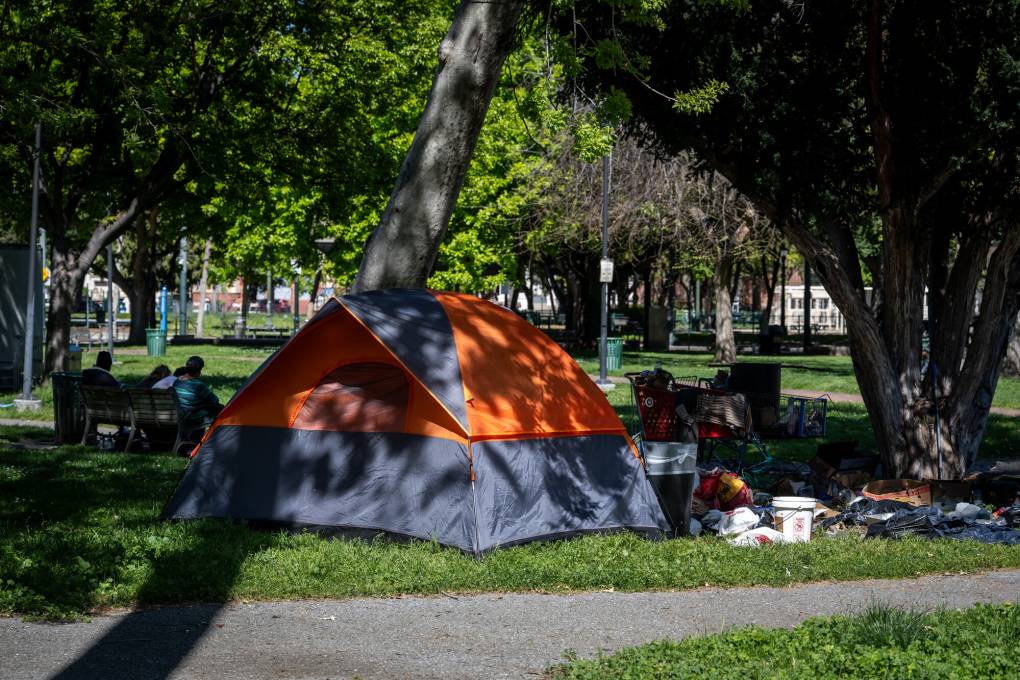
"caption": "A tent sits in St. James Park in San José on April 9, 2024. San José Mayor Matt Mahan’s preliminary budget plan includes a 2026 ballot measure to tie council and mayoral pay raises to performance metrics.",
"credit": "Beth LaBerge/KQED",
"altTag": null,
"description": null,
"imgSizes": {
"medium": {
"file": "https://cdn.kqed.org/wp-content/uploads/sites/10/2025/03/240409-SJEncampmentBan-045-BL_qed-800x533.jpg",
"width": 800,
"height": 533,
"mimeType": "image/jpeg"
},
"large": {
"file": "https://cdn.kqed.org/wp-content/uploads/sites/10/2025/03/240409-SJEncampmentBan-045-BL_qed-1020x680.jpg",
"width": 1020,
"height": 680,
"mimeType": "image/jpeg"
},
"thumbnail": {
"file": "https://cdn.kqed.org/wp-content/uploads/sites/10/2025/03/240409-SJEncampmentBan-045-BL_qed-160x107.jpg",
"width": 160,
"height": 107,
"mimeType": "image/jpeg"
},
"1536x1536": {
"file": "https://cdn.kqed.org/wp-content/uploads/sites/10/2025/03/240409-SJEncampmentBan-045-BL_qed-1536x1024.jpg",
"width": 1536,
"height": 1024,
"mimeType": "image/jpeg"
},
"post-thumbnail": {
"file": "https://cdn.kqed.org/wp-content/uploads/sites/10/2025/03/240409-SJEncampmentBan-045-BL_qed-672x372.jpg",
"width": 672,
"height": 372,
"mimeType": "image/jpeg"
},
"twentyfourteen-full-width": {
"file": "https://cdn.kqed.org/wp-content/uploads/sites/10/2025/03/240409-SJEncampmentBan-045-BL_qed-1038x576.jpg",
"width": 1038,
"height": 576,
"mimeType": "image/jpeg"
},
"full-width": {
"file": "https://cdn.kqed.org/wp-content/uploads/sites/10/2025/03/240409-SJEncampmentBan-045-BL_qed-1920x1280.jpg",
"width": 1920,
"height": 1280,
"mimeType": "image/jpeg"
},
"kqedFullSize": {
"file": "https://cdn.kqed.org/wp-content/uploads/sites/10/2025/03/240409-SJEncampmentBan-045-BL_qed.jpg",
"width": 1999,
"height": 1333
}
},
"isLoading": false,
"fetchFailed": false
},
"news_12031677": {
"type": "attachments",
"id": "news_12031677",
"meta": {
"index": "attachments_1716263798",
"site": "news",
"id": "12031677",
"found": true
},
"title": "Apartment buildings in Nob Hill in San Francisco on July 29, 2021.",
"publishDate": 1742246529,
"status": "inherit",
"parent": 12030792,
"modified": 1742246540,
"caption": "Apartment buildings in Nob Hill in San Francisco on July 29, 2021.",
"credit": "Beth LaBerge/KQED",
"altTag": null,
"description": null,
"imgSizes": {
"medium": {
"file": "https://cdn.kqed.org/wp-content/uploads/sites/10/2025/03/001_SanFrancisco_Housing_07292021_qed-800x533.jpg",
"width": 800,
"height": 533,
"mimeType": "image/jpeg"
},
"large": {
"file": "https://cdn.kqed.org/wp-content/uploads/sites/10/2025/03/001_SanFrancisco_Housing_07292021_qed-1020x680.jpg",
"width": 1020,
"height": 680,
"mimeType": "image/jpeg"
},
"thumbnail": {
"file": "https://cdn.kqed.org/wp-content/uploads/sites/10/2025/03/001_SanFrancisco_Housing_07292021_qed-160x107.jpg",
"width": 160,
"height": 107,
"mimeType": "image/jpeg"
},
"1536x1536": {
"file": "https://cdn.kqed.org/wp-content/uploads/sites/10/2025/03/001_SanFrancisco_Housing_07292021_qed-1536x1024.jpg",
"width": 1536,
"height": 1024,
"mimeType": "image/jpeg"
},
"post-thumbnail": {
"file": "https://cdn.kqed.org/wp-content/uploads/sites/10/2025/03/001_SanFrancisco_Housing_07292021_qed-672x372.jpg",
"width": 672,
"height": 372,
"mimeType": "image/jpeg"
},
"twentyfourteen-full-width": {
"file": "https://cdn.kqed.org/wp-content/uploads/sites/10/2025/03/001_SanFrancisco_Housing_07292021_qed-1038x576.jpg",
"width": 1038,
"height": 576,
"mimeType": "image/jpeg"
},
"full-width": {
"file": "https://cdn.kqed.org/wp-content/uploads/sites/10/2025/03/001_SanFrancisco_Housing_07292021_qed-1920x1280.jpg",
"width": 1920,
"height": 1280,
"mimeType": "image/jpeg"
},
"kqedFullSize": {
"file": "https://cdn.kqed.org/wp-content/uploads/sites/10/2025/03/001_SanFrancisco_Housing_07292021_qed.jpg",
"width": 1999,
"height": 1333
}
},
"isLoading": false,
"fetchFailed": false
},
"news_12028707": {
"type": "attachments",
"id": "news_12028707",
"meta": {
"index": "attachments_1716263798",
"site": "news",
"id": "12028707",
"found": true
},
"title": "250218-SFDowntown-16-BL_qed",
"publishDate": 1740591027,
"status": "inherit",
"parent": 12028703,
"modified": 1740591048,
"caption": "Mayor Daniel Lurie listens to speakers during a press conference in Union Square, San Francisco, on Feb. 18, 2025, announcing legislation to increase nightlife in Downtown San Francisco to help the recovery of the neighborhood.",
"credit": "Beth LaBerge/KQED",
"altTag": null,
"description": null,
"imgSizes": {
"medium": {
"file": "https://cdn.kqed.org/wp-content/uploads/sites/10/2025/02/250218-SFDowntown-16-BL_qed-800x533.jpg",
"width": 800,
"height": 533,
"mimeType": "image/jpeg"
},
"large": {
"file": "https://cdn.kqed.org/wp-content/uploads/sites/10/2025/02/250218-SFDowntown-16-BL_qed-1020x680.jpg",
"width": 1020,
"height": 680,
"mimeType": "image/jpeg"
},
"thumbnail": {
"file": "https://cdn.kqed.org/wp-content/uploads/sites/10/2025/02/250218-SFDowntown-16-BL_qed-160x107.jpg",
"width": 160,
"height": 107,
"mimeType": "image/jpeg"
},
"1536x1536": {
"file": "https://cdn.kqed.org/wp-content/uploads/sites/10/2025/02/250218-SFDowntown-16-BL_qed-1536x1024.jpg",
"width": 1536,
"height": 1024,
"mimeType": "image/jpeg"
},
"post-thumbnail": {
"file": "https://cdn.kqed.org/wp-content/uploads/sites/10/2025/02/250218-SFDowntown-16-BL_qed-672x372.jpg",
"width": 672,
"height": 372,
"mimeType": "image/jpeg"
},
"twentyfourteen-full-width": {
"file": "https://cdn.kqed.org/wp-content/uploads/sites/10/2025/02/250218-SFDowntown-16-BL_qed-1038x576.jpg",
"width": 1038,
"height": 576,
"mimeType": "image/jpeg"
},
"full-width": {
"file": "https://cdn.kqed.org/wp-content/uploads/sites/10/2025/02/250218-SFDowntown-16-BL_qed-1920x1280.jpg",
"width": 1920,
"height": 1280,
"mimeType": "image/jpeg"
},
"kqedFullSize": {
"file": "https://cdn.kqed.org/wp-content/uploads/sites/10/2025/02/250218-SFDowntown-16-BL_qed.jpg",
"width": 2000,
"height": 1333
}
},
"isLoading": false,
"fetchFailed": false
},
"news_11992114": {
"type": "attachments",
"id": "news_11992114",
"meta": {
"index": "attachments_1716263798",
"site": "news",
"id": "11992114",
"found": true
},
"title": "010_KQED_AlamedaAffordableHousing_01122023",
"publishDate": 1719435503,
"status": "inherit",
"parent": 11992046,
"modified": 1719435512,
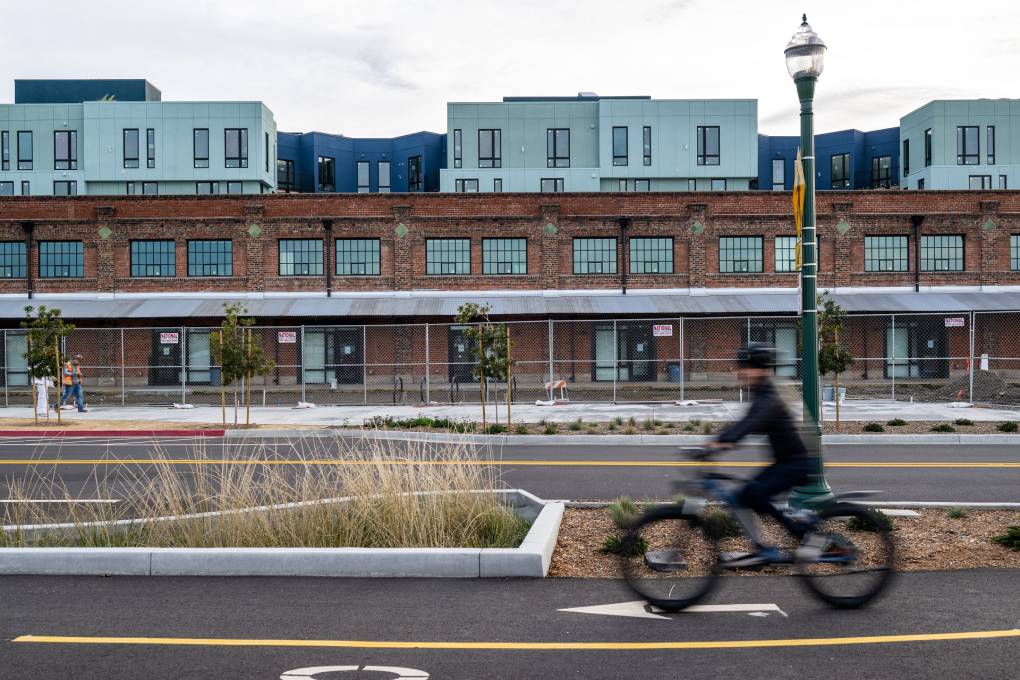
"caption": "The Del Monte warehouse is under construction to become an apartment building in Alameda on Jan. 12, 2023.",
"credit": "Beth LaBerge/KQED",
"altTag": null,
"description": null,
"imgSizes": {
"medium": {
"file": "https://cdn.kqed.org/wp-content/uploads/sites/10/2024/06/010_KQED_AlamedaAffordableHousing_01122023-800x533.jpg",
"width": 800,
"height": 533,
"mimeType": "image/jpeg"
},
"large": {
"file": "https://cdn.kqed.org/wp-content/uploads/sites/10/2024/06/010_KQED_AlamedaAffordableHousing_01122023-1020x680.jpg",
"width": 1020,
"height": 680,
"mimeType": "image/jpeg"
},
"thumbnail": {
"file": "https://cdn.kqed.org/wp-content/uploads/sites/10/2024/06/010_KQED_AlamedaAffordableHousing_01122023-160x107.jpg",
"width": 160,
"height": 107,
"mimeType": "image/jpeg"
},
"1536x1536": {
"file": "https://cdn.kqed.org/wp-content/uploads/sites/10/2024/06/010_KQED_AlamedaAffordableHousing_01122023-1536x1024.jpg",
"width": 1536,
"height": 1024,
"mimeType": "image/jpeg"
},
"post-thumbnail": {
"file": "https://cdn.kqed.org/wp-content/uploads/sites/10/2024/06/010_KQED_AlamedaAffordableHousing_01122023-672x372.jpg",
"width": 672,
"height": 372,
"mimeType": "image/jpeg"
},
"twentyfourteen-full-width": {
"file": "https://cdn.kqed.org/wp-content/uploads/sites/10/2024/06/010_KQED_AlamedaAffordableHousing_01122023-1038x576.jpg",
"width": 1038,
"height": 576,
"mimeType": "image/jpeg"
},
"kqedFullSize": {
"file": "https://cdn.kqed.org/wp-content/uploads/sites/10/2024/06/010_KQED_AlamedaAffordableHousing_01122023.jpg",
"width": 1920,
"height": 1280
}
},
"isLoading": false,
"fetchFailed": false
},
"news_12031111": {
"type": "attachments",
"id": "news_12031111",
"meta": {
"index": "attachments_1716263798",
"site": "news",
"id": "12031111",
"found": true
},
"title": "250311-VALLEJO HOMELESS DEATH VIGIL-MD-06-KQED",
"publishDate": 1741822379,
"status": "inherit",
"parent": 0,
"modified": 1741822630,
"caption": "Shawn O'Malley (left) and Kathryn Salm (right) hold up a banner in support of their friend James Oakley, who was killed during a sweep in Vallejo, on March 11, 2025.",
"credit": "Aryk Copley for KQED",
"altTag": null,
"description": null,
"imgSizes": {
"medium": {
"file": "https://cdn.kqed.org/wp-content/uploads/sites/10/2025/03/250311-VALLEJO-HOMELESS-DEATH-VIGIL-MD-06-KQED-800x533.jpg",
"width": 800,
"height": 533,
"mimeType": "image/jpeg"
},
"large": {
"file": "https://cdn.kqed.org/wp-content/uploads/sites/10/2025/03/250311-VALLEJO-HOMELESS-DEATH-VIGIL-MD-06-KQED-1020x680.jpg",
"width": 1020,
"height": 680,
"mimeType": "image/jpeg"
},
"thumbnail": {
"file": "https://cdn.kqed.org/wp-content/uploads/sites/10/2025/03/250311-VALLEJO-HOMELESS-DEATH-VIGIL-MD-06-KQED-160x107.jpg",
"width": 160,
"height": 107,
"mimeType": "image/jpeg"
},
"1536x1536": {
"file": "https://cdn.kqed.org/wp-content/uploads/sites/10/2025/03/250311-VALLEJO-HOMELESS-DEATH-VIGIL-MD-06-KQED-1536x1024.jpg",
"width": 1536,
"height": 1024,
"mimeType": "image/jpeg"
},
"post-thumbnail": {
"file": "https://cdn.kqed.org/wp-content/uploads/sites/10/2025/03/250311-VALLEJO-HOMELESS-DEATH-VIGIL-MD-06-KQED-672x372.jpg",
"width": 672,
"height": 372,
"mimeType": "image/jpeg"
},
"twentyfourteen-full-width": {
"file": "https://cdn.kqed.org/wp-content/uploads/sites/10/2025/03/250311-VALLEJO-HOMELESS-DEATH-VIGIL-MD-06-KQED-1038x576.jpg",
"width": 1038,
"height": 576,
"mimeType": "image/jpeg"
},
"full-width": {
"file": "https://cdn.kqed.org/wp-content/uploads/sites/10/2025/03/250311-VALLEJO-HOMELESS-DEATH-VIGIL-MD-06-KQED-1920x1280.jpg",
"width": 1920,
"height": 1280,
"mimeType": "image/jpeg"
},
"kqedFullSize": {
"file": "https://cdn.kqed.org/wp-content/uploads/sites/10/2025/03/250311-VALLEJO-HOMELESS-DEATH-VIGIL-MD-06-KQED.jpg",
"width": 2000,
"height": 1333
}
},
"isLoading": false,
"fetchFailed": false
},
"news_12030729": {
"type": "attachments",
"id": "news_12030729",
"meta": {
"index": "attachments_1716263798",
"site": "news",
"id": "12030729",
"found": true
},
"title": "241203-FresnoCampingBan-67-BL_qed",
"publishDate": 1741713196,
"status": "inherit",
"parent": 12030725,
"modified": 1741713231,
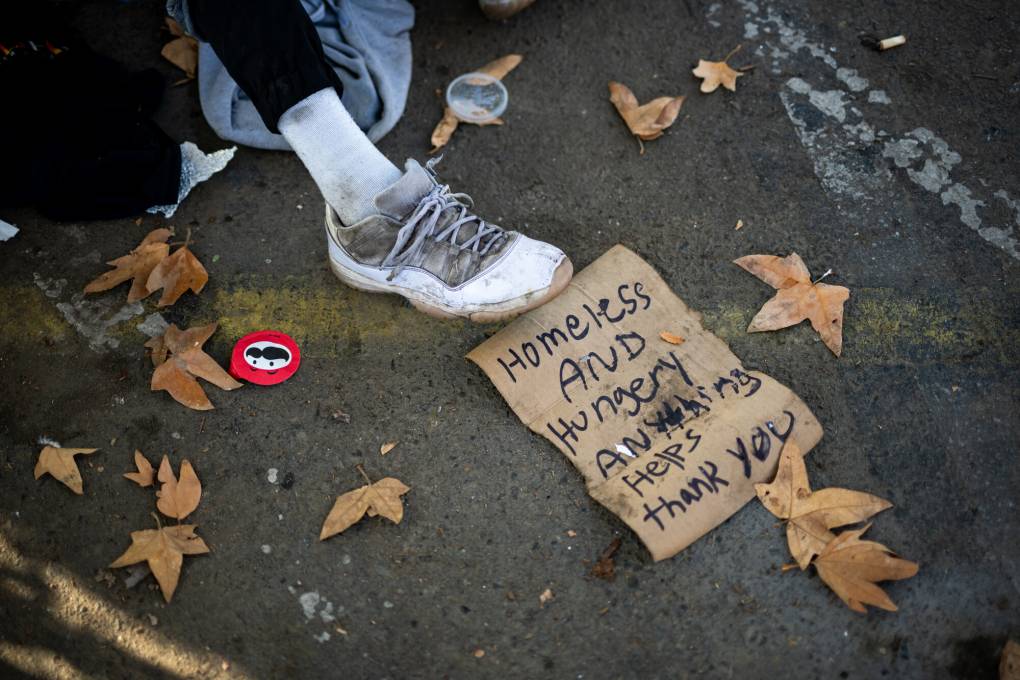
"caption": "A sign says, \"Homeless and Hungery\" near an encampment in Fresno, California, on Dec. 3, 2024.",
"credit": "Beth LaBerge/KQED",
"altTag": null,
"description": null,
"imgSizes": {
"medium": {
"file": "https://cdn.kqed.org/wp-content/uploads/sites/10/2025/03/241203-FresnoCampingBan-67-BL_qed-800x533.jpg",
"width": 800,
"height": 533,
"mimeType": "image/jpeg"
},
"large": {
"file": "https://cdn.kqed.org/wp-content/uploads/sites/10/2025/03/241203-FresnoCampingBan-67-BL_qed-1020x680.jpg",
"width": 1020,
"height": 680,
"mimeType": "image/jpeg"
},
"thumbnail": {
"file": "https://cdn.kqed.org/wp-content/uploads/sites/10/2025/03/241203-FresnoCampingBan-67-BL_qed-160x107.jpg",
"width": 160,
"height": 107,
"mimeType": "image/jpeg"
},
"1536x1536": {
"file": "https://cdn.kqed.org/wp-content/uploads/sites/10/2025/03/241203-FresnoCampingBan-67-BL_qed-1536x1024.jpg",
"width": 1536,
"height": 1024,
"mimeType": "image/jpeg"
},
"post-thumbnail": {
"file": "https://cdn.kqed.org/wp-content/uploads/sites/10/2025/03/241203-FresnoCampingBan-67-BL_qed-672x372.jpg",
"width": 672,
"height": 372,
"mimeType": "image/jpeg"
},
"twentyfourteen-full-width": {
"file": "https://cdn.kqed.org/wp-content/uploads/sites/10/2025/03/241203-FresnoCampingBan-67-BL_qed-1038x576.jpg",
"width": 1038,
"height": 576,
"mimeType": "image/jpeg"
},
"full-width": {
"file": "https://cdn.kqed.org/wp-content/uploads/sites/10/2025/03/241203-FresnoCampingBan-67-BL_qed-1920x1280.jpg",
"width": 1920,
"height": 1280,
"mimeType": "image/jpeg"
},
"kqedFullSize": {
"file": "https://cdn.kqed.org/wp-content/uploads/sites/10/2025/03/241203-FresnoCampingBan-67-BL_qed.jpg",
"width": 2000,
"height": 1333
}
},
"isLoading": false,
"fetchFailed": false
},
"news_12003104": {
"type": "attachments",
"id": "news_12003104",
"meta": {
"index": "attachments_1716263798",
"site": "news",
"id": "12003104",
"found": true
},
"title": "240903-MARIN SUBSTANDARD AG WORKER HOUSING-MD-03-KQED",
"publishDate": 1725485262,
"status": "inherit",
"parent": 0,
"modified": 1725644257,
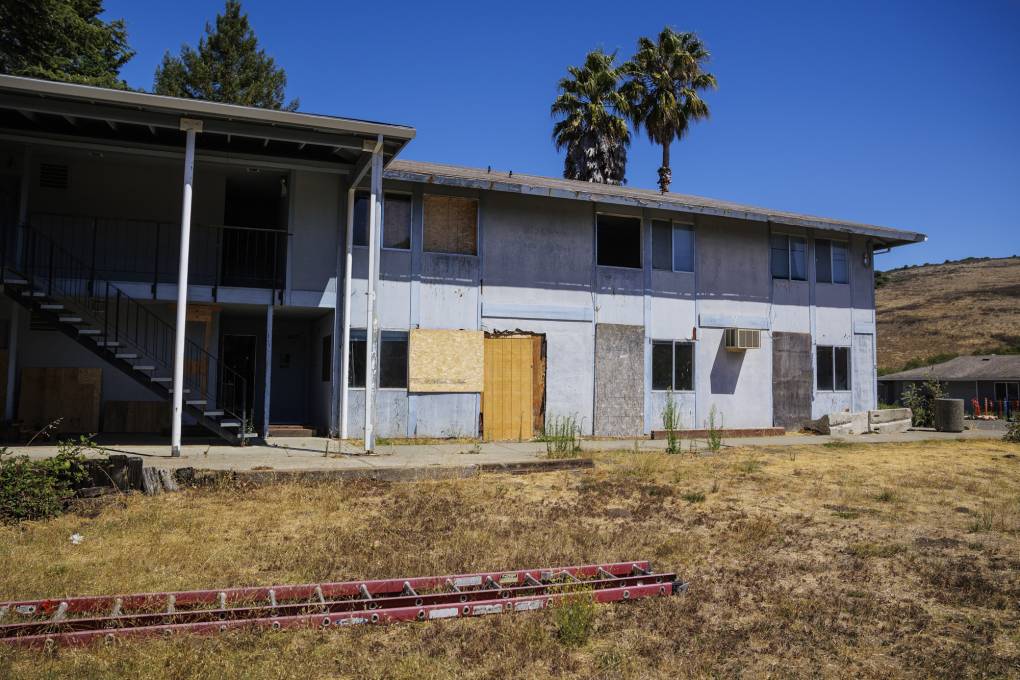
"caption": "Former Coast Guard housing that CLAM, the Community Land Trust of West Marin, aims to turn into affordable housing in Point Reyes Station on Sept. 3, 2024.",
"credit": "Martin do Nascimento/KQED",
"altTag": null,
"description": null,
"imgSizes": {
"medium": {
"file": "https://cdn.kqed.org/wp-content/uploads/sites/10/2024/09/240903-MARIN-SUBSTANDARD-AG-WORKER-HOUSING-MD-03-KQED-800x533.jpg",
"width": 800,
"height": 533,
"mimeType": "image/jpeg"
},
"large": {
"file": "https://cdn.kqed.org/wp-content/uploads/sites/10/2024/09/240903-MARIN-SUBSTANDARD-AG-WORKER-HOUSING-MD-03-KQED-1020x680.jpg",
"width": 1020,
"height": 680,
"mimeType": "image/jpeg"
},
"thumbnail": {
"file": "https://cdn.kqed.org/wp-content/uploads/sites/10/2024/09/240903-MARIN-SUBSTANDARD-AG-WORKER-HOUSING-MD-03-KQED-160x107.jpg",
"width": 160,
"height": 107,
"mimeType": "image/jpeg"
},
"1536x1536": {
"file": "https://cdn.kqed.org/wp-content/uploads/sites/10/2024/09/240903-MARIN-SUBSTANDARD-AG-WORKER-HOUSING-MD-03-KQED-1536x1024.jpg",
"width": 1536,
"height": 1024,
"mimeType": "image/jpeg"
},
"post-thumbnail": {
"file": "https://cdn.kqed.org/wp-content/uploads/sites/10/2024/09/240903-MARIN-SUBSTANDARD-AG-WORKER-HOUSING-MD-03-KQED-672x372.jpg",
"width": 672,
"height": 372,
"mimeType": "image/jpeg"
},
"twentyfourteen-full-width": {
"file": "https://cdn.kqed.org/wp-content/uploads/sites/10/2024/09/240903-MARIN-SUBSTANDARD-AG-WORKER-HOUSING-MD-03-KQED-1038x576.jpg",
"width": 1038,
"height": 576,
"mimeType": "image/jpeg"
},
"full-width": {
"file": "https://cdn.kqed.org/wp-content/uploads/sites/10/2024/09/240903-MARIN-SUBSTANDARD-AG-WORKER-HOUSING-MD-03-KQED-1920x1280.jpg",
"width": 1920,
"height": 1280,
"mimeType": "image/jpeg"
},
"kqedFullSize": {
"file": "https://cdn.kqed.org/wp-content/uploads/sites/10/2024/09/240903-MARIN-SUBSTANDARD-AG-WORKER-HOUSING-MD-03-KQED.jpg?ver=1725485725",
"width": 2000,
"height": 1333
}
},
"isLoading": false,
"fetchFailed": false
},
"news_12030811": {
"type": "attachments",
"id": "news_12030811",
"meta": {
"index": "attachments_1716263798",
"site": "news",
"id": "12030811",
"found": true
},
"title": "012625_Eaton-Fire-Rain_JH_CM_56 copy",
"publishDate": 1741732342,
"status": "inherit",
"parent": 12030810,
"modified": 1741732358,
"caption": "Insurance market problems highlighted by the Los Angeles-area fires have legislators rushing to offer up possible solutions. A house burned by the Eaton Fire in Altadena, Jan. 26, 2025. \n",
"credit": "Jules Hotz for CalMatters",
"altTag": null,
"description": null,
"imgSizes": {
"medium": {
"file": "https://cdn.kqed.org/wp-content/uploads/sites/10/2025/03/012625_Eaton-Fire-Rain_JH_CM_56-copy-800x533.jpg",
"width": 800,
"height": 533,
"mimeType": "image/jpeg"
},
"large": {
"file": "https://cdn.kqed.org/wp-content/uploads/sites/10/2025/03/012625_Eaton-Fire-Rain_JH_CM_56-copy-1020x680.jpg",
"width": 1020,
"height": 680,
"mimeType": "image/jpeg"
},
"thumbnail": {
"file": "https://cdn.kqed.org/wp-content/uploads/sites/10/2025/03/012625_Eaton-Fire-Rain_JH_CM_56-copy-160x107.jpg",
"width": 160,
"height": 107,
"mimeType": "image/jpeg"
},
"1536x1536": {
"file": "https://cdn.kqed.org/wp-content/uploads/sites/10/2025/03/012625_Eaton-Fire-Rain_JH_CM_56-copy-1536x1024.jpg",
"width": 1536,
"height": 1024,
"mimeType": "image/jpeg"
},
"post-thumbnail": {
"file": "https://cdn.kqed.org/wp-content/uploads/sites/10/2025/03/012625_Eaton-Fire-Rain_JH_CM_56-copy-672x372.jpg",
"width": 672,
"height": 372,
"mimeType": "image/jpeg"
},
"twentyfourteen-full-width": {
"file": "https://cdn.kqed.org/wp-content/uploads/sites/10/2025/03/012625_Eaton-Fire-Rain_JH_CM_56-copy-1038x576.jpg",
"width": 1038,
"height": 576,
"mimeType": "image/jpeg"
},
"full-width": {
"file": "https://cdn.kqed.org/wp-content/uploads/sites/10/2025/03/012625_Eaton-Fire-Rain_JH_CM_56-copy-1920x1280.jpg",
"width": 1920,
"height": 1280,
"mimeType": "image/jpeg"
},
"kqedFullSize": {
"file": "https://cdn.kqed.org/wp-content/uploads/sites/10/2025/03/012625_Eaton-Fire-Rain_JH_CM_56-copy.jpg",
"width": 2000,
"height": 1333
}
},
"isLoading": false,
"fetchFailed": false
},
"news_12030307": {
"type": "attachments",
"id": "news_12030307",
"meta": {
"index": "attachments_1716263798",
"site": "news",
"id": "12030307",
"found": true
},
"title": "20250130-JSeiHome-JY-1927",
"publishDate": 1741374115,
"status": "inherit",
"parent": 0,
"modified": 1741375519,
"caption": "Flowers are placed at a photo of J-Sei Home resident Ruth Fukuchi during her memorial service at Sycamore Congregational Church in El Cerrito, California, on Thursday, Jan. 30, 2025. Fukuchi resided at J-Sei Home from 2021 until her death in December.",
"credit": "Juliana Yamada/KQED",
"altTag": null,
"description": null,
"imgSizes": {
"medium": {
"file": "https://cdn.kqed.org/wp-content/uploads/sites/10/2025/03/20250130-JSeiHome-JY-1927-800x533.jpg",
"width": 800,
"height": 533,
"mimeType": "image/jpeg"
},
"large": {
"file": "https://cdn.kqed.org/wp-content/uploads/sites/10/2025/03/20250130-JSeiHome-JY-1927-1020x680.jpg",
"width": 1020,
"height": 680,
"mimeType": "image/jpeg"
},
"thumbnail": {
"file": "https://cdn.kqed.org/wp-content/uploads/sites/10/2025/03/20250130-JSeiHome-JY-1927-160x107.jpg",
"width": 160,
"height": 107,
"mimeType": "image/jpeg"
},
"1536x1536": {
"file": "https://cdn.kqed.org/wp-content/uploads/sites/10/2025/03/20250130-JSeiHome-JY-1927-1536x1024.jpg",
"width": 1536,
"height": 1024,
"mimeType": "image/jpeg"
},
"post-thumbnail": {
"file": "https://cdn.kqed.org/wp-content/uploads/sites/10/2025/03/20250130-JSeiHome-JY-1927-672x372.jpg",
"width": 672,
"height": 372,
"mimeType": "image/jpeg"
},
"twentyfourteen-full-width": {
"file": "https://cdn.kqed.org/wp-content/uploads/sites/10/2025/03/20250130-JSeiHome-JY-1927-1038x576.jpg",
"width": 1038,
"height": 576,
"mimeType": "image/jpeg"
},
"full-width": {
"file": "https://cdn.kqed.org/wp-content/uploads/sites/10/2025/03/20250130-JSeiHome-JY-1927-1920x1280.jpg",
"width": 1920,
"height": 1280,
"mimeType": "image/jpeg"
},
"kqedFullSize": {
"file": "https://cdn.kqed.org/wp-content/uploads/sites/10/2025/03/20250130-JSeiHome-JY-1927.jpg",
"width": 2000,
"height": 1333
}
},
"isLoading": false,
"fetchFailed": false
},
"news_12030519": {
"type": "attachments",
"id": "news_12030519",
"meta": {
"index": "attachments_1716263798",
"site": "news",
"id": "12030519",
"found": true
},
"title": "carddeck_mentlahealthparity_AW_082119_01",
"publishDate": 1741546520,
"status": "inherit",
"parent": 12030516,
"modified": 1741546586,
"caption": "Humboldt County Department of Health and Human Services 24-hour mental health crisis services on August 21, 2019. Photo by Anne Wernikoff for CalMatters",
"credit": "Anne Wernikoff/CalMatters",
"altTag": "A white and blue sign that reads \"Crisis Services Press button next to door once and wait.\" There is a blue arrow pointing right.",
"description": null,
"imgSizes": {
"medium": {
"file": "https://cdn.kqed.org/wp-content/uploads/sites/10/2025/03/carddeck_mentlahealthparity_AW_082119_01-800x533.jpg",
"width": 800,
"height": 533,
"mimeType": "image/jpeg"
},
"large": {
"file": "https://cdn.kqed.org/wp-content/uploads/sites/10/2025/03/carddeck_mentlahealthparity_AW_082119_01-1020x680.jpg",
"width": 1020,
"height": 680,
"mimeType": "image/jpeg"
},
"thumbnail": {
"file": "https://cdn.kqed.org/wp-content/uploads/sites/10/2025/03/carddeck_mentlahealthparity_AW_082119_01-160x107.jpg",
"width": 160,
"height": 107,
"mimeType": "image/jpeg"
},
"1536x1536": {
"file": "https://cdn.kqed.org/wp-content/uploads/sites/10/2025/03/carddeck_mentlahealthparity_AW_082119_01-1536x1024.jpg",
"width": 1536,
"height": 1024,
"mimeType": "image/jpeg"
},
"post-thumbnail": {
"file": "https://cdn.kqed.org/wp-content/uploads/sites/10/2025/03/carddeck_mentlahealthparity_AW_082119_01-672x372.jpg",
"width": 672,
"height": 372,
"mimeType": "image/jpeg"
},
"twentyfourteen-full-width": {
"file": "https://cdn.kqed.org/wp-content/uploads/sites/10/2025/03/carddeck_mentlahealthparity_AW_082119_01-1038x576.jpg",
"width": 1038,
"height": 576,
"mimeType": "image/jpeg"
},
"full-width": {
"file": "https://cdn.kqed.org/wp-content/uploads/sites/10/2025/03/carddeck_mentlahealthparity_AW_082119_01-1920x1280.jpg",
"width": 1920,
"height": 1280,
"mimeType": "image/jpeg"
},
"kqedFullSize": {
"file": "https://cdn.kqed.org/wp-content/uploads/sites/10/2025/03/carddeck_mentlahealthparity_AW_082119_01.jpg",
"width": 2000,
"height": 1333
}
},
"isLoading": false,
"fetchFailed": false
},
"news_12030059": {
"type": "attachments",
"id": "news_12030059",
"meta": {
"index": "attachments_1716263798",
"site": "news",
"id": "12030059",
"found": true
},
"title": "US California Governor Wildfires",
"publishDate": 1741285002,
"status": "inherit",
"parent": 12030057,
"modified": 1741306392,
"caption": "Gov. Gavin Newsom holds a fireside chat with Stephen Cheung, the President and Chief Executive Officer of the Los Angeles County Economic Development Corporation (LAEDC) and its subsidiary, the World Trade Center Los Angeles (WTCLA), at the 2025 Economic Forecast and Industry Outlook convening on Wednesday, Feb. 26, 2025, at the East LA College in Los Angeles.",
"credit": "Damian Dovarganes/AP Photo",
"altTag": null,
"description": null,
"imgSizes": {
"medium": {
"file": "https://cdn.kqed.org/wp-content/uploads/sites/10/2025/03/GavinNewsom2025AP-800x533.jpg",
"width": 800,
"height": 533,
"mimeType": "image/jpeg"
},
"large": {
"file": "https://cdn.kqed.org/wp-content/uploads/sites/10/2025/03/GavinNewsom2025AP-1020x680.jpg",
"width": 1020,
"height": 680,
"mimeType": "image/jpeg"
},
"thumbnail": {
"file": "https://cdn.kqed.org/wp-content/uploads/sites/10/2025/03/GavinNewsom2025AP-160x107.jpg",
"width": 160,
"height": 107,
"mimeType": "image/jpeg"
},
"1536x1536": {
"file": "https://cdn.kqed.org/wp-content/uploads/sites/10/2025/03/GavinNewsom2025AP-1536x1024.jpg",
"width": 1536,
"height": 1024,
"mimeType": "image/jpeg"
},
"post-thumbnail": {
"file": "https://cdn.kqed.org/wp-content/uploads/sites/10/2025/03/GavinNewsom2025AP-672x372.jpg",
"width": 672,
"height": 372,
"mimeType": "image/jpeg"
},
"twentyfourteen-full-width": {
"file": "https://cdn.kqed.org/wp-content/uploads/sites/10/2025/03/GavinNewsom2025AP-1038x576.jpg",
"width": 1038,
"height": 576,
"mimeType": "image/jpeg"
},
"full-width": {
"file": "https://cdn.kqed.org/wp-content/uploads/sites/10/2025/03/GavinNewsom2025AP-1920x1280.jpg",
"width": 1920,
"height": 1280,
"mimeType": "image/jpeg"
},
"kqedFullSize": {
"file": "https://cdn.kqed.org/wp-content/uploads/sites/10/2025/03/GavinNewsom2025AP.jpg",
"width": 2000,
"height": 1333
}
},
"isLoading": false,
"fetchFailed": false
},
"news_12030026": {
"type": "attachments",
"id": "news_12030026",
"meta": {
"index": "attachments_1716263798",
"site": "news",
"id": "12030026",
"found": true
},
"title": "20250210_Unhoused-Ban_DMB_00270_qed",
"publishDate": 1741282743,
"status": "inherit",
"parent": 12030023,
"modified": 1741282816,
"caption": "Two unhoused residents clean up a makeshift shelter near Quarry Lakes Drive in Fremont, California, on Monday, Feb. 10, 2025. ",
"credit": "David M. Barreda/KQED",
"altTag": null,
"description": null,
"imgSizes": {
"medium": {
"file": "https://cdn.kqed.org/wp-content/uploads/sites/10/2025/03/20250210_Unhoused-Ban_DMB_00270_qed-800x533.jpg",
"width": 800,
"height": 533,
"mimeType": "image/jpeg"
},
"large": {
"file": "https://cdn.kqed.org/wp-content/uploads/sites/10/2025/03/20250210_Unhoused-Ban_DMB_00270_qed-1020x680.jpg",
"width": 1020,
"height": 680,
"mimeType": "image/jpeg"
},
"thumbnail": {
"file": "https://cdn.kqed.org/wp-content/uploads/sites/10/2025/03/20250210_Unhoused-Ban_DMB_00270_qed-160x107.jpg",
"width": 160,
"height": 107,
"mimeType": "image/jpeg"
},
"1536x1536": {
"file": "https://cdn.kqed.org/wp-content/uploads/sites/10/2025/03/20250210_Unhoused-Ban_DMB_00270_qed-1536x1024.jpg",
"width": 1536,
"height": 1024,
"mimeType": "image/jpeg"
},
"post-thumbnail": {
"file": "https://cdn.kqed.org/wp-content/uploads/sites/10/2025/03/20250210_Unhoused-Ban_DMB_00270_qed-672x372.jpg",
"width": 672,
"height": 372,
"mimeType": "image/jpeg"
},
"twentyfourteen-full-width": {
"file": "https://cdn.kqed.org/wp-content/uploads/sites/10/2025/03/20250210_Unhoused-Ban_DMB_00270_qed-1038x576.jpg",
"width": 1038,
"height": 576,
"mimeType": "image/jpeg"
},
"full-width": {
"file": "https://cdn.kqed.org/wp-content/uploads/sites/10/2025/03/20250210_Unhoused-Ban_DMB_00270_qed-1920x1280.jpg",
"width": 1920,
"height": 1280,
"mimeType": "image/jpeg"
},
"kqedFullSize": {
"file": "https://cdn.kqed.org/wp-content/uploads/sites/10/2025/03/20250210_Unhoused-Ban_DMB_00270_qed.jpg",
"width": 2000,
"height": 1333
}
},
"isLoading": false,
"fetchFailed": false
}
},
"audioPlayerReducer": {
"postId": "stream_live",
"isPaused": true,
"isPlaying": false,
"pfsActive": false,
"pledgeModalIsOpen": true,
"playerDrawerIsOpen": false,
"liveAudioPlayStartedAt": 0,
"liveAudioPlayContext": ""
},
"authorsReducer": {
"byline_news_12030725": {
"type": "authors",
"id": "byline_news_12030725",
"meta": {
"override": true
},
"slug": "byline_news_12030725",
"name": "Cami Dominguez",
"isLoading": false
},
"byline_news_12030810": {
"type": "authors",
"id": "byline_news_12030810",
"meta": {
"override": true
},
"slug": "byline_news_12030810",
"name": "\u003ca href=\"https://calmatters.org/author/levi-sumagaysay/\">Levi Sumagaysay\u003c/a>, CalMatters",
"isLoading": false
},
"byline_news_12030516": {
"type": "authors",
"id": "byline_news_12030516",
"meta": {
"override": true
},
"slug": "byline_news_12030516",
"name": "\u003ca href=\"https://calmatters.org/author/kristen-hwang\">Kristen Hwang, \u003c/a>CalMatters",
"isLoading": false
},
"gmarzorati": {
"type": "authors",
"id": "227",
"meta": {
"index": "authors_1716337520",
"id": "227",
"found": true
},
"name": "Guy Marzorati",
"firstName": "Guy",
"lastName": "Marzorati",
"slug": "gmarzorati",
"email": "gmarzorati@KQED.org",
"display_author_email": true,
"staff_mastheads": [
"news"
],
"title": "Correspondent",
"bio": "Guy Marzorati is a correspondent on KQED's California Politics and Government Desk, based in San Jose. A graduate of Santa Clara University, Guy joined KQED in 2013. He reports on state and local politics and produces KQED's digital voter guide.",
"avatar": "https://secure.gravatar.com/avatar/e7038b8dbfd55b104369b76b1cd0b9de?s=600&d=blank&r=g",
"twitter": "guymarzorati",
"facebook": null,
"instagram": null,
"linkedin": null,
"sites": [
{
"site": "",
"roles": [
"editor"
]
},
{
"site": "news",
"roles": [
"editor"
]
},
{
"site": "science",
"roles": [
"editor"
]
},
{
"site": "forum",
"roles": [
"editor"
]
},
{
"site": "elections",
"roles": [
"editor"
]
},
{
"site": "liveblog",
"roles": [
"editor"
]
}
],
"headData": {
"title": "Guy Marzorati | KQED",
"description": "Correspondent",
"ogImgSrc": "https://secure.gravatar.com/avatar/e7038b8dbfd55b104369b76b1cd0b9de?s=600&d=blank&r=g",
"twImgSrc": "https://secure.gravatar.com/avatar/e7038b8dbfd55b104369b76b1cd0b9de?s=600&d=blank&r=g"
},
"isLoading": false,
"link": "/author/gmarzorati"
},
"clei": {
"type": "authors",
"id": "8617",
"meta": {
"index": "authors_1716337520",
"id": "8617",
"found": true
},
"name": "Cecilia Lei",
"firstName": "Cecilia",
"lastName": "Lei",
"slug": "clei",
"email": "clei@KQED.org",
"display_author_email": false,
"staff_mastheads": [],
"title": "KQED Contributor",
"bio": "Cecilia Lei is an on-call host and producer for KQED News and Podcasts. Previously, she was the executive producer and host of the San Francisco Chronicle's daily news podcast, 'Fifth and Mission'. Cecilia is a graduate of UC Berkeley’s Graduate School of Journalism and the former president of the Asian American Journalists Association San Francisco Bay Area chapter.",
"avatar": "https://secure.gravatar.com/avatar/40975f1f88fccf628ee537bf6ffc2af8?s=600&d=blank&r=g",
"twitter": null,
"facebook": null,
"instagram": null,
"linkedin": null,
"sites": [
{
"site": "arts",
"roles": [
"contributor"
]
},
{
"site": "news",
"roles": [
"author",
"read_private_posts"
]
},
{
"site": "about",
"roles": [
"editor"
]
}
],
"headData": {
"title": "Cecilia Lei | KQED",
"description": "KQED Contributor",
"ogImgSrc": "https://secure.gravatar.com/avatar/40975f1f88fccf628ee537bf6ffc2af8?s=600&d=blank&r=g",
"twImgSrc": "https://secure.gravatar.com/avatar/40975f1f88fccf628ee537bf6ffc2af8?s=600&d=blank&r=g"
},
"isLoading": false,
"link": "/author/clei"
},
"vrancano": {
"type": "authors",
"id": "11276",
"meta": {
"index": "authors_1716337520",
"id": "11276",
"found": true
},
"name": "Vanessa Rancaño",
"firstName": "Vanessa",
"lastName": "Rancaño",
"slug": "vrancano",
"email": "vrancano@kqed.org",
"display_author_email": false,
"staff_mastheads": [
"news"
],
"title": "Reporter",
"bio": "Vanessa Rancaño is a features reporter for KQED. She’s also covered homelessness and education for the station and reported from the Central Valley. Her work has aired across public radio, from flagship national news shows to longform narrative podcasts. Before taking up a mic, she worked as a freelance print journalist. She’s been recognized with a number of national and regional awards. Vanessa grew up in California's Central Valley. She's a former NPR Kroc Fellow, and a graduate of the UC Berkeley Graduate School of Journalism.",
"avatar": "https://secure.gravatar.com/avatar/b3a383dfb0e7ee1c17568f2cf067904ab654d6e3de9743fc661f3c788ade1bed?s=600&d=blank&r=g",
"twitter": "vanessarancano",
"bluesky": null,
"facebook": null,
"instagram": null,
"linkedin": null,
"sites": [
{
"site": "arts",
"roles": [
"editor"
]
},
{
"site": "news",
"roles": [
"editor"
]
},
{
"site": "liveblog",
"roles": [
"contributor"
]
}
],
"headData": {
"title": "Vanessa Rancaño | KQED",
"description": "Reporter",
"ogImgSrc": "https://secure.gravatar.com/avatar/b3a383dfb0e7ee1c17568f2cf067904ab654d6e3de9743fc661f3c788ade1bed?s=600&d=blank&r=g",
"twImgSrc": "https://secure.gravatar.com/avatar/b3a383dfb0e7ee1c17568f2cf067904ab654d6e3de9743fc661f3c788ade1bed?s=600&d=blank&r=g"
},
"isLoading": false,
"link": "/author/vrancano"
},
"ebaldassari": {
"type": "authors",
"id": "11652",
"meta": {
"index": "authors_1716337520",
"id": "11652",
"found": true
},
"name": "Erin Baldassari",
"firstName": "Erin",
"lastName": "Baldassari",
"slug": "ebaldassari",
"email": "ebaldassari@KQED.org",
"display_author_email": true,
"staff_mastheads": [
"news"
],
"title": "Staff Writer",
"bio": "Erin Baldassari covers housing for KQED. She's a former print journalist and most recently worked as the transportation reporter for the \u003cem>Mercury News\u003c/em> and \u003cem>East Bay Times. \u003c/em>There, she focused on how the Bay Area’s housing shortage has changed the way people move around the region. She also served on the \u003cem>East Bay Times\u003c/em>’ 2017 Pulitzer Prize-winning team for coverage of the Ghost Ship Fire in Oakland. Prior to that, Erin worked as a breaking news and general assignment reporter for a variety of outlets in the Bay Area and the greater Boston area. A Tufts University alumna, Erin grew up in the foothills of the Sierra Nevada mountains and in Sonoma County. She is a life-long KQED listener.",
"avatar": "https://secure.gravatar.com/avatar/5e95cad64a8ca08288082212e199d2b0cbeb4fd8e8ef5339395f361032bbe005?s=600&d=blank&r=g",
"twitter": "e_baldi",
"bluesky": null,
"facebook": null,
"instagram": null,
"linkedin": null,
"sites": [
{
"site": "news",
"roles": [
"edit_others_posts",
"editor"
]
},
{
"site": "science",
"roles": [
"editor"
]
},
{
"site": "liveblog",
"roles": [
"editor"
]
}
],
"headData": {
"title": "Erin Baldassari | KQED",
"description": "Staff Writer",
"ogImgSrc": "https://secure.gravatar.com/avatar/5e95cad64a8ca08288082212e199d2b0cbeb4fd8e8ef5339395f361032bbe005?s=600&d=blank&r=g",
"twImgSrc": "https://secure.gravatar.com/avatar/5e95cad64a8ca08288082212e199d2b0cbeb4fd8e8ef5339395f361032bbe005?s=600&d=blank&r=g"
},
"isLoading": false,
"link": "/author/ebaldassari"
},
"abandlamudi": {
"type": "authors",
"id": "11672",
"meta": {
"index": "authors_1716337520",
"id": "11672",
"found": true
},
"name": "Adhiti Bandlamudi",
"firstName": "Adhiti",
"lastName": "Bandlamudi",
"slug": "abandlamudi",
"email": "abandlamudi@kqed.org",
"display_author_email": false,
"staff_mastheads": [
"news"
],
"title": "KQED Housing Reporter",
"bio": "Adhiti Bandlamudi reports for KQED's Housing desk. She focuses on how housing gets built across the Bay Area. Before joining KQED in 2020, she reported for WUNC in Durham, North Carolina, WABE in Atlanta, Georgia and Capital Public Radio in Sacramento. In 2017, she was awarded a Kroc Fellowship at NPR where she reported on everything from sprinkles to the Golden State Killer's arrest. When she's not reporting, she's baking new recipes in her kitchen or watching movies with friends and family. She's originally from Georgia and has strong opinions about Great British Bake Off.",
"avatar": "https://secure.gravatar.com/avatar/868129c8b257bb99a3500e2c86a65400?s=600&d=mm&r=g",
"twitter": "oddity_adhiti",
"facebook": null,
"instagram": null,
"linkedin": null,
"sites": [
{
"site": "arts",
"roles": [
"author"
]
},
{
"site": "news",
"roles": [
"editor"
]
},
{
"site": "liveblog",
"roles": [
"author"
]
}
],
"headData": {
"title": "Adhiti Bandlamudi | KQED",
"description": "KQED Housing Reporter",
"ogImgSrc": "https://secure.gravatar.com/avatar/868129c8b257bb99a3500e2c86a65400?s=600&d=mm&r=g",
"twImgSrc": "https://secure.gravatar.com/avatar/868129c8b257bb99a3500e2c86a65400?s=600&d=mm&r=g"
},
"isLoading": false,
"link": "/author/abandlamudi"
},
"sjohnson": {
"type": "authors",
"id": "11840",
"meta": {
"index": "authors_1716337520",
"id": "11840",
"found": true
},
"name": "Sydney Johnson",
"firstName": "Sydney",
"lastName": "Johnson",
"slug": "sjohnson",
"email": "sjohnson@kqed.org",
"display_author_email": false,
"staff_mastheads": [
"news"
],
"title": "KQED Reporter",
"bio": "Sydney Johnson is a general assignment reporter at KQED. She previously reported on public health and city government at the San Francisco Examiner, and before that, she covered statewide education policy for EdSource. Her reporting has won multiple local, state and national awards. Sydney is a graduate of the University of California, Berkeley and lives in San Francisco.",
"avatar": "https://secure.gravatar.com/avatar/97855f2719b72ad6190b7c535fe642c8?s=600&d=blank&r=g",
"twitter": "sydneyfjohnson",
"facebook": null,
"instagram": null,
"linkedin": null,
"sites": [
{
"site": "news",
"roles": [
"editor"
]
}
],
"headData": {
"title": "Sydney Johnson | KQED",
"description": "KQED Reporter",
"ogImgSrc": "https://secure.gravatar.com/avatar/97855f2719b72ad6190b7c535fe642c8?s=600&d=blank&r=g",
"twImgSrc": "https://secure.gravatar.com/avatar/97855f2719b72ad6190b7c535fe642c8?s=600&d=blank&r=g"
},
"isLoading": false,
"link": "/author/sjohnson"
},
"jgeha": {
"type": "authors",
"id": "11906",
"meta": {
"index": "authors_1716337520",
"id": "11906",
"found": true
},
"name": "Joseph Geha",
"firstName": "Joseph",
"lastName": "Geha",
"slug": "jgeha",
"email": "jgeha@kqed.org",
"display_author_email": false,
"staff_mastheads": [
"news",
"science"
],
"title": "KQED Contributor",
"bio": null,
"avatar": "https://secure.gravatar.com/avatar/ea84d2b6dd93d6369d453edf19dd583f117cd1759d2d9c9c92f9de77017354fe?s=600&d=blank&r=g",
"twitter": null,
"bluesky": null,
"facebook": null,
"instagram": null,
"linkedin": null,
"sites": [
{
"site": "news",
"roles": [
"editor"
]
},
{
"site": "liveblog",
"roles": [
"author"
]
}
],
"headData": {
"title": "Joseph Geha | KQED",
"description": "KQED Contributor",
"ogImgSrc": "https://secure.gravatar.com/avatar/ea84d2b6dd93d6369d453edf19dd583f117cd1759d2d9c9c92f9de77017354fe?s=600&d=blank&r=g",
"twImgSrc": "https://secure.gravatar.com/avatar/ea84d2b6dd93d6369d453edf19dd583f117cd1759d2d9c9c92f9de77017354fe?s=600&d=blank&r=g"
},
"isLoading": false,
"link": "/author/jgeha"
},
"kdebenedetti": {
"type": "authors",
"id": "11913",
"meta": {
"index": "authors_1716337520",
"id": "11913",
"found": true
},
"name": "Katie DeBenedetti",
"firstName": "Katie",
"lastName": "DeBenedetti",
"slug": "kdebenedetti",
"email": "kdebenedetti@kqed.org",
"display_author_email": false,
"staff_mastheads": [
"news",
"science"
],
"title": "KQED Contributor",
"bio": "Katie DeBenedetti is a digital reporter covering daily news for the Express Desk. Prior to joining KQED as a culture reporting intern in January 2024, she covered education and city government for the Napa Valley Register.",
"avatar": "https://secure.gravatar.com/avatar/6e31073cb8f7e4214ab03f42771d0f45?s=600&d=blank&r=g",
"twitter": null,
"facebook": null,
"instagram": null,
"linkedin": null,
"sites": [
{
"site": "news",
"roles": [
"author"
]
},
{
"site": "science",
"roles": [
"author"
]
},
{
"site": "liveblog",
"roles": [
"author"
]
}
],
"headData": {
"title": "Katie DeBenedetti | KQED",
"description": "KQED Contributor",
"ogImgSrc": "https://secure.gravatar.com/avatar/6e31073cb8f7e4214ab03f42771d0f45?s=600&d=blank&r=g",
"twImgSrc": "https://secure.gravatar.com/avatar/6e31073cb8f7e4214ab03f42771d0f45?s=600&d=blank&r=g"
},
"isLoading": false,
"link": "/author/kdebenedetti"
}
},
"pagesReducer": {
"news_category_housing": {
"type": "terms",
"id": "news_6266",
"meta": {
"index": "terms_1716263798",
"site": "news",
"id": "6266",
"score": 11.03987
},
"featImg": null,
"name": "Housing",
"description": null,
"taxonomy": "category",
"headData": {
"twImgId": null,
"twTitle": null,
"ogTitle": null,
"ogImgId": null,
"twDescription": null,
"description": null,
"title": "Housing Archives | KQED News",
"ogDescription": null
},
"ttid": 6290,
"slug": "housing",
"isLoading": false,
"title": "Housing",
"pageMeta": {
"site": "news",
"WpPageTemplate": "page-topic-editorial",
"currentPage": 20
},
"blocks": [
{
"blockName": "kqed/post-list",
"attrs": {
"layout": "cardArticle2",
"query": "posts/news?category=housing",
"seeMore": false,
"paginated": true,
"page": 20
}
},
{
"blockName": "kqed/ad"
}
]
}
},
"pfsSessionReducer": {},
"postsReducer": {
"stream_live": {
"type": "live",
"id": "stream_live",
"audioUrl": "https://streams.kqed.org/kqedradio",
"title": "Live Stream",
"excerpt": "Live Stream information currently unavailable.",
"link": "/radio",
"featImg": "",
"label": {
"name": "KQED Live",
"link": "/"
}
},
"stream_kqedNewscast": {
"type": "posts",
"id": "stream_kqedNewscast",
"audioUrl": "https://www.kqed.org/.stream/anon/radio/RDnews/newscast.mp3?_=1",
"title": "KQED Newscast",
"featImg": "",
"label": {
"name": "88.5 FM",
"link": "/"
}
},
"news_12031813": {
"type": "posts",
"id": "news_12031813",
"meta": {
"index": "posts_1716263798",
"site": "news",
"id": "12031813",
"score": null,
"sort": [
1742407207000
]
},
"guestAuthors": [],
"slug": "san-jose-council-gives-initial-approval-mayors-controversial-homelessness-pay-plans",
"title": "San José Council Gives Initial Approval to Mayor’s Controversial Homelessness and Pay Plans",
"publishDate": 1742407207,
"format": "standard",
"headTitle": "San José Council Gives Initial Approval to Mayor’s Controversial Homelessness and Pay Plans | KQED",
"labelTerm": {
"site": "news"
},
"content": "\u003cp>San José Mayor Matt Mahan’s \u003ca href=\"https://www.kqed.org/news/12029843/san-jose-mayor-pushes-to-arrest-unhoused-who-refuse-shelter\">controversial plans on homelessness\u003c/a> and City Hall pay won initial approval from the city council on Tuesday night after a long and tense meeting.\u003c/p>\n\u003cp>The council approved Mahan’s preliminary budget for the \u003ca href=\"https://www.kqed.org/news/12026772/san-jose-faces-60-million-budget-shortfall-as-negotiations-begin\">upcoming fiscal year\u003c/a>, which includes his proposal to arrest people experiencing homelessness who refuse three offers of shelter. The idea set off hours of heated discussion among residents and council members, suggesting the proposal will continue to stir debate before the council takes a final vote in June.\u003c/p>\n\u003cp>With a working six-vote majority on the council — at least until a \u003ca href=\"https://www.kqed.org/news/12030375/san-jose-district-3-special-election-whos-running-and-how-to-vote\">special election\u003c/a> next month — Mahan is pursuing his most ambitious spending plan since taking office in 2023.\u003c/p>\n\u003cp>[ad fullwidth]\u003c/p>\n\u003cp>Beyond the idea he has dubbed “Responsibility to Shelter,” Mahan is proposing a 2026 ballot measure to tie council and mayoral pay raises to performance metrics. His budget also includes a \u003ca href=\"https://www.kqed.org/news/12026437/san-jose-mayor-proposes-permanent-shift-homeless-funding-from-housing-shelter\">shift in funding\u003c/a> away from affordable housing toward interim housing and shelter.\u003c/p>\n\u003cp>“We will not be able to maintain the trust of our community and continue to spend tens of millions of dollars a year to invest in interim housing … if we cannot prove to [residents] that it allows us to resolve the homeless encampments that have caused so much harm to the broader community,” Mahan said.\u003c/p>\n\u003cfigure id=\"attachment_12031248\" class=\"wp-caption aligncenter\" style=\"max-width: 2000px\">\u003cimg loading=\"lazy\" decoding=\"async\" class=\"size-full wp-image-12031248\" src=\"https://cdn.kqed.org/wp-content/uploads/sites/10/2025/03/250312-MATT-MAHAN-ON-PB-MD-04-KQED.jpg\" alt=\"\" width=\"2000\" height=\"1333\" srcset=\"https://cdn.kqed.org/wp-content/uploads/sites/10/2025/03/250312-MATT-MAHAN-ON-PB-MD-04-KQED.jpg 2000w, https://cdn.kqed.org/wp-content/uploads/sites/10/2025/03/250312-MATT-MAHAN-ON-PB-MD-04-KQED-800x533.jpg 800w, https://cdn.kqed.org/wp-content/uploads/sites/10/2025/03/250312-MATT-MAHAN-ON-PB-MD-04-KQED-1020x680.jpg 1020w, https://cdn.kqed.org/wp-content/uploads/sites/10/2025/03/250312-MATT-MAHAN-ON-PB-MD-04-KQED-160x107.jpg 160w, https://cdn.kqed.org/wp-content/uploads/sites/10/2025/03/250312-MATT-MAHAN-ON-PB-MD-04-KQED-1536x1024.jpg 1536w, https://cdn.kqed.org/wp-content/uploads/sites/10/2025/03/250312-MATT-MAHAN-ON-PB-MD-04-KQED-1920x1280.jpg 1920w\" sizes=\"auto, (max-width: 2000px) 100vw, 2000px\">\u003cfigcaption class=\"wp-caption-text\">San José Mayor Matt Mahan is interviewed for Political Breakdown at the KQED offices in San Francisco on March 13, 2025. \u003ccite>(Martin do Nascimento/KQED)\u003c/cite>\u003c/figcaption>\u003c/figure>\n\u003cp>The budget framework, known as the March Budget Message, was approved on a 7-4 vote, with Councilmembers Rosemary Kamei, Bien Doan, Pam Foley, Michael Mulcahy, George Casey and Carl Salas joining Mahan in support. Councilmembers David Cohen, Peter Ortiz, Domingo Candelas and Pamela Campos voted against the plan.\u003c/p>\n\u003cp>Mahan’s plan to impose penalties for refusing shelter has ignited a firestorm in South Bay politics, \u003ca href=\"https://x.com/alex_lee/status/1898122536560603485\">drawing criticism\u003c/a> from state Assemblymembers Alex Lee and Ash Kalra, as well as members of the Santa Clara County Board of Supervisors. Opponents argue that it will leave unhoused people with damaging criminal records and sap city resources.\u003c/p>\n\u003cp>“In the short term, I worry about the impact this will have on emergency services who are already overburdened,” Ortiz said. “Officers are constantly forced to prioritize, to triage emergencies in the field. I’m just nervous about adding another responsibility to the police force.”[aside postID=news_12029843 hero='https://cdn.kqed.org/wp-content/uploads/sites/10/2025/03/240620-AffordableHousingPresser-10-BL_qed-1-1020x680.jpg']The city operates more than 1,000 shelter spaces, including tiny homes and converted motels, and hundreds more units are expected to open this year. The facilities are in high demand.\u003c/p>\n\u003cp>A recent report from city staff found that just 541 people out of the estimated 5,477 who are living without shelter in the city are “program-resistant.”\u003c/p>\n\u003cp>But crucially, the mayor and council have pledged to maintain no-encampment zones around new interim housing sites, which Mahan described as a key carrot for gaining neighborhood support.\u003c/p>\n\u003cp>Mahan said his proposal on pay raises is part of his vision to “deliver the outcomes our residents are demanding and to build trust in government.” If approved by voters, the Salary Setting Commission would align raises (beyond the cost of living) to the city’s progress on council-approved goals, such as reducing homelessness and crime.\u003c/p>\n\u003cp>Cohen said the program could lead future councils to prioritize short-term benchmarks or manipulate goals to ensure higher pay.\u003c/p>\n\u003cfigure id=\"attachment_12015960\" class=\"wp-caption aligncenter\" style=\"max-width: 2000px\">\u003cimg loading=\"lazy\" decoding=\"async\" class=\"size-full wp-image-12015960\" src=\"https://cdn.kqed.org/wp-content/uploads/sites/10/2024/11/SantaClaraCountyHomelessnessGetty1.jpg\" alt=\"\" width=\"2000\" height=\"1333\" srcset=\"https://cdn.kqed.org/wp-content/uploads/sites/10/2024/11/SantaClaraCountyHomelessnessGetty1.jpg 2000w, https://cdn.kqed.org/wp-content/uploads/sites/10/2024/11/SantaClaraCountyHomelessnessGetty1-800x533.jpg 800w, https://cdn.kqed.org/wp-content/uploads/sites/10/2024/11/SantaClaraCountyHomelessnessGetty1-1020x680.jpg 1020w, https://cdn.kqed.org/wp-content/uploads/sites/10/2024/11/SantaClaraCountyHomelessnessGetty1-160x107.jpg 160w, https://cdn.kqed.org/wp-content/uploads/sites/10/2024/11/SantaClaraCountyHomelessnessGetty1-1536x1024.jpg 1536w, https://cdn.kqed.org/wp-content/uploads/sites/10/2024/11/SantaClaraCountyHomelessnessGetty1-1920x1280.jpg 1920w\" sizes=\"auto, (max-width: 2000px) 100vw, 2000px\">\u003cfigcaption class=\"wp-caption-text\">Clusters of tents belonging to unhoused residents line the banks of Coyote Creek near Tully Road on Jan. 4, 2023, in San José, California. \u003ccite>(Dai Sugano/MediaNews Group/The Mercury News via Getty Images)\u003c/cite>\u003c/figcaption>\u003c/figure>\n\u003cp>“We might say our current council wouldn’t do that, but going to the voters and changing it is a permanent change,” he added.\u003c/p>\n\u003cp>Both the homeless enforcement and council pay measures will be voted on separately from the rest of the budget in June.\u003c/p>\n\u003cp>The city faces an estimated $45.6 million shortfall in the fiscal year beginning July 1. Mahan is proposing to largely close the gap by shifting dedicated homeless funding away from building permanent affordable housing to cover the city’s interim housing costs.\u003c/p>\n\u003cp>The fate of funding created by Measure E, a 2020 real estate transfer tax, has been central to \u003ca href=\"https://www.kqed.org/news/11989926/san-jose-council-approves-budget-with-historic-shift-in-unhoused-spending\">budget debates\u003c/a> for the past two years. Now, Mahan is pushing to permanently allocate up to 90% for interim housing and shelter, with 10% going to homeless prevention programs like rental assistance.\u003c/p>\n\u003cp>More than a hundred residents lined up to speak at Tuesday’s meeting, with most focused on the more than 5,000 people experiencing homelessness in San José. Deborah Brown urged the council and Mahan to put aside their differences and work with urgency.\u003c/p>\n\u003cp>“Tonight, someone will be out there, freezing to death or sick and helpless, and my hope is that you as a unit, who the city has given you the permission to run this city, that you will take those funds that you have and get this problem solved,” Brown said. “I know you can do it.”\u003c/p>\n\u003cp>\u003c/p>\n",
"blocks": [],
"excerpt": "San José Mayor Matt Mahan’s preliminary budget plan includes a 2026 ballot measure to tie council and mayoral pay raises to performance metrics.",
"status": "publish",
"parent": 0,
"modified": 1742410807,
"stats": {
"hasAudio": false,
"hasVideo": false,
"hasChartOrMap": false,
"iframeSrcs": [],
"hasGoogleForm": false,
"hasGallery": false,
"hasHearkenModule": false,
"hasPolis": false,
"paragraphCount": 20,
"wordCount": 883
},
"headData": {
"title": "San José Council Gives Initial Approval to Mayor’s Controversial Homelessness and Pay Plans | KQED",
"description": "San José Mayor Matt Mahan’s preliminary budget plan includes a 2026 ballot measure to tie council and mayoral pay raises to performance metrics.",
"ogTitle": "",
"ogDescription": "",
"ogImgId": "",
"twTitle": "",
"twDescription": "",
"twImgId": "",
"schema": {
"@context": "https://schema.org",
"@type": "NewsArticle",
"headline": "San José Council Gives Initial Approval to Mayor’s Controversial Homelessness and Pay Plans",
"datePublished": "2025-03-19T11:00:07-07:00",
"dateModified": "2025-03-19T12:00:07-07:00",
"image": "https://cdn.kqed.org/wp-content/uploads/2020/02/KQED-OG-Image@1x.png",
"isAccessibleForFree": "True",
"publisher": {
"@type": "NewsMediaOrganization",
"@id": "https://www.kqed.org/#organization",
"name": "KQED",
"logo": "https://cdn.kqed.org/wp-content/uploads/2020/02/KQED-OG-Image@1x.png",
"url": "https://www.kqed.org",
"sameAs": [
"https://www.facebook.com/KQED",
"https://twitter.com/KQED",
"https://www.instagram.com/kqed/",
"https://www.tiktok.com/@kqedofficial",
"https://www.linkedin.com/company/kqed",
"https://www.youtube.com/channel/UCeC0IOo7i1P_61zVUWbJ4nw"
]
}
}
},
"sticky": false,
"nprStoryId": "kqed-12031813",
"templateType": "standard",
"featuredImageType": "standard",
"excludeFromSiteSearch": "Include",
"articleAge": "0",
"path": "/news/12031813/san-jose-council-gives-initial-approval-mayors-controversial-homelessness-pay-plans",
"audioTrackLength": null,
"parsedContent": [
{
"type": "contentString",
"content": "\u003cdiv class=\"post-body\">\u003cp>\u003cp>San José Mayor Matt Mahan’s \u003ca href=\"https://www.kqed.org/news/12029843/san-jose-mayor-pushes-to-arrest-unhoused-who-refuse-shelter\">controversial plans on homelessness\u003c/a> and City Hall pay won initial approval from the city council on Tuesday night after a long and tense meeting.\u003c/p>\n\u003cp>The council approved Mahan’s preliminary budget for the \u003ca href=\"https://www.kqed.org/news/12026772/san-jose-faces-60-million-budget-shortfall-as-negotiations-begin\">upcoming fiscal year\u003c/a>, which includes his proposal to arrest people experiencing homelessness who refuse three offers of shelter. The idea set off hours of heated discussion among residents and council members, suggesting the proposal will continue to stir debate before the council takes a final vote in June.\u003c/p>\n\u003cp>With a working six-vote majority on the council — at least until a \u003ca href=\"https://www.kqed.org/news/12030375/san-jose-district-3-special-election-whos-running-and-how-to-vote\">special election\u003c/a> next month — Mahan is pursuing his most ambitious spending plan since taking office in 2023.\u003c/p>\n\u003cp>\u003c/p>\u003c/div>",
"attributes": {
"named": {},
"numeric": []
}
},
{
"type": "component",
"content": "",
"name": "ad",
"attributes": {
"named": {
"label": "fullwidth"
},
"numeric": [
"fullwidth"
]
}
},
{
"type": "contentString",
"content": "\u003cdiv class=\"post-body\">\u003cp>\u003c/p>\n\u003cp>Beyond the idea he has dubbed “Responsibility to Shelter,” Mahan is proposing a 2026 ballot measure to tie council and mayoral pay raises to performance metrics. His budget also includes a \u003ca href=\"https://www.kqed.org/news/12026437/san-jose-mayor-proposes-permanent-shift-homeless-funding-from-housing-shelter\">shift in funding\u003c/a> away from affordable housing toward interim housing and shelter.\u003c/p>\n\u003cp>“We will not be able to maintain the trust of our community and continue to spend tens of millions of dollars a year to invest in interim housing … if we cannot prove to [residents] that it allows us to resolve the homeless encampments that have caused so much harm to the broader community,” Mahan said.\u003c/p>\n\u003cfigure id=\"attachment_12031248\" class=\"wp-caption aligncenter\" style=\"max-width: 2000px\">\u003cimg loading=\"lazy\" decoding=\"async\" class=\"size-full wp-image-12031248\" src=\"https://cdn.kqed.org/wp-content/uploads/sites/10/2025/03/250312-MATT-MAHAN-ON-PB-MD-04-KQED.jpg\" alt=\"\" width=\"2000\" height=\"1333\" srcset=\"https://cdn.kqed.org/wp-content/uploads/sites/10/2025/03/250312-MATT-MAHAN-ON-PB-MD-04-KQED.jpg 2000w, https://cdn.kqed.org/wp-content/uploads/sites/10/2025/03/250312-MATT-MAHAN-ON-PB-MD-04-KQED-800x533.jpg 800w, https://cdn.kqed.org/wp-content/uploads/sites/10/2025/03/250312-MATT-MAHAN-ON-PB-MD-04-KQED-1020x680.jpg 1020w, https://cdn.kqed.org/wp-content/uploads/sites/10/2025/03/250312-MATT-MAHAN-ON-PB-MD-04-KQED-160x107.jpg 160w, https://cdn.kqed.org/wp-content/uploads/sites/10/2025/03/250312-MATT-MAHAN-ON-PB-MD-04-KQED-1536x1024.jpg 1536w, https://cdn.kqed.org/wp-content/uploads/sites/10/2025/03/250312-MATT-MAHAN-ON-PB-MD-04-KQED-1920x1280.jpg 1920w\" sizes=\"auto, (max-width: 2000px) 100vw, 2000px\">\u003cfigcaption class=\"wp-caption-text\">San José Mayor Matt Mahan is interviewed for Political Breakdown at the KQED offices in San Francisco on March 13, 2025. \u003ccite>(Martin do Nascimento/KQED)\u003c/cite>\u003c/figcaption>\u003c/figure>\n\u003cp>The budget framework, known as the March Budget Message, was approved on a 7-4 vote, with Councilmembers Rosemary Kamei, Bien Doan, Pam Foley, Michael Mulcahy, George Casey and Carl Salas joining Mahan in support. Councilmembers David Cohen, Peter Ortiz, Domingo Candelas and Pamela Campos voted against the plan.\u003c/p>\n\u003cp>Mahan’s plan to impose penalties for refusing shelter has ignited a firestorm in South Bay politics, \u003ca href=\"https://x.com/alex_lee/status/1898122536560603485\">drawing criticism\u003c/a> from state Assemblymembers Alex Lee and Ash Kalra, as well as members of the Santa Clara County Board of Supervisors. Opponents argue that it will leave unhoused people with damaging criminal records and sap city resources.\u003c/p>\n\u003cp>“In the short term, I worry about the impact this will have on emergency services who are already overburdened,” Ortiz said. “Officers are constantly forced to prioritize, to triage emergencies in the field. I’m just nervous about adding another responsibility to the police force.”\u003c/p>\u003c/div>",
"attributes": {
"named": {},
"numeric": []
}
},
{
"type": "component",
"content": "",
"name": "aside",
"attributes": {
"named": {
"postid": "news_12029843",
"hero": "https://cdn.kqed.org/wp-content/uploads/sites/10/2025/03/240620-AffordableHousingPresser-10-BL_qed-1-1020x680.jpg",
"label": ""
},
"numeric": []
}
},
{
"type": "contentString",
"content": "\u003cdiv class=\"post-body\">\u003cp>The city operates more than 1,000 shelter spaces, including tiny homes and converted motels, and hundreds more units are expected to open this year. The facilities are in high demand.\u003c/p>\n\u003cp>A recent report from city staff found that just 541 people out of the estimated 5,477 who are living without shelter in the city are “program-resistant.”\u003c/p>\n\u003cp>But crucially, the mayor and council have pledged to maintain no-encampment zones around new interim housing sites, which Mahan described as a key carrot for gaining neighborhood support.\u003c/p>\n\u003cp>Mahan said his proposal on pay raises is part of his vision to “deliver the outcomes our residents are demanding and to build trust in government.” If approved by voters, the Salary Setting Commission would align raises (beyond the cost of living) to the city’s progress on council-approved goals, such as reducing homelessness and crime.\u003c/p>\n\u003cp>Cohen said the program could lead future councils to prioritize short-term benchmarks or manipulate goals to ensure higher pay.\u003c/p>\n\u003cfigure id=\"attachment_12015960\" class=\"wp-caption aligncenter\" style=\"max-width: 2000px\">\u003cimg loading=\"lazy\" decoding=\"async\" class=\"size-full wp-image-12015960\" src=\"https://cdn.kqed.org/wp-content/uploads/sites/10/2024/11/SantaClaraCountyHomelessnessGetty1.jpg\" alt=\"\" width=\"2000\" height=\"1333\" srcset=\"https://cdn.kqed.org/wp-content/uploads/sites/10/2024/11/SantaClaraCountyHomelessnessGetty1.jpg 2000w, https://cdn.kqed.org/wp-content/uploads/sites/10/2024/11/SantaClaraCountyHomelessnessGetty1-800x533.jpg 800w, https://cdn.kqed.org/wp-content/uploads/sites/10/2024/11/SantaClaraCountyHomelessnessGetty1-1020x680.jpg 1020w, https://cdn.kqed.org/wp-content/uploads/sites/10/2024/11/SantaClaraCountyHomelessnessGetty1-160x107.jpg 160w, https://cdn.kqed.org/wp-content/uploads/sites/10/2024/11/SantaClaraCountyHomelessnessGetty1-1536x1024.jpg 1536w, https://cdn.kqed.org/wp-content/uploads/sites/10/2024/11/SantaClaraCountyHomelessnessGetty1-1920x1280.jpg 1920w\" sizes=\"auto, (max-width: 2000px) 100vw, 2000px\">\u003cfigcaption class=\"wp-caption-text\">Clusters of tents belonging to unhoused residents line the banks of Coyote Creek near Tully Road on Jan. 4, 2023, in San José, California. \u003ccite>(Dai Sugano/MediaNews Group/The Mercury News via Getty Images)\u003c/cite>\u003c/figcaption>\u003c/figure>\n\u003cp>“We might say our current council wouldn’t do that, but going to the voters and changing it is a permanent change,” he added.\u003c/p>\n\u003cp>Both the homeless enforcement and council pay measures will be voted on separately from the rest of the budget in June.\u003c/p>\n\u003cp>The city faces an estimated $45.6 million shortfall in the fiscal year beginning July 1. Mahan is proposing to largely close the gap by shifting dedicated homeless funding away from building permanent affordable housing to cover the city’s interim housing costs.\u003c/p>\n\u003cp>The fate of funding created by Measure E, a 2020 real estate transfer tax, has been central to \u003ca href=\"https://www.kqed.org/news/11989926/san-jose-council-approves-budget-with-historic-shift-in-unhoused-spending\">budget debates\u003c/a> for the past two years. Now, Mahan is pushing to permanently allocate up to 90% for interim housing and shelter, with 10% going to homeless prevention programs like rental assistance.\u003c/p>\n\u003cp>More than a hundred residents lined up to speak at Tuesday’s meeting, with most focused on the more than 5,000 people experiencing homelessness in San José. Deborah Brown urged the council and Mahan to put aside their differences and work with urgency.\u003c/p>\n\u003cp>“Tonight, someone will be out there, freezing to death or sick and helpless, and my hope is that you as a unit, who the city has given you the permission to run this city, that you will take those funds that you have and get this problem solved,” Brown said. “I know you can do it.”\u003c/p>\n\u003cp>\u003c/p>\n\u003c/div>\u003c/p>",
"attributes": {
"named": {},
"numeric": []
}
}
],
"link": "/news/12031813/san-jose-council-gives-initial-approval-mayors-controversial-homelessness-pay-plans",
"authors": [
"227"
],
"categories": [
"news_6266",
"news_8",
"news_13"
],
"tags": [
"news_3921",
"news_34377",
"news_4020",
"news_1775",
"news_31197",
"news_17968",
"news_18541",
"news_3327",
"news_21285"
],
"featImg": "news_12031817",
"label": "news"
},
"news_12030792": {
"type": "posts",
"id": "news_12030792",
"meta": {
"index": "posts_1716263798",
"site": "news",
"id": "12030792",
"score": null,
"sort": [
1742299209000
]
},
"guestAuthors": [],
"slug": "san-francisco-considers-pausing-empty-homes-tax",
"title": "San Francisco Considers Pausing Empty Homes Tax",
"publishDate": 1742299209,
"format": "standard",
"headTitle": "San Francisco Considers Pausing Empty Homes Tax | KQED",
"labelTerm": {
"site": "news"
},
"content": "\u003cp>The San Francisco Board of Supervisors on Tuesday is scheduled to consider pausing the collection of \u003ca href=\"https://www.kqed.org/news/11930303/should-sf-and-berkeley-tax-empty-homes-following-oaklands-lead\">a tax on vacant homes\u003c/a> amidst ongoing litigation.\u003c/p>\n\u003cp>\u003ca href=\"https://thefrisc.com/its-high-time-to-slay-the-myth-of-all-those-vacant-san-francisco-homes-2efd50728d8/\">Supporters\u003c/a> of the tax \u003ca href=\"https://www.reddit.com/r/bayarea/comments/skw0ub/more_than_40000_vacant_homes_in_san_francisco_20/\">often\u003c/a> \u003ca href=\"https://www.instagram.com/p/DDkWzxxv1qQ/\">point\u003c/a> to vacancy rates as a contributing factor to the city’s high home prices. And in 2022, \u003ca href=\"https://www.kqed.org/news/11931327/heres-every-bay-area-housing-measure-on-the-ballot-tomorrow\">voters approved\u003c/a> the \u003ca href=\"https://sftreasurer.org/business/taxes-fees/empty-homes-tax-eht\">Empty Homes Tax\u003c/a> to open vacant units for new renters and owners.\u003c/p>\n\u003cp>It would have \u003ca href=\"https://digitalsf.org/islandora/object/islandora%3A218071?solr_nav%5Bid%5D=baca753a092dbebb3e9b&solr_nav%5Bpage%5D=0&solr_nav%5Boffset%5D=0\">levied stiff penalties \u003c/a>for owners holding units vacant, ranging between $2,500 to $5,000 per unit, depending on its size. If the apartment was kept vacant for three or more consecutive years, an owner could pay up to the maximum penalty of $20,000 per unit.\u003c/p>\n\u003cp>The first filings were slated to be due at the end of April.\u003c/p>\n\u003cp>[ad fullwidth]\u003c/p>\n\u003cp>However, a few months after voters approved the tax, \u003ca href=\"https://www.courthousenews.com/wp-content/uploads/2023/02/small-realty-vs-san-francisco-complaint-.pdf\">groups representing property owners sued the city\u003c/a>, claiming it violated their constitutional rights. And, in November, a superior court judge agreed, \u003ca href=\"https://s3.amazonaws.com/jnswire/jns-media/2e/60/19799276/NORCAL_PropM_unconstitutional_ruling_11-26-24.pdf\">ruling the Empty Homes Tax is unconstitutional\u003c/a> and violates \u003ca href=\"https://leginfo.legislature.ca.gov/faces/codes_displayText.xhtml?lawCode=GOV&division=7.&title=1.&part=&chapter=12.75.&article=\">California’s Ellis Act\u003c/a>, which bars any public entity, including a city, from forcing a property owner to offer accommodations for rent or lease.\u003c/p>\n\u003cp>“The right to exclude people from your property has long been considered one of the most fundamental aspects of property ownership,” said Jeremy Talcott, a property rights attorney with the Pacific Legal Foundation. “In essence, this forces people to open up their private property to a third party.”\u003c/p>\n\u003cfigure id=\"attachment_12031680\" class=\"wp-caption aligncenter\" style=\"max-width: 2000px\">\u003cimg loading=\"lazy\" decoding=\"async\" class=\"size-full wp-image-12031680\" src=\"https://cdn.kqed.org/wp-content/uploads/sites/10/2025/03/230630-100-VAN-NESS-MHN-22_qed.jpg\" alt=\"\" width=\"2000\" height=\"1333\" srcset=\"https://cdn.kqed.org/wp-content/uploads/sites/10/2025/03/230630-100-VAN-NESS-MHN-22_qed.jpg 2000w, https://cdn.kqed.org/wp-content/uploads/sites/10/2025/03/230630-100-VAN-NESS-MHN-22_qed-800x533.jpg 800w, https://cdn.kqed.org/wp-content/uploads/sites/10/2025/03/230630-100-VAN-NESS-MHN-22_qed-1020x680.jpg 1020w, https://cdn.kqed.org/wp-content/uploads/sites/10/2025/03/230630-100-VAN-NESS-MHN-22_qed-160x107.jpg 160w, https://cdn.kqed.org/wp-content/uploads/sites/10/2025/03/230630-100-VAN-NESS-MHN-22_qed-1536x1024.jpg 1536w, https://cdn.kqed.org/wp-content/uploads/sites/10/2025/03/230630-100-VAN-NESS-MHN-22_qed-1920x1280.jpg 1920w\" sizes=\"auto, (max-width: 2000px) 100vw, 2000px\">\u003cfigcaption class=\"wp-caption-text\">The view looking west from the 100 Van Ness building rooftop in San Francisco on June 30, 2023. \u003ccite>(Martin do Nascimento/KQED)\u003c/cite>\u003c/figcaption>\u003c/figure>\n\u003cp>The court ordered the city to stop enforcing or administering the tax. In a statement, Alex Barrett-Shorter, a spokesperson for City Attorney David Chiu, said the city was “disappointed by the trial court’s decision.” Last year, the city \u003ca href=\"https://appellatecases.courtinfo.ca.gov/search/case/dockets.cfm?dist=1&doc_id=3119880&doc_no=A172067&request_token=NiIwLSEnTkw%2BWzBFSCFNWE5IIEw6UVxfJCI%2BRzxSQCAgCg%3D%3D\">appealed\u003c/a> and is scheduled to \u003ca href=\"https://appellatecases.courtinfo.ca.gov/search/case/scheduledActions.cfm?dist=1&doc_id=3119880&doc_no=A172067&request_token=NiIwLSEnTkw%2BWzBFSCFNWE5IIEw6UVxfJCI%2BRzxSQCAgCg%3D%3D\">present opening arguments\u003c/a> in April, even as opponents have vowed to keep fighting.\u003c/p>\n\u003cp>Last week, San Francisco’s Board of Supervisors was scheduled to consider pausing the tax until a year after a final decision is made on the tax’s legality, but Supervisor Jackie Fielder asked to continue the item until this week’s meeting.\u003c/p>\n\u003cp>Her staff told KQED she wanted to understand whether the city could start collecting the tax if a lower court ruled in the city’s favor but ultimately decided against it.\u003c/p>\n\u003cp>[aside postID=news_11930303 hero='https://ww2.kqed.org/app/uploads/sites/10/2022/10/RS59672_017_KQED_BerkeleyMeasureM_10262022-qut-1020x680.jpg']\u003c/p>\n\u003cp>Former San Francisco Supervisor Dean Preston, a vocal proponent of the tax, said it was meant to target large corporate landlords and real estate spectators who might purchase homes but hold them off the market.\u003c/p>\n\u003cp>“The concern of all the advocates behind [the tax] was these properties where the homes just aren’t being used as homes for people,” he said. “They’re being used like shares of stock in the stock market for real estate investors to buy them and hold them for years and then resell them at higher values for profit.”\u003c/p>\n\u003cp>According to an October 2022 \u003ca href=\"https://56a418ca-94d2-476c-9a45-f491ca4a0387.usrfiles.com/ugd/56a418_8ba58b3bef6543b0ad09ce81a0ef037c.pdf\">city report\u003c/a>, which used data from the U.S. Census Bureau’s American Community Survey, there were more than 60,000 San Francisco housing units considered vacant in 2021, though that statistic includes homes that are temporarily vacant because a tenant hasn’t moved in yet, the home is undergoing repairs or the property is caught in legal proceedings, among other reasons.\u003c/p>\n\u003cp>The tax \u003ca href=\"https://sftreasurer.org/file/empty-homes-tax-presentation/download?inline\">would have applied to\u003c/a> buildings with three or more units if the unit was kept vacant for more than 182 days in a calendar year. Single-family homes, duplexes and units occupied by travelers or vacationers would be exempt. And it allowed for vacancies during periods of construction, repairs, disasters or if the owner died.\u003c/p>\n\u003cfigure id=\"attachment_12031683\" class=\"wp-caption aligncenter\" style=\"max-width: 2000px\">\u003cimg loading=\"lazy\" decoding=\"async\" class=\"size-full wp-image-12031683\" src=\"https://cdn.kqed.org/wp-content/uploads/sites/10/2025/03/Houses_in_San_Francisco_qed.jpg\" alt=\"\" width=\"2000\" height=\"857\" srcset=\"https://cdn.kqed.org/wp-content/uploads/sites/10/2025/03/Houses_in_San_Francisco_qed.jpg 2000w, https://cdn.kqed.org/wp-content/uploads/sites/10/2025/03/Houses_in_San_Francisco_qed-800x343.jpg 800w, https://cdn.kqed.org/wp-content/uploads/sites/10/2025/03/Houses_in_San_Francisco_qed-1020x437.jpg 1020w, https://cdn.kqed.org/wp-content/uploads/sites/10/2025/03/Houses_in_San_Francisco_qed-160x69.jpg 160w, https://cdn.kqed.org/wp-content/uploads/sites/10/2025/03/Houses_in_San_Francisco_qed-1536x658.jpg 1536w, https://cdn.kqed.org/wp-content/uploads/sites/10/2025/03/Houses_in_San_Francisco_qed-1920x823.jpg 1920w\" sizes=\"auto, (max-width: 2000px) 100vw, 2000px\">\u003cfigcaption class=\"wp-caption-text\">A row of homes on Capp Street, between 22nd and 23rd streets, in San Francisco’s Mission District. \u003ccite>(Wikimedia Commons)\u003c/cite>\u003c/figcaption>\u003c/figure>\n\u003cp>\u003ca href=\"https://sfbos.org/sites/default/files/BLA.Residential%20Vacancies.013122_final.pdf\">In an earlier report from January 2022 (PDF)\u003c/a>, the city assumed fewer than a fifth of San Francisco’s vacant homes would be subject to the tax, and it could collect a little more than $61 million per year in net revenue.\u003c/p>\n\u003cp>Opponents argued the tax would ultimately \u003ca href=\"https://www.smallprop.org/press/supervisor-prestons-proposed-vacancy-tax-measure-would-place-a-hefty-tax/\">apply to fewer units\u003c/a> than the city predicted and \u003ca href=\"https://tsfaction.org/prop-m\">wouldn’t address\u003c/a> barriers to constructing new housing.\u003c/p>\n\u003cp>Steven Huang, president of the San Francisco Association of Realtors, said the tax was an “unfair punishment on homeowners disallowed by the courts.” The organization was one of the plaintiffs in the lawsuit against the city.\u003c/p>\n\u003cp>“The solution at hand is not the right one because the courts said so,” he said. “The right move should be to go back to the drawing board and craft something that actually solves the problem rather than going down a path that they’ve been told is not the right one.”\u003c/p>\n\u003cfigure id=\"attachment_12031686\" class=\"wp-caption aligncenter\" style=\"max-width: 2000px\">\u003cimg loading=\"lazy\" decoding=\"async\" class=\"size-full wp-image-12031686\" src=\"https://cdn.kqed.org/wp-content/uploads/sites/10/2025/03/001_KQED_SanFrancisco_Covid19_04072020_qed.jpg\" alt=\"\" width=\"2000\" height=\"1333\" srcset=\"https://cdn.kqed.org/wp-content/uploads/sites/10/2025/03/001_KQED_SanFrancisco_Covid19_04072020_qed.jpg 2000w, https://cdn.kqed.org/wp-content/uploads/sites/10/2025/03/001_KQED_SanFrancisco_Covid19_04072020_qed-800x533.jpg 800w, https://cdn.kqed.org/wp-content/uploads/sites/10/2025/03/001_KQED_SanFrancisco_Covid19_04072020_qed-1020x680.jpg 1020w, https://cdn.kqed.org/wp-content/uploads/sites/10/2025/03/001_KQED_SanFrancisco_Covid19_04072020_qed-160x107.jpg 160w, https://cdn.kqed.org/wp-content/uploads/sites/10/2025/03/001_KQED_SanFrancisco_Covid19_04072020_qed-1536x1024.jpg 1536w, https://cdn.kqed.org/wp-content/uploads/sites/10/2025/03/001_KQED_SanFrancisco_Covid19_04072020_qed-1920x1280.jpg 1920w\" sizes=\"auto, (max-width: 2000px) 100vw, 2000px\">\u003cfigcaption class=\"wp-caption-text\">Empty streets in downtown San Francisco on April 7, 2020. \u003ccite>(Beth LaBerge/KQED)\u003c/cite>\u003c/figcaption>\u003c/figure>\n\u003cp>Out of the homes that were considered vacant in 2021, the city found that \u003ca href=\"https://56a418ca-94d2-476c-9a45-f491ca4a0387.usrfiles.com/ugd/56a418_8ba58b3bef6543b0ad09ce81a0ef037c.pdf\">more than 16%\u003c/a> were occupied seasonally or recreationally.\u003c/p>\n\u003cp>“Those are truly pied-à-terres,” said Sarah Karlinsky, research director with the Terner Center for Housing Innovation at UC Berkeley. She authored \u003ca href=\"https://www.spur.org/sites/default/files/2014-10/SPUR_Non-Primary_Residences.pdf\">a study on vacancy rates (PDF)\u003c/a> almost a decade before San Francisco voted on the Empty Homes Tax.\u003c/p>\n\u003cp>In it, she found that there were nearly 900 homes that were sold but unoccupied in 2012. By 2021, that number had grown to more than 10,270, representing about 2.5% of the city’s total housing stock at the time, according to the \u003ca href=\"https://56a418ca-94d2-476c-9a45-f491ca4a0387.usrfiles.com/ugd/56a418_8ba58b3bef6543b0ad09ce81a0ef037c.pdf\">city’s report\u003c/a>.\u003c/p>\n\u003cp>“It’s not a ton of units, but it’s also not insignificant during a period where we’re having a housing crisis,” she said.\u003c/p>\n\u003cp>San Francisco’s tax was modeled after one Vancouver voters passed in 2016, which reduced the vacancy rate by more than 20% and generated more than $20 million for affordable housing in its first year, according to \u003ca href=\"https://www.spur.org/voter-guide/2022-11/sf-prop-m-vacant-homes\">an analysis\u003c/a> by the urban planning think tank, SPUR. The following year, SPUR researchers found that the percentage of vacant homes in Vancouver continued to decrease, albeit at a much lower rate.\u003c/p>\n\u003cfigure id=\"attachment_12031689\" class=\"wp-caption aligncenter\" style=\"max-width: 1999px\">\u003cimg loading=\"lazy\" decoding=\"async\" class=\"size-full wp-image-12031689\" src=\"https://cdn.kqed.org/wp-content/uploads/sites/10/2025/03/470165429_qed-1.jpg\" alt=\"\" width=\"1999\" height=\"1333\" srcset=\"https://cdn.kqed.org/wp-content/uploads/sites/10/2025/03/470165429_qed-1.jpg 1999w, https://cdn.kqed.org/wp-content/uploads/sites/10/2025/03/470165429_qed-1-800x533.jpg 800w, https://cdn.kqed.org/wp-content/uploads/sites/10/2025/03/470165429_qed-1-1020x680.jpg 1020w, https://cdn.kqed.org/wp-content/uploads/sites/10/2025/03/470165429_qed-1-160x107.jpg 160w, https://cdn.kqed.org/wp-content/uploads/sites/10/2025/03/470165429_qed-1-1536x1024.jpg 1536w, https://cdn.kqed.org/wp-content/uploads/sites/10/2025/03/470165429_qed-1-1920x1280.jpg 1920w\" sizes=\"auto, (max-width: 1999px) 100vw, 1999px\">\u003cfigcaption class=\"wp-caption-text\">A bicyclist rides by a row of homes on Feb. 18, 2014, in San Francisco. \u003ccite>(Justin Sullivan/Getty Images)\u003c/cite>\u003c/figcaption>\u003c/figure>\n\u003cp>However, when it came to the tax’s impact on housing affordability, Vancouver officials found that \u003ca href=\"https://www.bloomberg.com/news/features/2021-08-16/taxing-the-rich-do-housing-prices-fall-when-empty-second-homes-are-taxed\">there were fewer vacant units\u003c/a> than they had initially expected, and it didn’t have an impact on housing costs.\u003c/p>\n\u003cp>Other Bay Area cities, including Berkeley and Oakland, have passed similar taxes. \u003ca href=\"https://rentboard.berkeleyca.gov/laws-regulations/city-berkeley-ordinances-affecting-rental-properties/empty-homes-tax\">Berkeley\u003c/a>’s tax, which voters approved the same year as San Francisco’s, has not been billed to property owners yet, though the \u003ca href=\"https://berkeleyca.gov/sites/default/files/documents/Measure%20M%20-%20November%208%2C%202022%20Election.pdf\">city estimated (PDF)\u003c/a> it could generate up to $5.9 million annually. \u003ca href=\"https://www.oaklandca.gov/topics/vacantpropertytax\">Oakland’s tax\u003c/a>, which voters approved in 2018 and covers all properties, levies an annual tax of up to $3,000 per vacant home and $6,000 per parcel.\u003c/p>\n\u003cp>\u003ca href=\"https://oakland.legistar.com/LegislationDetail.aspx?ID=6722176&GUID=40CFF307-9BED-4270-A81A-301C09FE9FD6&Options=&Search=\">As of June 2024\u003c/a>, Oakland had collected an average of $5.53 million per year in revenue, but it has \u003ca href=\"https://oakland.legistar.com/LegislationDetail.aspx?ID=6854943&GUID=0A065116-182B-4C8C-A135-1D1BCA26E210&Options=&Search=\">not resulted in a decrease in vacant properties\u003c/a> since 2019, when the city began collecting the tax.\u003c/p>\n\u003cp>Because of the legal proceedings, San Francisco hasn’t been able to test whether the tax could impact home prices.\u003c/p>\n\u003cp>But even if a lower court allows the city to start collecting the tax, Amanda Fried, a spokesperson for San Francisco’s Office of the Treasurer and Tax Collector, said the process would still be complicated because many property owners would have to file paperwork for the tax, even if their property isn’t vacant.\u003c/p>\n\u003cp>“Similar to your income taxes with the IRS, you’re required to file every year, even if you don’t owe anything,” she said. “It would have been difficult to implement this tax without a lawsuit, but if there’s still uncertainty, trying to convince 80,000 property owners that they need to go online and file a piece of paper that their property isn’t vacant is a lot. It’s hard.”\u003c/p>\n\u003cp>https://docs.google.com/forms/d/e/1FAIpQLSfZ-ZKtuSHdeWqxooQwfEcr-oiOpdpJcf2RLZInU7aqjjQlRQ/viewform?embedded=true\u003c/p>\n\u003cp>[ad floatright]\u003c/p>\n",
"blocks": [],
"excerpt": "In 2022, San Francisco voters approved a tax meant to open up housing units that were otherwise vacant. But the tax has been held up in litigation, and city officials haven’t been able to implement it yet. ",
"status": "publish",
"parent": 0,
"modified": 1742316814,
"stats": {
"hasAudio": false,
"hasVideo": false,
"hasChartOrMap": false,
"iframeSrcs": [],
"hasGoogleForm": true,
"hasGallery": false,
"hasHearkenModule": false,
"hasPolis": false,
"paragraphCount": 31,
"wordCount": 1409
},
"headData": {
"title": "San Francisco Considers Pausing Empty Homes Tax | KQED",
"description": "In 2022, San Francisco voters approved a tax meant to open up housing units that were otherwise vacant. But the tax has been held up in litigation, and city officials haven’t been able to implement it yet. ",
"ogTitle": "",
"ogDescription": "",
"ogImgId": "",
"twTitle": "",
"twDescription": "",
"twImgId": "",
"schema": {
"@context": "https://schema.org",
"@type": "NewsArticle",
"headline": "San Francisco Considers Pausing Empty Homes Tax",
"datePublished": "2025-03-18T05:00:09-07:00",
"dateModified": "2025-03-18T09:53:34-07:00",
"image": "https://cdn.kqed.org/wp-content/uploads/2020/02/KQED-OG-Image@1x.png",
"isAccessibleForFree": "True",
"publisher": {
"@type": "NewsMediaOrganization",
"@id": "https://www.kqed.org/#organization",
"name": "KQED",
"logo": "https://cdn.kqed.org/wp-content/uploads/2020/02/KQED-OG-Image@1x.png",
"url": "https://www.kqed.org",
"sameAs": [
"https://www.facebook.com/KQED",
"https://twitter.com/KQED",
"https://www.instagram.com/kqed/",
"https://www.tiktok.com/@kqedofficial",
"https://www.linkedin.com/company/kqed",
"https://www.youtube.com/channel/UCeC0IOo7i1P_61zVUWbJ4nw"
]
}
}
},
"sticky": false,
"nprStoryId": "kqed-12030792",
"templateType": "standard",
"featuredImageType": "standard",
"excludeFromSiteSearch": "Include",
"articleAge": "0",
"path": "/news/12030792/san-francisco-considers-pausing-empty-homes-tax",
"audioTrackLength": null,
"parsedContent": [
{
"type": "contentString",
"content": "\u003cdiv class=\"post-body\">\u003cp>\u003cp>The San Francisco Board of Supervisors on Tuesday is scheduled to consider pausing the collection of \u003ca href=\"https://www.kqed.org/news/11930303/should-sf-and-berkeley-tax-empty-homes-following-oaklands-lead\">a tax on vacant homes\u003c/a> amidst ongoing litigation.\u003c/p>\n\u003cp>\u003ca href=\"https://thefrisc.com/its-high-time-to-slay-the-myth-of-all-those-vacant-san-francisco-homes-2efd50728d8/\">Supporters\u003c/a> of the tax \u003ca href=\"https://www.reddit.com/r/bayarea/comments/skw0ub/more_than_40000_vacant_homes_in_san_francisco_20/\">often\u003c/a> \u003ca href=\"https://www.instagram.com/p/DDkWzxxv1qQ/\">point\u003c/a> to vacancy rates as a contributing factor to the city’s high home prices. And in 2022, \u003ca href=\"https://www.kqed.org/news/11931327/heres-every-bay-area-housing-measure-on-the-ballot-tomorrow\">voters approved\u003c/a> the \u003ca href=\"https://sftreasurer.org/business/taxes-fees/empty-homes-tax-eht\">Empty Homes Tax\u003c/a> to open vacant units for new renters and owners.\u003c/p>\n\u003cp>It would have \u003ca href=\"https://digitalsf.org/islandora/object/islandora%3A218071?solr_nav%5Bid%5D=baca753a092dbebb3e9b&solr_nav%5Bpage%5D=0&solr_nav%5Boffset%5D=0\">levied stiff penalties \u003c/a>for owners holding units vacant, ranging between $2,500 to $5,000 per unit, depending on its size. If the apartment was kept vacant for three or more consecutive years, an owner could pay up to the maximum penalty of $20,000 per unit.\u003c/p>\n\u003cp>The first filings were slated to be due at the end of April.\u003c/p>\n\u003cp>\u003c/p>\u003c/div>",
"attributes": {
"named": {},
"numeric": []
}
},
{
"type": "component",
"content": "",
"name": "ad",
"attributes": {
"named": {
"label": "fullwidth"
},
"numeric": [
"fullwidth"
]
}
},
{
"type": "contentString",
"content": "\u003cdiv class=\"post-body\">\u003cp>\u003c/p>\n\u003cp>However, a few months after voters approved the tax, \u003ca href=\"https://www.courthousenews.com/wp-content/uploads/2023/02/small-realty-vs-san-francisco-complaint-.pdf\">groups representing property owners sued the city\u003c/a>, claiming it violated their constitutional rights. And, in November, a superior court judge agreed, \u003ca href=\"https://s3.amazonaws.com/jnswire/jns-media/2e/60/19799276/NORCAL_PropM_unconstitutional_ruling_11-26-24.pdf\">ruling the Empty Homes Tax is unconstitutional\u003c/a> and violates \u003ca href=\"https://leginfo.legislature.ca.gov/faces/codes_displayText.xhtml?lawCode=GOV&division=7.&title=1.&part=&chapter=12.75.&article=\">California’s Ellis Act\u003c/a>, which bars any public entity, including a city, from forcing a property owner to offer accommodations for rent or lease.\u003c/p>\n\u003cp>“The right to exclude people from your property has long been considered one of the most fundamental aspects of property ownership,” said Jeremy Talcott, a property rights attorney with the Pacific Legal Foundation. “In essence, this forces people to open up their private property to a third party.”\u003c/p>\n\u003cfigure id=\"attachment_12031680\" class=\"wp-caption aligncenter\" style=\"max-width: 2000px\">\u003cimg loading=\"lazy\" decoding=\"async\" class=\"size-full wp-image-12031680\" src=\"https://cdn.kqed.org/wp-content/uploads/sites/10/2025/03/230630-100-VAN-NESS-MHN-22_qed.jpg\" alt=\"\" width=\"2000\" height=\"1333\" srcset=\"https://cdn.kqed.org/wp-content/uploads/sites/10/2025/03/230630-100-VAN-NESS-MHN-22_qed.jpg 2000w, https://cdn.kqed.org/wp-content/uploads/sites/10/2025/03/230630-100-VAN-NESS-MHN-22_qed-800x533.jpg 800w, https://cdn.kqed.org/wp-content/uploads/sites/10/2025/03/230630-100-VAN-NESS-MHN-22_qed-1020x680.jpg 1020w, https://cdn.kqed.org/wp-content/uploads/sites/10/2025/03/230630-100-VAN-NESS-MHN-22_qed-160x107.jpg 160w, https://cdn.kqed.org/wp-content/uploads/sites/10/2025/03/230630-100-VAN-NESS-MHN-22_qed-1536x1024.jpg 1536w, https://cdn.kqed.org/wp-content/uploads/sites/10/2025/03/230630-100-VAN-NESS-MHN-22_qed-1920x1280.jpg 1920w\" sizes=\"auto, (max-width: 2000px) 100vw, 2000px\">\u003cfigcaption class=\"wp-caption-text\">The view looking west from the 100 Van Ness building rooftop in San Francisco on June 30, 2023. \u003ccite>(Martin do Nascimento/KQED)\u003c/cite>\u003c/figcaption>\u003c/figure>\n\u003cp>The court ordered the city to stop enforcing or administering the tax. In a statement, Alex Barrett-Shorter, a spokesperson for City Attorney David Chiu, said the city was “disappointed by the trial court’s decision.” Last year, the city \u003ca href=\"https://appellatecases.courtinfo.ca.gov/search/case/dockets.cfm?dist=1&doc_id=3119880&doc_no=A172067&request_token=NiIwLSEnTkw%2BWzBFSCFNWE5IIEw6UVxfJCI%2BRzxSQCAgCg%3D%3D\">appealed\u003c/a> and is scheduled to \u003ca href=\"https://appellatecases.courtinfo.ca.gov/search/case/scheduledActions.cfm?dist=1&doc_id=3119880&doc_no=A172067&request_token=NiIwLSEnTkw%2BWzBFSCFNWE5IIEw6UVxfJCI%2BRzxSQCAgCg%3D%3D\">present opening arguments\u003c/a> in April, even as opponents have vowed to keep fighting.\u003c/p>\n\u003cp>Last week, San Francisco’s Board of Supervisors was scheduled to consider pausing the tax until a year after a final decision is made on the tax’s legality, but Supervisor Jackie Fielder asked to continue the item until this week’s meeting.\u003c/p>\n\u003cp>Her staff told KQED she wanted to understand whether the city could start collecting the tax if a lower court ruled in the city’s favor but ultimately decided against it.\u003c/p>\n\u003cp>\u003c/p>\u003c/div>",
"attributes": {
"named": {},
"numeric": []
}
},
{
"type": "component",
"content": "",
"name": "aside",
"attributes": {
"named": {
"postid": "news_11930303",
"hero": "https://ww2.kqed.org/app/uploads/sites/10/2022/10/RS59672_017_KQED_BerkeleyMeasureM_10262022-qut-1020x680.jpg",
"label": ""
},
"numeric": []
}
},
{
"type": "contentString",
"content": "\u003cdiv class=\"post-body\">\u003cp>\u003c/p>\n\u003cp>Former San Francisco Supervisor Dean Preston, a vocal proponent of the tax, said it was meant to target large corporate landlords and real estate spectators who might purchase homes but hold them off the market.\u003c/p>\n\u003cp>“The concern of all the advocates behind [the tax] was these properties where the homes just aren’t being used as homes for people,” he said. “They’re being used like shares of stock in the stock market for real estate investors to buy them and hold them for years and then resell them at higher values for profit.”\u003c/p>\n\u003cp>According to an October 2022 \u003ca href=\"https://56a418ca-94d2-476c-9a45-f491ca4a0387.usrfiles.com/ugd/56a418_8ba58b3bef6543b0ad09ce81a0ef037c.pdf\">city report\u003c/a>, which used data from the U.S. Census Bureau’s American Community Survey, there were more than 60,000 San Francisco housing units considered vacant in 2021, though that statistic includes homes that are temporarily vacant because a tenant hasn’t moved in yet, the home is undergoing repairs or the property is caught in legal proceedings, among other reasons.\u003c/p>\n\u003cp>The tax \u003ca href=\"https://sftreasurer.org/file/empty-homes-tax-presentation/download?inline\">would have applied to\u003c/a> buildings with three or more units if the unit was kept vacant for more than 182 days in a calendar year. Single-family homes, duplexes and units occupied by travelers or vacationers would be exempt. And it allowed for vacancies during periods of construction, repairs, disasters or if the owner died.\u003c/p>\n\u003cfigure id=\"attachment_12031683\" class=\"wp-caption aligncenter\" style=\"max-width: 2000px\">\u003cimg loading=\"lazy\" decoding=\"async\" class=\"size-full wp-image-12031683\" src=\"https://cdn.kqed.org/wp-content/uploads/sites/10/2025/03/Houses_in_San_Francisco_qed.jpg\" alt=\"\" width=\"2000\" height=\"857\" srcset=\"https://cdn.kqed.org/wp-content/uploads/sites/10/2025/03/Houses_in_San_Francisco_qed.jpg 2000w, https://cdn.kqed.org/wp-content/uploads/sites/10/2025/03/Houses_in_San_Francisco_qed-800x343.jpg 800w, https://cdn.kqed.org/wp-content/uploads/sites/10/2025/03/Houses_in_San_Francisco_qed-1020x437.jpg 1020w, https://cdn.kqed.org/wp-content/uploads/sites/10/2025/03/Houses_in_San_Francisco_qed-160x69.jpg 160w, https://cdn.kqed.org/wp-content/uploads/sites/10/2025/03/Houses_in_San_Francisco_qed-1536x658.jpg 1536w, https://cdn.kqed.org/wp-content/uploads/sites/10/2025/03/Houses_in_San_Francisco_qed-1920x823.jpg 1920w\" sizes=\"auto, (max-width: 2000px) 100vw, 2000px\">\u003cfigcaption class=\"wp-caption-text\">A row of homes on Capp Street, between 22nd and 23rd streets, in San Francisco’s Mission District. \u003ccite>(Wikimedia Commons)\u003c/cite>\u003c/figcaption>\u003c/figure>\n\u003cp>\u003ca href=\"https://sfbos.org/sites/default/files/BLA.Residential%20Vacancies.013122_final.pdf\">In an earlier report from January 2022 (PDF)\u003c/a>, the city assumed fewer than a fifth of San Francisco’s vacant homes would be subject to the tax, and it could collect a little more than $61 million per year in net revenue.\u003c/p>\n\u003cp>Opponents argued the tax would ultimately \u003ca href=\"https://www.smallprop.org/press/supervisor-prestons-proposed-vacancy-tax-measure-would-place-a-hefty-tax/\">apply to fewer units\u003c/a> than the city predicted and \u003ca href=\"https://tsfaction.org/prop-m\">wouldn’t address\u003c/a> barriers to constructing new housing.\u003c/p>\n\u003cp>Steven Huang, president of the San Francisco Association of Realtors, said the tax was an “unfair punishment on homeowners disallowed by the courts.” The organization was one of the plaintiffs in the lawsuit against the city.\u003c/p>\n\u003cp>“The solution at hand is not the right one because the courts said so,” he said. “The right move should be to go back to the drawing board and craft something that actually solves the problem rather than going down a path that they’ve been told is not the right one.”\u003c/p>\n\u003cfigure id=\"attachment_12031686\" class=\"wp-caption aligncenter\" style=\"max-width: 2000px\">\u003cimg loading=\"lazy\" decoding=\"async\" class=\"size-full wp-image-12031686\" src=\"https://cdn.kqed.org/wp-content/uploads/sites/10/2025/03/001_KQED_SanFrancisco_Covid19_04072020_qed.jpg\" alt=\"\" width=\"2000\" height=\"1333\" srcset=\"https://cdn.kqed.org/wp-content/uploads/sites/10/2025/03/001_KQED_SanFrancisco_Covid19_04072020_qed.jpg 2000w, https://cdn.kqed.org/wp-content/uploads/sites/10/2025/03/001_KQED_SanFrancisco_Covid19_04072020_qed-800x533.jpg 800w, https://cdn.kqed.org/wp-content/uploads/sites/10/2025/03/001_KQED_SanFrancisco_Covid19_04072020_qed-1020x680.jpg 1020w, https://cdn.kqed.org/wp-content/uploads/sites/10/2025/03/001_KQED_SanFrancisco_Covid19_04072020_qed-160x107.jpg 160w, https://cdn.kqed.org/wp-content/uploads/sites/10/2025/03/001_KQED_SanFrancisco_Covid19_04072020_qed-1536x1024.jpg 1536w, https://cdn.kqed.org/wp-content/uploads/sites/10/2025/03/001_KQED_SanFrancisco_Covid19_04072020_qed-1920x1280.jpg 1920w\" sizes=\"auto, (max-width: 2000px) 100vw, 2000px\">\u003cfigcaption class=\"wp-caption-text\">Empty streets in downtown San Francisco on April 7, 2020. \u003ccite>(Beth LaBerge/KQED)\u003c/cite>\u003c/figcaption>\u003c/figure>\n\u003cp>Out of the homes that were considered vacant in 2021, the city found that \u003ca href=\"https://56a418ca-94d2-476c-9a45-f491ca4a0387.usrfiles.com/ugd/56a418_8ba58b3bef6543b0ad09ce81a0ef037c.pdf\">more than 16%\u003c/a> were occupied seasonally or recreationally.\u003c/p>\n\u003cp>“Those are truly pied-à-terres,” said Sarah Karlinsky, research director with the Terner Center for Housing Innovation at UC Berkeley. She authored \u003ca href=\"https://www.spur.org/sites/default/files/2014-10/SPUR_Non-Primary_Residences.pdf\">a study on vacancy rates (PDF)\u003c/a> almost a decade before San Francisco voted on the Empty Homes Tax.\u003c/p>\n\u003cp>In it, she found that there were nearly 900 homes that were sold but unoccupied in 2012. By 2021, that number had grown to more than 10,270, representing about 2.5% of the city’s total housing stock at the time, according to the \u003ca href=\"https://56a418ca-94d2-476c-9a45-f491ca4a0387.usrfiles.com/ugd/56a418_8ba58b3bef6543b0ad09ce81a0ef037c.pdf\">city’s report\u003c/a>.\u003c/p>\n\u003cp>“It’s not a ton of units, but it’s also not insignificant during a period where we’re having a housing crisis,” she said.\u003c/p>\n\u003cp>San Francisco’s tax was modeled after one Vancouver voters passed in 2016, which reduced the vacancy rate by more than 20% and generated more than $20 million for affordable housing in its first year, according to \u003ca href=\"https://www.spur.org/voter-guide/2022-11/sf-prop-m-vacant-homes\">an analysis\u003c/a> by the urban planning think tank, SPUR. The following year, SPUR researchers found that the percentage of vacant homes in Vancouver continued to decrease, albeit at a much lower rate.\u003c/p>\n\u003cfigure id=\"attachment_12031689\" class=\"wp-caption aligncenter\" style=\"max-width: 1999px\">\u003cimg loading=\"lazy\" decoding=\"async\" class=\"size-full wp-image-12031689\" src=\"https://cdn.kqed.org/wp-content/uploads/sites/10/2025/03/470165429_qed-1.jpg\" alt=\"\" width=\"1999\" height=\"1333\" srcset=\"https://cdn.kqed.org/wp-content/uploads/sites/10/2025/03/470165429_qed-1.jpg 1999w, https://cdn.kqed.org/wp-content/uploads/sites/10/2025/03/470165429_qed-1-800x533.jpg 800w, https://cdn.kqed.org/wp-content/uploads/sites/10/2025/03/470165429_qed-1-1020x680.jpg 1020w, https://cdn.kqed.org/wp-content/uploads/sites/10/2025/03/470165429_qed-1-160x107.jpg 160w, https://cdn.kqed.org/wp-content/uploads/sites/10/2025/03/470165429_qed-1-1536x1024.jpg 1536w, https://cdn.kqed.org/wp-content/uploads/sites/10/2025/03/470165429_qed-1-1920x1280.jpg 1920w\" sizes=\"auto, (max-width: 1999px) 100vw, 1999px\">\u003cfigcaption class=\"wp-caption-text\">A bicyclist rides by a row of homes on Feb. 18, 2014, in San Francisco. \u003ccite>(Justin Sullivan/Getty Images)\u003c/cite>\u003c/figcaption>\u003c/figure>\n\u003cp>However, when it came to the tax’s impact on housing affordability, Vancouver officials found that \u003ca href=\"https://www.bloomberg.com/news/features/2021-08-16/taxing-the-rich-do-housing-prices-fall-when-empty-second-homes-are-taxed\">there were fewer vacant units\u003c/a> than they had initially expected, and it didn’t have an impact on housing costs.\u003c/p>\n\u003cp>Other Bay Area cities, including Berkeley and Oakland, have passed similar taxes. \u003ca href=\"https://rentboard.berkeleyca.gov/laws-regulations/city-berkeley-ordinances-affecting-rental-properties/empty-homes-tax\">Berkeley\u003c/a>’s tax, which voters approved the same year as San Francisco’s, has not been billed to property owners yet, though the \u003ca href=\"https://berkeleyca.gov/sites/default/files/documents/Measure%20M%20-%20November%208%2C%202022%20Election.pdf\">city estimated (PDF)\u003c/a> it could generate up to $5.9 million annually. \u003ca href=\"https://www.oaklandca.gov/topics/vacantpropertytax\">Oakland’s tax\u003c/a>, which voters approved in 2018 and covers all properties, levies an annual tax of up to $3,000 per vacant home and $6,000 per parcel.\u003c/p>\n\u003cp>\u003ca href=\"https://oakland.legistar.com/LegislationDetail.aspx?ID=6722176&GUID=40CFF307-9BED-4270-A81A-301C09FE9FD6&Options=&Search=\">As of June 2024\u003c/a>, Oakland had collected an average of $5.53 million per year in revenue, but it has \u003ca href=\"https://oakland.legistar.com/LegislationDetail.aspx?ID=6854943&GUID=0A065116-182B-4C8C-A135-1D1BCA26E210&Options=&Search=\">not resulted in a decrease in vacant properties\u003c/a> since 2019, when the city began collecting the tax.\u003c/p>\n\u003cp>Because of the legal proceedings, San Francisco hasn’t been able to test whether the tax could impact home prices.\u003c/p>\n\u003cp>But even if a lower court allows the city to start collecting the tax, Amanda Fried, a spokesperson for San Francisco’s Office of the Treasurer and Tax Collector, said the process would still be complicated because many property owners would have to file paperwork for the tax, even if their property isn’t vacant.\u003c/p>\n\u003cp>“Similar to your income taxes with the IRS, you’re required to file every year, even if you don’t owe anything,” she said. “It would have been difficult to implement this tax without a lawsuit, but if there’s still uncertainty, trying to convince 80,000 property owners that they need to go online and file a piece of paper that their property isn’t vacant is a lot. It’s hard.”\u003c/p>\u003c/p>\u003cp>\u003cdiv class='utils-parseShortcode-shortcodes-__shortcodes__shortcodeWrapper'>\n \u003ciframe\n src='https://docs.google.com/forms/d/e/1FAIpQLSfZ-ZKtuSHdeWqxooQwfEcr-oiOpdpJcf2RLZInU7aqjjQlRQ/viewform?embedded=true?embedded=true'\n title='https://docs.google.com/forms/d/e/1FAIpQLSfZ-ZKtuSHdeWqxooQwfEcr-oiOpdpJcf2RLZInU7aqjjQlRQ/viewform?embedded=true'\n width='760' height='500'\n frameborder='0'\n marginheight='0' marginwidth='0'>\u003c/iframe>\u003c/div>\u003c/p>\u003cp>\u003cp>\u003c/p>\u003c/div>",
"attributes": {
"named": {},
"numeric": []
}
},
{
"type": "component",
"content": "",
"name": "ad",
"attributes": {
"named": {
"label": "floatright"
},
"numeric": [
"floatright"
]
}
},
{
"type": "contentString",
"content": "\u003cdiv class=\"post-body\">\u003cp>\u003c/p>\n\u003c/div>\u003c/p>",
"attributes": {
"named": {},
"numeric": []
}
}
],
"link": "/news/12030792/san-francisco-considers-pausing-empty-homes-tax",
"authors": [
"11672"
],
"categories": [
"news_31795",
"news_6266",
"news_8"
],
"tags": [
"news_3921",
"news_18538",
"news_3567",
"news_4020",
"news_1775",
"news_34054",
"news_38"
],
"featImg": "news_12031677",
"label": "news"
},
"news_12031581": {
"type": "posts",
"id": "news_12031581",
"meta": {
"index": "posts_1716263798",
"site": "news",
"id": "12031581",
"score": null,
"sort": [
1742240233000
]
},
"guestAuthors": [],
"slug": "first-look-sf-mayor-luries-yearlong-plan-homelessness-response",
"title": "A First Look at SF Mayor Lurie’s Yearlong Plan on Homelessness Response",
"publishDate": 1742240233,
"format": "standard",
"headTitle": "A First Look at SF Mayor Lurie’s Yearlong Plan on Homelessness Response | KQED",
"labelTerm": {
"site": "news"
},
"content": "\u003cp>\u003cem>Updated 3:37 p.m. Monday\u003c/em>\u003c/p>\n\u003cp>As Mayor \u003ca href=\"https://www.kqed.org/news/tag/daniel-lurie\">Daniel Lurie\u003c/a>’s plan to reshape San Francisco’s homelessness and mental health response begins to take form, he is set to sign an executive order on Monday aimed at restructuring the street outreach teams, consolidating bureaucracy in city services and potentially scaling back some harm reduction programs.\u003c/p>\n\u003cp>The yearlong plan announced Monday comes on top of Lurie’s earlier promises to build at least 1,500 shelter beds within his first six months in office, as well as the first major legislative effort of his term — a law \u003ca href=\"https://www.kqed.org/news/12025495/luries-fentanyl-response-clears-san-francisco-board-of-supervisors\">passed in February\u003c/a> giving him expanded authority to cut through bureaucracy and more quickly hire and contract out both homelessness and drug treatment services.\u003c/p>\n\u003cp>Lurie had made reducing San Francisco’s homeless population, estimated at more than 8,000 people, a key priority on the campaign trail.\u003c/p>\n\u003cp>[ad fullwidth]\u003c/p>\n\u003cp>“At the heart of my administration’s strategy for improving conditions on the streets are our efforts to help people move into the treatment and care that they need,” Lurie said at a recent Board of Supervisors meeting where board members questioned his long-term plan for addressing street conditions, after \u003ca href=\"https://www.kqed.org/news/12030060/after-2-raids-sf-police-say-theyll-follow-drug-markets-from-block-to-block\">two overnight law enforcement raids\u003c/a> at public spaces known for open drug use and sales. “We must strengthen and expand our behavioral health and homeless systems.”\u003c/p>\n\u003cp>Dubbed “Breaking the Cycle,” the mayor’s new blueprint will first aim to consolidate the city’s 10 street outreach teams within the next 100 days. The teams provide critical services, including emergency medicine professionals responding to overdoses and outreach workers helping people into shelters.\u003c/p>\n\u003cfigure id=\"attachment_12029042\" class=\"wp-caption aligncenter\" style=\"max-width: 2000px\">\u003cimg loading=\"lazy\" decoding=\"async\" class=\"size-full wp-image-12029042\" src=\"https://cdn.kqed.org/wp-content/uploads/sites/10/2025/02/123_1-scaled-e1740692245681.jpg\" alt=\"\" width=\"2000\" height=\"900\">\u003cfigcaption class=\"wp-caption-text\">Police officers carried out a sweeping drug market raid on the evening of Feb. 26, 2025, in Jefferson Square Park. \u003ccite>(Courtesy Sebastian Luke)\u003c/cite>\u003c/figcaption>\u003c/figure>\n\u003cp>“We’re going to overhaul how the city organizes our street outreach efforts, replacing a fragmented structure with neighborhood-based teams that have the tools to connect people to treatment while keeping our public spaces clean,” Lurie said at a press conference on Monday.\u003c/p>\n\u003cp>A \u003ca href=\"https://sfbos.org/sites/default/files/110723%20Performance%20Audit%20of%20San%20Francisco%20Street%20Teams.pdf\">city audit published in 2023\u003c/a> found that the rapid expansion of the teams during the pandemic lacked coordination and consistent messaging. The audit also found that in the vast majority of cases, first responders are unable to connect people to services, the reason is a lack of shelter and housing.\u003c/p>\n\u003cp>“Resource referral, connection, and transportation are distinguishing and essential functions of the city’s street teams, but the ability of street teams to fulfill this function is inherently limited by the underlying system of services to which street team members can refer clients,” the report reads.\u003c/p>\n\u003cp>According to the blueprint announced Monday, Lurie is still aiming to reach his 1,500-shelter bed goal within six months. However, the effort has already hit a few snags — the 116-resident Cova Hotel that opened during the pandemic for homeless residents recently shuttered, and other plans to expand shelter beds in two Tenderloin hotels have met backlash from neighbors.\u003c/p>\n\u003cp>[aside postID=news_12030060 hero='https://cdn.kqed.org/wp-content/uploads/sites/10/2025/03/240830-SFSideshowLegislation-21-BL_qed-1020x680.jpg']\u003c/p>\n\u003cp>Over the next year, the city aims to use state and federal funding to increase shelter and other homeless services, according to Lurie’s announcement, as well as to overhaul data systems used to track clients and measure outcomes for the city’s homelessness response.\u003c/p>\n\u003cp>Lurie is also looking to review the city’s harm reduction services, an approach to health care \u003ca href=\"https://www.kqed.org/news/11911092/from-the-underground-to-public-health-policy-a-history-of-harm-reduction-in-san-francisco\">the city adopted after the HIV/AIDS crisis\u003c/a> that involves preventive efforts such as handing out cleaner supplies to reduce infection.\u003c/p>\n\u003cp>While harm reduction is supported by public health officials and advocates as a life-saving method for reducing overdose risk and connecting drug users to service providers, it has become a polarizing fixture in the city’s debate over drug treatment and law enforcement.\u003c/p>\n\u003cp>“There are two people a day dying of overdose in our city. By any standard that is unacceptable, and what we’re doing is not working,” Lurie said Monday. He did not say which programs could downsize in particular. “Everything is going to be looked at, and things will change.”\u003c/p>\n\u003cp>Kunal Modi, chief of health, homelessness and family services for the mayor’s office, recently posted on social media platform X that the city is also looking to invest in more sober living options.\u003c/p>\n\u003cp>Some recovery advocates have celebrated the push for more sobriety housing, saying it gives residents space to distance themselves from drug use, while others have pointed to state laws requiring permanent supportive housing to accept residents regardless of their drug use status. The idea is based on research showing people are more successful in their recovery if they have access to housing first rather than as a reward.\u003c/p>\n\u003cp>https://twitter.com/kunalmodi/status/1878458417033228372\u003c/p>\n\u003cp>After the Board of Supervisors passed Lurie’s Fentanyl State of Emergency Ordinance last month to expand his powers, the city \u003ca href=\"https://www.kqed.org/news/12026575/a-new-triage-center-opened-in-san-francisco-but-questions-remain\">set up a walk-in triage center\u003c/a> in the South of Market neighborhood to connect people to government programs and provide a police command station. The results, however, have been stunted by the city’s inability to provide longer-term treatment or shelter, city officials said.\u003c/p>\n\u003cp>Its successes, Modi posted, were “improved street conditions, cross-department collaboration, service placements and arrests.” But he said what didn’t work was that the city ran out of shelter and treatment beds daily, and outdoor drug markets were not eradicated but only displaced to other neighborhoods.\u003c/p>\n\u003cp>Lurie is now planning to open up a second center at 822 Geary Street where first responders can drop off people in need of medical care, slated to open this spring.\u003c/p>\n\u003cp>\u003c/p>\n",
"blocks": [],
"excerpt": "The San Francisco mayor is set to sign an executive order to merge street crisis teams and consolidate bureaucracy, building on earlier promises to add 1,500 shelter beds.",
"status": "publish",
"parent": 0,
"modified": 1742251050,
"stats": {
"hasAudio": false,
"hasVideo": false,
"hasChartOrMap": false,
"iframeSrcs": [],
"hasGoogleForm": false,
"hasGallery": false,
"hasHearkenModule": false,
"hasPolis": false,
"paragraphCount": 22,
"wordCount": 980
},
"headData": {
"title": "A First Look at SF Mayor Lurie’s Yearlong Plan on Homelessness Response | KQED",
"description": "The San Francisco mayor is set to sign an executive order to merge street crisis teams and consolidate bureaucracy, building on earlier promises to add 1,500 shelter beds.",
"ogTitle": "",
"ogDescription": "",
"ogImgId": "",
"twTitle": "",
"twDescription": "",
"twImgId": "",
"schema": {
"@context": "https://schema.org",
"@type": "NewsArticle",
"headline": "A First Look at SF Mayor Lurie’s Yearlong Plan on Homelessness Response",
"datePublished": "2025-03-17T12:37:13-07:00",
"dateModified": "2025-03-17T15:37:30-07:00",
"image": "https://cdn.kqed.org/wp-content/uploads/2020/02/KQED-OG-Image@1x.png",
"isAccessibleForFree": "True",
"publisher": {
"@type": "NewsMediaOrganization",
"@id": "https://www.kqed.org/#organization",
"name": "KQED",
"logo": "https://cdn.kqed.org/wp-content/uploads/2020/02/KQED-OG-Image@1x.png",
"url": "https://www.kqed.org",
"sameAs": [
"https://www.facebook.com/KQED",
"https://twitter.com/KQED",
"https://www.instagram.com/kqed/",
"https://www.tiktok.com/@kqedofficial",
"https://www.linkedin.com/company/kqed",
"https://www.youtube.com/channel/UCeC0IOo7i1P_61zVUWbJ4nw"
]
}
}
},
"sticky": false,
"nprStoryId": "kqed-12031581",
"templateType": "standard",
"featuredImageType": "standard",
"excludeFromSiteSearch": "Include",
"articleAge": "0",
"path": "/news/12031581/first-look-sf-mayor-luries-yearlong-plan-homelessness-response",
"audioTrackLength": null,
"parsedContent": [
{
"type": "contentString",
"content": "\u003cdiv class=\"post-body\">\u003cp>\u003cp>\u003cem>Updated 3:37 p.m. Monday\u003c/em>\u003c/p>\n\u003cp>As Mayor \u003ca href=\"https://www.kqed.org/news/tag/daniel-lurie\">Daniel Lurie\u003c/a>’s plan to reshape San Francisco’s homelessness and mental health response begins to take form, he is set to sign an executive order on Monday aimed at restructuring the street outreach teams, consolidating bureaucracy in city services and potentially scaling back some harm reduction programs.\u003c/p>\n\u003cp>The yearlong plan announced Monday comes on top of Lurie’s earlier promises to build at least 1,500 shelter beds within his first six months in office, as well as the first major legislative effort of his term — a law \u003ca href=\"https://www.kqed.org/news/12025495/luries-fentanyl-response-clears-san-francisco-board-of-supervisors\">passed in February\u003c/a> giving him expanded authority to cut through bureaucracy and more quickly hire and contract out both homelessness and drug treatment services.\u003c/p>\n\u003cp>Lurie had made reducing San Francisco’s homeless population, estimated at more than 8,000 people, a key priority on the campaign trail.\u003c/p>\n\u003cp>\u003c/p>\u003c/div>",
"attributes": {
"named": {},
"numeric": []
}
},
{
"type": "component",
"content": "",
"name": "ad",
"attributes": {
"named": {
"label": "fullwidth"
},
"numeric": [
"fullwidth"
]
}
},
{
"type": "contentString",
"content": "\u003cdiv class=\"post-body\">\u003cp>\u003c/p>\n\u003cp>“At the heart of my administration’s strategy for improving conditions on the streets are our efforts to help people move into the treatment and care that they need,” Lurie said at a recent Board of Supervisors meeting where board members questioned his long-term plan for addressing street conditions, after \u003ca href=\"https://www.kqed.org/news/12030060/after-2-raids-sf-police-say-theyll-follow-drug-markets-from-block-to-block\">two overnight law enforcement raids\u003c/a> at public spaces known for open drug use and sales. “We must strengthen and expand our behavioral health and homeless systems.”\u003c/p>\n\u003cp>Dubbed “Breaking the Cycle,” the mayor’s new blueprint will first aim to consolidate the city’s 10 street outreach teams within the next 100 days. The teams provide critical services, including emergency medicine professionals responding to overdoses and outreach workers helping people into shelters.\u003c/p>\n\u003cfigure id=\"attachment_12029042\" class=\"wp-caption aligncenter\" style=\"max-width: 2000px\">\u003cimg loading=\"lazy\" decoding=\"async\" class=\"size-full wp-image-12029042\" src=\"https://cdn.kqed.org/wp-content/uploads/sites/10/2025/02/123_1-scaled-e1740692245681.jpg\" alt=\"\" width=\"2000\" height=\"900\">\u003cfigcaption class=\"wp-caption-text\">Police officers carried out a sweeping drug market raid on the evening of Feb. 26, 2025, in Jefferson Square Park. \u003ccite>(Courtesy Sebastian Luke)\u003c/cite>\u003c/figcaption>\u003c/figure>\n\u003cp>“We’re going to overhaul how the city organizes our street outreach efforts, replacing a fragmented structure with neighborhood-based teams that have the tools to connect people to treatment while keeping our public spaces clean,” Lurie said at a press conference on Monday.\u003c/p>\n\u003cp>A \u003ca href=\"https://sfbos.org/sites/default/files/110723%20Performance%20Audit%20of%20San%20Francisco%20Street%20Teams.pdf\">city audit published in 2023\u003c/a> found that the rapid expansion of the teams during the pandemic lacked coordination and consistent messaging. The audit also found that in the vast majority of cases, first responders are unable to connect people to services, the reason is a lack of shelter and housing.\u003c/p>\n\u003cp>“Resource referral, connection, and transportation are distinguishing and essential functions of the city’s street teams, but the ability of street teams to fulfill this function is inherently limited by the underlying system of services to which street team members can refer clients,” the report reads.\u003c/p>\n\u003cp>According to the blueprint announced Monday, Lurie is still aiming to reach his 1,500-shelter bed goal within six months. However, the effort has already hit a few snags — the 116-resident Cova Hotel that opened during the pandemic for homeless residents recently shuttered, and other plans to expand shelter beds in two Tenderloin hotels have met backlash from neighbors.\u003c/p>\n\u003cp>\u003c/p>\u003c/div>",
"attributes": {
"named": {},
"numeric": []
}
},
{
"type": "component",
"content": "",
"name": "aside",
"attributes": {
"named": {
"postid": "news_12030060",
"hero": "https://cdn.kqed.org/wp-content/uploads/sites/10/2025/03/240830-SFSideshowLegislation-21-BL_qed-1020x680.jpg",
"label": ""
},
"numeric": []
}
},
{
"type": "contentString",
"content": "\u003cdiv class=\"post-body\">\u003cp>\u003c/p>\n\u003cp>Over the next year, the city aims to use state and federal funding to increase shelter and other homeless services, according to Lurie’s announcement, as well as to overhaul data systems used to track clients and measure outcomes for the city’s homelessness response.\u003c/p>\n\u003cp>Lurie is also looking to review the city’s harm reduction services, an approach to health care \u003ca href=\"https://www.kqed.org/news/11911092/from-the-underground-to-public-health-policy-a-history-of-harm-reduction-in-san-francisco\">the city adopted after the HIV/AIDS crisis\u003c/a> that involves preventive efforts such as handing out cleaner supplies to reduce infection.\u003c/p>\n\u003cp>While harm reduction is supported by public health officials and advocates as a life-saving method for reducing overdose risk and connecting drug users to service providers, it has become a polarizing fixture in the city’s debate over drug treatment and law enforcement.\u003c/p>\n\u003cp>“There are two people a day dying of overdose in our city. By any standard that is unacceptable, and what we’re doing is not working,” Lurie said Monday. He did not say which programs could downsize in particular. “Everything is going to be looked at, and things will change.”\u003c/p>\n\u003cp>Kunal Modi, chief of health, homelessness and family services for the mayor’s office, recently posted on social media platform X that the city is also looking to invest in more sober living options.\u003c/p>\n\u003cp>Some recovery advocates have celebrated the push for more sobriety housing, saying it gives residents space to distance themselves from drug use, while others have pointed to state laws requiring permanent supportive housing to accept residents regardless of their drug use status. The idea is based on research showing people are more successful in their recovery if they have access to housing first rather than as a reward.\u003c/p>\u003c/p>\u003c/div>",
"attributes": {
"named": {},
"numeric": []
}
},
{
"type": "component",
"content": "",
"name": "singleTwitterStatus",
"attributes": {
"named": {
"id": "1878458417033228372"
},
"numeric": []
}
},
{
"type": "contentString",
"content": "\u003cdiv class=\"post-body\">\u003cp>\n\u003cp>After the Board of Supervisors passed Lurie’s Fentanyl State of Emergency Ordinance last month to expand his powers, the city \u003ca href=\"https://www.kqed.org/news/12026575/a-new-triage-center-opened-in-san-francisco-but-questions-remain\">set up a walk-in triage center\u003c/a> in the South of Market neighborhood to connect people to government programs and provide a police command station. The results, however, have been stunted by the city’s inability to provide longer-term treatment or shelter, city officials said.\u003c/p>\n\u003cp>Its successes, Modi posted, were “improved street conditions, cross-department collaboration, service placements and arrests.” But he said what didn’t work was that the city ran out of shelter and treatment beds daily, and outdoor drug markets were not eradicated but only displaced to other neighborhoods.\u003c/p>\n\u003cp>Lurie is now planning to open up a second center at 822 Geary Street where first responders can drop off people in need of medical care, slated to open this spring.\u003c/p>\n\u003cp>\u003c/p>\n\u003c/div>\u003c/p>",
"attributes": {
"named": {},
"numeric": []
}
}
],
"link": "/news/12031581/first-look-sf-mayor-luries-yearlong-plan-homelessness-response",
"authors": [
"11840"
],
"categories": [
"news_6266",
"news_8",
"news_13"
],
"tags": [
"news_3921",
"news_34055",
"news_25968",
"news_25959",
"news_34377",
"news_34405",
"news_4020",
"news_1775",
"news_2109",
"news_17968",
"news_38"
],
"featImg": "news_12028707",
"label": "news"
},
"news_12031302": {
"type": "posts",
"id": "news_12031302",
"meta": {
"index": "posts_1716263798",
"site": "news",
"id": "12031302",
"score": null,
"sort": [
1741982125000
]
},
"guestAuthors": [],
"slug": "wieners-controversial-bill-to-allow-housing-near-transit-is-back",
"title": "Wiener’s Controversial Bill to Allow Housing Near Transit Is Back",
"publishDate": 1741982125,
"format": "standard",
"headTitle": "Wiener’s Controversial Bill to Allow Housing Near Transit Is Back | KQED",
"labelTerm": {
"site": "news"
},
"content": "\u003cp>\u003cem>Updated 1:30 p.m. Friday\u003c/em>\u003c/p>\n\u003cp>State Sen. Scott Wiener is back with another bill to allow medium-rise apartment buildings near transit across California — his \u003ca href=\"https://www.kqed.org/news/11798945/__trashed-4\">fourth attempt\u003c/a> in seven years.\u003c/p>\n\u003cp>\u003ca href=\"https://leginfo.legislature.ca.gov/faces/billNavClient.xhtml?bill_id=202520260SB79\">SB 79\u003c/a> by state Sen. Scott Wiener (D-San Francisco) would allow apartments up to seven stories tall within a quarter-mile of certain train stations. Allowable building heights would decrease farther from the train station or bus rapid transit stop, dropping to as low as four stories within a half-mile.\u003c/p>\n\u003cp>At a Friday press conference outside the Daly City BART station, Wiener said the bill is aimed at boosting both housing and public transportation agencies across the state.\u003c/p>\n\u003cp>[ad fullwidth]\u003c/p>\n\u003cp>“It will offer more housing overall, and it will support our public transportation systems with increased revenue and increased ridership,” Wiener said. “We really need more housing, more and better transit, and the two truly go hand in hand.”\u003c/p>\n\u003cp>The bill echoes the ethos — if not all the myriad provisions — of SB 50, which failed to advance in early 2020 after an earlier iteration of the bill was held in committee the year prior. That bill built off SB 857, which was first introduced in 2018.\u003c/p>\n\u003cp>The final version of SB 50 would have not only allowed four- and five-story apartment buildings near train stations, along major bus lines and in job-rich neighborhoods, but also duplexes and fourplexes in many single-family neighborhoods throughout the state.\u003c/p>\n\u003cp>Wiener said the new bill is much more focused. It only applies to areas around train and ferry stations, along with stops for bus-rapid-transit, a type of bus that has dedicated travel lanes. Height limits scale down depending on the type of transit, so heavy rail and frequent commuter trains — such as BART, LA Metro subway, CalTrain and Burbank Metrolink — would have the tallest limits. The areas around ferries and less frequent commuter-rail services, such as Capitol Corridor, would have the lowest limits.[aside postID=news_11798945 hero='https://ww2.kqed.org/app/uploads/sites/10/2019/04/RS25468_20170515_StateCapitol_Sen_ScottWeiner_credit_BertJohnson-2-qut-1020x680.jpg']“So it’s really focusing on our highest-quality transit,” Wiener said. “And I hope that in the future we have more of that highest-quality transit.” SB 50 faced major backlash from \u003ca href=\"https://www.latimes.com/politics/la-pol-ca-california-sb50-failure-single-family-homes-suburbs-20190522-story.html\">suburban homeowners\u003c/a> worried about neighborhood change and advocates who were concerned that \u003ca href=\"https://www.latimes.com/politics/la-pol-ca-housing-bill-failure-equity-groups-20180502-story.html\">lower-income residents would be evicted\u003c/a> as a result of increased development, among others. The California League of Cities took an “oppose unless amended” position because of provisions in the bill they said were too ambiguous.\u003c/p>\n\u003cp>Matthew Lewis, a spokesperson for the pro-housing lobbying group, CA YIMBY, said the latest iteration of the proposal is more straightforward.\u003c/p>\n\u003cp>“The main way to describe this that’s different from those that came before is that it’s a clean upzoning,” Lewis said. “It’s seven stories, and there’s no other conditions.”\u003c/p>\n\u003cp>And, he said, other new laws, adopted in the intervening years, have since overridden or addressed other concerns.\u003c/p>\n\u003cp>SB 9, by former state Sen. Toni Atkins, was \u003ca href=\"https://www.kqed.org/news/11980785/these-california-companies-want-to-buy-your-backyard-and-build-a-house\">signed into law in 2021\u003c/a>. It allows homeowners to subdivide their lots and add up to two duplexes in most single-family neighborhoods. Another law, \u003ca href=\"https://leginfo.legislature.ca.gov/faces/billTextClient.xhtml?bill_id=201920200SB330\">SB 330\u003c/a> by former state Sen. Nancy Skinner requires developers offer tenants the right of first refusal in new apartments if they are displaced by development.\u003c/p>\n\u003cp>“The lens is different now because the legislative landscape is different than it was,” Lewis said.\u003c/p>\n\u003cp>Shanti Singh, however, with advocacy group Tenants Together, said she isn’t convinced. Her organization opposed SB 50 over concerns that it would accelerate displacement of lower-income tenants. Although she hadn’t seen a draft of SB 79 when she spoke to KQED, she said the same concerns very likely still apply.\u003c/p>\n\u003cp>“We don’t have any objection to going after exclusionary communities or making housing easier to build. And we’re certainly not against the idea of buildings being tall,” Singh said. “It’s when you pick a fight with our communities, who desperately need affordable housing, who are facing eviction and displacement, that’s when we get involved.”[aside postID=news_11980785 hero='https://cdn.kqed.org/wp-content/uploads/sites/10/2024/03/240313-SB-9-SanJose-KSM-6_qut-1020x680.jpg']While the Legislature has, over nearly a decade, passed dozens of laws aimed at cutting regulatory red tape and boosting new construction, the bills largely \u003ca href=\"https://calmatters.org/housing/2025/02/california-yimby-laws-assessment-report/?utm_medium=email&utm_source=ActiveCampaign&utm_medium=email&utm_content=Are%20CA%20s%20housing%20laws%20building%20more%20homes%3F&utm_campaign=WhatMatters\">haven’t translated into meaningful increases\u003c/a> in new homes, Singh said.\u003c/p>\n\u003cp>What will make a difference, she said, is investing more money into building affordable housing. A $10 billion bond to do that \u003ca href=\"https://www.kqed.org/news/11993185/why-a-10-billion-california-housing-bond-wont-be-on-novembers-ballot\">failed to make it to the November ballot\u003c/a> last year, after facing competition from competing bonds. Assemblymember Buffy Wicks (D-Berkeley) \u003ca href=\"https://a14.asmdc.org/press-releases/20250218-asm-wicks-and-sen-cabaldon-move-forward-tackle-crushing-housing-costs#:~:text=This%20year's%20bond%20proposals%20are,San%20Diego%20Mayor%20Todd%20Gloria.\">reintroduced the bond measure\u003c/a> in February.\u003c/p>\n\u003cp>“The issue is money,” Singh said. “We just want to keep hammering that point home.”\u003c/p>\n\u003cp>Other bills have sought to streamline housing near transit. AB 2923, signed into law in 2018, provided some minimum standards for housing near BART stations in Alameda, Contra Costa and San Francisco counties. While that bill has helped the agency \u003ca href=\"https://www.bart.gov/about/business/tod\">develop housing\u003c/a> on land it owns, BART Director Edward Wright said it’s still too difficult to get new apartments approved.\u003c/p>\n\u003cp>“It lets BART do our own zoning for more homes, for more businesses,” Wright said. “And it lets us do it quickly, simply, and effectively. Not with months to process, but with a clear purpose.”\u003c/p>\n\u003cp>But, perhaps even more critically, Wright said, SB 79 could help boost ridership that \u003ca href=\"https://www.bart.gov/about/financials/crisis#:~:text=Ridership%20Trends,%25%20of%20pre%2Dpandemic%20expectations.&text=BART%20served%2050.7%20million%20trips,2.6%20million%20trips%20in%202024.\">hasn’t recovered\u003c/a> from the pandemic.\u003c/p>\n\u003cp>“It supports more homes near our stations, and that means more people taking our trains,” he said, “instead of clogging up our streets and our bridges with more cars.”\u003c/p>\n\u003cp>\u003c/p>\n",
"blocks": [],
"excerpt": "The bill would allow developers to build an apartment building up to seven stories tall near high-frequency bus stops and train stations across California. ",
"status": "publish",
"parent": 0,
"modified": 1741984218,
"stats": {
"hasAudio": false,
"hasVideo": false,
"hasChartOrMap": false,
"iframeSrcs": [],
"hasGoogleForm": false,
"hasGallery": false,
"hasHearkenModule": false,
"hasPolis": false,
"paragraphCount": 23,
"wordCount": 1006
},
"headData": {
"title": "Wiener’s Controversial Bill to Allow Housing Near Transit Is Back | KQED",
"description": "The bill would allow developers to build an apartment building up to seven stories tall near high-frequency bus stops and train stations across California. ",
"ogTitle": "",
"ogDescription": "",
"ogImgId": "",
"twTitle": "",
"twDescription": "",
"twImgId": "",
"schema": {
"@context": "https://schema.org",
"@type": "NewsArticle",
"headline": "Wiener’s Controversial Bill to Allow Housing Near Transit Is Back",
"datePublished": "2025-03-14T12:55:25-07:00",
"dateModified": "2025-03-14T13:30:18-07:00",
"image": "https://cdn.kqed.org/wp-content/uploads/2020/02/KQED-OG-Image@1x.png",
"isAccessibleForFree": "True",
"publisher": {
"@type": "NewsMediaOrganization",
"@id": "https://www.kqed.org/#organization",
"name": "KQED",
"logo": "https://cdn.kqed.org/wp-content/uploads/2020/02/KQED-OG-Image@1x.png",
"url": "https://www.kqed.org",
"sameAs": [
"https://www.facebook.com/KQED",
"https://twitter.com/KQED",
"https://www.instagram.com/kqed/",
"https://www.tiktok.com/@kqedofficial",
"https://www.linkedin.com/company/kqed",
"https://www.youtube.com/channel/UCeC0IOo7i1P_61zVUWbJ4nw"
]
}
}
},
"sticky": false,
"nprStoryId": "kqed-12031302",
"templateType": "standard",
"featuredImageType": "standard",
"excludeFromSiteSearch": "Include",
"articleAge": "0",
"path": "/news/12031302/wieners-controversial-bill-to-allow-housing-near-transit-is-back",
"audioTrackLength": null,
"parsedContent": [
{
"type": "contentString",
"content": "\u003cdiv class=\"post-body\">\u003cp>\u003cp>\u003cem>Updated 1:30 p.m. Friday\u003c/em>\u003c/p>\n\u003cp>State Sen. Scott Wiener is back with another bill to allow medium-rise apartment buildings near transit across California — his \u003ca href=\"https://www.kqed.org/news/11798945/__trashed-4\">fourth attempt\u003c/a> in seven years.\u003c/p>\n\u003cp>\u003ca href=\"https://leginfo.legislature.ca.gov/faces/billNavClient.xhtml?bill_id=202520260SB79\">SB 79\u003c/a> by state Sen. Scott Wiener (D-San Francisco) would allow apartments up to seven stories tall within a quarter-mile of certain train stations. Allowable building heights would decrease farther from the train station or bus rapid transit stop, dropping to as low as four stories within a half-mile.\u003c/p>\n\u003cp>At a Friday press conference outside the Daly City BART station, Wiener said the bill is aimed at boosting both housing and public transportation agencies across the state.\u003c/p>\n\u003cp>\u003c/p>\u003c/div>",
"attributes": {
"named": {},
"numeric": []
}
},
{
"type": "component",
"content": "",
"name": "ad",
"attributes": {
"named": {
"label": "fullwidth"
},
"numeric": [
"fullwidth"
]
}
},
{
"type": "contentString",
"content": "\u003cdiv class=\"post-body\">\u003cp>\u003c/p>\n\u003cp>“It will offer more housing overall, and it will support our public transportation systems with increased revenue and increased ridership,” Wiener said. “We really need more housing, more and better transit, and the two truly go hand in hand.”\u003c/p>\n\u003cp>The bill echoes the ethos — if not all the myriad provisions — of SB 50, which failed to advance in early 2020 after an earlier iteration of the bill was held in committee the year prior. That bill built off SB 857, which was first introduced in 2018.\u003c/p>\n\u003cp>The final version of SB 50 would have not only allowed four- and five-story apartment buildings near train stations, along major bus lines and in job-rich neighborhoods, but also duplexes and fourplexes in many single-family neighborhoods throughout the state.\u003c/p>\n\u003cp>Wiener said the new bill is much more focused. It only applies to areas around train and ferry stations, along with stops for bus-rapid-transit, a type of bus that has dedicated travel lanes. Height limits scale down depending on the type of transit, so heavy rail and frequent commuter trains — such as BART, LA Metro subway, CalTrain and Burbank Metrolink — would have the tallest limits. The areas around ferries and less frequent commuter-rail services, such as Capitol Corridor, would have the lowest limits.\u003c/p>\u003c/div>",
"attributes": {
"named": {},
"numeric": []
}
},
{
"type": "component",
"content": "",
"name": "aside",
"attributes": {
"named": {
"postid": "news_11798945",
"hero": "https://ww2.kqed.org/app/uploads/sites/10/2019/04/RS25468_20170515_StateCapitol_Sen_ScottWeiner_credit_BertJohnson-2-qut-1020x680.jpg",
"label": ""
},
"numeric": []
}
},
{
"type": "contentString",
"content": "\u003cdiv class=\"post-body\">\u003cp>“So it’s really focusing on our highest-quality transit,” Wiener said. “And I hope that in the future we have more of that highest-quality transit.” SB 50 faced major backlash from \u003ca href=\"https://www.latimes.com/politics/la-pol-ca-california-sb50-failure-single-family-homes-suburbs-20190522-story.html\">suburban homeowners\u003c/a> worried about neighborhood change and advocates who were concerned that \u003ca href=\"https://www.latimes.com/politics/la-pol-ca-housing-bill-failure-equity-groups-20180502-story.html\">lower-income residents would be evicted\u003c/a> as a result of increased development, among others. The California League of Cities took an “oppose unless amended” position because of provisions in the bill they said were too ambiguous.\u003c/p>\n\u003cp>Matthew Lewis, a spokesperson for the pro-housing lobbying group, CA YIMBY, said the latest iteration of the proposal is more straightforward.\u003c/p>\n\u003cp>“The main way to describe this that’s different from those that came before is that it’s a clean upzoning,” Lewis said. “It’s seven stories, and there’s no other conditions.”\u003c/p>\n\u003cp>And, he said, other new laws, adopted in the intervening years, have since overridden or addressed other concerns.\u003c/p>\n\u003cp>SB 9, by former state Sen. Toni Atkins, was \u003ca href=\"https://www.kqed.org/news/11980785/these-california-companies-want-to-buy-your-backyard-and-build-a-house\">signed into law in 2021\u003c/a>. It allows homeowners to subdivide their lots and add up to two duplexes in most single-family neighborhoods. Another law, \u003ca href=\"https://leginfo.legislature.ca.gov/faces/billTextClient.xhtml?bill_id=201920200SB330\">SB 330\u003c/a> by former state Sen. Nancy Skinner requires developers offer tenants the right of first refusal in new apartments if they are displaced by development.\u003c/p>\n\u003cp>“The lens is different now because the legislative landscape is different than it was,” Lewis said.\u003c/p>\n\u003cp>Shanti Singh, however, with advocacy group Tenants Together, said she isn’t convinced. Her organization opposed SB 50 over concerns that it would accelerate displacement of lower-income tenants. Although she hadn’t seen a draft of SB 79 when she spoke to KQED, she said the same concerns very likely still apply.\u003c/p>\n\u003cp>“We don’t have any objection to going after exclusionary communities or making housing easier to build. And we’re certainly not against the idea of buildings being tall,” Singh said. “It’s when you pick a fight with our communities, who desperately need affordable housing, who are facing eviction and displacement, that’s when we get involved.”\u003c/p>\u003c/div>",
"attributes": {
"named": {},
"numeric": []
}
},
{
"type": "component",
"content": "",
"name": "aside",
"attributes": {
"named": {
"postid": "news_11980785",
"hero": "https://cdn.kqed.org/wp-content/uploads/sites/10/2024/03/240313-SB-9-SanJose-KSM-6_qut-1020x680.jpg",
"label": ""
},
"numeric": []
}
},
{
"type": "contentString",
"content": "\u003cdiv class=\"post-body\">\u003cp>While the Legislature has, over nearly a decade, passed dozens of laws aimed at cutting regulatory red tape and boosting new construction, the bills largely \u003ca href=\"https://calmatters.org/housing/2025/02/california-yimby-laws-assessment-report/?utm_medium=email&utm_source=ActiveCampaign&utm_medium=email&utm_content=Are%20CA%20s%20housing%20laws%20building%20more%20homes%3F&utm_campaign=WhatMatters\">haven’t translated into meaningful increases\u003c/a> in new homes, Singh said.\u003c/p>\n\u003cp>What will make a difference, she said, is investing more money into building affordable housing. A $10 billion bond to do that \u003ca href=\"https://www.kqed.org/news/11993185/why-a-10-billion-california-housing-bond-wont-be-on-novembers-ballot\">failed to make it to the November ballot\u003c/a> last year, after facing competition from competing bonds. Assemblymember Buffy Wicks (D-Berkeley) \u003ca href=\"https://a14.asmdc.org/press-releases/20250218-asm-wicks-and-sen-cabaldon-move-forward-tackle-crushing-housing-costs#:~:text=This%20year's%20bond%20proposals%20are,San%20Diego%20Mayor%20Todd%20Gloria.\">reintroduced the bond measure\u003c/a> in February.\u003c/p>\n\u003cp>“The issue is money,” Singh said. “We just want to keep hammering that point home.”\u003c/p>\n\u003cp>Other bills have sought to streamline housing near transit. AB 2923, signed into law in 2018, provided some minimum standards for housing near BART stations in Alameda, Contra Costa and San Francisco counties. While that bill has helped the agency \u003ca href=\"https://www.bart.gov/about/business/tod\">develop housing\u003c/a> on land it owns, BART Director Edward Wright said it’s still too difficult to get new apartments approved.\u003c/p>\n\u003cp>“It lets BART do our own zoning for more homes, for more businesses,” Wright said. “And it lets us do it quickly, simply, and effectively. Not with months to process, but with a clear purpose.”\u003c/p>\n\u003cp>But, perhaps even more critically, Wright said, SB 79 could help boost ridership that \u003ca href=\"https://www.bart.gov/about/financials/crisis#:~:text=Ridership%20Trends,%25%20of%20pre%2Dpandemic%20expectations.&text=BART%20served%2050.7%20million%20trips,2.6%20million%20trips%20in%202024.\">hasn’t recovered\u003c/a> from the pandemic.\u003c/p>\n\u003cp>“It supports more homes near our stations, and that means more people taking our trains,” he said, “instead of clogging up our streets and our bridges with more cars.”\u003c/p>\n\u003cp>\u003c/p>\n\u003c/div>\u003c/p>",
"attributes": {
"named": {},
"numeric": []
}
}
],
"link": "/news/12031302/wieners-controversial-bill-to-allow-housing-near-transit-is-back",
"authors": [
"11652"
],
"categories": [
"news_31795",
"news_6266",
"news_8"
],
"tags": [
"news_3921",
"news_18538",
"news_1775",
"news_27208",
"news_38",
"news_1217"
],
"featImg": "news_11992114",
"label": "news"
},
"news_12031016": {
"type": "posts",
"id": "news_12031016",
"meta": {
"index": "posts_1716263798",
"site": "news",
"id": "12031016",
"score": null,
"sort": [
1741867244000
]
},
"guestAuthors": [],
"slug": "report-unhoused-man-seen-alive-before-being-crushed-during-vallejo-cleanup",
"title": "Report: Unhoused Man Seen Alive Before Being Crushed During Vallejo Cleanup",
"publishDate": 1741867244,
"format": "standard",
"headTitle": "Report: Unhoused Man Seen Alive Before Being Crushed During Vallejo Cleanup | KQED",
"labelTerm": {
"site": "news"
},
"content": "\u003cp>An unhoused man was seen alive on the morning he was crushed to death during a city-run trash cleanup in \u003ca href=\"https://www.kqed.org/news/tag/vallejo\">Vallejo\u003c/a> on Christmas Eve, according to a death investigation report released to KQED.\u003c/p>\n\u003cp>The Solano County Coroner’s Office late last month identified the man as 58-year-old James Edward Oakley II, originally of American Canyon. Local advocates for unhoused residents \u003ca href=\"https://www.kqed.org/news/12028660/unhoused-man-killed-vallejo-trash-cleanup-christmas-eve-city-acknowledges\">said they knew him\u003c/a> as a longtime member of the homeless community who had for some time lived in the area bordering Vallejo and American Canyon, where he was killed.\u003c/p>\n\u003cp>New details revealed by the death investigation report shed light on what happened that day and raise questions about how city workers handled the cleanup.\u003c/p>\n\u003cp>[ad fullwidth]\u003c/p>\n\u003cp>“It just shows more and more the ineptitude of the city, how they just botched the whole thing,” said Sean O’Malley, an unhoused Vallejo resident who was a friend of Oakley’s. “It’s just crazy. It’s horrible.”\u003c/p>\n\u003cp>In a statement, Vallejo City Manager Andrew Murray said the city is “deeply saddened by this tragic accident” and is in the process of reviewing its policies and procedures. The mayor and council members did not respond to KQED’s requests for comment, but at a Tuesday meeting of the City Council, Mayor Andrea Sorce called for a special session on homelessness.\u003c/p>\n\u003cfigure id=\"attachment_12031110\" class=\"wp-caption aligncenter\" style=\"max-width: 2000px\">\u003ca href=\"https://cdn.kqed.org/wp-content/uploads/sites/10/2025/03/250311-VALLEJO-HOMELESS-DEATH-VIGIL-MD-05-KQED.jpg\">\u003cimg loading=\"lazy\" decoding=\"async\" class=\"size-full wp-image-12031110\" src=\"https://cdn.kqed.org/wp-content/uploads/sites/10/2025/03/250311-VALLEJO-HOMELESS-DEATH-VIGIL-MD-05-KQED.jpg\" alt=\"\" width=\"2000\" height=\"1333\" srcset=\"https://cdn.kqed.org/wp-content/uploads/sites/10/2025/03/250311-VALLEJO-HOMELESS-DEATH-VIGIL-MD-05-KQED.jpg 2000w, https://cdn.kqed.org/wp-content/uploads/sites/10/2025/03/250311-VALLEJO-HOMELESS-DEATH-VIGIL-MD-05-KQED-800x533.jpg 800w, https://cdn.kqed.org/wp-content/uploads/sites/10/2025/03/250311-VALLEJO-HOMELESS-DEATH-VIGIL-MD-05-KQED-1020x680.jpg 1020w, https://cdn.kqed.org/wp-content/uploads/sites/10/2025/03/250311-VALLEJO-HOMELESS-DEATH-VIGIL-MD-05-KQED-160x107.jpg 160w, https://cdn.kqed.org/wp-content/uploads/sites/10/2025/03/250311-VALLEJO-HOMELESS-DEATH-VIGIL-MD-05-KQED-1536x1024.jpg 1536w, https://cdn.kqed.org/wp-content/uploads/sites/10/2025/03/250311-VALLEJO-HOMELESS-DEATH-VIGIL-MD-05-KQED-1920x1280.jpg 1920w\" sizes=\"auto, (max-width: 2000px) 100vw, 2000px\">\u003c/a>\u003cfigcaption class=\"wp-caption-text\">Friends and supporters of James Oakley deliver speeches during a demonstration outside of Vallejo City Hall on March 11th, 2025. \u003ccite>(Aryk Copley for KQED)\u003c/cite>\u003c/figcaption>\u003c/figure>\n\u003cfigure id=\"attachment_12031115\" class=\"wp-caption aligncenter\" style=\"max-width: 2500px\">\u003ca href=\"https://cdn.kqed.org/wp-content/uploads/sites/10/2025/03/Copy-of-KQED-side-by-side-downpage-image-12.jpg\">\u003cimg loading=\"lazy\" decoding=\"async\" class=\"size-full wp-image-12031115\" src=\"https://cdn.kqed.org/wp-content/uploads/sites/10/2025/03/Copy-of-KQED-side-by-side-downpage-image-12.jpg\" alt=\"\" width=\"2500\" height=\"833\" srcset=\"https://cdn.kqed.org/wp-content/uploads/sites/10/2025/03/Copy-of-KQED-side-by-side-downpage-image-12.jpg 2500w, https://cdn.kqed.org/wp-content/uploads/sites/10/2025/03/Copy-of-KQED-side-by-side-downpage-image-12-800x267.jpg 800w, https://cdn.kqed.org/wp-content/uploads/sites/10/2025/03/Copy-of-KQED-side-by-side-downpage-image-12-1020x340.jpg 1020w, https://cdn.kqed.org/wp-content/uploads/sites/10/2025/03/Copy-of-KQED-side-by-side-downpage-image-12-160x53.jpg 160w, https://cdn.kqed.org/wp-content/uploads/sites/10/2025/03/Copy-of-KQED-side-by-side-downpage-image-12-1536x512.jpg 1536w, https://cdn.kqed.org/wp-content/uploads/sites/10/2025/03/Copy-of-KQED-side-by-side-downpage-image-12-2048x682.jpg 2048w, https://cdn.kqed.org/wp-content/uploads/sites/10/2025/03/Copy-of-KQED-side-by-side-downpage-image-12-1920x640.jpg 1920w\" sizes=\"auto, (max-width: 2500px) 100vw, 2500px\">\u003c/a>\u003cfigcaption class=\"wp-caption-text\">Left: A participant of a rally outside of Vallejo City Hall for James Oakley holds up a homemade sign on March 11, 2025. Right: Kathryn Salm delivers words of support to a small crowd gathered in front of Vallejo City Hall to protest the death of Oakley on March 11th, 2025. \u003ccite>(Aryk Copley for KQED)\u003c/cite>\u003c/figcaption>\u003c/figure>\n\u003cp>According to the report prepared by Solano County Sheriff’s Deputy Jessica Dew, who responded to the scene, waste collection workers with the company Recology told police they had approached the site to pick up trash earlier that morning but opted against it when they saw a man among the items.\u003c/p>\n\u003cp>City officials described the area as an “illegal dumping” site. People who knew Oakley said he was living there after being asked to leave a nearby shed.[aside postID=news_12028660 hero='https://cdn.kqed.org/wp-content/uploads/sites/10/2025/02/20241217_UnhousedDemonstration_GC-19_qed-1020x680.jpg']When a Vallejo public works crew arrived to clear the trash later that morning, they reported seeing a mattress covered with a “tarp,” along with several tote bags, a shopping cart and bags of trash. Workers reported kicking the mattress and calling out, asking if anyone was there, according to the death investigation. When they didn’t get a response, they started clearing the items without lifting the “tarp” covering the mattress.\u003c/p>\n\u003cp>Dew clarified in her report that she did not see a tarp but noted that blankets and clothing were piled on the mattress.\u003c/p>\n\u003cp>The backhoe operator then used the machine’s front bucket to crush the mattress before scooping it up. As the driver moved it toward a nearby dump truck, another worker spotted a human leg hanging from the bucket.\u003c/p>\n\u003cp>When Dew got to the site, Oakley’s body had been taken out of the backhoe bucket and Dew noted blood inside. Oakley and the mattress were both in the roadway, next to a dump truck. Dew noted the trash pile “appeared to have a void where the mattress was previously sitting.”\u003c/p>\n\u003cfigure id=\"attachment_12031107\" class=\"wp-caption aligncenter\" style=\"max-width: 2000px\">\u003ca href=\"https://cdn.kqed.org/wp-content/uploads/sites/10/2025/03/250311-VALLEJO-HOMELESS-DEATH-VIGIL-MD-02-KQED.jpg\">\u003cimg loading=\"lazy\" decoding=\"async\" class=\"size-full wp-image-12031107\" src=\"https://cdn.kqed.org/wp-content/uploads/sites/10/2025/03/250311-VALLEJO-HOMELESS-DEATH-VIGIL-MD-02-KQED.jpg\" alt=\"\" width=\"2000\" height=\"1333\" srcset=\"https://cdn.kqed.org/wp-content/uploads/sites/10/2025/03/250311-VALLEJO-HOMELESS-DEATH-VIGIL-MD-02-KQED.jpg 2000w, https://cdn.kqed.org/wp-content/uploads/sites/10/2025/03/250311-VALLEJO-HOMELESS-DEATH-VIGIL-MD-02-KQED-800x533.jpg 800w, https://cdn.kqed.org/wp-content/uploads/sites/10/2025/03/250311-VALLEJO-HOMELESS-DEATH-VIGIL-MD-02-KQED-1020x680.jpg 1020w, https://cdn.kqed.org/wp-content/uploads/sites/10/2025/03/250311-VALLEJO-HOMELESS-DEATH-VIGIL-MD-02-KQED-160x107.jpg 160w, https://cdn.kqed.org/wp-content/uploads/sites/10/2025/03/250311-VALLEJO-HOMELESS-DEATH-VIGIL-MD-02-KQED-1536x1024.jpg 1536w, https://cdn.kqed.org/wp-content/uploads/sites/10/2025/03/250311-VALLEJO-HOMELESS-DEATH-VIGIL-MD-02-KQED-1920x1280.jpg 1920w\" sizes=\"auto, (max-width: 2000px) 100vw, 2000px\">\u003c/a>\u003cfigcaption class=\"wp-caption-text\">Muteado Silencio performs a traditional dance in honor of James Oakley on March 11, 2025. \u003ccite>(Aryk Copley for KQED)\u003c/cite>\u003c/figcaption>\u003c/figure>\n\u003cp>Dew wrote in her report that she found a wallet next to Oakley containing his California ID card. In his back pocket, he had $1.59.\u003c/p>\n\u003cp>An autopsy and death investigation by the coroner’s office determined that Oakley died from multiple blunt force injuries caused by the backhoe crushing the mattress he was lying on. The toxicology report showed Oakley had methamphetamine but no alcohol in his system.\u003c/p>\n\u003cp>As a high school student in the ’80s, Oakley had been a celebrated athlete. He later served prison sentences for manslaughter and drug charges and struggled with drug addiction, according to court records and articles in the Napa Valley Register.\u003c/p>\n\u003cp>O’Malley first met Oakley a couple of years ago when his car broke down, and Oakley offered him a jump. “I thought it was really cool. I didn’t even know him,” he said, describing Oakley as “a gentle giant.” The two went on to play dice together regularly.[aside postID=news_12028502 hero='https://cdn.kqed.org/wp-content/uploads/sites/10/2025/02/Evelyn-Alfred-3-1020x765.jpg']“He said my dice were loaded because he always lost,” O’Malley said, laughing at the recollection. “That’s what I say, too, when I lose.”\u003c/p>\n\u003cp>According to the death investigation report, Oakley is survived by his father, sister and two adult children.\u003c/p>\n\u003cp>The Vallejo Police Department investigated the death and found no indication of “intent to cause harm, bodily injury or death,” city officials said, and the district attorney’s office found there wasn’t enough evidence to file criminal charges.\u003c/p>\n\u003cp>At the time of the incident, Vallejo officials said only that a dead body had been discovered during a cleanup at an illegal dumping site. Two months later, the city acknowledged Oakley had been crushed by city workers, calling it a “tragic accident.”\u003c/p>\n\u003cp>At a vigil for Oakley outside Vallejo City Hall on Tuesday, O’Malley and other activists called on the city to reconsider its approach to clearing homeless encampments.\u003c/p>\n\u003cp>“We’re out here saying James should never have died,” said Tiny Gray-Garcia, co-founder of POOR Magazine. “We have to change [this] policy of hate because more of us are going to die.”\u003c/p>\n\u003cfigure id=\"attachment_12031106\" class=\"wp-caption aligncenter\" style=\"max-width: 2000px\">\u003ca href=\"https://cdn.kqed.org/wp-content/uploads/sites/10/2025/03/250311-VALLEJO-HOMELESS-DEATH-VIGIL-MD-01-KQED.jpg\">\u003cimg loading=\"lazy\" decoding=\"async\" class=\"size-full wp-image-12031106\" src=\"https://cdn.kqed.org/wp-content/uploads/sites/10/2025/03/250311-VALLEJO-HOMELESS-DEATH-VIGIL-MD-01-KQED.jpg\" alt=\"\" width=\"2000\" height=\"1333\" srcset=\"https://cdn.kqed.org/wp-content/uploads/sites/10/2025/03/250311-VALLEJO-HOMELESS-DEATH-VIGIL-MD-01-KQED.jpg 2000w, https://cdn.kqed.org/wp-content/uploads/sites/10/2025/03/250311-VALLEJO-HOMELESS-DEATH-VIGIL-MD-01-KQED-800x533.jpg 800w, https://cdn.kqed.org/wp-content/uploads/sites/10/2025/03/250311-VALLEJO-HOMELESS-DEATH-VIGIL-MD-01-KQED-1020x680.jpg 1020w, https://cdn.kqed.org/wp-content/uploads/sites/10/2025/03/250311-VALLEJO-HOMELESS-DEATH-VIGIL-MD-01-KQED-160x107.jpg 160w, https://cdn.kqed.org/wp-content/uploads/sites/10/2025/03/250311-VALLEJO-HOMELESS-DEATH-VIGIL-MD-01-KQED-1536x1024.jpg 1536w, https://cdn.kqed.org/wp-content/uploads/sites/10/2025/03/250311-VALLEJO-HOMELESS-DEATH-VIGIL-MD-01-KQED-1920x1280.jpg 1920w\" sizes=\"auto, (max-width: 2000px) 100vw, 2000px\">\u003c/a>\u003cfigcaption class=\"wp-caption-text\">Participants of a rally outside of Vallejo City Hall for James Oakley hold homemade signs on March 11, 2025. \u003ccite>(Aryk Copley for KQED)\u003c/cite>\u003c/figcaption>\u003c/figure>\n\u003cp>She suspects similar deaths often go unreported. “The case of James is just one that we saw, and they can’t deny it,” she said.\u003c/p>\n\u003cp>O’Malley said he and other advocates are working on a slate of guidelines to give the city around handling encampment removals and debris cleanups. The recommendations include providing dumpsters so garbage doesn’t pile up and offering services before clearing camps.\u003c/p>\n\u003cp>“If anything comes from this, it’ll be them changing their policies,” O’Malley said. “How many more people need to die?”\u003c/p>\n\u003cp>https://docs.google.com/forms/d/e/1FAIpQLSfZ-ZKtuSHdeWqxooQwfEcr-oiOpdpJcf2RLZInU7aqjjQlRQ/viewform?embedded=true\u003c/p>\n\u003cp>[ad floatright]\u003c/p>\n",
"blocks": [],
"excerpt": "A newly released death investigation report sheds light on what happened the day an unhoused man was crushed to death and raises questions about how city workers handled the cleanup.",
"status": "publish",
"parent": 0,
"modified": 1742493071,
"stats": {
"hasAudio": false,
"hasVideo": false,
"hasChartOrMap": false,
"iframeSrcs": [],
"hasGoogleForm": true,
"hasGallery": false,
"hasHearkenModule": false,
"hasPolis": false,
"paragraphCount": 24,
"wordCount": 1157
},
"headData": {
"title": "Report: Unhoused Man Seen Alive Before Being Crushed During Vallejo Cleanup | KQED",
"description": "A newly released death investigation report sheds light on what happened the day an unhoused man was crushed to death and raises questions about how city workers handled the cleanup.",
"ogTitle": "",
"ogDescription": "",
"ogImgId": "",
"twTitle": "",
"twDescription": "",
"twImgId": "",
"schema": {
"@context": "https://schema.org",
"@type": "NewsArticle",
"headline": "Report: Unhoused Man Seen Alive Before Being Crushed During Vallejo Cleanup",
"datePublished": "2025-03-13T05:00:44-07:00",
"dateModified": "2025-03-20T10:51:11-07:00",
"image": "https://cdn.kqed.org/wp-content/uploads/2020/02/KQED-OG-Image@1x.png",
"isAccessibleForFree": "True",
"publisher": {
"@type": "NewsMediaOrganization",
"@id": "https://www.kqed.org/#organization",
"name": "KQED",
"logo": "https://cdn.kqed.org/wp-content/uploads/2020/02/KQED-OG-Image@1x.png",
"url": "https://www.kqed.org",
"sameAs": [
"https://www.facebook.com/KQED",
"https://twitter.com/KQED",
"https://www.instagram.com/kqed/",
"https://www.tiktok.com/@kqedofficial",
"https://www.linkedin.com/company/kqed",
"https://www.youtube.com/channel/UCeC0IOo7i1P_61zVUWbJ4nw"
]
}
}
},
"audioUrl": "https://traffic.omny.fm/d/clips/0af137ef-751e-4b19-a055-aaef00d2d578/ffca7e9f-6831-41c5-bcaf-aaef00f5a073/62137aed-760e-4fdd-baf7-b2a3010c11a6/audio.mp3",
"sticky": false,
"nprStoryId": "kqed-12031016",
"templateType": "standard",
"featuredImageType": "standard",
"excludeFromSiteSearch": "Include",
"articleAge": "0",
"path": "/news/12031016/report-unhoused-man-seen-alive-before-being-crushed-during-vallejo-cleanup",
"audioTrackLength": null,
"parsedContent": [
{
"type": "contentString",
"content": "\u003cdiv class=\"post-body\">\u003cp>\u003cp>An unhoused man was seen alive on the morning he was crushed to death during a city-run trash cleanup in \u003ca href=\"https://www.kqed.org/news/tag/vallejo\">Vallejo\u003c/a> on Christmas Eve, according to a death investigation report released to KQED.\u003c/p>\n\u003cp>The Solano County Coroner’s Office late last month identified the man as 58-year-old James Edward Oakley II, originally of American Canyon. Local advocates for unhoused residents \u003ca href=\"https://www.kqed.org/news/12028660/unhoused-man-killed-vallejo-trash-cleanup-christmas-eve-city-acknowledges\">said they knew him\u003c/a> as a longtime member of the homeless community who had for some time lived in the area bordering Vallejo and American Canyon, where he was killed.\u003c/p>\n\u003cp>New details revealed by the death investigation report shed light on what happened that day and raise questions about how city workers handled the cleanup.\u003c/p>\n\u003cp>\u003c/p>\u003c/div>",
"attributes": {
"named": {},
"numeric": []
}
},
{
"type": "component",
"content": "",
"name": "ad",
"attributes": {
"named": {
"label": "fullwidth"
},
"numeric": [
"fullwidth"
]
}
},
{
"type": "contentString",
"content": "\u003cdiv class=\"post-body\">\u003cp>\u003c/p>\n\u003cp>“It just shows more and more the ineptitude of the city, how they just botched the whole thing,” said Sean O’Malley, an unhoused Vallejo resident who was a friend of Oakley’s. “It’s just crazy. It’s horrible.”\u003c/p>\n\u003cp>In a statement, Vallejo City Manager Andrew Murray said the city is “deeply saddened by this tragic accident” and is in the process of reviewing its policies and procedures. The mayor and council members did not respond to KQED’s requests for comment, but at a Tuesday meeting of the City Council, Mayor Andrea Sorce called for a special session on homelessness.\u003c/p>\n\u003cfigure id=\"attachment_12031110\" class=\"wp-caption aligncenter\" style=\"max-width: 2000px\">\u003ca href=\"https://cdn.kqed.org/wp-content/uploads/sites/10/2025/03/250311-VALLEJO-HOMELESS-DEATH-VIGIL-MD-05-KQED.jpg\">\u003cimg loading=\"lazy\" decoding=\"async\" class=\"size-full wp-image-12031110\" src=\"https://cdn.kqed.org/wp-content/uploads/sites/10/2025/03/250311-VALLEJO-HOMELESS-DEATH-VIGIL-MD-05-KQED.jpg\" alt=\"\" width=\"2000\" height=\"1333\" srcset=\"https://cdn.kqed.org/wp-content/uploads/sites/10/2025/03/250311-VALLEJO-HOMELESS-DEATH-VIGIL-MD-05-KQED.jpg 2000w, https://cdn.kqed.org/wp-content/uploads/sites/10/2025/03/250311-VALLEJO-HOMELESS-DEATH-VIGIL-MD-05-KQED-800x533.jpg 800w, https://cdn.kqed.org/wp-content/uploads/sites/10/2025/03/250311-VALLEJO-HOMELESS-DEATH-VIGIL-MD-05-KQED-1020x680.jpg 1020w, https://cdn.kqed.org/wp-content/uploads/sites/10/2025/03/250311-VALLEJO-HOMELESS-DEATH-VIGIL-MD-05-KQED-160x107.jpg 160w, https://cdn.kqed.org/wp-content/uploads/sites/10/2025/03/250311-VALLEJO-HOMELESS-DEATH-VIGIL-MD-05-KQED-1536x1024.jpg 1536w, https://cdn.kqed.org/wp-content/uploads/sites/10/2025/03/250311-VALLEJO-HOMELESS-DEATH-VIGIL-MD-05-KQED-1920x1280.jpg 1920w\" sizes=\"auto, (max-width: 2000px) 100vw, 2000px\">\u003c/a>\u003cfigcaption class=\"wp-caption-text\">Friends and supporters of James Oakley deliver speeches during a demonstration outside of Vallejo City Hall on March 11th, 2025. \u003ccite>(Aryk Copley for KQED)\u003c/cite>\u003c/figcaption>\u003c/figure>\n\u003cfigure id=\"attachment_12031115\" class=\"wp-caption aligncenter\" style=\"max-width: 2500px\">\u003ca href=\"https://cdn.kqed.org/wp-content/uploads/sites/10/2025/03/Copy-of-KQED-side-by-side-downpage-image-12.jpg\">\u003cimg loading=\"lazy\" decoding=\"async\" class=\"size-full wp-image-12031115\" src=\"https://cdn.kqed.org/wp-content/uploads/sites/10/2025/03/Copy-of-KQED-side-by-side-downpage-image-12.jpg\" alt=\"\" width=\"2500\" height=\"833\" srcset=\"https://cdn.kqed.org/wp-content/uploads/sites/10/2025/03/Copy-of-KQED-side-by-side-downpage-image-12.jpg 2500w, https://cdn.kqed.org/wp-content/uploads/sites/10/2025/03/Copy-of-KQED-side-by-side-downpage-image-12-800x267.jpg 800w, https://cdn.kqed.org/wp-content/uploads/sites/10/2025/03/Copy-of-KQED-side-by-side-downpage-image-12-1020x340.jpg 1020w, https://cdn.kqed.org/wp-content/uploads/sites/10/2025/03/Copy-of-KQED-side-by-side-downpage-image-12-160x53.jpg 160w, https://cdn.kqed.org/wp-content/uploads/sites/10/2025/03/Copy-of-KQED-side-by-side-downpage-image-12-1536x512.jpg 1536w, https://cdn.kqed.org/wp-content/uploads/sites/10/2025/03/Copy-of-KQED-side-by-side-downpage-image-12-2048x682.jpg 2048w, https://cdn.kqed.org/wp-content/uploads/sites/10/2025/03/Copy-of-KQED-side-by-side-downpage-image-12-1920x640.jpg 1920w\" sizes=\"auto, (max-width: 2500px) 100vw, 2500px\">\u003c/a>\u003cfigcaption class=\"wp-caption-text\">Left: A participant of a rally outside of Vallejo City Hall for James Oakley holds up a homemade sign on March 11, 2025. Right: Kathryn Salm delivers words of support to a small crowd gathered in front of Vallejo City Hall to protest the death of Oakley on March 11th, 2025. \u003ccite>(Aryk Copley for KQED)\u003c/cite>\u003c/figcaption>\u003c/figure>\n\u003cp>According to the report prepared by Solano County Sheriff’s Deputy Jessica Dew, who responded to the scene, waste collection workers with the company Recology told police they had approached the site to pick up trash earlier that morning but opted against it when they saw a man among the items.\u003c/p>\n\u003cp>City officials described the area as an “illegal dumping” site. People who knew Oakley said he was living there after being asked to leave a nearby shed.\u003c/p>\u003c/div>",
"attributes": {
"named": {},
"numeric": []
}
},
{
"type": "component",
"content": "",
"name": "aside",
"attributes": {
"named": {
"postid": "news_12028660",
"hero": "https://cdn.kqed.org/wp-content/uploads/sites/10/2025/02/20241217_UnhousedDemonstration_GC-19_qed-1020x680.jpg",
"label": ""
},
"numeric": []
}
},
{
"type": "contentString",
"content": "\u003cdiv class=\"post-body\">\u003cp>When a Vallejo public works crew arrived to clear the trash later that morning, they reported seeing a mattress covered with a “tarp,” along with several tote bags, a shopping cart and bags of trash. Workers reported kicking the mattress and calling out, asking if anyone was there, according to the death investigation. When they didn’t get a response, they started clearing the items without lifting the “tarp” covering the mattress.\u003c/p>\n\u003cp>Dew clarified in her report that she did not see a tarp but noted that blankets and clothing were piled on the mattress.\u003c/p>\n\u003cp>The backhoe operator then used the machine’s front bucket to crush the mattress before scooping it up. As the driver moved it toward a nearby dump truck, another worker spotted a human leg hanging from the bucket.\u003c/p>\n\u003cp>When Dew got to the site, Oakley’s body had been taken out of the backhoe bucket and Dew noted blood inside. Oakley and the mattress were both in the roadway, next to a dump truck. Dew noted the trash pile “appeared to have a void where the mattress was previously sitting.”\u003c/p>\n\u003cfigure id=\"attachment_12031107\" class=\"wp-caption aligncenter\" style=\"max-width: 2000px\">\u003ca href=\"https://cdn.kqed.org/wp-content/uploads/sites/10/2025/03/250311-VALLEJO-HOMELESS-DEATH-VIGIL-MD-02-KQED.jpg\">\u003cimg loading=\"lazy\" decoding=\"async\" class=\"size-full wp-image-12031107\" src=\"https://cdn.kqed.org/wp-content/uploads/sites/10/2025/03/250311-VALLEJO-HOMELESS-DEATH-VIGIL-MD-02-KQED.jpg\" alt=\"\" width=\"2000\" height=\"1333\" srcset=\"https://cdn.kqed.org/wp-content/uploads/sites/10/2025/03/250311-VALLEJO-HOMELESS-DEATH-VIGIL-MD-02-KQED.jpg 2000w, https://cdn.kqed.org/wp-content/uploads/sites/10/2025/03/250311-VALLEJO-HOMELESS-DEATH-VIGIL-MD-02-KQED-800x533.jpg 800w, https://cdn.kqed.org/wp-content/uploads/sites/10/2025/03/250311-VALLEJO-HOMELESS-DEATH-VIGIL-MD-02-KQED-1020x680.jpg 1020w, https://cdn.kqed.org/wp-content/uploads/sites/10/2025/03/250311-VALLEJO-HOMELESS-DEATH-VIGIL-MD-02-KQED-160x107.jpg 160w, https://cdn.kqed.org/wp-content/uploads/sites/10/2025/03/250311-VALLEJO-HOMELESS-DEATH-VIGIL-MD-02-KQED-1536x1024.jpg 1536w, https://cdn.kqed.org/wp-content/uploads/sites/10/2025/03/250311-VALLEJO-HOMELESS-DEATH-VIGIL-MD-02-KQED-1920x1280.jpg 1920w\" sizes=\"auto, (max-width: 2000px) 100vw, 2000px\">\u003c/a>\u003cfigcaption class=\"wp-caption-text\">Muteado Silencio performs a traditional dance in honor of James Oakley on March 11, 2025. \u003ccite>(Aryk Copley for KQED)\u003c/cite>\u003c/figcaption>\u003c/figure>\n\u003cp>Dew wrote in her report that she found a wallet next to Oakley containing his California ID card. In his back pocket, he had $1.59.\u003c/p>\n\u003cp>An autopsy and death investigation by the coroner’s office determined that Oakley died from multiple blunt force injuries caused by the backhoe crushing the mattress he was lying on. The toxicology report showed Oakley had methamphetamine but no alcohol in his system.\u003c/p>\n\u003cp>As a high school student in the ’80s, Oakley had been a celebrated athlete. He later served prison sentences for manslaughter and drug charges and struggled with drug addiction, according to court records and articles in the Napa Valley Register.\u003c/p>\n\u003cp>O’Malley first met Oakley a couple of years ago when his car broke down, and Oakley offered him a jump. “I thought it was really cool. I didn’t even know him,” he said, describing Oakley as “a gentle giant.” The two went on to play dice together regularly.\u003c/p>\u003c/div>",
"attributes": {
"named": {},
"numeric": []
}
},
{
"type": "component",
"content": "",
"name": "aside",
"attributes": {
"named": {
"postid": "news_12028502",
"hero": "https://cdn.kqed.org/wp-content/uploads/sites/10/2025/02/Evelyn-Alfred-3-1020x765.jpg",
"label": ""
},
"numeric": []
}
},
{
"type": "contentString",
"content": "\u003cdiv class=\"post-body\">\u003cp>“He said my dice were loaded because he always lost,” O’Malley said, laughing at the recollection. “That’s what I say, too, when I lose.”\u003c/p>\n\u003cp>According to the death investigation report, Oakley is survived by his father, sister and two adult children.\u003c/p>\n\u003cp>The Vallejo Police Department investigated the death and found no indication of “intent to cause harm, bodily injury or death,” city officials said, and the district attorney’s office found there wasn’t enough evidence to file criminal charges.\u003c/p>\n\u003cp>At the time of the incident, Vallejo officials said only that a dead body had been discovered during a cleanup at an illegal dumping site. Two months later, the city acknowledged Oakley had been crushed by city workers, calling it a “tragic accident.”\u003c/p>\n\u003cp>At a vigil for Oakley outside Vallejo City Hall on Tuesday, O’Malley and other activists called on the city to reconsider its approach to clearing homeless encampments.\u003c/p>\n\u003cp>“We’re out here saying James should never have died,” said Tiny Gray-Garcia, co-founder of POOR Magazine. “We have to change [this] policy of hate because more of us are going to die.”\u003c/p>\n\u003cfigure id=\"attachment_12031106\" class=\"wp-caption aligncenter\" style=\"max-width: 2000px\">\u003ca href=\"https://cdn.kqed.org/wp-content/uploads/sites/10/2025/03/250311-VALLEJO-HOMELESS-DEATH-VIGIL-MD-01-KQED.jpg\">\u003cimg loading=\"lazy\" decoding=\"async\" class=\"size-full wp-image-12031106\" src=\"https://cdn.kqed.org/wp-content/uploads/sites/10/2025/03/250311-VALLEJO-HOMELESS-DEATH-VIGIL-MD-01-KQED.jpg\" alt=\"\" width=\"2000\" height=\"1333\" srcset=\"https://cdn.kqed.org/wp-content/uploads/sites/10/2025/03/250311-VALLEJO-HOMELESS-DEATH-VIGIL-MD-01-KQED.jpg 2000w, https://cdn.kqed.org/wp-content/uploads/sites/10/2025/03/250311-VALLEJO-HOMELESS-DEATH-VIGIL-MD-01-KQED-800x533.jpg 800w, https://cdn.kqed.org/wp-content/uploads/sites/10/2025/03/250311-VALLEJO-HOMELESS-DEATH-VIGIL-MD-01-KQED-1020x680.jpg 1020w, https://cdn.kqed.org/wp-content/uploads/sites/10/2025/03/250311-VALLEJO-HOMELESS-DEATH-VIGIL-MD-01-KQED-160x107.jpg 160w, https://cdn.kqed.org/wp-content/uploads/sites/10/2025/03/250311-VALLEJO-HOMELESS-DEATH-VIGIL-MD-01-KQED-1536x1024.jpg 1536w, https://cdn.kqed.org/wp-content/uploads/sites/10/2025/03/250311-VALLEJO-HOMELESS-DEATH-VIGIL-MD-01-KQED-1920x1280.jpg 1920w\" sizes=\"auto, (max-width: 2000px) 100vw, 2000px\">\u003c/a>\u003cfigcaption class=\"wp-caption-text\">Participants of a rally outside of Vallejo City Hall for James Oakley hold homemade signs on March 11, 2025. \u003ccite>(Aryk Copley for KQED)\u003c/cite>\u003c/figcaption>\u003c/figure>\n\u003cp>She suspects similar deaths often go unreported. “The case of James is just one that we saw, and they can’t deny it,” she said.\u003c/p>\n\u003cp>O’Malley said he and other advocates are working on a slate of guidelines to give the city around handling encampment removals and debris cleanups. The recommendations include providing dumpsters so garbage doesn’t pile up and offering services before clearing camps.\u003c/p>\n\u003cp>“If anything comes from this, it’ll be them changing their policies,” O’Malley said. “How many more people need to die?”\u003c/p>\u003c/p>\u003cp>\u003cdiv class='utils-parseShortcode-shortcodes-__shortcodes__shortcodeWrapper'>\n \u003ciframe\n src='https://docs.google.com/forms/d/e/1FAIpQLSfZ-ZKtuSHdeWqxooQwfEcr-oiOpdpJcf2RLZInU7aqjjQlRQ/viewform?embedded=true?embedded=true'\n title='https://docs.google.com/forms/d/e/1FAIpQLSfZ-ZKtuSHdeWqxooQwfEcr-oiOpdpJcf2RLZInU7aqjjQlRQ/viewform?embedded=true'\n width='760' height='500'\n frameborder='0'\n marginheight='0' marginwidth='0'>\u003c/iframe>\u003c/div>\u003c/p>\u003cp>\u003cp>\u003c/p>\u003c/div>",
"attributes": {
"named": {},
"numeric": []
}
},
{
"type": "component",
"content": "",
"name": "ad",
"attributes": {
"named": {
"label": "floatright"
},
"numeric": [
"floatright"
]
}
},
{
"type": "contentString",
"content": "\u003cdiv class=\"post-body\">\u003cp>\u003c/p>\n\u003c/div>\u003c/p>",
"attributes": {
"named": {},
"numeric": []
}
}
],
"link": "/news/12031016/report-unhoused-man-seen-alive-before-being-crushed-during-vallejo-cleanup",
"authors": [
"11276"
],
"categories": [
"news_34167",
"news_6266",
"news_6188",
"news_8"
],
"tags": [
"news_35094",
"news_27626",
"news_21214",
"news_4020",
"news_1775",
"news_29607",
"news_273"
],
"featImg": "news_12031111",
"label": "news"
},
"news_12030725": {
"type": "posts",
"id": "news_12030725",
"meta": {
"index": "posts_1716263798",
"site": "news",
"id": "12030725",
"score": null,
"sort": [
1741737280000
]
},
"guestAuthors": [],
"slug": "united-way-bay-area-raises-alarm-over-federal-funding-pause-hunger-homelessness",
"title": "United Way Bay Area Raises Alarm Over Federal Funding Pause for Hunger, Homelessness",
"publishDate": 1741737280,
"format": "standard",
"headTitle": "United Way Bay Area Raises Alarm Over Federal Funding Pause for Hunger, Homelessness | KQED",
"labelTerm": {
"site": "news"
},
"content": "\u003cp>United Way Bay Area is warning that a federal funding pause could worsen hunger and \u003ca href=\"https://www.kqed.org/news/12030088/why-californias-homeless-shelters-are-a-bridge-to-nowhere\">homelessness across the region\u003c/a>. Under a budget approved last April, California was set to receive $18.3 million in federal aid, with $2.5 million allocated for the Bay Area.\u003c/p>\n\u003cp>That funding is now indefinitely paused.\u003c/p>\n\u003cp>At the federal level, the Emergency Food and Shelter Program (FEMA) oversees the funds, which are then distributed to United Way. From there, United Way awards grants to local nonprofits, typically supporting 100 to 110 organizations each year.\u003c/p>\n\u003cp>[ad fullwidth]\u003c/p>\n\u003cp>Laura Escobar, vice president of Safety Net Resources at United Way Bay Area, describes her role as a bridge between government funding and the communities that rely on it.\u003c/p>\n\u003cp>“Usually, we get double the amount of requests than we have funding for. So we know the need is out there. We know the nonprofit sector needs these funds,” Escobar said. “We see the impact that these funds have.”\u003c/p>\n\u003cp>United Way Bay Area distributes funds across seven Bay Area counties: Alameda, Contra Costa, Marin, Napa, San Francisco, San Mateo, Santa Clara and Solano.\u003c/p>\n\u003cp>When a nonprofit receives a grant from United Way, it can allocate the funds to best serve its community’s specific needs. In each county, a local board made up of experts from various organizations, including city and county programs, helps determine how the money is most effectively used.\u003c/p>\n\u003cp>[aside postID=news_12030273 hero='https://cdn.kqed.org/wp-content/uploads/sites/10/2025/03/GettyImages-2202530063-1020x715.jpg']\u003c/p>\n\u003cp>As a result, services vary, but in the Bay Area, they often focus on rent relief and financial assistance for groceries.\u003c/p>\n\u003cp>Food is Free Bay Area is an organization that works to bridge food insecurity by providing free food distributions. Executive director Heather Pierini worries about the domino effects the federal funding pause could have on those who rely on these services.\u003c/p>\n\u003cp>“For something to be funded that long, through so many administrations, and become an integral piece of how we fund services for people in need, and then to be just similarly dismissed, is horrific,” Pierini said.\u003c/p>\n\u003cp>Pierini emphasizes the growing demand for Food is Free Bay Area’s services, noting that in 2024, more than 500 families sought assistance during a three-day distribution period. By February 2025, that need increased, extending distributions to five consecutive days.\u003c/p>\n\u003cp>“The need is growing immensely, and I’m terrified for what’s happening for our funding,” Pierini said. “How I’m going to be able to continue making food stretch for the people that we serve.”\u003c/p>\n\u003cp>Funding from United Way allows Food is Free Bay Area to provide fresh groceries, which is not common as most of their usual supplies are near the end of their freshness cycle.\u003c/p>\n\u003cp>The community greatly appreciates fresh produce, Pierini said, but she remains uncertain how much longer they’ll be able to provide it.\u003c/p>\n\u003cp>Executive director Ronda Kogler of Children’s Network of Solano County, an organization dedicated to bridging service gaps for families, shared that in 2024, they received $47,000 to directly assist 49 families, benefitting a total of 167 household members.\u003c/p>\n\u003cp>“We have received this funding for several years and every dollar we receive goes directly to help low-income families with emergency rental or mortgage assistance,” Kogler said in a statement. “The pause in this funding will negatively impact our ability to help families in need in Solano County, at a time when the need is great and growing.”\u003c/p>\n\u003cp>United Way Bay Area is urging people to contact their local representatives to advocate for this issue at the congressional level.\u003c/p>\n\u003cp>\u003c/p>\n",
"blocks": [],
"excerpt": "United Way Bay Area warns of an indefinite pause in federal funding for hunger and homelessness relief, impacting local nonprofits in seven Bay Area counties, including Alameda, Contra Costa, Marin and beyond.",
"status": "publish",
"parent": 0,
"modified": 1741800304,
"stats": {
"hasAudio": false,
"hasVideo": false,
"hasChartOrMap": false,
"iframeSrcs": [],
"hasGoogleForm": false,
"hasGallery": false,
"hasHearkenModule": false,
"hasPolis": false,
"paragraphCount": 20,
"wordCount": 621
},
"headData": {
"title": "United Way Bay Area Raises Alarm Over Federal Funding Pause for Hunger, Homelessness | KQED",
"description": "United Way Bay Area warns of an indefinite pause in federal funding for hunger and homelessness relief, impacting local nonprofits in seven Bay Area counties, including Alameda, Contra Costa, Marin and beyond.",
"ogTitle": "",
"ogDescription": "",
"ogImgId": "",
"twTitle": "",
"twDescription": "",
"twImgId": "",
"schema": {
"@context": "https://schema.org",
"@type": "NewsArticle",
"headline": "United Way Bay Area Raises Alarm Over Federal Funding Pause for Hunger, Homelessness",
"datePublished": "2025-03-11T16:54:40-07:00",
"dateModified": "2025-03-12T10:25:04-07:00",
"image": "https://cdn.kqed.org/wp-content/uploads/2020/02/KQED-OG-Image@1x.png",
"isAccessibleForFree": "True",
"publisher": {
"@type": "NewsMediaOrganization",
"@id": "https://www.kqed.org/#organization",
"name": "KQED",
"logo": "https://cdn.kqed.org/wp-content/uploads/2020/02/KQED-OG-Image@1x.png",
"url": "https://www.kqed.org",
"sameAs": [
"https://www.facebook.com/KQED",
"https://twitter.com/KQED",
"https://www.instagram.com/kqed/",
"https://www.tiktok.com/@kqedofficial",
"https://www.linkedin.com/company/kqed",
"https://www.youtube.com/channel/UCeC0IOo7i1P_61zVUWbJ4nw"
]
}
}
},
"sticky": false,
"nprByline": "Cami Dominguez",
"nprStoryId": "kqed-12030725",
"templateType": "standard",
"featuredImageType": "standard",
"excludeFromSiteSearch": "Include",
"showOnAuthorArchivePages": "No",
"articleAge": "0",
"path": "/news/12030725/united-way-bay-area-raises-alarm-over-federal-funding-pause-hunger-homelessness",
"audioTrackLength": null,
"parsedContent": [
{
"type": "contentString",
"content": "\u003cdiv class=\"post-body\">\u003cp>\u003cp>United Way Bay Area is warning that a federal funding pause could worsen hunger and \u003ca href=\"https://www.kqed.org/news/12030088/why-californias-homeless-shelters-are-a-bridge-to-nowhere\">homelessness across the region\u003c/a>. Under a budget approved last April, California was set to receive $18.3 million in federal aid, with $2.5 million allocated for the Bay Area.\u003c/p>\n\u003cp>That funding is now indefinitely paused.\u003c/p>\n\u003cp>At the federal level, the Emergency Food and Shelter Program (FEMA) oversees the funds, which are then distributed to United Way. From there, United Way awards grants to local nonprofits, typically supporting 100 to 110 organizations each year.\u003c/p>\n\u003cp>\u003c/p>\u003c/div>",
"attributes": {
"named": {},
"numeric": []
}
},
{
"type": "component",
"content": "",
"name": "ad",
"attributes": {
"named": {
"label": "fullwidth"
},
"numeric": [
"fullwidth"
]
}
},
{
"type": "contentString",
"content": "\u003cdiv class=\"post-body\">\u003cp>\u003c/p>\n\u003cp>Laura Escobar, vice president of Safety Net Resources at United Way Bay Area, describes her role as a bridge between government funding and the communities that rely on it.\u003c/p>\n\u003cp>“Usually, we get double the amount of requests than we have funding for. So we know the need is out there. We know the nonprofit sector needs these funds,” Escobar said. “We see the impact that these funds have.”\u003c/p>\n\u003cp>United Way Bay Area distributes funds across seven Bay Area counties: Alameda, Contra Costa, Marin, Napa, San Francisco, San Mateo, Santa Clara and Solano.\u003c/p>\n\u003cp>When a nonprofit receives a grant from United Way, it can allocate the funds to best serve its community’s specific needs. In each county, a local board made up of experts from various organizations, including city and county programs, helps determine how the money is most effectively used.\u003c/p>\n\u003cp>\u003c/p>\u003c/div>",
"attributes": {
"named": {},
"numeric": []
}
},
{
"type": "component",
"content": "",
"name": "aside",
"attributes": {
"named": {
"postid": "news_12030273",
"hero": "https://cdn.kqed.org/wp-content/uploads/sites/10/2025/03/GettyImages-2202530063-1020x715.jpg",
"label": ""
},
"numeric": []
}
},
{
"type": "contentString",
"content": "\u003cdiv class=\"post-body\">\u003cp>\u003c/p>\n\u003cp>As a result, services vary, but in the Bay Area, they often focus on rent relief and financial assistance for groceries.\u003c/p>\n\u003cp>Food is Free Bay Area is an organization that works to bridge food insecurity by providing free food distributions. Executive director Heather Pierini worries about the domino effects the federal funding pause could have on those who rely on these services.\u003c/p>\n\u003cp>“For something to be funded that long, through so many administrations, and become an integral piece of how we fund services for people in need, and then to be just similarly dismissed, is horrific,” Pierini said.\u003c/p>\n\u003cp>Pierini emphasizes the growing demand for Food is Free Bay Area’s services, noting that in 2024, more than 500 families sought assistance during a three-day distribution period. By February 2025, that need increased, extending distributions to five consecutive days.\u003c/p>\n\u003cp>“The need is growing immensely, and I’m terrified for what’s happening for our funding,” Pierini said. “How I’m going to be able to continue making food stretch for the people that we serve.”\u003c/p>\n\u003cp>Funding from United Way allows Food is Free Bay Area to provide fresh groceries, which is not common as most of their usual supplies are near the end of their freshness cycle.\u003c/p>\n\u003cp>The community greatly appreciates fresh produce, Pierini said, but she remains uncertain how much longer they’ll be able to provide it.\u003c/p>\n\u003cp>Executive director Ronda Kogler of Children’s Network of Solano County, an organization dedicated to bridging service gaps for families, shared that in 2024, they received $47,000 to directly assist 49 families, benefitting a total of 167 household members.\u003c/p>\n\u003cp>“We have received this funding for several years and every dollar we receive goes directly to help low-income families with emergency rental or mortgage assistance,” Kogler said in a statement. “The pause in this funding will negatively impact our ability to help families in need in Solano County, at a time when the need is great and growing.”\u003c/p>\n\u003cp>United Way Bay Area is urging people to contact their local representatives to advocate for this issue at the congressional level.\u003c/p>\n\u003cp>\u003c/p>\n\u003c/div>\u003c/p>",
"attributes": {
"named": {},
"numeric": []
}
}
],
"link": "/news/12030725/united-way-bay-area-raises-alarm-over-federal-funding-pause-hunger-homelessness",
"authors": [
"byline_news_12030725"
],
"categories": [
"news_6266",
"news_8",
"news_13"
],
"tags": [
"news_3921",
"news_1386",
"news_18538",
"news_1323",
"news_20466",
"news_34377",
"news_35063",
"news_34927",
"news_4020",
"news_1775",
"news_21161",
"news_3424",
"news_17968",
"news_35154"
],
"featImg": "news_12030729",
"label": "news"
},
"news_12030718": {
"type": "posts",
"id": "news_12030718",
"meta": {
"index": "posts_1716263798",
"site": "news",
"id": "12030718",
"score": null,
"sort": [
1741733535000
]
},
"guestAuthors": [],
"slug": "marin-county-declares-shelter-crisis-ranch-workers-poised-lose-homes",
"title": "Marin County Declares Shelter Crisis as Ranch Workers Are Poised to Lose Homes",
"publishDate": 1741733535,
"format": "standard",
"headTitle": "Marin County Declares Shelter Crisis as Ranch Workers Are Poised to Lose Homes | KQED",
"labelTerm": {
"site": "news"
},
"content": "\u003cp>\u003ca href=\"https://www.kqed.org/news/tag/marin-county\">Marin County\u003c/a> supervisors on Tuesday declared a shelter crisis in an effort to make it easier to build temporary housing for residents in unincorporated parts of the North Bay county.\u003c/p>\n\u003cp>The board said the move is especially needed for West Marin ranch and dairy workers, many of whom are \u003ca href=\"https://www.kqed.org/news/12021426/point-reyes-ranching-will-all-but-end-under-new-deal-capping-decades-long-conflict\">poised to be displaced\u003c/a> as the vast majority of the \u003ca href=\"https://www.kqed.org/news/tag/point-reyes\">Point Reyes\u003c/a> National Seashore’s ranches sunset operations in the next year and a half under a recent settlement. But temporary shelter won’t be enough, some residents say, arguing that new permanent affordable housing will be needed to keep the longstanding community of farmworkers and immigrants in West Marin.\u003c/p>\n\u003cp>“This is not enough,” said Enrique, who got emotional as he spoke on behalf of the Martinelli Ranch area of Point Reyes Station. He joined workers around the room donning the colors of the United Farm Workers flag during Tuesday’s meeting.\u003c/p>\n\u003cp>[ad fullwidth]\u003c/p>\n\u003cp>“Regarding this temporary housing solutions, I ask you to think of this analogy: What would you do if I were to tell you, ‘Carry this bit of ice and put this bit of ice to the fridge,’” he said. “Do you think that piece of ice will make it [in] the fridge? I ask of you a fair solution.”\u003c/p>\n\u003cp>While Enrique and many other speakers pressed supervisors to consider approving more long-term housing units — a longtime issue in Marin County — it was clear in the board chambers Tuesday that temporary housing is also sorely needed in West Marin. Many residents who have worked and lived on cattle and dairy ranches along the Point Reyes National Seashore for decades could lose that housing in the coming year as the ranching agreement takes effect.\u003c/p>\n\u003cfigure id=\"attachment_12003103\" class=\"wp-caption aligncenter\" style=\"max-width: 2000px\">\u003cimg loading=\"lazy\" decoding=\"async\" class=\"size-full wp-image-12003103\" src=\"https://cdn.kqed.org/wp-content/uploads/sites/10/2024/09/240903-MARIN-SUBSTANDARD-AG-WORKER-HOUSING-MD-02-KQED.jpg\" alt=\"\" width=\"2000\" height=\"1333\" srcset=\"https://cdn.kqed.org/wp-content/uploads/sites/10/2024/09/240903-MARIN-SUBSTANDARD-AG-WORKER-HOUSING-MD-02-KQED.jpg 2000w, https://cdn.kqed.org/wp-content/uploads/sites/10/2024/09/240903-MARIN-SUBSTANDARD-AG-WORKER-HOUSING-MD-02-KQED-800x533.jpg 800w, https://cdn.kqed.org/wp-content/uploads/sites/10/2024/09/240903-MARIN-SUBSTANDARD-AG-WORKER-HOUSING-MD-02-KQED-1020x680.jpg 1020w, https://cdn.kqed.org/wp-content/uploads/sites/10/2024/09/240903-MARIN-SUBSTANDARD-AG-WORKER-HOUSING-MD-02-KQED-160x107.jpg 160w, https://cdn.kqed.org/wp-content/uploads/sites/10/2024/09/240903-MARIN-SUBSTANDARD-AG-WORKER-HOUSING-MD-02-KQED-1536x1024.jpg 1536w, https://cdn.kqed.org/wp-content/uploads/sites/10/2024/09/240903-MARIN-SUBSTANDARD-AG-WORKER-HOUSING-MD-02-KQED-1920x1280.jpg 1920w\" sizes=\"auto, (max-width: 2000px) 100vw, 2000px\">\u003cfigcaption class=\"wp-caption-text\">Downtown Point Reyes Station on Sept. 3, 2024. \u003ccite>(Martin do Nascimento/KQED)\u003c/cite>\u003c/figcaption>\u003c/figure>\n\u003cp>“These families represent a critical part of West Marin’s workforce, schools and community,” said Agnes Cho, who works for the Community Land Trust Association of West Marin. “If they lose their homes, they have nowhere to go. There is a longer-term need to create more affordable housing in West Marin where working families can live, and [the association] is actively working on this…. But these impacted families need housing in a matter of months, not years.”\u003c/p>\n\u003cp>Supervisors unanimously approved the crisis declaration as well as a related change to the county code, which expands the types of emergency shelters that can be set up on county-owned and leased land.\u003c/p>\n\u003cp>Current building codes require that structures have a permanent foundation, which precludes many “temporary solutions” that are easier to put in place and move, according to the county.\u003c/p>\n\u003cp>[aside postID=news_12002972 hero='https://cdn.kqed.org/wp-content/uploads/sites/10/2024/09/240903-MARIN-SUBSTANDARD-AG-WORKER-HOUSING-MD-04-KQED-2-1020x680.jpg']\u003c/p>\n\u003cp>Sarah Jones, the director of the county’s community development agency, said the change would allow mobile homes and relocatable cabins, such as tiny homes, to act as a “bridge” while the county brings more permanent units online.\u003c/p>\n\u003cp>A 2024 \u003ca href=\"https://www.kqed.org/news/12002972/west-marin-worker-housing-often-substandard-and-faulty-new-report-finds\">report on West Marin’s housing landscape\u003c/a> found at least 384 rental units on ranches are home to both agricultural workers and other community members.\u003c/p>\n\u003cp>Even months before the settlement deal, which could eliminate some of those dwellings, the report estimated that West Marin needed to build more than 450 new housing units. The study says that upwards of 1,000 would be “more realistic to address the actual demand.”\u003c/p>\n\u003cp>About 1,090 unhoused people live in Marin County, according to its most recent point-in-time count. While about 300 currently reside in shelters, nearly 800 live on the street or in vehicles.\u003c/p>\n\u003cp>“The shelter crisis declaration and the alternate building codes are critical pieces to developing these interim housing solutions,” Cho said during public comment. “These policies will allow [the Community Land Trust Association] and the county to embrace really creative emergency housing solutions, such as using tiny homes on wheels or alternate housing structures, that are safe, quick and cost-efficient.”\u003c/p>\n\u003cfigure id=\"attachment_12030832\" class=\"wp-caption aligncenter\" style=\"max-width: 2000px\">\u003cimg loading=\"lazy\" decoding=\"async\" class=\"size-full wp-image-12030832\" src=\"https://cdn.kqed.org/wp-content/uploads/sites/10/2025/03/240903-Marin-Substandard-Ag-Worker-Housing-MD-16_qed.jpg\" alt=\"\" width=\"2000\" height=\"1333\" srcset=\"https://cdn.kqed.org/wp-content/uploads/sites/10/2025/03/240903-Marin-Substandard-Ag-Worker-Housing-MD-16_qed.jpg 2000w, https://cdn.kqed.org/wp-content/uploads/sites/10/2025/03/240903-Marin-Substandard-Ag-Worker-Housing-MD-16_qed-800x533.jpg 800w, https://cdn.kqed.org/wp-content/uploads/sites/10/2025/03/240903-Marin-Substandard-Ag-Worker-Housing-MD-16_qed-1020x680.jpg 1020w, https://cdn.kqed.org/wp-content/uploads/sites/10/2025/03/240903-Marin-Substandard-Ag-Worker-Housing-MD-16_qed-160x107.jpg 160w, https://cdn.kqed.org/wp-content/uploads/sites/10/2025/03/240903-Marin-Substandard-Ag-Worker-Housing-MD-16_qed-1536x1024.jpg 1536w, https://cdn.kqed.org/wp-content/uploads/sites/10/2025/03/240903-Marin-Substandard-Ag-Worker-Housing-MD-16_qed-1920x1280.jpg 1920w\" sizes=\"auto, (max-width: 2000px) 100vw, 2000px\">\u003cfigcaption class=\"wp-caption-text\">Two worker housing units on a ranch in Tomales, California, on Sept. 3, 2024. \u003ccite>(Martin do Nascimento/KQED)\u003c/cite>\u003c/figcaption>\u003c/figure>\n\u003cp>She said that the association had already identified several potential sites for such interim housing, but Tuesday’s declaration was not affiliated with any specific projects. It also doesn’t allocate funding for new temporary homes.\u003c/p>\n\u003cp>“We’re in a room with a combination of despair and hope, and what you’re doing today is actually loading the gun of expectation,” former Marin County Supervisor Steve Kinsey said during public comment. He said that for the resolution to make a difference, the board would need to incentivize landowners to pursue these temporary projects and also make strides in permanent housing over the next three years.[aside postID=news_12029950 hero='https://cdn.kqed.org/wp-content/uploads/sites/10/2025/03/240502-CaliforniaForever-52-BL_qed-1020x680.jpg']Jones, the community development agency director, said the county is working on an \u003ca href=\"https://www.marincounty.gov/departments/cda/housing-and-grants/creating-housing/new-and-upcoming-affordable-housing/point-reyes-coast-guard-affordable-housing-project\">affordable housing development\u003c/a> on a former U.S. Coast Guard site in Point Reyes Station. The site will create 54 housing units for families that qualify as low-income and is expected to be finished in 2027.\u003c/p>\n\u003cp>She said Marin is also preparing to amend its local coastal program to support new affordable housing along the seashore. That could include changes to allow upzoning, multiple additional dwelling units on a single property, and project streamlining, similar to policy changes made in other unincorporated parts of the county, she told KQED.\u003c/p>\n\u003cp>Jones expects the amendment to come before the county planning commission next fall.\u003c/p>\n\u003cp>“You’ll be back here in two years if we don’t find a way to create permanent housing,” Kinsey said during the meeting. “And the opportunities are quite limited in West Marin, so I just want to emphasize how important it is to figure out the next step, even as you’re taking this first one.”\u003c/p>\n\u003cp>\u003c/p>\n",
"blocks": [],
"excerpt": "Supervisors are aiming to make it easier to build temporary housing in response to a deal to end most Point Reyes ranching, but residents say new permanent affordable housing is needed. ",
"status": "publish",
"parent": 0,
"modified": 1741736610,
"stats": {
"hasAudio": false,
"hasVideo": false,
"hasChartOrMap": false,
"iframeSrcs": [],
"hasGoogleForm": false,
"hasGallery": false,
"hasHearkenModule": false,
"hasPolis": false,
"paragraphCount": 21,
"wordCount": 1030
},
"headData": {
"title": "Marin County Declares Shelter Crisis as Ranch Workers Are Poised to Lose Homes | KQED",
"description": "Supervisors are aiming to make it easier to build temporary housing in response to a deal to end most Point Reyes ranching, but residents say new permanent affordable housing is needed. ",
"ogTitle": "",
"ogDescription": "",
"ogImgId": "",
"twTitle": "",
"twDescription": "",
"twImgId": "",
"schema": {
"@context": "https://schema.org",
"@type": "NewsArticle",
"headline": "Marin County Declares Shelter Crisis as Ranch Workers Are Poised to Lose Homes",
"datePublished": "2025-03-11T15:52:15-07:00",
"dateModified": "2025-03-11T16:43:30-07:00",
"image": "https://cdn.kqed.org/wp-content/uploads/2020/02/KQED-OG-Image@1x.png",
"isAccessibleForFree": "True",
"publisher": {
"@type": "NewsMediaOrganization",
"@id": "https://www.kqed.org/#organization",
"name": "KQED",
"logo": "https://cdn.kqed.org/wp-content/uploads/2020/02/KQED-OG-Image@1x.png",
"url": "https://www.kqed.org",
"sameAs": [
"https://www.facebook.com/KQED",
"https://twitter.com/KQED",
"https://www.instagram.com/kqed/",
"https://www.tiktok.com/@kqedofficial",
"https://www.linkedin.com/company/kqed",
"https://www.youtube.com/channel/UCeC0IOo7i1P_61zVUWbJ4nw"
]
}
}
},
"sticky": false,
"nprStoryId": "kqed-12030718",
"templateType": "standard",
"featuredImageType": "standard",
"excludeFromSiteSearch": "Include",
"articleAge": "0",
"path": "/news/12030718/marin-county-declares-shelter-crisis-ranch-workers-poised-lose-homes",
"audioTrackLength": null,
"parsedContent": [
{
"type": "contentString",
"content": "\u003cdiv class=\"post-body\">\u003cp>\u003cp>\u003ca href=\"https://www.kqed.org/news/tag/marin-county\">Marin County\u003c/a> supervisors on Tuesday declared a shelter crisis in an effort to make it easier to build temporary housing for residents in unincorporated parts of the North Bay county.\u003c/p>\n\u003cp>The board said the move is especially needed for West Marin ranch and dairy workers, many of whom are \u003ca href=\"https://www.kqed.org/news/12021426/point-reyes-ranching-will-all-but-end-under-new-deal-capping-decades-long-conflict\">poised to be displaced\u003c/a> as the vast majority of the \u003ca href=\"https://www.kqed.org/news/tag/point-reyes\">Point Reyes\u003c/a> National Seashore’s ranches sunset operations in the next year and a half under a recent settlement. But temporary shelter won’t be enough, some residents say, arguing that new permanent affordable housing will be needed to keep the longstanding community of farmworkers and immigrants in West Marin.\u003c/p>\n\u003cp>“This is not enough,” said Enrique, who got emotional as he spoke on behalf of the Martinelli Ranch area of Point Reyes Station. He joined workers around the room donning the colors of the United Farm Workers flag during Tuesday’s meeting.\u003c/p>\n\u003cp>\u003c/p>\u003c/div>",
"attributes": {
"named": {},
"numeric": []
}
},
{
"type": "component",
"content": "",
"name": "ad",
"attributes": {
"named": {
"label": "fullwidth"
},
"numeric": [
"fullwidth"
]
}
},
{
"type": "contentString",
"content": "\u003cdiv class=\"post-body\">\u003cp>\u003c/p>\n\u003cp>“Regarding this temporary housing solutions, I ask you to think of this analogy: What would you do if I were to tell you, ‘Carry this bit of ice and put this bit of ice to the fridge,’” he said. “Do you think that piece of ice will make it [in] the fridge? I ask of you a fair solution.”\u003c/p>\n\u003cp>While Enrique and many other speakers pressed supervisors to consider approving more long-term housing units — a longtime issue in Marin County — it was clear in the board chambers Tuesday that temporary housing is also sorely needed in West Marin. Many residents who have worked and lived on cattle and dairy ranches along the Point Reyes National Seashore for decades could lose that housing in the coming year as the ranching agreement takes effect.\u003c/p>\n\u003cfigure id=\"attachment_12003103\" class=\"wp-caption aligncenter\" style=\"max-width: 2000px\">\u003cimg loading=\"lazy\" decoding=\"async\" class=\"size-full wp-image-12003103\" src=\"https://cdn.kqed.org/wp-content/uploads/sites/10/2024/09/240903-MARIN-SUBSTANDARD-AG-WORKER-HOUSING-MD-02-KQED.jpg\" alt=\"\" width=\"2000\" height=\"1333\" srcset=\"https://cdn.kqed.org/wp-content/uploads/sites/10/2024/09/240903-MARIN-SUBSTANDARD-AG-WORKER-HOUSING-MD-02-KQED.jpg 2000w, https://cdn.kqed.org/wp-content/uploads/sites/10/2024/09/240903-MARIN-SUBSTANDARD-AG-WORKER-HOUSING-MD-02-KQED-800x533.jpg 800w, https://cdn.kqed.org/wp-content/uploads/sites/10/2024/09/240903-MARIN-SUBSTANDARD-AG-WORKER-HOUSING-MD-02-KQED-1020x680.jpg 1020w, https://cdn.kqed.org/wp-content/uploads/sites/10/2024/09/240903-MARIN-SUBSTANDARD-AG-WORKER-HOUSING-MD-02-KQED-160x107.jpg 160w, https://cdn.kqed.org/wp-content/uploads/sites/10/2024/09/240903-MARIN-SUBSTANDARD-AG-WORKER-HOUSING-MD-02-KQED-1536x1024.jpg 1536w, https://cdn.kqed.org/wp-content/uploads/sites/10/2024/09/240903-MARIN-SUBSTANDARD-AG-WORKER-HOUSING-MD-02-KQED-1920x1280.jpg 1920w\" sizes=\"auto, (max-width: 2000px) 100vw, 2000px\">\u003cfigcaption class=\"wp-caption-text\">Downtown Point Reyes Station on Sept. 3, 2024. \u003ccite>(Martin do Nascimento/KQED)\u003c/cite>\u003c/figcaption>\u003c/figure>\n\u003cp>“These families represent a critical part of West Marin’s workforce, schools and community,” said Agnes Cho, who works for the Community Land Trust Association of West Marin. “If they lose their homes, they have nowhere to go. There is a longer-term need to create more affordable housing in West Marin where working families can live, and [the association] is actively working on this…. But these impacted families need housing in a matter of months, not years.”\u003c/p>\n\u003cp>Supervisors unanimously approved the crisis declaration as well as a related change to the county code, which expands the types of emergency shelters that can be set up on county-owned and leased land.\u003c/p>\n\u003cp>Current building codes require that structures have a permanent foundation, which precludes many “temporary solutions” that are easier to put in place and move, according to the county.\u003c/p>\n\u003cp>\u003c/p>\u003c/div>",
"attributes": {
"named": {},
"numeric": []
}
},
{
"type": "component",
"content": "",
"name": "aside",
"attributes": {
"named": {
"postid": "news_12002972",
"hero": "https://cdn.kqed.org/wp-content/uploads/sites/10/2024/09/240903-MARIN-SUBSTANDARD-AG-WORKER-HOUSING-MD-04-KQED-2-1020x680.jpg",
"label": ""
},
"numeric": []
}
},
{
"type": "contentString",
"content": "\u003cdiv class=\"post-body\">\u003cp>\u003c/p>\n\u003cp>Sarah Jones, the director of the county’s community development agency, said the change would allow mobile homes and relocatable cabins, such as tiny homes, to act as a “bridge” while the county brings more permanent units online.\u003c/p>\n\u003cp>A 2024 \u003ca href=\"https://www.kqed.org/news/12002972/west-marin-worker-housing-often-substandard-and-faulty-new-report-finds\">report on West Marin’s housing landscape\u003c/a> found at least 384 rental units on ranches are home to both agricultural workers and other community members.\u003c/p>\n\u003cp>Even months before the settlement deal, which could eliminate some of those dwellings, the report estimated that West Marin needed to build more than 450 new housing units. The study says that upwards of 1,000 would be “more realistic to address the actual demand.”\u003c/p>\n\u003cp>About 1,090 unhoused people live in Marin County, according to its most recent point-in-time count. While about 300 currently reside in shelters, nearly 800 live on the street or in vehicles.\u003c/p>\n\u003cp>“The shelter crisis declaration and the alternate building codes are critical pieces to developing these interim housing solutions,” Cho said during public comment. “These policies will allow [the Community Land Trust Association] and the county to embrace really creative emergency housing solutions, such as using tiny homes on wheels or alternate housing structures, that are safe, quick and cost-efficient.”\u003c/p>\n\u003cfigure id=\"attachment_12030832\" class=\"wp-caption aligncenter\" style=\"max-width: 2000px\">\u003cimg loading=\"lazy\" decoding=\"async\" class=\"size-full wp-image-12030832\" src=\"https://cdn.kqed.org/wp-content/uploads/sites/10/2025/03/240903-Marin-Substandard-Ag-Worker-Housing-MD-16_qed.jpg\" alt=\"\" width=\"2000\" height=\"1333\" srcset=\"https://cdn.kqed.org/wp-content/uploads/sites/10/2025/03/240903-Marin-Substandard-Ag-Worker-Housing-MD-16_qed.jpg 2000w, https://cdn.kqed.org/wp-content/uploads/sites/10/2025/03/240903-Marin-Substandard-Ag-Worker-Housing-MD-16_qed-800x533.jpg 800w, https://cdn.kqed.org/wp-content/uploads/sites/10/2025/03/240903-Marin-Substandard-Ag-Worker-Housing-MD-16_qed-1020x680.jpg 1020w, https://cdn.kqed.org/wp-content/uploads/sites/10/2025/03/240903-Marin-Substandard-Ag-Worker-Housing-MD-16_qed-160x107.jpg 160w, https://cdn.kqed.org/wp-content/uploads/sites/10/2025/03/240903-Marin-Substandard-Ag-Worker-Housing-MD-16_qed-1536x1024.jpg 1536w, https://cdn.kqed.org/wp-content/uploads/sites/10/2025/03/240903-Marin-Substandard-Ag-Worker-Housing-MD-16_qed-1920x1280.jpg 1920w\" sizes=\"auto, (max-width: 2000px) 100vw, 2000px\">\u003cfigcaption class=\"wp-caption-text\">Two worker housing units on a ranch in Tomales, California, on Sept. 3, 2024. \u003ccite>(Martin do Nascimento/KQED)\u003c/cite>\u003c/figcaption>\u003c/figure>\n\u003cp>She said that the association had already identified several potential sites for such interim housing, but Tuesday’s declaration was not affiliated with any specific projects. It also doesn’t allocate funding for new temporary homes.\u003c/p>\n\u003cp>“We’re in a room with a combination of despair and hope, and what you’re doing today is actually loading the gun of expectation,” former Marin County Supervisor Steve Kinsey said during public comment. He said that for the resolution to make a difference, the board would need to incentivize landowners to pursue these temporary projects and also make strides in permanent housing over the next three years.\u003c/p>\u003c/div>",
"attributes": {
"named": {},
"numeric": []
}
},
{
"type": "component",
"content": "",
"name": "aside",
"attributes": {
"named": {
"postid": "news_12029950",
"hero": "https://cdn.kqed.org/wp-content/uploads/sites/10/2025/03/240502-CaliforniaForever-52-BL_qed-1020x680.jpg",
"label": ""
},
"numeric": []
}
},
{
"type": "contentString",
"content": "\u003cdiv class=\"post-body\">\u003cp>Jones, the community development agency director, said the county is working on an \u003ca href=\"https://www.marincounty.gov/departments/cda/housing-and-grants/creating-housing/new-and-upcoming-affordable-housing/point-reyes-coast-guard-affordable-housing-project\">affordable housing development\u003c/a> on a former U.S. Coast Guard site in Point Reyes Station. The site will create 54 housing units for families that qualify as low-income and is expected to be finished in 2027.\u003c/p>\n\u003cp>She said Marin is also preparing to amend its local coastal program to support new affordable housing along the seashore. That could include changes to allow upzoning, multiple additional dwelling units on a single property, and project streamlining, similar to policy changes made in other unincorporated parts of the county, she told KQED.\u003c/p>\n\u003cp>Jones expects the amendment to come before the county planning commission next fall.\u003c/p>\n\u003cp>“You’ll be back here in two years if we don’t find a way to create permanent housing,” Kinsey said during the meeting. “And the opportunities are quite limited in West Marin, so I just want to emphasize how important it is to figure out the next step, even as you’re taking this first one.”\u003c/p>\n\u003cp>\u003c/p>\n\u003c/div>\u003c/p>",
"attributes": {
"named": {},
"numeric": []
}
}
],
"link": "/news/12030718/marin-county-declares-shelter-crisis-ranch-workers-poised-lose-homes",
"authors": [
"11913"
],
"categories": [
"news_31795",
"news_6266",
"news_8"
],
"tags": [
"news_3921",
"news_1386",
"news_1775",
"news_6505",
"news_3729",
"news_3327"
],
"featImg": "news_12003104",
"label": "news"
},
"news_12030810": {
"type": "posts",
"id": "news_12030810",
"meta": {
"index": "posts_1716263798",
"site": "news",
"id": "12030810",
"score": null,
"sort": [
1741733094000
]
},
"guestAuthors": [],
"slug": "california-lawmakers-propose-fixes-for-insurance-industry-in-shambles",
"title": "California Lawmakers Propose Fixes for ‘Insurance Industry in Shambles’",
"publishDate": 1741733094,
"format": "standard",
"headTitle": "California Lawmakers Propose Fixes for ‘Insurance Industry in Shambles’ | KQED",
"labelTerm": {
"term": 18481,
"site": "news"
},
"content": "\u003cp>The fires that reduced Altadena, Pacific Palisades and other Los Angeles-area neighborhoods to rubble have also shined a harsh light on California’s raging insurance crisis.\u003c/p>\n\u003cp>Lawmakers have proposed a variety of bills to address the issues illuminated by the disaster, plus others that predate it. Some of the legislation would be the first of its kind in the nation.\u003c/p>\n\u003ch2>The fire-insurance provider of last resort\u003c/h2>\n\u003cp>One measure would put the state’s top two lawmakers on the governing committee of the FAIR Plan, the association of insurance companies that’s required by law to provide fire insurance to property owners who can’t find it anywhere else.\u003c/p>\n\u003cp>The FAIR Plan \u003ca href=\"https://calmatters.org/economy/2025/02/homeowners-insurance-costs-rising-in-california-fair-plan/\">said last month that it was at risk of running out of money\u003c/a> due to claims from the L.A. fires and asked for a $1 billion lifeline. Its member insurance companies were on the hook for that amount, and could try to pass along up to half of the cost to their customers.\u003c/p>\n\u003cp>[ad fullwidth]\u003c/p>\n\u003cp>The plan has become more important over the past several years as insurance companies have stopped renewing or writing new policies in California, so state officials have a keen interest in its solvency and ability to serve a growing number of customers. But the plan is not run by the state, it is run by a management team that’s accountable to the pool of insurers.\u003c/p>\n\u003cp>Lawmakers hope that adding state officials to the group of people overseeing the FAIR Plan will help it run better and improve the lives of its customers.\u003c/p>\n\u003cp>“The association has grown to such an extent that its financial capacity to pay claims after a catastrophic fire is unlikely,” says \u003ca href=\"https://calmatters.digitaldemocracy.org/bills/ca_202520260ab234\">Assembly Bill 234\u003c/a>, a bill by Assemblymember Lisa Calderon, a Democrat from the Los Angeles area. “Increased transparency is imperative.”\u003c/p>\n\u003cp>Calderon’s bill calls for the speaker of the Assembly and the chairperson of the Senate Committee on Rules to immediately become non-voting members of the FAIR Plan’s governing committee. Insurance Commissioner Ricardo Lara, who has limited authority over the plan, backs the bill. The FAIR Plan has not taken a position on the legislation, according to plan spokesperson Hilary McLean.\u003c/p>\n\u003cp>If the bill passes, California could be the first state to put lawmakers on a FAIR Plan board, although several states have insurance department representatives on boards for their own FAIR Plan equivalents, said Stephen Jablonski, president of Property Insurance Plans Service Office, a nonprofit that tracks state residual property insurance plans.[aside postID=news_12021019 hero='https://cdn.kqed.org/wp-content/uploads/sites/10/2025/01/CAWildfireSoCal4AP-1020x680.jpg']California’s FAIR Plan would not disclose the members of its governing board.\u003c/p>\n\u003cp>Concerns about the FAIR Plan go beyond its financial stability. As the fire insurance provider of last resort, issues surrounding the way it serves its customers have come up again and again. Placing state officials on the plan’s board could help address some of those issues.\u003c/p>\n\u003cp>In early February, Betty Ryder and her husband received a renewal notice for one policy on their Los Angeles-area home but not for their FAIR Plan policy, which is when they discovered that they did not have fire insurance on the property all of last year despite paying for it.\u003c/p>\n\u003cp>That meant the couple was uninsured at a time when their home was particularly vulnerable: Ryder and her husband live in Tujunga, a neighborhood that Ryder said was “right between the three fires” that burned in Los Angeles County earlier this year.\u003c/p>\n\u003cp>Ryder got on the phone with her broker, her mortgage company and a representative from the FAIR Plan to figure out what happened. The agent for the FAIR Plan told her the plan had incorrectly applied someone else’s payment to her account and that it canceled her policy after that realization.\u003c/p>\n\u003cp>So she started writing letters: to the president of the FAIR Plan, to Lara, to her mortgage company, to her broker.\u003c/p>\n\u003cp>“I was in tears,” she said. “We’re old, we’re in our 70s,” she added, referring to herself and her husband, William.\u003c/p>\n\u003cp>A week later, a representative from the FAIR Plan told her they found the correct check issued by her mortgage company last year, and that the amount has been applied to her reinstated policy. A relief, but there’s a remaining problem: The Ryders have already paid into their mortgage company’s escrow account for this year’s policy. They have not received a refund for the $5,300 check her mortgage company issued to the FAIR Plan last year, so as of now they have paid double for this year’s policy.\u003c/p>\n\u003cp>Ryder has not heard back from the FAIR Plan about a possible refund, nor has she received a response from Lara’s insurance department. The department said it has assigned someone to her case.\u003c/p>\n\u003cp>McLean said she would not discuss individual cases with CalMatters. “In the limited instances where the California FAIR Plan is regretfully in error, it works to correct the mistake in its customer’s favor,” McLean wrote in an email. “If the FAIR Plan receives a duplicate payment, the FAIR Plan will refund the duplicate payment with interest.”\u003c/p>\n\u003cp>But Lili Thompson, an account manager for an insurance agency in Chico, told CalMatters that the FAIR Plan often makes errors, and that she has customers who have had experiences similar to Ryder’s. When they do, it’s hard to get those issues resolved because it’s tough to get the plan to address problems in a timely manner, Thompson said.\u003c/p>\n\u003cp>“We don’t have access to billing information, which is constantly incorrect,” Thompson said. “Payments aren’t applied. Or there’s a balance of 3 cents, or $4 or $10, and they cancel (policies).”\u003c/p>\n\u003cp>In fact, Thompson submitted a complaint about the FAIR Plan to the Insurance Department in January. It read in part: “Our agency is having significant problems with the FAIR Plan as a whole. Issues with billing, renewals, cancellations have been reoccurring at an alarming rate.”[aside postID=news_12024206 hero='https://cdn.kqed.org/wp-content/uploads/sites/10/2025/01/240109-CAWindStorm-038-1020x680.jpg']In an emailed response seen by CalMatters, an insurance department compliance officer urged Thompson to tell her clients to file complaints with the department “so we can address their specific situation.”\u003c/p>\n\u003cp>\u003ca href=\"https://calmatters.org/economy/2024/01/california-fire-insurance-2/\">CalMatters wrote about\u003c/a> similar complaints against the FAIR Plan — delays in payments, slow response times, poor customer service — about a year ago. At the time, McLean said the plan was dealing with increased volume and had hired more staff to deal with it all. She also mentioned that the FAIR Plan had transitioned to a new software system and insurance agents and brokers were still learning it.\u003c/p>\n\u003cp>Asked what the FAIR Plan has changed in the past year, and why the same types of complaints persist, McLean again pointed to the plan’s “historic growth over the past several years,” and mentioned that it has hired even more staff to deal with claims from the January Palisades and Eaton fires.\u003c/p>\n\u003cp>Another bill that addresses the FAIR Plan’s financial stability is \u003ca href=\"https://calmatters.digitaldemocracy.org/bills/ca_202520260ab226\">Assembly Bill 226\u003c/a>, aimed at allowing it to spread out claims payments over time. It would do that by allowing the FAIR Plan to obtain bond financing through the California Infrastructure and Economic Development Bank.\u003c/p>\n\u003cp>Assemblymember David Alvarez, co-author of the bill with Calderon and Democrat from Chula Vista, told CalMatters: “We wanted to make sure if there was an event of (the L.A. fires’) magnitude, insurance companies wouldn’t use that as a reason to not cover California.”\u003c/p>\n\u003cp>He added that this legislation is just another “tool” to “maintain insurers in California, and get claims paid in a way that doesn’t cost consumers.” Alvarez also noted that the bill, which was first introduced last year, had no opposition. The FAIR Plan supports it.\u003c/p>\n\u003ch2>Paying claims without full inventories\u003c/h2>\n\u003cp>\u003ca href=\"https://calmatters.digitaldemocracy.org/bills/ca_202520260sb495\">\u003cstrong>Senate Bill 495\u003c/strong>\u003c/a>, by Sen. Ben Allen, a Democrat from El Segundo, would make California the only state in the nation to require insurers to pay claims in full without first seeing itemized inventories from policyholders.\u003c/p>\n\u003cp>It also gives consumers at least 180 days, up from 60 days, to provide proof of loss to their insurance companies after a declared state of emergency.\u003c/p>\n\u003cp>“A lot of insurance companies have already been doing this,” the senator said in an interview with CalMatters. “It’s a hassle for them to go through all the (inventory) lists, too.”\u003c/p>\n\u003cp>Allen said he has been going to town halls in his L.A.-area community and hearing from “people who have lost everything.” Getting rid of the inventory requirement “really cuts out an important barrier for a lot of people especially during a very difficult moment,” he said.\u003c/p>\n\u003cp>Lara backs the bill, and last week his department released a list of insurance companies that have agreed to pay at least 75% of contents coverage without a detailed inventory. A majority of companies operating in the state have — with some agreeing to provide 100%.\u003c/p>\n\u003cp>Insurance industry representatives opposed a similar bill in the 2004–05 legislative session and plan to do so again. Rex Frazier, president of the Personal Insurance Federation of California, said the bill could raise costs for insurance companies, which would pass the higher costs on to consumers. “Why require overpayment and require insurers to increase rates when people are already worried about the affordability of property insurance?” he said.\u003c/p>\n\u003ch2>Insurance premium tax write-offs\u003c/h2>\n\u003cp>\u003ca href=\"https://calmatters.digitaldemocracy.org/bills/ca_202520260ab1354\">\u003cstrong>Assembly Bill 1354\u003c/strong>\u003c/a>, by Assemblymembers Heath Flora and Greg Wallis, would allow California taxpayers to write off the rising costs of their fire insurance premiums for the next five years. Flora, of Ripon, and Wallis, of Rancho Mirage, are Republicans.\u003c/p>\n\u003cp>The tax credits would reduce the amount of personal income taxes people would pay to the state. They would be based on the difference between their current premiums and their premiums from 2023, plus any current assessments or charges.\u003cstrong> \u003c/strong>If passed, the tax credit would apply to individuals with annual adjusted gross incomes not exceeding $150,000, with the limit being $300,000 for joint taxpayers. Owners of individual homes and properties with four dwelling units or less, and individual condos and mobile homes, would qualify as long as their property values do not exceed $3.3 million.\u003c/p>\n\u003cp>Flora told CalMatters he expects premiums to rise in the short term as the insurance department’s \u003ca href=\"https://calmatters.org/economy/2024/03/california-home-insurance-market/\">new regulations\u003c/a> are implemented, but that he hopes it all means insurers will start writing policies in the state again.\u003c/p>\n\u003cp>“Our insurance industry is in shambles right now,” he said. “For the next few years it’s not going to be great. If we can allow our constituents to write off some of that increase, maybe they can get some sort of relief.”\u003c/p>\n\u003cp>But he doesn’t yet know what it would cost the state — and its taxpayers. Flora said he plans to ask the Legislative Analyst’s Office to look into it.\u003c/p>\n\u003cp>“There will be a hit to the general fund,” Flora acknowledged, adding that “in California, we spend a lot of money on a lot of different things. But fundamentally, people cannot buy homes without insurance.”\u003c/p>\n\u003cp>Amy Bach, executive director of the consumer advocacy group United Policyholders, does not support the bill and said “if we’re going to have insurance companies benefit from taxpayer funds paid toward premiums,” the state should extract some concessions from insurance companies, including getting them to write more policies. Bach said what she is in favor of is tax credits for mitigation expenses. For example, one bill would establish \u003ca href=\"https://calmatters.digitaldemocracy.org/bills/ca_202520260ab888\">state grants\u003c/a> for fire-rated roofs and other expenses, while another would allow for \u003ca href=\"https://calmatters.digitaldemocracy.org/bills/ca_202520260ab232\">tax-free savings accounts\u003c/a> for the purposes of mitigation or deductibles in case of a disaster.\u003c/p>\n\u003cp>Douglas Heller, director of insurance at Consumer Federation of America, agreed, saying taxpayer dollars would be better used preventing catastrophe and loss in the state.\u003c/p>\n\u003ch2>Fossil-fuel company liability\u003c/h2>\n\u003cp>\u003ca href=\"https://calmatters.digitaldemocracy.org/bills/ca_202520260sb222\">Senate Bill 222\u003c/a>, by Sen. Scott Wiener and several co-authors, would allow insurance companies and individuals to sue fossil-fuel companies over damages from climate-related disasters — part of \u003ca href=\"https://calmatters.org/environment/climate-change/2025/03/climate-change-california-oil-industry-legal-strategy/\">a wave of efforts\u003c/a> to hold the industry responsible for climate change. Hawaii is also considering \u003ca href=\"https://data.capitol.hawaii.gov/sessions/session2025/Bills/SB1166_SD2_.HTM\">a similar bill\u003c/a>.\u003c/p>\n\u003cp>“Disasters that are so much more frequent and so much bigger in scale than five to 10 years ago (are) not random,” said Wiener, a Democrat from San Francisco, during a press conference. “That’s because of climate change being fueled by companies.”\u003c/p>\n\u003cp>The idea is that allowing individuals, insurers and the FAIR Plan to try to recoup some costs from disasters would provide an alternative to insurance companies simply raising their rates.\u003c/p>\n\u003cp>A business group that represents insurance companies warned against the legislation, \u003ca href=\"https://centerforjobs.org/ca/special-reports/consumer-fiscal-impacts-of-sb-222\">saying it could lead to increased costs\u003c/a> for consumers. Though California Business Roundtable does not publicly disclose all its members, it does include executives from the insurance and fossil-fuel industries, said Brooke Armour, president of the California Center for Jobs & the Economy, the group’s information arm.\u003c/p>\n\u003cp>Center for Climate Integrity, a co-sponsor of Wiener’s bill, has been trying for almost a decade to hold the fossil fuel industry accountable for climate change. Iyla Shornstein, political director at the group, said if nobody holds the oil industry responsible for disaster costs, insurance rates will only continue to “skyrocket and overburden victims.”\u003c/p>\n\u003cp>[ad floatright]\u003c/p>\n",
"blocks": [],
"excerpt": "From pushing for oversight of the FAIR Plan to providing tax breaks for premiums, California lawmakers try to fix insurance market problems.",
"status": "publish",
"parent": 0,
"modified": 1741733094,
"stats": {
"hasAudio": false,
"hasVideo": false,
"hasChartOrMap": false,
"iframeSrcs": [],
"hasGoogleForm": false,
"hasGallery": false,
"hasHearkenModule": false,
"hasPolis": false,
"paragraphCount": 47,
"wordCount": 2355
},
"headData": {
"title": "California Lawmakers Propose Fixes for ‘Insurance Industry in Shambles’ | KQED",
"description": "From pushing for oversight of the FAIR Plan to providing tax breaks for premiums, California lawmakers try to fix insurance market problems.",
"ogTitle": "",
"ogDescription": "",
"ogImgId": "",
"twTitle": "",
"twDescription": "",
"twImgId": "",
"schema": {
"@context": "https://schema.org",
"@type": "NewsArticle",
"headline": "California Lawmakers Propose Fixes for ‘Insurance Industry in Shambles’",
"datePublished": "2025-03-11T15:44:54-07:00",
"dateModified": "2025-03-11T15:44:54-07:00",
"image": "https://cdn.kqed.org/wp-content/uploads/2020/02/KQED-OG-Image@1x.png",
"isAccessibleForFree": "True",
"publisher": {
"@type": "NewsMediaOrganization",
"@id": "https://www.kqed.org/#organization",
"name": "KQED",
"logo": "https://cdn.kqed.org/wp-content/uploads/2020/02/KQED-OG-Image@1x.png",
"url": "https://www.kqed.org",
"sameAs": [
"https://www.facebook.com/KQED",
"https://twitter.com/KQED",
"https://www.instagram.com/kqed/",
"https://www.tiktok.com/@kqedofficial",
"https://www.linkedin.com/company/kqed",
"https://www.youtube.com/channel/UCeC0IOo7i1P_61zVUWbJ4nw"
]
}
}
},
"sticky": false,
"nprByline": "\u003ca href=\"https://calmatters.org/author/levi-sumagaysay/\">Levi Sumagaysay\u003c/a>, CalMatters",
"nprStoryId": "kqed-12030810",
"templateType": "standard",
"featuredImageType": "standard",
"excludeFromSiteSearch": "Include",
"showOnAuthorArchivePages": "No",
"articleAge": "0",
"path": "/news/12030810/california-lawmakers-propose-fixes-for-insurance-industry-in-shambles",
"audioTrackLength": null,
"parsedContent": [
{
"type": "contentString",
"content": "\u003cdiv class=\"post-body\">\u003cp>\u003cp>The fires that reduced Altadena, Pacific Palisades and other Los Angeles-area neighborhoods to rubble have also shined a harsh light on California’s raging insurance crisis.\u003c/p>\n\u003cp>Lawmakers have proposed a variety of bills to address the issues illuminated by the disaster, plus others that predate it. Some of the legislation would be the first of its kind in the nation.\u003c/p>\n\u003ch2>The fire-insurance provider of last resort\u003c/h2>\n\u003cp>One measure would put the state’s top two lawmakers on the governing committee of the FAIR Plan, the association of insurance companies that’s required by law to provide fire insurance to property owners who can’t find it anywhere else.\u003c/p>\n\u003cp>The FAIR Plan \u003ca href=\"https://calmatters.org/economy/2025/02/homeowners-insurance-costs-rising-in-california-fair-plan/\">said last month that it was at risk of running out of money\u003c/a> due to claims from the L.A. fires and asked for a $1 billion lifeline. Its member insurance companies were on the hook for that amount, and could try to pass along up to half of the cost to their customers.\u003c/p>\n\u003cp>\u003c/p>\u003c/div>",
"attributes": {
"named": {},
"numeric": []
}
},
{
"type": "component",
"content": "",
"name": "ad",
"attributes": {
"named": {
"label": "fullwidth"
},
"numeric": [
"fullwidth"
]
}
},
{
"type": "contentString",
"content": "\u003cdiv class=\"post-body\">\u003cp>\u003c/p>\n\u003cp>The plan has become more important over the past several years as insurance companies have stopped renewing or writing new policies in California, so state officials have a keen interest in its solvency and ability to serve a growing number of customers. But the plan is not run by the state, it is run by a management team that’s accountable to the pool of insurers.\u003c/p>\n\u003cp>Lawmakers hope that adding state officials to the group of people overseeing the FAIR Plan will help it run better and improve the lives of its customers.\u003c/p>\n\u003cp>“The association has grown to such an extent that its financial capacity to pay claims after a catastrophic fire is unlikely,” says \u003ca href=\"https://calmatters.digitaldemocracy.org/bills/ca_202520260ab234\">Assembly Bill 234\u003c/a>, a bill by Assemblymember Lisa Calderon, a Democrat from the Los Angeles area. “Increased transparency is imperative.”\u003c/p>\n\u003cp>Calderon’s bill calls for the speaker of the Assembly and the chairperson of the Senate Committee on Rules to immediately become non-voting members of the FAIR Plan’s governing committee. Insurance Commissioner Ricardo Lara, who has limited authority over the plan, backs the bill. The FAIR Plan has not taken a position on the legislation, according to plan spokesperson Hilary McLean.\u003c/p>\n\u003cp>If the bill passes, California could be the first state to put lawmakers on a FAIR Plan board, although several states have insurance department representatives on boards for their own FAIR Plan equivalents, said Stephen Jablonski, president of Property Insurance Plans Service Office, a nonprofit that tracks state residual property insurance plans.\u003c/p>\u003c/div>",
"attributes": {
"named": {},
"numeric": []
}
},
{
"type": "component",
"content": "",
"name": "aside",
"attributes": {
"named": {
"postid": "news_12021019",
"hero": "https://cdn.kqed.org/wp-content/uploads/sites/10/2025/01/CAWildfireSoCal4AP-1020x680.jpg",
"label": ""
},
"numeric": []
}
},
{
"type": "contentString",
"content": "\u003cdiv class=\"post-body\">\u003cp>California’s FAIR Plan would not disclose the members of its governing board.\u003c/p>\n\u003cp>Concerns about the FAIR Plan go beyond its financial stability. As the fire insurance provider of last resort, issues surrounding the way it serves its customers have come up again and again. Placing state officials on the plan’s board could help address some of those issues.\u003c/p>\n\u003cp>In early February, Betty Ryder and her husband received a renewal notice for one policy on their Los Angeles-area home but not for their FAIR Plan policy, which is when they discovered that they did not have fire insurance on the property all of last year despite paying for it.\u003c/p>\n\u003cp>That meant the couple was uninsured at a time when their home was particularly vulnerable: Ryder and her husband live in Tujunga, a neighborhood that Ryder said was “right between the three fires” that burned in Los Angeles County earlier this year.\u003c/p>\n\u003cp>Ryder got on the phone with her broker, her mortgage company and a representative from the FAIR Plan to figure out what happened. The agent for the FAIR Plan told her the plan had incorrectly applied someone else’s payment to her account and that it canceled her policy after that realization.\u003c/p>\n\u003cp>So she started writing letters: to the president of the FAIR Plan, to Lara, to her mortgage company, to her broker.\u003c/p>\n\u003cp>“I was in tears,” she said. “We’re old, we’re in our 70s,” she added, referring to herself and her husband, William.\u003c/p>\n\u003cp>A week later, a representative from the FAIR Plan told her they found the correct check issued by her mortgage company last year, and that the amount has been applied to her reinstated policy. A relief, but there’s a remaining problem: The Ryders have already paid into their mortgage company’s escrow account for this year’s policy. They have not received a refund for the $5,300 check her mortgage company issued to the FAIR Plan last year, so as of now they have paid double for this year’s policy.\u003c/p>\n\u003cp>Ryder has not heard back from the FAIR Plan about a possible refund, nor has she received a response from Lara’s insurance department. The department said it has assigned someone to her case.\u003c/p>\n\u003cp>McLean said she would not discuss individual cases with CalMatters. “In the limited instances where the California FAIR Plan is regretfully in error, it works to correct the mistake in its customer’s favor,” McLean wrote in an email. “If the FAIR Plan receives a duplicate payment, the FAIR Plan will refund the duplicate payment with interest.”\u003c/p>\n\u003cp>But Lili Thompson, an account manager for an insurance agency in Chico, told CalMatters that the FAIR Plan often makes errors, and that she has customers who have had experiences similar to Ryder’s. When they do, it’s hard to get those issues resolved because it’s tough to get the plan to address problems in a timely manner, Thompson said.\u003c/p>\n\u003cp>“We don’t have access to billing information, which is constantly incorrect,” Thompson said. “Payments aren’t applied. Or there’s a balance of 3 cents, or $4 or $10, and they cancel (policies).”\u003c/p>\n\u003cp>In fact, Thompson submitted a complaint about the FAIR Plan to the Insurance Department in January. It read in part: “Our agency is having significant problems with the FAIR Plan as a whole. Issues with billing, renewals, cancellations have been reoccurring at an alarming rate.”\u003c/p>\u003c/div>",
"attributes": {
"named": {},
"numeric": []
}
},
{
"type": "component",
"content": "",
"name": "aside",
"attributes": {
"named": {
"postid": "news_12024206",
"hero": "https://cdn.kqed.org/wp-content/uploads/sites/10/2025/01/240109-CAWindStorm-038-1020x680.jpg",
"label": ""
},
"numeric": []
}
},
{
"type": "contentString",
"content": "\u003cdiv class=\"post-body\">\u003cp>In an emailed response seen by CalMatters, an insurance department compliance officer urged Thompson to tell her clients to file complaints with the department “so we can address their specific situation.”\u003c/p>\n\u003cp>\u003ca href=\"https://calmatters.org/economy/2024/01/california-fire-insurance-2/\">CalMatters wrote about\u003c/a> similar complaints against the FAIR Plan — delays in payments, slow response times, poor customer service — about a year ago. At the time, McLean said the plan was dealing with increased volume and had hired more staff to deal with it all. She also mentioned that the FAIR Plan had transitioned to a new software system and insurance agents and brokers were still learning it.\u003c/p>\n\u003cp>Asked what the FAIR Plan has changed in the past year, and why the same types of complaints persist, McLean again pointed to the plan’s “historic growth over the past several years,” and mentioned that it has hired even more staff to deal with claims from the January Palisades and Eaton fires.\u003c/p>\n\u003cp>Another bill that addresses the FAIR Plan’s financial stability is \u003ca href=\"https://calmatters.digitaldemocracy.org/bills/ca_202520260ab226\">Assembly Bill 226\u003c/a>, aimed at allowing it to spread out claims payments over time. It would do that by allowing the FAIR Plan to obtain bond financing through the California Infrastructure and Economic Development Bank.\u003c/p>\n\u003cp>Assemblymember David Alvarez, co-author of the bill with Calderon and Democrat from Chula Vista, told CalMatters: “We wanted to make sure if there was an event of (the L.A. fires’) magnitude, insurance companies wouldn’t use that as a reason to not cover California.”\u003c/p>\n\u003cp>He added that this legislation is just another “tool” to “maintain insurers in California, and get claims paid in a way that doesn’t cost consumers.” Alvarez also noted that the bill, which was first introduced last year, had no opposition. The FAIR Plan supports it.\u003c/p>\n\u003ch2>Paying claims without full inventories\u003c/h2>\n\u003cp>\u003ca href=\"https://calmatters.digitaldemocracy.org/bills/ca_202520260sb495\">\u003cstrong>Senate Bill 495\u003c/strong>\u003c/a>, by Sen. Ben Allen, a Democrat from El Segundo, would make California the only state in the nation to require insurers to pay claims in full without first seeing itemized inventories from policyholders.\u003c/p>\n\u003cp>It also gives consumers at least 180 days, up from 60 days, to provide proof of loss to their insurance companies after a declared state of emergency.\u003c/p>\n\u003cp>“A lot of insurance companies have already been doing this,” the senator said in an interview with CalMatters. “It’s a hassle for them to go through all the (inventory) lists, too.”\u003c/p>\n\u003cp>Allen said he has been going to town halls in his L.A.-area community and hearing from “people who have lost everything.” Getting rid of the inventory requirement “really cuts out an important barrier for a lot of people especially during a very difficult moment,” he said.\u003c/p>\n\u003cp>Lara backs the bill, and last week his department released a list of insurance companies that have agreed to pay at least 75% of contents coverage without a detailed inventory. A majority of companies operating in the state have — with some agreeing to provide 100%.\u003c/p>\n\u003cp>Insurance industry representatives opposed a similar bill in the 2004–05 legislative session and plan to do so again. Rex Frazier, president of the Personal Insurance Federation of California, said the bill could raise costs for insurance companies, which would pass the higher costs on to consumers. “Why require overpayment and require insurers to increase rates when people are already worried about the affordability of property insurance?” he said.\u003c/p>\n\u003ch2>Insurance premium tax write-offs\u003c/h2>\n\u003cp>\u003ca href=\"https://calmatters.digitaldemocracy.org/bills/ca_202520260ab1354\">\u003cstrong>Assembly Bill 1354\u003c/strong>\u003c/a>, by Assemblymembers Heath Flora and Greg Wallis, would allow California taxpayers to write off the rising costs of their fire insurance premiums for the next five years. Flora, of Ripon, and Wallis, of Rancho Mirage, are Republicans.\u003c/p>\n\u003cp>The tax credits would reduce the amount of personal income taxes people would pay to the state. They would be based on the difference between their current premiums and their premiums from 2023, plus any current assessments or charges.\u003cstrong> \u003c/strong>If passed, the tax credit would apply to individuals with annual adjusted gross incomes not exceeding $150,000, with the limit being $300,000 for joint taxpayers. Owners of individual homes and properties with four dwelling units or less, and individual condos and mobile homes, would qualify as long as their property values do not exceed $3.3 million.\u003c/p>\n\u003cp>Flora told CalMatters he expects premiums to rise in the short term as the insurance department’s \u003ca href=\"https://calmatters.org/economy/2024/03/california-home-insurance-market/\">new regulations\u003c/a> are implemented, but that he hopes it all means insurers will start writing policies in the state again.\u003c/p>\n\u003cp>“Our insurance industry is in shambles right now,” he said. “For the next few years it’s not going to be great. If we can allow our constituents to write off some of that increase, maybe they can get some sort of relief.”\u003c/p>\n\u003cp>But he doesn’t yet know what it would cost the state — and its taxpayers. Flora said he plans to ask the Legislative Analyst’s Office to look into it.\u003c/p>\n\u003cp>“There will be a hit to the general fund,” Flora acknowledged, adding that “in California, we spend a lot of money on a lot of different things. But fundamentally, people cannot buy homes without insurance.”\u003c/p>\n\u003cp>Amy Bach, executive director of the consumer advocacy group United Policyholders, does not support the bill and said “if we’re going to have insurance companies benefit from taxpayer funds paid toward premiums,” the state should extract some concessions from insurance companies, including getting them to write more policies. Bach said what she is in favor of is tax credits for mitigation expenses. For example, one bill would establish \u003ca href=\"https://calmatters.digitaldemocracy.org/bills/ca_202520260ab888\">state grants\u003c/a> for fire-rated roofs and other expenses, while another would allow for \u003ca href=\"https://calmatters.digitaldemocracy.org/bills/ca_202520260ab232\">tax-free savings accounts\u003c/a> for the purposes of mitigation or deductibles in case of a disaster.\u003c/p>\n\u003cp>Douglas Heller, director of insurance at Consumer Federation of America, agreed, saying taxpayer dollars would be better used preventing catastrophe and loss in the state.\u003c/p>\n\u003ch2>Fossil-fuel company liability\u003c/h2>\n\u003cp>\u003ca href=\"https://calmatters.digitaldemocracy.org/bills/ca_202520260sb222\">Senate Bill 222\u003c/a>, by Sen. Scott Wiener and several co-authors, would allow insurance companies and individuals to sue fossil-fuel companies over damages from climate-related disasters — part of \u003ca href=\"https://calmatters.org/environment/climate-change/2025/03/climate-change-california-oil-industry-legal-strategy/\">a wave of efforts\u003c/a> to hold the industry responsible for climate change. Hawaii is also considering \u003ca href=\"https://data.capitol.hawaii.gov/sessions/session2025/Bills/SB1166_SD2_.HTM\">a similar bill\u003c/a>.\u003c/p>\n\u003cp>“Disasters that are so much more frequent and so much bigger in scale than five to 10 years ago (are) not random,” said Wiener, a Democrat from San Francisco, during a press conference. “That’s because of climate change being fueled by companies.”\u003c/p>\n\u003cp>The idea is that allowing individuals, insurers and the FAIR Plan to try to recoup some costs from disasters would provide an alternative to insurance companies simply raising their rates.\u003c/p>\n\u003cp>A business group that represents insurance companies warned against the legislation, \u003ca href=\"https://centerforjobs.org/ca/special-reports/consumer-fiscal-impacts-of-sb-222\">saying it could lead to increased costs\u003c/a> for consumers. Though California Business Roundtable does not publicly disclose all its members, it does include executives from the insurance and fossil-fuel industries, said Brooke Armour, president of the California Center for Jobs & the Economy, the group’s information arm.\u003c/p>\n\u003cp>Center for Climate Integrity, a co-sponsor of Wiener’s bill, has been trying for almost a decade to hold the fossil fuel industry accountable for climate change. Iyla Shornstein, political director at the group, said if nobody holds the oil industry responsible for disaster costs, insurance rates will only continue to “skyrocket and overburden victims.”\u003c/p>\n\u003cp>\u003c/p>\u003c/div>",
"attributes": {
"named": {},
"numeric": []
}
},
{
"type": "component",
"content": "",
"name": "ad",
"attributes": {
"named": {
"label": "floatright"
},
"numeric": [
"floatright"
]
}
},
{
"type": "contentString",
"content": "\u003cdiv class=\"post-body\">\u003cp>\u003c/p>\n\u003c/div>\u003c/p>",
"attributes": {
"named": {},
"numeric": []
}
}
],
"link": "/news/12030810/california-lawmakers-propose-fixes-for-insurance-industry-in-shambles",
"authors": [
"byline_news_12030810"
],
"categories": [
"news_31795",
"news_34165",
"news_6266",
"news_8"
],
"tags": [
"news_34178",
"news_18159"
],
"affiliates": [
"news_18481"
],
"featImg": "news_12030811",
"label": "news_18481"
},
"news_12025613": {
"type": "posts",
"id": "news_12025613",
"meta": {
"index": "posts_1716263798",
"site": "news",
"id": "12025613",
"score": null,
"sort": [
1741604400000
]
},
"guestAuthors": [],
"slug": "j-sei-home-closes-after-30-years-leaving-bay-area-japanese-seniors-in-need",
"title": "J-Sei Home Closes After 30 Years, Leaving Bay Area Japanese Seniors in Need",
"publishDate": 1741604400,
"format": "standard",
"headTitle": "J-Sei Home Closes After 30 Years, Leaving Bay Area Japanese Seniors in Need | KQED",
"labelTerm": {
"site": "news"
},
"content": "\u003cp>\u003cem>\u003cstrong>[This is the second story of a two-part project that explores the influence and importance of culture in end-of-life care. \u003ca href=\"https://www.kqed.org/news/12027418/japanese-american-seniors-caregivers-say-goodbye-j-sei-home\">Part one was published Sunday\u003c/a>.]\u003c/strong>\u003c/em>\u003c/p>\n\u003cp>In late January, about a hundred people — mostly East Bay \u003ca href=\"https://www.kqed.org/news/12021919/bay-area-japanese-americans-draw-on-wwii-trauma-resist-deportation-threats\">Japanese American\u003c/a> community members — gathered at Sycamore Congregational Church in El Cerrito to honor Ruth Sato Fukuchi.\u003c/p>\n\u003cp>Fukuchi, a former microbiologist, was remembered for her youthful spirit and for being a consummate learner, even late in life. When she was in her mid-70s, she picked up the ukulele and played with the Sentimental Strummers band for seven years.\u003c/p>\n\u003cp>Fukuchi was 90 when she passed away in December at J-Sei Home, a small, tight-knit senior residential care facility in Hayward where she had performed with her ukulele group before she moved in herself in 2021.\u003c/p>\n\u003cp>[ad fullwidth]\u003c/p>\n\u003cp>For decades, Bay Area Japanese American families have sought culturally sensitive senior care facilities like J-Sei Home for aging loved ones. Community members said that about a decade ago, there were approximately 10 Japanese senior care homes in the region. Today, that number has declined by about half.\u003c/p>\n\u003cp>The most recent closure came in January, when the last residents of J-Sei Home moved out, and the facility permanently closed its doors after 30 years of operation.\u003c/p>\n\u003cfigure id=\"attachment_12030308\" class=\"wp-caption aligncenter\" style=\"max-width: 2000px\">\u003cimg loading=\"lazy\" decoding=\"async\" class=\"size-full wp-image-12030308\" src=\"https://cdn.kqed.org/wp-content/uploads/sites/10/2025/03/jsei_JY_086.jpg\" alt=\"\" width=\"2000\" height=\"1333\" srcset=\"https://cdn.kqed.org/wp-content/uploads/sites/10/2025/03/jsei_JY_086.jpg 2000w, https://cdn.kqed.org/wp-content/uploads/sites/10/2025/03/jsei_JY_086-800x533.jpg 800w, https://cdn.kqed.org/wp-content/uploads/sites/10/2025/03/jsei_JY_086-1020x680.jpg 1020w, https://cdn.kqed.org/wp-content/uploads/sites/10/2025/03/jsei_JY_086-160x107.jpg 160w, https://cdn.kqed.org/wp-content/uploads/sites/10/2025/03/jsei_JY_086-1536x1024.jpg 1536w, https://cdn.kqed.org/wp-content/uploads/sites/10/2025/03/jsei_JY_086-1920x1280.jpg 1920w\" sizes=\"auto, (max-width: 2000px) 100vw, 2000px\">\u003cfigcaption class=\"wp-caption-text\">Caregiver Hiroko Okamoto wheels Ruth Fukuchi away as she waves goodbye to the birds in the yard at J-Sei Home in Hayward in February 2024. \u003ccite>(Juliana Yamada/KQED)\u003c/cite>\u003c/figcaption>\u003c/figure>\n\u003cp>A majority of the displaced residents were Japanese Americans in their 90s and had cognitive impairment.\u003c/p>\n\u003cp>“J-Sei Home was a very special place. The caregivers treated each resident like family,” said Matt Fukuchi, Fukuchi’s son, during his closing remarks at the memorial. “The quality of life that she had the last couple of years, she couldn’t have gotten that anywhere else.”\u003c/p>\n\u003cp>Families like the Fukuchis appreciated how their loved ones were cared for at J-Sei Home. They had tender caregivers who spoke Japanese. They ate familiar comfort foods like miso soup and pickled vegetables, and they participated in daily activities such as drum circles and singing Japanese songs.\u003c/p>\n\u003cfigure id=\"attachment_12027414\" class=\"wp-caption aligncenter\" style=\"max-width: 2000px\">\u003cimg loading=\"lazy\" decoding=\"async\" class=\"size-full wp-image-12027414\" src=\"https://cdn.kqed.org/wp-content/uploads/sites/10/2025/02/20241215-JSEI-JY-917.jpg\" alt=\"\" width=\"2000\" height=\"1333\" srcset=\"https://cdn.kqed.org/wp-content/uploads/sites/10/2025/02/20241215-JSEI-JY-917.jpg 2000w, https://cdn.kqed.org/wp-content/uploads/sites/10/2025/02/20241215-JSEI-JY-917-800x533.jpg 800w, https://cdn.kqed.org/wp-content/uploads/sites/10/2025/02/20241215-JSEI-JY-917-1020x680.jpg 1020w, https://cdn.kqed.org/wp-content/uploads/sites/10/2025/02/20241215-JSEI-JY-917-160x107.jpg 160w, https://cdn.kqed.org/wp-content/uploads/sites/10/2025/02/20241215-JSEI-JY-917-1536x1024.jpg 1536w, https://cdn.kqed.org/wp-content/uploads/sites/10/2025/02/20241215-JSEI-JY-917-1920x1280.jpg 1920w\" sizes=\"auto, (max-width: 2000px) 100vw, 2000px\">\u003cfigcaption class=\"wp-caption-text\">Grace Aikawa looks around at her empty room at her new care facility in Castro Valley in December. \u003ccite>(Juliana Yamada/KQED)\u003c/cite>\u003c/figcaption>\u003c/figure>\n\u003cp>Diane Wong, the executive director of J-Sei, an Emeryville-based Japanese American community organization that primarily serves seniors, said the decision to close their Hayward facility, one of its core services, was difficult but necessary.\u003c/p>\n\u003cp>“For the past 13, 14 years, we could never break even,” she said. “We weren’t getting enough people into the facility, costs are rising, and so we could see the future.”\u003c/p>\n\u003cp>In addition to financial challenges — notably, increased costs in staffing — Wong said that J-Sei Home’s closure could be attributed to significant demographic changes as the Japanese American population has become more diverse and acculturated.\u003c/p>\n\u003cfigure id=\"attachment_12030305\" class=\"wp-caption aligncenter\" style=\"max-width: 2000px\">\u003cimg loading=\"lazy\" decoding=\"async\" class=\"size-full wp-image-12030305\" src=\"https://cdn.kqed.org/wp-content/uploads/sites/10/2025/03/20241215-JSEI-JY-1224.jpg\" alt=\"\" width=\"2000\" height=\"1333\" srcset=\"https://cdn.kqed.org/wp-content/uploads/sites/10/2025/03/20241215-JSEI-JY-1224.jpg 2000w, https://cdn.kqed.org/wp-content/uploads/sites/10/2025/03/20241215-JSEI-JY-1224-800x533.jpg 800w, https://cdn.kqed.org/wp-content/uploads/sites/10/2025/03/20241215-JSEI-JY-1224-1020x680.jpg 1020w, https://cdn.kqed.org/wp-content/uploads/sites/10/2025/03/20241215-JSEI-JY-1224-160x107.jpg 160w, https://cdn.kqed.org/wp-content/uploads/sites/10/2025/03/20241215-JSEI-JY-1224-1536x1024.jpg 1536w, https://cdn.kqed.org/wp-content/uploads/sites/10/2025/03/20241215-JSEI-JY-1224-1920x1280.jpg 1920w\" sizes=\"auto, (max-width: 2000px) 100vw, 2000px\">\u003cfigcaption class=\"wp-caption-text\">Grace Aikawa eats a turkey sandwich for lunch at the dining hall of her new care facility in Castro Valley. \u003ccite>(Juliana Yamada/KQED)\u003c/cite>\u003c/figcaption>\u003c/figure>\n\u003cfigure id=\"attachment_12030309\" class=\"wp-caption aligncenter\" style=\"max-width: 2000px\">\u003cimg loading=\"lazy\" decoding=\"async\" class=\"size-full wp-image-12030309\" src=\"https://cdn.kqed.org/wp-content/uploads/sites/10/2025/03/jsei_JY_036_duo.jpg\" alt=\"\" width=\"2000\" height=\"660\" srcset=\"https://cdn.kqed.org/wp-content/uploads/sites/10/2025/03/jsei_JY_036_duo.jpg 2000w, https://cdn.kqed.org/wp-content/uploads/sites/10/2025/03/jsei_JY_036_duo-800x264.jpg 800w, https://cdn.kqed.org/wp-content/uploads/sites/10/2025/03/jsei_JY_036_duo-1020x337.jpg 1020w, https://cdn.kqed.org/wp-content/uploads/sites/10/2025/03/jsei_JY_036_duo-160x53.jpg 160w, https://cdn.kqed.org/wp-content/uploads/sites/10/2025/03/jsei_JY_036_duo-1536x507.jpg 1536w, https://cdn.kqed.org/wp-content/uploads/sites/10/2025/03/jsei_JY_036_duo-1920x634.jpg 1920w\" sizes=\"auto, (max-width: 2000px) 100vw, 2000px\">\u003cfigcaption class=\"wp-caption-text\">(Left) A plate of Osechi Ryori is on the menu for Oshogatsu, or Japanese New Year, at J Sei Home in January 2024. Each part of the osechi meal symbolizes good fortune and luck for the coming year. (Right) Sawako Issacs guides Kazue Granich’s hand to her mug at J Sei Home. At J-Sei Home residents would often look after the other residents when caregivers were busy. \u003ccite>(Juliana Yamada/KQED)\u003c/cite>\u003c/figcaption>\u003c/figure>\n\u003cp>After World War II, Bay Area Japanese American organizations formed to serve first-generation Japanese immigrants or the Issei generation.\u003c/p>\n\u003cp>Today, they’re at a crossroads because the needs of the community have shifted, forcing some organizations to adapt their original missions and shrinking certain services that used to be critical lifelines for the community.\u003c/p>\n\u003ch2>A comfortable place to age\u003c/h2>\n\u003cp>J-Sei Home’s origin traces back to two youth-led organizations that later merged to become J-Sei: East Bay Japanese for Action and East Bay Issei Housing, which were founded in the 1970s by the Sansei, or second-generation Japanese Americans.\u003c/p>\n\u003cp>Young Japanese American student activists in the Bay Area recognized the need for targeted social services for their immigrant elders. They were inspired by the community activism of the late 1960s when the \u003ca href=\"https://www.kqed.org/news/11830384/how-the-longest-student-strike-in-u-s-history-created-ethnic-studies\">Third World Liberation Front student strikes\u003c/a> established ethnic studies departments at UC Berkeley and San Francisco State University.\u003c/p>\n\u003cfigure id=\"attachment_12030268\" class=\"wp-caption aligncenter\" style=\"max-width: 2000px\">\u003cimg loading=\"lazy\" decoding=\"async\" class=\"size-full wp-image-12030268\" src=\"https://cdn.kqed.org/wp-content/uploads/sites/10/2025/03/Community-Meeting-Tad-Hirota.jpg\" alt=\"\" width=\"2000\" height=\"1333\" srcset=\"https://cdn.kqed.org/wp-content/uploads/sites/10/2025/03/Community-Meeting-Tad-Hirota.jpg 2000w, https://cdn.kqed.org/wp-content/uploads/sites/10/2025/03/Community-Meeting-Tad-Hirota-800x533.jpg 800w, https://cdn.kqed.org/wp-content/uploads/sites/10/2025/03/Community-Meeting-Tad-Hirota-1020x680.jpg 1020w, https://cdn.kqed.org/wp-content/uploads/sites/10/2025/03/Community-Meeting-Tad-Hirota-160x107.jpg 160w, https://cdn.kqed.org/wp-content/uploads/sites/10/2025/03/Community-Meeting-Tad-Hirota-1536x1024.jpg 1536w, https://cdn.kqed.org/wp-content/uploads/sites/10/2025/03/Community-Meeting-Tad-Hirota-1920x1280.jpg 1920w\" sizes=\"auto, (max-width: 2000px) 100vw, 2000px\">\u003cfigcaption class=\"wp-caption-text\">East Bay Japanese for Action organizers meet with community leaders to discuss needs of seniors, organizing of future events, community support and how to proceed with an organization in Oakland in 1971. From left are: Murayo Sawai, Tad Hirota, Dennis Yotsuya, Peter Horikoshi and Janice Nakao. \u003ccite>(Courtesy of J-Sei Home)\u003c/cite>\u003c/figcaption>\u003c/figure>\n\u003cp>“There was still a lot of racism and distrust,” Wong said. “A lot of young people involved saw their family members who needed help.”\u003c/p>\n\u003cp>Peter Horikoshi said that learning Asian American history as a UC Berkeley undergraduate and witnessing the groundswell of student movements opened his eyes to his own community’s needs.\u003c/p>\n\u003cp>“We clearly saw that we had a lot in common with African Americans, Latinos and Native Americans,” said Horikoshi, a 73-year-old Alameda resident, adding that he and his peers particularly \u003ca href=\"https://www.kqed.org/arts/13867337/the-black-panther-partys-free-breakfast-program-a-50-year-old-blueprint\">drew inspiration from the Black Panther Party\u003c/a>. “They were offering free [breakfast] for kids and really trying to help out their communities, and we thought that’s a good model to follow.”\u003c/p>\n\u003cfigure id=\"attachment_12030269\" class=\"wp-caption aligncenter\" style=\"max-width: 800px\">\u003cimg loading=\"lazy\" decoding=\"async\" class=\"size-full wp-image-12030269\" src=\"https://cdn.kqed.org/wp-content/uploads/sites/10/2025/03/Berkeley-Center-Ribbon-Fish-L.jpg\" alt=\"\" width=\"800\" height=\"533\" srcset=\"https://cdn.kqed.org/wp-content/uploads/sites/10/2025/03/Berkeley-Center-Ribbon-Fish-L.jpg 800w, https://cdn.kqed.org/wp-content/uploads/sites/10/2025/03/Berkeley-Center-Ribbon-Fish-L-160x107.jpg 160w\" sizes=\"auto, (max-width: 800px) 100vw, 800px\">\u003cfigcaption class=\"wp-caption-text\">Dennis Yotsuya, left, leads a craft session on making ribbon fish at the Berkeley Senior Center in 1971. \u003ccite>(Courtesy of J-Sei Home)\u003c/cite>\u003c/figcaption>\u003c/figure>\n\u003cfigure id=\"attachment_12030270\" class=\"wp-caption aligncenter\" style=\"max-width: 2000px\">\u003cimg loading=\"lazy\" decoding=\"async\" class=\"wp-image-12030270 size-full\" src=\"https://cdn.kqed.org/wp-content/uploads/sites/10/2025/03/PICT1424_duo.jpg\" alt=\"\" width=\"2000\" height=\"665\" srcset=\"https://cdn.kqed.org/wp-content/uploads/sites/10/2025/03/PICT1424_duo.jpg 2000w, https://cdn.kqed.org/wp-content/uploads/sites/10/2025/03/PICT1424_duo-800x266.jpg 800w, https://cdn.kqed.org/wp-content/uploads/sites/10/2025/03/PICT1424_duo-1020x339.jpg 1020w, https://cdn.kqed.org/wp-content/uploads/sites/10/2025/03/PICT1424_duo-160x53.jpg 160w, https://cdn.kqed.org/wp-content/uploads/sites/10/2025/03/PICT1424_duo-1536x511.jpg 1536w, https://cdn.kqed.org/wp-content/uploads/sites/10/2025/03/PICT1424_duo-1920x638.jpg 1920w\" sizes=\"auto, (max-width: 2000px) 100vw, 2000px\">\u003cfigcaption class=\"wp-caption-text\">(Left) PJ Hirabayashi (then Nakanishi), center, stands with Peter Horikoshi, left, playing a guitar wearing an anti-nuclear weapons headband that reads, “No More Hiroshima Nagasaki,” circa 1970s. (Right) A picnic of the Japanese American Issei community. \u003ccite>(Courtesy of Tets Maniwa)\u003c/cite>\u003c/figcaption>\u003c/figure>\n\u003cp>Horikoshi was a founding member of EBJA, which began planning field trips for seniors in 1971, including ferry rides to Angel Island and picnics at Lake Temescal in Oakland.\u003c/p>\n\u003cp>Many of the elders who participated were survivors of \u003ca href=\"https://www.kqed.org/news/12021919/bay-area-japanese-americans-draw-on-wwii-trauma-resist-deportation-threats\">World War II incarceration\u003c/a>. Some were war brides, Japanese immigrant women who had married American servicemen and left their country and families behind. The women faced language barriers and social isolation, even within the Japanese community.\u003c/p>\n\u003cp>“We heard these stories over and over about how they worked so hard when they first came over,” Horikoshi said. “The Japanese American-established organizations at that time were really not doing that much for them either, and so we thought, ‘We’re young, and we have the time.’”\u003c/p>\n\u003cp>The East Bay Japanese American population was much more spread out compared to San Francisco, where Japantown served as a community anchor. In the East Bay, Japanese temples and churches were the community’s key congregation points until student activists united the organizations around the common cause of helping immigrant seniors.\u003c/p>\n\u003cfigure id=\"attachment_12030323\" class=\"wp-caption aligncenter\" style=\"max-width: 2000px\">\u003cimg loading=\"lazy\" decoding=\"async\" class=\"size-full wp-image-12030323\" src=\"https://cdn.kqed.org/wp-content/uploads/sites/10/2025/03/Issei-Terrace-Dedication-2-Nov-4-1984.jpg\" alt=\"\" width=\"2000\" height=\"1382\" srcset=\"https://cdn.kqed.org/wp-content/uploads/sites/10/2025/03/Issei-Terrace-Dedication-2-Nov-4-1984.jpg 2000w, https://cdn.kqed.org/wp-content/uploads/sites/10/2025/03/Issei-Terrace-Dedication-2-Nov-4-1984-800x553.jpg 800w, https://cdn.kqed.org/wp-content/uploads/sites/10/2025/03/Issei-Terrace-Dedication-2-Nov-4-1984-1020x705.jpg 1020w, https://cdn.kqed.org/wp-content/uploads/sites/10/2025/03/Issei-Terrace-Dedication-2-Nov-4-1984-160x111.jpg 160w, https://cdn.kqed.org/wp-content/uploads/sites/10/2025/03/Issei-Terrace-Dedication-2-Nov-4-1984-1536x1061.jpg 1536w, https://cdn.kqed.org/wp-content/uploads/sites/10/2025/03/Issei-Terrace-Dedication-2-Nov-4-1984-1920x1327.jpg 1920w\" sizes=\"auto, (max-width: 2000px) 100vw, 2000px\">\u003cfigcaption class=\"wp-caption-text\">The East Bay Issei Terrace dedication ceremony was held in Hayward in November 1984. The project was a collaboration of East Bay Japanese for Action, East Bay Issei Housing and Eden Housing, Inc. \u003ccite>(Courtesy of J-Sei Home)\u003c/cite>\u003c/figcaption>\u003c/figure>\n\u003cp>The young organizers established Japanese American senior community centers in Berkeley, El Cerrito and Hayward. EBJA organizers also created bilingual services to help Japanese seniors navigate health and social programs. They began a meal program where seniors would enjoy lunches and socialize.\u003c/p>\n\u003cp>Then, the students turned to another critical need: housing.\u003c/p>\n\u003cp>In 1978, EBIH was formed to address housing security for Japanese seniors. Wong said community members complained that while there were some senior homes available, “the language, food and activities just didn’t mesh or feel comfortable for people.” Having lived through the racism of World War II, the seniors sought a safe and comfortable place to age.\u003c/p>\n\u003cp>“The whole approach of the work is to create something where people’s histories are celebrated, their sense of being is honored,” Wong said.\u003c/p>\n\u003cfigure id=\"attachment_12027449\" class=\"wp-caption aligncenter\" style=\"max-width: 2000px\">\u003cimg loading=\"lazy\" decoding=\"async\" class=\"size-full wp-image-12027449\" src=\"https://cdn.kqed.org/wp-content/uploads/sites/10/2025/02/jsei_JY_317.jpg\" alt=\"\" width=\"2000\" height=\"1333\" srcset=\"https://cdn.kqed.org/wp-content/uploads/sites/10/2025/02/jsei_JY_317.jpg 2000w, https://cdn.kqed.org/wp-content/uploads/sites/10/2025/02/jsei_JY_317-800x533.jpg 800w, https://cdn.kqed.org/wp-content/uploads/sites/10/2025/02/jsei_JY_317-1020x680.jpg 1020w, https://cdn.kqed.org/wp-content/uploads/sites/10/2025/02/jsei_JY_317-160x107.jpg 160w, https://cdn.kqed.org/wp-content/uploads/sites/10/2025/02/jsei_JY_317-1536x1024.jpg 1536w, https://cdn.kqed.org/wp-content/uploads/sites/10/2025/02/jsei_JY_317-1920x1280.jpg 1920w\" sizes=\"auto, (max-width: 2000px) 100vw, 2000px\">\u003cfigcaption class=\"wp-caption-text\">The Japanese-imported roof at J-Sei Home in Hayward, California, on Thursday, Oct. 31, 2024. \u003ccite>(Juliana Yamada/KQED)\u003c/cite>\u003c/figcaption>\u003c/figure>\n\u003cp>Robert Sakai, one of EBIH’s co-founders, became aware of the lack of community housing for Japanese seniors when his mother’s friend had a hard time finding a place to live. As a young real estate lawyer, he met with other concerned organizers and formed EBIH to consolidate resources to establish a senior housing program.\u003c/p>\n\u003cp>“We felt that we needed to recruit the JACL chapters and Japanese American churches in Alameda and Contra Costa counties,” Sakai said, referring to the Japanese American Citizens League. “As far as I know, that was the first time that the East Bay Japanese American community was united to work on anything, much less a single real estate project.”\u003c/p>\n\u003cp>Sakai and others recruited 23 Japanese American organizations to raise money to purchase a property in Hayward, which became an affordable senior housing site that was designed and tailored for low-income Japanese elders. Years later, the group purchased a smaller ranch-style home across the street to address the needs of Japanese seniors who could not live independently. In 1994, the building that became J-Sei Home opened.\u003c/p>\n\u003ch2>‘The family’s getting smaller’\u003c/h2>\n\u003cp>When vascular dementia and other medical issues led Fukuchi to require extensive assisted living services in 2021, J-Sei Home was an obvious choice. Multiple generations of the Fukuchi family had already been active in the J-Sei community. Fukuchi participated in the organization’s social activities, and her husband, Tak, was a driver for J-Sei’s meal delivery program.\u003c/p>\n\u003cp>The exorbitant costs and burden of round-the-clock senior caregiving can be overwhelming for any family member, especially when the senior’s quality of life depends on access to familiar cultural comforts.\u003c/p>\n\u003cfigure id=\"attachment_12030312\" class=\"wp-caption aligncenter\" style=\"max-width: 2000px\">\u003cimg loading=\"lazy\" decoding=\"async\" class=\"size-full wp-image-12030312\" src=\"https://cdn.kqed.org/wp-content/uploads/sites/10/2025/03/jsei_JY_083.jpg\" alt=\"\" width=\"2000\" height=\"1333\" srcset=\"https://cdn.kqed.org/wp-content/uploads/sites/10/2025/03/jsei_JY_083.jpg 2000w, https://cdn.kqed.org/wp-content/uploads/sites/10/2025/03/jsei_JY_083-800x533.jpg 800w, https://cdn.kqed.org/wp-content/uploads/sites/10/2025/03/jsei_JY_083-1020x680.jpg 1020w, https://cdn.kqed.org/wp-content/uploads/sites/10/2025/03/jsei_JY_083-160x107.jpg 160w, https://cdn.kqed.org/wp-content/uploads/sites/10/2025/03/jsei_JY_083-1536x1024.jpg 1536w, https://cdn.kqed.org/wp-content/uploads/sites/10/2025/03/jsei_JY_083-1920x1280.jpg 1920w\" sizes=\"auto, (max-width: 2000px) 100vw, 2000px\">\u003cfigcaption class=\"wp-caption-text\">The onset of dementia and other medical issues required Ruth Fukuchi’s family to seek an assisted living alternative for her. Her family was already connected to the J-Sei community. \u003ccite>(Juliana Yamada/KQED)\u003c/cite>\u003c/figcaption>\u003c/figure>\n\u003cp>Cathy Fukuchi-Wong, Fukuchi’s daughter, said she’s eternally grateful that the J-Sei Home caregivers could provide for her mother in ways she could not.\u003c/p>\n\u003cp>“My mom did express several times that she wanted to come live with me. But the reality is, there’s no way we could’ve done that because she needed so much care,” Fukuchi-Wong said.\u003c/p>\n\u003cp>Fukuchi lived at J-Sei Home for three years. Her daughter said the personalized caregiving provided by the staff allowed her to enjoy her mother and be present. Fukuchi had almost daily visits from her son, Matt Fukuchi, and Fukuchi-Wong, who commuted to Hayward from their respective homes in San Ramon and Marin.\u003c/p>\n\u003cp>While he sympathizes with J-Sei Home’s financial concerns, Matt Fukuchi said he was upset initially when he learned of the decision to close.\u003c/p>\n\u003cfigure id=\"attachment_12030314\" class=\"wp-caption aligncenter\" style=\"max-width: 2000px\">\u003cimg loading=\"lazy\" decoding=\"async\" class=\"size-full wp-image-12030314\" src=\"https://cdn.kqed.org/wp-content/uploads/sites/10/2025/03/jsei_JY_099.jpg\" alt=\"\" width=\"2000\" height=\"1333\" srcset=\"https://cdn.kqed.org/wp-content/uploads/sites/10/2025/03/jsei_JY_099.jpg 2000w, https://cdn.kqed.org/wp-content/uploads/sites/10/2025/03/jsei_JY_099-800x533.jpg 800w, https://cdn.kqed.org/wp-content/uploads/sites/10/2025/03/jsei_JY_099-1020x680.jpg 1020w, https://cdn.kqed.org/wp-content/uploads/sites/10/2025/03/jsei_JY_099-160x107.jpg 160w, https://cdn.kqed.org/wp-content/uploads/sites/10/2025/03/jsei_JY_099-1536x1024.jpg 1536w, https://cdn.kqed.org/wp-content/uploads/sites/10/2025/03/jsei_JY_099-1920x1280.jpg 1920w\" sizes=\"auto, (max-width: 2000px) 100vw, 2000px\">\u003cfigcaption class=\"wp-caption-text\">Cathy Fukuchi-Wong reads Vogue with her mother, Ruth, at J-Sei Home in February 2024. Fukuchi-Wong said that the J-Sei Home caregivers could provide for her mother in ways she could not. \u003ccite>(Juliana Yamada/KQED)\u003c/cite>\u003c/figcaption>\u003c/figure>\n\u003cp>“I was wondering why they didn’t try to find someone else to operate it because it seemed like there were families that were interested in having their parents go to J-Sei,” he said.\u003c/p>\n\u003cp>But Wong asserts there’s been declining interest in J-Sei Home in recent years. She cited an organizational survey that was sent to over 550 active J-Sei members in 2024, which gauged whether they needed a facility like J-Sei Home in the future. A majority said no.\u003c/p>\n\u003cp>Wong said J-Sei is now focusing on home delivery meals to address food security for Asian seniors in the East Bay and providing more support for family caregivers. She said the shift makes sense to meet the community’s current needs.\u003c/p>\n\u003cp>[aside postID=news_11952398 hero='https://ww2.kqed.org/app/uploads/sites/10/2023/06/Screen-Shot-2023-05-30-at-4.19.34-PM-1020x571.png']\u003c/p>\n\u003cp>“The cost factor is going to be a big challenge for society in general,” Wong said, referring to senior care. “How are we going to do this at home? What’s the role of the family? We know that public systems of funding aren’t really keeping up with the need.”\u003c/p>\n\u003cp>Families said that J-Sei Home’s costs were significantly more affordable compared to other traditional care homes. Fukuchi-Wong told KQED that the direct, culturally sensitive care her mother received was “a steal” for what they paid.\u003c/p>\n\u003cp>After J-Sei announced the closure, residents and their families were given about five months to find an alternate facility. Before her mother’s death, Fukuchi-Wong anxiously toured homes around the Bay Area.\u003c/p>\n\u003cp>“I hit the bricks,” said Fukuchi-Wong, who described the search to find a facility similar to J-Sei Home as a struggle. “Some of those places are pretty ragged and so it was hard to see some of the conditions where these people lived.”\u003c/p>\n\u003cfigure id=\"attachment_12030315\" class=\"wp-caption aligncenter\" style=\"max-width: 2000px\">\u003cimg loading=\"lazy\" decoding=\"async\" class=\"size-full wp-image-12030315\" src=\"https://cdn.kqed.org/wp-content/uploads/sites/10/2025/03/jsei_JY_326.jpg\" alt=\"\" width=\"2000\" height=\"1333\" srcset=\"https://cdn.kqed.org/wp-content/uploads/sites/10/2025/03/jsei_JY_326.jpg 2000w, https://cdn.kqed.org/wp-content/uploads/sites/10/2025/03/jsei_JY_326-800x533.jpg 800w, https://cdn.kqed.org/wp-content/uploads/sites/10/2025/03/jsei_JY_326-1020x680.jpg 1020w, https://cdn.kqed.org/wp-content/uploads/sites/10/2025/03/jsei_JY_326-160x107.jpg 160w, https://cdn.kqed.org/wp-content/uploads/sites/10/2025/03/jsei_JY_326-1536x1024.jpg 1536w, https://cdn.kqed.org/wp-content/uploads/sites/10/2025/03/jsei_JY_326-1920x1280.jpg 1920w\" sizes=\"auto, (max-width: 2000px) 100vw, 2000px\">\u003cfigcaption class=\"wp-caption-text\">Caregiver Amparo Chow helps Kazue Granich rise from her seat at J-Sei Home in Hayward on Nov. 14, 2024. \u003ccite>(Juliana Yamada/KQED)\u003c/cite>\u003c/figcaption>\u003c/figure>\n\u003cp>Fukuchi-Wong said her mother needed to engage in social activities and eat traditional foods that would suit her appetite. Fukuchi-Wong’s first choice was Kimochi Home in San Mateo, another Japanese culturally sensitive senior care home, but there was a 40-person waiting list.\u003c/p>\n\u003cp>Fukuchi noticed that her J-Sei Home friends were starting to move out. Caregivers and families shared emotional and tearful goodbyes as residents left.\u003c/p>\n\u003cp>“The family’s getting smaller,” Fukuchi, who began eating less and sleeping more, said to her daughter.\u003c/p>\n\u003cp>She was one of the last residents at the facility before she passed away.\u003c/p>\n\u003cfigure id=\"attachment_12030306\" class=\"wp-caption aligncenter\" style=\"max-width: 2000px\">\u003cimg loading=\"lazy\" decoding=\"async\" class=\"size-full wp-image-12030306\" src=\"https://cdn.kqed.org/wp-content/uploads/sites/10/2025/03/20241219-JSEI-JY-314.jpg\" alt=\"\" width=\"2000\" height=\"1333\" srcset=\"https://cdn.kqed.org/wp-content/uploads/sites/10/2025/03/20241219-JSEI-JY-314.jpg 2000w, https://cdn.kqed.org/wp-content/uploads/sites/10/2025/03/20241219-JSEI-JY-314-800x533.jpg 800w, https://cdn.kqed.org/wp-content/uploads/sites/10/2025/03/20241219-JSEI-JY-314-1020x680.jpg 1020w, https://cdn.kqed.org/wp-content/uploads/sites/10/2025/03/20241219-JSEI-JY-314-160x107.jpg 160w, https://cdn.kqed.org/wp-content/uploads/sites/10/2025/03/20241219-JSEI-JY-314-1536x1024.jpg 1536w, https://cdn.kqed.org/wp-content/uploads/sites/10/2025/03/20241219-JSEI-JY-314-1920x1280.jpg 1920w\" sizes=\"auto, (max-width: 2000px) 100vw, 2000px\">\u003cfigcaption class=\"wp-caption-text\">Charles Granich, right, shows his mother, Kazue Granich, left, her room at her new care home, RN3 Loving Care Homes, a senior assisted living facility in the El Cerrito hills in December 2024.\u003c/figcaption>\u003c/figure>\n\u003cp>Ron Salvador, the former administrator of J-Sei Home, spoke to KQED about a week after J-Sei announced the home’s closure. He expressed concern about the future care of the residents. He said that at J-Sei Home, the caregiver-to-resident ratio was almost one-to-one.\u003c/p>\n\u003cp>“It’s just sad when you see a specialty facility like this close down. It affects the whole community,” Salvador told KQED in October. “We’re worried about [the residents] because they became a family here.”\u003c/p>\n\u003cp>J-Sei assisted residents as they searched for new facilities and navigated moving logistics. By January, most of them had moved into traditional assisted living facilities.\u003c/p>\n\u003cp>At 101, Kazue Granich was J-Sei Home’s oldest resident and lived there for over seven years. Though she was mostly quiet, she was known for being the loudest karaoke singer. She relocated to RN3 Loving Care Homes, a senior assisted living facility in the El Cerrito hills.\u003c/p>\n\u003cp>While visiting her mother’s new home from out of town, Granich’s daughter, Sandy Granich, told a KQED reporter that Granich appeared to be skinnier and not as talkative as she used to be. One of her brothers, who is local and visits more often, had warned Sandy that their mother had grown quieter and more listless since leaving J-Sei Home.\u003c/p>\n\u003cp>When asked how the facility compared to J-Sei Home, Sandy Granich said, “I feel like there was more camaraderie over there,” as she scanned RN3’s living room where other nearby residents sat quietly and alone.\u003c/p>\n\u003ch2>A niche in the world of senior care\u003c/h2>\n\u003cp>On a recent morning in San Francisco, a dozen seniors — most of them in their 90s — played a bean bag toss game, cheering for one another as part of their daily 10 a.m. activity at Kimochi Home’s Japantown location. The Japanese senior care facility opened in 1983, about a decade before J-Sei Home.\u003c/p>\n\u003cp>The seniors sat in a circle, and one by one — with the help of staff members and a volunteer — they shuffled or pushed their walkers to the center of the circle to play.\u003c/p>\n\u003cfigure id=\"attachment_12028194\" class=\"wp-caption aligncenter\" style=\"max-width: 2000px\">\u003cimg loading=\"lazy\" decoding=\"async\" class=\"size-full wp-image-12028194\" src=\"https://cdn.kqed.org/wp-content/uploads/sites/10/2025/02/250220-ClosingJSei-07.jpg\" alt=\"\" width=\"2000\" height=\"1333\" srcset=\"https://cdn.kqed.org/wp-content/uploads/sites/10/2025/02/250220-ClosingJSei-07.jpg 2000w, https://cdn.kqed.org/wp-content/uploads/sites/10/2025/02/250220-ClosingJSei-07-800x533.jpg 800w, https://cdn.kqed.org/wp-content/uploads/sites/10/2025/02/250220-ClosingJSei-07-1020x680.jpg 1020w, https://cdn.kqed.org/wp-content/uploads/sites/10/2025/02/250220-ClosingJSei-07-160x107.jpg 160w, https://cdn.kqed.org/wp-content/uploads/sites/10/2025/02/250220-ClosingJSei-07-1536x1024.jpg 1536w, https://cdn.kqed.org/wp-content/uploads/sites/10/2025/02/250220-ClosingJSei-07-1920x1280.jpg 1920w\" sizes=\"auto, (max-width: 2000px) 100vw, 2000px\">\u003cfigcaption class=\"wp-caption-text\">Residents participate in a game at Kimochi Home, a senior living community in San Francisco’s Japantown neighborhood, February 2025. Established in 1971, Kimochi provides programs and services to Bay Area seniors, honoring the Japanese tradition of respect and care for elders. \u003ccite>(Beth LaBerge/KQED)\u003c/cite>\u003c/figcaption>\u003c/figure>\n\u003cp>“Rooting each other on during the activities and building that sense of community … that’s really important and the foundation of what Kimochi Home wanted to be,” said Linda Ishii, the home’s director of residential services.\u003c/p>\n\u003cp>Ishii is a San Francisco Japantown native who has worked with Kimochi for over two decades. She said the seniors at Kimochi Home are mostly Nisei, or second generation, and Shin-Issei, Japanese immigrants who arrived in the U.S. after World War II. The oldest Kimochi resident is 106.\u003c/p>\n\u003cp>The two-story building is cozy and light-filled. There is a dedicated space for activities and exercise, TV lounges play Japanese-language programming and the walls are adorned with traditional Japanese decorations.\u003c/p>\n\u003cfigure id=\"attachment_12028199\" class=\"wp-caption aligncenter\" style=\"max-width: 2000px\">\u003cimg loading=\"lazy\" decoding=\"async\" class=\"size-full wp-image-12028199\" src=\"https://cdn.kqed.org/wp-content/uploads/sites/10/2025/02/250220-ClosingJSei-26.jpg\" alt=\"\" width=\"2000\" height=\"1333\" srcset=\"https://cdn.kqed.org/wp-content/uploads/sites/10/2025/02/250220-ClosingJSei-26.jpg 2000w, https://cdn.kqed.org/wp-content/uploads/sites/10/2025/02/250220-ClosingJSei-26-800x533.jpg 800w, https://cdn.kqed.org/wp-content/uploads/sites/10/2025/02/250220-ClosingJSei-26-1020x680.jpg 1020w, https://cdn.kqed.org/wp-content/uploads/sites/10/2025/02/250220-ClosingJSei-26-160x107.jpg 160w, https://cdn.kqed.org/wp-content/uploads/sites/10/2025/02/250220-ClosingJSei-26-1536x1024.jpg 1536w, https://cdn.kqed.org/wp-content/uploads/sites/10/2025/02/250220-ClosingJSei-26-1920x1280.jpg 1920w\" sizes=\"auto, (max-width: 2000px) 100vw, 2000px\">\u003cfigcaption class=\"wp-caption-text\">Kimochi Home is located in San Francisco’s Japantown neighborhood. \u003ccite>(Beth LaBerge/KQED)\u003c/cite>\u003c/figcaption>\u003c/figure>\n\u003cp>Most of the residents are Japanese, but Ishii said Kimochi occasionally has residents who are Black, Latino, Filipino and other races and ethnicities. Though the focus of Kimochi Home is providing care for Japanese and Japanese Americans, Ishii said any senior can benefit from their care.\u003c/p>\n\u003cp>“That is our niche in the whole world of senior care,” Ishii said. “It is focused on the care their loved one is receiving and if they’re going to feel comfortable within the space.”\u003c/p>\n\u003cp>She said she was saddened to learn of J-Sei Home’s recent closure and provided tours to a few of the families looking for a new home for their seniors.\u003c/p>\n\u003cp>“It’s always a loss to the community as a whole to have such a well-established home close,” Ishii said.\u003c/p>\n\u003cfigure id=\"attachment_12028196\" class=\"wp-caption aligncenter\" style=\"max-width: 2000px\">\u003cimg loading=\"lazy\" decoding=\"async\" class=\"size-full wp-image-12028196\" src=\"https://cdn.kqed.org/wp-content/uploads/sites/10/2025/02/250220-ClosingJSei-17.jpg\" alt=\"\" width=\"2000\" height=\"1333\" srcset=\"https://cdn.kqed.org/wp-content/uploads/sites/10/2025/02/250220-ClosingJSei-17.jpg 2000w, https://cdn.kqed.org/wp-content/uploads/sites/10/2025/02/250220-ClosingJSei-17-800x533.jpg 800w, https://cdn.kqed.org/wp-content/uploads/sites/10/2025/02/250220-ClosingJSei-17-1020x680.jpg 1020w, https://cdn.kqed.org/wp-content/uploads/sites/10/2025/02/250220-ClosingJSei-17-160x107.jpg 160w, https://cdn.kqed.org/wp-content/uploads/sites/10/2025/02/250220-ClosingJSei-17-1536x1024.jpg 1536w, https://cdn.kqed.org/wp-content/uploads/sites/10/2025/02/250220-ClosingJSei-17-1920x1280.jpg 1920w\" sizes=\"auto, (max-width: 2000px) 100vw, 2000px\">\u003cfigcaption class=\"wp-caption-text\">Residents participate in Radio Taiso, an exercise routine practiced in Japan, at Kimochi Home where the focus is providing care for Japanese and Japanese Americans. \u003ccite>(Beth LaBerge/KQED)\u003c/cite>\u003c/figcaption>\u003c/figure>\n\u003cp>After their morning activity, the seniors transitioned to chair exercises, where they watched \u003cem>Radio Taiso\u003c/em>, a Japanese exercise program on TV. The residents alternated between seated stretches and raising their arms in unison until it was time for lunch.\u003c/p>\n\u003cp>The residents slowly made their way to the dining room, shuffling down a hallway in a line, some with their walkers, as staff members waited patiently nearby to assist as needed.\u003c/p>\n\u003cp>“Nothing moves fast around here,” Ishii said with a laugh. “There will come a time when they can no longer do it, so it takes them a while to get down the hall, but they’re doing it. That’s the most important thing, to let them have the ability to know that they can do it.”\u003c/p>\n\u003cfigure id=\"attachment_12028198\" class=\"wp-caption aligncenter\" style=\"max-width: 2000px\">\u003cimg loading=\"lazy\" decoding=\"async\" class=\"size-full wp-image-12028198\" src=\"https://cdn.kqed.org/wp-content/uploads/sites/10/2025/02/250220-ClosingJSei-20.jpg\" alt=\"\" width=\"2000\" height=\"1333\" srcset=\"https://cdn.kqed.org/wp-content/uploads/sites/10/2025/02/250220-ClosingJSei-20.jpg 2000w, https://cdn.kqed.org/wp-content/uploads/sites/10/2025/02/250220-ClosingJSei-20-800x533.jpg 800w, https://cdn.kqed.org/wp-content/uploads/sites/10/2025/02/250220-ClosingJSei-20-1020x680.jpg 1020w, https://cdn.kqed.org/wp-content/uploads/sites/10/2025/02/250220-ClosingJSei-20-160x107.jpg 160w, https://cdn.kqed.org/wp-content/uploads/sites/10/2025/02/250220-ClosingJSei-20-1536x1024.jpg 1536w, https://cdn.kqed.org/wp-content/uploads/sites/10/2025/02/250220-ClosingJSei-20-1920x1280.jpg 1920w\" sizes=\"auto, (max-width: 2000px) 100vw, 2000px\">\u003cfigcaption class=\"wp-caption-text\">Linda Ishii, director of residential services, speaks with a resident at Kimochi Home, where “[n]othing moves fast,” she said. \u003ccite>(Beth LaBerge/KQED)\u003c/cite>\u003c/figcaption>\u003c/figure>\n\u003cp>Like J-Sei Home, Kimochi Home also faces rising costs and staffing challenges that were accelerated during the pandemic. She said keeping the home afloat is a balancing act because the facility is dedicated to keeping rates low to remain accessible to the community. Costs are out-of-pocket at Kimochi Home, as they were for J-Sei Home.\u003c/p>\n\u003cp>Ishii said that she still fields calls daily from families who are looking for a place for their Japanese elders. There are dozens of people on waitlists for both Kimochi Home locations.\u003c/p>\n\u003cp>Ishii remains committed to her work, which she said is her way of giving back to elders who “paved the way for us to be here.”\u003c/p>\n\u003cp>She considers it her responsibility.\u003c/p>\n\u003cp>“If we see that we’re not getting contacted by families and seniors anymore, then it’s time to look at something else or try to transform to a different program … but I’m hoping that’s many, many, many years down the road.”\u003c/p>\n\u003cp>\u003cem>Photographer \u003ca href=\"https://www.julianayamada.com/\">Juliana Yamada\u003c/a> contributed to this story.\u003c/em>\u003c/p>\n\u003cp>[ad floatright]\u003c/p>\n",
"blocks": [],
"excerpt": "Sensitive senior care options for Bay Area Japanese American families are dwindling. A decade ago, there were about 10 facilities in the region. Only half remain. ",
"status": "publish",
"parent": 0,
"modified": 1757719869,
"stats": {
"hasAudio": false,
"hasVideo": false,
"hasChartOrMap": false,
"iframeSrcs": [],
"hasGoogleForm": false,
"hasGallery": false,
"hasHearkenModule": false,
"hasPolis": false,
"paragraphCount": 74,
"wordCount": 3464
},
"headData": {
"title": "J-Sei Home Closes After 30 Years, Leaving Bay Area Japanese Seniors in Need | KQED",
"description": "Sensitive senior care options for Bay Area Japanese American families are dwindling. A decade ago, there were about 10 facilities in the region. Only half remain. ",
"ogTitle": "",
"ogDescription": "",
"ogImgId": "",
"twTitle": "",
"twDescription": "",
"twImgId": "",
"schema": {
"@context": "https://schema.org",
"@type": "NewsArticle",
"headline": "J-Sei Home Closes After 30 Years, Leaving Bay Area Japanese Seniors in Need",
"datePublished": "2025-03-10T04:00:00-07:00",
"dateModified": "2025-09-12T16:31:09-07:00",
"image": "https://cdn.kqed.org/wp-content/uploads/2020/02/KQED-OG-Image@1x.png",
"isAccessibleForFree": "True",
"publisher": {
"@type": "NewsMediaOrganization",
"@id": "https://www.kqed.org/#organization",
"name": "KQED",
"logo": "https://cdn.kqed.org/wp-content/uploads/2020/02/KQED-OG-Image@1x.png",
"url": "https://www.kqed.org",
"sameAs": [
"https://www.facebook.com/KQED",
"https://twitter.com/KQED",
"https://www.instagram.com/kqed/",
"https://www.tiktok.com/@kqedofficial",
"https://www.linkedin.com/company/kqed",
"https://www.youtube.com/channel/UCeC0IOo7i1P_61zVUWbJ4nw"
]
}
}
},
"primaryCategory": {
"termId": 8,
"slug": "news",
"name": "News"
},
"audioUrl": "https://traffic.omny.fm/d/clips/0af137ef-751e-4b19-a055-aaef00d2d578/ffca7e9f-6831-41c5-bcaf-aaef00f5a073/fda4dc20-c628-43e8-8bb3-b2c80184072a/audio.mp3?accessToken=eyJhbGciOiJIUzI1NiIsImtpZCI6IjlzYTZ6N20wdUVtT0VhcnZBUGdxVHciLCJ0eXAiOiJKV1QifQ.eyJjbGlwIjoiZmRhNGRjMjAtYzYyOC00M2U4LThiYjMtYjJjODAxODQwNzJhIiwiYWRzIjowfQ.6iRGeWXctoEbc_GgFXXSXk1xxKiVfB2-FcmVWTBHenM",
"sticky": false,
"nprStoryId": "kqed-12025613",
"templateType": "standard",
"featuredImageType": "standard",
"excludeFromSiteSearch": "Include",
"articleAge": "0",
"path": "/news/12025613/j-sei-home-closes-after-30-years-leaving-bay-area-japanese-seniors-in-need",
"audioTrackLength": null,
"parsedContent": [
{
"type": "contentString",
"content": "\u003cdiv class=\"post-body\">\u003cp>\u003cp>\u003cem>\u003cstrong>[This is the second story of a two-part project that explores the influence and importance of culture in end-of-life care. \u003ca href=\"https://www.kqed.org/news/12027418/japanese-american-seniors-caregivers-say-goodbye-j-sei-home\">Part one was published Sunday\u003c/a>.]\u003c/strong>\u003c/em>\u003c/p>\n\u003cp>In late January, about a hundred people — mostly East Bay \u003ca href=\"https://www.kqed.org/news/12021919/bay-area-japanese-americans-draw-on-wwii-trauma-resist-deportation-threats\">Japanese American\u003c/a> community members — gathered at Sycamore Congregational Church in El Cerrito to honor Ruth Sato Fukuchi.\u003c/p>\n\u003cp>Fukuchi, a former microbiologist, was remembered for her youthful spirit and for being a consummate learner, even late in life. When she was in her mid-70s, she picked up the ukulele and played with the Sentimental Strummers band for seven years.\u003c/p>\n\u003cp>Fukuchi was 90 when she passed away in December at J-Sei Home, a small, tight-knit senior residential care facility in Hayward where she had performed with her ukulele group before she moved in herself in 2021.\u003c/p>\n\u003cp>\u003c/p>\u003c/div>",
"attributes": {
"named": {},
"numeric": []
}
},
{
"type": "component",
"content": "",
"name": "ad",
"attributes": {
"named": {
"label": "fullwidth"
},
"numeric": [
"fullwidth"
]
}
},
{
"type": "contentString",
"content": "\u003cdiv class=\"post-body\">\u003cp>\u003c/p>\n\u003cp>For decades, Bay Area Japanese American families have sought culturally sensitive senior care facilities like J-Sei Home for aging loved ones. Community members said that about a decade ago, there were approximately 10 Japanese senior care homes in the region. Today, that number has declined by about half.\u003c/p>\n\u003cp>The most recent closure came in January, when the last residents of J-Sei Home moved out, and the facility permanently closed its doors after 30 years of operation.\u003c/p>\n\u003cfigure id=\"attachment_12030308\" class=\"wp-caption aligncenter\" style=\"max-width: 2000px\">\u003cimg loading=\"lazy\" decoding=\"async\" class=\"size-full wp-image-12030308\" src=\"https://cdn.kqed.org/wp-content/uploads/sites/10/2025/03/jsei_JY_086.jpg\" alt=\"\" width=\"2000\" height=\"1333\" srcset=\"https://cdn.kqed.org/wp-content/uploads/sites/10/2025/03/jsei_JY_086.jpg 2000w, https://cdn.kqed.org/wp-content/uploads/sites/10/2025/03/jsei_JY_086-800x533.jpg 800w, https://cdn.kqed.org/wp-content/uploads/sites/10/2025/03/jsei_JY_086-1020x680.jpg 1020w, https://cdn.kqed.org/wp-content/uploads/sites/10/2025/03/jsei_JY_086-160x107.jpg 160w, https://cdn.kqed.org/wp-content/uploads/sites/10/2025/03/jsei_JY_086-1536x1024.jpg 1536w, https://cdn.kqed.org/wp-content/uploads/sites/10/2025/03/jsei_JY_086-1920x1280.jpg 1920w\" sizes=\"auto, (max-width: 2000px) 100vw, 2000px\">\u003cfigcaption class=\"wp-caption-text\">Caregiver Hiroko Okamoto wheels Ruth Fukuchi away as she waves goodbye to the birds in the yard at J-Sei Home in Hayward in February 2024. \u003ccite>(Juliana Yamada/KQED)\u003c/cite>\u003c/figcaption>\u003c/figure>\n\u003cp>A majority of the displaced residents were Japanese Americans in their 90s and had cognitive impairment.\u003c/p>\n\u003cp>“J-Sei Home was a very special place. The caregivers treated each resident like family,” said Matt Fukuchi, Fukuchi’s son, during his closing remarks at the memorial. “The quality of life that she had the last couple of years, she couldn’t have gotten that anywhere else.”\u003c/p>\n\u003cp>Families like the Fukuchis appreciated how their loved ones were cared for at J-Sei Home. They had tender caregivers who spoke Japanese. They ate familiar comfort foods like miso soup and pickled vegetables, and they participated in daily activities such as drum circles and singing Japanese songs.\u003c/p>\n\u003cfigure id=\"attachment_12027414\" class=\"wp-caption aligncenter\" style=\"max-width: 2000px\">\u003cimg loading=\"lazy\" decoding=\"async\" class=\"size-full wp-image-12027414\" src=\"https://cdn.kqed.org/wp-content/uploads/sites/10/2025/02/20241215-JSEI-JY-917.jpg\" alt=\"\" width=\"2000\" height=\"1333\" srcset=\"https://cdn.kqed.org/wp-content/uploads/sites/10/2025/02/20241215-JSEI-JY-917.jpg 2000w, https://cdn.kqed.org/wp-content/uploads/sites/10/2025/02/20241215-JSEI-JY-917-800x533.jpg 800w, https://cdn.kqed.org/wp-content/uploads/sites/10/2025/02/20241215-JSEI-JY-917-1020x680.jpg 1020w, https://cdn.kqed.org/wp-content/uploads/sites/10/2025/02/20241215-JSEI-JY-917-160x107.jpg 160w, https://cdn.kqed.org/wp-content/uploads/sites/10/2025/02/20241215-JSEI-JY-917-1536x1024.jpg 1536w, https://cdn.kqed.org/wp-content/uploads/sites/10/2025/02/20241215-JSEI-JY-917-1920x1280.jpg 1920w\" sizes=\"auto, (max-width: 2000px) 100vw, 2000px\">\u003cfigcaption class=\"wp-caption-text\">Grace Aikawa looks around at her empty room at her new care facility in Castro Valley in December. \u003ccite>(Juliana Yamada/KQED)\u003c/cite>\u003c/figcaption>\u003c/figure>\n\u003cp>Diane Wong, the executive director of J-Sei, an Emeryville-based Japanese American community organization that primarily serves seniors, said the decision to close their Hayward facility, one of its core services, was difficult but necessary.\u003c/p>\n\u003cp>“For the past 13, 14 years, we could never break even,” she said. “We weren’t getting enough people into the facility, costs are rising, and so we could see the future.”\u003c/p>\n\u003cp>In addition to financial challenges — notably, increased costs in staffing — Wong said that J-Sei Home’s closure could be attributed to significant demographic changes as the Japanese American population has become more diverse and acculturated.\u003c/p>\n\u003cfigure id=\"attachment_12030305\" class=\"wp-caption aligncenter\" style=\"max-width: 2000px\">\u003cimg loading=\"lazy\" decoding=\"async\" class=\"size-full wp-image-12030305\" src=\"https://cdn.kqed.org/wp-content/uploads/sites/10/2025/03/20241215-JSEI-JY-1224.jpg\" alt=\"\" width=\"2000\" height=\"1333\" srcset=\"https://cdn.kqed.org/wp-content/uploads/sites/10/2025/03/20241215-JSEI-JY-1224.jpg 2000w, https://cdn.kqed.org/wp-content/uploads/sites/10/2025/03/20241215-JSEI-JY-1224-800x533.jpg 800w, https://cdn.kqed.org/wp-content/uploads/sites/10/2025/03/20241215-JSEI-JY-1224-1020x680.jpg 1020w, https://cdn.kqed.org/wp-content/uploads/sites/10/2025/03/20241215-JSEI-JY-1224-160x107.jpg 160w, https://cdn.kqed.org/wp-content/uploads/sites/10/2025/03/20241215-JSEI-JY-1224-1536x1024.jpg 1536w, https://cdn.kqed.org/wp-content/uploads/sites/10/2025/03/20241215-JSEI-JY-1224-1920x1280.jpg 1920w\" sizes=\"auto, (max-width: 2000px) 100vw, 2000px\">\u003cfigcaption class=\"wp-caption-text\">Grace Aikawa eats a turkey sandwich for lunch at the dining hall of her new care facility in Castro Valley. \u003ccite>(Juliana Yamada/KQED)\u003c/cite>\u003c/figcaption>\u003c/figure>\n\u003cfigure id=\"attachment_12030309\" class=\"wp-caption aligncenter\" style=\"max-width: 2000px\">\u003cimg loading=\"lazy\" decoding=\"async\" class=\"size-full wp-image-12030309\" src=\"https://cdn.kqed.org/wp-content/uploads/sites/10/2025/03/jsei_JY_036_duo.jpg\" alt=\"\" width=\"2000\" height=\"660\" srcset=\"https://cdn.kqed.org/wp-content/uploads/sites/10/2025/03/jsei_JY_036_duo.jpg 2000w, https://cdn.kqed.org/wp-content/uploads/sites/10/2025/03/jsei_JY_036_duo-800x264.jpg 800w, https://cdn.kqed.org/wp-content/uploads/sites/10/2025/03/jsei_JY_036_duo-1020x337.jpg 1020w, https://cdn.kqed.org/wp-content/uploads/sites/10/2025/03/jsei_JY_036_duo-160x53.jpg 160w, https://cdn.kqed.org/wp-content/uploads/sites/10/2025/03/jsei_JY_036_duo-1536x507.jpg 1536w, https://cdn.kqed.org/wp-content/uploads/sites/10/2025/03/jsei_JY_036_duo-1920x634.jpg 1920w\" sizes=\"auto, (max-width: 2000px) 100vw, 2000px\">\u003cfigcaption class=\"wp-caption-text\">(Left) A plate of Osechi Ryori is on the menu for Oshogatsu, or Japanese New Year, at J Sei Home in January 2024. Each part of the osechi meal symbolizes good fortune and luck for the coming year. (Right) Sawako Issacs guides Kazue Granich’s hand to her mug at J Sei Home. At J-Sei Home residents would often look after the other residents when caregivers were busy. \u003ccite>(Juliana Yamada/KQED)\u003c/cite>\u003c/figcaption>\u003c/figure>\n\u003cp>After World War II, Bay Area Japanese American organizations formed to serve first-generation Japanese immigrants or the Issei generation.\u003c/p>\n\u003cp>Today, they’re at a crossroads because the needs of the community have shifted, forcing some organizations to adapt their original missions and shrinking certain services that used to be critical lifelines for the community.\u003c/p>\n\u003ch2>A comfortable place to age\u003c/h2>\n\u003cp>J-Sei Home’s origin traces back to two youth-led organizations that later merged to become J-Sei: East Bay Japanese for Action and East Bay Issei Housing, which were founded in the 1970s by the Sansei, or second-generation Japanese Americans.\u003c/p>\n\u003cp>Young Japanese American student activists in the Bay Area recognized the need for targeted social services for their immigrant elders. They were inspired by the community activism of the late 1960s when the \u003ca href=\"https://www.kqed.org/news/11830384/how-the-longest-student-strike-in-u-s-history-created-ethnic-studies\">Third World Liberation Front student strikes\u003c/a> established ethnic studies departments at UC Berkeley and San Francisco State University.\u003c/p>\n\u003cfigure id=\"attachment_12030268\" class=\"wp-caption aligncenter\" style=\"max-width: 2000px\">\u003cimg loading=\"lazy\" decoding=\"async\" class=\"size-full wp-image-12030268\" src=\"https://cdn.kqed.org/wp-content/uploads/sites/10/2025/03/Community-Meeting-Tad-Hirota.jpg\" alt=\"\" width=\"2000\" height=\"1333\" srcset=\"https://cdn.kqed.org/wp-content/uploads/sites/10/2025/03/Community-Meeting-Tad-Hirota.jpg 2000w, https://cdn.kqed.org/wp-content/uploads/sites/10/2025/03/Community-Meeting-Tad-Hirota-800x533.jpg 800w, https://cdn.kqed.org/wp-content/uploads/sites/10/2025/03/Community-Meeting-Tad-Hirota-1020x680.jpg 1020w, https://cdn.kqed.org/wp-content/uploads/sites/10/2025/03/Community-Meeting-Tad-Hirota-160x107.jpg 160w, https://cdn.kqed.org/wp-content/uploads/sites/10/2025/03/Community-Meeting-Tad-Hirota-1536x1024.jpg 1536w, https://cdn.kqed.org/wp-content/uploads/sites/10/2025/03/Community-Meeting-Tad-Hirota-1920x1280.jpg 1920w\" sizes=\"auto, (max-width: 2000px) 100vw, 2000px\">\u003cfigcaption class=\"wp-caption-text\">East Bay Japanese for Action organizers meet with community leaders to discuss needs of seniors, organizing of future events, community support and how to proceed with an organization in Oakland in 1971. From left are: Murayo Sawai, Tad Hirota, Dennis Yotsuya, Peter Horikoshi and Janice Nakao. \u003ccite>(Courtesy of J-Sei Home)\u003c/cite>\u003c/figcaption>\u003c/figure>\n\u003cp>“There was still a lot of racism and distrust,” Wong said. “A lot of young people involved saw their family members who needed help.”\u003c/p>\n\u003cp>Peter Horikoshi said that learning Asian American history as a UC Berkeley undergraduate and witnessing the groundswell of student movements opened his eyes to his own community’s needs.\u003c/p>\n\u003cp>“We clearly saw that we had a lot in common with African Americans, Latinos and Native Americans,” said Horikoshi, a 73-year-old Alameda resident, adding that he and his peers particularly \u003ca href=\"https://www.kqed.org/arts/13867337/the-black-panther-partys-free-breakfast-program-a-50-year-old-blueprint\">drew inspiration from the Black Panther Party\u003c/a>. “They were offering free [breakfast] for kids and really trying to help out their communities, and we thought that’s a good model to follow.”\u003c/p>\n\u003cfigure id=\"attachment_12030269\" class=\"wp-caption aligncenter\" style=\"max-width: 800px\">\u003cimg loading=\"lazy\" decoding=\"async\" class=\"size-full wp-image-12030269\" src=\"https://cdn.kqed.org/wp-content/uploads/sites/10/2025/03/Berkeley-Center-Ribbon-Fish-L.jpg\" alt=\"\" width=\"800\" height=\"533\" srcset=\"https://cdn.kqed.org/wp-content/uploads/sites/10/2025/03/Berkeley-Center-Ribbon-Fish-L.jpg 800w, https://cdn.kqed.org/wp-content/uploads/sites/10/2025/03/Berkeley-Center-Ribbon-Fish-L-160x107.jpg 160w\" sizes=\"auto, (max-width: 800px) 100vw, 800px\">\u003cfigcaption class=\"wp-caption-text\">Dennis Yotsuya, left, leads a craft session on making ribbon fish at the Berkeley Senior Center in 1971. \u003ccite>(Courtesy of J-Sei Home)\u003c/cite>\u003c/figcaption>\u003c/figure>\n\u003cfigure id=\"attachment_12030270\" class=\"wp-caption aligncenter\" style=\"max-width: 2000px\">\u003cimg loading=\"lazy\" decoding=\"async\" class=\"wp-image-12030270 size-full\" src=\"https://cdn.kqed.org/wp-content/uploads/sites/10/2025/03/PICT1424_duo.jpg\" alt=\"\" width=\"2000\" height=\"665\" srcset=\"https://cdn.kqed.org/wp-content/uploads/sites/10/2025/03/PICT1424_duo.jpg 2000w, https://cdn.kqed.org/wp-content/uploads/sites/10/2025/03/PICT1424_duo-800x266.jpg 800w, https://cdn.kqed.org/wp-content/uploads/sites/10/2025/03/PICT1424_duo-1020x339.jpg 1020w, https://cdn.kqed.org/wp-content/uploads/sites/10/2025/03/PICT1424_duo-160x53.jpg 160w, https://cdn.kqed.org/wp-content/uploads/sites/10/2025/03/PICT1424_duo-1536x511.jpg 1536w, https://cdn.kqed.org/wp-content/uploads/sites/10/2025/03/PICT1424_duo-1920x638.jpg 1920w\" sizes=\"auto, (max-width: 2000px) 100vw, 2000px\">\u003cfigcaption class=\"wp-caption-text\">(Left) PJ Hirabayashi (then Nakanishi), center, stands with Peter Horikoshi, left, playing a guitar wearing an anti-nuclear weapons headband that reads, “No More Hiroshima Nagasaki,” circa 1970s. (Right) A picnic of the Japanese American Issei community. \u003ccite>(Courtesy of Tets Maniwa)\u003c/cite>\u003c/figcaption>\u003c/figure>\n\u003cp>Horikoshi was a founding member of EBJA, which began planning field trips for seniors in 1971, including ferry rides to Angel Island and picnics at Lake Temescal in Oakland.\u003c/p>\n\u003cp>Many of the elders who participated were survivors of \u003ca href=\"https://www.kqed.org/news/12021919/bay-area-japanese-americans-draw-on-wwii-trauma-resist-deportation-threats\">World War II incarceration\u003c/a>. Some were war brides, Japanese immigrant women who had married American servicemen and left their country and families behind. The women faced language barriers and social isolation, even within the Japanese community.\u003c/p>\n\u003cp>“We heard these stories over and over about how they worked so hard when they first came over,” Horikoshi said. “The Japanese American-established organizations at that time were really not doing that much for them either, and so we thought, ‘We’re young, and we have the time.’”\u003c/p>\n\u003cp>The East Bay Japanese American population was much more spread out compared to San Francisco, where Japantown served as a community anchor. In the East Bay, Japanese temples and churches were the community’s key congregation points until student activists united the organizations around the common cause of helping immigrant seniors.\u003c/p>\n\u003cfigure id=\"attachment_12030323\" class=\"wp-caption aligncenter\" style=\"max-width: 2000px\">\u003cimg loading=\"lazy\" decoding=\"async\" class=\"size-full wp-image-12030323\" src=\"https://cdn.kqed.org/wp-content/uploads/sites/10/2025/03/Issei-Terrace-Dedication-2-Nov-4-1984.jpg\" alt=\"\" width=\"2000\" height=\"1382\" srcset=\"https://cdn.kqed.org/wp-content/uploads/sites/10/2025/03/Issei-Terrace-Dedication-2-Nov-4-1984.jpg 2000w, https://cdn.kqed.org/wp-content/uploads/sites/10/2025/03/Issei-Terrace-Dedication-2-Nov-4-1984-800x553.jpg 800w, https://cdn.kqed.org/wp-content/uploads/sites/10/2025/03/Issei-Terrace-Dedication-2-Nov-4-1984-1020x705.jpg 1020w, https://cdn.kqed.org/wp-content/uploads/sites/10/2025/03/Issei-Terrace-Dedication-2-Nov-4-1984-160x111.jpg 160w, https://cdn.kqed.org/wp-content/uploads/sites/10/2025/03/Issei-Terrace-Dedication-2-Nov-4-1984-1536x1061.jpg 1536w, https://cdn.kqed.org/wp-content/uploads/sites/10/2025/03/Issei-Terrace-Dedication-2-Nov-4-1984-1920x1327.jpg 1920w\" sizes=\"auto, (max-width: 2000px) 100vw, 2000px\">\u003cfigcaption class=\"wp-caption-text\">The East Bay Issei Terrace dedication ceremony was held in Hayward in November 1984. The project was a collaboration of East Bay Japanese for Action, East Bay Issei Housing and Eden Housing, Inc. \u003ccite>(Courtesy of J-Sei Home)\u003c/cite>\u003c/figcaption>\u003c/figure>\n\u003cp>The young organizers established Japanese American senior community centers in Berkeley, El Cerrito and Hayward. EBJA organizers also created bilingual services to help Japanese seniors navigate health and social programs. They began a meal program where seniors would enjoy lunches and socialize.\u003c/p>\n\u003cp>Then, the students turned to another critical need: housing.\u003c/p>\n\u003cp>In 1978, EBIH was formed to address housing security for Japanese seniors. Wong said community members complained that while there were some senior homes available, “the language, food and activities just didn’t mesh or feel comfortable for people.” Having lived through the racism of World War II, the seniors sought a safe and comfortable place to age.\u003c/p>\n\u003cp>“The whole approach of the work is to create something where people’s histories are celebrated, their sense of being is honored,” Wong said.\u003c/p>\n\u003cfigure id=\"attachment_12027449\" class=\"wp-caption aligncenter\" style=\"max-width: 2000px\">\u003cimg loading=\"lazy\" decoding=\"async\" class=\"size-full wp-image-12027449\" src=\"https://cdn.kqed.org/wp-content/uploads/sites/10/2025/02/jsei_JY_317.jpg\" alt=\"\" width=\"2000\" height=\"1333\" srcset=\"https://cdn.kqed.org/wp-content/uploads/sites/10/2025/02/jsei_JY_317.jpg 2000w, https://cdn.kqed.org/wp-content/uploads/sites/10/2025/02/jsei_JY_317-800x533.jpg 800w, https://cdn.kqed.org/wp-content/uploads/sites/10/2025/02/jsei_JY_317-1020x680.jpg 1020w, https://cdn.kqed.org/wp-content/uploads/sites/10/2025/02/jsei_JY_317-160x107.jpg 160w, https://cdn.kqed.org/wp-content/uploads/sites/10/2025/02/jsei_JY_317-1536x1024.jpg 1536w, https://cdn.kqed.org/wp-content/uploads/sites/10/2025/02/jsei_JY_317-1920x1280.jpg 1920w\" sizes=\"auto, (max-width: 2000px) 100vw, 2000px\">\u003cfigcaption class=\"wp-caption-text\">The Japanese-imported roof at J-Sei Home in Hayward, California, on Thursday, Oct. 31, 2024. \u003ccite>(Juliana Yamada/KQED)\u003c/cite>\u003c/figcaption>\u003c/figure>\n\u003cp>Robert Sakai, one of EBIH’s co-founders, became aware of the lack of community housing for Japanese seniors when his mother’s friend had a hard time finding a place to live. As a young real estate lawyer, he met with other concerned organizers and formed EBIH to consolidate resources to establish a senior housing program.\u003c/p>\n\u003cp>“We felt that we needed to recruit the JACL chapters and Japanese American churches in Alameda and Contra Costa counties,” Sakai said, referring to the Japanese American Citizens League. “As far as I know, that was the first time that the East Bay Japanese American community was united to work on anything, much less a single real estate project.”\u003c/p>\n\u003cp>Sakai and others recruited 23 Japanese American organizations to raise money to purchase a property in Hayward, which became an affordable senior housing site that was designed and tailored for low-income Japanese elders. Years later, the group purchased a smaller ranch-style home across the street to address the needs of Japanese seniors who could not live independently. In 1994, the building that became J-Sei Home opened.\u003c/p>\n\u003ch2>‘The family’s getting smaller’\u003c/h2>\n\u003cp>When vascular dementia and other medical issues led Fukuchi to require extensive assisted living services in 2021, J-Sei Home was an obvious choice. Multiple generations of the Fukuchi family had already been active in the J-Sei community. Fukuchi participated in the organization’s social activities, and her husband, Tak, was a driver for J-Sei’s meal delivery program.\u003c/p>\n\u003cp>The exorbitant costs and burden of round-the-clock senior caregiving can be overwhelming for any family member, especially when the senior’s quality of life depends on access to familiar cultural comforts.\u003c/p>\n\u003cfigure id=\"attachment_12030312\" class=\"wp-caption aligncenter\" style=\"max-width: 2000px\">\u003cimg loading=\"lazy\" decoding=\"async\" class=\"size-full wp-image-12030312\" src=\"https://cdn.kqed.org/wp-content/uploads/sites/10/2025/03/jsei_JY_083.jpg\" alt=\"\" width=\"2000\" height=\"1333\" srcset=\"https://cdn.kqed.org/wp-content/uploads/sites/10/2025/03/jsei_JY_083.jpg 2000w, https://cdn.kqed.org/wp-content/uploads/sites/10/2025/03/jsei_JY_083-800x533.jpg 800w, https://cdn.kqed.org/wp-content/uploads/sites/10/2025/03/jsei_JY_083-1020x680.jpg 1020w, https://cdn.kqed.org/wp-content/uploads/sites/10/2025/03/jsei_JY_083-160x107.jpg 160w, https://cdn.kqed.org/wp-content/uploads/sites/10/2025/03/jsei_JY_083-1536x1024.jpg 1536w, https://cdn.kqed.org/wp-content/uploads/sites/10/2025/03/jsei_JY_083-1920x1280.jpg 1920w\" sizes=\"auto, (max-width: 2000px) 100vw, 2000px\">\u003cfigcaption class=\"wp-caption-text\">The onset of dementia and other medical issues required Ruth Fukuchi’s family to seek an assisted living alternative for her. Her family was already connected to the J-Sei community. \u003ccite>(Juliana Yamada/KQED)\u003c/cite>\u003c/figcaption>\u003c/figure>\n\u003cp>Cathy Fukuchi-Wong, Fukuchi’s daughter, said she’s eternally grateful that the J-Sei Home caregivers could provide for her mother in ways she could not.\u003c/p>\n\u003cp>“My mom did express several times that she wanted to come live with me. But the reality is, there’s no way we could’ve done that because she needed so much care,” Fukuchi-Wong said.\u003c/p>\n\u003cp>Fukuchi lived at J-Sei Home for three years. Her daughter said the personalized caregiving provided by the staff allowed her to enjoy her mother and be present. Fukuchi had almost daily visits from her son, Matt Fukuchi, and Fukuchi-Wong, who commuted to Hayward from their respective homes in San Ramon and Marin.\u003c/p>\n\u003cp>While he sympathizes with J-Sei Home’s financial concerns, Matt Fukuchi said he was upset initially when he learned of the decision to close.\u003c/p>\n\u003cfigure id=\"attachment_12030314\" class=\"wp-caption aligncenter\" style=\"max-width: 2000px\">\u003cimg loading=\"lazy\" decoding=\"async\" class=\"size-full wp-image-12030314\" src=\"https://cdn.kqed.org/wp-content/uploads/sites/10/2025/03/jsei_JY_099.jpg\" alt=\"\" width=\"2000\" height=\"1333\" srcset=\"https://cdn.kqed.org/wp-content/uploads/sites/10/2025/03/jsei_JY_099.jpg 2000w, https://cdn.kqed.org/wp-content/uploads/sites/10/2025/03/jsei_JY_099-800x533.jpg 800w, https://cdn.kqed.org/wp-content/uploads/sites/10/2025/03/jsei_JY_099-1020x680.jpg 1020w, https://cdn.kqed.org/wp-content/uploads/sites/10/2025/03/jsei_JY_099-160x107.jpg 160w, https://cdn.kqed.org/wp-content/uploads/sites/10/2025/03/jsei_JY_099-1536x1024.jpg 1536w, https://cdn.kqed.org/wp-content/uploads/sites/10/2025/03/jsei_JY_099-1920x1280.jpg 1920w\" sizes=\"auto, (max-width: 2000px) 100vw, 2000px\">\u003cfigcaption class=\"wp-caption-text\">Cathy Fukuchi-Wong reads Vogue with her mother, Ruth, at J-Sei Home in February 2024. Fukuchi-Wong said that the J-Sei Home caregivers could provide for her mother in ways she could not. \u003ccite>(Juliana Yamada/KQED)\u003c/cite>\u003c/figcaption>\u003c/figure>\n\u003cp>“I was wondering why they didn’t try to find someone else to operate it because it seemed like there were families that were interested in having their parents go to J-Sei,” he said.\u003c/p>\n\u003cp>But Wong asserts there’s been declining interest in J-Sei Home in recent years. She cited an organizational survey that was sent to over 550 active J-Sei members in 2024, which gauged whether they needed a facility like J-Sei Home in the future. A majority said no.\u003c/p>\n\u003cp>Wong said J-Sei is now focusing on home delivery meals to address food security for Asian seniors in the East Bay and providing more support for family caregivers. She said the shift makes sense to meet the community’s current needs.\u003c/p>\n\u003cp>\u003c/p>\u003c/div>",
"attributes": {
"named": {},
"numeric": []
}
},
{
"type": "component",
"content": "",
"name": "aside",
"attributes": {
"named": {
"postid": "news_11952398",
"hero": "https://ww2.kqed.org/app/uploads/sites/10/2023/06/Screen-Shot-2023-05-30-at-4.19.34-PM-1020x571.png",
"label": ""
},
"numeric": []
}
},
{
"type": "contentString",
"content": "\u003cdiv class=\"post-body\">\u003cp>\u003c/p>\n\u003cp>“The cost factor is going to be a big challenge for society in general,” Wong said, referring to senior care. “How are we going to do this at home? What’s the role of the family? We know that public systems of funding aren’t really keeping up with the need.”\u003c/p>\n\u003cp>Families said that J-Sei Home’s costs were significantly more affordable compared to other traditional care homes. Fukuchi-Wong told KQED that the direct, culturally sensitive care her mother received was “a steal” for what they paid.\u003c/p>\n\u003cp>After J-Sei announced the closure, residents and their families were given about five months to find an alternate facility. Before her mother’s death, Fukuchi-Wong anxiously toured homes around the Bay Area.\u003c/p>\n\u003cp>“I hit the bricks,” said Fukuchi-Wong, who described the search to find a facility similar to J-Sei Home as a struggle. “Some of those places are pretty ragged and so it was hard to see some of the conditions where these people lived.”\u003c/p>\n\u003cfigure id=\"attachment_12030315\" class=\"wp-caption aligncenter\" style=\"max-width: 2000px\">\u003cimg loading=\"lazy\" decoding=\"async\" class=\"size-full wp-image-12030315\" src=\"https://cdn.kqed.org/wp-content/uploads/sites/10/2025/03/jsei_JY_326.jpg\" alt=\"\" width=\"2000\" height=\"1333\" srcset=\"https://cdn.kqed.org/wp-content/uploads/sites/10/2025/03/jsei_JY_326.jpg 2000w, https://cdn.kqed.org/wp-content/uploads/sites/10/2025/03/jsei_JY_326-800x533.jpg 800w, https://cdn.kqed.org/wp-content/uploads/sites/10/2025/03/jsei_JY_326-1020x680.jpg 1020w, https://cdn.kqed.org/wp-content/uploads/sites/10/2025/03/jsei_JY_326-160x107.jpg 160w, https://cdn.kqed.org/wp-content/uploads/sites/10/2025/03/jsei_JY_326-1536x1024.jpg 1536w, https://cdn.kqed.org/wp-content/uploads/sites/10/2025/03/jsei_JY_326-1920x1280.jpg 1920w\" sizes=\"auto, (max-width: 2000px) 100vw, 2000px\">\u003cfigcaption class=\"wp-caption-text\">Caregiver Amparo Chow helps Kazue Granich rise from her seat at J-Sei Home in Hayward on Nov. 14, 2024. \u003ccite>(Juliana Yamada/KQED)\u003c/cite>\u003c/figcaption>\u003c/figure>\n\u003cp>Fukuchi-Wong said her mother needed to engage in social activities and eat traditional foods that would suit her appetite. Fukuchi-Wong’s first choice was Kimochi Home in San Mateo, another Japanese culturally sensitive senior care home, but there was a 40-person waiting list.\u003c/p>\n\u003cp>Fukuchi noticed that her J-Sei Home friends were starting to move out. Caregivers and families shared emotional and tearful goodbyes as residents left.\u003c/p>\n\u003cp>“The family’s getting smaller,” Fukuchi, who began eating less and sleeping more, said to her daughter.\u003c/p>\n\u003cp>She was one of the last residents at the facility before she passed away.\u003c/p>\n\u003cfigure id=\"attachment_12030306\" class=\"wp-caption aligncenter\" style=\"max-width: 2000px\">\u003cimg loading=\"lazy\" decoding=\"async\" class=\"size-full wp-image-12030306\" src=\"https://cdn.kqed.org/wp-content/uploads/sites/10/2025/03/20241219-JSEI-JY-314.jpg\" alt=\"\" width=\"2000\" height=\"1333\" srcset=\"https://cdn.kqed.org/wp-content/uploads/sites/10/2025/03/20241219-JSEI-JY-314.jpg 2000w, https://cdn.kqed.org/wp-content/uploads/sites/10/2025/03/20241219-JSEI-JY-314-800x533.jpg 800w, https://cdn.kqed.org/wp-content/uploads/sites/10/2025/03/20241219-JSEI-JY-314-1020x680.jpg 1020w, https://cdn.kqed.org/wp-content/uploads/sites/10/2025/03/20241219-JSEI-JY-314-160x107.jpg 160w, https://cdn.kqed.org/wp-content/uploads/sites/10/2025/03/20241219-JSEI-JY-314-1536x1024.jpg 1536w, https://cdn.kqed.org/wp-content/uploads/sites/10/2025/03/20241219-JSEI-JY-314-1920x1280.jpg 1920w\" sizes=\"auto, (max-width: 2000px) 100vw, 2000px\">\u003cfigcaption class=\"wp-caption-text\">Charles Granich, right, shows his mother, Kazue Granich, left, her room at her new care home, RN3 Loving Care Homes, a senior assisted living facility in the El Cerrito hills in December 2024.\u003c/figcaption>\u003c/figure>\n\u003cp>Ron Salvador, the former administrator of J-Sei Home, spoke to KQED about a week after J-Sei announced the home’s closure. He expressed concern about the future care of the residents. He said that at J-Sei Home, the caregiver-to-resident ratio was almost one-to-one.\u003c/p>\n\u003cp>“It’s just sad when you see a specialty facility like this close down. It affects the whole community,” Salvador told KQED in October. “We’re worried about [the residents] because they became a family here.”\u003c/p>\n\u003cp>J-Sei assisted residents as they searched for new facilities and navigated moving logistics. By January, most of them had moved into traditional assisted living facilities.\u003c/p>\n\u003cp>At 101, Kazue Granich was J-Sei Home’s oldest resident and lived there for over seven years. Though she was mostly quiet, she was known for being the loudest karaoke singer. She relocated to RN3 Loving Care Homes, a senior assisted living facility in the El Cerrito hills.\u003c/p>\n\u003cp>While visiting her mother’s new home from out of town, Granich’s daughter, Sandy Granich, told a KQED reporter that Granich appeared to be skinnier and not as talkative as she used to be. One of her brothers, who is local and visits more often, had warned Sandy that their mother had grown quieter and more listless since leaving J-Sei Home.\u003c/p>\n\u003cp>When asked how the facility compared to J-Sei Home, Sandy Granich said, “I feel like there was more camaraderie over there,” as she scanned RN3’s living room where other nearby residents sat quietly and alone.\u003c/p>\n\u003ch2>A niche in the world of senior care\u003c/h2>\n\u003cp>On a recent morning in San Francisco, a dozen seniors — most of them in their 90s — played a bean bag toss game, cheering for one another as part of their daily 10 a.m. activity at Kimochi Home’s Japantown location. The Japanese senior care facility opened in 1983, about a decade before J-Sei Home.\u003c/p>\n\u003cp>The seniors sat in a circle, and one by one — with the help of staff members and a volunteer — they shuffled or pushed their walkers to the center of the circle to play.\u003c/p>\n\u003cfigure id=\"attachment_12028194\" class=\"wp-caption aligncenter\" style=\"max-width: 2000px\">\u003cimg loading=\"lazy\" decoding=\"async\" class=\"size-full wp-image-12028194\" src=\"https://cdn.kqed.org/wp-content/uploads/sites/10/2025/02/250220-ClosingJSei-07.jpg\" alt=\"\" width=\"2000\" height=\"1333\" srcset=\"https://cdn.kqed.org/wp-content/uploads/sites/10/2025/02/250220-ClosingJSei-07.jpg 2000w, https://cdn.kqed.org/wp-content/uploads/sites/10/2025/02/250220-ClosingJSei-07-800x533.jpg 800w, https://cdn.kqed.org/wp-content/uploads/sites/10/2025/02/250220-ClosingJSei-07-1020x680.jpg 1020w, https://cdn.kqed.org/wp-content/uploads/sites/10/2025/02/250220-ClosingJSei-07-160x107.jpg 160w, https://cdn.kqed.org/wp-content/uploads/sites/10/2025/02/250220-ClosingJSei-07-1536x1024.jpg 1536w, https://cdn.kqed.org/wp-content/uploads/sites/10/2025/02/250220-ClosingJSei-07-1920x1280.jpg 1920w\" sizes=\"auto, (max-width: 2000px) 100vw, 2000px\">\u003cfigcaption class=\"wp-caption-text\">Residents participate in a game at Kimochi Home, a senior living community in San Francisco’s Japantown neighborhood, February 2025. Established in 1971, Kimochi provides programs and services to Bay Area seniors, honoring the Japanese tradition of respect and care for elders. \u003ccite>(Beth LaBerge/KQED)\u003c/cite>\u003c/figcaption>\u003c/figure>\n\u003cp>“Rooting each other on during the activities and building that sense of community … that’s really important and the foundation of what Kimochi Home wanted to be,” said Linda Ishii, the home’s director of residential services.\u003c/p>\n\u003cp>Ishii is a San Francisco Japantown native who has worked with Kimochi for over two decades. She said the seniors at Kimochi Home are mostly Nisei, or second generation, and Shin-Issei, Japanese immigrants who arrived in the U.S. after World War II. The oldest Kimochi resident is 106.\u003c/p>\n\u003cp>The two-story building is cozy and light-filled. There is a dedicated space for activities and exercise, TV lounges play Japanese-language programming and the walls are adorned with traditional Japanese decorations.\u003c/p>\n\u003cfigure id=\"attachment_12028199\" class=\"wp-caption aligncenter\" style=\"max-width: 2000px\">\u003cimg loading=\"lazy\" decoding=\"async\" class=\"size-full wp-image-12028199\" src=\"https://cdn.kqed.org/wp-content/uploads/sites/10/2025/02/250220-ClosingJSei-26.jpg\" alt=\"\" width=\"2000\" height=\"1333\" srcset=\"https://cdn.kqed.org/wp-content/uploads/sites/10/2025/02/250220-ClosingJSei-26.jpg 2000w, https://cdn.kqed.org/wp-content/uploads/sites/10/2025/02/250220-ClosingJSei-26-800x533.jpg 800w, https://cdn.kqed.org/wp-content/uploads/sites/10/2025/02/250220-ClosingJSei-26-1020x680.jpg 1020w, https://cdn.kqed.org/wp-content/uploads/sites/10/2025/02/250220-ClosingJSei-26-160x107.jpg 160w, https://cdn.kqed.org/wp-content/uploads/sites/10/2025/02/250220-ClosingJSei-26-1536x1024.jpg 1536w, https://cdn.kqed.org/wp-content/uploads/sites/10/2025/02/250220-ClosingJSei-26-1920x1280.jpg 1920w\" sizes=\"auto, (max-width: 2000px) 100vw, 2000px\">\u003cfigcaption class=\"wp-caption-text\">Kimochi Home is located in San Francisco’s Japantown neighborhood. \u003ccite>(Beth LaBerge/KQED)\u003c/cite>\u003c/figcaption>\u003c/figure>\n\u003cp>Most of the residents are Japanese, but Ishii said Kimochi occasionally has residents who are Black, Latino, Filipino and other races and ethnicities. Though the focus of Kimochi Home is providing care for Japanese and Japanese Americans, Ishii said any senior can benefit from their care.\u003c/p>\n\u003cp>“That is our niche in the whole world of senior care,” Ishii said. “It is focused on the care their loved one is receiving and if they’re going to feel comfortable within the space.”\u003c/p>\n\u003cp>She said she was saddened to learn of J-Sei Home’s recent closure and provided tours to a few of the families looking for a new home for their seniors.\u003c/p>\n\u003cp>“It’s always a loss to the community as a whole to have such a well-established home close,” Ishii said.\u003c/p>\n\u003cfigure id=\"attachment_12028196\" class=\"wp-caption aligncenter\" style=\"max-width: 2000px\">\u003cimg loading=\"lazy\" decoding=\"async\" class=\"size-full wp-image-12028196\" src=\"https://cdn.kqed.org/wp-content/uploads/sites/10/2025/02/250220-ClosingJSei-17.jpg\" alt=\"\" width=\"2000\" height=\"1333\" srcset=\"https://cdn.kqed.org/wp-content/uploads/sites/10/2025/02/250220-ClosingJSei-17.jpg 2000w, https://cdn.kqed.org/wp-content/uploads/sites/10/2025/02/250220-ClosingJSei-17-800x533.jpg 800w, https://cdn.kqed.org/wp-content/uploads/sites/10/2025/02/250220-ClosingJSei-17-1020x680.jpg 1020w, https://cdn.kqed.org/wp-content/uploads/sites/10/2025/02/250220-ClosingJSei-17-160x107.jpg 160w, https://cdn.kqed.org/wp-content/uploads/sites/10/2025/02/250220-ClosingJSei-17-1536x1024.jpg 1536w, https://cdn.kqed.org/wp-content/uploads/sites/10/2025/02/250220-ClosingJSei-17-1920x1280.jpg 1920w\" sizes=\"auto, (max-width: 2000px) 100vw, 2000px\">\u003cfigcaption class=\"wp-caption-text\">Residents participate in Radio Taiso, an exercise routine practiced in Japan, at Kimochi Home where the focus is providing care for Japanese and Japanese Americans. \u003ccite>(Beth LaBerge/KQED)\u003c/cite>\u003c/figcaption>\u003c/figure>\n\u003cp>After their morning activity, the seniors transitioned to chair exercises, where they watched \u003cem>Radio Taiso\u003c/em>, a Japanese exercise program on TV. The residents alternated between seated stretches and raising their arms in unison until it was time for lunch.\u003c/p>\n\u003cp>The residents slowly made their way to the dining room, shuffling down a hallway in a line, some with their walkers, as staff members waited patiently nearby to assist as needed.\u003c/p>\n\u003cp>“Nothing moves fast around here,” Ishii said with a laugh. “There will come a time when they can no longer do it, so it takes them a while to get down the hall, but they’re doing it. That’s the most important thing, to let them have the ability to know that they can do it.”\u003c/p>\n\u003cfigure id=\"attachment_12028198\" class=\"wp-caption aligncenter\" style=\"max-width: 2000px\">\u003cimg loading=\"lazy\" decoding=\"async\" class=\"size-full wp-image-12028198\" src=\"https://cdn.kqed.org/wp-content/uploads/sites/10/2025/02/250220-ClosingJSei-20.jpg\" alt=\"\" width=\"2000\" height=\"1333\" srcset=\"https://cdn.kqed.org/wp-content/uploads/sites/10/2025/02/250220-ClosingJSei-20.jpg 2000w, https://cdn.kqed.org/wp-content/uploads/sites/10/2025/02/250220-ClosingJSei-20-800x533.jpg 800w, https://cdn.kqed.org/wp-content/uploads/sites/10/2025/02/250220-ClosingJSei-20-1020x680.jpg 1020w, https://cdn.kqed.org/wp-content/uploads/sites/10/2025/02/250220-ClosingJSei-20-160x107.jpg 160w, https://cdn.kqed.org/wp-content/uploads/sites/10/2025/02/250220-ClosingJSei-20-1536x1024.jpg 1536w, https://cdn.kqed.org/wp-content/uploads/sites/10/2025/02/250220-ClosingJSei-20-1920x1280.jpg 1920w\" sizes=\"auto, (max-width: 2000px) 100vw, 2000px\">\u003cfigcaption class=\"wp-caption-text\">Linda Ishii, director of residential services, speaks with a resident at Kimochi Home, where “[n]othing moves fast,” she said. \u003ccite>(Beth LaBerge/KQED)\u003c/cite>\u003c/figcaption>\u003c/figure>\n\u003cp>Like J-Sei Home, Kimochi Home also faces rising costs and staffing challenges that were accelerated during the pandemic. She said keeping the home afloat is a balancing act because the facility is dedicated to keeping rates low to remain accessible to the community. Costs are out-of-pocket at Kimochi Home, as they were for J-Sei Home.\u003c/p>\n\u003cp>Ishii said that she still fields calls daily from families who are looking for a place for their Japanese elders. There are dozens of people on waitlists for both Kimochi Home locations.\u003c/p>\n\u003cp>Ishii remains committed to her work, which she said is her way of giving back to elders who “paved the way for us to be here.”\u003c/p>\n\u003cp>She considers it her responsibility.\u003c/p>\n\u003cp>“If we see that we’re not getting contacted by families and seniors anymore, then it’s time to look at something else or try to transform to a different program … but I’m hoping that’s many, many, many years down the road.”\u003c/p>\n\u003cp>\u003cem>Photographer \u003ca href=\"https://www.julianayamada.com/\">Juliana Yamada\u003c/a> contributed to this story.\u003c/em>\u003c/p>\n\u003cp>\u003c/p>\u003c/div>",
"attributes": {
"named": {},
"numeric": []
}
},
{
"type": "component",
"content": "",
"name": "ad",
"attributes": {
"named": {
"label": "floatright"
},
"numeric": [
"floatright"
]
}
},
{
"type": "contentString",
"content": "\u003cdiv class=\"post-body\">\u003cp>\u003c/p>\n\u003c/div>\u003c/p>",
"attributes": {
"named": {},
"numeric": []
}
}
],
"link": "/news/12025613/j-sei-home-closes-after-30-years-leaving-bay-area-japanese-seniors-in-need",
"authors": [
"8617"
],
"categories": [
"news_31795",
"news_6266",
"news_8"
],
"tags": [
"news_3921",
"news_1386",
"news_18538",
"news_22973",
"news_22072",
"news_33935",
"news_27626",
"news_18543",
"news_17856",
"news_19960",
"news_25798"
],
"featImg": "news_12030307",
"label": "news"
},
"news_12030516": {
"type": "posts",
"id": "news_12030516",
"meta": {
"index": "posts_1716263798",
"site": "news",
"id": "12030516",
"score": null,
"sort": [
1741554017000
]
},
"guestAuthors": [],
"slug": "california-is-spending-6-4-billion-on-mental-health-housing-will-it-reach-those-who-need-it-most",
"title": "California Is Spending $6.4 Billion on Mental Health Housing. Will It Reach Those Who Need It Most?",
"publishDate": 1741554017,
"format": "standard",
"headTitle": "California Is Spending $6.4 Billion on Mental Health Housing. Will It Reach Those Who Need It Most? | KQED",
"labelTerm": {
"term": 18481,
"site": "news"
},
"content": "\u003cp>The Newsom administration is moving swiftly to distribute by May billions of dollars from the 2024 mental health bond narrowly approved by voters, but concerns are emerging about whether areas of the state that have the greatest need will be left behind, according to testimony at legislative oversight hearing this week.\u003c/p>\n\u003cp>\u003ca href=\"https://calmatters.org/health/mental-health/2024/03/proposition-1-gavin-newsom-2/\" target=\"_blank\" rel=\"noreferrer noopener\">Proposition 1\u003c/a>, championed by Gov. Gavin Newsom, pledged to inject $6.4 billion into the state’s overburdened mental health and addiction treatment system. Newsom promised voters the move would help the state address its \u003ca href=\"https://calmatters.org/housing/homelessness/2025/01/hud-pit-count-2024/#:~:text=The%20number%20of%20homeless%20Californians,state%20as%20of%20January%202024.\" target=\"_blank\" rel=\"noreferrer noopener\">homelessness crisis\u003c/a>, which is often publicly associated with \u003ca href=\"https://calmatters.org/housing/homelessness/2024/07/california-homelessness-myths/\" target=\"_blank\" rel=\"noreferrer noopener\">unaddressed mental health and substance use issues\u003c/a>.\u003c/p>\n\u003cp>A majority of the money, $4.4 billion, would be used to build treatment facilities to help meet the state’s estimated \u003ca href=\"https://www.rand.org/pubs/research_reports/RRA1824-1-v2.html\" target=\"_blank\" rel=\"noreferrer noopener\">10,000-bed shortage\u003c/a>. The rest of the bond money would be used on housing and managed by the state’s housing department.\u003c/p>\n\u003cp>[ad fullwidth]\u003c/p>\n\u003cp>Newsom wanted to move as fast as possible. Last year, he announced the state would \u003ca href=\"https://calmatters.org/health/mental-health/2024/05/mental-health-housing-proposition-1/\" target=\"_blank\" rel=\"noreferrer noopener\">release the bond money months ahead of schedule\u003c/a>. During a press conference last year, Newsom told counties to move with a “sense of urgency.”\u003c/p>\n\u003cp>“You’re either part of the problem or you’re not. Period,” he said at the time.\u003c/p>\n\u003cp>But that timeline could neglect counties that have the fewest mental health resources.\u003c/p>\n\u003cp>“Moving this money out fast does come at a cost, because there will be some who are left behind,” said Susan Holt, Fresno County Behavioral Health director, during the Tuesday Assembly Health Committee hearing.\u003c/p>\n\u003cp>Small and rural counties say they simply don’t have the manpower or expertise to navigate the complex grant requirements governing this one-time, multibillion-dollar investment. A recent \u003ca href=\"https://lao.ca.gov/reports/2025/4954/Building-CA-Behavorial-Health-Infrastructure-Progress-Update-020525.pdf\">Legislative Analyst’s Office report (PDF)\u003c/a> found that a majority of money distributed from programs similar to Prop. 1 in the past went to regions of the state that need it least. The area with the highest unmet need, the southern San Joaquin Valley, didn’t get any state money in previous rounds of funding.\u003c/p>\n\u003cp>To meet the population need, the region needs to nearly triple its capacity.\u003c/p>\n\u003cp>Prior to Prop. 1, Holt testified that Fresno County submitted nine grant applications for primarily acute care beds and did not receive any money from the state.\u003c/p>\n\u003cp>“I can speak with conviction and assurance that we understand the urgency,” Holt said. “Sometimes with this much money we need to go a little bit slower in order to go faster in the end.”\u003c/p>\n\u003cp>Counties are also concerned that the state has provided money for treatment facilities but not for workforce or services.\u003c/p>\n\u003cp>Ryan Miller, an analyst from the Legislative Analyst’s Office, examined how the state spent similar building funds in the past. His analysis found that the state has historically awarded funds to “launch ready” projects that can be completed on a quick timeline, a criteria that gives an advantage to more sophisticated counties.\u003c/p>\n\u003ch2>Which regions got more mental health funding?\u003c/h2>\n\u003cp>For example, a 2022 RAND study found that Los Angeles and the greater Sacramento region have sufficient adult acute care capacity, yet collectively those areas received nearly three-fourths of the funding distributed for acute care beds, roughly $130 million, according to the analyst’s office. Instead, those areas have a higher need for sub-acute care and community residential treatment.\u003c/p>\n\u003cp>“A great deal of resources and staff are needed to put together a compelling launch ready project,” Miller said.\u003c/p>\n\u003cp>Other areas of the state that received less money than expected based on need were the Inland Empire, Central Coast and Bay Area, Miller said.\u003c/p>\n\u003cp>Assemblymember Jacqui Irwin, who authored the legislation that put Prop. 1 on the ballot, said voters were very skeptical about how the state spends its money and that promises were made to get the money to counties quickly. But the Democrat from Thousand Oaks also questioned whether the accelerated timeline was sensible.\u003c/p>\n\u003cp>\u003ca href=\"https://calmatters.org/politics/elections/2024/03/election-result-proposition-1/\" target=\"_blank\" rel=\"noreferrer noopener\">Prop. 1 passed\u003c/a> by the narrowest of margins last year, 50.2% to 49.8%.\u003c/p>\n\u003cp>“Do you think the administration’s … implementation has been too aggressive, or are the goals realistic?” Irwin said.\u003c/p>\n\u003ch2>State backs projects it believes will succeed\u003c/h2>\n\u003cp>Marlise Perez, a division chief for the Department of Health Care Services, pushed back against the notion that awards would leave small counties behind.\u003c/p>\n\u003cp>“I don’t want it to appear that we’re only awarding the shiniest applications,” Perez said, pointing to almost $200 million in grants that were awarded to small counties prior to Prop. 1.\u003c/p>\n\u003cp>At the same time, the administration must support projects that can actually be completed, Perez said.\u003c/p>\n\u003cp>According to the analyst’s office, 18 small counties received no funding in previous grant rounds. According to Perez, 16 of them didn’t apply. [aside postID=\"science_1995393,news_11986218,news_11980415\" label=\"Related Stories\"]\u003c/p>\n\u003cp>“Unfortunately we can only award who applies. That has been a challenge,” Perez said.\u003c/p>\n\u003cp>Her office is helping those counties with the application and now expects seven to apply for the next round of funding. One of the more difficult grant requirements is that facilities guarantee they can provide services for the next 30 years.\u003c/p>\n\u003cp>Still with more than $3.3 billion rolling out in two months, there’s little room to pivot how the money will be targeted. This round of grants will focus once again on “launch ready” projects. The remaining $1.1 billion will be awarded by early 2026.\u003c/p>\n\u003cp>Applicants have submitted projects totaling more than $8.8 billion, double the amount of money available, an indication of the severe needs across the state.\u003c/p>\n\u003cp>Assemblymember Joaquin Arambula, a Fresno Democrat, said when the system rewards those who have historically been able to provide services there is a risk of “baking in historical inequities and disparities.”\u003c/p>\n\u003cp>\u003c/p>\n",
"blocks": [],
"excerpt": "Gov. Gavin Newsom wants to see tangible results from the $6.4 billion mental health bond voters approved last year. Moving fast carries a risk of neglecting under-resourced communities.",
"status": "publish",
"parent": 0,
"modified": 1742597926,
"stats": {
"hasAudio": false,
"hasVideo": false,
"hasChartOrMap": false,
"iframeSrcs": [],
"hasGoogleForm": false,
"hasGallery": false,
"hasHearkenModule": false,
"hasPolis": false,
"paragraphCount": 30,
"wordCount": 992
},
"headData": {
"title": "California Is Spending $6.4 Billion on Mental Health Housing. Will It Reach Those Who Need It Most? | KQED",
"description": "Gov. Gavin Newsom wants to see tangible results from the $6.4 billion mental health bond voters approved last year. Moving fast carries a risk of neglecting under-resourced communities.",
"ogTitle": "",
"ogDescription": "",
"ogImgId": "",
"twTitle": "",
"twDescription": "",
"twImgId": "",
"schema": {
"@context": "https://schema.org",
"@type": "NewsArticle",
"headline": "California Is Spending $6.4 Billion on Mental Health Housing. Will It Reach Those Who Need It Most?",
"datePublished": "2025-03-09T14:00:17-07:00",
"dateModified": "2025-03-21T15:58:46-07:00",
"image": "https://cdn.kqed.org/wp-content/uploads/2020/02/KQED-OG-Image@1x.png",
"isAccessibleForFree": "True",
"publisher": {
"@type": "NewsMediaOrganization",
"@id": "https://www.kqed.org/#organization",
"name": "KQED",
"logo": "https://cdn.kqed.org/wp-content/uploads/2020/02/KQED-OG-Image@1x.png",
"url": "https://www.kqed.org",
"sameAs": [
"https://www.facebook.com/KQED",
"https://twitter.com/KQED",
"https://www.instagram.com/kqed/",
"https://www.tiktok.com/@kqedofficial",
"https://www.linkedin.com/company/kqed",
"https://www.youtube.com/channel/UCeC0IOo7i1P_61zVUWbJ4nw"
]
}
}
},
"sticky": false,
"nprByline": "\u003ca href=\"https://calmatters.org/author/kristen-hwang\">Kristen Hwang, \u003c/a>CalMatters",
"nprStoryId": "kqed-12030516",
"templateType": "standard",
"featuredImageType": "standard",
"excludeFromSiteSearch": "Include",
"showOnAuthorArchivePages": "No",
"articleAge": "0",
"path": "/news/12030516/california-is-spending-6-4-billion-on-mental-health-housing-will-it-reach-those-who-need-it-most",
"audioTrackLength": null,
"parsedContent": [
{
"type": "contentString",
"content": "\u003cdiv class=\"post-body\">\u003cp>\u003cp>The Newsom administration is moving swiftly to distribute by May billions of dollars from the 2024 mental health bond narrowly approved by voters, but concerns are emerging about whether areas of the state that have the greatest need will be left behind, according to testimony at legislative oversight hearing this week.\u003c/p>\n\u003cp>\u003ca href=\"https://calmatters.org/health/mental-health/2024/03/proposition-1-gavin-newsom-2/\" target=\"_blank\" rel=\"noreferrer noopener\">Proposition 1\u003c/a>, championed by Gov. Gavin Newsom, pledged to inject $6.4 billion into the state’s overburdened mental health and addiction treatment system. Newsom promised voters the move would help the state address its \u003ca href=\"https://calmatters.org/housing/homelessness/2025/01/hud-pit-count-2024/#:~:text=The%20number%20of%20homeless%20Californians,state%20as%20of%20January%202024.\" target=\"_blank\" rel=\"noreferrer noopener\">homelessness crisis\u003c/a>, which is often publicly associated with \u003ca href=\"https://calmatters.org/housing/homelessness/2024/07/california-homelessness-myths/\" target=\"_blank\" rel=\"noreferrer noopener\">unaddressed mental health and substance use issues\u003c/a>.\u003c/p>\n\u003cp>A majority of the money, $4.4 billion, would be used to build treatment facilities to help meet the state’s estimated \u003ca href=\"https://www.rand.org/pubs/research_reports/RRA1824-1-v2.html\" target=\"_blank\" rel=\"noreferrer noopener\">10,000-bed shortage\u003c/a>. The rest of the bond money would be used on housing and managed by the state’s housing department.\u003c/p>\n\u003cp>\u003c/p>\u003c/div>",
"attributes": {
"named": {},
"numeric": []
}
},
{
"type": "component",
"content": "",
"name": "ad",
"attributes": {
"named": {
"label": "fullwidth"
},
"numeric": [
"fullwidth"
]
}
},
{
"type": "contentString",
"content": "\u003cdiv class=\"post-body\">\u003cp>\u003c/p>\n\u003cp>Newsom wanted to move as fast as possible. Last year, he announced the state would \u003ca href=\"https://calmatters.org/health/mental-health/2024/05/mental-health-housing-proposition-1/\" target=\"_blank\" rel=\"noreferrer noopener\">release the bond money months ahead of schedule\u003c/a>. During a press conference last year, Newsom told counties to move with a “sense of urgency.”\u003c/p>\n\u003cp>“You’re either part of the problem or you’re not. Period,” he said at the time.\u003c/p>\n\u003cp>But that timeline could neglect counties that have the fewest mental health resources.\u003c/p>\n\u003cp>“Moving this money out fast does come at a cost, because there will be some who are left behind,” said Susan Holt, Fresno County Behavioral Health director, during the Tuesday Assembly Health Committee hearing.\u003c/p>\n\u003cp>Small and rural counties say they simply don’t have the manpower or expertise to navigate the complex grant requirements governing this one-time, multibillion-dollar investment. A recent \u003ca href=\"https://lao.ca.gov/reports/2025/4954/Building-CA-Behavorial-Health-Infrastructure-Progress-Update-020525.pdf\">Legislative Analyst’s Office report (PDF)\u003c/a> found that a majority of money distributed from programs similar to Prop. 1 in the past went to regions of the state that need it least. The area with the highest unmet need, the southern San Joaquin Valley, didn’t get any state money in previous rounds of funding.\u003c/p>\n\u003cp>To meet the population need, the region needs to nearly triple its capacity.\u003c/p>\n\u003cp>Prior to Prop. 1, Holt testified that Fresno County submitted nine grant applications for primarily acute care beds and did not receive any money from the state.\u003c/p>\n\u003cp>“I can speak with conviction and assurance that we understand the urgency,” Holt said. “Sometimes with this much money we need to go a little bit slower in order to go faster in the end.”\u003c/p>\n\u003cp>Counties are also concerned that the state has provided money for treatment facilities but not for workforce or services.\u003c/p>\n\u003cp>Ryan Miller, an analyst from the Legislative Analyst’s Office, examined how the state spent similar building funds in the past. His analysis found that the state has historically awarded funds to “launch ready” projects that can be completed on a quick timeline, a criteria that gives an advantage to more sophisticated counties.\u003c/p>\n\u003ch2>Which regions got more mental health funding?\u003c/h2>\n\u003cp>For example, a 2022 RAND study found that Los Angeles and the greater Sacramento region have sufficient adult acute care capacity, yet collectively those areas received nearly three-fourths of the funding distributed for acute care beds, roughly $130 million, according to the analyst’s office. Instead, those areas have a higher need for sub-acute care and community residential treatment.\u003c/p>\n\u003cp>“A great deal of resources and staff are needed to put together a compelling launch ready project,” Miller said.\u003c/p>\n\u003cp>Other areas of the state that received less money than expected based on need were the Inland Empire, Central Coast and Bay Area, Miller said.\u003c/p>\n\u003cp>Assemblymember Jacqui Irwin, who authored the legislation that put Prop. 1 on the ballot, said voters were very skeptical about how the state spends its money and that promises were made to get the money to counties quickly. But the Democrat from Thousand Oaks also questioned whether the accelerated timeline was sensible.\u003c/p>\n\u003cp>\u003ca href=\"https://calmatters.org/politics/elections/2024/03/election-result-proposition-1/\" target=\"_blank\" rel=\"noreferrer noopener\">Prop. 1 passed\u003c/a> by the narrowest of margins last year, 50.2% to 49.8%.\u003c/p>\n\u003cp>“Do you think the administration’s … implementation has been too aggressive, or are the goals realistic?” Irwin said.\u003c/p>\n\u003ch2>State backs projects it believes will succeed\u003c/h2>\n\u003cp>Marlise Perez, a division chief for the Department of Health Care Services, pushed back against the notion that awards would leave small counties behind.\u003c/p>\n\u003cp>“I don’t want it to appear that we’re only awarding the shiniest applications,” Perez said, pointing to almost $200 million in grants that were awarded to small counties prior to Prop. 1.\u003c/p>\n\u003cp>At the same time, the administration must support projects that can actually be completed, Perez said.\u003c/p>\n\u003cp>According to the analyst’s office, 18 small counties received no funding in previous grant rounds. According to Perez, 16 of them didn’t apply. \u003c/p>\u003c/div>",
"attributes": {
"named": {},
"numeric": []
}
},
{
"type": "component",
"content": "",
"name": "aside",
"attributes": {
"named": {
"postid": "science_1995393,news_11986218,news_11980415",
"label": "Related Stories "
},
"numeric": []
}
},
{
"type": "contentString",
"content": "\u003cdiv class=\"post-body\">\u003cp>\u003c/p>\n\u003cp>“Unfortunately we can only award who applies. That has been a challenge,” Perez said.\u003c/p>\n\u003cp>Her office is helping those counties with the application and now expects seven to apply for the next round of funding. One of the more difficult grant requirements is that facilities guarantee they can provide services for the next 30 years.\u003c/p>\n\u003cp>Still with more than $3.3 billion rolling out in two months, there’s little room to pivot how the money will be targeted. This round of grants will focus once again on “launch ready” projects. The remaining $1.1 billion will be awarded by early 2026.\u003c/p>\n\u003cp>Applicants have submitted projects totaling more than $8.8 billion, double the amount of money available, an indication of the severe needs across the state.\u003c/p>\n\u003cp>Assemblymember Joaquin Arambula, a Fresno Democrat, said when the system rewards those who have historically been able to provide services there is a risk of “baking in historical inequities and disparities.”\u003c/p>\n\u003cp>\u003c/p>\n\u003c/div>\u003c/p>",
"attributes": {
"named": {},
"numeric": []
}
}
],
"link": "/news/12030516/california-is-spending-6-4-billion-on-mental-health-housing-will-it-reach-those-who-need-it-most",
"authors": [
"byline_news_12030516"
],
"categories": [
"news_6266",
"news_8"
],
"tags": [
"news_16",
"news_1775",
"news_2109",
"news_17101"
],
"affiliates": [
"news_18481"
],
"featImg": "news_12030519",
"label": "news_18481"
},
"news_12030057": {
"type": "posts",
"id": "news_12030057",
"meta": {
"index": "posts_1716263798",
"site": "news",
"id": "12030057",
"score": null,
"sort": [
1741356029000
]
},
"guestAuthors": [],
"slug": "state-report-throws-shade-on-one-of-newsoms-key-encampment-clearing-policies",
"title": "Report: California Should Pause Funding for One of Newsom’s Key Programs to Clear Encampments",
"publishDate": 1741356029,
"format": "standard",
"headTitle": "Report: California Should Pause Funding for One of Newsom’s Key Programs to Clear Encampments | KQED",
"labelTerm": {
"site": "news"
},
"content": "\u003cp>Lawmakers should hit the brakes on one of Gov. Gavin Newsom’s signature programs for cleaning up homeless encampments, \u003ca href=\"https://lao.ca.gov/Publications/Report/5007\">according to a report\u003c/a> out Wednesday from the Legislative Analyst’s Office (LAO).\u003c/p>\n\u003cp>The LAO found lawmakers lack the basic information needed to assess how well the effort — called Encampment Resolution Funding Program — is working and should hold off on further investment until it’s given “compelling evidence that program goals are being met.”\u003c/p>\n\u003cp>Newsom and legislators \u003ca href=\"https://www.gov.ca.gov/2021/10/29/california-launches-encampment-resolution-grant-program/\">rolled out the competitive grant in 2021\u003c/a> to help local governments address “specific, persistent encampments” with the aim of moving people into permanent housing or temporary shelter until long-term housing becomes available.\u003c/p>\n\u003cp>[ad fullwidth]\u003c/p>\n\u003cp>The state invested $900 million in the program since its launch, according to the report.\u003c/p>\n\u003cp>“In some communities, this is a really important tool,” said Susannah Parsons, director of policy and legislation for the nonprofit, All Home, “and certainly a means by which local jurisdictions can respond to intense political pressure.”\u003c/p>\n\u003cp>Newsom last year \u003ca href=\"https://www.kqed.org/news/11997352/newsom-orders-state-agencies-to-dismantle-homeless-encampments-across-california\">ordered state agencies\u003c/a> to clear encampments and urged local governments to do the same. The order seized on an \u003ca href=\"https://www.kqed.org/news/11991340/supreme-court-says-laws-criminalizing-homeless-camping-do-not-violate-constitution\">opening from the Supreme Court\u003c/a>, which issued a ruling that gave cities greater leeway to fine and jail people for camping illegally, even when no alternative shelter is available.\u003c/p>\n\u003cp>Parsons agrees that better data on outcomes is essential, but she said holding back new funding could hamper efforts to address homelessness.\u003c/p>\n\u003cp>“The prospect of losing access to that funding … is a big deal,” she said, noting that the uniquely flexible dollars are used for everything from medical care to emergency rental subsidies. “And it’s in the context of a funding landscape that is really uncertain, and that is making it really difficult for us to see the kind of progress that we need.”[aside postID=news_12030023 hero='https://cdn.kqed.org/wp-content/uploads/sites/10/2025/03/20250210_Unhoused-Ban_DMB_00270_qed-1020x680.jpg']The analyst’s recommendation, part of its 2025–26 budget assessment, echoes a report from the \u003ca href=\"https://www.kqed.org/news/11982237/california-audit-questions-state-homelessness-spending-san-jose\">state auditor last year\u003c/a> that found California has little idea how effective the billions it’s spent addressing homelessness have been.\u003c/p>\n\u003cp>Newsom and legislators have since put an \u003ca href=\"https://www.kqed.org/news/12011525/newsom-announces-830-million-in-homelessness-spending-with-strings\">emphasis on accountability\u003c/a>, but when it comes to this program, those efforts have yet to come to fruition. His office did not return requests for comment.\u003c/p>\n\u003cp>Lawmakers haven’t received data on how many people have been housed using the money or even how many encampments have been addressed, according to the LAO, which provides nonpartisan policy advice to the Legislature.\u003c/p>\n\u003cp>Without that data, the analyst points out, the Legislature can’t determine whether the funding is resulting in an encampment “resolution” or encampment sweeps, which simply move people from one corner to the next.\u003c/p>\n\u003cp>According to the report, 70% of grant funds have yet to be spent. Of the $258 million that has been, about a third was used on temporary shelter, with the remainder spent on street outreach, services and permanent housing, among other uses.\u003c/p>\n\u003cp>“We know what’s most effective — it’s helping people back into housing and providing services to support that transition, instead of measures that just move them around,” Alex Visotzky, Senior California Policy Fellow with the National Alliance to End Homelessness, said. “Voters and folks experiencing homelessness want to see public dollars spent on what works.”\u003c/p>\n\u003cp>Legislators added new reporting requirements for the program last year, but those progress reports aren’t due until next month. Until lawmakers have those in hand, the LAO suggests they use spring budget hearings to press the administration for any available data.\u003c/p>\n\u003cp>\u003c/p>\n",
"blocks": [],
"excerpt": "Lawmakers lack the basic information needed to assess how well one of Gov. Gavin Newsom’s signature programs for clearing homeless encampments is working and should hold off on further funding, according to a new report from the legislature’s policy analyst.",
"status": "publish",
"parent": 0,
"modified": 1741406930,
"stats": {
"hasAudio": false,
"hasVideo": false,
"hasChartOrMap": false,
"iframeSrcs": [],
"hasGoogleForm": false,
"hasGallery": false,
"hasHearkenModule": false,
"hasPolis": false,
"paragraphCount": 16,
"wordCount": 630
},
"headData": {
"title": "Report: California Should Pause Funding for One of Newsom’s Key Programs to Clear Encampments | KQED",
"description": "Lawmakers lack the basic information needed to assess how well one of Gov. Gavin Newsom’s signature programs for clearing homeless encampments is working and should hold off on further funding, according to a new report from the legislature’s policy analyst.",
"ogTitle": "",
"ogDescription": "",
"ogImgId": "",
"twTitle": "",
"twDescription": "",
"twImgId": "",
"schema": {
"@context": "https://schema.org",
"@type": "NewsArticle",
"headline": "Report: California Should Pause Funding for One of Newsom’s Key Programs to Clear Encampments",
"datePublished": "2025-03-07T06:00:29-08:00",
"dateModified": "2025-03-07T20:08:50-08:00",
"image": "https://cdn.kqed.org/wp-content/uploads/2020/02/KQED-OG-Image@1x.png",
"isAccessibleForFree": "True",
"publisher": {
"@type": "NewsMediaOrganization",
"@id": "https://www.kqed.org/#organization",
"name": "KQED",
"logo": "https://cdn.kqed.org/wp-content/uploads/2020/02/KQED-OG-Image@1x.png",
"url": "https://www.kqed.org",
"sameAs": [
"https://www.facebook.com/KQED",
"https://twitter.com/KQED",
"https://www.instagram.com/kqed/",
"https://www.tiktok.com/@kqedofficial",
"https://www.linkedin.com/company/kqed",
"https://www.youtube.com/channel/UCeC0IOo7i1P_61zVUWbJ4nw"
]
}
}
},
"sticky": false,
"nprStoryId": "kqed-12030057",
"templateType": "standard",
"featuredImageType": "standard",
"excludeFromSiteSearch": "Include",
"articleAge": "0",
"path": "/news/12030057/state-report-throws-shade-on-one-of-newsoms-key-encampment-clearing-policies",
"audioTrackLength": null,
"parsedContent": [
{
"type": "contentString",
"content": "\u003cdiv class=\"post-body\">\u003cp>\u003cp>Lawmakers should hit the brakes on one of Gov. Gavin Newsom’s signature programs for cleaning up homeless encampments, \u003ca href=\"https://lao.ca.gov/Publications/Report/5007\">according to a report\u003c/a> out Wednesday from the Legislative Analyst’s Office (LAO).\u003c/p>\n\u003cp>The LAO found lawmakers lack the basic information needed to assess how well the effort — called Encampment Resolution Funding Program — is working and should hold off on further investment until it’s given “compelling evidence that program goals are being met.”\u003c/p>\n\u003cp>Newsom and legislators \u003ca href=\"https://www.gov.ca.gov/2021/10/29/california-launches-encampment-resolution-grant-program/\">rolled out the competitive grant in 2021\u003c/a> to help local governments address “specific, persistent encampments” with the aim of moving people into permanent housing or temporary shelter until long-term housing becomes available.\u003c/p>\n\u003cp>\u003c/p>\u003c/div>",
"attributes": {
"named": {},
"numeric": []
}
},
{
"type": "component",
"content": "",
"name": "ad",
"attributes": {
"named": {
"label": "fullwidth"
},
"numeric": [
"fullwidth"
]
}
},
{
"type": "contentString",
"content": "\u003cdiv class=\"post-body\">\u003cp>\u003c/p>\n\u003cp>The state invested $900 million in the program since its launch, according to the report.\u003c/p>\n\u003cp>“In some communities, this is a really important tool,” said Susannah Parsons, director of policy and legislation for the nonprofit, All Home, “and certainly a means by which local jurisdictions can respond to intense political pressure.”\u003c/p>\n\u003cp>Newsom last year \u003ca href=\"https://www.kqed.org/news/11997352/newsom-orders-state-agencies-to-dismantle-homeless-encampments-across-california\">ordered state agencies\u003c/a> to clear encampments and urged local governments to do the same. The order seized on an \u003ca href=\"https://www.kqed.org/news/11991340/supreme-court-says-laws-criminalizing-homeless-camping-do-not-violate-constitution\">opening from the Supreme Court\u003c/a>, which issued a ruling that gave cities greater leeway to fine and jail people for camping illegally, even when no alternative shelter is available.\u003c/p>\n\u003cp>Parsons agrees that better data on outcomes is essential, but she said holding back new funding could hamper efforts to address homelessness.\u003c/p>\n\u003cp>“The prospect of losing access to that funding … is a big deal,” she said, noting that the uniquely flexible dollars are used for everything from medical care to emergency rental subsidies. “And it’s in the context of a funding landscape that is really uncertain, and that is making it really difficult for us to see the kind of progress that we need.”\u003c/p>\u003c/div>",
"attributes": {
"named": {},
"numeric": []
}
},
{
"type": "component",
"content": "",
"name": "aside",
"attributes": {
"named": {
"postid": "news_12030023",
"hero": "https://cdn.kqed.org/wp-content/uploads/sites/10/2025/03/20250210_Unhoused-Ban_DMB_00270_qed-1020x680.jpg",
"label": ""
},
"numeric": []
}
},
{
"type": "contentString",
"content": "\u003cdiv class=\"post-body\">\u003cp>The analyst’s recommendation, part of its 2025–26 budget assessment, echoes a report from the \u003ca href=\"https://www.kqed.org/news/11982237/california-audit-questions-state-homelessness-spending-san-jose\">state auditor last year\u003c/a> that found California has little idea how effective the billions it’s spent addressing homelessness have been.\u003c/p>\n\u003cp>Newsom and legislators have since put an \u003ca href=\"https://www.kqed.org/news/12011525/newsom-announces-830-million-in-homelessness-spending-with-strings\">emphasis on accountability\u003c/a>, but when it comes to this program, those efforts have yet to come to fruition. His office did not return requests for comment.\u003c/p>\n\u003cp>Lawmakers haven’t received data on how many people have been housed using the money or even how many encampments have been addressed, according to the LAO, which provides nonpartisan policy advice to the Legislature.\u003c/p>\n\u003cp>Without that data, the analyst points out, the Legislature can’t determine whether the funding is resulting in an encampment “resolution” or encampment sweeps, which simply move people from one corner to the next.\u003c/p>\n\u003cp>According to the report, 70% of grant funds have yet to be spent. Of the $258 million that has been, about a third was used on temporary shelter, with the remainder spent on street outreach, services and permanent housing, among other uses.\u003c/p>\n\u003cp>“We know what’s most effective — it’s helping people back into housing and providing services to support that transition, instead of measures that just move them around,” Alex Visotzky, Senior California Policy Fellow with the National Alliance to End Homelessness, said. “Voters and folks experiencing homelessness want to see public dollars spent on what works.”\u003c/p>\n\u003cp>Legislators added new reporting requirements for the program last year, but those progress reports aren’t due until next month. Until lawmakers have those in hand, the LAO suggests they use spring budget hearings to press the administration for any available data.\u003c/p>\n\u003cp>\u003c/p>\n\u003c/div>\u003c/p>",
"attributes": {
"named": {},
"numeric": []
}
}
],
"link": "/news/12030057/state-report-throws-shade-on-one-of-newsoms-key-encampment-clearing-policies",
"authors": [
"11276"
],
"categories": [
"news_31795",
"news_6266",
"news_8"
],
"tags": [
"news_3921",
"news_18538",
"news_35094",
"news_16",
"news_21214",
"news_1775"
],
"featImg": "news_12030059",
"label": "news"
},
"news_12030023": {
"type": "posts",
"id": "news_12030023",
"meta": {
"index": "posts_1716263798",
"site": "news",
"id": "12030023",
"score": null,
"sort": [
1741304431000
]
},
"guestAuthors": [],
"slug": "unhoused-advocates-sue-fremont-over-camping-ban",
"title": "Controversial Fremont Camping Ban on Hold Amid Legal Challenge",
"publishDate": 1741304431,
"format": "standard",
"headTitle": "Controversial Fremont Camping Ban on Hold Amid Legal Challenge | KQED",
"labelTerm": {
"site": "news"
},
"content": "\u003cp>\u003cem>Updated 5:30 p.m. Thursday\u003c/em>\u003c/p>\n\u003cp>A \u003ca href=\"https://www.kqed.org/news/12026580/this-bay-area-city-just-passed-the-most-extreme-encampment-ban-in-california\">controversial camping ban\u003c/a> in Fremont was put on hold Thursday amid a legal challenge from advocates for unhoused residents.\u003c/p>\n\u003cp>The California Homeless Union, along with other local unhoused advocacy and faith-based organizations, filed a complaint on Tuesday in federal court seeking an injunction against the ban, which the group alleges is unduly harsh and violates a host of civil rights and religious freedom laws.\u003c/p>\n\u003cp>The lawsuit asked the court to stop “what will otherwise be a completely preventable humanitarian crisis in the city of Fremont.” On Thursday, both parties agreed to pause litigation until the council’s final action on proposed amendments that sought to address the most contentious provision in the law. Fremont’s city attorney also agreed to recommend the city not enforce the ordinance, which goes into effect on March 13, until any changes are finalized.\u003c/p>\n\u003cp>[ad fullwidth]\u003c/p>\n\u003cp>The law would make it illegal to store personal property, including camping gear, on public land. Because of this provision, the lawsuit alleges unhoused people who take even “rudimentary precautions against the elements will be arrested and their property will be seized.”\u003c/p>\n\u003cp>“This particular ordinance is so broad, far-reaching, and punitive,” said Andrea Henson, one of the attorneys who filed the complaint, noting that the ban also applies to anyone living temporarily outdoors or using “camp paraphernalia.”\u003c/p>\n\u003cp>The suit was filed on the same day city leaders voted to support eliminating a clause in the new law that some advocates said would have allowed the city to arrest or fine people for providing tents, blankets, food, or other supplies to people experiencing homelessness, punishable by up to six months in jail or a fine of up to $1,000.\u003c/p>\n\u003cp>The provision raised alarms with advocates and volunteers, who said it could have a chilling effect on outreach, food distribution and other efforts to provide much-needed help to unhoused people.\u003c/p>\n\u003cp>But city leaders have pushed back on that characterization, claiming the ordinance’s language was being “weaponized” or misinterpreted. The city also issued a lengthy explanation of its intent after the law’s approval on Feb. 11, saying the ban “does not criminalize service workers.”\u003c/p>\n\u003cp>On Tuesday, however, the city council ceded to those concerns, voting to remove the “aiding and abetting” section in an amendment that will need to be formally adopted at an upcoming meeting.\u003c/p>\n\u003cp>“We are doing a good thing here by clarifying our intent,” Mayor Raj Salwan said. “We have said it at least 20 times.”\u003c/p>\n\u003cp>Despite striking the controversial clause from the camping ordinance, the city’s general municipal code contains a similar provision, and some residents and Henson said that could effectively allow for the same enforcement.\u003c/p>\n\u003cp>“For us, nothing has been changed, this is all fluid and moving very fast,” Henson said. “People are worried, volunteers are worried.”\u003c/p>\n\u003cp>Fremont is one of several cities across California that have cracked down on encampments since the Supreme Court gave local officials more power to do so last summer.\u003c/p>\n\u003cp>While some residents have embraced the more aggressive laws in the hopes of seeing large, sprawling encampments cleared, many advocates and faith leaders have recoiled at Fremont’s approach.\u003c/p>\n\u003cp>“This is such a poorly crafted ordinance through and through,” Vivian Wan, CEO of Abode Services, said at the council meeting. Abode runs a shelter and other housing programs in the city.\u003c/p>\n\u003cp>“If you wanted to actually solve a problem and bring people together like leaders are supposed to, you would have actually had that conversation before this ordinance was passed,” she added.\u003c/p>\n\u003cp>Richard Godfrey, a resident, said at the meeting the city is gaining a reputation as one of the harshest in the nation when it comes to homelessness.\u003c/p>\n\u003cp>“I would suggest that we have been taking baby steps towards an authoritative police state rather than giant steps toward a truly compassionate city,” Godfrey said.[aside postID=news_12026580 hero='https://cdn.kqed.org/wp-content/uploads/sites/10/2025/02/20250210_Unhoused-Ban_DMB_00250-1020x680.jpg']Even some council members appeared to be reconsidering elements of the law they voted to support just last month, such as Kathy Kimberlin and Teresa Keng.\u003c/p>\n\u003cp>They both indicated Tuesday they would support changing the law to remove the threat of a misdemeanor and arrest, and instead make camping ban violations punishable only by citation or infraction. However, the council majority did not support weakening the penalty.\u003c/p>\n\u003cp>“I just don’t think anything above (a citation) is going to change anything anyway,” Kimberlin said. “The fines probably aren’t going to be paid, anything is not going to be paid, and going to jail is not going to help.”\u003c/p>\n\u003cp>Councilmember Yang Shao asked Police Chief Sean Washington, “Is our citation paper soft enough so they can use it as toilet paper?”\u003c/p>\n\u003cp>Kimberlin gasped and said, “Oh my stars.” An audience member was heard saying, “That was inappropriate.”\u003c/p>\n\u003cp>Some experts said that since the Supreme Court’s ruling, cities and counties have been experimenting with how far their laws policing homelessness can go. Laura Riley, director of the Clinical Program at Berkeley Law, said lawsuits like the one filed by the California Homeless Union can help counterbalance these new ordinances.\u003c/p>\n\u003cp>“Hopefully, the pushback in the form of lawsuits like this will show that there are legal boundaries that should not be crossed,” Riley said. “What exactly those are; we have to wait to see what the courts do. But I do think it shows that municipalities can’t criminalize homelessness in a way that’s unchecked.”\u003c/p>\n\u003cp>\u003c/p>\n",
"blocks": [],
"excerpt": "The lawsuit, from advocates for unhoused residents, alleged the law violates a slew of laws and civil rights and was filed on the same day city leaders opted to strike one of the ban’s most contentious provisions.",
"status": "publish",
"parent": 0,
"modified": 1741407330,
"stats": {
"hasAudio": false,
"hasVideo": false,
"hasChartOrMap": false,
"iframeSrcs": [],
"hasGoogleForm": false,
"hasGallery": false,
"hasHearkenModule": false,
"hasPolis": false,
"paragraphCount": 27,
"wordCount": 975
},
"headData": {
"title": "Controversial Fremont Camping Ban on Hold Amid Legal Challenge | KQED",
"description": "The lawsuit, from advocates for unhoused residents, alleged the law violates a slew of laws and civil rights and was filed on the same day city leaders opted to strike one of the ban’s most contentious provisions.",
"ogTitle": "",
"ogDescription": "",
"ogImgId": "",
"twTitle": "",
"twDescription": "",
"twImgId": "",
"schema": {
"@context": "https://schema.org",
"@type": "NewsArticle",
"headline": "Controversial Fremont Camping Ban on Hold Amid Legal Challenge",
"datePublished": "2025-03-06T15:40:31-08:00",
"dateModified": "2025-03-07T20:15:30-08:00",
"image": "https://cdn.kqed.org/wp-content/uploads/2020/02/KQED-OG-Image@1x.png",
"isAccessibleForFree": "True",
"publisher": {
"@type": "NewsMediaOrganization",
"@id": "https://www.kqed.org/#organization",
"name": "KQED",
"logo": "https://cdn.kqed.org/wp-content/uploads/2020/02/KQED-OG-Image@1x.png",
"url": "https://www.kqed.org",
"sameAs": [
"https://www.facebook.com/KQED",
"https://twitter.com/KQED",
"https://www.instagram.com/kqed/",
"https://www.tiktok.com/@kqedofficial",
"https://www.linkedin.com/company/kqed",
"https://www.youtube.com/channel/UCeC0IOo7i1P_61zVUWbJ4nw"
]
}
}
},
"sticky": false,
"nprStoryId": "kqed-12030023",
"templateType": "standard",
"featuredImageType": "standard",
"excludeFromSiteSearch": "Include",
"articleAge": "0",
"path": "/news/12030023/unhoused-advocates-sue-fremont-over-camping-ban",
"audioTrackLength": null,
"parsedContent": [
{
"type": "contentString",
"content": "\u003cdiv class=\"post-body\">\u003cp>\u003cp>\u003cem>Updated 5:30 p.m. Thursday\u003c/em>\u003c/p>\n\u003cp>A \u003ca href=\"https://www.kqed.org/news/12026580/this-bay-area-city-just-passed-the-most-extreme-encampment-ban-in-california\">controversial camping ban\u003c/a> in Fremont was put on hold Thursday amid a legal challenge from advocates for unhoused residents.\u003c/p>\n\u003cp>The California Homeless Union, along with other local unhoused advocacy and faith-based organizations, filed a complaint on Tuesday in federal court seeking an injunction against the ban, which the group alleges is unduly harsh and violates a host of civil rights and religious freedom laws.\u003c/p>\n\u003cp>The lawsuit asked the court to stop “what will otherwise be a completely preventable humanitarian crisis in the city of Fremont.” On Thursday, both parties agreed to pause litigation until the council’s final action on proposed amendments that sought to address the most contentious provision in the law. Fremont’s city attorney also agreed to recommend the city not enforce the ordinance, which goes into effect on March 13, until any changes are finalized.\u003c/p>\n\u003cp>\u003c/p>\u003c/div>",
"attributes": {
"named": {},
"numeric": []
}
},
{
"type": "component",
"content": "",
"name": "ad",
"attributes": {
"named": {
"label": "fullwidth"
},
"numeric": [
"fullwidth"
]
}
},
{
"type": "contentString",
"content": "\u003cdiv class=\"post-body\">\u003cp>\u003c/p>\n\u003cp>The law would make it illegal to store personal property, including camping gear, on public land. Because of this provision, the lawsuit alleges unhoused people who take even “rudimentary precautions against the elements will be arrested and their property will be seized.”\u003c/p>\n\u003cp>“This particular ordinance is so broad, far-reaching, and punitive,” said Andrea Henson, one of the attorneys who filed the complaint, noting that the ban also applies to anyone living temporarily outdoors or using “camp paraphernalia.”\u003c/p>\n\u003cp>The suit was filed on the same day city leaders voted to support eliminating a clause in the new law that some advocates said would have allowed the city to arrest or fine people for providing tents, blankets, food, or other supplies to people experiencing homelessness, punishable by up to six months in jail or a fine of up to $1,000.\u003c/p>\n\u003cp>The provision raised alarms with advocates and volunteers, who said it could have a chilling effect on outreach, food distribution and other efforts to provide much-needed help to unhoused people.\u003c/p>\n\u003cp>But city leaders have pushed back on that characterization, claiming the ordinance’s language was being “weaponized” or misinterpreted. The city also issued a lengthy explanation of its intent after the law’s approval on Feb. 11, saying the ban “does not criminalize service workers.”\u003c/p>\n\u003cp>On Tuesday, however, the city council ceded to those concerns, voting to remove the “aiding and abetting” section in an amendment that will need to be formally adopted at an upcoming meeting.\u003c/p>\n\u003cp>“We are doing a good thing here by clarifying our intent,” Mayor Raj Salwan said. “We have said it at least 20 times.”\u003c/p>\n\u003cp>Despite striking the controversial clause from the camping ordinance, the city’s general municipal code contains a similar provision, and some residents and Henson said that could effectively allow for the same enforcement.\u003c/p>\n\u003cp>“For us, nothing has been changed, this is all fluid and moving very fast,” Henson said. “People are worried, volunteers are worried.”\u003c/p>\n\u003cp>Fremont is one of several cities across California that have cracked down on encampments since the Supreme Court gave local officials more power to do so last summer.\u003c/p>\n\u003cp>While some residents have embraced the more aggressive laws in the hopes of seeing large, sprawling encampments cleared, many advocates and faith leaders have recoiled at Fremont’s approach.\u003c/p>\n\u003cp>“This is such a poorly crafted ordinance through and through,” Vivian Wan, CEO of Abode Services, said at the council meeting. Abode runs a shelter and other housing programs in the city.\u003c/p>\n\u003cp>“If you wanted to actually solve a problem and bring people together like leaders are supposed to, you would have actually had that conversation before this ordinance was passed,” she added.\u003c/p>\n\u003cp>Richard Godfrey, a resident, said at the meeting the city is gaining a reputation as one of the harshest in the nation when it comes to homelessness.\u003c/p>\n\u003cp>“I would suggest that we have been taking baby steps towards an authoritative police state rather than giant steps toward a truly compassionate city,” Godfrey said.\u003c/p>\u003c/div>",
"attributes": {
"named": {},
"numeric": []
}
},
{
"type": "component",
"content": "",
"name": "aside",
"attributes": {
"named": {
"postid": "news_12026580",
"hero": "https://cdn.kqed.org/wp-content/uploads/sites/10/2025/02/20250210_Unhoused-Ban_DMB_00250-1020x680.jpg",
"label": ""
},
"numeric": []
}
},
{
"type": "contentString",
"content": "\u003cdiv class=\"post-body\">\u003cp>Even some council members appeared to be reconsidering elements of the law they voted to support just last month, such as Kathy Kimberlin and Teresa Keng.\u003c/p>\n\u003cp>They both indicated Tuesday they would support changing the law to remove the threat of a misdemeanor and arrest, and instead make camping ban violations punishable only by citation or infraction. However, the council majority did not support weakening the penalty.\u003c/p>\n\u003cp>“I just don’t think anything above (a citation) is going to change anything anyway,” Kimberlin said. “The fines probably aren’t going to be paid, anything is not going to be paid, and going to jail is not going to help.”\u003c/p>\n\u003cp>Councilmember Yang Shao asked Police Chief Sean Washington, “Is our citation paper soft enough so they can use it as toilet paper?”\u003c/p>\n\u003cp>Kimberlin gasped and said, “Oh my stars.” An audience member was heard saying, “That was inappropriate.”\u003c/p>\n\u003cp>Some experts said that since the Supreme Court’s ruling, cities and counties have been experimenting with how far their laws policing homelessness can go. Laura Riley, director of the Clinical Program at Berkeley Law, said lawsuits like the one filed by the California Homeless Union can help counterbalance these new ordinances.\u003c/p>\n\u003cp>“Hopefully, the pushback in the form of lawsuits like this will show that there are legal boundaries that should not be crossed,” Riley said. “What exactly those are; we have to wait to see what the courts do. But I do think it shows that municipalities can’t criminalize homelessness in a way that’s unchecked.”\u003c/p>\n\u003cp>\u003c/p>\n\u003c/div>\u003c/p>",
"attributes": {
"named": {},
"numeric": []
}
}
],
"link": "/news/12030023/unhoused-advocates-sue-fremont-over-camping-ban",
"authors": [
"11276",
"11906"
],
"categories": [
"news_31795",
"news_6266",
"news_6188",
"news_8"
],
"tags": [
"news_3921",
"news_1386",
"news_35094",
"news_27626",
"news_66",
"news_21214",
"news_1775",
"news_21891"
],
"featImg": "news_12030026",
"label": "news"
}
},
"podcastsReducer": {
"isFetching": false,
"fetchFailed": false,
"hasFetched": false,
"podcasts": {}
},
"radioProgramsReducer": {
"isFetching": false,
"fetchFailed": false,
"hasFetched": false,
"radioPrograms": {}
},
"radioSearchSegmentsReducer": {},
"programsReducer": {
"all-things-considered": {
"id": "all-things-considered",
"title": "All Things Considered",
"info": "Every weekday, \u003cem>All Things Considered\u003c/em> hosts Robert Siegel, Audie Cornish, Ari Shapiro, and Kelly McEvers present the program's trademark mix of news, interviews, commentaries, reviews, and offbeat features. Michel Martin hosts on the weekends.",
"airtime": "MON-FRI 1pm-2pm, 4:30pm-6:30pm\u003cbr />SAT-SUN 5pm-6pm",
"imageSrc": "https://cdn.kqed.org/wp-content/uploads/2024/04/All-Things-Considered-Podcast-Tile-360x360-1.jpg",
"officialWebsiteLink": "https://www.npr.org/programs/all-things-considered/",
"meta": {
"site": "news",
"source": "npr"
},
"link": "/radio/program/all-things-considered"
},
"american-suburb-podcast": {
"id": "american-suburb-podcast",
"title": "American Suburb: The Podcast",
"tagline": "The flip side of gentrification, told through one town",
"info": "Gentrification is changing cities across America, forcing people from neighborhoods they have long called home. Call them the displaced. Now those priced out of the Bay Area are looking for a better life in an unlikely place. American Suburb follows this migration to one California town along the Delta, 45 miles from San Francisco. But is this once sleepy suburb ready for them?",
"imageSrc": "https://cdn.kqed.org/wp-content/uploads/2024/04/American-Suburb-Podcast-Tile-703x703-1.jpg",
"officialWebsiteLink": "/news/series/american-suburb-podcast",
"meta": {
"site": "news",
"source": "kqed",
"order": 19
},
"link": "/news/series/american-suburb-podcast/",
"subscribe": {
"npr": "https://rpb3r.app.goo.gl/RBrW",
"apple": "https://itunes.apple.com/WebObjects/MZStore.woa/wa/viewPodcast?mt=2&id=1287748328",
"tuneIn": "https://tunein.com/radio/American-Suburb-p1086805/",
"rss": "https://ww2.kqed.org/news/series/american-suburb-podcast/feed/podcast",
"google": "https://podcasts.google.com/feed/aHR0cHM6Ly9mZWVkcy5tZWdhcGhvbmUuZm0vS1FJTkMzMDExODgxNjA5"
}
},
"baycurious": {
"id": "baycurious",
"title": "Bay Curious",
"tagline": "Exploring the Bay Area, one question at a time",
"info": "KQED’s new podcast, Bay Curious, gets to the bottom of the mysteries — both profound and peculiar — that give the Bay Area its unique identity. And we’ll do it with your help! You ask the questions. You decide what Bay Curious investigates. And you join us on the journey to find the answers.",
"imageSrc": "https://cdn.kqed.org/wp-content/uploads/2024/04/Bay-Curious-Podcast-Tile-703x703-1.jpg",
"imageAlt": "KQED Bay Curious",
"officialWebsiteLink": "/news/series/baycurious",
"meta": {
"site": "news",
"source": "kqed",
"order": 3
},
"link": "/podcasts/baycurious",
"subscribe": {
"apple": "https://podcasts.apple.com/us/podcast/bay-curious/id1172473406",
"npr": "https://www.npr.org/podcasts/500557090/bay-curious",
"rss": "https://ww2.kqed.org/news/category/bay-curious-podcast/feed/podcast",
"amazon": "https://music.amazon.com/podcasts/9a90d476-aa04-455d-9a4c-0871ed6216d4/bay-curious",
"stitcher": "https://www.stitcher.com/podcast/kqed/bay-curious",
"spotify": "https://open.spotify.com/show/6O76IdmhixfijmhTZLIJ8k"
}
},
"bbc-world-service": {
"id": "bbc-world-service",
"title": "BBC World Service",
"info": "The day's top stories from BBC News compiled twice daily in the week, once at weekends.",
"airtime": "MON-FRI 9pm-10pm, TUE-FRI 1am-2am",
"imageSrc": "https://cdn.kqed.org/wp-content/uploads/2024/04/BBC-World-Service-Podcast-Tile-360x360-1.jpg",
"officialWebsiteLink": "https://www.bbc.co.uk/sounds/play/live:bbc_world_service",
"meta": {
"site": "news",
"source": "BBC World Service"
},
"link": "/radio/program/bbc-world-service",
"subscribe": {
"apple": "https://itunes.apple.com/us/podcast/global-news-podcast/id135067274?mt=2",
"tuneIn": "https://tunein.com/radio/BBC-World-Service-p455581/",
"rss": "https://podcasts.files.bbci.co.uk/p02nq0gn.rss"
}
},
"californiareport": {
"id": "californiareport",
"title": "The California Report",
"tagline": "California, day by day",
"info": "KQED’s statewide radio news program providing daily coverage of issues, trends and public policy decisions.",
"imageSrc": "https://cdn.kqed.org/wp-content/uploads/2024/04/The-California-Report-Podcast-Tile-703x703-1.jpg",
"imageAlt": "KQED The California Report",
"officialWebsiteLink": "/californiareport",
"meta": {
"site": "news",
"source": "kqed",
"order": 8
},
"link": "/californiareport",
"subscribe": {
"apple": "https://podcasts.apple.com/us/podcast/kqeds-the-california-report/id79681292",
"amazon": "https://music.amazon.com/podcasts/26099305-72af-4542-9dde-ac1807fe36d5/kqed-s-the-california-report",
"npr": "https://www.npr.org/podcasts/432285393/the-california-report",
"stitcher": "https://www.stitcher.com/podcast/kqedfm-kqeds-the-california-report-podcast-8838",
"rss": "https://ww2.kqed.org/news/tag/tcram/feed/podcast"
}
},
"californiareportmagazine": {
"id": "californiareportmagazine",
"title": "The California Report Magazine",
"tagline": "Your state, your stories",
"info": "Every week, The California Report Magazine takes you on a road trip for the ears: to visit the places and meet the people who make California unique. The in-depth storytelling podcast from the California Report.",
"airtime": "FRI 4:30pm-5pm, 6:30pm-7pm, 11pm-11:30pm",
"imageSrc": "https://cdn.kqed.org/wp-content/uploads/2024/04/The-California-Report-Magazine-Podcast-Tile-703x703-1.jpg",
"imageAlt": "KQED The California Report Magazine",
"officialWebsiteLink": "/californiareportmagazine",
"meta": {
"site": "news",
"source": "kqed",
"order": 10
},
"link": "/californiareportmagazine",
"subscribe": {
"apple": "https://podcasts.apple.com/us/podcast/the-california-report-magazine/id1314750545",
"google": "https://podcasts.google.com/feed/aHR0cHM6Ly9mZWVkcy5tZWdhcGhvbmUuZm0vS1FJTkM3NjkwNjk1OTAz",
"npr": "https://www.npr.org/podcasts/564733126/the-california-report-magazine",
"stitcher": "https://www.stitcher.com/podcast/kqed/the-california-report-magazine",
"rss": "https://ww2.kqed.org/news/tag/tcrmag/feed/podcast"
}
},
"city-arts": {
"id": "city-arts",
"title": "City Arts & Lectures",
"info": "A one-hour radio program to hear celebrated writers, artists and thinkers address contemporary ideas and values, often discussing the creative process. Please note: tapes or transcripts are not available",
"imageSrc": "https://ww2.kqed.org/radio/wp-content/uploads/sites/50/2018/05/cityartsandlecture-300x300.jpg",
"officialWebsiteLink": "https://www.cityarts.net/",
"airtime": "SUN 1pm-2pm, TUE 10pm, WED 1am",
"meta": {
"site": "news",
"source": "City Arts & Lectures"
},
"link": "https://www.cityarts.net",
"subscribe": {
"tuneIn": "https://tunein.com/radio/City-Arts-and-Lectures-p692/",
"rss": "https://www.cityarts.net/feed/"
}
},
"closealltabs": {
"id": "closealltabs",
"title": "Close All Tabs",
"tagline": "Your irreverent guide to the trends redefining our world",
"info": "Close All Tabs breaks down how digital culture shapes our world through thoughtful insights and irreverent humor.",
"imageSrc": "https://cdn.kqed.org/wp-content/uploads/2025/02/CAT_2_Tile-scaled.jpg",
"imageAlt": "KQED Close All Tabs",
"officialWebsiteLink": "/podcasts/closealltabs",
"meta": {
"site": "news",
"source": "kqed",
"order": 1
},
"link": "/podcasts/closealltabs",
"subscribe": {
"apple": "https://podcasts.apple.com/us/podcast/close-all-tabs/id214663465",
"rss": "https://feeds.megaphone.fm/KQINC6993880386",
"amazon": "https://music.amazon.com/podcasts/92d9d4ac-67a3-4eed-b10a-fb45d45b1ef2/close-all-tabs",
"spotify": "https://open.spotify.com/show/6LAJFHnGK1pYXYzv6SIol6?si=deb0cae19813417c"
}
},
"code-switch-life-kit": {
"id": "code-switch-life-kit",
"title": "Code Switch / Life Kit",
"info": "\u003cem>Code Switch\u003c/em>, which listeners will hear in the first part of the hour, has fearless and much-needed conversations about race. Hosted by journalists of color, the show tackles the subject of race head-on, exploring how it impacts every part of society — from politics and pop culture to history, sports and more.\u003cbr />\u003cbr />\u003cem>Life Kit\u003c/em>, which will be in the second part of the hour, guides you through spaces and feelings no one prepares you for — from finances to mental health, from workplace microaggressions to imposter syndrome, from relationships to parenting. The show features experts with real world experience and shares their knowledge. Because everyone needs a little help being human.\u003cbr />\u003cbr />\u003ca href=\"https://www.npr.org/podcasts/510312/codeswitch\">\u003cem>Code Switch\u003c/em> offical site and podcast\u003c/a>\u003cbr />\u003ca href=\"https://www.npr.org/lifekit\">\u003cem>Life Kit\u003c/em> offical site and podcast\u003c/a>\u003cbr />",
"airtime": "SUN 9pm-10pm",
"imageSrc": "https://cdn.kqed.org/wp-content/uploads/2024/04/Code-Switch-Life-Kit-Podcast-Tile-360x360-1.jpg",
"meta": {
"site": "radio",
"source": "npr"
},
"link": "/radio/program/code-switch-life-kit",
"subscribe": {
"apple": "https://podcasts.apple.com/podcast/1112190608?mt=2&at=11l79Y&ct=nprdirectory",
"google": "https://podcasts.google.com/feed/aHR0cHM6Ly93d3cubnByLm9yZy9yc3MvcG9kY2FzdC5waHA_aWQ9NTEwMzEy",
"spotify": "https://open.spotify.com/show/3bExJ9JQpkwNhoHvaIIuyV",
"rss": "https://feeds.npr.org/510312/podcast.xml"
}
},
"commonwealth-club": {
"id": "commonwealth-club",
"title": "Commonwealth Club of California Podcast",
"info": "The Commonwealth Club of California is the nation's oldest and largest public affairs forum. As a non-partisan forum, The Club brings to the public airwaves diverse viewpoints on important topics. The Club's weekly radio broadcast - the oldest in the U.S., dating back to 1924 - is carried across the nation on public radio stations and is now podcasting. Our website archive features audio of our recent programs, as well as selected speeches from our long and distinguished history. This podcast feed is usually updated twice a week and is always un-edited.",
"airtime": "THU 10pm, FRI 1am",
"imageSrc": "https://cdn.kqed.org/wp-content/uploads/2024/04/Commonwealth-Club-Podcast-Tile-360x360-1.jpg",
"officialWebsiteLink": "https://www.commonwealthclub.org/podcasts",
"meta": {
"site": "news",
"source": "Commonwealth Club of California"
},
"link": "/radio/program/commonwealth-club",
"subscribe": {
"apple": "https://itunes.apple.com/us/podcast/commonwealth-club-of-california-podcast/id976334034?mt=2",
"google": "https://podcasts.google.com/feed/aHR0cDovL3d3dy5jb21tb253ZWFsdGhjbHViLm9yZy9hdWRpby9wb2RjYXN0L3dlZWtseS54bWw",
"tuneIn": "https://tunein.com/radio/Commonwealth-Club-of-California-p1060/"
}
},
"forum": {
"id": "forum",
"title": "Forum",
"tagline": "The conversation starts here",
"info": "KQED’s live call-in program discussing local, state, national and international issues, as well as in-depth interviews.",
"airtime": "MON-FRI 9am-11am, 10pm-11pm",
"imageSrc": "https://cdn.kqed.org/wp-content/uploads/2024/04/Forum-Podcast-Tile-703x703-1.jpg",
"imageAlt": "KQED Forum with Mina Kim and Alexis Madrigal",
"officialWebsiteLink": "/forum",
"meta": {
"site": "news",
"source": "kqed",
"order": 9
},
"link": "/forum",
"subscribe": {
"apple": "https://podcasts.apple.com/us/podcast/kqeds-forum/id73329719",
"google": "https://podcasts.google.com/feed/aHR0cHM6Ly9mZWVkcy5tZWdhcGhvbmUuZm0vS1FJTkM5NTU3MzgxNjMz",
"npr": "https://www.npr.org/podcasts/432307980/forum",
"stitcher": "https://www.stitcher.com/podcast/kqedfm-kqeds-forum-podcast",
"rss": "https://feeds.megaphone.fm/KQINC9557381633"
}
},
"freakonomics-radio": {
"id": "freakonomics-radio",
"title": "Freakonomics Radio",
"info": "Freakonomics Radio is a one-hour award-winning podcast and public-radio project hosted by Stephen Dubner, with co-author Steve Levitt as a regular guest. It is produced in partnership with WNYC.",
"imageSrc": "https://ww2.kqed.org/news/wp-content/uploads/sites/10/2018/05/freakonomicsRadio.png",
"officialWebsiteLink": "http://freakonomics.com/",
"airtime": "SUN 1am-2am, SAT 3pm-4pm",
"meta": {
"site": "radio",
"source": "WNYC"
},
"link": "/radio/program/freakonomics-radio",
"subscribe": {
"npr": "https://rpb3r.app.goo.gl/4s8b",
"apple": "https://itunes.apple.com/us/podcast/freakonomics-radio/id354668519",
"tuneIn": "https://tunein.com/podcasts/WNYC-Podcasts/Freakonomics-Radio-p272293/",
"rss": "https://feeds.feedburner.com/freakonomicsradio"
}
},
"fresh-air": {
"id": "fresh-air",
"title": "Fresh Air",
"info": "Hosted by Terry Gross, \u003cem>Fresh Air from WHYY\u003c/em> is the Peabody Award-winning weekday magazine of contemporary arts and issues. One of public radio's most popular programs, Fresh Air features intimate conversations with today's biggest luminaries.",
"airtime": "MON-FRI 7pm-8pm",
"imageSrc": "https://cdn.kqed.org/wp-content/uploads/2024/04/Fresh-Air-Podcast-Tile-360x360-1.jpg",
"officialWebsiteLink": "https://www.npr.org/programs/fresh-air/",
"meta": {
"site": "radio",
"source": "npr"
},
"link": "/radio/program/fresh-air",
"subscribe": {
"npr": "https://rpb3r.app.goo.gl/4s8b",
"apple": "https://itunes.apple.com/WebObjects/MZStore.woa/wa/viewPodcast?s=143441&mt=2&id=214089682&at=11l79Y&ct=nprdirectory",
"tuneIn": "https://tunein.com/radio/Fresh-Air-p17/",
"rss": "https://feeds.npr.org/381444908/podcast.xml"
}
},
"here-and-now": {
"id": "here-and-now",
"title": "Here & Now",
"info": "A live production of NPR and WBUR Boston, in collaboration with stations across the country, Here & Now reflects the fluid world of news as it's happening in the middle of the day, with timely, in-depth news, interviews and conversation. Hosted by Robin Young, Jeremy Hobson and Tonya Mosley.",
"airtime": "MON-THU 11am-12pm",
"imageSrc": "https://cdn.kqed.org/wp-content/uploads/2024/04/Here-And-Now-Podcast-Tile-360x360-1.jpg",
"officialWebsiteLink": "http://www.wbur.org/hereandnow",
"meta": {
"site": "news",
"source": "npr"
},
"link": "/radio/program/here-and-now",
"subsdcribe": {
"apple": "https://itunes.apple.com/WebObjects/MZStore.woa/wa/viewPodcast?mt=2&id=426698661",
"tuneIn": "https://tunein.com/radio/Here--Now-p211/",
"rss": "https://feeds.npr.org/510051/podcast.xml"
}
},
"hidden-brain": {
"id": "hidden-brain",
"title": "Hidden Brain",
"info": "Shankar Vedantam uses science and storytelling to reveal the unconscious patterns that drive human behavior, shape our choices and direct our relationships.",
"imageSrc": "https://ww2.kqed.org/radio/wp-content/uploads/sites/50/2018/05/hiddenbrain.jpg",
"officialWebsiteLink": "https://www.npr.org/series/423302056/hidden-brain",
"airtime": "SUN 7pm-8pm",
"meta": {
"site": "news",
"source": "NPR"
},
"link": "/radio/program/hidden-brain",
"subscribe": {
"apple": "https://itunes.apple.com/us/podcast/hidden-brain/id1028908750?mt=2",
"tuneIn": "https://tunein.com/podcasts/Science-Podcasts/Hidden-Brain-p787503/",
"rss": "https://feeds.npr.org/510308/podcast.xml"
}
},
"how-i-built-this": {
"id": "how-i-built-this",
"title": "How I Built This with Guy Raz",
"info": "Guy Raz dives into the stories behind some of the world's best known companies. How I Built This weaves a narrative journey about innovators, entrepreneurs and idealists—and the movements they built.",
"imageSrc": "https://ww2.kqed.org/news/wp-content/uploads/sites/10/2018/05/howIBuiltThis.png",
"officialWebsiteLink": "https://www.npr.org/podcasts/510313/how-i-built-this",
"airtime": "SUN 7:30pm-8pm",
"meta": {
"site": "news",
"source": "npr"
},
"link": "/radio/program/how-i-built-this",
"subscribe": {
"npr": "https://rpb3r.app.goo.gl/3zxy",
"apple": "https://itunes.apple.com/us/podcast/how-i-built-this-with-guy-raz/id1150510297?mt=2",
"tuneIn": "https://tunein.com/podcasts/Arts--Culture-Podcasts/How-I-Built-This-p910896/",
"rss": "https://feeds.npr.org/510313/podcast.xml"
}
},
"hyphenacion": {
"id": "hyphenacion",
"title": "Hyphenación",
"tagline": "Where conversation and cultura meet",
"info": "What kind of no sabo word is Hyphenación? For us, it’s about living within a hyphenation. Like being a third-gen Mexican-American from the Texas border now living that Bay Area Chicano life. Like Xorje! Each week we bring together a couple of hyphenated Latinos to talk all about personal life choices: family, careers, relationships, belonging … everything is on the table. ",
"imageSrc": "https://cdn.kqed.org/wp-content/uploads/2025/03/Hyphenacion_FinalAssets_PodcastTile.png",
"imageAlt": "KQED Hyphenación",
"officialWebsiteLink": "/podcasts/hyphenacion",
"meta": {
"site": "news",
"source": "kqed",
"order": 15
},
"link": "/podcasts/hyphenacion",
"subscribe": {
"apple": "https://podcasts.apple.com/us/podcast/hyphenaci%C3%B3n/id1191591838",
"spotify": "https://open.spotify.com/show/2p3Fifq96nw9BPcmFdIq0o?si=39209f7b25774f38",
"youtube": "https://www.youtube.com/c/kqedarts",
"amazon": "https://music.amazon.com/podcasts/6c3dd23c-93fb-4aab-97ba-1725fa6315f1/hyphenaci%C3%B3n",
"rss": "https://feeds.megaphone.fm/KQINC2275451163"
}
},
"jerrybrown": {
"id": "jerrybrown",
"title": "The Political Mind of Jerry Brown",
"tagline": "Lessons from a lifetime in politics",
"info": "The Political Mind of Jerry Brown brings listeners the wisdom of the former Governor, Mayor, and presidential candidate. Scott Shafer interviewed Brown for more than 40 hours, covering the former governor's life and half-century in the political game – and Brown has some lessons he'd like to share. ",
"imageSrc": "https://cdn.kqed.org/wp-content/uploads/2024/04/The-Political-Mind-of-Jerry-Brown-Podcast-Tile-703x703-1.jpg",
"imageAlt": "KQED The Political Mind of Jerry Brown",
"officialWebsiteLink": "/podcasts/jerrybrown",
"meta": {
"site": "news",
"source": "kqed",
"order": 18
},
"link": "/podcasts/jerrybrown",
"subscribe": {
"npr": "https://www.npr.org/podcasts/790253322/the-political-mind-of-jerry-brown",
"apple": "https://itunes.apple.com/us/podcast/id1492194549",
"rss": "https://ww2.kqed.org/news/series/jerrybrown/feed/podcast/",
"tuneIn": "http://tun.in/pjGcK",
"stitcher": "https://www.stitcher.com/podcast/kqed/the-political-mind-of-jerry-brown",
"spotify": "https://open.spotify.com/show/54C1dmuyFyKMFttY6X2j6r?si=K8SgRCoISNK6ZbjpXrX5-w",
"amazon": "https://music.amazon.com/podcasts/44420f75-3b0e-4301-ab3b-16da6b09e543/the-political-mind-of-jerry-brown"
}
},
"latino-usa": {
"id": "latino-usa",
"title": "Latino USA",
"airtime": "MON 1am-2am, SUN 6pm-7pm",
"info": "Latino USA, the radio journal of news and culture, is the only national, English-language radio program produced from a Latino perspective.",
"imageSrc": "https://ww2.kqed.org/radio/wp-content/uploads/sites/50/2018/04/latinoUsa.jpg",
"officialWebsiteLink": "http://latinousa.org/",
"meta": {
"site": "news",
"source": "npr"
},
"link": "/radio/program/latino-usa",
"subscribe": {
"npr": "https://rpb3r.app.goo.gl/xtTd",
"apple": "https://itunes.apple.com/WebObjects/MZStore.woa/wa/viewPodcast?s=143441&mt=2&id=79681317&at=11l79Y&ct=nprdirectory",
"tuneIn": "https://tunein.com/radio/Latino-USA-p621/",
"rss": "https://feeds.npr.org/510016/podcast.xml"
}
},
"marketplace": {
"id": "marketplace",
"title": "Marketplace",
"info": "Our flagship program, helmed by Kai Ryssdal, examines what the day in money delivered, through stories, conversations, newsworthy numbers and more. Updated Monday through Friday at about 3:30 p.m. PT.",
"airtime": "MON-FRI 4pm-4:30pm, MON-WED 6:30pm-7pm",
"imageSrc": "https://cdn.kqed.org/wp-content/uploads/2024/04/Marketplace-Podcast-Tile-360x360-1.jpg",
"officialWebsiteLink": "https://www.marketplace.org/",
"meta": {
"site": "news",
"source": "American Public Media"
},
"link": "/radio/program/marketplace",
"subscribe": {
"apple": "https://itunes.apple.com/WebObjects/MZStore.woa/wa/viewPodcast?s=143441&mt=2&id=201853034&at=11l79Y&ct=nprdirectory",
"tuneIn": "https://tunein.com/radio/APM-Marketplace-p88/",
"rss": "https://feeds.publicradio.org/public_feeds/marketplace-pm/rss/rss"
}
},
"masters-of-scale": {
"id": "masters-of-scale",
"title": "Masters of Scale",
"info": "Masters of Scale is an original podcast in which LinkedIn co-founder and Greylock Partner Reid Hoffman sets out to describe and prove theories that explain how great entrepreneurs take their companies from zero to a gazillion in ingenious fashion.",
"airtime": "Every other Wednesday June 12 through October 16 at 8pm (repeats Thursdays at 2am)",
"imageSrc": "https://cdn.kqed.org/wp-content/uploads/2024/04/Masters-of-Scale-Podcast-Tile-360x360-1.jpg",
"officialWebsiteLink": "https://mastersofscale.com/",
"meta": {
"site": "radio",
"source": "WaitWhat"
},
"link": "/radio/program/masters-of-scale",
"subscribe": {
"apple": "http://mastersofscale.app.link/",
"rss": "https://rss.art19.com/masters-of-scale"
}
},
"mindshift": {
"id": "mindshift",
"title": "MindShift",
"tagline": "A podcast about the future of learning and how we raise our kids",
"info": "The MindShift podcast explores the innovations in education that are shaping how kids learn. Hosts Ki Sung and Katrina Schwartz introduce listeners to educators, researchers, parents and students who are developing effective ways to improve how kids learn. We cover topics like how fed-up administrators are developing surprising tactics to deal with classroom disruptions; how listening to podcasts are helping kids develop reading skills; the consequences of overparenting; and why interdisciplinary learning can engage students on all ends of the traditional achievement spectrum. This podcast is part of the MindShift education site, a division of KQED News. KQED is an NPR/PBS member station based in San Francisco. You can also visit the MindShift website for episodes and supplemental blog posts or tweet us \u003ca href=\"https://twitter.com/MindShiftKQED\">@MindShiftKQED\u003c/a> or visit us at \u003ca href=\"/mindshift\">MindShift.KQED.org\u003c/a>",
"imageSrc": "https://cdn.kqed.org/wp-content/uploads/2024/04/Mindshift-Podcast-Tile-703x703-1.jpg",
"imageAlt": "KQED MindShift: How We Will Learn",
"officialWebsiteLink": "/mindshift/",
"meta": {
"site": "news",
"source": "kqed",
"order": 12
},
"link": "/podcasts/mindshift",
"subscribe": {
"apple": "https://podcasts.apple.com/us/podcast/mindshift-podcast/id1078765985",
"google": "https://podcasts.google.com/feed/aHR0cHM6Ly9mZWVkcy5tZWdhcGhvbmUuZm0vS1FJTkM1NzY0NjAwNDI5",
"npr": "https://www.npr.org/podcasts/464615685/mind-shift-podcast",
"stitcher": "https://www.stitcher.com/podcast/kqed/stories-teachers-share",
"spotify": "https://open.spotify.com/show/0MxSpNYZKNprFLCl7eEtyx"
}
},
"morning-edition": {
"id": "morning-edition",
"title": "Morning Edition",
"info": "\u003cem>Morning Edition\u003c/em> takes listeners around the country and the world with multi-faceted stories and commentaries every weekday. Hosts Steve Inskeep, David Greene and Rachel Martin bring you the latest breaking news and features to prepare you for the day.",
"airtime": "MON-FRI 3am-9am",
"imageSrc": "https://cdn.kqed.org/wp-content/uploads/2024/04/Morning-Edition-Podcast-Tile-360x360-1.jpg",
"officialWebsiteLink": "https://www.npr.org/programs/morning-edition/",
"meta": {
"site": "news",
"source": "npr"
},
"link": "/radio/program/morning-edition"
},
"onourwatch": {
"id": "onourwatch",
"title": "On Our Watch",
"tagline": "Deeply-reported investigative journalism",
"info": "For decades, the process for how police police themselves has been inconsistent – if not opaque. In some states, like California, these proceedings were completely hidden. After a new police transparency law unsealed scores of internal affairs files, our reporters set out to examine these cases and the shadow world of police discipline. On Our Watch brings listeners into the rooms where officers are questioned and witnesses are interrogated to find out who this system is really protecting. Is it the officers, or the public they've sworn to serve?",
"imageSrc": "https://cdn.kqed.org/wp-content/uploads/2024/04/On-Our-Watch-Podcast-Tile-703x703-1.jpg",
"imageAlt": "On Our Watch from NPR and KQED",
"officialWebsiteLink": "/podcasts/onourwatch",
"meta": {
"site": "news",
"source": "kqed",
"order": 11
},
"link": "/podcasts/onourwatch",
"subscribe": {
"apple": "https://podcasts.apple.com/podcast/id1567098962",
"google": "https://podcasts.google.com/feed/aHR0cHM6Ly9mZWVkcy5ucHIub3JnLzUxMDM2MC9wb2RjYXN0LnhtbD9zYz1nb29nbGVwb2RjYXN0cw",
"npr": "https://rpb3r.app.goo.gl/onourwatch",
"spotify": "https://open.spotify.com/show/0OLWoyizopu6tY1XiuX70x",
"tuneIn": "https://tunein.com/radio/On-Our-Watch-p1436229/",
"stitcher": "https://www.stitcher.com/show/on-our-watch",
"rss": "https://feeds.npr.org/510360/podcast.xml"
}
},
"on-the-media": {
"id": "on-the-media",
"title": "On The Media",
"info": "Our weekly podcast explores how the media 'sausage' is made, casts an incisive eye on fluctuations in the marketplace of ideas, and examines threats to the freedom of information and expression in America and abroad. For one hour a week, the show tries to lift the veil from the process of \"making media,\" especially news media, because it's through that lens that we see the world and the world sees us",
"airtime": "SUN 2pm-3pm, MON 12am-1am",
"imageSrc": "https://ww2.kqed.org/radio/wp-content/uploads/sites/50/2018/04/onTheMedia.png",
"officialWebsiteLink": "https://www.wnycstudios.org/shows/otm",
"meta": {
"site": "news",
"source": "wnyc"
},
"link": "/radio/program/on-the-media",
"subscribe": {
"apple": "https://itunes.apple.com/us/podcast/on-the-media/id73330715?mt=2",
"tuneIn": "https://tunein.com/radio/On-the-Media-p69/",
"rss": "http://feeds.wnyc.org/onthemedia"
}
},
"pbs-newshour": {
"id": "pbs-newshour",
"title": "PBS NewsHour",
"info": "Analysis, background reports and updates from the PBS NewsHour putting today's news in context.",
"airtime": "MON-FRI 3pm-4pm",
"imageSrc": "https://cdn.kqed.org/wp-content/uploads/2024/04/PBS-News-Hour-Podcast-Tile-360x360-1.jpg",
"officialWebsiteLink": "https://www.pbs.org/newshour/",
"meta": {
"site": "news",
"source": "pbs"
},
"link": "/radio/program/pbs-newshour",
"subscribe": {
"apple": "https://itunes.apple.com/us/podcast/pbs-newshour-full-show/id394432287?mt=2",
"tuneIn": "https://tunein.com/radio/PBS-NewsHour---Full-Show-p425698/",
"rss": "https://www.pbs.org/newshour/feeds/rss/podcasts/show"
}
},
"perspectives": {
"id": "perspectives",
"title": "Perspectives",
"tagline": "KQED's series of daily listener commentaries since 1991",
"info": "KQED's series of daily listener commentaries since 1991.",
"imageSrc": "https://cdn.kqed.org/wp-content/uploads/2025/01/Perspectives_Tile_Final.jpg",
"imageAlt": "KQED Perspectives",
"officialWebsiteLink": "/perspectives/",
"meta": {
"site": "radio",
"source": "kqed",
"order": 14
},
"link": "/perspectives",
"subscribe": {
"apple": "https://podcasts.apple.com/us/podcast/id73801135",
"npr": "https://www.npr.org/podcasts/432309616/perspectives",
"rss": "https://ww2.kqed.org/perspectives/category/perspectives/feed/",
"google": "https://podcasts.google.com/feed/aHR0cHM6Ly93dzIua3FlZC5vcmcvcGVyc3BlY3RpdmVzL2NhdGVnb3J5L3BlcnNwZWN0aXZlcy9mZWVkLw"
}
},
"planet-money": {
"id": "planet-money",
"title": "Planet Money",
"info": "The economy explained. Imagine you could call up a friend and say, Meet me at the bar and tell me what's going on with the economy. Now imagine that's actually a fun evening.",
"airtime": "SUN 3pm-4pm",
"imageSrc": "https://ww2.kqed.org/radio/wp-content/uploads/sites/50/2018/04/planetmoney.jpg",
"officialWebsiteLink": "https://www.npr.org/sections/money/",
"meta": {
"site": "news",
"source": "npr"
},
"link": "/radio/program/planet-money",
"subscribe": {
"npr": "https://rpb3r.app.goo.gl/M4f5",
"apple": "https://itunes.apple.com/us/podcast/planet-money/id290783428?mt=2",
"tuneIn": "https://tunein.com/podcasts/Business--Economics-Podcasts/Planet-Money-p164680/",
"rss": "https://feeds.npr.org/510289/podcast.xml"
}
},
"politicalbreakdown": {
"id": "politicalbreakdown",
"title": "Political Breakdown",
"tagline": "Politics from a personal perspective",
"info": "Political Breakdown is a new series that explores the political intersection of California and the nation. Each week hosts Scott Shafer and Marisa Lagos are joined with a new special guest to unpack politics -- with personality — and offer an insider’s glimpse at how politics happens.",
"airtime": "THU 6:30pm-7pm",
"imageSrc": "https://cdn.kqed.org/wp-content/uploads/2024/04/Political-Breakdown-2024-Podcast-Tile-703x703-1.jpg",
"imageAlt": "KQED Political Breakdown",
"officialWebsiteLink": "/podcasts/politicalbreakdown",
"meta": {
"site": "radio",
"source": "kqed",
"order": 5
},
"link": "/podcasts/politicalbreakdown",
"subscribe": {
"apple": "https://podcasts.apple.com/us/podcast/political-breakdown/id1327641087",
"amazon": "https://music.amazon.com/podcasts/e0c2d153-ad36-4c8d-901d-f1da6a724824/political-breakdown",
"npr": "https://www.npr.org/podcasts/572155894/political-breakdown",
"stitcher": "https://www.stitcher.com/podcast/kqed/political-breakdown",
"spotify": "https://open.spotify.com/show/07RVyIjIdk2WDuVehvBMoN",
"rss": "https://ww2.kqed.org/news/tag/political-breakdown/feed/podcast"
}
},
"possible": {
"id": "possible",
"title": "Possible",
"info": "Possible is hosted by entrepreneur Reid Hoffman and writer Aria Finger. Together in Possible, Hoffman and Finger lead enlightening discussions about building a brighter collective future. The show features interviews with visionary guests like Trevor Noah, Sam Altman and Janette Sadik-Khan. Possible paints an optimistic portrait of the world we can create through science, policy, business, art and our shared humanity. It asks: What if everything goes right for once? How can we get there? Each episode also includes a short fiction story generated by advanced AI GPT-4, serving as a thought-provoking springboard to speculate how humanity could leverage technology for good.",
"airtime": "SUN 2pm",
"imageSrc": "https://cdn.kqed.org/wp-content/uploads/2024/04/Possible-Podcast-Tile-360x360-1.jpg",
"officialWebsiteLink": "https://www.possible.fm/",
"meta": {
"site": "news",
"source": "Possible"
},
"link": "/radio/program/possible",
"subscribe": {
"apple": "https://podcasts.apple.com/us/podcast/possible/id1677184070",
"spotify": "https://open.spotify.com/show/730YpdUSNlMyPQwNnyjp4k"
}
},
"pri-the-world": {
"id": "pri-the-world",
"title": "PRI's The World: Latest Edition",
"info": "Each weekday, host Marco Werman and his team of producers bring you the world's most interesting stories in an hour of radio that reminds us just how small our planet really is.",
"airtime": "MON-FRI 2pm-3pm",
"imageSrc": "https://cdn.kqed.org/wp-content/uploads/2024/04/The-World-Podcast-Tile-360x360-1.jpg",
"officialWebsiteLink": "https://www.pri.org/programs/the-world",
"meta": {
"site": "news",
"source": "PRI"
},
"link": "/radio/program/pri-the-world",
"subscribe": {
"apple": "https://itunes.apple.com/us/podcast/pris-the-world-latest-edition/id278196007?mt=2",
"tuneIn": "https://tunein.com/podcasts/News--Politics-Podcasts/PRIs-The-World-p24/",
"rss": "http://feeds.feedburner.com/pri/theworld"
}
},
"radiolab": {
"id": "radiolab",
"title": "Radiolab",
"info": "A two-time Peabody Award-winner, Radiolab is an investigation told through sounds and stories, and centered around one big idea. In the Radiolab world, information sounds like music and science and culture collide. Hosted by Jad Abumrad and Robert Krulwich, the show is designed for listeners who demand skepticism, but appreciate wonder. WNYC Studios is the producer of other leading podcasts including Freakonomics Radio, Death, Sex & Money, On the Media and many more.",
"airtime": "SUN 12am-1am, SAT 2pm-3pm",
"imageSrc": "https://ww2.kqed.org/radio/wp-content/uploads/sites/50/2018/04/radiolab1400.png",
"officialWebsiteLink": "https://www.wnycstudios.org/shows/radiolab/",
"meta": {
"site": "science",
"source": "WNYC"
},
"link": "/radio/program/radiolab",
"subscribe": {
"apple": "https://itunes.apple.com/us/podcast/radiolab/id152249110?mt=2",
"tuneIn": "https://tunein.com/radio/RadioLab-p68032/",
"rss": "https://feeds.wnyc.org/radiolab"
}
},
"reveal": {
"id": "reveal",
"title": "Reveal",
"info": "Created by The Center for Investigative Reporting and PRX, Reveal is public radios first one-hour weekly radio show and podcast dedicated to investigative reporting. Credible, fact based and without a partisan agenda, Reveal combines the power and artistry of driveway moment storytelling with data-rich reporting on critically important issues. The result is stories that inform and inspire, arming our listeners with information to right injustices, hold the powerful accountable and improve lives.Reveal is hosted by Al Letson and showcases the award-winning work of CIR and newsrooms large and small across the nation. In a radio and podcast market crowded with choices, Reveal focuses on important and often surprising stories that illuminate the world for our listeners.",
"airtime": "SAT 4pm-5pm",
"imageSrc": "https://ww2.kqed.org/radio/wp-content/uploads/sites/50/2018/04/reveal300px.png",
"officialWebsiteLink": "https://www.revealnews.org/episodes/",
"meta": {
"site": "news",
"source": "npr"
},
"link": "/radio/program/reveal",
"subscribe": {
"apple": "https://itunes.apple.com/us/podcast/reveal/id886009669",
"tuneIn": "https://tunein.com/radio/Reveal-p679597/",
"rss": "http://feeds.revealradio.org/revealpodcast"
}
},
"rightnowish": {
"id": "rightnowish",
"title": "Rightnowish",
"tagline": "Art is where you find it",
"info": "Rightnowish digs into life in the Bay Area right now… ish. Journalist Pendarvis Harshaw takes us to galleries painted on the sides of liquor stores in West Oakland. We'll dance in warehouses in the Bayview, make smoothies with kids in South Berkeley, and listen to classical music in a 1984 Cutlass Supreme in Richmond. Every week, Pen talks to movers and shakers about how the Bay Area shapes what they create, and how they shape the place we call home.",
"imageSrc": "https://cdn.kqed.org/wp-content/uploads/2024/04/Rightnowish-Podcast-Tile-500x500-1.jpg",
"imageAlt": "KQED Rightnowish with Pendarvis Harshaw",
"officialWebsiteLink": "/podcasts/rightnowish",
"meta": {
"site": "arts",
"source": "kqed",
"order": 16
},
"link": "/podcasts/rightnowish",
"subscribe": {
"npr": "https://www.npr.org/podcasts/721590300/rightnowish",
"rss": "https://ww2.kqed.org/arts/programs/rightnowish/feed/podcast",
"apple": "https://podcasts.apple.com/us/podcast/rightnowish/id1482187648",
"stitcher": "https://www.stitcher.com/podcast/kqed/rightnowish",
"google": "https://podcasts.google.com/feed/aHR0cHM6Ly9mZWVkcy5tZWdhcGhvbmUuZm0vS1FJTkMxMjU5MTY3NDc4",
"spotify": "https://open.spotify.com/show/7kEJuafTzTVan7B78ttz1I"
}
},
"science-friday": {
"id": "science-friday",
"title": "Science Friday",
"info": "Science Friday is a weekly science talk show, broadcast live over public radio stations nationwide. Each week, the show focuses on science topics that are in the news and tries to bring an educated, balanced discussion to bear on the scientific issues at hand. Panels of expert guests join host Ira Flatow, a veteran science journalist, to discuss science and to take questions from listeners during the call-in portion of the program.",
"airtime": "FRI 11am-1pm",
"imageSrc": "https://cdn.kqed.org/wp-content/uploads/2024/04/Science-Friday-Podcast-Tile-360x360-1.jpg",
"officialWebsiteLink": "https://www.wnycstudios.org/shows/science-friday",
"meta": {
"site": "news",
"source": "npr"
},
"link": "/radio/program/science-friday",
"subscribe": {
"apple": "https://itunes.apple.com/WebObjects/MZStore.woa/wa/viewPodcast?s=143441&mt=2&id=73329284&at=11l79Y&ct=nprdirectory",
"tuneIn": "https://tunein.com/radio/Science-Friday-p394/",
"rss": "http://feeds.wnyc.org/science-friday"
}
},
"snap-judgment": {
"id": "snap-judgment",
"title": "Snap Judgment",
"tagline": "Real stories with killer beats",
"info": "The Snap Judgment radio show and podcast mixes real stories with killer beats to produce cinematic, dramatic radio. Snap's musical brand of storytelling dares listeners to see the world through the eyes of another. This is storytelling... with a BEAT!! Snap first aired on public radio stations nationwide in July 2010. Today, Snap Judgment airs on over 450 public radio stations and is brought to the airwaves by KQED & PRX.",
"airtime": "SAT 1pm-2pm, 9pm-10pm",
"imageSrc": "https://cdn.kqed.org/wp-content/uploads/2024/05/Snap-Judgment-Podcast-Tile-703x703-1.jpg",
"imageAlt": "KQED Snap Judgment",
"officialWebsiteLink": "https://snapjudgment.org",
"meta": {
"site": "arts",
"source": "kqed",
"order": 4
},
"link": "https://snapjudgment.org",
"subscribe": {
"apple": "https://podcasts.apple.com/us/podcast/snap-judgment/id283657561",
"npr": "https://www.npr.org/podcasts/449018144/snap-judgment",
"stitcher": "https://www.pandora.com/podcast/snap-judgment/PC:241?source=stitcher-sunset",
"spotify": "https://open.spotify.com/show/3Cct7ZWmxHNAtLgBTqjC5v",
"rss": "https://snap.feed.snapjudgment.org/"
}
},
"soldout": {
"id": "soldout",
"title": "SOLD OUT: Rethinking Housing in America",
"tagline": "A new future for housing",
"info": "Sold Out: Rethinking Housing in America",
"imageSrc": "https://cdn.kqed.org/wp-content/uploads/2024/04/Sold-Out-Podcast-Tile-703x703-1.jpg",
"imageAlt": "KQED Sold Out: Rethinking Housing in America",
"officialWebsiteLink": "/podcasts/soldout",
"meta": {
"site": "news",
"source": "kqed",
"order": 13
},
"link": "/podcasts/soldout",
"subscribe": {
"npr": "https://www.npr.org/podcasts/911586047/s-o-l-d-o-u-t-a-new-future-for-housing",
"apple": "https://podcasts.apple.com/us/podcast/introducing-sold-out-rethinking-housing-in-america/id1531354937",
"rss": "https://feeds.megaphone.fm/soldout",
"spotify": "https://open.spotify.com/show/38dTBSk2ISFoPiyYNoKn1X",
"stitcher": "https://www.stitcher.com/podcast/kqed/sold-out-rethinking-housing-in-america",
"tunein": "https://tunein.com/radio/SOLD-OUT-Rethinking-Housing-in-America-p1365871/"
}
},
"spooked": {
"id": "spooked",
"title": "Spooked",
"tagline": "True-life supernatural stories",
"info": "",
"imageSrc": "https://cdn.kqed.org/wp-content/uploads/2024/10/Spooked-Podcast-Tile-703x703-1.jpg",
"imageAlt": "KQED Spooked",
"officialWebsiteLink": "https://spookedpodcast.org/",
"meta": {
"site": "news",
"source": "kqed",
"order": 7
},
"link": "https://spookedpodcast.org/",
"subscribe": {
"apple": "https://podcasts.apple.com/us/podcast/spooked/id1279361017",
"npr": "https://www.npr.org/podcasts/549547848/snap-judgment-presents-spooked",
"spotify": "https://open.spotify.com/show/76571Rfl3m7PLJQZKQIGCT",
"rss": "https://feeds.simplecast.com/TBotaapn"
}
},
"tech-nation": {
"id": "tech-nation",
"title": "Tech Nation Radio Podcast",
"info": "Tech Nation is a weekly public radio program, hosted by Dr. Moira Gunn. Founded in 1993, it has grown from a simple interview show to a multi-faceted production, featuring conversations with noted technology and science leaders, and a weekly science and technology-related commentary.",
"airtime": "FRI 10pm",
"imageSrc": "https://cdn.kqed.org/wp-content/uploads/2024/04/Tech-Nation-Radio-Podcast-Tile-360x360-1.jpg",
"officialWebsiteLink": "http://technation.podomatic.com/",
"meta": {
"site": "science",
"source": "Tech Nation Media"
},
"link": "/radio/program/tech-nation",
"subscribe": {
"rss": "https://technation.podomatic.com/rss2.xml"
}
},
"ted-radio-hour": {
"id": "ted-radio-hour",
"title": "TED Radio Hour",
"info": "The TED Radio Hour is a journey through fascinating ideas, astonishing inventions, fresh approaches to old problems, and new ways to think and create.",
"airtime": "SUN 3pm-4pm, SAT 10pm-11pm",
"imageSrc": "https://ww2.kqed.org/radio/wp-content/uploads/sites/50/2018/04/tedRadioHour.jpg",
"officialWebsiteLink": "https://www.npr.org/programs/ted-radio-hour/?showDate=2018-06-22",
"meta": {
"site": "news",
"source": "npr"
},
"link": "/radio/program/ted-radio-hour",
"subscribe": {
"npr": "https://rpb3r.app.goo.gl/8vsS",
"apple": "https://itunes.apple.com/WebObjects/MZStore.woa/wa/viewPodcast?s=143441&mt=2&id=523121474&at=11l79Y&ct=nprdirectory",
"tuneIn": "https://tunein.com/radio/TED-Radio-Hour-p418021/",
"rss": "https://feeds.npr.org/510298/podcast.xml"
}
},
"thebay": {
"id": "thebay",
"title": "The Bay",
"tagline": "Local news to keep you rooted",
"info": "Host Devin Katayama walks you through the biggest story of the day with reporters and newsmakers.",
"imageSrc": "https://cdn.kqed.org/wp-content/uploads/2024/04/The-Bay-Podcast-Tile-703x703-1.jpg",
"imageAlt": "KQED The Bay",
"officialWebsiteLink": "/podcasts/thebay",
"meta": {
"site": "radio",
"source": "kqed",
"order": 2
},
"link": "/podcasts/thebay",
"subscribe": {
"apple": "https://podcasts.apple.com/us/podcast/the-bay/id1350043452",
"amazon": "https://music.amazon.com/podcasts/d800ea4c-7a2c-42f2-b861-edaf78a5db0b/the-bay",
"npr": "https://www.npr.org/podcasts/586725995/the-bay",
"stitcher": "https://www.stitcher.com/podcast/kqed/the-bay",
"spotify": "https://open.spotify.com/show/4BIKBKIujizLHlIlBNaAqQ",
"rss": "https://feeds.megaphone.fm/KQINC8259786327"
}
},
"thelatest": {
"id": "thelatest",
"title": "The Latest",
"tagline": "Trusted local news in real time",
"info": "",
"imageSrc": "https://cdn.kqed.org/wp-content/uploads/2025/05/The-Latest-2025-Podcast-Tile-703x703-1.jpg",
"imageAlt": "KQED The Latest",
"officialWebsiteLink": "/thelatest",
"meta": {
"site": "news",
"source": "kqed",
"order": 6
},
"link": "/thelatest",
"subscribe": {
"apple": "https://podcasts.apple.com/us/podcast/the-latest-from-kqed/id1197721799",
"npr": "https://www.npr.org/podcasts/1257949365/the-latest-from-k-q-e-d",
"spotify": "https://open.spotify.com/show/5KIIXMgM9GTi5AepwOYvIZ?si=bd3053fec7244dba",
"rss": "https://feeds.megaphone.fm/KQINC9137121918"
}
},
"theleap": {
"id": "theleap",
"title": "The Leap",
"tagline": "What if you closed your eyes, and jumped?",
"info": "Stories about people making dramatic, risky changes, told by award-winning public radio reporter Judy Campbell.",
"imageSrc": "https://cdn.kqed.org/wp-content/uploads/2024/04/The-Leap-Podcast-Tile-703x703-1.jpg",
"imageAlt": "KQED The Leap",
"officialWebsiteLink": "/podcasts/theleap",
"meta": {
"site": "news",
"source": "kqed",
"order": 17
},
"link": "/podcasts/theleap",
"subscribe": {
"apple": "https://podcasts.apple.com/us/podcast/the-leap/id1046668171",
"npr": "https://www.npr.org/podcasts/447248267/the-leap",
"stitcher": "https://www.stitcher.com/podcast/kqed/the-leap",
"spotify": "https://open.spotify.com/show/3sSlVHHzU0ytLwuGs1SD1U",
"rss": "https://ww2.kqed.org/news/programs/the-leap/feed/podcast"
}
},
"the-moth-radio-hour": {
"id": "the-moth-radio-hour",
"title": "The Moth Radio Hour",
"info": "Since its launch in 1997, The Moth has presented thousands of true stories, told live and without notes, to standing-room-only crowds worldwide. Moth storytellers stand alone, under a spotlight, with only a microphone and a roomful of strangers. The storyteller and the audience embark on a high-wire act of shared experience which is both terrifying and exhilarating. Since 2008, The Moth podcast has featured many of our favorite stories told live on Moth stages around the country. For information on all of our programs and live events, visit themoth.org.",
"airtime": "SAT 8pm-9pm and SUN 11am-12pm",
"imageSrc": "https://ww2.kqed.org/radio/wp-content/uploads/sites/50/2018/04/theMoth.jpg",
"officialWebsiteLink": "https://themoth.org/",
"meta": {
"site": "arts",
"source": "prx"
},
"link": "/radio/program/the-moth-radio-hour",
"subscribe": {
"apple": "https://itunes.apple.com/us/podcast/the-moth-podcast/id275699983?mt=2",
"tuneIn": "https://tunein.com/radio/The-Moth-p273888/",
"rss": "http://feeds.themoth.org/themothpodcast"
}
},
"the-new-yorker-radio-hour": {
"id": "the-new-yorker-radio-hour",
"title": "The New Yorker Radio Hour",
"info": "The New Yorker Radio Hour is a weekly program presented by the magazine's editor, David Remnick, and produced by WNYC Studios and The New Yorker. Each episode features a diverse mix of interviews, profiles, storytelling, and an occasional burst of humor inspired by the magazine, and shaped by its writers, artists, and editors. This isn't a radio version of a magazine, but something all its own, reflecting the rich possibilities of audio storytelling and conversation. Theme music for the show was composed and performed by Merrill Garbus of tUnE-YArDs.",
"airtime": "SAT 10am-11am",
"imageSrc": "https://cdn.kqed.org/wp-content/uploads/2024/04/The-New-Yorker-Podcast-Tile-360x360-1.jpg",
"officialWebsiteLink": "https://www.wnycstudios.org/shows/tnyradiohour",
"meta": {
"site": "arts",
"source": "WNYC"
},
"link": "/radio/program/the-new-yorker-radio-hour",
"subscribe": {
"apple": "https://itunes.apple.com/us/podcast/id1050430296",
"tuneIn": "https://tunein.com/podcasts/WNYC-Podcasts/New-Yorker-Radio-Hour-p803804/",
"rss": "https://feeds.feedburner.com/newyorkerradiohour"
}
},
"the-sam-sanders-show": {
"id": "the-sam-sanders-show",
"title": "The Sam Sanders Show",
"info": "One of public radio's most dynamic voices, Sam Sanders helped launch The NPR Politics Podcast and hosted NPR's hit show It's Been A Minute. Now, the award-winning host returns with something brand new, The Sam Sanders Show. Every week, Sam Sanders and friends dig into the culture that shapes our lives: what's driving the biggest trends, how artists really think, and even the memes you can't stop scrolling past. Sam is beloved for his way of unpacking the world and bringing you up close to fresh currents and engaging conversations. The Sam Sanders Show is smart, funny and always a good time.",
"airtime": "FRI 12-1pm AND SAT 11am-12pm",
"imageSrc": "https://cdn.kqed.org/wp-content/uploads/2025/11/The-Sam-Sanders-Show-Podcast-Tile-400x400-1.jpg",
"officialWebsiteLink": "https://www.kcrw.com/shows/the-sam-sanders-show/latest",
"meta": {
"site": "arts",
"source": "KCRW"
},
"link": "https://www.kcrw.com/shows/the-sam-sanders-show/latest",
"subscribe": {
"rss": "https://feed.cdnstream1.com/zjb/feed/download/ac/28/59/ac28594c-e1d0-4231-8728-61865cdc80e8.xml"
}
},
"the-splendid-table": {
"id": "the-splendid-table",
"title": "The Splendid Table",
"info": "\u003cem>The Splendid Table\u003c/em> hosts our nation's conversations about cooking, sustainability and food culture.",
"imageSrc": "https://cdn.kqed.org/wp-content/uploads/2024/04/The-Splendid-Table-Podcast-Tile-360x360-1.jpg",
"officialWebsiteLink": "https://www.splendidtable.org/",
"airtime": "SUN 10-11 pm",
"meta": {
"site": "radio",
"source": "npr"
},
"link": "/radio/program/the-splendid-table"
},
"this-american-life": {
"id": "this-american-life",
"title": "This American Life",
"info": "This American Life is a weekly public radio show, heard by 2.2 million people on more than 500 stations. Another 2.5 million people download the weekly podcast. It is hosted by Ira Glass, produced in collaboration with Chicago Public Media, delivered to stations by PRX The Public Radio Exchange, and has won all of the major broadcasting awards.",
"airtime": "SAT 12pm-1pm, 7pm-8pm",
"imageSrc": "https://ww2.kqed.org/radio/wp-content/uploads/sites/50/2018/04/thisAmericanLife.png",
"officialWebsiteLink": "https://www.thisamericanlife.org/",
"meta": {
"site": "news",
"source": "wbez"
},
"link": "/radio/program/this-american-life",
"subscribe": {
"apple": "https://itunes.apple.com/WebObjects/MZStore.woa/wa/viewPodcast?s=143441&mt=2&id=201671138&at=11l79Y&ct=nprdirectory",
"rss": "https://www.thisamericanlife.org/podcast/rss.xml"
}
},
"tinydeskradio": {
"id": "tinydeskradio",
"title": "Tiny Desk Radio",
"info": "We're bringing the best of Tiny Desk to the airwaves, only on public radio.",
"airtime": "SUN 8pm and SAT 9pm",
"imageSrc": "https://cdn.kqed.org/wp-content/uploads/2025/04/300x300-For-Member-Station-Logo-Tiny-Desk-Radio-@2x.png",
"officialWebsiteLink": "https://www.npr.org/series/g-s1-52030/tiny-desk-radio",
"meta": {
"site": "news",
"source": "npr"
},
"link": "/radio/program/tinydeskradio",
"subscribe": {
"rss": "https://feeds.npr.org/g-s1-52030/rss.xml"
}
},
"wait-wait-dont-tell-me": {
"id": "wait-wait-dont-tell-me",
"title": "Wait Wait... Don't Tell Me!",
"info": "Peter Sagal and Bill Kurtis host the weekly NPR News quiz show alongside some of the best and brightest news and entertainment personalities.",
"airtime": "SUN 10am-11am, SAT 11am-12pm, SAT 6pm-7pm",
"imageSrc": "https://cdn.kqed.org/wp-content/uploads/2024/04/Wait-Wait-Podcast-Tile-300x300-1.jpg",
"officialWebsiteLink": "https://www.npr.org/programs/wait-wait-dont-tell-me/",
"meta": {
"site": "news",
"source": "npr"
},
"link": "/radio/program/wait-wait-dont-tell-me",
"subscribe": {
"npr": "https://rpb3r.app.goo.gl/Xogv",
"apple": "https://itunes.apple.com/WebObjects/MZStore.woa/wa/viewPodcast?s=143441&mt=2&id=121493804&at=11l79Y&ct=nprdirectory",
"tuneIn": "https://tunein.com/radio/Wait-Wait-Dont-Tell-Me-p46/",
"rss": "https://feeds.npr.org/344098539/podcast.xml"
}
},
"weekend-edition-saturday": {
"id": "weekend-edition-saturday",
"title": "Weekend Edition Saturday",
"info": "Weekend Edition Saturday wraps up the week's news and offers a mix of analysis and features on a wide range of topics, including arts, sports, entertainment, and human interest stories. The two-hour program is hosted by NPR's Peabody Award-winning Scott Simon.",
"airtime": "SAT 5am-10am",
"imageSrc": "https://cdn.kqed.org/wp-content/uploads/2024/04/Weekend-Edition-Podcast-Tile-360x360-1.jpg",
"officialWebsiteLink": "https://www.npr.org/programs/weekend-edition-saturday/",
"meta": {
"site": "news",
"source": "npr"
},
"link": "/radio/program/weekend-edition-saturday"
},
"weekend-edition-sunday": {
"id": "weekend-edition-sunday",
"title": "Weekend Edition Sunday",
"info": "Weekend Edition Sunday features interviews with newsmakers, artists, scientists, politicians, musicians, writers, theologians and historians. The program has covered news events from Nelson Mandela's 1990 release from a South African prison to the capture of Saddam Hussein.",
"airtime": "SUN 5am-10am",
"imageSrc": "https://cdn.kqed.org/wp-content/uploads/2024/04/Weekend-Edition-Podcast-Tile-360x360-1.jpg",
"officialWebsiteLink": "https://www.npr.org/programs/weekend-edition-sunday/",
"meta": {
"site": "news",
"source": "npr"
},
"link": "/radio/program/weekend-edition-sunday"
}
},
"racesReducer": {},
"racesGenElectionReducer": {},
"racesGenElection2026Reducer": {},
"racesGenElection2026PresidentialReducer": {},
"radioSchedulesReducer": {},
"listsReducer": {
"posts/news?category=housing": {
"isFetching": false,
"latestQuery": {
"from": 228,
"size": 12
},
"vitalsOnly": false,
"totalRequested": 12,
"isLoading": false,
"isLoadingMore": true,
"total": {
"value": 2339,
"relation": "eq"
},
"items": [
"news_12031813",
"news_12030792",
"news_12031581",
"news_12031302",
"news_12031016",
"news_12030725",
"news_12030718",
"news_12030810",
"news_12025613",
"news_12030516",
"news_12030057",
"news_12030023"
],
"complete": true
}
},
"recallGuideReducer": {
"intros": {},
"policy": {},
"candidates": {}
},
"savedArticleReducer": {
"articles": [],
"status": {}
},
"newslettersReducer": {
"isFetching": false,
"fetchFailed": false,
"hasFetched": false,
"newsletters": {},
"isSubscribing": false,
"isUnsubscribing": false,
"subscribedNewsletters": {}
},
"termsReducer": {
"about": {
"name": "About",
"type": "terms",
"id": "about",
"slug": "about",
"link": "/about",
"taxonomy": "site"
},
"arts": {
"name": "Arts & Culture",
"grouping": [
"arts",
"pop",
"trulyca"
],
"description": "KQED Arts provides daily in-depth coverage of the Bay Area's music, art, film, performing arts, literature and arts news, as well as cultural commentary and criticism.",
"type": "terms",
"id": "arts",
"slug": "arts",
"link": "/arts",
"taxonomy": "site"
},
"artschool": {
"name": "Art School",
"parent": "arts",
"type": "terms",
"id": "artschool",
"slug": "artschool",
"link": "/artschool",
"taxonomy": "site"
},
"bayareabites": {
"name": "KQED food",
"grouping": [
"food",
"bayareabites",
"checkplease"
],
"parent": "food",
"type": "terms",
"id": "bayareabites",
"slug": "bayareabites",
"link": "/food",
"taxonomy": "site"
},
"bayareahiphop": {
"name": "Bay Area Hiphop",
"type": "terms",
"id": "bayareahiphop",
"slug": "bayareahiphop",
"link": "/bayareahiphop",
"taxonomy": "site"
},
"campaign21": {
"name": "Campaign 21",
"type": "terms",
"id": "campaign21",
"slug": "campaign21",
"link": "/campaign21",
"taxonomy": "site"
},
"careers": {
"name": "Careers",
"type": "terms",
"id": "careers",
"slug": "careers",
"link": "/careers",
"taxonomy": "site"
},
"checkplease": {
"name": "KQED food",
"grouping": [
"food",
"bayareabites",
"checkplease"
],
"parent": "food",
"type": "terms",
"id": "checkplease",
"slug": "checkplease",
"link": "/food",
"taxonomy": "site"
},
"education": {
"name": "Education",
"grouping": [
"education"
],
"type": "terms",
"id": "education",
"slug": "education",
"link": "/education",
"taxonomy": "site"
},
"elections": {
"name": "Elections",
"type": "terms",
"id": "elections",
"slug": "elections",
"link": "/elections",
"taxonomy": "site"
},
"events": {
"name": "Events",
"type": "terms",
"id": "events",
"slug": "events",
"link": "/events",
"taxonomy": "site"
},
"event": {
"name": "Event",
"alias": "events",
"type": "terms",
"id": "event",
"slug": "event",
"link": "/event",
"taxonomy": "site"
},
"filmschoolshorts": {
"name": "Film School Shorts",
"type": "terms",
"id": "filmschoolshorts",
"slug": "filmschoolshorts",
"link": "/filmschoolshorts",
"taxonomy": "site"
},
"food": {
"name": "KQED food",
"grouping": [
"food",
"bayareabites",
"checkplease"
],
"type": "terms",
"id": "food",
"slug": "food",
"link": "/food",
"taxonomy": "site"
},
"forum": {
"name": "Forum",
"relatedContentQuery": "posts/forum?",
"parent": "news",
"type": "terms",
"id": "forum",
"slug": "forum",
"link": "/forum",
"taxonomy": "site"
},
"futureofyou": {
"name": "Future of You",
"grouping": [
"science",
"futureofyou"
],
"parent": "science",
"type": "terms",
"id": "futureofyou",
"slug": "futureofyou",
"link": "/futureofyou",
"taxonomy": "site"
},
"jpepinheart": {
"name": "KQED food",
"relatedContentQuery": "posts/food,bayareabites,checkplease",
"parent": "food",
"type": "terms",
"id": "jpepinheart",
"slug": "jpepinheart",
"link": "/food",
"taxonomy": "site"
},
"liveblog": {
"name": "Live Blog",
"type": "terms",
"id": "liveblog",
"slug": "liveblog",
"link": "/liveblog",
"taxonomy": "site"
},
"livetv": {
"name": "Live TV",
"parent": "tv",
"type": "terms",
"id": "livetv",
"slug": "livetv",
"link": "/livetv",
"taxonomy": "site"
},
"lowdown": {
"name": "The Lowdown",
"relatedContentQuery": "posts/lowdown?",
"parent": "news",
"type": "terms",
"id": "lowdown",
"slug": "lowdown",
"link": "/lowdown",
"taxonomy": "site"
},
"mindshift": {
"name": "Mindshift",
"parent": "news",
"description": "MindShift explores the future of education by highlighting the innovative – and sometimes counterintuitive – ways educators and parents are helping all children succeed.",
"type": "terms",
"id": "mindshift",
"slug": "mindshift",
"link": "/mindshift",
"taxonomy": "site"
},
"news": {
"name": "News",
"grouping": [
"news",
"forum"
],
"type": "terms",
"id": "news",
"slug": "news",
"link": "/news",
"taxonomy": "site"
},
"newsletters": {
"name": "newsletters",
"type": "terms",
"id": "newsletters",
"slug": "newsletters",
"link": "/newsletters",
"taxonomy": "site"
},
"perspectives": {
"name": "Perspectives",
"parent": "radio",
"type": "terms",
"id": "perspectives",
"slug": "perspectives",
"link": "/perspectives",
"taxonomy": "site"
},
"podcasts": {
"name": "Podcasts",
"type": "terms",
"id": "podcasts",
"slug": "podcasts",
"link": "/podcasts",
"taxonomy": "site"
},
"pop": {
"name": "Pop",
"parent": "arts",
"type": "terms",
"id": "pop",
"slug": "pop",
"link": "/pop",
"taxonomy": "site"
},
"pressroom": {
"name": "Pressroom",
"type": "terms",
"id": "pressroom",
"slug": "pressroom",
"link": "/pressroom",
"taxonomy": "site"
},
"quest": {
"name": "Quest",
"parent": "science",
"type": "terms",
"id": "quest",
"slug": "quest",
"link": "/quest",
"taxonomy": "site"
},
"radio": {
"name": "Radio",
"grouping": [
"forum",
"perspectives"
],
"description": "Listen to KQED Public Radio – home of Forum and The California Report – on 88.5 FM in San Francisco, 89.3 FM in Sacramento, 88.3 FM in Santa Rosa and 88.1 FM in Martinez.",
"type": "terms",
"id": "radio",
"slug": "radio",
"link": "/radio",
"taxonomy": "site"
},
"root": {
"name": "KQED",
"image": "https://ww2.kqed.org/app/uploads/2020/02/KQED-OG-Image@1x.png",
"imageWidth": 1200,
"imageHeight": 630,
"headData": {
"title": "KQED | News, Radio, Podcasts, TV | Public Media for Northern California",
"description": "KQED provides public radio, television, and independent reporting on issues that matter to the Bay Area. We’re the NPR and PBS member station for Northern California."
},
"type": "terms",
"id": "root",
"slug": "root",
"link": "/root",
"taxonomy": "site"
},
"science": {
"name": "Science",
"grouping": [
"science",
"futureofyou"
],
"description": "KQED Science brings you award-winning science and environment coverage from the Bay Area and beyond.",
"type": "terms",
"id": "science",
"slug": "science",
"link": "/science",
"taxonomy": "site"
},
"stateofhealth": {
"name": "State of Health",
"parent": "science",
"type": "terms",
"id": "stateofhealth",
"slug": "stateofhealth",
"link": "/stateofhealth",
"taxonomy": "site"
},
"support": {
"name": "Support",
"type": "terms",
"id": "support",
"slug": "support",
"link": "/support",
"taxonomy": "site"
},
"thedolist": {
"name": "The Do List",
"parent": "arts",
"type": "terms",
"id": "thedolist",
"slug": "thedolist",
"link": "/thedolist",
"taxonomy": "site"
},
"trulyca": {
"name": "Truly CA",
"grouping": [
"arts",
"pop",
"trulyca"
],
"parent": "arts",
"type": "terms",
"id": "trulyca",
"slug": "trulyca",
"link": "/trulyca",
"taxonomy": "site"
},
"tv": {
"name": "TV",
"type": "terms",
"id": "tv",
"slug": "tv",
"link": "/tv",
"taxonomy": "site"
},
"voterguide": {
"name": "Voter Guide",
"parent": "elections",
"alias": "elections",
"type": "terms",
"id": "voterguide",
"slug": "voterguide",
"link": "/voterguide",
"taxonomy": "site"
},
"guiaelectoral": {
"name": "Guia Electoral",
"parent": "elections",
"alias": "elections",
"type": "terms",
"id": "guiaelectoral",
"slug": "guiaelectoral",
"link": "/guiaelectoral",
"taxonomy": "site"
},
"news_category_housing": {
"isLoading": true
},
"news_6266": {
"type": "terms",
"id": "news_6266",
"meta": {
"index": "terms_1716263798",
"site": "news",
"id": "6266",
"found": true
},
"relationships": {},
"featImg": null,
"name": "Housing",
"description": null,
"taxonomy": "category",
"headData": {
"twImgId": null,
"twTitle": null,
"ogTitle": null,
"ogImgId": null,
"twDescription": null,
"description": null,
"title": "Housing Archives | KQED News",
"ogDescription": null
},
"ttid": 6290,
"slug": "housing",
"isLoading": false,
"link": "/news/category/housing"
},
"news_8": {
"type": "terms",
"id": "news_8",
"meta": {
"index": "terms_1716263798",
"site": "news",
"id": "8",
"found": true
},
"relationships": {},
"featImg": null,
"name": "News",
"description": null,
"taxonomy": "category",
"headData": {
"twImgId": null,
"twTitle": null,
"ogTitle": null,
"ogImgId": null,
"twDescription": null,
"description": null,
"title": "News Archives | KQED News",
"ogDescription": null
},
"ttid": 8,
"slug": "news",
"isLoading": false,
"link": "/news/category/news"
},
"news_13": {
"type": "terms",
"id": "news_13",
"meta": {
"index": "terms_1716263798",
"site": "news",
"id": "13",
"found": true
},
"relationships": {},
"name": "Politics",
"slug": "politics",
"taxonomy": "category",
"description": null,
"featImg": null,
"headData": {
"title": "Politics | KQED News",
"description": null,
"ogTitle": null,
"ogDescription": null,
"ogImgId": null,
"twTitle": null,
"twDescription": null,
"twImgId": null
},
"ttid": 13,
"isLoading": false,
"link": "/news/category/politics"
},
"news_3921": {
"type": "terms",
"id": "news_3921",
"meta": {
"index": "terms_1716263798",
"site": "news",
"id": "3921",
"found": true
},
"relationships": {},
"featImg": null,
"name": "affordable housing",
"description": null,
"taxonomy": "tag",
"headData": {
"twImgId": null,
"twTitle": null,
"ogTitle": null,
"ogImgId": null,
"twDescription": null,
"description": null,
"title": "affordable housing Archives | KQED News",
"ogDescription": null
},
"ttid": 3940,
"slug": "affordable-housing",
"isLoading": false,
"link": "/news/tag/affordable-housing"
},
"news_34377": {
"type": "terms",
"id": "news_34377",
"meta": {
"index": "terms_1716263798",
"site": "news",
"id": "34377",
"found": true
},
"relationships": {},
"name": "featured-politics",
"slug": "featured-politics",
"taxonomy": "tag",
"description": null,
"featImg": null,
"headData": {
"title": "featured-politics Archives | KQED News",
"description": null,
"ogTitle": null,
"ogDescription": null,
"ogImgId": null,
"twTitle": null,
"twDescription": null,
"twImgId": null
},
"ttid": 34394,
"isLoading": false,
"link": "/news/tag/featured-politics"
},
"news_4020": {
"type": "terms",
"id": "news_4020",
"meta": {
"index": "terms_1716263798",
"site": "news",
"id": "4020",
"found": true
},
"relationships": {},
"name": "Homelessness",
"slug": "homelessness",
"taxonomy": "tag",
"description": null,
"featImg": null,
"headData": {
"title": "Homelessness | KQED News",
"description": null,
"ogTitle": null,
"ogDescription": null,
"ogImgId": null,
"twTitle": null,
"twDescription": null,
"twImgId": null,
"metaRobotsNoIndex": "index"
},
"ttid": 4039,
"isLoading": false,
"link": "/news/tag/homelessness"
},
"news_1775": {
"type": "terms",
"id": "news_1775",
"meta": {
"index": "terms_1716263798",
"site": "news",
"id": "1775",
"found": true
},
"relationships": {},
"featImg": null,
"name": "housing",
"description": null,
"taxonomy": "tag",
"headData": {
"twImgId": null,
"twTitle": null,
"ogTitle": null,
"ogImgId": null,
"twDescription": null,
"description": null,
"title": "housing Archives | KQED News",
"ogDescription": null
},
"ttid": 1790,
"slug": "housing",
"isLoading": false,
"link": "/news/tag/housing"
},
"news_31197": {
"type": "terms",
"id": "news_31197",
"meta": {
"index": "terms_1716263798",
"site": "news",
"id": "31197",
"found": true
},
"relationships": {},
"name": "Matt Mahan",
"slug": "matt-mahan",
"taxonomy": "tag",
"description": null,
"featImg": null,
"headData": {
"title": "Matt Mahan | KQED News",
"description": null,
"ogTitle": null,
"ogDescription": null,
"ogImgId": null,
"twTitle": null,
"twDescription": null,
"twImgId": null
},
"ttid": 31214,
"isLoading": false,
"link": "/news/tag/matt-mahan"
},
"news_17968": {
"type": "terms",
"id": "news_17968",
"meta": {
"index": "terms_1716263798",
"site": "news",
"id": "17968",
"found": true
},
"relationships": {},
"name": "Politics",
"slug": "politics",
"taxonomy": "tag",
"description": null,
"featImg": null,
"headData": {
"title": "Politics | KQED News",
"description": null,
"ogTitle": null,
"ogDescription": null,
"ogImgId": null,
"twTitle": null,
"twDescription": null,
"twImgId": null
},
"ttid": 18002,
"isLoading": false,
"link": "/news/tag/politics"
},
"news_18541": {
"type": "terms",
"id": "news_18541",
"meta": {
"index": "terms_1716263798",
"site": "news",
"id": "18541",
"found": true
},
"relationships": {},
"featImg": null,
"name": "San Jose",
"description": null,
"taxonomy": "tag",
"headData": {
"twImgId": null,
"twTitle": null,
"ogTitle": null,
"ogImgId": null,
"twDescription": null,
"description": null,
"title": "San Jose Archives | KQED News",
"ogDescription": null
},
"ttid": 91,
"slug": "san-jose",
"isLoading": false,
"link": "/news/tag/san-jose"
},
"news_3327": {
"type": "terms",
"id": "news_3327",
"meta": {
"index": "terms_1716263798",
"site": "news",
"id": "3327",
"found": true
},
"relationships": {},
"featImg": null,
"name": "shelter",
"description": null,
"taxonomy": "tag",
"headData": {
"twImgId": null,
"twTitle": null,
"ogTitle": null,
"ogImgId": null,
"twDescription": null,
"description": null,
"title": "shelter Archives | KQED News",
"ogDescription": null
},
"ttid": 3345,
"slug": "shelter",
"isLoading": false,
"link": "/news/tag/shelter"
},
"news_21285": {
"type": "terms",
"id": "news_21285",
"meta": {
"index": "terms_1716263798",
"site": "news",
"id": "21285",
"found": true
},
"relationships": {},
"featImg": null,
"name": "South Bay",
"description": null,
"taxonomy": "tag",
"headData": {
"twImgId": null,
"twTitle": null,
"ogTitle": null,
"ogImgId": null,
"twDescription": null,
"description": null,
"title": "South Bay Archives | KQED News",
"ogDescription": null
},
"ttid": 21302,
"slug": "south-bay",
"isLoading": false,
"link": "/news/tag/south-bay"
},
"news_33734": {
"type": "terms",
"id": "news_33734",
"meta": {
"index": "terms_1716263798",
"site": "news",
"id": "33734",
"found": true
},
"relationships": {},
"featImg": null,
"name": "Local Politics",
"description": null,
"taxonomy": "interest",
"headData": {
"twImgId": null,
"twTitle": null,
"ogTitle": null,
"ogImgId": null,
"twDescription": null,
"description": null,
"title": "Local Politics Archives | KQED News",
"ogDescription": null
},
"ttid": 33751,
"slug": "local-politics",
"isLoading": false,
"link": "/news/interest/local-politics"
},
"news_33733": {
"type": "terms",
"id": "news_33733",
"meta": {
"index": "terms_1716263798",
"site": "news",
"id": "33733",
"found": true
},
"relationships": {},
"featImg": null,
"name": "News",
"description": null,
"taxonomy": "interest",
"headData": {
"twImgId": null,
"twTitle": null,
"ogTitle": null,
"ogImgId": null,
"twDescription": null,
"description": null,
"title": "News Archives | KQED News",
"ogDescription": null
},
"ttid": 33750,
"slug": "news",
"isLoading": false,
"link": "/news/interest/news"
},
"news_33731": {
"type": "terms",
"id": "news_33731",
"meta": {
"index": "terms_1716263798",
"site": "news",
"id": "33731",
"found": true
},
"relationships": {},
"featImg": null,
"name": "South Bay",
"description": null,
"taxonomy": "interest",
"headData": {
"twImgId": null,
"twTitle": null,
"ogTitle": null,
"ogImgId": null,
"twDescription": null,
"description": null,
"title": "South Bay Archives | KQED News",
"ogDescription": null
},
"ttid": 33748,
"slug": "south-bay",
"isLoading": false,
"link": "/news/interest/south-bay"
},
"news_31795": {
"type": "terms",
"id": "news_31795",
"meta": {
"index": "terms_1716263798",
"site": "news",
"id": "31795",
"found": true
},
"relationships": {},
"featImg": null,
"name": "California",
"description": null,
"taxonomy": "category",
"headData": {
"twImgId": null,
"twTitle": null,
"ogTitle": null,
"ogImgId": null,
"twDescription": null,
"description": null,
"title": "California Archives | KQED News",
"ogDescription": null
},
"ttid": 31812,
"slug": "california",
"isLoading": false,
"link": "/news/category/california"
},
"news_18538": {
"type": "terms",
"id": "news_18538",
"meta": {
"index": "terms_1716263798",
"site": "news",
"id": "18538",
"found": true
},
"relationships": {},
"featImg": null,
"name": "California",
"description": null,
"taxonomy": "tag",
"headData": {
"twImgId": null,
"twTitle": null,
"ogTitle": null,
"ogImgId": null,
"twDescription": null,
"description": null,
"title": "California Archives | KQED News",
"ogDescription": null
},
"ttid": 31,
"slug": "california",
"isLoading": false,
"link": "/news/tag/california"
},
"news_3567": {
"type": "terms",
"id": "news_3567",
"meta": {
"index": "terms_1716263798",
"site": "news",
"id": "3567",
"found": true
},
"relationships": {},
"featImg": null,
"name": "home prices",
"description": null,
"taxonomy": "tag",
"headData": {
"twImgId": null,
"twTitle": null,
"ogTitle": null,
"ogImgId": null,
"twDescription": null,
"description": null,
"title": "home prices Archives | KQED News",
"ogDescription": null
},
"ttid": 3585,
"slug": "home-prices",
"isLoading": false,
"link": "/news/tag/home-prices"
},
"news_34054": {
"type": "terms",
"id": "news_34054",
"meta": {
"index": "terms_1716263798",
"site": "news",
"id": "34054",
"found": true
},
"relationships": {},
"featImg": null,
"name": "oakland",
"description": null,
"taxonomy": "tag",
"headData": {
"twImgId": null,
"twTitle": null,
"ogTitle": null,
"ogImgId": null,
"twDescription": null,
"description": null,
"title": "oakland Archives | KQED News",
"ogDescription": null
},
"ttid": 34071,
"slug": "oakland",
"isLoading": false,
"link": "/news/tag/oakland"
},
"news_38": {
"type": "terms",
"id": "news_38",
"meta": {
"index": "terms_1716263798",
"site": "news",
"id": "38",
"found": true
},
"relationships": {},
"featImg": null,
"name": "San Francisco",
"description": null,
"taxonomy": "tag",
"headData": {
"twImgId": null,
"twTitle": null,
"ogTitle": null,
"ogImgId": null,
"twDescription": null,
"description": null,
"title": "San Francisco Archives | KQED News",
"ogDescription": null
},
"ttid": 58,
"slug": "san-francisco",
"isLoading": false,
"link": "/news/tag/san-francisco"
},
"news_33739": {
"type": "terms",
"id": "news_33739",
"meta": {
"index": "terms_1716263798",
"site": "news",
"id": "33739",
"found": true
},
"relationships": {},
"featImg": null,
"name": "Housing",
"description": null,
"taxonomy": "interest",
"headData": {
"twImgId": null,
"twTitle": null,
"ogTitle": null,
"ogImgId": null,
"twDescription": null,
"description": null,
"title": "Housing Archives | KQED News",
"ogDescription": null
},
"ttid": 33756,
"slug": "housing",
"isLoading": false,
"link": "/news/interest/housing"
},
"news_33729": {
"type": "terms",
"id": "news_33729",
"meta": {
"index": "terms_1716263798",
"site": "news",
"id": "33729",
"found": true
},
"relationships": {},
"featImg": null,
"name": "San Francisco",
"description": null,
"taxonomy": "interest",
"headData": {
"twImgId": null,
"twTitle": null,
"ogTitle": null,
"ogImgId": null,
"twDescription": null,
"description": null,
"title": "San Francisco Archives | KQED News",
"ogDescription": null
},
"ttid": 33746,
"slug": "san-francisco",
"isLoading": false,
"link": "/news/interest/san-francisco"
},
"news_34055": {
"type": "terms",
"id": "news_34055",
"meta": {
"index": "terms_1716263798",
"site": "news",
"id": "34055",
"found": true
},
"relationships": {},
"name": "Daniel Lurie",
"slug": "daniel-lurie",
"taxonomy": "tag",
"description": null,
"featImg": null,
"headData": {
"title": "Daniel Lurie | KQED News",
"description": null,
"ogTitle": null,
"ogDescription": null,
"ogImgId": null,
"twTitle": null,
"twDescription": null,
"twImgId": null
},
"ttid": 34072,
"isLoading": false,
"link": "/news/tag/daniel-lurie"
},
"news_25968": {
"type": "terms",
"id": "news_25968",
"meta": {
"index": "terms_1716263798",
"site": "news",
"id": "25968",
"found": true
},
"relationships": {},
"featImg": null,
"name": "drug addiction",
"description": null,
"taxonomy": "tag",
"headData": {
"twImgId": null,
"twTitle": null,
"ogTitle": null,
"ogImgId": null,
"twDescription": null,
"description": null,
"title": "drug addiction Archives | KQED News",
"ogDescription": null
},
"ttid": 25985,
"slug": "drug-addiction",
"isLoading": false,
"link": "/news/tag/drug-addiction"
},
"news_25959": {
"type": "terms",
"id": "news_25959",
"meta": {
"index": "terms_1716263798",
"site": "news",
"id": "25959",
"found": true
},
"relationships": {},
"featImg": null,
"name": "drug treatment",
"description": null,
"taxonomy": "tag",
"headData": {
"twImgId": null,
"twTitle": null,
"ogTitle": null,
"ogImgId": null,
"twDescription": null,
"description": null,
"title": "drug treatment Archives | KQED News",
"ogDescription": null
},
"ttid": 25976,
"slug": "drug-treatment",
"isLoading": false,
"link": "/news/tag/drug-treatment"
},
"news_34405": {
"type": "terms",
"id": "news_34405",
"meta": {
"index": "terms_1716263798",
"site": "news",
"id": "34405",
"found": true
},
"relationships": {},
"name": "harm reduction",
"slug": "harm-reduction",
"taxonomy": "tag",
"description": null,
"featImg": null,
"headData": {
"title": "harm reduction Archives | KQED News",
"description": null,
"ogTitle": null,
"ogDescription": null,
"ogImgId": null,
"twTitle": null,
"twDescription": null,
"twImgId": null
},
"ttid": 34422,
"isLoading": false,
"link": "/news/tag/harm-reduction"
},
"news_2109": {
"type": "terms",
"id": "news_2109",
"meta": {
"index": "terms_1716263798",
"site": "news",
"id": "2109",
"found": true
},
"relationships": {},
"featImg": null,
"name": "mental health",
"description": null,
"taxonomy": "tag",
"headData": {
"twImgId": null,
"twTitle": null,
"ogTitle": null,
"ogImgId": null,
"twDescription": null,
"description": null,
"title": "mental health Archives | KQED News",
"ogDescription": null
},
"ttid": 2124,
"slug": "mental-health",
"isLoading": false,
"link": "/news/tag/mental-health"
},
"news_27208": {
"type": "terms",
"id": "news_27208",
"meta": {
"index": "terms_1716263798",
"site": "news",
"id": "27208",
"found": true
},
"relationships": {},
"featImg": null,
"name": "housing affordability",
"description": null,
"taxonomy": "tag",
"headData": {
"twImgId": null,
"twTitle": null,
"ogTitle": null,
"ogImgId": null,
"twDescription": null,
"description": null,
"title": "housing affordability Archives | KQED News",
"ogDescription": null
},
"ttid": 27225,
"slug": "housing-affordability",
"isLoading": false,
"link": "/news/tag/housing-affordability"
},
"news_1217": {
"type": "terms",
"id": "news_1217",
"meta": {
"index": "terms_1716263798",
"site": "news",
"id": "1217",
"found": true
},
"relationships": {},
"featImg": null,
"name": "Scott Wiener",
"description": null,
"taxonomy": "tag",
"headData": {
"twImgId": null,
"twTitle": null,
"ogTitle": null,
"ogImgId": null,
"twDescription": null,
"description": null,
"title": "Scott Wiener Archives | KQED News",
"ogDescription": null
},
"ttid": 1229,
"slug": "scott-wiener",
"isLoading": false,
"link": "/news/tag/scott-wiener"
},
"news_34167": {
"type": "terms",
"id": "news_34167",
"meta": {
"index": "terms_1716263798",
"site": "news",
"id": "34167",
"found": true
},
"relationships": {},
"name": "Criminal Justice",
"slug": "criminal-justice",
"taxonomy": "category",
"description": null,
"featImg": null,
"headData": {
"title": "Criminal Justice Archives | KQED News",
"description": null,
"ogTitle": null,
"ogDescription": null,
"ogImgId": null,
"twTitle": null,
"twDescription": null,
"twImgId": null
},
"ttid": 34184,
"isLoading": false,
"link": "/news/category/criminal-justice"
},
"news_6188": {
"type": "terms",
"id": "news_6188",
"meta": {
"index": "terms_1716263798",
"site": "news",
"id": "6188",
"found": true
},
"relationships": {},
"featImg": null,
"name": "Law and Justice",
"description": null,
"taxonomy": "category",
"headData": {
"twImgId": null,
"twTitle": null,
"ogTitle": null,
"ogImgId": null,
"twDescription": null,
"description": null,
"title": "Law and Justice Archives | KQED News",
"ogDescription": null
},
"ttid": 6212,
"slug": "law-and-justice",
"isLoading": false,
"link": "/news/category/law-and-justice"
},
"news_35094": {
"type": "terms",
"id": "news_35094",
"meta": {
"index": "terms_1716263798",
"site": "news",
"id": "35094",
"found": true
},
"relationships": {},
"name": "encampment sweeps",
"slug": "encampment-sweeps",
"taxonomy": "tag",
"description": null,
"featImg": null,
"headData": {
"title": "encampment sweeps | KQED News",
"description": null,
"ogTitle": null,
"ogDescription": null,
"ogImgId": null,
"twTitle": null,
"twDescription": null,
"twImgId": null
},
"ttid": 35111,
"isLoading": false,
"link": "/news/tag/encampment-sweeps"
},
"news_27626": {
"type": "terms",
"id": "news_27626",
"meta": {
"index": "terms_1716263798",
"site": "news",
"id": "27626",
"found": true
},
"relationships": {},
"featImg": null,
"name": "featured-news",
"description": null,
"taxonomy": "tag",
"headData": {
"twImgId": null,
"twTitle": null,
"ogTitle": null,
"ogImgId": null,
"twDescription": null,
"description": null,
"title": "featured-news Archives | KQED News",
"ogDescription": null
},
"ttid": 27643,
"slug": "featured-news",
"isLoading": false,
"link": "/news/tag/featured-news"
},
"news_21214": {
"type": "terms",
"id": "news_21214",
"meta": {
"index": "terms_1716263798",
"site": "news",
"id": "21214",
"found": true
},
"relationships": {},
"featImg": null,
"name": "homeless encampments",
"description": null,
"taxonomy": "tag",
"headData": {
"twImgId": null,
"twTitle": null,
"ogTitle": null,
"ogImgId": null,
"twDescription": null,
"description": null,
"title": "homeless encampments Archives | KQED News",
"ogDescription": null
},
"ttid": 21231,
"slug": "homeless-encampments",
"isLoading": false,
"link": "/news/tag/homeless-encampments"
},
"news_29607": {
"type": "terms",
"id": "news_29607",
"meta": {
"index": "terms_1716263798",
"site": "news",
"id": "29607",
"found": true
},
"relationships": {},
"featImg": null,
"name": "unhoused",
"description": null,
"taxonomy": "tag",
"headData": {
"twImgId": null,
"twTitle": null,
"ogTitle": null,
"ogImgId": null,
"twDescription": null,
"description": null,
"title": "unhoused Archives | KQED News",
"ogDescription": null
},
"ttid": 29624,
"slug": "unhoused",
"isLoading": false,
"link": "/news/tag/unhoused"
},
"news_273": {
"type": "terms",
"id": "news_273",
"meta": {
"index": "terms_1716263798",
"site": "news",
"id": "273",
"found": true
},
"relationships": {},
"featImg": null,
"name": "Vallejo",
"description": null,
"taxonomy": "tag",
"headData": {
"twImgId": null,
"twTitle": null,
"ogTitle": null,
"ogImgId": null,
"twDescription": null,
"description": null,
"title": "Vallejo Archives | KQED News",
"ogDescription": null
},
"ttid": 281,
"slug": "vallejo",
"isLoading": false,
"link": "/news/tag/vallejo"
},
"news_33745": {
"type": "terms",
"id": "news_33745",
"meta": {
"index": "terms_1716263798",
"site": "news",
"id": "33745",
"found": true
},
"relationships": {},
"featImg": null,
"name": "Criminal Justice",
"description": null,
"taxonomy": "interest",
"headData": {
"twImgId": null,
"twTitle": null,
"ogTitle": null,
"ogImgId": null,
"twDescription": null,
"description": null,
"title": "Criminal Justice Archives | KQED News",
"ogDescription": null
},
"ttid": 33762,
"slug": "criminal-justice",
"isLoading": false,
"link": "/news/interest/criminal-justice"
},
"news_33743": {
"type": "terms",
"id": "news_33743",
"meta": {
"index": "terms_1716263798",
"site": "news",
"id": "33743",
"found": true
},
"relationships": {},
"featImg": null,
"name": "North Bay",
"description": null,
"taxonomy": "interest",
"headData": {
"twImgId": null,
"twTitle": null,
"ogTitle": null,
"ogImgId": null,
"twDescription": null,
"description": null,
"title": "North Bay Archives | KQED News",
"ogDescription": null
},
"ttid": 33760,
"slug": "north-bay",
"isLoading": false,
"link": "/news/interest/north-bay"
},
"news_1386": {
"type": "terms",
"id": "news_1386",
"meta": {
"index": "terms_1716263798",
"site": "news",
"id": "1386",
"found": true
},
"relationships": {},
"featImg": null,
"name": "Bay Area",
"description": null,
"taxonomy": "tag",
"headData": {
"twImgId": null,
"twTitle": null,
"ogTitle": null,
"ogImgId": null,
"twDescription": null,
"description": null,
"title": "Bay Area Archives | KQED News",
"ogDescription": null
},
"ttid": 1398,
"slug": "bay-area",
"isLoading": false,
"link": "/news/tag/bay-area"
},
"news_1323": {
"type": "terms",
"id": "news_1323",
"meta": {
"index": "terms_1716263798",
"site": "news",
"id": "1323",
"found": true
},
"relationships": {},
"featImg": null,
"name": "Donald Trump",
"description": null,
"taxonomy": "tag",
"headData": {
"twImgId": null,
"twTitle": null,
"ogTitle": null,
"ogImgId": null,
"twDescription": null,
"description": null,
"title": "Donald Trump Archives | KQED News",
"ogDescription": null
},
"ttid": 1335,
"slug": "donald-trump",
"isLoading": false,
"link": "/news/tag/donald-trump"
},
"news_20466": {
"type": "terms",
"id": "news_20466",
"meta": {
"index": "terms_1716263798",
"site": "news",
"id": "20466",
"found": true
},
"relationships": {},
"featImg": null,
"name": "Executive Order",
"description": null,
"taxonomy": "tag",
"headData": {
"twImgId": null,
"twTitle": null,
"ogTitle": null,
"ogImgId": null,
"twDescription": null,
"description": null,
"title": "Executive Order Archives | KQED News",
"ogDescription": null
},
"ttid": 20483,
"slug": "executive-order",
"isLoading": false,
"link": "/news/tag/executive-order"
},
"news_35063": {
"type": "terms",
"id": "news_35063",
"meta": {
"index": "terms_1716263798",
"site": "news",
"id": "35063",
"found": true
},
"relationships": {},
"name": "federal funding",
"slug": "federal-funding",
"taxonomy": "tag",
"description": null,
"featImg": null,
"headData": {
"title": "federal funding | KQED News",
"description": null,
"ogTitle": null,
"ogDescription": null,
"ogImgId": null,
"twTitle": null,
"twDescription": null,
"twImgId": null
},
"ttid": 35080,
"isLoading": false,
"link": "/news/tag/federal-funding"
},
"news_34927": {
"type": "terms",
"id": "news_34927",
"meta": {
"index": "terms_1716263798",
"site": "news",
"id": "34927",
"found": true
},
"relationships": {},
"name": "federal funds",
"slug": "federal-funds",
"taxonomy": "tag",
"description": null,
"featImg": null,
"headData": {
"title": "federal funds | KQED News",
"description": null,
"ogTitle": null,
"ogDescription": null,
"ogImgId": null,
"twTitle": null,
"twDescription": null,
"twImgId": null
},
"ttid": 34944,
"isLoading": false,
"link": "/news/tag/federal-funds"
},
"news_21161": {
"type": "terms",
"id": "news_21161",
"meta": {
"index": "terms_1716263798",
"site": "news",
"id": "21161",
"found": true
},
"relationships": {},
"featImg": null,
"name": "hunger",
"description": null,
"taxonomy": "tag",
"headData": {
"twImgId": null,
"twTitle": null,
"ogTitle": null,
"ogImgId": null,
"twDescription": null,
"description": null,
"title": "hunger Archives | KQED News",
"ogDescription": null
},
"ttid": 21178,
"slug": "hunger",
"isLoading": false,
"link": "/news/tag/hunger"
},
"news_3424": {
"type": "terms",
"id": "news_3424",
"meta": {
"index": "terms_1716263798",
"site": "news",
"id": "3424",
"found": true
},
"relationships": {},
"featImg": null,
"name": "nonprofits",
"description": null,
"taxonomy": "tag",
"headData": {
"twImgId": null,
"twTitle": null,
"ogTitle": null,
"ogImgId": null,
"twDescription": null,
"description": null,
"title": "nonprofits Archives | KQED News",
"ogDescription": null
},
"ttid": 3442,
"slug": "nonprofits",
"isLoading": false,
"link": "/news/tag/nonprofits"
},
"news_35154": {
"type": "terms",
"id": "news_35154",
"meta": {
"index": "terms_1716263798",
"site": "news",
"id": "35154",
"found": true
},
"relationships": {},
"name": "united",
"slug": "united",
"taxonomy": "tag",
"description": null,
"featImg": null,
"headData": {
"title": "united | KQED News",
"description": null,
"ogTitle": null,
"ogDescription": null,
"ogImgId": null,
"twTitle": null,
"twDescription": null,
"twImgId": null
},
"ttid": 35171,
"isLoading": false,
"link": "/news/tag/united"
},
"news_6505": {
"type": "terms",
"id": "news_6505",
"meta": {
"index": "terms_1716263798",
"site": "news",
"id": "6505",
"found": true
},
"relationships": {},
"featImg": null,
"name": "Marin",
"description": null,
"taxonomy": "tag",
"headData": {
"twImgId": null,
"twTitle": null,
"ogTitle": null,
"ogImgId": null,
"twDescription": null,
"description": null,
"title": "Marin Archives | KQED News",
"ogDescription": null
},
"ttid": 6529,
"slug": "marin",
"isLoading": false,
"link": "/news/tag/marin"
},
"news_3729": {
"type": "terms",
"id": "news_3729",
"meta": {
"index": "terms_1716263798",
"site": "news",
"id": "3729",
"found": true
},
"relationships": {},
"featImg": null,
"name": "Marin County",
"description": null,
"taxonomy": "tag",
"headData": {
"twImgId": null,
"twTitle": null,
"ogTitle": null,
"ogImgId": null,
"twDescription": null,
"description": null,
"title": "Marin County Archives | KQED News",
"ogDescription": null
},
"ttid": 3747,
"slug": "marin-county",
"isLoading": false,
"link": "/news/tag/marin-county"
},
"news_34165": {
"type": "terms",
"id": "news_34165",
"meta": {
"index": "terms_1716263798",
"site": "news",
"id": "34165",
"found": true
},
"relationships": {},
"name": "Climate",
"slug": "climate",
"taxonomy": "category",
"description": null,
"featImg": null,
"headData": {
"title": "Climate Archives | KQED News",
"description": null,
"ogTitle": null,
"ogDescription": null,
"ogImgId": null,
"twTitle": null,
"twDescription": null,
"twImgId": null
},
"ttid": 34182,
"isLoading": false,
"link": "/news/category/climate"
},
"news_34178": {
"type": "terms",
"id": "news_34178",
"meta": {
"index": "terms_1716263798",
"site": "news",
"id": "34178",
"found": true
},
"relationships": {},
"name": "home insurance",
"slug": "home-insurance",
"taxonomy": "tag",
"description": null,
"featImg": null,
"headData": {
"title": "home insurance Archives | KQED News",
"description": null,
"ogTitle": null,
"ogDescription": null,
"ogImgId": null,
"twTitle": null,
"twDescription": null,
"twImgId": null
},
"ttid": 34195,
"isLoading": false,
"link": "/news/tag/home-insurance"
},
"news_18159": {
"type": "terms",
"id": "news_18159",
"meta": {
"index": "terms_1716263798",
"site": "news",
"id": "18159",
"found": true
},
"relationships": {},
"featImg": null,
"name": "insurance",
"description": null,
"taxonomy": "tag",
"headData": {
"twImgId": null,
"twTitle": null,
"ogTitle": null,
"ogImgId": null,
"twDescription": null,
"description": null,
"title": "insurance Archives | KQED News",
"ogDescription": null
},
"ttid": 18193,
"slug": "insurance",
"isLoading": false,
"link": "/news/tag/insurance"
},
"news_18481": {
"type": "terms",
"id": "news_18481",
"meta": {
"index": "terms_1716263798",
"site": "news",
"id": "18481",
"found": true
},
"relationships": {},
"featImg": null,
"name": "CALmatters",
"description": null,
"taxonomy": "affiliate",
"headData": {
"twImgId": null,
"twTitle": null,
"ogTitle": null,
"ogImgId": null,
"twDescription": null,
"description": null,
"title": "CALmatters Archives | KQED Arts",
"ogDescription": null
},
"ttid": 18515,
"slug": "calmatters",
"isLoading": false,
"link": "/news/affiliate/calmatters"
},
"news_33738": {
"type": "terms",
"id": "news_33738",
"meta": {
"index": "terms_1716263798",
"site": "news",
"id": "33738",
"found": true
},
"relationships": {},
"featImg": null,
"name": "California",
"description": null,
"taxonomy": "interest",
"headData": {
"twImgId": null,
"twTitle": null,
"ogTitle": null,
"ogImgId": null,
"twDescription": null,
"description": null,
"title": "California Archives | KQED News",
"ogDescription": null
},
"ttid": 33755,
"slug": "california",
"isLoading": false,
"link": "/news/interest/california"
},
"news_33750": {
"type": "terms",
"id": "news_33750",
"meta": {
"index": "terms_1716263798",
"site": "news",
"id": "33750",
"found": true
},
"relationships": {},
"featImg": null,
"name": "Climate",
"description": null,
"taxonomy": "interest",
"headData": {
"twImgId": null,
"twTitle": null,
"ogTitle": null,
"ogImgId": null,
"twDescription": null,
"description": null,
"title": "Climate Archives | KQED News",
"ogDescription": null
},
"ttid": 33767,
"slug": "climate",
"isLoading": false,
"link": "/news/interest/climate"
},
"news_22973": {
"type": "terms",
"id": "news_22973",
"meta": {
"index": "terms_1716263798",
"site": "news",
"id": "22973",
"found": true
},
"relationships": {},
"featImg": null,
"name": "culture",
"description": null,
"taxonomy": "tag",
"headData": {
"twImgId": null,
"twTitle": null,
"ogTitle": null,
"ogImgId": null,
"twDescription": null,
"description": null,
"title": "culture Archives | KQED News",
"ogDescription": null
},
"ttid": 22990,
"slug": "culture",
"isLoading": false,
"link": "/news/tag/culture"
},
"news_22072": {
"type": "terms",
"id": "news_22072",
"meta": {
"index": "terms_1716263798",
"site": "news",
"id": "22072",
"found": true
},
"relationships": {},
"featImg": null,
"name": "elderly",
"description": null,
"taxonomy": "tag",
"headData": {
"twImgId": null,
"twTitle": null,
"ogTitle": null,
"ogImgId": null,
"twDescription": null,
"description": null,
"title": "elderly Archives | KQED News",
"ogDescription": null
},
"ttid": 22089,
"slug": "elderly",
"isLoading": false,
"link": "/news/tag/elderly"
},
"news_33935": {
"type": "terms",
"id": "news_33935",
"meta": {
"index": "terms_1716263798",
"site": "news",
"id": "33935",
"found": true
},
"relationships": {},
"featImg": null,
"name": "featured-california-reparations",
"description": null,
"taxonomy": "tag",
"headData": {
"twImgId": null,
"twTitle": null,
"ogTitle": null,
"ogImgId": null,
"twDescription": null,
"description": null,
"title": "featured-california-reparations Archives | KQED News",
"ogDescription": null
},
"ttid": 33952,
"slug": "featured-california-reparations",
"isLoading": false,
"link": "/news/tag/featured-california-reparations"
},
"news_18543": {
"type": "terms",
"id": "news_18543",
"meta": {
"index": "terms_1716263798",
"site": "news",
"id": "18543",
"found": true
},
"relationships": {},
"featImg": null,
"name": "Health",
"description": null,
"taxonomy": "tag",
"headData": {
"twImgId": null,
"twTitle": null,
"ogTitle": null,
"ogImgId": null,
"twDescription": null,
"description": null,
"title": "Health Archives | KQED News",
"ogDescription": null
},
"ttid": 466,
"slug": "health",
"isLoading": false,
"link": "/news/tag/health"
},
"news_17856": {
"type": "terms",
"id": "news_17856",
"meta": {
"index": "terms_1716263798",
"site": "news",
"id": "17856",
"found": true
},
"relationships": {},
"featImg": null,
"name": "Japanese Americans",
"description": null,
"taxonomy": "tag",
"headData": {
"twImgId": null,
"twTitle": null,
"ogTitle": null,
"ogImgId": null,
"twDescription": null,
"description": null,
"title": "Japanese Americans Archives | KQED News",
"ogDescription": null
},
"ttid": 17890,
"slug": "japanese-americans",
"isLoading": false,
"link": "/news/tag/japanese-americans"
},
"news_19960": {
"type": "terms",
"id": "news_19960",
"meta": {
"index": "terms_1716263798",
"site": "news",
"id": "19960",
"found": true
},
"relationships": {},
"featImg": null,
"name": "public health",
"description": null,
"taxonomy": "tag",
"headData": {
"twImgId": null,
"twTitle": null,
"ogTitle": null,
"ogImgId": null,
"twDescription": null,
"description": null,
"title": "public health Archives | KQED News",
"ogDescription": null
},
"ttid": 19977,
"slug": "public-health",
"isLoading": false,
"link": "/news/tag/public-health"
},
"news_25798": {
"type": "terms",
"id": "news_25798",
"meta": {
"index": "terms_1716263798",
"site": "news",
"id": "25798",
"found": true
},
"relationships": {},
"featImg": null,
"name": "senior citizens",
"description": null,
"taxonomy": "tag",
"headData": {
"twImgId": null,
"twTitle": null,
"ogTitle": null,
"ogImgId": null,
"twDescription": null,
"description": null,
"title": "senior citizens Archives | KQED News",
"ogDescription": null
},
"ttid": 25815,
"slug": "senior-citizens",
"isLoading": false,
"link": "/news/tag/senior-citizens"
},
"news_16": {
"type": "terms",
"id": "news_16",
"meta": {
"index": "terms_1716263798",
"site": "news",
"id": "16",
"found": true
},
"relationships": {},
"featImg": null,
"name": "Gavin Newsom",
"description": null,
"taxonomy": "tag",
"headData": {
"twImgId": null,
"twTitle": null,
"ogTitle": null,
"ogImgId": null,
"twDescription": null,
"description": null,
"title": "Gavin Newsom Archives | KQED News",
"ogDescription": null
},
"ttid": 16,
"slug": "gavin-newsom",
"isLoading": false,
"link": "/news/tag/gavin-newsom"
},
"news_17101": {
"type": "terms",
"id": "news_17101",
"meta": {
"index": "terms_1716263798",
"site": "news",
"id": "17101",
"found": true
},
"relationships": {},
"featImg": null,
"name": "Proposition 1",
"description": null,
"taxonomy": "tag",
"headData": {
"twImgId": null,
"twTitle": null,
"ogTitle": null,
"ogImgId": null,
"twDescription": null,
"description": null,
"title": "Proposition 1 Archives | KQED News",
"ogDescription": null
},
"ttid": 17130,
"slug": "proposition-1",
"isLoading": false,
"link": "/news/tag/proposition-1"
},
"news_66": {
"type": "terms",
"id": "news_66",
"meta": {
"index": "terms_1716263798",
"site": "news",
"id": "66",
"found": true
},
"relationships": {},
"featImg": null,
"name": "Fremont",
"description": null,
"taxonomy": "tag",
"headData": {
"twImgId": null,
"twTitle": null,
"ogTitle": null,
"ogImgId": null,
"twDescription": null,
"description": null,
"title": "Fremont Archives | KQED News",
"ogDescription": null
},
"ttid": 67,
"slug": "fremont",
"isLoading": false,
"link": "/news/tag/fremont"
},
"news_21891": {
"type": "terms",
"id": "news_21891",
"meta": {
"index": "terms_1716263798",
"site": "news",
"id": "21891",
"found": true
},
"relationships": {},
"featImg": null,
"name": "lawsuits",
"description": null,
"taxonomy": "tag",
"headData": {
"twImgId": null,
"twTitle": null,
"ogTitle": null,
"ogImgId": null,
"twDescription": null,
"description": null,
"title": "lawsuits Archives | KQED News",
"ogDescription": null
},
"ttid": 21908,
"slug": "lawsuits",
"isLoading": false,
"link": "/news/tag/lawsuits"
}
},
"userPermissionsReducer": {
"wpLoggedIn": false
},
"eventsReducer": {},
"fssReducer": {},
"tvDailyScheduleReducer": {},
"tvWeeklyScheduleReducer": {},
"tvPrimetimeScheduleReducer": {},
"tvMonthlyScheduleReducer": {},
"userAccountReducer": {
"user": {
"email": null,
"emailStatus": "EMAIL_UNVALIDATED",
"loggedStatus": "LOGGED_OUT",
"loggingChecked": false,
"articles": [],
"firstName": null,
"lastName": null,
"phoneNumber": null,
"fetchingMembership": false,
"membershipError": false,
"memberships": [
{
"id": null,
"startDate": null,
"firstName": null,
"lastName": null,
"familyNumber": null,
"memberNumber": null,
"memberSince": null,
"expirationDate": null,
"pfsEligible": false,
"isSustaining": false,
"membershipLevel": "Prospect",
"membershipStatus": "Non Member",
"lastGiftDate": null,
"renewalDate": null,
"lastDonationAmount": null
}
]
},
"authModal": {
"isOpen": false,
"view": "LANDING_VIEW"
},
"error": null
},
"youthMediaReducer": {},
"checkPleaseReducer": {
"filterData": {
"region": {
"key": "Restaurant Region",
"filters": [
"Any Region"
]
},
"cuisine": {
"key": "Restaurant Cuisine",
"filters": [
"Any Cuisine"
]
}
},
"restaurantDataById": {},
"restaurantIdsSorted": [],
"error": null
},
"userAgentReducer": {
"userAgent": "Mozilla/5.0 AppleWebKit/537.36 (KHTML, like Gecko; compatible; ClaudeBot/1.0; +claudebot@anthropic.com)",
"isBot": true
},
"requestOutcomesReducer": {
"notFound": []
}
}