window.__IS_SSR__=true
window.__INITIAL_STATE__={
"attachmentsReducer": {
"audio_0": {
"type": "attachments",
"id": "audio_0",
"imgSizes": {
"kqedFullSize": {
"file": "https://ww2.kqed.org/news/wp-content/themes/KQED-unified/img/audio_bgs/background0.jpg"
}
}
},
"audio_1": {
"type": "attachments",
"id": "audio_1",
"imgSizes": {
"kqedFullSize": {
"file": "https://ww2.kqed.org/news/wp-content/themes/KQED-unified/img/audio_bgs/background1.jpg"
}
}
},
"audio_2": {
"type": "attachments",
"id": "audio_2",
"imgSizes": {
"kqedFullSize": {
"file": "https://ww2.kqed.org/news/wp-content/themes/KQED-unified/img/audio_bgs/background2.jpg"
}
}
},
"audio_3": {
"type": "attachments",
"id": "audio_3",
"imgSizes": {
"kqedFullSize": {
"file": "https://ww2.kqed.org/news/wp-content/themes/KQED-unified/img/audio_bgs/background3.jpg"
}
}
},
"audio_4": {
"type": "attachments",
"id": "audio_4",
"imgSizes": {
"kqedFullSize": {
"file": "https://ww2.kqed.org/news/wp-content/themes/KQED-unified/img/audio_bgs/background4.jpg"
}
}
},
"placeholder": {
"type": "attachments",
"id": "placeholder",
"imgSizes": {
"thumbnail": {
"file": "https://cdn.kqed.org/wp-content/uploads/2024/12/KQED-Default-Image-816638274-2000x1333-1-160x107.jpg",
"width": 160,
"height": 107,
"mimeType": "image/jpeg"
},
"medium": {
"file": "https://cdn.kqed.org/wp-content/uploads/2024/12/KQED-Default-Image-816638274-2000x1333-1-800x533.jpg",
"width": 800,
"height": 533,
"mimeType": "image/jpeg"
},
"medium_large": {
"file": "https://cdn.kqed.org/wp-content/uploads/2024/12/KQED-Default-Image-816638274-2000x1333-1-768x512.jpg",
"width": 768,
"height": 512,
"mimeType": "image/jpeg"
},
"large": {
"file": "https://cdn.kqed.org/wp-content/uploads/2024/12/KQED-Default-Image-816638274-2000x1333-1-1020x680.jpg",
"width": 1020,
"height": 680,
"mimeType": "image/jpeg"
},
"1536x1536": {
"file": "https://cdn.kqed.org/wp-content/uploads/2024/12/KQED-Default-Image-816638274-2000x1333-1-1536x1024.jpg",
"width": 1536,
"height": 1024,
"mimeType": "image/jpeg"
},
"fd-lrg": {
"file": "https://cdn.kqed.org/wp-content/uploads/2024/12/KQED-Default-Image-816638274-2000x1333-1-1536x1024.jpg",
"width": 1536,
"height": 1024,
"mimeType": "image/jpeg"
},
"fd-med": {
"file": "https://cdn.kqed.org/wp-content/uploads/2024/12/KQED-Default-Image-816638274-2000x1333-1-1020x680.jpg",
"width": 1020,
"height": 680,
"mimeType": "image/jpeg"
},
"fd-sm": {
"file": "https://cdn.kqed.org/wp-content/uploads/2024/12/KQED-Default-Image-816638274-2000x1333-1-800x533.jpg",
"width": 800,
"height": 533,
"mimeType": "image/jpeg"
},
"post-thumbnail": {
"file": "https://cdn.kqed.org/wp-content/uploads/2024/12/KQED-Default-Image-816638274-2000x1333-1-672x372.jpg",
"width": 672,
"height": 372,
"mimeType": "image/jpeg"
},
"twentyfourteen-full-width": {
"file": "https://cdn.kqed.org/wp-content/uploads/2024/12/KQED-Default-Image-816638274-2000x1333-1-1038x576.jpg",
"width": 1038,
"height": 576,
"mimeType": "image/jpeg"
},
"xxsmall": {
"file": "https://cdn.kqed.org/wp-content/uploads/2024/12/KQED-Default-Image-816638274-2000x1333-1-160x107.jpg",
"width": 160,
"height": 107,
"mimeType": "image/jpeg"
},
"xsmall": {
"file": "https://cdn.kqed.org/wp-content/uploads/2024/12/KQED-Default-Image-816638274-2000x1333-1-672x372.jpg",
"width": 672,
"height": 372,
"mimeType": "image/jpeg"
},
"small": {
"file": "https://cdn.kqed.org/wp-content/uploads/2024/12/KQED-Default-Image-816638274-2000x1333-1-672x372.jpg",
"width": 672,
"height": 372,
"mimeType": "image/jpeg"
},
"xlarge": {
"file": "https://cdn.kqed.org/wp-content/uploads/2024/12/KQED-Default-Image-816638274-2000x1333-1-1020x680.jpg",
"width": 1020,
"height": 680,
"mimeType": "image/jpeg"
},
"full-width": {
"file": "https://cdn.kqed.org/wp-content/uploads/2024/12/KQED-Default-Image-816638274-2000x1333-1-1920x1280.jpg",
"width": 1920,
"height": 1280,
"mimeType": "image/jpeg"
},
"guest-author-32": {
"file": "https://cdn.kqed.org/wp-content/uploads/2025/01/KQED-Default-Image-816638274-1333x1333-1-160x160.jpg",
"width": 32,
"height": 32,
"mimeType": "image/jpeg"
},
"guest-author-50": {
"file": "https://cdn.kqed.org/wp-content/uploads/2025/01/KQED-Default-Image-816638274-1333x1333-1-160x160.jpg",
"width": 50,
"height": 50,
"mimeType": "image/jpeg"
},
"guest-author-64": {
"file": "https://cdn.kqed.org/wp-content/uploads/2025/01/KQED-Default-Image-816638274-1333x1333-1-160x160.jpg",
"width": 64,
"height": 64,
"mimeType": "image/jpeg"
},
"guest-author-96": {
"file": "https://cdn.kqed.org/wp-content/uploads/2025/01/KQED-Default-Image-816638274-1333x1333-1-160x160.jpg",
"width": 96,
"height": 96,
"mimeType": "image/jpeg"
},
"guest-author-128": {
"file": "https://cdn.kqed.org/wp-content/uploads/2025/01/KQED-Default-Image-816638274-1333x1333-1-160x160.jpg",
"width": 128,
"height": 128,
"mimeType": "image/jpeg"
},
"detail": {
"file": "https://cdn.kqed.org/wp-content/uploads/2025/01/KQED-Default-Image-816638274-1333x1333-1-160x160.jpg",
"width": 160,
"height": 160,
"mimeType": "image/jpeg"
},
"kqedFullSize": {
"file": "https://cdn.kqed.org/wp-content/uploads/2024/12/KQED-Default-Image-816638274-2000x1333-1.jpg",
"width": 2000,
"height": 1333
}
}
},
"news_11700588": {
"type": "attachments",
"id": "news_11700588",
"meta": {
"index": "attachments_1716263798",
"site": "news",
"id": "11700588",
"found": true
},
"parent": 11700503,
"imgSizes": {
"small": {
"file": "https://ww2.kqed.org/app/uploads/sites/10/2018/10/oaklandfire181023a-520x390.jpg",
"width": 520,
"mimeType": "image/jpeg",
"height": 390
},
"twentyfourteen-full-width": {
"file": "https://ww2.kqed.org/app/uploads/sites/10/2018/10/oaklandfire181023a-1024x576.jpg",
"width": 1024,
"mimeType": "image/jpeg",
"height": 576
},
"thumbnail": {
"file": "https://ww2.kqed.org/app/uploads/sites/10/2018/10/oaklandfire181023a-160x120.jpg",
"width": 160,
"mimeType": "image/jpeg",
"height": 120
},
"fd-sm": {
"file": "https://ww2.kqed.org/app/uploads/sites/10/2018/10/oaklandfire181023a-960x720.jpg",
"width": 960,
"mimeType": "image/jpeg",
"height": 720
},
"post-thumbnail": {
"file": "https://ww2.kqed.org/app/uploads/sites/10/2018/10/oaklandfire181023a-672x372.jpg",
"width": 672,
"mimeType": "image/jpeg",
"height": 372
},
"xsmall": {
"file": "https://ww2.kqed.org/app/uploads/sites/10/2018/10/oaklandfire181023a-375x281.jpg",
"width": 375,
"mimeType": "image/jpeg",
"height": 281
},
"kqedFullSize": {
"file": "https://ww2.kqed.org/app/uploads/sites/10/2018/10/oaklandfire181023a.jpg",
"width": 1024,
"height": 768
},
"large": {
"file": "https://ww2.kqed.org/app/uploads/sites/10/2018/10/oaklandfire181023a-1020x765.jpg",
"width": 1020,
"mimeType": "image/jpeg",
"height": 765
},
"guest-author-50": {
"file": "https://ww2.kqed.org/app/uploads/sites/10/2018/10/oaklandfire181023a-50x50.jpg",
"width": 50,
"mimeType": "image/jpeg",
"height": 50
},
"guest-author-96": {
"file": "https://ww2.kqed.org/app/uploads/sites/10/2018/10/oaklandfire181023a-96x96.jpg",
"width": 96,
"mimeType": "image/jpeg",
"height": 96
},
"medium": {
"file": "https://ww2.kqed.org/app/uploads/sites/10/2018/10/oaklandfire181023a-800x600.jpg",
"width": 800,
"mimeType": "image/jpeg",
"height": 600
},
"guest-author-64": {
"file": "https://ww2.kqed.org/app/uploads/sites/10/2018/10/oaklandfire181023a-64x64.jpg",
"width": 64,
"mimeType": "image/jpeg",
"height": 64
},
"guest-author-32": {
"file": "https://ww2.kqed.org/app/uploads/sites/10/2018/10/oaklandfire181023a-32x32.jpg",
"width": 32,
"mimeType": "image/jpeg",
"height": 32
},
"detail": {
"file": "https://ww2.kqed.org/app/uploads/sites/10/2018/10/oaklandfire181023a-150x150.jpg",
"width": 150,
"mimeType": "image/jpeg",
"height": 150
},
"guest-author-128": {
"file": "https://ww2.kqed.org/app/uploads/sites/10/2018/10/oaklandfire181023a-128x128.jpg",
"width": 128,
"mimeType": "image/jpeg",
"height": 128
},
"xxsmall": {
"file": "https://ww2.kqed.org/app/uploads/sites/10/2018/10/oaklandfire181023a-240x180.jpg",
"width": 240,
"mimeType": "image/jpeg",
"height": 180
}
},
"publishDate": 1540316756,
"modified": 1540316904,
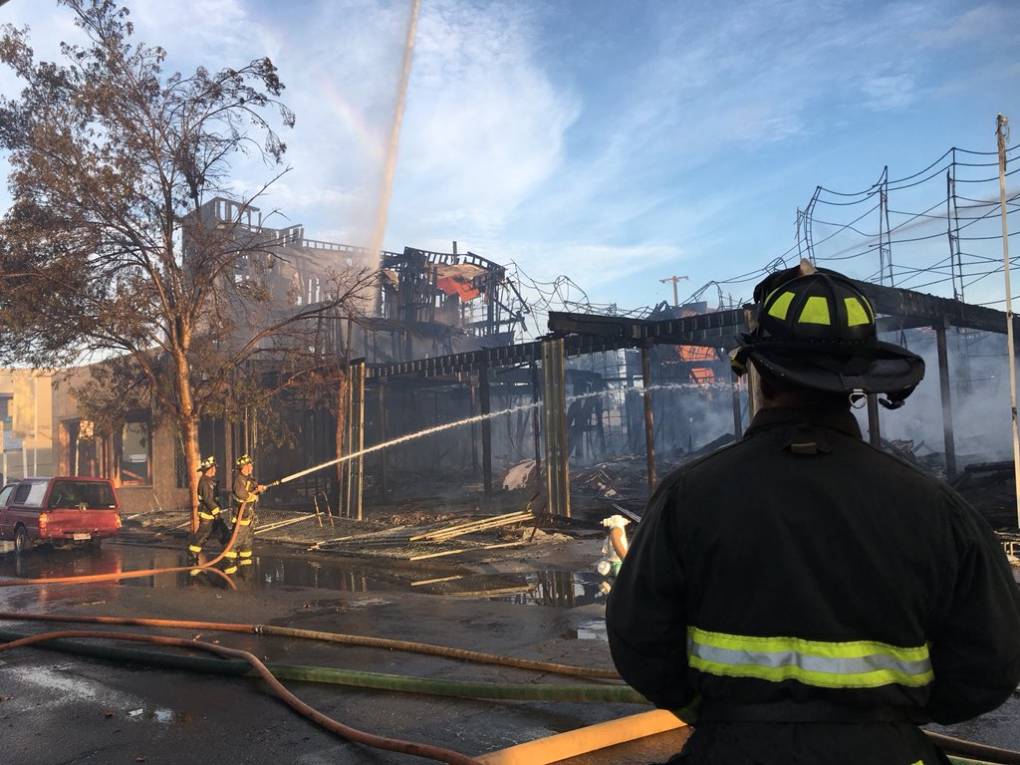
"caption": "Oakland firefighters on scene at Tuesday morning's blaze at an under-construction town home development at West Grand Avenue and Myrtle Street.",
"description": null,
"title": "West Oakland Fire",
"credit": "\u003ca href=\"https://twitter.com/oaklandpoliceca\" target=\"_blank\">Oakland Police Department\u003c/a> via Twitter",
"status": "inherit",
"isLoading": false,
"fetchFailed": false
},
"news_11003810": {
"type": "attachments",
"id": "news_11003810",
"meta": {
"index": "attachments_1716263798",
"site": "news",
"id": "11003810",
"found": true
},
"parent": 11003807,
"imgSizes": {
"twentyfourteen-full-width": {
"file": "https://ww2.kqed.org/app/uploads/sites/10/2016/06/homeless-encampment-dog-in-tent-1038x576.jpg",
"width": 1038,
"mimeType": "image/jpeg",
"height": 576
},
"thumbnail": {
"file": "https://ww2.kqed.org/app/uploads/sites/10/2016/06/homeless-encampment-dog-in-tent-400x225.jpg",
"width": 400,
"mimeType": "image/jpeg",
"height": 225
},
"fd-sm": {
"file": "https://ww2.kqed.org/app/uploads/sites/10/2016/06/homeless-encampment-dog-in-tent-960x540.jpg",
"width": 960,
"mimeType": "image/jpeg",
"height": 540
},
"post-thumbnail": {
"file": "https://ww2.kqed.org/app/uploads/sites/10/2016/06/homeless-encampment-dog-in-tent-672x372.jpg",
"width": 672,
"mimeType": "image/jpeg",
"height": 372
},
"kqedFullSize": {
"file": "https://ww2.kqed.org/app/uploads/sites/10/2016/06/homeless-encampment-dog-in-tent.jpg",
"width": 1920,
"height": 1080
},
"large": {
"file": "https://ww2.kqed.org/app/uploads/sites/10/2016/06/homeless-encampment-dog-in-tent-1920x1080.jpg",
"width": 1920,
"mimeType": "image/jpeg",
"height": 1080
},
"guest-author-50": {
"file": "https://ww2.kqed.org/app/uploads/sites/10/2016/06/homeless-encampment-dog-in-tent-50x50.jpg",
"width": 50,
"mimeType": "image/jpeg",
"height": 50
},
"guest-author-96": {
"file": "https://ww2.kqed.org/app/uploads/sites/10/2016/06/homeless-encampment-dog-in-tent-96x96.jpg",
"width": 96,
"mimeType": "image/jpeg",
"height": 96
},
"medium": {
"file": "https://ww2.kqed.org/app/uploads/sites/10/2016/06/homeless-encampment-dog-in-tent-800x450.jpg",
"width": 800,
"mimeType": "image/jpeg",
"height": 450
},
"guest-author-64": {
"file": "https://ww2.kqed.org/app/uploads/sites/10/2016/06/homeless-encampment-dog-in-tent-64x64.jpg",
"width": 64,
"mimeType": "image/jpeg",
"height": 64
},
"guest-author-32": {
"file": "https://ww2.kqed.org/app/uploads/sites/10/2016/06/homeless-encampment-dog-in-tent-32x32.jpg",
"width": 32,
"mimeType": "image/jpeg",
"height": 32
},
"jmtc-small-thumb": {
"file": "https://ww2.kqed.org/app/uploads/sites/10/2016/06/homeless-encampment-dog-in-tent-280x150.jpg",
"width": 280,
"mimeType": "image/jpeg",
"height": 150
},
"fd-lrg": {
"file": "https://ww2.kqed.org/app/uploads/sites/10/2016/06/homeless-encampment-dog-in-tent-1920x1080.jpg",
"width": 1920,
"mimeType": "image/jpeg",
"height": 1080
},
"fd-med": {
"file": "https://ww2.kqed.org/app/uploads/sites/10/2016/06/homeless-encampment-dog-in-tent-1180x664.jpg",
"width": 1180,
"mimeType": "image/jpeg",
"height": 664
},
"detail": {
"file": "https://ww2.kqed.org/app/uploads/sites/10/2016/06/homeless-encampment-dog-in-tent-150x150.jpg",
"width": 150,
"mimeType": "image/jpeg",
"height": 150
},
"guest-author-128": {
"file": "https://ww2.kqed.org/app/uploads/sites/10/2016/06/homeless-encampment-dog-in-tent-128x128.jpg",
"width": 128,
"mimeType": "image/jpeg",
"height": 128
}
},
"publishDate": 1467155819,
"modified": 1477090052,
"caption": "A homeless encampment along San Francisco's Division Street.",
"description": "A homeless encampment along San Francisco's Division Street.",
"title": "homeless encampment dog in tent",
"credit": "Amy Mustafa/KQED",
"status": "inherit",
"isLoading": false,
"fetchFailed": false
},
"news_11700250": {
"type": "attachments",
"id": "news_11700250",
"meta": {
"index": "attachments_1716263798",
"site": "news",
"id": "11700250",
"found": true
},
"parent": 11700237,
"imgSizes": {
"small": {
"file": "https://ww2.kqed.org/app/uploads/sites/10/2018/10/GettyImages-453880652-520x287.jpg",
"width": 520,
"mimeType": "image/jpeg",
"height": 287
},
"twentyfourteen-full-width": {
"file": "https://ww2.kqed.org/app/uploads/sites/10/2018/10/GettyImages-453880652-1038x576.jpg",
"width": 1038,
"mimeType": "image/jpeg",
"height": 576
},
"thumbnail": {
"file": "https://ww2.kqed.org/app/uploads/sites/10/2018/10/GettyImages-453880652-160x88.jpg",
"width": 160,
"mimeType": "image/jpeg",
"height": 88
},
"fd-sm": {
"file": "https://ww2.kqed.org/app/uploads/sites/10/2018/10/GettyImages-453880652-960x530.jpg",
"width": 960,
"mimeType": "image/jpeg",
"height": 530
},
"post-thumbnail": {
"file": "https://ww2.kqed.org/app/uploads/sites/10/2018/10/GettyImages-453880652-672x372.jpg",
"width": 672,
"mimeType": "image/jpeg",
"height": 372
},
"xsmall": {
"file": "https://ww2.kqed.org/app/uploads/sites/10/2018/10/GettyImages-453880652-375x207.jpg",
"width": 375,
"mimeType": "image/jpeg",
"height": 207
},
"kqedFullSize": {
"file": "https://ww2.kqed.org/app/uploads/sites/10/2018/10/GettyImages-453880652-e1540148775974.jpg",
"width": 1920,
"height": 1060
},
"large": {
"file": "https://ww2.kqed.org/app/uploads/sites/10/2018/10/GettyImages-453880652-1020x563.jpg",
"width": 1020,
"mimeType": "image/jpeg",
"height": 563
},
"xlarge": {
"file": "https://ww2.kqed.org/app/uploads/sites/10/2018/10/GettyImages-453880652-1180x651.jpg",
"width": 1180,
"mimeType": "image/jpeg",
"height": 651
},
"complete_open_graph": {
"file": "https://ww2.kqed.org/app/uploads/sites/10/2018/10/GettyImages-453880652-1200x662.jpg",
"width": 1200,
"mimeType": "image/jpeg",
"height": 662
},
"guest-author-50": {
"file": "https://ww2.kqed.org/app/uploads/sites/10/2018/10/GettyImages-453880652-50x50.jpg",
"width": 50,
"mimeType": "image/jpeg",
"height": 50
},
"guest-author-96": {
"file": "https://ww2.kqed.org/app/uploads/sites/10/2018/10/GettyImages-453880652-96x96.jpg",
"width": 96,
"mimeType": "image/jpeg",
"height": 96
},
"medium": {
"file": "https://ww2.kqed.org/app/uploads/sites/10/2018/10/GettyImages-453880652-800x442.jpg",
"width": 800,
"mimeType": "image/jpeg",
"height": 442
},
"guest-author-64": {
"file": "https://ww2.kqed.org/app/uploads/sites/10/2018/10/GettyImages-453880652-64x64.jpg",
"width": 64,
"mimeType": "image/jpeg",
"height": 64
},
"guest-author-32": {
"file": "https://ww2.kqed.org/app/uploads/sites/10/2018/10/GettyImages-453880652-32x32.jpg",
"width": 32,
"mimeType": "image/jpeg",
"height": 32
},
"fd-lrg": {
"file": "https://ww2.kqed.org/app/uploads/sites/10/2018/10/GettyImages-453880652-1920x1060.jpg",
"width": 1920,
"mimeType": "image/jpeg",
"height": 1060
},
"fd-med": {
"file": "https://ww2.kqed.org/app/uploads/sites/10/2018/10/GettyImages-453880652-1180x651.jpg",
"width": 1180,
"mimeType": "image/jpeg",
"height": 651
},
"full-width": {
"file": "https://ww2.kqed.org/app/uploads/sites/10/2018/10/GettyImages-453880652-1920x1060.jpg",
"width": 1920,
"mimeType": "image/jpeg",
"height": 1060
},
"detail": {
"file": "https://ww2.kqed.org/app/uploads/sites/10/2018/10/GettyImages-453880652-150x150.jpg",
"width": 150,
"mimeType": "image/jpeg",
"height": 150
},
"guest-author-128": {
"file": "https://ww2.kqed.org/app/uploads/sites/10/2018/10/GettyImages-453880652-128x128.jpg",
"width": 128,
"mimeType": "image/jpeg",
"height": 128
},
"xxsmall": {
"file": "https://ww2.kqed.org/app/uploads/sites/10/2018/10/GettyImages-453880652-240x132.jpg",
"width": 240,
"mimeType": "image/jpeg",
"height": 132
}
},
"publishDate": 1540148747,
"modified": 1540148768,
"caption": "Californians have poured across the state line over the past few years, fleeing high housing costs. Now, some Nevada Republicans fear the state will begin to resemble its deep blue neighbor.",
"description": "Californians have poured across the state line over the past few years, fleeing high housing costs. Now, some Nevada Republicans fear the state will begin to resemble its deep blue neighbor.",
"title": "Ascaya, Southern Nevada's Premier Luxury Estate Home Sites, Unveils Its Sales Center And Begins Accepting Reservations",
"credit": "Ethan Miller/Getty Images for Ascaya",
"status": "inherit",
"isLoading": false,
"fetchFailed": false
},
"news_11680042": {
"type": "attachments",
"id": "news_11680042",
"meta": {
"index": "attachments_1716263798",
"site": "news",
"id": "11680042",
"found": true
},
"parent": 11679965,
"imgSizes": {
"small": {
"file": "https://ww2.kqed.org/app/uploads/sites/10/2018/07/RS31769_SFMAYOR0712-qut-520x347.jpg",
"width": 520,
"mimeType": "image/jpeg",
"height": 347
},
"twentyfourteen-full-width": {
"file": "https://ww2.kqed.org/app/uploads/sites/10/2018/07/RS31769_SFMAYOR0712-qut-1038x576.jpg",
"width": 1038,
"mimeType": "image/jpeg",
"height": 576
},
"thumbnail": {
"file": "https://ww2.kqed.org/app/uploads/sites/10/2018/07/RS31769_SFMAYOR0712-qut-160x107.jpg",
"width": 160,
"mimeType": "image/jpeg",
"height": 107
},
"fd-sm": {
"file": "https://ww2.kqed.org/app/uploads/sites/10/2018/07/RS31769_SFMAYOR0712-qut-960x640.jpg",
"width": 960,
"mimeType": "image/jpeg",
"height": 640
},
"post-thumbnail": {
"file": "https://ww2.kqed.org/app/uploads/sites/10/2018/07/RS31769_SFMAYOR0712-qut-672x372.jpg",
"width": 672,
"mimeType": "image/jpeg",
"height": 372
},
"xsmall": {
"file": "https://ww2.kqed.org/app/uploads/sites/10/2018/07/RS31769_SFMAYOR0712-qut-375x250.jpg",
"width": 375,
"mimeType": "image/jpeg",
"height": 250
},
"kqedFullSize": {
"file": "https://ww2.kqed.org/app/uploads/sites/10/2018/07/RS31769_SFMAYOR0712-qut.jpg",
"width": 1920,
"height": 1280
},
"large": {
"file": "https://ww2.kqed.org/app/uploads/sites/10/2018/07/RS31769_SFMAYOR0712-qut-1020x680.jpg",
"width": 1020,
"mimeType": "image/jpeg",
"height": 680
},
"xlarge": {
"file": "https://ww2.kqed.org/app/uploads/sites/10/2018/07/RS31769_SFMAYOR0712-qut-1180x787.jpg",
"width": 1180,
"mimeType": "image/jpeg",
"height": 787
},
"complete_open_graph": {
"file": "https://ww2.kqed.org/app/uploads/sites/10/2018/07/RS31769_SFMAYOR0712-qut-1200x800.jpg",
"width": 1200,
"mimeType": "image/jpeg",
"height": 800
},
"guest-author-50": {
"file": "https://ww2.kqed.org/app/uploads/sites/10/2018/07/RS31769_SFMAYOR0712-qut-50x50.jpg",
"width": 50,
"mimeType": "image/jpeg",
"height": 50
},
"guest-author-96": {
"file": "https://ww2.kqed.org/app/uploads/sites/10/2018/07/RS31769_SFMAYOR0712-qut-96x96.jpg",
"width": 96,
"mimeType": "image/jpeg",
"height": 96
},
"medium": {
"file": "https://ww2.kqed.org/app/uploads/sites/10/2018/07/RS31769_SFMAYOR0712-qut-800x533.jpg",
"width": 800,
"mimeType": "image/jpeg",
"height": 533
},
"guest-author-64": {
"file": "https://ww2.kqed.org/app/uploads/sites/10/2018/07/RS31769_SFMAYOR0712-qut-64x64.jpg",
"width": 64,
"mimeType": "image/jpeg",
"height": 64
},
"guest-author-32": {
"file": "https://ww2.kqed.org/app/uploads/sites/10/2018/07/RS31769_SFMAYOR0712-qut-32x32.jpg",
"width": 32,
"mimeType": "image/jpeg",
"height": 32
},
"fd-lrg": {
"file": "https://ww2.kqed.org/app/uploads/sites/10/2018/07/RS31769_SFMAYOR0712-qut-1920x1280.jpg",
"width": 1920,
"mimeType": "image/jpeg",
"height": 1280
},
"fd-med": {
"file": "https://ww2.kqed.org/app/uploads/sites/10/2018/07/RS31769_SFMAYOR0712-qut-1180x787.jpg",
"width": 1180,
"mimeType": "image/jpeg",
"height": 787
},
"full-width": {
"file": "https://ww2.kqed.org/app/uploads/sites/10/2018/07/RS31769_SFMAYOR0712-qut-1920x1280.jpg",
"width": 1920,
"mimeType": "image/jpeg",
"height": 1280
},
"detail": {
"file": "https://ww2.kqed.org/app/uploads/sites/10/2018/07/RS31769_SFMAYOR0712-qut-150x150.jpg",
"width": 150,
"mimeType": "image/jpeg",
"height": 150
},
"guest-author-128": {
"file": "https://ww2.kqed.org/app/uploads/sites/10/2018/07/RS31769_SFMAYOR0712-qut-128x128.jpg",
"width": 128,
"mimeType": "image/jpeg",
"height": 128
},
"xxsmall": {
"file": "https://ww2.kqed.org/app/uploads/sites/10/2018/07/RS31769_SFMAYOR0712-qut-240x160.jpg",
"width": 240,
"mimeType": "image/jpeg",
"height": 160
}
},
"publishDate": 1531336702,
"modified": 1531336702,
"caption": "Mayor-elect London Breed practices her speech outside City Hall ahead of the Mayoral inauguration in San Francisco, California, on Wednesday, July 11, 2018.",
"description": null,
"title": "SFMAYOR0712",
"credit": null,
"status": "inherit",
"isLoading": false,
"fetchFailed": false
},
"news_11699494": {
"type": "attachments",
"id": "news_11699494",
"meta": {
"index": "attachments_1716263798",
"site": "news",
"id": "11699494",
"found": true
},
"parent": 11699488,
"imgSizes": {
"small": {
"file": "https://ww2.kqed.org/app/uploads/sites/10/2018/10/IMG_0688-520x390.jpg",
"width": 520,
"mimeType": "image/jpeg",
"height": 390
},
"twentyfourteen-full-width": {
"file": "https://ww2.kqed.org/app/uploads/sites/10/2018/10/IMG_0688-1038x576.jpg",
"width": 1038,
"mimeType": "image/jpeg",
"height": 576
},
"thumbnail": {
"file": "https://ww2.kqed.org/app/uploads/sites/10/2018/10/IMG_0688-160x120.jpg",
"width": 160,
"mimeType": "image/jpeg",
"height": 120
},
"fd-sm": {
"file": "https://ww2.kqed.org/app/uploads/sites/10/2018/10/IMG_0688-960x720.jpg",
"width": 960,
"mimeType": "image/jpeg",
"height": 720
},
"post-thumbnail": {
"file": "https://ww2.kqed.org/app/uploads/sites/10/2018/10/IMG_0688-672x372.jpg",
"width": 672,
"mimeType": "image/jpeg",
"height": 372
},
"xsmall": {
"file": "https://ww2.kqed.org/app/uploads/sites/10/2018/10/IMG_0688-375x281.jpg",
"width": 375,
"mimeType": "image/jpeg",
"height": 281
},
"kqedFullSize": {
"file": "https://ww2.kqed.org/app/uploads/sites/10/2018/10/IMG_0688-e1539803697548.jpg",
"width": 1920,
"height": 1440
},
"large": {
"file": "https://ww2.kqed.org/app/uploads/sites/10/2018/10/IMG_0688-1020x765.jpg",
"width": 1020,
"mimeType": "image/jpeg",
"height": 765
},
"xlarge": {
"file": "https://ww2.kqed.org/app/uploads/sites/10/2018/10/IMG_0688-1180x885.jpg",
"width": 1180,
"mimeType": "image/jpeg",
"height": 885
},
"complete_open_graph": {
"file": "https://ww2.kqed.org/app/uploads/sites/10/2018/10/IMG_0688-1200x900.jpg",
"width": 1200,
"mimeType": "image/jpeg",
"height": 900
},
"guest-author-50": {
"file": "https://ww2.kqed.org/app/uploads/sites/10/2018/10/IMG_0688-50x50.jpg",
"width": 50,
"mimeType": "image/jpeg",
"height": 50
},
"guest-author-96": {
"file": "https://ww2.kqed.org/app/uploads/sites/10/2018/10/IMG_0688-96x96.jpg",
"width": 96,
"mimeType": "image/jpeg",
"height": 96
},
"medium": {
"file": "https://ww2.kqed.org/app/uploads/sites/10/2018/10/IMG_0688-800x600.jpg",
"width": 800,
"mimeType": "image/jpeg",
"height": 600
},
"guest-author-64": {
"file": "https://ww2.kqed.org/app/uploads/sites/10/2018/10/IMG_0688-64x64.jpg",
"width": 64,
"mimeType": "image/jpeg",
"height": 64
},
"guest-author-32": {
"file": "https://ww2.kqed.org/app/uploads/sites/10/2018/10/IMG_0688-32x32.jpg",
"width": 32,
"mimeType": "image/jpeg",
"height": 32
},
"fd-lrg": {
"file": "https://ww2.kqed.org/app/uploads/sites/10/2018/10/IMG_0688-1920x1440.jpg",
"width": 1920,
"mimeType": "image/jpeg",
"height": 1440
},
"fd-med": {
"file": "https://ww2.kqed.org/app/uploads/sites/10/2018/10/IMG_0688-1180x885.jpg",
"width": 1180,
"mimeType": "image/jpeg",
"height": 885
},
"full-width": {
"file": "https://ww2.kqed.org/app/uploads/sites/10/2018/10/IMG_0688-1920x1440.jpg",
"width": 1920,
"mimeType": "image/jpeg",
"height": 1440
},
"detail": {
"file": "https://ww2.kqed.org/app/uploads/sites/10/2018/10/IMG_0688-150x150.jpg",
"width": 150,
"mimeType": "image/jpeg",
"height": 150
},
"guest-author-128": {
"file": "https://ww2.kqed.org/app/uploads/sites/10/2018/10/IMG_0688-128x128.jpg",
"width": 128,
"mimeType": "image/jpeg",
"height": 128
},
"xxsmall": {
"file": "https://ww2.kqed.org/app/uploads/sites/10/2018/10/IMG_0688-240x180.jpg",
"width": 240,
"mimeType": "image/jpeg",
"height": 180
}
},
"publishDate": 1539796880,
"modified": 1539803687,
"caption": "San Francisco Mayor London Breed at a ribbon-cutting ceremony at the Natalie Gubb Commons affordable housing complex near Rincon Hill.",
"description": null,
"title": "IMG_0688",
"credit": "Erika Aguilar/KQED",
"status": "inherit",
"isLoading": false,
"fetchFailed": false
},
"news_11698316": {
"type": "attachments",
"id": "news_11698316",
"meta": {
"index": "attachments_1716263798",
"site": "news",
"id": "11698316",
"found": true
},
"parent": 11698303,
"imgSizes": {
"small": {
"file": "https://ww2.kqed.org/app/uploads/sites/10/2018/10/Rising-Up-1-e1539303263168-520x293.jpg",
"width": 520,
"mimeType": "image/jpeg",
"height": 293
},
"twentyfourteen-full-width": {
"file": "https://ww2.kqed.org/app/uploads/sites/10/2018/10/Rising-Up-1-e1539303263168-1038x576.jpg",
"width": 1038,
"mimeType": "image/jpeg",
"height": 576
},
"thumbnail": {
"file": "https://ww2.kqed.org/app/uploads/sites/10/2018/10/Rising-Up-1-e1539303263168-160x90.jpg",
"width": 160,
"mimeType": "image/jpeg",
"height": 90
},
"fd-sm": {
"file": "https://ww2.kqed.org/app/uploads/sites/10/2018/10/Rising-Up-1-e1539303263168-960x541.jpg",
"width": 960,
"mimeType": "image/jpeg",
"height": 541
},
"post-thumbnail": {
"file": "https://ww2.kqed.org/app/uploads/sites/10/2018/10/Rising-Up-1-e1539303263168-672x372.jpg",
"width": 672,
"mimeType": "image/jpeg",
"height": 372
},
"xsmall": {
"file": "https://ww2.kqed.org/app/uploads/sites/10/2018/10/Rising-Up-1-e1539303263168-375x211.jpg",
"width": 375,
"mimeType": "image/jpeg",
"height": 211
},
"kqedFullSize": {
"file": "https://ww2.kqed.org/app/uploads/sites/10/2018/10/Rising-Up-1-e1539303263168.jpg",
"width": 3507,
"height": 1975
},
"large": {
"file": "https://ww2.kqed.org/app/uploads/sites/10/2018/10/Rising-Up-1-e1539303263168-1020x574.jpg",
"width": 1020,
"mimeType": "image/jpeg",
"height": 574
},
"xlarge": {
"file": "https://ww2.kqed.org/app/uploads/sites/10/2018/10/Rising-Up-1-e1539303263168-1180x665.jpg",
"width": 1180,
"mimeType": "image/jpeg",
"height": 665
},
"complete_open_graph": {
"file": "https://ww2.kqed.org/app/uploads/sites/10/2018/10/Rising-Up-1-e1539303263168-1200x676.jpg",
"width": 1200,
"mimeType": "image/jpeg",
"height": 676
},
"guest-author-50": {
"file": "https://ww2.kqed.org/app/uploads/sites/10/2018/10/Rising-Up-1-e1539303263168-50x50.jpg",
"width": 50,
"mimeType": "image/jpeg",
"height": 50
},
"guest-author-96": {
"file": "https://ww2.kqed.org/app/uploads/sites/10/2018/10/Rising-Up-1-e1539303263168-96x96.jpg",
"width": 96,
"mimeType": "image/jpeg",
"height": 96
},
"medium": {
"file": "https://ww2.kqed.org/app/uploads/sites/10/2018/10/Rising-Up-1-e1539303263168-800x451.jpg",
"width": 800,
"mimeType": "image/jpeg",
"height": 451
},
"guest-author-64": {
"file": "https://ww2.kqed.org/app/uploads/sites/10/2018/10/Rising-Up-1-e1539303263168-64x64.jpg",
"width": 64,
"mimeType": "image/jpeg",
"height": 64
},
"guest-author-32": {
"file": "https://ww2.kqed.org/app/uploads/sites/10/2018/10/Rising-Up-1-e1539303263168-32x32.jpg",
"width": 32,
"mimeType": "image/jpeg",
"height": 32
},
"fd-lrg": {
"file": "https://ww2.kqed.org/app/uploads/sites/10/2018/10/Rising-Up-1-e1539303263168-1920x1081.jpg",
"width": 1920,
"mimeType": "image/jpeg",
"height": 1081
},
"fd-med": {
"file": "https://ww2.kqed.org/app/uploads/sites/10/2018/10/Rising-Up-1-e1539303263168-1180x665.jpg",
"width": 1180,
"mimeType": "image/jpeg",
"height": 665
},
"full-width": {
"file": "https://ww2.kqed.org/app/uploads/sites/10/2018/10/Rising-Up-1-e1539303263168-1920x1081.jpg",
"width": 1920,
"mimeType": "image/jpeg",
"height": 1081
},
"detail": {
"file": "https://ww2.kqed.org/app/uploads/sites/10/2018/10/Rising-Up-1-e1539303263168-150x150.jpg",
"width": 150,
"mimeType": "image/jpeg",
"height": 150
},
"guest-author-128": {
"file": "https://ww2.kqed.org/app/uploads/sites/10/2018/10/Rising-Up-1-e1539303263168-128x128.jpg",
"width": 128,
"mimeType": "image/jpeg",
"height": 128
},
"xxsmall": {
"file": "https://ww2.kqed.org/app/uploads/sites/10/2018/10/Rising-Up-1-e1539303263168-240x135.jpg",
"width": 240,
"mimeType": "image/jpeg",
"height": 135
}
},
"publishDate": 1539303141,
"modified": 1539303249,
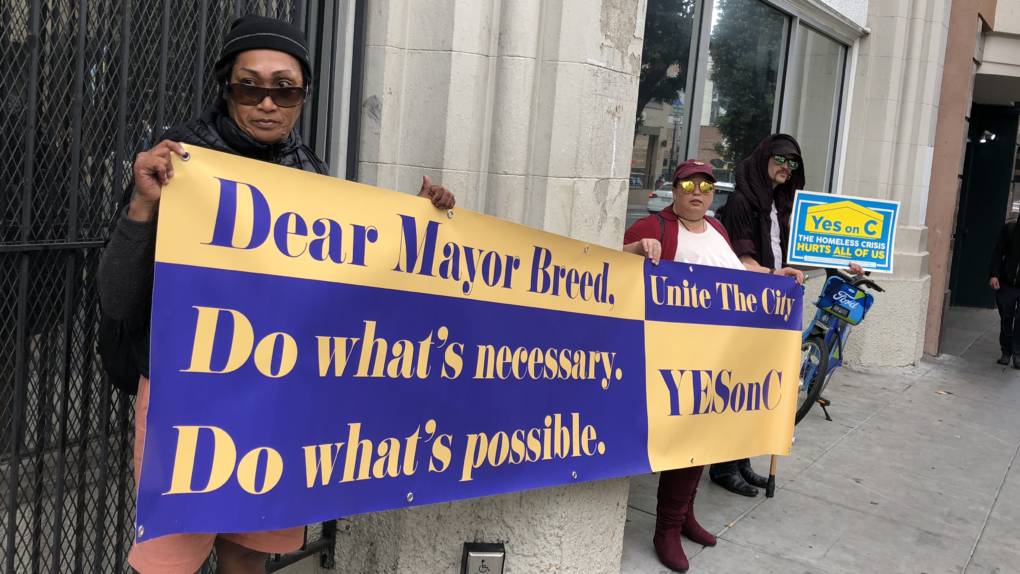
"caption": "Protesters outside Larkin Street Youth Services say the city should focus more energy on Prop C, which they view as a more comprehensive solution to San Francisco's youth homeless problem. ",
"description": "Protesters outside Larkin Street Youth Services say the city should focus more energy on Prop C, which they view as a more comprehensive solution to San Francisco's youth homeless problem. ",
"title": "Rising Up 1",
"credit": "Chloe Veltman/KQED",
"status": "inherit",
"isLoading": false,
"fetchFailed": false
},
"news_11698263": {
"type": "attachments",
"id": "news_11698263",
"meta": {
"index": "attachments_1716263798",
"site": "news",
"id": "11698263",
"found": true
},
"parent": 11698258,
"imgSizes": {
"small": {
"file": "https://ww2.kqed.org/app/uploads/sites/10/2018/10/AshBritt-520x395.jpg",
"width": 520,
"mimeType": "image/jpeg",
"height": 395
},
"twentyfourteen-full-width": {
"file": "https://ww2.kqed.org/app/uploads/sites/10/2018/10/AshBritt-800x576.jpg",
"width": 800,
"mimeType": "image/jpeg",
"height": 576
},
"thumbnail": {
"file": "https://ww2.kqed.org/app/uploads/sites/10/2018/10/AshBritt-160x121.jpg",
"width": 160,
"mimeType": "image/jpeg",
"height": 121
},
"post-thumbnail": {
"file": "https://ww2.kqed.org/app/uploads/sites/10/2018/10/AshBritt-672x372.jpg",
"width": 672,
"mimeType": "image/jpeg",
"height": 372
},
"xsmall": {
"file": "https://ww2.kqed.org/app/uploads/sites/10/2018/10/AshBritt-375x285.jpg",
"width": 375,
"mimeType": "image/jpeg",
"height": 285
},
"kqedFullSize": {
"file": "https://ww2.kqed.org/app/uploads/sites/10/2018/10/AshBritt.jpg",
"width": 800,
"height": 607
},
"guest-author-50": {
"file": "https://ww2.kqed.org/app/uploads/sites/10/2018/10/AshBritt-50x50.jpg",
"width": 50,
"mimeType": "image/jpeg",
"height": 50
},
"guest-author-96": {
"file": "https://ww2.kqed.org/app/uploads/sites/10/2018/10/AshBritt-96x96.jpg",
"width": 96,
"mimeType": "image/jpeg",
"height": 96
},
"medium": {
"file": "https://ww2.kqed.org/app/uploads/sites/10/2018/10/AshBritt-800x607.jpg",
"width": 800,
"mimeType": "image/jpeg",
"height": 607
},
"guest-author-64": {
"file": "https://ww2.kqed.org/app/uploads/sites/10/2018/10/AshBritt-64x64.jpg",
"width": 64,
"mimeType": "image/jpeg",
"height": 64
},
"guest-author-32": {
"file": "https://ww2.kqed.org/app/uploads/sites/10/2018/10/AshBritt-32x32.jpg",
"width": 32,
"mimeType": "image/jpeg",
"height": 32
},
"detail": {
"file": "https://ww2.kqed.org/app/uploads/sites/10/2018/10/AshBritt-150x150.jpg",
"width": 150,
"mimeType": "image/jpeg",
"height": 150
},
"guest-author-128": {
"file": "https://ww2.kqed.org/app/uploads/sites/10/2018/10/AshBritt-128x128.jpg",
"width": 128,
"mimeType": "image/jpeg",
"height": 128
},
"xxsmall": {
"file": "https://ww2.kqed.org/app/uploads/sites/10/2018/10/AshBritt-240x182.jpg",
"width": 240,
"mimeType": "image/jpeg",
"height": 182
}
},
"publishDate": 1539297523,
"modified": 1539297558,
"caption": "AshBritt CEO Brittany Perkins (L) discusses clean-up operations with employees from AshBritt and the U.S. Army Corps of Engineers.",
"description": "AshBritt CEO Brittany Perkins (L) discusses clean-up operations with employees from AshBritt and the U.S. Army Corps of Engineers.",
"title": "AshBritt",
"credit": "PRNewsfoto/AshBritt Inc.",
"status": "inherit",
"isLoading": false,
"fetchFailed": false
},
"news_11697853": {
"type": "attachments",
"id": "news_11697853",
"meta": {
"index": "attachments_1716263798",
"site": "news",
"id": "11697853",
"found": true
},
"parent": 11697470,
"imgSizes": {
"small": {
"file": "https://ww2.kqed.org/app/uploads/sites/10/2018/10/TubbsFireAnniv-520x340.jpg",
"width": 520,
"mimeType": "image/jpeg",
"height": 340
},
"twentyfourteen-full-width": {
"file": "https://ww2.kqed.org/app/uploads/sites/10/2018/10/TubbsFireAnniv-1038x576.jpg",
"width": 1038,
"mimeType": "image/jpeg",
"height": 576
},
"thumbnail": {
"file": "https://ww2.kqed.org/app/uploads/sites/10/2018/10/TubbsFireAnniv-160x105.jpg",
"width": 160,
"mimeType": "image/jpeg",
"height": 105
},
"fd-sm": {
"file": "https://ww2.kqed.org/app/uploads/sites/10/2018/10/TubbsFireAnniv-960x628.jpg",
"width": 960,
"mimeType": "image/jpeg",
"height": 628
},
"post-thumbnail": {
"file": "https://ww2.kqed.org/app/uploads/sites/10/2018/10/TubbsFireAnniv-672x372.jpg",
"width": 672,
"mimeType": "image/jpeg",
"height": 372
},
"xsmall": {
"file": "https://ww2.kqed.org/app/uploads/sites/10/2018/10/TubbsFireAnniv-375x245.jpg",
"width": 375,
"mimeType": "image/jpeg",
"height": 245
},
"kqedFullSize": {
"file": "https://ww2.kqed.org/app/uploads/sites/10/2018/10/TubbsFireAnniv.jpg",
"width": 1920,
"height": 1256
},
"large": {
"file": "https://ww2.kqed.org/app/uploads/sites/10/2018/10/TubbsFireAnniv-1020x667.jpg",
"width": 1020,
"mimeType": "image/jpeg",
"height": 667
},
"xlarge": {
"file": "https://ww2.kqed.org/app/uploads/sites/10/2018/10/TubbsFireAnniv-1180x772.jpg",
"width": 1180,
"mimeType": "image/jpeg",
"height": 772
},
"complete_open_graph": {
"file": "https://ww2.kqed.org/app/uploads/sites/10/2018/10/TubbsFireAnniv-1200x785.jpg",
"width": 1200,
"mimeType": "image/jpeg",
"height": 785
},
"guest-author-50": {
"file": "https://ww2.kqed.org/app/uploads/sites/10/2018/10/TubbsFireAnniv-50x50.jpg",
"width": 50,
"mimeType": "image/jpeg",
"height": 50
},
"guest-author-96": {
"file": "https://ww2.kqed.org/app/uploads/sites/10/2018/10/TubbsFireAnniv-96x96.jpg",
"width": 96,
"mimeType": "image/jpeg",
"height": 96
},
"medium": {
"file": "https://ww2.kqed.org/app/uploads/sites/10/2018/10/TubbsFireAnniv-800x523.jpg",
"width": 800,
"mimeType": "image/jpeg",
"height": 523
},
"guest-author-64": {
"file": "https://ww2.kqed.org/app/uploads/sites/10/2018/10/TubbsFireAnniv-64x64.jpg",
"width": 64,
"mimeType": "image/jpeg",
"height": 64
},
"guest-author-32": {
"file": "https://ww2.kqed.org/app/uploads/sites/10/2018/10/TubbsFireAnniv-32x32.jpg",
"width": 32,
"mimeType": "image/jpeg",
"height": 32
},
"fd-lrg": {
"file": "https://ww2.kqed.org/app/uploads/sites/10/2018/10/TubbsFireAnniv-1920x1256.jpg",
"width": 1920,
"mimeType": "image/jpeg",
"height": 1256
},
"fd-med": {
"file": "https://ww2.kqed.org/app/uploads/sites/10/2018/10/TubbsFireAnniv-1180x772.jpg",
"width": 1180,
"mimeType": "image/jpeg",
"height": 772
},
"full-width": {
"file": "https://ww2.kqed.org/app/uploads/sites/10/2018/10/TubbsFireAnniv-1920x1256.jpg",
"width": 1920,
"mimeType": "image/jpeg",
"height": 1256
},
"detail": {
"file": "https://ww2.kqed.org/app/uploads/sites/10/2018/10/TubbsFireAnniv-150x150.jpg",
"width": 150,
"mimeType": "image/jpeg",
"height": 150
},
"guest-author-128": {
"file": "https://ww2.kqed.org/app/uploads/sites/10/2018/10/TubbsFireAnniv-128x128.jpg",
"width": 128,
"mimeType": "image/jpeg",
"height": 128
},
"xxsmall": {
"file": "https://ww2.kqed.org/app/uploads/sites/10/2018/10/TubbsFireAnniv-240x157.jpg",
"width": 240,
"mimeType": "image/jpeg",
"height": 157
}
},
"publishDate": 1539136380,
"modified": 1539207582,
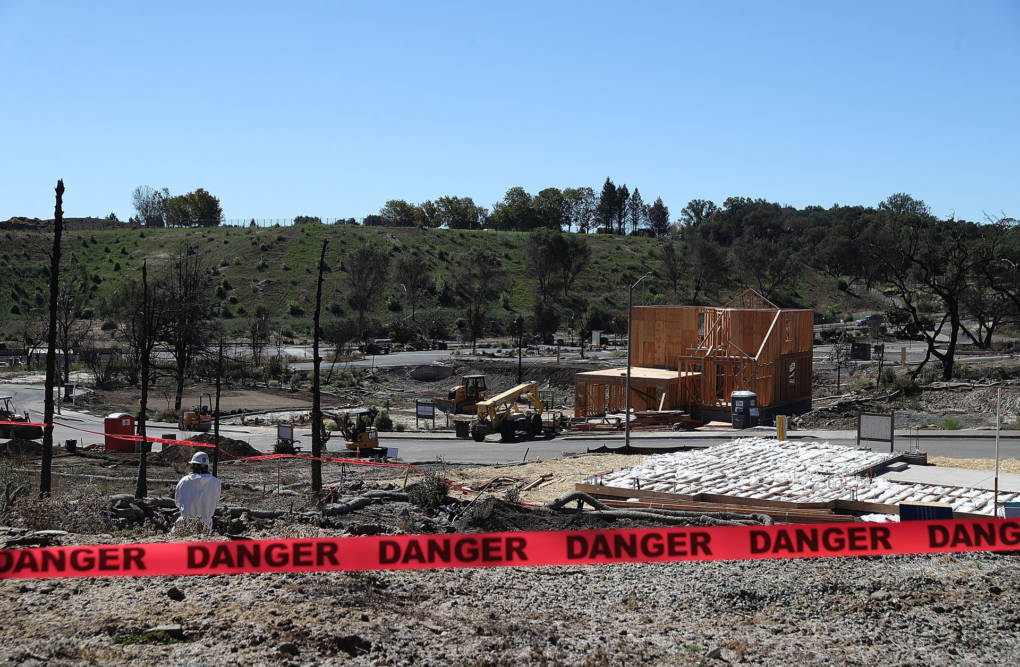
"caption": "One newly constructed home stands in a neighborhood destroyed by the Tubbs Fire one year earlier on Oct. 8, 2018, in Santa Rosa. Tubbs Fire survivors like Vita Iskandar - who hasn't rebuilt herself yet - are helping victims of this year's devastating fires in Redding.",
"description": "One newly constructed home stands in a neighborhood destroyed by the Tubbs Fire one year earlier on October 8, 2018, in Santa Rosa. Tubbs Fire survivors like Vita Iskandar - who hasn't even rebuilt herself, yet - are helping victims of this year's devastating fires in Redding.",
"title": "TubbsFireAnniv",
"credit": "Justin Sullivan/Getty Images",
"status": "inherit",
"isLoading": false,
"fetchFailed": false
},
"news_11697284": {
"type": "attachments",
"id": "news_11697284",
"meta": {
"index": "attachments_1716263798",
"site": "news",
"id": "11697284",
"found": true
},
"parent": 11696966,
"imgSizes": {
"small": {
"file": "https://ww2.kqed.org/app/uploads/sites/10/2018/10/RS16247_GettyImages-150582090-qut-520x345.jpg",
"width": 520,
"mimeType": "image/jpeg",
"height": 345
},
"twentyfourteen-full-width": {
"file": "https://ww2.kqed.org/app/uploads/sites/10/2018/10/RS16247_GettyImages-150582090-qut-1038x576.jpg",
"width": 1038,
"mimeType": "image/jpeg",
"height": 576
},
"thumbnail": {
"file": "https://ww2.kqed.org/app/uploads/sites/10/2018/10/RS16247_GettyImages-150582090-qut-160x106.jpg",
"width": 160,
"mimeType": "image/jpeg",
"height": 106
},
"fd-sm": {
"file": "https://ww2.kqed.org/app/uploads/sites/10/2018/10/RS16247_GettyImages-150582090-qut-960x636.jpg",
"width": 960,
"mimeType": "image/jpeg",
"height": 636
},
"post-thumbnail": {
"file": "https://ww2.kqed.org/app/uploads/sites/10/2018/10/RS16247_GettyImages-150582090-qut-672x372.jpg",
"width": 672,
"mimeType": "image/jpeg",
"height": 372
},
"xsmall": {
"file": "https://ww2.kqed.org/app/uploads/sites/10/2018/10/RS16247_GettyImages-150582090-qut-375x248.jpg",
"width": 375,
"mimeType": "image/jpeg",
"height": 248
},
"kqedFullSize": {
"file": "https://ww2.kqed.org/app/uploads/sites/10/2018/10/RS16247_GettyImages-150582090-qut.jpg",
"width": 1920,
"height": 1272
},
"large": {
"file": "https://ww2.kqed.org/app/uploads/sites/10/2018/10/RS16247_GettyImages-150582090-qut-1020x676.jpg",
"width": 1020,
"mimeType": "image/jpeg",
"height": 676
},
"xlarge": {
"file": "https://ww2.kqed.org/app/uploads/sites/10/2018/10/RS16247_GettyImages-150582090-qut-1180x782.jpg",
"width": 1180,
"mimeType": "image/jpeg",
"height": 782
},
"complete_open_graph": {
"file": "https://ww2.kqed.org/app/uploads/sites/10/2018/10/RS16247_GettyImages-150582090-qut-1200x795.jpg",
"width": 1200,
"mimeType": "image/jpeg",
"height": 795
},
"guest-author-50": {
"file": "https://ww2.kqed.org/app/uploads/sites/10/2018/10/RS16247_GettyImages-150582090-qut-50x50.jpg",
"width": 50,
"mimeType": "image/jpeg",
"height": 50
},
"guest-author-96": {
"file": "https://ww2.kqed.org/app/uploads/sites/10/2018/10/RS16247_GettyImages-150582090-qut-96x96.jpg",
"width": 96,
"mimeType": "image/jpeg",
"height": 96
},
"medium": {
"file": "https://ww2.kqed.org/app/uploads/sites/10/2018/10/RS16247_GettyImages-150582090-qut-800x530.jpg",
"width": 800,
"mimeType": "image/jpeg",
"height": 530
},
"guest-author-64": {
"file": "https://ww2.kqed.org/app/uploads/sites/10/2018/10/RS16247_GettyImages-150582090-qut-64x64.jpg",
"width": 64,
"mimeType": "image/jpeg",
"height": 64
},
"guest-author-32": {
"file": "https://ww2.kqed.org/app/uploads/sites/10/2018/10/RS16247_GettyImages-150582090-qut-32x32.jpg",
"width": 32,
"mimeType": "image/jpeg",
"height": 32
},
"fd-lrg": {
"file": "https://ww2.kqed.org/app/uploads/sites/10/2018/10/RS16247_GettyImages-150582090-qut-1920x1272.jpg",
"width": 1920,
"mimeType": "image/jpeg",
"height": 1272
},
"fd-med": {
"file": "https://ww2.kqed.org/app/uploads/sites/10/2018/10/RS16247_GettyImages-150582090-qut-1180x782.jpg",
"width": 1180,
"mimeType": "image/jpeg",
"height": 782
},
"full-width": {
"file": "https://ww2.kqed.org/app/uploads/sites/10/2018/10/RS16247_GettyImages-150582090-qut-1920x1272.jpg",
"width": 1920,
"mimeType": "image/jpeg",
"height": 1272
},
"detail": {
"file": "https://ww2.kqed.org/app/uploads/sites/10/2018/10/RS16247_GettyImages-150582090-qut-150x150.jpg",
"width": 150,
"mimeType": "image/jpeg",
"height": 150
},
"guest-author-128": {
"file": "https://ww2.kqed.org/app/uploads/sites/10/2018/10/RS16247_GettyImages-150582090-qut-128x128.jpg",
"width": 128,
"mimeType": "image/jpeg",
"height": 128
},
"xxsmall": {
"file": "https://ww2.kqed.org/app/uploads/sites/10/2018/10/RS16247_GettyImages-150582090-qut-240x159.jpg",
"width": 240,
"mimeType": "image/jpeg",
"height": 159
}
},
"publishDate": 1538950776,
"modified": 1538950825,
"caption": "Proposition 5 would allow homeowners to carry their Proposition 13 property tax benefits with them to any new property, anywhere in the state.",
"description": "Proposition 5 would allow homeowners to carry their Proposition 13 property tax benefits with them to any new property, anywhere in the state.",
"title": "RS16247_GettyImages-150582090-qut",
"credit": "Justin Sullivan/Getty Images",
"status": "inherit",
"isLoading": false,
"fetchFailed": false
},
"news_11697656": {
"type": "attachments",
"id": "news_11697656",
"meta": {
"index": "attachments_1716263798",
"site": "news",
"id": "11697656",
"found": true
},
"parent": 11697566,
"imgSizes": {
"small": {
"file": "https://ww2.kqed.org/app/uploads/sites/10/2018/10/HousingConstruction-520x359.jpg",
"width": 520,
"mimeType": "image/jpeg",
"height": 359
},
"twentyfourteen-full-width": {
"file": "https://ww2.kqed.org/app/uploads/sites/10/2018/10/HousingConstruction-1038x576.jpg",
"width": 1038,
"mimeType": "image/jpeg",
"height": 576
},
"thumbnail": {
"file": "https://ww2.kqed.org/app/uploads/sites/10/2018/10/HousingConstruction-160x111.jpg",
"width": 160,
"mimeType": "image/jpeg",
"height": 111
},
"fd-sm": {
"file": "https://ww2.kqed.org/app/uploads/sites/10/2018/10/HousingConstruction-960x664.jpg",
"width": 960,
"mimeType": "image/jpeg",
"height": 664
},
"post-thumbnail": {
"file": "https://ww2.kqed.org/app/uploads/sites/10/2018/10/HousingConstruction-672x372.jpg",
"width": 672,
"mimeType": "image/jpeg",
"height": 372
},
"xsmall": {
"file": "https://ww2.kqed.org/app/uploads/sites/10/2018/10/HousingConstruction-375x259.jpg",
"width": 375,
"mimeType": "image/jpeg",
"height": 259
},
"kqedFullSize": {
"file": "https://ww2.kqed.org/app/uploads/sites/10/2018/10/HousingConstruction.jpg",
"width": 1920,
"height": 1327
},
"large": {
"file": "https://ww2.kqed.org/app/uploads/sites/10/2018/10/HousingConstruction-1020x705.jpg",
"width": 1020,
"mimeType": "image/jpeg",
"height": 705
},
"xlarge": {
"file": "https://ww2.kqed.org/app/uploads/sites/10/2018/10/HousingConstruction-1180x816.jpg",
"width": 1180,
"mimeType": "image/jpeg",
"height": 816
},
"complete_open_graph": {
"file": "https://ww2.kqed.org/app/uploads/sites/10/2018/10/HousingConstruction-1200x829.jpg",
"width": 1200,
"mimeType": "image/jpeg",
"height": 829
},
"guest-author-50": {
"file": "https://ww2.kqed.org/app/uploads/sites/10/2018/10/HousingConstruction-50x50.jpg",
"width": 50,
"mimeType": "image/jpeg",
"height": 50
},
"guest-author-96": {
"file": "https://ww2.kqed.org/app/uploads/sites/10/2018/10/HousingConstruction-96x96.jpg",
"width": 96,
"mimeType": "image/jpeg",
"height": 96
},
"medium": {
"file": "https://ww2.kqed.org/app/uploads/sites/10/2018/10/HousingConstruction-800x553.jpg",
"width": 800,
"mimeType": "image/jpeg",
"height": 553
},
"guest-author-64": {
"file": "https://ww2.kqed.org/app/uploads/sites/10/2018/10/HousingConstruction-64x64.jpg",
"width": 64,
"mimeType": "image/jpeg",
"height": 64
},
"guest-author-32": {
"file": "https://ww2.kqed.org/app/uploads/sites/10/2018/10/HousingConstruction-32x32.jpg",
"width": 32,
"mimeType": "image/jpeg",
"height": 32
},
"fd-lrg": {
"file": "https://ww2.kqed.org/app/uploads/sites/10/2018/10/HousingConstruction-1920x1327.jpg",
"width": 1920,
"mimeType": "image/jpeg",
"height": 1327
},
"fd-med": {
"file": "https://ww2.kqed.org/app/uploads/sites/10/2018/10/HousingConstruction-1180x816.jpg",
"width": 1180,
"mimeType": "image/jpeg",
"height": 816
},
"full-width": {
"file": "https://ww2.kqed.org/app/uploads/sites/10/2018/10/HousingConstruction-1920x1327.jpg",
"width": 1920,
"mimeType": "image/jpeg",
"height": 1327
},
"detail": {
"file": "https://ww2.kqed.org/app/uploads/sites/10/2018/10/HousingConstruction-150x150.jpg",
"width": 150,
"mimeType": "image/jpeg",
"height": 150
},
"guest-author-128": {
"file": "https://ww2.kqed.org/app/uploads/sites/10/2018/10/HousingConstruction-128x128.jpg",
"width": 128,
"mimeType": "image/jpeg",
"height": 128
},
"xxsmall": {
"file": "https://ww2.kqed.org/app/uploads/sites/10/2018/10/HousingConstruction-240x166.jpg",
"width": 240,
"mimeType": "image/jpeg",
"height": 166
}
},
"publishDate": 1539109665,
"modified": 1539109754,
"caption": "A worker stands on the roof of a home under construction in San Rafael. Newsom and Cox agreed on one thing in their debate on Monday: California needs to build more new housing, and fast.",
"description": "A worker stands on the roof of a home under construction in San Rafael. Newsom and Cox agreed on one thing in their debate on Monday: California needs to build more new housing, and fast.",
"title": "HousingConstruction",
"credit": "Justin Sullivan/Getty Images",
"status": "inherit",
"isLoading": false,
"fetchFailed": false
},
"news_11697572": {
"type": "attachments",
"id": "news_11697572",
"meta": {
"index": "attachments_1716263798",
"site": "news",
"id": "11697572",
"found": true
},
"parent": 11697557,
"imgSizes": {
"small": {
"file": "https://ww2.kqed.org/app/uploads/sites/10/2018/10/oneyear_100818_final-520x332.jpg",
"width": 520,
"mimeType": "image/jpeg",
"height": 332
},
"twentyfourteen-full-width": {
"file": "https://ww2.kqed.org/app/uploads/sites/10/2018/10/oneyear_100818_final-1038x576.jpg",
"width": 1038,
"mimeType": "image/jpeg",
"height": 576
},
"thumbnail": {
"file": "https://ww2.kqed.org/app/uploads/sites/10/2018/10/oneyear_100818_final-160x102.jpg",
"width": 160,
"mimeType": "image/jpeg",
"height": 102
},
"fd-sm": {
"file": "https://ww2.kqed.org/app/uploads/sites/10/2018/10/oneyear_100818_final-960x613.jpg",
"width": 960,
"mimeType": "image/jpeg",
"height": 613
},
"post-thumbnail": {
"file": "https://ww2.kqed.org/app/uploads/sites/10/2018/10/oneyear_100818_final-672x372.jpg",
"width": 672,
"mimeType": "image/jpeg",
"height": 372
},
"xsmall": {
"file": "https://ww2.kqed.org/app/uploads/sites/10/2018/10/oneyear_100818_final-375x239.jpg",
"width": 375,
"mimeType": "image/jpeg",
"height": 239
},
"kqedFullSize": {
"file": "https://ww2.kqed.org/app/uploads/sites/10/2018/10/oneyear_100818_final.jpg",
"width": 1920,
"height": 1226
},
"large": {
"file": "https://ww2.kqed.org/app/uploads/sites/10/2018/10/oneyear_100818_final-1020x651.jpg",
"width": 1020,
"mimeType": "image/jpeg",
"height": 651
},
"xlarge": {
"file": "https://ww2.kqed.org/app/uploads/sites/10/2018/10/oneyear_100818_final-1180x753.jpg",
"width": 1180,
"mimeType": "image/jpeg",
"height": 753
},
"complete_open_graph": {
"file": "https://ww2.kqed.org/app/uploads/sites/10/2018/10/oneyear_100818_final-1200x766.jpg",
"width": 1200,
"mimeType": "image/jpeg",
"height": 766
},
"guest-author-50": {
"file": "https://ww2.kqed.org/app/uploads/sites/10/2018/10/oneyear_100818_final-50x50.jpg",
"width": 50,
"mimeType": "image/jpeg",
"height": 50
},
"guest-author-96": {
"file": "https://ww2.kqed.org/app/uploads/sites/10/2018/10/oneyear_100818_final-96x96.jpg",
"width": 96,
"mimeType": "image/jpeg",
"height": 96
},
"medium": {
"file": "https://ww2.kqed.org/app/uploads/sites/10/2018/10/oneyear_100818_final-800x511.jpg",
"width": 800,
"mimeType": "image/jpeg",
"height": 511
},
"guest-author-64": {
"file": "https://ww2.kqed.org/app/uploads/sites/10/2018/10/oneyear_100818_final-64x64.jpg",
"width": 64,
"mimeType": "image/jpeg",
"height": 64
},
"guest-author-32": {
"file": "https://ww2.kqed.org/app/uploads/sites/10/2018/10/oneyear_100818_final-32x32.jpg",
"width": 32,
"mimeType": "image/jpeg",
"height": 32
},
"fd-lrg": {
"file": "https://ww2.kqed.org/app/uploads/sites/10/2018/10/oneyear_100818_final-1920x1226.jpg",
"width": 1920,
"mimeType": "image/jpeg",
"height": 1226
},
"fd-med": {
"file": "https://ww2.kqed.org/app/uploads/sites/10/2018/10/oneyear_100818_final-1180x753.jpg",
"width": 1180,
"mimeType": "image/jpeg",
"height": 753
},
"full-width": {
"file": "https://ww2.kqed.org/app/uploads/sites/10/2018/10/oneyear_100818_final-1920x1226.jpg",
"width": 1920,
"mimeType": "image/jpeg",
"height": 1226
},
"detail": {
"file": "https://ww2.kqed.org/app/uploads/sites/10/2018/10/oneyear_100818_final-150x150.jpg",
"width": 150,
"mimeType": "image/jpeg",
"height": 150
},
"guest-author-128": {
"file": "https://ww2.kqed.org/app/uploads/sites/10/2018/10/oneyear_100818_final-128x128.jpg",
"width": 128,
"mimeType": "image/jpeg",
"height": 128
},
"xxsmall": {
"file": "https://ww2.kqed.org/app/uploads/sites/10/2018/10/oneyear_100818_final-240x153.jpg",
"width": 240,
"mimeType": "image/jpeg",
"height": 153
}
},
"publishDate": 1539041199,
"modified": 1539041215,
"caption": null,
"description": null,
"title": "oneyear_100818_final",
"credit": null,
"status": "inherit",
"isLoading": false,
"fetchFailed": false
},
"news_11697447": {
"type": "attachments",
"id": "news_11697447",
"meta": {
"index": "attachments_1716263798",
"site": "news",
"id": "11697447",
"found": true
},
"parent": 11697413,
"imgSizes": {
"small": {
"file": "https://ww2.kqed.org/app/uploads/sites/10/2018/10/DebatePhotoMain-520x325.jpg",
"width": 520,
"mimeType": "image/jpeg",
"height": 325
},
"twentyfourteen-full-width": {
"file": "https://ww2.kqed.org/app/uploads/sites/10/2018/10/DebatePhotoMain-1038x576.jpg",
"width": 1038,
"mimeType": "image/jpeg",
"height": 576
},
"thumbnail": {
"file": "https://ww2.kqed.org/app/uploads/sites/10/2018/10/DebatePhotoMain-160x100.jpg",
"width": 160,
"mimeType": "image/jpeg",
"height": 100
},
"fd-sm": {
"file": "https://ww2.kqed.org/app/uploads/sites/10/2018/10/DebatePhotoMain-960x600.jpg",
"width": 960,
"mimeType": "image/jpeg",
"height": 600
},
"post-thumbnail": {
"file": "https://ww2.kqed.org/app/uploads/sites/10/2018/10/DebatePhotoMain-672x372.jpg",
"width": 672,
"mimeType": "image/jpeg",
"height": 372
},
"xsmall": {
"file": "https://ww2.kqed.org/app/uploads/sites/10/2018/10/DebatePhotoMain-375x234.jpg",
"width": 375,
"mimeType": "image/jpeg",
"height": 234
},
"kqedFullSize": {
"file": "https://ww2.kqed.org/app/uploads/sites/10/2018/10/DebatePhotoMain.jpg",
"width": 1899,
"height": 1186
},
"large": {
"file": "https://ww2.kqed.org/app/uploads/sites/10/2018/10/DebatePhotoMain-1020x637.jpg",
"width": 1020,
"mimeType": "image/jpeg",
"height": 637
},
"xlarge": {
"file": "https://ww2.kqed.org/app/uploads/sites/10/2018/10/DebatePhotoMain-1180x737.jpg",
"width": 1180,
"mimeType": "image/jpeg",
"height": 737
},
"complete_open_graph": {
"file": "https://ww2.kqed.org/app/uploads/sites/10/2018/10/DebatePhotoMain-1200x749.jpg",
"width": 1200,
"mimeType": "image/jpeg",
"height": 749
},
"guest-author-50": {
"file": "https://ww2.kqed.org/app/uploads/sites/10/2018/10/DebatePhotoMain-50x50.jpg",
"width": 50,
"mimeType": "image/jpeg",
"height": 50
},
"guest-author-96": {
"file": "https://ww2.kqed.org/app/uploads/sites/10/2018/10/DebatePhotoMain-96x96.jpg",
"width": 96,
"mimeType": "image/jpeg",
"height": 96
},
"medium": {
"file": "https://ww2.kqed.org/app/uploads/sites/10/2018/10/DebatePhotoMain-800x500.jpg",
"width": 800,
"mimeType": "image/jpeg",
"height": 500
},
"guest-author-64": {
"file": "https://ww2.kqed.org/app/uploads/sites/10/2018/10/DebatePhotoMain-64x64.jpg",
"width": 64,
"mimeType": "image/jpeg",
"height": 64
},
"guest-author-32": {
"file": "https://ww2.kqed.org/app/uploads/sites/10/2018/10/DebatePhotoMain-32x32.jpg",
"width": 32,
"mimeType": "image/jpeg",
"height": 32
},
"fd-med": {
"file": "https://ww2.kqed.org/app/uploads/sites/10/2018/10/DebatePhotoMain-1180x737.jpg",
"width": 1180,
"mimeType": "image/jpeg",
"height": 737
},
"detail": {
"file": "https://ww2.kqed.org/app/uploads/sites/10/2018/10/DebatePhotoMain-150x150.jpg",
"width": 150,
"mimeType": "image/jpeg",
"height": 150
},
"guest-author-128": {
"file": "https://ww2.kqed.org/app/uploads/sites/10/2018/10/DebatePhotoMain-128x128.jpg",
"width": 128,
"mimeType": "image/jpeg",
"height": 128
},
"xxsmall": {
"file": "https://ww2.kqed.org/app/uploads/sites/10/2018/10/DebatePhotoMain-240x150.jpg",
"width": 240,
"mimeType": "image/jpeg",
"height": 150
}
},
"publishDate": 1539027433,
"modified": 1539027526,
"caption": "Gavin Newsom (L) and John Cox (R) join KQED's Scott Shafer for their only scheduled gubernatorial debate in KQED's San Francisco studios on Oct. 8, 2018.",
"description": "Gavin Newsom (L) and John Cox (R) join KQED's Scott Shafer for their only scheduled gubernatorial debate in KQED's San Francisco studios on Oct. 8, 2018.",
"title": "DebatePhotoMain",
"credit": "Jeff Chiu/AP/Pool",
"status": "inherit",
"isLoading": false,
"fetchFailed": false
}
},
"audioPlayerReducer": {
"postId": "stream_live",
"isPaused": true,
"isPlaying": false,
"pfsActive": false,
"pledgeModalIsOpen": true,
"playerDrawerIsOpen": false,
"liveAudioPlayStartedAt": 0,
"liveAudioPlayContext": ""
},
"authorsReducer": {
"byline_news_11700237": {
"type": "authors",
"id": "byline_news_11700237",
"meta": {
"override": true
},
"slug": "byline_news_11700237",
"name": "\u003cstrong>Michelle L. Price\u003c/strong>\u003c/br>Associated Press",
"isLoading": false
},
"byline_news_11698258": {
"type": "authors",
"id": "byline_news_11698258",
"meta": {
"override": true
},
"slug": "byline_news_11698258",
"name": "\u003cstrong>\u003ca href=\"https://calmatters.org/articles/author/laurel-rosenhall/\">Laurel Rosenhall\u003c/a>\u003c/strong>",
"isLoading": false
},
"ohubertallen": {
"type": "authors",
"id": "102",
"meta": {
"index": "authors_1716337520",
"id": "102",
"found": true
},
"name": "Olivia Allen-Price",
"firstName": "Olivia",
"lastName": "Allen-Price",
"slug": "ohubertallen",
"email": "oallenprice@kqed.org",
"display_author_email": false,
"staff_mastheads": [
"news"
],
"title": "Senior Editor",
"bio": "Olivia Allen-Price is senior editor and host of the award-winning Bay Curious podcast. Prior to joining KQED in 2013, Olivia worked at The Baltimore Sun and The Virginian-Pilot in Norfolk, Va. She holds degrees in journalism and political science from Elon University. Her work has earned awards from the Society of Professional Journalists, the Hearst Foundation and Hearken. She loves to talk about running and curly hair.\r\n\r\nFollow: \u003ca href=\"https://twitter.com/oallenprice\">@oallenprice\u003c/a>\r\nEmail: \u003ca href=\"mailto:oallenprice@kqed.org\">oallenprice@kqed.org\u003c/a>",
"avatar": "https://secure.gravatar.com/avatar/07f7803c1f6be56f3be58ef276dfa64dce898502e0554408ef4858451a8294f7?s=600&d=blank&r=g",
"twitter": "oallenprice",
"bluesky": null,
"facebook": null,
"instagram": null,
"linkedin": null,
"sites": [
{
"site": "",
"roles": [
"editor"
]
},
{
"site": "arts",
"roles": [
"subscriber"
]
},
{
"site": "news",
"roles": [
"administrator"
]
},
{
"site": "pop",
"roles": [
"administrator"
]
},
{
"site": "bayareabites",
"roles": [
"contributor"
]
},
{
"site": "stateofhealth",
"roles": [
"administrator"
]
},
{
"site": "science",
"roles": [
"editor"
]
}
],
"headData": {
"title": "Olivia Allen-Price | KQED",
"description": "Senior Editor",
"ogImgSrc": "https://secure.gravatar.com/avatar/07f7803c1f6be56f3be58ef276dfa64dce898502e0554408ef4858451a8294f7?s=600&d=blank&r=g",
"twImgSrc": "https://secure.gravatar.com/avatar/07f7803c1f6be56f3be58ef276dfa64dce898502e0554408ef4858451a8294f7?s=600&d=blank&r=g"
},
"isLoading": false,
"link": "/author/ohubertallen"
},
"gmarzorati": {
"type": "authors",
"id": "227",
"meta": {
"index": "authors_1716337520",
"id": "227",
"found": true
},
"name": "Guy Marzorati",
"firstName": "Guy",
"lastName": "Marzorati",
"slug": "gmarzorati",
"email": "gmarzorati@KQED.org",
"display_author_email": true,
"staff_mastheads": [
"news"
],
"title": "Correspondent",
"bio": "Guy Marzorati is a correspondent on KQED's California Politics and Government Desk, based in San Jose. A graduate of Santa Clara University, Guy joined KQED in 2013. He reports on state and local politics and produces KQED's digital voter guide.",
"avatar": "https://secure.gravatar.com/avatar/e7038b8dbfd55b104369b76b1cd0b9de?s=600&d=blank&r=g",
"twitter": "guymarzorati",
"facebook": null,
"instagram": null,
"linkedin": null,
"sites": [
{
"site": "",
"roles": [
"editor"
]
},
{
"site": "news",
"roles": [
"editor"
]
},
{
"site": "science",
"roles": [
"editor"
]
},
{
"site": "forum",
"roles": [
"editor"
]
},
{
"site": "elections",
"roles": [
"editor"
]
},
{
"site": "liveblog",
"roles": [
"editor"
]
}
],
"headData": {
"title": "Guy Marzorati | KQED",
"description": "Correspondent",
"ogImgSrc": "https://secure.gravatar.com/avatar/e7038b8dbfd55b104369b76b1cd0b9de?s=600&d=blank&r=g",
"twImgSrc": "https://secure.gravatar.com/avatar/e7038b8dbfd55b104369b76b1cd0b9de?s=600&d=blank&r=g"
},
"isLoading": false,
"link": "/author/gmarzorati"
},
"scottshafer": {
"type": "authors",
"id": "255",
"meta": {
"index": "authors_1716337520",
"id": "255",
"found": true
},
"name": "Scott Shafer",
"firstName": "Scott",
"lastName": "Shafer",
"slug": "scottshafer",
"email": "sshafer@kqed.org",
"display_author_email": false,
"staff_mastheads": [
"news"
],
"title": "KQED Contributor",
"bio": "Scott Shafer is a senior editor with the KQED Politics and Government desk. He is co-host of Political Breakdown, the award-winning radio show and podcast with a personal take on the world of politics. Scott came to KQED in 1998 to host the statewide\u003cem> California Report\u003c/em>. Prior to that he had extended stints in politics and government\u003cem>.\u003c/em> He uses that inside experience at KQED in his, reporting, hosting and analysis for the politics desk. Scott collaborated \u003cem>Political Breakdown a\u003c/em>nd on \u003cem>The Political Mind of Jerry Brown, \u003c/em>an eight-part series about the life and extraordinary political career of the former governor. For fun, he plays water polo with the San Francisco Tsunami.",
"avatar": "https://secure.gravatar.com/avatar/a62ebae45b79d7aed1a39a0e3bf68104?s=600&d=blank&r=g",
"twitter": "scottshafer",
"bluesky": null,
"facebook": null,
"instagram": null,
"linkedin": null,
"sites": [
{
"site": "news",
"roles": [
"editor"
]
},
{
"site": "stateofhealth",
"roles": [
"author"
]
},
{
"site": "science",
"roles": [
"author"
]
},
{
"site": "forum",
"roles": [
"subscriber"
]
},
{
"site": "liveblog",
"roles": [
"author"
]
}
],
"headData": {
"title": "Scott Shafer | KQED",
"description": "KQED Contributor",
"ogImgSrc": "https://secure.gravatar.com/avatar/a62ebae45b79d7aed1a39a0e3bf68104?s=600&d=blank&r=g",
"twImgSrc": "https://secure.gravatar.com/avatar/a62ebae45b79d7aed1a39a0e3bf68104?s=600&d=blank&r=g"
},
"isLoading": false,
"link": "/author/scottshafer"
},
"tgoldberg": {
"type": "authors",
"id": "258",
"meta": {
"index": "authors_1716337520",
"id": "258",
"found": true
},
"name": "Ted Goldberg",
"firstName": "Ted",
"lastName": "Goldberg",
"slug": "tgoldberg",
"email": "tgoldberg@kqed.org",
"display_author_email": true,
"staff_mastheads": [
"news"
],
"title": "KQED Managing Editor, News and Newscasts",
"bio": "Ted Goldberg is Managing Editor of News and Newscasts at KQED. His main reporting beat is the Bay Area's oil refining industry.\r\n\r\nPrior to joining KQED in 2014, Ted worked at CBS News and WCBS AM in New York and Bay City News and KCBS Radio in San Francisco. He graduated from Oberlin College in Ohio in 1998.",
"avatar": "https://secure.gravatar.com/avatar/30ce2e4fe89135e104f89be2394d16225b9d36c121b5b3cb7651ce642978b96f?s=600&d=blank&r=g",
"twitter": "TedrickG",
"bluesky": null,
"facebook": null,
"instagram": null,
"linkedin": null,
"sites": [
{
"site": "news",
"roles": [
"editor"
]
},
{
"site": "science",
"roles": [
"editor"
]
}
],
"headData": {
"title": "Ted Goldberg | KQED",
"description": "KQED Managing Editor, News and Newscasts",
"ogImgSrc": "https://secure.gravatar.com/avatar/30ce2e4fe89135e104f89be2394d16225b9d36c121b5b3cb7651ce642978b96f?s=600&d=blank&r=g",
"twImgSrc": "https://secure.gravatar.com/avatar/30ce2e4fe89135e104f89be2394d16225b9d36c121b5b3cb7651ce642978b96f?s=600&d=blank&r=g"
},
"isLoading": false,
"link": "/author/tgoldberg"
},
"matthewgreen": {
"type": "authors",
"id": "1263",
"meta": {
"index": "authors_1716337520",
"id": "1263",
"found": true
},
"name": "Matthew Green",
"firstName": "Matthew",
"lastName": "Green",
"slug": "matthewgreen",
"email": "mgreen@kqed.org",
"display_author_email": false,
"staff_mastheads": [],
"title": "KQED Editor/Reporter",
"bio": "Matthew Green is a digital media producer for KQED News. He previously produced \u003ca href=\"http://www.kqed.org/lowdown\">The Lowdown\u003c/a>, KQED’s multimedia news education blog. Matthew's written for numerous Bay Area publications, including the Oakland Tribune and San Francisco Chronicle. He also taught journalism classes at Fremont High School in East Oakland.\r\n\r\nEmail: mgreen@kqed.org; Twitter: @MGreenKQED",
"avatar": "https://secure.gravatar.com/avatar/3bf498d1267ca02c8494f33d8cfc575e?s=600&d=blank&r=g",
"twitter": "MGreenKQED",
"facebook": null,
"instagram": null,
"linkedin": null,
"sites": [
{
"site": "news",
"roles": []
},
{
"site": "lowdown",
"roles": []
},
{
"site": "science",
"roles": []
},
{
"site": "education",
"roles": []
},
{
"site": "quest",
"roles": []
},
{
"site": "liveblog",
"roles": []
}
],
"headData": {
"title": "Matthew Green | KQED",
"description": "KQED Editor/Reporter",
"ogImgSrc": "https://secure.gravatar.com/avatar/3bf498d1267ca02c8494f33d8cfc575e?s=600&d=blank&r=g",
"twImgSrc": "https://secure.gravatar.com/avatar/3bf498d1267ca02c8494f33d8cfc575e?s=600&d=blank&r=g"
},
"isLoading": false,
"link": "/author/matthewgreen"
},
"markfiore": {
"type": "authors",
"id": "3236",
"meta": {
"index": "authors_1716337520",
"id": "3236",
"found": true
},
"name": "Mark Fiore",
"firstName": "Mark",
"lastName": "Fiore",
"slug": "markfiore",
"email": "mark@markfiore.com",
"display_author_email": false,
"staff_mastheads": [
"news"
],
"title": "KQED News Cartoonist",
"bio": "\u003ca href=\"http://www.MarkFiore.com\">MarkFiore.com\u003c/a> | \u003ca href=\"https://twitter.com/markfiore\">Follow on Twitter\u003c/a> | \u003ca href=\"https://www.facebook.com/pages/Mark-Fiore-Animated-Political-Cartoons/94451707396?ref=bookmarks\">Facebook\u003c/a> | \u003ca href=\"mailto:mark@markfiore.com\">email\u003c/a>\r\n\r\nPulitzer Prize-winner, Mark Fiore, who the Wall Street Journal has called “the undisputed guru of the form,” creates animated political cartoons in San Francisco, where his work has been featured regularly on the San Francisco Chronicle’s web site, SFGate.com. His work has appeared on Newsweek.com, Slate.com, CBSNews.com, MotherJones.com, DailyKos.com and NPR’s web site. Fiore’s political animation has appeared on CNN, Frontline, Bill Moyers Journal, Salon.com and cable and broadcast outlets across the globe.\r\n\r\nBeginning his professional life by drawing traditional political cartoons for newspapers, Fiore’s work appeared in publications ranging from the Washington Post to the Los Angeles Times. In the late 1990s, he began to experiment with animating political cartoons and, after a short stint at the San Jose Mercury News as their staff cartoonist, Fiore devoted all his energies to animation.\r\nGrowing up in California, Fiore also spent a good portion of his life in the backwoods of Idaho. It was this combination that shaped him politically. Mark majored in political science at Colorado College, where, in a perfect send-off for a cartoonist, he received his diploma in 1991 as commencement speaker Dick Cheney smiled approvingly.\r\nMark Fiore was awarded the Pulitzer Prize for political cartooning in 2010, a Robert F. Kennedy Journalism Award in 2004 and has twice received an Online Journalism Award for commentary from the Online News Association (2002, 2008). Fiore has received two awards for his work in new media from the National Cartoonists Society (2001, 2002), and in 2006 received The James Madison Freedom of Information Award from The Society of Professional Journalists.",
"avatar": "https://secure.gravatar.com/avatar/fc4e2a612b15b67bad0c6f0e1db4ca9b?s=600&d=blank&r=g",
"twitter": "MarkFiore",
"facebook": null,
"instagram": "https://www.instagram.com/markfiore/?hl=en",
"linkedin": null,
"sites": [
{
"site": "arts",
"roles": [
"contributor"
]
},
{
"site": "news",
"roles": [
"editor"
]
},
{
"site": "futureofyou",
"roles": [
"editor"
]
},
{
"site": "science",
"roles": [
"editor"
]
}
],
"headData": {
"title": "Mark Fiore | KQED",
"description": "KQED News Cartoonist",
"ogImgSrc": "https://secure.gravatar.com/avatar/fc4e2a612b15b67bad0c6f0e1db4ca9b?s=600&d=blank&r=g",
"twImgSrc": "https://secure.gravatar.com/avatar/fc4e2a612b15b67bad0c6f0e1db4ca9b?s=600&d=blank&r=g"
},
"isLoading": false,
"link": "/author/markfiore"
},
"mlagos": {
"type": "authors",
"id": "3239",
"meta": {
"index": "authors_1716337520",
"id": "3239",
"found": true
},
"name": "Marisa Lagos",
"firstName": "Marisa",
"lastName": "Lagos",
"slug": "mlagos",
"email": "mlagos@kqed.org",
"display_author_email": false,
"staff_mastheads": [
"news"
],
"title": "KQED Contributor",
"bio": "Marisa Lagos is a correspondent for KQED’s California Politics and Government Desk and co-hosts the award-winning show and podcast, Political Breakdown. At KQED, Lagos also conducts reporting, analysis and investigations into state, local and national politics for radio, TV, online and onstage. In 2022, she and co-host, Scott Shafer, moderated the only gubernatorial debate in California. In 2020, the \u003ci>Washington Post\u003c/i> named her one of the top political journalists in California; she was nominated for a Peabody and won several other awards for her work investigating the 2017 California wildfires. She has worked at the \u003ci>San Francisco Chronicle\u003c/i>, \u003ci>San Francisco Examiner\u003c/i> and \u003ci>Los Angeles Times\u003c/i>. A UC Santa Barbara graduate, she lives in San Francisco with her two sons and husband.",
"avatar": "https://secure.gravatar.com/avatar/a261a0d3696fc066871ef96b85b5e7d2?s=600&d=blank&r=g",
"twitter": "@mlagos",
"facebook": null,
"instagram": null,
"linkedin": null,
"sites": [
{
"site": "arts",
"roles": [
"author"
]
},
{
"site": "news",
"roles": [
"editor"
]
},
{
"site": "science",
"roles": [
"editor"
]
},
{
"site": "forum",
"roles": [
"author"
]
},
{
"site": "liveblog",
"roles": [
"author"
]
}
],
"headData": {
"title": "Marisa Lagos | KQED",
"description": "KQED Contributor",
"ogImgSrc": "https://secure.gravatar.com/avatar/a261a0d3696fc066871ef96b85b5e7d2?s=600&d=blank&r=g",
"twImgSrc": "https://secure.gravatar.com/avatar/a261a0d3696fc066871ef96b85b5e7d2?s=600&d=blank&r=g"
},
"isLoading": false,
"link": "/author/mlagos"
},
"dkatayama": {
"type": "authors",
"id": "7240",
"meta": {
"index": "authors_1716337520",
"id": "7240",
"found": true
},
"name": "Devin Katayama",
"firstName": "Devin",
"lastName": "Katayama",
"slug": "dkatayama",
"email": "dkatayama@kqed.org",
"display_author_email": true,
"staff_mastheads": [
"news"
],
"title": "Editor of Talent and Development",
"bio": "Devin Katayama is former Editor of Talent and Development for KQED. He supported our internship program and on-call staff by looking for equitable opportunities to improve the newsroom.\r\n\r\nHe previously hosted The Bay and American Suburb podcasts from KQED News. Prior to returning to the Bay Area in 2015, Devin was the education reporter for WFPL in Louisville and worked as a producer with radio stations in Chicago and Portland, OR. His work has appeared on NPR’s \u003cem>Morning Edition, All Things Considered, The Takeaway\u003c/em> and \u003cem>Here and Now.\u003c/em>\r\n\r\nDevin earned his MA in Journalism from Columbia College Chicago, where he was a Follett Fellow and the recipient of the 2011 Studs Terkel Community Media Workshop Scholarship for his story on Chicago's homeless youth. He won WBUR's 2014 Daniel Schorr award and a regional RTNDA Edward R. Murrow Award for his documentary \"At Risk\" that looked at issues facing some of Louisville's students. Devin has also received numerous local awards from the Associated Press and the Society of Professional Journalists.",
"avatar": "https://secure.gravatar.com/avatar/d0d2978a31002fb2de107921a8e18405?s=600&d=blank&r=g",
"twitter": "RadioDevin",
"facebook": null,
"instagram": null,
"linkedin": null,
"sites": [
{
"site": "arts",
"roles": []
},
{
"site": "news",
"roles": [
"author"
]
},
{
"site": "stateofhealth",
"roles": [
"author"
]
},
{
"site": "forum",
"roles": [
"editor"
]
},
{
"site": "perspectives",
"roles": [
"editor"
]
}
],
"headData": {
"title": "Devin Katayama | KQED",
"description": "Editor of Talent and Development",
"ogImgSrc": "https://secure.gravatar.com/avatar/d0d2978a31002fb2de107921a8e18405?s=600&d=blank&r=g",
"twImgSrc": "https://secure.gravatar.com/avatar/d0d2978a31002fb2de107921a8e18405?s=600&d=blank&r=g"
},
"isLoading": false,
"link": "/author/dkatayama"
},
"jplaczek": {
"type": "authors",
"id": "8606",
"meta": {
"index": "authors_1716337520",
"id": "8606",
"found": true
},
"name": "Jessica Placzek",
"firstName": "Jessica",
"lastName": "Placzek",
"slug": "jplaczek",
"email": "jessicalplaczek@gmail.com",
"display_author_email": false,
"staff_mastheads": [
"news"
],
"title": "KQED Contributor",
"bio": "Jessica Placzek is a former senior editor of podcasts at KQED where she served as the editorial lead of the podcast department. She worked with shows like MindShift, Rightnowish, Consider This, SOLD OUT, Bay Curious and The Bay. She’s also been a reporter and audio producer at KQED, KPFA, and KALW. She taught audio production to men incarcerated at California State Prison Solano and edited pieces they produced for the Uncuffed podcast through KALW. In 2018 she co-hosted and produced the third season of Raw Material for SFMOMA. In New Orleans she wrote for the Nola Defender. Her work has also appeared on Marketplace, All Things Considered, The California Report, and Vice. You can find more at jessicaplaczek.com",
"avatar": "https://secure.gravatar.com/avatar/5ead103b5880f672eceb84ce75eecd1b4b6f74a47edc457684a73ad5b8b158e9?s=600&d=blank&r=g",
"twitter": null,
"bluesky": null,
"facebook": null,
"instagram": null,
"linkedin": null,
"sites": [
{
"site": "arts",
"roles": [
"subscriber"
]
},
{
"site": "news",
"roles": [
"subscriber"
]
},
{
"site": "stateofhealth",
"roles": [
"editor"
]
},
{
"site": "forum",
"roles": [
"editor"
]
}
],
"headData": {
"title": "Jessica Placzek | KQED",
"description": "KQED Contributor",
"ogImgSrc": "https://secure.gravatar.com/avatar/5ead103b5880f672eceb84ce75eecd1b4b6f74a47edc457684a73ad5b8b158e9?s=600&d=blank&r=g",
"twImgSrc": "https://secure.gravatar.com/avatar/5ead103b5880f672eceb84ce75eecd1b4b6f74a47edc457684a73ad5b8b158e9?s=600&d=blank&r=g"
},
"isLoading": false,
"link": "/author/jplaczek"
},
"cveltman": {
"type": "authors",
"id": "8608",
"meta": {
"index": "authors_1716337520",
"id": "8608",
"found": true
},
"name": "Chloe Veltman",
"firstName": "Chloe",
"lastName": "Veltman",
"slug": "cveltman",
"email": "cveltman@kqed.org",
"display_author_email": true,
"staff_mastheads": [],
"title": "Arts and Culture Reporter",
"bio": "Chloe Veltman is a former arts and culture reporter for KQED. Prior to joining the organization, she launched and led the arts bureau at Colorado Public Radio, served as the Bay Area's culture columnist for the New York Times, and was the founder, host and executive producer of VoiceBox, a national award-winning weekly podcast/radio show and live events series all about the human voice. Chloe is the recipient of numerous prizes, grants and fellowships including a Webby Award for her work on interactive storytelling, both the John S Knight Journalism Fellowship and Humanities Center Fellowship at Stanford University, the Sundance Arts Writing Fellowship and a Library of Congress Research Fellowship. She is the author of the book \"On Acting\" and has appeared as a guest lecturer at Yale University and the San Francisco Conservatory of Music among other institutions. She holds a BA in english literature from King's College, Cambridge, and a Masters in Dramaturgy from the Central School of Speech and Drama/Harvard Institute for Advanced Theater Training.\r\n\u003ca href=\"https://www.chloeveltman.com\">www.chloeveltman.com\u003c/a>",
"avatar": "https://secure.gravatar.com/avatar/55403394b00a1ddab683952c2eb2cf85?s=600&d=blank&r=g",
"twitter": "chloeveltman",
"facebook": null,
"instagram": null,
"linkedin": null,
"sites": [
{
"site": "arts",
"roles": []
},
{
"site": "news",
"roles": [
"author"
]
},
{
"site": "pop",
"roles": [
"editor"
]
},
{
"site": "science",
"roles": []
}
],
"headData": {
"title": "Chloe Veltman | KQED",
"description": "Arts and Culture Reporter",
"ogImgSrc": "https://secure.gravatar.com/avatar/55403394b00a1ddab683952c2eb2cf85?s=600&d=blank&r=g",
"twImgSrc": "https://secure.gravatar.com/avatar/55403394b00a1ddab683952c2eb2cf85?s=600&d=blank&r=g"
},
"isLoading": false,
"link": "/author/cveltman"
},
"shutson": {
"type": "authors",
"id": "11216",
"meta": {
"index": "authors_1716337520",
"id": "11216",
"found": true
},
"name": "Sonja Hutson",
"firstName": "Sonja",
"lastName": "Hutson",
"slug": "shutson",
"email": "shutson@kqed.org",
"display_author_email": false,
"staff_mastheads": [],
"title": "KQED Contributor",
"bio": "Sonja Hutson is a former reporter for KQED's Silicon Valley desk and weekend newscasts. She primarily covers tech and housing. Sonja is a Bay Area native and now lives in San Francisco. When she's not working, you can find her camping, skiing, scuba diving, and struggling with the New York Times Crossword. Email: \u003ca href=\"mailto:shutson@kqed.org\">shutson@kqed.org. \u003c/a>Twitter: \u003ca href=\"https://twitter.com/SonjaHutson\">@SonjaHutson\u003c/a>",
"avatar": "https://secure.gravatar.com/avatar/7537c5e36818614e599b6c0f41d72b7a?s=600&d=blank&r=g",
"twitter": "SonjaHutson",
"facebook": null,
"instagram": null,
"linkedin": null,
"sites": [
{
"site": "arts",
"roles": [
"author"
]
},
{
"site": "news",
"roles": [
"subscriber"
]
}
],
"headData": {
"title": "Sonja Hutson | KQED",
"description": "KQED Contributor",
"ogImgSrc": "https://secure.gravatar.com/avatar/7537c5e36818614e599b6c0f41d72b7a?s=600&d=blank&r=g",
"twImgSrc": "https://secure.gravatar.com/avatar/7537c5e36818614e599b6c0f41d72b7a?s=600&d=blank&r=g"
},
"isLoading": false,
"link": "/author/shutson"
},
"eaguilar": {
"type": "authors",
"id": "11382",
"meta": {
"index": "authors_1716337520",
"id": "11382",
"found": true
},
"name": "Erika Aguilar",
"firstName": "Erika",
"lastName": "Aguilar",
"slug": "eaguilar",
"email": "eaa712@gmail.com",
"display_author_email": false,
"staff_mastheads": [],
"title": "KQED Contributor",
"bio": "Erika Aguilar was the director of podcasts at KQED. She was in charge of KQED's portfolio of original podcasts and teams, and sets strategic plans for production and engagement.\r\n\r\nErika helped establish KQED's new housing affordability desk as senior editor. She was also a producer and editor for KQED's local news podcast called \u003cem>The Bay, \u003c/em>and wrote stories about housing in the Bay Area as a reporter for KQED News.\r\n\r\nErika joined KQED in 2017 after producing independent audio projects and podcasts in Southern California. She spent more than a dozen years reporting stories about law enforcement, breaking news, homelessness, government and the environment for KPCC in Los Angeles and KUT in Austin. She also volunteers as an editor and mentor for various journalism training programs.\r\n\r\nErika Aguilar is a proud Tejana from San Antonio. She believes in compromise, optimism and Selena.",
"avatar": "https://secure.gravatar.com/avatar/85bf7bb8dd9af4136525d94cef00f026?s=600&d=blank&r=g",
"twitter": "erikaaaguilar",
"facebook": null,
"instagram": null,
"linkedin": null,
"sites": [
{
"site": "",
"roles": [
"editor"
]
},
{
"site": "news",
"roles": [
"subscriber"
]
},
{
"site": "podcasts",
"roles": [
"editor"
]
}
],
"headData": {
"title": "Erika Aguilar | KQED",
"description": "KQED Contributor",
"ogImgSrc": "https://secure.gravatar.com/avatar/85bf7bb8dd9af4136525d94cef00f026?s=600&d=blank&r=g",
"twImgSrc": "https://secure.gravatar.com/avatar/85bf7bb8dd9af4136525d94cef00f026?s=600&d=blank&r=g"
},
"isLoading": false,
"link": "/author/eaguilar"
},
"rdillon": {
"type": "authors",
"id": "11495",
"meta": {
"index": "authors_1716337520",
"id": "11495",
"found": true
},
"name": "Raquel Maria Dillon",
"firstName": "Raquel Maria",
"lastName": "Dillon",
"slug": "rdillon",
"email": "rdillon@kqed.org",
"display_author_email": false,
"staff_mastheads": [],
"title": null,
"bio": "Raquel Maria Dillon was a reporter and host for KQED News. Previously, she produced the daily statewide California Report, edited newscasts, and covered health and education stories. Before returning to the Bay Area in 2016, she worked in Los Angeles as a wire reporter and one-woman-band video journalist for the Associated Press, where she shot, edited and reported breaking news and features across the West. Her work has appeared online and in print around the globe, and also on NPR’s Morning Edition, All Things Considered, Here and Now, Marketplace, On The Media, and Studio 360. She previously edited and mentored up-and-coming reporters at KALW, produced social videos for Timeline.com, and was a local TV news videographer for KTVU and digital producer for KNTV. She got her start as a Radio News Trainee at KQED, produced a weekly public affairs roundtable show for OPB, and covered health and politics at New Hampshire Public Radio. She has a BA in political science from Barnard College and a MA in video journalism from UC Berkeley, where she was awarded the Faith Fancher Scholarship and a Student Emmy. She has received numerous local awards from the Associated Press and the Society of Professional Journalists.",
"avatar": "https://secure.gravatar.com/avatar/b8e02ae982913d0950df605910267c1b?s=600&d=blank&r=g",
"twitter": "RaquelMDillon",
"facebook": null,
"instagram": null,
"linkedin": null,
"sites": [
{
"site": "news",
"roles": [
"subscriber"
]
},
{
"site": "stateofhealth",
"roles": [
"editor"
]
},
{
"site": "science",
"roles": [
"editor"
]
},
{
"site": "forum",
"roles": [
"editor"
]
}
],
"headData": {
"title": "Raquel Maria Dillon | KQED",
"description": null,
"ogImgSrc": "https://secure.gravatar.com/avatar/b8e02ae982913d0950df605910267c1b?s=600&d=blank&r=g",
"twImgSrc": "https://secure.gravatar.com/avatar/b8e02ae982913d0950df605910267c1b?s=600&d=blank&r=g"
},
"isLoading": false,
"link": "/author/rdillon"
}
},
"pagesReducer": {
"news_category_housing": {
"type": "terms",
"id": "news_6266",
"meta": {
"index": "terms_1716263798",
"site": "news",
"id": "6266",
"score": 11.040377
},
"featImg": null,
"name": "Housing",
"description": null,
"taxonomy": "category",
"headData": {
"twImgId": null,
"twTitle": null,
"ogTitle": null,
"ogImgId": null,
"twDescription": null,
"description": null,
"title": "Housing Archives | KQED News",
"ogDescription": null
},
"ttid": 6290,
"slug": "housing",
"isLoading": false,
"title": "Housing",
"pageMeta": {
"site": "news",
"WpPageTemplate": "page-topic-editorial",
"currentPage": 119
},
"blocks": [
{
"blockName": "kqed/post-list",
"attrs": {
"layout": "cardArticle2",
"query": "posts/news?category=housing",
"seeMore": false,
"paginated": true,
"page": 119
}
},
{
"blockName": "kqed/ad"
}
]
}
},
"pfsSessionReducer": {},
"postsReducer": {
"stream_live": {
"type": "live",
"id": "stream_live",
"audioUrl": "https://streams.kqed.org/kqedradio",
"title": "Live Stream",
"excerpt": "Live Stream information currently unavailable.",
"link": "/radio",
"featImg": "",
"label": {
"name": "KQED Live",
"link": "/"
}
},
"stream_kqedNewscast": {
"type": "posts",
"id": "stream_kqedNewscast",
"audioUrl": "https://www.kqed.org/.stream/anon/radio/RDnews/newscast.mp3?_=1",
"title": "KQED Newscast",
"featImg": "",
"label": {
"name": "88.5 FM",
"link": "/"
}
},
"news_11700503": {
"type": "posts",
"id": "news_11700503",
"meta": {
"index": "posts_1716263798",
"site": "news",
"id": "11700503",
"score": null,
"sort": [
1540317625000
]
},
"guestAuthors": [],
"slug": "firefighters-battle-5-alarm-fire-at-under-construction-apartment-building-in-oakland",
"title": "Arson Probed as Cause of 5-Alarm Fire at New West Oakland Development",
"publishDate": 1540317625,
"format": "image",
"headTitle": "Arson Probed as Cause of 5-Alarm Fire at New West Oakland Development | KQED",
"labelTerm": {
"term": 72,
"site": "news"
},
"content": "\u003cp>\u003cem>Updated 12 p.m. Tuesday\u003c/em>\u003c/p>\n\u003cp>Firefighters Tuesday morning battled a five-alarm fire at a sprawling town home complex under construction in West Oakland that city officials say is under investigation as arson.\u003c/p>\n\u003cp>The fire at West Grand Avenue and Filbert Street is the fifth blaze at a residential development in the Oakland-Emeryville area in a little over two years. Investigators have determined three of those earlier fires were deliberately set.\u003c/p>\n\u003cp>“It’s definitely concerning,” said Oakland Fire Department Deputy Chief Nick Luby, addressing the possibility the fire was arson.\u003c/p>\n\u003cp>The department said it’s also investigating a Tuesday morning report of an attempted arson at a second residential building under construction.\u003c/p>\n\u003cp>[ad fullwidth]\u003c/p>\n\u003cp>The fire, first reported at 1:59 a.m., quickly escalated to five alarms because it threatened homes along nearby Myrtle Street, Luby said. As of 9 a.m., the blaze still had not been declared under control, and firefighters continued to dump massive amounts of water on the complex.\u003c/p>\n\u003cp>Embers from the blaze flew east over to Myrtle and ignited at least two smaller fires, including one at an abandoned Victorian home on Isabella Street.\u003c/p>\n\u003cp>Just over 30 minutes after the fire was first reported, the Oakland Fire Department asked Pacific Gas and Electric to turn off electricity in the area, according to PG&E spokeswoman Karly Hernandez. Initially, that meant close to 2,500 PG&E customers were without power, Hernandez said.\u003c/p>\n\u003cfigure id=\"attachment_11700534\" class=\"wp-caption alignnone\" style=\"max-width: 800px\">\u003ca href=\"https://ww2.kqed.org/news/wp-content/uploads/sites/10/2018/10/oaklandfire181023.jpg\">\u003cimg loading=\"lazy\" decoding=\"async\" class=\"size-medium wp-image-11700534\" src=\"https://ww2.kqed.org/news/wp-content/uploads/sites/10/2018/10/oaklandfire181023-800x507.jpg\" alt=\"\" width=\"800\" height=\"507\" srcset=\"https://cdn.kqed.org/wp-content/uploads/sites/10/2018/10/oaklandfire181023-800x507.jpg 800w, https://cdn.kqed.org/wp-content/uploads/sites/10/2018/10/oaklandfire181023-160x101.jpg 160w, https://cdn.kqed.org/wp-content/uploads/sites/10/2018/10/oaklandfire181023-1020x646.jpg 1020w, https://cdn.kqed.org/wp-content/uploads/sites/10/2018/10/oaklandfire181023-1180x748.jpg 1180w, https://cdn.kqed.org/wp-content/uploads/sites/10/2018/10/oaklandfire181023-960x608.jpg 960w, https://cdn.kqed.org/wp-content/uploads/sites/10/2018/10/oaklandfire181023-240x152.jpg 240w, https://cdn.kqed.org/wp-content/uploads/sites/10/2018/10/oaklandfire181023-375x238.jpg 375w, https://cdn.kqed.org/wp-content/uploads/sites/10/2018/10/oaklandfire181023-520x330.jpg 520w, https://cdn.kqed.org/wp-content/uploads/sites/10/2018/10/oaklandfire181023.jpg 1182w\" sizes=\"(max-width: 800px) 100vw, 800px\">\u003c/a>\u003cfigcaption class=\"wp-caption-text\">Firefighters on the scene of Tuesday’s five-alarm blaze at an under-construction housing development at West Grand Avenue and Filbert Street. \u003ccite>(\u003ca href=\"https://twitter.com/OaklandFireLive%20target=\" _blank>OaklandFireLive\u003c/a> via Twitter)\u003c/cite>\u003c/figcaption>\u003c/figure>\n\u003cp>Mayor Libby Schaaf said at a 9:30 a.m. media briefing that one firefighter was injured in the blaze. Oakland Fire Chief Darin White said the firefighter suffered a leg injury, possibly after stepping into a pothole.\u003c/p>\n\u003cp>Schaaf appealed to the public to call authorities if they had any information concerning arson in the city.\u003c/p>\n\u003cp>“An attack on new housing in Oakland is an attack on keeping families housed in Oakland,” the mayor said. “We are in a housing crisis. We need to build housing as quickly and effectively as possible.”\u003c/p>\n\u003cp>She also decried “the bigger offense — the absolute risk of the loss of life in this type of tragedy.”\u003c/p>\n\u003cp>Chief White said that the department’s fire investigative staff is investigating the blaze as well as a reported arson attempt less than a mile away at a development under construction at 3266 Peralta St.\u003c/p>\n\u003cp>He said the department has already contacted the federal Bureau of Alcohol, Tobacco, Firearms and Explosives for assistance in investigating Tuesday’s fire.\u003c/p>\n\u003cp>Deputy Chief Luby said buildings under construction are vulnerable to fire when they’re in the framing stage.\u003c/p>\n\u003cp>“Basically it’s just a big pile of kindling — 2-by-4’s, small timber and a lot of air in there that can circulate and get the timber going real quick. And (fire) just grows quite quickly,” Luby said.\u003c/p>\n\u003cp>White told reporters that his crews were having difficulty getting to the active fire still burning in some of the development’s buildings.\u003c/p>\n\u003cp>“As you can see, there’s still a substantial amount of flame,” White said. “Our ladder pipes are not able to actually get directly to the seat of the fire. We’re looking at repositioning units and apparatus and maybe deploying hand lines from a point we think is safe.”\u003c/p>\n\u003cp>He said he expected the fight to extinguish the blaze to continue throughout the day and that surrounding streets — including busy West Grand Avenue — would likely remain shut down well into Tuesday night.\u003c/p>\n\u003cp>https://twitter.com/kron4news/status/1054817423726043136\u003c/p>\n\u003cp>The fire destroyed four buildings in the 124-unit Ice House project, according to developer City Ventures.\u003c/p>\n\u003cp>A spokesman for the company said 55 units damaged in the blaze will need to be demolished.\u003c/p>\n\u003cp>City Ventures CEO Phil Kerr said 15 security cameras were installed at the site and a security guard was on duty at the time the fire broke out.\u003c/p>\n\u003cp>“We specifically put cameras in place here, given some of the concern that’s been expressed here in Oakland relative to fires,” Kerr said.\u003c/p>\n\u003cp>The town home development, built mostly on the block bounded by West Grand, 24th Street, Myrtle Street and Filbert Street, was in different stages of completion.\u003c/p>\n\u003cp>A City Ventures map of the development shows 50 of the development’s units have been sold. The real estate site Zillow says homes in the development are priced at $675,000 and up.\u003c/p>\n\u003cp>Kerr said about 40 of the units were scheduled to be occupied by the end of the year.\u003c/p>\n\u003cfigure id=\"attachment_11700540\" class=\"wp-caption alignnone\" style=\"max-width: 800px\">\u003ca href=\"https://ww2.kqed.org/news/wp-content/uploads/sites/10/2018/10/Screen-Shot-2018-10-23-at-7.57.51-AM.png\">\u003cimg loading=\"lazy\" decoding=\"async\" class=\"size-medium wp-image-11700540\" src=\"https://ww2.kqed.org/news/wp-content/uploads/sites/10/2018/10/Screen-Shot-2018-10-23-at-7.57.51-AM-800x556.png\" alt=\"\" width=\"800\" height=\"556\" srcset=\"https://cdn.kqed.org/wp-content/uploads/sites/10/2018/10/Screen-Shot-2018-10-23-at-7.57.51-AM-800x556.png 800w, https://cdn.kqed.org/wp-content/uploads/sites/10/2018/10/Screen-Shot-2018-10-23-at-7.57.51-AM-160x111.png 160w, https://cdn.kqed.org/wp-content/uploads/sites/10/2018/10/Screen-Shot-2018-10-23-at-7.57.51-AM-1020x709.png 1020w, https://cdn.kqed.org/wp-content/uploads/sites/10/2018/10/Screen-Shot-2018-10-23-at-7.57.51-AM-1200x834.png 1200w, https://cdn.kqed.org/wp-content/uploads/sites/10/2018/10/Screen-Shot-2018-10-23-at-7.57.51-AM-1180x820.png 1180w, https://cdn.kqed.org/wp-content/uploads/sites/10/2018/10/Screen-Shot-2018-10-23-at-7.57.51-AM-960x667.png 960w, https://cdn.kqed.org/wp-content/uploads/sites/10/2018/10/Screen-Shot-2018-10-23-at-7.57.51-AM-240x167.png 240w, https://cdn.kqed.org/wp-content/uploads/sites/10/2018/10/Screen-Shot-2018-10-23-at-7.57.51-AM-375x261.png 375w, https://cdn.kqed.org/wp-content/uploads/sites/10/2018/10/Screen-Shot-2018-10-23-at-7.57.51-AM-520x362.png 520w, https://cdn.kqed.org/wp-content/uploads/sites/10/2018/10/Screen-Shot-2018-10-23-at-7.57.51-AM.png 1818w\" sizes=\"(max-width: 800px) 100vw, 800px\">\u003c/a>\u003cfigcaption class=\"wp-caption-text\">A portion of the Ice House development under construction earlier this year. \u003ccite>(Google Maps)\u003c/cite>\u003c/figcaption>\u003c/figure>\n\u003cp>Kendale Price, 32, who watched the fire early Tuesday, said he has lived in West Oakland his entire life and that there’s anger in the neighborhood about gentrification and displacement. But he added that’s no excuse for arson or targeting new buildings.\u003c/p>\n\u003cp>“Looks like the anarchists probably struck again,” Price said. “This is trying to send a message but in the wrong way. … I’ve seen my neighborhood change right in front of me. Gentrification is a problem, but this is the wrong way to go about it.”\u003c/p>\n\u003cp>The fire is the latest in a series of blazes at buildings under construction in Oakland and Emeryville in just 27 months.\u003c/p>\n\u003cp>Two arson fires struck a residential housing development near MacArthur Boulevard and San Pablo Avenue at Oakland’s border with Emeryville, first in July 2016 and again in May 2017.\u003c/p>\n\u003cp>In October 2016 an arson fire \u003ca href=\"https://www.kqed.org/news/11156291/atf-joins-investigation-into-massive-construction-site-fire-near-lake-merritt\" target=\"_blank\" rel=\"noopener\">gutted an apartment complex under construction\u003c/a> on Lester Avenue east of Lake Merritt.\u003c/p>\n\u003cp>In July 2017 a four-alarm fire \u003ca href=\"https://www.kqed.org/news/11553325/oakland-firefighters-control-yet-another-huge-construction-blaze\" target=\"_blank\" rel=\"noopener\">gutted a large apartment and commercial building under construction\u003c/a> at 23rd and Valdez streets. A month later federal officials announced that they could not determine the cause of that blaze.\u003c/p>\n\u003cp>\u003c/p>\n\u003cp>\u003cem>KQED’s Raquel Maria Dillon and Dan Brekke contributed to this report.\u003c/em>\u003c/p>\n\n",
"blocks": [],
"excerpt": "Oakland fire officials say they're also investigating reports of an arson attempt Tuesday morning at a second under-construction residential project. ",
"status": "publish",
"parent": 0,
"modified": 1721118648,
"stats": {
"hasAudio": false,
"hasVideo": false,
"hasChartOrMap": false,
"iframeSrcs": [],
"hasGoogleForm": false,
"hasGallery": false,
"hasHearkenModule": false,
"hasPolis": false,
"paragraphCount": 35,
"wordCount": 1038
},
"headData": {
"title": "Arson Probed as Cause of 5-Alarm Fire at New West Oakland Development | KQED",
"description": "Oakland fire officials say they're also investigating reports of an arson attempt Tuesday morning at a second under-construction residential project. ",
"ogTitle": "",
"ogDescription": "",
"ogImgId": "",
"twTitle": "",
"twDescription": "",
"twImgId": "",
"schema": {
"@context": "https://schema.org",
"@type": "NewsArticle",
"headline": "Arson Probed as Cause of 5-Alarm Fire at New West Oakland Development",
"datePublished": "2018-10-23T11:00:25-07:00",
"dateModified": "2024-07-16T01:30:48-07:00",
"image": "https://cdn.kqed.org/wp-content/uploads/2020/02/KQED-OG-Image@1x.png",
"isAccessibleForFree": "True",
"publisher": {
"@type": "NewsMediaOrganization",
"@id": "https://www.kqed.org/#organization",
"name": "KQED",
"logo": "https://cdn.kqed.org/wp-content/uploads/2020/02/KQED-OG-Image@1x.png",
"url": "https://www.kqed.org",
"sameAs": [
"https://www.facebook.com/KQED",
"https://twitter.com/KQED",
"https://www.instagram.com/kqed/",
"https://www.tiktok.com/@kqedofficial",
"https://www.linkedin.com/company/kqed",
"https://www.youtube.com/channel/UCeC0IOo7i1P_61zVUWbJ4nw"
]
}
}
},
"sticky": false,
"path": "/news/11700503/firefighters-battle-5-alarm-fire-at-under-construction-apartment-building-in-oakland",
"audioTrackLength": null,
"parsedContent": [
{
"type": "contentString",
"content": "\u003cdiv class=\"post-body\">\u003cp>\u003cp>\u003cem>Updated 12 p.m. Tuesday\u003c/em>\u003c/p>\n\u003cp>Firefighters Tuesday morning battled a five-alarm fire at a sprawling town home complex under construction in West Oakland that city officials say is under investigation as arson.\u003c/p>\n\u003cp>The fire at West Grand Avenue and Filbert Street is the fifth blaze at a residential development in the Oakland-Emeryville area in a little over two years. Investigators have determined three of those earlier fires were deliberately set.\u003c/p>\n\u003cp>“It’s definitely concerning,” said Oakland Fire Department Deputy Chief Nick Luby, addressing the possibility the fire was arson.\u003c/p>\n\u003cp>The department said it’s also investigating a Tuesday morning report of an attempted arson at a second residential building under construction.\u003c/p>\n\u003cp>\u003c/p>\u003c/div>",
"attributes": {
"named": {},
"numeric": []
}
},
{
"type": "component",
"content": "",
"name": "ad",
"attributes": {
"named": {
"label": "fullwidth"
},
"numeric": [
"fullwidth"
]
}
},
{
"type": "contentString",
"content": "\u003cdiv class=\"post-body\">\u003cp>\u003c/p>\n\u003cp>The fire, first reported at 1:59 a.m., quickly escalated to five alarms because it threatened homes along nearby Myrtle Street, Luby said. As of 9 a.m., the blaze still had not been declared under control, and firefighters continued to dump massive amounts of water on the complex.\u003c/p>\n\u003cp>Embers from the blaze flew east over to Myrtle and ignited at least two smaller fires, including one at an abandoned Victorian home on Isabella Street.\u003c/p>\n\u003cp>Just over 30 minutes after the fire was first reported, the Oakland Fire Department asked Pacific Gas and Electric to turn off electricity in the area, according to PG&E spokeswoman Karly Hernandez. Initially, that meant close to 2,500 PG&E customers were without power, Hernandez said.\u003c/p>\n\u003cfigure id=\"attachment_11700534\" class=\"wp-caption alignnone\" style=\"max-width: 800px\">\u003ca href=\"https://ww2.kqed.org/news/wp-content/uploads/sites/10/2018/10/oaklandfire181023.jpg\">\u003cimg loading=\"lazy\" decoding=\"async\" class=\"size-medium wp-image-11700534\" src=\"https://ww2.kqed.org/news/wp-content/uploads/sites/10/2018/10/oaklandfire181023-800x507.jpg\" alt=\"\" width=\"800\" height=\"507\" srcset=\"https://cdn.kqed.org/wp-content/uploads/sites/10/2018/10/oaklandfire181023-800x507.jpg 800w, https://cdn.kqed.org/wp-content/uploads/sites/10/2018/10/oaklandfire181023-160x101.jpg 160w, https://cdn.kqed.org/wp-content/uploads/sites/10/2018/10/oaklandfire181023-1020x646.jpg 1020w, https://cdn.kqed.org/wp-content/uploads/sites/10/2018/10/oaklandfire181023-1180x748.jpg 1180w, https://cdn.kqed.org/wp-content/uploads/sites/10/2018/10/oaklandfire181023-960x608.jpg 960w, https://cdn.kqed.org/wp-content/uploads/sites/10/2018/10/oaklandfire181023-240x152.jpg 240w, https://cdn.kqed.org/wp-content/uploads/sites/10/2018/10/oaklandfire181023-375x238.jpg 375w, https://cdn.kqed.org/wp-content/uploads/sites/10/2018/10/oaklandfire181023-520x330.jpg 520w, https://cdn.kqed.org/wp-content/uploads/sites/10/2018/10/oaklandfire181023.jpg 1182w\" sizes=\"(max-width: 800px) 100vw, 800px\">\u003c/a>\u003cfigcaption class=\"wp-caption-text\">Firefighters on the scene of Tuesday’s five-alarm blaze at an under-construction housing development at West Grand Avenue and Filbert Street. \u003ccite>(\u003ca href=\"https://twitter.com/OaklandFireLive%20target=\" _blank>OaklandFireLive\u003c/a> via Twitter)\u003c/cite>\u003c/figcaption>\u003c/figure>\n\u003cp>Mayor Libby Schaaf said at a 9:30 a.m. media briefing that one firefighter was injured in the blaze. Oakland Fire Chief Darin White said the firefighter suffered a leg injury, possibly after stepping into a pothole.\u003c/p>\n\u003cp>Schaaf appealed to the public to call authorities if they had any information concerning arson in the city.\u003c/p>\n\u003cp>“An attack on new housing in Oakland is an attack on keeping families housed in Oakland,” the mayor said. “We are in a housing crisis. We need to build housing as quickly and effectively as possible.”\u003c/p>\n\u003cp>She also decried “the bigger offense — the absolute risk of the loss of life in this type of tragedy.”\u003c/p>\n\u003cp>Chief White said that the department’s fire investigative staff is investigating the blaze as well as a reported arson attempt less than a mile away at a development under construction at 3266 Peralta St.\u003c/p>\n\u003cp>He said the department has already contacted the federal Bureau of Alcohol, Tobacco, Firearms and Explosives for assistance in investigating Tuesday’s fire.\u003c/p>\n\u003cp>Deputy Chief Luby said buildings under construction are vulnerable to fire when they’re in the framing stage.\u003c/p>\n\u003cp>“Basically it’s just a big pile of kindling — 2-by-4’s, small timber and a lot of air in there that can circulate and get the timber going real quick. And (fire) just grows quite quickly,” Luby said.\u003c/p>\n\u003cp>White told reporters that his crews were having difficulty getting to the active fire still burning in some of the development’s buildings.\u003c/p>\n\u003cp>“As you can see, there’s still a substantial amount of flame,” White said. “Our ladder pipes are not able to actually get directly to the seat of the fire. We’re looking at repositioning units and apparatus and maybe deploying hand lines from a point we think is safe.”\u003c/p>\n\u003cp>He said he expected the fight to extinguish the blaze to continue throughout the day and that surrounding streets — including busy West Grand Avenue — would likely remain shut down well into Tuesday night.\u003c/p>\u003c/p>\u003c/div>",
"attributes": {
"named": {},
"numeric": []
}
},
{
"type": "component",
"content": "",
"name": "singleTwitterStatus",
"attributes": {
"named": {
"id": "1054817423726043136"
},
"numeric": []
}
},
{
"type": "contentString",
"content": "\u003cdiv class=\"post-body\">\u003cp>\n\u003cp>The fire destroyed four buildings in the 124-unit Ice House project, according to developer City Ventures.\u003c/p>\n\u003cp>A spokesman for the company said 55 units damaged in the blaze will need to be demolished.\u003c/p>\n\u003cp>City Ventures CEO Phil Kerr said 15 security cameras were installed at the site and a security guard was on duty at the time the fire broke out.\u003c/p>\n\u003cp>“We specifically put cameras in place here, given some of the concern that’s been expressed here in Oakland relative to fires,” Kerr said.\u003c/p>\n\u003cp>The town home development, built mostly on the block bounded by West Grand, 24th Street, Myrtle Street and Filbert Street, was in different stages of completion.\u003c/p>\n\u003cp>A City Ventures map of the development shows 50 of the development’s units have been sold. The real estate site Zillow says homes in the development are priced at $675,000 and up.\u003c/p>\n\u003cp>Kerr said about 40 of the units were scheduled to be occupied by the end of the year.\u003c/p>\n\u003cfigure id=\"attachment_11700540\" class=\"wp-caption alignnone\" style=\"max-width: 800px\">\u003ca href=\"https://ww2.kqed.org/news/wp-content/uploads/sites/10/2018/10/Screen-Shot-2018-10-23-at-7.57.51-AM.png\">\u003cimg loading=\"lazy\" decoding=\"async\" class=\"size-medium wp-image-11700540\" src=\"https://ww2.kqed.org/news/wp-content/uploads/sites/10/2018/10/Screen-Shot-2018-10-23-at-7.57.51-AM-800x556.png\" alt=\"\" width=\"800\" height=\"556\" srcset=\"https://cdn.kqed.org/wp-content/uploads/sites/10/2018/10/Screen-Shot-2018-10-23-at-7.57.51-AM-800x556.png 800w, https://cdn.kqed.org/wp-content/uploads/sites/10/2018/10/Screen-Shot-2018-10-23-at-7.57.51-AM-160x111.png 160w, https://cdn.kqed.org/wp-content/uploads/sites/10/2018/10/Screen-Shot-2018-10-23-at-7.57.51-AM-1020x709.png 1020w, https://cdn.kqed.org/wp-content/uploads/sites/10/2018/10/Screen-Shot-2018-10-23-at-7.57.51-AM-1200x834.png 1200w, https://cdn.kqed.org/wp-content/uploads/sites/10/2018/10/Screen-Shot-2018-10-23-at-7.57.51-AM-1180x820.png 1180w, https://cdn.kqed.org/wp-content/uploads/sites/10/2018/10/Screen-Shot-2018-10-23-at-7.57.51-AM-960x667.png 960w, https://cdn.kqed.org/wp-content/uploads/sites/10/2018/10/Screen-Shot-2018-10-23-at-7.57.51-AM-240x167.png 240w, https://cdn.kqed.org/wp-content/uploads/sites/10/2018/10/Screen-Shot-2018-10-23-at-7.57.51-AM-375x261.png 375w, https://cdn.kqed.org/wp-content/uploads/sites/10/2018/10/Screen-Shot-2018-10-23-at-7.57.51-AM-520x362.png 520w, https://cdn.kqed.org/wp-content/uploads/sites/10/2018/10/Screen-Shot-2018-10-23-at-7.57.51-AM.png 1818w\" sizes=\"(max-width: 800px) 100vw, 800px\">\u003c/a>\u003cfigcaption class=\"wp-caption-text\">A portion of the Ice House development under construction earlier this year. \u003ccite>(Google Maps)\u003c/cite>\u003c/figcaption>\u003c/figure>\n\u003cp>Kendale Price, 32, who watched the fire early Tuesday, said he has lived in West Oakland his entire life and that there’s anger in the neighborhood about gentrification and displacement. But he added that’s no excuse for arson or targeting new buildings.\u003c/p>\n\u003cp>“Looks like the anarchists probably struck again,” Price said. “This is trying to send a message but in the wrong way. … I’ve seen my neighborhood change right in front of me. Gentrification is a problem, but this is the wrong way to go about it.”\u003c/p>\n\u003cp>The fire is the latest in a series of blazes at buildings under construction in Oakland and Emeryville in just 27 months.\u003c/p>\n\u003cp>Two arson fires struck a residential housing development near MacArthur Boulevard and San Pablo Avenue at Oakland’s border with Emeryville, first in July 2016 and again in May 2017.\u003c/p>\n\u003cp>In October 2016 an arson fire \u003ca href=\"https://www.kqed.org/news/11156291/atf-joins-investigation-into-massive-construction-site-fire-near-lake-merritt\" target=\"_blank\" rel=\"noopener\">gutted an apartment complex under construction\u003c/a> on Lester Avenue east of Lake Merritt.\u003c/p>\n\u003cp>In July 2017 a four-alarm fire \u003ca href=\"https://www.kqed.org/news/11553325/oakland-firefighters-control-yet-another-huge-construction-blaze\" target=\"_blank\" rel=\"noopener\">gutted a large apartment and commercial building under construction\u003c/a> at 23rd and Valdez streets. A month later federal officials announced that they could not determine the cause of that blaze.\u003c/p>\n\u003cp>\u003c/p>\n\u003cp>\u003cem>KQED’s Raquel Maria Dillon and Dan Brekke contributed to this report.\u003c/em>\u003c/p>\n\n\u003c/div>\u003c/p>",
"attributes": {
"named": {},
"numeric": []
}
}
],
"link": "/news/11700503/firefighters-battle-5-alarm-fire-at-under-construction-apartment-building-in-oakland",
"authors": [
"258",
"11495"
],
"programs": [
"news_72"
],
"categories": [
"news_6266",
"news_8"
],
"tags": [
"news_24350",
"news_20013",
"news_19542",
"news_212",
"news_4462",
"news_4613",
"news_6905"
],
"featImg": "news_11700588",
"label": "news_72"
},
"news_11699957": {
"type": "posts",
"id": "news_11699957",
"meta": {
"index": "posts_1716263798",
"site": "news",
"id": "11699957",
"score": null,
"sort": [
1540202424000
]
},
"guestAuthors": [],
"slug": "prop-c-should-tech-pay-more-for-sfs-homeless-problems",
"title": "Should S.F.'s Big Businesses Be Taxed to Pay for Homelessness?",
"publishDate": 1540202424,
"format": "audio",
"headTitle": "Should S.F.’s Big Businesses Be Taxed to Pay for Homelessness? | KQED",
"labelTerm": {},
"content": "\u003cp>A Twitter fight between two of San Francisco’s biggest, and wealthiest, tech leaders says a lot about the city’s problem with homelessness. \u003ca href=\"https://ballotpedia.org/San_Francisco,_California,_Proposition_C,_Gross_Receipts_Tax_for_Homelessness_Services_(November_2018)\">Proposition C\u003c/a> calls for taxing the city’s most profitable companies to double the $300 million already spent on homelessness. You might be surprised by who supports and opposes it.\u003c/p>\n\u003cp>Guest: \u003ca href=\"https://twitter.com/GuyMarzorati?ref_src=twsrc%5Egoogle%7Ctwcamp%5Eserp%7Ctwgr%5Eauthor\">Guy Marzorati\u003c/a>, KQED politics and government reporter\u003c/p>\n\u003cp>[ad fullwidth]\u003c/p>\u003cp>\u003c/p>\n",
"blocks": [],
"excerpt": null,
"status": "publish",
"parent": 0,
"modified": 1725926328,
"stats": {
"hasAudio": false,
"hasVideo": false,
"hasChartOrMap": false,
"iframeSrcs": [],
"hasGoogleForm": false,
"hasGallery": false,
"hasHearkenModule": false,
"hasPolis": false,
"paragraphCount": 4,
"wordCount": 68
},
"headData": {
"title": "Should S.F.'s Big Businesses Be Taxed to Pay for Homelessness? | KQED",
"description": "A Twitter fight between two of San Francisco's biggest, and wealthiest, tech leaders says a lot about the city's problem with homelessness. Proposition C calls for taxing the city's most profitable companies to double the $300 million already spent on homelessness. You might be surprised by who supports and opposes it. Guest: Guy Marzorati, KQED politics and government reporter",
"ogTitle": "",
"ogDescription": "",
"ogImgId": "",
"twTitle": "",
"twDescription": "",
"twImgId": "",
"schema": {
"@context": "https://schema.org",
"@type": "NewsArticle",
"headline": "Should S.F.'s Big Businesses Be Taxed to Pay for Homelessness?",
"datePublished": "2018-10-22T03:00:24-07:00",
"dateModified": "2024-09-09T16:58:48-07:00",
"image": "https://cdn.kqed.org/wp-content/uploads/2020/02/KQED-OG-Image@1x.png",
"isAccessibleForFree": "True",
"publisher": {
"@type": "NewsMediaOrganization",
"@id": "https://www.kqed.org/#organization",
"name": "KQED",
"logo": "https://cdn.kqed.org/wp-content/uploads/2020/02/KQED-OG-Image@1x.png",
"url": "https://www.kqed.org",
"sameAs": [
"https://www.facebook.com/KQED",
"https://twitter.com/KQED",
"https://www.instagram.com/kqed/",
"https://www.tiktok.com/@kqedofficial",
"https://www.linkedin.com/company/kqed",
"https://www.youtube.com/channel/UCeC0IOo7i1P_61zVUWbJ4nw"
]
}
}
},
"source": "The Bay",
"sourceUrl": "https://www.kqed.org/news/tag/the-bay",
"audioUrl": "https://od1.kqed.org/anon.kqed/radio/thebay/2018/10/PropClast.mp3",
"sticky": false,
"audioTrackLength": 641,
"path": "/news/11699957/prop-c-should-tech-pay-more-for-sfs-homeless-problems",
"audioDuration": 640000,
"parsedContent": [
{
"type": "contentString",
"content": "\u003cdiv class=\"post-body\">\u003cp>\u003cp>A Twitter fight between two of San Francisco’s biggest, and wealthiest, tech leaders says a lot about the city’s problem with homelessness. \u003ca href=\"https://ballotpedia.org/San_Francisco,_California,_Proposition_C,_Gross_Receipts_Tax_for_Homelessness_Services_(November_2018)\">Proposition C\u003c/a> calls for taxing the city’s most profitable companies to double the $300 million already spent on homelessness. You might be surprised by who supports and opposes it.\u003c/p>\n\u003cp>Guest: \u003ca href=\"https://twitter.com/GuyMarzorati?ref_src=twsrc%5Egoogle%7Ctwcamp%5Eserp%7Ctwgr%5Eauthor\">Guy Marzorati\u003c/a>, KQED politics and government reporter\u003c/p>\n\u003cp>\u003c/p>\u003c/div>",
"attributes": {
"named": {},
"numeric": []
}
},
{
"type": "component",
"content": "",
"name": "ad",
"attributes": {
"named": {
"label": "fullwidth"
},
"numeric": [
"fullwidth"
]
}
},
{
"type": "contentString",
"content": "\u003cdiv class=\"post-body\">\u003cp>\u003c/p>\u003cp>\u003c/p>\n\u003c/div>\u003c/p>",
"attributes": {
"named": {},
"numeric": []
}
}
],
"link": "/news/11699957/prop-c-should-tech-pay-more-for-sfs-homeless-problems",
"authors": [
"7240"
],
"programs": [
"news_28779"
],
"categories": [
"news_6266",
"news_8",
"news_33520"
],
"tags": [
"news_4020",
"news_24446",
"news_38",
"news_22598"
],
"featImg": "news_11003810",
"label": "source_news_11699957"
},
"news_11700237": {
"type": "posts",
"id": "news_11700237",
"meta": {
"index": "posts_1716263798",
"site": "news",
"id": "11700237",
"score": null,
"sort": [
1540148866000
]
},
"guestAuthors": [],
"slug": "nevada-republicans-whip-up-fears-of-californias-influence",
"title": "Nevada Republicans Whip Up Fears of California's Influence",
"publishDate": 1540148866,
"format": "image",
"headTitle": "Nevada Republicans Whip Up Fears of California’s Influence | KQED",
"labelTerm": {},
"content": "\u003cp>The Republicans running in Nevada’s hotly contested races for governor and U.S. Senate are taking aim at a common target as they try to maintain GOP control of the seats: California.\u003c/p>\n\u003cp>As more Californians have poured across the state line over the past few years, many of them escaping sky-high housing costs, some Nevada Republicans fear a state that already has become a political battleground will begin to resemble its deep blue neighbor.\u003c/p>\n\u003cp>GOP candidates are appealing to conservative voters with warnings about life in California: sanctuary cities, crippling business regulations, out-of-control housing prices and a worsening homeless crisis.\u003c/p>\n\u003cp>Republican Sen. Dean Heller, who is in a tight re-election battle against Democratic Rep. Jacky Rosen, has highlighted his opponent’s support from California billionaire Tom Steyer and Hollywood celebrities, while warning on Twitter that the state could become “CaliforNevada” if Rosen is elected.\u003c/p>\n\u003cp>Politicians on the right have for years demonized California as a conservative’s worst nightmare. In 2003, as a joke, a Republican state lawmaker in Nevada requested a bill be drafted to rename the state “East California,” along with making The Beatles’ song “Taxman” the official state song.\u003c/p>\n\u003cp>[ad fullwidth]\u003c/p>\n\u003cp>The California-bashing takes on added weight in Nevada, which has seen a greater-than-normal wave of Californians recently as housing prices and rents have soared in the Golden State. At the same time, transplants from Silicon Valley have followed Tesla, Apple and other California-grown companies as they have expanded in the Reno area.\u003c/p>\n\u003cp>This year, with California emerging as a political bulwark against the Trump administration, the state has become a political bugaboo for conservatives around the country. They paint it as a cautionary tale of taxes, regulation, environmentalism and illegal immigration run amok.\u003c/p>\n\u003cp>In Georgia, Republican candidate for governor Brian Kemp has cast his Democratic opponent, Stacey Abrams, as a tool of “billionaires and socialists who want to turn Georgia into California.” Texas Gov. Greg Abbott this summer declared that “California appears to have raised the leadership in the United States of America for socialism.”\u003c/p>\n\u003cp>The Republican State Leadership Committee, which works on electing Republicans to state offices around the country, declared in a campaign email that California has turned into a “liberal wasteland” of “garbage-strewn streets, never-ending tax increases, and lax immigration laws” that Democrats would replicate if they took control of state legislatures.\u003c/p>\n\u003cp>In Nevada, California has become a special source of angst.\u003c/p>\n\u003cp>Californians have long made up at least one-third of new residents to Nevada, but this year are on track to comprise 40 percent of new residents, according to drivers’ license data from the Nevada Department of Motor Vehicles.\u003c/p>\n\u003cp>That influx comes as Nevada has been trending more Democratic in its politics over the last decade, swinging for the Democrat in the past three presidential elections and giving Democrats full control of the Legislature in 2016 — the first time since 1992.\u003c/p>\n\u003cp>It’s unclear whether the latest California influx will move the state firmly into the Democratic column this November.\u003c/p>\n\u003cp>Nevada’s races are at the center of the political universe again this year: The U.S. Senate race is a pivotal one for determining whether Republicans maintain control of that chamber, and whichever party wins the governor’s seat will have veto power over legislative and congressional redistricting following the 2020 Census.\u003c/p>\n\u003cp>“A lot of people left California because of what they didn’t like, but then they got to Nevada and said, ‘Oh, in California, we had this. Oh, in California we had that.’ The things that they left, they want to bring here,” said Chuck Muth, a conservative activist and blogger in Las Vegas.\u003c/p>\n\u003cp>“I think everybody has known about it, but now the candidates at the top of the Republican ticket are actually making a campaign issue out of it.”\u003c/p>\n\u003cp>In the governor’s race, Nevada’s Republican attorney general, Adam Laxalt, has frequently included anti-California messages in campaign appearances and statements, even when endorsing other candidates.\u003c/p>\n\u003cp>Laxalt cites sanctuary cities and burdensome regulations as ill-considered California policies that Nevada should avoid.\u003c/p>\n\u003cp>“Do you think it should be a crime in a restaurant to give you a straw when you’re trying to have a drink? How about cancer warnings on your coffee?” Laxalt said at a campaign appearance in May. “These are things we’re seeing in our neighbor, California. These are the things I’m willing to fight against so Nevada does not become like California.”\u003c/p>\n\u003cp>He told The Associated Press that while there’s a concern that Californians moving to the state could import liberal politics, he meets new Nevada residents “all the time that have decided that they’re utterly fed up with California” and “a lot of the just really extreme liberal policies that continue to flourish in that state.”\u003c/p>\n\u003cp>He said his main worry is that Nevada progressives will see California as a model.\u003c/p>\n\u003cp>\u003c/p>\n\u003cp>He cited the 2017 session of the Democratic-led Legislature as an example of the state “going the way of California.” Republican Gov. Brian Sandoval, a moderate, nearly set a state record by vetoing 41 bills.\u003c/p>\n\n",
"blocks": [],
"excerpt": "Californians have poured across the state line over the past few years, fleeing high housing costs. Now, some Nevada Republicans fear the state will begin to resemble its deep blue neighbor.",
"status": "publish",
"parent": 0,
"modified": 1728425677,
"stats": {
"hasAudio": false,
"hasVideo": false,
"hasChartOrMap": false,
"iframeSrcs": [],
"hasGoogleForm": false,
"hasGallery": false,
"hasHearkenModule": false,
"hasPolis": false,
"paragraphCount": 24,
"wordCount": 909
},
"headData": {
"title": "Nevada Republicans Whip Up Fears of California's Influence | KQED",
"description": "Californians have poured across the state line over the past few years, fleeing high housing costs. Now, some Nevada Republicans fear the state will begin to resemble its deep blue neighbor.",
"ogTitle": "",
"ogDescription": "",
"ogImgId": "",
"twTitle": "",
"twDescription": "",
"twImgId": "",
"schema": {
"@context": "https://schema.org",
"@type": "NewsArticle",
"headline": "Nevada Republicans Whip Up Fears of California's Influence",
"datePublished": "2018-10-21T12:07:46-07:00",
"dateModified": "2024-10-08T15:14:37-07:00",
"image": "https://cdn.kqed.org/wp-content/uploads/2020/02/KQED-OG-Image@1x.png",
"isAccessibleForFree": "True",
"publisher": {
"@type": "NewsMediaOrganization",
"@id": "https://www.kqed.org/#organization",
"name": "KQED",
"logo": "https://cdn.kqed.org/wp-content/uploads/2020/02/KQED-OG-Image@1x.png",
"url": "https://www.kqed.org",
"sameAs": [
"https://www.facebook.com/KQED",
"https://twitter.com/KQED",
"https://www.instagram.com/kqed/",
"https://www.tiktok.com/@kqedofficial",
"https://www.linkedin.com/company/kqed",
"https://www.youtube.com/channel/UCeC0IOo7i1P_61zVUWbJ4nw"
]
}
}
},
"source": "Associated Press",
"sticky": false,
"nprByline": "\u003cstrong>Michelle L. Price\u003c/strong>\u003c/br>Associated Press",
"path": "/news/11700237/nevada-republicans-whip-up-fears-of-californias-influence",
"audioTrackLength": null,
"parsedContent": [
{
"type": "contentString",
"content": "\u003cdiv class=\"post-body\">\u003cp>\u003cp>The Republicans running in Nevada’s hotly contested races for governor and U.S. Senate are taking aim at a common target as they try to maintain GOP control of the seats: California.\u003c/p>\n\u003cp>As more Californians have poured across the state line over the past few years, many of them escaping sky-high housing costs, some Nevada Republicans fear a state that already has become a political battleground will begin to resemble its deep blue neighbor.\u003c/p>\n\u003cp>GOP candidates are appealing to conservative voters with warnings about life in California: sanctuary cities, crippling business regulations, out-of-control housing prices and a worsening homeless crisis.\u003c/p>\n\u003cp>Republican Sen. Dean Heller, who is in a tight re-election battle against Democratic Rep. Jacky Rosen, has highlighted his opponent’s support from California billionaire Tom Steyer and Hollywood celebrities, while warning on Twitter that the state could become “CaliforNevada” if Rosen is elected.\u003c/p>\n\u003cp>Politicians on the right have for years demonized California as a conservative’s worst nightmare. In 2003, as a joke, a Republican state lawmaker in Nevada requested a bill be drafted to rename the state “East California,” along with making The Beatles’ song “Taxman” the official state song.\u003c/p>\n\u003cp>\u003c/p>\u003c/div>",
"attributes": {
"named": {},
"numeric": []
}
},
{
"type": "component",
"content": "",
"name": "ad",
"attributes": {
"named": {
"label": "fullwidth"
},
"numeric": [
"fullwidth"
]
}
},
{
"type": "contentString",
"content": "\u003cdiv class=\"post-body\">\u003cp>\u003c/p>\n\u003cp>The California-bashing takes on added weight in Nevada, which has seen a greater-than-normal wave of Californians recently as housing prices and rents have soared in the Golden State. At the same time, transplants from Silicon Valley have followed Tesla, Apple and other California-grown companies as they have expanded in the Reno area.\u003c/p>\n\u003cp>This year, with California emerging as a political bulwark against the Trump administration, the state has become a political bugaboo for conservatives around the country. They paint it as a cautionary tale of taxes, regulation, environmentalism and illegal immigration run amok.\u003c/p>\n\u003cp>In Georgia, Republican candidate for governor Brian Kemp has cast his Democratic opponent, Stacey Abrams, as a tool of “billionaires and socialists who want to turn Georgia into California.” Texas Gov. Greg Abbott this summer declared that “California appears to have raised the leadership in the United States of America for socialism.”\u003c/p>\n\u003cp>The Republican State Leadership Committee, which works on electing Republicans to state offices around the country, declared in a campaign email that California has turned into a “liberal wasteland” of “garbage-strewn streets, never-ending tax increases, and lax immigration laws” that Democrats would replicate if they took control of state legislatures.\u003c/p>\n\u003cp>In Nevada, California has become a special source of angst.\u003c/p>\n\u003cp>Californians have long made up at least one-third of new residents to Nevada, but this year are on track to comprise 40 percent of new residents, according to drivers’ license data from the Nevada Department of Motor Vehicles.\u003c/p>\n\u003cp>That influx comes as Nevada has been trending more Democratic in its politics over the last decade, swinging for the Democrat in the past three presidential elections and giving Democrats full control of the Legislature in 2016 — the first time since 1992.\u003c/p>\n\u003cp>It’s unclear whether the latest California influx will move the state firmly into the Democratic column this November.\u003c/p>\n\u003cp>Nevada’s races are at the center of the political universe again this year: The U.S. Senate race is a pivotal one for determining whether Republicans maintain control of that chamber, and whichever party wins the governor’s seat will have veto power over legislative and congressional redistricting following the 2020 Census.\u003c/p>\n\u003cp>“A lot of people left California because of what they didn’t like, but then they got to Nevada and said, ‘Oh, in California, we had this. Oh, in California we had that.’ The things that they left, they want to bring here,” said Chuck Muth, a conservative activist and blogger in Las Vegas.\u003c/p>\n\u003cp>“I think everybody has known about it, but now the candidates at the top of the Republican ticket are actually making a campaign issue out of it.”\u003c/p>\n\u003cp>In the governor’s race, Nevada’s Republican attorney general, Adam Laxalt, has frequently included anti-California messages in campaign appearances and statements, even when endorsing other candidates.\u003c/p>\n\u003cp>Laxalt cites sanctuary cities and burdensome regulations as ill-considered California policies that Nevada should avoid.\u003c/p>\n\u003cp>“Do you think it should be a crime in a restaurant to give you a straw when you’re trying to have a drink? How about cancer warnings on your coffee?” Laxalt said at a campaign appearance in May. “These are things we’re seeing in our neighbor, California. These are the things I’m willing to fight against so Nevada does not become like California.”\u003c/p>\n\u003cp>He told The Associated Press that while there’s a concern that Californians moving to the state could import liberal politics, he meets new Nevada residents “all the time that have decided that they’re utterly fed up with California” and “a lot of the just really extreme liberal policies that continue to flourish in that state.”\u003c/p>\n\u003cp>He said his main worry is that Nevada progressives will see California as a model.\u003c/p>\n\u003cp>\u003c/p>\n\u003cp>He cited the 2017 session of the Democratic-led Legislature as an example of the state “going the way of California.” Republican Gov. Brian Sandoval, a moderate, nearly set a state record by vetoing 41 bills.\u003c/p>\n\n\u003c/div>\u003c/p>",
"attributes": {
"named": {},
"numeric": []
}
}
],
"link": "/news/11700237/nevada-republicans-whip-up-fears-of-californias-influence",
"authors": [
"byline_news_11700237"
],
"programs": [
"news_72"
],
"categories": [
"news_6266",
"news_8",
"news_33520",
"news_13"
],
"tags": [
"news_3034",
"news_17968"
],
"featImg": "news_11700250",
"label": "source_news_11700237"
},
"news_11700067": {
"type": "posts",
"id": "news_11700067",
"meta": {
"index": "posts_1716263798",
"site": "news",
"id": "11700067",
"score": null,
"sort": [
1540047659000
]
},
"parent": 0,
"labelTerm": {
"site": "news",
"term": 72
},
"blocks": [],
"publishDate": 1540047659,
"format": "standard",
"disqusTitle": "100 Days Into Job, S.F. Mayor Breed Reflects on Housing, Homelessness Efforts, and Why She Opposes Proposition C",
"title": "100 Days Into Job, S.F. Mayor Breed Reflects on Housing, Homelessness Efforts, and Why She Opposes Proposition C",
"headTitle": "The California Report | KQED News",
"content": "\u003cp>San Francisco Mayor London Breed took some time recently to chat with KQED's Guy Marzorati about her first 100 days in office and what she's done so far to address the city's ongoing homeless and housing challenges.\u003c/p>\n\u003cp>She also explained why she opposes Proposition C, a hotly contested November ballot measure that would fund housing and homelessness services in the city by raising taxes on certain businesses.\u003c/p>\n\u003cp>Below is an excerpt of the interview.\u003c/p>\n\u003cp>\u003cem>Marzorati: You successfully pushed for a bill at the state level that will expand the conservatorship program here in S.F. and allow the county to take responsibility for homeless residents who have severe mental health issues. That state law goes into effect in January. Are you confident the city will have a plan in place to deal with those folks by then and also residential treatment beds available at that time?\u003c/em>\u003c/p>\n\u003cp>\u003cstrong>Breed\u003c/strong>: I am more than confident, and I’m excited about what we are planning in order to address this major challenge. This is a huge victory for our city, and right now we’re developing the legislation to send to the Board of Supervisors to opt into this particular program.\u003c/p>\n\u003cp>[ad fullwidth]\u003c/p>\n\u003cp>The other part of that is we’ve identified locations to increase the number of mental health stabilization beds in S.F. to meet what we expect to be the need so that they have places to go. We can’t “conserve” anyone unless we have a place for them to go. And that’s what this is about. Because people are frustrated when they see someone who clearly needs help, who is clearly having, unfortunately, a mental breakdown, and jail is not the place for them to be when they need to get better.\u003c/p>\n\u003cp>It’s really about getting them into the right place, into a treatment facility for the purposes of developing a long-term plan of action to help them get stable, to help them get housed, to help them get the services they need in order to be in a better situation than what we see.\u003c/p>\n\u003cp>\u003cem>Marzorati: Voters in November are going to vote on Proposition C in the city to bring in more revenue for homeless services. You oppose that measure. If that’s not the answer, do you and your administration have an alternate plan to bring in new revenues to address this crisis?\u003c/em>\u003c/p>\n\u003cp>\u003cstrong>Breed\u003c/strong>: I think what's important with what we do with the over $300 million that we are spending for homeless services, including an additional $60 million that I have been able to add to the budget this past fiscal year, is that there is a level of accountability. We use a lot of the money to pay for subsidies to house people. There’s a lot of the money, of course, that’s used for supportive services. And right now we have just started this process I’m really excited about where we have a coordinated entry system for people who are struggling with homelessness in order to get them the help and support they need.\u003c/p>\n\u003cp>The goal to use this system is to follow people, to understand what the challenges are, and to make sure that we’re able to track the resources that are being used and how we’re able to help someone. From my perspective, we need to understand what we’re doing now, whether or not we’re making the right investments and, more importantly, what is our long-term plan of action to address these issues.\u003c/p>\n\u003cp>This is a problem bigger than just San Francisco. We have to look at regional strategies, we have to look at what we are doing now and the investments we’re making now, redirecting those funds. Can big business pay more to support this? Yes, they can. But things like a ballot measure need to be handled more responsibly, where you’re bringing everyone to the table for the purposes of providing input and looking at the financial data, looking at jobs, looking at all of those things and how they play a role in making sure that as we try and tax, that there aren’t the unintended consequences of job loss for middle-income residents. I mean, manufacturing, retail, those are things that are important to San Francisco.\u003c/p>\n\u003cp>And people keep talking about this gap between the haves and the haves-not. Well, yeah, the haves on the whole top level can definitely afford to pay a lot more. But I want to make sure as mayor, because I have to be the one to implement anything that is taxed or the voters initiate, I want to make sure that I can promise that this will deliver the results they’re looking for. And at this time, that's where we're struggling with the challenges of Prop C.\u003c/p>\n\u003cp>\u003cem>Marzorati: That goes right into my next question. Is it a concern of yours that ultimately you’re going to have to be the one accountable for the spending as it relates to the homeless crisis?\u003c/em>\u003c/p>\n\u003cp>\u003cstrong>Breed\u003c/strong>: Yeah, and I think that people elected me in order to address this problem. This is at the top of everyone’s list because it is a problem in San Francisco. But I think in order to address it, we have to understand it better. We have to understand where our resources are already going, and we have to make better investments now. So that’s what I’m trying to do as mayor. Before I ask for another commitment, I want to make sure that as I’m being held accountable, it’s for the decisions I make, not the decisions that other people are making.\u003c/p>\n\u003cp>\u003cem>Marzorati: You talk about getting a greater understanding of the current homeless population and how they're being served in the city. Do you think the city and homeless advocates should hold off on any new funding before the city gets a greater account of that?\u003c/em>\u003c/p>\n\u003cp>\u003cstrong>Breed\u003c/strong>: Any increase in taxes ought to be a collaborative effort. There ought to be real options for the purposes of making sure that when we ask the voters for this money, that we’re able to deliver what we say we’re going to deliver as a result of this money.\u003c/p>\n\u003cp>\u003cem>Marzorati: I want to ask about safe injection sites. This was another bill at the state level that was \u003ca href=\"https://www.kqed.org/news/11695653/brown-rejects-supervised-injection-site-for-san-francisco\" target=\"_blank\" rel=\"noopener\">vetoed by the governor\u003c/a> that would have allowed pilot program for supervised injection sites here in the city. You said you’re not giving up on it. What does that mean?\u003c/em>\u003c/p>\n\u003cp>\u003cstrong>Breed\u003c/strong>: We’re looking at ways in which we could potentially open a site or sites here in our city. In addition to the challenges with state law, there are challenges with federal law as well. We are hopeful that Gavin Newsom, if he becomes governor, will be more supportive of our efforts, because this is just not about providing a convenient place for people to shoot-up and use drugs.\u003c/p>\n\u003cp>People unfortunately suffer from drug addiction, and it’s not just going to go away because we don’t want to see it. So what are ways in which we can try to help people into treatment? This is one of the most effective ways to do that. And this is why I’m pushing for it, because when that person is coming to a safe injection site on a regular basis, we’re able to collect and discard the needles safely, we’re able to keep it in contained environment so it’s not happening out on the streets, and you don’t see the needles out there as much.\u003c/p>\n\u003cp>It could not only save lives, it could save money. It could save about $2.3 million in the hospital visits, the needle cleanup, all these things we’re dealing with around public health. This is just an innovative way to address what we know is a very challenging, complex problem. The opioid crisis sadly has impacted not just San Francisco, but it exists all over the United States. We have to do something different if we want to see something different.\u003c/p>\n\u003cp>\u003cem>Marzorati: You talked during the campaign about a “historic culture of no” in San Francisco around the development of housing. Can you talk about your administration’s efforts around streamlining and getting housing built faster that has already been identified as affordable housing?\u003c/em>\u003c/p>\n\u003cp>\u003cstrong>Breed\u003c/strong>: One of the first things I did was to get all of the departments responsible for approvals as it relates to housing production and infrastructure together, and we meet on a regular basis to talk about solutions. And one of the easiest solutions that was proposed was to cut back on the bureaucratic red tape for ADUs — accessory dwelling units, aka in-laws. We came together, and I put out the directive to say that I want existing permits that are in the pipeline to be completed in the next six months. And moving forward, any new applications need to be approved within four months, because they were taking anywhere between 12 and 18 months.\u003c/p>\n\u003cp>We’re talking about around 1,400 units, about 90 percent of those would most likely be rent-controlled units. This is the only way that we could add rent-controlled units into our housing stock. And we would hold it up with bureaucracy?\u003c/p>\n\u003cp>Which is why I’m bringing on someone to manage this whole process for the purposes of making sure that we get rid of redundant policies, that departments are working together instead of in isolation, that we’re getting approvals faster for some of the minor things that hold up projects.\u003c/p>\n\u003cp>We’re going to take care of this so we can get this much needed housing on the market now.\u003c/p>\n\u003cp>\u003cem>Marzorati: When you take walks through neighborhoods, do you feel more optimistic or less optimistic as you sit here 100 days in, to solving this homeless crisis?\u003c/em>\u003c/p>\n\u003cp>\u003cstrong>Breed\u003c/strong>: I’m not yet satisfied, but I’m a lot more happy today than I was when I first started. Because I spend so much time in those neighborhoods where there are challenges. And what I appreciate most is that I am starting to see the difference, especially along Market Street. Now, to be clear, I’m not suggesting that we solved the problem. But compared to when I first started, the trash, the number of homeless individuals, just recently cracking down on drug dealing and a number of other issues.\u003c/p>\n\u003cp>[ad floatright]\u003c/p>\n\u003cp>I just feel like people really feel excited. And they want their circumstances to change, of course, but we have to do a better job of helping them, and if they’re noticing a difference out there too, even though many of them are struggling, then I do think there’s hope for the future of San Francisco.\u003c/p>\n\n",
"disqusIdentifier": "11700067 https://ww2.kqed.org/news/?p=11700067",
"disqusUrl": "https://ww2.kqed.org/news/2018/10/20/after-100-days-at-the-helm-s-f-mayor-london-breed-reflects-on-housing-homelessness-efforts/",
"stats": {
"hasVideo": false,
"hasChartOrMap": false,
"hasAudio": false,
"hasPolis": false,
"wordCount": 1876,
"hasGoogleForm": false,
"hasGallery": false,
"hasHearkenModule": false,
"iframeSrcs": [],
"paragraphCount": 30
},
"modified": 1541197910,
"excerpt": "In an interview with KQED, the mayor also explained why she opposes Proposition C.",
"headData": {
"twImgId": "",
"twTitle": "",
"ogTitle": "",
"ogImgId": "",
"twDescription": "",
"description": "In an interview with KQED, the mayor also explained why she opposes Proposition C.",
"title": "100 Days Into Job, S.F. Mayor Breed Reflects on Housing, Homelessness Efforts, and Why She Opposes Proposition C | KQED",
"ogDescription": "",
"schema": {
"@context": "https://schema.org",
"@type": "NewsArticle",
"headline": "100 Days Into Job, S.F. Mayor Breed Reflects on Housing, Homelessness Efforts, and Why She Opposes Proposition C",
"datePublished": "2018-10-20T08:00:59-07:00",
"dateModified": "2018-11-02T15:31:50-07:00",
"image": "https://cdn.kqed.org/wp-content/uploads/2020/02/KQED-OG-Image@1x.png",
"isAccessibleForFree": "True",
"publisher": {
"@type": "NewsMediaOrganization",
"@id": "https://www.kqed.org/#organization",
"name": "KQED",
"logo": "https://cdn.kqed.org/wp-content/uploads/2020/02/KQED-OG-Image@1x.png",
"url": "https://www.kqed.org",
"sameAs": [
"https://www.facebook.com/KQED",
"https://twitter.com/KQED",
"https://www.instagram.com/kqed/",
"https://www.tiktok.com/@kqedofficial",
"https://www.linkedin.com/company/kqed",
"https://www.youtube.com/channel/UCeC0IOo7i1P_61zVUWbJ4nw"
]
}
}
},
"guestAuthors": [],
"slug": "after-100-days-at-the-helm-s-f-mayor-london-breed-reflects-on-housing-homelessness-efforts",
"status": "publish",
"path": "/news/11700067/after-100-days-at-the-helm-s-f-mayor-london-breed-reflects-on-housing-homelessness-efforts",
"audioTrackLength": null,
"parsedContent": [
{
"type": "contentString",
"content": "\u003cdiv class=\"post-body\">\u003cp>\u003cp>San Francisco Mayor London Breed took some time recently to chat with KQED's Guy Marzorati about her first 100 days in office and what she's done so far to address the city's ongoing homeless and housing challenges.\u003c/p>\n\u003cp>She also explained why she opposes Proposition C, a hotly contested November ballot measure that would fund housing and homelessness services in the city by raising taxes on certain businesses.\u003c/p>\n\u003cp>Below is an excerpt of the interview.\u003c/p>\n\u003cp>\u003cem>Marzorati: You successfully pushed for a bill at the state level that will expand the conservatorship program here in S.F. and allow the county to take responsibility for homeless residents who have severe mental health issues. That state law goes into effect in January. Are you confident the city will have a plan in place to deal with those folks by then and also residential treatment beds available at that time?\u003c/em>\u003c/p>\n\u003cp>\u003cstrong>Breed\u003c/strong>: I am more than confident, and I’m excited about what we are planning in order to address this major challenge. This is a huge victory for our city, and right now we’re developing the legislation to send to the Board of Supervisors to opt into this particular program.\u003c/p>\n\u003cp>\u003c/p>\u003c/div>",
"attributes": {
"named": {},
"numeric": []
}
},
{
"type": "component",
"content": "",
"name": "ad",
"attributes": {
"named": {
"label": "fullwidth"
},
"numeric": [
"fullwidth"
]
}
},
{
"type": "contentString",
"content": "\u003cdiv class=\"post-body\">\u003cp>\u003c/p>\n\u003cp>The other part of that is we’ve identified locations to increase the number of mental health stabilization beds in S.F. to meet what we expect to be the need so that they have places to go. We can’t “conserve” anyone unless we have a place for them to go. And that’s what this is about. Because people are frustrated when they see someone who clearly needs help, who is clearly having, unfortunately, a mental breakdown, and jail is not the place for them to be when they need to get better.\u003c/p>\n\u003cp>It’s really about getting them into the right place, into a treatment facility for the purposes of developing a long-term plan of action to help them get stable, to help them get housed, to help them get the services they need in order to be in a better situation than what we see.\u003c/p>\n\u003cp>\u003cem>Marzorati: Voters in November are going to vote on Proposition C in the city to bring in more revenue for homeless services. You oppose that measure. If that’s not the answer, do you and your administration have an alternate plan to bring in new revenues to address this crisis?\u003c/em>\u003c/p>\n\u003cp>\u003cstrong>Breed\u003c/strong>: I think what's important with what we do with the over $300 million that we are spending for homeless services, including an additional $60 million that I have been able to add to the budget this past fiscal year, is that there is a level of accountability. We use a lot of the money to pay for subsidies to house people. There’s a lot of the money, of course, that’s used for supportive services. And right now we have just started this process I’m really excited about where we have a coordinated entry system for people who are struggling with homelessness in order to get them the help and support they need.\u003c/p>\n\u003cp>The goal to use this system is to follow people, to understand what the challenges are, and to make sure that we’re able to track the resources that are being used and how we’re able to help someone. From my perspective, we need to understand what we’re doing now, whether or not we’re making the right investments and, more importantly, what is our long-term plan of action to address these issues.\u003c/p>\n\u003cp>This is a problem bigger than just San Francisco. We have to look at regional strategies, we have to look at what we are doing now and the investments we’re making now, redirecting those funds. Can big business pay more to support this? Yes, they can. But things like a ballot measure need to be handled more responsibly, where you’re bringing everyone to the table for the purposes of providing input and looking at the financial data, looking at jobs, looking at all of those things and how they play a role in making sure that as we try and tax, that there aren’t the unintended consequences of job loss for middle-income residents. I mean, manufacturing, retail, those are things that are important to San Francisco.\u003c/p>\n\u003cp>And people keep talking about this gap between the haves and the haves-not. Well, yeah, the haves on the whole top level can definitely afford to pay a lot more. But I want to make sure as mayor, because I have to be the one to implement anything that is taxed or the voters initiate, I want to make sure that I can promise that this will deliver the results they’re looking for. And at this time, that's where we're struggling with the challenges of Prop C.\u003c/p>\n\u003cp>\u003cem>Marzorati: That goes right into my next question. Is it a concern of yours that ultimately you’re going to have to be the one accountable for the spending as it relates to the homeless crisis?\u003c/em>\u003c/p>\n\u003cp>\u003cstrong>Breed\u003c/strong>: Yeah, and I think that people elected me in order to address this problem. This is at the top of everyone’s list because it is a problem in San Francisco. But I think in order to address it, we have to understand it better. We have to understand where our resources are already going, and we have to make better investments now. So that’s what I’m trying to do as mayor. Before I ask for another commitment, I want to make sure that as I’m being held accountable, it’s for the decisions I make, not the decisions that other people are making.\u003c/p>\n\u003cp>\u003cem>Marzorati: You talk about getting a greater understanding of the current homeless population and how they're being served in the city. Do you think the city and homeless advocates should hold off on any new funding before the city gets a greater account of that?\u003c/em>\u003c/p>\n\u003cp>\u003cstrong>Breed\u003c/strong>: Any increase in taxes ought to be a collaborative effort. There ought to be real options for the purposes of making sure that when we ask the voters for this money, that we’re able to deliver what we say we’re going to deliver as a result of this money.\u003c/p>\n\u003cp>\u003cem>Marzorati: I want to ask about safe injection sites. This was another bill at the state level that was \u003ca href=\"https://www.kqed.org/news/11695653/brown-rejects-supervised-injection-site-for-san-francisco\" target=\"_blank\" rel=\"noopener\">vetoed by the governor\u003c/a> that would have allowed pilot program for supervised injection sites here in the city. You said you’re not giving up on it. What does that mean?\u003c/em>\u003c/p>\n\u003cp>\u003cstrong>Breed\u003c/strong>: We’re looking at ways in which we could potentially open a site or sites here in our city. In addition to the challenges with state law, there are challenges with federal law as well. We are hopeful that Gavin Newsom, if he becomes governor, will be more supportive of our efforts, because this is just not about providing a convenient place for people to shoot-up and use drugs.\u003c/p>\n\u003cp>People unfortunately suffer from drug addiction, and it’s not just going to go away because we don’t want to see it. So what are ways in which we can try to help people into treatment? This is one of the most effective ways to do that. And this is why I’m pushing for it, because when that person is coming to a safe injection site on a regular basis, we’re able to collect and discard the needles safely, we’re able to keep it in contained environment so it’s not happening out on the streets, and you don’t see the needles out there as much.\u003c/p>\n\u003cp>It could not only save lives, it could save money. It could save about $2.3 million in the hospital visits, the needle cleanup, all these things we’re dealing with around public health. This is just an innovative way to address what we know is a very challenging, complex problem. The opioid crisis sadly has impacted not just San Francisco, but it exists all over the United States. We have to do something different if we want to see something different.\u003c/p>\n\u003cp>\u003cem>Marzorati: You talked during the campaign about a “historic culture of no” in San Francisco around the development of housing. Can you talk about your administration’s efforts around streamlining and getting housing built faster that has already been identified as affordable housing?\u003c/em>\u003c/p>\n\u003cp>\u003cstrong>Breed\u003c/strong>: One of the first things I did was to get all of the departments responsible for approvals as it relates to housing production and infrastructure together, and we meet on a regular basis to talk about solutions. And one of the easiest solutions that was proposed was to cut back on the bureaucratic red tape for ADUs — accessory dwelling units, aka in-laws. We came together, and I put out the directive to say that I want existing permits that are in the pipeline to be completed in the next six months. And moving forward, any new applications need to be approved within four months, because they were taking anywhere between 12 and 18 months.\u003c/p>\n\u003cp>We’re talking about around 1,400 units, about 90 percent of those would most likely be rent-controlled units. This is the only way that we could add rent-controlled units into our housing stock. And we would hold it up with bureaucracy?\u003c/p>\n\u003cp>Which is why I’m bringing on someone to manage this whole process for the purposes of making sure that we get rid of redundant policies, that departments are working together instead of in isolation, that we’re getting approvals faster for some of the minor things that hold up projects.\u003c/p>\n\u003cp>We’re going to take care of this so we can get this much needed housing on the market now.\u003c/p>\n\u003cp>\u003cem>Marzorati: When you take walks through neighborhoods, do you feel more optimistic or less optimistic as you sit here 100 days in, to solving this homeless crisis?\u003c/em>\u003c/p>\n\u003cp>\u003cstrong>Breed\u003c/strong>: I’m not yet satisfied, but I’m a lot more happy today than I was when I first started. Because I spend so much time in those neighborhoods where there are challenges. And what I appreciate most is that I am starting to see the difference, especially along Market Street. Now, to be clear, I’m not suggesting that we solved the problem. But compared to when I first started, the trash, the number of homeless individuals, just recently cracking down on drug dealing and a number of other issues.\u003c/p>\n\u003cp>\u003c/p>\u003c/div>",
"attributes": {
"named": {},
"numeric": []
}
},
{
"type": "component",
"content": "",
"name": "ad",
"attributes": {
"named": {
"label": "floatright"
},
"numeric": [
"floatright"
]
}
},
{
"type": "contentString",
"content": "\u003cdiv class=\"post-body\">\u003cp>\u003c/p>\n\u003cp>I just feel like people really feel excited. And they want their circumstances to change, of course, but we have to do a better job of helping them, and if they’re noticing a difference out there too, even though many of them are struggling, then I do think there’s hope for the future of San Francisco.\u003c/p>\n\n\u003c/div>\u003c/p>",
"attributes": {
"named": {},
"numeric": []
}
}
],
"link": "/news/11700067/after-100-days-at-the-helm-s-f-mayor-london-breed-reflects-on-housing-homelessness-efforts",
"authors": [
"227",
"1263"
],
"programs": [
"news_72"
],
"categories": [
"news_6266",
"news_8"
],
"tags": [
"news_19542",
"news_4020",
"news_24446",
"news_6931",
"news_23314"
],
"featImg": "news_11680042",
"label": "news_72"
},
"news_11699488": {
"type": "posts",
"id": "news_11699488",
"meta": {
"index": "posts_1716263798",
"site": "news",
"id": "11699488",
"score": null,
"sort": [
1539807913000
]
},
"parent": 0,
"labelTerm": {
"site": "news",
"term": 72
},
"blocks": [],
"publishDate": 1539807913,
"format": "standard",
"disqusTitle": "Mayor Breed Calls S.F. Housing Authority 'Dysfunctional' After $25 Million Shortfall Discovered",
"title": "Mayor Breed Calls S.F. Housing Authority 'Dysfunctional' After $25 Million Shortfall Discovered",
"headTitle": "The California Report | KQED News",
"content": "\u003cp>The San Francisco Housing Authority is short about $25 million, a funding gap the city must fill by the end of the year to keep thousands of low-income families in their homes.\u003c/p>\n\u003cp>City officials learned of the deficit after a recent audit of the agency uncovered a major accounting error. Thinking it had a significantly larger budget, the Housing Authority said it spent millions on housing subsidies for extremely low-income families in neighborhoods like Chinatown and the Tenderloin.\u003c/p>\n\u003cp>\"There was some inaccurate reporting of Housing Authority expenditures,\" said Kate Hartley, director of the Mayor's Office of Housing and Community Development. \"Based upon what was inaccurate reporting, the Housing Authority moved forward with some fantastic work, which we were very thrilled about, which was subsidizing more units for homeless households and bringing on more households with rental assistance who were extremely low income. So, they did all this great work thinking they had the reserves in place to cover it, and we realize now that, in fact, that wasn't the case.\"\u003c/p>\n\u003cp>The agency now finds it doesn’t have the money needed to continue paying for the roughly 11,000 Section 8 housing vouchers it distributes to residents who rely on heavy rent subsidies.\u003c/p>\n\u003cp>On Tuesday though, Mayor London Breed and other city leaders expressed confidence that, despite the major shortfall, they would come up with the funds in time to prevent any residents from being displaced.\u003c/p>\n\u003cp>[ad fullwidth]\u003c/p>\n\u003cp>But Breed, who lived in the city’s public housing for 20 years, stressed the need for real reform.\u003c/p>\n\u003cp>“For many years, Housing Authority has always been, unfortunately, dysfunctional,” she said at a ribbon-cutting ceremony at the Natalie Gubb Commons affordable housing complex near Rincon Hill. “So, it’s time to kind of take a different role at making sure that it’s managed properly and there’s real accountability.”\u003c/p>\n\u003cp>For decades, the authority faced severe funding shortages and serious management and maintenance problems. In 2013, then-Mayor Ed Lee replaced nearly all Housing Authority commissioners and handed over most of the city’s public housing complexes to private operators. Since then, the city has transferred ownership of about 3,500 public housing units in 29 buildings to nonprofits like Mercy Housing and the Tenderloin Neighborhood Development Corporation.\u003c/p>\n\u003cp>Hartley said to close the current gap, about $7 million will be pulled from funding the Housing Authority was planning to use to pay for repairs at Potrero Hill and Sunnydale public housing complexes. Much of the rest, she hoped, would be covered by the U.S. Department of Housing and Urban Development.\u003c/p>\n\u003cp>“We’re not worried about our ability to provide the necessary funding,” she said, adding that the shortfall was solely the result of honest accounting mistakes. \"Nothing that was done was illegal or fraudulent or anything like that.\"\u003c/p>\n\u003cp>While HUD does typically cover funding gaps for local housing authorities at the end of the year, this large an amount is highly unusual, said Jerome Brown, general deputy assistant secretary at HUD.\u003c/p>\n\u003cp>“We will make this work because we have to make this work,” he said, noting that the short-term plan is to get the agency through the year so that landlords are paid.\u003c/p>\n\u003cp>\u003c/p>\n\u003cp>But in the longer term, he added, “What do you do to make sure that this doesn’t happen again?”\u003c/p>\n\n",
"disqusIdentifier": "11699488 https://ww2.kqed.org/news/?p=11699488",
"disqusUrl": "https://ww2.kqed.org/news/2018/10/17/mayor-breed-calls-s-f-housing-authority-dysfunctional-after-25-million-shortfall-discovered/",
"stats": {
"hasVideo": false,
"hasChartOrMap": false,
"hasAudio": false,
"hasPolis": false,
"wordCount": 577,
"hasGoogleForm": false,
"hasGallery": false,
"hasHearkenModule": false,
"iframeSrcs": [],
"paragraphCount": 15
},
"modified": 1539807913,
"excerpt": "The agency needs those funds to pay for thousands of Section 8 housing vouchers.",
"headData": {
"twImgId": "",
"twTitle": "",
"ogTitle": "",
"ogImgId": "",
"twDescription": "",
"description": "The agency needs those funds to pay for thousands of Section 8 housing vouchers.",
"title": "Mayor Breed Calls S.F. Housing Authority 'Dysfunctional' After $25 Million Shortfall Discovered | KQED",
"ogDescription": "",
"schema": {
"@context": "https://schema.org",
"@type": "NewsArticle",
"headline": "Mayor Breed Calls S.F. Housing Authority 'Dysfunctional' After $25 Million Shortfall Discovered",
"datePublished": "2018-10-17T13:25:13-07:00",
"dateModified": "2018-10-17T13:25:13-07:00",
"image": "https://cdn.kqed.org/wp-content/uploads/2020/02/KQED-OG-Image@1x.png",
"isAccessibleForFree": "True",
"publisher": {
"@type": "NewsMediaOrganization",
"@id": "https://www.kqed.org/#organization",
"name": "KQED",
"logo": "https://cdn.kqed.org/wp-content/uploads/2020/02/KQED-OG-Image@1x.png",
"url": "https://www.kqed.org",
"sameAs": [
"https://www.facebook.com/KQED",
"https://twitter.com/KQED",
"https://www.instagram.com/kqed/",
"https://www.tiktok.com/@kqedofficial",
"https://www.linkedin.com/company/kqed",
"https://www.youtube.com/channel/UCeC0IOo7i1P_61zVUWbJ4nw"
]
}
}
},
"guestAuthors": [],
"slug": "mayor-breed-calls-s-f-housing-authority-dysfunctional-after-25-million-shortfall-discovered",
"status": "publish",
"path": "/news/11699488/mayor-breed-calls-s-f-housing-authority-dysfunctional-after-25-million-shortfall-discovered",
"audioTrackLength": null,
"parsedContent": [
{
"type": "contentString",
"content": "\u003cdiv class=\"post-body\">\u003cp>\u003cp>The San Francisco Housing Authority is short about $25 million, a funding gap the city must fill by the end of the year to keep thousands of low-income families in their homes.\u003c/p>\n\u003cp>City officials learned of the deficit after a recent audit of the agency uncovered a major accounting error. Thinking it had a significantly larger budget, the Housing Authority said it spent millions on housing subsidies for extremely low-income families in neighborhoods like Chinatown and the Tenderloin.\u003c/p>\n\u003cp>\"There was some inaccurate reporting of Housing Authority expenditures,\" said Kate Hartley, director of the Mayor's Office of Housing and Community Development. \"Based upon what was inaccurate reporting, the Housing Authority moved forward with some fantastic work, which we were very thrilled about, which was subsidizing more units for homeless households and bringing on more households with rental assistance who were extremely low income. So, they did all this great work thinking they had the reserves in place to cover it, and we realize now that, in fact, that wasn't the case.\"\u003c/p>\n\u003cp>The agency now finds it doesn’t have the money needed to continue paying for the roughly 11,000 Section 8 housing vouchers it distributes to residents who rely on heavy rent subsidies.\u003c/p>\n\u003cp>On Tuesday though, Mayor London Breed and other city leaders expressed confidence that, despite the major shortfall, they would come up with the funds in time to prevent any residents from being displaced.\u003c/p>\n\u003cp>\u003c/p>\u003c/div>",
"attributes": {
"named": {},
"numeric": []
}
},
{
"type": "component",
"content": "",
"name": "ad",
"attributes": {
"named": {
"label": "fullwidth"
},
"numeric": [
"fullwidth"
]
}
},
{
"type": "contentString",
"content": "\u003cdiv class=\"post-body\">\u003cp>\u003c/p>\n\u003cp>But Breed, who lived in the city’s public housing for 20 years, stressed the need for real reform.\u003c/p>\n\u003cp>“For many years, Housing Authority has always been, unfortunately, dysfunctional,” she said at a ribbon-cutting ceremony at the Natalie Gubb Commons affordable housing complex near Rincon Hill. “So, it’s time to kind of take a different role at making sure that it’s managed properly and there’s real accountability.”\u003c/p>\n\u003cp>For decades, the authority faced severe funding shortages and serious management and maintenance problems. In 2013, then-Mayor Ed Lee replaced nearly all Housing Authority commissioners and handed over most of the city’s public housing complexes to private operators. Since then, the city has transferred ownership of about 3,500 public housing units in 29 buildings to nonprofits like Mercy Housing and the Tenderloin Neighborhood Development Corporation.\u003c/p>\n\u003cp>Hartley said to close the current gap, about $7 million will be pulled from funding the Housing Authority was planning to use to pay for repairs at Potrero Hill and Sunnydale public housing complexes. Much of the rest, she hoped, would be covered by the U.S. Department of Housing and Urban Development.\u003c/p>\n\u003cp>“We’re not worried about our ability to provide the necessary funding,” she said, adding that the shortfall was solely the result of honest accounting mistakes. \"Nothing that was done was illegal or fraudulent or anything like that.\"\u003c/p>\n\u003cp>While HUD does typically cover funding gaps for local housing authorities at the end of the year, this large an amount is highly unusual, said Jerome Brown, general deputy assistant secretary at HUD.\u003c/p>\n\u003cp>“We will make this work because we have to make this work,” he said, noting that the short-term plan is to get the agency through the year so that landlords are paid.\u003c/p>\n\u003cp>\u003c/p>\n\u003cp>But in the longer term, he added, “What do you do to make sure that this doesn’t happen again?”\u003c/p>\n\n\u003c/div>\u003c/p>",
"attributes": {
"named": {},
"numeric": []
}
}
],
"link": "/news/11699488/mayor-breed-calls-s-f-housing-authority-dysfunctional-after-25-million-shortfall-discovered",
"authors": [
"11382",
"1263"
],
"programs": [
"news_72"
],
"categories": [
"news_6266",
"news_8"
],
"tags": [
"news_6931",
"news_38"
],
"featImg": "news_11699494",
"label": "news_72"
},
"news_11698303": {
"type": "posts",
"id": "news_11698303",
"meta": {
"index": "posts_1716263798",
"site": "news",
"id": "11698303",
"score": null,
"sort": [
1539375675000
]
},
"parent": 0,
"labelTerm": {
"site": "news",
"term": 72
},
"blocks": [],
"publishDate": 1539375675,
"format": "audio",
"disqusTitle": "Homeless Nonprofits Show Mixed Feelings Toward New 'Rising Up' Campaign",
"title": "Homeless Nonprofits Show Mixed Feelings Toward New 'Rising Up' Campaign",
"headTitle": "The California Report | KQED News",
"content": "\u003cp>At the Tenderloin headquarters of homeless youth nonprofit \u003ca href=\"https://larkinstreetyouth.org/\" target=\"_blank\" rel=\"noopener\">Larkin Street Youth Services\u003c/a>, excitement about the new \"\u003ca href=\"https://sfmayor.org/article/mayor-london-breed-announces-rising-campaign-house-and-secure-employment-homeless-youth\" target=\"_blank\" rel=\"noopener\">Rising Up\u003c/a>\" campaign is palpable.\u003c/p>\n\u003cp>The campaign aims to get homeless people aged 18 to 24 off the streets of San Francisco by providing temporary housing subsidies and job placements.\u003c/p>\n\u003cp>\"We're going to make sure that it is unacceptable to have young people sleeping on our streets in this city ever again,\" said Larkin Street Executive Director Sherilyn Adams at the campaign launch this week. Mayor London Breed was also in attendance.\u003c/p>\n\u003cfigure id=\"attachment_11698314\" class=\"wp-caption alignright\" style=\"max-width: 800px\">\u003cimg class=\"size-medium wp-image-11698314\" src=\"https://ww2.kqed.org/news/wp-content/uploads/sites/10/2018/10/Rising-Up-2-800x600.jpg\" alt='San Francisco Mayor London Breed kicks off the launch event for \"Rising Up.\"' width=\"800\" height=\"600\" srcset=\"https://ww2.kqed.org/app/uploads/sites/10/2018/10/Rising-Up-2-800x600.jpg 800w, https://ww2.kqed.org/app/uploads/sites/10/2018/10/Rising-Up-2-160x120.jpg 160w, https://ww2.kqed.org/app/uploads/sites/10/2018/10/Rising-Up-2-1020x765.jpg 1020w, https://ww2.kqed.org/app/uploads/sites/10/2018/10/Rising-Up-2-1200x900.jpg 1200w, https://ww2.kqed.org/app/uploads/sites/10/2018/10/Rising-Up-2-1920x1440.jpg 1920w, https://ww2.kqed.org/app/uploads/sites/10/2018/10/Rising-Up-2-1180x885.jpg 1180w, https://ww2.kqed.org/app/uploads/sites/10/2018/10/Rising-Up-2-960x720.jpg 960w, https://ww2.kqed.org/app/uploads/sites/10/2018/10/Rising-Up-2-240x180.jpg 240w, https://ww2.kqed.org/app/uploads/sites/10/2018/10/Rising-Up-2-375x281.jpg 375w, https://ww2.kqed.org/app/uploads/sites/10/2018/10/Rising-Up-2-520x390.jpg 520w\" sizes=\"(max-width: 800px) 100vw, 800px\">\u003cfigcaption class=\"wp-caption-text\">San Francisco Mayor London Breed kicks off the launch event for \"Rising Up.\" \u003ccite>(Chloe Veltman/KQED)\u003c/cite>\u003c/figcaption>\u003c/figure>\n\u003cp>Adams' organization is one of several nonprofits working alongside the city of San Francisco and corporate partners on the $22 million \"Rising Up\" initiative. With the city contributing $6 million in public funds to the effort, supporters say \"Rising Up\" will provide crucial assistance in a city where more than a thousand young people regularly sleep outdoors each night.\u003c/p>\n\u003cp>But the new campaign is drawing mixed reactions from nonprofits that work in the youth homeless services space.\u003c/p>\n\u003cp>[ad fullwidth]\u003c/p>\n\u003cp>Outside the Larkin Street Youth Services building, a handful of protesters wave big yellow and blue “\u003ca href=\"https://www.ourcityourhomesf.org/\" target=\"_blank\" rel=\"noopener\">Yes on C\u003c/a>” banners and chant, \"Hey Hey Mayor Breed! Unite this City! Yes on C!\"\u003c/p>\n\u003cp>Amy Farah Weiss, who was rallying passersby with a bullhorn, is the founder and director of the homeless nonprofit \u003ca href=\"http://www.saintfrancischallenge.org/\" target=\"_blank\" rel=\"noopener\">Saint Francis Challenge\u003c/a>. Weiss said the city should focus on rallying voters around Proposition C, a measure on the November ballot which seeks to tax corporations as a way to fund homeless relief efforts.\u003c/p>\n\u003cp>\"We have the funding and resources through Prop. C to address this comprehensively,\" Weiss said. \"We don't need a piecemeal approach.\"\u003c/p>\n\u003cfigure id=\"attachment_11698313\" class=\"wp-caption alignright\" style=\"max-width: 800px\">\u003cimg class=\"wp-image-11698313 size-medium\" src=\"https://ww2.kqed.org/news/wp-content/uploads/sites/10/2018/10/Rising-Up-3-e1539302996688-800x1067.jpg\" alt=\"Amy Farah Weiss rallies passersby around Proposition C.\" width=\"800\" height=\"1067\" srcset=\"https://ww2.kqed.org/app/uploads/sites/10/2018/10/Rising-Up-3-e1539302996688-800x1067.jpg 800w, https://ww2.kqed.org/app/uploads/sites/10/2018/10/Rising-Up-3-e1539302996688-160x213.jpg 160w, https://ww2.kqed.org/app/uploads/sites/10/2018/10/Rising-Up-3-e1539302996688-1020x1360.jpg 1020w, https://ww2.kqed.org/app/uploads/sites/10/2018/10/Rising-Up-3-e1539302996688-900x1200.jpg 900w, https://ww2.kqed.org/app/uploads/sites/10/2018/10/Rising-Up-3-e1539302996688-1920x2560.jpg 1920w, https://ww2.kqed.org/app/uploads/sites/10/2018/10/Rising-Up-3-e1539302996688-1180x1573.jpg 1180w, https://ww2.kqed.org/app/uploads/sites/10/2018/10/Rising-Up-3-e1539302996688-960x1280.jpg 960w, https://ww2.kqed.org/app/uploads/sites/10/2018/10/Rising-Up-3-e1539302996688-240x320.jpg 240w, https://ww2.kqed.org/app/uploads/sites/10/2018/10/Rising-Up-3-e1539302996688-375x500.jpg 375w, https://ww2.kqed.org/app/uploads/sites/10/2018/10/Rising-Up-3-e1539302996688-520x693.jpg 520w\" sizes=\"(max-width: 800px) 100vw, 800px\">\u003cfigcaption class=\"wp-caption-text\">Amy Farah Weiss rallies passersby around Proposition C. \u003ccite>(Chloe Veltman/KQED)\u003c/cite>\u003c/figcaption>\u003c/figure>\n\u003cp>Other nonprofit leaders, like Jennifer Friedenbach, executive director of the \u003ca href=\"http://www.cohsf.org\" target=\"_blank\" rel=\"noopener\">Coalition On Homelessness\u003c/a>, agree. She's excited about the initiative. But she said \"Rising Up\" should be thought of as an interim investment — a stop gap rather than a long-term solution to the problem of youth homelessness.\u003c/p>\n\u003cp>\"We need to have permanent housing to ensure that as more youth become homeless, they have a safe and decent place to call home,\" Friedenbach says.\u003c/p>\n\u003cp>\u003c/p>\n\u003cp>\"Rising Up\" administrators say they intend to start placing people in housing within a couple of months.\u003c/p>\n\n",
"disqusIdentifier": "11698303 https://ww2.kqed.org/news/?p=11698303",
"disqusUrl": "https://ww2.kqed.org/news/2018/10/12/homeless-nonprofits-show-mixed-feelings-towards-new-rising-up-campaign/",
"stats": {
"hasVideo": false,
"hasChartOrMap": false,
"hasAudio": false,
"hasPolis": false,
"wordCount": 398,
"hasGoogleForm": false,
"hasGallery": false,
"hasHearkenModule": false,
"iframeSrcs": [],
"paragraphCount": 13
},
"modified": 1539378235,
"excerpt": "The campaign aims to get homeless people aged 18 to 24 off the streets of San Francisco by providing temporary housing subsidies and job placements.",
"headData": {
"twImgId": "",
"twTitle": "",
"ogTitle": "",
"ogImgId": "",
"twDescription": "",
"description": "The campaign aims to get homeless people aged 18 to 24 off the streets of San Francisco by providing temporary housing subsidies and job placements.",
"title": "Homeless Nonprofits Show Mixed Feelings Toward New 'Rising Up' Campaign | KQED",
"ogDescription": "",
"schema": {
"@context": "https://schema.org",
"@type": "NewsArticle",
"headline": "Homeless Nonprofits Show Mixed Feelings Toward New 'Rising Up' Campaign",
"datePublished": "2018-10-12T13:21:15-07:00",
"dateModified": "2018-10-12T14:03:55-07:00",
"image": "https://cdn.kqed.org/wp-content/uploads/2020/02/KQED-OG-Image@1x.png",
"isAccessibleForFree": "True",
"publisher": {
"@type": "NewsMediaOrganization",
"@id": "https://www.kqed.org/#organization",
"name": "KQED",
"logo": "https://cdn.kqed.org/wp-content/uploads/2020/02/KQED-OG-Image@1x.png",
"url": "https://www.kqed.org",
"sameAs": [
"https://www.facebook.com/KQED",
"https://twitter.com/KQED",
"https://www.instagram.com/kqed/",
"https://www.tiktok.com/@kqedofficial",
"https://www.linkedin.com/company/kqed",
"https://www.youtube.com/channel/UCeC0IOo7i1P_61zVUWbJ4nw"
]
}
}
},
"guestAuthors": [],
"slug": "homeless-nonprofits-show-mixed-feelings-towards-new-rising-up-campaign",
"status": "publish",
"audioUrl": "https://www.kqed.org/.stream/anon/radio/RDnews/2018/10/VeltmanHomelessYouth.mp3",
"audioTrackLength": 114,
"path": "/news/11698303/homeless-nonprofits-show-mixed-feelings-towards-new-rising-up-campaign",
"audioDuration": 121000,
"parsedContent": [
{
"type": "contentString",
"content": "\u003cdiv class=\"post-body\">\u003cp>\u003cp>At the Tenderloin headquarters of homeless youth nonprofit \u003ca href=\"https://larkinstreetyouth.org/\" target=\"_blank\" rel=\"noopener\">Larkin Street Youth Services\u003c/a>, excitement about the new \"\u003ca href=\"https://sfmayor.org/article/mayor-london-breed-announces-rising-campaign-house-and-secure-employment-homeless-youth\" target=\"_blank\" rel=\"noopener\">Rising Up\u003c/a>\" campaign is palpable.\u003c/p>\n\u003cp>The campaign aims to get homeless people aged 18 to 24 off the streets of San Francisco by providing temporary housing subsidies and job placements.\u003c/p>\n\u003cp>\"We're going to make sure that it is unacceptable to have young people sleeping on our streets in this city ever again,\" said Larkin Street Executive Director Sherilyn Adams at the campaign launch this week. Mayor London Breed was also in attendance.\u003c/p>\n\u003cfigure id=\"attachment_11698314\" class=\"wp-caption alignright\" style=\"max-width: 800px\">\u003cimg class=\"size-medium wp-image-11698314\" src=\"https://ww2.kqed.org/news/wp-content/uploads/sites/10/2018/10/Rising-Up-2-800x600.jpg\" alt='San Francisco Mayor London Breed kicks off the launch event for \"Rising Up.\"' width=\"800\" height=\"600\" srcset=\"https://ww2.kqed.org/app/uploads/sites/10/2018/10/Rising-Up-2-800x600.jpg 800w, https://ww2.kqed.org/app/uploads/sites/10/2018/10/Rising-Up-2-160x120.jpg 160w, https://ww2.kqed.org/app/uploads/sites/10/2018/10/Rising-Up-2-1020x765.jpg 1020w, https://ww2.kqed.org/app/uploads/sites/10/2018/10/Rising-Up-2-1200x900.jpg 1200w, https://ww2.kqed.org/app/uploads/sites/10/2018/10/Rising-Up-2-1920x1440.jpg 1920w, https://ww2.kqed.org/app/uploads/sites/10/2018/10/Rising-Up-2-1180x885.jpg 1180w, https://ww2.kqed.org/app/uploads/sites/10/2018/10/Rising-Up-2-960x720.jpg 960w, https://ww2.kqed.org/app/uploads/sites/10/2018/10/Rising-Up-2-240x180.jpg 240w, https://ww2.kqed.org/app/uploads/sites/10/2018/10/Rising-Up-2-375x281.jpg 375w, https://ww2.kqed.org/app/uploads/sites/10/2018/10/Rising-Up-2-520x390.jpg 520w\" sizes=\"(max-width: 800px) 100vw, 800px\">\u003cfigcaption class=\"wp-caption-text\">San Francisco Mayor London Breed kicks off the launch event for \"Rising Up.\" \u003ccite>(Chloe Veltman/KQED)\u003c/cite>\u003c/figcaption>\u003c/figure>\n\u003cp>Adams' organization is one of several nonprofits working alongside the city of San Francisco and corporate partners on the $22 million \"Rising Up\" initiative. With the city contributing $6 million in public funds to the effort, supporters say \"Rising Up\" will provide crucial assistance in a city where more than a thousand young people regularly sleep outdoors each night.\u003c/p>\n\u003cp>But the new campaign is drawing mixed reactions from nonprofits that work in the youth homeless services space.\u003c/p>\n\u003cp>\u003c/p>\u003c/div>",
"attributes": {
"named": {},
"numeric": []
}
},
{
"type": "component",
"content": "",
"name": "ad",
"attributes": {
"named": {
"label": "fullwidth"
},
"numeric": [
"fullwidth"
]
}
},
{
"type": "contentString",
"content": "\u003cdiv class=\"post-body\">\u003cp>\u003c/p>\n\u003cp>Outside the Larkin Street Youth Services building, a handful of protesters wave big yellow and blue “\u003ca href=\"https://www.ourcityourhomesf.org/\" target=\"_blank\" rel=\"noopener\">Yes on C\u003c/a>” banners and chant, \"Hey Hey Mayor Breed! Unite this City! Yes on C!\"\u003c/p>\n\u003cp>Amy Farah Weiss, who was rallying passersby with a bullhorn, is the founder and director of the homeless nonprofit \u003ca href=\"http://www.saintfrancischallenge.org/\" target=\"_blank\" rel=\"noopener\">Saint Francis Challenge\u003c/a>. Weiss said the city should focus on rallying voters around Proposition C, a measure on the November ballot which seeks to tax corporations as a way to fund homeless relief efforts.\u003c/p>\n\u003cp>\"We have the funding and resources through Prop. C to address this comprehensively,\" Weiss said. \"We don't need a piecemeal approach.\"\u003c/p>\n\u003cfigure id=\"attachment_11698313\" class=\"wp-caption alignright\" style=\"max-width: 800px\">\u003cimg class=\"wp-image-11698313 size-medium\" src=\"https://ww2.kqed.org/news/wp-content/uploads/sites/10/2018/10/Rising-Up-3-e1539302996688-800x1067.jpg\" alt=\"Amy Farah Weiss rallies passersby around Proposition C.\" width=\"800\" height=\"1067\" srcset=\"https://ww2.kqed.org/app/uploads/sites/10/2018/10/Rising-Up-3-e1539302996688-800x1067.jpg 800w, https://ww2.kqed.org/app/uploads/sites/10/2018/10/Rising-Up-3-e1539302996688-160x213.jpg 160w, https://ww2.kqed.org/app/uploads/sites/10/2018/10/Rising-Up-3-e1539302996688-1020x1360.jpg 1020w, https://ww2.kqed.org/app/uploads/sites/10/2018/10/Rising-Up-3-e1539302996688-900x1200.jpg 900w, https://ww2.kqed.org/app/uploads/sites/10/2018/10/Rising-Up-3-e1539302996688-1920x2560.jpg 1920w, https://ww2.kqed.org/app/uploads/sites/10/2018/10/Rising-Up-3-e1539302996688-1180x1573.jpg 1180w, https://ww2.kqed.org/app/uploads/sites/10/2018/10/Rising-Up-3-e1539302996688-960x1280.jpg 960w, https://ww2.kqed.org/app/uploads/sites/10/2018/10/Rising-Up-3-e1539302996688-240x320.jpg 240w, https://ww2.kqed.org/app/uploads/sites/10/2018/10/Rising-Up-3-e1539302996688-375x500.jpg 375w, https://ww2.kqed.org/app/uploads/sites/10/2018/10/Rising-Up-3-e1539302996688-520x693.jpg 520w\" sizes=\"(max-width: 800px) 100vw, 800px\">\u003cfigcaption class=\"wp-caption-text\">Amy Farah Weiss rallies passersby around Proposition C. \u003ccite>(Chloe Veltman/KQED)\u003c/cite>\u003c/figcaption>\u003c/figure>\n\u003cp>Other nonprofit leaders, like Jennifer Friedenbach, executive director of the \u003ca href=\"http://www.cohsf.org\" target=\"_blank\" rel=\"noopener\">Coalition On Homelessness\u003c/a>, agree. She's excited about the initiative. But she said \"Rising Up\" should be thought of as an interim investment — a stop gap rather than a long-term solution to the problem of youth homelessness.\u003c/p>\n\u003cp>\"We need to have permanent housing to ensure that as more youth become homeless, they have a safe and decent place to call home,\" Friedenbach says.\u003c/p>\n\u003cp>\u003c/p>\n\u003cp>\"Rising Up\" administrators say they intend to start placing people in housing within a couple of months.\u003c/p>\n\n\u003c/div>\u003c/p>",
"attributes": {
"named": {},
"numeric": []
}
}
],
"link": "/news/11698303/homeless-nonprofits-show-mixed-feelings-towards-new-rising-up-campaign",
"authors": [
"8608"
],
"programs": [
"news_72"
],
"categories": [
"news_6266",
"news_8"
],
"tags": [
"news_4020",
"news_20164"
],
"featImg": "news_11698316",
"label": "news_72"
},
"news_11698258": {
"type": "posts",
"id": "news_11698258",
"meta": {
"index": "posts_1716263798",
"site": "news",
"id": "11698258",
"score": null,
"sort": [
1539298136000
]
},
"guestAuthors": [],
"slug": "as-complaints-mount-about-fire-clean-up-disaster-contractor-gives-big-money-to-california-dems",
"title": "As Complaints Mount About Fire Clean-Up, Disaster Contractor Gives Big Money to California Dems",
"publishDate": 1539298136,
"format": "standard",
"headTitle": "As Complaints Mount About Fire Clean-Up, Disaster Contractor Gives Big Money to California Dems | KQED",
"labelTerm": {},
"content": "\u003cp>A Florida-based company accused of botching the clean-up after last year’s devastating fires in Santa Rosa has jumped into California politics, writing big checks to Gavin Newsom’s gubernatorial campaign and the California Democratic Party.\u003c/p>\n\u003cp>AshBritt, which contracted with the federal government to clean up the disaster, and another company owned by AshBritt chairman Randal Perkins together \u003ca href=\"http://cal-access.sos.ca.gov/PDFGen/pdfgen.prg?filingid=2303065\">donated\u003c/a> $250,000 to the state Democratic Party on Oct. 4, campaign filings show. Two weeks earlier, AshBritt CEO Brittany Perkins donated $29,200 to Newsom’s campaign, the maximum allowed.\u003c/p>\n\u003cp>The donations come as Santa Rosa homeowners \u003ca href=\"https://www.kqed.org/news/11681280/cleaning-up-inside-the-wildfire-debris-removal-job-that-cost-taxpayers-1-3-billion\">complain\u003c/a> their fire-ravaged properties were further damaged by federal contractors, and as California emergency officials blast the U.S. Army Corps of Engineers for lax oversight, leading to “negligent and potentially fraudulent acts” by the contracted companies.\u003c/p>\n\u003cp>An AshBritt spokesman said the company followed all laws and regulations during the clean-up and that criticism from state leaders has nothing to do with its foray into California politics.\u003c/p>\n\u003cp>“We contribute throughout the country in areas where we work,” said Gerardo Castillo.\u003c/p>\n\u003cp>[ad fullwidth]\u003c/p>\n\u003cp>“Our donations are made as good corporate citizens by our employees and our owners, and there is no connection with any political issues.”\u003c/p>\n\u003cp>But recent events indicate some reasons to anticipate political problems.\u003c/p>\n\u003cp>In August, Mark Ghilarducci, director of the Governor’s Office of Emergency Services, \u003ca href=\"https://www.kqed.org/news/11688776/in-scathing-letter-state-criticizes-army-corps-poor-oversight-in-north-bay-wildfire-cleanup\">wrote a scathing letter\u003c/a> to the U.S. Army Corp of Engineers, saying that contractors hired to remove debris from burned areas in Santa Rosa excavated so much extra material that they damaged driveways, septic systems, wells and other features on hundreds of properties.\u003c/p>\n\u003cp>Insufficient oversight allowed contractors to “take far more soil than was necessary,” Ghilarducci wrote.\u003c/p>\n\u003cp>“Given these subcontractors were paid per ton of soil removed, it is probable this over-excavation was an intentional effort to capitalize on this tragedy by defrauding the government.”\u003c/p>\n\u003cp>The letter does not name specific companies, but Castillo said AshBritt played a lead role in removing debris after the fire and a KQED \u003ca href=\"https://www.kqed.org/news/11681280/cleaning-up-inside-the-wildfire-debris-removal-job-that-cost-taxpayers-1-3-billion\">investigation\u003c/a> says it was one of three prime contractors awarded the $1.3 billion clean-up job by the Army Corps of Engineers. The KQED investigation also says the state licensing board fined AshBritt and five subcontractors for contracting without a license. One subcontractor was found to have \u003ca href=\"https://www.pressdemocrat.com/news/8237518-181/sonoma-county-fire-debris-subcontractor?sba=AAS\">violated\u003c/a> several safety laws, leading to the death of a worker. Castillo said the investigation of the death did not lead to any negative findings about AshBritt, and that the contract to be paid by the ton for hauling debris was structured to promote efficiency.\u003c/p>\n\u003caside class=\"alignright\">\n\u003ch3>\u003ca href=\"https://www.kqed.org/news/11681280/cleaning-up-inside-the-wildfire-debris-removal-job-that-cost-taxpayers-1-3-billion\">Inside the Wildfire Debris Removal Job That Cost Taxpayers $1.3 Billion\u003c/a>\u003c/h3>\n\u003cfigure>\u003ca href=\"https://www.kqed.org/news/11681280/cleaning-up-inside-the-wildfire-debris-removal-job-that-cost-taxpayers-1-3-billion\">\u003cimg decoding=\"async\" src=\"https://ww2.kqed.org/news/wp-content/uploads/sites/10/2019/07/fire_debris_featured_fin005-1038x576.jpg\" alt=\"\">\u003c/a>\u003c/figure>\n\u003c/aside>\n\u003cp>Formed in 1992, AshBritt is now a major player in the business of disaster recovery. It has worked on more than 200 disaster sites, including the clean-up from Hurricanes Katrina and Sandy. The New Jersey Star Ledger described AshBritt as a “\u003ca href=\"https://www.nj.com/politics/index.ssf/2013/01/politically_connected_florida.html\">politically connected\u003c/a>” firm that has made billions from government contracts. Its work following Hurricane Irma in Florida last year prompted that state’s attorney general to \u003ca href=\"http://www.myfloridalegal.com/newsrel.nsf/newsreleases/A6085634275D6A35852581AD0074405D\">open\u003c/a> an investigation into potential price-gouging, which a spokesman said remains ongoing.\u003c/p>\n\u003cp>The Newsom campaign and the Democratic Party did not return calls seeking comment for this article.\u003c/p>\n\u003cp>California Democrats aren’t the only ones benefiting from AshBritt’s political spending this year. The \u003ca href=\"http://docquery.fec.gov/cgi-bin/fecimg/?201805249113352235\">company\u003c/a> also donated $500,000 to a pro-Trump super-PAC in April. That led to a complaint by the Campaign Legal Center, alleging that federal contractors are prohibited from making federal campaign contributions and that the donation was made the day after AshBritt received a payment of almost the same amount from a Department of Defense contract.\u003c/p>\n\u003cp>AshBritt founder and chairman Randy Perkins \u003ca href=\"https://www.rollcall.com/news/politics/federal-contractors-made-illegal-pro-trump-super-pac-contributions-complaint-says\">told Roll Call\u003c/a> it was just a paperwork error — the donation was from him personally, not his company, which is allowed under federal law.\u003c/p>\n\u003cp>AshBritt’s political activity in California has largely been dormant for the last decade. Between 2005 and 2008 the company and its founder gave more than $300,000 to Republican Gov. Arnold Schwarzenegger, one of his ballot measures and state and local GOP groups.\u003c/p>\n\u003cp>\u003c/p>\n\u003cp>\u003cem>CALmatters.org is a nonprofit, nonpartisan media venture explaining California policies and politics.\u003c/em>\u003c/p>\n\n",
"blocks": [],
"excerpt": "A Florida-based company accused of botching the clean-up after last year’s devastating fires in Santa Rosa has jumped into California politics.",
"status": "publish",
"parent": 0,
"modified": 1722634473,
"stats": {
"hasAudio": false,
"hasVideo": false,
"hasChartOrMap": false,
"iframeSrcs": [],
"hasGoogleForm": false,
"hasGallery": false,
"hasHearkenModule": false,
"hasPolis": false,
"paragraphCount": 19,
"wordCount": 724
},
"headData": {
"title": "As Complaints Mount About Fire Clean-Up, Disaster Contractor Gives Big Money to California Dems | KQED",
"description": "A Florida-based company accused of botching the clean-up after last year’s devastating fires in Santa Rosa has jumped into California politics.",
"ogTitle": "",
"ogDescription": "",
"ogImgId": "",
"twTitle": "",
"twDescription": "",
"twImgId": "",
"schema": {
"@context": "https://schema.org",
"@type": "NewsArticle",
"headline": "As Complaints Mount About Fire Clean-Up, Disaster Contractor Gives Big Money to California Dems",
"datePublished": "2018-10-11T15:48:56-07:00",
"dateModified": "2024-08-02T14:34:33-07:00",
"image": "https://cdn.kqed.org/wp-content/uploads/2020/02/KQED-OG-Image@1x.png",
"isAccessibleForFree": "True",
"publisher": {
"@type": "NewsMediaOrganization",
"@id": "https://www.kqed.org/#organization",
"name": "KQED",
"logo": "https://cdn.kqed.org/wp-content/uploads/2020/02/KQED-OG-Image@1x.png",
"url": "https://www.kqed.org",
"sameAs": [
"https://www.facebook.com/KQED",
"https://twitter.com/KQED",
"https://www.instagram.com/kqed/",
"https://www.tiktok.com/@kqedofficial",
"https://www.linkedin.com/company/kqed",
"https://www.youtube.com/channel/UCeC0IOo7i1P_61zVUWbJ4nw"
]
}
}
},
"source": "CALmatters",
"sourceUrl": "https://calmatters.org/",
"sticky": false,
"nprByline": "\u003cstrong>\u003ca href=\"https://calmatters.org/articles/author/laurel-rosenhall/\">Laurel Rosenhall\u003c/a>\u003c/strong>",
"path": "/news/11698258/as-complaints-mount-about-fire-clean-up-disaster-contractor-gives-big-money-to-california-dems",
"audioTrackLength": null,
"parsedContent": [
{
"type": "contentString",
"content": "\u003cdiv class=\"post-body\">\u003cp>\u003cp>A Florida-based company accused of botching the clean-up after last year’s devastating fires in Santa Rosa has jumped into California politics, writing big checks to Gavin Newsom’s gubernatorial campaign and the California Democratic Party.\u003c/p>\n\u003cp>AshBritt, which contracted with the federal government to clean up the disaster, and another company owned by AshBritt chairman Randal Perkins together \u003ca href=\"http://cal-access.sos.ca.gov/PDFGen/pdfgen.prg?filingid=2303065\">donated\u003c/a> $250,000 to the state Democratic Party on Oct. 4, campaign filings show. Two weeks earlier, AshBritt CEO Brittany Perkins donated $29,200 to Newsom’s campaign, the maximum allowed.\u003c/p>\n\u003cp>The donations come as Santa Rosa homeowners \u003ca href=\"https://www.kqed.org/news/11681280/cleaning-up-inside-the-wildfire-debris-removal-job-that-cost-taxpayers-1-3-billion\">complain\u003c/a> their fire-ravaged properties were further damaged by federal contractors, and as California emergency officials blast the U.S. Army Corps of Engineers for lax oversight, leading to “negligent and potentially fraudulent acts” by the contracted companies.\u003c/p>\n\u003cp>An AshBritt spokesman said the company followed all laws and regulations during the clean-up and that criticism from state leaders has nothing to do with its foray into California politics.\u003c/p>\n\u003cp>“We contribute throughout the country in areas where we work,” said Gerardo Castillo.\u003c/p>\n\u003cp>\u003c/p>\u003c/div>",
"attributes": {
"named": {},
"numeric": []
}
},
{
"type": "component",
"content": "",
"name": "ad",
"attributes": {
"named": {
"label": "fullwidth"
},
"numeric": [
"fullwidth"
]
}
},
{
"type": "contentString",
"content": "\u003cdiv class=\"post-body\">\u003cp>\u003c/p>\n\u003cp>“Our donations are made as good corporate citizens by our employees and our owners, and there is no connection with any political issues.”\u003c/p>\n\u003cp>But recent events indicate some reasons to anticipate political problems.\u003c/p>\n\u003cp>In August, Mark Ghilarducci, director of the Governor’s Office of Emergency Services, \u003ca href=\"https://www.kqed.org/news/11688776/in-scathing-letter-state-criticizes-army-corps-poor-oversight-in-north-bay-wildfire-cleanup\">wrote a scathing letter\u003c/a> to the U.S. Army Corp of Engineers, saying that contractors hired to remove debris from burned areas in Santa Rosa excavated so much extra material that they damaged driveways, septic systems, wells and other features on hundreds of properties.\u003c/p>\n\u003cp>Insufficient oversight allowed contractors to “take far more soil than was necessary,” Ghilarducci wrote.\u003c/p>\n\u003cp>“Given these subcontractors were paid per ton of soil removed, it is probable this over-excavation was an intentional effort to capitalize on this tragedy by defrauding the government.”\u003c/p>\n\u003cp>The letter does not name specific companies, but Castillo said AshBritt played a lead role in removing debris after the fire and a KQED \u003ca href=\"https://www.kqed.org/news/11681280/cleaning-up-inside-the-wildfire-debris-removal-job-that-cost-taxpayers-1-3-billion\">investigation\u003c/a> says it was one of three prime contractors awarded the $1.3 billion clean-up job by the Army Corps of Engineers. The KQED investigation also says the state licensing board fined AshBritt and five subcontractors for contracting without a license. One subcontractor was found to have \u003ca href=\"https://www.pressdemocrat.com/news/8237518-181/sonoma-county-fire-debris-subcontractor?sba=AAS\">violated\u003c/a> several safety laws, leading to the death of a worker. Castillo said the investigation of the death did not lead to any negative findings about AshBritt, and that the contract to be paid by the ton for hauling debris was structured to promote efficiency.\u003c/p>\n\u003caside class=\"alignright\">\n\u003ch3>\u003ca href=\"https://www.kqed.org/news/11681280/cleaning-up-inside-the-wildfire-debris-removal-job-that-cost-taxpayers-1-3-billion\">Inside the Wildfire Debris Removal Job That Cost Taxpayers $1.3 Billion\u003c/a>\u003c/h3>\n\u003cfigure>\u003ca href=\"https://www.kqed.org/news/11681280/cleaning-up-inside-the-wildfire-debris-removal-job-that-cost-taxpayers-1-3-billion\">\u003cimg decoding=\"async\" src=\"https://ww2.kqed.org/news/wp-content/uploads/sites/10/2019/07/fire_debris_featured_fin005-1038x576.jpg\" alt=\"\">\u003c/a>\u003c/figure>\n\u003c/aside>\n\u003cp>Formed in 1992, AshBritt is now a major player in the business of disaster recovery. It has worked on more than 200 disaster sites, including the clean-up from Hurricanes Katrina and Sandy. The New Jersey Star Ledger described AshBritt as a “\u003ca href=\"https://www.nj.com/politics/index.ssf/2013/01/politically_connected_florida.html\">politically connected\u003c/a>” firm that has made billions from government contracts. Its work following Hurricane Irma in Florida last year prompted that state’s attorney general to \u003ca href=\"http://www.myfloridalegal.com/newsrel.nsf/newsreleases/A6085634275D6A35852581AD0074405D\">open\u003c/a> an investigation into potential price-gouging, which a spokesman said remains ongoing.\u003c/p>\n\u003cp>The Newsom campaign and the Democratic Party did not return calls seeking comment for this article.\u003c/p>\n\u003cp>California Democrats aren’t the only ones benefiting from AshBritt’s political spending this year. The \u003ca href=\"http://docquery.fec.gov/cgi-bin/fecimg/?201805249113352235\">company\u003c/a> also donated $500,000 to a pro-Trump super-PAC in April. That led to a complaint by the Campaign Legal Center, alleging that federal contractors are prohibited from making federal campaign contributions and that the donation was made the day after AshBritt received a payment of almost the same amount from a Department of Defense contract.\u003c/p>\n\u003cp>AshBritt founder and chairman Randy Perkins \u003ca href=\"https://www.rollcall.com/news/politics/federal-contractors-made-illegal-pro-trump-super-pac-contributions-complaint-says\">told Roll Call\u003c/a> it was just a paperwork error — the donation was from him personally, not his company, which is allowed under federal law.\u003c/p>\n\u003cp>AshBritt’s political activity in California has largely been dormant for the last decade. Between 2005 and 2008 the company and its founder gave more than $300,000 to Republican Gov. Arnold Schwarzenegger, one of his ballot measures and state and local GOP groups.\u003c/p>\n\u003cp>\u003c/p>\n\u003cp>\u003cem>CALmatters.org is a nonprofit, nonpartisan media venture explaining California policies and politics.\u003c/em>\u003c/p>\n\n\u003c/div>\u003c/p>",
"attributes": {
"named": {},
"numeric": []
}
}
],
"link": "/news/11698258/as-complaints-mount-about-fire-clean-up-disaster-contractor-gives-big-money-to-california-dems",
"authors": [
"byline_news_11698258"
],
"programs": [
"news_72"
],
"categories": [
"news_19906",
"news_6266",
"news_8",
"news_13"
],
"tags": [
"news_20191",
"news_16",
"news_23202",
"news_474",
"news_4463"
],
"affiliates": [
"news_18481"
],
"featImg": "news_11698263",
"label": "source_news_11698258"
},
"news_11697470": {
"type": "posts",
"id": "news_11697470",
"meta": {
"index": "posts_1716263798",
"site": "news",
"id": "11697470",
"score": null,
"sort": [
1539172802000
]
},
"guestAuthors": [],
"slug": "santa-rosa-fire-recovery-is-far-from-over-but-victims-lend-a-hand-to-new-fire-survivors",
"title": "Santa Rosa Wildfire Survivors Pay It Forward by Helping Others",
"publishDate": 1539172802,
"format": "image",
"headTitle": "Santa Rosa Wildfire Survivors Pay It Forward by Helping Others | KQED",
"labelTerm": {
"term": 72,
"site": "news"
},
"content": "\u003cp>[dropcap]I[/dropcap]t’s been a year since the \u003ca href=\"https://www.kqed.org/news/tag/north-bay-fires\" target=\"_blank\" rel=\"noopener\">deadly North Bay Fires\u003c/a>, but head to any burned down neighborhood in Santa Rosa, and you might not think so. Most people haven’t even started rebuilding their homes yet.\u003c/p>\n\u003cp>Even as those survivors are in the thick of their own insurance claims, they’re helping survivors of this summer’s wildfires navigate their recovery.\u003c/p>\n\u003cp>Vita Iskandar lost her Santa Rosa home in last year’s Tubbs Fire — the most destructive fire in California history. Her fire story is long from over, but it begins with teamwork.\u003c/p>\n\u003cp>“When we were all evacuating, we were all out on the street,” Iskandar said. “We all put eyes on each other to make sure that we all accounted for everybody and we would get out.”\u003c/p>\n\u003cp>A year later, only one house in her neighborhood has been rebuilt. It’s hard to visualize anything other than flat earth and scorched trees, but Iskandar remembers.\u003c/p>\n\u003cp>[ad fullwidth]\u003c/p>\n\u003cp>“The front of our yard was sort of an English countryside theme,” she said. “It was very verdant with rosemary and lavender and a recently planted peach tree. Lots and lots of poppies every summer.”\u003c/p>\n\u003cp>Iskandar and her partner don’t even know if they’ll rebuild their home of 15 years. It all depends on how much money they get from their insurance.\u003c/p>\n\u003cp>“We really want to move on,” Iskandar said. “We’re just stuck.”\u003c/p>\n\u003cp>A lot of their neighbors are in the same position. Many, especially older residents, have given up and sold their lots.\u003c/p>\n\u003cp>“They couldn’t imagine spending their twilight years rebuilding,” Iskandar explained. “And that’s really sad.”\u003c/p>\n\u003cfigure id=\"attachment_11697844\" class=\"wp-caption aligncenter\" style=\"max-width: 800px\">\u003cimg loading=\"lazy\" decoding=\"async\" class=\"size-medium wp-image-11697844\" src=\"https://ww2.kqed.org/news/wp-content/uploads/sites/10/2018/10/Iskandar-800x610.jpg\" alt=\"Vita Iskandar stands where her home used to be before it was destroyed by the Tubbs Fire in October 2017. She doesn't know if she'll rebuild.\" width=\"800\" height=\"610\" srcset=\"https://cdn.kqed.org/wp-content/uploads/sites/10/2018/10/Iskandar-800x610.jpg 800w, https://cdn.kqed.org/wp-content/uploads/sites/10/2018/10/Iskandar-160x122.jpg 160w, https://cdn.kqed.org/wp-content/uploads/sites/10/2018/10/Iskandar-1020x778.jpg 1020w, https://cdn.kqed.org/wp-content/uploads/sites/10/2018/10/Iskandar-1200x915.jpg 1200w, https://cdn.kqed.org/wp-content/uploads/sites/10/2018/10/Iskandar.jpg 1920w, https://cdn.kqed.org/wp-content/uploads/sites/10/2018/10/Iskandar-1180x900.jpg 1180w, https://cdn.kqed.org/wp-content/uploads/sites/10/2018/10/Iskandar-960x732.jpg 960w, https://cdn.kqed.org/wp-content/uploads/sites/10/2018/10/Iskandar-240x183.jpg 240w, https://cdn.kqed.org/wp-content/uploads/sites/10/2018/10/Iskandar-375x286.jpg 375w, https://cdn.kqed.org/wp-content/uploads/sites/10/2018/10/Iskandar-520x397.jpg 520w\" sizes=\"(max-width: 800px) 100vw, 800px\">\u003cfigcaption class=\"wp-caption-text\">Vita Iskandar stands where her home used to be before it was destroyed by the Tubbs Fire in October, 2017. She doesn’t know if she’ll rebuild. \u003ccite>(Sonja Hutson/KQED)\u003c/cite>\u003c/figcaption>\u003c/figure>\n\u003cp>She and her neighbors who are sticking around are looking out for each other, just like they did the first night of the fire.\u003c/p>\n\u003cp>Iskandar put together a \u003ca href=\"https://neighborstogethersr.com/\">website\u003c/a> and email lists to share insurance information, and helps run \u003ca href=\"https://neighborstogethersr.com/event/free-financial-planning-for-fire-survivors-10-20-18/\">workshops\u003c/a> throughout Santa Rosa.\u003c/p>\n\u003cp>“Helping other people became my coping strategy,” Iskandar said.\u003c/p>\n\u003cp>That help has extended 3 1/2 hours north to the community room of the Redding Library.\u003c/p>\n\u003caside class=\"pullquote alignright\">‘Helping other people became my coping strategy.’\u003ccite>Vita Iskandar, Tubbs Fire survivor\u003c/cite>\u003c/aside>\n\u003cp>Iskandar recently led a workshop there for survivors of the massive \u003ca href=\"https://www.kqed.org/news/11689687/deadly-carr-fire-fully-contained-but-work-is-far-from-over\">Carr Fire\u003c/a> that broke out in late July.\u003c/p>\n\u003cp>“One of the things we’re trying to accomplish is to inspire the people who would do the same things in this community,” Iskandar said.\u003c/p>\n\u003cp>Iskandar says sharing information and working together to contact insurance companies helps fire survivors better advocate for more money to rebuild their homes.\u003c/p>\n\u003cp>Jim Dowling was really excited by that idea.\u003c/p>\n\u003cp>“Wouldn’t it be neat though if we could find out who the other Farmers [Insurance] people are?” he asked a small group of fellow Carr Fire survivors.\u003c/p>\n\u003cfigure id=\"attachment_11697836\" class=\"wp-caption aligncenter\" style=\"max-width: 800px\">\u003cimg loading=\"lazy\" decoding=\"async\" class=\"size-medium wp-image-11697836\" src=\"https://ww2.kqed.org/news/wp-content/uploads/sites/10/2018/10/DowlingsStand-800x586.jpg\" alt=\"Jim and Donna Dowling stand in front of the rubble that used to be the home they built from scratch 25 years ago outside Redding. It burned down in the Carr Fire in late July.\" width=\"800\" height=\"586\" srcset=\"https://cdn.kqed.org/wp-content/uploads/sites/10/2018/10/DowlingsStand-800x586.jpg 800w, https://cdn.kqed.org/wp-content/uploads/sites/10/2018/10/DowlingsStand-160x117.jpg 160w, https://cdn.kqed.org/wp-content/uploads/sites/10/2018/10/DowlingsStand-1020x747.jpg 1020w, https://cdn.kqed.org/wp-content/uploads/sites/10/2018/10/DowlingsStand-1200x879.jpg 1200w, https://cdn.kqed.org/wp-content/uploads/sites/10/2018/10/DowlingsStand.jpg 1920w, https://cdn.kqed.org/wp-content/uploads/sites/10/2018/10/DowlingsStand-1180x864.jpg 1180w, https://cdn.kqed.org/wp-content/uploads/sites/10/2018/10/DowlingsStand-960x703.jpg 960w, https://cdn.kqed.org/wp-content/uploads/sites/10/2018/10/DowlingsStand-240x176.jpg 240w, https://cdn.kqed.org/wp-content/uploads/sites/10/2018/10/DowlingsStand-375x275.jpg 375w, https://cdn.kqed.org/wp-content/uploads/sites/10/2018/10/DowlingsStand-520x381.jpg 520w\" sizes=\"(max-width: 800px) 100vw, 800px\">\u003cfigcaption class=\"wp-caption-text\">Jim and Donna Dowling stand in front of the rubble that used to be the home they built from scratch 25 years ago outside Redding. It burned down in the Carr Fire in late July. \u003ccite>(Sonja Hutson/KQED)\u003c/cite>\u003c/figcaption>\u003c/figure>\n\u003cp>Jim and his wife Donna sat in a small circle with those fellow survivors, and started brainstorming how they could get people with Farmers Insurance together to send a letter to the company.\u003c/p>\n\u003cp>“My fellow Farmers are up against the exact same issues,” Jim Dowling said. “Sixty percent on the contents, and you gotta itemize if you want a farthing more than that.”\u003c/p>\n\u003cp>That means the Dowlings can only get 60 percent of the value of their belongings — unless they take an inventory of everything in their home.\u003c/p>\n\u003cp>That’s especially hard to do when there’s nothing left of it.\u003c/p>\n\u003cp>Their home, which they built from scratch more than 25 years ago, was in a rural neighborhood outside Redding.\u003c/p>\n\u003cp>“It was a one-story, painted forest green,” Jim Dowling said.\u003c/p>\n\u003cp>“Big 50-foot-long deck in the back,” Donna Dowling added.\u003c/p>\n\u003cp>They had lush flower and vegetable gardens, overlooking several acres of undeveloped land.\u003c/p>\n\u003cfigure id=\"attachment_11697842\" class=\"wp-caption aligncenter\" style=\"max-width: 800px\">\u003cimg loading=\"lazy\" decoding=\"async\" class=\"size-medium wp-image-11697842\" src=\"https://ww2.kqed.org/news/wp-content/uploads/sites/10/2018/10/DowlingsBook-800x600.jpg\" alt=\"Jim and Donna Dowling look at pictures of the lush gardens they maintained outside their home, before it was all destroyed in the Carr Fire.\" width=\"800\" height=\"600\" srcset=\"https://cdn.kqed.org/wp-content/uploads/sites/10/2018/10/DowlingsBook-800x600.jpg 800w, https://cdn.kqed.org/wp-content/uploads/sites/10/2018/10/DowlingsBook-160x120.jpg 160w, https://cdn.kqed.org/wp-content/uploads/sites/10/2018/10/DowlingsBook-1020x765.jpg 1020w, https://cdn.kqed.org/wp-content/uploads/sites/10/2018/10/DowlingsBook-1200x900.jpg 1200w, https://cdn.kqed.org/wp-content/uploads/sites/10/2018/10/DowlingsBook.jpg 1920w, https://cdn.kqed.org/wp-content/uploads/sites/10/2018/10/DowlingsBook-1180x885.jpg 1180w, https://cdn.kqed.org/wp-content/uploads/sites/10/2018/10/DowlingsBook-960x720.jpg 960w, https://cdn.kqed.org/wp-content/uploads/sites/10/2018/10/DowlingsBook-240x180.jpg 240w, https://cdn.kqed.org/wp-content/uploads/sites/10/2018/10/DowlingsBook-375x281.jpg 375w, https://cdn.kqed.org/wp-content/uploads/sites/10/2018/10/DowlingsBook-520x390.jpg 520w\" sizes=\"(max-width: 800px) 100vw, 800px\">\u003cfigcaption class=\"wp-caption-text\">Jim and Donna Dowling look at pictures of the lush gardens they maintained outside their home, before it was all destroyed in the Carr Fire. \u003ccite>(Sonja Hutson/KQED)\u003c/cite>\u003c/figcaption>\u003c/figure>\n\u003cp>“I’m done with the sad stage, I really am. I’m hopeful,” Jim Dowling said. “Can you say that honey?”\u003c/p>\n\u003cp>“I would say,” Donna Dowling said. “I mean the sadness, the stuff is in our hearts and photos that we can look at, the memories, and you can’t get it back and if you just wallow in that, it’s not healthy.”\u003c/p>\n\u003cp>So, they’re moving on. Trying to settle an insurance claim that could take more than a year — and at Vita Iskandar’s suggestion, banding together with their neighbors to share information and advocate for themselves.\u003c/p>\n\u003cp>\u003c/p>\n\u003cp>The Dowlings want to enjoy that 50-foot deck again, even if it’s overlooking a charred landscape.\u003c/p>\n\n",
"blocks": [],
"excerpt": "Even as survivors of last year's deadly firestorm are in the thick of their own insurance claims, they’re sticking together and helping survivors of this summer’s wildfires navigate their recovery.",
"status": "publish",
"parent": 0,
"modified": 1722635747,
"stats": {
"hasAudio": false,
"hasVideo": false,
"hasChartOrMap": false,
"iframeSrcs": [],
"hasGoogleForm": false,
"hasGallery": false,
"hasHearkenModule": false,
"hasPolis": false,
"paragraphCount": 33,
"wordCount": 898
},
"headData": {
"title": "Santa Rosa Wildfire Survivors Pay It Forward by Helping Others | KQED",
"description": "Even as survivors of last year's deadly firestorm are in the thick of their own insurance claims, they’re sticking together and helping survivors of this summer’s wildfires navigate their recovery.",
"ogTitle": "",
"ogDescription": "",
"ogImgId": "",
"twTitle": "",
"twDescription": "",
"twImgId": "",
"schema": {
"@context": "https://schema.org",
"@type": "NewsArticle",
"headline": "Santa Rosa Wildfire Survivors Pay It Forward by Helping Others",
"datePublished": "2018-10-10T05:00:02-07:00",
"dateModified": "2024-08-02T14:55:47-07:00",
"image": "https://cdn.kqed.org/wp-content/uploads/2020/02/KQED-OG-Image@1x.png",
"isAccessibleForFree": "True",
"publisher": {
"@type": "NewsMediaOrganization",
"@id": "https://www.kqed.org/#organization",
"name": "KQED",
"logo": "https://cdn.kqed.org/wp-content/uploads/2020/02/KQED-OG-Image@1x.png",
"url": "https://www.kqed.org",
"sameAs": [
"https://www.facebook.com/KQED",
"https://twitter.com/KQED",
"https://www.instagram.com/kqed/",
"https://www.tiktok.com/@kqedofficial",
"https://www.linkedin.com/company/kqed",
"https://www.youtube.com/channel/UCeC0IOo7i1P_61zVUWbJ4nw"
]
}
}
},
"audioUrl": "https://www.kqed.org/.stream/anon/radio/RDnews/2018/10/HutsonFireSurvivorsSupport.mp3",
"sticky": false,
"audioTrackLength": 251,
"path": "/news/11697470/santa-rosa-fire-recovery-is-far-from-over-but-victims-lend-a-hand-to-new-fire-survivors",
"audioDuration": 258000,
"parsedContent": [
{
"type": "contentString",
"content": "\u003cdiv class=\"post-body\">\u003cp>\u003cp>\u003c/p>\u003cp>\u003cspan class=\"utils-parseShortcode-shortcodes-__dropcapShortcode__dropcap\">I\u003c/span>\u003c/p>\u003cp>t’s been a year since the \u003ca href=\"https://www.kqed.org/news/tag/north-bay-fires\" target=\"_blank\" rel=\"noopener\">deadly North Bay Fires\u003c/a>, but head to any burned down neighborhood in Santa Rosa, and you might not think so. Most people haven’t even started rebuilding their homes yet.\u003c/p>\n\u003cp>Even as those survivors are in the thick of their own insurance claims, they’re helping survivors of this summer’s wildfires navigate their recovery.\u003c/p>\n\u003cp>Vita Iskandar lost her Santa Rosa home in last year’s Tubbs Fire — the most destructive fire in California history. Her fire story is long from over, but it begins with teamwork.\u003c/p>\n\u003cp>“When we were all evacuating, we were all out on the street,” Iskandar said. “We all put eyes on each other to make sure that we all accounted for everybody and we would get out.”\u003c/p>\n\u003cp>A year later, only one house in her neighborhood has been rebuilt. It’s hard to visualize anything other than flat earth and scorched trees, but Iskandar remembers.\u003c/p>\n\u003cp>\u003c/p>\u003c/div>",
"attributes": {
"named": {},
"numeric": []
}
},
{
"type": "component",
"content": "",
"name": "ad",
"attributes": {
"named": {
"label": "fullwidth"
},
"numeric": [
"fullwidth"
]
}
},
{
"type": "contentString",
"content": "\u003cdiv class=\"post-body\">\u003cp>\u003c/p>\n\u003cp>“The front of our yard was sort of an English countryside theme,” she said. “It was very verdant with rosemary and lavender and a recently planted peach tree. Lots and lots of poppies every summer.”\u003c/p>\n\u003cp>Iskandar and her partner don’t even know if they’ll rebuild their home of 15 years. It all depends on how much money they get from their insurance.\u003c/p>\n\u003cp>“We really want to move on,” Iskandar said. “We’re just stuck.”\u003c/p>\n\u003cp>A lot of their neighbors are in the same position. Many, especially older residents, have given up and sold their lots.\u003c/p>\n\u003cp>“They couldn’t imagine spending their twilight years rebuilding,” Iskandar explained. “And that’s really sad.”\u003c/p>\n\u003cfigure id=\"attachment_11697844\" class=\"wp-caption aligncenter\" style=\"max-width: 800px\">\u003cimg loading=\"lazy\" decoding=\"async\" class=\"size-medium wp-image-11697844\" src=\"https://ww2.kqed.org/news/wp-content/uploads/sites/10/2018/10/Iskandar-800x610.jpg\" alt=\"Vita Iskandar stands where her home used to be before it was destroyed by the Tubbs Fire in October 2017. She doesn't know if she'll rebuild.\" width=\"800\" height=\"610\" srcset=\"https://cdn.kqed.org/wp-content/uploads/sites/10/2018/10/Iskandar-800x610.jpg 800w, https://cdn.kqed.org/wp-content/uploads/sites/10/2018/10/Iskandar-160x122.jpg 160w, https://cdn.kqed.org/wp-content/uploads/sites/10/2018/10/Iskandar-1020x778.jpg 1020w, https://cdn.kqed.org/wp-content/uploads/sites/10/2018/10/Iskandar-1200x915.jpg 1200w, https://cdn.kqed.org/wp-content/uploads/sites/10/2018/10/Iskandar.jpg 1920w, https://cdn.kqed.org/wp-content/uploads/sites/10/2018/10/Iskandar-1180x900.jpg 1180w, https://cdn.kqed.org/wp-content/uploads/sites/10/2018/10/Iskandar-960x732.jpg 960w, https://cdn.kqed.org/wp-content/uploads/sites/10/2018/10/Iskandar-240x183.jpg 240w, https://cdn.kqed.org/wp-content/uploads/sites/10/2018/10/Iskandar-375x286.jpg 375w, https://cdn.kqed.org/wp-content/uploads/sites/10/2018/10/Iskandar-520x397.jpg 520w\" sizes=\"(max-width: 800px) 100vw, 800px\">\u003cfigcaption class=\"wp-caption-text\">Vita Iskandar stands where her home used to be before it was destroyed by the Tubbs Fire in October, 2017. She doesn’t know if she’ll rebuild. \u003ccite>(Sonja Hutson/KQED)\u003c/cite>\u003c/figcaption>\u003c/figure>\n\u003cp>She and her neighbors who are sticking around are looking out for each other, just like they did the first night of the fire.\u003c/p>\n\u003cp>Iskandar put together a \u003ca href=\"https://neighborstogethersr.com/\">website\u003c/a> and email lists to share insurance information, and helps run \u003ca href=\"https://neighborstogethersr.com/event/free-financial-planning-for-fire-survivors-10-20-18/\">workshops\u003c/a> throughout Santa Rosa.\u003c/p>\n\u003cp>“Helping other people became my coping strategy,” Iskandar said.\u003c/p>\n\u003cp>That help has extended 3 1/2 hours north to the community room of the Redding Library.\u003c/p>\n\u003caside class=\"pullquote alignright\">‘Helping other people became my coping strategy.’\u003ccite>Vita Iskandar, Tubbs Fire survivor\u003c/cite>\u003c/aside>\n\u003cp>Iskandar recently led a workshop there for survivors of the massive \u003ca href=\"https://www.kqed.org/news/11689687/deadly-carr-fire-fully-contained-but-work-is-far-from-over\">Carr Fire\u003c/a> that broke out in late July.\u003c/p>\n\u003cp>“One of the things we’re trying to accomplish is to inspire the people who would do the same things in this community,” Iskandar said.\u003c/p>\n\u003cp>Iskandar says sharing information and working together to contact insurance companies helps fire survivors better advocate for more money to rebuild their homes.\u003c/p>\n\u003cp>Jim Dowling was really excited by that idea.\u003c/p>\n\u003cp>“Wouldn’t it be neat though if we could find out who the other Farmers [Insurance] people are?” he asked a small group of fellow Carr Fire survivors.\u003c/p>\n\u003cfigure id=\"attachment_11697836\" class=\"wp-caption aligncenter\" style=\"max-width: 800px\">\u003cimg loading=\"lazy\" decoding=\"async\" class=\"size-medium wp-image-11697836\" src=\"https://ww2.kqed.org/news/wp-content/uploads/sites/10/2018/10/DowlingsStand-800x586.jpg\" alt=\"Jim and Donna Dowling stand in front of the rubble that used to be the home they built from scratch 25 years ago outside Redding. It burned down in the Carr Fire in late July.\" width=\"800\" height=\"586\" srcset=\"https://cdn.kqed.org/wp-content/uploads/sites/10/2018/10/DowlingsStand-800x586.jpg 800w, https://cdn.kqed.org/wp-content/uploads/sites/10/2018/10/DowlingsStand-160x117.jpg 160w, https://cdn.kqed.org/wp-content/uploads/sites/10/2018/10/DowlingsStand-1020x747.jpg 1020w, https://cdn.kqed.org/wp-content/uploads/sites/10/2018/10/DowlingsStand-1200x879.jpg 1200w, https://cdn.kqed.org/wp-content/uploads/sites/10/2018/10/DowlingsStand.jpg 1920w, https://cdn.kqed.org/wp-content/uploads/sites/10/2018/10/DowlingsStand-1180x864.jpg 1180w, https://cdn.kqed.org/wp-content/uploads/sites/10/2018/10/DowlingsStand-960x703.jpg 960w, https://cdn.kqed.org/wp-content/uploads/sites/10/2018/10/DowlingsStand-240x176.jpg 240w, https://cdn.kqed.org/wp-content/uploads/sites/10/2018/10/DowlingsStand-375x275.jpg 375w, https://cdn.kqed.org/wp-content/uploads/sites/10/2018/10/DowlingsStand-520x381.jpg 520w\" sizes=\"(max-width: 800px) 100vw, 800px\">\u003cfigcaption class=\"wp-caption-text\">Jim and Donna Dowling stand in front of the rubble that used to be the home they built from scratch 25 years ago outside Redding. It burned down in the Carr Fire in late July. \u003ccite>(Sonja Hutson/KQED)\u003c/cite>\u003c/figcaption>\u003c/figure>\n\u003cp>Jim and his wife Donna sat in a small circle with those fellow survivors, and started brainstorming how they could get people with Farmers Insurance together to send a letter to the company.\u003c/p>\n\u003cp>“My fellow Farmers are up against the exact same issues,” Jim Dowling said. “Sixty percent on the contents, and you gotta itemize if you want a farthing more than that.”\u003c/p>\n\u003cp>That means the Dowlings can only get 60 percent of the value of their belongings — unless they take an inventory of everything in their home.\u003c/p>\n\u003cp>That’s especially hard to do when there’s nothing left of it.\u003c/p>\n\u003cp>Their home, which they built from scratch more than 25 years ago, was in a rural neighborhood outside Redding.\u003c/p>\n\u003cp>“It was a one-story, painted forest green,” Jim Dowling said.\u003c/p>\n\u003cp>“Big 50-foot-long deck in the back,” Donna Dowling added.\u003c/p>\n\u003cp>They had lush flower and vegetable gardens, overlooking several acres of undeveloped land.\u003c/p>\n\u003cfigure id=\"attachment_11697842\" class=\"wp-caption aligncenter\" style=\"max-width: 800px\">\u003cimg loading=\"lazy\" decoding=\"async\" class=\"size-medium wp-image-11697842\" src=\"https://ww2.kqed.org/news/wp-content/uploads/sites/10/2018/10/DowlingsBook-800x600.jpg\" alt=\"Jim and Donna Dowling look at pictures of the lush gardens they maintained outside their home, before it was all destroyed in the Carr Fire.\" width=\"800\" height=\"600\" srcset=\"https://cdn.kqed.org/wp-content/uploads/sites/10/2018/10/DowlingsBook-800x600.jpg 800w, https://cdn.kqed.org/wp-content/uploads/sites/10/2018/10/DowlingsBook-160x120.jpg 160w, https://cdn.kqed.org/wp-content/uploads/sites/10/2018/10/DowlingsBook-1020x765.jpg 1020w, https://cdn.kqed.org/wp-content/uploads/sites/10/2018/10/DowlingsBook-1200x900.jpg 1200w, https://cdn.kqed.org/wp-content/uploads/sites/10/2018/10/DowlingsBook.jpg 1920w, https://cdn.kqed.org/wp-content/uploads/sites/10/2018/10/DowlingsBook-1180x885.jpg 1180w, https://cdn.kqed.org/wp-content/uploads/sites/10/2018/10/DowlingsBook-960x720.jpg 960w, https://cdn.kqed.org/wp-content/uploads/sites/10/2018/10/DowlingsBook-240x180.jpg 240w, https://cdn.kqed.org/wp-content/uploads/sites/10/2018/10/DowlingsBook-375x281.jpg 375w, https://cdn.kqed.org/wp-content/uploads/sites/10/2018/10/DowlingsBook-520x390.jpg 520w\" sizes=\"(max-width: 800px) 100vw, 800px\">\u003cfigcaption class=\"wp-caption-text\">Jim and Donna Dowling look at pictures of the lush gardens they maintained outside their home, before it was all destroyed in the Carr Fire. \u003ccite>(Sonja Hutson/KQED)\u003c/cite>\u003c/figcaption>\u003c/figure>\n\u003cp>“I’m done with the sad stage, I really am. I’m hopeful,” Jim Dowling said. “Can you say that honey?”\u003c/p>\n\u003cp>“I would say,” Donna Dowling said. “I mean the sadness, the stuff is in our hearts and photos that we can look at, the memories, and you can’t get it back and if you just wallow in that, it’s not healthy.”\u003c/p>\n\u003cp>So, they’re moving on. Trying to settle an insurance claim that could take more than a year — and at Vita Iskandar’s suggestion, banding together with their neighbors to share information and advocate for themselves.\u003c/p>\n\u003cp>\u003c/p>\n\u003cp>The Dowlings want to enjoy that 50-foot deck again, even if it’s overlooking a charred landscape.\u003c/p>\n\n\u003c/div>\u003c/p>",
"attributes": {
"named": {},
"numeric": []
}
}
],
"link": "/news/11697470/santa-rosa-fire-recovery-is-far-from-over-but-victims-lend-a-hand-to-new-fire-survivors",
"authors": [
"11216"
],
"programs": [
"news_72"
],
"categories": [
"news_19906",
"news_6266",
"news_8"
],
"tags": [
"news_23802",
"news_19542",
"news_474",
"news_17041",
"news_21760",
"news_4463"
],
"featImg": "news_11697853",
"label": "news_72"
},
"news_11696966": {
"type": "posts",
"id": "news_11696966",
"meta": {
"index": "posts_1716263798",
"site": "news",
"id": "11696966",
"score": null,
"sort": [
1539165606000
]
},
"guestAuthors": [],
"slug": "should-california-expand-tax-breaks-for-older-homeowners-proposition-5-1-and-2-explained",
"title": "Should California Expand Tax Breaks for Older Homeowners? Propositions 5, 1 and 2, Explained",
"publishDate": 1539165606,
"format": "audio",
"headTitle": "Should California Expand Tax Breaks for Older Homeowners? Propositions 5, 1 and 2, Explained | KQED",
"labelTerm": {},
"content": "\u003cp>\u003cem>This whole week, Bay Curious is exploring the 11 statewide propositions on the California ballot for a mini-series we’re calling “Bay Curious Prop Week.” Each day, we’re dropping episodes looking at what the propositions are and how they came to be on the ballot in the first place. If you want to learn more about what’s on your California ballot, check out KQED’s \u003ca href=\"http://kqed.org/elections\" target=\"_blank\" rel=\"noopener\">2018 Voter Guide\u003c/a>.\u003c/em>\u003c/p>\n\u003cp>We’ll also be hosting a series of Facebook Live Q&As.\u003cbr>\n\u003ca href=\"https://www.facebook.com/events/331161234107297/\">Prop 6, Gas Tax – 12 p.m., Oct. 10 \u003c/a>\u003cbr>\n\u003ca href=\"https://www.facebook.com/events/146244569661530/\">Prop 5, Property Tax Transfer – 12 p.m., Oct. 17\u003c/a>\u003cbr>\n\u003ca href=\"https://www.facebook.com/events/1889420071352971/\">Prop 10, Rent Control – 12 p.m., Oct. 24\u003c/a>\u003c/p>\n\u003cp>Below is a lightly edited transcript of our episode on Proposition 5, which would give homeowners over 55, and a few others, the ability to take their low property tax rates with them to a new house. It is essentially an extension of Proposition 13, which was put into place 40 years ago.\u003c/p>\n\u003chr>\n\u003cp>OLIVIA ALLEN-PRICE: I’m Olivia Allen-Price, and we’re on day three of Bay Curious Prop Week. Today, we’re digging in on Proposition 5.\u003c/p>\n\u003cp>SCOTT SHAFER: Proposition 5 would basically expand Prop 13.\u003c/p>\n\u003cp>[ad fullwidth]\u003c/p>\n\u003cp>ALLEN-PRICE: Prop 13 passed 40 years ago and gives property owners low, low property tax rates with only tiny increases. And now with the state — and especially the Bay Area — in the middle of a housing crisis, voters are being asked to double down on Prop 13.\u003c/p>\n\u003cp>SHAFER: Problem is, it doesn’t really increase the housing stock.\u003c/p>\n\u003cp>ALLEN-PRICE: Today, Erika Aguilar and the team at “The Bay” podcast will dig into the pros and cons of Prop 5. Stick around.\u003c/p>\n\u003cp>SHAFER: So let’s start at the beginning. First of all tell me your name and a little bit about yourself.\u003c/p>\n\u003cp>KENNETH WILKINS: Oh god.\u003c/p>\n\u003cp>SHAFER: Kenneth Wilkins is a longtime resident of North Oakland.\u003c/p>\n\u003cp>AGUILAR: Scott Shafer is senior editor of the California Politics and Government Desk at KQED.\u003c/p>\n\u003cp>SHAFER: Just spell your name for me.\u003c/p>\n\u003cp>WILKINS: Kenneth. K-E-N-N-E-T-H.\u003c/p>\n\u003cp>SHAFER: He’s been there… He was born basically in the area.\u003c/p>\n\u003cp>SHAFER: And so you moved here, you said ’86?\u003c/p>\n\u003cp>WILKINS: 1976.\u003c/p>\n\u003cp>SHAFER: It’s a beautiful neighborhood. It’s very quiet… tree-lined streets, mostly single-family homes, a few larger apartment buildings. There’s a lot of construction going on.\u003c/p>\n\u003cp>WILKINS: It seems like everyone who purchased a house, they are refurbishing it.\u003c/p>\n\u003cp>SHAFER: He was walking me down the street.\u003c/p>\n\u003cp>WILKINS: This house was the Dickson’s here. And they were here when I came in 1976. And this one here, Mr. Armstrong — he helped us with some plumbing.\u003c/p>\n\u003cp>AGUILAR: So he’s been on the block for 40 some years. How much was that house when he first bought it?\u003c/p>\n\u003cp>SHAFER: Well, it was very funny. He pointed to a car, his car that was parked in front of the house. And he said…\u003c/p>\n\u003cp>WILKINS: Actually it cost less than this car.\u003c/p>\n\u003cp>SHAFER: Is that right?\u003c/p>\n\u003cp>WILKINS: This car cost $21,000 I think. And it was less than that.\u003c/p>\n\u003cp>SHAFER: It was like a Toyota. But it wasn’t a Tesla. It was like a beat up Toyota.\u003c/p>\n\u003cp>AGUILAR: Wow. So that’s just representative of what the housing market looked like back then.\u003c/p>\n\u003cp>SHAFER: It’s not something he could find in the cushions of his couch. He had to get a loan. But nonetheless you get a sense of how much it’s gone up. Those houses now sell for three quarters of a million or more.\u003c/p>\n\u003cp>WILKINS: I never dreamed that a house would be sold for over a million in this neighborhood.\u003c/p>\n\u003cp>SHAFER: But they do.\u003c/p>\n\u003cp>WILKINS: But they do.\u003cbr>\n[2018-prop prop=5]\u003cbr>\nAGUILAR: I want to get into Proposition 5, but before we do that, I feel like we have to talk about Proposition 13. So can you tell me the story of how Proposition 13 became a California law?\u003c/p>\n\u003cp>SHAFER: Yeah, you have to go back to the late-to-mid-1970s. Jerry Brown was governor.\u003c/p>\n\u003cp>NEWS CLIP: After two terms of Ronald Reagan’s conservatism, California voters, who elected Jerry Brown as governor last year, were expecting several changes in state policy.\u003c/p>\n\u003cp>SHAFER: The cost of everything was going up quickly because inflation was high, and back then, local governments could raise the property taxes whenever they wanted to. And so if they needed to pay for something, they raised property taxes a little bit, and so people’s tax bills were going up as the value of their homes went up.\u003c/p>\n\u003cp>NEWS CLIP: Inflation’s hit the standard of living particularly hard here and soaring property taxes have been a major factor.\u003c/p>\n\u003cp>SHAFER: People, especially seniors, on fixed incomes were having a hard time staying in their homes. And at the same time the state had a pretty big budget surplus. And so there was all this talk in Sacramento about, “Well gee, why don’t we give people a tax rebate?”\u003c/p>\n\u003cp>SHAFER: But that didn’t happen. So there was this frustration building.\u003c/p>\n\u003cp>HOWARD JARVIS: I am forming the American Tax Reduction Movement for the United States.\u003c/p>\n\u003cp>SHAFER: There were two guys, Howard Jarvis and Paul Gann, who became the spokespeople for this tax revolution.\u003c/p>\n\u003cp>NEWS CLIP: And the purpose of this amendment is, number one, to reduce the amount of money that government takes in in taxes because we think the only way you can cut spending is to not give them the money in the first place.\u003c/p>\n\u003cp>AGUILAR: What was the reaction to it? How popular was it back then?\u003c/p>\n\u003cp>SHAFER: It was really popular.\u003c/p>\n\u003cp>NEWS CLIP: Proposition 13 caused what may be a record voter turnout.\u003c/p>\n\u003cp>SHAFER: I mean this was a really overwhelming passage. It probably got about 65 percent of the vote in 1978.\u003c/p>\n\u003cp>JARVIS: We have proven that here in California, that we the people, not the politicians, are still the boss.\u003c/p>\n\u003cp>REPORTER: A thunderous response from Howard Jarvis…\u003c/p>\n\u003cp>AGUILAR: Proposition 13 did a few things. First, it taxed homes based on their 1976 values. Then for anyone buying a house after that, Prop 13 set the property tax rate at just 1 percent of home sales price. And it can only be increased by a maximum of 2 percent each year until the house is sold again.\u003c/p>\n\u003cp>SHAFER: It has taken a lot of money away from schools. Those local property taxes are used to fund programs including education. I think when Prop 13 passed, California was near the top in per pupil spending. Now we’re more toward the bottom.\u003c/p>\n\u003cp>AGUILAR: Back to Ken. What does Proposition 13 mean for him? Like how does it affect him considering that there’s a lot of movement along his block?\u003c/p>\n\u003cp>SHAFER: Well, he’s clearly benefited from it.\u003c/p>\n\u003cp>SHAFER: And do you remember if you voted for it?\u003c/p>\n\u003cp>WILKINS: I think I did.\u003c/p>\n\u003cp>SHAFER: His tax bill is, I don’t know exactly what it is, but it’s a lot less than somebody who lives next door and just bought the house and is paying taxes based on the market rate assessment.\u003c/p>\n\u003cp>AGUILAR: Can people move their low property tax rates around right now? Or does it just stick to the house or property that you own?\u003c/p>\n\u003cp>SHAFER: If you’re 55 years or older or severely disabled, you can buy a home of the same or less value and take that with you to another county… if that county has agreed to accept that lower value.\u003c/p>\n\u003cp>AGUILAR: So not all counties are in on this.\u003c/p>\n\u003cp>SHAFER: Not all counties. In fact, most counties are not, so just about 10 of the 58 counties in California have agreed to accept this lower tax rate.\u003c/p>\n\u003cp>AGUILAR: So what problem is Proposition 5 trying to solve?\u003c/p>\n\u003cp>SHAFER: If you talk to realtors or if you talk to seniors…\u003c/p>\n\u003cp>CLIP: California realtors have an important chance to protect California’s homeowners and extend much needed property tax protection to seniors.\u003c/p>\n\u003cp>SHAFER: They have these big homes that they’re rattling around in, and they really would like to downsize. The problem is they’ve got this great deal on their property tax because they’ve been there so long and so they know if they move and buy a market value home, their tax rate is going to go way up.\u003c/p>\n\u003cp>CLIP: It will remove an unfair move-in penalty or property tax spike that prevents many seniors from selling their single family home in order to downsize or move closer to their children.\u003c/p>\n\u003cp>SHAFER: The argument here is that they will sell their big house, move to a smaller house and free up their bigger house for young families that want a three- or four-bedroom place. The problem of course is can a young family afford to buy that house?\u003c/p>\n\u003cp>AGUILAR: Who has introduced Proposition 5? Like who backs it?\u003c/p>\n\u003cp>LYNDA EISENMANN: Hi, my name is Lynda Eisenmann. I’m a broker, real estate broker in California.\u003c/p>\n\u003cp>SHAFER: The California Association of Realtors — and their national association as well — have kicked in at least $7 million to collect the signatures to get it on the ballot and then presumably to spend some of that money to help get it passed. They have an interest in it. You know, if you sell a house you get a commission, so they like that.\u003c/p>\n\u003cp>EISENMANN: It’s when people stay put that we have a more stagnant market in general.\u003c/p>\n\u003cp>AGUILAR: OK. Who’s on the other side? Like who is against Proposition 5?\u003c/p>\n\u003cp>SHAFER: Local governments are opposed to it.\u003c/p>\n\u003cp>AGUILAR: Tenants rights groups?\u003c/p>\n\u003cp>SHAFER: Tenants groups. Yeah. I mean all these groups, including education advocates, they’re afraid that schools are going to get less money. David Chiu is an assemblyman from San Francisco. He is a big opponent of Prop 5. He thinks it’s a big tax giveaway to people who don’t really need it.\u003c/p>\n\u003cp>CHIU: Prop 5 is an enormous tax break for longtime wealthy property owners who get to pile on more tax breaks on top of what they already have. While renters and first-time home buyers continue to face higher home prices it does nothing to actually address the housing crisis, and it continues to exacerbate the income inequality that is unfortunately the story all over the state of California.\u003c/p>\n\u003cp>SHAFER: And the legislative analysts who analyzed this said it’s going to ultimately cost local governments about a billion dollars in lost revenue in the coming years if Prop 5 passes.\u003c/p>\n\u003cp>AGUILAR: Wow. So what does Ken think about Proposition 5? Does he think he’s going to vote for Proposition 5?\u003c/p>\n\u003cp>SHAFER: You know he’s really thinking about it. He’s not sure. He clearly would benefit himself. On the other hand, he’s not in a big hurry to sell his house and move. In fact, he said “I’d like to be here till I’m 99 years old.”\u003c/p>\n\u003cp>WILKINS: In our case, I don’t think we will sell the property. We’ll pass it on to our grandkids and the grandkids’ kids and so forth. My daughter said, “No don’t sell it. Don’t sell it. When we get old enough, we won’t be able to buy a house.” Which pretty much came true, right?\u003c/p>\n\u003cp>SHAFER: She was right. That said, I think he likes the idea of Prop 5, but also he’s very thoughtful.\u003c/p>\n\u003cp>WILKINS: I think it might affect the tax base for those other counties or cities.\u003c/p>\n\u003cp>SHAFER: You’re right. And what would that mean?\u003c/p>\n\u003cp>WILKINS: Actually it would be something, I mean, to really think about before you voted against it or for it.\u003c/p>\n\u003cp>ALLEN-PRICE: Now Prop 5 is not the only housing-related prop on the ballot. The one getting the most attention is about expanding rent control, Prop 10. We’ll have a whole episode about that one on Friday. But there are a couple of other housing props we want to flag for you. First, Prop 1.\u003cbr>\n[2018-prop prop=1]\u003cbr>\nVOICE OVER: Should the state issue $4 billion in bonds to fund the construction of affordable housing?\u003c/p>\n\u003cp>ALLEN-PRICE: Money from Prop 1 would be used to give out low-interest loans for multi-family housing projects. It would also be used to help veterans buy homes. This would give California more housing, but some people say the real barrier to building is bureaucratic red tape and this wouldn’t address that. The $4 billion bond would ultimately cost California taxpayers just short of $6 billion over the next 35 years. And then there’s Prop 2.\u003cbr>\n[2018-prop prop=2]\u003cbr>\nVOICE OVER: Should the state be allowed to use money intended for mental health services to pay for housing for homeless Californians?\u003c/p>\n\u003cp>ALLEN-PRICE: Back in 2004, voters passed Prop 63 which raised taxes on millionaires to fund mental health services. Lawmakers want to use some of that money to pay for housing for people with mental illness. But it’s not clear if they can legally do that. Prop 2 clears everything up. It would allow the state to issue $2 billion in bonds to fund housing projects for people who are homeless and have mental illness. And it would let those bonds be paid back using tax revenues from Prop 63. The so-called housing first method has worked to curb homelessness elsewhere, but putting this money toward housing would mean there would be less going toward treatment and other services.\u003c/p>\n\u003cp>\u003cem>Theme music\u003c/em>\u003c/p>\n\u003cp>ALLEN-PRICE: I know we’ve thrown a lot at you today, so if you have more questions about any of this — especially Prop 5 — we’re having a Facebook Live where we can dig in even more. That’ll be on Wednesday, Oct. 17 at noon. You can RSVP ahead of time so you won’t miss it. Details at BayCurious.org. You can also check out KQED’s Voter Guide at kqed.org/elections.\u003c/p>\n\u003cp>ALLEN-PRICE: Thanks to producer Jessica Placzek, politics editor Scott Shafer, and our friends at “The Bay” podcast: Erika Aguilar, Vinnee Tong and Devin Katayama. Love you guys.\u003c/p>\n\u003cp>[ad floatright]\u003c/p>\n\u003cp>ALLEN-PRICE: Tomorrow we’re talking about the props that could impact our health care in California — and potentially the entire country. Bay Curious is made in San Francisco at KQED. I’m Olivia Allen-Price.\u003c/p>\n\n",
"blocks": [],
"excerpt": "Propositions 5 would expand the ability of older Californians to take advantage of property tax breaks put into place 40 years ago by Proposition 13.",
"status": "publish",
"parent": 0,
"modified": 1721118423,
"stats": {
"hasAudio": false,
"hasVideo": false,
"hasChartOrMap": false,
"iframeSrcs": [],
"hasGoogleForm": false,
"hasGallery": false,
"hasHearkenModule": false,
"hasPolis": false,
"paragraphCount": 90,
"wordCount": 2526
},
"headData": {
"title": "Should California Expand Tax Breaks for Older Homeowners? Propositions 5, 1 and 2, Explained | KQED",
"description": "Propositions 5 would expand the ability of older Californians to take advantage of property tax breaks put into place 40 years ago by Proposition 13.",
"ogTitle": "",
"ogDescription": "",
"ogImgId": "",
"twTitle": "",
"twDescription": "",
"twImgId": "",
"schema": {
"@context": "https://schema.org",
"@type": "NewsArticle",
"headline": "Should California Expand Tax Breaks for Older Homeowners? Propositions 5, 1 and 2, Explained",
"datePublished": "2018-10-10T03:00:06-07:00",
"dateModified": "2024-07-16T01:27:03-07:00",
"image": "https://cdn.kqed.org/wp-content/uploads/2020/02/KQED-OG-Image@1x.png",
"isAccessibleForFree": "True",
"publisher": {
"@type": "NewsMediaOrganization",
"@id": "https://www.kqed.org/#organization",
"name": "KQED",
"logo": "https://cdn.kqed.org/wp-content/uploads/2020/02/KQED-OG-Image@1x.png",
"url": "https://www.kqed.org",
"sameAs": [
"https://www.facebook.com/KQED",
"https://twitter.com/KQED",
"https://www.instagram.com/kqed/",
"https://www.tiktok.com/@kqedofficial",
"https://www.linkedin.com/company/kqed",
"https://www.youtube.com/channel/UCeC0IOo7i1P_61zVUWbJ4nw"
]
}
}
},
"source": "Bay Curious",
"sourceUrl": "https://www.kqed.org/news/series/baycurious",
"audioUrl": "https://www.kqed.org/.stream/anon/radio/new-bay-curious/2018/10/Prop5.mp3",
"sticky": false,
"audioTrackLength": 771,
"path": "/news/11696966/should-california-expand-tax-breaks-for-older-homeowners-proposition-5-1-and-2-explained",
"audioDuration": 788000,
"parsedContent": [
{
"type": "contentString",
"content": "\u003cdiv class=\"post-body\">\u003cp>\u003cp>\u003cem>This whole week, Bay Curious is exploring the 11 statewide propositions on the California ballot for a mini-series we’re calling “Bay Curious Prop Week.” Each day, we’re dropping episodes looking at what the propositions are and how they came to be on the ballot in the first place. If you want to learn more about what’s on your California ballot, check out KQED’s \u003ca href=\"http://kqed.org/elections\" target=\"_blank\" rel=\"noopener\">2018 Voter Guide\u003c/a>.\u003c/em>\u003c/p>\n\u003cp>We’ll also be hosting a series of Facebook Live Q&As.\u003cbr>\n\u003ca href=\"https://www.facebook.com/events/331161234107297/\">Prop 6, Gas Tax – 12 p.m., Oct. 10 \u003c/a>\u003cbr>\n\u003ca href=\"https://www.facebook.com/events/146244569661530/\">Prop 5, Property Tax Transfer – 12 p.m., Oct. 17\u003c/a>\u003cbr>\n\u003ca href=\"https://www.facebook.com/events/1889420071352971/\">Prop 10, Rent Control – 12 p.m., Oct. 24\u003c/a>\u003c/p>\n\u003cp>Below is a lightly edited transcript of our episode on Proposition 5, which would give homeowners over 55, and a few others, the ability to take their low property tax rates with them to a new house. It is essentially an extension of Proposition 13, which was put into place 40 years ago.\u003c/p>\n\u003chr>\n\u003cp>OLIVIA ALLEN-PRICE: I’m Olivia Allen-Price, and we’re on day three of Bay Curious Prop Week. Today, we’re digging in on Proposition 5.\u003c/p>\n\u003cp>SCOTT SHAFER: Proposition 5 would basically expand Prop 13.\u003c/p>\n\u003cp>\u003c/p>\u003c/div>",
"attributes": {
"named": {},
"numeric": []
}
},
{
"type": "component",
"content": "",
"name": "ad",
"attributes": {
"named": {
"label": "fullwidth"
},
"numeric": [
"fullwidth"
]
}
},
{
"type": "contentString",
"content": "\u003cdiv class=\"post-body\">\u003cp>\u003c/p>\n\u003cp>ALLEN-PRICE: Prop 13 passed 40 years ago and gives property owners low, low property tax rates with only tiny increases. And now with the state — and especially the Bay Area — in the middle of a housing crisis, voters are being asked to double down on Prop 13.\u003c/p>\n\u003cp>SHAFER: Problem is, it doesn’t really increase the housing stock.\u003c/p>\n\u003cp>ALLEN-PRICE: Today, Erika Aguilar and the team at “The Bay” podcast will dig into the pros and cons of Prop 5. Stick around.\u003c/p>\n\u003cp>SHAFER: So let’s start at the beginning. First of all tell me your name and a little bit about yourself.\u003c/p>\n\u003cp>KENNETH WILKINS: Oh god.\u003c/p>\n\u003cp>SHAFER: Kenneth Wilkins is a longtime resident of North Oakland.\u003c/p>\n\u003cp>AGUILAR: Scott Shafer is senior editor of the California Politics and Government Desk at KQED.\u003c/p>\n\u003cp>SHAFER: Just spell your name for me.\u003c/p>\n\u003cp>WILKINS: Kenneth. K-E-N-N-E-T-H.\u003c/p>\n\u003cp>SHAFER: He’s been there… He was born basically in the area.\u003c/p>\n\u003cp>SHAFER: And so you moved here, you said ’86?\u003c/p>\n\u003cp>WILKINS: 1976.\u003c/p>\n\u003cp>SHAFER: It’s a beautiful neighborhood. It’s very quiet… tree-lined streets, mostly single-family homes, a few larger apartment buildings. There’s a lot of construction going on.\u003c/p>\n\u003cp>WILKINS: It seems like everyone who purchased a house, they are refurbishing it.\u003c/p>\n\u003cp>SHAFER: He was walking me down the street.\u003c/p>\n\u003cp>WILKINS: This house was the Dickson’s here. And they were here when I came in 1976. And this one here, Mr. Armstrong — he helped us with some plumbing.\u003c/p>\n\u003cp>AGUILAR: So he’s been on the block for 40 some years. How much was that house when he first bought it?\u003c/p>\n\u003cp>SHAFER: Well, it was very funny. He pointed to a car, his car that was parked in front of the house. And he said…\u003c/p>\n\u003cp>WILKINS: Actually it cost less than this car.\u003c/p>\n\u003cp>SHAFER: Is that right?\u003c/p>\n\u003cp>WILKINS: This car cost $21,000 I think. And it was less than that.\u003c/p>\n\u003cp>SHAFER: It was like a Toyota. But it wasn’t a Tesla. It was like a beat up Toyota.\u003c/p>\n\u003cp>AGUILAR: Wow. So that’s just representative of what the housing market looked like back then.\u003c/p>\n\u003cp>SHAFER: It’s not something he could find in the cushions of his couch. He had to get a loan. But nonetheless you get a sense of how much it’s gone up. Those houses now sell for three quarters of a million or more.\u003c/p>\n\u003cp>WILKINS: I never dreamed that a house would be sold for over a million in this neighborhood.\u003c/p>\n\u003cp>SHAFER: But they do.\u003c/p>\n\u003cp>WILKINS: But they do.\u003cbr>\n\u003c/p>\u003cp>\u003c/p>\u003cp>\u003cbr>\nAGUILAR: I want to get into Proposition 5, but before we do that, I feel like we have to talk about Proposition 13. So can you tell me the story of how Proposition 13 became a California law?\u003c/p>\n\u003cp>SHAFER: Yeah, you have to go back to the late-to-mid-1970s. Jerry Brown was governor.\u003c/p>\n\u003cp>NEWS CLIP: After two terms of Ronald Reagan’s conservatism, California voters, who elected Jerry Brown as governor last year, were expecting several changes in state policy.\u003c/p>\n\u003cp>SHAFER: The cost of everything was going up quickly because inflation was high, and back then, local governments could raise the property taxes whenever they wanted to. And so if they needed to pay for something, they raised property taxes a little bit, and so people’s tax bills were going up as the value of their homes went up.\u003c/p>\n\u003cp>NEWS CLIP: Inflation’s hit the standard of living particularly hard here and soaring property taxes have been a major factor.\u003c/p>\n\u003cp>SHAFER: People, especially seniors, on fixed incomes were having a hard time staying in their homes. And at the same time the state had a pretty big budget surplus. And so there was all this talk in Sacramento about, “Well gee, why don’t we give people a tax rebate?”\u003c/p>\n\u003cp>SHAFER: But that didn’t happen. So there was this frustration building.\u003c/p>\n\u003cp>HOWARD JARVIS: I am forming the American Tax Reduction Movement for the United States.\u003c/p>\n\u003cp>SHAFER: There were two guys, Howard Jarvis and Paul Gann, who became the spokespeople for this tax revolution.\u003c/p>\n\u003cp>NEWS CLIP: And the purpose of this amendment is, number one, to reduce the amount of money that government takes in in taxes because we think the only way you can cut spending is to not give them the money in the first place.\u003c/p>\n\u003cp>AGUILAR: What was the reaction to it? How popular was it back then?\u003c/p>\n\u003cp>SHAFER: It was really popular.\u003c/p>\n\u003cp>NEWS CLIP: Proposition 13 caused what may be a record voter turnout.\u003c/p>\n\u003cp>SHAFER: I mean this was a really overwhelming passage. It probably got about 65 percent of the vote in 1978.\u003c/p>\n\u003cp>JARVIS: We have proven that here in California, that we the people, not the politicians, are still the boss.\u003c/p>\n\u003cp>REPORTER: A thunderous response from Howard Jarvis…\u003c/p>\n\u003cp>AGUILAR: Proposition 13 did a few things. First, it taxed homes based on their 1976 values. Then for anyone buying a house after that, Prop 13 set the property tax rate at just 1 percent of home sales price. And it can only be increased by a maximum of 2 percent each year until the house is sold again.\u003c/p>\n\u003cp>SHAFER: It has taken a lot of money away from schools. Those local property taxes are used to fund programs including education. I think when Prop 13 passed, California was near the top in per pupil spending. Now we’re more toward the bottom.\u003c/p>\n\u003cp>AGUILAR: Back to Ken. What does Proposition 13 mean for him? Like how does it affect him considering that there’s a lot of movement along his block?\u003c/p>\n\u003cp>SHAFER: Well, he’s clearly benefited from it.\u003c/p>\n\u003cp>SHAFER: And do you remember if you voted for it?\u003c/p>\n\u003cp>WILKINS: I think I did.\u003c/p>\n\u003cp>SHAFER: His tax bill is, I don’t know exactly what it is, but it’s a lot less than somebody who lives next door and just bought the house and is paying taxes based on the market rate assessment.\u003c/p>\n\u003cp>AGUILAR: Can people move their low property tax rates around right now? Or does it just stick to the house or property that you own?\u003c/p>\n\u003cp>SHAFER: If you’re 55 years or older or severely disabled, you can buy a home of the same or less value and take that with you to another county… if that county has agreed to accept that lower value.\u003c/p>\n\u003cp>AGUILAR: So not all counties are in on this.\u003c/p>\n\u003cp>SHAFER: Not all counties. In fact, most counties are not, so just about 10 of the 58 counties in California have agreed to accept this lower tax rate.\u003c/p>\n\u003cp>AGUILAR: So what problem is Proposition 5 trying to solve?\u003c/p>\n\u003cp>SHAFER: If you talk to realtors or if you talk to seniors…\u003c/p>\n\u003cp>CLIP: California realtors have an important chance to protect California’s homeowners and extend much needed property tax protection to seniors.\u003c/p>\n\u003cp>SHAFER: They have these big homes that they’re rattling around in, and they really would like to downsize. The problem is they’ve got this great deal on their property tax because they’ve been there so long and so they know if they move and buy a market value home, their tax rate is going to go way up.\u003c/p>\n\u003cp>CLIP: It will remove an unfair move-in penalty or property tax spike that prevents many seniors from selling their single family home in order to downsize or move closer to their children.\u003c/p>\n\u003cp>SHAFER: The argument here is that they will sell their big house, move to a smaller house and free up their bigger house for young families that want a three- or four-bedroom place. The problem of course is can a young family afford to buy that house?\u003c/p>\n\u003cp>AGUILAR: Who has introduced Proposition 5? Like who backs it?\u003c/p>\n\u003cp>LYNDA EISENMANN: Hi, my name is Lynda Eisenmann. I’m a broker, real estate broker in California.\u003c/p>\n\u003cp>SHAFER: The California Association of Realtors — and their national association as well — have kicked in at least $7 million to collect the signatures to get it on the ballot and then presumably to spend some of that money to help get it passed. They have an interest in it. You know, if you sell a house you get a commission, so they like that.\u003c/p>\n\u003cp>EISENMANN: It’s when people stay put that we have a more stagnant market in general.\u003c/p>\n\u003cp>AGUILAR: OK. Who’s on the other side? Like who is against Proposition 5?\u003c/p>\n\u003cp>SHAFER: Local governments are opposed to it.\u003c/p>\n\u003cp>AGUILAR: Tenants rights groups?\u003c/p>\n\u003cp>SHAFER: Tenants groups. Yeah. I mean all these groups, including education advocates, they’re afraid that schools are going to get less money. David Chiu is an assemblyman from San Francisco. He is a big opponent of Prop 5. He thinks it’s a big tax giveaway to people who don’t really need it.\u003c/p>\n\u003cp>CHIU: Prop 5 is an enormous tax break for longtime wealthy property owners who get to pile on more tax breaks on top of what they already have. While renters and first-time home buyers continue to face higher home prices it does nothing to actually address the housing crisis, and it continues to exacerbate the income inequality that is unfortunately the story all over the state of California.\u003c/p>\n\u003cp>SHAFER: And the legislative analysts who analyzed this said it’s going to ultimately cost local governments about a billion dollars in lost revenue in the coming years if Prop 5 passes.\u003c/p>\n\u003cp>AGUILAR: Wow. So what does Ken think about Proposition 5? Does he think he’s going to vote for Proposition 5?\u003c/p>\n\u003cp>SHAFER: You know he’s really thinking about it. He’s not sure. He clearly would benefit himself. On the other hand, he’s not in a big hurry to sell his house and move. In fact, he said “I’d like to be here till I’m 99 years old.”\u003c/p>\n\u003cp>WILKINS: In our case, I don’t think we will sell the property. We’ll pass it on to our grandkids and the grandkids’ kids and so forth. My daughter said, “No don’t sell it. Don’t sell it. When we get old enough, we won’t be able to buy a house.” Which pretty much came true, right?\u003c/p>\n\u003cp>SHAFER: She was right. That said, I think he likes the idea of Prop 5, but also he’s very thoughtful.\u003c/p>\n\u003cp>WILKINS: I think it might affect the tax base for those other counties or cities.\u003c/p>\n\u003cp>SHAFER: You’re right. And what would that mean?\u003c/p>\n\u003cp>WILKINS: Actually it would be something, I mean, to really think about before you voted against it or for it.\u003c/p>\n\u003cp>ALLEN-PRICE: Now Prop 5 is not the only housing-related prop on the ballot. The one getting the most attention is about expanding rent control, Prop 10. We’ll have a whole episode about that one on Friday. But there are a couple of other housing props we want to flag for you. First, Prop 1.\u003cbr>\n\u003c/p>\u003cp>\u003c/p>\u003cp>\u003cbr>\nVOICE OVER: Should the state issue $4 billion in bonds to fund the construction of affordable housing?\u003c/p>\n\u003cp>ALLEN-PRICE: Money from Prop 1 would be used to give out low-interest loans for multi-family housing projects. It would also be used to help veterans buy homes. This would give California more housing, but some people say the real barrier to building is bureaucratic red tape and this wouldn’t address that. The $4 billion bond would ultimately cost California taxpayers just short of $6 billion over the next 35 years. And then there’s Prop 2.\u003cbr>\n\u003c/p>\u003cp>\u003c/p>\u003cp>\u003cbr>\nVOICE OVER: Should the state be allowed to use money intended for mental health services to pay for housing for homeless Californians?\u003c/p>\n\u003cp>ALLEN-PRICE: Back in 2004, voters passed Prop 63 which raised taxes on millionaires to fund mental health services. Lawmakers want to use some of that money to pay for housing for people with mental illness. But it’s not clear if they can legally do that. Prop 2 clears everything up. It would allow the state to issue $2 billion in bonds to fund housing projects for people who are homeless and have mental illness. And it would let those bonds be paid back using tax revenues from Prop 63. The so-called housing first method has worked to curb homelessness elsewhere, but putting this money toward housing would mean there would be less going toward treatment and other services.\u003c/p>\n\u003cp>\u003cem>Theme music\u003c/em>\u003c/p>\n\u003cp>ALLEN-PRICE: I know we’ve thrown a lot at you today, so if you have more questions about any of this — especially Prop 5 — we’re having a Facebook Live where we can dig in even more. That’ll be on Wednesday, Oct. 17 at noon. You can RSVP ahead of time so you won’t miss it. Details at BayCurious.org. You can also check out KQED’s Voter Guide at kqed.org/elections.\u003c/p>\n\u003cp>ALLEN-PRICE: Thanks to producer Jessica Placzek, politics editor Scott Shafer, and our friends at “The Bay” podcast: Erika Aguilar, Vinnee Tong and Devin Katayama. Love you guys.\u003c/p>\n\u003cp>\u003c/p>\u003c/div>",
"attributes": {
"named": {},
"numeric": []
}
},
{
"type": "component",
"content": "",
"name": "ad",
"attributes": {
"named": {
"label": "floatright"
},
"numeric": [
"floatright"
]
}
},
{
"type": "contentString",
"content": "\u003cdiv class=\"post-body\">\u003cp>\u003c/p>\n\u003cp>ALLEN-PRICE: Tomorrow we’re talking about the props that could impact our health care in California — and potentially the entire country. Bay Curious is made in San Francisco at KQED. I’m Olivia Allen-Price.\u003c/p>\n\n\u003c/div>\u003c/p>",
"attributes": {
"named": {},
"numeric": []
}
}
],
"link": "/news/11696966/should-california-expand-tax-breaks-for-older-homeowners-proposition-5-1-and-2-explained",
"authors": [
"8606",
"102",
"255",
"11382"
],
"programs": [
"news_72",
"news_33523"
],
"series": [
"news_17986"
],
"categories": [
"news_6266",
"news_8",
"news_33520",
"news_13"
],
"tags": [
"news_18426",
"news_28606",
"news_20191",
"news_23484",
"news_24455",
"news_17101",
"news_17102",
"news_423"
],
"featImg": "news_11697284",
"label": "source_news_11696966"
},
"news_11697566": {
"type": "posts",
"id": "news_11697566",
"meta": {
"index": "posts_1716263798",
"site": "news",
"id": "11697566",
"score": null,
"sort": [
1539042504000
]
},
"parent": 0,
"labelTerm": {
"site": "news",
"term": 72
},
"blocks": [],
"publishDate": 1539042504,
"format": "standard",
"disqusTitle": "In Lone Debate, Newsom and Cox Offer Sharply Different Strategies for Tackling Housing Crisis",
"title": "In Lone Debate, Newsom and Cox Offer Sharply Different Strategies for Tackling Housing Crisis",
"headTitle": "The California Report | KQED News",
"content": "\u003cp>When it comes to housing, California gubernatorial candidates Gavin Newsom and John Cox agree on one key point: the most crowded state in the country faces an affordable housing crisis and needs to build more homes, and fast.\u003c/p>\n\u003cp>But on how best to accomplishment that goal, the two found little common ground during their one-hour radio debate on Monday, hosted by KQED, their only scheduled face-off.\u003c/p>\n\u003cp>Newsom, the Democratic lieutenant governor and former San Francisco mayor, emphasized that the state has a crucial role in generating more funding for affordable housing development and seeing that it gets built.\u003c/p>\n\u003cp>“There are no statewide housing goals in California,” said Newsom. “No timelines, no objectives, no strategies to organize at the local level the kind of determination to address this legitimate affordability crisis.”\u003c/p>\n\u003cp>“There’s a certain point where the state of California needs to intervene,\" he added.\u003c/p>\n\u003cp>[ad fullwidth]\u003c/p>\n\u003cp>But for Cox, a wealthy Republican businessman from San Diego County who's never held public office, the state is the cause, not the solution, of the housing crisis.\u003c/p>\n\u003cp>“It’s government that has driven up the cost of housing in California,” Cox said, pointing to California’s high taxes and strict regulations that, he argues, discourage development by driving up costs and slowing down construction.\u003c/p>\n\u003cp>“I can build apartments in other states that I operate in for a fourth or a fifth of what they cost to build in California,” he said. “And the reason is red tape, taxes, lawsuits approval processes that take forever [here].”\u003c/p>\n\u003cfigure id=\"attachment_11697447\" class=\"wp-caption aligncenter\" style=\"max-width: 800px\">\u003cimg src=\"https://ww2.kqed.org/news/wp-content/uploads/sites/10/2018/10/DebatePhotoMain-800x500.jpg\" alt=\"Gavin Newsom (L) and John Cox (R) join KQED's Scott Shafer for their only scheduled gubernatorial debate in KQED's San Francisco studios on Oct. 8, 2018.\" width=\"800\" height=\"500\" class=\"size-medium wp-image-11697447\" srcset=\"https://ww2.kqed.org/app/uploads/sites/10/2018/10/DebatePhotoMain-800x500.jpg 800w, https://ww2.kqed.org/app/uploads/sites/10/2018/10/DebatePhotoMain-160x100.jpg 160w, https://ww2.kqed.org/app/uploads/sites/10/2018/10/DebatePhotoMain-1020x637.jpg 1020w, https://ww2.kqed.org/app/uploads/sites/10/2018/10/DebatePhotoMain-1200x749.jpg 1200w, https://ww2.kqed.org/app/uploads/sites/10/2018/10/DebatePhotoMain-1180x737.jpg 1180w, https://ww2.kqed.org/app/uploads/sites/10/2018/10/DebatePhotoMain-960x600.jpg 960w, https://ww2.kqed.org/app/uploads/sites/10/2018/10/DebatePhotoMain-240x150.jpg 240w, https://ww2.kqed.org/app/uploads/sites/10/2018/10/DebatePhotoMain-375x234.jpg 375w, https://ww2.kqed.org/app/uploads/sites/10/2018/10/DebatePhotoMain-520x325.jpg 520w, https://ww2.kqed.org/app/uploads/sites/10/2018/10/DebatePhotoMain.jpg 1899w\" sizes=\"(max-width: 800px) 100vw, 800px\">\u003cfigcaption class=\"wp-caption-text\">Gavin Newsom (L) and John Cox (R) join KQED's Scott Shafer for their only scheduled gubernatorial debate in KQED's San Francisco studios on Oct. 8, 2018. \u003ccite>(Jeff Chiu/AP/Pool)\u003c/cite>\u003c/figcaption>\u003c/figure>\n\u003cp>While California has among the highest rental and real estate prices in the nation, it currently ranks next to last in per capita housing production.\u003c/p>\n\u003cp>Cox, who owns \u003ca href=\"https://www.sfchronicle.com/politics/article/John-Cox-California-governor-candidate-says-13058429.php\" target=\"_blank\" rel=\"noopener\">2,700 housing units in the Midwest\u003c/a>, took specific aim at the California Environmental Quality Act, or CEQA, the state’s main environmental regulation concerning development, which he proposes eliminating and replacing “with something that’s more workable.” He criticized the law, which requires in-depth assessment of the environmental impact of proposed projects, for slowing down building project approvals and unnecessarily hiking development costs.\u003c/p>\n\u003cp>Newsom agreed on the need to reduce time and cost factors, but criticized Cox’s anti-regulation approach as simplistic and “illusory.” Solving the housing and homeless crisis, he said, requires a thoughtful, multifaceted strategy with specific policy proposals. One suggestion, he posited, was withholding transportation funding to communities that don't build enough new housing.\u003c/p>\n\u003cp>“I hope you can compare and contrast our proposals, our specific tangible plans, because there is a profound contrast in the two projects.”\u003c/p>\n\u003cp>Unlike Cox, who believes municipalities should ultimately maintain authority over local development decisions, Newsom made a case for adjusting the balance of power between state and local governments, and using tax incentives to “reward good local actions and discourage the bad.”\u003c/p>\n\u003cp>“I think you also have to be a bit punitive as it relates to local government,\" he added.\u003c/p>\n\u003cp>Newsom argued that California's tight cap on property taxes actually gives cities a “perverse disincentive” to build more housing, a reference to Proposition 13, the landmark 1978 voter-approved measure that placed strict caps on state property taxes, making them some of the lowest in the country.\u003c/p>\n\u003cp>“We would like to have that debate about reallocating that tax base,” he said, adding that “everything is on the table,” including a possible re-examination of Prop 13.\u003c/p>\n\u003cp>Cox, though, was quick to push back on the idea of more intervention from Sacramento.\u003c/p>\n\u003cp>\u003c/p>\n\u003cp>“All these plans don’t mean a thing if we can’t change a lot of these laws that are adding to the costs, that are driving housing prices and apartment prices through the roof,” he said.\u003c/p>\n\n",
"disqusIdentifier": "11697566 https://ww2.kqed.org/news/?p=11697566",
"disqusUrl": "https://ww2.kqed.org/news/2018/10/08/in-sole-gubernatorial-debate-newsom-and-cox-offer-sharply-contrasting-strategies-for-tackling-states-housing-crisis/",
"stats": {
"hasVideo": false,
"hasChartOrMap": false,
"hasAudio": false,
"hasPolis": false,
"wordCount": 686,
"hasGoogleForm": false,
"hasGallery": false,
"hasHearkenModule": false,
"iframeSrcs": [],
"paragraphCount": 20
},
"modified": 1539110005,
"excerpt": "But the two candidates agreed on one key point: the most crowded state in the country faces an affordable housing crisis and needs to build more homes, fast.",
"headData": {
"twImgId": "",
"twTitle": "",
"ogTitle": "",
"ogImgId": "",
"twDescription": "",
"description": "But the two candidates agreed on one key point: the most crowded state in the country faces an affordable housing crisis and needs to build more homes, fast.",
"title": "In Lone Debate, Newsom and Cox Offer Sharply Different Strategies for Tackling Housing Crisis | KQED",
"ogDescription": "",
"schema": {
"@context": "https://schema.org",
"@type": "NewsArticle",
"headline": "In Lone Debate, Newsom and Cox Offer Sharply Different Strategies for Tackling Housing Crisis",
"datePublished": "2018-10-08T16:48:24-07:00",
"dateModified": "2018-10-09T11:33:25-07:00",
"image": "https://cdn.kqed.org/wp-content/uploads/2020/02/KQED-OG-Image@1x.png",
"isAccessibleForFree": "True",
"publisher": {
"@type": "NewsMediaOrganization",
"@id": "https://www.kqed.org/#organization",
"name": "KQED",
"logo": "https://cdn.kqed.org/wp-content/uploads/2020/02/KQED-OG-Image@1x.png",
"url": "https://www.kqed.org",
"sameAs": [
"https://www.facebook.com/KQED",
"https://twitter.com/KQED",
"https://www.instagram.com/kqed/",
"https://www.tiktok.com/@kqedofficial",
"https://www.linkedin.com/company/kqed",
"https://www.youtube.com/channel/UCeC0IOo7i1P_61zVUWbJ4nw"
]
}
}
},
"guestAuthors": [],
"slug": "in-sole-gubernatorial-debate-newsom-and-cox-offer-sharply-contrasting-strategies-for-tackling-states-housing-crisis",
"status": "publish",
"path": "/news/11697566/in-sole-gubernatorial-debate-newsom-and-cox-offer-sharply-contrasting-strategies-for-tackling-states-housing-crisis",
"audioTrackLength": null,
"parsedContent": [
{
"type": "contentString",
"content": "\u003cdiv class=\"post-body\">\u003cp>\u003cp>When it comes to housing, California gubernatorial candidates Gavin Newsom and John Cox agree on one key point: the most crowded state in the country faces an affordable housing crisis and needs to build more homes, and fast.\u003c/p>\n\u003cp>But on how best to accomplishment that goal, the two found little common ground during their one-hour radio debate on Monday, hosted by KQED, their only scheduled face-off.\u003c/p>\n\u003cp>Newsom, the Democratic lieutenant governor and former San Francisco mayor, emphasized that the state has a crucial role in generating more funding for affordable housing development and seeing that it gets built.\u003c/p>\n\u003cp>“There are no statewide housing goals in California,” said Newsom. “No timelines, no objectives, no strategies to organize at the local level the kind of determination to address this legitimate affordability crisis.”\u003c/p>\n\u003cp>“There’s a certain point where the state of California needs to intervene,\" he added.\u003c/p>\n\u003cp>\u003c/p>\u003c/div>",
"attributes": {
"named": {},
"numeric": []
}
},
{
"type": "component",
"content": "",
"name": "ad",
"attributes": {
"named": {
"label": "fullwidth"
},
"numeric": [
"fullwidth"
]
}
},
{
"type": "contentString",
"content": "\u003cdiv class=\"post-body\">\u003cp>\u003c/p>\n\u003cp>But for Cox, a wealthy Republican businessman from San Diego County who's never held public office, the state is the cause, not the solution, of the housing crisis.\u003c/p>\n\u003cp>“It’s government that has driven up the cost of housing in California,” Cox said, pointing to California’s high taxes and strict regulations that, he argues, discourage development by driving up costs and slowing down construction.\u003c/p>\n\u003cp>“I can build apartments in other states that I operate in for a fourth or a fifth of what they cost to build in California,” he said. “And the reason is red tape, taxes, lawsuits approval processes that take forever [here].”\u003c/p>\n\u003cfigure id=\"attachment_11697447\" class=\"wp-caption aligncenter\" style=\"max-width: 800px\">\u003cimg src=\"https://ww2.kqed.org/news/wp-content/uploads/sites/10/2018/10/DebatePhotoMain-800x500.jpg\" alt=\"Gavin Newsom (L) and John Cox (R) join KQED's Scott Shafer for their only scheduled gubernatorial debate in KQED's San Francisco studios on Oct. 8, 2018.\" width=\"800\" height=\"500\" class=\"size-medium wp-image-11697447\" srcset=\"https://ww2.kqed.org/app/uploads/sites/10/2018/10/DebatePhotoMain-800x500.jpg 800w, https://ww2.kqed.org/app/uploads/sites/10/2018/10/DebatePhotoMain-160x100.jpg 160w, https://ww2.kqed.org/app/uploads/sites/10/2018/10/DebatePhotoMain-1020x637.jpg 1020w, https://ww2.kqed.org/app/uploads/sites/10/2018/10/DebatePhotoMain-1200x749.jpg 1200w, https://ww2.kqed.org/app/uploads/sites/10/2018/10/DebatePhotoMain-1180x737.jpg 1180w, https://ww2.kqed.org/app/uploads/sites/10/2018/10/DebatePhotoMain-960x600.jpg 960w, https://ww2.kqed.org/app/uploads/sites/10/2018/10/DebatePhotoMain-240x150.jpg 240w, https://ww2.kqed.org/app/uploads/sites/10/2018/10/DebatePhotoMain-375x234.jpg 375w, https://ww2.kqed.org/app/uploads/sites/10/2018/10/DebatePhotoMain-520x325.jpg 520w, https://ww2.kqed.org/app/uploads/sites/10/2018/10/DebatePhotoMain.jpg 1899w\" sizes=\"(max-width: 800px) 100vw, 800px\">\u003cfigcaption class=\"wp-caption-text\">Gavin Newsom (L) and John Cox (R) join KQED's Scott Shafer for their only scheduled gubernatorial debate in KQED's San Francisco studios on Oct. 8, 2018. \u003ccite>(Jeff Chiu/AP/Pool)\u003c/cite>\u003c/figcaption>\u003c/figure>\n\u003cp>While California has among the highest rental and real estate prices in the nation, it currently ranks next to last in per capita housing production.\u003c/p>\n\u003cp>Cox, who owns \u003ca href=\"https://www.sfchronicle.com/politics/article/John-Cox-California-governor-candidate-says-13058429.php\" target=\"_blank\" rel=\"noopener\">2,700 housing units in the Midwest\u003c/a>, took specific aim at the California Environmental Quality Act, or CEQA, the state’s main environmental regulation concerning development, which he proposes eliminating and replacing “with something that’s more workable.” He criticized the law, which requires in-depth assessment of the environmental impact of proposed projects, for slowing down building project approvals and unnecessarily hiking development costs.\u003c/p>\n\u003cp>Newsom agreed on the need to reduce time and cost factors, but criticized Cox’s anti-regulation approach as simplistic and “illusory.” Solving the housing and homeless crisis, he said, requires a thoughtful, multifaceted strategy with specific policy proposals. One suggestion, he posited, was withholding transportation funding to communities that don't build enough new housing.\u003c/p>\n\u003cp>“I hope you can compare and contrast our proposals, our specific tangible plans, because there is a profound contrast in the two projects.”\u003c/p>\n\u003cp>Unlike Cox, who believes municipalities should ultimately maintain authority over local development decisions, Newsom made a case for adjusting the balance of power between state and local governments, and using tax incentives to “reward good local actions and discourage the bad.”\u003c/p>\n\u003cp>“I think you also have to be a bit punitive as it relates to local government,\" he added.\u003c/p>\n\u003cp>Newsom argued that California's tight cap on property taxes actually gives cities a “perverse disincentive” to build more housing, a reference to Proposition 13, the landmark 1978 voter-approved measure that placed strict caps on state property taxes, making them some of the lowest in the country.\u003c/p>\n\u003cp>“We would like to have that debate about reallocating that tax base,” he said, adding that “everything is on the table,” including a possible re-examination of Prop 13.\u003c/p>\n\u003cp>Cox, though, was quick to push back on the idea of more intervention from Sacramento.\u003c/p>\n\u003cp>\u003c/p>\n\u003cp>“All these plans don’t mean a thing if we can’t change a lot of these laws that are adding to the costs, that are driving housing prices and apartment prices through the roof,” he said.\u003c/p>\n\n\u003c/div>\u003c/p>",
"attributes": {
"named": {},
"numeric": []
}
}
],
"link": "/news/11697566/in-sole-gubernatorial-debate-newsom-and-cox-offer-sharply-contrasting-strategies-for-tackling-states-housing-crisis",
"authors": [
"1263"
],
"programs": [
"news_72"
],
"categories": [
"news_1758",
"news_6266",
"news_8",
"news_13"
],
"tags": [
"news_3921",
"news_20191",
"news_23202"
],
"featImg": "news_11697656",
"label": "news_72"
},
"news_11697557": {
"type": "posts",
"id": "news_11697557",
"meta": {
"index": "posts_1716263798",
"site": "news",
"id": "11697557",
"score": null,
"sort": [
1539041698000
]
},
"guestAuthors": [],
"slug": "rebuilding-after-the-north-bay-fires",
"title": "Rebuilding After the North Bay Fires",
"publishDate": 1539041698,
"format": "standard",
"headTitle": "Rebuilding After the North Bay Fires | KQED",
"labelTerm": {
"term": 18515,
"site": "news"
},
"content": "\u003cp>One year after the devastating North Bay Fires began, \u003ca href=\"http://bit.ly/fiorerebuilding\" target=\"_blank\" rel=\"noopener\">residents are rebuilding\u003c/a> in areas that have burned multiple times.\u003c/p>\n\u003cp>In a tight housing market, many people are choosing to rebuild instead of leaving fire-prone areas.\u003c/p>\n\u003cp>Because of California’s existing zoning laws, almost 2,000 of the more than 5,000 homes destroyed in Sonoma County’s Tubbs Fire aren’t required to meet tougher wildland-urban interface building codes.\u003c/p>\n\u003cp>[ad fullwidth]\u003c/p>\u003cp>\u003c/p>\n",
"blocks": [],
"excerpt": "One year after the devastating North Bay Fires began, rebuilding raises new questions. ",
"status": "publish",
"parent": 0,
"modified": 1726001361,
"stats": {
"hasAudio": false,
"hasVideo": false,
"hasChartOrMap": false,
"iframeSrcs": [],
"hasGoogleForm": false,
"hasGallery": false,
"hasHearkenModule": false,
"hasPolis": false,
"paragraphCount": 5,
"wordCount": 76
},
"headData": {
"title": "Rebuilding After the North Bay Fires | KQED",
"description": "One year after the devastating North Bay Fires began, rebuilding raises new questions. ",
"ogTitle": "",
"ogDescription": "",
"ogImgId": "",
"twTitle": "",
"twDescription": "",
"twImgId": "",
"schema": {
"@context": "https://schema.org",
"@type": "NewsArticle",
"headline": "Rebuilding After the North Bay Fires",
"datePublished": "2018-10-08T16:34:58-07:00",
"dateModified": "2024-09-10T13:49:21-07:00",
"image": "https://cdn.kqed.org/wp-content/uploads/2020/02/KQED-OG-Image@1x.png",
"isAccessibleForFree": "True",
"publisher": {
"@type": "NewsMediaOrganization",
"@id": "https://www.kqed.org/#organization",
"name": "KQED",
"logo": "https://cdn.kqed.org/wp-content/uploads/2020/02/KQED-OG-Image@1x.png",
"url": "https://www.kqed.org",
"sameAs": [
"https://www.facebook.com/KQED",
"https://twitter.com/KQED",
"https://www.instagram.com/kqed/",
"https://www.tiktok.com/@kqedofficial",
"https://www.linkedin.com/company/kqed",
"https://www.youtube.com/channel/UCeC0IOo7i1P_61zVUWbJ4nw"
]
}
}
},
"sticky": false,
"path": "/news/11697557/rebuilding-after-the-north-bay-fires",
"audioTrackLength": null,
"parsedContent": [
{
"type": "contentString",
"content": "\u003cdiv class=\"post-body\">\u003cp>\u003cp>One year after the devastating North Bay Fires began, \u003ca href=\"http://bit.ly/fiorerebuilding\" target=\"_blank\" rel=\"noopener\">residents are rebuilding\u003c/a> in areas that have burned multiple times.\u003c/p>\n\u003cp>In a tight housing market, many people are choosing to rebuild instead of leaving fire-prone areas.\u003c/p>\n\u003cp>Because of California’s existing zoning laws, almost 2,000 of the more than 5,000 homes destroyed in Sonoma County’s Tubbs Fire aren’t required to meet tougher wildland-urban interface building codes.\u003c/p>\n\u003cp>\u003c/p>\u003c/div>",
"attributes": {
"named": {},
"numeric": []
}
},
{
"type": "component",
"content": "",
"name": "ad",
"attributes": {
"named": {
"label": "fullwidth"
},
"numeric": [
"fullwidth"
]
}
},
{
"type": "contentString",
"content": "\u003cdiv class=\"post-body\">\u003cp>\u003c/p>\u003cp>\u003c/p>\n\u003c/div>\u003c/p>",
"attributes": {
"named": {},
"numeric": []
}
}
],
"link": "/news/11697557/rebuilding-after-the-north-bay-fires",
"authors": [
"3236"
],
"series": [
"news_18515"
],
"categories": [
"news_34165",
"news_19906",
"news_6266",
"news_8"
],
"tags": [
"news_255",
"news_20949",
"news_21760",
"news_4463"
],
"featImg": "news_11697572",
"label": "news_18515"
},
"news_11697413": {
"type": "posts",
"id": "news_11697413",
"meta": {
"index": "posts_1716263798",
"site": "news",
"id": "11697413",
"score": null,
"sort": [
1539029289000
]
},
"parent": 0,
"labelTerm": {
"site": "news",
"term": 72
},
"blocks": [],
"publishDate": 1539029289,
"format": "audio",
"disqusTitle": "Gavin Newsom, John Cox Spar on Housing, Criminal Justice in Wide-Ranging Debate",
"title": "Gavin Newsom, John Cox Spar on Housing, Criminal Justice in Wide-Ranging Debate",
"headTitle": "The California Report | KQED News",
"content": "\u003cp>Gubernatorial candidates John Cox and Gavin Newsom faced off in an hour-long radio debate on KQED's Forum on Monday morning that covered plenty of policy ground, but did not reveal much new information about the candidates.\u003c/p>\n\u003cp>Cox, a Republican businessman from San Diego, and Gavin Newsom, the Democratic lieutenant governor of California, staked out predictable positions on issues ranging from housing and affordability to climate change to criminal justice.\u003c/p>\n\u003cp>Cox tried to walk a fine line between tying himself to President Donald Trump and not positioning himself too far to the right in liberal California. Cox repeatedly cited problems he sees in California — ones he blames on Democrats — but demurred on how he would actually solve them.\u003c/p>\n\u003cp>\"We will talk about that after I'm elected governor,\" Cox said when pressed for specifics about how to lower the costs of building in California. \"I have a lot of reform ideas.\"\u003c/p>\n\u003cfigure id=\"attachment_11697467\" class=\"wp-caption aligncenter\" style=\"max-width: 800px\">\u003cimg class=\"size-medium wp-image-11697467\" src=\"https://ww2.kqed.org/news/wp-content/uploads/sites/10/2018/10/JohnCoxDebate-800x528.jpg\" alt=\"Gubernatorial candidate and GOP businessman John Cox speaks in KQED's San Francisco studios on Oct. 8, 2018.\" width=\"800\" height=\"528\" srcset=\"https://ww2.kqed.org/app/uploads/sites/10/2018/10/JohnCoxDebate-800x528.jpg 800w, https://ww2.kqed.org/app/uploads/sites/10/2018/10/JohnCoxDebate-160x106.jpg 160w, https://ww2.kqed.org/app/uploads/sites/10/2018/10/JohnCoxDebate-1020x674.jpg 1020w, https://ww2.kqed.org/app/uploads/sites/10/2018/10/JohnCoxDebate-1200x793.jpg 1200w, https://ww2.kqed.org/app/uploads/sites/10/2018/10/JohnCoxDebate.jpg 1920w, https://ww2.kqed.org/app/uploads/sites/10/2018/10/JohnCoxDebate-1180x779.jpg 1180w, https://ww2.kqed.org/app/uploads/sites/10/2018/10/JohnCoxDebate-960x634.jpg 960w, https://ww2.kqed.org/app/uploads/sites/10/2018/10/JohnCoxDebate-240x159.jpg 240w, https://ww2.kqed.org/app/uploads/sites/10/2018/10/JohnCoxDebate-375x248.jpg 375w, https://ww2.kqed.org/app/uploads/sites/10/2018/10/JohnCoxDebate-520x343.jpg 520w\" sizes=\"(max-width: 800px) 100vw, 800px\">\u003cfigcaption class=\"wp-caption-text\">Gubernatorial candidate and GOP businessman John Cox speaks in KQED's San Francisco studios on Oct. 8, 2018. \u003ccite>(Jeff Chiu/AP/Pool)\u003c/cite>\u003c/figcaption>\u003c/figure>\n\u003cp>Newsom appeared more eager to delve into policy issues and repeatedly tied himself to outgoing Gov. Jerry Brown.\u003c/p>\n\u003cp>His most surprising moment came during a portion of the debate that was focused on how the state can encourage more housing development. Newsom said the current tax structure disincentivizes housing production in favor of retail.\u003c/p>\n\u003cp>\"Is Prop. 13 on the table?\" moderator Scott Shafer asked, referring to the \u003ca href=\"https://www.kqed.org/news/11624431/after-tax-cuts-derailed-the-california-dream-can-the-state-get-back-on-track\" target=\"_blank\" rel=\"noopener\">1978 ballot measure\u003c/a> that limits property taxes to the value of a home when a buyer moves in.\u003c/p>\n\u003cp>\"Everything is on the table,\" Newsom responded.\u003c/p>\n\u003cfigure id=\"attachment_11697472\" class=\"wp-caption aligncenter\" style=\"max-width: 800px\">\u003cimg class=\"size-medium wp-image-11697472\" src=\"https://ww2.kqed.org/news/wp-content/uploads/sites/10/2018/10/NewsomMic-800x580.jpg\" alt=\"Gubernatorial candidate and Lt. Gov. Gavin Newsom speaks in KQED's San Francisco studios on Oct. 8, 2018.\" width=\"800\" height=\"580\" srcset=\"https://ww2.kqed.org/app/uploads/sites/10/2018/10/NewsomMic-800x580.jpg 800w, https://ww2.kqed.org/app/uploads/sites/10/2018/10/NewsomMic-160x116.jpg 160w, https://ww2.kqed.org/app/uploads/sites/10/2018/10/NewsomMic-1020x740.jpg 1020w, https://ww2.kqed.org/app/uploads/sites/10/2018/10/NewsomMic-1200x871.jpg 1200w, https://ww2.kqed.org/app/uploads/sites/10/2018/10/NewsomMic-1180x856.jpg 1180w, https://ww2.kqed.org/app/uploads/sites/10/2018/10/NewsomMic-960x696.jpg 960w, https://ww2.kqed.org/app/uploads/sites/10/2018/10/NewsomMic-240x174.jpg 240w, https://ww2.kqed.org/app/uploads/sites/10/2018/10/NewsomMic-375x272.jpg 375w, https://ww2.kqed.org/app/uploads/sites/10/2018/10/NewsomMic-520x377.jpg 520w, https://ww2.kqed.org/app/uploads/sites/10/2018/10/NewsomMic.jpg 1905w\" sizes=\"(max-width: 800px) 100vw, 800px\">\u003cfigcaption class=\"wp-caption-text\">Gubernatorial candidate Lt. Gov. Gavin Newsom speaks in KQED's San Francisco studios on Oct. 8, 2018. \u003ccite>(Jeff Chiu/AP/Pool)\u003c/cite>\u003c/figcaption>\u003c/figure>\n\u003cp>If it didn't reveal new divisions between Newsom and Cox, the debate did illustrate the clear differences — both in policy and personality — among the two candidates.\u003c/p>\n\u003ch3>Housing\u003c/h3>\n\u003cp>The first 10 minutes of the hour focused on housing production in California — both candidates have pledged to dramatically increase the amount of development in California as a way to bring down prices.\u003c/p>\n\u003cp>Asked whether part of the problem is too much local control — that is, cities and counties often kill or scale down development — Cox talked about the building he has done in other states for \"one-fourth or fifth of the cost.\" He blamed \"special interests.\"\u003c/p>\n\u003cp>\"The reason is red tape, taxes and lawsuits,\" he said. \"Government has driven up the costs of housing.\"\u003c/p>\n\u003cp>Cox called for \"leadership\" from Sacramento. But, he said, local governments don't have too much power. Instead, he called for reform to the state's landmark environmental law, but didn't say what he would replace it with.\u003c/p>\n\u003cp>Newsom framed the problem as one of \"intentionality or lack thereof,\" saying state government must be more involved in setting housing goals. He agreed that local opposition to development is a problem.\u003c/p>\n\u003cp>\"There is a certain point where the state of California needs to intervene — how to incentivize good behavior or disincentivize bad behavior,\" Newsom said, noting that the Bay Area's regional transit authority is exploring taking transit dollars away from cities and counties that aren't meeting housing production goals.\u003c/p>\n\u003cp>\u003cem>Listen to the full exchange on housing:\u003c/em>\u003c/p>\n\u003cp>[audio src=\"https://www.kqed.org/.stream/anon/radio/RDnews/2018/10/govdebatehousing.mp3\" Image=\"https://ww2.kqed.org/news/wp-content/uploads/sites/10/2018/09/CoxNewsom-1180x579.jpg\" Title=\"John Cox, Gavin Newsom on Housing\" program=\"KQED's Forum\"]\u003c/p>\n\u003ch3>Criminal Justice\u003c/h3>\n\u003cp>The candidates also clashed over criminal justice reforms — including three bills recently signed by Gov. Jerry Brown: One to eliminate cash bail and two others that will allow the public more access to police records.\u003c/p>\n\u003cp>Cox said he wouldn't have signed any of the bills, and pivoted to attack Newsom's record as mayor of San Francisco, citing crime and homelessness in the city. But when pressed, Cox had this to say:\u003c/p>\n\u003cp>\"I certainly favor transparency, but I think we have to work more with our law enforcement and give them the tools and the ability to deal with particular situations,\" he said. \"I think there has to be a lot more communication. I think we have to foster that. But going after the police and opening up private personnel records I think... just kind of creates a fishing expedition for trial lawyers.\"\u003c/p>\n\u003cp>Newsom said he supports all of the criminal justice measures Brown has overseen.\u003c/p>\n\u003cp>\"I don't know how you can be pro-transparency and oppose that bill,\" Newsom said, referring to Senate Bill 1421, which will force police departments to make public records when police officers are found to have engaged in misconduct. \"Twenty seven states provide 'some access' to those records. What we did is reconcile that.\"\u003c/p>\n\u003cp>\u003cem>Listen to the full exchange on criminal justice:\u003c/em>\u003c/p>\n\u003cp>[audio src=\"https://www.kqed.org/.stream/anon/radio/RDnews/2018/10/govdebatecriminaljustice.mp3\" Image=\"https://u.s.kqed.net/2018/10/08/CNHandshake.jpg\" Title=\"John Cox, Gavin Newsom on Criminal Justice\" program=\"KQED's Forum\"]\u003c/p>\n\u003ch3>Values, Cox Claims 'Evolution' on LGBTQ Issues\u003c/h3>\n\u003cp>Shafer also pressed the candidates on their temperament and values. He asked Cox — who ran for office several times in Illinois before moving to California — about comments he made to a religious group when running for president a decade ago.\u003c/p>\n\u003cp>At the time, Cox called for a constitutional amendment to prevent same-sex marriage. He also said at the time that \"we have a problem with transvestite teachers,\" and that if we don't use common sense it will \"open the floodgates to polygamy and bestiality and all kinds of other things.\"\u003c/p>\n\u003cp>Cox insisted that he's \"evolved\" on those issues, and said those comments were made \"many years ago.\" He noted that \"Barack Obama and Hillary Clinton both opposed gay marriage very strongly for a long time.\"\u003c/p>\n\u003cp>Newsom was asked about his ability to work with others, as Shafer noted spats he's engaged in with lawmakers and other public officials. Newsom bristled a bit at the question, but said he has grown over two decades in public life.\u003c/p>\n\u003cp>\"You know, when I look back over the course of 20 plus years, I was mayor at a relatively young age. There was a desire to do everything all at once,\" he said. \"And I think issues of prioritizing, of bringing people into your vision, of making people feel part of the team — those are all lessons. Those are all attributes I hope to bring to the government.\"\u003c/p>\n\u003cp>\u003cem>Listen to the full exchange on values:\u003c/em>\u003c/p>\n\u003cp>[audio src=\"https://www.kqed.org/.stream/anon/radio/RDnews/2018/10/govdebatetempermentandvalues.mp3\" Image=\"https://u.s.kqed.net/2018/10/08/ShaferStudio.jpg\" Title=\"John Cox, Gavin Newsom on Values, Temperament\" program=\"KQED's Forum\"]\u003c/p>\n\u003cp>[ad fullwidth]\u003c/p>\n\u003cp>[ad floatright]\u003c/p>\n",
"disqusIdentifier": "11697413 https://ww2.kqed.org/news/?p=11697413",
"disqusUrl": "https://ww2.kqed.org/news/2018/10/08/gavin-newsom-john-cox-spar-on-housing-criminal-justice-in-wide-ranging-debate/",
"stats": {
"hasVideo": false,
"hasChartOrMap": false,
"hasAudio": true,
"hasPolis": false,
"wordCount": 1149,
"hasGoogleForm": false,
"hasGallery": false,
"hasHearkenModule": false,
"iframeSrcs": [],
"paragraphCount": 30
},
"modified": 1539035818,
"excerpt": "Gubernatorial candidates John Cox and Gavin Newsom covered plenty of ground in a debate on KQED's Forum on Monday, staking out positions on issues from housing and affordability to climate change and criminal justice.",
"headData": {
"twImgId": "",
"twTitle": "",
"ogTitle": "",
"ogImgId": "",
"twDescription": "",
"description": "Gubernatorial candidates John Cox and Gavin Newsom covered plenty of ground in a debate on KQED's Forum on Monday, staking out positions on issues from housing and affordability to climate change and criminal justice.",
"title": "Gavin Newsom, John Cox Spar on Housing, Criminal Justice in Wide-Ranging Debate | KQED",
"ogDescription": "",
"schema": {
"@context": "https://schema.org",
"@type": "NewsArticle",
"headline": "Gavin Newsom, John Cox Spar on Housing, Criminal Justice in Wide-Ranging Debate",
"datePublished": "2018-10-08T13:08:09-07:00",
"dateModified": "2018-10-08T14:56:58-07:00",
"image": "https://cdn.kqed.org/wp-content/uploads/2020/02/KQED-OG-Image@1x.png",
"isAccessibleForFree": "True",
"publisher": {
"@type": "NewsMediaOrganization",
"@id": "https://www.kqed.org/#organization",
"name": "KQED",
"logo": "https://cdn.kqed.org/wp-content/uploads/2020/02/KQED-OG-Image@1x.png",
"url": "https://www.kqed.org",
"sameAs": [
"https://www.facebook.com/KQED",
"https://twitter.com/KQED",
"https://www.instagram.com/kqed/",
"https://www.tiktok.com/@kqedofficial",
"https://www.linkedin.com/company/kqed",
"https://www.youtube.com/channel/UCeC0IOo7i1P_61zVUWbJ4nw"
]
}
}
},
"guestAuthors": [],
"slug": "gavin-newsom-john-cox-spar-on-housing-criminal-justice-in-wide-ranging-debate",
"status": "publish",
"audioUrl": "https://www.kqed.org/.stream/anon/radio/forum/2018/10/Forum20181008b.mp3",
"audioTrackLength": 3476,
"path": "/news/11697413/gavin-newsom-john-cox-spar-on-housing-criminal-justice-in-wide-ranging-debate",
"audioDuration": 3509000,
"parsedContent": [
{
"type": "contentString",
"content": "\u003cdiv class=\"post-body\">\u003cp>\u003cp>Gubernatorial candidates John Cox and Gavin Newsom faced off in an hour-long radio debate on KQED's Forum on Monday morning that covered plenty of policy ground, but did not reveal much new information about the candidates.\u003c/p>\n\u003cp>Cox, a Republican businessman from San Diego, and Gavin Newsom, the Democratic lieutenant governor of California, staked out predictable positions on issues ranging from housing and affordability to climate change to criminal justice.\u003c/p>\n\u003cp>Cox tried to walk a fine line between tying himself to President Donald Trump and not positioning himself too far to the right in liberal California. Cox repeatedly cited problems he sees in California — ones he blames on Democrats — but demurred on how he would actually solve them.\u003c/p>\n\u003cp>\"We will talk about that after I'm elected governor,\" Cox said when pressed for specifics about how to lower the costs of building in California. \"I have a lot of reform ideas.\"\u003c/p>\n\u003cfigure id=\"attachment_11697467\" class=\"wp-caption aligncenter\" style=\"max-width: 800px\">\u003cimg class=\"size-medium wp-image-11697467\" src=\"https://ww2.kqed.org/news/wp-content/uploads/sites/10/2018/10/JohnCoxDebate-800x528.jpg\" alt=\"Gubernatorial candidate and GOP businessman John Cox speaks in KQED's San Francisco studios on Oct. 8, 2018.\" width=\"800\" height=\"528\" srcset=\"https://ww2.kqed.org/app/uploads/sites/10/2018/10/JohnCoxDebate-800x528.jpg 800w, https://ww2.kqed.org/app/uploads/sites/10/2018/10/JohnCoxDebate-160x106.jpg 160w, https://ww2.kqed.org/app/uploads/sites/10/2018/10/JohnCoxDebate-1020x674.jpg 1020w, https://ww2.kqed.org/app/uploads/sites/10/2018/10/JohnCoxDebate-1200x793.jpg 1200w, https://ww2.kqed.org/app/uploads/sites/10/2018/10/JohnCoxDebate.jpg 1920w, https://ww2.kqed.org/app/uploads/sites/10/2018/10/JohnCoxDebate-1180x779.jpg 1180w, https://ww2.kqed.org/app/uploads/sites/10/2018/10/JohnCoxDebate-960x634.jpg 960w, https://ww2.kqed.org/app/uploads/sites/10/2018/10/JohnCoxDebate-240x159.jpg 240w, https://ww2.kqed.org/app/uploads/sites/10/2018/10/JohnCoxDebate-375x248.jpg 375w, https://ww2.kqed.org/app/uploads/sites/10/2018/10/JohnCoxDebate-520x343.jpg 520w\" sizes=\"(max-width: 800px) 100vw, 800px\">\u003cfigcaption class=\"wp-caption-text\">Gubernatorial candidate and GOP businessman John Cox speaks in KQED's San Francisco studios on Oct. 8, 2018. \u003ccite>(Jeff Chiu/AP/Pool)\u003c/cite>\u003c/figcaption>\u003c/figure>\n\u003cp>Newsom appeared more eager to delve into policy issues and repeatedly tied himself to outgoing Gov. Jerry Brown.\u003c/p>\n\u003cp>His most surprising moment came during a portion of the debate that was focused on how the state can encourage more housing development. Newsom said the current tax structure disincentivizes housing production in favor of retail.\u003c/p>\n\u003cp>\"Is Prop. 13 on the table?\" moderator Scott Shafer asked, referring to the \u003ca href=\"https://www.kqed.org/news/11624431/after-tax-cuts-derailed-the-california-dream-can-the-state-get-back-on-track\" target=\"_blank\" rel=\"noopener\">1978 ballot measure\u003c/a> that limits property taxes to the value of a home when a buyer moves in.\u003c/p>\n\u003cp>\"Everything is on the table,\" Newsom responded.\u003c/p>\n\u003cfigure id=\"attachment_11697472\" class=\"wp-caption aligncenter\" style=\"max-width: 800px\">\u003cimg class=\"size-medium wp-image-11697472\" src=\"https://ww2.kqed.org/news/wp-content/uploads/sites/10/2018/10/NewsomMic-800x580.jpg\" alt=\"Gubernatorial candidate and Lt. Gov. Gavin Newsom speaks in KQED's San Francisco studios on Oct. 8, 2018.\" width=\"800\" height=\"580\" srcset=\"https://ww2.kqed.org/app/uploads/sites/10/2018/10/NewsomMic-800x580.jpg 800w, https://ww2.kqed.org/app/uploads/sites/10/2018/10/NewsomMic-160x116.jpg 160w, https://ww2.kqed.org/app/uploads/sites/10/2018/10/NewsomMic-1020x740.jpg 1020w, https://ww2.kqed.org/app/uploads/sites/10/2018/10/NewsomMic-1200x871.jpg 1200w, https://ww2.kqed.org/app/uploads/sites/10/2018/10/NewsomMic-1180x856.jpg 1180w, https://ww2.kqed.org/app/uploads/sites/10/2018/10/NewsomMic-960x696.jpg 960w, https://ww2.kqed.org/app/uploads/sites/10/2018/10/NewsomMic-240x174.jpg 240w, https://ww2.kqed.org/app/uploads/sites/10/2018/10/NewsomMic-375x272.jpg 375w, https://ww2.kqed.org/app/uploads/sites/10/2018/10/NewsomMic-520x377.jpg 520w, https://ww2.kqed.org/app/uploads/sites/10/2018/10/NewsomMic.jpg 1905w\" sizes=\"(max-width: 800px) 100vw, 800px\">\u003cfigcaption class=\"wp-caption-text\">Gubernatorial candidate Lt. Gov. Gavin Newsom speaks in KQED's San Francisco studios on Oct. 8, 2018. \u003ccite>(Jeff Chiu/AP/Pool)\u003c/cite>\u003c/figcaption>\u003c/figure>\n\u003cp>If it didn't reveal new divisions between Newsom and Cox, the debate did illustrate the clear differences — both in policy and personality — among the two candidates.\u003c/p>\n\u003ch3>Housing\u003c/h3>\n\u003cp>The first 10 minutes of the hour focused on housing production in California — both candidates have pledged to dramatically increase the amount of development in California as a way to bring down prices.\u003c/p>\n\u003cp>Asked whether part of the problem is too much local control — that is, cities and counties often kill or scale down development — Cox talked about the building he has done in other states for \"one-fourth or fifth of the cost.\" He blamed \"special interests.\"\u003c/p>\n\u003cp>\"The reason is red tape, taxes and lawsuits,\" he said. \"Government has driven up the costs of housing.\"\u003c/p>\n\u003cp>Cox called for \"leadership\" from Sacramento. But, he said, local governments don't have too much power. Instead, he called for reform to the state's landmark environmental law, but didn't say what he would replace it with.\u003c/p>\n\u003cp>Newsom framed the problem as one of \"intentionality or lack thereof,\" saying state government must be more involved in setting housing goals. He agreed that local opposition to development is a problem.\u003c/p>\n\u003cp>\"There is a certain point where the state of California needs to intervene — how to incentivize good behavior or disincentivize bad behavior,\" Newsom said, noting that the Bay Area's regional transit authority is exploring taking transit dollars away from cities and counties that aren't meeting housing production goals.\u003c/p>\n\u003cp>\u003cem>Listen to the full exchange on housing:\u003c/em>\u003c/p>\n\u003cp>\u003c/p>\u003c/div>",
"attributes": {
"named": {},
"numeric": []
}
},
{
"type": "component",
"content": "",
"name": "audio",
"attributes": {
"named": {
"src": "https://www.kqed.org/.stream/anon/radio/RDnews/2018/10/govdebatehousing.mp3",
"image": "https://ww2.kqed.org/news/wp-content/uploads/sites/10/2018/09/CoxNewsom-1180x579.jpg",
"title": "John Cox, Gavin Newsom on Housing",
"program": "KQED's Forum",
"label": ""
},
"numeric": []
}
},
{
"type": "contentString",
"content": "\u003cdiv class=\"post-body\">\u003cp>\u003c/p>\n\u003ch3>Criminal Justice\u003c/h3>\n\u003cp>The candidates also clashed over criminal justice reforms — including three bills recently signed by Gov. Jerry Brown: One to eliminate cash bail and two others that will allow the public more access to police records.\u003c/p>\n\u003cp>Cox said he wouldn't have signed any of the bills, and pivoted to attack Newsom's record as mayor of San Francisco, citing crime and homelessness in the city. But when pressed, Cox had this to say:\u003c/p>\n\u003cp>\"I certainly favor transparency, but I think we have to work more with our law enforcement and give them the tools and the ability to deal with particular situations,\" he said. \"I think there has to be a lot more communication. I think we have to foster that. But going after the police and opening up private personnel records I think... just kind of creates a fishing expedition for trial lawyers.\"\u003c/p>\n\u003cp>Newsom said he supports all of the criminal justice measures Brown has overseen.\u003c/p>\n\u003cp>\"I don't know how you can be pro-transparency and oppose that bill,\" Newsom said, referring to Senate Bill 1421, which will force police departments to make public records when police officers are found to have engaged in misconduct. \"Twenty seven states provide 'some access' to those records. What we did is reconcile that.\"\u003c/p>\n\u003cp>\u003cem>Listen to the full exchange on criminal justice:\u003c/em>\u003c/p>\n\u003cp>\u003c/p>\u003c/div>",
"attributes": {
"named": {},
"numeric": []
}
},
{
"type": "component",
"content": "",
"name": "audio",
"attributes": {
"named": {
"src": "https://www.kqed.org/.stream/anon/radio/RDnews/2018/10/govdebatecriminaljustice.mp3",
"image": "https://u.s.kqed.net/2018/10/08/CNHandshake.jpg",
"title": "John Cox, Gavin Newsom on Criminal Justice",
"program": "KQED's Forum",
"label": ""
},
"numeric": []
}
},
{
"type": "contentString",
"content": "\u003cdiv class=\"post-body\">\u003cp>\u003c/p>\n\u003ch3>Values, Cox Claims 'Evolution' on LGBTQ Issues\u003c/h3>\n\u003cp>Shafer also pressed the candidates on their temperament and values. He asked Cox — who ran for office several times in Illinois before moving to California — about comments he made to a religious group when running for president a decade ago.\u003c/p>\n\u003cp>At the time, Cox called for a constitutional amendment to prevent same-sex marriage. He also said at the time that \"we have a problem with transvestite teachers,\" and that if we don't use common sense it will \"open the floodgates to polygamy and bestiality and all kinds of other things.\"\u003c/p>\n\u003cp>Cox insisted that he's \"evolved\" on those issues, and said those comments were made \"many years ago.\" He noted that \"Barack Obama and Hillary Clinton both opposed gay marriage very strongly for a long time.\"\u003c/p>\n\u003cp>Newsom was asked about his ability to work with others, as Shafer noted spats he's engaged in with lawmakers and other public officials. Newsom bristled a bit at the question, but said he has grown over two decades in public life.\u003c/p>\n\u003cp>\"You know, when I look back over the course of 20 plus years, I was mayor at a relatively young age. There was a desire to do everything all at once,\" he said. \"And I think issues of prioritizing, of bringing people into your vision, of making people feel part of the team — those are all lessons. Those are all attributes I hope to bring to the government.\"\u003c/p>\n\u003cp>\u003cem>Listen to the full exchange on values:\u003c/em>\u003c/p>\n\u003cp>\u003c/p>\u003c/div>",
"attributes": {
"named": {},
"numeric": []
}
},
{
"type": "component",
"content": "",
"name": "audio",
"attributes": {
"named": {
"src": "https://www.kqed.org/.stream/anon/radio/RDnews/2018/10/govdebatetempermentandvalues.mp3",
"image": "https://u.s.kqed.net/2018/10/08/ShaferStudio.jpg",
"title": "John Cox, Gavin Newsom on Values, Temperament",
"program": "KQED's Forum",
"label": ""
},
"numeric": []
}
},
{
"type": "contentString",
"content": "\u003cdiv class=\"post-body\">\u003cp>\u003c/p>\n\u003cp>\u003c/p>\u003c/div>",
"attributes": {
"named": {},
"numeric": []
}
},
{
"type": "component",
"content": "",
"name": "ad",
"attributes": {
"named": {
"label": "fullwidth"
},
"numeric": [
"fullwidth"
]
}
},
{
"type": "contentString",
"content": "\u003cdiv class=\"post-body\">\u003cp>\u003c/p>\n\u003cp>\u003c/p>\u003c/div>",
"attributes": {
"named": {},
"numeric": []
}
},
{
"type": "component",
"content": "",
"name": "ad",
"attributes": {
"named": {
"label": "floatright"
},
"numeric": [
"floatright"
]
}
},
{
"type": "contentString",
"content": "\u003cdiv class=\"post-body\">\u003cp>\u003c/p>\n\u003c/div>\u003c/p>",
"attributes": {
"named": {},
"numeric": []
}
}
],
"link": "/news/11697413/gavin-newsom-john-cox-spar-on-housing-criminal-justice-in-wide-ranging-debate",
"authors": [
"3239"
],
"programs": [
"news_72"
],
"categories": [
"news_1758",
"news_19906",
"news_457",
"news_6266",
"news_1169",
"news_6188",
"news_8",
"news_13"
],
"tags": [
"news_20191",
"news_19542",
"news_16",
"news_23202",
"news_20737",
"news_17041"
],
"featImg": "news_11697447",
"label": "news_72"
}
},
"podcastsReducer": {
"isFetching": false,
"fetchFailed": false,
"hasFetched": false,
"podcasts": {}
},
"radioProgramsReducer": {
"isFetching": false,
"fetchFailed": false,
"hasFetched": false,
"radioPrograms": {}
},
"radioSearchSegmentsReducer": {},
"programsReducer": {
"all-things-considered": {
"id": "all-things-considered",
"title": "All Things Considered",
"info": "Every weekday, \u003cem>All Things Considered\u003c/em> hosts Robert Siegel, Audie Cornish, Ari Shapiro, and Kelly McEvers present the program's trademark mix of news, interviews, commentaries, reviews, and offbeat features. Michel Martin hosts on the weekends.",
"airtime": "MON-FRI 1pm-2pm, 4:30pm-6:30pm\u003cbr />SAT-SUN 5pm-6pm",
"imageSrc": "https://cdn.kqed.org/wp-content/uploads/2024/04/All-Things-Considered-Podcast-Tile-360x360-1.jpg",
"officialWebsiteLink": "https://www.npr.org/programs/all-things-considered/",
"meta": {
"site": "news",
"source": "npr"
},
"link": "/radio/program/all-things-considered"
},
"american-suburb-podcast": {
"id": "american-suburb-podcast",
"title": "American Suburb: The Podcast",
"tagline": "The flip side of gentrification, told through one town",
"info": "Gentrification is changing cities across America, forcing people from neighborhoods they have long called home. Call them the displaced. Now those priced out of the Bay Area are looking for a better life in an unlikely place. American Suburb follows this migration to one California town along the Delta, 45 miles from San Francisco. But is this once sleepy suburb ready for them?",
"imageSrc": "https://cdn.kqed.org/wp-content/uploads/2024/04/American-Suburb-Podcast-Tile-703x703-1.jpg",
"officialWebsiteLink": "/news/series/american-suburb-podcast",
"meta": {
"site": "news",
"source": "kqed",
"order": 19
},
"link": "/news/series/american-suburb-podcast/",
"subscribe": {
"npr": "https://rpb3r.app.goo.gl/RBrW",
"apple": "https://itunes.apple.com/WebObjects/MZStore.woa/wa/viewPodcast?mt=2&id=1287748328",
"tuneIn": "https://tunein.com/radio/American-Suburb-p1086805/",
"rss": "https://ww2.kqed.org/news/series/american-suburb-podcast/feed/podcast",
"google": "https://podcasts.google.com/feed/aHR0cHM6Ly9mZWVkcy5tZWdhcGhvbmUuZm0vS1FJTkMzMDExODgxNjA5"
}
},
"baycurious": {
"id": "baycurious",
"title": "Bay Curious",
"tagline": "Exploring the Bay Area, one question at a time",
"info": "KQED’s new podcast, Bay Curious, gets to the bottom of the mysteries — both profound and peculiar — that give the Bay Area its unique identity. And we’ll do it with your help! You ask the questions. You decide what Bay Curious investigates. And you join us on the journey to find the answers.",
"imageSrc": "https://cdn.kqed.org/wp-content/uploads/2024/04/Bay-Curious-Podcast-Tile-703x703-1.jpg",
"imageAlt": "KQED Bay Curious",
"officialWebsiteLink": "/news/series/baycurious",
"meta": {
"site": "news",
"source": "kqed",
"order": 3
},
"link": "/podcasts/baycurious",
"subscribe": {
"apple": "https://podcasts.apple.com/us/podcast/bay-curious/id1172473406",
"npr": "https://www.npr.org/podcasts/500557090/bay-curious",
"rss": "https://ww2.kqed.org/news/category/bay-curious-podcast/feed/podcast",
"amazon": "https://music.amazon.com/podcasts/9a90d476-aa04-455d-9a4c-0871ed6216d4/bay-curious",
"stitcher": "https://www.stitcher.com/podcast/kqed/bay-curious",
"spotify": "https://open.spotify.com/show/6O76IdmhixfijmhTZLIJ8k"
}
},
"bbc-world-service": {
"id": "bbc-world-service",
"title": "BBC World Service",
"info": "The day's top stories from BBC News compiled twice daily in the week, once at weekends.",
"airtime": "MON-FRI 9pm-10pm, TUE-FRI 1am-2am",
"imageSrc": "https://cdn.kqed.org/wp-content/uploads/2024/04/BBC-World-Service-Podcast-Tile-360x360-1.jpg",
"officialWebsiteLink": "https://www.bbc.co.uk/sounds/play/live:bbc_world_service",
"meta": {
"site": "news",
"source": "BBC World Service"
},
"link": "/radio/program/bbc-world-service",
"subscribe": {
"apple": "https://itunes.apple.com/us/podcast/global-news-podcast/id135067274?mt=2",
"tuneIn": "https://tunein.com/radio/BBC-World-Service-p455581/",
"rss": "https://podcasts.files.bbci.co.uk/p02nq0gn.rss"
}
},
"californiareport": {
"id": "californiareport",
"title": "The California Report",
"tagline": "California, day by day",
"info": "KQED’s statewide radio news program providing daily coverage of issues, trends and public policy decisions.",
"imageSrc": "https://cdn.kqed.org/wp-content/uploads/2024/04/The-California-Report-Podcast-Tile-703x703-1.jpg",
"imageAlt": "KQED The California Report",
"officialWebsiteLink": "/californiareport",
"meta": {
"site": "news",
"source": "kqed",
"order": 8
},
"link": "/californiareport",
"subscribe": {
"apple": "https://podcasts.apple.com/us/podcast/kqeds-the-california-report/id79681292",
"amazon": "https://music.amazon.com/podcasts/26099305-72af-4542-9dde-ac1807fe36d5/kqed-s-the-california-report",
"npr": "https://www.npr.org/podcasts/432285393/the-california-report",
"stitcher": "https://www.stitcher.com/podcast/kqedfm-kqeds-the-california-report-podcast-8838",
"rss": "https://ww2.kqed.org/news/tag/tcram/feed/podcast"
}
},
"californiareportmagazine": {
"id": "californiareportmagazine",
"title": "The California Report Magazine",
"tagline": "Your state, your stories",
"info": "Every week, The California Report Magazine takes you on a road trip for the ears: to visit the places and meet the people who make California unique. The in-depth storytelling podcast from the California Report.",
"airtime": "FRI 4:30pm-5pm, 6:30pm-7pm, 11pm-11:30pm",
"imageSrc": "https://cdn.kqed.org/wp-content/uploads/2024/04/The-California-Report-Magazine-Podcast-Tile-703x703-1.jpg",
"imageAlt": "KQED The California Report Magazine",
"officialWebsiteLink": "/californiareportmagazine",
"meta": {
"site": "news",
"source": "kqed",
"order": 10
},
"link": "/californiareportmagazine",
"subscribe": {
"apple": "https://podcasts.apple.com/us/podcast/the-california-report-magazine/id1314750545",
"google": "https://podcasts.google.com/feed/aHR0cHM6Ly9mZWVkcy5tZWdhcGhvbmUuZm0vS1FJTkM3NjkwNjk1OTAz",
"npr": "https://www.npr.org/podcasts/564733126/the-california-report-magazine",
"stitcher": "https://www.stitcher.com/podcast/kqed/the-california-report-magazine",
"rss": "https://ww2.kqed.org/news/tag/tcrmag/feed/podcast"
}
},
"city-arts": {
"id": "city-arts",
"title": "City Arts & Lectures",
"info": "A one-hour radio program to hear celebrated writers, artists and thinkers address contemporary ideas and values, often discussing the creative process. Please note: tapes or transcripts are not available",
"imageSrc": "https://ww2.kqed.org/radio/wp-content/uploads/sites/50/2018/05/cityartsandlecture-300x300.jpg",
"officialWebsiteLink": "https://www.cityarts.net/",
"airtime": "SUN 1pm-2pm, TUE 10pm, WED 1am",
"meta": {
"site": "news",
"source": "City Arts & Lectures"
},
"link": "https://www.cityarts.net",
"subscribe": {
"tuneIn": "https://tunein.com/radio/City-Arts-and-Lectures-p692/",
"rss": "https://www.cityarts.net/feed/"
}
},
"closealltabs": {
"id": "closealltabs",
"title": "Close All Tabs",
"tagline": "Your irreverent guide to the trends redefining our world",
"info": "Close All Tabs breaks down how digital culture shapes our world through thoughtful insights and irreverent humor.",
"imageSrc": "https://cdn.kqed.org/wp-content/uploads/2025/02/CAT_2_Tile-scaled.jpg",
"imageAlt": "KQED Close All Tabs",
"officialWebsiteLink": "/podcasts/closealltabs",
"meta": {
"site": "news",
"source": "kqed",
"order": 1
},
"link": "/podcasts/closealltabs",
"subscribe": {
"apple": "https://podcasts.apple.com/us/podcast/close-all-tabs/id214663465",
"rss": "https://feeds.megaphone.fm/KQINC6993880386",
"amazon": "https://music.amazon.com/podcasts/92d9d4ac-67a3-4eed-b10a-fb45d45b1ef2/close-all-tabs",
"spotify": "https://open.spotify.com/show/6LAJFHnGK1pYXYzv6SIol6?si=deb0cae19813417c"
}
},
"code-switch-life-kit": {
"id": "code-switch-life-kit",
"title": "Code Switch / Life Kit",
"info": "\u003cem>Code Switch\u003c/em>, which listeners will hear in the first part of the hour, has fearless and much-needed conversations about race. Hosted by journalists of color, the show tackles the subject of race head-on, exploring how it impacts every part of society — from politics and pop culture to history, sports and more.\u003cbr />\u003cbr />\u003cem>Life Kit\u003c/em>, which will be in the second part of the hour, guides you through spaces and feelings no one prepares you for — from finances to mental health, from workplace microaggressions to imposter syndrome, from relationships to parenting. The show features experts with real world experience and shares their knowledge. Because everyone needs a little help being human.\u003cbr />\u003cbr />\u003ca href=\"https://www.npr.org/podcasts/510312/codeswitch\">\u003cem>Code Switch\u003c/em> offical site and podcast\u003c/a>\u003cbr />\u003ca href=\"https://www.npr.org/lifekit\">\u003cem>Life Kit\u003c/em> offical site and podcast\u003c/a>\u003cbr />",
"airtime": "SUN 9pm-10pm",
"imageSrc": "https://cdn.kqed.org/wp-content/uploads/2024/04/Code-Switch-Life-Kit-Podcast-Tile-360x360-1.jpg",
"meta": {
"site": "radio",
"source": "npr"
},
"link": "/radio/program/code-switch-life-kit",
"subscribe": {
"apple": "https://podcasts.apple.com/podcast/1112190608?mt=2&at=11l79Y&ct=nprdirectory",
"google": "https://podcasts.google.com/feed/aHR0cHM6Ly93d3cubnByLm9yZy9yc3MvcG9kY2FzdC5waHA_aWQ9NTEwMzEy",
"spotify": "https://open.spotify.com/show/3bExJ9JQpkwNhoHvaIIuyV",
"rss": "https://feeds.npr.org/510312/podcast.xml"
}
},
"commonwealth-club": {
"id": "commonwealth-club",
"title": "Commonwealth Club of California Podcast",
"info": "The Commonwealth Club of California is the nation's oldest and largest public affairs forum. As a non-partisan forum, The Club brings to the public airwaves diverse viewpoints on important topics. The Club's weekly radio broadcast - the oldest in the U.S., dating back to 1924 - is carried across the nation on public radio stations and is now podcasting. Our website archive features audio of our recent programs, as well as selected speeches from our long and distinguished history. This podcast feed is usually updated twice a week and is always un-edited.",
"airtime": "THU 10pm, FRI 1am",
"imageSrc": "https://cdn.kqed.org/wp-content/uploads/2024/04/Commonwealth-Club-Podcast-Tile-360x360-1.jpg",
"officialWebsiteLink": "https://www.commonwealthclub.org/podcasts",
"meta": {
"site": "news",
"source": "Commonwealth Club of California"
},
"link": "/radio/program/commonwealth-club",
"subscribe": {
"apple": "https://itunes.apple.com/us/podcast/commonwealth-club-of-california-podcast/id976334034?mt=2",
"google": "https://podcasts.google.com/feed/aHR0cDovL3d3dy5jb21tb253ZWFsdGhjbHViLm9yZy9hdWRpby9wb2RjYXN0L3dlZWtseS54bWw",
"tuneIn": "https://tunein.com/radio/Commonwealth-Club-of-California-p1060/"
}
},
"forum": {
"id": "forum",
"title": "Forum",
"tagline": "The conversation starts here",
"info": "KQED’s live call-in program discussing local, state, national and international issues, as well as in-depth interviews.",
"airtime": "MON-FRI 9am-11am, 10pm-11pm",
"imageSrc": "https://cdn.kqed.org/wp-content/uploads/2024/04/Forum-Podcast-Tile-703x703-1.jpg",
"imageAlt": "KQED Forum with Mina Kim and Alexis Madrigal",
"officialWebsiteLink": "/forum",
"meta": {
"site": "news",
"source": "kqed",
"order": 9
},
"link": "/forum",
"subscribe": {
"apple": "https://podcasts.apple.com/us/podcast/kqeds-forum/id73329719",
"google": "https://podcasts.google.com/feed/aHR0cHM6Ly9mZWVkcy5tZWdhcGhvbmUuZm0vS1FJTkM5NTU3MzgxNjMz",
"npr": "https://www.npr.org/podcasts/432307980/forum",
"stitcher": "https://www.stitcher.com/podcast/kqedfm-kqeds-forum-podcast",
"rss": "https://feeds.megaphone.fm/KQINC9557381633"
}
},
"freakonomics-radio": {
"id": "freakonomics-radio",
"title": "Freakonomics Radio",
"info": "Freakonomics Radio is a one-hour award-winning podcast and public-radio project hosted by Stephen Dubner, with co-author Steve Levitt as a regular guest. It is produced in partnership with WNYC.",
"imageSrc": "https://ww2.kqed.org/news/wp-content/uploads/sites/10/2018/05/freakonomicsRadio.png",
"officialWebsiteLink": "http://freakonomics.com/",
"airtime": "SUN 1am-2am, SAT 3pm-4pm",
"meta": {
"site": "radio",
"source": "WNYC"
},
"link": "/radio/program/freakonomics-radio",
"subscribe": {
"npr": "https://rpb3r.app.goo.gl/4s8b",
"apple": "https://itunes.apple.com/us/podcast/freakonomics-radio/id354668519",
"tuneIn": "https://tunein.com/podcasts/WNYC-Podcasts/Freakonomics-Radio-p272293/",
"rss": "https://feeds.feedburner.com/freakonomicsradio"
}
},
"fresh-air": {
"id": "fresh-air",
"title": "Fresh Air",
"info": "Hosted by Terry Gross, \u003cem>Fresh Air from WHYY\u003c/em> is the Peabody Award-winning weekday magazine of contemporary arts and issues. One of public radio's most popular programs, Fresh Air features intimate conversations with today's biggest luminaries.",
"airtime": "MON-FRI 7pm-8pm",
"imageSrc": "https://cdn.kqed.org/wp-content/uploads/2024/04/Fresh-Air-Podcast-Tile-360x360-1.jpg",
"officialWebsiteLink": "https://www.npr.org/programs/fresh-air/",
"meta": {
"site": "radio",
"source": "npr"
},
"link": "/radio/program/fresh-air",
"subscribe": {
"npr": "https://rpb3r.app.goo.gl/4s8b",
"apple": "https://itunes.apple.com/WebObjects/MZStore.woa/wa/viewPodcast?s=143441&mt=2&id=214089682&at=11l79Y&ct=nprdirectory",
"tuneIn": "https://tunein.com/radio/Fresh-Air-p17/",
"rss": "https://feeds.npr.org/381444908/podcast.xml"
}
},
"here-and-now": {
"id": "here-and-now",
"title": "Here & Now",
"info": "A live production of NPR and WBUR Boston, in collaboration with stations across the country, Here & Now reflects the fluid world of news as it's happening in the middle of the day, with timely, in-depth news, interviews and conversation. Hosted by Robin Young, Jeremy Hobson and Tonya Mosley.",
"airtime": "MON-THU 11am-12pm",
"imageSrc": "https://cdn.kqed.org/wp-content/uploads/2024/04/Here-And-Now-Podcast-Tile-360x360-1.jpg",
"officialWebsiteLink": "http://www.wbur.org/hereandnow",
"meta": {
"site": "news",
"source": "npr"
},
"link": "/radio/program/here-and-now",
"subsdcribe": {
"apple": "https://itunes.apple.com/WebObjects/MZStore.woa/wa/viewPodcast?mt=2&id=426698661",
"tuneIn": "https://tunein.com/radio/Here--Now-p211/",
"rss": "https://feeds.npr.org/510051/podcast.xml"
}
},
"hidden-brain": {
"id": "hidden-brain",
"title": "Hidden Brain",
"info": "Shankar Vedantam uses science and storytelling to reveal the unconscious patterns that drive human behavior, shape our choices and direct our relationships.",
"imageSrc": "https://ww2.kqed.org/radio/wp-content/uploads/sites/50/2018/05/hiddenbrain.jpg",
"officialWebsiteLink": "https://www.npr.org/series/423302056/hidden-brain",
"airtime": "SUN 7pm-8pm",
"meta": {
"site": "news",
"source": "NPR"
},
"link": "/radio/program/hidden-brain",
"subscribe": {
"apple": "https://itunes.apple.com/us/podcast/hidden-brain/id1028908750?mt=2",
"tuneIn": "https://tunein.com/podcasts/Science-Podcasts/Hidden-Brain-p787503/",
"rss": "https://feeds.npr.org/510308/podcast.xml"
}
},
"how-i-built-this": {
"id": "how-i-built-this",
"title": "How I Built This with Guy Raz",
"info": "Guy Raz dives into the stories behind some of the world's best known companies. How I Built This weaves a narrative journey about innovators, entrepreneurs and idealists—and the movements they built.",
"imageSrc": "https://ww2.kqed.org/news/wp-content/uploads/sites/10/2018/05/howIBuiltThis.png",
"officialWebsiteLink": "https://www.npr.org/podcasts/510313/how-i-built-this",
"airtime": "SUN 7:30pm-8pm",
"meta": {
"site": "news",
"source": "npr"
},
"link": "/radio/program/how-i-built-this",
"subscribe": {
"npr": "https://rpb3r.app.goo.gl/3zxy",
"apple": "https://itunes.apple.com/us/podcast/how-i-built-this-with-guy-raz/id1150510297?mt=2",
"tuneIn": "https://tunein.com/podcasts/Arts--Culture-Podcasts/How-I-Built-This-p910896/",
"rss": "https://feeds.npr.org/510313/podcast.xml"
}
},
"hyphenacion": {
"id": "hyphenacion",
"title": "Hyphenación",
"tagline": "Where conversation and cultura meet",
"info": "What kind of no sabo word is Hyphenación? For us, it’s about living within a hyphenation. Like being a third-gen Mexican-American from the Texas border now living that Bay Area Chicano life. Like Xorje! Each week we bring together a couple of hyphenated Latinos to talk all about personal life choices: family, careers, relationships, belonging … everything is on the table. ",
"imageSrc": "https://cdn.kqed.org/wp-content/uploads/2025/03/Hyphenacion_FinalAssets_PodcastTile.png",
"imageAlt": "KQED Hyphenación",
"officialWebsiteLink": "/podcasts/hyphenacion",
"meta": {
"site": "news",
"source": "kqed",
"order": 15
},
"link": "/podcasts/hyphenacion",
"subscribe": {
"apple": "https://podcasts.apple.com/us/podcast/hyphenaci%C3%B3n/id1191591838",
"spotify": "https://open.spotify.com/show/2p3Fifq96nw9BPcmFdIq0o?si=39209f7b25774f38",
"youtube": "https://www.youtube.com/c/kqedarts",
"amazon": "https://music.amazon.com/podcasts/6c3dd23c-93fb-4aab-97ba-1725fa6315f1/hyphenaci%C3%B3n",
"rss": "https://feeds.megaphone.fm/KQINC2275451163"
}
},
"jerrybrown": {
"id": "jerrybrown",
"title": "The Political Mind of Jerry Brown",
"tagline": "Lessons from a lifetime in politics",
"info": "The Political Mind of Jerry Brown brings listeners the wisdom of the former Governor, Mayor, and presidential candidate. Scott Shafer interviewed Brown for more than 40 hours, covering the former governor's life and half-century in the political game – and Brown has some lessons he'd like to share. ",
"imageSrc": "https://cdn.kqed.org/wp-content/uploads/2024/04/The-Political-Mind-of-Jerry-Brown-Podcast-Tile-703x703-1.jpg",
"imageAlt": "KQED The Political Mind of Jerry Brown",
"officialWebsiteLink": "/podcasts/jerrybrown",
"meta": {
"site": "news",
"source": "kqed",
"order": 18
},
"link": "/podcasts/jerrybrown",
"subscribe": {
"npr": "https://www.npr.org/podcasts/790253322/the-political-mind-of-jerry-brown",
"apple": "https://itunes.apple.com/us/podcast/id1492194549",
"rss": "https://ww2.kqed.org/news/series/jerrybrown/feed/podcast/",
"tuneIn": "http://tun.in/pjGcK",
"stitcher": "https://www.stitcher.com/podcast/kqed/the-political-mind-of-jerry-brown",
"spotify": "https://open.spotify.com/show/54C1dmuyFyKMFttY6X2j6r?si=K8SgRCoISNK6ZbjpXrX5-w",
"amazon": "https://music.amazon.com/podcasts/44420f75-3b0e-4301-ab3b-16da6b09e543/the-political-mind-of-jerry-brown"
}
},
"latino-usa": {
"id": "latino-usa",
"title": "Latino USA",
"airtime": "MON 1am-2am, SUN 6pm-7pm",
"info": "Latino USA, the radio journal of news and culture, is the only national, English-language radio program produced from a Latino perspective.",
"imageSrc": "https://ww2.kqed.org/radio/wp-content/uploads/sites/50/2018/04/latinoUsa.jpg",
"officialWebsiteLink": "http://latinousa.org/",
"meta": {
"site": "news",
"source": "npr"
},
"link": "/radio/program/latino-usa",
"subscribe": {
"npr": "https://rpb3r.app.goo.gl/xtTd",
"apple": "https://itunes.apple.com/WebObjects/MZStore.woa/wa/viewPodcast?s=143441&mt=2&id=79681317&at=11l79Y&ct=nprdirectory",
"tuneIn": "https://tunein.com/radio/Latino-USA-p621/",
"rss": "https://feeds.npr.org/510016/podcast.xml"
}
},
"marketplace": {
"id": "marketplace",
"title": "Marketplace",
"info": "Our flagship program, helmed by Kai Ryssdal, examines what the day in money delivered, through stories, conversations, newsworthy numbers and more. Updated Monday through Friday at about 3:30 p.m. PT.",
"airtime": "MON-FRI 4pm-4:30pm, MON-WED 6:30pm-7pm",
"imageSrc": "https://cdn.kqed.org/wp-content/uploads/2024/04/Marketplace-Podcast-Tile-360x360-1.jpg",
"officialWebsiteLink": "https://www.marketplace.org/",
"meta": {
"site": "news",
"source": "American Public Media"
},
"link": "/radio/program/marketplace",
"subscribe": {
"apple": "https://itunes.apple.com/WebObjects/MZStore.woa/wa/viewPodcast?s=143441&mt=2&id=201853034&at=11l79Y&ct=nprdirectory",
"tuneIn": "https://tunein.com/radio/APM-Marketplace-p88/",
"rss": "https://feeds.publicradio.org/public_feeds/marketplace-pm/rss/rss"
}
},
"masters-of-scale": {
"id": "masters-of-scale",
"title": "Masters of Scale",
"info": "Masters of Scale is an original podcast in which LinkedIn co-founder and Greylock Partner Reid Hoffman sets out to describe and prove theories that explain how great entrepreneurs take their companies from zero to a gazillion in ingenious fashion.",
"airtime": "Every other Wednesday June 12 through October 16 at 8pm (repeats Thursdays at 2am)",
"imageSrc": "https://cdn.kqed.org/wp-content/uploads/2024/04/Masters-of-Scale-Podcast-Tile-360x360-1.jpg",
"officialWebsiteLink": "https://mastersofscale.com/",
"meta": {
"site": "radio",
"source": "WaitWhat"
},
"link": "/radio/program/masters-of-scale",
"subscribe": {
"apple": "http://mastersofscale.app.link/",
"rss": "https://rss.art19.com/masters-of-scale"
}
},
"mindshift": {
"id": "mindshift",
"title": "MindShift",
"tagline": "A podcast about the future of learning and how we raise our kids",
"info": "The MindShift podcast explores the innovations in education that are shaping how kids learn. Hosts Ki Sung and Katrina Schwartz introduce listeners to educators, researchers, parents and students who are developing effective ways to improve how kids learn. We cover topics like how fed-up administrators are developing surprising tactics to deal with classroom disruptions; how listening to podcasts are helping kids develop reading skills; the consequences of overparenting; and why interdisciplinary learning can engage students on all ends of the traditional achievement spectrum. This podcast is part of the MindShift education site, a division of KQED News. KQED is an NPR/PBS member station based in San Francisco. You can also visit the MindShift website for episodes and supplemental blog posts or tweet us \u003ca href=\"https://twitter.com/MindShiftKQED\">@MindShiftKQED\u003c/a> or visit us at \u003ca href=\"/mindshift\">MindShift.KQED.org\u003c/a>",
"imageSrc": "https://cdn.kqed.org/wp-content/uploads/2024/04/Mindshift-Podcast-Tile-703x703-1.jpg",
"imageAlt": "KQED MindShift: How We Will Learn",
"officialWebsiteLink": "/mindshift/",
"meta": {
"site": "news",
"source": "kqed",
"order": 12
},
"link": "/podcasts/mindshift",
"subscribe": {
"apple": "https://podcasts.apple.com/us/podcast/mindshift-podcast/id1078765985",
"google": "https://podcasts.google.com/feed/aHR0cHM6Ly9mZWVkcy5tZWdhcGhvbmUuZm0vS1FJTkM1NzY0NjAwNDI5",
"npr": "https://www.npr.org/podcasts/464615685/mind-shift-podcast",
"stitcher": "https://www.stitcher.com/podcast/kqed/stories-teachers-share",
"spotify": "https://open.spotify.com/show/0MxSpNYZKNprFLCl7eEtyx"
}
},
"morning-edition": {
"id": "morning-edition",
"title": "Morning Edition",
"info": "\u003cem>Morning Edition\u003c/em> takes listeners around the country and the world with multi-faceted stories and commentaries every weekday. Hosts Steve Inskeep, David Greene and Rachel Martin bring you the latest breaking news and features to prepare you for the day.",
"airtime": "MON-FRI 3am-9am",
"imageSrc": "https://cdn.kqed.org/wp-content/uploads/2024/04/Morning-Edition-Podcast-Tile-360x360-1.jpg",
"officialWebsiteLink": "https://www.npr.org/programs/morning-edition/",
"meta": {
"site": "news",
"source": "npr"
},
"link": "/radio/program/morning-edition"
},
"onourwatch": {
"id": "onourwatch",
"title": "On Our Watch",
"tagline": "Deeply-reported investigative journalism",
"info": "For decades, the process for how police police themselves has been inconsistent – if not opaque. In some states, like California, these proceedings were completely hidden. After a new police transparency law unsealed scores of internal affairs files, our reporters set out to examine these cases and the shadow world of police discipline. On Our Watch brings listeners into the rooms where officers are questioned and witnesses are interrogated to find out who this system is really protecting. Is it the officers, or the public they've sworn to serve?",
"imageSrc": "https://cdn.kqed.org/wp-content/uploads/2024/04/On-Our-Watch-Podcast-Tile-703x703-1.jpg",
"imageAlt": "On Our Watch from NPR and KQED",
"officialWebsiteLink": "/podcasts/onourwatch",
"meta": {
"site": "news",
"source": "kqed",
"order": 11
},
"link": "/podcasts/onourwatch",
"subscribe": {
"apple": "https://podcasts.apple.com/podcast/id1567098962",
"google": "https://podcasts.google.com/feed/aHR0cHM6Ly9mZWVkcy5ucHIub3JnLzUxMDM2MC9wb2RjYXN0LnhtbD9zYz1nb29nbGVwb2RjYXN0cw",
"npr": "https://rpb3r.app.goo.gl/onourwatch",
"spotify": "https://open.spotify.com/show/0OLWoyizopu6tY1XiuX70x",
"tuneIn": "https://tunein.com/radio/On-Our-Watch-p1436229/",
"stitcher": "https://www.stitcher.com/show/on-our-watch",
"rss": "https://feeds.npr.org/510360/podcast.xml"
}
},
"on-the-media": {
"id": "on-the-media",
"title": "On The Media",
"info": "Our weekly podcast explores how the media 'sausage' is made, casts an incisive eye on fluctuations in the marketplace of ideas, and examines threats to the freedom of information and expression in America and abroad. For one hour a week, the show tries to lift the veil from the process of \"making media,\" especially news media, because it's through that lens that we see the world and the world sees us",
"airtime": "SUN 2pm-3pm, MON 12am-1am",
"imageSrc": "https://ww2.kqed.org/radio/wp-content/uploads/sites/50/2018/04/onTheMedia.png",
"officialWebsiteLink": "https://www.wnycstudios.org/shows/otm",
"meta": {
"site": "news",
"source": "wnyc"
},
"link": "/radio/program/on-the-media",
"subscribe": {
"apple": "https://itunes.apple.com/us/podcast/on-the-media/id73330715?mt=2",
"tuneIn": "https://tunein.com/radio/On-the-Media-p69/",
"rss": "http://feeds.wnyc.org/onthemedia"
}
},
"pbs-newshour": {
"id": "pbs-newshour",
"title": "PBS NewsHour",
"info": "Analysis, background reports and updates from the PBS NewsHour putting today's news in context.",
"airtime": "MON-FRI 3pm-4pm",
"imageSrc": "https://cdn.kqed.org/wp-content/uploads/2024/04/PBS-News-Hour-Podcast-Tile-360x360-1.jpg",
"officialWebsiteLink": "https://www.pbs.org/newshour/",
"meta": {
"site": "news",
"source": "pbs"
},
"link": "/radio/program/pbs-newshour",
"subscribe": {
"apple": "https://itunes.apple.com/us/podcast/pbs-newshour-full-show/id394432287?mt=2",
"tuneIn": "https://tunein.com/radio/PBS-NewsHour---Full-Show-p425698/",
"rss": "https://www.pbs.org/newshour/feeds/rss/podcasts/show"
}
},
"perspectives": {
"id": "perspectives",
"title": "Perspectives",
"tagline": "KQED's series of daily listener commentaries since 1991",
"info": "KQED's series of daily listener commentaries since 1991.",
"imageSrc": "https://cdn.kqed.org/wp-content/uploads/2025/01/Perspectives_Tile_Final.jpg",
"imageAlt": "KQED Perspectives",
"officialWebsiteLink": "/perspectives/",
"meta": {
"site": "radio",
"source": "kqed",
"order": 14
},
"link": "/perspectives",
"subscribe": {
"apple": "https://podcasts.apple.com/us/podcast/id73801135",
"npr": "https://www.npr.org/podcasts/432309616/perspectives",
"rss": "https://ww2.kqed.org/perspectives/category/perspectives/feed/",
"google": "https://podcasts.google.com/feed/aHR0cHM6Ly93dzIua3FlZC5vcmcvcGVyc3BlY3RpdmVzL2NhdGVnb3J5L3BlcnNwZWN0aXZlcy9mZWVkLw"
}
},
"planet-money": {
"id": "planet-money",
"title": "Planet Money",
"info": "The economy explained. Imagine you could call up a friend and say, Meet me at the bar and tell me what's going on with the economy. Now imagine that's actually a fun evening.",
"airtime": "SUN 3pm-4pm",
"imageSrc": "https://ww2.kqed.org/radio/wp-content/uploads/sites/50/2018/04/planetmoney.jpg",
"officialWebsiteLink": "https://www.npr.org/sections/money/",
"meta": {
"site": "news",
"source": "npr"
},
"link": "/radio/program/planet-money",
"subscribe": {
"npr": "https://rpb3r.app.goo.gl/M4f5",
"apple": "https://itunes.apple.com/us/podcast/planet-money/id290783428?mt=2",
"tuneIn": "https://tunein.com/podcasts/Business--Economics-Podcasts/Planet-Money-p164680/",
"rss": "https://feeds.npr.org/510289/podcast.xml"
}
},
"politicalbreakdown": {
"id": "politicalbreakdown",
"title": "Political Breakdown",
"tagline": "Politics from a personal perspective",
"info": "Political Breakdown is a new series that explores the political intersection of California and the nation. Each week hosts Scott Shafer and Marisa Lagos are joined with a new special guest to unpack politics -- with personality — and offer an insider’s glimpse at how politics happens.",
"airtime": "THU 6:30pm-7pm",
"imageSrc": "https://cdn.kqed.org/wp-content/uploads/2024/04/Political-Breakdown-2024-Podcast-Tile-703x703-1.jpg",
"imageAlt": "KQED Political Breakdown",
"officialWebsiteLink": "/podcasts/politicalbreakdown",
"meta": {
"site": "radio",
"source": "kqed",
"order": 5
},
"link": "/podcasts/politicalbreakdown",
"subscribe": {
"apple": "https://podcasts.apple.com/us/podcast/political-breakdown/id1327641087",
"amazon": "https://music.amazon.com/podcasts/e0c2d153-ad36-4c8d-901d-f1da6a724824/political-breakdown",
"npr": "https://www.npr.org/podcasts/572155894/political-breakdown",
"stitcher": "https://www.stitcher.com/podcast/kqed/political-breakdown",
"spotify": "https://open.spotify.com/show/07RVyIjIdk2WDuVehvBMoN",
"rss": "https://ww2.kqed.org/news/tag/political-breakdown/feed/podcast"
}
},
"possible": {
"id": "possible",
"title": "Possible",
"info": "Possible is hosted by entrepreneur Reid Hoffman and writer Aria Finger. Together in Possible, Hoffman and Finger lead enlightening discussions about building a brighter collective future. The show features interviews with visionary guests like Trevor Noah, Sam Altman and Janette Sadik-Khan. Possible paints an optimistic portrait of the world we can create through science, policy, business, art and our shared humanity. It asks: What if everything goes right for once? How can we get there? Each episode also includes a short fiction story generated by advanced AI GPT-4, serving as a thought-provoking springboard to speculate how humanity could leverage technology for good.",
"airtime": "SUN 2pm",
"imageSrc": "https://cdn.kqed.org/wp-content/uploads/2024/04/Possible-Podcast-Tile-360x360-1.jpg",
"officialWebsiteLink": "https://www.possible.fm/",
"meta": {
"site": "news",
"source": "Possible"
},
"link": "/radio/program/possible",
"subscribe": {
"apple": "https://podcasts.apple.com/us/podcast/possible/id1677184070",
"spotify": "https://open.spotify.com/show/730YpdUSNlMyPQwNnyjp4k"
}
},
"pri-the-world": {
"id": "pri-the-world",
"title": "PRI's The World: Latest Edition",
"info": "Each weekday, host Marco Werman and his team of producers bring you the world's most interesting stories in an hour of radio that reminds us just how small our planet really is.",
"airtime": "MON-FRI 2pm-3pm",
"imageSrc": "https://cdn.kqed.org/wp-content/uploads/2024/04/The-World-Podcast-Tile-360x360-1.jpg",
"officialWebsiteLink": "https://www.pri.org/programs/the-world",
"meta": {
"site": "news",
"source": "PRI"
},
"link": "/radio/program/pri-the-world",
"subscribe": {
"apple": "https://itunes.apple.com/us/podcast/pris-the-world-latest-edition/id278196007?mt=2",
"tuneIn": "https://tunein.com/podcasts/News--Politics-Podcasts/PRIs-The-World-p24/",
"rss": "http://feeds.feedburner.com/pri/theworld"
}
},
"radiolab": {
"id": "radiolab",
"title": "Radiolab",
"info": "A two-time Peabody Award-winner, Radiolab is an investigation told through sounds and stories, and centered around one big idea. In the Radiolab world, information sounds like music and science and culture collide. Hosted by Jad Abumrad and Robert Krulwich, the show is designed for listeners who demand skepticism, but appreciate wonder. WNYC Studios is the producer of other leading podcasts including Freakonomics Radio, Death, Sex & Money, On the Media and many more.",
"airtime": "SUN 12am-1am, SAT 2pm-3pm",
"imageSrc": "https://ww2.kqed.org/radio/wp-content/uploads/sites/50/2018/04/radiolab1400.png",
"officialWebsiteLink": "https://www.wnycstudios.org/shows/radiolab/",
"meta": {
"site": "science",
"source": "WNYC"
},
"link": "/radio/program/radiolab",
"subscribe": {
"apple": "https://itunes.apple.com/us/podcast/radiolab/id152249110?mt=2",
"tuneIn": "https://tunein.com/radio/RadioLab-p68032/",
"rss": "https://feeds.wnyc.org/radiolab"
}
},
"reveal": {
"id": "reveal",
"title": "Reveal",
"info": "Created by The Center for Investigative Reporting and PRX, Reveal is public radios first one-hour weekly radio show and podcast dedicated to investigative reporting. Credible, fact based and without a partisan agenda, Reveal combines the power and artistry of driveway moment storytelling with data-rich reporting on critically important issues. The result is stories that inform and inspire, arming our listeners with information to right injustices, hold the powerful accountable and improve lives.Reveal is hosted by Al Letson and showcases the award-winning work of CIR and newsrooms large and small across the nation. In a radio and podcast market crowded with choices, Reveal focuses on important and often surprising stories that illuminate the world for our listeners.",
"airtime": "SAT 4pm-5pm",
"imageSrc": "https://ww2.kqed.org/radio/wp-content/uploads/sites/50/2018/04/reveal300px.png",
"officialWebsiteLink": "https://www.revealnews.org/episodes/",
"meta": {
"site": "news",
"source": "npr"
},
"link": "/radio/program/reveal",
"subscribe": {
"apple": "https://itunes.apple.com/us/podcast/reveal/id886009669",
"tuneIn": "https://tunein.com/radio/Reveal-p679597/",
"rss": "http://feeds.revealradio.org/revealpodcast"
}
},
"rightnowish": {
"id": "rightnowish",
"title": "Rightnowish",
"tagline": "Art is where you find it",
"info": "Rightnowish digs into life in the Bay Area right now… ish. Journalist Pendarvis Harshaw takes us to galleries painted on the sides of liquor stores in West Oakland. We'll dance in warehouses in the Bayview, make smoothies with kids in South Berkeley, and listen to classical music in a 1984 Cutlass Supreme in Richmond. Every week, Pen talks to movers and shakers about how the Bay Area shapes what they create, and how they shape the place we call home.",
"imageSrc": "https://cdn.kqed.org/wp-content/uploads/2024/04/Rightnowish-Podcast-Tile-500x500-1.jpg",
"imageAlt": "KQED Rightnowish with Pendarvis Harshaw",
"officialWebsiteLink": "/podcasts/rightnowish",
"meta": {
"site": "arts",
"source": "kqed",
"order": 16
},
"link": "/podcasts/rightnowish",
"subscribe": {
"npr": "https://www.npr.org/podcasts/721590300/rightnowish",
"rss": "https://ww2.kqed.org/arts/programs/rightnowish/feed/podcast",
"apple": "https://podcasts.apple.com/us/podcast/rightnowish/id1482187648",
"stitcher": "https://www.stitcher.com/podcast/kqed/rightnowish",
"google": "https://podcasts.google.com/feed/aHR0cHM6Ly9mZWVkcy5tZWdhcGhvbmUuZm0vS1FJTkMxMjU5MTY3NDc4",
"spotify": "https://open.spotify.com/show/7kEJuafTzTVan7B78ttz1I"
}
},
"science-friday": {
"id": "science-friday",
"title": "Science Friday",
"info": "Science Friday is a weekly science talk show, broadcast live over public radio stations nationwide. Each week, the show focuses on science topics that are in the news and tries to bring an educated, balanced discussion to bear on the scientific issues at hand. Panels of expert guests join host Ira Flatow, a veteran science journalist, to discuss science and to take questions from listeners during the call-in portion of the program.",
"airtime": "FRI 11am-1pm",
"imageSrc": "https://cdn.kqed.org/wp-content/uploads/2024/04/Science-Friday-Podcast-Tile-360x360-1.jpg",
"officialWebsiteLink": "https://www.wnycstudios.org/shows/science-friday",
"meta": {
"site": "news",
"source": "npr"
},
"link": "/radio/program/science-friday",
"subscribe": {
"apple": "https://itunes.apple.com/WebObjects/MZStore.woa/wa/viewPodcast?s=143441&mt=2&id=73329284&at=11l79Y&ct=nprdirectory",
"tuneIn": "https://tunein.com/radio/Science-Friday-p394/",
"rss": "http://feeds.wnyc.org/science-friday"
}
},
"snap-judgment": {
"id": "snap-judgment",
"title": "Snap Judgment",
"tagline": "Real stories with killer beats",
"info": "The Snap Judgment radio show and podcast mixes real stories with killer beats to produce cinematic, dramatic radio. Snap's musical brand of storytelling dares listeners to see the world through the eyes of another. This is storytelling... with a BEAT!! Snap first aired on public radio stations nationwide in July 2010. Today, Snap Judgment airs on over 450 public radio stations and is brought to the airwaves by KQED & PRX.",
"airtime": "SAT 1pm-2pm, 9pm-10pm",
"imageSrc": "https://cdn.kqed.org/wp-content/uploads/2024/05/Snap-Judgment-Podcast-Tile-703x703-1.jpg",
"imageAlt": "KQED Snap Judgment",
"officialWebsiteLink": "https://snapjudgment.org",
"meta": {
"site": "arts",
"source": "kqed",
"order": 4
},
"link": "https://snapjudgment.org",
"subscribe": {
"apple": "https://podcasts.apple.com/us/podcast/snap-judgment/id283657561",
"npr": "https://www.npr.org/podcasts/449018144/snap-judgment",
"stitcher": "https://www.pandora.com/podcast/snap-judgment/PC:241?source=stitcher-sunset",
"spotify": "https://open.spotify.com/show/3Cct7ZWmxHNAtLgBTqjC5v",
"rss": "https://snap.feed.snapjudgment.org/"
}
},
"soldout": {
"id": "soldout",
"title": "SOLD OUT: Rethinking Housing in America",
"tagline": "A new future for housing",
"info": "Sold Out: Rethinking Housing in America",
"imageSrc": "https://cdn.kqed.org/wp-content/uploads/2024/04/Sold-Out-Podcast-Tile-703x703-1.jpg",
"imageAlt": "KQED Sold Out: Rethinking Housing in America",
"officialWebsiteLink": "/podcasts/soldout",
"meta": {
"site": "news",
"source": "kqed",
"order": 13
},
"link": "/podcasts/soldout",
"subscribe": {
"npr": "https://www.npr.org/podcasts/911586047/s-o-l-d-o-u-t-a-new-future-for-housing",
"apple": "https://podcasts.apple.com/us/podcast/introducing-sold-out-rethinking-housing-in-america/id1531354937",
"rss": "https://feeds.megaphone.fm/soldout",
"spotify": "https://open.spotify.com/show/38dTBSk2ISFoPiyYNoKn1X",
"stitcher": "https://www.stitcher.com/podcast/kqed/sold-out-rethinking-housing-in-america",
"tunein": "https://tunein.com/radio/SOLD-OUT-Rethinking-Housing-in-America-p1365871/"
}
},
"spooked": {
"id": "spooked",
"title": "Spooked",
"tagline": "True-life supernatural stories",
"info": "",
"imageSrc": "https://cdn.kqed.org/wp-content/uploads/2024/10/Spooked-Podcast-Tile-703x703-1.jpg",
"imageAlt": "KQED Spooked",
"officialWebsiteLink": "https://spookedpodcast.org/",
"meta": {
"site": "news",
"source": "kqed",
"order": 7
},
"link": "https://spookedpodcast.org/",
"subscribe": {
"apple": "https://podcasts.apple.com/us/podcast/spooked/id1279361017",
"npr": "https://www.npr.org/podcasts/549547848/snap-judgment-presents-spooked",
"spotify": "https://open.spotify.com/show/76571Rfl3m7PLJQZKQIGCT",
"rss": "https://feeds.simplecast.com/TBotaapn"
}
},
"tech-nation": {
"id": "tech-nation",
"title": "Tech Nation Radio Podcast",
"info": "Tech Nation is a weekly public radio program, hosted by Dr. Moira Gunn. Founded in 1993, it has grown from a simple interview show to a multi-faceted production, featuring conversations with noted technology and science leaders, and a weekly science and technology-related commentary.",
"airtime": "FRI 10pm",
"imageSrc": "https://cdn.kqed.org/wp-content/uploads/2024/04/Tech-Nation-Radio-Podcast-Tile-360x360-1.jpg",
"officialWebsiteLink": "http://technation.podomatic.com/",
"meta": {
"site": "science",
"source": "Tech Nation Media"
},
"link": "/radio/program/tech-nation",
"subscribe": {
"rss": "https://technation.podomatic.com/rss2.xml"
}
},
"ted-radio-hour": {
"id": "ted-radio-hour",
"title": "TED Radio Hour",
"info": "The TED Radio Hour is a journey through fascinating ideas, astonishing inventions, fresh approaches to old problems, and new ways to think and create.",
"airtime": "SUN 3pm-4pm, SAT 10pm-11pm",
"imageSrc": "https://ww2.kqed.org/radio/wp-content/uploads/sites/50/2018/04/tedRadioHour.jpg",
"officialWebsiteLink": "https://www.npr.org/programs/ted-radio-hour/?showDate=2018-06-22",
"meta": {
"site": "news",
"source": "npr"
},
"link": "/radio/program/ted-radio-hour",
"subscribe": {
"npr": "https://rpb3r.app.goo.gl/8vsS",
"apple": "https://itunes.apple.com/WebObjects/MZStore.woa/wa/viewPodcast?s=143441&mt=2&id=523121474&at=11l79Y&ct=nprdirectory",
"tuneIn": "https://tunein.com/radio/TED-Radio-Hour-p418021/",
"rss": "https://feeds.npr.org/510298/podcast.xml"
}
},
"thebay": {
"id": "thebay",
"title": "The Bay",
"tagline": "Local news to keep you rooted",
"info": "Host Devin Katayama walks you through the biggest story of the day with reporters and newsmakers.",
"imageSrc": "https://cdn.kqed.org/wp-content/uploads/2024/04/The-Bay-Podcast-Tile-703x703-1.jpg",
"imageAlt": "KQED The Bay",
"officialWebsiteLink": "/podcasts/thebay",
"meta": {
"site": "radio",
"source": "kqed",
"order": 2
},
"link": "/podcasts/thebay",
"subscribe": {
"apple": "https://podcasts.apple.com/us/podcast/the-bay/id1350043452",
"amazon": "https://music.amazon.com/podcasts/d800ea4c-7a2c-42f2-b861-edaf78a5db0b/the-bay",
"npr": "https://www.npr.org/podcasts/586725995/the-bay",
"stitcher": "https://www.stitcher.com/podcast/kqed/the-bay",
"spotify": "https://open.spotify.com/show/4BIKBKIujizLHlIlBNaAqQ",
"rss": "https://feeds.megaphone.fm/KQINC8259786327"
}
},
"thelatest": {
"id": "thelatest",
"title": "The Latest",
"tagline": "Trusted local news in real time",
"info": "",
"imageSrc": "https://cdn.kqed.org/wp-content/uploads/2025/05/The-Latest-2025-Podcast-Tile-703x703-1.jpg",
"imageAlt": "KQED The Latest",
"officialWebsiteLink": "/thelatest",
"meta": {
"site": "news",
"source": "kqed",
"order": 6
},
"link": "/thelatest",
"subscribe": {
"apple": "https://podcasts.apple.com/us/podcast/the-latest-from-kqed/id1197721799",
"npr": "https://www.npr.org/podcasts/1257949365/the-latest-from-k-q-e-d",
"spotify": "https://open.spotify.com/show/5KIIXMgM9GTi5AepwOYvIZ?si=bd3053fec7244dba",
"rss": "https://feeds.megaphone.fm/KQINC9137121918"
}
},
"theleap": {
"id": "theleap",
"title": "The Leap",
"tagline": "What if you closed your eyes, and jumped?",
"info": "Stories about people making dramatic, risky changes, told by award-winning public radio reporter Judy Campbell.",
"imageSrc": "https://cdn.kqed.org/wp-content/uploads/2024/04/The-Leap-Podcast-Tile-703x703-1.jpg",
"imageAlt": "KQED The Leap",
"officialWebsiteLink": "/podcasts/theleap",
"meta": {
"site": "news",
"source": "kqed",
"order": 17
},
"link": "/podcasts/theleap",
"subscribe": {
"apple": "https://podcasts.apple.com/us/podcast/the-leap/id1046668171",
"npr": "https://www.npr.org/podcasts/447248267/the-leap",
"stitcher": "https://www.stitcher.com/podcast/kqed/the-leap",
"spotify": "https://open.spotify.com/show/3sSlVHHzU0ytLwuGs1SD1U",
"rss": "https://ww2.kqed.org/news/programs/the-leap/feed/podcast"
}
},
"the-moth-radio-hour": {
"id": "the-moth-radio-hour",
"title": "The Moth Radio Hour",
"info": "Since its launch in 1997, The Moth has presented thousands of true stories, told live and without notes, to standing-room-only crowds worldwide. Moth storytellers stand alone, under a spotlight, with only a microphone and a roomful of strangers. The storyteller and the audience embark on a high-wire act of shared experience which is both terrifying and exhilarating. Since 2008, The Moth podcast has featured many of our favorite stories told live on Moth stages around the country. For information on all of our programs and live events, visit themoth.org.",
"airtime": "SAT 8pm-9pm and SUN 11am-12pm",
"imageSrc": "https://ww2.kqed.org/radio/wp-content/uploads/sites/50/2018/04/theMoth.jpg",
"officialWebsiteLink": "https://themoth.org/",
"meta": {
"site": "arts",
"source": "prx"
},
"link": "/radio/program/the-moth-radio-hour",
"subscribe": {
"apple": "https://itunes.apple.com/us/podcast/the-moth-podcast/id275699983?mt=2",
"tuneIn": "https://tunein.com/radio/The-Moth-p273888/",
"rss": "http://feeds.themoth.org/themothpodcast"
}
},
"the-new-yorker-radio-hour": {
"id": "the-new-yorker-radio-hour",
"title": "The New Yorker Radio Hour",
"info": "The New Yorker Radio Hour is a weekly program presented by the magazine's editor, David Remnick, and produced by WNYC Studios and The New Yorker. Each episode features a diverse mix of interviews, profiles, storytelling, and an occasional burst of humor inspired by the magazine, and shaped by its writers, artists, and editors. This isn't a radio version of a magazine, but something all its own, reflecting the rich possibilities of audio storytelling and conversation. Theme music for the show was composed and performed by Merrill Garbus of tUnE-YArDs.",
"airtime": "SAT 10am-11am",
"imageSrc": "https://cdn.kqed.org/wp-content/uploads/2024/04/The-New-Yorker-Podcast-Tile-360x360-1.jpg",
"officialWebsiteLink": "https://www.wnycstudios.org/shows/tnyradiohour",
"meta": {
"site": "arts",
"source": "WNYC"
},
"link": "/radio/program/the-new-yorker-radio-hour",
"subscribe": {
"apple": "https://itunes.apple.com/us/podcast/id1050430296",
"tuneIn": "https://tunein.com/podcasts/WNYC-Podcasts/New-Yorker-Radio-Hour-p803804/",
"rss": "https://feeds.feedburner.com/newyorkerradiohour"
}
},
"the-sam-sanders-show": {
"id": "the-sam-sanders-show",
"title": "The Sam Sanders Show",
"info": "One of public radio's most dynamic voices, Sam Sanders helped launch The NPR Politics Podcast and hosted NPR's hit show It's Been A Minute. Now, the award-winning host returns with something brand new, The Sam Sanders Show. Every week, Sam Sanders and friends dig into the culture that shapes our lives: what's driving the biggest trends, how artists really think, and even the memes you can't stop scrolling past. Sam is beloved for his way of unpacking the world and bringing you up close to fresh currents and engaging conversations. The Sam Sanders Show is smart, funny and always a good time.",
"airtime": "FRI 12-1pm AND SAT 11am-12pm",
"imageSrc": "https://cdn.kqed.org/wp-content/uploads/2025/11/The-Sam-Sanders-Show-Podcast-Tile-400x400-1.jpg",
"officialWebsiteLink": "https://www.kcrw.com/shows/the-sam-sanders-show/latest",
"meta": {
"site": "arts",
"source": "KCRW"
},
"link": "https://www.kcrw.com/shows/the-sam-sanders-show/latest",
"subscribe": {
"rss": "https://feed.cdnstream1.com/zjb/feed/download/ac/28/59/ac28594c-e1d0-4231-8728-61865cdc80e8.xml"
}
},
"the-splendid-table": {
"id": "the-splendid-table",
"title": "The Splendid Table",
"info": "\u003cem>The Splendid Table\u003c/em> hosts our nation's conversations about cooking, sustainability and food culture.",
"imageSrc": "https://cdn.kqed.org/wp-content/uploads/2024/04/The-Splendid-Table-Podcast-Tile-360x360-1.jpg",
"officialWebsiteLink": "https://www.splendidtable.org/",
"airtime": "SUN 10-11 pm",
"meta": {
"site": "radio",
"source": "npr"
},
"link": "/radio/program/the-splendid-table"
},
"this-american-life": {
"id": "this-american-life",
"title": "This American Life",
"info": "This American Life is a weekly public radio show, heard by 2.2 million people on more than 500 stations. Another 2.5 million people download the weekly podcast. It is hosted by Ira Glass, produced in collaboration with Chicago Public Media, delivered to stations by PRX The Public Radio Exchange, and has won all of the major broadcasting awards.",
"airtime": "SAT 12pm-1pm, 7pm-8pm",
"imageSrc": "https://ww2.kqed.org/radio/wp-content/uploads/sites/50/2018/04/thisAmericanLife.png",
"officialWebsiteLink": "https://www.thisamericanlife.org/",
"meta": {
"site": "news",
"source": "wbez"
},
"link": "/radio/program/this-american-life",
"subscribe": {
"apple": "https://itunes.apple.com/WebObjects/MZStore.woa/wa/viewPodcast?s=143441&mt=2&id=201671138&at=11l79Y&ct=nprdirectory",
"rss": "https://www.thisamericanlife.org/podcast/rss.xml"
}
},
"tinydeskradio": {
"id": "tinydeskradio",
"title": "Tiny Desk Radio",
"info": "We're bringing the best of Tiny Desk to the airwaves, only on public radio.",
"airtime": "SUN 8pm and SAT 9pm",
"imageSrc": "https://cdn.kqed.org/wp-content/uploads/2025/04/300x300-For-Member-Station-Logo-Tiny-Desk-Radio-@2x.png",
"officialWebsiteLink": "https://www.npr.org/series/g-s1-52030/tiny-desk-radio",
"meta": {
"site": "news",
"source": "npr"
},
"link": "/radio/program/tinydeskradio",
"subscribe": {
"rss": "https://feeds.npr.org/g-s1-52030/rss.xml"
}
},
"wait-wait-dont-tell-me": {
"id": "wait-wait-dont-tell-me",
"title": "Wait Wait... Don't Tell Me!",
"info": "Peter Sagal and Bill Kurtis host the weekly NPR News quiz show alongside some of the best and brightest news and entertainment personalities.",
"airtime": "SUN 10am-11am, SAT 11am-12pm, SAT 6pm-7pm",
"imageSrc": "https://cdn.kqed.org/wp-content/uploads/2024/04/Wait-Wait-Podcast-Tile-300x300-1.jpg",
"officialWebsiteLink": "https://www.npr.org/programs/wait-wait-dont-tell-me/",
"meta": {
"site": "news",
"source": "npr"
},
"link": "/radio/program/wait-wait-dont-tell-me",
"subscribe": {
"npr": "https://rpb3r.app.goo.gl/Xogv",
"apple": "https://itunes.apple.com/WebObjects/MZStore.woa/wa/viewPodcast?s=143441&mt=2&id=121493804&at=11l79Y&ct=nprdirectory",
"tuneIn": "https://tunein.com/radio/Wait-Wait-Dont-Tell-Me-p46/",
"rss": "https://feeds.npr.org/344098539/podcast.xml"
}
},
"weekend-edition-saturday": {
"id": "weekend-edition-saturday",
"title": "Weekend Edition Saturday",
"info": "Weekend Edition Saturday wraps up the week's news and offers a mix of analysis and features on a wide range of topics, including arts, sports, entertainment, and human interest stories. The two-hour program is hosted by NPR's Peabody Award-winning Scott Simon.",
"airtime": "SAT 5am-10am",
"imageSrc": "https://cdn.kqed.org/wp-content/uploads/2024/04/Weekend-Edition-Podcast-Tile-360x360-1.jpg",
"officialWebsiteLink": "https://www.npr.org/programs/weekend-edition-saturday/",
"meta": {
"site": "news",
"source": "npr"
},
"link": "/radio/program/weekend-edition-saturday"
},
"weekend-edition-sunday": {
"id": "weekend-edition-sunday",
"title": "Weekend Edition Sunday",
"info": "Weekend Edition Sunday features interviews with newsmakers, artists, scientists, politicians, musicians, writers, theologians and historians. The program has covered news events from Nelson Mandela's 1990 release from a South African prison to the capture of Saddam Hussein.",
"airtime": "SUN 5am-10am",
"imageSrc": "https://cdn.kqed.org/wp-content/uploads/2024/04/Weekend-Edition-Podcast-Tile-360x360-1.jpg",
"officialWebsiteLink": "https://www.npr.org/programs/weekend-edition-sunday/",
"meta": {
"site": "news",
"source": "npr"
},
"link": "/radio/program/weekend-edition-sunday"
}
},
"racesReducer": {},
"racesGenElectionReducer": {},
"racesGenElection2026Reducer": {},
"racesGenElection2026PresidentialReducer": {},
"radioSchedulesReducer": {},
"listsReducer": {
"posts/news?category=housing": {
"isFetching": false,
"latestQuery": {
"from": 1416,
"size": 12
},
"vitalsOnly": false,
"totalRequested": 12,
"isLoading": false,
"isLoadingMore": true,
"total": {
"value": 2341,
"relation": "eq"
},
"items": [
"news_11700503",
"news_11699957",
"news_11700237",
"news_11700067",
"news_11699488",
"news_11698303",
"news_11698258",
"news_11697470",
"news_11696966",
"news_11697566",
"news_11697557",
"news_11697413"
],
"complete": true
}
},
"recallGuideReducer": {
"intros": {},
"policy": {},
"candidates": {}
},
"savedArticleReducer": {
"articles": [],
"status": {}
},
"newslettersReducer": {
"isFetching": false,
"fetchFailed": false,
"hasFetched": false,
"newsletters": {},
"isSubscribing": false,
"isUnsubscribing": false,
"subscribedNewsletters": {}
},
"termsReducer": {
"about": {
"name": "About",
"type": "terms",
"id": "about",
"slug": "about",
"link": "/about",
"taxonomy": "site"
},
"arts": {
"name": "Arts & Culture",
"grouping": [
"arts",
"pop",
"trulyca"
],
"description": "KQED Arts provides daily in-depth coverage of the Bay Area's music, art, film, performing arts, literature and arts news, as well as cultural commentary and criticism.",
"type": "terms",
"id": "arts",
"slug": "arts",
"link": "/arts",
"taxonomy": "site"
},
"artschool": {
"name": "Art School",
"parent": "arts",
"type": "terms",
"id": "artschool",
"slug": "artschool",
"link": "/artschool",
"taxonomy": "site"
},
"bayareabites": {
"name": "KQED food",
"grouping": [
"food",
"bayareabites",
"checkplease"
],
"parent": "food",
"type": "terms",
"id": "bayareabites",
"slug": "bayareabites",
"link": "/food",
"taxonomy": "site"
},
"bayareahiphop": {
"name": "Bay Area Hiphop",
"type": "terms",
"id": "bayareahiphop",
"slug": "bayareahiphop",
"link": "/bayareahiphop",
"taxonomy": "site"
},
"campaign21": {
"name": "Campaign 21",
"type": "terms",
"id": "campaign21",
"slug": "campaign21",
"link": "/campaign21",
"taxonomy": "site"
},
"careers": {
"name": "Careers",
"type": "terms",
"id": "careers",
"slug": "careers",
"link": "/careers",
"taxonomy": "site"
},
"checkplease": {
"name": "KQED food",
"grouping": [
"food",
"bayareabites",
"checkplease"
],
"parent": "food",
"type": "terms",
"id": "checkplease",
"slug": "checkplease",
"link": "/food",
"taxonomy": "site"
},
"education": {
"name": "Education",
"grouping": [
"education"
],
"type": "terms",
"id": "education",
"slug": "education",
"link": "/education",
"taxonomy": "site"
},
"elections": {
"name": "Elections",
"type": "terms",
"id": "elections",
"slug": "elections",
"link": "/elections",
"taxonomy": "site"
},
"events": {
"name": "Events",
"type": "terms",
"id": "events",
"slug": "events",
"link": "/events",
"taxonomy": "site"
},
"event": {
"name": "Event",
"alias": "events",
"type": "terms",
"id": "event",
"slug": "event",
"link": "/event",
"taxonomy": "site"
},
"filmschoolshorts": {
"name": "Film School Shorts",
"type": "terms",
"id": "filmschoolshorts",
"slug": "filmschoolshorts",
"link": "/filmschoolshorts",
"taxonomy": "site"
},
"food": {
"name": "KQED food",
"grouping": [
"food",
"bayareabites",
"checkplease"
],
"type": "terms",
"id": "food",
"slug": "food",
"link": "/food",
"taxonomy": "site"
},
"forum": {
"name": "Forum",
"relatedContentQuery": "posts/forum?",
"parent": "news",
"type": "terms",
"id": "forum",
"slug": "forum",
"link": "/forum",
"taxonomy": "site"
},
"futureofyou": {
"name": "Future of You",
"grouping": [
"science",
"futureofyou"
],
"parent": "science",
"type": "terms",
"id": "futureofyou",
"slug": "futureofyou",
"link": "/futureofyou",
"taxonomy": "site"
},
"jpepinheart": {
"name": "KQED food",
"relatedContentQuery": "posts/food,bayareabites,checkplease",
"parent": "food",
"type": "terms",
"id": "jpepinheart",
"slug": "jpepinheart",
"link": "/food",
"taxonomy": "site"
},
"liveblog": {
"name": "Live Blog",
"type": "terms",
"id": "liveblog",
"slug": "liveblog",
"link": "/liveblog",
"taxonomy": "site"
},
"livetv": {
"name": "Live TV",
"parent": "tv",
"type": "terms",
"id": "livetv",
"slug": "livetv",
"link": "/livetv",
"taxonomy": "site"
},
"lowdown": {
"name": "The Lowdown",
"relatedContentQuery": "posts/lowdown?",
"parent": "news",
"type": "terms",
"id": "lowdown",
"slug": "lowdown",
"link": "/lowdown",
"taxonomy": "site"
},
"mindshift": {
"name": "Mindshift",
"parent": "news",
"description": "MindShift explores the future of education by highlighting the innovative – and sometimes counterintuitive – ways educators and parents are helping all children succeed.",
"type": "terms",
"id": "mindshift",
"slug": "mindshift",
"link": "/mindshift",
"taxonomy": "site"
},
"news": {
"name": "News",
"grouping": [
"news",
"forum"
],
"type": "terms",
"id": "news",
"slug": "news",
"link": "/news",
"taxonomy": "site"
},
"newsletters": {
"name": "newsletters",
"type": "terms",
"id": "newsletters",
"slug": "newsletters",
"link": "/newsletters",
"taxonomy": "site"
},
"perspectives": {
"name": "Perspectives",
"parent": "radio",
"type": "terms",
"id": "perspectives",
"slug": "perspectives",
"link": "/perspectives",
"taxonomy": "site"
},
"podcasts": {
"name": "Podcasts",
"type": "terms",
"id": "podcasts",
"slug": "podcasts",
"link": "/podcasts",
"taxonomy": "site"
},
"pop": {
"name": "Pop",
"parent": "arts",
"type": "terms",
"id": "pop",
"slug": "pop",
"link": "/pop",
"taxonomy": "site"
},
"pressroom": {
"name": "Pressroom",
"type": "terms",
"id": "pressroom",
"slug": "pressroom",
"link": "/pressroom",
"taxonomy": "site"
},
"quest": {
"name": "Quest",
"parent": "science",
"type": "terms",
"id": "quest",
"slug": "quest",
"link": "/quest",
"taxonomy": "site"
},
"radio": {
"name": "Radio",
"grouping": [
"forum",
"perspectives"
],
"description": "Listen to KQED Public Radio – home of Forum and The California Report – on 88.5 FM in San Francisco, 89.3 FM in Sacramento, 88.3 FM in Santa Rosa and 88.1 FM in Martinez.",
"type": "terms",
"id": "radio",
"slug": "radio",
"link": "/radio",
"taxonomy": "site"
},
"root": {
"name": "KQED",
"image": "https://ww2.kqed.org/app/uploads/2020/02/KQED-OG-Image@1x.png",
"imageWidth": 1200,
"imageHeight": 630,
"headData": {
"title": "KQED | News, Radio, Podcasts, TV | Public Media for Northern California",
"description": "KQED provides public radio, television, and independent reporting on issues that matter to the Bay Area. We’re the NPR and PBS member station for Northern California."
},
"type": "terms",
"id": "root",
"slug": "root",
"link": "/root",
"taxonomy": "site"
},
"science": {
"name": "Science",
"grouping": [
"science",
"futureofyou"
],
"description": "KQED Science brings you award-winning science and environment coverage from the Bay Area and beyond.",
"type": "terms",
"id": "science",
"slug": "science",
"link": "/science",
"taxonomy": "site"
},
"stateofhealth": {
"name": "State of Health",
"parent": "science",
"type": "terms",
"id": "stateofhealth",
"slug": "stateofhealth",
"link": "/stateofhealth",
"taxonomy": "site"
},
"support": {
"name": "Support",
"type": "terms",
"id": "support",
"slug": "support",
"link": "/support",
"taxonomy": "site"
},
"thedolist": {
"name": "The Do List",
"parent": "arts",
"type": "terms",
"id": "thedolist",
"slug": "thedolist",
"link": "/thedolist",
"taxonomy": "site"
},
"trulyca": {
"name": "Truly CA",
"grouping": [
"arts",
"pop",
"trulyca"
],
"parent": "arts",
"type": "terms",
"id": "trulyca",
"slug": "trulyca",
"link": "/trulyca",
"taxonomy": "site"
},
"tv": {
"name": "TV",
"type": "terms",
"id": "tv",
"slug": "tv",
"link": "/tv",
"taxonomy": "site"
},
"voterguide": {
"name": "Voter Guide",
"parent": "elections",
"alias": "elections",
"type": "terms",
"id": "voterguide",
"slug": "voterguide",
"link": "/voterguide",
"taxonomy": "site"
},
"guiaelectoral": {
"name": "Guia Electoral",
"parent": "elections",
"alias": "elections",
"type": "terms",
"id": "guiaelectoral",
"slug": "guiaelectoral",
"link": "/guiaelectoral",
"taxonomy": "site"
},
"news_category_housing": {
"isLoading": true
},
"news_6266": {
"type": "terms",
"id": "news_6266",
"meta": {
"index": "terms_1716263798",
"site": "news",
"id": "6266",
"found": true
},
"relationships": {},
"featImg": null,
"name": "Housing",
"description": null,
"taxonomy": "category",
"headData": {
"twImgId": null,
"twTitle": null,
"ogTitle": null,
"ogImgId": null,
"twDescription": null,
"description": null,
"title": "Housing Archives | KQED News",
"ogDescription": null
},
"ttid": 6290,
"slug": "housing",
"isLoading": false,
"link": "/news/category/housing"
},
"source_news_11699957": {
"type": "terms",
"id": "source_news_11699957",
"meta": {
"override": true
},
"name": "The Bay",
"link": "https://www.kqed.org/news/tag/the-bay",
"isLoading": false
},
"source_news_11700237": {
"type": "terms",
"id": "source_news_11700237",
"meta": {
"override": true
},
"name": "Associated Press",
"isLoading": false
},
"source_news_11698258": {
"type": "terms",
"id": "source_news_11698258",
"meta": {
"override": true
},
"name": "CALmatters",
"link": "https://calmatters.org/",
"isLoading": false
},
"source_news_11696966": {
"type": "terms",
"id": "source_news_11696966",
"meta": {
"override": true
},
"name": "Bay Curious",
"link": "https://www.kqed.org/news/series/baycurious",
"isLoading": false
},
"news_72": {
"type": "terms",
"id": "news_72",
"meta": {
"index": "terms_1716263798",
"site": "news",
"id": "72",
"found": true
},
"relationships": {},
"featImg": "https://ww2.kqed.org/app/uploads/sites/10/2014/10/TCR-2-Logo-Web-Banners-03.png",
"name": "The California Report",
"description": null,
"taxonomy": "program",
"headData": {
"twImgId": null,
"twTitle": null,
"ogTitle": null,
"ogImgId": null,
"twDescription": null,
"description": null,
"title": "The California Report Archives | KQED News",
"ogDescription": null
},
"ttid": 6969,
"slug": "the-california-report",
"isLoading": false,
"link": "/news/program/the-california-report"
},
"news_8": {
"type": "terms",
"id": "news_8",
"meta": {
"index": "terms_1716263798",
"site": "news",
"id": "8",
"found": true
},
"relationships": {},
"featImg": null,
"name": "News",
"description": null,
"taxonomy": "category",
"headData": {
"twImgId": null,
"twTitle": null,
"ogTitle": null,
"ogImgId": null,
"twDescription": null,
"description": null,
"title": "News Archives | KQED News",
"ogDescription": null
},
"ttid": 8,
"slug": "news",
"isLoading": false,
"link": "/news/category/news"
},
"news_24350": {
"type": "terms",
"id": "news_24350",
"meta": {
"index": "terms_1716263798",
"site": "news",
"id": "24350",
"found": true
},
"relationships": {},
"featImg": null,
"name": "arson",
"description": null,
"taxonomy": "tag",
"headData": {
"twImgId": null,
"twTitle": null,
"ogTitle": null,
"ogImgId": null,
"twDescription": null,
"description": null,
"title": "arson Archives | KQED News",
"ogDescription": null
},
"ttid": 24367,
"slug": "arson",
"isLoading": false,
"link": "/news/tag/arson"
},
"news_20013": {
"type": "terms",
"id": "news_20013",
"meta": {
"index": "terms_1716263798",
"site": "news",
"id": "20013",
"found": true
},
"relationships": {},
"featImg": null,
"name": "education",
"description": null,
"taxonomy": "tag",
"headData": {
"twImgId": null,
"twTitle": null,
"ogTitle": null,
"ogImgId": null,
"twDescription": null,
"description": null,
"title": "education Archives | KQED News",
"ogDescription": null
},
"ttid": 20030,
"slug": "education",
"isLoading": false,
"link": "/news/tag/education"
},
"news_19542": {
"type": "terms",
"id": "news_19542",
"meta": {
"index": "terms_1716263798",
"site": "news",
"id": "19542",
"found": true
},
"relationships": {},
"featImg": null,
"name": "featured",
"description": null,
"taxonomy": "tag",
"headData": {
"twImgId": null,
"twTitle": null,
"ogTitle": null,
"ogImgId": null,
"twDescription": null,
"description": null,
"title": "featured Archives | KQED News",
"ogDescription": null
},
"ttid": 19559,
"slug": "featured",
"isLoading": false,
"link": "/news/tag/featured"
},
"news_212": {
"type": "terms",
"id": "news_212",
"meta": {
"index": "terms_1716263798",
"site": "news",
"id": "212",
"found": true
},
"relationships": {},
"featImg": null,
"name": "Fire",
"description": null,
"taxonomy": "tag",
"headData": {
"twImgId": null,
"twTitle": null,
"ogTitle": null,
"ogImgId": null,
"twDescription": null,
"description": null,
"title": "Fire Archives | KQED News",
"ogDescription": null
},
"ttid": 220,
"slug": "fire",
"isLoading": false,
"link": "/news/tag/fire"
},
"news_4462": {
"type": "terms",
"id": "news_4462",
"meta": {
"index": "terms_1716263798",
"site": "news",
"id": "4462",
"found": true
},
"relationships": {},
"featImg": null,
"name": "fires",
"description": null,
"taxonomy": "tag",
"headData": {
"twImgId": null,
"twTitle": null,
"ogTitle": null,
"ogImgId": null,
"twDescription": null,
"description": null,
"title": "fires Archives | KQED News",
"ogDescription": null
},
"ttid": 4481,
"slug": "fires",
"isLoading": false,
"link": "/news/tag/fires"
},
"news_4613": {
"type": "terms",
"id": "news_4613",
"meta": {
"index": "terms_1716263798",
"site": "news",
"id": "4613",
"found": true
},
"relationships": {},
"featImg": null,
"name": "gentrification",
"description": null,
"taxonomy": "tag",
"headData": {
"twImgId": null,
"twTitle": null,
"ogTitle": null,
"ogImgId": null,
"twDescription": null,
"description": null,
"title": "gentrification Archives | KQED News",
"ogDescription": null
},
"ttid": 4632,
"slug": "gentrification",
"isLoading": false,
"link": "/news/tag/gentrification"
},
"news_6905": {
"type": "terms",
"id": "news_6905",
"meta": {
"index": "terms_1716263798",
"site": "news",
"id": "6905",
"found": true
},
"relationships": {},
"featImg": null,
"name": "Libby Schaaf",
"description": null,
"taxonomy": "tag",
"headData": {
"twImgId": null,
"twTitle": null,
"ogTitle": null,
"ogImgId": null,
"twDescription": null,
"description": null,
"title": "Libby Schaaf Archives | KQED News",
"ogDescription": null
},
"ttid": 6929,
"slug": "libby-schaaf",
"isLoading": false,
"link": "/news/tag/libby-schaaf"
},
"news_28779": {
"type": "terms",
"id": "news_28779",
"meta": {
"index": "terms_1716263798",
"site": "news",
"id": "28779",
"found": true
},
"relationships": {},
"featImg": null,
"name": "The Bay",
"description": null,
"taxonomy": "program",
"headData": {
"twImgId": null,
"twTitle": null,
"ogTitle": null,
"ogImgId": null,
"twDescription": null,
"description": "The Bay is a daily news and culture program from KQED that covers the latest headlines, trends, and stories that matter to the Bay Area.",
"title": "The Bay Area Archives | KQED",
"ogDescription": null
},
"ttid": 28796,
"slug": "the-bay",
"isLoading": false,
"link": "/news/program/the-bay"
},
"news_33520": {
"type": "terms",
"id": "news_33520",
"meta": {
"index": "terms_1716263798",
"site": "news",
"id": "33520",
"found": true
},
"relationships": {},
"featImg": null,
"name": "Podcast",
"description": null,
"taxonomy": "category",
"headData": {
"twImgId": null,
"twTitle": null,
"ogTitle": null,
"ogImgId": null,
"twDescription": null,
"description": null,
"title": "Podcast Archives | KQED News",
"ogDescription": null
},
"ttid": 33537,
"slug": "podcast",
"isLoading": false,
"link": "/news/category/podcast"
},
"news_4020": {
"type": "terms",
"id": "news_4020",
"meta": {
"index": "terms_1716263798",
"site": "news",
"id": "4020",
"found": true
},
"relationships": {},
"name": "Homelessness",
"slug": "homelessness",
"taxonomy": "tag",
"description": null,
"featImg": null,
"headData": {
"title": "Homelessness | KQED News",
"description": null,
"ogTitle": null,
"ogDescription": null,
"ogImgId": null,
"twTitle": null,
"twDescription": null,
"twImgId": null,
"metaRobotsNoIndex": "index"
},
"ttid": 4039,
"isLoading": false,
"link": "/news/tag/homelessness"
},
"news_24446": {
"type": "terms",
"id": "news_24446",
"meta": {
"index": "terms_1716263798",
"site": "news",
"id": "24446",
"found": true
},
"relationships": {},
"featImg": null,
"name": "local 2018",
"description": null,
"taxonomy": "tag",
"headData": {
"twImgId": null,
"twTitle": null,
"ogTitle": null,
"ogImgId": null,
"twDescription": null,
"description": null,
"title": "local 2018 Archives | KQED News",
"ogDescription": null
},
"ttid": 24463,
"slug": "local-2018",
"isLoading": false,
"link": "/news/tag/local-2018"
},
"news_38": {
"type": "terms",
"id": "news_38",
"meta": {
"index": "terms_1716263798",
"site": "news",
"id": "38",
"found": true
},
"relationships": {},
"featImg": null,
"name": "San Francisco",
"description": null,
"taxonomy": "tag",
"headData": {
"twImgId": null,
"twTitle": null,
"ogTitle": null,
"ogImgId": null,
"twDescription": null,
"description": null,
"title": "San Francisco Archives | KQED News",
"ogDescription": null
},
"ttid": 58,
"slug": "san-francisco",
"isLoading": false,
"link": "/news/tag/san-francisco"
},
"news_22598": {
"type": "terms",
"id": "news_22598",
"meta": {
"index": "terms_1716263798",
"site": "news",
"id": "22598",
"found": true
},
"relationships": {},
"featImg": null,
"name": "The Bay",
"description": "\u003cimg class=\"alignnone size-medium wp-image-11638190\" src=\"https://ww2.kqed.org/news/wp-content/uploads/sites/10/2018/02/TheBay_1200x6301.png\" alt=\"\" />\r\n\u003cbr/>\r\n\r\nEvery good story starts local. So that’s where we start. \u003ci>The Bay\u003c/i> is storytelling for daily news. KQED host Devin Katayama talks with reporters to help us make sense of what’s happening in the Bay Area. One story. One conversation. One idea.\r\n\r\n\u003cstrong>Subscribe to The Bay:\u003c/strong>\r\n\r\n\u003ca href=\"https://itunes.apple.com/us/podcast/the-bay/id1350043452?mt=2\">\u003cimg src=\"https://ww2.kqed.org/news/wp-content/uploads/sites/10/2018/01/Listen_on_Apple_Podcasts_sRGB_US-e1515635079510.png\" />\u003c/a>",
"taxonomy": "tag",
"headData": {
"twImgId": null,
"twTitle": null,
"ogTitle": null,
"ogImgId": null,
"twDescription": null,
"description": "Every good story starts local. So that’s where we start. The Bay is storytelling for daily news. KQED host Devin Katayama talks with reporters to help us make sense of what’s happening in the Bay Area. One story. One conversation. One idea. Subscribe to The Bay:",
"title": "The Bay Archives | KQED News",
"ogDescription": null
},
"ttid": 22615,
"slug": "the-bay",
"isLoading": false,
"link": "/news/tag/the-bay"
},
"news_13": {
"type": "terms",
"id": "news_13",
"meta": {
"index": "terms_1716263798",
"site": "news",
"id": "13",
"found": true
},
"relationships": {},
"name": "Politics",
"slug": "politics",
"taxonomy": "category",
"description": null,
"featImg": null,
"headData": {
"title": "Politics | KQED News",
"description": null,
"ogTitle": null,
"ogDescription": null,
"ogImgId": null,
"twTitle": null,
"twDescription": null,
"twImgId": null
},
"ttid": 13,
"isLoading": false,
"link": "/news/category/politics"
},
"news_3034": {
"type": "terms",
"id": "news_3034",
"meta": {
"index": "terms_1716263798",
"site": "news",
"id": "3034",
"found": true
},
"relationships": {},
"featImg": null,
"name": "Nevada",
"description": null,
"taxonomy": "tag",
"headData": {
"twImgId": null,
"twTitle": null,
"ogTitle": null,
"ogImgId": null,
"twDescription": null,
"description": null,
"title": "Nevada Archives | KQED News",
"ogDescription": null
},
"ttid": 3052,
"slug": "nevada",
"isLoading": false,
"link": "/news/tag/nevada"
},
"news_17968": {
"type": "terms",
"id": "news_17968",
"meta": {
"index": "terms_1716263798",
"site": "news",
"id": "17968",
"found": true
},
"relationships": {},
"name": "Politics",
"slug": "politics",
"taxonomy": "tag",
"description": null,
"featImg": null,
"headData": {
"title": "Politics | KQED News",
"description": null,
"ogTitle": null,
"ogDescription": null,
"ogImgId": null,
"twTitle": null,
"twDescription": null,
"twImgId": null
},
"ttid": 18002,
"isLoading": false,
"link": "/news/tag/politics"
},
"news_6931": {
"type": "terms",
"id": "news_6931",
"meta": {
"index": "terms_1716263798",
"site": "news",
"id": "6931",
"found": true
},
"relationships": {},
"featImg": null,
"name": "London Breed",
"description": null,
"taxonomy": "tag",
"headData": {
"twImgId": null,
"twTitle": null,
"ogTitle": null,
"ogImgId": null,
"twDescription": null,
"description": null,
"title": "London Breed Archives | KQED News",
"ogDescription": null
},
"ttid": 6955,
"slug": "london-breed",
"isLoading": false,
"link": "/news/tag/london-breed"
},
"news_23314": {
"type": "terms",
"id": "news_23314",
"meta": {
"index": "terms_1716263798",
"site": "news",
"id": "23314",
"found": true
},
"relationships": {},
"featImg": null,
"name": "Measure C",
"description": null,
"taxonomy": "tag",
"headData": {
"twImgId": null,
"twTitle": null,
"ogTitle": null,
"ogImgId": null,
"twDescription": null,
"description": null,
"title": "Measure C Archives | KQED News",
"ogDescription": null
},
"ttid": 23331,
"slug": "measure-c",
"isLoading": false,
"link": "/news/tag/measure-c"
},
"news_20164": {
"type": "terms",
"id": "news_20164",
"meta": {
"index": "terms_1716263798",
"site": "news",
"id": "20164",
"found": true
},
"relationships": {},
"featImg": null,
"name": "Proposition C",
"description": null,
"taxonomy": "tag",
"headData": {
"twImgId": null,
"twTitle": null,
"ogTitle": null,
"ogImgId": null,
"twDescription": null,
"description": null,
"title": "Proposition C Archives | KQED News",
"ogDescription": null
},
"ttid": 20181,
"slug": "proposition-c",
"isLoading": false,
"link": "/news/tag/proposition-c"
},
"news_19906": {
"type": "terms",
"id": "news_19906",
"meta": {
"index": "terms_1716263798",
"site": "news",
"id": "19906",
"found": true
},
"relationships": {},
"featImg": null,
"name": "Environment",
"description": null,
"taxonomy": "category",
"headData": {
"twImgId": null,
"twTitle": null,
"ogTitle": null,
"ogImgId": null,
"twDescription": null,
"description": null,
"title": "Environment Archives | KQED News",
"ogDescription": null
},
"ttid": 19923,
"slug": "environment",
"isLoading": false,
"link": "/news/category/environment"
},
"news_20191": {
"type": "terms",
"id": "news_20191",
"meta": {
"index": "terms_1716263798",
"site": "news",
"id": "20191",
"found": true
},
"relationships": {},
"featImg": null,
"name": "election 2018",
"description": null,
"taxonomy": "tag",
"headData": {
"twImgId": null,
"twTitle": null,
"ogTitle": null,
"ogImgId": null,
"twDescription": null,
"description": null,
"title": "election 2018 Archives | KQED News",
"ogDescription": null
},
"ttid": 20208,
"slug": "election-2018",
"isLoading": false,
"link": "/news/tag/election-2018"
},
"news_16": {
"type": "terms",
"id": "news_16",
"meta": {
"index": "terms_1716263798",
"site": "news",
"id": "16",
"found": true
},
"relationships": {},
"featImg": null,
"name": "Gavin Newsom",
"description": null,
"taxonomy": "tag",
"headData": {
"twImgId": null,
"twTitle": null,
"ogTitle": null,
"ogImgId": null,
"twDescription": null,
"description": null,
"title": "Gavin Newsom Archives | KQED News",
"ogDescription": null
},
"ttid": 16,
"slug": "gavin-newsom",
"isLoading": false,
"link": "/news/tag/gavin-newsom"
},
"news_23202": {
"type": "terms",
"id": "news_23202",
"meta": {
"index": "terms_1716263798",
"site": "news",
"id": "23202",
"found": true
},
"relationships": {},
"featImg": null,
"name": "Governor 2018",
"description": null,
"taxonomy": "tag",
"headData": {
"twImgId": null,
"twTitle": null,
"ogTitle": null,
"ogImgId": null,
"twDescription": null,
"description": null,
"title": "Governor 2018 Archives | KQED News",
"ogDescription": null
},
"ttid": 23219,
"slug": "governor-2018",
"isLoading": false,
"link": "/news/tag/governor-2018"
},
"news_474": {
"type": "terms",
"id": "news_474",
"meta": {
"index": "terms_1716263798",
"site": "news",
"id": "474",
"found": true
},
"relationships": {},
"featImg": null,
"name": "Santa Rosa",
"description": null,
"taxonomy": "tag",
"headData": {
"twImgId": null,
"twTitle": null,
"ogTitle": null,
"ogImgId": null,
"twDescription": null,
"description": null,
"title": "Santa Rosa Archives | KQED News",
"ogDescription": null
},
"ttid": 483,
"slug": "santa-rosa",
"isLoading": false,
"link": "/news/tag/santa-rosa"
},
"news_4463": {
"type": "terms",
"id": "news_4463",
"meta": {
"index": "terms_1716263798",
"site": "news",
"id": "4463",
"found": true
},
"relationships": {},
"featImg": null,
"name": "wildfires",
"description": null,
"taxonomy": "tag",
"headData": {
"twImgId": null,
"twTitle": null,
"ogTitle": null,
"ogImgId": null,
"twDescription": null,
"description": null,
"title": "wildfires Archives | KQED News",
"ogDescription": null
},
"ttid": 4482,
"slug": "wildfires",
"isLoading": false,
"link": "/news/tag/wildfires"
},
"news_18481": {
"type": "terms",
"id": "news_18481",
"meta": {
"index": "terms_1716263798",
"site": "news",
"id": "18481",
"found": true
},
"relationships": {},
"featImg": null,
"name": "CALmatters",
"description": null,
"taxonomy": "affiliate",
"headData": {
"twImgId": null,
"twTitle": null,
"ogTitle": null,
"ogImgId": null,
"twDescription": null,
"description": null,
"title": "CALmatters Archives | KQED Arts",
"ogDescription": null
},
"ttid": 18515,
"slug": "calmatters",
"isLoading": false,
"link": "/news/affiliate/calmatters"
},
"news_23802": {
"type": "terms",
"id": "news_23802",
"meta": {
"index": "terms_1716263798",
"site": "news",
"id": "23802",
"found": true
},
"relationships": {},
"featImg": null,
"name": "Carr Fire",
"description": null,
"taxonomy": "tag",
"headData": {
"twImgId": null,
"twTitle": null,
"ogTitle": null,
"ogImgId": null,
"twDescription": null,
"description": null,
"title": "Carr Fire Archives | KQED News",
"ogDescription": null
},
"ttid": 23819,
"slug": "carr-fire",
"isLoading": false,
"link": "/news/tag/carr-fire"
},
"news_17041": {
"type": "terms",
"id": "news_17041",
"meta": {
"index": "terms_1716263798",
"site": "news",
"id": "17041",
"found": true
},
"relationships": {},
"featImg": null,
"name": "the-california-report-featured",
"description": null,
"taxonomy": "tag",
"headData": {
"twImgId": null,
"twTitle": null,
"ogTitle": null,
"ogImgId": null,
"twDescription": null,
"description": null,
"title": "the-california-report-featured Archives | KQED News",
"ogDescription": null
},
"ttid": 17067,
"slug": "the-california-report-featured",
"isLoading": false,
"link": "/news/tag/the-california-report-featured"
},
"news_21760": {
"type": "terms",
"id": "news_21760",
"meta": {
"index": "terms_1716263798",
"site": "news",
"id": "21760",
"found": true
},
"relationships": {},
"featImg": null,
"name": "Tubbs Fire",
"description": null,
"taxonomy": "tag",
"headData": {
"twImgId": null,
"twTitle": null,
"ogTitle": null,
"ogImgId": null,
"twDescription": null,
"description": null,
"title": "Tubbs Fire Archives | KQED News",
"ogDescription": null
},
"ttid": 21777,
"slug": "tubbs-fire",
"isLoading": false,
"link": "/news/tag/tubbs-fire"
},
"news_33523": {
"type": "terms",
"id": "news_33523",
"meta": {
"index": "terms_1716263798",
"site": "news",
"id": "33523",
"found": true
},
"relationships": {},
"featImg": null,
"name": "Bay Curious",
"description": null,
"taxonomy": "program",
"headData": {
"twImgId": null,
"twTitle": null,
"ogTitle": null,
"ogImgId": null,
"twDescription": null,
"description": null,
"title": "Bay Curious Archives | KQED News",
"ogDescription": null
},
"ttid": 33540,
"slug": "bay-curious",
"isLoading": false,
"link": "/news/program/bay-curious"
},
"news_17986": {
"type": "terms",
"id": "news_17986",
"meta": {
"index": "terms_1716263798",
"site": "news",
"id": "17986",
"found": true
},
"relationships": {},
"featImg": "https://ww2.kqed.org/app/uploads/sites/10/2016/11/BayCuriousLogoFinal01-e1493662037229.png",
"name": "Bay Curious",
"description": "\u003ch2>A podcast exploring the Bay Area one question at a time\u003c/h2>\r\n\r\n\u003caside>\r\n\u003cdiv style=\"width: 100%; padding-right: 20px;\">\r\n\r\nKQED’s \u003cstrong>Bay Curious\u003c/strong> gets to the bottom of the mysteries — both profound and peculiar — that give the Bay Area its unique identity. And we’ll do it with your help! You ask the questions. You decide what Bay Curious investigates. And you join us on the journey to find the answers.\r\n\u003cbr />\r\n\u003cspan class=\"alignleft\">\u003ca href=\"https://itunes.apple.com/us/podcast/id1172473406\">\u003cimg width=\"75px\" src=\"https://ww2.kqed.org/news/wp-content/uploads/sites/10/2016/11/DownloadOniTunes_100x100.png\">\u003c/a> \u003ca href=\"https://goo.gl/app/playmusic?ibi=com.google.PlayMusic&isi=691797987&ius=googleplaymusic&link=https://play.google.com/music/m/Ipi2mc5aqfen4nr2daayiziiyuy?t%3DBay_Curious\">\u003cimg width=\"75px\" src=\"https://ww2.kqed.org/news/wp-content/uploads/sites/10/2016/11/Google_Play_100x100.png\">\u003c/a>\u003c/span>\u003c/div>\r\n\u003c/aside> \r\n\u003ch2>What's your question?\u003c/h2>\r\n\u003cdiv id=\"huxq6\" class=\"curiosity-module\" data-pym-src=\"//modules.wearehearken.com/kqed/curiosity_modules/133\">\u003c/div>\r\n\u003cscript src=\"//assets.wearehearken.com/production/thirdparty/p.m.js\">\u003c/script>\r\n\u003ch2>Bay Curious monthly newsletter\u003c/h2>\r\nWe're launching it soon! \u003ca href=\"https://docs.google.com/forms/d/e/1FAIpQLSdEtzbyNbSQkRHCCAkKhoGiAl3Bd0zWxhk0ZseJ1KH_o_ZDjQ/viewform\" target=\"_blank\">Sign up\u003c/a> so you don't miss it when it drops.\r\n",
"taxonomy": "series",
"headData": {
"twImgId": null,
"twTitle": null,
"ogTitle": null,
"ogImgId": null,
"twDescription": null,
"description": "A podcast exploring the Bay Area one question at a time KQED’s Bay Curious gets to the bottom of the mysteries — both profound and peculiar — that give the Bay Area its unique identity. And we’ll do it with your help! You ask the questions. You decide what Bay Curious investigates. And you join us on the journey to find the answers. What's your question? Bay Curious monthly newsletter We're launching it soon! Sign up so you don't miss it when it drops.",
"title": "Bay Curious Archives | KQED News",
"ogDescription": null
},
"ttid": 18020,
"slug": "baycurious",
"isLoading": false,
"link": "/news/series/baycurious"
},
"news_18426": {
"type": "terms",
"id": "news_18426",
"meta": {
"index": "terms_1716263798",
"site": "news",
"id": "18426",
"found": true
},
"relationships": {},
"featImg": null,
"name": "Bay Curious",
"description": null,
"taxonomy": "tag",
"headData": {
"twImgId": null,
"twTitle": null,
"ogTitle": null,
"ogImgId": null,
"twDescription": null,
"description": null,
"title": "Bay Curious Archives | KQED News",
"ogDescription": null
},
"ttid": 18460,
"slug": "bay-curious",
"isLoading": false,
"link": "/news/tag/bay-curious"
},
"news_28606": {
"type": "terms",
"id": "news_28606",
"meta": {
"index": "terms_1716263798",
"site": "news",
"id": "28606",
"found": true
},
"relationships": {},
"featImg": null,
"name": "Bay Curious Prop Fest",
"description": null,
"taxonomy": "tag",
"headData": {
"twImgId": null,
"twTitle": null,
"ogTitle": null,
"ogImgId": null,
"twDescription": null,
"description": null,
"title": "Bay Curious Prop Fest Archives | KQED News",
"ogDescription": null
},
"ttid": 28623,
"slug": "bay-curious-prop-fest",
"isLoading": false,
"link": "/news/tag/bay-curious-prop-fest"
},
"news_23484": {
"type": "terms",
"id": "news_23484",
"meta": {
"index": "terms_1716263798",
"site": "news",
"id": "23484",
"found": true
},
"relationships": {},
"featImg": null,
"name": "Prop 13",
"description": null,
"taxonomy": "tag",
"headData": {
"twImgId": null,
"twTitle": null,
"ogTitle": null,
"ogImgId": null,
"twDescription": null,
"description": null,
"title": "Prop 13 Archives | KQED News",
"ogDescription": null
},
"ttid": 23501,
"slug": "prop-13",
"isLoading": false,
"link": "/news/tag/prop-13"
},
"news_24455": {
"type": "terms",
"id": "news_24455",
"meta": {
"index": "terms_1716263798",
"site": "news",
"id": "24455",
"found": true
},
"relationships": {},
"featImg": null,
"name": "prop 2018",
"description": null,
"taxonomy": "tag",
"headData": {
"twImgId": null,
"twTitle": null,
"ogTitle": null,
"ogImgId": null,
"twDescription": null,
"description": null,
"title": "prop 2018 Archives | KQED News",
"ogDescription": null
},
"ttid": 24472,
"slug": "prop-2018",
"isLoading": false,
"link": "/news/tag/prop-2018"
},
"news_17101": {
"type": "terms",
"id": "news_17101",
"meta": {
"index": "terms_1716263798",
"site": "news",
"id": "17101",
"found": true
},
"relationships": {},
"featImg": null,
"name": "Proposition 1",
"description": null,
"taxonomy": "tag",
"headData": {
"twImgId": null,
"twTitle": null,
"ogTitle": null,
"ogImgId": null,
"twDescription": null,
"description": null,
"title": "Proposition 1 Archives | KQED News",
"ogDescription": null
},
"ttid": 17130,
"slug": "proposition-1",
"isLoading": false,
"link": "/news/tag/proposition-1"
},
"news_17102": {
"type": "terms",
"id": "news_17102",
"meta": {
"index": "terms_1716263798",
"site": "news",
"id": "17102",
"found": true
},
"relationships": {},
"featImg": null,
"name": "Proposition 2",
"description": "Proposition 2 has passed, and California will overhaul its rainy day fund to pay down more debt and provide a bigger buffer against future state budget shortfalls. Get \u003ca href=\"http://vote.sos.ca.gov/returns/maps/ballot-measures/prop/2/\" target=\"_blank\">detailed election results\u003c/a> for Proposition 2 from the secretary of state.",
"taxonomy": "tag",
"headData": {
"twImgId": null,
"twTitle": null,
"ogTitle": null,
"ogImgId": null,
"twDescription": null,
"description": "Proposition 2 has passed, and California will overhaul its rainy day fund to pay down more debt and provide a bigger buffer against future state budget shortfalls. Get detailed election results for Proposition 2 from the secretary of state.",
"title": "Proposition 2 Archives | KQED News",
"ogDescription": null
},
"ttid": 17131,
"slug": "proposition-2",
"isLoading": false,
"link": "/news/tag/proposition-2"
},
"news_423": {
"type": "terms",
"id": "news_423",
"meta": {
"index": "terms_1716263798",
"site": "news",
"id": "423",
"found": true
},
"relationships": {},
"featImg": null,
"name": "taxes",
"description": null,
"taxonomy": "tag",
"headData": {
"twImgId": null,
"twTitle": null,
"ogTitle": null,
"ogImgId": null,
"twDescription": null,
"description": null,
"title": "taxes Archives | KQED News",
"ogDescription": null
},
"ttid": 432,
"slug": "taxes",
"isLoading": false,
"link": "/news/tag/taxes"
},
"news_1758": {
"type": "terms",
"id": "news_1758",
"meta": {
"index": "terms_1716263798",
"site": "news",
"id": "1758",
"found": true
},
"relationships": {},
"featImg": null,
"name": "Economy",
"description": null,
"taxonomy": "category",
"headData": {
"twImgId": null,
"twTitle": null,
"ogTitle": null,
"ogImgId": null,
"twDescription": null,
"description": "Full coverage of the economy",
"title": "Economy Archives | KQED News",
"ogDescription": null
},
"ttid": 2648,
"slug": "economy",
"isLoading": false,
"link": "/news/category/economy"
},
"news_3921": {
"type": "terms",
"id": "news_3921",
"meta": {
"index": "terms_1716263798",
"site": "news",
"id": "3921",
"found": true
},
"relationships": {},
"featImg": null,
"name": "affordable housing",
"description": null,
"taxonomy": "tag",
"headData": {
"twImgId": null,
"twTitle": null,
"ogTitle": null,
"ogImgId": null,
"twDescription": null,
"description": null,
"title": "affordable housing Archives | KQED News",
"ogDescription": null
},
"ttid": 3940,
"slug": "affordable-housing",
"isLoading": false,
"link": "/news/tag/affordable-housing"
},
"news_18515": {
"type": "terms",
"id": "news_18515",
"meta": {
"index": "terms_1716263798",
"site": "news",
"id": "18515",
"found": true
},
"relationships": {},
"featImg": "https://ww2.kqed.org/app/uploads/sites/10/2015/09/DrawnBayHeader.jpg",
"name": "Mark Fiore: Drawn to the Bay",
"description": "\"Mark Fiore: Drawn to the Bay\" is a look at the Bay Area through the eyes of a longtime local cartoonist. Sometimes current, sometimes quirky, always interesting and engaging, you can find Drawn to the Bay here and on KQED’s Facebook, Twitter and Instagram feeds Monday through Friday. Mark Fiore is a Pulitzer Prize-winning political animator and cartoonist who hatched in California before the Intertubes were even invented.\r\n",
"taxonomy": "series",
"headData": {
"twImgId": null,
"twTitle": null,
"ogTitle": null,
"ogImgId": null,
"twDescription": null,
"description": "\"Mark Fiore: Drawn to the Bay\" is a look at the Bay Area through the eyes of a longtime local cartoonist. Sometimes current, sometimes quirky, always interesting and engaging, you can find Drawn to the Bay here and on KQED’s Facebook, Twitter and Instagram feeds Monday through Friday. Mark Fiore is a Pulitzer Prize-winning political animator and cartoonist who hatched in California before the Intertubes were even invented.",
"title": "Mark Fiore: Drawn to the Bay Archives | KQED News",
"ogDescription": null
},
"ttid": 18549,
"slug": "mark-fiore-drawn-to-the-bay",
"isLoading": false,
"link": "/news/series/mark-fiore-drawn-to-the-bay"
},
"news_34165": {
"type": "terms",
"id": "news_34165",
"meta": {
"index": "terms_1716263798",
"site": "news",
"id": "34165",
"found": true
},
"relationships": {},
"name": "Climate",
"slug": "climate",
"taxonomy": "category",
"description": null,
"featImg": null,
"headData": {
"title": "Climate Archives | KQED News",
"description": null,
"ogTitle": null,
"ogDescription": null,
"ogImgId": null,
"twTitle": null,
"twDescription": null,
"twImgId": null
},
"ttid": 34182,
"isLoading": false,
"link": "/news/category/climate"
},
"news_255": {
"type": "terms",
"id": "news_255",
"meta": {
"index": "terms_1716263798",
"site": "news",
"id": "255",
"found": true
},
"relationships": {},
"featImg": null,
"name": "climate change",
"description": null,
"taxonomy": "tag",
"headData": {
"twImgId": null,
"twTitle": null,
"ogTitle": null,
"ogImgId": null,
"twDescription": null,
"description": null,
"title": "climate change Archives | KQED News",
"ogDescription": null
},
"ttid": 263,
"slug": "climate-change",
"isLoading": false,
"link": "/news/tag/climate-change"
},
"news_20949": {
"type": "terms",
"id": "news_20949",
"meta": {
"index": "terms_1716263798",
"site": "news",
"id": "20949",
"found": true
},
"relationships": {},
"featImg": null,
"name": "mark-fiore-drawn-to-the-bay-featured",
"description": null,
"taxonomy": "tag",
"headData": {
"twImgId": null,
"twTitle": null,
"ogTitle": null,
"ogImgId": null,
"twDescription": null,
"description": null,
"title": "mark-fiore-drawn-to-the-bay-featured Archives | KQED News",
"ogDescription": null
},
"ttid": 20966,
"slug": "mark-fiore-drawn-to-the-bay-featured",
"isLoading": false,
"link": "/news/tag/mark-fiore-drawn-to-the-bay-featured"
},
"news_457": {
"type": "terms",
"id": "news_457",
"meta": {
"index": "terms_1716263798",
"site": "news",
"id": "457",
"found": true
},
"relationships": {},
"featImg": null,
"name": "Health",
"description": null,
"taxonomy": "category",
"headData": {
"twImgId": null,
"twTitle": null,
"ogTitle": null,
"ogImgId": null,
"twDescription": null,
"description": null,
"title": "Health Archives | KQED News",
"ogDescription": null
},
"ttid": 16998,
"slug": "health",
"isLoading": false,
"link": "/news/category/health"
},
"news_1169": {
"type": "terms",
"id": "news_1169",
"meta": {
"index": "terms_1716263798",
"site": "news",
"id": "1169",
"found": true
},
"relationships": {},
"featImg": null,
"name": "Immigration",
"description": null,
"taxonomy": "category",
"headData": {
"twImgId": null,
"twTitle": null,
"ogTitle": null,
"ogImgId": null,
"twDescription": null,
"description": null,
"title": "Immigration Archives | KQED News",
"ogDescription": null
},
"ttid": 1180,
"slug": "immigration",
"isLoading": false,
"link": "/news/category/immigration"
},
"news_6188": {
"type": "terms",
"id": "news_6188",
"meta": {
"index": "terms_1716263798",
"site": "news",
"id": "6188",
"found": true
},
"relationships": {},
"featImg": null,
"name": "Law and Justice",
"description": null,
"taxonomy": "category",
"headData": {
"twImgId": null,
"twTitle": null,
"ogTitle": null,
"ogImgId": null,
"twDescription": null,
"description": null,
"title": "Law and Justice Archives | KQED News",
"ogDescription": null
},
"ttid": 6212,
"slug": "law-and-justice",
"isLoading": false,
"link": "/news/category/law-and-justice"
},
"news_20737": {
"type": "terms",
"id": "news_20737",
"meta": {
"index": "terms_1716263798",
"site": "news",
"id": "20737",
"found": true
},
"relationships": {},
"featImg": null,
"name": "john cox",
"description": null,
"taxonomy": "tag",
"headData": {
"twImgId": null,
"twTitle": null,
"ogTitle": null,
"ogImgId": null,
"twDescription": null,
"description": null,
"title": "john cox Archives | KQED News",
"ogDescription": null
},
"ttid": 20754,
"slug": "john-cox",
"isLoading": false,
"link": "/news/tag/john-cox"
}
},
"userPermissionsReducer": {
"wpLoggedIn": false
},
"eventsReducer": {},
"fssReducer": {},
"tvDailyScheduleReducer": {},
"tvWeeklyScheduleReducer": {},
"tvPrimetimeScheduleReducer": {},
"tvMonthlyScheduleReducer": {},
"userAccountReducer": {
"user": {
"email": null,
"emailStatus": "EMAIL_UNVALIDATED",
"loggedStatus": "LOGGED_OUT",
"loggingChecked": false,
"articles": [],
"firstName": null,
"lastName": null,
"phoneNumber": null,
"fetchingMembership": false,
"membershipError": false,
"memberships": [
{
"id": null,
"startDate": null,
"firstName": null,
"lastName": null,
"familyNumber": null,
"memberNumber": null,
"memberSince": null,
"expirationDate": null,
"pfsEligible": false,
"isSustaining": false,
"membershipLevel": "Prospect",
"membershipStatus": "Non Member",
"lastGiftDate": null,
"renewalDate": null,
"lastDonationAmount": null
}
]
},
"authModal": {
"isOpen": false,
"view": "LANDING_VIEW"
},
"error": null
},
"youthMediaReducer": {},
"checkPleaseReducer": {
"filterData": {
"region": {
"key": "Restaurant Region",
"filters": [
"Any Region"
]
},
"cuisine": {
"key": "Restaurant Cuisine",
"filters": [
"Any Cuisine"
]
}
},
"restaurantDataById": {},
"restaurantIdsSorted": [],
"error": null
},
"userAgentReducer": {
"userAgent": "Mozilla/5.0 AppleWebKit/537.36 (KHTML, like Gecko; compatible; ClaudeBot/1.0; +claudebot@anthropic.com)",
"isBot": true
},
"requestOutcomesReducer": {
"notFound": []
}
}