window.__IS_SSR__=true
window.__INITIAL_STATE__={
"attachmentsReducer": {
"audio_0": {
"type": "attachments",
"id": "audio_0",
"imgSizes": {
"kqedFullSize": {
"file": "https://ww2.kqed.org/news/wp-content/themes/KQED-unified/img/audio_bgs/background0.jpg"
}
}
},
"audio_1": {
"type": "attachments",
"id": "audio_1",
"imgSizes": {
"kqedFullSize": {
"file": "https://ww2.kqed.org/news/wp-content/themes/KQED-unified/img/audio_bgs/background1.jpg"
}
}
},
"audio_2": {
"type": "attachments",
"id": "audio_2",
"imgSizes": {
"kqedFullSize": {
"file": "https://ww2.kqed.org/news/wp-content/themes/KQED-unified/img/audio_bgs/background2.jpg"
}
}
},
"audio_3": {
"type": "attachments",
"id": "audio_3",
"imgSizes": {
"kqedFullSize": {
"file": "https://ww2.kqed.org/news/wp-content/themes/KQED-unified/img/audio_bgs/background3.jpg"
}
}
},
"audio_4": {
"type": "attachments",
"id": "audio_4",
"imgSizes": {
"kqedFullSize": {
"file": "https://ww2.kqed.org/news/wp-content/themes/KQED-unified/img/audio_bgs/background4.jpg"
}
}
},
"placeholder": {
"type": "attachments",
"id": "placeholder",
"imgSizes": {
"thumbnail": {
"file": "https://cdn.kqed.org/wp-content/uploads/2024/12/KQED-Default-Image-816638274-2000x1333-1-160x107.jpg",
"width": 160,
"height": 107,
"mimeType": "image/jpeg"
},
"medium": {
"file": "https://cdn.kqed.org/wp-content/uploads/2024/12/KQED-Default-Image-816638274-2000x1333-1-800x533.jpg",
"width": 800,
"height": 533,
"mimeType": "image/jpeg"
},
"medium_large": {
"file": "https://cdn.kqed.org/wp-content/uploads/2024/12/KQED-Default-Image-816638274-2000x1333-1-768x512.jpg",
"width": 768,
"height": 512,
"mimeType": "image/jpeg"
},
"large": {
"file": "https://cdn.kqed.org/wp-content/uploads/2024/12/KQED-Default-Image-816638274-2000x1333-1-1020x680.jpg",
"width": 1020,
"height": 680,
"mimeType": "image/jpeg"
},
"1536x1536": {
"file": "https://cdn.kqed.org/wp-content/uploads/2024/12/KQED-Default-Image-816638274-2000x1333-1-1536x1024.jpg",
"width": 1536,
"height": 1024,
"mimeType": "image/jpeg"
},
"fd-lrg": {
"file": "https://cdn.kqed.org/wp-content/uploads/2024/12/KQED-Default-Image-816638274-2000x1333-1-1536x1024.jpg",
"width": 1536,
"height": 1024,
"mimeType": "image/jpeg"
},
"fd-med": {
"file": "https://cdn.kqed.org/wp-content/uploads/2024/12/KQED-Default-Image-816638274-2000x1333-1-1020x680.jpg",
"width": 1020,
"height": 680,
"mimeType": "image/jpeg"
},
"fd-sm": {
"file": "https://cdn.kqed.org/wp-content/uploads/2024/12/KQED-Default-Image-816638274-2000x1333-1-800x533.jpg",
"width": 800,
"height": 533,
"mimeType": "image/jpeg"
},
"post-thumbnail": {
"file": "https://cdn.kqed.org/wp-content/uploads/2024/12/KQED-Default-Image-816638274-2000x1333-1-672x372.jpg",
"width": 672,
"height": 372,
"mimeType": "image/jpeg"
},
"twentyfourteen-full-width": {
"file": "https://cdn.kqed.org/wp-content/uploads/2024/12/KQED-Default-Image-816638274-2000x1333-1-1038x576.jpg",
"width": 1038,
"height": 576,
"mimeType": "image/jpeg"
},
"xxsmall": {
"file": "https://cdn.kqed.org/wp-content/uploads/2024/12/KQED-Default-Image-816638274-2000x1333-1-160x107.jpg",
"width": 160,
"height": 107,
"mimeType": "image/jpeg"
},
"xsmall": {
"file": "https://cdn.kqed.org/wp-content/uploads/2024/12/KQED-Default-Image-816638274-2000x1333-1-672x372.jpg",
"width": 672,
"height": 372,
"mimeType": "image/jpeg"
},
"small": {
"file": "https://cdn.kqed.org/wp-content/uploads/2024/12/KQED-Default-Image-816638274-2000x1333-1-672x372.jpg",
"width": 672,
"height": 372,
"mimeType": "image/jpeg"
},
"xlarge": {
"file": "https://cdn.kqed.org/wp-content/uploads/2024/12/KQED-Default-Image-816638274-2000x1333-1-1020x680.jpg",
"width": 1020,
"height": 680,
"mimeType": "image/jpeg"
},
"full-width": {
"file": "https://cdn.kqed.org/wp-content/uploads/2024/12/KQED-Default-Image-816638274-2000x1333-1-1920x1280.jpg",
"width": 1920,
"height": 1280,
"mimeType": "image/jpeg"
},
"guest-author-32": {
"file": "https://cdn.kqed.org/wp-content/uploads/2025/01/KQED-Default-Image-816638274-1333x1333-1-160x160.jpg",
"width": 32,
"height": 32,
"mimeType": "image/jpeg"
},
"guest-author-50": {
"file": "https://cdn.kqed.org/wp-content/uploads/2025/01/KQED-Default-Image-816638274-1333x1333-1-160x160.jpg",
"width": 50,
"height": 50,
"mimeType": "image/jpeg"
},
"guest-author-64": {
"file": "https://cdn.kqed.org/wp-content/uploads/2025/01/KQED-Default-Image-816638274-1333x1333-1-160x160.jpg",
"width": 64,
"height": 64,
"mimeType": "image/jpeg"
},
"guest-author-96": {
"file": "https://cdn.kqed.org/wp-content/uploads/2025/01/KQED-Default-Image-816638274-1333x1333-1-160x160.jpg",
"width": 96,
"height": 96,
"mimeType": "image/jpeg"
},
"guest-author-128": {
"file": "https://cdn.kqed.org/wp-content/uploads/2025/01/KQED-Default-Image-816638274-1333x1333-1-160x160.jpg",
"width": 128,
"height": 128,
"mimeType": "image/jpeg"
},
"detail": {
"file": "https://cdn.kqed.org/wp-content/uploads/2025/01/KQED-Default-Image-816638274-1333x1333-1-160x160.jpg",
"width": 160,
"height": 160,
"mimeType": "image/jpeg"
},
"kqedFullSize": {
"file": "https://cdn.kqed.org/wp-content/uploads/2024/12/KQED-Default-Image-816638274-2000x1333-1.jpg",
"width": 2000,
"height": 1333
}
}
},
"news_12053910": {
"type": "attachments",
"id": "news_12053910",
"meta": {
"index": "attachments_1716263798",
"site": "news",
"id": "12053910",
"found": true
},
"title": "Female doctor hands putting band-aid on woman arm after giving vaccine",
"publishDate": 1756325159,
"status": "inherit",
"parent": 12053906,
"modified": 1756328764,
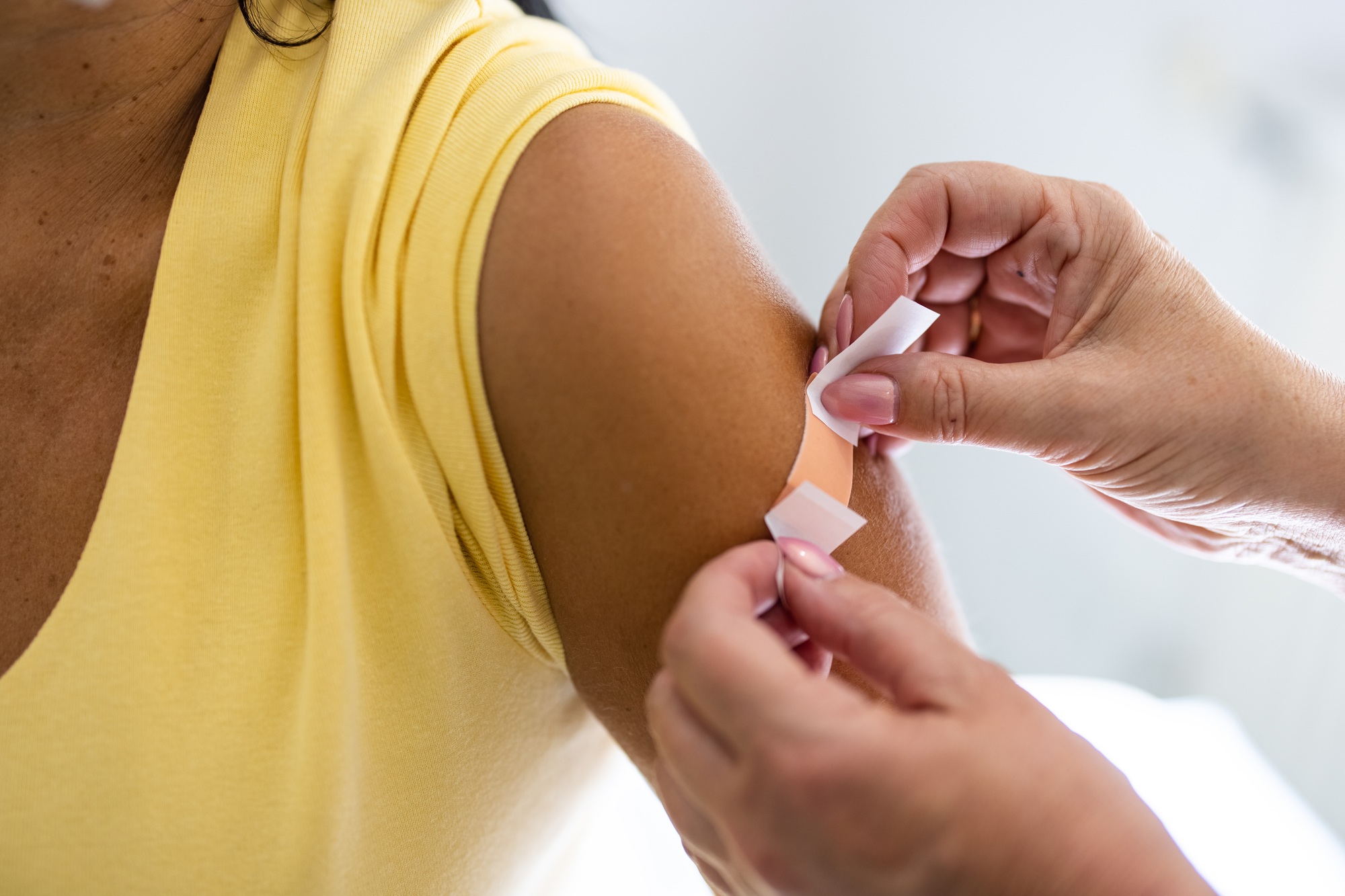
"caption": "The FDA has announced who is approved to get their COVID-19 vaccine in 2025.",
"credit": "Luis Alvarez/Getty Images",
"altTag": null,
"description": null,
"imgSizes": {
"thumbnail": {
"file": "https://cdn.kqed.org/wp-content/uploads/sites/10/2025/08/COVIDGetty-160x107.jpg",
"width": 160,
"height": 107,
"mimeType": "image/jpeg"
},
"1536x1536": {
"file": "https://cdn.kqed.org/wp-content/uploads/sites/10/2025/08/COVIDGetty-1536x1024.jpg",
"width": 1536,
"height": 1024,
"mimeType": "image/jpeg"
},
"post-thumbnail": {
"file": "https://cdn.kqed.org/wp-content/uploads/sites/10/2025/08/COVIDGetty-672x372.jpg",
"width": 672,
"height": 372,
"mimeType": "image/jpeg"
},
"twentyfourteen-full-width": {
"file": "https://cdn.kqed.org/wp-content/uploads/sites/10/2025/08/COVIDGetty-1038x576.jpg",
"width": 1038,
"height": 576,
"mimeType": "image/jpeg"
},
"kqedFullSize": {
"file": "https://cdn.kqed.org/wp-content/uploads/sites/10/2025/08/COVIDGetty.jpg",
"width": 2000,
"height": 1333
}
},
"isLoading": false,
"fetchFailed": false
},
"news_12053668": {
"type": "attachments",
"id": "news_12053668",
"meta": {
"index": "attachments_1716263798",
"site": "news",
"id": "12053668",
"found": true
},
"title": "250825_ROSIE THE RIVETER PROTEST _ 0006_GH-KQED",
"publishDate": 1756161624,
"status": "inherit",
"parent": 0,
"modified": 1756167145,
"caption": "Kimberley Rodler (center left) cheers during the National Park Service’s 109th birthday celebration at Rosie the Riveter/WWII Home Front National Historical Park in Richmond, California, on Aug. 25, 2025. Rodler, who brought an American flag from her childhood in 1968 and her husband’s hard hat, said she made signs that morning and came to support the event.",
"credit": "Gustavo Hernandez/KQED",
"altTag": null,
"description": null,
"imgSizes": {
"thumbnail": {
"file": "https://cdn.kqed.org/wp-content/uploads/sites/10/2025/08/250825_ROSIE-THE-RIVETER-PROTEST-_-0006_GH-KQED-160x107.jpg",
"width": 160,
"height": 107,
"mimeType": "image/jpeg"
},
"1536x1536": {
"file": "https://cdn.kqed.org/wp-content/uploads/sites/10/2025/08/250825_ROSIE-THE-RIVETER-PROTEST-_-0006_GH-KQED-1536x1025.jpg",
"width": 1536,
"height": 1025,
"mimeType": "image/jpeg"
},
"post-thumbnail": {
"file": "https://cdn.kqed.org/wp-content/uploads/sites/10/2025/08/250825_ROSIE-THE-RIVETER-PROTEST-_-0006_GH-KQED-672x372.jpg",
"width": 672,
"height": 372,
"mimeType": "image/jpeg"
},
"twentyfourteen-full-width": {
"file": "https://cdn.kqed.org/wp-content/uploads/sites/10/2025/08/250825_ROSIE-THE-RIVETER-PROTEST-_-0006_GH-KQED-1038x576.jpg",
"width": 1038,
"height": 576,
"mimeType": "image/jpeg"
},
"kqedFullSize": {
"file": "https://cdn.kqed.org/wp-content/uploads/sites/10/2025/08/250825_ROSIE-THE-RIVETER-PROTEST-_-0006_GH-KQED.jpg",
"width": 2000,
"height": 1334
}
},
"isLoading": false,
"fetchFailed": false
},
"news_12053322": {
"type": "attachments",
"id": "news_12053322",
"meta": {
"index": "attachments_1716263798",
"site": "news",
"id": "12053322",
"found": true
},
"title": "Medina v. Planned Parenthood South Atlantic TW",
"publishDate": 1755887776,
"status": "inherit",
"parent": 12053319,
"modified": 1755887863,
"caption": "UNITED STATES - APRIL 2: A pro-choice demonstrator holds a sign in front of the U.S. Supreme Court as the Medina v. Planned Parenthood South Atlantic case is heard on Wednesday, April 2, 2025. ",
"credit": "Tom Williams/CQ-Roll Call, Inc via Getty Images",
"altTag": null,
"description": null,
"imgSizes": {
"medium": {
"file": "https://cdn.kqed.org/wp-content/uploads/sites/10/2025/08/GettyImages-2207564178-2000x1333.jpg",
"width": 2000,
"height": 1333,
"mimeType": "image/jpeg"
},
"large": {
"file": "https://cdn.kqed.org/wp-content/uploads/sites/10/2025/08/GettyImages-2207564178-2000x1333.jpg",
"width": 2000,
"height": 1333,
"mimeType": "image/jpeg"
},
"thumbnail": {
"file": "https://cdn.kqed.org/wp-content/uploads/sites/10/2025/08/GettyImages-2207564178-160x107.jpg",
"width": 160,
"height": 107,
"mimeType": "image/jpeg"
},
"1536x1536": {
"file": "https://cdn.kqed.org/wp-content/uploads/sites/10/2025/08/GettyImages-2207564178-1536x1024.jpg",
"width": 1536,
"height": 1024,
"mimeType": "image/jpeg"
},
"2048x2048": {
"file": "https://cdn.kqed.org/wp-content/uploads/sites/10/2025/08/GettyImages-2207564178-2048x1365.jpg",
"width": 2048,
"height": 1365,
"mimeType": "image/jpeg"
},
"post-thumbnail": {
"file": "https://cdn.kqed.org/wp-content/uploads/sites/10/2025/08/GettyImages-2207564178-672x372.jpg",
"width": 672,
"height": 372,
"mimeType": "image/jpeg"
},
"twentyfourteen-full-width": {
"file": "https://cdn.kqed.org/wp-content/uploads/sites/10/2025/08/GettyImages-2207564178-1038x576.jpg",
"width": 1038,
"height": 576,
"mimeType": "image/jpeg"
},
"kqedFullSize": {
"file": "https://cdn.kqed.org/wp-content/uploads/sites/10/2025/08/GettyImages-2207564178-scaled-e1755887845715.jpg",
"width": 2000,
"height": 1334
}
},
"isLoading": false,
"fetchFailed": false
},
"news_12052998": {
"type": "attachments",
"id": "news_12052998",
"meta": {
"index": "attachments_1716263798",
"site": "news",
"id": "12052998",
"found": true
},
"title": "A woman watching sunrise from a tent.",
"publishDate": 1755713705,
"status": "inherit",
"parent": 12052990,
"modified": 1788548132,
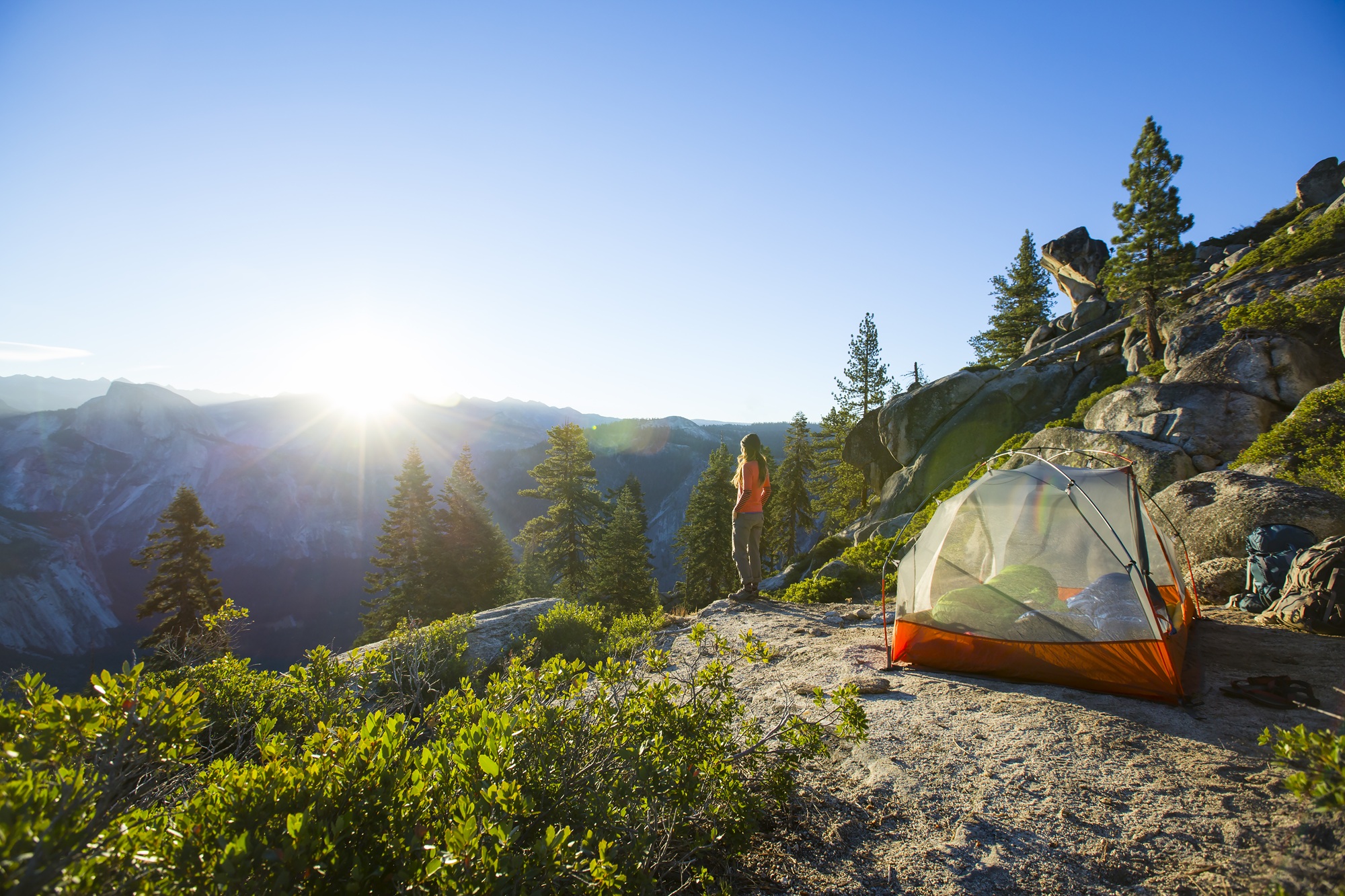
"caption": "A woman takes in the view of Half Dome at sunrise while camping in the mountains on Jan. 6, 2015.",
"credit": "Jordan Siemens/Getty Images",
"altTag": null,
"description": null,
"imgSizes": {
"thumbnail": {
"file": "https://cdn.kqed.org/wp-content/uploads/sites/10/2025/08/CampingGetty-160x107.jpg",
"width": 160,
"height": 107,
"mimeType": "image/jpeg"
},
"1536x1536": {
"file": "https://cdn.kqed.org/wp-content/uploads/sites/10/2025/08/CampingGetty-1536x1024.jpg",
"width": 1536,
"height": 1024,
"mimeType": "image/jpeg"
},
"post-thumbnail": {
"file": "https://cdn.kqed.org/wp-content/uploads/sites/10/2025/08/CampingGetty-672x372.jpg",
"width": 672,
"height": 372,
"mimeType": "image/jpeg"
},
"twentyfourteen-full-width": {
"file": "https://cdn.kqed.org/wp-content/uploads/sites/10/2025/08/CampingGetty-1038x576.jpg",
"width": 1038,
"height": 576,
"mimeType": "image/jpeg"
},
"kqedFullSize": {
"file": "https://cdn.kqed.org/wp-content/uploads/sites/10/2025/08/CampingGetty.jpg",
"width": 2000,
"height": 1333
}
},
"isLoading": false,
"fetchFailed": false
},
"news_12001945": {
"type": "attachments",
"id": "news_12001945",
"meta": {
"index": "attachments_1716263798",
"site": "news",
"id": "12001945",
"found": true
},
"title": "valley-fever-symptoms",
"publishDate": 1724712970,
"status": "inherit",
"parent": 12001920,
"modified": 1724719655,
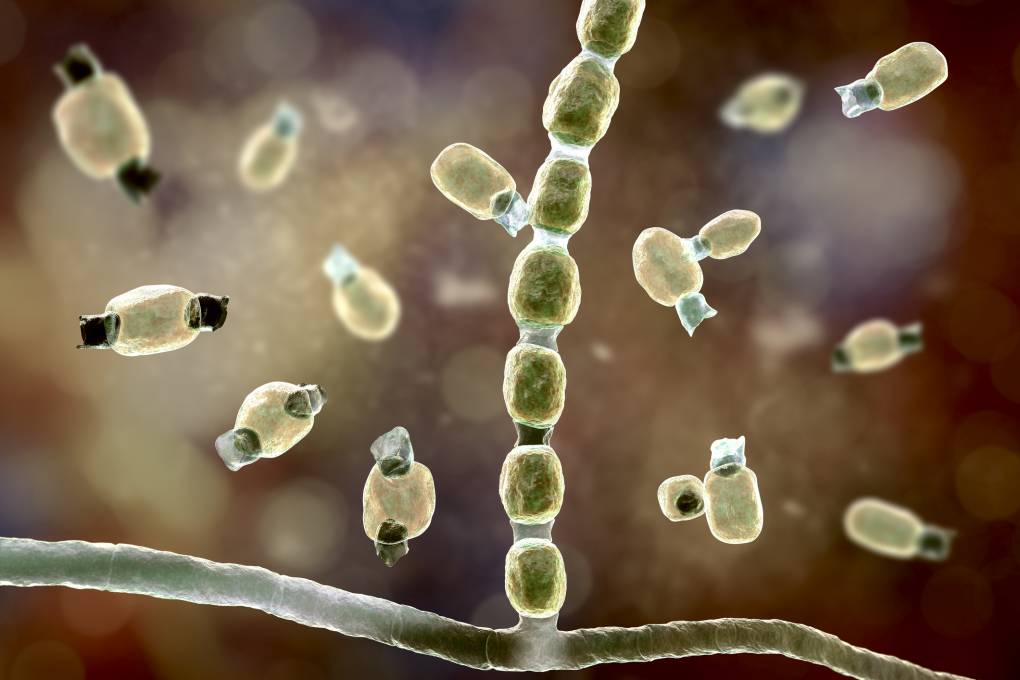
"caption": "An illustration of thick-walled arthroconidia and arthrospores from the fungus coccidioides immitis. This fungus is found in desert and semi-arid regions and is endemic to southwestern USA, Mexico and South America. C. immitis is the causative agent of coccidioidomycosis, also known as valley fever.",
"credit": "Kateryna Kon/SciencePhoto Library",
"altTag": "An illustration of microscopic bacteria.",
"description": null,
"imgSizes": {
"medium": {
"file": "https://cdn.kqed.org/wp-content/uploads/sites/10/2024/08/GettyImages-1386022781-800x533.jpg",
"width": 800,
"height": 533,
"mimeType": "image/jpeg"
},
"large": {
"file": "https://cdn.kqed.org/wp-content/uploads/sites/10/2024/08/GettyImages-1386022781-1020x680.jpg",
"width": 1020,
"height": 680,
"mimeType": "image/jpeg"
},
"thumbnail": {
"file": "https://cdn.kqed.org/wp-content/uploads/sites/10/2024/08/GettyImages-1386022781-160x107.jpg",
"width": 160,
"height": 107,
"mimeType": "image/jpeg"
},
"1536x1536": {
"file": "https://cdn.kqed.org/wp-content/uploads/sites/10/2024/08/GettyImages-1386022781-1536x1024.jpg",
"width": 1536,
"height": 1024,
"mimeType": "image/jpeg"
},
"2048x2048": {
"file": "https://cdn.kqed.org/wp-content/uploads/sites/10/2024/08/GettyImages-1386022781-2048x1365.jpg",
"width": 2048,
"height": 1365,
"mimeType": "image/jpeg"
},
"post-thumbnail": {
"file": "https://cdn.kqed.org/wp-content/uploads/sites/10/2024/08/GettyImages-1386022781-672x372.jpg",
"width": 672,
"height": 372,
"mimeType": "image/jpeg"
},
"twentyfourteen-full-width": {
"file": "https://cdn.kqed.org/wp-content/uploads/sites/10/2024/08/GettyImages-1386022781-1038x576.jpg",
"width": 1038,
"height": 576,
"mimeType": "image/jpeg"
},
"full-width": {
"file": "https://cdn.kqed.org/wp-content/uploads/sites/10/2024/08/GettyImages-1386022781-1920x1280.jpg",
"width": 1920,
"height": 1280,
"mimeType": "image/jpeg"
},
"kqedFullSize": {
"file": "https://cdn.kqed.org/wp-content/uploads/sites/10/2024/08/GettyImages-1386022781.jpg",
"width": 2121,
"height": 1414
}
},
"isLoading": false,
"fetchFailed": false
},
"news_12052429": {
"type": "attachments",
"id": "news_12052429",
"meta": {
"index": "attachments_1716263798",
"site": "news",
"id": "12052429",
"found": true
},
"title": "20241204-BART-JY-023_qed",
"publishDate": 1755288565,
"status": "inherit",
"parent": 12052424,
"modified": 1755288593,
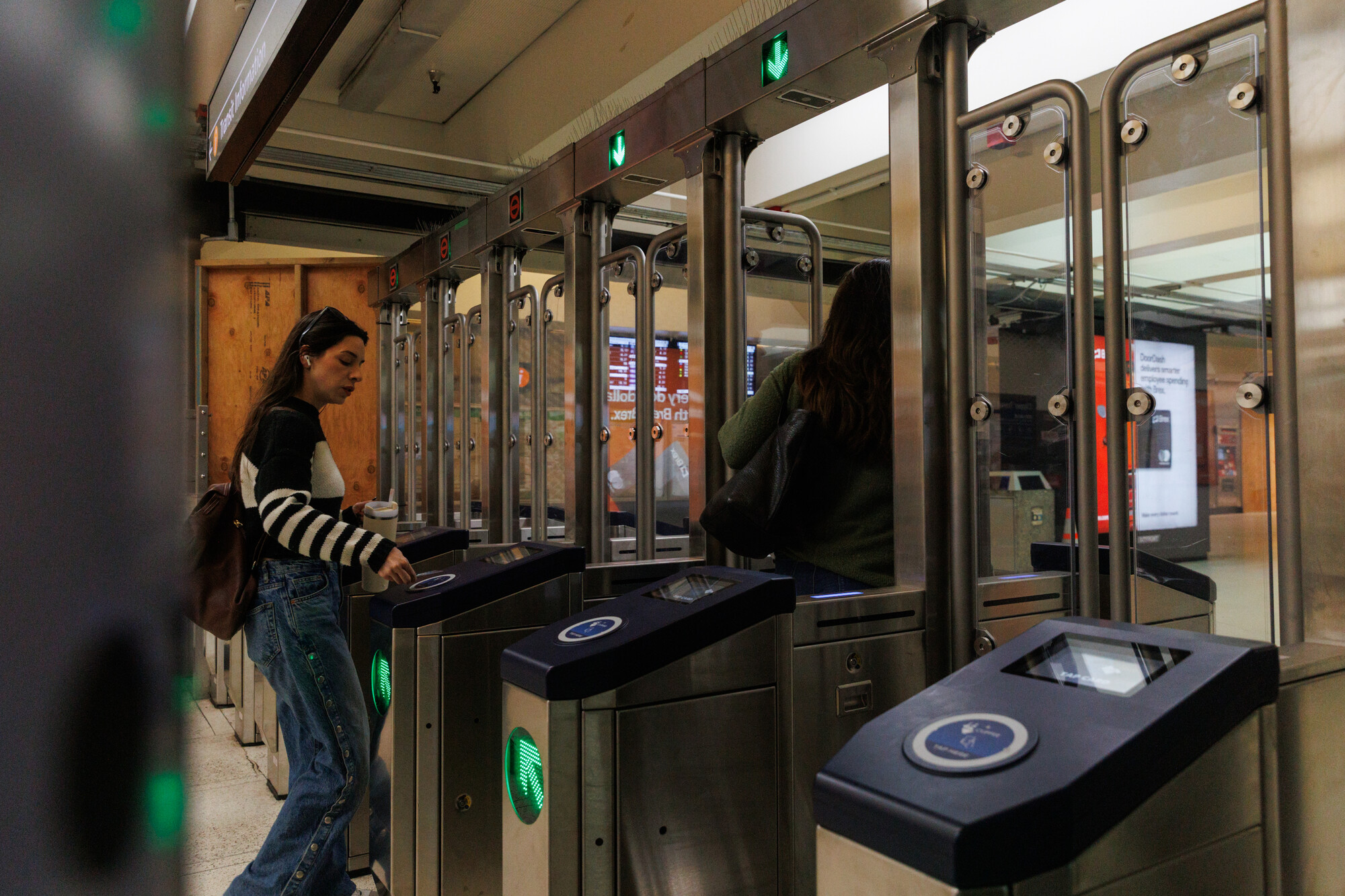
"caption": "Passengers tag their Clipper cards at Montgomery BART Station in San Francisco on Dec. 4, 2024.",
"credit": "Juliana Yamada/KQED",
"altTag": null,
"description": null,
"imgSizes": {
"thumbnail": {
"file": "https://cdn.kqed.org/wp-content/uploads/sites/10/2025/08/20241204-BART-JY-023_qed-160x107.jpg",
"width": 160,
"height": 107,
"mimeType": "image/jpeg"
},
"1536x1536": {
"file": "https://cdn.kqed.org/wp-content/uploads/sites/10/2025/08/20241204-BART-JY-023_qed-1536x1024.jpg",
"width": 1536,
"height": 1024,
"mimeType": "image/jpeg"
},
"post-thumbnail": {
"file": "https://cdn.kqed.org/wp-content/uploads/sites/10/2025/08/20241204-BART-JY-023_qed-672x372.jpg",
"width": 672,
"height": 372,
"mimeType": "image/jpeg"
},
"twentyfourteen-full-width": {
"file": "https://cdn.kqed.org/wp-content/uploads/sites/10/2025/08/20241204-BART-JY-023_qed-1038x576.jpg",
"width": 1038,
"height": 576,
"mimeType": "image/jpeg"
},
"kqedFullSize": {
"file": "https://cdn.kqed.org/wp-content/uploads/sites/10/2025/08/20241204-BART-JY-023_qed.jpg",
"width": 2000,
"height": 1333
}
},
"isLoading": false,
"fetchFailed": false
},
"news_11966643": {
"type": "attachments",
"id": "news_11966643",
"meta": {
"index": "attachments_1716263798",
"site": "news",
"id": "11966643",
"found": true
},
"parent": 11966587,
"imgSizes": {
"twentyfourteen-full-width": {
"file": "https://ww2.kqed.org/app/uploads/sites/10/2023/11/GettyImages-1408879341-qut-1038x576.jpg",
"width": 1038,
"mimeType": "image/jpeg",
"height": 576
},
"thumbnail": {
"file": "https://ww2.kqed.org/app/uploads/sites/10/2023/11/GettyImages-1408879341-qut-160x120.jpg",
"width": 160,
"mimeType": "image/jpeg",
"height": 120
},
"post-thumbnail": {
"file": "https://ww2.kqed.org/app/uploads/sites/10/2023/11/GettyImages-1408879341-qut-672x372.jpg",
"width": 672,
"mimeType": "image/jpeg",
"height": 372
},
"kqedFullSize": {
"file": "https://ww2.kqed.org/app/uploads/sites/10/2023/11/GettyImages-1408879341-qut.jpg",
"width": 1920,
"height": 1440
},
"large": {
"file": "https://ww2.kqed.org/app/uploads/sites/10/2023/11/GettyImages-1408879341-qut-1020x765.jpg",
"width": 1020,
"mimeType": "image/jpeg",
"height": 765
},
"1536x1536": {
"file": "https://ww2.kqed.org/app/uploads/sites/10/2023/11/GettyImages-1408879341-qut-1536x1152.jpg",
"width": 1536,
"mimeType": "image/jpeg",
"height": 1152
},
"medium": {
"file": "https://ww2.kqed.org/app/uploads/sites/10/2023/11/GettyImages-1408879341-qut-800x600.jpg",
"width": 800,
"mimeType": "image/jpeg",
"height": 600
}
},
"publishDate": 1699386163,
"modified": 1699386256,
"caption": "A vial of the mpox vaccine is displayed by a medical professional at a vaccination site in July, 2022.",
"description": null,
"title": "A vial of the Monkeypox vaccine",
"credit": "James Carbone/Newsday RM via Getty Images",
"status": "inherit",
"altTag": "close-up photo of fingers holding a tiny vial which reads 'monkeypox vaccine'",
"isLoading": false,
"fetchFailed": false
},
"news_12052290": {
"type": "attachments",
"id": "news_12052290",
"meta": {
"index": "attachments_1716263798",
"site": "news",
"id": "12052290",
"found": true
},
"title": "Zach Bryan Performs At BST Hyde Park 2025",
"publishDate": 1755210451,
"status": "inherit",
"parent": 12052284,
"modified": 1755210506,
"caption": "Zach Bryan headlines the Great Oak Stage during BST Hyde Park at Hyde Park on June 28, 2025, in London, England. ",
"credit": "Gus Stewart/Redferns via Getty Images",
"altTag": null,
"description": null,
"imgSizes": {
"thumbnail": {
"file": "https://cdn.kqed.org/wp-content/uploads/sites/10/2025/08/ZachBryanGetty-160x116.jpg",
"width": 160,
"height": 116,
"mimeType": "image/jpeg"
},
"1536x1536": {
"file": "https://cdn.kqed.org/wp-content/uploads/sites/10/2025/08/ZachBryanGetty-1536x1111.jpg",
"width": 1536,
"height": 1111,
"mimeType": "image/jpeg"
},
"post-thumbnail": {
"file": "https://cdn.kqed.org/wp-content/uploads/sites/10/2025/08/ZachBryanGetty-672x372.jpg",
"width": 672,
"height": 372,
"mimeType": "image/jpeg"
},
"twentyfourteen-full-width": {
"file": "https://cdn.kqed.org/wp-content/uploads/sites/10/2025/08/ZachBryanGetty-1038x576.jpg",
"width": 1038,
"height": 576,
"mimeType": "image/jpeg"
},
"kqedFullSize": {
"file": "https://cdn.kqed.org/wp-content/uploads/sites/10/2025/08/ZachBryanGetty.jpg",
"width": 2000,
"height": 1447
}
},
"isLoading": false,
"fetchFailed": false
},
"news_12052259": {
"type": "attachments",
"id": "news_12052259",
"meta": {
"index": "attachments_1716263798",
"site": "news",
"id": "12052259",
"found": true
},
"title": null,
"publishDate": 1755205539,
"status": "inherit",
"parent": 12052217,
"modified": 1755213544,
"caption": null,
"credit": "SDI Productions/Getty Images",
"altTag": null,
"description": null,
"imgSizes": {
"thumbnail": {
"file": "https://cdn.kqed.org/wp-content/uploads/sites/10/2025/08/ImmigrationLawyerGetty-160x90.jpg",
"width": 160,
"height": 90,
"mimeType": "image/jpeg"
},
"1536x1536": {
"file": "https://cdn.kqed.org/wp-content/uploads/sites/10/2025/08/ImmigrationLawyerGetty-1536x864.jpg",
"width": 1536,
"height": 864,
"mimeType": "image/jpeg"
},
"post-thumbnail": {
"file": "https://cdn.kqed.org/wp-content/uploads/sites/10/2025/08/ImmigrationLawyerGetty-672x372.jpg",
"width": 672,
"height": 372,
"mimeType": "image/jpeg"
},
"twentyfourteen-full-width": {
"file": "https://cdn.kqed.org/wp-content/uploads/sites/10/2025/08/ImmigrationLawyerGetty-1038x576.jpg",
"width": 1038,
"height": 576,
"mimeType": "image/jpeg"
},
"kqedFullSize": {
"file": "https://cdn.kqed.org/wp-content/uploads/sites/10/2025/08/ImmigrationLawyerGetty.jpg",
"width": 2000,
"height": 1125
}
},
"isLoading": false,
"fetchFailed": false
},
"news_11988704": {
"type": "attachments",
"id": "news_11988704",
"meta": {
"index": "attachments_1716263798",
"site": "news",
"id": "11988704",
"found": true
},
"title": "240520-TKPARENTSDILEMMA-07-BL-KQED",
"publishDate": 1717439637,
"status": "inherit",
"parent": 11989789,
"modified": 1718138364,
"caption": "Students listen to teacher Gina Viggiano in a transitional kindergarten class at Holbrook Language Academy in Concord on May 20, 2024.",
"credit": "Beth LaBerge/KQED",
"altTag": null,
"description": null,
"imgSizes": {
"medium": {
"file": "https://cdn.kqed.org/wp-content/uploads/sites/10/2024/06/240520-TKPARENTSDILEMMA-07-BL-KQED-800x533.jpg",
"width": 800,
"height": 533,
"mimeType": "image/jpeg"
},
"large": {
"file": "https://cdn.kqed.org/wp-content/uploads/sites/10/2024/06/240520-TKPARENTSDILEMMA-07-BL-KQED-1020x680.jpg",
"width": 1020,
"height": 680,
"mimeType": "image/jpeg"
},
"thumbnail": {
"file": "https://cdn.kqed.org/wp-content/uploads/sites/10/2024/06/240520-TKPARENTSDILEMMA-07-BL-KQED-160x107.jpg",
"width": 160,
"height": 107,
"mimeType": "image/jpeg"
},
"1536x1536": {
"file": "https://cdn.kqed.org/wp-content/uploads/sites/10/2024/06/240520-TKPARENTSDILEMMA-07-BL-KQED-1536x1024.jpg",
"width": 1536,
"height": 1024,
"mimeType": "image/jpeg"
},
"post-thumbnail": {
"file": "https://cdn.kqed.org/wp-content/uploads/sites/10/2024/06/240520-TKPARENTSDILEMMA-07-BL-KQED-672x372.jpg",
"width": 672,
"height": 372,
"mimeType": "image/jpeg"
},
"twentyfourteen-full-width": {
"file": "https://cdn.kqed.org/wp-content/uploads/sites/10/2024/06/240520-TKPARENTSDILEMMA-07-BL-KQED-1038x576.jpg",
"width": 1038,
"height": 576,
"mimeType": "image/jpeg"
},
"full-width": {
"file": "https://cdn.kqed.org/wp-content/uploads/sites/10/2024/06/240520-TKPARENTSDILEMMA-07-BL-KQED-1920x1280.jpg",
"width": 1920,
"height": 1280,
"mimeType": "image/jpeg"
},
"kqedFullSize": {
"file": "https://cdn.kqed.org/wp-content/uploads/sites/10/2024/06/240520-TKPARENTSDILEMMA-07-BL-KQED.jpg",
"width": 2000,
"height": 1333
}
},
"isLoading": false,
"fetchFailed": false
},
"news_12051760": {
"type": "attachments",
"id": "news_12051760",
"meta": {
"index": "attachments_1716263798",
"site": "news",
"id": "12051760",
"found": true
},
"title": "Bullitt-at-Presidio-Sundown-Cinema_6.14.2024_Marlene-Sanchez_-_19",
"publishDate": 1754943473,
"status": "inherit",
"parent": 12051748,
"modified": 1755007722,
"caption": "Cinephiles gather to watch the 1980 film \"The Fog\" in the Presidio in San Francisco on April 25, 2025. While Sundown Cinema (pictured here) is no longer operating, there are still many other outdoor movie opportunities for you this summer and fall.",
"credit": "SF Parks Alliance",
"altTag": null,
"description": null,
"imgSizes": {
"thumbnail": {
"file": "https://cdn.kqed.org/wp-content/uploads/sites/10/2025/08/Bullitt-at-Presidio-Sundown-Cinema_6.14.2024_Marlene-Sanchez_-_19-160x107.jpeg",
"width": 160,
"height": 107,
"mimeType": "image/jpeg"
},
"post-thumbnail": {
"file": "https://cdn.kqed.org/wp-content/uploads/sites/10/2025/08/Bullitt-at-Presidio-Sundown-Cinema_6.14.2024_Marlene-Sanchez_-_19-672x372.jpeg",
"width": 672,
"height": 372,
"mimeType": "image/jpeg"
},
"twentyfourteen-full-width": {
"file": "https://cdn.kqed.org/wp-content/uploads/sites/10/2025/08/Bullitt-at-Presidio-Sundown-Cinema_6.14.2024_Marlene-Sanchez_-_19-1038x576.jpeg",
"width": 1038,
"height": 576,
"mimeType": "image/jpeg"
},
"kqedFullSize": {
"file": "https://cdn.kqed.org/wp-content/uploads/sites/10/2025/08/Bullitt-at-Presidio-Sundown-Cinema_6.14.2024_Marlene-Sanchez_-_19.jpeg",
"width": 1080,
"height": 720
}
},
"isLoading": false,
"fetchFailed": false
},
"news_12051374": {
"type": "attachments",
"id": "news_12051374",
"meta": {
"index": "attachments_1716263798",
"site": "news",
"id": "12051374",
"found": true
},
"title": "20241204-BART-JY-002_qed",
"publishDate": 1754609699,
"status": "inherit",
"parent": 12051362,
"modified": 1757189961,
"caption": "A BART car approaches the platform at Daly City Station in Daly City, on Dec. 4, 2024.",
"credit": "Juliana Yamada/KQED",
"altTag": null,
"description": null,
"imgSizes": {
"thumbnail": {
"file": "https://cdn.kqed.org/wp-content/uploads/sites/10/2025/08/20241204-BART-JY-002_qed-160x107.jpg",
"width": 160,
"height": 107,
"mimeType": "image/jpeg"
},
"1536x1536": {
"file": "https://cdn.kqed.org/wp-content/uploads/sites/10/2025/08/20241204-BART-JY-002_qed-1536x1024.jpg",
"width": 1536,
"height": 1024,
"mimeType": "image/jpeg"
},
"post-thumbnail": {
"file": "https://cdn.kqed.org/wp-content/uploads/sites/10/2025/08/20241204-BART-JY-002_qed-672x372.jpg",
"width": 672,
"height": 372,
"mimeType": "image/jpeg"
},
"twentyfourteen-full-width": {
"file": "https://cdn.kqed.org/wp-content/uploads/sites/10/2025/08/20241204-BART-JY-002_qed-1038x576.jpg",
"width": 1038,
"height": 576,
"mimeType": "image/jpeg"
},
"kqedFullSize": {
"file": "https://cdn.kqed.org/wp-content/uploads/sites/10/2025/08/20241204-BART-JY-002_qed.jpg",
"width": 2000,
"height": 1333
}
},
"isLoading": false,
"fetchFailed": false
}
},
"audioPlayerReducer": {
"postId": "stream_live",
"isPaused": true,
"isPlaying": false,
"pfsActive": false,
"pledgeModalIsOpen": true,
"playerDrawerIsOpen": false,
"liveAudioPlayStartedAt": 0,
"liveAudioPlayContext": ""
},
"authorsReducer": {
"byline_news_11989955": {
"type": "authors",
"id": "byline_news_11989955",
"meta": {
"override": true
},
"slug": "byline_news_11989955",
"name": "Daisy Nguyen, Blanca Torres and Elly Yu",
"isLoading": false
},
"minakim": {
"type": "authors",
"id": "243",
"meta": {
"index": "authors_1716337520",
"id": "243",
"found": true
},
"name": "Mina Kim",
"firstName": "Mina",
"lastName": "Kim",
"slug": "minakim",
"email": "mkim@kqed.org",
"display_author_email": false,
"staff_mastheads": [
"news"
],
"title": "Host, Forum",
"bio": "Mina Kim is host of the 10 a.m. statewide hour of Forum; a live daily talk show for curious Californians on issues that matter to the state and nation, with a particular emphasis on race and equity.\r\n\r\nBefore joining the Forum team, Mina was KQED’s evening news anchor, and health reporter for The California Report. Her award-winning work has included natural disasters in Napa and gun violence in Oakland. Mina grew up in St. John’s, Newfoundland.",
"avatar": "https://secure.gravatar.com/avatar/145ce657a2d08cb86d93686beb958982?s=600&d=blank&r=g",
"twitter": "mkimreporter",
"facebook": null,
"instagram": null,
"linkedin": null,
"sites": [
{
"site": "news",
"roles": [
"contributor"
]
},
{
"site": "stateofhealth",
"roles": [
"author"
]
},
{
"site": "forum",
"roles": [
"editor"
]
}
],
"headData": {
"title": "Mina Kim | KQED",
"description": "Host, Forum",
"ogImgSrc": "https://secure.gravatar.com/avatar/145ce657a2d08cb86d93686beb958982?s=600&d=blank&r=g",
"twImgSrc": "https://secure.gravatar.com/avatar/145ce657a2d08cb86d93686beb958982?s=600&d=blank&r=g"
},
"isLoading": false,
"link": "/author/minakim"
},
"carlysevern": {
"type": "authors",
"id": "3243",
"meta": {
"index": "authors_1716337520",
"id": "3243",
"found": true
},
"name": "Carly Severn",
"firstName": "Carly",
"lastName": "Severn",
"slug": "carlysevern",
"email": "csevern@kqed.org",
"display_author_email": false,
"staff_mastheads": [
"news"
],
"title": "Senior Editor, Audience News ",
"bio": "Carly is KQED's Senior Editor of Audience News on the Digital News team, and has reported for the California Report Magazine, Bay Curious and KQED Arts. She's formerly the host of \u003ca href=\"http://ww2.kqed.org/pop/category/the-cooler/\" rel=\"noopener noreferrer\">The Cooler\u003c/a> podcast.",
"avatar": "https://secure.gravatar.com/avatar/54037bf5c128fe678f0ef26cec97a93f2e7f220a22d7285703328f12c42c1b1d?s=600&d=blank&r=g",
"twitter": "teacupinthebay",
"bluesky": null,
"facebook": null,
"instagram": null,
"linkedin": null,
"sites": [
{
"site": "",
"roles": [
"editor"
]
},
{
"site": "arts",
"roles": [
"editor"
]
},
{
"site": "news",
"roles": [
"administrator"
]
},
{
"site": "pop",
"roles": [
"editor"
]
},
{
"site": "futureofyou",
"roles": [
"editor"
]
},
{
"site": "about",
"roles": [
"administrator"
]
},
{
"site": "mindshift",
"roles": [
"editor"
]
},
{
"site": "bayareabites",
"roles": [
"editor"
]
},
{
"site": "stateofhealth",
"roles": [
"editor"
]
},
{
"site": "science",
"roles": [
"editor"
]
},
{
"site": "food",
"roles": [
"contributor"
]
},
{
"site": "forum",
"roles": [
"editor"
]
},
{
"site": "perspectives",
"roles": [
"administrator"
]
},
{
"site": "liveblog",
"roles": [
"editor"
]
}
],
"headData": {
"title": "Carly Severn | KQED",
"description": "Senior Editor, Audience News ",
"ogImgSrc": "https://secure.gravatar.com/avatar/54037bf5c128fe678f0ef26cec97a93f2e7f220a22d7285703328f12c42c1b1d?s=600&d=blank&r=g",
"twImgSrc": "https://secure.gravatar.com/avatar/54037bf5c128fe678f0ef26cec97a93f2e7f220a22d7285703328f12c42c1b1d?s=600&d=blank&r=g"
},
"isLoading": false,
"link": "/author/carlysevern"
},
"ccabreralomeli": {
"type": "authors",
"id": "11708",
"meta": {
"index": "authors_1716337520",
"id": "11708",
"found": true
},
"name": "Carlos Cabrera-Lomelí",
"firstName": "Carlos",
"lastName": "Cabrera-Lomelí",
"slug": "ccabreralomeli",
"email": "ccabreralomeli@KQED.org",
"display_author_email": true,
"staff_mastheads": [
"news"
],
"title": "Community Reporter",
"bio": "Carlos Cabrera-Lomelí is a community reporter with KQED's digital engagement team. He also reports and co-produces for KQED's bilingual news hub KQED en Español. He grew up in San Francisco's Mission District and has previously worked with Univision, 48 Hills and REFORMA in Mexico City.",
"avatar": "https://secure.gravatar.com/avatar/c309be9665e484f887b818c89e273ecc673004f426f36b24d00a4d813a2e0518?s=600&d=blank&r=g",
"twitter": "@LomeliCabrera",
"bluesky": null,
"facebook": null,
"instagram": null,
"linkedin": null,
"sites": [
{
"site": "arts",
"roles": [
"editor"
]
},
{
"site": "news",
"roles": [
"editor"
]
},
{
"site": "about",
"roles": [
"editor"
]
},
{
"site": "science",
"roles": [
"editor"
]
},
{
"site": "perspectives",
"roles": [
"editor"
]
},
{
"site": "elections",
"roles": [
"editor"
]
},
{
"site": "liveblog",
"roles": [
"contributor"
]
}
],
"headData": {
"title": "Carlos Cabrera-Lomelí | KQED",
"description": "Community Reporter",
"ogImgSrc": "https://secure.gravatar.com/avatar/c309be9665e484f887b818c89e273ecc673004f426f36b24d00a4d813a2e0518?s=600&d=blank&r=g",
"twImgSrc": "https://secure.gravatar.com/avatar/c309be9665e484f887b818c89e273ecc673004f426f36b24d00a4d813a2e0518?s=600&d=blank&r=g"
},
"isLoading": false,
"link": "/author/ccabreralomeli"
},
"nkhan": {
"type": "authors",
"id": "11867",
"meta": {
"index": "authors_1716337520",
"id": "11867",
"found": true
},
"name": "Nisa Khan",
"firstName": "Nisa",
"lastName": "Khan",
"slug": "nkhan",
"email": "nkhan@kqed.org",
"display_author_email": false,
"staff_mastheads": [],
"title": "KQED Contributor",
"bio": "Nisa Khan is a reporter for KQED's Audience News Desk. She was formerly a data reporter at Michigan Radio. She earned a Bachelor of Science in Information from the University of Michigan and a Master of Arts in Communication from Stanford University.",
"avatar": "https://secure.gravatar.com/avatar/8720459eef081ff64582b3506b124d58523e80e120704a0cbd9892533c914991?s=600&d=blank&r=g",
"twitter": "mnisakhan",
"bluesky": null,
"facebook": null,
"instagram": null,
"linkedin": null,
"sites": [
{
"site": "arts",
"roles": [
"editor"
]
},
{
"site": "news",
"roles": [
"editor"
]
},
{
"site": "science",
"roles": [
"editor",
"author"
]
},
{
"site": "forum",
"roles": [
"editor"
]
},
{
"site": "liveblog",
"roles": [
"contributor"
]
}
],
"headData": {
"title": "Nisa Khan | KQED",
"description": "KQED Contributor",
"ogImgSrc": "https://secure.gravatar.com/avatar/8720459eef081ff64582b3506b124d58523e80e120704a0cbd9892533c914991?s=600&d=blank&r=g",
"twImgSrc": "https://secure.gravatar.com/avatar/8720459eef081ff64582b3506b124d58523e80e120704a0cbd9892533c914991?s=600&d=blank&r=g"
},
"isLoading": false,
"link": "/author/nkhan"
},
"kdebenedetti": {
"type": "authors",
"id": "11913",
"meta": {
"index": "authors_1716337520",
"id": "11913",
"found": true
},
"name": "Katie DeBenedetti",
"firstName": "Katie",
"lastName": "DeBenedetti",
"slug": "kdebenedetti",
"email": "kdebenedetti@kqed.org",
"display_author_email": false,
"staff_mastheads": [
"news",
"science"
],
"title": "KQED Contributor",
"bio": "Katie DeBenedetti is a digital reporter covering daily news for the Express Desk. Prior to joining KQED as a culture reporting intern in January 2024, she covered education and city government for the Napa Valley Register.",
"avatar": "https://secure.gravatar.com/avatar/6e31073cb8f7e4214ab03f42771d0f45?s=600&d=blank&r=g",
"twitter": null,
"facebook": null,
"instagram": null,
"linkedin": null,
"sites": [
{
"site": "news",
"roles": [
"author"
]
},
{
"site": "science",
"roles": [
"author"
]
},
{
"site": "liveblog",
"roles": [
"author"
]
}
],
"headData": {
"title": "Katie DeBenedetti | KQED",
"description": "KQED Contributor",
"ogImgSrc": "https://secure.gravatar.com/avatar/6e31073cb8f7e4214ab03f42771d0f45?s=600&d=blank&r=g",
"twImgSrc": "https://secure.gravatar.com/avatar/6e31073cb8f7e4214ab03f42771d0f45?s=600&d=blank&r=g"
},
"isLoading": false,
"link": "/author/kdebenedetti"
},
"sarahwright": {
"type": "authors",
"id": "11956",
"meta": {
"index": "authors_1716337520",
"id": "11956",
"found": true
},
"name": "Sarah Wright",
"firstName": "Sarah",
"lastName": "Wright",
"slug": "sarahwright",
"email": "swright@kqed.org",
"display_author_email": true,
"staff_mastheads": [],
"title": "Outdoors Engagement Reporter",
"bio": "Sarah Wright is KQED's Outdoors Engagement Reporter. Originally from Lake Tahoe, she completed a thru-hike of the Pacific Crest Trail in 2019 and was a U.S. Fulbright Program grantee to Argentina in 2023. Her journalism has appeared in The Guardian, The San Francisco Standard, The Palo Alto Weekly and the Half Moon Bay Review.",
"avatar": "https://secure.gravatar.com/avatar/c161a3d6441865cba25e6db4fa561099ad665799e9432e34da2b84d7e371524c?s=600&d=blank&r=g",
"twitter": null,
"bluesky": null,
"facebook": null,
"instagram": null,
"linkedin": null,
"sites": [
{
"site": "arts",
"roles": [
"editor"
]
},
{
"site": "news",
"roles": [
"editor"
]
},
{
"site": "science",
"roles": [
"contributor",
"author"
]
},
{
"site": "forum",
"roles": [
"editor"
]
}
],
"headData": {
"title": "Sarah Wright | KQED",
"description": "Outdoors Engagement Reporter",
"ogImgSrc": "https://secure.gravatar.com/avatar/c161a3d6441865cba25e6db4fa561099ad665799e9432e34da2b84d7e371524c?s=600&d=blank&r=g",
"twImgSrc": "https://secure.gravatar.com/avatar/c161a3d6441865cba25e6db4fa561099ad665799e9432e34da2b84d7e371524c?s=600&d=blank&r=g"
},
"isLoading": false,
"link": "/author/sarahwright"
}
},
"pagesReducer": {
"news_category_guides-and-explainers": {
"type": "terms",
"id": "news_34168",
"meta": {
"index": "terms_1716263798",
"site": "news",
"id": "34168",
"score": 14.406026
},
"name": "Guides and Explainers",
"slug": "guides-and-explainers",
"taxonomy": "category",
"description": null,
"featImg": null,
"headData": {
"title": "Guides and Explainers Archives | KQED News",
"description": null,
"ogTitle": null,
"ogDescription": null,
"ogImgId": null,
"twTitle": null,
"twDescription": null,
"twImgId": null
},
"ttid": 34185,
"isLoading": false,
"title": "Guides and Explainers",
"pageMeta": {
"site": "news",
"WpPageTemplate": "page-topic-editorial",
"currentPage": 23
},
"blocks": [
{
"blockName": "kqed/post-list",
"attrs": {
"layout": "cardArticle2",
"query": "posts/news?category=guides-and-explainers",
"seeMore": false,
"paginated": true,
"page": 23
}
},
{
"blockName": "kqed/ad"
}
]
}
},
"pfsSessionReducer": {},
"postsReducer": {
"stream_live": {
"type": "live",
"id": "stream_live",
"audioUrl": "https://streams.kqed.org/kqedradio",
"title": "Live Stream",
"excerpt": "Live Stream information currently unavailable.",
"link": "/radio",
"featImg": "",
"label": {
"name": "KQED Live",
"link": "/"
}
},
"stream_kqedNewscast": {
"type": "posts",
"id": "stream_kqedNewscast",
"audioUrl": "https://www.kqed.org/.stream/anon/radio/RDnews/newscast.mp3?_=1",
"title": "KQED Newscast",
"featImg": "",
"label": {
"name": "88.5 FM",
"link": "/"
}
},
"news_12053906": {
"type": "posts",
"id": "news_12053906",
"meta": {
"index": "posts_1716263798",
"site": "news",
"id": "12053906",
"score": null,
"sort": [
1756327808000
]
},
"guestAuthors": [],
"slug": "covid-vaccines-booster-2025-fda-cdc-who-can-get-updated-vaccine-novavax-pfizer-moderna-where-find",
"title": "The FDA Has Limited Approvals For COVID Vaccines This Year. With Pharmacy Appointments Already Available, Who Can Even Get a Shot?",
"publishDate": 1756327808,
"format": "standard",
"headTitle": "The FDA Has Limited Approvals For COVID Vaccines This Year. With Pharmacy Appointments Already Available, Who Can Even Get a Shot? | KQED",
"labelTerm": {
"site": "news"
},
"content": "\u003cp>If you’ve been wondering, “When will the 2025 COVID vaccine be widely available?” you’re not alone.\u003c/p>\n\u003cp>By this time last year, the \u003ca href=\"https://www.kqed.org/news/12001396/where-can-i-get-new-covid-vaccine-near-me-2024\">2024-25 COVID-19 vaccines had already been approved\u003c/a> by the Food and Drug Administration, recommended by the Centers for Disease Control and Prevention for everyone age 6 months and older and rolled out across the country for several weeks.[aside postID=news_12055165 hero='https://cdn.kqed.org/wp-content/uploads/sites/10/2025/08/COVIDGetty2.jpg']\u003c/p>\n\u003cp>The FDA approved updated COVID-19 shots on Aug. 27, but for the first time has limited their use for many Americans, recommending them only for people 65 and older or those younger with a health condition that puts them at higher risk.\u003c/p>\n\u003cp>The FDA also removed one of the two vaccines available for young children.\u003c/p>\n\u003cp>Pharmacies including \u003ca href=\"https://www.cvs.com/scheduling/patient-lookup?lob=rximz&flow=vaccine&icid=global-nav\">CVS\u003c/a>, \u003ca href=\"https://www.walgreens.com/topic/promotion/covid-vaccine.jsp?ban=immhub_covidinfo\">Walgreens\u003c/a> and \u003ca href=\"https://www.safeway.com/pharmacy/covid-19.html\">Safeway\u003c/a> have already begun \u003ca href=\"https://www.kqed.org/news/12055165/where-can-i-find-new-updated-2025-covid-vaccine-near-me-moderna-pfizer-cvs-walgreens-safeway-vaccinations-health-insurance-cost\">offering appointments online for eligible people\u003c/a>, despite the fact that the CDC’s vaccine advisory panel recommendation — which is usually what health insurers base their decisions on around which vaccines they’ll cover for patients — still isn’t here.\u003c/p>\n\u003cul>\n\u003cli>\u003cstrong>Jump straight to: \u003ca href=\"#whocanmakeanonlineCOVIDvaccineappointmentatCVS\">Who can make an online COVID vaccine appointment at a pharmacy already\u003c/a>\u003c/strong>\u003c/li>\n\u003c/ul>\n\u003cp>Something else to know: On Sept. 3, Governor Gavin Newsom announced he was joining the governors of Oregon and Washington in \u003ca href=\"https://www.gov.ca.gov/2025/09/03/california-oregon-and-washington-to-launch-new-west-coast-health-alliance-to-uphold-scientific-integrity-in-public-health-as-trump-destroys-cdcs-credibility/\">launching a new “West Coast Health Alliance”\u003c/a> that would form its own recommendations in the coming weeks around who should get the updated COVID-19 vaccine in California this year — in the light of what the officials called “the Trump Administration’s destruction of the U.S. CDC’s credibility and scientific integrity.”\u003c/p>\n\u003cp>So as \u003ca href=\"https://www.kqed.org/news/12045979\">COVID-19 cases keep rising in the Bay Area\u003c/a>, who \u003cem>can\u003c/em> even get a vaccine right now? How can you make an appointment, and how could California’s upcoming decisions on vaccines change eligibility?\u003c/p>\n\u003cp>[ad fullwidth]\u003c/p>\n\u003cp>Keep reading for what we know about the FDA’s decision to limit COVID-19 vaccines this year, how it affects children, whether people who aren’t considered “high risk” might still be able to get a COVID-19 shot and how it could change health insurance covering these vaccines.\u003c/p>\n\u003cp>\u003cstrong>Jump straight to: \u003c/strong>\u003c/p>\n\u003cul>\n\u003cli>\u003cstrong>\u003ca href=\"#can-i-still-get-covid-vaccine-fda-2025\">If I’m not on the FDA’s approvals list, can I still get a COVID shot this year?\u003c/a>\u003c/strong>\u003c/li>\n\u003cli>\u003cstrong>\u003ca href=\"#updated-new-covid-vaccine-insurance-coverage-like-kaiser-blue-shield\">Will my insurance cover the updated COVID vaccine “off-label”?\u003c/a>\u003c/strong>\u003c/li>\n\u003c/ul>\n\u003ch2>Who can get an updated COVID shot this year, according to the FDA?\u003c/h2>\n\u003cp>Previously, the federal government recommended that \u003ca href=\"https://www.fda.gov/emergency-preparedness-and-response/coronavirus-disease-2019-covid-19/covid-19-vaccines-2024-2025\">everyone age 6 months and older should get a COVID-19 shot.\u003c/a>\u003c/p>\n\u003cp>But on Aug. 27, the FDA said that the updated COVID-19 shots from Pfizer, Moderna and Novavax are approved for people at higher risk from the disease, which is:\u003c/p>\n\u003cul>\n\u003cli>Everyone age 65 and older\u003c/li>\n\u003cli>Younger adults and children with at least one high-risk health condition (also called “comorbidities”), such as asthma or obesity.\u003c/li>\n\u003c/ul>\n\u003cp>Novavax’s shot is only open to people 12 or older, under the same risk-based restrictions now in place for the Moderna and Pfizer options. It’s the nation’s only protein-based COVID-19 vaccine.\u003c/p>\n\u003cp>Dr. Peter Chin-Hong, an infectious disease expert at UCSF, said the FDA’s decision was “regrettable in the way that it sidelines some others who also have a disproportionate risk for getting serious disease, such as pregnant people, even if they have no comorbidities, and children under two in particular.”\u003c/p>\n\u003cp>Dr. Abraar Karan, an infectious disease physician and researcher at Stanford University, also stressed the benefits of COVID-19 vaccination for otherwise healthy people that he sees every day when working urgent care shifts.\u003c/p>\n\u003cp>“I will say that being able to basically be protected enough [to reduce] the chance that you have to miss work, where you have come in and be seen here to be evaluated? It is a big benefit,” he said.\u003c/p>\n\u003cp>Karan also flagged the ongoing risks of longer-term impacts from a COVID-19 infection. Even if a person doesn’t develop long COVID, he said, many still experience “several days or weeks of weakness, fatigue, mental fog,” he said — for days or even weeks after their infection.\u003c/p>\n\u003ch2>So what counts as ‘high risk’ from COVID?\u003c/h2>\n\u003cp>While we still don’t know if this criteria will be changed, \u003ca href=\"https://www.cdc.gov/covid/risk-factors/index.html\">the CDC’s current list of health conditions \u003c/a>that make a person at higher risk of severe illness, hospitalization or death from COVID-19 includes:\u003c/p>\n\u003cul>\n\u003cli>Cancer\u003c/li>\n\u003cli>Chronic lung, kidney and liver disease\u003c/li>\n\u003cli>Heart conditions\u003c/li>\n\u003cli>Certain disabilities\u003c/li>\n\u003cli>HIV infection\u003c/li>\n\u003cli>Mental health conditions, including depression\u003c/li>\n\u003cli>Obesity\u003c/li>\n\u003cli>Being a current or former smoker.\u003c/li>\n\u003c/ul>\n\u003cp>\u003ca href=\"https://www.cdc.gov/covid/risk-factors/index.html\">See the full list of who the CDC currently deems high risk.\u003c/a>\u003c/p>\n\u003ch2>What has the FDA said about COVID vaccines for kids?\u003c/h2>\n\u003cp>The FDA’s approval said that anyone under 65 — including children — must have an underlying health condition that puts them at higher risk from COVID-19.\u003c/p>\n\u003cp>Previously, \u003ca href=\"https://www.cdc.gov/covid/communication/vaccines-children-teens.html\">all children aged 6 months and over were recommended \u003c/a>to get vaccinated against COVID-19.\u003c/p>\n\u003cfigure id=\"attachment_12053911\" class=\"wp-caption aligncenter\" style=\"max-width: 2000px\">\u003cimg loading=\"lazy\" decoding=\"async\" class=\"wp-image-12053911 size-full\" src=\"https://cdn.kqed.org/wp-content/uploads/sites/10/2025/08/COVIDGetty2.jpg\" alt=\"\" width=\"2000\" height=\"1333\" srcset=\"https://cdn.kqed.org/wp-content/uploads/sites/10/2025/08/COVIDGetty2.jpg 2000w, https://cdn.kqed.org/wp-content/uploads/sites/10/2025/08/COVIDGetty2-160x107.jpg 160w, https://cdn.kqed.org/wp-content/uploads/sites/10/2025/08/COVIDGetty2-1536x1024.jpg 1536w\" sizes=\"auto, (max-width: 2000px) 100vw, 2000px\">\u003cfigcaption class=\"wp-caption-text\">What do we know about who can get a COVID-19 vaccine in 2025? \u003ccite>(Matt Hunt/Getty Images)\u003c/cite>\u003c/figcaption>\u003c/figure>\n\u003cp>Additionally, Pfizer’s vaccine will no longer be available for any child under 5, even if they have an underlying health condition, because the FDA has revoked the shot’s emergency authorization for that age group.\u003c/p>\n\u003cp>Parents and caregivers will still be able to seek out shots from rival Moderna, the other drugmaker of mRNA vaccines, which has full FDA approval for children as young as 6 months. But the company’s Spikevax vaccine is only approved for children with at least one serious health problem.\u003c/p>\n\u003cp>Novavax’s shot is only open to people 12 or older, under the same risk-based restrictions as are now in place for the Moderna and Pfizer options.\u003c/p>\n\u003cp>That said, in May, the CDC removed the COVID-19 vaccine for healthy children from their recommended immunization schedule, but then updated the guidelines to allow for \u003ca href=\"https://publications.aap.org/aapnews/news/32332/CDC-to-allow-COVID-vaccination-for-children-after\">parents and caregivers to obtain the vaccine for their children only after consulting with their doctor, \u003c/a>known as “shared clinical decision-making.”\u003c/p>\n\u003cp>Last week, the American Academy of Pediatrics offered its own recommendations for kids, saying \u003ca href=\"https://www.cnn.com/2025/08/19/health/covid-vaccine-recommendation-aap\">annual shots are strongly recommended for children ages 6 months to 2 years\u003c/a> and advised for older children. The AAP acknowledged that their recommendation “differs from recent recommendations of the Advisory Committee on Immunization Practices of the CDC, which was overhauled this year and replaced with individuals who have a history of spreading vaccine misinformation.”\u003c/p>\n\u003ch2>So what happens next with COVID vaccines?\u003c/h2>\n\u003cp>In June, Health Secretary Robert F. Kennedy Jr. dissolved the CDC’s Advisory Committee on Immunization Practices and \u003ca href=\"https://www.reuters.com/business/healthcare-pharmaceuticals/us-health-chief-kennedy-names-new-members-vaccine-advisory-committee-2025-06-11/\">replaced its members with a number of doctors and researchers \u003c/a>who have repeatedly questioned the safety of commonly used vaccines and ingredients.\u003c/p>\n\u003cp>That’s the panel that in previous years has met to offer annual recommendations for who should get that year’s updated COVID-19 shot, following the FDA approval — recommendations that health insurers then use to determine whose vaccines they’ll cover. After the CDC recommendations, in previous years, COVID-19 vaccines have typically been rolled out widely within days.\u003c/p>\n\u003cp>This year,\u003ca href=\"https://www.cdc.gov/acip/meetings/index.html\"> the new ACIP panel is expected to meet on Sept. 18 and 19.\u003c/a>\u003c/p>\n\u003ch2>How will California’s new vaccine alliance impact who can get the new COVID shot this year?\u003c/h2>\n\u003cp>On Sept. 3, Governor Gavin Newsom announced he was joining Oregon Governor Tina Kotek and Washington Governor Bob Ferguson in \u003ca href=\"https://www.kqed.org/news/12054491/in-rebuke-of-rfk-jr-the-west-coast-unites-on-vaccine-policy\">launching a new “West Coast Health Alliance”\u003c/a> that would form its own recommendations “in the coming weeks” around who should get the updated COVID-19 vaccine in California this year.\u003c/p>\n\u003cp>The joint governors’ statement said that these states were forming the alliance in the light of \u003ca href=\"https://www.gov.ca.gov/2025/09/03/california-oregon-and-washington-to-launch-new-west-coast-health-alliance-to-uphold-scientific-integrity-in-public-health-as-trump-destroys-cdcs-credibility/\">“the Trump Administration’s destruction of the U.S. CDC’s credibility and scientific integrity,” \u003c/a>pointing particularly to Kennedy’s purge of the CDC’s vaccine panel in May.\u003c/p>\n\u003cp>It’s not yet clear when exactly these localized recommendations will roll out, how they’ll expand on the FDA’s eligibility criteria and how any such expansion would impact how \u003ca href=\"#updated-new-covid-vaccine-insurance-coverage-like-kaiser-blue-shield\">insurers might cover the updated COVID vaccines.\u003c/a>\u003c/p>\n\u003ch2>\u003ca id=\"whocanmakeanonlineCOVIDvaccineappointmentatCVS\">\u003c/a>Why are online appointments already available at pharmacies for the new COVID-19 shots?\u003c/h2>\n\u003cp>\u003ca href=\"https://www.cvs.com/scheduling/patient-lookup?lob=rximz&flow=vaccine&icid=global-nav\">CVS\u003c/a>, \u003ca href=\"https://www.walgreens.com/topic/promotion/covid-vaccine.jsp?ban=immhub_covidinfo\">Walgreens\u003c/a> and \u003ca href=\"https://www.safeway.com/pharmacy/covid-19.html\">Safeway\u003c/a> are already offering appointments online in California for eligible people to get the updated COVID-19 shot starting this week, despite the lack of the CDC recommendation.\u003c/p>\n\u003cp>You can only make an appointment to get vaccinated at these pharmacies if you’re age 65 or older, or check the box saying you have a health condition that puts you at higher risk from COVID-19 (i.e., that you meet the requirements of the latest FDA approval.)\u003c/p>\n\u003cp>In previous years, vaccine appointments at pharmacies have only rolled out once the CDC has weighed in. California is one of the 34 states in which pharmacies like \u003ca href=\"https://archive.ph/Bloz0#SQ5KO4JY7RCZXDI6Y74FUN63RA-30\">CVS are permitted to offer the COVID-19 vaccine without a prescription\u003c/a> from a provider.\u003c/p>\n\u003cp>\u003ca href=\"https://www.kqed.org/news/12055165/where-can-i-find-new-updated-2025-covid-vaccine-near-me-moderna-pfizer-cvs-walgreens-safeway-vaccinations-health-insurance-cost\">Read our full guide to finding a COVID-19 vaccine at a pharmacy near you.\u003c/a>\u003c/p>\n\u003cp>Will your vaccine at a pharmacy even be covered by health insurance if the CDC recommendation \u003cem>hasn’t\u003c/em> been issued by Sept. 4? In a statement last week, CVS said that “Our understanding is that the COVID-19 vaccine is covered by most insurance plans at no cost for eligible patients,” but that patients should still “check with their insurer to determine whether the updated COVID-19 vaccine is covered by their individual health plan.”\u003c/p>\n\u003cp>Blue Shield and United Healthcare did not respond to KQED’s request for confirmation that they will indeed cover the shots for eligible patients before the CDC’s recommendation is released.\u003c/p>\n\u003cp>Remember, \u003ca href=\"https://www.kqed.org/news/12001396/where-can-i-get-new-covid-vaccine-near-me-2024#kaisernewcovidvaccine\">if you get your health care through a health system like Kaiser Permanente or Sutter Health\u003c/a>, even if you’re eligible for the new COVID-19 shot according to the FDA you almost certainly \u003cem>won’t\u003c/em> be able to get the vaccine covered by insurance at a pharmacy (the way you can’t get your flu shot covered by Kaiser at a pharmacy either.) Instead, you’ll have to wait until the vaccine is offered by Kaiser itself.\u003c/p>\n\u003cp>Jump to more about \u003ca href=\"#updated-new-covid-vaccine-insurance-coverage-like-kaiser-blue-shield\">what we know about health insurance covering the new COVID-19 vaccines this year. \u003c/a>\u003c/p>\n\u003cp>\u003cstrong>Will I need to provide the pharmacy proof of any health conditions?\u003c/strong>\u003c/p>\n\u003cp>CVS confirmed Friday that if someone has self-attested in the CVS appointment scheduling process that they have a health condition that puts them at higher risk from COVID-19, they \u003cem>won’t\u003c/em> be asked for documentation or proof of that condition by the pharmacist at their appointment in order to get their vaccine.\u003c/p>\n\u003ch2>\u003ca id=\"can-i-still-get-covid-vaccine-fda-2025\">\u003c/a>So if I don’t fall under the FDA’s new limits, can I still get an updated COVID vaccine this year?\u003c/h2>\n\u003cp>We just don’t know yet.\u003c/p>\n\u003cp>On social media platform X, \u003ca href=\"https://x.com/SecKennedy/status/1960742897201872969\">Kennedy claimed that COVID-19 vaccines “are available for all patients who choose them after consulting with their doctors.”\u003c/a> While the updated COVID-19 vaccines — which target a newer version of the continuously evolving virus — were set to ship immediately after the FDA approval, access will still depend on decisions by federal health advisers, private health insurers, pharmacies and state authorities.\u003c/p>\n\u003cp>This all means it could be days or weeks before many Americans know for sure if they’ll be able to get a COVID-19 shot this year.\u003c/p>\n\u003cp>“I just worry that having targeted recommendations will make it harder for the people who even are \u003cem>part\u003c/em> of the recommendations to get the vaccine,” said UCSF’s Chin-Hong. “Because of confusion and uncertainty amongst insurance companies and pharmacists, and professional bodies that represent clinicians.\u003ci>“\u003c/i>\u003c/p>\n\u003cp>“At the end of the day, what’s going to happen is that the people who need it the most are going to suffer the most,” he said.\u003c/p>\n\u003cp>\u003cstrong>What about getting the shot “off label”?\u003c/strong>\u003c/p>\n\u003cp>The FDA’s decision on Wednesday affects what’s called the vaccine’s “label.” It’s possible that someone who isn’t on the FDA’s list of groups approved for the COVID-19 shot could find a doctor or other health professional willing to give the shot “off label,” i.e., outside the use listed on the FDA label.\u003c/p>\n\u003cp>Doctors \u003cem>can\u003c/em> write these off-label prescriptions “as long as you go over the risks and benefits with the patients,” said Chin-Hong — but there are still issues inherent in this approach, he said. Not only would a patient need to have access to a doctor they feel comfortable talking to about this, but it also relies on the provider themselves feeling comfortable to actually write the prescription.\u003c/p>\n\u003cp>There’s also the big question of whether your insurance will cover your vaccination if it’s off-label — i.e., if you’re not included in the FDA’s list of who can get the updated COVID-19 shot this year. For an insurer, it could be “low-hanging fruit for someone not to get covered, if it’s not officially authorized,” Chin-Hong said.\u003c/p>\n\u003cp>\u003cstrong>What about getting the shot at a pharmacy?\u003c/strong>\u003c/p>\n\u003cp>Depending on the CDC panel’s advice, Americans under 65 \u003cem>could\u003c/em> be required to provide documentation of a serious medical condition before they can get the shot.\u003c/p>\n\u003cp>But pharmacists, who administer most COVID-19 vaccines in the U.S., typically aren’t expected to collect that kind of documentation. Case in point: If you \u003ca href=\"#cvs-appointments-updated-%20covid-vaccine\">make an appointment to get the new COVID-19 vaccine at CVS right now\u003c/a>, you’ll only be asked to self-attest that you have a health condition that puts you at high risk from COVID-19, and CVS has confirmed the pharmacist won’t ask you for proof at your appointment.\u003c/p>\n\u003cp>Laws governing\u003ca href=\"https://archive.ph/Bloz0#SQ5KO4JY7RCZXDI6Y74FUN63RA-30\"> pharmacists’ ability to administer routine vaccinations vary by state\u003c/a>, where pharmacists are licensed. And most relevantly here, not only may pharmacists be reluctant to give vaccines off-label, but many states actually limit vaccinations by pharmacists to those recommended by the CDC panel.\u003c/p>\n\u003cfigure id=\"attachment_11945640\" class=\"wp-caption alignnone\" style=\"max-width: 1920px\">\u003cimg loading=\"lazy\" decoding=\"async\" class=\"wp-image-11945640 size-full\" src=\"https://cdn.kqed.org/wp-content/uploads/sites/10/2023/04/RS52115_GettyImages-1344323369-qut.jpg\" alt=\"A woman with long blond hair, wearing a white face mask, fills a syringe from a small, clear vile that contains a Pfizer booster.\" width=\"1920\" height=\"1311\" srcset=\"https://cdn.kqed.org/wp-content/uploads/sites/10/2023/04/RS52115_GettyImages-1344323369-qut.jpg 1920w, https://cdn.kqed.org/wp-content/uploads/sites/10/2023/04/RS52115_GettyImages-1344323369-qut-800x546.jpg 800w, https://cdn.kqed.org/wp-content/uploads/sites/10/2023/04/RS52115_GettyImages-1344323369-qut-1020x696.jpg 1020w, https://cdn.kqed.org/wp-content/uploads/sites/10/2023/04/RS52115_GettyImages-1344323369-qut-160x109.jpg 160w, https://cdn.kqed.org/wp-content/uploads/sites/10/2023/04/RS52115_GettyImages-1344323369-qut-1536x1049.jpg 1536w\" sizes=\"auto, (max-width: 1920px) 100vw, 1920px\">\u003cfigcaption class=\"wp-caption-text\">Previously, the federal government recommended COVID-19 vaccines for everyone age 6 months and older. That’s just changed. \u003ccite>(Justin Sullivan/Getty Images)\u003c/cite>\u003c/figcaption>\u003c/figure>\n\u003ch2>\u003ca id=\"updated-new-covid-vaccine-insurance-coverage-like-kaiser-blue-shield\">\u003c/a>If I can get an updated COVID shot, will it be covered by health insurance if I don’t fall under the FDA’s approval list?\u003c/h2>\n\u003cp>COVID-19 shots can cost $150 or more out of pocket if not covered by insurance. Right now \u003ca href=\"https://www.cvs.com/immunizations/covid-19-vaccine\">at CVS, the cost of a COVID-19 vaccine is $198.99.\u003c/a>\u003c/p>\n\u003cp>Insurers typically base their vaccine coverage decisions on the recommendations of the CDC’s panel of advisers. But some say they will also look to medical professional groups, including the American Medical Association — potentially leaving the door open for insurers to cover vaccinations for more groups than are included in the FDA’s narrow approvals list.\u003c/p>\n\u003cp>In a statement Friday, a spokesperson for Kaiser Permanente told KQED that their clinical experts were “reviewing the details of the FDA’s approval of the 2025-26 COVID vaccine, and while they’d also be reviewing the CDC’s recommendations when they’re released, Kaiser would also be “evaluat[ing] other sources of clinical recommendations, including relevant medical societies, to ensure safe and effective administration of the COVID vaccine.”\u003c/p>\n\u003cp>“Kaiser Permanente is committed to making the 2025-26 COVID vaccine available at no cost to children and adults for protection from severe illness from COVID,” said the spokesperson — who did not give a timeframe on when Kaiser members could expect the shot to roll out within the health system. (Remember, \u003ca href=\"https://www.kqed.org/news/12001396/where-can-i-get-new-covid-vaccine-near-me-2024#kaisernewcovidvaccine\">if you get your health care through a health system like Kaiser Permanente or Sutter Health\u003c/a>, you almost certainly won’t be able to get the new COVID-19 vaccine for free — i.e., covered by insurance — at a pharmacy like CVS or Walgreens, the way you can’t get your flu shot covered by Kaiser at a pharmacy either.)\u003c/p>\n\u003cp>KQED has reached out to other major California insurers about their plans to cover COVID-19 vaccination this year, but has not yet received a response.\u003c/p>\n\u003cp>Epidemiologist Dr. Michael Osterholm, leader of the Vaccine Integrity Project and director of the Center for Infectious Disease Research and Policy at the University of Minnesota, told KQED Forum on Aug. 21 that \u003ca href=\"https://www.kqed.org/forum/2010101910992/leading-pediatric-group-splits-with-cdc-over-vaccine-recommendations\">his group had also been in discussions with health insurers \u003c/a>about the issue of who will get their COVID-19 vaccinations covered in 2025.\u003c/p>\n\u003cp>Insurers, Osterholm said, “are looking at ways that they can cover more than what has been recommended by the CDC — think of that as kind of the basement to their recommendations.”\u003c/p>\n\u003cp>“When they look at the ceiling, it may be that they will be able to justify paying for all of these vaccines as they did before,” he said.\u003c/p>\n\u003ch2>Why is access to COVID vaccines changing?\u003c/h2>\n\u003cp>The approach reflects the vaccine skepticism of President Donald Trump’s second administration. Kennedy and FDA Commissioner Marty Makary have both been outspoken critics of wide-scale vaccinations.\u003c/p>\n\u003cp>Earlier this month, when his Department of Health and Human Services canceled nearly half a billion dollars in contracts for \u003ca href=\"https://www.kqed.org/news/11933882/beyond-vaccines-biotech-is-booming-in-the-bay-area-despite-a-cooling-economy\">mRNA vaccine development\u003c/a>, Kennedy falsely claimed that the vaccines “don’t perform well against viruses that affect the upper respiratory tract,” like COVID-19.\u003c/p>\n\u003cp>Back in May, Kennedy said he “couldn’t be more pleased” to announce that the CDC had removed the COVID-19 vaccine for healthy children and healthy pregnant women from their recommended immunization schedule. \u003ca href=\"https://www.npr.org/sections/shots-health-news/2025/05/27/nx-s1-5413179/covid-vaccine-children-pregnant-rfk-cdc\">This decision makes it much harder for these groups to get the COVID-19 shot\u003c/a> because insurance companies would not be required to pay for them.\u003c/p>\n\u003cp>“It’s hard not to look at this [FDA] announcement within the framing of RFK Jnr.’s hesitancy, or pushback, against vaccines,” said Stanford’s Karan. “A lot of claims being made against mRNA vaccines that are sort of \u003ca href=\"https://www.kqed.org/news/12051152/health-experts-alarmed-by-rfk-jr-s-frightening-cuts-to-mrna-vaccine-funding\">framing them in a light that is overly-critical or unjustified\u003c/a>.”\u003c/p>\n\u003cp>“And so it’s hard not to think that this is also part of why these restrictions have been put in place,” said Karan.\u003c/p>\n\u003cp>Karan also flagged the point that despite his claims that mRNA COVID-19 “don’t perform well” against the virus, Kennedy has nonetheless overseen the FDA approving them, in his own words, \u003ca href=\"https://x.com/SecKennedy/status/1960742897201872969\">“for those at higher risk” from COVID-19.\u003c/a>\u003c/p>\n\u003cp>\u003cb>“\u003c/b>You’re saying they’re not effective? But you’re actually saying ‘They are effective, we are approving them — we’re just going to nitpick on who gets them and who doesn’t get them,'” said Karan.\u003c/p>\n\u003cp>“They’re all over the place.\u003ci>“\u003c/i>\u003c/p>\n\u003ch2>Why \u003cem>is \u003c/em>there a new version of the COVID vaccine?\u003c/h2>\n\u003cp>COVID-19 vaccines do a good job preventing severe disease, hospitalization and death, which remain a bigger risk for seniors and people with underlying health factors, including heart disease, lung disease and cancer.\u003c/p>\n\u003cp>Preliminary data from the CDC estimates 47,500 Americans died from COVID-related causes last year. In at least two-thirds of those cases, COVID-19 was listed as the underlying cause of death. For the rest, COVID-19 was a contributing factor.[aside postID=news_12045979 hero='https://cdn.kqed.org/wp-content/uploads/sites/10/2023/05/GettyImages-1369841386-1020x680.jpg']The updated shots from Pfizer, Moderna and Novavax target a coronavirus subtype named LP. 8.1, a recently dominant version of the virus that is closely related to some newly emerging cousins.\u003c/p>\n\u003cp>All three shots were initially made available under the FDA’s emergency use authorization, an expedited process to quickly review vaccines and other countermeasures during the pandemic. Pfizer had not yet sought full approval for its doses designed for children under 5, which is the reason that Moderna will be the only provider of shots for the youngest children this year.\u003c/p>\n\u003cp>In addition to revoking emergency use of Pfizer’s vaccine in young children, Kennedy said Wednesday the government also pulled remaining authorizations for all other COVID-19 vaccines and convalescent plasma, a therapy used during the pandemic to treat hospitalized patients before the first antiviral drugs became available.\u003c/p>\n\u003cp>\u003cem>This story contains reporting from The Associated Press.\u003c/em>\u003c/p>\n\u003cp>[ad floatright]\u003c/p>\n",
"blocks": [],
"excerpt": "The FDA approved updated COVID-19 shots on Wednesday, but limited their use for many Americans. What happens now, what will health insurance cover and who can still get their shot this year?",
"status": "publish",
"parent": 0,
"modified": 1757521430,
"stats": {
"hasAudio": false,
"hasVideo": false,
"hasChartOrMap": false,
"iframeSrcs": [],
"hasGoogleForm": false,
"hasGallery": false,
"hasHearkenModule": false,
"hasPolis": false,
"paragraphCount": 77,
"wordCount": 3534
},
"headData": {
"title": "The FDA Has Limited Approvals For COVID Vaccines This Year. With Pharmacy Appointments Already Available, Who Can Even Get a Shot? | KQED",
"description": "The FDA approved updated COVID-19 shots on Wednesday, but limited their use for many Americans. What happens now, what will health insurance cover and who can still get their shot this year?",
"ogTitle": "",
"ogDescription": "",
"ogImgId": "",
"twTitle": "",
"twDescription": "",
"twImgId": "",
"schema": {
"@context": "https://schema.org",
"@type": "NewsArticle",
"headline": "The FDA Has Limited Approvals For COVID Vaccines This Year. With Pharmacy Appointments Already Available, Who Can Even Get a Shot?",
"datePublished": "2025-08-27T13:50:08-07:00",
"dateModified": "2025-09-10T09:23:50-07:00",
"image": "https://cdn.kqed.org/wp-content/uploads/2020/02/KQED-OG-Image@1x.png",
"isAccessibleForFree": "True",
"publisher": {
"@type": "NewsMediaOrganization",
"@id": "https://www.kqed.org/#organization",
"name": "KQED",
"logo": "https://cdn.kqed.org/wp-content/uploads/2020/02/KQED-OG-Image@1x.png",
"url": "https://www.kqed.org",
"sameAs": [
"https://www.facebook.com/KQED",
"https://twitter.com/KQED",
"https://www.instagram.com/kqed/",
"https://www.tiktok.com/@kqedofficial",
"https://www.linkedin.com/company/kqed",
"https://www.youtube.com/channel/UCeC0IOo7i1P_61zVUWbJ4nw"
]
}
}
},
"primaryCategory": {
"termId": 8,
"slug": "news",
"name": "News"
},
"audioUrl": "https://traffic.omny.fm/d/clips/0af137ef-751e-4b19-a055-aaef00d2d578/ffca7e9f-6831-41c5-bcaf-aaef00f5a073/e6f6819c-9c82-448a-9b85-b34e011b75d6/audio.mp3",
"sticky": false,
"nprStoryId": "kqed-12053906",
"templateType": "standard",
"featuredImageType": "standard",
"excludeFromSiteSearch": "Include",
"showOnAuthorArchivePages": "No",
"articleAge": "0",
"path": "/news/12053906/covid-vaccines-booster-2025-fda-cdc-who-can-get-updated-vaccine-novavax-pfizer-moderna-where-find",
"audioTrackLength": null,
"parsedContent": [
{
"type": "contentString",
"content": "\u003cdiv class=\"post-body\">\u003cp>\u003cp>If you’ve been wondering, “When will the 2025 COVID vaccine be widely available?” you’re not alone.\u003c/p>\n\u003cp>By this time last year, the \u003ca href=\"https://www.kqed.org/news/12001396/where-can-i-get-new-covid-vaccine-near-me-2024\">2024-25 COVID-19 vaccines had already been approved\u003c/a> by the Food and Drug Administration, recommended by the Centers for Disease Control and Prevention for everyone age 6 months and older and rolled out across the country for several weeks.\u003c/p>\u003c/div>",
"attributes": {
"named": {},
"numeric": []
}
},
{
"type": "component",
"content": "",
"name": "aside",
"attributes": {
"named": {
"postid": "news_12055165",
"hero": "https://cdn.kqed.org/wp-content/uploads/sites/10/2025/08/COVIDGetty2.jpg",
"label": ""
},
"numeric": []
}
},
{
"type": "contentString",
"content": "\u003cdiv class=\"post-body\">\u003cp>\u003c/p>\n\u003cp>The FDA approved updated COVID-19 shots on Aug. 27, but for the first time has limited their use for many Americans, recommending them only for people 65 and older or those younger with a health condition that puts them at higher risk.\u003c/p>\n\u003cp>The FDA also removed one of the two vaccines available for young children.\u003c/p>\n\u003cp>Pharmacies including \u003ca href=\"https://www.cvs.com/scheduling/patient-lookup?lob=rximz&flow=vaccine&icid=global-nav\">CVS\u003c/a>, \u003ca href=\"https://www.walgreens.com/topic/promotion/covid-vaccine.jsp?ban=immhub_covidinfo\">Walgreens\u003c/a> and \u003ca href=\"https://www.safeway.com/pharmacy/covid-19.html\">Safeway\u003c/a> have already begun \u003ca href=\"https://www.kqed.org/news/12055165/where-can-i-find-new-updated-2025-covid-vaccine-near-me-moderna-pfizer-cvs-walgreens-safeway-vaccinations-health-insurance-cost\">offering appointments online for eligible people\u003c/a>, despite the fact that the CDC’s vaccine advisory panel recommendation — which is usually what health insurers base their decisions on around which vaccines they’ll cover for patients — still isn’t here.\u003c/p>\n\u003cul>\n\u003cli>\u003cstrong>Jump straight to: \u003ca href=\"#whocanmakeanonlineCOVIDvaccineappointmentatCVS\">Who can make an online COVID vaccine appointment at a pharmacy already\u003c/a>\u003c/strong>\u003c/li>\n\u003c/ul>\n\u003cp>Something else to know: On Sept. 3, Governor Gavin Newsom announced he was joining the governors of Oregon and Washington in \u003ca href=\"https://www.gov.ca.gov/2025/09/03/california-oregon-and-washington-to-launch-new-west-coast-health-alliance-to-uphold-scientific-integrity-in-public-health-as-trump-destroys-cdcs-credibility/\">launching a new “West Coast Health Alliance”\u003c/a> that would form its own recommendations in the coming weeks around who should get the updated COVID-19 vaccine in California this year — in the light of what the officials called “the Trump Administration’s destruction of the U.S. CDC’s credibility and scientific integrity.”\u003c/p>\n\u003cp>So as \u003ca href=\"https://www.kqed.org/news/12045979\">COVID-19 cases keep rising in the Bay Area\u003c/a>, who \u003cem>can\u003c/em> even get a vaccine right now? How can you make an appointment, and how could California’s upcoming decisions on vaccines change eligibility?\u003c/p>\n\u003cp>\u003c/p>\u003c/div>",
"attributes": {
"named": {},
"numeric": []
}
},
{
"type": "component",
"content": "",
"name": "ad",
"attributes": {
"named": {
"label": "fullwidth"
},
"numeric": [
"fullwidth"
]
}
},
{
"type": "contentString",
"content": "\u003cdiv class=\"post-body\">\u003cp>\u003c/p>\n\u003cp>Keep reading for what we know about the FDA’s decision to limit COVID-19 vaccines this year, how it affects children, whether people who aren’t considered “high risk” might still be able to get a COVID-19 shot and how it could change health insurance covering these vaccines.\u003c/p>\n\u003cp>\u003cstrong>Jump straight to: \u003c/strong>\u003c/p>\n\u003cul>\n\u003cli>\u003cstrong>\u003ca href=\"#can-i-still-get-covid-vaccine-fda-2025\">If I’m not on the FDA’s approvals list, can I still get a COVID shot this year?\u003c/a>\u003c/strong>\u003c/li>\n\u003cli>\u003cstrong>\u003ca href=\"#updated-new-covid-vaccine-insurance-coverage-like-kaiser-blue-shield\">Will my insurance cover the updated COVID vaccine “off-label”?\u003c/a>\u003c/strong>\u003c/li>\n\u003c/ul>\n\u003ch2>Who can get an updated COVID shot this year, according to the FDA?\u003c/h2>\n\u003cp>Previously, the federal government recommended that \u003ca href=\"https://www.fda.gov/emergency-preparedness-and-response/coronavirus-disease-2019-covid-19/covid-19-vaccines-2024-2025\">everyone age 6 months and older should get a COVID-19 shot.\u003c/a>\u003c/p>\n\u003cp>But on Aug. 27, the FDA said that the updated COVID-19 shots from Pfizer, Moderna and Novavax are approved for people at higher risk from the disease, which is:\u003c/p>\n\u003cul>\n\u003cli>Everyone age 65 and older\u003c/li>\n\u003cli>Younger adults and children with at least one high-risk health condition (also called “comorbidities”), such as asthma or obesity.\u003c/li>\n\u003c/ul>\n\u003cp>Novavax’s shot is only open to people 12 or older, under the same risk-based restrictions now in place for the Moderna and Pfizer options. It’s the nation’s only protein-based COVID-19 vaccine.\u003c/p>\n\u003cp>Dr. Peter Chin-Hong, an infectious disease expert at UCSF, said the FDA’s decision was “regrettable in the way that it sidelines some others who also have a disproportionate risk for getting serious disease, such as pregnant people, even if they have no comorbidities, and children under two in particular.”\u003c/p>\n\u003cp>Dr. Abraar Karan, an infectious disease physician and researcher at Stanford University, also stressed the benefits of COVID-19 vaccination for otherwise healthy people that he sees every day when working urgent care shifts.\u003c/p>\n\u003cp>“I will say that being able to basically be protected enough [to reduce] the chance that you have to miss work, where you have come in and be seen here to be evaluated? It is a big benefit,” he said.\u003c/p>\n\u003cp>Karan also flagged the ongoing risks of longer-term impacts from a COVID-19 infection. Even if a person doesn’t develop long COVID, he said, many still experience “several days or weeks of weakness, fatigue, mental fog,” he said — for days or even weeks after their infection.\u003c/p>\n\u003ch2>So what counts as ‘high risk’ from COVID?\u003c/h2>\n\u003cp>While we still don’t know if this criteria will be changed, \u003ca href=\"https://www.cdc.gov/covid/risk-factors/index.html\">the CDC’s current list of health conditions \u003c/a>that make a person at higher risk of severe illness, hospitalization or death from COVID-19 includes:\u003c/p>\n\u003cul>\n\u003cli>Cancer\u003c/li>\n\u003cli>Chronic lung, kidney and liver disease\u003c/li>\n\u003cli>Heart conditions\u003c/li>\n\u003cli>Certain disabilities\u003c/li>\n\u003cli>HIV infection\u003c/li>\n\u003cli>Mental health conditions, including depression\u003c/li>\n\u003cli>Obesity\u003c/li>\n\u003cli>Being a current or former smoker.\u003c/li>\n\u003c/ul>\n\u003cp>\u003ca href=\"https://www.cdc.gov/covid/risk-factors/index.html\">See the full list of who the CDC currently deems high risk.\u003c/a>\u003c/p>\n\u003ch2>What has the FDA said about COVID vaccines for kids?\u003c/h2>\n\u003cp>The FDA’s approval said that anyone under 65 — including children — must have an underlying health condition that puts them at higher risk from COVID-19.\u003c/p>\n\u003cp>Previously, \u003ca href=\"https://www.cdc.gov/covid/communication/vaccines-children-teens.html\">all children aged 6 months and over were recommended \u003c/a>to get vaccinated against COVID-19.\u003c/p>\n\u003cfigure id=\"attachment_12053911\" class=\"wp-caption aligncenter\" style=\"max-width: 2000px\">\u003cimg loading=\"lazy\" decoding=\"async\" class=\"wp-image-12053911 size-full\" src=\"https://cdn.kqed.org/wp-content/uploads/sites/10/2025/08/COVIDGetty2.jpg\" alt=\"\" width=\"2000\" height=\"1333\" srcset=\"https://cdn.kqed.org/wp-content/uploads/sites/10/2025/08/COVIDGetty2.jpg 2000w, https://cdn.kqed.org/wp-content/uploads/sites/10/2025/08/COVIDGetty2-160x107.jpg 160w, https://cdn.kqed.org/wp-content/uploads/sites/10/2025/08/COVIDGetty2-1536x1024.jpg 1536w\" sizes=\"auto, (max-width: 2000px) 100vw, 2000px\">\u003cfigcaption class=\"wp-caption-text\">What do we know about who can get a COVID-19 vaccine in 2025? \u003ccite>(Matt Hunt/Getty Images)\u003c/cite>\u003c/figcaption>\u003c/figure>\n\u003cp>Additionally, Pfizer’s vaccine will no longer be available for any child under 5, even if they have an underlying health condition, because the FDA has revoked the shot’s emergency authorization for that age group.\u003c/p>\n\u003cp>Parents and caregivers will still be able to seek out shots from rival Moderna, the other drugmaker of mRNA vaccines, which has full FDA approval for children as young as 6 months. But the company’s Spikevax vaccine is only approved for children with at least one serious health problem.\u003c/p>\n\u003cp>Novavax’s shot is only open to people 12 or older, under the same risk-based restrictions as are now in place for the Moderna and Pfizer options.\u003c/p>\n\u003cp>That said, in May, the CDC removed the COVID-19 vaccine for healthy children from their recommended immunization schedule, but then updated the guidelines to allow for \u003ca href=\"https://publications.aap.org/aapnews/news/32332/CDC-to-allow-COVID-vaccination-for-children-after\">parents and caregivers to obtain the vaccine for their children only after consulting with their doctor, \u003c/a>known as “shared clinical decision-making.”\u003c/p>\n\u003cp>Last week, the American Academy of Pediatrics offered its own recommendations for kids, saying \u003ca href=\"https://www.cnn.com/2025/08/19/health/covid-vaccine-recommendation-aap\">annual shots are strongly recommended for children ages 6 months to 2 years\u003c/a> and advised for older children. The AAP acknowledged that their recommendation “differs from recent recommendations of the Advisory Committee on Immunization Practices of the CDC, which was overhauled this year and replaced with individuals who have a history of spreading vaccine misinformation.”\u003c/p>\n\u003ch2>So what happens next with COVID vaccines?\u003c/h2>\n\u003cp>In June, Health Secretary Robert F. Kennedy Jr. dissolved the CDC’s Advisory Committee on Immunization Practices and \u003ca href=\"https://www.reuters.com/business/healthcare-pharmaceuticals/us-health-chief-kennedy-names-new-members-vaccine-advisory-committee-2025-06-11/\">replaced its members with a number of doctors and researchers \u003c/a>who have repeatedly questioned the safety of commonly used vaccines and ingredients.\u003c/p>\n\u003cp>That’s the panel that in previous years has met to offer annual recommendations for who should get that year’s updated COVID-19 shot, following the FDA approval — recommendations that health insurers then use to determine whose vaccines they’ll cover. After the CDC recommendations, in previous years, COVID-19 vaccines have typically been rolled out widely within days.\u003c/p>\n\u003cp>This year,\u003ca href=\"https://www.cdc.gov/acip/meetings/index.html\"> the new ACIP panel is expected to meet on Sept. 18 and 19.\u003c/a>\u003c/p>\n\u003ch2>How will California’s new vaccine alliance impact who can get the new COVID shot this year?\u003c/h2>\n\u003cp>On Sept. 3, Governor Gavin Newsom announced he was joining Oregon Governor Tina Kotek and Washington Governor Bob Ferguson in \u003ca href=\"https://www.kqed.org/news/12054491/in-rebuke-of-rfk-jr-the-west-coast-unites-on-vaccine-policy\">launching a new “West Coast Health Alliance”\u003c/a> that would form its own recommendations “in the coming weeks” around who should get the updated COVID-19 vaccine in California this year.\u003c/p>\n\u003cp>The joint governors’ statement said that these states were forming the alliance in the light of \u003ca href=\"https://www.gov.ca.gov/2025/09/03/california-oregon-and-washington-to-launch-new-west-coast-health-alliance-to-uphold-scientific-integrity-in-public-health-as-trump-destroys-cdcs-credibility/\">“the Trump Administration’s destruction of the U.S. CDC’s credibility and scientific integrity,” \u003c/a>pointing particularly to Kennedy’s purge of the CDC’s vaccine panel in May.\u003c/p>\n\u003cp>It’s not yet clear when exactly these localized recommendations will roll out, how they’ll expand on the FDA’s eligibility criteria and how any such expansion would impact how \u003ca href=\"#updated-new-covid-vaccine-insurance-coverage-like-kaiser-blue-shield\">insurers might cover the updated COVID vaccines.\u003c/a>\u003c/p>\n\u003ch2>\u003ca id=\"whocanmakeanonlineCOVIDvaccineappointmentatCVS\">\u003c/a>Why are online appointments already available at pharmacies for the new COVID-19 shots?\u003c/h2>\n\u003cp>\u003ca href=\"https://www.cvs.com/scheduling/patient-lookup?lob=rximz&flow=vaccine&icid=global-nav\">CVS\u003c/a>, \u003ca href=\"https://www.walgreens.com/topic/promotion/covid-vaccine.jsp?ban=immhub_covidinfo\">Walgreens\u003c/a> and \u003ca href=\"https://www.safeway.com/pharmacy/covid-19.html\">Safeway\u003c/a> are already offering appointments online in California for eligible people to get the updated COVID-19 shot starting this week, despite the lack of the CDC recommendation.\u003c/p>\n\u003cp>You can only make an appointment to get vaccinated at these pharmacies if you’re age 65 or older, or check the box saying you have a health condition that puts you at higher risk from COVID-19 (i.e., that you meet the requirements of the latest FDA approval.)\u003c/p>\n\u003cp>In previous years, vaccine appointments at pharmacies have only rolled out once the CDC has weighed in. California is one of the 34 states in which pharmacies like \u003ca href=\"https://archive.ph/Bloz0#SQ5KO4JY7RCZXDI6Y74FUN63RA-30\">CVS are permitted to offer the COVID-19 vaccine without a prescription\u003c/a> from a provider.\u003c/p>\n\u003cp>\u003ca href=\"https://www.kqed.org/news/12055165/where-can-i-find-new-updated-2025-covid-vaccine-near-me-moderna-pfizer-cvs-walgreens-safeway-vaccinations-health-insurance-cost\">Read our full guide to finding a COVID-19 vaccine at a pharmacy near you.\u003c/a>\u003c/p>\n\u003cp>Will your vaccine at a pharmacy even be covered by health insurance if the CDC recommendation \u003cem>hasn’t\u003c/em> been issued by Sept. 4? In a statement last week, CVS said that “Our understanding is that the COVID-19 vaccine is covered by most insurance plans at no cost for eligible patients,” but that patients should still “check with their insurer to determine whether the updated COVID-19 vaccine is covered by their individual health plan.”\u003c/p>\n\u003cp>Blue Shield and United Healthcare did not respond to KQED’s request for confirmation that they will indeed cover the shots for eligible patients before the CDC’s recommendation is released.\u003c/p>\n\u003cp>Remember, \u003ca href=\"https://www.kqed.org/news/12001396/where-can-i-get-new-covid-vaccine-near-me-2024#kaisernewcovidvaccine\">if you get your health care through a health system like Kaiser Permanente or Sutter Health\u003c/a>, even if you’re eligible for the new COVID-19 shot according to the FDA you almost certainly \u003cem>won’t\u003c/em> be able to get the vaccine covered by insurance at a pharmacy (the way you can’t get your flu shot covered by Kaiser at a pharmacy either.) Instead, you’ll have to wait until the vaccine is offered by Kaiser itself.\u003c/p>\n\u003cp>Jump to more about \u003ca href=\"#updated-new-covid-vaccine-insurance-coverage-like-kaiser-blue-shield\">what we know about health insurance covering the new COVID-19 vaccines this year. \u003c/a>\u003c/p>\n\u003cp>\u003cstrong>Will I need to provide the pharmacy proof of any health conditions?\u003c/strong>\u003c/p>\n\u003cp>CVS confirmed Friday that if someone has self-attested in the CVS appointment scheduling process that they have a health condition that puts them at higher risk from COVID-19, they \u003cem>won’t\u003c/em> be asked for documentation or proof of that condition by the pharmacist at their appointment in order to get their vaccine.\u003c/p>\n\u003ch2>\u003ca id=\"can-i-still-get-covid-vaccine-fda-2025\">\u003c/a>So if I don’t fall under the FDA’s new limits, can I still get an updated COVID vaccine this year?\u003c/h2>\n\u003cp>We just don’t know yet.\u003c/p>\n\u003cp>On social media platform X, \u003ca href=\"https://x.com/SecKennedy/status/1960742897201872969\">Kennedy claimed that COVID-19 vaccines “are available for all patients who choose them after consulting with their doctors.”\u003c/a> While the updated COVID-19 vaccines — which target a newer version of the continuously evolving virus — were set to ship immediately after the FDA approval, access will still depend on decisions by federal health advisers, private health insurers, pharmacies and state authorities.\u003c/p>\n\u003cp>This all means it could be days or weeks before many Americans know for sure if they’ll be able to get a COVID-19 shot this year.\u003c/p>\n\u003cp>“I just worry that having targeted recommendations will make it harder for the people who even are \u003cem>part\u003c/em> of the recommendations to get the vaccine,” said UCSF’s Chin-Hong. “Because of confusion and uncertainty amongst insurance companies and pharmacists, and professional bodies that represent clinicians.\u003ci>“\u003c/i>\u003c/p>\n\u003cp>“At the end of the day, what’s going to happen is that the people who need it the most are going to suffer the most,” he said.\u003c/p>\n\u003cp>\u003cstrong>What about getting the shot “off label”?\u003c/strong>\u003c/p>\n\u003cp>The FDA’s decision on Wednesday affects what’s called the vaccine’s “label.” It’s possible that someone who isn’t on the FDA’s list of groups approved for the COVID-19 shot could find a doctor or other health professional willing to give the shot “off label,” i.e., outside the use listed on the FDA label.\u003c/p>\n\u003cp>Doctors \u003cem>can\u003c/em> write these off-label prescriptions “as long as you go over the risks and benefits with the patients,” said Chin-Hong — but there are still issues inherent in this approach, he said. Not only would a patient need to have access to a doctor they feel comfortable talking to about this, but it also relies on the provider themselves feeling comfortable to actually write the prescription.\u003c/p>\n\u003cp>There’s also the big question of whether your insurance will cover your vaccination if it’s off-label — i.e., if you’re not included in the FDA’s list of who can get the updated COVID-19 shot this year. For an insurer, it could be “low-hanging fruit for someone not to get covered, if it’s not officially authorized,” Chin-Hong said.\u003c/p>\n\u003cp>\u003cstrong>What about getting the shot at a pharmacy?\u003c/strong>\u003c/p>\n\u003cp>Depending on the CDC panel’s advice, Americans under 65 \u003cem>could\u003c/em> be required to provide documentation of a serious medical condition before they can get the shot.\u003c/p>\n\u003cp>But pharmacists, who administer most COVID-19 vaccines in the U.S., typically aren’t expected to collect that kind of documentation. Case in point: If you \u003ca href=\"#cvs-appointments-updated-%20covid-vaccine\">make an appointment to get the new COVID-19 vaccine at CVS right now\u003c/a>, you’ll only be asked to self-attest that you have a health condition that puts you at high risk from COVID-19, and CVS has confirmed the pharmacist won’t ask you for proof at your appointment.\u003c/p>\n\u003cp>Laws governing\u003ca href=\"https://archive.ph/Bloz0#SQ5KO4JY7RCZXDI6Y74FUN63RA-30\"> pharmacists’ ability to administer routine vaccinations vary by state\u003c/a>, where pharmacists are licensed. And most relevantly here, not only may pharmacists be reluctant to give vaccines off-label, but many states actually limit vaccinations by pharmacists to those recommended by the CDC panel.\u003c/p>\n\u003cfigure id=\"attachment_11945640\" class=\"wp-caption alignnone\" style=\"max-width: 1920px\">\u003cimg loading=\"lazy\" decoding=\"async\" class=\"wp-image-11945640 size-full\" src=\"https://cdn.kqed.org/wp-content/uploads/sites/10/2023/04/RS52115_GettyImages-1344323369-qut.jpg\" alt=\"A woman with long blond hair, wearing a white face mask, fills a syringe from a small, clear vile that contains a Pfizer booster.\" width=\"1920\" height=\"1311\" srcset=\"https://cdn.kqed.org/wp-content/uploads/sites/10/2023/04/RS52115_GettyImages-1344323369-qut.jpg 1920w, https://cdn.kqed.org/wp-content/uploads/sites/10/2023/04/RS52115_GettyImages-1344323369-qut-800x546.jpg 800w, https://cdn.kqed.org/wp-content/uploads/sites/10/2023/04/RS52115_GettyImages-1344323369-qut-1020x696.jpg 1020w, https://cdn.kqed.org/wp-content/uploads/sites/10/2023/04/RS52115_GettyImages-1344323369-qut-160x109.jpg 160w, https://cdn.kqed.org/wp-content/uploads/sites/10/2023/04/RS52115_GettyImages-1344323369-qut-1536x1049.jpg 1536w\" sizes=\"auto, (max-width: 1920px) 100vw, 1920px\">\u003cfigcaption class=\"wp-caption-text\">Previously, the federal government recommended COVID-19 vaccines for everyone age 6 months and older. That’s just changed. \u003ccite>(Justin Sullivan/Getty Images)\u003c/cite>\u003c/figcaption>\u003c/figure>\n\u003ch2>\u003ca id=\"updated-new-covid-vaccine-insurance-coverage-like-kaiser-blue-shield\">\u003c/a>If I can get an updated COVID shot, will it be covered by health insurance if I don’t fall under the FDA’s approval list?\u003c/h2>\n\u003cp>COVID-19 shots can cost $150 or more out of pocket if not covered by insurance. Right now \u003ca href=\"https://www.cvs.com/immunizations/covid-19-vaccine\">at CVS, the cost of a COVID-19 vaccine is $198.99.\u003c/a>\u003c/p>\n\u003cp>Insurers typically base their vaccine coverage decisions on the recommendations of the CDC’s panel of advisers. But some say they will also look to medical professional groups, including the American Medical Association — potentially leaving the door open for insurers to cover vaccinations for more groups than are included in the FDA’s narrow approvals list.\u003c/p>\n\u003cp>In a statement Friday, a spokesperson for Kaiser Permanente told KQED that their clinical experts were “reviewing the details of the FDA’s approval of the 2025-26 COVID vaccine, and while they’d also be reviewing the CDC’s recommendations when they’re released, Kaiser would also be “evaluat[ing] other sources of clinical recommendations, including relevant medical societies, to ensure safe and effective administration of the COVID vaccine.”\u003c/p>\n\u003cp>“Kaiser Permanente is committed to making the 2025-26 COVID vaccine available at no cost to children and adults for protection from severe illness from COVID,” said the spokesperson — who did not give a timeframe on when Kaiser members could expect the shot to roll out within the health system. (Remember, \u003ca href=\"https://www.kqed.org/news/12001396/where-can-i-get-new-covid-vaccine-near-me-2024#kaisernewcovidvaccine\">if you get your health care through a health system like Kaiser Permanente or Sutter Health\u003c/a>, you almost certainly won’t be able to get the new COVID-19 vaccine for free — i.e., covered by insurance — at a pharmacy like CVS or Walgreens, the way you can’t get your flu shot covered by Kaiser at a pharmacy either.)\u003c/p>\n\u003cp>KQED has reached out to other major California insurers about their plans to cover COVID-19 vaccination this year, but has not yet received a response.\u003c/p>\n\u003cp>Epidemiologist Dr. Michael Osterholm, leader of the Vaccine Integrity Project and director of the Center for Infectious Disease Research and Policy at the University of Minnesota, told KQED Forum on Aug. 21 that \u003ca href=\"https://www.kqed.org/forum/2010101910992/leading-pediatric-group-splits-with-cdc-over-vaccine-recommendations\">his group had also been in discussions with health insurers \u003c/a>about the issue of who will get their COVID-19 vaccinations covered in 2025.\u003c/p>\n\u003cp>Insurers, Osterholm said, “are looking at ways that they can cover more than what has been recommended by the CDC — think of that as kind of the basement to their recommendations.”\u003c/p>\n\u003cp>“When they look at the ceiling, it may be that they will be able to justify paying for all of these vaccines as they did before,” he said.\u003c/p>\n\u003ch2>Why is access to COVID vaccines changing?\u003c/h2>\n\u003cp>The approach reflects the vaccine skepticism of President Donald Trump’s second administration. Kennedy and FDA Commissioner Marty Makary have both been outspoken critics of wide-scale vaccinations.\u003c/p>\n\u003cp>Earlier this month, when his Department of Health and Human Services canceled nearly half a billion dollars in contracts for \u003ca href=\"https://www.kqed.org/news/11933882/beyond-vaccines-biotech-is-booming-in-the-bay-area-despite-a-cooling-economy\">mRNA vaccine development\u003c/a>, Kennedy falsely claimed that the vaccines “don’t perform well against viruses that affect the upper respiratory tract,” like COVID-19.\u003c/p>\n\u003cp>Back in May, Kennedy said he “couldn’t be more pleased” to announce that the CDC had removed the COVID-19 vaccine for healthy children and healthy pregnant women from their recommended immunization schedule. \u003ca href=\"https://www.npr.org/sections/shots-health-news/2025/05/27/nx-s1-5413179/covid-vaccine-children-pregnant-rfk-cdc\">This decision makes it much harder for these groups to get the COVID-19 shot\u003c/a> because insurance companies would not be required to pay for them.\u003c/p>\n\u003cp>“It’s hard not to look at this [FDA] announcement within the framing of RFK Jnr.’s hesitancy, or pushback, against vaccines,” said Stanford’s Karan. “A lot of claims being made against mRNA vaccines that are sort of \u003ca href=\"https://www.kqed.org/news/12051152/health-experts-alarmed-by-rfk-jr-s-frightening-cuts-to-mrna-vaccine-funding\">framing them in a light that is overly-critical or unjustified\u003c/a>.”\u003c/p>\n\u003cp>“And so it’s hard not to think that this is also part of why these restrictions have been put in place,” said Karan.\u003c/p>\n\u003cp>Karan also flagged the point that despite his claims that mRNA COVID-19 “don’t perform well” against the virus, Kennedy has nonetheless overseen the FDA approving them, in his own words, \u003ca href=\"https://x.com/SecKennedy/status/1960742897201872969\">“for those at higher risk” from COVID-19.\u003c/a>\u003c/p>\n\u003cp>\u003cb>“\u003c/b>You’re saying they’re not effective? But you’re actually saying ‘They are effective, we are approving them — we’re just going to nitpick on who gets them and who doesn’t get them,'” said Karan.\u003c/p>\n\u003cp>“They’re all over the place.\u003ci>“\u003c/i>\u003c/p>\n\u003ch2>Why \u003cem>is \u003c/em>there a new version of the COVID vaccine?\u003c/h2>\n\u003cp>COVID-19 vaccines do a good job preventing severe disease, hospitalization and death, which remain a bigger risk for seniors and people with underlying health factors, including heart disease, lung disease and cancer.\u003c/p>\n\u003cp>Preliminary data from the CDC estimates 47,500 Americans died from COVID-related causes last year. In at least two-thirds of those cases, COVID-19 was listed as the underlying cause of death. For the rest, COVID-19 was a contributing factor.\u003c/p>\u003c/div>",
"attributes": {
"named": {},
"numeric": []
}
},
{
"type": "component",
"content": "",
"name": "aside",
"attributes": {
"named": {
"postid": "news_12045979",
"hero": "https://cdn.kqed.org/wp-content/uploads/sites/10/2023/05/GettyImages-1369841386-1020x680.jpg",
"label": ""
},
"numeric": []
}
},
{
"type": "contentString",
"content": "\u003cdiv class=\"post-body\">\u003cp>The updated shots from Pfizer, Moderna and Novavax target a coronavirus subtype named LP. 8.1, a recently dominant version of the virus that is closely related to some newly emerging cousins.\u003c/p>\n\u003cp>All three shots were initially made available under the FDA’s emergency use authorization, an expedited process to quickly review vaccines and other countermeasures during the pandemic. Pfizer had not yet sought full approval for its doses designed for children under 5, which is the reason that Moderna will be the only provider of shots for the youngest children this year.\u003c/p>\n\u003cp>In addition to revoking emergency use of Pfizer’s vaccine in young children, Kennedy said Wednesday the government also pulled remaining authorizations for all other COVID-19 vaccines and convalescent plasma, a therapy used during the pandemic to treat hospitalized patients before the first antiviral drugs became available.\u003c/p>\n\u003cp>\u003cem>This story contains reporting from The Associated Press.\u003c/em>\u003c/p>\n\u003cp>\u003c/p>\u003c/div>",
"attributes": {
"named": {},
"numeric": []
}
},
{
"type": "component",
"content": "",
"name": "ad",
"attributes": {
"named": {
"label": "floatright"
},
"numeric": [
"floatright"
]
}
},
{
"type": "contentString",
"content": "\u003cdiv class=\"post-body\">\u003cp>\u003c/p>\n\u003c/div>\u003c/p>",
"attributes": {
"named": {},
"numeric": []
}
}
],
"link": "/news/12053906/covid-vaccines-booster-2025-fda-cdc-who-can-get-updated-vaccine-novavax-pfizer-moderna-where-find",
"authors": [
"3243"
],
"categories": [
"news_31795",
"news_34168",
"news_457",
"news_8"
],
"tags": [
"news_32707",
"news_1386",
"news_18538",
"news_27989",
"news_34438",
"news_34491",
"news_28801",
"news_30304",
"news_18543",
"news_19960",
"news_981"
],
"featImg": "news_12053910",
"label": "news"
},
"news_12053628": {
"type": "posts",
"id": "news_12053628",
"meta": {
"index": "posts_1716263798",
"site": "news",
"id": "12053628",
"score": null,
"sort": [
1756206049000
]
},
"guestAuthors": [],
"slug": "richmond-rally-national-parks-trump-white-house-rosie-the-riveter-world-war-ii-homefront",
"title": "‘Under Attack': As Trump Targets National Parks, Supporters Rally in East Bay",
"publishDate": 1756206049,
"format": "standard",
"headTitle": "‘Under Attack’: As Trump Targets National Parks, Supporters Rally in East Bay | KQED",
"labelTerm": {
"site": "news"
},
"content": "\u003cp>\u003cem>Updated 4 p.m. Wednesday \u003c/em>\u003c/p>\n\u003cp>On Monday morning, a large crowd gathered on the Richmond waterfront outside the \u003ca href=\"https://www.nps.gov/rori/index.htm\">Rosie the Riveter World War II Homefront National Historic Park\u003c/a> visitor center — the same day that the \u003ca href=\"https://www.instagram.com/reel/DNyKve1XM4T/\">National Park Service turned 109 \u003c/a>years old.\u003c/p>\n\u003cp>The people assembled were there for a day of action called “Protect Our Parks, Save Our Histories,” in protest at \u003ca href=\"https://www.npr.org/2025/06/08/nx-s1-5424547/trumps-efforts-to-cut-national-parks-budget-faces-bipartisan-pushback\">attempts by President Donald Trump’s second administration to defund national parks\u003c/a> — and what organizers called the White House’s effort to “erase inclusive narratives from public interpretation.”\u003c/p>\n\u003cp>Many held signs in support of the park service and its staff, while a chain of people held placards that spelled out “PROTECT OUR PARKS.”\u003c/p>\n\u003cp>[ad fullwidth]\u003c/p>\n\u003cp>For independent historian Donna Graves, who led the development of the Rosie the Riveter site a quarter of a century ago and organized Monday’s day of action outside the museum, the choice of this date was important.\u003c/p>\n\u003cp>“Rosie the Riveter is celebrating its 25th anniversary,” she said. “Ironically, as it hits that milestone, it is doing so in an atmosphere that would not have allowed this park to be born.”\u003c/p>\n\u003cp>Or as retired National Park Service employee and event co-organizer Naomi Torres said: “National parks are under attack.”\u003c/p>\n\u003ch2>‘That’s not American’\u003c/h2>\n\u003cp>The rally follows seven months of actions by the Trump administration that parks leaders say have eroded staffing levels, morale and public trust in national parks.\u003c/p>\n\u003cp>These include the February \u003ca href=\"https://www.npr.org/2025/02/26/nx-s1-5307908/national-parks-layoffs-visitors-disruptions\">firing of over a thousand NPS staff across the country \u003c/a>as part of a \u003ca href=\"https://www.npr.org/2025/02/07/nx-s1-5288988/doge-elon-musk-staff-trump\">broader plan to cut federal spending\u003c/a>. Although the parks service was authorized to \u003ca href=\"https://www.npca.org/articles/7538-parks-group-welcomes-reinstatement-of-probationary-park-staff-but-warns-of\">reinstate those probationary workers\u003c/a>, \u003ca href=\"https://www.npca.org/articles/9551-staffing-crisis-at-national-parks-reaches-breaking-point-new-data-shows-24\">permanent staffing at national parks around the United States has fallen 24%\u003c/a> since Trump took office, according to the National Parks Conservation Association.\u003c/p>\n\u003cfigure id=\"attachment_12053674\" class=\"wp-caption aligncenter\" style=\"max-width: 2000px\">\u003cimg loading=\"lazy\" decoding=\"async\" class=\"wp-image-12053674 size-full\" src=\"https://cdn.kqed.org/wp-content/uploads/sites/10/2025/08/250825_ROSIE-THE-RIVETER-PROTEST-_-0016_GH-KQED.jpg\" alt=\"\" width=\"2000\" height=\"1333\" srcset=\"https://cdn.kqed.org/wp-content/uploads/sites/10/2025/08/250825_ROSIE-THE-RIVETER-PROTEST-_-0016_GH-KQED.jpg 2000w, https://cdn.kqed.org/wp-content/uploads/sites/10/2025/08/250825_ROSIE-THE-RIVETER-PROTEST-_-0016_GH-KQED-160x107.jpg 160w, https://cdn.kqed.org/wp-content/uploads/sites/10/2025/08/250825_ROSIE-THE-RIVETER-PROTEST-_-0016_GH-KQED-1536x1024.jpg 1536w\" sizes=\"auto, (max-width: 2000px) 100vw, 2000px\">\u003cfigcaption class=\"wp-caption-text\">Kimberley Rodler attends the National Park Service’s 109th birthday celebration at Rosie the Riveter/WWII Home Front National Historical Park in Richmond, California, on Aug. 25, 2025. \u003ccite>(Gustavo Hernandez/KQED)\u003c/cite>\u003c/figcaption>\u003c/figure>\n\u003cp>In March, \u003ca href=\"https://www.kqed.org/news/12049405/muir-woods-national-monument-exhibit-removal-trump-executive-order-national-parks-history-under-construction-sticky-notes\">Trump issued an executive order titled “Restoring Truth and Sanity to American History,”\u003c/a> aimed at the “distorted narrative” that Trump claimed was permeating the United States’ national parks, monuments and other federal institutions like the Smithsonian.\u003c/p>\n\u003cp>The order included a \u003ca href=\"https://www.whitehouse.gov/presidential-actions/2025/03/restoring-truth-and-sanity-to-american-history/\">directive for parks staff — and visitors — to flag any content \u003c/a>on display within national parks that “inappropriately disparage[s] Americans past or living”. \u003ca href=\"https://www.nytimes.com/2025/07/22/climate/trump-national-park-service-history-changes.html?smid=nytcore-ios-share&referringSource=articleShare\">According to the \u003cem>New York Times\u003c/em>\u003c/a>, the Trump administration said it would finalize this review on Sept. 17.\u003c/p>\n\u003cp>The Rosie the Riveter World War II Homefront National Historic Park was established in 2000. This site focuses not just on the local community’s role in supporting the war effort, but also the stories of those fighting for their freedom at home, like incarcerated Japanese Americans, the LGBTQ+ community and Black Americans facing housing discrimination — an educational focus that Graves and other advocates fear could put this park in the crosshairs of the Trump administration’s review.\u003c/p>\n\u003cfigure id=\"attachment_12053672\" class=\"wp-caption aligncenter\" style=\"max-width: 2000px\">\u003cimg loading=\"lazy\" decoding=\"async\" class=\"size-full wp-image-12053672\" src=\"https://cdn.kqed.org/wp-content/uploads/sites/10/2025/08/250825_ROSIE-THE-RIVETER-PROTEST-_-0012_GH-KQED.jpg\" alt=\"\" width=\"2000\" height=\"1333\" srcset=\"https://cdn.kqed.org/wp-content/uploads/sites/10/2025/08/250825_ROSIE-THE-RIVETER-PROTEST-_-0012_GH-KQED.jpg 2000w, https://cdn.kqed.org/wp-content/uploads/sites/10/2025/08/250825_ROSIE-THE-RIVETER-PROTEST-_-0012_GH-KQED-160x107.jpg 160w, https://cdn.kqed.org/wp-content/uploads/sites/10/2025/08/250825_ROSIE-THE-RIVETER-PROTEST-_-0012_GH-KQED-1536x1024.jpg 1536w\" sizes=\"auto, (max-width: 2000px) 100vw, 2000px\">\u003cfigcaption class=\"wp-caption-text\">Flora Ninomiya (left), whose Japanese American family lost their Richmond home and business during World War II incarceration, converses with an event attendant during the National Park Service’s 109th birthday event at Rosie the Riveter/WWII Home Front National Historical Park on Aug. 25, 2025. \u003ccite>(Gustavo Hernandez/KQED)\u003c/cite>\u003c/figcaption>\u003c/figure>\n\u003cp>According to \u003cem>Richmondside\u003c/em>, a handful of staff members at the park \u003ca href=\"https://richmondside.org/2025/02/04/rosie-riveter-museum-temporarily-removes-lgbtq-exhibit/\">even briefly removed an exhibit \u003c/a>focused on the LGBTQ+ history of the region back in January, before putting it back up a few days later.\u003c/p>\n\u003cp>One of the speakers at Monday’s event was \u003ca href=\"https://www.kqed.org/arts/13835709/its-horrifying-10-bay-area-artists-speak-out-on-child-detainment-at-the-border\">Flora Ninomiya, who was incarcerated\u003c/a> during World War II alongside her family and \u003ca href=\"https://www.kqed.org/news/12025052/we-really-need-to-fight-japanese-americans-who-remember-internment-vow-to-resist-trump\">thousands of other Japanese Americans\u003c/a>.\u003c/p>\n\u003cp>Her story is part of the fabric of history, she said, and is at risk of being lost if funding gets cut from national parks — and if certain narratives are erased.\u003c/p>\n\u003cp>“I think it’s really critical, especially at this time \u003ca href=\"https://www.kqed.org/news/12025647/what-to-do-if-you-encounter-ice\">when our government is taking immigrants, many of them who are legally here\u003c/a>,” Ninomiya said. “That’s not American. That is certainly not what I want my government to be doing.”\u003c/p>\n\u003ch2>‘Dismantling an institution’\u003c/h2>\n\u003cp>Jon Jarvis, who served as \u003ca href=\"https://www.nps.gov/articles/director-jonathan-jarvis.htm\">director of the National Park Service from 2009 to 2016\u003c/a> and spoke at Monday’s rally, said the second Trump administration’s attacks on parks are unprecedented.\u003c/p>\n\u003cp>“Never in my now-almost-50 years of working in conservation have I seen such a direct attempt at essentially dismantling an institution that has served the American people for well over 100 years,” Jarvis told the crowd assembled on the Richmond waterfront.\u003c/p>\n\u003cfigure id=\"attachment_12053673\" class=\"wp-caption aligncenter\" style=\"max-width: 2000px\">\u003cimg loading=\"lazy\" decoding=\"async\" class=\"wp-image-12053673 size-full\" src=\"https://cdn.kqed.org/wp-content/uploads/sites/10/2025/08/250825_ROSIE-THE-RIVETER-PROTEST-_-0015_GH-KQED.jpg\" alt=\"\" width=\"2000\" height=\"1333\" srcset=\"https://cdn.kqed.org/wp-content/uploads/sites/10/2025/08/250825_ROSIE-THE-RIVETER-PROTEST-_-0015_GH-KQED.jpg 2000w, https://cdn.kqed.org/wp-content/uploads/sites/10/2025/08/250825_ROSIE-THE-RIVETER-PROTEST-_-0015_GH-KQED-160x107.jpg 160w, https://cdn.kqed.org/wp-content/uploads/sites/10/2025/08/250825_ROSIE-THE-RIVETER-PROTEST-_-0015_GH-KQED-1536x1024.jpg 1536w\" sizes=\"auto, (max-width: 2000px) 100vw, 2000px\">\u003cfigcaption class=\"wp-caption-text\">Jon Jarvis, who served as the 18th director of the National Park Service from 2009 to 2016, speaks during the agency’s 109th birthday celebration and Day of Action at Rosie the Riveter/WWII Home Front National Historical Park in Richmond, California, on Aug. 25, 2025. \u003ccite>(Gustavo Hernandez/KQED)\u003c/cite>\u003c/figcaption>\u003c/figure>\n\u003cp>Jarvis told KQED that the various orders from the administration have created an air of frustration and confusion among parks staff who are dedicated to carrying out their roles as educators and stewards of history. He described Trump’s executive order as counter to the park service’s mission “to tell these stories authentically and based on the best scholarship in science — it’s essentially a violation of that responsibility,” he said.\u003c/p>\n\u003cp>Jarvis said Rosie the Riveter is among \u003ca href=\"https://www.eenews.net/articles/trump-plan-could-offload-hundreds-of-national-park-sites-to-states/\">the many smaller national parks sites that some Republicans have proposed offloading to state or local jurisdiction\u003c/a>. For him, this place is “a microcosm of all the issues that are facing the National Park Service,” because of \u003ca href=\"https://www.worldwariimonuments.org/items/show/28\">its history as a community-led park\u003c/a> — making it “in many ways the perfect place” for Monday’s rally, he said.[aside postID=news_12053078 hero='https://cdn.kqed.org/wp-content/uploads/sites/10/2025/08/YosemiteTransFlagGetty.jpg']“When the administration says, ‘We want you to shut the hell up,’ they’re basically telling the community to shut up,” Jarvis said. “And they’re telling this community … that they don’t count, their history is not relevant. It’s a crime.”\u003c/p>\n\u003cp>This air of defiance was on display among speakers and the assembled crowd at Monday’s event, as attendees held up signs with messages like “Resist” and “History is not just white men.”\u003c/p>\n\u003cp>“Our parks must remain places where the real stories of our history are told and not changed for political convenience — and you’re not going to let that happen, right?” Contra Costa County Supervisor John Gioia asked the crowd, who echoed “Right!” in unison.\u003c/p>\n\u003cp>Kimberley Rodler, a former National Park Service employee and San Rafael resident who was in attendance wearing \u003ca href=\"https://www.kqed.org/arts/10919734/watch-a-thousand-rosie-the-riveters-set-a-world-record-in-richmond\">Rosie the Riveter’s signature red lipstick and bandana\u003c/a>, said she is driven to act in defense of national parks by exactly those kinds of stories told at the museum.\u003c/p>\n\u003cp>“The little things add up,” Rodler said.\u003c/p>\n\u003cp>Monday’s speakers did not include any current parks staffers, and Torres informed the assembled crowd that staff had requested that anyone visiting the museum that day did not bring their signs or placards inside with them.\u003c/p>\n\u003cp>The National Park Service told KQED the request was made “to protect the historic resources within the center and to ensure the safety of all park visitors,” in light of the park not having “\u003ca href=\"https://www.kqed.org/news/12053078/yosemite-biologist-fired-after-hanging-transgender-pride-flag-from-el-capitan\">a designated First Amendment area\u003c/a>.”\u003c/p>\n\u003ch2>‘The good, the bad and the shameful’\u003c/h2>\n\u003cp>Over the next few weeks, parks are expected to get the results of any submissions they’ve received about \u003ca href=\"https://www.kqed.org/news/12049405/muir-woods-national-monument-exhibit-removal-trump-executive-order-national-parks-history-under-construction-sticky-notes\">materials that “inappropriately disparage Americans”\u003c/a> — and staff may then be asked to revise, remove or cover up any public-facing materials on display.\u003c/p>\n\u003cp>“I’m not sure how parks are going to handle that,” Graves said. “When I think about Rosie the Riveter, that kind of inclusive storytelling permeates every aspect of the exhibits.”\u003c/p>\n\u003cfigure id=\"attachment_12053665\" class=\"wp-caption aligncenter\" style=\"max-width: 2000px\">\u003cimg loading=\"lazy\" decoding=\"async\" class=\"size-full wp-image-12053665\" src=\"https://cdn.kqed.org/wp-content/uploads/sites/10/2025/08/250825_ROSIE-THE-RIVETER-PROTEST-_-0002_GH-KQED.jpg\" alt=\"\" width=\"2000\" height=\"1333\" srcset=\"https://cdn.kqed.org/wp-content/uploads/sites/10/2025/08/250825_ROSIE-THE-RIVETER-PROTEST-_-0002_GH-KQED.jpg 2000w, https://cdn.kqed.org/wp-content/uploads/sites/10/2025/08/250825_ROSIE-THE-RIVETER-PROTEST-_-0002_GH-KQED-160x107.jpg 160w, https://cdn.kqed.org/wp-content/uploads/sites/10/2025/08/250825_ROSIE-THE-RIVETER-PROTEST-_-0002_GH-KQED-1536x1024.jpg 1536w\" sizes=\"auto, (max-width: 2000px) 100vw, 2000px\">\u003cfigcaption class=\"wp-caption-text\">Supporters line the walkway with signs spelling “Protect Our Park” during the National Parks Conservation Association’s Day of Action at Rosie the Riveter/WWII Home Front National Historical Park in Richmond, Calif., on Aug. 25, 2025. \u003ccite>(Gustavo Hernandez/KQED)\u003c/cite>\u003c/figcaption>\u003c/figure>\n\u003cp>To Torres, telling the multifaceted stories of American history, “the good and the bad and the shameful,” is the only way to avoid repeating them today. “We cannot move forward as a country unless we think critically about our past and our future,” she said.\u003c/p>\n\u003cp>Graves agreed, saying that for parks staff, taking down or revising history would be akin to the “moral injury” soldiers face when they have to compromise their ethics in the line of battle.\u003c/p>\n\u003cp>“We want to tell history accurately,” Graves said. “We want to get the facts straight and the stories correct.”\u003c/p>\n\u003cp>“It’s about representing so many people who are American, who did build this country and who should be included in the way we tell the American story,” she said.\u003c/p>\n\u003cp>[ad floatright]\u003c/p>\n",
"blocks": [],
"excerpt": "At Rosie the Riveter World War II Homefront National Historic Park in Richmond, defenders of parks assembled on the waterfront to protest the White House's efforts.",
"status": "publish",
"parent": 0,
"modified": 1757020259,
"stats": {
"hasAudio": false,
"hasVideo": false,
"hasChartOrMap": false,
"iframeSrcs": [],
"hasGoogleForm": false,
"hasGallery": false,
"hasHearkenModule": false,
"hasPolis": false,
"paragraphCount": 34,
"wordCount": 1570
},
"headData": {
"title": "‘Under Attack': As Trump Targets National Parks, Supporters Rally in East Bay | KQED",
"description": "At Rosie the Riveter World War II Homefront National Historic Park in Richmond, defenders of parks assembled on the waterfront to protest the White House's efforts.",
"ogTitle": "",
"ogDescription": "",
"ogImgId": "",
"twTitle": "",
"twDescription": "",
"twImgId": "",
"schema": {
"@context": "https://schema.org",
"@type": "NewsArticle",
"headline": "‘Under Attack': As Trump Targets National Parks, Supporters Rally in East Bay",
"datePublished": "2025-08-26T04:00:49-07:00",
"dateModified": "2025-09-04T14:10:59-07:00",
"image": "https://cdn.kqed.org/wp-content/uploads/2020/02/KQED-OG-Image@1x.png",
"isAccessibleForFree": "True",
"publisher": {
"@type": "NewsMediaOrganization",
"@id": "https://www.kqed.org/#organization",
"name": "KQED",
"logo": "https://cdn.kqed.org/wp-content/uploads/2020/02/KQED-OG-Image@1x.png",
"url": "https://www.kqed.org",
"sameAs": [
"https://www.facebook.com/KQED",
"https://twitter.com/KQED",
"https://www.instagram.com/kqed/",
"https://www.tiktok.com/@kqedofficial",
"https://www.linkedin.com/company/kqed",
"https://www.youtube.com/channel/UCeC0IOo7i1P_61zVUWbJ4nw"
]
}
}
},
"primaryCategory": {
"termId": 8,
"slug": "news",
"name": "News"
},
"audioUrl": "https://traffic.omny.fm/d/clips/0af137ef-751e-4b19-a055-aaef00d2d578/ffca7e9f-6831-4[…]f-aaef00f5a073/82aac4eb-de7b-4ceb-ab6b-b347013058a4/audio.mp3",
"sticky": false,
"nprStoryId": "kqed-12053628",
"templateType": "standard",
"featuredImageType": "standard",
"excludeFromSiteSearch": "Include",
"articleAge": "0",
"path": "/news/12053628/richmond-rally-national-parks-trump-white-house-rosie-the-riveter-world-war-ii-homefront",
"audioTrackLength": null,
"parsedContent": [
{
"type": "contentString",
"content": "\u003cdiv class=\"post-body\">\u003cp>\u003cp>\u003cem>Updated 4 p.m. Wednesday \u003c/em>\u003c/p>\n\u003cp>On Monday morning, a large crowd gathered on the Richmond waterfront outside the \u003ca href=\"https://www.nps.gov/rori/index.htm\">Rosie the Riveter World War II Homefront National Historic Park\u003c/a> visitor center — the same day that the \u003ca href=\"https://www.instagram.com/reel/DNyKve1XM4T/\">National Park Service turned 109 \u003c/a>years old.\u003c/p>\n\u003cp>The people assembled were there for a day of action called “Protect Our Parks, Save Our Histories,” in protest at \u003ca href=\"https://www.npr.org/2025/06/08/nx-s1-5424547/trumps-efforts-to-cut-national-parks-budget-faces-bipartisan-pushback\">attempts by President Donald Trump’s second administration to defund national parks\u003c/a> — and what organizers called the White House’s effort to “erase inclusive narratives from public interpretation.”\u003c/p>\n\u003cp>Many held signs in support of the park service and its staff, while a chain of people held placards that spelled out “PROTECT OUR PARKS.”\u003c/p>\n\u003cp>\u003c/p>\u003c/div>",
"attributes": {
"named": {},
"numeric": []
}
},
{
"type": "component",
"content": "",
"name": "ad",
"attributes": {
"named": {
"label": "fullwidth"
},
"numeric": [
"fullwidth"
]
}
},
{
"type": "contentString",
"content": "\u003cdiv class=\"post-body\">\u003cp>\u003c/p>\n\u003cp>For independent historian Donna Graves, who led the development of the Rosie the Riveter site a quarter of a century ago and organized Monday’s day of action outside the museum, the choice of this date was important.\u003c/p>\n\u003cp>“Rosie the Riveter is celebrating its 25th anniversary,” she said. “Ironically, as it hits that milestone, it is doing so in an atmosphere that would not have allowed this park to be born.”\u003c/p>\n\u003cp>Or as retired National Park Service employee and event co-organizer Naomi Torres said: “National parks are under attack.”\u003c/p>\n\u003ch2>‘That’s not American’\u003c/h2>\n\u003cp>The rally follows seven months of actions by the Trump administration that parks leaders say have eroded staffing levels, morale and public trust in national parks.\u003c/p>\n\u003cp>These include the February \u003ca href=\"https://www.npr.org/2025/02/26/nx-s1-5307908/national-parks-layoffs-visitors-disruptions\">firing of over a thousand NPS staff across the country \u003c/a>as part of a \u003ca href=\"https://www.npr.org/2025/02/07/nx-s1-5288988/doge-elon-musk-staff-trump\">broader plan to cut federal spending\u003c/a>. Although the parks service was authorized to \u003ca href=\"https://www.npca.org/articles/7538-parks-group-welcomes-reinstatement-of-probationary-park-staff-but-warns-of\">reinstate those probationary workers\u003c/a>, \u003ca href=\"https://www.npca.org/articles/9551-staffing-crisis-at-national-parks-reaches-breaking-point-new-data-shows-24\">permanent staffing at national parks around the United States has fallen 24%\u003c/a> since Trump took office, according to the National Parks Conservation Association.\u003c/p>\n\u003cfigure id=\"attachment_12053674\" class=\"wp-caption aligncenter\" style=\"max-width: 2000px\">\u003cimg loading=\"lazy\" decoding=\"async\" class=\"wp-image-12053674 size-full\" src=\"https://cdn.kqed.org/wp-content/uploads/sites/10/2025/08/250825_ROSIE-THE-RIVETER-PROTEST-_-0016_GH-KQED.jpg\" alt=\"\" width=\"2000\" height=\"1333\" srcset=\"https://cdn.kqed.org/wp-content/uploads/sites/10/2025/08/250825_ROSIE-THE-RIVETER-PROTEST-_-0016_GH-KQED.jpg 2000w, https://cdn.kqed.org/wp-content/uploads/sites/10/2025/08/250825_ROSIE-THE-RIVETER-PROTEST-_-0016_GH-KQED-160x107.jpg 160w, https://cdn.kqed.org/wp-content/uploads/sites/10/2025/08/250825_ROSIE-THE-RIVETER-PROTEST-_-0016_GH-KQED-1536x1024.jpg 1536w\" sizes=\"auto, (max-width: 2000px) 100vw, 2000px\">\u003cfigcaption class=\"wp-caption-text\">Kimberley Rodler attends the National Park Service’s 109th birthday celebration at Rosie the Riveter/WWII Home Front National Historical Park in Richmond, California, on Aug. 25, 2025. \u003ccite>(Gustavo Hernandez/KQED)\u003c/cite>\u003c/figcaption>\u003c/figure>\n\u003cp>In March, \u003ca href=\"https://www.kqed.org/news/12049405/muir-woods-national-monument-exhibit-removal-trump-executive-order-national-parks-history-under-construction-sticky-notes\">Trump issued an executive order titled “Restoring Truth and Sanity to American History,”\u003c/a> aimed at the “distorted narrative” that Trump claimed was permeating the United States’ national parks, monuments and other federal institutions like the Smithsonian.\u003c/p>\n\u003cp>The order included a \u003ca href=\"https://www.whitehouse.gov/presidential-actions/2025/03/restoring-truth-and-sanity-to-american-history/\">directive for parks staff — and visitors — to flag any content \u003c/a>on display within national parks that “inappropriately disparage[s] Americans past or living”. \u003ca href=\"https://www.nytimes.com/2025/07/22/climate/trump-national-park-service-history-changes.html?smid=nytcore-ios-share&referringSource=articleShare\">According to the \u003cem>New York Times\u003c/em>\u003c/a>, the Trump administration said it would finalize this review on Sept. 17.\u003c/p>\n\u003cp>The Rosie the Riveter World War II Homefront National Historic Park was established in 2000. This site focuses not just on the local community’s role in supporting the war effort, but also the stories of those fighting for their freedom at home, like incarcerated Japanese Americans, the LGBTQ+ community and Black Americans facing housing discrimination — an educational focus that Graves and other advocates fear could put this park in the crosshairs of the Trump administration’s review.\u003c/p>\n\u003cfigure id=\"attachment_12053672\" class=\"wp-caption aligncenter\" style=\"max-width: 2000px\">\u003cimg loading=\"lazy\" decoding=\"async\" class=\"size-full wp-image-12053672\" src=\"https://cdn.kqed.org/wp-content/uploads/sites/10/2025/08/250825_ROSIE-THE-RIVETER-PROTEST-_-0012_GH-KQED.jpg\" alt=\"\" width=\"2000\" height=\"1333\" srcset=\"https://cdn.kqed.org/wp-content/uploads/sites/10/2025/08/250825_ROSIE-THE-RIVETER-PROTEST-_-0012_GH-KQED.jpg 2000w, https://cdn.kqed.org/wp-content/uploads/sites/10/2025/08/250825_ROSIE-THE-RIVETER-PROTEST-_-0012_GH-KQED-160x107.jpg 160w, https://cdn.kqed.org/wp-content/uploads/sites/10/2025/08/250825_ROSIE-THE-RIVETER-PROTEST-_-0012_GH-KQED-1536x1024.jpg 1536w\" sizes=\"auto, (max-width: 2000px) 100vw, 2000px\">\u003cfigcaption class=\"wp-caption-text\">Flora Ninomiya (left), whose Japanese American family lost their Richmond home and business during World War II incarceration, converses with an event attendant during the National Park Service’s 109th birthday event at Rosie the Riveter/WWII Home Front National Historical Park on Aug. 25, 2025. \u003ccite>(Gustavo Hernandez/KQED)\u003c/cite>\u003c/figcaption>\u003c/figure>\n\u003cp>According to \u003cem>Richmondside\u003c/em>, a handful of staff members at the park \u003ca href=\"https://richmondside.org/2025/02/04/rosie-riveter-museum-temporarily-removes-lgbtq-exhibit/\">even briefly removed an exhibit \u003c/a>focused on the LGBTQ+ history of the region back in January, before putting it back up a few days later.\u003c/p>\n\u003cp>One of the speakers at Monday’s event was \u003ca href=\"https://www.kqed.org/arts/13835709/its-horrifying-10-bay-area-artists-speak-out-on-child-detainment-at-the-border\">Flora Ninomiya, who was incarcerated\u003c/a> during World War II alongside her family and \u003ca href=\"https://www.kqed.org/news/12025052/we-really-need-to-fight-japanese-americans-who-remember-internment-vow-to-resist-trump\">thousands of other Japanese Americans\u003c/a>.\u003c/p>\n\u003cp>Her story is part of the fabric of history, she said, and is at risk of being lost if funding gets cut from national parks — and if certain narratives are erased.\u003c/p>\n\u003cp>“I think it’s really critical, especially at this time \u003ca href=\"https://www.kqed.org/news/12025647/what-to-do-if-you-encounter-ice\">when our government is taking immigrants, many of them who are legally here\u003c/a>,” Ninomiya said. “That’s not American. That is certainly not what I want my government to be doing.”\u003c/p>\n\u003ch2>‘Dismantling an institution’\u003c/h2>\n\u003cp>Jon Jarvis, who served as \u003ca href=\"https://www.nps.gov/articles/director-jonathan-jarvis.htm\">director of the National Park Service from 2009 to 2016\u003c/a> and spoke at Monday’s rally, said the second Trump administration’s attacks on parks are unprecedented.\u003c/p>\n\u003cp>“Never in my now-almost-50 years of working in conservation have I seen such a direct attempt at essentially dismantling an institution that has served the American people for well over 100 years,” Jarvis told the crowd assembled on the Richmond waterfront.\u003c/p>\n\u003cfigure id=\"attachment_12053673\" class=\"wp-caption aligncenter\" style=\"max-width: 2000px\">\u003cimg loading=\"lazy\" decoding=\"async\" class=\"wp-image-12053673 size-full\" src=\"https://cdn.kqed.org/wp-content/uploads/sites/10/2025/08/250825_ROSIE-THE-RIVETER-PROTEST-_-0015_GH-KQED.jpg\" alt=\"\" width=\"2000\" height=\"1333\" srcset=\"https://cdn.kqed.org/wp-content/uploads/sites/10/2025/08/250825_ROSIE-THE-RIVETER-PROTEST-_-0015_GH-KQED.jpg 2000w, https://cdn.kqed.org/wp-content/uploads/sites/10/2025/08/250825_ROSIE-THE-RIVETER-PROTEST-_-0015_GH-KQED-160x107.jpg 160w, https://cdn.kqed.org/wp-content/uploads/sites/10/2025/08/250825_ROSIE-THE-RIVETER-PROTEST-_-0015_GH-KQED-1536x1024.jpg 1536w\" sizes=\"auto, (max-width: 2000px) 100vw, 2000px\">\u003cfigcaption class=\"wp-caption-text\">Jon Jarvis, who served as the 18th director of the National Park Service from 2009 to 2016, speaks during the agency’s 109th birthday celebration and Day of Action at Rosie the Riveter/WWII Home Front National Historical Park in Richmond, California, on Aug. 25, 2025. \u003ccite>(Gustavo Hernandez/KQED)\u003c/cite>\u003c/figcaption>\u003c/figure>\n\u003cp>Jarvis told KQED that the various orders from the administration have created an air of frustration and confusion among parks staff who are dedicated to carrying out their roles as educators and stewards of history. He described Trump’s executive order as counter to the park service’s mission “to tell these stories authentically and based on the best scholarship in science — it’s essentially a violation of that responsibility,” he said.\u003c/p>\n\u003cp>Jarvis said Rosie the Riveter is among \u003ca href=\"https://www.eenews.net/articles/trump-plan-could-offload-hundreds-of-national-park-sites-to-states/\">the many smaller national parks sites that some Republicans have proposed offloading to state or local jurisdiction\u003c/a>. For him, this place is “a microcosm of all the issues that are facing the National Park Service,” because of \u003ca href=\"https://www.worldwariimonuments.org/items/show/28\">its history as a community-led park\u003c/a> — making it “in many ways the perfect place” for Monday’s rally, he said.\u003c/p>\u003c/div>",
"attributes": {
"named": {},
"numeric": []
}
},
{
"type": "component",
"content": "",
"name": "aside",
"attributes": {
"named": {
"postid": "news_12053078",
"hero": "https://cdn.kqed.org/wp-content/uploads/sites/10/2025/08/YosemiteTransFlagGetty.jpg",
"label": ""
},
"numeric": []
}
},
{
"type": "contentString",
"content": "\u003cdiv class=\"post-body\">\u003cp>“When the administration says, ‘We want you to shut the hell up,’ they’re basically telling the community to shut up,” Jarvis said. “And they’re telling this community … that they don’t count, their history is not relevant. It’s a crime.”\u003c/p>\n\u003cp>This air of defiance was on display among speakers and the assembled crowd at Monday’s event, as attendees held up signs with messages like “Resist” and “History is not just white men.”\u003c/p>\n\u003cp>“Our parks must remain places where the real stories of our history are told and not changed for political convenience — and you’re not going to let that happen, right?” Contra Costa County Supervisor John Gioia asked the crowd, who echoed “Right!” in unison.\u003c/p>\n\u003cp>Kimberley Rodler, a former National Park Service employee and San Rafael resident who was in attendance wearing \u003ca href=\"https://www.kqed.org/arts/10919734/watch-a-thousand-rosie-the-riveters-set-a-world-record-in-richmond\">Rosie the Riveter’s signature red lipstick and bandana\u003c/a>, said she is driven to act in defense of national parks by exactly those kinds of stories told at the museum.\u003c/p>\n\u003cp>“The little things add up,” Rodler said.\u003c/p>\n\u003cp>Monday’s speakers did not include any current parks staffers, and Torres informed the assembled crowd that staff had requested that anyone visiting the museum that day did not bring their signs or placards inside with them.\u003c/p>\n\u003cp>The National Park Service told KQED the request was made “to protect the historic resources within the center and to ensure the safety of all park visitors,” in light of the park not having “\u003ca href=\"https://www.kqed.org/news/12053078/yosemite-biologist-fired-after-hanging-transgender-pride-flag-from-el-capitan\">a designated First Amendment area\u003c/a>.”\u003c/p>\n\u003ch2>‘The good, the bad and the shameful’\u003c/h2>\n\u003cp>Over the next few weeks, parks are expected to get the results of any submissions they’ve received about \u003ca href=\"https://www.kqed.org/news/12049405/muir-woods-national-monument-exhibit-removal-trump-executive-order-national-parks-history-under-construction-sticky-notes\">materials that “inappropriately disparage Americans”\u003c/a> — and staff may then be asked to revise, remove or cover up any public-facing materials on display.\u003c/p>\n\u003cp>“I’m not sure how parks are going to handle that,” Graves said. “When I think about Rosie the Riveter, that kind of inclusive storytelling permeates every aspect of the exhibits.”\u003c/p>\n\u003cfigure id=\"attachment_12053665\" class=\"wp-caption aligncenter\" style=\"max-width: 2000px\">\u003cimg loading=\"lazy\" decoding=\"async\" class=\"size-full wp-image-12053665\" src=\"https://cdn.kqed.org/wp-content/uploads/sites/10/2025/08/250825_ROSIE-THE-RIVETER-PROTEST-_-0002_GH-KQED.jpg\" alt=\"\" width=\"2000\" height=\"1333\" srcset=\"https://cdn.kqed.org/wp-content/uploads/sites/10/2025/08/250825_ROSIE-THE-RIVETER-PROTEST-_-0002_GH-KQED.jpg 2000w, https://cdn.kqed.org/wp-content/uploads/sites/10/2025/08/250825_ROSIE-THE-RIVETER-PROTEST-_-0002_GH-KQED-160x107.jpg 160w, https://cdn.kqed.org/wp-content/uploads/sites/10/2025/08/250825_ROSIE-THE-RIVETER-PROTEST-_-0002_GH-KQED-1536x1024.jpg 1536w\" sizes=\"auto, (max-width: 2000px) 100vw, 2000px\">\u003cfigcaption class=\"wp-caption-text\">Supporters line the walkway with signs spelling “Protect Our Park” during the National Parks Conservation Association’s Day of Action at Rosie the Riveter/WWII Home Front National Historical Park in Richmond, Calif., on Aug. 25, 2025. \u003ccite>(Gustavo Hernandez/KQED)\u003c/cite>\u003c/figcaption>\u003c/figure>\n\u003cp>To Torres, telling the multifaceted stories of American history, “the good and the bad and the shameful,” is the only way to avoid repeating them today. “We cannot move forward as a country unless we think critically about our past and our future,” she said.\u003c/p>\n\u003cp>Graves agreed, saying that for parks staff, taking down or revising history would be akin to the “moral injury” soldiers face when they have to compromise their ethics in the line of battle.\u003c/p>\n\u003cp>“We want to tell history accurately,” Graves said. “We want to get the facts straight and the stories correct.”\u003c/p>\n\u003cp>“It’s about representing so many people who are American, who did build this country and who should be included in the way we tell the American story,” she said.\u003c/p>\n\u003cp>\u003c/p>\u003c/div>",
"attributes": {
"named": {},
"numeric": []
}
},
{
"type": "component",
"content": "",
"name": "ad",
"attributes": {
"named": {
"label": "floatright"
},
"numeric": [
"floatright"
]
}
},
{
"type": "contentString",
"content": "\u003cdiv class=\"post-body\">\u003cp>\u003c/p>\n\u003c/div>\u003c/p>",
"attributes": {
"named": {},
"numeric": []
}
}
],
"link": "/news/12053628/richmond-rally-national-parks-trump-white-house-rosie-the-riveter-world-war-ii-homefront",
"authors": [
"11956"
],
"categories": [
"news_31795",
"news_34168",
"news_28250",
"news_8",
"news_13"
],
"tags": [
"news_32707",
"news_18538",
"news_24345",
"news_1323",
"news_27626",
"news_2715",
"news_35725",
"news_21950",
"news_17968"
],
"featImg": "news_12053668",
"label": "news"
},
"news_12053319": {
"type": "posts",
"id": "news_12053319",
"meta": {
"index": "posts_1716263798",
"site": "news",
"id": "12053319",
"score": null,
"sort": [
1755946839000
]
},
"guestAuthors": [],
"slug": "how-the-anti-abortion-movement-is-impacting-california",
"title": "How the Anti-abortion Movement Is Impacting California",
"publishDate": 1755946839,
"format": "standard",
"headTitle": "How the Anti-abortion Movement Is Impacting California | KQED",
"labelTerm": {
"site": "news"
},
"content": "\u003cp>Since \u003cem>Roe v. Wade \u003c/em>was overturned in 2022, California politicians have attempted to position \u003ca href=\"https://www.kqed.org/news/tag/abortion\">the state as a haven\u003c/a> for people seeking an abortion – especially when, just months later that same year, voters \u003ca href=\"https://www.kqed.org/news/11931183/californians-vote-to-protect-abortion-in-constitution\">successfully enshrined\u003c/a> the right to an abortion in the state constitution.\u003c/p>\n\u003cp>Among the efforts to strengthen abortion protections are \u003ca href=\"https://law.ucla.edu/academics/centers/center-reproductive-health-law-and-policy/shield-laws-reproductive-and-gender-affirming-health-care-state-law-guide#:~:text=The%20protections%20offered%20by%20each,@law.ucla.edu.\">“shield laws,”\u003c/a> which aim to protect patients and providers against \u003ca href=\"https://williamsinstitute.law.ucla.edu/wp-content/uploads/Shield-Law-CA-Jul-2025.pdf?_gl=1*2pjowz*_up*MQ..*_ga*MTMxMzkwMDIxMy4xNzU1NjY0NDQ5*_ga_LH03WX2T8B*czE3NTU2NjQ0NDgkbzEkZzAkdDE3NTU2NjQ0NDgkajYwJGwwJGgw\">“out-of-state investigations and prosecutions, professional discipline, and civil liability.”\u003c/a> \u003ca href=\"https://www.cdph.ca.gov/Programs/OHE/abortion/Pages/your-rights/state-action.aspx\">One of these laws\u003c/a> specifically prevents local law enforcement — and California corporations — from cooperating with any out-of-state entities looking into legal abortions done in the state.\u003c/p>\n\u003cp>Meanwhile, State Attorney General Rob Bonta is continuing to pursue \u003ca href=\"https://oag.ca.gov/news/press-releases/attorney-general-bonta-applauds-court-decision-rejecting-providence-st-joseph\">a lawsuit against a Catholic-affiliated hospital \u003c/a>for allegedly refusing to provide an emergency abortion.\u003c/p>\n\u003cp>[ad fullwidth]\u003c/p>\n\u003cp>However, recent federal action and the anti-abortion movement’s aggressive tactics have made palpable impacts in the state.\u003c/p>\n\u003cp>For example, last month, Planned Parenthood was forced to shut down five clinics in Northern California after President Donald Trump signed the “One Big Beautiful Bill” that halts Medicaid funding for \u003ca href=\"https://www.kqed.org/news/12049790/planned-parenthood-shutters-5-norcal-clinics-after-trump-slashes-funding\">the non-profit organization\u003c/a> for at least a year. And California’s state laws will be put \u003ca href=\"https://www.washingtonpost.com/nation/2025/07/25/doctor-sued-abortion-pill-shield-law/\">to the test\u003c/a> by a Texas man’s lawsuit against \u003ca href=\"https://www.texastribune.org/2025/07/23/texas-california-abortion-pill-shield-law-lawsuit/\">a California doctor\u003c/a> for allegedly providing his partner with abortion-inducing drugs.\u003c/p>\n\u003cfigure id=\"attachment_12047167\" class=\"wp-caption aligncenter\" style=\"max-width: 2000px\">\u003ca href=\"https://cdn.kqed.org/wp-content/uploads/sites/10/2025/07/PPNorcal.jpg\">\u003cimg loading=\"lazy\" decoding=\"async\" class=\"size-full wp-image-12047167\" src=\"https://cdn.kqed.org/wp-content/uploads/sites/10/2025/07/PPNorcal.jpg\" alt=\"\" width=\"2000\" height=\"1336\" srcset=\"https://cdn.kqed.org/wp-content/uploads/sites/10/2025/07/PPNorcal.jpg 2000w, https://cdn.kqed.org/wp-content/uploads/sites/10/2025/07/PPNorcal-160x107.jpg 160w, https://cdn.kqed.org/wp-content/uploads/sites/10/2025/07/PPNorcal-1536x1026.jpg 1536w\" sizes=\"auto, (max-width: 2000px) 100vw, 2000px\">\u003c/a>\u003cfigcaption class=\"wp-caption-text\">A Planned Parenthood health center on June 26, 2025 in San Rafael, California. A Supreme Court ruling will allow states to cut Medicaid funds to reproductive health provider Planned Parenthood, which will disqualify Medicaid patients from obtaining health care services from Planned Parenthood providers if the funding has been cut by the state. \u003ccite>(Justin Sullivan/Getty Images)\u003c/cite>\u003c/figcaption>\u003c/figure>\n\u003cp>“What we’ve seen so far in 2025 is a reminder that there will be any number of challenges in court, a lot of which could have profound consequences in California,” said Mary Ziegler, professor of law at UC Davis’ School of Law. “California lawmakers are aware of this.”\u003c/p>\n\u003cp>KQED’s \u003ca href=\"https://www.kqed.org/forum/2010101910958/california-at-the-center-of-new-legal-battles-over-abortion\">\u003cem>Forum\u003c/em>\u003c/a> spoke to Ziegler and Shefali Luthra, a reproductive health reporter with \u003ca href=\"https://19thnews.org/\">\u003cem>The 19th\u003c/em>\u003c/a>, about the legal state of reproductive care in California – and the five cases that could have the biggest impacts.\u003c/p>\n\u003cp>\u003cem>This interview has been edited for brevity and clarity.\u003c/em>\u003c/p>\n\u003cp>\u003cstrong>Case to watch #1: A Texas resident, Jerry Rodriguez, is suing Bay Area doctor Dr. Remy Coeytaux, for allegedly providing his girlfriend with abortion-inducing drugs.\u003c/strong>\u003c/p>\n\u003cp>Rodriguez is asking the judge to award him at least \u003ca href=\"https://www.texastribune.org/2025/07/23/texas-california-abortion-pill-shield-law-lawsuit/\">$75,000 in \u003c/a>damages for “wrongful death of his unborn child.”\u003c/p>\n\u003cp>\u003cstrong>Mary Ziegler: \u003c/strong>This is one of a series of “wrongful death” lawsuits that have appeared in recent weeks, all of which rely on the \u003ca href=\"https://www.kff.org/womens-health-policy/issue-brief/the-comstock-act-implications-for-abortion-care-nationwide/\">Comstock Act\u003c/a> … a 19th-century obscenity law that was primarily designed to prevent people from mailing a wide variety of things deemed to be immoral.\u003c/p>\n\u003cp>No one thought it was necessary to repeal the Comstock Act. I think there was always a sense that there were other priorities and that it was just too outrageous that anyone would try to revive a 19th-century obscenity law that was used to burn books and attack medical texts in the 21st century. Of course, that’s not turned out to be correct.[aside postID=news_12013882 hero='https://cdn.kqed.org/wp-content/uploads/sites/10/2024/11/GettyImages-1481953389-1020x680.jpg']The lawyer behind the [Rodriguez] lawsuit argues that this statute also makes it illegal under federal law to mail abortion pills. So, the argument is that a California doctor has mailed pills to people in Texas, who have used the pills — and that, as a result, those abortions were, in fact, wrongful deaths. There’s \u003ca href=\"https://www.vox.com/policy/24090347/alabama-ivf-ruling-fetal-personhood-abortion-embryos\">a fetal personhood argument\u003c/a> in the mix, too.\u003c/p>\n\u003cp>The game plan is obviously not just to target a doctor in California, but to get the federal courts to weigh in on the theory that there already \u003cem>is\u003c/em>, in fact, a federal ban on mailing any abortion drug or any medical device used in an abortion.\u003c/p>\n\u003cp>I think they’re also trying to force some kind of response from the Trump administration, which has been asked by abortion opponents in the Senate and outside of Congress, to weigh in on this Comstock Act theory now for months – and the Trump administration has been silent. So, if California says its shield law applies, if Texas says its abortion ban applies, ultimately the goal is to get that question before the conservative Supreme Court as well.\u003c/p>\n\u003cp>\u003cstrong>Shefali Luthra\u003c/strong>: This has become a really critical area for abortion opponents, and it’s because they’re looking at the numbers. And they have seen that even in the past few years, since the fall of \u003cem>Roe v. Wade\u003c/em> [that] allowed for abortion bans, the number of abortions done in this country has not declined. If anything, it’s actually gone up.\u003c/p>\n\u003cfigure id=\"attachment_11958413\" class=\"wp-caption aligncenter\" style=\"max-width: 2153px\">\u003ca href=\"https://cdn.kqed.org/wp-content/uploads/sites/10/2023/08/ap23228683282099-c9dd334946fd52c7c570f31016119b63675453fd.jpg\">\u003cimg loading=\"lazy\" decoding=\"async\" class=\"size-full wp-image-11958413\" src=\"https://cdn.kqed.org/wp-content/uploads/sites/10/2023/08/ap23228683282099-c9dd334946fd52c7c570f31016119b63675453fd.jpg\" alt=\"A person's hand drops a white pill into their other hand.\" width=\"2153\" height=\"1615\" srcset=\"https://cdn.kqed.org/wp-content/uploads/sites/10/2023/08/ap23228683282099-c9dd334946fd52c7c570f31016119b63675453fd.jpg 2153w, https://cdn.kqed.org/wp-content/uploads/sites/10/2023/08/ap23228683282099-c9dd334946fd52c7c570f31016119b63675453fd-800x600.jpg 800w, https://cdn.kqed.org/wp-content/uploads/sites/10/2023/08/ap23228683282099-c9dd334946fd52c7c570f31016119b63675453fd-1020x765.jpg 1020w, https://cdn.kqed.org/wp-content/uploads/sites/10/2023/08/ap23228683282099-c9dd334946fd52c7c570f31016119b63675453fd-160x120.jpg 160w, https://cdn.kqed.org/wp-content/uploads/sites/10/2023/08/ap23228683282099-c9dd334946fd52c7c570f31016119b63675453fd-1536x1152.jpg 1536w, https://cdn.kqed.org/wp-content/uploads/sites/10/2023/08/ap23228683282099-c9dd334946fd52c7c570f31016119b63675453fd-2048x1536.jpg 2048w, https://cdn.kqed.org/wp-content/uploads/sites/10/2023/08/ap23228683282099-c9dd334946fd52c7c570f31016119b63675453fd-1920x1440.jpg 1920w\" sizes=\"auto, (max-width: 2153px) 100vw, 2153px\">\u003c/a>\u003cfigcaption class=\"wp-caption-text\">A patient prepares to take the first of 2 combination pills, mifepristone, for a medication abortion during a visit to a clinic. \u003ccite>(Charlie Riedel/The Associated Press)\u003c/cite>\u003c/figcaption>\u003c/figure>\n\u003cp>Part of that is because people are traveling out of state to get abortions, but also because a lot of people are getting abortion pills through the mail — from healthcare providers in states like California, like New York, like Massachusetts, where they have these shield laws that protect providers from out-of-state prosecution, and that allow them to prescribe and mail abortion medication to people in states with bans. It’s very safe and it’s very effective, and abortion opponents are deeply frustrated by [people getting medication through the mail.][aside postID=news_11990192 hero='https://cdn.kqed.org/wp-content/uploads/sites/10/2024/06/Roe-Wade-Abortion-Protest-MG-CM-10-1020x680.jpg']\u003cstrong>Luthra: \u003c/strong>I just spoke to a provider earlier today, and she told me she is a shield law provider and is starting to feel nervous, for the first time in quite a while, that the federal filings in particular may be a sign that these threats are really amping up. And that there is a possibility that this model could be under a more serious threat than it has been.\u003c/p>\n\u003cp>At the same time, the number of shield provisions – the prescriptions being sent and filled – hasn’t gone down yet.\u003c/p>\n\u003cp>[(California Assembly Bill 260 has] been\u003ca href=\"https://www.npr.org/2025/07/07/nx-s1-5452449/california-bill-would-protect-doctors-who-mail-abortion-medication-to-patients\"> one of the next steps\u003c/a> that a lot of these shield law states are looking at, as a way to try and undercut the threats of these legal actions we are seeing from states like Texas and Louisiana. The idea is that if a prescriber’s name isn’t on the \u003cem>bottle\u003c/em>, that’s just one more barrier that makes it harder to file an individual case or an individual lawsuit.\u003c/p>\n\u003cp>\u003cstrong>Case to watch #2: In 2024, the Supreme Court rejected anti-abortion groups’ challenge to the Food and Drug Administration’s approval of Mifepristone. \u003c/strong>\u003c/p>\n\u003cp>\u003cstrong>Ziegler: \u003c/strong>The \u003ca href=\"https://www.kqed.org/news/11990192/what-the-supreme-court-ruling-on-the-abortion-pill-means-for-access-in-california\">Supreme Court decision in 2024\u003c/a> was very much just on a technicality. The people who were suing didn’t have standing to sue. Their standing argument was so bad that this Supreme Court unanimously rejected it.\u003c/p>\n\u003cfigure id=\"attachment_11983101\" class=\"wp-caption aligncenter\" style=\"max-width: 1760px\">\u003ca href=\"https://cdn.kqed.org/wp-content/uploads/sites/10/2024/04/abortion-pill-661e839c21f49.jpg\">\u003cimg loading=\"lazy\" decoding=\"async\" src=\"https://cdn.kqed.org/wp-content/uploads/sites/10/2024/04/abortion-pill-661e839c21f49.jpg\" alt=\"abortion pill\" width=\"1760\" height=\"1220\" class=\"size-full wp-image-11983101\" srcset=\"https://cdn.kqed.org/wp-content/uploads/sites/10/2024/04/abortion-pill-661e839c21f49.jpg 1760w, https://cdn.kqed.org/wp-content/uploads/sites/10/2024/04/abortion-pill-661e839c21f49-800x555.jpg 800w, https://cdn.kqed.org/wp-content/uploads/sites/10/2024/04/abortion-pill-661e839c21f49-1020x707.jpg 1020w, https://cdn.kqed.org/wp-content/uploads/sites/10/2024/04/abortion-pill-661e839c21f49-160x111.jpg 160w, https://cdn.kqed.org/wp-content/uploads/sites/10/2024/04/abortion-pill-661e839c21f49-1536x1065.jpg 1536w\" sizes=\"auto, (max-width: 1760px) 100vw, 1760px\">\u003c/a>\u003cfigcaption class=\"wp-caption-text\">A combination pack of mifepristone (L) and misoprostol tablets, two medicines used together for abortions. Doctors say misoprostol is safe and effective when used solo. \u003ccite>(Elisa Wells Plan C/AFP via Getty Images)\u003c/cite>\u003c/figcaption>\u003c/figure>\n\u003cp>Having said that, lots of other people are trying to show that \u003cem>they \u003c/em>have standing to challenge the FDA’s approval of Mifepristone.\u003c/p>\n\u003cp>\u003cstrong>Luthra:\u003c/strong> There has been a lot of pressure, including from some conservative senators, to get an FDA review of Mifepristone. [Health and Human Services Secretary Robert F. Kennedy Jr.] has said, “Yes, I have directed the FDA to initiate this review in response to some data that has been put out by anti-abortion organizations.” At the same time, nothing has come of that.\u003c/p>\n\u003cp>\u003cstrong>Case to watch #3: California law requires that hospitals provide \u003c/strong>\u003ca href=\"https://www.kqed.org/news/12014103/youre-entitled-to-an-abortion-in-california-what-can-you-do-if-youre-denied-one\">\u003cstrong>stabilizing care\u003c/strong>\u003c/a>\u003cstrong> in an emergency. Last September, \u003c/strong>\u003ca href=\"https://www.kqed.org/news/12007119/california-sues-a-catholic-hospital-for-denying-patient-an-emergency-abortion\">\u003cstrong>the state sued the Catholic-affiliated Providence St. Joseph Hospital\u003c/strong>\u003c/a>\u003cstrong> in Humboldt County for allegedly refusing to perform an emergency abortion. \u003c/strong>\u003c/p>\n\u003cp>The patient in question, Anna Nusslock, was rushed to another hospital for the life-saving surgery.\u003c/p>\n\u003cp>In the latest update on the case, Bonta \u003ca href=\"https://oag.ca.gov/news/press-releases/attorney-general-bonta-moves-enforce-court-order-against-providence-st-joseph\">filed a motion\u003c/a> this summer to require the hospital to comply with state laws around emergency abortions.\u003c/p>\n\u003cp>\u003cstrong>Luthra:\u003c/strong> [There’s] a broader, very deeply rooted trend across the country, which comes from hospital consolidation, hospitals buying other hospitals, hospitals buying physicians’ practices, and a few hospital healthcare provider companies becoming very big and very influential. As that’s been happening, a lot more hospitals and healthcare providers have become Catholic affiliated hospitals.[aside postID=news_12007119 hero='https://cdn.kqed.org/wp-content/uploads/sites/10/2023/08/230828-ROB-BONTA-AP-MJS-KQED-1020x680.jpg']And that comes with a lot of complications and potentially concerns for access to reproductive health care. Those are often really fraught in some religious spaces. We have seen time and time again, hospitals and health providers that are religiously affiliated deny patients that healthcare, citing their religion.\u003c/p>\n\u003cp>In a lot of parts of the country, it’s not as if you can go somewhere else for that healthcare. If you are miscarrying, that can be really medically urgent, and you don’t have time to drive an hour to find another healthcare provider.\u003c/p>\n\u003cp>\u003cstrong>Ziegler: \u003c/strong>[Bonta is] not making a constitutional argument; he’s relying on a state statute to say that the hospital, in effect, discriminated on the basis of sex by denying emergency care to pregnant people. The argument being that pregnancy and sex are so inextricably linked that discriminating on the basis of pregnancy or miscarriage is the same thing as discriminating on the basis of sex.\u003c/p>\n\u003cp>There are other arguments in play, too. The hospital wants to argue that it has federal constitutional rights to refuse care, even if someone is dying, under the First Amendment. So they would \u003cem>like \u003c/em>to be in federal court.\u003c/p>\n\u003cp>It’s an important look into how California is trying to say that denying reproductive health care is not just a violation of autonomy: it’s a violation of equality. But it’s also a window into how conservatives at the national level are trying to counter that push in California by relying on the idea of religious liberty. So we’re likely to see this play out for a while.\u003c/p>\n\u003cfigure id=\"attachment_11938792\" class=\"wp-caption aligncenter\" style=\"max-width: 2560px\">\u003ca href=\"https://cdn.kqed.org/wp-content/uploads/sites/10/2023/01/IMG_5807-scaled.jpg\">\u003cimg loading=\"lazy\" decoding=\"async\" class=\"size-full wp-image-11938792\" src=\"https://cdn.kqed.org/wp-content/uploads/sites/10/2023/01/IMG_5807-scaled.jpg\" alt='A woman stands in front of a group of abortion rights supporters holding a sign that reads \"If my uterus shot bullets would you stop regulating it?\"' width=\"2560\" height=\"1920\" srcset=\"https://cdn.kqed.org/wp-content/uploads/sites/10/2023/01/IMG_5807-scaled.jpg 2560w, https://cdn.kqed.org/wp-content/uploads/sites/10/2023/01/IMG_5807-800x600.jpg 800w, https://cdn.kqed.org/wp-content/uploads/sites/10/2023/01/IMG_5807-1020x765.jpg 1020w, https://cdn.kqed.org/wp-content/uploads/sites/10/2023/01/IMG_5807-160x120.jpg 160w, https://cdn.kqed.org/wp-content/uploads/sites/10/2023/01/IMG_5807-1536x1152.jpg 1536w, https://cdn.kqed.org/wp-content/uploads/sites/10/2023/01/IMG_5807-2048x1536.jpg 2048w, https://cdn.kqed.org/wp-content/uploads/sites/10/2023/01/IMG_5807-1920x1440.jpg 1920w\" sizes=\"auto, (max-width: 2560px) 100vw, 2560px\">\u003c/a>\u003cfigcaption class=\"wp-caption-text\">Abortion-rights supporters gather for a rally and march in front of the SF Public Library, across the street from the anti-abortion-rights Walk for Life West Coast rally, on Jan. 21, 2023. \u003ccite>(Lakshmi Sarah/KQED)\u003c/cite>\u003c/figcaption>\u003c/figure>\n\u003cp>The hospital has no interest in being in state court in California, where I think California’s argument will prevail. So the hospital is looking instead for ways to get into federal court and, ultimately, to the U.S. Supreme Court, because we’ve seen the U.S. Supreme Court define religious liberty ever more broadly, particularly for conservative Christians in scenarios like this one.\u003c/p>\n\u003cp>\u003cstrong>Case to watch #4: The recent passage of President Trump’s so-called “One Big Beautiful Bill” cuts \u003c/strong>\u003ca href=\"https://www.kqed.org/news/12047147/trumps-tax-bill-defunded-abortion-providers-planned-parenthood-is-fighting-back\">\u003cstrong>Medicaid funding\u003c/strong>\u003c/a>\u003cstrong> for health care providers that perform abortions for at least one year. \u003c/strong>\u003c/p>\n\u003cp>In late July, Bonta and 22 other states, plus D.C., filed a lawsuit against the Trump Administration, arguing that Planned Parenthood is \u003ca href=\"https://oag.ca.gov/news/press-releases/fighting-stop-congress%E2%80%99-and-trump-administration%E2%80%99s-illegal-crusade-against\">being targeted\u003c/a> for its pro-abortion advocacy. Planned Parenthood organizations are also challenging the bill in\u003ca href=\"https://www.plannedparenthood.org/about-us/newsroom/press-releases/planned-parenthood-federation-of-america-planned-parenthood-league-of-massachusetts-and-planned-parenthood-association-of-utah-sue-over-congressional-action-defunding-planned-parenthood-health-centers\"> the Massachusetts courts\u003c/a>.\u003c/p>\n\u003cp>\u003cstrong>Luthra: \u003c/strong>Even one year of losing Medicaid funding is a very big deal for a lot of Planned Parenthood affiliates. They really rely on this – a lot of the patients they serve are Medicaid-covered patients. I’ve talked to clinics who say we could be losing as much as a third of our revenue if we can’t bill Medicaid.\u003c/p>\n\u003cp>Already, we’ve seen clinic closures in California, in Ohio, in other parts of the country as well, citing these losses. This is really important because Planned Parenthood is an abortion provider, but it also offers a lot of other healthcare services. It’s often the most affordable place for people to go. In some communities, it’s the only option.[aside postID=news_12049790 hero='https://cdn.kqed.org/wp-content/uploads/sites/10/2025/07/250725-Planned-Parenthood-Closures-MD-02-KQED.jpg']\u003cstrong>Ziegler:\u003c/strong> There’s a doctrine called \u003ca href=\"https://constitution.congress.gov/browse/essay/artI-S9-C3-1/ALDE_00013186/\">the Bill of Attainder\u003c/a> that essentially occurs when legislators punish you without a trial. Planned Parenthood is arguing that that’s what this bill represents.\u003c/p>\n\u003cp>Planned Parenthood is also arguing that affiliates are being penalized for their \u003cem>association \u003c/em>with Planned Parenthood. Not because they offer abortion, but rather because they affiliate with an organization that advocates for reproductive rights.\u003c/p>\n\u003cp>Neither of those is a bad argument, but neither of those [are] a slam dunk, and both involve bodies of law that are messy and contradictory. And all of that is a recipe, I think, for a loss at the current US Supreme Court.\u003c/p>\n\u003cp>\u003cstrong>Ziegler: \u003c/strong>Having said that, it may be more important for Planned Parenthood to win in the lower courts. In other words, to keep that funding available in the interim.\u003c/p>\n\u003cp>This limit will expire right before the midterm, which was not lost on a lot of Republicans from competitive districts in states like California – because they did not want to have to explain to constituents that they had voted for a bill that permanently defunded a lot of reproductive healthcare providers. So I think the longer clinics, more clinics, stay open, the more political pressure there will be not to make this a permanent change when next summer rolls around.\u003c/p>\n\u003cp>[ad floatright]\u003c/p>\n",
"blocks": [],
"excerpt": "California’s state laws defending reproductive rights are facing multiple stress tests from federal action and lawsuits. ",
"status": "publish",
"parent": 0,
"modified": 1755891654,
"stats": {
"hasAudio": false,
"hasVideo": false,
"hasChartOrMap": false,
"iframeSrcs": [],
"hasGoogleForm": false,
"hasGallery": false,
"hasHearkenModule": false,
"hasPolis": false,
"paragraphCount": 41,
"wordCount": 2332
},
"headData": {
"title": "How the Anti-abortion Movement Is Impacting California | KQED",
"description": "California’s state laws defending reproductive rights are facing multiple stress tests from federal action and lawsuits. ",
"ogTitle": "",
"ogDescription": "",
"ogImgId": "",
"twTitle": "",
"twDescription": "",
"twImgId": "",
"schema": {
"@context": "https://schema.org",
"@type": "NewsArticle",
"headline": "How the Anti-abortion Movement Is Impacting California",
"datePublished": "2025-08-23T04:00:39-07:00",
"dateModified": "2025-08-22T12:40:54-07:00",
"image": "https://cdn.kqed.org/wp-content/uploads/2020/02/KQED-OG-Image@1x.png",
"isAccessibleForFree": "True",
"publisher": {
"@type": "NewsMediaOrganization",
"@id": "https://www.kqed.org/#organization",
"name": "KQED",
"logo": "https://cdn.kqed.org/wp-content/uploads/2020/02/KQED-OG-Image@1x.png",
"url": "https://www.kqed.org",
"sameAs": [
"https://www.facebook.com/KQED",
"https://twitter.com/KQED",
"https://www.instagram.com/kqed/",
"https://www.tiktok.com/@kqedofficial",
"https://www.linkedin.com/company/kqed",
"https://www.youtube.com/channel/UCeC0IOo7i1P_61zVUWbJ4nw"
]
}
}
},
"primaryCategory": {
"termId": 31795,
"slug": "california",
"name": "California"
},
"sticky": false,
"nprStoryId": "kqed-12052690",
"templateType": "standard",
"featuredImageType": "standard",
"excludeFromSiteSearch": "Include",
"articleAge": "0",
"path": "/news/12053319/how-the-anti-abortion-movement-is-impacting-california",
"audioTrackLength": null,
"parsedContent": [
{
"type": "contentString",
"content": "\u003cdiv class=\"post-body\">\u003cp>\u003cp>Since \u003cem>Roe v. Wade \u003c/em>was overturned in 2022, California politicians have attempted to position \u003ca href=\"https://www.kqed.org/news/tag/abortion\">the state as a haven\u003c/a> for people seeking an abortion – especially when, just months later that same year, voters \u003ca href=\"https://www.kqed.org/news/11931183/californians-vote-to-protect-abortion-in-constitution\">successfully enshrined\u003c/a> the right to an abortion in the state constitution.\u003c/p>\n\u003cp>Among the efforts to strengthen abortion protections are \u003ca href=\"https://law.ucla.edu/academics/centers/center-reproductive-health-law-and-policy/shield-laws-reproductive-and-gender-affirming-health-care-state-law-guide#:~:text=The%20protections%20offered%20by%20each,@law.ucla.edu.\">“shield laws,”\u003c/a> which aim to protect patients and providers against \u003ca href=\"https://williamsinstitute.law.ucla.edu/wp-content/uploads/Shield-Law-CA-Jul-2025.pdf?_gl=1*2pjowz*_up*MQ..*_ga*MTMxMzkwMDIxMy4xNzU1NjY0NDQ5*_ga_LH03WX2T8B*czE3NTU2NjQ0NDgkbzEkZzAkdDE3NTU2NjQ0NDgkajYwJGwwJGgw\">“out-of-state investigations and prosecutions, professional discipline, and civil liability.”\u003c/a> \u003ca href=\"https://www.cdph.ca.gov/Programs/OHE/abortion/Pages/your-rights/state-action.aspx\">One of these laws\u003c/a> specifically prevents local law enforcement — and California corporations — from cooperating with any out-of-state entities looking into legal abortions done in the state.\u003c/p>\n\u003cp>Meanwhile, State Attorney General Rob Bonta is continuing to pursue \u003ca href=\"https://oag.ca.gov/news/press-releases/attorney-general-bonta-applauds-court-decision-rejecting-providence-st-joseph\">a lawsuit against a Catholic-affiliated hospital \u003c/a>for allegedly refusing to provide an emergency abortion.\u003c/p>\n\u003cp>\u003c/p>\u003c/div>",
"attributes": {
"named": {},
"numeric": []
}
},
{
"type": "component",
"content": "",
"name": "ad",
"attributes": {
"named": {
"label": "fullwidth"
},
"numeric": [
"fullwidth"
]
}
},
{
"type": "contentString",
"content": "\u003cdiv class=\"post-body\">\u003cp>\u003c/p>\n\u003cp>However, recent federal action and the anti-abortion movement’s aggressive tactics have made palpable impacts in the state.\u003c/p>\n\u003cp>For example, last month, Planned Parenthood was forced to shut down five clinics in Northern California after President Donald Trump signed the “One Big Beautiful Bill” that halts Medicaid funding for \u003ca href=\"https://www.kqed.org/news/12049790/planned-parenthood-shutters-5-norcal-clinics-after-trump-slashes-funding\">the non-profit organization\u003c/a> for at least a year. And California’s state laws will be put \u003ca href=\"https://www.washingtonpost.com/nation/2025/07/25/doctor-sued-abortion-pill-shield-law/\">to the test\u003c/a> by a Texas man’s lawsuit against \u003ca href=\"https://www.texastribune.org/2025/07/23/texas-california-abortion-pill-shield-law-lawsuit/\">a California doctor\u003c/a> for allegedly providing his partner with abortion-inducing drugs.\u003c/p>\n\u003cfigure id=\"attachment_12047167\" class=\"wp-caption aligncenter\" style=\"max-width: 2000px\">\u003ca href=\"https://cdn.kqed.org/wp-content/uploads/sites/10/2025/07/PPNorcal.jpg\">\u003cimg loading=\"lazy\" decoding=\"async\" class=\"size-full wp-image-12047167\" src=\"https://cdn.kqed.org/wp-content/uploads/sites/10/2025/07/PPNorcal.jpg\" alt=\"\" width=\"2000\" height=\"1336\" srcset=\"https://cdn.kqed.org/wp-content/uploads/sites/10/2025/07/PPNorcal.jpg 2000w, https://cdn.kqed.org/wp-content/uploads/sites/10/2025/07/PPNorcal-160x107.jpg 160w, https://cdn.kqed.org/wp-content/uploads/sites/10/2025/07/PPNorcal-1536x1026.jpg 1536w\" sizes=\"auto, (max-width: 2000px) 100vw, 2000px\">\u003c/a>\u003cfigcaption class=\"wp-caption-text\">A Planned Parenthood health center on June 26, 2025 in San Rafael, California. A Supreme Court ruling will allow states to cut Medicaid funds to reproductive health provider Planned Parenthood, which will disqualify Medicaid patients from obtaining health care services from Planned Parenthood providers if the funding has been cut by the state. \u003ccite>(Justin Sullivan/Getty Images)\u003c/cite>\u003c/figcaption>\u003c/figure>\n\u003cp>“What we’ve seen so far in 2025 is a reminder that there will be any number of challenges in court, a lot of which could have profound consequences in California,” said Mary Ziegler, professor of law at UC Davis’ School of Law. “California lawmakers are aware of this.”\u003c/p>\n\u003cp>KQED’s \u003ca href=\"https://www.kqed.org/forum/2010101910958/california-at-the-center-of-new-legal-battles-over-abortion\">\u003cem>Forum\u003c/em>\u003c/a> spoke to Ziegler and Shefali Luthra, a reproductive health reporter with \u003ca href=\"https://19thnews.org/\">\u003cem>The 19th\u003c/em>\u003c/a>, about the legal state of reproductive care in California – and the five cases that could have the biggest impacts.\u003c/p>\n\u003cp>\u003cem>This interview has been edited for brevity and clarity.\u003c/em>\u003c/p>\n\u003cp>\u003cstrong>Case to watch #1: A Texas resident, Jerry Rodriguez, is suing Bay Area doctor Dr. Remy Coeytaux, for allegedly providing his girlfriend with abortion-inducing drugs.\u003c/strong>\u003c/p>\n\u003cp>Rodriguez is asking the judge to award him at least \u003ca href=\"https://www.texastribune.org/2025/07/23/texas-california-abortion-pill-shield-law-lawsuit/\">$75,000 in \u003c/a>damages for “wrongful death of his unborn child.”\u003c/p>\n\u003cp>\u003cstrong>Mary Ziegler: \u003c/strong>This is one of a series of “wrongful death” lawsuits that have appeared in recent weeks, all of which rely on the \u003ca href=\"https://www.kff.org/womens-health-policy/issue-brief/the-comstock-act-implications-for-abortion-care-nationwide/\">Comstock Act\u003c/a> … a 19th-century obscenity law that was primarily designed to prevent people from mailing a wide variety of things deemed to be immoral.\u003c/p>\n\u003cp>No one thought it was necessary to repeal the Comstock Act. I think there was always a sense that there were other priorities and that it was just too outrageous that anyone would try to revive a 19th-century obscenity law that was used to burn books and attack medical texts in the 21st century. Of course, that’s not turned out to be correct.\u003c/p>\u003c/div>",
"attributes": {
"named": {},
"numeric": []
}
},
{
"type": "component",
"content": "",
"name": "aside",
"attributes": {
"named": {
"postid": "news_12013882",
"hero": "https://cdn.kqed.org/wp-content/uploads/sites/10/2024/11/GettyImages-1481953389-1020x680.jpg",
"label": ""
},
"numeric": []
}
},
{
"type": "contentString",
"content": "\u003cdiv class=\"post-body\">\u003cp>The lawyer behind the [Rodriguez] lawsuit argues that this statute also makes it illegal under federal law to mail abortion pills. So, the argument is that a California doctor has mailed pills to people in Texas, who have used the pills — and that, as a result, those abortions were, in fact, wrongful deaths. There’s \u003ca href=\"https://www.vox.com/policy/24090347/alabama-ivf-ruling-fetal-personhood-abortion-embryos\">a fetal personhood argument\u003c/a> in the mix, too.\u003c/p>\n\u003cp>The game plan is obviously not just to target a doctor in California, but to get the federal courts to weigh in on the theory that there already \u003cem>is\u003c/em>, in fact, a federal ban on mailing any abortion drug or any medical device used in an abortion.\u003c/p>\n\u003cp>I think they’re also trying to force some kind of response from the Trump administration, which has been asked by abortion opponents in the Senate and outside of Congress, to weigh in on this Comstock Act theory now for months – and the Trump administration has been silent. So, if California says its shield law applies, if Texas says its abortion ban applies, ultimately the goal is to get that question before the conservative Supreme Court as well.\u003c/p>\n\u003cp>\u003cstrong>Shefali Luthra\u003c/strong>: This has become a really critical area for abortion opponents, and it’s because they’re looking at the numbers. And they have seen that even in the past few years, since the fall of \u003cem>Roe v. Wade\u003c/em> [that] allowed for abortion bans, the number of abortions done in this country has not declined. If anything, it’s actually gone up.\u003c/p>\n\u003cfigure id=\"attachment_11958413\" class=\"wp-caption aligncenter\" style=\"max-width: 2153px\">\u003ca href=\"https://cdn.kqed.org/wp-content/uploads/sites/10/2023/08/ap23228683282099-c9dd334946fd52c7c570f31016119b63675453fd.jpg\">\u003cimg loading=\"lazy\" decoding=\"async\" class=\"size-full wp-image-11958413\" src=\"https://cdn.kqed.org/wp-content/uploads/sites/10/2023/08/ap23228683282099-c9dd334946fd52c7c570f31016119b63675453fd.jpg\" alt=\"A person's hand drops a white pill into their other hand.\" width=\"2153\" height=\"1615\" srcset=\"https://cdn.kqed.org/wp-content/uploads/sites/10/2023/08/ap23228683282099-c9dd334946fd52c7c570f31016119b63675453fd.jpg 2153w, https://cdn.kqed.org/wp-content/uploads/sites/10/2023/08/ap23228683282099-c9dd334946fd52c7c570f31016119b63675453fd-800x600.jpg 800w, https://cdn.kqed.org/wp-content/uploads/sites/10/2023/08/ap23228683282099-c9dd334946fd52c7c570f31016119b63675453fd-1020x765.jpg 1020w, https://cdn.kqed.org/wp-content/uploads/sites/10/2023/08/ap23228683282099-c9dd334946fd52c7c570f31016119b63675453fd-160x120.jpg 160w, https://cdn.kqed.org/wp-content/uploads/sites/10/2023/08/ap23228683282099-c9dd334946fd52c7c570f31016119b63675453fd-1536x1152.jpg 1536w, https://cdn.kqed.org/wp-content/uploads/sites/10/2023/08/ap23228683282099-c9dd334946fd52c7c570f31016119b63675453fd-2048x1536.jpg 2048w, https://cdn.kqed.org/wp-content/uploads/sites/10/2023/08/ap23228683282099-c9dd334946fd52c7c570f31016119b63675453fd-1920x1440.jpg 1920w\" sizes=\"auto, (max-width: 2153px) 100vw, 2153px\">\u003c/a>\u003cfigcaption class=\"wp-caption-text\">A patient prepares to take the first of 2 combination pills, mifepristone, for a medication abortion during a visit to a clinic. \u003ccite>(Charlie Riedel/The Associated Press)\u003c/cite>\u003c/figcaption>\u003c/figure>\n\u003cp>Part of that is because people are traveling out of state to get abortions, but also because a lot of people are getting abortion pills through the mail — from healthcare providers in states like California, like New York, like Massachusetts, where they have these shield laws that protect providers from out-of-state prosecution, and that allow them to prescribe and mail abortion medication to people in states with bans. It’s very safe and it’s very effective, and abortion opponents are deeply frustrated by [people getting medication through the mail.]\u003c/p>\u003c/div>",
"attributes": {
"named": {},
"numeric": []
}
},
{
"type": "component",
"content": "",
"name": "aside",
"attributes": {
"named": {
"postid": "news_11990192",
"hero": "https://cdn.kqed.org/wp-content/uploads/sites/10/2024/06/Roe-Wade-Abortion-Protest-MG-CM-10-1020x680.jpg",
"label": ""
},
"numeric": []
}
},
{
"type": "contentString",
"content": "\u003cdiv class=\"post-body\">\u003cp>\u003cstrong>Luthra: \u003c/strong>I just spoke to a provider earlier today, and she told me she is a shield law provider and is starting to feel nervous, for the first time in quite a while, that the federal filings in particular may be a sign that these threats are really amping up. And that there is a possibility that this model could be under a more serious threat than it has been.\u003c/p>\n\u003cp>At the same time, the number of shield provisions – the prescriptions being sent and filled – hasn’t gone down yet.\u003c/p>\n\u003cp>[(California Assembly Bill 260 has] been\u003ca href=\"https://www.npr.org/2025/07/07/nx-s1-5452449/california-bill-would-protect-doctors-who-mail-abortion-medication-to-patients\"> one of the next steps\u003c/a> that a lot of these shield law states are looking at, as a way to try and undercut the threats of these legal actions we are seeing from states like Texas and Louisiana. The idea is that if a prescriber’s name isn’t on the \u003cem>bottle\u003c/em>, that’s just one more barrier that makes it harder to file an individual case or an individual lawsuit.\u003c/p>\n\u003cp>\u003cstrong>Case to watch #2: In 2024, the Supreme Court rejected anti-abortion groups’ challenge to the Food and Drug Administration’s approval of Mifepristone. \u003c/strong>\u003c/p>\n\u003cp>\u003cstrong>Ziegler: \u003c/strong>The \u003ca href=\"https://www.kqed.org/news/11990192/what-the-supreme-court-ruling-on-the-abortion-pill-means-for-access-in-california\">Supreme Court decision in 2024\u003c/a> was very much just on a technicality. The people who were suing didn’t have standing to sue. Their standing argument was so bad that this Supreme Court unanimously rejected it.\u003c/p>\n\u003cfigure id=\"attachment_11983101\" class=\"wp-caption aligncenter\" style=\"max-width: 1760px\">\u003ca href=\"https://cdn.kqed.org/wp-content/uploads/sites/10/2024/04/abortion-pill-661e839c21f49.jpg\">\u003cimg loading=\"lazy\" decoding=\"async\" src=\"https://cdn.kqed.org/wp-content/uploads/sites/10/2024/04/abortion-pill-661e839c21f49.jpg\" alt=\"abortion pill\" width=\"1760\" height=\"1220\" class=\"size-full wp-image-11983101\" srcset=\"https://cdn.kqed.org/wp-content/uploads/sites/10/2024/04/abortion-pill-661e839c21f49.jpg 1760w, https://cdn.kqed.org/wp-content/uploads/sites/10/2024/04/abortion-pill-661e839c21f49-800x555.jpg 800w, https://cdn.kqed.org/wp-content/uploads/sites/10/2024/04/abortion-pill-661e839c21f49-1020x707.jpg 1020w, https://cdn.kqed.org/wp-content/uploads/sites/10/2024/04/abortion-pill-661e839c21f49-160x111.jpg 160w, https://cdn.kqed.org/wp-content/uploads/sites/10/2024/04/abortion-pill-661e839c21f49-1536x1065.jpg 1536w\" sizes=\"auto, (max-width: 1760px) 100vw, 1760px\">\u003c/a>\u003cfigcaption class=\"wp-caption-text\">A combination pack of mifepristone (L) and misoprostol tablets, two medicines used together for abortions. Doctors say misoprostol is safe and effective when used solo. \u003ccite>(Elisa Wells Plan C/AFP via Getty Images)\u003c/cite>\u003c/figcaption>\u003c/figure>\n\u003cp>Having said that, lots of other people are trying to show that \u003cem>they \u003c/em>have standing to challenge the FDA’s approval of Mifepristone.\u003c/p>\n\u003cp>\u003cstrong>Luthra:\u003c/strong> There has been a lot of pressure, including from some conservative senators, to get an FDA review of Mifepristone. [Health and Human Services Secretary Robert F. Kennedy Jr.] has said, “Yes, I have directed the FDA to initiate this review in response to some data that has been put out by anti-abortion organizations.” At the same time, nothing has come of that.\u003c/p>\n\u003cp>\u003cstrong>Case to watch #3: California law requires that hospitals provide \u003c/strong>\u003ca href=\"https://www.kqed.org/news/12014103/youre-entitled-to-an-abortion-in-california-what-can-you-do-if-youre-denied-one\">\u003cstrong>stabilizing care\u003c/strong>\u003c/a>\u003cstrong> in an emergency. Last September, \u003c/strong>\u003ca href=\"https://www.kqed.org/news/12007119/california-sues-a-catholic-hospital-for-denying-patient-an-emergency-abortion\">\u003cstrong>the state sued the Catholic-affiliated Providence St. Joseph Hospital\u003c/strong>\u003c/a>\u003cstrong> in Humboldt County for allegedly refusing to perform an emergency abortion. \u003c/strong>\u003c/p>\n\u003cp>The patient in question, Anna Nusslock, was rushed to another hospital for the life-saving surgery.\u003c/p>\n\u003cp>In the latest update on the case, Bonta \u003ca href=\"https://oag.ca.gov/news/press-releases/attorney-general-bonta-moves-enforce-court-order-against-providence-st-joseph\">filed a motion\u003c/a> this summer to require the hospital to comply with state laws around emergency abortions.\u003c/p>\n\u003cp>\u003cstrong>Luthra:\u003c/strong> [There’s] a broader, very deeply rooted trend across the country, which comes from hospital consolidation, hospitals buying other hospitals, hospitals buying physicians’ practices, and a few hospital healthcare provider companies becoming very big and very influential. As that’s been happening, a lot more hospitals and healthcare providers have become Catholic affiliated hospitals.\u003c/p>\u003c/div>",
"attributes": {
"named": {},
"numeric": []
}
},
{
"type": "component",
"content": "",
"name": "aside",
"attributes": {
"named": {
"postid": "news_12007119",
"hero": "https://cdn.kqed.org/wp-content/uploads/sites/10/2023/08/230828-ROB-BONTA-AP-MJS-KQED-1020x680.jpg",
"label": ""
},
"numeric": []
}
},
{
"type": "contentString",
"content": "\u003cdiv class=\"post-body\">\u003cp>And that comes with a lot of complications and potentially concerns for access to reproductive health care. Those are often really fraught in some religious spaces. We have seen time and time again, hospitals and health providers that are religiously affiliated deny patients that healthcare, citing their religion.\u003c/p>\n\u003cp>In a lot of parts of the country, it’s not as if you can go somewhere else for that healthcare. If you are miscarrying, that can be really medically urgent, and you don’t have time to drive an hour to find another healthcare provider.\u003c/p>\n\u003cp>\u003cstrong>Ziegler: \u003c/strong>[Bonta is] not making a constitutional argument; he’s relying on a state statute to say that the hospital, in effect, discriminated on the basis of sex by denying emergency care to pregnant people. The argument being that pregnancy and sex are so inextricably linked that discriminating on the basis of pregnancy or miscarriage is the same thing as discriminating on the basis of sex.\u003c/p>\n\u003cp>There are other arguments in play, too. The hospital wants to argue that it has federal constitutional rights to refuse care, even if someone is dying, under the First Amendment. So they would \u003cem>like \u003c/em>to be in federal court.\u003c/p>\n\u003cp>It’s an important look into how California is trying to say that denying reproductive health care is not just a violation of autonomy: it’s a violation of equality. But it’s also a window into how conservatives at the national level are trying to counter that push in California by relying on the idea of religious liberty. So we’re likely to see this play out for a while.\u003c/p>\n\u003cfigure id=\"attachment_11938792\" class=\"wp-caption aligncenter\" style=\"max-width: 2560px\">\u003ca href=\"https://cdn.kqed.org/wp-content/uploads/sites/10/2023/01/IMG_5807-scaled.jpg\">\u003cimg loading=\"lazy\" decoding=\"async\" class=\"size-full wp-image-11938792\" src=\"https://cdn.kqed.org/wp-content/uploads/sites/10/2023/01/IMG_5807-scaled.jpg\" alt='A woman stands in front of a group of abortion rights supporters holding a sign that reads \"If my uterus shot bullets would you stop regulating it?\"' width=\"2560\" height=\"1920\" srcset=\"https://cdn.kqed.org/wp-content/uploads/sites/10/2023/01/IMG_5807-scaled.jpg 2560w, https://cdn.kqed.org/wp-content/uploads/sites/10/2023/01/IMG_5807-800x600.jpg 800w, https://cdn.kqed.org/wp-content/uploads/sites/10/2023/01/IMG_5807-1020x765.jpg 1020w, https://cdn.kqed.org/wp-content/uploads/sites/10/2023/01/IMG_5807-160x120.jpg 160w, https://cdn.kqed.org/wp-content/uploads/sites/10/2023/01/IMG_5807-1536x1152.jpg 1536w, https://cdn.kqed.org/wp-content/uploads/sites/10/2023/01/IMG_5807-2048x1536.jpg 2048w, https://cdn.kqed.org/wp-content/uploads/sites/10/2023/01/IMG_5807-1920x1440.jpg 1920w\" sizes=\"auto, (max-width: 2560px) 100vw, 2560px\">\u003c/a>\u003cfigcaption class=\"wp-caption-text\">Abortion-rights supporters gather for a rally and march in front of the SF Public Library, across the street from the anti-abortion-rights Walk for Life West Coast rally, on Jan. 21, 2023. \u003ccite>(Lakshmi Sarah/KQED)\u003c/cite>\u003c/figcaption>\u003c/figure>\n\u003cp>The hospital has no interest in being in state court in California, where I think California’s argument will prevail. So the hospital is looking instead for ways to get into federal court and, ultimately, to the U.S. Supreme Court, because we’ve seen the U.S. Supreme Court define religious liberty ever more broadly, particularly for conservative Christians in scenarios like this one.\u003c/p>\n\u003cp>\u003cstrong>Case to watch #4: The recent passage of President Trump’s so-called “One Big Beautiful Bill” cuts \u003c/strong>\u003ca href=\"https://www.kqed.org/news/12047147/trumps-tax-bill-defunded-abortion-providers-planned-parenthood-is-fighting-back\">\u003cstrong>Medicaid funding\u003c/strong>\u003c/a>\u003cstrong> for health care providers that perform abortions for at least one year. \u003c/strong>\u003c/p>\n\u003cp>In late July, Bonta and 22 other states, plus D.C., filed a lawsuit against the Trump Administration, arguing that Planned Parenthood is \u003ca href=\"https://oag.ca.gov/news/press-releases/fighting-stop-congress%E2%80%99-and-trump-administration%E2%80%99s-illegal-crusade-against\">being targeted\u003c/a> for its pro-abortion advocacy. Planned Parenthood organizations are also challenging the bill in\u003ca href=\"https://www.plannedparenthood.org/about-us/newsroom/press-releases/planned-parenthood-federation-of-america-planned-parenthood-league-of-massachusetts-and-planned-parenthood-association-of-utah-sue-over-congressional-action-defunding-planned-parenthood-health-centers\"> the Massachusetts courts\u003c/a>.\u003c/p>\n\u003cp>\u003cstrong>Luthra: \u003c/strong>Even one year of losing Medicaid funding is a very big deal for a lot of Planned Parenthood affiliates. They really rely on this – a lot of the patients they serve are Medicaid-covered patients. I’ve talked to clinics who say we could be losing as much as a third of our revenue if we can’t bill Medicaid.\u003c/p>\n\u003cp>Already, we’ve seen clinic closures in California, in Ohio, in other parts of the country as well, citing these losses. This is really important because Planned Parenthood is an abortion provider, but it also offers a lot of other healthcare services. It’s often the most affordable place for people to go. In some communities, it’s the only option.\u003c/p>\u003c/div>",
"attributes": {
"named": {},
"numeric": []
}
},
{
"type": "component",
"content": "",
"name": "aside",
"attributes": {
"named": {
"postid": "news_12049790",
"hero": "https://cdn.kqed.org/wp-content/uploads/sites/10/2025/07/250725-Planned-Parenthood-Closures-MD-02-KQED.jpg",
"label": ""
},
"numeric": []
}
},
{
"type": "contentString",
"content": "\u003cdiv class=\"post-body\">\u003cp>\u003cstrong>Ziegler:\u003c/strong> There’s a doctrine called \u003ca href=\"https://constitution.congress.gov/browse/essay/artI-S9-C3-1/ALDE_00013186/\">the Bill of Attainder\u003c/a> that essentially occurs when legislators punish you without a trial. Planned Parenthood is arguing that that’s what this bill represents.\u003c/p>\n\u003cp>Planned Parenthood is also arguing that affiliates are being penalized for their \u003cem>association \u003c/em>with Planned Parenthood. Not because they offer abortion, but rather because they affiliate with an organization that advocates for reproductive rights.\u003c/p>\n\u003cp>Neither of those is a bad argument, but neither of those [are] a slam dunk, and both involve bodies of law that are messy and contradictory. And all of that is a recipe, I think, for a loss at the current US Supreme Court.\u003c/p>\n\u003cp>\u003cstrong>Ziegler: \u003c/strong>Having said that, it may be more important for Planned Parenthood to win in the lower courts. In other words, to keep that funding available in the interim.\u003c/p>\n\u003cp>This limit will expire right before the midterm, which was not lost on a lot of Republicans from competitive districts in states like California – because they did not want to have to explain to constituents that they had voted for a bill that permanently defunded a lot of reproductive healthcare providers. So I think the longer clinics, more clinics, stay open, the more political pressure there will be not to make this a permanent change when next summer rolls around.\u003c/p>\n\u003cp>\u003c/p>\u003c/div>",
"attributes": {
"named": {},
"numeric": []
}
},
{
"type": "component",
"content": "",
"name": "ad",
"attributes": {
"named": {
"label": "floatright"
},
"numeric": [
"floatright"
]
}
},
{
"type": "contentString",
"content": "\u003cdiv class=\"post-body\">\u003cp>\u003c/p>\n\u003c/div>\u003c/p>",
"attributes": {
"named": {},
"numeric": []
}
}
],
"link": "/news/12053319/how-the-anti-abortion-movement-is-impacting-california",
"authors": [
"11867",
"243"
],
"categories": [
"news_31795",
"news_34168",
"news_457",
"news_8"
],
"tags": [
"news_866",
"news_30251",
"news_23790",
"news_32707",
"news_18538",
"news_30275"
],
"featImg": "news_12053322",
"label": "news"
},
"news_12052990": {
"type": "posts",
"id": "news_12052990",
"meta": {
"index": "posts_1716263798",
"site": "news",
"id": "12052990",
"score": null,
"sort": [
1755714993000
]
},
"guestAuthors": [],
"slug": "summer-camping-california-bay-area-weather-heat-wave-campsites",
"title": "Going Camping in Super Hot Weather? How to Keep Your Campsite Comfortable (and Safe)",
"publishDate": 1755714993,
"format": "standard",
"headTitle": "Going Camping in Super Hot Weather? How to Keep Your Campsite Comfortable (and Safe) | KQED",
"labelTerm": {
"site": "news"
},
"content": "\u003cp>Shivering in your sleeping bag on a freezing cold night camping is an experience that many can relate to.\u003c/p>\n\u003cp>But California summer camping in \u003ca href=\"https://www.kqed.org/science/1998156/the-bay-area-weekend-warm-up-isnt-a-heat-wave-although-it-may-feel-like-one\">hot weather\u003c/a> can be equally unpleasant — not to mention potentially dangerous.\u003c/p>\n\u003cp>Heat-related illness is one of the leading causes of weather-related deaths in the country, \u003ca href=\"https://www.cdc.gov/nssp/php/partnerships/health-impact-from-heat-waves.html\">according to data from the Centers for Disease and Control\u003c/a>. And at the very least, hot weather in the forecast can dampen your plans for a fun-filled weekend of camping, that is, if you’re not prepared.\u003c/p>\n\u003cp>[ad fullwidth]\u003c/p>\n\u003cp>But if you’re worrying about sky-high temperatures on your next summer camping trip, rest assured, there are ways to get the most out of even a broiling hot campsite.\u003c/p>\n\u003cp>Keep reading for tips from the experts on how to keep safe, keep cool and keep having fun while camping during super hot weather.\u003c/p>\n\u003ch2>Seek out shade — or make some\u003c/h2>\n\u003cp>If you’ve got plans to go inland toward the heat and can’t change them, finding — or bringing — shade can be a lifesaver.\u003c/p>\n\u003cfigure id=\"attachment_12035546\" class=\"wp-caption aligncenter\" style=\"max-width: 1998px\">\u003cimg loading=\"lazy\" decoding=\"async\" class=\"size-full wp-image-12035546\" src=\"https://cdn.kqed.org/wp-content/uploads/sites/10/2025/04/GettyImages-1366211065_qed.jpg\" alt=\"\" width=\"1998\" height=\"1333\" srcset=\"https://cdn.kqed.org/wp-content/uploads/sites/10/2025/04/GettyImages-1366211065_qed.jpg 1998w, https://cdn.kqed.org/wp-content/uploads/sites/10/2025/04/GettyImages-1366211065_qed-800x534.jpg 800w, https://cdn.kqed.org/wp-content/uploads/sites/10/2025/04/GettyImages-1366211065_qed-1020x681.jpg 1020w, https://cdn.kqed.org/wp-content/uploads/sites/10/2025/04/GettyImages-1366211065_qed-160x107.jpg 160w, https://cdn.kqed.org/wp-content/uploads/sites/10/2025/04/GettyImages-1366211065_qed-1536x1025.jpg 1536w, https://cdn.kqed.org/wp-content/uploads/sites/10/2025/04/GettyImages-1366211065_qed-1920x1281.jpg 1920w\" sizes=\"auto, (max-width: 1998px) 100vw, 1998px\">\u003cfigcaption class=\"wp-caption-text\">Look for a spot with ample trees for shade, away from valleys or even a space on a ridgeline for more wind. \u003ccite>(Twenty47studio/Getty Images)\u003c/cite>\u003c/figcaption>\u003c/figure>\n\u003cp>If you have flexibility with your choice, site selection is key here. Look for a spot with ample trees for shade or that’s away from valleys, or even a spot on a ridgeline for more wind.\u003c/p>\n\u003cp>Worried that your campsite might be too exposed? Sports Basement rental operations manager Mateo Sanchez recommends \u003ca href=\"https://www.kqed.org/news/12052357/campsites-california-rentals-comfort-bougie-camping\">renting \u003c/a>a pop-up canopy to create your own shade, which you can even set up \u003cem>above \u003c/em>your tent to keep your sleeping space sheltered from the hot sun.\u003c/p>\n\u003ch2>Make sure you’re dressing right for the heat\u003c/h2>\n\u003cp>This may sound counterintuitive, but wearing more clothes can sometimes keep you cooler. Put on generous amounts of sunscreen, but also look for shirts with a \u003ca href=\"https://www.skincancer.org/skin-cancer-prevention/sun-protection/sun-protective-clothing/\">UPF rating\u003c/a> or that are made of natural fibers like linen, cotton or even lightweight wool, and won’t be as stuffy.\u003c/p>\n\u003cp>Covering up means your skin stays cool and protected from the sun’s harsh rays, and you’re less likely to get a sunburn.\u003c/p>\n\u003cp>“You always want to dress in layers,” California State Parks Central Valley District spokesperson Amber Sprock said. “Even if it’s hot, it may cool off in the evening.”\u003c/p>\n\u003cp>Bring a hat and sunglasses to keep you comfortable even while you’re out and about. You can even dunk your hat, a bandana or your clothes into cold water to keep cool. To combat sweaty feet, leave the hiking boots at home and opt for mesh-topped running shoes or sandals if you don’t plan on hiking.\u003c/p>\n\u003cp>The bottom line, Sanchez said: “Stay out of the sun.”\u003c/p>\n\u003ch2>Create ventilation for your tent\u003c/h2>\n\u003cp>Sometimes, all it takes to turn a boiling hot campsite into a summer paradise is a strong breeze. So set up your site to take advantage of \u003cem>any \u003c/em>wind that comes through the area by looking for perches like ridgelines up and out of valleys and sites that aren’t enclosed by dense forest or buildings on more than one side. If your tent has mesh windows, aim them toward the source of the wind.\u003c/p>\n\u003cp>Pitch your tent to take advantage of the morning shade by tracing the sun’s path backwards toward the east and finding trees that might block it in the morning — and so long as there’s no rain in the forecast, leave your rain fly off the tent. That will allow for more ventilation to run through your sleeping area to keep you cool at night.\u003c/p>\n\u003cp>\u003ca href=\"https://koa.com/blog/tips-for-staying-cool-on-summer-camping-trips/\">You can even disassemble your tent during the hottest part of the day\u003c/a> to avoid it heating up on the inside. Skip the bedtime campfire and the sleeping bag if it’s too hot, or try out sleeping in a hammock in the shade to avoid a stuffy tent entirely.\u003c/p>\n\u003cp>Going to bed early and starting early can also keep you from waking up in a pool of your own nighttime sweat.\u003c/p>\n\u003cp>And if you’ve got the space, consider bringing a portable fan that’s solar or battery powered or a large box fan and a generator to your campsite to help create your own wind. Or, you can choose to camp in a spot like \u003ca href=\"https://www.ebparks.org/parks/anthony-chabot/camping\">Anthony Chabot Campground \u003c/a>in Castro Valley that has full electricity, sewer and water hookups — typically used by RVers — even if you’re just tent camping.\u003c/p>\n\u003cp>“In the hookup sites, people have all kinds of things,” Anthony Chabot Campground Park Supervisor Maurice Quince said. “I’ve even seen people with misters on the side of their pop-up tents.”\u003c/p>\n\u003cp>A strong crosswind will also help disperse bugs like mosquitoes, as they tend to be active during the summer months.\u003c/p>\n\u003cfigure id=\"attachment_11953871\" class=\"wp-caption alignnone\" style=\"max-width: 1920px\">\u003cimg loading=\"lazy\" decoding=\"async\" class=\"wp-image-11953871 size-full\" src=\"https://cdn.kqed.org/wp-content/uploads/sites/10/2023/06/RS66535_GettyImages-523679818-1-qut.jpg\" alt=\"A view of two yellow tents in a forest of tall redwood treats, in low light\" width=\"1920\" height=\"1291\" srcset=\"https://cdn.kqed.org/wp-content/uploads/sites/10/2023/06/RS66535_GettyImages-523679818-1-qut.jpg 1920w, https://cdn.kqed.org/wp-content/uploads/sites/10/2023/06/RS66535_GettyImages-523679818-1-qut-800x538.jpg 800w, https://cdn.kqed.org/wp-content/uploads/sites/10/2023/06/RS66535_GettyImages-523679818-1-qut-1020x686.jpg 1020w, https://cdn.kqed.org/wp-content/uploads/sites/10/2023/06/RS66535_GettyImages-523679818-1-qut-160x108.jpg 160w, https://cdn.kqed.org/wp-content/uploads/sites/10/2023/06/RS66535_GettyImages-523679818-1-qut-1536x1033.jpg 1536w\" sizes=\"auto, (max-width: 1920px) 100vw, 1920px\">\u003cfigcaption class=\"wp-caption-text\">There are many ways to keep your campsite cool in high summer heat. \u003ccite>(Robert Holmes/Getty)\u003c/cite>\u003c/figcaption>\u003c/figure>\n\u003ch2>Plan activities during morning and evening\u003c/h2>\n\u003cp>Sprock, whose district covers Central Valley parks like \u003ca href=\"https://www.parks.ca.gov/?page_id=557\">Caswell Memorial State Park\u003c/a> in San Joaquin County — \u003ca href=\"https://calmatters.org/newsletter/extreme-heat-california-illness/\">one of the hottest areas in the state \u003c/a>— said she recommends getting an early start to your day or delaying strenuous activities so you’re not out in direct sun during the hottest part of the day.\u003c/p>\n\u003cp>“If you have a hike you want to do, or you have some outdoor picnicking you’d like to do, maybe planning it earlier in the morning or later towards the evening is better so you can avoid that heat,” she said.[aside postID=news_12052357 hero='https://cdn.kqed.org/wp-content/uploads/sites/10/2025/08/GettyImages-1707931940-2000x1334.jpg']Caswell is situated on the \u003ca href=\"https://stanislausriver.com/\">Stanislaus River\u003c/a> and has plenty of shade from its oak riparian forest, making it an ideal pick for hot-weather campers who want plenty of access to cool shade and water.\u003c/p>\n\u003cp>And while you’re out and about, don’t forget to bring \u003cem>lots \u003c/em>of water, Sprock said. A cooler full of ice and cold drinks, \u003ca href=\"https://www.uab.edu/news/news-you-can-use/understanding-the-relationship-between-electrolytes-hydration-and-summer-heat\">especially those with electrolytes,\u003c/a> will help you keep your body hydrated and your temperature in check — and you can use the ice water it creates as relief for your neck or back.\u003c/p>\n\u003cp>Most of all, it’s OK to pause what you’re doing, get out of the heat and stay safe during midday.\u003c/p>\n\u003cp>“If you know it’s gonna be 105,” Sprock said, “make sure that there is a place for you to take a break — either in your vehicle or on a shaded picnic bench.”\u003c/p>\n\u003ch2>For your next trip: Head toward cooler temperatures …\u003c/h2>\n\u003cp>While \u003ca href=\"https://www.theguardian.com/us-news/2025/jul/28/us-weather-heatwave-temperatures-east\">some areas of the country have been experiencing a heat wave\u003c/a> this summer, \u003ca href=\"https://www.kqed.org/science/1997911/cool-for-the-summer-bay-area-sweater-weather-could-linger-into-august\">parts of the Bay Area have been largely spared\u003c/a> and are even reporting colder-than-normal summer temperatures. That’s in large part due to its \u003ca href=\"https://www.kqed.org/science/1997579/bay-area-hikes-views-clouds-marine-inversion-layer\">proximity to the Pacific Ocean, \u003c/a>which brings ample fog to the California coast.\u003c/p>\n\u003cp>So if you’re worried about heat while camping in the future, consider heading away from inland locations and out toward the ocean — where wind and fog will keep you cooler.\u003c/p>\n\u003cfigure id=\"attachment_12049142\" class=\"wp-caption aligncenter\" style=\"max-width: 2000px\">\u003cimg loading=\"lazy\" decoding=\"async\" class=\"size-full wp-image-12049142\" src=\"https://cdn.kqed.org/wp-content/uploads/sites/10/2025/07/BigSurGetty.jpg\" alt=\"\" width=\"2000\" height=\"1333\" srcset=\"https://cdn.kqed.org/wp-content/uploads/sites/10/2025/07/BigSurGetty.jpg 2000w, https://cdn.kqed.org/wp-content/uploads/sites/10/2025/07/BigSurGetty-160x107.jpg 160w, https://cdn.kqed.org/wp-content/uploads/sites/10/2025/07/BigSurGetty-1536x1024.jpg 1536w\" sizes=\"auto, (max-width: 2000px) 100vw, 2000px\">\u003cfigcaption class=\"wp-caption-text\">A couple climbs a pilaster to get a view south to the coastline of Julia Pfeiffer Burns State Park along California Highway 1 on May 2, 2021, in Big Sur, California. \u003ccite>(Brian van der Brug/Los Angeles Times via Getty Images)\u003c/cite>\u003c/figcaption>\u003c/figure>\n\u003cp>“Our rule of thumb is: ‘When it gets hot, head more towards the coast,’” Sports Basement’s Sanchez said. “That’s going to be cooler nine times out of 10.”\u003c/p>\n\u003cp>Alternatively, you can always go up in altitude — think Tahoe or the High Sierra, where temperatures tend to stay below the 90s during the day and cool down rapidly at night, especially if you camp outside \u003ca href=\"https://www.fs.usda.gov/r05/laketahoebasin\">the Lake Tahoe Basin\u003c/a> itself.\u003c/p>\n\u003ch2>… and plan to camp near water\u003c/h2>\n\u003cp>If you’re planning to stay close by, consider camping near a river or lake where you can take frequent dips to stay cool. For example, \u003ca href=\"https://www.kqed.org/news/12048728/where-to-swim-lakes-bay-area-not-lake-tahoe\">some non-Lake Tahoe lake spots that are still within a few hours’ drive of the Bay Area\u003c/a> may be less crowded once school is back in session.\u003c/p>\n\u003cp>Stacy Wyman, who manages \u003ca href=\"https://www.goldcountrycampground.com/\">Gold Country Campground Resort\u003c/a> in Amador County’s Pine Grove, said the hottest months bring their peak visitation, between May and October.\u003c/p>\n\u003cp>That’s also when their swimming pool and spray park are open to keep visitors cool during the heat of the summer.\u003c/p>\n\u003cp>“On holidays, especially when it’s super hot, we’ll even have water games,” Wyman said.\u003c/p>\n\u003cp>\u003ca href=\"https://www.kqed.org/news/12045255/south-yuba-state-park-american-river-safety-2025-weather\">Just remember — if you’re planning to cool off in a fast-moving river, stay aware of the dangers\u003c/a>, and don’t forget your life jacket.\u003c/p>\n\u003cp>https://docs.google.com/forms/d/e/1FAIpQLSeCeDp_MY_h4G6VWj_-VPl-BJlQ3Uya2H0vxRZZd_47BpXwVA/viewform?embedded=true\u003c/p>\n\u003cp>[ad floatright]\u003c/p>\n",
"blocks": [],
"excerpt": "Going camping in California but worried that the heat might ruin your overnight plans? We have tips on making camping in hot weather possible.",
"status": "publish",
"parent": 0,
"modified": 1755718080,
"stats": {
"hasAudio": false,
"hasVideo": false,
"hasChartOrMap": false,
"iframeSrcs": [],
"hasGoogleForm": true,
"hasGallery": false,
"hasHearkenModule": false,
"hasPolis": false,
"paragraphCount": 36,
"wordCount": 1536
},
"headData": {
"title": "Going Camping in Super Hot Weather? How to Keep Your Campsite Comfortable (and Safe) | KQED",
"description": "Going camping in California but worried that the heat might ruin your overnight plans? We have tips on making camping in hot weather possible.",
"ogTitle": "",
"ogDescription": "",
"ogImgId": "",
"twTitle": "",
"twDescription": "",
"twImgId": "",
"schema": {
"@context": "https://schema.org",
"@type": "NewsArticle",
"headline": "Going Camping in Super Hot Weather? How to Keep Your Campsite Comfortable (and Safe)",
"datePublished": "2025-08-20T11:36:33-07:00",
"dateModified": "2025-08-20T12:28:00-07:00",
"image": "https://cdn.kqed.org/wp-content/uploads/2020/02/KQED-OG-Image@1x.png",
"isAccessibleForFree": "True",
"publisher": {
"@type": "NewsMediaOrganization",
"@id": "https://www.kqed.org/#organization",
"name": "KQED",
"logo": "https://cdn.kqed.org/wp-content/uploads/2020/02/KQED-OG-Image@1x.png",
"url": "https://www.kqed.org",
"sameAs": [
"https://www.facebook.com/KQED",
"https://twitter.com/KQED",
"https://www.instagram.com/kqed/",
"https://www.tiktok.com/@kqedofficial",
"https://www.linkedin.com/company/kqed",
"https://www.youtube.com/channel/UCeC0IOo7i1P_61zVUWbJ4nw"
]
}
}
},
"primaryCategory": {
"termId": 8,
"slug": "news",
"name": "News"
},
"sticky": false,
"nprStoryId": "kqed-12052990",
"templateType": "standard",
"featuredImageType": "standard",
"excludeFromSiteSearch": "Include",
"articleAge": "0",
"path": "/news/12052990/summer-camping-california-bay-area-weather-heat-wave-campsites",
"audioTrackLength": null,
"parsedContent": [
{
"type": "contentString",
"content": "\u003cdiv class=\"post-body\">\u003cp>\u003cp>Shivering in your sleeping bag on a freezing cold night camping is an experience that many can relate to.\u003c/p>\n\u003cp>But California summer camping in \u003ca href=\"https://www.kqed.org/science/1998156/the-bay-area-weekend-warm-up-isnt-a-heat-wave-although-it-may-feel-like-one\">hot weather\u003c/a> can be equally unpleasant — not to mention potentially dangerous.\u003c/p>\n\u003cp>Heat-related illness is one of the leading causes of weather-related deaths in the country, \u003ca href=\"https://www.cdc.gov/nssp/php/partnerships/health-impact-from-heat-waves.html\">according to data from the Centers for Disease and Control\u003c/a>. And at the very least, hot weather in the forecast can dampen your plans for a fun-filled weekend of camping, that is, if you’re not prepared.\u003c/p>\n\u003cp>\u003c/p>\u003c/div>",
"attributes": {
"named": {},
"numeric": []
}
},
{
"type": "component",
"content": "",
"name": "ad",
"attributes": {
"named": {
"label": "fullwidth"
},
"numeric": [
"fullwidth"
]
}
},
{
"type": "contentString",
"content": "\u003cdiv class=\"post-body\">\u003cp>\u003c/p>\n\u003cp>But if you’re worrying about sky-high temperatures on your next summer camping trip, rest assured, there are ways to get the most out of even a broiling hot campsite.\u003c/p>\n\u003cp>Keep reading for tips from the experts on how to keep safe, keep cool and keep having fun while camping during super hot weather.\u003c/p>\n\u003ch2>Seek out shade — or make some\u003c/h2>\n\u003cp>If you’ve got plans to go inland toward the heat and can’t change them, finding — or bringing — shade can be a lifesaver.\u003c/p>\n\u003cfigure id=\"attachment_12035546\" class=\"wp-caption aligncenter\" style=\"max-width: 1998px\">\u003cimg loading=\"lazy\" decoding=\"async\" class=\"size-full wp-image-12035546\" src=\"https://cdn.kqed.org/wp-content/uploads/sites/10/2025/04/GettyImages-1366211065_qed.jpg\" alt=\"\" width=\"1998\" height=\"1333\" srcset=\"https://cdn.kqed.org/wp-content/uploads/sites/10/2025/04/GettyImages-1366211065_qed.jpg 1998w, https://cdn.kqed.org/wp-content/uploads/sites/10/2025/04/GettyImages-1366211065_qed-800x534.jpg 800w, https://cdn.kqed.org/wp-content/uploads/sites/10/2025/04/GettyImages-1366211065_qed-1020x681.jpg 1020w, https://cdn.kqed.org/wp-content/uploads/sites/10/2025/04/GettyImages-1366211065_qed-160x107.jpg 160w, https://cdn.kqed.org/wp-content/uploads/sites/10/2025/04/GettyImages-1366211065_qed-1536x1025.jpg 1536w, https://cdn.kqed.org/wp-content/uploads/sites/10/2025/04/GettyImages-1366211065_qed-1920x1281.jpg 1920w\" sizes=\"auto, (max-width: 1998px) 100vw, 1998px\">\u003cfigcaption class=\"wp-caption-text\">Look for a spot with ample trees for shade, away from valleys or even a space on a ridgeline for more wind. \u003ccite>(Twenty47studio/Getty Images)\u003c/cite>\u003c/figcaption>\u003c/figure>\n\u003cp>If you have flexibility with your choice, site selection is key here. Look for a spot with ample trees for shade or that’s away from valleys, or even a spot on a ridgeline for more wind.\u003c/p>\n\u003cp>Worried that your campsite might be too exposed? Sports Basement rental operations manager Mateo Sanchez recommends \u003ca href=\"https://www.kqed.org/news/12052357/campsites-california-rentals-comfort-bougie-camping\">renting \u003c/a>a pop-up canopy to create your own shade, which you can even set up \u003cem>above \u003c/em>your tent to keep your sleeping space sheltered from the hot sun.\u003c/p>\n\u003ch2>Make sure you’re dressing right for the heat\u003c/h2>\n\u003cp>This may sound counterintuitive, but wearing more clothes can sometimes keep you cooler. Put on generous amounts of sunscreen, but also look for shirts with a \u003ca href=\"https://www.skincancer.org/skin-cancer-prevention/sun-protection/sun-protective-clothing/\">UPF rating\u003c/a> or that are made of natural fibers like linen, cotton or even lightweight wool, and won’t be as stuffy.\u003c/p>\n\u003cp>Covering up means your skin stays cool and protected from the sun’s harsh rays, and you’re less likely to get a sunburn.\u003c/p>\n\u003cp>“You always want to dress in layers,” California State Parks Central Valley District spokesperson Amber Sprock said. “Even if it’s hot, it may cool off in the evening.”\u003c/p>\n\u003cp>Bring a hat and sunglasses to keep you comfortable even while you’re out and about. You can even dunk your hat, a bandana or your clothes into cold water to keep cool. To combat sweaty feet, leave the hiking boots at home and opt for mesh-topped running shoes or sandals if you don’t plan on hiking.\u003c/p>\n\u003cp>The bottom line, Sanchez said: “Stay out of the sun.”\u003c/p>\n\u003ch2>Create ventilation for your tent\u003c/h2>\n\u003cp>Sometimes, all it takes to turn a boiling hot campsite into a summer paradise is a strong breeze. So set up your site to take advantage of \u003cem>any \u003c/em>wind that comes through the area by looking for perches like ridgelines up and out of valleys and sites that aren’t enclosed by dense forest or buildings on more than one side. If your tent has mesh windows, aim them toward the source of the wind.\u003c/p>\n\u003cp>Pitch your tent to take advantage of the morning shade by tracing the sun’s path backwards toward the east and finding trees that might block it in the morning — and so long as there’s no rain in the forecast, leave your rain fly off the tent. That will allow for more ventilation to run through your sleeping area to keep you cool at night.\u003c/p>\n\u003cp>\u003ca href=\"https://koa.com/blog/tips-for-staying-cool-on-summer-camping-trips/\">You can even disassemble your tent during the hottest part of the day\u003c/a> to avoid it heating up on the inside. Skip the bedtime campfire and the sleeping bag if it’s too hot, or try out sleeping in a hammock in the shade to avoid a stuffy tent entirely.\u003c/p>\n\u003cp>Going to bed early and starting early can also keep you from waking up in a pool of your own nighttime sweat.\u003c/p>\n\u003cp>And if you’ve got the space, consider bringing a portable fan that’s solar or battery powered or a large box fan and a generator to your campsite to help create your own wind. Or, you can choose to camp in a spot like \u003ca href=\"https://www.ebparks.org/parks/anthony-chabot/camping\">Anthony Chabot Campground \u003c/a>in Castro Valley that has full electricity, sewer and water hookups — typically used by RVers — even if you’re just tent camping.\u003c/p>\n\u003cp>“In the hookup sites, people have all kinds of things,” Anthony Chabot Campground Park Supervisor Maurice Quince said. “I’ve even seen people with misters on the side of their pop-up tents.”\u003c/p>\n\u003cp>A strong crosswind will also help disperse bugs like mosquitoes, as they tend to be active during the summer months.\u003c/p>\n\u003cfigure id=\"attachment_11953871\" class=\"wp-caption alignnone\" style=\"max-width: 1920px\">\u003cimg loading=\"lazy\" decoding=\"async\" class=\"wp-image-11953871 size-full\" src=\"https://cdn.kqed.org/wp-content/uploads/sites/10/2023/06/RS66535_GettyImages-523679818-1-qut.jpg\" alt=\"A view of two yellow tents in a forest of tall redwood treats, in low light\" width=\"1920\" height=\"1291\" srcset=\"https://cdn.kqed.org/wp-content/uploads/sites/10/2023/06/RS66535_GettyImages-523679818-1-qut.jpg 1920w, https://cdn.kqed.org/wp-content/uploads/sites/10/2023/06/RS66535_GettyImages-523679818-1-qut-800x538.jpg 800w, https://cdn.kqed.org/wp-content/uploads/sites/10/2023/06/RS66535_GettyImages-523679818-1-qut-1020x686.jpg 1020w, https://cdn.kqed.org/wp-content/uploads/sites/10/2023/06/RS66535_GettyImages-523679818-1-qut-160x108.jpg 160w, https://cdn.kqed.org/wp-content/uploads/sites/10/2023/06/RS66535_GettyImages-523679818-1-qut-1536x1033.jpg 1536w\" sizes=\"auto, (max-width: 1920px) 100vw, 1920px\">\u003cfigcaption class=\"wp-caption-text\">There are many ways to keep your campsite cool in high summer heat. \u003ccite>(Robert Holmes/Getty)\u003c/cite>\u003c/figcaption>\u003c/figure>\n\u003ch2>Plan activities during morning and evening\u003c/h2>\n\u003cp>Sprock, whose district covers Central Valley parks like \u003ca href=\"https://www.parks.ca.gov/?page_id=557\">Caswell Memorial State Park\u003c/a> in San Joaquin County — \u003ca href=\"https://calmatters.org/newsletter/extreme-heat-california-illness/\">one of the hottest areas in the state \u003c/a>— said she recommends getting an early start to your day or delaying strenuous activities so you’re not out in direct sun during the hottest part of the day.\u003c/p>\n\u003cp>“If you have a hike you want to do, or you have some outdoor picnicking you’d like to do, maybe planning it earlier in the morning or later towards the evening is better so you can avoid that heat,” she said.\u003c/p>\u003c/div>",
"attributes": {
"named": {},
"numeric": []
}
},
{
"type": "component",
"content": "",
"name": "aside",
"attributes": {
"named": {
"postid": "news_12052357",
"hero": "https://cdn.kqed.org/wp-content/uploads/sites/10/2025/08/GettyImages-1707931940-2000x1334.jpg",
"label": ""
},
"numeric": []
}
},
{
"type": "contentString",
"content": "\u003cdiv class=\"post-body\">\u003cp>Caswell is situated on the \u003ca href=\"https://stanislausriver.com/\">Stanislaus River\u003c/a> and has plenty of shade from its oak riparian forest, making it an ideal pick for hot-weather campers who want plenty of access to cool shade and water.\u003c/p>\n\u003cp>And while you’re out and about, don’t forget to bring \u003cem>lots \u003c/em>of water, Sprock said. A cooler full of ice and cold drinks, \u003ca href=\"https://www.uab.edu/news/news-you-can-use/understanding-the-relationship-between-electrolytes-hydration-and-summer-heat\">especially those with electrolytes,\u003c/a> will help you keep your body hydrated and your temperature in check — and you can use the ice water it creates as relief for your neck or back.\u003c/p>\n\u003cp>Most of all, it’s OK to pause what you’re doing, get out of the heat and stay safe during midday.\u003c/p>\n\u003cp>“If you know it’s gonna be 105,” Sprock said, “make sure that there is a place for you to take a break — either in your vehicle or on a shaded picnic bench.”\u003c/p>\n\u003ch2>For your next trip: Head toward cooler temperatures …\u003c/h2>\n\u003cp>While \u003ca href=\"https://www.theguardian.com/us-news/2025/jul/28/us-weather-heatwave-temperatures-east\">some areas of the country have been experiencing a heat wave\u003c/a> this summer, \u003ca href=\"https://www.kqed.org/science/1997911/cool-for-the-summer-bay-area-sweater-weather-could-linger-into-august\">parts of the Bay Area have been largely spared\u003c/a> and are even reporting colder-than-normal summer temperatures. That’s in large part due to its \u003ca href=\"https://www.kqed.org/science/1997579/bay-area-hikes-views-clouds-marine-inversion-layer\">proximity to the Pacific Ocean, \u003c/a>which brings ample fog to the California coast.\u003c/p>\n\u003cp>So if you’re worried about heat while camping in the future, consider heading away from inland locations and out toward the ocean — where wind and fog will keep you cooler.\u003c/p>\n\u003cfigure id=\"attachment_12049142\" class=\"wp-caption aligncenter\" style=\"max-width: 2000px\">\u003cimg loading=\"lazy\" decoding=\"async\" class=\"size-full wp-image-12049142\" src=\"https://cdn.kqed.org/wp-content/uploads/sites/10/2025/07/BigSurGetty.jpg\" alt=\"\" width=\"2000\" height=\"1333\" srcset=\"https://cdn.kqed.org/wp-content/uploads/sites/10/2025/07/BigSurGetty.jpg 2000w, https://cdn.kqed.org/wp-content/uploads/sites/10/2025/07/BigSurGetty-160x107.jpg 160w, https://cdn.kqed.org/wp-content/uploads/sites/10/2025/07/BigSurGetty-1536x1024.jpg 1536w\" sizes=\"auto, (max-width: 2000px) 100vw, 2000px\">\u003cfigcaption class=\"wp-caption-text\">A couple climbs a pilaster to get a view south to the coastline of Julia Pfeiffer Burns State Park along California Highway 1 on May 2, 2021, in Big Sur, California. \u003ccite>(Brian van der Brug/Los Angeles Times via Getty Images)\u003c/cite>\u003c/figcaption>\u003c/figure>\n\u003cp>“Our rule of thumb is: ‘When it gets hot, head more towards the coast,’” Sports Basement’s Sanchez said. “That’s going to be cooler nine times out of 10.”\u003c/p>\n\u003cp>Alternatively, you can always go up in altitude — think Tahoe or the High Sierra, where temperatures tend to stay below the 90s during the day and cool down rapidly at night, especially if you camp outside \u003ca href=\"https://www.fs.usda.gov/r05/laketahoebasin\">the Lake Tahoe Basin\u003c/a> itself.\u003c/p>\n\u003ch2>… and plan to camp near water\u003c/h2>\n\u003cp>If you’re planning to stay close by, consider camping near a river or lake where you can take frequent dips to stay cool. For example, \u003ca href=\"https://www.kqed.org/news/12048728/where-to-swim-lakes-bay-area-not-lake-tahoe\">some non-Lake Tahoe lake spots that are still within a few hours’ drive of the Bay Area\u003c/a> may be less crowded once school is back in session.\u003c/p>\n\u003cp>Stacy Wyman, who manages \u003ca href=\"https://www.goldcountrycampground.com/\">Gold Country Campground Resort\u003c/a> in Amador County’s Pine Grove, said the hottest months bring their peak visitation, between May and October.\u003c/p>\n\u003cp>That’s also when their swimming pool and spray park are open to keep visitors cool during the heat of the summer.\u003c/p>\n\u003cp>“On holidays, especially when it’s super hot, we’ll even have water games,” Wyman said.\u003c/p>\n\u003cp>\u003ca href=\"https://www.kqed.org/news/12045255/south-yuba-state-park-american-river-safety-2025-weather\">Just remember — if you’re planning to cool off in a fast-moving river, stay aware of the dangers\u003c/a>, and don’t forget your life jacket.\u003c/p>\u003c/p>\u003cp>\u003cdiv class='utils-parseShortcode-shortcodes-__shortcodes__shortcodeWrapper'>\n \u003ciframe\n src='https://docs.google.com/forms/d/e/1FAIpQLSeCeDp_MY_h4G6VWj_-VPl-BJlQ3Uya2H0vxRZZd_47BpXwVA/viewform?embedded=true?embedded=true'\n title='https://docs.google.com/forms/d/e/1FAIpQLSeCeDp_MY_h4G6VWj_-VPl-BJlQ3Uya2H0vxRZZd_47BpXwVA/viewform?embedded=true'\n width='760' height='500'\n frameborder='0'\n marginheight='0' marginwidth='0'>\u003c/iframe>\u003c/div>\u003c/p>\u003cp>\u003cp>\u003c/p>\u003c/div>",
"attributes": {
"named": {},
"numeric": []
}
},
{
"type": "component",
"content": "",
"name": "ad",
"attributes": {
"named": {
"label": "floatright"
},
"numeric": [
"floatright"
]
}
},
{
"type": "contentString",
"content": "\u003cdiv class=\"post-body\">\u003cp>\u003c/p>\n\u003c/div>\u003c/p>",
"attributes": {
"named": {},
"numeric": []
}
}
],
"link": "/news/12052990/summer-camping-california-bay-area-weather-heat-wave-campsites",
"authors": [
"11956"
],
"categories": [
"news_31795",
"news_34168",
"news_8"
],
"tags": [
"news_32707",
"news_1386",
"news_18538",
"news_19204",
"news_2929",
"news_21950"
],
"featImg": "news_12052998",
"label": "news"
},
"news_12001920": {
"type": "posts",
"id": "news_12001920",
"meta": {
"index": "posts_1716263798",
"site": "news",
"id": "12001920",
"score": null,
"sort": [
1755618346000
]
},
"guestAuthors": [],
"slug": "valley-fever-california-bay-area-fungus-symptoms-cases-map-diagnosis-and-treatment",
"title": "Valley Fever in California: Symptoms, Treatment and Where You're Most at Risk in 2025",
"publishDate": 1755618346,
"format": "image",
"headTitle": "Valley Fever in California: Symptoms, Treatment and Where You’re Most at Risk in 2025 | KQED",
"labelTerm": {
"site": "news"
},
"content": "\u003cp>\u003ca href=\"https://www.kqed.org/news/12052476/california-valley-fever-cases-on-track-for-record-high\">Cases of valley fever\u003c/a> — a lung infection that can cause severe sickness in some people — are once again rising across California in 2025. And this year, the state looks on track to hit record levels of the disease.\u003c/p>\n\u003cp>[ad fullwidth]\u003c/p>\n\u003cp>The California Department of Public Health is reporting \u003ca href=\"https://www.cdph.ca.gov/Programs/CID/DCDC/Pages/ValleyFeverProvisionalDashboard.aspx\">more than 5,500 provisional valley fever cases\u003c/a> as of July 31. Last year’s infection count —12,500 cases — was the highest year on record for the state. By contrast, only 7,000–9,000 cases were reported annually from 2017 through 2023.[aside postID=news_12052476 hero='https://cdn.kqed.org/wp-content/uploads/sites/10/2025/08/ValleyFeverGetty.jpg']\u003c/p>\n\u003cp>\u003ca href=\"https://www.kqed.org/news/12001154/valley-fever-rises-after-california-music-festival-experts-warn-of-climate-change-link\">Like last year\u003c/a>, state health officials are reporting more valley fever cases outside the Central Valley and Central Coast areas, where the disease is traditionally most common — including cases among Bay Area residents. As of July 31, \u003ca href=\"https://www.cdph.ca.gov/Programs/CID/DCDC/Pages/ValleyFeverProvisionalDashboard.aspx\">Alameda County has provisionally reported 72 cases of valley fever\u003c/a> and Contra Costa County has flagged 105 cases. \u003ca href=\"https://www.kqed.org/news/12052476/california-valley-fever-cases-on-track-for-record-high\">Read more about this year’s valley fever rates.\u003c/a>\u003c/p>\n\u003cp>\u003cstrong>Jump straight to:\u003c/strong>\u003c/p>\n\u003cul>\n\u003cli>\u003cstrong>\u003ca href=\"#valley-fever-symptoms\">What are the symptoms of valley fever?\u003c/a>\u003c/strong>\u003c/li>\n\u003cli>\u003cstrong>\u003ca href=\"#is-valley-fever-dangerous\">How dangerous is valley fever?\u003c/a>\u003c/strong>\u003c/li>\n\u003cli>\u003cstrong>\u003ca href=\"#protection-valley-fever\">What can I do to protect myself against valley fever in areas where it’s common?\u003c/a>\u003c/strong>\u003c/li>\n\u003c/ul>\n\u003cp>While valley fever, which is not contagious, has been present in the Western U.S. for years, \u003ca href=\"https://www.kqed.org/news/12001154/valley-fever-rises-after-california-music-festival-experts-warn-of-climate-change-link\">the frequency of cases has gone up in recent years.\u003c/a> According to new research funded by the National Institutes of Health, the number of valley fever cases tripled between 2014 and 2018 — and then tripled again between 2018 and 2022. Overall, the infection rate has increased by 800% over the past 20 years.\u003c/p>\n\u003cp>Climate and health experts believe that changing climate conditions are contributing to the increase, with whiplashed cycles of wet weather followed by drought creating an ideal environment for the fungus that causes valley fever to thrive. \u003ca href=\"https://www.kqed.org/news/12001154/valley-fever-rises-after-california-music-festival-experts-warn-of-climate-change-link\">Read more about the link between valley fever and climate change.\u003c/a>\u003c/p>\n\u003cp>This all means that Bay Area folks who were previously unfamiliar with valley fever — or have assumed the disease is unlikely to affect them personally — might benefit from knowing more about the condition and its symptoms. As CDPH epidemiologist Gail Cooksey said in 2024, \u003ca href=\"https://www.sfchronicle.com/health/article/valley-fever-cases-rise-record-high-california-19667254.php\">“something you may not have previously thought was in your [backyard] may start to emerge in those areas.” \u003c/a>\u003c/p>\n\u003cp>Keep reading for how to spot valley fever, who is most at risk of getting seriously sick and how to seek testing and treatment.\u003c/p>\n\u003cul>\n\u003cli>\u003cstrong>Jump to: \u003ca href=\"#valley-fever-symptoms\">What are the symptoms of valley fever?\u003c/a>\u003c/strong>\u003c/li>\n\u003c/ul>\n\u003ch2>What is valley fever and how do people catch it?\u003c/h2>\n\u003cp>Valley fever is a lung infection that’s caused by a fungus called coccidioides, or “cocci”, which lives in soil in certain areas of California and the Southwestern U.S.\u003c/p>\n\u003cp>When soil that’s contaminated with cocci is kicked up or otherwise disturbed, infectious spores — that is, tiny particles — are released into the air and can be inhaled by people and animals. From there, cocci can enter the lungs and cause the disease known as valley fever (or coccidioidomycosis), resulting in symptoms that resemble pneumonia.\u003c/p>\n\u003cp>\u003ca href=\"https://www.cdph.ca.gov/Programs/CID/DCDC/CDPH%20Document%20Library/ValleyFeverQA.pdf\">“You can get valley fever from just one breath\u003c/a>\u003ca href=\"https://www.cdph.ca.gov/Programs/CID/DCDC/CDPH%20Document%20Library/ValleyFeverQA.pdf\"> of dust\u003c/a> from outdoor air that contains spores of the valley fever fungus,” CDPH said. That said, the disease is “something that we think is much more common to get if you’re exposed to large amounts of dust,” Alexandra Heaney, an assistant professor of public health at UC San Diego, told KQED in 2024.\u003c/p>\n\u003cp>Anyone can get valley fever, but CDPH said that \u003ca href=\"https://www.cdph.ca.gov/Programs/CID/DCDC/Pages/ValleyFeverGroupsAtRisk.aspx\">people who live, work, or travel in areas with high rates of valley fever are particularly at risk\u003c/a> — especially people who are near areas where dirt and soil are stirred up, like construction, landscaping or archeological sites.\u003c/p>\n\u003cp>\u003ca href=\"https://www.cdph.ca.gov/Programs/CID/DCDC/Pages/ValleyFeverPets.aspx\">Pets can also be infected with valley fever \u003c/a>and \u003ca href=\"https://www.cdph.ca.gov/Programs/CID/DCDC/Pages/ValleyFeverPets.aspx\">present different symptoms than humans\u003c/a>.\u003c/p>\n\u003ch2>Where am I most at risk from valley fever?\u003c/h2>\n\u003cp>“\u003ca href=\"https://www.kqed.org/news/11998703/valley-fever-cases-are-on-the-rise-in-california-what-to-know-about-the-fungal-disease\">Valley fever” is named for the San Joaquin Valley\u003c/a>, where the majority of cases have historically been concentrated in California.\u003c/p>\n\u003cp>But \u003ca href=\"https://www.cdph.ca.gov/Programs/CID/DCDC/Pages/ValleyFeverBasics.aspx#Where\">the disease is no longer limited to the Central Valley and Central Coast areas,\u003c/a> where many people associate it with most. In an Aug. 14 statement, CDPH said cases have also been increasing in the northern Central Valley and the Central Coast.\u003c/p>\n\u003cp>For people in the Bay Area, traveling to areas where valley fever is most prevalent poses a risk of contracting the condition. As of July 31, \u003ca href=\"https://www.cdph.ca.gov/Programs/CID/DCDC/Pages/ValleyFeverProvisionalDashboard.aspx\">333 cases of the disease were reported\u003c/a> in residents of the nine-county Bay Area this year, up from 307 cases in the same timeframe in 2024.\u003c/p>\n\u003cp>\u003ca href=\"https://www.cdph.ca.gov/Programs/CID/DCDC/Pages/ValleyFeverBasics.aspx#Where\">See the California Department of Public Health’s map of areas where valley fever has been detected\u003c/a>:\u003c/p>\n\u003cfigure id=\"attachment_12052689\" class=\"wp-caption alignnone\" style=\"max-width: 935px\">\u003cimg loading=\"lazy\" decoding=\"async\" class=\"size-full wp-image-12052689\" src=\"https://cdn.kqed.org/wp-content/uploads/sites/10/2024/08/VF-Map.gif\" alt=\"\" width=\"935\" height=\"973\">\u003cfigcaption class=\"wp-caption-text\">CDPH’s map showing the spread of valley fever across the state from 2014 to 2024. \u003ccite>(California Department of Public Health)\u003c/cite>\u003c/figcaption>\u003c/figure>\n\u003cp>To complicate matters when it comes to the geography of the disease, the fungus that causes valley fever can travel some distance in the air. \u003ca href=\"https://www.kqed.org/news/11998703/valley-fever-cases-are-on-the-rise-in-california-what-to-know-about-the-fungal-disease\">“So even if you don’t live in the region, you still might be exposed,” \u003c/a>Katrina Hoyer, an immunologist at UC Merced, told CalMatters in 2024.\u003c/p>\n\u003cp>Wildfire smoke, which can already \u003ca href=\"https://www.kqed.org/science/1926793/protecting-your-health-from-toxic-wildfire-smoke\">travel huge distances and cause health complications\u003c/a>, could also contribute to the spread of the cocci fungus. According to \u003ca href=\"https://health.ucdavis.edu/news/headlines/wildfire-smoke-can-carry-microbes-that-cause-infectious-diseases/2020/12\">a 2020 paper published in the journal \u003ci>Science\u003c/i>\u003c/a>, the spores that cause valley fever can essentially hitch a ride with the smoke and travel hundreds — even thousands — of miles into areas where the disease isn’t usually common.\u003c/p>\n\u003ch2>Is there a particular time of year I’m most at risk from valley fever?\u003c/h2>\n\u003cp>People can get valley fever any time of the year, according to CDPH.\u003c/p>\n\u003cp>However, most people who contract the disease “breathe in the fungus in the late summer and fall and then get sick one to three weeks later,” said the agency.\u003c/p>\n\u003ch2>\u003ca id=\"valley-fever-symptoms\">\u003c/a>What are the symptoms of valley fever?\u003c/h2>\n\u003cp>Not everyone who is exposed to the cocci fungus will get valley fever. But those who do can get \u003ca href=\"https://www.cdc.gov/valley-fever/signs-symptoms/index.html\">the following symptoms\u003c/a>:\u003c/p>\n\u003cul>\n\u003cli style=\"font-weight: 400;\">Fatigue\u003c/li>\n\u003cli style=\"font-weight: 400;\">Cough\u003c/li>\n\u003cli style=\"font-weight: 400;\">Fever and headache\u003c/li>\n\u003cli style=\"font-weight: 400;\">Shortness of breath\u003c/li>\n\u003cli style=\"font-weight: 400;\">Night sweats\u003c/li>\n\u003cli style=\"font-weight: 400;\">Muscle aches or joint pain\u003c/li>\n\u003cli style=\"font-weight: 400;\">A rash on upper body or legs\u003c/li>\n\u003c/ul>\n\u003cp>The symptoms of valley fever can last for anywhere from a week to a few months, but health officials advise that\u003ca href=\"https://www.cdph.ca.gov/Programs/CID/DCDC/Pages/TalkingToDoctorValleyFever.aspx#\"> if symptoms last for more than a week, you should contact your healthcare provider\u003c/a>.\u003c/p>\n\u003ch2>Is valley fever contagious if I get it?\u003c/h2>\n\u003cp>No: Valley fever is a respiratory disease, but it isn’t contagious in the way that COVID-19 or the flu is. Other people with valley fever can’t infect you, and if you get it, you can’t infect others either.\u003c/p>\n\u003cfigure id=\"attachment_12052488\" class=\"wp-caption alignnone\" style=\"max-width: 2000px\">\u003cimg loading=\"lazy\" decoding=\"async\" class=\"size-full wp-image-12052488\" src=\"https://cdn.kqed.org/wp-content/uploads/sites/10/2025/08/ValleyFeverGetty.jpg\" alt=\"\" width=\"2000\" height=\"1336\" srcset=\"https://cdn.kqed.org/wp-content/uploads/sites/10/2025/08/ValleyFeverGetty.jpg 2000w, https://cdn.kqed.org/wp-content/uploads/sites/10/2025/08/ValleyFeverGetty-160x107.jpg 160w, https://cdn.kqed.org/wp-content/uploads/sites/10/2025/08/ValleyFeverGetty-1536x1026.jpg 1536w\" sizes=\"auto, (max-width: 2000px) 100vw, 2000px\">\u003cfigcaption class=\"wp-caption-text\">A worker with the California Department of Public Health gathers a sample from a rodent hole in the Carrizo Plain National Monument in Santa Margarita, California, on Sept. 22, 2023. Approximately 30% of rodent holes in the area have coccidioidomycosis, or valley fever. It’s a fungus that develops below the undisturbed surface of soils in hot, dry areas in the western United States. The fungus, when inhaled in dust, can cause long-term and sometimes severe health issues. If the fungus disseminates beyond the lungs, it can cause cocci meningitis, resulting in paralysis and neurological issues. As the climate warms and becomes drier, the fungus, which can also infect animals, could spread to new areas of the country. \u003ccite>(Carolyn Van Houten/The Washington Post via Getty Images)\u003c/cite>\u003c/figcaption>\u003c/figure>\n\u003ch2>How will I know if my symptoms are really valley fever? Is there a test?\u003c/h2>\n\u003cp>Valley fever has a fairly long incubation period, which can cause confusion when pinpointing the source of a sickness. \u003ca href=\"https://www.cdc.gov/valley-fever/signs-symptoms/index.html\">Symptoms don’t show up straight away\u003c/a> — rather, they take between one and three weeks to start. \u003ca href=\"https://www.cdph.ca.gov/Programs/CID/DCDC/Pages/ValleyFeverBasics.aspx#Where\">Several of the symptoms of valley fever can be easily confused with COVID-19\u003c/a>, including fever, cough, fatigue, and body aches.\u003c/p>\n\u003cp>All this means that \u003ca href=\"https://www.cdph.ca.gov/Programs/CID/DCDC/Pages/TalkingToDoctorValleyFever.aspx#\">“the only way to find out if you have Valley fever is to see a doctor,”\u003c/a> CDPH said. \u003ca href=\"https://www.cdc.gov/valley-fever/testing/index.html\">A blood test or a skin test can be used to diagnose valley fever\u003c/a> and is available from health care providers.\u003c/p>\n\u003cp>CDPH recommends that when you see a doctor, “think about any recent outdoor exposures to dirt and dust you may have had, especially if you work outdoors or have recently traveled to or through areas where valley fever is common.” You’ll also be asked if you’ve had any symptoms for more than a week.\u003c/p>\n\u003ch2>\u003ca id=\"is-valley-fever-dangerous\">\u003c/a>How dangerous is valley fever, and what treatment is available?\u003c/h2>\n\u003cp>The CDC said that\u003ca href=\"https://www.cdc.gov/valley-fever/treatment/index.html\"> many people who get sick with valley fever have “mild symptoms,”\u003c/a> and they’ll “often get better without medication within a few months.”\u003c/p>\n\u003cp>That said, Dr. Stuart Cohen, an infectious disease specialist at UC Davis, told KQED said he’s seeing more severe cases in 2025, even in otherwise healthy patients.\u003c/p>\n\u003cp>“We are seeing higher numbers, and it seems like we’re seeing sicker patients too,” Cohen said.\u003c/p>\n\u003cp>Some people who are at higher risk for severe disease from valley fever (see below) should seek treatment to make sure their infection doesn’t get worse. Currently, this treatment is a three- to six-month course of oral antifungal medication like fluconazole.\u003c/p>\n\u003cp>“Rarely,” \u003ca href=\"https://www.cdc.gov/valley-fever/signs-symptoms/index.html\">valley fever can result in severe lung infections \u003c/a>or infections throughout the body, according to the CDC. The agency said that around 5%–10% of people who get valley fever will develop “serious or long-term problems in their lungs,” and in around 1% of cases, the valley fever infection can spread from the lungs to elsewhere in the body, including the brain and nervous system, skin or bones.\u003c/p>\n\u003cp>In “extremely rare cases,” the agency said, the spores from the cocci fungus can enter your skin through a cut or even a splinter and cause an infection that way.\u003c/p>\n\u003ch2>Who’s most at risk of developing severe disease from valley fever?\u003c/h2>\n\u003cp>\u003ca href=\"https://www.cdph.ca.gov/Programs/CID/DCDC/Pages/ValleyFeverGroupsAtRisk.aspx\">CDPH said these groups include: \u003c/a>\u003c/p>\n\u003cul>\n\u003cli style=\"font-weight: 400;\">Older adults (60+ years old)\u003c/li>\n\u003cli style=\"font-weight: 400;\">People who are Black or Filipino\u003c/li>\n\u003cli style=\"font-weight: 400;\">Pregnant people, especially in the later stages of pregnancy\u003c/li>\n\u003cli style=\"font-weight: 400;\">People with diabetes\u003c/li>\n\u003cli style=\"font-weight: 400;\">People with health conditions that weaken the immune system, such as cancer, HIV, autoimmune illnesses, treatment with medications that affect the immune system like chemotherapy and steroids, and organ transplant recipients.\u003c/li>\n\u003c/ul>\n\u003ch2>\u003ca id=\"protection-valley-fever\">\u003c/a>What can I do to lower my risk of getting valley fever?\u003c/h2>\n\u003cp>There \u003ca href=\"https://www.cdc.gov/valley-fever/prevention/index.html\">currently is no vaccine against valley fever\u003c/a>, according to the CDC, but “scientists are continuing to work on a vaccine to prevent valley fever with minimal side effects.”\u003c/p>\n\u003cp>Moreover, the CDC acknowledges that it’s “very difficult” to avoid breathing in this type of fungus “in areas where it lives in the environment.”\u003c/p>\n\u003cp>\u003cb>When you’re driving through an area where valley fever is common:\u003c/b>\u003c/p>\n\u003cp>CDPH advised that you keep all car windows closed and use the “recirculating air” button in your car if you have one (it’s the button with the symbol of a car with a looping arrow inside it.)\u003c/p>\n\u003cp>When your recirculating air is on, your car will stop taking in any air from the outside — and instead, your AC will recirculate the air that’s already inside your car. This will help prevent dust carrying this fungus from entering your car while still keeping the inside of your car cool.\u003c/p>\n\u003cp>\u003cb>If you’re visiting where valley fever is common and there’s a lot of dust around:\u003c/b>\u003c/p>\n\u003cp>Locations like construction and excavation sites can pose more risk, as the cocci fungal spores can travel into the air when dust is kicked up. The CDC said that if you can’t avoid these areas outright, you should \u003ca href=\"https://www.cdc.gov/valley-fever/prevention/index.html\">wear a fitted N95 mask\u003c/a> and stay inside during dust storms.\u003c/p>\n\u003cp>The agency also recommended using air filtration or air conditioning indoors and avoiding activities like gardening that involve “contact with soil.” UC San Diego’s Heaney told KQED in 2024 that when activities like gardening or construction are unavoidable, “wetting down soil before doing any of that disruption can help prevent the emission of dust” and help reduce your valley fever risks.\u003c/p>\n\u003cp>\u003ci>KQED’s Holly McDede, Madi Bolaños, Katie DeBenedetti and Riley Cooke contributed to this story. A version of this story was originally published on Aug. 27, 2024.\u003c/i>\u003c/p>\n\u003cp>[ad floatright]\u003c/p>\n",
"blocks": [],
"excerpt": "The fungal lung infection has historically been most common around the Central Valley — but that's now changed as cases have skyrocketed in previous years. Find out about symptoms, treatment and who is most at risk.",
"status": "publish",
"parent": 0,
"modified": 1755618886,
"stats": {
"hasAudio": false,
"hasVideo": false,
"hasChartOrMap": false,
"iframeSrcs": [],
"hasGoogleForm": false,
"hasGallery": false,
"hasHearkenModule": false,
"hasPolis": false,
"paragraphCount": 45,
"wordCount": 2123
},
"headData": {
"title": "Valley Fever in California: Symptoms, Treatment and Where You're Most at Risk in 2025 | KQED",
"description": "The fungal lung infection has historically been most common around the Central Valley — but that's now changed as cases have skyrocketed in previous years. Find out about symptoms, treatment and who is most at risk.",
"ogTitle": "",
"ogDescription": "",
"ogImgId": "",
"twTitle": "",
"twDescription": "",
"twImgId": "",
"schema": {
"@context": "https://schema.org",
"@type": "NewsArticle",
"headline": "Valley Fever in California: Symptoms, Treatment and Where You're Most at Risk in 2025",
"datePublished": "2025-08-19T08:45:46-07:00",
"dateModified": "2025-08-19T08:54:46-07:00",
"image": "https://cdn.kqed.org/wp-content/uploads/2020/02/KQED-OG-Image@1x.png",
"isAccessibleForFree": "True",
"publisher": {
"@type": "NewsMediaOrganization",
"@id": "https://www.kqed.org/#organization",
"name": "KQED",
"logo": "https://cdn.kqed.org/wp-content/uploads/2020/02/KQED-OG-Image@1x.png",
"url": "https://www.kqed.org",
"sameAs": [
"https://www.facebook.com/KQED",
"https://twitter.com/KQED",
"https://www.instagram.com/kqed/",
"https://www.tiktok.com/@kqedofficial",
"https://www.linkedin.com/company/kqed",
"https://www.youtube.com/channel/UCeC0IOo7i1P_61zVUWbJ4nw"
]
}
}
},
"primaryCategory": {
"termId": 8,
"slug": "news",
"name": "News"
},
"sticky": false,
"WpOldSlug": "valley-fever-in-california-symptoms-protecting-yourself-and-why-cases-are-way-up",
"nprStoryId": "kqed-12001920",
"templateType": "standard",
"featuredImageType": "standard",
"excludeFromSiteSearch": "Include",
"articleAge": "0",
"path": "/news/12001920/valley-fever-california-bay-area-fungus-symptoms-cases-map-diagnosis-and-treatment",
"audioTrackLength": null,
"parsedContent": [
{
"type": "contentString",
"content": "\u003cdiv class=\"post-body\">\u003cp>\u003cp>\u003ca href=\"https://www.kqed.org/news/12052476/california-valley-fever-cases-on-track-for-record-high\">Cases of valley fever\u003c/a> — a lung infection that can cause severe sickness in some people — are once again rising across California in 2025. And this year, the state looks on track to hit record levels of the disease.\u003c/p>\n\u003cp>\u003c/p>\u003c/div>",
"attributes": {
"named": {},
"numeric": []
}
},
{
"type": "component",
"content": "",
"name": "ad",
"attributes": {
"named": {
"label": "fullwidth"
},
"numeric": [
"fullwidth"
]
}
},
{
"type": "contentString",
"content": "\u003cdiv class=\"post-body\">\u003cp>\u003c/p>\n\u003cp>The California Department of Public Health is reporting \u003ca href=\"https://www.cdph.ca.gov/Programs/CID/DCDC/Pages/ValleyFeverProvisionalDashboard.aspx\">more than 5,500 provisional valley fever cases\u003c/a> as of July 31. Last year’s infection count —12,500 cases — was the highest year on record for the state. By contrast, only 7,000–9,000 cases were reported annually from 2017 through 2023.\u003c/p>\u003c/div>",
"attributes": {
"named": {},
"numeric": []
}
},
{
"type": "component",
"content": "",
"name": "aside",
"attributes": {
"named": {
"postid": "news_12052476",
"hero": "https://cdn.kqed.org/wp-content/uploads/sites/10/2025/08/ValleyFeverGetty.jpg",
"label": ""
},
"numeric": []
}
},
{
"type": "contentString",
"content": "\u003cdiv class=\"post-body\">\u003cp>\u003c/p>\n\u003cp>\u003ca href=\"https://www.kqed.org/news/12001154/valley-fever-rises-after-california-music-festival-experts-warn-of-climate-change-link\">Like last year\u003c/a>, state health officials are reporting more valley fever cases outside the Central Valley and Central Coast areas, where the disease is traditionally most common — including cases among Bay Area residents. As of July 31, \u003ca href=\"https://www.cdph.ca.gov/Programs/CID/DCDC/Pages/ValleyFeverProvisionalDashboard.aspx\">Alameda County has provisionally reported 72 cases of valley fever\u003c/a> and Contra Costa County has flagged 105 cases. \u003ca href=\"https://www.kqed.org/news/12052476/california-valley-fever-cases-on-track-for-record-high\">Read more about this year’s valley fever rates.\u003c/a>\u003c/p>\n\u003cp>\u003cstrong>Jump straight to:\u003c/strong>\u003c/p>\n\u003cul>\n\u003cli>\u003cstrong>\u003ca href=\"#valley-fever-symptoms\">What are the symptoms of valley fever?\u003c/a>\u003c/strong>\u003c/li>\n\u003cli>\u003cstrong>\u003ca href=\"#is-valley-fever-dangerous\">How dangerous is valley fever?\u003c/a>\u003c/strong>\u003c/li>\n\u003cli>\u003cstrong>\u003ca href=\"#protection-valley-fever\">What can I do to protect myself against valley fever in areas where it’s common?\u003c/a>\u003c/strong>\u003c/li>\n\u003c/ul>\n\u003cp>While valley fever, which is not contagious, has been present in the Western U.S. for years, \u003ca href=\"https://www.kqed.org/news/12001154/valley-fever-rises-after-california-music-festival-experts-warn-of-climate-change-link\">the frequency of cases has gone up in recent years.\u003c/a> According to new research funded by the National Institutes of Health, the number of valley fever cases tripled between 2014 and 2018 — and then tripled again between 2018 and 2022. Overall, the infection rate has increased by 800% over the past 20 years.\u003c/p>\n\u003cp>Climate and health experts believe that changing climate conditions are contributing to the increase, with whiplashed cycles of wet weather followed by drought creating an ideal environment for the fungus that causes valley fever to thrive. \u003ca href=\"https://www.kqed.org/news/12001154/valley-fever-rises-after-california-music-festival-experts-warn-of-climate-change-link\">Read more about the link between valley fever and climate change.\u003c/a>\u003c/p>\n\u003cp>This all means that Bay Area folks who were previously unfamiliar with valley fever — or have assumed the disease is unlikely to affect them personally — might benefit from knowing more about the condition and its symptoms. As CDPH epidemiologist Gail Cooksey said in 2024, \u003ca href=\"https://www.sfchronicle.com/health/article/valley-fever-cases-rise-record-high-california-19667254.php\">“something you may not have previously thought was in your [backyard] may start to emerge in those areas.” \u003c/a>\u003c/p>\n\u003cp>Keep reading for how to spot valley fever, who is most at risk of getting seriously sick and how to seek testing and treatment.\u003c/p>\n\u003cul>\n\u003cli>\u003cstrong>Jump to: \u003ca href=\"#valley-fever-symptoms\">What are the symptoms of valley fever?\u003c/a>\u003c/strong>\u003c/li>\n\u003c/ul>\n\u003ch2>What is valley fever and how do people catch it?\u003c/h2>\n\u003cp>Valley fever is a lung infection that’s caused by a fungus called coccidioides, or “cocci”, which lives in soil in certain areas of California and the Southwestern U.S.\u003c/p>\n\u003cp>When soil that’s contaminated with cocci is kicked up or otherwise disturbed, infectious spores — that is, tiny particles — are released into the air and can be inhaled by people and animals. From there, cocci can enter the lungs and cause the disease known as valley fever (or coccidioidomycosis), resulting in symptoms that resemble pneumonia.\u003c/p>\n\u003cp>\u003ca href=\"https://www.cdph.ca.gov/Programs/CID/DCDC/CDPH%20Document%20Library/ValleyFeverQA.pdf\">“You can get valley fever from just one breath\u003c/a>\u003ca href=\"https://www.cdph.ca.gov/Programs/CID/DCDC/CDPH%20Document%20Library/ValleyFeverQA.pdf\"> of dust\u003c/a> from outdoor air that contains spores of the valley fever fungus,” CDPH said. That said, the disease is “something that we think is much more common to get if you’re exposed to large amounts of dust,” Alexandra Heaney, an assistant professor of public health at UC San Diego, told KQED in 2024.\u003c/p>\n\u003cp>Anyone can get valley fever, but CDPH said that \u003ca href=\"https://www.cdph.ca.gov/Programs/CID/DCDC/Pages/ValleyFeverGroupsAtRisk.aspx\">people who live, work, or travel in areas with high rates of valley fever are particularly at risk\u003c/a> — especially people who are near areas where dirt and soil are stirred up, like construction, landscaping or archeological sites.\u003c/p>\n\u003cp>\u003ca href=\"https://www.cdph.ca.gov/Programs/CID/DCDC/Pages/ValleyFeverPets.aspx\">Pets can also be infected with valley fever \u003c/a>and \u003ca href=\"https://www.cdph.ca.gov/Programs/CID/DCDC/Pages/ValleyFeverPets.aspx\">present different symptoms than humans\u003c/a>.\u003c/p>\n\u003ch2>Where am I most at risk from valley fever?\u003c/h2>\n\u003cp>“\u003ca href=\"https://www.kqed.org/news/11998703/valley-fever-cases-are-on-the-rise-in-california-what-to-know-about-the-fungal-disease\">Valley fever” is named for the San Joaquin Valley\u003c/a>, where the majority of cases have historically been concentrated in California.\u003c/p>\n\u003cp>But \u003ca href=\"https://www.cdph.ca.gov/Programs/CID/DCDC/Pages/ValleyFeverBasics.aspx#Where\">the disease is no longer limited to the Central Valley and Central Coast areas,\u003c/a> where many people associate it with most. In an Aug. 14 statement, CDPH said cases have also been increasing in the northern Central Valley and the Central Coast.\u003c/p>\n\u003cp>For people in the Bay Area, traveling to areas where valley fever is most prevalent poses a risk of contracting the condition. As of July 31, \u003ca href=\"https://www.cdph.ca.gov/Programs/CID/DCDC/Pages/ValleyFeverProvisionalDashboard.aspx\">333 cases of the disease were reported\u003c/a> in residents of the nine-county Bay Area this year, up from 307 cases in the same timeframe in 2024.\u003c/p>\n\u003cp>\u003ca href=\"https://www.cdph.ca.gov/Programs/CID/DCDC/Pages/ValleyFeverBasics.aspx#Where\">See the California Department of Public Health’s map of areas where valley fever has been detected\u003c/a>:\u003c/p>\n\u003cfigure id=\"attachment_12052689\" class=\"wp-caption alignnone\" style=\"max-width: 935px\">\u003cimg loading=\"lazy\" decoding=\"async\" class=\"size-full wp-image-12052689\" src=\"https://cdn.kqed.org/wp-content/uploads/sites/10/2024/08/VF-Map.gif\" alt=\"\" width=\"935\" height=\"973\">\u003cfigcaption class=\"wp-caption-text\">CDPH’s map showing the spread of valley fever across the state from 2014 to 2024. \u003ccite>(California Department of Public Health)\u003c/cite>\u003c/figcaption>\u003c/figure>\n\u003cp>To complicate matters when it comes to the geography of the disease, the fungus that causes valley fever can travel some distance in the air. \u003ca href=\"https://www.kqed.org/news/11998703/valley-fever-cases-are-on-the-rise-in-california-what-to-know-about-the-fungal-disease\">“So even if you don’t live in the region, you still might be exposed,” \u003c/a>Katrina Hoyer, an immunologist at UC Merced, told CalMatters in 2024.\u003c/p>\n\u003cp>Wildfire smoke, which can already \u003ca href=\"https://www.kqed.org/science/1926793/protecting-your-health-from-toxic-wildfire-smoke\">travel huge distances and cause health complications\u003c/a>, could also contribute to the spread of the cocci fungus. According to \u003ca href=\"https://health.ucdavis.edu/news/headlines/wildfire-smoke-can-carry-microbes-that-cause-infectious-diseases/2020/12\">a 2020 paper published in the journal \u003ci>Science\u003c/i>\u003c/a>, the spores that cause valley fever can essentially hitch a ride with the smoke and travel hundreds — even thousands — of miles into areas where the disease isn’t usually common.\u003c/p>\n\u003ch2>Is there a particular time of year I’m most at risk from valley fever?\u003c/h2>\n\u003cp>People can get valley fever any time of the year, according to CDPH.\u003c/p>\n\u003cp>However, most people who contract the disease “breathe in the fungus in the late summer and fall and then get sick one to three weeks later,” said the agency.\u003c/p>\n\u003ch2>\u003ca id=\"valley-fever-symptoms\">\u003c/a>What are the symptoms of valley fever?\u003c/h2>\n\u003cp>Not everyone who is exposed to the cocci fungus will get valley fever. But those who do can get \u003ca href=\"https://www.cdc.gov/valley-fever/signs-symptoms/index.html\">the following symptoms\u003c/a>:\u003c/p>\n\u003cul>\n\u003cli style=\"font-weight: 400;\">Fatigue\u003c/li>\n\u003cli style=\"font-weight: 400;\">Cough\u003c/li>\n\u003cli style=\"font-weight: 400;\">Fever and headache\u003c/li>\n\u003cli style=\"font-weight: 400;\">Shortness of breath\u003c/li>\n\u003cli style=\"font-weight: 400;\">Night sweats\u003c/li>\n\u003cli style=\"font-weight: 400;\">Muscle aches or joint pain\u003c/li>\n\u003cli style=\"font-weight: 400;\">A rash on upper body or legs\u003c/li>\n\u003c/ul>\n\u003cp>The symptoms of valley fever can last for anywhere from a week to a few months, but health officials advise that\u003ca href=\"https://www.cdph.ca.gov/Programs/CID/DCDC/Pages/TalkingToDoctorValleyFever.aspx#\"> if symptoms last for more than a week, you should contact your healthcare provider\u003c/a>.\u003c/p>\n\u003ch2>Is valley fever contagious if I get it?\u003c/h2>\n\u003cp>No: Valley fever is a respiratory disease, but it isn’t contagious in the way that COVID-19 or the flu is. Other people with valley fever can’t infect you, and if you get it, you can’t infect others either.\u003c/p>\n\u003cfigure id=\"attachment_12052488\" class=\"wp-caption alignnone\" style=\"max-width: 2000px\">\u003cimg loading=\"lazy\" decoding=\"async\" class=\"size-full wp-image-12052488\" src=\"https://cdn.kqed.org/wp-content/uploads/sites/10/2025/08/ValleyFeverGetty.jpg\" alt=\"\" width=\"2000\" height=\"1336\" srcset=\"https://cdn.kqed.org/wp-content/uploads/sites/10/2025/08/ValleyFeverGetty.jpg 2000w, https://cdn.kqed.org/wp-content/uploads/sites/10/2025/08/ValleyFeverGetty-160x107.jpg 160w, https://cdn.kqed.org/wp-content/uploads/sites/10/2025/08/ValleyFeverGetty-1536x1026.jpg 1536w\" sizes=\"auto, (max-width: 2000px) 100vw, 2000px\">\u003cfigcaption class=\"wp-caption-text\">A worker with the California Department of Public Health gathers a sample from a rodent hole in the Carrizo Plain National Monument in Santa Margarita, California, on Sept. 22, 2023. Approximately 30% of rodent holes in the area have coccidioidomycosis, or valley fever. It’s a fungus that develops below the undisturbed surface of soils in hot, dry areas in the western United States. The fungus, when inhaled in dust, can cause long-term and sometimes severe health issues. If the fungus disseminates beyond the lungs, it can cause cocci meningitis, resulting in paralysis and neurological issues. As the climate warms and becomes drier, the fungus, which can also infect animals, could spread to new areas of the country. \u003ccite>(Carolyn Van Houten/The Washington Post via Getty Images)\u003c/cite>\u003c/figcaption>\u003c/figure>\n\u003ch2>How will I know if my symptoms are really valley fever? Is there a test?\u003c/h2>\n\u003cp>Valley fever has a fairly long incubation period, which can cause confusion when pinpointing the source of a sickness. \u003ca href=\"https://www.cdc.gov/valley-fever/signs-symptoms/index.html\">Symptoms don’t show up straight away\u003c/a> — rather, they take between one and three weeks to start. \u003ca href=\"https://www.cdph.ca.gov/Programs/CID/DCDC/Pages/ValleyFeverBasics.aspx#Where\">Several of the symptoms of valley fever can be easily confused with COVID-19\u003c/a>, including fever, cough, fatigue, and body aches.\u003c/p>\n\u003cp>All this means that \u003ca href=\"https://www.cdph.ca.gov/Programs/CID/DCDC/Pages/TalkingToDoctorValleyFever.aspx#\">“the only way to find out if you have Valley fever is to see a doctor,”\u003c/a> CDPH said. \u003ca href=\"https://www.cdc.gov/valley-fever/testing/index.html\">A blood test or a skin test can be used to diagnose valley fever\u003c/a> and is available from health care providers.\u003c/p>\n\u003cp>CDPH recommends that when you see a doctor, “think about any recent outdoor exposures to dirt and dust you may have had, especially if you work outdoors or have recently traveled to or through areas where valley fever is common.” You’ll also be asked if you’ve had any symptoms for more than a week.\u003c/p>\n\u003ch2>\u003ca id=\"is-valley-fever-dangerous\">\u003c/a>How dangerous is valley fever, and what treatment is available?\u003c/h2>\n\u003cp>The CDC said that\u003ca href=\"https://www.cdc.gov/valley-fever/treatment/index.html\"> many people who get sick with valley fever have “mild symptoms,”\u003c/a> and they’ll “often get better without medication within a few months.”\u003c/p>\n\u003cp>That said, Dr. Stuart Cohen, an infectious disease specialist at UC Davis, told KQED said he’s seeing more severe cases in 2025, even in otherwise healthy patients.\u003c/p>\n\u003cp>“We are seeing higher numbers, and it seems like we’re seeing sicker patients too,” Cohen said.\u003c/p>\n\u003cp>Some people who are at higher risk for severe disease from valley fever (see below) should seek treatment to make sure their infection doesn’t get worse. Currently, this treatment is a three- to six-month course of oral antifungal medication like fluconazole.\u003c/p>\n\u003cp>“Rarely,” \u003ca href=\"https://www.cdc.gov/valley-fever/signs-symptoms/index.html\">valley fever can result in severe lung infections \u003c/a>or infections throughout the body, according to the CDC. The agency said that around 5%–10% of people who get valley fever will develop “serious or long-term problems in their lungs,” and in around 1% of cases, the valley fever infection can spread from the lungs to elsewhere in the body, including the brain and nervous system, skin or bones.\u003c/p>\n\u003cp>In “extremely rare cases,” the agency said, the spores from the cocci fungus can enter your skin through a cut or even a splinter and cause an infection that way.\u003c/p>\n\u003ch2>Who’s most at risk of developing severe disease from valley fever?\u003c/h2>\n\u003cp>\u003ca href=\"https://www.cdph.ca.gov/Programs/CID/DCDC/Pages/ValleyFeverGroupsAtRisk.aspx\">CDPH said these groups include: \u003c/a>\u003c/p>\n\u003cul>\n\u003cli style=\"font-weight: 400;\">Older adults (60+ years old)\u003c/li>\n\u003cli style=\"font-weight: 400;\">People who are Black or Filipino\u003c/li>\n\u003cli style=\"font-weight: 400;\">Pregnant people, especially in the later stages of pregnancy\u003c/li>\n\u003cli style=\"font-weight: 400;\">People with diabetes\u003c/li>\n\u003cli style=\"font-weight: 400;\">People with health conditions that weaken the immune system, such as cancer, HIV, autoimmune illnesses, treatment with medications that affect the immune system like chemotherapy and steroids, and organ transplant recipients.\u003c/li>\n\u003c/ul>\n\u003ch2>\u003ca id=\"protection-valley-fever\">\u003c/a>What can I do to lower my risk of getting valley fever?\u003c/h2>\n\u003cp>There \u003ca href=\"https://www.cdc.gov/valley-fever/prevention/index.html\">currently is no vaccine against valley fever\u003c/a>, according to the CDC, but “scientists are continuing to work on a vaccine to prevent valley fever with minimal side effects.”\u003c/p>\n\u003cp>Moreover, the CDC acknowledges that it’s “very difficult” to avoid breathing in this type of fungus “in areas where it lives in the environment.”\u003c/p>\n\u003cp>\u003cb>When you’re driving through an area where valley fever is common:\u003c/b>\u003c/p>\n\u003cp>CDPH advised that you keep all car windows closed and use the “recirculating air” button in your car if you have one (it’s the button with the symbol of a car with a looping arrow inside it.)\u003c/p>\n\u003cp>When your recirculating air is on, your car will stop taking in any air from the outside — and instead, your AC will recirculate the air that’s already inside your car. This will help prevent dust carrying this fungus from entering your car while still keeping the inside of your car cool.\u003c/p>\n\u003cp>\u003cb>If you’re visiting where valley fever is common and there’s a lot of dust around:\u003c/b>\u003c/p>\n\u003cp>Locations like construction and excavation sites can pose more risk, as the cocci fungal spores can travel into the air when dust is kicked up. The CDC said that if you can’t avoid these areas outright, you should \u003ca href=\"https://www.cdc.gov/valley-fever/prevention/index.html\">wear a fitted N95 mask\u003c/a> and stay inside during dust storms.\u003c/p>\n\u003cp>The agency also recommended using air filtration or air conditioning indoors and avoiding activities like gardening that involve “contact with soil.” UC San Diego’s Heaney told KQED in 2024 that when activities like gardening or construction are unavoidable, “wetting down soil before doing any of that disruption can help prevent the emission of dust” and help reduce your valley fever risks.\u003c/p>\n\u003cp>\u003ci>KQED’s Holly McDede, Madi Bolaños, Katie DeBenedetti and Riley Cooke contributed to this story. A version of this story was originally published on Aug. 27, 2024.\u003c/i>\u003c/p>\n\u003cp>\u003c/p>\u003c/div>",
"attributes": {
"named": {},
"numeric": []
}
},
{
"type": "component",
"content": "",
"name": "ad",
"attributes": {
"named": {
"label": "floatright"
},
"numeric": [
"floatright"
]
}
},
{
"type": "contentString",
"content": "\u003cdiv class=\"post-body\">\u003cp>\u003c/p>\n\u003c/div>\u003c/p>",
"attributes": {
"named": {},
"numeric": []
}
}
],
"link": "/news/12001920/valley-fever-california-bay-area-fungus-symptoms-cases-map-diagnosis-and-treatment",
"authors": [
"3243"
],
"categories": [
"news_34168",
"news_8",
"news_356"
],
"tags": [
"news_32707",
"news_1153",
"news_22221",
"news_3187",
"news_20548"
],
"featImg": "news_12001945",
"label": "news"
},
"news_12052690": {
"type": "posts",
"id": "news_12052690",
"meta": {
"index": "posts_1716263798",
"site": "news",
"id": "12052690",
"score": null,
"sort": [
1755613823000
]
},
"guestAuthors": [],
"slug": "bart-fares-2025-credit-card-clipper-tap-and-ride-contactless",
"title": "Starting This Week, You Can Tap Onto BART With a Credit Card — Here’s How",
"publishDate": 1755613823,
"format": "standard",
"headTitle": "Starting This Week, You Can Tap Onto BART With a Credit Card — Here’s How | KQED",
"labelTerm": {
"site": "news"
},
"content": "\u003cp>\u003cem>Updated 3 p.m. Wednesday\u003c/em>\u003c/p>\n\u003cp>This week, BART is finally catching up to its public transit counterparts in New York and London.\u003c/p>\n\u003cp>Now, instead of just using the Bay’s designated Clipper card to pay for a ride, riders can simply\u003ca href=\"https://www.kqed.org/news/12052424/you-can-soon-tap-a-credit-card-to-pay-bart-fare-its-been-a-long-time-coming\"> tap their credit card or debit card\u003c/a> on the turnstile to pay for their fare — as well as Apple Pay and Google Pay on mobile.\u003c/p>\n\u003cp>BART officials have been referring to this method as “contactless payment,” “open payment” or “Tap and Ride” (not to be confused with \u003ca href=\"https://www.bart.gov/guide/parking/payment/tap-and-go\">their existing “Tap and Go” program \u003c/a>for parking payments at BART stations).\u003c/p>\n\u003cp>[ad fullwidth]\u003c/p>\n\u003cp>The open payment update is part of a much longer effort to upgrade the Clipper card system, which has been under \u003ca href=\"https://www.kqed.org/news/12052424/you-can-soon-tap-a-credit-card-to-pay-bart-fare-its-been-a-long-time-coming\">development for a decade\u003c/a> and has attracted some harsh \u003ca href=\"https://www.kqed.org/news/12052424/you-can-soon-tap-a-credit-card-to-pay-bart-fare-its-been-a-long-time-coming\">criticism from transit executives\u003c/a>. \u003ca href=\"https://www.cnbc.com/2019/05/31/the-new-york-city-subway-systems-cashless-payments-start-friday.html\">New York’s Metropolitan Transportation Authority\u003c/a> and \u003ca href=\"https://tfl.gov.uk/info-for/media/press-releases/2014/july/contactless-payments-set-to-launch\">Transport for London \u003c/a>have offered this type of open payment for their cities’ riders for several years.\u003c/p>\n\u003cp>Keep reading for what to know about BART’s Tap and Ride, who should keep using their Clipper card even after Wednesday, and the “card clash” problem that might jam you up at the BART turnstile.\u003c/p>\n\u003cul>\n\u003cli>\u003cstrong>Jump straight to: \u003ca href=\"#bart-credit-card-possible-problem\">The problem you could encounter using a bank card for BART\u003c/a>\u003c/strong>\u003c/li>\n\u003c/ul>\n\u003ch2>When is contactless payment at BART rolling out?\u003c/h2>\n\u003cp>You’ll be able to use Tap and Ride starting Wednesday, Aug. 20. \u003ca href=\"https://www.bart.gov/tickets/contactless\">There is no registration process\u003c/a> to set up Tap and Ride.\u003c/p>\n\u003ch2>What cards can I use to Tap and Ride on BART?\u003c/h2>\n\u003cp>Starting Wednesday morning, you can use:\u003c/p>\n\u003cul>\n\u003cli>A credit card\u003c/li>\n\u003cli>A debit card\u003c/li>\n\u003cli>Apple Pay on mobile\u003c/li>\n\u003cli>Google Pay on mobile.\u003c/li>\n\u003c/ul>\n\u003cfigure id=\"attachment_12040953\" class=\"wp-caption aligncenter\" style=\"max-width: 2000px\">\u003ca href=\"https://cdn.kqed.org/wp-content/uploads/sites/10/2025/05/20241204-BART-JY-033_qed.jpg\">\u003cimg loading=\"lazy\" decoding=\"async\" class=\"size-full wp-image-12040953\" src=\"https://cdn.kqed.org/wp-content/uploads/sites/10/2025/05/20241204-BART-JY-033_qed.jpg\" alt=\"\" width=\"2000\" height=\"1333\" srcset=\"https://cdn.kqed.org/wp-content/uploads/sites/10/2025/05/20241204-BART-JY-033_qed.jpg 2000w, https://cdn.kqed.org/wp-content/uploads/sites/10/2025/05/20241204-BART-JY-033_qed-800x533.jpg 800w, https://cdn.kqed.org/wp-content/uploads/sites/10/2025/05/20241204-BART-JY-033_qed-1020x680.jpg 1020w, https://cdn.kqed.org/wp-content/uploads/sites/10/2025/05/20241204-BART-JY-033_qed-160x107.jpg 160w, https://cdn.kqed.org/wp-content/uploads/sites/10/2025/05/20241204-BART-JY-033_qed-1536x1024.jpg 1536w, https://cdn.kqed.org/wp-content/uploads/sites/10/2025/05/20241204-BART-JY-033_qed-1920x1280.jpg 1920w\" sizes=\"auto, (max-width: 2000px) 100vw, 2000px\">\u003c/a>\u003cfigcaption class=\"wp-caption-text\">People walk through Montgomery BART Station in San Francisco, on Dec. 4, 2024. \u003ccite>(Juliana Yamada/KQED)\u003c/cite>\u003c/figcaption>\u003c/figure>\n\u003cp>Cards accepted include Visa, Mastercard, American Express, and Discover Network.\u003c/p>\n\u003cp>Just tap your card (or your phone) to the reader, exactly like you would tap your Clipper card. And like Clipper, you’ll tap onto your ride and tap off too.\u003c/p>\n\u003cp>Unfortunately, riders with HealthEquity debit cards will have trouble using this new feature. BART officials said they are working with HealthEquity to address the issue, but there’s a chance these riders may need to ask HealthEquity for a replacement card.\u003c/p>\n\u003ch2>How much will I pay each time I tap on BART with a bank card?\u003c/h2>\n\u003cp>According to a BART spokesperson, people who use Tap and Ride on BART will be charged the full adult fare for their journey.\u003c/p>\n\u003cp>You can find out how much your fare is by using\u003ca href=\"https://www.bart.gov/tickets/calculator\"> BART’s online calculator\u003c/a>.\u003c/p>\n\u003ch2>Can I tap onto BART with one bank card and off BART with another payment method?\u003c/h2>\n\u003cp>No. Whichever payment method \u003ca href=\"https://www.kqed.org/news/12052424/you-can-soon-tap-a-credit-card-to-pay-bart-fare-its-been-a-long-time-coming\">you used to tap in\u003c/a> is the one you have to use when tapping out.\u003c/p>\n\u003ch2>What if I share a credit card with family members?\u003c/h2>\n\u003cp>According to BART’s website, “each rider must pay with their own card or mobile device.”\u003c/p>\n\u003cp>“If family members have the same credit card number but they are on different cards and devices, they will be able to use it.”\u003c/p>\n\u003ch2>Can I use Tap and Ride on other public transit, like SF Muni or AC Transit?\u003c/h2>\n\u003cp>[aside postID=news_12051362 hero='https://cdn.kqed.org/wp-content/uploads/sites/10/2025/08/20241204-BART-JY-002_qed.jpg']For now, this is only a BART deal — which means you can’t, for example, tap onto a Muni Metro train from BART within the station.\u003c/p>\n\u003cp>However, a spokesperson for BART told KQED by email that it will “eventually” be offered by other Bay Area transit agencies — there just isn’t a timeline for this expansion yet.\u003c/p>\n\u003cp>In a sense, BART is serving as the contactless payment’s guinea pig. According to a\u003ca href=\"https://baha.granicus.com/player/clip/21113?view_id=1&redirect=true\"> June 28 agenda item\u003c/a> on the Clipper Executive Board’s meeting discussing the change, “it was decided that BART would be the most impactful operator for the initial customer rollout of Open Payments” after “a review of potential candidates.”\u003c/p>\n\u003ch2>I use discounted BART fares. Can I still get them through Tap and Ride?\u003c/h2>\n\u003cp>Bay Area public transit has\u003ca href=\"https://www.bart.gov/tickets/discounts\"> several plans for riders\u003c/a>, including discounts for\u003ca href=\"https://www.clippercard.com/ClipperWeb/discounts.html\"> seniors, students\u003c/a>,\u003ca href=\"https://www.clipperstartcard.com/s/\"> low-income residents\u003c/a>, and people who are transferring from\u003ca href=\"https://www.sfmta.com/getting-around/muni/fares\"> one mode of public transit to another\u003c/a>.\u003c/p>\n\u003cp>But you won’t be able to see or use these discounts if you use your payment card to tap on and off. So, according to the BART spokesperson’s email, riders who are “those who are currently eligible for discounts or plan to transfer to another system should continue using their Clipper cards.”\u003c/p>\n\u003cp>However, BART officials say that in the future, discounted riders should hopefully be able to use Tap and Ride.\u003c/p>\n\u003cfigure id=\"attachment_12043558\" class=\"wp-caption aligncenter\" style=\"max-width: 1999px\">\u003ca href=\"https://cdn.kqed.org/wp-content/uploads/sites/10/2025/06/20241204-BART-JY-003_qed.jpg\">\u003cimg loading=\"lazy\" decoding=\"async\" class=\"size-full wp-image-12043558\" src=\"https://cdn.kqed.org/wp-content/uploads/sites/10/2025/06/20241204-BART-JY-003_qed.jpg\" alt=\"\" width=\"1999\" height=\"1333\" srcset=\"https://cdn.kqed.org/wp-content/uploads/sites/10/2025/06/20241204-BART-JY-003_qed.jpg 1999w, https://cdn.kqed.org/wp-content/uploads/sites/10/2025/06/20241204-BART-JY-003_qed-160x107.jpg 160w, https://cdn.kqed.org/wp-content/uploads/sites/10/2025/06/20241204-BART-JY-003_qed-1536x1024.jpg 1536w\" sizes=\"auto, (max-width: 1999px) 100vw, 1999px\">\u003c/a>\u003cfigcaption class=\"wp-caption-text\">Passengers wait to board BART at Daly City Station in Daly City, California, on Wednesday, Dec. 4, 2024. \u003ccite>(Juliana Yamada/KQED)\u003c/cite>\u003c/figcaption>\u003c/figure>\n\u003ch2>Can I use my employer’s commuter benefits program with Tap and Ride?\u003c/h2>\n\u003cp>If you use an employee benefit like Commuter Check to load pre-tax funds onto your Clipper card, you won’t be able to use that on Tap and Ride — at least not yet.\u003c/p>\n\u003ch2>So, who \u003cem>will \u003c/em>Tap and Ride work best for?\u003c/h2>\n\u003cp>For one thing, tourists to the Bay Area — who now won’t have to spend $3 to purchase a plastic Clipper card to load and use.\u003c/p>\n\u003cp>People who don’t ride BART or Bay Area public transit that often, whose Clipper card is gathering dust somewhere in their home, will probably also appreciate the convenience of tapping a payment card.\u003c/p>\n\u003ch2>What if I change my mind after I tap into the station and don’t want to use BART after all?\u003c/h2>\n\u003cp>According to BART’s website, Tap and Ride users will have a 30-minute grace period to avoid \u003ca href=\"https://www.bart.gov/guide/faq#:~:text=A:%20We%20apologize%20for%20the,and%20abuse%20of%20parking%20rules.\">the $7.10 excursion fare\u003c/a> if they enter a station and then change their mind about taking the BART somewhere.\u003c/p>\n\u003cp>(Clipper users still have to see an agent before exiting or contact customer services to avoid the fare. BART plans for Clipper card users to also get a grace period in the future, according to officials.)\u003c/p>\n\u003ch2>\u003ca id=\"bart-credit-card-possible-problem\">\u003c/a>How can I avoid “card clash” when using Tap and Ride?\u003c/h2>\n\u003cp>There is a chance that BART’s system will be confused when the Clipper reader detects more than one type of payment method, said Jason Weinstein, Clipper program director for the Metropolitan Transportation Commission, during \u003ca href=\"https://baha.granicus.com/player/clip/21113?view_id=1&redirect=true\">a June 28 meeting\u003c/a>.[aside postID=news_12051907 hero='https://cdn.kqed.org/wp-content/uploads/sites/10/2025/08/250808-CASUAL-CARPOOL-MD-01-KQED.jpg']This so-called \u003ca href=\"https://tfl.gov.uk/fares/refunds-and-replacements/card-clash\">“card clash”\u003c/a> can apply to both Clipper cards and contactless bank cards — including any cards you’ve got saved in digital wallets like Apple Pay or Google Pay.\u003c/p>\n\u003cp>So how can you stop a potential card clash? Weinstein advised:\u003c/p>\n\u003cul>\n\u003cli>If you’re using a plastic credit or debit, physically take it out from your wallet, or bag or phone case before tapping.\u003c/li>\n\u003cli>If you’re using Apple Pay, try setting up \u003ca href=\"https://support.apple.com/en-us/105123\">Express Mode in your Apple Wallet \u003c/a>for your preferred card to avoid charging the wrong one.\u003c/li>\n\u003cli>If you’re using Google Pay and don’t want to unlock your phone each time you pay, go to the Security tab in your Wallet app and turn off Verification.\u003c/li>\n\u003cli>If you’re using an Android device, Weinstein said these phones tend to automatically charge the Clipper card first — so you’ll need to be more deliberate about choosing your stored credit or debit card.\u003c/li>\n\u003c/ul>\n\u003cp>Weinstein said during the meeting that BART will add signage in its stations to warn people of this problem, as well as the solutions for people running into card clashes. Station agents can help you if you are not able to resolve your problem.\u003c/p>\n\u003cp>You can get more updates and details by checking out \u003ca href=\"https://www.bart.gov/tickets/contactless\">BART’s Contactless Payment page. \u003c/a>\u003c/p>\n\u003cp>\u003cem>This story contains reporting from KQED’s Dan Brekke and Carly Severn.\u003c/em>\u003c/p>\n\u003cp>[ad floatright]\u003c/p>\n",
"blocks": [],
"excerpt": "This week, BART’s long-awaited “Tap and Ride” system launches, no Clipper card needed. Here’s how paying for your fare with a credit or debit card will work.",
"status": "publish",
"parent": 0,
"modified": 1755726955,
"stats": {
"hasAudio": false,
"hasVideo": false,
"hasChartOrMap": false,
"iframeSrcs": [],
"hasGoogleForm": false,
"hasGallery": false,
"hasHearkenModule": false,
"hasPolis": false,
"paragraphCount": 34,
"wordCount": 1371
},
"headData": {
"title": "Starting This Week, You Can Tap Onto BART With a Credit Card — Here’s How | KQED",
"description": "This week, BART’s long-awaited “Tap and Ride” system launches, no Clipper card needed. Here’s how paying for your fare with a credit or debit card will work.",
"ogTitle": "",
"ogDescription": "",
"ogImgId": "",
"twTitle": "",
"twDescription": "",
"twImgId": "",
"schema": {
"@context": "https://schema.org",
"@type": "NewsArticle",
"headline": "Starting This Week, You Can Tap Onto BART With a Credit Card — Here’s How",
"datePublished": "2025-08-19T07:30:23-07:00",
"dateModified": "2025-08-20T14:55:55-07:00",
"image": "https://cdn.kqed.org/wp-content/uploads/2020/02/KQED-OG-Image@1x.png",
"isAccessibleForFree": "True",
"publisher": {
"@type": "NewsMediaOrganization",
"@id": "https://www.kqed.org/#organization",
"name": "KQED",
"logo": "https://cdn.kqed.org/wp-content/uploads/2020/02/KQED-OG-Image@1x.png",
"url": "https://www.kqed.org",
"sameAs": [
"https://www.facebook.com/KQED",
"https://twitter.com/KQED",
"https://www.instagram.com/kqed/",
"https://www.tiktok.com/@kqedofficial",
"https://www.linkedin.com/company/kqed",
"https://www.youtube.com/channel/UCeC0IOo7i1P_61zVUWbJ4nw"
]
}
}
},
"primaryCategory": {
"termId": 8,
"slug": "news",
"name": "News"
},
"sticky": false,
"nprStoryId": "kqed-12052690",
"templateType": "standard",
"featuredImageType": "standard",
"excludeFromSiteSearch": "Include",
"articleAge": "0",
"path": "/news/12052690/bart-fares-2025-credit-card-clipper-tap-and-ride-contactless",
"audioTrackLength": null,
"parsedContent": [
{
"type": "contentString",
"content": "\u003cdiv class=\"post-body\">\u003cp>\u003cp>\u003cem>Updated 3 p.m. Wednesday\u003c/em>\u003c/p>\n\u003cp>This week, BART is finally catching up to its public transit counterparts in New York and London.\u003c/p>\n\u003cp>Now, instead of just using the Bay’s designated Clipper card to pay for a ride, riders can simply\u003ca href=\"https://www.kqed.org/news/12052424/you-can-soon-tap-a-credit-card-to-pay-bart-fare-its-been-a-long-time-coming\"> tap their credit card or debit card\u003c/a> on the turnstile to pay for their fare — as well as Apple Pay and Google Pay on mobile.\u003c/p>\n\u003cp>BART officials have been referring to this method as “contactless payment,” “open payment” or “Tap and Ride” (not to be confused with \u003ca href=\"https://www.bart.gov/guide/parking/payment/tap-and-go\">their existing “Tap and Go” program \u003c/a>for parking payments at BART stations).\u003c/p>\n\u003cp>\u003c/p>\u003c/div>",
"attributes": {
"named": {},
"numeric": []
}
},
{
"type": "component",
"content": "",
"name": "ad",
"attributes": {
"named": {
"label": "fullwidth"
},
"numeric": [
"fullwidth"
]
}
},
{
"type": "contentString",
"content": "\u003cdiv class=\"post-body\">\u003cp>\u003c/p>\n\u003cp>The open payment update is part of a much longer effort to upgrade the Clipper card system, which has been under \u003ca href=\"https://www.kqed.org/news/12052424/you-can-soon-tap-a-credit-card-to-pay-bart-fare-its-been-a-long-time-coming\">development for a decade\u003c/a> and has attracted some harsh \u003ca href=\"https://www.kqed.org/news/12052424/you-can-soon-tap-a-credit-card-to-pay-bart-fare-its-been-a-long-time-coming\">criticism from transit executives\u003c/a>. \u003ca href=\"https://www.cnbc.com/2019/05/31/the-new-york-city-subway-systems-cashless-payments-start-friday.html\">New York’s Metropolitan Transportation Authority\u003c/a> and \u003ca href=\"https://tfl.gov.uk/info-for/media/press-releases/2014/july/contactless-payments-set-to-launch\">Transport for London \u003c/a>have offered this type of open payment for their cities’ riders for several years.\u003c/p>\n\u003cp>Keep reading for what to know about BART’s Tap and Ride, who should keep using their Clipper card even after Wednesday, and the “card clash” problem that might jam you up at the BART turnstile.\u003c/p>\n\u003cul>\n\u003cli>\u003cstrong>Jump straight to: \u003ca href=\"#bart-credit-card-possible-problem\">The problem you could encounter using a bank card for BART\u003c/a>\u003c/strong>\u003c/li>\n\u003c/ul>\n\u003ch2>When is contactless payment at BART rolling out?\u003c/h2>\n\u003cp>You’ll be able to use Tap and Ride starting Wednesday, Aug. 20. \u003ca href=\"https://www.bart.gov/tickets/contactless\">There is no registration process\u003c/a> to set up Tap and Ride.\u003c/p>\n\u003ch2>What cards can I use to Tap and Ride on BART?\u003c/h2>\n\u003cp>Starting Wednesday morning, you can use:\u003c/p>\n\u003cul>\n\u003cli>A credit card\u003c/li>\n\u003cli>A debit card\u003c/li>\n\u003cli>Apple Pay on mobile\u003c/li>\n\u003cli>Google Pay on mobile.\u003c/li>\n\u003c/ul>\n\u003cfigure id=\"attachment_12040953\" class=\"wp-caption aligncenter\" style=\"max-width: 2000px\">\u003ca href=\"https://cdn.kqed.org/wp-content/uploads/sites/10/2025/05/20241204-BART-JY-033_qed.jpg\">\u003cimg loading=\"lazy\" decoding=\"async\" class=\"size-full wp-image-12040953\" src=\"https://cdn.kqed.org/wp-content/uploads/sites/10/2025/05/20241204-BART-JY-033_qed.jpg\" alt=\"\" width=\"2000\" height=\"1333\" srcset=\"https://cdn.kqed.org/wp-content/uploads/sites/10/2025/05/20241204-BART-JY-033_qed.jpg 2000w, https://cdn.kqed.org/wp-content/uploads/sites/10/2025/05/20241204-BART-JY-033_qed-800x533.jpg 800w, https://cdn.kqed.org/wp-content/uploads/sites/10/2025/05/20241204-BART-JY-033_qed-1020x680.jpg 1020w, https://cdn.kqed.org/wp-content/uploads/sites/10/2025/05/20241204-BART-JY-033_qed-160x107.jpg 160w, https://cdn.kqed.org/wp-content/uploads/sites/10/2025/05/20241204-BART-JY-033_qed-1536x1024.jpg 1536w, https://cdn.kqed.org/wp-content/uploads/sites/10/2025/05/20241204-BART-JY-033_qed-1920x1280.jpg 1920w\" sizes=\"auto, (max-width: 2000px) 100vw, 2000px\">\u003c/a>\u003cfigcaption class=\"wp-caption-text\">People walk through Montgomery BART Station in San Francisco, on Dec. 4, 2024. \u003ccite>(Juliana Yamada/KQED)\u003c/cite>\u003c/figcaption>\u003c/figure>\n\u003cp>Cards accepted include Visa, Mastercard, American Express, and Discover Network.\u003c/p>\n\u003cp>Just tap your card (or your phone) to the reader, exactly like you would tap your Clipper card. And like Clipper, you’ll tap onto your ride and tap off too.\u003c/p>\n\u003cp>Unfortunately, riders with HealthEquity debit cards will have trouble using this new feature. BART officials said they are working with HealthEquity to address the issue, but there’s a chance these riders may need to ask HealthEquity for a replacement card.\u003c/p>\n\u003ch2>How much will I pay each time I tap on BART with a bank card?\u003c/h2>\n\u003cp>According to a BART spokesperson, people who use Tap and Ride on BART will be charged the full adult fare for their journey.\u003c/p>\n\u003cp>You can find out how much your fare is by using\u003ca href=\"https://www.bart.gov/tickets/calculator\"> BART’s online calculator\u003c/a>.\u003c/p>\n\u003ch2>Can I tap onto BART with one bank card and off BART with another payment method?\u003c/h2>\n\u003cp>No. Whichever payment method \u003ca href=\"https://www.kqed.org/news/12052424/you-can-soon-tap-a-credit-card-to-pay-bart-fare-its-been-a-long-time-coming\">you used to tap in\u003c/a> is the one you have to use when tapping out.\u003c/p>\n\u003ch2>What if I share a credit card with family members?\u003c/h2>\n\u003cp>According to BART’s website, “each rider must pay with their own card or mobile device.”\u003c/p>\n\u003cp>“If family members have the same credit card number but they are on different cards and devices, they will be able to use it.”\u003c/p>\n\u003ch2>Can I use Tap and Ride on other public transit, like SF Muni or AC Transit?\u003c/h2>\n\u003cp>\u003c/p>\u003c/div>",
"attributes": {
"named": {},
"numeric": []
}
},
{
"type": "component",
"content": "",
"name": "aside",
"attributes": {
"named": {
"postid": "news_12051362",
"hero": "https://cdn.kqed.org/wp-content/uploads/sites/10/2025/08/20241204-BART-JY-002_qed.jpg",
"label": ""
},
"numeric": []
}
},
{
"type": "contentString",
"content": "\u003cdiv class=\"post-body\">\u003cp>For now, this is only a BART deal — which means you can’t, for example, tap onto a Muni Metro train from BART within the station.\u003c/p>\n\u003cp>However, a spokesperson for BART told KQED by email that it will “eventually” be offered by other Bay Area transit agencies — there just isn’t a timeline for this expansion yet.\u003c/p>\n\u003cp>In a sense, BART is serving as the contactless payment’s guinea pig. According to a\u003ca href=\"https://baha.granicus.com/player/clip/21113?view_id=1&redirect=true\"> June 28 agenda item\u003c/a> on the Clipper Executive Board’s meeting discussing the change, “it was decided that BART would be the most impactful operator for the initial customer rollout of Open Payments” after “a review of potential candidates.”\u003c/p>\n\u003ch2>I use discounted BART fares. Can I still get them through Tap and Ride?\u003c/h2>\n\u003cp>Bay Area public transit has\u003ca href=\"https://www.bart.gov/tickets/discounts\"> several plans for riders\u003c/a>, including discounts for\u003ca href=\"https://www.clippercard.com/ClipperWeb/discounts.html\"> seniors, students\u003c/a>,\u003ca href=\"https://www.clipperstartcard.com/s/\"> low-income residents\u003c/a>, and people who are transferring from\u003ca href=\"https://www.sfmta.com/getting-around/muni/fares\"> one mode of public transit to another\u003c/a>.\u003c/p>\n\u003cp>But you won’t be able to see or use these discounts if you use your payment card to tap on and off. So, according to the BART spokesperson’s email, riders who are “those who are currently eligible for discounts or plan to transfer to another system should continue using their Clipper cards.”\u003c/p>\n\u003cp>However, BART officials say that in the future, discounted riders should hopefully be able to use Tap and Ride.\u003c/p>\n\u003cfigure id=\"attachment_12043558\" class=\"wp-caption aligncenter\" style=\"max-width: 1999px\">\u003ca href=\"https://cdn.kqed.org/wp-content/uploads/sites/10/2025/06/20241204-BART-JY-003_qed.jpg\">\u003cimg loading=\"lazy\" decoding=\"async\" class=\"size-full wp-image-12043558\" src=\"https://cdn.kqed.org/wp-content/uploads/sites/10/2025/06/20241204-BART-JY-003_qed.jpg\" alt=\"\" width=\"1999\" height=\"1333\" srcset=\"https://cdn.kqed.org/wp-content/uploads/sites/10/2025/06/20241204-BART-JY-003_qed.jpg 1999w, https://cdn.kqed.org/wp-content/uploads/sites/10/2025/06/20241204-BART-JY-003_qed-160x107.jpg 160w, https://cdn.kqed.org/wp-content/uploads/sites/10/2025/06/20241204-BART-JY-003_qed-1536x1024.jpg 1536w\" sizes=\"auto, (max-width: 1999px) 100vw, 1999px\">\u003c/a>\u003cfigcaption class=\"wp-caption-text\">Passengers wait to board BART at Daly City Station in Daly City, California, on Wednesday, Dec. 4, 2024. \u003ccite>(Juliana Yamada/KQED)\u003c/cite>\u003c/figcaption>\u003c/figure>\n\u003ch2>Can I use my employer’s commuter benefits program with Tap and Ride?\u003c/h2>\n\u003cp>If you use an employee benefit like Commuter Check to load pre-tax funds onto your Clipper card, you won’t be able to use that on Tap and Ride — at least not yet.\u003c/p>\n\u003ch2>So, who \u003cem>will \u003c/em>Tap and Ride work best for?\u003c/h2>\n\u003cp>For one thing, tourists to the Bay Area — who now won’t have to spend $3 to purchase a plastic Clipper card to load and use.\u003c/p>\n\u003cp>People who don’t ride BART or Bay Area public transit that often, whose Clipper card is gathering dust somewhere in their home, will probably also appreciate the convenience of tapping a payment card.\u003c/p>\n\u003ch2>What if I change my mind after I tap into the station and don’t want to use BART after all?\u003c/h2>\n\u003cp>According to BART’s website, Tap and Ride users will have a 30-minute grace period to avoid \u003ca href=\"https://www.bart.gov/guide/faq#:~:text=A:%20We%20apologize%20for%20the,and%20abuse%20of%20parking%20rules.\">the $7.10 excursion fare\u003c/a> if they enter a station and then change their mind about taking the BART somewhere.\u003c/p>\n\u003cp>(Clipper users still have to see an agent before exiting or contact customer services to avoid the fare. BART plans for Clipper card users to also get a grace period in the future, according to officials.)\u003c/p>\n\u003ch2>\u003ca id=\"bart-credit-card-possible-problem\">\u003c/a>How can I avoid “card clash” when using Tap and Ride?\u003c/h2>\n\u003cp>There is a chance that BART’s system will be confused when the Clipper reader detects more than one type of payment method, said Jason Weinstein, Clipper program director for the Metropolitan Transportation Commission, during \u003ca href=\"https://baha.granicus.com/player/clip/21113?view_id=1&redirect=true\">a June 28 meeting\u003c/a>.\u003c/p>\u003c/div>",
"attributes": {
"named": {},
"numeric": []
}
},
{
"type": "component",
"content": "",
"name": "aside",
"attributes": {
"named": {
"postid": "news_12051907",
"hero": "https://cdn.kqed.org/wp-content/uploads/sites/10/2025/08/250808-CASUAL-CARPOOL-MD-01-KQED.jpg",
"label": ""
},
"numeric": []
}
},
{
"type": "contentString",
"content": "\u003cdiv class=\"post-body\">\u003cp>This so-called \u003ca href=\"https://tfl.gov.uk/fares/refunds-and-replacements/card-clash\">“card clash”\u003c/a> can apply to both Clipper cards and contactless bank cards — including any cards you’ve got saved in digital wallets like Apple Pay or Google Pay.\u003c/p>\n\u003cp>So how can you stop a potential card clash? Weinstein advised:\u003c/p>\n\u003cul>\n\u003cli>If you’re using a plastic credit or debit, physically take it out from your wallet, or bag or phone case before tapping.\u003c/li>\n\u003cli>If you’re using Apple Pay, try setting up \u003ca href=\"https://support.apple.com/en-us/105123\">Express Mode in your Apple Wallet \u003c/a>for your preferred card to avoid charging the wrong one.\u003c/li>\n\u003cli>If you’re using Google Pay and don’t want to unlock your phone each time you pay, go to the Security tab in your Wallet app and turn off Verification.\u003c/li>\n\u003cli>If you’re using an Android device, Weinstein said these phones tend to automatically charge the Clipper card first — so you’ll need to be more deliberate about choosing your stored credit or debit card.\u003c/li>\n\u003c/ul>\n\u003cp>Weinstein said during the meeting that BART will add signage in its stations to warn people of this problem, as well as the solutions for people running into card clashes. Station agents can help you if you are not able to resolve your problem.\u003c/p>\n\u003cp>You can get more updates and details by checking out \u003ca href=\"https://www.bart.gov/tickets/contactless\">BART’s Contactless Payment page. \u003c/a>\u003c/p>\n\u003cp>\u003cem>This story contains reporting from KQED’s Dan Brekke and Carly Severn.\u003c/em>\u003c/p>\n\u003cp>\u003c/p>\u003c/div>",
"attributes": {
"named": {},
"numeric": []
}
},
{
"type": "component",
"content": "",
"name": "ad",
"attributes": {
"named": {
"label": "floatright"
},
"numeric": [
"floatright"
]
}
},
{
"type": "contentString",
"content": "\u003cdiv class=\"post-body\">\u003cp>\u003c/p>\n\u003c/div>\u003c/p>",
"attributes": {
"named": {},
"numeric": []
}
}
],
"link": "/news/12052690/bart-fares-2025-credit-card-clipper-tap-and-ride-contactless",
"authors": [
"11867"
],
"categories": [
"news_31795",
"news_34168",
"news_28250",
"news_8",
"news_1397"
],
"tags": [
"news_32707",
"news_269",
"news_1386",
"news_18538",
"news_1764"
],
"featImg": "news_12052429",
"label": "news"
},
"news_12052382": {
"type": "posts",
"id": "news_12052382",
"meta": {
"index": "posts_1716263798",
"site": "news",
"id": "12052382",
"score": null,
"sort": [
1755299434000
]
},
"guestAuthors": [],
"slug": "mpox-monkeypox-san-francisco-bay-area-cases-symptoms-where-to-find-vaccine",
"title": "Mpox Cases Are Rising in San Francisco Again. From Symptoms to Vaccines, What to Know for Summer 2025",
"publishDate": 1755299434,
"format": "standard",
"headTitle": "Mpox Cases Are Rising in San Francisco Again. From Symptoms to Vaccines, What to Know for Summer 2025 | KQED",
"labelTerm": {
"site": "news"
},
"content": "\u003cp>San Francisco health officials have confirmed that cases of \u003ca href=\"https://www.kqed.org/monkeypox\">mpox\u003c/a> are once again rising in the city.\u003c/p>\n\u003cp>Since late June, 14 San Francisco residents have been diagnosed with mpox, the disease formerly known as “monkeypox.” So far in 2025, the city’s average was around one case per month.\u003c/p>\n\u003cp>As the name suggests, mpox is related to the smallpox virus but is generally less severe and far less contagious than smallpox, according to \u003ca href=\"https://www.cdph.ca.gov/Programs/CID/DCDC/Pages/mpox.aspx\">the California Department of Public Health\u003c/a>. In addition to fever, chills, headache and muscle pain, mpox can cause a painful rash — also known as lesions — that appear on many parts of the body.\u003c/p>\n\u003cp>Anyone can get mpox, which spreads mainly through close physical contact, including sex, but past outbreaks have particularly affected gay and bisexual men, along with trans and nonbinary people who have sex with men.\u003c/p>\n\u003cp>The cases seen in San Francisco are all of the clade II strain of mpox, the same kind \u003ca href=\"https://www.kqed.org/news/11919070/monkeypox-in-the-bay-area-from-symptoms-to-how-to-find-a-vaccine-heres-what-we-know\"> that caused an outbreak in the Bay Area in 2022\u003c/a> and that’s been circulating at low levels since.\u003c/p>\n\u003cp>Here’s what we know about the current rise in Bay Area mpox cases, how mpox spreads, what symptoms to be aware of and who should get an \u003ca href=\"#find-mpox-vaccine-near-me\">mpox vaccine\u003c/a>.\u003c/p>\n\u003cp>\u003cstrong>Jump straight to: \u003c/strong>\u003c/p>\n\u003cul>\n\u003cli>\u003cstrong>\u003ca href=\"#find-mpox-vaccine-near-me\">Who’s eligible for an mpox vaccine in the Bay Area?\u003c/a>\u003c/strong>\u003c/li>\n\u003cli>\u003cstrong>\u003ca href=\"#who-risk-mpox\">Who is most at risk now from mpox?\u003c/a>\u003c/strong>\u003c/li>\n\u003c/ul>\n\u003cp>\u003ca href=\"#mpox-monkeypox-symptoms\">What are the symptoms of mpox?\u003c/a>\u003c/p>\n\u003cp>[ad fullwidth]\u003c/p>\n\u003ch2>What’s happening with the summer 2025 mpox cases in San Francisco?\u003c/h2>\n\u003cp>Since the 2022 outbreak of clade II mpox, the virus has been circulating at low levels in the Bay Area. From January to May, the average mpox case count in San Francisco has hovered around one per month, according to the city’s Department of Public Health.\u003c/p>\n\u003cp>In late June, one mpox case was reported in San Francisco, rising to 10 in July. Three more cases have been confirmed so far in August.\u003c/p>\n\u003cp>On Thursday, \u003ca href=\"https://media.api.sf.gov/documents/Health-Update-Rise-in-Mpox-Cases-in-San-Francisco-SFDPH-FINAL-8.14.2025.pdf\">SFDPH issued a health update to local providers\u003c/a>, noting that these cases have “typically been mild, with no signs of severe infection or need for hospitalization” — but also that most 2025 cases in San Francisco had been in people who had received both doses of the mpox vaccine, Jynneos.\u003c/p>\n\u003cp>How does this increase compare to previous years? While current mpox cases in the city \u003cem>are\u003c/em> higher than they were at this time last year and in 2023, “this increase is not a cause for alarm, as it’s small,” said Dr. Julia Janssen, deputy director of SFDPH’s HIV/STI Prevention and Control Branch.\u003c/p>\n\u003cp>“We often see an increase in mpox cases in the summer and fall starting since 2022,” she said. And since 2022, SFDPH has conducted increased awareness campaigns around mpox and mpox vaccinations ahead of big annual gatherings such as San Francisco Pride in late June and Folsom Street Fair in September. The agency says this regular summer and fall increase in cases \u003ca href=\"https://media.api.sf.gov/documents/Health-Update-Rise-in-Mpox-Cases-in-San-Francisco-SFDPH-FINAL-8.14.2025.pdf\">“may be associated with larger events and summer and fall gatherings.”\u003c/a>\u003c/p>\n\u003ch2>If these 2025 mpox cases are in people who’ve been vaccinated, should I still even seek out a vaccine?\u003c/h2>\n\u003cp>Yes, says SFDPH.\u003c/p>\n\u003cp>Firstly, while fewer than 1% of people who are fully vaccinated have been diagnosed with the disease, “no vaccine is 100% effective,” said Janssen. “And while mpox infection after vaccination is rare, it does occur.” Like the COVID-19 vaccine, the mpox vaccine can’t prevent all infections.\u003c/p>\n\u003cp>But even if someone who’s fully vaccinated with Jynneos \u003cem>does\u003c/em> get infected with mpox, she said, “those cases are typically mild.”\u003c/p>\n\u003cp>In other words: Like the COVID-19 shot, the mpox vaccine makes it far more likely that any infection you get is far less severe than it would have been if you hadn’t been vaccinated.\u003c/p>\n\u003cp>“I think what’s most important here is that the vaccine reduces the risk of infection and offers really strong protection against severe illness, hospitalization and death,” she said.\u003c/p>\n\u003cp>And the difference between suffering from severe mpox versus a mild case can be considerable, as attested to by the \u003ca href=\"https://www.nytimes.com/2022/07/18/nyregion/new-york-monkeypox-vaccine.html\">“excruciating” symptoms reported during the early days of the 2022 U.S. outbreak\u003c/a>, when most patients hadn’t yet been offered the mpox vaccine. Janssen confirmed that during the Bay Area’s initial surge back then, before the widespread Jynneos vaccination campaign, “the illness severity was different from what we see now.”\u003c/p>\n\u003cp>Jump to \u003ca href=\"#find-mpox-vaccine-near-me\">where to find an mpox vaccine. \u003c/a>\u003c/p>\n\u003cfigure id=\"attachment_11949273\" class=\"wp-caption alignnone\" style=\"max-width: 1920px\">\u003cimg loading=\"lazy\" decoding=\"async\" class=\"size-full wp-image-11949273\" src=\"https://cdn.kqed.org/wp-content/uploads/sites/10/2023/05/RS65506_GettyImages-1428290091-1-qut.jpg\" alt=\"Small circular patterns float in a dense, thick brown substance.\" width=\"1920\" height=\"1523\" srcset=\"https://cdn.kqed.org/wp-content/uploads/sites/10/2023/05/RS65506_GettyImages-1428290091-1-qut.jpg 1920w, https://cdn.kqed.org/wp-content/uploads/sites/10/2023/05/RS65506_GettyImages-1428290091-1-qut-800x635.jpg 800w, https://cdn.kqed.org/wp-content/uploads/sites/10/2023/05/RS65506_GettyImages-1428290091-1-qut-1020x809.jpg 1020w, https://cdn.kqed.org/wp-content/uploads/sites/10/2023/05/RS65506_GettyImages-1428290091-1-qut-160x127.jpg 160w, https://cdn.kqed.org/wp-content/uploads/sites/10/2023/05/RS65506_GettyImages-1428290091-1-qut-1536x1218.jpg 1536w\" sizes=\"auto, (max-width: 1920px) 100vw, 1920px\">\u003cfigcaption class=\"wp-caption-text\">Colorized transmission electron micrograph of mpox virus particles (orange) found within an infected cell (brown) cultured in a laboratory. \u003ccite>(NIH-NIAID/Image Point FR/BSIP/Universal Images Group via Getty Images)\u003c/cite>\u003c/figcaption>\u003c/figure>\n\u003ch2>I’ve already got my mpox vaccine. Should I seek out a booster now?\u003c/h2>\n\u003cp>No, said SFDPH’s Janssen: “Booster doses are not recommended” for the mpox vaccine.\u003c/p>\n\u003ch2>Aren’t there several kinds of mpox?\u003c/h2>\n\u003cp>Yes, there are two types of mpox: clade I, which is more severe, and clade II.\u003c/p>\n\u003cp>The cases currently being seen in San Francisco are all clade II mpox, the less severe strain.\u003c/p>\n\u003cp>\u003ca href=\"https://www.kqed.org/news/11919070/monkeypox-in-the-bay-area-from-symptoms-to-how-to-find-a-vaccine-heres-what-we-know\">The 2022 mpox outbreak in the United States\u003c/a> — which particularly affected gay and bisexual men, as well as trans and nonbinary people who have sex with men — was also caused by clade II mpox. \u003ca href=\"https://www.kqed.org/news/12000319/mpox-is-declared-a-global-emergency-again-heres-what-to-know#mpox-wastewater\">Read more about the 2022 outbreak\u003c/a>.\u003c/p>\n\u003cp>In August 2024, the World Health Organization declared a series of clade I mpox outbreaks in Congo and elsewhere in Africa \u003ca href=\"https://www.kqed.org/news/12000319/mpox-is-declared-a-global-emergency-again-heres-what-to-know\">a global emergency,\u003c/a> with\u003ca href=\"https://www.cdc.gov/mpox/outbreaks/2023/index.html\"> thousands of cases of sickness and even death confirmed\u003c/a> among children and adults in many countries.\u003c/p>\n\u003cp>The clade I strain that spread in eastern and central Africa “primarily affects heterosexual people and children within households,” UCSF infectious disease expert Dr. Peter Chin-Hong told KQED in 2024. However, this exposure within a home has to be “intensive.”\u003c/p>\n\u003cp>\u003ca href=\"https://www.cdc.gov/mpox/outbreaks/2023/index.html\">Only five known clade I cases have been detected in the U.S.\u003c/a>, with \u003ca href=\"https://www.kqed.org/news/12014961/the-first-us-clade-i-mpox-case-has-been-found-in-the-bay-area-heres-what-to-know\">the first case found in San Mateo County in 2024\u003c/a>. The most recent U.S. clade I mpox case was found in Massachusetts in June of this year.\u003c/p>\n\u003cp>\u003ca href=\"https://www.cdc.gov/mpox/outbreaks/2023/index.html\">All of these cases were from people who traveled\u003c/a> to affected countries in Africa, according to the WHO, and no further clade I spread has been detected.\u003c/p>\n\u003cfigure id=\"attachment_11988132\" class=\"wp-caption alignnone\" style=\"max-width: 1920px\">\u003cimg loading=\"lazy\" decoding=\"async\" class=\"size-full wp-image-11988132\" src=\"https://cdn.kqed.org/wp-content/uploads/sites/10/2024/05/GettyImages-1412778743.jpg\" alt=\"\" width=\"1920\" height=\"1315\" srcset=\"https://cdn.kqed.org/wp-content/uploads/sites/10/2024/05/GettyImages-1412778743.jpg 1920w, https://cdn.kqed.org/wp-content/uploads/sites/10/2024/05/GettyImages-1412778743-800x548.jpg 800w, https://cdn.kqed.org/wp-content/uploads/sites/10/2024/05/GettyImages-1412778743-1020x699.jpg 1020w, https://cdn.kqed.org/wp-content/uploads/sites/10/2024/05/GettyImages-1412778743-160x110.jpg 160w, https://cdn.kqed.org/wp-content/uploads/sites/10/2024/05/GettyImages-1412778743-1536x1052.jpg 1536w\" sizes=\"auto, (max-width: 1920px) 100vw, 1920px\">\u003cfigcaption class=\"wp-caption-text\">A pharmacist prepares a dose of the Jynneos mpox vaccine at a pop-up vaccination clinic opened by the Los Angeles County Department of Public Health at the West Hollywood Library on Aug. 3, 2022, in West Hollywood, California. \u003ccite>(Mario Tama/Getty Images)\u003c/cite>\u003c/figcaption>\u003c/figure>\n\u003ch2>\u003ca id=\"mpox-monkeypox-symptoms\">\u003c/a>What should I know about the symptoms of mpox?\u003c/h2>\n\u003cp>\u003cstrong>Mpox spreads through physical contact\u003c/strong>\u003c/p>\n\u003cp>The mpox virus spreads through close — usually skin-to-skin — contact with someone who is infected. This could be direct contact with the infectious rashes or scabs someone with mpox develops, scabs, having intimate physical contact with someone who has mpox, such as kissing, cuddling or sex.\u003c/p>\n\u003cp>Coming into contact with infected bodily fluids or items that have been touched by rashes or fluids from an infected person can also expose you to the virus.\u003c/p>\n\u003cp>In 2024, UCSF’s Chin-Hong issued a reminder that infection still “requires close skin-to-skin contact or intensive household contact — so you can’t get it from Muni or from yoga, or from going to Trader Joe’s.”\u003c/p>\n\u003cp>“It’s still very hard to get mpox, even from somebody with active lesions,” he said.\u003c/p>\n\u003cp>\u003cstrong>Mpox symptoms don’t start straight away after exposure\u003c/strong>\u003c/p>\n\u003cp>\u003ca href=\"https://www.cdc.gov/poxvirus/mpox/symptoms/index.html\">Mpox can have a long incubation period\u003c/a> — that is, the time between when you’re exposed to mpox and when you start to develop symptoms.\u003c/p>\n\u003cp>This period can range be as short as three days and as long as 17 days (almost three weeks), according to the CDC.\u003c/p>\n\u003cp>\u003cstrong>Mpox symptoms and affected areas can be varied\u003c/strong>\u003c/p>\n\u003cp>The symptoms of clade I and clade II mpox are similar, SFDPH’s Janssen said, and they can often start as flu-like conditions — which is worth bearing in mind as \u003ca href=\"https://www.kqed.org/news/12045979\">the Bay Area experiences another COVID-19 wave\u003c/a>.\u003c/p>\n\u003cp>The mpox virus also appears as a rash or sores or spots that can resemble pimples or blisters on the skin anywhere on the body, including the face, inside the mouth, hands, feet, chest, genitals and anus. These spots often start as red, flat spots that then become bumps before the bumps become filled with pus and turn into scabs when they break. These symptoms can be extremely painful.\u003c/p>\n\u003cp>\u003ca href=\"https://www.cdc.gov/poxvirus/mpox/symptoms/index.html\">If you’re unsure about recognizing an mpox rash, the CDC has a photo guide\u003c/a>.\u003c/p>\n\u003cp>If you suspect you might have mpox symptoms — even if they’re subtle — see your health care provider right away or \u003ca href=\"https://www.sf.gov/get-mpox-vaccines-testing-and-medicine\">consult one of SFPDH’s clinics for mpox testing\u003c/a>. See more on \u003ca href=\"https://sf.gov/information/mpox\">what to do if you suspect you have mpox\u003c/a>.\u003c/p>\n\u003cfigure id=\"attachment_12000320\" class=\"wp-caption alignnone\" style=\"max-width: 1024px\">\u003cimg loading=\"lazy\" decoding=\"async\" class=\"size-full wp-image-12000320\" src=\"https://cdn.kqed.org/wp-content/uploads/sites/10/2024/08/GettyImages-1414098149.jpg\" alt=\"A woman wearing glasses, a face mask and a visor with blue surgical gloves holds a syringe and a small bottle.\" width=\"1024\" height=\"646\" srcset=\"https://cdn.kqed.org/wp-content/uploads/sites/10/2024/08/GettyImages-1414098149.jpg 1024w, https://cdn.kqed.org/wp-content/uploads/sites/10/2024/08/GettyImages-1414098149-800x505.jpg 800w, https://cdn.kqed.org/wp-content/uploads/sites/10/2024/08/GettyImages-1414098149-1020x643.jpg 1020w, https://cdn.kqed.org/wp-content/uploads/sites/10/2024/08/GettyImages-1414098149-160x101.jpg 160w\" sizes=\"auto, (max-width: 1024px) 100vw, 1024px\">\u003cfigcaption class=\"wp-caption-text\">Licensed Vocational Nurse (LVN) Gabriela Solis prepares a dose of the Jynneos mpox vaccine at an L.A. County vaccination site in East Los Angeles on Aug. 10, 2022. \u003ccite>(Mario Tama/Getty Images)\u003c/cite>\u003c/figcaption>\u003c/figure>\n\u003ch3>\u003ca id=\"find-mpox-vaccine-near-me\">\u003c/a>Who’s eligible for an mpox vaccine in the Bay Area?\u003c/h3>\n\u003cp>The vaccine currently available in the U.S. (brand name: Jynneos) is a two-dose series, with roughly a month between doses. Maximal immunity will build two weeks after your second dose. If you only got one dose previously, go ahead and seek out your second dose ASAP.[aside tag=\"mpox, health\" label=\"More Related Stories\"]\u003c/p>\n\u003cp>In 2024, the U.S. Department of Health and Human Services said in a statement that people who have received both doses of the mpox vaccine — along with people who have already had clade II mpox — “are \u003ca href=\"https://www.hhs.gov/about/news/2024/08/14/united-states-governments-response-clade-i-mpox-outbreak-democratic-republic-congo-other-countries-region.html\">expected to be protected against severe illness from clade I mpox\u003c/a>” as well.\u003c/p>\n\u003cp>The CDC recommends the two-dose mpox vaccine to gay and bisexual men and other men who have sex with men, as well as transgender, nonbinary or gender-diverse people who in the past 6 months, have had, or anticipates having:\u003c/p>\n\u003cul>\n\u003cli>More than one sexual partner and/or\u003c/li>\n\u003cli>A new diagnosis of one or more sexually transmitted infections.\u003c/li>\n\u003c/ul>\n\u003cp>The CDC’s vaccine recommendations also include anyone who has had sex at a commercial sex venue like a sex club or bathhouse. \u003ca href=\"https://www.cdc.gov/mpox/vaccines/index.html\">See the full mpox vaccine eligibility recommendations from the CDC\u003c/a>.\u003c/p>\n\u003cp>\u003ca href=\"https://www.sf.gov/get-mpox-vaccines-testing-and-treatment\">San Francisco additionally recommends vaccination\u003c/a> for anyone living with HIV, anyone taking PrEP or who’s eligible to take it and sex workers. SFDPH also recommends it for anyone who has sex “at a large event in a geographic area where mpox virus transmission is occurring, or has a sex partner with any of the stated risks,” said Janssen.\u003c/p>\n\u003cp>\u003cstrong>Travel and mpox vaccination\u003c/strong>\u003c/p>\n\u003cp>\u003ca href=\"https://www.cdc.gov/mpox/vaccines/index.html\">The CDC has updated its vaccination recommendations\u003c/a> to extend to people traveling to countries with clade I \u003cem>and\u003c/em> clade II outbreaks. As of Aug. 15 these countries with clade I outbreaks include Burundi, Central African Republic, Democratic Republic of the Congo, Ethiopia, Kenya, Malawi, Mozambique, Republic of the Congo, Rwanda, South Sudan, Tanzania, Uganda, and Zambia. Countries with new clade II outbreaks include Liberia and Sierra Leone.\u003c/p>\n\u003cp>The agency recommends getting both doses of the vaccine “if you anticipate experiencing any of the following” while traveling to these countries:\u003c/p>\n\u003cul>\n\u003cli>Sex with a new partner\u003c/li>\n\u003cli>Sex at a commercial sex venue, such as a sex club or bathhouse\u003c/li>\n\u003cli>Sex in exchange for money, goods, drugs or other trade\u003c/li>\n\u003cli>Sex in association with a large public event, such as a rave, party or festival.\u003c/li>\n\u003c/ul>\n\u003cp>The mpox vaccine was also originally only available for people aged 18 and older, but in 2022 the Food and Drug Administration (FDA) issued an emergency-use authorization that allows providers to also give the vaccine to young people under 18 who are “determined to be at high risk” of infection.\u003c/p>\n\u003ch3>Where can I find an mpox vaccine?\u003c/h3>\n\u003cp>If you have a regular health care provider, SFDPH recommends you ask them first about getting the mpox vaccine. Your vaccine will be free, but you may be charged a regular copay for seeing your provider.\u003c/p>\n\u003cp>If you’re eligible for the vaccine, your health insurance should cover the costs \u003ca href=\"https://www.cdc.gov/mpox/vaccines/index.htmla\">thanks to the CDC’s recommendations\u003c/a>. If you don’t have a regular health care provider or insurance, you can find the mpox vaccine free at clinics around the Bay Area. You can opt to schedule an appointment or choose a walk-in clinic, depending on what works best for you.\u003c/p>\n\u003cp>(As with the COVID-19 vaccine, receiving an mpox vaccine won’t make you \u003ca href=\"https://documentedny.com/2021/04/04/public-charge-rule-explained/\">a public charge\u003c/a> or affect any future immigration processes you may enter into, and you won’t be asked about your immigration status to receive the mpox vaccine.)\u003c/p>\n\u003cp>\u003cstrong>If you live in or near San Francisco:\u003c/strong>\u003c/p>\n\u003cp>See \u003ca href=\"https://www.sf.gov/get-mpox-vaccines-testing-and-treatment\">a full list of mpox vaccine sites near you in San Francisco\u003c/a>. SFDPH confirms that you don’t have to be a city resident in San Francisco to get vaccinated for mpox.\u003c/p>\n\u003cp>\u003cstrong>Mpox vaccination sites elsewhere in the Bay Area and California:\u003c/strong>\u003c/p>\n\u003cp>Find an mpox vaccine clinic near you using \u003ca href=\"https://myturn.ca.gov/\">the state’s myturn.ca.gov site.\u003c/a>\u003c/p>\n\u003cp>\u003cstrong>Getting an mpox vaccine at a pharmacy:\u003c/strong>\u003c/p>\n\u003cp>Some pharmacies offer mpox vaccination appointments online, along with other vaccines like COVID-19 and flu. But if you choose this route, you’ll be asked for insurance details — and it’s important to verify with your insurer \u003cem>ahead\u003c/em> of time that they’ll cover the cost of an mpox vaccine at a pharmacy like CVS or Walgreens, as the out-of-pocket costs you’ll be quoted may be steep. If you find your insurance doesn’t fully cover the cost, \u003ca href=\"https://www.sf.gov/get-mpox-vaccines-testing-and-treatment\">SFDPH said you can seek your vaccine at one of their clinics while supplies last\u003c/a>.\u003c/p>\n\u003cp>If you get your health care through a health system like Kaiser Permanente, it’s unlikely you’ll be able to get your mpox vaccine covered by insurance at a pharmacy like CVS or Walgreens — the way you can’t get your COVID-19 or flu shot covered by Kaiser at a pharmacy either — and may have to seek it directly from a Kaiser provider.\u003c/p>\n\u003cp>If you’re able to make an appointment online at a pharmacy for your mpox vaccine, you should consider calling that location ahead of time to verify that they do indeed have supply in stock.\u003c/p>\n\u003cp>\u003cem>This story includes reporting from KQED’s Billy Cruz, Carlos Cabrera-Lomelí and Nisa Khan.\u003c/em>\u003c/p>\n\u003cp>[ad floatright]\u003c/p>\n",
"blocks": [],
"excerpt": "San Francisco health officials say that cases of mpox (formerly called monkeypox) are on the rise this summer. What to know about symptoms, where to find an mpox vaccine and the difference between the two strains of mpox.",
"status": "publish",
"parent": 0,
"modified": 1755540208,
"stats": {
"hasAudio": false,
"hasVideo": false,
"hasChartOrMap": false,
"iframeSrcs": [],
"hasGoogleForm": false,
"hasGallery": false,
"hasHearkenModule": false,
"hasPolis": false,
"paragraphCount": 64,
"wordCount": 2482
},
"headData": {
"title": "Mpox Cases Are Rising in San Francisco Again. From Symptoms to Vaccines, What to Know for Summer 2025 | KQED",
"description": "San Francisco health officials say that cases of mpox (formerly called monkeypox) are on the rise this summer. What to know about symptoms, where to find an mpox vaccine and the difference between the two strains of mpox.",
"ogTitle": "",
"ogDescription": "",
"ogImgId": "",
"twTitle": "",
"twDescription": "",
"twImgId": "",
"schema": {
"@context": "https://schema.org",
"@type": "NewsArticle",
"headline": "Mpox Cases Are Rising in San Francisco Again. From Symptoms to Vaccines, What to Know for Summer 2025",
"datePublished": "2025-08-15T16:10:34-07:00",
"dateModified": "2025-08-18T11:03:28-07:00",
"image": "https://cdn.kqed.org/wp-content/uploads/2020/02/KQED-OG-Image@1x.png",
"isAccessibleForFree": "True",
"publisher": {
"@type": "NewsMediaOrganization",
"@id": "https://www.kqed.org/#organization",
"name": "KQED",
"logo": "https://cdn.kqed.org/wp-content/uploads/2020/02/KQED-OG-Image@1x.png",
"url": "https://www.kqed.org",
"sameAs": [
"https://www.facebook.com/KQED",
"https://twitter.com/KQED",
"https://www.instagram.com/kqed/",
"https://www.tiktok.com/@kqedofficial",
"https://www.linkedin.com/company/kqed",
"https://www.youtube.com/channel/UCeC0IOo7i1P_61zVUWbJ4nw"
]
}
}
},
"primaryCategory": {
"termId": 31795,
"slug": "california",
"name": "California"
},
"sticky": false,
"nprStoryId": "kqed-12052382",
"templateType": "standard",
"featuredImageType": "standard",
"excludeFromSiteSearch": "Include",
"articleAge": "0",
"path": "/news/12052382/mpox-monkeypox-san-francisco-bay-area-cases-symptoms-where-to-find-vaccine",
"audioTrackLength": null,
"parsedContent": [
{
"type": "contentString",
"content": "\u003cdiv class=\"post-body\">\u003cp>\u003cp>San Francisco health officials have confirmed that cases of \u003ca href=\"https://www.kqed.org/monkeypox\">mpox\u003c/a> are once again rising in the city.\u003c/p>\n\u003cp>Since late June, 14 San Francisco residents have been diagnosed with mpox, the disease formerly known as “monkeypox.” So far in 2025, the city’s average was around one case per month.\u003c/p>\n\u003cp>As the name suggests, mpox is related to the smallpox virus but is generally less severe and far less contagious than smallpox, according to \u003ca href=\"https://www.cdph.ca.gov/Programs/CID/DCDC/Pages/mpox.aspx\">the California Department of Public Health\u003c/a>. In addition to fever, chills, headache and muscle pain, mpox can cause a painful rash — also known as lesions — that appear on many parts of the body.\u003c/p>\n\u003cp>Anyone can get mpox, which spreads mainly through close physical contact, including sex, but past outbreaks have particularly affected gay and bisexual men, along with trans and nonbinary people who have sex with men.\u003c/p>\n\u003cp>The cases seen in San Francisco are all of the clade II strain of mpox, the same kind \u003ca href=\"https://www.kqed.org/news/11919070/monkeypox-in-the-bay-area-from-symptoms-to-how-to-find-a-vaccine-heres-what-we-know\"> that caused an outbreak in the Bay Area in 2022\u003c/a> and that’s been circulating at low levels since.\u003c/p>\n\u003cp>Here’s what we know about the current rise in Bay Area mpox cases, how mpox spreads, what symptoms to be aware of and who should get an \u003ca href=\"#find-mpox-vaccine-near-me\">mpox vaccine\u003c/a>.\u003c/p>\n\u003cp>\u003cstrong>Jump straight to: \u003c/strong>\u003c/p>\n\u003cul>\n\u003cli>\u003cstrong>\u003ca href=\"#find-mpox-vaccine-near-me\">Who’s eligible for an mpox vaccine in the Bay Area?\u003c/a>\u003c/strong>\u003c/li>\n\u003cli>\u003cstrong>\u003ca href=\"#who-risk-mpox\">Who is most at risk now from mpox?\u003c/a>\u003c/strong>\u003c/li>\n\u003c/ul>\n\u003cp>\u003ca href=\"#mpox-monkeypox-symptoms\">What are the symptoms of mpox?\u003c/a>\u003c/p>\n\u003cp>\u003c/p>\u003c/div>",
"attributes": {
"named": {},
"numeric": []
}
},
{
"type": "component",
"content": "",
"name": "ad",
"attributes": {
"named": {
"label": "fullwidth"
},
"numeric": [
"fullwidth"
]
}
},
{
"type": "contentString",
"content": "\u003cdiv class=\"post-body\">\u003cp>\u003c/p>\n\u003ch2>What’s happening with the summer 2025 mpox cases in San Francisco?\u003c/h2>\n\u003cp>Since the 2022 outbreak of clade II mpox, the virus has been circulating at low levels in the Bay Area. From January to May, the average mpox case count in San Francisco has hovered around one per month, according to the city’s Department of Public Health.\u003c/p>\n\u003cp>In late June, one mpox case was reported in San Francisco, rising to 10 in July. Three more cases have been confirmed so far in August.\u003c/p>\n\u003cp>On Thursday, \u003ca href=\"https://media.api.sf.gov/documents/Health-Update-Rise-in-Mpox-Cases-in-San-Francisco-SFDPH-FINAL-8.14.2025.pdf\">SFDPH issued a health update to local providers\u003c/a>, noting that these cases have “typically been mild, with no signs of severe infection or need for hospitalization” — but also that most 2025 cases in San Francisco had been in people who had received both doses of the mpox vaccine, Jynneos.\u003c/p>\n\u003cp>How does this increase compare to previous years? While current mpox cases in the city \u003cem>are\u003c/em> higher than they were at this time last year and in 2023, “this increase is not a cause for alarm, as it’s small,” said Dr. Julia Janssen, deputy director of SFDPH’s HIV/STI Prevention and Control Branch.\u003c/p>\n\u003cp>“We often see an increase in mpox cases in the summer and fall starting since 2022,” she said. And since 2022, SFDPH has conducted increased awareness campaigns around mpox and mpox vaccinations ahead of big annual gatherings such as San Francisco Pride in late June and Folsom Street Fair in September. The agency says this regular summer and fall increase in cases \u003ca href=\"https://media.api.sf.gov/documents/Health-Update-Rise-in-Mpox-Cases-in-San-Francisco-SFDPH-FINAL-8.14.2025.pdf\">“may be associated with larger events and summer and fall gatherings.”\u003c/a>\u003c/p>\n\u003ch2>If these 2025 mpox cases are in people who’ve been vaccinated, should I still even seek out a vaccine?\u003c/h2>\n\u003cp>Yes, says SFDPH.\u003c/p>\n\u003cp>Firstly, while fewer than 1% of people who are fully vaccinated have been diagnosed with the disease, “no vaccine is 100% effective,” said Janssen. “And while mpox infection after vaccination is rare, it does occur.” Like the COVID-19 vaccine, the mpox vaccine can’t prevent all infections.\u003c/p>\n\u003cp>But even if someone who’s fully vaccinated with Jynneos \u003cem>does\u003c/em> get infected with mpox, she said, “those cases are typically mild.”\u003c/p>\n\u003cp>In other words: Like the COVID-19 shot, the mpox vaccine makes it far more likely that any infection you get is far less severe than it would have been if you hadn’t been vaccinated.\u003c/p>\n\u003cp>“I think what’s most important here is that the vaccine reduces the risk of infection and offers really strong protection against severe illness, hospitalization and death,” she said.\u003c/p>\n\u003cp>And the difference between suffering from severe mpox versus a mild case can be considerable, as attested to by the \u003ca href=\"https://www.nytimes.com/2022/07/18/nyregion/new-york-monkeypox-vaccine.html\">“excruciating” symptoms reported during the early days of the 2022 U.S. outbreak\u003c/a>, when most patients hadn’t yet been offered the mpox vaccine. Janssen confirmed that during the Bay Area’s initial surge back then, before the widespread Jynneos vaccination campaign, “the illness severity was different from what we see now.”\u003c/p>\n\u003cp>Jump to \u003ca href=\"#find-mpox-vaccine-near-me\">where to find an mpox vaccine. \u003c/a>\u003c/p>\n\u003cfigure id=\"attachment_11949273\" class=\"wp-caption alignnone\" style=\"max-width: 1920px\">\u003cimg loading=\"lazy\" decoding=\"async\" class=\"size-full wp-image-11949273\" src=\"https://cdn.kqed.org/wp-content/uploads/sites/10/2023/05/RS65506_GettyImages-1428290091-1-qut.jpg\" alt=\"Small circular patterns float in a dense, thick brown substance.\" width=\"1920\" height=\"1523\" srcset=\"https://cdn.kqed.org/wp-content/uploads/sites/10/2023/05/RS65506_GettyImages-1428290091-1-qut.jpg 1920w, https://cdn.kqed.org/wp-content/uploads/sites/10/2023/05/RS65506_GettyImages-1428290091-1-qut-800x635.jpg 800w, https://cdn.kqed.org/wp-content/uploads/sites/10/2023/05/RS65506_GettyImages-1428290091-1-qut-1020x809.jpg 1020w, https://cdn.kqed.org/wp-content/uploads/sites/10/2023/05/RS65506_GettyImages-1428290091-1-qut-160x127.jpg 160w, https://cdn.kqed.org/wp-content/uploads/sites/10/2023/05/RS65506_GettyImages-1428290091-1-qut-1536x1218.jpg 1536w\" sizes=\"auto, (max-width: 1920px) 100vw, 1920px\">\u003cfigcaption class=\"wp-caption-text\">Colorized transmission electron micrograph of mpox virus particles (orange) found within an infected cell (brown) cultured in a laboratory. \u003ccite>(NIH-NIAID/Image Point FR/BSIP/Universal Images Group via Getty Images)\u003c/cite>\u003c/figcaption>\u003c/figure>\n\u003ch2>I’ve already got my mpox vaccine. Should I seek out a booster now?\u003c/h2>\n\u003cp>No, said SFDPH’s Janssen: “Booster doses are not recommended” for the mpox vaccine.\u003c/p>\n\u003ch2>Aren’t there several kinds of mpox?\u003c/h2>\n\u003cp>Yes, there are two types of mpox: clade I, which is more severe, and clade II.\u003c/p>\n\u003cp>The cases currently being seen in San Francisco are all clade II mpox, the less severe strain.\u003c/p>\n\u003cp>\u003ca href=\"https://www.kqed.org/news/11919070/monkeypox-in-the-bay-area-from-symptoms-to-how-to-find-a-vaccine-heres-what-we-know\">The 2022 mpox outbreak in the United States\u003c/a> — which particularly affected gay and bisexual men, as well as trans and nonbinary people who have sex with men — was also caused by clade II mpox. \u003ca href=\"https://www.kqed.org/news/12000319/mpox-is-declared-a-global-emergency-again-heres-what-to-know#mpox-wastewater\">Read more about the 2022 outbreak\u003c/a>.\u003c/p>\n\u003cp>In August 2024, the World Health Organization declared a series of clade I mpox outbreaks in Congo and elsewhere in Africa \u003ca href=\"https://www.kqed.org/news/12000319/mpox-is-declared-a-global-emergency-again-heres-what-to-know\">a global emergency,\u003c/a> with\u003ca href=\"https://www.cdc.gov/mpox/outbreaks/2023/index.html\"> thousands of cases of sickness and even death confirmed\u003c/a> among children and adults in many countries.\u003c/p>\n\u003cp>The clade I strain that spread in eastern and central Africa “primarily affects heterosexual people and children within households,” UCSF infectious disease expert Dr. Peter Chin-Hong told KQED in 2024. However, this exposure within a home has to be “intensive.”\u003c/p>\n\u003cp>\u003ca href=\"https://www.cdc.gov/mpox/outbreaks/2023/index.html\">Only five known clade I cases have been detected in the U.S.\u003c/a>, with \u003ca href=\"https://www.kqed.org/news/12014961/the-first-us-clade-i-mpox-case-has-been-found-in-the-bay-area-heres-what-to-know\">the first case found in San Mateo County in 2024\u003c/a>. The most recent U.S. clade I mpox case was found in Massachusetts in June of this year.\u003c/p>\n\u003cp>\u003ca href=\"https://www.cdc.gov/mpox/outbreaks/2023/index.html\">All of these cases were from people who traveled\u003c/a> to affected countries in Africa, according to the WHO, and no further clade I spread has been detected.\u003c/p>\n\u003cfigure id=\"attachment_11988132\" class=\"wp-caption alignnone\" style=\"max-width: 1920px\">\u003cimg loading=\"lazy\" decoding=\"async\" class=\"size-full wp-image-11988132\" src=\"https://cdn.kqed.org/wp-content/uploads/sites/10/2024/05/GettyImages-1412778743.jpg\" alt=\"\" width=\"1920\" height=\"1315\" srcset=\"https://cdn.kqed.org/wp-content/uploads/sites/10/2024/05/GettyImages-1412778743.jpg 1920w, https://cdn.kqed.org/wp-content/uploads/sites/10/2024/05/GettyImages-1412778743-800x548.jpg 800w, https://cdn.kqed.org/wp-content/uploads/sites/10/2024/05/GettyImages-1412778743-1020x699.jpg 1020w, https://cdn.kqed.org/wp-content/uploads/sites/10/2024/05/GettyImages-1412778743-160x110.jpg 160w, https://cdn.kqed.org/wp-content/uploads/sites/10/2024/05/GettyImages-1412778743-1536x1052.jpg 1536w\" sizes=\"auto, (max-width: 1920px) 100vw, 1920px\">\u003cfigcaption class=\"wp-caption-text\">A pharmacist prepares a dose of the Jynneos mpox vaccine at a pop-up vaccination clinic opened by the Los Angeles County Department of Public Health at the West Hollywood Library on Aug. 3, 2022, in West Hollywood, California. \u003ccite>(Mario Tama/Getty Images)\u003c/cite>\u003c/figcaption>\u003c/figure>\n\u003ch2>\u003ca id=\"mpox-monkeypox-symptoms\">\u003c/a>What should I know about the symptoms of mpox?\u003c/h2>\n\u003cp>\u003cstrong>Mpox spreads through physical contact\u003c/strong>\u003c/p>\n\u003cp>The mpox virus spreads through close — usually skin-to-skin — contact with someone who is infected. This could be direct contact with the infectious rashes or scabs someone with mpox develops, scabs, having intimate physical contact with someone who has mpox, such as kissing, cuddling or sex.\u003c/p>\n\u003cp>Coming into contact with infected bodily fluids or items that have been touched by rashes or fluids from an infected person can also expose you to the virus.\u003c/p>\n\u003cp>In 2024, UCSF’s Chin-Hong issued a reminder that infection still “requires close skin-to-skin contact or intensive household contact — so you can’t get it from Muni or from yoga, or from going to Trader Joe’s.”\u003c/p>\n\u003cp>“It’s still very hard to get mpox, even from somebody with active lesions,” he said.\u003c/p>\n\u003cp>\u003cstrong>Mpox symptoms don’t start straight away after exposure\u003c/strong>\u003c/p>\n\u003cp>\u003ca href=\"https://www.cdc.gov/poxvirus/mpox/symptoms/index.html\">Mpox can have a long incubation period\u003c/a> — that is, the time between when you’re exposed to mpox and when you start to develop symptoms.\u003c/p>\n\u003cp>This period can range be as short as three days and as long as 17 days (almost three weeks), according to the CDC.\u003c/p>\n\u003cp>\u003cstrong>Mpox symptoms and affected areas can be varied\u003c/strong>\u003c/p>\n\u003cp>The symptoms of clade I and clade II mpox are similar, SFDPH’s Janssen said, and they can often start as flu-like conditions — which is worth bearing in mind as \u003ca href=\"https://www.kqed.org/news/12045979\">the Bay Area experiences another COVID-19 wave\u003c/a>.\u003c/p>\n\u003cp>The mpox virus also appears as a rash or sores or spots that can resemble pimples or blisters on the skin anywhere on the body, including the face, inside the mouth, hands, feet, chest, genitals and anus. These spots often start as red, flat spots that then become bumps before the bumps become filled with pus and turn into scabs when they break. These symptoms can be extremely painful.\u003c/p>\n\u003cp>\u003ca href=\"https://www.cdc.gov/poxvirus/mpox/symptoms/index.html\">If you’re unsure about recognizing an mpox rash, the CDC has a photo guide\u003c/a>.\u003c/p>\n\u003cp>If you suspect you might have mpox symptoms — even if they’re subtle — see your health care provider right away or \u003ca href=\"https://www.sf.gov/get-mpox-vaccines-testing-and-medicine\">consult one of SFPDH’s clinics for mpox testing\u003c/a>. See more on \u003ca href=\"https://sf.gov/information/mpox\">what to do if you suspect you have mpox\u003c/a>.\u003c/p>\n\u003cfigure id=\"attachment_12000320\" class=\"wp-caption alignnone\" style=\"max-width: 1024px\">\u003cimg loading=\"lazy\" decoding=\"async\" class=\"size-full wp-image-12000320\" src=\"https://cdn.kqed.org/wp-content/uploads/sites/10/2024/08/GettyImages-1414098149.jpg\" alt=\"A woman wearing glasses, a face mask and a visor with blue surgical gloves holds a syringe and a small bottle.\" width=\"1024\" height=\"646\" srcset=\"https://cdn.kqed.org/wp-content/uploads/sites/10/2024/08/GettyImages-1414098149.jpg 1024w, https://cdn.kqed.org/wp-content/uploads/sites/10/2024/08/GettyImages-1414098149-800x505.jpg 800w, https://cdn.kqed.org/wp-content/uploads/sites/10/2024/08/GettyImages-1414098149-1020x643.jpg 1020w, https://cdn.kqed.org/wp-content/uploads/sites/10/2024/08/GettyImages-1414098149-160x101.jpg 160w\" sizes=\"auto, (max-width: 1024px) 100vw, 1024px\">\u003cfigcaption class=\"wp-caption-text\">Licensed Vocational Nurse (LVN) Gabriela Solis prepares a dose of the Jynneos mpox vaccine at an L.A. County vaccination site in East Los Angeles on Aug. 10, 2022. \u003ccite>(Mario Tama/Getty Images)\u003c/cite>\u003c/figcaption>\u003c/figure>\n\u003ch3>\u003ca id=\"find-mpox-vaccine-near-me\">\u003c/a>Who’s eligible for an mpox vaccine in the Bay Area?\u003c/h3>\n\u003cp>The vaccine currently available in the U.S. (brand name: Jynneos) is a two-dose series, with roughly a month between doses. Maximal immunity will build two weeks after your second dose. If you only got one dose previously, go ahead and seek out your second dose ASAP.\u003c/p>\u003c/div>",
"attributes": {
"named": {},
"numeric": []
}
},
{
"type": "component",
"content": "",
"name": "aside",
"attributes": {
"named": {
"tag": "mpox, health",
"label": "More Related Stories "
},
"numeric": []
}
},
{
"type": "contentString",
"content": "\u003cdiv class=\"post-body\">\u003cp>\u003c/p>\n\u003cp>In 2024, the U.S. Department of Health and Human Services said in a statement that people who have received both doses of the mpox vaccine — along with people who have already had clade II mpox — “are \u003ca href=\"https://www.hhs.gov/about/news/2024/08/14/united-states-governments-response-clade-i-mpox-outbreak-democratic-republic-congo-other-countries-region.html\">expected to be protected against severe illness from clade I mpox\u003c/a>” as well.\u003c/p>\n\u003cp>The CDC recommends the two-dose mpox vaccine to gay and bisexual men and other men who have sex with men, as well as transgender, nonbinary or gender-diverse people who in the past 6 months, have had, or anticipates having:\u003c/p>\n\u003cul>\n\u003cli>More than one sexual partner and/or\u003c/li>\n\u003cli>A new diagnosis of one or more sexually transmitted infections.\u003c/li>\n\u003c/ul>\n\u003cp>The CDC’s vaccine recommendations also include anyone who has had sex at a commercial sex venue like a sex club or bathhouse. \u003ca href=\"https://www.cdc.gov/mpox/vaccines/index.html\">See the full mpox vaccine eligibility recommendations from the CDC\u003c/a>.\u003c/p>\n\u003cp>\u003ca href=\"https://www.sf.gov/get-mpox-vaccines-testing-and-treatment\">San Francisco additionally recommends vaccination\u003c/a> for anyone living with HIV, anyone taking PrEP or who’s eligible to take it and sex workers. SFDPH also recommends it for anyone who has sex “at a large event in a geographic area where mpox virus transmission is occurring, or has a sex partner with any of the stated risks,” said Janssen.\u003c/p>\n\u003cp>\u003cstrong>Travel and mpox vaccination\u003c/strong>\u003c/p>\n\u003cp>\u003ca href=\"https://www.cdc.gov/mpox/vaccines/index.html\">The CDC has updated its vaccination recommendations\u003c/a> to extend to people traveling to countries with clade I \u003cem>and\u003c/em> clade II outbreaks. As of Aug. 15 these countries with clade I outbreaks include Burundi, Central African Republic, Democratic Republic of the Congo, Ethiopia, Kenya, Malawi, Mozambique, Republic of the Congo, Rwanda, South Sudan, Tanzania, Uganda, and Zambia. Countries with new clade II outbreaks include Liberia and Sierra Leone.\u003c/p>\n\u003cp>The agency recommends getting both doses of the vaccine “if you anticipate experiencing any of the following” while traveling to these countries:\u003c/p>\n\u003cul>\n\u003cli>Sex with a new partner\u003c/li>\n\u003cli>Sex at a commercial sex venue, such as a sex club or bathhouse\u003c/li>\n\u003cli>Sex in exchange for money, goods, drugs or other trade\u003c/li>\n\u003cli>Sex in association with a large public event, such as a rave, party or festival.\u003c/li>\n\u003c/ul>\n\u003cp>The mpox vaccine was also originally only available for people aged 18 and older, but in 2022 the Food and Drug Administration (FDA) issued an emergency-use authorization that allows providers to also give the vaccine to young people under 18 who are “determined to be at high risk” of infection.\u003c/p>\n\u003ch3>Where can I find an mpox vaccine?\u003c/h3>\n\u003cp>If you have a regular health care provider, SFDPH recommends you ask them first about getting the mpox vaccine. Your vaccine will be free, but you may be charged a regular copay for seeing your provider.\u003c/p>\n\u003cp>If you’re eligible for the vaccine, your health insurance should cover the costs \u003ca href=\"https://www.cdc.gov/mpox/vaccines/index.htmla\">thanks to the CDC’s recommendations\u003c/a>. If you don’t have a regular health care provider or insurance, you can find the mpox vaccine free at clinics around the Bay Area. You can opt to schedule an appointment or choose a walk-in clinic, depending on what works best for you.\u003c/p>\n\u003cp>(As with the COVID-19 vaccine, receiving an mpox vaccine won’t make you \u003ca href=\"https://documentedny.com/2021/04/04/public-charge-rule-explained/\">a public charge\u003c/a> or affect any future immigration processes you may enter into, and you won’t be asked about your immigration status to receive the mpox vaccine.)\u003c/p>\n\u003cp>\u003cstrong>If you live in or near San Francisco:\u003c/strong>\u003c/p>\n\u003cp>See \u003ca href=\"https://www.sf.gov/get-mpox-vaccines-testing-and-treatment\">a full list of mpox vaccine sites near you in San Francisco\u003c/a>. SFDPH confirms that you don’t have to be a city resident in San Francisco to get vaccinated for mpox.\u003c/p>\n\u003cp>\u003cstrong>Mpox vaccination sites elsewhere in the Bay Area and California:\u003c/strong>\u003c/p>\n\u003cp>Find an mpox vaccine clinic near you using \u003ca href=\"https://myturn.ca.gov/\">the state’s myturn.ca.gov site.\u003c/a>\u003c/p>\n\u003cp>\u003cstrong>Getting an mpox vaccine at a pharmacy:\u003c/strong>\u003c/p>\n\u003cp>Some pharmacies offer mpox vaccination appointments online, along with other vaccines like COVID-19 and flu. But if you choose this route, you’ll be asked for insurance details — and it’s important to verify with your insurer \u003cem>ahead\u003c/em> of time that they’ll cover the cost of an mpox vaccine at a pharmacy like CVS or Walgreens, as the out-of-pocket costs you’ll be quoted may be steep. If you find your insurance doesn’t fully cover the cost, \u003ca href=\"https://www.sf.gov/get-mpox-vaccines-testing-and-treatment\">SFDPH said you can seek your vaccine at one of their clinics while supplies last\u003c/a>.\u003c/p>\n\u003cp>If you get your health care through a health system like Kaiser Permanente, it’s unlikely you’ll be able to get your mpox vaccine covered by insurance at a pharmacy like CVS or Walgreens — the way you can’t get your COVID-19 or flu shot covered by Kaiser at a pharmacy either — and may have to seek it directly from a Kaiser provider.\u003c/p>\n\u003cp>If you’re able to make an appointment online at a pharmacy for your mpox vaccine, you should consider calling that location ahead of time to verify that they do indeed have supply in stock.\u003c/p>\n\u003cp>\u003cem>This story includes reporting from KQED’s Billy Cruz, Carlos Cabrera-Lomelí and Nisa Khan.\u003c/em>\u003c/p>\n\u003cp>\u003c/p>\u003c/div>",
"attributes": {
"named": {},
"numeric": []
}
},
{
"type": "component",
"content": "",
"name": "ad",
"attributes": {
"named": {
"label": "floatright"
},
"numeric": [
"floatright"
]
}
},
{
"type": "contentString",
"content": "\u003cdiv class=\"post-body\">\u003cp>\u003c/p>\n\u003c/div>\u003c/p>",
"attributes": {
"named": {},
"numeric": []
}
}
],
"link": "/news/12052382/mpox-monkeypox-san-francisco-bay-area-cases-symptoms-where-to-find-vaccine",
"authors": [
"3243"
],
"categories": [
"news_31795",
"news_34168",
"news_457",
"news_28250",
"news_8",
"news_356"
],
"tags": [
"news_32707",
"news_18543",
"news_31382",
"news_32353"
],
"featImg": "news_11966643",
"label": "news"
},
"news_12052284": {
"type": "posts",
"id": "news_12052284",
"meta": {
"index": "posts_1716263798",
"site": "news",
"id": "12052284",
"score": null,
"sort": [
1755259226000
]
},
"guestAuthors": [],
"slug": "zach-bryan-in-golden-gate-park-heres-what-you-should-know-for-fridays-show",
"title": "Zach Bryan in Golden Gate Park: Here’s What You Should Know for Friday’s Show",
"publishDate": 1755259226,
"format": "standard",
"headTitle": "Zach Bryan in Golden Gate Park: Here’s What You Should Know for Friday’s Show | KQED",
"labelTerm": {
"site": "news"
},
"content": "\u003cp>They say good things come in threes, and for San Francisco’s music lovers, Golden Gate Park’s \u003ca href=\"https://www.kqed.org/news/12050476/the-deadheads-are-coming-and-sf-is-ready-next-up-2-more-weekends-of-live-music\">trifecta of summer concerts\u003c/a> has been solid proof.\u003c/p>\n\u003cp>Friday’s “\u003ca href=\"https://www.youtube.com/watch?v=Iepe5Obqzjo\">revival\u003c/a>” of the past two music-filled weekends is set to be headlined by country star Zach Bryan, who’ll be joined by the Kings of Leon, Turnpike Troubadours and Noeline Hoffman for a one-day show hosted by Another Planet Entertainment, the concert promoter behind \u003ca href=\"https://www.kqed.org/arts/13979898/photos-outside-lands-fan-festival-fashion-and-hot-looks-2025\">Outside Lands\u003c/a>.\u003c/p>\n\u003cp>The group launched its \u003ca href=\"https://www.kqed.org/arts/13955656/deftones-system-of-a-down-tickets-presale-code-san-francisco-golden-gate-outside-lands\">Concerts on the Polo Fields\u003c/a> series last summer with a sold-out show by System of a Down and Deftones and has expanded this year, effectively shutting down Golden Gate Park to host \u003ca href=\"https://www.kqed.org/news/12050567/grateful-dead-fans-descend-on-san-francisco-for-three-days-of-shows\">Dead & Company\u003c/a>, Outside Lands and Bryan on consecutive weekends.\u003c/p>\n\u003cp>[ad fullwidth]\u003c/p>\n\u003cp>Bryan’s appearance in San Francisco is one of few he’s making this year, after wrapping up the main portion of his nearly 40-city “Quittin’ Time” tour in December.\u003c/p>\n\u003cp>Last May, he played his first-ever stadium show in Oakland, gracing the Coliseum with his 2024 album “The Great American Bar Scene.”\u003c/p>\n\u003cfigure id=\"attachment_11663342\" class=\"wp-caption aligncenter\" style=\"max-width: 1920px\">\u003cimg loading=\"lazy\" decoding=\"async\" class=\"size-full wp-image-11663342\" src=\"https://cdn.kqed.org/wp-content/uploads/sites/10/2018/04/RS30490_mayoraldebate-9-qut.jpg\" alt=\"The entrance sign to the Polo Field at Golden Gate Park. Polo was the main attraction of the field through the early 1960s, but has not been played there regularly for decades.\" width=\"1920\" height=\"1280\" srcset=\"https://cdn.kqed.org/wp-content/uploads/sites/10/2018/04/RS30490_mayoraldebate-9-qut.jpg 1920w, https://cdn.kqed.org/wp-content/uploads/sites/10/2018/04/RS30490_mayoraldebate-9-qut-160x107.jpg 160w, https://cdn.kqed.org/wp-content/uploads/sites/10/2018/04/RS30490_mayoraldebate-9-qut-800x533.jpg 800w, https://cdn.kqed.org/wp-content/uploads/sites/10/2018/04/RS30490_mayoraldebate-9-qut-1020x680.jpg 1020w, https://cdn.kqed.org/wp-content/uploads/sites/10/2018/04/RS30490_mayoraldebate-9-qut-1200x800.jpg 1200w, https://cdn.kqed.org/wp-content/uploads/sites/10/2018/04/RS30490_mayoraldebate-9-qut-1180x787.jpg 1180w, https://cdn.kqed.org/wp-content/uploads/sites/10/2018/04/RS30490_mayoraldebate-9-qut-960x640.jpg 960w, https://cdn.kqed.org/wp-content/uploads/sites/10/2018/04/RS30490_mayoraldebate-9-qut-240x160.jpg 240w, https://cdn.kqed.org/wp-content/uploads/sites/10/2018/04/RS30490_mayoraldebate-9-qut-375x250.jpg 375w, https://cdn.kqed.org/wp-content/uploads/sites/10/2018/04/RS30490_mayoraldebate-9-qut-520x347.jpg 520w\" sizes=\"auto, (max-width: 1920px) 100vw, 1920px\">\u003cfigcaption class=\"wp-caption-text\">The entrance sign to the Polo Field at Golden Gate Park. \u003ccite>(Samantha Shanahan/KQED)\u003c/cite>\u003c/figcaption>\u003c/figure>\n\u003cp>This summer, he’s played shows across Europe with stops in London and Dublin, and is expected to hit a small selection of outdoor venues in the U.S. throughout August.\u003c/p>\n\u003cp>While after three nights of 60,000-person Dead & Company shows and last weekend’s blockbuster festival, concertgoers are likely feeling prepared — and maybe even a little tired — ahead of the grand finale, here’s what you should know before the show.\u003c/p>\n\u003ch2>What time does the concert start?\u003c/h2>\n\u003cp>The park’s doors will open at 1:30 p.m., and the first act is scheduled to come on around 3 p.m., though Bryan probably won’t hit the stage until hours later. People can start lining up for entry at 12:30 p.m.\u003c/p>\n\u003cp>The concert is set to end at 10:00 p.m.\u003c/p>\n\u003ch2>Who’s performing, and when?\u003c/h2>\n\u003cp>Another Entertainment hasn’t announced what order the bands opening for Bryan will play in, but Kings of Leon will almost certainly be last.[aside postID=arts_13976542 hero='https://cdn.kqed.org/wp-content/uploads/sites/2/2024/05/240524_BottleRockDay3_EG_16-1020x680.jpg']The rock band boasts a sizable audience of its own, with 22 million monthly listeners on Spotify and Top-100 hits like “Use Somebody” and “Sex on Fire.”\u003c/p>\n\u003cp>They’ve also been teasing two recent projects with Bryan: a feature on the country star’s \u003ca href=\"https://www.youtube.com/watch?v=s_bWfvdeOrA\">newly-released single “Bowery\u003c/a>,” and a snippet of an unreleased song featuring Bryan.\u003c/p>\n\u003cp>On Wednesday, the band \u003ca href=\"https://www.instagram.com/p/DNTv9CHSXcR/?hl=en\">posted an audio clip\u003c/a> of the track on social media with the caption “we’re onto something (??)”\u003c/p>\n\u003cp>Canadian singer-songwriter \u003ca href=\"https://open.spotify.com/artist/2xGbY9iFLZqd9BK0YV1aKW\">Noeline Hoffman\u003c/a>, who is also featured on a Bryan track, and the country rock band \u003ca href=\"https://open.spotify.com/artist/1YSA4byX5AL1zoTsSTlB03\">Turnpike Troubadours\u003c/a> should get the crowd warmed up.\u003c/p>\n\u003ch2>How should I get to the show?\u003c/h2>\n\u003cp>Any way but your car.\u003c/p>\n\u003cp>Parking around the park is already limited, and will be reserved for neighbors during the show. The 5-Fulton and N-Judah Muni lines will offer free rides to ticketholders through their “Your Ticket, Your Fare” program, shuttling concertgoers from Ocean Beach and the Outer Richmond to Mission Bay and the Financial District.\u003c/p>\n\u003cfigure id=\"attachment_12052314\" class=\"wp-caption aligncenter\" style=\"max-width: 1999px\">\u003cimg loading=\"lazy\" decoding=\"async\" class=\"wp-image-12052314 size-full\" src=\"https://cdn.kqed.org/wp-content/uploads/sites/10/2025/08/250325-ApartmentsonWestside-22-BL_qed.jpg\" alt=\"\" width=\"1999\" height=\"1333\" srcset=\"https://cdn.kqed.org/wp-content/uploads/sites/10/2025/08/250325-ApartmentsonWestside-22-BL_qed.jpg 1999w, https://cdn.kqed.org/wp-content/uploads/sites/10/2025/08/250325-ApartmentsonWestside-22-BL_qed-160x107.jpg 160w, https://cdn.kqed.org/wp-content/uploads/sites/10/2025/08/250325-ApartmentsonWestside-22-BL_qed-1536x1024.jpg 1536w\" sizes=\"auto, (max-width: 1999px) 100vw, 1999px\">\u003cfigcaption class=\"wp-caption-text\">Muni Metro cars run along Judah Street in San Francisco’s Sunset District on March 25, 2025. \u003ccite>(Beth LaBerge/KQED)\u003c/cite>\u003c/figcaption>\u003c/figure>\n\u003cp>There’s also drop-off points for rideshare services like Uber and Lyft, and options to purchase \u003ca href=\"https://goldengateparkconcerts.com/event/zach-bryan/\">round-trip shuttle tickets\u003c/a> to and from Bill Graham Civic Auditorium, the Cow Palace Park and Ride and even the State Capitol Park in Sacramento.\u003c/p>\n\u003cp>Bike parking is also available.\u003c/p>\n\u003cp>While there is a limited number of VIP parking passes, they require prior purchase and are sold out on Ticketmaster.\u003c/p>\n\u003ch2>Entrances and Exits\u003c/h2>\n\u003cp>Similar to the last few weekends, there’ll be set pathways in and out of the park.\u003c/p>\n\u003cp>You can access the North Main Gate Entrance on 30th and JFK Drive, though Muni riders will be dropped off on Fulton and walk into the park from there. The box office for tickets is east of the bus stop, just inside the park.\u003c/p>\n\u003cfigure id=\"attachment_12052315\" class=\"wp-caption aligncenter\" style=\"max-width: 2000px\">\u003cimg loading=\"lazy\" decoding=\"async\" class=\"wp-image-12052315 size-full\" src=\"https://cdn.kqed.org/wp-content/uploads/sites/10/2025/08/08082025_Outsidelands_EG_082_qed.jpg\" alt=\"\" width=\"2000\" height=\"1333\" srcset=\"https://cdn.kqed.org/wp-content/uploads/sites/10/2025/08/08082025_Outsidelands_EG_082_qed.jpg 2000w, https://cdn.kqed.org/wp-content/uploads/sites/10/2025/08/08082025_Outsidelands_EG_082_qed-160x107.jpg 160w, https://cdn.kqed.org/wp-content/uploads/sites/10/2025/08/08082025_Outsidelands_EG_082_qed-1536x1024.jpg 1536w\" sizes=\"auto, (max-width: 2000px) 100vw, 2000px\">\u003cfigcaption class=\"wp-caption-text\">A concertgoer wears three pairs of sunglasses as he watches Ca7riel and Paco Amoroso perform at Outside Lands at Golden Gate Park’s Polo Fields last weekend. \u003ccite>(Estefany Gonzalez for KQED)\u003c/cite>\u003c/figcaption>\u003c/figure>\n\u003cp>The South Gate is located at Middle Drive and Metson Road.\u003c/p>\n\u003cp>Anyone taking the shuttles home should exit through the south tunnel or south polo field exits after the show.\u003c/p>\n\u003cp>Those with VIP tickets have their own choice of quieter north and south entrances, on 36th and JFK Drive and MLK Jr. Drive, respectively. There’ll also be ADA access near the north VIP entrance.\u003c/p>\n\u003ch2>What can, and can’t, I bring?\u003c/h2>\n\u003cp>Clear backpacks and bags of any size are permitted, as well as small non-clear bags, like fanny packs and purses smaller than 6” x 8” x 3”. You can also bring in an empty hydration pack as long as its capacity is less than 2.5 liters or 150 inches. Reusable water bottles are recommended.\u003c/p>\n\u003cp>Camping chairs, stools and inflatables are not permitted, but a folding chair that doesn’t have legs or a telescoping stool can be brought in. Blankets are okay, so long as they don’t encroach on others’ space (and are smaller than 2’x3’).\u003c/p>\n\u003cfigure id=\"attachment_12052319\" class=\"wp-caption aligncenter\" style=\"max-width: 2000px\">\u003cimg loading=\"lazy\" decoding=\"async\" class=\"size-full wp-image-12052319\" src=\"https://cdn.kqed.org/wp-content/uploads/sites/10/2025/08/08082025_Outsidelands_EG_043_qed.jpg\" alt=\"\" width=\"2000\" height=\"1333\" srcset=\"https://cdn.kqed.org/wp-content/uploads/sites/10/2025/08/08082025_Outsidelands_EG_043_qed.jpg 2000w, https://cdn.kqed.org/wp-content/uploads/sites/10/2025/08/08082025_Outsidelands_EG_043_qed-160x107.jpg 160w, https://cdn.kqed.org/wp-content/uploads/sites/10/2025/08/08082025_Outsidelands_EG_043_qed-1536x1024.jpg 1536w\" sizes=\"auto, (max-width: 2000px) 100vw, 2000px\">\u003cfigcaption class=\"wp-caption-text\">A concertgoer wears a bandana and large sunglasses to Outside Lands on Saturday, Aug. 9, 2025. \u003ccite>(Estefany Gonzalez for KQED)\u003c/cite>\u003c/figcaption>\u003c/figure>\n\u003cp>You technically can bring cash, but credit and debit cards, or digital payment methods, can be used at all vendors in the park.\u003c/p>\n\u003cp>Glass, weapons, alcohol — and some \u003ca href=\"https://goldengateparkconcerts.com/info/\">fairly obvious items\u003c/a> — are prohibited.\u003c/p>\n\u003cp>Tickets will be available at the box office beginning at 12:30 p.m. on Friday, or can still be purchased online.\u003c/p>\n\u003cp>Some of the park’s roads, including stretches of JFK Drive and Middle Drive, will be closed to all cars and pedestrians throughout the day. The Polo Field will remain shut down until Aug. 20.\u003c/p>\n\u003cp>\u003c/p>\n",
"blocks": [],
"excerpt": "The “Something in the Orange” star’s appearance in San Francisco’s Golden Gate Park this summer is one of his few tour stops this year. ",
"status": "publish",
"parent": 0,
"modified": 1755218105,
"stats": {
"hasAudio": false,
"hasVideo": false,
"hasChartOrMap": false,
"iframeSrcs": [],
"hasGoogleForm": false,
"hasGallery": false,
"hasHearkenModule": false,
"hasPolis": false,
"paragraphCount": 31,
"wordCount": 1064
},
"headData": {
"title": "Zach Bryan in Golden Gate Park: Here’s What You Should Know for Friday’s Show | KQED",
"description": "The “Something in the Orange” star’s appearance in San Francisco’s Golden Gate Park this summer is one of his few tour stops this year. ",
"ogTitle": "",
"ogDescription": "",
"ogImgId": "",
"twTitle": "",
"twDescription": "",
"twImgId": "",
"schema": {
"@context": "https://schema.org",
"@type": "NewsArticle",
"headline": "Zach Bryan in Golden Gate Park: Here’s What You Should Know for Friday’s Show",
"datePublished": "2025-08-15T05:00:26-07:00",
"dateModified": "2025-08-14T17:35:05-07:00",
"image": "https://cdn.kqed.org/wp-content/uploads/2020/02/KQED-OG-Image@1x.png",
"isAccessibleForFree": "True",
"publisher": {
"@type": "NewsMediaOrganization",
"@id": "https://www.kqed.org/#organization",
"name": "KQED",
"logo": "https://cdn.kqed.org/wp-content/uploads/2020/02/KQED-OG-Image@1x.png",
"url": "https://www.kqed.org",
"sameAs": [
"https://www.facebook.com/KQED",
"https://twitter.com/KQED",
"https://www.instagram.com/kqed/",
"https://www.tiktok.com/@kqedofficial",
"https://www.linkedin.com/company/kqed",
"https://www.youtube.com/channel/UCeC0IOo7i1P_61zVUWbJ4nw"
]
}
}
},
"primaryCategory": {
"termId": 8,
"slug": "news",
"name": "News"
},
"sticky": false,
"templateType": "standard",
"featuredImageType": "standard",
"excludeFromSiteSearch": "Include",
"articleAge": "0",
"path": "/news/12052284/zach-bryan-in-golden-gate-park-heres-what-you-should-know-for-fridays-show",
"audioTrackLength": null,
"parsedContent": [
{
"type": "contentString",
"content": "\u003cdiv class=\"post-body\">\u003cp>\u003cp>They say good things come in threes, and for San Francisco’s music lovers, Golden Gate Park’s \u003ca href=\"https://www.kqed.org/news/12050476/the-deadheads-are-coming-and-sf-is-ready-next-up-2-more-weekends-of-live-music\">trifecta of summer concerts\u003c/a> has been solid proof.\u003c/p>\n\u003cp>Friday’s “\u003ca href=\"https://www.youtube.com/watch?v=Iepe5Obqzjo\">revival\u003c/a>” of the past two music-filled weekends is set to be headlined by country star Zach Bryan, who’ll be joined by the Kings of Leon, Turnpike Troubadours and Noeline Hoffman for a one-day show hosted by Another Planet Entertainment, the concert promoter behind \u003ca href=\"https://www.kqed.org/arts/13979898/photos-outside-lands-fan-festival-fashion-and-hot-looks-2025\">Outside Lands\u003c/a>.\u003c/p>\n\u003cp>The group launched its \u003ca href=\"https://www.kqed.org/arts/13955656/deftones-system-of-a-down-tickets-presale-code-san-francisco-golden-gate-outside-lands\">Concerts on the Polo Fields\u003c/a> series last summer with a sold-out show by System of a Down and Deftones and has expanded this year, effectively shutting down Golden Gate Park to host \u003ca href=\"https://www.kqed.org/news/12050567/grateful-dead-fans-descend-on-san-francisco-for-three-days-of-shows\">Dead & Company\u003c/a>, Outside Lands and Bryan on consecutive weekends.\u003c/p>\n\u003cp>\u003c/p>\u003c/div>",
"attributes": {
"named": {},
"numeric": []
}
},
{
"type": "component",
"content": "",
"name": "ad",
"attributes": {
"named": {
"label": "fullwidth"
},
"numeric": [
"fullwidth"
]
}
},
{
"type": "contentString",
"content": "\u003cdiv class=\"post-body\">\u003cp>\u003c/p>\n\u003cp>Bryan’s appearance in San Francisco is one of few he’s making this year, after wrapping up the main portion of his nearly 40-city “Quittin’ Time” tour in December.\u003c/p>\n\u003cp>Last May, he played his first-ever stadium show in Oakland, gracing the Coliseum with his 2024 album “The Great American Bar Scene.”\u003c/p>\n\u003cfigure id=\"attachment_11663342\" class=\"wp-caption aligncenter\" style=\"max-width: 1920px\">\u003cimg loading=\"lazy\" decoding=\"async\" class=\"size-full wp-image-11663342\" src=\"https://cdn.kqed.org/wp-content/uploads/sites/10/2018/04/RS30490_mayoraldebate-9-qut.jpg\" alt=\"The entrance sign to the Polo Field at Golden Gate Park. Polo was the main attraction of the field through the early 1960s, but has not been played there regularly for decades.\" width=\"1920\" height=\"1280\" srcset=\"https://cdn.kqed.org/wp-content/uploads/sites/10/2018/04/RS30490_mayoraldebate-9-qut.jpg 1920w, https://cdn.kqed.org/wp-content/uploads/sites/10/2018/04/RS30490_mayoraldebate-9-qut-160x107.jpg 160w, https://cdn.kqed.org/wp-content/uploads/sites/10/2018/04/RS30490_mayoraldebate-9-qut-800x533.jpg 800w, https://cdn.kqed.org/wp-content/uploads/sites/10/2018/04/RS30490_mayoraldebate-9-qut-1020x680.jpg 1020w, https://cdn.kqed.org/wp-content/uploads/sites/10/2018/04/RS30490_mayoraldebate-9-qut-1200x800.jpg 1200w, https://cdn.kqed.org/wp-content/uploads/sites/10/2018/04/RS30490_mayoraldebate-9-qut-1180x787.jpg 1180w, https://cdn.kqed.org/wp-content/uploads/sites/10/2018/04/RS30490_mayoraldebate-9-qut-960x640.jpg 960w, https://cdn.kqed.org/wp-content/uploads/sites/10/2018/04/RS30490_mayoraldebate-9-qut-240x160.jpg 240w, https://cdn.kqed.org/wp-content/uploads/sites/10/2018/04/RS30490_mayoraldebate-9-qut-375x250.jpg 375w, https://cdn.kqed.org/wp-content/uploads/sites/10/2018/04/RS30490_mayoraldebate-9-qut-520x347.jpg 520w\" sizes=\"auto, (max-width: 1920px) 100vw, 1920px\">\u003cfigcaption class=\"wp-caption-text\">The entrance sign to the Polo Field at Golden Gate Park. \u003ccite>(Samantha Shanahan/KQED)\u003c/cite>\u003c/figcaption>\u003c/figure>\n\u003cp>This summer, he’s played shows across Europe with stops in London and Dublin, and is expected to hit a small selection of outdoor venues in the U.S. throughout August.\u003c/p>\n\u003cp>While after three nights of 60,000-person Dead & Company shows and last weekend’s blockbuster festival, concertgoers are likely feeling prepared — and maybe even a little tired — ahead of the grand finale, here’s what you should know before the show.\u003c/p>\n\u003ch2>What time does the concert start?\u003c/h2>\n\u003cp>The park’s doors will open at 1:30 p.m., and the first act is scheduled to come on around 3 p.m., though Bryan probably won’t hit the stage until hours later. People can start lining up for entry at 12:30 p.m.\u003c/p>\n\u003cp>The concert is set to end at 10:00 p.m.\u003c/p>\n\u003ch2>Who’s performing, and when?\u003c/h2>\n\u003cp>Another Entertainment hasn’t announced what order the bands opening for Bryan will play in, but Kings of Leon will almost certainly be last.\u003c/p>\u003c/div>",
"attributes": {
"named": {},
"numeric": []
}
},
{
"type": "component",
"content": "",
"name": "aside",
"attributes": {
"named": {
"postid": "arts_13976542",
"hero": "https://cdn.kqed.org/wp-content/uploads/sites/2/2024/05/240524_BottleRockDay3_EG_16-1020x680.jpg",
"label": ""
},
"numeric": []
}
},
{
"type": "contentString",
"content": "\u003cdiv class=\"post-body\">\u003cp>The rock band boasts a sizable audience of its own, with 22 million monthly listeners on Spotify and Top-100 hits like “Use Somebody” and “Sex on Fire.”\u003c/p>\n\u003cp>They’ve also been teasing two recent projects with Bryan: a feature on the country star’s \u003ca href=\"https://www.youtube.com/watch?v=s_bWfvdeOrA\">newly-released single “Bowery\u003c/a>,” and a snippet of an unreleased song featuring Bryan.\u003c/p>\n\u003cp>On Wednesday, the band \u003ca href=\"https://www.instagram.com/p/DNTv9CHSXcR/?hl=en\">posted an audio clip\u003c/a> of the track on social media with the caption “we’re onto something (??)”\u003c/p>\n\u003cp>Canadian singer-songwriter \u003ca href=\"https://open.spotify.com/artist/2xGbY9iFLZqd9BK0YV1aKW\">Noeline Hoffman\u003c/a>, who is also featured on a Bryan track, and the country rock band \u003ca href=\"https://open.spotify.com/artist/1YSA4byX5AL1zoTsSTlB03\">Turnpike Troubadours\u003c/a> should get the crowd warmed up.\u003c/p>\n\u003ch2>How should I get to the show?\u003c/h2>\n\u003cp>Any way but your car.\u003c/p>\n\u003cp>Parking around the park is already limited, and will be reserved for neighbors during the show. The 5-Fulton and N-Judah Muni lines will offer free rides to ticketholders through their “Your Ticket, Your Fare” program, shuttling concertgoers from Ocean Beach and the Outer Richmond to Mission Bay and the Financial District.\u003c/p>\n\u003cfigure id=\"attachment_12052314\" class=\"wp-caption aligncenter\" style=\"max-width: 1999px\">\u003cimg loading=\"lazy\" decoding=\"async\" class=\"wp-image-12052314 size-full\" src=\"https://cdn.kqed.org/wp-content/uploads/sites/10/2025/08/250325-ApartmentsonWestside-22-BL_qed.jpg\" alt=\"\" width=\"1999\" height=\"1333\" srcset=\"https://cdn.kqed.org/wp-content/uploads/sites/10/2025/08/250325-ApartmentsonWestside-22-BL_qed.jpg 1999w, https://cdn.kqed.org/wp-content/uploads/sites/10/2025/08/250325-ApartmentsonWestside-22-BL_qed-160x107.jpg 160w, https://cdn.kqed.org/wp-content/uploads/sites/10/2025/08/250325-ApartmentsonWestside-22-BL_qed-1536x1024.jpg 1536w\" sizes=\"auto, (max-width: 1999px) 100vw, 1999px\">\u003cfigcaption class=\"wp-caption-text\">Muni Metro cars run along Judah Street in San Francisco’s Sunset District on March 25, 2025. \u003ccite>(Beth LaBerge/KQED)\u003c/cite>\u003c/figcaption>\u003c/figure>\n\u003cp>There’s also drop-off points for rideshare services like Uber and Lyft, and options to purchase \u003ca href=\"https://goldengateparkconcerts.com/event/zach-bryan/\">round-trip shuttle tickets\u003c/a> to and from Bill Graham Civic Auditorium, the Cow Palace Park and Ride and even the State Capitol Park in Sacramento.\u003c/p>\n\u003cp>Bike parking is also available.\u003c/p>\n\u003cp>While there is a limited number of VIP parking passes, they require prior purchase and are sold out on Ticketmaster.\u003c/p>\n\u003ch2>Entrances and Exits\u003c/h2>\n\u003cp>Similar to the last few weekends, there’ll be set pathways in and out of the park.\u003c/p>\n\u003cp>You can access the North Main Gate Entrance on 30th and JFK Drive, though Muni riders will be dropped off on Fulton and walk into the park from there. The box office for tickets is east of the bus stop, just inside the park.\u003c/p>\n\u003cfigure id=\"attachment_12052315\" class=\"wp-caption aligncenter\" style=\"max-width: 2000px\">\u003cimg loading=\"lazy\" decoding=\"async\" class=\"wp-image-12052315 size-full\" src=\"https://cdn.kqed.org/wp-content/uploads/sites/10/2025/08/08082025_Outsidelands_EG_082_qed.jpg\" alt=\"\" width=\"2000\" height=\"1333\" srcset=\"https://cdn.kqed.org/wp-content/uploads/sites/10/2025/08/08082025_Outsidelands_EG_082_qed.jpg 2000w, https://cdn.kqed.org/wp-content/uploads/sites/10/2025/08/08082025_Outsidelands_EG_082_qed-160x107.jpg 160w, https://cdn.kqed.org/wp-content/uploads/sites/10/2025/08/08082025_Outsidelands_EG_082_qed-1536x1024.jpg 1536w\" sizes=\"auto, (max-width: 2000px) 100vw, 2000px\">\u003cfigcaption class=\"wp-caption-text\">A concertgoer wears three pairs of sunglasses as he watches Ca7riel and Paco Amoroso perform at Outside Lands at Golden Gate Park’s Polo Fields last weekend. \u003ccite>(Estefany Gonzalez for KQED)\u003c/cite>\u003c/figcaption>\u003c/figure>\n\u003cp>The South Gate is located at Middle Drive and Metson Road.\u003c/p>\n\u003cp>Anyone taking the shuttles home should exit through the south tunnel or south polo field exits after the show.\u003c/p>\n\u003cp>Those with VIP tickets have their own choice of quieter north and south entrances, on 36th and JFK Drive and MLK Jr. Drive, respectively. There’ll also be ADA access near the north VIP entrance.\u003c/p>\n\u003ch2>What can, and can’t, I bring?\u003c/h2>\n\u003cp>Clear backpacks and bags of any size are permitted, as well as small non-clear bags, like fanny packs and purses smaller than 6” x 8” x 3”. You can also bring in an empty hydration pack as long as its capacity is less than 2.5 liters or 150 inches. Reusable water bottles are recommended.\u003c/p>\n\u003cp>Camping chairs, stools and inflatables are not permitted, but a folding chair that doesn’t have legs or a telescoping stool can be brought in. Blankets are okay, so long as they don’t encroach on others’ space (and are smaller than 2’x3’).\u003c/p>\n\u003cfigure id=\"attachment_12052319\" class=\"wp-caption aligncenter\" style=\"max-width: 2000px\">\u003cimg loading=\"lazy\" decoding=\"async\" class=\"size-full wp-image-12052319\" src=\"https://cdn.kqed.org/wp-content/uploads/sites/10/2025/08/08082025_Outsidelands_EG_043_qed.jpg\" alt=\"\" width=\"2000\" height=\"1333\" srcset=\"https://cdn.kqed.org/wp-content/uploads/sites/10/2025/08/08082025_Outsidelands_EG_043_qed.jpg 2000w, https://cdn.kqed.org/wp-content/uploads/sites/10/2025/08/08082025_Outsidelands_EG_043_qed-160x107.jpg 160w, https://cdn.kqed.org/wp-content/uploads/sites/10/2025/08/08082025_Outsidelands_EG_043_qed-1536x1024.jpg 1536w\" sizes=\"auto, (max-width: 2000px) 100vw, 2000px\">\u003cfigcaption class=\"wp-caption-text\">A concertgoer wears a bandana and large sunglasses to Outside Lands on Saturday, Aug. 9, 2025. \u003ccite>(Estefany Gonzalez for KQED)\u003c/cite>\u003c/figcaption>\u003c/figure>\n\u003cp>You technically can bring cash, but credit and debit cards, or digital payment methods, can be used at all vendors in the park.\u003c/p>\n\u003cp>Glass, weapons, alcohol — and some \u003ca href=\"https://goldengateparkconcerts.com/info/\">fairly obvious items\u003c/a> — are prohibited.\u003c/p>\n\u003cp>Tickets will be available at the box office beginning at 12:30 p.m. on Friday, or can still be purchased online.\u003c/p>\n\u003cp>Some of the park’s roads, including stretches of JFK Drive and Middle Drive, will be closed to all cars and pedestrians throughout the day. The Polo Field will remain shut down until Aug. 20.\u003c/p>\n\u003cp>\u003c/p>\n\u003c/div>\u003c/p>",
"attributes": {
"named": {},
"numeric": []
}
}
],
"link": "/news/12052284/zach-bryan-in-golden-gate-park-heres-what-you-should-know-for-fridays-show",
"authors": [
"11913"
],
"categories": [
"news_29992",
"news_223",
"news_34168",
"news_28250",
"news_8"
],
"tags": [
"news_19133",
"news_32707",
"news_3772",
"news_823",
"news_1425",
"news_38"
],
"featImg": "news_12052290",
"label": "news"
},
"news_12052217": {
"type": "posts",
"id": "news_12052217",
"meta": {
"index": "posts_1716263798",
"site": "news",
"id": "12052217",
"score": null,
"sort": [
1755255616000
]
},
"guestAuthors": [],
"slug": "immigration-lawyers-bay-area-common-scams-notario-fraud",
"title": "Looking for an Immigration Lawyer? Don’t Fall for These Scams",
"publishDate": 1755255616,
"format": "standard",
"headTitle": "Looking for an Immigration Lawyer? Don’t Fall for These Scams | KQED",
"labelTerm": {
"site": "news"
},
"content": "\u003cp>\u003cem>\u003ca href=\"https://www.kqed.org/news/12052932/busca-abogado-inmigracion-cuidado-estafas\">\u003cstrong>Leer en español\u003c/strong>\u003c/a>\u003c/em>\u003c/p>\n\u003cp>It’s been 24 years since a woman now residing in \u003ca href=\"https://www.kqed.org/news/tag/san-francisco\">San Francisco\u003c/a> last saw her eldest children in Guatemala.\u003c/p>\n\u003cp>“I’ve given everything trying to find a way to visit my children there,” said the woman, who works cleaning houses. She now has a young son here in California, and because she is undocumented, she risks being unable to reenter the U.S. if she ever travels back to Guatemala. (KQED is not using the woman’s name because she fears being detained or deported if publicly identified due to her immigration status.)\u003c/p>\n\u003cp>“All this time here, I’ve never found a way to figure out my situation,” she said. “When you’re trying to see the people you love once more, you’re willing to do anything.”\u003c/p>\n\u003cp>[ad fullwidth]\u003c/p>\n\u003cp>And unfortunately, her desperation made her a target for fraud, she said.\u003c/p>\n\u003ch2>‘Fear and uncertainty’\u003c/h2>\n\u003cp>While scrolling Facebook in 2023, she saw a post from a man claiming to be a successful immigration lawyer — with experience handling complicated cases like hers. After she messaged him, “he promised that he could make me a permanent resident within three months,” she said.\u003c/p>\n\u003cp>In exchange, she sent over her personal documents and $500 via money order. But when she tried contacting the California law firm where the man claimed to work, this office told her he wasn’t employed there.[aside postID=news_12013522 hero='https://cdn.kqed.org/wp-content/uploads/sites/10/2024/11/GettyImages-1171173643-1020x765.jpg']\u003c/p>\n\u003cp>When a family friend suggested that they ask the man for his law license. “That’s when he got very defensive, and just kept asking why I would want that,” she said. “After that call, he blocked me.”\u003c/p>\n\u003cp>That’s when she realized: “He pretended to be a lawyer and he scammed me.”\u003c/p>\n\u003cp>This woman’s experience is not unique. Every year, \u003ca href=\"https://www.kvpr.org/government-politics/2021-05-27/fresno-city-council-approves-measure-targeting-immigration-fraud\">immigrant families across California\u003c/a> fall prey to individuals claiming to be immigration lawyers, and President Donald Trump’s \u003ca href=\"https://www.npr.org/2025/07/03/nx-s1-5454891/sharpest-growth-in-ice-detention-population-people-with-no-criminal-convictions\">aggressive deportation policy\u003c/a> has made many in the undocumented community desperate to find any type of legal help.\u003c/p>\n\u003cp>State officials are now asking people to be on high alert for potential fraud amid this tense environment.\u003c/p>\n\u003cfigure id=\"attachment_11959336\" class=\"wp-caption aligncenter\" style=\"max-width: 2000px\">\u003cimg loading=\"lazy\" decoding=\"async\" class=\"size-full wp-image-11959336\" src=\"https://cdn.kqed.org/wp-content/uploads/sites/10/2023/08/230828-ROB-BONTA-AP-MJS-KQED.jpg\" alt=\"A man wearing a navy blue suit, white shirt and blue foulard tie speaks into a microphone.\" width=\"2000\" height=\"1333\" srcset=\"https://cdn.kqed.org/wp-content/uploads/sites/10/2023/08/230828-ROB-BONTA-AP-MJS-KQED.jpg 2000w, https://cdn.kqed.org/wp-content/uploads/sites/10/2023/08/230828-ROB-BONTA-AP-MJS-KQED-800x533.jpg 800w, https://cdn.kqed.org/wp-content/uploads/sites/10/2023/08/230828-ROB-BONTA-AP-MJS-KQED-1020x680.jpg 1020w, https://cdn.kqed.org/wp-content/uploads/sites/10/2023/08/230828-ROB-BONTA-AP-MJS-KQED-160x107.jpg 160w, https://cdn.kqed.org/wp-content/uploads/sites/10/2023/08/230828-ROB-BONTA-AP-MJS-KQED-1536x1024.jpg 1536w, https://cdn.kqed.org/wp-content/uploads/sites/10/2023/08/230828-ROB-BONTA-AP-MJS-KQED-1920x1280.jpg 1920w\" sizes=\"auto, (max-width: 2000px) 100vw, 2000px\">\u003cfigcaption class=\"wp-caption-text\">California Attorney General Rob Bonta fields questions during a press conference on Monday, Aug. 28, 2023, in Los Angeles. \u003ccite>(Marcio Jose Sanchez/AP Photo)\u003c/cite>\u003c/figcaption>\u003c/figure>\n\u003cp>“Families across the country are experiencing fear and uncertainty as a result of President Trump’s inhumane immigration agenda — and scammers are paying attention,” Attorney General Rob Bonta said in a statement \u003ca href=\"https://oag.ca.gov/news/press-releases/attorney-general-bonta-issues-consumer-alert-notario-fraud-obtaining-immigration\">released on July 27\u003c/a>.\u003c/p>\n\u003cp>Keep reading for what to know about immigration fraud and how to spot a potential scam.\u003c/p>\n\u003ch2>The types of immigration fraud to watch for\u003c/h2>\n\u003cp>When seeking legal help for an immigration case, fraud can happen in different ways and can be perpetrated by different kinds of people:\u003c/p>\n\u003cp>\u003cstrong>Notario fraud\u003c/strong>\u003c/p>\n\u003cp>\u003cem>When a U.S.-based notary public insists to prospective clients that they are qualified to give legal advice, despite this being untrue. \u003c/em>\u003c/p>\n\u003cp>In many Latin American countries — including Mexico, Colombia and Argentina — notaries, or notario públicos, are trained as lawyers. This means that in these countries, they can prepare important legal documents like wills and contracts.\u003c/p>\n\u003cp>Victims incorrectly believe that this is also true in the U.S. legal system, even though notaries and lawyers are two completely different professions in the U.S. \u003ca href=\"#Jumpstraighttomoreinformationaboutnotariofraud\">Jump straight to more information about notario fraud.\u003c/a>\u003c/p>\n\u003cp>\u003cstrong>Invalid legal license\u003c/strong>\u003c/p>\n\u003cp>\u003cem>When someone who previously worked as a lawyer in their country of origin claims they can offer legal services in the United States.\u003c/em>[aside postID=news_12052198 hero='https://cdn.kqed.org/wp-content/uploads/sites/10/2025/07/GettyImages-2220045842-2000x1334.jpg']In most legal proceedings, the lawyer who represents you must be licensed in the state where you are, but for immigration law, your lawyer \u003ca href=\"https://www.uscis.gov/sites/default/files/document/outreach-engagements/USCIS_Institute_of_Museum_and_Library_Services_Webinar-The_Unauthorized_Practice_of_Immigration_Law.pdf\">\u003cem>can \u003c/em>be licensed in any U.S. state or territory\u003c/a>. However, \u003ca href=\"#theymustbecertifiedtopracticelawintheUSnotanothercountry\">they must be certified to practice law in the U.S., not another country.\u003c/a>\u003c/p>\n\u003cp>\u003cstrong>Identity fraud\u003c/strong>\u003c/p>\n\u003cp>\u003cem>When an individual claims to be a licensed attorney when they have no professional legal background whatsoever, or impersonates the identity of a real-life lawyer.\u003c/em>\u003c/p>\n\u003cp>“Immigration services is not something that just anyone can do,” said Hugo Meza, Santa Clara County deputy district attorney. For years, Santa Clara County officials have worked \u003ca href=\"https://sheriff.santaclaracounty.gov/news/press-releases/immigration-fraud-investigation\">to identify and stop individuals\u003c/a> falsely claiming to be immigration attorneys.\u003c/p>\n\u003cp>“These bad actors will sometimes take all the money and never render any services,” he said. But what could be even \u003cem>worse\u003c/em>, said Meza, is when a fraudster actually does provide a legal service, “and then they provide it in a wrong way.”\u003c/p>\n\u003cp>This, Meza said, “can really ruin someone’s chances in a complex legal process.”\u003c/p>\n\u003ch2>Who can actually offer legal services for an immigration case?\u003c/h2>\n\u003cp>In the U.S., only an attorney licensed by a state bar can represent someone in court, that is, someone accredited by the professional association that sets quality standards for legal services in your state.\u003c/p>\n\u003cp>However, immigration law is federal, and any person licensed in any U.S. state or territory can practice it. This means you can be represented by a lawyer licensed in a state different from where you live.\u003c/p>\n\u003cp>“Attorneys can handle all aspects of a case; they can represent someone before an immigration office and even give legal advice,” Meza said. “But in order to have that authority, you must overcome a lot of layers of scrutiny.”\u003c/p>\n\u003cp>For someone to work as an attorney in California, they must:[aside postID=news_12047018 hero='https://cdn.kqed.org/wp-content/uploads/sites/10/2025/07/IMG_1067-2000x1500.jpg']\u003c/p>\n\u003cul>\n\u003cli>Graduate from law school (a law degree is different from an undergraduate degree) or successfully complete an apprenticeship with the \u003ca href=\"http://calbar.ca.gov/Admissions/Requirements/Education/Legal-Education/Law-Office-or-Judges-Chamber\">Law Office Study Program\u003c/a>;\u003c/li>\n\u003cli>Pass the \u003ca href=\"https://www.calbar.ca.gov/Admissions/Examinations/California-Bar-Examination\">state Bar Examination\u003c/a>, the test all attorneys must pass if they want to practice law in California; and\u003c/li>\n\u003cli>Maintain their certification and stay in good standing with the state Bar Association, which investigates cases of attorney misconduct.\u003c/li>\n\u003c/ul>\n\u003cp>When looking for an immigration attorney, you may also see ads for “immigration consultants.” These are professionals who can translate important documents, help you complete certain applications or provide general background information on the American immigration system.\u003c/p>\n\u003cp>“But not anyone can decide to be an immigration consultant,” Meza said, and these people have to conform to certain regulations, too. California requires that \u003ca href=\"https://www.sos.ca.gov/business-programs/special-filings/immigration-consultant-checklist\">every person offering services as an immigration consultant\u003c/a> must:\u003c/p>\n\u003cul>\n\u003cli>Pass a background check with state officials;\u003c/li>\n\u003cli>Be registered with the Secretary of State’s office; and\u003c/li>\n\u003cli>\u003ca href=\"https://www.sos.ca.gov/business-programs/special-filings/immigration-consultant-qualifications\">Secure a $100,000 bond from an insurer or surety company\u003c/a> to establish trust with clients.\u003c/li>\n\u003c/ul>\n\u003cfigure id=\"attachment_11949809\" class=\"wp-caption alignnone\" style=\"max-width: 2560px\">\u003cimg loading=\"lazy\" decoding=\"async\" class=\"wp-image-11949809 size-full\" src=\"https://cdn.kqed.org/wp-content/uploads/sites/10/2023/05/GettyImages-867421140-scaled.jpg\" alt=\"Young businesswoman looks at a computer screen thoughtfully.\" width=\"2560\" height=\"1707\" srcset=\"https://cdn.kqed.org/wp-content/uploads/sites/10/2023/05/GettyImages-867421140-scaled.jpg 2560w, https://cdn.kqed.org/wp-content/uploads/sites/10/2023/05/GettyImages-867421140-800x533.jpg 800w, https://cdn.kqed.org/wp-content/uploads/sites/10/2023/05/GettyImages-867421140-1020x680.jpg 1020w, https://cdn.kqed.org/wp-content/uploads/sites/10/2023/05/GettyImages-867421140-160x107.jpg 160w, https://cdn.kqed.org/wp-content/uploads/sites/10/2023/05/GettyImages-867421140-1536x1024.jpg 1536w, https://cdn.kqed.org/wp-content/uploads/sites/10/2023/05/GettyImages-867421140-2048x1365.jpg 2048w, https://cdn.kqed.org/wp-content/uploads/sites/10/2023/05/GettyImages-867421140-1920x1280.jpg 1920w\" sizes=\"auto, (max-width: 2560px) 100vw, 2560px\">\u003cfigcaption class=\"wp-caption-text\">What should you know about choosing a trustworthy immigration lawyer? \u003ccite>(Luis Alvarez/Getty Images)\u003c/cite>\u003c/figcaption>\u003c/figure>\n\u003ch2>\u003ca id=\"Jumpstraighttomoreinformationaboutnotariofraud\">\u003c/a>Why can’t a notary help me in my immigration case?\u003c/h2>\n\u003cp>“Notaries here typically don’t have any special qualification to do any kind of immigration law,” said Ronald Lee, San Francisco deputy city attorney. But some notary publics incorrectly promote themselves to suggest they offer immigration services, he said. “By saying that they are notarios, they are causing confusion for a lot of people in terms of their actual qualifications.”\u003c/p>\n\u003cp>In the U.S., the role of notaries is to “notarize” important documents, like a contract or copies of personal documents, like a passport.\u003c/p>\n\u003cp>This means they confirm that the person presenting the document is who they say they are, and if the document involved is a contract, that the parties signing it are willingly entering into this agreement.\u003c/p>\n\u003cp>“In no way, shape or form do they have the same responsibilities as a lawyer,” Meza said.\u003c/p>\n\u003ch2>What are some red flags to spot a potential immigration scam?\u003c/h2>\n\u003cp>When someone has worked for years and had to pass through multiple levels of accreditation, they should be willing to talk about this, Meza said. “If you ask people about their background in this field and they don’t want to talk about it?” he said. ”That’s a red flag.”\u003c/p>\n\u003cp>The most important question you can ask to confirm that this person is actually licensed to practice law is: “What is your attorney bar number?”\u003c/p>\n\u003cp>Why: Licensed attorneys must have received a number specific to them from the state bar. \u003ca href=\"https://apps.calbar.ca.gov/attorney/LicenseeSearch/QuickSearch\">You can then look this number up online in the State Bar of California’s attorney search tool\u003c/a> to make sure who you’re speaking to is telling the truth about who they are.[aside postID=news_12050993 hero='https://cdn.kqed.org/wp-content/uploads/sites/10/2025/07/250718-RIDEALONGRAPIDRESPONSE-10-BL-KQED.jpg']If this attorney shares that they are licensed in another state, they can still represent you — but it’s a good idea to nonetheless look them up in their home state’s bar. Most states have \u003ca href=\"https://www.americanbar.org/groups/legal_services/flh-home/flh-bar-directories-and-lawyer-finders/\">an attorney search tool available online\u003c/a>. Experts recommend you confirm an attorney’s bar number \u003cem>before \u003c/em>making any payments — or sharing your personal documents with them.\u003c/p>\n\u003cp>Some questions you can also ask to make sure that this person can provide you with the legal services you are looking for:\u003c/p>\n\u003cul>\n\u003cli>“Have you worked on cases similar to mine?”\u003c/li>\n\u003cli>“Are you a member of any professional groups or organizations related to immigration law?”\u003c/li>\n\u003cli>“Where can I find more information about you online?”\u003c/li>\n\u003c/ul>\n\u003cp>Other red flags to watch for when it comes to verifying your immigration lawyer:\u003c/p>\n\u003cp>\u003cstrong>Blank documents:\u003c/strong> If you are asked to sign a blank form and told that everything else will be taken care of, be wary. A blank document can later be altered, and you may find yourself in a contract you did not actually agree to. “Always ask for copies of everything. Get everything explained to you,” Meza said.\u003c/p>\n\u003cp>\u003cstrong>Cash only:\u003c/strong> Stay alert if you are told that only cash payments are accepted. “Fraudsters want to do stuff under the table. They don’t want a lot of paper trail,” Meza said.\u003c/p>\n\u003cp>\u003cstrong>Costs keep increasing:\u003c/strong> “They’re always saying that a hiccup came up and they’re asking for more and more money,” Meza said. “That’s a big red flag.” Before you sign anything, make sure you and your attorney have clearly established how much you will pay for their services.\u003c/p>\n\u003cp>\u003cstrong>Overly optimistic promises:\u003c/strong> Immigration law is extremely complicated, and many immigration benefits can take many months, if not years. Be wary of people promising you very quick, positive results.\u003c/p>\n\u003cp>“In the legal field, you never know what might come out in a trial or how a judge might decide a case,” Meza said. “If anyone’s promising you a specific permit or immigration status, that’s also someone who I would probably turn away [from] and look for someone else.”\u003c/p>\n\u003cfigure id=\"attachment_11756647\" class=\"wp-caption alignnone\" style=\"max-width: 1920px\">\u003cimg loading=\"lazy\" decoding=\"async\" class=\"wp-image-11756647 size-full\" src=\"https://cdn.kqed.org/wp-content/uploads/sites/10/2019/06/iStock-1155523595-e1561227391685.jpg\" alt=\"Judge Gavel hammer wood\" width=\"1920\" height=\"1280\">\u003cfigcaption class=\"wp-caption-text\">What should you know about choosing a trustworthy immigration lawyer? \u003ccite>(iStock)\u003c/cite>\u003c/figcaption>\u003c/figure>\n\u003ch2>\u003ca id=\"theymustbecertifiedtopracticelawintheUSnotanothercountry\">\u003c/a>Can someone who is only licensed to practice law in another country help me?\u003c/h2>\n\u003cp>San José immigrant organizers recently told KQED they’re aware of individuals offering immigration legal services when they are only certified to practice law in their home country, but not in the U.S.\u003c/p>\n\u003cp>According to \u003ca href=\"https://www.uscis.gov/scams-fraud-and-misconduct/avoid-scams/find-legal-services#:~:text=An%20attorney%20who%20is:,Recognized%20Organizations%20and%20Accredited%20Representatives.\">U.S. Citizenship and Immigration Services\u003c/a>, any attorney who offers legal representation \u003cem>must \u003c/em>be eligible to practice law in a U.S. state or territory or the District of Columbia. They must also be in compliance with the professional standards set by their state’s bar.\u003c/p>\n\u003cp>If someone claims to be an attorney in another country but they are not licensed anywhere within the U.S., they cannot offer you legal services as a lawyer in the U.S.\u003c/p>\n\u003cp>If they are a lawyer but licensed in another state — Texas, for example — they \u003cem>can\u003c/em> offer immigration legal services to someone living in California. This is because \u003ca href=\"https://www.uscis.gov/sites/default/files/document/outreach-engagements/USCIS_Institute_of_Museum_and_Library_Services_Webinar-The_Unauthorized_Practice_of_Immigration_Law.pdf\">immigration law is federal\u003c/a>, and a person licensed in any U.S. state or territory can practice it.\u003c/p>\n\u003cp>If you connect with an immigration attorney in another state, experts still recommend that you verify that they have a valid license.\u003c/p>\n\u003cp>[ad floatright]\u003c/p>\n",
"blocks": [],
"excerpt": "What to know about the different types of immigration fraud — plus how to spot a potential scam.",
"status": "publish",
"parent": 0,
"modified": 1755897132,
"stats": {
"hasAudio": false,
"hasVideo": false,
"hasChartOrMap": false,
"iframeSrcs": [],
"hasGoogleForm": false,
"hasGallery": false,
"hasHearkenModule": false,
"hasPolis": false,
"paragraphCount": 52,
"wordCount": 2091
},
"headData": {
"title": "Looking for an Immigration Lawyer? Don’t Fall for These Scams | KQED",
"description": "What to know about the different types of immigration fraud — plus how to spot a potential scam.",
"ogTitle": "",
"ogDescription": "",
"ogImgId": "",
"twTitle": "",
"twDescription": "",
"twImgId": "",
"translatedArticles": [
{
"path": "/news/12052217/immigration-lawyers-bay-area-common-scams-notario-fraud",
"lang": "en"
},
{
"path": "/news/12052932/busca-abogado-inmigracion-cuidado-estafas",
"lang": "es"
}
],
"schema": {
"@context": "https://schema.org",
"@type": "NewsArticle",
"headline": "Looking for an Immigration Lawyer? Don’t Fall for These Scams",
"datePublished": "2025-08-15T04:00:16-07:00",
"dateModified": "2025-08-22T14:12:12-07:00",
"image": "https://cdn.kqed.org/wp-content/uploads/2020/02/KQED-OG-Image@1x.png",
"isAccessibleForFree": "True",
"publisher": {
"@type": "NewsMediaOrganization",
"@id": "https://www.kqed.org/#organization",
"name": "KQED",
"logo": "https://cdn.kqed.org/wp-content/uploads/2020/02/KQED-OG-Image@1x.png",
"url": "https://www.kqed.org",
"sameAs": [
"https://www.facebook.com/KQED",
"https://twitter.com/KQED",
"https://www.instagram.com/kqed/",
"https://www.tiktok.com/@kqedofficial",
"https://www.linkedin.com/company/kqed",
"https://www.youtube.com/channel/UCeC0IOo7i1P_61zVUWbJ4nw"
]
}
}
},
"primaryCategory": {
"termId": 8,
"slug": "news",
"name": "News"
},
"sticky": false,
"nprStoryId": "kqed-12052217",
"templateType": "standard",
"featuredImageType": "standard",
"excludeFromSiteSearch": "Include",
"articleAge": "0",
"path": "/news/12052217/immigration-lawyers-bay-area-common-scams-notario-fraud",
"audioTrackLength": null,
"parsedContent": [
{
"type": "contentString",
"content": "\u003cdiv class=\"post-body\">\u003cp>\u003cp>\u003cem>\u003ca href=\"https://www.kqed.org/news/12052932/busca-abogado-inmigracion-cuidado-estafas\">\u003cstrong>Leer en español\u003c/strong>\u003c/a>\u003c/em>\u003c/p>\n\u003cp>It’s been 24 years since a woman now residing in \u003ca href=\"https://www.kqed.org/news/tag/san-francisco\">San Francisco\u003c/a> last saw her eldest children in Guatemala.\u003c/p>\n\u003cp>“I’ve given everything trying to find a way to visit my children there,” said the woman, who works cleaning houses. She now has a young son here in California, and because she is undocumented, she risks being unable to reenter the U.S. if she ever travels back to Guatemala. (KQED is not using the woman’s name because she fears being detained or deported if publicly identified due to her immigration status.)\u003c/p>\n\u003cp>“All this time here, I’ve never found a way to figure out my situation,” she said. “When you’re trying to see the people you love once more, you’re willing to do anything.”\u003c/p>\n\u003cp>\u003c/p>\u003c/div>",
"attributes": {
"named": {},
"numeric": []
}
},
{
"type": "component",
"content": "",
"name": "ad",
"attributes": {
"named": {
"label": "fullwidth"
},
"numeric": [
"fullwidth"
]
}
},
{
"type": "contentString",
"content": "\u003cdiv class=\"post-body\">\u003cp>\u003c/p>\n\u003cp>And unfortunately, her desperation made her a target for fraud, she said.\u003c/p>\n\u003ch2>‘Fear and uncertainty’\u003c/h2>\n\u003cp>While scrolling Facebook in 2023, she saw a post from a man claiming to be a successful immigration lawyer — with experience handling complicated cases like hers. After she messaged him, “he promised that he could make me a permanent resident within three months,” she said.\u003c/p>\n\u003cp>In exchange, she sent over her personal documents and $500 via money order. But when she tried contacting the California law firm where the man claimed to work, this office told her he wasn’t employed there.\u003c/p>\u003c/div>",
"attributes": {
"named": {},
"numeric": []
}
},
{
"type": "component",
"content": "",
"name": "aside",
"attributes": {
"named": {
"postid": "news_12013522",
"hero": "https://cdn.kqed.org/wp-content/uploads/sites/10/2024/11/GettyImages-1171173643-1020x765.jpg",
"label": ""
},
"numeric": []
}
},
{
"type": "contentString",
"content": "\u003cdiv class=\"post-body\">\u003cp>\u003c/p>\n\u003cp>When a family friend suggested that they ask the man for his law license. “That’s when he got very defensive, and just kept asking why I would want that,” she said. “After that call, he blocked me.”\u003c/p>\n\u003cp>That’s when she realized: “He pretended to be a lawyer and he scammed me.”\u003c/p>\n\u003cp>This woman’s experience is not unique. Every year, \u003ca href=\"https://www.kvpr.org/government-politics/2021-05-27/fresno-city-council-approves-measure-targeting-immigration-fraud\">immigrant families across California\u003c/a> fall prey to individuals claiming to be immigration lawyers, and President Donald Trump’s \u003ca href=\"https://www.npr.org/2025/07/03/nx-s1-5454891/sharpest-growth-in-ice-detention-population-people-with-no-criminal-convictions\">aggressive deportation policy\u003c/a> has made many in the undocumented community desperate to find any type of legal help.\u003c/p>\n\u003cp>State officials are now asking people to be on high alert for potential fraud amid this tense environment.\u003c/p>\n\u003cfigure id=\"attachment_11959336\" class=\"wp-caption aligncenter\" style=\"max-width: 2000px\">\u003cimg loading=\"lazy\" decoding=\"async\" class=\"size-full wp-image-11959336\" src=\"https://cdn.kqed.org/wp-content/uploads/sites/10/2023/08/230828-ROB-BONTA-AP-MJS-KQED.jpg\" alt=\"A man wearing a navy blue suit, white shirt and blue foulard tie speaks into a microphone.\" width=\"2000\" height=\"1333\" srcset=\"https://cdn.kqed.org/wp-content/uploads/sites/10/2023/08/230828-ROB-BONTA-AP-MJS-KQED.jpg 2000w, https://cdn.kqed.org/wp-content/uploads/sites/10/2023/08/230828-ROB-BONTA-AP-MJS-KQED-800x533.jpg 800w, https://cdn.kqed.org/wp-content/uploads/sites/10/2023/08/230828-ROB-BONTA-AP-MJS-KQED-1020x680.jpg 1020w, https://cdn.kqed.org/wp-content/uploads/sites/10/2023/08/230828-ROB-BONTA-AP-MJS-KQED-160x107.jpg 160w, https://cdn.kqed.org/wp-content/uploads/sites/10/2023/08/230828-ROB-BONTA-AP-MJS-KQED-1536x1024.jpg 1536w, https://cdn.kqed.org/wp-content/uploads/sites/10/2023/08/230828-ROB-BONTA-AP-MJS-KQED-1920x1280.jpg 1920w\" sizes=\"auto, (max-width: 2000px) 100vw, 2000px\">\u003cfigcaption class=\"wp-caption-text\">California Attorney General Rob Bonta fields questions during a press conference on Monday, Aug. 28, 2023, in Los Angeles. \u003ccite>(Marcio Jose Sanchez/AP Photo)\u003c/cite>\u003c/figcaption>\u003c/figure>\n\u003cp>“Families across the country are experiencing fear and uncertainty as a result of President Trump’s inhumane immigration agenda — and scammers are paying attention,” Attorney General Rob Bonta said in a statement \u003ca href=\"https://oag.ca.gov/news/press-releases/attorney-general-bonta-issues-consumer-alert-notario-fraud-obtaining-immigration\">released on July 27\u003c/a>.\u003c/p>\n\u003cp>Keep reading for what to know about immigration fraud and how to spot a potential scam.\u003c/p>\n\u003ch2>The types of immigration fraud to watch for\u003c/h2>\n\u003cp>When seeking legal help for an immigration case, fraud can happen in different ways and can be perpetrated by different kinds of people:\u003c/p>\n\u003cp>\u003cstrong>Notario fraud\u003c/strong>\u003c/p>\n\u003cp>\u003cem>When a U.S.-based notary public insists to prospective clients that they are qualified to give legal advice, despite this being untrue. \u003c/em>\u003c/p>\n\u003cp>In many Latin American countries — including Mexico, Colombia and Argentina — notaries, or notario públicos, are trained as lawyers. This means that in these countries, they can prepare important legal documents like wills and contracts.\u003c/p>\n\u003cp>Victims incorrectly believe that this is also true in the U.S. legal system, even though notaries and lawyers are two completely different professions in the U.S. \u003ca href=\"#Jumpstraighttomoreinformationaboutnotariofraud\">Jump straight to more information about notario fraud.\u003c/a>\u003c/p>\n\u003cp>\u003cstrong>Invalid legal license\u003c/strong>\u003c/p>\n\u003cp>\u003cem>When someone who previously worked as a lawyer in their country of origin claims they can offer legal services in the United States.\u003c/em>\u003c/p>\u003c/div>",
"attributes": {
"named": {},
"numeric": []
}
},
{
"type": "component",
"content": "",
"name": "aside",
"attributes": {
"named": {
"postid": "news_12052198",
"hero": "https://cdn.kqed.org/wp-content/uploads/sites/10/2025/07/GettyImages-2220045842-2000x1334.jpg",
"label": ""
},
"numeric": []
}
},
{
"type": "contentString",
"content": "\u003cdiv class=\"post-body\">\u003cp>In most legal proceedings, the lawyer who represents you must be licensed in the state where you are, but for immigration law, your lawyer \u003ca href=\"https://www.uscis.gov/sites/default/files/document/outreach-engagements/USCIS_Institute_of_Museum_and_Library_Services_Webinar-The_Unauthorized_Practice_of_Immigration_Law.pdf\">\u003cem>can \u003c/em>be licensed in any U.S. state or territory\u003c/a>. However, \u003ca href=\"#theymustbecertifiedtopracticelawintheUSnotanothercountry\">they must be certified to practice law in the U.S., not another country.\u003c/a>\u003c/p>\n\u003cp>\u003cstrong>Identity fraud\u003c/strong>\u003c/p>\n\u003cp>\u003cem>When an individual claims to be a licensed attorney when they have no professional legal background whatsoever, or impersonates the identity of a real-life lawyer.\u003c/em>\u003c/p>\n\u003cp>“Immigration services is not something that just anyone can do,” said Hugo Meza, Santa Clara County deputy district attorney. For years, Santa Clara County officials have worked \u003ca href=\"https://sheriff.santaclaracounty.gov/news/press-releases/immigration-fraud-investigation\">to identify and stop individuals\u003c/a> falsely claiming to be immigration attorneys.\u003c/p>\n\u003cp>“These bad actors will sometimes take all the money and never render any services,” he said. But what could be even \u003cem>worse\u003c/em>, said Meza, is when a fraudster actually does provide a legal service, “and then they provide it in a wrong way.”\u003c/p>\n\u003cp>This, Meza said, “can really ruin someone’s chances in a complex legal process.”\u003c/p>\n\u003ch2>Who can actually offer legal services for an immigration case?\u003c/h2>\n\u003cp>In the U.S., only an attorney licensed by a state bar can represent someone in court, that is, someone accredited by the professional association that sets quality standards for legal services in your state.\u003c/p>\n\u003cp>However, immigration law is federal, and any person licensed in any U.S. state or territory can practice it. This means you can be represented by a lawyer licensed in a state different from where you live.\u003c/p>\n\u003cp>“Attorneys can handle all aspects of a case; they can represent someone before an immigration office and even give legal advice,” Meza said. “But in order to have that authority, you must overcome a lot of layers of scrutiny.”\u003c/p>\n\u003cp>For someone to work as an attorney in California, they must:\u003c/p>\u003c/div>",
"attributes": {
"named": {},
"numeric": []
}
},
{
"type": "component",
"content": "",
"name": "aside",
"attributes": {
"named": {
"postid": "news_12047018",
"hero": "https://cdn.kqed.org/wp-content/uploads/sites/10/2025/07/IMG_1067-2000x1500.jpg",
"label": ""
},
"numeric": []
}
},
{
"type": "contentString",
"content": "\u003cdiv class=\"post-body\">\u003cp>\u003c/p>\n\u003cul>\n\u003cli>Graduate from law school (a law degree is different from an undergraduate degree) or successfully complete an apprenticeship with the \u003ca href=\"http://calbar.ca.gov/Admissions/Requirements/Education/Legal-Education/Law-Office-or-Judges-Chamber\">Law Office Study Program\u003c/a>;\u003c/li>\n\u003cli>Pass the \u003ca href=\"https://www.calbar.ca.gov/Admissions/Examinations/California-Bar-Examination\">state Bar Examination\u003c/a>, the test all attorneys must pass if they want to practice law in California; and\u003c/li>\n\u003cli>Maintain their certification and stay in good standing with the state Bar Association, which investigates cases of attorney misconduct.\u003c/li>\n\u003c/ul>\n\u003cp>When looking for an immigration attorney, you may also see ads for “immigration consultants.” These are professionals who can translate important documents, help you complete certain applications or provide general background information on the American immigration system.\u003c/p>\n\u003cp>“But not anyone can decide to be an immigration consultant,” Meza said, and these people have to conform to certain regulations, too. California requires that \u003ca href=\"https://www.sos.ca.gov/business-programs/special-filings/immigration-consultant-checklist\">every person offering services as an immigration consultant\u003c/a> must:\u003c/p>\n\u003cul>\n\u003cli>Pass a background check with state officials;\u003c/li>\n\u003cli>Be registered with the Secretary of State’s office; and\u003c/li>\n\u003cli>\u003ca href=\"https://www.sos.ca.gov/business-programs/special-filings/immigration-consultant-qualifications\">Secure a $100,000 bond from an insurer or surety company\u003c/a> to establish trust with clients.\u003c/li>\n\u003c/ul>\n\u003cfigure id=\"attachment_11949809\" class=\"wp-caption alignnone\" style=\"max-width: 2560px\">\u003cimg loading=\"lazy\" decoding=\"async\" class=\"wp-image-11949809 size-full\" src=\"https://cdn.kqed.org/wp-content/uploads/sites/10/2023/05/GettyImages-867421140-scaled.jpg\" alt=\"Young businesswoman looks at a computer screen thoughtfully.\" width=\"2560\" height=\"1707\" srcset=\"https://cdn.kqed.org/wp-content/uploads/sites/10/2023/05/GettyImages-867421140-scaled.jpg 2560w, https://cdn.kqed.org/wp-content/uploads/sites/10/2023/05/GettyImages-867421140-800x533.jpg 800w, https://cdn.kqed.org/wp-content/uploads/sites/10/2023/05/GettyImages-867421140-1020x680.jpg 1020w, https://cdn.kqed.org/wp-content/uploads/sites/10/2023/05/GettyImages-867421140-160x107.jpg 160w, https://cdn.kqed.org/wp-content/uploads/sites/10/2023/05/GettyImages-867421140-1536x1024.jpg 1536w, https://cdn.kqed.org/wp-content/uploads/sites/10/2023/05/GettyImages-867421140-2048x1365.jpg 2048w, https://cdn.kqed.org/wp-content/uploads/sites/10/2023/05/GettyImages-867421140-1920x1280.jpg 1920w\" sizes=\"auto, (max-width: 2560px) 100vw, 2560px\">\u003cfigcaption class=\"wp-caption-text\">What should you know about choosing a trustworthy immigration lawyer? \u003ccite>(Luis Alvarez/Getty Images)\u003c/cite>\u003c/figcaption>\u003c/figure>\n\u003ch2>\u003ca id=\"Jumpstraighttomoreinformationaboutnotariofraud\">\u003c/a>Why can’t a notary help me in my immigration case?\u003c/h2>\n\u003cp>“Notaries here typically don’t have any special qualification to do any kind of immigration law,” said Ronald Lee, San Francisco deputy city attorney. But some notary publics incorrectly promote themselves to suggest they offer immigration services, he said. “By saying that they are notarios, they are causing confusion for a lot of people in terms of their actual qualifications.”\u003c/p>\n\u003cp>In the U.S., the role of notaries is to “notarize” important documents, like a contract or copies of personal documents, like a passport.\u003c/p>\n\u003cp>This means they confirm that the person presenting the document is who they say they are, and if the document involved is a contract, that the parties signing it are willingly entering into this agreement.\u003c/p>\n\u003cp>“In no way, shape or form do they have the same responsibilities as a lawyer,” Meza said.\u003c/p>\n\u003ch2>What are some red flags to spot a potential immigration scam?\u003c/h2>\n\u003cp>When someone has worked for years and had to pass through multiple levels of accreditation, they should be willing to talk about this, Meza said. “If you ask people about their background in this field and they don’t want to talk about it?” he said. ”That’s a red flag.”\u003c/p>\n\u003cp>The most important question you can ask to confirm that this person is actually licensed to practice law is: “What is your attorney bar number?”\u003c/p>\n\u003cp>Why: Licensed attorneys must have received a number specific to them from the state bar. \u003ca href=\"https://apps.calbar.ca.gov/attorney/LicenseeSearch/QuickSearch\">You can then look this number up online in the State Bar of California’s attorney search tool\u003c/a> to make sure who you’re speaking to is telling the truth about who they are.\u003c/p>\u003c/div>",
"attributes": {
"named": {},
"numeric": []
}
},
{
"type": "component",
"content": "",
"name": "aside",
"attributes": {
"named": {
"postid": "news_12050993",
"hero": "https://cdn.kqed.org/wp-content/uploads/sites/10/2025/07/250718-RIDEALONGRAPIDRESPONSE-10-BL-KQED.jpg",
"label": ""
},
"numeric": []
}
},
{
"type": "contentString",
"content": "\u003cdiv class=\"post-body\">\u003cp>If this attorney shares that they are licensed in another state, they can still represent you — but it’s a good idea to nonetheless look them up in their home state’s bar. Most states have \u003ca href=\"https://www.americanbar.org/groups/legal_services/flh-home/flh-bar-directories-and-lawyer-finders/\">an attorney search tool available online\u003c/a>. Experts recommend you confirm an attorney’s bar number \u003cem>before \u003c/em>making any payments — or sharing your personal documents with them.\u003c/p>\n\u003cp>Some questions you can also ask to make sure that this person can provide you with the legal services you are looking for:\u003c/p>\n\u003cul>\n\u003cli>“Have you worked on cases similar to mine?”\u003c/li>\n\u003cli>“Are you a member of any professional groups or organizations related to immigration law?”\u003c/li>\n\u003cli>“Where can I find more information about you online?”\u003c/li>\n\u003c/ul>\n\u003cp>Other red flags to watch for when it comes to verifying your immigration lawyer:\u003c/p>\n\u003cp>\u003cstrong>Blank documents:\u003c/strong> If you are asked to sign a blank form and told that everything else will be taken care of, be wary. A blank document can later be altered, and you may find yourself in a contract you did not actually agree to. “Always ask for copies of everything. Get everything explained to you,” Meza said.\u003c/p>\n\u003cp>\u003cstrong>Cash only:\u003c/strong> Stay alert if you are told that only cash payments are accepted. “Fraudsters want to do stuff under the table. They don’t want a lot of paper trail,” Meza said.\u003c/p>\n\u003cp>\u003cstrong>Costs keep increasing:\u003c/strong> “They’re always saying that a hiccup came up and they’re asking for more and more money,” Meza said. “That’s a big red flag.” Before you sign anything, make sure you and your attorney have clearly established how much you will pay for their services.\u003c/p>\n\u003cp>\u003cstrong>Overly optimistic promises:\u003c/strong> Immigration law is extremely complicated, and many immigration benefits can take many months, if not years. Be wary of people promising you very quick, positive results.\u003c/p>\n\u003cp>“In the legal field, you never know what might come out in a trial or how a judge might decide a case,” Meza said. “If anyone’s promising you a specific permit or immigration status, that’s also someone who I would probably turn away [from] and look for someone else.”\u003c/p>\n\u003cfigure id=\"attachment_11756647\" class=\"wp-caption alignnone\" style=\"max-width: 1920px\">\u003cimg loading=\"lazy\" decoding=\"async\" class=\"wp-image-11756647 size-full\" src=\"https://cdn.kqed.org/wp-content/uploads/sites/10/2019/06/iStock-1155523595-e1561227391685.jpg\" alt=\"Judge Gavel hammer wood\" width=\"1920\" height=\"1280\">\u003cfigcaption class=\"wp-caption-text\">What should you know about choosing a trustworthy immigration lawyer? \u003ccite>(iStock)\u003c/cite>\u003c/figcaption>\u003c/figure>\n\u003ch2>\u003ca id=\"theymustbecertifiedtopracticelawintheUSnotanothercountry\">\u003c/a>Can someone who is only licensed to practice law in another country help me?\u003c/h2>\n\u003cp>San José immigrant organizers recently told KQED they’re aware of individuals offering immigration legal services when they are only certified to practice law in their home country, but not in the U.S.\u003c/p>\n\u003cp>According to \u003ca href=\"https://www.uscis.gov/scams-fraud-and-misconduct/avoid-scams/find-legal-services#:~:text=An%20attorney%20who%20is:,Recognized%20Organizations%20and%20Accredited%20Representatives.\">U.S. Citizenship and Immigration Services\u003c/a>, any attorney who offers legal representation \u003cem>must \u003c/em>be eligible to practice law in a U.S. state or territory or the District of Columbia. They must also be in compliance with the professional standards set by their state’s bar.\u003c/p>\n\u003cp>If someone claims to be an attorney in another country but they are not licensed anywhere within the U.S., they cannot offer you legal services as a lawyer in the U.S.\u003c/p>\n\u003cp>If they are a lawyer but licensed in another state — Texas, for example — they \u003cem>can\u003c/em> offer immigration legal services to someone living in California. This is because \u003ca href=\"https://www.uscis.gov/sites/default/files/document/outreach-engagements/USCIS_Institute_of_Museum_and_Library_Services_Webinar-The_Unauthorized_Practice_of_Immigration_Law.pdf\">immigration law is federal\u003c/a>, and a person licensed in any U.S. state or territory can practice it.\u003c/p>\n\u003cp>If you connect with an immigration attorney in another state, experts still recommend that you verify that they have a valid license.\u003c/p>\n\u003cp>\u003c/p>\u003c/div>",
"attributes": {
"named": {},
"numeric": []
}
},
{
"type": "component",
"content": "",
"name": "ad",
"attributes": {
"named": {
"label": "floatright"
},
"numeric": [
"floatright"
]
}
},
{
"type": "contentString",
"content": "\u003cdiv class=\"post-body\">\u003cp>\u003c/p>\n\u003c/div>\u003c/p>",
"attributes": {
"named": {},
"numeric": []
}
}
],
"link": "/news/12052217/immigration-lawyers-bay-area-common-scams-notario-fraud",
"authors": [
"11708"
],
"categories": [
"news_31795",
"news_34168",
"news_1169",
"news_28250",
"news_8",
"news_13"
],
"tags": [
"news_32707",
"news_18538",
"news_4750",
"news_1323",
"news_27626",
"news_35606",
"news_20579",
"news_17708",
"news_20202",
"news_35278",
"news_17968",
"news_4308",
"news_20529",
"news_244"
],
"featImg": "news_12052259",
"label": "news"
},
"news_11989955": {
"type": "posts",
"id": "news_11989955",
"meta": {
"index": "posts_1716263798",
"site": "news",
"id": "11989955",
"score": null,
"sort": [
1755018079000
]
},
"guestAuthors": [],
"slug": "what-to-expect-when-enrolling-your-child-in-transitional-kindergarten",
"title": "What to Expect When Enrolling Your Child in Transitional Kindergarten",
"publishDate": 1755018079,
"format": "standard",
"headTitle": "What to Expect When Enrolling Your Child in Transitional Kindergarten | KQED",
"labelTerm": {
"term": 72,
"site": "news"
},
"content": "\u003cp>\u003cem>Updated 10 a.m. Tuesday — \u003ca href=\"https://www.kqed.org/news/12052579/que-es-kinder-de-transicion-tk-california\">\u003cstrong>Leer en español\u003c/strong>\u003c/a>\u003c/em>\u003c/p>\n\u003cp>This year, every 4-year-old in California can enter transitional kindergarten at their local school district. But fewer parents know about TK, and that it can be an option for their family, than they did just a few years ago, according to \u003ca href=\"https://laist.com/news/education/early-childhood-education-pre-k/california-transitional-kindergarten-awareness-research-stanford\">a survey by the Stanford Center on Early Childhood\u003c/a>.\u003c/p>\n\u003cp>Here are some frequently asked questions about this new grade in \u003ca href=\"https://www.kqed.org/news/11989465/california-teacher-shortage-hinders-transitional-kindergarten-and-bilingual-education-goals\">California’s public school system\u003c/a>.\u003c/p>\n\u003cp>[ad fullwidth]\u003c/p>\n\u003ch2>What is transitional kindergarten?\u003c/h2>\n\u003cp>\u003ca href=\"https://www.kqed.org/forum/2010101906814/can-californias-universal-transitional-kindergarten-plan-make-the-grade\">Transitional kindergarten is part of California’s ambitious plan\u003c/a> to create the nation’s largest free early education program. The state describes TK as the first of a two-year kindergarten program to prepare children for the rigors of elementary school.\u003c/p>\n\u003cp>Starting in 2012, some school districts introduced TK on a limited basis to serve a group of children who narrowly missed the cutoff date to enter kindergarten.\u003c/p>\n\u003cfigure id=\"attachment_11988070\" class=\"wp-caption aligncenter\" style=\"max-width: 1920px\">\u003cimg loading=\"lazy\" decoding=\"async\" class=\"size-full wp-image-11988070\" src=\"https://cdn.kqed.org/wp-content/uploads/sites/10/2024/05/240517-TKBilingualLearners-135-BL_qut.jpg\" alt=\"A woman teacher leans over and smiles at two young students in a classroom\" width=\"1920\" height=\"1280\" srcset=\"https://cdn.kqed.org/wp-content/uploads/sites/10/2024/05/240517-TKBilingualLearners-135-BL_qut.jpg 1920w, https://cdn.kqed.org/wp-content/uploads/sites/10/2024/05/240517-TKBilingualLearners-135-BL_qut-800x533.jpg 800w, https://cdn.kqed.org/wp-content/uploads/sites/10/2024/05/240517-TKBilingualLearners-135-BL_qut-1020x680.jpg 1020w, https://cdn.kqed.org/wp-content/uploads/sites/10/2024/05/240517-TKBilingualLearners-135-BL_qut-160x107.jpg 160w, https://cdn.kqed.org/wp-content/uploads/sites/10/2024/05/240517-TKBilingualLearners-135-BL_qut-1536x1024.jpg 1536w\" sizes=\"auto, (max-width: 1920px) 100vw, 1920px\">\u003cfigcaption class=\"wp-caption-text\">Teacher Erika Vargas checks in on students during playtime during a bilingual transitional kindergarten class at Global Family Elementary School in Oakland on May 17, 2024. \u003ccite>(Beth LaBerge/KQED)\u003c/cite>\u003c/figcaption>\u003c/figure>\n\u003cp>In 2021, they began accepting more 4-year-olds by expanding the birthday cutoffs each year. Starting this school year, all school districts are required to offer universal access to TK. They must also limit classroom sizes to one adult for every ten students.\u003c/p>\n\u003ch2>How do I know if my kid is eligible for TK?\u003c/h2>\n\u003cp>Students who will turn 4 by Sept. 1 of the school year can enroll.\u003c/p>\n\u003ch2>What do kids learn in TK?\u003c/h2>\n\u003cp>TK is a play-based program where children learn through play and interaction with each other. Schools are expected to align with the state’s framework, the \u003ca href=\"https://www.cde.ca.gov/sp/cd/re/psfoundations.asp\">Preschool/Transitional Kindergarten Learning Foundations\u003c/a>, when they set the curriculum for TK.[aside postID=news_11989789 hero='https://cdn.kqed.org/wp-content/uploads/sites/10/2024/06/240610-TKParentsDilemma-24-BL_qut-1020x680.jpg']The document lays out the knowledge and skills that 3- to 5-year-old children can acquire, such as focusing attention and collaborating with others, if given the benefits of a high-quality early education.\u003c/p>\n\u003cp>Erika Vargas, a transitional kindergarten teacher at Global Family Elementary School in Oakland, said a year in TK gives children a “grace period” to learn the routines and expectations of being in school and develop the skills necessary for kindergarten.\u003c/p>\n\u003cp>“Our goal is to expose them to literature, to develop that love of books, reading, writing and drawing,” she said. “Socially, we want them to learn how to make friends and resolve conflicts.”\u003c/p>\n\u003cp>Kids also start on basic skills such as learning the alphabet and numbers, but the focus is more on social and emotional development, said Tanya Harris, director of elementary education for the Alameda Unified School District.\u003c/p>\n\u003ch2>How is TK different from other types of preschool?\u003c/h2>\n\u003cp>TK is the only free school option for all 4-year-olds in California. Two other publicly funded preschool programs — Head Start and the California State Preschool Program — prioritize students based on certain criteria, like income and living situation.\u003c/p>\n\u003cp>Private preschools are businesses or nonprofits that are required to comply with local zoning and health and safety codes. They set their own curriculum.\u003c/p>\n\u003ch2>Why does California want to make TK universal?\u003c/h2>\n\u003cp>Gov. Gavin Newsom said the goal of making TK universal is so that “every 4-year-old in California from here on out can start their schooling on the right track, setting them up for success further down the road.”\u003c/p>\n\u003cfigure id=\"attachment_11988706\" class=\"wp-caption aligncenter\" style=\"max-width: 2000px\">\u003cimg loading=\"lazy\" decoding=\"async\" class=\"size-full wp-image-11988706\" src=\"https://cdn.kqed.org/wp-content/uploads/sites/10/2024/06/240520-TKPARENTSDILEMMA-23-BL-KQED.jpg\" alt=\"\" width=\"2000\" height=\"1333\" srcset=\"https://cdn.kqed.org/wp-content/uploads/sites/10/2024/06/240520-TKPARENTSDILEMMA-23-BL-KQED.jpg 2000w, https://cdn.kqed.org/wp-content/uploads/sites/10/2024/06/240520-TKPARENTSDILEMMA-23-BL-KQED-800x533.jpg 800w, https://cdn.kqed.org/wp-content/uploads/sites/10/2024/06/240520-TKPARENTSDILEMMA-23-BL-KQED-1020x680.jpg 1020w, https://cdn.kqed.org/wp-content/uploads/sites/10/2024/06/240520-TKPARENTSDILEMMA-23-BL-KQED-160x107.jpg 160w, https://cdn.kqed.org/wp-content/uploads/sites/10/2024/06/240520-TKPARENTSDILEMMA-23-BL-KQED-1536x1024.jpg 1536w, https://cdn.kqed.org/wp-content/uploads/sites/10/2024/06/240520-TKPARENTSDILEMMA-23-BL-KQED-1920x1280.jpg 1920w\" sizes=\"auto, (max-width: 2000px) 100vw, 2000px\">\u003cfigcaption class=\"wp-caption-text\">Gina Viggiano teaches a transitional kindergarten class at Holbrook Language Academy in Concord on May 20, 2024. \u003ccite>(Beth LaBerge/KQED)\u003c/cite>\u003c/figcaption>\u003c/figure>\n\u003cp>Experts also say that TK brings students into the K–12 system sooner so that they can acclimate to going to school and feel comfortable in a classroom, while parents benefit from an extra year of free care and education for their children.\u003c/p>\n\u003ch2>Does my child have to attend TK?\u003c/h2>\n\u003cp>No. TK and kindergarten are considered optional in California. Children are not mandated to enroll in school until first grade.\u003c/p>\n\u003ch2>When should I start researching transitional kindergarten options for my child?\u003c/h2>\n\u003cp>Many school districts start enrollment in January for the fall and may give priority to school placement for those who enroll early. Also, schools often hold tours and information sessions in the spring.\u003c/p>\n\u003cp>But don’t expect your local school district to reach out to you with a reminder to sign up for your child. Many parents have told us they find out about TK from other parents and do their research into options and deadlines.\u003c/p>\n\u003ch2>What happens if I wait to enroll my child until right before school starts?\u003c/h2>\n\u003cp>Children can enroll in school at any time, but that may limit your options for which school or program your child can enroll in. Some schools may fill up, which means you will have to look at other options.\u003c/p>\n\u003ch2>How can I assess if transitional kindergarten is right for my child?\u003c/h2>\n\u003cp>Since TK may not cover all the child care hours parents need to fit their work schedule, families must consider if they can make it work logistically and if their child can handle switching from school to an aftercare arrangement.\u003c/p>\n\u003cfigure id=\"attachment_11988053\" class=\"wp-caption aligncenter\" style=\"max-width: 1920px\">\u003cimg loading=\"lazy\" decoding=\"async\" class=\"size-full wp-image-11988053\" src=\"https://cdn.kqed.org/wp-content/uploads/sites/10/2024/05/240517-TKBilingualLearners-15-BL_qut.jpg\" alt=\"A teacher wearing a facemask high-fives a young student at a classroom table\" width=\"1920\" height=\"1280\" srcset=\"https://cdn.kqed.org/wp-content/uploads/sites/10/2024/05/240517-TKBilingualLearners-15-BL_qut.jpg 1920w, https://cdn.kqed.org/wp-content/uploads/sites/10/2024/05/240517-TKBilingualLearners-15-BL_qut-800x533.jpg 800w, https://cdn.kqed.org/wp-content/uploads/sites/10/2024/05/240517-TKBilingualLearners-15-BL_qut-1020x680.jpg 1020w, https://cdn.kqed.org/wp-content/uploads/sites/10/2024/05/240517-TKBilingualLearners-15-BL_qut-160x107.jpg 160w, https://cdn.kqed.org/wp-content/uploads/sites/10/2024/05/240517-TKBilingualLearners-15-BL_qut-1536x1024.jpg 1536w\" sizes=\"auto, (max-width: 1920px) 100vw, 1920px\">\u003cfigcaption class=\"wp-caption-text\">Bernadette Pilar Zermeño, a multilingual early childhood educator, sits with transitional kindergarten students during snack time at the International Community School in Oakland. \u003ccite>(Beth LaBerge/KQED)\u003c/cite>\u003c/figcaption>\u003c/figure>\n\u003cp>Some families prefer to keep their child in a program that can provide full-day care, said Kym Johnson, CEO of Bananas, an agency that refers parents to child care options in Alameda County.\u003c/p>\n\u003cp>On the other hand, some parents want their kids to enter a school environment. “Four-year-olds are at different stages and levels of independence,” Johnson said. “We believe families know what’s best for their kids.”\u003c/p>\n\u003ch2>What should I look for in a TK program?\u003c/h2>\n\u003cp>A high-quality TK classroom ought to have ample space for play-based activities, said Hanna Melnick, senior policy adviser for the Learning Policy Institute based in Palo Alto.[aside postID=news_11989615 hero='https://cdn.kqed.org/wp-content/uploads/sites/10/2024/06/TKBackPack-1020x647.jpg']“You want to see literacy, math and science activities in the classroom that are thoughtfully planned,” Melnick said. “And you want to make sure that the curriculum and assessments are taking into account the needs of the whole child — their social and emotional needs, their physical development as well as what’s more considered traditional academic development in math and reading.”\u003c/p>\n\u003cp>Dale Farran, an early childhood education researcher and emeritus professor at Vanderbilt University, said parents need to look for learning opportunities in the classroom that go beyond basic instruction.\u003c/p>\n\u003cp>“They need to be up, they need to be exploring, they need to be interacting with each other and with the teacher, and they need to have an environment that facilitates all of that happening,” Farran said.\u003c/p>\n\u003ch2>What should I ask the school about how TK is run?\u003c/h2>\n\u003cul>\n\u003cli>What kind of outdoor time do children get, and what do those spaces offer?\u003c/li>\n\u003cli>How do you incorporate play into the curriculum?\u003c/li>\n\u003cli>Are there bathrooms attached to the classroom?\u003c/li>\n\u003cli>If not, is there a bathroom inside the classroom? Where are the closest bathrooms, and how do the children get there?\u003c/li>\n\u003cli>Where will they eat their lunch and snacks? Will it be in the classroom or the cafeteria?\u003c/li>\n\u003cli>Do you have any special additional programs for TK students, e.g., dual immersion?\u003c/li>\n\u003cli>What kind of after-school care do you offer?\u003c/li>\n\u003cli>Can I take a tour?\u003c/li>\n\u003cli>Can I talk to the principal and teacher?\u003c/li>\n\u003c/ul>\n\u003ch2>What are common challenges parents encounter?\u003c/h2>\n\u003cp>Many parents find that arranging pick-up and drop-off can be a huge challenge, depending on their work schedules. The other big challenge is finding before- and after-school care since TK schedules vary in length, anywhere from three to five hours a day.\u003c/p>\n\u003cp>The state has provided funding for schools to add after-school care and enrichment classes in art, STEM or sports, but availability varies from school to school. Some programs charge fees while others are free.\u003c/p>\n\u003ch2>Anything else I should consider?\u003c/h2>\n\u003cp>Napping and toilet training. Some 4-year-olds still nap in the afternoon, which is not part of most TK programs. If that’s a problem, then perhaps you could consider how your child could still nap after school or phase out napping.\u003c/p>\n\u003cfigure id=\"attachment_11988060\" class=\"wp-caption aligncenter\" style=\"max-width: 1920px\">\u003cimg loading=\"lazy\" decoding=\"async\" class=\"size-full wp-image-11988060\" src=\"https://cdn.kqed.org/wp-content/uploads/sites/10/2024/05/240517-TKBilingualLearners-80-BL_qut.jpg\" alt=\"Three young students hold hands outside as they walk away from the camera towards a play gym structure during recess\" width=\"1920\" height=\"1280\" srcset=\"https://cdn.kqed.org/wp-content/uploads/sites/10/2024/05/240517-TKBilingualLearners-80-BL_qut.jpg 1920w, https://cdn.kqed.org/wp-content/uploads/sites/10/2024/05/240517-TKBilingualLearners-80-BL_qut-800x533.jpg 800w, https://cdn.kqed.org/wp-content/uploads/sites/10/2024/05/240517-TKBilingualLearners-80-BL_qut-1020x680.jpg 1020w, https://cdn.kqed.org/wp-content/uploads/sites/10/2024/05/240517-TKBilingualLearners-80-BL_qut-160x107.jpg 160w, https://cdn.kqed.org/wp-content/uploads/sites/10/2024/05/240517-TKBilingualLearners-80-BL_qut-1536x1024.jpg 1536w\" sizes=\"auto, (max-width: 1920px) 100vw, 1920px\">\u003cfigcaption class=\"wp-caption-text\">Transitional kindergarten students play outside during recess at the International Community School in Oakland on May 17, 2024. \u003ccite>(Beth LaBerge/KQED)\u003c/cite>\u003c/figcaption>\u003c/figure>\n\u003cp>Another issue some parents worry about is how prepared their child is to use the bathroom on their own. Marji D. Calbeck, director of elementary support for the Mount Diablo Unified School District, recommends that parents talk with teachers at the start of the school year about any concerns and even pack their kids an extra change of clothes in case they have an accident. Potty accidents happen in school, she said, noting it’s something educators should be equipped to deal with.\u003c/p>\n\u003ch2>What if my child isn’t ready for TK? What are my other options?\u003c/h2>\n\u003cp>California offers several publicly funded early childhood education programs to help meet families’ diverse child care needs.\u003c/p>\n\u003cp>Under the state’s \u003ca href=\"https://cauniversalprek.org/\">Universal Pre-Kindergarten (UPK)\u003c/a> initiative, income-eligible families can enroll in federal Head Start programs, the California State Preschool Program or subsidized early learning programs such as home-based “family child care” or private preschools.\u003c/p>\n\u003cp>CSPP offers part-day and full-day options for 2- to 4-year-olds.\u003c/p>\n\u003cp>\u003ca href=\"https://www.cde.ca.gov/sp/cd/ci/mb2306.asp\">Click here to\u003c/a> find out whether you meet the income requirement to enroll your child in CSPP.\u003c/p>\n\u003ch2>Where can I find more information?\u003c/h2>\n\u003cp>The state has set up a \u003ca href=\"https://cauniversalprek.org/families/\">website with information about UPK\u003c/a>. To find a program in your area, start with your local school district. You can also explore parent forums or groups on social media.\u003c/p>\n\u003cp>Parents can also search for child care that meets their specific needs via \u003ca href=\"http://mychildcareplan.org\">MyChildCarePlan.org\u003c/a>, a search tool supported by California’s network of resource and referral agencies.\u003c/p>\n\u003cp>If there’s a question you have we didn’t include, feel free to reach out to us — \u003ca href=\"mailto:daisynguyen@kqed.org\">Daisy Nguyen \u003c/a>or \u003ca href=\"mailto:eyu@laist.com\">Elly Yu\u003c/a> — and we’ll do our best to find answers.\u003c/p>\n\u003cp>[ad floatright]\u003c/p>\n",
"blocks": [],
"excerpt": "California is offering transitional kindergarten to all 4-year-olds starting this school year. So what is it, and how do you know if it’s right for your child and your family? ",
"status": "publish",
"parent": 0,
"modified": 1755796357,
"stats": {
"hasAudio": false,
"hasVideo": false,
"hasChartOrMap": false,
"iframeSrcs": [],
"hasGoogleForm": false,
"hasGallery": false,
"hasHearkenModule": false,
"hasPolis": false,
"paragraphCount": 38,
"wordCount": 1743
},
"headData": {
"title": "What to Expect When Enrolling Your Child in Transitional Kindergarten | KQED",
"description": "California is offering transitional kindergarten to all 4-year-olds starting this school year. So what is it, and how do you know if it’s right for your child and your family? ",
"ogTitle": "",
"ogDescription": "",
"ogImgId": "",
"twTitle": "",
"twDescription": "",
"twImgId": "",
"translatedArticles": [
{
"path": "/news/11989955/what-to-expect-when-enrolling-your-child-in-transitional-kindergarten",
"lang": "en"
},
{
"path": "/news/12052579/que-es-kinder-de-transicion-tk-california",
"lang": "es"
}
],
"schema": {
"@context": "https://schema.org",
"@type": "NewsArticle",
"headline": "What to Expect When Enrolling Your Child in Transitional Kindergarten",
"datePublished": "2025-08-12T10:01:19-07:00",
"dateModified": "2025-08-21T10:12:37-07:00",
"image": "https://cdn.kqed.org/wp-content/uploads/2020/02/KQED-OG-Image@1x.png",
"isAccessibleForFree": "True",
"publisher": {
"@type": "NewsMediaOrganization",
"@id": "https://www.kqed.org/#organization",
"name": "KQED",
"logo": "https://cdn.kqed.org/wp-content/uploads/2020/02/KQED-OG-Image@1x.png",
"url": "https://www.kqed.org",
"sameAs": [
"https://www.facebook.com/KQED",
"https://twitter.com/KQED",
"https://www.instagram.com/kqed/",
"https://www.tiktok.com/@kqedofficial",
"https://www.linkedin.com/company/kqed",
"https://www.youtube.com/channel/UCeC0IOo7i1P_61zVUWbJ4nw"
]
}
}
},
"primaryCategory": {
"termId": 8,
"slug": "news",
"name": "News"
},
"sticky": false,
"nprByline": "Daisy Nguyen, Blanca Torres and Elly Yu",
"nprStoryId": "kqed-11989955",
"templateType": "standard",
"featuredImageType": "standard",
"excludeFromSiteSearch": "Include",
"showOnAuthorArchivePages": "No",
"articleAge": "0",
"path": "/news/11989955/what-to-expect-when-enrolling-your-child-in-transitional-kindergarten",
"audioTrackLength": null,
"parsedContent": [
{
"type": "contentString",
"content": "\u003cdiv class=\"post-body\">\u003cp>\u003cp>\u003cem>Updated 10 a.m. Tuesday — \u003ca href=\"https://www.kqed.org/news/12052579/que-es-kinder-de-transicion-tk-california\">\u003cstrong>Leer en español\u003c/strong>\u003c/a>\u003c/em>\u003c/p>\n\u003cp>This year, every 4-year-old in California can enter transitional kindergarten at their local school district. But fewer parents know about TK, and that it can be an option for their family, than they did just a few years ago, according to \u003ca href=\"https://laist.com/news/education/early-childhood-education-pre-k/california-transitional-kindergarten-awareness-research-stanford\">a survey by the Stanford Center on Early Childhood\u003c/a>.\u003c/p>\n\u003cp>Here are some frequently asked questions about this new grade in \u003ca href=\"https://www.kqed.org/news/11989465/california-teacher-shortage-hinders-transitional-kindergarten-and-bilingual-education-goals\">California’s public school system\u003c/a>.\u003c/p>\n\u003cp>\u003c/p>\u003c/div>",
"attributes": {
"named": {},
"numeric": []
}
},
{
"type": "component",
"content": "",
"name": "ad",
"attributes": {
"named": {
"label": "fullwidth"
},
"numeric": [
"fullwidth"
]
}
},
{
"type": "contentString",
"content": "\u003cdiv class=\"post-body\">\u003cp>\u003c/p>\n\u003ch2>What is transitional kindergarten?\u003c/h2>\n\u003cp>\u003ca href=\"https://www.kqed.org/forum/2010101906814/can-californias-universal-transitional-kindergarten-plan-make-the-grade\">Transitional kindergarten is part of California’s ambitious plan\u003c/a> to create the nation’s largest free early education program. The state describes TK as the first of a two-year kindergarten program to prepare children for the rigors of elementary school.\u003c/p>\n\u003cp>Starting in 2012, some school districts introduced TK on a limited basis to serve a group of children who narrowly missed the cutoff date to enter kindergarten.\u003c/p>\n\u003cfigure id=\"attachment_11988070\" class=\"wp-caption aligncenter\" style=\"max-width: 1920px\">\u003cimg loading=\"lazy\" decoding=\"async\" class=\"size-full wp-image-11988070\" src=\"https://cdn.kqed.org/wp-content/uploads/sites/10/2024/05/240517-TKBilingualLearners-135-BL_qut.jpg\" alt=\"A woman teacher leans over and smiles at two young students in a classroom\" width=\"1920\" height=\"1280\" srcset=\"https://cdn.kqed.org/wp-content/uploads/sites/10/2024/05/240517-TKBilingualLearners-135-BL_qut.jpg 1920w, https://cdn.kqed.org/wp-content/uploads/sites/10/2024/05/240517-TKBilingualLearners-135-BL_qut-800x533.jpg 800w, https://cdn.kqed.org/wp-content/uploads/sites/10/2024/05/240517-TKBilingualLearners-135-BL_qut-1020x680.jpg 1020w, https://cdn.kqed.org/wp-content/uploads/sites/10/2024/05/240517-TKBilingualLearners-135-BL_qut-160x107.jpg 160w, https://cdn.kqed.org/wp-content/uploads/sites/10/2024/05/240517-TKBilingualLearners-135-BL_qut-1536x1024.jpg 1536w\" sizes=\"auto, (max-width: 1920px) 100vw, 1920px\">\u003cfigcaption class=\"wp-caption-text\">Teacher Erika Vargas checks in on students during playtime during a bilingual transitional kindergarten class at Global Family Elementary School in Oakland on May 17, 2024. \u003ccite>(Beth LaBerge/KQED)\u003c/cite>\u003c/figcaption>\u003c/figure>\n\u003cp>In 2021, they began accepting more 4-year-olds by expanding the birthday cutoffs each year. Starting this school year, all school districts are required to offer universal access to TK. They must also limit classroom sizes to one adult for every ten students.\u003c/p>\n\u003ch2>How do I know if my kid is eligible for TK?\u003c/h2>\n\u003cp>Students who will turn 4 by Sept. 1 of the school year can enroll.\u003c/p>\n\u003ch2>What do kids learn in TK?\u003c/h2>\n\u003cp>TK is a play-based program where children learn through play and interaction with each other. Schools are expected to align with the state’s framework, the \u003ca href=\"https://www.cde.ca.gov/sp/cd/re/psfoundations.asp\">Preschool/Transitional Kindergarten Learning Foundations\u003c/a>, when they set the curriculum for TK.\u003c/p>\u003c/div>",
"attributes": {
"named": {},
"numeric": []
}
},
{
"type": "component",
"content": "",
"name": "aside",
"attributes": {
"named": {
"postid": "news_11989789",
"hero": "https://cdn.kqed.org/wp-content/uploads/sites/10/2024/06/240610-TKParentsDilemma-24-BL_qut-1020x680.jpg",
"label": ""
},
"numeric": []
}
},
{
"type": "contentString",
"content": "\u003cdiv class=\"post-body\">\u003cp>The document lays out the knowledge and skills that 3- to 5-year-old children can acquire, such as focusing attention and collaborating with others, if given the benefits of a high-quality early education.\u003c/p>\n\u003cp>Erika Vargas, a transitional kindergarten teacher at Global Family Elementary School in Oakland, said a year in TK gives children a “grace period” to learn the routines and expectations of being in school and develop the skills necessary for kindergarten.\u003c/p>\n\u003cp>“Our goal is to expose them to literature, to develop that love of books, reading, writing and drawing,” she said. “Socially, we want them to learn how to make friends and resolve conflicts.”\u003c/p>\n\u003cp>Kids also start on basic skills such as learning the alphabet and numbers, but the focus is more on social and emotional development, said Tanya Harris, director of elementary education for the Alameda Unified School District.\u003c/p>\n\u003ch2>How is TK different from other types of preschool?\u003c/h2>\n\u003cp>TK is the only free school option for all 4-year-olds in California. Two other publicly funded preschool programs — Head Start and the California State Preschool Program — prioritize students based on certain criteria, like income and living situation.\u003c/p>\n\u003cp>Private preschools are businesses or nonprofits that are required to comply with local zoning and health and safety codes. They set their own curriculum.\u003c/p>\n\u003ch2>Why does California want to make TK universal?\u003c/h2>\n\u003cp>Gov. Gavin Newsom said the goal of making TK universal is so that “every 4-year-old in California from here on out can start their schooling on the right track, setting them up for success further down the road.”\u003c/p>\n\u003cfigure id=\"attachment_11988706\" class=\"wp-caption aligncenter\" style=\"max-width: 2000px\">\u003cimg loading=\"lazy\" decoding=\"async\" class=\"size-full wp-image-11988706\" src=\"https://cdn.kqed.org/wp-content/uploads/sites/10/2024/06/240520-TKPARENTSDILEMMA-23-BL-KQED.jpg\" alt=\"\" width=\"2000\" height=\"1333\" srcset=\"https://cdn.kqed.org/wp-content/uploads/sites/10/2024/06/240520-TKPARENTSDILEMMA-23-BL-KQED.jpg 2000w, https://cdn.kqed.org/wp-content/uploads/sites/10/2024/06/240520-TKPARENTSDILEMMA-23-BL-KQED-800x533.jpg 800w, https://cdn.kqed.org/wp-content/uploads/sites/10/2024/06/240520-TKPARENTSDILEMMA-23-BL-KQED-1020x680.jpg 1020w, https://cdn.kqed.org/wp-content/uploads/sites/10/2024/06/240520-TKPARENTSDILEMMA-23-BL-KQED-160x107.jpg 160w, https://cdn.kqed.org/wp-content/uploads/sites/10/2024/06/240520-TKPARENTSDILEMMA-23-BL-KQED-1536x1024.jpg 1536w, https://cdn.kqed.org/wp-content/uploads/sites/10/2024/06/240520-TKPARENTSDILEMMA-23-BL-KQED-1920x1280.jpg 1920w\" sizes=\"auto, (max-width: 2000px) 100vw, 2000px\">\u003cfigcaption class=\"wp-caption-text\">Gina Viggiano teaches a transitional kindergarten class at Holbrook Language Academy in Concord on May 20, 2024. \u003ccite>(Beth LaBerge/KQED)\u003c/cite>\u003c/figcaption>\u003c/figure>\n\u003cp>Experts also say that TK brings students into the K–12 system sooner so that they can acclimate to going to school and feel comfortable in a classroom, while parents benefit from an extra year of free care and education for their children.\u003c/p>\n\u003ch2>Does my child have to attend TK?\u003c/h2>\n\u003cp>No. TK and kindergarten are considered optional in California. Children are not mandated to enroll in school until first grade.\u003c/p>\n\u003ch2>When should I start researching transitional kindergarten options for my child?\u003c/h2>\n\u003cp>Many school districts start enrollment in January for the fall and may give priority to school placement for those who enroll early. Also, schools often hold tours and information sessions in the spring.\u003c/p>\n\u003cp>But don’t expect your local school district to reach out to you with a reminder to sign up for your child. Many parents have told us they find out about TK from other parents and do their research into options and deadlines.\u003c/p>\n\u003ch2>What happens if I wait to enroll my child until right before school starts?\u003c/h2>\n\u003cp>Children can enroll in school at any time, but that may limit your options for which school or program your child can enroll in. Some schools may fill up, which means you will have to look at other options.\u003c/p>\n\u003ch2>How can I assess if transitional kindergarten is right for my child?\u003c/h2>\n\u003cp>Since TK may not cover all the child care hours parents need to fit their work schedule, families must consider if they can make it work logistically and if their child can handle switching from school to an aftercare arrangement.\u003c/p>\n\u003cfigure id=\"attachment_11988053\" class=\"wp-caption aligncenter\" style=\"max-width: 1920px\">\u003cimg loading=\"lazy\" decoding=\"async\" class=\"size-full wp-image-11988053\" src=\"https://cdn.kqed.org/wp-content/uploads/sites/10/2024/05/240517-TKBilingualLearners-15-BL_qut.jpg\" alt=\"A teacher wearing a facemask high-fives a young student at a classroom table\" width=\"1920\" height=\"1280\" srcset=\"https://cdn.kqed.org/wp-content/uploads/sites/10/2024/05/240517-TKBilingualLearners-15-BL_qut.jpg 1920w, https://cdn.kqed.org/wp-content/uploads/sites/10/2024/05/240517-TKBilingualLearners-15-BL_qut-800x533.jpg 800w, https://cdn.kqed.org/wp-content/uploads/sites/10/2024/05/240517-TKBilingualLearners-15-BL_qut-1020x680.jpg 1020w, https://cdn.kqed.org/wp-content/uploads/sites/10/2024/05/240517-TKBilingualLearners-15-BL_qut-160x107.jpg 160w, https://cdn.kqed.org/wp-content/uploads/sites/10/2024/05/240517-TKBilingualLearners-15-BL_qut-1536x1024.jpg 1536w\" sizes=\"auto, (max-width: 1920px) 100vw, 1920px\">\u003cfigcaption class=\"wp-caption-text\">Bernadette Pilar Zermeño, a multilingual early childhood educator, sits with transitional kindergarten students during snack time at the International Community School in Oakland. \u003ccite>(Beth LaBerge/KQED)\u003c/cite>\u003c/figcaption>\u003c/figure>\n\u003cp>Some families prefer to keep their child in a program that can provide full-day care, said Kym Johnson, CEO of Bananas, an agency that refers parents to child care options in Alameda County.\u003c/p>\n\u003cp>On the other hand, some parents want their kids to enter a school environment. “Four-year-olds are at different stages and levels of independence,” Johnson said. “We believe families know what’s best for their kids.”\u003c/p>\n\u003ch2>What should I look for in a TK program?\u003c/h2>\n\u003cp>A high-quality TK classroom ought to have ample space for play-based activities, said Hanna Melnick, senior policy adviser for the Learning Policy Institute based in Palo Alto.\u003c/p>\u003c/div>",
"attributes": {
"named": {},
"numeric": []
}
},
{
"type": "component",
"content": "",
"name": "aside",
"attributes": {
"named": {
"postid": "news_11989615",
"hero": "https://cdn.kqed.org/wp-content/uploads/sites/10/2024/06/TKBackPack-1020x647.jpg",
"label": ""
},
"numeric": []
}
},
{
"type": "contentString",
"content": "\u003cdiv class=\"post-body\">\u003cp>“You want to see literacy, math and science activities in the classroom that are thoughtfully planned,” Melnick said. “And you want to make sure that the curriculum and assessments are taking into account the needs of the whole child — their social and emotional needs, their physical development as well as what’s more considered traditional academic development in math and reading.”\u003c/p>\n\u003cp>Dale Farran, an early childhood education researcher and emeritus professor at Vanderbilt University, said parents need to look for learning opportunities in the classroom that go beyond basic instruction.\u003c/p>\n\u003cp>“They need to be up, they need to be exploring, they need to be interacting with each other and with the teacher, and they need to have an environment that facilitates all of that happening,” Farran said.\u003c/p>\n\u003ch2>What should I ask the school about how TK is run?\u003c/h2>\n\u003cul>\n\u003cli>What kind of outdoor time do children get, and what do those spaces offer?\u003c/li>\n\u003cli>How do you incorporate play into the curriculum?\u003c/li>\n\u003cli>Are there bathrooms attached to the classroom?\u003c/li>\n\u003cli>If not, is there a bathroom inside the classroom? Where are the closest bathrooms, and how do the children get there?\u003c/li>\n\u003cli>Where will they eat their lunch and snacks? Will it be in the classroom or the cafeteria?\u003c/li>\n\u003cli>Do you have any special additional programs for TK students, e.g., dual immersion?\u003c/li>\n\u003cli>What kind of after-school care do you offer?\u003c/li>\n\u003cli>Can I take a tour?\u003c/li>\n\u003cli>Can I talk to the principal and teacher?\u003c/li>\n\u003c/ul>\n\u003ch2>What are common challenges parents encounter?\u003c/h2>\n\u003cp>Many parents find that arranging pick-up and drop-off can be a huge challenge, depending on their work schedules. The other big challenge is finding before- and after-school care since TK schedules vary in length, anywhere from three to five hours a day.\u003c/p>\n\u003cp>The state has provided funding for schools to add after-school care and enrichment classes in art, STEM or sports, but availability varies from school to school. Some programs charge fees while others are free.\u003c/p>\n\u003ch2>Anything else I should consider?\u003c/h2>\n\u003cp>Napping and toilet training. Some 4-year-olds still nap in the afternoon, which is not part of most TK programs. If that’s a problem, then perhaps you could consider how your child could still nap after school or phase out napping.\u003c/p>\n\u003cfigure id=\"attachment_11988060\" class=\"wp-caption aligncenter\" style=\"max-width: 1920px\">\u003cimg loading=\"lazy\" decoding=\"async\" class=\"size-full wp-image-11988060\" src=\"https://cdn.kqed.org/wp-content/uploads/sites/10/2024/05/240517-TKBilingualLearners-80-BL_qut.jpg\" alt=\"Three young students hold hands outside as they walk away from the camera towards a play gym structure during recess\" width=\"1920\" height=\"1280\" srcset=\"https://cdn.kqed.org/wp-content/uploads/sites/10/2024/05/240517-TKBilingualLearners-80-BL_qut.jpg 1920w, https://cdn.kqed.org/wp-content/uploads/sites/10/2024/05/240517-TKBilingualLearners-80-BL_qut-800x533.jpg 800w, https://cdn.kqed.org/wp-content/uploads/sites/10/2024/05/240517-TKBilingualLearners-80-BL_qut-1020x680.jpg 1020w, https://cdn.kqed.org/wp-content/uploads/sites/10/2024/05/240517-TKBilingualLearners-80-BL_qut-160x107.jpg 160w, https://cdn.kqed.org/wp-content/uploads/sites/10/2024/05/240517-TKBilingualLearners-80-BL_qut-1536x1024.jpg 1536w\" sizes=\"auto, (max-width: 1920px) 100vw, 1920px\">\u003cfigcaption class=\"wp-caption-text\">Transitional kindergarten students play outside during recess at the International Community School in Oakland on May 17, 2024. \u003ccite>(Beth LaBerge/KQED)\u003c/cite>\u003c/figcaption>\u003c/figure>\n\u003cp>Another issue some parents worry about is how prepared their child is to use the bathroom on their own. Marji D. Calbeck, director of elementary support for the Mount Diablo Unified School District, recommends that parents talk with teachers at the start of the school year about any concerns and even pack their kids an extra change of clothes in case they have an accident. Potty accidents happen in school, she said, noting it’s something educators should be equipped to deal with.\u003c/p>\n\u003ch2>What if my child isn’t ready for TK? What are my other options?\u003c/h2>\n\u003cp>California offers several publicly funded early childhood education programs to help meet families’ diverse child care needs.\u003c/p>\n\u003cp>Under the state’s \u003ca href=\"https://cauniversalprek.org/\">Universal Pre-Kindergarten (UPK)\u003c/a> initiative, income-eligible families can enroll in federal Head Start programs, the California State Preschool Program or subsidized early learning programs such as home-based “family child care” or private preschools.\u003c/p>\n\u003cp>CSPP offers part-day and full-day options for 2- to 4-year-olds.\u003c/p>\n\u003cp>\u003ca href=\"https://www.cde.ca.gov/sp/cd/ci/mb2306.asp\">Click here to\u003c/a> find out whether you meet the income requirement to enroll your child in CSPP.\u003c/p>\n\u003ch2>Where can I find more information?\u003c/h2>\n\u003cp>The state has set up a \u003ca href=\"https://cauniversalprek.org/families/\">website with information about UPK\u003c/a>. To find a program in your area, start with your local school district. You can also explore parent forums or groups on social media.\u003c/p>\n\u003cp>Parents can also search for child care that meets their specific needs via \u003ca href=\"http://mychildcareplan.org\">MyChildCarePlan.org\u003c/a>, a search tool supported by California’s network of resource and referral agencies.\u003c/p>\n\u003cp>If there’s a question you have we didn’t include, feel free to reach out to us — \u003ca href=\"mailto:daisynguyen@kqed.org\">Daisy Nguyen \u003c/a>or \u003ca href=\"mailto:eyu@laist.com\">Elly Yu\u003c/a> — and we’ll do our best to find answers.\u003c/p>\n\u003cp>\u003c/p>\u003c/div>",
"attributes": {
"named": {},
"numeric": []
}
},
{
"type": "component",
"content": "",
"name": "ad",
"attributes": {
"named": {
"label": "floatright"
},
"numeric": [
"floatright"
]
}
},
{
"type": "contentString",
"content": "\u003cdiv class=\"post-body\">\u003cp>\u003c/p>\n\u003c/div>\u003c/p>",
"attributes": {
"named": {},
"numeric": []
}
}
],
"link": "/news/11989955/what-to-expect-when-enrolling-your-child-in-transitional-kindergarten",
"authors": [
"byline_news_11989955"
],
"programs": [
"news_72"
],
"categories": [
"news_18540",
"news_34168",
"news_1169",
"news_8",
"news_33520"
],
"tags": [
"news_32707",
"news_18538",
"news_32102",
"news_20013",
"news_27626",
"news_6904",
"news_20202",
"news_25409",
"news_2252"
],
"featImg": "news_11988704",
"label": "news_72"
},
"news_12051748": {
"type": "posts",
"id": "news_12051748",
"meta": {
"index": "posts_1716263798",
"site": "news",
"id": "12051748",
"score": null,
"sort": [
1754996445000
]
},
"guestAuthors": [],
"slug": "movies-under-the-stars-late-summer-film-screenings-around-the-bay-area",
"title": "Movies Under the Stars: Late Summer Film Screenings Around the Bay Area",
"publishDate": 1754996445,
"format": "standard",
"headTitle": "Movies Under the Stars: Late Summer Film Screenings Around the Bay Area | KQED",
"labelTerm": {
"site": "news"
},
"content": "\u003cp>Summer may be winding down — at least for the \u003ca href=\"https://www.kqed.org/educationnews\">Bay Area’s kids returning to school\u003c/a> — but you still have many opportunities to watch movies under the night sky well into the fall.\u003c/p>\n\u003cp>San Francisco’s beloved open-air film series, Sundown Cinema, may have been \u003ca href=\"https://www.kqed.org/arts/13975608/sundown-cinema-canceled-san-francisco-movie-series\">canceled earlier this year\u003c/a>, but several cities are still hosting their own free outdoor film programming. Keep reading for our roundup of the select shows happening in the coming months.\u003c/p>\n\u003cul>\n\u003cli>\u003cstrong>Jump straight to: \u003c/strong>\u003cstrong>\u003ca href=\"#tips-first-timers\">Pro tips for attending an outdoor movie screening in the Bay\u003c/a>\u003c/strong>\u003c/li>\n\u003c/ul>\n\u003ch2>Outdoor movie screenings in August\u003c/h2>\n\u003cp>\u003cstrong>Aug. 14:\u003c/strong> \u003cem>Godzilla x Kong: The New Empire\u003c/em> at \u003ca href=\"https://www.redwoodcity.org/residents/redwood-city-events/movies\">Courthouse Square in Redwood City\u003c/a>\u003c/p>\n\u003cp>\u003cstrong>Aug. 15:\u003c/strong> \u003cem>10 Things I Hate About You \u003c/em>at \u003ca href=\"https://www.eventbrite.com/e/blankets-blockbusters-tickets-1368178110559?aff=erelexpmlt\">Thrive City in Chase Center, San Francisco\u003c/a>\u003c/p>\n\u003cp>\u003cstrong>Aug. 15: \u003c/strong>\u003cem>The Wild Robot \u003c/em>at \u003ca href=\"https://www.mountainview.gov/our-city/departments/community-services/special-events/summer-outdoor-movie-night-series\">Rengstorff Park in Mountain View\u003c/a>\u003c/p>\n\u003cp>[ad fullwidth]\u003c/p>\n\u003cp>\u003cstrong>Aug. 15: \u003c/strong>\u003cem>Moana 2 \u003c/em>at \u003ca href=\"https://www.srcity.org/2170/Movies-in-the-Park\">Howarth Park in Santa Rosa\u003c/a>\u003c/p>\n\u003cp>\u003cstrong>Aug. 15: \u003c/strong>\u003cem>Inside Out 2 \u003c/em>at \u003ca href=\"https://www.pinole.gov/wp-content/uploads/2025/01/summer-series-flyer.png\">Fernandez Park in Pinole\u003c/a>\u003c/p>\n\u003cp>\u003cstrong>Aug. 16:\u003c/strong> \u003cem>Mrs. Doubtfire\u003c/em> at \u003ca href=\"https://visitunionsquaresf.com/park-programs\">Union Square Plaza\u003c/a> in San Francisco. While the film starts at 8 p.m., there will be a pre-show (and a Mrs. Doubtfire look-alike contest) at 6 p.m.\u003c/p>\n\u003cp>\u003cstrong>Aug. 16:\u003c/strong> \u003cem>Clueless \u003c/em>at \u003ca href=\"https://www.visitoakland.com/event/jack-london-square%3A-waterfront-flicks/33905/\">Jack London Square in Oakland\u003c/a>\u003c/p>\n\u003cp>\u003cstrong>Aug. 21:\u003c/strong> \u003cem>Clueless \u003c/em>at \u003ca href=\"https://www.redwoodcity.org/residents/redwood-city-events/movies\">Courthouse Square in Redwood City\u003c/a>\u003c/p>\n\u003cp>\u003cstrong>Aug. 22: \u003c/strong>\u003cem>Mufasa \u003c/em>at the \u003ca href=\"https://www.alamedaca.gov/files/assets/public/v/1/departments/alameda/rec-and-park/arpd-pdfs/spring-apr-may/2025-starlight-movies-in-the-park-flyer.pdf\">Alameda Point Multipurpose Field in Alameda\u003c/a>\u003c/p>\n\u003cp>\u003cstrong>Aug. 22: \u003c/strong>\u003cem>Inside Out 2 \u003c/em>at \u003ca href=\"https://www.srcity.org/2170/Movies-in-the-Park\">Howarth Park in Santa Rosa\u003c/a>\u003c/p>\n\u003cp>\u003cstrong>Aug. 22: \u003c/strong>\u003cem>A Minecraft Movie \u003c/em>at \u003ca href=\"https://www.unioncity.org/419/Community-Events\">Kennedy Park in Union City\u003c/a>\u003c/p>\n\u003cp>\u003cstrong>Aug. 28\u003c/strong>: \u003cem>Argylle \u003c/em>at \u003ca href=\"https://www.redwoodcity.org/residents/redwood-city-events/movies\">Courthouse Square in Redwood City\u003c/a>\u003c/p>\n\u003cp>\u003cstrong>Aug. 29: \u003c/strong>\u003cem>Up\u003c/em> at \u003ca href=\"https://www.srcity.org/2170/Movies-in-the-Park\">Howarth Park in Santa Rosa\u003c/a>\u003c/p>\n\u003ch2>Outdoor movie screenings in September\u003c/h2>\n\u003cp>\u003cstrong>Sept. 5: \u003c/strong>\u003cem>Superman\u003c/em> (2025) at \u003ca href=\"https://www.mlb.com/giants/ballpark/events/movie-night\">Oracle Park in San Francisco\u003c/a> (which is a ticketed event, costing around $28.)\u003c/p>\n\u003cp>\u003cstrong>Sept. 5: \u003c/strong>\u003cem>Wicked \u003c/em>at \u003ca href=\"https://berkeleyca.gov/community-recreation/news/summer-evening-movies-berkeley-parks\">Willard Park in Berkeley \u003c/a>\u003c/p>\n\u003cp>\u003cstrong>Sept. 5: \u003c/strong>\u003cem>A Minecraft Movie \u003c/em>at \u003ca href=\"https://www.srcity.org/2170/Movies-in-the-Park\">Howarth Park in Santa Rosa\u003c/a>\u003c/p>\n\u003cp>\u003cstrong>Sept. 5: \u003c/strong>\u003cem>Inside Out 2 \u003c/em>at \u003ca href=\"https://www.cityofmillvalley.gov/840/Movies-in-the-Park\">Old Mill Park in Mill Valley\u003c/a>\u003c/p>\n\u003cp>\u003cstrong>Sept. 12:\u003c/strong>\u003cem> Inside Out 2 \u003c/em>at \u003ca href=\"https://berkeleyca.gov/community-recreation/news/summer-evening-movies-berkeley-parks\">Codornices Park in Berkeley \u003c/a>\u003c/p>\n\u003cp>\u003cstrong>Sept. 12: \u003c/strong>\u003cem>Mufasa\u003c/em> at \u003ca href=\"https://www.srcity.org/2170/Movies-in-the-Park\">Howarth Park in Santa Rosa\u003c/a>\u003c/p>\n\u003cp>\u003cstrong>Sept. 12: \u003c/strong>\u003cem>Sonic the Hedgehog 3 \u003c/em>at \u003ca href=\"https://www.haywardrec.org/calendar.aspx?Keywords=movie&startDate=&enddate=&CID=35,23,43,28,14,29,31,40,27&showPastEvents=false\">Meek Estate Park in Hayward\u003c/a>\u003c/p>\n\u003cp>\u003cstrong>Sept. 13: \u003c/strong>\u003cem>Coco \u003c/em>at \u003ca href=\"https://ybgfestival.org/event/movie-night-coco/\">Yerba Buena Gardens in San Francisco\u003c/a>\u003c/p>\n\u003cp>\u003cstrong>Sept. 19: \u003c/strong>\u003cem>Encanto \u003c/em>at \u003ca href=\"https://www.unioncity.org/419/Community-Events\">Old Alvardo/Cesar Chavez Park at Union City\u003c/a>\u003c/p>\n\u003cp>\u003cstrong>Sept. 20:\u003c/strong> \u003cem>Big Hero 6 \u003c/em>at \u003ca href=\"https://visitunionsquaresf.com/park-programs\">Union Square Plaza\u003c/a> in San Francisco. While the film starts at 7:30 p.m., The Walt Disney Family Museum will be hosting art activists for audiences at 5:30 p.m.\u003c/p>\n\u003cp>\u003cstrong>Sept. 26: \u003c/strong>\u003cem>Sonic the Hedgehog 3 \u003c/em>at the \u003ca href=\"https://www.alamedaca.gov/files/assets/public/v/1/departments/alameda/rec-and-park/arpd-pdfs/spring-apr-may/2025-starlight-movies-in-the-park-flyer.pdf\">Alameda Point Multipurpose Field in Alameda\u003c/a>\u003c/p>\n\u003cp>Throughout September and October, \u003ca href=\"https://proxysf.net/events/2025-proxy-fall-film-fest\">San Francisco’s Proxy Film Festival on Octavia Street\u003c/a> is featuring a series of movies that are yet to be announced on Fridays.\u003c/p>\n\u003ch2>Outdoor movie screenings in October and beyond\u003c/h2>\n\u003cp>\u003cstrong>Oct. 3: \u003c/strong>\u003cem>Little Mermaid (2023) \u003c/em>at \u003ca href=\"https://www.cityofmillvalley.gov/840/Movies-in-the-Park\">Old Mill Park in Mill Valley\u003c/a>\u003c/p>\n\u003cp>\u003cstrong>Oct. 4:\u003c/strong> \u003cem>The Birds \u003c/em>at \u003ca href=\"https://visitunionsquaresf.com/park-programs\">Union Square Plaza\u003c/a> in San Francisco. (The Union Square’s website adds, “Did you know the opening scene is filmed in Union Square?” This writer did not!)\u003c/p>\n\u003cfigure id=\"attachment_12031572\" class=\"wp-caption aligncenter\" style=\"max-width: 2000px\">\u003ca href=\"https://cdn.kqed.org/wp-content/uploads/sites/10/2025/03/109351375-scaled-e1754946824662.jpg\">\u003cimg loading=\"lazy\" decoding=\"async\" class=\"size-full wp-image-12031572\" src=\"https://cdn.kqed.org/wp-content/uploads/sites/10/2025/03/109351375-scaled-e1754946824662.jpg\" alt=\"\" width=\"2000\" height=\"1370\">\u003c/a>\u003cfigcaption class=\"wp-caption-text\">A pedestrian carries a shopping bag from Macy’s as she walks through Union Square on Feb. 22, 2011, in San Francisco. Cinema on the Square, a free Saturday night outdoor movie series on Union Square, begins Aug. 16, with “Mrs. Doubtfire” (1993). \u003ccite>(Justin Sullivan/Getty Images)\u003c/cite>\u003c/figcaption>\u003c/figure>\n\u003cp>You can expect more scary movie screenings to be \u003ca href=\"https://www.pinole.gov/event_list/halloween-movie-2/?event-date=2025-10-24%2018:00:00\">announced\u003c/a> for Spooky Season closer to the time.\u003c/p>\n\u003cp>Plus, watch for the 2025 lineup announcement for \u003ca href=\"https://roxie.com/series/floating-features/\">Floating Features\u003c/a>: the Roxie Theatre and Red and White Fleet’s series that offers the chance to watch a movie on the top deck of a boat — as it sails around the Bay.\u003c/p>\n\u003ch2>Watching movies outdoors in the Bay Area: \u003ca id=\"tips-first-timers\">\u003c/a>Tips for first-timers\u003c/h2>\n\u003cp>These movies usually start just after dusk, around 8 p.m. or 7 p.m. in the later months, so audiences can see the projected screen as clearly as possible. It’s a good idea to get to the “theater” early to secure a good view of the screen. Most screenings do not require a ticket or reservation, but check their website in case they do require some notice.[aside postID=news_12045979 hero='https://cdn.kqed.org/wp-content/uploads/sites/10/2023/05/GettyImages-1369841386-1020x680.jpg']Before heading out to any show, be sure to check the weather and see if the screening will continue in the event of rain or other disruptive weather.\u003c/p>\n\u003cp>For the comfiest experience, bring picnic blankets, a sweater and (non-crackling) snacks. A camping chair could offer you the most comfort, but be mindful you’re not blocking anyone’s view of the screen with your setup. Remember that some venues may also discourage — or outright prohibit — pets or alcohol.\u003c/p>\n\u003cp>If you are seeking captions for an outdoor movie, you may need to contact the city’s parks and recreation department at least two days in advance.\u003c/p>\n\u003ch2>And don’t forget these other options for outdoor movies…\u003c/h2>\n\u003ch2>Dinner and a show at Foreign Cinema\u003c/h2>\n\u003cp>For a fancier option, \u003ca href=\"https://foreigncinema.com/films/\">Foreign Cinema\u003c/a> in San Francisco’s Mission District offers dinner accompanied by an outdoor movie screening, projected onto the wall of their covered patio.\u003c/p>\n\u003cp>The catch is that you likely won’t hear much — if any — sound during the movie, but in this reporter’s opinion, the vibes are still good.\u003c/p>\n\u003ch2>The drive-in theater option\u003c/h2>\n\u003cp>Curling up in the comfort of your car at the classic drive-in theater is a retro way to catch a newly released movie under the stars.\u003c/p>\n\u003cp>The Bay Area has two major West Wind drive-in theaters in \u003ca href=\"https://www.westwinddi.com/locations/capitol\">San José\u003c/a> and \u003ca href=\"https://www.westwinddi.com/locations/solano\">Concord\u003c/a>, as well as \u003ca href=\"https://www.westwinddi.com/locations/sacramento\">Sacramento\u003c/a>. According to \u003ca href=\"https://www.westwinddi.com/about-us/faq\">its website\u003c/a>, the theater is open even if it is raining.\u003c/p>\n\u003cp>\u003c/p>\n\u003cp>If you’ve never been to a drive-in theater, West Wind has \u003ca href=\"https://www.westwinddi.com/about-us/faq\">a Frequently Asked Questions\u003c/a> section on its website. A major tip is to keep your headlights off, and if you have a larger car, like an SUV, park closer to the back of the lot so you aren’t obstructing other people’s views. Your car battery isn’t likely to die during the movie, but West Wind does offer \u003ca href=\"https://www.westwinddi.com/about-us/faq\">a complimentary jump-start\u003c/a> in the case that it does go down during your time at the theater.\u003c/p>\n\n",
"blocks": [],
"excerpt": "Grab your popcorn, your kids and the dog: here’s a list of outdoor film screenings across the Bay Area this fall. ",
"status": "publish",
"parent": 0,
"modified": 1755569654,
"stats": {
"hasAudio": false,
"hasVideo": false,
"hasChartOrMap": false,
"iframeSrcs": [],
"hasGoogleForm": false,
"hasGallery": false,
"hasHearkenModule": false,
"hasPolis": false,
"paragraphCount": 41,
"wordCount": 1076
},
"headData": {
"title": "Movies Under the Stars: Late Summer Film Screenings Around the Bay Area | KQED",
"description": "Grab your popcorn, your kids and the dog: here’s a list of outdoor film screenings across the Bay Area this fall. ",
"ogTitle": "",
"ogDescription": "",
"ogImgId": "",
"twTitle": "",
"twDescription": "",
"twImgId": "",
"schema": {
"@context": "https://schema.org",
"@type": "NewsArticle",
"headline": "Movies Under the Stars: Late Summer Film Screenings Around the Bay Area",
"datePublished": "2025-08-12T04:00:45-07:00",
"dateModified": "2025-08-18T19:14:14-07:00",
"image": "https://cdn.kqed.org/wp-content/uploads/2020/02/KQED-OG-Image@1x.png",
"isAccessibleForFree": "True",
"publisher": {
"@type": "NewsMediaOrganization",
"@id": "https://www.kqed.org/#organization",
"name": "KQED",
"logo": "https://cdn.kqed.org/wp-content/uploads/2020/02/KQED-OG-Image@1x.png",
"url": "https://www.kqed.org",
"sameAs": [
"https://www.facebook.com/KQED",
"https://twitter.com/KQED",
"https://www.instagram.com/kqed/",
"https://www.tiktok.com/@kqedofficial",
"https://www.linkedin.com/company/kqed",
"https://www.youtube.com/channel/UCeC0IOo7i1P_61zVUWbJ4nw"
]
}
}
},
"primaryCategory": {
"termId": 8,
"slug": "news",
"name": "News"
},
"sticky": false,
"nprStoryId": "kqed-12051748",
"templateType": "standard",
"featuredImageType": "standard",
"excludeFromSiteSearch": "Include",
"articleAge": "0",
"path": "/news/12051748/movies-under-the-stars-late-summer-film-screenings-around-the-bay-area",
"audioTrackLength": null,
"parsedContent": [
{
"type": "contentString",
"content": "\u003cdiv class=\"post-body\">\u003cp>\u003cp>Summer may be winding down — at least for the \u003ca href=\"https://www.kqed.org/educationnews\">Bay Area’s kids returning to school\u003c/a> — but you still have many opportunities to watch movies under the night sky well into the fall.\u003c/p>\n\u003cp>San Francisco’s beloved open-air film series, Sundown Cinema, may have been \u003ca href=\"https://www.kqed.org/arts/13975608/sundown-cinema-canceled-san-francisco-movie-series\">canceled earlier this year\u003c/a>, but several cities are still hosting their own free outdoor film programming. Keep reading for our roundup of the select shows happening in the coming months.\u003c/p>\n\u003cul>\n\u003cli>\u003cstrong>Jump straight to: \u003c/strong>\u003cstrong>\u003ca href=\"#tips-first-timers\">Pro tips for attending an outdoor movie screening in the Bay\u003c/a>\u003c/strong>\u003c/li>\n\u003c/ul>\n\u003ch2>Outdoor movie screenings in August\u003c/h2>\n\u003cp>\u003cstrong>Aug. 14:\u003c/strong> \u003cem>Godzilla x Kong: The New Empire\u003c/em> at \u003ca href=\"https://www.redwoodcity.org/residents/redwood-city-events/movies\">Courthouse Square in Redwood City\u003c/a>\u003c/p>\n\u003cp>\u003cstrong>Aug. 15:\u003c/strong> \u003cem>10 Things I Hate About You \u003c/em>at \u003ca href=\"https://www.eventbrite.com/e/blankets-blockbusters-tickets-1368178110559?aff=erelexpmlt\">Thrive City in Chase Center, San Francisco\u003c/a>\u003c/p>\n\u003cp>\u003cstrong>Aug. 15: \u003c/strong>\u003cem>The Wild Robot \u003c/em>at \u003ca href=\"https://www.mountainview.gov/our-city/departments/community-services/special-events/summer-outdoor-movie-night-series\">Rengstorff Park in Mountain View\u003c/a>\u003c/p>\n\u003cp>\u003c/p>\u003c/div>",
"attributes": {
"named": {},
"numeric": []
}
},
{
"type": "component",
"content": "",
"name": "ad",
"attributes": {
"named": {
"label": "fullwidth"
},
"numeric": [
"fullwidth"
]
}
},
{
"type": "contentString",
"content": "\u003cdiv class=\"post-body\">\u003cp>\u003c/p>\n\u003cp>\u003cstrong>Aug. 15: \u003c/strong>\u003cem>Moana 2 \u003c/em>at \u003ca href=\"https://www.srcity.org/2170/Movies-in-the-Park\">Howarth Park in Santa Rosa\u003c/a>\u003c/p>\n\u003cp>\u003cstrong>Aug. 15: \u003c/strong>\u003cem>Inside Out 2 \u003c/em>at \u003ca href=\"https://www.pinole.gov/wp-content/uploads/2025/01/summer-series-flyer.png\">Fernandez Park in Pinole\u003c/a>\u003c/p>\n\u003cp>\u003cstrong>Aug. 16:\u003c/strong> \u003cem>Mrs. Doubtfire\u003c/em> at \u003ca href=\"https://visitunionsquaresf.com/park-programs\">Union Square Plaza\u003c/a> in San Francisco. While the film starts at 8 p.m., there will be a pre-show (and a Mrs. Doubtfire look-alike contest) at 6 p.m.\u003c/p>\n\u003cp>\u003cstrong>Aug. 16:\u003c/strong> \u003cem>Clueless \u003c/em>at \u003ca href=\"https://www.visitoakland.com/event/jack-london-square%3A-waterfront-flicks/33905/\">Jack London Square in Oakland\u003c/a>\u003c/p>\n\u003cp>\u003cstrong>Aug. 21:\u003c/strong> \u003cem>Clueless \u003c/em>at \u003ca href=\"https://www.redwoodcity.org/residents/redwood-city-events/movies\">Courthouse Square in Redwood City\u003c/a>\u003c/p>\n\u003cp>\u003cstrong>Aug. 22: \u003c/strong>\u003cem>Mufasa \u003c/em>at the \u003ca href=\"https://www.alamedaca.gov/files/assets/public/v/1/departments/alameda/rec-and-park/arpd-pdfs/spring-apr-may/2025-starlight-movies-in-the-park-flyer.pdf\">Alameda Point Multipurpose Field in Alameda\u003c/a>\u003c/p>\n\u003cp>\u003cstrong>Aug. 22: \u003c/strong>\u003cem>Inside Out 2 \u003c/em>at \u003ca href=\"https://www.srcity.org/2170/Movies-in-the-Park\">Howarth Park in Santa Rosa\u003c/a>\u003c/p>\n\u003cp>\u003cstrong>Aug. 22: \u003c/strong>\u003cem>A Minecraft Movie \u003c/em>at \u003ca href=\"https://www.unioncity.org/419/Community-Events\">Kennedy Park in Union City\u003c/a>\u003c/p>\n\u003cp>\u003cstrong>Aug. 28\u003c/strong>: \u003cem>Argylle \u003c/em>at \u003ca href=\"https://www.redwoodcity.org/residents/redwood-city-events/movies\">Courthouse Square in Redwood City\u003c/a>\u003c/p>\n\u003cp>\u003cstrong>Aug. 29: \u003c/strong>\u003cem>Up\u003c/em> at \u003ca href=\"https://www.srcity.org/2170/Movies-in-the-Park\">Howarth Park in Santa Rosa\u003c/a>\u003c/p>\n\u003ch2>Outdoor movie screenings in September\u003c/h2>\n\u003cp>\u003cstrong>Sept. 5: \u003c/strong>\u003cem>Superman\u003c/em> (2025) at \u003ca href=\"https://www.mlb.com/giants/ballpark/events/movie-night\">Oracle Park in San Francisco\u003c/a> (which is a ticketed event, costing around $28.)\u003c/p>\n\u003cp>\u003cstrong>Sept. 5: \u003c/strong>\u003cem>Wicked \u003c/em>at \u003ca href=\"https://berkeleyca.gov/community-recreation/news/summer-evening-movies-berkeley-parks\">Willard Park in Berkeley \u003c/a>\u003c/p>\n\u003cp>\u003cstrong>Sept. 5: \u003c/strong>\u003cem>A Minecraft Movie \u003c/em>at \u003ca href=\"https://www.srcity.org/2170/Movies-in-the-Park\">Howarth Park in Santa Rosa\u003c/a>\u003c/p>\n\u003cp>\u003cstrong>Sept. 5: \u003c/strong>\u003cem>Inside Out 2 \u003c/em>at \u003ca href=\"https://www.cityofmillvalley.gov/840/Movies-in-the-Park\">Old Mill Park in Mill Valley\u003c/a>\u003c/p>\n\u003cp>\u003cstrong>Sept. 12:\u003c/strong>\u003cem> Inside Out 2 \u003c/em>at \u003ca href=\"https://berkeleyca.gov/community-recreation/news/summer-evening-movies-berkeley-parks\">Codornices Park in Berkeley \u003c/a>\u003c/p>\n\u003cp>\u003cstrong>Sept. 12: \u003c/strong>\u003cem>Mufasa\u003c/em> at \u003ca href=\"https://www.srcity.org/2170/Movies-in-the-Park\">Howarth Park in Santa Rosa\u003c/a>\u003c/p>\n\u003cp>\u003cstrong>Sept. 12: \u003c/strong>\u003cem>Sonic the Hedgehog 3 \u003c/em>at \u003ca href=\"https://www.haywardrec.org/calendar.aspx?Keywords=movie&startDate=&enddate=&CID=35,23,43,28,14,29,31,40,27&showPastEvents=false\">Meek Estate Park in Hayward\u003c/a>\u003c/p>\n\u003cp>\u003cstrong>Sept. 13: \u003c/strong>\u003cem>Coco \u003c/em>at \u003ca href=\"https://ybgfestival.org/event/movie-night-coco/\">Yerba Buena Gardens in San Francisco\u003c/a>\u003c/p>\n\u003cp>\u003cstrong>Sept. 19: \u003c/strong>\u003cem>Encanto \u003c/em>at \u003ca href=\"https://www.unioncity.org/419/Community-Events\">Old Alvardo/Cesar Chavez Park at Union City\u003c/a>\u003c/p>\n\u003cp>\u003cstrong>Sept. 20:\u003c/strong> \u003cem>Big Hero 6 \u003c/em>at \u003ca href=\"https://visitunionsquaresf.com/park-programs\">Union Square Plaza\u003c/a> in San Francisco. While the film starts at 7:30 p.m., The Walt Disney Family Museum will be hosting art activists for audiences at 5:30 p.m.\u003c/p>\n\u003cp>\u003cstrong>Sept. 26: \u003c/strong>\u003cem>Sonic the Hedgehog 3 \u003c/em>at the \u003ca href=\"https://www.alamedaca.gov/files/assets/public/v/1/departments/alameda/rec-and-park/arpd-pdfs/spring-apr-may/2025-starlight-movies-in-the-park-flyer.pdf\">Alameda Point Multipurpose Field in Alameda\u003c/a>\u003c/p>\n\u003cp>Throughout September and October, \u003ca href=\"https://proxysf.net/events/2025-proxy-fall-film-fest\">San Francisco’s Proxy Film Festival on Octavia Street\u003c/a> is featuring a series of movies that are yet to be announced on Fridays.\u003c/p>\n\u003ch2>Outdoor movie screenings in October and beyond\u003c/h2>\n\u003cp>\u003cstrong>Oct. 3: \u003c/strong>\u003cem>Little Mermaid (2023) \u003c/em>at \u003ca href=\"https://www.cityofmillvalley.gov/840/Movies-in-the-Park\">Old Mill Park in Mill Valley\u003c/a>\u003c/p>\n\u003cp>\u003cstrong>Oct. 4:\u003c/strong> \u003cem>The Birds \u003c/em>at \u003ca href=\"https://visitunionsquaresf.com/park-programs\">Union Square Plaza\u003c/a> in San Francisco. (The Union Square’s website adds, “Did you know the opening scene is filmed in Union Square?” This writer did not!)\u003c/p>\n\u003cfigure id=\"attachment_12031572\" class=\"wp-caption aligncenter\" style=\"max-width: 2000px\">\u003ca href=\"https://cdn.kqed.org/wp-content/uploads/sites/10/2025/03/109351375-scaled-e1754946824662.jpg\">\u003cimg loading=\"lazy\" decoding=\"async\" class=\"size-full wp-image-12031572\" src=\"https://cdn.kqed.org/wp-content/uploads/sites/10/2025/03/109351375-scaled-e1754946824662.jpg\" alt=\"\" width=\"2000\" height=\"1370\">\u003c/a>\u003cfigcaption class=\"wp-caption-text\">A pedestrian carries a shopping bag from Macy’s as she walks through Union Square on Feb. 22, 2011, in San Francisco. Cinema on the Square, a free Saturday night outdoor movie series on Union Square, begins Aug. 16, with “Mrs. Doubtfire” (1993). \u003ccite>(Justin Sullivan/Getty Images)\u003c/cite>\u003c/figcaption>\u003c/figure>\n\u003cp>You can expect more scary movie screenings to be \u003ca href=\"https://www.pinole.gov/event_list/halloween-movie-2/?event-date=2025-10-24%2018:00:00\">announced\u003c/a> for Spooky Season closer to the time.\u003c/p>\n\u003cp>Plus, watch for the 2025 lineup announcement for \u003ca href=\"https://roxie.com/series/floating-features/\">Floating Features\u003c/a>: the Roxie Theatre and Red and White Fleet’s series that offers the chance to watch a movie on the top deck of a boat — as it sails around the Bay.\u003c/p>\n\u003ch2>Watching movies outdoors in the Bay Area: \u003ca id=\"tips-first-timers\">\u003c/a>Tips for first-timers\u003c/h2>\n\u003cp>These movies usually start just after dusk, around 8 p.m. or 7 p.m. in the later months, so audiences can see the projected screen as clearly as possible. It’s a good idea to get to the “theater” early to secure a good view of the screen. Most screenings do not require a ticket or reservation, but check their website in case they do require some notice.\u003c/p>\u003c/div>",
"attributes": {
"named": {},
"numeric": []
}
},
{
"type": "component",
"content": "",
"name": "aside",
"attributes": {
"named": {
"postid": "news_12045979",
"hero": "https://cdn.kqed.org/wp-content/uploads/sites/10/2023/05/GettyImages-1369841386-1020x680.jpg",
"label": ""
},
"numeric": []
}
},
{
"type": "contentString",
"content": "\u003cdiv class=\"post-body\">\u003cp>Before heading out to any show, be sure to check the weather and see if the screening will continue in the event of rain or other disruptive weather.\u003c/p>\n\u003cp>For the comfiest experience, bring picnic blankets, a sweater and (non-crackling) snacks. A camping chair could offer you the most comfort, but be mindful you’re not blocking anyone’s view of the screen with your setup. Remember that some venues may also discourage — or outright prohibit — pets or alcohol.\u003c/p>\n\u003cp>If you are seeking captions for an outdoor movie, you may need to contact the city’s parks and recreation department at least two days in advance.\u003c/p>\n\u003ch2>And don’t forget these other options for outdoor movies…\u003c/h2>\n\u003ch2>Dinner and a show at Foreign Cinema\u003c/h2>\n\u003cp>For a fancier option, \u003ca href=\"https://foreigncinema.com/films/\">Foreign Cinema\u003c/a> in San Francisco’s Mission District offers dinner accompanied by an outdoor movie screening, projected onto the wall of their covered patio.\u003c/p>\n\u003cp>The catch is that you likely won’t hear much — if any — sound during the movie, but in this reporter’s opinion, the vibes are still good.\u003c/p>\n\u003ch2>The drive-in theater option\u003c/h2>\n\u003cp>Curling up in the comfort of your car at the classic drive-in theater is a retro way to catch a newly released movie under the stars.\u003c/p>\n\u003cp>The Bay Area has two major West Wind drive-in theaters in \u003ca href=\"https://www.westwinddi.com/locations/capitol\">San José\u003c/a> and \u003ca href=\"https://www.westwinddi.com/locations/solano\">Concord\u003c/a>, as well as \u003ca href=\"https://www.westwinddi.com/locations/sacramento\">Sacramento\u003c/a>. According to \u003ca href=\"https://www.westwinddi.com/about-us/faq\">its website\u003c/a>, the theater is open even if it is raining.\u003c/p>\n\u003cp>\u003c/p>\n\u003cp>If you’ve never been to a drive-in theater, West Wind has \u003ca href=\"https://www.westwinddi.com/about-us/faq\">a Frequently Asked Questions\u003c/a> section on its website. A major tip is to keep your headlights off, and if you have a larger car, like an SUV, park closer to the back of the lot so you aren’t obstructing other people’s views. Your car battery isn’t likely to die during the movie, but West Wind does offer \u003ca href=\"https://www.westwinddi.com/about-us/faq\">a complimentary jump-start\u003c/a> in the case that it does go down during your time at the theater.\u003c/p>\n\n\u003c/div>\u003c/p>",
"attributes": {
"named": {},
"numeric": []
}
}
],
"link": "/news/12051748/movies-under-the-stars-late-summer-film-screenings-around-the-bay-area",
"authors": [
"11867"
],
"categories": [
"news_29992",
"news_223",
"news_31795",
"news_34168",
"news_8"
],
"tags": [
"news_32662",
"news_32707",
"news_1386",
"news_35769",
"news_26702",
"news_701"
],
"featImg": "news_12051760",
"label": "news"
},
"news_12051362": {
"type": "posts",
"id": "news_12051362",
"meta": {
"index": "posts_1716263798",
"site": "news",
"id": "12051362",
"score": null,
"sort": [
1754650809000
]
},
"guestAuthors": [],
"slug": "bart-and-ac-transits-new-schedules-and-changes-start-this-week-check-if-your-routes-affected",
"title": "BART and AC Transit’s New Schedules and Changes Start This Week. Check If Your Route’s Affected",
"publishDate": 1754650809,
"format": "standard",
"headTitle": "BART and AC Transit’s New Schedules and Changes Start This Week. Check If Your Route’s Affected | KQED",
"labelTerm": {
"site": "news"
},
"content": "\u003cp>\u003ca href=\"https://www.kqed.org/news/tag/bay-area\">Bay Area\u003c/a> commuters: big changes are coming your way.\u003c/p>\n\u003cp>On Aug. 10, \u003ca href=\"https://www.kqed.org/news/tag/ac-transit\">AC Transit\u003c/a> will begin the so-called “realign” you might have seen signs on buses about: adding 14 new bus lines and updating dozens of existing routes.\u003c/p>\n\u003cp>The very next day, \u003ca href=\"https://www.kqed.org/news/tag/bart\">BART\u003c/a> will also be making its own — if smaller — changes, with all five train lines getting slight updates to their timetables.\u003c/p>\n\u003cp>Both transit agencies say they’re making the changes to better serve riders and adapt to a post-pandemic reality. While AC Transit ridership \u003ca href=\"https://www.actransit.org/press-release/ac-transit-realign-updating-104-bus-lines-starting-august-10\">is now back at 85%\u003c/a> of what it was before the pandemic, the agency still faces a $41.5 million budget shortfall. While BART is also facing \u003ca href=\"https://www.kqed.org/news/12041824/bay-area-transit-faces-a-fiscal-crisis-newsoms-budget-plan-could-make-it-worse\">its own financial challenges\u003c/a>, the network’s scheduling changes are apparently intended to help improve the transfer process for commuters who hop between multiple transit agencies to make their journeys.\u003c/p>\n\u003cp>[ad fullwidth]\u003c/p>\n\u003cp>“With fewer people riding the bus, you’ve got fewer people paying at the fare box,” AC Transit spokesperson Robert Lyles told KQED. “As a result, we need to go back and look at how we can make the system better respond to where people are riding— and how they are riding.”\u003c/p>\n\u003cp>Keep reading for what to know about these upcoming changes in the Bay Area’s biggest public transit systems.\u003c/p>\n\u003cfigure id=\"attachment_12051372\" class=\"wp-caption aligncenter\" style=\"max-width: 1999px\">\u003cimg loading=\"lazy\" decoding=\"async\" class=\"size-full wp-image-12051372\" src=\"https://cdn.kqed.org/wp-content/uploads/sites/10/2025/08/20241204-BART-JY-027_qed.jpg\" alt=\"\" width=\"1999\" height=\"1333\" srcset=\"https://cdn.kqed.org/wp-content/uploads/sites/10/2025/08/20241204-BART-JY-027_qed.jpg 1999w, https://cdn.kqed.org/wp-content/uploads/sites/10/2025/08/20241204-BART-JY-027_qed-160x107.jpg 160w, https://cdn.kqed.org/wp-content/uploads/sites/10/2025/08/20241204-BART-JY-027_qed-1536x1024.jpg 1536w\" sizes=\"auto, (max-width: 1999px) 100vw, 1999px\">\u003cfigcaption class=\"wp-caption-text\">A passenger tags their Clipper card at Montgomery BART Station in San Francisco on Dec. 4, 2024. \u003ccite>(Juliana Yamada/KQED)\u003c/cite>\u003c/figcaption>\u003c/figure>\n\u003ch2>BART: The new schedule changes\u003c/h2>\n\u003cp>The headline: All five BART lines will see changes to both their weekday and weekend schedules. For example, if you are used to taking the orange line at Berryessa Station on weekdays at 7:16 a.m., that train will now be leaving at 8:21 a.m.\u003c/p>\n\u003cp>BART is still updating its \u003ca href=\"https://www.bart.gov/planner\">Trip Planner tool\u003c/a> to include these changes, so remember: if you visit that website \u003cem>before \u003c/em>Aug. 11, you’ll get travel information that will soon be outdated. But another option is to review the upcoming “Aug. 11 and beyond” timetable for the routes you usually take:\u003c/p>\n\u003cp>Yellow Line: \u003cstrong>Antioch to SFO\u003c/strong>\u003c/p>\n\u003cul>\n\u003cli>\u003ca href=\"https://www.bart.gov/sites/default/files/2025-07/August%2011%2C%202025%20WDAY%20Service%20for%20Antioch_SFO%20%28Yellow%29%20Line.pdf\">Weekday schedule\u003c/a>\u003c/li>\n\u003cli>\u003ca href=\"https://www.bart.gov/sites/default/files/2025-07/August%2011%2C%202025%20Sat_Sun%20Service%20for%20Antioch%20to%20SFO%20%28Yellow%29%20Line.pdf\">Weekend schedule\u003c/a>[aside postID=news_12044945 hero='https://cdn.kqed.org/wp-content/uploads/sites/10/2025/06/20241204-BART-JY-009_qed.jpg']Green Line: \u003cstrong>Berryessa/North San José to Daly City\u003c/strong>\u003c/li>\n\u003c/ul>\n\u003cul>\n\u003cli>\u003ca href=\"https://www.bart.gov/sites/default/files/2025-07/August%2011%2C%202025%20WDAY%20Service%20for%20Berryessa_N%20San%20Jose%E2%95%A0%C3%BC%20to%20Daly%20City%20%28Green%29%20Line.pdf\">Weekday schedule\u003c/a>\u003c/li>\n\u003cli>\u003ca href=\"https://www.bart.gov/sites/default/files/2025-07/August%2011%2C%202025%20Sat_Sun%20Service%20for%20Berryessa%20N%20San%20Jose%20to%20Daly%20City%20%28Green%29%20Line.pdf\">Weekend schedule\u003cbr>\n\u003c/a>\u003c/li>\n\u003c/ul>\n\u003cp>Orange Line: \u003cstrong>Berryessa/North San José to Richmond\u003c/strong>\u003c/p>\n\u003cul>\n\u003cli>\u003ca href=\"https://www.bart.gov/sites/default/files/2025-07/August%2011%2C%202025%20%20WDAY%20Service%20for%20Berryessa_N%20San%20Jose%E2%95%A0%C3%BC%20to%20Richmond%20%28Orange%29%20Line.pdf\">Weekday schedule\u003c/a>\u003c/li>\n\u003cli>\u003ca href=\"https://www.bart.gov/sites/default/files/2025-07/August%2011%2C%202025%20Sat_Sun%20Service%20for%20Berryessa%20N%20San%20Jose%20to%20Richmond%20%28Orange%29%20Line.pdf\">Weekend schedule\u003cbr>\n\u003c/a>\u003c/li>\n\u003c/ul>\n\u003cp>Blue Line: \u003cstrong>Dublin/Pleasanton to Daly City\u003c/strong>\u003c/p>\n\u003cul>\n\u003cli>\u003ca href=\"https://www.bart.gov/sites/default/files/2025-07/August%2011%2C%202025%20%20WDAY%20Service%20for%20Dublin_Pleasanton%20to%20Daly%20City%20%28Blue%29%20Line.pdf\">Weekday schedule\u003c/a>\u003c/li>\n\u003cli>\u003ca href=\"https://www.bart.gov/sites/default/files/2025-07/August%2011%2C%202025%20Sat_Sun%20Service%20for%20Dublin_Pleasanton%20to%20Daly%20City%20%28Blue%29%20Line.pdf\">Weekend schedule\u003cbr>\n\u003c/a>\u003c/li>\n\u003c/ul>\n\u003cp>Red Line: \u003cstrong>Richmond to Millbrae\u003c/strong>\u003c/p>\n\u003cul>\n\u003cli>\u003ca href=\"https://www.bart.gov/sites/default/files/2025-07/August%2011%2C%20%202025%20%20WDAY%20Service%20for%20Richmond%20to%20Millbrae%20%28Red%29%20Line.pdf\">Weekday schedule\u003c/a>\u003c/li>\n\u003cli>\u003ca href=\"https://www.bart.gov/sites/default/files/2025-07/August%2011%2C%202025%20Sat_Sun%20Service%20for%20Richmond%20to%20Millbrae%20%2BSFO%20%28Red%29%20Line.pdf\">Weekend schedule\u003c/a>\u003c/li>\n\u003c/ul>\n\u003ch2>AC Transit: The bus lines being added, rerouted and cut\u003c/h2>\n\u003cp>More than 100 existing AC Transit bus lines all over the East Bay will see changes to their schedules and routes starting Aug. 10.\u003c/p>\n\u003cp>There are some lines, however, that are not seeing any changes at all, including the \u003cstrong>1T\u003c/strong>.\u003c/p>\n\u003cfigure id=\"attachment_12051375\" class=\"wp-caption aligncenter\" style=\"max-width: 2000px\">\u003cimg loading=\"lazy\" decoding=\"async\" class=\"size-full wp-image-12051375\" src=\"https://cdn.kqed.org/wp-content/uploads/sites/10/2025/08/112.jpg\" alt=\"\" width=\"2000\" height=\"1333\" srcset=\"https://cdn.kqed.org/wp-content/uploads/sites/10/2025/08/112.jpg 2000w, https://cdn.kqed.org/wp-content/uploads/sites/10/2025/08/112-160x107.jpg 160w, https://cdn.kqed.org/wp-content/uploads/sites/10/2025/08/112-1536x1024.jpg 1536w\" sizes=\"auto, (max-width: 2000px) 100vw, 2000px\">\u003cfigcaption class=\"wp-caption-text\">An AC transit bus stops to pick up people at the MacArthur BART station on June 24, 2013. \u003ccite>(Deborah Svoboda/KQED)\u003c/cite>\u003c/figcaption>\u003c/figure>\n\u003cp>Check if your line will be affected \u003ca href=\"https://www.actransit.org/realign/service-changes\">on AC Transit’s dashboard\u003c/a>.\u003c/p>\n\u003cp>While some of these planned changes impact scheduling (the All Nighter \u003cstrong>801\u003c/strong> line, for example, will now run every 60 minutes), other lines are seeing their routes redrawn to reach more locations. There will also be 14 new lines, some of which are variations of formerly existing routes: \u003cstrong>9, 22, 27, 30, 31, 72L, 211, 231, 281, 627, 633, 639, 678 \u003c/strong>and \u003cstrong>689.\u003c/strong>\u003c/p>\n\u003cp>AC Transit has also decided to eliminate dozens of routes, pointing to low ridership and shifting ridership needs after the pandemic. These lines are: \u003cstrong>10, 20, 21, 29, 33, 39, 46, 47, 72R, 79, 80, 83, 94, 99, 212, 215, 217, 232, 314, 339, 356, 376, 626, 628, 671, 672, 676, as well as lines B, BF3, C, CB, H, LA, M, NX1, NX2, NX4, NXC, OX, S, SB \u003c/strong>and \u003cstrong>Z.\u003c/strong>\u003c/p>\n\u003cp>\u003cem>This story includes reporting from KQED’s Nibras Suliman.\u003c/em>\u003c/p>\n\u003cp>\u003c/p>\n",
"blocks": [],
"excerpt": "Is your regular journey changing on AC Transit or BART? See the new schedules, changes and cuts coming to Bay Area public transit in August.",
"status": "publish",
"parent": 0,
"modified": 1754665433,
"stats": {
"hasAudio": false,
"hasVideo": false,
"hasChartOrMap": false,
"iframeSrcs": [],
"hasGoogleForm": false,
"hasGallery": false,
"hasHearkenModule": false,
"hasPolis": false,
"paragraphCount": 20,
"wordCount": 663
},
"headData": {
"title": "BART and AC Transit’s New Schedules and Changes Start This Week. Check If Your Route’s Affected | KQED",
"description": "Is your regular journey changing on AC Transit or BART? See the new schedules, changes and cuts coming to Bay Area public transit in August.",
"ogTitle": "",
"ogDescription": "",
"ogImgId": "",
"twTitle": "",
"twDescription": "",
"twImgId": "",
"schema": {
"@context": "https://schema.org",
"@type": "NewsArticle",
"headline": "BART and AC Transit’s New Schedules and Changes Start This Week. Check If Your Route’s Affected",
"datePublished": "2025-08-08T04:00:09-07:00",
"dateModified": "2025-08-08T08:03:53-07:00",
"image": "https://cdn.kqed.org/wp-content/uploads/2020/02/KQED-OG-Image@1x.png",
"isAccessibleForFree": "True",
"publisher": {
"@type": "NewsMediaOrganization",
"@id": "https://www.kqed.org/#organization",
"name": "KQED",
"logo": "https://cdn.kqed.org/wp-content/uploads/2020/02/KQED-OG-Image@1x.png",
"url": "https://www.kqed.org",
"sameAs": [
"https://www.facebook.com/KQED",
"https://twitter.com/KQED",
"https://www.instagram.com/kqed/",
"https://www.tiktok.com/@kqedofficial",
"https://www.linkedin.com/company/kqed",
"https://www.youtube.com/channel/UCeC0IOo7i1P_61zVUWbJ4nw"
]
}
}
},
"primaryCategory": {
"termId": 8,
"slug": "news",
"name": "News"
},
"sticky": false,
"nprStoryId": "kqed-12051362",
"templateType": "standard",
"featuredImageType": "standard",
"excludeFromSiteSearch": "Include",
"articleAge": "0",
"path": "/news/12051362/bart-and-ac-transits-new-schedules-and-changes-start-this-week-check-if-your-routes-affected",
"audioTrackLength": null,
"parsedContent": [
{
"type": "contentString",
"content": "\u003cdiv class=\"post-body\">\u003cp>\u003cp>\u003ca href=\"https://www.kqed.org/news/tag/bay-area\">Bay Area\u003c/a> commuters: big changes are coming your way.\u003c/p>\n\u003cp>On Aug. 10, \u003ca href=\"https://www.kqed.org/news/tag/ac-transit\">AC Transit\u003c/a> will begin the so-called “realign” you might have seen signs on buses about: adding 14 new bus lines and updating dozens of existing routes.\u003c/p>\n\u003cp>The very next day, \u003ca href=\"https://www.kqed.org/news/tag/bart\">BART\u003c/a> will also be making its own — if smaller — changes, with all five train lines getting slight updates to their timetables.\u003c/p>\n\u003cp>Both transit agencies say they’re making the changes to better serve riders and adapt to a post-pandemic reality. While AC Transit ridership \u003ca href=\"https://www.actransit.org/press-release/ac-transit-realign-updating-104-bus-lines-starting-august-10\">is now back at 85%\u003c/a> of what it was before the pandemic, the agency still faces a $41.5 million budget shortfall. While BART is also facing \u003ca href=\"https://www.kqed.org/news/12041824/bay-area-transit-faces-a-fiscal-crisis-newsoms-budget-plan-could-make-it-worse\">its own financial challenges\u003c/a>, the network’s scheduling changes are apparently intended to help improve the transfer process for commuters who hop between multiple transit agencies to make their journeys.\u003c/p>\n\u003cp>\u003c/p>\u003c/div>",
"attributes": {
"named": {},
"numeric": []
}
},
{
"type": "component",
"content": "",
"name": "ad",
"attributes": {
"named": {
"label": "fullwidth"
},
"numeric": [
"fullwidth"
]
}
},
{
"type": "contentString",
"content": "\u003cdiv class=\"post-body\">\u003cp>\u003c/p>\n\u003cp>“With fewer people riding the bus, you’ve got fewer people paying at the fare box,” AC Transit spokesperson Robert Lyles told KQED. “As a result, we need to go back and look at how we can make the system better respond to where people are riding— and how they are riding.”\u003c/p>\n\u003cp>Keep reading for what to know about these upcoming changes in the Bay Area’s biggest public transit systems.\u003c/p>\n\u003cfigure id=\"attachment_12051372\" class=\"wp-caption aligncenter\" style=\"max-width: 1999px\">\u003cimg loading=\"lazy\" decoding=\"async\" class=\"size-full wp-image-12051372\" src=\"https://cdn.kqed.org/wp-content/uploads/sites/10/2025/08/20241204-BART-JY-027_qed.jpg\" alt=\"\" width=\"1999\" height=\"1333\" srcset=\"https://cdn.kqed.org/wp-content/uploads/sites/10/2025/08/20241204-BART-JY-027_qed.jpg 1999w, https://cdn.kqed.org/wp-content/uploads/sites/10/2025/08/20241204-BART-JY-027_qed-160x107.jpg 160w, https://cdn.kqed.org/wp-content/uploads/sites/10/2025/08/20241204-BART-JY-027_qed-1536x1024.jpg 1536w\" sizes=\"auto, (max-width: 1999px) 100vw, 1999px\">\u003cfigcaption class=\"wp-caption-text\">A passenger tags their Clipper card at Montgomery BART Station in San Francisco on Dec. 4, 2024. \u003ccite>(Juliana Yamada/KQED)\u003c/cite>\u003c/figcaption>\u003c/figure>\n\u003ch2>BART: The new schedule changes\u003c/h2>\n\u003cp>The headline: All five BART lines will see changes to both their weekday and weekend schedules. For example, if you are used to taking the orange line at Berryessa Station on weekdays at 7:16 a.m., that train will now be leaving at 8:21 a.m.\u003c/p>\n\u003cp>BART is still updating its \u003ca href=\"https://www.bart.gov/planner\">Trip Planner tool\u003c/a> to include these changes, so remember: if you visit that website \u003cem>before \u003c/em>Aug. 11, you’ll get travel information that will soon be outdated. But another option is to review the upcoming “Aug. 11 and beyond” timetable for the routes you usually take:\u003c/p>\n\u003cp>Yellow Line: \u003cstrong>Antioch to SFO\u003c/strong>\u003c/p>\n\u003cul>\n\u003cli>\u003ca href=\"https://www.bart.gov/sites/default/files/2025-07/August%2011%2C%202025%20WDAY%20Service%20for%20Antioch_SFO%20%28Yellow%29%20Line.pdf\">Weekday schedule\u003c/a>\u003c/li>\n\u003cli>\u003ca href=\"https://www.bart.gov/sites/default/files/2025-07/August%2011%2C%202025%20Sat_Sun%20Service%20for%20Antioch%20to%20SFO%20%28Yellow%29%20Line.pdf\">Weekend schedule\u003c/a>\u003c/p>\u003c/div>",
"attributes": {
"named": {},
"numeric": []
}
},
{
"type": "component",
"content": "",
"name": "aside",
"attributes": {
"named": {
"postid": "news_12044945",
"hero": "https://cdn.kqed.org/wp-content/uploads/sites/10/2025/06/20241204-BART-JY-009_qed.jpg",
"label": ""
},
"numeric": []
}
},
{
"type": "contentString",
"content": "\u003cdiv class=\"post-body\">\u003cp>Green Line: \u003cstrong>Berryessa/North San José to Daly City\u003c/strong>\u003c/li>\n\u003c/ul>\n\u003cul>\n\u003cli>\u003ca href=\"https://www.bart.gov/sites/default/files/2025-07/August%2011%2C%202025%20WDAY%20Service%20for%20Berryessa_N%20San%20Jose%E2%95%A0%C3%BC%20to%20Daly%20City%20%28Green%29%20Line.pdf\">Weekday schedule\u003c/a>\u003c/li>\n\u003cli>\u003ca href=\"https://www.bart.gov/sites/default/files/2025-07/August%2011%2C%202025%20Sat_Sun%20Service%20for%20Berryessa%20N%20San%20Jose%20to%20Daly%20City%20%28Green%29%20Line.pdf\">Weekend schedule\u003cbr>\n\u003c/a>\u003c/li>\n\u003c/ul>\n\u003cp>Orange Line: \u003cstrong>Berryessa/North San José to Richmond\u003c/strong>\u003c/p>\n\u003cul>\n\u003cli>\u003ca href=\"https://www.bart.gov/sites/default/files/2025-07/August%2011%2C%202025%20%20WDAY%20Service%20for%20Berryessa_N%20San%20Jose%E2%95%A0%C3%BC%20to%20Richmond%20%28Orange%29%20Line.pdf\">Weekday schedule\u003c/a>\u003c/li>\n\u003cli>\u003ca href=\"https://www.bart.gov/sites/default/files/2025-07/August%2011%2C%202025%20Sat_Sun%20Service%20for%20Berryessa%20N%20San%20Jose%20to%20Richmond%20%28Orange%29%20Line.pdf\">Weekend schedule\u003cbr>\n\u003c/a>\u003c/li>\n\u003c/ul>\n\u003cp>Blue Line: \u003cstrong>Dublin/Pleasanton to Daly City\u003c/strong>\u003c/p>\n\u003cul>\n\u003cli>\u003ca href=\"https://www.bart.gov/sites/default/files/2025-07/August%2011%2C%202025%20%20WDAY%20Service%20for%20Dublin_Pleasanton%20to%20Daly%20City%20%28Blue%29%20Line.pdf\">Weekday schedule\u003c/a>\u003c/li>\n\u003cli>\u003ca href=\"https://www.bart.gov/sites/default/files/2025-07/August%2011%2C%202025%20Sat_Sun%20Service%20for%20Dublin_Pleasanton%20to%20Daly%20City%20%28Blue%29%20Line.pdf\">Weekend schedule\u003cbr>\n\u003c/a>\u003c/li>\n\u003c/ul>\n\u003cp>Red Line: \u003cstrong>Richmond to Millbrae\u003c/strong>\u003c/p>\n\u003cul>\n\u003cli>\u003ca href=\"https://www.bart.gov/sites/default/files/2025-07/August%2011%2C%20%202025%20%20WDAY%20Service%20for%20Richmond%20to%20Millbrae%20%28Red%29%20Line.pdf\">Weekday schedule\u003c/a>\u003c/li>\n\u003cli>\u003ca href=\"https://www.bart.gov/sites/default/files/2025-07/August%2011%2C%202025%20Sat_Sun%20Service%20for%20Richmond%20to%20Millbrae%20%2BSFO%20%28Red%29%20Line.pdf\">Weekend schedule\u003c/a>\u003c/li>\n\u003c/ul>\n\u003ch2>AC Transit: The bus lines being added, rerouted and cut\u003c/h2>\n\u003cp>More than 100 existing AC Transit bus lines all over the East Bay will see changes to their schedules and routes starting Aug. 10.\u003c/p>\n\u003cp>There are some lines, however, that are not seeing any changes at all, including the \u003cstrong>1T\u003c/strong>.\u003c/p>\n\u003cfigure id=\"attachment_12051375\" class=\"wp-caption aligncenter\" style=\"max-width: 2000px\">\u003cimg loading=\"lazy\" decoding=\"async\" class=\"size-full wp-image-12051375\" src=\"https://cdn.kqed.org/wp-content/uploads/sites/10/2025/08/112.jpg\" alt=\"\" width=\"2000\" height=\"1333\" srcset=\"https://cdn.kqed.org/wp-content/uploads/sites/10/2025/08/112.jpg 2000w, https://cdn.kqed.org/wp-content/uploads/sites/10/2025/08/112-160x107.jpg 160w, https://cdn.kqed.org/wp-content/uploads/sites/10/2025/08/112-1536x1024.jpg 1536w\" sizes=\"auto, (max-width: 2000px) 100vw, 2000px\">\u003cfigcaption class=\"wp-caption-text\">An AC transit bus stops to pick up people at the MacArthur BART station on June 24, 2013. \u003ccite>(Deborah Svoboda/KQED)\u003c/cite>\u003c/figcaption>\u003c/figure>\n\u003cp>Check if your line will be affected \u003ca href=\"https://www.actransit.org/realign/service-changes\">on AC Transit’s dashboard\u003c/a>.\u003c/p>\n\u003cp>While some of these planned changes impact scheduling (the All Nighter \u003cstrong>801\u003c/strong> line, for example, will now run every 60 minutes), other lines are seeing their routes redrawn to reach more locations. There will also be 14 new lines, some of which are variations of formerly existing routes: \u003cstrong>9, 22, 27, 30, 31, 72L, 211, 231, 281, 627, 633, 639, 678 \u003c/strong>and \u003cstrong>689.\u003c/strong>\u003c/p>\n\u003cp>AC Transit has also decided to eliminate dozens of routes, pointing to low ridership and shifting ridership needs after the pandemic. These lines are: \u003cstrong>10, 20, 21, 29, 33, 39, 46, 47, 72R, 79, 80, 83, 94, 99, 212, 215, 217, 232, 314, 339, 356, 376, 626, 628, 671, 672, 676, as well as lines B, BF3, C, CB, H, LA, M, NX1, NX2, NX4, NXC, OX, S, SB \u003c/strong>and \u003cstrong>Z.\u003c/strong>\u003c/p>\n\u003cp>\u003cem>This story includes reporting from KQED’s Nibras Suliman.\u003c/em>\u003c/p>\n\u003cp>\u003c/p>\n\u003c/div>\u003c/p>",
"attributes": {
"named": {},
"numeric": []
}
}
],
"link": "/news/12051362/bart-and-ac-transits-new-schedules-and-changes-start-this-week-check-if-your-routes-affected",
"authors": [
"11708"
],
"categories": [
"news_34168",
"news_28250",
"news_8",
"news_1397"
],
"tags": [
"news_2505",
"news_32707",
"news_269",
"news_31530",
"news_1386",
"news_17768",
"news_27626",
"news_1764",
"news_1533",
"news_4511",
"news_20517"
],
"featImg": "news_12051374",
"label": "news"
}
},
"podcastsReducer": {
"isFetching": false,
"fetchFailed": false,
"hasFetched": false,
"podcasts": {}
},
"radioProgramsReducer": {
"isFetching": false,
"fetchFailed": false,
"hasFetched": false,
"radioPrograms": {}
},
"radioSearchSegmentsReducer": {},
"programsReducer": {
"all-things-considered": {
"id": "all-things-considered",
"title": "All Things Considered",
"info": "Every weekday, \u003cem>All Things Considered\u003c/em> hosts Robert Siegel, Audie Cornish, Ari Shapiro, and Kelly McEvers present the program's trademark mix of news, interviews, commentaries, reviews, and offbeat features. Michel Martin hosts on the weekends.",
"airtime": "MON-FRI 1pm-2pm, 4:30pm-6:30pm\u003cbr />SAT-SUN 5pm-6pm",
"imageSrc": "https://cdn.kqed.org/wp-content/uploads/2024/04/All-Things-Considered-Podcast-Tile-360x360-1.jpg",
"officialWebsiteLink": "https://www.npr.org/programs/all-things-considered/",
"meta": {
"site": "news",
"source": "npr"
},
"link": "/radio/program/all-things-considered"
},
"american-suburb-podcast": {
"id": "american-suburb-podcast",
"title": "American Suburb: The Podcast",
"tagline": "The flip side of gentrification, told through one town",
"info": "Gentrification is changing cities across America, forcing people from neighborhoods they have long called home. Call them the displaced. Now those priced out of the Bay Area are looking for a better life in an unlikely place. American Suburb follows this migration to one California town along the Delta, 45 miles from San Francisco. But is this once sleepy suburb ready for them?",
"imageSrc": "https://cdn.kqed.org/wp-content/uploads/2024/04/American-Suburb-Podcast-Tile-703x703-1.jpg",
"officialWebsiteLink": "/news/series/american-suburb-podcast",
"meta": {
"site": "news",
"source": "kqed",
"order": 19
},
"link": "/news/series/american-suburb-podcast/",
"subscribe": {
"npr": "https://rpb3r.app.goo.gl/RBrW",
"apple": "https://itunes.apple.com/WebObjects/MZStore.woa/wa/viewPodcast?mt=2&id=1287748328",
"tuneIn": "https://tunein.com/radio/American-Suburb-p1086805/",
"rss": "https://ww2.kqed.org/news/series/american-suburb-podcast/feed/podcast",
"google": "https://podcasts.google.com/feed/aHR0cHM6Ly9mZWVkcy5tZWdhcGhvbmUuZm0vS1FJTkMzMDExODgxNjA5"
}
},
"baycurious": {
"id": "baycurious",
"title": "Bay Curious",
"tagline": "Exploring the Bay Area, one question at a time",
"info": "KQED’s new podcast, Bay Curious, gets to the bottom of the mysteries — both profound and peculiar — that give the Bay Area its unique identity. And we’ll do it with your help! You ask the questions. You decide what Bay Curious investigates. And you join us on the journey to find the answers.",
"imageSrc": "https://cdn.kqed.org/wp-content/uploads/2024/04/Bay-Curious-Podcast-Tile-703x703-1.jpg",
"imageAlt": "KQED Bay Curious",
"officialWebsiteLink": "/news/series/baycurious",
"meta": {
"site": "news",
"source": "kqed",
"order": 3
},
"link": "/podcasts/baycurious",
"subscribe": {
"apple": "https://podcasts.apple.com/us/podcast/bay-curious/id1172473406",
"npr": "https://www.npr.org/podcasts/500557090/bay-curious",
"rss": "https://ww2.kqed.org/news/category/bay-curious-podcast/feed/podcast",
"amazon": "https://music.amazon.com/podcasts/9a90d476-aa04-455d-9a4c-0871ed6216d4/bay-curious",
"stitcher": "https://www.stitcher.com/podcast/kqed/bay-curious",
"spotify": "https://open.spotify.com/show/6O76IdmhixfijmhTZLIJ8k"
}
},
"bbc-world-service": {
"id": "bbc-world-service",
"title": "BBC World Service",
"info": "The day's top stories from BBC News compiled twice daily in the week, once at weekends.",
"airtime": "MON-FRI 9pm-10pm, TUE-FRI 1am-2am",
"imageSrc": "https://cdn.kqed.org/wp-content/uploads/2024/04/BBC-World-Service-Podcast-Tile-360x360-1.jpg",
"officialWebsiteLink": "https://www.bbc.co.uk/sounds/play/live:bbc_world_service",
"meta": {
"site": "news",
"source": "BBC World Service"
},
"link": "/radio/program/bbc-world-service",
"subscribe": {
"apple": "https://itunes.apple.com/us/podcast/global-news-podcast/id135067274?mt=2",
"tuneIn": "https://tunein.com/radio/BBC-World-Service-p455581/",
"rss": "https://podcasts.files.bbci.co.uk/p02nq0gn.rss"
}
},
"californiareport": {
"id": "californiareport",
"title": "The California Report",
"tagline": "California, day by day",
"info": "KQED’s statewide radio news program providing daily coverage of issues, trends and public policy decisions.",
"imageSrc": "https://cdn.kqed.org/wp-content/uploads/2024/04/The-California-Report-Podcast-Tile-703x703-1.jpg",
"imageAlt": "KQED The California Report",
"officialWebsiteLink": "/californiareport",
"meta": {
"site": "news",
"source": "kqed",
"order": 8
},
"link": "/californiareport",
"subscribe": {
"apple": "https://podcasts.apple.com/us/podcast/kqeds-the-california-report/id79681292",
"amazon": "https://music.amazon.com/podcasts/26099305-72af-4542-9dde-ac1807fe36d5/kqed-s-the-california-report",
"npr": "https://www.npr.org/podcasts/432285393/the-california-report",
"stitcher": "https://www.stitcher.com/podcast/kqedfm-kqeds-the-california-report-podcast-8838",
"rss": "https://ww2.kqed.org/news/tag/tcram/feed/podcast"
}
},
"californiareportmagazine": {
"id": "californiareportmagazine",
"title": "The California Report Magazine",
"tagline": "Your state, your stories",
"info": "Every week, The California Report Magazine takes you on a road trip for the ears: to visit the places and meet the people who make California unique. The in-depth storytelling podcast from the California Report.",
"airtime": "FRI 4:30pm-5pm, 6:30pm-7pm, 11pm-11:30pm",
"imageSrc": "https://cdn.kqed.org/wp-content/uploads/2024/04/The-California-Report-Magazine-Podcast-Tile-703x703-1.jpg",
"imageAlt": "KQED The California Report Magazine",
"officialWebsiteLink": "/californiareportmagazine",
"meta": {
"site": "news",
"source": "kqed",
"order": 10
},
"link": "/californiareportmagazine",
"subscribe": {
"apple": "https://podcasts.apple.com/us/podcast/the-california-report-magazine/id1314750545",
"google": "https://podcasts.google.com/feed/aHR0cHM6Ly9mZWVkcy5tZWdhcGhvbmUuZm0vS1FJTkM3NjkwNjk1OTAz",
"npr": "https://www.npr.org/podcasts/564733126/the-california-report-magazine",
"stitcher": "https://www.stitcher.com/podcast/kqed/the-california-report-magazine",
"rss": "https://ww2.kqed.org/news/tag/tcrmag/feed/podcast"
}
},
"city-arts": {
"id": "city-arts",
"title": "City Arts & Lectures",
"info": "A one-hour radio program to hear celebrated writers, artists and thinkers address contemporary ideas and values, often discussing the creative process. Please note: tapes or transcripts are not available",
"imageSrc": "https://ww2.kqed.org/radio/wp-content/uploads/sites/50/2018/05/cityartsandlecture-300x300.jpg",
"officialWebsiteLink": "https://www.cityarts.net/",
"airtime": "SUN 1pm-2pm, TUE 10pm, WED 1am",
"meta": {
"site": "news",
"source": "City Arts & Lectures"
},
"link": "https://www.cityarts.net",
"subscribe": {
"tuneIn": "https://tunein.com/radio/City-Arts-and-Lectures-p692/",
"rss": "https://www.cityarts.net/feed/"
}
},
"closealltabs": {
"id": "closealltabs",
"title": "Close All Tabs",
"tagline": "Your irreverent guide to the trends redefining our world",
"info": "Close All Tabs breaks down how digital culture shapes our world through thoughtful insights and irreverent humor.",
"imageSrc": "https://cdn.kqed.org/wp-content/uploads/2025/02/CAT_2_Tile-scaled.jpg",
"imageAlt": "KQED Close All Tabs",
"officialWebsiteLink": "/podcasts/closealltabs",
"meta": {
"site": "news",
"source": "kqed",
"order": 1
},
"link": "/podcasts/closealltabs",
"subscribe": {
"apple": "https://podcasts.apple.com/us/podcast/close-all-tabs/id214663465",
"rss": "https://feeds.megaphone.fm/KQINC6993880386",
"amazon": "https://music.amazon.com/podcasts/92d9d4ac-67a3-4eed-b10a-fb45d45b1ef2/close-all-tabs",
"spotify": "https://open.spotify.com/show/6LAJFHnGK1pYXYzv6SIol6?si=deb0cae19813417c"
}
},
"code-switch-life-kit": {
"id": "code-switch-life-kit",
"title": "Code Switch / Life Kit",
"info": "\u003cem>Code Switch\u003c/em>, which listeners will hear in the first part of the hour, has fearless and much-needed conversations about race. Hosted by journalists of color, the show tackles the subject of race head-on, exploring how it impacts every part of society — from politics and pop culture to history, sports and more.\u003cbr />\u003cbr />\u003cem>Life Kit\u003c/em>, which will be in the second part of the hour, guides you through spaces and feelings no one prepares you for — from finances to mental health, from workplace microaggressions to imposter syndrome, from relationships to parenting. The show features experts with real world experience and shares their knowledge. Because everyone needs a little help being human.\u003cbr />\u003cbr />\u003ca href=\"https://www.npr.org/podcasts/510312/codeswitch\">\u003cem>Code Switch\u003c/em> offical site and podcast\u003c/a>\u003cbr />\u003ca href=\"https://www.npr.org/lifekit\">\u003cem>Life Kit\u003c/em> offical site and podcast\u003c/a>\u003cbr />",
"airtime": "SUN 9pm-10pm",
"imageSrc": "https://cdn.kqed.org/wp-content/uploads/2024/04/Code-Switch-Life-Kit-Podcast-Tile-360x360-1.jpg",
"meta": {
"site": "radio",
"source": "npr"
},
"link": "/radio/program/code-switch-life-kit",
"subscribe": {
"apple": "https://podcasts.apple.com/podcast/1112190608?mt=2&at=11l79Y&ct=nprdirectory",
"google": "https://podcasts.google.com/feed/aHR0cHM6Ly93d3cubnByLm9yZy9yc3MvcG9kY2FzdC5waHA_aWQ9NTEwMzEy",
"spotify": "https://open.spotify.com/show/3bExJ9JQpkwNhoHvaIIuyV",
"rss": "https://feeds.npr.org/510312/podcast.xml"
}
},
"commonwealth-club": {
"id": "commonwealth-club",
"title": "Commonwealth Club of California Podcast",
"info": "The Commonwealth Club of California is the nation's oldest and largest public affairs forum. As a non-partisan forum, The Club brings to the public airwaves diverse viewpoints on important topics. The Club's weekly radio broadcast - the oldest in the U.S., dating back to 1924 - is carried across the nation on public radio stations and is now podcasting. Our website archive features audio of our recent programs, as well as selected speeches from our long and distinguished history. This podcast feed is usually updated twice a week and is always un-edited.",
"airtime": "THU 10pm, FRI 1am",
"imageSrc": "https://cdn.kqed.org/wp-content/uploads/2024/04/Commonwealth-Club-Podcast-Tile-360x360-1.jpg",
"officialWebsiteLink": "https://www.commonwealthclub.org/podcasts",
"meta": {
"site": "news",
"source": "Commonwealth Club of California"
},
"link": "/radio/program/commonwealth-club",
"subscribe": {
"apple": "https://itunes.apple.com/us/podcast/commonwealth-club-of-california-podcast/id976334034?mt=2",
"google": "https://podcasts.google.com/feed/aHR0cDovL3d3dy5jb21tb253ZWFsdGhjbHViLm9yZy9hdWRpby9wb2RjYXN0L3dlZWtseS54bWw",
"tuneIn": "https://tunein.com/radio/Commonwealth-Club-of-California-p1060/"
}
},
"forum": {
"id": "forum",
"title": "Forum",
"tagline": "The conversation starts here",
"info": "KQED’s live call-in program discussing local, state, national and international issues, as well as in-depth interviews.",
"airtime": "MON-FRI 9am-11am, 10pm-11pm",
"imageSrc": "https://cdn.kqed.org/wp-content/uploads/2024/04/Forum-Podcast-Tile-703x703-1.jpg",
"imageAlt": "KQED Forum with Mina Kim and Alexis Madrigal",
"officialWebsiteLink": "/forum",
"meta": {
"site": "news",
"source": "kqed",
"order": 9
},
"link": "/forum",
"subscribe": {
"apple": "https://podcasts.apple.com/us/podcast/kqeds-forum/id73329719",
"google": "https://podcasts.google.com/feed/aHR0cHM6Ly9mZWVkcy5tZWdhcGhvbmUuZm0vS1FJTkM5NTU3MzgxNjMz",
"npr": "https://www.npr.org/podcasts/432307980/forum",
"stitcher": "https://www.stitcher.com/podcast/kqedfm-kqeds-forum-podcast",
"rss": "https://feeds.megaphone.fm/KQINC9557381633"
}
},
"freakonomics-radio": {
"id": "freakonomics-radio",
"title": "Freakonomics Radio",
"info": "Freakonomics Radio is a one-hour award-winning podcast and public-radio project hosted by Stephen Dubner, with co-author Steve Levitt as a regular guest. It is produced in partnership with WNYC.",
"imageSrc": "https://ww2.kqed.org/news/wp-content/uploads/sites/10/2018/05/freakonomicsRadio.png",
"officialWebsiteLink": "http://freakonomics.com/",
"airtime": "SUN 1am-2am, SAT 3pm-4pm",
"meta": {
"site": "radio",
"source": "WNYC"
},
"link": "/radio/program/freakonomics-radio",
"subscribe": {
"npr": "https://rpb3r.app.goo.gl/4s8b",
"apple": "https://itunes.apple.com/us/podcast/freakonomics-radio/id354668519",
"tuneIn": "https://tunein.com/podcasts/WNYC-Podcasts/Freakonomics-Radio-p272293/",
"rss": "https://feeds.feedburner.com/freakonomicsradio"
}
},
"fresh-air": {
"id": "fresh-air",
"title": "Fresh Air",
"info": "Hosted by Terry Gross, \u003cem>Fresh Air from WHYY\u003c/em> is the Peabody Award-winning weekday magazine of contemporary arts and issues. One of public radio's most popular programs, Fresh Air features intimate conversations with today's biggest luminaries.",
"airtime": "MON-FRI 7pm-8pm",
"imageSrc": "https://cdn.kqed.org/wp-content/uploads/2024/04/Fresh-Air-Podcast-Tile-360x360-1.jpg",
"officialWebsiteLink": "https://www.npr.org/programs/fresh-air/",
"meta": {
"site": "radio",
"source": "npr"
},
"link": "/radio/program/fresh-air",
"subscribe": {
"npr": "https://rpb3r.app.goo.gl/4s8b",
"apple": "https://itunes.apple.com/WebObjects/MZStore.woa/wa/viewPodcast?s=143441&mt=2&id=214089682&at=11l79Y&ct=nprdirectory",
"tuneIn": "https://tunein.com/radio/Fresh-Air-p17/",
"rss": "https://feeds.npr.org/381444908/podcast.xml"
}
},
"here-and-now": {
"id": "here-and-now",
"title": "Here & Now",
"info": "A live production of NPR and WBUR Boston, in collaboration with stations across the country, Here & Now reflects the fluid world of news as it's happening in the middle of the day, with timely, in-depth news, interviews and conversation. Hosted by Robin Young, Jeremy Hobson and Tonya Mosley.",
"airtime": "MON-THU 11am-12pm",
"imageSrc": "https://cdn.kqed.org/wp-content/uploads/2024/04/Here-And-Now-Podcast-Tile-360x360-1.jpg",
"officialWebsiteLink": "http://www.wbur.org/hereandnow",
"meta": {
"site": "news",
"source": "npr"
},
"link": "/radio/program/here-and-now",
"subsdcribe": {
"apple": "https://itunes.apple.com/WebObjects/MZStore.woa/wa/viewPodcast?mt=2&id=426698661",
"tuneIn": "https://tunein.com/radio/Here--Now-p211/",
"rss": "https://feeds.npr.org/510051/podcast.xml"
}
},
"hidden-brain": {
"id": "hidden-brain",
"title": "Hidden Brain",
"info": "Shankar Vedantam uses science and storytelling to reveal the unconscious patterns that drive human behavior, shape our choices and direct our relationships.",
"imageSrc": "https://ww2.kqed.org/radio/wp-content/uploads/sites/50/2018/05/hiddenbrain.jpg",
"officialWebsiteLink": "https://www.npr.org/series/423302056/hidden-brain",
"airtime": "SUN 7pm-8pm",
"meta": {
"site": "news",
"source": "NPR"
},
"link": "/radio/program/hidden-brain",
"subscribe": {
"apple": "https://itunes.apple.com/us/podcast/hidden-brain/id1028908750?mt=2",
"tuneIn": "https://tunein.com/podcasts/Science-Podcasts/Hidden-Brain-p787503/",
"rss": "https://feeds.npr.org/510308/podcast.xml"
}
},
"how-i-built-this": {
"id": "how-i-built-this",
"title": "How I Built This with Guy Raz",
"info": "Guy Raz dives into the stories behind some of the world's best known companies. How I Built This weaves a narrative journey about innovators, entrepreneurs and idealists—and the movements they built.",
"imageSrc": "https://ww2.kqed.org/news/wp-content/uploads/sites/10/2018/05/howIBuiltThis.png",
"officialWebsiteLink": "https://www.npr.org/podcasts/510313/how-i-built-this",
"airtime": "SUN 7:30pm-8pm",
"meta": {
"site": "news",
"source": "npr"
},
"link": "/radio/program/how-i-built-this",
"subscribe": {
"npr": "https://rpb3r.app.goo.gl/3zxy",
"apple": "https://itunes.apple.com/us/podcast/how-i-built-this-with-guy-raz/id1150510297?mt=2",
"tuneIn": "https://tunein.com/podcasts/Arts--Culture-Podcasts/How-I-Built-This-p910896/",
"rss": "https://feeds.npr.org/510313/podcast.xml"
}
},
"hyphenacion": {
"id": "hyphenacion",
"title": "Hyphenación",
"tagline": "Where conversation and cultura meet",
"info": "What kind of no sabo word is Hyphenación? For us, it’s about living within a hyphenation. Like being a third-gen Mexican-American from the Texas border now living that Bay Area Chicano life. Like Xorje! Each week we bring together a couple of hyphenated Latinos to talk all about personal life choices: family, careers, relationships, belonging … everything is on the table. ",
"imageSrc": "https://cdn.kqed.org/wp-content/uploads/2025/03/Hyphenacion_FinalAssets_PodcastTile.png",
"imageAlt": "KQED Hyphenación",
"officialWebsiteLink": "/podcasts/hyphenacion",
"meta": {
"site": "news",
"source": "kqed",
"order": 15
},
"link": "/podcasts/hyphenacion",
"subscribe": {
"apple": "https://podcasts.apple.com/us/podcast/hyphenaci%C3%B3n/id1191591838",
"spotify": "https://open.spotify.com/show/2p3Fifq96nw9BPcmFdIq0o?si=39209f7b25774f38",
"youtube": "https://www.youtube.com/c/kqedarts",
"amazon": "https://music.amazon.com/podcasts/6c3dd23c-93fb-4aab-97ba-1725fa6315f1/hyphenaci%C3%B3n",
"rss": "https://feeds.megaphone.fm/KQINC2275451163"
}
},
"jerrybrown": {
"id": "jerrybrown",
"title": "The Political Mind of Jerry Brown",
"tagline": "Lessons from a lifetime in politics",
"info": "The Political Mind of Jerry Brown brings listeners the wisdom of the former Governor, Mayor, and presidential candidate. Scott Shafer interviewed Brown for more than 40 hours, covering the former governor's life and half-century in the political game – and Brown has some lessons he'd like to share. ",
"imageSrc": "https://cdn.kqed.org/wp-content/uploads/2024/04/The-Political-Mind-of-Jerry-Brown-Podcast-Tile-703x703-1.jpg",
"imageAlt": "KQED The Political Mind of Jerry Brown",
"officialWebsiteLink": "/podcasts/jerrybrown",
"meta": {
"site": "news",
"source": "kqed",
"order": 18
},
"link": "/podcasts/jerrybrown",
"subscribe": {
"npr": "https://www.npr.org/podcasts/790253322/the-political-mind-of-jerry-brown",
"apple": "https://itunes.apple.com/us/podcast/id1492194549",
"rss": "https://ww2.kqed.org/news/series/jerrybrown/feed/podcast/",
"tuneIn": "http://tun.in/pjGcK",
"stitcher": "https://www.stitcher.com/podcast/kqed/the-political-mind-of-jerry-brown",
"spotify": "https://open.spotify.com/show/54C1dmuyFyKMFttY6X2j6r?si=K8SgRCoISNK6ZbjpXrX5-w",
"amazon": "https://music.amazon.com/podcasts/44420f75-3b0e-4301-ab3b-16da6b09e543/the-political-mind-of-jerry-brown"
}
},
"latino-usa": {
"id": "latino-usa",
"title": "Latino USA",
"airtime": "MON 1am-2am, SUN 6pm-7pm",
"info": "Latino USA, the radio journal of news and culture, is the only national, English-language radio program produced from a Latino perspective.",
"imageSrc": "https://ww2.kqed.org/radio/wp-content/uploads/sites/50/2018/04/latinoUsa.jpg",
"officialWebsiteLink": "http://latinousa.org/",
"meta": {
"site": "news",
"source": "npr"
},
"link": "/radio/program/latino-usa",
"subscribe": {
"npr": "https://rpb3r.app.goo.gl/xtTd",
"apple": "https://itunes.apple.com/WebObjects/MZStore.woa/wa/viewPodcast?s=143441&mt=2&id=79681317&at=11l79Y&ct=nprdirectory",
"tuneIn": "https://tunein.com/radio/Latino-USA-p621/",
"rss": "https://feeds.npr.org/510016/podcast.xml"
}
},
"marketplace": {
"id": "marketplace",
"title": "Marketplace",
"info": "Our flagship program, helmed by Kai Ryssdal, examines what the day in money delivered, through stories, conversations, newsworthy numbers and more. Updated Monday through Friday at about 3:30 p.m. PT.",
"airtime": "MON-FRI 4pm-4:30pm, MON-WED 6:30pm-7pm",
"imageSrc": "https://cdn.kqed.org/wp-content/uploads/2024/04/Marketplace-Podcast-Tile-360x360-1.jpg",
"officialWebsiteLink": "https://www.marketplace.org/",
"meta": {
"site": "news",
"source": "American Public Media"
},
"link": "/radio/program/marketplace",
"subscribe": {
"apple": "https://itunes.apple.com/WebObjects/MZStore.woa/wa/viewPodcast?s=143441&mt=2&id=201853034&at=11l79Y&ct=nprdirectory",
"tuneIn": "https://tunein.com/radio/APM-Marketplace-p88/",
"rss": "https://feeds.publicradio.org/public_feeds/marketplace-pm/rss/rss"
}
},
"masters-of-scale": {
"id": "masters-of-scale",
"title": "Masters of Scale",
"info": "Masters of Scale is an original podcast in which LinkedIn co-founder and Greylock Partner Reid Hoffman sets out to describe and prove theories that explain how great entrepreneurs take their companies from zero to a gazillion in ingenious fashion.",
"airtime": "Every other Wednesday June 12 through October 16 at 8pm (repeats Thursdays at 2am)",
"imageSrc": "https://cdn.kqed.org/wp-content/uploads/2024/04/Masters-of-Scale-Podcast-Tile-360x360-1.jpg",
"officialWebsiteLink": "https://mastersofscale.com/",
"meta": {
"site": "radio",
"source": "WaitWhat"
},
"link": "/radio/program/masters-of-scale",
"subscribe": {
"apple": "http://mastersofscale.app.link/",
"rss": "https://rss.art19.com/masters-of-scale"
}
},
"mindshift": {
"id": "mindshift",
"title": "MindShift",
"tagline": "A podcast about the future of learning and how we raise our kids",
"info": "The MindShift podcast explores the innovations in education that are shaping how kids learn. Hosts Ki Sung and Katrina Schwartz introduce listeners to educators, researchers, parents and students who are developing effective ways to improve how kids learn. We cover topics like how fed-up administrators are developing surprising tactics to deal with classroom disruptions; how listening to podcasts are helping kids develop reading skills; the consequences of overparenting; and why interdisciplinary learning can engage students on all ends of the traditional achievement spectrum. This podcast is part of the MindShift education site, a division of KQED News. KQED is an NPR/PBS member station based in San Francisco. You can also visit the MindShift website for episodes and supplemental blog posts or tweet us \u003ca href=\"https://twitter.com/MindShiftKQED\">@MindShiftKQED\u003c/a> or visit us at \u003ca href=\"/mindshift\">MindShift.KQED.org\u003c/a>",
"imageSrc": "https://cdn.kqed.org/wp-content/uploads/2024/04/Mindshift-Podcast-Tile-703x703-1.jpg",
"imageAlt": "KQED MindShift: How We Will Learn",
"officialWebsiteLink": "/mindshift/",
"meta": {
"site": "news",
"source": "kqed",
"order": 12
},
"link": "/podcasts/mindshift",
"subscribe": {
"apple": "https://podcasts.apple.com/us/podcast/mindshift-podcast/id1078765985",
"google": "https://podcasts.google.com/feed/aHR0cHM6Ly9mZWVkcy5tZWdhcGhvbmUuZm0vS1FJTkM1NzY0NjAwNDI5",
"npr": "https://www.npr.org/podcasts/464615685/mind-shift-podcast",
"stitcher": "https://www.stitcher.com/podcast/kqed/stories-teachers-share",
"spotify": "https://open.spotify.com/show/0MxSpNYZKNprFLCl7eEtyx"
}
},
"morning-edition": {
"id": "morning-edition",
"title": "Morning Edition",
"info": "\u003cem>Morning Edition\u003c/em> takes listeners around the country and the world with multi-faceted stories and commentaries every weekday. Hosts Steve Inskeep, David Greene and Rachel Martin bring you the latest breaking news and features to prepare you for the day.",
"airtime": "MON-FRI 3am-9am",
"imageSrc": "https://cdn.kqed.org/wp-content/uploads/2024/04/Morning-Edition-Podcast-Tile-360x360-1.jpg",
"officialWebsiteLink": "https://www.npr.org/programs/morning-edition/",
"meta": {
"site": "news",
"source": "npr"
},
"link": "/radio/program/morning-edition"
},
"onourwatch": {
"id": "onourwatch",
"title": "On Our Watch",
"tagline": "Deeply-reported investigative journalism",
"info": "For decades, the process for how police police themselves has been inconsistent – if not opaque. In some states, like California, these proceedings were completely hidden. After a new police transparency law unsealed scores of internal affairs files, our reporters set out to examine these cases and the shadow world of police discipline. On Our Watch brings listeners into the rooms where officers are questioned and witnesses are interrogated to find out who this system is really protecting. Is it the officers, or the public they've sworn to serve?",
"imageSrc": "https://cdn.kqed.org/wp-content/uploads/2024/04/On-Our-Watch-Podcast-Tile-703x703-1.jpg",
"imageAlt": "On Our Watch from NPR and KQED",
"officialWebsiteLink": "/podcasts/onourwatch",
"meta": {
"site": "news",
"source": "kqed",
"order": 11
},
"link": "/podcasts/onourwatch",
"subscribe": {
"apple": "https://podcasts.apple.com/podcast/id1567098962",
"google": "https://podcasts.google.com/feed/aHR0cHM6Ly9mZWVkcy5ucHIub3JnLzUxMDM2MC9wb2RjYXN0LnhtbD9zYz1nb29nbGVwb2RjYXN0cw",
"npr": "https://rpb3r.app.goo.gl/onourwatch",
"spotify": "https://open.spotify.com/show/0OLWoyizopu6tY1XiuX70x",
"tuneIn": "https://tunein.com/radio/On-Our-Watch-p1436229/",
"stitcher": "https://www.stitcher.com/show/on-our-watch",
"rss": "https://feeds.npr.org/510360/podcast.xml"
}
},
"on-the-media": {
"id": "on-the-media",
"title": "On The Media",
"info": "Our weekly podcast explores how the media 'sausage' is made, casts an incisive eye on fluctuations in the marketplace of ideas, and examines threats to the freedom of information and expression in America and abroad. For one hour a week, the show tries to lift the veil from the process of \"making media,\" especially news media, because it's through that lens that we see the world and the world sees us",
"airtime": "SUN 2pm-3pm, MON 12am-1am",
"imageSrc": "https://ww2.kqed.org/radio/wp-content/uploads/sites/50/2018/04/onTheMedia.png",
"officialWebsiteLink": "https://www.wnycstudios.org/shows/otm",
"meta": {
"site": "news",
"source": "wnyc"
},
"link": "/radio/program/on-the-media",
"subscribe": {
"apple": "https://itunes.apple.com/us/podcast/on-the-media/id73330715?mt=2",
"tuneIn": "https://tunein.com/radio/On-the-Media-p69/",
"rss": "http://feeds.wnyc.org/onthemedia"
}
},
"pbs-newshour": {
"id": "pbs-newshour",
"title": "PBS NewsHour",
"info": "Analysis, background reports and updates from the PBS NewsHour putting today's news in context.",
"airtime": "MON-FRI 3pm-4pm",
"imageSrc": "https://cdn.kqed.org/wp-content/uploads/2024/04/PBS-News-Hour-Podcast-Tile-360x360-1.jpg",
"officialWebsiteLink": "https://www.pbs.org/newshour/",
"meta": {
"site": "news",
"source": "pbs"
},
"link": "/radio/program/pbs-newshour",
"subscribe": {
"apple": "https://itunes.apple.com/us/podcast/pbs-newshour-full-show/id394432287?mt=2",
"tuneIn": "https://tunein.com/radio/PBS-NewsHour---Full-Show-p425698/",
"rss": "https://www.pbs.org/newshour/feeds/rss/podcasts/show"
}
},
"perspectives": {
"id": "perspectives",
"title": "Perspectives",
"tagline": "KQED's series of daily listener commentaries since 1991",
"info": "KQED's series of daily listener commentaries since 1991.",
"imageSrc": "https://cdn.kqed.org/wp-content/uploads/2025/01/Perspectives_Tile_Final.jpg",
"imageAlt": "KQED Perspectives",
"officialWebsiteLink": "/perspectives/",
"meta": {
"site": "radio",
"source": "kqed",
"order": 14
},
"link": "/perspectives",
"subscribe": {
"apple": "https://podcasts.apple.com/us/podcast/id73801135",
"npr": "https://www.npr.org/podcasts/432309616/perspectives",
"rss": "https://ww2.kqed.org/perspectives/category/perspectives/feed/",
"google": "https://podcasts.google.com/feed/aHR0cHM6Ly93dzIua3FlZC5vcmcvcGVyc3BlY3RpdmVzL2NhdGVnb3J5L3BlcnNwZWN0aXZlcy9mZWVkLw"
}
},
"planet-money": {
"id": "planet-money",
"title": "Planet Money",
"info": "The economy explained. Imagine you could call up a friend and say, Meet me at the bar and tell me what's going on with the economy. Now imagine that's actually a fun evening.",
"airtime": "SUN 3pm-4pm",
"imageSrc": "https://ww2.kqed.org/radio/wp-content/uploads/sites/50/2018/04/planetmoney.jpg",
"officialWebsiteLink": "https://www.npr.org/sections/money/",
"meta": {
"site": "news",
"source": "npr"
},
"link": "/radio/program/planet-money",
"subscribe": {
"npr": "https://rpb3r.app.goo.gl/M4f5",
"apple": "https://itunes.apple.com/us/podcast/planet-money/id290783428?mt=2",
"tuneIn": "https://tunein.com/podcasts/Business--Economics-Podcasts/Planet-Money-p164680/",
"rss": "https://feeds.npr.org/510289/podcast.xml"
}
},
"politicalbreakdown": {
"id": "politicalbreakdown",
"title": "Political Breakdown",
"tagline": "Politics from a personal perspective",
"info": "Political Breakdown is a new series that explores the political intersection of California and the nation. Each week hosts Scott Shafer and Marisa Lagos are joined with a new special guest to unpack politics -- with personality — and offer an insider’s glimpse at how politics happens.",
"airtime": "THU 6:30pm-7pm",
"imageSrc": "https://cdn.kqed.org/wp-content/uploads/2024/04/Political-Breakdown-2024-Podcast-Tile-703x703-1.jpg",
"imageAlt": "KQED Political Breakdown",
"officialWebsiteLink": "/podcasts/politicalbreakdown",
"meta": {
"site": "radio",
"source": "kqed",
"order": 5
},
"link": "/podcasts/politicalbreakdown",
"subscribe": {
"apple": "https://podcasts.apple.com/us/podcast/political-breakdown/id1327641087",
"amazon": "https://music.amazon.com/podcasts/e0c2d153-ad36-4c8d-901d-f1da6a724824/political-breakdown",
"npr": "https://www.npr.org/podcasts/572155894/political-breakdown",
"stitcher": "https://www.stitcher.com/podcast/kqed/political-breakdown",
"spotify": "https://open.spotify.com/show/07RVyIjIdk2WDuVehvBMoN",
"rss": "https://ww2.kqed.org/news/tag/political-breakdown/feed/podcast"
}
},
"possible": {
"id": "possible",
"title": "Possible",
"info": "Possible is hosted by entrepreneur Reid Hoffman and writer Aria Finger. Together in Possible, Hoffman and Finger lead enlightening discussions about building a brighter collective future. The show features interviews with visionary guests like Trevor Noah, Sam Altman and Janette Sadik-Khan. Possible paints an optimistic portrait of the world we can create through science, policy, business, art and our shared humanity. It asks: What if everything goes right for once? How can we get there? Each episode also includes a short fiction story generated by advanced AI GPT-4, serving as a thought-provoking springboard to speculate how humanity could leverage technology for good.",
"airtime": "SUN 2pm",
"imageSrc": "https://cdn.kqed.org/wp-content/uploads/2024/04/Possible-Podcast-Tile-360x360-1.jpg",
"officialWebsiteLink": "https://www.possible.fm/",
"meta": {
"site": "news",
"source": "Possible"
},
"link": "/radio/program/possible",
"subscribe": {
"apple": "https://podcasts.apple.com/us/podcast/possible/id1677184070",
"spotify": "https://open.spotify.com/show/730YpdUSNlMyPQwNnyjp4k"
}
},
"pri-the-world": {
"id": "pri-the-world",
"title": "PRI's The World: Latest Edition",
"info": "Each weekday, host Marco Werman and his team of producers bring you the world's most interesting stories in an hour of radio that reminds us just how small our planet really is.",
"airtime": "MON-FRI 2pm-3pm",
"imageSrc": "https://cdn.kqed.org/wp-content/uploads/2024/04/The-World-Podcast-Tile-360x360-1.jpg",
"officialWebsiteLink": "https://www.pri.org/programs/the-world",
"meta": {
"site": "news",
"source": "PRI"
},
"link": "/radio/program/pri-the-world",
"subscribe": {
"apple": "https://itunes.apple.com/us/podcast/pris-the-world-latest-edition/id278196007?mt=2",
"tuneIn": "https://tunein.com/podcasts/News--Politics-Podcasts/PRIs-The-World-p24/",
"rss": "http://feeds.feedburner.com/pri/theworld"
}
},
"radiolab": {
"id": "radiolab",
"title": "Radiolab",
"info": "A two-time Peabody Award-winner, Radiolab is an investigation told through sounds and stories, and centered around one big idea. In the Radiolab world, information sounds like music and science and culture collide. Hosted by Jad Abumrad and Robert Krulwich, the show is designed for listeners who demand skepticism, but appreciate wonder. WNYC Studios is the producer of other leading podcasts including Freakonomics Radio, Death, Sex & Money, On the Media and many more.",
"airtime": "SUN 12am-1am, SAT 2pm-3pm",
"imageSrc": "https://ww2.kqed.org/radio/wp-content/uploads/sites/50/2018/04/radiolab1400.png",
"officialWebsiteLink": "https://www.wnycstudios.org/shows/radiolab/",
"meta": {
"site": "science",
"source": "WNYC"
},
"link": "/radio/program/radiolab",
"subscribe": {
"apple": "https://itunes.apple.com/us/podcast/radiolab/id152249110?mt=2",
"tuneIn": "https://tunein.com/radio/RadioLab-p68032/",
"rss": "https://feeds.wnyc.org/radiolab"
}
},
"reveal": {
"id": "reveal",
"title": "Reveal",
"info": "Created by The Center for Investigative Reporting and PRX, Reveal is public radios first one-hour weekly radio show and podcast dedicated to investigative reporting. Credible, fact based and without a partisan agenda, Reveal combines the power and artistry of driveway moment storytelling with data-rich reporting on critically important issues. The result is stories that inform and inspire, arming our listeners with information to right injustices, hold the powerful accountable and improve lives.Reveal is hosted by Al Letson and showcases the award-winning work of CIR and newsrooms large and small across the nation. In a radio and podcast market crowded with choices, Reveal focuses on important and often surprising stories that illuminate the world for our listeners.",
"airtime": "SAT 4pm-5pm",
"imageSrc": "https://ww2.kqed.org/radio/wp-content/uploads/sites/50/2018/04/reveal300px.png",
"officialWebsiteLink": "https://www.revealnews.org/episodes/",
"meta": {
"site": "news",
"source": "npr"
},
"link": "/radio/program/reveal",
"subscribe": {
"apple": "https://itunes.apple.com/us/podcast/reveal/id886009669",
"tuneIn": "https://tunein.com/radio/Reveal-p679597/",
"rss": "http://feeds.revealradio.org/revealpodcast"
}
},
"rightnowish": {
"id": "rightnowish",
"title": "Rightnowish",
"tagline": "Art is where you find it",
"info": "Rightnowish digs into life in the Bay Area right now… ish. Journalist Pendarvis Harshaw takes us to galleries painted on the sides of liquor stores in West Oakland. We'll dance in warehouses in the Bayview, make smoothies with kids in South Berkeley, and listen to classical music in a 1984 Cutlass Supreme in Richmond. Every week, Pen talks to movers and shakers about how the Bay Area shapes what they create, and how they shape the place we call home.",
"imageSrc": "https://cdn.kqed.org/wp-content/uploads/2024/04/Rightnowish-Podcast-Tile-500x500-1.jpg",
"imageAlt": "KQED Rightnowish with Pendarvis Harshaw",
"officialWebsiteLink": "/podcasts/rightnowish",
"meta": {
"site": "arts",
"source": "kqed",
"order": 16
},
"link": "/podcasts/rightnowish",
"subscribe": {
"npr": "https://www.npr.org/podcasts/721590300/rightnowish",
"rss": "https://ww2.kqed.org/arts/programs/rightnowish/feed/podcast",
"apple": "https://podcasts.apple.com/us/podcast/rightnowish/id1482187648",
"stitcher": "https://www.stitcher.com/podcast/kqed/rightnowish",
"google": "https://podcasts.google.com/feed/aHR0cHM6Ly9mZWVkcy5tZWdhcGhvbmUuZm0vS1FJTkMxMjU5MTY3NDc4",
"spotify": "https://open.spotify.com/show/7kEJuafTzTVan7B78ttz1I"
}
},
"science-friday": {
"id": "science-friday",
"title": "Science Friday",
"info": "Science Friday is a weekly science talk show, broadcast live over public radio stations nationwide. Each week, the show focuses on science topics that are in the news and tries to bring an educated, balanced discussion to bear on the scientific issues at hand. Panels of expert guests join host Ira Flatow, a veteran science journalist, to discuss science and to take questions from listeners during the call-in portion of the program.",
"airtime": "FRI 11am-1pm",
"imageSrc": "https://cdn.kqed.org/wp-content/uploads/2024/04/Science-Friday-Podcast-Tile-360x360-1.jpg",
"officialWebsiteLink": "https://www.wnycstudios.org/shows/science-friday",
"meta": {
"site": "news",
"source": "npr"
},
"link": "/radio/program/science-friday",
"subscribe": {
"apple": "https://itunes.apple.com/WebObjects/MZStore.woa/wa/viewPodcast?s=143441&mt=2&id=73329284&at=11l79Y&ct=nprdirectory",
"tuneIn": "https://tunein.com/radio/Science-Friday-p394/",
"rss": "http://feeds.wnyc.org/science-friday"
}
},
"snap-judgment": {
"id": "snap-judgment",
"title": "Snap Judgment",
"tagline": "Real stories with killer beats",
"info": "The Snap Judgment radio show and podcast mixes real stories with killer beats to produce cinematic, dramatic radio. Snap's musical brand of storytelling dares listeners to see the world through the eyes of another. This is storytelling... with a BEAT!! Snap first aired on public radio stations nationwide in July 2010. Today, Snap Judgment airs on over 450 public radio stations and is brought to the airwaves by KQED & PRX.",
"airtime": "SAT 1pm-2pm, 9pm-10pm",
"imageSrc": "https://cdn.kqed.org/wp-content/uploads/2024/05/Snap-Judgment-Podcast-Tile-703x703-1.jpg",
"imageAlt": "KQED Snap Judgment",
"officialWebsiteLink": "https://snapjudgment.org",
"meta": {
"site": "arts",
"source": "kqed",
"order": 4
},
"link": "https://snapjudgment.org",
"subscribe": {
"apple": "https://podcasts.apple.com/us/podcast/snap-judgment/id283657561",
"npr": "https://www.npr.org/podcasts/449018144/snap-judgment",
"stitcher": "https://www.pandora.com/podcast/snap-judgment/PC:241?source=stitcher-sunset",
"spotify": "https://open.spotify.com/show/3Cct7ZWmxHNAtLgBTqjC5v",
"rss": "https://snap.feed.snapjudgment.org/"
}
},
"soldout": {
"id": "soldout",
"title": "SOLD OUT: Rethinking Housing in America",
"tagline": "A new future for housing",
"info": "Sold Out: Rethinking Housing in America",
"imageSrc": "https://cdn.kqed.org/wp-content/uploads/2024/04/Sold-Out-Podcast-Tile-703x703-1.jpg",
"imageAlt": "KQED Sold Out: Rethinking Housing in America",
"officialWebsiteLink": "/podcasts/soldout",
"meta": {
"site": "news",
"source": "kqed",
"order": 13
},
"link": "/podcasts/soldout",
"subscribe": {
"npr": "https://www.npr.org/podcasts/911586047/s-o-l-d-o-u-t-a-new-future-for-housing",
"apple": "https://podcasts.apple.com/us/podcast/introducing-sold-out-rethinking-housing-in-america/id1531354937",
"rss": "https://feeds.megaphone.fm/soldout",
"spotify": "https://open.spotify.com/show/38dTBSk2ISFoPiyYNoKn1X",
"stitcher": "https://www.stitcher.com/podcast/kqed/sold-out-rethinking-housing-in-america",
"tunein": "https://tunein.com/radio/SOLD-OUT-Rethinking-Housing-in-America-p1365871/"
}
},
"spooked": {
"id": "spooked",
"title": "Spooked",
"tagline": "True-life supernatural stories",
"info": "",
"imageSrc": "https://cdn.kqed.org/wp-content/uploads/2024/10/Spooked-Podcast-Tile-703x703-1.jpg",
"imageAlt": "KQED Spooked",
"officialWebsiteLink": "https://spookedpodcast.org/",
"meta": {
"site": "news",
"source": "kqed",
"order": 7
},
"link": "https://spookedpodcast.org/",
"subscribe": {
"apple": "https://podcasts.apple.com/us/podcast/spooked/id1279361017",
"npr": "https://www.npr.org/podcasts/549547848/snap-judgment-presents-spooked",
"spotify": "https://open.spotify.com/show/76571Rfl3m7PLJQZKQIGCT",
"rss": "https://feeds.simplecast.com/TBotaapn"
}
},
"tech-nation": {
"id": "tech-nation",
"title": "Tech Nation Radio Podcast",
"info": "Tech Nation is a weekly public radio program, hosted by Dr. Moira Gunn. Founded in 1993, it has grown from a simple interview show to a multi-faceted production, featuring conversations with noted technology and science leaders, and a weekly science and technology-related commentary.",
"airtime": "FRI 10pm",
"imageSrc": "https://cdn.kqed.org/wp-content/uploads/2024/04/Tech-Nation-Radio-Podcast-Tile-360x360-1.jpg",
"officialWebsiteLink": "http://technation.podomatic.com/",
"meta": {
"site": "science",
"source": "Tech Nation Media"
},
"link": "/radio/program/tech-nation",
"subscribe": {
"rss": "https://technation.podomatic.com/rss2.xml"
}
},
"ted-radio-hour": {
"id": "ted-radio-hour",
"title": "TED Radio Hour",
"info": "The TED Radio Hour is a journey through fascinating ideas, astonishing inventions, fresh approaches to old problems, and new ways to think and create.",
"airtime": "SUN 3pm-4pm, SAT 10pm-11pm",
"imageSrc": "https://ww2.kqed.org/radio/wp-content/uploads/sites/50/2018/04/tedRadioHour.jpg",
"officialWebsiteLink": "https://www.npr.org/programs/ted-radio-hour/?showDate=2018-06-22",
"meta": {
"site": "news",
"source": "npr"
},
"link": "/radio/program/ted-radio-hour",
"subscribe": {
"npr": "https://rpb3r.app.goo.gl/8vsS",
"apple": "https://itunes.apple.com/WebObjects/MZStore.woa/wa/viewPodcast?s=143441&mt=2&id=523121474&at=11l79Y&ct=nprdirectory",
"tuneIn": "https://tunein.com/radio/TED-Radio-Hour-p418021/",
"rss": "https://feeds.npr.org/510298/podcast.xml"
}
},
"thebay": {
"id": "thebay",
"title": "The Bay",
"tagline": "Local news to keep you rooted",
"info": "Host Devin Katayama walks you through the biggest story of the day with reporters and newsmakers.",
"imageSrc": "https://cdn.kqed.org/wp-content/uploads/2024/04/The-Bay-Podcast-Tile-703x703-1.jpg",
"imageAlt": "KQED The Bay",
"officialWebsiteLink": "/podcasts/thebay",
"meta": {
"site": "radio",
"source": "kqed",
"order": 2
},
"link": "/podcasts/thebay",
"subscribe": {
"apple": "https://podcasts.apple.com/us/podcast/the-bay/id1350043452",
"amazon": "https://music.amazon.com/podcasts/d800ea4c-7a2c-42f2-b861-edaf78a5db0b/the-bay",
"npr": "https://www.npr.org/podcasts/586725995/the-bay",
"stitcher": "https://www.stitcher.com/podcast/kqed/the-bay",
"spotify": "https://open.spotify.com/show/4BIKBKIujizLHlIlBNaAqQ",
"rss": "https://feeds.megaphone.fm/KQINC8259786327"
}
},
"thelatest": {
"id": "thelatest",
"title": "The Latest",
"tagline": "Trusted local news in real time",
"info": "",
"imageSrc": "https://cdn.kqed.org/wp-content/uploads/2025/05/The-Latest-2025-Podcast-Tile-703x703-1.jpg",
"imageAlt": "KQED The Latest",
"officialWebsiteLink": "/thelatest",
"meta": {
"site": "news",
"source": "kqed",
"order": 6
},
"link": "/thelatest",
"subscribe": {
"apple": "https://podcasts.apple.com/us/podcast/the-latest-from-kqed/id1197721799",
"npr": "https://www.npr.org/podcasts/1257949365/the-latest-from-k-q-e-d",
"spotify": "https://open.spotify.com/show/5KIIXMgM9GTi5AepwOYvIZ?si=bd3053fec7244dba",
"rss": "https://feeds.megaphone.fm/KQINC9137121918"
}
},
"theleap": {
"id": "theleap",
"title": "The Leap",
"tagline": "What if you closed your eyes, and jumped?",
"info": "Stories about people making dramatic, risky changes, told by award-winning public radio reporter Judy Campbell.",
"imageSrc": "https://cdn.kqed.org/wp-content/uploads/2024/04/The-Leap-Podcast-Tile-703x703-1.jpg",
"imageAlt": "KQED The Leap",
"officialWebsiteLink": "/podcasts/theleap",
"meta": {
"site": "news",
"source": "kqed",
"order": 17
},
"link": "/podcasts/theleap",
"subscribe": {
"apple": "https://podcasts.apple.com/us/podcast/the-leap/id1046668171",
"npr": "https://www.npr.org/podcasts/447248267/the-leap",
"stitcher": "https://www.stitcher.com/podcast/kqed/the-leap",
"spotify": "https://open.spotify.com/show/3sSlVHHzU0ytLwuGs1SD1U",
"rss": "https://ww2.kqed.org/news/programs/the-leap/feed/podcast"
}
},
"the-moth-radio-hour": {
"id": "the-moth-radio-hour",
"title": "The Moth Radio Hour",
"info": "Since its launch in 1997, The Moth has presented thousands of true stories, told live and without notes, to standing-room-only crowds worldwide. Moth storytellers stand alone, under a spotlight, with only a microphone and a roomful of strangers. The storyteller and the audience embark on a high-wire act of shared experience which is both terrifying and exhilarating. Since 2008, The Moth podcast has featured many of our favorite stories told live on Moth stages around the country. For information on all of our programs and live events, visit themoth.org.",
"airtime": "SAT 8pm-9pm and SUN 11am-12pm",
"imageSrc": "https://ww2.kqed.org/radio/wp-content/uploads/sites/50/2018/04/theMoth.jpg",
"officialWebsiteLink": "https://themoth.org/",
"meta": {
"site": "arts",
"source": "prx"
},
"link": "/radio/program/the-moth-radio-hour",
"subscribe": {
"apple": "https://itunes.apple.com/us/podcast/the-moth-podcast/id275699983?mt=2",
"tuneIn": "https://tunein.com/radio/The-Moth-p273888/",
"rss": "http://feeds.themoth.org/themothpodcast"
}
},
"the-new-yorker-radio-hour": {
"id": "the-new-yorker-radio-hour",
"title": "The New Yorker Radio Hour",
"info": "The New Yorker Radio Hour is a weekly program presented by the magazine's editor, David Remnick, and produced by WNYC Studios and The New Yorker. Each episode features a diverse mix of interviews, profiles, storytelling, and an occasional burst of humor inspired by the magazine, and shaped by its writers, artists, and editors. This isn't a radio version of a magazine, but something all its own, reflecting the rich possibilities of audio storytelling and conversation. Theme music for the show was composed and performed by Merrill Garbus of tUnE-YArDs.",
"airtime": "SAT 10am-11am",
"imageSrc": "https://cdn.kqed.org/wp-content/uploads/2024/04/The-New-Yorker-Podcast-Tile-360x360-1.jpg",
"officialWebsiteLink": "https://www.wnycstudios.org/shows/tnyradiohour",
"meta": {
"site": "arts",
"source": "WNYC"
},
"link": "/radio/program/the-new-yorker-radio-hour",
"subscribe": {
"apple": "https://itunes.apple.com/us/podcast/id1050430296",
"tuneIn": "https://tunein.com/podcasts/WNYC-Podcasts/New-Yorker-Radio-Hour-p803804/",
"rss": "https://feeds.feedburner.com/newyorkerradiohour"
}
},
"the-sam-sanders-show": {
"id": "the-sam-sanders-show",
"title": "The Sam Sanders Show",
"info": "One of public radio's most dynamic voices, Sam Sanders helped launch The NPR Politics Podcast and hosted NPR's hit show It's Been A Minute. Now, the award-winning host returns with something brand new, The Sam Sanders Show. Every week, Sam Sanders and friends dig into the culture that shapes our lives: what's driving the biggest trends, how artists really think, and even the memes you can't stop scrolling past. Sam is beloved for his way of unpacking the world and bringing you up close to fresh currents and engaging conversations. The Sam Sanders Show is smart, funny and always a good time.",
"airtime": "FRI 12-1pm AND SAT 11am-12pm",
"imageSrc": "https://cdn.kqed.org/wp-content/uploads/2025/11/The-Sam-Sanders-Show-Podcast-Tile-400x400-1.jpg",
"officialWebsiteLink": "https://www.kcrw.com/shows/the-sam-sanders-show/latest",
"meta": {
"site": "arts",
"source": "KCRW"
},
"link": "https://www.kcrw.com/shows/the-sam-sanders-show/latest",
"subscribe": {
"rss": "https://feed.cdnstream1.com/zjb/feed/download/ac/28/59/ac28594c-e1d0-4231-8728-61865cdc80e8.xml"
}
},
"the-splendid-table": {
"id": "the-splendid-table",
"title": "The Splendid Table",
"info": "\u003cem>The Splendid Table\u003c/em> hosts our nation's conversations about cooking, sustainability and food culture.",
"imageSrc": "https://cdn.kqed.org/wp-content/uploads/2024/04/The-Splendid-Table-Podcast-Tile-360x360-1.jpg",
"officialWebsiteLink": "https://www.splendidtable.org/",
"airtime": "SUN 10-11 pm",
"meta": {
"site": "radio",
"source": "npr"
},
"link": "/radio/program/the-splendid-table"
},
"this-american-life": {
"id": "this-american-life",
"title": "This American Life",
"info": "This American Life is a weekly public radio show, heard by 2.2 million people on more than 500 stations. Another 2.5 million people download the weekly podcast. It is hosted by Ira Glass, produced in collaboration with Chicago Public Media, delivered to stations by PRX The Public Radio Exchange, and has won all of the major broadcasting awards.",
"airtime": "SAT 12pm-1pm, 7pm-8pm",
"imageSrc": "https://ww2.kqed.org/radio/wp-content/uploads/sites/50/2018/04/thisAmericanLife.png",
"officialWebsiteLink": "https://www.thisamericanlife.org/",
"meta": {
"site": "news",
"source": "wbez"
},
"link": "/radio/program/this-american-life",
"subscribe": {
"apple": "https://itunes.apple.com/WebObjects/MZStore.woa/wa/viewPodcast?s=143441&mt=2&id=201671138&at=11l79Y&ct=nprdirectory",
"rss": "https://www.thisamericanlife.org/podcast/rss.xml"
}
},
"tinydeskradio": {
"id": "tinydeskradio",
"title": "Tiny Desk Radio",
"info": "We're bringing the best of Tiny Desk to the airwaves, only on public radio.",
"airtime": "SUN 8pm and SAT 9pm",
"imageSrc": "https://cdn.kqed.org/wp-content/uploads/2025/04/300x300-For-Member-Station-Logo-Tiny-Desk-Radio-@2x.png",
"officialWebsiteLink": "https://www.npr.org/series/g-s1-52030/tiny-desk-radio",
"meta": {
"site": "news",
"source": "npr"
},
"link": "/radio/program/tinydeskradio",
"subscribe": {
"rss": "https://feeds.npr.org/g-s1-52030/rss.xml"
}
},
"wait-wait-dont-tell-me": {
"id": "wait-wait-dont-tell-me",
"title": "Wait Wait... Don't Tell Me!",
"info": "Peter Sagal and Bill Kurtis host the weekly NPR News quiz show alongside some of the best and brightest news and entertainment personalities.",
"airtime": "SUN 10am-11am, SAT 11am-12pm, SAT 6pm-7pm",
"imageSrc": "https://cdn.kqed.org/wp-content/uploads/2024/04/Wait-Wait-Podcast-Tile-300x300-1.jpg",
"officialWebsiteLink": "https://www.npr.org/programs/wait-wait-dont-tell-me/",
"meta": {
"site": "news",
"source": "npr"
},
"link": "/radio/program/wait-wait-dont-tell-me",
"subscribe": {
"npr": "https://rpb3r.app.goo.gl/Xogv",
"apple": "https://itunes.apple.com/WebObjects/MZStore.woa/wa/viewPodcast?s=143441&mt=2&id=121493804&at=11l79Y&ct=nprdirectory",
"tuneIn": "https://tunein.com/radio/Wait-Wait-Dont-Tell-Me-p46/",
"rss": "https://feeds.npr.org/344098539/podcast.xml"
}
},
"weekend-edition-saturday": {
"id": "weekend-edition-saturday",
"title": "Weekend Edition Saturday",
"info": "Weekend Edition Saturday wraps up the week's news and offers a mix of analysis and features on a wide range of topics, including arts, sports, entertainment, and human interest stories. The two-hour program is hosted by NPR's Peabody Award-winning Scott Simon.",
"airtime": "SAT 5am-10am",
"imageSrc": "https://cdn.kqed.org/wp-content/uploads/2024/04/Weekend-Edition-Podcast-Tile-360x360-1.jpg",
"officialWebsiteLink": "https://www.npr.org/programs/weekend-edition-saturday/",
"meta": {
"site": "news",
"source": "npr"
},
"link": "/radio/program/weekend-edition-saturday"
},
"weekend-edition-sunday": {
"id": "weekend-edition-sunday",
"title": "Weekend Edition Sunday",
"info": "Weekend Edition Sunday features interviews with newsmakers, artists, scientists, politicians, musicians, writers, theologians and historians. The program has covered news events from Nelson Mandela's 1990 release from a South African prison to the capture of Saddam Hussein.",
"airtime": "SUN 5am-10am",
"imageSrc": "https://cdn.kqed.org/wp-content/uploads/2024/04/Weekend-Edition-Podcast-Tile-360x360-1.jpg",
"officialWebsiteLink": "https://www.npr.org/programs/weekend-edition-sunday/",
"meta": {
"site": "news",
"source": "npr"
},
"link": "/radio/program/weekend-edition-sunday"
}
},
"racesReducer": {},
"racesGenElectionReducer": {},
"racesGenElection2026Reducer": {},
"radioSchedulesReducer": {},
"listsReducer": {
"posts/news?category=guides-and-explainers": {
"isFetching": false,
"latestQuery": {
"from": 264,
"size": 12
},
"vitalsOnly": false,
"totalRequested": 12,
"isLoading": false,
"isLoadingMore": true,
"total": {
"value": 439,
"relation": "eq"
},
"items": [
"news_12053906",
"news_12053628",
"news_12053319",
"news_12052990",
"news_12001920",
"news_12052690",
"news_12052382",
"news_12052284",
"news_12052217",
"news_11989955",
"news_12051748",
"news_12051362"
],
"complete": true
}
},
"recallGuideReducer": {
"intros": {},
"policy": {},
"candidates": {}
},
"savedArticleReducer": {
"articles": [],
"status": {}
},
"newslettersReducer": {
"isFetching": false,
"fetchFailed": false,
"hasFetched": false,
"newsletters": {},
"isSubscribing": false,
"isUnsubscribing": false,
"subscribedNewsletters": {}
},
"termsReducer": {
"about": {
"name": "About",
"type": "terms",
"id": "about",
"slug": "about",
"link": "/about",
"taxonomy": "site"
},
"arts": {
"name": "Arts & Culture",
"grouping": [
"arts",
"pop",
"trulyca"
],
"description": "KQED Arts provides daily in-depth coverage of the Bay Area's music, art, film, performing arts, literature and arts news, as well as cultural commentary and criticism.",
"type": "terms",
"id": "arts",
"slug": "arts",
"link": "/arts",
"taxonomy": "site"
},
"artschool": {
"name": "Art School",
"parent": "arts",
"type": "terms",
"id": "artschool",
"slug": "artschool",
"link": "/artschool",
"taxonomy": "site"
},
"bayareabites": {
"name": "KQED food",
"grouping": [
"food",
"bayareabites",
"checkplease"
],
"parent": "food",
"type": "terms",
"id": "bayareabites",
"slug": "bayareabites",
"link": "/food",
"taxonomy": "site"
},
"bayareahiphop": {
"name": "Bay Area Hiphop",
"type": "terms",
"id": "bayareahiphop",
"slug": "bayareahiphop",
"link": "/bayareahiphop",
"taxonomy": "site"
},
"campaign21": {
"name": "Campaign 21",
"type": "terms",
"id": "campaign21",
"slug": "campaign21",
"link": "/campaign21",
"taxonomy": "site"
},
"careers": {
"name": "Careers",
"type": "terms",
"id": "careers",
"slug": "careers",
"link": "/careers",
"taxonomy": "site"
},
"checkplease": {
"name": "KQED food",
"grouping": [
"food",
"bayareabites",
"checkplease"
],
"parent": "food",
"type": "terms",
"id": "checkplease",
"slug": "checkplease",
"link": "/food",
"taxonomy": "site"
},
"education": {
"name": "Education",
"grouping": [
"education"
],
"type": "terms",
"id": "education",
"slug": "education",
"link": "/education",
"taxonomy": "site"
},
"elections": {
"name": "Elections",
"type": "terms",
"id": "elections",
"slug": "elections",
"link": "/elections",
"taxonomy": "site"
},
"events": {
"name": "Events",
"type": "terms",
"id": "events",
"slug": "events",
"link": "/events",
"taxonomy": "site"
},
"event": {
"name": "Event",
"alias": "events",
"type": "terms",
"id": "event",
"slug": "event",
"link": "/event",
"taxonomy": "site"
},
"filmschoolshorts": {
"name": "Film School Shorts",
"type": "terms",
"id": "filmschoolshorts",
"slug": "filmschoolshorts",
"link": "/filmschoolshorts",
"taxonomy": "site"
},
"food": {
"name": "KQED food",
"grouping": [
"food",
"bayareabites",
"checkplease"
],
"type": "terms",
"id": "food",
"slug": "food",
"link": "/food",
"taxonomy": "site"
},
"forum": {
"name": "Forum",
"relatedContentQuery": "posts/forum?",
"parent": "news",
"type": "terms",
"id": "forum",
"slug": "forum",
"link": "/forum",
"taxonomy": "site"
},
"futureofyou": {
"name": "Future of You",
"grouping": [
"science",
"futureofyou"
],
"parent": "science",
"type": "terms",
"id": "futureofyou",
"slug": "futureofyou",
"link": "/futureofyou",
"taxonomy": "site"
},
"jpepinheart": {
"name": "KQED food",
"relatedContentQuery": "posts/food,bayareabites,checkplease",
"parent": "food",
"type": "terms",
"id": "jpepinheart",
"slug": "jpepinheart",
"link": "/food",
"taxonomy": "site"
},
"liveblog": {
"name": "Live Blog",
"type": "terms",
"id": "liveblog",
"slug": "liveblog",
"link": "/liveblog",
"taxonomy": "site"
},
"livetv": {
"name": "Live TV",
"parent": "tv",
"type": "terms",
"id": "livetv",
"slug": "livetv",
"link": "/livetv",
"taxonomy": "site"
},
"lowdown": {
"name": "The Lowdown",
"relatedContentQuery": "posts/lowdown?",
"parent": "news",
"type": "terms",
"id": "lowdown",
"slug": "lowdown",
"link": "/lowdown",
"taxonomy": "site"
},
"mindshift": {
"name": "Mindshift",
"parent": "news",
"description": "MindShift explores the future of education by highlighting the innovative – and sometimes counterintuitive – ways educators and parents are helping all children succeed.",
"type": "terms",
"id": "mindshift",
"slug": "mindshift",
"link": "/mindshift",
"taxonomy": "site"
},
"news": {
"name": "News",
"grouping": [
"news",
"forum"
],
"type": "terms",
"id": "news",
"slug": "news",
"link": "/news",
"taxonomy": "site"
},
"newsletters": {
"name": "newsletters",
"type": "terms",
"id": "newsletters",
"slug": "newsletters",
"link": "/newsletters",
"taxonomy": "site"
},
"perspectives": {
"name": "Perspectives",
"parent": "radio",
"type": "terms",
"id": "perspectives",
"slug": "perspectives",
"link": "/perspectives",
"taxonomy": "site"
},
"podcasts": {
"name": "Podcasts",
"type": "terms",
"id": "podcasts",
"slug": "podcasts",
"link": "/podcasts",
"taxonomy": "site"
},
"pop": {
"name": "Pop",
"parent": "arts",
"type": "terms",
"id": "pop",
"slug": "pop",
"link": "/pop",
"taxonomy": "site"
},
"pressroom": {
"name": "Pressroom",
"type": "terms",
"id": "pressroom",
"slug": "pressroom",
"link": "/pressroom",
"taxonomy": "site"
},
"quest": {
"name": "Quest",
"parent": "science",
"type": "terms",
"id": "quest",
"slug": "quest",
"link": "/quest",
"taxonomy": "site"
},
"radio": {
"name": "Radio",
"grouping": [
"forum",
"perspectives"
],
"description": "Listen to KQED Public Radio – home of Forum and The California Report – on 88.5 FM in San Francisco, 89.3 FM in Sacramento, 88.3 FM in Santa Rosa and 88.1 FM in Martinez.",
"type": "terms",
"id": "radio",
"slug": "radio",
"link": "/radio",
"taxonomy": "site"
},
"root": {
"name": "KQED",
"image": "https://ww2.kqed.org/app/uploads/2020/02/KQED-OG-Image@1x.png",
"imageWidth": 1200,
"imageHeight": 630,
"headData": {
"title": "KQED | News, Radio, Podcasts, TV | Public Media for Northern California",
"description": "KQED provides public radio, television, and independent reporting on issues that matter to the Bay Area. We’re the NPR and PBS member station for Northern California."
},
"type": "terms",
"id": "root",
"slug": "root",
"link": "/root",
"taxonomy": "site"
},
"science": {
"name": "Science",
"grouping": [
"science",
"futureofyou"
],
"description": "KQED Science brings you award-winning science and environment coverage from the Bay Area and beyond.",
"type": "terms",
"id": "science",
"slug": "science",
"link": "/science",
"taxonomy": "site"
},
"stateofhealth": {
"name": "State of Health",
"parent": "science",
"type": "terms",
"id": "stateofhealth",
"slug": "stateofhealth",
"link": "/stateofhealth",
"taxonomy": "site"
},
"support": {
"name": "Support",
"type": "terms",
"id": "support",
"slug": "support",
"link": "/support",
"taxonomy": "site"
},
"thedolist": {
"name": "The Do List",
"parent": "arts",
"type": "terms",
"id": "thedolist",
"slug": "thedolist",
"link": "/thedolist",
"taxonomy": "site"
},
"trulyca": {
"name": "Truly CA",
"grouping": [
"arts",
"pop",
"trulyca"
],
"parent": "arts",
"type": "terms",
"id": "trulyca",
"slug": "trulyca",
"link": "/trulyca",
"taxonomy": "site"
},
"tv": {
"name": "TV",
"type": "terms",
"id": "tv",
"slug": "tv",
"link": "/tv",
"taxonomy": "site"
},
"voterguide": {
"name": "Voter Guide",
"parent": "elections",
"alias": "elections",
"type": "terms",
"id": "voterguide",
"slug": "voterguide",
"link": "/voterguide",
"taxonomy": "site"
},
"guiaelectoral": {
"name": "Guia Electoral",
"parent": "elections",
"alias": "elections",
"type": "terms",
"id": "guiaelectoral",
"slug": "guiaelectoral",
"link": "/guiaelectoral",
"taxonomy": "site"
},
"news_category_guides-and-explainers": {
"isLoading": true
},
"news_34168": {
"type": "terms",
"id": "news_34168",
"meta": {
"index": "terms_1716263798",
"site": "news",
"id": "34168",
"found": true
},
"relationships": {},
"name": "Guides and Explainers",
"slug": "guides-and-explainers",
"taxonomy": "category",
"description": null,
"featImg": null,
"headData": {
"title": "Guides and Explainers Archives | KQED News",
"description": null,
"ogTitle": null,
"ogDescription": null,
"ogImgId": null,
"twTitle": null,
"twDescription": null,
"twImgId": null
},
"ttid": 34185,
"isLoading": false,
"link": "/news/category/guides-and-explainers"
},
"news_31795": {
"type": "terms",
"id": "news_31795",
"meta": {
"index": "terms_1716263798",
"site": "news",
"id": "31795",
"found": true
},
"relationships": {},
"featImg": null,
"name": "California",
"description": null,
"taxonomy": "category",
"headData": {
"twImgId": null,
"twTitle": null,
"ogTitle": null,
"ogImgId": null,
"twDescription": null,
"description": null,
"title": "California Archives | KQED News",
"ogDescription": null
},
"ttid": 31812,
"slug": "california",
"isLoading": false,
"link": "/news/category/california"
},
"news_457": {
"type": "terms",
"id": "news_457",
"meta": {
"index": "terms_1716263798",
"site": "news",
"id": "457",
"found": true
},
"relationships": {},
"featImg": null,
"name": "Health",
"description": null,
"taxonomy": "category",
"headData": {
"twImgId": null,
"twTitle": null,
"ogTitle": null,
"ogImgId": null,
"twDescription": null,
"description": null,
"title": "Health Archives | KQED News",
"ogDescription": null
},
"ttid": 16998,
"slug": "health",
"isLoading": false,
"link": "/news/category/health"
},
"news_8": {
"type": "terms",
"id": "news_8",
"meta": {
"index": "terms_1716263798",
"site": "news",
"id": "8",
"found": true
},
"relationships": {},
"featImg": null,
"name": "News",
"description": null,
"taxonomy": "category",
"headData": {
"twImgId": null,
"twTitle": null,
"ogTitle": null,
"ogImgId": null,
"twDescription": null,
"description": null,
"title": "News Archives | KQED News",
"ogDescription": null
},
"ttid": 8,
"slug": "news",
"isLoading": false,
"link": "/news/category/news"
},
"news_32707": {
"type": "terms",
"id": "news_32707",
"meta": {
"index": "terms_1716263798",
"site": "news",
"id": "32707",
"found": true
},
"relationships": {},
"featImg": null,
"name": "audience-news",
"description": null,
"taxonomy": "tag",
"headData": {
"twImgId": null,
"twTitle": null,
"ogTitle": null,
"ogImgId": null,
"twDescription": null,
"description": null,
"title": "audience-news Archives | KQED News",
"ogDescription": null
},
"ttid": 32724,
"slug": "audience-news",
"isLoading": false,
"link": "/news/tag/audience-news"
},
"news_1386": {
"type": "terms",
"id": "news_1386",
"meta": {
"index": "terms_1716263798",
"site": "news",
"id": "1386",
"found": true
},
"relationships": {},
"featImg": null,
"name": "Bay Area",
"description": null,
"taxonomy": "tag",
"headData": {
"twImgId": null,
"twTitle": null,
"ogTitle": null,
"ogImgId": null,
"twDescription": null,
"description": null,
"title": "Bay Area Archives | KQED News",
"ogDescription": null
},
"ttid": 1398,
"slug": "bay-area",
"isLoading": false,
"link": "/news/tag/bay-area"
},
"news_18538": {
"type": "terms",
"id": "news_18538",
"meta": {
"index": "terms_1716263798",
"site": "news",
"id": "18538",
"found": true
},
"relationships": {},
"featImg": null,
"name": "California",
"description": null,
"taxonomy": "tag",
"headData": {
"twImgId": null,
"twTitle": null,
"ogTitle": null,
"ogImgId": null,
"twDescription": null,
"description": null,
"title": "California Archives | KQED News",
"ogDescription": null
},
"ttid": 31,
"slug": "california",
"isLoading": false,
"link": "/news/tag/california"
},
"news_27989": {
"type": "terms",
"id": "news_27989",
"meta": {
"index": "terms_1716263798",
"site": "news",
"id": "27989",
"found": true
},
"relationships": {},
"featImg": null,
"name": "covid",
"description": null,
"taxonomy": "tag",
"headData": {
"twImgId": null,
"twTitle": null,
"ogTitle": null,
"ogImgId": null,
"twDescription": null,
"description": null,
"title": "covid Archives | KQED News",
"ogDescription": null
},
"ttid": 28006,
"slug": "covid",
"isLoading": false,
"link": "/news/tag/covid"
},
"news_34438": {
"type": "terms",
"id": "news_34438",
"meta": {
"index": "terms_1716263798",
"site": "news",
"id": "34438",
"found": true
},
"relationships": {},
"name": "COVID boosters",
"slug": "covid-boosters",
"taxonomy": "tag",
"description": null,
"featImg": null,
"headData": {
"title": "COVID boosters | KQED News",
"description": null,
"ogTitle": null,
"ogDescription": null,
"ogImgId": null,
"twTitle": null,
"twDescription": null,
"twImgId": null,
"metaRobotsNoIndex": "noindex"
},
"ttid": 34455,
"isLoading": false,
"link": "/news/tag/covid-boosters"
},
"news_34491": {
"type": "terms",
"id": "news_34491",
"meta": {
"index": "terms_1716263798",
"site": "news",
"id": "34491",
"found": true
},
"relationships": {},
"name": "COVID shots",
"slug": "covid-shots",
"taxonomy": "tag",
"description": null,
"featImg": null,
"headData": {
"title": "COVID shots | KQED News",
"description": null,
"ogTitle": null,
"ogDescription": null,
"ogImgId": null,
"twTitle": null,
"twDescription": null,
"twImgId": null,
"metaRobotsNoIndex": "noindex"
},
"ttid": 34508,
"isLoading": false,
"link": "/news/tag/covid-shots"
},
"news_28801": {
"type": "terms",
"id": "news_28801",
"meta": {
"index": "terms_1716263798",
"site": "news",
"id": "28801",
"found": true
},
"relationships": {},
"name": "COVID vaccines",
"slug": "covid-vaccines",
"taxonomy": "tag",
"description": null,
"featImg": null,
"headData": {
"title": "COVID vaccines | KQED News",
"description": null,
"ogTitle": null,
"ogDescription": null,
"ogImgId": null,
"twTitle": null,
"twDescription": null,
"twImgId": null
},
"ttid": 28818,
"isLoading": false,
"link": "/news/tag/covid-vaccines"
},
"news_30304": {
"type": "terms",
"id": "news_30304",
"meta": {
"index": "terms_1716263798",
"site": "news",
"id": "30304",
"found": true
},
"relationships": {},
"featImg": null,
"name": "covid variants",
"description": null,
"taxonomy": "tag",
"headData": {
"twImgId": null,
"twTitle": null,
"ogTitle": null,
"ogImgId": null,
"twDescription": null,
"description": null,
"title": "covid variants Archives | KQED News",
"ogDescription": null
},
"ttid": 30321,
"slug": "covid-variants",
"isLoading": false,
"link": "/news/tag/covid-variants"
},
"news_18543": {
"type": "terms",
"id": "news_18543",
"meta": {
"index": "terms_1716263798",
"site": "news",
"id": "18543",
"found": true
},
"relationships": {},
"featImg": null,
"name": "Health",
"description": null,
"taxonomy": "tag",
"headData": {
"twImgId": null,
"twTitle": null,
"ogTitle": null,
"ogImgId": null,
"twDescription": null,
"description": null,
"title": "Health Archives | KQED News",
"ogDescription": null
},
"ttid": 466,
"slug": "health",
"isLoading": false,
"link": "/news/tag/health"
},
"news_19960": {
"type": "terms",
"id": "news_19960",
"meta": {
"index": "terms_1716263798",
"site": "news",
"id": "19960",
"found": true
},
"relationships": {},
"featImg": null,
"name": "public health",
"description": null,
"taxonomy": "tag",
"headData": {
"twImgId": null,
"twTitle": null,
"ogTitle": null,
"ogImgId": null,
"twDescription": null,
"description": null,
"title": "public health Archives | KQED News",
"ogDescription": null
},
"ttid": 19977,
"slug": "public-health",
"isLoading": false,
"link": "/news/tag/public-health"
},
"news_981": {
"type": "terms",
"id": "news_981",
"meta": {
"index": "terms_1716263798",
"site": "news",
"id": "981",
"found": true
},
"relationships": {},
"name": "Vaccines",
"slug": "vaccines",
"taxonomy": "tag",
"description": null,
"featImg": null,
"headData": {
"title": "Vaccines | KQED News",
"description": null,
"ogTitle": null,
"ogDescription": null,
"ogImgId": null,
"twTitle": null,
"twDescription": null,
"twImgId": null
},
"ttid": 991,
"isLoading": false,
"link": "/news/tag/vaccines"
},
"news_33738": {
"type": "terms",
"id": "news_33738",
"meta": {
"index": "terms_1716263798",
"site": "news",
"id": "33738",
"found": true
},
"relationships": {},
"featImg": null,
"name": "California",
"description": null,
"taxonomy": "interest",
"headData": {
"twImgId": null,
"twTitle": null,
"ogTitle": null,
"ogImgId": null,
"twDescription": null,
"description": null,
"title": "California Archives | KQED News",
"ogDescription": null
},
"ttid": 33755,
"slug": "california",
"isLoading": false,
"link": "/news/interest/california"
},
"news_33747": {
"type": "terms",
"id": "news_33747",
"meta": {
"index": "terms_1716263798",
"site": "news",
"id": "33747",
"found": true
},
"relationships": {},
"featImg": null,
"name": "Health",
"description": null,
"taxonomy": "interest",
"headData": {
"twImgId": null,
"twTitle": null,
"ogTitle": null,
"ogImgId": null,
"twDescription": null,
"description": null,
"title": "Health Archives | KQED News",
"ogDescription": null
},
"ttid": 33764,
"slug": "health",
"isLoading": false,
"link": "/news/interest/health"
},
"news_33733": {
"type": "terms",
"id": "news_33733",
"meta": {
"index": "terms_1716263798",
"site": "news",
"id": "33733",
"found": true
},
"relationships": {},
"featImg": null,
"name": "News",
"description": null,
"taxonomy": "interest",
"headData": {
"twImgId": null,
"twTitle": null,
"ogTitle": null,
"ogImgId": null,
"twDescription": null,
"description": null,
"title": "News Archives | KQED News",
"ogDescription": null
},
"ttid": 33750,
"slug": "news",
"isLoading": false,
"link": "/news/interest/news"
},
"news_28250": {
"type": "terms",
"id": "news_28250",
"meta": {
"index": "terms_1716263798",
"site": "news",
"id": "28250",
"found": true
},
"relationships": {},
"featImg": null,
"name": "Local",
"description": null,
"taxonomy": "category",
"headData": {
"twImgId": null,
"twTitle": null,
"ogTitle": null,
"ogImgId": null,
"twDescription": null,
"description": null,
"title": "Local Archives | KQED News",
"ogDescription": null
},
"ttid": 28267,
"slug": "local",
"isLoading": false,
"link": "/news/category/local"
},
"news_13": {
"type": "terms",
"id": "news_13",
"meta": {
"index": "terms_1716263798",
"site": "news",
"id": "13",
"found": true
},
"relationships": {},
"name": "Politics",
"slug": "politics",
"taxonomy": "category",
"description": null,
"featImg": null,
"headData": {
"title": "Politics | KQED News",
"description": null,
"ogTitle": null,
"ogDescription": null,
"ogImgId": null,
"twTitle": null,
"twDescription": null,
"twImgId": null
},
"ttid": 13,
"isLoading": false,
"link": "/news/category/politics"
},
"news_24345": {
"type": "terms",
"id": "news_24345",
"meta": {
"index": "terms_1716263798",
"site": "news",
"id": "24345",
"found": true
},
"relationships": {},
"featImg": null,
"name": "California State Parks",
"description": null,
"taxonomy": "tag",
"headData": {
"twImgId": null,
"twTitle": null,
"ogTitle": null,
"ogImgId": null,
"twDescription": null,
"description": null,
"title": "California State Parks Archives | KQED News",
"ogDescription": null
},
"ttid": 24362,
"slug": "california-state-parks",
"isLoading": false,
"link": "/news/tag/california-state-parks"
},
"news_1323": {
"type": "terms",
"id": "news_1323",
"meta": {
"index": "terms_1716263798",
"site": "news",
"id": "1323",
"found": true
},
"relationships": {},
"featImg": null,
"name": "Donald Trump",
"description": null,
"taxonomy": "tag",
"headData": {
"twImgId": null,
"twTitle": null,
"ogTitle": null,
"ogImgId": null,
"twDescription": null,
"description": null,
"title": "Donald Trump Archives | KQED News",
"ogDescription": null
},
"ttid": 1335,
"slug": "donald-trump",
"isLoading": false,
"link": "/news/tag/donald-trump"
},
"news_27626": {
"type": "terms",
"id": "news_27626",
"meta": {
"index": "terms_1716263798",
"site": "news",
"id": "27626",
"found": true
},
"relationships": {},
"featImg": null,
"name": "featured-news",
"description": null,
"taxonomy": "tag",
"headData": {
"twImgId": null,
"twTitle": null,
"ogTitle": null,
"ogImgId": null,
"twDescription": null,
"description": null,
"title": "featured-news Archives | KQED News",
"ogDescription": null
},
"ttid": 27643,
"slug": "featured-news",
"isLoading": false,
"link": "/news/tag/featured-news"
},
"news_2715": {
"type": "terms",
"id": "news_2715",
"meta": {
"index": "terms_1716263798",
"site": "news",
"id": "2715",
"found": true
},
"relationships": {},
"featImg": null,
"name": "national parks",
"description": null,
"taxonomy": "tag",
"headData": {
"twImgId": null,
"twTitle": null,
"ogTitle": null,
"ogImgId": null,
"twDescription": null,
"description": null,
"title": "national parks Archives | KQED News",
"ogDescription": null
},
"ttid": 2733,
"slug": "national-parks",
"isLoading": false,
"link": "/news/tag/national-parks"
},
"news_35725": {
"type": "terms",
"id": "news_35725",
"meta": {
"index": "terms_1716263798",
"site": "news",
"id": "35725",
"found": true
},
"relationships": {},
"name": "National Parks Service",
"slug": "national-parks-service",
"taxonomy": "tag",
"description": null,
"featImg": null,
"headData": {
"title": "National Parks Service | KQED News",
"description": null,
"ogTitle": null,
"ogDescription": null,
"ogImgId": null,
"twTitle": null,
"twDescription": null,
"twImgId": null
},
"ttid": 35742,
"isLoading": false,
"link": "/news/tag/national-parks-service"
},
"news_21950": {
"type": "terms",
"id": "news_21950",
"meta": {
"index": "terms_1716263798",
"site": "news",
"id": "21950",
"found": true
},
"relationships": {},
"featImg": null,
"name": "nature",
"description": null,
"taxonomy": "tag",
"headData": {
"twImgId": null,
"twTitle": null,
"ogTitle": null,
"ogImgId": null,
"twDescription": null,
"description": null,
"title": "nature Archives | KQED News",
"ogDescription": null
},
"ttid": 21967,
"slug": "nature",
"isLoading": false,
"link": "/news/tag/nature"
},
"news_17968": {
"type": "terms",
"id": "news_17968",
"meta": {
"index": "terms_1716263798",
"site": "news",
"id": "17968",
"found": true
},
"relationships": {},
"name": "Politics",
"slug": "politics",
"taxonomy": "tag",
"description": null,
"featImg": null,
"headData": {
"title": "Politics | KQED News",
"description": null,
"ogTitle": null,
"ogDescription": null,
"ogImgId": null,
"twTitle": null,
"twDescription": null,
"twImgId": null
},
"ttid": 18002,
"isLoading": false,
"link": "/news/tag/politics"
},
"news_33734": {
"type": "terms",
"id": "news_33734",
"meta": {
"index": "terms_1716263798",
"site": "news",
"id": "33734",
"found": true
},
"relationships": {},
"featImg": null,
"name": "Local Politics",
"description": null,
"taxonomy": "interest",
"headData": {
"twImgId": null,
"twTitle": null,
"ogTitle": null,
"ogImgId": null,
"twDescription": null,
"description": null,
"title": "Local Politics Archives | KQED News",
"ogDescription": null
},
"ttid": 33751,
"slug": "local-politics",
"isLoading": false,
"link": "/news/interest/local-politics"
},
"news_866": {
"type": "terms",
"id": "news_866",
"meta": {
"index": "terms_1716263798",
"site": "news",
"id": "866",
"found": true
},
"relationships": {},
"featImg": null,
"name": "abortion",
"description": null,
"taxonomy": "tag",
"headData": {
"twImgId": null,
"twTitle": null,
"ogTitle": null,
"ogImgId": null,
"twDescription": null,
"description": null,
"title": "abortion Archives | KQED News",
"ogDescription": null
},
"ttid": 876,
"slug": "abortion",
"isLoading": false,
"link": "/news/tag/abortion"
},
"news_30251": {
"type": "terms",
"id": "news_30251",
"meta": {
"index": "terms_1716263798",
"site": "news",
"id": "30251",
"found": true
},
"relationships": {},
"featImg": null,
"name": "abortion access",
"description": null,
"taxonomy": "tag",
"headData": {
"twImgId": null,
"twTitle": null,
"ogTitle": null,
"ogImgId": null,
"twDescription": null,
"description": null,
"title": "abortion access Archives | KQED News",
"ogDescription": null
},
"ttid": 30268,
"slug": "abortion-access",
"isLoading": false,
"link": "/news/tag/abortion-access"
},
"news_23790": {
"type": "terms",
"id": "news_23790",
"meta": {
"index": "terms_1716263798",
"site": "news",
"id": "23790",
"found": true
},
"relationships": {},
"name": "abortion pill",
"slug": "abortion-pill",
"taxonomy": "tag",
"description": null,
"featImg": null,
"headData": {
"title": "abortion pill | KQED News",
"description": null,
"ogTitle": null,
"ogDescription": null,
"ogImgId": null,
"twTitle": null,
"twDescription": null,
"twImgId": null,
"metaRobotsNoIndex": "noindex"
},
"ttid": 23807,
"isLoading": false,
"link": "/news/tag/abortion-pill"
},
"news_30275": {
"type": "terms",
"id": "news_30275",
"meta": {
"index": "terms_1716263798",
"site": "news",
"id": "30275",
"found": true
},
"relationships": {},
"featImg": null,
"name": "California abortion laws",
"description": null,
"taxonomy": "tag",
"headData": {
"twImgId": null,
"twTitle": null,
"ogTitle": null,
"ogImgId": null,
"twDescription": null,
"description": null,
"title": "California abortion laws Archives | KQED News",
"ogDescription": null
},
"ttid": 30292,
"slug": "california-abortion-laws",
"isLoading": false,
"link": "/news/tag/california-abortion-laws"
},
"news_19204": {
"type": "terms",
"id": "news_19204",
"meta": {
"index": "terms_1716263798",
"site": "news",
"id": "19204",
"found": true
},
"relationships": {},
"featImg": null,
"name": "climate",
"description": null,
"taxonomy": "tag",
"headData": {
"twImgId": null,
"twTitle": null,
"ogTitle": null,
"ogImgId": null,
"twDescription": null,
"description": null,
"title": "climate Archives | KQED News",
"ogDescription": null
},
"ttid": 19221,
"slug": "climate",
"isLoading": false,
"link": "/news/tag/climate"
},
"news_2929": {
"type": "terms",
"id": "news_2929",
"meta": {
"index": "terms_1716263798",
"site": "news",
"id": "2929",
"found": true
},
"relationships": {},
"featImg": null,
"name": "heat",
"description": null,
"taxonomy": "tag",
"headData": {
"twImgId": null,
"twTitle": null,
"ogTitle": null,
"ogImgId": null,
"twDescription": null,
"description": null,
"title": "heat Archives | KQED News",
"ogDescription": null
},
"ttid": 2947,
"slug": "heat",
"isLoading": false,
"link": "/news/tag/heat"
},
"news_356": {
"type": "terms",
"id": "news_356",
"meta": {
"index": "terms_1716263798",
"site": "news",
"id": "356",
"found": true
},
"relationships": {},
"featImg": null,
"name": "Science",
"description": null,
"taxonomy": "category",
"headData": {
"twImgId": null,
"twTitle": null,
"ogTitle": null,
"ogImgId": null,
"twDescription": null,
"description": null,
"title": "Science Archives | KQED News",
"ogDescription": null
},
"ttid": 364,
"slug": "science",
"isLoading": false,
"link": "/news/category/science"
},
"news_1153": {
"type": "terms",
"id": "news_1153",
"meta": {
"index": "terms_1716263798",
"site": "news",
"id": "1153",
"found": true
},
"relationships": {},
"featImg": null,
"name": "California Department of Public Health",
"description": null,
"taxonomy": "tag",
"headData": {
"twImgId": null,
"twTitle": null,
"ogTitle": null,
"ogImgId": null,
"twDescription": null,
"description": null,
"title": "California Department of Public Health Archives | KQED News",
"ogDescription": null
},
"ttid": 1164,
"slug": "california-department-of-public-health",
"isLoading": false,
"link": "/news/tag/california-department-of-public-health"
},
"news_22221": {
"type": "terms",
"id": "news_22221",
"meta": {
"index": "terms_1716263798",
"site": "news",
"id": "22221",
"found": true
},
"relationships": {},
"featImg": null,
"name": "cdc",
"description": null,
"taxonomy": "tag",
"headData": {
"twImgId": null,
"twTitle": null,
"ogTitle": null,
"ogImgId": null,
"twDescription": null,
"description": null,
"title": "cdc Archives | KQED News",
"ogDescription": null
},
"ttid": 22238,
"slug": "cdc",
"isLoading": false,
"link": "/news/tag/cdc"
},
"news_3187": {
"type": "terms",
"id": "news_3187",
"meta": {
"index": "terms_1716263798",
"site": "news",
"id": "3187",
"found": true
},
"relationships": {},
"featImg": null,
"name": "science",
"description": null,
"taxonomy": "tag",
"headData": {
"twImgId": null,
"twTitle": null,
"ogTitle": null,
"ogImgId": null,
"twDescription": null,
"description": null,
"title": "science Archives | KQED News",
"ogDescription": null
},
"ttid": 3205,
"slug": "science-2",
"isLoading": false,
"link": "/news/tag/science-2"
},
"news_20548": {
"type": "terms",
"id": "news_20548",
"meta": {
"index": "terms_1716263798",
"site": "news",
"id": "20548",
"found": true
},
"relationships": {},
"featImg": null,
"name": "valley fever",
"description": null,
"taxonomy": "tag",
"headData": {
"twImgId": null,
"twTitle": null,
"ogTitle": null,
"ogImgId": null,
"twDescription": null,
"description": null,
"title": "valley fever Archives | KQED News",
"ogDescription": null
},
"ttid": 20565,
"slug": "valley-fever",
"isLoading": false,
"link": "/news/tag/valley-fever"
},
"news_1397": {
"type": "terms",
"id": "news_1397",
"meta": {
"index": "terms_1716263798",
"site": "news",
"id": "1397",
"found": true
},
"relationships": {},
"featImg": null,
"name": "Transportation",
"description": null,
"taxonomy": "category",
"headData": {
"twImgId": null,
"twTitle": null,
"ogTitle": null,
"ogImgId": null,
"twDescription": null,
"description": null,
"title": "Transportation Archives | KQED News",
"ogDescription": null
},
"ttid": 1409,
"slug": "transportation",
"isLoading": false,
"link": "/news/category/transportation"
},
"news_269": {
"type": "terms",
"id": "news_269",
"meta": {
"index": "terms_1716263798",
"site": "news",
"id": "269",
"found": true
},
"relationships": {},
"featImg": null,
"name": "BART",
"description": null,
"taxonomy": "tag",
"headData": {
"twImgId": null,
"twTitle": null,
"ogTitle": null,
"ogImgId": null,
"twDescription": null,
"description": null,
"title": "BART Archives | KQED News",
"ogDescription": null
},
"ttid": 277,
"slug": "bart",
"isLoading": false,
"link": "/news/tag/bart"
},
"news_1764": {
"type": "terms",
"id": "news_1764",
"meta": {
"index": "terms_1716263798",
"site": "news",
"id": "1764",
"found": true
},
"relationships": {},
"featImg": null,
"name": "public transit",
"description": null,
"taxonomy": "tag",
"headData": {
"twImgId": null,
"twTitle": null,
"ogTitle": null,
"ogImgId": null,
"twDescription": null,
"description": null,
"title": "public transit Archives | KQED News",
"ogDescription": null
},
"ttid": 1777,
"slug": "public-transit",
"isLoading": false,
"link": "/news/tag/public-transit"
},
"news_33730": {
"type": "terms",
"id": "news_33730",
"meta": {
"index": "terms_1716263798",
"site": "news",
"id": "33730",
"found": true
},
"relationships": {},
"featImg": null,
"name": "Oakland",
"description": null,
"taxonomy": "interest",
"headData": {
"twImgId": null,
"twTitle": null,
"ogTitle": null,
"ogImgId": null,
"twDescription": null,
"description": null,
"title": "Oakland Archives | KQED News",
"ogDescription": null
},
"ttid": 33747,
"slug": "oakland",
"isLoading": false,
"link": "/news/interest/oakland"
},
"news_33744": {
"type": "terms",
"id": "news_33744",
"meta": {
"index": "terms_1716263798",
"site": "news",
"id": "33744",
"found": true
},
"relationships": {},
"featImg": null,
"name": "Peninsula",
"description": null,
"taxonomy": "interest",
"headData": {
"twImgId": null,
"twTitle": null,
"ogTitle": null,
"ogImgId": null,
"twDescription": null,
"description": null,
"title": "Peninsula Archives | KQED News",
"ogDescription": null
},
"ttid": 33761,
"slug": "peninsula",
"isLoading": false,
"link": "/news/interest/peninsula"
},
"news_33729": {
"type": "terms",
"id": "news_33729",
"meta": {
"index": "terms_1716263798",
"site": "news",
"id": "33729",
"found": true
},
"relationships": {},
"featImg": null,
"name": "San Francisco",
"description": null,
"taxonomy": "interest",
"headData": {
"twImgId": null,
"twTitle": null,
"ogTitle": null,
"ogImgId": null,
"twDescription": null,
"description": null,
"title": "San Francisco Archives | KQED News",
"ogDescription": null
},
"ttid": 33746,
"slug": "san-francisco",
"isLoading": false,
"link": "/news/interest/san-francisco"
},
"news_33731": {
"type": "terms",
"id": "news_33731",
"meta": {
"index": "terms_1716263798",
"site": "news",
"id": "33731",
"found": true
},
"relationships": {},
"featImg": null,
"name": "South Bay",
"description": null,
"taxonomy": "interest",
"headData": {
"twImgId": null,
"twTitle": null,
"ogTitle": null,
"ogImgId": null,
"twDescription": null,
"description": null,
"title": "South Bay Archives | KQED News",
"ogDescription": null
},
"ttid": 33748,
"slug": "south-bay",
"isLoading": false,
"link": "/news/interest/south-bay"
},
"news_31382": {
"type": "terms",
"id": "news_31382",
"meta": {
"index": "terms_1716263798",
"site": "news",
"id": "31382",
"found": true
},
"relationships": {},
"featImg": null,
"name": "monkeypox resources and explainers",
"description": null,
"taxonomy": "tag",
"headData": {
"twImgId": null,
"twTitle": null,
"ogTitle": null,
"ogImgId": null,
"twDescription": null,
"description": null,
"title": "monkeypox resources and explainers Archives | KQED News",
"ogDescription": null
},
"ttid": 31399,
"slug": "monkeypox-resources-and-explainers",
"isLoading": false,
"link": "/news/tag/monkeypox-resources-and-explainers"
},
"news_32353": {
"type": "terms",
"id": "news_32353",
"meta": {
"index": "terms_1716263798",
"site": "news",
"id": "32353",
"found": true
},
"relationships": {},
"featImg": null,
"name": "mpox",
"description": null,
"taxonomy": "tag",
"headData": {
"twImgId": null,
"twTitle": null,
"ogTitle": null,
"ogImgId": null,
"twDescription": null,
"description": null,
"title": "mpox Archives | KQED News",
"ogDescription": null
},
"ttid": 32370,
"slug": "mpox",
"isLoading": false,
"link": "/news/tag/mpox"
},
"news_33737": {
"type": "terms",
"id": "news_33737",
"meta": {
"index": "terms_1716263798",
"site": "news",
"id": "33737",
"found": true
},
"relationships": {},
"featImg": null,
"name": "Science",
"description": null,
"taxonomy": "interest",
"headData": {
"twImgId": null,
"twTitle": null,
"ogTitle": null,
"ogImgId": null,
"twDescription": null,
"description": null,
"title": "Science Archives | KQED News",
"ogDescription": null
},
"ttid": 33754,
"slug": "science",
"isLoading": false,
"link": "/news/interest/science"
},
"news_29992": {
"type": "terms",
"id": "news_29992",
"meta": {
"index": "terms_1716263798",
"site": "news",
"id": "29992",
"found": true
},
"relationships": {},
"featImg": null,
"name": "Arts",
"description": null,
"taxonomy": "category",
"headData": {
"twImgId": null,
"twTitle": null,
"ogTitle": null,
"ogImgId": null,
"twDescription": null,
"description": null,
"title": "Arts Archives | KQED News",
"ogDescription": null
},
"ttid": 30009,
"slug": "arts",
"isLoading": false,
"link": "/news/category/arts"
},
"news_223": {
"type": "terms",
"id": "news_223",
"meta": {
"index": "terms_1716263798",
"site": "news",
"id": "223",
"found": true
},
"relationships": {},
"featImg": null,
"name": "Arts and Culture",
"description": null,
"taxonomy": "category",
"headData": {
"twImgId": null,
"twTitle": null,
"ogTitle": null,
"ogImgId": null,
"twDescription": null,
"description": null,
"title": "Arts and Culture Archives | KQED News",
"ogDescription": null
},
"ttid": 231,
"slug": "arts-and-culture",
"isLoading": false,
"link": "/news/category/arts-and-culture"
},
"news_19133": {
"type": "terms",
"id": "news_19133",
"meta": {
"index": "terms_1716263798",
"site": "news",
"id": "19133",
"found": true
},
"relationships": {},
"featImg": null,
"name": "Arts",
"description": null,
"taxonomy": "tag",
"headData": {
"twImgId": null,
"twTitle": null,
"ogTitle": null,
"ogImgId": null,
"twDescription": null,
"description": null,
"title": "Arts Archives | KQED News",
"ogDescription": null
},
"ttid": 19150,
"slug": "arts",
"isLoading": false,
"link": "/news/tag/arts"
},
"news_3772": {
"type": "terms",
"id": "news_3772",
"meta": {
"index": "terms_1716263798",
"site": "news",
"id": "3772",
"found": true
},
"relationships": {},
"featImg": null,
"name": "concert",
"description": null,
"taxonomy": "tag",
"headData": {
"twImgId": null,
"twTitle": null,
"ogTitle": null,
"ogImgId": null,
"twDescription": null,
"description": null,
"title": "concert Archives | KQED News",
"ogDescription": null
},
"ttid": 3790,
"slug": "concert",
"isLoading": false,
"link": "/news/tag/concert"
},
"news_823": {
"type": "terms",
"id": "news_823",
"meta": {
"index": "terms_1716263798",
"site": "news",
"id": "823",
"found": true
},
"relationships": {},
"featImg": null,
"name": "Golden Gate Park",
"description": null,
"taxonomy": "tag",
"headData": {
"twImgId": null,
"twTitle": null,
"ogTitle": null,
"ogImgId": null,
"twDescription": null,
"description": null,
"title": "Golden Gate Park Archives | KQED News",
"ogDescription": null
},
"ttid": 833,
"slug": "golden-gate-park",
"isLoading": false,
"link": "/news/tag/golden-gate-park"
},
"news_1425": {
"type": "terms",
"id": "news_1425",
"meta": {
"index": "terms_1716263798",
"site": "news",
"id": "1425",
"found": true
},
"relationships": {},
"featImg": null,
"name": "music",
"description": null,
"taxonomy": "tag",
"headData": {
"twImgId": null,
"twTitle": null,
"ogTitle": null,
"ogImgId": null,
"twDescription": null,
"description": null,
"title": "music Archives | KQED News",
"ogDescription": null
},
"ttid": 1437,
"slug": "music",
"isLoading": false,
"link": "/news/tag/music"
},
"news_38": {
"type": "terms",
"id": "news_38",
"meta": {
"index": "terms_1716263798",
"site": "news",
"id": "38",
"found": true
},
"relationships": {},
"featImg": null,
"name": "San Francisco",
"description": null,
"taxonomy": "tag",
"headData": {
"twImgId": null,
"twTitle": null,
"ogTitle": null,
"ogImgId": null,
"twDescription": null,
"description": null,
"title": "San Francisco Archives | KQED News",
"ogDescription": null
},
"ttid": 58,
"slug": "san-francisco",
"isLoading": false,
"link": "/news/tag/san-francisco"
},
"news_33736": {
"type": "terms",
"id": "news_33736",
"meta": {
"index": "terms_1716263798",
"site": "news",
"id": "33736",
"found": true
},
"relationships": {},
"featImg": null,
"name": "Arts and Culture",
"description": null,
"taxonomy": "interest",
"headData": {
"twImgId": null,
"twTitle": null,
"ogTitle": null,
"ogImgId": null,
"twDescription": null,
"description": null,
"title": "Arts and Culture Archives | KQED News",
"ogDescription": null
},
"ttid": 33753,
"slug": "arts-and-culture",
"isLoading": false,
"link": "/news/interest/arts-and-culture"
},
"news_33749": {
"type": "terms",
"id": "news_33749",
"meta": {
"index": "terms_1716263798",
"site": "news",
"id": "33749",
"found": true
},
"relationships": {},
"featImg": null,
"name": "Entertainment",
"description": null,
"taxonomy": "interest",
"headData": {
"twImgId": null,
"twTitle": null,
"ogTitle": null,
"ogImgId": null,
"twDescription": null,
"description": null,
"title": "Entertainment Archives | KQED News",
"ogDescription": null
},
"ttid": 33766,
"slug": "entertainment",
"isLoading": false,
"link": "/news/interest/entertainment"
},
"news_1169": {
"type": "terms",
"id": "news_1169",
"meta": {
"index": "terms_1716263798",
"site": "news",
"id": "1169",
"found": true
},
"relationships": {},
"featImg": null,
"name": "Immigration",
"description": null,
"taxonomy": "category",
"headData": {
"twImgId": null,
"twTitle": null,
"ogTitle": null,
"ogImgId": null,
"twDescription": null,
"description": null,
"title": "Immigration Archives | KQED News",
"ogDescription": null
},
"ttid": 1180,
"slug": "immigration",
"isLoading": false,
"link": "/news/category/immigration"
},
"news_4750": {
"type": "terms",
"id": "news_4750",
"meta": {
"index": "terms_1716263798",
"site": "news",
"id": "4750",
"found": true
},
"relationships": {},
"featImg": null,
"name": "civil rights",
"description": null,
"taxonomy": "tag",
"headData": {
"twImgId": null,
"twTitle": null,
"ogTitle": null,
"ogImgId": null,
"twDescription": null,
"description": null,
"title": "civil rights Archives | KQED News",
"ogDescription": null
},
"ttid": 4769,
"slug": "civil-rights",
"isLoading": false,
"link": "/news/tag/civil-rights"
},
"news_35606": {
"type": "terms",
"id": "news_35606",
"meta": {
"index": "terms_1716263798",
"site": "news",
"id": "35606",
"found": true
},
"relationships": {},
"name": "ICE raids",
"slug": "ice-raids",
"taxonomy": "tag",
"description": null,
"featImg": null,
"headData": {
"title": "ICE raids | KQED News",
"description": null,
"ogTitle": null,
"ogDescription": null,
"ogImgId": null,
"twTitle": null,
"twDescription": null,
"twImgId": null
},
"ttid": 35623,
"isLoading": false,
"link": "/news/tag/ice-raids"
},
"news_20579": {
"type": "terms",
"id": "news_20579",
"meta": {
"index": "terms_1716263798",
"site": "news",
"id": "20579",
"found": true
},
"relationships": {},
"featImg": null,
"name": "immigrant rights",
"description": null,
"taxonomy": "tag",
"headData": {
"twImgId": null,
"twTitle": null,
"ogTitle": null,
"ogImgId": null,
"twDescription": null,
"description": null,
"title": "immigrant rights Archives | KQED News",
"ogDescription": null
},
"ttid": 20596,
"slug": "immigrant-rights",
"isLoading": false,
"link": "/news/tag/immigrant-rights"
},
"news_17708": {
"type": "terms",
"id": "news_17708",
"meta": {
"index": "terms_1716263798",
"site": "news",
"id": "17708",
"found": true
},
"relationships": {},
"featImg": null,
"name": "immigrants",
"description": null,
"taxonomy": "tag",
"headData": {
"twImgId": null,
"twTitle": null,
"ogTitle": null,
"ogImgId": null,
"twDescription": null,
"description": null,
"title": "immigrants Archives | KQED News",
"ogDescription": null
},
"ttid": 17742,
"slug": "immigrants",
"isLoading": false,
"link": "/news/tag/immigrants"
},
"news_20202": {
"type": "terms",
"id": "news_20202",
"meta": {
"index": "terms_1716263798",
"site": "news",
"id": "20202",
"found": true
},
"relationships": {},
"featImg": null,
"name": "immigration",
"description": null,
"taxonomy": "tag",
"headData": {
"twImgId": null,
"twTitle": null,
"ogTitle": null,
"ogImgId": null,
"twDescription": null,
"description": null,
"title": "immigration Archives | KQED News",
"ogDescription": null
},
"ttid": 20219,
"slug": "immigration",
"isLoading": false,
"link": "/news/tag/immigration"
},
"news_35278": {
"type": "terms",
"id": "news_35278",
"meta": {
"index": "terms_1716263798",
"site": "news",
"id": "35278",
"found": true
},
"relationships": {},
"name": "Immigration Raids",
"slug": "immigration-raids",
"taxonomy": "tag",
"description": null,
"featImg": null,
"headData": {
"title": "Immigration Raids | KQED News",
"description": null,
"ogTitle": null,
"ogDescription": null,
"ogImgId": null,
"twTitle": null,
"twDescription": null,
"twImgId": null
},
"ttid": 35295,
"isLoading": false,
"link": "/news/tag/immigration-raids"
},
"news_4308": {
"type": "terms",
"id": "news_4308",
"meta": {
"index": "terms_1716263798",
"site": "news",
"id": "4308",
"found": true
},
"relationships": {},
"featImg": null,
"name": "scam",
"description": null,
"taxonomy": "tag",
"headData": {
"twImgId": null,
"twTitle": null,
"ogTitle": null,
"ogImgId": null,
"twDescription": null,
"description": null,
"title": "scam Archives | KQED News",
"ogDescription": null
},
"ttid": 4327,
"slug": "scam",
"isLoading": false,
"link": "/news/tag/scam"
},
"news_20529": {
"type": "terms",
"id": "news_20529",
"meta": {
"index": "terms_1716263798",
"site": "news",
"id": "20529",
"found": true
},
"relationships": {},
"featImg": null,
"name": "U.S. Immigration and Customs Enforcement",
"description": null,
"taxonomy": "tag",
"headData": {
"twImgId": null,
"twTitle": null,
"ogTitle": null,
"ogImgId": null,
"twDescription": null,
"description": null,
"title": "U.S. Immigration and Customs Enforcement Archives | KQED News",
"ogDescription": null
},
"ttid": 20546,
"slug": "u-s-immigration-and-customs-enforcement",
"isLoading": false,
"link": "/news/tag/u-s-immigration-and-customs-enforcement"
},
"news_244": {
"type": "terms",
"id": "news_244",
"meta": {
"index": "terms_1716263798",
"site": "news",
"id": "244",
"found": true
},
"relationships": {},
"featImg": null,
"name": "undocumented immigrants",
"description": null,
"taxonomy": "tag",
"headData": {
"twImgId": null,
"twTitle": null,
"ogTitle": null,
"ogImgId": null,
"twDescription": null,
"description": null,
"title": "undocumented immigrants Archives | KQED News",
"ogDescription": null
},
"ttid": 252,
"slug": "undocumented-immigrants",
"isLoading": false,
"link": "/news/tag/undocumented-immigrants"
},
"news_33748": {
"type": "terms",
"id": "news_33748",
"meta": {
"index": "terms_1716263798",
"site": "news",
"id": "33748",
"found": true
},
"relationships": {},
"featImg": null,
"name": "Immigration",
"description": null,
"taxonomy": "interest",
"headData": {
"twImgId": null,
"twTitle": null,
"ogTitle": null,
"ogImgId": null,
"twDescription": null,
"description": null,
"title": "Immigration Archives | KQED News",
"ogDescription": null
},
"ttid": 33765,
"slug": "immigration",
"isLoading": false,
"link": "/news/interest/immigration"
},
"news_72": {
"type": "terms",
"id": "news_72",
"meta": {
"index": "terms_1716263798",
"site": "news",
"id": "72",
"found": true
},
"relationships": {},
"featImg": "https://ww2.kqed.org/app/uploads/sites/10/2014/10/TCR-2-Logo-Web-Banners-03.png",
"name": "The California Report",
"description": null,
"taxonomy": "program",
"headData": {
"twImgId": null,
"twTitle": null,
"ogTitle": null,
"ogImgId": null,
"twDescription": null,
"description": null,
"title": "The California Report Archives | KQED News",
"ogDescription": null
},
"ttid": 6969,
"slug": "the-california-report",
"isLoading": false,
"link": "/news/program/the-california-report"
},
"news_18540": {
"type": "terms",
"id": "news_18540",
"meta": {
"index": "terms_1716263798",
"site": "news",
"id": "18540",
"found": true
},
"relationships": {},
"featImg": null,
"name": "Education",
"description": null,
"taxonomy": "category",
"headData": {
"twImgId": null,
"twTitle": null,
"ogTitle": null,
"ogImgId": null,
"twDescription": null,
"description": null,
"title": "Education Archives | KQED News",
"ogDescription": null
},
"ttid": 2595,
"slug": "education",
"isLoading": false,
"link": "/news/category/education"
},
"news_33520": {
"type": "terms",
"id": "news_33520",
"meta": {
"index": "terms_1716263798",
"site": "news",
"id": "33520",
"found": true
},
"relationships": {},
"featImg": null,
"name": "Podcast",
"description": null,
"taxonomy": "category",
"headData": {
"twImgId": null,
"twTitle": null,
"ogTitle": null,
"ogImgId": null,
"twDescription": null,
"description": null,
"title": "Podcast Archives | KQED News",
"ogDescription": null
},
"ttid": 33537,
"slug": "podcast",
"isLoading": false,
"link": "/news/category/podcast"
},
"news_32102": {
"type": "terms",
"id": "news_32102",
"meta": {
"index": "terms_1716263798",
"site": "news",
"id": "32102",
"found": true
},
"relationships": {},
"featImg": null,
"name": "early childhood education and care",
"description": null,
"taxonomy": "tag",
"headData": {
"twImgId": null,
"twTitle": null,
"ogTitle": null,
"ogImgId": null,
"twDescription": null,
"description": null,
"title": "early childhood education and care Archives | KQED News",
"ogDescription": null
},
"ttid": 32119,
"slug": "early-childhood-education-and-care",
"isLoading": false,
"link": "/news/tag/early-childhood-education-and-care"
},
"news_20013": {
"type": "terms",
"id": "news_20013",
"meta": {
"index": "terms_1716263798",
"site": "news",
"id": "20013",
"found": true
},
"relationships": {},
"featImg": null,
"name": "education",
"description": null,
"taxonomy": "tag",
"headData": {
"twImgId": null,
"twTitle": null,
"ogTitle": null,
"ogImgId": null,
"twDescription": null,
"description": null,
"title": "education Archives | KQED News",
"ogDescription": null
},
"ttid": 20030,
"slug": "education",
"isLoading": false,
"link": "/news/tag/education"
},
"news_6904": {
"type": "terms",
"id": "news_6904",
"meta": {
"index": "terms_1716263798",
"site": "news",
"id": "6904",
"found": true
},
"relationships": {},
"featImg": null,
"name": "immigrant children",
"description": null,
"taxonomy": "tag",
"headData": {
"twImgId": null,
"twTitle": null,
"ogTitle": null,
"ogImgId": null,
"twDescription": null,
"description": null,
"title": "immigrant children Archives | KQED News",
"ogDescription": null
},
"ttid": 6928,
"slug": "immigrant-children",
"isLoading": false,
"link": "/news/tag/immigrant-children"
},
"news_25409": {
"type": "terms",
"id": "news_25409",
"meta": {
"index": "terms_1716263798",
"site": "news",
"id": "25409",
"found": true
},
"relationships": {},
"featImg": null,
"name": "Latinx",
"description": null,
"taxonomy": "tag",
"headData": {
"twImgId": null,
"twTitle": null,
"ogTitle": null,
"ogImgId": null,
"twDescription": null,
"description": null,
"title": "Latinx Archives | KQED News",
"ogDescription": null
},
"ttid": 25426,
"slug": "latinx",
"isLoading": false,
"link": "/news/tag/latinx"
},
"news_2252": {
"type": "terms",
"id": "news_2252",
"meta": {
"index": "terms_1716263798",
"site": "news",
"id": "2252",
"found": true
},
"relationships": {},
"featImg": null,
"name": "transitional kindergarten",
"description": null,
"taxonomy": "tag",
"headData": {
"twImgId": null,
"twTitle": null,
"ogTitle": null,
"ogImgId": null,
"twDescription": null,
"description": null,
"title": "transitional kindergarten Archives | KQED News",
"ogDescription": null
},
"ttid": 2267,
"slug": "transitional-kindergarten",
"isLoading": false,
"link": "/news/tag/transitional-kindergarten"
},
"news_33746": {
"type": "terms",
"id": "news_33746",
"meta": {
"index": "terms_1716263798",
"site": "news",
"id": "33746",
"found": true
},
"relationships": {},
"featImg": null,
"name": "Education",
"description": null,
"taxonomy": "interest",
"headData": {
"twImgId": null,
"twTitle": null,
"ogTitle": null,
"ogImgId": null,
"twDescription": null,
"description": null,
"title": "Education Archives | KQED News",
"ogDescription": null
},
"ttid": 33763,
"slug": "education",
"isLoading": false,
"link": "/news/interest/education"
},
"news_32662": {
"type": "terms",
"id": "news_32662",
"meta": {
"index": "terms_1716263798",
"site": "news",
"id": "32662",
"found": true
},
"relationships": {},
"featImg": null,
"name": "arts and culture",
"description": null,
"taxonomy": "tag",
"headData": {
"twImgId": null,
"twTitle": null,
"ogTitle": null,
"ogImgId": null,
"twDescription": null,
"description": null,
"title": "arts and culture Archives | KQED News",
"ogDescription": null
},
"ttid": 32679,
"slug": "arts-and-culture",
"isLoading": false,
"link": "/news/tag/arts-and-culture"
},
"news_35769": {
"type": "terms",
"id": "news_35769",
"meta": {
"index": "terms_1716263798",
"site": "news",
"id": "35769",
"found": true
},
"relationships": {},
"name": "Fall Guide 2025",
"slug": "fall-guide-2025",
"taxonomy": "tag",
"description": null,
"featImg": null,
"headData": {
"title": "Fall Guide 2025 | KQED News",
"description": null,
"ogTitle": null,
"ogDescription": null,
"ogImgId": null,
"twTitle": null,
"twDescription": null,
"twImgId": null
},
"ttid": 35786,
"isLoading": false,
"link": "/news/tag/fall-guide-2025"
},
"news_26702": {
"type": "terms",
"id": "news_26702",
"meta": {
"index": "terms_1716263798",
"site": "news",
"id": "26702",
"found": true
},
"relationships": {},
"featImg": null,
"name": "KQED guides",
"description": null,
"taxonomy": "tag",
"headData": {
"twImgId": null,
"twTitle": null,
"ogTitle": null,
"ogImgId": null,
"twDescription": null,
"description": null,
"title": "KQED guides Archives | KQED News",
"ogDescription": null
},
"ttid": 26719,
"slug": "kqed-guides",
"isLoading": false,
"link": "/news/tag/kqed-guides"
},
"news_701": {
"type": "terms",
"id": "news_701",
"meta": {
"index": "terms_1716263798",
"site": "news",
"id": "701",
"found": true
},
"relationships": {},
"featImg": null,
"name": "movies",
"description": null,
"taxonomy": "tag",
"headData": {
"twImgId": null,
"twTitle": null,
"ogTitle": null,
"ogImgId": null,
"twDescription": null,
"description": null,
"title": "movies Archives | KQED News",
"ogDescription": null
},
"ttid": 710,
"slug": "movies",
"isLoading": false,
"link": "/news/tag/movies"
},
"news_33741": {
"type": "terms",
"id": "news_33741",
"meta": {
"index": "terms_1716263798",
"site": "news",
"id": "33741",
"found": true
},
"relationships": {},
"featImg": null,
"name": "East Bay",
"description": null,
"taxonomy": "interest",
"headData": {
"twImgId": null,
"twTitle": null,
"ogTitle": null,
"ogImgId": null,
"twDescription": null,
"description": null,
"title": "East Bay Archives | KQED News",
"ogDescription": null
},
"ttid": 33758,
"slug": "east-bay",
"isLoading": false,
"link": "/news/interest/east-bay"
},
"news_2505": {
"type": "terms",
"id": "news_2505",
"meta": {
"index": "terms_1716263798",
"site": "news",
"id": "2505",
"found": true
},
"relationships": {},
"featImg": null,
"name": "AC Transit",
"description": null,
"taxonomy": "tag",
"headData": {
"twImgId": null,
"twTitle": null,
"ogTitle": null,
"ogImgId": null,
"twDescription": null,
"description": null,
"title": "AC Transit Archives | KQED News",
"ogDescription": null
},
"ttid": 2520,
"slug": "ac-transit",
"isLoading": false,
"link": "/news/tag/ac-transit"
},
"news_31530": {
"type": "terms",
"id": "news_31530",
"meta": {
"index": "terms_1716263798",
"site": "news",
"id": "31530",
"found": true
},
"relationships": {},
"featImg": null,
"name": "BART fares",
"description": null,
"taxonomy": "tag",
"headData": {
"twImgId": null,
"twTitle": null,
"ogTitle": null,
"ogImgId": null,
"twDescription": null,
"description": null,
"title": "BART fares Archives | KQED News",
"ogDescription": null
},
"ttid": 31547,
"slug": "bart-fares",
"isLoading": false,
"link": "/news/tag/bart-fares"
},
"news_17768": {
"type": "terms",
"id": "news_17768",
"meta": {
"index": "terms_1716263798",
"site": "news",
"id": "17768",
"found": true
},
"relationships": {},
"featImg": null,
"name": "commuting",
"description": null,
"taxonomy": "tag",
"headData": {
"twImgId": null,
"twTitle": null,
"ogTitle": null,
"ogImgId": null,
"twDescription": null,
"description": null,
"title": "commuting Archives | KQED News",
"ogDescription": null
},
"ttid": 17802,
"slug": "commuting",
"isLoading": false,
"link": "/news/tag/commuting"
},
"news_1533": {
"type": "terms",
"id": "news_1533",
"meta": {
"index": "terms_1716263798",
"site": "news",
"id": "1533",
"found": true
},
"relationships": {},
"featImg": null,
"name": "public transportation",
"description": null,
"taxonomy": "tag",
"headData": {
"twImgId": null,
"twTitle": null,
"ogTitle": null,
"ogImgId": null,
"twDescription": null,
"description": null,
"title": "public transportation Archives | KQED News",
"ogDescription": null
},
"ttid": 1545,
"slug": "public-transportation",
"isLoading": false,
"link": "/news/tag/public-transportation"
},
"news_4511": {
"type": "terms",
"id": "news_4511",
"meta": {
"index": "terms_1716263798",
"site": "news",
"id": "4511",
"found": true
},
"relationships": {},
"featImg": null,
"name": "rate increase",
"description": null,
"taxonomy": "tag",
"headData": {
"twImgId": null,
"twTitle": null,
"ogTitle": null,
"ogImgId": null,
"twDescription": null,
"description": null,
"title": "rate increase Archives | KQED News",
"ogDescription": null
},
"ttid": 4530,
"slug": "rate-increase",
"isLoading": false,
"link": "/news/tag/rate-increase"
},
"news_20517": {
"type": "terms",
"id": "news_20517",
"meta": {
"index": "terms_1716263798",
"site": "news",
"id": "20517",
"found": true
},
"relationships": {},
"featImg": null,
"name": "transportation",
"description": null,
"taxonomy": "tag",
"headData": {
"twImgId": null,
"twTitle": null,
"ogTitle": null,
"ogImgId": null,
"twDescription": null,
"description": null,
"title": "transportation Archives | KQED News",
"ogDescription": null
},
"ttid": 20534,
"slug": "transportation",
"isLoading": false,
"link": "/news/tag/transportation"
}
},
"userPermissionsReducer": {
"wpLoggedIn": false
},
"eventsReducer": {},
"fssReducer": {},
"tvDailyScheduleReducer": {},
"tvWeeklyScheduleReducer": {},
"tvPrimetimeScheduleReducer": {},
"tvMonthlyScheduleReducer": {},
"userAccountReducer": {
"user": {
"email": null,
"emailStatus": "EMAIL_UNVALIDATED",
"loggedStatus": "LOGGED_OUT",
"loggingChecked": false,
"articles": [],
"firstName": null,
"lastName": null,
"phoneNumber": null,
"fetchingMembership": false,
"membershipError": false,
"memberships": [
{
"id": null,
"startDate": null,
"firstName": null,
"lastName": null,
"familyNumber": null,
"memberNumber": null,
"memberSince": null,
"expirationDate": null,
"pfsEligible": false,
"isSustaining": false,
"membershipLevel": "Prospect",
"membershipStatus": "Non Member",
"lastGiftDate": null,
"renewalDate": null,
"lastDonationAmount": null
}
]
},
"authModal": {
"isOpen": false,
"view": "LANDING_VIEW"
},
"error": null
},
"youthMediaReducer": {},
"checkPleaseReducer": {
"filterData": {
"region": {
"key": "Restaurant Region",
"filters": [
"Any Region"
]
},
"cuisine": {
"key": "Restaurant Cuisine",
"filters": [
"Any Cuisine"
]
}
},
"restaurantDataById": {},
"restaurantIdsSorted": [],
"error": null
},
"userAgentReducer": {
"userAgent": "Mozilla/5.0 AppleWebKit/537.36 (KHTML, like Gecko; compatible; ClaudeBot/1.0; +claudebot@anthropic.com)",
"isBot": true
},
"requestOutcomesReducer": {
"notFound": []
}
}