window.__IS_SSR__=true
window.__INITIAL_STATE__={
"attachmentsReducer": {
"audio_0": {
"type": "attachments",
"id": "audio_0",
"imgSizes": {
"kqedFullSize": {
"file": "https://ww2.kqed.org/news/wp-content/themes/KQED-unified/img/audio_bgs/background0.jpg"
}
}
},
"audio_1": {
"type": "attachments",
"id": "audio_1",
"imgSizes": {
"kqedFullSize": {
"file": "https://ww2.kqed.org/news/wp-content/themes/KQED-unified/img/audio_bgs/background1.jpg"
}
}
},
"audio_2": {
"type": "attachments",
"id": "audio_2",
"imgSizes": {
"kqedFullSize": {
"file": "https://ww2.kqed.org/news/wp-content/themes/KQED-unified/img/audio_bgs/background2.jpg"
}
}
},
"audio_3": {
"type": "attachments",
"id": "audio_3",
"imgSizes": {
"kqedFullSize": {
"file": "https://ww2.kqed.org/news/wp-content/themes/KQED-unified/img/audio_bgs/background3.jpg"
}
}
},
"audio_4": {
"type": "attachments",
"id": "audio_4",
"imgSizes": {
"kqedFullSize": {
"file": "https://ww2.kqed.org/news/wp-content/themes/KQED-unified/img/audio_bgs/background4.jpg"
}
}
},
"placeholder": {
"type": "attachments",
"id": "placeholder",
"imgSizes": {
"thumbnail": {
"file": "https://cdn.kqed.org/wp-content/uploads/2024/12/KQED-Default-Image-816638274-2000x1333-1-160x107.jpg",
"width": 160,
"height": 107,
"mimeType": "image/jpeg"
},
"medium": {
"file": "https://cdn.kqed.org/wp-content/uploads/2024/12/KQED-Default-Image-816638274-2000x1333-1-800x533.jpg",
"width": 800,
"height": 533,
"mimeType": "image/jpeg"
},
"medium_large": {
"file": "https://cdn.kqed.org/wp-content/uploads/2024/12/KQED-Default-Image-816638274-2000x1333-1-768x512.jpg",
"width": 768,
"height": 512,
"mimeType": "image/jpeg"
},
"large": {
"file": "https://cdn.kqed.org/wp-content/uploads/2024/12/KQED-Default-Image-816638274-2000x1333-1-1020x680.jpg",
"width": 1020,
"height": 680,
"mimeType": "image/jpeg"
},
"1536x1536": {
"file": "https://cdn.kqed.org/wp-content/uploads/2024/12/KQED-Default-Image-816638274-2000x1333-1-1536x1024.jpg",
"width": 1536,
"height": 1024,
"mimeType": "image/jpeg"
},
"fd-lrg": {
"file": "https://cdn.kqed.org/wp-content/uploads/2024/12/KQED-Default-Image-816638274-2000x1333-1-1536x1024.jpg",
"width": 1536,
"height": 1024,
"mimeType": "image/jpeg"
},
"fd-med": {
"file": "https://cdn.kqed.org/wp-content/uploads/2024/12/KQED-Default-Image-816638274-2000x1333-1-1020x680.jpg",
"width": 1020,
"height": 680,
"mimeType": "image/jpeg"
},
"fd-sm": {
"file": "https://cdn.kqed.org/wp-content/uploads/2024/12/KQED-Default-Image-816638274-2000x1333-1-800x533.jpg",
"width": 800,
"height": 533,
"mimeType": "image/jpeg"
},
"post-thumbnail": {
"file": "https://cdn.kqed.org/wp-content/uploads/2024/12/KQED-Default-Image-816638274-2000x1333-1-672x372.jpg",
"width": 672,
"height": 372,
"mimeType": "image/jpeg"
},
"twentyfourteen-full-width": {
"file": "https://cdn.kqed.org/wp-content/uploads/2024/12/KQED-Default-Image-816638274-2000x1333-1-1038x576.jpg",
"width": 1038,
"height": 576,
"mimeType": "image/jpeg"
},
"xxsmall": {
"file": "https://cdn.kqed.org/wp-content/uploads/2024/12/KQED-Default-Image-816638274-2000x1333-1-160x107.jpg",
"width": 160,
"height": 107,
"mimeType": "image/jpeg"
},
"xsmall": {
"file": "https://cdn.kqed.org/wp-content/uploads/2024/12/KQED-Default-Image-816638274-2000x1333-1-672x372.jpg",
"width": 672,
"height": 372,
"mimeType": "image/jpeg"
},
"small": {
"file": "https://cdn.kqed.org/wp-content/uploads/2024/12/KQED-Default-Image-816638274-2000x1333-1-672x372.jpg",
"width": 672,
"height": 372,
"mimeType": "image/jpeg"
},
"xlarge": {
"file": "https://cdn.kqed.org/wp-content/uploads/2024/12/KQED-Default-Image-816638274-2000x1333-1-1020x680.jpg",
"width": 1020,
"height": 680,
"mimeType": "image/jpeg"
},
"full-width": {
"file": "https://cdn.kqed.org/wp-content/uploads/2024/12/KQED-Default-Image-816638274-2000x1333-1-1920x1280.jpg",
"width": 1920,
"height": 1280,
"mimeType": "image/jpeg"
},
"guest-author-32": {
"file": "https://cdn.kqed.org/wp-content/uploads/2025/01/KQED-Default-Image-816638274-1333x1333-1-160x160.jpg",
"width": 32,
"height": 32,
"mimeType": "image/jpeg"
},
"guest-author-50": {
"file": "https://cdn.kqed.org/wp-content/uploads/2025/01/KQED-Default-Image-816638274-1333x1333-1-160x160.jpg",
"width": 50,
"height": 50,
"mimeType": "image/jpeg"
},
"guest-author-64": {
"file": "https://cdn.kqed.org/wp-content/uploads/2025/01/KQED-Default-Image-816638274-1333x1333-1-160x160.jpg",
"width": 64,
"height": 64,
"mimeType": "image/jpeg"
},
"guest-author-96": {
"file": "https://cdn.kqed.org/wp-content/uploads/2025/01/KQED-Default-Image-816638274-1333x1333-1-160x160.jpg",
"width": 96,
"height": 96,
"mimeType": "image/jpeg"
},
"guest-author-128": {
"file": "https://cdn.kqed.org/wp-content/uploads/2025/01/KQED-Default-Image-816638274-1333x1333-1-160x160.jpg",
"width": 128,
"height": 128,
"mimeType": "image/jpeg"
},
"detail": {
"file": "https://cdn.kqed.org/wp-content/uploads/2025/01/KQED-Default-Image-816638274-1333x1333-1-160x160.jpg",
"width": 160,
"height": 160,
"mimeType": "image/jpeg"
},
"kqedFullSize": {
"file": "https://cdn.kqed.org/wp-content/uploads/2024/12/KQED-Default-Image-816638274-2000x1333-1.jpg",
"width": 2000,
"height": 1333
}
}
},
"news_12051123": {
"type": "attachments",
"id": "news_12051123",
"meta": {
"index": "attachments_1716263798",
"site": "news",
"id": "12051123",
"found": true
},
"title": "Covered California Enroll Here signs are seen outside the Life Long West Berkeley Family Practice on Friday, January 13, 2017 in Berkeley, Calif.",
"publishDate": 1754503023,
"status": "inherit",
"parent": 12050242,
"modified": 1781122466,
"caption": "Covered California Enroll Here signs in Berkeley on Jan. 13, 2017. Starting Aug. 31, DACA recipients will no longer be able to find health care plans through Covered California. There are some limited options available.",
"credit": "Lea Suzuki/The San Francisco Chronicle via Getty Images",
"altTag": null,
"description": null,
"imgSizes": {
"thumbnail": {
"file": "https://cdn.kqed.org/wp-content/uploads/sites/10/2025/08/GETTYIMAGES-1322125650-KQED-160x99.jpg",
"width": 160,
"height": 99,
"mimeType": "image/jpeg"
},
"1536x1536": {
"file": "https://cdn.kqed.org/wp-content/uploads/sites/10/2025/08/GETTYIMAGES-1322125650-KQED-1536x946.jpg",
"width": 1536,
"height": 946,
"mimeType": "image/jpeg"
},
"post-thumbnail": {
"file": "https://cdn.kqed.org/wp-content/uploads/sites/10/2025/08/GETTYIMAGES-1322125650-KQED-672x372.jpg",
"width": 672,
"height": 372,
"mimeType": "image/jpeg"
},
"twentyfourteen-full-width": {
"file": "https://cdn.kqed.org/wp-content/uploads/sites/10/2025/08/GETTYIMAGES-1322125650-KQED-1038x576.jpg",
"width": 1038,
"height": 576,
"mimeType": "image/jpeg"
},
"kqedFullSize": {
"file": "https://cdn.kqed.org/wp-content/uploads/sites/10/2025/08/GETTYIMAGES-1322125650-KQED.jpg",
"width": 2000,
"height": 1232
}
},
"isLoading": false,
"fetchFailed": false
},
"news_12050853": {
"type": "attachments",
"id": "news_12050853",
"meta": {
"index": "attachments_1716263798",
"site": "news",
"id": "12050853",
"found": true
},
"title": "muir-woods-reservation-alternative",
"publishDate": 1754334615,
"status": "inherit",
"parent": 12050823,
"modified": 1754334679,
"caption": "If you strike out with a Muir Woods parking reservation, the Bay Area still holds other beautiful redwood forests, like Armstrong Redwoods State Natural Reserve.",
"credit": "Hotaik Sung/Getty",
"altTag": null,
"description": null,
"imgSizes": {
"thumbnail": {
"file": "https://cdn.kqed.org/wp-content/uploads/sites/10/2025/08/Armstrong-Redwoods-1-160x98.png",
"width": 160,
"height": 98,
"mimeType": "image/png"
},
"1536x1536": {
"file": "https://cdn.kqed.org/wp-content/uploads/sites/10/2025/08/Armstrong-Redwoods-1-1536x941.png",
"width": 1536,
"height": 941,
"mimeType": "image/png"
},
"post-thumbnail": {
"file": "https://cdn.kqed.org/wp-content/uploads/sites/10/2025/08/Armstrong-Redwoods-1-672x372.png",
"width": 672,
"height": 372,
"mimeType": "image/png"
},
"twentyfourteen-full-width": {
"file": "https://cdn.kqed.org/wp-content/uploads/sites/10/2025/08/Armstrong-Redwoods-1-1038x576.png",
"width": 1038,
"height": 576,
"mimeType": "image/png"
},
"kqedFullSize": {
"file": "https://cdn.kqed.org/wp-content/uploads/sites/10/2025/08/Armstrong-Redwoods-1.png",
"width": 1920,
"height": 1176
}
},
"isLoading": false,
"fetchFailed": false
},
"news_11823680": {
"type": "attachments",
"id": "news_11823680",
"meta": {
"index": "attachments_1716263798",
"site": "news",
"id": "11823680",
"found": true
},
"parent": 11823616,
"imgSizes": {
"apple_news_ca_landscape_5_5": {
"file": "https://ww2.kqed.org/app/uploads/sites/10/2020/06/Image-from-iOS-1044x783.jpg",
"width": 1044,
"mimeType": "image/jpeg",
"height": 783
},
"apple_news_ca_square_4_0": {
"file": "https://ww2.kqed.org/app/uploads/sites/10/2020/06/Image-from-iOS-470x470.jpg",
"width": 470,
"mimeType": "image/jpeg",
"height": 470
},
"twentyfourteen-full-width": {
"file": "https://ww2.kqed.org/app/uploads/sites/10/2020/06/Image-from-iOS-1038x576.jpg",
"width": 1038,
"mimeType": "image/jpeg",
"height": 576
},
"thumbnail": {
"file": "https://ww2.kqed.org/app/uploads/sites/10/2020/06/Image-from-iOS-160x90.jpg",
"width": 160,
"mimeType": "image/jpeg",
"height": 90
},
"post-thumbnail": {
"file": "https://ww2.kqed.org/app/uploads/sites/10/2020/06/Image-from-iOS-672x372.jpg",
"width": 672,
"mimeType": "image/jpeg",
"height": 372
},
"kqedFullSize": {
"file": "https://ww2.kqed.org/app/uploads/sites/10/2020/06/Image-from-iOS.jpg",
"width": 1920,
"height": 1076
},
"apple_news_ca_landscape_4_7": {
"file": "https://ww2.kqed.org/app/uploads/sites/10/2020/06/Image-from-iOS-632x474.jpg",
"width": 632,
"mimeType": "image/jpeg",
"height": 474
},
"large": {
"file": "https://ww2.kqed.org/app/uploads/sites/10/2020/06/Image-from-iOS-1020x572.jpg",
"width": 1020,
"mimeType": "image/jpeg",
"height": 572
},
"apple_news_ca_landscape_4_0": {
"file": "https://ww2.kqed.org/app/uploads/sites/10/2020/06/Image-from-iOS-536x402.jpg",
"width": 536,
"mimeType": "image/jpeg",
"height": 402
},
"apple_news_ca_portrait_12_9": {
"file": "https://ww2.kqed.org/app/uploads/sites/10/2020/06/Image-from-iOS-1122x1076.jpg",
"width": 1122,
"mimeType": "image/jpeg",
"height": 1076
},
"medium": {
"file": "https://ww2.kqed.org/app/uploads/sites/10/2020/06/Image-from-iOS-800x448.jpg",
"width": 800,
"mimeType": "image/jpeg",
"height": 448
},
"apple_news_ca_portrait_4_0": {
"file": "https://ww2.kqed.org/app/uploads/sites/10/2020/06/Image-from-iOS-354x472.jpg",
"width": 354,
"mimeType": "image/jpeg",
"height": 472
},
"apple_news_ca_portrait_9_7": {
"file": "https://ww2.kqed.org/app/uploads/sites/10/2020/06/Image-from-iOS-840x1076.jpg",
"width": 840,
"mimeType": "image/jpeg",
"height": 1076
},
"apple_news_ca_landscape_12_9": {
"file": "https://ww2.kqed.org/app/uploads/sites/10/2020/06/Image-from-iOS-1832x1076.jpg",
"width": 1832,
"mimeType": "image/jpeg",
"height": 1076
},
"apple_news_ca_square_9_7": {
"file": "https://ww2.kqed.org/app/uploads/sites/10/2020/06/Image-from-iOS-1104x1076.jpg",
"width": 1104,
"mimeType": "image/jpeg",
"height": 1076
},
"apple_news_ca_portrait_4_7": {
"file": "https://ww2.kqed.org/app/uploads/sites/10/2020/06/Image-from-iOS-414x552.jpg",
"width": 414,
"mimeType": "image/jpeg",
"height": 552
},
"apple_news_ca_square_12_9": {
"file": "https://ww2.kqed.org/app/uploads/sites/10/2020/06/Image-from-iOS-1472x1076.jpg",
"width": 1472,
"mimeType": "image/jpeg",
"height": 1076
},
"apple_news_ca_portrait_5_5": {
"file": "https://ww2.kqed.org/app/uploads/sites/10/2020/06/Image-from-iOS-687x916.jpg",
"width": 687,
"mimeType": "image/jpeg",
"height": 916
},
"full-width": {
"file": "https://ww2.kqed.org/app/uploads/sites/10/2020/06/Image-from-iOS-1920x1076.jpg",
"width": 1920,
"mimeType": "image/jpeg",
"height": 1076
},
"apple_news_ca_square_4_7": {
"file": "https://ww2.kqed.org/app/uploads/sites/10/2020/06/Image-from-iOS-550x550.jpg",
"width": 550,
"mimeType": "image/jpeg",
"height": 550
},
"apple_news_ca_landscape_9_7": {
"file": "https://ww2.kqed.org/app/uploads/sites/10/2020/06/Image-from-iOS-1376x1032.jpg",
"width": 1376,
"mimeType": "image/jpeg",
"height": 1032
},
"apple_news_ca_square_5_5": {
"file": "https://ww2.kqed.org/app/uploads/sites/10/2020/06/Image-from-iOS-912x912.jpg",
"width": 912,
"mimeType": "image/jpeg",
"height": 912
}
},
"publishDate": 1591735968,
"modified": 1591843986,
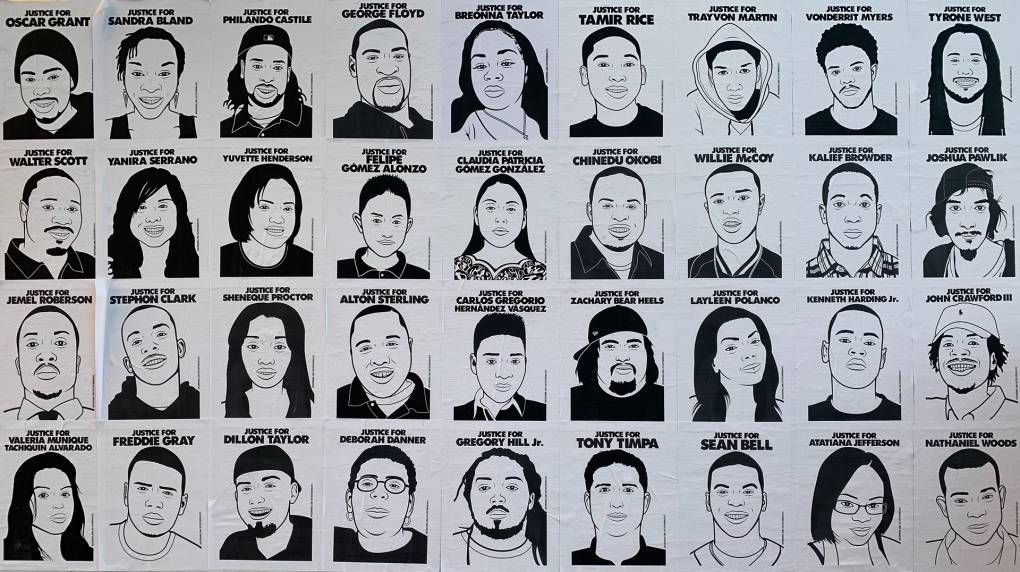
"caption": "Portraits by the Oakland artist Oree Originol of three dozen people slain, mostly by law enforcement officers, were on display at protests in Oakland last week.",
"description": "Portraits by the Oakland artist Oree Originol of three dozen people slain, mostly by law enforcement officers, were on display at protests in Oakland last week.",
"title": "Image from iOS",
"credit": "Erin Baldassari/KQED",
"status": "inherit",
"isLoading": false,
"fetchFailed": false
},
"news_12050547": {
"type": "attachments",
"id": "news_12050547",
"meta": {
"index": "attachments_1716263798",
"site": "news",
"id": "12050547",
"found": true
},
"title": "outside-lands-2025",
"publishDate": 1754006705,
"status": "inherit",
"parent": 12050338,
"modified": 1754006748,
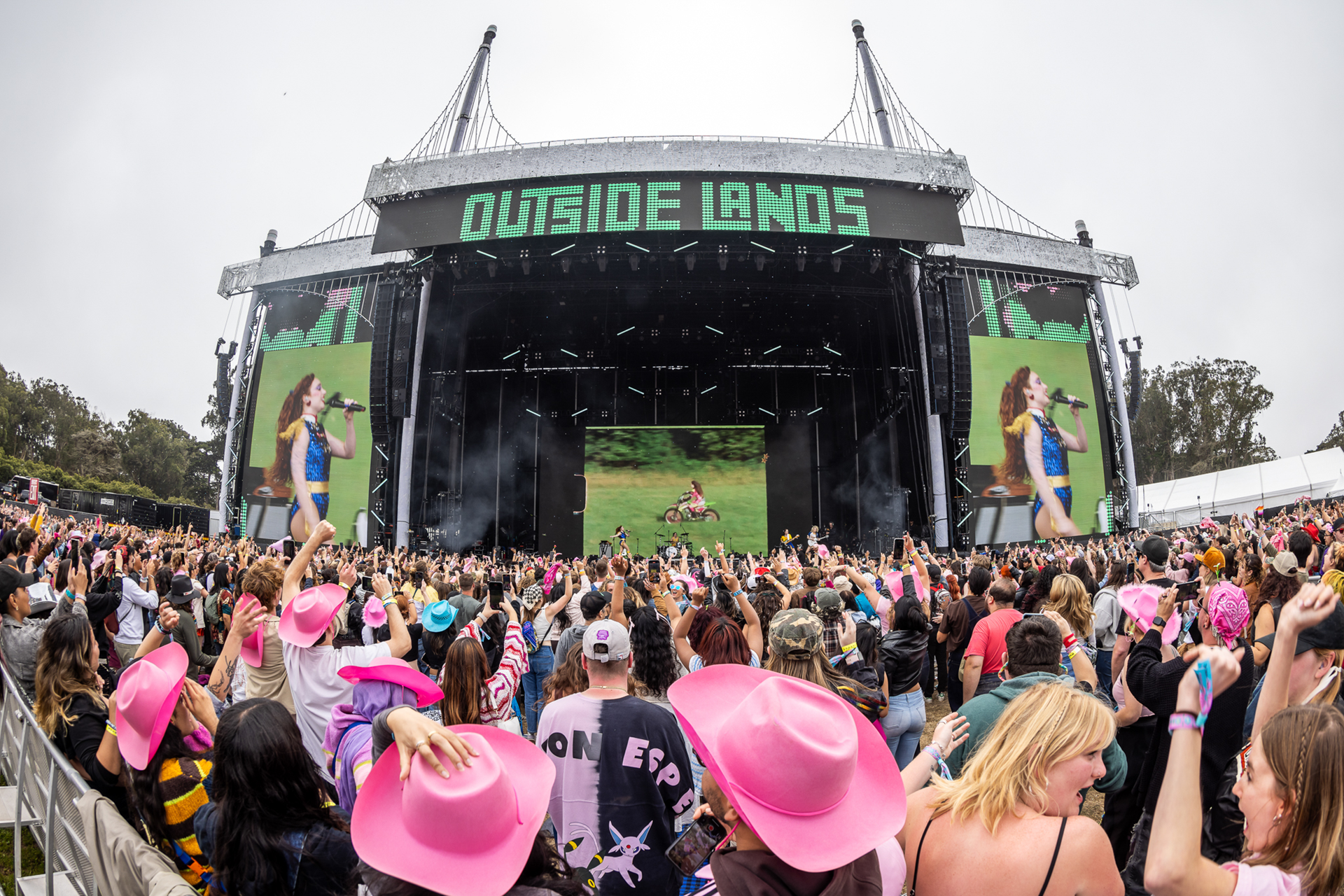
"caption": "Chappell Roan performs at Outside Lands 2024.",
"credit": "Alive Coverage/Outside Lands",
"altTag": null,
"description": null,
"imgSizes": {
"thumbnail": {
"file": "https://cdn.kqed.org/wp-content/uploads/sites/10/2025/07/outside-lands-2025-160x107.png",
"width": 160,
"height": 107,
"mimeType": "image/png"
},
"1536x1536": {
"file": "https://cdn.kqed.org/wp-content/uploads/sites/10/2025/07/outside-lands-2025-1536x1024.png",
"width": 1536,
"height": 1024,
"mimeType": "image/png"
},
"post-thumbnail": {
"file": "https://cdn.kqed.org/wp-content/uploads/sites/10/2025/07/outside-lands-2025-672x372.png",
"width": 672,
"height": 372,
"mimeType": "image/png"
},
"twentyfourteen-full-width": {
"file": "https://cdn.kqed.org/wp-content/uploads/sites/10/2025/07/outside-lands-2025-1038x576.png",
"width": 1038,
"height": 576,
"mimeType": "image/png"
},
"kqedFullSize": {
"file": "https://cdn.kqed.org/wp-content/uploads/sites/10/2025/07/outside-lands-2025.png",
"width": 1920,
"height": 1280
}
},
"isLoading": false,
"fetchFailed": false
},
"news_12050624": {
"type": "attachments",
"id": "news_12050624",
"meta": {
"index": "attachments_1716263798",
"site": "news",
"id": "12050624",
"found": true
},
"title": "jury-duty-california",
"publishDate": 1754069529,
"status": "inherit",
"parent": 12050406,
"modified": 1754069563,
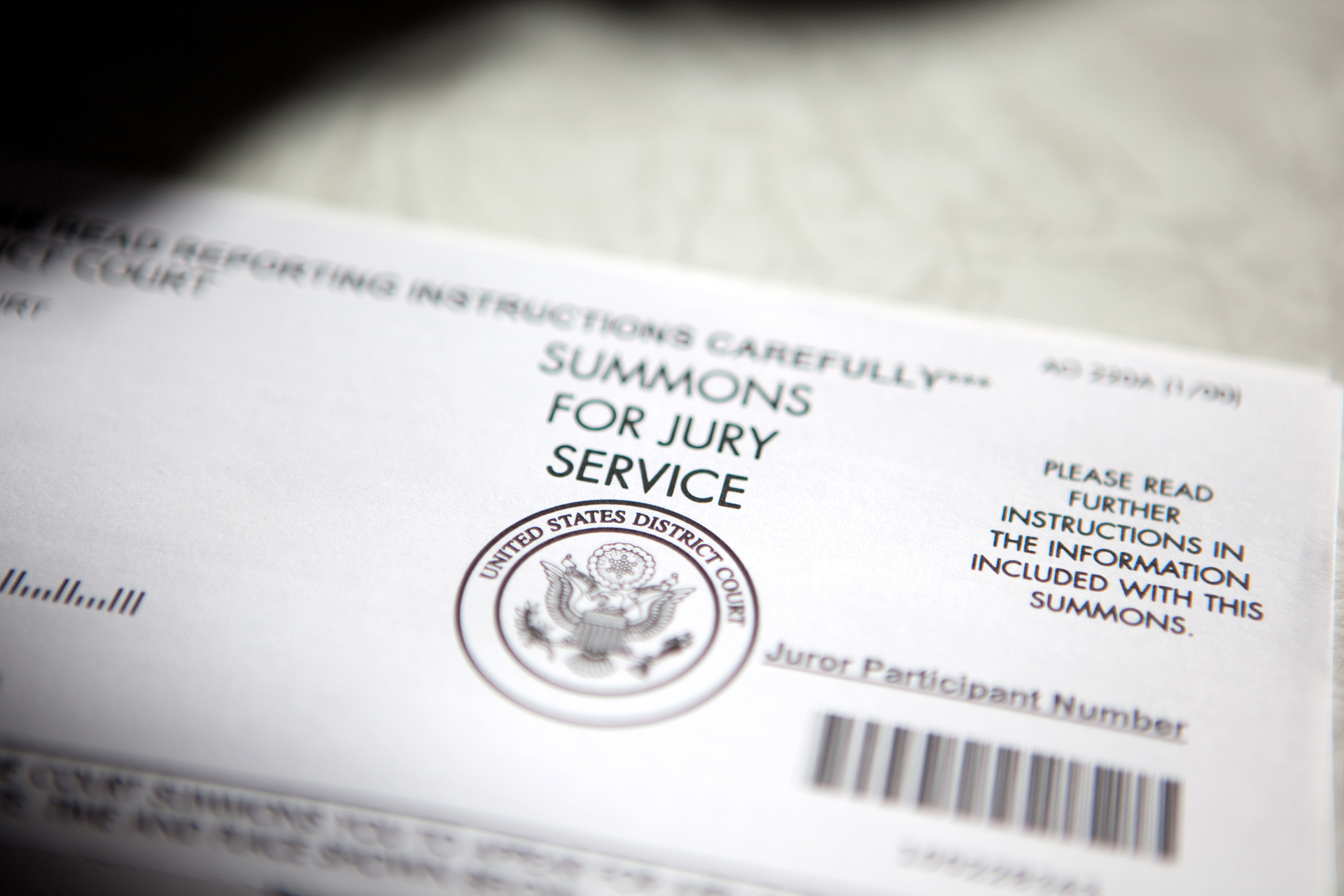
"caption": "What should you know about getting called up for jury duty in California?",
"credit": "iStock / Getty Images Plus",
"altTag": null,
"description": null,
"imgSizes": {
"thumbnail": {
"file": "https://cdn.kqed.org/wp-content/uploads/sites/10/2025/08/Jury-Duty-160x107.png",
"width": 160,
"height": 107,
"mimeType": "image/png"
},
"1536x1536": {
"file": "https://cdn.kqed.org/wp-content/uploads/sites/10/2025/08/Jury-Duty-1536x1024.png",
"width": 1536,
"height": 1024,
"mimeType": "image/png"
},
"post-thumbnail": {
"file": "https://cdn.kqed.org/wp-content/uploads/sites/10/2025/08/Jury-Duty-672x372.png",
"width": 672,
"height": 372,
"mimeType": "image/png"
},
"twentyfourteen-full-width": {
"file": "https://cdn.kqed.org/wp-content/uploads/sites/10/2025/08/Jury-Duty-1038x576.png",
"width": 1038,
"height": 576,
"mimeType": "image/png"
},
"kqedFullSize": {
"file": "https://cdn.kqed.org/wp-content/uploads/sites/10/2025/08/Jury-Duty.png",
"width": 1920,
"height": 1280
}
},
"isLoading": false,
"fetchFailed": false
},
"news_12050532": {
"type": "attachments",
"id": "news_12050532",
"meta": {
"index": "attachments_1716263798",
"site": "news",
"id": "12050532",
"found": true
},
"title": "Jerry Garcia [Death]",
"publishDate": 1754005383,
"status": "inherit",
"parent": 0,
"modified": 1754005420,
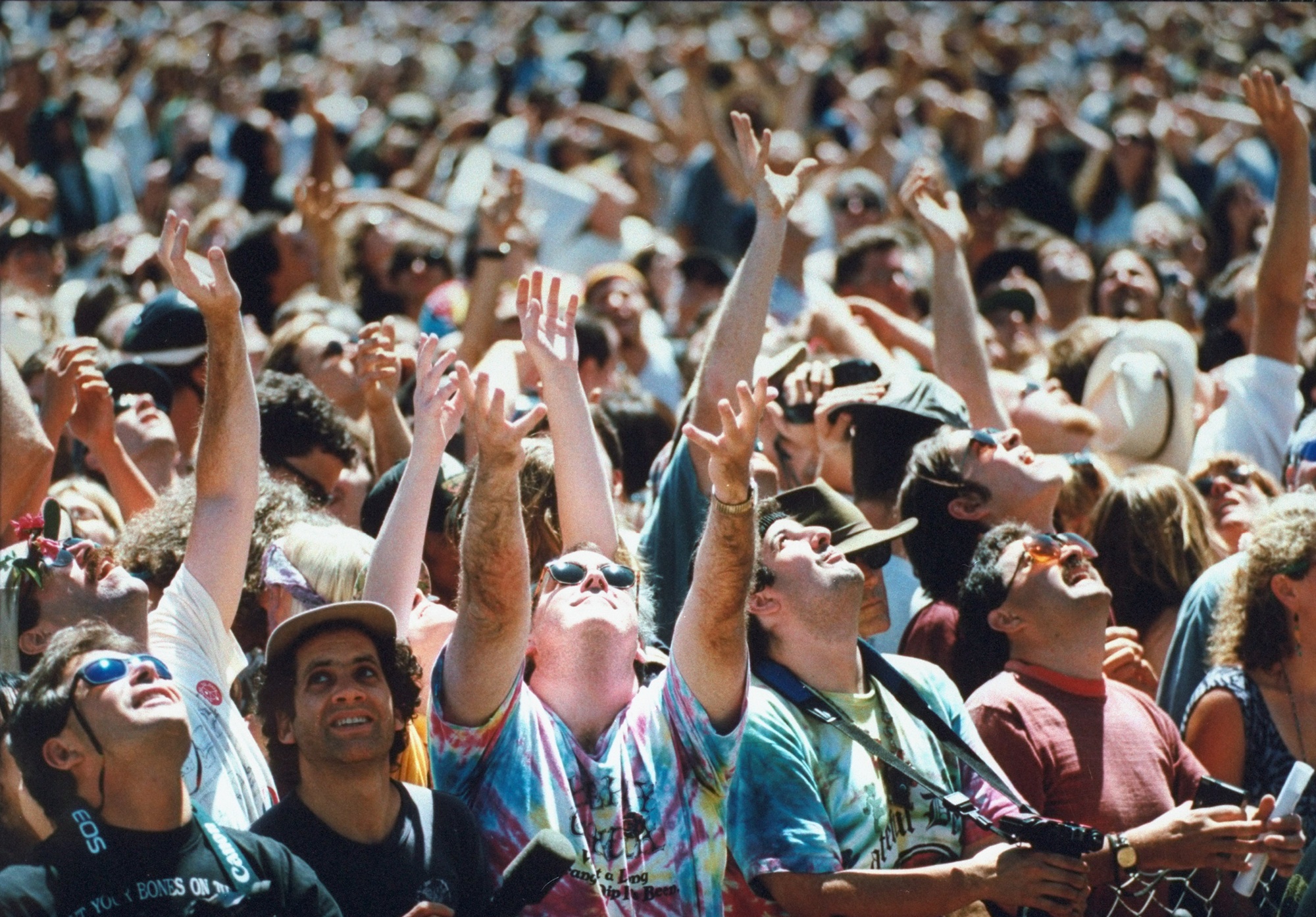
"caption": "Crowd of Deadheads gathered with arms up during a memorial service for Grateful Dead front man Jerry Garcia at Golden Gate Park. ",
"credit": "Kim Komenich/Getty Images",
"altTag": null,
"description": null,
"imgSizes": {
"thumbnail": {
"file": "https://cdn.kqed.org/wp-content/uploads/sites/10/2025/07/GratefulDeadGetty1-160x112.jpg",
"width": 160,
"height": 112,
"mimeType": "image/jpeg"
},
"1536x1536": {
"file": "https://cdn.kqed.org/wp-content/uploads/sites/10/2025/07/GratefulDeadGetty1-1536x1071.jpg",
"width": 1536,
"height": 1071,
"mimeType": "image/jpeg"
},
"post-thumbnail": {
"file": "https://cdn.kqed.org/wp-content/uploads/sites/10/2025/07/GratefulDeadGetty1-672x372.jpg",
"width": 672,
"height": 372,
"mimeType": "image/jpeg"
},
"twentyfourteen-full-width": {
"file": "https://cdn.kqed.org/wp-content/uploads/sites/10/2025/07/GratefulDeadGetty1-1038x576.jpg",
"width": 1038,
"height": 576,
"mimeType": "image/jpeg"
},
"kqedFullSize": {
"file": "https://cdn.kqed.org/wp-content/uploads/sites/10/2025/07/GratefulDeadGetty1.jpg",
"width": 2000,
"height": 1394
}
},
"isLoading": false,
"fetchFailed": false
},
"news_12050295": {
"type": "attachments",
"id": "news_12050295",
"meta": {
"index": "attachments_1716263798",
"site": "news",
"id": "12050295",
"found": true
},
"title": "Tsunami alerts issued at California Coast after magnitude 8.8 earthquake off Russia",
"publishDate": 1753907661,
"status": "inherit",
"parent": 12050282,
"modified": 1753914278,
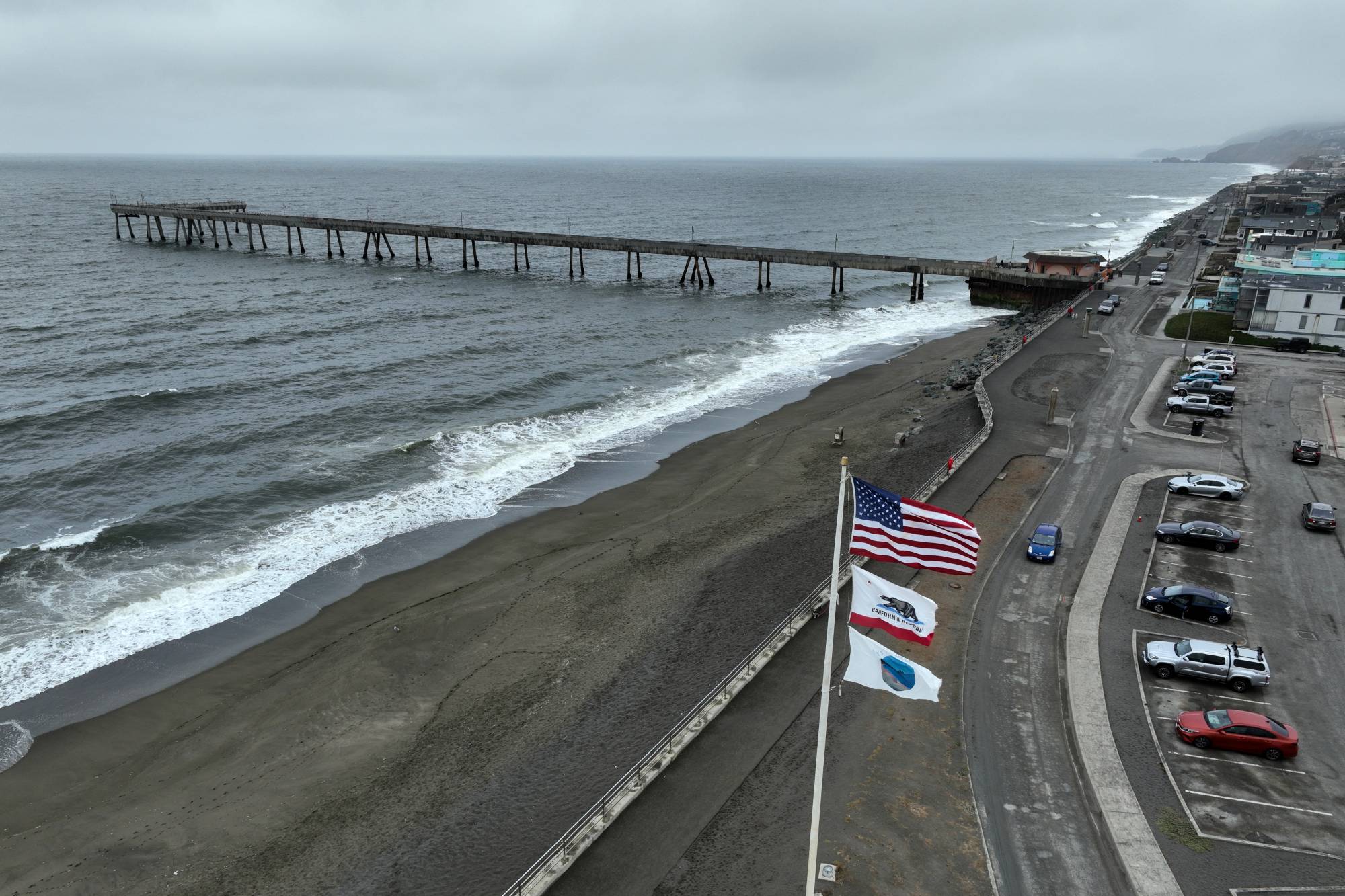
"caption": "A view of the Pacific Ocean along the coastline at Pacifica Municipal Pier in Pacifica, California, United States on July 30, 2025. Tsunami alerts were issued along the California Coast after a magnitude 8.8 earthquake off Russia.",
"credit": "Photo by Tayfun Coskun/Anadolu via Getty Images",
"altTag": null,
"description": null,
"imgSizes": {
"medium": {
"file": "https://cdn.kqed.org/wp-content/uploads/sites/10/2025/07/GettyImages-2227074366-2000x1333.jpg",
"width": 2000,
"height": 1333,
"mimeType": "image/jpeg"
},
"large": {
"file": "https://cdn.kqed.org/wp-content/uploads/sites/10/2025/07/GettyImages-2227074366-2000x1333.jpg",
"width": 2000,
"height": 1333,
"mimeType": "image/jpeg"
},
"thumbnail": {
"file": "https://cdn.kqed.org/wp-content/uploads/sites/10/2025/07/GettyImages-2227074366-160x107.jpg",
"width": 160,
"height": 107,
"mimeType": "image/jpeg"
},
"1536x1536": {
"file": "https://cdn.kqed.org/wp-content/uploads/sites/10/2025/07/GettyImages-2227074366-1536x1024.jpg",
"width": 1536,
"height": 1024,
"mimeType": "image/jpeg"
},
"2048x2048": {
"file": "https://cdn.kqed.org/wp-content/uploads/sites/10/2025/07/GettyImages-2227074366-2048x1365.jpg",
"width": 2048,
"height": 1365,
"mimeType": "image/jpeg"
},
"post-thumbnail": {
"file": "https://cdn.kqed.org/wp-content/uploads/sites/10/2025/07/GettyImages-2227074366-672x372.jpg",
"width": 672,
"height": 372,
"mimeType": "image/jpeg"
},
"twentyfourteen-full-width": {
"file": "https://cdn.kqed.org/wp-content/uploads/sites/10/2025/07/GettyImages-2227074366-1038x576.jpg",
"width": 1038,
"height": 576,
"mimeType": "image/jpeg"
},
"full-width": {
"file": "https://cdn.kqed.org/wp-content/uploads/sites/10/2025/07/GettyImages-2227074366-2000x1333.jpg",
"width": 2000,
"height": 1333,
"mimeType": "image/jpeg"
},
"kqedFullSize": {
"file": "https://cdn.kqed.org/wp-content/uploads/sites/10/2025/07/GettyImages-2227074366-scaled-e1758749155173.jpg",
"width": 2000,
"height": 1334
}
},
"isLoading": false,
"fetchFailed": false
},
"news_11901840": {
"type": "attachments",
"id": "news_11901840",
"meta": {
"index": "attachments_1716263798",
"site": "news",
"id": "11901840",
"found": true
},
"title": "OceanBeachTedG",
"publishDate": 1642278761,
"status": "inherit",
"parent": 11901839,
"modified": 1742593743,
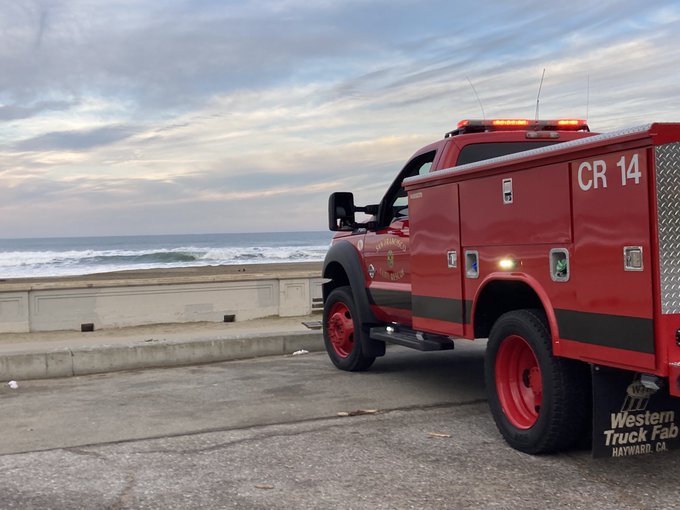
"caption": "Emergency crews patrolling Bay Area beaches, like Ocean Beach in San Francisco, after a tsunami advisory.",
"credit": "Ted Goldberg/KQED",
"altTag": "An emergency vehicle, red, sits on the right side of the frame facing Ocean Beach, which features stormy waves.",
"description": null,
"imgSizes": {
"thumbnail": {
"file": "https://cdn.kqed.org/wp-content/uploads/sites/10/2022/01/OceanBeachTedG-160x120.jpeg",
"width": 160,
"height": 120,
"mimeType": "image/jpeg"
},
"post-thumbnail": {
"file": "https://cdn.kqed.org/wp-content/uploads/sites/10/2022/01/OceanBeachTedG-672x372.jpeg",
"width": 672,
"height": 372,
"mimeType": "image/jpeg"
},
"kqedFullSize": {
"file": "https://cdn.kqed.org/wp-content/uploads/sites/10/2022/01/OceanBeachTedG.jpeg",
"width": 680,
"height": 510
}
},
"isLoading": false,
"fetchFailed": false
},
"news_12049693": {
"type": "attachments",
"id": "news_12049693",
"meta": {
"index": "attachments_1716263798",
"site": "news",
"id": "12049693",
"found": true
},
"title": "Fog 2",
"publishDate": 1753396768,
"status": "inherit",
"parent": 12049568,
"modified": 1753396787,
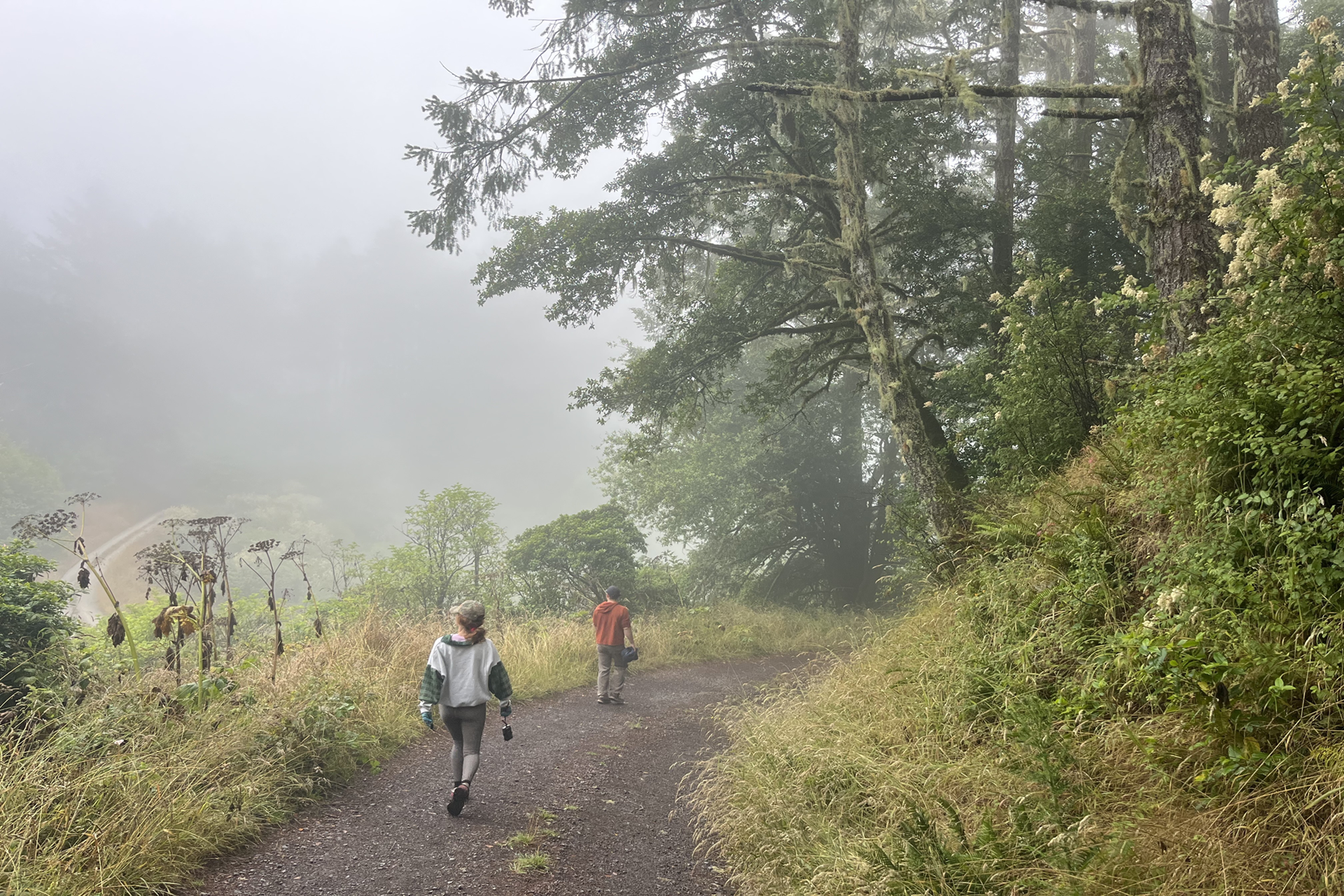
"caption": "Hikers explore Point Reyes shrouded in fog on July 20, 2025. \n",
"credit": "Sarah Wright/KQED",
"altTag": null,
"description": null,
"imgSizes": {
"thumbnail": {
"file": "https://cdn.kqed.org/wp-content/uploads/sites/10/2025/07/Fog-2-160x107.png",
"width": 160,
"height": 107,
"mimeType": "image/png"
},
"1536x1536": {
"file": "https://cdn.kqed.org/wp-content/uploads/sites/10/2025/07/Fog-2-1536x1024.png",
"width": 1536,
"height": 1024,
"mimeType": "image/png"
},
"post-thumbnail": {
"file": "https://cdn.kqed.org/wp-content/uploads/sites/10/2025/07/Fog-2-672x372.png",
"width": 672,
"height": 372,
"mimeType": "image/png"
},
"twentyfourteen-full-width": {
"file": "https://cdn.kqed.org/wp-content/uploads/sites/10/2025/07/Fog-2-1038x576.png",
"width": 1038,
"height": 576,
"mimeType": "image/png"
},
"kqedFullSize": {
"file": "https://cdn.kqed.org/wp-content/uploads/sites/10/2025/07/Fog-2.png",
"width": 1920,
"height": 1280
}
},
"isLoading": false,
"fetchFailed": false
},
"news_12049632": {
"type": "attachments",
"id": "news_12049632",
"meta": {
"index": "attachments_1716263798",
"site": "news",
"id": "12049632",
"found": true
},
"title": "07032019_sonomacoaststatepark_qed",
"publishDate": 1753390231,
"status": "inherit",
"parent": 12049616,
"modified": 1753390255,
"caption": "A hiker in Sonoma Coast State Park in March 2018.",
"credit": "Miranda Leitsinger/KQED",
"altTag": null,
"description": null,
"imgSizes": {
"thumbnail": {
"file": "https://cdn.kqed.org/wp-content/uploads/sites/10/2025/07/07032019_sonomacoaststatepark_qed-160x120.jpg",
"width": 160,
"height": 120,
"mimeType": "image/jpeg"
},
"1536x1536": {
"file": "https://cdn.kqed.org/wp-content/uploads/sites/10/2025/07/07032019_sonomacoaststatepark_qed-1536x1152.jpg",
"width": 1536,
"height": 1152,
"mimeType": "image/jpeg"
},
"post-thumbnail": {
"file": "https://cdn.kqed.org/wp-content/uploads/sites/10/2025/07/07032019_sonomacoaststatepark_qed-672x372.jpg",
"width": 672,
"height": 372,
"mimeType": "image/jpeg"
},
"twentyfourteen-full-width": {
"file": "https://cdn.kqed.org/wp-content/uploads/sites/10/2025/07/07032019_sonomacoaststatepark_qed-1038x576.jpg",
"width": 1038,
"height": 576,
"mimeType": "image/jpeg"
},
"kqedFullSize": {
"file": "https://cdn.kqed.org/wp-content/uploads/sites/10/2025/07/07032019_sonomacoaststatepark_qed.jpg",
"width": 1777,
"height": 1333
}
},
"isLoading": false,
"fetchFailed": false
},
"news_11997608": {
"type": "attachments",
"id": "news_11997608",
"meta": {
"index": "attachments_1716263798",
"site": "news",
"id": "11997608",
"found": true
},
"title": "2013 San Francisco Marathon",
"publishDate": 1722025402,
"status": "inherit",
"parent": 11997524,
"modified": 1722026405,
"caption": "Runners cross the Golden Gate Bridge during the 2013 San Francisco Marathon and Half-Marathon on June 16, 2013, in San Francisco. ",
"credit": "Ezra Shaw/Getty Images",
"altTag": null,
"description": null,
"imgSizes": {
"medium": {
"file": "https://cdn.kqed.org/wp-content/uploads/sites/10/2024/07/GettyImages-170700422-800x548.jpg",
"width": 800,
"height": 548,
"mimeType": "image/jpeg"
},
"large": {
"file": "https://cdn.kqed.org/wp-content/uploads/sites/10/2024/07/GettyImages-170700422-1020x699.jpg",
"width": 1020,
"height": 699,
"mimeType": "image/jpeg"
},
"thumbnail": {
"file": "https://cdn.kqed.org/wp-content/uploads/sites/10/2024/07/GettyImages-170700422-160x110.jpg",
"width": 160,
"height": 110,
"mimeType": "image/jpeg"
},
"post-thumbnail": {
"file": "https://cdn.kqed.org/wp-content/uploads/sites/10/2024/07/GettyImages-170700422-672x372.jpg",
"width": 672,
"height": 372,
"mimeType": "image/jpeg"
},
"twentyfourteen-full-width": {
"file": "https://cdn.kqed.org/wp-content/uploads/sites/10/2024/07/GettyImages-170700422-1024x576.jpg",
"width": 1024,
"height": 576,
"mimeType": "image/jpeg"
},
"kqedFullSize": {
"file": "https://cdn.kqed.org/wp-content/uploads/sites/10/2024/07/GettyImages-170700422.jpg",
"width": 1024,
"height": 702
}
},
"isLoading": false,
"fetchFailed": false
},
"news_12049457": {
"type": "attachments",
"id": "news_12049457",
"meta": {
"index": "attachments_1716263798",
"site": "news",
"id": "12049457",
"found": true
},
"title": "Muir Woods Exhibit (1)",
"publishDate": 1753310562,
"status": "inherit",
"parent": 12049405,
"modified": 1758226708,
"caption": "The Muir Woods 'History in Construction' Exhibit, which was put up in 2021 to honor previously undocumented contributions to the park's stewardship. Signs like this one were part of the Trump Administration's removal order.",
"credit": "Courtesy of NPS/Jace Ritchey",
"altTag": null,
"description": null,
"imgSizes": {
"thumbnail": {
"file": "https://cdn.kqed.org/wp-content/uploads/sites/10/2025/07/Muir-Woods-Exhibit-1-160x106.png",
"width": 160,
"height": 106,
"mimeType": "image/png"
},
"1536x1536": {
"file": "https://cdn.kqed.org/wp-content/uploads/sites/10/2025/07/Muir-Woods-Exhibit-1-1536x1022.png",
"width": 1536,
"height": 1022,
"mimeType": "image/png"
},
"post-thumbnail": {
"file": "https://cdn.kqed.org/wp-content/uploads/sites/10/2025/07/Muir-Woods-Exhibit-1-672x372.png",
"width": 672,
"height": 372,
"mimeType": "image/png"
},
"twentyfourteen-full-width": {
"file": "https://cdn.kqed.org/wp-content/uploads/sites/10/2025/07/Muir-Woods-Exhibit-1-1038x576.png",
"width": 1038,
"height": 576,
"mimeType": "image/png"
},
"kqedFullSize": {
"file": "https://cdn.kqed.org/wp-content/uploads/sites/10/2025/07/Muir-Woods-Exhibit-1.png",
"width": 1920,
"height": 1277
}
},
"isLoading": false,
"fetchFailed": false
}
},
"audioPlayerReducer": {
"postId": "stream_live",
"isPaused": true,
"isPlaying": false,
"pfsActive": false,
"pledgeModalIsOpen": true,
"playerDrawerIsOpen": false,
"liveAudioPlayStartedAt": 0,
"liveAudioPlayContext": ""
},
"authorsReducer": {
"slewis": {
"type": "authors",
"id": "8676",
"meta": {
"index": "authors_1716337520",
"id": "8676",
"found": true
},
"name": "Sukey Lewis",
"firstName": "Sukey",
"lastName": "Lewis",
"slug": "slewis",
"email": "slewis@kqed.org",
"display_author_email": true,
"staff_mastheads": [
"news"
],
"title": "KQED Contributor",
"bio": "Sukey Lewis is a criminal justice reporter and host of \u003cem>On Our Watch\u003c/em>, a new podcast from NPR and KQED about the shadow world of police discipline. In 2018, she co-founded the California Reporting Project, a coalition of newsrooms across the state focused on obtaining previously sealed internal affairs records from law enforcement. In addition to her reporting on police accountability, Sukey has investigated the bail bonds industry, California's wildfires and the high cost of prison phone calls. Sukey earned a master's degree in journalism from the University of California at Berkeley. Send news tips to slewis@kqed.org.",
"avatar": "https://secure.gravatar.com/avatar/03fd6b21024f99d8b0a1966654586de7?s=600&d=blank&r=g",
"twitter": "SukeyLewis",
"facebook": null,
"instagram": null,
"linkedin": null,
"sites": [
{
"site": "news",
"roles": [
"author",
"edit_others_posts"
]
}
],
"headData": {
"title": "Sukey Lewis | KQED",
"description": "KQED Contributor",
"ogImgSrc": "https://secure.gravatar.com/avatar/03fd6b21024f99d8b0a1966654586de7?s=600&d=blank&r=g",
"twImgSrc": "https://secure.gravatar.com/avatar/03fd6b21024f99d8b0a1966654586de7?s=600&d=blank&r=g"
},
"isLoading": false,
"link": "/author/slewis"
},
"ccabreralomeli": {
"type": "authors",
"id": "11708",
"meta": {
"index": "authors_1716337520",
"id": "11708",
"found": true
},
"name": "Carlos Cabrera-Lomelí",
"firstName": "Carlos",
"lastName": "Cabrera-Lomelí",
"slug": "ccabreralomeli",
"email": "ccabreralomeli@KQED.org",
"display_author_email": true,
"staff_mastheads": [
"news"
],
"title": "Community Reporter",
"bio": "Carlos Cabrera-Lomelí is a community reporter with KQED's digital engagement team. He also reports and co-produces for KQED's bilingual news hub KQED en Español. He grew up in San Francisco's Mission District and has previously worked with Univision, 48 Hills and REFORMA in Mexico City.",
"avatar": "https://secure.gravatar.com/avatar/c309be9665e484f887b818c89e273ecc673004f426f36b24d00a4d813a2e0518?s=600&d=blank&r=g",
"twitter": "@LomeliCabrera",
"bluesky": null,
"facebook": null,
"instagram": null,
"linkedin": null,
"sites": [
{
"site": "arts",
"roles": [
"editor"
]
},
{
"site": "news",
"roles": [
"editor"
]
},
{
"site": "about",
"roles": [
"editor"
]
},
{
"site": "science",
"roles": [
"editor"
]
},
{
"site": "perspectives",
"roles": [
"editor"
]
},
{
"site": "elections",
"roles": [
"editor"
]
},
{
"site": "liveblog",
"roles": [
"contributor"
]
}
],
"headData": {
"title": "Carlos Cabrera-Lomelí | KQED",
"description": "Community Reporter",
"ogImgSrc": "https://secure.gravatar.com/avatar/c309be9665e484f887b818c89e273ecc673004f426f36b24d00a4d813a2e0518?s=600&d=blank&r=g",
"twImgSrc": "https://secure.gravatar.com/avatar/c309be9665e484f887b818c89e273ecc673004f426f36b24d00a4d813a2e0518?s=600&d=blank&r=g"
},
"isLoading": false,
"link": "/author/ccabreralomeli"
},
"amadrigal": {
"type": "authors",
"id": "11757",
"meta": {
"index": "authors_1716337520",
"id": "11757",
"found": true
},
"name": "Alexis Madrigal",
"firstName": "Alexis",
"lastName": "Madrigal",
"slug": "amadrigal",
"email": "amadrigal@kqed.org",
"display_author_email": true,
"staff_mastheads": [],
"title": "Co-Host Forum",
"bio": "Alexis Madrigal is the co-host of Forum. He is also a contributing writer at \u003cem>The Atlantic \u003c/em>and the co-founder of the COVID Tracking Project. He's the creator of the podcast, \u003cem>Containers\u003c/em>, and has been a staff writer at \u003cem>Wired. \u003c/em>He was a visiting scholar at UC Berkeley's Information School, and is working on a book about Oakland and the Bay Area's revolutionary ideas.",
"avatar": "https://secure.gravatar.com/avatar/ffeee1fe99a3e31957381f377ca63502bdcc0c3dbccaaa701e579a10aa0c5e1f?s=600&d=blank&r=g",
"twitter": "alexismadrigal",
"bluesky": null,
"facebook": null,
"instagram": null,
"linkedin": null,
"sites": [
{
"site": "arts",
"roles": [
"editor"
]
},
{
"site": "news",
"roles": [
"editor"
]
},
{
"site": "forum",
"roles": [
"editor"
]
}
],
"headData": {
"title": "Alexis Madrigal | KQED",
"description": "Co-Host Forum",
"ogImgSrc": "https://secure.gravatar.com/avatar/ffeee1fe99a3e31957381f377ca63502bdcc0c3dbccaaa701e579a10aa0c5e1f?s=600&d=blank&r=g",
"twImgSrc": "https://secure.gravatar.com/avatar/ffeee1fe99a3e31957381f377ca63502bdcc0c3dbccaaa701e579a10aa0c5e1f?s=600&d=blank&r=g"
},
"isLoading": false,
"link": "/author/amadrigal"
},
"nkhan": {
"type": "authors",
"id": "11867",
"meta": {
"index": "authors_1716337520",
"id": "11867",
"found": true
},
"name": "Nisa Khan",
"firstName": "Nisa",
"lastName": "Khan",
"slug": "nkhan",
"email": "nkhan@kqed.org",
"display_author_email": false,
"staff_mastheads": [],
"title": "KQED Contributor",
"bio": "Nisa Khan is a reporter for KQED's Audience News Desk. She was formerly a data reporter at Michigan Radio. She earned a Bachelor of Science in Information from the University of Michigan and a Master of Arts in Communication from Stanford University.",
"avatar": "https://secure.gravatar.com/avatar/8720459eef081ff64582b3506b124d58523e80e120704a0cbd9892533c914991?s=600&d=blank&r=g",
"twitter": "mnisakhan",
"bluesky": null,
"facebook": null,
"instagram": null,
"linkedin": null,
"sites": [
{
"site": "arts",
"roles": [
"editor"
]
},
{
"site": "news",
"roles": [
"editor"
]
},
{
"site": "science",
"roles": [
"editor",
"author"
]
},
{
"site": "forum",
"roles": [
"editor"
]
},
{
"site": "liveblog",
"roles": [
"contributor"
]
}
],
"headData": {
"title": "Nisa Khan | KQED",
"description": "KQED Contributor",
"ogImgSrc": "https://secure.gravatar.com/avatar/8720459eef081ff64582b3506b124d58523e80e120704a0cbd9892533c914991?s=600&d=blank&r=g",
"twImgSrc": "https://secure.gravatar.com/avatar/8720459eef081ff64582b3506b124d58523e80e120704a0cbd9892533c914991?s=600&d=blank&r=g"
},
"isLoading": false,
"link": "/author/nkhan"
},
"mkessler": {
"type": "authors",
"id": "11912",
"meta": {
"index": "authors_1716337520",
"id": "11912",
"found": true
},
"name": "Mike Kessler",
"firstName": "Mike",
"lastName": "Kessler",
"slug": "mkessler",
"email": "mkessler@KQED.org",
"display_author_email": false,
"staff_mastheads": [],
"title": "KQED Contributor",
"bio": null,
"avatar": "https://secure.gravatar.com/avatar/32eb221cb40874894ae1a11599c50ca1?s=600&d=blank&r=g",
"twitter": null,
"facebook": null,
"instagram": null,
"linkedin": null,
"sites": [
{
"site": "",
"roles": [
"editor"
]
},
{
"site": "news",
"roles": [
"editor"
]
}
],
"headData": {
"title": "Mike Kessler | KQED",
"description": "KQED Contributor",
"ogImgSrc": "https://secure.gravatar.com/avatar/32eb221cb40874894ae1a11599c50ca1?s=600&d=blank&r=g",
"twImgSrc": "https://secure.gravatar.com/avatar/32eb221cb40874894ae1a11599c50ca1?s=600&d=blank&r=g"
},
"isLoading": false,
"link": "/author/mkessler"
},
"bkrans": {
"type": "authors",
"id": "11923",
"meta": {
"index": "authors_1716337520",
"id": "11923",
"found": true
},
"name": "Brian Krans",
"firstName": "Brian",
"lastName": "Krans",
"slug": "bkrans",
"email": "bkrans@kqed.org",
"display_author_email": false,
"staff_mastheads": [
"news"
],
"title": "KQED Contributing Reporter",
"bio": "Brian Krans is an award-winning local news and investigative reporter who has been proudly working as a general assignment reporter for KQED since August 2023. He lives in Richmond, where he also reports on air pollution for Richmondside. He is also a founding member of the Vallejo Sun.",
"avatar": "https://secure.gravatar.com/avatar/71fa91f931774612559f7640390b53d9c2840ff72b20f195a25239aab2d9fbb9?s=600&d=blank&r=g",
"twitter": "citizenkrans",
"bluesky": null,
"facebook": null,
"instagram": null,
"linkedin": null,
"sites": [
{
"site": "news",
"roles": [
"editor"
]
}
],
"headData": {
"title": "Brian Krans | KQED",
"description": "KQED Contributing Reporter",
"ogImgSrc": "https://secure.gravatar.com/avatar/71fa91f931774612559f7640390b53d9c2840ff72b20f195a25239aab2d9fbb9?s=600&d=blank&r=g",
"twImgSrc": "https://secure.gravatar.com/avatar/71fa91f931774612559f7640390b53d9c2840ff72b20f195a25239aab2d9fbb9?s=600&d=blank&r=g"
},
"isLoading": false,
"link": "/author/bkrans"
},
"sarahwright": {
"type": "authors",
"id": "11956",
"meta": {
"index": "authors_1716337520",
"id": "11956",
"found": true
},
"name": "Sarah Wright",
"firstName": "Sarah",
"lastName": "Wright",
"slug": "sarahwright",
"email": "swright@kqed.org",
"display_author_email": true,
"staff_mastheads": [],
"title": "Outdoors Engagement Reporter",
"bio": "Sarah Wright is KQED's Outdoors Engagement Reporter. Originally from Lake Tahoe, she completed a thru-hike of the Pacific Crest Trail in 2019 and was a U.S. Fulbright Program grantee to Argentina in 2023. Her journalism has appeared in The Guardian, The San Francisco Standard, The Palo Alto Weekly and the Half Moon Bay Review.",
"avatar": "https://secure.gravatar.com/avatar/c161a3d6441865cba25e6db4fa561099ad665799e9432e34da2b84d7e371524c?s=600&d=blank&r=g",
"twitter": null,
"bluesky": null,
"facebook": null,
"instagram": null,
"linkedin": null,
"sites": [
{
"site": "arts",
"roles": [
"editor"
]
},
{
"site": "news",
"roles": [
"editor"
]
},
{
"site": "science",
"roles": [
"contributor",
"author"
]
},
{
"site": "forum",
"roles": [
"editor"
]
}
],
"headData": {
"title": "Sarah Wright | KQED",
"description": "Outdoors Engagement Reporter",
"ogImgSrc": "https://secure.gravatar.com/avatar/c161a3d6441865cba25e6db4fa561099ad665799e9432e34da2b84d7e371524c?s=600&d=blank&r=g",
"twImgSrc": "https://secure.gravatar.com/avatar/c161a3d6441865cba25e6db4fa561099ad665799e9432e34da2b84d7e371524c?s=600&d=blank&r=g"
},
"isLoading": false,
"link": "/author/sarahwright"
}
},
"pagesReducer": {
"news_category_guides-and-explainers": {
"type": "terms",
"id": "news_34168",
"meta": {
"index": "terms_1716263798",
"site": "news",
"id": "34168",
"score": 14.406026
},
"name": "Guides and Explainers",
"slug": "guides-and-explainers",
"taxonomy": "category",
"description": null,
"featImg": null,
"headData": {
"title": "Guides and Explainers Archives | KQED News",
"description": null,
"ogTitle": null,
"ogDescription": null,
"ogImgId": null,
"twTitle": null,
"twDescription": null,
"twImgId": null
},
"ttid": 34185,
"isLoading": false,
"title": "Guides and Explainers",
"pageMeta": {
"site": "news",
"WpPageTemplate": "page-topic-editorial",
"currentPage": 24
},
"blocks": [
{
"blockName": "kqed/post-list",
"attrs": {
"layout": "cardArticle2",
"query": "posts/news?category=guides-and-explainers",
"seeMore": false,
"paginated": true,
"page": 24
}
},
{
"blockName": "kqed/ad"
}
]
}
},
"pfsSessionReducer": {},
"postsReducer": {
"stream_live": {
"type": "live",
"id": "stream_live",
"audioUrl": "https://streams.kqed.org/kqedradio",
"title": "Live Stream",
"excerpt": "Live Stream information currently unavailable.",
"link": "/radio",
"featImg": "",
"label": {
"name": "KQED Live",
"link": "/"
}
},
"stream_kqedNewscast": {
"type": "posts",
"id": "stream_kqedNewscast",
"audioUrl": "https://www.kqed.org/.stream/anon/radio/RDnews/newscast.mp3?_=1",
"title": "KQED Newscast",
"featImg": "",
"label": {
"name": "88.5 FM",
"link": "/"
}
},
"news_12051104": {
"type": "posts",
"id": "news_12051104",
"meta": {
"index": "posts_1716263798",
"site": "news",
"id": "12051104",
"score": null,
"sort": [
1754564447000
]
},
"guestAuthors": [],
"slug": "covered-california-is-dropping-daca-recipients-whats-available-now",
"title": "Covered California Is Dropping DACA Recipients. What's Available Now?",
"publishDate": 1754564447,
"format": "standard",
"headTitle": "Covered California Is Dropping DACA Recipients. What’s Available Now? | KQED",
"labelTerm": {
"site": "news"
},
"content": "\u003cp>\u003ca href=\"https://www.kqed.org/news/12052590/fin-de-covered-california-para-beneficiarios-de-daca\">\u003cem>Leer en español\u003c/em>\u003c/a>\u003c/p>\n\u003cp>On Aug. 31, Covered California, the state’s health insurance marketplace, will stop offering coverage to residents who are part of the \u003ca href=\"https://www.kqed.org/news/tag/daca\">Deferred Action for Childhood Arrivals\u003c/a> program.\u003c/p>\n\u003cp>This means DACA recipients who currently have health insurance through Covered California, approximately 2,300 people statewide, will lose their existing coverage by the end of the month.\u003c/p>\n\u003cp>State officials \u003ca href=\"https://www.coveredca.com/newsroom/news-releases/2025/07/31/covered-california-offers-information-and-resources-for-daca-recipients-no-longer-eligible-for-affordable-care-act-coverage/\">are complying with new rules\u003c/a> from President Donald Trump’s administration, which \u003ca href=\"https://www.cms.gov/newsroom/fact-sheets/2025-marketplace-integrity-and-affordability-final-rule\">block DACA recipients\u003c/a> from seeking insurance in state marketplaces created by the Affordable Care Act and also disqualify them from federal funds to help pay for their health plans.\u003c/p>\n\u003cp>[ad fullwidth]\u003c/p>\n\u003cp>“We were at the start of a journey to expand coverage to our DACA recipients and were incredibly excited to do that,” said Jessica Altman, executive director of Covered California. “Unfortunately, we’re gonna have to move backwards.”\u003c/p>\n\u003cp>If you’re on DACA or you know someone who is, keep reading for what to know about these upcoming changes to Covered California.\u003c/p>\n\u003ch2>Which DACA recipients are affected by these new rules?\u003c/h2>\n\u003cp>More than 164,000 DACA recipients \u003ca href=\"https://www.uscis.gov/sites/default/files/document/data/Active_DACA_Recipients_March_FY23_qtr2.pdf\">live in California\u003c/a>. Many of them have health insurance through their jobs, their family or through Medi-Cal (the state’s Medicaid program).\u003c/p>\n\u003cp>If this is your situation, these changes at the federal level will \u003cem>not \u003c/em>impact your coverage.\u003c/p>\n\u003cfigure id=\"attachment_12040806\" class=\"wp-caption aligncenter\" style=\"max-width: 2000px\">\u003cimg loading=\"lazy\" decoding=\"async\" class=\"size-full wp-image-12040806\" src=\"https://cdn.kqed.org/wp-content/uploads/sites/10/2025/05/250506-SACRAMENTOFILE-04-BL-KQED.jpg\" alt=\"\" width=\"2000\" height=\"1333\" srcset=\"https://cdn.kqed.org/wp-content/uploads/sites/10/2025/05/250506-SACRAMENTOFILE-04-BL-KQED.jpg 2000w, https://cdn.kqed.org/wp-content/uploads/sites/10/2025/05/250506-SACRAMENTOFILE-04-BL-KQED-800x533.jpg 800w, https://cdn.kqed.org/wp-content/uploads/sites/10/2025/05/250506-SACRAMENTOFILE-04-BL-KQED-1020x680.jpg 1020w, https://cdn.kqed.org/wp-content/uploads/sites/10/2025/05/250506-SACRAMENTOFILE-04-BL-KQED-160x107.jpg 160w, https://cdn.kqed.org/wp-content/uploads/sites/10/2025/05/250506-SACRAMENTOFILE-04-BL-KQED-1536x1024.jpg 1536w, https://cdn.kqed.org/wp-content/uploads/sites/10/2025/05/250506-SACRAMENTOFILE-04-BL-KQED-1920x1280.jpg 1920w\" sizes=\"auto, (max-width: 2000px) 100vw, 2000px\">\u003cfigcaption class=\"wp-caption-text\">The California State Capitol in Sacramento on May 6, 2025. \u003ccite>(Beth LaBerge/KQED)\u003c/cite>\u003c/figcaption>\u003c/figure>\n\u003cp>If you bought your plan by visiting the Covered California website or calling the agency’s number or signed up with the help of a community organization, you’ll receive a letter, email or call in the coming days from a Covered California representative about your coverage ending.\u003c/p>\n\u003cp>If you have health insurance but don’t remember how you found your plan, you can double-check by logging into \u003ca href=\"https://www.coveredca.com/\">Covered California’s website\u003c/a> or calling directly at 800-300-1506.\u003c/p>\n\u003cp>“The vast majority of DACA recipients in California are not going to see changes in their coverage,” Altman said. “You can always call Covered California and double-check if you want to be sure.”\u003c/p>\n\u003ch2>If I’m about to lose my Covered California health care because I’m on DACA, what can I do?\u003c/h2>\n\u003cp>The best thing you can do right now is educate yourself on how your access to health care will change, Altman said. After Aug. 31, DACA recipients who lose their Covered California plans can still get health care through other methods:\u003c/p>\n\u003cp>\u003cstrong>An employer\u003c/strong>\u003c/p>\n\u003cp>If you currently work for an employer that offers health care benefits or you know you will in the future, ask your boss or human resources department about what you need to join a plan.\u003c/p>\n\u003cp>\u003cstrong>A family member\u003c/strong>\u003c/p>\n\u003cp>If their job covers your spouse or parents, check in with them about possibly joining their plan as a dependent. Some companies even allow domestic partners to be added, but this varies by employer.[aside postID=news_12050993 hero='https://cdn.kqed.org/wp-content/uploads/sites/10/2025/07/250718-RIDEALONGRAPIDRESPONSE-10-BL-KQED.jpg']\u003c/p>\n\u003cp>\u003cstrong>Medi-Cal (aka Medicaid in California)\u003c/strong>\u003c/p>\n\u003cp>More than 1.6 million low-income undocumented Californians are currently covered by an extension of Medi-Cal that is solely funded by the state, not the federal government. After Aug. 31, DACA recipients will have to contact \u003ca href=\"https://www.dhcs.ca.gov/services/medi-cal/Pages/CountyOffices.aspx\">their county’s Medi-Cal office\u003c/a> directly to apply for coverage. (\u003ca href=\"https://www.dhcs.ca.gov/services/medi-cal/Pages/DoYouQualifyForMedi-Cal.aspx\">Check the income-based eligibility limits for Medi-Cal\u003c/a>.)\u003c/p>\n\u003cp>Keep in mind, however, that time is running out for this option: state officials plan to \u003ca href=\"https://www.kqed.org/news/12047647/trumps-health-law-spurs-big-medi-cal-changes-what-californians-need-to-know\">freeze new Medi-Cal enrollment\u003c/a> for undocumented immigrants who are 19 and older at the start of 2026.\u003c/p>\n\u003cp>\u003cstrong>Your county\u003c/strong>\u003c/p>\n\u003cp>A few Bay Area counties have programs that help cover the costs of specific health services for uninsured people, which don’t exclude DACA recipients, including:\u003c/p>\n\u003cul>\n\u003cli>\u003ca href=\"https://healthysanfrancisco.org/visitors/are-you-eligible/\">Healthy San Francisco\u003c/a>, which covers primary and specialty care for city residents who don’t qualify for Medi-Cal or Covered California, regardless of immigration status\u003c/li>\n\u003cli>Contra Costa County’s \u003ca href=\"https://www.cchealth.org/health-insurance/get-insured/basic-health-care\">Basic Health Care\u003c/a> program for people making less than 300% of the federal poverty level who can’t join Medi-Cal\u003c/li>\n\u003c/ul>\n\u003cp>Other counties, like Santa Clara, \u003ca href=\"https://health.santaclaracounty.gov/get-help-finding-healthcare-coverage\">have their own health systems\u003c/a> and offer financial aid for certain treatments, depending on your income.\u003c/p>\n\u003cp>\u003cstrong>Individual health plans\u003c/strong>\u003c/p>\n\u003cp>While DACA recipients can no longer look for new health care plans on the Covered California website after Aug. 25, you can still go to the websites of individual insurance companies and buy a plan. But without the subsidies from Covered California, you would have to pay for the full cost of premiums and deductibles.\u003c/p>\n\u003cp>\u003cstrong>Community clinics\u003c/strong>\u003c/p>\n\u003cp>If you end up uninsured for some time after Aug. 31, remember that there are multiple community clinics in California that offer basic care for free or at a sliding scale. The services provided by these clinics, however, are limited and cannot match the range covered by an HMO or PPO plan.\u003c/p>\n\u003cp>In the Bay Area, some community clinics serving uninsured residents are:\u003c/p>\n\u003cfigure id=\"attachment_12051124\" class=\"wp-caption aligncenter\" style=\"max-width: 1999px\">\u003cimg loading=\"lazy\" decoding=\"async\" class=\"size-full wp-image-12051124\" src=\"https://cdn.kqed.org/wp-content/uploads/sites/10/2025/08/479421059_qed-1.jpg\" alt=\"\" width=\"1999\" height=\"1333\" srcset=\"https://cdn.kqed.org/wp-content/uploads/sites/10/2025/08/479421059_qed-1.jpg 1999w, https://cdn.kqed.org/wp-content/uploads/sites/10/2025/08/479421059_qed-1-160x107.jpg 160w, https://cdn.kqed.org/wp-content/uploads/sites/10/2025/08/479421059_qed-1-1536x1024.jpg 1536w\" sizes=\"auto, (max-width: 1999px) 100vw, 1999px\">\u003cfigcaption class=\"wp-caption-text\">The Covered California website is displayed during a health care enrollment fair at the office of SEIU-United Healthcare Workers West on March 18, 2014, in San Francisco, California. \u003ccite>(Justin Sullivan/Getty Images)\u003c/cite>\u003c/figcaption>\u003c/figure>\n\u003cp>\u003cstrong>San Francisco Free Clinic:\u003c/strong> Offers primary care to uninsured people. To make an appointment, call 415-750-9894 from 10 a.m. to 4:30 p.m., Monday through Friday. \u003cem>Located at 4900 California St., in San Francisco.\u003c/em>\u003c/p>\n\u003cp>\u003cstrong>RotaCare Bay Area Clinics:\u003c/strong> A network of volunteers travel around the Bay Area staffing clinics that serve uninsured residents a few times each month. \u003cem>Locations served include Daly City, Half Moon Bay, Pittsburg, San José, San Pablo and San Rafael.\u003c/em>\u003c/p>\n\u003cp>\u003cstrong>Ashland Free Medical Clinic:\u003c/strong> Offers remote and in-person primary care, optometry and mental health services on Saturdays. Call 510-407-2362 ahead of time to check eligibility. \u003cem>Located at 6539 Ashland Ave., in San Lorenzo.\u003c/em>\u003c/p>\n\u003cp>\u003cstrong>Jewish Community Free Clinic:\u003c/strong> Offers primary care, testing, acupuncture and therapy services. Fill out \u003ca href=\"https://www.jewishfreeclinic.org/contact-us-and-directions\">an online form to request an appointment\u003c/a>, which can also happen virtually. \u003cem>Located at 50 Montgomery Drive, in Santa Rosa.\u003c/em>\u003c/p>\n\u003ch2>Keep communicating with your doctors\u003c/h2>\n\u003cp>As you decide what you’ll do after Aug. 31, keep your primary care doctor, along with any specialists you see, in the loop about your situation. If you end up changing your healthcare provider, let your doctor know ahead of time so they can advise you on how you can access your medical information once you make the switch.\u003c/p>\n\u003cp>If you are receiving treatment for a chronic health condition, make a plan with your physician on how to continue receiving the care you need after Aug. 31.\u003c/p>\n\u003cp>If you go to therapy with your old health plan and will be uninsured after Aug. 31, you can ask your therapist to refer you to sliding-scale therapy services or check out \u003ca href=\"https://www.kqed.org/arts/13881725/where-to-find-affordable-culturally-competent-therapy-in-bay-area-and-beyond\">KQED’s guide on how to find affordable therapy in the Bay Area\u003c/a>.\u003c/p>\n\u003cp>[ad floatright]\u003c/p>\n",
"blocks": [],
"excerpt": "Starting Aug. 31, DACA recipients will no longer be able to find health care plans through Covered California. There are some limited options available.",
"status": "publish",
"parent": 0,
"modified": 1755630552,
"stats": {
"hasAudio": false,
"hasVideo": false,
"hasChartOrMap": false,
"iframeSrcs": [],
"hasGoogleForm": false,
"hasGallery": false,
"hasHearkenModule": false,
"hasPolis": false,
"paragraphCount": 36,
"wordCount": 1175
},
"headData": {
"title": "Covered California Is Dropping DACA Recipients. What's Available Now? | KQED",
"description": "Starting Aug. 31, DACA recipients will no longer be able to find health care plans through Covered California. There are some limited options available.",
"ogTitle": "",
"ogDescription": "",
"ogImgId": "",
"twTitle": "",
"twDescription": "",
"twImgId": "",
"translatedArticles": [
{
"path": "/news/12051104/covered-california-is-dropping-daca-recipients-whats-available-now",
"lang": "en"
},
{
"path": "/news/12052590/fin-de-covered-california-para-beneficiarios-de-daca",
"lang": "es"
}
],
"schema": {
"@context": "https://schema.org",
"@type": "NewsArticle",
"headline": "Covered California Is Dropping DACA Recipients. What's Available Now?",
"datePublished": "2025-08-07T04:00:47-07:00",
"dateModified": "2025-08-19T12:09:12-07:00",
"image": "https://cdn.kqed.org/wp-content/uploads/2020/02/KQED-OG-Image@1x.png",
"isAccessibleForFree": "True",
"publisher": {
"@type": "NewsMediaOrganization",
"@id": "https://www.kqed.org/#organization",
"name": "KQED",
"logo": "https://cdn.kqed.org/wp-content/uploads/2020/02/KQED-OG-Image@1x.png",
"url": "https://www.kqed.org",
"sameAs": [
"https://www.facebook.com/KQED",
"https://twitter.com/KQED",
"https://www.instagram.com/kqed/",
"https://www.tiktok.com/@kqedofficial",
"https://www.linkedin.com/company/kqed",
"https://www.youtube.com/channel/UCeC0IOo7i1P_61zVUWbJ4nw"
]
}
}
},
"primaryCategory": {
"termId": 8,
"slug": "news",
"name": "News"
},
"sticky": false,
"nprStoryId": "kqed-12051104",
"templateType": "standard",
"featuredImageType": "standard",
"excludeFromSiteSearch": "Include",
"articleAge": "0",
"path": "/news/12051104/covered-california-is-dropping-daca-recipients-whats-available-now",
"audioTrackLength": null,
"parsedContent": [
{
"type": "contentString",
"content": "\u003cdiv class=\"post-body\">\u003cp>\u003cp>\u003ca href=\"https://www.kqed.org/news/12052590/fin-de-covered-california-para-beneficiarios-de-daca\">\u003cem>Leer en español\u003c/em>\u003c/a>\u003c/p>\n\u003cp>On Aug. 31, Covered California, the state’s health insurance marketplace, will stop offering coverage to residents who are part of the \u003ca href=\"https://www.kqed.org/news/tag/daca\">Deferred Action for Childhood Arrivals\u003c/a> program.\u003c/p>\n\u003cp>This means DACA recipients who currently have health insurance through Covered California, approximately 2,300 people statewide, will lose their existing coverage by the end of the month.\u003c/p>\n\u003cp>State officials \u003ca href=\"https://www.coveredca.com/newsroom/news-releases/2025/07/31/covered-california-offers-information-and-resources-for-daca-recipients-no-longer-eligible-for-affordable-care-act-coverage/\">are complying with new rules\u003c/a> from President Donald Trump’s administration, which \u003ca href=\"https://www.cms.gov/newsroom/fact-sheets/2025-marketplace-integrity-and-affordability-final-rule\">block DACA recipients\u003c/a> from seeking insurance in state marketplaces created by the Affordable Care Act and also disqualify them from federal funds to help pay for their health plans.\u003c/p>\n\u003cp>\u003c/p>\u003c/div>",
"attributes": {
"named": {},
"numeric": []
}
},
{
"type": "component",
"content": "",
"name": "ad",
"attributes": {
"named": {
"label": "fullwidth"
},
"numeric": [
"fullwidth"
]
}
},
{
"type": "contentString",
"content": "\u003cdiv class=\"post-body\">\u003cp>\u003c/p>\n\u003cp>“We were at the start of a journey to expand coverage to our DACA recipients and were incredibly excited to do that,” said Jessica Altman, executive director of Covered California. “Unfortunately, we’re gonna have to move backwards.”\u003c/p>\n\u003cp>If you’re on DACA or you know someone who is, keep reading for what to know about these upcoming changes to Covered California.\u003c/p>\n\u003ch2>Which DACA recipients are affected by these new rules?\u003c/h2>\n\u003cp>More than 164,000 DACA recipients \u003ca href=\"https://www.uscis.gov/sites/default/files/document/data/Active_DACA_Recipients_March_FY23_qtr2.pdf\">live in California\u003c/a>. Many of them have health insurance through their jobs, their family or through Medi-Cal (the state’s Medicaid program).\u003c/p>\n\u003cp>If this is your situation, these changes at the federal level will \u003cem>not \u003c/em>impact your coverage.\u003c/p>\n\u003cfigure id=\"attachment_12040806\" class=\"wp-caption aligncenter\" style=\"max-width: 2000px\">\u003cimg loading=\"lazy\" decoding=\"async\" class=\"size-full wp-image-12040806\" src=\"https://cdn.kqed.org/wp-content/uploads/sites/10/2025/05/250506-SACRAMENTOFILE-04-BL-KQED.jpg\" alt=\"\" width=\"2000\" height=\"1333\" srcset=\"https://cdn.kqed.org/wp-content/uploads/sites/10/2025/05/250506-SACRAMENTOFILE-04-BL-KQED.jpg 2000w, https://cdn.kqed.org/wp-content/uploads/sites/10/2025/05/250506-SACRAMENTOFILE-04-BL-KQED-800x533.jpg 800w, https://cdn.kqed.org/wp-content/uploads/sites/10/2025/05/250506-SACRAMENTOFILE-04-BL-KQED-1020x680.jpg 1020w, https://cdn.kqed.org/wp-content/uploads/sites/10/2025/05/250506-SACRAMENTOFILE-04-BL-KQED-160x107.jpg 160w, https://cdn.kqed.org/wp-content/uploads/sites/10/2025/05/250506-SACRAMENTOFILE-04-BL-KQED-1536x1024.jpg 1536w, https://cdn.kqed.org/wp-content/uploads/sites/10/2025/05/250506-SACRAMENTOFILE-04-BL-KQED-1920x1280.jpg 1920w\" sizes=\"auto, (max-width: 2000px) 100vw, 2000px\">\u003cfigcaption class=\"wp-caption-text\">The California State Capitol in Sacramento on May 6, 2025. \u003ccite>(Beth LaBerge/KQED)\u003c/cite>\u003c/figcaption>\u003c/figure>\n\u003cp>If you bought your plan by visiting the Covered California website or calling the agency’s number or signed up with the help of a community organization, you’ll receive a letter, email or call in the coming days from a Covered California representative about your coverage ending.\u003c/p>\n\u003cp>If you have health insurance but don’t remember how you found your plan, you can double-check by logging into \u003ca href=\"https://www.coveredca.com/\">Covered California’s website\u003c/a> or calling directly at 800-300-1506.\u003c/p>\n\u003cp>“The vast majority of DACA recipients in California are not going to see changes in their coverage,” Altman said. “You can always call Covered California and double-check if you want to be sure.”\u003c/p>\n\u003ch2>If I’m about to lose my Covered California health care because I’m on DACA, what can I do?\u003c/h2>\n\u003cp>The best thing you can do right now is educate yourself on how your access to health care will change, Altman said. After Aug. 31, DACA recipients who lose their Covered California plans can still get health care through other methods:\u003c/p>\n\u003cp>\u003cstrong>An employer\u003c/strong>\u003c/p>\n\u003cp>If you currently work for an employer that offers health care benefits or you know you will in the future, ask your boss or human resources department about what you need to join a plan.\u003c/p>\n\u003cp>\u003cstrong>A family member\u003c/strong>\u003c/p>\n\u003cp>If their job covers your spouse or parents, check in with them about possibly joining their plan as a dependent. Some companies even allow domestic partners to be added, but this varies by employer.\u003c/p>\u003c/div>",
"attributes": {
"named": {},
"numeric": []
}
},
{
"type": "component",
"content": "",
"name": "aside",
"attributes": {
"named": {
"postid": "news_12050993",
"hero": "https://cdn.kqed.org/wp-content/uploads/sites/10/2025/07/250718-RIDEALONGRAPIDRESPONSE-10-BL-KQED.jpg",
"label": ""
},
"numeric": []
}
},
{
"type": "contentString",
"content": "\u003cdiv class=\"post-body\">\u003cp>\u003c/p>\n\u003cp>\u003cstrong>Medi-Cal (aka Medicaid in California)\u003c/strong>\u003c/p>\n\u003cp>More than 1.6 million low-income undocumented Californians are currently covered by an extension of Medi-Cal that is solely funded by the state, not the federal government. After Aug. 31, DACA recipients will have to contact \u003ca href=\"https://www.dhcs.ca.gov/services/medi-cal/Pages/CountyOffices.aspx\">their county’s Medi-Cal office\u003c/a> directly to apply for coverage. (\u003ca href=\"https://www.dhcs.ca.gov/services/medi-cal/Pages/DoYouQualifyForMedi-Cal.aspx\">Check the income-based eligibility limits for Medi-Cal\u003c/a>.)\u003c/p>\n\u003cp>Keep in mind, however, that time is running out for this option: state officials plan to \u003ca href=\"https://www.kqed.org/news/12047647/trumps-health-law-spurs-big-medi-cal-changes-what-californians-need-to-know\">freeze new Medi-Cal enrollment\u003c/a> for undocumented immigrants who are 19 and older at the start of 2026.\u003c/p>\n\u003cp>\u003cstrong>Your county\u003c/strong>\u003c/p>\n\u003cp>A few Bay Area counties have programs that help cover the costs of specific health services for uninsured people, which don’t exclude DACA recipients, including:\u003c/p>\n\u003cul>\n\u003cli>\u003ca href=\"https://healthysanfrancisco.org/visitors/are-you-eligible/\">Healthy San Francisco\u003c/a>, which covers primary and specialty care for city residents who don’t qualify for Medi-Cal or Covered California, regardless of immigration status\u003c/li>\n\u003cli>Contra Costa County’s \u003ca href=\"https://www.cchealth.org/health-insurance/get-insured/basic-health-care\">Basic Health Care\u003c/a> program for people making less than 300% of the federal poverty level who can’t join Medi-Cal\u003c/li>\n\u003c/ul>\n\u003cp>Other counties, like Santa Clara, \u003ca href=\"https://health.santaclaracounty.gov/get-help-finding-healthcare-coverage\">have their own health systems\u003c/a> and offer financial aid for certain treatments, depending on your income.\u003c/p>\n\u003cp>\u003cstrong>Individual health plans\u003c/strong>\u003c/p>\n\u003cp>While DACA recipients can no longer look for new health care plans on the Covered California website after Aug. 25, you can still go to the websites of individual insurance companies and buy a plan. But without the subsidies from Covered California, you would have to pay for the full cost of premiums and deductibles.\u003c/p>\n\u003cp>\u003cstrong>Community clinics\u003c/strong>\u003c/p>\n\u003cp>If you end up uninsured for some time after Aug. 31, remember that there are multiple community clinics in California that offer basic care for free or at a sliding scale. The services provided by these clinics, however, are limited and cannot match the range covered by an HMO or PPO plan.\u003c/p>\n\u003cp>In the Bay Area, some community clinics serving uninsured residents are:\u003c/p>\n\u003cfigure id=\"attachment_12051124\" class=\"wp-caption aligncenter\" style=\"max-width: 1999px\">\u003cimg loading=\"lazy\" decoding=\"async\" class=\"size-full wp-image-12051124\" src=\"https://cdn.kqed.org/wp-content/uploads/sites/10/2025/08/479421059_qed-1.jpg\" alt=\"\" width=\"1999\" height=\"1333\" srcset=\"https://cdn.kqed.org/wp-content/uploads/sites/10/2025/08/479421059_qed-1.jpg 1999w, https://cdn.kqed.org/wp-content/uploads/sites/10/2025/08/479421059_qed-1-160x107.jpg 160w, https://cdn.kqed.org/wp-content/uploads/sites/10/2025/08/479421059_qed-1-1536x1024.jpg 1536w\" sizes=\"auto, (max-width: 1999px) 100vw, 1999px\">\u003cfigcaption class=\"wp-caption-text\">The Covered California website is displayed during a health care enrollment fair at the office of SEIU-United Healthcare Workers West on March 18, 2014, in San Francisco, California. \u003ccite>(Justin Sullivan/Getty Images)\u003c/cite>\u003c/figcaption>\u003c/figure>\n\u003cp>\u003cstrong>San Francisco Free Clinic:\u003c/strong> Offers primary care to uninsured people. To make an appointment, call 415-750-9894 from 10 a.m. to 4:30 p.m., Monday through Friday. \u003cem>Located at 4900 California St., in San Francisco.\u003c/em>\u003c/p>\n\u003cp>\u003cstrong>RotaCare Bay Area Clinics:\u003c/strong> A network of volunteers travel around the Bay Area staffing clinics that serve uninsured residents a few times each month. \u003cem>Locations served include Daly City, Half Moon Bay, Pittsburg, San José, San Pablo and San Rafael.\u003c/em>\u003c/p>\n\u003cp>\u003cstrong>Ashland Free Medical Clinic:\u003c/strong> Offers remote and in-person primary care, optometry and mental health services on Saturdays. Call 510-407-2362 ahead of time to check eligibility. \u003cem>Located at 6539 Ashland Ave., in San Lorenzo.\u003c/em>\u003c/p>\n\u003cp>\u003cstrong>Jewish Community Free Clinic:\u003c/strong> Offers primary care, testing, acupuncture and therapy services. Fill out \u003ca href=\"https://www.jewishfreeclinic.org/contact-us-and-directions\">an online form to request an appointment\u003c/a>, which can also happen virtually. \u003cem>Located at 50 Montgomery Drive, in Santa Rosa.\u003c/em>\u003c/p>\n\u003ch2>Keep communicating with your doctors\u003c/h2>\n\u003cp>As you decide what you’ll do after Aug. 31, keep your primary care doctor, along with any specialists you see, in the loop about your situation. If you end up changing your healthcare provider, let your doctor know ahead of time so they can advise you on how you can access your medical information once you make the switch.\u003c/p>\n\u003cp>If you are receiving treatment for a chronic health condition, make a plan with your physician on how to continue receiving the care you need after Aug. 31.\u003c/p>\n\u003cp>If you go to therapy with your old health plan and will be uninsured after Aug. 31, you can ask your therapist to refer you to sliding-scale therapy services or check out \u003ca href=\"https://www.kqed.org/arts/13881725/where-to-find-affordable-culturally-competent-therapy-in-bay-area-and-beyond\">KQED’s guide on how to find affordable therapy in the Bay Area\u003c/a>.\u003c/p>\n\u003cp>\u003c/p>\u003c/div>",
"attributes": {
"named": {},
"numeric": []
}
},
{
"type": "component",
"content": "",
"name": "ad",
"attributes": {
"named": {
"label": "floatright"
},
"numeric": [
"floatright"
]
}
},
{
"type": "contentString",
"content": "\u003cdiv class=\"post-body\">\u003cp>\u003c/p>\n\u003c/div>\u003c/p>",
"attributes": {
"named": {},
"numeric": []
}
}
],
"link": "/news/12051104/covered-california-is-dropping-daca-recipients-whats-available-now",
"authors": [
"11708"
],
"categories": [
"news_31795",
"news_34168",
"news_457",
"news_1169",
"news_8",
"news_13"
],
"tags": [
"news_32707",
"news_18538",
"news_5164",
"news_20226",
"news_1323",
"news_27626",
"news_34377",
"news_35118",
"news_35606",
"news_17708",
"news_20202",
"news_2605",
"news_20666",
"news_26763",
"news_17968"
],
"featImg": "news_12051123",
"label": "news"
},
"news_12050823": {
"type": "posts",
"id": "news_12050823",
"meta": {
"index": "posts_1716263798",
"site": "news",
"id": "12050823",
"score": null,
"sort": [
1754391629000
]
},
"guestAuthors": [],
"slug": "muir-woods-reservation-parking-redwood-forests-bay-area-alternative",
"title": "Muir Woods Reservations All Sold Out? Visit These 5 Bay Area Redwood Forests Instead",
"publishDate": 1754391629,
"format": "standard",
"headTitle": "Muir Woods Reservations All Sold Out? Visit These 5 Bay Area Redwood Forests Instead | KQED",
"labelTerm": {
"site": "news"
},
"content": "\u003cp>It’s a damp, foggy Saturday morning in the Bay Area, and you’ve got a hankering to \u003ca href=\"https://www.kqed.org/mindshift/50949/suffering-from-nature-deficit-disorder-try-forest-bathing\">immerse yourself in the redwoods\u003c/a> at Muir Woods National Monument.\u003c/p>\n\u003cp>And then … you realize that reservations for Muir Woods parking spots are all sold out, as frequently happens.\u003c/p>\n\u003cp>What now?\u003c/p>\n\u003cp>We’ve compiled a list of next-best options to Muir Woods for Bay Area residents seeking respite in the towering redwood forests that make California stand out.\u003c/p>\n\u003cp>[ad fullwidth]\u003c/p>\n\u003cp>They may be all around us here in the Bay Area, but redwoods \u003cem>are \u003c/em>remarkable, said Dave Hall, field operations manager at \u003ca href=\"https://www.parks.ca.gov/?page_id=450\">Armstrong Redwoods State Natural Reserve\u003c/a> in Sonoma County. They \u003ca href=\"https://www.savetheredwoods.org/redwoods/\">only grow in a few areas in the world,\u003c/a> including the coast of California, and people come to Armstrong “ from all over the world specifically to see the redwoods,” Hall said.[aside postID='news_12049568,news_12049138,news_12048728' label='More Outdoor Guides']\u003c/p>\n\u003cp>Read on for our top suggestions for getting lost in the state’s most iconic forests, without the hassle of crowds and reservations. And if you want to save money on entry to these state parks,\u003ca href=\"https://www.kqed.org/news/11910495/how-to-get-free-entry-to-california-state-parks-with-your-library-card\"> try renting out a parks pass at your local library. \u003c/a>(And if you’re still looking for other cold-weather hiking options, check out \u003ca href=\"https://www.kqed.org/news/12049568/best-bay-area-hikes-for-cold-gloomy-weather\">this list of hikes best done in the gloom.\u003c/a>)\u003c/p>\n\u003cp>Jump straight to:\u003c/p>\n\u003cul>\n\u003cli>\u003cstrong>\u003ca href=\"#HenryCowellRedwoodsStatePark\">Henry Cowell Redwoods State Park\u003c/a>\u003c/strong>\u003c/li>\n\u003cli>\u003cstrong>\u003ca href=\"#PortolaRedwoodsStatePark\">Portola Redwoods State Park\u003c/a>\u003c/strong>\u003c/li>\n\u003cli>\u003cstrong>\u003ca href=\"#ArmstrongRedwoodsStateNaturalReserve\">Armstrong Redwoods State Natural Reserve\u003c/a>\u003c/strong>\u003c/li>\n\u003cli>\u003cstrong>\u003ca href=\"#SamuelPTaylorStatePark\">Samuel P. Taylor State Park\u003c/a>\u003c/strong>\u003c/li>\n\u003cli>\u003cstrong>\u003ca href=\"#ShuttletoMuirWoods\">Shuttle to Muir Woods\u003c/a>\u003c/strong>\u003c/li>\n\u003c/ul>\n\u003ch2>To go inside a tree, head to \u003ca id=\"HenryCowellRedwoodsStatePark\">\u003c/a>Henry Cowell Redwoods State Park in the Santa Cruz Mountains\u003c/h2>\n\u003cp>With 15 miles of trails and no reservations required, \u003ca href=\"https://www.parks.ca.gov/?page_id=546\">Henry Cowell Redwoods State Park\u003c/a> in the Santa Cruz Mountains has 40 acres of ancient redwoods to explore.\u003c/p>\n\u003cp>In just around a mile-long loop from your car and back, the main \u003ca href=\"https://www.alltrails.com/trail/us/california/redwood-grove-loop-trail--2\">Redwood Grove Loop Trail\u003c/a> takes you through the oldest part of the forest, whose towering trees were \u003ca href=\"https://www.redwoodhikes.com/Cowell/Cowell.html\">spared from logging all the way back in the 1800s. \u003c/a>\u003c/p>\n\u003cfigure id=\"attachment_12050831\" class=\"wp-caption aligncenter\" style=\"max-width: 2000px\">\u003cimg loading=\"lazy\" decoding=\"async\" class=\"size-full wp-image-12050831\" src=\"https://cdn.kqed.org/wp-content/uploads/sites/10/2025/08/HenryCowellRedwoodsGetty.jpg\" alt=\"\" width=\"2000\" height=\"1334\" srcset=\"https://cdn.kqed.org/wp-content/uploads/sites/10/2025/08/HenryCowellRedwoodsGetty.jpg 2000w, https://cdn.kqed.org/wp-content/uploads/sites/10/2025/08/HenryCowellRedwoodsGetty-160x107.jpg 160w, https://cdn.kqed.org/wp-content/uploads/sites/10/2025/08/HenryCowellRedwoodsGetty-1536x1025.jpg 1536w\" sizes=\"auto, (max-width: 2000px) 100vw, 2000px\">\u003cfigcaption class=\"wp-caption-text\">Henry Cowell Redwoods State Park. \u003ccite>(zrfphoto/Getty Images)\u003c/cite>\u003c/figcaption>\u003c/figure>\n\u003cp>“It’s big giant tree after big giant tree,” Park Aide Ted Lodge said.\u003c/p>\n\u003cp>From the trail, you can even reach the famous \u003ca href=\"https://www.hmdb.org/m.asp?m=196340\">Fremont Tree\u003c/a>, whose open trunk is big enough to fit you (and five other friends) inside. Legend has it that when exploring the area before the Civil War, Union Army Major General \u003ca href=\"https://www.battlefields.org/learn/biographies/john-c-fr%C3%A9mont\">John Frémont\u003c/a> slept in this tree — but Lodge said that part’s probably just a legend.\u003c/p>\n\u003cp>The loop trail is flat, and it never gets too hot, Lodge said, but if you are feeling toasty, you can always jump in the San Lorenzo River.\u003c/p>\n\u003cp>If you’re looking for a longer trek, the dog and bike-friendly \u003ca href=\"https://www.alltrails.com/trail/us/california/pipeline-road-trail\">Pipeline Road Trail\u003c/a>, runs past the redwood grove and parallels the river for several miles. Or, take the \u003ca href=\"https://modernhiker.com/hike/henry-cowell-observation-deck-loop/\">5-mile loop hike\u003c/a> to the redwoods observation deck, so you can view the canopy from above.\u003c/p>\n\u003cp>\u003cem>Cost: \u003c/em>There is a $10 fee to park your car at the state park. Dogs are allowed on many trails, but not on \u003ca href=\"https://www.alltrails.com/trail/us/california/redwood-grove-loop-trail--2\">the old-growth loop trail.\u003c/a>\u003c/p>\n\u003ch2>For secluded camping, try \u003ca id=\"PortolaRedwoodsStatePark\">\u003c/a>Portola Redwoods in San Mateo County\u003c/h2>\n\u003cp>So hidden in the Santa Cruz Mountains, it’s hard to believe that \u003ca href=\"https://www.parks.ca.gov/?page_id=539\">Portola Redwoods State Park\u003c/a> is just over a dozen miles from the heart of Silicon Valley.\u003c/p>\n\u003cp>With its dense canopy, large campsites and a number of trails, waterfalls and creeks to explore, this park is perfect for a quick overnight camping getaway within the Bay Area.\u003c/p>\n\u003cfigure id=\"attachment_12050832\" class=\"wp-caption aligncenter\" style=\"max-width: 2000px\">\u003cimg loading=\"lazy\" decoding=\"async\" class=\"wp-image-12050832 size-full\" src=\"https://cdn.kqed.org/wp-content/uploads/sites/10/2025/08/PortolaRedwoodsGetty.jpg\" alt=\"\" width=\"2000\" height=\"1333\" srcset=\"https://cdn.kqed.org/wp-content/uploads/sites/10/2025/08/PortolaRedwoodsGetty.jpg 2000w, https://cdn.kqed.org/wp-content/uploads/sites/10/2025/08/PortolaRedwoodsGetty-160x107.jpg 160w, https://cdn.kqed.org/wp-content/uploads/sites/10/2025/08/PortolaRedwoodsGetty-1536x1024.jpg 1536w\" sizes=\"auto, (max-width: 2000px) 100vw, 2000px\">\u003cfigcaption class=\"wp-caption-text\">Portola Redwoods State Park in San Mateo County, California. \u003ccite>(yhelfman/iStock via Getty Imaes)\u003c/cite>\u003c/figcaption>\u003c/figure>\n\u003cp>Thick huckleberry bushes produce fruit in late summer and banana slugs are plentiful on the forest floor — plus, you can explore several easy and moderate hikes straight from your campsite.\u003c/p>\n\u003cp>While this park is secluded, it can get popular, \u003ca href=\"https://reservecalifornia.com/Web/#!park/695\">so make a reservation for overnight camping\u003c/a> or try to snag one of its walk-in sites. Or, come for the day, and adventure through the park’s \u003ca href=\"https://www.parks.ca.gov/?page_id=28557\">18 miles of trails\u003c/a>, including the \u003ca href=\"https://www.alltrails.com/trail/us/california/iverson-trail-to-tiptoe-falls\">Iverson Trail to Tiptoe Falls\u003c/a>.\u003c/p>\n\u003cp>\u003cem>Cost: \u003c/em>There is a $10 fee to park your car at the state park. Dogs are allowed only in campsites, picnic areas and on paved roads.\u003c/p>\n\u003ch2>Bask in the heat in Wine Country’s Hendy Woods State Park\u003c/h2>\n\u003cp>At 200-acre \u003ca href=\"https://www.parks.ca.gov/?page_id=438\">Hendy Woods State Park\u003c/a> in Mendocino County, Bay Area visitors are frequent, especially in the peak summer months when school is out, Senior Park Aide Laurie Cooper said.\u003c/p>\n\u003cp>“It’s close enough [to the Bay Area] where it feels like you \u003cem>went \u003c/em>somewhere, but you’re not spending your whole day driving,” Cooper said. But as soon as fall rolls around, “you can walk for an hour and not see anybody.”\u003c/p>\n\u003cfigure id=\"attachment_12050834\" class=\"wp-caption aligncenter\" style=\"max-width: 2000px\">\u003cimg loading=\"lazy\" decoding=\"async\" class=\"size-full wp-image-12050834\" src=\"https://cdn.kqed.org/wp-content/uploads/sites/10/2025/08/HendyWoodsGetty.jpg\" alt=\"\" width=\"2000\" height=\"1333\" srcset=\"https://cdn.kqed.org/wp-content/uploads/sites/10/2025/08/HendyWoodsGetty.jpg 2000w, https://cdn.kqed.org/wp-content/uploads/sites/10/2025/08/HendyWoodsGetty-160x107.jpg 160w, https://cdn.kqed.org/wp-content/uploads/sites/10/2025/08/HendyWoodsGetty-1536x1024.jpg 1536w\" sizes=\"auto, (max-width: 2000px) 100vw, 2000px\">\u003cfigcaption class=\"wp-caption-text\">The Discovery Trail takes you into the heart of the redwoods at the Hendy Woods State Park, 8 miles northwest of Boonville, on Oct. 10, 2010. A trip up to Anderson Valley is just two hours from San Francisco, yet this 25-mile valley has become an internationally known appellation. \u003ccite>(Lianne Milton/Getty Images)\u003c/cite>\u003c/figcaption>\u003c/figure>\n\u003cp>The park’s main attractions are its two untouched redwood groves — \u003ca href=\"https://www.alltrails.com/trail/us/california/big-hendy-long-loop\">Big Hendy\u003c/a> and \u003ca href=\"https://www.alltrails.com/trail/us/california/little-hendy-grove\">Little Hendy\u003c/a> — and its \u003ca href=\"https://www.alltrails.com/trail/us/california/hendy-woods-discovery-trail\">Discovery Trail\u003c/a>, a fully wheelchair-accessible way to take in the thousand-year-old trees. And don’t miss the \u003ca href=\"https://www.redwoodhikes.com/Hendy/LittleHendy.html\">Hermit Hut Trail\u003c/a>, which leads hikers to an area of the forest where \u003ca href=\"https://www.sfgate.com/northcoast/article/hendy-woods-hermit-mendocino-redwoods-20354002.php\">Russian immigrant Petro Zailenko lived alone \u003c/a>deep in the woods and away from civilization for almost two decades in the 1960s and 70s.\u003c/p>\n\u003cp>Less cold than other redwood forests, Hendy Woods is ideal for \u003ca href=\"https://www.hendywoods.org/day-use-hendy-woods\">picnicking on the banks of the Navarro River or swimming under the Greenwood Road bridge.\u003c/a>\u003c/p>\n\u003cp>“We’re very lucky,” Cooper said. “We’re just far enough inland where there are certain days where you smell the ocean, but the fog burns off quickly here.”\u003c/p>\n\u003cp>\u003cem>Cost: \u003c/em>It’s $8 to access the park for the day. Dogs are allowed in the park but cannot go on trails.\u003c/p>\n\u003ch2>\u003ca id=\"ArmstrongRedwoodsStateNaturalReserve\">\u003c/a>To hug a tree, go to Armstrong Redwoods State Natural Reserve in Sonoma County\u003c/h2>\n\u003cp>Beloved by locals and visitors alike, \u003ca href=\"https://www.parks.ca.gov/?page_id=450\">Armstrong Redwoods State Natural Reserve,\u003c/a> just north of Guerneville and the Russian River, has something for everyone, Hall said, including an entire area dedicated to hugging an old-growth redwood. \u003ca href=\"https://www.youtube.com/shorts/e2JBZfY2-y0\">A ramp and wooden decking lead visitors up next to the “hugging tree,”\u003c/a> where you can take a moment and give this iconic species a big embrace.\u003c/p>\n\u003cfigure id=\"attachment_12050855\" class=\"wp-caption alignnone\" style=\"max-width: 1920px\">\u003cimg loading=\"lazy\" decoding=\"async\" class=\"size-full wp-image-12050855\" src=\"https://cdn.kqed.org/wp-content/uploads/sites/10/2025/08/Armstrong-Redwoods-2.png\" alt=\"\" width=\"1920\" height=\"1280\" srcset=\"https://cdn.kqed.org/wp-content/uploads/sites/10/2025/08/Armstrong-Redwoods-2.png 1920w, https://cdn.kqed.org/wp-content/uploads/sites/10/2025/08/Armstrong-Redwoods-2-160x107.png 160w, https://cdn.kqed.org/wp-content/uploads/sites/10/2025/08/Armstrong-Redwoods-2-1536x1024.png 1536w\" sizes=\"auto, (max-width: 1920px) 100vw, 1920px\">\u003cfigcaption class=\"wp-caption-text\">Armstrong Redwoods State Natural Reserve \u003ccite>(Comstock via Getty)\u003c/cite>\u003c/figcaption>\u003c/figure>\n\u003cp>The main trails through the old-growth grove are flat and accessible to wheelchairs and strollers, and where you can check out the park’s tallest tree, Parson Jones. You’ll also find its oldest tree, a 1,400-year-old Colonel Armstrong, and the “Icicle tree,” which is dripping with large knots called burls.\u003c/p>\n\u003cp>And if you’re looking for a full day of hiking, there are also more strenuous trails that take you up and over the ridge to the backside of the park and into other state parks.\u003c/p>\n\u003cp>While the reserve can get busy between 10 a.m. and 2 p.m. on weekends and holidays, Hall said it tends to be quiet outside of those peak times.\u003c/p>\n\u003cp>As for what first-time visitors to the park should know: “Don’t be in a hurry,” Hall said. “Come and enjoy the walk.”\u003c/p>\n\u003cp>\u003cem>Cost: \u003c/em>Pay $10 to park or get in for free on foot or via bike. Dogs are allowed in the park but cannot go on trails and must stay on paved roads only.\u003c/p>\n\u003ch2>For idyllic biking, roll over to \u003ca id=\"SamuelPTaylorStatePark\">\u003c/a>Samuel P. Taylor State Park in Marin\u003c/h2>\n\u003cp>If zooming through tall trees is on your to-do list, try bringing a bike (or renting in \u003ca href=\"https://mountainbikesf.com/\">nearby Fairfax\u003c/a>) and taking a scenic ride through \u003ca href=\"https://www.parks.ca.gov/?page_id=469\">Samuel P. Taylor State Park\u003c/a> in Marin County.\u003c/p>\n\u003cp>For a relaxed and flat ride, head to \u003ca href=\"https://www.nps.gov/thingstodo/walk-the-cross-marin-trail.htm\">the Cross Marin Trail,\u003c/a> which follows the old North Pacific Coast Railroad for 5 miles along Lagunitas Creek. Three of these miles are through the park, where you can take in the full biodiversity of the redwood forest located just outside of Point Reyes.\u003c/p>\n\u003cfigure id=\"attachment_12050836\" class=\"wp-caption aligncenter\" style=\"max-width: 2000px\">\u003cimg loading=\"lazy\" decoding=\"async\" class=\"size-full wp-image-12050836\" src=\"https://cdn.kqed.org/wp-content/uploads/sites/10/2025/08/SamuelPTaylorRedwoodsGetty.jpg\" alt=\"\" width=\"2000\" height=\"1333\" srcset=\"https://cdn.kqed.org/wp-content/uploads/sites/10/2025/08/SamuelPTaylorRedwoodsGetty.jpg 2000w, https://cdn.kqed.org/wp-content/uploads/sites/10/2025/08/SamuelPTaylorRedwoodsGetty-160x107.jpg 160w, https://cdn.kqed.org/wp-content/uploads/sites/10/2025/08/SamuelPTaylorRedwoodsGetty-1536x1024.jpg 1536w\" sizes=\"auto, (max-width: 2000px) 100vw, 2000px\">\u003cfigcaption class=\"wp-caption-text\">The morning sun shines through tall redwood trees that nearly hide a campsite from view in Samuel P. Taylor State Park in California. \u003ccite>(Brent Durand/Getty Images)\u003c/cite>\u003c/figcaption>\u003c/figure>\n\u003cp>If hiking is more your speed, head to the short \u003ca href=\"https://www.alltrails.com/trail/us/california/barnabe-peak-loop-via-barnabee-road-and-cross-marin-trail\">Pioneer Tree Trail\u003c/a> loop, whose 2.5-mile route showcases the park’s small but mighty old-growth forest. Or, \u003ca href=\"https://www.redwoodhikes.com/Taylor/Barnabe.html\">check out the steep 6-mile loop trek to the top of Barnabe Peak\u003c/a> for sweeping views of nearby peaks and the rolling hills and small towns of the Marin valley below.\u003c/p>\n\u003cp>\u003cem>Cost: \u003c/em>It costs $8 to park in the lot. Dogs are allowed only in picnic areas and on the Cross Marin Trail.\u003c/p>\n\u003ch2>Still dead set on Muir Woods? \u003ca id=\"ShuttletoMuirWoods\">\u003c/a>Try the shuttle\u003c/h2>\n\u003cp>If none of these strike your fancy, and you’re still hoping to head to Muir Woods, \u003ca href=\"https://gomuirwoods.com/muir/shuttleInfo\">try taking the shuttle instead\u003c/a>. The tickets don’t sell out nearly as quickly as the parking ones do (although they do still sell out), and there are options on both weekends and weekdays.\u003c/p>\n\u003cp>On weekends and holidays, the shuttle goes to and from the \u003ca href=\"http://goldengate.org/ferry/route-schedule/larkspur-san-francisco/\">Larkspur Landing Ferry Terminal\u003c/a>, so you can park there for free or take the ferry to another destination. Shuttles run from 8 a.m. to 6:45 p.m.\u003c/p>\n\u003cfigure id=\"attachment_11741058\" class=\"wp-caption aligncenter\" style=\"max-width: 2048px\">\u003cimg loading=\"lazy\" decoding=\"async\" class=\"size-full wp-image-11741058\" src=\"https://cdn.kqed.org/wp-content/uploads/sites/10/2019/04/RS36596_GettyImages-177068764.jpg\" alt=\"\" width=\"2048\" height=\"1372\" srcset=\"https://cdn.kqed.org/wp-content/uploads/sites/10/2019/04/RS36596_GettyImages-177068764.jpg 2048w, https://cdn.kqed.org/wp-content/uploads/sites/10/2019/04/RS36596_GettyImages-177068764-160x107.jpg 160w, https://cdn.kqed.org/wp-content/uploads/sites/10/2019/04/RS36596_GettyImages-177068764-800x536.jpg 800w, https://cdn.kqed.org/wp-content/uploads/sites/10/2019/04/RS36596_GettyImages-177068764-1020x683.jpg 1020w, https://cdn.kqed.org/wp-content/uploads/sites/10/2019/04/RS36596_GettyImages-177068764-1200x804.jpg 1200w, https://cdn.kqed.org/wp-content/uploads/sites/10/2019/04/RS36596_GettyImages-177068764-1920x1286.jpg 1920w\" sizes=\"auto, (max-width: 2048px) 100vw, 2048px\">\u003cfigcaption class=\"wp-caption-text\">Majestic coastal redwoods in Muir Woods National Monument. \u003ccite>(Justin Sullivan/Getty Images)\u003c/cite>\u003c/figcaption>\u003c/figure>\n\u003cp>Weekday shuttles go to and from the \u003ca href=\"https://www.goldengate.org/ferry/route-schedule/sausalito-san-francisco/\">Sausalito Ferry Terminal\u003c/a>, where paid parking is available, from 8:30 a.m. to 5:15 p.m.\u003c/p>\n\u003cp>In addition to the shuttle tickets, which cost $3.75 each way, you’ll have to purchase your $15 entrance ticket to the park unless you have an annual national parks pass.\u003c/p>\n\u003cp>Be sure to book your shuttle in both directions, and remember: There is no cell phone service in the park, so be sure to download your tickets ahead of time.\u003c/p>\n\u003cp>[ad floatright]\u003c/p>\n",
"blocks": [],
"excerpt": "Struck out in the reservation system? Try these beautiful Muir Woods alternatives within driving distance of the Bay Area.",
"status": "publish",
"parent": 0,
"modified": 1759359404,
"stats": {
"hasAudio": false,
"hasVideo": false,
"hasChartOrMap": false,
"iframeSrcs": [],
"hasGoogleForm": false,
"hasGallery": false,
"hasHearkenModule": false,
"hasPolis": false,
"paragraphCount": 42,
"wordCount": 1719
},
"headData": {
"title": "Muir Woods Reservations All Sold Out? Visit These 5 Bay Area Redwood Forests Instead | KQED",
"description": "Struck out in the reservation system? Try these beautiful Muir Woods alternatives within driving distance of the Bay Area.",
"ogTitle": "",
"ogDescription": "",
"ogImgId": "",
"twTitle": "",
"twDescription": "",
"twImgId": "",
"schema": {
"@context": "https://schema.org",
"@type": "NewsArticle",
"headline": "Muir Woods Reservations All Sold Out? Visit These 5 Bay Area Redwood Forests Instead",
"datePublished": "2025-08-05T04:00:29-07:00",
"dateModified": "2025-10-01T15:56:44-07:00",
"image": "https://cdn.kqed.org/wp-content/uploads/2020/02/KQED-OG-Image@1x.png",
"isAccessibleForFree": "True",
"publisher": {
"@type": "NewsMediaOrganization",
"@id": "https://www.kqed.org/#organization",
"name": "KQED",
"logo": "https://cdn.kqed.org/wp-content/uploads/2020/02/KQED-OG-Image@1x.png",
"url": "https://www.kqed.org",
"sameAs": [
"https://www.facebook.com/KQED",
"https://twitter.com/KQED",
"https://www.instagram.com/kqed/",
"https://www.tiktok.com/@kqedofficial",
"https://www.linkedin.com/company/kqed",
"https://www.youtube.com/channel/UCeC0IOo7i1P_61zVUWbJ4nw"
]
}
}
},
"primaryCategory": {
"termId": 8,
"slug": "news",
"name": "News"
},
"sticky": false,
"nprStoryId": "kqed-12050823",
"templateType": "standard",
"featuredImageType": "standard",
"excludeFromSiteSearch": "Include",
"articleAge": "0",
"path": "/news/12050823/muir-woods-reservation-parking-redwood-forests-bay-area-alternative",
"audioTrackLength": null,
"parsedContent": [
{
"type": "contentString",
"content": "\u003cdiv class=\"post-body\">\u003cp>\u003cp>It’s a damp, foggy Saturday morning in the Bay Area, and you’ve got a hankering to \u003ca href=\"https://www.kqed.org/mindshift/50949/suffering-from-nature-deficit-disorder-try-forest-bathing\">immerse yourself in the redwoods\u003c/a> at Muir Woods National Monument.\u003c/p>\n\u003cp>And then … you realize that reservations for Muir Woods parking spots are all sold out, as frequently happens.\u003c/p>\n\u003cp>What now?\u003c/p>\n\u003cp>We’ve compiled a list of next-best options to Muir Woods for Bay Area residents seeking respite in the towering redwood forests that make California stand out.\u003c/p>\n\u003cp>\u003c/p>\u003c/div>",
"attributes": {
"named": {},
"numeric": []
}
},
{
"type": "component",
"content": "",
"name": "ad",
"attributes": {
"named": {
"label": "fullwidth"
},
"numeric": [
"fullwidth"
]
}
},
{
"type": "contentString",
"content": "\u003cdiv class=\"post-body\">\u003cp>\u003c/p>\n\u003cp>They may be all around us here in the Bay Area, but redwoods \u003cem>are \u003c/em>remarkable, said Dave Hall, field operations manager at \u003ca href=\"https://www.parks.ca.gov/?page_id=450\">Armstrong Redwoods State Natural Reserve\u003c/a> in Sonoma County. They \u003ca href=\"https://www.savetheredwoods.org/redwoods/\">only grow in a few areas in the world,\u003c/a> including the coast of California, and people come to Armstrong “ from all over the world specifically to see the redwoods,” Hall said.\u003c/p>\u003c/div>",
"attributes": {
"named": {},
"numeric": []
}
},
{
"type": "component",
"content": "",
"name": "aside",
"attributes": {
"named": {
"postid": "news_12049568,news_12049138,news_12048728",
"label": "More Outdoor Guides "
},
"numeric": []
}
},
{
"type": "contentString",
"content": "\u003cdiv class=\"post-body\">\u003cp>\u003c/p>\n\u003cp>Read on for our top suggestions for getting lost in the state’s most iconic forests, without the hassle of crowds and reservations. And if you want to save money on entry to these state parks,\u003ca href=\"https://www.kqed.org/news/11910495/how-to-get-free-entry-to-california-state-parks-with-your-library-card\"> try renting out a parks pass at your local library. \u003c/a>(And if you’re still looking for other cold-weather hiking options, check out \u003ca href=\"https://www.kqed.org/news/12049568/best-bay-area-hikes-for-cold-gloomy-weather\">this list of hikes best done in the gloom.\u003c/a>)\u003c/p>\n\u003cp>Jump straight to:\u003c/p>\n\u003cul>\n\u003cli>\u003cstrong>\u003ca href=\"#HenryCowellRedwoodsStatePark\">Henry Cowell Redwoods State Park\u003c/a>\u003c/strong>\u003c/li>\n\u003cli>\u003cstrong>\u003ca href=\"#PortolaRedwoodsStatePark\">Portola Redwoods State Park\u003c/a>\u003c/strong>\u003c/li>\n\u003cli>\u003cstrong>\u003ca href=\"#ArmstrongRedwoodsStateNaturalReserve\">Armstrong Redwoods State Natural Reserve\u003c/a>\u003c/strong>\u003c/li>\n\u003cli>\u003cstrong>\u003ca href=\"#SamuelPTaylorStatePark\">Samuel P. Taylor State Park\u003c/a>\u003c/strong>\u003c/li>\n\u003cli>\u003cstrong>\u003ca href=\"#ShuttletoMuirWoods\">Shuttle to Muir Woods\u003c/a>\u003c/strong>\u003c/li>\n\u003c/ul>\n\u003ch2>To go inside a tree, head to \u003ca id=\"HenryCowellRedwoodsStatePark\">\u003c/a>Henry Cowell Redwoods State Park in the Santa Cruz Mountains\u003c/h2>\n\u003cp>With 15 miles of trails and no reservations required, \u003ca href=\"https://www.parks.ca.gov/?page_id=546\">Henry Cowell Redwoods State Park\u003c/a> in the Santa Cruz Mountains has 40 acres of ancient redwoods to explore.\u003c/p>\n\u003cp>In just around a mile-long loop from your car and back, the main \u003ca href=\"https://www.alltrails.com/trail/us/california/redwood-grove-loop-trail--2\">Redwood Grove Loop Trail\u003c/a> takes you through the oldest part of the forest, whose towering trees were \u003ca href=\"https://www.redwoodhikes.com/Cowell/Cowell.html\">spared from logging all the way back in the 1800s. \u003c/a>\u003c/p>\n\u003cfigure id=\"attachment_12050831\" class=\"wp-caption aligncenter\" style=\"max-width: 2000px\">\u003cimg loading=\"lazy\" decoding=\"async\" class=\"size-full wp-image-12050831\" src=\"https://cdn.kqed.org/wp-content/uploads/sites/10/2025/08/HenryCowellRedwoodsGetty.jpg\" alt=\"\" width=\"2000\" height=\"1334\" srcset=\"https://cdn.kqed.org/wp-content/uploads/sites/10/2025/08/HenryCowellRedwoodsGetty.jpg 2000w, https://cdn.kqed.org/wp-content/uploads/sites/10/2025/08/HenryCowellRedwoodsGetty-160x107.jpg 160w, https://cdn.kqed.org/wp-content/uploads/sites/10/2025/08/HenryCowellRedwoodsGetty-1536x1025.jpg 1536w\" sizes=\"auto, (max-width: 2000px) 100vw, 2000px\">\u003cfigcaption class=\"wp-caption-text\">Henry Cowell Redwoods State Park. \u003ccite>(zrfphoto/Getty Images)\u003c/cite>\u003c/figcaption>\u003c/figure>\n\u003cp>“It’s big giant tree after big giant tree,” Park Aide Ted Lodge said.\u003c/p>\n\u003cp>From the trail, you can even reach the famous \u003ca href=\"https://www.hmdb.org/m.asp?m=196340\">Fremont Tree\u003c/a>, whose open trunk is big enough to fit you (and five other friends) inside. Legend has it that when exploring the area before the Civil War, Union Army Major General \u003ca href=\"https://www.battlefields.org/learn/biographies/john-c-fr%C3%A9mont\">John Frémont\u003c/a> slept in this tree — but Lodge said that part’s probably just a legend.\u003c/p>\n\u003cp>The loop trail is flat, and it never gets too hot, Lodge said, but if you are feeling toasty, you can always jump in the San Lorenzo River.\u003c/p>\n\u003cp>If you’re looking for a longer trek, the dog and bike-friendly \u003ca href=\"https://www.alltrails.com/trail/us/california/pipeline-road-trail\">Pipeline Road Trail\u003c/a>, runs past the redwood grove and parallels the river for several miles. Or, take the \u003ca href=\"https://modernhiker.com/hike/henry-cowell-observation-deck-loop/\">5-mile loop hike\u003c/a> to the redwoods observation deck, so you can view the canopy from above.\u003c/p>\n\u003cp>\u003cem>Cost: \u003c/em>There is a $10 fee to park your car at the state park. Dogs are allowed on many trails, but not on \u003ca href=\"https://www.alltrails.com/trail/us/california/redwood-grove-loop-trail--2\">the old-growth loop trail.\u003c/a>\u003c/p>\n\u003ch2>For secluded camping, try \u003ca id=\"PortolaRedwoodsStatePark\">\u003c/a>Portola Redwoods in San Mateo County\u003c/h2>\n\u003cp>So hidden in the Santa Cruz Mountains, it’s hard to believe that \u003ca href=\"https://www.parks.ca.gov/?page_id=539\">Portola Redwoods State Park\u003c/a> is just over a dozen miles from the heart of Silicon Valley.\u003c/p>\n\u003cp>With its dense canopy, large campsites and a number of trails, waterfalls and creeks to explore, this park is perfect for a quick overnight camping getaway within the Bay Area.\u003c/p>\n\u003cfigure id=\"attachment_12050832\" class=\"wp-caption aligncenter\" style=\"max-width: 2000px\">\u003cimg loading=\"lazy\" decoding=\"async\" class=\"wp-image-12050832 size-full\" src=\"https://cdn.kqed.org/wp-content/uploads/sites/10/2025/08/PortolaRedwoodsGetty.jpg\" alt=\"\" width=\"2000\" height=\"1333\" srcset=\"https://cdn.kqed.org/wp-content/uploads/sites/10/2025/08/PortolaRedwoodsGetty.jpg 2000w, https://cdn.kqed.org/wp-content/uploads/sites/10/2025/08/PortolaRedwoodsGetty-160x107.jpg 160w, https://cdn.kqed.org/wp-content/uploads/sites/10/2025/08/PortolaRedwoodsGetty-1536x1024.jpg 1536w\" sizes=\"auto, (max-width: 2000px) 100vw, 2000px\">\u003cfigcaption class=\"wp-caption-text\">Portola Redwoods State Park in San Mateo County, California. \u003ccite>(yhelfman/iStock via Getty Imaes)\u003c/cite>\u003c/figcaption>\u003c/figure>\n\u003cp>Thick huckleberry bushes produce fruit in late summer and banana slugs are plentiful on the forest floor — plus, you can explore several easy and moderate hikes straight from your campsite.\u003c/p>\n\u003cp>While this park is secluded, it can get popular, \u003ca href=\"https://reservecalifornia.com/Web/#!park/695\">so make a reservation for overnight camping\u003c/a> or try to snag one of its walk-in sites. Or, come for the day, and adventure through the park’s \u003ca href=\"https://www.parks.ca.gov/?page_id=28557\">18 miles of trails\u003c/a>, including the \u003ca href=\"https://www.alltrails.com/trail/us/california/iverson-trail-to-tiptoe-falls\">Iverson Trail to Tiptoe Falls\u003c/a>.\u003c/p>\n\u003cp>\u003cem>Cost: \u003c/em>There is a $10 fee to park your car at the state park. Dogs are allowed only in campsites, picnic areas and on paved roads.\u003c/p>\n\u003ch2>Bask in the heat in Wine Country’s Hendy Woods State Park\u003c/h2>\n\u003cp>At 200-acre \u003ca href=\"https://www.parks.ca.gov/?page_id=438\">Hendy Woods State Park\u003c/a> in Mendocino County, Bay Area visitors are frequent, especially in the peak summer months when school is out, Senior Park Aide Laurie Cooper said.\u003c/p>\n\u003cp>“It’s close enough [to the Bay Area] where it feels like you \u003cem>went \u003c/em>somewhere, but you’re not spending your whole day driving,” Cooper said. But as soon as fall rolls around, “you can walk for an hour and not see anybody.”\u003c/p>\n\u003cfigure id=\"attachment_12050834\" class=\"wp-caption aligncenter\" style=\"max-width: 2000px\">\u003cimg loading=\"lazy\" decoding=\"async\" class=\"size-full wp-image-12050834\" src=\"https://cdn.kqed.org/wp-content/uploads/sites/10/2025/08/HendyWoodsGetty.jpg\" alt=\"\" width=\"2000\" height=\"1333\" srcset=\"https://cdn.kqed.org/wp-content/uploads/sites/10/2025/08/HendyWoodsGetty.jpg 2000w, https://cdn.kqed.org/wp-content/uploads/sites/10/2025/08/HendyWoodsGetty-160x107.jpg 160w, https://cdn.kqed.org/wp-content/uploads/sites/10/2025/08/HendyWoodsGetty-1536x1024.jpg 1536w\" sizes=\"auto, (max-width: 2000px) 100vw, 2000px\">\u003cfigcaption class=\"wp-caption-text\">The Discovery Trail takes you into the heart of the redwoods at the Hendy Woods State Park, 8 miles northwest of Boonville, on Oct. 10, 2010. A trip up to Anderson Valley is just two hours from San Francisco, yet this 25-mile valley has become an internationally known appellation. \u003ccite>(Lianne Milton/Getty Images)\u003c/cite>\u003c/figcaption>\u003c/figure>\n\u003cp>The park’s main attractions are its two untouched redwood groves — \u003ca href=\"https://www.alltrails.com/trail/us/california/big-hendy-long-loop\">Big Hendy\u003c/a> and \u003ca href=\"https://www.alltrails.com/trail/us/california/little-hendy-grove\">Little Hendy\u003c/a> — and its \u003ca href=\"https://www.alltrails.com/trail/us/california/hendy-woods-discovery-trail\">Discovery Trail\u003c/a>, a fully wheelchair-accessible way to take in the thousand-year-old trees. And don’t miss the \u003ca href=\"https://www.redwoodhikes.com/Hendy/LittleHendy.html\">Hermit Hut Trail\u003c/a>, which leads hikers to an area of the forest where \u003ca href=\"https://www.sfgate.com/northcoast/article/hendy-woods-hermit-mendocino-redwoods-20354002.php\">Russian immigrant Petro Zailenko lived alone \u003c/a>deep in the woods and away from civilization for almost two decades in the 1960s and 70s.\u003c/p>\n\u003cp>Less cold than other redwood forests, Hendy Woods is ideal for \u003ca href=\"https://www.hendywoods.org/day-use-hendy-woods\">picnicking on the banks of the Navarro River or swimming under the Greenwood Road bridge.\u003c/a>\u003c/p>\n\u003cp>“We’re very lucky,” Cooper said. “We’re just far enough inland where there are certain days where you smell the ocean, but the fog burns off quickly here.”\u003c/p>\n\u003cp>\u003cem>Cost: \u003c/em>It’s $8 to access the park for the day. Dogs are allowed in the park but cannot go on trails.\u003c/p>\n\u003ch2>\u003ca id=\"ArmstrongRedwoodsStateNaturalReserve\">\u003c/a>To hug a tree, go to Armstrong Redwoods State Natural Reserve in Sonoma County\u003c/h2>\n\u003cp>Beloved by locals and visitors alike, \u003ca href=\"https://www.parks.ca.gov/?page_id=450\">Armstrong Redwoods State Natural Reserve,\u003c/a> just north of Guerneville and the Russian River, has something for everyone, Hall said, including an entire area dedicated to hugging an old-growth redwood. \u003ca href=\"https://www.youtube.com/shorts/e2JBZfY2-y0\">A ramp and wooden decking lead visitors up next to the “hugging tree,”\u003c/a> where you can take a moment and give this iconic species a big embrace.\u003c/p>\n\u003cfigure id=\"attachment_12050855\" class=\"wp-caption alignnone\" style=\"max-width: 1920px\">\u003cimg loading=\"lazy\" decoding=\"async\" class=\"size-full wp-image-12050855\" src=\"https://cdn.kqed.org/wp-content/uploads/sites/10/2025/08/Armstrong-Redwoods-2.png\" alt=\"\" width=\"1920\" height=\"1280\" srcset=\"https://cdn.kqed.org/wp-content/uploads/sites/10/2025/08/Armstrong-Redwoods-2.png 1920w, https://cdn.kqed.org/wp-content/uploads/sites/10/2025/08/Armstrong-Redwoods-2-160x107.png 160w, https://cdn.kqed.org/wp-content/uploads/sites/10/2025/08/Armstrong-Redwoods-2-1536x1024.png 1536w\" sizes=\"auto, (max-width: 1920px) 100vw, 1920px\">\u003cfigcaption class=\"wp-caption-text\">Armstrong Redwoods State Natural Reserve \u003ccite>(Comstock via Getty)\u003c/cite>\u003c/figcaption>\u003c/figure>\n\u003cp>The main trails through the old-growth grove are flat and accessible to wheelchairs and strollers, and where you can check out the park’s tallest tree, Parson Jones. You’ll also find its oldest tree, a 1,400-year-old Colonel Armstrong, and the “Icicle tree,” which is dripping with large knots called burls.\u003c/p>\n\u003cp>And if you’re looking for a full day of hiking, there are also more strenuous trails that take you up and over the ridge to the backside of the park and into other state parks.\u003c/p>\n\u003cp>While the reserve can get busy between 10 a.m. and 2 p.m. on weekends and holidays, Hall said it tends to be quiet outside of those peak times.\u003c/p>\n\u003cp>As for what first-time visitors to the park should know: “Don’t be in a hurry,” Hall said. “Come and enjoy the walk.”\u003c/p>\n\u003cp>\u003cem>Cost: \u003c/em>Pay $10 to park or get in for free on foot or via bike. Dogs are allowed in the park but cannot go on trails and must stay on paved roads only.\u003c/p>\n\u003ch2>For idyllic biking, roll over to \u003ca id=\"SamuelPTaylorStatePark\">\u003c/a>Samuel P. Taylor State Park in Marin\u003c/h2>\n\u003cp>If zooming through tall trees is on your to-do list, try bringing a bike (or renting in \u003ca href=\"https://mountainbikesf.com/\">nearby Fairfax\u003c/a>) and taking a scenic ride through \u003ca href=\"https://www.parks.ca.gov/?page_id=469\">Samuel P. Taylor State Park\u003c/a> in Marin County.\u003c/p>\n\u003cp>For a relaxed and flat ride, head to \u003ca href=\"https://www.nps.gov/thingstodo/walk-the-cross-marin-trail.htm\">the Cross Marin Trail,\u003c/a> which follows the old North Pacific Coast Railroad for 5 miles along Lagunitas Creek. Three of these miles are through the park, where you can take in the full biodiversity of the redwood forest located just outside of Point Reyes.\u003c/p>\n\u003cfigure id=\"attachment_12050836\" class=\"wp-caption aligncenter\" style=\"max-width: 2000px\">\u003cimg loading=\"lazy\" decoding=\"async\" class=\"size-full wp-image-12050836\" src=\"https://cdn.kqed.org/wp-content/uploads/sites/10/2025/08/SamuelPTaylorRedwoodsGetty.jpg\" alt=\"\" width=\"2000\" height=\"1333\" srcset=\"https://cdn.kqed.org/wp-content/uploads/sites/10/2025/08/SamuelPTaylorRedwoodsGetty.jpg 2000w, https://cdn.kqed.org/wp-content/uploads/sites/10/2025/08/SamuelPTaylorRedwoodsGetty-160x107.jpg 160w, https://cdn.kqed.org/wp-content/uploads/sites/10/2025/08/SamuelPTaylorRedwoodsGetty-1536x1024.jpg 1536w\" sizes=\"auto, (max-width: 2000px) 100vw, 2000px\">\u003cfigcaption class=\"wp-caption-text\">The morning sun shines through tall redwood trees that nearly hide a campsite from view in Samuel P. Taylor State Park in California. \u003ccite>(Brent Durand/Getty Images)\u003c/cite>\u003c/figcaption>\u003c/figure>\n\u003cp>If hiking is more your speed, head to the short \u003ca href=\"https://www.alltrails.com/trail/us/california/barnabe-peak-loop-via-barnabee-road-and-cross-marin-trail\">Pioneer Tree Trail\u003c/a> loop, whose 2.5-mile route showcases the park’s small but mighty old-growth forest. Or, \u003ca href=\"https://www.redwoodhikes.com/Taylor/Barnabe.html\">check out the steep 6-mile loop trek to the top of Barnabe Peak\u003c/a> for sweeping views of nearby peaks and the rolling hills and small towns of the Marin valley below.\u003c/p>\n\u003cp>\u003cem>Cost: \u003c/em>It costs $8 to park in the lot. Dogs are allowed only in picnic areas and on the Cross Marin Trail.\u003c/p>\n\u003ch2>Still dead set on Muir Woods? \u003ca id=\"ShuttletoMuirWoods\">\u003c/a>Try the shuttle\u003c/h2>\n\u003cp>If none of these strike your fancy, and you’re still hoping to head to Muir Woods, \u003ca href=\"https://gomuirwoods.com/muir/shuttleInfo\">try taking the shuttle instead\u003c/a>. The tickets don’t sell out nearly as quickly as the parking ones do (although they do still sell out), and there are options on both weekends and weekdays.\u003c/p>\n\u003cp>On weekends and holidays, the shuttle goes to and from the \u003ca href=\"http://goldengate.org/ferry/route-schedule/larkspur-san-francisco/\">Larkspur Landing Ferry Terminal\u003c/a>, so you can park there for free or take the ferry to another destination. Shuttles run from 8 a.m. to 6:45 p.m.\u003c/p>\n\u003cfigure id=\"attachment_11741058\" class=\"wp-caption aligncenter\" style=\"max-width: 2048px\">\u003cimg loading=\"lazy\" decoding=\"async\" class=\"size-full wp-image-11741058\" src=\"https://cdn.kqed.org/wp-content/uploads/sites/10/2019/04/RS36596_GettyImages-177068764.jpg\" alt=\"\" width=\"2048\" height=\"1372\" srcset=\"https://cdn.kqed.org/wp-content/uploads/sites/10/2019/04/RS36596_GettyImages-177068764.jpg 2048w, https://cdn.kqed.org/wp-content/uploads/sites/10/2019/04/RS36596_GettyImages-177068764-160x107.jpg 160w, https://cdn.kqed.org/wp-content/uploads/sites/10/2019/04/RS36596_GettyImages-177068764-800x536.jpg 800w, https://cdn.kqed.org/wp-content/uploads/sites/10/2019/04/RS36596_GettyImages-177068764-1020x683.jpg 1020w, https://cdn.kqed.org/wp-content/uploads/sites/10/2019/04/RS36596_GettyImages-177068764-1200x804.jpg 1200w, https://cdn.kqed.org/wp-content/uploads/sites/10/2019/04/RS36596_GettyImages-177068764-1920x1286.jpg 1920w\" sizes=\"auto, (max-width: 2048px) 100vw, 2048px\">\u003cfigcaption class=\"wp-caption-text\">Majestic coastal redwoods in Muir Woods National Monument. \u003ccite>(Justin Sullivan/Getty Images)\u003c/cite>\u003c/figcaption>\u003c/figure>\n\u003cp>Weekday shuttles go to and from the \u003ca href=\"https://www.goldengate.org/ferry/route-schedule/sausalito-san-francisco/\">Sausalito Ferry Terminal\u003c/a>, where paid parking is available, from 8:30 a.m. to 5:15 p.m.\u003c/p>\n\u003cp>In addition to the shuttle tickets, which cost $3.75 each way, you’ll have to purchase your $15 entrance ticket to the park unless you have an annual national parks pass.\u003c/p>\n\u003cp>Be sure to book your shuttle in both directions, and remember: There is no cell phone service in the park, so be sure to download your tickets ahead of time.\u003c/p>\n\u003cp>\u003c/p>\u003c/div>",
"attributes": {
"named": {},
"numeric": []
}
},
{
"type": "component",
"content": "",
"name": "ad",
"attributes": {
"named": {
"label": "floatright"
},
"numeric": [
"floatright"
]
}
},
{
"type": "contentString",
"content": "\u003cdiv class=\"post-body\">\u003cp>\u003c/p>\n\u003c/div>\u003c/p>",
"attributes": {
"named": {},
"numeric": []
}
}
],
"link": "/news/12050823/muir-woods-reservation-parking-redwood-forests-bay-area-alternative",
"authors": [
"11956"
],
"categories": [
"news_31795",
"news_34168",
"news_28250",
"news_8"
],
"tags": [
"news_32707",
"news_1386",
"news_18538",
"news_27626",
"news_29828",
"news_17925",
"news_3729",
"news_3971",
"news_21176",
"news_20527",
"news_21801"
],
"featImg": "news_12050853",
"label": "news"
},
"news_12050100": {
"type": "posts",
"id": "news_12050100",
"meta": {
"index": "posts_1716263798",
"site": "news",
"id": "12050100",
"score": null,
"sort": [
1754305247000
]
},
"guestAuthors": [],
"slug": "thousands-of-once-secret-police-records-are-now-public-heres-how-you-can-use-them",
"title": "Thousands of Once-Secret Police Records Are Now Public. Here’s How You Can Use Them",
"publishDate": 1754305247,
"format": "image",
"headTitle": "Thousands of Once-Secret Police Records Are Now Public. Here’s How You Can Use Them | KQED",
"labelTerm": {
"site": "news"
},
"content": "\u003cp>\u003cem>Updated 10:20 a.m. Monday\u003c/em>\u003c/p>\n\u003cp>Today, for the first time, you can look up serious use of force and police misconduct incidents in \u003ca href=\"https://www.kqed.org/news/tag/california\">California\u003c/a>.\u003c/p>\n\u003cp>KQED, along with journalism and police accountability advocates, is publishing a database that houses thousands of once-confidential records gathered from the state’s nearly 700 law enforcement and oversight agencies.\u003c/p>\n\u003cul>\n\u003cli>\u003cstrong>Jump straight to: \u003ca href=\"#Howtousethepolicerecordsdatabaseyourself\">How to use the police records database yourself\u003c/a>\u003c/strong>\u003c/li>\n\u003c/ul>\n\u003cp>The free \u003ca href=\"http://policerecords.kqed.org/\">database\u003c/a>, which has been in the works for seven years and contains files for almost 12,000 cases, promises to give anyone — including attorneys, victims of police violence, journalists and law enforcement hiring officials — insight into police shootings and officers’ past behavior.\u003c/p>\n\u003cp>[ad fullwidth]\u003c/p>\n\u003cp>Cephus Johnson, whose nephew Oscar Grant was fatally shot in the back by a BART police officer in Oakland in the early morning hours of Jan. 1, 2009, knows firsthand just how important this database will be to other families who’ve lost people to police violence.\u003c/p>\n\u003cp>“ For impacted families, the first question is: ‘What happened?’” he said.\u003c/p>\n\u003cp>They can now find details of what happened to their loved ones and how the police investigated it — or what they overlooked — without having to deal with the often frustrating process of trying to obtain the records themselves.\u003c/p>\n\u003cp>Getting those answers, Johnson said, “is the beginning of part of the healing process.”\u003c/p>\n\u003cp>\u003cem>Click \u003ca href=\"https://policerecords.kqed.org/\" target=\"_blank\" rel=\"noopener\">here\u003c/a> to search the database.\u003c/em>\u003c/p>\n\u003cfigure id=\"attachment_12050667\" class=\"wp-caption aligncenter\" style=\"max-width: 1002px\">\u003cimg loading=\"lazy\" decoding=\"async\" class=\"wp-image-12050667 size-full\" src=\"https://cdn.kqed.org/wp-content/uploads/sites/10/2025/08/image-7.png\" alt=\"\" width=\"1002\" height=\"404\" srcset=\"https://cdn.kqed.org/wp-content/uploads/sites/10/2025/08/image-7.png 1002w, https://cdn.kqed.org/wp-content/uploads/sites/10/2025/08/image-7-160x65.png 160w\" sizes=\"auto, (max-width: 1002px) 100vw, 1002px\">\u003cfigcaption class=\"wp-caption-text\">A screenshot of the Police Records Access Project database.\u003c/figcaption>\u003c/figure>\n\u003ch2>Shedding light on secret records\u003c/h2>\n\u003cp>For decades, misconduct and use-of-force records for California law enforcement officers were among the most difficult to obtain. That began to change in 2018 with the passage of \u003ca href=\"https://projects.scpr.org/california-reporting-project/\">Senate Bill 1421, the “Right to Know” Act\u003c/a>, which came about with the help of Johnson and other police accountability advocates.\u003c/p>\n\u003cp>The law unsealed records for incidents in which officers fired a gun or used force resulting in serious injury or death, and for officers who were found to have been dishonest or committed sexual assault. In 2021, the passage of \u003ca href=\"https://leginfo.legislature.ca.gov/faces/billTextClient.xhtml?bill_id=202120220SB16\">another bill\u003c/a> expanded the law to include cases of officer discrimination, excessive force and wrongful arrests or searches.\u003c/p>\n\u003cfigure id=\"attachment_11854857\" class=\"wp-caption aligncenter\" style=\"max-width: 1920px\">\u003cimg loading=\"lazy\" decoding=\"async\" class=\"size-full wp-image-11854857\" src=\"https://cdn.kqed.org/wp-content/uploads/sites/10/2021/01/Oscar-Grant-Mural.jpg\" alt=\"Oscar Grant mural\" width=\"1920\" height=\"1394\" srcset=\"https://cdn.kqed.org/wp-content/uploads/sites/10/2021/01/Oscar-Grant-Mural.jpg 1920w, https://cdn.kqed.org/wp-content/uploads/sites/10/2021/01/Oscar-Grant-Mural-800x581.jpg 800w, https://cdn.kqed.org/wp-content/uploads/sites/10/2021/01/Oscar-Grant-Mural-1020x741.jpg 1020w, https://cdn.kqed.org/wp-content/uploads/sites/10/2021/01/Oscar-Grant-Mural-160x116.jpg 160w, https://cdn.kqed.org/wp-content/uploads/sites/10/2021/01/Oscar-Grant-Mural-1536x1115.jpg 1536w\" sizes=\"auto, (max-width: 1920px) 100vw, 1920px\">\u003cfigcaption class=\"wp-caption-text\">A mural of Oscar Grant outside BART’s Fruitvale Station, where a now-former BART police officer fatally shot Grant as he lay face-down on the platform on Jan. 1, 2009. \u003ccite>(Sonja Hutson/KQED)\u003c/cite>\u003c/figcaption>\u003c/figure>\n\u003cp>But the new laws were just the beginning of the fight to pry open the black box of police accountability — which continues today. Agencies often slow-walk or refuse to provide records, \u003ca href=\"https://www.latimes.com/local/lanow/la-me-police-records-california-20190630-story.html\">and have even destroyed them\u003c/a>. KQED and other outlets have sued multiple agencies, including the state attorney general, in order to force compliance.\u003c/p>\n\u003cp>Faced with these obstacles — and the difficulty of navigating California’s disparate law enforcement agencies, including 58 sheriff’s departments, hundreds of police departments, transit authorities and the California Department of Corrections and Rehabilitation — KQED co-founded \u003ca href=\"https://projects.scpr.org/california-reporting-project/\">The California Reporting Project,\u003c/a> a collaborative of more than 30 news outlets which is now led by \u003ca href=\"https://cjlab.stanford.edu/projects/big-local-news/\">Big Local News\u003c/a> at Stanford University, the \u003ca href=\"https://journalism.berkeley.edu/programs/mj/investigative-reporting/\">UC Berkeley Investigative Reporting Program\u003c/a> and the \u003ca href=\"https://bids.berkeley.edu/\">Berkeley Institute of Data Science\u003c/a>.\u003c/p>\n\u003cp>“We knew from the start that this information needed to be available to the public,” KQED Editor-in-Chief Ethan Toven-Lindsey said. “Police misconduct records shouldn’t be locked away in filing cabinets where only a few people can see them.”\u003c/p>\n\u003cfigure id=\"attachment_11639714\" class=\"wp-caption aligncenter\" style=\"max-width: 1920px\">\u003cimg loading=\"lazy\" decoding=\"async\" class=\"size-full wp-image-11639714\" src=\"https://cdn.kqed.org/wp-content/uploads/sites/10/2018/01/RS28734_GettyImages-583550860-qut.jpg\" alt=\"(L-R) Cleopatra Pendleton-Cowley, mother of Hadiya Pendleton; Wanda Johnson, mother of Oscar Grant; and Lezley McSpadden, mother of Mike Brown stand on stage prior to delivering remarks on the second day of the Democratic National Convention at the Wells Fargo Center, July 26, 2016 in Philadelphia, Pennsylvania. Johnson says she talks regularly with other mothers who have lost loved ones to police violence.\" width=\"1920\" height=\"1280\" srcset=\"https://cdn.kqed.org/wp-content/uploads/sites/10/2018/01/RS28734_GettyImages-583550860-qut.jpg 1920w, https://cdn.kqed.org/wp-content/uploads/sites/10/2018/01/RS28734_GettyImages-583550860-qut-160x107.jpg 160w, https://cdn.kqed.org/wp-content/uploads/sites/10/2018/01/RS28734_GettyImages-583550860-qut-800x533.jpg 800w, https://cdn.kqed.org/wp-content/uploads/sites/10/2018/01/RS28734_GettyImages-583550860-qut-1020x680.jpg 1020w, https://cdn.kqed.org/wp-content/uploads/sites/10/2018/01/RS28734_GettyImages-583550860-qut-1180x787.jpg 1180w, https://cdn.kqed.org/wp-content/uploads/sites/10/2018/01/RS28734_GettyImages-583550860-qut-960x640.jpg 960w, https://cdn.kqed.org/wp-content/uploads/sites/10/2018/01/RS28734_GettyImages-583550860-qut-240x160.jpg 240w, https://cdn.kqed.org/wp-content/uploads/sites/10/2018/01/RS28734_GettyImages-583550860-qut-375x250.jpg 375w, https://cdn.kqed.org/wp-content/uploads/sites/10/2018/01/RS28734_GettyImages-583550860-qut-520x347.jpg 520w\" sizes=\"auto, (max-width: 1920px) 100vw, 1920px\">\u003cfigcaption class=\"wp-caption-text\">(L-R) Cleopatra Pendleton-Cowley, mother of Hadiya Pendleton; Wanda Johnson, mother of Oscar Grant; and Lezley McSpadden, mother of Mike Brown, stand on stage prior to delivering remarks on the second day of the Democratic National Convention at the Wells Fargo Center, July 26, 2016, in Philadelphia, Pennsylvania. Johnson said she talks regularly with other mothers who have lost loved ones to police violence. \u003ccite>(Jessica Kourkounis/Getty Images)\u003c/cite>\u003c/figcaption>\u003c/figure>\n\u003cp>Eventually, The California Reporting Project joined forces with the Police Records Access Project, a transparency coalition which includes the ACLU, the Innocence Project, Stanford and UC Berkeley. In 2023, Gov. Gavin Newsom allocated \u003ca href=\"https://www.universityofcalifornia.edu/news/state-funds-development-first-its-kind-police-misconduct-database#:~:text=The%20funding%20will%20%E2%80%9Ctransform%20that%20effort%20and,launched%20by%20a%20consortium%20that%20includes%20BIDS\">$6.7 million\u003c/a> for the effort.\u003c/p>\n\u003cp>Jumana Musa, director of the Fourth Amendment Center at the National Association of Criminal Defense Lawyers (NACDL), said her organization joined the collaborative because justice requires transparency.\u003c/p>\n\u003cp>“This information gets hidden, it gets buried, it is not accessible,” she said. While Musa will use the database to help defend her clients, she said there’s an even more acute need for law enforcement agencies get familiar with the tool: “to ensure that you’re not gonna hire people and give them a weapon and give them a badge when that person has been known to be problematic [or] dangerous.”\u003c/p>\n\u003cp>The California Police Chiefs Association did not respond to KQED’s request for comment.\u003c/p>\n\u003ch2>\u003ca id=\"Howtousethepolicerecordsdatabaseyourself\">\u003c/a>How can I use the database?\u003c/h2>\n\u003cp>The nearly 12,000 cases make up about 1.5 million pages at the time of publication — but there are several ways to search and use the database.\u003c/p>\n\u003cp>Three categories divide the cases: use of force, shootings and misconduct. There is a range of document types, from investigative reports to interview transcripts and incident summaries.\u003c/p>\n\u003cp>There is no cost for using the tool, and you won’t be asked to provide any information to search these records.\u003c/p>\n\u003cfigure id=\"attachment_11987039\" class=\"wp-caption aligncenter\" style=\"max-width: 2000px\">\u003cimg loading=\"lazy\" decoding=\"async\" class=\"size-full wp-image-11987039\" src=\"https://cdn.kqed.org/wp-content/uploads/sites/10/2024/05/200529-GeorgeFloyd-04-BL.jpg\" alt=\"\" width=\"2000\" height=\"1333\" srcset=\"https://cdn.kqed.org/wp-content/uploads/sites/10/2024/05/200529-GeorgeFloyd-04-BL.jpg 2000w, https://cdn.kqed.org/wp-content/uploads/sites/10/2024/05/200529-GeorgeFloyd-04-BL-800x533.jpg 800w, https://cdn.kqed.org/wp-content/uploads/sites/10/2024/05/200529-GeorgeFloyd-04-BL-1020x680.jpg 1020w, https://cdn.kqed.org/wp-content/uploads/sites/10/2024/05/200529-GeorgeFloyd-04-BL-160x107.jpg 160w, https://cdn.kqed.org/wp-content/uploads/sites/10/2024/05/200529-GeorgeFloyd-04-BL-1536x1024.jpg 1536w, https://cdn.kqed.org/wp-content/uploads/sites/10/2024/05/200529-GeorgeFloyd-04-BL-1920x1280.jpg 1920w\" sizes=\"auto, (max-width: 2000px) 100vw, 2000px\">\u003cfigcaption class=\"wp-caption-text\">A demonstrator outside Oakland police headquarters on May 29 2020, carries a sign with the words, “I can’t breathe” spoken by George Floyd, the man murdered on May 25, 2020, by police in Minneapolis. \u003ccite>(Beth LaBerge/KQED)\u003c/cite>\u003c/figcaption>\u003c/figure>\n\u003cp>Lisa Pickoff-White, co-founder and research director of The California Reporting Project, said it’s helpful to take some time to understand the kinds of cases and records in the database before drawing any conclusions.\u003c/p>\n\u003cp>You can do keyword searches, filter your search by date or the agency that provided the records — for example, the San Francisco Sheriff’s Office, vs. the San Francisco Police Department.\u003c/p>\n\u003cp>Pickoff-White suggests starting simply. “Search for things like ‘taser’ or ‘canine.’ Or search for an officer’s name. Then review the records to see if you’ve found cases where they used force or violated policy.” But remember: just because an officer’s name is in the database, it doesn’t necessarily mean they were involved in misconduct or use of force.\u003c/p>\n\u003cp>The \u003ca href=\"https://policerecords.kqed.org/about\">“About”\u003c/a> page explains the type of records, methodology and the limitations of the database. If you find information in the database that you don’t think should be public, you can also submit a request to remove it.\u003c/p>\n\u003cp>Keep in mind this database is a living thing and is far from complete — the people maintaining it are adding new records as they receive them.\u003c/p>\n\u003ch2>Who is this database for?\u003c/h2>\n\u003cp>\u003cstrong>Victims of police violence and their families\u003c/strong>\u003c/p>\n\u003cp>The records in the database, Cephus Johnson said, can give families like his who have experienced police violence a clearer picture of what took place, and help them “determine how they will get justice for their loved one.”\u003c/p>\n\u003cp>But Johnson advises families to use the tool with a great deal of care because sometimes the records can contain examples of callous police behavior, negligence or descriptions of graphic injuries.\u003c/p>\n\u003cfigure id=\"attachment_12050677\" class=\"wp-caption aligncenter\" style=\"max-width: 2560px\">\u003cimg loading=\"lazy\" decoding=\"async\" class=\"wp-image-12050677 size-full\" src=\"https://cdn.kqed.org/wp-content/uploads/sites/10/2025/08/IMG_1110.jpg\" alt=\"\" width=\"2560\" height=\"1920\" srcset=\"https://cdn.kqed.org/wp-content/uploads/sites/10/2025/08/IMG_1110.jpg 2560w, https://cdn.kqed.org/wp-content/uploads/sites/10/2025/08/IMG_1110-2000x1500.jpg 2000w, https://cdn.kqed.org/wp-content/uploads/sites/10/2025/08/IMG_1110-160x120.jpg 160w, https://cdn.kqed.org/wp-content/uploads/sites/10/2025/08/IMG_1110-1536x1152.jpg 1536w, https://cdn.kqed.org/wp-content/uploads/sites/10/2025/08/IMG_1110-2048x1536.jpg 2048w\" sizes=\"auto, (max-width: 2560px) 100vw, 2560px\">\u003cfigcaption class=\"wp-caption-text\">The records in the database can give families who have experienced police violence a clearer picture of what took place, and help them determine how to get justice for their loved one. \u003ccite>(Illustration by Anna Vignet/KQED)\u003c/cite>\u003c/figcaption>\u003c/figure>\n\u003cp>“On top of the mourning, you’re angry, you got many emotions that you gotta really deal with,” he said.\u003c/p>\n\u003cp>Johnson suggests that certain family members — say, the grieving mother of someone killed by police — might be better served if a relative or friend reviews the records.\u003c/p>\n\u003cp>“There’s got to be some caretaking,” he said, “because we know sometimes you’re gonna hear things that you just can’t believe these officers would do.”\u003c/p>\n\u003cp>\u003cstrong>Researchers\u003c/strong>\u003c/p>\n\u003cp>“This kind of data is necessary for even basic forms of independent oversight,” said Tarak Shah, a data scientist who helped manage the Police Records Access Project.\u003c/p>\n\u003cp>Shah said he’s excited about the database’s potential to contribute to criminal justice research. He’s spoken to researchers interested in how police killings get classified by independent medical examiners vs. coroners, who are under the purview of the local sheriff.\u003c/p>\n\u003cfigure id=\"attachment_12050676\" class=\"wp-caption aligncenter\" style=\"max-width: 2560px\">\u003cimg loading=\"lazy\" decoding=\"async\" class=\"wp-image-12050676 size-full\" src=\"https://cdn.kqed.org/wp-content/uploads/sites/10/2025/08/IMG_1111-scaled.jpg\" alt=\"\" width=\"2560\" height=\"1440\" srcset=\"https://cdn.kqed.org/wp-content/uploads/sites/10/2025/08/IMG_1111-scaled.jpg 2560w, https://cdn.kqed.org/wp-content/uploads/sites/10/2025/08/IMG_1111-2000x1125.jpg 2000w, https://cdn.kqed.org/wp-content/uploads/sites/10/2025/08/IMG_1111-160x90.jpg 160w, https://cdn.kqed.org/wp-content/uploads/sites/10/2025/08/IMG_1111-1536x864.jpg 1536w, https://cdn.kqed.org/wp-content/uploads/sites/10/2025/08/IMG_1111-2048x1152.jpg 2048w\" sizes=\"auto, (max-width: 2560px) 100vw, 2560px\">\u003cfigcaption class=\"wp-caption-text\">According to data scientist Tarak Shah, who helped manage the Police Records Access Project, the database would not be possible without the latest advancements in AI and large language models, which were used to help categorize and sort the records, and identify and redact sensitive information. \u003ccite>(Illustration by Anna Vignet/KQED)\u003c/cite>\u003c/figcaption>\u003c/figure>\n\u003cp>“As a researcher, you might have questions about whether it’s possible to do unbiased investigations in those scenarios,” he said. Those cause-of-death determinations can mean the difference between a criminal investigation of a law enforcement officer and a death essentially going unexamined.\u003c/p>\n\u003cp>Other research areas could include the intersection of mental health and law enforcement, the role drug and alcohol impairment can play in some police encounters and a better understanding of what consequences officers face for misconduct — ranging from casual misogyny and racism to excessive force.\u003c/p>\n\u003cp>Shah said the depth and complexity of the investigative files have been both the “strength and the main challenge of this project.” The database contains incredibly granular information about officer behaviors and key incidents, but the records are not neatly organized into structured data like you might see in a spreadsheet.\u003c/p>\n\u003cp>He said the database would not be possible without the latest advancements in AI and large language models, which they used to help categorize and sort the records, and to identify and redact sensitive information.\u003c/p>\n\u003cp>\u003cstrong>Lawyers\u003c/strong>\u003c/p>\n\u003cp>Police officers’ credibility is fundamental to the criminal justice system; when officers take the stand, their word often determines the outcome of a case. Attorneys can now look up officers who’ve been dishonest or biased — key information for juries assessing the truth of their testimony.\u003c/p>\n\u003cp>“To me, the primary use is to impeach officers on the stand or to be able to properly defend the client, with full knowledge of who it [is] they’re dealing with,” said Musa, the attorney with NACDL.\u003c/p>\n\u003cfigure id=\"attachment_12050710\" class=\"wp-caption aligncenter\" style=\"max-width: 2560px\">\u003cimg loading=\"lazy\" decoding=\"async\" class=\"wp-image-12050710 size-full\" src=\"https://cdn.kqed.org/wp-content/uploads/sites/10/2025/08/IMG_1116.jpg\" alt=\"\" width=\"2560\" height=\"1920\" srcset=\"https://cdn.kqed.org/wp-content/uploads/sites/10/2025/08/IMG_1116.jpg 2560w, https://cdn.kqed.org/wp-content/uploads/sites/10/2025/08/IMG_1116-2000x1500.jpg 2000w, https://cdn.kqed.org/wp-content/uploads/sites/10/2025/08/IMG_1116-160x120.jpg 160w, https://cdn.kqed.org/wp-content/uploads/sites/10/2025/08/IMG_1116-1536x1152.jpg 1536w, https://cdn.kqed.org/wp-content/uploads/sites/10/2025/08/IMG_1116-2048x1536.jpg 2048w\" sizes=\"auto, (max-width: 2560px) 100vw, 2560px\">\u003cfigcaption class=\"wp-caption-text\">With the Police Records Access Project database, attorneys can now look up officers who’ve been dishonest or biased. \u003ccite>(Illustration by Anna Vignet/KQED)\u003c/cite>\u003c/figcaption>\u003c/figure>\n\u003cp>In 2019, in one of the first cases unsealed by the new transparency law, KQED uncovered the story of a Rio Vista police officer who had lied on official documents. As a result, \u003ca href=\"https://www.kqed.org/news/11730477/impact-da-dismisses-charges-against-woman-mauled-by-rio-vista-police-dog\">the Solano County District Attorney dropped criminal charges\u003c/a> against a woman who a police dog had mauled.\u003c/p>\n\u003cp>Civil rights attorneys who often look for evidence of patterns and practices within departments to substantiate their clients’ claims could also find useful information in the database.\u003c/p>\n\u003cp>\u003cstrong>Journalists\u003c/strong>\u003c/p>\n\u003cp>“The one thing that moves the needle when it comes to getting accountability in the criminal legal system is investigative journalism,” said Barry Scheck, co-founder of the Innocence Project. “If you can expose people that are systematically breaking the law or not playing by the rules or harming people they should be protecting — when you get those stories, that’s when things change.”[aside postID=news_12017652,news_11880600,news_11828774 label= Highlights from KQED's police records reporting]Since 2019, KQED has also published more than 100 stories and two seasons of the award-winning podcast \u003ca href=\"https://www.kqed.org/podcasts/onourwatch\">On Our Watch\u003c/a> using records that are now a part of the database.\u003c/p>\n\u003cp>Around the state, members of the collaborative:\u003c/p>\n\u003cul>\n\u003cli>Succeeded in forcing the city of Richmond to release\u003ca href=\"https://www.mercurynews.com/2021/12/19/one-bay-area-city-73-police-dog-bites-and-the-law-that-made-them-public/\"> records revealing 73 police dog bites\u003c/a>\u003c/li>\n\u003cli>\u003ca href=\"https://www.latimes.com/california/story/2021-03-19/sb-1421-sheriffs-department-disclosure\">Identified 70 Los Angeles Sheriff’s deputies\u003c/a> with a range of previously undisclosed transgressions on their records\u003c/li>\n\u003cli>\u003ca href=\"https://www.latimes.com/california/story/2021-03-19/sb-1421-sheriffs-department-disclosure\">Unveiled records\u003c/a> that showed how a Sutter County sheriff’s deputy used his position to coerce women into having sex with him on duty.\u003c/li>\n\u003c/ul>\n\u003cp>Taken together, press coverage has helped move the needle on police reform in California. In 2020, state lawmakers passed a law requiring the state attorney general to investigate \u003cem>all \u003c/em>police shootings in which the subject was not armed.\u003c/p>\n\u003cp>In 2022, they passed a police decertification law, putting in place a mechanism to strip officers who’ve committed egregious misconduct of their badges. This year, the Legislature is considering a number of additional \u003ca href=\"https://leginfo.legislature.ca.gov/faces/billTextClient.xhtml?bill_id=202520260AB847&search_keywords=misconduct\">transparency\u003c/a> and \u003ca href=\"https://leginfo.legislature.ca.gov/faces/billCompareClient.xhtml?bill_id=202520260AB847&showamends=false\">oversight\u003c/a> measures.\u003c/p>\n\u003ch2>Have you found this database useful?\u003c/h2>\n\u003cp>We want to hear who you are, how you’re using this database and why. Please tell us a bit about yourself, your work and what brought you to the database.\u003c/p>\n\u003cp>https://docs.google.com/forms/d/e/1FAIpQLSfgci5neDDn_OhZ3fAuqoI6rHvboIiTkjbjhxDaqy-oltQkcw/viewform?embedded=true\u003c/p>\n\u003cp>[ad floatright]\u003c/p>\n",
"blocks": [],
"excerpt": "The database, which includes about 12,000 cases detailing police misconduct and serious use of force from hundreds of agencies, is the first of its kind in California.",
"status": "publish",
"parent": 0,
"modified": 1754501007,
"stats": {
"hasAudio": false,
"hasVideo": false,
"hasChartOrMap": false,
"iframeSrcs": [],
"hasGoogleForm": true,
"hasGallery": false,
"hasHearkenModule": false,
"hasPolis": false,
"paragraphCount": 52,
"wordCount": 2170
},
"headData": {
"title": "Thousands of Once-Secret Police Records Are Now Public. Here’s How You Can Use Them | KQED",
"description": "The database, which includes about 12,000 cases detailing police misconduct and serious use of force from hundreds of agencies, is the first of its kind in California.",
"ogTitle": "",
"ogDescription": "",
"ogImgId": "",
"twTitle": "",
"twDescription": "",
"twImgId": "",
"schema": {
"@context": "https://schema.org",
"@type": "NewsArticle",
"headline": "Thousands of Once-Secret Police Records Are Now Public. Here’s How You Can Use Them",
"datePublished": "2025-08-04T04:00:47-07:00",
"dateModified": "2025-08-06T10:23:27-07:00",
"image": "https://cdn.kqed.org/wp-content/uploads/2020/02/KQED-OG-Image@1x.png",
"isAccessibleForFree": "True",
"publisher": {
"@type": "NewsMediaOrganization",
"@id": "https://www.kqed.org/#organization",
"name": "KQED",
"logo": "https://cdn.kqed.org/wp-content/uploads/2020/02/KQED-OG-Image@1x.png",
"url": "https://www.kqed.org",
"sameAs": [
"https://www.facebook.com/KQED",
"https://twitter.com/KQED",
"https://www.instagram.com/kqed/",
"https://www.tiktok.com/@kqedofficial",
"https://www.linkedin.com/company/kqed",
"https://www.youtube.com/channel/UCeC0IOo7i1P_61zVUWbJ4nw"
]
}
}
},
"primaryCategory": {
"termId": 8,
"slug": "news",
"name": "News"
},
"sticky": false,
"nprStoryId": "kqed-12050100",
"templateType": "standard",
"featuredImageType": "standard",
"excludeFromSiteSearch": "Include",
"showOnAuthorArchivePages": "No",
"articleAge": "0",
"path": "/news/12050100/thousands-of-once-secret-police-records-are-now-public-heres-how-you-can-use-them",
"audioTrackLength": null,
"parsedContent": [
{
"type": "contentString",
"content": "\u003cdiv class=\"post-body\">\u003cp>\u003cp>\u003cem>Updated 10:20 a.m. Monday\u003c/em>\u003c/p>\n\u003cp>Today, for the first time, you can look up serious use of force and police misconduct incidents in \u003ca href=\"https://www.kqed.org/news/tag/california\">California\u003c/a>.\u003c/p>\n\u003cp>KQED, along with journalism and police accountability advocates, is publishing a database that houses thousands of once-confidential records gathered from the state’s nearly 700 law enforcement and oversight agencies.\u003c/p>\n\u003cul>\n\u003cli>\u003cstrong>Jump straight to: \u003ca href=\"#Howtousethepolicerecordsdatabaseyourself\">How to use the police records database yourself\u003c/a>\u003c/strong>\u003c/li>\n\u003c/ul>\n\u003cp>The free \u003ca href=\"http://policerecords.kqed.org/\">database\u003c/a>, which has been in the works for seven years and contains files for almost 12,000 cases, promises to give anyone — including attorneys, victims of police violence, journalists and law enforcement hiring officials — insight into police shootings and officers’ past behavior.\u003c/p>\n\u003cp>\u003c/p>\u003c/div>",
"attributes": {
"named": {},
"numeric": []
}
},
{
"type": "component",
"content": "",
"name": "ad",
"attributes": {
"named": {
"label": "fullwidth"
},
"numeric": [
"fullwidth"
]
}
},
{
"type": "contentString",
"content": "\u003cdiv class=\"post-body\">\u003cp>\u003c/p>\n\u003cp>Cephus Johnson, whose nephew Oscar Grant was fatally shot in the back by a BART police officer in Oakland in the early morning hours of Jan. 1, 2009, knows firsthand just how important this database will be to other families who’ve lost people to police violence.\u003c/p>\n\u003cp>“ For impacted families, the first question is: ‘What happened?’” he said.\u003c/p>\n\u003cp>They can now find details of what happened to their loved ones and how the police investigated it — or what they overlooked — without having to deal with the often frustrating process of trying to obtain the records themselves.\u003c/p>\n\u003cp>Getting those answers, Johnson said, “is the beginning of part of the healing process.”\u003c/p>\n\u003cp>\u003cem>Click \u003ca href=\"https://policerecords.kqed.org/\" target=\"_blank\" rel=\"noopener\">here\u003c/a> to search the database.\u003c/em>\u003c/p>\n\u003cfigure id=\"attachment_12050667\" class=\"wp-caption aligncenter\" style=\"max-width: 1002px\">\u003cimg loading=\"lazy\" decoding=\"async\" class=\"wp-image-12050667 size-full\" src=\"https://cdn.kqed.org/wp-content/uploads/sites/10/2025/08/image-7.png\" alt=\"\" width=\"1002\" height=\"404\" srcset=\"https://cdn.kqed.org/wp-content/uploads/sites/10/2025/08/image-7.png 1002w, https://cdn.kqed.org/wp-content/uploads/sites/10/2025/08/image-7-160x65.png 160w\" sizes=\"auto, (max-width: 1002px) 100vw, 1002px\">\u003cfigcaption class=\"wp-caption-text\">A screenshot of the Police Records Access Project database.\u003c/figcaption>\u003c/figure>\n\u003ch2>Shedding light on secret records\u003c/h2>\n\u003cp>For decades, misconduct and use-of-force records for California law enforcement officers were among the most difficult to obtain. That began to change in 2018 with the passage of \u003ca href=\"https://projects.scpr.org/california-reporting-project/\">Senate Bill 1421, the “Right to Know” Act\u003c/a>, which came about with the help of Johnson and other police accountability advocates.\u003c/p>\n\u003cp>The law unsealed records for incidents in which officers fired a gun or used force resulting in serious injury or death, and for officers who were found to have been dishonest or committed sexual assault. In 2021, the passage of \u003ca href=\"https://leginfo.legislature.ca.gov/faces/billTextClient.xhtml?bill_id=202120220SB16\">another bill\u003c/a> expanded the law to include cases of officer discrimination, excessive force and wrongful arrests or searches.\u003c/p>\n\u003cfigure id=\"attachment_11854857\" class=\"wp-caption aligncenter\" style=\"max-width: 1920px\">\u003cimg loading=\"lazy\" decoding=\"async\" class=\"size-full wp-image-11854857\" src=\"https://cdn.kqed.org/wp-content/uploads/sites/10/2021/01/Oscar-Grant-Mural.jpg\" alt=\"Oscar Grant mural\" width=\"1920\" height=\"1394\" srcset=\"https://cdn.kqed.org/wp-content/uploads/sites/10/2021/01/Oscar-Grant-Mural.jpg 1920w, https://cdn.kqed.org/wp-content/uploads/sites/10/2021/01/Oscar-Grant-Mural-800x581.jpg 800w, https://cdn.kqed.org/wp-content/uploads/sites/10/2021/01/Oscar-Grant-Mural-1020x741.jpg 1020w, https://cdn.kqed.org/wp-content/uploads/sites/10/2021/01/Oscar-Grant-Mural-160x116.jpg 160w, https://cdn.kqed.org/wp-content/uploads/sites/10/2021/01/Oscar-Grant-Mural-1536x1115.jpg 1536w\" sizes=\"auto, (max-width: 1920px) 100vw, 1920px\">\u003cfigcaption class=\"wp-caption-text\">A mural of Oscar Grant outside BART’s Fruitvale Station, where a now-former BART police officer fatally shot Grant as he lay face-down on the platform on Jan. 1, 2009. \u003ccite>(Sonja Hutson/KQED)\u003c/cite>\u003c/figcaption>\u003c/figure>\n\u003cp>But the new laws were just the beginning of the fight to pry open the black box of police accountability — which continues today. Agencies often slow-walk or refuse to provide records, \u003ca href=\"https://www.latimes.com/local/lanow/la-me-police-records-california-20190630-story.html\">and have even destroyed them\u003c/a>. KQED and other outlets have sued multiple agencies, including the state attorney general, in order to force compliance.\u003c/p>\n\u003cp>Faced with these obstacles — and the difficulty of navigating California’s disparate law enforcement agencies, including 58 sheriff’s departments, hundreds of police departments, transit authorities and the California Department of Corrections and Rehabilitation — KQED co-founded \u003ca href=\"https://projects.scpr.org/california-reporting-project/\">The California Reporting Project,\u003c/a> a collaborative of more than 30 news outlets which is now led by \u003ca href=\"https://cjlab.stanford.edu/projects/big-local-news/\">Big Local News\u003c/a> at Stanford University, the \u003ca href=\"https://journalism.berkeley.edu/programs/mj/investigative-reporting/\">UC Berkeley Investigative Reporting Program\u003c/a> and the \u003ca href=\"https://bids.berkeley.edu/\">Berkeley Institute of Data Science\u003c/a>.\u003c/p>\n\u003cp>“We knew from the start that this information needed to be available to the public,” KQED Editor-in-Chief Ethan Toven-Lindsey said. “Police misconduct records shouldn’t be locked away in filing cabinets where only a few people can see them.”\u003c/p>\n\u003cfigure id=\"attachment_11639714\" class=\"wp-caption aligncenter\" style=\"max-width: 1920px\">\u003cimg loading=\"lazy\" decoding=\"async\" class=\"size-full wp-image-11639714\" src=\"https://cdn.kqed.org/wp-content/uploads/sites/10/2018/01/RS28734_GettyImages-583550860-qut.jpg\" alt=\"(L-R) Cleopatra Pendleton-Cowley, mother of Hadiya Pendleton; Wanda Johnson, mother of Oscar Grant; and Lezley McSpadden, mother of Mike Brown stand on stage prior to delivering remarks on the second day of the Democratic National Convention at the Wells Fargo Center, July 26, 2016 in Philadelphia, Pennsylvania. Johnson says she talks regularly with other mothers who have lost loved ones to police violence.\" width=\"1920\" height=\"1280\" srcset=\"https://cdn.kqed.org/wp-content/uploads/sites/10/2018/01/RS28734_GettyImages-583550860-qut.jpg 1920w, https://cdn.kqed.org/wp-content/uploads/sites/10/2018/01/RS28734_GettyImages-583550860-qut-160x107.jpg 160w, https://cdn.kqed.org/wp-content/uploads/sites/10/2018/01/RS28734_GettyImages-583550860-qut-800x533.jpg 800w, https://cdn.kqed.org/wp-content/uploads/sites/10/2018/01/RS28734_GettyImages-583550860-qut-1020x680.jpg 1020w, https://cdn.kqed.org/wp-content/uploads/sites/10/2018/01/RS28734_GettyImages-583550860-qut-1180x787.jpg 1180w, https://cdn.kqed.org/wp-content/uploads/sites/10/2018/01/RS28734_GettyImages-583550860-qut-960x640.jpg 960w, https://cdn.kqed.org/wp-content/uploads/sites/10/2018/01/RS28734_GettyImages-583550860-qut-240x160.jpg 240w, https://cdn.kqed.org/wp-content/uploads/sites/10/2018/01/RS28734_GettyImages-583550860-qut-375x250.jpg 375w, https://cdn.kqed.org/wp-content/uploads/sites/10/2018/01/RS28734_GettyImages-583550860-qut-520x347.jpg 520w\" sizes=\"auto, (max-width: 1920px) 100vw, 1920px\">\u003cfigcaption class=\"wp-caption-text\">(L-R) Cleopatra Pendleton-Cowley, mother of Hadiya Pendleton; Wanda Johnson, mother of Oscar Grant; and Lezley McSpadden, mother of Mike Brown, stand on stage prior to delivering remarks on the second day of the Democratic National Convention at the Wells Fargo Center, July 26, 2016, in Philadelphia, Pennsylvania. Johnson said she talks regularly with other mothers who have lost loved ones to police violence. \u003ccite>(Jessica Kourkounis/Getty Images)\u003c/cite>\u003c/figcaption>\u003c/figure>\n\u003cp>Eventually, The California Reporting Project joined forces with the Police Records Access Project, a transparency coalition which includes the ACLU, the Innocence Project, Stanford and UC Berkeley. In 2023, Gov. Gavin Newsom allocated \u003ca href=\"https://www.universityofcalifornia.edu/news/state-funds-development-first-its-kind-police-misconduct-database#:~:text=The%20funding%20will%20%E2%80%9Ctransform%20that%20effort%20and,launched%20by%20a%20consortium%20that%20includes%20BIDS\">$6.7 million\u003c/a> for the effort.\u003c/p>\n\u003cp>Jumana Musa, director of the Fourth Amendment Center at the National Association of Criminal Defense Lawyers (NACDL), said her organization joined the collaborative because justice requires transparency.\u003c/p>\n\u003cp>“This information gets hidden, it gets buried, it is not accessible,” she said. While Musa will use the database to help defend her clients, she said there’s an even more acute need for law enforcement agencies get familiar with the tool: “to ensure that you’re not gonna hire people and give them a weapon and give them a badge when that person has been known to be problematic [or] dangerous.”\u003c/p>\n\u003cp>The California Police Chiefs Association did not respond to KQED’s request for comment.\u003c/p>\n\u003ch2>\u003ca id=\"Howtousethepolicerecordsdatabaseyourself\">\u003c/a>How can I use the database?\u003c/h2>\n\u003cp>The nearly 12,000 cases make up about 1.5 million pages at the time of publication — but there are several ways to search and use the database.\u003c/p>\n\u003cp>Three categories divide the cases: use of force, shootings and misconduct. There is a range of document types, from investigative reports to interview transcripts and incident summaries.\u003c/p>\n\u003cp>There is no cost for using the tool, and you won’t be asked to provide any information to search these records.\u003c/p>\n\u003cfigure id=\"attachment_11987039\" class=\"wp-caption aligncenter\" style=\"max-width: 2000px\">\u003cimg loading=\"lazy\" decoding=\"async\" class=\"size-full wp-image-11987039\" src=\"https://cdn.kqed.org/wp-content/uploads/sites/10/2024/05/200529-GeorgeFloyd-04-BL.jpg\" alt=\"\" width=\"2000\" height=\"1333\" srcset=\"https://cdn.kqed.org/wp-content/uploads/sites/10/2024/05/200529-GeorgeFloyd-04-BL.jpg 2000w, https://cdn.kqed.org/wp-content/uploads/sites/10/2024/05/200529-GeorgeFloyd-04-BL-800x533.jpg 800w, https://cdn.kqed.org/wp-content/uploads/sites/10/2024/05/200529-GeorgeFloyd-04-BL-1020x680.jpg 1020w, https://cdn.kqed.org/wp-content/uploads/sites/10/2024/05/200529-GeorgeFloyd-04-BL-160x107.jpg 160w, https://cdn.kqed.org/wp-content/uploads/sites/10/2024/05/200529-GeorgeFloyd-04-BL-1536x1024.jpg 1536w, https://cdn.kqed.org/wp-content/uploads/sites/10/2024/05/200529-GeorgeFloyd-04-BL-1920x1280.jpg 1920w\" sizes=\"auto, (max-width: 2000px) 100vw, 2000px\">\u003cfigcaption class=\"wp-caption-text\">A demonstrator outside Oakland police headquarters on May 29 2020, carries a sign with the words, “I can’t breathe” spoken by George Floyd, the man murdered on May 25, 2020, by police in Minneapolis. \u003ccite>(Beth LaBerge/KQED)\u003c/cite>\u003c/figcaption>\u003c/figure>\n\u003cp>Lisa Pickoff-White, co-founder and research director of The California Reporting Project, said it’s helpful to take some time to understand the kinds of cases and records in the database before drawing any conclusions.\u003c/p>\n\u003cp>You can do keyword searches, filter your search by date or the agency that provided the records — for example, the San Francisco Sheriff’s Office, vs. the San Francisco Police Department.\u003c/p>\n\u003cp>Pickoff-White suggests starting simply. “Search for things like ‘taser’ or ‘canine.’ Or search for an officer’s name. Then review the records to see if you’ve found cases where they used force or violated policy.” But remember: just because an officer’s name is in the database, it doesn’t necessarily mean they were involved in misconduct or use of force.\u003c/p>\n\u003cp>The \u003ca href=\"https://policerecords.kqed.org/about\">“About”\u003c/a> page explains the type of records, methodology and the limitations of the database. If you find information in the database that you don’t think should be public, you can also submit a request to remove it.\u003c/p>\n\u003cp>Keep in mind this database is a living thing and is far from complete — the people maintaining it are adding new records as they receive them.\u003c/p>\n\u003ch2>Who is this database for?\u003c/h2>\n\u003cp>\u003cstrong>Victims of police violence and their families\u003c/strong>\u003c/p>\n\u003cp>The records in the database, Cephus Johnson said, can give families like his who have experienced police violence a clearer picture of what took place, and help them “determine how they will get justice for their loved one.”\u003c/p>\n\u003cp>But Johnson advises families to use the tool with a great deal of care because sometimes the records can contain examples of callous police behavior, negligence or descriptions of graphic injuries.\u003c/p>\n\u003cfigure id=\"attachment_12050677\" class=\"wp-caption aligncenter\" style=\"max-width: 2560px\">\u003cimg loading=\"lazy\" decoding=\"async\" class=\"wp-image-12050677 size-full\" src=\"https://cdn.kqed.org/wp-content/uploads/sites/10/2025/08/IMG_1110.jpg\" alt=\"\" width=\"2560\" height=\"1920\" srcset=\"https://cdn.kqed.org/wp-content/uploads/sites/10/2025/08/IMG_1110.jpg 2560w, https://cdn.kqed.org/wp-content/uploads/sites/10/2025/08/IMG_1110-2000x1500.jpg 2000w, https://cdn.kqed.org/wp-content/uploads/sites/10/2025/08/IMG_1110-160x120.jpg 160w, https://cdn.kqed.org/wp-content/uploads/sites/10/2025/08/IMG_1110-1536x1152.jpg 1536w, https://cdn.kqed.org/wp-content/uploads/sites/10/2025/08/IMG_1110-2048x1536.jpg 2048w\" sizes=\"auto, (max-width: 2560px) 100vw, 2560px\">\u003cfigcaption class=\"wp-caption-text\">The records in the database can give families who have experienced police violence a clearer picture of what took place, and help them determine how to get justice for their loved one. \u003ccite>(Illustration by Anna Vignet/KQED)\u003c/cite>\u003c/figcaption>\u003c/figure>\n\u003cp>“On top of the mourning, you’re angry, you got many emotions that you gotta really deal with,” he said.\u003c/p>\n\u003cp>Johnson suggests that certain family members — say, the grieving mother of someone killed by police — might be better served if a relative or friend reviews the records.\u003c/p>\n\u003cp>“There’s got to be some caretaking,” he said, “because we know sometimes you’re gonna hear things that you just can’t believe these officers would do.”\u003c/p>\n\u003cp>\u003cstrong>Researchers\u003c/strong>\u003c/p>\n\u003cp>“This kind of data is necessary for even basic forms of independent oversight,” said Tarak Shah, a data scientist who helped manage the Police Records Access Project.\u003c/p>\n\u003cp>Shah said he’s excited about the database’s potential to contribute to criminal justice research. He’s spoken to researchers interested in how police killings get classified by independent medical examiners vs. coroners, who are under the purview of the local sheriff.\u003c/p>\n\u003cfigure id=\"attachment_12050676\" class=\"wp-caption aligncenter\" style=\"max-width: 2560px\">\u003cimg loading=\"lazy\" decoding=\"async\" class=\"wp-image-12050676 size-full\" src=\"https://cdn.kqed.org/wp-content/uploads/sites/10/2025/08/IMG_1111-scaled.jpg\" alt=\"\" width=\"2560\" height=\"1440\" srcset=\"https://cdn.kqed.org/wp-content/uploads/sites/10/2025/08/IMG_1111-scaled.jpg 2560w, https://cdn.kqed.org/wp-content/uploads/sites/10/2025/08/IMG_1111-2000x1125.jpg 2000w, https://cdn.kqed.org/wp-content/uploads/sites/10/2025/08/IMG_1111-160x90.jpg 160w, https://cdn.kqed.org/wp-content/uploads/sites/10/2025/08/IMG_1111-1536x864.jpg 1536w, https://cdn.kqed.org/wp-content/uploads/sites/10/2025/08/IMG_1111-2048x1152.jpg 2048w\" sizes=\"auto, (max-width: 2560px) 100vw, 2560px\">\u003cfigcaption class=\"wp-caption-text\">According to data scientist Tarak Shah, who helped manage the Police Records Access Project, the database would not be possible without the latest advancements in AI and large language models, which were used to help categorize and sort the records, and identify and redact sensitive information. \u003ccite>(Illustration by Anna Vignet/KQED)\u003c/cite>\u003c/figcaption>\u003c/figure>\n\u003cp>“As a researcher, you might have questions about whether it’s possible to do unbiased investigations in those scenarios,” he said. Those cause-of-death determinations can mean the difference between a criminal investigation of a law enforcement officer and a death essentially going unexamined.\u003c/p>\n\u003cp>Other research areas could include the intersection of mental health and law enforcement, the role drug and alcohol impairment can play in some police encounters and a better understanding of what consequences officers face for misconduct — ranging from casual misogyny and racism to excessive force.\u003c/p>\n\u003cp>Shah said the depth and complexity of the investigative files have been both the “strength and the main challenge of this project.” The database contains incredibly granular information about officer behaviors and key incidents, but the records are not neatly organized into structured data like you might see in a spreadsheet.\u003c/p>\n\u003cp>He said the database would not be possible without the latest advancements in AI and large language models, which they used to help categorize and sort the records, and to identify and redact sensitive information.\u003c/p>\n\u003cp>\u003cstrong>Lawyers\u003c/strong>\u003c/p>\n\u003cp>Police officers’ credibility is fundamental to the criminal justice system; when officers take the stand, their word often determines the outcome of a case. Attorneys can now look up officers who’ve been dishonest or biased — key information for juries assessing the truth of their testimony.\u003c/p>\n\u003cp>“To me, the primary use is to impeach officers on the stand or to be able to properly defend the client, with full knowledge of who it [is] they’re dealing with,” said Musa, the attorney with NACDL.\u003c/p>\n\u003cfigure id=\"attachment_12050710\" class=\"wp-caption aligncenter\" style=\"max-width: 2560px\">\u003cimg loading=\"lazy\" decoding=\"async\" class=\"wp-image-12050710 size-full\" src=\"https://cdn.kqed.org/wp-content/uploads/sites/10/2025/08/IMG_1116.jpg\" alt=\"\" width=\"2560\" height=\"1920\" srcset=\"https://cdn.kqed.org/wp-content/uploads/sites/10/2025/08/IMG_1116.jpg 2560w, https://cdn.kqed.org/wp-content/uploads/sites/10/2025/08/IMG_1116-2000x1500.jpg 2000w, https://cdn.kqed.org/wp-content/uploads/sites/10/2025/08/IMG_1116-160x120.jpg 160w, https://cdn.kqed.org/wp-content/uploads/sites/10/2025/08/IMG_1116-1536x1152.jpg 1536w, https://cdn.kqed.org/wp-content/uploads/sites/10/2025/08/IMG_1116-2048x1536.jpg 2048w\" sizes=\"auto, (max-width: 2560px) 100vw, 2560px\">\u003cfigcaption class=\"wp-caption-text\">With the Police Records Access Project database, attorneys can now look up officers who’ve been dishonest or biased. \u003ccite>(Illustration by Anna Vignet/KQED)\u003c/cite>\u003c/figcaption>\u003c/figure>\n\u003cp>In 2019, in one of the first cases unsealed by the new transparency law, KQED uncovered the story of a Rio Vista police officer who had lied on official documents. As a result, \u003ca href=\"https://www.kqed.org/news/11730477/impact-da-dismisses-charges-against-woman-mauled-by-rio-vista-police-dog\">the Solano County District Attorney dropped criminal charges\u003c/a> against a woman who a police dog had mauled.\u003c/p>\n\u003cp>Civil rights attorneys who often look for evidence of patterns and practices within departments to substantiate their clients’ claims could also find useful information in the database.\u003c/p>\n\u003cp>\u003cstrong>Journalists\u003c/strong>\u003c/p>\n\u003cp>“The one thing that moves the needle when it comes to getting accountability in the criminal legal system is investigative journalism,” said Barry Scheck, co-founder of the Innocence Project. “If you can expose people that are systematically breaking the law or not playing by the rules or harming people they should be protecting — when you get those stories, that’s when things change.”\u003c/p>\u003c/div>",
"attributes": {
"named": {},
"numeric": []
}
},
{
"type": "component",
"content": "",
"name": "aside",
"attributes": {
"named": {
"postid": "news_12017652,news_11880600,news_11828774",
"label": "Highlights from KQED's police records reporting"
},
"numeric": [
"from",
"KQED's",
"police",
"records",
"reporting"
]
}
},
{
"type": "contentString",
"content": "\u003cdiv class=\"post-body\">\u003cp>Since 2019, KQED has also published more than 100 stories and two seasons of the award-winning podcast \u003ca href=\"https://www.kqed.org/podcasts/onourwatch\">On Our Watch\u003c/a> using records that are now a part of the database.\u003c/p>\n\u003cp>Around the state, members of the collaborative:\u003c/p>\n\u003cul>\n\u003cli>Succeeded in forcing the city of Richmond to release\u003ca href=\"https://www.mercurynews.com/2021/12/19/one-bay-area-city-73-police-dog-bites-and-the-law-that-made-them-public/\"> records revealing 73 police dog bites\u003c/a>\u003c/li>\n\u003cli>\u003ca href=\"https://www.latimes.com/california/story/2021-03-19/sb-1421-sheriffs-department-disclosure\">Identified 70 Los Angeles Sheriff’s deputies\u003c/a> with a range of previously undisclosed transgressions on their records\u003c/li>\n\u003cli>\u003ca href=\"https://www.latimes.com/california/story/2021-03-19/sb-1421-sheriffs-department-disclosure\">Unveiled records\u003c/a> that showed how a Sutter County sheriff’s deputy used his position to coerce women into having sex with him on duty.\u003c/li>\n\u003c/ul>\n\u003cp>Taken together, press coverage has helped move the needle on police reform in California. In 2020, state lawmakers passed a law requiring the state attorney general to investigate \u003cem>all \u003c/em>police shootings in which the subject was not armed.\u003c/p>\n\u003cp>In 2022, they passed a police decertification law, putting in place a mechanism to strip officers who’ve committed egregious misconduct of their badges. This year, the Legislature is considering a number of additional \u003ca href=\"https://leginfo.legislature.ca.gov/faces/billTextClient.xhtml?bill_id=202520260AB847&search_keywords=misconduct\">transparency\u003c/a> and \u003ca href=\"https://leginfo.legislature.ca.gov/faces/billCompareClient.xhtml?bill_id=202520260AB847&showamends=false\">oversight\u003c/a> measures.\u003c/p>\n\u003ch2>Have you found this database useful?\u003c/h2>\n\u003cp>We want to hear who you are, how you’re using this database and why. Please tell us a bit about yourself, your work and what brought you to the database.\u003c/p>\u003c/p>\u003cp>\u003cdiv class='utils-parseShortcode-shortcodes-__shortcodes__shortcodeWrapper'>\n \u003ciframe\n src='https://docs.google.com/forms/d/e/1FAIpQLSfgci5neDDn_OhZ3fAuqoI6rHvboIiTkjbjhxDaqy-oltQkcw/viewform?embedded=true?embedded=true'\n title='https://docs.google.com/forms/d/e/1FAIpQLSfgci5neDDn_OhZ3fAuqoI6rHvboIiTkjbjhxDaqy-oltQkcw/viewform?embedded=true'\n width='760' height='500'\n frameborder='0'\n marginheight='0' marginwidth='0'>\u003c/iframe>\u003c/div>\u003c/p>\u003cp>\u003cp>\u003c/p>\u003c/div>",
"attributes": {
"named": {},
"numeric": []
}
},
{
"type": "component",
"content": "",
"name": "ad",
"attributes": {
"named": {
"label": "floatright"
},
"numeric": [
"floatright"
]
}
},
{
"type": "contentString",
"content": "\u003cdiv class=\"post-body\">\u003cp>\u003c/p>\n\u003c/div>\u003c/p>",
"attributes": {
"named": {},
"numeric": []
}
}
],
"link": "/news/12050100/thousands-of-once-secret-police-records-are-now-public-heres-how-you-can-use-them",
"authors": [
"8676",
"11912"
],
"categories": [
"news_31795",
"news_34167",
"news_34168",
"news_1169",
"news_6188",
"news_8"
],
"tags": [
"news_32707",
"news_18538",
"news_17725",
"news_27626",
"news_20202",
"news_19954",
"news_19903",
"news_116",
"news_20529"
],
"featImg": "news_11823680",
"label": "news"
},
"news_12050338": {
"type": "posts",
"id": "news_12050338",
"meta": {
"index": "posts_1716263798",
"site": "news",
"id": "12050338",
"score": null,
"sort": [
1754064058000
]
},
"guestAuthors": [],
"slug": "outside-lands-2025-parking-road-closures-will-call-wristbands-pick-up-food-bag-rule-muni-buses",
"title": "Outside Lands 2025: From Parking and Road Closures to Will Call, Food and Bag Rules",
"publishDate": 1754064058,
"format": "standard",
"headTitle": "Outside Lands 2025: From Parking and Road Closures to Will Call, Food and Bag Rules | KQED",
"labelTerm": {
"site": "news"
},
"content": "\u003cp>\u003ca href=\"https://www.kqed.org/arts/13956373/outside-lands-lineup-2024-san-francisco\">One of San Francisco’s biggest music festivals, Outside Lands\u003c/a>, is coming to Golden Gate Park next weekend with a 2025 lineup that includes Tyler, The Creator; Hozier; Doja Cat; Vampire Weekend and Doechii.\u003c/p>\n\u003cp>But if you nabbed tickets to the \u003ca href=\"https://sfoutsidelands.com/\">three-day festival that starts Friday, Aug. 8 and lasts through Sunday, Aug. 10\u003c/a>, you might have questions about parking, public transit, the bag policy and more. After all, Outside Lands is a huge, sprawling event that takes over a large part of Golden Gate Park and impacts a lot of the surrounding areas of the Richmond and Sunset districts in San Francisco.\u003c/p>\n\u003cp>So keep reading for our guide to this year’s Outside Lands festival with everything you need to know, from what to bring to Outside Lands, the weather in Golden Gate Park, how to buy tickets and how will call works, maps of the festival, road closures and more.\u003c/p>\n\u003cp>\u003cstrong>Jump straight to:\u003c/strong>\u003c/p>\n\u003cul>\n\u003cli>\u003cstrong>\u003ca href=\"#outsidelandstickets\">Can I still buy tickets for Outside Lands?\u003c/a>\u003c/strong>\u003c/li>\n\u003cli>\u003cstrong>\u003ca href=\"#outsidelands-will-call-box-office\">Where is the Outside Lands will call or box office to pick up my wristband?\u003c/a>\u003c/strong>\u003c/li>\n\u003cli>\u003cstrong>\u003ca href=\"#food-outside-lands\">Can I bring my own food to Outside Lands?\u003c/a>\u003c/strong>\u003c/li>\n\u003cli>\u003cstrong>\u003ca href=\"#parkingoutsidelands\">Where can I find parking for Outside Lands?\u003c/a>\u003c/strong>\u003c/li>\n\u003cli>\u003cstrong>\u003ca href=\"#outsidelandsroadclosures\">What are the Outside Lands road closures, and where can I get dropped off?\u003c/a>\u003c/strong>\u003c/li>\n\u003cli>\u003cstrong>\u003ca href=\"#wristbandoutsidelands\">Can I take off my wristband or leave Outside Lands to reenter?\u003c/a>\u003c/strong>\u003c/li>\n\u003cli>\u003cstrong>\u003ca href=\"#outsidelandsbartmuni\">What’s the best way to get to Golden Gate Park using public transit?\u003c/a>\u003c/strong>\u003c/li>\n\u003cli>\u003cstrong>\u003ca href=\"#banneditemsoutsidelands\">What are the bag rules at Outside Lands?\u003c/a>\u003c/strong>\u003c/li>\n\u003c/ul>\n\u003ch2>\u003ca id=\"outsidelandstickets\">\u003c/a>Can I still get tickets for Outside Lands 2025?\u003c/h2>\n\u003cp>As of publication, \u003ca href=\"https://outsidelands.frontgatetickets.com/\">single-day tickets and three-day tickets are still available for Outside Lands.\u003c/a>[aside postID=news_13973524 hero='https://ww2.kqed.org/app/uploads/sites/2/2023/08/GettyImages-1344570056-1020x680.jpg']\u003c/p>\n\u003cp>In previous years, tickets have frequently sold out a few days before the festival.\u003c/p>\n\u003ch2>What’s the Outside Lands 2025 schedule, and when does the festival start?\u003c/h2>\n\u003cp>The Outside Lands’ gates open at 11 a.m., and the music lineup begins at 12 p.m. on Friday, Aug. 9, Saturday, Aug. 10 and Sunday, Aug. 11. Music ends at 10 p.m.\u003c/p>\n\u003cp>Take a look at \u003ca href=\"https://sfoutsidelands.com/schedule/#/\">the Outside Lands lineup and full schedule\u003c/a> for each day to see when each act is playing.\u003c/p>\n\u003cp>(In this reporter’s opinion, there are some especially tricky conflicts this year. For example, \u003ca href=\"https://sfoutsidelands.com/schedule/#/schedule_groupings/saturday\">on Saturday,\u003c/a> Tyler, The Creator and Vampire Weekend play at the same time. Truly a struggle for those who were pretentious in middle school.)\u003c/p>\n\u003ch2>\u003ca id=\"outsidelands-will-call-box-office\">\u003c/a>Where is the will call to pick up my wristband for Outside Lands?\u003c/h2>\n\u003cp>Your wristband is your ticket, and most people get their wristband in the mail.\u003c/p>\n\u003cp>But if you bought your tickets after July 28, you’ll have to pick up your wristband at will call in Golden Gate Park during the week of the festival or when you first arrive at Outside Lands.\u003c/p>\n\u003cp>The box offices date, locations and times are:\u003c/p>\n\u003cul>\n\u003cli>\u003cstrong>Saturday, August 2\u003c/strong>: Bill Graham Civic Auditorium — Larkin Hall from 1 p.m. to 7 p.m.\u003c/li>\n\u003cli>\u003cstrong>Sunday, August 3: \u003c/strong>Bill Graham Civic Auditorium — Larkin Hall from 1 p.m. to 7 p.m.\u003c/li>\n\u003cli>\u003cstrong>Wednesday, August 6: \u003c/strong>Golden Gate Park — Marx Meadow from 1 p.m. to 7 p.m.\u003c/li>\n\u003cli>\u003cstrong>Thursday, August 7: \u003c/strong>Golden Gate Park — Marx Meadow from 1 p.m. to 7 p.m.\u003c/li>\n\u003cli>\u003cstrong>Friday, August 8: \u003c/strong>Golden Gate Park — Marx Meadow from 10 a.m. to 9 p.m.\u003c/li>\n\u003cli>\u003cstrong>Saturday, August 9: \u003c/strong>Golden Gate Park — Marx Meadow from 10 a.m. to 9 p.m.\u003c/li>\n\u003cli>\u003cstrong>Sunday, August 10: \u003c/strong>Golden Gate Park — Marx Meadow from 10 a.m. to 8 p.m.\u003c/li>\n\u003c/ul>\n\u003cp>What if you purchased your Outside Lands tickets before July 28 but haven’t received your wristbands yet? Festival organizers say if you didn’t receive a tracking number by the week of Outside Lands, you should \u003ca href=\"https://support.frontgatetickets.com/hc/en-us/requests/new\">submit a request with Front Gate Tickets\u003c/a> as soon as possible.\u003c/p>\n\u003ch2>\u003ca id=\"outsidelandsroadclosures\">\u003c/a>Getting to Outside Lands by car: Where are the road closures?\u003c/h2>\n\u003cp>Outside Lands organizers (and KQED reporters) recommend ticket holders\u003ca href=\"https://sfoutsidelands.com/info/\"> \u003cem>don’t\u003c/em> drive to the festival\u003c/a> — and when you read our information about road closures and the parking situation, you may understand why.\u003c/p>\n\u003cp>\u003cstrong>Road closures for Outside Lands\u003c/strong>\u003c/p>\n\u003cp>The most updated information can be found on \u003ca href=\"https://www.sfoutsidelands.com/311/\">Outside Lands’ 311 page\u003c/a>.\u003c/p>\n\u003cp>These are the \u003ca href=\"https://sfrecpark.org/547/Golden-Gate-Park-Road-Closures\">entrances closed on the north side of Golden Gate Park\u003c/a>, according to the park’s official website:\u003c/p>\n\u003cul>\n\u003cli>Transverse Drive at Crossover Drive\u003c/li>\n\u003cli>JFK Drive at Transverse Drive\u003c/li>\n\u003cli>30th Avenue\u003c/li>\n\u003cli>36th Avenue\u003c/li>\n\u003cli>43rd Avenue (Chain of Lakes)\u003c/li>\n\u003cli>47th Avenue\u003c/li>\n\u003cli>The Great Hwy at JFK Drive\u003c/li>\n\u003c/ul>\n\u003cp>These are the entrances closed on the south side of the park:\u003c/p>\n\u003cul>\n\u003cli>Martin Luther King Jr Drive at Crossover Drive\u003c/li>\n\u003cli>25th Avenue\u003c/li>\n\u003cli>Sunset Boulevard @ Irving Street\u003c/li>\n\u003cli>41st Avenue (Chain of Lakes)\u003c/li>\n\u003cli>Martin Luther King Jr Drive at Lincoln Avenue\u003c/li>\n\u003c/ul>\n\u003cp>Here’s a \u003ca href=\"https://admin.sfoutsidelands.com/assets/maps/osl25-park-access-road-closure-map-311.pdf\">map of the road closures near the park…\u003c/a>\u003c/p>\n\u003cfigure id=\"attachment_12050530\" class=\"wp-caption alignnone\" style=\"max-width: 1111px\">\u003cimg loading=\"lazy\" decoding=\"async\" class=\"size-full wp-image-12050530\" src=\"https://cdn.kqed.org/wp-content/uploads/sites/10/2025/07/OL-25-road-closures.png\" alt=\"\" width=\"1111\" height=\"800\" srcset=\"https://cdn.kqed.org/wp-content/uploads/sites/10/2025/07/OL-25-road-closures.png 1111w, https://cdn.kqed.org/wp-content/uploads/sites/10/2025/07/OL-25-road-closures-160x115.png 160w\" sizes=\"auto, (max-width: 1111px) 100vw, 1111px\">\u003cfigcaption class=\"wp-caption-text\">Meadow and road closures during Outside Lands 2025 \u003ccite>(Courtesy Outside Lands)\u003c/cite>\u003c/figcaption>\u003c/figure>\n\u003cp>…and detours for bikes and cars:\u003c/p>\n\u003cfigure id=\"attachment_12050531\" class=\"wp-caption alignnone\" style=\"max-width: 1110px\">\u003cimg loading=\"lazy\" decoding=\"async\" class=\"size-full wp-image-12050531\" src=\"https://cdn.kqed.org/wp-content/uploads/sites/10/2025/07/OL-25-road-closures-bikes.png\" alt=\"\" width=\"1110\" height=\"650\" srcset=\"https://cdn.kqed.org/wp-content/uploads/sites/10/2025/07/OL-25-road-closures-bikes.png 1110w, https://cdn.kqed.org/wp-content/uploads/sites/10/2025/07/OL-25-road-closures-bikes-160x94.png 160w\" sizes=\"auto, (max-width: 1110px) 100vw, 1110px\">\u003cfigcaption class=\"wp-caption-text\">Bike and car detours during Outside Lands 2025 \u003ccite>(Courtesy Outside Lands)\u003c/cite>\u003c/figcaption>\u003c/figure>\n\u003cp>If you have any \u003ca href=\"https://sfoutsidelands.com/311/\">questions about road closures or restrictions\u003c/a>, you can call 415-965-8001 or email community@sfoutsidelands.com or community@anotherplanetent.com.\u003c/p>\n\u003cp>\u003cstrong>Where can I get picked up or dropped off at Outside Lands?\u003c/strong>\u003c/p>\n\u003cp>If you’re looking for a good pickup or drop-off point — either for yourself or because you’re someone else’s ride — Outside Lands recommends \u003ca href=\"https://sfoutsidelands.com/info/\">“several blocks north or south of the park”\u003c/a> — particularly advising that you try Geary Boulevard or Balboa Street to the north or Irving Street to the south.\u003c/p>\n\u003cp>\u003cstrong>Advice for using rideshares and taxis\u003c/strong>\u003c/p>\n\u003cp>\u003ca href=\"https://sfoutsidelands.com/info/\">If you use rideshare apps like Lyft or Uber\u003c/a>, the official Outside Lands pickup and drop-off locations are Balboa & 30th Avenue or Irving Street between 25th and 27th avenues.\u003c/p>\n\u003cp>Be aware that these apps will impose dynamic pricing for an event like Outside Lands, which will make even a short ride \u003cem>much\u003c/em> more expensive than usual.[aside postID=arts_13962095 hero='https://cdn.kqed.org/wp-content/uploads/sites/2/2024/08/MiLES.MAIN_-1020x680.jpg']\u003c/p>\n\u003cp>If you are \u003ca href=\"https://www.sfmta.com/travel-updates/outside-lands-august-8-10-2025\">using a taxi to get to or from Outside Lands\u003c/a> any time from Friday at 9 a.m. to Monday at 2 a.m., there are taxi stands:\u003c/p>\n\u003cul>\n\u003cli>Fulton Street between 24th and 25th avenues\u003c/li>\n\u003cli>Fulton Street between 28th and 29th avenues\u003c/li>\n\u003cli>Irving Street between 26th and 27th avenues\u003c/li>\n\u003cli>Larkin Street between Hayes and Grove streets (Taxi Shuttle service to festival)\u003c/li>\n\u003c/ul>\n\u003cp>\u003cstrong>Are there no-go areas for pickup and drop-off for Outside Lands?\u003c/strong>\u003c/p>\n\u003cp>According to SFMTA, \u003ca href=\"https://www.sfmta.com/travel-updates/outside-lands-august-8-10-2025\">these areas are strictly forbidden to pick someone up or drop someone off\u003c/a>:\u003c/p>\n\u003cul>\n\u003cli>Lincoln Way, between 25th and 41st avenues.\u003c/li>\n\u003cli>Fulton, between 26th and 37th avenues.\u003c/li>\n\u003cli>26th, 27th, 28th, 29th, 30th, 31st, 32nd, 33rd, 34th, 35th, 36th and 37th avenues, between Fulton and Cabrillo.\u003c/li>\n\u003cli>All streets in Golden Gate Park, including Crossover from Friday at 11 a.m. to Sunday at 11:59 p.m:\u003c/li>\n\u003c/ul>\n\u003ch2>\u003ca id=\"parkingoutsidelands\">\u003c/a>Where can I find parking for Outside Lands?\u003c/h2>\n\u003cp>Let’s get this out of the way: There is no “official” general parking for Outside Lands. (Jump straight to \u003ca href=\"#accessibilityoutsidelands\">more information on accessible parking below\u003c/a>.)\u003c/p>\n\u003cp>Remember, if you’re choosing to try to park near Outside Lands, break-ins are common in San Francisco — so leave nothing visible in your vehicle, and if at all possible, leave your trunk exposed to show it’s empty. Never leave any electronics like laptops in your vehicle, even if you think they’re hidden. \u003ca href=\"https://www.kqed.org/news/11959799/how-to-avoid-a-car-break-in-bay-area\">Read our full guide to reducing your chances of suffering a car break-in in San Francisco\u003c/a> (and if you’re unlucky enough to have your car broken into, our guide to \u003ca href=\"https://www.kqed.org/news/11959477/car-break-ins-bay-area-glass-repair-what-to-do\">how to claim the costs of window repair and stolen items from your insurance\u003c/a>.)\u003c/p>\n\u003cul>\n\u003cli>\u003cstrong>\u003ca href=\"#tellus\">Tell us: What else would you like to read a guide about?\u003c/a>\u003c/strong>\u003c/li>\n\u003c/ul>\n\u003cfigure id=\"attachment_11894419\" class=\"wp-caption alignnone\" style=\"max-width: 1920px\">\u003cimg loading=\"lazy\" decoding=\"async\" class=\"size-full wp-image-11894419\" src=\"https://ww2.kqed.org/app/uploads/sites/10/2021/10/Josh-Withers-scaled-e1635549076106.jpg\" alt=\"A large crowd at a nighttime outdoor concert.\" width=\"1920\" height=\"1280\">\u003cfigcaption class=\"wp-caption-text\">A packed crowd at the Outside Lands Festival in Golden Gate Park in 2019, the last time the event was held before the COVID-19 pandemic. \u003ccite>(Josh Withers/Outside Lands)\u003c/cite>\u003c/figcaption>\u003c/figure>\n\u003cp>\u003cstrong>Can I pay to use a resident’s parking spot?\u003c/strong>\u003c/p>\n\u003cp>Some schools near Golden Gate Park sell their parking during Outside Lands to fundraise money, such as \u003ca href=\"https://www.argonnesf.org/outsidelandsparking.html\">Argonne Elementary School (which does not take reservations.)\u003c/a>\u003c/p>\n\u003cp>Residents around Golden Gate Park may also sell their parking spaces to festival visitors. You can find these on Reddit, Facebook or even by trolling through the Sunset District in person and seeing who has signed up. If you choose to go this route to find parking, stay extra vigilant for scams, and make sure you’re always sending money to the right person.\u003c/p>\n\u003cp>\u003cstrong>What about blocking a driveway, even if it’s mine?\u003c/strong>\u003c/p>\n\u003cp>According to the SFMTA, \u003ca href=\"https://www.sfmta.com/travel-updates/outside-lands-august-8-10-2025\">the San Francisco Transportation Code allows residents to park in the street and block their own driveway\u003c/a> “provided the driveway does not serve more than two tenants.” Vehicles may also never be parked on the sidewalk.\u003c/p>\n\u003cp>During Outside Lands, the SFMTA will enforce blocked driveways “on a complaint basis only,” SFMTA says. Of course, that’s not giving you free rein to block a person’s driveway — they’ll almost certainly make that complaint and have you towed if they don’t recognize your car.\u003c/p>\n\u003cp>If you live near Golden Gate Park, you can \u003ca href=\"https://www.sfoutsidelands.com/311/\">check Outside Lands’ Neighborhood 311 advisory page for local residents\u003c/a> for any updates.\u003c/p>\n\u003ch2>\u003ca id=\"outsidelandsbartmuni\">\u003c/a>How to get to Outside Lands using public transit\u003c/h2>\n\u003cp>\u003cstrong>Getting to Outside Lands using SF Muni\u003c/strong>\u003c/p>\n\u003cp>\u003ca href=\"https://www.sfmta.com/files/styles/constrain/public/images/2024-08/Outside%20Lands%202024%20Transportation%20Map.png?itok=TZc9SdvJ\">SF Muni has a useful map of your options for transportation routes to Outside Lands (PNG)\u003c/a>, and the agency has its own\u003ca href=\"https://www.sfmta.com/blog/plan-your-next-golden-gate-park-trip-muni\"> guide on getting to Golden Gate Park on Muni.\u003c/a>\u003c/p>\n\u003cp>\u003ca href=\"https://www.sfmta.com/travel-updates/outside-lands-august-8-10-2025#ExtraService\">Muni will provide extra service\u003c/a> on the N Judah and 5R Fulton Rapid. However, remember: The extra service on 5R will not serve the entire route.\u003c/p>\n\u003cp>Each night of the festival, \u003ca href=\"https://www.sfmta.com/travel-updates/outside-lands-august-8-10-2025#MuniService\">there will be a Muni 5X Fulton Express service from Golden Gate Park to Civic Center BART Station\u003c/a>.\u003c/p>\n\u003cp>\u003ca href=\"https://www.sfmta.com/travel-updates/outside-lands-august-8-10-2025\">Bookmark the SFMTA website \u003c/a>for a comprehensive list of extra stops provided by Muni for the weekend of Outside Lands.\u003c/p>\n\u003cp>\u003ca href=\"https://www.sfmta.com/travel-updates/outside-lands-august-8-10-2025\">Other public transit advisories\u003c/a>, as noted on SFMTA’s website:\u003c/p>\n\u003cul>\n\u003cli>The \u003ca href=\"https://www.sfmta.com/routes/7-haight-noriega\">7 Haight/Noriega\u003c/a>,\u003ca href=\"https://www.sfmta.com/routes/28-19th-avenue\"> 28 19th Avenue\u003c/a>, \u003ca href=\"https://www.sfmta.com/routes/29-sunset\">29 Sunset\u003c/a> and \u003ca href=\"https://www.sfmta.com/routes/44-oshaughnessy\">44 O’Shaughnessy\u003c/a> serve areas of Golden Gate Park and may be subject to crowds.\u003c/li>\n\u003cli>The \u003ca href=\"https://www.sfmta.com/routes/38-geary\">38 Geary\u003c/a> and \u003ca href=\"https://www.sfmta.com/routes/38r-geary-rapid\">38R Geary Rapid routes\u003c/a>, which are four blocks north of the Fulton/30th entrance to Golden Gate Park, may also be considered as alternative options to and from the event.\u003c/li>\n\u003c/ul>\n\u003cp>Remember: after performances end, lines for these buses get long \u003cem>fast\u003c/em>, so the sooner you arrive to try for a seat, the better.\u003c/p>\n\u003cp>You can \u003ca href=\"https://511.org/\">plan your Muni trip on 511.org\u003c/a> and \u003ca href=\"https://511.org/\">check Muni’s arrival information on Next Bus\u003c/a>.\u003c/p>\n\u003cp>\u003cstrong>Using the official Outside Lands shuttle\u003c/strong>\u003c/p>\n\u003cp>You can hop a ride on the \u003ca href=\"https://admin.sfoutsidelands.com/tickets\">Outside Lands’ shuttle.\u003c/a>\u003c/p>\n\u003cp>One shuttle is from Bill Graham Civic Auditorium (near the Civic Center BART station) and the other is from the Cow Palace in Daly City (which offers free parking.)\u003c/p>\n\u003cp>\u003ca href=\"https://outsidelands.frontgatetickets.com/event/4am8dj5mr25vspoj\">These “coach-style buses” are pre-paid and cost from $33 to $50\u003c/a> for a one-day pass (with a service fee.)\u003c/p>\n\u003cp>The service will begin running each day at 11 a.m. and run “continuously all day with limited coverage” from 5 p.m. to 8 p.m., with the last shuttle to the festival leaving at 8 p.m.\u003c/p>\n\u003cp>As for getting back, return shuttles run until one hour after the music ends each night, festival organizers say.\u003c/p>\n\u003cp>Outside Lands officials strongly recommend taking BART to Civic Center to pick up the official shuttle, but if you do drive, paid parking is available in the Civic Center Parking Garage adjacent to the Bill Graham Civic Auditorium for a fee (entrance at McAllister Street between Polk Street and Larkin Street.)\u003c/p>\n\u003cp>\u003cstrong>Getting to Outside Lands on BART\u003c/strong>\u003c/p>\n\u003cp>The nearest BART station to Golden Gate Park is Civic Center. From there, you can \u003ca href=\"https://www.sfmta.com/blog/plan-your-next-golden-gate-park-trip-muni\">travel onward to Outside Lands using SF Muni\u003c/a> or \u003ca href=\"https://sfoutsidelands.com/info/\">use the official paid Outside Lands shuttle,\u003c/a> which departs from the nearby Bill Graham Civic Auditorium.\u003c/p>\n\u003cp>\u003ca href=\"https://sfoutsidelands.com/info/\">BART service will run until “around midnight” on all three days\u003c/a>, the Outside Lands official guidance says.\u003c/p>\n\u003cp>Parking at BART stations with BART-run parking lots is free after 3 p.m. on Friday and free all day on Saturday and Sunday (except for the Milpitas and Berryessa/North San Jose stations, which still charge on weekends).\u003c/p>\n\u003cp>You can \u003ca href=\"https://www.bart.gov/planner\">use the BART Trip Planner to hash out the details.\u003c/a>\u003c/p>\n\u003cp>\u003cstrong>Getting to Outside Lands by bike\u003c/strong>\u003c/p>\n\u003cp>You can park your bikes at the festival, with parking available at the eastern and southern parts of the festival site. \u003ca href=\"https://sfoutsidelands.com/assets/maps/osl25_patron-map_62925.png\">See a map of bike route closures and detours for Outside Lands.\u003c/a>\u003c/p>\n\u003cp>\u003cimg loading=\"lazy\" decoding=\"async\" class=\"alignnone size-medium wp-image-12050694\" src=\"https://cdn.kqed.org/wp-content/uploads/sites/10/2025/08/osl25_patron-map_62925-2000x930.png\" alt=\"\" width=\"2000\" height=\"930\" srcset=\"https://cdn.kqed.org/wp-content/uploads/sites/10/2025/08/osl25_patron-map_62925-2000x930.png 2000w, https://cdn.kqed.org/wp-content/uploads/sites/10/2025/08/osl25_patron-map_62925-160x74.png 160w, https://cdn.kqed.org/wp-content/uploads/sites/10/2025/08/osl25_patron-map_62925-1536x714.png 1536w, https://cdn.kqed.org/wp-content/uploads/sites/10/2025/08/osl25_patron-map_62925-2048x952.png 2048w\" sizes=\"auto, (max-width: 2000px) 100vw, 2000px\">\u003c/p>\n\u003cp>\u003ca href=\"https://www.lyft.com/bikes/bay-wheels\">Bay Wheels, run by rideshare app Lyft\u003c/a>, is available at the festival on JFK Drive, just east of Transverse Drive, to park your bike or get a bike home. \u003ca href=\"https://account.baywheels.com/map\">Use this website to find Bay Wheels near you.\u003c/a>\u003c/p>\n\u003ch2>Make a plan for getting home each night (and know your last transit option)\u003c/h2>\n\u003cp>\u003ca href=\"https://sfoutsidelands.com/info/\">Music ends at 10 p.m. on all days.\u003c/a>\u003c/p>\n\u003cp>Phil Ginsburg, general manager of San Francisco Parks and Recreation, told KQED in 2023 that exit routes are “very well marked and the strategies for both entering and leaving the festival are pretty well established at this point and we’ll have tons of security and there’s a lot of lightning in the area to keep people safe as they exit the festival.”\u003c/p>\n\u003cp>Use \u003ca href=\"https://www.bart.gov/planner\">BART’s Trip Planner\u003c/a> and \u003ca href=\"https://www.sfmta.com/muni-transit\">SFMTA’s Trip Planner\u003c/a> to check what time the last service of the day is.\u003c/p>\n\u003cp>If you’re hoping to get a rideshare like Uber or Lyft home from Outside Lands, remember \u003ca href=\"#outsidelandsroadclosures\">those recommended pickup locations around Golden Gate Park \u003c/a>— and that dynamic surge pricing for these services will almost certainly mean that ordering an Uber or Lyft home will be pretty pricey. (If you’re determined, you may wish to consider pre-organizing a crew to share the ride and split the cost.)\u003c/p>\n\u003cp>[ad fullwidth]\u003c/p>\n\u003ch2>\u003ca id=\"wristbandoutsidelands\">\u003c/a>Can I take off my wristband or leave Outside Lands to reenter?\u003c/h2>\n\u003cp>No, keep your wristband on your wrist if you’re attending multiple days of Outside Lands. (\u003ca href=\"https://www.sfoutsidelands.com/news/know-before-you-go/\">It’s waterproof, so you can shower with it.\u003c/a>)\u003c/p>\n\u003cp>Ticketholders all get a wristband — and festival organizers want you to “treat it like cash.” In other words, the festival won’t replace your wristband if it gets lost or stolen. Do not cut it or twist your wristband because it can fray, and the festival will not replace it in those cases, either.\u003c/p>\n\u003cp>Same-day reentry is not allowed. But if you \u003cem>have\u003c/em> to leave the festival, festival organizers ask that you speak with a supervising staff member at an exit before leaving to work out the details.\u003c/p>\n\u003ch2>\u003ca id=\"accessibilityoutsidelands\">\u003c/a>What to know about accessibility at Outside Lands\u003c/h2>\n\u003cp>\u003ca href=\"https://sfoutsidelands.com/accessibility/\">There is a designated ADA Entrance at 36th Avenue & JFK\u003c/a>. This is where the Access Center is, and you can request a golf cart inside or get a collar for your service animal. Accessible pickup and drop-off is at 36th and Fulton. If you are taking a rideshare, let your driver know to tell the parking staff that you need access to the ADA parking, which is also at the 36th and Fulton entrance.\u003c/p>\n\u003cp>There is limited ADA parking available, and it is first come, first served. You can access this parking by entering 36th Avenue and Fulton and talking to the gate agents. It is worth noting that some of the ADA parking is on roads with uneven terrain, with a walk to the ADA gate. Notify the parking staff so they can request a shuttle for you to the gate.\u003c/p>\n\u003cp>There is a lot of demand for shuttles, so Outside Lands is limiting “capacity to our disabled patrons plus one companion. Because of the ‘limited number’ of shuttles, Outside Lands organizers advise disabled festival goers to “please expect a wait, and plan your requests accordingly.”\u003c/p>\n\u003cp>Outside Lands provides elevated platforms at the following stages: Sutro, Twin Peaks and Lands End stages. \u003ca href=\"https://sfoutsidelands.com/accessibility/\">There are “banquet style” folding chairs available at all of the platforms.\u003c/a>\u003c/p>\n\u003cp>ADA restrooms are next to all of the accessible viewing platforms. Restrooms at Outside Lands also have accessible options at the ends.\u003c/p>\n\u003cp>Festival organizers recommend that you email \u003ca href=\"mailto:access@sfoutsidelands.com\">access@sfoutsidelands.com\u003c/a> ahead of time with any accessibility questions or requests.\u003c/p>\n\u003ch2>Do I need to bring a jacket to Outside Lands?\u003c/h2>\n\u003cp>Yes, it’s August. But it’s Golden Gate Park. Sorry, you still need to bring a jacket!\u003c/p>\n\u003cp>You can keep an eye on \u003ca href=\"https://forecast.weather.gov/MapClick.php?lat=37.7771&lon=-122.4196\">the National Weather Service’s forecast for San Francisco\u003c/a> as the festival draws closer. Golden Gate Park is near the ocean, and it gets \u003cem>cold\u003c/em> even when other parts of San Francisco are toasty. Forgetting layers for a day in the park is a classic mistake to make.\u003c/p>\n\u003cp>Also, another outfit suggestion from experienced KQED reporters: Comfortable shoes you don’t mind getting dirty.\u003c/p>\n\u003cp>You can also consider \u003ca href=\"https://www.nytimes.com/wirecutter/reviews/best-earplugs-for-concerts/\">buying earplugs that allow for sounds to get through for around $30\u003c/a>, to protect your hearing.\u003c/p>\n\u003ch2>\u003ca id=\"banneditemsoutsidelands\">\u003c/a>What can I bring to Outside Lands?\u003c/h2>\n\u003cp>\u003cstrong>\u003ca href=\"https://sfoutsidelands.com/news/know-before-you-go/\">Some items you can bring to Outside Lands\u003c/a> \u003c/strong>\u003c/p>\n\u003cul>\n\u003cli>Clear backpacks and bags.\u003c/li>\n\u003cli>Non-clear small bags, fanny packs and purses up to 6” x 8” x 3”.\u003c/li>\n\u003cli>Empty dedicated hydration packs with a capacity under 2.5L/150 inches and just one pocket (standard-size backpacks with hydration bladders will not be allowed into the festival).\u003c/li>\n\u003c/ul>\n\u003cp>\u003ca href=\"https://sfoutsidelands.com/sustainability/refillable-water-program/\">Ticketholders are encouraged to bring a reusable water bottle\u003c/a> and refill it at one of the water stations around the festival.\u003c/p>\n\u003cp>You can \u003ca href=\"https://secure.mobilecharginglockers.com/affiliate/website/event/outside-lands-locker-rental-2025\">reserve a locker\u003c/a> on the festival grounds in advance, but be sure to do so as soon as possible, as these reservations can sell out quickly.\u003c/p>\n\u003cfigure id=\"attachment_11957311\" class=\"wp-caption alignnone\" style=\"max-width: 1920px\">\u003cimg loading=\"lazy\" decoding=\"async\" class=\"size-full wp-image-11957311\" src=\"https://ww2.kqed.org/app/uploads/sites/10/2023/08/outside-lands-bag-policy.jpg\" alt=\"\" width=\"1920\" height=\"1920\" srcset=\"https://cdn.kqed.org/wp-content/uploads/sites/10/2023/08/outside-lands-bag-policy.jpg 1920w, https://cdn.kqed.org/wp-content/uploads/sites/10/2023/08/outside-lands-bag-policy-800x800.jpg 800w, https://cdn.kqed.org/wp-content/uploads/sites/10/2023/08/outside-lands-bag-policy-1020x1020.jpg 1020w, https://cdn.kqed.org/wp-content/uploads/sites/10/2023/08/outside-lands-bag-policy-160x160.jpg 160w, https://cdn.kqed.org/wp-content/uploads/sites/10/2023/08/outside-lands-bag-policy-1536x1536.jpg 1536w\" sizes=\"auto, (max-width: 1920px) 100vw, 1920px\">\u003cfigcaption class=\"wp-caption-text\">An illustration showing the bag policy at Outside Lands \u003ccite>(sfoutsidelands.com)\u003c/cite>\u003c/figcaption>\u003c/figure>\n\u003cp>\u003cstrong>Some items you \u003cem>can’t\u003c/em> bring to Outside Lands\u003c/strong>\u003c/p>\n\u003cul>\n\u003cli>Glow-sticks, laser pointers (however glow bracelets and necklaces are allowed).\u003c/li>\n\u003cli>Weapons, fireworks (including pocket knives).\u003c/li>\n\u003cli>Alcohol.\u003c/li>\n\u003cli>Pets (apart from service dogs).\u003c/li>\n\u003cli>Glass or cans.\u003c/li>\n\u003cli>Video or audio recording equipment (including drones, GoPros and selfie sticks).\u003c/li>\n\u003cli>Professional still camera equipment with “a detachable lens longer than 2 inches, tripods, big zooms or commercial use rigs.”\u003c/li>\n\u003cli>Skateboards, scooters or bikes.\u003c/li>\n\u003cli>Strollers, wagons or carts.\u003c/li>\n\u003cli>Hammocks, umbrellas, picnic baskets, coolers, liquids (excluding personal-sized hand sanitizers).\u003c/li>\n\u003cli>Chairs with legs or tents.\u003c/li>\n\u003cli>Picnic blankets.\u003c/li>\n\u003c/ul>\n\u003cp>\u003ca href=\"https://www.sfoutsidelands.com/info/\">See the full list of items allowed or prohibited at Outside Lands.\u003c/a>\u003c/p>\n\u003ch2>\u003ca id=\"food-outside-lands\">\u003c/a>Can I bring my own food into Outside Lands, and what food is available there?\u003c/h2>\n\u003cp>\u003ca href=\"https://sfoutsidelands.com/info/\">The Outside Lands FAQ and venue information\u003c/a> states that bringing your own alcohol into the festival is prohibited, but does not explicitly ban bringing your own food. Just remember: the \u003ca href=\"#banneditemsoutsidelands\">Outside Lands bag policy prohibits common kinds of non-clear backpacks and coolers.\u003c/a>\u003c/p>\n\u003cp>You can \u003ca href=\"https://sfoutsidelands.com/food-and-drink/taste-of-the-bay-area/\">see the Outside Lands food vendor list ahead of time\u003c/a>, with vegan options marked. Alcoholic and non-alcoholic options are served as well.\u003c/p>\n\u003cp>Or, as KQED Arts reported back in 2014, \u003ca href=\"https://www.kqed.org/arts/10139926/how-to-survive-outside-lands-a-veterans-guide\">another option apparently favored by some locals is to “bury bottles of liquor in Golden Gate Park a week before the festival\u003c/a> and dig it up later after you’ve slid past security.”\u003c/p>\n\u003ch2>Any other useful Outside Lands tips I should know?\u003c/h2>\n\u003cp>If you are looking for shortcuts to other stages (like a tunnel between Polo Field and Sutro Stage) or emergency exits, \u003ca href=\"https://sfoutsidelands.com/assets/maps/osl25_patron-map_62925.png\">save the festival’s official map to your Camera Roll (JPG)\u003c/a>:\u003c/p>\n\u003cp>Here are some other insider tips from KQED reporters:\u003c/p>\n\u003cul>\n\u003cli>If you are trying to see someone on the Polo Field, get there early. It gets very crowded quickly.\u003c/li>\n\u003cli>There have been bleachers and ADA platforms in Hellman Hollow, near the Twin Peaks stage.\u003c/li>\n\u003cli>Sometimes artists hang out at the food trucks, talking to fans (and, if you are lucky, performing a quick song.)\u003c/li>\n\u003cli>\u003ca href=\"https://www.kqed.org/arts/13862534/headed-to-outside-lands-heres-everything-you-need-to-know#:~:text=The%20festival%20has%20a%20Sober,sane%20among%20all%20party%20people.\">There is a sober tent available at Outside Lands\u003c/a> for those who feel like they need someone to talk to among the partying. It is near the food trucks.\u003c/li>\n\u003cli>You can get \u003ca href=\"https://www.kqed.org/arts/13956845/legal-weddings-married-outisde-lands-city-hall\">married at Outside Lands.\u003c/a>\u003c/li>\n\u003c/ul>\n\u003ch2>What should I do in a crowd?\u003c/h2>\n\u003cp>\u003ca href=\"https://www.sfmta.com/travel-updates/outside-lands-august-11-13-2023\">SFMTA usually expects around 75,000 people each day of the festival\u003c/a> — and crowds can be overwhelming for some. With \u003ca href=\"https://www.npr.org/2021/11/11/1054765905/what-went-wrong-at-astroworld-the-deadly-dynamics-of-crowd-surge\">past tragic incidents at other festivals\u003c/a> and \u003ca href=\"https://www.change.org/p/urge-outside-lands-to-have-better-exits-to-prevent-astroworld-festival-like-crowd-crush\">Outside Lands fans even asking for better exits to prevent crowd crushes\u003c/a>, it does not hurt to be cautious and prepared. \u003ca href=\"https://www.npr.org/2021/11/09/1053828800/south-korea-seoul-halloween-crowd-safety-tips\">Read NPR’s full guide on what to do if you find yourself caught in a crowd crush\u003c/a>.\u003c/p>\n\u003cp>According to Mehdi Moussaïd, a research scientist in Berlin who studies crowd behavior, rely on your instincts and senses if you feel like the crowd is getting too dense. If you get stuck in a crush, move with the crowd and put your arms out in front of your chest and hold them there.\u003c/p>\n\u003cp>“In this position, you would have some space, just a little bit, to push for half a centimeter or just 1 centimeter — enough for you to keep breathing,” \u003ca href=\"https://www.npr.org/2021/11/09/1053828800/south-korea-seoul-halloween-crowd-safety-tips\">Moussaïd told NPR in 2022\u003c/a>. “It’s not going to be comfortable. You’re going to be feeling really bad, but at least you’ll survive.”\u003c/p>\n\u003ch2>I can’t afford tickets — are there other related performances I can enjoy?\u003c/h2>\n\u003cp>Yes, \u003ca href=\"https://sfoutsidelands.com/night-shows/night-shows/\">Outside Lands has several after-parties around San Francisco for which you can get tickets\u003c/a> from Thursday through Sunday. (Be sure to snag them quick, because some are already sold out!)\u003c/p>\n\u003cp>\u003cem>KQED’s Gabe Meline, Nastia Voynovskaya and Carly Severn contributed to this story.\u003c/em>\u003c/p>\n\u003cp>[ad floatright]\u003c/p>\n",
"blocks": [],
"excerpt": "What can you bring to Outside Lands? Where is will call, what will the weather be like in Golden Gate Park next weekend, and can you bring your own food? We have everything you need to know about Outside Lands 2025. including the best ways to get home.",
"status": "publish",
"parent": 0,
"modified": 1755535521,
"stats": {
"hasAudio": false,
"hasVideo": false,
"hasChartOrMap": false,
"iframeSrcs": [],
"hasGoogleForm": false,
"hasGallery": false,
"hasHearkenModule": false,
"hasPolis": false,
"paragraphCount": 96,
"wordCount": 3679
},
"headData": {
"title": "Outside Lands 2025: From Parking and Road Closures to Will Call, Food and Bag Rules | KQED",
"description": "What can you bring to Outside Lands? Where is will call, what will the weather be like in Golden Gate Park next weekend, and can you bring your own food? We have everything you need to know about Outside Lands 2025. including the best ways to get home.",
"ogTitle": "",
"ogDescription": "",
"ogImgId": "",
"twTitle": "",
"twDescription": "",
"twImgId": "",
"schema": {
"@context": "https://schema.org",
"@type": "NewsArticle",
"headline": "Outside Lands 2025: From Parking and Road Closures to Will Call, Food and Bag Rules",
"datePublished": "2025-08-01T09:00:58-07:00",
"dateModified": "2025-08-18T09:45:21-07:00",
"image": "https://cdn.kqed.org/wp-content/uploads/2020/02/KQED-OG-Image@1x.png",
"isAccessibleForFree": "True",
"publisher": {
"@type": "NewsMediaOrganization",
"@id": "https://www.kqed.org/#organization",
"name": "KQED",
"logo": "https://cdn.kqed.org/wp-content/uploads/2020/02/KQED-OG-Image@1x.png",
"url": "https://www.kqed.org",
"sameAs": [
"https://www.facebook.com/KQED",
"https://twitter.com/KQED",
"https://www.instagram.com/kqed/",
"https://www.tiktok.com/@kqedofficial",
"https://www.linkedin.com/company/kqed",
"https://www.youtube.com/channel/UCeC0IOo7i1P_61zVUWbJ4nw"
]
}
}
},
"primaryCategory": {
"termId": 8,
"slug": "news",
"name": "News"
},
"sticky": false,
"templateType": "standard",
"featuredImageType": "standard",
"excludeFromSiteSearch": "Include",
"articleAge": "0",
"path": "/news/12050338/outside-lands-2025-parking-road-closures-will-call-wristbands-pick-up-food-bag-rule-muni-buses",
"audioTrackLength": null,
"parsedContent": [
{
"type": "contentString",
"content": "\u003cdiv class=\"post-body\">\u003cp>\u003cp>\u003ca href=\"https://www.kqed.org/arts/13956373/outside-lands-lineup-2024-san-francisco\">One of San Francisco’s biggest music festivals, Outside Lands\u003c/a>, is coming to Golden Gate Park next weekend with a 2025 lineup that includes Tyler, The Creator; Hozier; Doja Cat; Vampire Weekend and Doechii.\u003c/p>\n\u003cp>But if you nabbed tickets to the \u003ca href=\"https://sfoutsidelands.com/\">three-day festival that starts Friday, Aug. 8 and lasts through Sunday, Aug. 10\u003c/a>, you might have questions about parking, public transit, the bag policy and more. After all, Outside Lands is a huge, sprawling event that takes over a large part of Golden Gate Park and impacts a lot of the surrounding areas of the Richmond and Sunset districts in San Francisco.\u003c/p>\n\u003cp>So keep reading for our guide to this year’s Outside Lands festival with everything you need to know, from what to bring to Outside Lands, the weather in Golden Gate Park, how to buy tickets and how will call works, maps of the festival, road closures and more.\u003c/p>\n\u003cp>\u003cstrong>Jump straight to:\u003c/strong>\u003c/p>\n\u003cul>\n\u003cli>\u003cstrong>\u003ca href=\"#outsidelandstickets\">Can I still buy tickets for Outside Lands?\u003c/a>\u003c/strong>\u003c/li>\n\u003cli>\u003cstrong>\u003ca href=\"#outsidelands-will-call-box-office\">Where is the Outside Lands will call or box office to pick up my wristband?\u003c/a>\u003c/strong>\u003c/li>\n\u003cli>\u003cstrong>\u003ca href=\"#food-outside-lands\">Can I bring my own food to Outside Lands?\u003c/a>\u003c/strong>\u003c/li>\n\u003cli>\u003cstrong>\u003ca href=\"#parkingoutsidelands\">Where can I find parking for Outside Lands?\u003c/a>\u003c/strong>\u003c/li>\n\u003cli>\u003cstrong>\u003ca href=\"#outsidelandsroadclosures\">What are the Outside Lands road closures, and where can I get dropped off?\u003c/a>\u003c/strong>\u003c/li>\n\u003cli>\u003cstrong>\u003ca href=\"#wristbandoutsidelands\">Can I take off my wristband or leave Outside Lands to reenter?\u003c/a>\u003c/strong>\u003c/li>\n\u003cli>\u003cstrong>\u003ca href=\"#outsidelandsbartmuni\">What’s the best way to get to Golden Gate Park using public transit?\u003c/a>\u003c/strong>\u003c/li>\n\u003cli>\u003cstrong>\u003ca href=\"#banneditemsoutsidelands\">What are the bag rules at Outside Lands?\u003c/a>\u003c/strong>\u003c/li>\n\u003c/ul>\n\u003ch2>\u003ca id=\"outsidelandstickets\">\u003c/a>Can I still get tickets for Outside Lands 2025?\u003c/h2>\n\u003cp>As of publication, \u003ca href=\"https://outsidelands.frontgatetickets.com/\">single-day tickets and three-day tickets are still available for Outside Lands.\u003c/a>\u003c/p>\u003c/div>",
"attributes": {
"named": {},
"numeric": []
}
},
{
"type": "component",
"content": "",
"name": "aside",
"attributes": {
"named": {
"postid": "news_13973524",
"hero": "https://ww2.kqed.org/app/uploads/sites/2/2023/08/GettyImages-1344570056-1020x680.jpg",
"label": ""
},
"numeric": []
}
},
{
"type": "contentString",
"content": "\u003cdiv class=\"post-body\">\u003cp>\u003c/p>\n\u003cp>In previous years, tickets have frequently sold out a few days before the festival.\u003c/p>\n\u003ch2>What’s the Outside Lands 2025 schedule, and when does the festival start?\u003c/h2>\n\u003cp>The Outside Lands’ gates open at 11 a.m., and the music lineup begins at 12 p.m. on Friday, Aug. 9, Saturday, Aug. 10 and Sunday, Aug. 11. Music ends at 10 p.m.\u003c/p>\n\u003cp>Take a look at \u003ca href=\"https://sfoutsidelands.com/schedule/#/\">the Outside Lands lineup and full schedule\u003c/a> for each day to see when each act is playing.\u003c/p>\n\u003cp>(In this reporter’s opinion, there are some especially tricky conflicts this year. For example, \u003ca href=\"https://sfoutsidelands.com/schedule/#/schedule_groupings/saturday\">on Saturday,\u003c/a> Tyler, The Creator and Vampire Weekend play at the same time. Truly a struggle for those who were pretentious in middle school.)\u003c/p>\n\u003ch2>\u003ca id=\"outsidelands-will-call-box-office\">\u003c/a>Where is the will call to pick up my wristband for Outside Lands?\u003c/h2>\n\u003cp>Your wristband is your ticket, and most people get their wristband in the mail.\u003c/p>\n\u003cp>But if you bought your tickets after July 28, you’ll have to pick up your wristband at will call in Golden Gate Park during the week of the festival or when you first arrive at Outside Lands.\u003c/p>\n\u003cp>The box offices date, locations and times are:\u003c/p>\n\u003cul>\n\u003cli>\u003cstrong>Saturday, August 2\u003c/strong>: Bill Graham Civic Auditorium — Larkin Hall from 1 p.m. to 7 p.m.\u003c/li>\n\u003cli>\u003cstrong>Sunday, August 3: \u003c/strong>Bill Graham Civic Auditorium — Larkin Hall from 1 p.m. to 7 p.m.\u003c/li>\n\u003cli>\u003cstrong>Wednesday, August 6: \u003c/strong>Golden Gate Park — Marx Meadow from 1 p.m. to 7 p.m.\u003c/li>\n\u003cli>\u003cstrong>Thursday, August 7: \u003c/strong>Golden Gate Park — Marx Meadow from 1 p.m. to 7 p.m.\u003c/li>\n\u003cli>\u003cstrong>Friday, August 8: \u003c/strong>Golden Gate Park — Marx Meadow from 10 a.m. to 9 p.m.\u003c/li>\n\u003cli>\u003cstrong>Saturday, August 9: \u003c/strong>Golden Gate Park — Marx Meadow from 10 a.m. to 9 p.m.\u003c/li>\n\u003cli>\u003cstrong>Sunday, August 10: \u003c/strong>Golden Gate Park — Marx Meadow from 10 a.m. to 8 p.m.\u003c/li>\n\u003c/ul>\n\u003cp>What if you purchased your Outside Lands tickets before July 28 but haven’t received your wristbands yet? Festival organizers say if you didn’t receive a tracking number by the week of Outside Lands, you should \u003ca href=\"https://support.frontgatetickets.com/hc/en-us/requests/new\">submit a request with Front Gate Tickets\u003c/a> as soon as possible.\u003c/p>\n\u003ch2>\u003ca id=\"outsidelandsroadclosures\">\u003c/a>Getting to Outside Lands by car: Where are the road closures?\u003c/h2>\n\u003cp>Outside Lands organizers (and KQED reporters) recommend ticket holders\u003ca href=\"https://sfoutsidelands.com/info/\"> \u003cem>don’t\u003c/em> drive to the festival\u003c/a> — and when you read our information about road closures and the parking situation, you may understand why.\u003c/p>\n\u003cp>\u003cstrong>Road closures for Outside Lands\u003c/strong>\u003c/p>\n\u003cp>The most updated information can be found on \u003ca href=\"https://www.sfoutsidelands.com/311/\">Outside Lands’ 311 page\u003c/a>.\u003c/p>\n\u003cp>These are the \u003ca href=\"https://sfrecpark.org/547/Golden-Gate-Park-Road-Closures\">entrances closed on the north side of Golden Gate Park\u003c/a>, according to the park’s official website:\u003c/p>\n\u003cul>\n\u003cli>Transverse Drive at Crossover Drive\u003c/li>\n\u003cli>JFK Drive at Transverse Drive\u003c/li>\n\u003cli>30th Avenue\u003c/li>\n\u003cli>36th Avenue\u003c/li>\n\u003cli>43rd Avenue (Chain of Lakes)\u003c/li>\n\u003cli>47th Avenue\u003c/li>\n\u003cli>The Great Hwy at JFK Drive\u003c/li>\n\u003c/ul>\n\u003cp>These are the entrances closed on the south side of the park:\u003c/p>\n\u003cul>\n\u003cli>Martin Luther King Jr Drive at Crossover Drive\u003c/li>\n\u003cli>25th Avenue\u003c/li>\n\u003cli>Sunset Boulevard @ Irving Street\u003c/li>\n\u003cli>41st Avenue (Chain of Lakes)\u003c/li>\n\u003cli>Martin Luther King Jr Drive at Lincoln Avenue\u003c/li>\n\u003c/ul>\n\u003cp>Here’s a \u003ca href=\"https://admin.sfoutsidelands.com/assets/maps/osl25-park-access-road-closure-map-311.pdf\">map of the road closures near the park…\u003c/a>\u003c/p>\n\u003cfigure id=\"attachment_12050530\" class=\"wp-caption alignnone\" style=\"max-width: 1111px\">\u003cimg loading=\"lazy\" decoding=\"async\" class=\"size-full wp-image-12050530\" src=\"https://cdn.kqed.org/wp-content/uploads/sites/10/2025/07/OL-25-road-closures.png\" alt=\"\" width=\"1111\" height=\"800\" srcset=\"https://cdn.kqed.org/wp-content/uploads/sites/10/2025/07/OL-25-road-closures.png 1111w, https://cdn.kqed.org/wp-content/uploads/sites/10/2025/07/OL-25-road-closures-160x115.png 160w\" sizes=\"auto, (max-width: 1111px) 100vw, 1111px\">\u003cfigcaption class=\"wp-caption-text\">Meadow and road closures during Outside Lands 2025 \u003ccite>(Courtesy Outside Lands)\u003c/cite>\u003c/figcaption>\u003c/figure>\n\u003cp>…and detours for bikes and cars:\u003c/p>\n\u003cfigure id=\"attachment_12050531\" class=\"wp-caption alignnone\" style=\"max-width: 1110px\">\u003cimg loading=\"lazy\" decoding=\"async\" class=\"size-full wp-image-12050531\" src=\"https://cdn.kqed.org/wp-content/uploads/sites/10/2025/07/OL-25-road-closures-bikes.png\" alt=\"\" width=\"1110\" height=\"650\" srcset=\"https://cdn.kqed.org/wp-content/uploads/sites/10/2025/07/OL-25-road-closures-bikes.png 1110w, https://cdn.kqed.org/wp-content/uploads/sites/10/2025/07/OL-25-road-closures-bikes-160x94.png 160w\" sizes=\"auto, (max-width: 1110px) 100vw, 1110px\">\u003cfigcaption class=\"wp-caption-text\">Bike and car detours during Outside Lands 2025 \u003ccite>(Courtesy Outside Lands)\u003c/cite>\u003c/figcaption>\u003c/figure>\n\u003cp>If you have any \u003ca href=\"https://sfoutsidelands.com/311/\">questions about road closures or restrictions\u003c/a>, you can call 415-965-8001 or email community@sfoutsidelands.com or community@anotherplanetent.com.\u003c/p>\n\u003cp>\u003cstrong>Where can I get picked up or dropped off at Outside Lands?\u003c/strong>\u003c/p>\n\u003cp>If you’re looking for a good pickup or drop-off point — either for yourself or because you’re someone else’s ride — Outside Lands recommends \u003ca href=\"https://sfoutsidelands.com/info/\">“several blocks north or south of the park”\u003c/a> — particularly advising that you try Geary Boulevard or Balboa Street to the north or Irving Street to the south.\u003c/p>\n\u003cp>\u003cstrong>Advice for using rideshares and taxis\u003c/strong>\u003c/p>\n\u003cp>\u003ca href=\"https://sfoutsidelands.com/info/\">If you use rideshare apps like Lyft or Uber\u003c/a>, the official Outside Lands pickup and drop-off locations are Balboa & 30th Avenue or Irving Street between 25th and 27th avenues.\u003c/p>\n\u003cp>Be aware that these apps will impose dynamic pricing for an event like Outside Lands, which will make even a short ride \u003cem>much\u003c/em> more expensive than usual.\u003c/p>\u003c/div>",
"attributes": {
"named": {},
"numeric": []
}
},
{
"type": "component",
"content": "",
"name": "aside",
"attributes": {
"named": {
"postid": "arts_13962095",
"hero": "https://cdn.kqed.org/wp-content/uploads/sites/2/2024/08/MiLES.MAIN_-1020x680.jpg",
"label": ""
},
"numeric": []
}
},
{
"type": "contentString",
"content": "\u003cdiv class=\"post-body\">\u003cp>\u003c/p>\n\u003cp>If you are \u003ca href=\"https://www.sfmta.com/travel-updates/outside-lands-august-8-10-2025\">using a taxi to get to or from Outside Lands\u003c/a> any time from Friday at 9 a.m. to Monday at 2 a.m., there are taxi stands:\u003c/p>\n\u003cul>\n\u003cli>Fulton Street between 24th and 25th avenues\u003c/li>\n\u003cli>Fulton Street between 28th and 29th avenues\u003c/li>\n\u003cli>Irving Street between 26th and 27th avenues\u003c/li>\n\u003cli>Larkin Street between Hayes and Grove streets (Taxi Shuttle service to festival)\u003c/li>\n\u003c/ul>\n\u003cp>\u003cstrong>Are there no-go areas for pickup and drop-off for Outside Lands?\u003c/strong>\u003c/p>\n\u003cp>According to SFMTA, \u003ca href=\"https://www.sfmta.com/travel-updates/outside-lands-august-8-10-2025\">these areas are strictly forbidden to pick someone up or drop someone off\u003c/a>:\u003c/p>\n\u003cul>\n\u003cli>Lincoln Way, between 25th and 41st avenues.\u003c/li>\n\u003cli>Fulton, between 26th and 37th avenues.\u003c/li>\n\u003cli>26th, 27th, 28th, 29th, 30th, 31st, 32nd, 33rd, 34th, 35th, 36th and 37th avenues, between Fulton and Cabrillo.\u003c/li>\n\u003cli>All streets in Golden Gate Park, including Crossover from Friday at 11 a.m. to Sunday at 11:59 p.m:\u003c/li>\n\u003c/ul>\n\u003ch2>\u003ca id=\"parkingoutsidelands\">\u003c/a>Where can I find parking for Outside Lands?\u003c/h2>\n\u003cp>Let’s get this out of the way: There is no “official” general parking for Outside Lands. (Jump straight to \u003ca href=\"#accessibilityoutsidelands\">more information on accessible parking below\u003c/a>.)\u003c/p>\n\u003cp>Remember, if you’re choosing to try to park near Outside Lands, break-ins are common in San Francisco — so leave nothing visible in your vehicle, and if at all possible, leave your trunk exposed to show it’s empty. Never leave any electronics like laptops in your vehicle, even if you think they’re hidden. \u003ca href=\"https://www.kqed.org/news/11959799/how-to-avoid-a-car-break-in-bay-area\">Read our full guide to reducing your chances of suffering a car break-in in San Francisco\u003c/a> (and if you’re unlucky enough to have your car broken into, our guide to \u003ca href=\"https://www.kqed.org/news/11959477/car-break-ins-bay-area-glass-repair-what-to-do\">how to claim the costs of window repair and stolen items from your insurance\u003c/a>.)\u003c/p>\n\u003cul>\n\u003cli>\u003cstrong>\u003ca href=\"#tellus\">Tell us: What else would you like to read a guide about?\u003c/a>\u003c/strong>\u003c/li>\n\u003c/ul>\n\u003cfigure id=\"attachment_11894419\" class=\"wp-caption alignnone\" style=\"max-width: 1920px\">\u003cimg loading=\"lazy\" decoding=\"async\" class=\"size-full wp-image-11894419\" src=\"https://ww2.kqed.org/app/uploads/sites/10/2021/10/Josh-Withers-scaled-e1635549076106.jpg\" alt=\"A large crowd at a nighttime outdoor concert.\" width=\"1920\" height=\"1280\">\u003cfigcaption class=\"wp-caption-text\">A packed crowd at the Outside Lands Festival in Golden Gate Park in 2019, the last time the event was held before the COVID-19 pandemic. \u003ccite>(Josh Withers/Outside Lands)\u003c/cite>\u003c/figcaption>\u003c/figure>\n\u003cp>\u003cstrong>Can I pay to use a resident’s parking spot?\u003c/strong>\u003c/p>\n\u003cp>Some schools near Golden Gate Park sell their parking during Outside Lands to fundraise money, such as \u003ca href=\"https://www.argonnesf.org/outsidelandsparking.html\">Argonne Elementary School (which does not take reservations.)\u003c/a>\u003c/p>\n\u003cp>Residents around Golden Gate Park may also sell their parking spaces to festival visitors. You can find these on Reddit, Facebook or even by trolling through the Sunset District in person and seeing who has signed up. If you choose to go this route to find parking, stay extra vigilant for scams, and make sure you’re always sending money to the right person.\u003c/p>\n\u003cp>\u003cstrong>What about blocking a driveway, even if it’s mine?\u003c/strong>\u003c/p>\n\u003cp>According to the SFMTA, \u003ca href=\"https://www.sfmta.com/travel-updates/outside-lands-august-8-10-2025\">the San Francisco Transportation Code allows residents to park in the street and block their own driveway\u003c/a> “provided the driveway does not serve more than two tenants.” Vehicles may also never be parked on the sidewalk.\u003c/p>\n\u003cp>During Outside Lands, the SFMTA will enforce blocked driveways “on a complaint basis only,” SFMTA says. Of course, that’s not giving you free rein to block a person’s driveway — they’ll almost certainly make that complaint and have you towed if they don’t recognize your car.\u003c/p>\n\u003cp>If you live near Golden Gate Park, you can \u003ca href=\"https://www.sfoutsidelands.com/311/\">check Outside Lands’ Neighborhood 311 advisory page for local residents\u003c/a> for any updates.\u003c/p>\n\u003ch2>\u003ca id=\"outsidelandsbartmuni\">\u003c/a>How to get to Outside Lands using public transit\u003c/h2>\n\u003cp>\u003cstrong>Getting to Outside Lands using SF Muni\u003c/strong>\u003c/p>\n\u003cp>\u003ca href=\"https://www.sfmta.com/files/styles/constrain/public/images/2024-08/Outside%20Lands%202024%20Transportation%20Map.png?itok=TZc9SdvJ\">SF Muni has a useful map of your options for transportation routes to Outside Lands (PNG)\u003c/a>, and the agency has its own\u003ca href=\"https://www.sfmta.com/blog/plan-your-next-golden-gate-park-trip-muni\"> guide on getting to Golden Gate Park on Muni.\u003c/a>\u003c/p>\n\u003cp>\u003ca href=\"https://www.sfmta.com/travel-updates/outside-lands-august-8-10-2025#ExtraService\">Muni will provide extra service\u003c/a> on the N Judah and 5R Fulton Rapid. However, remember: The extra service on 5R will not serve the entire route.\u003c/p>\n\u003cp>Each night of the festival, \u003ca href=\"https://www.sfmta.com/travel-updates/outside-lands-august-8-10-2025#MuniService\">there will be a Muni 5X Fulton Express service from Golden Gate Park to Civic Center BART Station\u003c/a>.\u003c/p>\n\u003cp>\u003ca href=\"https://www.sfmta.com/travel-updates/outside-lands-august-8-10-2025\">Bookmark the SFMTA website \u003c/a>for a comprehensive list of extra stops provided by Muni for the weekend of Outside Lands.\u003c/p>\n\u003cp>\u003ca href=\"https://www.sfmta.com/travel-updates/outside-lands-august-8-10-2025\">Other public transit advisories\u003c/a>, as noted on SFMTA’s website:\u003c/p>\n\u003cul>\n\u003cli>The \u003ca href=\"https://www.sfmta.com/routes/7-haight-noriega\">7 Haight/Noriega\u003c/a>,\u003ca href=\"https://www.sfmta.com/routes/28-19th-avenue\"> 28 19th Avenue\u003c/a>, \u003ca href=\"https://www.sfmta.com/routes/29-sunset\">29 Sunset\u003c/a> and \u003ca href=\"https://www.sfmta.com/routes/44-oshaughnessy\">44 O’Shaughnessy\u003c/a> serve areas of Golden Gate Park and may be subject to crowds.\u003c/li>\n\u003cli>The \u003ca href=\"https://www.sfmta.com/routes/38-geary\">38 Geary\u003c/a> and \u003ca href=\"https://www.sfmta.com/routes/38r-geary-rapid\">38R Geary Rapid routes\u003c/a>, which are four blocks north of the Fulton/30th entrance to Golden Gate Park, may also be considered as alternative options to and from the event.\u003c/li>\n\u003c/ul>\n\u003cp>Remember: after performances end, lines for these buses get long \u003cem>fast\u003c/em>, so the sooner you arrive to try for a seat, the better.\u003c/p>\n\u003cp>You can \u003ca href=\"https://511.org/\">plan your Muni trip on 511.org\u003c/a> and \u003ca href=\"https://511.org/\">check Muni’s arrival information on Next Bus\u003c/a>.\u003c/p>\n\u003cp>\u003cstrong>Using the official Outside Lands shuttle\u003c/strong>\u003c/p>\n\u003cp>You can hop a ride on the \u003ca href=\"https://admin.sfoutsidelands.com/tickets\">Outside Lands’ shuttle.\u003c/a>\u003c/p>\n\u003cp>One shuttle is from Bill Graham Civic Auditorium (near the Civic Center BART station) and the other is from the Cow Palace in Daly City (which offers free parking.)\u003c/p>\n\u003cp>\u003ca href=\"https://outsidelands.frontgatetickets.com/event/4am8dj5mr25vspoj\">These “coach-style buses” are pre-paid and cost from $33 to $50\u003c/a> for a one-day pass (with a service fee.)\u003c/p>\n\u003cp>The service will begin running each day at 11 a.m. and run “continuously all day with limited coverage” from 5 p.m. to 8 p.m., with the last shuttle to the festival leaving at 8 p.m.\u003c/p>\n\u003cp>As for getting back, return shuttles run until one hour after the music ends each night, festival organizers say.\u003c/p>\n\u003cp>Outside Lands officials strongly recommend taking BART to Civic Center to pick up the official shuttle, but if you do drive, paid parking is available in the Civic Center Parking Garage adjacent to the Bill Graham Civic Auditorium for a fee (entrance at McAllister Street between Polk Street and Larkin Street.)\u003c/p>\n\u003cp>\u003cstrong>Getting to Outside Lands on BART\u003c/strong>\u003c/p>\n\u003cp>The nearest BART station to Golden Gate Park is Civic Center. From there, you can \u003ca href=\"https://www.sfmta.com/blog/plan-your-next-golden-gate-park-trip-muni\">travel onward to Outside Lands using SF Muni\u003c/a> or \u003ca href=\"https://sfoutsidelands.com/info/\">use the official paid Outside Lands shuttle,\u003c/a> which departs from the nearby Bill Graham Civic Auditorium.\u003c/p>\n\u003cp>\u003ca href=\"https://sfoutsidelands.com/info/\">BART service will run until “around midnight” on all three days\u003c/a>, the Outside Lands official guidance says.\u003c/p>\n\u003cp>Parking at BART stations with BART-run parking lots is free after 3 p.m. on Friday and free all day on Saturday and Sunday (except for the Milpitas and Berryessa/North San Jose stations, which still charge on weekends).\u003c/p>\n\u003cp>You can \u003ca href=\"https://www.bart.gov/planner\">use the BART Trip Planner to hash out the details.\u003c/a>\u003c/p>\n\u003cp>\u003cstrong>Getting to Outside Lands by bike\u003c/strong>\u003c/p>\n\u003cp>You can park your bikes at the festival, with parking available at the eastern and southern parts of the festival site. \u003ca href=\"https://sfoutsidelands.com/assets/maps/osl25_patron-map_62925.png\">See a map of bike route closures and detours for Outside Lands.\u003c/a>\u003c/p>\n\u003cp>\u003cimg loading=\"lazy\" decoding=\"async\" class=\"alignnone size-medium wp-image-12050694\" src=\"https://cdn.kqed.org/wp-content/uploads/sites/10/2025/08/osl25_patron-map_62925-2000x930.png\" alt=\"\" width=\"2000\" height=\"930\" srcset=\"https://cdn.kqed.org/wp-content/uploads/sites/10/2025/08/osl25_patron-map_62925-2000x930.png 2000w, https://cdn.kqed.org/wp-content/uploads/sites/10/2025/08/osl25_patron-map_62925-160x74.png 160w, https://cdn.kqed.org/wp-content/uploads/sites/10/2025/08/osl25_patron-map_62925-1536x714.png 1536w, https://cdn.kqed.org/wp-content/uploads/sites/10/2025/08/osl25_patron-map_62925-2048x952.png 2048w\" sizes=\"auto, (max-width: 2000px) 100vw, 2000px\">\u003c/p>\n\u003cp>\u003ca href=\"https://www.lyft.com/bikes/bay-wheels\">Bay Wheels, run by rideshare app Lyft\u003c/a>, is available at the festival on JFK Drive, just east of Transverse Drive, to park your bike or get a bike home. \u003ca href=\"https://account.baywheels.com/map\">Use this website to find Bay Wheels near you.\u003c/a>\u003c/p>\n\u003ch2>Make a plan for getting home each night (and know your last transit option)\u003c/h2>\n\u003cp>\u003ca href=\"https://sfoutsidelands.com/info/\">Music ends at 10 p.m. on all days.\u003c/a>\u003c/p>\n\u003cp>Phil Ginsburg, general manager of San Francisco Parks and Recreation, told KQED in 2023 that exit routes are “very well marked and the strategies for both entering and leaving the festival are pretty well established at this point and we’ll have tons of security and there’s a lot of lightning in the area to keep people safe as they exit the festival.”\u003c/p>\n\u003cp>Use \u003ca href=\"https://www.bart.gov/planner\">BART’s Trip Planner\u003c/a> and \u003ca href=\"https://www.sfmta.com/muni-transit\">SFMTA’s Trip Planner\u003c/a> to check what time the last service of the day is.\u003c/p>\n\u003cp>If you’re hoping to get a rideshare like Uber or Lyft home from Outside Lands, remember \u003ca href=\"#outsidelandsroadclosures\">those recommended pickup locations around Golden Gate Park \u003c/a>— and that dynamic surge pricing for these services will almost certainly mean that ordering an Uber or Lyft home will be pretty pricey. (If you’re determined, you may wish to consider pre-organizing a crew to share the ride and split the cost.)\u003c/p>\n\u003cp>\u003c/p>\u003c/div>",
"attributes": {
"named": {},
"numeric": []
}
},
{
"type": "component",
"content": "",
"name": "ad",
"attributes": {
"named": {
"label": "fullwidth"
},
"numeric": [
"fullwidth"
]
}
},
{
"type": "contentString",
"content": "\u003cdiv class=\"post-body\">\u003cp>\u003c/p>\n\u003ch2>\u003ca id=\"wristbandoutsidelands\">\u003c/a>Can I take off my wristband or leave Outside Lands to reenter?\u003c/h2>\n\u003cp>No, keep your wristband on your wrist if you’re attending multiple days of Outside Lands. (\u003ca href=\"https://www.sfoutsidelands.com/news/know-before-you-go/\">It’s waterproof, so you can shower with it.\u003c/a>)\u003c/p>\n\u003cp>Ticketholders all get a wristband — and festival organizers want you to “treat it like cash.” In other words, the festival won’t replace your wristband if it gets lost or stolen. Do not cut it or twist your wristband because it can fray, and the festival will not replace it in those cases, either.\u003c/p>\n\u003cp>Same-day reentry is not allowed. But if you \u003cem>have\u003c/em> to leave the festival, festival organizers ask that you speak with a supervising staff member at an exit before leaving to work out the details.\u003c/p>\n\u003ch2>\u003ca id=\"accessibilityoutsidelands\">\u003c/a>What to know about accessibility at Outside Lands\u003c/h2>\n\u003cp>\u003ca href=\"https://sfoutsidelands.com/accessibility/\">There is a designated ADA Entrance at 36th Avenue & JFK\u003c/a>. This is where the Access Center is, and you can request a golf cart inside or get a collar for your service animal. Accessible pickup and drop-off is at 36th and Fulton. If you are taking a rideshare, let your driver know to tell the parking staff that you need access to the ADA parking, which is also at the 36th and Fulton entrance.\u003c/p>\n\u003cp>There is limited ADA parking available, and it is first come, first served. You can access this parking by entering 36th Avenue and Fulton and talking to the gate agents. It is worth noting that some of the ADA parking is on roads with uneven terrain, with a walk to the ADA gate. Notify the parking staff so they can request a shuttle for you to the gate.\u003c/p>\n\u003cp>There is a lot of demand for shuttles, so Outside Lands is limiting “capacity to our disabled patrons plus one companion. Because of the ‘limited number’ of shuttles, Outside Lands organizers advise disabled festival goers to “please expect a wait, and plan your requests accordingly.”\u003c/p>\n\u003cp>Outside Lands provides elevated platforms at the following stages: Sutro, Twin Peaks and Lands End stages. \u003ca href=\"https://sfoutsidelands.com/accessibility/\">There are “banquet style” folding chairs available at all of the platforms.\u003c/a>\u003c/p>\n\u003cp>ADA restrooms are next to all of the accessible viewing platforms. Restrooms at Outside Lands also have accessible options at the ends.\u003c/p>\n\u003cp>Festival organizers recommend that you email \u003ca href=\"mailto:access@sfoutsidelands.com\">access@sfoutsidelands.com\u003c/a> ahead of time with any accessibility questions or requests.\u003c/p>\n\u003ch2>Do I need to bring a jacket to Outside Lands?\u003c/h2>\n\u003cp>Yes, it’s August. But it’s Golden Gate Park. Sorry, you still need to bring a jacket!\u003c/p>\n\u003cp>You can keep an eye on \u003ca href=\"https://forecast.weather.gov/MapClick.php?lat=37.7771&lon=-122.4196\">the National Weather Service’s forecast for San Francisco\u003c/a> as the festival draws closer. Golden Gate Park is near the ocean, and it gets \u003cem>cold\u003c/em> even when other parts of San Francisco are toasty. Forgetting layers for a day in the park is a classic mistake to make.\u003c/p>\n\u003cp>Also, another outfit suggestion from experienced KQED reporters: Comfortable shoes you don’t mind getting dirty.\u003c/p>\n\u003cp>You can also consider \u003ca href=\"https://www.nytimes.com/wirecutter/reviews/best-earplugs-for-concerts/\">buying earplugs that allow for sounds to get through for around $30\u003c/a>, to protect your hearing.\u003c/p>\n\u003ch2>\u003ca id=\"banneditemsoutsidelands\">\u003c/a>What can I bring to Outside Lands?\u003c/h2>\n\u003cp>\u003cstrong>\u003ca href=\"https://sfoutsidelands.com/news/know-before-you-go/\">Some items you can bring to Outside Lands\u003c/a> \u003c/strong>\u003c/p>\n\u003cul>\n\u003cli>Clear backpacks and bags.\u003c/li>\n\u003cli>Non-clear small bags, fanny packs and purses up to 6” x 8” x 3”.\u003c/li>\n\u003cli>Empty dedicated hydration packs with a capacity under 2.5L/150 inches and just one pocket (standard-size backpacks with hydration bladders will not be allowed into the festival).\u003c/li>\n\u003c/ul>\n\u003cp>\u003ca href=\"https://sfoutsidelands.com/sustainability/refillable-water-program/\">Ticketholders are encouraged to bring a reusable water bottle\u003c/a> and refill it at one of the water stations around the festival.\u003c/p>\n\u003cp>You can \u003ca href=\"https://secure.mobilecharginglockers.com/affiliate/website/event/outside-lands-locker-rental-2025\">reserve a locker\u003c/a> on the festival grounds in advance, but be sure to do so as soon as possible, as these reservations can sell out quickly.\u003c/p>\n\u003cfigure id=\"attachment_11957311\" class=\"wp-caption alignnone\" style=\"max-width: 1920px\">\u003cimg loading=\"lazy\" decoding=\"async\" class=\"size-full wp-image-11957311\" src=\"https://ww2.kqed.org/app/uploads/sites/10/2023/08/outside-lands-bag-policy.jpg\" alt=\"\" width=\"1920\" height=\"1920\" srcset=\"https://cdn.kqed.org/wp-content/uploads/sites/10/2023/08/outside-lands-bag-policy.jpg 1920w, https://cdn.kqed.org/wp-content/uploads/sites/10/2023/08/outside-lands-bag-policy-800x800.jpg 800w, https://cdn.kqed.org/wp-content/uploads/sites/10/2023/08/outside-lands-bag-policy-1020x1020.jpg 1020w, https://cdn.kqed.org/wp-content/uploads/sites/10/2023/08/outside-lands-bag-policy-160x160.jpg 160w, https://cdn.kqed.org/wp-content/uploads/sites/10/2023/08/outside-lands-bag-policy-1536x1536.jpg 1536w\" sizes=\"auto, (max-width: 1920px) 100vw, 1920px\">\u003cfigcaption class=\"wp-caption-text\">An illustration showing the bag policy at Outside Lands \u003ccite>(sfoutsidelands.com)\u003c/cite>\u003c/figcaption>\u003c/figure>\n\u003cp>\u003cstrong>Some items you \u003cem>can’t\u003c/em> bring to Outside Lands\u003c/strong>\u003c/p>\n\u003cul>\n\u003cli>Glow-sticks, laser pointers (however glow bracelets and necklaces are allowed).\u003c/li>\n\u003cli>Weapons, fireworks (including pocket knives).\u003c/li>\n\u003cli>Alcohol.\u003c/li>\n\u003cli>Pets (apart from service dogs).\u003c/li>\n\u003cli>Glass or cans.\u003c/li>\n\u003cli>Video or audio recording equipment (including drones, GoPros and selfie sticks).\u003c/li>\n\u003cli>Professional still camera equipment with “a detachable lens longer than 2 inches, tripods, big zooms or commercial use rigs.”\u003c/li>\n\u003cli>Skateboards, scooters or bikes.\u003c/li>\n\u003cli>Strollers, wagons or carts.\u003c/li>\n\u003cli>Hammocks, umbrellas, picnic baskets, coolers, liquids (excluding personal-sized hand sanitizers).\u003c/li>\n\u003cli>Chairs with legs or tents.\u003c/li>\n\u003cli>Picnic blankets.\u003c/li>\n\u003c/ul>\n\u003cp>\u003ca href=\"https://www.sfoutsidelands.com/info/\">See the full list of items allowed or prohibited at Outside Lands.\u003c/a>\u003c/p>\n\u003ch2>\u003ca id=\"food-outside-lands\">\u003c/a>Can I bring my own food into Outside Lands, and what food is available there?\u003c/h2>\n\u003cp>\u003ca href=\"https://sfoutsidelands.com/info/\">The Outside Lands FAQ and venue information\u003c/a> states that bringing your own alcohol into the festival is prohibited, but does not explicitly ban bringing your own food. Just remember: the \u003ca href=\"#banneditemsoutsidelands\">Outside Lands bag policy prohibits common kinds of non-clear backpacks and coolers.\u003c/a>\u003c/p>\n\u003cp>You can \u003ca href=\"https://sfoutsidelands.com/food-and-drink/taste-of-the-bay-area/\">see the Outside Lands food vendor list ahead of time\u003c/a>, with vegan options marked. Alcoholic and non-alcoholic options are served as well.\u003c/p>\n\u003cp>Or, as KQED Arts reported back in 2014, \u003ca href=\"https://www.kqed.org/arts/10139926/how-to-survive-outside-lands-a-veterans-guide\">another option apparently favored by some locals is to “bury bottles of liquor in Golden Gate Park a week before the festival\u003c/a> and dig it up later after you’ve slid past security.”\u003c/p>\n\u003ch2>Any other useful Outside Lands tips I should know?\u003c/h2>\n\u003cp>If you are looking for shortcuts to other stages (like a tunnel between Polo Field and Sutro Stage) or emergency exits, \u003ca href=\"https://sfoutsidelands.com/assets/maps/osl25_patron-map_62925.png\">save the festival’s official map to your Camera Roll (JPG)\u003c/a>:\u003c/p>\n\u003cp>Here are some other insider tips from KQED reporters:\u003c/p>\n\u003cul>\n\u003cli>If you are trying to see someone on the Polo Field, get there early. It gets very crowded quickly.\u003c/li>\n\u003cli>There have been bleachers and ADA platforms in Hellman Hollow, near the Twin Peaks stage.\u003c/li>\n\u003cli>Sometimes artists hang out at the food trucks, talking to fans (and, if you are lucky, performing a quick song.)\u003c/li>\n\u003cli>\u003ca href=\"https://www.kqed.org/arts/13862534/headed-to-outside-lands-heres-everything-you-need-to-know#:~:text=The%20festival%20has%20a%20Sober,sane%20among%20all%20party%20people.\">There is a sober tent available at Outside Lands\u003c/a> for those who feel like they need someone to talk to among the partying. It is near the food trucks.\u003c/li>\n\u003cli>You can get \u003ca href=\"https://www.kqed.org/arts/13956845/legal-weddings-married-outisde-lands-city-hall\">married at Outside Lands.\u003c/a>\u003c/li>\n\u003c/ul>\n\u003ch2>What should I do in a crowd?\u003c/h2>\n\u003cp>\u003ca href=\"https://www.sfmta.com/travel-updates/outside-lands-august-11-13-2023\">SFMTA usually expects around 75,000 people each day of the festival\u003c/a> — and crowds can be overwhelming for some. With \u003ca href=\"https://www.npr.org/2021/11/11/1054765905/what-went-wrong-at-astroworld-the-deadly-dynamics-of-crowd-surge\">past tragic incidents at other festivals\u003c/a> and \u003ca href=\"https://www.change.org/p/urge-outside-lands-to-have-better-exits-to-prevent-astroworld-festival-like-crowd-crush\">Outside Lands fans even asking for better exits to prevent crowd crushes\u003c/a>, it does not hurt to be cautious and prepared. \u003ca href=\"https://www.npr.org/2021/11/09/1053828800/south-korea-seoul-halloween-crowd-safety-tips\">Read NPR’s full guide on what to do if you find yourself caught in a crowd crush\u003c/a>.\u003c/p>\n\u003cp>According to Mehdi Moussaïd, a research scientist in Berlin who studies crowd behavior, rely on your instincts and senses if you feel like the crowd is getting too dense. If you get stuck in a crush, move with the crowd and put your arms out in front of your chest and hold them there.\u003c/p>\n\u003cp>“In this position, you would have some space, just a little bit, to push for half a centimeter or just 1 centimeter — enough for you to keep breathing,” \u003ca href=\"https://www.npr.org/2021/11/09/1053828800/south-korea-seoul-halloween-crowd-safety-tips\">Moussaïd told NPR in 2022\u003c/a>. “It’s not going to be comfortable. You’re going to be feeling really bad, but at least you’ll survive.”\u003c/p>\n\u003ch2>I can’t afford tickets — are there other related performances I can enjoy?\u003c/h2>\n\u003cp>Yes, \u003ca href=\"https://sfoutsidelands.com/night-shows/night-shows/\">Outside Lands has several after-parties around San Francisco for which you can get tickets\u003c/a> from Thursday through Sunday. (Be sure to snag them quick, because some are already sold out!)\u003c/p>\n\u003cp>\u003cem>KQED’s Gabe Meline, Nastia Voynovskaya and Carly Severn contributed to this story.\u003c/em>\u003c/p>\n\u003cp>\u003c/p>\u003c/div>",
"attributes": {
"named": {},
"numeric": []
}
},
{
"type": "component",
"content": "",
"name": "ad",
"attributes": {
"named": {
"label": "floatright"
},
"numeric": [
"floatright"
]
}
},
{
"type": "contentString",
"content": "\u003cdiv class=\"post-body\">\u003cp>\u003c/p>\n\u003c/div>\u003c/p>",
"attributes": {
"named": {},
"numeric": []
}
}
],
"link": "/news/12050338/outside-lands-2025-parking-road-closures-will-call-wristbands-pick-up-food-bag-rule-muni-buses",
"authors": [
"11867"
],
"categories": [
"news_29992",
"news_34168",
"news_8"
],
"tags": [
"news_19133",
"news_32707",
"news_29577",
"news_1425"
],
"featImg": "news_12050547",
"label": "news"
},
"news_12050406": {
"type": "posts",
"id": "news_12050406",
"meta": {
"index": "posts_1716263798",
"site": "news",
"id": "12050406",
"score": null,
"sort": [
1754060429000
]
},
"guestAuthors": [],
"slug": "jury-duty-california-summons-notice-time-reschedule-who-is-exempt",
"title": "Got a Jury Duty Summons in California? Here's What to Know",
"publishDate": 1754060429,
"format": "standard",
"headTitle": "Got a Jury Duty Summons in California? Here’s What to Know | KQED",
"labelTerm": {
"site": "news"
},
"content": "\u003cp>As a relatively new United States citizen, getting a jury duty notice — that small piece of paper politely informing me that I need to be ready to show up at the courthouse in a few weeks’ time — still comes with a sense of mystery. And perhaps even a bit of drama: American movies can make it seem like a trial will be Tom Cruise \u003ca href=\"https://www.npr.org/2024/04/18/1245567231/what-makes-a-good-courtroom-drama\">dishing one bombshell revelation after the other\u003c/a>, after all.\u003c/p>\n\u003cp>But I know not everyone feels the same way. Serving on a jury when called may be required by law of all U.S. citizens, but for many, it also means figuring out childcare, requesting time off from work when money is already tight, or pushing back a family trip.\u003c/p>\n\u003cp>“Whether we admit it or not, we all have gotten that note in the mail and the first thing that runs through your mind before you look at it is, ‘Oh God, I’m getting called \u003cem>again\u003c/em>,\u003cem>’\u003c/em>” said Bob Fleshman, court executive officer for the Napa County Superior Court. “But the bottom line is that jury service is a fundamental aspect of our justice system.”\u003c/p>\n\u003cp>[ad fullwidth]\u003c/p>\n\u003cp>Jury service is also actually older than the United States itself. By the time of American Independence, most of the Thirteen Colonies had already \u003ca href=\"https://www.mass.gov/info-details/learn-about-the-history-of-the-jury-system\">developed their own versions of the English model\u003c/a> of deciding cases by a jury.\u003c/p>\n\u003cp>The framers of the Constitution included the right to a jury trial \u003ca href=\"https://www.mow.uscourts.gov/jury/history_of_jury_duty\">as a way to protect individuals\u003c/a> who could be unfairly accused and imprisoned by a biased or corrupt judge.\u003c/p>\n\u003cp>“If we don’t have jurors in our jury system, our legal system would be severely compromised and probably just stop altogether,” said Judy Walker, jury operations manager for the Solano County Superior Court. “If we want this to work for us, then we need to work it for others.”\u003c/p>\n\u003cfigure id=\"attachment_11999875\" class=\"wp-caption aligncenter\" style=\"max-width: 2000px\">\u003cimg loading=\"lazy\" decoding=\"async\" class=\"size-full wp-image-11999875\" src=\"https://cdn.kqed.org/wp-content/uploads/sites/10/2024/08/Courthouse1.jpg\" alt=\"\" width=\"2000\" height=\"1335\" srcset=\"https://cdn.kqed.org/wp-content/uploads/sites/10/2024/08/Courthouse1.jpg 2000w, https://cdn.kqed.org/wp-content/uploads/sites/10/2024/08/Courthouse1-800x534.jpg 800w, https://cdn.kqed.org/wp-content/uploads/sites/10/2024/08/Courthouse1-1020x681.jpg 1020w, https://cdn.kqed.org/wp-content/uploads/sites/10/2024/08/Courthouse1-160x107.jpg 160w, https://cdn.kqed.org/wp-content/uploads/sites/10/2024/08/Courthouse1-1536x1025.jpg 1536w, https://cdn.kqed.org/wp-content/uploads/sites/10/2024/08/Courthouse1-1920x1282.jpg 1920w\" sizes=\"auto, (max-width: 2000px) 100vw, 2000px\">\u003cfigcaption class=\"wp-caption-text\">The Phillip Burton Federal Building and United States Courthouse in San Francisco, on March 6, 2018. \u003ccite>(Lauren Hanussak/KQED)\u003c/cite>\u003c/figcaption>\u003c/figure>\n\u003cp>Nonetheless, Walker acknowledged that the legal system can seem very complicated for first-time jurors. “There’s a lot of things that happen behind the scenes that not everyone is privy to,” she said.\u003c/p>\n\u003cp>Keep reading for everything you need to know about getting your first jury duty summons (or even if it’s just been a while).\u003c/p>\n\u003cul>\n\u003cli>\u003cstrong>Jump straight to: \u003ca href=\"#exemption-from-jury-duty-reschedule\">Who’s exempt from jury duty?\u003c/a>\u003c/strong>\u003c/li>\n\u003c/ul>\n\u003ch2>Why did I get this jury duty notice?\u003c/h2>\n\u003cp>How does your county’s court know where to find you? The answer: Three different agencies provide courthouses with the name and address of potential jurors:\u003c/p>\n\u003cul>\n\u003cli>The DMV: If you have a driver’s licence or state ID\u003c/li>\n\u003cli>The Franchise Tax Board: If you’ve filed state taxes in California\u003c/li>\n\u003cli>Your county’s voter registration office: Voter registration rolls are also used for jury duty selection.\u003c/li>\n\u003c/ul>\n\u003cp>All the names from these different agencies are mixed, and courts then pick names randomly. Sometimes, however, this random selection can lead to unintentional mistakes: someone who is not yet a U.S. citizen could receive a summons, for example.\u003c/p>\n\u003cp>Plus, “courts don’t know if you have a medical issue. Courts don’t know if you’re taking care of an ailing parent. Courts don’t know if you’ve moved to a different county,” Napa County’s Fleshman said. “There’s a lag time in updating stuff.”\u003c/p>\n\u003ch2>\u003ca id=\"exemption-from-jury-duty-reschedule\">\u003c/a>Who’s exempt from jury duty?\u003c/h2>\n\u003cp>Getting in touch with the court as soon as you get the summons is critical, Fleshman said. “Don’t wait till the day of where you’re going to go in and ask to be deferred because then you’re just putting yourself at a disadvantage,” he said.\u003c/p>\n\u003cp>When can a person be exempted from jury duty? Courts can be pretty understanding of many personal commitments like pre-planned travel or medical procedures, Fleshman said.\u003c/p>\n\u003cfigure id=\"attachment_12050432\" class=\"wp-caption aligncenter\" style=\"max-width: 2000px\">\u003cimg loading=\"lazy\" decoding=\"async\" class=\"wp-image-12050432 size-full\" src=\"https://cdn.kqed.org/wp-content/uploads/sites/10/2025/07/Gavel.jpg\" alt=\"\" width=\"2000\" height=\"1379\" srcset=\"https://cdn.kqed.org/wp-content/uploads/sites/10/2025/07/Gavel.jpg 2000w, https://cdn.kqed.org/wp-content/uploads/sites/10/2025/07/Gavel-160x110.jpg 160w, https://cdn.kqed.org/wp-content/uploads/sites/10/2025/07/Gavel-1536x1059.jpg 1536w\" sizes=\"auto, (max-width: 2000px) 100vw, 2000px\">\u003cfigcaption class=\"wp-caption-text\">If you request an exemption, you will need to explain your hardship with a written statement and be prepared to provide documentation or other evidence proving your situation. \u003ccite>(Andrey Popov/iStock via Getty Images)\u003c/cite>\u003c/figcaption>\u003c/figure>\n\u003cp>If you call the number that is printed on your summons, the court won’t necessarily excuse you from jury duty, but it may give you a different date to come in.\u003c/p>\n\u003cp>If you think that you won’t be able to make \u003cem>any \u003c/em>date at all for jury duty, you are still required by law to show up to court if you are called. On your first day in court, you will go through an orientation. “Potential jurors can request a ‘hardship’ at that time,” Solano County’s Walker said. “They can put their issue on why they cannot serve as a juror on this particular case.”\u003c/p>\n\u003ch2>What other reasons could get a person excused from jury duty?\u003c/h2>\n\u003cp>While there’s \u003ca href=\"http://reddit.com/r/bayarea/comments/119gnd2/how_do_i_get_out_of_jury_duty_santa_clara_county/\">plenty of chatter online\u003c/a> on what can excuse you from jury duty — not all of it accurate or reliable — the \u003ca href=\"https://courts.ca.gov/cms/rules/index/two/rule2_1008\">California Rules of Court\u003c/a> are very specific on what situations \u003cem>actually \u003c/em>count as a hardship:\u003c/p>\n\u003cul>\n\u003cli>There are no transportation options available that can get you from your house to the court\u003c/li>\n\u003cli>You have to travel for more than 90 minutes to get from your house to the court\u003c/li>\n\u003cli>Being on a jury will cause you an “extreme financial burden” (when requesting this exemption, you will need to provide information on your source of income, and the court will then make a decisión based on the potential length of the trial and your ability to financially support yourself)\u003c/li>\n\u003cli>Property belonging to you could be harmed or destroyed while you serve as a juror\u003c/li>\n\u003cli>You have a physical or mental disability that could affect your well-being while serving as a juror\u003c/li>\n\u003cli>You are needed immediately to help protect public health and safety and there’s no one else available to replace you while you serve as a juror (remember, technically, state law only specifies police officers, sheriff’s deputies and California Highway Patrol agents \u003ca href=\"https://spsf.senate.ca.gov/sites/spsf.senate.ca.gov/files/ab_310_analysis.pdf\">as the professions exempt from jury duty\u003c/a>)\u003c/li>\n\u003cli>You care for a child or loved one who is sick, elderly or infirm, and there’s no one else available to help care for that person while you serve as a juror.\u003c/li>\n\u003c/ul>\n\u003cp>Keep in mind that if you request an exemption, you will need to explain your hardship with a written statement — and you should be prepared to provide documentation or other evidence proving your situation.\u003c/p>\n\u003cp>And remember: asking for an exemption doesn’t necessarily guarantee that you will get one. But straight-up ignoring a summons — for whatever reason — could have \u003ca href=\"https://courts.ca.gov/courts/jury-service\">serious legal consequences\u003c/a>, including a fine of up to $1,500, jail time, or both.\u003c/p>\n\u003ch2>If I get a summons, does that definitely mean I’ll be serving on a jury trial?\u003c/h2>\n\u003cp>Not necessarily. When you get a jury summons, the court doesn’t actually know yet which case you’ll sit in on.\u003c/p>\n\u003cp>In Solano County, for example, the court will start sending out summons six weeks prior to a court date, Walker said. “We have X amount of trials on that date, so we know we’re going to need X amount of potential jurors. That’s kind of how we determine how many summons go out each time.”\u003c/p>\n\u003cfigure id=\"attachment_12038231\" class=\"wp-caption aligncenter\" style=\"max-width: 2000px\">\u003cimg loading=\"lazy\" decoding=\"async\" class=\"wp-image-12038231 size-full\" src=\"https://cdn.kqed.org/wp-content/uploads/sites/10/2025/04/250303-AntiochPolice-13-BL_qed.jpg\" alt=\"\" width=\"2000\" height=\"1333\" srcset=\"https://cdn.kqed.org/wp-content/uploads/sites/10/2025/04/250303-AntiochPolice-13-BL_qed.jpg 2000w, https://cdn.kqed.org/wp-content/uploads/sites/10/2025/04/250303-AntiochPolice-13-BL_qed-800x533.jpg 800w, https://cdn.kqed.org/wp-content/uploads/sites/10/2025/04/250303-AntiochPolice-13-BL_qed-1020x680.jpg 1020w, https://cdn.kqed.org/wp-content/uploads/sites/10/2025/04/250303-AntiochPolice-13-BL_qed-160x107.jpg 160w, https://cdn.kqed.org/wp-content/uploads/sites/10/2025/04/250303-AntiochPolice-13-BL_qed-1536x1024.jpg 1536w, https://cdn.kqed.org/wp-content/uploads/sites/10/2025/04/250303-AntiochPolice-13-BL_qed-1920x1280.jpg 1920w\" sizes=\"auto, (max-width: 2000px) 100vw, 2000px\">\u003cfigcaption class=\"wp-caption-text\">The A. F. Bray Courthouse Contra Costa Superior Court in Martinez on March 3, 2025. \u003ccite>(Beth LaBerge/KQED)\u003c/cite>\u003c/figcaption>\u003c/figure>\n\u003cp>But not all cases end up \u003cem>going \u003c/em>to trial. In some instances, both sides in the case may reach a settlement or the defendant may take a plea deal. This could even happen the same morning you’re coming in to report for jury duty, so the court now has fewer cases to process than it initially expected.\u003c/p>\n\u003cp>“If we don’t have any other cases going out that day, then we will excuse the jurors,” Walker said. “Even though the trial didn’t move forward, their service is now complete for at least a year.”\u003c/p>\n\u003cp>Some counties, like San Francisco, ask jurors to visit \u003ca href=\"https://sf.courts.ca.gov/divisions/jury-reporting-instructions\">the court’s website\u003c/a> each evening during their week of summons to check if they need to show up to court the following day. Others, like Solano, \u003ca href=\"https://solano.courts.ca.gov/divisions/jury-services/reporting-instructions\">have a phone number\u003c/a> you can call the day before to confirm whether you need to show up.\u003c/p>\n\u003cp>If the court ends up not needing you that week on a jury, you may not need to show up to the courthouse at all, and can proceed with your regular routine — but you should still confirm that for each day of your summons.[aside postID=news_12048495 hero='https://cdn.kqed.org/wp-content/uploads/sites/10/2025/07/250624-ParkFile-30-BL_qed.jpg']And if you \u003cem>are\u003c/em> called in but find yourself waiting in a room with other potential jurors for hours, rest assured, it’s not that the court wants to waste your time.\u003c/p>\n\u003cp>Rather, judges and lawyers could still be working out plea deals or settlements that would impact the need for jurors that day. “Maybe the case was resolved, or postponed because they needed more time,” Fleshman said.\u003c/p>\n\u003cp>If the case you’re assigned does move forward to trial, there’s one more step before you know for sure if you’ll be on the jury: \u003cem>voir dire\u003c/em>, the \u003ca href=\"https://www.uscourts.gov/court-programs/jury-service/juror-selection-process\">juror selection process\u003c/a>.\u003c/p>\n\u003cp>Here, you and other jurors will meet lawyers for both sides to talk about your background and potential biases you might have that could make you unsuitable for this particular jury.\u003c/p>\n\u003cp>This is when being honest about your beliefs is especially important, said Dave Sanford, chairman of civil rights firm Sanford Heisler Sharp McKnight, who has worked on jury trials for over two decades. For example, he said, “No one wants you to be on a jury if the case is about race discrimination and you already have preconceived biases coming in one way or another.”\u003c/p>\n\u003cp>If you’re uncomfortable being honest in an open court, Sanford recommends that you ask to approach the bench and speak to the judge privately about what you’re thinking. When having these conversations, remember that it’s also equally important not to \u003cem>misrepresent \u003c/em>any of your beliefs in an effort to avoid serving on a jury.\u003c/p>\n\u003ch2>How long could my jury service take?\u003c/h2>\n\u003cp>Let’s say that on the week of your summons, the court \u003cem>does\u003c/em> need you to be on a jury. How much time from your work (and your personal life) should you set aside for the case?\u003c/p>\n\u003cp>That depends on the type of case you’re assigned to, said Solano County’s Walker. In her experience, a case involving a DUI may take a few days. “If it’s a big felony case, because there’s more to introduce, those will take longer,” she said.\u003c/p>\n\u003cp>However, it’s likely that you won’t know what type of case you’re assigned to until you’re sitting down inside the courthouse for your orientation. If you’re assigned to a complicated case — which could involve certain felonies like murder or other violent crimes — and you believe that you cannot fulfill the responsibilities of a juror for several weeks, \u003cem>this \u003c/em>is the moment when you need to let the court know about any potential hardships you’re experiencing.\u003c/p>\n\u003ch2>Do I get time off from work for jury duty?\u003c/h2>\n\u003cp>In California, employers \u003ca href=\"https://www.dir.ca.gov/dlse/howtofilelinkcodesections.htm\">are required by law\u003c/a> to give you time off to serve on a jury. However, state law also requires that you inform your boss with “reasonable notice” ahead of your summons — although it does not provide a clear definition of what “reasonable” means.\u003c/p>\n\u003cp>Legal experts KQED spoke to recommend you touch base with your boss as soon as you get the jury notice in the mail, to avoid any complications.\u003c/p>\n\u003cfigure id=\"attachment_12050451\" class=\"wp-caption aligncenter\" style=\"max-width: 2219px\">\u003cimg loading=\"lazy\" decoding=\"async\" class=\"wp-image-12050451 size-full\" src=\"https://cdn.kqed.org/wp-content/uploads/sites/10/2025/07/78724278.jpg\" alt=\"\" width=\"2219\" height=\"1575\" srcset=\"https://cdn.kqed.org/wp-content/uploads/sites/10/2025/07/78724278.jpg 2219w, https://cdn.kqed.org/wp-content/uploads/sites/10/2025/07/78724278-2000x1420.jpg 2000w, https://cdn.kqed.org/wp-content/uploads/sites/10/2025/07/78724278-160x114.jpg 160w, https://cdn.kqed.org/wp-content/uploads/sites/10/2025/07/78724278-1536x1090.jpg 1536w, https://cdn.kqed.org/wp-content/uploads/sites/10/2025/07/78724278-2048x1454.jpg 2048w\" sizes=\"auto, (max-width: 2219px) 100vw, 2219px\">\u003cfigcaption class=\"wp-caption-text\">In California, jurors are paid $15 per day starting on the second day of jury service. \u003ccite>(Getty Images)\u003c/cite>\u003c/figcaption>\u003c/figure>\n\u003cp>Your employer also cannot fire you or retaliate against you for taking time off to fulfill your responsibility as a juror. While you don’t have to use your PTO hours for jury duty, keep in mind that your employer is not legally required to pay you for the time you take off.\u003c/p>\n\u003cp>Some businesses pay their workers a certain percentage of their regular wages — and some won’t pay them anything — so it’s best to ask ahead of time what your employer’s policy is.\u003c/p>\n\u003cp>If you are having issues with your boss in these matters, you can reach out to the state Department of Labor Standards Enforcement at: \u003ca href=\"mailto:DLSE2@dir.ca.gov\">DLSE2@dir.ca.gov\u003c/a>.\u003c/p>\n\u003ch2>Do I get paid for jury duty?\u003c/h2>\n\u003cp>In California, you will be paid $15 per day starting on the second day of your jury service.\u003c/p>\n\u003cp>Previously, seven counties — including Alameda in the Bay Area — provided $100 a day to low-income jurors through the state’s \u003ca href=\"https://www.alameda.courts.ca.gov/news/jury-duty-pilot-program-suspended\">Jury Duty Pilot Program for low-income jurors\u003c/a>. But this program has now been suspended as part of \u003ca href=\"https://calmatters.org/justice/2025/05/jury-duty-pay-california-budget/\">this year’s state budget cuts\u003c/a>.\u003c/p>\n\u003ch2>I got assigned to be a juror on a very intense case. What should I know going in?\u003c/h2>\n\u003cp>While it may sound simple, taking notes could be what gets you through a really long case. “There’s going to be long days. There’s a lot of testimony. And a lot of documents,” said Sanford of Sanford Heisler Sharp McKnight, who has worked on jury trials for over two decades. “I think it’s expecting a lot from people to hold it all together.”\u003c/p>\n\u003cp>Your notes don’t have to include every single word you hear during the trial, but jotting down what stands out to you, as well as what you’re thinking and feeling each day, can help you keep track of all the information coming your way.[aside postID=news_12047018 hero='https://cdn.kqed.org/wp-content/uploads/sites/10/2025/07/IMG_1067-2000x1500.jpg']Some courts even give jurors their own notebooks, but during orientation, check in with court staff about what type of notetaking is allowed where you are.\u003c/p>\n\u003cp>Documenting the process this way can even help you deal with any feelings that come up after looking at graphic evidence or emotionally intense testimony.\u003c/p>\n\u003cp>“Go in with an open mind, leave your biases behind and be prepared to be honest, open and impartial throughout the process,” Sanford said.\u003c/p>\n\u003cp>If the case deals with crimes of a very violent or graphic nature, the court may offer to connect you with mental health services during or after the trial.\u003c/p>\n\u003cp>And if you otherwise feel that being a juror on your assigned case is affecting your well-being, whatever the subject matter, you can check in with the judge or court staff and let them know what you’re feeling.\u003c/p>\n\u003cp>“There’s always somebody that is available or will be available to answer questions — and to provide the assurances and help that you need so that you are ready to go on day one,” Napa County’s Fleshman said.\u003c/p>\n\u003ch2>Do I have to keep everything I hear in court as a juror secret?\u003c/h2>\n\u003cp>That’s correct. Court staff will walk you through all restrictions for jurors during the trial, but in general terms, you cannot talk to anyone in the outside world — even family and friends — about the trial or the evidence you are seeing in court. This includes talking to journalists covering the case, too.\u003c/p>\n\u003cp>Some courts may even restrict your social media use, as this could expose you to evidence outside the court record. Make sure to check in about Internet use with the bailiff or other court staff during orientation.\u003c/p>\n\u003cp>[ad floatright]\u003c/p>\n",
"blocks": [],
"excerpt": "Whether you want to reschedule your jury service or know how to prepare to be a juror, our guide walks you through the ins and outs of jury service in California.",
"status": "publish",
"parent": 0,
"modified": 1754080785,
"stats": {
"hasAudio": false,
"hasVideo": false,
"hasChartOrMap": false,
"iframeSrcs": [],
"hasGoogleForm": false,
"hasGallery": false,
"hasHearkenModule": false,
"hasPolis": false,
"paragraphCount": 50,
"wordCount": 2723
},
"headData": {
"title": "Got a Jury Duty Summons in California? Here's What to Know | KQED",
"description": "Whether you want to reschedule your jury service or know how to prepare to be a juror, our guide walks you through the ins and outs of jury service in California.",
"ogTitle": "",
"ogDescription": "",
"ogImgId": "",
"twTitle": "",
"twDescription": "",
"twImgId": "",
"schema": {
"@context": "https://schema.org",
"@type": "NewsArticle",
"headline": "Got a Jury Duty Summons in California? Here's What to Know",
"datePublished": "2025-08-01T08:00:29-07:00",
"dateModified": "2025-08-01T13:39:45-07:00",
"image": "https://cdn.kqed.org/wp-content/uploads/2020/02/KQED-OG-Image@1x.png",
"isAccessibleForFree": "True",
"publisher": {
"@type": "NewsMediaOrganization",
"@id": "https://www.kqed.org/#organization",
"name": "KQED",
"logo": "https://cdn.kqed.org/wp-content/uploads/2020/02/KQED-OG-Image@1x.png",
"url": "https://www.kqed.org",
"sameAs": [
"https://www.facebook.com/KQED",
"https://twitter.com/KQED",
"https://www.instagram.com/kqed/",
"https://www.tiktok.com/@kqedofficial",
"https://www.linkedin.com/company/kqed",
"https://www.youtube.com/channel/UCeC0IOo7i1P_61zVUWbJ4nw"
]
}
}
},
"primaryCategory": {
"termId": 8,
"slug": "news",
"name": "News"
},
"sticky": false,
"nprStoryId": "kqed-12050406",
"templateType": "standard",
"featuredImageType": "standard",
"excludeFromSiteSearch": "Include",
"articleAge": "0",
"path": "/news/12050406/jury-duty-california-summons-notice-time-reschedule-who-is-exempt",
"audioTrackLength": null,
"parsedContent": [
{
"type": "contentString",
"content": "\u003cdiv class=\"post-body\">\u003cp>\u003cp>As a relatively new United States citizen, getting a jury duty notice — that small piece of paper politely informing me that I need to be ready to show up at the courthouse in a few weeks’ time — still comes with a sense of mystery. And perhaps even a bit of drama: American movies can make it seem like a trial will be Tom Cruise \u003ca href=\"https://www.npr.org/2024/04/18/1245567231/what-makes-a-good-courtroom-drama\">dishing one bombshell revelation after the other\u003c/a>, after all.\u003c/p>\n\u003cp>But I know not everyone feels the same way. Serving on a jury when called may be required by law of all U.S. citizens, but for many, it also means figuring out childcare, requesting time off from work when money is already tight, or pushing back a family trip.\u003c/p>\n\u003cp>“Whether we admit it or not, we all have gotten that note in the mail and the first thing that runs through your mind before you look at it is, ‘Oh God, I’m getting called \u003cem>again\u003c/em>,\u003cem>’\u003c/em>” said Bob Fleshman, court executive officer for the Napa County Superior Court. “But the bottom line is that jury service is a fundamental aspect of our justice system.”\u003c/p>\n\u003cp>\u003c/p>\u003c/div>",
"attributes": {
"named": {},
"numeric": []
}
},
{
"type": "component",
"content": "",
"name": "ad",
"attributes": {
"named": {
"label": "fullwidth"
},
"numeric": [
"fullwidth"
]
}
},
{
"type": "contentString",
"content": "\u003cdiv class=\"post-body\">\u003cp>\u003c/p>\n\u003cp>Jury service is also actually older than the United States itself. By the time of American Independence, most of the Thirteen Colonies had already \u003ca href=\"https://www.mass.gov/info-details/learn-about-the-history-of-the-jury-system\">developed their own versions of the English model\u003c/a> of deciding cases by a jury.\u003c/p>\n\u003cp>The framers of the Constitution included the right to a jury trial \u003ca href=\"https://www.mow.uscourts.gov/jury/history_of_jury_duty\">as a way to protect individuals\u003c/a> who could be unfairly accused and imprisoned by a biased or corrupt judge.\u003c/p>\n\u003cp>“If we don’t have jurors in our jury system, our legal system would be severely compromised and probably just stop altogether,” said Judy Walker, jury operations manager for the Solano County Superior Court. “If we want this to work for us, then we need to work it for others.”\u003c/p>\n\u003cfigure id=\"attachment_11999875\" class=\"wp-caption aligncenter\" style=\"max-width: 2000px\">\u003cimg loading=\"lazy\" decoding=\"async\" class=\"size-full wp-image-11999875\" src=\"https://cdn.kqed.org/wp-content/uploads/sites/10/2024/08/Courthouse1.jpg\" alt=\"\" width=\"2000\" height=\"1335\" srcset=\"https://cdn.kqed.org/wp-content/uploads/sites/10/2024/08/Courthouse1.jpg 2000w, https://cdn.kqed.org/wp-content/uploads/sites/10/2024/08/Courthouse1-800x534.jpg 800w, https://cdn.kqed.org/wp-content/uploads/sites/10/2024/08/Courthouse1-1020x681.jpg 1020w, https://cdn.kqed.org/wp-content/uploads/sites/10/2024/08/Courthouse1-160x107.jpg 160w, https://cdn.kqed.org/wp-content/uploads/sites/10/2024/08/Courthouse1-1536x1025.jpg 1536w, https://cdn.kqed.org/wp-content/uploads/sites/10/2024/08/Courthouse1-1920x1282.jpg 1920w\" sizes=\"auto, (max-width: 2000px) 100vw, 2000px\">\u003cfigcaption class=\"wp-caption-text\">The Phillip Burton Federal Building and United States Courthouse in San Francisco, on March 6, 2018. \u003ccite>(Lauren Hanussak/KQED)\u003c/cite>\u003c/figcaption>\u003c/figure>\n\u003cp>Nonetheless, Walker acknowledged that the legal system can seem very complicated for first-time jurors. “There’s a lot of things that happen behind the scenes that not everyone is privy to,” she said.\u003c/p>\n\u003cp>Keep reading for everything you need to know about getting your first jury duty summons (or even if it’s just been a while).\u003c/p>\n\u003cul>\n\u003cli>\u003cstrong>Jump straight to: \u003ca href=\"#exemption-from-jury-duty-reschedule\">Who’s exempt from jury duty?\u003c/a>\u003c/strong>\u003c/li>\n\u003c/ul>\n\u003ch2>Why did I get this jury duty notice?\u003c/h2>\n\u003cp>How does your county’s court know where to find you? The answer: Three different agencies provide courthouses with the name and address of potential jurors:\u003c/p>\n\u003cul>\n\u003cli>The DMV: If you have a driver’s licence or state ID\u003c/li>\n\u003cli>The Franchise Tax Board: If you’ve filed state taxes in California\u003c/li>\n\u003cli>Your county’s voter registration office: Voter registration rolls are also used for jury duty selection.\u003c/li>\n\u003c/ul>\n\u003cp>All the names from these different agencies are mixed, and courts then pick names randomly. Sometimes, however, this random selection can lead to unintentional mistakes: someone who is not yet a U.S. citizen could receive a summons, for example.\u003c/p>\n\u003cp>Plus, “courts don’t know if you have a medical issue. Courts don’t know if you’re taking care of an ailing parent. Courts don’t know if you’ve moved to a different county,” Napa County’s Fleshman said. “There’s a lag time in updating stuff.”\u003c/p>\n\u003ch2>\u003ca id=\"exemption-from-jury-duty-reschedule\">\u003c/a>Who’s exempt from jury duty?\u003c/h2>\n\u003cp>Getting in touch with the court as soon as you get the summons is critical, Fleshman said. “Don’t wait till the day of where you’re going to go in and ask to be deferred because then you’re just putting yourself at a disadvantage,” he said.\u003c/p>\n\u003cp>When can a person be exempted from jury duty? Courts can be pretty understanding of many personal commitments like pre-planned travel or medical procedures, Fleshman said.\u003c/p>\n\u003cfigure id=\"attachment_12050432\" class=\"wp-caption aligncenter\" style=\"max-width: 2000px\">\u003cimg loading=\"lazy\" decoding=\"async\" class=\"wp-image-12050432 size-full\" src=\"https://cdn.kqed.org/wp-content/uploads/sites/10/2025/07/Gavel.jpg\" alt=\"\" width=\"2000\" height=\"1379\" srcset=\"https://cdn.kqed.org/wp-content/uploads/sites/10/2025/07/Gavel.jpg 2000w, https://cdn.kqed.org/wp-content/uploads/sites/10/2025/07/Gavel-160x110.jpg 160w, https://cdn.kqed.org/wp-content/uploads/sites/10/2025/07/Gavel-1536x1059.jpg 1536w\" sizes=\"auto, (max-width: 2000px) 100vw, 2000px\">\u003cfigcaption class=\"wp-caption-text\">If you request an exemption, you will need to explain your hardship with a written statement and be prepared to provide documentation or other evidence proving your situation. \u003ccite>(Andrey Popov/iStock via Getty Images)\u003c/cite>\u003c/figcaption>\u003c/figure>\n\u003cp>If you call the number that is printed on your summons, the court won’t necessarily excuse you from jury duty, but it may give you a different date to come in.\u003c/p>\n\u003cp>If you think that you won’t be able to make \u003cem>any \u003c/em>date at all for jury duty, you are still required by law to show up to court if you are called. On your first day in court, you will go through an orientation. “Potential jurors can request a ‘hardship’ at that time,” Solano County’s Walker said. “They can put their issue on why they cannot serve as a juror on this particular case.”\u003c/p>\n\u003ch2>What other reasons could get a person excused from jury duty?\u003c/h2>\n\u003cp>While there’s \u003ca href=\"http://reddit.com/r/bayarea/comments/119gnd2/how_do_i_get_out_of_jury_duty_santa_clara_county/\">plenty of chatter online\u003c/a> on what can excuse you from jury duty — not all of it accurate or reliable — the \u003ca href=\"https://courts.ca.gov/cms/rules/index/two/rule2_1008\">California Rules of Court\u003c/a> are very specific on what situations \u003cem>actually \u003c/em>count as a hardship:\u003c/p>\n\u003cul>\n\u003cli>There are no transportation options available that can get you from your house to the court\u003c/li>\n\u003cli>You have to travel for more than 90 minutes to get from your house to the court\u003c/li>\n\u003cli>Being on a jury will cause you an “extreme financial burden” (when requesting this exemption, you will need to provide information on your source of income, and the court will then make a decisión based on the potential length of the trial and your ability to financially support yourself)\u003c/li>\n\u003cli>Property belonging to you could be harmed or destroyed while you serve as a juror\u003c/li>\n\u003cli>You have a physical or mental disability that could affect your well-being while serving as a juror\u003c/li>\n\u003cli>You are needed immediately to help protect public health and safety and there’s no one else available to replace you while you serve as a juror (remember, technically, state law only specifies police officers, sheriff’s deputies and California Highway Patrol agents \u003ca href=\"https://spsf.senate.ca.gov/sites/spsf.senate.ca.gov/files/ab_310_analysis.pdf\">as the professions exempt from jury duty\u003c/a>)\u003c/li>\n\u003cli>You care for a child or loved one who is sick, elderly or infirm, and there’s no one else available to help care for that person while you serve as a juror.\u003c/li>\n\u003c/ul>\n\u003cp>Keep in mind that if you request an exemption, you will need to explain your hardship with a written statement — and you should be prepared to provide documentation or other evidence proving your situation.\u003c/p>\n\u003cp>And remember: asking for an exemption doesn’t necessarily guarantee that you will get one. But straight-up ignoring a summons — for whatever reason — could have \u003ca href=\"https://courts.ca.gov/courts/jury-service\">serious legal consequences\u003c/a>, including a fine of up to $1,500, jail time, or both.\u003c/p>\n\u003ch2>If I get a summons, does that definitely mean I’ll be serving on a jury trial?\u003c/h2>\n\u003cp>Not necessarily. When you get a jury summons, the court doesn’t actually know yet which case you’ll sit in on.\u003c/p>\n\u003cp>In Solano County, for example, the court will start sending out summons six weeks prior to a court date, Walker said. “We have X amount of trials on that date, so we know we’re going to need X amount of potential jurors. That’s kind of how we determine how many summons go out each time.”\u003c/p>\n\u003cfigure id=\"attachment_12038231\" class=\"wp-caption aligncenter\" style=\"max-width: 2000px\">\u003cimg loading=\"lazy\" decoding=\"async\" class=\"wp-image-12038231 size-full\" src=\"https://cdn.kqed.org/wp-content/uploads/sites/10/2025/04/250303-AntiochPolice-13-BL_qed.jpg\" alt=\"\" width=\"2000\" height=\"1333\" srcset=\"https://cdn.kqed.org/wp-content/uploads/sites/10/2025/04/250303-AntiochPolice-13-BL_qed.jpg 2000w, https://cdn.kqed.org/wp-content/uploads/sites/10/2025/04/250303-AntiochPolice-13-BL_qed-800x533.jpg 800w, https://cdn.kqed.org/wp-content/uploads/sites/10/2025/04/250303-AntiochPolice-13-BL_qed-1020x680.jpg 1020w, https://cdn.kqed.org/wp-content/uploads/sites/10/2025/04/250303-AntiochPolice-13-BL_qed-160x107.jpg 160w, https://cdn.kqed.org/wp-content/uploads/sites/10/2025/04/250303-AntiochPolice-13-BL_qed-1536x1024.jpg 1536w, https://cdn.kqed.org/wp-content/uploads/sites/10/2025/04/250303-AntiochPolice-13-BL_qed-1920x1280.jpg 1920w\" sizes=\"auto, (max-width: 2000px) 100vw, 2000px\">\u003cfigcaption class=\"wp-caption-text\">The A. F. Bray Courthouse Contra Costa Superior Court in Martinez on March 3, 2025. \u003ccite>(Beth LaBerge/KQED)\u003c/cite>\u003c/figcaption>\u003c/figure>\n\u003cp>But not all cases end up \u003cem>going \u003c/em>to trial. In some instances, both sides in the case may reach a settlement or the defendant may take a plea deal. This could even happen the same morning you’re coming in to report for jury duty, so the court now has fewer cases to process than it initially expected.\u003c/p>\n\u003cp>“If we don’t have any other cases going out that day, then we will excuse the jurors,” Walker said. “Even though the trial didn’t move forward, their service is now complete for at least a year.”\u003c/p>\n\u003cp>Some counties, like San Francisco, ask jurors to visit \u003ca href=\"https://sf.courts.ca.gov/divisions/jury-reporting-instructions\">the court’s website\u003c/a> each evening during their week of summons to check if they need to show up to court the following day. Others, like Solano, \u003ca href=\"https://solano.courts.ca.gov/divisions/jury-services/reporting-instructions\">have a phone number\u003c/a> you can call the day before to confirm whether you need to show up.\u003c/p>\n\u003cp>If the court ends up not needing you that week on a jury, you may not need to show up to the courthouse at all, and can proceed with your regular routine — but you should still confirm that for each day of your summons.\u003c/p>\u003c/div>",
"attributes": {
"named": {},
"numeric": []
}
},
{
"type": "component",
"content": "",
"name": "aside",
"attributes": {
"named": {
"postid": "news_12048495",
"hero": "https://cdn.kqed.org/wp-content/uploads/sites/10/2025/07/250624-ParkFile-30-BL_qed.jpg",
"label": ""
},
"numeric": []
}
},
{
"type": "contentString",
"content": "\u003cdiv class=\"post-body\">\u003cp>And if you \u003cem>are\u003c/em> called in but find yourself waiting in a room with other potential jurors for hours, rest assured, it’s not that the court wants to waste your time.\u003c/p>\n\u003cp>Rather, judges and lawyers could still be working out plea deals or settlements that would impact the need for jurors that day. “Maybe the case was resolved, or postponed because they needed more time,” Fleshman said.\u003c/p>\n\u003cp>If the case you’re assigned does move forward to trial, there’s one more step before you know for sure if you’ll be on the jury: \u003cem>voir dire\u003c/em>, the \u003ca href=\"https://www.uscourts.gov/court-programs/jury-service/juror-selection-process\">juror selection process\u003c/a>.\u003c/p>\n\u003cp>Here, you and other jurors will meet lawyers for both sides to talk about your background and potential biases you might have that could make you unsuitable for this particular jury.\u003c/p>\n\u003cp>This is when being honest about your beliefs is especially important, said Dave Sanford, chairman of civil rights firm Sanford Heisler Sharp McKnight, who has worked on jury trials for over two decades. For example, he said, “No one wants you to be on a jury if the case is about race discrimination and you already have preconceived biases coming in one way or another.”\u003c/p>\n\u003cp>If you’re uncomfortable being honest in an open court, Sanford recommends that you ask to approach the bench and speak to the judge privately about what you’re thinking. When having these conversations, remember that it’s also equally important not to \u003cem>misrepresent \u003c/em>any of your beliefs in an effort to avoid serving on a jury.\u003c/p>\n\u003ch2>How long could my jury service take?\u003c/h2>\n\u003cp>Let’s say that on the week of your summons, the court \u003cem>does\u003c/em> need you to be on a jury. How much time from your work (and your personal life) should you set aside for the case?\u003c/p>\n\u003cp>That depends on the type of case you’re assigned to, said Solano County’s Walker. In her experience, a case involving a DUI may take a few days. “If it’s a big felony case, because there’s more to introduce, those will take longer,” she said.\u003c/p>\n\u003cp>However, it’s likely that you won’t know what type of case you’re assigned to until you’re sitting down inside the courthouse for your orientation. If you’re assigned to a complicated case — which could involve certain felonies like murder or other violent crimes — and you believe that you cannot fulfill the responsibilities of a juror for several weeks, \u003cem>this \u003c/em>is the moment when you need to let the court know about any potential hardships you’re experiencing.\u003c/p>\n\u003ch2>Do I get time off from work for jury duty?\u003c/h2>\n\u003cp>In California, employers \u003ca href=\"https://www.dir.ca.gov/dlse/howtofilelinkcodesections.htm\">are required by law\u003c/a> to give you time off to serve on a jury. However, state law also requires that you inform your boss with “reasonable notice” ahead of your summons — although it does not provide a clear definition of what “reasonable” means.\u003c/p>\n\u003cp>Legal experts KQED spoke to recommend you touch base with your boss as soon as you get the jury notice in the mail, to avoid any complications.\u003c/p>\n\u003cfigure id=\"attachment_12050451\" class=\"wp-caption aligncenter\" style=\"max-width: 2219px\">\u003cimg loading=\"lazy\" decoding=\"async\" class=\"wp-image-12050451 size-full\" src=\"https://cdn.kqed.org/wp-content/uploads/sites/10/2025/07/78724278.jpg\" alt=\"\" width=\"2219\" height=\"1575\" srcset=\"https://cdn.kqed.org/wp-content/uploads/sites/10/2025/07/78724278.jpg 2219w, https://cdn.kqed.org/wp-content/uploads/sites/10/2025/07/78724278-2000x1420.jpg 2000w, https://cdn.kqed.org/wp-content/uploads/sites/10/2025/07/78724278-160x114.jpg 160w, https://cdn.kqed.org/wp-content/uploads/sites/10/2025/07/78724278-1536x1090.jpg 1536w, https://cdn.kqed.org/wp-content/uploads/sites/10/2025/07/78724278-2048x1454.jpg 2048w\" sizes=\"auto, (max-width: 2219px) 100vw, 2219px\">\u003cfigcaption class=\"wp-caption-text\">In California, jurors are paid $15 per day starting on the second day of jury service. \u003ccite>(Getty Images)\u003c/cite>\u003c/figcaption>\u003c/figure>\n\u003cp>Your employer also cannot fire you or retaliate against you for taking time off to fulfill your responsibility as a juror. While you don’t have to use your PTO hours for jury duty, keep in mind that your employer is not legally required to pay you for the time you take off.\u003c/p>\n\u003cp>Some businesses pay their workers a certain percentage of their regular wages — and some won’t pay them anything — so it’s best to ask ahead of time what your employer’s policy is.\u003c/p>\n\u003cp>If you are having issues with your boss in these matters, you can reach out to the state Department of Labor Standards Enforcement at: \u003ca href=\"mailto:DLSE2@dir.ca.gov\">DLSE2@dir.ca.gov\u003c/a>.\u003c/p>\n\u003ch2>Do I get paid for jury duty?\u003c/h2>\n\u003cp>In California, you will be paid $15 per day starting on the second day of your jury service.\u003c/p>\n\u003cp>Previously, seven counties — including Alameda in the Bay Area — provided $100 a day to low-income jurors through the state’s \u003ca href=\"https://www.alameda.courts.ca.gov/news/jury-duty-pilot-program-suspended\">Jury Duty Pilot Program for low-income jurors\u003c/a>. But this program has now been suspended as part of \u003ca href=\"https://calmatters.org/justice/2025/05/jury-duty-pay-california-budget/\">this year’s state budget cuts\u003c/a>.\u003c/p>\n\u003ch2>I got assigned to be a juror on a very intense case. What should I know going in?\u003c/h2>\n\u003cp>While it may sound simple, taking notes could be what gets you through a really long case. “There’s going to be long days. There’s a lot of testimony. And a lot of documents,” said Sanford of Sanford Heisler Sharp McKnight, who has worked on jury trials for over two decades. “I think it’s expecting a lot from people to hold it all together.”\u003c/p>\n\u003cp>Your notes don’t have to include every single word you hear during the trial, but jotting down what stands out to you, as well as what you’re thinking and feeling each day, can help you keep track of all the information coming your way.\u003c/p>\u003c/div>",
"attributes": {
"named": {},
"numeric": []
}
},
{
"type": "component",
"content": "",
"name": "aside",
"attributes": {
"named": {
"postid": "news_12047018",
"hero": "https://cdn.kqed.org/wp-content/uploads/sites/10/2025/07/IMG_1067-2000x1500.jpg",
"label": ""
},
"numeric": []
}
},
{
"type": "contentString",
"content": "\u003cdiv class=\"post-body\">\u003cp>Some courts even give jurors their own notebooks, but during orientation, check in with court staff about what type of notetaking is allowed where you are.\u003c/p>\n\u003cp>Documenting the process this way can even help you deal with any feelings that come up after looking at graphic evidence or emotionally intense testimony.\u003c/p>\n\u003cp>“Go in with an open mind, leave your biases behind and be prepared to be honest, open and impartial throughout the process,” Sanford said.\u003c/p>\n\u003cp>If the case deals with crimes of a very violent or graphic nature, the court may offer to connect you with mental health services during or after the trial.\u003c/p>\n\u003cp>And if you otherwise feel that being a juror on your assigned case is affecting your well-being, whatever the subject matter, you can check in with the judge or court staff and let them know what you’re feeling.\u003c/p>\n\u003cp>“There’s always somebody that is available or will be available to answer questions — and to provide the assurances and help that you need so that you are ready to go on day one,” Napa County’s Fleshman said.\u003c/p>\n\u003ch2>Do I have to keep everything I hear in court as a juror secret?\u003c/h2>\n\u003cp>That’s correct. Court staff will walk you through all restrictions for jurors during the trial, but in general terms, you cannot talk to anyone in the outside world — even family and friends — about the trial or the evidence you are seeing in court. This includes talking to journalists covering the case, too.\u003c/p>\n\u003cp>Some courts may even restrict your social media use, as this could expose you to evidence outside the court record. Make sure to check in about Internet use with the bailiff or other court staff during orientation.\u003c/p>\n\u003cp>\u003c/p>\u003c/div>",
"attributes": {
"named": {},
"numeric": []
}
},
{
"type": "component",
"content": "",
"name": "ad",
"attributes": {
"named": {
"label": "floatright"
},
"numeric": [
"floatright"
]
}
},
{
"type": "contentString",
"content": "\u003cdiv class=\"post-body\">\u003cp>\u003c/p>\n\u003c/div>\u003c/p>",
"attributes": {
"named": {},
"numeric": []
}
}
],
"link": "/news/12050406/jury-duty-california-summons-notice-time-reschedule-who-is-exempt",
"authors": [
"11708"
],
"categories": [
"news_31795",
"news_34167",
"news_34168",
"news_6188",
"news_8"
],
"tags": [
"news_32707",
"news_1386",
"news_18538",
"news_22960",
"news_17725",
"news_4929",
"news_19954",
"news_6503"
],
"featImg": "news_12050624",
"label": "news"
},
"news_12050476": {
"type": "posts",
"id": "news_12050476",
"meta": {
"index": "posts_1716263798",
"site": "news",
"id": "12050476",
"score": null,
"sort": [
1754056850000
]
},
"guestAuthors": [],
"slug": "the-deadheads-are-coming-and-sf-is-ready-next-up-2-more-weekends-of-live-music",
"title": "The Deadheads Are Coming, and SF Is Ready. Next Up, 2 More Weekends of Live Music",
"publishDate": 1754056850,
"format": "standard",
"headTitle": "The Deadheads Are Coming, and SF Is Ready. Next Up, 2 More Weekends of Live Music | KQED",
"labelTerm": {
"site": "news"
},
"content": "\u003cp>San Francisco is preparing to see up to 60,000 people a day for the \u003ca href=\"https://www.kqed.org/arts/13979310/dead-and-company-san-francisco-concerts-golden-gate-park-summer-of-love-grateful-deads-60th\">Grateful Dead’s 60th anniversary festival in Golden Gate Park\u003c/a> this weekend, and Mayor Daniel Lurie said the city is ready.\u003c/p>\n\u003cp>Even for those not attending the concerts, people on the west side can expect to hear Grateful Dead classics, see Deadheads roaming the streets and find difficulty getting around Golden Gate Park.\u003c/p>\n\u003cp>At the park’s polo field — where the Dead haven’t played since 1991 — workers on Thursday were erecting a large stage where remaining members of the Grateful Dead will \u003ca href=\"https://goldengateparkconcerts.com/event/dead-company/\">play as Dead & Company\u003c/a> through Sunday.\u003c/p>\n\u003cp>[ad fullwidth]\u003c/p>\n\u003cp>Lurie stood at a podium in front of the stage in the field’s northwest corner, where stagehands were testing lights and setting up equipment. Next to Lurie stood San Francisco law enforcement, fire and parks leaders who took turns assuring the public the event would be a safe one.\u003c/p>\n\u003cp>“Our public safety teams and local law enforcement will be operating at full staffing, with additional personnel to manage the increases with all of these attendees and visitors,” Lurie said. “Our teams are equipped and trained to handle a variety of situations, and we are fully prepared for any emergencies that may arise during these weekends.”\u003c/p>\n\u003cfigure id=\"attachment_12050533\" class=\"wp-caption aligncenter\" style=\"max-width: 2000px\">\u003cimg loading=\"lazy\" decoding=\"async\" class=\"wp-image-12050533 size-full\" src=\"https://cdn.kqed.org/wp-content/uploads/sites/10/2025/07/GratefulDeadSF1.jpg\" alt=\"\" width=\"2000\" height=\"1500\" srcset=\"https://cdn.kqed.org/wp-content/uploads/sites/10/2025/07/GratefulDeadSF1.jpg 2000w, https://cdn.kqed.org/wp-content/uploads/sites/10/2025/07/GratefulDeadSF1-160x120.jpg 160w, https://cdn.kqed.org/wp-content/uploads/sites/10/2025/07/GratefulDeadSF1-1536x1152.jpg 1536w\" sizes=\"auto, (max-width: 2000px) 100vw, 2000px\">\u003cfigcaption class=\"wp-caption-text\">San Francisco Mayor Daniel Lurie speaks at Golden Gate Park in San Francisco on Thursday, July 31, 2025, ahead of the Grateful Dead 60th anniversary celebrations this weekend with multiple performances by Dead & Company. \u003ccite>(Brian Krans/KQED)\u003c/cite>\u003c/figcaption>\u003c/figure>\n\u003cp>The \u003ca href=\"https://www.kqed.org/forum/2010101910768/grateful-dead-keep-on-truckin-for-their-60th-anniversary\">Dead & Company shows\u003c/a> kick off a busy few weeks for the park, which is hosting two more events — Outside Lands and country musician Zach Bryan — over subsequent weekends.\u003c/p>\n\u003cp>“This is the first time ever there’s been three weekends of concerts in a row in Golden Gate Park,” said Allen Scott, president of concerts and festivals for Another Planet Entertainment, which produces Outside Lands as well as the new \u003ca href=\"https://goldengateparkconcerts.com/\">Golden Gate Park Concerts series\u003c/a>.\u003c/p>\n\u003cp>Last year, the park hosted a bill led by \u003ca href=\"https://www.kqed.org/arts/13955656/deftones-system-of-a-down-tickets-presale-code-san-francisco-golden-gate-outside-lands\">System of a Down and the Deftones\u003c/a> the weekend after Outside Lands, the first such show put on by Another Planet after city officials \u003ca href=\"https://www.kqed.org/news/11960570/sfs-golden-gate-park-may-soon-host-new-concert-series-from-producers-of-outside-lands\">approved the expanded series\u003c/a>.[aside postID=news_12049174 hero='https://cdn.kqed.org/wp-content/uploads/sites/10/2025/07/250722-DEADCOMUNI_00014_TV-KQED.jpg']Scott said they’re expecting 450,000 people coming to San Francisco over the next three weekends, 290,000 of whom are from outside the Bay Area.\u003c/p>\n\u003cp>“San Francisco has always been a cultural destination and a world-class city, and this … these three weekends will prove it,” Scott said.\u003c/p>\n\u003cp>Lurie encouraged all concertgoers to sign up for AlertSF by texting GGPC to 888777 and make plans with friends and family, as cellphone reception in San Francisco during large-scale events is notoriously unreliable.\u003c/p>\n\u003cp>“Over the next few weeks, we are going to keep everyone safe,” Lurie said. “We are going to shine on the global stage.”\u003c/p>\n\u003cp>City officials estimate the three concert weekends will bring in over $150 million into the city.\u003c/p>\n\u003cp>Phil Ginsburg, head of San Francisco’s Recreation and Parks Department, said music is part of the city’s history, and the back-to-back-to-back festival weekends in Golden Gate Park are equally historic.\u003c/p>\n\u003cp>“We’re not just hosting concerts; we’re bringing people together, boosting our economy, showing the world that San Francisco is alive and thriving and, perhaps most importantly, facilitating joy,” Ginsburg said.\u003c/p>\n\u003cp>\u003c/p>\n",
"blocks": [],
"excerpt": "San Francisco is preparing to host Dead & Company, the Outside Lands Music Festival and country musician Zach Bryan over three successive weekends in Golden Gate Park.",
"status": "publish",
"parent": 0,
"modified": 1754068358,
"stats": {
"hasAudio": false,
"hasVideo": false,
"hasChartOrMap": false,
"iframeSrcs": [],
"hasGoogleForm": false,
"hasGallery": false,
"hasHearkenModule": false,
"hasPolis": false,
"paragraphCount": 16,
"wordCount": 603
},
"headData": {
"title": "The Deadheads Are Coming, and SF Is Ready. Next Up, 2 More Weekends of Live Music | KQED",
"description": "San Francisco is preparing to host Dead & Company, the Outside Lands Music Festival and country musician Zach Bryan over three successive weekends in Golden Gate Park.",
"ogTitle": "",
"ogDescription": "",
"ogImgId": "",
"twTitle": "",
"twDescription": "",
"twImgId": "",
"schema": {
"@context": "https://schema.org",
"@type": "NewsArticle",
"headline": "The Deadheads Are Coming, and SF Is Ready. Next Up, 2 More Weekends of Live Music",
"datePublished": "2025-08-01T07:00:50-07:00",
"dateModified": "2025-08-01T10:12:38-07:00",
"image": "https://cdn.kqed.org/wp-content/uploads/2020/02/KQED-OG-Image@1x.png",
"isAccessibleForFree": "True",
"publisher": {
"@type": "NewsMediaOrganization",
"@id": "https://www.kqed.org/#organization",
"name": "KQED",
"logo": "https://cdn.kqed.org/wp-content/uploads/2020/02/KQED-OG-Image@1x.png",
"url": "https://www.kqed.org",
"sameAs": [
"https://www.facebook.com/KQED",
"https://twitter.com/KQED",
"https://www.instagram.com/kqed/",
"https://www.tiktok.com/@kqedofficial",
"https://www.linkedin.com/company/kqed",
"https://www.youtube.com/channel/UCeC0IOo7i1P_61zVUWbJ4nw"
]
}
}
},
"primaryCategory": {
"termId": 8,
"slug": "news",
"name": "News"
},
"audioUrl": "https://traffic.omny.fm/d/clips/0af137ef-751e-4b19-a055-aaef00d2d578/ffca7e9f-6831-41c5-bcaf-aaef00f5a073/9f639d13-4ef8-456d-844f-b32c010b2cc8/audio.mp3",
"sticky": false,
"nprStoryId": "kqed-12050476",
"templateType": "standard",
"featuredImageType": "standard",
"excludeFromSiteSearch": "Include",
"articleAge": "0",
"path": "/news/12050476/the-deadheads-are-coming-and-sf-is-ready-next-up-2-more-weekends-of-live-music",
"audioTrackLength": null,
"parsedContent": [
{
"type": "contentString",
"content": "\u003cdiv class=\"post-body\">\u003cp>\u003cp>San Francisco is preparing to see up to 60,000 people a day for the \u003ca href=\"https://www.kqed.org/arts/13979310/dead-and-company-san-francisco-concerts-golden-gate-park-summer-of-love-grateful-deads-60th\">Grateful Dead’s 60th anniversary festival in Golden Gate Park\u003c/a> this weekend, and Mayor Daniel Lurie said the city is ready.\u003c/p>\n\u003cp>Even for those not attending the concerts, people on the west side can expect to hear Grateful Dead classics, see Deadheads roaming the streets and find difficulty getting around Golden Gate Park.\u003c/p>\n\u003cp>At the park’s polo field — where the Dead haven’t played since 1991 — workers on Thursday were erecting a large stage where remaining members of the Grateful Dead will \u003ca href=\"https://goldengateparkconcerts.com/event/dead-company/\">play as Dead & Company\u003c/a> through Sunday.\u003c/p>\n\u003cp>\u003c/p>\u003c/div>",
"attributes": {
"named": {},
"numeric": []
}
},
{
"type": "component",
"content": "",
"name": "ad",
"attributes": {
"named": {
"label": "fullwidth"
},
"numeric": [
"fullwidth"
]
}
},
{
"type": "contentString",
"content": "\u003cdiv class=\"post-body\">\u003cp>\u003c/p>\n\u003cp>Lurie stood at a podium in front of the stage in the field’s northwest corner, where stagehands were testing lights and setting up equipment. Next to Lurie stood San Francisco law enforcement, fire and parks leaders who took turns assuring the public the event would be a safe one.\u003c/p>\n\u003cp>“Our public safety teams and local law enforcement will be operating at full staffing, with additional personnel to manage the increases with all of these attendees and visitors,” Lurie said. “Our teams are equipped and trained to handle a variety of situations, and we are fully prepared for any emergencies that may arise during these weekends.”\u003c/p>\n\u003cfigure id=\"attachment_12050533\" class=\"wp-caption aligncenter\" style=\"max-width: 2000px\">\u003cimg loading=\"lazy\" decoding=\"async\" class=\"wp-image-12050533 size-full\" src=\"https://cdn.kqed.org/wp-content/uploads/sites/10/2025/07/GratefulDeadSF1.jpg\" alt=\"\" width=\"2000\" height=\"1500\" srcset=\"https://cdn.kqed.org/wp-content/uploads/sites/10/2025/07/GratefulDeadSF1.jpg 2000w, https://cdn.kqed.org/wp-content/uploads/sites/10/2025/07/GratefulDeadSF1-160x120.jpg 160w, https://cdn.kqed.org/wp-content/uploads/sites/10/2025/07/GratefulDeadSF1-1536x1152.jpg 1536w\" sizes=\"auto, (max-width: 2000px) 100vw, 2000px\">\u003cfigcaption class=\"wp-caption-text\">San Francisco Mayor Daniel Lurie speaks at Golden Gate Park in San Francisco on Thursday, July 31, 2025, ahead of the Grateful Dead 60th anniversary celebrations this weekend with multiple performances by Dead & Company. \u003ccite>(Brian Krans/KQED)\u003c/cite>\u003c/figcaption>\u003c/figure>\n\u003cp>The \u003ca href=\"https://www.kqed.org/forum/2010101910768/grateful-dead-keep-on-truckin-for-their-60th-anniversary\">Dead & Company shows\u003c/a> kick off a busy few weeks for the park, which is hosting two more events — Outside Lands and country musician Zach Bryan — over subsequent weekends.\u003c/p>\n\u003cp>“This is the first time ever there’s been three weekends of concerts in a row in Golden Gate Park,” said Allen Scott, president of concerts and festivals for Another Planet Entertainment, which produces Outside Lands as well as the new \u003ca href=\"https://goldengateparkconcerts.com/\">Golden Gate Park Concerts series\u003c/a>.\u003c/p>\n\u003cp>Last year, the park hosted a bill led by \u003ca href=\"https://www.kqed.org/arts/13955656/deftones-system-of-a-down-tickets-presale-code-san-francisco-golden-gate-outside-lands\">System of a Down and the Deftones\u003c/a> the weekend after Outside Lands, the first such show put on by Another Planet after city officials \u003ca href=\"https://www.kqed.org/news/11960570/sfs-golden-gate-park-may-soon-host-new-concert-series-from-producers-of-outside-lands\">approved the expanded series\u003c/a>.\u003c/p>\u003c/div>",
"attributes": {
"named": {},
"numeric": []
}
},
{
"type": "component",
"content": "",
"name": "aside",
"attributes": {
"named": {
"postid": "news_12049174",
"hero": "https://cdn.kqed.org/wp-content/uploads/sites/10/2025/07/250722-DEADCOMUNI_00014_TV-KQED.jpg",
"label": ""
},
"numeric": []
}
},
{
"type": "contentString",
"content": "\u003cdiv class=\"post-body\">\u003cp>Scott said they’re expecting 450,000 people coming to San Francisco over the next three weekends, 290,000 of whom are from outside the Bay Area.\u003c/p>\n\u003cp>“San Francisco has always been a cultural destination and a world-class city, and this … these three weekends will prove it,” Scott said.\u003c/p>\n\u003cp>Lurie encouraged all concertgoers to sign up for AlertSF by texting GGPC to 888777 and make plans with friends and family, as cellphone reception in San Francisco during large-scale events is notoriously unreliable.\u003c/p>\n\u003cp>“Over the next few weeks, we are going to keep everyone safe,” Lurie said. “We are going to shine on the global stage.”\u003c/p>\n\u003cp>City officials estimate the three concert weekends will bring in over $150 million into the city.\u003c/p>\n\u003cp>Phil Ginsburg, head of San Francisco’s Recreation and Parks Department, said music is part of the city’s history, and the back-to-back-to-back festival weekends in Golden Gate Park are equally historic.\u003c/p>\n\u003cp>“We’re not just hosting concerts; we’re bringing people together, boosting our economy, showing the world that San Francisco is alive and thriving and, perhaps most importantly, facilitating joy,” Ginsburg said.\u003c/p>\n\u003cp>\u003c/p>\n\u003c/div>\u003c/p>",
"attributes": {
"named": {},
"numeric": []
}
}
],
"link": "/news/12050476/the-deadheads-are-coming-and-sf-is-ready-next-up-2-more-weekends-of-live-music",
"authors": [
"11923"
],
"categories": [
"news_29992",
"news_223",
"news_31795",
"news_34168",
"news_28250",
"news_8"
],
"tags": [
"news_19133",
"news_32662",
"news_32707",
"news_22973",
"news_34055",
"news_823",
"news_2472",
"news_29577",
"news_1425",
"news_38",
"news_21156"
],
"featImg": "news_12050532",
"label": "news"
},
"news_12050282": {
"type": "posts",
"id": "news_12050282",
"meta": {
"index": "posts_1716263798",
"site": "news",
"id": "12050282",
"score": null,
"sort": [
1753914039000
]
},
"guestAuthors": [],
"slug": "california-tsunami-warning-alert-advisory-san-francisco-2025-danger-safety-small-waves",
"title": "Why Even Small Tsunamis — and 1-Foot Waves — Can Wreak Havoc in California",
"publishDate": 1753914039,
"format": "standard",
"headTitle": "Why Even Small Tsunamis — and 1-Foot Waves — Can Wreak Havoc in California | KQED",
"labelTerm": {
"site": "news"
},
"content": "\u003cp>On Wednesday, I was supposed to be out on assignment on a kayak off the San Francisco shore, recording a radio interview on the waters of \u003ca href=\"https://www.kqed.org/news/12039317/watch-sf-giants-kayak-rental-mccovey-cove-this-season\">McCovey Cove\u003c/a> as the \u003ca href=\"https://www.kqed.org/news/12039317/watch-sf-giants-kayak-rental-mccovey-cove-this-season\">San Francisco Giants played a day game. \u003c/a>\u003c/p>\n\u003cp>But after an 8.8-magnitude earthquake occurred off the coast of Russia’s Kamchatka Peninsula on Tuesday afternoon, regions across the Pacific Ocean, including all of the Northern California coast, \u003ca href=\"https://www.kqed.org/news/12050219/tsunami-waves-expected-to-last-into-afternoon-across-bay-area-with-no-damage-so-far\">were given notice about potential tsunami waves\u003c/a>.\u003c/p>\n\u003cp>Suddenly, being out on a kayak that day — in a location marked as “hazardous” on \u003ca href=\"https://maps.conservation.ca.gov/cgs/informationwarehouse/ts_evacuation/\">the state’s tsunami danger map \u003c/a>— didn’t seem like such a good idea.\u003c/p>\n\u003cp>[ad fullwidth]\u003c/p>\n\u003cp>While “tsunami” can \u003ca href=\"https://www.kqed.org/news/10628782/what-would-really-happen-if-a-tsunami-hit-san-francisco\">conjure images of towering waves\u003c/a>, these swells caused by quakes are frequently much smaller. On Tuesday night, the National Weather Service predicted the waves that would hit San Francisco early Wednesday morning would be less than a foot high, and it \u003ca href=\"https://www.tsunami.gov/events/PAAQ/2025/07/29/t06p1k/22/WEAK51/WEAK51.txt\">has now measured them at 1.2 feet, \u003c/a> with no damage reported near the Bay Area so far.\u003c/p>\n\u003cp>So, how unsafe would my kayak trip \u003cem>really \u003c/em>have been?\u003c/p>\n\u003cfigure id=\"attachment_12050223\" class=\"wp-caption aligncenter\" style=\"max-width: 2000px\">\u003ca href=\"https://cdn.kqed.org/wp-content/uploads/sites/10/2025/07/SFTsunamiWarningGetty.jpg\">\u003cimg loading=\"lazy\" decoding=\"async\" class=\"size-full wp-image-12050223\" src=\"https://cdn.kqed.org/wp-content/uploads/sites/10/2025/07/SFTsunamiWarningGetty.jpg\" alt=\"\" width=\"2000\" height=\"1439\" srcset=\"https://cdn.kqed.org/wp-content/uploads/sites/10/2025/07/SFTsunamiWarningGetty.jpg 2000w, https://cdn.kqed.org/wp-content/uploads/sites/10/2025/07/SFTsunamiWarningGetty-160x115.jpg 160w, https://cdn.kqed.org/wp-content/uploads/sites/10/2025/07/SFTsunamiWarningGetty-1536x1105.jpg 1536w\" sizes=\"auto, (max-width: 2000px) 100vw, 2000px\">\u003c/a>\u003cfigcaption class=\"wp-caption-text\">A beachgoer walks on the beach during a tsunami advisory at Ocean Beach on July 30, 2025, in San Francisco, California. Authorities are warning people to stay away from beaches following a massive 8.8 earthquake on the East Coast of Russia, which triggered a tsunami warning for Hawaii and the West Coast of the United States. No major damage has been reported. \u003ccite>(Justin Sullivan/Getty Images)\u003c/cite>\u003c/figcaption>\u003c/figure>\n\u003cp>Experts say that even puny waves can have a big impact. Lori Dengler, a tsunami expert from Cal Poly Humboldt, said even if 1 foot sounds manageable, the dangers are hiding in the deep.\u003c/p>\n\u003cp>“It’s not how high the water is, it’s how strong that water is flowing in and out,” she said.\u003c/p>\n\u003cul>\n\u003cli>\u003cstrong>Jump straight to: \u003c/strong>\u003cstrong>\u003ca href=\"#smaller-tsunami-waves\">What should you do — and not do — when smaller tsunami waves hit?\u003c/a>\u003c/strong>\u003c/li>\n\u003c/ul>\n\u003ch2>How dangerous can these ‘small’ tsunami waves be?\u003c/h2>\n\u003cp>As it turns out, even “small” waves can pose big hazards.\u003c/p>\n\u003cp>Dalton Behringer, a meteorologist with the National Weather Service’s Bay Area office, said that a 1-foot swell may sound small, but when you add that foot to normal tide behavior, the swings from high to low can give a tsunami that extra push and boost \u003cem>overall \u003c/em>wave heights much higher.\u003c/p>\n\u003cfigure id=\"attachment_12050367\" class=\"wp-caption aligncenter\" style=\"max-width: 2000px\">\u003cimg loading=\"lazy\" decoding=\"async\" class=\"size-full wp-image-12050367\" src=\"https://cdn.kqed.org/wp-content/uploads/sites/10/2025/07/Tsunami-tides.png\" alt=\"\" width=\"2000\" height=\"1561\" srcset=\"https://cdn.kqed.org/wp-content/uploads/sites/10/2025/07/Tsunami-tides.png 2000w, https://cdn.kqed.org/wp-content/uploads/sites/10/2025/07/Tsunami-tides-160x125.png 160w, https://cdn.kqed.org/wp-content/uploads/sites/10/2025/07/Tsunami-tides-1536x1199.png 1536w\" sizes=\"auto, (max-width: 2000px) 100vw, 2000px\">\u003cfigcaption class=\"wp-caption-text\">This data from San Francisco’s Pier 17 shows that water levels start with normal, wave-like tidal patterns, then suddenly shift to sharp, irregular, high-frequency oscillations when the tsunami arrives. \u003ccite>(Courtesy of The Exploratorium)\u003c/cite>\u003c/figcaption>\u003c/figure>\n\u003cp>Think of it as not so much a single wave, Behringer said, but “as going from a normal low tide to a normal high tide,” — and this happening \u003cem>fast\u003c/em>. Such a shift would usually happen over six hours, he said, but in a tsunami, such a rise “happens over 10 to 15 minutes,” Behringer said.\u003c/p>\n\u003cp>Following \u003ca href=\"https://www.ncei.noaa.gov/news/day-2011-japan-earthquake-and-tsunami\">the huge 2011 earthquake in Japan\u003c/a> that sent 9.0-magnitude shocks across the Pacific Ocean, \u003ca href=\"https://www.reddit.com/r/bayarea/comments/1mcvwmf/video_1_foot_tsunami_in_santa_cruz_after_2011/\">a 1-foot tsunami caused significant damage to boats docked all the way in Santa Cruz.\u003c/a>\u003c/p>\n\u003cp>Jim Pruett, general manager of Pillar Point Harbor in Half Moon Bay, said the first, second or even third waves from a tsunami should not be taken lightly. That’s because tsunamis are more like powerful swells than waves and don’t “crash,” meaning each wave can do substantial damage.\u003c/p>\n\u003cp>https://www.youtube.com/watch?v=C0Afa4pjWg4\u003c/p>\n\u003cp>“It may be only a 12-inch wave, but there is a \u003cem>lot \u003c/em>of water behind that wave,” Pruett said. “It’s traveled across the Pacific Ocean, and when the swell hits, it doesn’t stop. All that water continues to come in, so it surprises people.”\u003c/p>\n\u003cp>In a place like Pillar Point, which is well protected due to being a natural harbor, small swells like these usually only mean the harbor fills and empties like a bathtub, Pruett said. Still, he advised always to heed warnings from local authorities if they advise staying out of the water, away from beaches or to evacuate.\u003c/p>\n\u003cp>Another thing to remember: sometimes the later tsunami swells are even worse than the initial ones, Behringer said.\u003c/p>\n\u003cp>https://www.youtube.com/watch?v=2tX5S9uSLmM\u003c/p>\n\u003cp>“The highest [swell] that we’ve seen so far has come a few hours after the initial wave,” Behringer said. “With tsunami waves, we can see the wave energy actually build for several hours after the initial waves and then dissipate.”\u003c/p>\n\u003cp>Pamalah MacNeily, owner at \u003ca href=\"https://bluewaterskayaking.com/\">Blue Waters Kayaking\u003c/a> in Tomales Bay, said she canceled a kayak tour on Wednesday as a precaution, just like I did. It isn’t the first time MacNeily’s done so after a tsunami warning, either, even when the weather looks nice and the bay seems fairly unaffected.\u003c/p>\n\u003cp>“We have to be cautious,” she said. If a tsunami came in from just the right direction, Tomales Bay “would be crushed,” MacNeily said.\u003c/p>\n\u003cp>“We have to be cautious with people’s lives, and we also obey the advisories,” she said.\u003c/p>\n\u003ch2>What should you do\u003ca id=\"smaller-tsunami-waves\">\u003c/a> — and not do — when smaller tsunami waves hit?\u003c/h2>\n\u003cp>“Please don’t go and try to look at them,” Dengler said.\u003c/p>\n\u003cp>Instead, she and others \u003ca href=\"https://tidesandcurrents.noaa.gov/tsunami/\">advised going online to the National Oceanic and Atmospheric Administration’s website\u003c/a> to watch the swells, since they are few and far between — and may not even look like much to the naked eye.\u003c/p>\n\u003cp>“This type of tsunami is actually arriving relatively slowly,” she said. “There is really nothing dramatic to see.”[aside postID=news_12032295 hero='https://cdn.kqed.org/wp-content/uploads/sites/10/2022/01/OceanBeachTedG.jpeg']A one-foot swell might not sound that bad in a kayak or near shore. But even if you assume you’d be able to handle it, the real dangers are lurking below and around you in the currents — and the dangerous objects, like boats, that might get tossed in your direction.\u003c/p>\n\u003cp>“Once the swell hits the shoreline, all that water has to retreat back to the ocean,” Pruett said. “So the normal currents will be extremely strong, ripping people or structures back out to sea.”\u003c/p>\n\u003cp>Swimmers and people in small crafts should get themselves and their boats out of the water. Conversely, “the safest place for a larger vessel is out at sea,” Pruett said, pointing to \u003ca href=\"https://news.sky.com/video/boats-evacuate-honolulu-harbour-as-russian-earthquake-triggers-tsunami-warning-13404126\">Tuesday night’s mass evacuation of boats off Honolulu’s shores\u003c/a> into the ocean, where they can more adeptly handle large swells and won’t be tossed into the shoreline.\u003c/p>\n\u003cp>Pruett said \u003ca href=\"https://www.youtube.com/watch?v=TDpXP0rbajA\">during a volcano-triggered tsunami in 2022\u003c/a>, the swells hit at high tide, when the water levels were already high — damaging the Santa Cruz Harbor, which is artificially constructed — and therefore less resilient to tsunami-like swells.\u003c/p>\n\u003cp>“Even though it was less than a foot, it still raised the harbor about 3 to 5 feet. Because when it hit the shore, it built up,” he said.\u003c/p>\n\u003ch2>How can I prepare for a future tsunami?\u003c/h2>\n\u003cp>The good news: Pruett said the San Francisco Bay is especially resilient to tsunami-like waves and that “the mouth of the Golden Gate will significantly knock down any large swells.” Nonetheless, in a future tsunami, “large amounts of water will still come into the Bay,” he said.\u003c/p>\n\u003cp>And if you needed another reason to take tsunamis seriously, \u003ca href=\"https://www.youtube.com/watch?v=bP_AIWgknfI\">this simulation\u003c/a> shows the effect that just one tsunami wave could have on the bay.\u003c/p>\n\u003cp>Luckily, there’s a lot you can do to prepare for if and when the next tsunami advisory happens. \u003ca href=\"https://www.kqed.org/news/12032295/how-to-prepare-for-a-tsunami-emergency-warning-california\">First of all, make sure you sign up for alerts;\u003c/a> know the difference between a tsunami warning, watch and advisory; and have an evacuation plan just in case.\u003c/p>\n\u003cp>\u003ca href=\"https://www.kqed.org/news/12032295/how-to-prepare-for-a-tsunami-emergency-warning-california\">Read our full guide on how to prepare for a possible tsunami.\u003c/a>\u003c/p>\n\u003ch2>And which coastal areas \u003cem>were \u003c/em>more affected by Wednesday’s tsunami?\u003c/h2>\n\u003cp>In \u003ca href=\"https://krcrtv.com/news/local/tsunami-waves-reach-north-coast-after-major-88m-quake-in-russia\">California, Crescent City in Del Norte County\u003c/a> was the most vulnerable, seeing waves of up to 4 feet.\u003c/p>\n\u003cp>Many residents were prepared and even pulled their boats out of the water on Tuesday night in anticipation of any large swells.\u003c/p>\n\u003cfigure id=\"attachment_12050315\" class=\"wp-caption aligncenter\" style=\"max-width: 2560px\">\u003ca href=\"https://cdn.kqed.org/wp-content/uploads/sites/10/2025/07/GettyImages-1321990137-scaled.jpg\">\u003cimg loading=\"lazy\" decoding=\"async\" class=\"size-full wp-image-12050315\" src=\"https://cdn.kqed.org/wp-content/uploads/sites/10/2025/07/GettyImages-1321990137-scaled.jpg\" alt=\"\" width=\"2560\" height=\"1576\" srcset=\"https://cdn.kqed.org/wp-content/uploads/sites/10/2025/07/GettyImages-1321990137-scaled.jpg 2560w, https://cdn.kqed.org/wp-content/uploads/sites/10/2025/07/GettyImages-1321990137-2000x1231.jpg 2000w, https://cdn.kqed.org/wp-content/uploads/sites/10/2025/07/GettyImages-1321990137-160x98.jpg 160w, https://cdn.kqed.org/wp-content/uploads/sites/10/2025/07/GettyImages-1321990137-1536x945.jpg 1536w, https://cdn.kqed.org/wp-content/uploads/sites/10/2025/07/GettyImages-1321990137-2048x1261.jpg 2048w\" sizes=\"auto, (max-width: 2560px) 100vw, 2560px\">\u003c/a>\u003cfigcaption class=\"wp-caption-text\">The Crescent City Harbor, on March 12, 2011, sustained the most damage of any harbor along the California coast after the Japan earthquake triggered a tsunami. \u003ccite>(Photo By Michael Macor/The San Francisco Chronicle via Getty Images)\u003c/cite>\u003c/figcaption>\u003c/figure>\n\u003cp>In 1964, Crescent City was the site of \u003ca href=\"https://www.crescentcity.org/tsunamitour/\">the worst tsunami recorded in the United States\u003c/a>, which killed 11 people, injured 24 and wiped out 29 city blocks.\u003c/p>\n\u003cp>Cal Poly’s Dengler said so far on Wednesday, she’s seen up to five feet in Hilo, Hawaii, and \u003ca href=\"https://www.reuters.com/business/environment/huge-quake-rocks-russias-far-east-triggering-tsunami-warnings-around-pacific-2025-07-30/\">15 feet on the coast of Russia\u003c/a>.\u003c/p>\n\u003cp>“It’s not just the surge coming across the Pacific and that first wave stopping,” she said. “A tsunami always generates a long train of waves, but then when it hits the coast, it reacts to the shape of the shoreline, the shape of the continental shelf and the shape of bays.\u003c/p>\n\u003cp>“All of those different shapes set up oscillations and vibrations,” she said. “You end up, especially at Crescent City, with amplification of waves.”\u003c/p>\n\u003cp>\u003cem>KQED’s \u003ca href=\"https://www.kqed.org/author/tgoldberg\">Ted Goldberg\u003c/a> and \u003ca href=\"https://www.kqed.org/author/jlara\">Juan Carlos Lara\u003c/a> contributed to this report.\u003c/em>\u003c/p>\n\u003cp>[ad floatright]\u003c/p>\n",
"blocks": [],
"excerpt": "One-foot waves in the Bay Area may seem trivial, but they’re way more powerful than you may think.",
"status": "publish",
"parent": 0,
"modified": 1753919198,
"stats": {
"hasAudio": false,
"hasVideo": true,
"hasChartOrMap": false,
"iframeSrcs": [],
"hasGoogleForm": false,
"hasGallery": false,
"hasHearkenModule": false,
"hasPolis": false,
"paragraphCount": 39,
"wordCount": 1610
},
"headData": {
"title": "Why Even Small Tsunamis — and 1-Foot Waves — Can Wreak Havoc in California | KQED",
"description": "One-foot waves in the Bay Area may seem trivial, but they’re way more powerful than you may think.",
"ogTitle": "",
"ogDescription": "",
"ogImgId": "",
"twTitle": "",
"twDescription": "",
"twImgId": "",
"schema": {
"@context": "https://schema.org",
"@type": "NewsArticle",
"headline": "Why Even Small Tsunamis — and 1-Foot Waves — Can Wreak Havoc in California",
"datePublished": "2025-07-30T15:20:39-07:00",
"dateModified": "2025-07-30T16:46:38-07:00",
"image": "https://cdn.kqed.org/wp-content/uploads/2020/02/KQED-OG-Image@1x.png",
"isAccessibleForFree": "True",
"publisher": {
"@type": "NewsMediaOrganization",
"@id": "https://www.kqed.org/#organization",
"name": "KQED",
"logo": "https://cdn.kqed.org/wp-content/uploads/2020/02/KQED-OG-Image@1x.png",
"url": "https://www.kqed.org",
"sameAs": [
"https://www.facebook.com/KQED",
"https://twitter.com/KQED",
"https://www.instagram.com/kqed/",
"https://www.tiktok.com/@kqedofficial",
"https://www.linkedin.com/company/kqed",
"https://www.youtube.com/channel/UCeC0IOo7i1P_61zVUWbJ4nw"
]
}
}
},
"primaryCategory": {
"termId": 8,
"slug": "news",
"name": "News"
},
"sticky": false,
"nprStoryId": "kqed-12050282",
"templateType": "standard",
"featuredImageType": "standard",
"excludeFromSiteSearch": "Include",
"articleAge": "0",
"path": "/news/12050282/california-tsunami-warning-alert-advisory-san-francisco-2025-danger-safety-small-waves",
"audioTrackLength": null,
"parsedContent": [
{
"type": "contentString",
"content": "\u003cdiv class=\"post-body\">\u003cp>\u003cp>On Wednesday, I was supposed to be out on assignment on a kayak off the San Francisco shore, recording a radio interview on the waters of \u003ca href=\"https://www.kqed.org/news/12039317/watch-sf-giants-kayak-rental-mccovey-cove-this-season\">McCovey Cove\u003c/a> as the \u003ca href=\"https://www.kqed.org/news/12039317/watch-sf-giants-kayak-rental-mccovey-cove-this-season\">San Francisco Giants played a day game. \u003c/a>\u003c/p>\n\u003cp>But after an 8.8-magnitude earthquake occurred off the coast of Russia’s Kamchatka Peninsula on Tuesday afternoon, regions across the Pacific Ocean, including all of the Northern California coast, \u003ca href=\"https://www.kqed.org/news/12050219/tsunami-waves-expected-to-last-into-afternoon-across-bay-area-with-no-damage-so-far\">were given notice about potential tsunami waves\u003c/a>.\u003c/p>\n\u003cp>Suddenly, being out on a kayak that day — in a location marked as “hazardous” on \u003ca href=\"https://maps.conservation.ca.gov/cgs/informationwarehouse/ts_evacuation/\">the state’s tsunami danger map \u003c/a>— didn’t seem like such a good idea.\u003c/p>\n\u003cp>\u003c/p>\u003c/div>",
"attributes": {
"named": {},
"numeric": []
}
},
{
"type": "component",
"content": "",
"name": "ad",
"attributes": {
"named": {
"label": "fullwidth"
},
"numeric": [
"fullwidth"
]
}
},
{
"type": "contentString",
"content": "\u003cdiv class=\"post-body\">\u003cp>\u003c/p>\n\u003cp>While “tsunami” can \u003ca href=\"https://www.kqed.org/news/10628782/what-would-really-happen-if-a-tsunami-hit-san-francisco\">conjure images of towering waves\u003c/a>, these swells caused by quakes are frequently much smaller. On Tuesday night, the National Weather Service predicted the waves that would hit San Francisco early Wednesday morning would be less than a foot high, and it \u003ca href=\"https://www.tsunami.gov/events/PAAQ/2025/07/29/t06p1k/22/WEAK51/WEAK51.txt\">has now measured them at 1.2 feet, \u003c/a> with no damage reported near the Bay Area so far.\u003c/p>\n\u003cp>So, how unsafe would my kayak trip \u003cem>really \u003c/em>have been?\u003c/p>\n\u003cfigure id=\"attachment_12050223\" class=\"wp-caption aligncenter\" style=\"max-width: 2000px\">\u003ca href=\"https://cdn.kqed.org/wp-content/uploads/sites/10/2025/07/SFTsunamiWarningGetty.jpg\">\u003cimg loading=\"lazy\" decoding=\"async\" class=\"size-full wp-image-12050223\" src=\"https://cdn.kqed.org/wp-content/uploads/sites/10/2025/07/SFTsunamiWarningGetty.jpg\" alt=\"\" width=\"2000\" height=\"1439\" srcset=\"https://cdn.kqed.org/wp-content/uploads/sites/10/2025/07/SFTsunamiWarningGetty.jpg 2000w, https://cdn.kqed.org/wp-content/uploads/sites/10/2025/07/SFTsunamiWarningGetty-160x115.jpg 160w, https://cdn.kqed.org/wp-content/uploads/sites/10/2025/07/SFTsunamiWarningGetty-1536x1105.jpg 1536w\" sizes=\"auto, (max-width: 2000px) 100vw, 2000px\">\u003c/a>\u003cfigcaption class=\"wp-caption-text\">A beachgoer walks on the beach during a tsunami advisory at Ocean Beach on July 30, 2025, in San Francisco, California. Authorities are warning people to stay away from beaches following a massive 8.8 earthquake on the East Coast of Russia, which triggered a tsunami warning for Hawaii and the West Coast of the United States. No major damage has been reported. \u003ccite>(Justin Sullivan/Getty Images)\u003c/cite>\u003c/figcaption>\u003c/figure>\n\u003cp>Experts say that even puny waves can have a big impact. Lori Dengler, a tsunami expert from Cal Poly Humboldt, said even if 1 foot sounds manageable, the dangers are hiding in the deep.\u003c/p>\n\u003cp>“It’s not how high the water is, it’s how strong that water is flowing in and out,” she said.\u003c/p>\n\u003cul>\n\u003cli>\u003cstrong>Jump straight to: \u003c/strong>\u003cstrong>\u003ca href=\"#smaller-tsunami-waves\">What should you do — and not do — when smaller tsunami waves hit?\u003c/a>\u003c/strong>\u003c/li>\n\u003c/ul>\n\u003ch2>How dangerous can these ‘small’ tsunami waves be?\u003c/h2>\n\u003cp>As it turns out, even “small” waves can pose big hazards.\u003c/p>\n\u003cp>Dalton Behringer, a meteorologist with the National Weather Service’s Bay Area office, said that a 1-foot swell may sound small, but when you add that foot to normal tide behavior, the swings from high to low can give a tsunami that extra push and boost \u003cem>overall \u003c/em>wave heights much higher.\u003c/p>\n\u003cfigure id=\"attachment_12050367\" class=\"wp-caption aligncenter\" style=\"max-width: 2000px\">\u003cimg loading=\"lazy\" decoding=\"async\" class=\"size-full wp-image-12050367\" src=\"https://cdn.kqed.org/wp-content/uploads/sites/10/2025/07/Tsunami-tides.png\" alt=\"\" width=\"2000\" height=\"1561\" srcset=\"https://cdn.kqed.org/wp-content/uploads/sites/10/2025/07/Tsunami-tides.png 2000w, https://cdn.kqed.org/wp-content/uploads/sites/10/2025/07/Tsunami-tides-160x125.png 160w, https://cdn.kqed.org/wp-content/uploads/sites/10/2025/07/Tsunami-tides-1536x1199.png 1536w\" sizes=\"auto, (max-width: 2000px) 100vw, 2000px\">\u003cfigcaption class=\"wp-caption-text\">This data from San Francisco’s Pier 17 shows that water levels start with normal, wave-like tidal patterns, then suddenly shift to sharp, irregular, high-frequency oscillations when the tsunami arrives. \u003ccite>(Courtesy of The Exploratorium)\u003c/cite>\u003c/figcaption>\u003c/figure>\n\u003cp>Think of it as not so much a single wave, Behringer said, but “as going from a normal low tide to a normal high tide,” — and this happening \u003cem>fast\u003c/em>. Such a shift would usually happen over six hours, he said, but in a tsunami, such a rise “happens over 10 to 15 minutes,” Behringer said.\u003c/p>\n\u003cp>Following \u003ca href=\"https://www.ncei.noaa.gov/news/day-2011-japan-earthquake-and-tsunami\">the huge 2011 earthquake in Japan\u003c/a> that sent 9.0-magnitude shocks across the Pacific Ocean, \u003ca href=\"https://www.reddit.com/r/bayarea/comments/1mcvwmf/video_1_foot_tsunami_in_santa_cruz_after_2011/\">a 1-foot tsunami caused significant damage to boats docked all the way in Santa Cruz.\u003c/a>\u003c/p>\n\u003cp>Jim Pruett, general manager of Pillar Point Harbor in Half Moon Bay, said the first, second or even third waves from a tsunami should not be taken lightly. That’s because tsunamis are more like powerful swells than waves and don’t “crash,” meaning each wave can do substantial damage.\u003c/p>\u003c/p>\u003cp>\u003cspan class='utils-parseShortcode-shortcodes-__youtubeShortcode__embedYoutube'>\n \u003cspan class='utils-parseShortcode-shortcodes-__youtubeShortcode__embedYoutubeInside'>\n \u003ciframe\n loading='lazy'\n class='utils-parseShortcode-shortcodes-__youtubeShortcode__youtubePlayer'\n type='text/html'\n src='//www.youtube.com/embed/C0Afa4pjWg4'\n title='//www.youtube.com/embed/C0Afa4pjWg4'\n allowfullscreen='true'\n style='border:0;'>\u003c/iframe>\n \u003c/span>\n \u003c/span>\u003c/p>\u003cp>\u003cp>“It may be only a 12-inch wave, but there is a \u003cem>lot \u003c/em>of water behind that wave,” Pruett said. “It’s traveled across the Pacific Ocean, and when the swell hits, it doesn’t stop. All that water continues to come in, so it surprises people.”\u003c/p>\n\u003cp>In a place like Pillar Point, which is well protected due to being a natural harbor, small swells like these usually only mean the harbor fills and empties like a bathtub, Pruett said. Still, he advised always to heed warnings from local authorities if they advise staying out of the water, away from beaches or to evacuate.\u003c/p>\n\u003cp>Another thing to remember: sometimes the later tsunami swells are even worse than the initial ones, Behringer said.\u003c/p>\u003c/p>\u003cp>\u003cspan class='utils-parseShortcode-shortcodes-__youtubeShortcode__embedYoutube'>\n \u003cspan class='utils-parseShortcode-shortcodes-__youtubeShortcode__embedYoutubeInside'>\n \u003ciframe\n loading='lazy'\n class='utils-parseShortcode-shortcodes-__youtubeShortcode__youtubePlayer'\n type='text/html'\n src='//www.youtube.com/embed/2tX5S9uSLmM'\n title='//www.youtube.com/embed/2tX5S9uSLmM'\n allowfullscreen='true'\n style='border:0;'>\u003c/iframe>\n \u003c/span>\n \u003c/span>\u003c/p>\u003cp>\u003cp>“The highest [swell] that we’ve seen so far has come a few hours after the initial wave,” Behringer said. “With tsunami waves, we can see the wave energy actually build for several hours after the initial waves and then dissipate.”\u003c/p>\n\u003cp>Pamalah MacNeily, owner at \u003ca href=\"https://bluewaterskayaking.com/\">Blue Waters Kayaking\u003c/a> in Tomales Bay, said she canceled a kayak tour on Wednesday as a precaution, just like I did. It isn’t the first time MacNeily’s done so after a tsunami warning, either, even when the weather looks nice and the bay seems fairly unaffected.\u003c/p>\n\u003cp>“We have to be cautious,” she said. If a tsunami came in from just the right direction, Tomales Bay “would be crushed,” MacNeily said.\u003c/p>\n\u003cp>“We have to be cautious with people’s lives, and we also obey the advisories,” she said.\u003c/p>\n\u003ch2>What should you do\u003ca id=\"smaller-tsunami-waves\">\u003c/a> — and not do — when smaller tsunami waves hit?\u003c/h2>\n\u003cp>“Please don’t go and try to look at them,” Dengler said.\u003c/p>\n\u003cp>Instead, she and others \u003ca href=\"https://tidesandcurrents.noaa.gov/tsunami/\">advised going online to the National Oceanic and Atmospheric Administration’s website\u003c/a> to watch the swells, since they are few and far between — and may not even look like much to the naked eye.\u003c/p>\n\u003cp>“This type of tsunami is actually arriving relatively slowly,” she said. “There is really nothing dramatic to see.”\u003c/p>\u003c/div>",
"attributes": {
"named": {},
"numeric": []
}
},
{
"type": "component",
"content": "",
"name": "aside",
"attributes": {
"named": {
"postid": "news_12032295",
"hero": "https://cdn.kqed.org/wp-content/uploads/sites/10/2022/01/OceanBeachTedG.jpeg",
"label": ""
},
"numeric": []
}
},
{
"type": "contentString",
"content": "\u003cdiv class=\"post-body\">\u003cp>A one-foot swell might not sound that bad in a kayak or near shore. But even if you assume you’d be able to handle it, the real dangers are lurking below and around you in the currents — and the dangerous objects, like boats, that might get tossed in your direction.\u003c/p>\n\u003cp>“Once the swell hits the shoreline, all that water has to retreat back to the ocean,” Pruett said. “So the normal currents will be extremely strong, ripping people or structures back out to sea.”\u003c/p>\n\u003cp>Swimmers and people in small crafts should get themselves and their boats out of the water. Conversely, “the safest place for a larger vessel is out at sea,” Pruett said, pointing to \u003ca href=\"https://news.sky.com/video/boats-evacuate-honolulu-harbour-as-russian-earthquake-triggers-tsunami-warning-13404126\">Tuesday night’s mass evacuation of boats off Honolulu’s shores\u003c/a> into the ocean, where they can more adeptly handle large swells and won’t be tossed into the shoreline.\u003c/p>\n\u003cp>Pruett said \u003ca href=\"https://www.youtube.com/watch?v=TDpXP0rbajA\">during a volcano-triggered tsunami in 2022\u003c/a>, the swells hit at high tide, when the water levels were already high — damaging the Santa Cruz Harbor, which is artificially constructed — and therefore less resilient to tsunami-like swells.\u003c/p>\n\u003cp>“Even though it was less than a foot, it still raised the harbor about 3 to 5 feet. Because when it hit the shore, it built up,” he said.\u003c/p>\n\u003ch2>How can I prepare for a future tsunami?\u003c/h2>\n\u003cp>The good news: Pruett said the San Francisco Bay is especially resilient to tsunami-like waves and that “the mouth of the Golden Gate will significantly knock down any large swells.” Nonetheless, in a future tsunami, “large amounts of water will still come into the Bay,” he said.\u003c/p>\n\u003cp>And if you needed another reason to take tsunamis seriously, \u003ca href=\"https://www.youtube.com/watch?v=bP_AIWgknfI\">this simulation\u003c/a> shows the effect that just one tsunami wave could have on the bay.\u003c/p>\n\u003cp>Luckily, there’s a lot you can do to prepare for if and when the next tsunami advisory happens. \u003ca href=\"https://www.kqed.org/news/12032295/how-to-prepare-for-a-tsunami-emergency-warning-california\">First of all, make sure you sign up for alerts;\u003c/a> know the difference between a tsunami warning, watch and advisory; and have an evacuation plan just in case.\u003c/p>\n\u003cp>\u003ca href=\"https://www.kqed.org/news/12032295/how-to-prepare-for-a-tsunami-emergency-warning-california\">Read our full guide on how to prepare for a possible tsunami.\u003c/a>\u003c/p>\n\u003ch2>And which coastal areas \u003cem>were \u003c/em>more affected by Wednesday’s tsunami?\u003c/h2>\n\u003cp>In \u003ca href=\"https://krcrtv.com/news/local/tsunami-waves-reach-north-coast-after-major-88m-quake-in-russia\">California, Crescent City in Del Norte County\u003c/a> was the most vulnerable, seeing waves of up to 4 feet.\u003c/p>\n\u003cp>Many residents were prepared and even pulled their boats out of the water on Tuesday night in anticipation of any large swells.\u003c/p>\n\u003cfigure id=\"attachment_12050315\" class=\"wp-caption aligncenter\" style=\"max-width: 2560px\">\u003ca href=\"https://cdn.kqed.org/wp-content/uploads/sites/10/2025/07/GettyImages-1321990137-scaled.jpg\">\u003cimg loading=\"lazy\" decoding=\"async\" class=\"size-full wp-image-12050315\" src=\"https://cdn.kqed.org/wp-content/uploads/sites/10/2025/07/GettyImages-1321990137-scaled.jpg\" alt=\"\" width=\"2560\" height=\"1576\" srcset=\"https://cdn.kqed.org/wp-content/uploads/sites/10/2025/07/GettyImages-1321990137-scaled.jpg 2560w, https://cdn.kqed.org/wp-content/uploads/sites/10/2025/07/GettyImages-1321990137-2000x1231.jpg 2000w, https://cdn.kqed.org/wp-content/uploads/sites/10/2025/07/GettyImages-1321990137-160x98.jpg 160w, https://cdn.kqed.org/wp-content/uploads/sites/10/2025/07/GettyImages-1321990137-1536x945.jpg 1536w, https://cdn.kqed.org/wp-content/uploads/sites/10/2025/07/GettyImages-1321990137-2048x1261.jpg 2048w\" sizes=\"auto, (max-width: 2560px) 100vw, 2560px\">\u003c/a>\u003cfigcaption class=\"wp-caption-text\">The Crescent City Harbor, on March 12, 2011, sustained the most damage of any harbor along the California coast after the Japan earthquake triggered a tsunami. \u003ccite>(Photo By Michael Macor/The San Francisco Chronicle via Getty Images)\u003c/cite>\u003c/figcaption>\u003c/figure>\n\u003cp>In 1964, Crescent City was the site of \u003ca href=\"https://www.crescentcity.org/tsunamitour/\">the worst tsunami recorded in the United States\u003c/a>, which killed 11 people, injured 24 and wiped out 29 city blocks.\u003c/p>\n\u003cp>Cal Poly’s Dengler said so far on Wednesday, she’s seen up to five feet in Hilo, Hawaii, and \u003ca href=\"https://www.reuters.com/business/environment/huge-quake-rocks-russias-far-east-triggering-tsunami-warnings-around-pacific-2025-07-30/\">15 feet on the coast of Russia\u003c/a>.\u003c/p>\n\u003cp>“It’s not just the surge coming across the Pacific and that first wave stopping,” she said. “A tsunami always generates a long train of waves, but then when it hits the coast, it reacts to the shape of the shoreline, the shape of the continental shelf and the shape of bays.\u003c/p>\n\u003cp>“All of those different shapes set up oscillations and vibrations,” she said. “You end up, especially at Crescent City, with amplification of waves.”\u003c/p>\n\u003cp>\u003cem>KQED’s \u003ca href=\"https://www.kqed.org/author/tgoldberg\">Ted Goldberg\u003c/a> and \u003ca href=\"https://www.kqed.org/author/jlara\">Juan Carlos Lara\u003c/a> contributed to this report.\u003c/em>\u003c/p>\n\u003cp>\u003c/p>\u003c/div>",
"attributes": {
"named": {},
"numeric": []
}
},
{
"type": "component",
"content": "",
"name": "ad",
"attributes": {
"named": {
"label": "floatright"
},
"numeric": [
"floatright"
]
}
},
{
"type": "contentString",
"content": "\u003cdiv class=\"post-body\">\u003cp>\u003c/p>\n\u003c/div>\u003c/p>",
"attributes": {
"named": {},
"numeric": []
}
}
],
"link": "/news/12050282/california-tsunami-warning-alert-advisory-san-francisco-2025-danger-safety-small-waves",
"authors": [
"11956"
],
"categories": [
"news_19906",
"news_34168",
"news_8",
"news_356"
],
"tags": [
"news_32707",
"news_27626",
"news_3396",
"news_1013",
"news_1015"
],
"featImg": "news_12050295",
"label": "news"
},
"news_12032295": {
"type": "posts",
"id": "news_12032295",
"meta": {
"index": "posts_1716263798",
"site": "news",
"id": "12032295",
"score": null,
"sort": [
1753837258000
]
},
"guestAuthors": [],
"slug": "how-to-prepare-for-a-tsunami-emergency-warning-california",
"title": "How to Prepare for a Tsunami in California — and What to Do if Another Warning Hits",
"publishDate": 1753837258,
"format": "standard",
"headTitle": "How to Prepare for a Tsunami in California — and What to Do if Another Warning Hits | KQED",
"labelTerm": {
"site": "news"
},
"content": "\u003cp>\u003cem>\u003cem>Update 8:50 p.m. on July 30:\u003c/em> \u003c/em>\u003c/p>\n\u003cp>\u003cem>A magnitude 8.8 earthquake that occurred at 4:24 p.m. Pacific Time off the coast of Russia’s Kamchatka Peninsula has led the National Weather Service to issue \u003ca href=\"https://www.tsunami.gov/\">a widespread “tsunami advisory” for the California coast. \u003c/a>\u003c/em>\u003c/p>\n\u003cp>\u003cem>\u003ca href=\"https://www.tsunami.gov/events/PAAQ/2025/07/29/t06p1k/5/WEAK51/WEAK51.txt\">A more severe “tsunami warning”\u003c/a> has now been issued for the northernmost coast in Humboldt and Del Norte counties, stretching from Cape Mendocino (about 25 miles south of Eureka) up to the Oregon border.\u003c/em>\u003c/p>\n\u003cp>https://twitter.com/NWSBayArea/status/1950392597651898678\u003c/p>\n\u003cp>\u003cem>The National Weather Service forecasts that \u003ca href=\"https://www.tsunami.gov/events/PAAQ/2025/07/29/t06p1k/5/WEAK51/WEAK51.txt\">a potential tsunami would arrive on the San Francisco coast at 12:40 a.m.\u003c/a> early Wednesday morning. The current estimate is waves of less than 1 foot.\u003c/em>\u003c/p>\n\u003cp>\u003cem>By contrast, the NWS prediction for Crescent City, close to the Oregon border, is between 2.9 and 4.8 feet with a potential duration of wave activity of 30 hours.\u003c/em>\u003c/p>\n\u003cp>\u003cem>You can find the latest updates at\u003ca href=\"https://www.tsunami.gov/\"> tsunami.gov\u003c/a>, and jump straight to our information on \u003ca href=\"#C\">how to prepare for a possible tsunami.\u003c/a>\u003c/em>\u003c/p>\n\u003cp>\u003cem>Our original story from March 2025 on tsunami preparedness:\u003c/em>\u003c/p>\n\u003cp>While December 2024 may feel like a lifetime ago at this stage, it was only a little over three months ago that \u003ca href=\"https://www.kqed.org/news/12016827/pair-of-large-earthquakes-rattle-northern-california-and-trigger-tsunami-warning\">a magnitude 7.0 earthquake\u003c/a> off the coast of Humboldt County triggered a widespread tsunami warning for \u003ca href=\"https://www.pbs.org/newshour/nation/tsunami-warning-issued-on-west-coast-after-earthquake-strikes-off-california\">at least 5.3 million \u003c/a>Northern California residents.\u003c/p>\n\u003cp>Reactions to the \u003ca href=\"https://www.kqed.org/news/12016827/pair-of-large-earthquakes-rattle-northern-california-and-trigger-tsunami-warning\">Dec. 5 message\u003c/a> — which warned “You are in danger” and urged people to “Get away from coastal waters” — varied. Some people\u003ca href=\"https://mashable.com/article/california-tsunami-alert\"> panicked\u003c/a> as residents in areas like West Berkeley fled their homes following evacuation orders and Oakland schools sheltered in place. Other people \u003ca href=\"https://x.com/zaygranet/status/1864745653836091828\">posted through it\u003c/a> on social media — as many are inclined to do in \u003ca href=\"https://www.vox.com/even-better/23892562/messy-art-posting-through-it-instagram-tiktok\">anxiety-provoking \u003c/a>situations:\u003c/p>\n\u003cp>https://twitter.com/noampomsky/status/1864759957192847791\u003c/p>\n\u003cp>In a few hours, the alert was withdrawn — causing many Californians to dismiss the warning’s validity altogether. And while there is an\u003ca href=\"https://www.kqed.org/news/12016934/qa-imperfect-science-behind-tsunami-warnings\"> “imperfect science”\u003c/a> behind tsunami warnings, experts said they wanted to make sure people didn’t see that day as a “false alarm.”\u003c/p>\n\u003cp>\u003cstrong>Jump straight to:\u003c/strong>\u003c/p>\n\u003cul>\n\u003cli>\u003cstrong>\u003ca href=\"#A\">When was the last major tsunami in California?\u003c/a>\u003c/strong>\u003c/li>\n\u003cli>\u003cstrong>\u003ca href=\"#B\">How far inland could a tsunami reach in the Bay Area?\u003c/a>\u003c/strong>\u003c/li>\n\u003cli>\u003cstrong>\u003ca href=\"#C\">How can I prepare for a tsunami?\u003c/a>\u003c/strong>\u003c/li>\n\u003c/ul>\n\u003cp>“The alert issued today was the \u003ca href=\"https://www.kqed.org/news/12016827/pair-of-large-earthquakes-rattle-northern-california-and-trigger-tsunami-warning\">highest level of tsunami warning \u003c/a>that we have,” Justin Schorr, a rescue captain with the San Francisco Fire Department, told KQED that day. “If we weren’t prepared today to evacuate inland or to higher ground, this gives us a great opportunity to be prepared for next time.”\u003c/p>\n\u003cp>[ad fullwidth]\u003c/p>\n\u003ch2>\u003cstrong>‘Seriously, think about what could happen’\u003c/strong>\u003c/h2>\n\u003cp>Preparing for that “next time” is the mission of \u003ca href=\"https://www.tsunamizone.org/california/\">Tsunami Preparedness Week\u003c/a>, an initiative from several government agencies, including the Governor’s Office of Emergency Services and the National Oceanic and Atmospheric Administration. And \u003ca href=\"https://www.latimes.com/california/story/2025-03-18/these-california-coastal-cities-face-heightened-flood-danger-from-tsunami-data-show\">experts\u003c/a> said that the need to be aware of tsunami hazard zones is even more pressing in the light of research showing the risk of damaging\u003ca href=\"https://www.latimes.com/california/story/2025-03-18/these-california-coastal-cities-face-heightened-flood-danger-from-tsunami-data-show\"> tsunami flooding\u003c/a> to coastal cities may be even greater than realized.\u003c/p>\n\u003cp>“It may be to our advantage that [the December alert is] fresh in people’s minds,” said Lori Nezhura, deputy director of planning, preparedness, prevention at the Cal OES. “I hope that recent experience will drive people to seriously think about what could happen and how they should prepare for a tsunami in California.”\u003c/p>\n\u003cp>Nezhura called the act of preparing for an emergency as developing “muscle memory” — and “you’ve got to stretch and exercise it every now and then otherwise, you forget you’ve got that muscle.”\u003c/p>\n\u003cp>So if you were one of the many people who took little or no action — or just didn’t know what to do — on Dec. 5 after that tsunami alert, what \u003cem>should \u003c/em>you do if that “next time” comes, and your phone receives another warning one day? Keep reading for what experts advise.\u003c/p>\n\u003ch2>\u003ca id=\"A\">\u003c/a>Do tsunamis even happen in California?\u003c/h2>\n\u003cfigure id=\"attachment_130211\" class=\"wp-caption aligncenter\" style=\"max-width: 640px\">\u003cimg loading=\"lazy\" decoding=\"async\" class=\"size-full wp-image-130211\" src=\"https://cdn.kqed.org/wp-content/uploads/sites/10/2014/03/Crescent2011_0524.jpg\" alt=\"\" width=\"640\" height=\"360\">\u003cfigcaption class=\"wp-caption-text\">The aftermath of a tsunami in Crescent City harbor, Del Norte County, March 12, 2011. \u003ccite>(Craig Miller/KQED)\u003c/cite>\u003c/figcaption>\u003c/figure>\n\u003cp>Tsunamis — giant waves that can be triggered by an earthquake, undersea volcanic eruption, \u003ca href=\"https://abag.ca.gov/our-work/resilience/data-research/tsunami-additional-hazards#:~:text=Tsunamis%20affecting%20the%20Bay%20Area,triggered%20by%20the%201906%20earthquake).\">seismic activity\u003c/a> or landslide — are relatively \u003ca href=\"https://myhazards.caloes.ca.gov/\">rare along California\u003c/a>’s shores, but they do happen. According to the state, since 1800, more than 150 tsunamis have hit parts of California. But even though many of those have been\u003ca href=\"https://www.conservation.ca.gov/index/Pages/News/New-Tsunami-Hazard-Maps-Alameda-Monterey-San-Mateo.aspx\"> “barely noticeable,”\u003c/a> the officials at Cal OES stress that “the entire California coastline \u003ca href=\"https://myhazards.caloes.ca.gov/\">is vulnerable \u003c/a>to these events.”\u003c/p>\n\u003cp>The state’s most destructive tsunami hit in 1964 in Crescent City near the Oregon border. Several hours after a magnitude 9.2 earthquake rocked Alaska, waves reaching up to 21 feet crashed against the Del Norte County shoreline, causing the deaths of 12 people and destroying many homes and buildings.\u003c/p>\n\u003cp>In 2011, the tsunami that devastated large parts of the\u003ca href=\"https://www.conservation.ca.gov/cgs/tsunami/tohoku\"> Tōhoku region of Japan\u003c/a> also caused\u003ca href=\"https://www.conservation.ca.gov/index/Pages/News/New-Tsunami-Hazard-Maps-Alameda-Monterey-San-Mateo.aspx\"> $100 million\u003c/a> of damage to harbors across California. And more recently, in 2022, the collapse of a volcano near New Zealand and Fiji led to a tsunami that caused up to \u003ca href=\"https://www.conservation.ca.gov/cgs/Documents/Tsunami/california-tsunami-history-poster-a11y.pdf\">$10 million (PDF)\u003c/a> in damage along California’s coasts, \u003ca href=\"https://www.latimes.com/california/story/2022-01-22/the-tsunami-that-battered-santa-cruz-highlights-the-threat-facing-californias-coast\">with Santa Cruz\u003c/a> and\u003ca href=\"https://www.conservation.ca.gov/cgs/tsunami/tonga\"> Ventura\u003c/a> particularly affected.\u003c/p>\n\u003cp>https://www.youtube.com/watch?v=bP_AIWgknfI\u003c/p>\n\u003cp>\u003cstrong>Related: \u003ca href=\"https://www.kqed.org/news/12016913/what-would-a-tsunami-in-the-bay-area-actually-look-like\">What would a tsunami in the Bay Area actually look like?\u003c/a>\u003c/strong>\u003c/p>\n\u003ch2>\u003cstrong>Who sends tsunami alerts, and how serious are they? \u003c/strong>\u003c/h2>\n\u003cp>Monterey-based National Weather Service meteorologist Brian Garcia told KQED that local offices are “wholly and \u003ca href=\"https://www.kqed.org/news/12016934/qa-imperfect-science-behind-tsunami-warnings\">completely dependent”\u003c/a> on the \u003ca href=\"https://www.tsunami.gov/\">National Tsunami Warning Center\u003c/a>, which is run by the National Oceanic and Atmospheric Administration — a federal agency that faced\u003ca href=\"https://www.kqed.org/news/12029178/trumps-mass-layoffs-noaa-cut-into-bay-area-weather-service\"> major cuts \u003c/a>by President Donald Trump.[aside postID=news_12016934 hero='https://cdn.kqed.org/wp-content/uploads/sites/10/2024/12/20241205-Tsunami-JY-001-1020x679.jpg']When the Center issues a tsunami warning, “it triggers \u003ca href=\"https://www.kqed.org/science/1994754/emergency-alert-phone-earthquake-test-2024-myshake\">the Wireless Emergency Alert\u003c/a> that hits your phones immediately from their office,” Garcia said. “So it doesn’t even come to our local [NWS] office before it hits the Wireless Emergency Alerts across phones.”\u003c/p>\n\u003cp>Different types of alerts pop up on your phone during natural disasters — like an earthquake, or a tsunami — and they require different responses from you:\u003c/p>\n\u003cp>\u003cstrong>A tsunami warning\u003c/strong> is issued when “a tsunami with the potential to generate \u003ca href=\"https://www.tsunami.gov/?page=tsunamiFAQ\">widespread inundation [flooding] \u003c/a>is imminent, expected, or occurring” and is the highest level of alert. Emergency management officials will start to take action immediately. Warnings can be updated or downgraded, but usually will urge people to\u003ca href=\"https://www.tsunamizone.org/wp-content/themes/tsunami/downloads/Tsunami_Infographic_Warning_Messages.png\"> move to high ground \u003c/a>or inland. (More on this below)\u003c/p>\n\u003cp>\u003cstrong>A tsunami advisory\u003c/strong> is given when a tsunami has the potential to generate strong currents or dangerous waves to those nearby. An advisory may lead to closed beaches and evacuated harbors.\u003c/p>\n\u003cp>\u003cstrong>A tsunami watch\u003c/strong> is issued when a tsunami may impact the area, and people “should prepare \u003ca href=\"https://www.tsunami.gov/?page=tsunamiFAQ\">to take action\u003c/a>.”\u003c/p>\n\u003cp>\u003cstrong>A tsunami information statement\u003c/strong> is given when there is no threat of a destructive tsunami, but an earthquake or a tsunami has occurred that may be of interest to residents.\u003c/p>\n\u003cp>\u003cimg loading=\"lazy\" decoding=\"async\" class=\"alignright size-medium wp-image-12032508\" src=\"https://cdn.kqed.org/wp-content/uploads/sites/10/2025/03/Tsunami_Infographic_Warning_Messages-800x1162.png\" alt=\"\" width=\"800\" height=\"1162\" srcset=\"https://cdn.kqed.org/wp-content/uploads/sites/10/2025/03/Tsunami_Infographic_Warning_Messages-800x1162.png 800w, https://cdn.kqed.org/wp-content/uploads/sites/10/2025/03/Tsunami_Infographic_Warning_Messages-1020x1481.png 1020w, https://cdn.kqed.org/wp-content/uploads/sites/10/2025/03/Tsunami_Infographic_Warning_Messages-160x232.png 160w, https://cdn.kqed.org/wp-content/uploads/sites/10/2025/03/Tsunami_Infographic_Warning_Messages-1058x1536.png 1058w, https://cdn.kqed.org/wp-content/uploads/sites/10/2025/03/Tsunami_Infographic_Warning_Messages-1410x2048.png 1410w, https://cdn.kqed.org/wp-content/uploads/sites/10/2025/03/Tsunami_Infographic_Warning_Messages-1920x2788.png 1920w\" sizes=\"auto, (max-width: 800px) 100vw, 800px\">\u003c/p>\n\u003cp> \u003c/p>\n\u003ch2>\u003ca id=\"B\">\u003c/a>Where in the Bay Area is most at risk during a tsunami?\u003c/h2>\n\u003cp>Bay Area residents can look up their neighborhood’s risk of being flooded by a tsunami online using:\u003c/p>\n\u003cul>\n\u003cli>The Cal OES\u003ca href=\"https://myhazards.caloes.ca.gov/\"> MyHazards maps\u003c/a> (which you can also use to look up your flood, earthquake and fire risks).\u003c/li>\n\u003cli>California’s Department of Conservation \u003ca href=\"https://www.conservation.ca.gov/cgs/tsunami/maps\">Tsunami Maps\u003c/a>.\u003c/li>\n\u003c/ul>\n\u003cfigure id=\"attachment_12032503\" class=\"wp-caption aligncenter\" style=\"max-width: 1260px\">\u003cimg loading=\"lazy\" decoding=\"async\" class=\"size-full wp-image-12032503\" src=\"https://cdn.kqed.org/wp-content/uploads/sites/10/2025/03/Image-3-21-25-at-1.40%E2%80%AFPM-scaled-e1742589760932.jpg\" alt=\"\" width=\"1260\" height=\"905\" srcset=\"https://cdn.kqed.org/wp-content/uploads/sites/10/2025/03/Image-3-21-25-at-1.40 PM-scaled-e1742589760932.jpg 1260w, https://cdn.kqed.org/wp-content/uploads/sites/10/2025/03/Image-3-21-25-at-1.40 PM-scaled-e1742589760932-800x575.jpg 800w, https://cdn.kqed.org/wp-content/uploads/sites/10/2025/03/Image-3-21-25-at-1.40 PM-scaled-e1742589760932-1020x733.jpg 1020w, https://cdn.kqed.org/wp-content/uploads/sites/10/2025/03/Image-3-21-25-at-1.40 PM-scaled-e1742589760932-160x115.jpg 160w\" sizes=\"auto, (max-width: 1260px) 100vw, 1260px\">\u003cfigcaption class=\"wp-caption-text\">A map showing \u003ca href=\"https://www.conservation.ca.gov/cgs/tsunami/maps\">California tsunami hazard areas\u003c/a>. \u003ccite>(California Geological Survey/Department of Conservation )\u003c/cite>\u003c/figcaption>\u003c/figure>\n\u003cp>These maps highlight “hazard areas,” meaning areas you should\u003ca href=\"https://cadoc.maps.arcgis.com/apps/MapSeries/index.html?appid=61bc8d30b53e4fb5927ae199d31f5aef&_gl=1*ur4cka*_ga*MTAxOTQ3NTE0Mi4xNzE4NzI0MDg3*_ga_N4MB98DBXY*MTcyNDI1MjIzMS4xOC4xLjE3MjQyNTMzMDAuMC4wLjA.\"> leave immediately\u003c/a> if a tsunami warning was issued.\u003c/p>\n\u003cp>“I’d say anywhere you have people in close proximity or a large urban population in a tsunami zone, it’s extremely vulnerable,” said Nezhura from the Cal OES.[aside postID=forum_2010101908068 hero='https://cdn.kqed.org/wp-content/uploads/sites/43/2024/12/iStock-145236147-tsunami-sign-1020x574.jpg']She emphasized that residents should use the maps to zoom into specific areas and zero in on neighborhoods with highest risk. For example, in \u003ca href=\"https://www.latimes.com/california/story/2024-12-23/where-is-most-at-risk-for-tsunami-flooding-in-norcal-check-these-maps\">San Francisco\u003c/a>, places deemed at high risk from a tsunami include:\u003c/p>\n\u003cul>\n\u003cli>The Ferry Building\u003c/li>\n\u003cli>The Palace of Fine Arts\u003c/li>\n\u003cli>Fisherman’s Wharf\u003c/li>\n\u003cli>Parts of the Marina\u003c/li>\n\u003cli>Parts of SOMA\u003c/li>\n\u003cli>Parts of the Richmond\u003c/li>\n\u003cli>Parts of Outer Sunset\u003c/li>\n\u003c/ul>\n\u003cp>Another example would be the East Bay, where the city of Alameda is labeled as high risk, as well as parts of Oakland. In past tsunamis, \u003ca href=\"https://www.latimes.com/california/story/2022-01-22/the-tsunami-that-battered-santa-cruz-highlights-the-threat-facing-californias-coast\">places like Santa Cruz\u003c/a> have also been hit especially hard.\u003c/p>\n\u003cp>Your county may also have its own map to assess the tsunami risk where you live or work, including:\u003c/p>\n\u003cul>\n\u003cli>\u003ca href=\"https://www.conservation.ca.gov/cgs/tsunami/maps/alameda\">Alameda County Tsunami Hazard Areas\u003c/a>\u003c/li>\n\u003cli>\u003ca href=\"https://www.conservation.ca.gov/cgs/tsunami/maps/contra-costa\">Contra Costa County Tsunami Hazard Areas\u003c/a>\u003c/li>\n\u003cli>\u003ca href=\"https://www.conservation.ca.gov/cgs/tsunami/maps/marin\">Marin County Tsunami Hazard Areas\u003c/a>\u003c/li>\n\u003cli>\u003ca href=\"https://www.conservation.ca.gov/cgs/tsunami/maps/napa\">Napa County Tsunami Hazard Areas\u003c/a>\u003c/li>\n\u003cli>\u003ca href=\"https://www.conservation.ca.gov/cgs/tsunami/maps/san-francisco\">San Francisco County Tsunami Hazard Areas\u003c/a>\u003c/li>\n\u003cli>\u003ca href=\"https://www.conservation.ca.gov/cgs/tsunami/maps/san-mateo\">San Mateo County Tsunami Hazard Areas\u003c/a>\u003c/li>\n\u003cli>\u003ca href=\"https://www.conservation.ca.gov/cgs/tsunami/maps/santa-clara\">Santa Clara County Tsunami Hazard Areas\u003c/a>\u003c/li>\n\u003cli>\u003ca href=\"https://www.conservation.ca.gov/cgs/tsunami/maps/santa-cruz\">Santa Cruz County Tsunami Hazard Areas\u003c/a>\u003c/li>\n\u003cli>\u003ca href=\"https://www.conservation.ca.gov/cgs/tsunami/maps/solano\">Solano County Tsunami Hazard Areas\u003c/a>\u003c/li>\n\u003cli>\u003ca href=\"https://www.conservation.ca.gov/cgs/tsunami/maps/sonoma\">Sonoma County Tsunami Hazard Areas\u003c/a>\u003c/li>\n\u003c/ul>\n\u003ch2>\u003cstrong>If I get another tsunami warning, what should I do? \u003c/strong>\u003c/h2>\n\u003cp>\u003cstrong>If you are in an earthquake, take cover\u003c/strong>\u003c/p>\n\u003cp>While a tsunami in California could be triggered by an earthquake \u003ca href=\"https://www.nbclosangeles.com/news/earthquakes/tsunami-california-coast-earthquakes/3575644/#:~:text=Although%20not%20nearly%20as%20destructive,Crescent%20City%20and%20Santa%20Cruz.\">as far away as Japan\u003c/a>, tsunamis can also be caused by more local quakes — meaning you could technically face an earthquake followed by a tsunami in quick succession.\u003c/p>\n\u003cp>In general, the Bay Area is more likely to see a tsunami triggered by further earthquakes rather than local ones. And despite every Bay Area resident’s\u003ca href=\"https://www.kqed.org/science/1936949/do-little-quakes-mean-the-big-one-is-close-at-hand\"> anxiety about the “Big One” \u003c/a>hitting our region, experts told KQED in 2017 that an earthquake specifically along the San Andreas fault is \u003ca href=\"https://www.kqed.org/news/10628782/what-would-really-happen-if-a-tsunami-hit-san-francisco\">unlikely to produce \u003c/a>a major tsunami due to the type of movement exhibited by these tectonic plates. However, the \u003ca href=\"https://www.caloes.ca.gov/wp-content/uploads/Preparedness/Documents/CalOES_FactSheet_Cascadia_v2023_06_22-final.pdf\">Cascadia Subduction Zone (PDF)\u003c/a> — a fault that stretches from Northern California to Vancouver Island, Canada — could pose a future\u003ca href=\"https://www.newyorker.com/magazine/2015/07/20/the-really-big-one\"> earthquake and tsunami risk \u003c/a>to the state.\u003c/p>\n\u003cp>If you\u003ca href=\"https://www.oregon.gov/tsunamisafe/English/Pages/default.aspx\"> feel an earthquake\u003c/a>, drop, take cover under a structure like a desk, hold onto it and cover your\u003ca href=\"https://www.conservation.ca.gov/cgs/Documents/Tsunami/How-to-Survive-a-Tsunami.pdf\"> head and neck (PDF)\u003c/a>. Do not stand in a doorway, since it cannot protect you from \u003ca href=\"https://ok.ng.mil/Portals/56/Safety/The%20Great%20ShakeOut%20-%20OCT%2021st.pdf\">falling debris (PDF)\u003c/a> — and do not run outside, since you could get hit by\u003ca href=\"https://ok.ng.mil/Portals/56/Safety/The%20Great%20ShakeOut%20-%20OCT%2021st.pdf\"> masonry and glass (PDF)\u003c/a>. KQED has a thorough guide on \u003ca href=\"https://www.kqed.org/science/1949019/its-about-time-how-to-get-ready-for-the-next-emergency\">how to prepare \u003c/a>for the next big quake.\u003c/p>\n\u003cp>Even during small earthquakes, if you are near a beach, experts recommend that you run to high ground — like a nearby hill — immediately.\u003c/p>\n\u003cfigure id=\"attachment_12032527\" class=\"wp-caption aligncenter\" style=\"max-width: 1777px\">\u003cimg loading=\"lazy\" decoding=\"async\" class=\"size-full wp-image-12032527\" src=\"https://cdn.kqed.org/wp-content/uploads/sites/10/2025/03/IMG_0542_qed.jpg\" alt=\"\" width=\"1777\" height=\"1333\" srcset=\"https://cdn.kqed.org/wp-content/uploads/sites/10/2025/03/IMG_0542_qed.jpg 1777w, https://cdn.kqed.org/wp-content/uploads/sites/10/2025/03/IMG_0542_qed-800x600.jpg 800w, https://cdn.kqed.org/wp-content/uploads/sites/10/2025/03/IMG_0542_qed-1020x765.jpg 1020w, https://cdn.kqed.org/wp-content/uploads/sites/10/2025/03/IMG_0542_qed-160x120.jpg 160w, https://cdn.kqed.org/wp-content/uploads/sites/10/2025/03/IMG_0542_qed-1536x1152.jpg 1536w\" sizes=\"auto, (max-width: 1777px) 100vw, 1777px\">\u003cfigcaption class=\"wp-caption-text\">A tsunami warning sign from Crescent City, Del Norte County, on March 11, 2011. \u003ccite>(Craig Miller/Climate Watch)\u003c/cite>\u003c/figcaption>\u003c/figure>\n\u003cp>\u003cstrong>Know your evacuation routes — and how long you have to flee the coast\u003c/strong>\u003c/p>\n\u003cp>A large tsunami can flood a coast \u003ca href=\"https://www.tsunami.gov/?page=tsunamiFAQ\">for a mile inland\u003c/a> — and even small ones can cause damage by sweeping up debris that can hit people.\u003c/p>\n\u003cp>A tsunami that’s been triggered by an earthquake far away could take several hours to hit the Bay. But a tsunami that’s triggered by a local earthquake will begin much faster and could only give \u003ca href=\"https://www.conservation.ca.gov/index/Pages/News/CGS-Issues-New-Tsunami-Maps-for-Humboldt-County.aspx\">you a few minutes\u003c/a> to get away from the coast before the wave hits.\u003c/p>\n\u003cp>The best practice during a tsunami warning is:\u003c/p>\n\u003cul>\n\u003cli>Get at least\u003ca href=\"https://www.ready.gov/tsunamis\"> one mile inland.\u003c/a>\u003c/li>\n\u003cli>Find high ground, like a hill that is \u003ca href=\"https://www.ready.gov/tsunamis\">100 feet or more \u003c/a>above sea level.\u003c/li>\n\u003cli>Or go to\u003ca href=\"https://www.tsunami.gov/?page=tsunamiFAQ\"> the upper floors \u003c/a>of a sturdy building if you’re unable to find or reach high ground.\u003c/li>\n\u003cli>As a last resort, climb a tree.\u003c/li>\n\u003c/ul>\n\u003cp>To plan an evacuation route, use the\u003ca href=\"https://maps.conservation.ca.gov/cgs/informationwarehouse/ts_evacuation/#data_s=id%3AdataSource_3-1918f9f263a-layer-15%3A38\"> Tsunami Hazard Map\u003c/a> to determine if you live or work in a hazard “yellow zone” and how far you need to travel to reach a safer “green zone.” Bear in mind that you may need to evacuate on foot if the tsunami has been caused by an earthquake that’s\u003ca href=\"https://www.oregon.gov/tsunamisafe/English/Pages/default.aspx\"> damaged nearby roads\u003c/a>.\u003c/p>\n\u003cp>If you are outside of the hazard zone when a tsunami hits, the good news is that you should be safe — and in fact, officials urge you \u003ca href=\"https://www.oregon.gov/tsunamisafe/English/Pages/default.aspx\">not to contribute to traffic\u003c/a> by trying to evacuate, too.\u003c/p>\n\u003cp>\u003cstrong>Once you’re away from the coast, stay away from the coast\u003c/strong>\u003c/p>\n\u003cp>Don’t return to coastal areas, even after the first few\u003ca href=\"https://www.oregon.gov/tsunamisafe/English/Pages/default.aspx\"> wave surges\u003c/a> — instead, wait for official word that it’s safe to go back. Why: There could be more waves to follow, and it’s hard to predict which wave will be the most dangerous.\u003c/p>\n\u003ch2>\u003ca id=\"C\">\u003c/a>Have a disaster kit prepared\u003c/h2>\n\u003cp>This is advice you’ve likely heard when preparing for a wildfire: Have\u003ca href=\"https://www.ready.gov/kit\"> an emergency kit prepared\u003c/a> to transport crucial items like food, water, medication and flashlights in the case of a tsunami. This is especially important if you live in a tsunami hazard zone and may not be able to return to your home immediately after evacuation.\u003c/p>\n\u003cp>KQED has\u003ca href=\"https://www.kqed.org/news/11833686/what-to-pack-in-your-emergency-bag-with-covid-19-in-mind\"> a thorough guide \u003c/a>on what to pack in a “go bag” in the case of a natural disaster.\u003c/p>\n\u003ch2>\u003cstrong>Make sure you are signed up for alerts\u003c/strong>\u003c/h2>\n\u003cp>Because of the federal \u003ca href=\"https://www.fema.gov/emergency-managers/practitioners/integrated-public-alert-warning-system\">Integrated Public Alert & Warning System\u003c/a>, emergency alerts — like warnings for disasters — should appear automatically on your phone.\u003c/p>\n\u003cp>You can make sure these alerts show up on your phone by heading to Settings and then Notifications. Usually, the list of \u003ca href=\"https://www.kqed.org/news/11963137/fema-fcc-emergency-alert\">government alerts\u003c/a> (like emergency and public safety alerts) are at the bottom of this page. Here, you can opt in and out of these alerts.\u003c/p>\n\u003cp>\u003cimg loading=\"lazy\" decoding=\"async\" class=\"aligncenter size-full wp-image-12032507\" src=\"https://cdn.kqed.org/wp-content/uploads/sites/10/2025/03/Tsunami-Evacuation-2-pager-11x8p5-Landscape_BACK_Rev4_large__1596555142077.gif\" alt=\"\" width=\"1188\" height=\"918\">\u003c/p>\n\u003cp>Reasons you may\u003ca href=\"https://www.fema.gov/emergency-managers/practitioners/integrated-public-alert-warning-system/public/wireless-emergency-alerts\"> not get an alert\u003c/a> may be due to your phone being in airplane mode, using a VPN set to a different location or your cell service does not work with the warning system. Read more about\u003ca href=\"https://www.kqed.org/news/11963137/fema-fcc-emergency-alert\"> troubleshooting emergency alerts \u003c/a>on your phone\u003ca href=\"https://www.kqed.org/news/11963137/fema-fcc-emergency-alert\">.\u003c/a>\u003c/p>\n\u003cp>You can also sign up for state or county-specific alert system, like:\u003c/p>\n\u003cul>\n\u003cli>\u003ca href=\"https://calalerts.org/\">CalAlerts\u003c/a>\u003c/li>\n\u003cli>\u003ca href=\"https://www.acgov.org/emergencysite/documents/ACAlertSignUp.pdf\">AC Alerts (Alameda County)\u003c/a>\u003c/li>\n\u003cli>\u003ca href=\"https://local.nixle.com/county/ca/alameda/\">Alameda County Nixle alerts\u003c/a>\u003c/li>\n\u003cli>\u003ca href=\"https://www.cocosheriff.org/disaster-preparedness/community-warning-system\">Contra Costa County’s Community Warning System\u003c/a>\u003c/li>\n\u003cli>\u003ca href=\"https://local.nixle.com/county/ca/contra-costa/\">Contra Costa County Nixle alerts\u003c/a>\u003c/li>\n\u003cli>\u003ca href=\"https://emergency.marincounty.gov/pages/alertmarin\">Alert Marin\u003c/a>\u003c/li>\n\u003cli>\u003ca href=\"https://readynapacounty.org/214/ALERT-Napa-County\">Alert Napa County\u003c/a>\u003c/li>\n\u003cli>\u003ca href=\"https://local.nixle.com/county/ca/napa/\">Napa County Nixle alerts\u003c/a>\u003c/li>\n\u003cli>\u003ca href=\"https://sfdem.org/public-alerts\">AlertSF (San Francisco County)\u003c/a>\u003c/li>\n\u003cli>\u003ca href=\"https://www.smcgov.org/dem/smc-alert\">SMC Alert (San Mateo County)\u003c/a>\u003c/li>\n\u003cli>\u003ca href=\"https://oem.santaclaracounty.gov/prepare-4-steps/register-alerts\">AlertSCC (Santa Clara County)\u003c/a>\u003c/li>\n\u003cli>\u003ca href=\"https://local.nixle.com/county/ca/santa-clara/\">Santa Clara County Nixle alerts\u003c/a>\u003c/li>\n\u003cli>\u003ca href=\"https://www.santacruzcountyca.gov/OR3/Response/PlanandPrepare/AlertNotificationApplication.aspx\">Cruz Aware\u003c/a>\u003c/li>\n\u003cli>\u003ca href=\"https://member.everbridge.net/453003085614570/new\">Alert Solano\u003c/a>\u003c/li>\n\u003cli>\u003ca href=\"https://socoemergency.org/get-ready/sign-up/socoalert/\">SoCoAlert (Sonoma County)\u003c/a>\u003c/li>\n\u003cli>\u003ca href=\"https://local.nixle.com/county/ca/sonoma/\">Sonoma County Nixle alerts\u003c/a>\u003c/li>\n\u003c/ul>\n\u003ch2>\u003cstrong>More tsunami preparedness resources\u003c/strong>\u003c/h2>\n\u003cul>\n\u003cli>State of Oregon’s \u003ca href=\"https://www.oregon.gov/tsunamisafe/English/Pages/default.aspx\">Tsunami Preparedness Lesson Plan\u003c/a>\u003c/li>\n\u003cli>\u003ca href=\"https://www.tsunamizone.org/\">The Tsunami Zone\u003c/a>\u003c/li>\n\u003cli>\u003ca href=\"https://www.sf72.org/\">SF72\u003c/a>\u003c/li>\n\u003cli>\u003ca href=\"https://www.conservation.ca.gov/cgs/tsunami\">The California Department of Conversation\u003c/a>\u003c/li>\n\u003cli>\u003ca href=\"https://www.caloes.ca.gov/office-of-the-director/operations/planning-preparedness-prevention/seismic-hazards/tsunami-preparedness/\">Cal OES’s Tsunami Preparedness\u003c/a>\u003c/li>\n\u003c/ul>\n\u003cp>\u003cem>This story contains reporting by KQED’s Dan Brekke, Carly Severn and Katie DeBenedetti.\u003c/em>\u003c/p>\n\u003cp>[ad floatright]\u003c/p>\n",
"blocks": [],
"excerpt": "Our guide on how to prepare for a tsunami alert after the National Weather Service issued a Tsunami Watch for the California coast. ",
"status": "publish",
"parent": 0,
"modified": 1756003579,
"stats": {
"hasAudio": false,
"hasVideo": true,
"hasChartOrMap": false,
"iframeSrcs": [],
"hasGoogleForm": false,
"hasGallery": false,
"hasHearkenModule": false,
"hasPolis": false,
"paragraphCount": 55,
"wordCount": 2462
},
"headData": {
"title": "How to Prepare for a Tsunami in California — and What to Do if Another Warning Hits | KQED",
"description": "Our guide on how to prepare for a tsunami alert after the National Weather Service issued a Tsunami Watch for the California coast. ",
"ogTitle": "",
"ogDescription": "",
"ogImgId": "",
"twTitle": "",
"twDescription": "",
"twImgId": "",
"schema": {
"@context": "https://schema.org",
"@type": "NewsArticle",
"headline": "How to Prepare for a Tsunami in California — and What to Do if Another Warning Hits",
"datePublished": "2025-07-29T18:00:58-07:00",
"dateModified": "2025-08-23T19:46:19-07:00",
"image": "https://cdn.kqed.org/wp-content/uploads/2020/02/KQED-OG-Image@1x.png",
"isAccessibleForFree": "True",
"publisher": {
"@type": "NewsMediaOrganization",
"@id": "https://www.kqed.org/#organization",
"name": "KQED",
"logo": "https://cdn.kqed.org/wp-content/uploads/2020/02/KQED-OG-Image@1x.png",
"url": "https://www.kqed.org",
"sameAs": [
"https://www.facebook.com/KQED",
"https://twitter.com/KQED",
"https://www.instagram.com/kqed/",
"https://www.tiktok.com/@kqedofficial",
"https://www.linkedin.com/company/kqed",
"https://www.youtube.com/channel/UCeC0IOo7i1P_61zVUWbJ4nw"
]
}
}
},
"primaryCategory": {
"termId": 8,
"slug": "news",
"name": "News"
},
"sticky": false,
"nprStoryId": "kqed-12032295",
"templateType": "standard",
"featuredImageType": "standard",
"excludeFromSiteSearch": "Include",
"articleAge": "0",
"path": "/news/12032295/how-to-prepare-for-a-tsunami-emergency-warning-california",
"audioTrackLength": null,
"parsedContent": [
{
"type": "contentString",
"content": "\u003cdiv class=\"post-body\">\u003cp>\u003cp>\u003cem>\u003cem>Update 8:50 p.m. on July 30:\u003c/em> \u003c/em>\u003c/p>\n\u003cp>\u003cem>A magnitude 8.8 earthquake that occurred at 4:24 p.m. Pacific Time off the coast of Russia’s Kamchatka Peninsula has led the National Weather Service to issue \u003ca href=\"https://www.tsunami.gov/\">a widespread “tsunami advisory” for the California coast. \u003c/a>\u003c/em>\u003c/p>\n\u003cp>\u003cem>\u003ca href=\"https://www.tsunami.gov/events/PAAQ/2025/07/29/t06p1k/5/WEAK51/WEAK51.txt\">A more severe “tsunami warning”\u003c/a> has now been issued for the northernmost coast in Humboldt and Del Norte counties, stretching from Cape Mendocino (about 25 miles south of Eureka) up to the Oregon border.\u003c/em>\u003c/p>\u003c/p>\u003c/div>",
"attributes": {
"named": {},
"numeric": []
}
},
{
"type": "component",
"content": "",
"name": "singleTwitterStatus",
"attributes": {
"named": {
"id": "1950392597651898678"
},
"numeric": []
}
},
{
"type": "contentString",
"content": "\u003cdiv class=\"post-body\">\u003cp>\n\u003cp>\u003cem>The National Weather Service forecasts that \u003ca href=\"https://www.tsunami.gov/events/PAAQ/2025/07/29/t06p1k/5/WEAK51/WEAK51.txt\">a potential tsunami would arrive on the San Francisco coast at 12:40 a.m.\u003c/a> early Wednesday morning. The current estimate is waves of less than 1 foot.\u003c/em>\u003c/p>\n\u003cp>\u003cem>By contrast, the NWS prediction for Crescent City, close to the Oregon border, is between 2.9 and 4.8 feet with a potential duration of wave activity of 30 hours.\u003c/em>\u003c/p>\n\u003cp>\u003cem>You can find the latest updates at\u003ca href=\"https://www.tsunami.gov/\"> tsunami.gov\u003c/a>, and jump straight to our information on \u003ca href=\"#C\">how to prepare for a possible tsunami.\u003c/a>\u003c/em>\u003c/p>\n\u003cp>\u003cem>Our original story from March 2025 on tsunami preparedness:\u003c/em>\u003c/p>\n\u003cp>While December 2024 may feel like a lifetime ago at this stage, it was only a little over three months ago that \u003ca href=\"https://www.kqed.org/news/12016827/pair-of-large-earthquakes-rattle-northern-california-and-trigger-tsunami-warning\">a magnitude 7.0 earthquake\u003c/a> off the coast of Humboldt County triggered a widespread tsunami warning for \u003ca href=\"https://www.pbs.org/newshour/nation/tsunami-warning-issued-on-west-coast-after-earthquake-strikes-off-california\">at least 5.3 million \u003c/a>Northern California residents.\u003c/p>\n\u003cp>Reactions to the \u003ca href=\"https://www.kqed.org/news/12016827/pair-of-large-earthquakes-rattle-northern-california-and-trigger-tsunami-warning\">Dec. 5 message\u003c/a> — which warned “You are in danger” and urged people to “Get away from coastal waters” — varied. Some people\u003ca href=\"https://mashable.com/article/california-tsunami-alert\"> panicked\u003c/a> as residents in areas like West Berkeley fled their homes following evacuation orders and Oakland schools sheltered in place. Other people \u003ca href=\"https://x.com/zaygranet/status/1864745653836091828\">posted through it\u003c/a> on social media — as many are inclined to do in \u003ca href=\"https://www.vox.com/even-better/23892562/messy-art-posting-through-it-instagram-tiktok\">anxiety-provoking \u003c/a>situations:\u003c/p>\u003c/p>\u003c/div>",
"attributes": {
"named": {},
"numeric": []
}
},
{
"type": "component",
"content": "",
"name": "singleTwitterStatus",
"attributes": {
"named": {
"id": "1864759957192847791"
},
"numeric": []
}
},
{
"type": "contentString",
"content": "\u003cdiv class=\"post-body\">\u003cp>\n\u003cp>In a few hours, the alert was withdrawn — causing many Californians to dismiss the warning’s validity altogether. And while there is an\u003ca href=\"https://www.kqed.org/news/12016934/qa-imperfect-science-behind-tsunami-warnings\"> “imperfect science”\u003c/a> behind tsunami warnings, experts said they wanted to make sure people didn’t see that day as a “false alarm.”\u003c/p>\n\u003cp>\u003cstrong>Jump straight to:\u003c/strong>\u003c/p>\n\u003cul>\n\u003cli>\u003cstrong>\u003ca href=\"#A\">When was the last major tsunami in California?\u003c/a>\u003c/strong>\u003c/li>\n\u003cli>\u003cstrong>\u003ca href=\"#B\">How far inland could a tsunami reach in the Bay Area?\u003c/a>\u003c/strong>\u003c/li>\n\u003cli>\u003cstrong>\u003ca href=\"#C\">How can I prepare for a tsunami?\u003c/a>\u003c/strong>\u003c/li>\n\u003c/ul>\n\u003cp>“The alert issued today was the \u003ca href=\"https://www.kqed.org/news/12016827/pair-of-large-earthquakes-rattle-northern-california-and-trigger-tsunami-warning\">highest level of tsunami warning \u003c/a>that we have,” Justin Schorr, a rescue captain with the San Francisco Fire Department, told KQED that day. “If we weren’t prepared today to evacuate inland or to higher ground, this gives us a great opportunity to be prepared for next time.”\u003c/p>\n\u003cp>\u003c/p>\u003c/div>",
"attributes": {
"named": {},
"numeric": []
}
},
{
"type": "component",
"content": "",
"name": "ad",
"attributes": {
"named": {
"label": "fullwidth"
},
"numeric": [
"fullwidth"
]
}
},
{
"type": "contentString",
"content": "\u003cdiv class=\"post-body\">\u003cp>\u003c/p>\n\u003ch2>\u003cstrong>‘Seriously, think about what could happen’\u003c/strong>\u003c/h2>\n\u003cp>Preparing for that “next time” is the mission of \u003ca href=\"https://www.tsunamizone.org/california/\">Tsunami Preparedness Week\u003c/a>, an initiative from several government agencies, including the Governor’s Office of Emergency Services and the National Oceanic and Atmospheric Administration. And \u003ca href=\"https://www.latimes.com/california/story/2025-03-18/these-california-coastal-cities-face-heightened-flood-danger-from-tsunami-data-show\">experts\u003c/a> said that the need to be aware of tsunami hazard zones is even more pressing in the light of research showing the risk of damaging\u003ca href=\"https://www.latimes.com/california/story/2025-03-18/these-california-coastal-cities-face-heightened-flood-danger-from-tsunami-data-show\"> tsunami flooding\u003c/a> to coastal cities may be even greater than realized.\u003c/p>\n\u003cp>“It may be to our advantage that [the December alert is] fresh in people’s minds,” said Lori Nezhura, deputy director of planning, preparedness, prevention at the Cal OES. “I hope that recent experience will drive people to seriously think about what could happen and how they should prepare for a tsunami in California.”\u003c/p>\n\u003cp>Nezhura called the act of preparing for an emergency as developing “muscle memory” — and “you’ve got to stretch and exercise it every now and then otherwise, you forget you’ve got that muscle.”\u003c/p>\n\u003cp>So if you were one of the many people who took little or no action — or just didn’t know what to do — on Dec. 5 after that tsunami alert, what \u003cem>should \u003c/em>you do if that “next time” comes, and your phone receives another warning one day? Keep reading for what experts advise.\u003c/p>\n\u003ch2>\u003ca id=\"A\">\u003c/a>Do tsunamis even happen in California?\u003c/h2>\n\u003cfigure id=\"attachment_130211\" class=\"wp-caption aligncenter\" style=\"max-width: 640px\">\u003cimg loading=\"lazy\" decoding=\"async\" class=\"size-full wp-image-130211\" src=\"https://cdn.kqed.org/wp-content/uploads/sites/10/2014/03/Crescent2011_0524.jpg\" alt=\"\" width=\"640\" height=\"360\">\u003cfigcaption class=\"wp-caption-text\">The aftermath of a tsunami in Crescent City harbor, Del Norte County, March 12, 2011. \u003ccite>(Craig Miller/KQED)\u003c/cite>\u003c/figcaption>\u003c/figure>\n\u003cp>Tsunamis — giant waves that can be triggered by an earthquake, undersea volcanic eruption, \u003ca href=\"https://abag.ca.gov/our-work/resilience/data-research/tsunami-additional-hazards#:~:text=Tsunamis%20affecting%20the%20Bay%20Area,triggered%20by%20the%201906%20earthquake).\">seismic activity\u003c/a> or landslide — are relatively \u003ca href=\"https://myhazards.caloes.ca.gov/\">rare along California\u003c/a>’s shores, but they do happen. According to the state, since 1800, more than 150 tsunamis have hit parts of California. But even though many of those have been\u003ca href=\"https://www.conservation.ca.gov/index/Pages/News/New-Tsunami-Hazard-Maps-Alameda-Monterey-San-Mateo.aspx\"> “barely noticeable,”\u003c/a> the officials at Cal OES stress that “the entire California coastline \u003ca href=\"https://myhazards.caloes.ca.gov/\">is vulnerable \u003c/a>to these events.”\u003c/p>\n\u003cp>The state’s most destructive tsunami hit in 1964 in Crescent City near the Oregon border. Several hours after a magnitude 9.2 earthquake rocked Alaska, waves reaching up to 21 feet crashed against the Del Norte County shoreline, causing the deaths of 12 people and destroying many homes and buildings.\u003c/p>\n\u003cp>In 2011, the tsunami that devastated large parts of the\u003ca href=\"https://www.conservation.ca.gov/cgs/tsunami/tohoku\"> Tōhoku region of Japan\u003c/a> also caused\u003ca href=\"https://www.conservation.ca.gov/index/Pages/News/New-Tsunami-Hazard-Maps-Alameda-Monterey-San-Mateo.aspx\"> $100 million\u003c/a> of damage to harbors across California. And more recently, in 2022, the collapse of a volcano near New Zealand and Fiji led to a tsunami that caused up to \u003ca href=\"https://www.conservation.ca.gov/cgs/Documents/Tsunami/california-tsunami-history-poster-a11y.pdf\">$10 million (PDF)\u003c/a> in damage along California’s coasts, \u003ca href=\"https://www.latimes.com/california/story/2022-01-22/the-tsunami-that-battered-santa-cruz-highlights-the-threat-facing-californias-coast\">with Santa Cruz\u003c/a> and\u003ca href=\"https://www.conservation.ca.gov/cgs/tsunami/tonga\"> Ventura\u003c/a> particularly affected.\u003c/p>\u003c/p>\u003cp>\u003cspan class='utils-parseShortcode-shortcodes-__youtubeShortcode__embedYoutube'>\n \u003cspan class='utils-parseShortcode-shortcodes-__youtubeShortcode__embedYoutubeInside'>\n \u003ciframe\n loading='lazy'\n class='utils-parseShortcode-shortcodes-__youtubeShortcode__youtubePlayer'\n type='text/html'\n src='//www.youtube.com/embed/bP_AIWgknfI'\n title='//www.youtube.com/embed/bP_AIWgknfI'\n allowfullscreen='true'\n style='border:0;'>\u003c/iframe>\n \u003c/span>\n \u003c/span>\u003c/p>\u003cp>\u003cp>\u003cstrong>Related: \u003ca href=\"https://www.kqed.org/news/12016913/what-would-a-tsunami-in-the-bay-area-actually-look-like\">What would a tsunami in the Bay Area actually look like?\u003c/a>\u003c/strong>\u003c/p>\n\u003ch2>\u003cstrong>Who sends tsunami alerts, and how serious are they? \u003c/strong>\u003c/h2>\n\u003cp>Monterey-based National Weather Service meteorologist Brian Garcia told KQED that local offices are “wholly and \u003ca href=\"https://www.kqed.org/news/12016934/qa-imperfect-science-behind-tsunami-warnings\">completely dependent”\u003c/a> on the \u003ca href=\"https://www.tsunami.gov/\">National Tsunami Warning Center\u003c/a>, which is run by the National Oceanic and Atmospheric Administration — a federal agency that faced\u003ca href=\"https://www.kqed.org/news/12029178/trumps-mass-layoffs-noaa-cut-into-bay-area-weather-service\"> major cuts \u003c/a>by President Donald Trump.\u003c/p>\u003c/div>",
"attributes": {
"named": {},
"numeric": []
}
},
{
"type": "component",
"content": "",
"name": "aside",
"attributes": {
"named": {
"postid": "news_12016934",
"hero": "https://cdn.kqed.org/wp-content/uploads/sites/10/2024/12/20241205-Tsunami-JY-001-1020x679.jpg",
"label": ""
},
"numeric": []
}
},
{
"type": "contentString",
"content": "\u003cdiv class=\"post-body\">\u003cp>When the Center issues a tsunami warning, “it triggers \u003ca href=\"https://www.kqed.org/science/1994754/emergency-alert-phone-earthquake-test-2024-myshake\">the Wireless Emergency Alert\u003c/a> that hits your phones immediately from their office,” Garcia said. “So it doesn’t even come to our local [NWS] office before it hits the Wireless Emergency Alerts across phones.”\u003c/p>\n\u003cp>Different types of alerts pop up on your phone during natural disasters — like an earthquake, or a tsunami — and they require different responses from you:\u003c/p>\n\u003cp>\u003cstrong>A tsunami warning\u003c/strong> is issued when “a tsunami with the potential to generate \u003ca href=\"https://www.tsunami.gov/?page=tsunamiFAQ\">widespread inundation [flooding] \u003c/a>is imminent, expected, or occurring” and is the highest level of alert. Emergency management officials will start to take action immediately. Warnings can be updated or downgraded, but usually will urge people to\u003ca href=\"https://www.tsunamizone.org/wp-content/themes/tsunami/downloads/Tsunami_Infographic_Warning_Messages.png\"> move to high ground \u003c/a>or inland. (More on this below)\u003c/p>\n\u003cp>\u003cstrong>A tsunami advisory\u003c/strong> is given when a tsunami has the potential to generate strong currents or dangerous waves to those nearby. An advisory may lead to closed beaches and evacuated harbors.\u003c/p>\n\u003cp>\u003cstrong>A tsunami watch\u003c/strong> is issued when a tsunami may impact the area, and people “should prepare \u003ca href=\"https://www.tsunami.gov/?page=tsunamiFAQ\">to take action\u003c/a>.”\u003c/p>\n\u003cp>\u003cstrong>A tsunami information statement\u003c/strong> is given when there is no threat of a destructive tsunami, but an earthquake or a tsunami has occurred that may be of interest to residents.\u003c/p>\n\u003cp>\u003cimg loading=\"lazy\" decoding=\"async\" class=\"alignright size-medium wp-image-12032508\" src=\"https://cdn.kqed.org/wp-content/uploads/sites/10/2025/03/Tsunami_Infographic_Warning_Messages-800x1162.png\" alt=\"\" width=\"800\" height=\"1162\" srcset=\"https://cdn.kqed.org/wp-content/uploads/sites/10/2025/03/Tsunami_Infographic_Warning_Messages-800x1162.png 800w, https://cdn.kqed.org/wp-content/uploads/sites/10/2025/03/Tsunami_Infographic_Warning_Messages-1020x1481.png 1020w, https://cdn.kqed.org/wp-content/uploads/sites/10/2025/03/Tsunami_Infographic_Warning_Messages-160x232.png 160w, https://cdn.kqed.org/wp-content/uploads/sites/10/2025/03/Tsunami_Infographic_Warning_Messages-1058x1536.png 1058w, https://cdn.kqed.org/wp-content/uploads/sites/10/2025/03/Tsunami_Infographic_Warning_Messages-1410x2048.png 1410w, https://cdn.kqed.org/wp-content/uploads/sites/10/2025/03/Tsunami_Infographic_Warning_Messages-1920x2788.png 1920w\" sizes=\"auto, (max-width: 800px) 100vw, 800px\">\u003c/p>\n\u003cp> \u003c/p>\n\u003ch2>\u003ca id=\"B\">\u003c/a>Where in the Bay Area is most at risk during a tsunami?\u003c/h2>\n\u003cp>Bay Area residents can look up their neighborhood’s risk of being flooded by a tsunami online using:\u003c/p>\n\u003cul>\n\u003cli>The Cal OES\u003ca href=\"https://myhazards.caloes.ca.gov/\"> MyHazards maps\u003c/a> (which you can also use to look up your flood, earthquake and fire risks).\u003c/li>\n\u003cli>California’s Department of Conservation \u003ca href=\"https://www.conservation.ca.gov/cgs/tsunami/maps\">Tsunami Maps\u003c/a>.\u003c/li>\n\u003c/ul>\n\u003cfigure id=\"attachment_12032503\" class=\"wp-caption aligncenter\" style=\"max-width: 1260px\">\u003cimg loading=\"lazy\" decoding=\"async\" class=\"size-full wp-image-12032503\" src=\"https://cdn.kqed.org/wp-content/uploads/sites/10/2025/03/Image-3-21-25-at-1.40%E2%80%AFPM-scaled-e1742589760932.jpg\" alt=\"\" width=\"1260\" height=\"905\" srcset=\"https://cdn.kqed.org/wp-content/uploads/sites/10/2025/03/Image-3-21-25-at-1.40 PM-scaled-e1742589760932.jpg 1260w, https://cdn.kqed.org/wp-content/uploads/sites/10/2025/03/Image-3-21-25-at-1.40 PM-scaled-e1742589760932-800x575.jpg 800w, https://cdn.kqed.org/wp-content/uploads/sites/10/2025/03/Image-3-21-25-at-1.40 PM-scaled-e1742589760932-1020x733.jpg 1020w, https://cdn.kqed.org/wp-content/uploads/sites/10/2025/03/Image-3-21-25-at-1.40 PM-scaled-e1742589760932-160x115.jpg 160w\" sizes=\"auto, (max-width: 1260px) 100vw, 1260px\">\u003cfigcaption class=\"wp-caption-text\">A map showing \u003ca href=\"https://www.conservation.ca.gov/cgs/tsunami/maps\">California tsunami hazard areas\u003c/a>. \u003ccite>(California Geological Survey/Department of Conservation )\u003c/cite>\u003c/figcaption>\u003c/figure>\n\u003cp>These maps highlight “hazard areas,” meaning areas you should\u003ca href=\"https://cadoc.maps.arcgis.com/apps/MapSeries/index.html?appid=61bc8d30b53e4fb5927ae199d31f5aef&_gl=1*ur4cka*_ga*MTAxOTQ3NTE0Mi4xNzE4NzI0MDg3*_ga_N4MB98DBXY*MTcyNDI1MjIzMS4xOC4xLjE3MjQyNTMzMDAuMC4wLjA.\"> leave immediately\u003c/a> if a tsunami warning was issued.\u003c/p>\n\u003cp>“I’d say anywhere you have people in close proximity or a large urban population in a tsunami zone, it’s extremely vulnerable,” said Nezhura from the Cal OES.\u003c/p>\u003c/div>",
"attributes": {
"named": {},
"numeric": []
}
},
{
"type": "component",
"content": "",
"name": "aside",
"attributes": {
"named": {
"postid": "forum_2010101908068",
"hero": "https://cdn.kqed.org/wp-content/uploads/sites/43/2024/12/iStock-145236147-tsunami-sign-1020x574.jpg",
"label": ""
},
"numeric": []
}
},
{
"type": "contentString",
"content": "\u003cdiv class=\"post-body\">\u003cp>She emphasized that residents should use the maps to zoom into specific areas and zero in on neighborhoods with highest risk. For example, in \u003ca href=\"https://www.latimes.com/california/story/2024-12-23/where-is-most-at-risk-for-tsunami-flooding-in-norcal-check-these-maps\">San Francisco\u003c/a>, places deemed at high risk from a tsunami include:\u003c/p>\n\u003cul>\n\u003cli>The Ferry Building\u003c/li>\n\u003cli>The Palace of Fine Arts\u003c/li>\n\u003cli>Fisherman’s Wharf\u003c/li>\n\u003cli>Parts of the Marina\u003c/li>\n\u003cli>Parts of SOMA\u003c/li>\n\u003cli>Parts of the Richmond\u003c/li>\n\u003cli>Parts of Outer Sunset\u003c/li>\n\u003c/ul>\n\u003cp>Another example would be the East Bay, where the city of Alameda is labeled as high risk, as well as parts of Oakland. In past tsunamis, \u003ca href=\"https://www.latimes.com/california/story/2022-01-22/the-tsunami-that-battered-santa-cruz-highlights-the-threat-facing-californias-coast\">places like Santa Cruz\u003c/a> have also been hit especially hard.\u003c/p>\n\u003cp>Your county may also have its own map to assess the tsunami risk where you live or work, including:\u003c/p>\n\u003cul>\n\u003cli>\u003ca href=\"https://www.conservation.ca.gov/cgs/tsunami/maps/alameda\">Alameda County Tsunami Hazard Areas\u003c/a>\u003c/li>\n\u003cli>\u003ca href=\"https://www.conservation.ca.gov/cgs/tsunami/maps/contra-costa\">Contra Costa County Tsunami Hazard Areas\u003c/a>\u003c/li>\n\u003cli>\u003ca href=\"https://www.conservation.ca.gov/cgs/tsunami/maps/marin\">Marin County Tsunami Hazard Areas\u003c/a>\u003c/li>\n\u003cli>\u003ca href=\"https://www.conservation.ca.gov/cgs/tsunami/maps/napa\">Napa County Tsunami Hazard Areas\u003c/a>\u003c/li>\n\u003cli>\u003ca href=\"https://www.conservation.ca.gov/cgs/tsunami/maps/san-francisco\">San Francisco County Tsunami Hazard Areas\u003c/a>\u003c/li>\n\u003cli>\u003ca href=\"https://www.conservation.ca.gov/cgs/tsunami/maps/san-mateo\">San Mateo County Tsunami Hazard Areas\u003c/a>\u003c/li>\n\u003cli>\u003ca href=\"https://www.conservation.ca.gov/cgs/tsunami/maps/santa-clara\">Santa Clara County Tsunami Hazard Areas\u003c/a>\u003c/li>\n\u003cli>\u003ca href=\"https://www.conservation.ca.gov/cgs/tsunami/maps/santa-cruz\">Santa Cruz County Tsunami Hazard Areas\u003c/a>\u003c/li>\n\u003cli>\u003ca href=\"https://www.conservation.ca.gov/cgs/tsunami/maps/solano\">Solano County Tsunami Hazard Areas\u003c/a>\u003c/li>\n\u003cli>\u003ca href=\"https://www.conservation.ca.gov/cgs/tsunami/maps/sonoma\">Sonoma County Tsunami Hazard Areas\u003c/a>\u003c/li>\n\u003c/ul>\n\u003ch2>\u003cstrong>If I get another tsunami warning, what should I do? \u003c/strong>\u003c/h2>\n\u003cp>\u003cstrong>If you are in an earthquake, take cover\u003c/strong>\u003c/p>\n\u003cp>While a tsunami in California could be triggered by an earthquake \u003ca href=\"https://www.nbclosangeles.com/news/earthquakes/tsunami-california-coast-earthquakes/3575644/#:~:text=Although%20not%20nearly%20as%20destructive,Crescent%20City%20and%20Santa%20Cruz.\">as far away as Japan\u003c/a>, tsunamis can also be caused by more local quakes — meaning you could technically face an earthquake followed by a tsunami in quick succession.\u003c/p>\n\u003cp>In general, the Bay Area is more likely to see a tsunami triggered by further earthquakes rather than local ones. And despite every Bay Area resident’s\u003ca href=\"https://www.kqed.org/science/1936949/do-little-quakes-mean-the-big-one-is-close-at-hand\"> anxiety about the “Big One” \u003c/a>hitting our region, experts told KQED in 2017 that an earthquake specifically along the San Andreas fault is \u003ca href=\"https://www.kqed.org/news/10628782/what-would-really-happen-if-a-tsunami-hit-san-francisco\">unlikely to produce \u003c/a>a major tsunami due to the type of movement exhibited by these tectonic plates. However, the \u003ca href=\"https://www.caloes.ca.gov/wp-content/uploads/Preparedness/Documents/CalOES_FactSheet_Cascadia_v2023_06_22-final.pdf\">Cascadia Subduction Zone (PDF)\u003c/a> — a fault that stretches from Northern California to Vancouver Island, Canada — could pose a future\u003ca href=\"https://www.newyorker.com/magazine/2015/07/20/the-really-big-one\"> earthquake and tsunami risk \u003c/a>to the state.\u003c/p>\n\u003cp>If you\u003ca href=\"https://www.oregon.gov/tsunamisafe/English/Pages/default.aspx\"> feel an earthquake\u003c/a>, drop, take cover under a structure like a desk, hold onto it and cover your\u003ca href=\"https://www.conservation.ca.gov/cgs/Documents/Tsunami/How-to-Survive-a-Tsunami.pdf\"> head and neck (PDF)\u003c/a>. Do not stand in a doorway, since it cannot protect you from \u003ca href=\"https://ok.ng.mil/Portals/56/Safety/The%20Great%20ShakeOut%20-%20OCT%2021st.pdf\">falling debris (PDF)\u003c/a> — and do not run outside, since you could get hit by\u003ca href=\"https://ok.ng.mil/Portals/56/Safety/The%20Great%20ShakeOut%20-%20OCT%2021st.pdf\"> masonry and glass (PDF)\u003c/a>. KQED has a thorough guide on \u003ca href=\"https://www.kqed.org/science/1949019/its-about-time-how-to-get-ready-for-the-next-emergency\">how to prepare \u003c/a>for the next big quake.\u003c/p>\n\u003cp>Even during small earthquakes, if you are near a beach, experts recommend that you run to high ground — like a nearby hill — immediately.\u003c/p>\n\u003cfigure id=\"attachment_12032527\" class=\"wp-caption aligncenter\" style=\"max-width: 1777px\">\u003cimg loading=\"lazy\" decoding=\"async\" class=\"size-full wp-image-12032527\" src=\"https://cdn.kqed.org/wp-content/uploads/sites/10/2025/03/IMG_0542_qed.jpg\" alt=\"\" width=\"1777\" height=\"1333\" srcset=\"https://cdn.kqed.org/wp-content/uploads/sites/10/2025/03/IMG_0542_qed.jpg 1777w, https://cdn.kqed.org/wp-content/uploads/sites/10/2025/03/IMG_0542_qed-800x600.jpg 800w, https://cdn.kqed.org/wp-content/uploads/sites/10/2025/03/IMG_0542_qed-1020x765.jpg 1020w, https://cdn.kqed.org/wp-content/uploads/sites/10/2025/03/IMG_0542_qed-160x120.jpg 160w, https://cdn.kqed.org/wp-content/uploads/sites/10/2025/03/IMG_0542_qed-1536x1152.jpg 1536w\" sizes=\"auto, (max-width: 1777px) 100vw, 1777px\">\u003cfigcaption class=\"wp-caption-text\">A tsunami warning sign from Crescent City, Del Norte County, on March 11, 2011. \u003ccite>(Craig Miller/Climate Watch)\u003c/cite>\u003c/figcaption>\u003c/figure>\n\u003cp>\u003cstrong>Know your evacuation routes — and how long you have to flee the coast\u003c/strong>\u003c/p>\n\u003cp>A large tsunami can flood a coast \u003ca href=\"https://www.tsunami.gov/?page=tsunamiFAQ\">for a mile inland\u003c/a> — and even small ones can cause damage by sweeping up debris that can hit people.\u003c/p>\n\u003cp>A tsunami that’s been triggered by an earthquake far away could take several hours to hit the Bay. But a tsunami that’s triggered by a local earthquake will begin much faster and could only give \u003ca href=\"https://www.conservation.ca.gov/index/Pages/News/CGS-Issues-New-Tsunami-Maps-for-Humboldt-County.aspx\">you a few minutes\u003c/a> to get away from the coast before the wave hits.\u003c/p>\n\u003cp>The best practice during a tsunami warning is:\u003c/p>\n\u003cul>\n\u003cli>Get at least\u003ca href=\"https://www.ready.gov/tsunamis\"> one mile inland.\u003c/a>\u003c/li>\n\u003cli>Find high ground, like a hill that is \u003ca href=\"https://www.ready.gov/tsunamis\">100 feet or more \u003c/a>above sea level.\u003c/li>\n\u003cli>Or go to\u003ca href=\"https://www.tsunami.gov/?page=tsunamiFAQ\"> the upper floors \u003c/a>of a sturdy building if you’re unable to find or reach high ground.\u003c/li>\n\u003cli>As a last resort, climb a tree.\u003c/li>\n\u003c/ul>\n\u003cp>To plan an evacuation route, use the\u003ca href=\"https://maps.conservation.ca.gov/cgs/informationwarehouse/ts_evacuation/#data_s=id%3AdataSource_3-1918f9f263a-layer-15%3A38\"> Tsunami Hazard Map\u003c/a> to determine if you live or work in a hazard “yellow zone” and how far you need to travel to reach a safer “green zone.” Bear in mind that you may need to evacuate on foot if the tsunami has been caused by an earthquake that’s\u003ca href=\"https://www.oregon.gov/tsunamisafe/English/Pages/default.aspx\"> damaged nearby roads\u003c/a>.\u003c/p>\n\u003cp>If you are outside of the hazard zone when a tsunami hits, the good news is that you should be safe — and in fact, officials urge you \u003ca href=\"https://www.oregon.gov/tsunamisafe/English/Pages/default.aspx\">not to contribute to traffic\u003c/a> by trying to evacuate, too.\u003c/p>\n\u003cp>\u003cstrong>Once you’re away from the coast, stay away from the coast\u003c/strong>\u003c/p>\n\u003cp>Don’t return to coastal areas, even after the first few\u003ca href=\"https://www.oregon.gov/tsunamisafe/English/Pages/default.aspx\"> wave surges\u003c/a> — instead, wait for official word that it’s safe to go back. Why: There could be more waves to follow, and it’s hard to predict which wave will be the most dangerous.\u003c/p>\n\u003ch2>\u003ca id=\"C\">\u003c/a>Have a disaster kit prepared\u003c/h2>\n\u003cp>This is advice you’ve likely heard when preparing for a wildfire: Have\u003ca href=\"https://www.ready.gov/kit\"> an emergency kit prepared\u003c/a> to transport crucial items like food, water, medication and flashlights in the case of a tsunami. This is especially important if you live in a tsunami hazard zone and may not be able to return to your home immediately after evacuation.\u003c/p>\n\u003cp>KQED has\u003ca href=\"https://www.kqed.org/news/11833686/what-to-pack-in-your-emergency-bag-with-covid-19-in-mind\"> a thorough guide \u003c/a>on what to pack in a “go bag” in the case of a natural disaster.\u003c/p>\n\u003ch2>\u003cstrong>Make sure you are signed up for alerts\u003c/strong>\u003c/h2>\n\u003cp>Because of the federal \u003ca href=\"https://www.fema.gov/emergency-managers/practitioners/integrated-public-alert-warning-system\">Integrated Public Alert & Warning System\u003c/a>, emergency alerts — like warnings for disasters — should appear automatically on your phone.\u003c/p>\n\u003cp>You can make sure these alerts show up on your phone by heading to Settings and then Notifications. Usually, the list of \u003ca href=\"https://www.kqed.org/news/11963137/fema-fcc-emergency-alert\">government alerts\u003c/a> (like emergency and public safety alerts) are at the bottom of this page. Here, you can opt in and out of these alerts.\u003c/p>\n\u003cp>\u003cimg loading=\"lazy\" decoding=\"async\" class=\"aligncenter size-full wp-image-12032507\" src=\"https://cdn.kqed.org/wp-content/uploads/sites/10/2025/03/Tsunami-Evacuation-2-pager-11x8p5-Landscape_BACK_Rev4_large__1596555142077.gif\" alt=\"\" width=\"1188\" height=\"918\">\u003c/p>\n\u003cp>Reasons you may\u003ca href=\"https://www.fema.gov/emergency-managers/practitioners/integrated-public-alert-warning-system/public/wireless-emergency-alerts\"> not get an alert\u003c/a> may be due to your phone being in airplane mode, using a VPN set to a different location or your cell service does not work with the warning system. Read more about\u003ca href=\"https://www.kqed.org/news/11963137/fema-fcc-emergency-alert\"> troubleshooting emergency alerts \u003c/a>on your phone\u003ca href=\"https://www.kqed.org/news/11963137/fema-fcc-emergency-alert\">.\u003c/a>\u003c/p>\n\u003cp>You can also sign up for state or county-specific alert system, like:\u003c/p>\n\u003cul>\n\u003cli>\u003ca href=\"https://calalerts.org/\">CalAlerts\u003c/a>\u003c/li>\n\u003cli>\u003ca href=\"https://www.acgov.org/emergencysite/documents/ACAlertSignUp.pdf\">AC Alerts (Alameda County)\u003c/a>\u003c/li>\n\u003cli>\u003ca href=\"https://local.nixle.com/county/ca/alameda/\">Alameda County Nixle alerts\u003c/a>\u003c/li>\n\u003cli>\u003ca href=\"https://www.cocosheriff.org/disaster-preparedness/community-warning-system\">Contra Costa County’s Community Warning System\u003c/a>\u003c/li>\n\u003cli>\u003ca href=\"https://local.nixle.com/county/ca/contra-costa/\">Contra Costa County Nixle alerts\u003c/a>\u003c/li>\n\u003cli>\u003ca href=\"https://emergency.marincounty.gov/pages/alertmarin\">Alert Marin\u003c/a>\u003c/li>\n\u003cli>\u003ca href=\"https://readynapacounty.org/214/ALERT-Napa-County\">Alert Napa County\u003c/a>\u003c/li>\n\u003cli>\u003ca href=\"https://local.nixle.com/county/ca/napa/\">Napa County Nixle alerts\u003c/a>\u003c/li>\n\u003cli>\u003ca href=\"https://sfdem.org/public-alerts\">AlertSF (San Francisco County)\u003c/a>\u003c/li>\n\u003cli>\u003ca href=\"https://www.smcgov.org/dem/smc-alert\">SMC Alert (San Mateo County)\u003c/a>\u003c/li>\n\u003cli>\u003ca href=\"https://oem.santaclaracounty.gov/prepare-4-steps/register-alerts\">AlertSCC (Santa Clara County)\u003c/a>\u003c/li>\n\u003cli>\u003ca href=\"https://local.nixle.com/county/ca/santa-clara/\">Santa Clara County Nixle alerts\u003c/a>\u003c/li>\n\u003cli>\u003ca href=\"https://www.santacruzcountyca.gov/OR3/Response/PlanandPrepare/AlertNotificationApplication.aspx\">Cruz Aware\u003c/a>\u003c/li>\n\u003cli>\u003ca href=\"https://member.everbridge.net/453003085614570/new\">Alert Solano\u003c/a>\u003c/li>\n\u003cli>\u003ca href=\"https://socoemergency.org/get-ready/sign-up/socoalert/\">SoCoAlert (Sonoma County)\u003c/a>\u003c/li>\n\u003cli>\u003ca href=\"https://local.nixle.com/county/ca/sonoma/\">Sonoma County Nixle alerts\u003c/a>\u003c/li>\n\u003c/ul>\n\u003ch2>\u003cstrong>More tsunami preparedness resources\u003c/strong>\u003c/h2>\n\u003cul>\n\u003cli>State of Oregon’s \u003ca href=\"https://www.oregon.gov/tsunamisafe/English/Pages/default.aspx\">Tsunami Preparedness Lesson Plan\u003c/a>\u003c/li>\n\u003cli>\u003ca href=\"https://www.tsunamizone.org/\">The Tsunami Zone\u003c/a>\u003c/li>\n\u003cli>\u003ca href=\"https://www.sf72.org/\">SF72\u003c/a>\u003c/li>\n\u003cli>\u003ca href=\"https://www.conservation.ca.gov/cgs/tsunami\">The California Department of Conversation\u003c/a>\u003c/li>\n\u003cli>\u003ca href=\"https://www.caloes.ca.gov/office-of-the-director/operations/planning-preparedness-prevention/seismic-hazards/tsunami-preparedness/\">Cal OES’s Tsunami Preparedness\u003c/a>\u003c/li>\n\u003c/ul>\n\u003cp>\u003cem>This story contains reporting by KQED’s Dan Brekke, Carly Severn and Katie DeBenedetti.\u003c/em>\u003c/p>\n\u003cp>\u003c/p>\u003c/div>",
"attributes": {
"named": {},
"numeric": []
}
},
{
"type": "component",
"content": "",
"name": "ad",
"attributes": {
"named": {
"label": "floatright"
},
"numeric": [
"floatright"
]
}
},
{
"type": "contentString",
"content": "\u003cdiv class=\"post-body\">\u003cp>\u003c/p>\n\u003c/div>\u003c/p>",
"attributes": {
"named": {},
"numeric": []
}
}
],
"link": "/news/12032295/how-to-prepare-for-a-tsunami-emergency-warning-california",
"authors": [
"11867"
],
"categories": [
"news_19906",
"news_34168",
"news_8",
"news_356"
],
"tags": [
"news_32707",
"news_27626",
"news_3396",
"news_1013",
"news_1015"
],
"featImg": "news_11901840",
"label": "news"
},
"news_12049568": {
"type": "posts",
"id": "news_12049568",
"meta": {
"index": "posts_1716263798",
"site": "news",
"id": "12049568",
"score": null,
"sort": [
1753453851000
]
},
"guestAuthors": [],
"slug": "best-bay-area-hikes-for-cold-gloomy-weather",
"title": "5 Great Bay Area Days Out for When It’s Cold and Gloomy",
"publishDate": 1753453851,
"format": "standard",
"headTitle": "5 Great Bay Area Days Out for When It’s Cold and Gloomy | KQED",
"labelTerm": {
"site": "news"
},
"content": "\u003cp>We’re used to cold summers in the Bay Area. But \u003ca href=\"https://www.kqed.org/science/1997437/why-is-the-bay-area-so-chilly-compared-to-inland-california-blame-karl\">this year has been exceptional.\u003c/a>\u003c/p>\n\u003cp>According to measurements taken at San Francisco International Airport, \u003ca href=\"https://www.sfchronicle.com/weather/article/temperature-bay-area-california-20769865.php\">it’s the coldest Bay summer since 1965\u003c/a>, \u003ca href=\"https://x.com/KCRAHeather/status/1945259151644614752\">and the coolest in the city itself since 2000. \u003c/a>\u003c/p>\n\u003cfigure id=\"attachment_12049692\" class=\"wp-caption alignnone\" style=\"max-width: 1920px\">\u003cimg loading=\"lazy\" decoding=\"async\" class=\"size-full wp-image-12049692\" src=\"https://cdn.kqed.org/wp-content/uploads/sites/10/2025/07/Fog1.png\" alt=\"\" width=\"1920\" height=\"1279\" srcset=\"https://cdn.kqed.org/wp-content/uploads/sites/10/2025/07/Fog1.png 1920w, https://cdn.kqed.org/wp-content/uploads/sites/10/2025/07/Fog1-160x107.png 160w, https://cdn.kqed.org/wp-content/uploads/sites/10/2025/07/Fog1-1536x1023.png 1536w\" sizes=\"auto, (max-width: 1920px) 100vw, 1920px\">\u003cfigcaption class=\"wp-caption-text\">Fog settles over Crissy Field in the Marina neighborhood of San Francisco on July 13, 2018. \u003ccite>(Anne Wernikoff/KQED)\u003c/cite>\u003c/figcaption>\u003c/figure>\n\u003cp>This in-between weather, not quite rainy, not quite sunny, makes weekend planning tough. It’s not cold enough to seek shelter in a museum or movie theater, but nowhere near summery enough for a \u003ca href=\"https://www.kqed.org/arts/13976437/best-swimming-spots-public-pools-rivers-lakes-beaches-holes-bay-area\">dip in a local swimming spot\u003c/a>. It’s also the wrong type of cloud cover for \u003ca href=\"https://www.kqed.org/science/1997579/bay-area-hikes-views-clouds-marine-inversion-layer\">catching an unforgettable “above the fog” view from the Bay Area’s soaring peaks\u003c/a>.\u003c/p>\n\u003cp>While it’s true that you could hop in a car or public transit and travel several hours to escape the Bay Area gloom, why get away when we have a wealth of parks, hiking trails and outdoor spaces that are just as good, maybe even better, in cold, overcast weather?\u003c/p>\n\u003cp>Read on for ideas for a weekend spent embracing, not resisting, this cold spell.\u003c/p>\n\u003cp>[ad fullwidth]\u003c/p>\n\u003ch2>Take a picnic to Tomales Bay in Point Reyes\u003c/h2>\n\u003cp>Many folks’ most obvious choice for a gloomy day is \u003ca href=\"https://www.nps.gov/pore/index.htm\">Point Reyes National Seashore\u003c/a>. You can go for a hike along this rugged terrain — \u003ca href=\"https://www.pointreyesnature.com/coast-trail\">any part of Point Reyes’ iconic Coast Trail\u003c/a> will get you sweeping ocean views — or take your time on a leisurely drive down \u003ca href=\"https://www.nps.gov/pore/planyourvisit/directions_inpark_sfdb.htm\">Sir Francis Drake Boulevard \u003c/a>to the park’s most iconic stops, like the \u003ca href=\"https://www.nps.gov/places/point-reyes-cypress-tree-tunnel.htm\">Cypress Tree Tunnel\u003c/a>, the \u003ca href=\"https://www.nps.gov/pore/planyourvisit/lighthouse.htm\">Point Reyes Lighthouse\u003c/a> and the \u003ca href=\"https://www.nps.gov/places/point-reyes-south-beach-overlook.htm\">South Beach Overlook\u003c/a>.\u003c/p>\n\u003cp>To get the full seashore experience, stop at any one of the markets, bakeries and cafes in Point Reyes Station to pick up fresh bread, cheese, fruits and veggies for your picnic.\u003c/p>\n\u003cp>Then head to the S.S. Point Reyes, \u003ca href=\"https://www.latimes.com/california/story/2024-06-14/beloved-but-rotting-this-central-coast-shipwreck-has-to-go\">an abandoned boat slowly rotting on a scenic sandbar\u003c/a> on Tomales Bay in Inverness, to sit and enjoy your meal, \u003ca href=\"https://www.latimes.com/california/story/2024-06-14/beloved-but-rotting-this-central-coast-shipwreck-has-to-go\">before this local icon is removed forever.\u003c/a>\u003c/p>\n\u003cfigure id=\"attachment_12049701\" class=\"wp-caption alignnone\" style=\"max-width: 1920px\">\u003cimg loading=\"lazy\" decoding=\"async\" class=\"size-full wp-image-12049701\" src=\"https://cdn.kqed.org/wp-content/uploads/sites/10/2025/07/Fog-4.png\" alt=\"\" width=\"1920\" height=\"1280\" srcset=\"https://cdn.kqed.org/wp-content/uploads/sites/10/2025/07/Fog-4.png 1920w, https://cdn.kqed.org/wp-content/uploads/sites/10/2025/07/Fog-4-160x107.png 160w, https://cdn.kqed.org/wp-content/uploads/sites/10/2025/07/Fog-4-1536x1024.png 1536w\" sizes=\"auto, (max-width: 1920px) 100vw, 1920px\">\u003cfigcaption class=\"wp-caption-text\">S.S. Point Reyes, a dilapidated fishing vessel stuck in the sand along Tomales Bay in the Point Reyes National Seashore in the town of Inverness. \u003ccite>(\tiStock / Getty Images Plus)\u003c/cite>\u003c/figcaption>\u003c/figure>\n\u003cp>If you’re still hungry and you’re willing to splurge, stop by any one of the many world-famous oyster restaurants along Tomales Bay, like \u003ca href=\"https://hogislandoysters.com/\">Hog Island Oyster Farm\u003c/a>, \u003ca href=\"https://themarshallstore.com/\">The Marshall Store\u003c/a>, \u003ca href=\"https://www.saltwateroysterdepot.com/\">Saltwater Oyster Depot\u003c/a> or \u003ca href=\"https://www.tomalesbayoystercompany.com/\">Tomales Bay Oyster\u003c/a> Company and top off with a salty snack.\u003c/p>\n\u003cp>\u003cem>Getting more adventurous:\u003c/em> If you’re looking for wildlife, try stopping by the \u003ca href=\"https://www.nps.gov/places/point_reyes_elephant_seal_overlook.htm\">Elephant Seal Overlook\u003c/a> or brave the long hike to the \u003ca href=\"https://www.nps.gov/thingstodo/tule-elk-viewing-point-reyes.htm\">Tule Elk Reserve.\u003c/a>\u003c/p>\n\u003ch2>Watch the waves crash at Devil’s Slide near Pacifica\u003c/h2>\n\u003cp>Once a very treacherous segment of Highway 1, the \u003ca href=\"https://www.smcgov.org/parks/devils-slide-trail\">Devil’s Slide Trail \u003c/a>takes you on the knife’s edge of the coast for a flat 1.3-mile stroll with nonstop views of the stormy ocean below.\u003c/p>\n\u003cp>The trail even has benches, interpretive signs and binocular scopes to get a closer look at the cliffs below.\u003c/p>\n\u003cp>For a warm cup of Joe, try Pacifica’s \u003ca href=\"https://www.soulgrindcoffee.com/\">Soul Grint Coffee Roasters\u003c/a> — or better yet, a pint from Santa Cruz-based brewery \u003ca href=\"https://humblesea.com/\">Humble Sea Brewing\u003c/a>, which has an outpost here.\u003c/p>\n\u003cfigure id=\"attachment_12049697\" class=\"wp-caption alignnone\" style=\"max-width: 1920px\">\u003cimg loading=\"lazy\" decoding=\"async\" class=\"size-full wp-image-12049697\" src=\"https://cdn.kqed.org/wp-content/uploads/sites/10/2025/07/160809_DevilsSlide_bhs06.jpg\" alt=\"\" width=\"1920\" height=\"1280\" srcset=\"https://cdn.kqed.org/wp-content/uploads/sites/10/2025/07/160809_DevilsSlide_bhs06.jpg 1920w, https://cdn.kqed.org/wp-content/uploads/sites/10/2025/07/160809_DevilsSlide_bhs06-160x107.jpg 160w, https://cdn.kqed.org/wp-content/uploads/sites/10/2025/07/160809_DevilsSlide_bhs06-1536x1024.jpg 1536w\" sizes=\"auto, (max-width: 1920px) 100vw, 1920px\">\u003cfigcaption class=\"wp-caption-text\">Miles of beautiful coastline stretch out in either direction along the Devil’s Slide hiking trail on the cliffs next to Hwy 1 in Montara, Calif. \u003ccite>(Brittany Hosea-Small/KQED)\u003c/cite>\u003c/figcaption>\u003c/figure>\n\u003cp>\u003cem>Getting more adventurous: \u003c/em>For an extended hike, explore the nearby \u003ca href=\"https://www.alltrails.com/parks/us/california/pedro-point-headlands\">Pedro Point Headlands\u003c/a>\u003cem>. \u003c/em>If you’d rather get up close and personal with the ocean, head to \u003ca href=\"https://www.parks.ca.gov/?page_id=528\">Gray Whale Cove State Beach\u003c/a>. But stay aware: These waters are dangerous, \u003ca href=\"https://www.kqed.org/science/1978061/after-their-son-was-swept-into-the-ocean-this-fremont-family-turned-their-grief-into-advocacy\">the cold water can cause cramps and rip currents are present\u003c/a>, so take care.\u003c/p>\n\u003ch2>Learn about plant ecology at Huckleberry Path in Oakland\u003c/h2>\n\u003cp>Nestled above Oakland in the East Bay is an unassuming 1.7-mile loop trail with a wealth of biodiversity: the \u003ca href=\"https://www.ebparks.org/parks/huckleberry\">Huckleberry Botanic Regional Preserve\u003c/a>. And on a cold, overcast day, the forest can feel even more immersive and enveloping.\u003c/p>\n\u003cfigure id=\"attachment_12049664\" class=\"wp-caption aligncenter\" style=\"max-width: 2000px\">\u003cimg loading=\"lazy\" decoding=\"async\" class=\"size-full wp-image-12049664\" src=\"https://cdn.kqed.org/wp-content/uploads/sites/10/2025/07/huckleberriesgetty.jpg\" alt=\"\" width=\"2000\" height=\"1333\" srcset=\"https://cdn.kqed.org/wp-content/uploads/sites/10/2025/07/huckleberriesgetty.jpg 2000w, https://cdn.kqed.org/wp-content/uploads/sites/10/2025/07/huckleberriesgetty-160x107.jpg 160w, https://cdn.kqed.org/wp-content/uploads/sites/10/2025/07/huckleberriesgetty-1536x1024.jpg 1536w\" sizes=\"auto, (max-width: 2000px) 100vw, 2000px\">\u003cfigcaption class=\"wp-caption-text\">A huckleberry branch with ripe berries. \u003ccite>(step2626/Getty Images)\u003c/cite>\u003c/figcaption>\u003c/figure>\n\u003cp>As you wind your way along the \u003ca href=\"https://www.alltrails.com/trail/us/california/huckleberry-preserve-short-loop\">well-maintained path,\u003c/a> you’ll see ancient rock and resilient chaparral, sweeping views of the East Bay’s rolling hills and, if you’re lucky, a few huckleberries. The trail features 21 interpretive signs so visitors can orient themselves among the blooming plants and their ecological significance.\u003c/p>\n\u003cp>\u003cem>Getting more adventurous: \u003c/em>This preserve is sandwiched in the middle of the sweeping \u003ca href=\"https://www.ebparks.org/parks/sibley-volcanic\">Sibley Volcanic Regional Preserve\u003c/a>, where ample miles of trail can extend your hike up to the \u003ca href=\"https://storymaps.arcgis.com/stories/3e80aa360f98479b92ac4264af0aa04a\">10-million-year-old Round Top volcano.\u003c/a>\u003c/p>\n\u003ch2>Get lost in eucalyptus groves at Quarry Park in El Granada\u003c/h2>\n\u003cp>Light mist, towering trees — this small seaside park has it all.\u003c/p>\n\u003cp>Just above the community of El Granada near Half Moon Bay’s namesake crescent-shaped \u003ca href=\"https://www.visithalfmoonbay.org/places/pillar-point-harbor/\">Pillar Point Harbor\u003c/a>, \u003ca href=\"https://www.smcgov.org/parks/quarry-park\">Quarry Park\u003c/a> not only immerses you in the sights and smells of eucalyptus trees but also reveals small glimpses of the harbor and ocean community below.[aside postID=news_12049405 hero='https://cdn.kqed.org/wp-content/uploads/sites/10/2025/07/Muir-Woods-Exhibit-1.png']Grab sandwiches from \u003ca href=\"http://thepressgrilledcheese.com/\">The Press\u003c/a> in El Granada or a bowl of clam chowder from \u003ca href=\"https://www.hmbbrewingco.com/\">Half Moon Bay Brewing Company\u003c/a> and enjoy the view of the water.\u003c/p>\n\u003cfigure id=\"attachment_12049696\" class=\"wp-caption alignnone\" style=\"max-width: 1920px\">\u003cimg loading=\"lazy\" decoding=\"async\" class=\"size-full wp-image-12049696\" src=\"https://cdn.kqed.org/wp-content/uploads/sites/10/2025/07/Fog-3.png\" alt=\"\" width=\"1920\" height=\"1440\" srcset=\"https://cdn.kqed.org/wp-content/uploads/sites/10/2025/07/Fog-3.png 1920w, https://cdn.kqed.org/wp-content/uploads/sites/10/2025/07/Fog-3-160x120.png 160w, https://cdn.kqed.org/wp-content/uploads/sites/10/2025/07/Fog-3-1536x1152.png 1536w\" sizes=\"auto, (max-width: 1920px) 100vw, 1920px\">\u003cfigcaption class=\"wp-caption-text\">A dog carries a stick at Quarry Park in Half Moon Bay on Sept. 24, 2021.\u003c/figcaption>\u003c/figure>\n\u003cp>Alternatively, bring a picnic or barbecue to Quarry Park’s parking area, which also has restrooms and even a playground for kids. Dogs are allowed off-leash on the entire network of trails.\u003c/p>\n\u003cp>\u003cem>Getting more adventurous: \u003c/em>If you want to enjoy this park to its fullest, bring a mountain bike or \u003ca href=\"https://www.hmbkayak.com/\">rent one at Half Moon Bay Kayak\u003c/a> nearby.\u003c/p>\n\u003cp>Nearly all the trails in the park allow bikes, and \u003ca href=\"https://www.smcgov.org/parks/quarry-park-pump-track\">there’s even a pump track\u003c/a> to help riders develop their off-road skills.\u003c/p>\n\u003ch2>Grab a glass of zin at Picchetti Ranch in Santa Clara County\u003c/h2>\n\u003cp>Yes, wine tasting tends to be a \u003cem>warm\u003c/em>-weather activity. But at \u003ca href=\"https://www.openspace.org/preserves/picchetti-ranch\">Picchetti Ranch Preserve\u003c/a>, and the \u003ca href=\"https://www.picchetti.com/\">Picchetti Winery\u003c/a> located at its entrance, you can get not just a taste of history (the winery was started in 1880) but also roam nearly 4 miles of trails that wind through old orchards with views of the nearby Sierra Azul range and Mount Umunhum.\u003c/p>\n\u003cp>“Do your hike and warm up with a glass of wine,” Midpeninsula Regional Open Space District spokesperson Ryan McCauley said.\u003c/p>\n\u003cp>There’s even a trail called the \u003ca href=\"https://www.alltrails.com/trail/us/california/zinfandel-trail\">Zinfandel Trail\u003c/a> that’s an “homage to the wineowning and vineyards of days past,” as it meanders by the historic winery building and through oak groves that have stood since its founding, McCauley said.\u003c/p>\n\u003cp>\u003cem>Getting more adventurous: \u003c/em>The preserve is adjacent to \u003ca href=\"https://parks.santaclaracounty.gov/locations/stevens-creek-county-park\">Stevens Creek County Park\u003c/a> and the Stevens Creek Reservoir, which offer abundant fishing, boating and hiking opportunities and even more wineries in the nearby Santa Cruz Mountains.\u003c/p>\n\u003cp>https://docs.google.com/forms/d/e/1FAIpQLSeCeDp_MY_h4G6VWj_-VPl-BJlQ3Uya2H0vxRZZd_47BpXwVA/viewform?embedded=true\u003c/p>\n\u003cp>[ad floatright]\u003c/p>\n",
"blocks": [],
"excerpt": "Sick of the summer gloom? These hikes and outdoor excursions around the Bay Area actually shine most in dreary weather. ",
"status": "publish",
"parent": 0,
"modified": 1753471641,
"stats": {
"hasAudio": false,
"hasVideo": false,
"hasChartOrMap": false,
"iframeSrcs": [],
"hasGoogleForm": true,
"hasGallery": false,
"hasHearkenModule": false,
"hasPolis": false,
"paragraphCount": 28,
"wordCount": 1208
},
"headData": {
"title": "5 Great Bay Area Days Out for When It’s Cold and Gloomy | KQED",
"description": "Sick of the summer gloom? These hikes and outdoor excursions around the Bay Area actually shine most in dreary weather. ",
"ogTitle": "",
"ogDescription": "",
"ogImgId": "",
"twTitle": "",
"twDescription": "",
"twImgId": "",
"schema": {
"@context": "https://schema.org",
"@type": "NewsArticle",
"headline": "5 Great Bay Area Days Out for When It’s Cold and Gloomy",
"datePublished": "2025-07-25T07:30:51-07:00",
"dateModified": "2025-07-25T12:27:21-07:00",
"image": "https://cdn.kqed.org/wp-content/uploads/2020/02/KQED-OG-Image@1x.png",
"isAccessibleForFree": "True",
"publisher": {
"@type": "NewsMediaOrganization",
"@id": "https://www.kqed.org/#organization",
"name": "KQED",
"logo": "https://cdn.kqed.org/wp-content/uploads/2020/02/KQED-OG-Image@1x.png",
"url": "https://www.kqed.org",
"sameAs": [
"https://www.facebook.com/KQED",
"https://twitter.com/KQED",
"https://www.instagram.com/kqed/",
"https://www.tiktok.com/@kqedofficial",
"https://www.linkedin.com/company/kqed",
"https://www.youtube.com/channel/UCeC0IOo7i1P_61zVUWbJ4nw"
]
}
}
},
"primaryCategory": {
"termId": 8,
"slug": "news",
"name": "News"
},
"sticky": false,
"nprStoryId": "kqed-12049568",
"templateType": "standard",
"featuredImageType": "standard",
"excludeFromSiteSearch": "Include",
"articleAge": "0",
"path": "/news/12049568/best-bay-area-hikes-for-cold-gloomy-weather",
"audioTrackLength": null,
"parsedContent": [
{
"type": "contentString",
"content": "\u003cdiv class=\"post-body\">\u003cp>\u003cp>We’re used to cold summers in the Bay Area. But \u003ca href=\"https://www.kqed.org/science/1997437/why-is-the-bay-area-so-chilly-compared-to-inland-california-blame-karl\">this year has been exceptional.\u003c/a>\u003c/p>\n\u003cp>According to measurements taken at San Francisco International Airport, \u003ca href=\"https://www.sfchronicle.com/weather/article/temperature-bay-area-california-20769865.php\">it’s the coldest Bay summer since 1965\u003c/a>, \u003ca href=\"https://x.com/KCRAHeather/status/1945259151644614752\">and the coolest in the city itself since 2000. \u003c/a>\u003c/p>\n\u003cfigure id=\"attachment_12049692\" class=\"wp-caption alignnone\" style=\"max-width: 1920px\">\u003cimg loading=\"lazy\" decoding=\"async\" class=\"size-full wp-image-12049692\" src=\"https://cdn.kqed.org/wp-content/uploads/sites/10/2025/07/Fog1.png\" alt=\"\" width=\"1920\" height=\"1279\" srcset=\"https://cdn.kqed.org/wp-content/uploads/sites/10/2025/07/Fog1.png 1920w, https://cdn.kqed.org/wp-content/uploads/sites/10/2025/07/Fog1-160x107.png 160w, https://cdn.kqed.org/wp-content/uploads/sites/10/2025/07/Fog1-1536x1023.png 1536w\" sizes=\"auto, (max-width: 1920px) 100vw, 1920px\">\u003cfigcaption class=\"wp-caption-text\">Fog settles over Crissy Field in the Marina neighborhood of San Francisco on July 13, 2018. \u003ccite>(Anne Wernikoff/KQED)\u003c/cite>\u003c/figcaption>\u003c/figure>\n\u003cp>This in-between weather, not quite rainy, not quite sunny, makes weekend planning tough. It’s not cold enough to seek shelter in a museum or movie theater, but nowhere near summery enough for a \u003ca href=\"https://www.kqed.org/arts/13976437/best-swimming-spots-public-pools-rivers-lakes-beaches-holes-bay-area\">dip in a local swimming spot\u003c/a>. It’s also the wrong type of cloud cover for \u003ca href=\"https://www.kqed.org/science/1997579/bay-area-hikes-views-clouds-marine-inversion-layer\">catching an unforgettable “above the fog” view from the Bay Area’s soaring peaks\u003c/a>.\u003c/p>\n\u003cp>While it’s true that you could hop in a car or public transit and travel several hours to escape the Bay Area gloom, why get away when we have a wealth of parks, hiking trails and outdoor spaces that are just as good, maybe even better, in cold, overcast weather?\u003c/p>\n\u003cp>Read on for ideas for a weekend spent embracing, not resisting, this cold spell.\u003c/p>\n\u003cp>\u003c/p>\u003c/div>",
"attributes": {
"named": {},
"numeric": []
}
},
{
"type": "component",
"content": "",
"name": "ad",
"attributes": {
"named": {
"label": "fullwidth"
},
"numeric": [
"fullwidth"
]
}
},
{
"type": "contentString",
"content": "\u003cdiv class=\"post-body\">\u003cp>\u003c/p>\n\u003ch2>Take a picnic to Tomales Bay in Point Reyes\u003c/h2>\n\u003cp>Many folks’ most obvious choice for a gloomy day is \u003ca href=\"https://www.nps.gov/pore/index.htm\">Point Reyes National Seashore\u003c/a>. You can go for a hike along this rugged terrain — \u003ca href=\"https://www.pointreyesnature.com/coast-trail\">any part of Point Reyes’ iconic Coast Trail\u003c/a> will get you sweeping ocean views — or take your time on a leisurely drive down \u003ca href=\"https://www.nps.gov/pore/planyourvisit/directions_inpark_sfdb.htm\">Sir Francis Drake Boulevard \u003c/a>to the park’s most iconic stops, like the \u003ca href=\"https://www.nps.gov/places/point-reyes-cypress-tree-tunnel.htm\">Cypress Tree Tunnel\u003c/a>, the \u003ca href=\"https://www.nps.gov/pore/planyourvisit/lighthouse.htm\">Point Reyes Lighthouse\u003c/a> and the \u003ca href=\"https://www.nps.gov/places/point-reyes-south-beach-overlook.htm\">South Beach Overlook\u003c/a>.\u003c/p>\n\u003cp>To get the full seashore experience, stop at any one of the markets, bakeries and cafes in Point Reyes Station to pick up fresh bread, cheese, fruits and veggies for your picnic.\u003c/p>\n\u003cp>Then head to the S.S. Point Reyes, \u003ca href=\"https://www.latimes.com/california/story/2024-06-14/beloved-but-rotting-this-central-coast-shipwreck-has-to-go\">an abandoned boat slowly rotting on a scenic sandbar\u003c/a> on Tomales Bay in Inverness, to sit and enjoy your meal, \u003ca href=\"https://www.latimes.com/california/story/2024-06-14/beloved-but-rotting-this-central-coast-shipwreck-has-to-go\">before this local icon is removed forever.\u003c/a>\u003c/p>\n\u003cfigure id=\"attachment_12049701\" class=\"wp-caption alignnone\" style=\"max-width: 1920px\">\u003cimg loading=\"lazy\" decoding=\"async\" class=\"size-full wp-image-12049701\" src=\"https://cdn.kqed.org/wp-content/uploads/sites/10/2025/07/Fog-4.png\" alt=\"\" width=\"1920\" height=\"1280\" srcset=\"https://cdn.kqed.org/wp-content/uploads/sites/10/2025/07/Fog-4.png 1920w, https://cdn.kqed.org/wp-content/uploads/sites/10/2025/07/Fog-4-160x107.png 160w, https://cdn.kqed.org/wp-content/uploads/sites/10/2025/07/Fog-4-1536x1024.png 1536w\" sizes=\"auto, (max-width: 1920px) 100vw, 1920px\">\u003cfigcaption class=\"wp-caption-text\">S.S. Point Reyes, a dilapidated fishing vessel stuck in the sand along Tomales Bay in the Point Reyes National Seashore in the town of Inverness. \u003ccite>(\tiStock / Getty Images Plus)\u003c/cite>\u003c/figcaption>\u003c/figure>\n\u003cp>If you’re still hungry and you’re willing to splurge, stop by any one of the many world-famous oyster restaurants along Tomales Bay, like \u003ca href=\"https://hogislandoysters.com/\">Hog Island Oyster Farm\u003c/a>, \u003ca href=\"https://themarshallstore.com/\">The Marshall Store\u003c/a>, \u003ca href=\"https://www.saltwateroysterdepot.com/\">Saltwater Oyster Depot\u003c/a> or \u003ca href=\"https://www.tomalesbayoystercompany.com/\">Tomales Bay Oyster\u003c/a> Company and top off with a salty snack.\u003c/p>\n\u003cp>\u003cem>Getting more adventurous:\u003c/em> If you’re looking for wildlife, try stopping by the \u003ca href=\"https://www.nps.gov/places/point_reyes_elephant_seal_overlook.htm\">Elephant Seal Overlook\u003c/a> or brave the long hike to the \u003ca href=\"https://www.nps.gov/thingstodo/tule-elk-viewing-point-reyes.htm\">Tule Elk Reserve.\u003c/a>\u003c/p>\n\u003ch2>Watch the waves crash at Devil’s Slide near Pacifica\u003c/h2>\n\u003cp>Once a very treacherous segment of Highway 1, the \u003ca href=\"https://www.smcgov.org/parks/devils-slide-trail\">Devil’s Slide Trail \u003c/a>takes you on the knife’s edge of the coast for a flat 1.3-mile stroll with nonstop views of the stormy ocean below.\u003c/p>\n\u003cp>The trail even has benches, interpretive signs and binocular scopes to get a closer look at the cliffs below.\u003c/p>\n\u003cp>For a warm cup of Joe, try Pacifica’s \u003ca href=\"https://www.soulgrindcoffee.com/\">Soul Grint Coffee Roasters\u003c/a> — or better yet, a pint from Santa Cruz-based brewery \u003ca href=\"https://humblesea.com/\">Humble Sea Brewing\u003c/a>, which has an outpost here.\u003c/p>\n\u003cfigure id=\"attachment_12049697\" class=\"wp-caption alignnone\" style=\"max-width: 1920px\">\u003cimg loading=\"lazy\" decoding=\"async\" class=\"size-full wp-image-12049697\" src=\"https://cdn.kqed.org/wp-content/uploads/sites/10/2025/07/160809_DevilsSlide_bhs06.jpg\" alt=\"\" width=\"1920\" height=\"1280\" srcset=\"https://cdn.kqed.org/wp-content/uploads/sites/10/2025/07/160809_DevilsSlide_bhs06.jpg 1920w, https://cdn.kqed.org/wp-content/uploads/sites/10/2025/07/160809_DevilsSlide_bhs06-160x107.jpg 160w, https://cdn.kqed.org/wp-content/uploads/sites/10/2025/07/160809_DevilsSlide_bhs06-1536x1024.jpg 1536w\" sizes=\"auto, (max-width: 1920px) 100vw, 1920px\">\u003cfigcaption class=\"wp-caption-text\">Miles of beautiful coastline stretch out in either direction along the Devil’s Slide hiking trail on the cliffs next to Hwy 1 in Montara, Calif. \u003ccite>(Brittany Hosea-Small/KQED)\u003c/cite>\u003c/figcaption>\u003c/figure>\n\u003cp>\u003cem>Getting more adventurous: \u003c/em>For an extended hike, explore the nearby \u003ca href=\"https://www.alltrails.com/parks/us/california/pedro-point-headlands\">Pedro Point Headlands\u003c/a>\u003cem>. \u003c/em>If you’d rather get up close and personal with the ocean, head to \u003ca href=\"https://www.parks.ca.gov/?page_id=528\">Gray Whale Cove State Beach\u003c/a>. But stay aware: These waters are dangerous, \u003ca href=\"https://www.kqed.org/science/1978061/after-their-son-was-swept-into-the-ocean-this-fremont-family-turned-their-grief-into-advocacy\">the cold water can cause cramps and rip currents are present\u003c/a>, so take care.\u003c/p>\n\u003ch2>Learn about plant ecology at Huckleberry Path in Oakland\u003c/h2>\n\u003cp>Nestled above Oakland in the East Bay is an unassuming 1.7-mile loop trail with a wealth of biodiversity: the \u003ca href=\"https://www.ebparks.org/parks/huckleberry\">Huckleberry Botanic Regional Preserve\u003c/a>. And on a cold, overcast day, the forest can feel even more immersive and enveloping.\u003c/p>\n\u003cfigure id=\"attachment_12049664\" class=\"wp-caption aligncenter\" style=\"max-width: 2000px\">\u003cimg loading=\"lazy\" decoding=\"async\" class=\"size-full wp-image-12049664\" src=\"https://cdn.kqed.org/wp-content/uploads/sites/10/2025/07/huckleberriesgetty.jpg\" alt=\"\" width=\"2000\" height=\"1333\" srcset=\"https://cdn.kqed.org/wp-content/uploads/sites/10/2025/07/huckleberriesgetty.jpg 2000w, https://cdn.kqed.org/wp-content/uploads/sites/10/2025/07/huckleberriesgetty-160x107.jpg 160w, https://cdn.kqed.org/wp-content/uploads/sites/10/2025/07/huckleberriesgetty-1536x1024.jpg 1536w\" sizes=\"auto, (max-width: 2000px) 100vw, 2000px\">\u003cfigcaption class=\"wp-caption-text\">A huckleberry branch with ripe berries. \u003ccite>(step2626/Getty Images)\u003c/cite>\u003c/figcaption>\u003c/figure>\n\u003cp>As you wind your way along the \u003ca href=\"https://www.alltrails.com/trail/us/california/huckleberry-preserve-short-loop\">well-maintained path,\u003c/a> you’ll see ancient rock and resilient chaparral, sweeping views of the East Bay’s rolling hills and, if you’re lucky, a few huckleberries. The trail features 21 interpretive signs so visitors can orient themselves among the blooming plants and their ecological significance.\u003c/p>\n\u003cp>\u003cem>Getting more adventurous: \u003c/em>This preserve is sandwiched in the middle of the sweeping \u003ca href=\"https://www.ebparks.org/parks/sibley-volcanic\">Sibley Volcanic Regional Preserve\u003c/a>, where ample miles of trail can extend your hike up to the \u003ca href=\"https://storymaps.arcgis.com/stories/3e80aa360f98479b92ac4264af0aa04a\">10-million-year-old Round Top volcano.\u003c/a>\u003c/p>\n\u003ch2>Get lost in eucalyptus groves at Quarry Park in El Granada\u003c/h2>\n\u003cp>Light mist, towering trees — this small seaside park has it all.\u003c/p>\n\u003cp>Just above the community of El Granada near Half Moon Bay’s namesake crescent-shaped \u003ca href=\"https://www.visithalfmoonbay.org/places/pillar-point-harbor/\">Pillar Point Harbor\u003c/a>, \u003ca href=\"https://www.smcgov.org/parks/quarry-park\">Quarry Park\u003c/a> not only immerses you in the sights and smells of eucalyptus trees but also reveals small glimpses of the harbor and ocean community below.\u003c/p>\u003c/div>",
"attributes": {
"named": {},
"numeric": []
}
},
{
"type": "component",
"content": "",
"name": "aside",
"attributes": {
"named": {
"postid": "news_12049405",
"hero": "https://cdn.kqed.org/wp-content/uploads/sites/10/2025/07/Muir-Woods-Exhibit-1.png",
"label": ""
},
"numeric": []
}
},
{
"type": "contentString",
"content": "\u003cdiv class=\"post-body\">\u003cp>Grab sandwiches from \u003ca href=\"http://thepressgrilledcheese.com/\">The Press\u003c/a> in El Granada or a bowl of clam chowder from \u003ca href=\"https://www.hmbbrewingco.com/\">Half Moon Bay Brewing Company\u003c/a> and enjoy the view of the water.\u003c/p>\n\u003cfigure id=\"attachment_12049696\" class=\"wp-caption alignnone\" style=\"max-width: 1920px\">\u003cimg loading=\"lazy\" decoding=\"async\" class=\"size-full wp-image-12049696\" src=\"https://cdn.kqed.org/wp-content/uploads/sites/10/2025/07/Fog-3.png\" alt=\"\" width=\"1920\" height=\"1440\" srcset=\"https://cdn.kqed.org/wp-content/uploads/sites/10/2025/07/Fog-3.png 1920w, https://cdn.kqed.org/wp-content/uploads/sites/10/2025/07/Fog-3-160x120.png 160w, https://cdn.kqed.org/wp-content/uploads/sites/10/2025/07/Fog-3-1536x1152.png 1536w\" sizes=\"auto, (max-width: 1920px) 100vw, 1920px\">\u003cfigcaption class=\"wp-caption-text\">A dog carries a stick at Quarry Park in Half Moon Bay on Sept. 24, 2021.\u003c/figcaption>\u003c/figure>\n\u003cp>Alternatively, bring a picnic or barbecue to Quarry Park’s parking area, which also has restrooms and even a playground for kids. Dogs are allowed off-leash on the entire network of trails.\u003c/p>\n\u003cp>\u003cem>Getting more adventurous: \u003c/em>If you want to enjoy this park to its fullest, bring a mountain bike or \u003ca href=\"https://www.hmbkayak.com/\">rent one at Half Moon Bay Kayak\u003c/a> nearby.\u003c/p>\n\u003cp>Nearly all the trails in the park allow bikes, and \u003ca href=\"https://www.smcgov.org/parks/quarry-park-pump-track\">there’s even a pump track\u003c/a> to help riders develop their off-road skills.\u003c/p>\n\u003ch2>Grab a glass of zin at Picchetti Ranch in Santa Clara County\u003c/h2>\n\u003cp>Yes, wine tasting tends to be a \u003cem>warm\u003c/em>-weather activity. But at \u003ca href=\"https://www.openspace.org/preserves/picchetti-ranch\">Picchetti Ranch Preserve\u003c/a>, and the \u003ca href=\"https://www.picchetti.com/\">Picchetti Winery\u003c/a> located at its entrance, you can get not just a taste of history (the winery was started in 1880) but also roam nearly 4 miles of trails that wind through old orchards with views of the nearby Sierra Azul range and Mount Umunhum.\u003c/p>\n\u003cp>“Do your hike and warm up with a glass of wine,” Midpeninsula Regional Open Space District spokesperson Ryan McCauley said.\u003c/p>\n\u003cp>There’s even a trail called the \u003ca href=\"https://www.alltrails.com/trail/us/california/zinfandel-trail\">Zinfandel Trail\u003c/a> that’s an “homage to the wineowning and vineyards of days past,” as it meanders by the historic winery building and through oak groves that have stood since its founding, McCauley said.\u003c/p>\n\u003cp>\u003cem>Getting more adventurous: \u003c/em>The preserve is adjacent to \u003ca href=\"https://parks.santaclaracounty.gov/locations/stevens-creek-county-park\">Stevens Creek County Park\u003c/a> and the Stevens Creek Reservoir, which offer abundant fishing, boating and hiking opportunities and even more wineries in the nearby Santa Cruz Mountains.\u003c/p>\u003c/p>\u003cp>\u003cdiv class='utils-parseShortcode-shortcodes-__shortcodes__shortcodeWrapper'>\n \u003ciframe\n src='https://docs.google.com/forms/d/e/1FAIpQLSeCeDp_MY_h4G6VWj_-VPl-BJlQ3Uya2H0vxRZZd_47BpXwVA/viewform?embedded=true?embedded=true'\n title='https://docs.google.com/forms/d/e/1FAIpQLSeCeDp_MY_h4G6VWj_-VPl-BJlQ3Uya2H0vxRZZd_47BpXwVA/viewform?embedded=true'\n width='760' height='500'\n frameborder='0'\n marginheight='0' marginwidth='0'>\u003c/iframe>\u003c/div>\u003c/p>\u003cp>\u003cp>\u003c/p>\u003c/div>",
"attributes": {
"named": {},
"numeric": []
}
},
{
"type": "component",
"content": "",
"name": "ad",
"attributes": {
"named": {
"label": "floatright"
},
"numeric": [
"floatright"
]
}
},
{
"type": "contentString",
"content": "\u003cdiv class=\"post-body\">\u003cp>\u003c/p>\n\u003c/div>\u003c/p>",
"attributes": {
"named": {},
"numeric": []
}
}
],
"link": "/news/12049568/best-bay-area-hikes-for-cold-gloomy-weather",
"authors": [
"11956"
],
"categories": [
"news_31795",
"news_34165",
"news_34168",
"news_8"
],
"tags": [
"news_32707",
"news_34945",
"news_18538",
"news_19204",
"news_255",
"news_28199",
"news_17925",
"news_21950",
"news_34054",
"news_5521",
"news_3287",
"news_524",
"news_3"
],
"featImg": "news_12049693",
"label": "news"
},
"news_12049616": {
"type": "posts",
"id": "news_12049616",
"meta": {
"index": "posts_1716263798",
"site": "news",
"id": "12049616",
"score": null,
"sort": [
1753441244000
]
},
"guestAuthors": [],
"slug": "public-lands-blm-california-united-states-hiking-camping-under-threat-josh-jackson-enduring-wild",
"title": "‘Get Out There and See’: As America’s Public Lands Come Under Threat, Here’s Why They’re Worth Saving",
"publishDate": 1753441244,
"format": "standard",
"headTitle": "‘Get Out There and See’: As America’s Public Lands Come Under Threat, Here’s Why They’re Worth Saving | KQED",
"labelTerm": {
"term": 18537,
"site": "news"
},
"content": "\u003cp>Earlier this summer, \u003ca href=\"https://www.kqed.org/news/12046147/incredibly-short-sighted-land-conservation-groups-rally-against-gop-proposal-to-sell-off-public-lands-like-tahoe\">Republicans in Congress proposed a massive selloff of public lands\u003c/a> across the United States, arguing that these lands would be better off in private hands to be used for housing or other economically driven uses like mining or drilling.\u003c/p>\n\u003cp>The pushback to the proposal from the public, joined by outdoors and land conservation advocacy groups, was swift and loud. But while the proposal was \u003ca href=\"https://thehill.com/policy/energy-environment/5375473-senate-removes-provision-that-would-sell-off-public-lands-from-megabill/\">ultimately scrapped from this year’s so-called “Big Beautiful Bill” budget\u003c/a>, the idea of selling off public lands remains alive and well in lawmakers’ minds, most notably Sen. Mike Lee of Utah, \u003ca href=\"https://x.com/SenMikeLee/status/1939132778605388207\">who promised to bring the proposal back in the future.\u003c/a>\u003c/p>\n\u003cp>Public lands make up around half of the land in the state of California. That includes around \u003ca href=\"https://www.blm.gov/about/what-we-manage/california\">15 million acres of Bureau of Land Management lands\u003c/a> that themselves comprise around 15% of the state, but “these BLM lands have been under threat to land sale, to private developers and land barons, \u003ca href=\"https://www.blm.gov/about/history/history-by-region/california\">since their inception in 1946,\u003c/a>” said Josh Jackson, author of \u003cem>The Enduring Wild: A Journey into California’s Public Lands\u003c/em>. For Jackson, this recent effort to sell this land “wasn’t a great surprise.”\u003c/p>\n\u003cp>[ad fullwidth]\u003c/p>\n\u003cp>“We don’t have the Eiffel Tower, we don’t have the Great Barrier Reef or the Great Wall of China, but what we have in America, and what makes us so unique, is our public land system across the West that we’ve set aside,” said Jackson. “It’s one of the unique things that we get to experience here in the States.”\u003c/p>\n\u003cp>\u003ca href=\"https://www.kqed.org/forum/2010101910647/the-threat-to-california-public-lands\">KQED Forum spoke to Jackson \u003c/a>about the history of public lands, the crucial role they play in California conservation, why they’re under threat and how you can get out and discover them for yourself.\u003c/p>\n\u003cp>\u003cem>This interview has been edited for brevity and clarity.\u003c/em>\u003c/p>\n\u003cul>\n\u003cli>\u003cstrong>Jump straight to: \u003ca href=\"#HowyoucanmakethemostofBLMlandnearyouwithcampingandhiking\">How you can make the most of BLM land near you with camping and hiking?\u003c/a>\u003c/strong>\u003c/li>\n\u003c/ul>\n\u003ch2>How did this latest Republican effort to sell public lands come about?\u003c/h2>\n\u003cp>\u003cstrong>Josh Jackson: \u003c/strong>It came at the last minute in the first reconciliation package from the House of Natural Resources to \u003ca href=\"https://stateline.org/2025/06/04/long-thwarted-efforts-to-sell-public-lands-see-new-life-under-trump/\">sell off roughly half a million acres of BLM land\u003c/a> in Nevada and Utah.\u003c/p>\n\u003cp>Thankfully, thanks to a really robust group of people around the West, that land sale was kind of taken out of the reconciliation package, only to be added later by Mike Lee, Senator of Utah.\u003c/p>\n\u003cp>That proposal was much more dire: \u003ca href=\"https://www.google.com/search?q=1.5+million+acress+sell+off&rlz=1C1GCCA_enUS1161US1161&oq=1.5+million+acress+sell+off&gs_lcrp=EgZjaHJvbWUyBggAEEUYOTIICAEQABgWGB4yDQgCEAAYhgMYgAQYigUyDQgDEAAYhgMYgAQYigUyCggEEAAYgAQYogQyCggFEAAYogQYiQUyCggGEAAYogQYiQUyCggHEAAYgAQYogQyCggIEAAYgAQYogTSAQg1NjE0ajBqNKgCALACAA&sourceid=chrome&ie=UTF-8&safe=active&ssui=on\">up to 1.5 million acres of BLM land to be sold off across the West\u003c/a>. And then, also thanks to bipartisan support against these land sales, which was \u003ca href=\"https://www.latimes.com/environment/story/2025-06-24/public-lands-sell-off-halted-mike-lee\">taken out of the reconciliation package as well.\u003c/a>\u003c/p>\n\u003ch2>What’s the history of public lands in the U.S.?\u003c/h2>\n\u003cp>\u003cstrong>Josh Jackson\u003c/strong>: Behind every story of the places I was going was a heartbreaking story of loss. Through genocide at times and lopsided deals with the government and a number of other factors,\u003ca href=\"https://www.loc.gov/classroom-materials/immigration/native-american/removing-native-americans-from-their-land/\"> these Indigenous peoples who lived and engaged with these landscapes were booted off.\u003c/a>\u003c/p>\n\u003cp>Most of the BLM land is in the Western 11 states and in Alaska. We have \u003ca href=\"https://www.blm.gov/about/what-we-manage\">245 million acres\u003c/a> across those states. It’s mostly desert, a lot of sea of sagebrush in places like Nevada and Eastern California. You’ve got red rock country in Utah, but then you have these really isolated pockets of BLM lands, for example, in the northwest in California’s King Range in the Lost Coast area, which is old-growth forest of Douglas fir and redwoods.\u003c/p>\n\u003cfigure id=\"attachment_11716102\" class=\"wp-caption aligncenter\" style=\"max-width: 1920px\">\u003cimg loading=\"lazy\" decoding=\"async\" class=\"size-full wp-image-11716102\" src=\"https://cdn.kqed.org/wp-content/uploads/sites/10/2019/01/img_7376_wide-e848890206768711978760ed1053bb57e3f367b7-e1546701706131.jpg\" alt=\"\" width=\"1920\" height=\"1080\" srcset=\"https://cdn.kqed.org/wp-content/uploads/sites/10/2019/01/img_7376_wide-e848890206768711978760ed1053bb57e3f367b7-e1546701706131.jpg 1920w, https://cdn.kqed.org/wp-content/uploads/sites/10/2019/01/img_7376_wide-e848890206768711978760ed1053bb57e3f367b7-e1546701706131-160x90.jpg 160w, https://cdn.kqed.org/wp-content/uploads/sites/10/2019/01/img_7376_wide-e848890206768711978760ed1053bb57e3f367b7-e1546701706131-800x450.jpg 800w, https://cdn.kqed.org/wp-content/uploads/sites/10/2019/01/img_7376_wide-e848890206768711978760ed1053bb57e3f367b7-e1546701706131-1020x574.jpg 1020w, https://cdn.kqed.org/wp-content/uploads/sites/10/2019/01/img_7376_wide-e848890206768711978760ed1053bb57e3f367b7-e1546701706131-1200x675.jpg 1200w\" sizes=\"auto, (max-width: 1920px) 100vw, 1920px\">\u003cfigcaption class=\"wp-caption-text\">The Eastern Sierra Nevada near Mammoth Lakes. \u003ccite>(Kirk Siegler/NPR)\u003c/cite>\u003c/figcaption>\u003c/figure>\n\u003cp>These 245 million acres: historians often \u003ca href=\"https://www.blm.gov/about/history#:~:text=Our%20Heritage%2C%20Our%20Future,%2C%20historical%2C%20and%20cultural%20resources.\">refer to them as the “leftover lands.”\u003c/a> They weren’t picked up during \u003ca href=\"https://www.nps.gov/home/learn/historyculture/abouthomesteadactlaw.htm\">the Homestead Act\u003c/a>. They weren’t bought by railroads or developers or land barons. The other federal land management agencies did not even pick them up. … As I started diving into the history of these landscapes, I started thinking of them as the scrappy underdogs of our public lands. These places that not many people know about or understand, or even visit.\u003c/p>\n\u003cp>And \u003ca href=\"https://www.aldoleopold.org/about/aldo-leopold\">Aldo Leopold\u003c/a>, one of the great writers and thinkers and ecologists of the 20th century, wrote, “American conservation is, I fear, still concerned for the most part with showpieces. We have not yet learned to think in terms of small cogs and wheels.”\u003c/p>\n\u003cp>I started to think of these BLM lands as the small cogs and wheels of present-day conservation.\u003c/p>\n\u003ch2>What purpose do BLM and other public lands serve today?\u003c/h2>\n\u003cp>These landscapes that maybe don’t have that same blast of scenic beauty that the national parks have, they serve as really important ecological places for different flora and fauna. These are landscapes that are on the edges of national parks and national forest and provide these really amazing wildlife corridors that are really important. So even if you look out on these places that look like an empty landscape, these are places that wildlife roam.[aside postID=news_12049405 hero='https://cdn.kqed.org/wp-content/uploads/sites/10/2025/07/Muir-Woods-Exhibit-1.png']\u003ca href=\"https://www.blm.gov/programs/national-conservation-lands/california/carrizo-plain-national-monument\">The Carrizo Plain\u003c/a> is the last largest intact native grassland we have in California. The Sacramento and San Joaquin valleys that run through the heart of the state used to be these really diverse, vibrant grasslands. Between agriculture and private ownership, these lands have been turned into a different thing. But we have this last vestige of grassland in the 250,000-acre Carrizo Plain National Monument. It’s only three hours outside of Los Angeles, and it’s this really wonderful place.\u003c/p>\n\u003cp>This is where a lot of endangered species live, and there’s a lake that, when it fills up after a lot of rain, becomes an important flyover stop for migrating birds. And it’s really important to Indigenous history: Some of the most elaborate rock art in the world is found in the Carrizo Plain at a place called \u003ca href=\"https://www.blm.gov/visit/painted-rock\">Painted Rock\u003c/a>.\u003c/p>\n\u003cp>Because of agriculture and private land ownership, we’ve boxed in these species that rely on the Carrizo Plain. Luckily, in 2001, \u003ca href=\"https://clintonwhitehouse5.archives.gov/library/hot_releases/January_17_2001_13.html\">it was protected as a national monument under the Clinton administration\u003c/a>.\u003c/p>\n\u003cp>\u003ca href=\"https://theodorepayne.org/learn/wildflower-hotline/\">The superbloom\u003c/a> is one of those things that \u003ca href=\"https://www.kqed.org/science/1996323/where-to-see-wildflowers-near-you-in-the-bay-area\">draws a lot of people\u003c/a>. But to a place like the Carrizo Plain, it’s important that people get out there and see these BLM lands.\u003c/p>\n\u003ch2>What’s the case for making some BLM land private?\u003c/h2>\n\u003cp>The BLM is already authorized to sell small plots of land, and if you’re near one of those or you think that it would be better off, and the BLM could sell it off, that’s an option. They don’t need any Congressional act to be passed.\u003c/p>\n\u003cp>In 1998, the \u003ca href=\"https://www.blm.gov/programs/lands-and-realty/regional-information/nevada/snplma\">Southern Nevada Public Land Management Act\u003c/a> allowed for the sale of BLM lands around Las Vegas to be turned into housing and development. But a lot of those lands weren’t just sold off. They were also traded for other private lands, like in more ecologically sensitive areas.\u003c/p>\n\u003cfigure id=\"attachment_12047193\" class=\"wp-caption aligncenter\" style=\"max-width: 2560px\">\u003cimg loading=\"lazy\" decoding=\"async\" class=\"size-full wp-image-12047193\" src=\"https://cdn.kqed.org/wp-content/uploads/sites/10/2025/07/Sonora-Pass-3-1-scaled.jpg\" alt=\"\" width=\"2560\" height=\"1634\" srcset=\"https://cdn.kqed.org/wp-content/uploads/sites/10/2025/07/Sonora-Pass-3-1-scaled.jpg 2560w, https://cdn.kqed.org/wp-content/uploads/sites/10/2025/07/Sonora-Pass-3-1-2000x1276.jpg 2000w, https://cdn.kqed.org/wp-content/uploads/sites/10/2025/07/Sonora-Pass-3-1-160x102.jpg 160w, https://cdn.kqed.org/wp-content/uploads/sites/10/2025/07/Sonora-Pass-3-1-1536x980.jpg 1536w, https://cdn.kqed.org/wp-content/uploads/sites/10/2025/07/Sonora-Pass-3-1-2048x1307.jpg 2048w\" sizes=\"auto, (max-width: 2560px) 100vw, 2560px\">\u003cfigcaption class=\"wp-caption-text\">At 9,600 feet, Sonora Pass features sweeping views of the Sierra Nevada Mountain Range, including waterfalls, wildflowers and high alpine lakes. \u003ccite>(Courtesy of Amanda Carlson/Mono County Tourism)\u003c/cite>\u003c/figcaption>\u003c/figure>\n\u003cp>But even in those places, \u003ca href=\"https://www.leg.state.nv.us/App/InterimCommittee/REL/Document/23817?rewrote=1\">85% of the sales went directly back to the state of Nevada for conservation\u003c/a> and for new parks around Las Vegas, and they were traded off for lands up in the northwest of Nevada, near Lake Tahoe, that were important habitats or on the edge of conservation areas. That took ten years to hammer out all the details, with lots of compromise involved from both sides of the aisle.\u003c/p>\n\u003cp>I think it’s an important lesson that really good bipartisan laws take a lot of time and compromise to develop, and the opposite was happening in the last couple of months, where these giant land sales were thrown in without a lot of support from either side of the aisle. Let alone all of the constituents that represent these places.\u003c/p>\n\u003ch2>\u003ca id=\"HowyoucanmakethemostofBLMlandnearyouwithcampingandhiking\">\u003c/a>How can you enjoy BLM land?\u003c/h2>\n\u003cp>On BLM land in California, \u003ca href=\"https://www.blm.gov/blog/2025-06-26/blm-public-lands-know-you-go\">we have 60-plus campgrounds\u003c/a> that are all no-reservation. \u003ca href=\"https://www.blm.gov/programs/recreation/camping\">The fees are typically free to about $10 a night\u003c/a>. Those are the easiest places to access BLM land, as are places like national monuments. But you’re often on your own trying to figure out where these places are, how to access them and what road conditions are like.\u003c/p>\n\u003cp>I would typically build an itinerary before I even left, which was really important to understand, not just the landscape I was going to, in the flora and fauna [and] Indigenous history that existed there, but also how to get there safely.\u003c/p>\n\u003cp>I would always \u003ca href=\"https://www.blm.gov/office/california-state-office\">call the local BLM field office\u003c/a>. They were so incredibly helpful because they could give you up-to-date road conditions. And then I used an app called \u003ca href=\"https://www.onxmaps.com/offroad/app\">onX Off-Road \u003c/a>that allowed me to download offline maps before I went to a landscape, so I never was lost, even if I didn’t have cell reception.\u003c/p>\n\u003cp>It’s kind of an amazing part of being out in the West. If you have the right toolkit, lots of water, sunscreen, a tent and a sleeping bag, \u003ca href=\"https://www.kqed.org/news/11920867/how-to-find-free-camping-in-californias-national-forests\">you can pull over and camp on BLM land almost anywhere. \u003c/a>\u003c/p>\n\u003cp>[ad floatright]\u003c/p>\n",
"blocks": [],
"excerpt": "One author gives his perspective after touring remote public lands across California. ",
"status": "publish",
"parent": 0,
"modified": 1753393027,
"stats": {
"hasAudio": false,
"hasVideo": false,
"hasChartOrMap": false,
"iframeSrcs": [],
"hasGoogleForm": false,
"hasGallery": false,
"hasHearkenModule": false,
"hasPolis": false,
"paragraphCount": 28,
"wordCount": 1593
},
"headData": {
"title": "‘Get Out There and See’: As America’s Public Lands Come Under Threat, Here’s Why They’re Worth Saving | KQED",
"description": "One author gives his perspective after touring remote public lands across California. ",
"ogTitle": "",
"ogDescription": "",
"ogImgId": "",
"twTitle": "",
"twDescription": "",
"twImgId": "",
"schema": {
"@context": "https://schema.org",
"@type": "NewsArticle",
"headline": "‘Get Out There and See’: As America’s Public Lands Come Under Threat, Here’s Why They’re Worth Saving",
"datePublished": "2025-07-25T04:00:44-07:00",
"dateModified": "2025-07-24T14:37:07-07:00",
"image": "https://cdn.kqed.org/wp-content/uploads/2020/02/KQED-OG-Image@1x.png",
"isAccessibleForFree": "True",
"publisher": {
"@type": "NewsMediaOrganization",
"@id": "https://www.kqed.org/#organization",
"name": "KQED",
"logo": "https://cdn.kqed.org/wp-content/uploads/2020/02/KQED-OG-Image@1x.png",
"url": "https://www.kqed.org",
"sameAs": [
"https://www.facebook.com/KQED",
"https://twitter.com/KQED",
"https://www.instagram.com/kqed/",
"https://www.tiktok.com/@kqedofficial",
"https://www.linkedin.com/company/kqed",
"https://www.youtube.com/channel/UCeC0IOo7i1P_61zVUWbJ4nw"
]
}
}
},
"primaryCategory": {
"termId": 8,
"slug": "news",
"name": "News"
},
"sticky": false,
"templateType": "standard",
"featuredImageType": "standard",
"excludeFromSiteSearch": "Include",
"articleAge": "0",
"path": "/news/12049616/public-lands-blm-california-united-states-hiking-camping-under-threat-josh-jackson-enduring-wild",
"audioTrackLength": null,
"parsedContent": [
{
"type": "contentString",
"content": "\u003cdiv class=\"post-body\">\u003cp>\u003cp>Earlier this summer, \u003ca href=\"https://www.kqed.org/news/12046147/incredibly-short-sighted-land-conservation-groups-rally-against-gop-proposal-to-sell-off-public-lands-like-tahoe\">Republicans in Congress proposed a massive selloff of public lands\u003c/a> across the United States, arguing that these lands would be better off in private hands to be used for housing or other economically driven uses like mining or drilling.\u003c/p>\n\u003cp>The pushback to the proposal from the public, joined by outdoors and land conservation advocacy groups, was swift and loud. But while the proposal was \u003ca href=\"https://thehill.com/policy/energy-environment/5375473-senate-removes-provision-that-would-sell-off-public-lands-from-megabill/\">ultimately scrapped from this year’s so-called “Big Beautiful Bill” budget\u003c/a>, the idea of selling off public lands remains alive and well in lawmakers’ minds, most notably Sen. Mike Lee of Utah, \u003ca href=\"https://x.com/SenMikeLee/status/1939132778605388207\">who promised to bring the proposal back in the future.\u003c/a>\u003c/p>\n\u003cp>Public lands make up around half of the land in the state of California. That includes around \u003ca href=\"https://www.blm.gov/about/what-we-manage/california\">15 million acres of Bureau of Land Management lands\u003c/a> that themselves comprise around 15% of the state, but “these BLM lands have been under threat to land sale, to private developers and land barons, \u003ca href=\"https://www.blm.gov/about/history/history-by-region/california\">since their inception in 1946,\u003c/a>” said Josh Jackson, author of \u003cem>The Enduring Wild: A Journey into California’s Public Lands\u003c/em>. For Jackson, this recent effort to sell this land “wasn’t a great surprise.”\u003c/p>\n\u003cp>\u003c/p>\u003c/div>",
"attributes": {
"named": {},
"numeric": []
}
},
{
"type": "component",
"content": "",
"name": "ad",
"attributes": {
"named": {
"label": "fullwidth"
},
"numeric": [
"fullwidth"
]
}
},
{
"type": "contentString",
"content": "\u003cdiv class=\"post-body\">\u003cp>\u003c/p>\n\u003cp>“We don’t have the Eiffel Tower, we don’t have the Great Barrier Reef or the Great Wall of China, but what we have in America, and what makes us so unique, is our public land system across the West that we’ve set aside,” said Jackson. “It’s one of the unique things that we get to experience here in the States.”\u003c/p>\n\u003cp>\u003ca href=\"https://www.kqed.org/forum/2010101910647/the-threat-to-california-public-lands\">KQED Forum spoke to Jackson \u003c/a>about the history of public lands, the crucial role they play in California conservation, why they’re under threat and how you can get out and discover them for yourself.\u003c/p>\n\u003cp>\u003cem>This interview has been edited for brevity and clarity.\u003c/em>\u003c/p>\n\u003cul>\n\u003cli>\u003cstrong>Jump straight to: \u003ca href=\"#HowyoucanmakethemostofBLMlandnearyouwithcampingandhiking\">How you can make the most of BLM land near you with camping and hiking?\u003c/a>\u003c/strong>\u003c/li>\n\u003c/ul>\n\u003ch2>How did this latest Republican effort to sell public lands come about?\u003c/h2>\n\u003cp>\u003cstrong>Josh Jackson: \u003c/strong>It came at the last minute in the first reconciliation package from the House of Natural Resources to \u003ca href=\"https://stateline.org/2025/06/04/long-thwarted-efforts-to-sell-public-lands-see-new-life-under-trump/\">sell off roughly half a million acres of BLM land\u003c/a> in Nevada and Utah.\u003c/p>\n\u003cp>Thankfully, thanks to a really robust group of people around the West, that land sale was kind of taken out of the reconciliation package, only to be added later by Mike Lee, Senator of Utah.\u003c/p>\n\u003cp>That proposal was much more dire: \u003ca href=\"https://www.google.com/search?q=1.5+million+acress+sell+off&rlz=1C1GCCA_enUS1161US1161&oq=1.5+million+acress+sell+off&gs_lcrp=EgZjaHJvbWUyBggAEEUYOTIICAEQABgWGB4yDQgCEAAYhgMYgAQYigUyDQgDEAAYhgMYgAQYigUyCggEEAAYgAQYogQyCggFEAAYogQYiQUyCggGEAAYogQYiQUyCggHEAAYgAQYogQyCggIEAAYgAQYogTSAQg1NjE0ajBqNKgCALACAA&sourceid=chrome&ie=UTF-8&safe=active&ssui=on\">up to 1.5 million acres of BLM land to be sold off across the West\u003c/a>. And then, also thanks to bipartisan support against these land sales, which was \u003ca href=\"https://www.latimes.com/environment/story/2025-06-24/public-lands-sell-off-halted-mike-lee\">taken out of the reconciliation package as well.\u003c/a>\u003c/p>\n\u003ch2>What’s the history of public lands in the U.S.?\u003c/h2>\n\u003cp>\u003cstrong>Josh Jackson\u003c/strong>: Behind every story of the places I was going was a heartbreaking story of loss. Through genocide at times and lopsided deals with the government and a number of other factors,\u003ca href=\"https://www.loc.gov/classroom-materials/immigration/native-american/removing-native-americans-from-their-land/\"> these Indigenous peoples who lived and engaged with these landscapes were booted off.\u003c/a>\u003c/p>\n\u003cp>Most of the BLM land is in the Western 11 states and in Alaska. We have \u003ca href=\"https://www.blm.gov/about/what-we-manage\">245 million acres\u003c/a> across those states. It’s mostly desert, a lot of sea of sagebrush in places like Nevada and Eastern California. You’ve got red rock country in Utah, but then you have these really isolated pockets of BLM lands, for example, in the northwest in California’s King Range in the Lost Coast area, which is old-growth forest of Douglas fir and redwoods.\u003c/p>\n\u003cfigure id=\"attachment_11716102\" class=\"wp-caption aligncenter\" style=\"max-width: 1920px\">\u003cimg loading=\"lazy\" decoding=\"async\" class=\"size-full wp-image-11716102\" src=\"https://cdn.kqed.org/wp-content/uploads/sites/10/2019/01/img_7376_wide-e848890206768711978760ed1053bb57e3f367b7-e1546701706131.jpg\" alt=\"\" width=\"1920\" height=\"1080\" srcset=\"https://cdn.kqed.org/wp-content/uploads/sites/10/2019/01/img_7376_wide-e848890206768711978760ed1053bb57e3f367b7-e1546701706131.jpg 1920w, https://cdn.kqed.org/wp-content/uploads/sites/10/2019/01/img_7376_wide-e848890206768711978760ed1053bb57e3f367b7-e1546701706131-160x90.jpg 160w, https://cdn.kqed.org/wp-content/uploads/sites/10/2019/01/img_7376_wide-e848890206768711978760ed1053bb57e3f367b7-e1546701706131-800x450.jpg 800w, https://cdn.kqed.org/wp-content/uploads/sites/10/2019/01/img_7376_wide-e848890206768711978760ed1053bb57e3f367b7-e1546701706131-1020x574.jpg 1020w, https://cdn.kqed.org/wp-content/uploads/sites/10/2019/01/img_7376_wide-e848890206768711978760ed1053bb57e3f367b7-e1546701706131-1200x675.jpg 1200w\" sizes=\"auto, (max-width: 1920px) 100vw, 1920px\">\u003cfigcaption class=\"wp-caption-text\">The Eastern Sierra Nevada near Mammoth Lakes. \u003ccite>(Kirk Siegler/NPR)\u003c/cite>\u003c/figcaption>\u003c/figure>\n\u003cp>These 245 million acres: historians often \u003ca href=\"https://www.blm.gov/about/history#:~:text=Our%20Heritage%2C%20Our%20Future,%2C%20historical%2C%20and%20cultural%20resources.\">refer to them as the “leftover lands.”\u003c/a> They weren’t picked up during \u003ca href=\"https://www.nps.gov/home/learn/historyculture/abouthomesteadactlaw.htm\">the Homestead Act\u003c/a>. They weren’t bought by railroads or developers or land barons. The other federal land management agencies did not even pick them up. … As I started diving into the history of these landscapes, I started thinking of them as the scrappy underdogs of our public lands. These places that not many people know about or understand, or even visit.\u003c/p>\n\u003cp>And \u003ca href=\"https://www.aldoleopold.org/about/aldo-leopold\">Aldo Leopold\u003c/a>, one of the great writers and thinkers and ecologists of the 20th century, wrote, “American conservation is, I fear, still concerned for the most part with showpieces. We have not yet learned to think in terms of small cogs and wheels.”\u003c/p>\n\u003cp>I started to think of these BLM lands as the small cogs and wheels of present-day conservation.\u003c/p>\n\u003ch2>What purpose do BLM and other public lands serve today?\u003c/h2>\n\u003cp>These landscapes that maybe don’t have that same blast of scenic beauty that the national parks have, they serve as really important ecological places for different flora and fauna. These are landscapes that are on the edges of national parks and national forest and provide these really amazing wildlife corridors that are really important. So even if you look out on these places that look like an empty landscape, these are places that wildlife roam.\u003c/p>\u003c/div>",
"attributes": {
"named": {},
"numeric": []
}
},
{
"type": "component",
"content": "",
"name": "aside",
"attributes": {
"named": {
"postid": "news_12049405",
"hero": "https://cdn.kqed.org/wp-content/uploads/sites/10/2025/07/Muir-Woods-Exhibit-1.png",
"label": ""
},
"numeric": []
}
},
{
"type": "contentString",
"content": "\u003cdiv class=\"post-body\">\u003cp>\u003ca href=\"https://www.blm.gov/programs/national-conservation-lands/california/carrizo-plain-national-monument\">The Carrizo Plain\u003c/a> is the last largest intact native grassland we have in California. The Sacramento and San Joaquin valleys that run through the heart of the state used to be these really diverse, vibrant grasslands. Between agriculture and private ownership, these lands have been turned into a different thing. But we have this last vestige of grassland in the 250,000-acre Carrizo Plain National Monument. It’s only three hours outside of Los Angeles, and it’s this really wonderful place.\u003c/p>\n\u003cp>This is where a lot of endangered species live, and there’s a lake that, when it fills up after a lot of rain, becomes an important flyover stop for migrating birds. And it’s really important to Indigenous history: Some of the most elaborate rock art in the world is found in the Carrizo Plain at a place called \u003ca href=\"https://www.blm.gov/visit/painted-rock\">Painted Rock\u003c/a>.\u003c/p>\n\u003cp>Because of agriculture and private land ownership, we’ve boxed in these species that rely on the Carrizo Plain. Luckily, in 2001, \u003ca href=\"https://clintonwhitehouse5.archives.gov/library/hot_releases/January_17_2001_13.html\">it was protected as a national monument under the Clinton administration\u003c/a>.\u003c/p>\n\u003cp>\u003ca href=\"https://theodorepayne.org/learn/wildflower-hotline/\">The superbloom\u003c/a> is one of those things that \u003ca href=\"https://www.kqed.org/science/1996323/where-to-see-wildflowers-near-you-in-the-bay-area\">draws a lot of people\u003c/a>. But to a place like the Carrizo Plain, it’s important that people get out there and see these BLM lands.\u003c/p>\n\u003ch2>What’s the case for making some BLM land private?\u003c/h2>\n\u003cp>The BLM is already authorized to sell small plots of land, and if you’re near one of those or you think that it would be better off, and the BLM could sell it off, that’s an option. They don’t need any Congressional act to be passed.\u003c/p>\n\u003cp>In 1998, the \u003ca href=\"https://www.blm.gov/programs/lands-and-realty/regional-information/nevada/snplma\">Southern Nevada Public Land Management Act\u003c/a> allowed for the sale of BLM lands around Las Vegas to be turned into housing and development. But a lot of those lands weren’t just sold off. They were also traded for other private lands, like in more ecologically sensitive areas.\u003c/p>\n\u003cfigure id=\"attachment_12047193\" class=\"wp-caption aligncenter\" style=\"max-width: 2560px\">\u003cimg loading=\"lazy\" decoding=\"async\" class=\"size-full wp-image-12047193\" src=\"https://cdn.kqed.org/wp-content/uploads/sites/10/2025/07/Sonora-Pass-3-1-scaled.jpg\" alt=\"\" width=\"2560\" height=\"1634\" srcset=\"https://cdn.kqed.org/wp-content/uploads/sites/10/2025/07/Sonora-Pass-3-1-scaled.jpg 2560w, https://cdn.kqed.org/wp-content/uploads/sites/10/2025/07/Sonora-Pass-3-1-2000x1276.jpg 2000w, https://cdn.kqed.org/wp-content/uploads/sites/10/2025/07/Sonora-Pass-3-1-160x102.jpg 160w, https://cdn.kqed.org/wp-content/uploads/sites/10/2025/07/Sonora-Pass-3-1-1536x980.jpg 1536w, https://cdn.kqed.org/wp-content/uploads/sites/10/2025/07/Sonora-Pass-3-1-2048x1307.jpg 2048w\" sizes=\"auto, (max-width: 2560px) 100vw, 2560px\">\u003cfigcaption class=\"wp-caption-text\">At 9,600 feet, Sonora Pass features sweeping views of the Sierra Nevada Mountain Range, including waterfalls, wildflowers and high alpine lakes. \u003ccite>(Courtesy of Amanda Carlson/Mono County Tourism)\u003c/cite>\u003c/figcaption>\u003c/figure>\n\u003cp>But even in those places, \u003ca href=\"https://www.leg.state.nv.us/App/InterimCommittee/REL/Document/23817?rewrote=1\">85% of the sales went directly back to the state of Nevada for conservation\u003c/a> and for new parks around Las Vegas, and they were traded off for lands up in the northwest of Nevada, near Lake Tahoe, that were important habitats or on the edge of conservation areas. That took ten years to hammer out all the details, with lots of compromise involved from both sides of the aisle.\u003c/p>\n\u003cp>I think it’s an important lesson that really good bipartisan laws take a lot of time and compromise to develop, and the opposite was happening in the last couple of months, where these giant land sales were thrown in without a lot of support from either side of the aisle. Let alone all of the constituents that represent these places.\u003c/p>\n\u003ch2>\u003ca id=\"HowyoucanmakethemostofBLMlandnearyouwithcampingandhiking\">\u003c/a>How can you enjoy BLM land?\u003c/h2>\n\u003cp>On BLM land in California, \u003ca href=\"https://www.blm.gov/blog/2025-06-26/blm-public-lands-know-you-go\">we have 60-plus campgrounds\u003c/a> that are all no-reservation. \u003ca href=\"https://www.blm.gov/programs/recreation/camping\">The fees are typically free to about $10 a night\u003c/a>. Those are the easiest places to access BLM land, as are places like national monuments. But you’re often on your own trying to figure out where these places are, how to access them and what road conditions are like.\u003c/p>\n\u003cp>I would typically build an itinerary before I even left, which was really important to understand, not just the landscape I was going to, in the flora and fauna [and] Indigenous history that existed there, but also how to get there safely.\u003c/p>\n\u003cp>I would always \u003ca href=\"https://www.blm.gov/office/california-state-office\">call the local BLM field office\u003c/a>. They were so incredibly helpful because they could give you up-to-date road conditions. And then I used an app called \u003ca href=\"https://www.onxmaps.com/offroad/app\">onX Off-Road \u003c/a>that allowed me to download offline maps before I went to a landscape, so I never was lost, even if I didn’t have cell reception.\u003c/p>\n\u003cp>It’s kind of an amazing part of being out in the West. If you have the right toolkit, lots of water, sunscreen, a tent and a sleeping bag, \u003ca href=\"https://www.kqed.org/news/11920867/how-to-find-free-camping-in-californias-national-forests\">you can pull over and camp on BLM land almost anywhere. \u003c/a>\u003c/p>\n\u003cp>\u003c/p>\u003c/div>",
"attributes": {
"named": {},
"numeric": []
}
},
{
"type": "component",
"content": "",
"name": "ad",
"attributes": {
"named": {
"label": "floatright"
},
"numeric": [
"floatright"
]
}
},
{
"type": "contentString",
"content": "\u003cdiv class=\"post-body\">\u003cp>\u003c/p>\n\u003c/div>\u003c/p>",
"attributes": {
"named": {},
"numeric": []
}
}
],
"link": "/news/12049616/public-lands-blm-california-united-states-hiking-camping-under-threat-josh-jackson-enduring-wild",
"authors": [
"11956",
"11757"
],
"programs": [
"news_18537"
],
"categories": [
"news_31795",
"news_34168",
"news_8",
"news_13"
],
"tags": [
"news_32707",
"news_21256",
"news_18538",
"news_24345",
"news_1323",
"news_27626",
"news_29828",
"news_17925",
"news_1430",
"news_21950",
"news_3034",
"news_17968",
"news_35145",
"news_4747",
"news_1419"
],
"featImg": "news_12049632",
"label": "news_18537"
},
"news_12047632": {
"type": "posts",
"id": "news_12047632",
"meta": {
"index": "posts_1716263798",
"site": "news",
"id": "12047632",
"score": null,
"sort": [
1753365324000
]
},
"guestAuthors": [],
"slug": "sf-marathon-2025-routes-road-closures-registration-muni-how-to-watch-july-26-27",
"title": "SF Marathon 2025: The Races, Routes and Road Closures This Weekend (Plus How to Watch It All)",
"publishDate": 1753365324,
"format": "standard",
"headTitle": "SF Marathon 2025: The Races, Routes and Road Closures This Weekend (Plus How to Watch It All) | KQED",
"labelTerm": {
"site": "news"
},
"content": "\u003cp>On your mark, get set: the \u003ca href=\"https://www.thesfmarathon.com/history/\">2025 San Francisco Marathon\u003c/a> is returning to the city this weekend, on Saturday and Sunday.\u003c/p>\n\u003cp>It’s the ultimate event for runners in the Bay Area — and according to organizers, \u003ca href=\"https://www.thesfmarathon.com/\">the race is almost sold out.\u003c/a>\u003c/p>\n\u003cp>All this also means that this weekend may be tricky for pedestrians and drivers to move around the city, with the multiple road closures the San Francisco Marathon will bring to the city to accommodate thousands of runners.\u003c/p>\n\u003cp>[ad fullwidth]\u003c/p>\n\u003cp>Keep reading for the 2025 SF Marathon route, which roads will be closed, where to find public transit changes and how to watch from the sidelines if you’re a spectator.\u003c/p>\n\u003cp>We’ll also give an overview of the weekend’s events and races themselves if you’re feeling spontaneously athletic (or \u003ca href=\"https://www.thecut.com/article/are-running-clubs-a-good-alternative-to-dating-apps.html\">want to meet people?\u003c/a>) and decide to join the big challenge at short notice. And yes, several of these races now allow dogs.\u003c/p>\n\u003cp>\u003cstrong>Jump straight to:\u003c/strong>\u003c/p>\n\u003cul>\n\u003cli>\u003cstrong>\u003ca href=\"#sfmarathonsignup\">Can I still sign up for the full marathon or one of the shorter races?\u003c/a>\u003c/strong>\u003c/li>\n\u003cli>\u003cstrong>\u003ca href=\"#watchsfmarathon\">How can I cheer my friends on in the SF Marathon, or just spectate?\u003c/a>\u003c/strong>\u003c/li>\n\u003cli>\u003ca href=\"#sfmarathonroute\">\u003cstrong>What routes within San Francisco will be closed to cars and public transit?\u003c/strong>\u003c/a>\u003c/li>\n\u003c/ul>\n\u003ch2>What is the SF Marathon route, and when are the races?\u003c/h2>\n\u003cp>The 26.2-mile main event — \u003ca href=\"https://www.thesfmarathon.com/full-marathon/\">the full SF Marathon\u003c/a> — is on Sunday, July 27. The full marathon starts at 5:15 a.m. on Embarcadero Street at Market Street and finishes on Embarcadero Street at Howard Street.\u003c/p>\n\u003cfigure id=\"attachment_12048112\" class=\"wp-caption alignnone\" style=\"max-width: 1219px\">\u003cimg loading=\"lazy\" decoding=\"async\" class=\"size-full wp-image-12048112\" src=\"https://cdn.kqed.org/wp-content/uploads/sites/10/2025/07/2025sfmap.png\" alt=\"\" width=\"1219\" height=\"789\" srcset=\"https://cdn.kqed.org/wp-content/uploads/sites/10/2025/07/2025sfmap.png 1219w, https://cdn.kqed.org/wp-content/uploads/sites/10/2025/07/2025sfmap-160x104.png 160w\" sizes=\"auto, (max-width: 1219px) 100vw, 1219px\">\u003cfigcaption class=\"wp-caption-text\">The SF Marathon’s website has a map illustrating the route for the full San Francisco marathon taking place on Sunday.\u003c/figcaption>\u003c/figure>\n\u003cp>There are several other races taking place both Saturday, July 26, and Sunday, July 27, including half marathons, 10K races and 5K races, as well as a family-friendly run and a dog-friendly race. And if that’s not enough, you can run an ultramarathon this weekend in San Francisco, too. Jump to \u003ca href=\"#sfmarathonsignup\">more information about the races taking place around the SF Marathon\u003c/a> this weekend and how to register.\u003c/p>\n\u003ch2>What will the weather be like in San Francisco this weekend for the marathon?\u003c/h2>\n\u003cp>\u003ca href=\"https://forecast.weather.gov/MapClick.php?lat=37.7771&lon=-122.4196\">Check the weather forecast again\u003c/a> before you head out, as San Francisco weather can turn on a dime. \u003ca href=\"https://forecast.weather.gov/MapClick.php?lat=37.7771&lon=-122.4196\">The National Weather Service forecasts\u003c/a> the weather a week out, so you’ll be able to get an idea of the prediction for July 26-27 starting this weekend.\u003c/p>\n\u003cp>Whether you’re planning to participate in a race or just spectate, be sure to drink plenty of water well before going out. You can also \u003ca href=\"https://www.kqed.org/news/11878134/bay-area-heat-wave-how-to-stay-safe-during-dangerously-hot-weather\">be strategic about how to combat heat\u003c/a> by cooling your body’s pulse points such as your neck, inside your elbows, and behind your knees. It can bring quick relief. In case things get toasty, KQED has \u003ca href=\"https://www.kqed.org/news/11878134/bay-area-heat-wave-how-to-stay-safe-during-dangerously-hot-weather\">a thorough guide on how to stay safe during a heat wave\u003c/a>.\u003c/p>\n\u003cp>\u003ca href=\"https://support.thesfmarathon.com/hc/en-us/articles/5199699746067-How-many-water-and-fuel-stops-are-on-course-\">The full marathon has 14 hydration stations\u003c/a>, which include water, electrolytes, medical assistance, and toilets. The SF Marathon encourages runners to bring refillable water bottles that are 50 gallons or less.\u003c/p>\n\u003cfigure id=\"attachment_11956031\" class=\"wp-caption alignnone\" style=\"max-width: 1920px\">\u003cimg loading=\"lazy\" decoding=\"async\" class=\"size-full wp-image-11956031\" src=\"https://ww2.kqed.org/app/uploads/sites/10/2023/07/RS67104_GettyImages-1437937016-qut.jpg\" alt=\"An image of a person with lighter skin crouching with one knee bent to tie the laces of their neon orange running shoes. We can't see their face.\" width=\"1920\" height=\"1280\" srcset=\"https://cdn.kqed.org/wp-content/uploads/sites/10/2023/07/RS67104_GettyImages-1437937016-qut.jpg 1920w, https://cdn.kqed.org/wp-content/uploads/sites/10/2023/07/RS67104_GettyImages-1437937016-qut-800x533.jpg 800w, https://cdn.kqed.org/wp-content/uploads/sites/10/2023/07/RS67104_GettyImages-1437937016-qut-1020x680.jpg 1020w, https://cdn.kqed.org/wp-content/uploads/sites/10/2023/07/RS67104_GettyImages-1437937016-qut-160x107.jpg 160w, https://cdn.kqed.org/wp-content/uploads/sites/10/2023/07/RS67104_GettyImages-1437937016-qut-1536x1024.jpg 1536w\" sizes=\"auto, (max-width: 1920px) 100vw, 1920px\">\u003cfigcaption class=\"wp-caption-text\">If you still want to sign up for the SF Marathon, you still have time. \u003ccite>(AN Studio/Getty)\u003c/cite>\u003c/figcaption>\u003c/figure>\n\u003ch2>I need to bail. Can I defer my SF Marathon registration until next year?\u003c/h2>\n\u003cp>In the marathon but not feeling up to the task this weekend? You can \u003ca href=\"https://support.thesfmarathon.com/hc/en-us/articles/9410510855315-Can-I-defer-my-entry-to-next-year-?_gl=1*sii0x1*_gcl_au*MjA1OTc5MTE4LjE2ODk3MDQ0NTA.&_ga=2.182608742.1703521653.1689704450-11086041.1689704450\">defer your registration to next year \u003c/a>for a $39 fee. The ability to defer has extended to the weekend of the race, but the SF Marathon says organizers “reserve the right to end the option to defer at any time for any reason.”\u003c/p>\n\u003ch2>\u003ca id=\"sfmarathonsignup\">\u003c/a>I want to run in the SF Marathon or one of the other races. What do I need to know?\u003c/h2>\n\u003cp>Feeling motivated all of a sudden? You can still \u003ca href=\"https://register.thereghub.com/register/1?day=5&_gl=1*1ul998c*_gcl_au*NzQ5MzYwMjEzLjE3MjIwMTE5Nzk.*_ga*Mzc1OTc2MzguMTcyMjAxMTk3OA..*_ga_49LDBFFZ2M*MTcyMjAxMTk3OS4xLjEuMTcyMjAxMjgxNS42MC4wLjA.\">register for one of the SF Marathon races online. \u003c/a>The last day to register is July 26.\u003c/p>\n\u003cp>Prices went up after July 20, so the cost of attending now ranges from $408.11 for the big marathon to $44.64 for the smaller events.\u003c/p>\n\u003cul>\n\u003cli>\u003cstrong>\u003ca href=\"https://www.thesfmarathon.com/full-marathon/\">The Full Marathon\u003c/a> (Sunday)\u003c/strong> is 26.2 miles with a six-hour time limit. It starts at 5:15 a.m. from Embarcadero at Market to Howard.\u003c/li>\n\u003cli>\u003cstrong>\u003ca href=\"https://www.thesfmarathon.com/1st-half-marathon/\">The Bridge Half Marathon\u003c/a> (Sunday)\u003c/strong> is the one where you get to run the Golden Gate Bridge. It is 13.1 miles with a three-hour time limit. It starts at 6:30 a.m. from Embarcadero at Market to Presidio, Lincoln at Ralston.\u003c/li>\n\u003cli>\u003cstrong>\u003ca href=\"https://www.thesfmarathon.com/2nd-half-marathon/\">The City Half Marathon\u003c/a> (Sunday)\u003c/strong> is the race where you get to run through the neighborhoods. It is 13.1 miles with a 3.5-hour time limit. It starts at 8:30 a.m. from MLK Jr. Drive at Golden Gate Park to Embarcadero at Howard. You can save 13% on this purchase by using the code 13SFM.\u003c/li>\n\u003cli>\u003cstrong>\u003ca href=\"https://www.thesfmarathon.com/10k/\">The Alexi Pappas SFM 10K\u003c/a> (Sunday)\u003c/strong> is \u003ca href=\"https://runningmagazine.ca/the-scene/alexi-pappas-gets-a-race-named-after-her-at-san-francisco-marathon/\">named after the Olympian\u003c/a>. It is a flat 6.2 miles and starts at 7 a.m. from The Embarcadero near Mission Street to the Embarcadero near Washington Street. Dogs are now welcome for this race.\u003c/li>\n\u003c/ul>\n\u003cp>There are also two 5K runs taking place over the weekend:\u003c/p>\n\u003cul>\n\u003cli>\u003ca href=\"https://www.thesfmarathon.com/saturday-5k/\">The Saturday 5K race\u003c/a> allows your dog to run with you on the waterfront. It starts at 7 a.m. and is at Crissy Field Stadium. It is a 3.1-mile course, and you have an hour.\u003c/li>\n\u003cli>There’s \u003ca href=\"https://www.thesfmarathon.com/sunday-5k/\">another 5K run on Sunday down the Embarcadero\u003c/a>, at which dogs are also allowed. It starts at 9 a.m., and it is a 3.1-mile course, and you have an hour.\u003c/li>\n\u003c/ul>\n\u003cp>If all this sounds a little \u003cem>too\u003c/em> relaxed, you can also \u003ca href=\"https://www.thesfmarathon.com/ultramarathon/\">do the marathon on both Saturday and Sunday as an ultramarathon\u003c/a>.\u003c/p>\n\u003cp>Looking for something more family-friendly and chill? There is the \u003ca href=\"https://www.thesfmarathon.com/family-lollipop-1k/\">Lollipop Family 1K race\u003c/a> on Saturday, which is a little under a mile. It starts at 8 a.m. from the Presidio Sports Basement, near the water, and is $44.64 to register.\u003c/p>\n\u003cp>If you can’t make it to San Francisco, you can \u003ca href=\"https://www.thesfmarathon.com/the-races/virtual/\">join the race virtually by registering on the SF Marathon’s app\u003c/a>. It is $131.44 to join, and you’ll need to download the SF Marathon tracking app to follow your progress.\u003c/p>\n\u003cp>You can get all of the \u003ca href=\"https://www.thesfmarathon.com/race-results-and-photos/\">results and photos on the SF Marathon website\u003c/a> after the end of the race.\u003c/p>\n\u003cfigure id=\"attachment_11956032\" class=\"wp-caption alignnone\" style=\"max-width: 1920px\">\u003cimg loading=\"lazy\" decoding=\"async\" class=\"size-full wp-image-11956032\" src=\"https://ww2.kqed.org/app/uploads/sites/10/2023/07/RS67105_GettyImages-1426678862-qut.jpg\" alt=\"An image of several people's legs photographed in a running motion.\" width=\"1920\" height=\"1080\" srcset=\"https://cdn.kqed.org/wp-content/uploads/sites/10/2023/07/RS67105_GettyImages-1426678862-qut.jpg 1920w, https://cdn.kqed.org/wp-content/uploads/sites/10/2023/07/RS67105_GettyImages-1426678862-qut-800x450.jpg 800w, https://cdn.kqed.org/wp-content/uploads/sites/10/2023/07/RS67105_GettyImages-1426678862-qut-1020x574.jpg 1020w, https://cdn.kqed.org/wp-content/uploads/sites/10/2023/07/RS67105_GettyImages-1426678862-qut-160x90.jpg 160w, https://cdn.kqed.org/wp-content/uploads/sites/10/2023/07/RS67105_GettyImages-1426678862-qut-1536x864.jpg 1536w\" sizes=\"auto, (max-width: 1920px) 100vw, 1920px\">\u003cfigcaption class=\"wp-caption-text\">Be aware of street closures and changes to Muni this weekend because of the SF Marathon. \u003ccite>(Elena Popova/Getty)\u003c/cite>\u003c/figcaption>\u003c/figure>\n\u003ch2>\u003ca id=\"watchsfmarathon\">\u003c/a>How can I cheer the SF Marathon runners on?\u003c/h2>\n\u003cp>Are you a good friend cheering on a runner? \u003ca href=\"https://www.thesfmarathon.com/events-summary/\">Make sure you know which race they are running in\u003c/a> — after all, there are six of them. Look at the above section to check out the times and routes. You can also \u003ca href=\"https://www.thesfmarathon.com/race-weekend/spectator-information-and-busing/\">track a runner’s progress using the SF Marathon app\u003c/a> using a bib number.\u003c/p>\n\u003cp>Whether you’re just planning to watch for fun or will be looking out for someone, \u003ca href=\"https://www.thesfmarathon.com/race-weekend/spectator-information-and-busing/\">read the SF Marathon’s tips for getting to the race as a spectator.\u003c/a>\u003c/p>\n\u003ch2>\u003ca id=\"sfmarathonroute\">\u003c/a>What routes within San Francisco will be closed to cars and public transit?\u003c/h2>\n\u003cp>If you’re trying to get to the race for the full marathon’s 5:15 a.m. start time on Sunday, remember: \u003ca href=\"https://support.thesfmarathon.com/hc/en-us/articles/5199725062675-Does-BART-run-on-race-morning-\">BART service does not start early enough to get you there\u003c/a>.\u003c/p>\n\u003cp>Instead, \u003ca href=\"https://www.thesfmarathon.com/race-weekend/hotel-and-travel-info/\">the SF Marathon will have shuttles from six BART stations\u003c/a> to get you to the starting line. Buses will run very early in the morning from Walnut Creek, El Cerrito Plaza, MacArthur, Bay Fair, Daly City, and Millbrae BART stations and arrive by 4:30 a.m. at the Main Start Line on the Embarcadero. \u003ca href=\"https://www.thesfmarathon.com/race-weekend/hotel-and-travel-info/\">You’ll need to purchase your bus ticket ahead of time, though.\u003c/a>\u003c/p>\n\u003cfigure id=\"attachment_12048123\" class=\"wp-caption alignnone\" style=\"max-width: 2000px\">\u003cimg loading=\"lazy\" decoding=\"async\" class=\"size-medium wp-image-12048123\" src=\"https://cdn.kqed.org/wp-content/uploads/sites/10/2025/07/SFM-2025-2000x1303.jpg\" alt=\"\" width=\"2000\" height=\"1303\" srcset=\"https://cdn.kqed.org/wp-content/uploads/sites/10/2025/07/SFM-2025-2000x1303.jpg 2000w, https://cdn.kqed.org/wp-content/uploads/sites/10/2025/07/SFM-2025-160x104.jpg 160w, https://cdn.kqed.org/wp-content/uploads/sites/10/2025/07/SFM-2025-1536x1001.jpg 1536w, https://cdn.kqed.org/wp-content/uploads/sites/10/2025/07/SFM-2025-2048x1334.jpg 2048w\" sizes=\"auto, (max-width: 2000px) 100vw, 2000px\">\u003cfigcaption class=\"wp-caption-text\">Road closures, as detailed by the SF Marathon.\u003c/figcaption>\u003c/figure>\n\u003cp>The SF Marathon website breaks down \u003ca href=\"https://www.thesfmarathon.com/race-weekend/traffic-advisory/\">which city streets will be closed for races at what time\u003c/a>, along with some recommended detours. Vehicle traffic on the Golden Gate Bridge, which is on the route, will remain open in both directions throughout the marathon.\u003c/p>\n\u003cp>A lot of SF Muni lines will be rerouted due to marathon weekend events. SFMTA has a regularly updated list of \u003ca href=\"https://www.sfmta.com/project-updates/san-francisco-marathon\">route alterations, changes and closures on its website.\u003c/a>\u003c/p>\n\u003cp>Working out closures and timings isn’t super simple, and the SFMTA encourages people to \u003ca href=\"https://www.sfmta.com/people/311-customer-service-center\">call 415-701-2311 with any questions about transit\u003c/a>. The SF Marathon event hotline is 415-684-7458.\u003c/p>\n\u003cp>\u003cem>This story was originally published on July 17.\u003c/em>\u003c/p>\n\u003cp>[ad floatright]\u003c/p>\n",
"blocks": [],
"excerpt": "Everything you need to know about the 2025 San Francisco Marathon on July 26-27, including the route, how to watch a friend race, road closures and whether it's too late to sign up (it isn't).",
"status": "publish",
"parent": 0,
"modified": 1753366043,
"stats": {
"hasAudio": false,
"hasVideo": false,
"hasChartOrMap": false,
"iframeSrcs": [],
"hasGoogleForm": false,
"hasGallery": false,
"hasHearkenModule": false,
"hasPolis": false,
"paragraphCount": 29,
"wordCount": 1441
},
"headData": {
"title": "SF Marathon 2025: The Races, Routes and Road Closures This Weekend (Plus How to Watch It All) | KQED",
"description": "Everything you need to know about the 2025 San Francisco Marathon on July 26-27, including the route, how to watch a friend race, road closures and whether it's too late to sign up (it isn't).",
"ogTitle": "",
"ogDescription": "",
"ogImgId": "",
"twTitle": "",
"twDescription": "",
"twImgId": "",
"schema": {
"@context": "https://schema.org",
"@type": "NewsArticle",
"headline": "SF Marathon 2025: The Races, Routes and Road Closures This Weekend (Plus How to Watch It All)",
"datePublished": "2025-07-24T06:55:24-07:00",
"dateModified": "2025-07-24T07:07:23-07:00",
"image": "https://cdn.kqed.org/wp-content/uploads/2020/02/KQED-OG-Image@1x.png",
"isAccessibleForFree": "True",
"publisher": {
"@type": "NewsMediaOrganization",
"@id": "https://www.kqed.org/#organization",
"name": "KQED",
"logo": "https://cdn.kqed.org/wp-content/uploads/2020/02/KQED-OG-Image@1x.png",
"url": "https://www.kqed.org",
"sameAs": [
"https://www.facebook.com/KQED",
"https://twitter.com/KQED",
"https://www.instagram.com/kqed/",
"https://www.tiktok.com/@kqedofficial",
"https://www.linkedin.com/company/kqed",
"https://www.youtube.com/channel/UCeC0IOo7i1P_61zVUWbJ4nw"
]
}
}
},
"primaryCategory": {
"termId": 8,
"slug": "news",
"name": "News"
},
"sticky": false,
"WpOldSlug": "sf-marathon-2025-routes-road-closures-registration-muni-how-to-watch",
"templateType": "standard",
"featuredImageType": "standard",
"excludeFromSiteSearch": "Include",
"articleAge": "0",
"path": "/news/12047632/sf-marathon-2025-routes-road-closures-registration-muni-how-to-watch-july-26-27",
"audioTrackLength": null,
"parsedContent": [
{
"type": "contentString",
"content": "\u003cdiv class=\"post-body\">\u003cp>\u003cp>On your mark, get set: the \u003ca href=\"https://www.thesfmarathon.com/history/\">2025 San Francisco Marathon\u003c/a> is returning to the city this weekend, on Saturday and Sunday.\u003c/p>\n\u003cp>It’s the ultimate event for runners in the Bay Area — and according to organizers, \u003ca href=\"https://www.thesfmarathon.com/\">the race is almost sold out.\u003c/a>\u003c/p>\n\u003cp>All this also means that this weekend may be tricky for pedestrians and drivers to move around the city, with the multiple road closures the San Francisco Marathon will bring to the city to accommodate thousands of runners.\u003c/p>\n\u003cp>\u003c/p>\u003c/div>",
"attributes": {
"named": {},
"numeric": []
}
},
{
"type": "component",
"content": "",
"name": "ad",
"attributes": {
"named": {
"label": "fullwidth"
},
"numeric": [
"fullwidth"
]
}
},
{
"type": "contentString",
"content": "\u003cdiv class=\"post-body\">\u003cp>\u003c/p>\n\u003cp>Keep reading for the 2025 SF Marathon route, which roads will be closed, where to find public transit changes and how to watch from the sidelines if you’re a spectator.\u003c/p>\n\u003cp>We’ll also give an overview of the weekend’s events and races themselves if you’re feeling spontaneously athletic (or \u003ca href=\"https://www.thecut.com/article/are-running-clubs-a-good-alternative-to-dating-apps.html\">want to meet people?\u003c/a>) and decide to join the big challenge at short notice. And yes, several of these races now allow dogs.\u003c/p>\n\u003cp>\u003cstrong>Jump straight to:\u003c/strong>\u003c/p>\n\u003cul>\n\u003cli>\u003cstrong>\u003ca href=\"#sfmarathonsignup\">Can I still sign up for the full marathon or one of the shorter races?\u003c/a>\u003c/strong>\u003c/li>\n\u003cli>\u003cstrong>\u003ca href=\"#watchsfmarathon\">How can I cheer my friends on in the SF Marathon, or just spectate?\u003c/a>\u003c/strong>\u003c/li>\n\u003cli>\u003ca href=\"#sfmarathonroute\">\u003cstrong>What routes within San Francisco will be closed to cars and public transit?\u003c/strong>\u003c/a>\u003c/li>\n\u003c/ul>\n\u003ch2>What is the SF Marathon route, and when are the races?\u003c/h2>\n\u003cp>The 26.2-mile main event — \u003ca href=\"https://www.thesfmarathon.com/full-marathon/\">the full SF Marathon\u003c/a> — is on Sunday, July 27. The full marathon starts at 5:15 a.m. on Embarcadero Street at Market Street and finishes on Embarcadero Street at Howard Street.\u003c/p>\n\u003cfigure id=\"attachment_12048112\" class=\"wp-caption alignnone\" style=\"max-width: 1219px\">\u003cimg loading=\"lazy\" decoding=\"async\" class=\"size-full wp-image-12048112\" src=\"https://cdn.kqed.org/wp-content/uploads/sites/10/2025/07/2025sfmap.png\" alt=\"\" width=\"1219\" height=\"789\" srcset=\"https://cdn.kqed.org/wp-content/uploads/sites/10/2025/07/2025sfmap.png 1219w, https://cdn.kqed.org/wp-content/uploads/sites/10/2025/07/2025sfmap-160x104.png 160w\" sizes=\"auto, (max-width: 1219px) 100vw, 1219px\">\u003cfigcaption class=\"wp-caption-text\">The SF Marathon’s website has a map illustrating the route for the full San Francisco marathon taking place on Sunday.\u003c/figcaption>\u003c/figure>\n\u003cp>There are several other races taking place both Saturday, July 26, and Sunday, July 27, including half marathons, 10K races and 5K races, as well as a family-friendly run and a dog-friendly race. And if that’s not enough, you can run an ultramarathon this weekend in San Francisco, too. Jump to \u003ca href=\"#sfmarathonsignup\">more information about the races taking place around the SF Marathon\u003c/a> this weekend and how to register.\u003c/p>\n\u003ch2>What will the weather be like in San Francisco this weekend for the marathon?\u003c/h2>\n\u003cp>\u003ca href=\"https://forecast.weather.gov/MapClick.php?lat=37.7771&lon=-122.4196\">Check the weather forecast again\u003c/a> before you head out, as San Francisco weather can turn on a dime. \u003ca href=\"https://forecast.weather.gov/MapClick.php?lat=37.7771&lon=-122.4196\">The National Weather Service forecasts\u003c/a> the weather a week out, so you’ll be able to get an idea of the prediction for July 26-27 starting this weekend.\u003c/p>\n\u003cp>Whether you’re planning to participate in a race or just spectate, be sure to drink plenty of water well before going out. You can also \u003ca href=\"https://www.kqed.org/news/11878134/bay-area-heat-wave-how-to-stay-safe-during-dangerously-hot-weather\">be strategic about how to combat heat\u003c/a> by cooling your body’s pulse points such as your neck, inside your elbows, and behind your knees. It can bring quick relief. In case things get toasty, KQED has \u003ca href=\"https://www.kqed.org/news/11878134/bay-area-heat-wave-how-to-stay-safe-during-dangerously-hot-weather\">a thorough guide on how to stay safe during a heat wave\u003c/a>.\u003c/p>\n\u003cp>\u003ca href=\"https://support.thesfmarathon.com/hc/en-us/articles/5199699746067-How-many-water-and-fuel-stops-are-on-course-\">The full marathon has 14 hydration stations\u003c/a>, which include water, electrolytes, medical assistance, and toilets. The SF Marathon encourages runners to bring refillable water bottles that are 50 gallons or less.\u003c/p>\n\u003cfigure id=\"attachment_11956031\" class=\"wp-caption alignnone\" style=\"max-width: 1920px\">\u003cimg loading=\"lazy\" decoding=\"async\" class=\"size-full wp-image-11956031\" src=\"https://ww2.kqed.org/app/uploads/sites/10/2023/07/RS67104_GettyImages-1437937016-qut.jpg\" alt=\"An image of a person with lighter skin crouching with one knee bent to tie the laces of their neon orange running shoes. We can't see their face.\" width=\"1920\" height=\"1280\" srcset=\"https://cdn.kqed.org/wp-content/uploads/sites/10/2023/07/RS67104_GettyImages-1437937016-qut.jpg 1920w, https://cdn.kqed.org/wp-content/uploads/sites/10/2023/07/RS67104_GettyImages-1437937016-qut-800x533.jpg 800w, https://cdn.kqed.org/wp-content/uploads/sites/10/2023/07/RS67104_GettyImages-1437937016-qut-1020x680.jpg 1020w, https://cdn.kqed.org/wp-content/uploads/sites/10/2023/07/RS67104_GettyImages-1437937016-qut-160x107.jpg 160w, https://cdn.kqed.org/wp-content/uploads/sites/10/2023/07/RS67104_GettyImages-1437937016-qut-1536x1024.jpg 1536w\" sizes=\"auto, (max-width: 1920px) 100vw, 1920px\">\u003cfigcaption class=\"wp-caption-text\">If you still want to sign up for the SF Marathon, you still have time. \u003ccite>(AN Studio/Getty)\u003c/cite>\u003c/figcaption>\u003c/figure>\n\u003ch2>I need to bail. Can I defer my SF Marathon registration until next year?\u003c/h2>\n\u003cp>In the marathon but not feeling up to the task this weekend? You can \u003ca href=\"https://support.thesfmarathon.com/hc/en-us/articles/9410510855315-Can-I-defer-my-entry-to-next-year-?_gl=1*sii0x1*_gcl_au*MjA1OTc5MTE4LjE2ODk3MDQ0NTA.&_ga=2.182608742.1703521653.1689704450-11086041.1689704450\">defer your registration to next year \u003c/a>for a $39 fee. The ability to defer has extended to the weekend of the race, but the SF Marathon says organizers “reserve the right to end the option to defer at any time for any reason.”\u003c/p>\n\u003ch2>\u003ca id=\"sfmarathonsignup\">\u003c/a>I want to run in the SF Marathon or one of the other races. What do I need to know?\u003c/h2>\n\u003cp>Feeling motivated all of a sudden? You can still \u003ca href=\"https://register.thereghub.com/register/1?day=5&_gl=1*1ul998c*_gcl_au*NzQ5MzYwMjEzLjE3MjIwMTE5Nzk.*_ga*Mzc1OTc2MzguMTcyMjAxMTk3OA..*_ga_49LDBFFZ2M*MTcyMjAxMTk3OS4xLjEuMTcyMjAxMjgxNS42MC4wLjA.\">register for one of the SF Marathon races online. \u003c/a>The last day to register is July 26.\u003c/p>\n\u003cp>Prices went up after July 20, so the cost of attending now ranges from $408.11 for the big marathon to $44.64 for the smaller events.\u003c/p>\n\u003cul>\n\u003cli>\u003cstrong>\u003ca href=\"https://www.thesfmarathon.com/full-marathon/\">The Full Marathon\u003c/a> (Sunday)\u003c/strong> is 26.2 miles with a six-hour time limit. It starts at 5:15 a.m. from Embarcadero at Market to Howard.\u003c/li>\n\u003cli>\u003cstrong>\u003ca href=\"https://www.thesfmarathon.com/1st-half-marathon/\">The Bridge Half Marathon\u003c/a> (Sunday)\u003c/strong> is the one where you get to run the Golden Gate Bridge. It is 13.1 miles with a three-hour time limit. It starts at 6:30 a.m. from Embarcadero at Market to Presidio, Lincoln at Ralston.\u003c/li>\n\u003cli>\u003cstrong>\u003ca href=\"https://www.thesfmarathon.com/2nd-half-marathon/\">The City Half Marathon\u003c/a> (Sunday)\u003c/strong> is the race where you get to run through the neighborhoods. It is 13.1 miles with a 3.5-hour time limit. It starts at 8:30 a.m. from MLK Jr. Drive at Golden Gate Park to Embarcadero at Howard. You can save 13% on this purchase by using the code 13SFM.\u003c/li>\n\u003cli>\u003cstrong>\u003ca href=\"https://www.thesfmarathon.com/10k/\">The Alexi Pappas SFM 10K\u003c/a> (Sunday)\u003c/strong> is \u003ca href=\"https://runningmagazine.ca/the-scene/alexi-pappas-gets-a-race-named-after-her-at-san-francisco-marathon/\">named after the Olympian\u003c/a>. It is a flat 6.2 miles and starts at 7 a.m. from The Embarcadero near Mission Street to the Embarcadero near Washington Street. Dogs are now welcome for this race.\u003c/li>\n\u003c/ul>\n\u003cp>There are also two 5K runs taking place over the weekend:\u003c/p>\n\u003cul>\n\u003cli>\u003ca href=\"https://www.thesfmarathon.com/saturday-5k/\">The Saturday 5K race\u003c/a> allows your dog to run with you on the waterfront. It starts at 7 a.m. and is at Crissy Field Stadium. It is a 3.1-mile course, and you have an hour.\u003c/li>\n\u003cli>There’s \u003ca href=\"https://www.thesfmarathon.com/sunday-5k/\">another 5K run on Sunday down the Embarcadero\u003c/a>, at which dogs are also allowed. It starts at 9 a.m., and it is a 3.1-mile course, and you have an hour.\u003c/li>\n\u003c/ul>\n\u003cp>If all this sounds a little \u003cem>too\u003c/em> relaxed, you can also \u003ca href=\"https://www.thesfmarathon.com/ultramarathon/\">do the marathon on both Saturday and Sunday as an ultramarathon\u003c/a>.\u003c/p>\n\u003cp>Looking for something more family-friendly and chill? There is the \u003ca href=\"https://www.thesfmarathon.com/family-lollipop-1k/\">Lollipop Family 1K race\u003c/a> on Saturday, which is a little under a mile. It starts at 8 a.m. from the Presidio Sports Basement, near the water, and is $44.64 to register.\u003c/p>\n\u003cp>If you can’t make it to San Francisco, you can \u003ca href=\"https://www.thesfmarathon.com/the-races/virtual/\">join the race virtually by registering on the SF Marathon’s app\u003c/a>. It is $131.44 to join, and you’ll need to download the SF Marathon tracking app to follow your progress.\u003c/p>\n\u003cp>You can get all of the \u003ca href=\"https://www.thesfmarathon.com/race-results-and-photos/\">results and photos on the SF Marathon website\u003c/a> after the end of the race.\u003c/p>\n\u003cfigure id=\"attachment_11956032\" class=\"wp-caption alignnone\" style=\"max-width: 1920px\">\u003cimg loading=\"lazy\" decoding=\"async\" class=\"size-full wp-image-11956032\" src=\"https://ww2.kqed.org/app/uploads/sites/10/2023/07/RS67105_GettyImages-1426678862-qut.jpg\" alt=\"An image of several people's legs photographed in a running motion.\" width=\"1920\" height=\"1080\" srcset=\"https://cdn.kqed.org/wp-content/uploads/sites/10/2023/07/RS67105_GettyImages-1426678862-qut.jpg 1920w, https://cdn.kqed.org/wp-content/uploads/sites/10/2023/07/RS67105_GettyImages-1426678862-qut-800x450.jpg 800w, https://cdn.kqed.org/wp-content/uploads/sites/10/2023/07/RS67105_GettyImages-1426678862-qut-1020x574.jpg 1020w, https://cdn.kqed.org/wp-content/uploads/sites/10/2023/07/RS67105_GettyImages-1426678862-qut-160x90.jpg 160w, https://cdn.kqed.org/wp-content/uploads/sites/10/2023/07/RS67105_GettyImages-1426678862-qut-1536x864.jpg 1536w\" sizes=\"auto, (max-width: 1920px) 100vw, 1920px\">\u003cfigcaption class=\"wp-caption-text\">Be aware of street closures and changes to Muni this weekend because of the SF Marathon. \u003ccite>(Elena Popova/Getty)\u003c/cite>\u003c/figcaption>\u003c/figure>\n\u003ch2>\u003ca id=\"watchsfmarathon\">\u003c/a>How can I cheer the SF Marathon runners on?\u003c/h2>\n\u003cp>Are you a good friend cheering on a runner? \u003ca href=\"https://www.thesfmarathon.com/events-summary/\">Make sure you know which race they are running in\u003c/a> — after all, there are six of them. Look at the above section to check out the times and routes. You can also \u003ca href=\"https://www.thesfmarathon.com/race-weekend/spectator-information-and-busing/\">track a runner’s progress using the SF Marathon app\u003c/a> using a bib number.\u003c/p>\n\u003cp>Whether you’re just planning to watch for fun or will be looking out for someone, \u003ca href=\"https://www.thesfmarathon.com/race-weekend/spectator-information-and-busing/\">read the SF Marathon’s tips for getting to the race as a spectator.\u003c/a>\u003c/p>\n\u003ch2>\u003ca id=\"sfmarathonroute\">\u003c/a>What routes within San Francisco will be closed to cars and public transit?\u003c/h2>\n\u003cp>If you’re trying to get to the race for the full marathon’s 5:15 a.m. start time on Sunday, remember: \u003ca href=\"https://support.thesfmarathon.com/hc/en-us/articles/5199725062675-Does-BART-run-on-race-morning-\">BART service does not start early enough to get you there\u003c/a>.\u003c/p>\n\u003cp>Instead, \u003ca href=\"https://www.thesfmarathon.com/race-weekend/hotel-and-travel-info/\">the SF Marathon will have shuttles from six BART stations\u003c/a> to get you to the starting line. Buses will run very early in the morning from Walnut Creek, El Cerrito Plaza, MacArthur, Bay Fair, Daly City, and Millbrae BART stations and arrive by 4:30 a.m. at the Main Start Line on the Embarcadero. \u003ca href=\"https://www.thesfmarathon.com/race-weekend/hotel-and-travel-info/\">You’ll need to purchase your bus ticket ahead of time, though.\u003c/a>\u003c/p>\n\u003cfigure id=\"attachment_12048123\" class=\"wp-caption alignnone\" style=\"max-width: 2000px\">\u003cimg loading=\"lazy\" decoding=\"async\" class=\"size-medium wp-image-12048123\" src=\"https://cdn.kqed.org/wp-content/uploads/sites/10/2025/07/SFM-2025-2000x1303.jpg\" alt=\"\" width=\"2000\" height=\"1303\" srcset=\"https://cdn.kqed.org/wp-content/uploads/sites/10/2025/07/SFM-2025-2000x1303.jpg 2000w, https://cdn.kqed.org/wp-content/uploads/sites/10/2025/07/SFM-2025-160x104.jpg 160w, https://cdn.kqed.org/wp-content/uploads/sites/10/2025/07/SFM-2025-1536x1001.jpg 1536w, https://cdn.kqed.org/wp-content/uploads/sites/10/2025/07/SFM-2025-2048x1334.jpg 2048w\" sizes=\"auto, (max-width: 2000px) 100vw, 2000px\">\u003cfigcaption class=\"wp-caption-text\">Road closures, as detailed by the SF Marathon.\u003c/figcaption>\u003c/figure>\n\u003cp>The SF Marathon website breaks down \u003ca href=\"https://www.thesfmarathon.com/race-weekend/traffic-advisory/\">which city streets will be closed for races at what time\u003c/a>, along with some recommended detours. Vehicle traffic on the Golden Gate Bridge, which is on the route, will remain open in both directions throughout the marathon.\u003c/p>\n\u003cp>A lot of SF Muni lines will be rerouted due to marathon weekend events. SFMTA has a regularly updated list of \u003ca href=\"https://www.sfmta.com/project-updates/san-francisco-marathon\">route alterations, changes and closures on its website.\u003c/a>\u003c/p>\n\u003cp>Working out closures and timings isn’t super simple, and the SFMTA encourages people to \u003ca href=\"https://www.sfmta.com/people/311-customer-service-center\">call 415-701-2311 with any questions about transit\u003c/a>. The SF Marathon event hotline is 415-684-7458.\u003c/p>\n\u003cp>\u003cem>This story was originally published on July 17.\u003c/em>\u003c/p>\n\u003cp>\u003c/p>\u003c/div>",
"attributes": {
"named": {},
"numeric": []
}
},
{
"type": "component",
"content": "",
"name": "ad",
"attributes": {
"named": {
"label": "floatright"
},
"numeric": [
"floatright"
]
}
},
{
"type": "contentString",
"content": "\u003cdiv class=\"post-body\">\u003cp>\u003c/p>\n\u003c/div>\u003c/p>",
"attributes": {
"named": {},
"numeric": []
}
}
],
"link": "/news/12047632/sf-marathon-2025-routes-road-closures-registration-muni-how-to-watch-july-26-27",
"authors": [
"11867"
],
"categories": [
"news_31795",
"news_34168",
"news_28250",
"news_8",
"news_10"
],
"tags": [
"news_29692",
"news_32707",
"news_1386",
"news_33130",
"news_18538",
"news_1426",
"news_38",
"news_6658",
"news_34078",
"news_2746"
],
"featImg": "news_11997608",
"label": "news"
},
"news_12049405": {
"type": "posts",
"id": "news_12049405",
"meta": {
"index": "posts_1716263798",
"site": "news",
"id": "12049405",
"score": null,
"sort": [
1753311931000
]
},
"guestAuthors": [],
"slug": "muir-woods-national-monument-exhibit-removal-trump-executive-order-national-parks-history-under-construction-sticky-notes",
"title": "What’s Going on With the Muir Woods Exhibit Removal?",
"publishDate": 1753311931,
"format": "standard",
"headTitle": "What’s Going on With the Muir Woods Exhibit Removal? | KQED",
"labelTerm": {
"site": "news"
},
"content": "\u003cp>Staff at \u003ca href=\"https://www.nps.gov/muwo/\">Muir Woods National Monument\u003c/a> in Marin County have removed signage that spotlighted Indigenous history, women’s contributions to the park and instances of racism in the space’s history — following \u003ca href=\"https://www.whitehouse.gov/presidential-actions/2025/03/restoring-truth-and-sanity-to-american-history/\">an executive order from President Donald Trump.\u003c/a>\u003c/p>\n\u003cp>The March 27 executive order criticized materials, monuments and signage within the Department of the Interior’s jurisdiction — which includes national parks — that “rewrite our Nation’s history” and “undermine the remarkable achievements of the United States by casting its founding principles and historical milestones in a negative light.”\u003c/p>\n\u003cp>As reported by outlets like \u003ca href=\"https://19thnews.org/2025/07/public-lands-women-monuments-erasure/\">the\u003cem> 19th\u003c/em>\u003c/a>, \u003ca href=\"https://www.nytimes.com/2025/07/22/climate/trump-national-park-service-history-changes.html?unlocked_article_code=1.YU8.pD7e.gGRCQPevwA7m&smid=url-share\">the\u003cem> New York Times\u003c/em>\u003c/a> and \u003cem>POLITICO\u003c/em>’s \u003ca href=\"https://www.eenews.net/articles/burgum-asked-park-rangers-to-flag-negative-us-history-theyre-delivering/\">\u003cem>E&E News\u003c/em>\u003c/a>, the White House directed national parks staff to flag any signage that could violate the order.\u003c/p>\n\u003cp>[ad fullwidth]\u003c/p>\n\u003cp>In a statement to the \u003ca href=\"https://www.nytimes.com/2025/07/22/climate/trump-national-park-service-history-changes.html\">\u003cem>New York Times\u003c/em>\u003c/a>, a spokesperson for the Golden Gate National Recreation Area, Joshua Winchell, confirmed that last week Muir Woods staff had removed sticky notes that were \u003ca href=\"https://www.sfgate.com/california-parks/article/muir-woods-national-park-history-timeline-project-16414800.php\">added to existing signage in 2021\u003c/a>. These notes were accompanied by a poster explaining the staff’s aim “to tell the full story” of Muir Woods — for example, by acknowledging the role of Native American stewardship in the redwoods’ history.\u003c/p>\n\u003cp>“The stories protected at our national parks bring us closer together as a country, not further apart,” said Alan Spears, senior director for cultural resources at the \u003ca href=\"https://www.npca.org/\">National Parks Conservation Association\u003c/a>, in a statement emailed to KQED. “Our history is complex, and as national park advocates, we trust national park staff to navigate those complexities and do their jobs without interference.”\u003c/p>\n\u003cp>“Great countries don’t hide from or sanitize their history,” Spears said.\u003c/p>\n\u003cp>Here’s what you need to know about the signs, why they were removed and what’s happening at other national parks across the country.\u003c/p>\n\u003ch2>What was removed at Muir Woods and why?\u003c/h2>\n\u003cp>\u003ca href=\"https://www.sfgate.com/california-parks/article/muir-woods-national-park-history-timeline-project-16414800.php\">The now-removed sticky notes at Muir Woods\u003c/a> were part of a 2021 exhibit called “\u003ca href=\"https://www.nps.gov/articles/history-under-construction.htm\">History Under Construction\u003c/a>” developed by park rangers at the national monument.\u003c/p>\n\u003cp>As an accompanying poster — also now removed — explained, staff made the sticky note additions to the existing signage in an effort to add context to the park’s history, highlighting the foundational roles of women and Indigenous people in its creation and the oftentimes racist and violent past of its more notable founders.\u003c/p>\n\u003cfigure id=\"attachment_11740793\" class=\"wp-caption aligncenter\" style=\"max-width: 1920px\">\u003cimg loading=\"lazy\" decoding=\"async\" class=\"size-full wp-image-11740793\" src=\"https://cdn.kqed.org/wp-content/uploads/sites/10/2019/04/RS29830_Redwoods_007-qut.jpg\" alt=\"\" width=\"1920\" height=\"1282\" srcset=\"https://cdn.kqed.org/wp-content/uploads/sites/10/2019/04/RS29830_Redwoods_007-qut.jpg 1920w, https://cdn.kqed.org/wp-content/uploads/sites/10/2019/04/RS29830_Redwoods_007-qut-160x107.jpg 160w, https://cdn.kqed.org/wp-content/uploads/sites/10/2019/04/RS29830_Redwoods_007-qut-800x534.jpg 800w, https://cdn.kqed.org/wp-content/uploads/sites/10/2019/04/RS29830_Redwoods_007-qut-1020x681.jpg 1020w, https://cdn.kqed.org/wp-content/uploads/sites/10/2019/04/RS29830_Redwoods_007-qut-1200x801.jpg 1200w\" sizes=\"auto, (max-width: 1920px) 100vw, 1920px\">\u003cfigcaption class=\"wp-caption-text\">Redwood trees in Muir Woods \u003ccite>(Lauren Hanussak/KQED)\u003c/cite>\u003c/figcaption>\u003c/figure>\n\u003cp>“This sign credits influential, philanthropic white men with saving Muir Woods,” the poster read. “While they undoubtedly contributed to the forest becoming a national monument, part of our duty in the national parks service is to tell the full story of how that happened.”\u003c/p>\n\u003cp>“Everything on this sign is true but incomplete,” the poster read.\u003c/p>\n\u003cp>In particular, the sticky notes pointed out founder Gifford Pinchot’s ties to the American Eugenics Society, John Muir’s use of racist language against Indigenous people in his writing and Congressman William Kent’s work on legislation that targeted Asian immigrants.\u003c/p>\n\u003ch2>What was in the executive order around materials in national parks?\u003c/h2>\n\u003cp>In March, Trump issued an executive order, called “\u003ca href=\"https://www.whitehouse.gov/presidential-actions/2025/03/restoring-truth-and-sanity-to-american-history/\">Restoring Truth and Sanity to American History,\u003c/a>” which took aim at what the White House called a “distorted narrative” that Trump claimed was permeating the United States’ national parks, monuments and other federal institutions like the Smithsonian.\u003c/p>\n\u003cp>“Under this historical revision, our Nation’s unparalleled legacy of advancing liberty, individual rights, and human happiness is reconstructed as inherently racist, sexist, oppressive, or otherwise irredeemably flawed,” Trump wrote.\u003c/p>\n\u003cfigure id=\"attachment_11741058\" class=\"wp-caption aligncenter\" style=\"max-width: 2048px\">\u003cimg loading=\"lazy\" decoding=\"async\" class=\"size-full wp-image-11741058\" src=\"https://cdn.kqed.org/wp-content/uploads/sites/10/2019/04/RS36596_GettyImages-177068764.jpg\" alt=\"\" width=\"2048\" height=\"1372\" srcset=\"https://cdn.kqed.org/wp-content/uploads/sites/10/2019/04/RS36596_GettyImages-177068764.jpg 2048w, https://cdn.kqed.org/wp-content/uploads/sites/10/2019/04/RS36596_GettyImages-177068764-160x107.jpg 160w, https://cdn.kqed.org/wp-content/uploads/sites/10/2019/04/RS36596_GettyImages-177068764-800x536.jpg 800w, https://cdn.kqed.org/wp-content/uploads/sites/10/2019/04/RS36596_GettyImages-177068764-1020x683.jpg 1020w, https://cdn.kqed.org/wp-content/uploads/sites/10/2019/04/RS36596_GettyImages-177068764-1200x804.jpg 1200w, https://cdn.kqed.org/wp-content/uploads/sites/10/2019/04/RS36596_GettyImages-177068764-1920x1286.jpg 1920w\" sizes=\"auto, (max-width: 2048px) 100vw, 2048px\">\u003cfigcaption class=\"wp-caption-text\">Majestic coastal redwoods in Muir Woods National Monument \u003ccite>(Justin Sullivan/Getty Images)\u003c/cite>\u003c/figcaption>\u003c/figure>\n\u003cp>\u003ca href=\"https://www.npca.org/articles/8858-new-order-threatens-park-service-s-efforts-to-protect-and-explore-american\">The Trump administration\u003c/a> also instructed staff at national parks to publicly post signs with QR codes inviting visitors to themselves report any signage they found to “inappropriately disparage Americans past or living.”\u003c/p>\n\u003cp>The order then gave parks a deadline: By mid-July, they had to flag any materials for possible editing or removal, which the Trump administration said it would carry out by \u003ca href=\"https://www.nytimes.com/2025/07/22/climate/trump-national-park-service-history-changes.html?smid=nytcore-ios-share&referringSource=articleShare\">Sept. 17, according to the \u003cem>New York Times\u003c/em>\u003c/a>.\u003c/p>\n\u003cp>The order stated that Secretary of the Interior Doug Burgum would review materials “within the Department of the Interior’s jurisdiction” for “improper partisan ideology” and then take action to ensure they did not “contain descriptions, depictions, or other content that inappropriately disparage Americans past or living (including persons living in colonial times).”\u003c/p>\n\u003cp>Many cultural and outdoor organizations swiftly decried the order, including the \u003ca href=\"https://www.historians.org/news/historians-defend-the-smithsonian/\">American Historical Association\u003c/a> and the \u003ca href=\"https://www.sierraclub.org/press-releases/2025/05/sierra-club-statement-interior-attempt-erase-truth-and-history-public-lands\">Sierra Club\u003c/a>. Some visitors, too, \u003ca href=\"https://www.npr.org/2025/06/26/nx-s1-5444323/national-park-trump-signs\">used the opportunity to criticize the administration’s order\u003c/a> — or \u003ca href=\"https://www.forbes.com/sites/suzannerowankelleher/2025/06/30/national-parks-snitch-signs-backfiring/\">praise parks staff\u003c/a> — rather than flag parks content for removal.\u003c/p>\n\u003ch2>So what happened at Muir Woods?\u003c/h2>\n\u003cp>Muir Woods officials did not respond to KQED’s request for comment. But Golden Gate National Recreation Area spokesperson Winchell said the sticky notes had been removed last week pending a review following the executive order.[aside postID=news_12049014 hero='https://cdn.kqed.org/wp-content/uploads/sites/10/2025/07/S_ElYose1_ENLARGED.jpg']“As we implement the order, we will review all signs in the park as well as all the public input we receive about the signs,” Winchell told the \u003cem>New York Times\u003c/em>. \u003ca href=\"https://www.nps.gov/articles/history-under-construction.htm\">The “History Under Construction” webpage \u003c/a>at \u003ca href=\"http://nps.gov\">nps.gov\u003c/a>, with full details of the exhibit and the additions made, is still online.\u003c/p>\n\u003cp>Elizabeth Villano, a former park ranger at Muir Woods who worked on the 2021 sticky notes, \u003ca href=\"https://www.sfgate.com/california-parks/article/muir-woods-national-monument-history-erased-20781301.php\">told SFGate\u003c/a> that to her, “the biggest irony is that the Trump administration says it wants to tell a more balanced version of history, and that’s exactly what this sign did.”\u003c/p>\n\u003cp>“It didn’t remove anything,” Villano said. “It just layered in what had been missing.”\u003c/p>\n\u003cp>“National park staff have made tremendous strides in recent decades, teaching the facts about difficult topics like slavery, racism and climate change,” NPCA’s Spears said.\u003c/p>\n\u003cp>“If some of these proposed changes are made, visitors may miss out on the full picture of history and nature that they deserve at our parks,” he said.\u003c/p>\n\u003ch2>Why are some parks staff complying with Trump’s executive order?\u003c/h2>\n\u003cp>“If park staff don’t comply with this directive, they may lose their jobs,” Spears said.\u003c/p>\n\u003cp>In February, the Trump administration \u003ca href=\"https://www.npr.org/2025/02/26/nx-s1-5307908/national-parks-layoffs-visitors-disruptions\">fired over a thousand NPS staff across the country \u003c/a>as part of a \u003ca href=\"https://www.npr.org/2025/02/07/nx-s1-5288988/doge-elon-musk-staff-trump\">broader plan \u003c/a>to cut federal spending. Although the parks service was authorized to \u003ca href=\"https://www.npca.org/articles/7538-parks-group-welcomes-reinstatement-of-probationary-park-staff-but-warns-of\">reinstate those probationary workers in March\u003c/a>, \u003ca href=\"https://www.npca.org/articles/9551-staffing-crisis-at-national-parks-reaches-breaking-point-new-data-shows-24\">permanent staffing at national parks around the United States has fallen 24%\u003c/a> since Trump took office, according to NPCA.\u003c/p>\n\u003cfigure id=\"attachment_12029490\" class=\"wp-caption aligncenter\" style=\"max-width: 2000px\">\u003cimg loading=\"lazy\" decoding=\"async\" class=\"size-full wp-image-12029490\" src=\"https://cdn.kqed.org/wp-content/uploads/sites/10/2025/03/CaliforniaPublicLandGetty2.jpg\" alt=\"\" width=\"2000\" height=\"1335\" srcset=\"https://cdn.kqed.org/wp-content/uploads/sites/10/2025/03/CaliforniaPublicLandGetty2.jpg 2000w, https://cdn.kqed.org/wp-content/uploads/sites/10/2025/03/CaliforniaPublicLandGetty2-800x534.jpg 800w, https://cdn.kqed.org/wp-content/uploads/sites/10/2025/03/CaliforniaPublicLandGetty2-1020x681.jpg 1020w, https://cdn.kqed.org/wp-content/uploads/sites/10/2025/03/CaliforniaPublicLandGetty2-160x107.jpg 160w, https://cdn.kqed.org/wp-content/uploads/sites/10/2025/03/CaliforniaPublicLandGetty2-1536x1025.jpg 1536w, https://cdn.kqed.org/wp-content/uploads/sites/10/2025/03/CaliforniaPublicLandGetty2-1920x1282.jpg 1920w\" sizes=\"auto, (max-width: 2000px) 100vw, 2000px\">\u003cfigcaption class=\"wp-caption-text\">People demonstrate against federal employee layoffs at Yosemite National Park on March 1, 2025. \u003ccite>(Laure Andrillon/AFP via Getty)\u003c/cite>\u003c/figcaption>\u003c/figure>\n\u003cp>In that time, the White House has \u003ca href=\"https://www.kqed.org/news/12041320/in-crisis-mode-former-national-park-leaders-say-cuts-will-hit-public-lands-hard\">threatened deep cuts\u003c/a> to national parks budgets, which \u003ca href=\"https://www.npr.org/2025/06/23/nx-s1-5393641/trump-budget-cuts-national-parks-joshua-tree-safety\">some staff say has created a cloud of uncertainty in the department and at parks all over the country.\u003c/a>\u003c/p>\n\u003cp>“Policies like these do not help Park Service staff protect these incredible places,” Spears said. “The administration is making their jobs harder and killing their morale, at a time when Park Service staff numbers dwindle near historic lows.”\u003c/p>\n\u003ch2>What are other parks doing in light of the executive order?\u003c/h2>\n\u003cp>\u003cem>The New York Times\u003c/em> investigation reports that Muir Woods appears to be the first park to have actually changed or removed its signage ahead of the White House deadline, but employees at other parks across the country have also flagged exhibits for their “inappropriate” language.\u003c/p>\n\u003cp>That includes: exhibits naming slave owners and describing violence against enslaved people at \u003ca href=\"https://www.nps.gov/cari/index.htm\">Cane River Creole National Historical Park\u003c/a> in Louisiana; signs discussing sea level rise and erosion at \u003ca href=\"https://www.nps.gov/caha/index.htm\">Cape Hatteras National Seashore\u003c/a> in North Carolina; and wording on the U.S. government’s removal and imprisonment of Native Americans at \u003ca href=\"https://www.nps.gov/casa/index.htm\">Castillo de San Marcos National Monument\u003c/a> in Florida, the National Parks Conservation Association said.\u003c/p>\n\u003cp>“Americans count on our parks to tell truthful stories and accurate information,” Spears said. “The public can handle the truth.”\u003c/p>\n\u003cp>\u003cem>KQED’s \u003c/em>\u003ca href=\"https://www.kqed.org/author/carlysevern\">\u003cem>Carly Severn\u003c/em>\u003c/a>\u003cem> contributed to this report.\u003c/em>\u003c/p>\n\u003cp>[ad floatright]\u003c/p>\n",
"blocks": [],
"excerpt": "Park staff at Muir Woods National Monument in the Bay Area took down an exhibit annotating the park’s history, in compliance with a Trump executive order. Here’s what to know.",
"status": "publish",
"parent": 0,
"modified": 1753316625,
"stats": {
"hasAudio": false,
"hasVideo": false,
"hasChartOrMap": false,
"iframeSrcs": [],
"hasGoogleForm": false,
"hasGallery": false,
"hasHearkenModule": false,
"hasPolis": false,
"paragraphCount": 33,
"wordCount": 1396
},
"headData": {
"title": "What’s Going on With the Muir Woods Exhibit Removal? | KQED",
"description": "Park staff at Muir Woods National Monument in the Bay Area took down an exhibit annotating the park’s history, in compliance with a Trump executive order. Here’s what to know.",
"ogTitle": "",
"ogDescription": "",
"ogImgId": "",
"twTitle": "",
"twDescription": "",
"twImgId": "",
"schema": {
"@context": "https://schema.org",
"@type": "NewsArticle",
"headline": "What’s Going on With the Muir Woods Exhibit Removal?",
"datePublished": "2025-07-23T16:05:31-07:00",
"dateModified": "2025-07-23T17:23:45-07:00",
"image": "https://cdn.kqed.org/wp-content/uploads/2020/02/KQED-OG-Image@1x.png",
"isAccessibleForFree": "True",
"publisher": {
"@type": "NewsMediaOrganization",
"@id": "https://www.kqed.org/#organization",
"name": "KQED",
"logo": "https://cdn.kqed.org/wp-content/uploads/2020/02/KQED-OG-Image@1x.png",
"url": "https://www.kqed.org",
"sameAs": [
"https://www.facebook.com/KQED",
"https://twitter.com/KQED",
"https://www.instagram.com/kqed/",
"https://www.tiktok.com/@kqedofficial",
"https://www.linkedin.com/company/kqed",
"https://www.youtube.com/channel/UCeC0IOo7i1P_61zVUWbJ4nw"
]
}
}
},
"primaryCategory": {
"termId": 8,
"slug": "news",
"name": "News"
},
"sticky": false,
"nprStoryId": "kqed-12049405",
"templateType": "standard",
"featuredImageType": "standard",
"excludeFromSiteSearch": "Include",
"articleAge": "0",
"path": "/news/12049405/muir-woods-national-monument-exhibit-removal-trump-executive-order-national-parks-history-under-construction-sticky-notes",
"audioTrackLength": null,
"parsedContent": [
{
"type": "contentString",
"content": "\u003cdiv class=\"post-body\">\u003cp>\u003cp>Staff at \u003ca href=\"https://www.nps.gov/muwo/\">Muir Woods National Monument\u003c/a> in Marin County have removed signage that spotlighted Indigenous history, women’s contributions to the park and instances of racism in the space’s history — following \u003ca href=\"https://www.whitehouse.gov/presidential-actions/2025/03/restoring-truth-and-sanity-to-american-history/\">an executive order from President Donald Trump.\u003c/a>\u003c/p>\n\u003cp>The March 27 executive order criticized materials, monuments and signage within the Department of the Interior’s jurisdiction — which includes national parks — that “rewrite our Nation’s history” and “undermine the remarkable achievements of the United States by casting its founding principles and historical milestones in a negative light.”\u003c/p>\n\u003cp>As reported by outlets like \u003ca href=\"https://19thnews.org/2025/07/public-lands-women-monuments-erasure/\">the\u003cem> 19th\u003c/em>\u003c/a>, \u003ca href=\"https://www.nytimes.com/2025/07/22/climate/trump-national-park-service-history-changes.html?unlocked_article_code=1.YU8.pD7e.gGRCQPevwA7m&smid=url-share\">the\u003cem> New York Times\u003c/em>\u003c/a> and \u003cem>POLITICO\u003c/em>’s \u003ca href=\"https://www.eenews.net/articles/burgum-asked-park-rangers-to-flag-negative-us-history-theyre-delivering/\">\u003cem>E&E News\u003c/em>\u003c/a>, the White House directed national parks staff to flag any signage that could violate the order.\u003c/p>\n\u003cp>\u003c/p>\u003c/div>",
"attributes": {
"named": {},
"numeric": []
}
},
{
"type": "component",
"content": "",
"name": "ad",
"attributes": {
"named": {
"label": "fullwidth"
},
"numeric": [
"fullwidth"
]
}
},
{
"type": "contentString",
"content": "\u003cdiv class=\"post-body\">\u003cp>\u003c/p>\n\u003cp>In a statement to the \u003ca href=\"https://www.nytimes.com/2025/07/22/climate/trump-national-park-service-history-changes.html\">\u003cem>New York Times\u003c/em>\u003c/a>, a spokesperson for the Golden Gate National Recreation Area, Joshua Winchell, confirmed that last week Muir Woods staff had removed sticky notes that were \u003ca href=\"https://www.sfgate.com/california-parks/article/muir-woods-national-park-history-timeline-project-16414800.php\">added to existing signage in 2021\u003c/a>. These notes were accompanied by a poster explaining the staff’s aim “to tell the full story” of Muir Woods — for example, by acknowledging the role of Native American stewardship in the redwoods’ history.\u003c/p>\n\u003cp>“The stories protected at our national parks bring us closer together as a country, not further apart,” said Alan Spears, senior director for cultural resources at the \u003ca href=\"https://www.npca.org/\">National Parks Conservation Association\u003c/a>, in a statement emailed to KQED. “Our history is complex, and as national park advocates, we trust national park staff to navigate those complexities and do their jobs without interference.”\u003c/p>\n\u003cp>“Great countries don’t hide from or sanitize their history,” Spears said.\u003c/p>\n\u003cp>Here’s what you need to know about the signs, why they were removed and what’s happening at other national parks across the country.\u003c/p>\n\u003ch2>What was removed at Muir Woods and why?\u003c/h2>\n\u003cp>\u003ca href=\"https://www.sfgate.com/california-parks/article/muir-woods-national-park-history-timeline-project-16414800.php\">The now-removed sticky notes at Muir Woods\u003c/a> were part of a 2021 exhibit called “\u003ca href=\"https://www.nps.gov/articles/history-under-construction.htm\">History Under Construction\u003c/a>” developed by park rangers at the national monument.\u003c/p>\n\u003cp>As an accompanying poster — also now removed — explained, staff made the sticky note additions to the existing signage in an effort to add context to the park’s history, highlighting the foundational roles of women and Indigenous people in its creation and the oftentimes racist and violent past of its more notable founders.\u003c/p>\n\u003cfigure id=\"attachment_11740793\" class=\"wp-caption aligncenter\" style=\"max-width: 1920px\">\u003cimg loading=\"lazy\" decoding=\"async\" class=\"size-full wp-image-11740793\" src=\"https://cdn.kqed.org/wp-content/uploads/sites/10/2019/04/RS29830_Redwoods_007-qut.jpg\" alt=\"\" width=\"1920\" height=\"1282\" srcset=\"https://cdn.kqed.org/wp-content/uploads/sites/10/2019/04/RS29830_Redwoods_007-qut.jpg 1920w, https://cdn.kqed.org/wp-content/uploads/sites/10/2019/04/RS29830_Redwoods_007-qut-160x107.jpg 160w, https://cdn.kqed.org/wp-content/uploads/sites/10/2019/04/RS29830_Redwoods_007-qut-800x534.jpg 800w, https://cdn.kqed.org/wp-content/uploads/sites/10/2019/04/RS29830_Redwoods_007-qut-1020x681.jpg 1020w, https://cdn.kqed.org/wp-content/uploads/sites/10/2019/04/RS29830_Redwoods_007-qut-1200x801.jpg 1200w\" sizes=\"auto, (max-width: 1920px) 100vw, 1920px\">\u003cfigcaption class=\"wp-caption-text\">Redwood trees in Muir Woods \u003ccite>(Lauren Hanussak/KQED)\u003c/cite>\u003c/figcaption>\u003c/figure>\n\u003cp>“This sign credits influential, philanthropic white men with saving Muir Woods,” the poster read. “While they undoubtedly contributed to the forest becoming a national monument, part of our duty in the national parks service is to tell the full story of how that happened.”\u003c/p>\n\u003cp>“Everything on this sign is true but incomplete,” the poster read.\u003c/p>\n\u003cp>In particular, the sticky notes pointed out founder Gifford Pinchot’s ties to the American Eugenics Society, John Muir’s use of racist language against Indigenous people in his writing and Congressman William Kent’s work on legislation that targeted Asian immigrants.\u003c/p>\n\u003ch2>What was in the executive order around materials in national parks?\u003c/h2>\n\u003cp>In March, Trump issued an executive order, called “\u003ca href=\"https://www.whitehouse.gov/presidential-actions/2025/03/restoring-truth-and-sanity-to-american-history/\">Restoring Truth and Sanity to American History,\u003c/a>” which took aim at what the White House called a “distorted narrative” that Trump claimed was permeating the United States’ national parks, monuments and other federal institutions like the Smithsonian.\u003c/p>\n\u003cp>“Under this historical revision, our Nation’s unparalleled legacy of advancing liberty, individual rights, and human happiness is reconstructed as inherently racist, sexist, oppressive, or otherwise irredeemably flawed,” Trump wrote.\u003c/p>\n\u003cfigure id=\"attachment_11741058\" class=\"wp-caption aligncenter\" style=\"max-width: 2048px\">\u003cimg loading=\"lazy\" decoding=\"async\" class=\"size-full wp-image-11741058\" src=\"https://cdn.kqed.org/wp-content/uploads/sites/10/2019/04/RS36596_GettyImages-177068764.jpg\" alt=\"\" width=\"2048\" height=\"1372\" srcset=\"https://cdn.kqed.org/wp-content/uploads/sites/10/2019/04/RS36596_GettyImages-177068764.jpg 2048w, https://cdn.kqed.org/wp-content/uploads/sites/10/2019/04/RS36596_GettyImages-177068764-160x107.jpg 160w, https://cdn.kqed.org/wp-content/uploads/sites/10/2019/04/RS36596_GettyImages-177068764-800x536.jpg 800w, https://cdn.kqed.org/wp-content/uploads/sites/10/2019/04/RS36596_GettyImages-177068764-1020x683.jpg 1020w, https://cdn.kqed.org/wp-content/uploads/sites/10/2019/04/RS36596_GettyImages-177068764-1200x804.jpg 1200w, https://cdn.kqed.org/wp-content/uploads/sites/10/2019/04/RS36596_GettyImages-177068764-1920x1286.jpg 1920w\" sizes=\"auto, (max-width: 2048px) 100vw, 2048px\">\u003cfigcaption class=\"wp-caption-text\">Majestic coastal redwoods in Muir Woods National Monument \u003ccite>(Justin Sullivan/Getty Images)\u003c/cite>\u003c/figcaption>\u003c/figure>\n\u003cp>\u003ca href=\"https://www.npca.org/articles/8858-new-order-threatens-park-service-s-efforts-to-protect-and-explore-american\">The Trump administration\u003c/a> also instructed staff at national parks to publicly post signs with QR codes inviting visitors to themselves report any signage they found to “inappropriately disparage Americans past or living.”\u003c/p>\n\u003cp>The order then gave parks a deadline: By mid-July, they had to flag any materials for possible editing or removal, which the Trump administration said it would carry out by \u003ca href=\"https://www.nytimes.com/2025/07/22/climate/trump-national-park-service-history-changes.html?smid=nytcore-ios-share&referringSource=articleShare\">Sept. 17, according to the \u003cem>New York Times\u003c/em>\u003c/a>.\u003c/p>\n\u003cp>The order stated that Secretary of the Interior Doug Burgum would review materials “within the Department of the Interior’s jurisdiction” for “improper partisan ideology” and then take action to ensure they did not “contain descriptions, depictions, or other content that inappropriately disparage Americans past or living (including persons living in colonial times).”\u003c/p>\n\u003cp>Many cultural and outdoor organizations swiftly decried the order, including the \u003ca href=\"https://www.historians.org/news/historians-defend-the-smithsonian/\">American Historical Association\u003c/a> and the \u003ca href=\"https://www.sierraclub.org/press-releases/2025/05/sierra-club-statement-interior-attempt-erase-truth-and-history-public-lands\">Sierra Club\u003c/a>. Some visitors, too, \u003ca href=\"https://www.npr.org/2025/06/26/nx-s1-5444323/national-park-trump-signs\">used the opportunity to criticize the administration’s order\u003c/a> — or \u003ca href=\"https://www.forbes.com/sites/suzannerowankelleher/2025/06/30/national-parks-snitch-signs-backfiring/\">praise parks staff\u003c/a> — rather than flag parks content for removal.\u003c/p>\n\u003ch2>So what happened at Muir Woods?\u003c/h2>\n\u003cp>Muir Woods officials did not respond to KQED’s request for comment. But Golden Gate National Recreation Area spokesperson Winchell said the sticky notes had been removed last week pending a review following the executive order.\u003c/p>\u003c/div>",
"attributes": {
"named": {},
"numeric": []
}
},
{
"type": "component",
"content": "",
"name": "aside",
"attributes": {
"named": {
"postid": "news_12049014",
"hero": "https://cdn.kqed.org/wp-content/uploads/sites/10/2025/07/S_ElYose1_ENLARGED.jpg",
"label": ""
},
"numeric": []
}
},
{
"type": "contentString",
"content": "\u003cdiv class=\"post-body\">\u003cp>“As we implement the order, we will review all signs in the park as well as all the public input we receive about the signs,” Winchell told the \u003cem>New York Times\u003c/em>. \u003ca href=\"https://www.nps.gov/articles/history-under-construction.htm\">The “History Under Construction” webpage \u003c/a>at \u003ca href=\"http://nps.gov\">nps.gov\u003c/a>, with full details of the exhibit and the additions made, is still online.\u003c/p>\n\u003cp>Elizabeth Villano, a former park ranger at Muir Woods who worked on the 2021 sticky notes, \u003ca href=\"https://www.sfgate.com/california-parks/article/muir-woods-national-monument-history-erased-20781301.php\">told SFGate\u003c/a> that to her, “the biggest irony is that the Trump administration says it wants to tell a more balanced version of history, and that’s exactly what this sign did.”\u003c/p>\n\u003cp>“It didn’t remove anything,” Villano said. “It just layered in what had been missing.”\u003c/p>\n\u003cp>“National park staff have made tremendous strides in recent decades, teaching the facts about difficult topics like slavery, racism and climate change,” NPCA’s Spears said.\u003c/p>\n\u003cp>“If some of these proposed changes are made, visitors may miss out on the full picture of history and nature that they deserve at our parks,” he said.\u003c/p>\n\u003ch2>Why are some parks staff complying with Trump’s executive order?\u003c/h2>\n\u003cp>“If park staff don’t comply with this directive, they may lose their jobs,” Spears said.\u003c/p>\n\u003cp>In February, the Trump administration \u003ca href=\"https://www.npr.org/2025/02/26/nx-s1-5307908/national-parks-layoffs-visitors-disruptions\">fired over a thousand NPS staff across the country \u003c/a>as part of a \u003ca href=\"https://www.npr.org/2025/02/07/nx-s1-5288988/doge-elon-musk-staff-trump\">broader plan \u003c/a>to cut federal spending. Although the parks service was authorized to \u003ca href=\"https://www.npca.org/articles/7538-parks-group-welcomes-reinstatement-of-probationary-park-staff-but-warns-of\">reinstate those probationary workers in March\u003c/a>, \u003ca href=\"https://www.npca.org/articles/9551-staffing-crisis-at-national-parks-reaches-breaking-point-new-data-shows-24\">permanent staffing at national parks around the United States has fallen 24%\u003c/a> since Trump took office, according to NPCA.\u003c/p>\n\u003cfigure id=\"attachment_12029490\" class=\"wp-caption aligncenter\" style=\"max-width: 2000px\">\u003cimg loading=\"lazy\" decoding=\"async\" class=\"size-full wp-image-12029490\" src=\"https://cdn.kqed.org/wp-content/uploads/sites/10/2025/03/CaliforniaPublicLandGetty2.jpg\" alt=\"\" width=\"2000\" height=\"1335\" srcset=\"https://cdn.kqed.org/wp-content/uploads/sites/10/2025/03/CaliforniaPublicLandGetty2.jpg 2000w, https://cdn.kqed.org/wp-content/uploads/sites/10/2025/03/CaliforniaPublicLandGetty2-800x534.jpg 800w, https://cdn.kqed.org/wp-content/uploads/sites/10/2025/03/CaliforniaPublicLandGetty2-1020x681.jpg 1020w, https://cdn.kqed.org/wp-content/uploads/sites/10/2025/03/CaliforniaPublicLandGetty2-160x107.jpg 160w, https://cdn.kqed.org/wp-content/uploads/sites/10/2025/03/CaliforniaPublicLandGetty2-1536x1025.jpg 1536w, https://cdn.kqed.org/wp-content/uploads/sites/10/2025/03/CaliforniaPublicLandGetty2-1920x1282.jpg 1920w\" sizes=\"auto, (max-width: 2000px) 100vw, 2000px\">\u003cfigcaption class=\"wp-caption-text\">People demonstrate against federal employee layoffs at Yosemite National Park on March 1, 2025. \u003ccite>(Laure Andrillon/AFP via Getty)\u003c/cite>\u003c/figcaption>\u003c/figure>\n\u003cp>In that time, the White House has \u003ca href=\"https://www.kqed.org/news/12041320/in-crisis-mode-former-national-park-leaders-say-cuts-will-hit-public-lands-hard\">threatened deep cuts\u003c/a> to national parks budgets, which \u003ca href=\"https://www.npr.org/2025/06/23/nx-s1-5393641/trump-budget-cuts-national-parks-joshua-tree-safety\">some staff say has created a cloud of uncertainty in the department and at parks all over the country.\u003c/a>\u003c/p>\n\u003cp>“Policies like these do not help Park Service staff protect these incredible places,” Spears said. “The administration is making their jobs harder and killing their morale, at a time when Park Service staff numbers dwindle near historic lows.”\u003c/p>\n\u003ch2>What are other parks doing in light of the executive order?\u003c/h2>\n\u003cp>\u003cem>The New York Times\u003c/em> investigation reports that Muir Woods appears to be the first park to have actually changed or removed its signage ahead of the White House deadline, but employees at other parks across the country have also flagged exhibits for their “inappropriate” language.\u003c/p>\n\u003cp>That includes: exhibits naming slave owners and describing violence against enslaved people at \u003ca href=\"https://www.nps.gov/cari/index.htm\">Cane River Creole National Historical Park\u003c/a> in Louisiana; signs discussing sea level rise and erosion at \u003ca href=\"https://www.nps.gov/caha/index.htm\">Cape Hatteras National Seashore\u003c/a> in North Carolina; and wording on the U.S. government’s removal and imprisonment of Native Americans at \u003ca href=\"https://www.nps.gov/casa/index.htm\">Castillo de San Marcos National Monument\u003c/a> in Florida, the National Parks Conservation Association said.\u003c/p>\n\u003cp>“Americans count on our parks to tell truthful stories and accurate information,” Spears said. “The public can handle the truth.”\u003c/p>\n\u003cp>\u003cem>KQED’s \u003c/em>\u003ca href=\"https://www.kqed.org/author/carlysevern\">\u003cem>Carly Severn\u003c/em>\u003c/a>\u003cem> contributed to this report.\u003c/em>\u003c/p>\n\u003cp>\u003c/p>\u003c/div>",
"attributes": {
"named": {},
"numeric": []
}
},
{
"type": "component",
"content": "",
"name": "ad",
"attributes": {
"named": {
"label": "floatright"
},
"numeric": [
"floatright"
]
}
},
{
"type": "contentString",
"content": "\u003cdiv class=\"post-body\">\u003cp>\u003c/p>\n\u003c/div>\u003c/p>",
"attributes": {
"named": {},
"numeric": []
}
}
],
"link": "/news/12049405/muir-woods-national-monument-exhibit-removal-trump-executive-order-national-parks-history-under-construction-sticky-notes",
"authors": [
"11956"
],
"categories": [
"news_31795",
"news_34168",
"news_8",
"news_13"
],
"tags": [
"news_32707",
"news_18538",
"news_24345",
"news_1323",
"news_29828",
"news_17925",
"news_3971",
"news_2715",
"news_21950",
"news_17968"
],
"featImg": "news_12049457",
"label": "news"
}
},
"podcastsReducer": {
"isFetching": false,
"fetchFailed": false,
"hasFetched": false,
"podcasts": {}
},
"radioProgramsReducer": {
"isFetching": false,
"fetchFailed": false,
"hasFetched": false,
"radioPrograms": {}
},
"radioSearchSegmentsReducer": {},
"programsReducer": {
"all-things-considered": {
"id": "all-things-considered",
"title": "All Things Considered",
"info": "Every weekday, \u003cem>All Things Considered\u003c/em> hosts Robert Siegel, Audie Cornish, Ari Shapiro, and Kelly McEvers present the program's trademark mix of news, interviews, commentaries, reviews, and offbeat features. Michel Martin hosts on the weekends.",
"airtime": "MON-FRI 1pm-2pm, 4:30pm-6:30pm\u003cbr />SAT-SUN 5pm-6pm",
"imageSrc": "https://cdn.kqed.org/wp-content/uploads/2024/04/All-Things-Considered-Podcast-Tile-360x360-1.jpg",
"officialWebsiteLink": "https://www.npr.org/programs/all-things-considered/",
"meta": {
"site": "news",
"source": "npr"
},
"link": "/radio/program/all-things-considered"
},
"american-suburb-podcast": {
"id": "american-suburb-podcast",
"title": "American Suburb: The Podcast",
"tagline": "The flip side of gentrification, told through one town",
"info": "Gentrification is changing cities across America, forcing people from neighborhoods they have long called home. Call them the displaced. Now those priced out of the Bay Area are looking for a better life in an unlikely place. American Suburb follows this migration to one California town along the Delta, 45 miles from San Francisco. But is this once sleepy suburb ready for them?",
"imageSrc": "https://cdn.kqed.org/wp-content/uploads/2024/04/American-Suburb-Podcast-Tile-703x703-1.jpg",
"officialWebsiteLink": "/news/series/american-suburb-podcast",
"meta": {
"site": "news",
"source": "kqed",
"order": 19
},
"link": "/news/series/american-suburb-podcast/",
"subscribe": {
"npr": "https://rpb3r.app.goo.gl/RBrW",
"apple": "https://itunes.apple.com/WebObjects/MZStore.woa/wa/viewPodcast?mt=2&id=1287748328",
"tuneIn": "https://tunein.com/radio/American-Suburb-p1086805/",
"rss": "https://ww2.kqed.org/news/series/american-suburb-podcast/feed/podcast",
"google": "https://podcasts.google.com/feed/aHR0cHM6Ly9mZWVkcy5tZWdhcGhvbmUuZm0vS1FJTkMzMDExODgxNjA5"
}
},
"baycurious": {
"id": "baycurious",
"title": "Bay Curious",
"tagline": "Exploring the Bay Area, one question at a time",
"info": "KQED’s new podcast, Bay Curious, gets to the bottom of the mysteries — both profound and peculiar — that give the Bay Area its unique identity. And we’ll do it with your help! You ask the questions. You decide what Bay Curious investigates. And you join us on the journey to find the answers.",
"imageSrc": "https://cdn.kqed.org/wp-content/uploads/2024/04/Bay-Curious-Podcast-Tile-703x703-1.jpg",
"imageAlt": "KQED Bay Curious",
"officialWebsiteLink": "/news/series/baycurious",
"meta": {
"site": "news",
"source": "kqed",
"order": 3
},
"link": "/podcasts/baycurious",
"subscribe": {
"apple": "https://podcasts.apple.com/us/podcast/bay-curious/id1172473406",
"npr": "https://www.npr.org/podcasts/500557090/bay-curious",
"rss": "https://ww2.kqed.org/news/category/bay-curious-podcast/feed/podcast",
"amazon": "https://music.amazon.com/podcasts/9a90d476-aa04-455d-9a4c-0871ed6216d4/bay-curious",
"stitcher": "https://www.stitcher.com/podcast/kqed/bay-curious",
"spotify": "https://open.spotify.com/show/6O76IdmhixfijmhTZLIJ8k"
}
},
"bbc-world-service": {
"id": "bbc-world-service",
"title": "BBC World Service",
"info": "The day's top stories from BBC News compiled twice daily in the week, once at weekends.",
"airtime": "MON-FRI 9pm-10pm, TUE-FRI 1am-2am",
"imageSrc": "https://cdn.kqed.org/wp-content/uploads/2024/04/BBC-World-Service-Podcast-Tile-360x360-1.jpg",
"officialWebsiteLink": "https://www.bbc.co.uk/sounds/play/live:bbc_world_service",
"meta": {
"site": "news",
"source": "BBC World Service"
},
"link": "/radio/program/bbc-world-service",
"subscribe": {
"apple": "https://itunes.apple.com/us/podcast/global-news-podcast/id135067274?mt=2",
"tuneIn": "https://tunein.com/radio/BBC-World-Service-p455581/",
"rss": "https://podcasts.files.bbci.co.uk/p02nq0gn.rss"
}
},
"californiareport": {
"id": "californiareport",
"title": "The California Report",
"tagline": "California, day by day",
"info": "KQED’s statewide radio news program providing daily coverage of issues, trends and public policy decisions.",
"imageSrc": "https://cdn.kqed.org/wp-content/uploads/2024/04/The-California-Report-Podcast-Tile-703x703-1.jpg",
"imageAlt": "KQED The California Report",
"officialWebsiteLink": "/californiareport",
"meta": {
"site": "news",
"source": "kqed",
"order": 8
},
"link": "/californiareport",
"subscribe": {
"apple": "https://podcasts.apple.com/us/podcast/kqeds-the-california-report/id79681292",
"amazon": "https://music.amazon.com/podcasts/26099305-72af-4542-9dde-ac1807fe36d5/kqed-s-the-california-report",
"npr": "https://www.npr.org/podcasts/432285393/the-california-report",
"stitcher": "https://www.stitcher.com/podcast/kqedfm-kqeds-the-california-report-podcast-8838",
"rss": "https://ww2.kqed.org/news/tag/tcram/feed/podcast"
}
},
"californiareportmagazine": {
"id": "californiareportmagazine",
"title": "The California Report Magazine",
"tagline": "Your state, your stories",
"info": "Every week, The California Report Magazine takes you on a road trip for the ears: to visit the places and meet the people who make California unique. The in-depth storytelling podcast from the California Report.",
"airtime": "FRI 4:30pm-5pm, 6:30pm-7pm, 11pm-11:30pm",
"imageSrc": "https://cdn.kqed.org/wp-content/uploads/2024/04/The-California-Report-Magazine-Podcast-Tile-703x703-1.jpg",
"imageAlt": "KQED The California Report Magazine",
"officialWebsiteLink": "/californiareportmagazine",
"meta": {
"site": "news",
"source": "kqed",
"order": 10
},
"link": "/californiareportmagazine",
"subscribe": {
"apple": "https://podcasts.apple.com/us/podcast/the-california-report-magazine/id1314750545",
"google": "https://podcasts.google.com/feed/aHR0cHM6Ly9mZWVkcy5tZWdhcGhvbmUuZm0vS1FJTkM3NjkwNjk1OTAz",
"npr": "https://www.npr.org/podcasts/564733126/the-california-report-magazine",
"stitcher": "https://www.stitcher.com/podcast/kqed/the-california-report-magazine",
"rss": "https://ww2.kqed.org/news/tag/tcrmag/feed/podcast"
}
},
"city-arts": {
"id": "city-arts",
"title": "City Arts & Lectures",
"info": "A one-hour radio program to hear celebrated writers, artists and thinkers address contemporary ideas and values, often discussing the creative process. Please note: tapes or transcripts are not available",
"imageSrc": "https://ww2.kqed.org/radio/wp-content/uploads/sites/50/2018/05/cityartsandlecture-300x300.jpg",
"officialWebsiteLink": "https://www.cityarts.net/",
"airtime": "SUN 1pm-2pm, TUE 10pm, WED 1am",
"meta": {
"site": "news",
"source": "City Arts & Lectures"
},
"link": "https://www.cityarts.net",
"subscribe": {
"tuneIn": "https://tunein.com/radio/City-Arts-and-Lectures-p692/",
"rss": "https://www.cityarts.net/feed/"
}
},
"closealltabs": {
"id": "closealltabs",
"title": "Close All Tabs",
"tagline": "Your irreverent guide to the trends redefining our world",
"info": "Close All Tabs breaks down how digital culture shapes our world through thoughtful insights and irreverent humor.",
"imageSrc": "https://cdn.kqed.org/wp-content/uploads/2025/02/CAT_2_Tile-scaled.jpg",
"imageAlt": "KQED Close All Tabs",
"officialWebsiteLink": "/podcasts/closealltabs",
"meta": {
"site": "news",
"source": "kqed",
"order": 1
},
"link": "/podcasts/closealltabs",
"subscribe": {
"apple": "https://podcasts.apple.com/us/podcast/close-all-tabs/id214663465",
"rss": "https://feeds.megaphone.fm/KQINC6993880386",
"amazon": "https://music.amazon.com/podcasts/92d9d4ac-67a3-4eed-b10a-fb45d45b1ef2/close-all-tabs",
"spotify": "https://open.spotify.com/show/6LAJFHnGK1pYXYzv6SIol6?si=deb0cae19813417c"
}
},
"code-switch-life-kit": {
"id": "code-switch-life-kit",
"title": "Code Switch / Life Kit",
"info": "\u003cem>Code Switch\u003c/em>, which listeners will hear in the first part of the hour, has fearless and much-needed conversations about race. Hosted by journalists of color, the show tackles the subject of race head-on, exploring how it impacts every part of society — from politics and pop culture to history, sports and more.\u003cbr />\u003cbr />\u003cem>Life Kit\u003c/em>, which will be in the second part of the hour, guides you through spaces and feelings no one prepares you for — from finances to mental health, from workplace microaggressions to imposter syndrome, from relationships to parenting. The show features experts with real world experience and shares their knowledge. Because everyone needs a little help being human.\u003cbr />\u003cbr />\u003ca href=\"https://www.npr.org/podcasts/510312/codeswitch\">\u003cem>Code Switch\u003c/em> offical site and podcast\u003c/a>\u003cbr />\u003ca href=\"https://www.npr.org/lifekit\">\u003cem>Life Kit\u003c/em> offical site and podcast\u003c/a>\u003cbr />",
"airtime": "SUN 9pm-10pm",
"imageSrc": "https://cdn.kqed.org/wp-content/uploads/2024/04/Code-Switch-Life-Kit-Podcast-Tile-360x360-1.jpg",
"meta": {
"site": "radio",
"source": "npr"
},
"link": "/radio/program/code-switch-life-kit",
"subscribe": {
"apple": "https://podcasts.apple.com/podcast/1112190608?mt=2&at=11l79Y&ct=nprdirectory",
"google": "https://podcasts.google.com/feed/aHR0cHM6Ly93d3cubnByLm9yZy9yc3MvcG9kY2FzdC5waHA_aWQ9NTEwMzEy",
"spotify": "https://open.spotify.com/show/3bExJ9JQpkwNhoHvaIIuyV",
"rss": "https://feeds.npr.org/510312/podcast.xml"
}
},
"commonwealth-club": {
"id": "commonwealth-club",
"title": "Commonwealth Club of California Podcast",
"info": "The Commonwealth Club of California is the nation's oldest and largest public affairs forum. As a non-partisan forum, The Club brings to the public airwaves diverse viewpoints on important topics. The Club's weekly radio broadcast - the oldest in the U.S., dating back to 1924 - is carried across the nation on public radio stations and is now podcasting. Our website archive features audio of our recent programs, as well as selected speeches from our long and distinguished history. This podcast feed is usually updated twice a week and is always un-edited.",
"airtime": "THU 10pm, FRI 1am",
"imageSrc": "https://cdn.kqed.org/wp-content/uploads/2024/04/Commonwealth-Club-Podcast-Tile-360x360-1.jpg",
"officialWebsiteLink": "https://www.commonwealthclub.org/podcasts",
"meta": {
"site": "news",
"source": "Commonwealth Club of California"
},
"link": "/radio/program/commonwealth-club",
"subscribe": {
"apple": "https://itunes.apple.com/us/podcast/commonwealth-club-of-california-podcast/id976334034?mt=2",
"google": "https://podcasts.google.com/feed/aHR0cDovL3d3dy5jb21tb253ZWFsdGhjbHViLm9yZy9hdWRpby9wb2RjYXN0L3dlZWtseS54bWw",
"tuneIn": "https://tunein.com/radio/Commonwealth-Club-of-California-p1060/"
}
},
"forum": {
"id": "forum",
"title": "Forum",
"tagline": "The conversation starts here",
"info": "KQED’s live call-in program discussing local, state, national and international issues, as well as in-depth interviews.",
"airtime": "MON-FRI 9am-11am, 10pm-11pm",
"imageSrc": "https://cdn.kqed.org/wp-content/uploads/2024/04/Forum-Podcast-Tile-703x703-1.jpg",
"imageAlt": "KQED Forum with Mina Kim and Alexis Madrigal",
"officialWebsiteLink": "/forum",
"meta": {
"site": "news",
"source": "kqed",
"order": 9
},
"link": "/forum",
"subscribe": {
"apple": "https://podcasts.apple.com/us/podcast/kqeds-forum/id73329719",
"google": "https://podcasts.google.com/feed/aHR0cHM6Ly9mZWVkcy5tZWdhcGhvbmUuZm0vS1FJTkM5NTU3MzgxNjMz",
"npr": "https://www.npr.org/podcasts/432307980/forum",
"stitcher": "https://www.stitcher.com/podcast/kqedfm-kqeds-forum-podcast",
"rss": "https://feeds.megaphone.fm/KQINC9557381633"
}
},
"freakonomics-radio": {
"id": "freakonomics-radio",
"title": "Freakonomics Radio",
"info": "Freakonomics Radio is a one-hour award-winning podcast and public-radio project hosted by Stephen Dubner, with co-author Steve Levitt as a regular guest. It is produced in partnership with WNYC.",
"imageSrc": "https://ww2.kqed.org/news/wp-content/uploads/sites/10/2018/05/freakonomicsRadio.png",
"officialWebsiteLink": "http://freakonomics.com/",
"airtime": "SUN 1am-2am, SAT 3pm-4pm",
"meta": {
"site": "radio",
"source": "WNYC"
},
"link": "/radio/program/freakonomics-radio",
"subscribe": {
"npr": "https://rpb3r.app.goo.gl/4s8b",
"apple": "https://itunes.apple.com/us/podcast/freakonomics-radio/id354668519",
"tuneIn": "https://tunein.com/podcasts/WNYC-Podcasts/Freakonomics-Radio-p272293/",
"rss": "https://feeds.feedburner.com/freakonomicsradio"
}
},
"fresh-air": {
"id": "fresh-air",
"title": "Fresh Air",
"info": "Hosted by Terry Gross, \u003cem>Fresh Air from WHYY\u003c/em> is the Peabody Award-winning weekday magazine of contemporary arts and issues. One of public radio's most popular programs, Fresh Air features intimate conversations with today's biggest luminaries.",
"airtime": "MON-FRI 7pm-8pm",
"imageSrc": "https://cdn.kqed.org/wp-content/uploads/2024/04/Fresh-Air-Podcast-Tile-360x360-1.jpg",
"officialWebsiteLink": "https://www.npr.org/programs/fresh-air/",
"meta": {
"site": "radio",
"source": "npr"
},
"link": "/radio/program/fresh-air",
"subscribe": {
"npr": "https://rpb3r.app.goo.gl/4s8b",
"apple": "https://itunes.apple.com/WebObjects/MZStore.woa/wa/viewPodcast?s=143441&mt=2&id=214089682&at=11l79Y&ct=nprdirectory",
"tuneIn": "https://tunein.com/radio/Fresh-Air-p17/",
"rss": "https://feeds.npr.org/381444908/podcast.xml"
}
},
"here-and-now": {
"id": "here-and-now",
"title": "Here & Now",
"info": "A live production of NPR and WBUR Boston, in collaboration with stations across the country, Here & Now reflects the fluid world of news as it's happening in the middle of the day, with timely, in-depth news, interviews and conversation. Hosted by Robin Young, Jeremy Hobson and Tonya Mosley.",
"airtime": "MON-THU 11am-12pm",
"imageSrc": "https://cdn.kqed.org/wp-content/uploads/2024/04/Here-And-Now-Podcast-Tile-360x360-1.jpg",
"officialWebsiteLink": "http://www.wbur.org/hereandnow",
"meta": {
"site": "news",
"source": "npr"
},
"link": "/radio/program/here-and-now",
"subsdcribe": {
"apple": "https://itunes.apple.com/WebObjects/MZStore.woa/wa/viewPodcast?mt=2&id=426698661",
"tuneIn": "https://tunein.com/radio/Here--Now-p211/",
"rss": "https://feeds.npr.org/510051/podcast.xml"
}
},
"hidden-brain": {
"id": "hidden-brain",
"title": "Hidden Brain",
"info": "Shankar Vedantam uses science and storytelling to reveal the unconscious patterns that drive human behavior, shape our choices and direct our relationships.",
"imageSrc": "https://ww2.kqed.org/radio/wp-content/uploads/sites/50/2018/05/hiddenbrain.jpg",
"officialWebsiteLink": "https://www.npr.org/series/423302056/hidden-brain",
"airtime": "SUN 7pm-8pm",
"meta": {
"site": "news",
"source": "NPR"
},
"link": "/radio/program/hidden-brain",
"subscribe": {
"apple": "https://itunes.apple.com/us/podcast/hidden-brain/id1028908750?mt=2",
"tuneIn": "https://tunein.com/podcasts/Science-Podcasts/Hidden-Brain-p787503/",
"rss": "https://feeds.npr.org/510308/podcast.xml"
}
},
"how-i-built-this": {
"id": "how-i-built-this",
"title": "How I Built This with Guy Raz",
"info": "Guy Raz dives into the stories behind some of the world's best known companies. How I Built This weaves a narrative journey about innovators, entrepreneurs and idealists—and the movements they built.",
"imageSrc": "https://ww2.kqed.org/news/wp-content/uploads/sites/10/2018/05/howIBuiltThis.png",
"officialWebsiteLink": "https://www.npr.org/podcasts/510313/how-i-built-this",
"airtime": "SUN 7:30pm-8pm",
"meta": {
"site": "news",
"source": "npr"
},
"link": "/radio/program/how-i-built-this",
"subscribe": {
"npr": "https://rpb3r.app.goo.gl/3zxy",
"apple": "https://itunes.apple.com/us/podcast/how-i-built-this-with-guy-raz/id1150510297?mt=2",
"tuneIn": "https://tunein.com/podcasts/Arts--Culture-Podcasts/How-I-Built-This-p910896/",
"rss": "https://feeds.npr.org/510313/podcast.xml"
}
},
"hyphenacion": {
"id": "hyphenacion",
"title": "Hyphenación",
"tagline": "Where conversation and cultura meet",
"info": "What kind of no sabo word is Hyphenación? For us, it’s about living within a hyphenation. Like being a third-gen Mexican-American from the Texas border now living that Bay Area Chicano life. Like Xorje! Each week we bring together a couple of hyphenated Latinos to talk all about personal life choices: family, careers, relationships, belonging … everything is on the table. ",
"imageSrc": "https://cdn.kqed.org/wp-content/uploads/2025/03/Hyphenacion_FinalAssets_PodcastTile.png",
"imageAlt": "KQED Hyphenación",
"officialWebsiteLink": "/podcasts/hyphenacion",
"meta": {
"site": "news",
"source": "kqed",
"order": 15
},
"link": "/podcasts/hyphenacion",
"subscribe": {
"apple": "https://podcasts.apple.com/us/podcast/hyphenaci%C3%B3n/id1191591838",
"spotify": "https://open.spotify.com/show/2p3Fifq96nw9BPcmFdIq0o?si=39209f7b25774f38",
"youtube": "https://www.youtube.com/c/kqedarts",
"amazon": "https://music.amazon.com/podcasts/6c3dd23c-93fb-4aab-97ba-1725fa6315f1/hyphenaci%C3%B3n",
"rss": "https://feeds.megaphone.fm/KQINC2275451163"
}
},
"jerrybrown": {
"id": "jerrybrown",
"title": "The Political Mind of Jerry Brown",
"tagline": "Lessons from a lifetime in politics",
"info": "The Political Mind of Jerry Brown brings listeners the wisdom of the former Governor, Mayor, and presidential candidate. Scott Shafer interviewed Brown for more than 40 hours, covering the former governor's life and half-century in the political game – and Brown has some lessons he'd like to share. ",
"imageSrc": "https://cdn.kqed.org/wp-content/uploads/2024/04/The-Political-Mind-of-Jerry-Brown-Podcast-Tile-703x703-1.jpg",
"imageAlt": "KQED The Political Mind of Jerry Brown",
"officialWebsiteLink": "/podcasts/jerrybrown",
"meta": {
"site": "news",
"source": "kqed",
"order": 18
},
"link": "/podcasts/jerrybrown",
"subscribe": {
"npr": "https://www.npr.org/podcasts/790253322/the-political-mind-of-jerry-brown",
"apple": "https://itunes.apple.com/us/podcast/id1492194549",
"rss": "https://ww2.kqed.org/news/series/jerrybrown/feed/podcast/",
"tuneIn": "http://tun.in/pjGcK",
"stitcher": "https://www.stitcher.com/podcast/kqed/the-political-mind-of-jerry-brown",
"spotify": "https://open.spotify.com/show/54C1dmuyFyKMFttY6X2j6r?si=K8SgRCoISNK6ZbjpXrX5-w",
"amazon": "https://music.amazon.com/podcasts/44420f75-3b0e-4301-ab3b-16da6b09e543/the-political-mind-of-jerry-brown"
}
},
"latino-usa": {
"id": "latino-usa",
"title": "Latino USA",
"airtime": "MON 1am-2am, SUN 6pm-7pm",
"info": "Latino USA, the radio journal of news and culture, is the only national, English-language radio program produced from a Latino perspective.",
"imageSrc": "https://ww2.kqed.org/radio/wp-content/uploads/sites/50/2018/04/latinoUsa.jpg",
"officialWebsiteLink": "http://latinousa.org/",
"meta": {
"site": "news",
"source": "npr"
},
"link": "/radio/program/latino-usa",
"subscribe": {
"npr": "https://rpb3r.app.goo.gl/xtTd",
"apple": "https://itunes.apple.com/WebObjects/MZStore.woa/wa/viewPodcast?s=143441&mt=2&id=79681317&at=11l79Y&ct=nprdirectory",
"tuneIn": "https://tunein.com/radio/Latino-USA-p621/",
"rss": "https://feeds.npr.org/510016/podcast.xml"
}
},
"marketplace": {
"id": "marketplace",
"title": "Marketplace",
"info": "Our flagship program, helmed by Kai Ryssdal, examines what the day in money delivered, through stories, conversations, newsworthy numbers and more. Updated Monday through Friday at about 3:30 p.m. PT.",
"airtime": "MON-FRI 4pm-4:30pm, MON-WED 6:30pm-7pm",
"imageSrc": "https://cdn.kqed.org/wp-content/uploads/2024/04/Marketplace-Podcast-Tile-360x360-1.jpg",
"officialWebsiteLink": "https://www.marketplace.org/",
"meta": {
"site": "news",
"source": "American Public Media"
},
"link": "/radio/program/marketplace",
"subscribe": {
"apple": "https://itunes.apple.com/WebObjects/MZStore.woa/wa/viewPodcast?s=143441&mt=2&id=201853034&at=11l79Y&ct=nprdirectory",
"tuneIn": "https://tunein.com/radio/APM-Marketplace-p88/",
"rss": "https://feeds.publicradio.org/public_feeds/marketplace-pm/rss/rss"
}
},
"masters-of-scale": {
"id": "masters-of-scale",
"title": "Masters of Scale",
"info": "Masters of Scale is an original podcast in which LinkedIn co-founder and Greylock Partner Reid Hoffman sets out to describe and prove theories that explain how great entrepreneurs take their companies from zero to a gazillion in ingenious fashion.",
"airtime": "Every other Wednesday June 12 through October 16 at 8pm (repeats Thursdays at 2am)",
"imageSrc": "https://cdn.kqed.org/wp-content/uploads/2024/04/Masters-of-Scale-Podcast-Tile-360x360-1.jpg",
"officialWebsiteLink": "https://mastersofscale.com/",
"meta": {
"site": "radio",
"source": "WaitWhat"
},
"link": "/radio/program/masters-of-scale",
"subscribe": {
"apple": "http://mastersofscale.app.link/",
"rss": "https://rss.art19.com/masters-of-scale"
}
},
"mindshift": {
"id": "mindshift",
"title": "MindShift",
"tagline": "A podcast about the future of learning and how we raise our kids",
"info": "The MindShift podcast explores the innovations in education that are shaping how kids learn. Hosts Ki Sung and Katrina Schwartz introduce listeners to educators, researchers, parents and students who are developing effective ways to improve how kids learn. We cover topics like how fed-up administrators are developing surprising tactics to deal with classroom disruptions; how listening to podcasts are helping kids develop reading skills; the consequences of overparenting; and why interdisciplinary learning can engage students on all ends of the traditional achievement spectrum. This podcast is part of the MindShift education site, a division of KQED News. KQED is an NPR/PBS member station based in San Francisco. You can also visit the MindShift website for episodes and supplemental blog posts or tweet us \u003ca href=\"https://twitter.com/MindShiftKQED\">@MindShiftKQED\u003c/a> or visit us at \u003ca href=\"/mindshift\">MindShift.KQED.org\u003c/a>",
"imageSrc": "https://cdn.kqed.org/wp-content/uploads/2024/04/Mindshift-Podcast-Tile-703x703-1.jpg",
"imageAlt": "KQED MindShift: How We Will Learn",
"officialWebsiteLink": "/mindshift/",
"meta": {
"site": "news",
"source": "kqed",
"order": 12
},
"link": "/podcasts/mindshift",
"subscribe": {
"apple": "https://podcasts.apple.com/us/podcast/mindshift-podcast/id1078765985",
"google": "https://podcasts.google.com/feed/aHR0cHM6Ly9mZWVkcy5tZWdhcGhvbmUuZm0vS1FJTkM1NzY0NjAwNDI5",
"npr": "https://www.npr.org/podcasts/464615685/mind-shift-podcast",
"stitcher": "https://www.stitcher.com/podcast/kqed/stories-teachers-share",
"spotify": "https://open.spotify.com/show/0MxSpNYZKNprFLCl7eEtyx"
}
},
"morning-edition": {
"id": "morning-edition",
"title": "Morning Edition",
"info": "\u003cem>Morning Edition\u003c/em> takes listeners around the country and the world with multi-faceted stories and commentaries every weekday. Hosts Steve Inskeep, David Greene and Rachel Martin bring you the latest breaking news and features to prepare you for the day.",
"airtime": "MON-FRI 3am-9am",
"imageSrc": "https://cdn.kqed.org/wp-content/uploads/2024/04/Morning-Edition-Podcast-Tile-360x360-1.jpg",
"officialWebsiteLink": "https://www.npr.org/programs/morning-edition/",
"meta": {
"site": "news",
"source": "npr"
},
"link": "/radio/program/morning-edition"
},
"onourwatch": {
"id": "onourwatch",
"title": "On Our Watch",
"tagline": "Deeply-reported investigative journalism",
"info": "For decades, the process for how police police themselves has been inconsistent – if not opaque. In some states, like California, these proceedings were completely hidden. After a new police transparency law unsealed scores of internal affairs files, our reporters set out to examine these cases and the shadow world of police discipline. On Our Watch brings listeners into the rooms where officers are questioned and witnesses are interrogated to find out who this system is really protecting. Is it the officers, or the public they've sworn to serve?",
"imageSrc": "https://cdn.kqed.org/wp-content/uploads/2024/04/On-Our-Watch-Podcast-Tile-703x703-1.jpg",
"imageAlt": "On Our Watch from NPR and KQED",
"officialWebsiteLink": "/podcasts/onourwatch",
"meta": {
"site": "news",
"source": "kqed",
"order": 11
},
"link": "/podcasts/onourwatch",
"subscribe": {
"apple": "https://podcasts.apple.com/podcast/id1567098962",
"google": "https://podcasts.google.com/feed/aHR0cHM6Ly9mZWVkcy5ucHIub3JnLzUxMDM2MC9wb2RjYXN0LnhtbD9zYz1nb29nbGVwb2RjYXN0cw",
"npr": "https://rpb3r.app.goo.gl/onourwatch",
"spotify": "https://open.spotify.com/show/0OLWoyizopu6tY1XiuX70x",
"tuneIn": "https://tunein.com/radio/On-Our-Watch-p1436229/",
"stitcher": "https://www.stitcher.com/show/on-our-watch",
"rss": "https://feeds.npr.org/510360/podcast.xml"
}
},
"on-the-media": {
"id": "on-the-media",
"title": "On The Media",
"info": "Our weekly podcast explores how the media 'sausage' is made, casts an incisive eye on fluctuations in the marketplace of ideas, and examines threats to the freedom of information and expression in America and abroad. For one hour a week, the show tries to lift the veil from the process of \"making media,\" especially news media, because it's through that lens that we see the world and the world sees us",
"airtime": "SUN 2pm-3pm, MON 12am-1am",
"imageSrc": "https://ww2.kqed.org/radio/wp-content/uploads/sites/50/2018/04/onTheMedia.png",
"officialWebsiteLink": "https://www.wnycstudios.org/shows/otm",
"meta": {
"site": "news",
"source": "wnyc"
},
"link": "/radio/program/on-the-media",
"subscribe": {
"apple": "https://itunes.apple.com/us/podcast/on-the-media/id73330715?mt=2",
"tuneIn": "https://tunein.com/radio/On-the-Media-p69/",
"rss": "http://feeds.wnyc.org/onthemedia"
}
},
"pbs-newshour": {
"id": "pbs-newshour",
"title": "PBS NewsHour",
"info": "Analysis, background reports and updates from the PBS NewsHour putting today's news in context.",
"airtime": "MON-FRI 3pm-4pm",
"imageSrc": "https://cdn.kqed.org/wp-content/uploads/2024/04/PBS-News-Hour-Podcast-Tile-360x360-1.jpg",
"officialWebsiteLink": "https://www.pbs.org/newshour/",
"meta": {
"site": "news",
"source": "pbs"
},
"link": "/radio/program/pbs-newshour",
"subscribe": {
"apple": "https://itunes.apple.com/us/podcast/pbs-newshour-full-show/id394432287?mt=2",
"tuneIn": "https://tunein.com/radio/PBS-NewsHour---Full-Show-p425698/",
"rss": "https://www.pbs.org/newshour/feeds/rss/podcasts/show"
}
},
"perspectives": {
"id": "perspectives",
"title": "Perspectives",
"tagline": "KQED's series of daily listener commentaries since 1991",
"info": "KQED's series of daily listener commentaries since 1991.",
"imageSrc": "https://cdn.kqed.org/wp-content/uploads/2025/01/Perspectives_Tile_Final.jpg",
"imageAlt": "KQED Perspectives",
"officialWebsiteLink": "/perspectives/",
"meta": {
"site": "radio",
"source": "kqed",
"order": 14
},
"link": "/perspectives",
"subscribe": {
"apple": "https://podcasts.apple.com/us/podcast/id73801135",
"npr": "https://www.npr.org/podcasts/432309616/perspectives",
"rss": "https://ww2.kqed.org/perspectives/category/perspectives/feed/",
"google": "https://podcasts.google.com/feed/aHR0cHM6Ly93dzIua3FlZC5vcmcvcGVyc3BlY3RpdmVzL2NhdGVnb3J5L3BlcnNwZWN0aXZlcy9mZWVkLw"
}
},
"planet-money": {
"id": "planet-money",
"title": "Planet Money",
"info": "The economy explained. Imagine you could call up a friend and say, Meet me at the bar and tell me what's going on with the economy. Now imagine that's actually a fun evening.",
"airtime": "SUN 3pm-4pm",
"imageSrc": "https://ww2.kqed.org/radio/wp-content/uploads/sites/50/2018/04/planetmoney.jpg",
"officialWebsiteLink": "https://www.npr.org/sections/money/",
"meta": {
"site": "news",
"source": "npr"
},
"link": "/radio/program/planet-money",
"subscribe": {
"npr": "https://rpb3r.app.goo.gl/M4f5",
"apple": "https://itunes.apple.com/us/podcast/planet-money/id290783428?mt=2",
"tuneIn": "https://tunein.com/podcasts/Business--Economics-Podcasts/Planet-Money-p164680/",
"rss": "https://feeds.npr.org/510289/podcast.xml"
}
},
"politicalbreakdown": {
"id": "politicalbreakdown",
"title": "Political Breakdown",
"tagline": "Politics from a personal perspective",
"info": "Political Breakdown is a new series that explores the political intersection of California and the nation. Each week hosts Scott Shafer and Marisa Lagos are joined with a new special guest to unpack politics -- with personality — and offer an insider’s glimpse at how politics happens.",
"airtime": "THU 6:30pm-7pm",
"imageSrc": "https://cdn.kqed.org/wp-content/uploads/2024/04/Political-Breakdown-2024-Podcast-Tile-703x703-1.jpg",
"imageAlt": "KQED Political Breakdown",
"officialWebsiteLink": "/podcasts/politicalbreakdown",
"meta": {
"site": "radio",
"source": "kqed",
"order": 5
},
"link": "/podcasts/politicalbreakdown",
"subscribe": {
"apple": "https://podcasts.apple.com/us/podcast/political-breakdown/id1327641087",
"amazon": "https://music.amazon.com/podcasts/e0c2d153-ad36-4c8d-901d-f1da6a724824/political-breakdown",
"npr": "https://www.npr.org/podcasts/572155894/political-breakdown",
"stitcher": "https://www.stitcher.com/podcast/kqed/political-breakdown",
"spotify": "https://open.spotify.com/show/07RVyIjIdk2WDuVehvBMoN",
"rss": "https://ww2.kqed.org/news/tag/political-breakdown/feed/podcast"
}
},
"possible": {
"id": "possible",
"title": "Possible",
"info": "Possible is hosted by entrepreneur Reid Hoffman and writer Aria Finger. Together in Possible, Hoffman and Finger lead enlightening discussions about building a brighter collective future. The show features interviews with visionary guests like Trevor Noah, Sam Altman and Janette Sadik-Khan. Possible paints an optimistic portrait of the world we can create through science, policy, business, art and our shared humanity. It asks: What if everything goes right for once? How can we get there? Each episode also includes a short fiction story generated by advanced AI GPT-4, serving as a thought-provoking springboard to speculate how humanity could leverage technology for good.",
"airtime": "SUN 2pm",
"imageSrc": "https://cdn.kqed.org/wp-content/uploads/2024/04/Possible-Podcast-Tile-360x360-1.jpg",
"officialWebsiteLink": "https://www.possible.fm/",
"meta": {
"site": "news",
"source": "Possible"
},
"link": "/radio/program/possible",
"subscribe": {
"apple": "https://podcasts.apple.com/us/podcast/possible/id1677184070",
"spotify": "https://open.spotify.com/show/730YpdUSNlMyPQwNnyjp4k"
}
},
"pri-the-world": {
"id": "pri-the-world",
"title": "PRI's The World: Latest Edition",
"info": "Each weekday, host Marco Werman and his team of producers bring you the world's most interesting stories in an hour of radio that reminds us just how small our planet really is.",
"airtime": "MON-FRI 2pm-3pm",
"imageSrc": "https://cdn.kqed.org/wp-content/uploads/2024/04/The-World-Podcast-Tile-360x360-1.jpg",
"officialWebsiteLink": "https://www.pri.org/programs/the-world",
"meta": {
"site": "news",
"source": "PRI"
},
"link": "/radio/program/pri-the-world",
"subscribe": {
"apple": "https://itunes.apple.com/us/podcast/pris-the-world-latest-edition/id278196007?mt=2",
"tuneIn": "https://tunein.com/podcasts/News--Politics-Podcasts/PRIs-The-World-p24/",
"rss": "http://feeds.feedburner.com/pri/theworld"
}
},
"radiolab": {
"id": "radiolab",
"title": "Radiolab",
"info": "A two-time Peabody Award-winner, Radiolab is an investigation told through sounds and stories, and centered around one big idea. In the Radiolab world, information sounds like music and science and culture collide. Hosted by Jad Abumrad and Robert Krulwich, the show is designed for listeners who demand skepticism, but appreciate wonder. WNYC Studios is the producer of other leading podcasts including Freakonomics Radio, Death, Sex & Money, On the Media and many more.",
"airtime": "SUN 12am-1am, SAT 2pm-3pm",
"imageSrc": "https://ww2.kqed.org/radio/wp-content/uploads/sites/50/2018/04/radiolab1400.png",
"officialWebsiteLink": "https://www.wnycstudios.org/shows/radiolab/",
"meta": {
"site": "science",
"source": "WNYC"
},
"link": "/radio/program/radiolab",
"subscribe": {
"apple": "https://itunes.apple.com/us/podcast/radiolab/id152249110?mt=2",
"tuneIn": "https://tunein.com/radio/RadioLab-p68032/",
"rss": "https://feeds.wnyc.org/radiolab"
}
},
"reveal": {
"id": "reveal",
"title": "Reveal",
"info": "Created by The Center for Investigative Reporting and PRX, Reveal is public radios first one-hour weekly radio show and podcast dedicated to investigative reporting. Credible, fact based and without a partisan agenda, Reveal combines the power and artistry of driveway moment storytelling with data-rich reporting on critically important issues. The result is stories that inform and inspire, arming our listeners with information to right injustices, hold the powerful accountable and improve lives.Reveal is hosted by Al Letson and showcases the award-winning work of CIR and newsrooms large and small across the nation. In a radio and podcast market crowded with choices, Reveal focuses on important and often surprising stories that illuminate the world for our listeners.",
"airtime": "SAT 4pm-5pm",
"imageSrc": "https://ww2.kqed.org/radio/wp-content/uploads/sites/50/2018/04/reveal300px.png",
"officialWebsiteLink": "https://www.revealnews.org/episodes/",
"meta": {
"site": "news",
"source": "npr"
},
"link": "/radio/program/reveal",
"subscribe": {
"apple": "https://itunes.apple.com/us/podcast/reveal/id886009669",
"tuneIn": "https://tunein.com/radio/Reveal-p679597/",
"rss": "http://feeds.revealradio.org/revealpodcast"
}
},
"rightnowish": {
"id": "rightnowish",
"title": "Rightnowish",
"tagline": "Art is where you find it",
"info": "Rightnowish digs into life in the Bay Area right now… ish. Journalist Pendarvis Harshaw takes us to galleries painted on the sides of liquor stores in West Oakland. We'll dance in warehouses in the Bayview, make smoothies with kids in South Berkeley, and listen to classical music in a 1984 Cutlass Supreme in Richmond. Every week, Pen talks to movers and shakers about how the Bay Area shapes what they create, and how they shape the place we call home.",
"imageSrc": "https://cdn.kqed.org/wp-content/uploads/2024/04/Rightnowish-Podcast-Tile-500x500-1.jpg",
"imageAlt": "KQED Rightnowish with Pendarvis Harshaw",
"officialWebsiteLink": "/podcasts/rightnowish",
"meta": {
"site": "arts",
"source": "kqed",
"order": 16
},
"link": "/podcasts/rightnowish",
"subscribe": {
"npr": "https://www.npr.org/podcasts/721590300/rightnowish",
"rss": "https://ww2.kqed.org/arts/programs/rightnowish/feed/podcast",
"apple": "https://podcasts.apple.com/us/podcast/rightnowish/id1482187648",
"stitcher": "https://www.stitcher.com/podcast/kqed/rightnowish",
"google": "https://podcasts.google.com/feed/aHR0cHM6Ly9mZWVkcy5tZWdhcGhvbmUuZm0vS1FJTkMxMjU5MTY3NDc4",
"spotify": "https://open.spotify.com/show/7kEJuafTzTVan7B78ttz1I"
}
},
"science-friday": {
"id": "science-friday",
"title": "Science Friday",
"info": "Science Friday is a weekly science talk show, broadcast live over public radio stations nationwide. Each week, the show focuses on science topics that are in the news and tries to bring an educated, balanced discussion to bear on the scientific issues at hand. Panels of expert guests join host Ira Flatow, a veteran science journalist, to discuss science and to take questions from listeners during the call-in portion of the program.",
"airtime": "FRI 11am-1pm",
"imageSrc": "https://cdn.kqed.org/wp-content/uploads/2024/04/Science-Friday-Podcast-Tile-360x360-1.jpg",
"officialWebsiteLink": "https://www.wnycstudios.org/shows/science-friday",
"meta": {
"site": "news",
"source": "npr"
},
"link": "/radio/program/science-friday",
"subscribe": {
"apple": "https://itunes.apple.com/WebObjects/MZStore.woa/wa/viewPodcast?s=143441&mt=2&id=73329284&at=11l79Y&ct=nprdirectory",
"tuneIn": "https://tunein.com/radio/Science-Friday-p394/",
"rss": "http://feeds.wnyc.org/science-friday"
}
},
"snap-judgment": {
"id": "snap-judgment",
"title": "Snap Judgment",
"tagline": "Real stories with killer beats",
"info": "The Snap Judgment radio show and podcast mixes real stories with killer beats to produce cinematic, dramatic radio. Snap's musical brand of storytelling dares listeners to see the world through the eyes of another. This is storytelling... with a BEAT!! Snap first aired on public radio stations nationwide in July 2010. Today, Snap Judgment airs on over 450 public radio stations and is brought to the airwaves by KQED & PRX.",
"airtime": "SAT 1pm-2pm, 9pm-10pm",
"imageSrc": "https://cdn.kqed.org/wp-content/uploads/2024/05/Snap-Judgment-Podcast-Tile-703x703-1.jpg",
"imageAlt": "KQED Snap Judgment",
"officialWebsiteLink": "https://snapjudgment.org",
"meta": {
"site": "arts",
"source": "kqed",
"order": 4
},
"link": "https://snapjudgment.org",
"subscribe": {
"apple": "https://podcasts.apple.com/us/podcast/snap-judgment/id283657561",
"npr": "https://www.npr.org/podcasts/449018144/snap-judgment",
"stitcher": "https://www.pandora.com/podcast/snap-judgment/PC:241?source=stitcher-sunset",
"spotify": "https://open.spotify.com/show/3Cct7ZWmxHNAtLgBTqjC5v",
"rss": "https://snap.feed.snapjudgment.org/"
}
},
"soldout": {
"id": "soldout",
"title": "SOLD OUT: Rethinking Housing in America",
"tagline": "A new future for housing",
"info": "Sold Out: Rethinking Housing in America",
"imageSrc": "https://cdn.kqed.org/wp-content/uploads/2024/04/Sold-Out-Podcast-Tile-703x703-1.jpg",
"imageAlt": "KQED Sold Out: Rethinking Housing in America",
"officialWebsiteLink": "/podcasts/soldout",
"meta": {
"site": "news",
"source": "kqed",
"order": 13
},
"link": "/podcasts/soldout",
"subscribe": {
"npr": "https://www.npr.org/podcasts/911586047/s-o-l-d-o-u-t-a-new-future-for-housing",
"apple": "https://podcasts.apple.com/us/podcast/introducing-sold-out-rethinking-housing-in-america/id1531354937",
"rss": "https://feeds.megaphone.fm/soldout",
"spotify": "https://open.spotify.com/show/38dTBSk2ISFoPiyYNoKn1X",
"stitcher": "https://www.stitcher.com/podcast/kqed/sold-out-rethinking-housing-in-america",
"tunein": "https://tunein.com/radio/SOLD-OUT-Rethinking-Housing-in-America-p1365871/"
}
},
"spooked": {
"id": "spooked",
"title": "Spooked",
"tagline": "True-life supernatural stories",
"info": "",
"imageSrc": "https://cdn.kqed.org/wp-content/uploads/2024/10/Spooked-Podcast-Tile-703x703-1.jpg",
"imageAlt": "KQED Spooked",
"officialWebsiteLink": "https://spookedpodcast.org/",
"meta": {
"site": "news",
"source": "kqed",
"order": 7
},
"link": "https://spookedpodcast.org/",
"subscribe": {
"apple": "https://podcasts.apple.com/us/podcast/spooked/id1279361017",
"npr": "https://www.npr.org/podcasts/549547848/snap-judgment-presents-spooked",
"spotify": "https://open.spotify.com/show/76571Rfl3m7PLJQZKQIGCT",
"rss": "https://feeds.simplecast.com/TBotaapn"
}
},
"tech-nation": {
"id": "tech-nation",
"title": "Tech Nation Radio Podcast",
"info": "Tech Nation is a weekly public radio program, hosted by Dr. Moira Gunn. Founded in 1993, it has grown from a simple interview show to a multi-faceted production, featuring conversations with noted technology and science leaders, and a weekly science and technology-related commentary.",
"airtime": "FRI 10pm",
"imageSrc": "https://cdn.kqed.org/wp-content/uploads/2024/04/Tech-Nation-Radio-Podcast-Tile-360x360-1.jpg",
"officialWebsiteLink": "http://technation.podomatic.com/",
"meta": {
"site": "science",
"source": "Tech Nation Media"
},
"link": "/radio/program/tech-nation",
"subscribe": {
"rss": "https://technation.podomatic.com/rss2.xml"
}
},
"ted-radio-hour": {
"id": "ted-radio-hour",
"title": "TED Radio Hour",
"info": "The TED Radio Hour is a journey through fascinating ideas, astonishing inventions, fresh approaches to old problems, and new ways to think and create.",
"airtime": "SUN 3pm-4pm, SAT 10pm-11pm",
"imageSrc": "https://ww2.kqed.org/radio/wp-content/uploads/sites/50/2018/04/tedRadioHour.jpg",
"officialWebsiteLink": "https://www.npr.org/programs/ted-radio-hour/?showDate=2018-06-22",
"meta": {
"site": "news",
"source": "npr"
},
"link": "/radio/program/ted-radio-hour",
"subscribe": {
"npr": "https://rpb3r.app.goo.gl/8vsS",
"apple": "https://itunes.apple.com/WebObjects/MZStore.woa/wa/viewPodcast?s=143441&mt=2&id=523121474&at=11l79Y&ct=nprdirectory",
"tuneIn": "https://tunein.com/radio/TED-Radio-Hour-p418021/",
"rss": "https://feeds.npr.org/510298/podcast.xml"
}
},
"thebay": {
"id": "thebay",
"title": "The Bay",
"tagline": "Local news to keep you rooted",
"info": "Host Devin Katayama walks you through the biggest story of the day with reporters and newsmakers.",
"imageSrc": "https://cdn.kqed.org/wp-content/uploads/2024/04/The-Bay-Podcast-Tile-703x703-1.jpg",
"imageAlt": "KQED The Bay",
"officialWebsiteLink": "/podcasts/thebay",
"meta": {
"site": "radio",
"source": "kqed",
"order": 2
},
"link": "/podcasts/thebay",
"subscribe": {
"apple": "https://podcasts.apple.com/us/podcast/the-bay/id1350043452",
"amazon": "https://music.amazon.com/podcasts/d800ea4c-7a2c-42f2-b861-edaf78a5db0b/the-bay",
"npr": "https://www.npr.org/podcasts/586725995/the-bay",
"stitcher": "https://www.stitcher.com/podcast/kqed/the-bay",
"spotify": "https://open.spotify.com/show/4BIKBKIujizLHlIlBNaAqQ",
"rss": "https://feeds.megaphone.fm/KQINC8259786327"
}
},
"thelatest": {
"id": "thelatest",
"title": "The Latest",
"tagline": "Trusted local news in real time",
"info": "",
"imageSrc": "https://cdn.kqed.org/wp-content/uploads/2025/05/The-Latest-2025-Podcast-Tile-703x703-1.jpg",
"imageAlt": "KQED The Latest",
"officialWebsiteLink": "/thelatest",
"meta": {
"site": "news",
"source": "kqed",
"order": 6
},
"link": "/thelatest",
"subscribe": {
"apple": "https://podcasts.apple.com/us/podcast/the-latest-from-kqed/id1197721799",
"npr": "https://www.npr.org/podcasts/1257949365/the-latest-from-k-q-e-d",
"spotify": "https://open.spotify.com/show/5KIIXMgM9GTi5AepwOYvIZ?si=bd3053fec7244dba",
"rss": "https://feeds.megaphone.fm/KQINC9137121918"
}
},
"theleap": {
"id": "theleap",
"title": "The Leap",
"tagline": "What if you closed your eyes, and jumped?",
"info": "Stories about people making dramatic, risky changes, told by award-winning public radio reporter Judy Campbell.",
"imageSrc": "https://cdn.kqed.org/wp-content/uploads/2024/04/The-Leap-Podcast-Tile-703x703-1.jpg",
"imageAlt": "KQED The Leap",
"officialWebsiteLink": "/podcasts/theleap",
"meta": {
"site": "news",
"source": "kqed",
"order": 17
},
"link": "/podcasts/theleap",
"subscribe": {
"apple": "https://podcasts.apple.com/us/podcast/the-leap/id1046668171",
"npr": "https://www.npr.org/podcasts/447248267/the-leap",
"stitcher": "https://www.stitcher.com/podcast/kqed/the-leap",
"spotify": "https://open.spotify.com/show/3sSlVHHzU0ytLwuGs1SD1U",
"rss": "https://ww2.kqed.org/news/programs/the-leap/feed/podcast"
}
},
"the-moth-radio-hour": {
"id": "the-moth-radio-hour",
"title": "The Moth Radio Hour",
"info": "Since its launch in 1997, The Moth has presented thousands of true stories, told live and without notes, to standing-room-only crowds worldwide. Moth storytellers stand alone, under a spotlight, with only a microphone and a roomful of strangers. The storyteller and the audience embark on a high-wire act of shared experience which is both terrifying and exhilarating. Since 2008, The Moth podcast has featured many of our favorite stories told live on Moth stages around the country. For information on all of our programs and live events, visit themoth.org.",
"airtime": "SAT 8pm-9pm and SUN 11am-12pm",
"imageSrc": "https://ww2.kqed.org/radio/wp-content/uploads/sites/50/2018/04/theMoth.jpg",
"officialWebsiteLink": "https://themoth.org/",
"meta": {
"site": "arts",
"source": "prx"
},
"link": "/radio/program/the-moth-radio-hour",
"subscribe": {
"apple": "https://itunes.apple.com/us/podcast/the-moth-podcast/id275699983?mt=2",
"tuneIn": "https://tunein.com/radio/The-Moth-p273888/",
"rss": "http://feeds.themoth.org/themothpodcast"
}
},
"the-new-yorker-radio-hour": {
"id": "the-new-yorker-radio-hour",
"title": "The New Yorker Radio Hour",
"info": "The New Yorker Radio Hour is a weekly program presented by the magazine's editor, David Remnick, and produced by WNYC Studios and The New Yorker. Each episode features a diverse mix of interviews, profiles, storytelling, and an occasional burst of humor inspired by the magazine, and shaped by its writers, artists, and editors. This isn't a radio version of a magazine, but something all its own, reflecting the rich possibilities of audio storytelling and conversation. Theme music for the show was composed and performed by Merrill Garbus of tUnE-YArDs.",
"airtime": "SAT 10am-11am",
"imageSrc": "https://cdn.kqed.org/wp-content/uploads/2024/04/The-New-Yorker-Podcast-Tile-360x360-1.jpg",
"officialWebsiteLink": "https://www.wnycstudios.org/shows/tnyradiohour",
"meta": {
"site": "arts",
"source": "WNYC"
},
"link": "/radio/program/the-new-yorker-radio-hour",
"subscribe": {
"apple": "https://itunes.apple.com/us/podcast/id1050430296",
"tuneIn": "https://tunein.com/podcasts/WNYC-Podcasts/New-Yorker-Radio-Hour-p803804/",
"rss": "https://feeds.feedburner.com/newyorkerradiohour"
}
},
"the-sam-sanders-show": {
"id": "the-sam-sanders-show",
"title": "The Sam Sanders Show",
"info": "One of public radio's most dynamic voices, Sam Sanders helped launch The NPR Politics Podcast and hosted NPR's hit show It's Been A Minute. Now, the award-winning host returns with something brand new, The Sam Sanders Show. Every week, Sam Sanders and friends dig into the culture that shapes our lives: what's driving the biggest trends, how artists really think, and even the memes you can't stop scrolling past. Sam is beloved for his way of unpacking the world and bringing you up close to fresh currents and engaging conversations. The Sam Sanders Show is smart, funny and always a good time.",
"airtime": "FRI 12-1pm AND SAT 11am-12pm",
"imageSrc": "https://cdn.kqed.org/wp-content/uploads/2025/11/The-Sam-Sanders-Show-Podcast-Tile-400x400-1.jpg",
"officialWebsiteLink": "https://www.kcrw.com/shows/the-sam-sanders-show/latest",
"meta": {
"site": "arts",
"source": "KCRW"
},
"link": "https://www.kcrw.com/shows/the-sam-sanders-show/latest",
"subscribe": {
"rss": "https://feed.cdnstream1.com/zjb/feed/download/ac/28/59/ac28594c-e1d0-4231-8728-61865cdc80e8.xml"
}
},
"the-splendid-table": {
"id": "the-splendid-table",
"title": "The Splendid Table",
"info": "\u003cem>The Splendid Table\u003c/em> hosts our nation's conversations about cooking, sustainability and food culture.",
"imageSrc": "https://cdn.kqed.org/wp-content/uploads/2024/04/The-Splendid-Table-Podcast-Tile-360x360-1.jpg",
"officialWebsiteLink": "https://www.splendidtable.org/",
"airtime": "SUN 10-11 pm",
"meta": {
"site": "radio",
"source": "npr"
},
"link": "/radio/program/the-splendid-table"
},
"this-american-life": {
"id": "this-american-life",
"title": "This American Life",
"info": "This American Life is a weekly public radio show, heard by 2.2 million people on more than 500 stations. Another 2.5 million people download the weekly podcast. It is hosted by Ira Glass, produced in collaboration with Chicago Public Media, delivered to stations by PRX The Public Radio Exchange, and has won all of the major broadcasting awards.",
"airtime": "SAT 12pm-1pm, 7pm-8pm",
"imageSrc": "https://ww2.kqed.org/radio/wp-content/uploads/sites/50/2018/04/thisAmericanLife.png",
"officialWebsiteLink": "https://www.thisamericanlife.org/",
"meta": {
"site": "news",
"source": "wbez"
},
"link": "/radio/program/this-american-life",
"subscribe": {
"apple": "https://itunes.apple.com/WebObjects/MZStore.woa/wa/viewPodcast?s=143441&mt=2&id=201671138&at=11l79Y&ct=nprdirectory",
"rss": "https://www.thisamericanlife.org/podcast/rss.xml"
}
},
"tinydeskradio": {
"id": "tinydeskradio",
"title": "Tiny Desk Radio",
"info": "We're bringing the best of Tiny Desk to the airwaves, only on public radio.",
"airtime": "SUN 8pm and SAT 9pm",
"imageSrc": "https://cdn.kqed.org/wp-content/uploads/2025/04/300x300-For-Member-Station-Logo-Tiny-Desk-Radio-@2x.png",
"officialWebsiteLink": "https://www.npr.org/series/g-s1-52030/tiny-desk-radio",
"meta": {
"site": "news",
"source": "npr"
},
"link": "/radio/program/tinydeskradio",
"subscribe": {
"rss": "https://feeds.npr.org/g-s1-52030/rss.xml"
}
},
"wait-wait-dont-tell-me": {
"id": "wait-wait-dont-tell-me",
"title": "Wait Wait... Don't Tell Me!",
"info": "Peter Sagal and Bill Kurtis host the weekly NPR News quiz show alongside some of the best and brightest news and entertainment personalities.",
"airtime": "SUN 10am-11am, SAT 11am-12pm, SAT 6pm-7pm",
"imageSrc": "https://cdn.kqed.org/wp-content/uploads/2024/04/Wait-Wait-Podcast-Tile-300x300-1.jpg",
"officialWebsiteLink": "https://www.npr.org/programs/wait-wait-dont-tell-me/",
"meta": {
"site": "news",
"source": "npr"
},
"link": "/radio/program/wait-wait-dont-tell-me",
"subscribe": {
"npr": "https://rpb3r.app.goo.gl/Xogv",
"apple": "https://itunes.apple.com/WebObjects/MZStore.woa/wa/viewPodcast?s=143441&mt=2&id=121493804&at=11l79Y&ct=nprdirectory",
"tuneIn": "https://tunein.com/radio/Wait-Wait-Dont-Tell-Me-p46/",
"rss": "https://feeds.npr.org/344098539/podcast.xml"
}
},
"weekend-edition-saturday": {
"id": "weekend-edition-saturday",
"title": "Weekend Edition Saturday",
"info": "Weekend Edition Saturday wraps up the week's news and offers a mix of analysis and features on a wide range of topics, including arts, sports, entertainment, and human interest stories. The two-hour program is hosted by NPR's Peabody Award-winning Scott Simon.",
"airtime": "SAT 5am-10am",
"imageSrc": "https://cdn.kqed.org/wp-content/uploads/2024/04/Weekend-Edition-Podcast-Tile-360x360-1.jpg",
"officialWebsiteLink": "https://www.npr.org/programs/weekend-edition-saturday/",
"meta": {
"site": "news",
"source": "npr"
},
"link": "/radio/program/weekend-edition-saturday"
},
"weekend-edition-sunday": {
"id": "weekend-edition-sunday",
"title": "Weekend Edition Sunday",
"info": "Weekend Edition Sunday features interviews with newsmakers, artists, scientists, politicians, musicians, writers, theologians and historians. The program has covered news events from Nelson Mandela's 1990 release from a South African prison to the capture of Saddam Hussein.",
"airtime": "SUN 5am-10am",
"imageSrc": "https://cdn.kqed.org/wp-content/uploads/2024/04/Weekend-Edition-Podcast-Tile-360x360-1.jpg",
"officialWebsiteLink": "https://www.npr.org/programs/weekend-edition-sunday/",
"meta": {
"site": "news",
"source": "npr"
},
"link": "/radio/program/weekend-edition-sunday"
}
},
"racesReducer": {},
"racesGenElectionReducer": {},
"racesGenElection2026Reducer": {},
"radioSchedulesReducer": {},
"listsReducer": {
"posts/news?category=guides-and-explainers": {
"isFetching": false,
"latestQuery": {
"from": 276,
"size": 12
},
"vitalsOnly": false,
"totalRequested": 12,
"isLoading": false,
"isLoadingMore": true,
"total": {
"value": 439,
"relation": "eq"
},
"items": [
"news_12051104",
"news_12050823",
"news_12050100",
"news_12050338",
"news_12050406",
"news_12050476",
"news_12050282",
"news_12032295",
"news_12049568",
"news_12049616",
"news_12047632",
"news_12049405"
],
"complete": true
}
},
"recallGuideReducer": {
"intros": {},
"policy": {},
"candidates": {}
},
"savedArticleReducer": {
"articles": [],
"status": {}
},
"newslettersReducer": {
"isFetching": false,
"fetchFailed": false,
"hasFetched": false,
"newsletters": {},
"isSubscribing": false,
"isUnsubscribing": false,
"subscribedNewsletters": {}
},
"termsReducer": {
"about": {
"name": "About",
"type": "terms",
"id": "about",
"slug": "about",
"link": "/about",
"taxonomy": "site"
},
"arts": {
"name": "Arts & Culture",
"grouping": [
"arts",
"pop",
"trulyca"
],
"description": "KQED Arts provides daily in-depth coverage of the Bay Area's music, art, film, performing arts, literature and arts news, as well as cultural commentary and criticism.",
"type": "terms",
"id": "arts",
"slug": "arts",
"link": "/arts",
"taxonomy": "site"
},
"artschool": {
"name": "Art School",
"parent": "arts",
"type": "terms",
"id": "artschool",
"slug": "artschool",
"link": "/artschool",
"taxonomy": "site"
},
"bayareabites": {
"name": "KQED food",
"grouping": [
"food",
"bayareabites",
"checkplease"
],
"parent": "food",
"type": "terms",
"id": "bayareabites",
"slug": "bayareabites",
"link": "/food",
"taxonomy": "site"
},
"bayareahiphop": {
"name": "Bay Area Hiphop",
"type": "terms",
"id": "bayareahiphop",
"slug": "bayareahiphop",
"link": "/bayareahiphop",
"taxonomy": "site"
},
"campaign21": {
"name": "Campaign 21",
"type": "terms",
"id": "campaign21",
"slug": "campaign21",
"link": "/campaign21",
"taxonomy": "site"
},
"careers": {
"name": "Careers",
"type": "terms",
"id": "careers",
"slug": "careers",
"link": "/careers",
"taxonomy": "site"
},
"checkplease": {
"name": "KQED food",
"grouping": [
"food",
"bayareabites",
"checkplease"
],
"parent": "food",
"type": "terms",
"id": "checkplease",
"slug": "checkplease",
"link": "/food",
"taxonomy": "site"
},
"education": {
"name": "Education",
"grouping": [
"education"
],
"type": "terms",
"id": "education",
"slug": "education",
"link": "/education",
"taxonomy": "site"
},
"elections": {
"name": "Elections",
"type": "terms",
"id": "elections",
"slug": "elections",
"link": "/elections",
"taxonomy": "site"
},
"events": {
"name": "Events",
"type": "terms",
"id": "events",
"slug": "events",
"link": "/events",
"taxonomy": "site"
},
"event": {
"name": "Event",
"alias": "events",
"type": "terms",
"id": "event",
"slug": "event",
"link": "/event",
"taxonomy": "site"
},
"filmschoolshorts": {
"name": "Film School Shorts",
"type": "terms",
"id": "filmschoolshorts",
"slug": "filmschoolshorts",
"link": "/filmschoolshorts",
"taxonomy": "site"
},
"food": {
"name": "KQED food",
"grouping": [
"food",
"bayareabites",
"checkplease"
],
"type": "terms",
"id": "food",
"slug": "food",
"link": "/food",
"taxonomy": "site"
},
"forum": {
"name": "Forum",
"relatedContentQuery": "posts/forum?",
"parent": "news",
"type": "terms",
"id": "forum",
"slug": "forum",
"link": "/forum",
"taxonomy": "site"
},
"futureofyou": {
"name": "Future of You",
"grouping": [
"science",
"futureofyou"
],
"parent": "science",
"type": "terms",
"id": "futureofyou",
"slug": "futureofyou",
"link": "/futureofyou",
"taxonomy": "site"
},
"jpepinheart": {
"name": "KQED food",
"relatedContentQuery": "posts/food,bayareabites,checkplease",
"parent": "food",
"type": "terms",
"id": "jpepinheart",
"slug": "jpepinheart",
"link": "/food",
"taxonomy": "site"
},
"liveblog": {
"name": "Live Blog",
"type": "terms",
"id": "liveblog",
"slug": "liveblog",
"link": "/liveblog",
"taxonomy": "site"
},
"livetv": {
"name": "Live TV",
"parent": "tv",
"type": "terms",
"id": "livetv",
"slug": "livetv",
"link": "/livetv",
"taxonomy": "site"
},
"lowdown": {
"name": "The Lowdown",
"relatedContentQuery": "posts/lowdown?",
"parent": "news",
"type": "terms",
"id": "lowdown",
"slug": "lowdown",
"link": "/lowdown",
"taxonomy": "site"
},
"mindshift": {
"name": "Mindshift",
"parent": "news",
"description": "MindShift explores the future of education by highlighting the innovative – and sometimes counterintuitive – ways educators and parents are helping all children succeed.",
"type": "terms",
"id": "mindshift",
"slug": "mindshift",
"link": "/mindshift",
"taxonomy": "site"
},
"news": {
"name": "News",
"grouping": [
"news",
"forum"
],
"type": "terms",
"id": "news",
"slug": "news",
"link": "/news",
"taxonomy": "site"
},
"newsletters": {
"name": "newsletters",
"type": "terms",
"id": "newsletters",
"slug": "newsletters",
"link": "/newsletters",
"taxonomy": "site"
},
"perspectives": {
"name": "Perspectives",
"parent": "radio",
"type": "terms",
"id": "perspectives",
"slug": "perspectives",
"link": "/perspectives",
"taxonomy": "site"
},
"podcasts": {
"name": "Podcasts",
"type": "terms",
"id": "podcasts",
"slug": "podcasts",
"link": "/podcasts",
"taxonomy": "site"
},
"pop": {
"name": "Pop",
"parent": "arts",
"type": "terms",
"id": "pop",
"slug": "pop",
"link": "/pop",
"taxonomy": "site"
},
"pressroom": {
"name": "Pressroom",
"type": "terms",
"id": "pressroom",
"slug": "pressroom",
"link": "/pressroom",
"taxonomy": "site"
},
"quest": {
"name": "Quest",
"parent": "science",
"type": "terms",
"id": "quest",
"slug": "quest",
"link": "/quest",
"taxonomy": "site"
},
"radio": {
"name": "Radio",
"grouping": [
"forum",
"perspectives"
],
"description": "Listen to KQED Public Radio – home of Forum and The California Report – on 88.5 FM in San Francisco, 89.3 FM in Sacramento, 88.3 FM in Santa Rosa and 88.1 FM in Martinez.",
"type": "terms",
"id": "radio",
"slug": "radio",
"link": "/radio",
"taxonomy": "site"
},
"root": {
"name": "KQED",
"image": "https://ww2.kqed.org/app/uploads/2020/02/KQED-OG-Image@1x.png",
"imageWidth": 1200,
"imageHeight": 630,
"headData": {
"title": "KQED | News, Radio, Podcasts, TV | Public Media for Northern California",
"description": "KQED provides public radio, television, and independent reporting on issues that matter to the Bay Area. We’re the NPR and PBS member station for Northern California."
},
"type": "terms",
"id": "root",
"slug": "root",
"link": "/root",
"taxonomy": "site"
},
"science": {
"name": "Science",
"grouping": [
"science",
"futureofyou"
],
"description": "KQED Science brings you award-winning science and environment coverage from the Bay Area and beyond.",
"type": "terms",
"id": "science",
"slug": "science",
"link": "/science",
"taxonomy": "site"
},
"stateofhealth": {
"name": "State of Health",
"parent": "science",
"type": "terms",
"id": "stateofhealth",
"slug": "stateofhealth",
"link": "/stateofhealth",
"taxonomy": "site"
},
"support": {
"name": "Support",
"type": "terms",
"id": "support",
"slug": "support",
"link": "/support",
"taxonomy": "site"
},
"thedolist": {
"name": "The Do List",
"parent": "arts",
"type": "terms",
"id": "thedolist",
"slug": "thedolist",
"link": "/thedolist",
"taxonomy": "site"
},
"trulyca": {
"name": "Truly CA",
"grouping": [
"arts",
"pop",
"trulyca"
],
"parent": "arts",
"type": "terms",
"id": "trulyca",
"slug": "trulyca",
"link": "/trulyca",
"taxonomy": "site"
},
"tv": {
"name": "TV",
"type": "terms",
"id": "tv",
"slug": "tv",
"link": "/tv",
"taxonomy": "site"
},
"voterguide": {
"name": "Voter Guide",
"parent": "elections",
"alias": "elections",
"type": "terms",
"id": "voterguide",
"slug": "voterguide",
"link": "/voterguide",
"taxonomy": "site"
},
"guiaelectoral": {
"name": "Guia Electoral",
"parent": "elections",
"alias": "elections",
"type": "terms",
"id": "guiaelectoral",
"slug": "guiaelectoral",
"link": "/guiaelectoral",
"taxonomy": "site"
},
"news_category_guides-and-explainers": {
"isLoading": true
},
"news_34168": {
"type": "terms",
"id": "news_34168",
"meta": {
"index": "terms_1716263798",
"site": "news",
"id": "34168",
"found": true
},
"relationships": {},
"name": "Guides and Explainers",
"slug": "guides-and-explainers",
"taxonomy": "category",
"description": null,
"featImg": null,
"headData": {
"title": "Guides and Explainers Archives | KQED News",
"description": null,
"ogTitle": null,
"ogDescription": null,
"ogImgId": null,
"twTitle": null,
"twDescription": null,
"twImgId": null
},
"ttid": 34185,
"isLoading": false,
"link": "/news/category/guides-and-explainers"
},
"news_31795": {
"type": "terms",
"id": "news_31795",
"meta": {
"index": "terms_1716263798",
"site": "news",
"id": "31795",
"found": true
},
"relationships": {},
"featImg": null,
"name": "California",
"description": null,
"taxonomy": "category",
"headData": {
"twImgId": null,
"twTitle": null,
"ogTitle": null,
"ogImgId": null,
"twDescription": null,
"description": null,
"title": "California Archives | KQED News",
"ogDescription": null
},
"ttid": 31812,
"slug": "california",
"isLoading": false,
"link": "/news/category/california"
},
"news_457": {
"type": "terms",
"id": "news_457",
"meta": {
"index": "terms_1716263798",
"site": "news",
"id": "457",
"found": true
},
"relationships": {},
"featImg": null,
"name": "Health",
"description": null,
"taxonomy": "category",
"headData": {
"twImgId": null,
"twTitle": null,
"ogTitle": null,
"ogImgId": null,
"twDescription": null,
"description": null,
"title": "Health Archives | KQED News",
"ogDescription": null
},
"ttid": 16998,
"slug": "health",
"isLoading": false,
"link": "/news/category/health"
},
"news_1169": {
"type": "terms",
"id": "news_1169",
"meta": {
"index": "terms_1716263798",
"site": "news",
"id": "1169",
"found": true
},
"relationships": {},
"featImg": null,
"name": "Immigration",
"description": null,
"taxonomy": "category",
"headData": {
"twImgId": null,
"twTitle": null,
"ogTitle": null,
"ogImgId": null,
"twDescription": null,
"description": null,
"title": "Immigration Archives | KQED News",
"ogDescription": null
},
"ttid": 1180,
"slug": "immigration",
"isLoading": false,
"link": "/news/category/immigration"
},
"news_8": {
"type": "terms",
"id": "news_8",
"meta": {
"index": "terms_1716263798",
"site": "news",
"id": "8",
"found": true
},
"relationships": {},
"featImg": null,
"name": "News",
"description": null,
"taxonomy": "category",
"headData": {
"twImgId": null,
"twTitle": null,
"ogTitle": null,
"ogImgId": null,
"twDescription": null,
"description": null,
"title": "News Archives | KQED News",
"ogDescription": null
},
"ttid": 8,
"slug": "news",
"isLoading": false,
"link": "/news/category/news"
},
"news_13": {
"type": "terms",
"id": "news_13",
"meta": {
"index": "terms_1716263798",
"site": "news",
"id": "13",
"found": true
},
"relationships": {},
"name": "Politics",
"slug": "politics",
"taxonomy": "category",
"description": null,
"featImg": null,
"headData": {
"title": "Politics | KQED News",
"description": null,
"ogTitle": null,
"ogDescription": null,
"ogImgId": null,
"twTitle": null,
"twDescription": null,
"twImgId": null
},
"ttid": 13,
"isLoading": false,
"link": "/news/category/politics"
},
"news_32707": {
"type": "terms",
"id": "news_32707",
"meta": {
"index": "terms_1716263798",
"site": "news",
"id": "32707",
"found": true
},
"relationships": {},
"featImg": null,
"name": "audience-news",
"description": null,
"taxonomy": "tag",
"headData": {
"twImgId": null,
"twTitle": null,
"ogTitle": null,
"ogImgId": null,
"twDescription": null,
"description": null,
"title": "audience-news Archives | KQED News",
"ogDescription": null
},
"ttid": 32724,
"slug": "audience-news",
"isLoading": false,
"link": "/news/tag/audience-news"
},
"news_18538": {
"type": "terms",
"id": "news_18538",
"meta": {
"index": "terms_1716263798",
"site": "news",
"id": "18538",
"found": true
},
"relationships": {},
"featImg": null,
"name": "California",
"description": null,
"taxonomy": "tag",
"headData": {
"twImgId": null,
"twTitle": null,
"ogTitle": null,
"ogImgId": null,
"twDescription": null,
"description": null,
"title": "California Archives | KQED News",
"ogDescription": null
},
"ttid": 31,
"slug": "california",
"isLoading": false,
"link": "/news/tag/california"
},
"news_5164": {
"type": "terms",
"id": "news_5164",
"meta": {
"index": "terms_1716263798",
"site": "news",
"id": "5164",
"found": true
},
"relationships": {},
"featImg": null,
"name": "Covered California",
"description": null,
"taxonomy": "tag",
"headData": {
"twImgId": null,
"twTitle": null,
"ogTitle": null,
"ogImgId": null,
"twDescription": null,
"description": null,
"title": "Covered California Archives | KQED News",
"ogDescription": null
},
"ttid": 5185,
"slug": "covered-california",
"isLoading": false,
"link": "/news/tag/covered-california"
},
"news_20226": {
"type": "terms",
"id": "news_20226",
"meta": {
"index": "terms_1716263798",
"site": "news",
"id": "20226",
"found": true
},
"relationships": {},
"featImg": null,
"name": "DACA",
"description": null,
"taxonomy": "tag",
"headData": {
"twImgId": null,
"twTitle": null,
"ogTitle": null,
"ogImgId": null,
"twDescription": null,
"description": null,
"title": "DACA Archives | KQED News",
"ogDescription": null
},
"ttid": 20243,
"slug": "daca",
"isLoading": false,
"link": "/news/tag/daca"
},
"news_1323": {
"type": "terms",
"id": "news_1323",
"meta": {
"index": "terms_1716263798",
"site": "news",
"id": "1323",
"found": true
},
"relationships": {},
"featImg": null,
"name": "Donald Trump",
"description": null,
"taxonomy": "tag",
"headData": {
"twImgId": null,
"twTitle": null,
"ogTitle": null,
"ogImgId": null,
"twDescription": null,
"description": null,
"title": "Donald Trump Archives | KQED News",
"ogDescription": null
},
"ttid": 1335,
"slug": "donald-trump",
"isLoading": false,
"link": "/news/tag/donald-trump"
},
"news_27626": {
"type": "terms",
"id": "news_27626",
"meta": {
"index": "terms_1716263798",
"site": "news",
"id": "27626",
"found": true
},
"relationships": {},
"featImg": null,
"name": "featured-news",
"description": null,
"taxonomy": "tag",
"headData": {
"twImgId": null,
"twTitle": null,
"ogTitle": null,
"ogImgId": null,
"twDescription": null,
"description": null,
"title": "featured-news Archives | KQED News",
"ogDescription": null
},
"ttid": 27643,
"slug": "featured-news",
"isLoading": false,
"link": "/news/tag/featured-news"
},
"news_34377": {
"type": "terms",
"id": "news_34377",
"meta": {
"index": "terms_1716263798",
"site": "news",
"id": "34377",
"found": true
},
"relationships": {},
"name": "featured-politics",
"slug": "featured-politics",
"taxonomy": "tag",
"description": null,
"featImg": null,
"headData": {
"title": "featured-politics Archives | KQED News",
"description": null,
"ogTitle": null,
"ogDescription": null,
"ogImgId": null,
"twTitle": null,
"twDescription": null,
"twImgId": null
},
"ttid": 34394,
"isLoading": false,
"link": "/news/tag/featured-politics"
},
"news_35118": {
"type": "terms",
"id": "news_35118",
"meta": {
"index": "terms_1716263798",
"site": "news",
"id": "35118",
"found": true
},
"relationships": {},
"name": "health care",
"slug": "health-care",
"taxonomy": "tag",
"description": null,
"featImg": null,
"headData": {
"title": "health care | KQED News",
"description": null,
"ogTitle": null,
"ogDescription": null,
"ogImgId": null,
"twTitle": null,
"twDescription": null,
"twImgId": null
},
"ttid": 35135,
"isLoading": false,
"link": "/news/tag/health-care"
},
"news_35606": {
"type": "terms",
"id": "news_35606",
"meta": {
"index": "terms_1716263798",
"site": "news",
"id": "35606",
"found": true
},
"relationships": {},
"name": "ICE raids",
"slug": "ice-raids",
"taxonomy": "tag",
"description": null,
"featImg": null,
"headData": {
"title": "ICE raids | KQED News",
"description": null,
"ogTitle": null,
"ogDescription": null,
"ogImgId": null,
"twTitle": null,
"twDescription": null,
"twImgId": null
},
"ttid": 35623,
"isLoading": false,
"link": "/news/tag/ice-raids"
},
"news_17708": {
"type": "terms",
"id": "news_17708",
"meta": {
"index": "terms_1716263798",
"site": "news",
"id": "17708",
"found": true
},
"relationships": {},
"featImg": null,
"name": "immigrants",
"description": null,
"taxonomy": "tag",
"headData": {
"twImgId": null,
"twTitle": null,
"ogTitle": null,
"ogImgId": null,
"twDescription": null,
"description": null,
"title": "immigrants Archives | KQED News",
"ogDescription": null
},
"ttid": 17742,
"slug": "immigrants",
"isLoading": false,
"link": "/news/tag/immigrants"
},
"news_20202": {
"type": "terms",
"id": "news_20202",
"meta": {
"index": "terms_1716263798",
"site": "news",
"id": "20202",
"found": true
},
"relationships": {},
"featImg": null,
"name": "immigration",
"description": null,
"taxonomy": "tag",
"headData": {
"twImgId": null,
"twTitle": null,
"ogTitle": null,
"ogImgId": null,
"twDescription": null,
"description": null,
"title": "immigration Archives | KQED News",
"ogDescription": null
},
"ttid": 20219,
"slug": "immigration",
"isLoading": false,
"link": "/news/tag/immigration"
},
"news_2605": {
"type": "terms",
"id": "news_2605",
"meta": {
"index": "terms_1716263798",
"site": "news",
"id": "2605",
"found": true
},
"relationships": {},
"featImg": null,
"name": "Medi-Cal",
"description": null,
"taxonomy": "tag",
"headData": {
"twImgId": null,
"twTitle": null,
"ogTitle": null,
"ogImgId": null,
"twDescription": null,
"description": null,
"title": "Medi-Cal Archives | KQED News",
"ogDescription": null
},
"ttid": 2621,
"slug": "medi-cal",
"isLoading": false,
"link": "/news/tag/medi-cal"
},
"news_20666": {
"type": "terms",
"id": "news_20666",
"meta": {
"index": "terms_1716263798",
"site": "news",
"id": "20666",
"found": true
},
"relationships": {},
"featImg": null,
"name": "Medicaid",
"description": null,
"taxonomy": "tag",
"headData": {
"twImgId": null,
"twTitle": null,
"ogTitle": null,
"ogImgId": null,
"twDescription": null,
"description": null,
"title": "Medicaid Archives | KQED News",
"ogDescription": null
},
"ttid": 20683,
"slug": "medicaid",
"isLoading": false,
"link": "/news/tag/medicaid"
},
"news_26763": {
"type": "terms",
"id": "news_26763",
"meta": {
"index": "terms_1716263798",
"site": "news",
"id": "26763",
"found": true
},
"relationships": {},
"featImg": null,
"name": "Medicare",
"description": null,
"taxonomy": "tag",
"headData": {
"twImgId": null,
"twTitle": null,
"ogTitle": null,
"ogImgId": null,
"twDescription": null,
"description": null,
"title": "Medicare Archives | KQED News",
"ogDescription": null
},
"ttid": 26780,
"slug": "medicare",
"isLoading": false,
"link": "/news/tag/medicare"
},
"news_17968": {
"type": "terms",
"id": "news_17968",
"meta": {
"index": "terms_1716263798",
"site": "news",
"id": "17968",
"found": true
},
"relationships": {},
"name": "Politics",
"slug": "politics",
"taxonomy": "tag",
"description": null,
"featImg": null,
"headData": {
"title": "Politics | KQED News",
"description": null,
"ogTitle": null,
"ogDescription": null,
"ogImgId": null,
"twTitle": null,
"twDescription": null,
"twImgId": null
},
"ttid": 18002,
"isLoading": false,
"link": "/news/tag/politics"
},
"news_33747": {
"type": "terms",
"id": "news_33747",
"meta": {
"index": "terms_1716263798",
"site": "news",
"id": "33747",
"found": true
},
"relationships": {},
"featImg": null,
"name": "Health",
"description": null,
"taxonomy": "interest",
"headData": {
"twImgId": null,
"twTitle": null,
"ogTitle": null,
"ogImgId": null,
"twDescription": null,
"description": null,
"title": "Health Archives | KQED News",
"ogDescription": null
},
"ttid": 33764,
"slug": "health",
"isLoading": false,
"link": "/news/interest/health"
},
"news_33748": {
"type": "terms",
"id": "news_33748",
"meta": {
"index": "terms_1716263798",
"site": "news",
"id": "33748",
"found": true
},
"relationships": {},
"featImg": null,
"name": "Immigration",
"description": null,
"taxonomy": "interest",
"headData": {
"twImgId": null,
"twTitle": null,
"ogTitle": null,
"ogImgId": null,
"twDescription": null,
"description": null,
"title": "Immigration Archives | KQED News",
"ogDescription": null
},
"ttid": 33765,
"slug": "immigration",
"isLoading": false,
"link": "/news/interest/immigration"
},
"news_33733": {
"type": "terms",
"id": "news_33733",
"meta": {
"index": "terms_1716263798",
"site": "news",
"id": "33733",
"found": true
},
"relationships": {},
"featImg": null,
"name": "News",
"description": null,
"taxonomy": "interest",
"headData": {
"twImgId": null,
"twTitle": null,
"ogTitle": null,
"ogImgId": null,
"twDescription": null,
"description": null,
"title": "News Archives | KQED News",
"ogDescription": null
},
"ttid": 33750,
"slug": "news",
"isLoading": false,
"link": "/news/interest/news"
},
"news_28250": {
"type": "terms",
"id": "news_28250",
"meta": {
"index": "terms_1716263798",
"site": "news",
"id": "28250",
"found": true
},
"relationships": {},
"featImg": null,
"name": "Local",
"description": null,
"taxonomy": "category",
"headData": {
"twImgId": null,
"twTitle": null,
"ogTitle": null,
"ogImgId": null,
"twDescription": null,
"description": null,
"title": "Local Archives | KQED News",
"ogDescription": null
},
"ttid": 28267,
"slug": "local",
"isLoading": false,
"link": "/news/category/local"
},
"news_1386": {
"type": "terms",
"id": "news_1386",
"meta": {
"index": "terms_1716263798",
"site": "news",
"id": "1386",
"found": true
},
"relationships": {},
"featImg": null,
"name": "Bay Area",
"description": null,
"taxonomy": "tag",
"headData": {
"twImgId": null,
"twTitle": null,
"ogTitle": null,
"ogImgId": null,
"twDescription": null,
"description": null,
"title": "Bay Area Archives | KQED News",
"ogDescription": null
},
"ttid": 1398,
"slug": "bay-area",
"isLoading": false,
"link": "/news/tag/bay-area"
},
"news_29828": {
"type": "terms",
"id": "news_29828",
"meta": {
"index": "terms_1716263798",
"site": "news",
"id": "29828",
"found": true
},
"relationships": {},
"featImg": null,
"name": "hikes",
"description": null,
"taxonomy": "tag",
"headData": {
"twImgId": null,
"twTitle": null,
"ogTitle": null,
"ogImgId": null,
"twDescription": null,
"description": null,
"title": "hikes Archives | KQED News",
"ogDescription": null
},
"ttid": 29845,
"slug": "hikes",
"isLoading": false,
"link": "/news/tag/hikes"
},
"news_17925": {
"type": "terms",
"id": "news_17925",
"meta": {
"index": "terms_1716263798",
"site": "news",
"id": "17925",
"found": true
},
"relationships": {},
"featImg": null,
"name": "hiking",
"description": null,
"taxonomy": "tag",
"headData": {
"twImgId": null,
"twTitle": null,
"ogTitle": null,
"ogImgId": null,
"twDescription": null,
"description": null,
"title": "hiking Archives | KQED News",
"ogDescription": null
},
"ttid": 17959,
"slug": "hiking",
"isLoading": false,
"link": "/news/tag/hiking"
},
"news_3729": {
"type": "terms",
"id": "news_3729",
"meta": {
"index": "terms_1716263798",
"site": "news",
"id": "3729",
"found": true
},
"relationships": {},
"featImg": null,
"name": "Marin County",
"description": null,
"taxonomy": "tag",
"headData": {
"twImgId": null,
"twTitle": null,
"ogTitle": null,
"ogImgId": null,
"twDescription": null,
"description": null,
"title": "Marin County Archives | KQED News",
"ogDescription": null
},
"ttid": 3747,
"slug": "marin-county",
"isLoading": false,
"link": "/news/tag/marin-county"
},
"news_3971": {
"type": "terms",
"id": "news_3971",
"meta": {
"index": "terms_1716263798",
"site": "news",
"id": "3971",
"found": true
},
"relationships": {},
"featImg": null,
"name": "muir woods",
"description": null,
"taxonomy": "tag",
"headData": {
"twImgId": null,
"twTitle": null,
"ogTitle": null,
"ogImgId": null,
"twDescription": null,
"description": null,
"title": "muir woods Archives | KQED News",
"ogDescription": null
},
"ttid": 3990,
"slug": "muir-woods",
"isLoading": false,
"link": "/news/tag/muir-woods"
},
"news_21176": {
"type": "terms",
"id": "news_21176",
"meta": {
"index": "terms_1716263798",
"site": "news",
"id": "21176",
"found": true
},
"relationships": {},
"featImg": null,
"name": "redwoods",
"description": null,
"taxonomy": "tag",
"headData": {
"twImgId": null,
"twTitle": null,
"ogTitle": null,
"ogImgId": null,
"twDescription": null,
"description": null,
"title": "redwoods Archives | KQED News",
"ogDescription": null
},
"ttid": 21193,
"slug": "redwoods",
"isLoading": false,
"link": "/news/tag/redwoods"
},
"news_20527": {
"type": "terms",
"id": "news_20527",
"meta": {
"index": "terms_1716263798",
"site": "news",
"id": "20527",
"found": true
},
"relationships": {},
"featImg": null,
"name": "Santa Cruz County",
"description": null,
"taxonomy": "tag",
"headData": {
"twImgId": null,
"twTitle": null,
"ogTitle": null,
"ogImgId": null,
"twDescription": null,
"description": null,
"title": "Santa Cruz County Archives | KQED News",
"ogDescription": null
},
"ttid": 20544,
"slug": "santa-cruz-county",
"isLoading": false,
"link": "/news/tag/santa-cruz-county"
},
"news_21801": {
"type": "terms",
"id": "news_21801",
"meta": {
"index": "terms_1716263798",
"site": "news",
"id": "21801",
"found": true
},
"relationships": {},
"featImg": null,
"name": "Santa Cruz Mountains",
"description": null,
"taxonomy": "tag",
"headData": {
"twImgId": null,
"twTitle": null,
"ogTitle": null,
"ogImgId": null,
"twDescription": null,
"description": null,
"title": "Santa Cruz Mountains Archives | KQED News",
"ogDescription": null
},
"ttid": 21818,
"slug": "santa-cruz-mountains",
"isLoading": false,
"link": "/news/tag/santa-cruz-mountains"
},
"news_33738": {
"type": "terms",
"id": "news_33738",
"meta": {
"index": "terms_1716263798",
"site": "news",
"id": "33738",
"found": true
},
"relationships": {},
"featImg": null,
"name": "California",
"description": null,
"taxonomy": "interest",
"headData": {
"twImgId": null,
"twTitle": null,
"ogTitle": null,
"ogImgId": null,
"twDescription": null,
"description": null,
"title": "California Archives | KQED News",
"ogDescription": null
},
"ttid": 33755,
"slug": "california",
"isLoading": false,
"link": "/news/interest/california"
},
"news_34167": {
"type": "terms",
"id": "news_34167",
"meta": {
"index": "terms_1716263798",
"site": "news",
"id": "34167",
"found": true
},
"relationships": {},
"name": "Criminal Justice",
"slug": "criminal-justice",
"taxonomy": "category",
"description": null,
"featImg": null,
"headData": {
"title": "Criminal Justice Archives | KQED News",
"description": null,
"ogTitle": null,
"ogDescription": null,
"ogImgId": null,
"twTitle": null,
"twDescription": null,
"twImgId": null
},
"ttid": 34184,
"isLoading": false,
"link": "/news/category/criminal-justice"
},
"news_6188": {
"type": "terms",
"id": "news_6188",
"meta": {
"index": "terms_1716263798",
"site": "news",
"id": "6188",
"found": true
},
"relationships": {},
"featImg": null,
"name": "Law and Justice",
"description": null,
"taxonomy": "category",
"headData": {
"twImgId": null,
"twTitle": null,
"ogTitle": null,
"ogImgId": null,
"twDescription": null,
"description": null,
"title": "Law and Justice Archives | KQED News",
"ogDescription": null
},
"ttid": 6212,
"slug": "law-and-justice",
"isLoading": false,
"link": "/news/category/law-and-justice"
},
"news_17725": {
"type": "terms",
"id": "news_17725",
"meta": {
"index": "terms_1716263798",
"site": "news",
"id": "17725",
"found": true
},
"relationships": {},
"featImg": null,
"name": "criminal justice",
"description": null,
"taxonomy": "tag",
"headData": {
"twImgId": null,
"twTitle": null,
"ogTitle": null,
"ogImgId": null,
"twDescription": null,
"description": null,
"title": "criminal justice Archives | KQED News",
"ogDescription": null
},
"ttid": 17759,
"slug": "criminal-justice",
"isLoading": false,
"link": "/news/tag/criminal-justice"
},
"news_19954": {
"type": "terms",
"id": "news_19954",
"meta": {
"index": "terms_1716263798",
"site": "news",
"id": "19954",
"found": true
},
"relationships": {},
"featImg": null,
"name": "Law and Justice",
"description": null,
"taxonomy": "tag",
"headData": {
"twImgId": null,
"twTitle": null,
"ogTitle": null,
"ogImgId": null,
"twDescription": null,
"description": null,
"title": "Law and Justice Archives | KQED News",
"ogDescription": null
},
"ttid": 19971,
"slug": "law-and-justice",
"isLoading": false,
"link": "/news/tag/law-and-justice"
},
"news_19903": {
"type": "terms",
"id": "news_19903",
"meta": {
"index": "terms_1716263798",
"site": "news",
"id": "19903",
"found": true
},
"relationships": {},
"featImg": null,
"name": "law enforcement",
"description": null,
"taxonomy": "tag",
"headData": {
"twImgId": null,
"twTitle": null,
"ogTitle": null,
"ogImgId": null,
"twDescription": null,
"description": null,
"title": "law enforcement Archives | KQED News",
"ogDescription": null
},
"ttid": 19920,
"slug": "law-enforcement",
"isLoading": false,
"link": "/news/tag/law-enforcement"
},
"news_116": {
"type": "terms",
"id": "news_116",
"meta": {
"index": "terms_1716263798",
"site": "news",
"id": "116",
"found": true
},
"relationships": {},
"featImg": null,
"name": "police",
"description": null,
"taxonomy": "tag",
"headData": {
"twImgId": null,
"twTitle": null,
"ogTitle": null,
"ogImgId": null,
"twDescription": null,
"description": null,
"title": "police Archives | KQED News",
"ogDescription": null
},
"ttid": 120,
"slug": "police",
"isLoading": false,
"link": "/news/tag/police"
},
"news_20529": {
"type": "terms",
"id": "news_20529",
"meta": {
"index": "terms_1716263798",
"site": "news",
"id": "20529",
"found": true
},
"relationships": {},
"featImg": null,
"name": "U.S. Immigration and Customs Enforcement",
"description": null,
"taxonomy": "tag",
"headData": {
"twImgId": null,
"twTitle": null,
"ogTitle": null,
"ogImgId": null,
"twDescription": null,
"description": null,
"title": "U.S. Immigration and Customs Enforcement Archives | KQED News",
"ogDescription": null
},
"ttid": 20546,
"slug": "u-s-immigration-and-customs-enforcement",
"isLoading": false,
"link": "/news/tag/u-s-immigration-and-customs-enforcement"
},
"news_33745": {
"type": "terms",
"id": "news_33745",
"meta": {
"index": "terms_1716263798",
"site": "news",
"id": "33745",
"found": true
},
"relationships": {},
"featImg": null,
"name": "Criminal Justice",
"description": null,
"taxonomy": "interest",
"headData": {
"twImgId": null,
"twTitle": null,
"ogTitle": null,
"ogImgId": null,
"twDescription": null,
"description": null,
"title": "Criminal Justice Archives | KQED News",
"ogDescription": null
},
"ttid": 33762,
"slug": "criminal-justice",
"isLoading": false,
"link": "/news/interest/criminal-justice"
},
"news_29992": {
"type": "terms",
"id": "news_29992",
"meta": {
"index": "terms_1716263798",
"site": "news",
"id": "29992",
"found": true
},
"relationships": {},
"featImg": null,
"name": "Arts",
"description": null,
"taxonomy": "category",
"headData": {
"twImgId": null,
"twTitle": null,
"ogTitle": null,
"ogImgId": null,
"twDescription": null,
"description": null,
"title": "Arts Archives | KQED News",
"ogDescription": null
},
"ttid": 30009,
"slug": "arts",
"isLoading": false,
"link": "/news/category/arts"
},
"news_19133": {
"type": "terms",
"id": "news_19133",
"meta": {
"index": "terms_1716263798",
"site": "news",
"id": "19133",
"found": true
},
"relationships": {},
"featImg": null,
"name": "Arts",
"description": null,
"taxonomy": "tag",
"headData": {
"twImgId": null,
"twTitle": null,
"ogTitle": null,
"ogImgId": null,
"twDescription": null,
"description": null,
"title": "Arts Archives | KQED News",
"ogDescription": null
},
"ttid": 19150,
"slug": "arts",
"isLoading": false,
"link": "/news/tag/arts"
},
"news_29577": {
"type": "terms",
"id": "news_29577",
"meta": {
"index": "terms_1716263798",
"site": "news",
"id": "29577",
"found": true
},
"relationships": {},
"featImg": null,
"name": "Live Music",
"description": null,
"taxonomy": "tag",
"headData": {
"twImgId": null,
"twTitle": null,
"ogTitle": null,
"ogImgId": null,
"twDescription": null,
"description": null,
"title": "Live Music Archives | KQED News",
"ogDescription": null
},
"ttid": 29594,
"slug": "live-music",
"isLoading": false,
"link": "/news/tag/live-music"
},
"news_1425": {
"type": "terms",
"id": "news_1425",
"meta": {
"index": "terms_1716263798",
"site": "news",
"id": "1425",
"found": true
},
"relationships": {},
"featImg": null,
"name": "music",
"description": null,
"taxonomy": "tag",
"headData": {
"twImgId": null,
"twTitle": null,
"ogTitle": null,
"ogImgId": null,
"twDescription": null,
"description": null,
"title": "music Archives | KQED News",
"ogDescription": null
},
"ttid": 1437,
"slug": "music",
"isLoading": false,
"link": "/news/tag/music"
},
"news_33736": {
"type": "terms",
"id": "news_33736",
"meta": {
"index": "terms_1716263798",
"site": "news",
"id": "33736",
"found": true
},
"relationships": {},
"featImg": null,
"name": "Arts and Culture",
"description": null,
"taxonomy": "interest",
"headData": {
"twImgId": null,
"twTitle": null,
"ogTitle": null,
"ogImgId": null,
"twDescription": null,
"description": null,
"title": "Arts and Culture Archives | KQED News",
"ogDescription": null
},
"ttid": 33753,
"slug": "arts-and-culture",
"isLoading": false,
"link": "/news/interest/arts-and-culture"
},
"news_33749": {
"type": "terms",
"id": "news_33749",
"meta": {
"index": "terms_1716263798",
"site": "news",
"id": "33749",
"found": true
},
"relationships": {},
"featImg": null,
"name": "Entertainment",
"description": null,
"taxonomy": "interest",
"headData": {
"twImgId": null,
"twTitle": null,
"ogTitle": null,
"ogImgId": null,
"twDescription": null,
"description": null,
"title": "Entertainment Archives | KQED News",
"ogDescription": null
},
"ttid": 33766,
"slug": "entertainment",
"isLoading": false,
"link": "/news/interest/entertainment"
},
"news_22960": {
"type": "terms",
"id": "news_22960",
"meta": {
"index": "terms_1716263798",
"site": "news",
"id": "22960",
"found": true
},
"relationships": {},
"featImg": null,
"name": "community",
"description": null,
"taxonomy": "tag",
"headData": {
"twImgId": null,
"twTitle": null,
"ogTitle": null,
"ogImgId": null,
"twDescription": null,
"description": null,
"title": "community Archives | KQED News",
"ogDescription": null
},
"ttid": 22977,
"slug": "community",
"isLoading": false,
"link": "/news/tag/community"
},
"news_4929": {
"type": "terms",
"id": "news_4929",
"meta": {
"index": "terms_1716263798",
"site": "news",
"id": "4929",
"found": true
},
"relationships": {},
"featImg": null,
"name": "jury service",
"description": null,
"taxonomy": "tag",
"headData": {
"twImgId": null,
"twTitle": null,
"ogTitle": null,
"ogImgId": null,
"twDescription": null,
"description": null,
"title": "jury service Archives | KQED News",
"ogDescription": null
},
"ttid": 4948,
"slug": "jury-service",
"isLoading": false,
"link": "/news/tag/jury-service"
},
"news_6503": {
"type": "terms",
"id": "news_6503",
"meta": {
"index": "terms_1716263798",
"site": "news",
"id": "6503",
"found": true
},
"relationships": {},
"name": "San Francisco grand jury",
"slug": "san-francisco-grand-jury",
"taxonomy": "tag",
"description": null,
"featImg": null,
"headData": {
"title": "San Francisco grand jury | KQED News",
"description": null,
"ogTitle": null,
"ogDescription": null,
"ogImgId": null,
"twTitle": null,
"twDescription": null,
"twImgId": null,
"metaRobotsNoIndex": "noindex"
},
"ttid": 6527,
"isLoading": false,
"link": "/news/tag/san-francisco-grand-jury"
},
"news_223": {
"type": "terms",
"id": "news_223",
"meta": {
"index": "terms_1716263798",
"site": "news",
"id": "223",
"found": true
},
"relationships": {},
"featImg": null,
"name": "Arts and Culture",
"description": null,
"taxonomy": "category",
"headData": {
"twImgId": null,
"twTitle": null,
"ogTitle": null,
"ogImgId": null,
"twDescription": null,
"description": null,
"title": "Arts and Culture Archives | KQED News",
"ogDescription": null
},
"ttid": 231,
"slug": "arts-and-culture",
"isLoading": false,
"link": "/news/category/arts-and-culture"
},
"news_32662": {
"type": "terms",
"id": "news_32662",
"meta": {
"index": "terms_1716263798",
"site": "news",
"id": "32662",
"found": true
},
"relationships": {},
"featImg": null,
"name": "arts and culture",
"description": null,
"taxonomy": "tag",
"headData": {
"twImgId": null,
"twTitle": null,
"ogTitle": null,
"ogImgId": null,
"twDescription": null,
"description": null,
"title": "arts and culture Archives | KQED News",
"ogDescription": null
},
"ttid": 32679,
"slug": "arts-and-culture",
"isLoading": false,
"link": "/news/tag/arts-and-culture"
},
"news_22973": {
"type": "terms",
"id": "news_22973",
"meta": {
"index": "terms_1716263798",
"site": "news",
"id": "22973",
"found": true
},
"relationships": {},
"featImg": null,
"name": "culture",
"description": null,
"taxonomy": "tag",
"headData": {
"twImgId": null,
"twTitle": null,
"ogTitle": null,
"ogImgId": null,
"twDescription": null,
"description": null,
"title": "culture Archives | KQED News",
"ogDescription": null
},
"ttid": 22990,
"slug": "culture",
"isLoading": false,
"link": "/news/tag/culture"
},
"news_34055": {
"type": "terms",
"id": "news_34055",
"meta": {
"index": "terms_1716263798",
"site": "news",
"id": "34055",
"found": true
},
"relationships": {},
"name": "Daniel Lurie",
"slug": "daniel-lurie",
"taxonomy": "tag",
"description": null,
"featImg": null,
"headData": {
"title": "Daniel Lurie | KQED News",
"description": null,
"ogTitle": null,
"ogDescription": null,
"ogImgId": null,
"twTitle": null,
"twDescription": null,
"twImgId": null
},
"ttid": 34072,
"isLoading": false,
"link": "/news/tag/daniel-lurie"
},
"news_823": {
"type": "terms",
"id": "news_823",
"meta": {
"index": "terms_1716263798",
"site": "news",
"id": "823",
"found": true
},
"relationships": {},
"featImg": null,
"name": "Golden Gate Park",
"description": null,
"taxonomy": "tag",
"headData": {
"twImgId": null,
"twTitle": null,
"ogTitle": null,
"ogImgId": null,
"twDescription": null,
"description": null,
"title": "Golden Gate Park Archives | KQED News",
"ogDescription": null
},
"ttid": 833,
"slug": "golden-gate-park",
"isLoading": false,
"link": "/news/tag/golden-gate-park"
},
"news_2472": {
"type": "terms",
"id": "news_2472",
"meta": {
"index": "terms_1716263798",
"site": "news",
"id": "2472",
"found": true
},
"relationships": {},
"featImg": null,
"name": "Grateful Dead",
"description": null,
"taxonomy": "tag",
"headData": {
"twImgId": null,
"twTitle": null,
"ogTitle": null,
"ogImgId": null,
"twDescription": null,
"description": null,
"title": "Grateful Dead Archives | KQED News",
"ogDescription": null
},
"ttid": 2487,
"slug": "grateful-dead",
"isLoading": false,
"link": "/news/tag/grateful-dead"
},
"news_38": {
"type": "terms",
"id": "news_38",
"meta": {
"index": "terms_1716263798",
"site": "news",
"id": "38",
"found": true
},
"relationships": {},
"featImg": null,
"name": "San Francisco",
"description": null,
"taxonomy": "tag",
"headData": {
"twImgId": null,
"twTitle": null,
"ogTitle": null,
"ogImgId": null,
"twDescription": null,
"description": null,
"title": "San Francisco Archives | KQED News",
"ogDescription": null
},
"ttid": 58,
"slug": "san-francisco",
"isLoading": false,
"link": "/news/tag/san-francisco"
},
"news_21156": {
"type": "terms",
"id": "news_21156",
"meta": {
"index": "terms_1716263798",
"site": "news",
"id": "21156",
"found": true
},
"relationships": {},
"featImg": null,
"name": "The Grateful Dead",
"description": null,
"taxonomy": "tag",
"headData": {
"twImgId": null,
"twTitle": null,
"ogTitle": null,
"ogImgId": null,
"twDescription": null,
"description": null,
"title": "The Grateful Dead Archives | KQED News",
"ogDescription": null
},
"ttid": 21173,
"slug": "the-grateful-dead",
"isLoading": false,
"link": "/news/tag/the-grateful-dead"
},
"news_33729": {
"type": "terms",
"id": "news_33729",
"meta": {
"index": "terms_1716263798",
"site": "news",
"id": "33729",
"found": true
},
"relationships": {},
"featImg": null,
"name": "San Francisco",
"description": null,
"taxonomy": "interest",
"headData": {
"twImgId": null,
"twTitle": null,
"ogTitle": null,
"ogImgId": null,
"twDescription": null,
"description": null,
"title": "San Francisco Archives | KQED News",
"ogDescription": null
},
"ttid": 33746,
"slug": "san-francisco",
"isLoading": false,
"link": "/news/interest/san-francisco"
},
"news_19906": {
"type": "terms",
"id": "news_19906",
"meta": {
"index": "terms_1716263798",
"site": "news",
"id": "19906",
"found": true
},
"relationships": {},
"featImg": null,
"name": "Environment",
"description": null,
"taxonomy": "category",
"headData": {
"twImgId": null,
"twTitle": null,
"ogTitle": null,
"ogImgId": null,
"twDescription": null,
"description": null,
"title": "Environment Archives | KQED News",
"ogDescription": null
},
"ttid": 19923,
"slug": "environment",
"isLoading": false,
"link": "/news/category/environment"
},
"news_356": {
"type": "terms",
"id": "news_356",
"meta": {
"index": "terms_1716263798",
"site": "news",
"id": "356",
"found": true
},
"relationships": {},
"featImg": null,
"name": "Science",
"description": null,
"taxonomy": "category",
"headData": {
"twImgId": null,
"twTitle": null,
"ogTitle": null,
"ogImgId": null,
"twDescription": null,
"description": null,
"title": "Science Archives | KQED News",
"ogDescription": null
},
"ttid": 364,
"slug": "science",
"isLoading": false,
"link": "/news/category/science"
},
"news_3396": {
"type": "terms",
"id": "news_3396",
"meta": {
"index": "terms_1716263798",
"site": "news",
"id": "3396",
"found": true
},
"relationships": {},
"featImg": null,
"name": "natural disaster",
"description": null,
"taxonomy": "tag",
"headData": {
"twImgId": null,
"twTitle": null,
"ogTitle": null,
"ogImgId": null,
"twDescription": null,
"description": null,
"title": "natural disaster Archives | KQED News",
"ogDescription": null
},
"ttid": 3414,
"slug": "natural-disaster",
"isLoading": false,
"link": "/news/tag/natural-disaster"
},
"news_1013": {
"type": "terms",
"id": "news_1013",
"meta": {
"index": "terms_1716263798",
"site": "news",
"id": "1013",
"found": true
},
"relationships": {},
"featImg": null,
"name": "tsunami",
"description": null,
"taxonomy": "tag",
"headData": {
"twImgId": null,
"twTitle": null,
"ogTitle": null,
"ogImgId": null,
"twDescription": null,
"description": null,
"title": "tsunami Archives | KQED News",
"ogDescription": null
},
"ttid": 1023,
"slug": "tsunami",
"isLoading": false,
"link": "/news/tag/tsunami"
},
"news_1015": {
"type": "terms",
"id": "news_1015",
"meta": {
"index": "terms_1716263798",
"site": "news",
"id": "1015",
"found": true
},
"relationships": {},
"featImg": null,
"name": "tsunami warning center",
"description": null,
"taxonomy": "tag",
"headData": {
"twImgId": null,
"twTitle": null,
"ogTitle": null,
"ogImgId": null,
"twDescription": null,
"description": null,
"title": "tsunami warning center Archives | KQED News",
"ogDescription": null
},
"ttid": 1025,
"slug": "tsunami-warning-center",
"isLoading": false,
"link": "/news/tag/tsunami-warning-center"
},
"news_33737": {
"type": "terms",
"id": "news_33737",
"meta": {
"index": "terms_1716263798",
"site": "news",
"id": "33737",
"found": true
},
"relationships": {},
"featImg": null,
"name": "Science",
"description": null,
"taxonomy": "interest",
"headData": {
"twImgId": null,
"twTitle": null,
"ogTitle": null,
"ogImgId": null,
"twDescription": null,
"description": null,
"title": "Science Archives | KQED News",
"ogDescription": null
},
"ttid": 33754,
"slug": "science",
"isLoading": false,
"link": "/news/interest/science"
},
"news_34165": {
"type": "terms",
"id": "news_34165",
"meta": {
"index": "terms_1716263798",
"site": "news",
"id": "34165",
"found": true
},
"relationships": {},
"name": "Climate",
"slug": "climate",
"taxonomy": "category",
"description": null,
"featImg": null,
"headData": {
"title": "Climate Archives | KQED News",
"description": null,
"ogTitle": null,
"ogDescription": null,
"ogImgId": null,
"twTitle": null,
"twDescription": null,
"twImgId": null
},
"ttid": 34182,
"isLoading": false,
"link": "/news/category/climate"
},
"news_34945": {
"type": "terms",
"id": "news_34945",
"meta": {
"index": "terms_1716263798",
"site": "news",
"id": "34945",
"found": true
},
"relationships": {},
"name": "bay area weather",
"slug": "bay-area-weather",
"taxonomy": "tag",
"description": null,
"featImg": null,
"headData": {
"title": "bay area weather | KQED News",
"description": null,
"ogTitle": null,
"ogDescription": null,
"ogImgId": null,
"twTitle": null,
"twDescription": null,
"twImgId": null
},
"ttid": 34962,
"isLoading": false,
"link": "/news/tag/bay-area-weather"
},
"news_19204": {
"type": "terms",
"id": "news_19204",
"meta": {
"index": "terms_1716263798",
"site": "news",
"id": "19204",
"found": true
},
"relationships": {},
"featImg": null,
"name": "climate",
"description": null,
"taxonomy": "tag",
"headData": {
"twImgId": null,
"twTitle": null,
"ogTitle": null,
"ogImgId": null,
"twDescription": null,
"description": null,
"title": "climate Archives | KQED News",
"ogDescription": null
},
"ttid": 19221,
"slug": "climate",
"isLoading": false,
"link": "/news/tag/climate"
},
"news_255": {
"type": "terms",
"id": "news_255",
"meta": {
"index": "terms_1716263798",
"site": "news",
"id": "255",
"found": true
},
"relationships": {},
"featImg": null,
"name": "climate change",
"description": null,
"taxonomy": "tag",
"headData": {
"twImgId": null,
"twTitle": null,
"ogTitle": null,
"ogImgId": null,
"twDescription": null,
"description": null,
"title": "climate change Archives | KQED News",
"ogDescription": null
},
"ttid": 263,
"slug": "climate-change",
"isLoading": false,
"link": "/news/tag/climate-change"
},
"news_28199": {
"type": "terms",
"id": "news_28199",
"meta": {
"index": "terms_1716263798",
"site": "news",
"id": "28199",
"found": true
},
"relationships": {},
"featImg": null,
"name": "featured-science",
"description": null,
"taxonomy": "tag",
"headData": {
"twImgId": null,
"twTitle": null,
"ogTitle": null,
"ogImgId": null,
"twDescription": null,
"description": null,
"title": "featured-science Archives | KQED News",
"ogDescription": null
},
"ttid": 28216,
"slug": "featured-science",
"isLoading": false,
"link": "/news/tag/featured-science"
},
"news_21950": {
"type": "terms",
"id": "news_21950",
"meta": {
"index": "terms_1716263798",
"site": "news",
"id": "21950",
"found": true
},
"relationships": {},
"featImg": null,
"name": "nature",
"description": null,
"taxonomy": "tag",
"headData": {
"twImgId": null,
"twTitle": null,
"ogTitle": null,
"ogImgId": null,
"twDescription": null,
"description": null,
"title": "nature Archives | KQED News",
"ogDescription": null
},
"ttid": 21967,
"slug": "nature",
"isLoading": false,
"link": "/news/tag/nature"
},
"news_34054": {
"type": "terms",
"id": "news_34054",
"meta": {
"index": "terms_1716263798",
"site": "news",
"id": "34054",
"found": true
},
"relationships": {},
"featImg": null,
"name": "oakland",
"description": null,
"taxonomy": "tag",
"headData": {
"twImgId": null,
"twTitle": null,
"ogTitle": null,
"ogImgId": null,
"twDescription": null,
"description": null,
"title": "oakland Archives | KQED News",
"ogDescription": null
},
"ttid": 34071,
"slug": "oakland",
"isLoading": false,
"link": "/news/tag/oakland"
},
"news_5521": {
"type": "terms",
"id": "news_5521",
"meta": {
"index": "terms_1716263798",
"site": "news",
"id": "5521",
"found": true
},
"relationships": {},
"featImg": null,
"name": "Pacifica",
"description": null,
"taxonomy": "tag",
"headData": {
"twImgId": null,
"twTitle": null,
"ogTitle": null,
"ogImgId": null,
"twDescription": null,
"description": null,
"title": "Pacifica Archives | KQED News",
"ogDescription": null
},
"ttid": 5544,
"slug": "pacifica",
"isLoading": false,
"link": "/news/tag/pacifica"
},
"news_3287": {
"type": "terms",
"id": "news_3287",
"meta": {
"index": "terms_1716263798",
"site": "news",
"id": "3287",
"found": true
},
"relationships": {},
"featImg": null,
"name": "Point Reyes National Seashore",
"description": null,
"taxonomy": "tag",
"headData": {
"twImgId": null,
"twTitle": null,
"ogTitle": null,
"ogImgId": null,
"twDescription": null,
"description": null,
"title": "Point Reyes National Seashore Archives | KQED News",
"ogDescription": null
},
"ttid": 3305,
"slug": "point-reyes-national-seashore",
"isLoading": false,
"link": "/news/tag/point-reyes-national-seashore"
},
"news_524": {
"type": "terms",
"id": "news_524",
"meta": {
"index": "terms_1716263798",
"site": "news",
"id": "524",
"found": true
},
"relationships": {},
"featImg": null,
"name": "Tomales Bay",
"description": null,
"taxonomy": "tag",
"headData": {
"twImgId": null,
"twTitle": null,
"ogTitle": null,
"ogImgId": null,
"twDescription": null,
"description": null,
"title": "Tomales Bay Archives | KQED News",
"ogDescription": null
},
"ttid": 533,
"slug": "tomales-bay",
"isLoading": false,
"link": "/news/tag/tomales-bay"
},
"news_3": {
"type": "terms",
"id": "news_3",
"meta": {
"index": "terms_1716263798",
"site": "news",
"id": "3",
"found": true
},
"relationships": {},
"featImg": null,
"name": "weather",
"description": null,
"taxonomy": "tag",
"headData": {
"twImgId": null,
"twTitle": null,
"ogTitle": null,
"ogImgId": null,
"twDescription": null,
"description": null,
"title": "weather Archives | KQED News",
"ogDescription": null
},
"ttid": 3,
"slug": "weather",
"isLoading": false,
"link": "/news/tag/weather"
},
"news_33750": {
"type": "terms",
"id": "news_33750",
"meta": {
"index": "terms_1716263798",
"site": "news",
"id": "33750",
"found": true
},
"relationships": {},
"featImg": null,
"name": "Climate",
"description": null,
"taxonomy": "interest",
"headData": {
"twImgId": null,
"twTitle": null,
"ogTitle": null,
"ogImgId": null,
"twDescription": null,
"description": null,
"title": "Climate Archives | KQED News",
"ogDescription": null
},
"ttid": 33767,
"slug": "climate",
"isLoading": false,
"link": "/news/interest/climate"
},
"news_18537": {
"type": "terms",
"id": "news_18537",
"meta": {
"index": "terms_1716263798",
"site": "news",
"id": "18537",
"found": true
},
"relationships": {},
"featImg": "https://ww2.kqed.org/app/uploads/sites/10/2014/10/Forum-Logo-Web-Banners-06.png",
"name": "Forum",
"description": null,
"taxonomy": "program",
"headData": {
"twImgId": null,
"twTitle": null,
"ogTitle": null,
"ogImgId": null,
"twDescription": null,
"description": null,
"title": "Forum Archives | KQED News",
"ogDescription": null
},
"ttid": 7076,
"slug": "forum",
"isLoading": false,
"link": "/news/program/forum"
},
"news_21256": {
"type": "terms",
"id": "news_21256",
"meta": {
"index": "terms_1716263798",
"site": "news",
"id": "21256",
"found": true
},
"relationships": {},
"featImg": null,
"name": "Bureau of Land Management",
"description": null,
"taxonomy": "tag",
"headData": {
"twImgId": null,
"twTitle": null,
"ogTitle": null,
"ogImgId": null,
"twDescription": null,
"description": null,
"title": "Bureau of Land Management Archives | KQED News",
"ogDescription": null
},
"ttid": 21273,
"slug": "bureau-of-land-management",
"isLoading": false,
"link": "/news/tag/bureau-of-land-management"
},
"news_24345": {
"type": "terms",
"id": "news_24345",
"meta": {
"index": "terms_1716263798",
"site": "news",
"id": "24345",
"found": true
},
"relationships": {},
"featImg": null,
"name": "California State Parks",
"description": null,
"taxonomy": "tag",
"headData": {
"twImgId": null,
"twTitle": null,
"ogTitle": null,
"ogImgId": null,
"twDescription": null,
"description": null,
"title": "California State Parks Archives | KQED News",
"ogDescription": null
},
"ttid": 24362,
"slug": "california-state-parks",
"isLoading": false,
"link": "/news/tag/california-state-parks"
},
"news_1430": {
"type": "terms",
"id": "news_1430",
"meta": {
"index": "terms_1716263798",
"site": "news",
"id": "1430",
"found": true
},
"relationships": {},
"featImg": null,
"name": "Lake Tahoe",
"description": null,
"taxonomy": "tag",
"headData": {
"twImgId": null,
"twTitle": null,
"ogTitle": null,
"ogImgId": null,
"twDescription": null,
"description": null,
"title": "Lake Tahoe Archives | KQED News",
"ogDescription": null
},
"ttid": 1442,
"slug": "lake-tahoe",
"isLoading": false,
"link": "/news/tag/lake-tahoe"
},
"news_3034": {
"type": "terms",
"id": "news_3034",
"meta": {
"index": "terms_1716263798",
"site": "news",
"id": "3034",
"found": true
},
"relationships": {},
"featImg": null,
"name": "Nevada",
"description": null,
"taxonomy": "tag",
"headData": {
"twImgId": null,
"twTitle": null,
"ogTitle": null,
"ogImgId": null,
"twDescription": null,
"description": null,
"title": "Nevada Archives | KQED News",
"ogDescription": null
},
"ttid": 3052,
"slug": "nevada",
"isLoading": false,
"link": "/news/tag/nevada"
},
"news_35145": {
"type": "terms",
"id": "news_35145",
"meta": {
"index": "terms_1716263798",
"site": "news",
"id": "35145",
"found": true
},
"relationships": {},
"name": "public lands",
"slug": "public-lands",
"taxonomy": "tag",
"description": null,
"featImg": null,
"headData": {
"title": "public lands | KQED News",
"description": null,
"ogTitle": null,
"ogDescription": null,
"ogImgId": null,
"twTitle": null,
"twDescription": null,
"twImgId": null
},
"ttid": 35162,
"isLoading": false,
"link": "/news/tag/public-lands"
},
"news_4747": {
"type": "terms",
"id": "news_4747",
"meta": {
"index": "terms_1716263798",
"site": "news",
"id": "4747",
"found": true
},
"relationships": {},
"featImg": null,
"name": "Sierra Nevada",
"description": null,
"taxonomy": "tag",
"headData": {
"twImgId": null,
"twTitle": null,
"ogTitle": null,
"ogImgId": null,
"twDescription": null,
"description": null,
"title": "Sierra Nevada Archives | KQED News",
"ogDescription": null
},
"ttid": 4766,
"slug": "sierra-nevada",
"isLoading": false,
"link": "/news/tag/sierra-nevada"
},
"news_1419": {
"type": "terms",
"id": "news_1419",
"meta": {
"index": "terms_1716263798",
"site": "news",
"id": "1419",
"found": true
},
"relationships": {},
"featImg": null,
"name": "state parks",
"description": null,
"taxonomy": "tag",
"headData": {
"twImgId": null,
"twTitle": null,
"ogTitle": null,
"ogImgId": null,
"twDescription": null,
"description": null,
"title": "state parks Archives | KQED News",
"ogDescription": null
},
"ttid": 1431,
"slug": "state-parks",
"isLoading": false,
"link": "/news/tag/state-parks"
},
"news_33734": {
"type": "terms",
"id": "news_33734",
"meta": {
"index": "terms_1716263798",
"site": "news",
"id": "33734",
"found": true
},
"relationships": {},
"featImg": null,
"name": "Local Politics",
"description": null,
"taxonomy": "interest",
"headData": {
"twImgId": null,
"twTitle": null,
"ogTitle": null,
"ogImgId": null,
"twDescription": null,
"description": null,
"title": "Local Politics Archives | KQED News",
"ogDescription": null
},
"ttid": 33751,
"slug": "local-politics",
"isLoading": false,
"link": "/news/interest/local-politics"
},
"news_10": {
"type": "terms",
"id": "news_10",
"meta": {
"index": "terms_1716263798",
"site": "news",
"id": "10",
"found": true
},
"relationships": {},
"featImg": null,
"name": "Sports",
"description": null,
"taxonomy": "category",
"headData": {
"twImgId": null,
"twTitle": null,
"ogTitle": null,
"ogImgId": null,
"twDescription": null,
"description": null,
"title": "Sports Archives | KQED News",
"ogDescription": null
},
"ttid": 10,
"slug": "sports",
"isLoading": false,
"link": "/news/category/sports"
},
"news_29692": {
"type": "terms",
"id": "news_29692",
"meta": {
"index": "terms_1716263798",
"site": "news",
"id": "29692",
"found": true
},
"relationships": {},
"featImg": null,
"name": "Athletics",
"description": null,
"taxonomy": "tag",
"headData": {
"twImgId": null,
"twTitle": null,
"ogTitle": null,
"ogImgId": null,
"twDescription": null,
"description": null,
"title": "Athletics Archives | KQED News",
"ogDescription": null
},
"ttid": 29709,
"slug": "athletics",
"isLoading": false,
"link": "/news/tag/athletics"
},
"news_33130": {
"type": "terms",
"id": "news_33130",
"meta": {
"index": "terms_1716263798",
"site": "news",
"id": "33130",
"found": true
},
"relationships": {},
"featImg": null,
"name": "Bay Area sports",
"description": null,
"taxonomy": "tag",
"headData": {
"twImgId": null,
"twTitle": null,
"ogTitle": null,
"ogImgId": null,
"twDescription": null,
"description": null,
"title": "Bay Area sports Archives | KQED News",
"ogDescription": null
},
"ttid": 33147,
"slug": "bay-area-sports",
"isLoading": false,
"link": "/news/tag/bay-area-sports"
},
"news_1426": {
"type": "terms",
"id": "news_1426",
"meta": {
"index": "terms_1716263798",
"site": "news",
"id": "1426",
"found": true
},
"relationships": {},
"featImg": null,
"name": "running",
"description": null,
"taxonomy": "tag",
"headData": {
"twImgId": null,
"twTitle": null,
"ogTitle": null,
"ogImgId": null,
"twDescription": null,
"description": null,
"title": "running Archives | KQED News",
"ogDescription": null
},
"ttid": 1438,
"slug": "running",
"isLoading": false,
"link": "/news/tag/running"
},
"news_6658": {
"type": "terms",
"id": "news_6658",
"meta": {
"index": "terms_1716263798",
"site": "news",
"id": "6658",
"found": true
},
"relationships": {},
"featImg": null,
"name": "San Francisco Half Marathon",
"description": null,
"taxonomy": "tag",
"headData": {
"twImgId": null,
"twTitle": null,
"ogTitle": null,
"ogImgId": null,
"twDescription": null,
"description": null,
"title": "San Francisco Half Marathon Archives | KQED News",
"ogDescription": null
},
"ttid": 6682,
"slug": "san-francisco-half-marathon",
"isLoading": false,
"link": "/news/tag/san-francisco-half-marathon"
},
"news_34078": {
"type": "terms",
"id": "news_34078",
"meta": {
"index": "terms_1716263798",
"site": "news",
"id": "34078",
"found": true
},
"relationships": {},
"featImg": null,
"name": "sports",
"description": null,
"taxonomy": "tag",
"headData": {
"twImgId": null,
"twTitle": null,
"ogTitle": null,
"ogImgId": null,
"twDescription": null,
"description": null,
"title": "sports Archives | KQED News",
"ogDescription": null
},
"ttid": 34095,
"slug": "sports",
"isLoading": false,
"link": "/news/tag/sports"
},
"news_2746": {
"type": "terms",
"id": "news_2746",
"meta": {
"index": "terms_1716263798",
"site": "news",
"id": "2746",
"found": true
},
"relationships": {},
"featImg": null,
"name": "ultra marathon",
"description": null,
"taxonomy": "tag",
"headData": {
"twImgId": null,
"twTitle": null,
"ogTitle": null,
"ogImgId": null,
"twDescription": null,
"description": null,
"title": "ultra marathon Archives | KQED News",
"ogDescription": null
},
"ttid": 2764,
"slug": "ultra-marathon",
"isLoading": false,
"link": "/news/tag/ultra-marathon"
},
"news_33740": {
"type": "terms",
"id": "news_33740",
"meta": {
"index": "terms_1716263798",
"site": "news",
"id": "33740",
"found": true
},
"relationships": {},
"featImg": null,
"name": "Events",
"description": null,
"taxonomy": "interest",
"headData": {
"twImgId": null,
"twTitle": null,
"ogTitle": null,
"ogImgId": null,
"twDescription": null,
"description": null,
"title": "Events Archives | KQED News",
"ogDescription": null
},
"ttid": 33757,
"slug": "events",
"isLoading": false,
"link": "/news/interest/events"
},
"news_2715": {
"type": "terms",
"id": "news_2715",
"meta": {
"index": "terms_1716263798",
"site": "news",
"id": "2715",
"found": true
},
"relationships": {},
"featImg": null,
"name": "national parks",
"description": null,
"taxonomy": "tag",
"headData": {
"twImgId": null,
"twTitle": null,
"ogTitle": null,
"ogImgId": null,
"twDescription": null,
"description": null,
"title": "national parks Archives | KQED News",
"ogDescription": null
},
"ttid": 2733,
"slug": "national-parks",
"isLoading": false,
"link": "/news/tag/national-parks"
}
},
"userPermissionsReducer": {
"wpLoggedIn": false
},
"eventsReducer": {},
"fssReducer": {},
"tvDailyScheduleReducer": {},
"tvWeeklyScheduleReducer": {},
"tvPrimetimeScheduleReducer": {},
"tvMonthlyScheduleReducer": {},
"userAccountReducer": {
"user": {
"email": null,
"emailStatus": "EMAIL_UNVALIDATED",
"loggedStatus": "LOGGED_OUT",
"loggingChecked": false,
"articles": [],
"firstName": null,
"lastName": null,
"phoneNumber": null,
"fetchingMembership": false,
"membershipError": false,
"memberships": [
{
"id": null,
"startDate": null,
"firstName": null,
"lastName": null,
"familyNumber": null,
"memberNumber": null,
"memberSince": null,
"expirationDate": null,
"pfsEligible": false,
"isSustaining": false,
"membershipLevel": "Prospect",
"membershipStatus": "Non Member",
"lastGiftDate": null,
"renewalDate": null,
"lastDonationAmount": null
}
]
},
"authModal": {
"isOpen": false,
"view": "LANDING_VIEW"
},
"error": null
},
"youthMediaReducer": {},
"checkPleaseReducer": {
"filterData": {
"region": {
"key": "Restaurant Region",
"filters": [
"Any Region"
]
},
"cuisine": {
"key": "Restaurant Cuisine",
"filters": [
"Any Cuisine"
]
}
},
"restaurantDataById": {},
"restaurantIdsSorted": [],
"error": null
},
"userAgentReducer": {
"userAgent": "Mozilla/5.0 AppleWebKit/537.36 (KHTML, like Gecko; compatible; ClaudeBot/1.0; +claudebot@anthropic.com)",
"isBot": true
},
"requestOutcomesReducer": {
"notFound": []
}
}