window.__IS_SSR__=true
window.__INITIAL_STATE__={
"attachmentsReducer": {
"audio_0": {
"type": "attachments",
"id": "audio_0",
"imgSizes": {
"kqedFullSize": {
"file": "https://ww2.kqed.org/news/wp-content/themes/KQED-unified/img/audio_bgs/background0.jpg"
}
}
},
"audio_1": {
"type": "attachments",
"id": "audio_1",
"imgSizes": {
"kqedFullSize": {
"file": "https://ww2.kqed.org/news/wp-content/themes/KQED-unified/img/audio_bgs/background1.jpg"
}
}
},
"audio_2": {
"type": "attachments",
"id": "audio_2",
"imgSizes": {
"kqedFullSize": {
"file": "https://ww2.kqed.org/news/wp-content/themes/KQED-unified/img/audio_bgs/background2.jpg"
}
}
},
"audio_3": {
"type": "attachments",
"id": "audio_3",
"imgSizes": {
"kqedFullSize": {
"file": "https://ww2.kqed.org/news/wp-content/themes/KQED-unified/img/audio_bgs/background3.jpg"
}
}
},
"audio_4": {
"type": "attachments",
"id": "audio_4",
"imgSizes": {
"kqedFullSize": {
"file": "https://ww2.kqed.org/news/wp-content/themes/KQED-unified/img/audio_bgs/background4.jpg"
}
}
},
"placeholder": {
"type": "attachments",
"id": "placeholder",
"imgSizes": {
"thumbnail": {
"file": "https://cdn.kqed.org/wp-content/uploads/2024/12/KQED-Default-Image-816638274-2000x1333-1-160x107.jpg",
"width": 160,
"height": 107,
"mimeType": "image/jpeg"
},
"medium": {
"file": "https://cdn.kqed.org/wp-content/uploads/2024/12/KQED-Default-Image-816638274-2000x1333-1-800x533.jpg",
"width": 800,
"height": 533,
"mimeType": "image/jpeg"
},
"medium_large": {
"file": "https://cdn.kqed.org/wp-content/uploads/2024/12/KQED-Default-Image-816638274-2000x1333-1-768x512.jpg",
"width": 768,
"height": 512,
"mimeType": "image/jpeg"
},
"large": {
"file": "https://cdn.kqed.org/wp-content/uploads/2024/12/KQED-Default-Image-816638274-2000x1333-1-1020x680.jpg",
"width": 1020,
"height": 680,
"mimeType": "image/jpeg"
},
"1536x1536": {
"file": "https://cdn.kqed.org/wp-content/uploads/2024/12/KQED-Default-Image-816638274-2000x1333-1-1536x1024.jpg",
"width": 1536,
"height": 1024,
"mimeType": "image/jpeg"
},
"fd-lrg": {
"file": "https://cdn.kqed.org/wp-content/uploads/2024/12/KQED-Default-Image-816638274-2000x1333-1-1536x1024.jpg",
"width": 1536,
"height": 1024,
"mimeType": "image/jpeg"
},
"fd-med": {
"file": "https://cdn.kqed.org/wp-content/uploads/2024/12/KQED-Default-Image-816638274-2000x1333-1-1020x680.jpg",
"width": 1020,
"height": 680,
"mimeType": "image/jpeg"
},
"fd-sm": {
"file": "https://cdn.kqed.org/wp-content/uploads/2024/12/KQED-Default-Image-816638274-2000x1333-1-800x533.jpg",
"width": 800,
"height": 533,
"mimeType": "image/jpeg"
},
"post-thumbnail": {
"file": "https://cdn.kqed.org/wp-content/uploads/2024/12/KQED-Default-Image-816638274-2000x1333-1-672x372.jpg",
"width": 672,
"height": 372,
"mimeType": "image/jpeg"
},
"twentyfourteen-full-width": {
"file": "https://cdn.kqed.org/wp-content/uploads/2024/12/KQED-Default-Image-816638274-2000x1333-1-1038x576.jpg",
"width": 1038,
"height": 576,
"mimeType": "image/jpeg"
},
"xxsmall": {
"file": "https://cdn.kqed.org/wp-content/uploads/2024/12/KQED-Default-Image-816638274-2000x1333-1-160x107.jpg",
"width": 160,
"height": 107,
"mimeType": "image/jpeg"
},
"xsmall": {
"file": "https://cdn.kqed.org/wp-content/uploads/2024/12/KQED-Default-Image-816638274-2000x1333-1-672x372.jpg",
"width": 672,
"height": 372,
"mimeType": "image/jpeg"
},
"small": {
"file": "https://cdn.kqed.org/wp-content/uploads/2024/12/KQED-Default-Image-816638274-2000x1333-1-672x372.jpg",
"width": 672,
"height": 372,
"mimeType": "image/jpeg"
},
"xlarge": {
"file": "https://cdn.kqed.org/wp-content/uploads/2024/12/KQED-Default-Image-816638274-2000x1333-1-1020x680.jpg",
"width": 1020,
"height": 680,
"mimeType": "image/jpeg"
},
"full-width": {
"file": "https://cdn.kqed.org/wp-content/uploads/2024/12/KQED-Default-Image-816638274-2000x1333-1-1920x1280.jpg",
"width": 1920,
"height": 1280,
"mimeType": "image/jpeg"
},
"guest-author-32": {
"file": "https://cdn.kqed.org/wp-content/uploads/2025/01/KQED-Default-Image-816638274-1333x1333-1-160x160.jpg",
"width": 32,
"height": 32,
"mimeType": "image/jpeg"
},
"guest-author-50": {
"file": "https://cdn.kqed.org/wp-content/uploads/2025/01/KQED-Default-Image-816638274-1333x1333-1-160x160.jpg",
"width": 50,
"height": 50,
"mimeType": "image/jpeg"
},
"guest-author-64": {
"file": "https://cdn.kqed.org/wp-content/uploads/2025/01/KQED-Default-Image-816638274-1333x1333-1-160x160.jpg",
"width": 64,
"height": 64,
"mimeType": "image/jpeg"
},
"guest-author-96": {
"file": "https://cdn.kqed.org/wp-content/uploads/2025/01/KQED-Default-Image-816638274-1333x1333-1-160x160.jpg",
"width": 96,
"height": 96,
"mimeType": "image/jpeg"
},
"guest-author-128": {
"file": "https://cdn.kqed.org/wp-content/uploads/2025/01/KQED-Default-Image-816638274-1333x1333-1-160x160.jpg",
"width": 128,
"height": 128,
"mimeType": "image/jpeg"
},
"detail": {
"file": "https://cdn.kqed.org/wp-content/uploads/2025/01/KQED-Default-Image-816638274-1333x1333-1-160x160.jpg",
"width": 160,
"height": 160,
"mimeType": "image/jpeg"
},
"kqedFullSize": {
"file": "https://cdn.kqed.org/wp-content/uploads/2024/12/KQED-Default-Image-816638274-2000x1333-1.jpg",
"width": 2000,
"height": 1333
}
}
},
"news_12054109": {
"type": "attachments",
"id": "news_12054109",
"meta": {
"index": "attachments_1716263798",
"site": "news",
"id": "12054109",
"found": true
},
"title": "250604-HikingSFBluffs-03-BL_qed",
"publishDate": 1756410848,
"status": "inherit",
"parent": 12054079,
"modified": 1756410855,
"caption": "A jogger runs along part of the Batteries to Bluffs Trail in the Presidio of San Francisco on June 4, 2025. The coastal path offers views of the Golden Gate Bridge and Pacific Ocean, access to historic military sites and Marshall’s Beach.",
"credit": "Beth LaBerge/KQED",
"altTag": null,
"description": null,
"imgSizes": {
"thumbnail": {
"file": "https://cdn.kqed.org/wp-content/uploads/sites/10/2025/08/250604-HikingSFBluffs-03-BL_qed-160x107.jpg",
"width": 160,
"height": 107,
"mimeType": "image/jpeg"
},
"1536x1536": {
"file": "https://cdn.kqed.org/wp-content/uploads/sites/10/2025/08/250604-HikingSFBluffs-03-BL_qed-1536x1024.jpg",
"width": 1536,
"height": 1024,
"mimeType": "image/jpeg"
},
"post-thumbnail": {
"file": "https://cdn.kqed.org/wp-content/uploads/sites/10/2025/08/250604-HikingSFBluffs-03-BL_qed-672x372.jpg",
"width": 672,
"height": 372,
"mimeType": "image/jpeg"
},
"twentyfourteen-full-width": {
"file": "https://cdn.kqed.org/wp-content/uploads/sites/10/2025/08/250604-HikingSFBluffs-03-BL_qed-1038x576.jpg",
"width": 1038,
"height": 576,
"mimeType": "image/jpeg"
},
"kqedFullSize": {
"file": "https://cdn.kqed.org/wp-content/uploads/sites/10/2025/08/250604-HikingSFBluffs-03-BL_qed.jpg",
"width": 2000,
"height": 1333
}
},
"isLoading": false,
"fetchFailed": false
},
"news_12057132": {
"type": "attachments",
"id": "news_12057132",
"meta": {
"index": "attachments_1716263798",
"site": "news",
"id": "12057132",
"found": true
},
"title": "231002-ChildCareLaborMovement-022-BL_qed",
"publishDate": 1758573044,
"status": "inherit",
"parent": 12057125,
"modified": 1758573057,
"caption": "Patricia Moran plays with two children at her child care facility in San Jose on Oct. 2, 2023.",
"credit": "Beth LaBerge/KQED",
"altTag": null,
"description": null,
"imgSizes": {
"thumbnail": {
"file": "https://cdn.kqed.org/wp-content/uploads/sites/10/2025/09/231002-ChildCareLaborMovement-022-BL_qed-160x107.jpg",
"width": 160,
"height": 107,
"mimeType": "image/jpeg"
},
"1536x1536": {
"file": "https://cdn.kqed.org/wp-content/uploads/sites/10/2025/09/231002-ChildCareLaborMovement-022-BL_qed-1536x1024.jpg",
"width": 1536,
"height": 1024,
"mimeType": "image/jpeg"
},
"post-thumbnail": {
"file": "https://cdn.kqed.org/wp-content/uploads/sites/10/2025/09/231002-ChildCareLaborMovement-022-BL_qed-672x372.jpg",
"width": 672,
"height": 372,
"mimeType": "image/jpeg"
},
"twentyfourteen-full-width": {
"file": "https://cdn.kqed.org/wp-content/uploads/sites/10/2025/09/231002-ChildCareLaborMovement-022-BL_qed-1038x576.jpg",
"width": 1038,
"height": 576,
"mimeType": "image/jpeg"
},
"kqedFullSize": {
"file": "https://cdn.kqed.org/wp-content/uploads/sites/10/2025/09/231002-ChildCareLaborMovement-022-BL_qed.jpg",
"width": 2000,
"height": 1333
}
},
"isLoading": false,
"fetchFailed": false
},
"news_12049142": {
"type": "attachments",
"id": "news_12049142",
"meta": {
"index": "attachments_1716263798",
"site": "news",
"id": "12049142",
"found": true
},
"title": "big-sur-is-highway-1-open",
"publishDate": 1753203859,
"status": "inherit",
"parent": 12049138,
"modified": 1753213650,
"caption": "A couple climbs a pilaster to get a view south to the coastline of Julia Pfeiffer Burns State Park along California Highway 1 on May 2, 2021, in Big Sur, California. ",
"credit": "Brian van der Brug/Los Angeles Times via Getty Images",
"altTag": null,
"description": null,
"imgSizes": {
"thumbnail": {
"file": "https://cdn.kqed.org/wp-content/uploads/sites/10/2025/07/BigSurGetty-160x107.jpg",
"width": 160,
"height": 107,
"mimeType": "image/jpeg"
},
"1536x1536": {
"file": "https://cdn.kqed.org/wp-content/uploads/sites/10/2025/07/BigSurGetty-1536x1024.jpg",
"width": 1536,
"height": 1024,
"mimeType": "image/jpeg"
},
"post-thumbnail": {
"file": "https://cdn.kqed.org/wp-content/uploads/sites/10/2025/07/BigSurGetty-672x372.jpg",
"width": 672,
"height": 372,
"mimeType": "image/jpeg"
},
"twentyfourteen-full-width": {
"file": "https://cdn.kqed.org/wp-content/uploads/sites/10/2025/07/BigSurGetty-1038x576.jpg",
"width": 1038,
"height": 576,
"mimeType": "image/jpeg"
},
"kqedFullSize": {
"file": "https://cdn.kqed.org/wp-content/uploads/sites/10/2025/07/BigSurGetty.jpg",
"width": 2000,
"height": 1333
}
},
"isLoading": false,
"fetchFailed": false
},
"news_12047881": {
"type": "attachments",
"id": "news_12047881",
"meta": {
"index": "attachments_1716263798",
"site": "news",
"id": "12047881",
"found": true
},
"title": "250712-valkyries101_00420_TV_qed",
"publishDate": 1752510732,
"status": "inherit",
"parent": 12047885,
"modified": 1752520366,
"caption": "Fans cheer for the Valkyries at a watch party at White Horse Bar in Oakland on July 12, 2025. The fan group, ValQueeries, hosted a watch party.",
"credit": "Tâm Vũ/KQED",
"altTag": null,
"description": null,
"imgSizes": {
"thumbnail": {
"file": "https://cdn.kqed.org/wp-content/uploads/sites/10/2025/07/250712-valkyries101_00420_TV_qed-160x107.jpg",
"width": 160,
"height": 107,
"mimeType": "image/jpeg"
},
"1536x1536": {
"file": "https://cdn.kqed.org/wp-content/uploads/sites/10/2025/07/250712-valkyries101_00420_TV_qed-1536x1024.jpg",
"width": 1536,
"height": 1024,
"mimeType": "image/jpeg"
},
"post-thumbnail": {
"file": "https://cdn.kqed.org/wp-content/uploads/sites/10/2025/07/250712-valkyries101_00420_TV_qed-672x372.jpg",
"width": 672,
"height": 372,
"mimeType": "image/jpeg"
},
"twentyfourteen-full-width": {
"file": "https://cdn.kqed.org/wp-content/uploads/sites/10/2025/07/250712-valkyries101_00420_TV_qed-1038x576.jpg",
"width": 1038,
"height": 576,
"mimeType": "image/jpeg"
},
"kqedFullSize": {
"file": "https://cdn.kqed.org/wp-content/uploads/sites/10/2025/07/250712-valkyries101_00420_TV_qed.jpg",
"width": 2000,
"height": 1333
}
},
"isLoading": false,
"fetchFailed": false
},
"news_12055808": {
"type": "attachments",
"id": "news_12055808",
"meta": {
"index": "attachments_1716263798",
"site": "news",
"id": "12055808",
"found": true
},
"title": "250912-TRUMPSSIGNAGEORDER-15-BL-KQED",
"publishDate": 1757714612,
"status": "inherit",
"parent": 0,
"modified": 1757714776,
"caption": "Hikers plan their route on the Canopy View Trail at Muir Woods National Monument on Sept. 12, 2025. Part of the Golden Gate National Recreation Area, the monument protects one of the last old-growth coast redwood forests in the Bay Area.",
"credit": "Beth LaBerge/KQED",
"altTag": null,
"description": null,
"imgSizes": {
"thumbnail": {
"file": "https://cdn.kqed.org/wp-content/uploads/sites/10/2025/09/250912-TRUMPSSIGNAGEORDER-15-BL-KQED-160x107.jpg",
"width": 160,
"height": 107,
"mimeType": "image/jpeg"
},
"1536x1536": {
"file": "https://cdn.kqed.org/wp-content/uploads/sites/10/2025/09/250912-TRUMPSSIGNAGEORDER-15-BL-KQED-1536x1024.jpg",
"width": 1536,
"height": 1024,
"mimeType": "image/jpeg"
},
"post-thumbnail": {
"file": "https://cdn.kqed.org/wp-content/uploads/sites/10/2025/09/250912-TRUMPSSIGNAGEORDER-15-BL-KQED-672x372.jpg",
"width": 672,
"height": 372,
"mimeType": "image/jpeg"
},
"twentyfourteen-full-width": {
"file": "https://cdn.kqed.org/wp-content/uploads/sites/10/2025/09/250912-TRUMPSSIGNAGEORDER-15-BL-KQED-1038x576.jpg",
"width": 1038,
"height": 576,
"mimeType": "image/jpeg"
},
"kqedFullSize": {
"file": "https://cdn.kqed.org/wp-content/uploads/sites/10/2025/09/250912-TRUMPSSIGNAGEORDER-15-BL-KQED.jpg",
"width": 2000,
"height": 1333
}
},
"isLoading": false,
"fetchFailed": false
},
"news_12053911": {
"type": "attachments",
"id": "news_12053911",
"meta": {
"index": "attachments_1716263798",
"site": "news",
"id": "12053911",
"found": true
},
"title": "Pfizer-BioNTech COVID-19 vaccine doses",
"publishDate": 1756325255,
"status": "inherit",
"parent": 12053906,
"modified": 1785871732,
"caption": "Pfizer-BioNTech COVID-19 vaccine (Comirnaty) doses being prepared by a gloved medical worker with a syringe.",
"credit": "Matt Hunt/Getty Images",
"altTag": null,
"description": null,
"imgSizes": {
"thumbnail": {
"file": "https://cdn.kqed.org/wp-content/uploads/sites/10/2025/08/COVIDGetty2-160x107.jpg",
"width": 160,
"height": 107,
"mimeType": "image/jpeg"
},
"1536x1536": {
"file": "https://cdn.kqed.org/wp-content/uploads/sites/10/2025/08/COVIDGetty2-1536x1024.jpg",
"width": 1536,
"height": 1024,
"mimeType": "image/jpeg"
},
"post-thumbnail": {
"file": "https://cdn.kqed.org/wp-content/uploads/sites/10/2025/08/COVIDGetty2-672x372.jpg",
"width": 672,
"height": 372,
"mimeType": "image/jpeg"
},
"twentyfourteen-full-width": {
"file": "https://cdn.kqed.org/wp-content/uploads/sites/10/2025/08/COVIDGetty2-1038x576.jpg",
"width": 1038,
"height": 576,
"mimeType": "image/jpeg"
},
"kqedFullSize": {
"file": "https://cdn.kqed.org/wp-content/uploads/sites/10/2025/08/COVIDGetty2.jpg",
"width": 2000,
"height": 1333
}
},
"isLoading": false,
"fetchFailed": false
},
"news_12054775": {
"type": "attachments",
"id": "news_12054775",
"meta": {
"index": "attachments_1716263798",
"site": "news",
"id": "12054775",
"found": true
},
"title": "A “Recall Engardio” sign in San Francisco on April 12, 2025.",
"publishDate": 1757092248,
"status": "inherit",
"parent": 12054762,
"modified": 1757092351,
"caption": "A “Recall Engardio” sign in San Francisco on April 12, 2025.",
"credit": "Gina Castro/KQED",
"altTag": null,
"description": null,
"imgSizes": {
"thumbnail": {
"file": "https://cdn.kqed.org/wp-content/uploads/sites/10/2025/09/20250412_SunsetDunesGrandOpening_GC-1_qed-160x107.jpg",
"width": 160,
"height": 107,
"mimeType": "image/jpeg"
},
"1536x1536": {
"file": "https://cdn.kqed.org/wp-content/uploads/sites/10/2025/09/20250412_SunsetDunesGrandOpening_GC-1_qed-1536x1024.jpg",
"width": 1536,
"height": 1024,
"mimeType": "image/jpeg"
},
"post-thumbnail": {
"file": "https://cdn.kqed.org/wp-content/uploads/sites/10/2025/09/20250412_SunsetDunesGrandOpening_GC-1_qed-672x372.jpg",
"width": 672,
"height": 372,
"mimeType": "image/jpeg"
},
"twentyfourteen-full-width": {
"file": "https://cdn.kqed.org/wp-content/uploads/sites/10/2025/09/20250412_SunsetDunesGrandOpening_GC-1_qed-1038x576.jpg",
"width": 1038,
"height": 576,
"mimeType": "image/jpeg"
},
"kqedFullSize": {
"file": "https://cdn.kqed.org/wp-content/uploads/sites/10/2025/09/20250412_SunsetDunesGrandOpening_GC-1_qed.jpg",
"width": 2000,
"height": 1333
}
},
"isLoading": false,
"fetchFailed": false
},
"news_12053058": {
"type": "attachments",
"id": "news_12053058",
"meta": {
"index": "attachments_1716263798",
"site": "news",
"id": "12053058",
"found": true
},
"title": "250819_TEQUILA101_GH-16-KQED",
"publishDate": 1755723154,
"status": "inherit",
"parent": 0,
"modified": 1755723186,
"caption": "Casamigos tequila bottles on display at San Francisco Tequila Shop in Bernal Heights on Aug. 19, 2025.",
"credit": "Gustavo Hernandez/KQED",
"altTag": null,
"description": null,
"imgSizes": {
"thumbnail": {
"file": "https://cdn.kqed.org/wp-content/uploads/sites/10/2025/08/250819_TEQUILA101_GH-16-KQED-160x107.jpg",
"width": 160,
"height": 107,
"mimeType": "image/jpeg"
},
"1536x1536": {
"file": "https://cdn.kqed.org/wp-content/uploads/sites/10/2025/08/250819_TEQUILA101_GH-16-KQED-1536x1024.jpg",
"width": 1536,
"height": 1024,
"mimeType": "image/jpeg"
},
"post-thumbnail": {
"file": "https://cdn.kqed.org/wp-content/uploads/sites/10/2025/08/250819_TEQUILA101_GH-16-KQED-672x372.jpg",
"width": 672,
"height": 372,
"mimeType": "image/jpeg"
},
"twentyfourteen-full-width": {
"file": "https://cdn.kqed.org/wp-content/uploads/sites/10/2025/08/250819_TEQUILA101_GH-16-KQED-1038x576.jpg",
"width": 1038,
"height": 576,
"mimeType": "image/jpeg"
},
"kqedFullSize": {
"file": "https://cdn.kqed.org/wp-content/uploads/sites/10/2025/08/250819_TEQUILA101_GH-16-KQED.jpg",
"width": 2000,
"height": 1333
}
},
"isLoading": false,
"fetchFailed": false
},
"news_12054948": {
"type": "attachments",
"id": "news_12054948",
"meta": {
"index": "attachments_1716263798",
"site": "news",
"id": "12054948",
"found": true
},
"title": "Newsom-Tweets_3",
"publishDate": 1757110034,
"status": "inherit",
"parent": 12054858,
"modified": 1757110067,
"caption": null,
"credit": "Darren Tu/KQED",
"altTag": null,
"description": null,
"imgSizes": {
"thumbnail": {
"file": "https://cdn.kqed.org/wp-content/uploads/sites/10/2025/09/Newsom-Tweets_3-160x103.jpg",
"width": 160,
"height": 103,
"mimeType": "image/jpeg"
},
"1536x1536": {
"file": "https://cdn.kqed.org/wp-content/uploads/sites/10/2025/09/Newsom-Tweets_3-1536x992.jpg",
"width": 1536,
"height": 992,
"mimeType": "image/jpeg"
},
"post-thumbnail": {
"file": "https://cdn.kqed.org/wp-content/uploads/sites/10/2025/09/Newsom-Tweets_3-672x372.jpg",
"width": 672,
"height": 372,
"mimeType": "image/jpeg"
},
"twentyfourteen-full-width": {
"file": "https://cdn.kqed.org/wp-content/uploads/sites/10/2025/09/Newsom-Tweets_3-1038x576.jpg",
"width": 1038,
"height": 576,
"mimeType": "image/jpeg"
},
"kqedFullSize": {
"file": "https://cdn.kqed.org/wp-content/uploads/sites/10/2025/09/Newsom-Tweets_3.jpg",
"width": 1920,
"height": 1240
}
},
"isLoading": false,
"fetchFailed": false
},
"news_11999040": {
"type": "attachments",
"id": "news_11999040",
"meta": {
"index": "attachments_1716263798",
"site": "news",
"id": "11999040",
"found": true
},
"title": "240628-Junk Fees Law-MD-02_qed",
"publishDate": 1722972915,
"status": "inherit",
"parent": 11999014,
"modified": 1722973021,
"caption": "Workers prepare food in the kitchen of a San Francisco restaurant on June 28. California law now mandates heat protections for all indoor workers — regardless of immigration status or work arrangement.",
"credit": "Martin do Nascimento/KQED",
"altTag": null,
"description": null,
"imgSizes": {
"medium": {
"file": "https://cdn.kqed.org/wp-content/uploads/sites/10/2024/08/240628-Junk-Fees-Law-MD-02_qed-800x533.jpg",
"width": 800,
"height": 533,
"mimeType": "image/jpeg"
},
"large": {
"file": "https://cdn.kqed.org/wp-content/uploads/sites/10/2024/08/240628-Junk-Fees-Law-MD-02_qed-1020x680.jpg",
"width": 1020,
"height": 680,
"mimeType": "image/jpeg"
},
"thumbnail": {
"file": "https://cdn.kqed.org/wp-content/uploads/sites/10/2024/08/240628-Junk-Fees-Law-MD-02_qed-160x107.jpg",
"width": 160,
"height": 107,
"mimeType": "image/jpeg"
},
"1536x1536": {
"file": "https://cdn.kqed.org/wp-content/uploads/sites/10/2024/08/240628-Junk-Fees-Law-MD-02_qed-1536x1024.jpg",
"width": 1536,
"height": 1024,
"mimeType": "image/jpeg"
},
"post-thumbnail": {
"file": "https://cdn.kqed.org/wp-content/uploads/sites/10/2024/08/240628-Junk-Fees-Law-MD-02_qed-672x372.jpg",
"width": 672,
"height": 372,
"mimeType": "image/jpeg"
},
"twentyfourteen-full-width": {
"file": "https://cdn.kqed.org/wp-content/uploads/sites/10/2024/08/240628-Junk-Fees-Law-MD-02_qed-1038x576.jpg",
"width": 1038,
"height": 576,
"mimeType": "image/jpeg"
},
"full-width": {
"file": "https://cdn.kqed.org/wp-content/uploads/sites/10/2024/08/240628-Junk-Fees-Law-MD-02_qed-1920x1280.jpg",
"width": 1920,
"height": 1280,
"mimeType": "image/jpeg"
},
"kqedFullSize": {
"file": "https://cdn.kqed.org/wp-content/uploads/sites/10/2024/08/240628-Junk-Fees-Law-MD-02_qed.jpg",
"width": 1999,
"height": 1333
}
},
"isLoading": false,
"fetchFailed": false
},
"news_12054395": {
"type": "attachments",
"id": "news_12054395",
"meta": {
"index": "attachments_1716263798",
"site": "news",
"id": "12054395",
"found": true
},
"title": "portola-music-festival-2025-sf",
"publishDate": 1756842115,
"status": "inherit",
"parent": 12054345,
"modified": 1756842149,
"caption": "Peggy Gou performs at Portola Music Festival in San Francisco on Sunday, Sept. 25, 2022. \n",
"credit": "Estefany Gonzalez/KQED",
"altTag": null,
"description": null,
"imgSizes": {
"thumbnail": {
"file": "https://cdn.kqed.org/wp-content/uploads/sites/10/2025/09/Peggy-Gou-performs-at-Portola-Music-Festival-in-San-Francisco-on-Sunday-Sept.-25-2022.-estefany-Gonzalez002-1020x680-1-160x107.jpg",
"width": 160,
"height": 107,
"mimeType": "image/jpeg"
},
"post-thumbnail": {
"file": "https://cdn.kqed.org/wp-content/uploads/sites/10/2025/09/Peggy-Gou-performs-at-Portola-Music-Festival-in-San-Francisco-on-Sunday-Sept.-25-2022.-estefany-Gonzalez002-1020x680-1-672x372.jpg",
"width": 672,
"height": 372,
"mimeType": "image/jpeg"
},
"twentyfourteen-full-width": {
"file": "https://cdn.kqed.org/wp-content/uploads/sites/10/2025/09/Peggy-Gou-performs-at-Portola-Music-Festival-in-San-Francisco-on-Sunday-Sept.-25-2022.-estefany-Gonzalez002-1020x680-1-1020x576.jpg",
"width": 1020,
"height": 576,
"mimeType": "image/jpeg"
},
"kqedFullSize": {
"file": "https://cdn.kqed.org/wp-content/uploads/sites/10/2025/09/Peggy-Gou-performs-at-Portola-Music-Festival-in-San-Francisco-on-Sunday-Sept.-25-2022.-estefany-Gonzalez002-1020x680-1.jpg",
"width": 1020,
"height": 680
}
},
"isLoading": false,
"fetchFailed": false
},
"news_12029489": {
"type": "attachments",
"id": "news_12029489",
"meta": {
"index": "attachments_1716263798",
"site": "news",
"id": "12029489",
"found": true
},
"title": "US-POLITICS-ENVIRONMENT-NATURE-PARKS-PROTEST",
"publishDate": 1741040569,
"status": "inherit",
"parent": 12029182,
"modified": 1741040606,
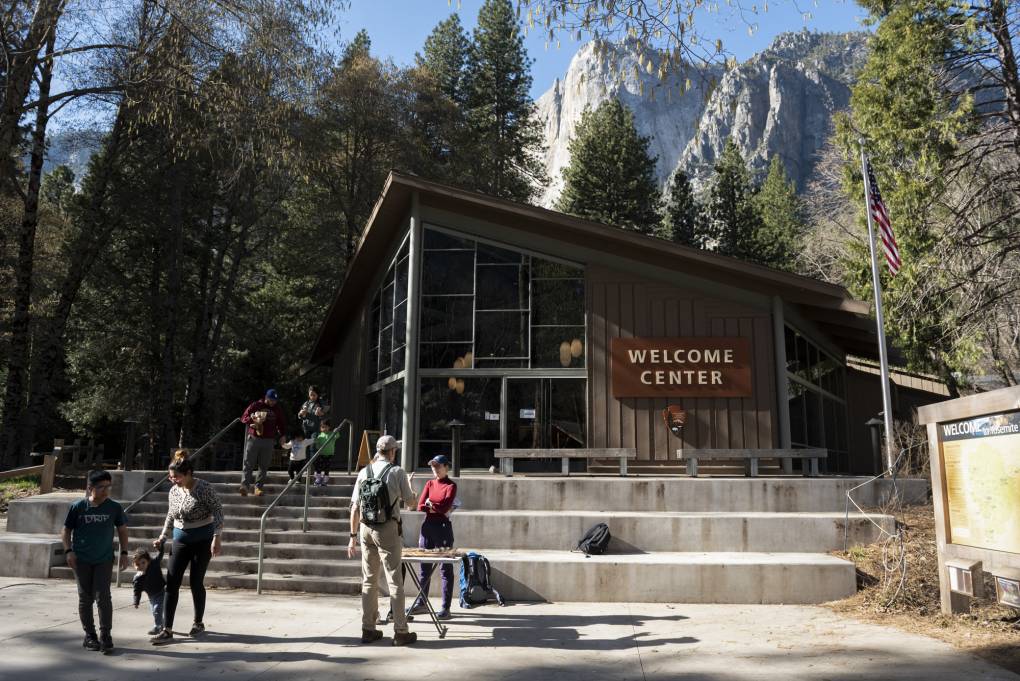
"caption": "A volunteer for the National Park Service welcomes visitors at the Exploration Center in Yosemite Valley, at Yosemite National Park on March 1, 2025.",
"credit": "Laure Andrillon/AFP via Getty",
"altTag": null,
"description": null,
"imgSizes": {
"medium": {
"file": "https://cdn.kqed.org/wp-content/uploads/sites/10/2025/03/CaliforniaPublicLandsGetty1-800x534.jpg",
"width": 800,
"height": 534,
"mimeType": "image/jpeg"
},
"large": {
"file": "https://cdn.kqed.org/wp-content/uploads/sites/10/2025/03/CaliforniaPublicLandsGetty1-1020x681.jpg",
"width": 1020,
"height": 681,
"mimeType": "image/jpeg"
},
"thumbnail": {
"file": "https://cdn.kqed.org/wp-content/uploads/sites/10/2025/03/CaliforniaPublicLandsGetty1-160x107.jpg",
"width": 160,
"height": 107,
"mimeType": "image/jpeg"
},
"1536x1536": {
"file": "https://cdn.kqed.org/wp-content/uploads/sites/10/2025/03/CaliforniaPublicLandsGetty1-1536x1025.jpg",
"width": 1536,
"height": 1025,
"mimeType": "image/jpeg"
},
"post-thumbnail": {
"file": "https://cdn.kqed.org/wp-content/uploads/sites/10/2025/03/CaliforniaPublicLandsGetty1-672x372.jpg",
"width": 672,
"height": 372,
"mimeType": "image/jpeg"
},
"twentyfourteen-full-width": {
"file": "https://cdn.kqed.org/wp-content/uploads/sites/10/2025/03/CaliforniaPublicLandsGetty1-1038x576.jpg",
"width": 1038,
"height": 576,
"mimeType": "image/jpeg"
},
"full-width": {
"file": "https://cdn.kqed.org/wp-content/uploads/sites/10/2025/03/CaliforniaPublicLandsGetty1-1920x1282.jpg",
"width": 1920,
"height": 1282,
"mimeType": "image/jpeg"
},
"kqedFullSize": {
"file": "https://cdn.kqed.org/wp-content/uploads/sites/10/2025/03/CaliforniaPublicLandsGetty1.jpg",
"width": 2000,
"height": 1335
}
},
"isLoading": false,
"fetchFailed": false
}
},
"audioPlayerReducer": {
"postId": "stream_live",
"isPaused": true,
"isPlaying": false,
"pfsActive": false,
"pledgeModalIsOpen": true,
"playerDrawerIsOpen": false,
"liveAudioPlayStartedAt": 0,
"liveAudioPlayContext": ""
},
"authorsReducer": {
"katrinaschwartz": {
"type": "authors",
"id": "234",
"meta": {
"index": "authors_1716337520",
"id": "234",
"found": true
},
"name": "Katrina Schwartz",
"firstName": "Katrina",
"lastName": "Schwartz",
"slug": "katrinaschwartz",
"email": "kschwartz@kqed.org",
"display_author_email": false,
"staff_mastheads": [
"news"
],
"title": "Producer",
"bio": "Katrina Schwartz is a journalist based in San Francisco. She's worked at KPCC public radio in LA and has reported on air and online for KQED since 2010. She covered how teaching and learning is changing for MindShift between 2012 and 2020. She is the co-host of the MindShift podcast and now produces KQED's Bay Curious podcast.",
"avatar": "https://secure.gravatar.com/avatar/edb4ee79070447a018538c9aae6eeecf28786515b8a0c30e43b6b7dce5aa44c8?s=600&d=blank&r=g",
"twitter": "kschwart",
"bluesky": null,
"facebook": null,
"instagram": null,
"linkedin": null,
"sites": [
{
"site": "",
"roles": [
"editor"
]
},
{
"site": "news",
"roles": [
"editor"
]
},
{
"site": "mindshift",
"roles": [
"administrator"
]
},
{
"site": "stateofhealth",
"roles": [
"author"
]
},
{
"site": "science",
"roles": [
"editor"
]
}
],
"headData": {
"title": "Katrina Schwartz | KQED",
"description": "Producer",
"ogImgSrc": "https://secure.gravatar.com/avatar/edb4ee79070447a018538c9aae6eeecf28786515b8a0c30e43b6b7dce5aa44c8?s=600&d=blank&r=g",
"twImgSrc": "https://secure.gravatar.com/avatar/edb4ee79070447a018538c9aae6eeecf28786515b8a0c30e43b6b7dce5aa44c8?s=600&d=blank&r=g"
},
"isLoading": false,
"link": "/author/katrinaschwartz"
},
"carlysevern": {
"type": "authors",
"id": "3243",
"meta": {
"index": "authors_1716337520",
"id": "3243",
"found": true
},
"name": "Carly Severn",
"firstName": "Carly",
"lastName": "Severn",
"slug": "carlysevern",
"email": "csevern@kqed.org",
"display_author_email": false,
"staff_mastheads": [
"news"
],
"title": "Senior Editor, Audience News ",
"bio": "Carly is KQED's Senior Editor of Audience News on the Digital News team, and has reported for the California Report Magazine, Bay Curious and KQED Arts. She's formerly the host of \u003ca href=\"http://ww2.kqed.org/pop/category/the-cooler/\" rel=\"noopener noreferrer\">The Cooler\u003c/a> podcast.",
"avatar": "https://secure.gravatar.com/avatar/54037bf5c128fe678f0ef26cec97a93f2e7f220a22d7285703328f12c42c1b1d?s=600&d=blank&r=g",
"twitter": "teacupinthebay",
"bluesky": null,
"facebook": null,
"instagram": null,
"linkedin": null,
"sites": [
{
"site": "",
"roles": [
"editor"
]
},
{
"site": "arts",
"roles": [
"editor"
]
},
{
"site": "news",
"roles": [
"administrator"
]
},
{
"site": "pop",
"roles": [
"editor"
]
},
{
"site": "futureofyou",
"roles": [
"editor"
]
},
{
"site": "about",
"roles": [
"administrator"
]
},
{
"site": "mindshift",
"roles": [
"editor"
]
},
{
"site": "bayareabites",
"roles": [
"editor"
]
},
{
"site": "stateofhealth",
"roles": [
"editor"
]
},
{
"site": "science",
"roles": [
"editor"
]
},
{
"site": "food",
"roles": [
"contributor"
]
},
{
"site": "forum",
"roles": [
"editor"
]
},
{
"site": "perspectives",
"roles": [
"administrator"
]
},
{
"site": "liveblog",
"roles": [
"editor"
]
}
],
"headData": {
"title": "Carly Severn | KQED",
"description": "Senior Editor, Audience News ",
"ogImgSrc": "https://secure.gravatar.com/avatar/54037bf5c128fe678f0ef26cec97a93f2e7f220a22d7285703328f12c42c1b1d?s=600&d=blank&r=g",
"twImgSrc": "https://secure.gravatar.com/avatar/54037bf5c128fe678f0ef26cec97a93f2e7f220a22d7285703328f12c42c1b1d?s=600&d=blank&r=g"
},
"isLoading": false,
"link": "/author/carlysevern"
},
"ccabreralomeli": {
"type": "authors",
"id": "11708",
"meta": {
"index": "authors_1716337520",
"id": "11708",
"found": true
},
"name": "Carlos Cabrera-Lomelí",
"firstName": "Carlos",
"lastName": "Cabrera-Lomelí",
"slug": "ccabreralomeli",
"email": "ccabreralomeli@KQED.org",
"display_author_email": true,
"staff_mastheads": [
"news"
],
"title": "Community Reporter",
"bio": "Carlos Cabrera-Lomelí is a community reporter with KQED's digital engagement team. He also reports and co-produces for KQED's bilingual news hub KQED en Español. He grew up in San Francisco's Mission District and has previously worked with Univision, 48 Hills and REFORMA in Mexico City.",
"avatar": "https://secure.gravatar.com/avatar/c309be9665e484f887b818c89e273ecc673004f426f36b24d00a4d813a2e0518?s=600&d=blank&r=g",
"twitter": "@LomeliCabrera",
"bluesky": null,
"facebook": null,
"instagram": null,
"linkedin": null,
"sites": [
{
"site": "arts",
"roles": [
"editor"
]
},
{
"site": "news",
"roles": [
"editor"
]
},
{
"site": "about",
"roles": [
"editor"
]
},
{
"site": "science",
"roles": [
"editor"
]
},
{
"site": "perspectives",
"roles": [
"editor"
]
},
{
"site": "elections",
"roles": [
"editor"
]
},
{
"site": "liveblog",
"roles": [
"contributor"
]
}
],
"headData": {
"title": "Carlos Cabrera-Lomelí | KQED",
"description": "Community Reporter",
"ogImgSrc": "https://secure.gravatar.com/avatar/c309be9665e484f887b818c89e273ecc673004f426f36b24d00a4d813a2e0518?s=600&d=blank&r=g",
"twImgSrc": "https://secure.gravatar.com/avatar/c309be9665e484f887b818c89e273ecc673004f426f36b24d00a4d813a2e0518?s=600&d=blank&r=g"
},
"isLoading": false,
"link": "/author/ccabreralomeli"
},
"daisynguyen": {
"type": "authors",
"id": "11829",
"meta": {
"index": "authors_1716337520",
"id": "11829",
"found": true
},
"name": "Daisy Nguyen",
"firstName": "Daisy",
"lastName": "Nguyen",
"slug": "daisynguyen",
"email": "daisynguyen@kqed.org",
"display_author_email": true,
"staff_mastheads": [
"news"
],
"title": "KQED Contributor",
"bio": "I have covered early childhood education and child care for KQED since 2022. I focus on policies aimed at increasing access to early care and education and how they shape individual lives. I've been a journalist for more than two decades, with most of that time devoted to covering breaking news throughout California for The Associated Press. I grew up in San Francisco and studied at UC Davis and Columbia University's Graduate School of Journalism. I live in Oakland with my husband and two kids.",
"avatar": "https://secure.gravatar.com/avatar/2da2127c27f7143b53ebd419800fd55f?s=600&d=blank&r=g",
"twitter": null,
"facebook": null,
"instagram": null,
"linkedin": "https://www.linkedin.com/in/daisynguyen/",
"sites": [
{
"site": "news",
"roles": [
"author"
]
},
{
"site": "liveblog",
"roles": [
"author"
]
}
],
"headData": {
"title": "Daisy Nguyen | KQED",
"description": "KQED Contributor",
"ogImgSrc": "https://secure.gravatar.com/avatar/2da2127c27f7143b53ebd419800fd55f?s=600&d=blank&r=g",
"twImgSrc": "https://secure.gravatar.com/avatar/2da2127c27f7143b53ebd419800fd55f?s=600&d=blank&r=g"
},
"isLoading": false,
"link": "/author/daisynguyen"
},
"sjohnson": {
"type": "authors",
"id": "11840",
"meta": {
"index": "authors_1716337520",
"id": "11840",
"found": true
},
"name": "Sydney Johnson",
"firstName": "Sydney",
"lastName": "Johnson",
"slug": "sjohnson",
"email": "sjohnson@kqed.org",
"display_author_email": false,
"staff_mastheads": [
"news"
],
"title": "KQED Reporter",
"bio": "Sydney Johnson is a general assignment reporter at KQED. She previously reported on public health and city government at the San Francisco Examiner, and before that, she covered statewide education policy for EdSource. Her reporting has won multiple local, state and national awards. Sydney is a graduate of the University of California, Berkeley and lives in San Francisco.",
"avatar": "https://secure.gravatar.com/avatar/97855f2719b72ad6190b7c535fe642c8?s=600&d=blank&r=g",
"twitter": "sydneyfjohnson",
"facebook": null,
"instagram": null,
"linkedin": null,
"sites": [
{
"site": "news",
"roles": [
"editor"
]
}
],
"headData": {
"title": "Sydney Johnson | KQED",
"description": "KQED Reporter",
"ogImgSrc": "https://secure.gravatar.com/avatar/97855f2719b72ad6190b7c535fe642c8?s=600&d=blank&r=g",
"twImgSrc": "https://secure.gravatar.com/avatar/97855f2719b72ad6190b7c535fe642c8?s=600&d=blank&r=g"
},
"isLoading": false,
"link": "/author/sjohnson"
},
"nkhan": {
"type": "authors",
"id": "11867",
"meta": {
"index": "authors_1716337520",
"id": "11867",
"found": true
},
"name": "Nisa Khan",
"firstName": "Nisa",
"lastName": "Khan",
"slug": "nkhan",
"email": "nkhan@kqed.org",
"display_author_email": false,
"staff_mastheads": [],
"title": "KQED Contributor",
"bio": "Nisa Khan is a reporter for KQED's Audience News Desk. She was formerly a data reporter at Michigan Radio. She earned a Bachelor of Science in Information from the University of Michigan and a Master of Arts in Communication from Stanford University.",
"avatar": "https://secure.gravatar.com/avatar/8720459eef081ff64582b3506b124d58523e80e120704a0cbd9892533c914991?s=600&d=blank&r=g",
"twitter": "mnisakhan",
"bluesky": null,
"facebook": null,
"instagram": null,
"linkedin": null,
"sites": [
{
"site": "arts",
"roles": [
"editor"
]
},
{
"site": "news",
"roles": [
"editor"
]
},
{
"site": "science",
"roles": [
"editor",
"author"
]
},
{
"site": "forum",
"roles": [
"editor"
]
},
{
"site": "liveblog",
"roles": [
"contributor"
]
}
],
"headData": {
"title": "Nisa Khan | KQED",
"description": "KQED Contributor",
"ogImgSrc": "https://secure.gravatar.com/avatar/8720459eef081ff64582b3506b124d58523e80e120704a0cbd9892533c914991?s=600&d=blank&r=g",
"twImgSrc": "https://secure.gravatar.com/avatar/8720459eef081ff64582b3506b124d58523e80e120704a0cbd9892533c914991?s=600&d=blank&r=g"
},
"isLoading": false,
"link": "/author/nkhan"
},
"sarahwright": {
"type": "authors",
"id": "11956",
"meta": {
"index": "authors_1716337520",
"id": "11956",
"found": true
},
"name": "Sarah Wright",
"firstName": "Sarah",
"lastName": "Wright",
"slug": "sarahwright",
"email": "swright@kqed.org",
"display_author_email": true,
"staff_mastheads": [],
"title": "Outdoors Engagement Reporter",
"bio": "Sarah Wright is KQED's Outdoors Engagement Reporter. Originally from Lake Tahoe, she completed a thru-hike of the Pacific Crest Trail in 2019 and was a U.S. Fulbright Program grantee to Argentina in 2023. Her journalism has appeared in The Guardian, The San Francisco Standard, The Palo Alto Weekly and the Half Moon Bay Review.",
"avatar": "https://secure.gravatar.com/avatar/c161a3d6441865cba25e6db4fa561099ad665799e9432e34da2b84d7e371524c?s=600&d=blank&r=g",
"twitter": null,
"bluesky": null,
"facebook": null,
"instagram": null,
"linkedin": null,
"sites": [
{
"site": "arts",
"roles": [
"editor"
]
},
{
"site": "news",
"roles": [
"editor"
]
},
{
"site": "science",
"roles": [
"contributor",
"author"
]
},
{
"site": "forum",
"roles": [
"editor"
]
}
],
"headData": {
"title": "Sarah Wright | KQED",
"description": "Outdoors Engagement Reporter",
"ogImgSrc": "https://secure.gravatar.com/avatar/c161a3d6441865cba25e6db4fa561099ad665799e9432e34da2b84d7e371524c?s=600&d=blank&r=g",
"twImgSrc": "https://secure.gravatar.com/avatar/c161a3d6441865cba25e6db4fa561099ad665799e9432e34da2b84d7e371524c?s=600&d=blank&r=g"
},
"isLoading": false,
"link": "/author/sarahwright"
}
},
"pagesReducer": {
"news_category_guides-and-explainers": {
"type": "terms",
"id": "news_34168",
"meta": {
"index": "terms_1716263798",
"site": "news",
"id": "34168",
"score": 14.406026
},
"name": "Guides and Explainers",
"slug": "guides-and-explainers",
"taxonomy": "category",
"description": null,
"featImg": null,
"headData": {
"title": "Guides and Explainers Archives | KQED News",
"description": null,
"ogTitle": null,
"ogDescription": null,
"ogImgId": null,
"twTitle": null,
"twDescription": null,
"twImgId": null
},
"ttid": 34185,
"isLoading": false,
"title": "Guides and Explainers",
"pageMeta": {
"site": "news",
"WpPageTemplate": "page-topic-editorial",
"currentPage": 22
},
"blocks": [
{
"blockName": "kqed/post-list",
"attrs": {
"layout": "cardArticle2",
"query": "posts/news?category=guides-and-explainers",
"seeMore": false,
"paginated": true,
"page": 22
}
},
{
"blockName": "kqed/ad"
}
]
}
},
"pfsSessionReducer": {},
"postsReducer": {
"stream_live": {
"type": "live",
"id": "stream_live",
"audioUrl": "https://streams.kqed.org/kqedradio",
"title": "Live Stream",
"excerpt": "Live Stream information currently unavailable.",
"link": "/radio",
"featImg": "",
"label": {
"name": "KQED Live",
"link": "/"
}
},
"stream_kqedNewscast": {
"type": "posts",
"id": "stream_kqedNewscast",
"audioUrl": "https://www.kqed.org/.stream/anon/radio/RDnews/newscast.mp3?_=1",
"title": "KQED Newscast",
"featImg": "",
"label": {
"name": "88.5 FM",
"link": "/"
}
},
"news_12057419": {
"type": "posts",
"id": "news_12057419",
"meta": {
"index": "posts_1716263798",
"site": "news",
"id": "12057419",
"score": null,
"sort": [
1758794427000
]
},
"guestAuthors": [],
"slug": "bears-coyotes-moutain-lions-oh-my-what-to-do-when-you-encounter-wildlife-in-the-bay-area",
"title": "Bears, Coyotes, Mountain Lions, Oh My! What To Do When You Encounter Wildlife in the Bay Area",
"publishDate": 1758794427,
"format": "standard",
"headTitle": "Bears, Coyotes, Mountain Lions, Oh My! What To Do When You Encounter Wildlife in the Bay Area | KQED",
"labelTerm": {
"term": 33523,
"site": "news"
},
"content": "\u003cp>\u003ca href=\"#episode-transcript\">\u003ci>View the full episode transcript.\u003c/i>\u003c/a>\u003c/p>\n\u003cp>\u003cspan style=\"font-weight: 400;\">Living in the San Francisco Bay Area means great access to outdoor activities like hiking, camping and boating. But as we enjoy the beautiful weather and incredible natural beauty of our region and state, it’s likely we may encounter some wildlife. \u003ca href=\"https://www.kqed.org/news/12002429/california-camping-tahoe-yosemite-bears-safety-what-to-do-bear-spray\">If you’re camping in Tahoe and a bear enters your camp\u003c/a>, what should you do? Or \u003ca href=\"https://www.kqed.org/news/12052044/what-to-do-if-you-see-a-mountain-lion-while-hiking-in-the-bay-area\">maybe you’ve seen those signs warning of mountain lions in the area\u003c/a> – how worried should you be? Or, perhaps you’ve been strolling along the beach only to \u003ca href=\"https://www.kqed.org/news/12042615/animal-rescue-what-to-do-if-you-find-a-sick-or-lost-critter-in-the-bay-area\">encounter a stranded baby seal\u003c/a> — is it hurt? Does it need help? Who should you call? We’ve got answers for you.\u003c/span>\u003c/p>\n\u003cp>\u003cspan style=\"font-weight: 400;\">Encountering an animal in the wild can be an incredibly special and cool experience if you’re prepared for it. And while it may seem scary, it’s worth remembering that \u003ca href=\"https://www.kqed.org/forum/2010101907567/coexisting-with-californias-urban-coyotes\">we share these wild spaces with animals\u003c/a> who were here long before us. \u003ca href=\"https://www.kqed.org/news/category/guides-and-explainers\">Use these guides from KQED\u003c/a> to arm yourself with the knowledge to keep yourself and the animals safe.\u003c/span>\u003c/p>\n\u003cp>\u003ciframe loading=\"lazy\" src=\"https://playlist.megaphone.fm?e=KQINC9055402426&light=true\" width=\"100%\" height=\"200\" frameborder=\"0\" scrolling=\"no\">\u003c/iframe>\u003c/p>\n\u003cp>[baycuriousquestion]\u003c/p>\n\u003ch2 id=\"episode-transcript\">Episode Transcript\u003c/h2>\n\u003cp>\u003cb>Katrina Schwartz:\u003c/b>\u003cspan style=\"font-weight: 400;\"> I’m Katrina Schwartz, filling in for Olivia Allen-Price. You’re listening to Bay Curious.\u003c/span>\u003c/p>\n\u003cp>[ad fullwidth]\u003c/p>\n\u003cp>\u003cb>Nick Auger: \u003c/b>\u003cspan style=\"font-weight: 400;\">Okay, so I think I should start the story with noting that I have a very, what I would consider healthy fear of bears.\u003c/span>\u003c/p>\n\u003cp>\u003cb>Katrina Schwartz:\u003c/b>\u003cspan style=\"font-weight: 400;\"> This is Nick Auger, my husband. This story starts on a backpacking trip we went on in Lassen National Park several years ago.\u003c/span>\u003c/p>\n\u003cp>\u003cb>Nick Auger: \u003c/b>\u003cspan style=\"font-weight: 400;\">We are on our last night and we’re camping on a peninsula next to a lake where unfortunately there are not a lot of tall trees for us to string our backpacks up into. \u003c/span>\u003c/p>\n\u003cp>\u003cb>Katrina Schwartz:\u003c/b>\u003cspan style=\"font-weight: 400;\"> At the time, Lassen didn’t require bear canisters, but recommended bear bagging. We tried, I swear…\u003c/span>\u003c/p>\n\u003cp>\u003cb>Nick Auger: \u003c/b>\u003cspan style=\"font-weight: 400;\">At about 4:30 in the morning, I hear the unmistakable sound of a large animal gnawing on something relatively nearby. And I unzip our tent and look outside, and where our bags were, there are no bags. And instead, I see on the ground a large bear rummaging through and clearly eating our food. \u003c/span>\u003c/p>\n\u003cp>\u003cb>Katrina Schwartz:\u003c/b>\u003cspan style=\"font-weight: 400;\"> I wake up to Nick shaking me and saying, there’s a bear out there eating our food. That’s when I remembered that I’d forgotten to take a Clif Bar out of my jacket pocket. What if the bear smelled it and came searching for us? Nick was…shall we say…not pleased with me.\u003c/span>\u003c/p>\n\u003cp>\u003cb>Nick Auger: \u003c/b>\u003cspan style=\"font-weight: 400;\">So, I get out of the tent and I start just making as much noise as I can. And the bear is probably 100 feet away. And the bear does not respond to my noises. So I get the sleeping pad out from the tent and start shaking it above my head and continue to make loud noises at the bear, which they continue to ignore.\u003c/span>\u003c/p>\n\u003cp>\u003cb>Katrina Schwartz:\u003c/b>\u003cspan style=\"font-weight: 400;\"> Nick keeps getting closer to the bear — yelling and waving the pad above his head like a maniac. But that bear did not care.\u003c/span>\u003c/p>\n\u003cp>\u003cb>Nick Auger:\u003c/b>\u003cspan style=\"font-weight: 400;\"> I get within about 25 feet of the bear and it finally acknowledges me. And we kind of just stare at each other and I just take one more hard lunge forward and the bear starts to scamper off.\u003c/span>\u003c/p>\n\u003cp>\u003cb>Katrina Schwartz:\u003c/b>\u003cspan style=\"font-weight: 400;\"> But then it kind of looks back at him, as if to say, “Is that all?”\u003c/span>\u003c/p>\n\u003cp>\u003cb>Nick Auger: \u003c/b>\u003cspan style=\"font-weight: 400;\">And I did not wanna deal with the bear anymore. So I continued to chase it down the peninsula until I was convinced that it had scurried away for good. And then returned to my bag and what was left of our food. Notably the only thing that the bear had left was the wasabi flavored trail mix from Berkeley Bowl that apparently was not to the bear’s liking. \u003c/span>\u003c/p>\n\u003cp>\u003cb>Katrina Schwartz in tape:\u003c/b>\u003cspan style=\"font-weight: 400;\"> And notably, I did not get out of the tent.\u003c/span>\u003c/p>\n\u003cp>\u003cb>Nick Auger: \u003c/b>\u003cspan style=\"font-weight: 400;\">No you did not. You were cheering me on from inside the tent.\u003c/span>\u003c/p>\n\u003cp>\u003cb>Katrina Schwartz:\u003c/b>\u003cspan style=\"font-weight: 400;\"> If you like to camp, or you’ve visited places like Yosemite or Tahoe, you too may have a harrowing bear story. They’re becoming more common, but they don’t have to end badly. Today on the show, we’re talking practical advice about what to do when you encounter wild animals like bears, mountain lions or even seals. Stay with us.\u003c/span>\u003c/p>\n\u003cp>\u003ci>\u003cspan style=\"font-weight: 400;\">Sponsor break\u003c/span>\u003c/i>\u003c/p>\n\u003cp>\u003cb>Katrina Schwartz:\u003c/b>\u003cspan style=\"font-weight: 400;\"> Fall in the Bay Area is some of our best weather. The days are still long, the sun is out and in other parts of the state it’s not quite so hot, so it’s perfect for sneaking in some late season camping and hiking.\u003c/span>\u003c/p>\n\u003cp>\u003cspan style=\"font-weight: 400;\">Here to help us think through how to stay safe out there while we’re enjoying the outdoors are two folks from KQED’s Audience News desk Carly Severn and Sarah Wright. Welcome!\u003c/span>\u003c/p>\n\u003cp>\u003cb>Carly Severn:\u003c/b>\u003cspan style=\"font-weight: 400;\"> Hello, Katrina.\u003c/span>\u003c/p>\n\u003cp>\u003cb>Sarah Wright:\u003c/b>\u003cspan style=\"font-weight: 400;\"> Hello.\u003c/span>\u003c/p>\n\u003cp>\u003cb>Katrina Schwartz:\u003c/b>\u003cspan style=\"font-weight: 400;\"> So good to have you both. Ok, so I know you both like to spend time in the outdoors…which means you’ve likely got a bear story. Give it to me.\u003c/span>\u003c/p>\n\u003cp>\u003cb>Carly Severn:\u003c/b>\u003cspan style=\"font-weight: 400;\"> OK, I’m going to start. The short version? Last year, me and a pal went camping on Emerald Bay in Tahoe, not knowing this is basically the campground that you are guaranteed to see a bear in. Lo and behold we are woken up in the middle of the night by pots and pans banging from other campsites where people are yelling “bear, bear” and the sounds are getting closer and closer as this bear moves through the site towards us. The bear loudly stomps past our tents, and in the morning we get up to see that it has swiped the empty tupperware we’d left out off the picnic table, cracking the lid, and there are these huge footprints right near our tent. So, it was super scary, also kind of exciting, and it is basically my origin story for my quest for bear knowledge.\u003c/span>\u003c/p>\n\u003cp>\u003cb>Katrina Schwartz:\u003c/b>\u003cspan style=\"font-weight: 400;\"> Sarah, what about you?\u003c/span>\u003c/p>\n\u003cp>\u003cb>Sarah Wright:\u003c/b>\u003cspan style=\"font-weight: 400;\"> Growing up in Lake Tahoe, bears were kind of a constant concern, we talked about them a lot and saw them a lot. But the biggest deal was when a bear once broke into my high school and caused a lockdown. And one other time, when I was super new to driving as a teenager, a bear broke into my car. It was looking for a single candy bar wrapper I’d left in my car.\u003c/span>\u003c/p>\n\u003cp>\u003cb>Katrina Schwartz:\u003c/b>\u003cspan style=\"font-weight: 400;\"> Carly, your story is exactly the type of thing we want to help people avoid both because it’s scary… and it’s also not great for bears to be interacting with humans so much as well. Carly, I know bears are a particular obsession of yours. Why is it especially important to be on guard in the fall?\u003c/span>\u003c/p>\n\u003cp>\u003cb>Carly Severn:\u003c/b>\u003cspan style=\"font-weight: 400;\"> In a nutshell, fall is the greedy season for bears! They know they’re going into winter hibernation soon, so they become eating machines. They want to store up as many food reserves within their bodies as they can. The scientific term is “hyperphagia” … and if you’re familiar with Fat Bear Week in Katmai National Park in Alaska, that’s why that happens in the fall. That’s why the timing. In a place like Tahoe, where bear territory and human activity now overlap so much with tourism like camping there’s tons of food around for bears: in campsites, in dumpsters, it’s in your car. So not only are Tahoe bears extra bold and persistent, cuz they know the food is there, the winter tourism up there is unfortunately actually preventing a lot of bears from even entering hibernation. They know food is gonna be available all year round, why would they sleep? \u003c/span>\u003c/p>\n\u003cp>\u003cb>Katrina Schwartz:\u003c/b>\u003cspan style=\"font-weight: 400;\"> Does that mean that they are more dangerous?\u003c/span>\u003c/p>\n\u003cp>\u003cb>Carly Severn: \u003c/b>\u003cspan style=\"font-weight: 400;\">Except in rare cases, we are not talking about aggressive bears who’ll mow you down to get to your food. We’re talking California black bears. These are not grizzlies. They don’t want to hurt you, they actually don’t really care about you, they just want your snacks! It’s why some people refer to them as big possums.\u003c/span>\u003c/p>\n\u003cp>\u003cb>Katrina Schwartz:\u003c/b>\u003cspan style=\"font-weight: 400;\"> Hard to imagine, really, but OK! So, let’s say I see a bear in my campsite. What should I do?\u003c/span>\u003c/p>\n\u003cp>\u003cb>Carly Severn:\u003c/b>\u003cspan style=\"font-weight: 400;\"> Well, the idea is that by the time you see the bear, you’ve already done the responsible, smart camper thing of securing all your food away – actually anything that smells, even dish soap, toiletries, lip balm. This means you’re constantly storing that smelly stuff in the bear-proof box in your campsite: not in your car, because a bear will break into your vehicle and trash it just to find a single strawberry that you’ve left out. And don’t put it in “bear proof cooler” either, because as any park ranger will tell you, they don’t actually exist. And they’ve seen enough absolutely destroyed “bear proof coolers” in campgrounds to prove it! Don’t leave an empty cooler out in camp or in your car, either: bears can recognize them and they’ll still go after them. So they think there’s something in there, even though there’s not. And this surprised me, don’t leave beer cans out, or wine bottles, or one can of Lacroix: Nothing but plain water or ice. If you’re actively cooking, have everything neatly gathered so that if you see that bear kind of amble into your camp, you can calmly pick it all up and lock it in the bear box.\u003c/span>\u003c/p>\n\u003cp>\u003cb>Katrina Schwartz:\u003c/b>\u003cspan style=\"font-weight: 400;\"> I feel like that would be hard for me. I’m one of those campers whose stuff seems to just get everywhere. But what if I do everything right with my food and the bear still comes into my camp looking for it?\u003c/span>\u003c/p>\n\u003cp>\u003cb>Carly Severn:\u003c/b>\u003cspan style=\"font-weight: 400;\"> This might not be on you! Bears can have a super sharp memory of places where they’ve found food in the past, and will return to them just in case. So maybe the people who stayed in your campsite a month ago just sucked as campers, and left all their food out. They basically provided a buffet for this bear and he’s back for round two. Let’s say the bear comes, you’ve calmly put everything away: now you stand tall, or put your hands over your head to look tall if you’re short, like me. Don’t be aggressive but make a good amount of noise: Shout “Go bear, go!”, bang pots and pans together, set off your car’s alarm if it’s near to hand. And that bear will almost certainly wander away. \u003c/span>\u003c/p>\n\u003cp>\u003cb>Katrina Schwartz:\u003c/b>\u003cspan style=\"font-weight: 400;\"> What if, like me, you’ve gone to bed and you wake up to the sounds of a bear in your campsite, only to remember that you have a protein bar in your tent? What do you do?\u003c/span>\u003c/p>\n\u003cp>\u003cb>Carly Severn:\u003c/b>\u003cspan style=\"font-weight: 400;\"> We’ve all been there. Oh no, the Clif Bar! It’s in my jeans. My bette noir is lip balm, I always have it in my jeans. This is exactly the scenario where you definitely want to make loud noises immediately to scare the bear away – basically, make it too much hassle for the bear to pursue that Clif Bar! Get out of your tent, make that noise, walk straight to that bear box calmly but purposefully and chuck that Clif bar in there to lock it up. Don’t do what a lot of people might want to do, unzip the tent and throw the protein bar out! Then you’re just feeding the bear, and teaching him to come back the next night for seconds. And don’t freak if the bear is persistent and doesn’t leave immediately. Match his persistence and you will almost certainly win this one. They will almost certainly leave.\u003c/span>\u003c/p>\n\u003cp>\u003cb>Katrina Schwartz:\u003c/b>\u003cspan style=\"font-weight: 400;\"> Bottom line here is that the bear doesn’t want to hurt you…so if you keep your head and remember to stand your ground, you’ll both end up better off. Now, I want to turn to an animal encounter that’s potentially more common here locally…mountain lions. I have definitely seen those warning signs posted at hikes, especially in the South Bay. Sarah, how common are mountain lions in the Bay Area?\u003c/span>\u003c/p>\n\u003cp>\u003cb>Sarah Wright:\u003c/b>\u003cspan style=\"font-weight: 400;\"> So actually, 40% of California is considered suitable for mountain lion habitat, and the Bay Area is certainly included in that. I personally have never seen a mountain lion, but the wildlife cameras set up around the Bay Area by the Bay Area Puma Project tell a different story: They’re living all around us, they’re just really good at hiding. Experts say that there are a couple thousand moving around the state as a whole at any given time.\u003c/span>\u003c/p>\n\u003cp>\u003cb>Katrina Schwartz:\u003c/b>\u003cspan style=\"font-weight: 400;\"> Wow, that’s actually really cool. I think people’s fear around mountain lions come from these occasional news stories about kids or pets that were attacked by mountain lions. I know it would be super terrifying to think of your child being taken down by a mountain lion. What are some things people can do to prevent an encounter with a mountain lion?\u003c/span>\u003c/p>\n\u003cp>\u003cb>Sarah Wright:\u003c/b>\u003cspan style=\"font-weight: 400;\"> So there have only ever been 26 total verified mountain lion attacks on humans in California in the past four decades, so you’re right, it \u003c/span>\u003ci>\u003cspan style=\"font-weight: 400;\">is\u003c/span>\u003c/i>\u003cspan style=\"font-weight: 400;\"> extremely rare. But you may see them on hikes or in your own neighborhood. But you can avoid running into them on hikes and walks by avoiding the places and times they’re most active – like dawn and dusk and densely vegetated areas. You can also avoid hiking alone if you’d like. If you’re worried about them in your neighborhood, you can clear brush or install motion-detecting lights to alert you of their presence and help you avoid running into them. And don’t ever leave out food for animals, like if you’re feeding a stray cat, that will attract their predators and also mountain lions, which are predators. \u003c/span>\u003c/p>\n\u003cp>\u003cb>Katrina Schwartz:\u003c/b>\u003cspan style=\"font-weight: 400;\"> You’ll be getting a much bigger cat than you bargained for. Exactly. Ok, so let’s say I’m out hiking and I see a mountain lion. What should I do?\u003c/span>\u003c/p>\n\u003cp>\u003cb>Sarah Wright:\u003c/b>\u003cspan style=\"font-weight: 400;\"> Everyone I talked to for this story told me the same thing – mountain lions don’t want to interact with you. They’ll pretty much do whatever they can to avoid you. If you do run into one, get big, stand your ground and try to scare it away. You can even throw rocks at it. The big thing is don’t ever turn your back or run. And if you have a small child or dog, you might want to pick it up.\u003c/span>\u003c/p>\n\u003cp>\u003cb>Katrina Schwartz:\u003c/b>\u003cspan style=\"font-weight: 400;\"> And is the advice the same for coyotes? I know lots of people have seen coyotes in Golden Gate Park and on Bernal Hill as well as many other places throughout the Bay Area. Any tips for how to interact with these urban wild animals?\u003c/span>\u003c/p>\n\u003cp>\u003cb>Sarah Wright:\u003c/b>\u003cspan style=\"font-weight: 400;\"> I actually just saw a coyote last week when I was biking through the Presidio. It was calmly walking across the road. The thing to remember about coyotes is that they are native to our landscape here and they can actually live and thrive in very small areas and even keep populations of small predators in check, which, in turn, helps bird biodiversity. The biggest likelihood of an encounter with coyotes is when you’re with a dog. That’s because they’re both canines. So they might follow your dog or bare their teeth and growl, a behavior called escorting. Just like with mountain lions, leave the area calmly but don’t run – if the coyote advances, you can yell and get big. And leash your dog!\u003c/span>\u003c/p>\n\u003cp>\u003cb>Katrina Schwartz:\u003c/b>\u003cspan style=\"font-weight: 400;\"> I’ve run into some coyotes on Bernal Hill and I can tell you do not seem scared of people. Like, I’ve gotten really close accidentally just walking along trails and they were just chillin’ there, not moving.I was like OK, I guess I’ll just go the other way.\u003c/span>\u003c/p>\n\u003cp>\u003cspan style=\"font-weight: 400;\">OK, so we’ve covered some of the let’s say “scarier” animals people might encounter while out having a nice time in the Bay Area. But, I also wanted to ask you about what to do if you find a sick or stranded animal. One time I was staying at a house up in Sea Ranch and we found a sea lion pup on its own on the beach. Some of the people I was with were really worried about it and wanted to kind of guard it and protect it. But that’s not really the right thing to do is it?\u003c/span>\u003c/p>\n\u003cp>\u003cb>Sarah Wright:\u003c/b>\u003cspan style=\"font-weight: 400;\"> So your story is super common. A lot of people encounter wildlife on local beaches and don’t really know what action to take. I talked to a bunch of local wild rescue groups around the Bay Area and they said, first of all, you need to determin if that animal needs help or is just on the beach resting. If you’re not sure, look for the 5 Cs – cold, crying, coming toward you, covered in bugs or blood, or caught by a cat or dog. And any of those things can indicate that an animal needs help. You can stick around to make sure no one else disturbs the animal, you can do that, but remember to give them space – the Marine Mammal Center recommends 150 feet, and don’t block its escape path toward water, for example. You can take a photo of it to show to dispatchers or write down its behavior.\u003c/span>\u003c/p>\n\u003cp>\u003cb>Katrina Schwartz:\u003c/b>\u003cspan style=\"font-weight: 400;\"> What happens to the animal after you call a dispatcher?\u003c/span>\u003c/p>\n\u003cp>\u003cb>Sarah Wright:\u003c/b>\u003cspan style=\"font-weight: 400;\"> In the short term, they may be brought to a local animal hospital for rehab, and hopefully, it will be released into the wild. Places like Wildcare and the Marine Mammal Center will even provide updates to you on the animal you rescued if you give them a call. And you may be allowed to attend its release. But remember: The sad reality is that not every animal will survive, but your effort to call in experts to help is important not only to the animal but it adds to the ongoing research those groups are doing on our local wildlife and ecology.\u003c/span>\u003c/p>\n\u003cp>\u003cb>Katrina Schwartz:\u003c/b>\u003cspan style=\"font-weight: 400;\"> This has been super informative. Any last things about how we interact with wildlife here that either of you want to add about how we interact with wildlife?\u003c/span>\u003c/p>\n\u003cp>\u003cb>Carly Severn:\u003c/b>\u003cspan style=\"font-weight: 400;\"> I think it can actually be really cool and transformative to see an animal, even if it can be scary in the moment. And we’re sharing this space and in a lot of instances, we’re guests on this space. So, act right and that will keep you safe and the animal safe as well. \u003c/span>\u003c/p>\n\u003cp>\u003cb>Katrina Schwartz:\u003c/b>\u003cspan style=\"font-weight: 400;\"> What about you, Sarah?\u003c/span>\u003c/p>\n\u003cp>\u003cb>Sarah Wright:\u003c/b>\u003cspan style=\"font-weight: 400;\"> I agree – we’re so lucky to live in a place with so much wildlife – most of which is not dangerous at all. To safely respect animals and their habitats, follow posted signs – if a trail is closed, it’s probably for a good reason – like there may be vulnerable baby seals or a defensive mother coyote nearby. \u003c/span>\u003c/p>\n\u003cp>\u003cb>Katrina Schwartz:\u003c/b>\u003cspan style=\"font-weight: 400;\"> Carly Severn and Sarah Wright, thank you so much for sharing all of this great stuff you’ve learned with us. I feel a lot more confident about what I should do in these situations now. So, thank you.\u003c/span>\u003c/p>\n\u003cp>\u003cb>Carly Severn:\u003c/b>\u003cspan style=\"font-weight: 400;\"> Thanks for having us.\u003c/span>\u003c/p>\n\u003cp>\u003cb>Sarah Wright:\u003c/b>\u003cspan style=\"font-weight: 400;\"> Thank you.\u003c/span>\u003c/p>\n\u003cp>\u003cb>Katrina Schwartz: \u003c/b>\u003cspan style=\"font-weight: 400;\">Carly and Sarah have written some super helpful guides to all this stuff, which you can find by going to KQED dot org slash explainers. We will also put links to these resources in our show notes. And, I’ll just say, the audience desk where Carly and Sarah work is always looking to provide research and tips that are actually useful to people. So, if you have a topic that you’ve been needing some clear eyed advice on, be sure to let them know by filling out the form at the bottom of any of these stories about the outdoors.\u003c/span>\u003c/p>\n\u003cp>\u003cspan style=\"font-weight: 400;\">Bay Curious is made in San Francisco at member-supported KQED.\u003c/span>\u003c/p>\n\u003cp>\u003cspan style=\"font-weight: 400;\">Our show is produced by Gabriela Glueck, Christopher Beale and me, Katrina Schwartz.\u003c/span>\u003c/p>\n\u003cp>[ad floatright]\u003c/p>\n\u003cp>\u003cspan style=\"font-weight: 400;\">With extra support from Maha Sanad, Katie Sprenger, Jen Chien, Ethan Toven-Lindsey and everyone on team KQED.\u003c/span>\u003c/p>\n\n",
"blocks": [],
"excerpt": "Whether camping in Tahoe, hiking in the Santa Cruz mountains or the East Bay hills, or strolling our region's beaches, it's common to encounter wild animals. KQED's audience desk reporters share tips for how to handle those situations.",
"status": "publish",
"parent": 0,
"modified": 1758827159,
"stats": {
"hasAudio": true,
"hasVideo": false,
"hasChartOrMap": false,
"iframeSrcs": [],
"hasGoogleForm": false,
"hasGallery": false,
"hasHearkenModule": true,
"hasPolis": false,
"paragraphCount": 65,
"wordCount": 3630
},
"headData": {
"title": "Bears, Coyotes, Mountain Lions, Oh My! What To Do When You Encounter Wildlife in the Bay Area | KQED",
"description": "Whether camping in Tahoe, hiking in the Santa Cruz mountains or the East Bay hills, or strolling our region's beaches, it's common to encounter wild animals. KQED's audience desk reporters share tips for how to handle those situations.",
"ogTitle": "",
"ogDescription": "",
"ogImgId": "",
"twTitle": "",
"twDescription": "",
"twImgId": "",
"schema": {
"@context": "https://schema.org",
"@type": "NewsArticle",
"headline": "Bears, Coyotes, Mountain Lions, Oh My! What To Do When You Encounter Wildlife in the Bay Area",
"datePublished": "2025-09-25T03:00:27-07:00",
"dateModified": "2025-09-25T12:05:59-07:00",
"image": "https://cdn.kqed.org/wp-content/uploads/2020/02/KQED-OG-Image@1x.png",
"isAccessibleForFree": "True",
"publisher": {
"@type": "NewsMediaOrganization",
"@id": "https://www.kqed.org/#organization",
"name": "KQED",
"logo": "https://cdn.kqed.org/wp-content/uploads/2020/02/KQED-OG-Image@1x.png",
"url": "https://www.kqed.org",
"sameAs": [
"https://www.facebook.com/KQED",
"https://twitter.com/KQED",
"https://www.instagram.com/kqed/",
"https://www.tiktok.com/@kqedofficial",
"https://www.linkedin.com/company/kqed",
"https://www.youtube.com/channel/UCeC0IOo7i1P_61zVUWbJ4nw"
]
}
}
},
"primaryCategory": {
"termId": 34168,
"slug": "guides-and-explainers",
"name": "Guides and Explainers"
},
"audioUrl": "https://www.podtrac.com/pts/redirect.mp3/pdst.fm/e/chrt.fm/track/G6C7C3/traffic.megaphone.fm/KQINC9055402426.mp3?updated=1758736042",
"sticky": false,
"nprStoryId": "kqed-12057419",
"templateType": "standard",
"featuredImageType": "standard",
"excludeFromSiteSearch": "Include",
"articleAge": "0",
"path": "/news/12057419/bears-coyotes-moutain-lions-oh-my-what-to-do-when-you-encounter-wildlife-in-the-bay-area",
"audioTrackLength": null,
"parsedContent": [
{
"type": "contentString",
"content": "\u003cdiv class=\"post-body\">\u003cp>\u003cp>\u003ca href=\"#episode-transcript\">\u003ci>View the full episode transcript.\u003c/i>\u003c/a>\u003c/p>\n\u003cp>\u003cspan style=\"font-weight: 400;\">Living in the San Francisco Bay Area means great access to outdoor activities like hiking, camping and boating. But as we enjoy the beautiful weather and incredible natural beauty of our region and state, it’s likely we may encounter some wildlife. \u003ca href=\"https://www.kqed.org/news/12002429/california-camping-tahoe-yosemite-bears-safety-what-to-do-bear-spray\">If you’re camping in Tahoe and a bear enters your camp\u003c/a>, what should you do? Or \u003ca href=\"https://www.kqed.org/news/12052044/what-to-do-if-you-see-a-mountain-lion-while-hiking-in-the-bay-area\">maybe you’ve seen those signs warning of mountain lions in the area\u003c/a> – how worried should you be? Or, perhaps you’ve been strolling along the beach only to \u003ca href=\"https://www.kqed.org/news/12042615/animal-rescue-what-to-do-if-you-find-a-sick-or-lost-critter-in-the-bay-area\">encounter a stranded baby seal\u003c/a> — is it hurt? Does it need help? Who should you call? We’ve got answers for you.\u003c/span>\u003c/p>\n\u003cp>\u003cspan style=\"font-weight: 400;\">Encountering an animal in the wild can be an incredibly special and cool experience if you’re prepared for it. And while it may seem scary, it’s worth remembering that \u003ca href=\"https://www.kqed.org/forum/2010101907567/coexisting-with-californias-urban-coyotes\">we share these wild spaces with animals\u003c/a> who were here long before us. \u003ca href=\"https://www.kqed.org/news/category/guides-and-explainers\">Use these guides from KQED\u003c/a> to arm yourself with the knowledge to keep yourself and the animals safe.\u003c/span>\u003c/p>\n\u003cp>\u003ciframe loading=\"lazy\" src=\"https://playlist.megaphone.fm?e=KQINC9055402426&light=true\" width=\"100%\" height=\"200\" frameborder=\"0\" scrolling=\"no\">\u003c/iframe>\u003c/p>\n\u003cp>\u003c/p>\u003c/div>",
"attributes": {
"named": {},
"numeric": []
}
},
{
"type": "component",
"content": "",
"name": "baycuriousquestion",
"attributes": {
"named": {
"label": ""
},
"numeric": []
}
},
{
"type": "contentString",
"content": "\u003cdiv class=\"post-body\">\u003c/div>",
"attributes": {
"named": {},
"numeric": []
}
},
{
"type": "contentString",
"content": "\u003cdiv class=\"post-content post-body\">\u003ch2 id=\"episode-transcript\">Episode Transcript\u003c/h2>\n\u003cp>\u003cb>Katrina Schwartz:\u003c/b>\u003cspan style=\"font-weight: 400;\"> I’m Katrina Schwartz, filling in for Olivia Allen-Price. You’re listening to Bay Curious.\u003c/span>\u003c/p>\n\u003cp>\u003c/p>\n\u003cp>\u003cb>Nick Auger: \u003c/b>\u003cspan style=\"font-weight: 400;\">Okay, so I think I should start the story with noting that I have a very, what I would consider healthy fear of bears.\u003c/span>\u003c/p>\n\u003cp>\u003cb>Katrina Schwartz:\u003c/b>\u003cspan style=\"font-weight: 400;\"> This is Nick Auger, my husband. This story starts on a backpacking trip we went on in Lassen National Park several years ago.\u003c/span>\u003c/p>\n\u003cp>\u003cb>Nick Auger: \u003c/b>\u003cspan style=\"font-weight: 400;\">We are on our last night and we’re camping on a peninsula next to a lake where unfortunately there are not a lot of tall trees for us to string our backpacks up into. \u003c/span>\u003c/p>\n\u003cp>\u003cb>Katrina Schwartz:\u003c/b>\u003cspan style=\"font-weight: 400;\"> At the time, Lassen didn’t require bear canisters, but recommended bear bagging. We tried, I swear…\u003c/span>\u003c/p>\n\u003cp>\u003cb>Nick Auger: \u003c/b>\u003cspan style=\"font-weight: 400;\">At about 4:30 in the morning, I hear the unmistakable sound of a large animal gnawing on something relatively nearby. And I unzip our tent and look outside, and where our bags were, there are no bags. And instead, I see on the ground a large bear rummaging through and clearly eating our food. \u003c/span>\u003c/p>\n\u003cp>\u003cb>Katrina Schwartz:\u003c/b>\u003cspan style=\"font-weight: 400;\"> I wake up to Nick shaking me and saying, there’s a bear out there eating our food. That’s when I remembered that I’d forgotten to take a Clif Bar out of my jacket pocket. What if the bear smelled it and came searching for us? Nick was…shall we say…not pleased with me.\u003c/span>\u003c/p>\n\u003cp>\u003cb>Nick Auger: \u003c/b>\u003cspan style=\"font-weight: 400;\">So, I get out of the tent and I start just making as much noise as I can. And the bear is probably 100 feet away. And the bear does not respond to my noises. So I get the sleeping pad out from the tent and start shaking it above my head and continue to make loud noises at the bear, which they continue to ignore.\u003c/span>\u003c/p>\n\u003cp>\u003cb>Katrina Schwartz:\u003c/b>\u003cspan style=\"font-weight: 400;\"> Nick keeps getting closer to the bear — yelling and waving the pad above his head like a maniac. But that bear did not care.\u003c/span>\u003c/p>\n\u003cp>\u003cb>Nick Auger:\u003c/b>\u003cspan style=\"font-weight: 400;\"> I get within about 25 feet of the bear and it finally acknowledges me. And we kind of just stare at each other and I just take one more hard lunge forward and the bear starts to scamper off.\u003c/span>\u003c/p>\n\u003cp>\u003cb>Katrina Schwartz:\u003c/b>\u003cspan style=\"font-weight: 400;\"> But then it kind of looks back at him, as if to say, “Is that all?”\u003c/span>\u003c/p>\n\u003cp>\u003cb>Nick Auger: \u003c/b>\u003cspan style=\"font-weight: 400;\">And I did not wanna deal with the bear anymore. So I continued to chase it down the peninsula until I was convinced that it had scurried away for good. And then returned to my bag and what was left of our food. Notably the only thing that the bear had left was the wasabi flavored trail mix from Berkeley Bowl that apparently was not to the bear’s liking. \u003c/span>\u003c/p>\n\u003cp>\u003cb>Katrina Schwartz in tape:\u003c/b>\u003cspan style=\"font-weight: 400;\"> And notably, I did not get out of the tent.\u003c/span>\u003c/p>\n\u003cp>\u003cb>Nick Auger: \u003c/b>\u003cspan style=\"font-weight: 400;\">No you did not. You were cheering me on from inside the tent.\u003c/span>\u003c/p>\n\u003cp>\u003cb>Katrina Schwartz:\u003c/b>\u003cspan style=\"font-weight: 400;\"> If you like to camp, or you’ve visited places like Yosemite or Tahoe, you too may have a harrowing bear story. They’re becoming more common, but they don’t have to end badly. Today on the show, we’re talking practical advice about what to do when you encounter wild animals like bears, mountain lions or even seals. Stay with us.\u003c/span>\u003c/p>\n\u003cp>\u003ci>\u003cspan style=\"font-weight: 400;\">Sponsor break\u003c/span>\u003c/i>\u003c/p>\n\u003cp>\u003cb>Katrina Schwartz:\u003c/b>\u003cspan style=\"font-weight: 400;\"> Fall in the Bay Area is some of our best weather. The days are still long, the sun is out and in other parts of the state it’s not quite so hot, so it’s perfect for sneaking in some late season camping and hiking.\u003c/span>\u003c/p>\n\u003cp>\u003cspan style=\"font-weight: 400;\">Here to help us think through how to stay safe out there while we’re enjoying the outdoors are two folks from KQED’s Audience News desk Carly Severn and Sarah Wright. Welcome!\u003c/span>\u003c/p>\n\u003cp>\u003cb>Carly Severn:\u003c/b>\u003cspan style=\"font-weight: 400;\"> Hello, Katrina.\u003c/span>\u003c/p>\n\u003cp>\u003cb>Sarah Wright:\u003c/b>\u003cspan style=\"font-weight: 400;\"> Hello.\u003c/span>\u003c/p>\n\u003cp>\u003cb>Katrina Schwartz:\u003c/b>\u003cspan style=\"font-weight: 400;\"> So good to have you both. Ok, so I know you both like to spend time in the outdoors…which means you’ve likely got a bear story. Give it to me.\u003c/span>\u003c/p>\n\u003cp>\u003cb>Carly Severn:\u003c/b>\u003cspan style=\"font-weight: 400;\"> OK, I’m going to start. The short version? Last year, me and a pal went camping on Emerald Bay in Tahoe, not knowing this is basically the campground that you are guaranteed to see a bear in. Lo and behold we are woken up in the middle of the night by pots and pans banging from other campsites where people are yelling “bear, bear” and the sounds are getting closer and closer as this bear moves through the site towards us. The bear loudly stomps past our tents, and in the morning we get up to see that it has swiped the empty tupperware we’d left out off the picnic table, cracking the lid, and there are these huge footprints right near our tent. So, it was super scary, also kind of exciting, and it is basically my origin story for my quest for bear knowledge.\u003c/span>\u003c/p>\n\u003cp>\u003cb>Katrina Schwartz:\u003c/b>\u003cspan style=\"font-weight: 400;\"> Sarah, what about you?\u003c/span>\u003c/p>\n\u003cp>\u003cb>Sarah Wright:\u003c/b>\u003cspan style=\"font-weight: 400;\"> Growing up in Lake Tahoe, bears were kind of a constant concern, we talked about them a lot and saw them a lot. But the biggest deal was when a bear once broke into my high school and caused a lockdown. And one other time, when I was super new to driving as a teenager, a bear broke into my car. It was looking for a single candy bar wrapper I’d left in my car.\u003c/span>\u003c/p>\n\u003cp>\u003cb>Katrina Schwartz:\u003c/b>\u003cspan style=\"font-weight: 400;\"> Carly, your story is exactly the type of thing we want to help people avoid both because it’s scary… and it’s also not great for bears to be interacting with humans so much as well. Carly, I know bears are a particular obsession of yours. Why is it especially important to be on guard in the fall?\u003c/span>\u003c/p>\n\u003cp>\u003cb>Carly Severn:\u003c/b>\u003cspan style=\"font-weight: 400;\"> In a nutshell, fall is the greedy season for bears! They know they’re going into winter hibernation soon, so they become eating machines. They want to store up as many food reserves within their bodies as they can. The scientific term is “hyperphagia” … and if you’re familiar with Fat Bear Week in Katmai National Park in Alaska, that’s why that happens in the fall. That’s why the timing. In a place like Tahoe, where bear territory and human activity now overlap so much with tourism like camping there’s tons of food around for bears: in campsites, in dumpsters, it’s in your car. So not only are Tahoe bears extra bold and persistent, cuz they know the food is there, the winter tourism up there is unfortunately actually preventing a lot of bears from even entering hibernation. They know food is gonna be available all year round, why would they sleep? \u003c/span>\u003c/p>\n\u003cp>\u003cb>Katrina Schwartz:\u003c/b>\u003cspan style=\"font-weight: 400;\"> Does that mean that they are more dangerous?\u003c/span>\u003c/p>\n\u003cp>\u003cb>Carly Severn: \u003c/b>\u003cspan style=\"font-weight: 400;\">Except in rare cases, we are not talking about aggressive bears who’ll mow you down to get to your food. We’re talking California black bears. These are not grizzlies. They don’t want to hurt you, they actually don’t really care about you, they just want your snacks! It’s why some people refer to them as big possums.\u003c/span>\u003c/p>\n\u003cp>\u003cb>Katrina Schwartz:\u003c/b>\u003cspan style=\"font-weight: 400;\"> Hard to imagine, really, but OK! So, let’s say I see a bear in my campsite. What should I do?\u003c/span>\u003c/p>\n\u003cp>\u003cb>Carly Severn:\u003c/b>\u003cspan style=\"font-weight: 400;\"> Well, the idea is that by the time you see the bear, you’ve already done the responsible, smart camper thing of securing all your food away – actually anything that smells, even dish soap, toiletries, lip balm. This means you’re constantly storing that smelly stuff in the bear-proof box in your campsite: not in your car, because a bear will break into your vehicle and trash it just to find a single strawberry that you’ve left out. And don’t put it in “bear proof cooler” either, because as any park ranger will tell you, they don’t actually exist. And they’ve seen enough absolutely destroyed “bear proof coolers” in campgrounds to prove it! Don’t leave an empty cooler out in camp or in your car, either: bears can recognize them and they’ll still go after them. So they think there’s something in there, even though there’s not. And this surprised me, don’t leave beer cans out, or wine bottles, or one can of Lacroix: Nothing but plain water or ice. If you’re actively cooking, have everything neatly gathered so that if you see that bear kind of amble into your camp, you can calmly pick it all up and lock it in the bear box.\u003c/span>\u003c/p>\n\u003cp>\u003cb>Katrina Schwartz:\u003c/b>\u003cspan style=\"font-weight: 400;\"> I feel like that would be hard for me. I’m one of those campers whose stuff seems to just get everywhere. But what if I do everything right with my food and the bear still comes into my camp looking for it?\u003c/span>\u003c/p>\n\u003cp>\u003cb>Carly Severn:\u003c/b>\u003cspan style=\"font-weight: 400;\"> This might not be on you! Bears can have a super sharp memory of places where they’ve found food in the past, and will return to them just in case. So maybe the people who stayed in your campsite a month ago just sucked as campers, and left all their food out. They basically provided a buffet for this bear and he’s back for round two. Let’s say the bear comes, you’ve calmly put everything away: now you stand tall, or put your hands over your head to look tall if you’re short, like me. Don’t be aggressive but make a good amount of noise: Shout “Go bear, go!”, bang pots and pans together, set off your car’s alarm if it’s near to hand. And that bear will almost certainly wander away. \u003c/span>\u003c/p>\n\u003cp>\u003cb>Katrina Schwartz:\u003c/b>\u003cspan style=\"font-weight: 400;\"> What if, like me, you’ve gone to bed and you wake up to the sounds of a bear in your campsite, only to remember that you have a protein bar in your tent? What do you do?\u003c/span>\u003c/p>\n\u003cp>\u003cb>Carly Severn:\u003c/b>\u003cspan style=\"font-weight: 400;\"> We’ve all been there. Oh no, the Clif Bar! It’s in my jeans. My bette noir is lip balm, I always have it in my jeans. This is exactly the scenario where you definitely want to make loud noises immediately to scare the bear away – basically, make it too much hassle for the bear to pursue that Clif Bar! Get out of your tent, make that noise, walk straight to that bear box calmly but purposefully and chuck that Clif bar in there to lock it up. Don’t do what a lot of people might want to do, unzip the tent and throw the protein bar out! Then you’re just feeding the bear, and teaching him to come back the next night for seconds. And don’t freak if the bear is persistent and doesn’t leave immediately. Match his persistence and you will almost certainly win this one. They will almost certainly leave.\u003c/span>\u003c/p>\n\u003cp>\u003cb>Katrina Schwartz:\u003c/b>\u003cspan style=\"font-weight: 400;\"> Bottom line here is that the bear doesn’t want to hurt you…so if you keep your head and remember to stand your ground, you’ll both end up better off. Now, I want to turn to an animal encounter that’s potentially more common here locally…mountain lions. I have definitely seen those warning signs posted at hikes, especially in the South Bay. Sarah, how common are mountain lions in the Bay Area?\u003c/span>\u003c/p>\n\u003cp>\u003cb>Sarah Wright:\u003c/b>\u003cspan style=\"font-weight: 400;\"> So actually, 40% of California is considered suitable for mountain lion habitat, and the Bay Area is certainly included in that. I personally have never seen a mountain lion, but the wildlife cameras set up around the Bay Area by the Bay Area Puma Project tell a different story: They’re living all around us, they’re just really good at hiding. Experts say that there are a couple thousand moving around the state as a whole at any given time.\u003c/span>\u003c/p>\n\u003cp>\u003cb>Katrina Schwartz:\u003c/b>\u003cspan style=\"font-weight: 400;\"> Wow, that’s actually really cool. I think people’s fear around mountain lions come from these occasional news stories about kids or pets that were attacked by mountain lions. I know it would be super terrifying to think of your child being taken down by a mountain lion. What are some things people can do to prevent an encounter with a mountain lion?\u003c/span>\u003c/p>\n\u003cp>\u003cb>Sarah Wright:\u003c/b>\u003cspan style=\"font-weight: 400;\"> So there have only ever been 26 total verified mountain lion attacks on humans in California in the past four decades, so you’re right, it \u003c/span>\u003ci>\u003cspan style=\"font-weight: 400;\">is\u003c/span>\u003c/i>\u003cspan style=\"font-weight: 400;\"> extremely rare. But you may see them on hikes or in your own neighborhood. But you can avoid running into them on hikes and walks by avoiding the places and times they’re most active – like dawn and dusk and densely vegetated areas. You can also avoid hiking alone if you’d like. If you’re worried about them in your neighborhood, you can clear brush or install motion-detecting lights to alert you of their presence and help you avoid running into them. And don’t ever leave out food for animals, like if you’re feeding a stray cat, that will attract their predators and also mountain lions, which are predators. \u003c/span>\u003c/p>\n\u003cp>\u003cb>Katrina Schwartz:\u003c/b>\u003cspan style=\"font-weight: 400;\"> You’ll be getting a much bigger cat than you bargained for. Exactly. Ok, so let’s say I’m out hiking and I see a mountain lion. What should I do?\u003c/span>\u003c/p>\n\u003cp>\u003cb>Sarah Wright:\u003c/b>\u003cspan style=\"font-weight: 400;\"> Everyone I talked to for this story told me the same thing – mountain lions don’t want to interact with you. They’ll pretty much do whatever they can to avoid you. If you do run into one, get big, stand your ground and try to scare it away. You can even throw rocks at it. The big thing is don’t ever turn your back or run. And if you have a small child or dog, you might want to pick it up.\u003c/span>\u003c/p>\n\u003cp>\u003cb>Katrina Schwartz:\u003c/b>\u003cspan style=\"font-weight: 400;\"> And is the advice the same for coyotes? I know lots of people have seen coyotes in Golden Gate Park and on Bernal Hill as well as many other places throughout the Bay Area. Any tips for how to interact with these urban wild animals?\u003c/span>\u003c/p>\n\u003cp>\u003cb>Sarah Wright:\u003c/b>\u003cspan style=\"font-weight: 400;\"> I actually just saw a coyote last week when I was biking through the Presidio. It was calmly walking across the road. The thing to remember about coyotes is that they are native to our landscape here and they can actually live and thrive in very small areas and even keep populations of small predators in check, which, in turn, helps bird biodiversity. The biggest likelihood of an encounter with coyotes is when you’re with a dog. That’s because they’re both canines. So they might follow your dog or bare their teeth and growl, a behavior called escorting. Just like with mountain lions, leave the area calmly but don’t run – if the coyote advances, you can yell and get big. And leash your dog!\u003c/span>\u003c/p>\n\u003cp>\u003cb>Katrina Schwartz:\u003c/b>\u003cspan style=\"font-weight: 400;\"> I’ve run into some coyotes on Bernal Hill and I can tell you do not seem scared of people. Like, I’ve gotten really close accidentally just walking along trails and they were just chillin’ there, not moving.I was like OK, I guess I’ll just go the other way.\u003c/span>\u003c/p>\n\u003cp>\u003cspan style=\"font-weight: 400;\">OK, so we’ve covered some of the let’s say “scarier” animals people might encounter while out having a nice time in the Bay Area. But, I also wanted to ask you about what to do if you find a sick or stranded animal. One time I was staying at a house up in Sea Ranch and we found a sea lion pup on its own on the beach. Some of the people I was with were really worried about it and wanted to kind of guard it and protect it. But that’s not really the right thing to do is it?\u003c/span>\u003c/p>\n\u003cp>\u003cb>Sarah Wright:\u003c/b>\u003cspan style=\"font-weight: 400;\"> So your story is super common. A lot of people encounter wildlife on local beaches and don’t really know what action to take. I talked to a bunch of local wild rescue groups around the Bay Area and they said, first of all, you need to determin if that animal needs help or is just on the beach resting. If you’re not sure, look for the 5 Cs – cold, crying, coming toward you, covered in bugs or blood, or caught by a cat or dog. And any of those things can indicate that an animal needs help. You can stick around to make sure no one else disturbs the animal, you can do that, but remember to give them space – the Marine Mammal Center recommends 150 feet, and don’t block its escape path toward water, for example. You can take a photo of it to show to dispatchers or write down its behavior.\u003c/span>\u003c/p>\n\u003cp>\u003cb>Katrina Schwartz:\u003c/b>\u003cspan style=\"font-weight: 400;\"> What happens to the animal after you call a dispatcher?\u003c/span>\u003c/p>\n\u003cp>\u003cb>Sarah Wright:\u003c/b>\u003cspan style=\"font-weight: 400;\"> In the short term, they may be brought to a local animal hospital for rehab, and hopefully, it will be released into the wild. Places like Wildcare and the Marine Mammal Center will even provide updates to you on the animal you rescued if you give them a call. And you may be allowed to attend its release. But remember: The sad reality is that not every animal will survive, but your effort to call in experts to help is important not only to the animal but it adds to the ongoing research those groups are doing on our local wildlife and ecology.\u003c/span>\u003c/p>\n\u003cp>\u003cb>Katrina Schwartz:\u003c/b>\u003cspan style=\"font-weight: 400;\"> This has been super informative. Any last things about how we interact with wildlife here that either of you want to add about how we interact with wildlife?\u003c/span>\u003c/p>\n\u003cp>\u003cb>Carly Severn:\u003c/b>\u003cspan style=\"font-weight: 400;\"> I think it can actually be really cool and transformative to see an animal, even if it can be scary in the moment. And we’re sharing this space and in a lot of instances, we’re guests on this space. So, act right and that will keep you safe and the animal safe as well. \u003c/span>\u003c/p>\n\u003cp>\u003cb>Katrina Schwartz:\u003c/b>\u003cspan style=\"font-weight: 400;\"> What about you, Sarah?\u003c/span>\u003c/p>\n\u003cp>\u003cb>Sarah Wright:\u003c/b>\u003cspan style=\"font-weight: 400;\"> I agree – we’re so lucky to live in a place with so much wildlife – most of which is not dangerous at all. To safely respect animals and their habitats, follow posted signs – if a trail is closed, it’s probably for a good reason – like there may be vulnerable baby seals or a defensive mother coyote nearby. \u003c/span>\u003c/p>\n\u003cp>\u003cb>Katrina Schwartz:\u003c/b>\u003cspan style=\"font-weight: 400;\"> Carly Severn and Sarah Wright, thank you so much for sharing all of this great stuff you’ve learned with us. I feel a lot more confident about what I should do in these situations now. So, thank you.\u003c/span>\u003c/p>\n\u003cp>\u003cb>Carly Severn:\u003c/b>\u003cspan style=\"font-weight: 400;\"> Thanks for having us.\u003c/span>\u003c/p>\n\u003cp>\u003cb>Sarah Wright:\u003c/b>\u003cspan style=\"font-weight: 400;\"> Thank you.\u003c/span>\u003c/p>\n\u003cp>\u003cb>Katrina Schwartz: \u003c/b>\u003cspan style=\"font-weight: 400;\">Carly and Sarah have written some super helpful guides to all this stuff, which you can find by going to KQED dot org slash explainers. We will also put links to these resources in our show notes. And, I’ll just say, the audience desk where Carly and Sarah work is always looking to provide research and tips that are actually useful to people. So, if you have a topic that you’ve been needing some clear eyed advice on, be sure to let them know by filling out the form at the bottom of any of these stories about the outdoors.\u003c/span>\u003c/p>\n\u003cp>\u003cspan style=\"font-weight: 400;\">Bay Curious is made in San Francisco at member-supported KQED.\u003c/span>\u003c/p>\n\u003cp>\u003cspan style=\"font-weight: 400;\">Our show is produced by Gabriela Glueck, Christopher Beale and me, Katrina Schwartz.\u003c/span>\u003c/p>\n\u003cp>\u003c/p>\n\u003cp>\u003cspan style=\"font-weight: 400;\">With extra support from Maha Sanad, Katie Sprenger, Jen Chien, Ethan Toven-Lindsey and everyone on team KQED.\u003c/span>\u003c/p>\n\n\u003c/div>"
}
],
"link": "/news/12057419/bears-coyotes-moutain-lions-oh-my-what-to-do-when-you-encounter-wildlife-in-the-bay-area",
"authors": [
"234"
],
"programs": [
"news_33523"
],
"series": [
"news_17986"
],
"categories": [
"news_34168",
"news_8"
],
"featImg": "news_12054109",
"label": "news_33523"
},
"news_12057125": {
"type": "posts",
"id": "news_12057125",
"meta": {
"index": "posts_1716263798",
"site": "news",
"id": "12057125",
"score": null,
"sort": [
1758658678000
]
},
"guestAuthors": [],
"slug": "tell-us-how-much-do-you-pay-for-child-care-in-the-bay-area",
"title": "Tell Us: How Much Do You Pay for Child Care in the Bay Area?",
"publishDate": 1758658678,
"format": "standard",
"headTitle": "Tell Us: How Much Do You Pay for Child Care in the Bay Area? | KQED",
"labelTerm": {
"site": "news"
},
"content": "\u003cp>It costs a lot of money to raise a child in the Bay Area, where \u003ca href=\"https://www.kqed.org/news/12055336/alameda-county-is-giving-cash-to-child-care-providers-other-bay-area-counties-are-envious\">child care\u003c/a> costs are among the\u003ca href=\"https://www.dol.gov/agencies/wb/topics/childcare/price-by-age-care-setting-2022\"> highest in the nation\u003c/a>. Many families spend a significant chunk of their income on child care — and the financial strain can lead them to make tough choices to make the math work.\u003c/p>\n\u003cp>Now, we want to hear from you.\u003c/p>\n\u003cp>[ad fullwidth]\u003c/p>\n\u003cp>Tell us your story of child care in the Bay Area: the costs, the impacts on daily life and spending decisions. You can use the Google Form below to share your situation, and you might see your story told on \u003ca href=\"http://kqed.org\">KQED.org\u003c/a> or KQED Public Radio.\u003c/p>\n\u003cp>We’ll ask for your contact details because we may reach out to speak to you more, but we’ll never share that contact information outside of KQED without your permission.\u003c/p>\n\u003cp>https://docs.google.com/forms/d/e/1FAIpQLScXzIe1VspLGIBi0B8oelJqEYifr1IJZxE8U7IVVp4G77wZow/viewform?embedded=true\u003c/p>\n\u003cp>\u003c/p>\n",
"blocks": [],
"excerpt": "We want to hear your story. How do child care costs impact your family, your daily life and your spending decisions?",
"status": "publish",
"parent": 0,
"modified": 1760642938,
"stats": {
"hasAudio": false,
"hasVideo": false,
"hasChartOrMap": false,
"iframeSrcs": [],
"hasGoogleForm": true,
"hasGallery": false,
"hasHearkenModule": false,
"hasPolis": false,
"paragraphCount": 6,
"wordCount": 153
},
"headData": {
"title": "Tell Us: How Much Do You Pay for Child Care in the Bay Area? | KQED",
"description": "We want to hear your story. How do child care costs impact your family, your daily life and your spending decisions?",
"ogTitle": "",
"ogDescription": "",
"ogImgId": "",
"twTitle": "",
"twDescription": "",
"twImgId": "",
"schema": {
"@context": "https://schema.org",
"@type": "NewsArticle",
"headline": "Tell Us: How Much Do You Pay for Child Care in the Bay Area?",
"datePublished": "2025-09-23T13:17:58-07:00",
"dateModified": "2025-10-16T12:28:58-07:00",
"image": "https://cdn.kqed.org/wp-content/uploads/2020/02/KQED-OG-Image@1x.png",
"isAccessibleForFree": "True",
"publisher": {
"@type": "NewsMediaOrganization",
"@id": "https://www.kqed.org/#organization",
"name": "KQED",
"logo": "https://cdn.kqed.org/wp-content/uploads/2020/02/KQED-OG-Image@1x.png",
"url": "https://www.kqed.org",
"sameAs": [
"https://www.facebook.com/KQED",
"https://twitter.com/KQED",
"https://www.instagram.com/kqed/",
"https://www.tiktok.com/@kqedofficial",
"https://www.linkedin.com/company/kqed",
"https://www.youtube.com/channel/UCeC0IOo7i1P_61zVUWbJ4nw"
]
}
}
},
"primaryCategory": {
"termId": 1758,
"slug": "economy",
"name": "Economy"
},
"audioUrl": "https://traffic.omny.fm/d/clips/0af137ef-751e-4b19-a055-aaef00d2d578/ffca7e9f-6831-41c5-bcaf-aaef00f5a073/f36223cd-4fbf-4463-b713-b377010c9203/audio.mp3",
"sticky": false,
"nprStoryId": "kqed-12057125",
"templateType": "standard",
"featuredImageType": "standard",
"excludeFromSiteSearch": "Include",
"articleAge": "0",
"path": "/news/12057125/tell-us-how-much-do-you-pay-for-child-care-in-the-bay-area",
"audioTrackLength": null,
"parsedContent": [
{
"type": "contentString",
"content": "\u003cdiv class=\"post-body\">\u003cp>\u003cp>It costs a lot of money to raise a child in the Bay Area, where \u003ca href=\"https://www.kqed.org/news/12055336/alameda-county-is-giving-cash-to-child-care-providers-other-bay-area-counties-are-envious\">child care\u003c/a> costs are among the\u003ca href=\"https://www.dol.gov/agencies/wb/topics/childcare/price-by-age-care-setting-2022\"> highest in the nation\u003c/a>. Many families spend a significant chunk of their income on child care — and the financial strain can lead them to make tough choices to make the math work.\u003c/p>\n\u003cp>Now, we want to hear from you.\u003c/p>\n\u003cp>\u003c/p>\u003c/div>",
"attributes": {
"named": {},
"numeric": []
}
},
{
"type": "component",
"content": "",
"name": "ad",
"attributes": {
"named": {
"label": "fullwidth"
},
"numeric": [
"fullwidth"
]
}
},
{
"type": "contentString",
"content": "\u003cdiv class=\"post-body\">\u003cp>\u003c/p>\n\u003cp>Tell us your story of child care in the Bay Area: the costs, the impacts on daily life and spending decisions. You can use the Google Form below to share your situation, and you might see your story told on \u003ca href=\"http://kqed.org\">KQED.org\u003c/a> or KQED Public Radio.\u003c/p>\n\u003cp>We’ll ask for your contact details because we may reach out to speak to you more, but we’ll never share that contact information outside of KQED without your permission.\u003c/p>\u003c/p>\u003cp>\u003cdiv class='utils-parseShortcode-shortcodes-__shortcodes__shortcodeWrapper'>\n \u003ciframe\n src='https://docs.google.com/forms/d/e/1FAIpQLScXzIe1VspLGIBi0B8oelJqEYifr1IJZxE8U7IVVp4G77wZow/viewform?embedded=true?embedded=true'\n title='https://docs.google.com/forms/d/e/1FAIpQLScXzIe1VspLGIBi0B8oelJqEYifr1IJZxE8U7IVVp4G77wZow/viewform?embedded=true'\n width='760' height='500'\n frameborder='0'\n marginheight='0' marginwidth='0'>\u003c/iframe>\u003c/div>\u003c/p>\u003cp>\u003cp>\u003c/p>\n\u003c/div>\u003c/p>",
"attributes": {
"named": {},
"numeric": []
}
}
],
"link": "/news/12057125/tell-us-how-much-do-you-pay-for-child-care-in-the-bay-area",
"authors": [
"11829"
],
"categories": [
"news_1758",
"news_18540",
"news_34168",
"news_28250",
"news_8"
],
"tags": [
"news_25647",
"news_32707",
"news_1386",
"news_18538",
"news_32102",
"news_17996",
"news_32697"
],
"featImg": "news_12057132",
"label": "news"
},
"news_12056298": {
"type": "posts",
"id": "news_12056298",
"meta": {
"index": "posts_1716263798",
"site": "news",
"id": "12056298",
"score": null,
"sort": [
1758135650000
]
},
"guestAuthors": [],
"slug": "4-million-acres-of-californias-public-lands-are-road-free-trump-wants-to-change-that",
"title": "4 Million Acres of California's Public Lands Are Road-Free. Trump Wants to Change That",
"publishDate": 1758135650,
"format": "standard",
"headTitle": "4 Million Acres of California’s Public Lands Are Road-Free. Trump Wants to Change That | KQED",
"labelTerm": {
"site": "news"
},
"content": "\u003cp>A 2025 proposal from President Donald Trump’s administration would open up nearly 4 million acres of land in California to logging and road construction — by rescinding the so-called “Roadless Rule” law.\u003c/p>\n\u003cp>With \u003ca href=\"https://www.federalregister.gov/documents/2025/08/29/2025-16581/special-areas-roadless-area-conservation-national-forest-system-lands\">the deadline for giving public comment\u003c/a> on Friday, advocates for protecting public lands are urging members of the public to speak up in defense of these wilderness places. But what’s really at stake — and why is the Trump administration going after roadless lands?\u003c/p>\n\u003cp>We break down the Roadless Rule, the debate around these lands and what a change in the law might mean for public lands in California.\u003c/p>\n\u003cp>[ad fullwidth]\u003c/p>\n\u003ch2>Jump straight to:\u003c/h2>\n\u003cul>\n\u003cli>\u003cstrong>\u003ca href=\"#WhydoestheTrump\">Why does the Trump administration want to open up these areas to roads?\u003c/a>\u003c/strong>\u003c/li>\n\u003cli>\u003cstrong>\u003ca href=\"#Whatpubliclands\">What public lands are at stake?\u003c/a>\u003c/strong>\u003c/li>\n\u003cli>\u003cstrong>\u003ca href=\"#Isthisreallygoing\">Is this really going to help with wildfire mitigation?\u003c/a>\u003c/strong>\u003c/li>\n\u003cli>\u003cstrong>\u003ca href=\"#Whathappensnext\">What happens next, and how can I weigh in?\u003c/a>\u003c/strong>\u003c/li>\n\u003c/ul>\n\u003ch2>\u003ca id=\"WhydoestheTrump\">\u003c/a>What is the Trump administration proposing and why?\u003c/h2>\n\u003cp>Almost a quarter of a century ago, the 2001 Roadless Area Conservation Rule identified nearly 45 million acres of U.S. National Forest land where the construction of roads would be prohibited — effectively making timber logging and harvesting impossible in these spaces.\u003c/p>\n\u003cp>The \u003ca href=\"https://clintonwhitehouse5.archives.gov/WH/new/html/Fri_Jan_5_151122_2001.html\">2001 rule was first instituted by former President Bill Clinton\u003c/a>, with the intent of not only preserving national forests but also protecting vital ecosystems and watersheds throughout the country. By bisecting wilderness areas, \u003ca href=\"https://www.fhwa.dot.gov/clas/ctip/wildlife_crossing_structures/ch_2.aspx#:~:text=As%20a%20result%2C%20today%20many,may%20be%20blocked%20or%20altered.\">roads are known to be harmful to ecosystems\u003c/a> by separating wildlife, rerouting water and introducing humans and machinery to a landscape that isn’t used to these interruptions.\u003c/p>\n\u003cfigure id=\"attachment_12056324\" class=\"wp-caption aligncenter\" style=\"max-width: 2560px\">\u003ca href=\"https://cdn.kqed.org/wp-content/uploads/sites/10/2025/09/GettyImages-2230843397-scaled.jpg\">\u003cimg loading=\"lazy\" decoding=\"async\" class=\"wp-image-12056324 size-full\" src=\"https://cdn.kqed.org/wp-content/uploads/sites/10/2025/09/GettyImages-2230843397-scaled.jpg\" alt=\"\" width=\"2560\" height=\"1707\" srcset=\"https://cdn.kqed.org/wp-content/uploads/sites/10/2025/09/GettyImages-2230843397-scaled.jpg 2560w, https://cdn.kqed.org/wp-content/uploads/sites/10/2025/09/GettyImages-2230843397-2000x1333.jpg 2000w, https://cdn.kqed.org/wp-content/uploads/sites/10/2025/09/GettyImages-2230843397-160x107.jpg 160w, https://cdn.kqed.org/wp-content/uploads/sites/10/2025/09/GettyImages-2230843397-1536x1024.jpg 1536w, https://cdn.kqed.org/wp-content/uploads/sites/10/2025/09/GettyImages-2230843397-2048x1365.jpg 2048w\" sizes=\"auto, (max-width: 2560px) 100vw, 2560px\">\u003c/a>\u003cfigcaption class=\"wp-caption-text\">An aerial view of the Trinity Alps in northern California on June 25, 2025. \u003ccite>(Marli Miller/UCG/Universal Images Group via Getty Images)\u003c/cite>\u003c/figcaption>\u003c/figure>\n\u003cp>Earlier this summer, the U.S. Department of Agriculture, led by Secretary Brooke Rollins, submitted a “\u003ca href=\"https://www.federalregister.gov/documents/2025/08/29/2025-16581/special-areas-roadless-area-conservation-national-forest-system-lands\">notice of intent\u003c/a>” to rescind the Roadless Rule.\u003c/p>\n\u003cp>The change, the administration claims, is to help prevent wildfires — both by opening up access for firefighters in these densely forested areas and also to perform forest management, like forest thinning, to help reduce the fire risk in these forests.\u003c/p>\n\u003ch2>\u003ca id=\"Whatpubliclands\">\u003c/a>If the Roadless Rule is rescinded, what lands might be affected?\u003c/h2>\n\u003cp>In California alone, 4 million acres would potentially be opened up to roadbuilding. Not all Forest Service land is roadless, but in California, \u003ca href=\"https://www.congress.gov/crs-product/R46504\">roadless lands constitute 21% of Forest Service land, and 4% of the whole state overall. \u003c/a>\u003c/p>\n\u003cp>That includes lands surrounding Lake Tahoe, Yosemite National Park and other parts of the Sierra Nevada and Sierra Foothills. Farther north, areas like Mendocino, the Trinity Alps and Castle Crags could be opened up with new roads. The law also covers parts of the Big Sur and the San Gabriel Mountains to the south.[aside postID=news_12046147 hero='https://cdn.kqed.org/wp-content/uploads/sites/10/2025/06/452872414_qed.jpg']An analysis by the National Parks Conservation Association found that 30% of the affected lands are within 30 miles of national parks, including along the Pacific Crest Trail in California. The \u003ca href=\"https://www.pcta.org/2025/scrapping-the-roadless-rule-will-harm-the-pct-96600/\">Pacific Crest Trail Association said around 9% of the trail\u003c/a>, which stretches from Canada to Mexico through some of the West Coast’s most rugged lands, \u003ca href=\"https://pcta.maps.arcgis.com/apps/instant/basic/index.html?appid=39ee0c9dd291447a843a1f9a14d20541\">would be affected\u003c/a>.\u003c/p>\n\u003cp>While \u003ca href=\"https://www.usda.gov/about-usda/news/press-releases/2025/06/23/secretary-rollins-rescinds-roadless-rule-eliminating-impediment-responsible-forest-management\">the Trump administration argues\u003c/a> building roads and strategically logging forests could reduce wildfire risks in these areas, public lands advocates like the \u003ca href=\"https://www.outdooralliance.org/roadless\">Outdoor Alliance\u003c/a>, the \u003ca href=\"https://www.npca.org/articles/10409-hands-off-public-lands-parks-group-decries-proposed-rollback-of-roadless\">National Parks Conservation Association\u003c/a> and the \u003ca href=\"https://www.sierraclub.org/press-releases/2025/08/trump-administration-attempt-repeal-roadless-rule-met-widespread-opposition\">Sierra Club\u003c/a> say the wildfire argument is a red herring for the administration’s real goal: to \u003ca href=\"https://www.whitehouse.gov/presidential-actions/2025/03/immediate-expansion-of-american-timber-production/\">open up more public lands for extraction\u003c/a>.\u003c/p>\n\u003cp>Advocates also point to \u003ca href=\"https://www.wilderness.org/sites/default/files/media/file/Summary%20NFS%20roads%20fire%20paper%20-%202025.pdf\">studies\u003c/a> that show \u003ca href=\"https://www.pacificbio.org/publications/wildfire_studies/Roads_And_Wildfires_2007.pdf\">fires are much more likely to start in areas with roads\u003c/a>.\u003c/p>\n\u003cp>“Everyone who cares for America’s national parks and public lands should be deeply alarmed about attempts to dismantle the roadless rule,” wrote Beau Kiklis, associate director of energy and landscape conservation for the NPCA, in a statement to KQED. “This is nothing short of another brazen attempt to sell off America’s public lands, by opening up these forest lands for industrial logging, roadbuilding and other development.”\u003c/p>\n\u003cp>Environmental advocates also worry that these lands being opened to roads and logging may affect sources of clean water — like freshwater rivers across California — that millions of people rely on for their drinking water.\u003c/p>\n\u003ch2>\u003ca id=\"Isthisreallygoing\">\u003c/a>What do wildfire and forestry experts say?\u003c/h2>\n\u003cp>Supporters of Trump’s proposal say that while \u003ca href=\"https://readyforwildfire.org/prevent-wildfire/\">humans start 95% of wildfires in California and worldwide\u003c/a> — and roads undoubtedly allow people to travel \u003cem>into \u003c/em>the wilderness — roads can also play a part in wildfire mitigation and firefighting. Fires need to be accessed to be fought, and the roadways themselves can often serve as firebreaks, \u003ca href=\"https://www.fs.usda.gov/inside-fs/leadership/its-time-common-sense-roadless-reform\">Forest Service Chief Tom Schultz said,\u003c/a> saying 8 million acres of roadless areas have burned since 2001. Some experts even say that \u003ca href=\"https://www.npr.org/2025/08/29/nx-s1-5521379/trump-administration-forest-roads-roadless-rule-firefighters-wildfire#:~:text=While%20the%20Roadless%20Rule%20prohibits,the%20area%20would%20normally%20have.\">a “surgical” approach\u003c/a> to building new roads could be beneficial.\u003c/p>\n\u003cp>The Hotshot Wakeup, a podcast and blog run by wildland firefighters, \u003ca href=\"https://thehotshotwakeup.substack.com/p/forest-service-chief-applauds-usda\">spoke out in defense of maintaining \u003cem>existing \u003c/em>roads\u003c/a>, saying unmaintained wilderness roads often set back firefighters — but did not weigh in on whether the Roadless Rule should be rescinded.\u003c/p>\n\u003cfigure id=\"attachment_12055321\" class=\"wp-caption aligncenter\" style=\"max-width: 2000px\">\u003ca href=\"https://cdn.kqed.org/wp-content/uploads/sites/10/2025/09/Garnet-Fire-AP.jpg\">\u003cimg loading=\"lazy\" decoding=\"async\" class=\"size-full wp-image-12055321\" src=\"https://cdn.kqed.org/wp-content/uploads/sites/10/2025/09/Garnet-Fire-AP.jpg\" alt=\"\" width=\"2000\" height=\"1333\" srcset=\"https://cdn.kqed.org/wp-content/uploads/sites/10/2025/09/Garnet-Fire-AP.jpg 2000w, https://cdn.kqed.org/wp-content/uploads/sites/10/2025/09/Garnet-Fire-AP-160x107.jpg 160w, https://cdn.kqed.org/wp-content/uploads/sites/10/2025/09/Garnet-Fire-AP-1536x1024.jpg 1536w\" sizes=\"auto, (max-width: 2000px) 100vw, 2000px\">\u003c/a>\u003cfigcaption class=\"wp-caption-text\">A plane drops fire retardant on the Garnet Fire on Aug. 26, 2025, in Fresno County, California. \u003ccite>(Ethan Swope/AP Photo)\u003c/cite>\u003c/figcaption>\u003c/figure>\n\u003cp>But opponents of the potential repeal say the rule already allows roads to be constructed if one is \u003ca href=\"https://www.congress.gov/crs-product/R46504\">“needed to protect health and safety in cases of imminent danger, such as wildfire\u003c/a>.” And \u003ca href=\"https://earthjustice.org/feature/timeline-of-the-roadless-rule\">one former Forest Service chief told NPR\u003c/a> that the rule also includes exceptions for small-scale logging in the case of habitat protection or to reduce wildfire risk.\u003c/p>\n\u003cp>A \u003ca href=\"https://calmatters.org/environment/2025/06/roadless-rule-repeal-california-forests/#:~:text=The%20roadless%20rule%20already%20allows,the%20risk%20of%20severe%20wildfires.\">\u003cem>CalMatters\u003c/em> analysis found\u003c/a> that the California Forestry Association, while in support of the Trump administration’s proposed repeal, doesn’t see the Roadless Rule as a “significant impediment” to fire management.\u003c/p>\n\u003ch2>\u003ca id=\"Whathappensnext\">\u003c/a>What happens next, and how can I weigh in?\u003c/h2>\n\u003cp>As part of the public process under the National Environmental Policy Act, the rescission is subject to a public comment period, which ends on Friday, Sept. 19. \u003ca href=\"https://www.federalregister.gov/documents/2025/08/29/2025-16581/special-areas-roadless-area-conservation-national-forest-system-lands\">Public comments can be submitted via the Federal Register, the federal government’s journal.\u003c/a>[aside postID=news_12055659 hero='https://cdn.kqed.org/wp-content/uploads/sites/10/2025/09/250912-TRUMPSSIGNAGEORDER-15-BL-KQED.jpg']Once public comments are in, the Forest Service must prepare an environmental impact statement, which the agency said \u003ca href=\"https://www.regulations.gov/document/FS-2025-0001-0001\">it aims to do by March 2026\u003c/a>. That, too, will be subject to public comment before the administration can fully end the rule by late 2026.\u003c/p>\n\u003cp>Public comment is part of the NEPA process, and environmental reviews can slow down implementation of a policy so much that it never gets implemented, but the comments themselves can’t directly block a proposal like this one.\u003c/p>\n\u003cp>\u003ca href=\"https://www.regulations.gov/document/FS-2025-0001-0001\">But past challenges to the rule have succeeded in the courts\u003c/a>, and organizations like \u003ca href=\"https://earthjustice.org/feature/timeline-of-the-roadless-rule\">Earthjustice have vowed to continue their fight to maintain the rule. \u003c/a>\u003c/p>\n\u003cp>In fact, the rule has faced legal challenges since its inception in 2001, including pushback by former President George W. Bush’s administration and the first Trump administration, and multiple legal challenges from individual states, which sought to establish their own rules. So far, California Gov. Gavin Newsom has not weighed in on this attempt to rescind the rule or whether California would protect its roadless wilderness in other ways.\u003c/p>\n\u003cp>[ad floatright]\u003c/p>\n",
"blocks": [],
"excerpt": "In another attempt to change how public lands are used — and by whom — the Trump administration wants to roll back the decades-old 'Roadless Rule' that keeps certain wildernesses logging-free.",
"status": "publish",
"parent": 0,
"modified": 1758135719,
"stats": {
"hasAudio": false,
"hasVideo": false,
"hasChartOrMap": false,
"iframeSrcs": [],
"hasGoogleForm": false,
"hasGallery": false,
"hasHearkenModule": false,
"hasPolis": false,
"paragraphCount": 23,
"wordCount": 1238
},
"headData": {
"title": "4 Million Acres of California's Public Lands Are Road-Free. Trump Wants to Change That | KQED",
"description": "In another attempt to change how public lands are used — and by whom — the Trump administration wants to roll back the decades-old 'Roadless Rule' that keeps certain wildernesses logging-free.",
"ogTitle": "",
"ogDescription": "",
"ogImgId": "",
"twTitle": "",
"twDescription": "",
"twImgId": "",
"schema": {
"@context": "https://schema.org",
"@type": "NewsArticle",
"headline": "4 Million Acres of California's Public Lands Are Road-Free. Trump Wants to Change That",
"datePublished": "2025-09-17T12:00:50-07:00",
"dateModified": "2025-09-17T12:01:59-07:00",
"image": "https://cdn.kqed.org/wp-content/uploads/2020/02/KQED-OG-Image@1x.png",
"isAccessibleForFree": "True",
"publisher": {
"@type": "NewsMediaOrganization",
"@id": "https://www.kqed.org/#organization",
"name": "KQED",
"logo": "https://cdn.kqed.org/wp-content/uploads/2020/02/KQED-OG-Image@1x.png",
"url": "https://www.kqed.org",
"sameAs": [
"https://www.facebook.com/KQED",
"https://twitter.com/KQED",
"https://www.instagram.com/kqed/",
"https://www.tiktok.com/@kqedofficial",
"https://www.linkedin.com/company/kqed",
"https://www.youtube.com/channel/UCeC0IOo7i1P_61zVUWbJ4nw"
]
}
}
},
"primaryCategory": {
"termId": 19906,
"slug": "environment",
"name": "Environment"
},
"sticky": false,
"nprStoryId": "kqed-12056298",
"templateType": "standard",
"featuredImageType": "standard",
"excludeFromSiteSearch": "Include",
"articleAge": "0",
"path": "/news/12056298/4-million-acres-of-californias-public-lands-are-road-free-trump-wants-to-change-that",
"audioTrackLength": null,
"parsedContent": [
{
"type": "contentString",
"content": "\u003cdiv class=\"post-body\">\u003cp>\u003cp>A 2025 proposal from President Donald Trump’s administration would open up nearly 4 million acres of land in California to logging and road construction — by rescinding the so-called “Roadless Rule” law.\u003c/p>\n\u003cp>With \u003ca href=\"https://www.federalregister.gov/documents/2025/08/29/2025-16581/special-areas-roadless-area-conservation-national-forest-system-lands\">the deadline for giving public comment\u003c/a> on Friday, advocates for protecting public lands are urging members of the public to speak up in defense of these wilderness places. But what’s really at stake — and why is the Trump administration going after roadless lands?\u003c/p>\n\u003cp>We break down the Roadless Rule, the debate around these lands and what a change in the law might mean for public lands in California.\u003c/p>\n\u003cp>\u003c/p>\u003c/div>",
"attributes": {
"named": {},
"numeric": []
}
},
{
"type": "component",
"content": "",
"name": "ad",
"attributes": {
"named": {
"label": "fullwidth"
},
"numeric": [
"fullwidth"
]
}
},
{
"type": "contentString",
"content": "\u003cdiv class=\"post-body\">\u003cp>\u003c/p>\n\u003ch2>Jump straight to:\u003c/h2>\n\u003cul>\n\u003cli>\u003cstrong>\u003ca href=\"#WhydoestheTrump\">Why does the Trump administration want to open up these areas to roads?\u003c/a>\u003c/strong>\u003c/li>\n\u003cli>\u003cstrong>\u003ca href=\"#Whatpubliclands\">What public lands are at stake?\u003c/a>\u003c/strong>\u003c/li>\n\u003cli>\u003cstrong>\u003ca href=\"#Isthisreallygoing\">Is this really going to help with wildfire mitigation?\u003c/a>\u003c/strong>\u003c/li>\n\u003cli>\u003cstrong>\u003ca href=\"#Whathappensnext\">What happens next, and how can I weigh in?\u003c/a>\u003c/strong>\u003c/li>\n\u003c/ul>\n\u003ch2>\u003ca id=\"WhydoestheTrump\">\u003c/a>What is the Trump administration proposing and why?\u003c/h2>\n\u003cp>Almost a quarter of a century ago, the 2001 Roadless Area Conservation Rule identified nearly 45 million acres of U.S. National Forest land where the construction of roads would be prohibited — effectively making timber logging and harvesting impossible in these spaces.\u003c/p>\n\u003cp>The \u003ca href=\"https://clintonwhitehouse5.archives.gov/WH/new/html/Fri_Jan_5_151122_2001.html\">2001 rule was first instituted by former President Bill Clinton\u003c/a>, with the intent of not only preserving national forests but also protecting vital ecosystems and watersheds throughout the country. By bisecting wilderness areas, \u003ca href=\"https://www.fhwa.dot.gov/clas/ctip/wildlife_crossing_structures/ch_2.aspx#:~:text=As%20a%20result%2C%20today%20many,may%20be%20blocked%20or%20altered.\">roads are known to be harmful to ecosystems\u003c/a> by separating wildlife, rerouting water and introducing humans and machinery to a landscape that isn’t used to these interruptions.\u003c/p>\n\u003cfigure id=\"attachment_12056324\" class=\"wp-caption aligncenter\" style=\"max-width: 2560px\">\u003ca href=\"https://cdn.kqed.org/wp-content/uploads/sites/10/2025/09/GettyImages-2230843397-scaled.jpg\">\u003cimg loading=\"lazy\" decoding=\"async\" class=\"wp-image-12056324 size-full\" src=\"https://cdn.kqed.org/wp-content/uploads/sites/10/2025/09/GettyImages-2230843397-scaled.jpg\" alt=\"\" width=\"2560\" height=\"1707\" srcset=\"https://cdn.kqed.org/wp-content/uploads/sites/10/2025/09/GettyImages-2230843397-scaled.jpg 2560w, https://cdn.kqed.org/wp-content/uploads/sites/10/2025/09/GettyImages-2230843397-2000x1333.jpg 2000w, https://cdn.kqed.org/wp-content/uploads/sites/10/2025/09/GettyImages-2230843397-160x107.jpg 160w, https://cdn.kqed.org/wp-content/uploads/sites/10/2025/09/GettyImages-2230843397-1536x1024.jpg 1536w, https://cdn.kqed.org/wp-content/uploads/sites/10/2025/09/GettyImages-2230843397-2048x1365.jpg 2048w\" sizes=\"auto, (max-width: 2560px) 100vw, 2560px\">\u003c/a>\u003cfigcaption class=\"wp-caption-text\">An aerial view of the Trinity Alps in northern California on June 25, 2025. \u003ccite>(Marli Miller/UCG/Universal Images Group via Getty Images)\u003c/cite>\u003c/figcaption>\u003c/figure>\n\u003cp>Earlier this summer, the U.S. Department of Agriculture, led by Secretary Brooke Rollins, submitted a “\u003ca href=\"https://www.federalregister.gov/documents/2025/08/29/2025-16581/special-areas-roadless-area-conservation-national-forest-system-lands\">notice of intent\u003c/a>” to rescind the Roadless Rule.\u003c/p>\n\u003cp>The change, the administration claims, is to help prevent wildfires — both by opening up access for firefighters in these densely forested areas and also to perform forest management, like forest thinning, to help reduce the fire risk in these forests.\u003c/p>\n\u003ch2>\u003ca id=\"Whatpubliclands\">\u003c/a>If the Roadless Rule is rescinded, what lands might be affected?\u003c/h2>\n\u003cp>In California alone, 4 million acres would potentially be opened up to roadbuilding. Not all Forest Service land is roadless, but in California, \u003ca href=\"https://www.congress.gov/crs-product/R46504\">roadless lands constitute 21% of Forest Service land, and 4% of the whole state overall. \u003c/a>\u003c/p>\n\u003cp>That includes lands surrounding Lake Tahoe, Yosemite National Park and other parts of the Sierra Nevada and Sierra Foothills. Farther north, areas like Mendocino, the Trinity Alps and Castle Crags could be opened up with new roads. The law also covers parts of the Big Sur and the San Gabriel Mountains to the south.\u003c/p>\u003c/div>",
"attributes": {
"named": {},
"numeric": []
}
},
{
"type": "component",
"content": "",
"name": "aside",
"attributes": {
"named": {
"postid": "news_12046147",
"hero": "https://cdn.kqed.org/wp-content/uploads/sites/10/2025/06/452872414_qed.jpg",
"label": ""
},
"numeric": []
}
},
{
"type": "contentString",
"content": "\u003cdiv class=\"post-body\">\u003cp>An analysis by the National Parks Conservation Association found that 30% of the affected lands are within 30 miles of national parks, including along the Pacific Crest Trail in California. The \u003ca href=\"https://www.pcta.org/2025/scrapping-the-roadless-rule-will-harm-the-pct-96600/\">Pacific Crest Trail Association said around 9% of the trail\u003c/a>, which stretches from Canada to Mexico through some of the West Coast’s most rugged lands, \u003ca href=\"https://pcta.maps.arcgis.com/apps/instant/basic/index.html?appid=39ee0c9dd291447a843a1f9a14d20541\">would be affected\u003c/a>.\u003c/p>\n\u003cp>While \u003ca href=\"https://www.usda.gov/about-usda/news/press-releases/2025/06/23/secretary-rollins-rescinds-roadless-rule-eliminating-impediment-responsible-forest-management\">the Trump administration argues\u003c/a> building roads and strategically logging forests could reduce wildfire risks in these areas, public lands advocates like the \u003ca href=\"https://www.outdooralliance.org/roadless\">Outdoor Alliance\u003c/a>, the \u003ca href=\"https://www.npca.org/articles/10409-hands-off-public-lands-parks-group-decries-proposed-rollback-of-roadless\">National Parks Conservation Association\u003c/a> and the \u003ca href=\"https://www.sierraclub.org/press-releases/2025/08/trump-administration-attempt-repeal-roadless-rule-met-widespread-opposition\">Sierra Club\u003c/a> say the wildfire argument is a red herring for the administration’s real goal: to \u003ca href=\"https://www.whitehouse.gov/presidential-actions/2025/03/immediate-expansion-of-american-timber-production/\">open up more public lands for extraction\u003c/a>.\u003c/p>\n\u003cp>Advocates also point to \u003ca href=\"https://www.wilderness.org/sites/default/files/media/file/Summary%20NFS%20roads%20fire%20paper%20-%202025.pdf\">studies\u003c/a> that show \u003ca href=\"https://www.pacificbio.org/publications/wildfire_studies/Roads_And_Wildfires_2007.pdf\">fires are much more likely to start in areas with roads\u003c/a>.\u003c/p>\n\u003cp>“Everyone who cares for America’s national parks and public lands should be deeply alarmed about attempts to dismantle the roadless rule,” wrote Beau Kiklis, associate director of energy and landscape conservation for the NPCA, in a statement to KQED. “This is nothing short of another brazen attempt to sell off America’s public lands, by opening up these forest lands for industrial logging, roadbuilding and other development.”\u003c/p>\n\u003cp>Environmental advocates also worry that these lands being opened to roads and logging may affect sources of clean water — like freshwater rivers across California — that millions of people rely on for their drinking water.\u003c/p>\n\u003ch2>\u003ca id=\"Isthisreallygoing\">\u003c/a>What do wildfire and forestry experts say?\u003c/h2>\n\u003cp>Supporters of Trump’s proposal say that while \u003ca href=\"https://readyforwildfire.org/prevent-wildfire/\">humans start 95% of wildfires in California and worldwide\u003c/a> — and roads undoubtedly allow people to travel \u003cem>into \u003c/em>the wilderness — roads can also play a part in wildfire mitigation and firefighting. Fires need to be accessed to be fought, and the roadways themselves can often serve as firebreaks, \u003ca href=\"https://www.fs.usda.gov/inside-fs/leadership/its-time-common-sense-roadless-reform\">Forest Service Chief Tom Schultz said,\u003c/a> saying 8 million acres of roadless areas have burned since 2001. Some experts even say that \u003ca href=\"https://www.npr.org/2025/08/29/nx-s1-5521379/trump-administration-forest-roads-roadless-rule-firefighters-wildfire#:~:text=While%20the%20Roadless%20Rule%20prohibits,the%20area%20would%20normally%20have.\">a “surgical” approach\u003c/a> to building new roads could be beneficial.\u003c/p>\n\u003cp>The Hotshot Wakeup, a podcast and blog run by wildland firefighters, \u003ca href=\"https://thehotshotwakeup.substack.com/p/forest-service-chief-applauds-usda\">spoke out in defense of maintaining \u003cem>existing \u003c/em>roads\u003c/a>, saying unmaintained wilderness roads often set back firefighters — but did not weigh in on whether the Roadless Rule should be rescinded.\u003c/p>\n\u003cfigure id=\"attachment_12055321\" class=\"wp-caption aligncenter\" style=\"max-width: 2000px\">\u003ca href=\"https://cdn.kqed.org/wp-content/uploads/sites/10/2025/09/Garnet-Fire-AP.jpg\">\u003cimg loading=\"lazy\" decoding=\"async\" class=\"size-full wp-image-12055321\" src=\"https://cdn.kqed.org/wp-content/uploads/sites/10/2025/09/Garnet-Fire-AP.jpg\" alt=\"\" width=\"2000\" height=\"1333\" srcset=\"https://cdn.kqed.org/wp-content/uploads/sites/10/2025/09/Garnet-Fire-AP.jpg 2000w, https://cdn.kqed.org/wp-content/uploads/sites/10/2025/09/Garnet-Fire-AP-160x107.jpg 160w, https://cdn.kqed.org/wp-content/uploads/sites/10/2025/09/Garnet-Fire-AP-1536x1024.jpg 1536w\" sizes=\"auto, (max-width: 2000px) 100vw, 2000px\">\u003c/a>\u003cfigcaption class=\"wp-caption-text\">A plane drops fire retardant on the Garnet Fire on Aug. 26, 2025, in Fresno County, California. \u003ccite>(Ethan Swope/AP Photo)\u003c/cite>\u003c/figcaption>\u003c/figure>\n\u003cp>But opponents of the potential repeal say the rule already allows roads to be constructed if one is \u003ca href=\"https://www.congress.gov/crs-product/R46504\">“needed to protect health and safety in cases of imminent danger, such as wildfire\u003c/a>.” And \u003ca href=\"https://earthjustice.org/feature/timeline-of-the-roadless-rule\">one former Forest Service chief told NPR\u003c/a> that the rule also includes exceptions for small-scale logging in the case of habitat protection or to reduce wildfire risk.\u003c/p>\n\u003cp>A \u003ca href=\"https://calmatters.org/environment/2025/06/roadless-rule-repeal-california-forests/#:~:text=The%20roadless%20rule%20already%20allows,the%20risk%20of%20severe%20wildfires.\">\u003cem>CalMatters\u003c/em> analysis found\u003c/a> that the California Forestry Association, while in support of the Trump administration’s proposed repeal, doesn’t see the Roadless Rule as a “significant impediment” to fire management.\u003c/p>\n\u003ch2>\u003ca id=\"Whathappensnext\">\u003c/a>What happens next, and how can I weigh in?\u003c/h2>\n\u003cp>As part of the public process under the National Environmental Policy Act, the rescission is subject to a public comment period, which ends on Friday, Sept. 19. \u003ca href=\"https://www.federalregister.gov/documents/2025/08/29/2025-16581/special-areas-roadless-area-conservation-national-forest-system-lands\">Public comments can be submitted via the Federal Register, the federal government’s journal.\u003c/a>\u003c/p>\u003c/div>",
"attributes": {
"named": {},
"numeric": []
}
},
{
"type": "component",
"content": "",
"name": "aside",
"attributes": {
"named": {
"postid": "news_12055659",
"hero": "https://cdn.kqed.org/wp-content/uploads/sites/10/2025/09/250912-TRUMPSSIGNAGEORDER-15-BL-KQED.jpg",
"label": ""
},
"numeric": []
}
},
{
"type": "contentString",
"content": "\u003cdiv class=\"post-body\">\u003cp>Once public comments are in, the Forest Service must prepare an environmental impact statement, which the agency said \u003ca href=\"https://www.regulations.gov/document/FS-2025-0001-0001\">it aims to do by March 2026\u003c/a>. That, too, will be subject to public comment before the administration can fully end the rule by late 2026.\u003c/p>\n\u003cp>Public comment is part of the NEPA process, and environmental reviews can slow down implementation of a policy so much that it never gets implemented, but the comments themselves can’t directly block a proposal like this one.\u003c/p>\n\u003cp>\u003ca href=\"https://www.regulations.gov/document/FS-2025-0001-0001\">But past challenges to the rule have succeeded in the courts\u003c/a>, and organizations like \u003ca href=\"https://earthjustice.org/feature/timeline-of-the-roadless-rule\">Earthjustice have vowed to continue their fight to maintain the rule. \u003c/a>\u003c/p>\n\u003cp>In fact, the rule has faced legal challenges since its inception in 2001, including pushback by former President George W. Bush’s administration and the first Trump administration, and multiple legal challenges from individual states, which sought to establish their own rules. So far, California Gov. Gavin Newsom has not weighed in on this attempt to rescind the rule or whether California would protect its roadless wilderness in other ways.\u003c/p>\n\u003cp>\u003c/p>\u003c/div>",
"attributes": {
"named": {},
"numeric": []
}
},
{
"type": "component",
"content": "",
"name": "ad",
"attributes": {
"named": {
"label": "floatright"
},
"numeric": [
"floatright"
]
}
},
{
"type": "contentString",
"content": "\u003cdiv class=\"post-body\">\u003cp>\u003c/p>\n\u003c/div>\u003c/p>",
"attributes": {
"named": {},
"numeric": []
}
}
],
"link": "/news/12056298/4-million-acres-of-californias-public-lands-are-road-free-trump-wants-to-change-that",
"authors": [
"11956"
],
"categories": [
"news_31795",
"news_19906",
"news_34168",
"news_34551",
"news_8",
"news_13"
],
"tags": [
"news_32707",
"news_18538",
"news_24345",
"news_19204",
"news_1323",
"news_20023",
"news_34377",
"news_19904",
"news_2715",
"news_17968",
"news_1419"
],
"featImg": "news_12049142",
"label": "news"
},
"news_12055670": {
"type": "posts",
"id": "news_12055670",
"meta": {
"index": "posts_1716263798",
"site": "news",
"id": "12055670",
"score": null,
"sort": [
1758133206000
]
},
"guestAuthors": [],
"slug": "golden-state-valkyries-where-to-watch-the-wnba-playoffs-in-the-san-francisco-bay-area-online-on-tv-and-at-bars",
"title": "Valkyries Playoffs 2025: Where to Watch the WNBA in the San Francisco Bay Area",
"publishDate": 1758133206,
"format": "standard",
"headTitle": "Valkyries Playoffs 2025: Where to Watch the WNBA in the San Francisco Bay Area | KQED",
"labelTerm": {
"site": "news"
},
"content": "\u003cp>The \u003ca href=\"https://www.kqed.org/news/tag/golden-state-valkyries\">Golden State Valkyries\u003c/a> made WNBA history as the first expansion team to reach the playoffs in their inaugural season. General public tickets and verified resales for \u003ca href=\"https://www.instagram.com/valkyries/p/DOfanNsjSSs/\">their first home game\u003c/a> tonight are still available on \u003ca href=\"https://www.ticketmaster.com/event/1C006325A934574D\">Ticketmaster\u003c/a>.\u003c/p>\n\u003cp>As the first new team in the franchise in nearly 20 years, the Valkyries faced high expectations. And by finishing among the league’s top eight, they delivered.\u003c/p>\n\u003cp>“Could I be more excited? Impossible,” said San Francisco Valkyries fan Vanessa Hutchinson-Szekely, a teacher and co-host of the podcast \u003ca href=\"https://www.instagram.com/valkyriessayless/\">Valkyries Say Less\u003c/a>. “It is amazing, historic, and I am so proud of the journey of these incredible women.”\u003c/p>\n\u003cp>“Because when we started this, we had no idea where we were going to go.”\u003c/p>\n\u003cp>[ad fullwidth]\u003c/p>\n\u003cp>Playoffs start on Sunday. Read on to find out where you can follow the game in the coming weeks, whether it is on TV, bars or at San José’s SAP Center.\u003c/p>\n\u003cp>And if you’re new to basketball but want to join the Bay Area hype after the team’s big milestone, don’t worry — we’ve got a quick explainer below on what playoffs are.\u003c/p>\n\u003cp>KQED also has \u003ca href=\"https://www.kqed.org/news/12047885/how-to-be-a-valkyries-fan-a-beginners-guide-to-bay-area-wnba-fandom\">a comprehensive guide\u003c/a> to the world of the WNBA and fan culture in the Bay Area for new viewers.\u003c/p>\n\u003cfigure id=\"attachment_12040691\" class=\"wp-caption aligncenter\" style=\"max-width: 1873px\">\u003cimg loading=\"lazy\" decoding=\"async\" class=\"size-full wp-image-12040691\" src=\"https://cdn.kqed.org/wp-content/uploads/sites/10/2025/05/20250516_ValkyriesHomeOpener_GC-53_qed.jpg\" alt=\"\" width=\"1873\" height=\"1333\" srcset=\"https://cdn.kqed.org/wp-content/uploads/sites/10/2025/05/20250516_ValkyriesHomeOpener_GC-53_qed.jpg 1873w, https://cdn.kqed.org/wp-content/uploads/sites/10/2025/05/20250516_ValkyriesHomeOpener_GC-53_qed-800x569.jpg 800w, https://cdn.kqed.org/wp-content/uploads/sites/10/2025/05/20250516_ValkyriesHomeOpener_GC-53_qed-1020x726.jpg 1020w, https://cdn.kqed.org/wp-content/uploads/sites/10/2025/05/20250516_ValkyriesHomeOpener_GC-53_qed-160x114.jpg 160w, https://cdn.kqed.org/wp-content/uploads/sites/10/2025/05/20250516_ValkyriesHomeOpener_GC-53_qed-1536x1093.jpg 1536w\" sizes=\"auto, (max-width: 1873px) 100vw, 1873px\">\u003cfigcaption class=\"wp-caption-text\">Fans pose for a photo outside of Chase Center, following the WNBA game between the Golden State Valkyries and the Los Angeles Sparks on May 16, 2025. \u003ccite>(Gina Castro/KQED)\u003c/cite>\u003c/figcaption>\u003c/figure>\n\u003ch2>So, what \u003cem>are \u003c/em>playoffs?\u003c/h2>\n\u003cp>After a regular season of basketball, the top eight WNBA teams compete in a tournament. The \u003ca href=\"https://www.wnba.com/standings\">team\u003c/a> standings are:\u003c/p>\n\u003col>\n\u003cli>Minnesota Lynx\u003c/li>\n\u003cli>Las Vegas Aces\u003c/li>\n\u003cli>Atlanta Dream\u003c/li>\n\u003cli>Phoenix Mercury\u003c/li>\n\u003cli>New York Liberty\u003c/li>\n\u003cli>Indiana Fever\u003c/li>\n\u003cli>Seattle Storm\u003c/li>\n\u003cli>Golden State Valkyries\u003c/li>\n\u003c/ol>\n\u003cp>Dates and times are subject to change — or even canceled altogether — depending on how the games go, but the \u003ca href=\"https://www.wnba.com/news/2025-playoffs-and-finals-dates\">tentative schedule\u003c/a> in Pacific Standard Time is \u003ca href=\"https://www.wnba.com/schedule?season=2025&month=all\">as follows\u003c/a>:\u003c/p>\n\u003cp>\u003cstrong>Round 1\u003c/strong>\u003c/p>\n\u003cul>\n\u003cli>\u003cstrong>\u003cstrong>Sunday at 10 a.m. on ESPN: Golden State Valkyries vs. Minnesota Lynx in Minneapolis\u003c/strong>\u003c/strong>\u003c/li>\n\u003cli>Sunday noon on ABC: Indiana Fever vs. Atlanta Dream\u003c/li>\n\u003cli>Sunday at 2 p.m. on ESPN: New York Liberty vs. Phoenix Mercury\u003c/li>\n\u003cli>Sunday at 7 p.m. on ESPN: Seattle Storm vs. Las Vegas Aces\u003c/li>\n\u003cli>Tuesday at 4:30 p.m. on ESPN: Atlanta Dream vs. Indiana Fever\u003c/li>\n\u003cli>Tuesday at 6:30 p.m. on ESPN: Las Vegas Aces vs. Seattle Storm\u003c/li>\n\u003cli>Wednesday at 5 p.m. on ESPN: Phoenix Mercury vs. New York Liberty\u003c/li>\n\u003cli>\u003cstrong>Wednesday at 7 p.m. on ESPN: Minnesota Lynx vs. Golden State Valkyries in San Jose\u003c/strong>\u003c/li>\n\u003cli>Sept. 18 on ESPN2: Seattle Storm vs. Las Vegas Aces\u003c/li>\n\u003cli>Sept. 18 on ESPN2: Indiana Fever vs. Atlanta Dream\u003c/li>\n\u003cli>\u003cstrong>Sept. 19. on ESPN2: Golden State Valkyries vs. Minnesota Lynx in Minneapolis\u003c/strong>\u003c/li>\n\u003cli>Sept. 19. on ESPN2: New York Liberty vs. Phoenix Mercury\u003c/li>\n\u003c/ul>\n\u003cp>\u003cstrong>Semifinals\u003c/strong>\u003c/p>\n\u003cul>\n\u003cli>Sept. 21 at 3 p.m. on ABC\u003c/li>\n\u003cli>Sept. 21 at 5 p.m. on ESPN\u003c/li>\n\u003cli>Sept. 23 at 7:30 p.m. on ESPN\u003c/li>\n\u003cli>Sept. 23 at 9:30 p.m. on ESPN\u003c/li>\n\u003cli>Sept. 26 at 7:30 p.m. on ESPN2\u003c/li>\n\u003cli>Sept. 26 at 9:30 p.m. on ESPN2\u003c/li>\n\u003cli>Sept. 28 at TBD on ESPN\u003c/li>\n\u003cli>Sept. 28 at 3 p.m. on ABC\u003c/li>\n\u003cli>Sept. 30 at TBD on ESPNU\u003c/li>\n\u003cli>Sept. 30 at TBD on ESPNU\u003c/li>\n\u003c/ul>\n\u003cp>\u003cstrong>Finals\u003c/strong>\u003c/p>\n\u003cul>\n\u003cli>Finals 1: Oct. 3 at 8 p.m. on ESPN\u003c/li>\n\u003cli>Finals 2: Oct. 5 at 3 p.m. on ABC\u003c/li>\n\u003cli>Finals 3: Oct. 8 at 8 p.m. on ESPN\u003c/li>\n\u003cli>Finals 4: Oct. 10 at 8 p.m. on ESPN\u003c/li>\n\u003cli>Finals 5: Oct. 12 at 3 p.m. on TBD\u003c/li>\n\u003cli>Finals 6: Oct. 15 at 8 p.m. on ESPN\u003c/li>\n\u003cli>Finals 7: Oct. 17 at 8 p.m. on ESPN\u003c/li>\n\u003c/ul>\n\u003cp>“[The] Valkyries have really attracted people [who] have never even watched basketball. And so there’s a learning curve,” said Hutchinson-Szekely’s co-host and fellow teacher, Raina Mast. “Normalize being confused. The structure is confusing.”\u003c/p>\n\u003cp>Essentially, Mast and Hutchinson-Szekely explained, each of the eight teams will play their first game on Sunday. In the first round, the highest-seeded teams face the lowest-seeded teams in a best-of-three series. The Valkyries will be facing the Minnesota Lynx, a team they have \u003ca href=\"https://www.espn.com/wnba/team/schedule/_/name/min/minnesota-lynx\">not beaten before\u003c/a>.\u003c/p>\n\u003cfigure id=\"attachment_12040673\" class=\"wp-caption aligncenter\" style=\"max-width: 1943px\">\u003cimg loading=\"lazy\" decoding=\"async\" class=\"size-full wp-image-12040673\" src=\"https://cdn.kqed.org/wp-content/uploads/sites/10/2025/05/20250516_ValkyriesHomeOpener_GC-63_qed.jpg\" alt=\"\" width=\"1943\" height=\"1333\" srcset=\"https://cdn.kqed.org/wp-content/uploads/sites/10/2025/05/20250516_ValkyriesHomeOpener_GC-63_qed.jpg 1943w, https://cdn.kqed.org/wp-content/uploads/sites/10/2025/05/20250516_ValkyriesHomeOpener_GC-63_qed-800x549.jpg 800w, https://cdn.kqed.org/wp-content/uploads/sites/10/2025/05/20250516_ValkyriesHomeOpener_GC-63_qed-1020x700.jpg 1020w, https://cdn.kqed.org/wp-content/uploads/sites/10/2025/05/20250516_ValkyriesHomeOpener_GC-63_qed-160x110.jpg 160w, https://cdn.kqed.org/wp-content/uploads/sites/10/2025/05/20250516_ValkyriesHomeOpener_GC-63_qed-1536x1054.jpg 1536w, https://cdn.kqed.org/wp-content/uploads/sites/10/2025/05/20250516_ValkyriesHomeOpener_GC-63_qed-1920x1317.jpg 1920w\" sizes=\"auto, (max-width: 1943px) 100vw, 1943px\">\u003cfigcaption class=\"wp-caption-text\">Golden State Valkyries guard Tiffany Hayes (15) advances toward the basket during the Valkyries’ home opener at Chase Center on May 16, 2025. \u003ccite>(Gina Castro/KQED)\u003c/cite>\u003c/figcaption>\u003c/figure>\n\u003cp>In the second round, the four remaining teams play a best-of-five series. In the finals, the last two teams compete in a best-of-five series for the championship.\u003c/p>\n\u003cp>You may see in sports coverage where people refer to a “2-2-1-1” structure. That basically designates where the games are played. So, the first “2” means the first two games are played on the stronger team’s home court. The next “2” means the following two games are played on the weaker team’s home court. And so on.\u003c/p>\n\u003ch2>Where can I watch the games?\u003c/h2>\n\u003cp>ESPN, ESPN2, ESNPU and ABC will be showing the games on TV. You can also get access to the channels through platforms like \u003ca href=\"https://tv.youtube.com/learn/wnba/\">YouTube TV\u003c/a> and \u003ca href=\"https://www.fubo.tv/welcome\">Fubo\u003c/a>.\u003c/p>\n\u003ch2>Watch the game in person\u003c/h2>\n\u003cp>For fans hoping to see the game in person, know that any Valkyries home games will not be played at Chase Center — better known as “Ballhalla” — where every regular-season home game has \u003ca href=\"https://x.com/valkyries/status/1964507585060753897\">sold out\u003c/a>.\u003c/p>\n\u003cp>Instead, the Valkyries will be playing their first playoff home game on Wednesday at \u003ca href=\"https://www.sapcenter.com/news/detail/sap-center-to-host-first-evergolden-state-valkyrieswnba-playoff-game#:~:text=SAP%20Center%20at%20San%20Jose,Harlem%20Globetrotters%20(multiple%20years).\">San José’s SAP Center\u003c/a>. [aside postID=news_12047885 hero='https://cdn.kqed.org/wp-content/uploads/sites/10/2025/07/golden-state-valkyries.png']Jess Smith, president of the Golden State Valkyries, announced the arena change to season ticket holders after the team won the Sept. 4 game that secured their spot in the playoffs. Smith said that Chase Center was booked for a tennis tournament years in advance, before the Bay was given a WNBA team.\u003c/p>\n\u003cp>“We’re already working to ensure our playoff scheduling is protected going forward to prevent scheduling conflicts for future playoff runs in Ballhalla,” the letter reads.\u003c/p>\n\u003cp>The news left some fans frustrated, considering that being \u003ca href=\"https://www.sfgate.com/sports/article/valkyries-move-first-playoff-game-to-san-jose-21032074.php\">pushed out of their home \u003c/a>arena has happened to WNBA teams in the past. As Breanna Stewart, a player and vice president for the Women’s National Basketball Players Association, said to \u003ca href=\"https://www.sfgate.com/sports/article/valkyries-move-first-playoff-game-to-san-jose-21032074.php\">SFGate\u003c/a>, “You don’t see it happening with the NBA.”\u003c/p>\n\u003cp>Coach Natalie Nakase, for her part, said \u003ca href=\"https://www.si.com/wnba/valkyries/valkyries-coach-opens-up-about-unfortunate-playoff-situation\">in a press conference\u003c/a> that the Valkyries are still playing in their territory.\u003c/p>\n\u003cp>“Even if we’re in San José, that’s still considered the Bay. We know that they’re going to travel, our fans are going to come,” she said. “For us, we’re still at home.”\u003c/p>\n\u003ch2>How to get to SAP Center\u003c/h2>\n\u003cp>If you have never been to SAP Center, you’re in luck: downtown San José is very well connected by several public transit agencies.\u003c/p>\n\u003cp>If you’re coming from the city’s Eastside, you can take the light rail VTA from Alum Rock station straight to San José-Diridon, which is only one block away from SAP Center.\u003c/p>\n\u003cfigure id=\"attachment_12055677\" class=\"wp-caption aligncenter\" style=\"max-width: 2000px\">\u003cimg loading=\"lazy\" decoding=\"async\" class=\"size-full wp-image-12055677\" src=\"https://cdn.kqed.org/wp-content/uploads/sites/10/2025/09/SAPCenterGetty.jpg\" alt=\"\" width=\"2000\" height=\"1333\" srcset=\"https://cdn.kqed.org/wp-content/uploads/sites/10/2025/09/SAPCenterGetty.jpg 2000w, https://cdn.kqed.org/wp-content/uploads/sites/10/2025/09/SAPCenterGetty-160x107.jpg 160w, https://cdn.kqed.org/wp-content/uploads/sites/10/2025/09/SAPCenterGetty-1536x1024.jpg 1536w\" sizes=\"auto, (max-width: 2000px) 100vw, 2000px\">\u003cfigcaption class=\"wp-caption-text\">The SAP Center sports arena in San José, California, on July 1, 2025. \u003ccite>(Patrick T. Fallon/AFP via Getty Images)\u003c/cite>\u003c/figcaption>\u003c/figure>\n\u003cp>Caltrain — which runs from San Francisco through San Mateo County to the South Bay — also stops at San José-Diridon. According to a Caltrain news release, the #416 southbound will feature a Valkyries-themed car, giving passengers the chance to win free merch.\u003c/p>\n\u003cp>Coming in from the East Bay? You can take BART and get off at Berryessa/North San José station and then get on a VTA bus — specifically the Rapid 500 line — which will quickly take you straight to SAP Center.\u003c/p>\n\u003cp>Keep in mind that public transportation in San José does not run the whole night. So if you are getting home through transit, be sure of when the last train or bus runs so you don’t get stranded. You can also use \u003ca href=\"https://www.caltrain.com/trip-planner/view\">trip planners\u003c/a> to \u003ca href=\"https://www.bart.gov/planner\">help\u003c/a> \u003ca href=\"https://511.org/transit\">mark your route\u003c/a>.\u003c/p>\n\u003ch2>Watch the game at a bar\u003c/h2>\n\u003cp>If you are unable to make it to a game, there are\u003ca href=\"https://wnbaroughnotes.substack.com/p/rough-notes-guide-to-wnba-watch-parties\"> bars and restaurants in the Bay\u003c/a> that show women’s sports.\u003c/p>\n\u003cp>There will likely be more parties announced as we get closer to the Valkyries’ first game.\u003c/p>\n\u003cul>\n\u003cli>If you can’t get into SAP Center but still want to join the fun, an \u003ca href=\"https://www.instagram.com/valkyries/p/DOrhA63kuYt/\">official block party\u003c/a> will take place outside from 4:30 to 6:30 p.m.\u003c/li>\n\u003cli>\u003ca href=\"https://www.instagram.com/kalwpublicmedia/p/DOrp8-AjjSf/\">\u003cstrong>KALW\u003c/strong> in San Francisco\u003c/a> is hosting a watch party, complete with free pizza.\u003c/li>\n\u003cli>\u003ca href=\"https://www.thenewparkway.com/\">\u003cstrong>The New Parkway Theater\u003c/strong>\u003c/a> in Oakland is showing Wednesday’s game.\u003c/li>\n\u003cli>\u003ca href=\"https://www.chasecenter.com/events/?artist=GSV\">\u003cstrong>Thrive City \u003c/strong>\u003c/a> (the venue connected to Chase Center) hosted a free watch party for Sunday’s game.\u003c/li>\n\u003cli>\u003ca href=\"https://www.kqed.org/arts/13977457/rikkis-first-womens-sports-bar-bay-area-open-castro-sf-valkyries\">\u003cstrong>Rikki’s\u003c/strong>\u003c/a> in San Francisco’s Castro District (the city’s first bar dedicated to women’s sports)\u003c/li>\n\u003cli>\u003ca href=\"https://www.zekisbar.com/\">\u003cstrong>Zeki’s Bar\u003c/strong>\u003c/a> in San Francisco\u003c/li>\n\u003cli>\u003ca href=\"https://www.instagram.com/whitehorsebar/?hl=en\">\u003cstrong>White Horse\u003c/strong>\u003c/a> in Oakland\u003c/li>\n\u003cli>\u003ca href=\"https://line51beer.com/\">\u003cstrong>Line 51 Brewing\u003c/strong>\u003c/a> in Oakland\u003c/li>\n\u003cli>\u003ca href=\"https://www.instagram.com/georgeandwaltsbar/?hl=en\">\u003cstrong>George & Walt’s\u003c/strong>\u003c/a> in Oakland\u003c/li>\n\u003cli>\u003ca href=\"https://xingones.com/\">\u003cstrong>Xingones Cantina\u003c/strong>\u003c/a> in Oakland\u003c/li>\n\u003cli>The \u003ca href=\"https://www.theacoakland.com/\">\u003cstrong>Athletic Club Oakland\u003c/strong>\u003c/a> in Oakland\u003c/li>\n\u003cli>Fan groups like the \u003cstrong>Valqueeries\u003c/strong>, which is for queer WNBA fans, often host watch parties for away games at local bars like Mother in the Mission District. You can get updates for the next event on the \u003ca href=\"https://www.instagram.com/valqueeries/\">Valqueeries’ Instagram\u003c/a>.\u003c/li>\n\u003c/ul>\n\u003cp>\u003cem>This story originally published on Sept. 12, and contains reporting from KQED’s \u003c/em>\u003ca href=\"https://www.kqed.org/author/ccabreralomeli\">\u003cem>Carlos Cabrera-Lomelí.\u003c/em>\u003c/a>\u003c/p>\n\u003cp>[ad floatright]\u003c/p>\n",
"blocks": [],
"excerpt": "The Golden State Valkyries made it to the playoffs during their inaugural season. Here’s how you can follow the team in the Bay Area.",
"status": "publish",
"parent": 0,
"modified": 1758143773,
"stats": {
"hasAudio": false,
"hasVideo": false,
"hasChartOrMap": false,
"iframeSrcs": [],
"hasGoogleForm": false,
"hasGallery": false,
"hasHearkenModule": false,
"hasPolis": false,
"paragraphCount": 33,
"wordCount": 1637
},
"headData": {
"title": "Valkyries Playoffs 2025: Where to Watch the WNBA in the San Francisco Bay Area | KQED",
"description": "The Golden State Valkyries made it to the playoffs during their inaugural season. Here’s how you can follow the team in the Bay Area.",
"ogTitle": "",
"ogDescription": "",
"ogImgId": "",
"twTitle": "",
"twDescription": "",
"twImgId": "",
"schema": {
"@context": "https://schema.org",
"@type": "NewsArticle",
"headline": "Valkyries Playoffs 2025: Where to Watch the WNBA in the San Francisco Bay Area",
"datePublished": "2025-09-17T11:20:06-07:00",
"dateModified": "2025-09-17T14:16:13-07:00",
"image": "https://cdn.kqed.org/wp-content/uploads/2020/02/KQED-OG-Image@1x.png",
"isAccessibleForFree": "True",
"publisher": {
"@type": "NewsMediaOrganization",
"@id": "https://www.kqed.org/#organization",
"name": "KQED",
"logo": "https://cdn.kqed.org/wp-content/uploads/2020/02/KQED-OG-Image@1x.png",
"url": "https://www.kqed.org",
"sameAs": [
"https://www.facebook.com/KQED",
"https://twitter.com/KQED",
"https://www.instagram.com/kqed/",
"https://www.tiktok.com/@kqedofficial",
"https://www.linkedin.com/company/kqed",
"https://www.youtube.com/channel/UCeC0IOo7i1P_61zVUWbJ4nw"
]
}
}
},
"primaryCategory": {
"termId": 10,
"slug": "sports",
"name": "Sports"
},
"sticky": false,
"WpOldSlug": "where-to-watch-the-wnba-playoffs-in-the-san-francisco-bay-area-online-on-tv-and-at-bars",
"nprStoryId": "kqed-12055670",
"templateType": "standard",
"featuredImageType": "standard",
"excludeFromSiteSearch": "Include",
"articleAge": "0",
"path": "/news/12055670/golden-state-valkyries-where-to-watch-the-wnba-playoffs-in-the-san-francisco-bay-area-online-on-tv-and-at-bars",
"audioTrackLength": null,
"parsedContent": [
{
"type": "contentString",
"content": "\u003cdiv class=\"post-body\">\u003cp>\u003cp>The \u003ca href=\"https://www.kqed.org/news/tag/golden-state-valkyries\">Golden State Valkyries\u003c/a> made WNBA history as the first expansion team to reach the playoffs in their inaugural season. General public tickets and verified resales for \u003ca href=\"https://www.instagram.com/valkyries/p/DOfanNsjSSs/\">their first home game\u003c/a> tonight are still available on \u003ca href=\"https://www.ticketmaster.com/event/1C006325A934574D\">Ticketmaster\u003c/a>.\u003c/p>\n\u003cp>As the first new team in the franchise in nearly 20 years, the Valkyries faced high expectations. And by finishing among the league’s top eight, they delivered.\u003c/p>\n\u003cp>“Could I be more excited? Impossible,” said San Francisco Valkyries fan Vanessa Hutchinson-Szekely, a teacher and co-host of the podcast \u003ca href=\"https://www.instagram.com/valkyriessayless/\">Valkyries Say Less\u003c/a>. “It is amazing, historic, and I am so proud of the journey of these incredible women.”\u003c/p>\n\u003cp>“Because when we started this, we had no idea where we were going to go.”\u003c/p>\n\u003cp>\u003c/p>\u003c/div>",
"attributes": {
"named": {},
"numeric": []
}
},
{
"type": "component",
"content": "",
"name": "ad",
"attributes": {
"named": {
"label": "fullwidth"
},
"numeric": [
"fullwidth"
]
}
},
{
"type": "contentString",
"content": "\u003cdiv class=\"post-body\">\u003cp>\u003c/p>\n\u003cp>Playoffs start on Sunday. Read on to find out where you can follow the game in the coming weeks, whether it is on TV, bars or at San José’s SAP Center.\u003c/p>\n\u003cp>And if you’re new to basketball but want to join the Bay Area hype after the team’s big milestone, don’t worry — we’ve got a quick explainer below on what playoffs are.\u003c/p>\n\u003cp>KQED also has \u003ca href=\"https://www.kqed.org/news/12047885/how-to-be-a-valkyries-fan-a-beginners-guide-to-bay-area-wnba-fandom\">a comprehensive guide\u003c/a> to the world of the WNBA and fan culture in the Bay Area for new viewers.\u003c/p>\n\u003cfigure id=\"attachment_12040691\" class=\"wp-caption aligncenter\" style=\"max-width: 1873px\">\u003cimg loading=\"lazy\" decoding=\"async\" class=\"size-full wp-image-12040691\" src=\"https://cdn.kqed.org/wp-content/uploads/sites/10/2025/05/20250516_ValkyriesHomeOpener_GC-53_qed.jpg\" alt=\"\" width=\"1873\" height=\"1333\" srcset=\"https://cdn.kqed.org/wp-content/uploads/sites/10/2025/05/20250516_ValkyriesHomeOpener_GC-53_qed.jpg 1873w, https://cdn.kqed.org/wp-content/uploads/sites/10/2025/05/20250516_ValkyriesHomeOpener_GC-53_qed-800x569.jpg 800w, https://cdn.kqed.org/wp-content/uploads/sites/10/2025/05/20250516_ValkyriesHomeOpener_GC-53_qed-1020x726.jpg 1020w, https://cdn.kqed.org/wp-content/uploads/sites/10/2025/05/20250516_ValkyriesHomeOpener_GC-53_qed-160x114.jpg 160w, https://cdn.kqed.org/wp-content/uploads/sites/10/2025/05/20250516_ValkyriesHomeOpener_GC-53_qed-1536x1093.jpg 1536w\" sizes=\"auto, (max-width: 1873px) 100vw, 1873px\">\u003cfigcaption class=\"wp-caption-text\">Fans pose for a photo outside of Chase Center, following the WNBA game between the Golden State Valkyries and the Los Angeles Sparks on May 16, 2025. \u003ccite>(Gina Castro/KQED)\u003c/cite>\u003c/figcaption>\u003c/figure>\n\u003ch2>So, what \u003cem>are \u003c/em>playoffs?\u003c/h2>\n\u003cp>After a regular season of basketball, the top eight WNBA teams compete in a tournament. The \u003ca href=\"https://www.wnba.com/standings\">team\u003c/a> standings are:\u003c/p>\n\u003col>\n\u003cli>Minnesota Lynx\u003c/li>\n\u003cli>Las Vegas Aces\u003c/li>\n\u003cli>Atlanta Dream\u003c/li>\n\u003cli>Phoenix Mercury\u003c/li>\n\u003cli>New York Liberty\u003c/li>\n\u003cli>Indiana Fever\u003c/li>\n\u003cli>Seattle Storm\u003c/li>\n\u003cli>Golden State Valkyries\u003c/li>\n\u003c/ol>\n\u003cp>Dates and times are subject to change — or even canceled altogether — depending on how the games go, but the \u003ca href=\"https://www.wnba.com/news/2025-playoffs-and-finals-dates\">tentative schedule\u003c/a> in Pacific Standard Time is \u003ca href=\"https://www.wnba.com/schedule?season=2025&month=all\">as follows\u003c/a>:\u003c/p>\n\u003cp>\u003cstrong>Round 1\u003c/strong>\u003c/p>\n\u003cul>\n\u003cli>\u003cstrong>\u003cstrong>Sunday at 10 a.m. on ESPN: Golden State Valkyries vs. Minnesota Lynx in Minneapolis\u003c/strong>\u003c/strong>\u003c/li>\n\u003cli>Sunday noon on ABC: Indiana Fever vs. Atlanta Dream\u003c/li>\n\u003cli>Sunday at 2 p.m. on ESPN: New York Liberty vs. Phoenix Mercury\u003c/li>\n\u003cli>Sunday at 7 p.m. on ESPN: Seattle Storm vs. Las Vegas Aces\u003c/li>\n\u003cli>Tuesday at 4:30 p.m. on ESPN: Atlanta Dream vs. Indiana Fever\u003c/li>\n\u003cli>Tuesday at 6:30 p.m. on ESPN: Las Vegas Aces vs. Seattle Storm\u003c/li>\n\u003cli>Wednesday at 5 p.m. on ESPN: Phoenix Mercury vs. New York Liberty\u003c/li>\n\u003cli>\u003cstrong>Wednesday at 7 p.m. on ESPN: Minnesota Lynx vs. Golden State Valkyries in San Jose\u003c/strong>\u003c/li>\n\u003cli>Sept. 18 on ESPN2: Seattle Storm vs. Las Vegas Aces\u003c/li>\n\u003cli>Sept. 18 on ESPN2: Indiana Fever vs. Atlanta Dream\u003c/li>\n\u003cli>\u003cstrong>Sept. 19. on ESPN2: Golden State Valkyries vs. Minnesota Lynx in Minneapolis\u003c/strong>\u003c/li>\n\u003cli>Sept. 19. on ESPN2: New York Liberty vs. Phoenix Mercury\u003c/li>\n\u003c/ul>\n\u003cp>\u003cstrong>Semifinals\u003c/strong>\u003c/p>\n\u003cul>\n\u003cli>Sept. 21 at 3 p.m. on ABC\u003c/li>\n\u003cli>Sept. 21 at 5 p.m. on ESPN\u003c/li>\n\u003cli>Sept. 23 at 7:30 p.m. on ESPN\u003c/li>\n\u003cli>Sept. 23 at 9:30 p.m. on ESPN\u003c/li>\n\u003cli>Sept. 26 at 7:30 p.m. on ESPN2\u003c/li>\n\u003cli>Sept. 26 at 9:30 p.m. on ESPN2\u003c/li>\n\u003cli>Sept. 28 at TBD on ESPN\u003c/li>\n\u003cli>Sept. 28 at 3 p.m. on ABC\u003c/li>\n\u003cli>Sept. 30 at TBD on ESPNU\u003c/li>\n\u003cli>Sept. 30 at TBD on ESPNU\u003c/li>\n\u003c/ul>\n\u003cp>\u003cstrong>Finals\u003c/strong>\u003c/p>\n\u003cul>\n\u003cli>Finals 1: Oct. 3 at 8 p.m. on ESPN\u003c/li>\n\u003cli>Finals 2: Oct. 5 at 3 p.m. on ABC\u003c/li>\n\u003cli>Finals 3: Oct. 8 at 8 p.m. on ESPN\u003c/li>\n\u003cli>Finals 4: Oct. 10 at 8 p.m. on ESPN\u003c/li>\n\u003cli>Finals 5: Oct. 12 at 3 p.m. on TBD\u003c/li>\n\u003cli>Finals 6: Oct. 15 at 8 p.m. on ESPN\u003c/li>\n\u003cli>Finals 7: Oct. 17 at 8 p.m. on ESPN\u003c/li>\n\u003c/ul>\n\u003cp>“[The] Valkyries have really attracted people [who] have never even watched basketball. And so there’s a learning curve,” said Hutchinson-Szekely’s co-host and fellow teacher, Raina Mast. “Normalize being confused. The structure is confusing.”\u003c/p>\n\u003cp>Essentially, Mast and Hutchinson-Szekely explained, each of the eight teams will play their first game on Sunday. In the first round, the highest-seeded teams face the lowest-seeded teams in a best-of-three series. The Valkyries will be facing the Minnesota Lynx, a team they have \u003ca href=\"https://www.espn.com/wnba/team/schedule/_/name/min/minnesota-lynx\">not beaten before\u003c/a>.\u003c/p>\n\u003cfigure id=\"attachment_12040673\" class=\"wp-caption aligncenter\" style=\"max-width: 1943px\">\u003cimg loading=\"lazy\" decoding=\"async\" class=\"size-full wp-image-12040673\" src=\"https://cdn.kqed.org/wp-content/uploads/sites/10/2025/05/20250516_ValkyriesHomeOpener_GC-63_qed.jpg\" alt=\"\" width=\"1943\" height=\"1333\" srcset=\"https://cdn.kqed.org/wp-content/uploads/sites/10/2025/05/20250516_ValkyriesHomeOpener_GC-63_qed.jpg 1943w, https://cdn.kqed.org/wp-content/uploads/sites/10/2025/05/20250516_ValkyriesHomeOpener_GC-63_qed-800x549.jpg 800w, https://cdn.kqed.org/wp-content/uploads/sites/10/2025/05/20250516_ValkyriesHomeOpener_GC-63_qed-1020x700.jpg 1020w, https://cdn.kqed.org/wp-content/uploads/sites/10/2025/05/20250516_ValkyriesHomeOpener_GC-63_qed-160x110.jpg 160w, https://cdn.kqed.org/wp-content/uploads/sites/10/2025/05/20250516_ValkyriesHomeOpener_GC-63_qed-1536x1054.jpg 1536w, https://cdn.kqed.org/wp-content/uploads/sites/10/2025/05/20250516_ValkyriesHomeOpener_GC-63_qed-1920x1317.jpg 1920w\" sizes=\"auto, (max-width: 1943px) 100vw, 1943px\">\u003cfigcaption class=\"wp-caption-text\">Golden State Valkyries guard Tiffany Hayes (15) advances toward the basket during the Valkyries’ home opener at Chase Center on May 16, 2025. \u003ccite>(Gina Castro/KQED)\u003c/cite>\u003c/figcaption>\u003c/figure>\n\u003cp>In the second round, the four remaining teams play a best-of-five series. In the finals, the last two teams compete in a best-of-five series for the championship.\u003c/p>\n\u003cp>You may see in sports coverage where people refer to a “2-2-1-1” structure. That basically designates where the games are played. So, the first “2” means the first two games are played on the stronger team’s home court. The next “2” means the following two games are played on the weaker team’s home court. And so on.\u003c/p>\n\u003ch2>Where can I watch the games?\u003c/h2>\n\u003cp>ESPN, ESPN2, ESNPU and ABC will be showing the games on TV. You can also get access to the channels through platforms like \u003ca href=\"https://tv.youtube.com/learn/wnba/\">YouTube TV\u003c/a> and \u003ca href=\"https://www.fubo.tv/welcome\">Fubo\u003c/a>.\u003c/p>\n\u003ch2>Watch the game in person\u003c/h2>\n\u003cp>For fans hoping to see the game in person, know that any Valkyries home games will not be played at Chase Center — better known as “Ballhalla” — where every regular-season home game has \u003ca href=\"https://x.com/valkyries/status/1964507585060753897\">sold out\u003c/a>.\u003c/p>\n\u003cp>Instead, the Valkyries will be playing their first playoff home game on Wednesday at \u003ca href=\"https://www.sapcenter.com/news/detail/sap-center-to-host-first-evergolden-state-valkyrieswnba-playoff-game#:~:text=SAP%20Center%20at%20San%20Jose,Harlem%20Globetrotters%20(multiple%20years).\">San José’s SAP Center\u003c/a>. \u003c/p>\u003c/div>",
"attributes": {
"named": {},
"numeric": []
}
},
{
"type": "component",
"content": "",
"name": "aside",
"attributes": {
"named": {
"postid": "news_12047885",
"hero": "https://cdn.kqed.org/wp-content/uploads/sites/10/2025/07/golden-state-valkyries.png",
"label": ""
},
"numeric": []
}
},
{
"type": "contentString",
"content": "\u003cdiv class=\"post-body\">\u003cp>Jess Smith, president of the Golden State Valkyries, announced the arena change to season ticket holders after the team won the Sept. 4 game that secured their spot in the playoffs. Smith said that Chase Center was booked for a tennis tournament years in advance, before the Bay was given a WNBA team.\u003c/p>\n\u003cp>“We’re already working to ensure our playoff scheduling is protected going forward to prevent scheduling conflicts for future playoff runs in Ballhalla,” the letter reads.\u003c/p>\n\u003cp>The news left some fans frustrated, considering that being \u003ca href=\"https://www.sfgate.com/sports/article/valkyries-move-first-playoff-game-to-san-jose-21032074.php\">pushed out of their home \u003c/a>arena has happened to WNBA teams in the past. As Breanna Stewart, a player and vice president for the Women’s National Basketball Players Association, said to \u003ca href=\"https://www.sfgate.com/sports/article/valkyries-move-first-playoff-game-to-san-jose-21032074.php\">SFGate\u003c/a>, “You don’t see it happening with the NBA.”\u003c/p>\n\u003cp>Coach Natalie Nakase, for her part, said \u003ca href=\"https://www.si.com/wnba/valkyries/valkyries-coach-opens-up-about-unfortunate-playoff-situation\">in a press conference\u003c/a> that the Valkyries are still playing in their territory.\u003c/p>\n\u003cp>“Even if we’re in San José, that’s still considered the Bay. We know that they’re going to travel, our fans are going to come,” she said. “For us, we’re still at home.”\u003c/p>\n\u003ch2>How to get to SAP Center\u003c/h2>\n\u003cp>If you have never been to SAP Center, you’re in luck: downtown San José is very well connected by several public transit agencies.\u003c/p>\n\u003cp>If you’re coming from the city’s Eastside, you can take the light rail VTA from Alum Rock station straight to San José-Diridon, which is only one block away from SAP Center.\u003c/p>\n\u003cfigure id=\"attachment_12055677\" class=\"wp-caption aligncenter\" style=\"max-width: 2000px\">\u003cimg loading=\"lazy\" decoding=\"async\" class=\"size-full wp-image-12055677\" src=\"https://cdn.kqed.org/wp-content/uploads/sites/10/2025/09/SAPCenterGetty.jpg\" alt=\"\" width=\"2000\" height=\"1333\" srcset=\"https://cdn.kqed.org/wp-content/uploads/sites/10/2025/09/SAPCenterGetty.jpg 2000w, https://cdn.kqed.org/wp-content/uploads/sites/10/2025/09/SAPCenterGetty-160x107.jpg 160w, https://cdn.kqed.org/wp-content/uploads/sites/10/2025/09/SAPCenterGetty-1536x1024.jpg 1536w\" sizes=\"auto, (max-width: 2000px) 100vw, 2000px\">\u003cfigcaption class=\"wp-caption-text\">The SAP Center sports arena in San José, California, on July 1, 2025. \u003ccite>(Patrick T. Fallon/AFP via Getty Images)\u003c/cite>\u003c/figcaption>\u003c/figure>\n\u003cp>Caltrain — which runs from San Francisco through San Mateo County to the South Bay — also stops at San José-Diridon. According to a Caltrain news release, the #416 southbound will feature a Valkyries-themed car, giving passengers the chance to win free merch.\u003c/p>\n\u003cp>Coming in from the East Bay? You can take BART and get off at Berryessa/North San José station and then get on a VTA bus — specifically the Rapid 500 line — which will quickly take you straight to SAP Center.\u003c/p>\n\u003cp>Keep in mind that public transportation in San José does not run the whole night. So if you are getting home through transit, be sure of when the last train or bus runs so you don’t get stranded. You can also use \u003ca href=\"https://www.caltrain.com/trip-planner/view\">trip planners\u003c/a> to \u003ca href=\"https://www.bart.gov/planner\">help\u003c/a> \u003ca href=\"https://511.org/transit\">mark your route\u003c/a>.\u003c/p>\n\u003ch2>Watch the game at a bar\u003c/h2>\n\u003cp>If you are unable to make it to a game, there are\u003ca href=\"https://wnbaroughnotes.substack.com/p/rough-notes-guide-to-wnba-watch-parties\"> bars and restaurants in the Bay\u003c/a> that show women’s sports.\u003c/p>\n\u003cp>There will likely be more parties announced as we get closer to the Valkyries’ first game.\u003c/p>\n\u003cul>\n\u003cli>If you can’t get into SAP Center but still want to join the fun, an \u003ca href=\"https://www.instagram.com/valkyries/p/DOrhA63kuYt/\">official block party\u003c/a> will take place outside from 4:30 to 6:30 p.m.\u003c/li>\n\u003cli>\u003ca href=\"https://www.instagram.com/kalwpublicmedia/p/DOrp8-AjjSf/\">\u003cstrong>KALW\u003c/strong> in San Francisco\u003c/a> is hosting a watch party, complete with free pizza.\u003c/li>\n\u003cli>\u003ca href=\"https://www.thenewparkway.com/\">\u003cstrong>The New Parkway Theater\u003c/strong>\u003c/a> in Oakland is showing Wednesday’s game.\u003c/li>\n\u003cli>\u003ca href=\"https://www.chasecenter.com/events/?artist=GSV\">\u003cstrong>Thrive City \u003c/strong>\u003c/a> (the venue connected to Chase Center) hosted a free watch party for Sunday’s game.\u003c/li>\n\u003cli>\u003ca href=\"https://www.kqed.org/arts/13977457/rikkis-first-womens-sports-bar-bay-area-open-castro-sf-valkyries\">\u003cstrong>Rikki’s\u003c/strong>\u003c/a> in San Francisco’s Castro District (the city’s first bar dedicated to women’s sports)\u003c/li>\n\u003cli>\u003ca href=\"https://www.zekisbar.com/\">\u003cstrong>Zeki’s Bar\u003c/strong>\u003c/a> in San Francisco\u003c/li>\n\u003cli>\u003ca href=\"https://www.instagram.com/whitehorsebar/?hl=en\">\u003cstrong>White Horse\u003c/strong>\u003c/a> in Oakland\u003c/li>\n\u003cli>\u003ca href=\"https://line51beer.com/\">\u003cstrong>Line 51 Brewing\u003c/strong>\u003c/a> in Oakland\u003c/li>\n\u003cli>\u003ca href=\"https://www.instagram.com/georgeandwaltsbar/?hl=en\">\u003cstrong>George & Walt’s\u003c/strong>\u003c/a> in Oakland\u003c/li>\n\u003cli>\u003ca href=\"https://xingones.com/\">\u003cstrong>Xingones Cantina\u003c/strong>\u003c/a> in Oakland\u003c/li>\n\u003cli>The \u003ca href=\"https://www.theacoakland.com/\">\u003cstrong>Athletic Club Oakland\u003c/strong>\u003c/a> in Oakland\u003c/li>\n\u003cli>Fan groups like the \u003cstrong>Valqueeries\u003c/strong>, which is for queer WNBA fans, often host watch parties for away games at local bars like Mother in the Mission District. You can get updates for the next event on the \u003ca href=\"https://www.instagram.com/valqueeries/\">Valqueeries’ Instagram\u003c/a>.\u003c/li>\n\u003c/ul>\n\u003cp>\u003cem>This story originally published on Sept. 12, and contains reporting from KQED’s \u003c/em>\u003ca href=\"https://www.kqed.org/author/ccabreralomeli\">\u003cem>Carlos Cabrera-Lomelí.\u003c/em>\u003c/a>\u003c/p>\n\u003cp>\u003c/p>\u003c/div>",
"attributes": {
"named": {},
"numeric": []
}
},
{
"type": "component",
"content": "",
"name": "ad",
"attributes": {
"named": {
"label": "floatright"
},
"numeric": [
"floatright"
]
}
},
{
"type": "contentString",
"content": "\u003cdiv class=\"post-body\">\u003cp>\u003c/p>\n\u003c/div>\u003c/p>",
"attributes": {
"named": {},
"numeric": []
}
}
],
"link": "/news/12055670/golden-state-valkyries-where-to-watch-the-wnba-playoffs-in-the-san-francisco-bay-area-online-on-tv-and-at-bars",
"authors": [
"11867"
],
"categories": [
"news_29992",
"news_223",
"news_34168",
"news_28250",
"news_8",
"news_10"
],
"tags": [
"news_32707",
"news_18058",
"news_1386",
"news_33130",
"news_34044",
"news_38",
"news_34078",
"news_1131",
"news_25293"
],
"featImg": "news_12047881",
"label": "news"
},
"news_12055659": {
"type": "posts",
"id": "news_12055659",
"meta": {
"index": "posts_1716263798",
"site": "news",
"id": "12055659",
"score": null,
"sort": [
1757937617000
]
},
"guestAuthors": [],
"slug": "national-park-service-california-yosemite-muir-woods-trump-executive-order",
"title": "As Trump Targets National Parks that 'Disparage Americans,’ Advocates Warn California History Is At Stake",
"publishDate": 1757937617,
"format": "standard",
"headTitle": "As Trump Targets National Parks that ‘Disparage Americans,’ Advocates Warn California History Is At Stake | KQED",
"labelTerm": {
"site": "news"
},
"content": "\u003cp>When U.S. National Park Service staff found out this spring that they were being instructed to \u003ca href=\"https://www.kqed.org/news/12049405/muir-woods-national-monument-exhibit-removal-trump-executive-order-national-parks-history-under-construction-sticky-notes\">scrub entire parks of any materials that “inappropriately disparage Americans past or living”\u003c/a> reactions among workers ranged from disbelief to anger.\u003c/p>\n\u003cp>“Sometimes I’m raging. Sometimes I’m in denial,” said one park superintendent, who spoke on condition of anonymity for fear of retaliation and losing their job.\u003c/p>\n\u003cp>It had already been a chaotic year for national parks under President Donald Trump’s second administration. First came the \u003ca href=\"https://www.kqed.org/news/12030343/layoffs-have-hit-the-beloved-national-park-service-how-will-it-affect-your-visit\">attempt to fire thousands of employees\u003c/a> of the National Park Service and impose a hiring freeze — followed by \u003ca href=\"https://www.pbs.org/newshour/show/how-funding-cuts-to-national-parks-may-harm-the-communities-around-them\">threats to cut billions in funding\u003c/a> and \u003ca href=\"https://www.kqed.org/news/12046147/incredibly-short-sighted-land-conservation-groups-rally-against-gop-proposal-to-sell-off-public-lands-like-tahoe\">sell off federal lands\u003c/a>, including some less popular \u003ca href=\"https://www.eenews.net/articles/trump-plan-could-offload-hundreds-of-national-park-sites-to-states/\">national parks\u003c/a>.\u003c/p>\n\u003cp>[ad fullwidth]\u003c/p>\n\u003cp>Then, in March, Trump issued an executive order called “\u003ca href=\"https://www.kqed.org/news/12049405/muir-woods-national-monument-exhibit-removal-trump-executive-order-national-parks-history-under-construction-sticky-notes\">Restoring Truth and Sanity to American History\u003c/a>.” It ordered staff working at all National Park Service locations to remove any content that casts Americans in a negative light from parks, monuments and memorials.\u003c/p>\n\u003cp>It’s thrown staff into further chaos.\u003c/p>\n\u003cfigure id=\"attachment_12029489\" class=\"wp-caption aligncenter\" style=\"max-width: 2000px\">\u003ca href=\"https://cdn.kqed.org/wp-content/uploads/sites/10/2025/03/CaliforniaPublicLandsGetty1.jpg\">\u003cimg loading=\"lazy\" decoding=\"async\" class=\"size-full wp-image-12029489\" src=\"https://cdn.kqed.org/wp-content/uploads/sites/10/2025/03/CaliforniaPublicLandsGetty1.jpg\" alt=\"\" width=\"2000\" height=\"1335\" srcset=\"https://cdn.kqed.org/wp-content/uploads/sites/10/2025/03/CaliforniaPublicLandsGetty1.jpg 2000w, https://cdn.kqed.org/wp-content/uploads/sites/10/2025/03/CaliforniaPublicLandsGetty1-800x534.jpg 800w, https://cdn.kqed.org/wp-content/uploads/sites/10/2025/03/CaliforniaPublicLandsGetty1-1020x681.jpg 1020w, https://cdn.kqed.org/wp-content/uploads/sites/10/2025/03/CaliforniaPublicLandsGetty1-160x107.jpg 160w, https://cdn.kqed.org/wp-content/uploads/sites/10/2025/03/CaliforniaPublicLandsGetty1-1536x1025.jpg 1536w, https://cdn.kqed.org/wp-content/uploads/sites/10/2025/03/CaliforniaPublicLandsGetty1-1920x1282.jpg 1920w\" sizes=\"auto, (max-width: 2000px) 100vw, 2000px\">\u003c/a>\u003cfigcaption class=\"wp-caption-text\">A volunteer for the National Park Service welcomes visitors at the Exploration Center in Yosemite Valley, at Yosemite National Park on March 1, 2025. \u003ccite>(Laure Andrillon/AFP via Getty)\u003c/cite>\u003c/figcaption>\u003c/figure>\n\u003cp>“Things that would normally take us years to do, like exhibit development, we’re trying to figure out how to wholesale make changes that many of us are morally opposed to in weeks,” the anonymous superintendent said. “It’s kind of wild.”\u003c/p>\n\u003cp>Many parks staffers are wary of \u003ca href=\"https://www.kqed.org/news/12053078/yosemite-biologist-fired-after-hanging-transgender-pride-flag-from-el-capitan\">speaking up\u003c/a> on the record. “There’s worry and fear that telling the truth can get them in trouble,” said Neal Desai, Pacific regional director for the National Parks Conservation Association.\u003c/p>\n\u003cp>Across the nation, from Yosemite National Park in California to the Smithsonian Institution in Washington, D.C., staff are now grappling with what the anonymous superintendent called a “Herculean” task: Inspect, document and potentially change or cover up thousands of signs ahead of a looming September deadline from the federal government.\u003c/p>\n\u003cp>On Monday, \u003cem>The Washington Post\u003c/em> reported that the Trump administration has already ordered \u003ca href=\"https://www.washingtonpost.com/climate-environment/2025/09/15/national-parks-slavery-information-removal/\">the removal of exhibits related to slavery at multiple parks\u003c/a>, including at Harpers Ferry National Historic Park in West Virginia and the President’s House Site in Philadelphia.\u003c/p>\n\u003cp>Staff and advocates at California’s iconic national parks say they’re especially worried about the potential threat to the state’s cultural memory — and that the very nature of historical truth is now at stake.\u003c/p>\n\u003cul>\n\u003cli>\u003cem>\u003cstrong>\u003ca href=\"#contact-author\">Want to contact this story’s author?\u003c/a>\u003c/strong>\u003c/em>\u003c/li>\n\u003c/ul>\n\u003ch2>Chaos and confusion\u003c/h2>\n\u003cp>\u003ca href=\"https://www.whitehouse.gov/presidential-actions/2025/03/restoring-truth-and-sanity-to-american-history/\">Trump’s order\u003c/a> addressed what it called a “distorted narrative” about American history — one the White House claimed was permeating the country’s national parks, monuments and other federal institutions.\u003c/p>\n\u003cp>In demanding the signage review, Trump instructed parks staff to “focus on the greatness of the achievements and progress of the American people” and “the beauty, abundance, and grandeur of the American landscape.”[aside postID=news_12049405 hero='https://cdn.kqed.org/wp-content/uploads/sites/10/2025/07/Muir-Woods-Exhibit-1.png']“Interpretive materials that disproportionately emphasize negative aspects of U.S. history or historical figures, without acknowledging broader context or national progress, can unintentionally distort understanding rather than enrich it,” the National Park Service told KQED in an emailed statement.\u003c/p>\n\u003cp>The dismay and disbelief among park staff were instantaneous. “This is the fascist playbook,” said one park ranger, who also wished to remain anonymous for fear of retaliation. “You silence the voices that are inconvenient to you, and you control history, you control the narratives.”\u003c/p>\n\u003cp>U.S. Department of the Interior Secretary Doug Burgum\u003ca href=\"https://www.doi.gov/document-library/secretary-order/so-3431-restoring-truth-and-sanity-american-history\"> doubled down on Trump’s order in May\u003c/a>, further instructing parks to report on any statues or monuments that had been \u003cem>removed \u003c/em>since 2020 at the height of the Black Lives Matter movement, including Confederate monuments.\u003c/p>\n\u003cp>Waysigns, interpretive signs, exhibits, brochures, films screened within park buildings, even merchandise sold in park kiosks and bookstores — according to the orders, all of it had to be entered into a federal database for the government’s review. \u003ca href=\"https://www.npr.org/2025/06/10/nx-s1-5429773/national-park-service-signs\">Staff were also ordered to post new signs around parks land\u003c/a> urging the public to submit feedback online about parks and their signage.\u003c/p>\n\u003cp>“Frankly, it’s unlike anything we’ve ever seen in this country,” California Rep. Jared Huffman, who serves on the House Committee on Natural Resources, told KQED. In August, Huffman \u003ca href=\"https://democrats-naturalresources.house.gov/imo/media/doc/FINAL_Format_Opposition%20to%20Censorship%20at%20NPS.pdf\">co-authored a letter\u003c/a> in response to the White House’s orders, requesting the rationale for \u003ca href=\"https://www.kqed.org/news/12056560/north-bay-lawmaker-calls-out-trump-for-whitewashing-national-parks\">“ongoing efforts to rewrite history,”\u003c/a> and asking for more information about \u003cem>who \u003c/em>within the federal government would ultimately decide what can or can’t go in national parks.\u003c/p>\n\u003cfigure id=\"attachment_12055103\" class=\"wp-caption aligncenter\" style=\"max-width: 2000px\">\u003ca href=\"https://cdn.kqed.org/wp-content/uploads/sites/10/2025/09/250904-PRESIDIOHIKES-04-BL-KQED.jpg\">\u003cimg loading=\"lazy\" decoding=\"async\" class=\"size-full wp-image-12055103\" src=\"https://cdn.kqed.org/wp-content/uploads/sites/10/2025/09/250904-PRESIDIOHIKES-04-BL-KQED.jpg\" alt=\"\" width=\"2000\" height=\"1333\" srcset=\"https://cdn.kqed.org/wp-content/uploads/sites/10/2025/09/250904-PRESIDIOHIKES-04-BL-KQED.jpg 2000w, https://cdn.kqed.org/wp-content/uploads/sites/10/2025/09/250904-PRESIDIOHIKES-04-BL-KQED-160x107.jpg 160w, https://cdn.kqed.org/wp-content/uploads/sites/10/2025/09/250904-PRESIDIOHIKES-04-BL-KQED-1536x1024.jpg 1536w\" sizes=\"auto, (max-width: 2000px) 100vw, 2000px\">\u003c/a>\u003cfigcaption class=\"wp-caption-text\">Inspiration Point overlook in the Presidio of San Francisco on Sept. 4, 2025, looks out over the Bay and Alcatraz. \u003ccite>(Beth LaBerge/KQED)\u003c/cite>\u003c/figcaption>\u003c/figure>\n\u003cp>And in a state with as many parks resources and visitorship as California, the orders required a particularly enormous undertaking. The state has nine major national parks — the most of any state across the country — including Yosemite and Joshua Tree, each of which regularly receives 3 to 4 million visitors annually.\u003c/p>\n\u003cp>That’s not to mention \u003ca href=\"https://www.nps.gov/findapark/index.htm?s=CA&ps=21\">the dozens of smaller national historic landmarks, smaller parks, monuments and historic trails\u003c/a> on a scale matched only by Washington, D.C., including Alcatraz, the Presidio and Fort Point just in the Bay Area.\u003c/p>\n\u003ch2>Unknown judges, unclear timeline\u003c/h2>\n\u003cp>Who exactly within the federal government would make the final decisions on thousands of signs — covering hundreds of years of history — remains unclear.\u003c/p>\n\u003cp>Huffman said he has yet to receive any response to the Committee on Natural Resources’ queries. And the NPS did not respond to KQED’s query on who is evaluating submissions, saying only that they are done “manually.”[aside postID=news_12030343 hero='https://cdn.kqed.org/wp-content/uploads/sites/10/2025/03/CaliforniaPublicLandGetty2-1020x681.jpg']As first \u003ca href=\"https://www.nytimes.com/2025/06/13/climate/national-parks-trump-americans-censorship.html\">reported by \u003cem>The New York Times\u003c/em>\u003c/a>, the federal government originally told parks they’d know which exhibits were slated for removal by Wednesday. The anonymous superintendent said staff were initially told that a panel of subject matter experts would issue a memo on what should ultimately be removed.\u003c/p>\n\u003cp>But in mid-August, they were told they’d instead only “receive an email that identified which submissions were in conflict, but not tell us what exactly was considered problematic or why,” the superintendent said. And when the emails came, they didn’t make clear exactly \u003cem>when \u003c/em>staff should pull down any material that had been, in the government’s words, “found to be out of conformance.” (The NPS did not respond to KQED’s questions about the timeline for removals.)\u003c/p>\n\u003cp>Ultimately, the confusing rollout has put the onus on parks staff to “determine what someone thought was in conflict” with the order, the superintendent said, and then decide themselves how to move forward in a way they think the federal government wants.\u003c/p>\n\u003cp>“Which is really frustrating,” they said. “Do we change a word in a sentence, or do we take down a whole exhibit? Or somewhere in between?”\u003c/p>\n\u003cp>But one of the first high-profile examples of such removal has already happened here in California — offering insight into the kind of history that’s being targeted.\u003c/p>\n\u003ch2>Change already comes for California\u003c/h2>\n\u003cp>With its towering redwoods, Muir Woods National Monument is one of California’s most popular parks, with annual visitorship of \u003ca href=\"https://www.nps.gov/muwo/planyourvisit/reservations.htm#:~:text=In%20the%20last%20decade%20Muir,thereby%20improving%20the%20visitor%20experience.\">more than a million people.\u003c/a>\u003c/p>\n\u003cp>In 2021, Muir Woods park rangers developed \u003ca href=\"https://www.kqed.org/news/12049405/muir-woods-national-monument-exhibit-removal-trump-executive-order-national-parks-history-under-construction-sticky-notes\">an exhibit called “History Under Construction,”\u003c/a> which took the form of sticky notes placed on a permanent sign. The sticky notes represented an effort to add context to the park’s history, highlighting the foundational roles of women and Indigenous people in its creation and the oftentimes racist and violent past of its more notable founders.\u003c/p>\n\u003cfigure id=\"attachment_12055806\" class=\"wp-caption aligncenter\" style=\"max-width: 2000px\">\u003ca href=\"https://cdn.kqed.org/wp-content/uploads/sites/10/2025/09/250912-TRUMPSSIGNAGEORDER-04-BL-KQED.jpg\">\u003cimg loading=\"lazy\" decoding=\"async\" class=\"size-full wp-image-12055806\" src=\"https://cdn.kqed.org/wp-content/uploads/sites/10/2025/09/250912-TRUMPSSIGNAGEORDER-04-BL-KQED.jpg\" alt=\"\" width=\"2000\" height=\"1333\" srcset=\"https://cdn.kqed.org/wp-content/uploads/sites/10/2025/09/250912-TRUMPSSIGNAGEORDER-04-BL-KQED.jpg 2000w, https://cdn.kqed.org/wp-content/uploads/sites/10/2025/09/250912-TRUMPSSIGNAGEORDER-04-BL-KQED-160x107.jpg 160w, https://cdn.kqed.org/wp-content/uploads/sites/10/2025/09/250912-TRUMPSSIGNAGEORDER-04-BL-KQED-1536x1024.jpg 1536w\" sizes=\"auto, (max-width: 2000px) 100vw, 2000px\">\u003c/a>\u003cfigcaption class=\"wp-caption-text\">Christine Lehnertz, president & CEO of the Golden Gate National Parks Conservancy, stands in Muir Woods National Monument on Sept. 12, 2025. The park is home to some of the last remaining stands of old-growth coast redwoods in the Bay Area. \u003ccite>(Beth LaBerge/KQED)\u003c/cite>\u003c/figcaption>\u003c/figure>\n\u003cp>“Part of our duty in the National Park Service is to tell the full story” of Muir Woods’ stewardship, the exhibit read.\u003c/p>\n\u003cp>But in mid-July, \u003ca href=\"https://www.kqed.org/news/12049405/muir-woods-national-monument-exhibit-removal-trump-executive-order-national-parks-history-under-construction-sticky-notes\">Muir Woods staff removed the sticky note exhibit altogether\u003c/a>, with a spokesperson for the Golden Gate National Recreation Area confirming its removal was prompted by Trump’s executive order.\u003c/p>\n\u003cp>The swiftness of the Muir Woods removal was jarring to some observers. “We were surprised that changes happened at Muir Woods so quickly,” said Chris Lehnertz, president and CEO of the \u003ca href=\"https://www.parksconservancy.org/\">Golden Gate National Parks Conservancy\u003c/a>, the nonprofit partner of the \u003ca href=\"https://www.nps.gov/goga/index.htm\">Golden Gate National Recreation Area\u003c/a>, which manages Muir Woods.\u003c/p>\n\u003cp>The Muir Woods removal was ordered by a higher-up outside of the park, according to Lehnertz and an anonymous source with knowledge of the exhibit’s development. The National Park Service did not reply to KQED’s request for confirmation of the directive’s source.\u003c/p>\n\u003cp>The federal government has yet to make widespread directives to parks staff to enact removals. Yet preemptive changes within other national parks have already been witnessed — with apparent anxiety over landing in the White House’s crosshairs even pre-dating the “Restoring Truth and Sanity” executive order.[aside postID=news_12049014 hero='https://cdn.kqed.org/wp-content/uploads/sites/10/2025/07/S_ElYose1_ENLARGED.jpg']As \u003ca href=\"https://www.resistancerangers.org/rangers-uncensored\">documented by the Resistance Rangers advocacy group\u003c/a>, the website for New York’s \u003ca href=\"https://web.archive.org/web/diff/20250526052358/20250604180857/https:/www.nps.gov/ston/learn/historyculture.htm\">Stonewall National Monument\u003c/a> was altered in February to \u003ca href=\"https://www.npr.org/2025/02/14/g-s1-48923/stonewall-monument-transgender-park-service\">remove references to transgender people\u003c/a>. Language on other national park websites was removed in February and then restored, including information about \u003ca href=\"https://www.nytimes.com/2025/04/08/us/politics/national-park-service-harriet-tubman-underground-railroad-dei.html\">abolitionist leader Harriet Tubman\u003c/a> on an NPS webpage about the Underground Railroad.\u003c/p>\n\u003cp>In the Bay Area, \u003ca href=\"https://richmondside.org/2025/02/04/rosie-riveter-museum-temporarily-removes-lgbtq-exhibit/\">as reported by \u003cem>Richmondside,\u003c/em>\u003c/a> a handful of staff members at \u003ca href=\"https://www.nps.gov/rori/index.htm\">Rosie the Riveter World War II Homefront National Historic Park\u003c/a> briefly removed an exhibit focused on the LGBTQ+ history of the region right after Trump’s inauguration in January, before putting it back up a few days later.\u003c/p>\n\u003cp>“It’s an anxious time to be a superintendent,” Lehnertz said.\u003c/p>\n\u003cp>Donna Graves, an independent historian who helped develop the Rosie the Riveter Park back in 2000, said Rosie is the kind of national park site where “inclusive storytelling permeates every aspect of the exhibits in the visitor center, the handouts, the films that are shown.”\u003c/p>\n\u003cp>Parks staff found themselves in a quandary, said Graves, \u003ca href=\"https://www.kqed.org/news/12053628/richmond-rally-national-parks-trump-white-house-rosie-the-riveter-world-war-ii-homefront\">who organized a rally against the order in August\u003c/a>. Should employees submit every piece of content in the park for federal review, “seeing it as sort of flooding the zone”?\u003c/p>\n\u003cp>“Others took the stance of, ‘Well, we’re not ‘\u003ca href=\"https://www.whitehouse.gov/presidential-actions/2025/03/restoring-truth-and-sanity-to-american-history/\">\u003cem>inappropriately’\u003c/em>\u003c/a> disparaging anybody. We think what we’re doing is appropriate,’” Graves said. “So they did not report any content.”\u003c/p>\n\u003ch2>‘Hard history’\u003c/h2>\n\u003cp>The idea of taking a second look at history isn’t actually new for the National Park Service.\u003c/p>\n\u003cp>Lehnertz said when Jonathan Jarvis was parks director from 2009 to 2017, he made a sweeping effort to broaden the narratives on display, shifting from a previous focus on military and political history to including individuals’ stories, expanding the timeline to before the country’s founding and “opening up the story” of American history, she said.\u003c/p>\n\u003cfigure id=\"attachment_12055735\" class=\"wp-caption aligncenter\" style=\"max-width: 1999px\">\u003ca href=\"https://cdn.kqed.org/wp-content/uploads/sites/10/2025/09/250911-TRUMP-PARK-SIGNAGE-MD-07_qed.jpg\">\u003cimg loading=\"lazy\" decoding=\"async\" class=\"size-full wp-image-12055735\" src=\"https://cdn.kqed.org/wp-content/uploads/sites/10/2025/09/250911-TRUMP-PARK-SIGNAGE-MD-07_qed.jpg\" alt=\"\" width=\"1999\" height=\"1333\" srcset=\"https://cdn.kqed.org/wp-content/uploads/sites/10/2025/09/250911-TRUMP-PARK-SIGNAGE-MD-07_qed.jpg 1999w, https://cdn.kqed.org/wp-content/uploads/sites/10/2025/09/250911-TRUMP-PARK-SIGNAGE-MD-07_qed-160x107.jpg 160w, https://cdn.kqed.org/wp-content/uploads/sites/10/2025/09/250911-TRUMP-PARK-SIGNAGE-MD-07_qed-1536x1024.jpg 1536w\" sizes=\"auto, (max-width: 1999px) 100vw, 1999px\">\u003c/a>\u003cfigcaption class=\"wp-caption-text\">Jonathan Jarvis sits outside of his home in Pinole on Sept. 11, 2025. \u003ccite>(Martin do Nascimento/KQED)\u003c/cite>\u003c/figcaption>\u003c/figure>\n\u003cp>Jarvis, she said, “helped us understand that the preamble to the Constitution — ‘We, the people’ — means ‘We, \u003cem>all \u003c/em>the people; we, \u003cem>all \u003c/em>the stories.’ And that means hard history sometimes,” she said.\u003c/p>\n\u003cp>By contrast, the Trump administration’s approach to revisiting history “isn’t an honest exercise,” argued National Parks Conservation Association’s Desai.\u003c/p>\n\u003cp>“It’s premeditated — there’s a goal in mind at the end,” Desai said. “They’re not really looking at all these things in a critical way or in a scholarly way. It’s about: ‘We want to erase certain parts of history, and clamp down on the Park Service from providing Americans with a full picture.’”\u003c/p>\n\u003cp>Jarvis — who lives in Contra Costa County after retiring from NPS — agreed. Had he still been at the helm of national parks, Jarvis said, he’d have “gone upstairs and told them this was a really stupid idea.”\u003c/p>\n\u003cp>“Just the task of it in of itself is completely daunting,” he said. “To think that there’s going to be somebody back there with either the intelligence — or the capacity — to somehow give a ‘Yes’ or ‘No’ to a sign that is in some visitor center in \u003ca href=\"https://www.nps.gov/dino/index.htm\">Dinosaur National Monument\u003c/a> that talks about evolution.”\u003c/p>\n\u003cp>“It’s absurd,” he said.\u003c/p>\n\u003ch2>‘Going backwards’\u003c/h2>\n\u003cp>The federal government’s orders are forcing national parks around the country to review hundreds of years of history — events that often sharply illustrate the human cost of that state’s development.\u003c/p>\n\u003cp>In states including \u003cspan style=\"font-weight: 400;\">Pennsylvania\u003c/span>, Florida, Tennessee and Louisiana, \u003ca href=\"https://www.nytimes.com/2025/07/22/climate/trump-national-park-service-history-changes.html?unlocked_article_code=1.YU8.pD7e.gGRCQPevwA7m&smid=url-share\">staff have been asked to flag mentions of slavery\u003c/a> for possible removal.[aside postID=news_12054083 hero='https://cdn.kqed.org/wp-content/uploads/sites/10/2025/03/CaliforniaPublicLandsGetty1-1020x681.jpg']In California, where the arrival of white settlers in the 1840s and the subsequent Gold Rush sparked \u003ca href=\"https://www.history.com/articles/native-american-genocide-california-apology\">a decades-long genocide of Native Americans\u003c/a> that killed tens of thousands of people, parks staffers must decide how to deal with this state’s painful history around its Indigenous communities.\u003c/p>\n\u003cp>When Sharaya Souza, co-founder of the \u003ca href=\"https://americanindianculturaldistrict.org/\">American Indian Cultural District in San Francisco\u003c/a> who previously served on the \u003ca href=\"https://nahc.ca.gov/\">California Native American Heritage Commission\u003c/a>, first heard about the changes National Park Service staff had made to their own Muir Woods “History Under Construction” exhibit, she said she was “sad but not surprised.” (Souza spoke to KQED on her own behalf and not for the organizations she works with.)\u003c/p>\n\u003cp>Souza, who is Taos Pueblo, Ute and Kiowa — in addition to being of both Spanish and Brazilian heritage — also pointed out just how small the additions acknowledging Indigenous history on the NPS sign had been. “That’s all [Native people] got: Post-it notes.”\u003c/p>\n\u003cp>Souza has worked to elevate Indigenous history across the Bay Area — including a \u003ca href=\"https://americanindianculturaldistrict.org/indigenizesf\">current partnership with the San Francisco Museum of Modern Art\u003c/a>, which, via an effort known as placekeeping, aims to identify and reimagine statues, monuments and street names in the city that honor people who contributed to the genocide of Native Americans. This kind of work is “letting people know the full history of what happened here,” Souza said. “And yes, some of it was a hard history.”\u003c/p>\n\u003cp>\u003ca href=\"https://www.kqed.org/news/11826151/how-do-we-heal-toppling-the-myth-of-junipero-serra\">The state’s history of violence toward its Native communities\u003c/a> has \u003ca href=\"https://www.hcn.org/issues/51-7/tribal-affairs-indigenous-educators-fight-for-an-accurate-history-of-california-missions/\">long gone ignored in California\u003c/a>, but in recent years, many national parks across California have \u003ca href=\"https://www.nps.gov/places/000/yosemite-museum.htm\">begun to acknowledge\u003c/a> that brutal history in their programming or signage — even though Souza said there’s still a long way to go.\u003c/p>\n\u003cp>And tribes’ relationships with the parks haven’t always been smooth either, advocate Morning Star Gali said. A member of the Ajumawi band of the Pit River Tribe and the founder of \u003ca href=\"https://www.indigenousjustice.org/\">Indigenous Justice\u003c/a>, Gali is also the California Tribal and Community Liaison for the International Indian Treaty Council, coordinating the \u003ca href=\"https://www.iitc.org/2024-indigenous-peoples-day-alcatraz-sunrise-gathering/\">annual Sunrise Gathering for Alcatraz Island\u003c/a>. She has been driving work to \u003ca href=\"https://legiscan.com/CA/text/AB2022/id/2571917\">remove racist place names\u003c/a> and add signage, particularly to NPS sites like Alcatraz, that acknowledge its Indigenous history.\u003c/p>\n\u003cp>Gali said that while staff and leadership at some parks have \u003ca href=\"https://www.parks.ca.gov/?page_id=30927\">supported their efforts\u003c/a>, many are limited in the changes they can make — and others have dragged their feet in allowing tribes to access and use their sacred land or have scrutinized their practices and religious expression.\u003c/p>\n\u003cfigure id=\"attachment_12055805\" class=\"wp-caption aligncenter\" style=\"max-width: 2000px\">\u003ca href=\"https://cdn.kqed.org/wp-content/uploads/sites/10/2025/09/250912-TRUMP-PARK-SIGNS-MD-04-KQED.jpg\">\u003cimg loading=\"lazy\" decoding=\"async\" class=\"size-full wp-image-12055805\" src=\"https://cdn.kqed.org/wp-content/uploads/sites/10/2025/09/250912-TRUMP-PARK-SIGNS-MD-04-KQED.jpg\" alt=\"\" width=\"2000\" height=\"1334\" srcset=\"https://cdn.kqed.org/wp-content/uploads/sites/10/2025/09/250912-TRUMP-PARK-SIGNS-MD-04-KQED.jpg 2000w, https://cdn.kqed.org/wp-content/uploads/sites/10/2025/09/250912-TRUMP-PARK-SIGNS-MD-04-KQED-160x107.jpg 160w, https://cdn.kqed.org/wp-content/uploads/sites/10/2025/09/250912-TRUMP-PARK-SIGNS-MD-04-KQED-1536x1025.jpg 1536w\" sizes=\"auto, (max-width: 2000px) 100vw, 2000px\">\u003c/a>\u003cfigcaption class=\"wp-caption-text\">Morning Star Gali stands in front of Wahpepah’s Kitchen at Fruitvale Station in Oakland on Sept. 12, 2025. \u003ccite>(Martin do Nascimento/KQED)\u003c/cite>\u003c/figcaption>\u003c/figure>\n\u003cp>“Where do we go when we’re shut out of our sacred places?” she said. “Where do we go when we’re no longer allowed into both state and federal sites?”\u003c/p>\n\u003cp>Souza agreed: “We’ve kind of become \u003ca href=\"https://en.wikipedia.org/wiki/The_Indian_in_the_Cupboard\">the Indian in the Cupboard\u003c/a>,” she said. “You take them out when you want to play with them.”\u003c/p>\n\u003cp>“But you put them back in the cupboard when it comes to actually elevating that truth-telling, and it’s out of some sort of fear that it’s going to increase ‘a sense of national shame,’” she said, \u003ca href=\"https://www.whitehouse.gov/presidential-actions/2025/03/restoring-truth-and-sanity-to-american-history/\">referencing the language used in Trump’s executive order\u003c/a>.\u003c/p>\n\u003cp>“I’m a little afraid of the direction that we are going,” Souza said. “That we’re going backwards from all the progress that we’ve made over the years.”\u003c/p>\n\u003ch2>‘A white nationalist effort’\u003c/h2>\n\u003cp>Another aspect of California history that many worry could be erased: the imprisonment of Japanese Americans during World War II.\u003c/p>\n\u003cp>These events are commemorated at the National Park Service’s \u003ca href=\"https://www.nps.gov/manz/index.htm\">Manzanar National Historic Site\u003c/a> in the Eastern Sierra, where around 11,000 people were incarcerated. Around the country, well over \u003ca href=\"https://www.pbslearningmedia.org/resource/japanese-american-incarceration-during-ww2/asian-americans-video/\">100,000 people were imprisoned\u003c/a> this way.[aside postID=news_12047124 hero='https://cdn.kqed.org/wp-content/uploads/sites/10/2025/07/Sonora-Pass-3-1-2000x1276.jpg']Survivors of Japanese American incarceration have been \u003ca href=\"https://www.kqed.org/news/12021919/bay-area-japanese-americans-draw-on-wwii-trauma-resist-deportation-threats\">among the most vocal\u003c/a> against the Trump administration’s detainment and deportation of immigrants, after the president used the same law deployed against them in the 1940s — the Alien Enemies Act of 1798 — \u003ca href=\"https://www.npr.org/2025/04/18/nx-s1-5369579/supreme-court-block-deportations-venezuelans\">to attempt to deport Venezuelans being held at a Texas detention center\u003c/a>.\u003c/p>\n\u003cp>Now, advocates are worried the history they’ve fought so hard to tell \u003ca href=\"https://www.mammothtimes.com/news/never-again-is-now-day-of-action-held-in-defense-of-national-parks-history/article_3de956aa-c1ca-4e9d-b0ea-2ebc99f6031d.html\">will be at risk once again\u003c/a>. The story told at Manzanar is “a cautionary tale,” said Bruce Embrey, who co-chairs the Manzanar Committee that his mother, who was incarcerated at Manzanar, co-founded in 1970.\u003c/p>\n\u003cp>For Embrey, the signage review at parks like Manzanar is “a white nationalist effort to erase our history,” he said — and he believes that “if they cannot rewrite the narrative of the Smithsonian or Manzanar or the various sites around this country, they will close them.”\u003c/p>\n\u003cp>Lehnertz said it’s stories like those on display at Manzanar that are most needed in parks.\u003c/p>\n\u003cfigure id=\"attachment_10614867\" class=\"wp-caption aligncenter\" style=\"max-width: 1920px\">\u003ca href=\"https://cdn.kqed.org/wp-content/uploads/sites/10/2015/07/Barracks.jpg\">\u003cimg loading=\"lazy\" decoding=\"async\" class=\"size-full wp-image-10614867\" src=\"https://cdn.kqed.org/wp-content/uploads/sites/10/2015/07/Barracks.jpg\" alt=\"A reconstructed barrack at the Manzanar National Historic Site, west of Death Valley.\" width=\"1920\" height=\"1158\" srcset=\"https://cdn.kqed.org/wp-content/uploads/sites/10/2015/07/Barracks.jpg 1920w, https://cdn.kqed.org/wp-content/uploads/sites/10/2015/07/Barracks-400x241.jpg 400w, https://cdn.kqed.org/wp-content/uploads/sites/10/2015/07/Barracks-800x483.jpg 800w, https://cdn.kqed.org/wp-content/uploads/sites/10/2015/07/Barracks-1440x869.jpg 1440w, https://cdn.kqed.org/wp-content/uploads/sites/10/2015/07/Barracks-1400x844.jpg 1400w, https://cdn.kqed.org/wp-content/uploads/sites/10/2015/07/Barracks-1180x712.jpg 1180w, https://cdn.kqed.org/wp-content/uploads/sites/10/2015/07/Barracks-960x579.jpg 960w\" sizes=\"auto, (max-width: 1920px) 100vw, 1920px\">\u003c/a>\u003cfigcaption class=\"wp-caption-text\">A reconstructed barrack at the Manzanar National Historic Site, west of Death Valley. \u003ccite>(Susan Valot)\u003c/cite>\u003c/figcaption>\u003c/figure>\n\u003cp>“The United States does not put its history into secret boxes,” she said. “It shares its history openly, and that’s what makes America great, is our willingness to sometimes disagree.”\u003c/p>\n\u003cp>“And our willingness to commit resources to a rigorous understanding of history, even when it disagrees with our family’s experience of history,” she said.\u003c/p>\n\u003ch2>An uncertain future\u003c/h2>\n\u003cp>Regardless of the federal government’s final decisions, many staffers are worried about the degrading effect that any hasty revision of information will have on the parks — and on visitors.\u003c/p>\n\u003cp>Normally, the anonymous superintendent said, they would work with historians, biologists and other subject matter experts to help develop park signage.[aside postID=news_12053628 hero='https://cdn.kqed.org/wp-content/uploads/sites/10/2025/08/250825_ROSIE-THE-RIVETER-PROTEST-_-0006_GH-KQED.jpg']Signs also have to be accessible — often featuring braille or sitting at wheelchair height — and parks staff will often consult with tribal communities or descendants of the historical figure they’re writing about. Parks advocates have even argued the changes demanded by the executive order violate their \u003ca href=\"https://www.nps.gov/articles/000/cultural-and-natural-resource-consultation.htm\">legal obligation to consult with tribes\u003c/a> before making significant changes to parks.\u003c/p>\n\u003cp>“We’re talking millions of dollars here in terms of process and years of work to do a full exhibit, and the signage, and all the interpretive materials that go with,” former NPS leader Jarvis said.\u003c/p>\n\u003cp>In the absence of those funds, covered-up signs will likely become a familiar sight to visitors, said Jesse Chakrin, the executive director of \u003ca href=\"https://www.peopleinparks.org/index.html\">Fund for People in Parks\u003c/a>. Chakrin’s group works with small or lesser-known parks in the West on elements like signage that aren’t typically funded by federal dollars — “a long and slow process,” which can cost up to $5,000 for a single sign.\u003c/p>\n\u003cp>In an era of reduced staffing, Chakrin said, these signs “may be the only way that a visitor actually better understands the park location that they’re in.”\u003c/p>\n\u003cp>But Chakrin’s biggest concern is that even if no more sign removal orders ever materialize, the order is so broad — and the penalties so nebulous — that parks staff will simply self-censor out of fear of retribution.\u003c/p>\n\u003cfigure id=\"attachment_12055812\" class=\"wp-caption aligncenter\" style=\"max-width: 2000px\">\u003ca href=\"https://cdn.kqed.org/wp-content/uploads/sites/10/2025/09/250912-TRUMPSSIGNAGEORDER-42-BL-KQED.jpg\">\u003cimg loading=\"lazy\" decoding=\"async\" class=\"size-full wp-image-12055812\" src=\"https://cdn.kqed.org/wp-content/uploads/sites/10/2025/09/250912-TRUMPSSIGNAGEORDER-42-BL-KQED.jpg\" alt=\"\" width=\"2000\" height=\"1333\" srcset=\"https://cdn.kqed.org/wp-content/uploads/sites/10/2025/09/250912-TRUMPSSIGNAGEORDER-42-BL-KQED.jpg 2000w, https://cdn.kqed.org/wp-content/uploads/sites/10/2025/09/250912-TRUMPSSIGNAGEORDER-42-BL-KQED-160x107.jpg 160w, https://cdn.kqed.org/wp-content/uploads/sites/10/2025/09/250912-TRUMPSSIGNAGEORDER-42-BL-KQED-1536x1024.jpg 1536w\" sizes=\"auto, (max-width: 2000px) 100vw, 2000px\">\u003c/a>\u003cfigcaption class=\"wp-caption-text\">The entrance to Muir Woods National Monument on Sept. 12, 2025. Part of the Golden Gate National Recreation Area, the monument protects one of the last old-growth coast redwood forests in the Bay Area. \u003ccite>(Beth LaBerge/KQED)\u003c/cite>\u003c/figcaption>\u003c/figure>\n\u003cp>“People will stop telling full and complete stories,” he said. “People will start to think about the ways that they can be careful so as to not offend.”\u003c/p>\n\u003cp>This puts parks staff in a moral quandary, Jarvis said, with many feeling the order runs counter to the park service’s mission “to tell these stories authentically and based on the best scholarship in science.”\u003c/p>\n\u003cp>“It’s essentially a violation of that responsibility,” he said.\u003c/p>\n\u003ch2>Visitors speak up\u003c/h2>\n\u003cp>Amid all this turmoil, staff and advocates say that visitors have yet to see the biggest effects of the orders. Nonprofit partners like “friends” groups have been backfilling a lot of public-facing roles, as have seasonal staff.\u003c/p>\n\u003cp>“Visitors aren’t really seeing the full impact because of this veneer, this facade, of keeping parks ‘open and accessible’,” the superintendent said — referring to \u003ca href=\"https://www.doi.gov/document-library/secretary-order/so-3426-ensuring-national-parks-are-open-and-accessible\">another secretarial order\u003c/a> that mandates parks keep functioning even amid \u003ca href=\"https://federalnewsnetwork.com/hiring-retention/2025/02/what-the-hiring-freeze-means-for-the-national-park-service-as-it-was-just-about-to-start-finding-seasonal-employees/\">severe staffing shortages\u003c/a>.[aside postID=news_12053078 hero='https://cdn.kqed.org/wp-content/uploads/sites/10/2025/08/YosemiteTransFlagGetty.jpg']“Meanwhile, everything on the back end is falling apart.”\u003c/p>\n\u003cp>One thing that might give parks staff solace: Across California, the federally mandated signs urging the public to join the review of parks signage have so far not borne much fruit for the Trump administration.\u003c/p>\n\u003cp>According to a copy of the public submissions received by California parks and provided to KQED by the National Parks Conservation Association, out of around 300 entries across the state’s national parks sites from June and July of this year, just four were elevated for review — all of which critiqued the Muir Woods “History Under Construction” exhibit.\u003c/p>\n\u003cp>A handful of others alerted parks staff to infrastructure issues with bathrooms or fading signs that need replacing. But nearly all of the rest of the submissions were either in praise of rangers and parks staff or offering complimentary views of existing signage.\u003c/p>\n\u003cp>And hundreds of public comments were submitted specifically in protest of the signage order — commending displays at parks that highlighted Indigenous history and climate change. Manzanar, especially, wrote one visitor, “is an example that the beauty and grandeur of our constitution can never be taken for granted,” making reference to \u003ca href=\"https://www.whitehouse.gov/presidential-actions/2025/03/restoring-truth-and-sanity-to-american-history/\">the language of Trump’s executive order\u003c/a>. Another comment about Yosemite urged parks staff to “continue to educate people about the Native Americans who were displaced in this area.”\u003c/p>\n\u003cfigure id=\"attachment_12053665\" class=\"wp-caption alignnone\" style=\"max-width: 2000px\">\u003cimg loading=\"lazy\" decoding=\"async\" class=\"size-full wp-image-12053665\" src=\"https://cdn.kqed.org/wp-content/uploads/sites/10/2025/08/250825_ROSIE-THE-RIVETER-PROTEST-_-0002_GH-KQED.jpg\" alt=\"\" width=\"2000\" height=\"1333\" srcset=\"https://cdn.kqed.org/wp-content/uploads/sites/10/2025/08/250825_ROSIE-THE-RIVETER-PROTEST-_-0002_GH-KQED.jpg 2000w, https://cdn.kqed.org/wp-content/uploads/sites/10/2025/08/250825_ROSIE-THE-RIVETER-PROTEST-_-0002_GH-KQED-160x107.jpg 160w, https://cdn.kqed.org/wp-content/uploads/sites/10/2025/08/250825_ROSIE-THE-RIVETER-PROTEST-_-0002_GH-KQED-1536x1024.jpg 1536w\" sizes=\"auto, (max-width: 2000px) 100vw, 2000px\">\u003cfigcaption class=\"wp-caption-text\">Supporters line the walkway with signs spelling “Protect Our Park” during the National Parks Conservation Association’s Day of Action at Rosie the Riveter/WWII Home Front National Historical Park in Richmond, California, on Aug. 25, 2025. \u003ccite>(Gustavo Hernandez/KQED)\u003c/cite>\u003c/figcaption>\u003c/figure>\n\u003cp>Parks advocates said the results of the public submissions give them hope that, amid everything, park visitors see the value in telling the whole story of American history.\u003c/p>\n\u003cp>“History aims to improve the nation by learning the lessons of the past,” Lehnertz said. “And the openness of any individual American to learning that, in my experience, has been 99% to 1%.”\u003c/p>\n\u003cp>Or as Graves put it: “They’ve said over and over — ‘We want to know the whole truth. Don’t dumb down our history.’”\u003c/p>\n\u003cp>\u003cstrong>\u003ca id=\"contact-author\">\u003c/a>\u003cem>Reporter Sarah Wright can be securely reached on Signal: @sarahfbw.153\u003c/em>\u003c/strong>\u003c/p>\n\u003cp>[ad floatright]\u003c/p>\n",
"blocks": [],
"excerpt": "Everything from national park exhibits to gift store merchandise is now under review by the Trump administration for materials that \"inappropriately disparage Americans.\" Advocates ask: What will this mean for California parks like Yosemite?\r\n",
"status": "publish",
"parent": 0,
"modified": 1758374267,
"stats": {
"hasAudio": false,
"hasVideo": false,
"hasChartOrMap": false,
"iframeSrcs": [],
"hasGoogleForm": false,
"hasGallery": false,
"hasHearkenModule": false,
"hasPolis": false,
"paragraphCount": 84,
"wordCount": 4218
},
"headData": {
"title": "As Trump Targets National Parks that 'Disparage Americans,’ Advocates Warn California History Is At Stake | KQED",
"description": "Everything from national park exhibits to gift store merchandise is now under review by the Trump administration for materials that "inappropriately disparage Americans." Advocates ask: What will this mean for California parks like Yosemite?\r\n",
"ogTitle": "",
"ogDescription": "",
"ogImgId": "",
"twTitle": "",
"twDescription": "",
"twImgId": "",
"schema": {
"@context": "https://schema.org",
"@type": "NewsArticle",
"headline": "As Trump Targets National Parks that 'Disparage Americans,’ Advocates Warn California History Is At Stake",
"datePublished": "2025-09-15T05:00:17-07:00",
"dateModified": "2025-09-20T06:17:47-07:00",
"image": "https://cdn.kqed.org/wp-content/uploads/2020/02/KQED-OG-Image@1x.png",
"isAccessibleForFree": "True",
"publisher": {
"@type": "NewsMediaOrganization",
"@id": "https://www.kqed.org/#organization",
"name": "KQED",
"logo": "https://cdn.kqed.org/wp-content/uploads/2020/02/KQED-OG-Image@1x.png",
"url": "https://www.kqed.org",
"sameAs": [
"https://www.facebook.com/KQED",
"https://twitter.com/KQED",
"https://www.instagram.com/kqed/",
"https://www.tiktok.com/@kqedofficial",
"https://www.linkedin.com/company/kqed",
"https://www.youtube.com/channel/UCeC0IOo7i1P_61zVUWbJ4nw"
]
}
}
},
"primaryCategory": {
"termId": 31795,
"slug": "california",
"name": "California"
},
"audioUrl": "https://traffic.omny.fm/d/clips/0af137ef-751e-4b19-a055-aaef00d2d578/ffca7e9f-6831-41c5-bcaf-aaef00f5a073/6170f540-3616-429a-80b1-b35a010d43ed/audio.mp3",
"sticky": false,
"nprStoryId": "kqed-12055659",
"templateType": "standard",
"featuredImageType": "standard",
"excludeFromSiteSearch": "Include",
"articleAge": "0",
"path": "/news/12055659/national-park-service-california-yosemite-muir-woods-trump-executive-order",
"audioTrackLength": null,
"parsedContent": [
{
"type": "contentString",
"content": "\u003cdiv class=\"post-body\">\u003cp>\u003cp>When U.S. National Park Service staff found out this spring that they were being instructed to \u003ca href=\"https://www.kqed.org/news/12049405/muir-woods-national-monument-exhibit-removal-trump-executive-order-national-parks-history-under-construction-sticky-notes\">scrub entire parks of any materials that “inappropriately disparage Americans past or living”\u003c/a> reactions among workers ranged from disbelief to anger.\u003c/p>\n\u003cp>“Sometimes I’m raging. Sometimes I’m in denial,” said one park superintendent, who spoke on condition of anonymity for fear of retaliation and losing their job.\u003c/p>\n\u003cp>It had already been a chaotic year for national parks under President Donald Trump’s second administration. First came the \u003ca href=\"https://www.kqed.org/news/12030343/layoffs-have-hit-the-beloved-national-park-service-how-will-it-affect-your-visit\">attempt to fire thousands of employees\u003c/a> of the National Park Service and impose a hiring freeze — followed by \u003ca href=\"https://www.pbs.org/newshour/show/how-funding-cuts-to-national-parks-may-harm-the-communities-around-them\">threats to cut billions in funding\u003c/a> and \u003ca href=\"https://www.kqed.org/news/12046147/incredibly-short-sighted-land-conservation-groups-rally-against-gop-proposal-to-sell-off-public-lands-like-tahoe\">sell off federal lands\u003c/a>, including some less popular \u003ca href=\"https://www.eenews.net/articles/trump-plan-could-offload-hundreds-of-national-park-sites-to-states/\">national parks\u003c/a>.\u003c/p>\n\u003cp>\u003c/p>\u003c/div>",
"attributes": {
"named": {},
"numeric": []
}
},
{
"type": "component",
"content": "",
"name": "ad",
"attributes": {
"named": {
"label": "fullwidth"
},
"numeric": [
"fullwidth"
]
}
},
{
"type": "contentString",
"content": "\u003cdiv class=\"post-body\">\u003cp>\u003c/p>\n\u003cp>Then, in March, Trump issued an executive order called “\u003ca href=\"https://www.kqed.org/news/12049405/muir-woods-national-monument-exhibit-removal-trump-executive-order-national-parks-history-under-construction-sticky-notes\">Restoring Truth and Sanity to American History\u003c/a>.” It ordered staff working at all National Park Service locations to remove any content that casts Americans in a negative light from parks, monuments and memorials.\u003c/p>\n\u003cp>It’s thrown staff into further chaos.\u003c/p>\n\u003cfigure id=\"attachment_12029489\" class=\"wp-caption aligncenter\" style=\"max-width: 2000px\">\u003ca href=\"https://cdn.kqed.org/wp-content/uploads/sites/10/2025/03/CaliforniaPublicLandsGetty1.jpg\">\u003cimg loading=\"lazy\" decoding=\"async\" class=\"size-full wp-image-12029489\" src=\"https://cdn.kqed.org/wp-content/uploads/sites/10/2025/03/CaliforniaPublicLandsGetty1.jpg\" alt=\"\" width=\"2000\" height=\"1335\" srcset=\"https://cdn.kqed.org/wp-content/uploads/sites/10/2025/03/CaliforniaPublicLandsGetty1.jpg 2000w, https://cdn.kqed.org/wp-content/uploads/sites/10/2025/03/CaliforniaPublicLandsGetty1-800x534.jpg 800w, https://cdn.kqed.org/wp-content/uploads/sites/10/2025/03/CaliforniaPublicLandsGetty1-1020x681.jpg 1020w, https://cdn.kqed.org/wp-content/uploads/sites/10/2025/03/CaliforniaPublicLandsGetty1-160x107.jpg 160w, https://cdn.kqed.org/wp-content/uploads/sites/10/2025/03/CaliforniaPublicLandsGetty1-1536x1025.jpg 1536w, https://cdn.kqed.org/wp-content/uploads/sites/10/2025/03/CaliforniaPublicLandsGetty1-1920x1282.jpg 1920w\" sizes=\"auto, (max-width: 2000px) 100vw, 2000px\">\u003c/a>\u003cfigcaption class=\"wp-caption-text\">A volunteer for the National Park Service welcomes visitors at the Exploration Center in Yosemite Valley, at Yosemite National Park on March 1, 2025. \u003ccite>(Laure Andrillon/AFP via Getty)\u003c/cite>\u003c/figcaption>\u003c/figure>\n\u003cp>“Things that would normally take us years to do, like exhibit development, we’re trying to figure out how to wholesale make changes that many of us are morally opposed to in weeks,” the anonymous superintendent said. “It’s kind of wild.”\u003c/p>\n\u003cp>Many parks staffers are wary of \u003ca href=\"https://www.kqed.org/news/12053078/yosemite-biologist-fired-after-hanging-transgender-pride-flag-from-el-capitan\">speaking up\u003c/a> on the record. “There’s worry and fear that telling the truth can get them in trouble,” said Neal Desai, Pacific regional director for the National Parks Conservation Association.\u003c/p>\n\u003cp>Across the nation, from Yosemite National Park in California to the Smithsonian Institution in Washington, D.C., staff are now grappling with what the anonymous superintendent called a “Herculean” task: Inspect, document and potentially change or cover up thousands of signs ahead of a looming September deadline from the federal government.\u003c/p>\n\u003cp>On Monday, \u003cem>The Washington Post\u003c/em> reported that the Trump administration has already ordered \u003ca href=\"https://www.washingtonpost.com/climate-environment/2025/09/15/national-parks-slavery-information-removal/\">the removal of exhibits related to slavery at multiple parks\u003c/a>, including at Harpers Ferry National Historic Park in West Virginia and the President’s House Site in Philadelphia.\u003c/p>\n\u003cp>Staff and advocates at California’s iconic national parks say they’re especially worried about the potential threat to the state’s cultural memory — and that the very nature of historical truth is now at stake.\u003c/p>\n\u003cul>\n\u003cli>\u003cem>\u003cstrong>\u003ca href=\"#contact-author\">Want to contact this story’s author?\u003c/a>\u003c/strong>\u003c/em>\u003c/li>\n\u003c/ul>\n\u003ch2>Chaos and confusion\u003c/h2>\n\u003cp>\u003ca href=\"https://www.whitehouse.gov/presidential-actions/2025/03/restoring-truth-and-sanity-to-american-history/\">Trump’s order\u003c/a> addressed what it called a “distorted narrative” about American history — one the White House claimed was permeating the country’s national parks, monuments and other federal institutions.\u003c/p>\n\u003cp>In demanding the signage review, Trump instructed parks staff to “focus on the greatness of the achievements and progress of the American people” and “the beauty, abundance, and grandeur of the American landscape.”\u003c/p>\u003c/div>",
"attributes": {
"named": {},
"numeric": []
}
},
{
"type": "component",
"content": "",
"name": "aside",
"attributes": {
"named": {
"postid": "news_12049405",
"hero": "https://cdn.kqed.org/wp-content/uploads/sites/10/2025/07/Muir-Woods-Exhibit-1.png",
"label": ""
},
"numeric": []
}
},
{
"type": "contentString",
"content": "\u003cdiv class=\"post-body\">\u003cp>“Interpretive materials that disproportionately emphasize negative aspects of U.S. history or historical figures, without acknowledging broader context or national progress, can unintentionally distort understanding rather than enrich it,” the National Park Service told KQED in an emailed statement.\u003c/p>\n\u003cp>The dismay and disbelief among park staff were instantaneous. “This is the fascist playbook,” said one park ranger, who also wished to remain anonymous for fear of retaliation. “You silence the voices that are inconvenient to you, and you control history, you control the narratives.”\u003c/p>\n\u003cp>U.S. Department of the Interior Secretary Doug Burgum\u003ca href=\"https://www.doi.gov/document-library/secretary-order/so-3431-restoring-truth-and-sanity-american-history\"> doubled down on Trump’s order in May\u003c/a>, further instructing parks to report on any statues or monuments that had been \u003cem>removed \u003c/em>since 2020 at the height of the Black Lives Matter movement, including Confederate monuments.\u003c/p>\n\u003cp>Waysigns, interpretive signs, exhibits, brochures, films screened within park buildings, even merchandise sold in park kiosks and bookstores — according to the orders, all of it had to be entered into a federal database for the government’s review. \u003ca href=\"https://www.npr.org/2025/06/10/nx-s1-5429773/national-park-service-signs\">Staff were also ordered to post new signs around parks land\u003c/a> urging the public to submit feedback online about parks and their signage.\u003c/p>\n\u003cp>“Frankly, it’s unlike anything we’ve ever seen in this country,” California Rep. Jared Huffman, who serves on the House Committee on Natural Resources, told KQED. In August, Huffman \u003ca href=\"https://democrats-naturalresources.house.gov/imo/media/doc/FINAL_Format_Opposition%20to%20Censorship%20at%20NPS.pdf\">co-authored a letter\u003c/a> in response to the White House’s orders, requesting the rationale for \u003ca href=\"https://www.kqed.org/news/12056560/north-bay-lawmaker-calls-out-trump-for-whitewashing-national-parks\">“ongoing efforts to rewrite history,”\u003c/a> and asking for more information about \u003cem>who \u003c/em>within the federal government would ultimately decide what can or can’t go in national parks.\u003c/p>\n\u003cfigure id=\"attachment_12055103\" class=\"wp-caption aligncenter\" style=\"max-width: 2000px\">\u003ca href=\"https://cdn.kqed.org/wp-content/uploads/sites/10/2025/09/250904-PRESIDIOHIKES-04-BL-KQED.jpg\">\u003cimg loading=\"lazy\" decoding=\"async\" class=\"size-full wp-image-12055103\" src=\"https://cdn.kqed.org/wp-content/uploads/sites/10/2025/09/250904-PRESIDIOHIKES-04-BL-KQED.jpg\" alt=\"\" width=\"2000\" height=\"1333\" srcset=\"https://cdn.kqed.org/wp-content/uploads/sites/10/2025/09/250904-PRESIDIOHIKES-04-BL-KQED.jpg 2000w, https://cdn.kqed.org/wp-content/uploads/sites/10/2025/09/250904-PRESIDIOHIKES-04-BL-KQED-160x107.jpg 160w, https://cdn.kqed.org/wp-content/uploads/sites/10/2025/09/250904-PRESIDIOHIKES-04-BL-KQED-1536x1024.jpg 1536w\" sizes=\"auto, (max-width: 2000px) 100vw, 2000px\">\u003c/a>\u003cfigcaption class=\"wp-caption-text\">Inspiration Point overlook in the Presidio of San Francisco on Sept. 4, 2025, looks out over the Bay and Alcatraz. \u003ccite>(Beth LaBerge/KQED)\u003c/cite>\u003c/figcaption>\u003c/figure>\n\u003cp>And in a state with as many parks resources and visitorship as California, the orders required a particularly enormous undertaking. The state has nine major national parks — the most of any state across the country — including Yosemite and Joshua Tree, each of which regularly receives 3 to 4 million visitors annually.\u003c/p>\n\u003cp>That’s not to mention \u003ca href=\"https://www.nps.gov/findapark/index.htm?s=CA&ps=21\">the dozens of smaller national historic landmarks, smaller parks, monuments and historic trails\u003c/a> on a scale matched only by Washington, D.C., including Alcatraz, the Presidio and Fort Point just in the Bay Area.\u003c/p>\n\u003ch2>Unknown judges, unclear timeline\u003c/h2>\n\u003cp>Who exactly within the federal government would make the final decisions on thousands of signs — covering hundreds of years of history — remains unclear.\u003c/p>\n\u003cp>Huffman said he has yet to receive any response to the Committee on Natural Resources’ queries. And the NPS did not respond to KQED’s query on who is evaluating submissions, saying only that they are done “manually.”\u003c/p>\u003c/div>",
"attributes": {
"named": {},
"numeric": []
}
},
{
"type": "component",
"content": "",
"name": "aside",
"attributes": {
"named": {
"postid": "news_12030343",
"hero": "https://cdn.kqed.org/wp-content/uploads/sites/10/2025/03/CaliforniaPublicLandGetty2-1020x681.jpg",
"label": ""
},
"numeric": []
}
},
{
"type": "contentString",
"content": "\u003cdiv class=\"post-body\">\u003cp>As first \u003ca href=\"https://www.nytimes.com/2025/06/13/climate/national-parks-trump-americans-censorship.html\">reported by \u003cem>The New York Times\u003c/em>\u003c/a>, the federal government originally told parks they’d know which exhibits were slated for removal by Wednesday. The anonymous superintendent said staff were initially told that a panel of subject matter experts would issue a memo on what should ultimately be removed.\u003c/p>\n\u003cp>But in mid-August, they were told they’d instead only “receive an email that identified which submissions were in conflict, but not tell us what exactly was considered problematic or why,” the superintendent said. And when the emails came, they didn’t make clear exactly \u003cem>when \u003c/em>staff should pull down any material that had been, in the government’s words, “found to be out of conformance.” (The NPS did not respond to KQED’s questions about the timeline for removals.)\u003c/p>\n\u003cp>Ultimately, the confusing rollout has put the onus on parks staff to “determine what someone thought was in conflict” with the order, the superintendent said, and then decide themselves how to move forward in a way they think the federal government wants.\u003c/p>\n\u003cp>“Which is really frustrating,” they said. “Do we change a word in a sentence, or do we take down a whole exhibit? Or somewhere in between?”\u003c/p>\n\u003cp>But one of the first high-profile examples of such removal has already happened here in California — offering insight into the kind of history that’s being targeted.\u003c/p>\n\u003ch2>Change already comes for California\u003c/h2>\n\u003cp>With its towering redwoods, Muir Woods National Monument is one of California’s most popular parks, with annual visitorship of \u003ca href=\"https://www.nps.gov/muwo/planyourvisit/reservations.htm#:~:text=In%20the%20last%20decade%20Muir,thereby%20improving%20the%20visitor%20experience.\">more than a million people.\u003c/a>\u003c/p>\n\u003cp>In 2021, Muir Woods park rangers developed \u003ca href=\"https://www.kqed.org/news/12049405/muir-woods-national-monument-exhibit-removal-trump-executive-order-national-parks-history-under-construction-sticky-notes\">an exhibit called “History Under Construction,”\u003c/a> which took the form of sticky notes placed on a permanent sign. The sticky notes represented an effort to add context to the park’s history, highlighting the foundational roles of women and Indigenous people in its creation and the oftentimes racist and violent past of its more notable founders.\u003c/p>\n\u003cfigure id=\"attachment_12055806\" class=\"wp-caption aligncenter\" style=\"max-width: 2000px\">\u003ca href=\"https://cdn.kqed.org/wp-content/uploads/sites/10/2025/09/250912-TRUMPSSIGNAGEORDER-04-BL-KQED.jpg\">\u003cimg loading=\"lazy\" decoding=\"async\" class=\"size-full wp-image-12055806\" src=\"https://cdn.kqed.org/wp-content/uploads/sites/10/2025/09/250912-TRUMPSSIGNAGEORDER-04-BL-KQED.jpg\" alt=\"\" width=\"2000\" height=\"1333\" srcset=\"https://cdn.kqed.org/wp-content/uploads/sites/10/2025/09/250912-TRUMPSSIGNAGEORDER-04-BL-KQED.jpg 2000w, https://cdn.kqed.org/wp-content/uploads/sites/10/2025/09/250912-TRUMPSSIGNAGEORDER-04-BL-KQED-160x107.jpg 160w, https://cdn.kqed.org/wp-content/uploads/sites/10/2025/09/250912-TRUMPSSIGNAGEORDER-04-BL-KQED-1536x1024.jpg 1536w\" sizes=\"auto, (max-width: 2000px) 100vw, 2000px\">\u003c/a>\u003cfigcaption class=\"wp-caption-text\">Christine Lehnertz, president & CEO of the Golden Gate National Parks Conservancy, stands in Muir Woods National Monument on Sept. 12, 2025. The park is home to some of the last remaining stands of old-growth coast redwoods in the Bay Area. \u003ccite>(Beth LaBerge/KQED)\u003c/cite>\u003c/figcaption>\u003c/figure>\n\u003cp>“Part of our duty in the National Park Service is to tell the full story” of Muir Woods’ stewardship, the exhibit read.\u003c/p>\n\u003cp>But in mid-July, \u003ca href=\"https://www.kqed.org/news/12049405/muir-woods-national-monument-exhibit-removal-trump-executive-order-national-parks-history-under-construction-sticky-notes\">Muir Woods staff removed the sticky note exhibit altogether\u003c/a>, with a spokesperson for the Golden Gate National Recreation Area confirming its removal was prompted by Trump’s executive order.\u003c/p>\n\u003cp>The swiftness of the Muir Woods removal was jarring to some observers. “We were surprised that changes happened at Muir Woods so quickly,” said Chris Lehnertz, president and CEO of the \u003ca href=\"https://www.parksconservancy.org/\">Golden Gate National Parks Conservancy\u003c/a>, the nonprofit partner of the \u003ca href=\"https://www.nps.gov/goga/index.htm\">Golden Gate National Recreation Area\u003c/a>, which manages Muir Woods.\u003c/p>\n\u003cp>The Muir Woods removal was ordered by a higher-up outside of the park, according to Lehnertz and an anonymous source with knowledge of the exhibit’s development. The National Park Service did not reply to KQED’s request for confirmation of the directive’s source.\u003c/p>\n\u003cp>The federal government has yet to make widespread directives to parks staff to enact removals. Yet preemptive changes within other national parks have already been witnessed — with apparent anxiety over landing in the White House’s crosshairs even pre-dating the “Restoring Truth and Sanity” executive order.\u003c/p>\u003c/div>",
"attributes": {
"named": {},
"numeric": []
}
},
{
"type": "component",
"content": "",
"name": "aside",
"attributes": {
"named": {
"postid": "news_12049014",
"hero": "https://cdn.kqed.org/wp-content/uploads/sites/10/2025/07/S_ElYose1_ENLARGED.jpg",
"label": ""
},
"numeric": []
}
},
{
"type": "contentString",
"content": "\u003cdiv class=\"post-body\">\u003cp>As \u003ca href=\"https://www.resistancerangers.org/rangers-uncensored\">documented by the Resistance Rangers advocacy group\u003c/a>, the website for New York’s \u003ca href=\"https://web.archive.org/web/diff/20250526052358/20250604180857/https:/www.nps.gov/ston/learn/historyculture.htm\">Stonewall National Monument\u003c/a> was altered in February to \u003ca href=\"https://www.npr.org/2025/02/14/g-s1-48923/stonewall-monument-transgender-park-service\">remove references to transgender people\u003c/a>. Language on other national park websites was removed in February and then restored, including information about \u003ca href=\"https://www.nytimes.com/2025/04/08/us/politics/national-park-service-harriet-tubman-underground-railroad-dei.html\">abolitionist leader Harriet Tubman\u003c/a> on an NPS webpage about the Underground Railroad.\u003c/p>\n\u003cp>In the Bay Area, \u003ca href=\"https://richmondside.org/2025/02/04/rosie-riveter-museum-temporarily-removes-lgbtq-exhibit/\">as reported by \u003cem>Richmondside,\u003c/em>\u003c/a> a handful of staff members at \u003ca href=\"https://www.nps.gov/rori/index.htm\">Rosie the Riveter World War II Homefront National Historic Park\u003c/a> briefly removed an exhibit focused on the LGBTQ+ history of the region right after Trump’s inauguration in January, before putting it back up a few days later.\u003c/p>\n\u003cp>“It’s an anxious time to be a superintendent,” Lehnertz said.\u003c/p>\n\u003cp>Donna Graves, an independent historian who helped develop the Rosie the Riveter Park back in 2000, said Rosie is the kind of national park site where “inclusive storytelling permeates every aspect of the exhibits in the visitor center, the handouts, the films that are shown.”\u003c/p>\n\u003cp>Parks staff found themselves in a quandary, said Graves, \u003ca href=\"https://www.kqed.org/news/12053628/richmond-rally-national-parks-trump-white-house-rosie-the-riveter-world-war-ii-homefront\">who organized a rally against the order in August\u003c/a>. Should employees submit every piece of content in the park for federal review, “seeing it as sort of flooding the zone”?\u003c/p>\n\u003cp>“Others took the stance of, ‘Well, we’re not ‘\u003ca href=\"https://www.whitehouse.gov/presidential-actions/2025/03/restoring-truth-and-sanity-to-american-history/\">\u003cem>inappropriately’\u003c/em>\u003c/a> disparaging anybody. We think what we’re doing is appropriate,’” Graves said. “So they did not report any content.”\u003c/p>\n\u003ch2>‘Hard history’\u003c/h2>\n\u003cp>The idea of taking a second look at history isn’t actually new for the National Park Service.\u003c/p>\n\u003cp>Lehnertz said when Jonathan Jarvis was parks director from 2009 to 2017, he made a sweeping effort to broaden the narratives on display, shifting from a previous focus on military and political history to including individuals’ stories, expanding the timeline to before the country’s founding and “opening up the story” of American history, she said.\u003c/p>\n\u003cfigure id=\"attachment_12055735\" class=\"wp-caption aligncenter\" style=\"max-width: 1999px\">\u003ca href=\"https://cdn.kqed.org/wp-content/uploads/sites/10/2025/09/250911-TRUMP-PARK-SIGNAGE-MD-07_qed.jpg\">\u003cimg loading=\"lazy\" decoding=\"async\" class=\"size-full wp-image-12055735\" src=\"https://cdn.kqed.org/wp-content/uploads/sites/10/2025/09/250911-TRUMP-PARK-SIGNAGE-MD-07_qed.jpg\" alt=\"\" width=\"1999\" height=\"1333\" srcset=\"https://cdn.kqed.org/wp-content/uploads/sites/10/2025/09/250911-TRUMP-PARK-SIGNAGE-MD-07_qed.jpg 1999w, https://cdn.kqed.org/wp-content/uploads/sites/10/2025/09/250911-TRUMP-PARK-SIGNAGE-MD-07_qed-160x107.jpg 160w, https://cdn.kqed.org/wp-content/uploads/sites/10/2025/09/250911-TRUMP-PARK-SIGNAGE-MD-07_qed-1536x1024.jpg 1536w\" sizes=\"auto, (max-width: 1999px) 100vw, 1999px\">\u003c/a>\u003cfigcaption class=\"wp-caption-text\">Jonathan Jarvis sits outside of his home in Pinole on Sept. 11, 2025. \u003ccite>(Martin do Nascimento/KQED)\u003c/cite>\u003c/figcaption>\u003c/figure>\n\u003cp>Jarvis, she said, “helped us understand that the preamble to the Constitution — ‘We, the people’ — means ‘We, \u003cem>all \u003c/em>the people; we, \u003cem>all \u003c/em>the stories.’ And that means hard history sometimes,” she said.\u003c/p>\n\u003cp>By contrast, the Trump administration’s approach to revisiting history “isn’t an honest exercise,” argued National Parks Conservation Association’s Desai.\u003c/p>\n\u003cp>“It’s premeditated — there’s a goal in mind at the end,” Desai said. “They’re not really looking at all these things in a critical way or in a scholarly way. It’s about: ‘We want to erase certain parts of history, and clamp down on the Park Service from providing Americans with a full picture.’”\u003c/p>\n\u003cp>Jarvis — who lives in Contra Costa County after retiring from NPS — agreed. Had he still been at the helm of national parks, Jarvis said, he’d have “gone upstairs and told them this was a really stupid idea.”\u003c/p>\n\u003cp>“Just the task of it in of itself is completely daunting,” he said. “To think that there’s going to be somebody back there with either the intelligence — or the capacity — to somehow give a ‘Yes’ or ‘No’ to a sign that is in some visitor center in \u003ca href=\"https://www.nps.gov/dino/index.htm\">Dinosaur National Monument\u003c/a> that talks about evolution.”\u003c/p>\n\u003cp>“It’s absurd,” he said.\u003c/p>\n\u003ch2>‘Going backwards’\u003c/h2>\n\u003cp>The federal government’s orders are forcing national parks around the country to review hundreds of years of history — events that often sharply illustrate the human cost of that state’s development.\u003c/p>\n\u003cp>In states including \u003cspan style=\"font-weight: 400;\">Pennsylvania\u003c/span>, Florida, Tennessee and Louisiana, \u003ca href=\"https://www.nytimes.com/2025/07/22/climate/trump-national-park-service-history-changes.html?unlocked_article_code=1.YU8.pD7e.gGRCQPevwA7m&smid=url-share\">staff have been asked to flag mentions of slavery\u003c/a> for possible removal.\u003c/p>\u003c/div>",
"attributes": {
"named": {},
"numeric": []
}
},
{
"type": "component",
"content": "",
"name": "aside",
"attributes": {
"named": {
"postid": "news_12054083",
"hero": "https://cdn.kqed.org/wp-content/uploads/sites/10/2025/03/CaliforniaPublicLandsGetty1-1020x681.jpg",
"label": ""
},
"numeric": []
}
},
{
"type": "contentString",
"content": "\u003cdiv class=\"post-body\">\u003cp>In California, where the arrival of white settlers in the 1840s and the subsequent Gold Rush sparked \u003ca href=\"https://www.history.com/articles/native-american-genocide-california-apology\">a decades-long genocide of Native Americans\u003c/a> that killed tens of thousands of people, parks staffers must decide how to deal with this state’s painful history around its Indigenous communities.\u003c/p>\n\u003cp>When Sharaya Souza, co-founder of the \u003ca href=\"https://americanindianculturaldistrict.org/\">American Indian Cultural District in San Francisco\u003c/a> who previously served on the \u003ca href=\"https://nahc.ca.gov/\">California Native American Heritage Commission\u003c/a>, first heard about the changes National Park Service staff had made to their own Muir Woods “History Under Construction” exhibit, she said she was “sad but not surprised.” (Souza spoke to KQED on her own behalf and not for the organizations she works with.)\u003c/p>\n\u003cp>Souza, who is Taos Pueblo, Ute and Kiowa — in addition to being of both Spanish and Brazilian heritage — also pointed out just how small the additions acknowledging Indigenous history on the NPS sign had been. “That’s all [Native people] got: Post-it notes.”\u003c/p>\n\u003cp>Souza has worked to elevate Indigenous history across the Bay Area — including a \u003ca href=\"https://americanindianculturaldistrict.org/indigenizesf\">current partnership with the San Francisco Museum of Modern Art\u003c/a>, which, via an effort known as placekeeping, aims to identify and reimagine statues, monuments and street names in the city that honor people who contributed to the genocide of Native Americans. This kind of work is “letting people know the full history of what happened here,” Souza said. “And yes, some of it was a hard history.”\u003c/p>\n\u003cp>\u003ca href=\"https://www.kqed.org/news/11826151/how-do-we-heal-toppling-the-myth-of-junipero-serra\">The state’s history of violence toward its Native communities\u003c/a> has \u003ca href=\"https://www.hcn.org/issues/51-7/tribal-affairs-indigenous-educators-fight-for-an-accurate-history-of-california-missions/\">long gone ignored in California\u003c/a>, but in recent years, many national parks across California have \u003ca href=\"https://www.nps.gov/places/000/yosemite-museum.htm\">begun to acknowledge\u003c/a> that brutal history in their programming or signage — even though Souza said there’s still a long way to go.\u003c/p>\n\u003cp>And tribes’ relationships with the parks haven’t always been smooth either, advocate Morning Star Gali said. A member of the Ajumawi band of the Pit River Tribe and the founder of \u003ca href=\"https://www.indigenousjustice.org/\">Indigenous Justice\u003c/a>, Gali is also the California Tribal and Community Liaison for the International Indian Treaty Council, coordinating the \u003ca href=\"https://www.iitc.org/2024-indigenous-peoples-day-alcatraz-sunrise-gathering/\">annual Sunrise Gathering for Alcatraz Island\u003c/a>. She has been driving work to \u003ca href=\"https://legiscan.com/CA/text/AB2022/id/2571917\">remove racist place names\u003c/a> and add signage, particularly to NPS sites like Alcatraz, that acknowledge its Indigenous history.\u003c/p>\n\u003cp>Gali said that while staff and leadership at some parks have \u003ca href=\"https://www.parks.ca.gov/?page_id=30927\">supported their efforts\u003c/a>, many are limited in the changes they can make — and others have dragged their feet in allowing tribes to access and use their sacred land or have scrutinized their practices and religious expression.\u003c/p>\n\u003cfigure id=\"attachment_12055805\" class=\"wp-caption aligncenter\" style=\"max-width: 2000px\">\u003ca href=\"https://cdn.kqed.org/wp-content/uploads/sites/10/2025/09/250912-TRUMP-PARK-SIGNS-MD-04-KQED.jpg\">\u003cimg loading=\"lazy\" decoding=\"async\" class=\"size-full wp-image-12055805\" src=\"https://cdn.kqed.org/wp-content/uploads/sites/10/2025/09/250912-TRUMP-PARK-SIGNS-MD-04-KQED.jpg\" alt=\"\" width=\"2000\" height=\"1334\" srcset=\"https://cdn.kqed.org/wp-content/uploads/sites/10/2025/09/250912-TRUMP-PARK-SIGNS-MD-04-KQED.jpg 2000w, https://cdn.kqed.org/wp-content/uploads/sites/10/2025/09/250912-TRUMP-PARK-SIGNS-MD-04-KQED-160x107.jpg 160w, https://cdn.kqed.org/wp-content/uploads/sites/10/2025/09/250912-TRUMP-PARK-SIGNS-MD-04-KQED-1536x1025.jpg 1536w\" sizes=\"auto, (max-width: 2000px) 100vw, 2000px\">\u003c/a>\u003cfigcaption class=\"wp-caption-text\">Morning Star Gali stands in front of Wahpepah’s Kitchen at Fruitvale Station in Oakland on Sept. 12, 2025. \u003ccite>(Martin do Nascimento/KQED)\u003c/cite>\u003c/figcaption>\u003c/figure>\n\u003cp>“Where do we go when we’re shut out of our sacred places?” she said. “Where do we go when we’re no longer allowed into both state and federal sites?”\u003c/p>\n\u003cp>Souza agreed: “We’ve kind of become \u003ca href=\"https://en.wikipedia.org/wiki/The_Indian_in_the_Cupboard\">the Indian in the Cupboard\u003c/a>,” she said. “You take them out when you want to play with them.”\u003c/p>\n\u003cp>“But you put them back in the cupboard when it comes to actually elevating that truth-telling, and it’s out of some sort of fear that it’s going to increase ‘a sense of national shame,’” she said, \u003ca href=\"https://www.whitehouse.gov/presidential-actions/2025/03/restoring-truth-and-sanity-to-american-history/\">referencing the language used in Trump’s executive order\u003c/a>.\u003c/p>\n\u003cp>“I’m a little afraid of the direction that we are going,” Souza said. “That we’re going backwards from all the progress that we’ve made over the years.”\u003c/p>\n\u003ch2>‘A white nationalist effort’\u003c/h2>\n\u003cp>Another aspect of California history that many worry could be erased: the imprisonment of Japanese Americans during World War II.\u003c/p>\n\u003cp>These events are commemorated at the National Park Service’s \u003ca href=\"https://www.nps.gov/manz/index.htm\">Manzanar National Historic Site\u003c/a> in the Eastern Sierra, where around 11,000 people were incarcerated. Around the country, well over \u003ca href=\"https://www.pbslearningmedia.org/resource/japanese-american-incarceration-during-ww2/asian-americans-video/\">100,000 people were imprisoned\u003c/a> this way.\u003c/p>\u003c/div>",
"attributes": {
"named": {},
"numeric": []
}
},
{
"type": "component",
"content": "",
"name": "aside",
"attributes": {
"named": {
"postid": "news_12047124",
"hero": "https://cdn.kqed.org/wp-content/uploads/sites/10/2025/07/Sonora-Pass-3-1-2000x1276.jpg",
"label": ""
},
"numeric": []
}
},
{
"type": "contentString",
"content": "\u003cdiv class=\"post-body\">\u003cp>Survivors of Japanese American incarceration have been \u003ca href=\"https://www.kqed.org/news/12021919/bay-area-japanese-americans-draw-on-wwii-trauma-resist-deportation-threats\">among the most vocal\u003c/a> against the Trump administration’s detainment and deportation of immigrants, after the president used the same law deployed against them in the 1940s — the Alien Enemies Act of 1798 — \u003ca href=\"https://www.npr.org/2025/04/18/nx-s1-5369579/supreme-court-block-deportations-venezuelans\">to attempt to deport Venezuelans being held at a Texas detention center\u003c/a>.\u003c/p>\n\u003cp>Now, advocates are worried the history they’ve fought so hard to tell \u003ca href=\"https://www.mammothtimes.com/news/never-again-is-now-day-of-action-held-in-defense-of-national-parks-history/article_3de956aa-c1ca-4e9d-b0ea-2ebc99f6031d.html\">will be at risk once again\u003c/a>. The story told at Manzanar is “a cautionary tale,” said Bruce Embrey, who co-chairs the Manzanar Committee that his mother, who was incarcerated at Manzanar, co-founded in 1970.\u003c/p>\n\u003cp>For Embrey, the signage review at parks like Manzanar is “a white nationalist effort to erase our history,” he said — and he believes that “if they cannot rewrite the narrative of the Smithsonian or Manzanar or the various sites around this country, they will close them.”\u003c/p>\n\u003cp>Lehnertz said it’s stories like those on display at Manzanar that are most needed in parks.\u003c/p>\n\u003cfigure id=\"attachment_10614867\" class=\"wp-caption aligncenter\" style=\"max-width: 1920px\">\u003ca href=\"https://cdn.kqed.org/wp-content/uploads/sites/10/2015/07/Barracks.jpg\">\u003cimg loading=\"lazy\" decoding=\"async\" class=\"size-full wp-image-10614867\" src=\"https://cdn.kqed.org/wp-content/uploads/sites/10/2015/07/Barracks.jpg\" alt=\"A reconstructed barrack at the Manzanar National Historic Site, west of Death Valley.\" width=\"1920\" height=\"1158\" srcset=\"https://cdn.kqed.org/wp-content/uploads/sites/10/2015/07/Barracks.jpg 1920w, https://cdn.kqed.org/wp-content/uploads/sites/10/2015/07/Barracks-400x241.jpg 400w, https://cdn.kqed.org/wp-content/uploads/sites/10/2015/07/Barracks-800x483.jpg 800w, https://cdn.kqed.org/wp-content/uploads/sites/10/2015/07/Barracks-1440x869.jpg 1440w, https://cdn.kqed.org/wp-content/uploads/sites/10/2015/07/Barracks-1400x844.jpg 1400w, https://cdn.kqed.org/wp-content/uploads/sites/10/2015/07/Barracks-1180x712.jpg 1180w, https://cdn.kqed.org/wp-content/uploads/sites/10/2015/07/Barracks-960x579.jpg 960w\" sizes=\"auto, (max-width: 1920px) 100vw, 1920px\">\u003c/a>\u003cfigcaption class=\"wp-caption-text\">A reconstructed barrack at the Manzanar National Historic Site, west of Death Valley. \u003ccite>(Susan Valot)\u003c/cite>\u003c/figcaption>\u003c/figure>\n\u003cp>“The United States does not put its history into secret boxes,” she said. “It shares its history openly, and that’s what makes America great, is our willingness to sometimes disagree.”\u003c/p>\n\u003cp>“And our willingness to commit resources to a rigorous understanding of history, even when it disagrees with our family’s experience of history,” she said.\u003c/p>\n\u003ch2>An uncertain future\u003c/h2>\n\u003cp>Regardless of the federal government’s final decisions, many staffers are worried about the degrading effect that any hasty revision of information will have on the parks — and on visitors.\u003c/p>\n\u003cp>Normally, the anonymous superintendent said, they would work with historians, biologists and other subject matter experts to help develop park signage.\u003c/p>\u003c/div>",
"attributes": {
"named": {},
"numeric": []
}
},
{
"type": "component",
"content": "",
"name": "aside",
"attributes": {
"named": {
"postid": "news_12053628",
"hero": "https://cdn.kqed.org/wp-content/uploads/sites/10/2025/08/250825_ROSIE-THE-RIVETER-PROTEST-_-0006_GH-KQED.jpg",
"label": ""
},
"numeric": []
}
},
{
"type": "contentString",
"content": "\u003cdiv class=\"post-body\">\u003cp>Signs also have to be accessible — often featuring braille or sitting at wheelchair height — and parks staff will often consult with tribal communities or descendants of the historical figure they’re writing about. Parks advocates have even argued the changes demanded by the executive order violate their \u003ca href=\"https://www.nps.gov/articles/000/cultural-and-natural-resource-consultation.htm\">legal obligation to consult with tribes\u003c/a> before making significant changes to parks.\u003c/p>\n\u003cp>“We’re talking millions of dollars here in terms of process and years of work to do a full exhibit, and the signage, and all the interpretive materials that go with,” former NPS leader Jarvis said.\u003c/p>\n\u003cp>In the absence of those funds, covered-up signs will likely become a familiar sight to visitors, said Jesse Chakrin, the executive director of \u003ca href=\"https://www.peopleinparks.org/index.html\">Fund for People in Parks\u003c/a>. Chakrin’s group works with small or lesser-known parks in the West on elements like signage that aren’t typically funded by federal dollars — “a long and slow process,” which can cost up to $5,000 for a single sign.\u003c/p>\n\u003cp>In an era of reduced staffing, Chakrin said, these signs “may be the only way that a visitor actually better understands the park location that they’re in.”\u003c/p>\n\u003cp>But Chakrin’s biggest concern is that even if no more sign removal orders ever materialize, the order is so broad — and the penalties so nebulous — that parks staff will simply self-censor out of fear of retribution.\u003c/p>\n\u003cfigure id=\"attachment_12055812\" class=\"wp-caption aligncenter\" style=\"max-width: 2000px\">\u003ca href=\"https://cdn.kqed.org/wp-content/uploads/sites/10/2025/09/250912-TRUMPSSIGNAGEORDER-42-BL-KQED.jpg\">\u003cimg loading=\"lazy\" decoding=\"async\" class=\"size-full wp-image-12055812\" src=\"https://cdn.kqed.org/wp-content/uploads/sites/10/2025/09/250912-TRUMPSSIGNAGEORDER-42-BL-KQED.jpg\" alt=\"\" width=\"2000\" height=\"1333\" srcset=\"https://cdn.kqed.org/wp-content/uploads/sites/10/2025/09/250912-TRUMPSSIGNAGEORDER-42-BL-KQED.jpg 2000w, https://cdn.kqed.org/wp-content/uploads/sites/10/2025/09/250912-TRUMPSSIGNAGEORDER-42-BL-KQED-160x107.jpg 160w, https://cdn.kqed.org/wp-content/uploads/sites/10/2025/09/250912-TRUMPSSIGNAGEORDER-42-BL-KQED-1536x1024.jpg 1536w\" sizes=\"auto, (max-width: 2000px) 100vw, 2000px\">\u003c/a>\u003cfigcaption class=\"wp-caption-text\">The entrance to Muir Woods National Monument on Sept. 12, 2025. Part of the Golden Gate National Recreation Area, the monument protects one of the last old-growth coast redwood forests in the Bay Area. \u003ccite>(Beth LaBerge/KQED)\u003c/cite>\u003c/figcaption>\u003c/figure>\n\u003cp>“People will stop telling full and complete stories,” he said. “People will start to think about the ways that they can be careful so as to not offend.”\u003c/p>\n\u003cp>This puts parks staff in a moral quandary, Jarvis said, with many feeling the order runs counter to the park service’s mission “to tell these stories authentically and based on the best scholarship in science.”\u003c/p>\n\u003cp>“It’s essentially a violation of that responsibility,” he said.\u003c/p>\n\u003ch2>Visitors speak up\u003c/h2>\n\u003cp>Amid all this turmoil, staff and advocates say that visitors have yet to see the biggest effects of the orders. Nonprofit partners like “friends” groups have been backfilling a lot of public-facing roles, as have seasonal staff.\u003c/p>\n\u003cp>“Visitors aren’t really seeing the full impact because of this veneer, this facade, of keeping parks ‘open and accessible’,” the superintendent said — referring to \u003ca href=\"https://www.doi.gov/document-library/secretary-order/so-3426-ensuring-national-parks-are-open-and-accessible\">another secretarial order\u003c/a> that mandates parks keep functioning even amid \u003ca href=\"https://federalnewsnetwork.com/hiring-retention/2025/02/what-the-hiring-freeze-means-for-the-national-park-service-as-it-was-just-about-to-start-finding-seasonal-employees/\">severe staffing shortages\u003c/a>.\u003c/p>\u003c/div>",
"attributes": {
"named": {},
"numeric": []
}
},
{
"type": "component",
"content": "",
"name": "aside",
"attributes": {
"named": {
"postid": "news_12053078",
"hero": "https://cdn.kqed.org/wp-content/uploads/sites/10/2025/08/YosemiteTransFlagGetty.jpg",
"label": ""
},
"numeric": []
}
},
{
"type": "contentString",
"content": "\u003cdiv class=\"post-body\">\u003cp>“Meanwhile, everything on the back end is falling apart.”\u003c/p>\n\u003cp>One thing that might give parks staff solace: Across California, the federally mandated signs urging the public to join the review of parks signage have so far not borne much fruit for the Trump administration.\u003c/p>\n\u003cp>According to a copy of the public submissions received by California parks and provided to KQED by the National Parks Conservation Association, out of around 300 entries across the state’s national parks sites from June and July of this year, just four were elevated for review — all of which critiqued the Muir Woods “History Under Construction” exhibit.\u003c/p>\n\u003cp>A handful of others alerted parks staff to infrastructure issues with bathrooms or fading signs that need replacing. But nearly all of the rest of the submissions were either in praise of rangers and parks staff or offering complimentary views of existing signage.\u003c/p>\n\u003cp>And hundreds of public comments were submitted specifically in protest of the signage order — commending displays at parks that highlighted Indigenous history and climate change. Manzanar, especially, wrote one visitor, “is an example that the beauty and grandeur of our constitution can never be taken for granted,” making reference to \u003ca href=\"https://www.whitehouse.gov/presidential-actions/2025/03/restoring-truth-and-sanity-to-american-history/\">the language of Trump’s executive order\u003c/a>. Another comment about Yosemite urged parks staff to “continue to educate people about the Native Americans who were displaced in this area.”\u003c/p>\n\u003cfigure id=\"attachment_12053665\" class=\"wp-caption alignnone\" style=\"max-width: 2000px\">\u003cimg loading=\"lazy\" decoding=\"async\" class=\"size-full wp-image-12053665\" src=\"https://cdn.kqed.org/wp-content/uploads/sites/10/2025/08/250825_ROSIE-THE-RIVETER-PROTEST-_-0002_GH-KQED.jpg\" alt=\"\" width=\"2000\" height=\"1333\" srcset=\"https://cdn.kqed.org/wp-content/uploads/sites/10/2025/08/250825_ROSIE-THE-RIVETER-PROTEST-_-0002_GH-KQED.jpg 2000w, https://cdn.kqed.org/wp-content/uploads/sites/10/2025/08/250825_ROSIE-THE-RIVETER-PROTEST-_-0002_GH-KQED-160x107.jpg 160w, https://cdn.kqed.org/wp-content/uploads/sites/10/2025/08/250825_ROSIE-THE-RIVETER-PROTEST-_-0002_GH-KQED-1536x1024.jpg 1536w\" sizes=\"auto, (max-width: 2000px) 100vw, 2000px\">\u003cfigcaption class=\"wp-caption-text\">Supporters line the walkway with signs spelling “Protect Our Park” during the National Parks Conservation Association’s Day of Action at Rosie the Riveter/WWII Home Front National Historical Park in Richmond, California, on Aug. 25, 2025. \u003ccite>(Gustavo Hernandez/KQED)\u003c/cite>\u003c/figcaption>\u003c/figure>\n\u003cp>Parks advocates said the results of the public submissions give them hope that, amid everything, park visitors see the value in telling the whole story of American history.\u003c/p>\n\u003cp>“History aims to improve the nation by learning the lessons of the past,” Lehnertz said. “And the openness of any individual American to learning that, in my experience, has been 99% to 1%.”\u003c/p>\n\u003cp>Or as Graves put it: “They’ve said over and over — ‘We want to know the whole truth. Don’t dumb down our history.’”\u003c/p>\n\u003cp>\u003cstrong>\u003ca id=\"contact-author\">\u003c/a>\u003cem>Reporter Sarah Wright can be securely reached on Signal: @sarahfbw.153\u003c/em>\u003c/strong>\u003c/p>\n\u003cp>\u003c/p>\u003c/div>",
"attributes": {
"named": {},
"numeric": []
}
},
{
"type": "component",
"content": "",
"name": "ad",
"attributes": {
"named": {
"label": "floatright"
},
"numeric": [
"floatright"
]
}
},
{
"type": "contentString",
"content": "\u003cdiv class=\"post-body\">\u003cp>\u003c/p>\n\u003c/div>\u003c/p>",
"attributes": {
"named": {},
"numeric": []
}
}
],
"link": "/news/12055659/national-park-service-california-yosemite-muir-woods-trump-executive-order",
"authors": [
"11956"
],
"categories": [
"news_31795",
"news_34168",
"news_34551",
"news_8",
"news_13"
],
"tags": [
"news_32707",
"news_18538",
"news_24345",
"news_1323",
"news_34377",
"news_19904",
"news_2715",
"news_17968",
"news_1419"
],
"featImg": "news_12055808",
"label": "news"
},
"news_12055165": {
"type": "posts",
"id": "news_12055165",
"meta": {
"index": "posts_1716263798",
"site": "news",
"id": "12055165",
"score": null,
"sort": [
1757444456000
]
},
"guestAuthors": [],
"slug": "where-can-i-find-new-updated-2025-covid-vaccine-near-me-moderna-pfizer-cvs-walgreens-safeway-vaccinations-health-insurance-cost",
"title": "Where Can I Find the New 2025–26 COVID Vaccine Near Me, Now California Has Expanded Access to Everyone?",
"publishDate": 1757444456,
"format": "standard",
"headTitle": "Where Can I Find the New 2025–26 COVID Vaccine Near Me, Now California Has Expanded Access to Everyone? | KQED",
"labelTerm": {
"site": "news"
},
"content": "\u003cp>You’re not imagining it: The rollout of COVID-19 vaccines in 2025 has \u003cem>not\u003c/em> been like previous years.\u003c/p>\n\u003cp>But the big thing to know is that despite initial restrictions, \u003ca href=\"https://www.kqed.org/news/12056289/california-law-sets-states-own-vaccine-schedules-deepening-rift-with-cdc\">California has now opened up access to the new vaccines\u003c/a> for everyone age 6 months and older.\u003c/p>\n\u003cp>How we got here: In late August, \u003ca href=\"https://www.kqed.org/news/12053906/covid-vaccines-booster-2025-fda-cdc-who-can-get-updated-vaccine-novavax-pfizer-moderna-where-find\">the U.S. Food and Drug Administration announced\u003c/a> that the agency would be limiting eligibility for the updated shots for the first time. The FDA said this year’s newly approved vaccines from Pfizer, Moderna and Novavax will be available only to people age 65 and over and to anyone with a health condition that puts them at higher risk from COVID-19.\u003c/p>\n\u003cp>[ad fullwidth]\u003c/p>\n\u003cp>At first, the shots rolled out across California pharmacies only for these groups. On Sept. 15, Kaiser Permanente became the first provider in California to break with the FDA’s restrictions, making \u003ca href=\"https://healthy.kaiserpermanente.org/northern-california/health-wellness/coronavirus-information/vaccine-appointments\">the new COVID-19 shot available to all their members\u003c/a> age 6 months and older with no limitations.\u003c/p>\n\u003cp>On Sept. 17, \u003ca href=\"https://www.kqed.org/news/12056289/california-law-sets-states-own-vaccine-schedules-deepening-rift-with-cdc\">California officials released \u003cem>their\u003c/em> own recommendations\u003c/a> for \u003ca href=\"https://www.cdph.ca.gov/Pages/public-health-for-all/publichealthforall.aspx#1\">who can get the new COVID-19 vaccine\u003c/a>, breaking with the FDA’s eligibility limits and opening up vaccines for everyone in the state age 6 months and up.\u003c/p>\n\u003cp>\u003cstrong>Jump straight to: \u003c/strong>\u003c/p>\n\u003cul>\n\u003cli>\u003cstrong>\u003ca href=\"#new-california-eligibility-covid-vaccine\">Who is now eligible for a COVID-19 vaccine under California’s new rules? \u003c/a>\u003c/strong>\u003c/li>\n\u003cli>\u003cstrong>\u003ca href=\"#covid-vaccine-near-me\">Where will I be able to now find a COVID-19 vaccine if I wasn’t previously eligible?\u003c/a>\u003c/strong>\u003c/li>\n\u003cli>\u003cstrong>\u003ca href=\"#covid-vaccine-pharmacy-near-me-walgreens-cvs-safeway\">Where can I find a COVID-19 vaccine at a pharmacy like Walgreens or CVS?\u003c/a>\u003c/strong>\u003c/li>\n\u003cli>\u003cstrong>\u003ca href=\"#kaiser-permanente-covid-vaccines\">How can Kaiser members get their COVID-19 vaccine right now?\u003c/a>\u003c/strong>\u003c/li>\n\u003c/ul>\n\u003cp>Amid these developments, if you’re confused about how to get your updated COVID-19 shot this year, rest assured you’re not alone. Keep reading for where to find the new shots, how access in California has been opened up and how insurance coverage works this year.\u003c/p>\n\u003cfigure id=\"attachment_12027284\" class=\"wp-caption alignnone\" style=\"max-width: 2560px\">\u003cimg loading=\"lazy\" decoding=\"async\" class=\"size-full wp-image-12027284\" src=\"https://cdn.kqed.org/wp-content/uploads/sites/10/2025/02/GettyImages-1720991107-scaled.jpg\" alt=\"\" width=\"2560\" height=\"1707\" srcset=\"https://cdn.kqed.org/wp-content/uploads/sites/10/2025/02/GettyImages-1720991107-scaled.jpg 2560w, https://cdn.kqed.org/wp-content/uploads/sites/10/2025/02/GettyImages-1720991107-800x533.jpg 800w, https://cdn.kqed.org/wp-content/uploads/sites/10/2025/02/GettyImages-1720991107-1020x680.jpg 1020w, https://cdn.kqed.org/wp-content/uploads/sites/10/2025/02/GettyImages-1720991107-160x107.jpg 160w, https://cdn.kqed.org/wp-content/uploads/sites/10/2025/02/GettyImages-1720991107-1536x1024.jpg 1536w, https://cdn.kqed.org/wp-content/uploads/sites/10/2025/02/GettyImages-1720991107-2048x1365.jpg 2048w, https://cdn.kqed.org/wp-content/uploads/sites/10/2025/02/GettyImages-1720991107-1920x1280.jpg 1920w\" sizes=\"auto, (max-width: 2560px) 100vw, 2560px\">\u003cfigcaption class=\"wp-caption-text\">Tracy Gage, LVN, prepares a syringe at a flu and COVID-19 vaccination clinic at Kaiser Permanente in Pasadena on Oct. 12, 2023. \u003ccite>(Francine Orr / Los Angeles Times via Getty Images)\u003c/cite>\u003c/figcaption>\u003c/figure>\n\u003ch2>\u003ca id=\"new-california-eligibility-covid-vaccine\">\u003c/a>Who can now get the new COVID-19 vaccine in California?\u003c/h2>\n\u003cp>According to new recommendations by California public health officials around \u003ca href=\"https://www.cdph.ca.gov/Pages/public-health-for-all/publichealthforall.aspx#1\">who can get the new COVID-19 vaccine\u003c/a>, everyone age 6 months and up can get the updated shot.\u003c/p>\n\u003cp>\u003ca href=\"https://www.kqed.org/news/12056289/california-law-sets-states-own-vaccine-schedules-deepening-rift-with-cdc\">The state is breaking with the FDA’s eligibility limits\u003c/a> and opening up vaccines for “all who choose protection,” while also specifying certain groups among children and adults who’ll particularly benefit from getting the COVID-19 shot. These include:\u003c/p>\n\u003cul>\n\u003cli>All children 2-18 years with risk factors or who have never vaccinated against COVID-19\u003c/li>\n\u003cli>All children and adults with close contact with others with risk factors\u003c/li>\n\u003cli>All adults ages 18-64 years with risk factors\u003c/li>\n\u003cli>Everyone who is either planning a pregnancy, pregnant, postpartum, or lactating.\u003c/li>\n\u003c/ul>\n\u003cp>The California Department of Public Health says that\u003ca href=\"https://www.cdph.ca.gov/Programs/OPA/Pages/NR25-011.aspx\"> these recommended vaccines will “be covered by health care insurers\u003c/a> regulated by the State of California and can be received at your local pharmacy, from your health care provider, or through other authorized vaccine providers at no cost.”\u003c/p>\n\u003cp>The shots might take a little while to roll out across providers, but you can jump straight to our information on:\u003c/p>\n\u003cul>\n\u003cli>\u003cstrong>\u003ca href=\"#covid-vaccine-pharmacy-near-me-walgreens-cvs-safeway\">How to get your new shot at a pharmacy like Walgreens or CVS\u003c/a>\u003c/strong>\u003c/li>\n\u003cli>\u003cstrong>\u003ca href=\"#covid-vaccine-near-me\">Where else you might be able to find your COVID-19 vaccine soon.\u003c/a>\u003c/strong>\u003c/li>\n\u003c/ul>\n\u003cp>If you’ve seen headlines that \u003ca href=\"https://www.kqed.org/news/12056934/rfk-jr-s-vaccine-panel-backs-away-from-plan-to-require-an-rx-for-a-covid-shot\">the Centers for Disease Control and Prevention’s vaccine advisory panel ACIP voted on Sept. 19 to change access to COVID-19 vaccines \u003c/a>— by calling for patients to speak with a clinician about the risks and benefits before getting vaccinated — you should know: a CDPH spokesperson confirmed to KQED that the panel’s guidance “would not impact the recommendations, guidance, or access to COVID vaccine[s] in California.”\u003c/p>\n\u003cp>“As always, we encourage individuals to check with their health plan or health insurer with specific questions,” said CDPH.\u003c/p>\n\u003cp>\u003cstrong>How did California wind up breaking with the federal government on COVID-19 vaccines?\u003c/strong>\u003c/p>\n\u003cp>Earlier in September, California Gov. Gavin Newsom announced that the state would be join Oregon and Washington to \u003ca href=\"https://www.kqed.org/news/12054491/in-rebuke-of-rfk-jr-the-west-coast-unites-on-vaccine-policy\">launch a new “West Coast Health Alliance,”\u003c/a> a coalition that has now issued its own state-specific vaccine recommendations.\u003c/p>\n\u003cp>In a joint statement, \u003ca href=\"https://www.kqed.org/news/12054491/in-rebuke-of-rfk-jr-the-west-coast-unites-on-vaccine-policy\">the governors said the CDC had “become a political tool\u003c/a> that increasingly peddles ideology instead of science, ideology that will lead to severe health consequences,” adding that “California, Oregon, and Washington will not allow the people of our states to be put at risk.”\u003c/p>\n\u003cp>In June, Health Secretary Robert F. Kennedy Jr. dissolved the CDC’s Advisory Committee on Immunization Practices and \u003ca href=\"https://www.reuters.com/business/healthcare-pharmaceuticals/us-health-chief-kennedy-names-new-members-vaccine-advisory-committee-2025-06-11/\">replaced its members with a number of doctors and researchers \u003c/a>who have repeatedly questioned the safety of commonly used vaccines and ingredients. \u003ca href=\"https://www.cdc.gov/acip/meetings/index.html\">The new panel didn’t meet until Sept. 18,\u003c/a> and voted to \u003ca href=\"https://www.kqed.org/news/12056934/rfk-jr-s-vaccine-panel-backs-away-from-plan-to-require-an-rx-for-a-covid-shot\">change access to COVID-19 vaccines on Sept. 19\u003c/a> by calling for patients to speak with a clinician about the risks and benefits before getting vaccinated. CDPH confirms this decision still doesn’t affect access to vaccines in California.\u003c/p>\n\u003cp>\u003ca href=\"https://www.kqed.org/news/12056289/california-law-sets-states-own-vaccine-schedules-deepening-rift-with-cdc\">Newsom has also signed a law\u003c/a> which allows the state to act independently from the CDC when it comes to vaccine recommendation, “empowering California to chart its own path and reject corrupted federal guidelines” according to a statement from the governor’s office.\u003c/p>\n\u003cp>As for how California is able to expand beyond the FDA’s eligibility restrictions, that FDA decision affects what’s called the vaccine’s “label.” Essentially, California is now making the shot available to people outside of the FDA’s limitations “off-label.”\u003c/p>\n\u003cp>“It’s absolutely OK for us as doctors, clinicians, providers to use vaccines and medicines” off-label this way, said Dr. Brad Hare, an infectious disease expert at Kaiser Permanente San Francisco. “It’s something that’s very commonly done, it’s very safe to do.”\u003c/p>\n\u003ch2>\u003ca id=\"covid-vaccine-pharmacy-near-me-walgreens-cvs-safeway\">\u003c/a>Can I get my new COVID-19 vaccine at a pharmacy right now?\u003c/h2>\n\u003cp>Before Sept. 17, appointments for the updated 2025–26 COVID-19 vaccines were already available at pharmacies like \u003ca href=\"https://www.cvs.com/scheduling/patient-lookup?lob=rximz&flow=vaccine&icid=global-nav\">CVS\u003c/a>, \u003ca href=\"https://www.walgreens.com/topic/promotion/covid-vaccine.jsp?ban=immhub_covidinfo\">Walgreens\u003c/a> and \u003ca href=\"https://www.safeway.com/pharmacy/covid-19.html\">Safeway \u003c/a>in California — but only for people who, during the online booking process, said they were either age 65 and older or have a health condition that could make them at higher risk from COVID-19. (Pharmacies take their cue from the federal government, not the states, so they’ve always been the first places that COVID-19 vaccines roll out — before shots become more widely available through providers and public health authorities.)\u003c/p>\n\u003cp>But now, state health officials say \u003ca href=\"https://www.cdph.ca.gov/Programs/OPA/Pages/NR25-011.aspx\">everyone age 6 months and up can find a COVID-19 shot at their local pharmacy\u003c/a>, and it’ll be covered by your insurance.\u003c/p>\n\u003cfigure id=\"attachment_12028314\" class=\"wp-caption aligncenter\" style=\"max-width: 2000px\">\u003ca href=\"https://cdn.kqed.org/wp-content/uploads/sites/10/2025/02/FluGetty.jpg\">\u003cimg loading=\"lazy\" decoding=\"async\" class=\"size-full wp-image-12028314\" src=\"https://cdn.kqed.org/wp-content/uploads/sites/10/2025/02/FluGetty.jpg\" alt=\"\" width=\"2000\" height=\"1405\" srcset=\"https://cdn.kqed.org/wp-content/uploads/sites/10/2025/02/FluGetty.jpg 2000w, https://cdn.kqed.org/wp-content/uploads/sites/10/2025/02/FluGetty-800x562.jpg 800w, https://cdn.kqed.org/wp-content/uploads/sites/10/2025/02/FluGetty-1020x717.jpg 1020w, https://cdn.kqed.org/wp-content/uploads/sites/10/2025/02/FluGetty-160x112.jpg 160w, https://cdn.kqed.org/wp-content/uploads/sites/10/2025/02/FluGetty-1536x1079.jpg 1536w, https://cdn.kqed.org/wp-content/uploads/sites/10/2025/02/FluGetty-1920x1349.jpg 1920w\" sizes=\"auto, (max-width: 2000px) 100vw, 2000px\">\u003c/a>\u003cfigcaption class=\"wp-caption-text\">A CVS in Huntington Park on Aug. 28, 2024. \u003ccite>(Christina House/Los Angeles Times via Getty Images)\u003c/cite>\u003c/figcaption>\u003c/figure>\n\u003cp>On the online scheduling tools for COVID-19 vaccination appointments at \u003ca href=\"https://www.cvs.com/immunizations/get-vaccinated\">CVS\u003c/a> and \u003ca href=\"https://www.walgreens.com/topic/promotion/covid-vaccine.jsp?ban=immhub_covidinfo\">Walgreens\u003c/a>, previous messaging asking patients to confirm they were either age 65+ or had \u003ca href=\"https://www.cdc.gov/covid/risk-factors/index.html\">high-risk health conditions\u003c/a> — per the FDA’s eligibility restrictions — has been removed.\u003c/p>\n\u003cp>Instead, patients are only asked if they want the COVID-19 vaccine and if they’re “eligible.” While online pharmacy booking pages generally still link to the CDC’s list of \u003ca href=\"https://www.cdc.gov/covid/risk-factors/index.html\">conditions that can make a person at higher risk from COVID-19\u003c/a>, no actual criteria for eligibility is specified and Walgreens has confirmed that “eligible” in California means that a patient wants the vaccine and is age 6 months or older.\u003c/p>\n\u003cul>\n\u003cli>\u003cstrong>\u003ca href=\"https://www.cvs.com/immunizations/get-vaccinated\">Make a COVID-19 vaccine appointment at CVS\u003c/a>\u003c/strong>\u003c/li>\n\u003cli>\u003cstrong>\u003ca href=\"https://www.walgreens.com/topic/promotion/covid-vaccine.jsp?ban=immhub_covidinfo\">Make a COVID-19 vaccine appointment at Walgreens \u003c/a>\u003c/strong>\u003c/li>\n\u003cli>\u003cstrong>\u003ca href=\"https://www.safeway.com/pharmacy/covid-19.html\">Make a COVID-19 vaccine appointment at Safeway\u003c/a>\u003c/strong>\u003c/li>\n\u003cli>\u003cstrong>\u003ca href=\"https://www.costco.com/pharmacy/adult-immunization-program.html\">Make a COVID-19 vaccine appointment at Costco\u003c/a>\u003c/strong>\u003c/li>\n\u003cli>\u003cstrong>\u003ca href=\"https://www.albertsons.com/pharmacy/covid-19.html\">Make a COVID-19 vaccine appointment at Albertsons \u003c/a>\u003c/strong>\u003c/li>\n\u003cli>\u003cstrong>\u003ca href=\"https://www.walmart.com/cp/covid-19-vaccine/4289766?povid=OMNISRV_D_Cp_HW_AllVaccines_1228302_HW_4289766_TileCardsService_Covid-19Vaccines_LearnMore_1332399668\">Make a COVID-19 vaccine appointment at Walmart\u003c/a>\u003c/strong>\u003c/li>\n\u003cli>\u003cstrong>\u003ca href=\"https://www.ralphs.com/health/schedule-appointment\">Make a COVID-19 vaccine appointment at Ralph’s \u003c/a>\u003c/strong>\u003c/li>\n\u003c/ul>\n\u003cp>\u003cstrong>Who still \u003cem>can’t\u003c/em> get the COVID-19 vaccine at a pharmacy?\u003c/strong>\u003c/p>\n\u003cp>\u003ca href=\"https://www.kqed.org/news/12001396/where-can-i-get-new-covid-vaccine-near-me-2024#kaisernewcovidvaccine\">If you get your health care through a health system like Kaiser Permanente or Sutter Health\u003c/a>, you usually can’t get the new COVID-19 vaccine fully covered by your insurance at a pharmacy, and have to seek it out from your provider direct. \u003cstrong>Jump straight to \u003ca href=\"#kaiser-permanente-covid-vaccines\">how Kaiser members can get their COVID-19 vaccine.\u003c/a>\u003c/strong>\u003c/p>\n\u003cp>The state also says that pharmacies aren’t authorized to vaccinate children age 2 and under. This means that unless your child is age 3 or older, you won’t be able to get their COVID-19 shot at a pharmacy, and should talk to you child’s pediatrician about how best to get their shot. The exception to this is CVS’s MinuteClinics, which are staffed by providers who are permitted to administer a COVID-19 vaccine to kids age 18 months and older.\u003c/p>\n\u003cp>\u003cb>Remind me: What previously counted as “high risk” to be able to make a COVID-19 vaccine pharmacy appointment? \u003c/b>\u003c/p>\n\u003cp>\u003ca href=\"https://www.cdc.gov/covid/risk-factors/index.html\">The CDC’s current list of health conditions\u003c/a> that make increase the risk of severe illness, hospitalization or death from COVID-19 includes cancer, chronic lung, kidney and liver disease, as well as certain disabilities. It also includes factors such as mental health conditions — including depression — obesity and being a current or former smoker.\u003c/p>\n\u003cp>When making an online appointment, patients were asked only to “self-attest” about any health condition that put them at higher risk and therefore makes them eligible for the shot — meaning they \u003cem>weren’t \u003c/em>asked for supporting evidence. Proof of any condition was not required at a pharmacy vaccination appointment either, which is still true.\u003c/p>\n\u003cfigure id=\"attachment_12053910\" class=\"wp-caption alignnone\" style=\"max-width: 2000px\">\u003cimg loading=\"lazy\" decoding=\"async\" class=\"size-full wp-image-12053910\" src=\"https://cdn.kqed.org/wp-content/uploads/sites/10/2025/08/COVIDGetty.jpg\" alt=\"\" width=\"2000\" height=\"1333\" srcset=\"https://cdn.kqed.org/wp-content/uploads/sites/10/2025/08/COVIDGetty.jpg 2000w, https://cdn.kqed.org/wp-content/uploads/sites/10/2025/08/COVIDGetty-160x107.jpg 160w, https://cdn.kqed.org/wp-content/uploads/sites/10/2025/08/COVIDGetty-1536x1024.jpg 1536w\" sizes=\"auto, (max-width: 2000px) 100vw, 2000px\">\u003cfigcaption class=\"wp-caption-text\">The FDA has announced who is approved to get their COVID-19 vaccine in 2025. \u003ccite>(Luis Alvarez/Getty Images)\u003c/cite>\u003c/figcaption>\u003c/figure>\n\u003ch2 style=\"text-align: left;\">\u003ca id=\"covid-vaccine-near-me\">\u003c/a>So where can I get my COVID-19 vaccine now that California has expanded eligibility?\u003c/h2>\n\u003cp style=\"text-align: left;\">While everyone age 6 months and up in California can now \u003ca href=\"#covid-vaccine-pharmacy-near-me-walgreens-cvs-safeway\">find a COVID-19 vaccine at a pharmacy like Walgreens or CVS\u003c/a>, it may take a little while for vaccination appointments with providers and clinics to roll out across the state.\u003c/p>\n\u003cp style=\"text-align: left;\">Some other places you may be able to find your COVID-19 vaccine soon, in addition to pharmacies:\u003c/p>\n\u003cp style=\"text-align: left;\">\u003cstrong>Through your health care provider, when available\u003c/strong>\u003c/p>\n\u003cp style=\"text-align: left;\">If you have health insurance, check with your health care provider to see whether they can offer you an updated COVID-19 vaccine, and when.\u003c/p>\n\u003cp style=\"text-align: left;\">If you don’t have health insurance but get medical care through a city- or county-run provider, you should check with that location to see whether they can offer you the new COVID-19 vaccine.\u003c/p>\n\u003cp style=\"text-align: left;\">In addition to trying to talk with your health care provider directly, check the website of your provider to see whether it offers the ability to make appointments and sign up for their vaccine notifications if that’s an option.\u003c/p>\n\u003cp style=\"text-align: left;\">\u003cstrong>Through My Turn, when available\u003c/strong>\u003c/p>\n\u003cp style=\"text-align: left;\">Throughout the pandemic, \u003ca href=\"https://myturn.ca.gov/\">My Turn has been the state’s site\u003c/a> for Californians to schedule vaccination appointments or find walk-in locations, regardless of health insurance status.\u003c/p>\n\u003cp style=\"text-align: left;\">\u003ca href=\"https://myturn.ca.gov/\">If you visit the My Turn page\u003c/a>, select “Make an Appointment.” My Turn will ask for your information and the ZIP code or location you’d like to use to search for vaccine appointments. You can give your home location or input other locations to see which sites might be available farther away.\u003c/p>\n\u003cp style=\"text-align: left;\">My Turn will ask you to provide a cellphone number and an email address. The state says this is so you can use two-factor authentication to confirm your identity and make your appointment and to prevent bots from automatically scooping up available appointments online.\u003c/p>\n\u003cp style=\"text-align: left;\">If you don’t have an email address or a cellphone number, or you have questions, you can call the California COVID-19 hotline at 833-422-4255 (Monday–Friday 8 a.m.–8 p.m., Saturday and Sunday 8 a.m.–5 p.m.) and sign up over the phone. Both English-speaking and Spanish-speaking operators are available. Callers needing information in other languages will be connected to a translation service that offers assistance in over 250 languages.\u003c/p>\n\u003cp style=\"text-align: left;\">\u003cstrong>Through your county, when available\u003c/strong>\u003c/p>\n\u003cp style=\"text-align: left;\">Check your county’s public health website to see if the updated COVID-19 vaccine will soon be available to residents, especially those who are uninsured or underinsured.\u003c/p>\n\u003cp style=\"text-align: left;\">\u003ca href=\"https://www.kqed.org/news/11855623/where-can-i-get-a-covid-19-vaccine-in-the-bay-area-your-questions-answered#county\">Find your Bay Area county in our list.\u003c/a>\u003c/p>\n\u003ch2>\u003ca id=\"kaiser-permanente-covid-vaccines\">\u003c/a>How can Kaiser members get their COVID-19 vaccine?\u003c/h2>\n\u003cp>On Sept. 15, Kaiser Permanente made\u003ca href=\"https://healthy.kaiserpermanente.org/northern-california/health-wellness/coronavirus-information/vaccine-appointments\"> the updated COVID-19 shot available to all members\u003c/a>, breaking with the FDA’s restrictions before the state did.\u003c/p>\n\u003cp>A Kaiser spokesperson said the health system was making the vaccines available “at no cost” to its members “based on the latest scientific evidence and clinical guidance from our physician experts and many other sources, including leading medical societies.”\u003c/p>\n\u003cp>If you’re a Kaiser member, you can \u003ca href=\"https://mydoctor.kaiserpermanente.org/ncal/flu-and-covid-19-vaccine-locations/\">look up locations offering the COVID-19 vaccine near you\u003c/a> either by appointment or on a walk-in basis.\u003c/p>\n\u003cp>And if you considering getting your COVID-19 vaccine at a pharmacy for convenience, keep in mind that if your health care is through a system like Kaiser, you usually \u003cem>can’t\u003c/em> get vaccines fully covered by your insurance. But, according to Kaiser, \u003ca href=\"https://healthy.kaiserpermanente.org/northern-california/health-wellness/coronavirus-information/vaccine-appointments\">“you may be able to get up to half of the cost reimbursed.” \u003c/a>\u003c/p>\n\u003cp>Bear in mind that right now at CVS \u003ca href=\"https://www.cvs.com/immunizations/covid-19-vaccine\">the cost of a COVID-19 vaccine is $198.99.\u003c/a>\u003c/p>\n\u003cp>[ad floatright]\u003c/p>\n",
"blocks": [],
"excerpt": "Now that California has broken with the FDA's eligibility limits and made the 2025–26 COVID-19 vaccines available to everyone age 6 months and older, where can you find your Moderna, Pfizer or Novavax shot?",
"status": "publish",
"parent": 0,
"modified": 1758815844,
"stats": {
"hasAudio": false,
"hasVideo": false,
"hasChartOrMap": false,
"iframeSrcs": [],
"hasGoogleForm": false,
"hasGallery": false,
"hasHearkenModule": false,
"hasPolis": false,
"paragraphCount": 37,
"wordCount": 2328
},
"headData": {
"title": "Where Can I Find the New 2025–26 COVID Vaccine Near Me, Now California Has Expanded Access to Everyone? | KQED",
"description": "Now that California has broken with the FDA's eligibility limits and made the 2025–26 COVID-19 vaccines available to everyone age 6 months and older, where can you find your Moderna, Pfizer or Novavax shot?",
"ogTitle": "",
"ogDescription": "",
"ogImgId": "",
"twTitle": "",
"twDescription": "",
"twImgId": "",
"schema": {
"@context": "https://schema.org",
"@type": "NewsArticle",
"headline": "Where Can I Find the New 2025–26 COVID Vaccine Near Me, Now California Has Expanded Access to Everyone?",
"datePublished": "2025-09-09T12:00:56-07:00",
"dateModified": "2025-09-25T08:57:24-07:00",
"image": "https://cdn.kqed.org/wp-content/uploads/2020/02/KQED-OG-Image@1x.png",
"isAccessibleForFree": "True",
"publisher": {
"@type": "NewsMediaOrganization",
"@id": "https://www.kqed.org/#organization",
"name": "KQED",
"logo": "https://cdn.kqed.org/wp-content/uploads/2020/02/KQED-OG-Image@1x.png",
"url": "https://www.kqed.org",
"sameAs": [
"https://www.facebook.com/KQED",
"https://twitter.com/KQED",
"https://www.instagram.com/kqed/",
"https://www.tiktok.com/@kqedofficial",
"https://www.linkedin.com/company/kqed",
"https://www.youtube.com/channel/UCeC0IOo7i1P_61zVUWbJ4nw"
]
}
}
},
"primaryCategory": {
"termId": 457,
"slug": "health",
"name": "Health"
},
"sticky": false,
"nprStoryId": "kqed-12055165",
"templateType": "standard",
"featuredImageType": "standard",
"excludeFromSiteSearch": "Include",
"articleAge": "0",
"path": "/news/12055165/where-can-i-find-new-updated-2025-covid-vaccine-near-me-moderna-pfizer-cvs-walgreens-safeway-vaccinations-health-insurance-cost",
"audioTrackLength": null,
"parsedContent": [
{
"type": "contentString",
"content": "\u003cdiv class=\"post-body\">\u003cp>\u003cp>You’re not imagining it: The rollout of COVID-19 vaccines in 2025 has \u003cem>not\u003c/em> been like previous years.\u003c/p>\n\u003cp>But the big thing to know is that despite initial restrictions, \u003ca href=\"https://www.kqed.org/news/12056289/california-law-sets-states-own-vaccine-schedules-deepening-rift-with-cdc\">California has now opened up access to the new vaccines\u003c/a> for everyone age 6 months and older.\u003c/p>\n\u003cp>How we got here: In late August, \u003ca href=\"https://www.kqed.org/news/12053906/covid-vaccines-booster-2025-fda-cdc-who-can-get-updated-vaccine-novavax-pfizer-moderna-where-find\">the U.S. Food and Drug Administration announced\u003c/a> that the agency would be limiting eligibility for the updated shots for the first time. The FDA said this year’s newly approved vaccines from Pfizer, Moderna and Novavax will be available only to people age 65 and over and to anyone with a health condition that puts them at higher risk from COVID-19.\u003c/p>\n\u003cp>\u003c/p>\u003c/div>",
"attributes": {
"named": {},
"numeric": []
}
},
{
"type": "component",
"content": "",
"name": "ad",
"attributes": {
"named": {
"label": "fullwidth"
},
"numeric": [
"fullwidth"
]
}
},
{
"type": "contentString",
"content": "\u003cdiv class=\"post-body\">\u003cp>\u003c/p>\n\u003cp>At first, the shots rolled out across California pharmacies only for these groups. On Sept. 15, Kaiser Permanente became the first provider in California to break with the FDA’s restrictions, making \u003ca href=\"https://healthy.kaiserpermanente.org/northern-california/health-wellness/coronavirus-information/vaccine-appointments\">the new COVID-19 shot available to all their members\u003c/a> age 6 months and older with no limitations.\u003c/p>\n\u003cp>On Sept. 17, \u003ca href=\"https://www.kqed.org/news/12056289/california-law-sets-states-own-vaccine-schedules-deepening-rift-with-cdc\">California officials released \u003cem>their\u003c/em> own recommendations\u003c/a> for \u003ca href=\"https://www.cdph.ca.gov/Pages/public-health-for-all/publichealthforall.aspx#1\">who can get the new COVID-19 vaccine\u003c/a>, breaking with the FDA’s eligibility limits and opening up vaccines for everyone in the state age 6 months and up.\u003c/p>\n\u003cp>\u003cstrong>Jump straight to: \u003c/strong>\u003c/p>\n\u003cul>\n\u003cli>\u003cstrong>\u003ca href=\"#new-california-eligibility-covid-vaccine\">Who is now eligible for a COVID-19 vaccine under California’s new rules? \u003c/a>\u003c/strong>\u003c/li>\n\u003cli>\u003cstrong>\u003ca href=\"#covid-vaccine-near-me\">Where will I be able to now find a COVID-19 vaccine if I wasn’t previously eligible?\u003c/a>\u003c/strong>\u003c/li>\n\u003cli>\u003cstrong>\u003ca href=\"#covid-vaccine-pharmacy-near-me-walgreens-cvs-safeway\">Where can I find a COVID-19 vaccine at a pharmacy like Walgreens or CVS?\u003c/a>\u003c/strong>\u003c/li>\n\u003cli>\u003cstrong>\u003ca href=\"#kaiser-permanente-covid-vaccines\">How can Kaiser members get their COVID-19 vaccine right now?\u003c/a>\u003c/strong>\u003c/li>\n\u003c/ul>\n\u003cp>Amid these developments, if you’re confused about how to get your updated COVID-19 shot this year, rest assured you’re not alone. Keep reading for where to find the new shots, how access in California has been opened up and how insurance coverage works this year.\u003c/p>\n\u003cfigure id=\"attachment_12027284\" class=\"wp-caption alignnone\" style=\"max-width: 2560px\">\u003cimg loading=\"lazy\" decoding=\"async\" class=\"size-full wp-image-12027284\" src=\"https://cdn.kqed.org/wp-content/uploads/sites/10/2025/02/GettyImages-1720991107-scaled.jpg\" alt=\"\" width=\"2560\" height=\"1707\" srcset=\"https://cdn.kqed.org/wp-content/uploads/sites/10/2025/02/GettyImages-1720991107-scaled.jpg 2560w, https://cdn.kqed.org/wp-content/uploads/sites/10/2025/02/GettyImages-1720991107-800x533.jpg 800w, https://cdn.kqed.org/wp-content/uploads/sites/10/2025/02/GettyImages-1720991107-1020x680.jpg 1020w, https://cdn.kqed.org/wp-content/uploads/sites/10/2025/02/GettyImages-1720991107-160x107.jpg 160w, https://cdn.kqed.org/wp-content/uploads/sites/10/2025/02/GettyImages-1720991107-1536x1024.jpg 1536w, https://cdn.kqed.org/wp-content/uploads/sites/10/2025/02/GettyImages-1720991107-2048x1365.jpg 2048w, https://cdn.kqed.org/wp-content/uploads/sites/10/2025/02/GettyImages-1720991107-1920x1280.jpg 1920w\" sizes=\"auto, (max-width: 2560px) 100vw, 2560px\">\u003cfigcaption class=\"wp-caption-text\">Tracy Gage, LVN, prepares a syringe at a flu and COVID-19 vaccination clinic at Kaiser Permanente in Pasadena on Oct. 12, 2023. \u003ccite>(Francine Orr / Los Angeles Times via Getty Images)\u003c/cite>\u003c/figcaption>\u003c/figure>\n\u003ch2>\u003ca id=\"new-california-eligibility-covid-vaccine\">\u003c/a>Who can now get the new COVID-19 vaccine in California?\u003c/h2>\n\u003cp>According to new recommendations by California public health officials around \u003ca href=\"https://www.cdph.ca.gov/Pages/public-health-for-all/publichealthforall.aspx#1\">who can get the new COVID-19 vaccine\u003c/a>, everyone age 6 months and up can get the updated shot.\u003c/p>\n\u003cp>\u003ca href=\"https://www.kqed.org/news/12056289/california-law-sets-states-own-vaccine-schedules-deepening-rift-with-cdc\">The state is breaking with the FDA’s eligibility limits\u003c/a> and opening up vaccines for “all who choose protection,” while also specifying certain groups among children and adults who’ll particularly benefit from getting the COVID-19 shot. These include:\u003c/p>\n\u003cul>\n\u003cli>All children 2-18 years with risk factors or who have never vaccinated against COVID-19\u003c/li>\n\u003cli>All children and adults with close contact with others with risk factors\u003c/li>\n\u003cli>All adults ages 18-64 years with risk factors\u003c/li>\n\u003cli>Everyone who is either planning a pregnancy, pregnant, postpartum, or lactating.\u003c/li>\n\u003c/ul>\n\u003cp>The California Department of Public Health says that\u003ca href=\"https://www.cdph.ca.gov/Programs/OPA/Pages/NR25-011.aspx\"> these recommended vaccines will “be covered by health care insurers\u003c/a> regulated by the State of California and can be received at your local pharmacy, from your health care provider, or through other authorized vaccine providers at no cost.”\u003c/p>\n\u003cp>The shots might take a little while to roll out across providers, but you can jump straight to our information on:\u003c/p>\n\u003cul>\n\u003cli>\u003cstrong>\u003ca href=\"#covid-vaccine-pharmacy-near-me-walgreens-cvs-safeway\">How to get your new shot at a pharmacy like Walgreens or CVS\u003c/a>\u003c/strong>\u003c/li>\n\u003cli>\u003cstrong>\u003ca href=\"#covid-vaccine-near-me\">Where else you might be able to find your COVID-19 vaccine soon.\u003c/a>\u003c/strong>\u003c/li>\n\u003c/ul>\n\u003cp>If you’ve seen headlines that \u003ca href=\"https://www.kqed.org/news/12056934/rfk-jr-s-vaccine-panel-backs-away-from-plan-to-require-an-rx-for-a-covid-shot\">the Centers for Disease Control and Prevention’s vaccine advisory panel ACIP voted on Sept. 19 to change access to COVID-19 vaccines \u003c/a>— by calling for patients to speak with a clinician about the risks and benefits before getting vaccinated — you should know: a CDPH spokesperson confirmed to KQED that the panel’s guidance “would not impact the recommendations, guidance, or access to COVID vaccine[s] in California.”\u003c/p>\n\u003cp>“As always, we encourage individuals to check with their health plan or health insurer with specific questions,” said CDPH.\u003c/p>\n\u003cp>\u003cstrong>How did California wind up breaking with the federal government on COVID-19 vaccines?\u003c/strong>\u003c/p>\n\u003cp>Earlier in September, California Gov. Gavin Newsom announced that the state would be join Oregon and Washington to \u003ca href=\"https://www.kqed.org/news/12054491/in-rebuke-of-rfk-jr-the-west-coast-unites-on-vaccine-policy\">launch a new “West Coast Health Alliance,”\u003c/a> a coalition that has now issued its own state-specific vaccine recommendations.\u003c/p>\n\u003cp>In a joint statement, \u003ca href=\"https://www.kqed.org/news/12054491/in-rebuke-of-rfk-jr-the-west-coast-unites-on-vaccine-policy\">the governors said the CDC had “become a political tool\u003c/a> that increasingly peddles ideology instead of science, ideology that will lead to severe health consequences,” adding that “California, Oregon, and Washington will not allow the people of our states to be put at risk.”\u003c/p>\n\u003cp>In June, Health Secretary Robert F. Kennedy Jr. dissolved the CDC’s Advisory Committee on Immunization Practices and \u003ca href=\"https://www.reuters.com/business/healthcare-pharmaceuticals/us-health-chief-kennedy-names-new-members-vaccine-advisory-committee-2025-06-11/\">replaced its members with a number of doctors and researchers \u003c/a>who have repeatedly questioned the safety of commonly used vaccines and ingredients. \u003ca href=\"https://www.cdc.gov/acip/meetings/index.html\">The new panel didn’t meet until Sept. 18,\u003c/a> and voted to \u003ca href=\"https://www.kqed.org/news/12056934/rfk-jr-s-vaccine-panel-backs-away-from-plan-to-require-an-rx-for-a-covid-shot\">change access to COVID-19 vaccines on Sept. 19\u003c/a> by calling for patients to speak with a clinician about the risks and benefits before getting vaccinated. CDPH confirms this decision still doesn’t affect access to vaccines in California.\u003c/p>\n\u003cp>\u003ca href=\"https://www.kqed.org/news/12056289/california-law-sets-states-own-vaccine-schedules-deepening-rift-with-cdc\">Newsom has also signed a law\u003c/a> which allows the state to act independently from the CDC when it comes to vaccine recommendation, “empowering California to chart its own path and reject corrupted federal guidelines” according to a statement from the governor’s office.\u003c/p>\n\u003cp>As for how California is able to expand beyond the FDA’s eligibility restrictions, that FDA decision affects what’s called the vaccine’s “label.” Essentially, California is now making the shot available to people outside of the FDA’s limitations “off-label.”\u003c/p>\n\u003cp>“It’s absolutely OK for us as doctors, clinicians, providers to use vaccines and medicines” off-label this way, said Dr. Brad Hare, an infectious disease expert at Kaiser Permanente San Francisco. “It’s something that’s very commonly done, it’s very safe to do.”\u003c/p>\n\u003ch2>\u003ca id=\"covid-vaccine-pharmacy-near-me-walgreens-cvs-safeway\">\u003c/a>Can I get my new COVID-19 vaccine at a pharmacy right now?\u003c/h2>\n\u003cp>Before Sept. 17, appointments for the updated 2025–26 COVID-19 vaccines were already available at pharmacies like \u003ca href=\"https://www.cvs.com/scheduling/patient-lookup?lob=rximz&flow=vaccine&icid=global-nav\">CVS\u003c/a>, \u003ca href=\"https://www.walgreens.com/topic/promotion/covid-vaccine.jsp?ban=immhub_covidinfo\">Walgreens\u003c/a> and \u003ca href=\"https://www.safeway.com/pharmacy/covid-19.html\">Safeway \u003c/a>in California — but only for people who, during the online booking process, said they were either age 65 and older or have a health condition that could make them at higher risk from COVID-19. (Pharmacies take their cue from the federal government, not the states, so they’ve always been the first places that COVID-19 vaccines roll out — before shots become more widely available through providers and public health authorities.)\u003c/p>\n\u003cp>But now, state health officials say \u003ca href=\"https://www.cdph.ca.gov/Programs/OPA/Pages/NR25-011.aspx\">everyone age 6 months and up can find a COVID-19 shot at their local pharmacy\u003c/a>, and it’ll be covered by your insurance.\u003c/p>\n\u003cfigure id=\"attachment_12028314\" class=\"wp-caption aligncenter\" style=\"max-width: 2000px\">\u003ca href=\"https://cdn.kqed.org/wp-content/uploads/sites/10/2025/02/FluGetty.jpg\">\u003cimg loading=\"lazy\" decoding=\"async\" class=\"size-full wp-image-12028314\" src=\"https://cdn.kqed.org/wp-content/uploads/sites/10/2025/02/FluGetty.jpg\" alt=\"\" width=\"2000\" height=\"1405\" srcset=\"https://cdn.kqed.org/wp-content/uploads/sites/10/2025/02/FluGetty.jpg 2000w, https://cdn.kqed.org/wp-content/uploads/sites/10/2025/02/FluGetty-800x562.jpg 800w, https://cdn.kqed.org/wp-content/uploads/sites/10/2025/02/FluGetty-1020x717.jpg 1020w, https://cdn.kqed.org/wp-content/uploads/sites/10/2025/02/FluGetty-160x112.jpg 160w, https://cdn.kqed.org/wp-content/uploads/sites/10/2025/02/FluGetty-1536x1079.jpg 1536w, https://cdn.kqed.org/wp-content/uploads/sites/10/2025/02/FluGetty-1920x1349.jpg 1920w\" sizes=\"auto, (max-width: 2000px) 100vw, 2000px\">\u003c/a>\u003cfigcaption class=\"wp-caption-text\">A CVS in Huntington Park on Aug. 28, 2024. \u003ccite>(Christina House/Los Angeles Times via Getty Images)\u003c/cite>\u003c/figcaption>\u003c/figure>\n\u003cp>On the online scheduling tools for COVID-19 vaccination appointments at \u003ca href=\"https://www.cvs.com/immunizations/get-vaccinated\">CVS\u003c/a> and \u003ca href=\"https://www.walgreens.com/topic/promotion/covid-vaccine.jsp?ban=immhub_covidinfo\">Walgreens\u003c/a>, previous messaging asking patients to confirm they were either age 65+ or had \u003ca href=\"https://www.cdc.gov/covid/risk-factors/index.html\">high-risk health conditions\u003c/a> — per the FDA’s eligibility restrictions — has been removed.\u003c/p>\n\u003cp>Instead, patients are only asked if they want the COVID-19 vaccine and if they’re “eligible.” While online pharmacy booking pages generally still link to the CDC’s list of \u003ca href=\"https://www.cdc.gov/covid/risk-factors/index.html\">conditions that can make a person at higher risk from COVID-19\u003c/a>, no actual criteria for eligibility is specified and Walgreens has confirmed that “eligible” in California means that a patient wants the vaccine and is age 6 months or older.\u003c/p>\n\u003cul>\n\u003cli>\u003cstrong>\u003ca href=\"https://www.cvs.com/immunizations/get-vaccinated\">Make a COVID-19 vaccine appointment at CVS\u003c/a>\u003c/strong>\u003c/li>\n\u003cli>\u003cstrong>\u003ca href=\"https://www.walgreens.com/topic/promotion/covid-vaccine.jsp?ban=immhub_covidinfo\">Make a COVID-19 vaccine appointment at Walgreens \u003c/a>\u003c/strong>\u003c/li>\n\u003cli>\u003cstrong>\u003ca href=\"https://www.safeway.com/pharmacy/covid-19.html\">Make a COVID-19 vaccine appointment at Safeway\u003c/a>\u003c/strong>\u003c/li>\n\u003cli>\u003cstrong>\u003ca href=\"https://www.costco.com/pharmacy/adult-immunization-program.html\">Make a COVID-19 vaccine appointment at Costco\u003c/a>\u003c/strong>\u003c/li>\n\u003cli>\u003cstrong>\u003ca href=\"https://www.albertsons.com/pharmacy/covid-19.html\">Make a COVID-19 vaccine appointment at Albertsons \u003c/a>\u003c/strong>\u003c/li>\n\u003cli>\u003cstrong>\u003ca href=\"https://www.walmart.com/cp/covid-19-vaccine/4289766?povid=OMNISRV_D_Cp_HW_AllVaccines_1228302_HW_4289766_TileCardsService_Covid-19Vaccines_LearnMore_1332399668\">Make a COVID-19 vaccine appointment at Walmart\u003c/a>\u003c/strong>\u003c/li>\n\u003cli>\u003cstrong>\u003ca href=\"https://www.ralphs.com/health/schedule-appointment\">Make a COVID-19 vaccine appointment at Ralph’s \u003c/a>\u003c/strong>\u003c/li>\n\u003c/ul>\n\u003cp>\u003cstrong>Who still \u003cem>can’t\u003c/em> get the COVID-19 vaccine at a pharmacy?\u003c/strong>\u003c/p>\n\u003cp>\u003ca href=\"https://www.kqed.org/news/12001396/where-can-i-get-new-covid-vaccine-near-me-2024#kaisernewcovidvaccine\">If you get your health care through a health system like Kaiser Permanente or Sutter Health\u003c/a>, you usually can’t get the new COVID-19 vaccine fully covered by your insurance at a pharmacy, and have to seek it out from your provider direct. \u003cstrong>Jump straight to \u003ca href=\"#kaiser-permanente-covid-vaccines\">how Kaiser members can get their COVID-19 vaccine.\u003c/a>\u003c/strong>\u003c/p>\n\u003cp>The state also says that pharmacies aren’t authorized to vaccinate children age 2 and under. This means that unless your child is age 3 or older, you won’t be able to get their COVID-19 shot at a pharmacy, and should talk to you child’s pediatrician about how best to get their shot. The exception to this is CVS’s MinuteClinics, which are staffed by providers who are permitted to administer a COVID-19 vaccine to kids age 18 months and older.\u003c/p>\n\u003cp>\u003cb>Remind me: What previously counted as “high risk” to be able to make a COVID-19 vaccine pharmacy appointment? \u003c/b>\u003c/p>\n\u003cp>\u003ca href=\"https://www.cdc.gov/covid/risk-factors/index.html\">The CDC’s current list of health conditions\u003c/a> that make increase the risk of severe illness, hospitalization or death from COVID-19 includes cancer, chronic lung, kidney and liver disease, as well as certain disabilities. It also includes factors such as mental health conditions — including depression — obesity and being a current or former smoker.\u003c/p>\n\u003cp>When making an online appointment, patients were asked only to “self-attest” about any health condition that put them at higher risk and therefore makes them eligible for the shot — meaning they \u003cem>weren’t \u003c/em>asked for supporting evidence. Proof of any condition was not required at a pharmacy vaccination appointment either, which is still true.\u003c/p>\n\u003cfigure id=\"attachment_12053910\" class=\"wp-caption alignnone\" style=\"max-width: 2000px\">\u003cimg loading=\"lazy\" decoding=\"async\" class=\"size-full wp-image-12053910\" src=\"https://cdn.kqed.org/wp-content/uploads/sites/10/2025/08/COVIDGetty.jpg\" alt=\"\" width=\"2000\" height=\"1333\" srcset=\"https://cdn.kqed.org/wp-content/uploads/sites/10/2025/08/COVIDGetty.jpg 2000w, https://cdn.kqed.org/wp-content/uploads/sites/10/2025/08/COVIDGetty-160x107.jpg 160w, https://cdn.kqed.org/wp-content/uploads/sites/10/2025/08/COVIDGetty-1536x1024.jpg 1536w\" sizes=\"auto, (max-width: 2000px) 100vw, 2000px\">\u003cfigcaption class=\"wp-caption-text\">The FDA has announced who is approved to get their COVID-19 vaccine in 2025. \u003ccite>(Luis Alvarez/Getty Images)\u003c/cite>\u003c/figcaption>\u003c/figure>\n\u003ch2 style=\"text-align: left;\">\u003ca id=\"covid-vaccine-near-me\">\u003c/a>So where can I get my COVID-19 vaccine now that California has expanded eligibility?\u003c/h2>\n\u003cp style=\"text-align: left;\">While everyone age 6 months and up in California can now \u003ca href=\"#covid-vaccine-pharmacy-near-me-walgreens-cvs-safeway\">find a COVID-19 vaccine at a pharmacy like Walgreens or CVS\u003c/a>, it may take a little while for vaccination appointments with providers and clinics to roll out across the state.\u003c/p>\n\u003cp style=\"text-align: left;\">Some other places you may be able to find your COVID-19 vaccine soon, in addition to pharmacies:\u003c/p>\n\u003cp style=\"text-align: left;\">\u003cstrong>Through your health care provider, when available\u003c/strong>\u003c/p>\n\u003cp style=\"text-align: left;\">If you have health insurance, check with your health care provider to see whether they can offer you an updated COVID-19 vaccine, and when.\u003c/p>\n\u003cp style=\"text-align: left;\">If you don’t have health insurance but get medical care through a city- or county-run provider, you should check with that location to see whether they can offer you the new COVID-19 vaccine.\u003c/p>\n\u003cp style=\"text-align: left;\">In addition to trying to talk with your health care provider directly, check the website of your provider to see whether it offers the ability to make appointments and sign up for their vaccine notifications if that’s an option.\u003c/p>\n\u003cp style=\"text-align: left;\">\u003cstrong>Through My Turn, when available\u003c/strong>\u003c/p>\n\u003cp style=\"text-align: left;\">Throughout the pandemic, \u003ca href=\"https://myturn.ca.gov/\">My Turn has been the state’s site\u003c/a> for Californians to schedule vaccination appointments or find walk-in locations, regardless of health insurance status.\u003c/p>\n\u003cp style=\"text-align: left;\">\u003ca href=\"https://myturn.ca.gov/\">If you visit the My Turn page\u003c/a>, select “Make an Appointment.” My Turn will ask for your information and the ZIP code or location you’d like to use to search for vaccine appointments. You can give your home location or input other locations to see which sites might be available farther away.\u003c/p>\n\u003cp style=\"text-align: left;\">My Turn will ask you to provide a cellphone number and an email address. The state says this is so you can use two-factor authentication to confirm your identity and make your appointment and to prevent bots from automatically scooping up available appointments online.\u003c/p>\n\u003cp style=\"text-align: left;\">If you don’t have an email address or a cellphone number, or you have questions, you can call the California COVID-19 hotline at 833-422-4255 (Monday–Friday 8 a.m.–8 p.m., Saturday and Sunday 8 a.m.–5 p.m.) and sign up over the phone. Both English-speaking and Spanish-speaking operators are available. Callers needing information in other languages will be connected to a translation service that offers assistance in over 250 languages.\u003c/p>\n\u003cp style=\"text-align: left;\">\u003cstrong>Through your county, when available\u003c/strong>\u003c/p>\n\u003cp style=\"text-align: left;\">Check your county’s public health website to see if the updated COVID-19 vaccine will soon be available to residents, especially those who are uninsured or underinsured.\u003c/p>\n\u003cp style=\"text-align: left;\">\u003ca href=\"https://www.kqed.org/news/11855623/where-can-i-get-a-covid-19-vaccine-in-the-bay-area-your-questions-answered#county\">Find your Bay Area county in our list.\u003c/a>\u003c/p>\n\u003ch2>\u003ca id=\"kaiser-permanente-covid-vaccines\">\u003c/a>How can Kaiser members get their COVID-19 vaccine?\u003c/h2>\n\u003cp>On Sept. 15, Kaiser Permanente made\u003ca href=\"https://healthy.kaiserpermanente.org/northern-california/health-wellness/coronavirus-information/vaccine-appointments\"> the updated COVID-19 shot available to all members\u003c/a>, breaking with the FDA’s restrictions before the state did.\u003c/p>\n\u003cp>A Kaiser spokesperson said the health system was making the vaccines available “at no cost” to its members “based on the latest scientific evidence and clinical guidance from our physician experts and many other sources, including leading medical societies.”\u003c/p>\n\u003cp>If you’re a Kaiser member, you can \u003ca href=\"https://mydoctor.kaiserpermanente.org/ncal/flu-and-covid-19-vaccine-locations/\">look up locations offering the COVID-19 vaccine near you\u003c/a> either by appointment or on a walk-in basis.\u003c/p>\n\u003cp>And if you considering getting your COVID-19 vaccine at a pharmacy for convenience, keep in mind that if your health care is through a system like Kaiser, you usually \u003cem>can’t\u003c/em> get vaccines fully covered by your insurance. But, according to Kaiser, \u003ca href=\"https://healthy.kaiserpermanente.org/northern-california/health-wellness/coronavirus-information/vaccine-appointments\">“you may be able to get up to half of the cost reimbursed.” \u003c/a>\u003c/p>\n\u003cp>Bear in mind that right now at CVS \u003ca href=\"https://www.cvs.com/immunizations/covid-19-vaccine\">the cost of a COVID-19 vaccine is $198.99.\u003c/a>\u003c/p>\n\u003cp>\u003c/p>\u003c/div>",
"attributes": {
"named": {},
"numeric": []
}
},
{
"type": "component",
"content": "",
"name": "ad",
"attributes": {
"named": {
"label": "floatright"
},
"numeric": [
"floatright"
]
}
},
{
"type": "contentString",
"content": "\u003cdiv class=\"post-body\">\u003cp>\u003c/p>\n\u003c/div>\u003c/p>",
"attributes": {
"named": {},
"numeric": []
}
}
],
"link": "/news/12055165/where-can-i-find-new-updated-2025-covid-vaccine-near-me-moderna-pfizer-cvs-walgreens-safeway-vaccinations-health-insurance-cost",
"authors": [
"3243"
],
"categories": [
"news_34168",
"news_457",
"news_8"
],
"tags": [
"news_32707",
"news_27989",
"news_28801",
"news_18543",
"news_3187"
],
"featImg": "news_12053911",
"label": "news"
},
"news_12054762": {
"type": "posts",
"id": "news_12054762",
"meta": {
"index": "posts_1716263798",
"site": "news",
"id": "12054762",
"score": null,
"sort": [
1757426442000
]
},
"guestAuthors": [],
"slug": "san-francisco-sf-recall-supervisor-joel-engardio-special-election",
"title": "Your Guide to the Special Recall Election of San Francisco Supervisor Joel Engardio",
"publishDate": 1757426442,
"format": "standard",
"headTitle": "Your Guide to the Special Recall Election of San Francisco Supervisor Joel Engardio | KQED",
"labelTerm": {
"site": "news"
},
"content": "\u003cp>San Franciscans have been on a recall frenzy over the last five years, from \u003ca href=\"https://www.kqed.org/news/11916212/chesa-boudin-recall-sf-voters-on-track-to-oust-district-attorney\">ousting a progressive district attorney\u003c/a> and removing three members from the Board of Education to weighing in on Gov. Gavin Newsom’s unsuccessful recall attempt in 2021.\u003c/p>\n\u003cp>This time, it’s residents in the city’s westside district who are up in arms over a \u003ca href=\"https://www.kqed.org/news/12035795/sunset-dunes-san-franciscos-controversial-new-park-officially-opens\">beachside park\u003c/a> and the local supervisor, Joel Engardio, who supported closing a portion of the Great Highway to cars to create it.\u003c/p>\n\u003cp>Election day is Tuesday, Sept. 16. Here’s what else to know about how to vote in San Francisco’s latest recall.\u003c/p>\n\u003cp>[ad fullwidth]\u003c/p>\n\u003ch2>Can I vote in this San Francisco special election?\u003c/h2>\n\u003cp>Only registered voters in District 4 can participate in the special election. Ballots have already been mailed to about \u003ca href=\"https://www.kqed.org/news/12041124/sunset-residents-weigh-recall-of-supervisor-engardio-over-great-highway-closure\">50,000 District 4 voters\u003c/a>.\u003c/p>\n\u003ch2>How can I vote in the recall?\u003c/h2>\n\u003cp>If you prefer to vote in person on election day, you can fill out or drop off completed ballots at one of 20 different polling places in the city that are open from 7:00 a.m. to 8:00 p.m. \u003ca href=\"https://www.sf.gov/return-your-ballot\">Click here to find your local polling place and accessibility information\u003c/a>.\u003c/p>\n\u003cfigure id=\"attachment_12055249\" class=\"wp-caption aligncenter\" style=\"max-width: 2000px\">\u003cimg loading=\"lazy\" decoding=\"async\" class=\"size-full wp-image-12055249\" src=\"https://cdn.kqed.org/wp-content/uploads/sites/10/2025/09/20250412_SunsetDunesGrandOpening_GC-16_qed.jpg\" alt=\"\" width=\"2000\" height=\"1333\" srcset=\"https://cdn.kqed.org/wp-content/uploads/sites/10/2025/09/20250412_SunsetDunesGrandOpening_GC-16_qed.jpg 2000w, https://cdn.kqed.org/wp-content/uploads/sites/10/2025/09/20250412_SunsetDunesGrandOpening_GC-16_qed-160x107.jpg 160w, https://cdn.kqed.org/wp-content/uploads/sites/10/2025/09/20250412_SunsetDunesGrandOpening_GC-16_qed-1536x1024.jpg 1536w\" sizes=\"auto, (max-width: 2000px) 100vw, 2000px\">\u003cfigcaption class=\"wp-caption-text\">Supervisor Joel Engardio, center, and other community leaders participate in the ribbon cutting during the Sunset Dunes Park grand opening on the Upper Great Highway in San Francisco on April 12, 2025. \u003ccite>(Gina Castro/KQED)\u003c/cite>\u003c/figcaption>\u003c/figure>\n\u003cp>If you prefer to drop off your ballot during early voting, you have a few options:\u003c/p>\n\u003cul>\n\u003cli>Mail in your ballot, which must be postmarked by Sept. 16 and received no more than a week after election day.\u003c/li>\n\u003cli>Drop off at one of three official ballot drop boxes:\n\u003cul>\n\u003cli>Ortega Branch Library (3223 Ortega St)\u003c/li>\n\u003cli>The Parkside Branch Library (1200 Taraval St)\u003c/li>\n\u003cli>City Hall (1 Dr. Carlton B. Goodlett Pl.)\u003c/li>\n\u003c/ul>\n\u003c/li>\n\u003cli>Ballots may also be returned directly to the Department of Elections office inside City Hall.\u003c/li>\n\u003c/ul>\n\u003cp>Don’t forget to sign your ballot!\u003c/p>\n\u003ch2>What is on the ballot?\u003c/h2>\n\u003cp>Proposition A, the measure to recall Engardio, is the only item on this special election ballot.\u003c/p>\n\u003cp>Voters are asked a single question: “Shall Joel Engardio be recalled (removed) from the San Francisco Board of Supervisors?”\u003c/p>\n\u003cul>\n\u003cli>A “yes” vote means you want to remove Engardio.\u003c/li>\n\u003cli>A “no” vote means you want him to remain in office.\u003c/li>\n\u003c/ul>\n\u003ch2>What’s the backstory to this recall effort?\u003c/h2>\n\u003cp>During the COVID-19 pandemic, the city closed parts of the Great Highway and other streets to provide open space for social distancing and recreation. Residents from across the city began using the open road for biking, rollerblading, strolling and other activities, and many pushed to make it permanent. Environmentalists joined the effort and noted that the road faces coastal erosion, and parts are already closed to cars.\u003c/p>\n\u003cp>Engardio, meanwhile, gained political support by backing multiple recalls in San Francisco in 2022, against \u003ca href=\"https://www.kqed.org/news/11916212/chesa-boudin-recall-sf-voters-on-track-to-oust-district-attorney\">District Attorney Chesa Boudin\u003c/a> and \u003ca href=\"https://www.kqed.org/news/11904879/sf-school-board-recall-results-alison-collins-gabriela-lopez-and-faauuga-moliga-headed-for-recall\">several school board members\u003c/a>. That year, Engardio won his seat, beating incumbent Gordon Mar.\u003c/p>\n\u003cfigure id=\"attachment_12014721\" class=\"wp-caption aligncenter\" style=\"max-width: 2000px\">\u003cimg loading=\"lazy\" decoding=\"async\" class=\"size-full wp-image-12014721\" src=\"https://cdn.kqed.org/wp-content/uploads/sites/10/2024/11/241115-PropKFolo-18-BL.jpg\" alt=\"\" width=\"2000\" height=\"1333\" srcset=\"https://cdn.kqed.org/wp-content/uploads/sites/10/2024/11/241115-PropKFolo-18-BL.jpg 2000w, https://cdn.kqed.org/wp-content/uploads/sites/10/2024/11/241115-PropKFolo-18-BL-800x533.jpg 800w, https://cdn.kqed.org/wp-content/uploads/sites/10/2024/11/241115-PropKFolo-18-BL-1020x680.jpg 1020w, https://cdn.kqed.org/wp-content/uploads/sites/10/2024/11/241115-PropKFolo-18-BL-160x107.jpg 160w, https://cdn.kqed.org/wp-content/uploads/sites/10/2024/11/241115-PropKFolo-18-BL-1536x1024.jpg 1536w, https://cdn.kqed.org/wp-content/uploads/sites/10/2024/11/241115-PropKFolo-18-BL-1920x1280.jpg 1920w\" sizes=\"auto, (max-width: 2000px) 100vw, 2000px\">\u003cfigcaption class=\"wp-caption-text\">The Great Highway is closed to vehicles between Sloat Boulevard and Lincoln Way on Friday at noon for the current weekend closure in San Francisco on Nov. 15, 2024. \u003ccite>(Beth LaBerge/KQED)\u003c/cite>\u003c/figcaption>\u003c/figure>\n\u003cp>In 2024, \u003ca href=\"https://www.kqed.org/science/1995077/yes-on-k-declares-victory-on-san-franciscos-proposition-k\">voters citywide passed Proposition K\u003c/a>, which officially closed the upper portion of the Great Highway to cars. The strip of highway between Lincoln Way and Sloat Boulevard is now \u003ca href=\"https://www.kqed.org/news/12035185/sfs-new-park-closed-great-highway-about-get-name\">an oceanfront park called Sunset Dunes\u003c/a>.\u003c/p>\n\u003cp>Engardio faced criticism for supporting the measure, even though the majority of District 4 voters, who live closest to the Great Highway, opposed it.\u003c/p>\n\u003cp>Sunset residents, angry about losing the thoroughfare, continued fighting the road closure in conversations with neighbors and \u003ca href=\"https://missionlocal.org/2025/03/prop-k-opponents-to-sue-city-five-supervisors-over-great-highway-closure/\">in court\u003c/a>.\u003c/p>\n\u003cp>On May 29, 2025, the Department of Elections certified that recall organizers had gathered enough signatures to qualify for the ballot for a special election.\u003c/p>\n\u003ch2>What are recall backers saying?\u003c/h2>\n\u003cp>Residents who want Engardio recalled say they feel “betrayed” by their supervisor for failing to listen to the majority of District 4 residents who opposed removing cars from the Great Highway.\u003c/p>\n\u003cp>Some say traffic has worsened, though \u003ca href=\"https://www.sfmta.com/reports/outer-sunset-traffic-report-spring-2025\">a recent study\u003c/a> on the road closure shows little impact.[aside postID=news_12053978 hero='https://cdn.kqed.org/wp-content/uploads/sites/10/2025/04/20250412_SunsetDunesGrandOpening_GC-15_qed-1020x680.jpg']“He’s taken away our highway,” said Jen, a Sunset resident who spoke during public comment at a recent Democratic Party meeting. “I live on La Playa and Lincoln, where it’s a nightmare. We have bumper-to-bumper traffic.”\u003c/p>\n\u003cp>Others point to the money flowing into Engardio’s campaign from wealthy donors, including tech billionaires and developers. The campaign to defeat the recall has collected over $822,000 from donors, including cryptocurrency billionaire Chris Larsen, Yelp CEO Jeremy Stoppelman and John Wolthuis, co-founder of communications software company Twilio.\u003c/p>\n\u003cp>“Joel has nearly taken half a million dollars from wealthy tech donors like Chris Larsen, Jeremy Stoppelman and John Wolthuis – people who don’t live here and don’t share our struggles,”” said Julia Quon, a member of the Chinese American Democratic Club. “This means that he answers to them, not us who live in the district.”\u003c/p>\n\u003cp>The group, which is not chartered with the local Democratic Party, donated $27,000 to the effort to recall Engardio.\u003c/p>\n\u003ch2>What are Engardio’s supporters saying?\u003c/h2>\n\u003cp>Supporters of Engardio in the Sunset said they enjoy the park and what it offers both the neighborhood and the city.\u003c/p>\n\u003cp>“I 100% support Sunset Dunes being open. Being part of nature is necessary for human well-being. It’s necessary for mental health. It’s also a really great way to build community, to meet your neighbors, being able to take your kids out, to have safe places to ride your bikes, to safe places for recreation without fear of car accidents,” said Karen Trinidad, a florist and Sunset resident. “With my business specifically, I mainly sell through pop-ups in collaboration with brick and mortar businesses in the sunset. And I have been seeing a lot more folks walking by.”\u003c/p>\n\u003cfigure id=\"attachment_12035808\" class=\"wp-caption aligncenter\" style=\"max-width: 2000px\">\u003cimg loading=\"lazy\" decoding=\"async\" class=\"size-full wp-image-12035808\" src=\"https://cdn.kqed.org/wp-content/uploads/sites/10/2025/04/20250412_SunsetDunesGrandOpening_GC-17_qed.jpg\" alt=\"\" width=\"2000\" height=\"1333\" srcset=\"https://cdn.kqed.org/wp-content/uploads/sites/10/2025/04/20250412_SunsetDunesGrandOpening_GC-17_qed.jpg 2000w, https://cdn.kqed.org/wp-content/uploads/sites/10/2025/04/20250412_SunsetDunesGrandOpening_GC-17_qed-800x533.jpg 800w, https://cdn.kqed.org/wp-content/uploads/sites/10/2025/04/20250412_SunsetDunesGrandOpening_GC-17_qed-1020x680.jpg 1020w, https://cdn.kqed.org/wp-content/uploads/sites/10/2025/04/20250412_SunsetDunesGrandOpening_GC-17_qed-160x107.jpg 160w, https://cdn.kqed.org/wp-content/uploads/sites/10/2025/04/20250412_SunsetDunesGrandOpening_GC-17_qed-1536x1024.jpg 1536w, https://cdn.kqed.org/wp-content/uploads/sites/10/2025/04/20250412_SunsetDunesGrandOpening_GC-17_qed-1920x1280.jpg 1920w\" sizes=\"auto, (max-width: 2000px) 100vw, 2000px\">\u003cfigcaption class=\"wp-caption-text\">Individuals attend the Sunset Dunes Park grand opening on the Upper Great Highway in San Francisco on April 12, 2025. \u003ccite>(Gina Castro/KQED)\u003c/cite>\u003c/figcaption>\u003c/figure>\n\u003cp>Other residents like Engardio’s stances on homelessness and public safety, saying he’s brought the neighborhood more policing resources.\u003c/p>\n\u003cp>“Since he’s been in office, he’s been improving the whole city on homelessness and crime. And he’s actually promoting the Sunset Night Market … and he’s been good on education,” another Engardio supporter said at the Democratic Party meeting. She was referring to the district’s night market and a ballot measure Engardio supported that voters passed to promote eighth-grade Algebra in San Francisco public schools.\u003c/p>\n\u003cp>Engardio has endorsements from five fellow supervisors, House Speaker Emerita Nancy Pelosi, state Sen. Scott Wiener and San Francisco Sheriff Paul Miyamoto.\u003c/p>\n\u003cp>“I’m out there door-knocking every day making the case that what I did was I joined four other supervisors to put something on the ballot for democracy, to give people a choice of what to do with their coast,” \u003ca href=\"https://www.kqed.org/forum/2010101911119/san-francisco-voters-decide-once-again-whether-to-recall-an-elected-official\">Engardio said on KQED Forum\u003c/a> last week.\u003c/p>\n\u003cp>Engardio stands by his decision to support the park, but said he still believes in residents’ right to recall.\u003c/p>\n\u003cp>“Sunset Dunes has the potential to become a transformational space that in a few years from now, not even that long from now, we won’t be able to imagine San Francisco without an oceanside park,” he said. “Traffic is going to get where it needs to go, it already is, and we’re going to see immense benefit from this park for the environment and for the people.”\u003c/p>\n\u003ch2>If the recall is successful, what happens next?\u003c/h2>\n\u003cp>Mayor Daniel Lurie would appoint a temporary replacement to represent District 4 until the next election in June 2026. Lurie, who opposed Proposition K, has not endorsed either side in the recall.\u003c/p>\n\u003cp>Importantly, recalling Engardio would not immediately reopen the Upper Great Highway to cars. That would require a new ballot measure to undo Proposition K. Supervisor Connie Chan has said she might explore such a measure if the recall succeeds.\u003c/p>\n\u003cfigure id=\"attachment_12035824\" class=\"wp-caption aligncenter\" style=\"max-width: 2000px\">\u003cimg loading=\"lazy\" decoding=\"async\" class=\"size-full wp-image-12035824\" src=\"https://cdn.kqed.org/wp-content/uploads/sites/10/2025/04/20250412_SunsetDunesGrandOpening_GC-18_qed.jpg\" alt=\"\" width=\"2000\" height=\"1333\" srcset=\"https://cdn.kqed.org/wp-content/uploads/sites/10/2025/04/20250412_SunsetDunesGrandOpening_GC-18_qed.jpg 2000w, https://cdn.kqed.org/wp-content/uploads/sites/10/2025/04/20250412_SunsetDunesGrandOpening_GC-18_qed-800x533.jpg 800w, https://cdn.kqed.org/wp-content/uploads/sites/10/2025/04/20250412_SunsetDunesGrandOpening_GC-18_qed-1020x680.jpg 1020w, https://cdn.kqed.org/wp-content/uploads/sites/10/2025/04/20250412_SunsetDunesGrandOpening_GC-18_qed-160x107.jpg 160w, https://cdn.kqed.org/wp-content/uploads/sites/10/2025/04/20250412_SunsetDunesGrandOpening_GC-18_qed-1536x1024.jpg 1536w, https://cdn.kqed.org/wp-content/uploads/sites/10/2025/04/20250412_SunsetDunesGrandOpening_GC-18_qed-1920x1280.jpg 1920w\" sizes=\"auto, (max-width: 2000px) 100vw, 2000px\">\u003cfigcaption class=\"wp-caption-text\">Children play on a tree branch at the Sunset Dunes Park grand opening on the Upper Great Highway in San Francisco on April 12, 2025. \u003ccite>(Gina Castro/KQED)\u003c/cite>\u003c/figcaption>\u003c/figure>\n\u003cp>It’s unclear who Lurie might appoint if Engardio is removed, but political observers say it would likely be someone open to revisiting the highway closure.\u003c/p>\n\u003cp>“The mayor is under a lot of pressure to appoint a moderate Chinese, or conservative Chinese American, who’s at least going to say, ‘I agree with Connie Chan. Let’s bring back the ballot measure and let the voters decide,’” political consultant David Ho said.\u003c/p>\n\u003ch2>What happens if the recall does not succeed?\u003c/h2>\n\u003cp>If the recall fails, Engardio will serve out his term through January 2027.\u003c/p>\n\u003ch2>When will the results of this recall be available?\u003c/h2>\n\u003cp>Preliminary results will be posted on election night, Sept. 16, at 8:45 p.m. on \u003ca href=\"http://sfelections.gov/results\">sfelections.gov/results\u003c/a>. Vote-counting will continue until the election is certified, no later than Oct. 16.\u003c/p>\n\u003cp>The recall needs a simple majority (50% plus one “yes” vote) to pass.\u003c/p>\n\u003cp>[ad floatright]\u003c/p>\n",
"blocks": [],
"excerpt": "District 4 voters will decide whether to remove their supervisor on Sept. 16. Here’s what you need to know before you vote.",
"status": "publish",
"parent": 0,
"modified": 1757379771,
"stats": {
"hasAudio": false,
"hasVideo": false,
"hasChartOrMap": false,
"iframeSrcs": [],
"hasGoogleForm": false,
"hasGallery": false,
"hasHearkenModule": false,
"hasPolis": false,
"paragraphCount": 37,
"wordCount": 1590
},
"headData": {
"title": "Your Guide to the Special Recall Election of San Francisco Supervisor Joel Engardio | KQED",
"description": "District 4 voters will decide whether to remove their supervisor on Sept. 16. Here’s what you need to know before you vote.",
"ogTitle": "",
"ogDescription": "",
"ogImgId": "",
"twTitle": "",
"twDescription": "",
"twImgId": "",
"schema": {
"@context": "https://schema.org",
"@type": "NewsArticle",
"headline": "Your Guide to the Special Recall Election of San Francisco Supervisor Joel Engardio",
"datePublished": "2025-09-09T07:00:42-07:00",
"dateModified": "2025-09-08T18:02:51-07:00",
"image": "https://cdn.kqed.org/wp-content/uploads/2020/02/KQED-OG-Image@1x.png",
"isAccessibleForFree": "True",
"publisher": {
"@type": "NewsMediaOrganization",
"@id": "https://www.kqed.org/#organization",
"name": "KQED",
"logo": "https://cdn.kqed.org/wp-content/uploads/2020/02/KQED-OG-Image@1x.png",
"url": "https://www.kqed.org",
"sameAs": [
"https://www.facebook.com/KQED",
"https://twitter.com/KQED",
"https://www.instagram.com/kqed/",
"https://www.tiktok.com/@kqedofficial",
"https://www.linkedin.com/company/kqed",
"https://www.youtube.com/channel/UCeC0IOo7i1P_61zVUWbJ4nw"
]
}
}
},
"primaryCategory": {
"termId": 13,
"slug": "politics",
"name": "Politics"
},
"sticky": false,
"templateType": "standard",
"featuredImageType": "standard",
"excludeFromSiteSearch": "Include",
"articleAge": "0",
"path": "/news/12054762/san-francisco-sf-recall-supervisor-joel-engardio-special-election",
"audioTrackLength": null,
"parsedContent": [
{
"type": "contentString",
"content": "\u003cdiv class=\"post-body\">\u003cp>\u003cp>San Franciscans have been on a recall frenzy over the last five years, from \u003ca href=\"https://www.kqed.org/news/11916212/chesa-boudin-recall-sf-voters-on-track-to-oust-district-attorney\">ousting a progressive district attorney\u003c/a> and removing three members from the Board of Education to weighing in on Gov. Gavin Newsom’s unsuccessful recall attempt in 2021.\u003c/p>\n\u003cp>This time, it’s residents in the city’s westside district who are up in arms over a \u003ca href=\"https://www.kqed.org/news/12035795/sunset-dunes-san-franciscos-controversial-new-park-officially-opens\">beachside park\u003c/a> and the local supervisor, Joel Engardio, who supported closing a portion of the Great Highway to cars to create it.\u003c/p>\n\u003cp>Election day is Tuesday, Sept. 16. Here’s what else to know about how to vote in San Francisco’s latest recall.\u003c/p>\n\u003cp>\u003c/p>\u003c/div>",
"attributes": {
"named": {},
"numeric": []
}
},
{
"type": "component",
"content": "",
"name": "ad",
"attributes": {
"named": {
"label": "fullwidth"
},
"numeric": [
"fullwidth"
]
}
},
{
"type": "contentString",
"content": "\u003cdiv class=\"post-body\">\u003cp>\u003c/p>\n\u003ch2>Can I vote in this San Francisco special election?\u003c/h2>\n\u003cp>Only registered voters in District 4 can participate in the special election. Ballots have already been mailed to about \u003ca href=\"https://www.kqed.org/news/12041124/sunset-residents-weigh-recall-of-supervisor-engardio-over-great-highway-closure\">50,000 District 4 voters\u003c/a>.\u003c/p>\n\u003ch2>How can I vote in the recall?\u003c/h2>\n\u003cp>If you prefer to vote in person on election day, you can fill out or drop off completed ballots at one of 20 different polling places in the city that are open from 7:00 a.m. to 8:00 p.m. \u003ca href=\"https://www.sf.gov/return-your-ballot\">Click here to find your local polling place and accessibility information\u003c/a>.\u003c/p>\n\u003cfigure id=\"attachment_12055249\" class=\"wp-caption aligncenter\" style=\"max-width: 2000px\">\u003cimg loading=\"lazy\" decoding=\"async\" class=\"size-full wp-image-12055249\" src=\"https://cdn.kqed.org/wp-content/uploads/sites/10/2025/09/20250412_SunsetDunesGrandOpening_GC-16_qed.jpg\" alt=\"\" width=\"2000\" height=\"1333\" srcset=\"https://cdn.kqed.org/wp-content/uploads/sites/10/2025/09/20250412_SunsetDunesGrandOpening_GC-16_qed.jpg 2000w, https://cdn.kqed.org/wp-content/uploads/sites/10/2025/09/20250412_SunsetDunesGrandOpening_GC-16_qed-160x107.jpg 160w, https://cdn.kqed.org/wp-content/uploads/sites/10/2025/09/20250412_SunsetDunesGrandOpening_GC-16_qed-1536x1024.jpg 1536w\" sizes=\"auto, (max-width: 2000px) 100vw, 2000px\">\u003cfigcaption class=\"wp-caption-text\">Supervisor Joel Engardio, center, and other community leaders participate in the ribbon cutting during the Sunset Dunes Park grand opening on the Upper Great Highway in San Francisco on April 12, 2025. \u003ccite>(Gina Castro/KQED)\u003c/cite>\u003c/figcaption>\u003c/figure>\n\u003cp>If you prefer to drop off your ballot during early voting, you have a few options:\u003c/p>\n\u003cul>\n\u003cli>Mail in your ballot, which must be postmarked by Sept. 16 and received no more than a week after election day.\u003c/li>\n\u003cli>Drop off at one of three official ballot drop boxes:\n\u003cul>\n\u003cli>Ortega Branch Library (3223 Ortega St)\u003c/li>\n\u003cli>The Parkside Branch Library (1200 Taraval St)\u003c/li>\n\u003cli>City Hall (1 Dr. Carlton B. Goodlett Pl.)\u003c/li>\n\u003c/ul>\n\u003c/li>\n\u003cli>Ballots may also be returned directly to the Department of Elections office inside City Hall.\u003c/li>\n\u003c/ul>\n\u003cp>Don’t forget to sign your ballot!\u003c/p>\n\u003ch2>What is on the ballot?\u003c/h2>\n\u003cp>Proposition A, the measure to recall Engardio, is the only item on this special election ballot.\u003c/p>\n\u003cp>Voters are asked a single question: “Shall Joel Engardio be recalled (removed) from the San Francisco Board of Supervisors?”\u003c/p>\n\u003cul>\n\u003cli>A “yes” vote means you want to remove Engardio.\u003c/li>\n\u003cli>A “no” vote means you want him to remain in office.\u003c/li>\n\u003c/ul>\n\u003ch2>What’s the backstory to this recall effort?\u003c/h2>\n\u003cp>During the COVID-19 pandemic, the city closed parts of the Great Highway and other streets to provide open space for social distancing and recreation. Residents from across the city began using the open road for biking, rollerblading, strolling and other activities, and many pushed to make it permanent. Environmentalists joined the effort and noted that the road faces coastal erosion, and parts are already closed to cars.\u003c/p>\n\u003cp>Engardio, meanwhile, gained political support by backing multiple recalls in San Francisco in 2022, against \u003ca href=\"https://www.kqed.org/news/11916212/chesa-boudin-recall-sf-voters-on-track-to-oust-district-attorney\">District Attorney Chesa Boudin\u003c/a> and \u003ca href=\"https://www.kqed.org/news/11904879/sf-school-board-recall-results-alison-collins-gabriela-lopez-and-faauuga-moliga-headed-for-recall\">several school board members\u003c/a>. That year, Engardio won his seat, beating incumbent Gordon Mar.\u003c/p>\n\u003cfigure id=\"attachment_12014721\" class=\"wp-caption aligncenter\" style=\"max-width: 2000px\">\u003cimg loading=\"lazy\" decoding=\"async\" class=\"size-full wp-image-12014721\" src=\"https://cdn.kqed.org/wp-content/uploads/sites/10/2024/11/241115-PropKFolo-18-BL.jpg\" alt=\"\" width=\"2000\" height=\"1333\" srcset=\"https://cdn.kqed.org/wp-content/uploads/sites/10/2024/11/241115-PropKFolo-18-BL.jpg 2000w, https://cdn.kqed.org/wp-content/uploads/sites/10/2024/11/241115-PropKFolo-18-BL-800x533.jpg 800w, https://cdn.kqed.org/wp-content/uploads/sites/10/2024/11/241115-PropKFolo-18-BL-1020x680.jpg 1020w, https://cdn.kqed.org/wp-content/uploads/sites/10/2024/11/241115-PropKFolo-18-BL-160x107.jpg 160w, https://cdn.kqed.org/wp-content/uploads/sites/10/2024/11/241115-PropKFolo-18-BL-1536x1024.jpg 1536w, https://cdn.kqed.org/wp-content/uploads/sites/10/2024/11/241115-PropKFolo-18-BL-1920x1280.jpg 1920w\" sizes=\"auto, (max-width: 2000px) 100vw, 2000px\">\u003cfigcaption class=\"wp-caption-text\">The Great Highway is closed to vehicles between Sloat Boulevard and Lincoln Way on Friday at noon for the current weekend closure in San Francisco on Nov. 15, 2024. \u003ccite>(Beth LaBerge/KQED)\u003c/cite>\u003c/figcaption>\u003c/figure>\n\u003cp>In 2024, \u003ca href=\"https://www.kqed.org/science/1995077/yes-on-k-declares-victory-on-san-franciscos-proposition-k\">voters citywide passed Proposition K\u003c/a>, which officially closed the upper portion of the Great Highway to cars. The strip of highway between Lincoln Way and Sloat Boulevard is now \u003ca href=\"https://www.kqed.org/news/12035185/sfs-new-park-closed-great-highway-about-get-name\">an oceanfront park called Sunset Dunes\u003c/a>.\u003c/p>\n\u003cp>Engardio faced criticism for supporting the measure, even though the majority of District 4 voters, who live closest to the Great Highway, opposed it.\u003c/p>\n\u003cp>Sunset residents, angry about losing the thoroughfare, continued fighting the road closure in conversations with neighbors and \u003ca href=\"https://missionlocal.org/2025/03/prop-k-opponents-to-sue-city-five-supervisors-over-great-highway-closure/\">in court\u003c/a>.\u003c/p>\n\u003cp>On May 29, 2025, the Department of Elections certified that recall organizers had gathered enough signatures to qualify for the ballot for a special election.\u003c/p>\n\u003ch2>What are recall backers saying?\u003c/h2>\n\u003cp>Residents who want Engardio recalled say they feel “betrayed” by their supervisor for failing to listen to the majority of District 4 residents who opposed removing cars from the Great Highway.\u003c/p>\n\u003cp>Some say traffic has worsened, though \u003ca href=\"https://www.sfmta.com/reports/outer-sunset-traffic-report-spring-2025\">a recent study\u003c/a> on the road closure shows little impact.\u003c/p>\u003c/div>",
"attributes": {
"named": {},
"numeric": []
}
},
{
"type": "component",
"content": "",
"name": "aside",
"attributes": {
"named": {
"postid": "news_12053978",
"hero": "https://cdn.kqed.org/wp-content/uploads/sites/10/2025/04/20250412_SunsetDunesGrandOpening_GC-15_qed-1020x680.jpg",
"label": ""
},
"numeric": []
}
},
{
"type": "contentString",
"content": "\u003cdiv class=\"post-body\">\u003cp>“He’s taken away our highway,” said Jen, a Sunset resident who spoke during public comment at a recent Democratic Party meeting. “I live on La Playa and Lincoln, where it’s a nightmare. We have bumper-to-bumper traffic.”\u003c/p>\n\u003cp>Others point to the money flowing into Engardio’s campaign from wealthy donors, including tech billionaires and developers. The campaign to defeat the recall has collected over $822,000 from donors, including cryptocurrency billionaire Chris Larsen, Yelp CEO Jeremy Stoppelman and John Wolthuis, co-founder of communications software company Twilio.\u003c/p>\n\u003cp>“Joel has nearly taken half a million dollars from wealthy tech donors like Chris Larsen, Jeremy Stoppelman and John Wolthuis – people who don’t live here and don’t share our struggles,”” said Julia Quon, a member of the Chinese American Democratic Club. “This means that he answers to them, not us who live in the district.”\u003c/p>\n\u003cp>The group, which is not chartered with the local Democratic Party, donated $27,000 to the effort to recall Engardio.\u003c/p>\n\u003ch2>What are Engardio’s supporters saying?\u003c/h2>\n\u003cp>Supporters of Engardio in the Sunset said they enjoy the park and what it offers both the neighborhood and the city.\u003c/p>\n\u003cp>“I 100% support Sunset Dunes being open. Being part of nature is necessary for human well-being. It’s necessary for mental health. It’s also a really great way to build community, to meet your neighbors, being able to take your kids out, to have safe places to ride your bikes, to safe places for recreation without fear of car accidents,” said Karen Trinidad, a florist and Sunset resident. “With my business specifically, I mainly sell through pop-ups in collaboration with brick and mortar businesses in the sunset. And I have been seeing a lot more folks walking by.”\u003c/p>\n\u003cfigure id=\"attachment_12035808\" class=\"wp-caption aligncenter\" style=\"max-width: 2000px\">\u003cimg loading=\"lazy\" decoding=\"async\" class=\"size-full wp-image-12035808\" src=\"https://cdn.kqed.org/wp-content/uploads/sites/10/2025/04/20250412_SunsetDunesGrandOpening_GC-17_qed.jpg\" alt=\"\" width=\"2000\" height=\"1333\" srcset=\"https://cdn.kqed.org/wp-content/uploads/sites/10/2025/04/20250412_SunsetDunesGrandOpening_GC-17_qed.jpg 2000w, https://cdn.kqed.org/wp-content/uploads/sites/10/2025/04/20250412_SunsetDunesGrandOpening_GC-17_qed-800x533.jpg 800w, https://cdn.kqed.org/wp-content/uploads/sites/10/2025/04/20250412_SunsetDunesGrandOpening_GC-17_qed-1020x680.jpg 1020w, https://cdn.kqed.org/wp-content/uploads/sites/10/2025/04/20250412_SunsetDunesGrandOpening_GC-17_qed-160x107.jpg 160w, https://cdn.kqed.org/wp-content/uploads/sites/10/2025/04/20250412_SunsetDunesGrandOpening_GC-17_qed-1536x1024.jpg 1536w, https://cdn.kqed.org/wp-content/uploads/sites/10/2025/04/20250412_SunsetDunesGrandOpening_GC-17_qed-1920x1280.jpg 1920w\" sizes=\"auto, (max-width: 2000px) 100vw, 2000px\">\u003cfigcaption class=\"wp-caption-text\">Individuals attend the Sunset Dunes Park grand opening on the Upper Great Highway in San Francisco on April 12, 2025. \u003ccite>(Gina Castro/KQED)\u003c/cite>\u003c/figcaption>\u003c/figure>\n\u003cp>Other residents like Engardio’s stances on homelessness and public safety, saying he’s brought the neighborhood more policing resources.\u003c/p>\n\u003cp>“Since he’s been in office, he’s been improving the whole city on homelessness and crime. And he’s actually promoting the Sunset Night Market … and he’s been good on education,” another Engardio supporter said at the Democratic Party meeting. She was referring to the district’s night market and a ballot measure Engardio supported that voters passed to promote eighth-grade Algebra in San Francisco public schools.\u003c/p>\n\u003cp>Engardio has endorsements from five fellow supervisors, House Speaker Emerita Nancy Pelosi, state Sen. Scott Wiener and San Francisco Sheriff Paul Miyamoto.\u003c/p>\n\u003cp>“I’m out there door-knocking every day making the case that what I did was I joined four other supervisors to put something on the ballot for democracy, to give people a choice of what to do with their coast,” \u003ca href=\"https://www.kqed.org/forum/2010101911119/san-francisco-voters-decide-once-again-whether-to-recall-an-elected-official\">Engardio said on KQED Forum\u003c/a> last week.\u003c/p>\n\u003cp>Engardio stands by his decision to support the park, but said he still believes in residents’ right to recall.\u003c/p>\n\u003cp>“Sunset Dunes has the potential to become a transformational space that in a few years from now, not even that long from now, we won’t be able to imagine San Francisco without an oceanside park,” he said. “Traffic is going to get where it needs to go, it already is, and we’re going to see immense benefit from this park for the environment and for the people.”\u003c/p>\n\u003ch2>If the recall is successful, what happens next?\u003c/h2>\n\u003cp>Mayor Daniel Lurie would appoint a temporary replacement to represent District 4 until the next election in June 2026. Lurie, who opposed Proposition K, has not endorsed either side in the recall.\u003c/p>\n\u003cp>Importantly, recalling Engardio would not immediately reopen the Upper Great Highway to cars. That would require a new ballot measure to undo Proposition K. Supervisor Connie Chan has said she might explore such a measure if the recall succeeds.\u003c/p>\n\u003cfigure id=\"attachment_12035824\" class=\"wp-caption aligncenter\" style=\"max-width: 2000px\">\u003cimg loading=\"lazy\" decoding=\"async\" class=\"size-full wp-image-12035824\" src=\"https://cdn.kqed.org/wp-content/uploads/sites/10/2025/04/20250412_SunsetDunesGrandOpening_GC-18_qed.jpg\" alt=\"\" width=\"2000\" height=\"1333\" srcset=\"https://cdn.kqed.org/wp-content/uploads/sites/10/2025/04/20250412_SunsetDunesGrandOpening_GC-18_qed.jpg 2000w, https://cdn.kqed.org/wp-content/uploads/sites/10/2025/04/20250412_SunsetDunesGrandOpening_GC-18_qed-800x533.jpg 800w, https://cdn.kqed.org/wp-content/uploads/sites/10/2025/04/20250412_SunsetDunesGrandOpening_GC-18_qed-1020x680.jpg 1020w, https://cdn.kqed.org/wp-content/uploads/sites/10/2025/04/20250412_SunsetDunesGrandOpening_GC-18_qed-160x107.jpg 160w, https://cdn.kqed.org/wp-content/uploads/sites/10/2025/04/20250412_SunsetDunesGrandOpening_GC-18_qed-1536x1024.jpg 1536w, https://cdn.kqed.org/wp-content/uploads/sites/10/2025/04/20250412_SunsetDunesGrandOpening_GC-18_qed-1920x1280.jpg 1920w\" sizes=\"auto, (max-width: 2000px) 100vw, 2000px\">\u003cfigcaption class=\"wp-caption-text\">Children play on a tree branch at the Sunset Dunes Park grand opening on the Upper Great Highway in San Francisco on April 12, 2025. \u003ccite>(Gina Castro/KQED)\u003c/cite>\u003c/figcaption>\u003c/figure>\n\u003cp>It’s unclear who Lurie might appoint if Engardio is removed, but political observers say it would likely be someone open to revisiting the highway closure.\u003c/p>\n\u003cp>“The mayor is under a lot of pressure to appoint a moderate Chinese, or conservative Chinese American, who’s at least going to say, ‘I agree with Connie Chan. Let’s bring back the ballot measure and let the voters decide,’” political consultant David Ho said.\u003c/p>\n\u003ch2>What happens if the recall does not succeed?\u003c/h2>\n\u003cp>If the recall fails, Engardio will serve out his term through January 2027.\u003c/p>\n\u003ch2>When will the results of this recall be available?\u003c/h2>\n\u003cp>Preliminary results will be posted on election night, Sept. 16, at 8:45 p.m. on \u003ca href=\"http://sfelections.gov/results\">sfelections.gov/results\u003c/a>. Vote-counting will continue until the election is certified, no later than Oct. 16.\u003c/p>\n\u003cp>The recall needs a simple majority (50% plus one “yes” vote) to pass.\u003c/p>\n\u003cp>\u003c/p>\u003c/div>",
"attributes": {
"named": {},
"numeric": []
}
},
{
"type": "component",
"content": "",
"name": "ad",
"attributes": {
"named": {
"label": "floatright"
},
"numeric": [
"floatright"
]
}
},
{
"type": "contentString",
"content": "\u003cdiv class=\"post-body\">\u003cp>\u003c/p>\n\u003c/div>\u003c/p>",
"attributes": {
"named": {},
"numeric": []
}
}
],
"link": "/news/12054762/san-francisco-sf-recall-supervisor-joel-engardio-special-election",
"authors": [
"11840"
],
"categories": [
"news_34168",
"news_28250",
"news_8",
"news_13"
],
"tags": [
"news_34055",
"news_34377",
"news_3841",
"news_31578",
"news_17968",
"news_21509",
"news_38",
"news_35297"
],
"featImg": "news_12054775",
"label": "news"
},
"news_12055094": {
"type": "posts",
"id": "news_12055094",
"meta": {
"index": "posts_1716263798",
"site": "news",
"id": "12055094",
"score": null,
"sort": [
1757415637000
]
},
"guestAuthors": [],
"slug": "whats-in-your-tequila-california-lawsuit-claims-some-labels-mislead-consumers",
"title": "What’s In Your Tequila? California Lawsuit Claims Some Labels Misled Consumers",
"publishDate": 1757415637,
"format": "standard",
"headTitle": "What’s In Your Tequila? California Lawsuit Claims Some Labels Misled Consumers | KQED",
"labelTerm": {
"site": "news"
},
"content": "\u003cp>Tequila has become the darling of \u003ca href=\"https://www.kqed.org/news/category/california\">California’s\u003c/a> cocktail culture.\u003c/p>\n\u003cp>\u003ca href=\"https://www.thespiritsbusiness.com/issue/brand-champions-2024/\">According to industry data\u003c/a>, more than 50 million cases of tequila were sold in the United States in 2023, a 7.6% increase from the previous year. And California is \u003ca href=\"https://www.thespiritsbusiness.com/2023/04/tequila-sales-grew-by-17-in-california/\">the biggest market for the spirit\u003c/a> produced from the \u003ca href=\"https://www.academiapatron.com/making-tequila/agave-growth-and-harvesting/planting-selection-harvesting\">blue Weber agave\u003c/a> plant grown exclusively in a handful of states in Mexico — a demand \u003ca href=\"https://just-drinks.nridigital.com/just_drinks_magazine_nov22/tequila_us_market_forecast\">boosted by the state’s sizable Latino population\u003c/a>.\u003c/p>\n\u003cp>A handle of tequila can range up to $100 and beyond, depending on the brand, with many premium labels promoting that their liquor is made up of “100% agave.” This kind of tequila usually costs more because it “takes more agave to make,” said Mike Morales, Los Angeles-based executive editor and tasting director of the industry magazine \u003cem>Tequila Aficionado\u003c/em>.\u003c/p>\n\u003cp>“It’s a big status symbol.”\u003c/p>\n\u003cp>[ad fullwidth]\u003c/p>\n\u003cp>But a series of legal battles has begun this summer that could shake up the entire industry — one of them in the very state that has embraced tequila the most.\u003c/p>\n\u003cp>\u003ca href=\"https://cdn.kqed.org/wp-content/uploads/sites/10/2025/09/Diageo-Class-Action-072025-1.pdf\">A San Francisco resident\u003c/a> has filed a class action suit in federal court against spirits giant Diageo — parent company of well-known tequila brands Don Julio and Casamigos — alleging the company intentionally misled consumers about the agave content in its tequila products labeled “100% agave” in order to profit from this deception.\u003c/p>\n\u003ch2>‘An earthquake in the industry’\u003c/h2>\n\u003cp>The class action — filed in the U.S. District Court for the Northern District of California — claims to represent anyone “who purchased Diageo Premium Tequila Products” with the goal of recovering “financial losses sustained by consumers who were misled by [Diageo’s] false and misleading advertising.”\u003c/p>\n\u003cp>This is actually the third lawsuit that Diageo faces from consumers regarding the agave content in their Don Julio and Casamigos brands, with one class action filed by consumers in New York in May and another in Florida shortly after.\u003c/p>\n\u003cfigure id=\"attachment_12053055\" class=\"wp-caption aligncenter\" style=\"max-width: 2000px\">\u003ca href=\"https://cdn.kqed.org/wp-content/uploads/sites/10/2025/08/250819_TEQUILA101_GH-9-KQED.jpg\">\u003cimg loading=\"lazy\" decoding=\"async\" class=\"size-full wp-image-12053055\" src=\"https://cdn.kqed.org/wp-content/uploads/sites/10/2025/08/250819_TEQUILA101_GH-9-KQED.jpg\" alt=\"\" width=\"2000\" height=\"1333\" srcset=\"https://cdn.kqed.org/wp-content/uploads/sites/10/2025/08/250819_TEQUILA101_GH-9-KQED.jpg 2000w, https://cdn.kqed.org/wp-content/uploads/sites/10/2025/08/250819_TEQUILA101_GH-9-KQED-160x107.jpg 160w, https://cdn.kqed.org/wp-content/uploads/sites/10/2025/08/250819_TEQUILA101_GH-9-KQED-1536x1024.jpg 1536w\" sizes=\"auto, (max-width: 2000px) 100vw, 2000px\">\u003c/a>\u003cfigcaption class=\"wp-caption-text\">“Moose” arranges bottles along the towering tequila wall inside San Francisco Tequila Shop in Bernal Heights on Aug. 19, 2025. \u003ccite>(Gustavo Hernandez/KQED)\u003c/cite>\u003c/figcaption>\u003c/figure>\n\u003cp>Out of all three states where Diageo is being sued, California has some of the strongest consumer protection laws — and the beverage company has recently requested that this particular lawsuit be moved to the same New York court overseeing the first case.\u003c/p>\n\u003cp>The plaintiffs joining the San Francisco resident in the lawsuit are represented by Baron & Budd and Hagens Berman, two consumer rights firms with extensive records of \u003ca href=\"https://abcnews.go.com/Business/ny-man-sues-volkswagen-emissions-scandal-reason-bought/story?id=33951902\">wrestling with major corporations in court\u003c/a>. Neither firm returned KQED’s requests for an interview.\u003c/p>\n\u003cp>A spokesperson for Diageo told KQED that “claims of adulteration are outrageous and categorically false,” and that the company will defend the quality and integrity of its tequilas in court “and against anyone who is spreading misinformation and lies about our products.”\u003c/p>\n\u003cp>Lawyers for both Diageo and the California plaintiffs will meet in San Francisco’s courthouse on Oct. 3. Regardless of what the courts decide, said David Suro Piñera, a Philadelphia-based tequila entrepreneur and historian, the lawsuits “are an earthquake in the industry.”\u003c/p>\n\u003cp>So why \u003cem>is \u003c/em>the agave content inside a tequila bottle so crucial when it comes to selling this liquor that’s only becoming more popular? And what does this lawsuit say about how U.S. consumers shape an industry that started thousands of miles away in Mexico?\u003c/p>\n\u003ch2>Evolution in the public eye\u003c/h2>\n\u003cp>Covered floor to ceiling with colorful and intricately decorated bottles, the San Francisco Tequila Shop on the steep streets of Bernal Heights is an oasis for lovers of spirits derived from the agave plant. It was here in the backroom one August afternoon that owner Moose Malhi hosted Suro Piñera for a tasting event featuring some blanco, some reposado and plenty of conversation.\u003c/p>\n\u003cp>Suro Piñera told the assembled tequila enthusiasts about how, back in 1986, he opened a restaurant called Tequilas in downtown Philadelphia with the goal of bringing high-end Mexican cuisine to that city. But other local restaurateurs were confused about the name, he said.[aside postID=news_11999014 hero='https://cdn.kqed.org/wp-content/uploads/sites/10/2024/08/240628-Junk-Fees-Law-MD-02_qed-1020x680.jpg']“They would hear ‘tequila’ and imagine something else — not high quality.”\u003c/p>\n\u003cp>But in the following decades, the way American consumers think about this liquor has changed significantly, Suro Piñera said. “To see right now the passion, the commitment, the interest in tequila, is a dream come true,” he said.\u003c/p>\n\u003cp>Families have been producing tequila primarily in the Mexican state of Jalisco for centuries, blending European distillation techniques with Indigenous agricultural knowledge. The \u003ca href=\"https://www.crt.org.mx/en/about-us/\">Tequila Regulatory Council\u003c/a> is the independent body that establishes the rules for the industry, which includes where tequila can be produced, who can sell it and \u003ca href=\"https://www.crt.org.mx/wp-content/uploads/2024/01/NOM-006-SCFI-2012%20-%20INGLES.pdf\">defining what goes into it\u003c/a>.\u003c/p>\n\u003cp>Anything marked as “tequila” must include at least 51% alcohol derived from blue agave. The other 49% \u003cem>can \u003c/em>come from other sources, like caña (sugar cane) or grain alcohol, which are typically cheaper. This type of tequila, that’s a mixture of alcohols from different sources, is called “mixto.”\u003c/p>\n\u003cp>The Diageo lawsuit said that 100% agave “is a powerful marketing tool that shapes consumer expectations” and then accuses the company of tricking consumers into buying tequila that actually has “cheaper, non-agave alcohol.”\u003c/p>\n\u003cp>Mislabeling their tequila products is a violation of consumer protection law, the lawsuit claims. “For dominant players like Diageo, this is not just deceptive — it is a calculated, strategic misuse of market power.”\u003c/p>\n\u003ch2>‘A pleasant burn’\u003c/h2>\n\u003cp>Regulatory details aside, how does being 100% agave affect the way your tequila actually tastes? If you rarely drink tequila because of its strong flavor, don’t expect 100% agave tequila to be any easier on you, the San Francisco Tequila Shop’s Malhi said.\u003c/p>\n\u003cp>“People drink tequila that’s been sweetened by additives, and they think it’s smooth,” he said. “If all you drink is tequila that’s been sweetened, and then you try something with no additives, that’s such a big jump.”\u003c/p>\n\u003cfigure id=\"attachment_12053056\" class=\"wp-caption aligncenter\" style=\"max-width: 2000px\">\u003ca href=\"https://cdn.kqed.org/wp-content/uploads/sites/10/2025/08/250819_TEQUILA101_GH-13-KQED.jpg\">\u003cimg loading=\"lazy\" decoding=\"async\" class=\"size-full wp-image-12053056\" src=\"https://cdn.kqed.org/wp-content/uploads/sites/10/2025/08/250819_TEQUILA101_GH-13-KQED.jpg\" alt=\"\" width=\"2000\" height=\"1333\" srcset=\"https://cdn.kqed.org/wp-content/uploads/sites/10/2025/08/250819_TEQUILA101_GH-13-KQED.jpg 2000w, https://cdn.kqed.org/wp-content/uploads/sites/10/2025/08/250819_TEQUILA101_GH-13-KQED-160x107.jpg 160w, https://cdn.kqed.org/wp-content/uploads/sites/10/2025/08/250819_TEQUILA101_GH-13-KQED-1536x1024.jpg 1536w\" sizes=\"auto, (max-width: 2000px) 100vw, 2000px\">\u003c/a>\u003cfigcaption class=\"wp-caption-text\">A view inside San Francisco Tequila Shop in Bernal Heights on Aug. 19, 2025. \u003ccite>(Gustavo Hernandez/KQED)\u003c/cite>\u003c/figcaption>\u003c/figure>\n\u003cp>“A good tequila is going to give you a pleasant burn,” said Marcos Higareda, a tequila entrepreneur based out of Riverside County. “This comes from the ground. The soil nurtured that agave for the last seven, eight years. Then it went through a process to convert it into tequila.”\u003c/p>\n\u003cp>There’s also a lot of variation between the distilleries that provide tequila labels with their product. Some are run by the same families that first opened them decades ago, with \u003ca href=\"https://www.npr.org/2025/05/06/nx-s1-5188663/author-ted-genoways-new-book-tequila-wars\">long-held distillation traditions becoming industry secrets\u003c/a>. And while some of these factors are dependent on humans, others — like rain and drought — are ultimately out of our control, Higareda said.\u003c/p>\n\u003cp>And with 100% agave tequila, it’s normal for there to be slight variations in color, taste or aroma in the same batch. “Not all tequilas are going to be the same,” he said.\u003c/p>\n\u003ch2>Agave under strain\u003c/h2>\n\u003cp>But as the \u003ca href=\"https://www.crt.org.mx/en/2025/03/27/2025-begins-with-an-increase-in-tequila-exports/\">world’s thirst for tequila grows\u003c/a>, Higareda said that big brands are responding with a product that seeks to smell, taste and look the same regardless of where you go. One way to do that: adding sweeteners and colorants to achieve this uniformity, as permitted by the Tequila Regulatory Council’s \u003ca href=\"https://www.crt.org.mx/wp-content/uploads/2024/01/NOM-006-SCFI-2012%20-%20INGLES.pdf\">rulebook for tequila production, \u003c/a>also known as the “Normas.”\u003c/p>\n\u003cp>“You want to go to the shelf and you want to see that your product has the same consistent color every single time and the same flavor every single time,” a Jose Cuervo executive \u003ca href=\"https://www.forbes.com/sites/johnkell/2025/03/24/jose-cuervo-says-the-additive-free--movement-is-damaging-to-tequila/\">recently told Forbes Magazine\u003c/a>.[aside postID=news_12054153 hero='https://cdn.kqed.org/wp-content/uploads/sites/10/2025/08/BrownEggsGetty.jpg']And globalization is being felt all the way through the supply chain.\u003c/p>\n\u003cp>The first time that Morales of \u003cem>Tequila Aficionado\u003c/em> visited Jalisco, almost two decades ago, he remembers how bright the fields of agave were in the sunlight: “I had to look at them with my sunglasses on because they were so blue and bright against the red soil,” he said.\u003c/p>\n\u003cp>On recent trips, however, he’s seen: “it’s not like that anymore,” he said. “The plants aren’t big enough. They don’t let them grow long enough.”\u003c/p>\n\u003cp>For decades, the tequila industry has followed \u003ca href=\"https://www.ft.com/content/be3f48a5-d5d7-40af-a9e7-3ebff98741b3\">a cycle of boom and bust\u003c/a>. When the price of tequila goes up, growers rush to grow and harvest agave as fast as possible, and when the price goes down, “everybody leaves their plants to rot,” Morales said.\u003c/p>\n\u003cp>Industry data shows that U.S. tequila sales \u003ca href=\"https://www.thespiritsbusiness.com/issue/brand-champions-2024/\">are growing faster\u003c/a> than vodka, whisky and all other spirits combined — and the giants of the beverage industry have noticed this surge. In the past decade, multinational corporations have snatched up some of the most famous tequila brands: London-based Diageo bought Don Julio in 2015 and then Casamigos in 2017; Sauza was taken over by Suntory, a Japanese company, in 2014; and rum giant Bacardi purchased Patrón in 2018.\u003c/p>\n\u003cp>“These brands are well-funded and want a return on their investment,” Morales said. That could mean depending more on non-agave sources for alcohol content, he said.\u003c/p>\n\u003cp>“Any tequila that’s being mass-marketed and charging a lot of money is probably lawyering up,” Morales said.\u003c/p>\n\u003ch2>What now for the industry — and in court?\u003c/h2>\n\u003cp>Back at the San Francisco Tequila Shop, after Suro Piñera’s tasting event, Malhi rang up his customers — and pointed to a photo behind the register of his grandfather, Nirmal Singh Malhi, standing next to family friend Ernie Sánchez.\u003c/p>\n\u003cp>In 1993, Malhi’s family opened a liquor store in Modesto, next to the Sánchez family. Over the years, they all developed a strong bond and learned about each other’s culture: the Sánchezes hailing from Jalisco, Mexico and the Malhi from Punjab, India.\u003c/p>\n\u003cfigure id=\"attachment_12053054\" class=\"wp-caption aligncenter\" style=\"max-width: 2000px\">\u003ca href=\"https://cdn.kqed.org/wp-content/uploads/sites/10/2025/08/250819_TEQUILA101_GH-5-KQED.jpg\">\u003cimg loading=\"lazy\" decoding=\"async\" class=\"size-full wp-image-12053054\" src=\"https://cdn.kqed.org/wp-content/uploads/sites/10/2025/08/250819_TEQUILA101_GH-5-KQED.jpg\" alt=\"\" width=\"2000\" height=\"1333\" srcset=\"https://cdn.kqed.org/wp-content/uploads/sites/10/2025/08/250819_TEQUILA101_GH-5-KQED.jpg 2000w, https://cdn.kqed.org/wp-content/uploads/sites/10/2025/08/250819_TEQUILA101_GH-5-KQED-160x107.jpg 160w, https://cdn.kqed.org/wp-content/uploads/sites/10/2025/08/250819_TEQUILA101_GH-5-KQED-1536x1024.jpg 1536w\" sizes=\"auto, (max-width: 2000px) 100vw, 2000px\">\u003c/a>\u003cfigcaption class=\"wp-caption-text\">Amandip Singh Malhi, known as “Moose,” proprietor of San Francisco Tequila Shop, stands in the back of his Bernal Heights store on Aug. 19, 2025. \u003ccite>(Gustavo Hernandez/KQED)\u003c/cite>\u003c/figcaption>\u003c/figure>\n\u003cp>The Sánchez family would frequently travel to Jalisco and bring back tequila brands that weren’t available in the U.S. yet. It was the Sánchez family that taught him, Malhi said, “that in each bottle, there’s a lot of tears, sweat and hard work.”\u003c/p>\n\u003cp>“When you really understand all the work and tradition that goes into making a quality spirit … that’s when you will appreciate more of what you taste when you drink tequila,” Malhi said. And he — like so many who’ve made tequila their lives — will be paying close attention to the case against Diageo as it unfolds at San Francisco’s federal courthouse, he said.\u003c/p>\n\u003cp>What most likely will decide the outcome of this legal battle is the evidence that each camp presents, said Deborah Hensler, professor of dispute resolution at Stanford Law School.\u003c/p>\n\u003cp>The verdict could also hinge on emerging technology. The defendants include data from two types of chemical tests — nuclear magnetic resonance and isotope testing — designed to measure the composition of alcohol derived from tequila. According to several industry experts that KQED spoke to for this story, these tests are fairly new in the world of tequila and have not yet been universally adopted by tequila producers.\u003c/p>\n\u003cp>“The defendant would have to bring in their \u003cem>own \u003c/em>experts that counter [this data],” Hensler said — so that the judge can adequately consider whether the plaintiff’s evidence is credible and scientifically valid.[aside postID=news_12047129 hero='https://cdn.kqed.org/wp-content/uploads/sites/10/2025/07/55950722_qed.jpg']If the case stays in California — and is not transferred to New York as Diageo has requested — the Golden State’s robust consumer protection laws could also come into play. The lawsuit claims the beverage company is in violation of the state’s Consumer Legal Remedies Act, which prohibits companies from misrepresenting the source of the goods they are selling, said Ted Mermin, consumer law professor at UC Berkeley.\u003c/p>\n\u003cp>“You can’t advertise something if you know — or should know — that what you are saying isn’t true,” he said. “You do not need a law that’s called ‘the tequila purity law.’”\u003c/p>\n\u003cp>And say the court finds that Diageo \u003cem>did \u003c/em>mislead consumers about the agave content in its products? It would be the smaller players in the supply chain that pay the consequences, Suro Piñera said.\u003c/p>\n\u003cp>For years, farmworkers and environmental activists \u003ca href=\"https://elpais.com/mexico/2023-07-13/la-sobreproduccion-de-agave-en-mexico-genera-una-alerta-climatica.html\">have warned that greater demand for agave\u003c/a> could have \u003ca href=\"https://daily.sevenfifty.com/americans-love-of-tequila-and-beer-is-deepening-mexicos-water-crisis/\">serious long-term consequences on the drinking water\u003c/a> and agricultural land used by the very families that make this liquor possible.\u003c/p>\n\u003cp>“If this [spirits] category collapses and the external corporate interests just go to the next country — the next trending liquor — they’ll be leaving us with a damaged ecosystem and greater inequality,” he said. “It’s a cultural and ecological expropriation.”\u003c/p>\n\u003cp>And with that, Suro Piñera added, wiping away “the reputation and recognition that we have worked so hard to build.”\u003c/p>\n\u003cp>[ad floatright]\u003c/p>\n",
"blocks": [],
"excerpt": "What does \"100% agave\" tequila mean? A new California lawsuit could reveal industry secrets with consequences on both sides of the U.S.-Mexico border.",
"status": "publish",
"parent": 0,
"modified": 1757368701,
"stats": {
"hasAudio": false,
"hasVideo": false,
"hasChartOrMap": false,
"iframeSrcs": [],
"hasGoogleForm": false,
"hasGallery": false,
"hasHearkenModule": false,
"hasPolis": false,
"paragraphCount": 47,
"wordCount": 2327
},
"headData": {
"title": "What’s In Your Tequila? California Lawsuit Claims Some Labels Misled Consumers | KQED",
"description": "What does "100% agave" tequila mean? A new California lawsuit could reveal industry secrets with consequences on both sides of the U.S.-Mexico border.",
"ogTitle": "",
"ogDescription": "",
"ogImgId": "",
"twTitle": "",
"twDescription": "",
"twImgId": "",
"schema": {
"@context": "https://schema.org",
"@type": "NewsArticle",
"headline": "What’s In Your Tequila? California Lawsuit Claims Some Labels Misled Consumers",
"datePublished": "2025-09-09T04:00:37-07:00",
"dateModified": "2025-09-08T14:58:21-07:00",
"image": "https://cdn.kqed.org/wp-content/uploads/2020/02/KQED-OG-Image@1x.png",
"isAccessibleForFree": "True",
"publisher": {
"@type": "NewsMediaOrganization",
"@id": "https://www.kqed.org/#organization",
"name": "KQED",
"logo": "https://cdn.kqed.org/wp-content/uploads/2020/02/KQED-OG-Image@1x.png",
"url": "https://www.kqed.org",
"sameAs": [
"https://www.facebook.com/KQED",
"https://twitter.com/KQED",
"https://www.instagram.com/kqed/",
"https://www.tiktok.com/@kqedofficial",
"https://www.linkedin.com/company/kqed",
"https://www.youtube.com/channel/UCeC0IOo7i1P_61zVUWbJ4nw"
]
}
}
},
"primaryCategory": {
"termId": 24114,
"slug": "food",
"name": "Food"
},
"sticky": false,
"templateType": "standard",
"featuredImageType": "standard",
"excludeFromSiteSearch": "Include",
"articleAge": "0",
"path": "/news/12055094/whats-in-your-tequila-california-lawsuit-claims-some-labels-mislead-consumers",
"audioTrackLength": null,
"parsedContent": [
{
"type": "contentString",
"content": "\u003cdiv class=\"post-body\">\u003cp>\u003cp>Tequila has become the darling of \u003ca href=\"https://www.kqed.org/news/category/california\">California’s\u003c/a> cocktail culture.\u003c/p>\n\u003cp>\u003ca href=\"https://www.thespiritsbusiness.com/issue/brand-champions-2024/\">According to industry data\u003c/a>, more than 50 million cases of tequila were sold in the United States in 2023, a 7.6% increase from the previous year. And California is \u003ca href=\"https://www.thespiritsbusiness.com/2023/04/tequila-sales-grew-by-17-in-california/\">the biggest market for the spirit\u003c/a> produced from the \u003ca href=\"https://www.academiapatron.com/making-tequila/agave-growth-and-harvesting/planting-selection-harvesting\">blue Weber agave\u003c/a> plant grown exclusively in a handful of states in Mexico — a demand \u003ca href=\"https://just-drinks.nridigital.com/just_drinks_magazine_nov22/tequila_us_market_forecast\">boosted by the state’s sizable Latino population\u003c/a>.\u003c/p>\n\u003cp>A handle of tequila can range up to $100 and beyond, depending on the brand, with many premium labels promoting that their liquor is made up of “100% agave.” This kind of tequila usually costs more because it “takes more agave to make,” said Mike Morales, Los Angeles-based executive editor and tasting director of the industry magazine \u003cem>Tequila Aficionado\u003c/em>.\u003c/p>\n\u003cp>“It’s a big status symbol.”\u003c/p>\n\u003cp>\u003c/p>\u003c/div>",
"attributes": {
"named": {},
"numeric": []
}
},
{
"type": "component",
"content": "",
"name": "ad",
"attributes": {
"named": {
"label": "fullwidth"
},
"numeric": [
"fullwidth"
]
}
},
{
"type": "contentString",
"content": "\u003cdiv class=\"post-body\">\u003cp>\u003c/p>\n\u003cp>But a series of legal battles has begun this summer that could shake up the entire industry — one of them in the very state that has embraced tequila the most.\u003c/p>\n\u003cp>\u003ca href=\"https://cdn.kqed.org/wp-content/uploads/sites/10/2025/09/Diageo-Class-Action-072025-1.pdf\">A San Francisco resident\u003c/a> has filed a class action suit in federal court against spirits giant Diageo — parent company of well-known tequila brands Don Julio and Casamigos — alleging the company intentionally misled consumers about the agave content in its tequila products labeled “100% agave” in order to profit from this deception.\u003c/p>\n\u003ch2>‘An earthquake in the industry’\u003c/h2>\n\u003cp>The class action — filed in the U.S. District Court for the Northern District of California — claims to represent anyone “who purchased Diageo Premium Tequila Products” with the goal of recovering “financial losses sustained by consumers who were misled by [Diageo’s] false and misleading advertising.”\u003c/p>\n\u003cp>This is actually the third lawsuit that Diageo faces from consumers regarding the agave content in their Don Julio and Casamigos brands, with one class action filed by consumers in New York in May and another in Florida shortly after.\u003c/p>\n\u003cfigure id=\"attachment_12053055\" class=\"wp-caption aligncenter\" style=\"max-width: 2000px\">\u003ca href=\"https://cdn.kqed.org/wp-content/uploads/sites/10/2025/08/250819_TEQUILA101_GH-9-KQED.jpg\">\u003cimg loading=\"lazy\" decoding=\"async\" class=\"size-full wp-image-12053055\" src=\"https://cdn.kqed.org/wp-content/uploads/sites/10/2025/08/250819_TEQUILA101_GH-9-KQED.jpg\" alt=\"\" width=\"2000\" height=\"1333\" srcset=\"https://cdn.kqed.org/wp-content/uploads/sites/10/2025/08/250819_TEQUILA101_GH-9-KQED.jpg 2000w, https://cdn.kqed.org/wp-content/uploads/sites/10/2025/08/250819_TEQUILA101_GH-9-KQED-160x107.jpg 160w, https://cdn.kqed.org/wp-content/uploads/sites/10/2025/08/250819_TEQUILA101_GH-9-KQED-1536x1024.jpg 1536w\" sizes=\"auto, (max-width: 2000px) 100vw, 2000px\">\u003c/a>\u003cfigcaption class=\"wp-caption-text\">“Moose” arranges bottles along the towering tequila wall inside San Francisco Tequila Shop in Bernal Heights on Aug. 19, 2025. \u003ccite>(Gustavo Hernandez/KQED)\u003c/cite>\u003c/figcaption>\u003c/figure>\n\u003cp>Out of all three states where Diageo is being sued, California has some of the strongest consumer protection laws — and the beverage company has recently requested that this particular lawsuit be moved to the same New York court overseeing the first case.\u003c/p>\n\u003cp>The plaintiffs joining the San Francisco resident in the lawsuit are represented by Baron & Budd and Hagens Berman, two consumer rights firms with extensive records of \u003ca href=\"https://abcnews.go.com/Business/ny-man-sues-volkswagen-emissions-scandal-reason-bought/story?id=33951902\">wrestling with major corporations in court\u003c/a>. Neither firm returned KQED’s requests for an interview.\u003c/p>\n\u003cp>A spokesperson for Diageo told KQED that “claims of adulteration are outrageous and categorically false,” and that the company will defend the quality and integrity of its tequilas in court “and against anyone who is spreading misinformation and lies about our products.”\u003c/p>\n\u003cp>Lawyers for both Diageo and the California plaintiffs will meet in San Francisco’s courthouse on Oct. 3. Regardless of what the courts decide, said David Suro Piñera, a Philadelphia-based tequila entrepreneur and historian, the lawsuits “are an earthquake in the industry.”\u003c/p>\n\u003cp>So why \u003cem>is \u003c/em>the agave content inside a tequila bottle so crucial when it comes to selling this liquor that’s only becoming more popular? And what does this lawsuit say about how U.S. consumers shape an industry that started thousands of miles away in Mexico?\u003c/p>\n\u003ch2>Evolution in the public eye\u003c/h2>\n\u003cp>Covered floor to ceiling with colorful and intricately decorated bottles, the San Francisco Tequila Shop on the steep streets of Bernal Heights is an oasis for lovers of spirits derived from the agave plant. It was here in the backroom one August afternoon that owner Moose Malhi hosted Suro Piñera for a tasting event featuring some blanco, some reposado and plenty of conversation.\u003c/p>\n\u003cp>Suro Piñera told the assembled tequila enthusiasts about how, back in 1986, he opened a restaurant called Tequilas in downtown Philadelphia with the goal of bringing high-end Mexican cuisine to that city. But other local restaurateurs were confused about the name, he said.\u003c/p>\u003c/div>",
"attributes": {
"named": {},
"numeric": []
}
},
{
"type": "component",
"content": "",
"name": "aside",
"attributes": {
"named": {
"postid": "news_11999014",
"hero": "https://cdn.kqed.org/wp-content/uploads/sites/10/2024/08/240628-Junk-Fees-Law-MD-02_qed-1020x680.jpg",
"label": ""
},
"numeric": []
}
},
{
"type": "contentString",
"content": "\u003cdiv class=\"post-body\">\u003cp>“They would hear ‘tequila’ and imagine something else — not high quality.”\u003c/p>\n\u003cp>But in the following decades, the way American consumers think about this liquor has changed significantly, Suro Piñera said. “To see right now the passion, the commitment, the interest in tequila, is a dream come true,” he said.\u003c/p>\n\u003cp>Families have been producing tequila primarily in the Mexican state of Jalisco for centuries, blending European distillation techniques with Indigenous agricultural knowledge. The \u003ca href=\"https://www.crt.org.mx/en/about-us/\">Tequila Regulatory Council\u003c/a> is the independent body that establishes the rules for the industry, which includes where tequila can be produced, who can sell it and \u003ca href=\"https://www.crt.org.mx/wp-content/uploads/2024/01/NOM-006-SCFI-2012%20-%20INGLES.pdf\">defining what goes into it\u003c/a>.\u003c/p>\n\u003cp>Anything marked as “tequila” must include at least 51% alcohol derived from blue agave. The other 49% \u003cem>can \u003c/em>come from other sources, like caña (sugar cane) or grain alcohol, which are typically cheaper. This type of tequila, that’s a mixture of alcohols from different sources, is called “mixto.”\u003c/p>\n\u003cp>The Diageo lawsuit said that 100% agave “is a powerful marketing tool that shapes consumer expectations” and then accuses the company of tricking consumers into buying tequila that actually has “cheaper, non-agave alcohol.”\u003c/p>\n\u003cp>Mislabeling their tequila products is a violation of consumer protection law, the lawsuit claims. “For dominant players like Diageo, this is not just deceptive — it is a calculated, strategic misuse of market power.”\u003c/p>\n\u003ch2>‘A pleasant burn’\u003c/h2>\n\u003cp>Regulatory details aside, how does being 100% agave affect the way your tequila actually tastes? If you rarely drink tequila because of its strong flavor, don’t expect 100% agave tequila to be any easier on you, the San Francisco Tequila Shop’s Malhi said.\u003c/p>\n\u003cp>“People drink tequila that’s been sweetened by additives, and they think it’s smooth,” he said. “If all you drink is tequila that’s been sweetened, and then you try something with no additives, that’s such a big jump.”\u003c/p>\n\u003cfigure id=\"attachment_12053056\" class=\"wp-caption aligncenter\" style=\"max-width: 2000px\">\u003ca href=\"https://cdn.kqed.org/wp-content/uploads/sites/10/2025/08/250819_TEQUILA101_GH-13-KQED.jpg\">\u003cimg loading=\"lazy\" decoding=\"async\" class=\"size-full wp-image-12053056\" src=\"https://cdn.kqed.org/wp-content/uploads/sites/10/2025/08/250819_TEQUILA101_GH-13-KQED.jpg\" alt=\"\" width=\"2000\" height=\"1333\" srcset=\"https://cdn.kqed.org/wp-content/uploads/sites/10/2025/08/250819_TEQUILA101_GH-13-KQED.jpg 2000w, https://cdn.kqed.org/wp-content/uploads/sites/10/2025/08/250819_TEQUILA101_GH-13-KQED-160x107.jpg 160w, https://cdn.kqed.org/wp-content/uploads/sites/10/2025/08/250819_TEQUILA101_GH-13-KQED-1536x1024.jpg 1536w\" sizes=\"auto, (max-width: 2000px) 100vw, 2000px\">\u003c/a>\u003cfigcaption class=\"wp-caption-text\">A view inside San Francisco Tequila Shop in Bernal Heights on Aug. 19, 2025. \u003ccite>(Gustavo Hernandez/KQED)\u003c/cite>\u003c/figcaption>\u003c/figure>\n\u003cp>“A good tequila is going to give you a pleasant burn,” said Marcos Higareda, a tequila entrepreneur based out of Riverside County. “This comes from the ground. The soil nurtured that agave for the last seven, eight years. Then it went through a process to convert it into tequila.”\u003c/p>\n\u003cp>There’s also a lot of variation between the distilleries that provide tequila labels with their product. Some are run by the same families that first opened them decades ago, with \u003ca href=\"https://www.npr.org/2025/05/06/nx-s1-5188663/author-ted-genoways-new-book-tequila-wars\">long-held distillation traditions becoming industry secrets\u003c/a>. And while some of these factors are dependent on humans, others — like rain and drought — are ultimately out of our control, Higareda said.\u003c/p>\n\u003cp>And with 100% agave tequila, it’s normal for there to be slight variations in color, taste or aroma in the same batch. “Not all tequilas are going to be the same,” he said.\u003c/p>\n\u003ch2>Agave under strain\u003c/h2>\n\u003cp>But as the \u003ca href=\"https://www.crt.org.mx/en/2025/03/27/2025-begins-with-an-increase-in-tequila-exports/\">world’s thirst for tequila grows\u003c/a>, Higareda said that big brands are responding with a product that seeks to smell, taste and look the same regardless of where you go. One way to do that: adding sweeteners and colorants to achieve this uniformity, as permitted by the Tequila Regulatory Council’s \u003ca href=\"https://www.crt.org.mx/wp-content/uploads/2024/01/NOM-006-SCFI-2012%20-%20INGLES.pdf\">rulebook for tequila production, \u003c/a>also known as the “Normas.”\u003c/p>\n\u003cp>“You want to go to the shelf and you want to see that your product has the same consistent color every single time and the same flavor every single time,” a Jose Cuervo executive \u003ca href=\"https://www.forbes.com/sites/johnkell/2025/03/24/jose-cuervo-says-the-additive-free--movement-is-damaging-to-tequila/\">recently told Forbes Magazine\u003c/a>.\u003c/p>\u003c/div>",
"attributes": {
"named": {},
"numeric": []
}
},
{
"type": "component",
"content": "",
"name": "aside",
"attributes": {
"named": {
"postid": "news_12054153",
"hero": "https://cdn.kqed.org/wp-content/uploads/sites/10/2025/08/BrownEggsGetty.jpg",
"label": ""
},
"numeric": []
}
},
{
"type": "contentString",
"content": "\u003cdiv class=\"post-body\">\u003cp>And globalization is being felt all the way through the supply chain.\u003c/p>\n\u003cp>The first time that Morales of \u003cem>Tequila Aficionado\u003c/em> visited Jalisco, almost two decades ago, he remembers how bright the fields of agave were in the sunlight: “I had to look at them with my sunglasses on because they were so blue and bright against the red soil,” he said.\u003c/p>\n\u003cp>On recent trips, however, he’s seen: “it’s not like that anymore,” he said. “The plants aren’t big enough. They don’t let them grow long enough.”\u003c/p>\n\u003cp>For decades, the tequila industry has followed \u003ca href=\"https://www.ft.com/content/be3f48a5-d5d7-40af-a9e7-3ebff98741b3\">a cycle of boom and bust\u003c/a>. When the price of tequila goes up, growers rush to grow and harvest agave as fast as possible, and when the price goes down, “everybody leaves their plants to rot,” Morales said.\u003c/p>\n\u003cp>Industry data shows that U.S. tequila sales \u003ca href=\"https://www.thespiritsbusiness.com/issue/brand-champions-2024/\">are growing faster\u003c/a> than vodka, whisky and all other spirits combined — and the giants of the beverage industry have noticed this surge. In the past decade, multinational corporations have snatched up some of the most famous tequila brands: London-based Diageo bought Don Julio in 2015 and then Casamigos in 2017; Sauza was taken over by Suntory, a Japanese company, in 2014; and rum giant Bacardi purchased Patrón in 2018.\u003c/p>\n\u003cp>“These brands are well-funded and want a return on their investment,” Morales said. That could mean depending more on non-agave sources for alcohol content, he said.\u003c/p>\n\u003cp>“Any tequila that’s being mass-marketed and charging a lot of money is probably lawyering up,” Morales said.\u003c/p>\n\u003ch2>What now for the industry — and in court?\u003c/h2>\n\u003cp>Back at the San Francisco Tequila Shop, after Suro Piñera’s tasting event, Malhi rang up his customers — and pointed to a photo behind the register of his grandfather, Nirmal Singh Malhi, standing next to family friend Ernie Sánchez.\u003c/p>\n\u003cp>In 1993, Malhi’s family opened a liquor store in Modesto, next to the Sánchez family. Over the years, they all developed a strong bond and learned about each other’s culture: the Sánchezes hailing from Jalisco, Mexico and the Malhi from Punjab, India.\u003c/p>\n\u003cfigure id=\"attachment_12053054\" class=\"wp-caption aligncenter\" style=\"max-width: 2000px\">\u003ca href=\"https://cdn.kqed.org/wp-content/uploads/sites/10/2025/08/250819_TEQUILA101_GH-5-KQED.jpg\">\u003cimg loading=\"lazy\" decoding=\"async\" class=\"size-full wp-image-12053054\" src=\"https://cdn.kqed.org/wp-content/uploads/sites/10/2025/08/250819_TEQUILA101_GH-5-KQED.jpg\" alt=\"\" width=\"2000\" height=\"1333\" srcset=\"https://cdn.kqed.org/wp-content/uploads/sites/10/2025/08/250819_TEQUILA101_GH-5-KQED.jpg 2000w, https://cdn.kqed.org/wp-content/uploads/sites/10/2025/08/250819_TEQUILA101_GH-5-KQED-160x107.jpg 160w, https://cdn.kqed.org/wp-content/uploads/sites/10/2025/08/250819_TEQUILA101_GH-5-KQED-1536x1024.jpg 1536w\" sizes=\"auto, (max-width: 2000px) 100vw, 2000px\">\u003c/a>\u003cfigcaption class=\"wp-caption-text\">Amandip Singh Malhi, known as “Moose,” proprietor of San Francisco Tequila Shop, stands in the back of his Bernal Heights store on Aug. 19, 2025. \u003ccite>(Gustavo Hernandez/KQED)\u003c/cite>\u003c/figcaption>\u003c/figure>\n\u003cp>The Sánchez family would frequently travel to Jalisco and bring back tequila brands that weren’t available in the U.S. yet. It was the Sánchez family that taught him, Malhi said, “that in each bottle, there’s a lot of tears, sweat and hard work.”\u003c/p>\n\u003cp>“When you really understand all the work and tradition that goes into making a quality spirit … that’s when you will appreciate more of what you taste when you drink tequila,” Malhi said. And he — like so many who’ve made tequila their lives — will be paying close attention to the case against Diageo as it unfolds at San Francisco’s federal courthouse, he said.\u003c/p>\n\u003cp>What most likely will decide the outcome of this legal battle is the evidence that each camp presents, said Deborah Hensler, professor of dispute resolution at Stanford Law School.\u003c/p>\n\u003cp>The verdict could also hinge on emerging technology. The defendants include data from two types of chemical tests — nuclear magnetic resonance and isotope testing — designed to measure the composition of alcohol derived from tequila. According to several industry experts that KQED spoke to for this story, these tests are fairly new in the world of tequila and have not yet been universally adopted by tequila producers.\u003c/p>\n\u003cp>“The defendant would have to bring in their \u003cem>own \u003c/em>experts that counter [this data],” Hensler said — so that the judge can adequately consider whether the plaintiff’s evidence is credible and scientifically valid.\u003c/p>\u003c/div>",
"attributes": {
"named": {},
"numeric": []
}
},
{
"type": "component",
"content": "",
"name": "aside",
"attributes": {
"named": {
"postid": "news_12047129",
"hero": "https://cdn.kqed.org/wp-content/uploads/sites/10/2025/07/55950722_qed.jpg",
"label": ""
},
"numeric": []
}
},
{
"type": "contentString",
"content": "\u003cdiv class=\"post-body\">\u003cp>If the case stays in California — and is not transferred to New York as Diageo has requested — the Golden State’s robust consumer protection laws could also come into play. The lawsuit claims the beverage company is in violation of the state’s Consumer Legal Remedies Act, which prohibits companies from misrepresenting the source of the goods they are selling, said Ted Mermin, consumer law professor at UC Berkeley.\u003c/p>\n\u003cp>“You can’t advertise something if you know — or should know — that what you are saying isn’t true,” he said. “You do not need a law that’s called ‘the tequila purity law.’”\u003c/p>\n\u003cp>And say the court finds that Diageo \u003cem>did \u003c/em>mislead consumers about the agave content in its products? It would be the smaller players in the supply chain that pay the consequences, Suro Piñera said.\u003c/p>\n\u003cp>For years, farmworkers and environmental activists \u003ca href=\"https://elpais.com/mexico/2023-07-13/la-sobreproduccion-de-agave-en-mexico-genera-una-alerta-climatica.html\">have warned that greater demand for agave\u003c/a> could have \u003ca href=\"https://daily.sevenfifty.com/americans-love-of-tequila-and-beer-is-deepening-mexicos-water-crisis/\">serious long-term consequences on the drinking water\u003c/a> and agricultural land used by the very families that make this liquor possible.\u003c/p>\n\u003cp>“If this [spirits] category collapses and the external corporate interests just go to the next country — the next trending liquor — they’ll be leaving us with a damaged ecosystem and greater inequality,” he said. “It’s a cultural and ecological expropriation.”\u003c/p>\n\u003cp>And with that, Suro Piñera added, wiping away “the reputation and recognition that we have worked so hard to build.”\u003c/p>\n\u003cp>\u003c/p>\u003c/div>",
"attributes": {
"named": {},
"numeric": []
}
},
{
"type": "component",
"content": "",
"name": "ad",
"attributes": {
"named": {
"label": "floatright"
},
"numeric": [
"floatright"
]
}
},
{
"type": "contentString",
"content": "\u003cdiv class=\"post-body\">\u003cp>\u003c/p>\n\u003c/div>\u003c/p>",
"attributes": {
"named": {},
"numeric": []
}
}
],
"link": "/news/12055094/whats-in-your-tequila-california-lawsuit-claims-some-labels-mislead-consumers",
"authors": [
"11708"
],
"categories": [
"news_24114",
"news_34168",
"news_457",
"news_1169",
"news_34551",
"news_8"
],
"tags": [
"news_20353",
"news_32707",
"news_24312",
"news_18538",
"news_27626",
"news_26702",
"news_2403",
"news_35847",
"news_34680"
],
"featImg": "news_12053058",
"label": "news"
},
"news_12054858": {
"type": "posts",
"id": "news_12054858",
"meta": {
"index": "posts_1716263798",
"site": "news",
"id": "12054858",
"score": null,
"sort": [
1757156431000
]
},
"guestAuthors": [],
"slug": "newsom-trump-and-how-trolling-got-co-opted-by-the-powerful",
"title": "Newsom, Trump and How Trolling Got Co-Opted by the Powerful",
"publishDate": 1757156431,
"format": "standard",
"headTitle": "Newsom, Trump and How Trolling Got Co-Opted by the Powerful | KQED",
"labelTerm": {
"site": "news"
},
"content": "\u003cp>He has compared senior White House officials to Voldemort, called the Speaker of the House Mike “Little Man” Johnson, and turned President Donald Trump’s signature catchphrase into “Make America Gavin Again.”\u003c/p>\n\u003cp>This summer, Gov. Gavin Newsom \u003ca href=\"https://www.kqed.org/forum/2010101911041/newsom-charges-ahead-with-redistricting-plan-prompting-republican-lawsuit\">has transformed\u003c/a> the way he talks \u003ca href=\"https://x.com/GovPressOffice\">on social media\u003c/a> about Republicans — by deliberately adopting Trump’s own style.\u003c/p>\n\u003cp>As X feeds become one more front \u003ca href=\"https://www.kqed.org/news/12053140/california-lawmakers-pass-redistricting-plan-now-it-heads-to-voters\">in the battle between the White House and California Democrats\u003c/a>, who say they are now \u003ca href=\"https://www.gov.ca.gov/2025/08/14/governor-newsom-launches-statewide-response-to-trump-rigging-texas-elections/\">fighting “fire with fire,”\u003c/a> Newsom keeps relentlessly posting: taunting MAGA with run-on sentences in all-caps that brim with self-promotion, in stark contrast to \u003ca href=\"https://x.com/GovPressOffice/status/1828921061523763266\">his previous online style\u003c/a>.\u003c/p>\n\u003cp>[ad fullwidth]\u003c/p>\n\u003cp>Newsom’s online about-face came in the wake of Trump’s decision to \u003ca href=\"https://www.kqed.org/news/12043221/protesters-and-immigration-authorities-face-off-for-a-2nd-day-in-la-area-after-arrests\">send the National Guard into Los Angeles\u003c/a> in June, in response to protests against immigration enforcement operations. This move by the White House saw the swift \u003ca href=\"https://calmatters.org/politics/2025/06/california-newsom-trump-national-guard/\">collapse\u003c/a> of \u003ca href=\"https://www.politico.com/news/2025/01/24/trump-newsom-la-visit-00200593\">the delicate peace\u003c/a> which had previously existed between the two men as Newsom sought federal funds to rebuild areas devastated by January’s California wildfires — a shift which was then supercharged by\u003ca href=\"https://www.kqed.org/news/12052064/newsom-calls-for-special-election-to-redraw-californias-congressional-maps\"> gerrymandering efforts in Texas\u003c/a> directed by Trump and other Republican-led states.\u003c/p>\n\u003cp>Newsom has vigorously defended his posting style. “If you’ve got issues with what I’m putting out, you sure as hell should have concerns about what he’s putting out as president,” \u003ca href=\"https://www.kqed.org/news/12053623/california-gop-sues-to-block-prop-50-a-democratic-led-redistricting-measure\">the governor said at an August press conference.\u003c/a>\u003c/p>\n\u003cp>https://x.com/GovPressOffice/status/1959802491849306461\u003c/p>\n\u003cp>The governor’s office would only refer KQED to his \u003ca href=\"https://www.youtube.com/live/5XC6hH7qqT0?si=rAELbYpHgSgFUVO6&t=1082\">public comments\u003c/a> on \u003ca href=\"https://x.com/MeidasTouch/status/1956192543517106573\">the matter\u003c/a>, but noted that despite public interest in \u003cem>who\u003c/em> exactly was posting these tweets to his accounts, “the truth is this a reflection only of Gavin Newsom, his years of consumption of right-wing media, and now he’s using what he’s learned for good: holding a mirror to MAGA.”\u003c/p>\n\u003cp>But posting deliberately outrageous, provocative and hyperbolic content to provoke someone is nothing new. It’s a tactic rooted in Internet culture — trolling, memes, and what’s often called “\u003ca href=\"https://www.merriam-webster.com/dictionary/shitpost\">shitposting\u003c/a>,” or posting absurd, low-quality content as humor. And it’s all now, somewhat unexpectedly, part of Newsom’s rhetorical arsenal.\u003c/p>\n\u003ch2>One nation under memes?\u003c/h2>\n\u003cp>Watching Newsom spar online with Trump \u003ca href=\"https://nymag.com/intelligencer/article/this-is-the-summer-of-gavin-newsom.html\">has undoubtedly delighted many Democrats\u003c/a> — who are looking for someone that can fire back against the president and \u003ca href=\"https://www.axios.com/newsletters/axios-communicators-7fb06710-8761-11f0-8353-efc6fcc93b51\">electrify the base\u003c/a> — while \u003ca href=\"https://www.latimes.com/entertainment-arts/story/2025-08-22/fox-news-triggered-by-gov-gavin-newsom-trumpy-tweets\">infuriating conservative outlets like Fox News\u003c/a>.\u003c/p>\n\u003cp>And it was startling for meme connoisseurs to see their medium being employed by the leader of the country’s most populous state. For Abe Woodliff, Vallejo-based writer, filmmaker and creator of meme account \u003ca href=\"https://www.instagram.com/realbayareamemes/\">realbayareamemes\u003c/a>, the trolling battle was downright disappointing.[aside postID=news_12054630 hero='https://cdn.kqed.org/wp-content/uploads/sites/10/2025/09/GavinNewsomAP.jpg']“Politics — at least where the public is involved — is now just one person trying to dunk on another person,” he said. A millennial raised on the Internet, who identifies as a Democratic Socialist, Woodliff uses his fluency in memes and shitposting to mock California politicians for what he sees as a contradiction between the values they publicly promote and the reality that many residents experience.\u003c/p>\n\u003cp>“You can’t have this progressive utopia if no one can afford to live here, homelessness is rising and police brutality is out of control,” he said. “Memes became an outlet for my frustration with things here.”\u003c/p>\n\u003cp>Woodliff is \u003ca href=\"https://www.newyorker.com/news/annals-of-communications/the-meme-ification-of-american-politics\">only one out of many content creators\u003c/a> who use rhetorical and visual styles unique to the Internet to criticize powerful individuals. Newsom’s new online persona, riffing off Trump’s own style, however, shows that those in power can also adopt this online language to advance \u003cem>their \u003c/em>objectives — regardless of their political party.\u003c/p>\n\u003cp>“When something is manufactured like this, it loses its authenticity,” Woodliff said.\u003c/p>\n\u003cp>Mixing politics with trolling may help Democrats respond to Trump online, but this strategy could impact regular Internet users and voters, who must navigate an online reality — driven by algorithms that thrive on the inflammatory — where what is real, fake or shitpost gets muddled more each day.\u003c/p>\n\u003ch2>Memes: A history of subversion online\u003c/h2>\n\u003cp>Thanks to artificial intelligence programs, even those with no graphic design experience can now make a meme in a few moments — even one meant to resemble reality (remember Pope Francis \u003ca href=\"https://www.cbsnews.com/news/pope-francis-puffer-jacket-fake-photos-deepfake-power-peril-of-ai/\">in a stylish puffer jacket\u003c/a>?).\u003c/p>\n\u003cp>But for the better part of the Internet’s existence, content poking fun at the powerful was decidedly unpolished.\u003c/p>\n\u003cp>https://x.com/DubyaEraLeft/status/1876418473816912214\u003c/p>\n\u003cp>Starting in the early 2000s, you could visit MySpace and chat rooms to see pixelated photos of then-president George W. Bush, \u003ca href=\"https://x.com/DubyaEraLeft/status/1886564683097751778\">pasted on top of a nuclear explosion\u003c/a> or holding a Dr. Seuss book above the caption “his most recent foreign policy briefing book.”\u003c/p>\n\u003cp>Low-quality absurdist humor, albeit the kind that required rudimentary knowledge of photo editing software, became a medium for people all over the world to discuss actions out of their control — like the Bush administration’s \u003ca href=\"https://www.pewresearch.org/politics/2023/03/14/a-look-back-at-how-fear-and-false-beliefs-bolstered-u-s-public-support-for-war-in-iraq/\">decision to invade Iraq\u003c/a>.\u003c/p>\n\u003cp>And for many, the caliber of the memes didn’t actually matter. “There’s a real value in speaking about politics in a vernacular language because a lot of people feel alienated from politics,” said Abigail De Kosnik, professor at UC Berkeley who studies performance and new media.[aside postID=news_12054700 hero='https://cdn.kqed.org/wp-content/uploads/sites/10/2025/06/GettyImages-2219434485-2000x1333.jpg']Memes found a home in the growing social media ecosystem of the 2010s, where regular people began to feel more comfortable expressing their opinions about the powerful with barbed humor and distinct vocabularies.\u003c/p>\n\u003cp>De Kosnik points to \u003ca href=\"https://www.pbs.org/newshour/show/black-twitter-documentary-explores-its-history-and-cultural-impact\">“Black Twitter”\u003c/a> — the informal, but expansive community of Black commentators that developed on the platform now known as X in the late 2000s — as one online space that developed a universe of memes and humorous rhetoric, influenced by \u003ca href=\"https://www.britannica.com/topic/African-American-Vernacular-English\">African American Vernacular English\u003c/a>. “Black Twitter was a contentious, but also very funny space,” she said.\u003c/p>\n\u003cp>After the 2012 killing of teenager Trayvon Martin, Black Twitter translated its comical critiques of power into the real world, De Kosnik said — as commentators \u003ca href=\"https://www.wired.com/story/black-twitter-oral-history-part-i-coming-together/\">swiftly mobilized in support of the Black Lives Matter movement\u003c/a>.\u003c/p>\n\u003cp>This online language, she said, “now questioned: “What are we doing to protect people? What are we going to critique police violence?”\u003c/p>\n\u003ch2>MAGA welcomes the trolls\u003c/h2>\n\u003cp>But as spaces like Black Twitter grew, a parallel trolling ecosystem on the far right grew — with accounts promoting racist, sexist and homophobic views \u003ca href=\"https://www.newyorker.com/magazine/2016/10/31/trolls-for-trump\">saturating social media\u003c/a> by the end of the 2010s. And that was due to the very algorithm these platforms run on, said UC Los Angeles professor Ramesh Srinivasan, who studies the connections between technology and democracy.\u003c/p>\n\u003cp>“What tends to go most viral on social media platforms is what is computationally predicted to grab attention,” he said. If someone posts something that insults certain groups and many users engage with that post — whether out of anger or agreement — the social media algorithm \u003ca href=\"https://theconversation.com/social-media-algorithms-warp-how-people-learn-from-each-other-research-shows-211172\">notices those high levels of activity\u003c/a> and will promote similar posts in the future. Trolling your opposition to an extreme, or “ragebaiting,” has become an effective strategy to dominate online conversations.\u003c/p>\n\u003cp>https://x.com/realdonaldtrump/status/1107981131012628481\u003c/p>\n\u003cp>During his first White House run in 2016, Trump consumed entire news cycles by \u003ca href=\"https://www.vox.com/2016/5/16/11603854/donald-trump-twitter\">shitposting from his Twitter account\u003c/a>. But he wasn’t the only one trolling anyone who opposed the MAGA agenda.\u003c/p>\n\u003cp>Far-right trolls that \u003ca href=\"https://www.vice.com/en/article/trump-shitposters-twitter-bots/\">supported Trump’s campaign\u003c/a> were now bringing brought white supremacist views from platforms with no moderation, like 4chan, into the wider Internet. Pepe the Frog — a cartoon \u003ca href=\"https://www.theguardian.com/books/2016/sep/14/pepe-the-frog-artist-supports-hillary-clinton\">created in 2005 on MySpace\u003c/a> by San Francisco artist Furie — became a recurring character in \u003ca href=\"https://www.isdglobal.org/explainers/memes-the-extreme-right-wing/\">deeply racist and misogynistic memes\u003c/a> that showed up on Instagram and Facebook. In October 2015, then-candidate Trump would \u003ca href=\"https://www.bbc.com/news/world-us-canada-37493165\">retweet an image of himself as Pepe\u003c/a>.\u003c/p>\n\u003cp>“When Trump started politicizing his shitposting during the Obama administration, I would say he was really riding this bigger wave of alt-right accounts combining this vernacular, informal language with political agendas,” UC Berkeley’s De Kosnik said. “The right wing appropriated those tactics very quickly.”\u003c/p>\n\u003cp>Trolling strategies were employed by the far-right to attack those they thought had become \u003cem>too\u003c/em> powerful during the social justice movements of the 2010s, including women, minorities and the LGBTQ+ community. “The alt-right always has adopted this victim mentality,” De Kosnik added.\u003c/p>\n\u003cp>The language of Internet culture that not long ago had been used to ridicule American presidents like Bush now helped get one elected.\u003c/p>\n\u003ch2>Where does posting end and policy begin?\u003c/h2>\n\u003cp>As the 2016 campaign reached its final weeks, then-First Lady Michelle Obama encouraged Democrats to engage Trump with civility and respect, with the phrase: “\u003ca href=\"https://obamawhitehouse.archives.gov/the-press-office/2016/07/25/remarks-first-lady-democratic-national-convention\">When they go low, we go high\u003c/a>.”\u003c/p>\n\u003cp>Almost 10 years later, now during a second Trump administration, Newsom’s team has learned that, “if you stay high, then it’s over,” De Kosnik said. In fact, Obama herself abandoned her old mantra by the time of the 2024 election, \u003ca href=\"https://www.politico.com/news/2024/08/21/michelle-obama-dnc-speech-chicago-2024-00175324\">bashing Trump to a national audience\u003c/a>.\u003c/p>\n\u003cp>https://x.com/WhiteHouse/status/1892295984928993698\u003c/p>\n\u003cp>https://x.com/GovPressOffice/status/1956196831261851887\u003c/p>\n\u003cp>But there are consequences when politicians online take up to ragebaiting to chase after the algorithm’s attention, Srinivasan said.\u003c/p>\n\u003cp>“If certain voices remain invisible and only the most dominant, provocative and divisive voices go viral, you can imagine how much that creates distrust in what is actually real,” Srinivasan said. “Democracy isn’t just about everybody having a vote — it’s also about dialogue.”[aside postID=news_12028570 hero='https://cdn.kqed.org/wp-content/uploads/sites/10/2025/02/Dean-Scream_web-1020x574.png']Big Tech companies will have to be part of any solution to address civil discourse online, he added, especially as politicians start posting more \u003ca href=\"https://www.kqed.org/news/12021954/misinformation-about-the-la-fires-spreads-fast-heres-how-to-spot-it\">images and videos created by artificial intelligence\u003c/a>. “We need to not let AI go down the same path that social media went down,” he said.\u003c/p>\n\u003cp>Woodliff of realbayareamemes also worries that there could be a degrading effect on reality when figures like Trump and Newsom mix shitposting with AI.\u003c/p>\n\u003cp>It’s one thing for a humorous meme page like his to post intentionally absurd AI images, he said — but it makes it harder for voters to keep elected officials accountable if blurring the line between reality and AI-generated fiction is part of their political game.\u003c/p>\n\u003cp>“Media literacy won’t even matter because eventually it will all look the same and everything will be so ridiculous we won’t be able to tell fact from fiction,” he said.\u003c/p>\n\u003cp>Ultimately, for Woodliff, Newsom and Trump’s war of words online is still just that — words. What he really cares about, he said, is not how these politicians communicate online but how their rhetoric actually matches their policies.\u003c/p>\n\u003cp>“Until that happens, it’s just people trolling each other with big budgets,” he said.\u003c/p>\n\u003cp>[ad floatright]\u003c/p>\n",
"blocks": [],
"excerpt": "As the war of memes between Gavin Newsom and Donald Trump heats up, what happens when Internet humor — once a tool for Internet users to criticize the powerful — gets co-opted by those in power themselves?",
"status": "publish",
"parent": 0,
"modified": 1757115745,
"stats": {
"hasAudio": false,
"hasVideo": false,
"hasChartOrMap": false,
"iframeSrcs": [],
"hasGoogleForm": false,
"hasGallery": false,
"hasHearkenModule": false,
"hasPolis": false,
"paragraphCount": 39,
"wordCount": 1905
},
"headData": {
"title": "Newsom, Trump and How Trolling Got Co-Opted by the Powerful | KQED",
"description": "As the war of memes between Gavin Newsom and Donald Trump heats up, what happens when Internet humor — once a tool for Internet users to criticize the powerful — gets co-opted by those in power themselves?",
"ogTitle": "",
"ogDescription": "",
"ogImgId": "",
"twTitle": "",
"twDescription": "",
"twImgId": "",
"schema": {
"@context": "https://schema.org",
"@type": "NewsArticle",
"headline": "Newsom, Trump and How Trolling Got Co-Opted by the Powerful",
"datePublished": "2025-09-06T04:00:31-07:00",
"dateModified": "2025-09-05T16:42:25-07:00",
"image": "https://cdn.kqed.org/wp-content/uploads/2020/02/KQED-OG-Image@1x.png",
"isAccessibleForFree": "True",
"publisher": {
"@type": "NewsMediaOrganization",
"@id": "https://www.kqed.org/#organization",
"name": "KQED",
"logo": "https://cdn.kqed.org/wp-content/uploads/2020/02/KQED-OG-Image@1x.png",
"url": "https://www.kqed.org",
"sameAs": [
"https://www.facebook.com/KQED",
"https://twitter.com/KQED",
"https://www.instagram.com/kqed/",
"https://www.tiktok.com/@kqedofficial",
"https://www.linkedin.com/company/kqed",
"https://www.youtube.com/channel/UCeC0IOo7i1P_61zVUWbJ4nw"
]
}
}
},
"primaryCategory": {
"termId": 13,
"slug": "politics",
"name": "Politics"
},
"sticky": false,
"nprStoryId": "kqed-11999014",
"templateType": "standard",
"featuredImageType": "standard",
"excludeFromSiteSearch": "Include",
"articleAge": "0",
"path": "/news/12054858/newsom-trump-and-how-trolling-got-co-opted-by-the-powerful",
"audioTrackLength": null,
"parsedContent": [
{
"type": "contentString",
"content": "\u003cdiv class=\"post-body\">\u003cp>\u003cp>He has compared senior White House officials to Voldemort, called the Speaker of the House Mike “Little Man” Johnson, and turned President Donald Trump’s signature catchphrase into “Make America Gavin Again.”\u003c/p>\n\u003cp>This summer, Gov. Gavin Newsom \u003ca href=\"https://www.kqed.org/forum/2010101911041/newsom-charges-ahead-with-redistricting-plan-prompting-republican-lawsuit\">has transformed\u003c/a> the way he talks \u003ca href=\"https://x.com/GovPressOffice\">on social media\u003c/a> about Republicans — by deliberately adopting Trump’s own style.\u003c/p>\n\u003cp>As X feeds become one more front \u003ca href=\"https://www.kqed.org/news/12053140/california-lawmakers-pass-redistricting-plan-now-it-heads-to-voters\">in the battle between the White House and California Democrats\u003c/a>, who say they are now \u003ca href=\"https://www.gov.ca.gov/2025/08/14/governor-newsom-launches-statewide-response-to-trump-rigging-texas-elections/\">fighting “fire with fire,”\u003c/a> Newsom keeps relentlessly posting: taunting MAGA with run-on sentences in all-caps that brim with self-promotion, in stark contrast to \u003ca href=\"https://x.com/GovPressOffice/status/1828921061523763266\">his previous online style\u003c/a>.\u003c/p>\n\u003cp>\u003c/p>\u003c/div>",
"attributes": {
"named": {},
"numeric": []
}
},
{
"type": "component",
"content": "",
"name": "ad",
"attributes": {
"named": {
"label": "fullwidth"
},
"numeric": [
"fullwidth"
]
}
},
{
"type": "contentString",
"content": "\u003cdiv class=\"post-body\">\u003cp>\u003c/p>\n\u003cp>Newsom’s online about-face came in the wake of Trump’s decision to \u003ca href=\"https://www.kqed.org/news/12043221/protesters-and-immigration-authorities-face-off-for-a-2nd-day-in-la-area-after-arrests\">send the National Guard into Los Angeles\u003c/a> in June, in response to protests against immigration enforcement operations. This move by the White House saw the swift \u003ca href=\"https://calmatters.org/politics/2025/06/california-newsom-trump-national-guard/\">collapse\u003c/a> of \u003ca href=\"https://www.politico.com/news/2025/01/24/trump-newsom-la-visit-00200593\">the delicate peace\u003c/a> which had previously existed between the two men as Newsom sought federal funds to rebuild areas devastated by January’s California wildfires — a shift which was then supercharged by\u003ca href=\"https://www.kqed.org/news/12052064/newsom-calls-for-special-election-to-redraw-californias-congressional-maps\"> gerrymandering efforts in Texas\u003c/a> directed by Trump and other Republican-led states.\u003c/p>\n\u003cp>Newsom has vigorously defended his posting style. “If you’ve got issues with what I’m putting out, you sure as hell should have concerns about what he’s putting out as president,” \u003ca href=\"https://www.kqed.org/news/12053623/california-gop-sues-to-block-prop-50-a-democratic-led-redistricting-measure\">the governor said at an August press conference.\u003c/a>\u003c/p>\u003c/p>\u003c/div>",
"attributes": {
"named": {},
"numeric": []
}
},
{
"type": "component",
"content": "",
"name": "singleTwitterStatus",
"attributes": {
"named": {
"id": "1959802491849306461"
},
"numeric": []
}
},
{
"type": "contentString",
"content": "\u003cdiv class=\"post-body\">\u003cp>\n\u003cp>The governor’s office would only refer KQED to his \u003ca href=\"https://www.youtube.com/live/5XC6hH7qqT0?si=rAELbYpHgSgFUVO6&t=1082\">public comments\u003c/a> on \u003ca href=\"https://x.com/MeidasTouch/status/1956192543517106573\">the matter\u003c/a>, but noted that despite public interest in \u003cem>who\u003c/em> exactly was posting these tweets to his accounts, “the truth is this a reflection only of Gavin Newsom, his years of consumption of right-wing media, and now he’s using what he’s learned for good: holding a mirror to MAGA.”\u003c/p>\n\u003cp>But posting deliberately outrageous, provocative and hyperbolic content to provoke someone is nothing new. It’s a tactic rooted in Internet culture — trolling, memes, and what’s often called “\u003ca href=\"https://www.merriam-webster.com/dictionary/shitpost\">shitposting\u003c/a>,” or posting absurd, low-quality content as humor. And it’s all now, somewhat unexpectedly, part of Newsom’s rhetorical arsenal.\u003c/p>\n\u003ch2>One nation under memes?\u003c/h2>\n\u003cp>Watching Newsom spar online with Trump \u003ca href=\"https://nymag.com/intelligencer/article/this-is-the-summer-of-gavin-newsom.html\">has undoubtedly delighted many Democrats\u003c/a> — who are looking for someone that can fire back against the president and \u003ca href=\"https://www.axios.com/newsletters/axios-communicators-7fb06710-8761-11f0-8353-efc6fcc93b51\">electrify the base\u003c/a> — while \u003ca href=\"https://www.latimes.com/entertainment-arts/story/2025-08-22/fox-news-triggered-by-gov-gavin-newsom-trumpy-tweets\">infuriating conservative outlets like Fox News\u003c/a>.\u003c/p>\n\u003cp>And it was startling for meme connoisseurs to see their medium being employed by the leader of the country’s most populous state. For Abe Woodliff, Vallejo-based writer, filmmaker and creator of meme account \u003ca href=\"https://www.instagram.com/realbayareamemes/\">realbayareamemes\u003c/a>, the trolling battle was downright disappointing.\u003c/p>\u003c/div>",
"attributes": {
"named": {},
"numeric": []
}
},
{
"type": "component",
"content": "",
"name": "aside",
"attributes": {
"named": {
"postid": "news_12054630",
"hero": "https://cdn.kqed.org/wp-content/uploads/sites/10/2025/09/GavinNewsomAP.jpg",
"label": ""
},
"numeric": []
}
},
{
"type": "contentString",
"content": "\u003cdiv class=\"post-body\">\u003cp>“Politics — at least where the public is involved — is now just one person trying to dunk on another person,” he said. A millennial raised on the Internet, who identifies as a Democratic Socialist, Woodliff uses his fluency in memes and shitposting to mock California politicians for what he sees as a contradiction between the values they publicly promote and the reality that many residents experience.\u003c/p>\n\u003cp>“You can’t have this progressive utopia if no one can afford to live here, homelessness is rising and police brutality is out of control,” he said. “Memes became an outlet for my frustration with things here.”\u003c/p>\n\u003cp>Woodliff is \u003ca href=\"https://www.newyorker.com/news/annals-of-communications/the-meme-ification-of-american-politics\">only one out of many content creators\u003c/a> who use rhetorical and visual styles unique to the Internet to criticize powerful individuals. Newsom’s new online persona, riffing off Trump’s own style, however, shows that those in power can also adopt this online language to advance \u003cem>their \u003c/em>objectives — regardless of their political party.\u003c/p>\n\u003cp>“When something is manufactured like this, it loses its authenticity,” Woodliff said.\u003c/p>\n\u003cp>Mixing politics with trolling may help Democrats respond to Trump online, but this strategy could impact regular Internet users and voters, who must navigate an online reality — driven by algorithms that thrive on the inflammatory — where what is real, fake or shitpost gets muddled more each day.\u003c/p>\n\u003ch2>Memes: A history of subversion online\u003c/h2>\n\u003cp>Thanks to artificial intelligence programs, even those with no graphic design experience can now make a meme in a few moments — even one meant to resemble reality (remember Pope Francis \u003ca href=\"https://www.cbsnews.com/news/pope-francis-puffer-jacket-fake-photos-deepfake-power-peril-of-ai/\">in a stylish puffer jacket\u003c/a>?).\u003c/p>\n\u003cp>But for the better part of the Internet’s existence, content poking fun at the powerful was decidedly unpolished.\u003c/p>\u003c/p>\u003c/div>",
"attributes": {
"named": {},
"numeric": []
}
},
{
"type": "component",
"content": "",
"name": "singleTwitterStatus",
"attributes": {
"named": {
"id": "1876418473816912214"
},
"numeric": []
}
},
{
"type": "contentString",
"content": "\u003cdiv class=\"post-body\">\u003cp>\n\u003cp>Starting in the early 2000s, you could visit MySpace and chat rooms to see pixelated photos of then-president George W. Bush, \u003ca href=\"https://x.com/DubyaEraLeft/status/1886564683097751778\">pasted on top of a nuclear explosion\u003c/a> or holding a Dr. Seuss book above the caption “his most recent foreign policy briefing book.”\u003c/p>\n\u003cp>Low-quality absurdist humor, albeit the kind that required rudimentary knowledge of photo editing software, became a medium for people all over the world to discuss actions out of their control — like the Bush administration’s \u003ca href=\"https://www.pewresearch.org/politics/2023/03/14/a-look-back-at-how-fear-and-false-beliefs-bolstered-u-s-public-support-for-war-in-iraq/\">decision to invade Iraq\u003c/a>.\u003c/p>\n\u003cp>And for many, the caliber of the memes didn’t actually matter. “There’s a real value in speaking about politics in a vernacular language because a lot of people feel alienated from politics,” said Abigail De Kosnik, professor at UC Berkeley who studies performance and new media.\u003c/p>\u003c/div>",
"attributes": {
"named": {},
"numeric": []
}
},
{
"type": "component",
"content": "",
"name": "aside",
"attributes": {
"named": {
"postid": "news_12054700",
"hero": "https://cdn.kqed.org/wp-content/uploads/sites/10/2025/06/GettyImages-2219434485-2000x1333.jpg",
"label": ""
},
"numeric": []
}
},
{
"type": "contentString",
"content": "\u003cdiv class=\"post-body\">\u003cp>Memes found a home in the growing social media ecosystem of the 2010s, where regular people began to feel more comfortable expressing their opinions about the powerful with barbed humor and distinct vocabularies.\u003c/p>\n\u003cp>De Kosnik points to \u003ca href=\"https://www.pbs.org/newshour/show/black-twitter-documentary-explores-its-history-and-cultural-impact\">“Black Twitter”\u003c/a> — the informal, but expansive community of Black commentators that developed on the platform now known as X in the late 2000s — as one online space that developed a universe of memes and humorous rhetoric, influenced by \u003ca href=\"https://www.britannica.com/topic/African-American-Vernacular-English\">African American Vernacular English\u003c/a>. “Black Twitter was a contentious, but also very funny space,” she said.\u003c/p>\n\u003cp>After the 2012 killing of teenager Trayvon Martin, Black Twitter translated its comical critiques of power into the real world, De Kosnik said — as commentators \u003ca href=\"https://www.wired.com/story/black-twitter-oral-history-part-i-coming-together/\">swiftly mobilized in support of the Black Lives Matter movement\u003c/a>.\u003c/p>\n\u003cp>This online language, she said, “now questioned: “What are we doing to protect people? What are we going to critique police violence?”\u003c/p>\n\u003ch2>MAGA welcomes the trolls\u003c/h2>\n\u003cp>But as spaces like Black Twitter grew, a parallel trolling ecosystem on the far right grew — with accounts promoting racist, sexist and homophobic views \u003ca href=\"https://www.newyorker.com/magazine/2016/10/31/trolls-for-trump\">saturating social media\u003c/a> by the end of the 2010s. And that was due to the very algorithm these platforms run on, said UC Los Angeles professor Ramesh Srinivasan, who studies the connections between technology and democracy.\u003c/p>\n\u003cp>“What tends to go most viral on social media platforms is what is computationally predicted to grab attention,” he said. If someone posts something that insults certain groups and many users engage with that post — whether out of anger or agreement — the social media algorithm \u003ca href=\"https://theconversation.com/social-media-algorithms-warp-how-people-learn-from-each-other-research-shows-211172\">notices those high levels of activity\u003c/a> and will promote similar posts in the future. Trolling your opposition to an extreme, or “ragebaiting,” has become an effective strategy to dominate online conversations.\u003c/p>\u003c/p>\u003c/div>",
"attributes": {
"named": {},
"numeric": []
}
},
{
"type": "component",
"content": "",
"name": "singleTwitterStatus",
"attributes": {
"named": {
"id": "1107981131012628481"
},
"numeric": []
}
},
{
"type": "contentString",
"content": "\u003cdiv class=\"post-body\">\u003cp>\n\u003cp>During his first White House run in 2016, Trump consumed entire news cycles by \u003ca href=\"https://www.vox.com/2016/5/16/11603854/donald-trump-twitter\">shitposting from his Twitter account\u003c/a>. But he wasn’t the only one trolling anyone who opposed the MAGA agenda.\u003c/p>\n\u003cp>Far-right trolls that \u003ca href=\"https://www.vice.com/en/article/trump-shitposters-twitter-bots/\">supported Trump’s campaign\u003c/a> were now bringing brought white supremacist views from platforms with no moderation, like 4chan, into the wider Internet. Pepe the Frog — a cartoon \u003ca href=\"https://www.theguardian.com/books/2016/sep/14/pepe-the-frog-artist-supports-hillary-clinton\">created in 2005 on MySpace\u003c/a> by San Francisco artist Furie — became a recurring character in \u003ca href=\"https://www.isdglobal.org/explainers/memes-the-extreme-right-wing/\">deeply racist and misogynistic memes\u003c/a> that showed up on Instagram and Facebook. In October 2015, then-candidate Trump would \u003ca href=\"https://www.bbc.com/news/world-us-canada-37493165\">retweet an image of himself as Pepe\u003c/a>.\u003c/p>\n\u003cp>“When Trump started politicizing his shitposting during the Obama administration, I would say he was really riding this bigger wave of alt-right accounts combining this vernacular, informal language with political agendas,” UC Berkeley’s De Kosnik said. “The right wing appropriated those tactics very quickly.”\u003c/p>\n\u003cp>Trolling strategies were employed by the far-right to attack those they thought had become \u003cem>too\u003c/em> powerful during the social justice movements of the 2010s, including women, minorities and the LGBTQ+ community. “The alt-right always has adopted this victim mentality,” De Kosnik added.\u003c/p>\n\u003cp>The language of Internet culture that not long ago had been used to ridicule American presidents like Bush now helped get one elected.\u003c/p>\n\u003ch2>Where does posting end and policy begin?\u003c/h2>\n\u003cp>As the 2016 campaign reached its final weeks, then-First Lady Michelle Obama encouraged Democrats to engage Trump with civility and respect, with the phrase: “\u003ca href=\"https://obamawhitehouse.archives.gov/the-press-office/2016/07/25/remarks-first-lady-democratic-national-convention\">When they go low, we go high\u003c/a>.”\u003c/p>\n\u003cp>Almost 10 years later, now during a second Trump administration, Newsom’s team has learned that, “if you stay high, then it’s over,” De Kosnik said. In fact, Obama herself abandoned her old mantra by the time of the 2024 election, \u003ca href=\"https://www.politico.com/news/2024/08/21/michelle-obama-dnc-speech-chicago-2024-00175324\">bashing Trump to a national audience\u003c/a>.\u003c/p>\u003c/p>\u003c/div>",
"attributes": {
"named": {},
"numeric": []
}
},
{
"type": "component",
"content": "",
"name": "singleTwitterStatus",
"attributes": {
"named": {
"id": "1892295984928993698"
},
"numeric": []
}
},
{
"type": "contentString",
"content": "\u003cdiv class=\"post-body\">\u003cp>\u003c/p>\u003c/div>",
"attributes": {
"named": {},
"numeric": []
}
},
{
"type": "component",
"content": "",
"name": "singleTwitterStatus",
"attributes": {
"named": {
"id": "1956196831261851887"
},
"numeric": []
}
},
{
"type": "contentString",
"content": "\u003cdiv class=\"post-body\">\u003cp>\n\u003cp>But there are consequences when politicians online take up to ragebaiting to chase after the algorithm’s attention, Srinivasan said.\u003c/p>\n\u003cp>“If certain voices remain invisible and only the most dominant, provocative and divisive voices go viral, you can imagine how much that creates distrust in what is actually real,” Srinivasan said. “Democracy isn’t just about everybody having a vote — it’s also about dialogue.”\u003c/p>\u003c/div>",
"attributes": {
"named": {},
"numeric": []
}
},
{
"type": "component",
"content": "",
"name": "aside",
"attributes": {
"named": {
"postid": "news_12028570",
"hero": "https://cdn.kqed.org/wp-content/uploads/sites/10/2025/02/Dean-Scream_web-1020x574.png",
"label": ""
},
"numeric": []
}
},
{
"type": "contentString",
"content": "\u003cdiv class=\"post-body\">\u003cp>Big Tech companies will have to be part of any solution to address civil discourse online, he added, especially as politicians start posting more \u003ca href=\"https://www.kqed.org/news/12021954/misinformation-about-the-la-fires-spreads-fast-heres-how-to-spot-it\">images and videos created by artificial intelligence\u003c/a>. “We need to not let AI go down the same path that social media went down,” he said.\u003c/p>\n\u003cp>Woodliff of realbayareamemes also worries that there could be a degrading effect on reality when figures like Trump and Newsom mix shitposting with AI.\u003c/p>\n\u003cp>It’s one thing for a humorous meme page like his to post intentionally absurd AI images, he said — but it makes it harder for voters to keep elected officials accountable if blurring the line between reality and AI-generated fiction is part of their political game.\u003c/p>\n\u003cp>“Media literacy won’t even matter because eventually it will all look the same and everything will be so ridiculous we won’t be able to tell fact from fiction,” he said.\u003c/p>\n\u003cp>Ultimately, for Woodliff, Newsom and Trump’s war of words online is still just that — words. What he really cares about, he said, is not how these politicians communicate online but how their rhetoric actually matches their policies.\u003c/p>\n\u003cp>“Until that happens, it’s just people trolling each other with big budgets,” he said.\u003c/p>\n\u003cp>\u003c/p>\u003c/div>",
"attributes": {
"named": {},
"numeric": []
}
},
{
"type": "component",
"content": "",
"name": "ad",
"attributes": {
"named": {
"label": "floatright"
},
"numeric": [
"floatright"
]
}
},
{
"type": "contentString",
"content": "\u003cdiv class=\"post-body\">\u003cp>\u003c/p>\n\u003c/div>\u003c/p>",
"attributes": {
"named": {},
"numeric": []
}
}
],
"link": "/news/12054858/newsom-trump-and-how-trolling-got-co-opted-by-the-powerful",
"authors": [
"11708"
],
"categories": [
"news_34168",
"news_8",
"news_13"
],
"tags": [
"news_32707",
"news_18538",
"news_1323",
"news_16",
"news_34646",
"news_35111",
"news_17968"
],
"featImg": "news_12054948",
"label": "news"
},
"news_11999014": {
"type": "posts",
"id": "news_11999014",
"meta": {
"index": "posts_1716263798",
"site": "news",
"id": "11999014",
"score": null,
"sort": [
1756912507000
]
},
"guestAuthors": [],
"slug": "working-inside-during-a-heat-wave-what-to-know-about-californias-new-protections",
"title": "Working Indoors During a Heat Wave? These California Rules Protect You",
"publishDate": 1756912507,
"format": "standard",
"headTitle": "Working Indoors During a Heat Wave? These California Rules Protect You | KQED",
"labelTerm": {
"site": "news"
},
"content": "\u003cp>\u003cem>\u003ca href=\"https://www.kqed.org/news/12002744/trabaja-en-interiores-durante-una-ola-de-calor-descubra-como-le-protegen-las-leyes-de-california\">\u003cstrong>Leer en español\u003c/strong>\u003c/a>\u003c/em>\u003c/p>\n\u003cp>[dropcap]A[/dropcap] year since \u003ca href=\"https://www.kqed.org/news/11991314/california-board-approves-long-awaited-heat-protections-for-most-indoor-workers\">California established heat rules for indoor workplaces\u003c/a>, labor organizers say employees are still being exposed to dangerously high temperatures on the job.\u003c/p>\n\u003cp>According to \u003ca href=\"https://californiafastfoodworkersunion.org/heatinfastfood/\">survey data released last month\u003c/a> by the California Fast Food Workers Union and Oakland-based labor rights group Worksafe, roughly 60% of fast food chain employees in the state are still dealing with excessive heat during their shifts — and almost half of those surveyed have experienced heat illness symptoms.\u003c/p>\n\u003cp>Out of the 338 employees surveyed across dozens of cities, only 9% said their employers actually complied with rules meant to protect workers from excessive heat on the job.\u003c/p>\n\u003cp>“California fast food workers fought for the\u003ca href=\"https://www.dir.ca.gov/dosh/heatillnessinfo.html\"> Indoor Heat Illness Prevention\u003c/a> standard, and now we are fighting to make its protections real,” wrote Anneisha Williams, member of the state’s Fast Food Council, \u003ca href=\"https://www.kqed.org/news/11974073/california-gave-fast-food-workers-a-seat-at-the-table-what-comes-next\">which negotiates working conditions with restaurant chains.\u003c/a>\u003c/p>\n\u003cp>[ad fullwidth]\u003c/p>\n\u003cp>In response to the data, labor organizers are asking local officials to organize more “know your rights” training for employees within the fast food industry.[aside postID=news_11991314]However, these \u003ca href=\"https://www.dir.ca.gov/dosh/heat-illness/indoor.html\">protections against excessive heat on the job\u003c/a> actually apply to all indoor workers in the state, including those employed in manufacturing, warehouses, supermarkets and offices. And the state’s workplace safety agency Cal/OSHA is responsible for making sure companies actually follow these rules — and investigates potential violations.\u003c/p>\n\u003cp>KQED spoke to both Cal/OSHA and labor rights advocates to understand these workplace protections and how workers can advocate for themselves if their employer is enabling a dangerously hot work environment.\u003c/p>\n\u003cp>And even if you don’t feel comfortable talking about these things with your supervisor, you should know: you still have options.\u003c/p>\n\u003cfigure id=\"attachment_11999047\" class=\"wp-caption aligncenter\" style=\"max-width: 2000px\">\u003cimg loading=\"lazy\" decoding=\"async\" class=\"size-full wp-image-11999047\" src=\"https://cdn.kqed.org/wp-content/uploads/sites/10/2024/08/20230927-Biggest-Pupusa-018-JY_qed.jpg\" alt=\"\" width=\"2000\" height=\"1333\" srcset=\"https://cdn.kqed.org/wp-content/uploads/sites/10/2024/08/20230927-Biggest-Pupusa-018-JY_qed.jpg 2000w, https://cdn.kqed.org/wp-content/uploads/sites/10/2024/08/20230927-Biggest-Pupusa-018-JY_qed-800x533.jpg 800w, https://cdn.kqed.org/wp-content/uploads/sites/10/2024/08/20230927-Biggest-Pupusa-018-JY_qed-1020x680.jpg 1020w, https://cdn.kqed.org/wp-content/uploads/sites/10/2024/08/20230927-Biggest-Pupusa-018-JY_qed-160x107.jpg 160w, https://cdn.kqed.org/wp-content/uploads/sites/10/2024/08/20230927-Biggest-Pupusa-018-JY_qed-1536x1024.jpg 1536w, https://cdn.kqed.org/wp-content/uploads/sites/10/2024/08/20230927-Biggest-Pupusa-018-JY_qed-1920x1280.jpg 1920w\" sizes=\"auto, (max-width: 2000px) 100vw, 2000px\">\u003cfigcaption class=\"wp-caption-text\">A worker places a finished pupusa on a plate at a restaurant in Hayward. \u003ccite>(Juliana Yamada/KQED)\u003c/cite>\u003c/figcaption>\u003c/figure>\n\u003ch2>What are California’s new heat protections for indoor workers?\u003c/h2>\n\u003cp>\u003ca href=\"https://www.dir.ca.gov/oshsb/documents/Indoor-Heat-updated-txtbrdconsider.pdf\">The state’s rules for indoor workplaces are about a dozen pages long\u003c/a> and are split into two sections:\u003c/p>\n\u003cul>\n\u003cli>Your rights as an employee — and responsibilities of your employer — when temperatures in the workplace \u003cstrong>reach or exceed 82 degrees.\u003c/strong>\u003c/li>\n\u003cli>What your employer must do when temperatures \u003cstrong>reach or exceed 87 degrees.\u003c/strong>\u003c/li>\n\u003c/ul>\n\u003cp>Remember, these rules refer to the temperature of the area where you work, not the temperature outside on the street. Once temperatures reach 82 degrees inside your indoor workplace, your employer needs to provide you with four things:\u003c/p>\n\u003cp>\u003cstrong>Water for employees\u003c/strong>\u003c/p>\n\u003cp>Employers must provide each worker with at least two gallons of water per day, which is about two 16.9 oz water bottles per hour.\u003c/p>\n\u003cp>This water should be “fresh, pure and suitably cool,” said Eric Berg, chief of health for Cal/OSHA. “Water should be free of charge. Employers can never charge employees for this,” he said.“It has to be as close as practicable where employees are working.”\u003c/p>\n\u003cp>If a worker needs more water during their shift, they should be able to drink all the water they need without fear of reprisal. If folks are running low on water, it’s the employer’s responsibility to have a plan in place to get more water before it runs out — not the employees’.\u003c/p>\n\u003cp>\u003cstrong>Cool-down areas for employees\u003c/strong>\u003c/p>\n\u003cp>“This can be an outdoor shaded area or an indoor rest area that’s cool,” Berg said. This space must stay at a temperature that’s less than 82 degrees and be available whenever a worker feels like they need it. These cool-down areas also must be big enough to comfortably fit employees and have fresh water that is easily accessible.\u003c/p>\n\u003cp>However, Berg adds, cool-down areas must also be spaces that workers aren’t discouraged from using, like a manager’s office. “It’s not going to feel comfortable to rest inside the manager’s office,” he said.\u003c/p>\n\u003cp>\u003cstrong>Rest for employees\u003c/strong>\u003c/p>\n\u003cp>According to the state’s indoor heat rules, workers in California have the right to take preventative cool-down rests whenever they feel close to overheating. This break can happen in the designated cool-down area anytime during a worker’s shift. While they’re taking that break, their supervisor needs to check in with them to ask if they are experiencing any symptoms of heat illness. A worker can keep resting until they feel ready to go back into the workplace.\u003c/p>\n\u003cp>If a worker feels or shows \u003ca href=\"https://www.cdc.gov/extreme-heat/signs-symptoms/index.html\">symptoms of heat illness\u003c/a> (like vomiting, feeling disoriented, walking unsteadily or acting irrationally), their supervisor needs to immediately provide first aid or get the affected employee medical attention. And if someone is, in fact, found to be experiencing heat illness, they can’t be ordered back to work until all their symptoms have gone away and they have fully recovered.\u003c/p>\n\u003cp>\u003cstrong>Training for employees and supervisors\u003c/strong>\u003c/p>\n\u003cp>Both employees and supervisors need to be trained about these new Cal/OSHA protections, which are required by law. Workers should know the symptoms of heat illness, while employers should ensure supervisors are trained on how to monitor the health of their team and what to do during an emergency.\u003c/p>\n\u003ch2>Your rights when indoor workplace temperatures reach 87 degrees\u003c/h2>\n\u003cp>Once your workplace reaches 87 degrees, your boss still needs to provide you with the four basic protections (water, cool-down areas, rest and training) above. But on top of those, they also need to start doing what Cal/OSHA calls “assessment and control measures.”\u003c/p>\n\u003cp>What does this mean? Put simply, your employer needs to start keeping a detailed record of the temperature in your workplace throughout the work shift. The records need to include the date, time, and specific location of all measurements.\u003c/p>\n\u003cp>And something important to clarify: your employer cannot just look at the weather app on their phone and record that temperature. They need to manually measure the temperature of the workspace itself using an actual thermometer.\u003c/p>\n\u003cp>[aside label='Our Guide for Outdoor Workers' postID=news_11886628]\u003c/p>\n\u003cp>Having this record in place can also help workers in the future if they need to report an unsafe workplace, said AnaStacia Nicol Wright, policy manager at Worksafe, an Oakland-based labor rights nonprofit that’s advocated for years in favor of indoor heat protections.\u003c/p>\n\u003cp>“If the employee chooses to take some kind of legal action, there are these records that were supposed to be kept that they can request access to,” she said.\u003c/p>\n\u003cp>Something else to keep in mind: if your job requires you to wear full body clothing throughout your shift, your employer is required to start keeping track of temperature earlier on, when it’s 82 degrees.\u003c/p>\n\u003cp>“Full body clothing would be protective equipment or coveralls meant to protect the product or protect the employee from contamination,” Berg from Cal/OSHA said. “It doesn’t include breathable clothing, like a uniform.”\u003c/p>\n\u003cfigure id=\"attachment_11999044\" class=\"wp-caption aligncenter\" style=\"max-width: 2000px\">\u003cimg loading=\"lazy\" decoding=\"async\" class=\"size-full wp-image-11999044\" src=\"https://cdn.kqed.org/wp-content/uploads/sites/10/2024/08/IMG_2471-headline-photo_qed.jpg\" alt=\"\" width=\"2000\" height=\"1333\" srcset=\"https://cdn.kqed.org/wp-content/uploads/sites/10/2024/08/IMG_2471-headline-photo_qed.jpg 2000w, https://cdn.kqed.org/wp-content/uploads/sites/10/2024/08/IMG_2471-headline-photo_qed-800x533.jpg 800w, https://cdn.kqed.org/wp-content/uploads/sites/10/2024/08/IMG_2471-headline-photo_qed-1020x680.jpg 1020w, https://cdn.kqed.org/wp-content/uploads/sites/10/2024/08/IMG_2471-headline-photo_qed-160x107.jpg 160w, https://cdn.kqed.org/wp-content/uploads/sites/10/2024/08/IMG_2471-headline-photo_qed-1536x1024.jpg 1536w, https://cdn.kqed.org/wp-content/uploads/sites/10/2024/08/IMG_2471-headline-photo_qed-1920x1280.jpg 1920w\" sizes=\"auto, (max-width: 2000px) 100vw, 2000px\">\u003cfigcaption class=\"wp-caption-text\">Workers assemble frozen meals at Amy’s Kitchen in Santa Rosa in 2022. California heat protections for indoor workers include guidelines for those who must wear full-body clothing. \u003ccite>(Farida Jhabvala Romero/KQED)\u003c/cite>\u003c/figcaption>\u003c/figure>\n\u003ch2>Is my employer required to have A/C installed during a heat wave?\u003c/h2>\n\u003cp>No, the new heat regulations don’t require employers to install air conditioning in the workplace if they don’t already have it.\u003c/p>\n\u003cp>In its \u003ca href=\"https://www.dir.ca.gov/oshsb/documents/Indoor-Heat-updated-txtbrdconsider.pdf\">rulebook\u003c/a>, Cal/OSHA considers air conditioning to be a type of “control measure” and employers “shall use control measures … to minimize the risk of heat illness.”\u003c/p>\n\u003cp>If A/C is available on-site, it should be turned on to bring the temperature down to below 87 degrees. The same goes for any cooling fans and swamp coolers available. And if this isn’t enough to bring temperatures below 87 degrees, employers then have to start applying other strategies, including:\u003c/p>\n\u003cul>\n\u003cli>Requiring cool-down breaks with more frequency\u003c/li>\n\u003cli>Rotating different workers in high-heat areas\u003c/li>\n\u003cli>Distributing personal heat-protective equipment to employees\u003c/li>\n\u003c/ul>\n\u003cp>But if there isn’t A/C already on-site — as is the case in many Bay Area homes and workplaces — an employer isn’t required to install it. That’s because Cal/OSHA has to take into account all the different types of workplaces in California before establishing a new rule, Berg said. This part of the rulebook “doesn’t dictate a specific measure,” he explained. “It just says to look at all the possible controls and implement what’s effective and what’s feasible for that workplace.”\u003c/p>\n\u003cp>However, that doesn’t prevent workers from coming together to request A/C if they feel they need it — as was the case of Acevedo and her coworkers at the Taco Bell in San José.\u003c/p>\n\u003ch2>Do these protections apply to everyone who works indoors?\u003c/h2>\n\u003cp>Cal/OSHA’s heat rules protect every person working indoors in California — with one exception: people who work in prisons, local detention facilities and juvenile facilities. California’s prisons \u003ca href=\"https://www.kqed.org/news/11993408/incarcerated-women-plead-for-help-after-central-valley-prison-death-amid-extreme-heat\">employ tens of thousands of guards, nurses, janitors and other positions\u003c/a>, along with nearly 39,000 incarcerated people who also have jobs in state prisons, \u003ca href=\"https://www.kqed.org/news/11983846/state-prisons-offset-new-inmate-wage-hikes-by-cutting-hours-for-some-workers\">most of whom make less than $1 per hour\u003c/a>.\u003c/p>\n\u003cp>Despite the fact that prisons are also exposed to extreme heat — officials are currently investigating the death of a woman imprisoned at the Central California Women’s Facility in Madera County that advocates \u003ca href=\"https://www.kqed.org/news/11993408/incarcerated-women-plead-for-help-after-central-valley-prison-death-amid-extreme-heat\">say was a case of heat exhaustion\u003c/a> — Cal/OSHA does not include this population in the new protections. That’s because regulators agreed to exempt state prisons as part of a compromise with Gov. Gavin Newsom’s administration, which claimed \u003ca href=\"https://www.kqed.org/news/11983396/prison-workers-excluded-from-indoor-heat-protections-by-california-regulators\">including prisons would cost these facilities billions of dollars to comply\u003c/a>.\u003c/p>\n\u003cp>[aside postID=news_11983396]\u003c/p>\n\u003cp>Outside of prisons, these regulations apply in every single indoor workplace in the state, including restaurants, schools, offices, shops, warehouses, factories and any other type of facility where employees work indoors.\u003c/p>\n\u003cp>They also apply when workers lack a permanent legal status in the United States. “All our regulations that protect workers apply regardless of what papers a person may have or not have,” Cal/OSHA’s Berg said. “Immigration status has no importance whatsoever.”\u003c/p>\n\u003cp>Heat protections also apply in workspaces where employees are working without a formal job contract in place. If there’s an exchange of money for work you’re doing, that establishes an employer-employee relationship, even without a signed contract.\u003cbr>\n\u003ca id=\"options\">\u003c/a>\u003c/p>\n\u003ch2>It’s over 82 degrees where I work, but my employer isn’t following the state’s rules. What can I do?\u003c/h2>\n\u003cp>Now that these rules are in place, workers have a role to play in making sure their employers actually follow them, Wright with Worksafe said.\u003c/p>\n\u003cp>“We can’t just rely on the goodness of humanity,” she said.\u003c/p>\n\u003cp>\u003cstrong>First, share the information\u003c/strong>\u003c/p>\n\u003cp>If your employer isn’t providing you and your coworkers with \u003ca href=\"#water\">enough water, rest or training\u003c/a> during a heat wave, you are protected by law to bring this up to your supervisor.\u003c/p>\n\u003cp>It might be possible that they are indeed unaware of the new regulations — and if that’s the case, you can share with them \u003ca href=\"https://www.dir.ca.gov/oshsb/documents/Indoor-Heat-updated-txtbrdconsider.pdf\">the complete Cal/OSHA rules\u003c/a> and let them know that the agency \u003ca href=\"https://www.dir.ca.gov/dosh/consultation_offices.html\">can even help them create a plan to fulfill all the requirements\u003c/a>.\u003c/p>\n\u003cp>\u003cstrong>Keep a record of what’s going on\u003c/strong>\u003c/p>\n\u003cp>Unfortunately, not all workers may have a positive relationship with their supervisor. If you think your employer is simply refusing to provide heat protections, Wright recommends that you start documenting what’s happening at work.\u003c/p>\n\u003cp>“Document, log and write down whenever your employer fails to provide these protections,” she said. These notes don’t have to be too complex, she adds — they can be as simple as making a quick note on your phone or on a piece of paper that you keep to yourself, which describes things like asking your supervisor for water or a cool-down break and being turned down.\u003c/p>\n\u003cp>“Just write down the date and time,” Wright said. She gives the following as an example of what an effective note could look like:\u003c/p>\n\u003cblockquote>\u003cp>July 1: there was no cooldown area provided. At 1:30 p.m., I asked my employer if I could sit down and take a break in his office because it has A/C and he said no. I asked again at 3:30 p.m. because I told him I wasn’t feeling well. He said no again.\u003c/p>\u003c/blockquote>\n\u003cp>Keeping track of everything going on at your workplace will help you later down the line if you choose to file a complaint against your employer with Cal/OSHA. With that in mind, Wright recommends talking with your employer about heat issues through email or text so you have a written record of their response as well.\u003c/p>\n\u003cp>“Now it gets tricky,” she said, “because once you start documenting things like that — especially if you work somewhere where you’re not normally talking via email correspondence — [your employer] will probably get the idea that you’re trying to lay the groundwork for a legal case.”\u003c/p>\n\u003cp>If you’re nervous about how your boss may react if you start talking about what’s happening at your job, another option is to first talk to your coworkers and check in if they’re also struggling with the heat. “If you act in pairs — if you were to go and complain with another employee, you’re engaging in what’s considered ‘concerted action’ and that gives you some additional protections,” Wright said.\u003c/p>\n\u003cp>[aside postID=news_11956413]\u003c/p>\n\u003cp>Stay calm and document anything you’re experiencing that goes against the rights the state legally affords you.\u003c/p>\n\u003cp>You can file a safety complaint against your employer with Cal/OSHA by contacting the agency’s field office closest to your place of work. \u003ca href=\"https://www.dir.ca.gov/dosh/DistrictOffices.htm\">A list with the contact information of each field office is available on the Cal/OSHA website\u003c/a>. You can even file a complaint anonymously if you fear possible retaliation by your employer.\u003c/p>\n\u003cp>If you feel nervous about contacting Cal/OSHA, you can also reach out to one of the many organizations in California that provides free legal aid to workers to talk about what’s happening at your job:\u003c/p>\n\u003cul>\n\u003cli>\u003ca href=\"https://legalaidatwork.org/clinics/workers-rights-clinic/\">Legal Aid at Work\u003c/a>: 415-404-9093\u003c/li>\n\u003cli>\u003ca href=\"https://www.asianlawcaucus.org/get-help#workers-rights\">Asian Law Caucus\u003c/a>: 415-896-1701\u003c/li>\n\u003cli>\u003ca href=\"https://www.centrolegal.org/workers-rights/\">Centro Legal de la Raza\u003c/a> (Oakland): 510-437-1554\u003c/li>\n\u003cli>\u003ca href=\"https://www.lrcl.org/workers-rights\">La Raza Centro Legal\u003c/a> (San Francisco): 415-575-3500\u003c/li>\n\u003cli>\u003ca href=\"https://www.tuwu.org/\">Trabajadores Unidos Workers United\u003c/a>: 415-621-4155\u003c/li>\n\u003cli>\u003ca href=\"https://www.rightscenter.org/get-help/\">Center for Workers’ Rights\u003c/a> (Sacramento): 916-905-5857\u003c/li>\n\u003cli>\u003ca href=\"https://crla.org/#block-views-block-get-help-terms-block-1\">California Rural Legal Assistance\u003c/a> (Central Valley): 800-337-0690\u003c/li>\n\u003c/ul>\n\u003ch2>What if your employer retaliates against you?\u003c/h2>\n\u003cp>Documenting when your employer isn’t keeping you safe — and speaking out about it — is protected in California by law. In fact, it’s illegal for an employer to fire or cut the hours of someone who speaks up about their labor rights.\u003c/p>\n\u003cp>But while that’s what the law says, the reality can be much more complicated.\u003c/p>\n\u003cp>“They can’t retaliate against you — but the reality is that they can,” Wright said.\u003c/p>\n\u003cp>Some employers will step up and start following safety rules once they see workers start to take action, she said. “Sometimes you put them on notice that you know your rights.”\u003c/p>\n\u003cp>“But you do have to unfortunately consider that this could put you on your employer’s radar and risk losing your job because of it,” Wright said. “It’s not fair. It’s not right. Anytime we have a client, we have to tell them of what may happen once you file against your employer.”\u003c/p>\n\u003cp>If you lose your job or hours after talking to your employer about heat protections, you have a reason to file a retaliation complaint with the state Labor Commissioner’s Office. You can \u003ca href=\"https://www.dir.ca.gov/dlse/rci_osha_complaint.htm\">file a retaliation complaint \u003c/a>\u003cspan style=\"margin: 0px; padding: 0px;\">\u003ca href=\"https://www.dir.ca.gov/dlse/rci_osha_complaint.htm\" target=\"_blank\" rel=\"noopener\">online \u003c/a>by\u003c/span> calling 714-558-4913 or \u003ca href=\"oshaRetaliation@dir.ca.gov\">through email\u003c/a>.\u003c/p>\n\u003cp>While it takes several months for a complaint to move through the Labor Commissioner’s Office, this agency does have the power to investigate employers, impose penalties and give affected workers their lost wages or even their job back.\u003c/p>\n\u003cp>[ad floatright]\u003c/p>\n\u003cp>\u003cem>This guide includes reporting from KQED’s Farida Jhabvala Romero and Brian Krans, and was originally published on August 6, 2024.\u003c/em>\u003c/p>\n\n",
"blocks": [],
"excerpt": "Explore a guide to asking your employer for protections against the heat. California law now mandates protections for all indoor workers — regardless of immigration status or work arrangement.",
"status": "publish",
"parent": 0,
"modified": 1756935581,
"stats": {
"hasAudio": false,
"hasVideo": false,
"hasChartOrMap": false,
"iframeSrcs": [],
"hasGoogleForm": false,
"hasGallery": false,
"hasHearkenModule": false,
"hasPolis": false,
"paragraphCount": 68,
"wordCount": 2800
},
"headData": {
"title": "Working Indoors During a Heat Wave? These California Rules Protect You | KQED",
"description": "Explore a guide to asking your employer for protections against the heat. California law now mandates protections for all indoor workers — regardless of immigration status or work arrangement.",
"ogTitle": "",
"ogDescription": "",
"ogImgId": "",
"twTitle": "",
"twDescription": "",
"twImgId": "",
"schema": {
"@context": "https://schema.org",
"@type": "NewsArticle",
"headline": "Working Indoors During a Heat Wave? These California Rules Protect You",
"datePublished": "2025-09-03T08:15:07-07:00",
"dateModified": "2025-09-03T14:39:41-07:00",
"image": "https://cdn.kqed.org/wp-content/uploads/2020/02/KQED-OG-Image@1x.png",
"isAccessibleForFree": "True",
"publisher": {
"@type": "NewsMediaOrganization",
"@id": "https://www.kqed.org/#organization",
"name": "KQED",
"logo": "https://cdn.kqed.org/wp-content/uploads/2020/02/KQED-OG-Image@1x.png",
"url": "https://www.kqed.org",
"sameAs": [
"https://www.facebook.com/KQED",
"https://twitter.com/KQED",
"https://www.instagram.com/kqed/",
"https://www.tiktok.com/@kqedofficial",
"https://www.linkedin.com/company/kqed",
"https://www.youtube.com/channel/UCeC0IOo7i1P_61zVUWbJ4nw"
]
}
}
},
"primaryCategory": {
"termId": 8,
"slug": "news",
"name": "News"
},
"sticky": false,
"nprStoryId": "kqed-11999014",
"templateType": "standard",
"featuredImageType": "standard",
"excludeFromSiteSearch": "Include",
"articleAge": "0",
"path": "/news/11999014/working-inside-during-a-heat-wave-what-to-know-about-californias-new-protections",
"audioTrackLength": null,
"parsedContent": [
{
"type": "contentString",
"content": "\u003cdiv class=\"post-body\">\u003cp>\u003cp>\u003cem>\u003ca href=\"https://www.kqed.org/news/12002744/trabaja-en-interiores-durante-una-ola-de-calor-descubra-como-le-protegen-las-leyes-de-california\">\u003cstrong>Leer en español\u003c/strong>\u003c/a>\u003c/em>\u003c/p>\n\u003cp>\u003c/p>\u003cp>\u003cspan class=\"utils-parseShortcode-shortcodes-__dropcapShortcode__dropcap\">A\u003c/span>\u003c/p>\u003cp> year since \u003ca href=\"https://www.kqed.org/news/11991314/california-board-approves-long-awaited-heat-protections-for-most-indoor-workers\">California established heat rules for indoor workplaces\u003c/a>, labor organizers say employees are still being exposed to dangerously high temperatures on the job.\u003c/p>\n\u003cp>According to \u003ca href=\"https://californiafastfoodworkersunion.org/heatinfastfood/\">survey data released last month\u003c/a> by the California Fast Food Workers Union and Oakland-based labor rights group Worksafe, roughly 60% of fast food chain employees in the state are still dealing with excessive heat during their shifts — and almost half of those surveyed have experienced heat illness symptoms.\u003c/p>\n\u003cp>Out of the 338 employees surveyed across dozens of cities, only 9% said their employers actually complied with rules meant to protect workers from excessive heat on the job.\u003c/p>\n\u003cp>“California fast food workers fought for the\u003ca href=\"https://www.dir.ca.gov/dosh/heatillnessinfo.html\"> Indoor Heat Illness Prevention\u003c/a> standard, and now we are fighting to make its protections real,” wrote Anneisha Williams, member of the state’s Fast Food Council, \u003ca href=\"https://www.kqed.org/news/11974073/california-gave-fast-food-workers-a-seat-at-the-table-what-comes-next\">which negotiates working conditions with restaurant chains.\u003c/a>\u003c/p>\n\u003cp>\u003c/p>\u003c/div>",
"attributes": {
"named": {},
"numeric": []
}
},
{
"type": "component",
"content": "",
"name": "ad",
"attributes": {
"named": {
"label": "fullwidth"
},
"numeric": [
"fullwidth"
]
}
},
{
"type": "contentString",
"content": "\u003cdiv class=\"post-body\">\u003cp>\u003c/p>\n\u003cp>In response to the data, labor organizers are asking local officials to organize more “know your rights” training for employees within the fast food industry.\u003c/p>\u003c/div>",
"attributes": {
"named": {},
"numeric": []
}
},
{
"type": "component",
"content": "",
"name": "aside",
"attributes": {
"named": {
"postid": "news_11991314",
"label": ""
},
"numeric": []
}
},
{
"type": "contentString",
"content": "\u003cdiv class=\"post-body\">\u003cp>However, these \u003ca href=\"https://www.dir.ca.gov/dosh/heat-illness/indoor.html\">protections against excessive heat on the job\u003c/a> actually apply to all indoor workers in the state, including those employed in manufacturing, warehouses, supermarkets and offices. And the state’s workplace safety agency Cal/OSHA is responsible for making sure companies actually follow these rules — and investigates potential violations.\u003c/p>\n\u003cp>KQED spoke to both Cal/OSHA and labor rights advocates to understand these workplace protections and how workers can advocate for themselves if their employer is enabling a dangerously hot work environment.\u003c/p>\n\u003cp>And even if you don’t feel comfortable talking about these things with your supervisor, you should know: you still have options.\u003c/p>\n\u003cfigure id=\"attachment_11999047\" class=\"wp-caption aligncenter\" style=\"max-width: 2000px\">\u003cimg loading=\"lazy\" decoding=\"async\" class=\"size-full wp-image-11999047\" src=\"https://cdn.kqed.org/wp-content/uploads/sites/10/2024/08/20230927-Biggest-Pupusa-018-JY_qed.jpg\" alt=\"\" width=\"2000\" height=\"1333\" srcset=\"https://cdn.kqed.org/wp-content/uploads/sites/10/2024/08/20230927-Biggest-Pupusa-018-JY_qed.jpg 2000w, https://cdn.kqed.org/wp-content/uploads/sites/10/2024/08/20230927-Biggest-Pupusa-018-JY_qed-800x533.jpg 800w, https://cdn.kqed.org/wp-content/uploads/sites/10/2024/08/20230927-Biggest-Pupusa-018-JY_qed-1020x680.jpg 1020w, https://cdn.kqed.org/wp-content/uploads/sites/10/2024/08/20230927-Biggest-Pupusa-018-JY_qed-160x107.jpg 160w, https://cdn.kqed.org/wp-content/uploads/sites/10/2024/08/20230927-Biggest-Pupusa-018-JY_qed-1536x1024.jpg 1536w, https://cdn.kqed.org/wp-content/uploads/sites/10/2024/08/20230927-Biggest-Pupusa-018-JY_qed-1920x1280.jpg 1920w\" sizes=\"auto, (max-width: 2000px) 100vw, 2000px\">\u003cfigcaption class=\"wp-caption-text\">A worker places a finished pupusa on a plate at a restaurant in Hayward. \u003ccite>(Juliana Yamada/KQED)\u003c/cite>\u003c/figcaption>\u003c/figure>\n\u003ch2>What are California’s new heat protections for indoor workers?\u003c/h2>\n\u003cp>\u003ca href=\"https://www.dir.ca.gov/oshsb/documents/Indoor-Heat-updated-txtbrdconsider.pdf\">The state’s rules for indoor workplaces are about a dozen pages long\u003c/a> and are split into two sections:\u003c/p>\n\u003cul>\n\u003cli>Your rights as an employee — and responsibilities of your employer — when temperatures in the workplace \u003cstrong>reach or exceed 82 degrees.\u003c/strong>\u003c/li>\n\u003cli>What your employer must do when temperatures \u003cstrong>reach or exceed 87 degrees.\u003c/strong>\u003c/li>\n\u003c/ul>\n\u003cp>Remember, these rules refer to the temperature of the area where you work, not the temperature outside on the street. Once temperatures reach 82 degrees inside your indoor workplace, your employer needs to provide you with four things:\u003c/p>\n\u003cp>\u003cstrong>Water for employees\u003c/strong>\u003c/p>\n\u003cp>Employers must provide each worker with at least two gallons of water per day, which is about two 16.9 oz water bottles per hour.\u003c/p>\n\u003cp>This water should be “fresh, pure and suitably cool,” said Eric Berg, chief of health for Cal/OSHA. “Water should be free of charge. Employers can never charge employees for this,” he said.“It has to be as close as practicable where employees are working.”\u003c/p>\n\u003cp>If a worker needs more water during their shift, they should be able to drink all the water they need without fear of reprisal. If folks are running low on water, it’s the employer’s responsibility to have a plan in place to get more water before it runs out — not the employees’.\u003c/p>\n\u003cp>\u003cstrong>Cool-down areas for employees\u003c/strong>\u003c/p>\n\u003cp>“This can be an outdoor shaded area or an indoor rest area that’s cool,” Berg said. This space must stay at a temperature that’s less than 82 degrees and be available whenever a worker feels like they need it. These cool-down areas also must be big enough to comfortably fit employees and have fresh water that is easily accessible.\u003c/p>\n\u003cp>However, Berg adds, cool-down areas must also be spaces that workers aren’t discouraged from using, like a manager’s office. “It’s not going to feel comfortable to rest inside the manager’s office,” he said.\u003c/p>\n\u003cp>\u003cstrong>Rest for employees\u003c/strong>\u003c/p>\n\u003cp>According to the state’s indoor heat rules, workers in California have the right to take preventative cool-down rests whenever they feel close to overheating. This break can happen in the designated cool-down area anytime during a worker’s shift. While they’re taking that break, their supervisor needs to check in with them to ask if they are experiencing any symptoms of heat illness. A worker can keep resting until they feel ready to go back into the workplace.\u003c/p>\n\u003cp>If a worker feels or shows \u003ca href=\"https://www.cdc.gov/extreme-heat/signs-symptoms/index.html\">symptoms of heat illness\u003c/a> (like vomiting, feeling disoriented, walking unsteadily or acting irrationally), their supervisor needs to immediately provide first aid or get the affected employee medical attention. And if someone is, in fact, found to be experiencing heat illness, they can’t be ordered back to work until all their symptoms have gone away and they have fully recovered.\u003c/p>\n\u003cp>\u003cstrong>Training for employees and supervisors\u003c/strong>\u003c/p>\n\u003cp>Both employees and supervisors need to be trained about these new Cal/OSHA protections, which are required by law. Workers should know the symptoms of heat illness, while employers should ensure supervisors are trained on how to monitor the health of their team and what to do during an emergency.\u003c/p>\n\u003ch2>Your rights when indoor workplace temperatures reach 87 degrees\u003c/h2>\n\u003cp>Once your workplace reaches 87 degrees, your boss still needs to provide you with the four basic protections (water, cool-down areas, rest and training) above. But on top of those, they also need to start doing what Cal/OSHA calls “assessment and control measures.”\u003c/p>\n\u003cp>What does this mean? Put simply, your employer needs to start keeping a detailed record of the temperature in your workplace throughout the work shift. The records need to include the date, time, and specific location of all measurements.\u003c/p>\n\u003cp>And something important to clarify: your employer cannot just look at the weather app on their phone and record that temperature. They need to manually measure the temperature of the workspace itself using an actual thermometer.\u003c/p>\n\u003cp>\u003c/p>\u003c/div>",
"attributes": {
"named": {},
"numeric": []
}
},
{
"type": "component",
"content": "",
"name": "aside",
"attributes": {
"named": {
"label": "Our Guide for Outdoor Workers ",
"postid": "news_11886628"
},
"numeric": []
}
},
{
"type": "contentString",
"content": "\u003cdiv class=\"post-body\">\u003cp>\u003c/p>\n\u003cp>Having this record in place can also help workers in the future if they need to report an unsafe workplace, said AnaStacia Nicol Wright, policy manager at Worksafe, an Oakland-based labor rights nonprofit that’s advocated for years in favor of indoor heat protections.\u003c/p>\n\u003cp>“If the employee chooses to take some kind of legal action, there are these records that were supposed to be kept that they can request access to,” she said.\u003c/p>\n\u003cp>Something else to keep in mind: if your job requires you to wear full body clothing throughout your shift, your employer is required to start keeping track of temperature earlier on, when it’s 82 degrees.\u003c/p>\n\u003cp>“Full body clothing would be protective equipment or coveralls meant to protect the product or protect the employee from contamination,” Berg from Cal/OSHA said. “It doesn’t include breathable clothing, like a uniform.”\u003c/p>\n\u003cfigure id=\"attachment_11999044\" class=\"wp-caption aligncenter\" style=\"max-width: 2000px\">\u003cimg loading=\"lazy\" decoding=\"async\" class=\"size-full wp-image-11999044\" src=\"https://cdn.kqed.org/wp-content/uploads/sites/10/2024/08/IMG_2471-headline-photo_qed.jpg\" alt=\"\" width=\"2000\" height=\"1333\" srcset=\"https://cdn.kqed.org/wp-content/uploads/sites/10/2024/08/IMG_2471-headline-photo_qed.jpg 2000w, https://cdn.kqed.org/wp-content/uploads/sites/10/2024/08/IMG_2471-headline-photo_qed-800x533.jpg 800w, https://cdn.kqed.org/wp-content/uploads/sites/10/2024/08/IMG_2471-headline-photo_qed-1020x680.jpg 1020w, https://cdn.kqed.org/wp-content/uploads/sites/10/2024/08/IMG_2471-headline-photo_qed-160x107.jpg 160w, https://cdn.kqed.org/wp-content/uploads/sites/10/2024/08/IMG_2471-headline-photo_qed-1536x1024.jpg 1536w, https://cdn.kqed.org/wp-content/uploads/sites/10/2024/08/IMG_2471-headline-photo_qed-1920x1280.jpg 1920w\" sizes=\"auto, (max-width: 2000px) 100vw, 2000px\">\u003cfigcaption class=\"wp-caption-text\">Workers assemble frozen meals at Amy’s Kitchen in Santa Rosa in 2022. California heat protections for indoor workers include guidelines for those who must wear full-body clothing. \u003ccite>(Farida Jhabvala Romero/KQED)\u003c/cite>\u003c/figcaption>\u003c/figure>\n\u003ch2>Is my employer required to have A/C installed during a heat wave?\u003c/h2>\n\u003cp>No, the new heat regulations don’t require employers to install air conditioning in the workplace if they don’t already have it.\u003c/p>\n\u003cp>In its \u003ca href=\"https://www.dir.ca.gov/oshsb/documents/Indoor-Heat-updated-txtbrdconsider.pdf\">rulebook\u003c/a>, Cal/OSHA considers air conditioning to be a type of “control measure” and employers “shall use control measures … to minimize the risk of heat illness.”\u003c/p>\n\u003cp>If A/C is available on-site, it should be turned on to bring the temperature down to below 87 degrees. The same goes for any cooling fans and swamp coolers available. And if this isn’t enough to bring temperatures below 87 degrees, employers then have to start applying other strategies, including:\u003c/p>\n\u003cul>\n\u003cli>Requiring cool-down breaks with more frequency\u003c/li>\n\u003cli>Rotating different workers in high-heat areas\u003c/li>\n\u003cli>Distributing personal heat-protective equipment to employees\u003c/li>\n\u003c/ul>\n\u003cp>But if there isn’t A/C already on-site — as is the case in many Bay Area homes and workplaces — an employer isn’t required to install it. That’s because Cal/OSHA has to take into account all the different types of workplaces in California before establishing a new rule, Berg said. This part of the rulebook “doesn’t dictate a specific measure,” he explained. “It just says to look at all the possible controls and implement what’s effective and what’s feasible for that workplace.”\u003c/p>\n\u003cp>However, that doesn’t prevent workers from coming together to request A/C if they feel they need it — as was the case of Acevedo and her coworkers at the Taco Bell in San José.\u003c/p>\n\u003ch2>Do these protections apply to everyone who works indoors?\u003c/h2>\n\u003cp>Cal/OSHA’s heat rules protect every person working indoors in California — with one exception: people who work in prisons, local detention facilities and juvenile facilities. California’s prisons \u003ca href=\"https://www.kqed.org/news/11993408/incarcerated-women-plead-for-help-after-central-valley-prison-death-amid-extreme-heat\">employ tens of thousands of guards, nurses, janitors and other positions\u003c/a>, along with nearly 39,000 incarcerated people who also have jobs in state prisons, \u003ca href=\"https://www.kqed.org/news/11983846/state-prisons-offset-new-inmate-wage-hikes-by-cutting-hours-for-some-workers\">most of whom make less than $1 per hour\u003c/a>.\u003c/p>\n\u003cp>Despite the fact that prisons are also exposed to extreme heat — officials are currently investigating the death of a woman imprisoned at the Central California Women’s Facility in Madera County that advocates \u003ca href=\"https://www.kqed.org/news/11993408/incarcerated-women-plead-for-help-after-central-valley-prison-death-amid-extreme-heat\">say was a case of heat exhaustion\u003c/a> — Cal/OSHA does not include this population in the new protections. That’s because regulators agreed to exempt state prisons as part of a compromise with Gov. Gavin Newsom’s administration, which claimed \u003ca href=\"https://www.kqed.org/news/11983396/prison-workers-excluded-from-indoor-heat-protections-by-california-regulators\">including prisons would cost these facilities billions of dollars to comply\u003c/a>.\u003c/p>\n\u003cp>\u003c/p>\u003c/div>",
"attributes": {
"named": {},
"numeric": []
}
},
{
"type": "component",
"content": "",
"name": "aside",
"attributes": {
"named": {
"postid": "news_11983396",
"label": ""
},
"numeric": []
}
},
{
"type": "contentString",
"content": "\u003cdiv class=\"post-body\">\u003cp>\u003c/p>\n\u003cp>Outside of prisons, these regulations apply in every single indoor workplace in the state, including restaurants, schools, offices, shops, warehouses, factories and any other type of facility where employees work indoors.\u003c/p>\n\u003cp>They also apply when workers lack a permanent legal status in the United States. “All our regulations that protect workers apply regardless of what papers a person may have or not have,” Cal/OSHA’s Berg said. “Immigration status has no importance whatsoever.”\u003c/p>\n\u003cp>Heat protections also apply in workspaces where employees are working without a formal job contract in place. If there’s an exchange of money for work you’re doing, that establishes an employer-employee relationship, even without a signed contract.\u003cbr>\n\u003ca id=\"options\">\u003c/a>\u003c/p>\n\u003ch2>It’s over 82 degrees where I work, but my employer isn’t following the state’s rules. What can I do?\u003c/h2>\n\u003cp>Now that these rules are in place, workers have a role to play in making sure their employers actually follow them, Wright with Worksafe said.\u003c/p>\n\u003cp>“We can’t just rely on the goodness of humanity,” she said.\u003c/p>\n\u003cp>\u003cstrong>First, share the information\u003c/strong>\u003c/p>\n\u003cp>If your employer isn’t providing you and your coworkers with \u003ca href=\"#water\">enough water, rest or training\u003c/a> during a heat wave, you are protected by law to bring this up to your supervisor.\u003c/p>\n\u003cp>It might be possible that they are indeed unaware of the new regulations — and if that’s the case, you can share with them \u003ca href=\"https://www.dir.ca.gov/oshsb/documents/Indoor-Heat-updated-txtbrdconsider.pdf\">the complete Cal/OSHA rules\u003c/a> and let them know that the agency \u003ca href=\"https://www.dir.ca.gov/dosh/consultation_offices.html\">can even help them create a plan to fulfill all the requirements\u003c/a>.\u003c/p>\n\u003cp>\u003cstrong>Keep a record of what’s going on\u003c/strong>\u003c/p>\n\u003cp>Unfortunately, not all workers may have a positive relationship with their supervisor. If you think your employer is simply refusing to provide heat protections, Wright recommends that you start documenting what’s happening at work.\u003c/p>\n\u003cp>“Document, log and write down whenever your employer fails to provide these protections,” she said. These notes don’t have to be too complex, she adds — they can be as simple as making a quick note on your phone or on a piece of paper that you keep to yourself, which describes things like asking your supervisor for water or a cool-down break and being turned down.\u003c/p>\n\u003cp>“Just write down the date and time,” Wright said. She gives the following as an example of what an effective note could look like:\u003c/p>\n\u003cblockquote>\u003cp>July 1: there was no cooldown area provided. At 1:30 p.m., I asked my employer if I could sit down and take a break in his office because it has A/C and he said no. I asked again at 3:30 p.m. because I told him I wasn’t feeling well. He said no again.\u003c/p>\u003c/blockquote>\n\u003cp>Keeping track of everything going on at your workplace will help you later down the line if you choose to file a complaint against your employer with Cal/OSHA. With that in mind, Wright recommends talking with your employer about heat issues through email or text so you have a written record of their response as well.\u003c/p>\n\u003cp>“Now it gets tricky,” she said, “because once you start documenting things like that — especially if you work somewhere where you’re not normally talking via email correspondence — [your employer] will probably get the idea that you’re trying to lay the groundwork for a legal case.”\u003c/p>\n\u003cp>If you’re nervous about how your boss may react if you start talking about what’s happening at your job, another option is to first talk to your coworkers and check in if they’re also struggling with the heat. “If you act in pairs — if you were to go and complain with another employee, you’re engaging in what’s considered ‘concerted action’ and that gives you some additional protections,” Wright said.\u003c/p>\n\u003cp>\u003c/p>\u003c/div>",
"attributes": {
"named": {},
"numeric": []
}
},
{
"type": "component",
"content": "",
"name": "aside",
"attributes": {
"named": {
"postid": "news_11956413",
"label": ""
},
"numeric": []
}
},
{
"type": "contentString",
"content": "\u003cdiv class=\"post-body\">\u003cp>\u003c/p>\n\u003cp>Stay calm and document anything you’re experiencing that goes against the rights the state legally affords you.\u003c/p>\n\u003cp>You can file a safety complaint against your employer with Cal/OSHA by contacting the agency’s field office closest to your place of work. \u003ca href=\"https://www.dir.ca.gov/dosh/DistrictOffices.htm\">A list with the contact information of each field office is available on the Cal/OSHA website\u003c/a>. You can even file a complaint anonymously if you fear possible retaliation by your employer.\u003c/p>\n\u003cp>If you feel nervous about contacting Cal/OSHA, you can also reach out to one of the many organizations in California that provides free legal aid to workers to talk about what’s happening at your job:\u003c/p>\n\u003cul>\n\u003cli>\u003ca href=\"https://legalaidatwork.org/clinics/workers-rights-clinic/\">Legal Aid at Work\u003c/a>: 415-404-9093\u003c/li>\n\u003cli>\u003ca href=\"https://www.asianlawcaucus.org/get-help#workers-rights\">Asian Law Caucus\u003c/a>: 415-896-1701\u003c/li>\n\u003cli>\u003ca href=\"https://www.centrolegal.org/workers-rights/\">Centro Legal de la Raza\u003c/a> (Oakland): 510-437-1554\u003c/li>\n\u003cli>\u003ca href=\"https://www.lrcl.org/workers-rights\">La Raza Centro Legal\u003c/a> (San Francisco): 415-575-3500\u003c/li>\n\u003cli>\u003ca href=\"https://www.tuwu.org/\">Trabajadores Unidos Workers United\u003c/a>: 415-621-4155\u003c/li>\n\u003cli>\u003ca href=\"https://www.rightscenter.org/get-help/\">Center for Workers’ Rights\u003c/a> (Sacramento): 916-905-5857\u003c/li>\n\u003cli>\u003ca href=\"https://crla.org/#block-views-block-get-help-terms-block-1\">California Rural Legal Assistance\u003c/a> (Central Valley): 800-337-0690\u003c/li>\n\u003c/ul>\n\u003ch2>What if your employer retaliates against you?\u003c/h2>\n\u003cp>Documenting when your employer isn’t keeping you safe — and speaking out about it — is protected in California by law. In fact, it’s illegal for an employer to fire or cut the hours of someone who speaks up about their labor rights.\u003c/p>\n\u003cp>But while that’s what the law says, the reality can be much more complicated.\u003c/p>\n\u003cp>“They can’t retaliate against you — but the reality is that they can,” Wright said.\u003c/p>\n\u003cp>Some employers will step up and start following safety rules once they see workers start to take action, she said. “Sometimes you put them on notice that you know your rights.”\u003c/p>\n\u003cp>“But you do have to unfortunately consider that this could put you on your employer’s radar and risk losing your job because of it,” Wright said. “It’s not fair. It’s not right. Anytime we have a client, we have to tell them of what may happen once you file against your employer.”\u003c/p>\n\u003cp>If you lose your job or hours after talking to your employer about heat protections, you have a reason to file a retaliation complaint with the state Labor Commissioner’s Office. You can \u003ca href=\"https://www.dir.ca.gov/dlse/rci_osha_complaint.htm\">file a retaliation complaint \u003c/a>\u003cspan style=\"margin: 0px; padding: 0px;\">\u003ca href=\"https://www.dir.ca.gov/dlse/rci_osha_complaint.htm\" target=\"_blank\" rel=\"noopener\">online \u003c/a>by\u003c/span> calling 714-558-4913 or \u003ca href=\"oshaRetaliation@dir.ca.gov\">through email\u003c/a>.\u003c/p>\n\u003cp>While it takes several months for a complaint to move through the Labor Commissioner’s Office, this agency does have the power to investigate employers, impose penalties and give affected workers their lost wages or even their job back.\u003c/p>\n\u003cp>\u003c/p>\u003c/div>",
"attributes": {
"named": {},
"numeric": []
}
},
{
"type": "component",
"content": "",
"name": "ad",
"attributes": {
"named": {
"label": "floatright"
},
"numeric": [
"floatright"
]
}
},
{
"type": "contentString",
"content": "\u003cdiv class=\"post-body\">\u003cp>\u003c/p>\n\u003cp>\u003cem>This guide includes reporting from KQED’s Farida Jhabvala Romero and Brian Krans, and was originally published on August 6, 2024.\u003c/em>\u003c/p>\n\n\u003c/div>\u003c/p>",
"attributes": {
"named": {},
"numeric": []
}
}
],
"link": "/news/11999014/working-inside-during-a-heat-wave-what-to-know-about-californias-new-protections",
"authors": [
"11708"
],
"categories": [
"news_19906",
"news_34168",
"news_457",
"news_34551",
"news_8"
],
"tags": [
"news_32707",
"news_34263",
"news_2929",
"news_21164",
"news_19904"
],
"featImg": "news_11999040",
"label": "news"
},
"news_12054345": {
"type": "posts",
"id": "news_12054345",
"meta": {
"index": "posts_1716263798",
"site": "news",
"id": "12054345",
"score": null,
"sort": [
1756897235000
]
},
"guestAuthors": [],
"slug": "portola-music-festival-2025-sf-lineup-bag-policy-pier-80-parking",
"title": "Going to Portola Music Festival 2025? What to Know, From Bag Policy to Parking",
"publishDate": 1756897235,
"format": "standard",
"headTitle": "Going to Portola Music Festival 2025? What to Know, From Bag Policy to Parking | KQED",
"labelTerm": {
"site": "news"
},
"content": "\u003cp>The Portola Music Festival is coming back to\u003ca href=\"https://www.kqed.org/news/tag/san-francisco\"> San Francisco\u003c/a> on Sept. 20 and 21, with a \u003ca href=\"https://www.kqed.org/arts/13976070/portola-festival-2025-peggy-gou-chemical-brothers\">lineup\u003c/a> that includes LCD Soundsystem, Christina Aguilera, the Dare, the Chemical Brothers, Peggy Gou, Rico Nasty, Kreayshawn, Magdalena Bay, Dom Dolla, Moby and the Prodigy.\u003c/p>\n\u003cp>While the festival itself is a relatively new addition to San Francisco’s musical calendar, it now attracts \u003ca href=\"https://www.sfmta.com/travel-updates/portola-music-festival-september-28-29-2024\">crowds of around 45,000 people\u003c/a>.\u003c/p>\n\u003cp>Among them is KQED’s own media and marketing campaigns manager Emma Yee, who has attended the Portola Music Festival every year since it launched in 2022. Yee said that for her, what sets this event apart from the staples like \u003ca href=\"https://www.kqed.org/news/12050338/outside-lands-2025-parking-road-closures-will-call-wristbands-pick-up-food-bag-rule-muni-buses\">Outside Lands\u003c/a> and \u003ca href=\"https://www.kqed.org/news/12042763/stern-grove-festival-2025-from-tickets-to-schedules-to-transit\">Stern Grove\u003c/a> is its industrial-feeling Pier 80 warehouse location near the Dogpatch District.\u003c/p>\n\u003cp>[ad fullwidth]\u003c/p>\n\u003cp>“It’s in between a big naval ship and a big crane,” she said, and for her, this “bare bones” aesthetic makes Portola’s lineup — which includes EDM, alternative and pop acts — all the more enjoyable. “It has a very specific curated taste that’s kind of hard to encapsulate, but it all kind of somehow works together,” Yee said.\u003c/p>\n\u003cul>\n\u003cli>\u003cstrong>Jump straight to: \u003ca href=\"#portola-music-festival-bag-policy\">What’s the bag policy at the Portola Music Festival?\u003c/a>\u003c/strong>\u003c/li>\n\u003c/ul>\n\u003cp>If you’ve already got tickets to the Portola Music Festival — or are contemplating buying them — keep reading for our guide to everything you need to know about this newer festival, with insider tips on what to bring, advice for first-timers, road closures, public transportation options and more.\u003c/p>\n\u003cp>\u003cimg loading=\"lazy\" decoding=\"async\" class=\"aligncenter wp-image-12054354 size-full\" src=\"https://cdn.kqed.org/wp-content/uploads/sites/10/2025/09/lineup-5-30-25.jpg\" alt=\"\" width=\"1400\" height=\"1746\" srcset=\"https://cdn.kqed.org/wp-content/uploads/sites/10/2025/09/lineup-5-30-25.jpg 1400w, https://cdn.kqed.org/wp-content/uploads/sites/10/2025/09/lineup-5-30-25-160x200.jpg 160w, https://cdn.kqed.org/wp-content/uploads/sites/10/2025/09/lineup-5-30-25-1232x1536.jpg 1232w\" sizes=\"auto, (max-width: 1400px) 100vw, 1400px\">\u003c/p>\n\u003ch2>When and where is the Portola Music Festival?\u003c/h2>\n\u003cp>The Portola Music Festival spans a whole weekend: Saturday, Sept. 20, and Sunday, Sept. 21.\u003c/p>\n\u003cp>Doors open at 1 p.m. on each day and music ends around 11 p.m.\u003c/p>\n\u003cp>You can view the entire festival lineup and the set times on the \u003ca href=\"https://www.portolamusicfestival.com/set-times/\">Portola Music Festival’s website\u003c/a>.\u003c/p>\n\u003cp>The box office and the entrance to the event are at 900 Marin St., San Francisco.\u003c/p>\n\u003ch2>Can I still get tickets to the Portola Music Festival?\u003c/h2>\n\u003cp>As of publication, \u003ca href=\"https://www.portolamusicfestival.com/passes/\">passes to the Portola Music Festival — including VIP packages — are still available on AXS\u003c/a>.\u003c/p>\n\u003cp>The earlier you buy tickets, the cheaper they are — but remember, the event is for ages 21+ only.\u003c/p>\n\u003cp>The festival’s website warns people \u003cem>not\u003c/em> to buy passes from a third party, and that organizers “won’t service, authenticate or support passes” purchased from a third party or scalper.” If you decide to forge ahead with buying a third party ticket, Portola organizers also note that receipts and order confirmations can be faked or forged, so “don’t be fooled.”\u003c/p>\n\u003cfigure id=\"attachment_12054356\" class=\"wp-caption aligncenter\" style=\"max-width: 2000px\">\u003cimg loading=\"lazy\" decoding=\"async\" class=\"wp-image-12054356 size-full\" src=\"https://cdn.kqed.org/wp-content/uploads/sites/10/2025/09/240928_Portola_EG_04_qed.jpg\" alt=\"\" width=\"2000\" height=\"1333\" srcset=\"https://cdn.kqed.org/wp-content/uploads/sites/10/2025/09/240928_Portola_EG_04_qed.jpg 2000w, https://cdn.kqed.org/wp-content/uploads/sites/10/2025/09/240928_Portola_EG_04_qed-160x107.jpg 160w, https://cdn.kqed.org/wp-content/uploads/sites/10/2025/09/240928_Portola_EG_04_qed-1536x1024.jpg 1536w\" sizes=\"auto, (max-width: 2000px) 100vw, 2000px\">\u003cfigcaption class=\"wp-caption-text\">Andie Romero, 30, uses a parasol decorated with colorful charms to protect herself from the sun at Portola Music Festival in San Francisco on Saturday, Sept. 28, 2024. Romero, a festival enthusiast, has taken the parasol with her to countless festivals, considers it a staple, and has repaired it each time a charm falls off. “It’s been through a lot,” she said. \u003ccite>(Estefany Gonzalez for KQED)\u003c/cite>\u003c/figcaption>\u003c/figure>\n\u003ch2>What should I know about the Portola Music Festival’s Pier 80 venue?\u003c/h2>\n\u003cp>\u003cstrong>Plan for poor phone signal\u003c/strong>\u003c/p>\n\u003cp>A pro tip from Yee: She advised you to make sure that your tickets are already loaded on the \u003ca href=\"https://support.axs.com/hc/en-us/articles/115002034107-What-is-AXS-Mobile-ID\">AXS Mobile app\u003c/a> you’ve used to purchase them, or are waiting in your phone’s wallet app — because the internet signal at Pier 80 is not super strong, and you might not be able to do this in line. Consider also bringing a portable charger, she said, which is allowed at this festival (some venues prohibit them).\u003c/p>\n\u003cp>If you are going with a group of people and you decide to split up, establish a meeting spot where you can get together again, in case your messages are slow to send.\u003c/p>\n\u003cp>\u003cstrong>Don’t rely on cash\u003c/strong>\u003c/p>\n\u003cp>The Portola Music Festival is \u003ca href=\"https://www.portolamusicfestival.com/general-info/\">a cashless event\u003c/a>, but any cash you do bring can be converted to a pre-paid Visa Card at a Guest Service booth.\u003cem> \u003c/em>\u003c/p>\n\u003cp>\u003cstrong>Prepare to move around …\u003c/strong>\u003c/p>\n\u003cp>While the Pier 80 venue is on “the smaller side” as festivals go, noted Yee, it also has a lot of “open space” that makes it relatively easy to jump from stage to stage.\u003c/p>\n\u003cp>That said, usual festival rules apply: If you want to get a good spot for a set, be sure to get to that stage early to avoid a mass of people. (A personal note on festival etiquette from this reporter: If you’ve arrived at a stage super early to make sure you catch your favorite performer, remember to be respectful of the artists playing before them — and their fans. This can look like standing, if you can, and clapping at appropriate times.)\u003c/p>\n\u003cp>Also, be prepared to move around a stage a little, advised Yee, as the volume of Portola sets can range widely from extremely loud (earplugs are recommended) to “on the quiet side,” especially the stages near the water.\u003c/p>\n\u003cp>\u003cstrong>… and dress for comfort (plus variable temperatures)\u003c/strong>\u003c/p>\n\u003cp>Over the years, Portola organizers have added blue astroturf and floor mats to make standing on Pier 80’s concrete easier on your knees and feet — but you should still plan on wearing very comfortable shoes. You’ll also find some seating and water stations around the venue.\u003c/p>\n\u003cp>Be sure to check \u003ca href=\"https://forecast.weather.gov/MapClick.php?lat=37.7335&lon=-122.392\">the National Weather Service\u003c/a> ahead of the festival to know what to wear. Yee advised that while the warehouse stage in particular gets very warm, the temperature can drop significantly at night. Pier 80’s waterfront location can also make for a lot of wind around the open-air stages.[aside postID=news_11878134 hero='https://cdn.kqed.org/wp-content/uploads/sites/10/2024/09/GettyImages-2175344883-1020x680.jpg']\u003c/p>\n\u003cp>\u003cstrong>\u003cem>Don’t \u003c/em>\u003c/strong>\u003cstrong>plan on in-out privileges\u003c/strong>\u003c/p>\n\u003cp>Once you enter the venue, you cannot reenter on the same day — so don’t park somewhere you’ll need to feed a meter.\u003c/p>\n\u003cp>\u003cstrong>Know what you’ll do in a crowd situation \u003c/strong>\u003c/p>\n\u003cp>Portola is a 21+ festival, which you may find makes this crowd feel a little less rowdy than other concerts and festivals, said Yee. If you’re among the people who’ve expressed \u003ca href=\"https://www.theguardian.com/music/2023/aug/04/bad-behaviour-at-concerts-normalised-experts-say\">concern\u003c/a> about \u003ca href=\"https://www.rollingstone.com/culture/culture-news/2023-concert-etiquette-guide-1234740935/\">concert etiquette\u003c/a> devolving since the pandemic — a phenomenon which even has its \u003ca href=\"https://en.wikipedia.org/wiki/Concert_abuse_in_the_2020s\">own Wikipedia page\u003c/a> — this might be music to your ears.\u003c/p>\n\u003cp>It will be crowded, though, with an expected attendance of 45,000 people. If you are the type of person who gets overwhelmed in a busy place, take a look at NPR’s full guide on what to do if you find yourself caught in \u003ca href=\"https://www.npr.org/2021/11/09/1053828800/south-korea-seoul-halloween-crowd-safety-tips\">a crowd crush\u003c/a>.\u003c/p>\n\u003cp>According to Mehdi Moussaïd, a research scientist in Berlin who studies crowd behavior, rely on your instincts and senses if you feel like the crowd is getting too dense. If you get stuck in a crush, \u003ca href=\"https://www.npr.org/2021/11/09/1053828800/south-korea-seoul-halloween-crowd-safety-tips\">move with the crowd and put your arms out\u003c/a> in front of your chest and hold them there, he told NPR in 2022.\u003c/p>\n\u003ch2>\u003ca id=\"portola-music-festival-bag-policy\">\u003c/a>What’s the bag policy at the Portola Music Festival?\u003c/h2>\n\u003cp>The Portola Music Festival has an \u003ca href=\"https://www.portolamusicfestival.com/general-info/#prohibited-items\">extensive list\u003c/a> of what you can or cannot bring to Pier 80. Be sure to read closely, because some classic rave attire, like toys or gloves, may not be allowed.\u003c/p>\n\u003cp>\u003cstrong>Just a few of the items prohibited under the Portola Music Festival bag policy: \u003c/strong>\u003c/p>\n\u003cul>\n\u003cli>Bags, backpacks, fanny packs or purses that are larger than 18”x13”x8.5”\u003c/li>\n\u003cli>Pets (although service animals are allowed)\u003c/li>\n\u003cli>Masks (although medical face coverings to protect against COVID, like N95 masks, are allowed)\u003c/li>\n\u003cli>Aerosol products, including sunscreen\u003c/li>\n\u003cli>Outside food or drinks\u003c/li>\n\u003cli>Flags and flyers\u003c/li>\n\u003cli>Flashlights and glow sticks\u003c/li>\n\u003cli>Chain wallets and chains\u003c/li>\n\u003cli>Airhorns\u003c/li>\n\u003cli>Audio recording devices, drones, laptops, tablets, selfie sticks and professional cameras\u003c/li>\n\u003cli>Chairs, coolers, hammocks, tents and wagons/wheeled carts\u003c/li>\n\u003cli>Drugs (although you \u003cem>can\u003c/em> bring \u003ca href=\"https://video.kqed.org/video/narcan-opioid-1682625961/\">Naloxone\u003c/a>)\u003c/li>\n\u003c/ul>\n\u003cp>The Portola Music Festival’s website also reads that there can be \u003ca href=\"https://www.portolamusicfestival.com/general-info/\">“NO more than 7 Pokémon cards per person (STRICTLY ENFORCED).”\u003c/a> This reporter would like one visitor to defy this rule, to see what happens.\u003c/p>\n\u003cp>You can see the full list of allowed items \u003ca href=\"https://www.portolamusicfestival.com/general-info/\">on the Portola website\u003c/a>, including empty water bottles, phones and chargers (although charging lockers are also \u003ca href=\"https://www.tixr.com/groups/lockandrock/events/portola-music-festival-25-charging-locker-rentals-143627\">available\u003c/a>) and breast pumps and stored breastmilk or formula.\u003c/p>\n\u003ch2>Is there food at the Portola Music Festival?\u003c/h2>\n\u003cp>Food, alcoholic drinks and nonalcoholic drinks are available at the festival. The list of this year’s vendors has not been released yet, but last year included spots like Momo Noodle, Brenda’s French Soul Food and the Vegan Hood Chefs.\u003c/p>\n\u003cp>According to Portola’s \u003ca href=\"https://www.portolamusicfestival.com/ada/\">accessibility page\u003c/a>, there will be gluten-free, vegan and dairy-free dietary options.\u003c/p>\n\u003ch2>Is there parking at the Portola Music Festival?\u003c/h2>\n\u003cp>Festival officials highly recommend that you do \u003ca href=\"https://www.portolamusicfestival.com/get-here-get-out/\">\u003cem>not\u003c/em> drive\u003c/a> to the event, since there is no designated parking available at Pier 80. There is also no designated ADA parking.\u003c/p>\n\u003cp>If you do end up driving, you may be able to find parking in the Dogpatch near Pier 80 by scoping out \u003ca href=\"https://spothero.com/\">third-party apps like SpotHero\u003c/a>. Be careful not to block driveways and sidewalks, unless you’d like to return to find your car towed.\u003c/p>\n\u003cp>Some Caltrain stations, although\u003ca href=\"https://www.caltrain.com/station/22ndstreet\"> not the ones closest to Pier 80,\u003c/a> have \u003ca href=\"https://www.caltrain.com/rider-information/parking\">parking for around $5.50\u003c/a>.\u003c/p>\n\u003cp>Remember, break-ins are common in the Bay — so leave nothing visible in your vehicle, and if at all possible, leave your trunk exposed to show it’s empty. Never leave any electronics, like laptops, in your vehicle, even if you think they’re hidden. Read KQED’s \u003ca href=\"https://www.kqed.org/news/11959799/how-to-avoid-a-car-break-in-bay-area\">full guide\u003c/a> to reducing your chances of suffering a car break-in in San Francisco (and if you’re unlucky enough to have \u003ca href=\"https://www.kqed.org/news/11959477/car-break-ins-bay-area-glass-repair-what-to-do\">your car broken into\u003c/a>, our guide to how to claim the costs of window repair and stolen items from your insurance).\u003c/p>\n\u003ch2>What are the closest public transit options to the Portola Music Festival?\u003c/h2>\n\u003cp>Here are the available public transit options. To avoid getting stranded, be sure to check when your last train or bus leaves.\u003c/p>\n\u003cp>\u003cstrong>BART and shuttles\u003c/strong>\u003c/p>\n\u003cp>If you take BART to the 24th Street station in San Francisco’s Mission District, you can walk over to Valencia and 24th streets to take Portola’s free shuttle to Pier 80.[aside postID=news_12052690 hero='https://cdn.kqed.org/wp-content/uploads/sites/10/2025/08/20241204-BART-JY-023_qed.jpg']Shuttles will run consistently between Pier 80 and 24th Street from 12:30 p.m. to 11:30 p.m. They will drop you off at Illinois and Cesar Chavez streets, which are within two blocks of the entrance.\u003c/p>\n\u003cp>There will be a limited number of accessible shuttles to Pier 80, so be sure to email \u003ca href=\"mailto:ada.portola@goldenvoice.com\">ada.portola@goldenvoice.com\u003c/a> ahead of time to secure a spot.\u003c/p>\n\u003cp>Plan your journey by using \u003ca href=\"https://www.bart.gov/planner\">BART’s Trip Planner\u003c/a>.\u003c/p>\n\u003cp>\u003cstrong>SF Muni\u003c/strong>\u003c/p>\n\u003cp>According to the Portola Music Festival’s \u003ca href=\"https://www.portolamusicfestival.com/get-here-get-out/\">transit page\u003c/a>, your Muni options are:\u003c/p>\n\u003cul>\n\u003cli>T Third Train: From Powell Street BART Station, walk to Union Square/Market Street Station and board Muni’s T Third line toward Sunnydale. Get off at Third/Marin, just two blocks from Pier 80.\u003c/li>\n\u003cli>Route 48 Quintara: exit at 23rd and Third Street and walk 10 minutes to Pier 80.\u003c/li>\n\u003cli>Route 19 Polk: exit at Connecticut and Cesar Chavez and walk 10 minutes to Pier 80.\u003c/li>\n\u003cli>Route 15 Bayview Hunters Point Express: exit at Third & Marin, two blocks from Pier 80.\u003c/li>\n\u003c/ul>\n\u003cp>When leaving the event, you can take:\u003c/p>\n\u003cul>\n\u003cli>T Third Train: From 9 p.m. to 12:30 a.m., board at Third & Marin.\n\u003cul>\n\u003cli>Muni will have extra T Third trains staged and ready to go downtown at the end of the night.\u003c/li>\n\u003cli>The trains will stop at Union Square-Market Street Station, where you can walk to Powell Street BART Station, Market Street bus routes, or AC Transit Transbay Bus Service. Union Square-Market Street Station, Chinatown Station and Yerba Buena/Moscone stations will stay open late until 1 a.m.\u003c/li>\n\u003c/ul>\n\u003c/li>\n\u003cli>Route 48 Quintara runs 24/7 and connects to the 24th Street BART Station. Board at 23rd and Third. Buses run every 20 minutes before 11:30 p.m. and every 30 minutes after 11:30 p.m.\u003c/li>\n\u003cli>Route 19 Polk service ends at 10 p.m. Board at Connecticut & Cesar Chavez.\u003c/li>\n\u003cli>Route 15 Bayview Hunters Point Express Board at Third & Marin, two blocks from Pier 80.\u003c/li>\n\u003cli>Route 91 OWL is an overnight route connecting Pier 80 to Ocean Avenue, West Portal and 19th Street.\u003c/li>\n\u003c/ul>\n\u003cp>Figure out your route by using \u003ca href=\"https://www.sfmta.com/trip-planner\">SFMTA’s Trip Planner\u003c/a>.\u003c/p>\n\u003cp>\u003cstrong>Caltrain\u003c/strong>\u003c/p>\n\u003cp>The closest Caltrain station is the 22nd Street Station, which is about a mile walk from Pier 80. The last train leaving Southbound is at 12:10 a.m.\u003c/p>\n\u003cp>The 22nd Street Station does not have elevator service, so if you have accessibility needs, you may need to go to the San Francisco Caltrain Station and transfer to the T Third.\u003c/p>\n\u003cp>You can plan your trip on \u003ca href=\"http://www.caltrain.com/\">Caltrain’s website\u003c/a>.\u003c/p>\n\u003cp>\u003cstrong>Biking\u003c/strong>\u003c/p>\n\u003cp>There are free bike valets at Portola near 1495 Illinois St., for a limited number of bikes. The valet runs from 12:30 p.m. to 11:30 p.m.\u003c/p>\n\u003cp>If you are unable to secure a spot with the valet, there are several nearby bike racks that you can find on SFMTA’s \u003ca href=\"https://www.sfmta.com/maps/san-francisco-bike-network-map\">Bike Network Map\u003c/a>.\u003c/p>\n\u003cp>There are also Bay Wheels stations around Pier 80, including:\u003c/p>\n\u003cul>\n\u003cli>Illinois and Cesar Chavez streets (This one is closest to the event’s entrance)\u003c/li>\n\u003cli>Indiana and Cesar Chavez streets\u003c/li>\n\u003cli>Evans Avenue + Newhall Street\u003c/li>\n\u003cli>Illinois and 20th streets\u003c/li>\n\u003cli>Iowa and 22nd streets\u003c/li>\n\u003cli>Utah and 25th streets\u003c/li>\n\u003c/ul>\n\u003cp>\u003cstrong>Rideshare and pick up/drop off\u003c/strong>\u003c/p>\n\u003cp>The pick-up and drop-off location for rideshare services like Lyft and Uber is a few blocks from the entrance at 23rd and Illinois streets.\u003c/p>\n\u003cp>Waymos will not be able to reach this location, according to officials. Expect traffic delays and accompanying surge prices on apps like Uber and Lyft.\u003c/p>\n\u003cfigure id=\"attachment_12054358\" class=\"wp-caption aligncenter\" style=\"max-width: 2000px\">\u003cimg loading=\"lazy\" decoding=\"async\" class=\"wp-image-12054358 size-full\" src=\"https://cdn.kqed.org/wp-content/uploads/sites/10/2025/09/240928_Portola_EG_59_qed.jpg\" alt=\"\" width=\"2000\" height=\"1333\" srcset=\"https://cdn.kqed.org/wp-content/uploads/sites/10/2025/09/240928_Portola_EG_59_qed.jpg 2000w, https://cdn.kqed.org/wp-content/uploads/sites/10/2025/09/240928_Portola_EG_59_qed-160x107.jpg 160w, https://cdn.kqed.org/wp-content/uploads/sites/10/2025/09/240928_Portola_EG_59_qed-1536x1024.jpg 1536w\" sizes=\"auto, (max-width: 2000px) 100vw, 2000px\">\u003cfigcaption class=\"wp-caption-text\">Thousands of people dance as Disclosure performs at Portola Music Festival in San Francisco on Sunday, Sept. 29, 2024. \u003ccite>(Estefany Gonzalez for KQED)\u003c/cite>\u003c/figcaption>\u003c/figure>\n\u003ch2>What do I need to know about accessibility at the Portola Music Festival?\u003c/h2>\n\u003cp>There is \u003ca href=\"https://www.portolamusicfestival.com/ada/\">no pre-registration for accessibility\u003c/a>. Instead, you’ll have to register on-site at the event itself, at the two Accessibility Services Hubs near the Box Office at the entrance and inside the venue next to the lockers.\u003c/p>\n\u003cp>At the hub, you can get help like registering your service animal, getting an Assisted Listening Device System and getting an accessibility wristband.\u003c/p>\n\u003cp>The wristband allows people to access accessibility services throughout the venue. Do not take off the wristband during the festival weekend. A companion can also get a wristband.\u003c/p>\n\u003cp>According to the festival’s \u003ca href=\"https://www.portolamusicfestival.com/ada/\">website\u003c/a>, “The venue is navigable for people with mobility disabilities. The event is held primarily on cement terrain.” The festival will not be able to provide transportation between stages, but can provide some guidance on navigating routes at the hubs.\u003c/p>\n\u003cp>More to know about accessibility:\u003c/p>\n\u003cul>\n\u003cli>If you are taking a shuttle from the BART station to Pier 80, be sure to email ada.portola@goldenvoice.com ahead of time to secure a spot.\u003c/li>\n\u003cli>The pick-up/drop-zone is located on the corner of Cesar Chavez and Tennessee streets. It is mostly cement.\u003c/li>\n\u003cli>There will be an accessible entry land at each festival entrance.\u003c/li>\n\u003cli>There will be medical staff on-site.\u003c/li>\n\u003cli>There will be no mobility device to rent at the festival, but guests can bring their own equipment. Any charges for these devices must use a 110-volt, 20-amp circuit.\u003c/li>\n\u003cli>Some of the stages have an accessible viewing area, which you can access by visiting the hubs. You can also bring a companion with you. Seating is first-come, first-served.\u003c/li>\n\u003cli>The deadline to request sign language interpreters, closed captions, braille and more has passed. But you can try emailing \u003ca href=\"mailto:ada.portola@goldenvoice.com\">ada.portola@goldenvoice.com\u003c/a> to learn more about your options.\u003c/li>\n\u003c/ul>\n\u003ch2>Are there any pregames or afterparties I should know about?\u003c/h2>\n\u003cp>Several of the acting performers at the Portola Music Festival are also performing at individual sets from Sept. 18 to Sept. 22 for Portola Week.\u003c/p>\n\u003cp>So if there is a conflict and you can’t make it to a performance during a festival, or can’t get tickets at all, you \u003cem>may \u003c/em>be able to catch them at another venue, if you move fast.\u003c/p>\n\u003cp>Check out the schedule and secure tickets for\u003ca href=\"https://portolamusicfestival.com/portola-week/\"> Portola Week on the festival’s website\u003c/a>.\u003c/p>\n\u003cp>SF Public Works is also hosting a \u003ca href=\"https://www.tixr.com/groups/publicsf/events/queen-out-portola-pre-party-with-cam-girl-gaszia-donatachi-more-153361\">Portola Pre-Party\u003c/a> on Sept. 18 with acts like Cam Girl, Gaszia and Donatachi.\u003c/p>\n\u003cp>[ad floatright]\u003c/p>\n",
"blocks": [],
"excerpt": "Everything to know about the Portola Music Festival returning to San Francisco this month, from bag policy, the festival lineup and parking.",
"status": "publish",
"parent": 0,
"modified": 1756842187,
"stats": {
"hasAudio": false,
"hasVideo": false,
"hasChartOrMap": false,
"iframeSrcs": [],
"hasGoogleForm": false,
"hasGallery": false,
"hasHearkenModule": false,
"hasPolis": false,
"paragraphCount": 72,
"wordCount": 2845
},
"headData": {
"title": "Going to Portola Music Festival 2025? What to Know, From Bag Policy to Parking | KQED",
"description": "Everything to know about the Portola Music Festival returning to San Francisco this month, from bag policy, the festival lineup and parking.",
"ogTitle": "",
"ogDescription": "",
"ogImgId": "",
"twTitle": "",
"twDescription": "",
"twImgId": "",
"schema": {
"@context": "https://schema.org",
"@type": "NewsArticle",
"headline": "Going to Portola Music Festival 2025? What to Know, From Bag Policy to Parking",
"datePublished": "2025-09-03T04:00:35-07:00",
"dateModified": "2025-09-02T12:43:07-07:00",
"image": "https://cdn.kqed.org/wp-content/uploads/2020/02/KQED-OG-Image@1x.png",
"isAccessibleForFree": "True",
"publisher": {
"@type": "NewsMediaOrganization",
"@id": "https://www.kqed.org/#organization",
"name": "KQED",
"logo": "https://cdn.kqed.org/wp-content/uploads/2020/02/KQED-OG-Image@1x.png",
"url": "https://www.kqed.org",
"sameAs": [
"https://www.facebook.com/KQED",
"https://twitter.com/KQED",
"https://www.instagram.com/kqed/",
"https://www.tiktok.com/@kqedofficial",
"https://www.linkedin.com/company/kqed",
"https://www.youtube.com/channel/UCeC0IOo7i1P_61zVUWbJ4nw"
]
}
}
},
"primaryCategory": {
"termId": 8,
"slug": "news",
"name": "News"
},
"sticky": false,
"templateType": "standard",
"featuredImageType": "standard",
"excludeFromSiteSearch": "Include",
"articleAge": "0",
"path": "/news/12054345/portola-music-festival-2025-sf-lineup-bag-policy-pier-80-parking",
"audioTrackLength": null,
"parsedContent": [
{
"type": "contentString",
"content": "\u003cdiv class=\"post-body\">\u003cp>\u003cp>The Portola Music Festival is coming back to\u003ca href=\"https://www.kqed.org/news/tag/san-francisco\"> San Francisco\u003c/a> on Sept. 20 and 21, with a \u003ca href=\"https://www.kqed.org/arts/13976070/portola-festival-2025-peggy-gou-chemical-brothers\">lineup\u003c/a> that includes LCD Soundsystem, Christina Aguilera, the Dare, the Chemical Brothers, Peggy Gou, Rico Nasty, Kreayshawn, Magdalena Bay, Dom Dolla, Moby and the Prodigy.\u003c/p>\n\u003cp>While the festival itself is a relatively new addition to San Francisco’s musical calendar, it now attracts \u003ca href=\"https://www.sfmta.com/travel-updates/portola-music-festival-september-28-29-2024\">crowds of around 45,000 people\u003c/a>.\u003c/p>\n\u003cp>Among them is KQED’s own media and marketing campaigns manager Emma Yee, who has attended the Portola Music Festival every year since it launched in 2022. Yee said that for her, what sets this event apart from the staples like \u003ca href=\"https://www.kqed.org/news/12050338/outside-lands-2025-parking-road-closures-will-call-wristbands-pick-up-food-bag-rule-muni-buses\">Outside Lands\u003c/a> and \u003ca href=\"https://www.kqed.org/news/12042763/stern-grove-festival-2025-from-tickets-to-schedules-to-transit\">Stern Grove\u003c/a> is its industrial-feeling Pier 80 warehouse location near the Dogpatch District.\u003c/p>\n\u003cp>\u003c/p>\u003c/div>",
"attributes": {
"named": {},
"numeric": []
}
},
{
"type": "component",
"content": "",
"name": "ad",
"attributes": {
"named": {
"label": "fullwidth"
},
"numeric": [
"fullwidth"
]
}
},
{
"type": "contentString",
"content": "\u003cdiv class=\"post-body\">\u003cp>\u003c/p>\n\u003cp>“It’s in between a big naval ship and a big crane,” she said, and for her, this “bare bones” aesthetic makes Portola’s lineup — which includes EDM, alternative and pop acts — all the more enjoyable. “It has a very specific curated taste that’s kind of hard to encapsulate, but it all kind of somehow works together,” Yee said.\u003c/p>\n\u003cul>\n\u003cli>\u003cstrong>Jump straight to: \u003ca href=\"#portola-music-festival-bag-policy\">What’s the bag policy at the Portola Music Festival?\u003c/a>\u003c/strong>\u003c/li>\n\u003c/ul>\n\u003cp>If you’ve already got tickets to the Portola Music Festival — or are contemplating buying them — keep reading for our guide to everything you need to know about this newer festival, with insider tips on what to bring, advice for first-timers, road closures, public transportation options and more.\u003c/p>\n\u003cp>\u003cimg loading=\"lazy\" decoding=\"async\" class=\"aligncenter wp-image-12054354 size-full\" src=\"https://cdn.kqed.org/wp-content/uploads/sites/10/2025/09/lineup-5-30-25.jpg\" alt=\"\" width=\"1400\" height=\"1746\" srcset=\"https://cdn.kqed.org/wp-content/uploads/sites/10/2025/09/lineup-5-30-25.jpg 1400w, https://cdn.kqed.org/wp-content/uploads/sites/10/2025/09/lineup-5-30-25-160x200.jpg 160w, https://cdn.kqed.org/wp-content/uploads/sites/10/2025/09/lineup-5-30-25-1232x1536.jpg 1232w\" sizes=\"auto, (max-width: 1400px) 100vw, 1400px\">\u003c/p>\n\u003ch2>When and where is the Portola Music Festival?\u003c/h2>\n\u003cp>The Portola Music Festival spans a whole weekend: Saturday, Sept. 20, and Sunday, Sept. 21.\u003c/p>\n\u003cp>Doors open at 1 p.m. on each day and music ends around 11 p.m.\u003c/p>\n\u003cp>You can view the entire festival lineup and the set times on the \u003ca href=\"https://www.portolamusicfestival.com/set-times/\">Portola Music Festival’s website\u003c/a>.\u003c/p>\n\u003cp>The box office and the entrance to the event are at 900 Marin St., San Francisco.\u003c/p>\n\u003ch2>Can I still get tickets to the Portola Music Festival?\u003c/h2>\n\u003cp>As of publication, \u003ca href=\"https://www.portolamusicfestival.com/passes/\">passes to the Portola Music Festival — including VIP packages — are still available on AXS\u003c/a>.\u003c/p>\n\u003cp>The earlier you buy tickets, the cheaper they are — but remember, the event is for ages 21+ only.\u003c/p>\n\u003cp>The festival’s website warns people \u003cem>not\u003c/em> to buy passes from a third party, and that organizers “won’t service, authenticate or support passes” purchased from a third party or scalper.” If you decide to forge ahead with buying a third party ticket, Portola organizers also note that receipts and order confirmations can be faked or forged, so “don’t be fooled.”\u003c/p>\n\u003cfigure id=\"attachment_12054356\" class=\"wp-caption aligncenter\" style=\"max-width: 2000px\">\u003cimg loading=\"lazy\" decoding=\"async\" class=\"wp-image-12054356 size-full\" src=\"https://cdn.kqed.org/wp-content/uploads/sites/10/2025/09/240928_Portola_EG_04_qed.jpg\" alt=\"\" width=\"2000\" height=\"1333\" srcset=\"https://cdn.kqed.org/wp-content/uploads/sites/10/2025/09/240928_Portola_EG_04_qed.jpg 2000w, https://cdn.kqed.org/wp-content/uploads/sites/10/2025/09/240928_Portola_EG_04_qed-160x107.jpg 160w, https://cdn.kqed.org/wp-content/uploads/sites/10/2025/09/240928_Portola_EG_04_qed-1536x1024.jpg 1536w\" sizes=\"auto, (max-width: 2000px) 100vw, 2000px\">\u003cfigcaption class=\"wp-caption-text\">Andie Romero, 30, uses a parasol decorated with colorful charms to protect herself from the sun at Portola Music Festival in San Francisco on Saturday, Sept. 28, 2024. Romero, a festival enthusiast, has taken the parasol with her to countless festivals, considers it a staple, and has repaired it each time a charm falls off. “It’s been through a lot,” she said. \u003ccite>(Estefany Gonzalez for KQED)\u003c/cite>\u003c/figcaption>\u003c/figure>\n\u003ch2>What should I know about the Portola Music Festival’s Pier 80 venue?\u003c/h2>\n\u003cp>\u003cstrong>Plan for poor phone signal\u003c/strong>\u003c/p>\n\u003cp>A pro tip from Yee: She advised you to make sure that your tickets are already loaded on the \u003ca href=\"https://support.axs.com/hc/en-us/articles/115002034107-What-is-AXS-Mobile-ID\">AXS Mobile app\u003c/a> you’ve used to purchase them, or are waiting in your phone’s wallet app — because the internet signal at Pier 80 is not super strong, and you might not be able to do this in line. Consider also bringing a portable charger, she said, which is allowed at this festival (some venues prohibit them).\u003c/p>\n\u003cp>If you are going with a group of people and you decide to split up, establish a meeting spot where you can get together again, in case your messages are slow to send.\u003c/p>\n\u003cp>\u003cstrong>Don’t rely on cash\u003c/strong>\u003c/p>\n\u003cp>The Portola Music Festival is \u003ca href=\"https://www.portolamusicfestival.com/general-info/\">a cashless event\u003c/a>, but any cash you do bring can be converted to a pre-paid Visa Card at a Guest Service booth.\u003cem> \u003c/em>\u003c/p>\n\u003cp>\u003cstrong>Prepare to move around …\u003c/strong>\u003c/p>\n\u003cp>While the Pier 80 venue is on “the smaller side” as festivals go, noted Yee, it also has a lot of “open space” that makes it relatively easy to jump from stage to stage.\u003c/p>\n\u003cp>That said, usual festival rules apply: If you want to get a good spot for a set, be sure to get to that stage early to avoid a mass of people. (A personal note on festival etiquette from this reporter: If you’ve arrived at a stage super early to make sure you catch your favorite performer, remember to be respectful of the artists playing before them — and their fans. This can look like standing, if you can, and clapping at appropriate times.)\u003c/p>\n\u003cp>Also, be prepared to move around a stage a little, advised Yee, as the volume of Portola sets can range widely from extremely loud (earplugs are recommended) to “on the quiet side,” especially the stages near the water.\u003c/p>\n\u003cp>\u003cstrong>… and dress for comfort (plus variable temperatures)\u003c/strong>\u003c/p>\n\u003cp>Over the years, Portola organizers have added blue astroturf and floor mats to make standing on Pier 80’s concrete easier on your knees and feet — but you should still plan on wearing very comfortable shoes. You’ll also find some seating and water stations around the venue.\u003c/p>\n\u003cp>Be sure to check \u003ca href=\"https://forecast.weather.gov/MapClick.php?lat=37.7335&lon=-122.392\">the National Weather Service\u003c/a> ahead of the festival to know what to wear. Yee advised that while the warehouse stage in particular gets very warm, the temperature can drop significantly at night. Pier 80’s waterfront location can also make for a lot of wind around the open-air stages.\u003c/p>\u003c/div>",
"attributes": {
"named": {},
"numeric": []
}
},
{
"type": "component",
"content": "",
"name": "aside",
"attributes": {
"named": {
"postid": "news_11878134",
"hero": "https://cdn.kqed.org/wp-content/uploads/sites/10/2024/09/GettyImages-2175344883-1020x680.jpg",
"label": ""
},
"numeric": []
}
},
{
"type": "contentString",
"content": "\u003cdiv class=\"post-body\">\u003cp>\u003c/p>\n\u003cp>\u003cstrong>\u003cem>Don’t \u003c/em>\u003c/strong>\u003cstrong>plan on in-out privileges\u003c/strong>\u003c/p>\n\u003cp>Once you enter the venue, you cannot reenter on the same day — so don’t park somewhere you’ll need to feed a meter.\u003c/p>\n\u003cp>\u003cstrong>Know what you’ll do in a crowd situation \u003c/strong>\u003c/p>\n\u003cp>Portola is a 21+ festival, which you may find makes this crowd feel a little less rowdy than other concerts and festivals, said Yee. If you’re among the people who’ve expressed \u003ca href=\"https://www.theguardian.com/music/2023/aug/04/bad-behaviour-at-concerts-normalised-experts-say\">concern\u003c/a> about \u003ca href=\"https://www.rollingstone.com/culture/culture-news/2023-concert-etiquette-guide-1234740935/\">concert etiquette\u003c/a> devolving since the pandemic — a phenomenon which even has its \u003ca href=\"https://en.wikipedia.org/wiki/Concert_abuse_in_the_2020s\">own Wikipedia page\u003c/a> — this might be music to your ears.\u003c/p>\n\u003cp>It will be crowded, though, with an expected attendance of 45,000 people. If you are the type of person who gets overwhelmed in a busy place, take a look at NPR’s full guide on what to do if you find yourself caught in \u003ca href=\"https://www.npr.org/2021/11/09/1053828800/south-korea-seoul-halloween-crowd-safety-tips\">a crowd crush\u003c/a>.\u003c/p>\n\u003cp>According to Mehdi Moussaïd, a research scientist in Berlin who studies crowd behavior, rely on your instincts and senses if you feel like the crowd is getting too dense. If you get stuck in a crush, \u003ca href=\"https://www.npr.org/2021/11/09/1053828800/south-korea-seoul-halloween-crowd-safety-tips\">move with the crowd and put your arms out\u003c/a> in front of your chest and hold them there, he told NPR in 2022.\u003c/p>\n\u003ch2>\u003ca id=\"portola-music-festival-bag-policy\">\u003c/a>What’s the bag policy at the Portola Music Festival?\u003c/h2>\n\u003cp>The Portola Music Festival has an \u003ca href=\"https://www.portolamusicfestival.com/general-info/#prohibited-items\">extensive list\u003c/a> of what you can or cannot bring to Pier 80. Be sure to read closely, because some classic rave attire, like toys or gloves, may not be allowed.\u003c/p>\n\u003cp>\u003cstrong>Just a few of the items prohibited under the Portola Music Festival bag policy: \u003c/strong>\u003c/p>\n\u003cul>\n\u003cli>Bags, backpacks, fanny packs or purses that are larger than 18”x13”x8.5”\u003c/li>\n\u003cli>Pets (although service animals are allowed)\u003c/li>\n\u003cli>Masks (although medical face coverings to protect against COVID, like N95 masks, are allowed)\u003c/li>\n\u003cli>Aerosol products, including sunscreen\u003c/li>\n\u003cli>Outside food or drinks\u003c/li>\n\u003cli>Flags and flyers\u003c/li>\n\u003cli>Flashlights and glow sticks\u003c/li>\n\u003cli>Chain wallets and chains\u003c/li>\n\u003cli>Airhorns\u003c/li>\n\u003cli>Audio recording devices, drones, laptops, tablets, selfie sticks and professional cameras\u003c/li>\n\u003cli>Chairs, coolers, hammocks, tents and wagons/wheeled carts\u003c/li>\n\u003cli>Drugs (although you \u003cem>can\u003c/em> bring \u003ca href=\"https://video.kqed.org/video/narcan-opioid-1682625961/\">Naloxone\u003c/a>)\u003c/li>\n\u003c/ul>\n\u003cp>The Portola Music Festival’s website also reads that there can be \u003ca href=\"https://www.portolamusicfestival.com/general-info/\">“NO more than 7 Pokémon cards per person (STRICTLY ENFORCED).”\u003c/a> This reporter would like one visitor to defy this rule, to see what happens.\u003c/p>\n\u003cp>You can see the full list of allowed items \u003ca href=\"https://www.portolamusicfestival.com/general-info/\">on the Portola website\u003c/a>, including empty water bottles, phones and chargers (although charging lockers are also \u003ca href=\"https://www.tixr.com/groups/lockandrock/events/portola-music-festival-25-charging-locker-rentals-143627\">available\u003c/a>) and breast pumps and stored breastmilk or formula.\u003c/p>\n\u003ch2>Is there food at the Portola Music Festival?\u003c/h2>\n\u003cp>Food, alcoholic drinks and nonalcoholic drinks are available at the festival. The list of this year’s vendors has not been released yet, but last year included spots like Momo Noodle, Brenda’s French Soul Food and the Vegan Hood Chefs.\u003c/p>\n\u003cp>According to Portola’s \u003ca href=\"https://www.portolamusicfestival.com/ada/\">accessibility page\u003c/a>, there will be gluten-free, vegan and dairy-free dietary options.\u003c/p>\n\u003ch2>Is there parking at the Portola Music Festival?\u003c/h2>\n\u003cp>Festival officials highly recommend that you do \u003ca href=\"https://www.portolamusicfestival.com/get-here-get-out/\">\u003cem>not\u003c/em> drive\u003c/a> to the event, since there is no designated parking available at Pier 80. There is also no designated ADA parking.\u003c/p>\n\u003cp>If you do end up driving, you may be able to find parking in the Dogpatch near Pier 80 by scoping out \u003ca href=\"https://spothero.com/\">third-party apps like SpotHero\u003c/a>. Be careful not to block driveways and sidewalks, unless you’d like to return to find your car towed.\u003c/p>\n\u003cp>Some Caltrain stations, although\u003ca href=\"https://www.caltrain.com/station/22ndstreet\"> not the ones closest to Pier 80,\u003c/a> have \u003ca href=\"https://www.caltrain.com/rider-information/parking\">parking for around $5.50\u003c/a>.\u003c/p>\n\u003cp>Remember, break-ins are common in the Bay — so leave nothing visible in your vehicle, and if at all possible, leave your trunk exposed to show it’s empty. Never leave any electronics, like laptops, in your vehicle, even if you think they’re hidden. Read KQED’s \u003ca href=\"https://www.kqed.org/news/11959799/how-to-avoid-a-car-break-in-bay-area\">full guide\u003c/a> to reducing your chances of suffering a car break-in in San Francisco (and if you’re unlucky enough to have \u003ca href=\"https://www.kqed.org/news/11959477/car-break-ins-bay-area-glass-repair-what-to-do\">your car broken into\u003c/a>, our guide to how to claim the costs of window repair and stolen items from your insurance).\u003c/p>\n\u003ch2>What are the closest public transit options to the Portola Music Festival?\u003c/h2>\n\u003cp>Here are the available public transit options. To avoid getting stranded, be sure to check when your last train or bus leaves.\u003c/p>\n\u003cp>\u003cstrong>BART and shuttles\u003c/strong>\u003c/p>\n\u003cp>If you take BART to the 24th Street station in San Francisco’s Mission District, you can walk over to Valencia and 24th streets to take Portola’s free shuttle to Pier 80.\u003c/p>\u003c/div>",
"attributes": {
"named": {},
"numeric": []
}
},
{
"type": "component",
"content": "",
"name": "aside",
"attributes": {
"named": {
"postid": "news_12052690",
"hero": "https://cdn.kqed.org/wp-content/uploads/sites/10/2025/08/20241204-BART-JY-023_qed.jpg",
"label": ""
},
"numeric": []
}
},
{
"type": "contentString",
"content": "\u003cdiv class=\"post-body\">\u003cp>Shuttles will run consistently between Pier 80 and 24th Street from 12:30 p.m. to 11:30 p.m. They will drop you off at Illinois and Cesar Chavez streets, which are within two blocks of the entrance.\u003c/p>\n\u003cp>There will be a limited number of accessible shuttles to Pier 80, so be sure to email \u003ca href=\"mailto:ada.portola@goldenvoice.com\">ada.portola@goldenvoice.com\u003c/a> ahead of time to secure a spot.\u003c/p>\n\u003cp>Plan your journey by using \u003ca href=\"https://www.bart.gov/planner\">BART’s Trip Planner\u003c/a>.\u003c/p>\n\u003cp>\u003cstrong>SF Muni\u003c/strong>\u003c/p>\n\u003cp>According to the Portola Music Festival’s \u003ca href=\"https://www.portolamusicfestival.com/get-here-get-out/\">transit page\u003c/a>, your Muni options are:\u003c/p>\n\u003cul>\n\u003cli>T Third Train: From Powell Street BART Station, walk to Union Square/Market Street Station and board Muni’s T Third line toward Sunnydale. Get off at Third/Marin, just two blocks from Pier 80.\u003c/li>\n\u003cli>Route 48 Quintara: exit at 23rd and Third Street and walk 10 minutes to Pier 80.\u003c/li>\n\u003cli>Route 19 Polk: exit at Connecticut and Cesar Chavez and walk 10 minutes to Pier 80.\u003c/li>\n\u003cli>Route 15 Bayview Hunters Point Express: exit at Third & Marin, two blocks from Pier 80.\u003c/li>\n\u003c/ul>\n\u003cp>When leaving the event, you can take:\u003c/p>\n\u003cul>\n\u003cli>T Third Train: From 9 p.m. to 12:30 a.m., board at Third & Marin.\n\u003cul>\n\u003cli>Muni will have extra T Third trains staged and ready to go downtown at the end of the night.\u003c/li>\n\u003cli>The trains will stop at Union Square-Market Street Station, where you can walk to Powell Street BART Station, Market Street bus routes, or AC Transit Transbay Bus Service. Union Square-Market Street Station, Chinatown Station and Yerba Buena/Moscone stations will stay open late until 1 a.m.\u003c/li>\n\u003c/ul>\n\u003c/li>\n\u003cli>Route 48 Quintara runs 24/7 and connects to the 24th Street BART Station. Board at 23rd and Third. Buses run every 20 minutes before 11:30 p.m. and every 30 minutes after 11:30 p.m.\u003c/li>\n\u003cli>Route 19 Polk service ends at 10 p.m. Board at Connecticut & Cesar Chavez.\u003c/li>\n\u003cli>Route 15 Bayview Hunters Point Express Board at Third & Marin, two blocks from Pier 80.\u003c/li>\n\u003cli>Route 91 OWL is an overnight route connecting Pier 80 to Ocean Avenue, West Portal and 19th Street.\u003c/li>\n\u003c/ul>\n\u003cp>Figure out your route by using \u003ca href=\"https://www.sfmta.com/trip-planner\">SFMTA’s Trip Planner\u003c/a>.\u003c/p>\n\u003cp>\u003cstrong>Caltrain\u003c/strong>\u003c/p>\n\u003cp>The closest Caltrain station is the 22nd Street Station, which is about a mile walk from Pier 80. The last train leaving Southbound is at 12:10 a.m.\u003c/p>\n\u003cp>The 22nd Street Station does not have elevator service, so if you have accessibility needs, you may need to go to the San Francisco Caltrain Station and transfer to the T Third.\u003c/p>\n\u003cp>You can plan your trip on \u003ca href=\"http://www.caltrain.com/\">Caltrain’s website\u003c/a>.\u003c/p>\n\u003cp>\u003cstrong>Biking\u003c/strong>\u003c/p>\n\u003cp>There are free bike valets at Portola near 1495 Illinois St., for a limited number of bikes. The valet runs from 12:30 p.m. to 11:30 p.m.\u003c/p>\n\u003cp>If you are unable to secure a spot with the valet, there are several nearby bike racks that you can find on SFMTA’s \u003ca href=\"https://www.sfmta.com/maps/san-francisco-bike-network-map\">Bike Network Map\u003c/a>.\u003c/p>\n\u003cp>There are also Bay Wheels stations around Pier 80, including:\u003c/p>\n\u003cul>\n\u003cli>Illinois and Cesar Chavez streets (This one is closest to the event’s entrance)\u003c/li>\n\u003cli>Indiana and Cesar Chavez streets\u003c/li>\n\u003cli>Evans Avenue + Newhall Street\u003c/li>\n\u003cli>Illinois and 20th streets\u003c/li>\n\u003cli>Iowa and 22nd streets\u003c/li>\n\u003cli>Utah and 25th streets\u003c/li>\n\u003c/ul>\n\u003cp>\u003cstrong>Rideshare and pick up/drop off\u003c/strong>\u003c/p>\n\u003cp>The pick-up and drop-off location for rideshare services like Lyft and Uber is a few blocks from the entrance at 23rd and Illinois streets.\u003c/p>\n\u003cp>Waymos will not be able to reach this location, according to officials. Expect traffic delays and accompanying surge prices on apps like Uber and Lyft.\u003c/p>\n\u003cfigure id=\"attachment_12054358\" class=\"wp-caption aligncenter\" style=\"max-width: 2000px\">\u003cimg loading=\"lazy\" decoding=\"async\" class=\"wp-image-12054358 size-full\" src=\"https://cdn.kqed.org/wp-content/uploads/sites/10/2025/09/240928_Portola_EG_59_qed.jpg\" alt=\"\" width=\"2000\" height=\"1333\" srcset=\"https://cdn.kqed.org/wp-content/uploads/sites/10/2025/09/240928_Portola_EG_59_qed.jpg 2000w, https://cdn.kqed.org/wp-content/uploads/sites/10/2025/09/240928_Portola_EG_59_qed-160x107.jpg 160w, https://cdn.kqed.org/wp-content/uploads/sites/10/2025/09/240928_Portola_EG_59_qed-1536x1024.jpg 1536w\" sizes=\"auto, (max-width: 2000px) 100vw, 2000px\">\u003cfigcaption class=\"wp-caption-text\">Thousands of people dance as Disclosure performs at Portola Music Festival in San Francisco on Sunday, Sept. 29, 2024. \u003ccite>(Estefany Gonzalez for KQED)\u003c/cite>\u003c/figcaption>\u003c/figure>\n\u003ch2>What do I need to know about accessibility at the Portola Music Festival?\u003c/h2>\n\u003cp>There is \u003ca href=\"https://www.portolamusicfestival.com/ada/\">no pre-registration for accessibility\u003c/a>. Instead, you’ll have to register on-site at the event itself, at the two Accessibility Services Hubs near the Box Office at the entrance and inside the venue next to the lockers.\u003c/p>\n\u003cp>At the hub, you can get help like registering your service animal, getting an Assisted Listening Device System and getting an accessibility wristband.\u003c/p>\n\u003cp>The wristband allows people to access accessibility services throughout the venue. Do not take off the wristband during the festival weekend. A companion can also get a wristband.\u003c/p>\n\u003cp>According to the festival’s \u003ca href=\"https://www.portolamusicfestival.com/ada/\">website\u003c/a>, “The venue is navigable for people with mobility disabilities. The event is held primarily on cement terrain.” The festival will not be able to provide transportation between stages, but can provide some guidance on navigating routes at the hubs.\u003c/p>\n\u003cp>More to know about accessibility:\u003c/p>\n\u003cul>\n\u003cli>If you are taking a shuttle from the BART station to Pier 80, be sure to email ada.portola@goldenvoice.com ahead of time to secure a spot.\u003c/li>\n\u003cli>The pick-up/drop-zone is located on the corner of Cesar Chavez and Tennessee streets. It is mostly cement.\u003c/li>\n\u003cli>There will be an accessible entry land at each festival entrance.\u003c/li>\n\u003cli>There will be medical staff on-site.\u003c/li>\n\u003cli>There will be no mobility device to rent at the festival, but guests can bring their own equipment. Any charges for these devices must use a 110-volt, 20-amp circuit.\u003c/li>\n\u003cli>Some of the stages have an accessible viewing area, which you can access by visiting the hubs. You can also bring a companion with you. Seating is first-come, first-served.\u003c/li>\n\u003cli>The deadline to request sign language interpreters, closed captions, braille and more has passed. But you can try emailing \u003ca href=\"mailto:ada.portola@goldenvoice.com\">ada.portola@goldenvoice.com\u003c/a> to learn more about your options.\u003c/li>\n\u003c/ul>\n\u003ch2>Are there any pregames or afterparties I should know about?\u003c/h2>\n\u003cp>Several of the acting performers at the Portola Music Festival are also performing at individual sets from Sept. 18 to Sept. 22 for Portola Week.\u003c/p>\n\u003cp>So if there is a conflict and you can’t make it to a performance during a festival, or can’t get tickets at all, you \u003cem>may \u003c/em>be able to catch them at another venue, if you move fast.\u003c/p>\n\u003cp>Check out the schedule and secure tickets for\u003ca href=\"https://portolamusicfestival.com/portola-week/\"> Portola Week on the festival’s website\u003c/a>.\u003c/p>\n\u003cp>SF Public Works is also hosting a \u003ca href=\"https://www.tixr.com/groups/publicsf/events/queen-out-portola-pre-party-with-cam-girl-gaszia-donatachi-more-153361\">Portola Pre-Party\u003c/a> on Sept. 18 with acts like Cam Girl, Gaszia and Donatachi.\u003c/p>\n\u003cp>\u003c/p>\u003c/div>",
"attributes": {
"named": {},
"numeric": []
}
},
{
"type": "component",
"content": "",
"name": "ad",
"attributes": {
"named": {
"label": "floatright"
},
"numeric": [
"floatright"
]
}
},
{
"type": "contentString",
"content": "\u003cdiv class=\"post-body\">\u003cp>\u003c/p>\n\u003c/div>\u003c/p>",
"attributes": {
"named": {},
"numeric": []
}
}
],
"link": "/news/12054345/portola-music-festival-2025-sf-lineup-bag-policy-pier-80-parking",
"authors": [
"11867"
],
"categories": [
"news_29992",
"news_31795",
"news_34168",
"news_28250",
"news_8"
],
"tags": [
"news_19133",
"news_32662",
"news_32707",
"news_1386",
"news_18538",
"news_27626",
"news_1425"
],
"featImg": "news_12054395",
"label": "news"
},
"news_12054083": {
"type": "posts",
"id": "news_12054083",
"meta": {
"index": "posts_1716263798",
"site": "news",
"id": "12054083",
"score": null,
"sort": [
1756423117000
]
},
"guestAuthors": [],
"slug": "yosemite-sequoia-and-kings-canyon-workers-unionize-amid-fears-of-further-firings",
"title": "National Parks Staff at Yosemite and Sequoia Unionize, Citing DOGE Firings and Working Conditions",
"publishDate": 1756423117,
"format": "standard",
"headTitle": "National Parks Staff at Yosemite and Sequoia Unionize, Citing DOGE Firings and Working Conditions | KQED",
"labelTerm": {
"site": "news"
},
"content": "\u003cp>More than 600 staff across Yosemite and Sequoia & Kings Canyon National Parks have unionized after results of a summer election were \u003ca href=\"https://nffe.org/press-release/workers-at-yosemite-sequoia-kings-canyon-national-parks-organize-a-union-under-nffe/\">certified this week.\u003c/a>\u003c/p>\n\u003cp>According to the National Federation of Federal Employees, a union that represents employees of the federal government, 97% of employees voted to elect NFFE as their union representative. The voting lasted from July 22 to Aug. 19, and included both permanent and seasonal employees.\u003c/p>\n\u003cp>The NFFE already represents workers at a number of national parks across the country, including Yellowstone and Cuyahoga Valley National Parks. At the two California parks, all National Park Service employees — from park rangers to researchers to first responders — will be eligible for the union.\u003c/p>\n\u003cp>[ad fullwidth]\u003c/p>\n\u003cp>According to one park ranger who was part of the parks’ unionizing effort, who wished to remain anonymous for fear of retaliation, said the move was largely driven by the White House’s \u003ca href=\"https://www.kqed.org/news/12041320/in-crisis-mode-former-national-park-leaders-say-cuts-will-hit-public-lands-hard\">mass layoff of parks workers\u003c/a> in February — many of whom were reinstated as the legality of the firings is being \u003ca href=\"https://federalnewsnetwork.com/federal-report/2025/08/courts-ready-to-hear-arguments-on-fired-probationary-feds-cases/\">debated in court. \u003c/a>\u003c/p>\n\u003cp>“These firings kind of tipped over the scale,” the ranger said. “We need to have some protections, and I wish that we had had them before February, but better late than never.” (KQED has reached out to NPS for comment on the unionization.)\u003c/p>\n\u003ch2>‘Someone on our side’\u003c/h2>\n\u003cp>Under President Donald Trump’s second administration, National Park Service staff have found themselves increasingly under fire. In addition to the February layoffs and his \u003ca href=\"https://www.npr.org/2025/06/08/nx-s1-5424547/trumps-efforts-to-cut-national-parks-budget-faces-bipartisan-pushback\">proposal to slash the National Park Service’s budget\u003c/a>, Trump issued an executive order in March directing parks staff — and visitors — to \u003ca href=\"https://www.kqed.org/news/12049405/muir-woods-national-monument-exhibit-removal-trump-executive-order-national-parks-history-under-construction-sticky-notes\">flag any content on display within national parks that “inappropriately disparage[s] Americans past or living”\u003c/a> for removal.\u003c/p>\n\u003cp>\u003ca href=\"https://www.npca.org/articles/9551-staffing-crisis-at-national-parks-reaches-breaking-point-new-data-shows-24\">Permanent staffing at national parks around the United States has fallen 24% \u003c/a>since Trump took office, according to the National Parks Conservation Association.\u003c/p>\n\u003cfigure id=\"attachment_12029490\" class=\"wp-caption aligncenter\" style=\"max-width: 2000px\">\u003cimg loading=\"lazy\" decoding=\"async\" class=\"size-full wp-image-12029490\" src=\"https://cdn.kqed.org/wp-content/uploads/sites/10/2025/03/CaliforniaPublicLandGetty2.jpg\" alt=\"\" width=\"2000\" height=\"1335\" srcset=\"https://cdn.kqed.org/wp-content/uploads/sites/10/2025/03/CaliforniaPublicLandGetty2.jpg 2000w, https://cdn.kqed.org/wp-content/uploads/sites/10/2025/03/CaliforniaPublicLandGetty2-800x534.jpg 800w, https://cdn.kqed.org/wp-content/uploads/sites/10/2025/03/CaliforniaPublicLandGetty2-1020x681.jpg 1020w, https://cdn.kqed.org/wp-content/uploads/sites/10/2025/03/CaliforniaPublicLandGetty2-160x107.jpg 160w, https://cdn.kqed.org/wp-content/uploads/sites/10/2025/03/CaliforniaPublicLandGetty2-1536x1025.jpg 1536w, https://cdn.kqed.org/wp-content/uploads/sites/10/2025/03/CaliforniaPublicLandGetty2-1920x1282.jpg 1920w\" sizes=\"auto, (max-width: 2000px) 100vw, 2000px\">\u003cfigcaption class=\"wp-caption-text\">People demonstrate against federal employee layoffs at Yosemite National Park on March 1, 2025. \u003ccite>(Laure Andrillon/AFP via Getty)\u003c/cite>\u003c/figcaption>\u003c/figure>\n\u003cp>When it comes to contract negotiations, National President of the NFFE Randy Erwin said the union also hopes to address longstanding issues facing national parks workers like low pay and what he called “deplorable” housing conditions.\u003c/p>\n\u003cp>“They’re tired of their agencies and the work that they do being threatened,” he said, “and they understand that through a union, they can protect themselves and solve a lot of the problems that they’re dealing with right now.”\u003c/p>\n\u003cp>The park ranger who spoke to KQED echoed Erwin’s concerns about housing and other workplace safety issues, noting that while this year has brought \u003ca href=\"https://www.kqed.org/news/12053628/richmond-rally-national-parks-trump-white-house-rosie-the-riveter-world-war-ii-homefront\">unprecedented challenges to their workforce\u003c/a>, workers have long been calling for better working conditions.[aside postID=news_12053078 hero='https://cdn.kqed.org/wp-content/uploads/sites/10/2025/08/YosemiteTransFlagGetty.jpg']Park staff’s requests have included hazard pay for working outside amid \u003ca href=\"https://www.kqed.org/science/1926793/protecting-your-health-from-toxic-wildfire-smoke\">dangerous levels of wildfire smoke\u003c/a> and employer-provided housing that’s safe from contaminants like hantavirus — a disease \u003ca href=\"https://www.outsideonline.com/adventure-travel/national-parks/death-yosemite-story-behind-last-summers-hantavirus-outbreak/?scope=anon\">that has long posed a health problem at Yosemite\u003c/a>. That’s on top of their concerns that rising rent costs at the employer-provided housing are outpacing their pay increases, the ranger said.\u003c/p>\n\u003cp>“Our employer is not just responsible for our salary and workplace, but also they’re our landlord,” the ranger said. “So they control our rent, they control our housing quality … and so it just makes sense that there should be a contract that goes the other direction as well.”\u003c/p>\n\u003cp>Erwin said the union may face obstacles in negotiating with the federal government, as NFFE has been “\u003ca href=\"https://nffe.org/press-release/nffe-urges-house-members-to-sign-discharge-petition-to-force-vote-on-restoring-collective-bargaining-rights-for-federal-workers/\">getting all kinds of pushback from this administration in collective bargaining\u003c/a>.”\u003c/p>\n\u003cp>But in the near term, the ranger told KQED that park workers will have access to something new: legal representation should they get fired or be subject to any illegal practices.\u003c/p>\n\u003cp>“The union can hold [the administration] to some level of accountability, to do their diligence,” he said. “That would go a long ways in all of this — to feel like there’s someone on our side.”\u003c/p>\n\u003cp>\u003c/p>\n",
"blocks": [],
"excerpt": "February mass firings brought new urgency to the unionization effort.",
"status": "publish",
"parent": 0,
"modified": 1756426716,
"stats": {
"hasAudio": false,
"hasVideo": false,
"hasChartOrMap": false,
"iframeSrcs": [],
"hasGoogleForm": false,
"hasGallery": false,
"hasHearkenModule": false,
"hasPolis": false,
"paragraphCount": 16,
"wordCount": 711
},
"headData": {
"title": "National Parks Staff at Yosemite and Sequoia Unionize, Citing DOGE Firings and Working Conditions | KQED",
"description": "February mass firings brought new urgency to the unionization effort.",
"ogTitle": "",
"ogDescription": "",
"ogImgId": "",
"twTitle": "",
"twDescription": "",
"twImgId": "",
"schema": {
"@context": "https://schema.org",
"@type": "NewsArticle",
"headline": "National Parks Staff at Yosemite and Sequoia Unionize, Citing DOGE Firings and Working Conditions",
"datePublished": "2025-08-28T16:18:37-07:00",
"dateModified": "2025-08-28T17:18:36-07:00",
"image": "https://cdn.kqed.org/wp-content/uploads/2020/02/KQED-OG-Image@1x.png",
"isAccessibleForFree": "True",
"publisher": {
"@type": "NewsMediaOrganization",
"@id": "https://www.kqed.org/#organization",
"name": "KQED",
"logo": "https://cdn.kqed.org/wp-content/uploads/2020/02/KQED-OG-Image@1x.png",
"url": "https://www.kqed.org",
"sameAs": [
"https://www.facebook.com/KQED",
"https://twitter.com/KQED",
"https://www.instagram.com/kqed/",
"https://www.tiktok.com/@kqedofficial",
"https://www.linkedin.com/company/kqed",
"https://www.youtube.com/channel/UCeC0IOo7i1P_61zVUWbJ4nw"
]
}
}
},
"primaryCategory": {
"termId": 8,
"slug": "news",
"name": "News"
},
"sticky": false,
"nprStoryId": "kqed-12054083",
"templateType": "standard",
"featuredImageType": "standard",
"excludeFromSiteSearch": "Include",
"articleAge": "0",
"path": "/news/12054083/yosemite-sequoia-and-kings-canyon-workers-unionize-amid-fears-of-further-firings",
"audioTrackLength": null,
"parsedContent": [
{
"type": "contentString",
"content": "\u003cdiv class=\"post-body\">\u003cp>\u003cp>More than 600 staff across Yosemite and Sequoia & Kings Canyon National Parks have unionized after results of a summer election were \u003ca href=\"https://nffe.org/press-release/workers-at-yosemite-sequoia-kings-canyon-national-parks-organize-a-union-under-nffe/\">certified this week.\u003c/a>\u003c/p>\n\u003cp>According to the National Federation of Federal Employees, a union that represents employees of the federal government, 97% of employees voted to elect NFFE as their union representative. The voting lasted from July 22 to Aug. 19, and included both permanent and seasonal employees.\u003c/p>\n\u003cp>The NFFE already represents workers at a number of national parks across the country, including Yellowstone and Cuyahoga Valley National Parks. At the two California parks, all National Park Service employees — from park rangers to researchers to first responders — will be eligible for the union.\u003c/p>\n\u003cp>\u003c/p>\u003c/div>",
"attributes": {
"named": {},
"numeric": []
}
},
{
"type": "component",
"content": "",
"name": "ad",
"attributes": {
"named": {
"label": "fullwidth"
},
"numeric": [
"fullwidth"
]
}
},
{
"type": "contentString",
"content": "\u003cdiv class=\"post-body\">\u003cp>\u003c/p>\n\u003cp>According to one park ranger who was part of the parks’ unionizing effort, who wished to remain anonymous for fear of retaliation, said the move was largely driven by the White House’s \u003ca href=\"https://www.kqed.org/news/12041320/in-crisis-mode-former-national-park-leaders-say-cuts-will-hit-public-lands-hard\">mass layoff of parks workers\u003c/a> in February — many of whom were reinstated as the legality of the firings is being \u003ca href=\"https://federalnewsnetwork.com/federal-report/2025/08/courts-ready-to-hear-arguments-on-fired-probationary-feds-cases/\">debated in court. \u003c/a>\u003c/p>\n\u003cp>“These firings kind of tipped over the scale,” the ranger said. “We need to have some protections, and I wish that we had had them before February, but better late than never.” (KQED has reached out to NPS for comment on the unionization.)\u003c/p>\n\u003ch2>‘Someone on our side’\u003c/h2>\n\u003cp>Under President Donald Trump’s second administration, National Park Service staff have found themselves increasingly under fire. In addition to the February layoffs and his \u003ca href=\"https://www.npr.org/2025/06/08/nx-s1-5424547/trumps-efforts-to-cut-national-parks-budget-faces-bipartisan-pushback\">proposal to slash the National Park Service’s budget\u003c/a>, Trump issued an executive order in March directing parks staff — and visitors — to \u003ca href=\"https://www.kqed.org/news/12049405/muir-woods-national-monument-exhibit-removal-trump-executive-order-national-parks-history-under-construction-sticky-notes\">flag any content on display within national parks that “inappropriately disparage[s] Americans past or living”\u003c/a> for removal.\u003c/p>\n\u003cp>\u003ca href=\"https://www.npca.org/articles/9551-staffing-crisis-at-national-parks-reaches-breaking-point-new-data-shows-24\">Permanent staffing at national parks around the United States has fallen 24% \u003c/a>since Trump took office, according to the National Parks Conservation Association.\u003c/p>\n\u003cfigure id=\"attachment_12029490\" class=\"wp-caption aligncenter\" style=\"max-width: 2000px\">\u003cimg loading=\"lazy\" decoding=\"async\" class=\"size-full wp-image-12029490\" src=\"https://cdn.kqed.org/wp-content/uploads/sites/10/2025/03/CaliforniaPublicLandGetty2.jpg\" alt=\"\" width=\"2000\" height=\"1335\" srcset=\"https://cdn.kqed.org/wp-content/uploads/sites/10/2025/03/CaliforniaPublicLandGetty2.jpg 2000w, https://cdn.kqed.org/wp-content/uploads/sites/10/2025/03/CaliforniaPublicLandGetty2-800x534.jpg 800w, https://cdn.kqed.org/wp-content/uploads/sites/10/2025/03/CaliforniaPublicLandGetty2-1020x681.jpg 1020w, https://cdn.kqed.org/wp-content/uploads/sites/10/2025/03/CaliforniaPublicLandGetty2-160x107.jpg 160w, https://cdn.kqed.org/wp-content/uploads/sites/10/2025/03/CaliforniaPublicLandGetty2-1536x1025.jpg 1536w, https://cdn.kqed.org/wp-content/uploads/sites/10/2025/03/CaliforniaPublicLandGetty2-1920x1282.jpg 1920w\" sizes=\"auto, (max-width: 2000px) 100vw, 2000px\">\u003cfigcaption class=\"wp-caption-text\">People demonstrate against federal employee layoffs at Yosemite National Park on March 1, 2025. \u003ccite>(Laure Andrillon/AFP via Getty)\u003c/cite>\u003c/figcaption>\u003c/figure>\n\u003cp>When it comes to contract negotiations, National President of the NFFE Randy Erwin said the union also hopes to address longstanding issues facing national parks workers like low pay and what he called “deplorable” housing conditions.\u003c/p>\n\u003cp>“They’re tired of their agencies and the work that they do being threatened,” he said, “and they understand that through a union, they can protect themselves and solve a lot of the problems that they’re dealing with right now.”\u003c/p>\n\u003cp>The park ranger who spoke to KQED echoed Erwin’s concerns about housing and other workplace safety issues, noting that while this year has brought \u003ca href=\"https://www.kqed.org/news/12053628/richmond-rally-national-parks-trump-white-house-rosie-the-riveter-world-war-ii-homefront\">unprecedented challenges to their workforce\u003c/a>, workers have long been calling for better working conditions.\u003c/p>\u003c/div>",
"attributes": {
"named": {},
"numeric": []
}
},
{
"type": "component",
"content": "",
"name": "aside",
"attributes": {
"named": {
"postid": "news_12053078",
"hero": "https://cdn.kqed.org/wp-content/uploads/sites/10/2025/08/YosemiteTransFlagGetty.jpg",
"label": ""
},
"numeric": []
}
},
{
"type": "contentString",
"content": "\u003cdiv class=\"post-body\">\u003cp>Park staff’s requests have included hazard pay for working outside amid \u003ca href=\"https://www.kqed.org/science/1926793/protecting-your-health-from-toxic-wildfire-smoke\">dangerous levels of wildfire smoke\u003c/a> and employer-provided housing that’s safe from contaminants like hantavirus — a disease \u003ca href=\"https://www.outsideonline.com/adventure-travel/national-parks/death-yosemite-story-behind-last-summers-hantavirus-outbreak/?scope=anon\">that has long posed a health problem at Yosemite\u003c/a>. That’s on top of their concerns that rising rent costs at the employer-provided housing are outpacing their pay increases, the ranger said.\u003c/p>\n\u003cp>“Our employer is not just responsible for our salary and workplace, but also they’re our landlord,” the ranger said. “So they control our rent, they control our housing quality … and so it just makes sense that there should be a contract that goes the other direction as well.”\u003c/p>\n\u003cp>Erwin said the union may face obstacles in negotiating with the federal government, as NFFE has been “\u003ca href=\"https://nffe.org/press-release/nffe-urges-house-members-to-sign-discharge-petition-to-force-vote-on-restoring-collective-bargaining-rights-for-federal-workers/\">getting all kinds of pushback from this administration in collective bargaining\u003c/a>.”\u003c/p>\n\u003cp>But in the near term, the ranger told KQED that park workers will have access to something new: legal representation should they get fired or be subject to any illegal practices.\u003c/p>\n\u003cp>“The union can hold [the administration] to some level of accountability, to do their diligence,” he said. “That would go a long ways in all of this — to feel like there’s someone on our side.”\u003c/p>\n\u003cp>\u003c/p>\n\u003c/div>\u003c/p>",
"attributes": {
"named": {},
"numeric": []
}
}
],
"link": "/news/12054083/yosemite-sequoia-and-kings-canyon-workers-unionize-amid-fears-of-further-firings",
"authors": [
"11956"
],
"categories": [
"news_31795",
"news_34168",
"news_34551",
"news_8",
"news_13"
],
"tags": [
"news_32707",
"news_18538",
"news_24345",
"news_1323",
"news_27626",
"news_19904",
"news_20482",
"news_2715",
"news_35725",
"news_17968",
"news_17603",
"news_4746"
],
"featImg": "news_12029489",
"label": "news"
}
},
"podcastsReducer": {
"isFetching": false,
"fetchFailed": false,
"hasFetched": false,
"podcasts": {}
},
"radioProgramsReducer": {
"isFetching": false,
"fetchFailed": false,
"hasFetched": false,
"radioPrograms": {}
},
"radioSearchSegmentsReducer": {},
"programsReducer": {
"all-things-considered": {
"id": "all-things-considered",
"title": "All Things Considered",
"info": "Every weekday, \u003cem>All Things Considered\u003c/em> hosts Robert Siegel, Audie Cornish, Ari Shapiro, and Kelly McEvers present the program's trademark mix of news, interviews, commentaries, reviews, and offbeat features. Michel Martin hosts on the weekends.",
"airtime": "MON-FRI 1pm-2pm, 4:30pm-6:30pm\u003cbr />SAT-SUN 5pm-6pm",
"imageSrc": "https://cdn.kqed.org/wp-content/uploads/2024/04/All-Things-Considered-Podcast-Tile-360x360-1.jpg",
"officialWebsiteLink": "https://www.npr.org/programs/all-things-considered/",
"meta": {
"site": "news",
"source": "npr"
},
"link": "/radio/program/all-things-considered"
},
"american-suburb-podcast": {
"id": "american-suburb-podcast",
"title": "American Suburb: The Podcast",
"tagline": "The flip side of gentrification, told through one town",
"info": "Gentrification is changing cities across America, forcing people from neighborhoods they have long called home. Call them the displaced. Now those priced out of the Bay Area are looking for a better life in an unlikely place. American Suburb follows this migration to one California town along the Delta, 45 miles from San Francisco. But is this once sleepy suburb ready for them?",
"imageSrc": "https://cdn.kqed.org/wp-content/uploads/2024/04/American-Suburb-Podcast-Tile-703x703-1.jpg",
"officialWebsiteLink": "/news/series/american-suburb-podcast",
"meta": {
"site": "news",
"source": "kqed",
"order": 19
},
"link": "/news/series/american-suburb-podcast/",
"subscribe": {
"npr": "https://rpb3r.app.goo.gl/RBrW",
"apple": "https://itunes.apple.com/WebObjects/MZStore.woa/wa/viewPodcast?mt=2&id=1287748328",
"tuneIn": "https://tunein.com/radio/American-Suburb-p1086805/",
"rss": "https://ww2.kqed.org/news/series/american-suburb-podcast/feed/podcast",
"google": "https://podcasts.google.com/feed/aHR0cHM6Ly9mZWVkcy5tZWdhcGhvbmUuZm0vS1FJTkMzMDExODgxNjA5"
}
},
"baycurious": {
"id": "baycurious",
"title": "Bay Curious",
"tagline": "Exploring the Bay Area, one question at a time",
"info": "KQED’s new podcast, Bay Curious, gets to the bottom of the mysteries — both profound and peculiar — that give the Bay Area its unique identity. And we’ll do it with your help! You ask the questions. You decide what Bay Curious investigates. And you join us on the journey to find the answers.",
"imageSrc": "https://cdn.kqed.org/wp-content/uploads/2024/04/Bay-Curious-Podcast-Tile-703x703-1.jpg",
"imageAlt": "KQED Bay Curious",
"officialWebsiteLink": "/news/series/baycurious",
"meta": {
"site": "news",
"source": "kqed",
"order": 3
},
"link": "/podcasts/baycurious",
"subscribe": {
"apple": "https://podcasts.apple.com/us/podcast/bay-curious/id1172473406",
"npr": "https://www.npr.org/podcasts/500557090/bay-curious",
"rss": "https://ww2.kqed.org/news/category/bay-curious-podcast/feed/podcast",
"amazon": "https://music.amazon.com/podcasts/9a90d476-aa04-455d-9a4c-0871ed6216d4/bay-curious",
"stitcher": "https://www.stitcher.com/podcast/kqed/bay-curious",
"spotify": "https://open.spotify.com/show/6O76IdmhixfijmhTZLIJ8k"
}
},
"bbc-world-service": {
"id": "bbc-world-service",
"title": "BBC World Service",
"info": "The day's top stories from BBC News compiled twice daily in the week, once at weekends.",
"airtime": "MON-FRI 9pm-10pm, TUE-FRI 1am-2am",
"imageSrc": "https://cdn.kqed.org/wp-content/uploads/2024/04/BBC-World-Service-Podcast-Tile-360x360-1.jpg",
"officialWebsiteLink": "https://www.bbc.co.uk/sounds/play/live:bbc_world_service",
"meta": {
"site": "news",
"source": "BBC World Service"
},
"link": "/radio/program/bbc-world-service",
"subscribe": {
"apple": "https://itunes.apple.com/us/podcast/global-news-podcast/id135067274?mt=2",
"tuneIn": "https://tunein.com/radio/BBC-World-Service-p455581/",
"rss": "https://podcasts.files.bbci.co.uk/p02nq0gn.rss"
}
},
"californiareport": {
"id": "californiareport",
"title": "The California Report",
"tagline": "California, day by day",
"info": "KQED’s statewide radio news program providing daily coverage of issues, trends and public policy decisions.",
"imageSrc": "https://cdn.kqed.org/wp-content/uploads/2024/04/The-California-Report-Podcast-Tile-703x703-1.jpg",
"imageAlt": "KQED The California Report",
"officialWebsiteLink": "/californiareport",
"meta": {
"site": "news",
"source": "kqed",
"order": 8
},
"link": "/californiareport",
"subscribe": {
"apple": "https://podcasts.apple.com/us/podcast/kqeds-the-california-report/id79681292",
"amazon": "https://music.amazon.com/podcasts/26099305-72af-4542-9dde-ac1807fe36d5/kqed-s-the-california-report",
"npr": "https://www.npr.org/podcasts/432285393/the-california-report",
"stitcher": "https://www.stitcher.com/podcast/kqedfm-kqeds-the-california-report-podcast-8838",
"rss": "https://ww2.kqed.org/news/tag/tcram/feed/podcast"
}
},
"californiareportmagazine": {
"id": "californiareportmagazine",
"title": "The California Report Magazine",
"tagline": "Your state, your stories",
"info": "Every week, The California Report Magazine takes you on a road trip for the ears: to visit the places and meet the people who make California unique. The in-depth storytelling podcast from the California Report.",
"airtime": "FRI 4:30pm-5pm, 6:30pm-7pm, 11pm-11:30pm",
"imageSrc": "https://cdn.kqed.org/wp-content/uploads/2024/04/The-California-Report-Magazine-Podcast-Tile-703x703-1.jpg",
"imageAlt": "KQED The California Report Magazine",
"officialWebsiteLink": "/californiareportmagazine",
"meta": {
"site": "news",
"source": "kqed",
"order": 10
},
"link": "/californiareportmagazine",
"subscribe": {
"apple": "https://podcasts.apple.com/us/podcast/the-california-report-magazine/id1314750545",
"google": "https://podcasts.google.com/feed/aHR0cHM6Ly9mZWVkcy5tZWdhcGhvbmUuZm0vS1FJTkM3NjkwNjk1OTAz",
"npr": "https://www.npr.org/podcasts/564733126/the-california-report-magazine",
"stitcher": "https://www.stitcher.com/podcast/kqed/the-california-report-magazine",
"rss": "https://ww2.kqed.org/news/tag/tcrmag/feed/podcast"
}
},
"city-arts": {
"id": "city-arts",
"title": "City Arts & Lectures",
"info": "A one-hour radio program to hear celebrated writers, artists and thinkers address contemporary ideas and values, often discussing the creative process. Please note: tapes or transcripts are not available",
"imageSrc": "https://ww2.kqed.org/radio/wp-content/uploads/sites/50/2018/05/cityartsandlecture-300x300.jpg",
"officialWebsiteLink": "https://www.cityarts.net/",
"airtime": "SUN 1pm-2pm, TUE 10pm, WED 1am",
"meta": {
"site": "news",
"source": "City Arts & Lectures"
},
"link": "https://www.cityarts.net",
"subscribe": {
"tuneIn": "https://tunein.com/radio/City-Arts-and-Lectures-p692/",
"rss": "https://www.cityarts.net/feed/"
}
},
"closealltabs": {
"id": "closealltabs",
"title": "Close All Tabs",
"tagline": "Your irreverent guide to the trends redefining our world",
"info": "Close All Tabs breaks down how digital culture shapes our world through thoughtful insights and irreverent humor.",
"imageSrc": "https://cdn.kqed.org/wp-content/uploads/2025/02/CAT_2_Tile-scaled.jpg",
"imageAlt": "KQED Close All Tabs",
"officialWebsiteLink": "/podcasts/closealltabs",
"meta": {
"site": "news",
"source": "kqed",
"order": 1
},
"link": "/podcasts/closealltabs",
"subscribe": {
"apple": "https://podcasts.apple.com/us/podcast/close-all-tabs/id214663465",
"rss": "https://feeds.megaphone.fm/KQINC6993880386",
"amazon": "https://music.amazon.com/podcasts/92d9d4ac-67a3-4eed-b10a-fb45d45b1ef2/close-all-tabs",
"spotify": "https://open.spotify.com/show/6LAJFHnGK1pYXYzv6SIol6?si=deb0cae19813417c"
}
},
"code-switch-life-kit": {
"id": "code-switch-life-kit",
"title": "Code Switch / Life Kit",
"info": "\u003cem>Code Switch\u003c/em>, which listeners will hear in the first part of the hour, has fearless and much-needed conversations about race. Hosted by journalists of color, the show tackles the subject of race head-on, exploring how it impacts every part of society — from politics and pop culture to history, sports and more.\u003cbr />\u003cbr />\u003cem>Life Kit\u003c/em>, which will be in the second part of the hour, guides you through spaces and feelings no one prepares you for — from finances to mental health, from workplace microaggressions to imposter syndrome, from relationships to parenting. The show features experts with real world experience and shares their knowledge. Because everyone needs a little help being human.\u003cbr />\u003cbr />\u003ca href=\"https://www.npr.org/podcasts/510312/codeswitch\">\u003cem>Code Switch\u003c/em> offical site and podcast\u003c/a>\u003cbr />\u003ca href=\"https://www.npr.org/lifekit\">\u003cem>Life Kit\u003c/em> offical site and podcast\u003c/a>\u003cbr />",
"airtime": "SUN 9pm-10pm",
"imageSrc": "https://cdn.kqed.org/wp-content/uploads/2024/04/Code-Switch-Life-Kit-Podcast-Tile-360x360-1.jpg",
"meta": {
"site": "radio",
"source": "npr"
},
"link": "/radio/program/code-switch-life-kit",
"subscribe": {
"apple": "https://podcasts.apple.com/podcast/1112190608?mt=2&at=11l79Y&ct=nprdirectory",
"google": "https://podcasts.google.com/feed/aHR0cHM6Ly93d3cubnByLm9yZy9yc3MvcG9kY2FzdC5waHA_aWQ9NTEwMzEy",
"spotify": "https://open.spotify.com/show/3bExJ9JQpkwNhoHvaIIuyV",
"rss": "https://feeds.npr.org/510312/podcast.xml"
}
},
"commonwealth-club": {
"id": "commonwealth-club",
"title": "Commonwealth Club of California Podcast",
"info": "The Commonwealth Club of California is the nation's oldest and largest public affairs forum. As a non-partisan forum, The Club brings to the public airwaves diverse viewpoints on important topics. The Club's weekly radio broadcast - the oldest in the U.S., dating back to 1924 - is carried across the nation on public radio stations and is now podcasting. Our website archive features audio of our recent programs, as well as selected speeches from our long and distinguished history. This podcast feed is usually updated twice a week and is always un-edited.",
"airtime": "THU 10pm, FRI 1am",
"imageSrc": "https://cdn.kqed.org/wp-content/uploads/2024/04/Commonwealth-Club-Podcast-Tile-360x360-1.jpg",
"officialWebsiteLink": "https://www.commonwealthclub.org/podcasts",
"meta": {
"site": "news",
"source": "Commonwealth Club of California"
},
"link": "/radio/program/commonwealth-club",
"subscribe": {
"apple": "https://itunes.apple.com/us/podcast/commonwealth-club-of-california-podcast/id976334034?mt=2",
"google": "https://podcasts.google.com/feed/aHR0cDovL3d3dy5jb21tb253ZWFsdGhjbHViLm9yZy9hdWRpby9wb2RjYXN0L3dlZWtseS54bWw",
"tuneIn": "https://tunein.com/radio/Commonwealth-Club-of-California-p1060/"
}
},
"forum": {
"id": "forum",
"title": "Forum",
"tagline": "The conversation starts here",
"info": "KQED’s live call-in program discussing local, state, national and international issues, as well as in-depth interviews.",
"airtime": "MON-FRI 9am-11am, 10pm-11pm",
"imageSrc": "https://cdn.kqed.org/wp-content/uploads/2024/04/Forum-Podcast-Tile-703x703-1.jpg",
"imageAlt": "KQED Forum with Mina Kim and Alexis Madrigal",
"officialWebsiteLink": "/forum",
"meta": {
"site": "news",
"source": "kqed",
"order": 9
},
"link": "/forum",
"subscribe": {
"apple": "https://podcasts.apple.com/us/podcast/kqeds-forum/id73329719",
"google": "https://podcasts.google.com/feed/aHR0cHM6Ly9mZWVkcy5tZWdhcGhvbmUuZm0vS1FJTkM5NTU3MzgxNjMz",
"npr": "https://www.npr.org/podcasts/432307980/forum",
"stitcher": "https://www.stitcher.com/podcast/kqedfm-kqeds-forum-podcast",
"rss": "https://feeds.megaphone.fm/KQINC9557381633"
}
},
"freakonomics-radio": {
"id": "freakonomics-radio",
"title": "Freakonomics Radio",
"info": "Freakonomics Radio is a one-hour award-winning podcast and public-radio project hosted by Stephen Dubner, with co-author Steve Levitt as a regular guest. It is produced in partnership with WNYC.",
"imageSrc": "https://ww2.kqed.org/news/wp-content/uploads/sites/10/2018/05/freakonomicsRadio.png",
"officialWebsiteLink": "http://freakonomics.com/",
"airtime": "SUN 1am-2am, SAT 3pm-4pm",
"meta": {
"site": "radio",
"source": "WNYC"
},
"link": "/radio/program/freakonomics-radio",
"subscribe": {
"npr": "https://rpb3r.app.goo.gl/4s8b",
"apple": "https://itunes.apple.com/us/podcast/freakonomics-radio/id354668519",
"tuneIn": "https://tunein.com/podcasts/WNYC-Podcasts/Freakonomics-Radio-p272293/",
"rss": "https://feeds.feedburner.com/freakonomicsradio"
}
},
"fresh-air": {
"id": "fresh-air",
"title": "Fresh Air",
"info": "Hosted by Terry Gross, \u003cem>Fresh Air from WHYY\u003c/em> is the Peabody Award-winning weekday magazine of contemporary arts and issues. One of public radio's most popular programs, Fresh Air features intimate conversations with today's biggest luminaries.",
"airtime": "MON-FRI 7pm-8pm",
"imageSrc": "https://cdn.kqed.org/wp-content/uploads/2024/04/Fresh-Air-Podcast-Tile-360x360-1.jpg",
"officialWebsiteLink": "https://www.npr.org/programs/fresh-air/",
"meta": {
"site": "radio",
"source": "npr"
},
"link": "/radio/program/fresh-air",
"subscribe": {
"npr": "https://rpb3r.app.goo.gl/4s8b",
"apple": "https://itunes.apple.com/WebObjects/MZStore.woa/wa/viewPodcast?s=143441&mt=2&id=214089682&at=11l79Y&ct=nprdirectory",
"tuneIn": "https://tunein.com/radio/Fresh-Air-p17/",
"rss": "https://feeds.npr.org/381444908/podcast.xml"
}
},
"here-and-now": {
"id": "here-and-now",
"title": "Here & Now",
"info": "A live production of NPR and WBUR Boston, in collaboration with stations across the country, Here & Now reflects the fluid world of news as it's happening in the middle of the day, with timely, in-depth news, interviews and conversation. Hosted by Robin Young, Jeremy Hobson and Tonya Mosley.",
"airtime": "MON-THU 11am-12pm",
"imageSrc": "https://cdn.kqed.org/wp-content/uploads/2024/04/Here-And-Now-Podcast-Tile-360x360-1.jpg",
"officialWebsiteLink": "http://www.wbur.org/hereandnow",
"meta": {
"site": "news",
"source": "npr"
},
"link": "/radio/program/here-and-now",
"subsdcribe": {
"apple": "https://itunes.apple.com/WebObjects/MZStore.woa/wa/viewPodcast?mt=2&id=426698661",
"tuneIn": "https://tunein.com/radio/Here--Now-p211/",
"rss": "https://feeds.npr.org/510051/podcast.xml"
}
},
"hidden-brain": {
"id": "hidden-brain",
"title": "Hidden Brain",
"info": "Shankar Vedantam uses science and storytelling to reveal the unconscious patterns that drive human behavior, shape our choices and direct our relationships.",
"imageSrc": "https://ww2.kqed.org/radio/wp-content/uploads/sites/50/2018/05/hiddenbrain.jpg",
"officialWebsiteLink": "https://www.npr.org/series/423302056/hidden-brain",
"airtime": "SUN 7pm-8pm",
"meta": {
"site": "news",
"source": "NPR"
},
"link": "/radio/program/hidden-brain",
"subscribe": {
"apple": "https://itunes.apple.com/us/podcast/hidden-brain/id1028908750?mt=2",
"tuneIn": "https://tunein.com/podcasts/Science-Podcasts/Hidden-Brain-p787503/",
"rss": "https://feeds.npr.org/510308/podcast.xml"
}
},
"how-i-built-this": {
"id": "how-i-built-this",
"title": "How I Built This with Guy Raz",
"info": "Guy Raz dives into the stories behind some of the world's best known companies. How I Built This weaves a narrative journey about innovators, entrepreneurs and idealists—and the movements they built.",
"imageSrc": "https://ww2.kqed.org/news/wp-content/uploads/sites/10/2018/05/howIBuiltThis.png",
"officialWebsiteLink": "https://www.npr.org/podcasts/510313/how-i-built-this",
"airtime": "SUN 7:30pm-8pm",
"meta": {
"site": "news",
"source": "npr"
},
"link": "/radio/program/how-i-built-this",
"subscribe": {
"npr": "https://rpb3r.app.goo.gl/3zxy",
"apple": "https://itunes.apple.com/us/podcast/how-i-built-this-with-guy-raz/id1150510297?mt=2",
"tuneIn": "https://tunein.com/podcasts/Arts--Culture-Podcasts/How-I-Built-This-p910896/",
"rss": "https://feeds.npr.org/510313/podcast.xml"
}
},
"hyphenacion": {
"id": "hyphenacion",
"title": "Hyphenación",
"tagline": "Where conversation and cultura meet",
"info": "What kind of no sabo word is Hyphenación? For us, it’s about living within a hyphenation. Like being a third-gen Mexican-American from the Texas border now living that Bay Area Chicano life. Like Xorje! Each week we bring together a couple of hyphenated Latinos to talk all about personal life choices: family, careers, relationships, belonging … everything is on the table. ",
"imageSrc": "https://cdn.kqed.org/wp-content/uploads/2025/03/Hyphenacion_FinalAssets_PodcastTile.png",
"imageAlt": "KQED Hyphenación",
"officialWebsiteLink": "/podcasts/hyphenacion",
"meta": {
"site": "news",
"source": "kqed",
"order": 15
},
"link": "/podcasts/hyphenacion",
"subscribe": {
"apple": "https://podcasts.apple.com/us/podcast/hyphenaci%C3%B3n/id1191591838",
"spotify": "https://open.spotify.com/show/2p3Fifq96nw9BPcmFdIq0o?si=39209f7b25774f38",
"youtube": "https://www.youtube.com/c/kqedarts",
"amazon": "https://music.amazon.com/podcasts/6c3dd23c-93fb-4aab-97ba-1725fa6315f1/hyphenaci%C3%B3n",
"rss": "https://feeds.megaphone.fm/KQINC2275451163"
}
},
"jerrybrown": {
"id": "jerrybrown",
"title": "The Political Mind of Jerry Brown",
"tagline": "Lessons from a lifetime in politics",
"info": "The Political Mind of Jerry Brown brings listeners the wisdom of the former Governor, Mayor, and presidential candidate. Scott Shafer interviewed Brown for more than 40 hours, covering the former governor's life and half-century in the political game – and Brown has some lessons he'd like to share. ",
"imageSrc": "https://cdn.kqed.org/wp-content/uploads/2024/04/The-Political-Mind-of-Jerry-Brown-Podcast-Tile-703x703-1.jpg",
"imageAlt": "KQED The Political Mind of Jerry Brown",
"officialWebsiteLink": "/podcasts/jerrybrown",
"meta": {
"site": "news",
"source": "kqed",
"order": 18
},
"link": "/podcasts/jerrybrown",
"subscribe": {
"npr": "https://www.npr.org/podcasts/790253322/the-political-mind-of-jerry-brown",
"apple": "https://itunes.apple.com/us/podcast/id1492194549",
"rss": "https://ww2.kqed.org/news/series/jerrybrown/feed/podcast/",
"tuneIn": "http://tun.in/pjGcK",
"stitcher": "https://www.stitcher.com/podcast/kqed/the-political-mind-of-jerry-brown",
"spotify": "https://open.spotify.com/show/54C1dmuyFyKMFttY6X2j6r?si=K8SgRCoISNK6ZbjpXrX5-w",
"amazon": "https://music.amazon.com/podcasts/44420f75-3b0e-4301-ab3b-16da6b09e543/the-political-mind-of-jerry-brown"
}
},
"latino-usa": {
"id": "latino-usa",
"title": "Latino USA",
"airtime": "MON 1am-2am, SUN 6pm-7pm",
"info": "Latino USA, the radio journal of news and culture, is the only national, English-language radio program produced from a Latino perspective.",
"imageSrc": "https://ww2.kqed.org/radio/wp-content/uploads/sites/50/2018/04/latinoUsa.jpg",
"officialWebsiteLink": "http://latinousa.org/",
"meta": {
"site": "news",
"source": "npr"
},
"link": "/radio/program/latino-usa",
"subscribe": {
"npr": "https://rpb3r.app.goo.gl/xtTd",
"apple": "https://itunes.apple.com/WebObjects/MZStore.woa/wa/viewPodcast?s=143441&mt=2&id=79681317&at=11l79Y&ct=nprdirectory",
"tuneIn": "https://tunein.com/radio/Latino-USA-p621/",
"rss": "https://feeds.npr.org/510016/podcast.xml"
}
},
"marketplace": {
"id": "marketplace",
"title": "Marketplace",
"info": "Our flagship program, helmed by Kai Ryssdal, examines what the day in money delivered, through stories, conversations, newsworthy numbers and more. Updated Monday through Friday at about 3:30 p.m. PT.",
"airtime": "MON-FRI 4pm-4:30pm, MON-WED 6:30pm-7pm",
"imageSrc": "https://cdn.kqed.org/wp-content/uploads/2024/04/Marketplace-Podcast-Tile-360x360-1.jpg",
"officialWebsiteLink": "https://www.marketplace.org/",
"meta": {
"site": "news",
"source": "American Public Media"
},
"link": "/radio/program/marketplace",
"subscribe": {
"apple": "https://itunes.apple.com/WebObjects/MZStore.woa/wa/viewPodcast?s=143441&mt=2&id=201853034&at=11l79Y&ct=nprdirectory",
"tuneIn": "https://tunein.com/radio/APM-Marketplace-p88/",
"rss": "https://feeds.publicradio.org/public_feeds/marketplace-pm/rss/rss"
}
},
"masters-of-scale": {
"id": "masters-of-scale",
"title": "Masters of Scale",
"info": "Masters of Scale is an original podcast in which LinkedIn co-founder and Greylock Partner Reid Hoffman sets out to describe and prove theories that explain how great entrepreneurs take their companies from zero to a gazillion in ingenious fashion.",
"airtime": "Every other Wednesday June 12 through October 16 at 8pm (repeats Thursdays at 2am)",
"imageSrc": "https://cdn.kqed.org/wp-content/uploads/2024/04/Masters-of-Scale-Podcast-Tile-360x360-1.jpg",
"officialWebsiteLink": "https://mastersofscale.com/",
"meta": {
"site": "radio",
"source": "WaitWhat"
},
"link": "/radio/program/masters-of-scale",
"subscribe": {
"apple": "http://mastersofscale.app.link/",
"rss": "https://rss.art19.com/masters-of-scale"
}
},
"mindshift": {
"id": "mindshift",
"title": "MindShift",
"tagline": "A podcast about the future of learning and how we raise our kids",
"info": "The MindShift podcast explores the innovations in education that are shaping how kids learn. Hosts Ki Sung and Katrina Schwartz introduce listeners to educators, researchers, parents and students who are developing effective ways to improve how kids learn. We cover topics like how fed-up administrators are developing surprising tactics to deal with classroom disruptions; how listening to podcasts are helping kids develop reading skills; the consequences of overparenting; and why interdisciplinary learning can engage students on all ends of the traditional achievement spectrum. This podcast is part of the MindShift education site, a division of KQED News. KQED is an NPR/PBS member station based in San Francisco. You can also visit the MindShift website for episodes and supplemental blog posts or tweet us \u003ca href=\"https://twitter.com/MindShiftKQED\">@MindShiftKQED\u003c/a> or visit us at \u003ca href=\"/mindshift\">MindShift.KQED.org\u003c/a>",
"imageSrc": "https://cdn.kqed.org/wp-content/uploads/2024/04/Mindshift-Podcast-Tile-703x703-1.jpg",
"imageAlt": "KQED MindShift: How We Will Learn",
"officialWebsiteLink": "/mindshift/",
"meta": {
"site": "news",
"source": "kqed",
"order": 12
},
"link": "/podcasts/mindshift",
"subscribe": {
"apple": "https://podcasts.apple.com/us/podcast/mindshift-podcast/id1078765985",
"google": "https://podcasts.google.com/feed/aHR0cHM6Ly9mZWVkcy5tZWdhcGhvbmUuZm0vS1FJTkM1NzY0NjAwNDI5",
"npr": "https://www.npr.org/podcasts/464615685/mind-shift-podcast",
"stitcher": "https://www.stitcher.com/podcast/kqed/stories-teachers-share",
"spotify": "https://open.spotify.com/show/0MxSpNYZKNprFLCl7eEtyx"
}
},
"morning-edition": {
"id": "morning-edition",
"title": "Morning Edition",
"info": "\u003cem>Morning Edition\u003c/em> takes listeners around the country and the world with multi-faceted stories and commentaries every weekday. Hosts Steve Inskeep, David Greene and Rachel Martin bring you the latest breaking news and features to prepare you for the day.",
"airtime": "MON-FRI 3am-9am",
"imageSrc": "https://cdn.kqed.org/wp-content/uploads/2024/04/Morning-Edition-Podcast-Tile-360x360-1.jpg",
"officialWebsiteLink": "https://www.npr.org/programs/morning-edition/",
"meta": {
"site": "news",
"source": "npr"
},
"link": "/radio/program/morning-edition"
},
"onourwatch": {
"id": "onourwatch",
"title": "On Our Watch",
"tagline": "Deeply-reported investigative journalism",
"info": "For decades, the process for how police police themselves has been inconsistent – if not opaque. In some states, like California, these proceedings were completely hidden. After a new police transparency law unsealed scores of internal affairs files, our reporters set out to examine these cases and the shadow world of police discipline. On Our Watch brings listeners into the rooms where officers are questioned and witnesses are interrogated to find out who this system is really protecting. Is it the officers, or the public they've sworn to serve?",
"imageSrc": "https://cdn.kqed.org/wp-content/uploads/2024/04/On-Our-Watch-Podcast-Tile-703x703-1.jpg",
"imageAlt": "On Our Watch from NPR and KQED",
"officialWebsiteLink": "/podcasts/onourwatch",
"meta": {
"site": "news",
"source": "kqed",
"order": 11
},
"link": "/podcasts/onourwatch",
"subscribe": {
"apple": "https://podcasts.apple.com/podcast/id1567098962",
"google": "https://podcasts.google.com/feed/aHR0cHM6Ly9mZWVkcy5ucHIub3JnLzUxMDM2MC9wb2RjYXN0LnhtbD9zYz1nb29nbGVwb2RjYXN0cw",
"npr": "https://rpb3r.app.goo.gl/onourwatch",
"spotify": "https://open.spotify.com/show/0OLWoyizopu6tY1XiuX70x",
"tuneIn": "https://tunein.com/radio/On-Our-Watch-p1436229/",
"stitcher": "https://www.stitcher.com/show/on-our-watch",
"rss": "https://feeds.npr.org/510360/podcast.xml"
}
},
"on-the-media": {
"id": "on-the-media",
"title": "On The Media",
"info": "Our weekly podcast explores how the media 'sausage' is made, casts an incisive eye on fluctuations in the marketplace of ideas, and examines threats to the freedom of information and expression in America and abroad. For one hour a week, the show tries to lift the veil from the process of \"making media,\" especially news media, because it's through that lens that we see the world and the world sees us",
"airtime": "SUN 2pm-3pm, MON 12am-1am",
"imageSrc": "https://ww2.kqed.org/radio/wp-content/uploads/sites/50/2018/04/onTheMedia.png",
"officialWebsiteLink": "https://www.wnycstudios.org/shows/otm",
"meta": {
"site": "news",
"source": "wnyc"
},
"link": "/radio/program/on-the-media",
"subscribe": {
"apple": "https://itunes.apple.com/us/podcast/on-the-media/id73330715?mt=2",
"tuneIn": "https://tunein.com/radio/On-the-Media-p69/",
"rss": "http://feeds.wnyc.org/onthemedia"
}
},
"pbs-newshour": {
"id": "pbs-newshour",
"title": "PBS NewsHour",
"info": "Analysis, background reports and updates from the PBS NewsHour putting today's news in context.",
"airtime": "MON-FRI 3pm-4pm",
"imageSrc": "https://cdn.kqed.org/wp-content/uploads/2024/04/PBS-News-Hour-Podcast-Tile-360x360-1.jpg",
"officialWebsiteLink": "https://www.pbs.org/newshour/",
"meta": {
"site": "news",
"source": "pbs"
},
"link": "/radio/program/pbs-newshour",
"subscribe": {
"apple": "https://itunes.apple.com/us/podcast/pbs-newshour-full-show/id394432287?mt=2",
"tuneIn": "https://tunein.com/radio/PBS-NewsHour---Full-Show-p425698/",
"rss": "https://www.pbs.org/newshour/feeds/rss/podcasts/show"
}
},
"perspectives": {
"id": "perspectives",
"title": "Perspectives",
"tagline": "KQED's series of daily listener commentaries since 1991",
"info": "KQED's series of daily listener commentaries since 1991.",
"imageSrc": "https://cdn.kqed.org/wp-content/uploads/2025/01/Perspectives_Tile_Final.jpg",
"imageAlt": "KQED Perspectives",
"officialWebsiteLink": "/perspectives/",
"meta": {
"site": "radio",
"source": "kqed",
"order": 14
},
"link": "/perspectives",
"subscribe": {
"apple": "https://podcasts.apple.com/us/podcast/id73801135",
"npr": "https://www.npr.org/podcasts/432309616/perspectives",
"rss": "https://ww2.kqed.org/perspectives/category/perspectives/feed/",
"google": "https://podcasts.google.com/feed/aHR0cHM6Ly93dzIua3FlZC5vcmcvcGVyc3BlY3RpdmVzL2NhdGVnb3J5L3BlcnNwZWN0aXZlcy9mZWVkLw"
}
},
"planet-money": {
"id": "planet-money",
"title": "Planet Money",
"info": "The economy explained. Imagine you could call up a friend and say, Meet me at the bar and tell me what's going on with the economy. Now imagine that's actually a fun evening.",
"airtime": "SUN 3pm-4pm",
"imageSrc": "https://ww2.kqed.org/radio/wp-content/uploads/sites/50/2018/04/planetmoney.jpg",
"officialWebsiteLink": "https://www.npr.org/sections/money/",
"meta": {
"site": "news",
"source": "npr"
},
"link": "/radio/program/planet-money",
"subscribe": {
"npr": "https://rpb3r.app.goo.gl/M4f5",
"apple": "https://itunes.apple.com/us/podcast/planet-money/id290783428?mt=2",
"tuneIn": "https://tunein.com/podcasts/Business--Economics-Podcasts/Planet-Money-p164680/",
"rss": "https://feeds.npr.org/510289/podcast.xml"
}
},
"politicalbreakdown": {
"id": "politicalbreakdown",
"title": "Political Breakdown",
"tagline": "Politics from a personal perspective",
"info": "Political Breakdown is a new series that explores the political intersection of California and the nation. Each week hosts Scott Shafer and Marisa Lagos are joined with a new special guest to unpack politics -- with personality — and offer an insider’s glimpse at how politics happens.",
"airtime": "THU 6:30pm-7pm",
"imageSrc": "https://cdn.kqed.org/wp-content/uploads/2024/04/Political-Breakdown-2024-Podcast-Tile-703x703-1.jpg",
"imageAlt": "KQED Political Breakdown",
"officialWebsiteLink": "/podcasts/politicalbreakdown",
"meta": {
"site": "radio",
"source": "kqed",
"order": 5
},
"link": "/podcasts/politicalbreakdown",
"subscribe": {
"apple": "https://podcasts.apple.com/us/podcast/political-breakdown/id1327641087",
"amazon": "https://music.amazon.com/podcasts/e0c2d153-ad36-4c8d-901d-f1da6a724824/political-breakdown",
"npr": "https://www.npr.org/podcasts/572155894/political-breakdown",
"stitcher": "https://www.stitcher.com/podcast/kqed/political-breakdown",
"spotify": "https://open.spotify.com/show/07RVyIjIdk2WDuVehvBMoN",
"rss": "https://ww2.kqed.org/news/tag/political-breakdown/feed/podcast"
}
},
"possible": {
"id": "possible",
"title": "Possible",
"info": "Possible is hosted by entrepreneur Reid Hoffman and writer Aria Finger. Together in Possible, Hoffman and Finger lead enlightening discussions about building a brighter collective future. The show features interviews with visionary guests like Trevor Noah, Sam Altman and Janette Sadik-Khan. Possible paints an optimistic portrait of the world we can create through science, policy, business, art and our shared humanity. It asks: What if everything goes right for once? How can we get there? Each episode also includes a short fiction story generated by advanced AI GPT-4, serving as a thought-provoking springboard to speculate how humanity could leverage technology for good.",
"airtime": "SUN 2pm",
"imageSrc": "https://cdn.kqed.org/wp-content/uploads/2024/04/Possible-Podcast-Tile-360x360-1.jpg",
"officialWebsiteLink": "https://www.possible.fm/",
"meta": {
"site": "news",
"source": "Possible"
},
"link": "/radio/program/possible",
"subscribe": {
"apple": "https://podcasts.apple.com/us/podcast/possible/id1677184070",
"spotify": "https://open.spotify.com/show/730YpdUSNlMyPQwNnyjp4k"
}
},
"pri-the-world": {
"id": "pri-the-world",
"title": "PRI's The World: Latest Edition",
"info": "Each weekday, host Marco Werman and his team of producers bring you the world's most interesting stories in an hour of radio that reminds us just how small our planet really is.",
"airtime": "MON-FRI 2pm-3pm",
"imageSrc": "https://cdn.kqed.org/wp-content/uploads/2024/04/The-World-Podcast-Tile-360x360-1.jpg",
"officialWebsiteLink": "https://www.pri.org/programs/the-world",
"meta": {
"site": "news",
"source": "PRI"
},
"link": "/radio/program/pri-the-world",
"subscribe": {
"apple": "https://itunes.apple.com/us/podcast/pris-the-world-latest-edition/id278196007?mt=2",
"tuneIn": "https://tunein.com/podcasts/News--Politics-Podcasts/PRIs-The-World-p24/",
"rss": "http://feeds.feedburner.com/pri/theworld"
}
},
"radiolab": {
"id": "radiolab",
"title": "Radiolab",
"info": "A two-time Peabody Award-winner, Radiolab is an investigation told through sounds and stories, and centered around one big idea. In the Radiolab world, information sounds like music and science and culture collide. Hosted by Jad Abumrad and Robert Krulwich, the show is designed for listeners who demand skepticism, but appreciate wonder. WNYC Studios is the producer of other leading podcasts including Freakonomics Radio, Death, Sex & Money, On the Media and many more.",
"airtime": "SUN 12am-1am, SAT 2pm-3pm",
"imageSrc": "https://ww2.kqed.org/radio/wp-content/uploads/sites/50/2018/04/radiolab1400.png",
"officialWebsiteLink": "https://www.wnycstudios.org/shows/radiolab/",
"meta": {
"site": "science",
"source": "WNYC"
},
"link": "/radio/program/radiolab",
"subscribe": {
"apple": "https://itunes.apple.com/us/podcast/radiolab/id152249110?mt=2",
"tuneIn": "https://tunein.com/radio/RadioLab-p68032/",
"rss": "https://feeds.wnyc.org/radiolab"
}
},
"reveal": {
"id": "reveal",
"title": "Reveal",
"info": "Created by The Center for Investigative Reporting and PRX, Reveal is public radios first one-hour weekly radio show and podcast dedicated to investigative reporting. Credible, fact based and without a partisan agenda, Reveal combines the power and artistry of driveway moment storytelling with data-rich reporting on critically important issues. The result is stories that inform and inspire, arming our listeners with information to right injustices, hold the powerful accountable and improve lives.Reveal is hosted by Al Letson and showcases the award-winning work of CIR and newsrooms large and small across the nation. In a radio and podcast market crowded with choices, Reveal focuses on important and often surprising stories that illuminate the world for our listeners.",
"airtime": "SAT 4pm-5pm",
"imageSrc": "https://ww2.kqed.org/radio/wp-content/uploads/sites/50/2018/04/reveal300px.png",
"officialWebsiteLink": "https://www.revealnews.org/episodes/",
"meta": {
"site": "news",
"source": "npr"
},
"link": "/radio/program/reveal",
"subscribe": {
"apple": "https://itunes.apple.com/us/podcast/reveal/id886009669",
"tuneIn": "https://tunein.com/radio/Reveal-p679597/",
"rss": "http://feeds.revealradio.org/revealpodcast"
}
},
"rightnowish": {
"id": "rightnowish",
"title": "Rightnowish",
"tagline": "Art is where you find it",
"info": "Rightnowish digs into life in the Bay Area right now… ish. Journalist Pendarvis Harshaw takes us to galleries painted on the sides of liquor stores in West Oakland. We'll dance in warehouses in the Bayview, make smoothies with kids in South Berkeley, and listen to classical music in a 1984 Cutlass Supreme in Richmond. Every week, Pen talks to movers and shakers about how the Bay Area shapes what they create, and how they shape the place we call home.",
"imageSrc": "https://cdn.kqed.org/wp-content/uploads/2024/04/Rightnowish-Podcast-Tile-500x500-1.jpg",
"imageAlt": "KQED Rightnowish with Pendarvis Harshaw",
"officialWebsiteLink": "/podcasts/rightnowish",
"meta": {
"site": "arts",
"source": "kqed",
"order": 16
},
"link": "/podcasts/rightnowish",
"subscribe": {
"npr": "https://www.npr.org/podcasts/721590300/rightnowish",
"rss": "https://ww2.kqed.org/arts/programs/rightnowish/feed/podcast",
"apple": "https://podcasts.apple.com/us/podcast/rightnowish/id1482187648",
"stitcher": "https://www.stitcher.com/podcast/kqed/rightnowish",
"google": "https://podcasts.google.com/feed/aHR0cHM6Ly9mZWVkcy5tZWdhcGhvbmUuZm0vS1FJTkMxMjU5MTY3NDc4",
"spotify": "https://open.spotify.com/show/7kEJuafTzTVan7B78ttz1I"
}
},
"science-friday": {
"id": "science-friday",
"title": "Science Friday",
"info": "Science Friday is a weekly science talk show, broadcast live over public radio stations nationwide. Each week, the show focuses on science topics that are in the news and tries to bring an educated, balanced discussion to bear on the scientific issues at hand. Panels of expert guests join host Ira Flatow, a veteran science journalist, to discuss science and to take questions from listeners during the call-in portion of the program.",
"airtime": "FRI 11am-1pm",
"imageSrc": "https://cdn.kqed.org/wp-content/uploads/2024/04/Science-Friday-Podcast-Tile-360x360-1.jpg",
"officialWebsiteLink": "https://www.wnycstudios.org/shows/science-friday",
"meta": {
"site": "news",
"source": "npr"
},
"link": "/radio/program/science-friday",
"subscribe": {
"apple": "https://itunes.apple.com/WebObjects/MZStore.woa/wa/viewPodcast?s=143441&mt=2&id=73329284&at=11l79Y&ct=nprdirectory",
"tuneIn": "https://tunein.com/radio/Science-Friday-p394/",
"rss": "http://feeds.wnyc.org/science-friday"
}
},
"snap-judgment": {
"id": "snap-judgment",
"title": "Snap Judgment",
"tagline": "Real stories with killer beats",
"info": "The Snap Judgment radio show and podcast mixes real stories with killer beats to produce cinematic, dramatic radio. Snap's musical brand of storytelling dares listeners to see the world through the eyes of another. This is storytelling... with a BEAT!! Snap first aired on public radio stations nationwide in July 2010. Today, Snap Judgment airs on over 450 public radio stations and is brought to the airwaves by KQED & PRX.",
"airtime": "SAT 1pm-2pm, 9pm-10pm",
"imageSrc": "https://cdn.kqed.org/wp-content/uploads/2024/05/Snap-Judgment-Podcast-Tile-703x703-1.jpg",
"imageAlt": "KQED Snap Judgment",
"officialWebsiteLink": "https://snapjudgment.org",
"meta": {
"site": "arts",
"source": "kqed",
"order": 4
},
"link": "https://snapjudgment.org",
"subscribe": {
"apple": "https://podcasts.apple.com/us/podcast/snap-judgment/id283657561",
"npr": "https://www.npr.org/podcasts/449018144/snap-judgment",
"stitcher": "https://www.pandora.com/podcast/snap-judgment/PC:241?source=stitcher-sunset",
"spotify": "https://open.spotify.com/show/3Cct7ZWmxHNAtLgBTqjC5v",
"rss": "https://snap.feed.snapjudgment.org/"
}
},
"soldout": {
"id": "soldout",
"title": "SOLD OUT: Rethinking Housing in America",
"tagline": "A new future for housing",
"info": "Sold Out: Rethinking Housing in America",
"imageSrc": "https://cdn.kqed.org/wp-content/uploads/2024/04/Sold-Out-Podcast-Tile-703x703-1.jpg",
"imageAlt": "KQED Sold Out: Rethinking Housing in America",
"officialWebsiteLink": "/podcasts/soldout",
"meta": {
"site": "news",
"source": "kqed",
"order": 13
},
"link": "/podcasts/soldout",
"subscribe": {
"npr": "https://www.npr.org/podcasts/911586047/s-o-l-d-o-u-t-a-new-future-for-housing",
"apple": "https://podcasts.apple.com/us/podcast/introducing-sold-out-rethinking-housing-in-america/id1531354937",
"rss": "https://feeds.megaphone.fm/soldout",
"spotify": "https://open.spotify.com/show/38dTBSk2ISFoPiyYNoKn1X",
"stitcher": "https://www.stitcher.com/podcast/kqed/sold-out-rethinking-housing-in-america",
"tunein": "https://tunein.com/radio/SOLD-OUT-Rethinking-Housing-in-America-p1365871/"
}
},
"spooked": {
"id": "spooked",
"title": "Spooked",
"tagline": "True-life supernatural stories",
"info": "",
"imageSrc": "https://cdn.kqed.org/wp-content/uploads/2024/10/Spooked-Podcast-Tile-703x703-1.jpg",
"imageAlt": "KQED Spooked",
"officialWebsiteLink": "https://spookedpodcast.org/",
"meta": {
"site": "news",
"source": "kqed",
"order": 7
},
"link": "https://spookedpodcast.org/",
"subscribe": {
"apple": "https://podcasts.apple.com/us/podcast/spooked/id1279361017",
"npr": "https://www.npr.org/podcasts/549547848/snap-judgment-presents-spooked",
"spotify": "https://open.spotify.com/show/76571Rfl3m7PLJQZKQIGCT",
"rss": "https://feeds.simplecast.com/TBotaapn"
}
},
"tech-nation": {
"id": "tech-nation",
"title": "Tech Nation Radio Podcast",
"info": "Tech Nation is a weekly public radio program, hosted by Dr. Moira Gunn. Founded in 1993, it has grown from a simple interview show to a multi-faceted production, featuring conversations with noted technology and science leaders, and a weekly science and technology-related commentary.",
"airtime": "FRI 10pm",
"imageSrc": "https://cdn.kqed.org/wp-content/uploads/2024/04/Tech-Nation-Radio-Podcast-Tile-360x360-1.jpg",
"officialWebsiteLink": "http://technation.podomatic.com/",
"meta": {
"site": "science",
"source": "Tech Nation Media"
},
"link": "/radio/program/tech-nation",
"subscribe": {
"rss": "https://technation.podomatic.com/rss2.xml"
}
},
"ted-radio-hour": {
"id": "ted-radio-hour",
"title": "TED Radio Hour",
"info": "The TED Radio Hour is a journey through fascinating ideas, astonishing inventions, fresh approaches to old problems, and new ways to think and create.",
"airtime": "SUN 3pm-4pm, SAT 10pm-11pm",
"imageSrc": "https://ww2.kqed.org/radio/wp-content/uploads/sites/50/2018/04/tedRadioHour.jpg",
"officialWebsiteLink": "https://www.npr.org/programs/ted-radio-hour/?showDate=2018-06-22",
"meta": {
"site": "news",
"source": "npr"
},
"link": "/radio/program/ted-radio-hour",
"subscribe": {
"npr": "https://rpb3r.app.goo.gl/8vsS",
"apple": "https://itunes.apple.com/WebObjects/MZStore.woa/wa/viewPodcast?s=143441&mt=2&id=523121474&at=11l79Y&ct=nprdirectory",
"tuneIn": "https://tunein.com/radio/TED-Radio-Hour-p418021/",
"rss": "https://feeds.npr.org/510298/podcast.xml"
}
},
"thebay": {
"id": "thebay",
"title": "The Bay",
"tagline": "Local news to keep you rooted",
"info": "Host Devin Katayama walks you through the biggest story of the day with reporters and newsmakers.",
"imageSrc": "https://cdn.kqed.org/wp-content/uploads/2024/04/The-Bay-Podcast-Tile-703x703-1.jpg",
"imageAlt": "KQED The Bay",
"officialWebsiteLink": "/podcasts/thebay",
"meta": {
"site": "radio",
"source": "kqed",
"order": 2
},
"link": "/podcasts/thebay",
"subscribe": {
"apple": "https://podcasts.apple.com/us/podcast/the-bay/id1350043452",
"amazon": "https://music.amazon.com/podcasts/d800ea4c-7a2c-42f2-b861-edaf78a5db0b/the-bay",
"npr": "https://www.npr.org/podcasts/586725995/the-bay",
"stitcher": "https://www.stitcher.com/podcast/kqed/the-bay",
"spotify": "https://open.spotify.com/show/4BIKBKIujizLHlIlBNaAqQ",
"rss": "https://feeds.megaphone.fm/KQINC8259786327"
}
},
"thelatest": {
"id": "thelatest",
"title": "The Latest",
"tagline": "Trusted local news in real time",
"info": "",
"imageSrc": "https://cdn.kqed.org/wp-content/uploads/2025/05/The-Latest-2025-Podcast-Tile-703x703-1.jpg",
"imageAlt": "KQED The Latest",
"officialWebsiteLink": "/thelatest",
"meta": {
"site": "news",
"source": "kqed",
"order": 6
},
"link": "/thelatest",
"subscribe": {
"apple": "https://podcasts.apple.com/us/podcast/the-latest-from-kqed/id1197721799",
"npr": "https://www.npr.org/podcasts/1257949365/the-latest-from-k-q-e-d",
"spotify": "https://open.spotify.com/show/5KIIXMgM9GTi5AepwOYvIZ?si=bd3053fec7244dba",
"rss": "https://feeds.megaphone.fm/KQINC9137121918"
}
},
"theleap": {
"id": "theleap",
"title": "The Leap",
"tagline": "What if you closed your eyes, and jumped?",
"info": "Stories about people making dramatic, risky changes, told by award-winning public radio reporter Judy Campbell.",
"imageSrc": "https://cdn.kqed.org/wp-content/uploads/2024/04/The-Leap-Podcast-Tile-703x703-1.jpg",
"imageAlt": "KQED The Leap",
"officialWebsiteLink": "/podcasts/theleap",
"meta": {
"site": "news",
"source": "kqed",
"order": 17
},
"link": "/podcasts/theleap",
"subscribe": {
"apple": "https://podcasts.apple.com/us/podcast/the-leap/id1046668171",
"npr": "https://www.npr.org/podcasts/447248267/the-leap",
"stitcher": "https://www.stitcher.com/podcast/kqed/the-leap",
"spotify": "https://open.spotify.com/show/3sSlVHHzU0ytLwuGs1SD1U",
"rss": "https://ww2.kqed.org/news/programs/the-leap/feed/podcast"
}
},
"the-moth-radio-hour": {
"id": "the-moth-radio-hour",
"title": "The Moth Radio Hour",
"info": "Since its launch in 1997, The Moth has presented thousands of true stories, told live and without notes, to standing-room-only crowds worldwide. Moth storytellers stand alone, under a spotlight, with only a microphone and a roomful of strangers. The storyteller and the audience embark on a high-wire act of shared experience which is both terrifying and exhilarating. Since 2008, The Moth podcast has featured many of our favorite stories told live on Moth stages around the country. For information on all of our programs and live events, visit themoth.org.",
"airtime": "SAT 8pm-9pm and SUN 11am-12pm",
"imageSrc": "https://ww2.kqed.org/radio/wp-content/uploads/sites/50/2018/04/theMoth.jpg",
"officialWebsiteLink": "https://themoth.org/",
"meta": {
"site": "arts",
"source": "prx"
},
"link": "/radio/program/the-moth-radio-hour",
"subscribe": {
"apple": "https://itunes.apple.com/us/podcast/the-moth-podcast/id275699983?mt=2",
"tuneIn": "https://tunein.com/radio/The-Moth-p273888/",
"rss": "http://feeds.themoth.org/themothpodcast"
}
},
"the-new-yorker-radio-hour": {
"id": "the-new-yorker-radio-hour",
"title": "The New Yorker Radio Hour",
"info": "The New Yorker Radio Hour is a weekly program presented by the magazine's editor, David Remnick, and produced by WNYC Studios and The New Yorker. Each episode features a diverse mix of interviews, profiles, storytelling, and an occasional burst of humor inspired by the magazine, and shaped by its writers, artists, and editors. This isn't a radio version of a magazine, but something all its own, reflecting the rich possibilities of audio storytelling and conversation. Theme music for the show was composed and performed by Merrill Garbus of tUnE-YArDs.",
"airtime": "SAT 10am-11am",
"imageSrc": "https://cdn.kqed.org/wp-content/uploads/2024/04/The-New-Yorker-Podcast-Tile-360x360-1.jpg",
"officialWebsiteLink": "https://www.wnycstudios.org/shows/tnyradiohour",
"meta": {
"site": "arts",
"source": "WNYC"
},
"link": "/radio/program/the-new-yorker-radio-hour",
"subscribe": {
"apple": "https://itunes.apple.com/us/podcast/id1050430296",
"tuneIn": "https://tunein.com/podcasts/WNYC-Podcasts/New-Yorker-Radio-Hour-p803804/",
"rss": "https://feeds.feedburner.com/newyorkerradiohour"
}
},
"the-sam-sanders-show": {
"id": "the-sam-sanders-show",
"title": "The Sam Sanders Show",
"info": "One of public radio's most dynamic voices, Sam Sanders helped launch The NPR Politics Podcast and hosted NPR's hit show It's Been A Minute. Now, the award-winning host returns with something brand new, The Sam Sanders Show. Every week, Sam Sanders and friends dig into the culture that shapes our lives: what's driving the biggest trends, how artists really think, and even the memes you can't stop scrolling past. Sam is beloved for his way of unpacking the world and bringing you up close to fresh currents and engaging conversations. The Sam Sanders Show is smart, funny and always a good time.",
"airtime": "FRI 12-1pm AND SAT 11am-12pm",
"imageSrc": "https://cdn.kqed.org/wp-content/uploads/2025/11/The-Sam-Sanders-Show-Podcast-Tile-400x400-1.jpg",
"officialWebsiteLink": "https://www.kcrw.com/shows/the-sam-sanders-show/latest",
"meta": {
"site": "arts",
"source": "KCRW"
},
"link": "https://www.kcrw.com/shows/the-sam-sanders-show/latest",
"subscribe": {
"rss": "https://feed.cdnstream1.com/zjb/feed/download/ac/28/59/ac28594c-e1d0-4231-8728-61865cdc80e8.xml"
}
},
"the-splendid-table": {
"id": "the-splendid-table",
"title": "The Splendid Table",
"info": "\u003cem>The Splendid Table\u003c/em> hosts our nation's conversations about cooking, sustainability and food culture.",
"imageSrc": "https://cdn.kqed.org/wp-content/uploads/2024/04/The-Splendid-Table-Podcast-Tile-360x360-1.jpg",
"officialWebsiteLink": "https://www.splendidtable.org/",
"airtime": "SUN 10-11 pm",
"meta": {
"site": "radio",
"source": "npr"
},
"link": "/radio/program/the-splendid-table"
},
"this-american-life": {
"id": "this-american-life",
"title": "This American Life",
"info": "This American Life is a weekly public radio show, heard by 2.2 million people on more than 500 stations. Another 2.5 million people download the weekly podcast. It is hosted by Ira Glass, produced in collaboration with Chicago Public Media, delivered to stations by PRX The Public Radio Exchange, and has won all of the major broadcasting awards.",
"airtime": "SAT 12pm-1pm, 7pm-8pm",
"imageSrc": "https://ww2.kqed.org/radio/wp-content/uploads/sites/50/2018/04/thisAmericanLife.png",
"officialWebsiteLink": "https://www.thisamericanlife.org/",
"meta": {
"site": "news",
"source": "wbez"
},
"link": "/radio/program/this-american-life",
"subscribe": {
"apple": "https://itunes.apple.com/WebObjects/MZStore.woa/wa/viewPodcast?s=143441&mt=2&id=201671138&at=11l79Y&ct=nprdirectory",
"rss": "https://www.thisamericanlife.org/podcast/rss.xml"
}
},
"tinydeskradio": {
"id": "tinydeskradio",
"title": "Tiny Desk Radio",
"info": "We're bringing the best of Tiny Desk to the airwaves, only on public radio.",
"airtime": "SUN 8pm and SAT 9pm",
"imageSrc": "https://cdn.kqed.org/wp-content/uploads/2025/04/300x300-For-Member-Station-Logo-Tiny-Desk-Radio-@2x.png",
"officialWebsiteLink": "https://www.npr.org/series/g-s1-52030/tiny-desk-radio",
"meta": {
"site": "news",
"source": "npr"
},
"link": "/radio/program/tinydeskradio",
"subscribe": {
"rss": "https://feeds.npr.org/g-s1-52030/rss.xml"
}
},
"wait-wait-dont-tell-me": {
"id": "wait-wait-dont-tell-me",
"title": "Wait Wait... Don't Tell Me!",
"info": "Peter Sagal and Bill Kurtis host the weekly NPR News quiz show alongside some of the best and brightest news and entertainment personalities.",
"airtime": "SUN 10am-11am, SAT 11am-12pm, SAT 6pm-7pm",
"imageSrc": "https://cdn.kqed.org/wp-content/uploads/2024/04/Wait-Wait-Podcast-Tile-300x300-1.jpg",
"officialWebsiteLink": "https://www.npr.org/programs/wait-wait-dont-tell-me/",
"meta": {
"site": "news",
"source": "npr"
},
"link": "/radio/program/wait-wait-dont-tell-me",
"subscribe": {
"npr": "https://rpb3r.app.goo.gl/Xogv",
"apple": "https://itunes.apple.com/WebObjects/MZStore.woa/wa/viewPodcast?s=143441&mt=2&id=121493804&at=11l79Y&ct=nprdirectory",
"tuneIn": "https://tunein.com/radio/Wait-Wait-Dont-Tell-Me-p46/",
"rss": "https://feeds.npr.org/344098539/podcast.xml"
}
},
"weekend-edition-saturday": {
"id": "weekend-edition-saturday",
"title": "Weekend Edition Saturday",
"info": "Weekend Edition Saturday wraps up the week's news and offers a mix of analysis and features on a wide range of topics, including arts, sports, entertainment, and human interest stories. The two-hour program is hosted by NPR's Peabody Award-winning Scott Simon.",
"airtime": "SAT 5am-10am",
"imageSrc": "https://cdn.kqed.org/wp-content/uploads/2024/04/Weekend-Edition-Podcast-Tile-360x360-1.jpg",
"officialWebsiteLink": "https://www.npr.org/programs/weekend-edition-saturday/",
"meta": {
"site": "news",
"source": "npr"
},
"link": "/radio/program/weekend-edition-saturday"
},
"weekend-edition-sunday": {
"id": "weekend-edition-sunday",
"title": "Weekend Edition Sunday",
"info": "Weekend Edition Sunday features interviews with newsmakers, artists, scientists, politicians, musicians, writers, theologians and historians. The program has covered news events from Nelson Mandela's 1990 release from a South African prison to the capture of Saddam Hussein.",
"airtime": "SUN 5am-10am",
"imageSrc": "https://cdn.kqed.org/wp-content/uploads/2024/04/Weekend-Edition-Podcast-Tile-360x360-1.jpg",
"officialWebsiteLink": "https://www.npr.org/programs/weekend-edition-sunday/",
"meta": {
"site": "news",
"source": "npr"
},
"link": "/radio/program/weekend-edition-sunday"
}
},
"racesReducer": {},
"racesGenElectionReducer": {},
"racesGenElection2026Reducer": {},
"radioSchedulesReducer": {},
"listsReducer": {
"posts/news?category=guides-and-explainers": {
"isFetching": false,
"latestQuery": {
"from": 252,
"size": 12
},
"vitalsOnly": false,
"totalRequested": 12,
"isLoading": false,
"isLoadingMore": true,
"total": {
"value": 439,
"relation": "eq"
},
"items": [
"news_12057419",
"news_12057125",
"news_12056298",
"news_12055670",
"news_12055659",
"news_12055165",
"news_12054762",
"news_12055094",
"news_12054858",
"news_11999014",
"news_12054345",
"news_12054083"
],
"complete": true
}
},
"recallGuideReducer": {
"intros": {},
"policy": {},
"candidates": {}
},
"savedArticleReducer": {
"articles": [],
"status": {}
},
"newslettersReducer": {
"isFetching": false,
"fetchFailed": false,
"hasFetched": false,
"newsletters": {},
"isSubscribing": false,
"isUnsubscribing": false,
"subscribedNewsletters": {}
},
"termsReducer": {
"about": {
"name": "About",
"type": "terms",
"id": "about",
"slug": "about",
"link": "/about",
"taxonomy": "site"
},
"arts": {
"name": "Arts & Culture",
"grouping": [
"arts",
"pop",
"trulyca"
],
"description": "KQED Arts provides daily in-depth coverage of the Bay Area's music, art, film, performing arts, literature and arts news, as well as cultural commentary and criticism.",
"type": "terms",
"id": "arts",
"slug": "arts",
"link": "/arts",
"taxonomy": "site"
},
"artschool": {
"name": "Art School",
"parent": "arts",
"type": "terms",
"id": "artschool",
"slug": "artschool",
"link": "/artschool",
"taxonomy": "site"
},
"bayareabites": {
"name": "KQED food",
"grouping": [
"food",
"bayareabites",
"checkplease"
],
"parent": "food",
"type": "terms",
"id": "bayareabites",
"slug": "bayareabites",
"link": "/food",
"taxonomy": "site"
},
"bayareahiphop": {
"name": "Bay Area Hiphop",
"type": "terms",
"id": "bayareahiphop",
"slug": "bayareahiphop",
"link": "/bayareahiphop",
"taxonomy": "site"
},
"campaign21": {
"name": "Campaign 21",
"type": "terms",
"id": "campaign21",
"slug": "campaign21",
"link": "/campaign21",
"taxonomy": "site"
},
"careers": {
"name": "Careers",
"type": "terms",
"id": "careers",
"slug": "careers",
"link": "/careers",
"taxonomy": "site"
},
"checkplease": {
"name": "KQED food",
"grouping": [
"food",
"bayareabites",
"checkplease"
],
"parent": "food",
"type": "terms",
"id": "checkplease",
"slug": "checkplease",
"link": "/food",
"taxonomy": "site"
},
"education": {
"name": "Education",
"grouping": [
"education"
],
"type": "terms",
"id": "education",
"slug": "education",
"link": "/education",
"taxonomy": "site"
},
"elections": {
"name": "Elections",
"type": "terms",
"id": "elections",
"slug": "elections",
"link": "/elections",
"taxonomy": "site"
},
"events": {
"name": "Events",
"type": "terms",
"id": "events",
"slug": "events",
"link": "/events",
"taxonomy": "site"
},
"event": {
"name": "Event",
"alias": "events",
"type": "terms",
"id": "event",
"slug": "event",
"link": "/event",
"taxonomy": "site"
},
"filmschoolshorts": {
"name": "Film School Shorts",
"type": "terms",
"id": "filmschoolshorts",
"slug": "filmschoolshorts",
"link": "/filmschoolshorts",
"taxonomy": "site"
},
"food": {
"name": "KQED food",
"grouping": [
"food",
"bayareabites",
"checkplease"
],
"type": "terms",
"id": "food",
"slug": "food",
"link": "/food",
"taxonomy": "site"
},
"forum": {
"name": "Forum",
"relatedContentQuery": "posts/forum?",
"parent": "news",
"type": "terms",
"id": "forum",
"slug": "forum",
"link": "/forum",
"taxonomy": "site"
},
"futureofyou": {
"name": "Future of You",
"grouping": [
"science",
"futureofyou"
],
"parent": "science",
"type": "terms",
"id": "futureofyou",
"slug": "futureofyou",
"link": "/futureofyou",
"taxonomy": "site"
},
"jpepinheart": {
"name": "KQED food",
"relatedContentQuery": "posts/food,bayareabites,checkplease",
"parent": "food",
"type": "terms",
"id": "jpepinheart",
"slug": "jpepinheart",
"link": "/food",
"taxonomy": "site"
},
"liveblog": {
"name": "Live Blog",
"type": "terms",
"id": "liveblog",
"slug": "liveblog",
"link": "/liveblog",
"taxonomy": "site"
},
"livetv": {
"name": "Live TV",
"parent": "tv",
"type": "terms",
"id": "livetv",
"slug": "livetv",
"link": "/livetv",
"taxonomy": "site"
},
"lowdown": {
"name": "The Lowdown",
"relatedContentQuery": "posts/lowdown?",
"parent": "news",
"type": "terms",
"id": "lowdown",
"slug": "lowdown",
"link": "/lowdown",
"taxonomy": "site"
},
"mindshift": {
"name": "Mindshift",
"parent": "news",
"description": "MindShift explores the future of education by highlighting the innovative – and sometimes counterintuitive – ways educators and parents are helping all children succeed.",
"type": "terms",
"id": "mindshift",
"slug": "mindshift",
"link": "/mindshift",
"taxonomy": "site"
},
"news": {
"name": "News",
"grouping": [
"news",
"forum"
],
"type": "terms",
"id": "news",
"slug": "news",
"link": "/news",
"taxonomy": "site"
},
"newsletters": {
"name": "newsletters",
"type": "terms",
"id": "newsletters",
"slug": "newsletters",
"link": "/newsletters",
"taxonomy": "site"
},
"perspectives": {
"name": "Perspectives",
"parent": "radio",
"type": "terms",
"id": "perspectives",
"slug": "perspectives",
"link": "/perspectives",
"taxonomy": "site"
},
"podcasts": {
"name": "Podcasts",
"type": "terms",
"id": "podcasts",
"slug": "podcasts",
"link": "/podcasts",
"taxonomy": "site"
},
"pop": {
"name": "Pop",
"parent": "arts",
"type": "terms",
"id": "pop",
"slug": "pop",
"link": "/pop",
"taxonomy": "site"
},
"pressroom": {
"name": "Pressroom",
"type": "terms",
"id": "pressroom",
"slug": "pressroom",
"link": "/pressroom",
"taxonomy": "site"
},
"quest": {
"name": "Quest",
"parent": "science",
"type": "terms",
"id": "quest",
"slug": "quest",
"link": "/quest",
"taxonomy": "site"
},
"radio": {
"name": "Radio",
"grouping": [
"forum",
"perspectives"
],
"description": "Listen to KQED Public Radio – home of Forum and The California Report – on 88.5 FM in San Francisco, 89.3 FM in Sacramento, 88.3 FM in Santa Rosa and 88.1 FM in Martinez.",
"type": "terms",
"id": "radio",
"slug": "radio",
"link": "/radio",
"taxonomy": "site"
},
"root": {
"name": "KQED",
"image": "https://ww2.kqed.org/app/uploads/2020/02/KQED-OG-Image@1x.png",
"imageWidth": 1200,
"imageHeight": 630,
"headData": {
"title": "KQED | News, Radio, Podcasts, TV | Public Media for Northern California",
"description": "KQED provides public radio, television, and independent reporting on issues that matter to the Bay Area. We’re the NPR and PBS member station for Northern California."
},
"type": "terms",
"id": "root",
"slug": "root",
"link": "/root",
"taxonomy": "site"
},
"science": {
"name": "Science",
"grouping": [
"science",
"futureofyou"
],
"description": "KQED Science brings you award-winning science and environment coverage from the Bay Area and beyond.",
"type": "terms",
"id": "science",
"slug": "science",
"link": "/science",
"taxonomy": "site"
},
"stateofhealth": {
"name": "State of Health",
"parent": "science",
"type": "terms",
"id": "stateofhealth",
"slug": "stateofhealth",
"link": "/stateofhealth",
"taxonomy": "site"
},
"support": {
"name": "Support",
"type": "terms",
"id": "support",
"slug": "support",
"link": "/support",
"taxonomy": "site"
},
"thedolist": {
"name": "The Do List",
"parent": "arts",
"type": "terms",
"id": "thedolist",
"slug": "thedolist",
"link": "/thedolist",
"taxonomy": "site"
},
"trulyca": {
"name": "Truly CA",
"grouping": [
"arts",
"pop",
"trulyca"
],
"parent": "arts",
"type": "terms",
"id": "trulyca",
"slug": "trulyca",
"link": "/trulyca",
"taxonomy": "site"
},
"tv": {
"name": "TV",
"type": "terms",
"id": "tv",
"slug": "tv",
"link": "/tv",
"taxonomy": "site"
},
"voterguide": {
"name": "Voter Guide",
"parent": "elections",
"alias": "elections",
"type": "terms",
"id": "voterguide",
"slug": "voterguide",
"link": "/voterguide",
"taxonomy": "site"
},
"guiaelectoral": {
"name": "Guia Electoral",
"parent": "elections",
"alias": "elections",
"type": "terms",
"id": "guiaelectoral",
"slug": "guiaelectoral",
"link": "/guiaelectoral",
"taxonomy": "site"
},
"news_category_guides-and-explainers": {
"isLoading": true
},
"news_34168": {
"type": "terms",
"id": "news_34168",
"meta": {
"index": "terms_1716263798",
"site": "news",
"id": "34168",
"found": true
},
"relationships": {},
"name": "Guides and Explainers",
"slug": "guides-and-explainers",
"taxonomy": "category",
"description": null,
"featImg": null,
"headData": {
"title": "Guides and Explainers Archives | KQED News",
"description": null,
"ogTitle": null,
"ogDescription": null,
"ogImgId": null,
"twTitle": null,
"twDescription": null,
"twImgId": null
},
"ttid": 34185,
"isLoading": false,
"link": "/news/category/guides-and-explainers"
},
"news_33523": {
"type": "terms",
"id": "news_33523",
"meta": {
"index": "terms_1716263798",
"site": "news",
"id": "33523",
"found": true
},
"relationships": {},
"featImg": null,
"name": "Bay Curious",
"description": null,
"taxonomy": "program",
"headData": {
"twImgId": null,
"twTitle": null,
"ogTitle": null,
"ogImgId": null,
"twDescription": null,
"description": null,
"title": "Bay Curious Archives | KQED News",
"ogDescription": null
},
"ttid": 33540,
"slug": "bay-curious",
"isLoading": false,
"link": "/news/program/bay-curious"
},
"news_17986": {
"type": "terms",
"id": "news_17986",
"meta": {
"index": "terms_1716263798",
"site": "news",
"id": "17986",
"found": true
},
"relationships": {},
"featImg": "https://ww2.kqed.org/app/uploads/sites/10/2016/11/BayCuriousLogoFinal01-e1493662037229.png",
"name": "Bay Curious",
"description": "\u003ch2>A podcast exploring the Bay Area one question at a time\u003c/h2>\r\n\r\n\u003caside>\r\n\u003cdiv style=\"width: 100%; padding-right: 20px;\">\r\n\r\nKQED’s \u003cstrong>Bay Curious\u003c/strong> gets to the bottom of the mysteries — both profound and peculiar — that give the Bay Area its unique identity. And we’ll do it with your help! You ask the questions. You decide what Bay Curious investigates. And you join us on the journey to find the answers.\r\n\u003cbr />\r\n\u003cspan class=\"alignleft\">\u003ca href=\"https://itunes.apple.com/us/podcast/id1172473406\">\u003cimg width=\"75px\" src=\"https://ww2.kqed.org/news/wp-content/uploads/sites/10/2016/11/DownloadOniTunes_100x100.png\">\u003c/a> \u003ca href=\"https://goo.gl/app/playmusic?ibi=com.google.PlayMusic&isi=691797987&ius=googleplaymusic&link=https://play.google.com/music/m/Ipi2mc5aqfen4nr2daayiziiyuy?t%3DBay_Curious\">\u003cimg width=\"75px\" src=\"https://ww2.kqed.org/news/wp-content/uploads/sites/10/2016/11/Google_Play_100x100.png\">\u003c/a>\u003c/span>\u003c/div>\r\n\u003c/aside> \r\n\u003ch2>What's your question?\u003c/h2>\r\n\u003cdiv id=\"huxq6\" class=\"curiosity-module\" data-pym-src=\"//modules.wearehearken.com/kqed/curiosity_modules/133\">\u003c/div>\r\n\u003cscript src=\"//assets.wearehearken.com/production/thirdparty/p.m.js\">\u003c/script>\r\n\u003ch2>Bay Curious monthly newsletter\u003c/h2>\r\nWe're launching it soon! \u003ca href=\"https://docs.google.com/forms/d/e/1FAIpQLSdEtzbyNbSQkRHCCAkKhoGiAl3Bd0zWxhk0ZseJ1KH_o_ZDjQ/viewform\" target=\"_blank\">Sign up\u003c/a> so you don't miss it when it drops.\r\n",
"taxonomy": "series",
"headData": {
"twImgId": null,
"twTitle": null,
"ogTitle": null,
"ogImgId": null,
"twDescription": null,
"description": "A podcast exploring the Bay Area one question at a time KQED’s Bay Curious gets to the bottom of the mysteries — both profound and peculiar — that give the Bay Area its unique identity. And we’ll do it with your help! You ask the questions. You decide what Bay Curious investigates. And you join us on the journey to find the answers. What's your question? Bay Curious monthly newsletter We're launching it soon! Sign up so you don't miss it when it drops.",
"title": "Bay Curious Archives | KQED News",
"ogDescription": null
},
"ttid": 18020,
"slug": "baycurious",
"isLoading": false,
"link": "/news/series/baycurious"
},
"news_8": {
"type": "terms",
"id": "news_8",
"meta": {
"index": "terms_1716263798",
"site": "news",
"id": "8",
"found": true
},
"relationships": {},
"featImg": null,
"name": "News",
"description": null,
"taxonomy": "category",
"headData": {
"twImgId": null,
"twTitle": null,
"ogTitle": null,
"ogImgId": null,
"twDescription": null,
"description": null,
"title": "News Archives | KQED News",
"ogDescription": null
},
"ttid": 8,
"slug": "news",
"isLoading": false,
"link": "/news/category/news"
},
"news_33738": {
"type": "terms",
"id": "news_33738",
"meta": {
"index": "terms_1716263798",
"site": "news",
"id": "33738",
"found": true
},
"relationships": {},
"featImg": null,
"name": "California",
"description": null,
"taxonomy": "interest",
"headData": {
"twImgId": null,
"twTitle": null,
"ogTitle": null,
"ogImgId": null,
"twDescription": null,
"description": null,
"title": "California Archives | KQED News",
"ogDescription": null
},
"ttid": 33755,
"slug": "california",
"isLoading": false,
"link": "/news/interest/california"
},
"news_1758": {
"type": "terms",
"id": "news_1758",
"meta": {
"index": "terms_1716263798",
"site": "news",
"id": "1758",
"found": true
},
"relationships": {},
"featImg": null,
"name": "Economy",
"description": null,
"taxonomy": "category",
"headData": {
"twImgId": null,
"twTitle": null,
"ogTitle": null,
"ogImgId": null,
"twDescription": null,
"description": "Full coverage of the economy",
"title": "Economy Archives | KQED News",
"ogDescription": null
},
"ttid": 2648,
"slug": "economy",
"isLoading": false,
"link": "/news/category/economy"
},
"news_18540": {
"type": "terms",
"id": "news_18540",
"meta": {
"index": "terms_1716263798",
"site": "news",
"id": "18540",
"found": true
},
"relationships": {},
"featImg": null,
"name": "Education",
"description": null,
"taxonomy": "category",
"headData": {
"twImgId": null,
"twTitle": null,
"ogTitle": null,
"ogImgId": null,
"twDescription": null,
"description": null,
"title": "Education Archives | KQED News",
"ogDescription": null
},
"ttid": 2595,
"slug": "education",
"isLoading": false,
"link": "/news/category/education"
},
"news_28250": {
"type": "terms",
"id": "news_28250",
"meta": {
"index": "terms_1716263798",
"site": "news",
"id": "28250",
"found": true
},
"relationships": {},
"featImg": null,
"name": "Local",
"description": null,
"taxonomy": "category",
"headData": {
"twImgId": null,
"twTitle": null,
"ogTitle": null,
"ogImgId": null,
"twDescription": null,
"description": null,
"title": "Local Archives | KQED News",
"ogDescription": null
},
"ttid": 28267,
"slug": "local",
"isLoading": false,
"link": "/news/category/local"
},
"news_25647": {
"type": "terms",
"id": "news_25647",
"meta": {
"index": "terms_1716263798",
"site": "news",
"id": "25647",
"found": true
},
"relationships": {},
"name": "affordable child care",
"slug": "affordable-child-care",
"taxonomy": "tag",
"description": null,
"featImg": null,
"headData": {
"title": "affordable child care | KQED News",
"description": null,
"ogTitle": null,
"ogDescription": null,
"ogImgId": null,
"twTitle": null,
"twDescription": null,
"twImgId": null,
"metaRobotsNoIndex": "noindex"
},
"ttid": 25664,
"isLoading": false,
"link": "/news/tag/affordable-child-care"
},
"news_32707": {
"type": "terms",
"id": "news_32707",
"meta": {
"index": "terms_1716263798",
"site": "news",
"id": "32707",
"found": true
},
"relationships": {},
"featImg": null,
"name": "audience-news",
"description": null,
"taxonomy": "tag",
"headData": {
"twImgId": null,
"twTitle": null,
"ogTitle": null,
"ogImgId": null,
"twDescription": null,
"description": null,
"title": "audience-news Archives | KQED News",
"ogDescription": null
},
"ttid": 32724,
"slug": "audience-news",
"isLoading": false,
"link": "/news/tag/audience-news"
},
"news_1386": {
"type": "terms",
"id": "news_1386",
"meta": {
"index": "terms_1716263798",
"site": "news",
"id": "1386",
"found": true
},
"relationships": {},
"featImg": null,
"name": "Bay Area",
"description": null,
"taxonomy": "tag",
"headData": {
"twImgId": null,
"twTitle": null,
"ogTitle": null,
"ogImgId": null,
"twDescription": null,
"description": null,
"title": "Bay Area Archives | KQED News",
"ogDescription": null
},
"ttid": 1398,
"slug": "bay-area",
"isLoading": false,
"link": "/news/tag/bay-area"
},
"news_18538": {
"type": "terms",
"id": "news_18538",
"meta": {
"index": "terms_1716263798",
"site": "news",
"id": "18538",
"found": true
},
"relationships": {},
"featImg": null,
"name": "California",
"description": null,
"taxonomy": "tag",
"headData": {
"twImgId": null,
"twTitle": null,
"ogTitle": null,
"ogImgId": null,
"twDescription": null,
"description": null,
"title": "California Archives | KQED News",
"ogDescription": null
},
"ttid": 31,
"slug": "california",
"isLoading": false,
"link": "/news/tag/california"
},
"news_32102": {
"type": "terms",
"id": "news_32102",
"meta": {
"index": "terms_1716263798",
"site": "news",
"id": "32102",
"found": true
},
"relationships": {},
"featImg": null,
"name": "early childhood education and care",
"description": null,
"taxonomy": "tag",
"headData": {
"twImgId": null,
"twTitle": null,
"ogTitle": null,
"ogImgId": null,
"twDescription": null,
"description": null,
"title": "early childhood education and care Archives | KQED News",
"ogDescription": null
},
"ttid": 32119,
"slug": "early-childhood-education-and-care",
"isLoading": false,
"link": "/news/tag/early-childhood-education-and-care"
},
"news_17996": {
"type": "terms",
"id": "news_17996",
"meta": {
"index": "terms_1716263798",
"site": "news",
"id": "17996",
"found": true
},
"relationships": {},
"featImg": null,
"name": "News",
"description": null,
"taxonomy": "tag",
"headData": {
"twImgId": null,
"twTitle": null,
"ogTitle": null,
"ogImgId": null,
"twDescription": null,
"description": null,
"title": "News Archives | KQED News",
"ogDescription": null
},
"ttid": 18030,
"slug": "news",
"isLoading": false,
"link": "/news/tag/news"
},
"news_32697": {
"type": "terms",
"id": "news_32697",
"meta": {
"index": "terms_1716263798",
"site": "news",
"id": "32697",
"found": true
},
"relationships": {},
"name": "True Cost of Child Care",
"slug": "true-cost-of-child-care",
"taxonomy": "tag",
"description": null,
"featImg": null,
"headData": {
"title": "True Cost of Child Care | KQED News",
"description": null,
"ogTitle": null,
"ogDescription": null,
"ogImgId": null,
"twTitle": null,
"twDescription": null,
"twImgId": null,
"metaRobotsNoIndex": "noindex"
},
"ttid": 32714,
"isLoading": false,
"link": "/news/tag/true-cost-of-child-care"
},
"news_33746": {
"type": "terms",
"id": "news_33746",
"meta": {
"index": "terms_1716263798",
"site": "news",
"id": "33746",
"found": true
},
"relationships": {},
"featImg": null,
"name": "Education",
"description": null,
"taxonomy": "interest",
"headData": {
"twImgId": null,
"twTitle": null,
"ogTitle": null,
"ogImgId": null,
"twDescription": null,
"description": null,
"title": "Education Archives | KQED News",
"ogDescription": null
},
"ttid": 33763,
"slug": "education",
"isLoading": false,
"link": "/news/interest/education"
},
"news_33733": {
"type": "terms",
"id": "news_33733",
"meta": {
"index": "terms_1716263798",
"site": "news",
"id": "33733",
"found": true
},
"relationships": {},
"featImg": null,
"name": "News",
"description": null,
"taxonomy": "interest",
"headData": {
"twImgId": null,
"twTitle": null,
"ogTitle": null,
"ogImgId": null,
"twDescription": null,
"description": null,
"title": "News Archives | KQED News",
"ogDescription": null
},
"ttid": 33750,
"slug": "news",
"isLoading": false,
"link": "/news/interest/news"
},
"news_31795": {
"type": "terms",
"id": "news_31795",
"meta": {
"index": "terms_1716263798",
"site": "news",
"id": "31795",
"found": true
},
"relationships": {},
"featImg": null,
"name": "California",
"description": null,
"taxonomy": "category",
"headData": {
"twImgId": null,
"twTitle": null,
"ogTitle": null,
"ogImgId": null,
"twDescription": null,
"description": null,
"title": "California Archives | KQED News",
"ogDescription": null
},
"ttid": 31812,
"slug": "california",
"isLoading": false,
"link": "/news/category/california"
},
"news_19906": {
"type": "terms",
"id": "news_19906",
"meta": {
"index": "terms_1716263798",
"site": "news",
"id": "19906",
"found": true
},
"relationships": {},
"featImg": null,
"name": "Environment",
"description": null,
"taxonomy": "category",
"headData": {
"twImgId": null,
"twTitle": null,
"ogTitle": null,
"ogImgId": null,
"twDescription": null,
"description": null,
"title": "Environment Archives | KQED News",
"ogDescription": null
},
"ttid": 19923,
"slug": "environment",
"isLoading": false,
"link": "/news/category/environment"
},
"news_34551": {
"type": "terms",
"id": "news_34551",
"meta": {
"index": "terms_1716263798",
"site": "news",
"id": "34551",
"found": true
},
"relationships": {},
"name": "Labor",
"slug": "labor",
"taxonomy": "category",
"description": "We examine worker safety, workplace regulation, employment trends and union organizing.",
"featImg": null,
"headData": {
"title": "Labor | KQED News",
"description": "We examine worker safety, workplace regulation, employment trends and union organizing.",
"ogTitle": null,
"ogDescription": null,
"ogImgId": null,
"twTitle": null,
"twDescription": null,
"twImgId": null
},
"ttid": 34568,
"isLoading": false,
"link": "/news/category/labor"
},
"news_13": {
"type": "terms",
"id": "news_13",
"meta": {
"index": "terms_1716263798",
"site": "news",
"id": "13",
"found": true
},
"relationships": {},
"name": "Politics",
"slug": "politics",
"taxonomy": "category",
"description": null,
"featImg": null,
"headData": {
"title": "Politics | KQED News",
"description": null,
"ogTitle": null,
"ogDescription": null,
"ogImgId": null,
"twTitle": null,
"twDescription": null,
"twImgId": null
},
"ttid": 13,
"isLoading": false,
"link": "/news/category/politics"
},
"news_24345": {
"type": "terms",
"id": "news_24345",
"meta": {
"index": "terms_1716263798",
"site": "news",
"id": "24345",
"found": true
},
"relationships": {},
"featImg": null,
"name": "California State Parks",
"description": null,
"taxonomy": "tag",
"headData": {
"twImgId": null,
"twTitle": null,
"ogTitle": null,
"ogImgId": null,
"twDescription": null,
"description": null,
"title": "California State Parks Archives | KQED News",
"ogDescription": null
},
"ttid": 24362,
"slug": "california-state-parks",
"isLoading": false,
"link": "/news/tag/california-state-parks"
},
"news_19204": {
"type": "terms",
"id": "news_19204",
"meta": {
"index": "terms_1716263798",
"site": "news",
"id": "19204",
"found": true
},
"relationships": {},
"featImg": null,
"name": "climate",
"description": null,
"taxonomy": "tag",
"headData": {
"twImgId": null,
"twTitle": null,
"ogTitle": null,
"ogImgId": null,
"twDescription": null,
"description": null,
"title": "climate Archives | KQED News",
"ogDescription": null
},
"ttid": 19221,
"slug": "climate",
"isLoading": false,
"link": "/news/tag/climate"
},
"news_1323": {
"type": "terms",
"id": "news_1323",
"meta": {
"index": "terms_1716263798",
"site": "news",
"id": "1323",
"found": true
},
"relationships": {},
"featImg": null,
"name": "Donald Trump",
"description": null,
"taxonomy": "tag",
"headData": {
"twImgId": null,
"twTitle": null,
"ogTitle": null,
"ogImgId": null,
"twDescription": null,
"description": null,
"title": "Donald Trump Archives | KQED News",
"ogDescription": null
},
"ttid": 1335,
"slug": "donald-trump",
"isLoading": false,
"link": "/news/tag/donald-trump"
},
"news_20023": {
"type": "terms",
"id": "news_20023",
"meta": {
"index": "terms_1716263798",
"site": "news",
"id": "20023",
"found": true
},
"relationships": {},
"featImg": null,
"name": "environment",
"description": null,
"taxonomy": "tag",
"headData": {
"twImgId": null,
"twTitle": null,
"ogTitle": null,
"ogImgId": null,
"twDescription": null,
"description": null,
"title": "environment Archives | KQED News",
"ogDescription": null
},
"ttid": 20040,
"slug": "environment",
"isLoading": false,
"link": "/news/tag/environment"
},
"news_34377": {
"type": "terms",
"id": "news_34377",
"meta": {
"index": "terms_1716263798",
"site": "news",
"id": "34377",
"found": true
},
"relationships": {},
"name": "featured-politics",
"slug": "featured-politics",
"taxonomy": "tag",
"description": null,
"featImg": null,
"headData": {
"title": "featured-politics Archives | KQED News",
"description": null,
"ogTitle": null,
"ogDescription": null,
"ogImgId": null,
"twTitle": null,
"twDescription": null,
"twImgId": null
},
"ttid": 34394,
"isLoading": false,
"link": "/news/tag/featured-politics"
},
"news_19904": {
"type": "terms",
"id": "news_19904",
"meta": {
"index": "terms_1716263798",
"site": "news",
"id": "19904",
"found": true
},
"relationships": {},
"name": "Labor",
"slug": "labor",
"taxonomy": "tag",
"description": null,
"featImg": null,
"headData": {
"title": "Labor | KQED News",
"description": null,
"ogTitle": null,
"ogDescription": null,
"ogImgId": null,
"twTitle": null,
"twDescription": null,
"twImgId": null
},
"ttid": 19921,
"isLoading": false,
"link": "/news/tag/labor"
},
"news_2715": {
"type": "terms",
"id": "news_2715",
"meta": {
"index": "terms_1716263798",
"site": "news",
"id": "2715",
"found": true
},
"relationships": {},
"featImg": null,
"name": "national parks",
"description": null,
"taxonomy": "tag",
"headData": {
"twImgId": null,
"twTitle": null,
"ogTitle": null,
"ogImgId": null,
"twDescription": null,
"description": null,
"title": "national parks Archives | KQED News",
"ogDescription": null
},
"ttid": 2733,
"slug": "national-parks",
"isLoading": false,
"link": "/news/tag/national-parks"
},
"news_17968": {
"type": "terms",
"id": "news_17968",
"meta": {
"index": "terms_1716263798",
"site": "news",
"id": "17968",
"found": true
},
"relationships": {},
"name": "Politics",
"slug": "politics",
"taxonomy": "tag",
"description": null,
"featImg": null,
"headData": {
"title": "Politics | KQED News",
"description": null,
"ogTitle": null,
"ogDescription": null,
"ogImgId": null,
"twTitle": null,
"twDescription": null,
"twImgId": null
},
"ttid": 18002,
"isLoading": false,
"link": "/news/tag/politics"
},
"news_1419": {
"type": "terms",
"id": "news_1419",
"meta": {
"index": "terms_1716263798",
"site": "news",
"id": "1419",
"found": true
},
"relationships": {},
"featImg": null,
"name": "state parks",
"description": null,
"taxonomy": "tag",
"headData": {
"twImgId": null,
"twTitle": null,
"ogTitle": null,
"ogImgId": null,
"twDescription": null,
"description": null,
"title": "state parks Archives | KQED News",
"ogDescription": null
},
"ttid": 1431,
"slug": "state-parks",
"isLoading": false,
"link": "/news/tag/state-parks"
},
"news_33750": {
"type": "terms",
"id": "news_33750",
"meta": {
"index": "terms_1716263798",
"site": "news",
"id": "33750",
"found": true
},
"relationships": {},
"featImg": null,
"name": "Climate",
"description": null,
"taxonomy": "interest",
"headData": {
"twImgId": null,
"twTitle": null,
"ogTitle": null,
"ogImgId": null,
"twDescription": null,
"description": null,
"title": "Climate Archives | KQED News",
"ogDescription": null
},
"ttid": 33767,
"slug": "climate",
"isLoading": false,
"link": "/news/interest/climate"
},
"news_29992": {
"type": "terms",
"id": "news_29992",
"meta": {
"index": "terms_1716263798",
"site": "news",
"id": "29992",
"found": true
},
"relationships": {},
"featImg": null,
"name": "Arts",
"description": null,
"taxonomy": "category",
"headData": {
"twImgId": null,
"twTitle": null,
"ogTitle": null,
"ogImgId": null,
"twDescription": null,
"description": null,
"title": "Arts Archives | KQED News",
"ogDescription": null
},
"ttid": 30009,
"slug": "arts",
"isLoading": false,
"link": "/news/category/arts"
},
"news_223": {
"type": "terms",
"id": "news_223",
"meta": {
"index": "terms_1716263798",
"site": "news",
"id": "223",
"found": true
},
"relationships": {},
"featImg": null,
"name": "Arts and Culture",
"description": null,
"taxonomy": "category",
"headData": {
"twImgId": null,
"twTitle": null,
"ogTitle": null,
"ogImgId": null,
"twDescription": null,
"description": null,
"title": "Arts and Culture Archives | KQED News",
"ogDescription": null
},
"ttid": 231,
"slug": "arts-and-culture",
"isLoading": false,
"link": "/news/category/arts-and-culture"
},
"news_10": {
"type": "terms",
"id": "news_10",
"meta": {
"index": "terms_1716263798",
"site": "news",
"id": "10",
"found": true
},
"relationships": {},
"featImg": null,
"name": "Sports",
"description": null,
"taxonomy": "category",
"headData": {
"twImgId": null,
"twTitle": null,
"ogTitle": null,
"ogImgId": null,
"twDescription": null,
"description": null,
"title": "Sports Archives | KQED News",
"ogDescription": null
},
"ttid": 10,
"slug": "sports",
"isLoading": false,
"link": "/news/category/sports"
},
"news_18058": {
"type": "terms",
"id": "news_18058",
"meta": {
"index": "terms_1716263798",
"site": "news",
"id": "18058",
"found": true
},
"relationships": {},
"featImg": null,
"name": "basketball",
"description": null,
"taxonomy": "tag",
"headData": {
"twImgId": null,
"twTitle": null,
"ogTitle": null,
"ogImgId": null,
"twDescription": null,
"description": null,
"title": "basketball Archives | KQED News",
"ogDescription": null
},
"ttid": 18092,
"slug": "basketball",
"isLoading": false,
"link": "/news/tag/basketball"
},
"news_33130": {
"type": "terms",
"id": "news_33130",
"meta": {
"index": "terms_1716263798",
"site": "news",
"id": "33130",
"found": true
},
"relationships": {},
"featImg": null,
"name": "Bay Area sports",
"description": null,
"taxonomy": "tag",
"headData": {
"twImgId": null,
"twTitle": null,
"ogTitle": null,
"ogImgId": null,
"twDescription": null,
"description": null,
"title": "Bay Area sports Archives | KQED News",
"ogDescription": null
},
"ttid": 33147,
"slug": "bay-area-sports",
"isLoading": false,
"link": "/news/tag/bay-area-sports"
},
"news_34044": {
"type": "terms",
"id": "news_34044",
"meta": {
"index": "terms_1716263798",
"site": "news",
"id": "34044",
"found": true
},
"relationships": {},
"name": "Golden State Valkyries",
"slug": "golden-state-valkyries",
"taxonomy": "tag",
"description": null,
"featImg": null,
"headData": {
"title": "Golden State Valkyries | KQED News",
"description": null,
"ogTitle": null,
"ogDescription": null,
"ogImgId": null,
"twTitle": null,
"twDescription": null,
"twImgId": null
},
"ttid": 34061,
"isLoading": false,
"link": "/news/tag/golden-state-valkyries"
},
"news_38": {
"type": "terms",
"id": "news_38",
"meta": {
"index": "terms_1716263798",
"site": "news",
"id": "38",
"found": true
},
"relationships": {},
"featImg": null,
"name": "San Francisco",
"description": null,
"taxonomy": "tag",
"headData": {
"twImgId": null,
"twTitle": null,
"ogTitle": null,
"ogImgId": null,
"twDescription": null,
"description": null,
"title": "San Francisco Archives | KQED News",
"ogDescription": null
},
"ttid": 58,
"slug": "san-francisco",
"isLoading": false,
"link": "/news/tag/san-francisco"
},
"news_34078": {
"type": "terms",
"id": "news_34078",
"meta": {
"index": "terms_1716263798",
"site": "news",
"id": "34078",
"found": true
},
"relationships": {},
"featImg": null,
"name": "sports",
"description": null,
"taxonomy": "tag",
"headData": {
"twImgId": null,
"twTitle": null,
"ogTitle": null,
"ogImgId": null,
"twDescription": null,
"description": null,
"title": "sports Archives | KQED News",
"ogDescription": null
},
"ttid": 34095,
"slug": "sports",
"isLoading": false,
"link": "/news/tag/sports"
},
"news_1131": {
"type": "terms",
"id": "news_1131",
"meta": {
"index": "terms_1716263798",
"site": "news",
"id": "1131",
"found": true
},
"relationships": {},
"featImg": null,
"name": "women's basketball",
"description": null,
"taxonomy": "tag",
"headData": {
"twImgId": null,
"twTitle": null,
"ogTitle": null,
"ogImgId": null,
"twDescription": null,
"description": null,
"title": "women's basketball Archives | KQED News",
"ogDescription": null
},
"ttid": 1142,
"slug": "womens-basketball",
"isLoading": false,
"link": "/news/tag/womens-basketball"
},
"news_25293": {
"type": "terms",
"id": "news_25293",
"meta": {
"index": "terms_1716263798",
"site": "news",
"id": "25293",
"found": true
},
"relationships": {},
"featImg": null,
"name": "women's sports",
"description": null,
"taxonomy": "tag",
"headData": {
"twImgId": null,
"twTitle": null,
"ogTitle": null,
"ogImgId": null,
"twDescription": null,
"description": null,
"title": "women's sports Archives | KQED News",
"ogDescription": null
},
"ttid": 25310,
"slug": "womens-sports",
"isLoading": false,
"link": "/news/tag/womens-sports"
},
"news_33749": {
"type": "terms",
"id": "news_33749",
"meta": {
"index": "terms_1716263798",
"site": "news",
"id": "33749",
"found": true
},
"relationships": {},
"featImg": null,
"name": "Entertainment",
"description": null,
"taxonomy": "interest",
"headData": {
"twImgId": null,
"twTitle": null,
"ogTitle": null,
"ogImgId": null,
"twDescription": null,
"description": null,
"title": "Entertainment Archives | KQED News",
"ogDescription": null
},
"ttid": 33766,
"slug": "entertainment",
"isLoading": false,
"link": "/news/interest/entertainment"
},
"news_33729": {
"type": "terms",
"id": "news_33729",
"meta": {
"index": "terms_1716263798",
"site": "news",
"id": "33729",
"found": true
},
"relationships": {},
"featImg": null,
"name": "San Francisco",
"description": null,
"taxonomy": "interest",
"headData": {
"twImgId": null,
"twTitle": null,
"ogTitle": null,
"ogImgId": null,
"twDescription": null,
"description": null,
"title": "San Francisco Archives | KQED News",
"ogDescription": null
},
"ttid": 33746,
"slug": "san-francisco",
"isLoading": false,
"link": "/news/interest/san-francisco"
},
"news_33734": {
"type": "terms",
"id": "news_33734",
"meta": {
"index": "terms_1716263798",
"site": "news",
"id": "33734",
"found": true
},
"relationships": {},
"featImg": null,
"name": "Local Politics",
"description": null,
"taxonomy": "interest",
"headData": {
"twImgId": null,
"twTitle": null,
"ogTitle": null,
"ogImgId": null,
"twDescription": null,
"description": null,
"title": "Local Politics Archives | KQED News",
"ogDescription": null
},
"ttid": 33751,
"slug": "local-politics",
"isLoading": false,
"link": "/news/interest/local-politics"
},
"news_457": {
"type": "terms",
"id": "news_457",
"meta": {
"index": "terms_1716263798",
"site": "news",
"id": "457",
"found": true
},
"relationships": {},
"featImg": null,
"name": "Health",
"description": null,
"taxonomy": "category",
"headData": {
"twImgId": null,
"twTitle": null,
"ogTitle": null,
"ogImgId": null,
"twDescription": null,
"description": null,
"title": "Health Archives | KQED News",
"ogDescription": null
},
"ttid": 16998,
"slug": "health",
"isLoading": false,
"link": "/news/category/health"
},
"news_27989": {
"type": "terms",
"id": "news_27989",
"meta": {
"index": "terms_1716263798",
"site": "news",
"id": "27989",
"found": true
},
"relationships": {},
"featImg": null,
"name": "covid",
"description": null,
"taxonomy": "tag",
"headData": {
"twImgId": null,
"twTitle": null,
"ogTitle": null,
"ogImgId": null,
"twDescription": null,
"description": null,
"title": "covid Archives | KQED News",
"ogDescription": null
},
"ttid": 28006,
"slug": "covid",
"isLoading": false,
"link": "/news/tag/covid"
},
"news_28801": {
"type": "terms",
"id": "news_28801",
"meta": {
"index": "terms_1716263798",
"site": "news",
"id": "28801",
"found": true
},
"relationships": {},
"name": "COVID vaccines",
"slug": "covid-vaccines",
"taxonomy": "tag",
"description": null,
"featImg": null,
"headData": {
"title": "COVID vaccines | KQED News",
"description": null,
"ogTitle": null,
"ogDescription": null,
"ogImgId": null,
"twTitle": null,
"twDescription": null,
"twImgId": null
},
"ttid": 28818,
"isLoading": false,
"link": "/news/tag/covid-vaccines"
},
"news_18543": {
"type": "terms",
"id": "news_18543",
"meta": {
"index": "terms_1716263798",
"site": "news",
"id": "18543",
"found": true
},
"relationships": {},
"featImg": null,
"name": "Health",
"description": null,
"taxonomy": "tag",
"headData": {
"twImgId": null,
"twTitle": null,
"ogTitle": null,
"ogImgId": null,
"twDescription": null,
"description": null,
"title": "Health Archives | KQED News",
"ogDescription": null
},
"ttid": 466,
"slug": "health",
"isLoading": false,
"link": "/news/tag/health"
},
"news_3187": {
"type": "terms",
"id": "news_3187",
"meta": {
"index": "terms_1716263798",
"site": "news",
"id": "3187",
"found": true
},
"relationships": {},
"featImg": null,
"name": "science",
"description": null,
"taxonomy": "tag",
"headData": {
"twImgId": null,
"twTitle": null,
"ogTitle": null,
"ogImgId": null,
"twDescription": null,
"description": null,
"title": "science Archives | KQED News",
"ogDescription": null
},
"ttid": 3205,
"slug": "science-2",
"isLoading": false,
"link": "/news/tag/science-2"
},
"news_33747": {
"type": "terms",
"id": "news_33747",
"meta": {
"index": "terms_1716263798",
"site": "news",
"id": "33747",
"found": true
},
"relationships": {},
"featImg": null,
"name": "Health",
"description": null,
"taxonomy": "interest",
"headData": {
"twImgId": null,
"twTitle": null,
"ogTitle": null,
"ogImgId": null,
"twDescription": null,
"description": null,
"title": "Health Archives | KQED News",
"ogDescription": null
},
"ttid": 33764,
"slug": "health",
"isLoading": false,
"link": "/news/interest/health"
},
"news_34055": {
"type": "terms",
"id": "news_34055",
"meta": {
"index": "terms_1716263798",
"site": "news",
"id": "34055",
"found": true
},
"relationships": {},
"name": "Daniel Lurie",
"slug": "daniel-lurie",
"taxonomy": "tag",
"description": null,
"featImg": null,
"headData": {
"title": "Daniel Lurie | KQED News",
"description": null,
"ogTitle": null,
"ogDescription": null,
"ogImgId": null,
"twTitle": null,
"twDescription": null,
"twImgId": null
},
"ttid": 34072,
"isLoading": false,
"link": "/news/tag/daniel-lurie"
},
"news_3841": {
"type": "terms",
"id": "news_3841",
"meta": {
"index": "terms_1716263798",
"site": "news",
"id": "3841",
"found": true
},
"relationships": {},
"featImg": null,
"name": "Great Highway",
"description": null,
"taxonomy": "tag",
"headData": {
"twImgId": null,
"twTitle": null,
"ogTitle": null,
"ogImgId": null,
"twDescription": null,
"description": null,
"title": "Great Highway Archives | KQED News",
"ogDescription": null
},
"ttid": 3860,
"slug": "great-highway",
"isLoading": false,
"link": "/news/tag/great-highway"
},
"news_31578": {
"type": "terms",
"id": "news_31578",
"meta": {
"index": "terms_1716263798",
"site": "news",
"id": "31578",
"found": true
},
"relationships": {},
"featImg": null,
"name": "Joel Engardio",
"description": null,
"taxonomy": "tag",
"headData": {
"twImgId": null,
"twTitle": null,
"ogTitle": null,
"ogImgId": null,
"twDescription": null,
"description": null,
"title": "Joel Engardio Archives | KQED News",
"ogDescription": null
},
"ttid": 31595,
"slug": "joel-engardio",
"isLoading": false,
"link": "/news/tag/joel-engardio"
},
"news_21509": {
"type": "terms",
"id": "news_21509",
"meta": {
"index": "terms_1716263798",
"site": "news",
"id": "21509",
"found": true
},
"relationships": {},
"featImg": null,
"name": "recall",
"description": null,
"taxonomy": "tag",
"headData": {
"twImgId": null,
"twTitle": null,
"ogTitle": null,
"ogImgId": null,
"twDescription": null,
"description": null,
"title": "recall Archives | KQED News",
"ogDescription": null
},
"ttid": 21526,
"slug": "recall",
"isLoading": false,
"link": "/news/tag/recall"
},
"news_35297": {
"type": "terms",
"id": "news_35297",
"meta": {
"index": "terms_1716263798",
"site": "news",
"id": "35297",
"found": true
},
"relationships": {},
"name": "Sunset Dunes",
"slug": "sunset-dunes",
"taxonomy": "tag",
"description": null,
"featImg": null,
"headData": {
"title": "Sunset Dunes | KQED News",
"description": null,
"ogTitle": null,
"ogDescription": null,
"ogImgId": null,
"twTitle": null,
"twDescription": null,
"twImgId": null
},
"ttid": 35314,
"isLoading": false,
"link": "/news/tag/sunset-dunes"
},
"news_24114": {
"type": "terms",
"id": "news_24114",
"meta": {
"index": "terms_1716263798",
"site": "news",
"id": "24114",
"found": true
},
"relationships": {},
"featImg": null,
"name": "Food",
"description": null,
"taxonomy": "category",
"headData": {
"twImgId": null,
"twTitle": null,
"ogTitle": null,
"ogImgId": null,
"twDescription": null,
"description": null,
"title": "Food Archives | KQED News",
"ogDescription": null
},
"ttid": 24131,
"slug": "food",
"isLoading": false,
"link": "/news/category/food"
},
"news_1169": {
"type": "terms",
"id": "news_1169",
"meta": {
"index": "terms_1716263798",
"site": "news",
"id": "1169",
"found": true
},
"relationships": {},
"featImg": null,
"name": "Immigration",
"description": null,
"taxonomy": "category",
"headData": {
"twImgId": null,
"twTitle": null,
"ogTitle": null,
"ogImgId": null,
"twDescription": null,
"description": null,
"title": "Immigration Archives | KQED News",
"ogDescription": null
},
"ttid": 1180,
"slug": "immigration",
"isLoading": false,
"link": "/news/category/immigration"
},
"news_20353": {
"type": "terms",
"id": "news_20353",
"meta": {
"index": "terms_1716263798",
"site": "news",
"id": "20353",
"found": true
},
"relationships": {},
"name": "alcohol",
"slug": "alcohol",
"taxonomy": "tag",
"description": null,
"featImg": null,
"headData": {
"title": "alcohol | KQED News",
"description": null,
"ogTitle": null,
"ogDescription": null,
"ogImgId": null,
"twTitle": null,
"twDescription": null,
"twImgId": null,
"metaRobotsNoIndex": "noindex"
},
"ttid": 20370,
"isLoading": false,
"link": "/news/tag/alcohol"
},
"news_24312": {
"type": "terms",
"id": "news_24312",
"meta": {
"index": "terms_1716263798",
"site": "news",
"id": "24312",
"found": true
},
"relationships": {},
"featImg": null,
"name": "Bay Area Food",
"description": null,
"taxonomy": "tag",
"headData": {
"twImgId": null,
"twTitle": null,
"ogTitle": null,
"ogImgId": null,
"twDescription": null,
"description": null,
"title": "Bay Area Food Archives | KQED News",
"ogDescription": null
},
"ttid": 24329,
"slug": "bay-area-food",
"isLoading": false,
"link": "/news/tag/bay-area-food"
},
"news_27626": {
"type": "terms",
"id": "news_27626",
"meta": {
"index": "terms_1716263798",
"site": "news",
"id": "27626",
"found": true
},
"relationships": {},
"featImg": null,
"name": "featured-news",
"description": null,
"taxonomy": "tag",
"headData": {
"twImgId": null,
"twTitle": null,
"ogTitle": null,
"ogImgId": null,
"twDescription": null,
"description": null,
"title": "featured-news Archives | KQED News",
"ogDescription": null
},
"ttid": 27643,
"slug": "featured-news",
"isLoading": false,
"link": "/news/tag/featured-news"
},
"news_26702": {
"type": "terms",
"id": "news_26702",
"meta": {
"index": "terms_1716263798",
"site": "news",
"id": "26702",
"found": true
},
"relationships": {},
"featImg": null,
"name": "KQED guides",
"description": null,
"taxonomy": "tag",
"headData": {
"twImgId": null,
"twTitle": null,
"ogTitle": null,
"ogImgId": null,
"twDescription": null,
"description": null,
"title": "KQED guides Archives | KQED News",
"ogDescription": null
},
"ttid": 26719,
"slug": "kqed-guides",
"isLoading": false,
"link": "/news/tag/kqed-guides"
},
"news_2403": {
"type": "terms",
"id": "news_2403",
"meta": {
"index": "terms_1716263798",
"site": "news",
"id": "2403",
"found": true
},
"relationships": {},
"featImg": null,
"name": "Mexico",
"description": null,
"taxonomy": "tag",
"headData": {
"twImgId": null,
"twTitle": null,
"ogTitle": null,
"ogImgId": null,
"twDescription": null,
"description": null,
"title": "Mexico Archives | KQED News",
"ogDescription": null
},
"ttid": 2418,
"slug": "mexico",
"isLoading": false,
"link": "/news/tag/mexico"
},
"news_35847": {
"type": "terms",
"id": "news_35847",
"meta": {
"index": "terms_1716263798",
"site": "news",
"id": "35847",
"found": true
},
"relationships": {},
"name": "tequila",
"slug": "tequila",
"taxonomy": "tag",
"description": null,
"featImg": null,
"headData": {
"title": "tequila | KQED News",
"description": null,
"ogTitle": null,
"ogDescription": null,
"ogImgId": null,
"twTitle": null,
"twDescription": null,
"twImgId": null
},
"ttid": 35864,
"isLoading": false,
"link": "/news/tag/tequila"
},
"news_34680": {
"type": "terms",
"id": "news_34680",
"meta": {
"index": "terms_1716263798",
"site": "news",
"id": "34680",
"found": true
},
"relationships": {},
"name": "United States",
"slug": "united-states",
"taxonomy": "tag",
"description": null,
"featImg": null,
"headData": {
"title": "United States | KQED News",
"description": null,
"ogTitle": null,
"ogDescription": null,
"ogImgId": null,
"twTitle": null,
"twDescription": null,
"twImgId": null
},
"ttid": 34697,
"isLoading": false,
"link": "/news/tag/united-states"
},
"news_33735": {
"type": "terms",
"id": "news_33735",
"meta": {
"index": "terms_1716263798",
"site": "news",
"id": "33735",
"found": true
},
"relationships": {},
"featImg": null,
"name": "Food and Drink",
"description": null,
"taxonomy": "interest",
"headData": {
"twImgId": null,
"twTitle": null,
"ogTitle": null,
"ogImgId": null,
"twDescription": null,
"description": null,
"title": "Food and Drink Archives | KQED News",
"ogDescription": null
},
"ttid": 33752,
"slug": "food-and-drink",
"isLoading": false,
"link": "/news/interest/food-and-drink"
},
"news_16": {
"type": "terms",
"id": "news_16",
"meta": {
"index": "terms_1716263798",
"site": "news",
"id": "16",
"found": true
},
"relationships": {},
"featImg": null,
"name": "Gavin Newsom",
"description": null,
"taxonomy": "tag",
"headData": {
"twImgId": null,
"twTitle": null,
"ogTitle": null,
"ogImgId": null,
"twDescription": null,
"description": null,
"title": "Gavin Newsom Archives | KQED News",
"ogDescription": null
},
"ttid": 16,
"slug": "gavin-newsom",
"isLoading": false,
"link": "/news/tag/gavin-newsom"
},
"news_34646": {
"type": "terms",
"id": "news_34646",
"meta": {
"index": "terms_1716263798",
"site": "news",
"id": "34646",
"found": true
},
"relationships": {},
"name": "internet culture",
"slug": "internet-culture",
"taxonomy": "tag",
"description": null,
"featImg": null,
"headData": {
"title": "internet culture | KQED News",
"description": null,
"ogTitle": null,
"ogDescription": null,
"ogImgId": null,
"twTitle": null,
"twDescription": null,
"twImgId": null
},
"ttid": 34663,
"isLoading": false,
"link": "/news/tag/internet-culture"
},
"news_35111": {
"type": "terms",
"id": "news_35111",
"meta": {
"index": "terms_1716263798",
"site": "news",
"id": "35111",
"found": true
},
"relationships": {},
"name": "meme",
"slug": "meme",
"taxonomy": "tag",
"description": null,
"featImg": null,
"headData": {
"title": "meme | KQED News",
"description": null,
"ogTitle": null,
"ogDescription": null,
"ogImgId": null,
"twTitle": null,
"twDescription": null,
"twImgId": null
},
"ttid": 35128,
"isLoading": false,
"link": "/news/tag/meme"
},
"news_34263": {
"type": "terms",
"id": "news_34263",
"meta": {
"index": "terms_1716263798",
"site": "news",
"id": "34263",
"found": true
},
"relationships": {},
"name": "Extreme Heat",
"slug": "extreme-heat",
"taxonomy": "tag",
"description": null,
"featImg": null,
"headData": {
"title": "Extreme Heat Archives | KQED News",
"description": null,
"ogTitle": null,
"ogDescription": null,
"ogImgId": null,
"twTitle": null,
"twDescription": null,
"twImgId": null
},
"ttid": 34280,
"isLoading": false,
"link": "/news/tag/extreme-heat"
},
"news_2929": {
"type": "terms",
"id": "news_2929",
"meta": {
"index": "terms_1716263798",
"site": "news",
"id": "2929",
"found": true
},
"relationships": {},
"featImg": null,
"name": "heat",
"description": null,
"taxonomy": "tag",
"headData": {
"twImgId": null,
"twTitle": null,
"ogTitle": null,
"ogImgId": null,
"twDescription": null,
"description": null,
"title": "heat Archives | KQED News",
"ogDescription": null
},
"ttid": 2947,
"slug": "heat",
"isLoading": false,
"link": "/news/tag/heat"
},
"news_21164": {
"type": "terms",
"id": "news_21164",
"meta": {
"index": "terms_1716263798",
"site": "news",
"id": "21164",
"found": true
},
"relationships": {},
"featImg": null,
"name": "heatwave",
"description": null,
"taxonomy": "tag",
"headData": {
"twImgId": null,
"twTitle": null,
"ogTitle": null,
"ogImgId": null,
"twDescription": null,
"description": null,
"title": "heatwave Archives | KQED News",
"ogDescription": null
},
"ttid": 21181,
"slug": "heatwave",
"isLoading": false,
"link": "/news/tag/heatwave"
},
"news_19133": {
"type": "terms",
"id": "news_19133",
"meta": {
"index": "terms_1716263798",
"site": "news",
"id": "19133",
"found": true
},
"relationships": {},
"featImg": null,
"name": "Arts",
"description": null,
"taxonomy": "tag",
"headData": {
"twImgId": null,
"twTitle": null,
"ogTitle": null,
"ogImgId": null,
"twDescription": null,
"description": null,
"title": "Arts Archives | KQED News",
"ogDescription": null
},
"ttid": 19150,
"slug": "arts",
"isLoading": false,
"link": "/news/tag/arts"
},
"news_32662": {
"type": "terms",
"id": "news_32662",
"meta": {
"index": "terms_1716263798",
"site": "news",
"id": "32662",
"found": true
},
"relationships": {},
"featImg": null,
"name": "arts and culture",
"description": null,
"taxonomy": "tag",
"headData": {
"twImgId": null,
"twTitle": null,
"ogTitle": null,
"ogImgId": null,
"twDescription": null,
"description": null,
"title": "arts and culture Archives | KQED News",
"ogDescription": null
},
"ttid": 32679,
"slug": "arts-and-culture",
"isLoading": false,
"link": "/news/tag/arts-and-culture"
},
"news_1425": {
"type": "terms",
"id": "news_1425",
"meta": {
"index": "terms_1716263798",
"site": "news",
"id": "1425",
"found": true
},
"relationships": {},
"featImg": null,
"name": "music",
"description": null,
"taxonomy": "tag",
"headData": {
"twImgId": null,
"twTitle": null,
"ogTitle": null,
"ogImgId": null,
"twDescription": null,
"description": null,
"title": "music Archives | KQED News",
"ogDescription": null
},
"ttid": 1437,
"slug": "music",
"isLoading": false,
"link": "/news/tag/music"
},
"news_33736": {
"type": "terms",
"id": "news_33736",
"meta": {
"index": "terms_1716263798",
"site": "news",
"id": "33736",
"found": true
},
"relationships": {},
"featImg": null,
"name": "Arts and Culture",
"description": null,
"taxonomy": "interest",
"headData": {
"twImgId": null,
"twTitle": null,
"ogTitle": null,
"ogImgId": null,
"twDescription": null,
"description": null,
"title": "Arts and Culture Archives | KQED News",
"ogDescription": null
},
"ttid": 33753,
"slug": "arts-and-culture",
"isLoading": false,
"link": "/news/interest/arts-and-culture"
},
"news_20482": {
"type": "terms",
"id": "news_20482",
"meta": {
"index": "terms_1716263798",
"site": "news",
"id": "20482",
"found": true
},
"relationships": {},
"featImg": null,
"name": "labor unions",
"description": null,
"taxonomy": "tag",
"headData": {
"twImgId": null,
"twTitle": null,
"ogTitle": null,
"ogImgId": null,
"twDescription": null,
"description": null,
"title": "labor unions Archives | KQED News",
"ogDescription": null
},
"ttid": 20499,
"slug": "labor-unions",
"isLoading": false,
"link": "/news/tag/labor-unions"
},
"news_35725": {
"type": "terms",
"id": "news_35725",
"meta": {
"index": "terms_1716263798",
"site": "news",
"id": "35725",
"found": true
},
"relationships": {},
"name": "National Parks Service",
"slug": "national-parks-service",
"taxonomy": "tag",
"description": null,
"featImg": null,
"headData": {
"title": "National Parks Service | KQED News",
"description": null,
"ogTitle": null,
"ogDescription": null,
"ogImgId": null,
"twTitle": null,
"twDescription": null,
"twImgId": null
},
"ttid": 35742,
"isLoading": false,
"link": "/news/tag/national-parks-service"
},
"news_17603": {
"type": "terms",
"id": "news_17603",
"meta": {
"index": "terms_1716263798",
"site": "news",
"id": "17603",
"found": true
},
"relationships": {},
"featImg": null,
"name": "Yosemite",
"description": null,
"taxonomy": "tag",
"headData": {
"twImgId": null,
"twTitle": null,
"ogTitle": null,
"ogImgId": null,
"twDescription": null,
"description": null,
"title": "Yosemite Archives | KQED News",
"ogDescription": null
},
"ttid": 17637,
"slug": "yosemite",
"isLoading": false,
"link": "/news/tag/yosemite"
},
"news_4746": {
"type": "terms",
"id": "news_4746",
"meta": {
"index": "terms_1716263798",
"site": "news",
"id": "4746",
"found": true
},
"relationships": {},
"featImg": null,
"name": "Yosemite National Park",
"description": null,
"taxonomy": "tag",
"headData": {
"twImgId": null,
"twTitle": null,
"ogTitle": null,
"ogImgId": null,
"twDescription": null,
"description": null,
"title": "Yosemite National Park Archives | KQED News",
"ogDescription": null
},
"ttid": 4765,
"slug": "yosemite-national-park",
"isLoading": false,
"link": "/news/tag/yosemite-national-park"
}
},
"userPermissionsReducer": {
"wpLoggedIn": false
},
"eventsReducer": {},
"fssReducer": {},
"tvDailyScheduleReducer": {},
"tvWeeklyScheduleReducer": {},
"tvPrimetimeScheduleReducer": {},
"tvMonthlyScheduleReducer": {},
"userAccountReducer": {
"user": {
"email": null,
"emailStatus": "EMAIL_UNVALIDATED",
"loggedStatus": "LOGGED_OUT",
"loggingChecked": false,
"articles": [],
"firstName": null,
"lastName": null,
"phoneNumber": null,
"fetchingMembership": false,
"membershipError": false,
"memberships": [
{
"id": null,
"startDate": null,
"firstName": null,
"lastName": null,
"familyNumber": null,
"memberNumber": null,
"memberSince": null,
"expirationDate": null,
"pfsEligible": false,
"isSustaining": false,
"membershipLevel": "Prospect",
"membershipStatus": "Non Member",
"lastGiftDate": null,
"renewalDate": null,
"lastDonationAmount": null
}
]
},
"authModal": {
"isOpen": false,
"view": "LANDING_VIEW"
},
"error": null
},
"youthMediaReducer": {},
"checkPleaseReducer": {
"filterData": {
"region": {
"key": "Restaurant Region",
"filters": [
"Any Region"
]
},
"cuisine": {
"key": "Restaurant Cuisine",
"filters": [
"Any Cuisine"
]
}
},
"restaurantDataById": {},
"restaurantIdsSorted": [],
"error": null
},
"userAgentReducer": {
"userAgent": "Mozilla/5.0 AppleWebKit/537.36 (KHTML, like Gecko; compatible; ClaudeBot/1.0; +claudebot@anthropic.com)",
"isBot": true
},
"requestOutcomesReducer": {
"notFound": []
}
}