window.__IS_SSR__=true
window.__INITIAL_STATE__={
"attachmentsReducer": {
"audio_0": {
"type": "attachments",
"id": "audio_0",
"imgSizes": {
"kqedFullSize": {
"file": "https://ww2.kqed.org/news/wp-content/themes/KQED-unified/img/audio_bgs/background0.jpg"
}
}
},
"audio_1": {
"type": "attachments",
"id": "audio_1",
"imgSizes": {
"kqedFullSize": {
"file": "https://ww2.kqed.org/news/wp-content/themes/KQED-unified/img/audio_bgs/background1.jpg"
}
}
},
"audio_2": {
"type": "attachments",
"id": "audio_2",
"imgSizes": {
"kqedFullSize": {
"file": "https://ww2.kqed.org/news/wp-content/themes/KQED-unified/img/audio_bgs/background2.jpg"
}
}
},
"audio_3": {
"type": "attachments",
"id": "audio_3",
"imgSizes": {
"kqedFullSize": {
"file": "https://ww2.kqed.org/news/wp-content/themes/KQED-unified/img/audio_bgs/background3.jpg"
}
}
},
"audio_4": {
"type": "attachments",
"id": "audio_4",
"imgSizes": {
"kqedFullSize": {
"file": "https://ww2.kqed.org/news/wp-content/themes/KQED-unified/img/audio_bgs/background4.jpg"
}
}
},
"placeholder": {
"type": "attachments",
"id": "placeholder",
"imgSizes": {
"thumbnail": {
"file": "https://cdn.kqed.org/wp-content/uploads/2024/12/KQED-Default-Image-816638274-2000x1333-1-160x107.jpg",
"width": 160,
"height": 107,
"mimeType": "image/jpeg"
},
"medium": {
"file": "https://cdn.kqed.org/wp-content/uploads/2024/12/KQED-Default-Image-816638274-2000x1333-1-800x533.jpg",
"width": 800,
"height": 533,
"mimeType": "image/jpeg"
},
"medium_large": {
"file": "https://cdn.kqed.org/wp-content/uploads/2024/12/KQED-Default-Image-816638274-2000x1333-1-768x512.jpg",
"width": 768,
"height": 512,
"mimeType": "image/jpeg"
},
"large": {
"file": "https://cdn.kqed.org/wp-content/uploads/2024/12/KQED-Default-Image-816638274-2000x1333-1-1020x680.jpg",
"width": 1020,
"height": 680,
"mimeType": "image/jpeg"
},
"1536x1536": {
"file": "https://cdn.kqed.org/wp-content/uploads/2024/12/KQED-Default-Image-816638274-2000x1333-1-1536x1024.jpg",
"width": 1536,
"height": 1024,
"mimeType": "image/jpeg"
},
"fd-lrg": {
"file": "https://cdn.kqed.org/wp-content/uploads/2024/12/KQED-Default-Image-816638274-2000x1333-1-1536x1024.jpg",
"width": 1536,
"height": 1024,
"mimeType": "image/jpeg"
},
"fd-med": {
"file": "https://cdn.kqed.org/wp-content/uploads/2024/12/KQED-Default-Image-816638274-2000x1333-1-1020x680.jpg",
"width": 1020,
"height": 680,
"mimeType": "image/jpeg"
},
"fd-sm": {
"file": "https://cdn.kqed.org/wp-content/uploads/2024/12/KQED-Default-Image-816638274-2000x1333-1-800x533.jpg",
"width": 800,
"height": 533,
"mimeType": "image/jpeg"
},
"post-thumbnail": {
"file": "https://cdn.kqed.org/wp-content/uploads/2024/12/KQED-Default-Image-816638274-2000x1333-1-672x372.jpg",
"width": 672,
"height": 372,
"mimeType": "image/jpeg"
},
"twentyfourteen-full-width": {
"file": "https://cdn.kqed.org/wp-content/uploads/2024/12/KQED-Default-Image-816638274-2000x1333-1-1038x576.jpg",
"width": 1038,
"height": 576,
"mimeType": "image/jpeg"
},
"xxsmall": {
"file": "https://cdn.kqed.org/wp-content/uploads/2024/12/KQED-Default-Image-816638274-2000x1333-1-160x107.jpg",
"width": 160,
"height": 107,
"mimeType": "image/jpeg"
},
"xsmall": {
"file": "https://cdn.kqed.org/wp-content/uploads/2024/12/KQED-Default-Image-816638274-2000x1333-1-672x372.jpg",
"width": 672,
"height": 372,
"mimeType": "image/jpeg"
},
"small": {
"file": "https://cdn.kqed.org/wp-content/uploads/2024/12/KQED-Default-Image-816638274-2000x1333-1-672x372.jpg",
"width": 672,
"height": 372,
"mimeType": "image/jpeg"
},
"xlarge": {
"file": "https://cdn.kqed.org/wp-content/uploads/2024/12/KQED-Default-Image-816638274-2000x1333-1-1020x680.jpg",
"width": 1020,
"height": 680,
"mimeType": "image/jpeg"
},
"full-width": {
"file": "https://cdn.kqed.org/wp-content/uploads/2024/12/KQED-Default-Image-816638274-2000x1333-1-1920x1280.jpg",
"width": 1920,
"height": 1280,
"mimeType": "image/jpeg"
},
"guest-author-32": {
"file": "https://cdn.kqed.org/wp-content/uploads/2025/01/KQED-Default-Image-816638274-1333x1333-1-160x160.jpg",
"width": 32,
"height": 32,
"mimeType": "image/jpeg"
},
"guest-author-50": {
"file": "https://cdn.kqed.org/wp-content/uploads/2025/01/KQED-Default-Image-816638274-1333x1333-1-160x160.jpg",
"width": 50,
"height": 50,
"mimeType": "image/jpeg"
},
"guest-author-64": {
"file": "https://cdn.kqed.org/wp-content/uploads/2025/01/KQED-Default-Image-816638274-1333x1333-1-160x160.jpg",
"width": 64,
"height": 64,
"mimeType": "image/jpeg"
},
"guest-author-96": {
"file": "https://cdn.kqed.org/wp-content/uploads/2025/01/KQED-Default-Image-816638274-1333x1333-1-160x160.jpg",
"width": 96,
"height": 96,
"mimeType": "image/jpeg"
},
"guest-author-128": {
"file": "https://cdn.kqed.org/wp-content/uploads/2025/01/KQED-Default-Image-816638274-1333x1333-1-160x160.jpg",
"width": 128,
"height": 128,
"mimeType": "image/jpeg"
},
"detail": {
"file": "https://cdn.kqed.org/wp-content/uploads/2025/01/KQED-Default-Image-816638274-1333x1333-1-160x160.jpg",
"width": 160,
"height": 160,
"mimeType": "image/jpeg"
},
"kqedFullSize": {
"file": "https://cdn.kqed.org/wp-content/uploads/2024/12/KQED-Default-Image-816638274-2000x1333-1.jpg",
"width": 2000,
"height": 1333
}
}
},
"news_12073348": {
"type": "attachments",
"id": "news_12073348",
"meta": {
"index": "attachments_1716263798",
"site": "news",
"id": "12073348",
"found": true
},
"title": "Newt closeup",
"publishDate": 1770929499,
"status": "inherit",
"parent": 12073343,
"modified": 1770930620,
"caption": "It’s migration season for California newts — and here’s where to see them.\r\n\r\n",
"credit": "Courtesy of Midpeninsula Regional Open Space District",
"altTag": null,
"description": null,
"imgSizes": {
"thumbnail": {
"file": "https://cdn.kqed.org/wp-content/uploads/sites/10/2026/02/LEDE_Newt-on-Roadway-Karl-Gohl_resized-160x107.jpg",
"width": 160,
"height": 107,
"mimeType": "image/jpeg"
},
"1536x1536": {
"file": "https://cdn.kqed.org/wp-content/uploads/sites/10/2026/02/LEDE_Newt-on-Roadway-Karl-Gohl_resized-1536x1024.jpg",
"width": 1536,
"height": 1024,
"mimeType": "image/jpeg"
},
"post-thumbnail": {
"file": "https://cdn.kqed.org/wp-content/uploads/sites/10/2026/02/LEDE_Newt-on-Roadway-Karl-Gohl_resized-672x372.jpg",
"width": 672,
"height": 372,
"mimeType": "image/jpeg"
},
"twentyfourteen-full-width": {
"file": "https://cdn.kqed.org/wp-content/uploads/sites/10/2026/02/LEDE_Newt-on-Roadway-Karl-Gohl_resized-1038x576.jpg",
"width": 1038,
"height": 576,
"mimeType": "image/jpeg"
},
"npr-cds-wide": {
"file": "https://cdn.kqed.org/wp-content/uploads/sites/10/2026/02/LEDE_Newt-on-Roadway-Karl-Gohl_resized-1200x675.jpg",
"width": 1200,
"height": 675,
"mimeType": "image/jpeg"
},
"kqedFullSize": {
"file": "https://cdn.kqed.org/wp-content/uploads/sites/10/2026/02/LEDE_Newt-on-Roadway-Karl-Gohl_resized.jpg",
"width": 2000,
"height": 1333
}
},
"isLoading": false,
"fetchFailed": false
},
"news_11977823": {
"type": "attachments",
"id": "news_11977823",
"meta": {
"index": "attachments_1716263798",
"site": "news",
"id": "11977823",
"found": true
},
"title": "Blizzard Conditions, And Snow Of Up To 12 Feet Expected In California's Sierra Nevada",
"publishDate": 1709334975,
"status": "inherit",
"parent": 11977803,
"modified": 1770923621,
"caption": "A snowplow operates as snow falls north of Lake Tahoe in the Sierra Nevada mountains during a powerful winter storm on March 1, 2024, in Truckee, Nevada County.",
"credit": "Mario Tama/Getty Images",
"altTag": "A snowplow clears snow as a car approaches on a snow-covered highway.",
"description": null,
"imgSizes": {
"medium": {
"file": "https://cdn.kqed.org/wp-content/uploads/sites/10/2024/03/GettyImages-2051128708-800x512.jpg",
"width": 800,
"height": 512,
"mimeType": "image/jpeg"
},
"large": {
"file": "https://cdn.kqed.org/wp-content/uploads/sites/10/2024/03/GettyImages-2051128708-1020x652.jpg",
"width": 1020,
"height": 652,
"mimeType": "image/jpeg"
},
"thumbnail": {
"file": "https://cdn.kqed.org/wp-content/uploads/sites/10/2024/03/GettyImages-2051128708-160x102.jpg",
"width": 160,
"height": 102,
"mimeType": "image/jpeg"
},
"post-thumbnail": {
"file": "https://cdn.kqed.org/wp-content/uploads/sites/10/2024/03/GettyImages-2051128708-672x372.jpg",
"width": 672,
"height": 372,
"mimeType": "image/jpeg"
},
"twentyfourteen-full-width": {
"file": "https://cdn.kqed.org/wp-content/uploads/sites/10/2024/03/GettyImages-2051128708-1024x576.jpg",
"width": 1024,
"height": 576,
"mimeType": "image/jpeg"
},
"kqedFullSize": {
"file": "https://cdn.kqed.org/wp-content/uploads/sites/10/2024/03/GettyImages-2051128708.jpg",
"width": 1024,
"height": 655
}
},
"isLoading": false,
"fetchFailed": false
},
"news_12073223": {
"type": "attachments",
"id": "news_12073223",
"meta": {
"index": "attachments_1716263798",
"site": "news",
"id": "12073223",
"found": true
},
"title": "IMG_8090",
"publishDate": 1770844497,
"status": "inherit",
"parent": 12073183,
"modified": 1770844521,
"caption": "The Exploratorium is among several museums offering discounted admission for families during the SFUSD strike.",
"credit": "Courtesy of The Exploratorium",
"altTag": null,
"description": null,
"imgSizes": {
"thumbnail": {
"file": "https://cdn.kqed.org/wp-content/uploads/sites/10/2026/02/IMG_8090-160x107.jpg",
"width": 160,
"height": 107,
"mimeType": "image/jpeg"
},
"1536x1536": {
"file": "https://cdn.kqed.org/wp-content/uploads/sites/10/2026/02/IMG_8090-1536x1024.jpg",
"width": 1536,
"height": 1024,
"mimeType": "image/jpeg"
},
"post-thumbnail": {
"file": "https://cdn.kqed.org/wp-content/uploads/sites/10/2026/02/IMG_8090-672x372.jpg",
"width": 672,
"height": 372,
"mimeType": "image/jpeg"
},
"twentyfourteen-full-width": {
"file": "https://cdn.kqed.org/wp-content/uploads/sites/10/2026/02/IMG_8090-1038x576.jpg",
"width": 1038,
"height": 576,
"mimeType": "image/jpeg"
},
"npr-cds-wide": {
"file": "https://cdn.kqed.org/wp-content/uploads/sites/10/2026/02/IMG_8090-1200x675.jpg",
"width": 1200,
"height": 675,
"mimeType": "image/jpeg"
},
"kqedFullSize": {
"file": "https://cdn.kqed.org/wp-content/uploads/sites/10/2026/02/IMG_8090.jpg",
"width": 2000,
"height": 1333
}
},
"isLoading": false,
"fetchFailed": false
},
"news_12072848": {
"type": "attachments",
"id": "news_12072848",
"meta": {
"index": "attachments_1716263798",
"site": "news",
"id": "12072848",
"found": true
},
"title": "20260209_SFUSDSTRIKE_GC-9-KQED",
"publishDate": 1770660211,
"status": "inherit",
"parent": 12072729,
"modified": 1770667000,
"caption": "Cassondra Curiel, president of the United Educators of San Francisco, center, speaks during a press conference at Mission High School on Feb. 9, 2026. Teachers went on strike for the first time in nearly 50 years.",
"credit": "Gina Castro for KQED",
"altTag": null,
"description": null,
"imgSizes": {
"thumbnail": {
"file": "https://cdn.kqed.org/wp-content/uploads/sites/10/2026/02/20260209_SFUSDSTRIKE_GC-9-KQED-160x107.jpg",
"width": 160,
"height": 107,
"mimeType": "image/jpeg"
},
"1536x1536": {
"file": "https://cdn.kqed.org/wp-content/uploads/sites/10/2026/02/20260209_SFUSDSTRIKE_GC-9-KQED-1536x1024.jpg",
"width": 1536,
"height": 1024,
"mimeType": "image/jpeg"
},
"post-thumbnail": {
"file": "https://cdn.kqed.org/wp-content/uploads/sites/10/2026/02/20260209_SFUSDSTRIKE_GC-9-KQED-672x372.jpg",
"width": 672,
"height": 372,
"mimeType": "image/jpeg"
},
"twentyfourteen-full-width": {
"file": "https://cdn.kqed.org/wp-content/uploads/sites/10/2026/02/20260209_SFUSDSTRIKE_GC-9-KQED-1038x576.jpg",
"width": 1038,
"height": 576,
"mimeType": "image/jpeg"
},
"npr-cds-wide": {
"file": "https://cdn.kqed.org/wp-content/uploads/sites/10/2026/02/20260209_SFUSDSTRIKE_GC-9-KQED-1200x675.jpg",
"width": 1200,
"height": 675,
"mimeType": "image/jpeg"
},
"kqedFullSize": {
"file": "https://cdn.kqed.org/wp-content/uploads/sites/10/2026/02/20260209_SFUSDSTRIKE_GC-9-KQED.jpg",
"width": 2000,
"height": 1333
}
},
"isLoading": false,
"fetchFailed": false
},
"news_12072674": {
"type": "attachments",
"id": "news_12072674",
"meta": {
"index": "attachments_1716263798",
"site": "news",
"id": "12072674",
"found": true
},
"title": "Woman Inserts Cash Into Wallet",
"publishDate": 1770413026,
"status": "inherit",
"parent": 12072629,
"modified": 1770418707,
"caption": "Close-up of a woman inserting $20 bills into her wallet.",
"credit": "Grace Cary via Getty Images",
"altTag": null,
"description": null,
"imgSizes": {
"thumbnail": {
"file": "https://cdn.kqed.org/wp-content/uploads/sites/10/2026/02/GettyImages-1493652768-160x107.jpg",
"width": 160,
"height": 107,
"mimeType": "image/jpeg"
},
"1536x1536": {
"file": "https://cdn.kqed.org/wp-content/uploads/sites/10/2026/02/GettyImages-1493652768-1536x1024.jpg",
"width": 1536,
"height": 1024,
"mimeType": "image/jpeg"
},
"post-thumbnail": {
"file": "https://cdn.kqed.org/wp-content/uploads/sites/10/2026/02/GettyImages-1493652768-672x372.jpg",
"width": 672,
"height": 372,
"mimeType": "image/jpeg"
},
"twentyfourteen-full-width": {
"file": "https://cdn.kqed.org/wp-content/uploads/sites/10/2026/02/GettyImages-1493652768-1038x576.jpg",
"width": 1038,
"height": 576,
"mimeType": "image/jpeg"
},
"npr-cds-wide": {
"file": "https://cdn.kqed.org/wp-content/uploads/sites/10/2026/02/GettyImages-1493652768-1200x675.jpg",
"width": 1200,
"height": 675,
"mimeType": "image/jpeg"
},
"kqedFullSize": {
"file": "https://cdn.kqed.org/wp-content/uploads/sites/10/2026/02/GettyImages-1493652768.jpg",
"width": 1980,
"height": 1320
}
},
"isLoading": false,
"fetchFailed": false
},
"news_12055163": {
"type": "attachments",
"id": "news_12055163",
"meta": {
"index": "attachments_1716263798",
"site": "news",
"id": "12055163",
"found": true
},
"title": "Golden Gate bridge as seen from Angel Island, California",
"publishDate": 1757360536,
"status": "inherit",
"parent": 12055137,
"modified": 1763407041,
"caption": "The Golden Gate Bridge as seen from Angel Island, California, on March 8, 2019.",
"credit": "Sundry Photography/Getty Images",
"altTag": null,
"description": null,
"imgSizes": {
"thumbnail": {
"file": "https://cdn.kqed.org/wp-content/uploads/sites/10/2025/09/AngelIslandGGBridgeGetty-160x107.jpg",
"width": 160,
"height": 107,
"mimeType": "image/jpeg"
},
"1536x1536": {
"file": "https://cdn.kqed.org/wp-content/uploads/sites/10/2025/09/AngelIslandGGBridgeGetty-1536x1024.jpg",
"width": 1536,
"height": 1024,
"mimeType": "image/jpeg"
},
"post-thumbnail": {
"file": "https://cdn.kqed.org/wp-content/uploads/sites/10/2025/09/AngelIslandGGBridgeGetty-672x372.jpg",
"width": 672,
"height": 372,
"mimeType": "image/jpeg"
},
"twentyfourteen-full-width": {
"file": "https://cdn.kqed.org/wp-content/uploads/sites/10/2025/09/AngelIslandGGBridgeGetty-1038x576.jpg",
"width": 1038,
"height": 576,
"mimeType": "image/jpeg"
},
"kqedFullSize": {
"file": "https://cdn.kqed.org/wp-content/uploads/sites/10/2025/09/AngelIslandGGBridgeGetty.jpg",
"width": 2000,
"height": 1333
}
},
"isLoading": false,
"fetchFailed": false
},
"news_12072510": {
"type": "attachments",
"id": "news_12072510",
"meta": {
"index": "attachments_1716263798",
"site": "news",
"id": "12072510",
"found": true
},
"title": "AMFOOT-NFL-SUPER-RAMS-PATRIOTS",
"publishDate": 1770332144,
"status": "inherit",
"parent": 0,
"modified": 1770332144,
"caption": "Michael Buchwald, NFL Senior Counsel, Legal, holds counterfeit game tickets during a press conference at the Super Bowl Media Center in Atlanta, Georgia, on January 31, 2019, as the The National Football League and law enforcement agencies announce the latest results of seizures of counterfeit game-related merchandise and tickets ahead of the Super Bowl LIII. (Photo by TIMOTHY A. CLARY / AFP) (Photo credit should read TIMOTHY A. CLARY/AFP via Getty Images)",
"credit": null,
"altTag": null,
"description": null,
"imgSizes": {
"thumbnail": {
"file": "https://cdn.kqed.org/wp-content/uploads/sites/10/2026/02/SuperBowlTicketsGettyLX-160x109.jpg",
"width": 160,
"height": 109,
"mimeType": "image/jpeg"
},
"1536x1536": {
"file": "https://cdn.kqed.org/wp-content/uploads/sites/10/2026/02/SuperBowlTicketsGettyLX-1536x1042.jpg",
"width": 1536,
"height": 1042,
"mimeType": "image/jpeg"
},
"post-thumbnail": {
"file": "https://cdn.kqed.org/wp-content/uploads/sites/10/2026/02/SuperBowlTicketsGettyLX-672x372.jpg",
"width": 672,
"height": 372,
"mimeType": "image/jpeg"
},
"twentyfourteen-full-width": {
"file": "https://cdn.kqed.org/wp-content/uploads/sites/10/2026/02/SuperBowlTicketsGettyLX-1038x576.jpg",
"width": 1038,
"height": 576,
"mimeType": "image/jpeg"
},
"npr-cds-wide": {
"file": "https://cdn.kqed.org/wp-content/uploads/sites/10/2026/02/SuperBowlTicketsGettyLX-1200x675.jpg",
"width": 1200,
"height": 675,
"mimeType": "image/jpeg"
},
"kqedFullSize": {
"file": "https://cdn.kqed.org/wp-content/uploads/sites/10/2026/02/SuperBowlTicketsGettyLX.jpg",
"width": 2001,
"height": 1357
}
},
"isLoading": false,
"fetchFailed": false
},
"news_12067062": {
"type": "attachments",
"id": "news_12067062",
"meta": {
"index": "attachments_1716263798",
"site": "news",
"id": "12067062",
"found": true
},
"title": "251210-SFOEATING-87-BL-KQED",
"publishDate": 1765586622,
"status": "inherit",
"parent": 12072458,
"modified": 1770325149,
"caption": "Passengers wait for their flight at San Francisco International Airport on Dec. 10, 2025.",
"credit": "Beth LaBerge/KQED",
"altTag": null,
"description": null,
"imgSizes": {
"thumbnail": {
"file": "https://cdn.kqed.org/wp-content/uploads/sites/10/2025/12/251210-SFOEATING-87-BL-KQED-160x107.jpg",
"width": 160,
"height": 107,
"mimeType": "image/jpeg"
},
"1536x1536": {
"file": "https://cdn.kqed.org/wp-content/uploads/sites/10/2025/12/251210-SFOEATING-87-BL-KQED-1536x1024.jpg",
"width": 1536,
"height": 1024,
"mimeType": "image/jpeg"
},
"post-thumbnail": {
"file": "https://cdn.kqed.org/wp-content/uploads/sites/10/2025/12/251210-SFOEATING-87-BL-KQED-672x372.jpg",
"width": 672,
"height": 372,
"mimeType": "image/jpeg"
},
"twentyfourteen-full-width": {
"file": "https://cdn.kqed.org/wp-content/uploads/sites/10/2025/12/251210-SFOEATING-87-BL-KQED-1038x576.jpg",
"width": 1038,
"height": 576,
"mimeType": "image/jpeg"
},
"npr-cds-wide": {
"file": "https://cdn.kqed.org/wp-content/uploads/sites/10/2025/12/251210-SFOEATING-87-BL-KQED-1200x675.jpg",
"width": 1200,
"height": 675,
"mimeType": "image/jpeg"
},
"kqedFullSize": {
"file": "https://cdn.kqed.org/wp-content/uploads/sites/10/2025/12/251210-SFOEATING-87-BL-KQED.jpg",
"width": 2000,
"height": 1333
}
},
"isLoading": false,
"fetchFailed": false
},
"news_12062832": {
"type": "attachments",
"id": "news_12062832",
"meta": {
"index": "attachments_1716263798",
"site": "news",
"id": "12062832",
"found": true
},
"title": "23_Middleton20240211_KQEDSuperBowl_00461_qed",
"publishDate": 1762287356,
"status": "inherit",
"parent": 0,
"modified": 1762287386,
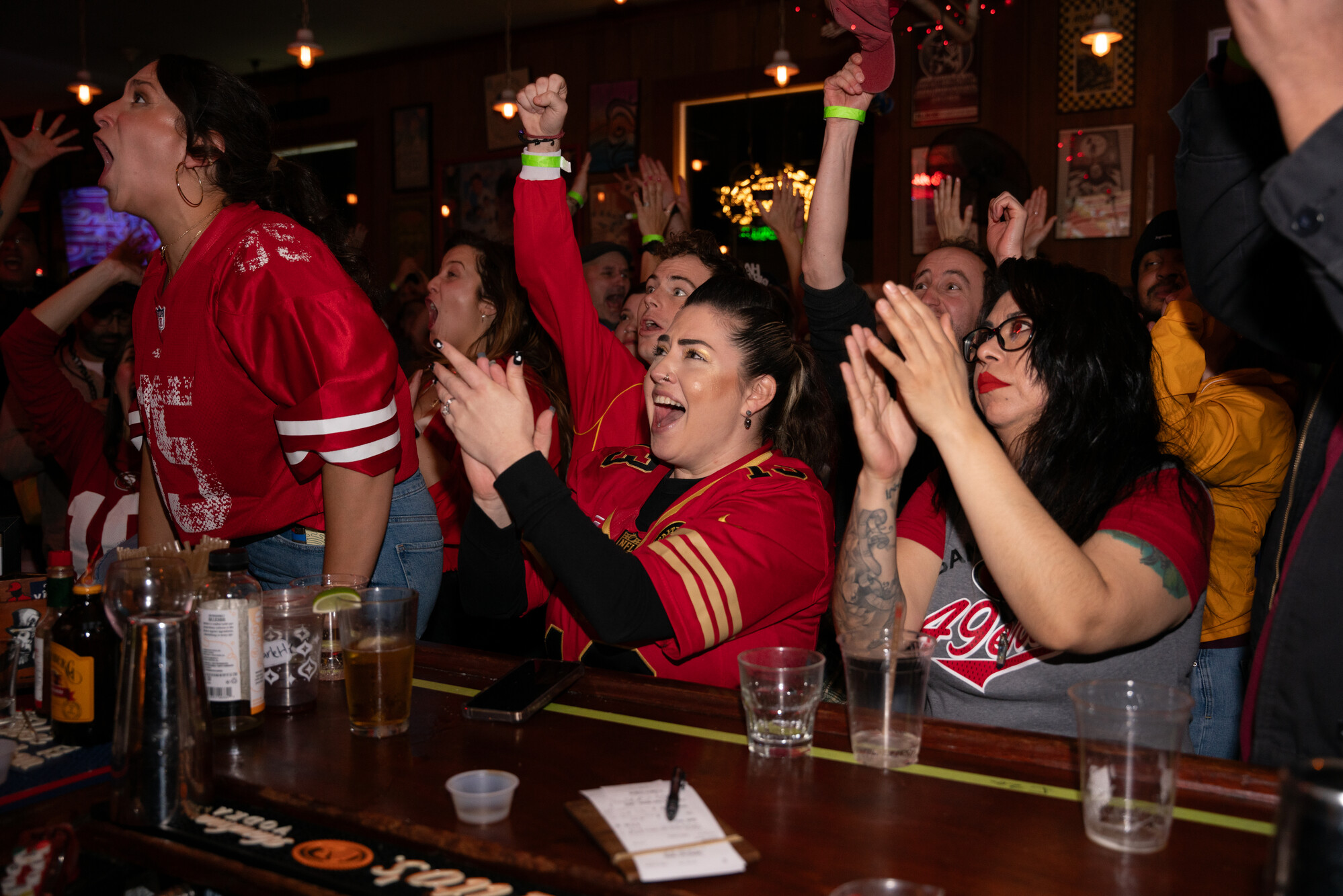
"caption": "A crowd cheers during the San Francisco 49ers vs. the Kansas City Chiefs NFL Super Bowl LVIII game inside Connecticut Yankee in San Francisco, California, on Sunday, Feb. 11, 2024.",
"credit": "Florence Middleton for KQED",
"altTag": null,
"description": null,
"imgSizes": {
"thumbnail": {
"file": "https://cdn.kqed.org/wp-content/uploads/sites/10/2025/11/23_Middleton20240211_KQEDSuperBowl_00461_qed-160x107.jpg",
"width": 160,
"height": 107,
"mimeType": "image/jpeg"
},
"1536x1536": {
"file": "https://cdn.kqed.org/wp-content/uploads/sites/10/2025/11/23_Middleton20240211_KQEDSuperBowl_00461_qed-1536x1025.jpg",
"width": 1536,
"height": 1025,
"mimeType": "image/jpeg"
},
"post-thumbnail": {
"file": "https://cdn.kqed.org/wp-content/uploads/sites/10/2025/11/23_Middleton20240211_KQEDSuperBowl_00461_qed-672x372.jpg",
"width": 672,
"height": 372,
"mimeType": "image/jpeg"
},
"twentyfourteen-full-width": {
"file": "https://cdn.kqed.org/wp-content/uploads/sites/10/2025/11/23_Middleton20240211_KQEDSuperBowl_00461_qed-1038x576.jpg",
"width": 1038,
"height": 576,
"mimeType": "image/jpeg"
},
"npr-cds-wide": {
"file": "https://cdn.kqed.org/wp-content/uploads/sites/10/2025/11/23_Middleton20240211_KQEDSuperBowl_00461_qed-1200x675.jpg",
"width": 1200,
"height": 675,
"mimeType": "image/jpeg"
},
"kqedFullSize": {
"file": "https://cdn.kqed.org/wp-content/uploads/sites/10/2025/11/23_Middleton20240211_KQEDSuperBowl_00461_qed.jpg",
"width": 1998,
"height": 1333
}
},
"isLoading": false,
"fetchFailed": false
},
"news_12071710": {
"type": "attachments",
"id": "news_12071710",
"meta": {
"index": "attachments_1716263798",
"site": "news",
"id": "12071710",
"found": true
},
"title": "Mount-Tam",
"publishDate": 1769798497,
"status": "inherit",
"parent": 12071175,
"modified": 1769798560,
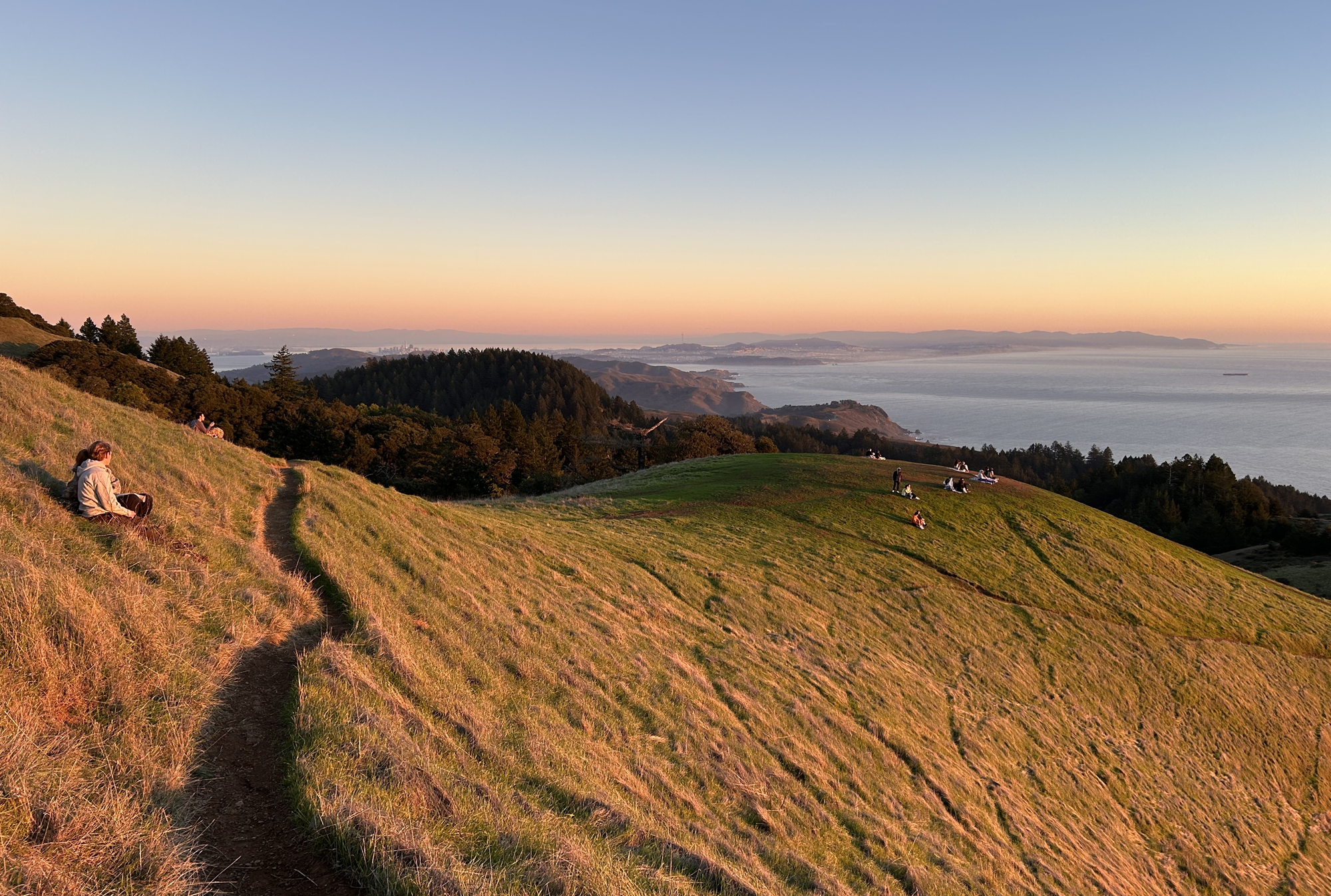
"caption": "Hikers enjoy sunset at Trojan Point, on the western spur of Mt. Tamalpais, on Nov. 21, 2025.\n",
"credit": "Sarah Wright/KQED",
"altTag": null,
"description": null,
"imgSizes": {
"thumbnail": {
"file": "https://cdn.kqed.org/wp-content/uploads/sites/10/2026/01/Mount-Tam-160x108.png",
"width": 160,
"height": 108,
"mimeType": "image/png"
},
"1536x1536": {
"file": "https://cdn.kqed.org/wp-content/uploads/sites/10/2026/01/Mount-Tam-1536x1034.png",
"width": 1536,
"height": 1034,
"mimeType": "image/png"
},
"post-thumbnail": {
"file": "https://cdn.kqed.org/wp-content/uploads/sites/10/2026/01/Mount-Tam-672x372.png",
"width": 672,
"height": 372,
"mimeType": "image/png"
},
"twentyfourteen-full-width": {
"file": "https://cdn.kqed.org/wp-content/uploads/sites/10/2026/01/Mount-Tam-1038x576.png",
"width": 1038,
"height": 576,
"mimeType": "image/png"
},
"npr-cds-wide": {
"file": "https://cdn.kqed.org/wp-content/uploads/sites/10/2026/01/Mount-Tam-1200x675.png",
"width": 1200,
"height": 675,
"mimeType": "image/png"
},
"kqedFullSize": {
"file": "https://cdn.kqed.org/wp-content/uploads/sites/10/2026/01/Mount-Tam.png",
"width": 2000,
"height": 1347
}
},
"isLoading": false,
"fetchFailed": false
},
"news_12071699": {
"type": "attachments",
"id": "news_12071699",
"meta": {
"index": "attachments_1716263798",
"site": "news",
"id": "12071699",
"found": true
},
"title": "LEDE Montara view",
"publishDate": 1769795855,
"status": "inherit",
"parent": 12071684,
"modified": 1769801055,
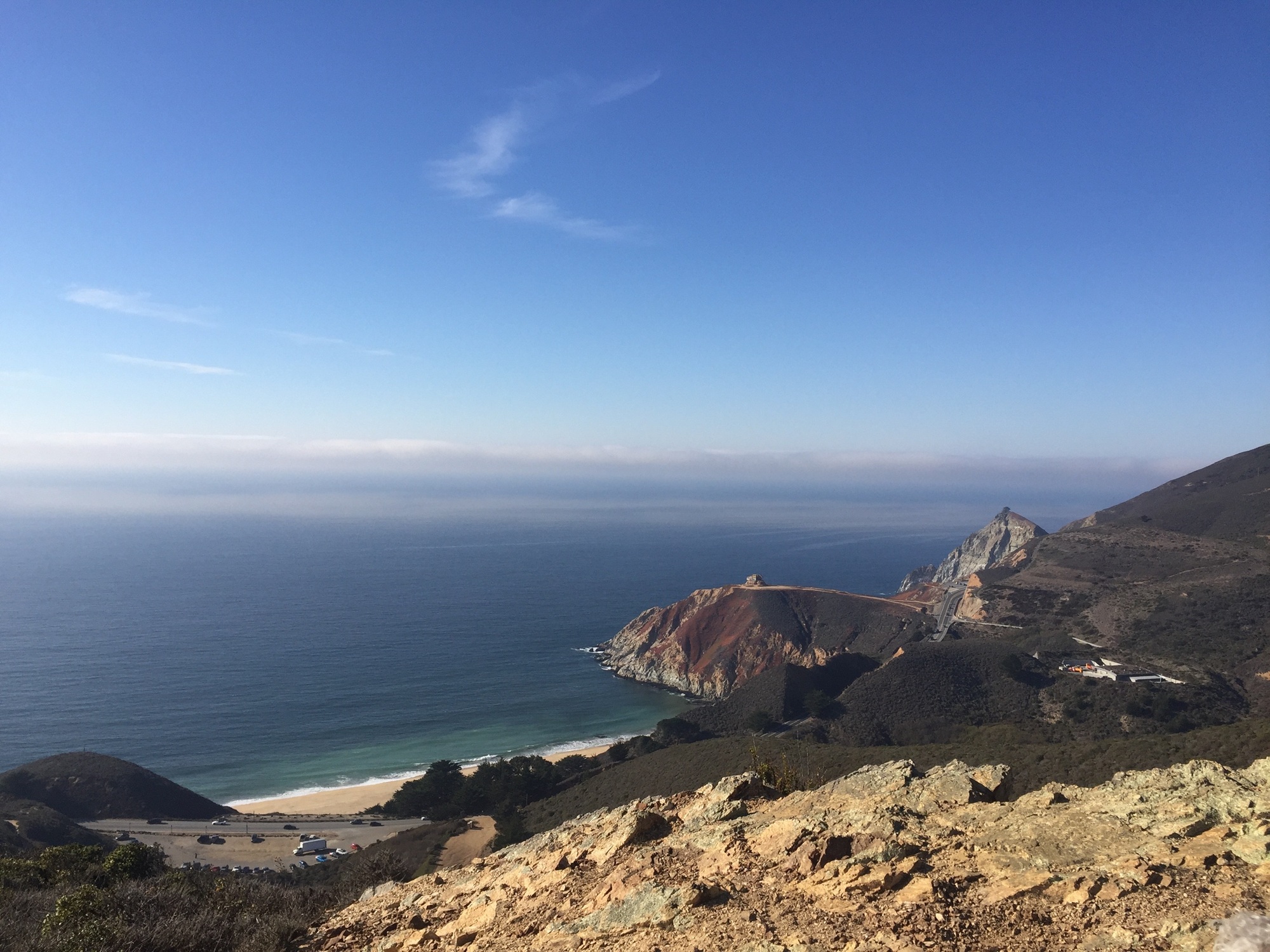
"caption": "Even midway up Montara Mountain on a clear day, seen here on Oct. 30, 2020, the ocean views can be stunning.",
"credit": "Sarah Wright/KQED",
"altTag": null,
"description": null,
"imgSizes": {
"thumbnail": {
"file": "https://cdn.kqed.org/wp-content/uploads/sites/10/2026/01/LEDE-Montara-view-160x120.jpg",
"width": 160,
"height": 120,
"mimeType": "image/jpeg"
},
"1536x1536": {
"file": "https://cdn.kqed.org/wp-content/uploads/sites/10/2026/01/LEDE-Montara-view-1536x1152.jpg",
"width": 1536,
"height": 1152,
"mimeType": "image/jpeg"
},
"post-thumbnail": {
"file": "https://cdn.kqed.org/wp-content/uploads/sites/10/2026/01/LEDE-Montara-view-672x372.jpg",
"width": 672,
"height": 372,
"mimeType": "image/jpeg"
},
"twentyfourteen-full-width": {
"file": "https://cdn.kqed.org/wp-content/uploads/sites/10/2026/01/LEDE-Montara-view-1038x576.jpg",
"width": 1038,
"height": 576,
"mimeType": "image/jpeg"
},
"npr-cds-wide": {
"file": "https://cdn.kqed.org/wp-content/uploads/sites/10/2026/01/LEDE-Montara-view-1200x675.jpg",
"width": 1200,
"height": 675,
"mimeType": "image/jpeg"
},
"kqedFullSize": {
"file": "https://cdn.kqed.org/wp-content/uploads/sites/10/2026/01/LEDE-Montara-view.jpg",
"width": 2000,
"height": 1500
}
},
"isLoading": false,
"fetchFailed": false
},
"news_12071365": {
"type": "attachments",
"id": "news_12071365",
"meta": {
"index": "attachments_1716263798",
"site": "news",
"id": "12071365",
"found": true
},
"title": "Moscone_Super_Bowl_closures",
"publishDate": 1769626659,
"status": "inherit",
"parent": 0,
"modified": 1769631064,
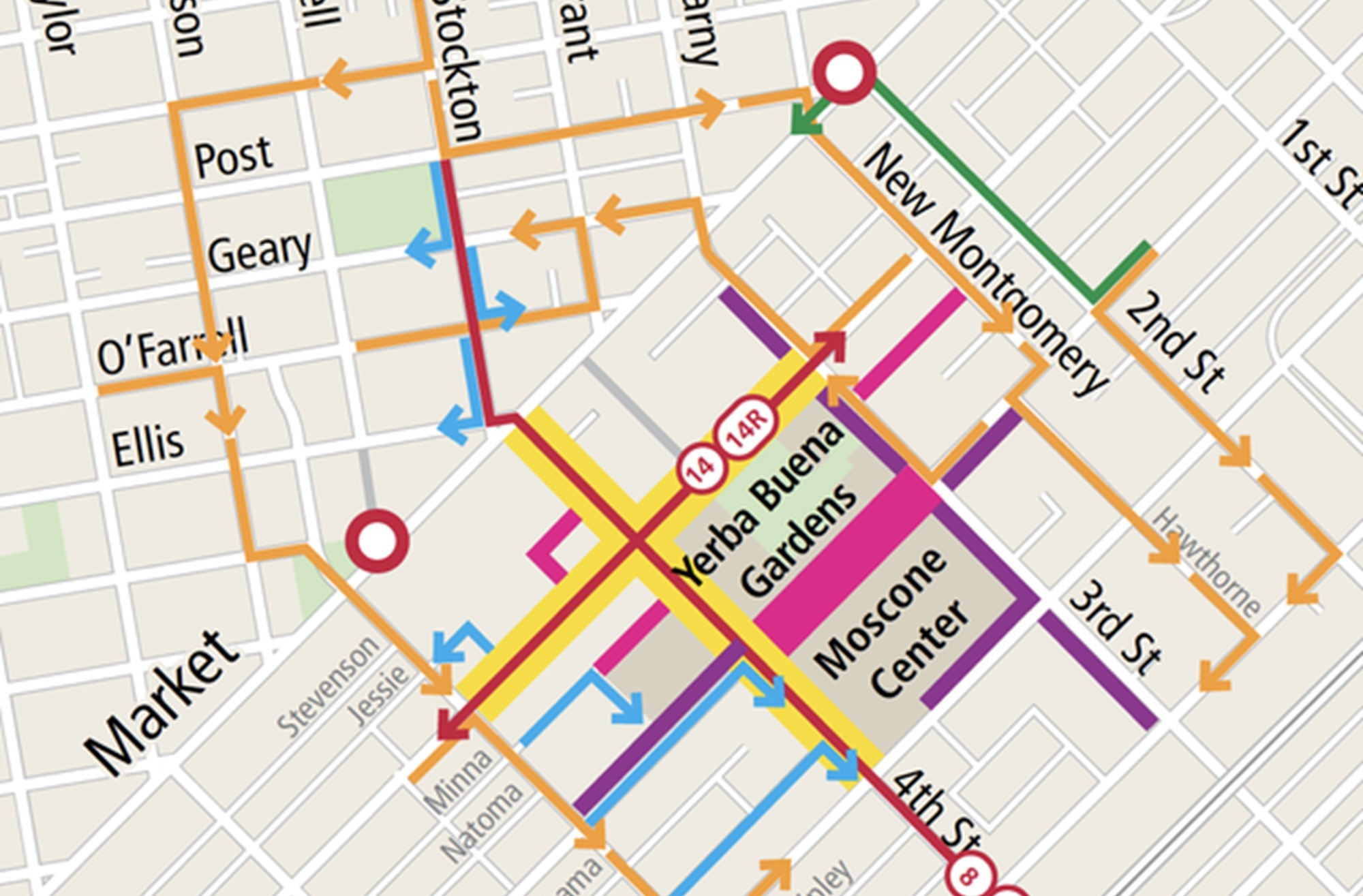
"caption": "Several areas in San Francisco will experience road closures around the Super Bowl, including streets around the Moscone Center, which is hosting the Super Bowl Experience.",
"credit": "SFMTA/Bay Area Hosting Committee",
"altTag": null,
"description": null,
"imgSizes": {
"thumbnail": {
"file": "https://cdn.kqed.org/wp-content/uploads/sites/10/2026/01/Moscone_Super_Bowl_closures-160x105.jpg",
"width": 160,
"height": 105,
"mimeType": "image/jpeg"
},
"1536x1536": {
"file": "https://cdn.kqed.org/wp-content/uploads/sites/10/2026/01/Moscone_Super_Bowl_closures-1536x1010.jpg",
"width": 1536,
"height": 1010,
"mimeType": "image/jpeg"
},
"post-thumbnail": {
"file": "https://cdn.kqed.org/wp-content/uploads/sites/10/2026/01/Moscone_Super_Bowl_closures-672x372.jpg",
"width": 672,
"height": 372,
"mimeType": "image/jpeg"
},
"twentyfourteen-full-width": {
"file": "https://cdn.kqed.org/wp-content/uploads/sites/10/2026/01/Moscone_Super_Bowl_closures-1038x576.jpg",
"width": 1038,
"height": 576,
"mimeType": "image/jpeg"
},
"npr-cds-wide": {
"file": "https://cdn.kqed.org/wp-content/uploads/sites/10/2026/01/Moscone_Super_Bowl_closures-1200x675.jpg",
"width": 1200,
"height": 675,
"mimeType": "image/jpeg"
},
"kqedFullSize": {
"file": "https://cdn.kqed.org/wp-content/uploads/sites/10/2026/01/Moscone_Super_Bowl_closures.jpg",
"width": 2000,
"height": 1315
}
},
"isLoading": false,
"fetchFailed": false
}
},
"audioPlayerReducer": {
"postId": "stream_live",
"isPaused": true,
"isPlaying": false,
"pfsActive": false,
"pledgeModalIsOpen": true,
"playerDrawerIsOpen": false,
"liveAudioPlayStartedAt": 0,
"liveAudioPlayContext": ""
},
"authorsReducer": {
"carlysevern": {
"type": "authors",
"id": "3243",
"meta": {
"index": "authors_1716337520",
"id": "3243",
"found": true
},
"name": "Carly Severn",
"firstName": "Carly",
"lastName": "Severn",
"slug": "carlysevern",
"email": "csevern@kqed.org",
"display_author_email": false,
"staff_mastheads": [
"news"
],
"title": "Senior Editor, Audience News ",
"bio": "Carly is KQED's Senior Editor of Audience News on the Digital News team, and has reported for the California Report Magazine, Bay Curious and KQED Arts. She's formerly the host of \u003ca href=\"http://ww2.kqed.org/pop/category/the-cooler/\" rel=\"noopener noreferrer\">The Cooler\u003c/a> podcast.",
"avatar": "https://secure.gravatar.com/avatar/54037bf5c128fe678f0ef26cec97a93f2e7f220a22d7285703328f12c42c1b1d?s=600&d=blank&r=g",
"twitter": "teacupinthebay",
"bluesky": null,
"facebook": null,
"instagram": null,
"linkedin": null,
"sites": [
{
"site": "",
"roles": [
"editor"
]
},
{
"site": "arts",
"roles": [
"editor"
]
},
{
"site": "news",
"roles": [
"administrator"
]
},
{
"site": "pop",
"roles": [
"editor"
]
},
{
"site": "futureofyou",
"roles": [
"editor"
]
},
{
"site": "about",
"roles": [
"administrator"
]
},
{
"site": "mindshift",
"roles": [
"editor"
]
},
{
"site": "bayareabites",
"roles": [
"editor"
]
},
{
"site": "stateofhealth",
"roles": [
"editor"
]
},
{
"site": "science",
"roles": [
"editor"
]
},
{
"site": "food",
"roles": [
"contributor"
]
},
{
"site": "forum",
"roles": [
"editor"
]
},
{
"site": "perspectives",
"roles": [
"administrator"
]
},
{
"site": "liveblog",
"roles": [
"editor"
]
}
],
"headData": {
"title": "Carly Severn | KQED",
"description": "Senior Editor, Audience News ",
"ogImgSrc": "https://secure.gravatar.com/avatar/54037bf5c128fe678f0ef26cec97a93f2e7f220a22d7285703328f12c42c1b1d?s=600&d=blank&r=g",
"twImgSrc": "https://secure.gravatar.com/avatar/54037bf5c128fe678f0ef26cec97a93f2e7f220a22d7285703328f12c42c1b1d?s=600&d=blank&r=g"
},
"isLoading": false,
"link": "/author/carlysevern"
},
"ccabreralomeli": {
"type": "authors",
"id": "11708",
"meta": {
"index": "authors_1716337520",
"id": "11708",
"found": true
},
"name": "Carlos Cabrera-Lomelí",
"firstName": "Carlos",
"lastName": "Cabrera-Lomelí",
"slug": "ccabreralomeli",
"email": "ccabreralomeli@KQED.org",
"display_author_email": true,
"staff_mastheads": [
"news"
],
"title": "Community Reporter",
"bio": "Carlos Cabrera-Lomelí is a community reporter with KQED's digital engagement team. He also reports and co-produces for KQED's bilingual news hub KQED en Español. He grew up in San Francisco's Mission District and has previously worked with Univision, 48 Hills and REFORMA in Mexico City.",
"avatar": "https://secure.gravatar.com/avatar/c309be9665e484f887b818c89e273ecc673004f426f36b24d00a4d813a2e0518?s=600&d=blank&r=g",
"twitter": "@LomeliCabrera",
"bluesky": null,
"facebook": null,
"instagram": null,
"linkedin": null,
"sites": [
{
"site": "arts",
"roles": [
"editor"
]
},
{
"site": "news",
"roles": [
"editor"
]
},
{
"site": "about",
"roles": [
"editor"
]
},
{
"site": "science",
"roles": [
"editor"
]
},
{
"site": "perspectives",
"roles": [
"editor"
]
},
{
"site": "elections",
"roles": [
"editor"
]
},
{
"site": "liveblog",
"roles": [
"contributor"
]
}
],
"headData": {
"title": "Carlos Cabrera-Lomelí | KQED",
"description": "Community Reporter",
"ogImgSrc": "https://secure.gravatar.com/avatar/c309be9665e484f887b818c89e273ecc673004f426f36b24d00a4d813a2e0518?s=600&d=blank&r=g",
"twImgSrc": "https://secure.gravatar.com/avatar/c309be9665e484f887b818c89e273ecc673004f426f36b24d00a4d813a2e0518?s=600&d=blank&r=g"
},
"isLoading": false,
"link": "/author/ccabreralomeli"
},
"nkhan": {
"type": "authors",
"id": "11867",
"meta": {
"index": "authors_1716337520",
"id": "11867",
"found": true
},
"name": "Nisa Khan",
"firstName": "Nisa",
"lastName": "Khan",
"slug": "nkhan",
"email": "nkhan@kqed.org",
"display_author_email": false,
"staff_mastheads": [],
"title": "KQED Contributor",
"bio": "Nisa Khan is a reporter for KQED's Audience News Desk. She was formerly a data reporter at Michigan Radio. She earned a Bachelor of Science in Information from the University of Michigan and a Master of Arts in Communication from Stanford University.",
"avatar": "https://secure.gravatar.com/avatar/8720459eef081ff64582b3506b124d58523e80e120704a0cbd9892533c914991?s=600&d=blank&r=g",
"twitter": "mnisakhan",
"bluesky": null,
"facebook": null,
"instagram": null,
"linkedin": null,
"sites": [
{
"site": "arts",
"roles": [
"editor"
]
},
{
"site": "news",
"roles": [
"editor"
]
},
{
"site": "science",
"roles": [
"editor",
"author"
]
},
{
"site": "forum",
"roles": [
"editor"
]
},
{
"site": "liveblog",
"roles": [
"contributor"
]
}
],
"headData": {
"title": "Nisa Khan | KQED",
"description": "KQED Contributor",
"ogImgSrc": "https://secure.gravatar.com/avatar/8720459eef081ff64582b3506b124d58523e80e120704a0cbd9892533c914991?s=600&d=blank&r=g",
"twImgSrc": "https://secure.gravatar.com/avatar/8720459eef081ff64582b3506b124d58523e80e120704a0cbd9892533c914991?s=600&d=blank&r=g"
},
"isLoading": false,
"link": "/author/nkhan"
},
"kdebenedetti": {
"type": "authors",
"id": "11913",
"meta": {
"index": "authors_1716337520",
"id": "11913",
"found": true
},
"name": "Katie DeBenedetti",
"firstName": "Katie",
"lastName": "DeBenedetti",
"slug": "kdebenedetti",
"email": "kdebenedetti@kqed.org",
"display_author_email": false,
"staff_mastheads": [
"news",
"science"
],
"title": "KQED Contributor",
"bio": "Katie DeBenedetti is a digital reporter covering daily news for the Express Desk. Prior to joining KQED as a culture reporting intern in January 2024, she covered education and city government for the Napa Valley Register.",
"avatar": "https://secure.gravatar.com/avatar/6e31073cb8f7e4214ab03f42771d0f45?s=600&d=blank&r=g",
"twitter": null,
"facebook": null,
"instagram": null,
"linkedin": null,
"sites": [
{
"site": "news",
"roles": [
"author"
]
},
{
"site": "science",
"roles": [
"author"
]
},
{
"site": "liveblog",
"roles": [
"author"
]
}
],
"headData": {
"title": "Katie DeBenedetti | KQED",
"description": "KQED Contributor",
"ogImgSrc": "https://secure.gravatar.com/avatar/6e31073cb8f7e4214ab03f42771d0f45?s=600&d=blank&r=g",
"twImgSrc": "https://secure.gravatar.com/avatar/6e31073cb8f7e4214ab03f42771d0f45?s=600&d=blank&r=g"
},
"isLoading": false,
"link": "/author/kdebenedetti"
},
"sarahwright": {
"type": "authors",
"id": "11956",
"meta": {
"index": "authors_1716337520",
"id": "11956",
"found": true
},
"name": "Sarah Wright",
"firstName": "Sarah",
"lastName": "Wright",
"slug": "sarahwright",
"email": "swright@kqed.org",
"display_author_email": true,
"staff_mastheads": [],
"title": "Outdoors Engagement Reporter",
"bio": "Sarah Wright is KQED's Outdoors Engagement Reporter. Originally from Lake Tahoe, she completed a thru-hike of the Pacific Crest Trail in 2019 and was a U.S. Fulbright Program grantee to Argentina in 2023. Her journalism has appeared in The Guardian, The San Francisco Standard, The Palo Alto Weekly and the Half Moon Bay Review.",
"avatar": "https://secure.gravatar.com/avatar/c161a3d6441865cba25e6db4fa561099ad665799e9432e34da2b84d7e371524c?s=600&d=blank&r=g",
"twitter": null,
"bluesky": null,
"facebook": null,
"instagram": null,
"linkedin": null,
"sites": [
{
"site": "arts",
"roles": [
"editor"
]
},
{
"site": "news",
"roles": [
"editor"
]
},
{
"site": "science",
"roles": [
"contributor",
"author"
]
},
{
"site": "forum",
"roles": [
"editor"
]
}
],
"headData": {
"title": "Sarah Wright | KQED",
"description": "Outdoors Engagement Reporter",
"ogImgSrc": "https://secure.gravatar.com/avatar/c161a3d6441865cba25e6db4fa561099ad665799e9432e34da2b84d7e371524c?s=600&d=blank&r=g",
"twImgSrc": "https://secure.gravatar.com/avatar/c161a3d6441865cba25e6db4fa561099ad665799e9432e34da2b84d7e371524c?s=600&d=blank&r=g"
},
"isLoading": false,
"link": "/author/sarahwright"
}
},
"pagesReducer": {
"news_category_guides-and-explainers": {
"type": "terms",
"id": "news_34168",
"meta": {
"index": "terms_1716263798",
"site": "news",
"id": "34168",
"score": 14.406069
},
"name": "Guides and Explainers",
"slug": "guides-and-explainers",
"taxonomy": "category",
"description": null,
"featImg": null,
"headData": {
"title": "Guides and Explainers Archives | KQED News",
"description": null,
"ogTitle": null,
"ogDescription": null,
"ogImgId": null,
"twTitle": null,
"twDescription": null,
"twImgId": null
},
"ttid": 34185,
"isLoading": false,
"title": "Guides and Explainers",
"pageMeta": {
"site": "news",
"WpPageTemplate": "page-topic-editorial",
"currentPage": 14
},
"blocks": [
{
"blockName": "kqed/post-list",
"attrs": {
"layout": "cardArticle2",
"query": "posts/news?category=guides-and-explainers",
"seeMore": false,
"paginated": true,
"page": 14
}
},
{
"blockName": "kqed/ad"
}
]
}
},
"pfsSessionReducer": {},
"postsReducer": {
"stream_live": {
"type": "live",
"id": "stream_live",
"audioUrl": "https://streams.kqed.org/kqedradio",
"title": "Live Stream",
"excerpt": "Live Stream information currently unavailable.",
"link": "/radio",
"featImg": "",
"label": {
"name": "KQED Live",
"link": "/"
}
},
"stream_kqedNewscast": {
"type": "posts",
"id": "stream_kqedNewscast",
"audioUrl": "https://www.kqed.org/.stream/anon/radio/RDnews/newscast.mp3?_=1",
"title": "KQED Newscast",
"featImg": "",
"label": {
"name": "88.5 FM",
"link": "/"
}
},
"news_12073343": {
"type": "posts",
"id": "news_12073343",
"meta": {
"index": "posts_1716263798",
"site": "news",
"id": "12073343",
"score": null,
"sort": [
1770994809000
]
},
"guestAuthors": [],
"slug": "where-to-see-newts-rain-weather-bay-area-hikes",
"title": "Winter Rains Bring the Newts — and Here’s Where to See Them in the Bay Area",
"publishDate": 1770994809,
"format": "standard",
"headTitle": "Winter Rains Bring the Newts — and Here’s Where to See Them in the Bay Area | KQED",
"labelTerm": {
"site": "news"
},
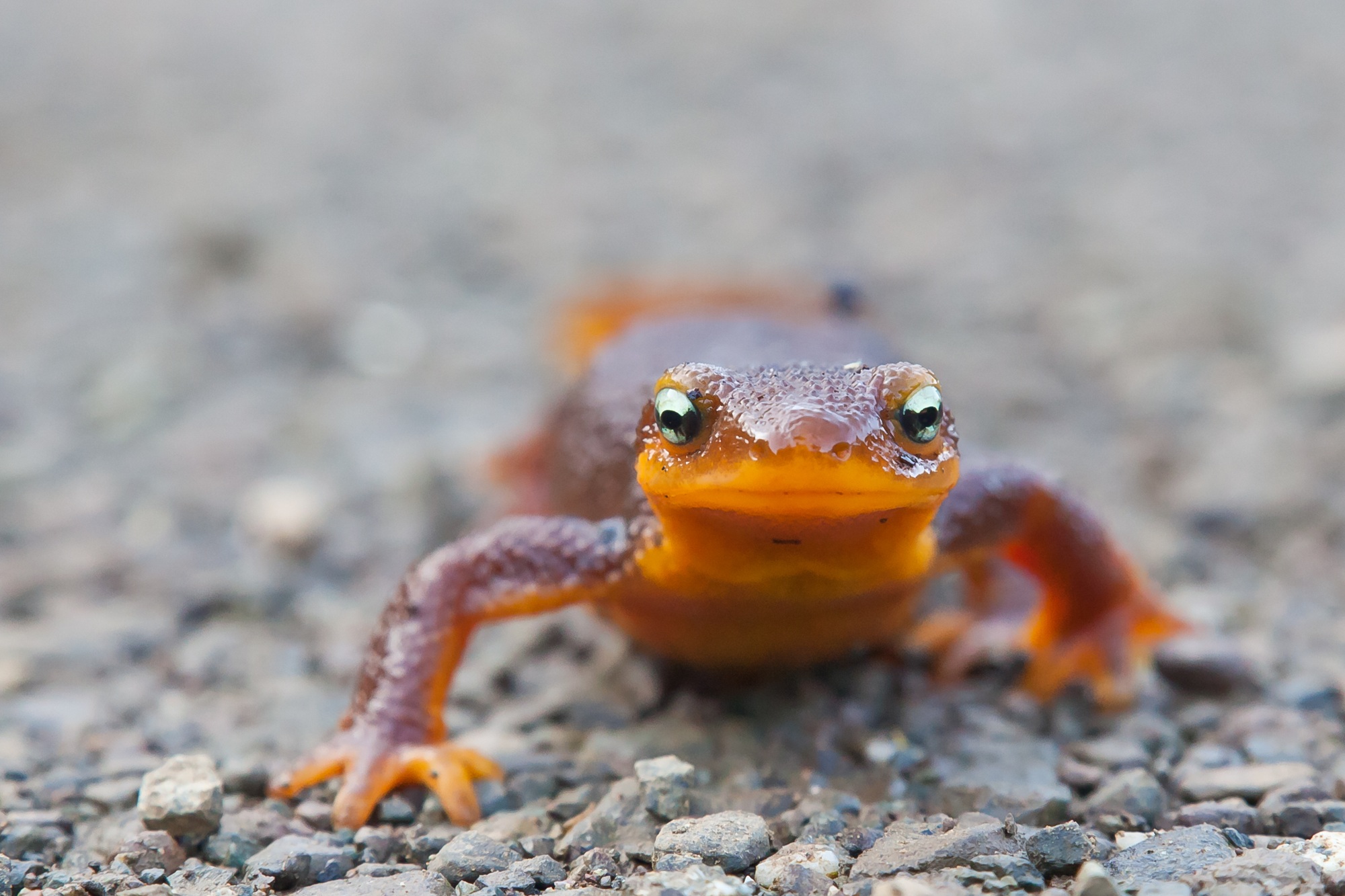
"content": "\u003cp>California newts \u003ca href=\"https://www.kqed.org/science/1996099/best-bay-area-hikes-for-spotting-banana-slugs-newts-and-ladybugs-after-the-rain\">\u003cem>love \u003c/em>the rain\u003c/a>.\u003c/p>\n\u003cp>So if you want the best chance at spotting these slimy, compelling creatures on a Bay Area hiking trail, a rainy spell — just like the one we’re getting this weekend — is just what you want.\u003c/p>\n\u003cp>Migrating newts can be found at parks all over the Bay Area this season, but we’ve compiled a short list of roads and trails where you’ll have the best chance of spotting them either during or just after some rainy weather.\u003c/p>\n\u003cp>[ad fullwidth]\u003c/p>\n\u003cp>Just remember: If you see a newt out in the wild, don’t touch or handle the animals. Some species of newts secrete toxins that can be harmful if ingested. Simply observe the newt, and consider warning others to avoid stepping near or on it.\u003c/p>\n\u003cp>(And if you’d like to\u003ca href=\"https://www.kqed.org/science/2000015/how-did-the-newt-cross-the-road-with-help-from-these-volunteers-carefully\"> volunteer to help ensure newts’ safe passage \u003c/a>during their migration season, we have information on that below, too.)\u003c/p>\n\u003ch2>Hikes to see newts in the Bay Area\u003c/h2>\n\u003cp>\u003cstrong>East Bay: South Park Drive, Tilden Regional Park\u003c/strong>\u003c/p>\n\u003cp>Each year, \u003ca href=\"https://www.ebparks.org/about-us/whats-new/news/annual-south-park-drive-closure-newt-migration-0\">South Park Drive\u003c/a> in Tilden Regional Park closes to cars between November and April to protect the migrating newts. That also means it’s a fantastic opportunity to see them while hiking in the rain.\u003c/p>\n\u003cp>You can park your car near the Botanic Gardens and walk uphill from there for just over a mile. The road is entirely paved, and you can stop for a rest at any of the picnic areas along the way — or cut off onto Tower Trail for some steeper off-road hiking. You’ll emerge near the top of Grizzly Peak, where the East Bay views are hard to beat.\u003c/p>\n\u003cfigure id=\"attachment_12073354\" class=\"wp-caption aligncenter\" style=\"max-width: 2000px\">\u003cimg loading=\"lazy\" decoding=\"async\" class=\"size-full wp-image-12073354\" src=\"https://cdn.kqed.org/wp-content/uploads/sites/10/2026/02/1_IMG_3849_resized.jpg\" alt=\"\" width=\"2000\" height=\"1500\" srcset=\"https://cdn.kqed.org/wp-content/uploads/sites/10/2026/02/1_IMG_3849_resized.jpg 2000w, https://cdn.kqed.org/wp-content/uploads/sites/10/2026/02/1_IMG_3849_resized-160x120.jpg 160w, https://cdn.kqed.org/wp-content/uploads/sites/10/2026/02/1_IMG_3849_resized-1536x1152.jpg 1536w\" sizes=\"auto, (max-width: 2000px) 100vw, 2000px\">\u003cfigcaption class=\"wp-caption-text\">South Park Drive in the East Bay’s Tilden Regional Park is closed to cars all winter long while newts make their annual migrations, and hiking here on rainy days may give you the chance to see the animals. \u003ccite>(Sarah Wright/KQED)\u003c/cite>\u003c/figcaption>\u003c/figure>\n\u003cp>Want to extend your hike? Before you return to your car, take a stroll around the \u003ca href=\"https://www.ebparks.org/parks/tilden/botanic-garden\">Botanic Gardens themselves,\u003c/a> where you can see native plants from all over the state.\u003c/p>\n\u003cp>\u003cem>Know before you go\u003c/em>: There are still some areas of Wildcat Canyon Road open to cars where newts can be crossing, so drive with extra caution around the Botanic Garden area.\u003c/p>\n\u003cp>And if you bring a dog, be sure to keep it away from the migrating newts. Parking is free at the gardens[aside postID=science_2000015 hero='https://cdn.kqed.org/wp-content/uploads/sites/35/2026/02/LEDE_Newt-Patrol-Newt_resized.jpg']\u003cstrong>Peninsula: Mindego Hill, Russian Ridge\u003c/strong>\u003c/p>\n\u003cp>This \u003ca href=\"https://www.alltrails.com/trail/us/california/mindego-hill\">5-mile round-trip trail \u003c/a>will reward you with immense summit views and the potential for newt viewing during the rainy season — plus, you may even get lucky to spot native raptors like red-tailed hawks, turkey vultures, Cooper’s hawks and golden eagles.\u003c/p>\n\u003cp>The trail, part of the \u003ca href=\"https://www.openspace.org/preserves/russian-ridge\">Russian Ridge Open Space Preserve\u003c/a>, starts off Alpine Road on the Peninsula, just west of Skyline Boulevard.\u003c/p>\n\u003cp>Following an old farm road, the trail is mostly exposed, so be sure to bring sun protection if you’re hiking \u003cem>after \u003c/em>the rains. Watch for newts underfoot once you start climbing the Mindego Hill itself.\u003c/p>\n\u003cp>\u003cem>Know before you go:\u003c/em> The Mindego Hill area can close due to high winds, so be sure to \u003ca href=\"https://www.openspace.org/preserves/russian-ridge#trail-closures\">check the website\u003c/a> before you head out. Parking is free at the preserve. Dogs are not allowed.\u003c/p>\n\u003cp>\u003cstrong>North Bay: Cataract Falls, Mount Tamalpais\u003c/strong>\u003c/p>\n\u003cp>At its absolute best on a rainy day, \u003ca href=\"https://www.alltrails.com/trail/us/california/cataract-falls-trail\">Cataract Falls\u003c/a> is not just a flowing delight of a waterfall — it’s also a prime spot for newt-finding in the winter months.\u003c/p>\n\u003cp>The entire \u003ca href=\"https://www.parks.ca.gov/?page_id=471&ref=homeexchange.fr\">Mount Tamalpais State Park\u003c/a> is lush and dense after heavy rains. And this trail winds hikers uphill through the cozy forest, on wooden bridges across creeks and alongside picturesque pools, where wildlife abounds.\u003c/p>\n\u003cfigure id=\"attachment_12073351\" class=\"wp-caption aligncenter\" style=\"max-width: 2000px\">\u003cimg loading=\"lazy\" decoding=\"async\" class=\"size-full wp-image-12073351\" src=\"https://cdn.kqed.org/wp-content/uploads/sites/10/2026/02/2_IMG_4293_resized-1.jpg\" alt=\"\" width=\"2000\" height=\"1500\" srcset=\"https://cdn.kqed.org/wp-content/uploads/sites/10/2026/02/2_IMG_4293_resized-1.jpg 2000w, https://cdn.kqed.org/wp-content/uploads/sites/10/2026/02/2_IMG_4293_resized-1-160x120.jpg 160w, https://cdn.kqed.org/wp-content/uploads/sites/10/2026/02/2_IMG_4293_resized-1-1536x1152.jpg 1536w\" sizes=\"auto, (max-width: 2000px) 100vw, 2000px\">\u003cfigcaption class=\"wp-caption-text\">A California newt trying to cross Alma Bridge Road. \u003ccite>(Courtesy of Annette Hertz)\u003c/cite>\u003c/figcaption>\u003c/figure>\n\u003cp>While the cascade meanders down the entire hillside, there are two main falls along the trail, and even a picnic area to take a break — which you may need, given much of this hike is up steep staircases. Keep your eyes peeled for newts underfoot and in the various pools of water where they may be bathing.\u003c/p>\n\u003cp>\u003cem>Know before you go:\u003c/em> Parking fills up quickly from the bottom of the trail, so if you’re heading out during a peak weekend time, try parking at the top of the hill and hiking down from Laurel Dell Road. Parking on either side of the falls is free, but be sure to face your car the correct way on the side of the road to avoid a ticket. Dogs are allowed but must be on leash.\u003c/p>\n\u003ch2>How to lend a helping hand to Bay Area newts\u003c/h2>\n\u003cp>In Marin County, the volunteer-run \u003ca href=\"https://www.chilenovalleynewtbrigade.org/\">Chileno Valley Newt Brigade\u003c/a> has operated for seven years to monitor a 1-mile stretch of Chileno Valley Road near Laguna Lake, where newts must make the dangerous crossing twice each breeding season.\u003c/p>\n\u003cfigure id=\"attachment_12073352\" class=\"wp-caption aligncenter\" style=\"max-width: 2000px\">\u003cimg loading=\"lazy\" decoding=\"async\" class=\"size-full wp-image-12073352\" src=\"https://cdn.kqed.org/wp-content/uploads/sites/10/2026/02/3_Newt-Patrol-Volunteers_resized.jpg\" alt=\"\" width=\"2000\" height=\"1499\" srcset=\"https://cdn.kqed.org/wp-content/uploads/sites/10/2026/02/3_Newt-Patrol-Volunteers_resized.jpg 2000w, https://cdn.kqed.org/wp-content/uploads/sites/10/2026/02/3_Newt-Patrol-Volunteers_resized-160x120.jpg 160w, https://cdn.kqed.org/wp-content/uploads/sites/10/2026/02/3_Newt-Patrol-Volunteers_resized-1536x1151.jpg 1536w\" sizes=\"auto, (max-width: 2000px) 100vw, 2000px\">\u003cfigcaption class=\"wp-caption-text\">Volunteers from Newt Patrol on their way to the assisted migration area. \u003ccite>(Courtesy of Merav Vonshak)\u003c/cite>\u003c/figcaption>\u003c/figure>\n\u003cp>If you’re interested in volunteering with the Newt Brigade, you can \u003ca href=\"https://www.chilenovalleynewtbrigade.org/volunteer\">sign up for training on their website\u003c/a>. Shifts, which are scheduled during newt breeding season from October through mid-March, are around two hours long and you’ll be asked to commit to one shift per week.\u003c/p>\n\u003cp>Want to help out in a more casual way? The \u003ca href=\"https://www.openspace.org/\">Midpeninsula Regional Open Space District\u003c/a> \u003ca href=\"https://www.openspace.org/where-to-go/nature/newts\">advises \u003c/a>reporting your newt sightings and observations to community science projects like \u003ca href=\"https://www.inaturalist.org/projects/midpen-biodiversity-index\">iNaturalist\u003c/a>, which many organizations like Midpen use to track migrating species.\u003c/p>\n\u003cp>\u003ca href=\"https://www.kqed.org/science/2000015/how-did-the-newt-cross-the-road-with-help-from-these-volunteers-carefully\">Read more about volunteer efforts to save migrating newts.\u003c/a>\u003c/p>\n\u003cp>\u003cem>KQED’s \u003c/em>\u003ca href=\"https://www.kqed.org/author/smohamad\">\u003cem>Sarah Mohamad\u003c/em>\u003c/a>\u003cem> contributed reporting to this story.\u003c/em>\u003c/p>\n\u003cp>\u003c/p>\n",
"blocks": [],
"excerpt": "Want to spot some newts? Here are the Bay Area trails where your chances are highest after the rain.",
"status": "publish",
"parent": 0,
"modified": 1770931526,
"stats": {
"hasAudio": false,
"hasVideo": false,
"hasChartOrMap": false,
"iframeSrcs": [],
"hasGoogleForm": false,
"hasGallery": false,
"hasHearkenModule": false,
"hasPolis": false,
"paragraphCount": 27,
"wordCount": 977
},
"headData": {
"title": "Winter Rains Bring the Newts — and Here’s Where to See Them in the Bay Area | KQED",
"description": "Want to spot some newts? Here are the Bay Area trails where your chances are highest after the rain.",
"ogTitle": "",
"ogDescription": "",
"ogImgId": "",
"twTitle": "",
"twDescription": "",
"twImgId": "",
"schema": {
"@context": "https://schema.org",
"@type": "NewsArticle",
"headline": "Winter Rains Bring the Newts — and Here’s Where to See Them in the Bay Area",
"datePublished": "2026-02-13T07:00:09-08:00",
"dateModified": "2026-02-12T13:25:26-08:00",
"image": "https://cdn.kqed.org/wp-content/uploads/2020/02/KQED-OG-Image@1x.png",
"isAccessibleForFree": "True",
"publisher": {
"@type": "NewsMediaOrganization",
"@id": "https://www.kqed.org/#organization",
"name": "KQED",
"logo": "https://cdn.kqed.org/wp-content/uploads/2020/02/KQED-OG-Image@1x.png",
"url": "https://www.kqed.org",
"sameAs": [
"https://www.facebook.com/KQED",
"https://twitter.com/KQED",
"https://www.instagram.com/kqed/",
"https://www.tiktok.com/@kqedofficial",
"https://www.linkedin.com/company/kqed",
"https://www.youtube.com/channel/UCeC0IOo7i1P_61zVUWbJ4nw"
]
}
}
},
"primaryCategory": {
"termId": 34168,
"slug": "guides-and-explainers",
"name": "Guides and Explainers"
},
"sticky": false,
"templateType": "standard",
"featuredImageType": "standard",
"excludeFromSiteSearch": "Include",
"articleAge": "0",
"path": "/news/12073343/where-to-see-newts-rain-weather-bay-area-hikes",
"audioTrackLength": null,
"parsedContent": [
{
"type": "contentString",
"content": "\u003cdiv class=\"post-body\">\u003cp>\u003cp>California newts \u003ca href=\"https://www.kqed.org/science/1996099/best-bay-area-hikes-for-spotting-banana-slugs-newts-and-ladybugs-after-the-rain\">\u003cem>love \u003c/em>the rain\u003c/a>.\u003c/p>\n\u003cp>So if you want the best chance at spotting these slimy, compelling creatures on a Bay Area hiking trail, a rainy spell — just like the one we’re getting this weekend — is just what you want.\u003c/p>\n\u003cp>Migrating newts can be found at parks all over the Bay Area this season, but we’ve compiled a short list of roads and trails where you’ll have the best chance of spotting them either during or just after some rainy weather.\u003c/p>\n\u003cp>\u003c/p>\u003c/div>",
"attributes": {
"named": {},
"numeric": []
}
},
{
"type": "component",
"content": "",
"name": "ad",
"attributes": {
"named": {
"label": "fullwidth"
},
"numeric": [
"fullwidth"
]
}
},
{
"type": "contentString",
"content": "\u003cdiv class=\"post-body\">\u003cp>\u003c/p>\n\u003cp>Just remember: If you see a newt out in the wild, don’t touch or handle the animals. Some species of newts secrete toxins that can be harmful if ingested. Simply observe the newt, and consider warning others to avoid stepping near or on it.\u003c/p>\n\u003cp>(And if you’d like to\u003ca href=\"https://www.kqed.org/science/2000015/how-did-the-newt-cross-the-road-with-help-from-these-volunteers-carefully\"> volunteer to help ensure newts’ safe passage \u003c/a>during their migration season, we have information on that below, too.)\u003c/p>\n\u003ch2>Hikes to see newts in the Bay Area\u003c/h2>\n\u003cp>\u003cstrong>East Bay: South Park Drive, Tilden Regional Park\u003c/strong>\u003c/p>\n\u003cp>Each year, \u003ca href=\"https://www.ebparks.org/about-us/whats-new/news/annual-south-park-drive-closure-newt-migration-0\">South Park Drive\u003c/a> in Tilden Regional Park closes to cars between November and April to protect the migrating newts. That also means it’s a fantastic opportunity to see them while hiking in the rain.\u003c/p>\n\u003cp>You can park your car near the Botanic Gardens and walk uphill from there for just over a mile. The road is entirely paved, and you can stop for a rest at any of the picnic areas along the way — or cut off onto Tower Trail for some steeper off-road hiking. You’ll emerge near the top of Grizzly Peak, where the East Bay views are hard to beat.\u003c/p>\n\u003cfigure id=\"attachment_12073354\" class=\"wp-caption aligncenter\" style=\"max-width: 2000px\">\u003cimg loading=\"lazy\" decoding=\"async\" class=\"size-full wp-image-12073354\" src=\"https://cdn.kqed.org/wp-content/uploads/sites/10/2026/02/1_IMG_3849_resized.jpg\" alt=\"\" width=\"2000\" height=\"1500\" srcset=\"https://cdn.kqed.org/wp-content/uploads/sites/10/2026/02/1_IMG_3849_resized.jpg 2000w, https://cdn.kqed.org/wp-content/uploads/sites/10/2026/02/1_IMG_3849_resized-160x120.jpg 160w, https://cdn.kqed.org/wp-content/uploads/sites/10/2026/02/1_IMG_3849_resized-1536x1152.jpg 1536w\" sizes=\"auto, (max-width: 2000px) 100vw, 2000px\">\u003cfigcaption class=\"wp-caption-text\">South Park Drive in the East Bay’s Tilden Regional Park is closed to cars all winter long while newts make their annual migrations, and hiking here on rainy days may give you the chance to see the animals. \u003ccite>(Sarah Wright/KQED)\u003c/cite>\u003c/figcaption>\u003c/figure>\n\u003cp>Want to extend your hike? Before you return to your car, take a stroll around the \u003ca href=\"https://www.ebparks.org/parks/tilden/botanic-garden\">Botanic Gardens themselves,\u003c/a> where you can see native plants from all over the state.\u003c/p>\n\u003cp>\u003cem>Know before you go\u003c/em>: There are still some areas of Wildcat Canyon Road open to cars where newts can be crossing, so drive with extra caution around the Botanic Garden area.\u003c/p>\n\u003cp>And if you bring a dog, be sure to keep it away from the migrating newts. Parking is free at the gardens\u003c/p>\u003c/div>",
"attributes": {
"named": {},
"numeric": []
}
},
{
"type": "component",
"content": "",
"name": "aside",
"attributes": {
"named": {
"postid": "science_2000015",
"hero": "https://cdn.kqed.org/wp-content/uploads/sites/35/2026/02/LEDE_Newt-Patrol-Newt_resized.jpg",
"label": ""
},
"numeric": []
}
},
{
"type": "contentString",
"content": "\u003cdiv class=\"post-body\">\u003cp>\u003cstrong>Peninsula: Mindego Hill, Russian Ridge\u003c/strong>\u003c/p>\n\u003cp>This \u003ca href=\"https://www.alltrails.com/trail/us/california/mindego-hill\">5-mile round-trip trail \u003c/a>will reward you with immense summit views and the potential for newt viewing during the rainy season — plus, you may even get lucky to spot native raptors like red-tailed hawks, turkey vultures, Cooper’s hawks and golden eagles.\u003c/p>\n\u003cp>The trail, part of the \u003ca href=\"https://www.openspace.org/preserves/russian-ridge\">Russian Ridge Open Space Preserve\u003c/a>, starts off Alpine Road on the Peninsula, just west of Skyline Boulevard.\u003c/p>\n\u003cp>Following an old farm road, the trail is mostly exposed, so be sure to bring sun protection if you’re hiking \u003cem>after \u003c/em>the rains. Watch for newts underfoot once you start climbing the Mindego Hill itself.\u003c/p>\n\u003cp>\u003cem>Know before you go:\u003c/em> The Mindego Hill area can close due to high winds, so be sure to \u003ca href=\"https://www.openspace.org/preserves/russian-ridge#trail-closures\">check the website\u003c/a> before you head out. Parking is free at the preserve. Dogs are not allowed.\u003c/p>\n\u003cp>\u003cstrong>North Bay: Cataract Falls, Mount Tamalpais\u003c/strong>\u003c/p>\n\u003cp>At its absolute best on a rainy day, \u003ca href=\"https://www.alltrails.com/trail/us/california/cataract-falls-trail\">Cataract Falls\u003c/a> is not just a flowing delight of a waterfall — it’s also a prime spot for newt-finding in the winter months.\u003c/p>\n\u003cp>The entire \u003ca href=\"https://www.parks.ca.gov/?page_id=471&ref=homeexchange.fr\">Mount Tamalpais State Park\u003c/a> is lush and dense after heavy rains. And this trail winds hikers uphill through the cozy forest, on wooden bridges across creeks and alongside picturesque pools, where wildlife abounds.\u003c/p>\n\u003cfigure id=\"attachment_12073351\" class=\"wp-caption aligncenter\" style=\"max-width: 2000px\">\u003cimg loading=\"lazy\" decoding=\"async\" class=\"size-full wp-image-12073351\" src=\"https://cdn.kqed.org/wp-content/uploads/sites/10/2026/02/2_IMG_4293_resized-1.jpg\" alt=\"\" width=\"2000\" height=\"1500\" srcset=\"https://cdn.kqed.org/wp-content/uploads/sites/10/2026/02/2_IMG_4293_resized-1.jpg 2000w, https://cdn.kqed.org/wp-content/uploads/sites/10/2026/02/2_IMG_4293_resized-1-160x120.jpg 160w, https://cdn.kqed.org/wp-content/uploads/sites/10/2026/02/2_IMG_4293_resized-1-1536x1152.jpg 1536w\" sizes=\"auto, (max-width: 2000px) 100vw, 2000px\">\u003cfigcaption class=\"wp-caption-text\">A California newt trying to cross Alma Bridge Road. \u003ccite>(Courtesy of Annette Hertz)\u003c/cite>\u003c/figcaption>\u003c/figure>\n\u003cp>While the cascade meanders down the entire hillside, there are two main falls along the trail, and even a picnic area to take a break — which you may need, given much of this hike is up steep staircases. Keep your eyes peeled for newts underfoot and in the various pools of water where they may be bathing.\u003c/p>\n\u003cp>\u003cem>Know before you go:\u003c/em> Parking fills up quickly from the bottom of the trail, so if you’re heading out during a peak weekend time, try parking at the top of the hill and hiking down from Laurel Dell Road. Parking on either side of the falls is free, but be sure to face your car the correct way on the side of the road to avoid a ticket. Dogs are allowed but must be on leash.\u003c/p>\n\u003ch2>How to lend a helping hand to Bay Area newts\u003c/h2>\n\u003cp>In Marin County, the volunteer-run \u003ca href=\"https://www.chilenovalleynewtbrigade.org/\">Chileno Valley Newt Brigade\u003c/a> has operated for seven years to monitor a 1-mile stretch of Chileno Valley Road near Laguna Lake, where newts must make the dangerous crossing twice each breeding season.\u003c/p>\n\u003cfigure id=\"attachment_12073352\" class=\"wp-caption aligncenter\" style=\"max-width: 2000px\">\u003cimg loading=\"lazy\" decoding=\"async\" class=\"size-full wp-image-12073352\" src=\"https://cdn.kqed.org/wp-content/uploads/sites/10/2026/02/3_Newt-Patrol-Volunteers_resized.jpg\" alt=\"\" width=\"2000\" height=\"1499\" srcset=\"https://cdn.kqed.org/wp-content/uploads/sites/10/2026/02/3_Newt-Patrol-Volunteers_resized.jpg 2000w, https://cdn.kqed.org/wp-content/uploads/sites/10/2026/02/3_Newt-Patrol-Volunteers_resized-160x120.jpg 160w, https://cdn.kqed.org/wp-content/uploads/sites/10/2026/02/3_Newt-Patrol-Volunteers_resized-1536x1151.jpg 1536w\" sizes=\"auto, (max-width: 2000px) 100vw, 2000px\">\u003cfigcaption class=\"wp-caption-text\">Volunteers from Newt Patrol on their way to the assisted migration area. \u003ccite>(Courtesy of Merav Vonshak)\u003c/cite>\u003c/figcaption>\u003c/figure>\n\u003cp>If you’re interested in volunteering with the Newt Brigade, you can \u003ca href=\"https://www.chilenovalleynewtbrigade.org/volunteer\">sign up for training on their website\u003c/a>. Shifts, which are scheduled during newt breeding season from October through mid-March, are around two hours long and you’ll be asked to commit to one shift per week.\u003c/p>\n\u003cp>Want to help out in a more casual way? The \u003ca href=\"https://www.openspace.org/\">Midpeninsula Regional Open Space District\u003c/a> \u003ca href=\"https://www.openspace.org/where-to-go/nature/newts\">advises \u003c/a>reporting your newt sightings and observations to community science projects like \u003ca href=\"https://www.inaturalist.org/projects/midpen-biodiversity-index\">iNaturalist\u003c/a>, which many organizations like Midpen use to track migrating species.\u003c/p>\n\u003cp>\u003ca href=\"https://www.kqed.org/science/2000015/how-did-the-newt-cross-the-road-with-help-from-these-volunteers-carefully\">Read more about volunteer efforts to save migrating newts.\u003c/a>\u003c/p>\n\u003cp>\u003cem>KQED’s \u003c/em>\u003ca href=\"https://www.kqed.org/author/smohamad\">\u003cem>Sarah Mohamad\u003c/em>\u003c/a>\u003cem> contributed reporting to this story.\u003c/em>\u003c/p>\n\u003cp>\u003c/p>\n\u003c/div>\u003c/p>",
"attributes": {
"named": {},
"numeric": []
}
}
],
"link": "/news/12073343/where-to-see-newts-rain-weather-bay-area-hikes",
"authors": [
"11956"
],
"categories": [
"news_31795",
"news_34165",
"news_34168",
"news_8"
],
"tags": [
"news_32707",
"news_18538",
"news_24345",
"news_35888",
"news_27626",
"news_28199",
"news_29828",
"news_17925",
"news_2715",
"news_3187",
"news_1855"
],
"featImg": "news_12073348",
"label": "news"
},
"news_12073187": {
"type": "posts",
"id": "news_12073187",
"meta": {
"index": "posts_1716263798",
"site": "news",
"id": "12073187",
"score": null,
"sort": [
1770923204000
]
},
"guestAuthors": [],
"slug": "tahoe-weather-snow-storms-donner-pass-forecast-caltrans-cameras-presidents-day",
"title": "Going to Tahoe Over the 2026 Presidents Day Weekend? What to Know About Snow, Fog and Travel Windows",
"publishDate": 1770923204,
"format": "standard",
"headTitle": "Going to Tahoe Over the 2026 Presidents Day Weekend? What to Know About Snow, Fog and Travel Windows | KQED",
"labelTerm": {
"site": "news"
},
"content": "\u003cp>After a dry start to the winter, Tahoe is \u003cem>finally \u003c/em>getting some more \u003ca href=\"https://www.kqed.org/science/1999949/californias-snowpack-is-shrinking-but-winter-isnt-over-yet\">much-needed snow\u003c/a> — and just in time for the Presidents Day holiday weekend.\u003c/p>\n\u003cp>But before you head up over Donner Pass or to South Lake Tahoe, be aware that conditions this weekend \u003ca href=\"https://www.kqed.org/science/1999982/winter-is-so-back-storms-are-on-the-way-for-the-bay-area-and-sierra-nevada\">might get a little dicey\u003c/a> — with snowstorms potentially lasting more than a week.\u003c/p>\n\u003cp>Not only is the Bay Area expected to see a few inches of rain, but snow is already falling on the Sierra with more on the way on Sunday at lower-than-normal altitudes. All of which spells hazardous driving conditions that could start as low as 5,500 feet, just past Emigrant Gap on Donner Pass.\u003c/p>\n\u003cp>[ad fullwidth]\u003c/p>\n\u003cp>But the more worrisome news for Tahoe travelers comes later in the weekend, when a second — potentially stronger — storm could bear down on the region on Saturday.\u003c/p>\n\u003cp>And while it might bring a Valentine’s Day gift of powder for skiers and snowboarders, it could also make travel for those getting home from Tahoe on Sunday, Monday and Tuesday quite difficult, Caltrans spokesperson John O’Connell said.\u003c/p>\n\u003cp>https://twitter.com/NWSSacramento/status/2022000075061481540\u003c/p>\n\u003cp>If you’re one of those traveling to the mountains for the three-day weekend, keep reading for what to know about safety on the roads.\u003c/p>\n\u003ch2>When will travel around Tahoe be hardest over the Presidents Day weekend?\u003c/h2>\n\u003cp>“The weather will be worse on the back half of the weekend,” O’Connell said. “If you’re planning on heading back Monday, be prepared, because it’s gonna be a long haul for sure.”\u003c/p>\n\u003cp>That second storm, O’Connell said, could also be colder than the first. That would push the snow level down in altitude, meaning more of your route could have snowy and icy conditions, which could also bring longer chain controls and heavier traffic — on top of the already anticipated overload of holiday weekend travelers.\u003c/p>\n\u003cfigure id=\"attachment_11937340\" class=\"wp-caption aligncenter\" style=\"max-width: 1920px\">\u003cimg loading=\"lazy\" decoding=\"async\" class=\"wp-image-11937340 size-full\" src=\"https://cdn.kqed.org/wp-content/uploads/sites/10/2023/01/RS61931_GettyImages-1244621387-qut.jpg\" alt=\"Snow blanked road with a Hazardous Conditions Ahead sign.\" width=\"1920\" height=\"1280\" srcset=\"https://cdn.kqed.org/wp-content/uploads/sites/10/2023/01/RS61931_GettyImages-1244621387-qut.jpg 1920w, https://cdn.kqed.org/wp-content/uploads/sites/10/2023/01/RS61931_GettyImages-1244621387-qut-800x533.jpg 800w, https://cdn.kqed.org/wp-content/uploads/sites/10/2023/01/RS61931_GettyImages-1244621387-qut-1020x680.jpg 1020w, https://cdn.kqed.org/wp-content/uploads/sites/10/2023/01/RS61931_GettyImages-1244621387-qut-160x107.jpg 160w, https://cdn.kqed.org/wp-content/uploads/sites/10/2023/01/RS61931_GettyImages-1244621387-qut-1536x1024.jpg 1536w\" sizes=\"auto, (max-width: 1920px) 100vw, 1920px\">\u003cfigcaption class=\"wp-caption-text\">Snow blankets South Lake Tahoe on Nov. 8, 2022. \u003ccite>(Tayfun Coskun/Anadolu Agency via Getty Images)\u003c/cite>\u003c/figcaption>\u003c/figure>\n\u003cp>“Monday could be a \u003cem>really \u003c/em>rough day coming back from the Sierra,” O’Connell said.\u003c/p>\n\u003cp>He said heading up early Friday morning is overall the best bet for travelers.\u003c/p>\n\u003cp>https://twitter.com/CaltransDist3/status/2021379859881263238\u003c/p>\n\u003cp>You might even consider hitting the road early on Saturday, too, when there could be a clear window with less traffic.\u003c/p>\n\u003cp>For anyone heading home during the bigger storm later in the weekend, O’Connell recommends “being patient — because it’s going to be a very long drive.”\u003c/p>\n\u003ch2>Prepare for the worst\u003c/h2>\n\u003cp>Make sure to pack emergency supplies like food, water, warm clothes, phone chargers, and carry a full tank of gas — or charge on an electric vehicle — and chains, O’Connell said.\u003c/p>\n\u003cp>\u003ca href=\"https://www.kqed.org/news/11937204/lake-tahoe-weather-forecast-road-conditions-snow-chains#snowroadclosures\">\u003cstrong>Read our full guide on what to know and bring (including everything you need to know about chain installation) on a snowy Tahoe drive\u003c/strong>\u003c/a>\u003cstrong>.\u003c/strong>\u003c/p>\n\u003cfigure id=\"attachment_11933784\" class=\"wp-caption aligncenter\" style=\"max-width: 1920px\">\u003cimg loading=\"lazy\" decoding=\"async\" class=\"size-full wp-image-11933784\" src=\"https://cdn.kqed.org/wp-content/uploads/sites/10/2022/12/Tahoe-screenshot.png\" alt=\"A screenshot of trucks driving through the snowy conditions on the road.\" width=\"1920\" height=\"1230\" srcset=\"https://cdn.kqed.org/wp-content/uploads/sites/10/2022/12/Tahoe-screenshot.png 1920w, https://cdn.kqed.org/wp-content/uploads/sites/10/2022/12/Tahoe-screenshot-800x513.png 800w, https://cdn.kqed.org/wp-content/uploads/sites/10/2022/12/Tahoe-screenshot-1020x653.png 1020w, https://cdn.kqed.org/wp-content/uploads/sites/10/2022/12/Tahoe-screenshot-160x103.png 160w, https://cdn.kqed.org/wp-content/uploads/sites/10/2022/12/Tahoe-screenshot-1536x984.png 1536w\" sizes=\"auto, (max-width: 1920px) 100vw, 1920px\">\u003cfigcaption class=\"wp-caption-text\">A screenshot of trucks driving through the snowy conditions on Interstate 80 at Donner Summit on Dec. 1, 2022. \u003ccite>(Courtesy of Caltrans)\u003c/cite>\u003c/figcaption>\u003c/figure>\n\u003cp>“If the snow is heavy and we have spinouts, then we have to hold traffic, and you’re sitting there for a while,” he said. “Just make sure you’re prepared for that.”\u003c/p>\n\u003cp>Especially given the heavier storm later in the weekend, don’t forget shovels and ice scrapers for your car — you don’t want to get snowed in at the ski resort parking lot, on your driveway or outside your hotel.\u003c/p>\n\u003ch2>Check the weather (then check again)\u003c/h2>\n\u003cp>The best way to know what conditions are like — and whether roads are even open is online — by checking the \u003ca href=\"https://x.com/NWSSacramento\">NWS Sacramento\u003c/a> and \u003ca href=\"https://x.com/NWSReno\">NWS Reno\u003c/a> X accounts and using \u003ca href=\"https://quickmap.dot.ca.gov/\">Caltrans’ QuickMap\u003c/a> app to get real-time road conditions and closures.\u003c/p>\n\u003cp>\u003ca href=\"https://www.kqed.org/news/11937204/lake-tahoe-weather-forecast-road-conditions-snow-chains#snowroadclosures\">Familiarize yourself with QuickMap now\u003c/a>, at home, to make sure you have all the right filters toggled. And be sure to check the app before setting off on your travels and — if it’s safe to do so — during your journey, as conditions and chain requirements can develop fast in the Tahoe area.\u003c/p>\n\u003cfigure id=\"attachment_11937375\" class=\"wp-caption aligncenter\" style=\"max-width: 1920px\">\u003cimg loading=\"lazy\" decoding=\"async\" class=\"size-full wp-image-11937375\" src=\"https://cdn.kqed.org/wp-content/uploads/sites/10/2023/01/QuickMap.jpg\" alt=\"\" width=\"1920\" height=\"1280\" srcset=\"https://cdn.kqed.org/wp-content/uploads/sites/10/2023/01/QuickMap.jpg 1920w, https://cdn.kqed.org/wp-content/uploads/sites/10/2023/01/QuickMap-800x533.jpg 800w, https://cdn.kqed.org/wp-content/uploads/sites/10/2023/01/QuickMap-1020x680.jpg 1020w, https://cdn.kqed.org/wp-content/uploads/sites/10/2023/01/QuickMap-160x107.jpg 160w, https://cdn.kqed.org/wp-content/uploads/sites/10/2023/01/QuickMap-1536x1024.jpg 1536w\" sizes=\"auto, (max-width: 1920px) 100vw, 1920px\">\u003cfigcaption class=\"wp-caption-text\">Caltrans’s QuickMap app, showing chain controls, snow plows and more \u003ccite>(Courtesy of Caltrans)\u003c/cite>\u003c/figcaption>\u003c/figure>\n\u003cp>Don’t let warm, sunny and dry conditions in the Bay Area lull you into a false sense of security about the weather you’ll encounter up in the mountains.\u003c/p>\n\u003cp>The Department of Transportation also makes its network of road cameras available for you to monitor road conditions in real time. \u003ca href=\"https://cwwp2.dot.ca.gov/vm/iframemap.htm\">Use the map\u003c/a> to find the area you want, and click/tap on the camera icons to open the live road cam.\u003c/p>\n\u003cp>\u003ca href=\"https://x.com/CaltransDist3\">Caltrans’ social media\u003c/a> and the \u003ca href=\"https://x.com/CHP_Truckee\">Truckee California Highway Patrol accounts\u003c/a> are also updated frequently and are useful to find out about any chain control. And don’t forget that the very resort you’re visiting might have its own delays in opening or hazardous road conditions. You can check their social media accounts or websites for the \u003ca href=\"https://blog.palisadestahoe.com/category/operations/\">latest operations information. \u003c/a>\u003c/p>\n\u003ch2>Don’t forget about fog\u003c/h2>\n\u003cp>Remember: Snow might not be the only hazard on the road.\u003c/p>\n\u003cp>This winter has also seen an abundance of \u003ca href=\"https://www.kqed.org/news/11902941/regular-ol-bay-area-fog-or-tule-fog\">tule fog\u003c/a> — a \u003ca href=\"https://www.weather.gov/safety/fog-radiation\">low radiation fog\u003c/a> that forms from the ground up, pronounced “too-lee” — \u003ca href=\"https://www.kqed.org/news/12066736/bay-area-stuck-with-unusually-cold-weather-thanks-to-this-naturally-occurring-culprit\">plaguing Central Valley and Bay Area residents\u003c/a> alike.\u003c/p>\n\u003cp>https://twitter.com/NWSSacramento/status/2021928536488260033\u003c/p>\n\u003cp>While O’Connell said he doesn’t expect the fog to be too heavy this weekend due to winds, “fog can kind of come out of nowhere,” he said, so it can be helpful to brush up on your \u003ca href=\"https://dot.ca.gov/caltrans-near-me/district-3/d3-news/d3-news-release-23-137\">safe fog driving tips: \u003c/a>\u003c/p>\n\u003cul>\n\u003cli>Drive slower to make sure you can stop in time for unexpected hazards\u003c/li>\n\u003cli>Drive with headlights on — \u003ca href=\"https://www.firestonecompleteautocare.com/blog/driving/driving-in-fog-high-beams-low-beams/\">low beams only\u003c/a>\u003c/li>\n\u003cli>Be extra careful in intersections, and roll down your window to hear if necessary\u003c/li>\n\u003cli>Use your windshield wipers and defrost setting to clear away moisture\u003c/li>\n\u003cli>Pay attention to the white lines on the road — those are called “\u003ca href=\"https://x.com/CaltransD2/status/1209518928499625985\">fog lines\u003c/a>” and can help keep you in the roadway\u003c/li>\n\u003c/ul>\n\u003cp>\u003cem>KQED’s \u003c/em>\u003ca href=\"https://www.kqed.org/author/carlysevern\">\u003cem>Carly Severn\u003c/em>\u003c/a>\u003cem> contributed to this report.\u003c/em>\u003c/p>\n\u003cp>\u003c/p>\n",
"blocks": [],
"excerpt": "This weekend’s forecast shows rough roads ahead for Tahoe travelers.",
"status": "publish",
"parent": 0,
"modified": 1770924661,
"stats": {
"hasAudio": false,
"hasVideo": false,
"hasChartOrMap": false,
"iframeSrcs": [],
"hasGoogleForm": false,
"hasGallery": false,
"hasHearkenModule": false,
"hasPolis": false,
"paragraphCount": 27,
"wordCount": 1051
},
"headData": {
"title": "Going to Tahoe Over the 2026 Presidents Day Weekend? What to Know About Snow, Fog and Travel Windows | KQED",
"description": "This weekend’s forecast shows rough roads ahead for Tahoe travelers.",
"ogTitle": "",
"ogDescription": "",
"ogImgId": "",
"twTitle": "",
"twDescription": "",
"twImgId": "",
"schema": {
"@context": "https://schema.org",
"@type": "NewsArticle",
"headline": "Going to Tahoe Over the 2026 Presidents Day Weekend? What to Know About Snow, Fog and Travel Windows",
"datePublished": "2026-02-12T11:06:44-08:00",
"dateModified": "2026-02-12T11:31:01-08:00",
"image": "https://cdn.kqed.org/wp-content/uploads/2020/02/KQED-OG-Image@1x.png",
"isAccessibleForFree": "True",
"publisher": {
"@type": "NewsMediaOrganization",
"@id": "https://www.kqed.org/#organization",
"name": "KQED",
"logo": "https://cdn.kqed.org/wp-content/uploads/2020/02/KQED-OG-Image@1x.png",
"url": "https://www.kqed.org",
"sameAs": [
"https://www.facebook.com/KQED",
"https://twitter.com/KQED",
"https://www.instagram.com/kqed/",
"https://www.tiktok.com/@kqedofficial",
"https://www.linkedin.com/company/kqed",
"https://www.youtube.com/channel/UCeC0IOo7i1P_61zVUWbJ4nw"
]
}
}
},
"primaryCategory": {
"termId": 34168,
"slug": "guides-and-explainers",
"name": "Guides and Explainers"
},
"sticky": false,
"nprStoryId": "kqed-12073187",
"templateType": "standard",
"featuredImageType": "standard",
"excludeFromSiteSearch": "Include",
"articleAge": "0",
"path": "/news/12073187/tahoe-weather-snow-storms-donner-pass-forecast-caltrans-cameras-presidents-day",
"audioTrackLength": null,
"parsedContent": [
{
"type": "contentString",
"content": "\u003cdiv class=\"post-body\">\u003cp>\u003cp>After a dry start to the winter, Tahoe is \u003cem>finally \u003c/em>getting some more \u003ca href=\"https://www.kqed.org/science/1999949/californias-snowpack-is-shrinking-but-winter-isnt-over-yet\">much-needed snow\u003c/a> — and just in time for the Presidents Day holiday weekend.\u003c/p>\n\u003cp>But before you head up over Donner Pass or to South Lake Tahoe, be aware that conditions this weekend \u003ca href=\"https://www.kqed.org/science/1999982/winter-is-so-back-storms-are-on-the-way-for-the-bay-area-and-sierra-nevada\">might get a little dicey\u003c/a> — with snowstorms potentially lasting more than a week.\u003c/p>\n\u003cp>Not only is the Bay Area expected to see a few inches of rain, but snow is already falling on the Sierra with more on the way on Sunday at lower-than-normal altitudes. All of which spells hazardous driving conditions that could start as low as 5,500 feet, just past Emigrant Gap on Donner Pass.\u003c/p>\n\u003cp>\u003c/p>\u003c/div>",
"attributes": {
"named": {},
"numeric": []
}
},
{
"type": "component",
"content": "",
"name": "ad",
"attributes": {
"named": {
"label": "fullwidth"
},
"numeric": [
"fullwidth"
]
}
},
{
"type": "contentString",
"content": "\u003cdiv class=\"post-body\">\u003cp>\u003c/p>\n\u003cp>But the more worrisome news for Tahoe travelers comes later in the weekend, when a second — potentially stronger — storm could bear down on the region on Saturday.\u003c/p>\n\u003cp>And while it might bring a Valentine’s Day gift of powder for skiers and snowboarders, it could also make travel for those getting home from Tahoe on Sunday, Monday and Tuesday quite difficult, Caltrans spokesperson John O’Connell said.\u003c/p>\u003c/p>\u003c/div>",
"attributes": {
"named": {},
"numeric": []
}
},
{
"type": "component",
"content": "",
"name": "singleTwitterStatus",
"attributes": {
"named": {
"id": "2022000075061481540"
},
"numeric": []
}
},
{
"type": "contentString",
"content": "\u003cdiv class=\"post-body\">\u003cp>\n\u003cp>If you’re one of those traveling to the mountains for the three-day weekend, keep reading for what to know about safety on the roads.\u003c/p>\n\u003ch2>When will travel around Tahoe be hardest over the Presidents Day weekend?\u003c/h2>\n\u003cp>“The weather will be worse on the back half of the weekend,” O’Connell said. “If you’re planning on heading back Monday, be prepared, because it’s gonna be a long haul for sure.”\u003c/p>\n\u003cp>That second storm, O’Connell said, could also be colder than the first. That would push the snow level down in altitude, meaning more of your route could have snowy and icy conditions, which could also bring longer chain controls and heavier traffic — on top of the already anticipated overload of holiday weekend travelers.\u003c/p>\n\u003cfigure id=\"attachment_11937340\" class=\"wp-caption aligncenter\" style=\"max-width: 1920px\">\u003cimg loading=\"lazy\" decoding=\"async\" class=\"wp-image-11937340 size-full\" src=\"https://cdn.kqed.org/wp-content/uploads/sites/10/2023/01/RS61931_GettyImages-1244621387-qut.jpg\" alt=\"Snow blanked road with a Hazardous Conditions Ahead sign.\" width=\"1920\" height=\"1280\" srcset=\"https://cdn.kqed.org/wp-content/uploads/sites/10/2023/01/RS61931_GettyImages-1244621387-qut.jpg 1920w, https://cdn.kqed.org/wp-content/uploads/sites/10/2023/01/RS61931_GettyImages-1244621387-qut-800x533.jpg 800w, https://cdn.kqed.org/wp-content/uploads/sites/10/2023/01/RS61931_GettyImages-1244621387-qut-1020x680.jpg 1020w, https://cdn.kqed.org/wp-content/uploads/sites/10/2023/01/RS61931_GettyImages-1244621387-qut-160x107.jpg 160w, https://cdn.kqed.org/wp-content/uploads/sites/10/2023/01/RS61931_GettyImages-1244621387-qut-1536x1024.jpg 1536w\" sizes=\"auto, (max-width: 1920px) 100vw, 1920px\">\u003cfigcaption class=\"wp-caption-text\">Snow blankets South Lake Tahoe on Nov. 8, 2022. \u003ccite>(Tayfun Coskun/Anadolu Agency via Getty Images)\u003c/cite>\u003c/figcaption>\u003c/figure>\n\u003cp>“Monday could be a \u003cem>really \u003c/em>rough day coming back from the Sierra,” O’Connell said.\u003c/p>\n\u003cp>He said heading up early Friday morning is overall the best bet for travelers.\u003c/p>\u003c/p>\u003c/div>",
"attributes": {
"named": {},
"numeric": []
}
},
{
"type": "component",
"content": "",
"name": "singleTwitterStatus",
"attributes": {
"named": {
"id": "2021379859881263238"
},
"numeric": []
}
},
{
"type": "contentString",
"content": "\u003cdiv class=\"post-body\">\u003cp>\n\u003cp>You might even consider hitting the road early on Saturday, too, when there could be a clear window with less traffic.\u003c/p>\n\u003cp>For anyone heading home during the bigger storm later in the weekend, O’Connell recommends “being patient — because it’s going to be a very long drive.”\u003c/p>\n\u003ch2>Prepare for the worst\u003c/h2>\n\u003cp>Make sure to pack emergency supplies like food, water, warm clothes, phone chargers, and carry a full tank of gas — or charge on an electric vehicle — and chains, O’Connell said.\u003c/p>\n\u003cp>\u003ca href=\"https://www.kqed.org/news/11937204/lake-tahoe-weather-forecast-road-conditions-snow-chains#snowroadclosures\">\u003cstrong>Read our full guide on what to know and bring (including everything you need to know about chain installation) on a snowy Tahoe drive\u003c/strong>\u003c/a>\u003cstrong>.\u003c/strong>\u003c/p>\n\u003cfigure id=\"attachment_11933784\" class=\"wp-caption aligncenter\" style=\"max-width: 1920px\">\u003cimg loading=\"lazy\" decoding=\"async\" class=\"size-full wp-image-11933784\" src=\"https://cdn.kqed.org/wp-content/uploads/sites/10/2022/12/Tahoe-screenshot.png\" alt=\"A screenshot of trucks driving through the snowy conditions on the road.\" width=\"1920\" height=\"1230\" srcset=\"https://cdn.kqed.org/wp-content/uploads/sites/10/2022/12/Tahoe-screenshot.png 1920w, https://cdn.kqed.org/wp-content/uploads/sites/10/2022/12/Tahoe-screenshot-800x513.png 800w, https://cdn.kqed.org/wp-content/uploads/sites/10/2022/12/Tahoe-screenshot-1020x653.png 1020w, https://cdn.kqed.org/wp-content/uploads/sites/10/2022/12/Tahoe-screenshot-160x103.png 160w, https://cdn.kqed.org/wp-content/uploads/sites/10/2022/12/Tahoe-screenshot-1536x984.png 1536w\" sizes=\"auto, (max-width: 1920px) 100vw, 1920px\">\u003cfigcaption class=\"wp-caption-text\">A screenshot of trucks driving through the snowy conditions on Interstate 80 at Donner Summit on Dec. 1, 2022. \u003ccite>(Courtesy of Caltrans)\u003c/cite>\u003c/figcaption>\u003c/figure>\n\u003cp>“If the snow is heavy and we have spinouts, then we have to hold traffic, and you’re sitting there for a while,” he said. “Just make sure you’re prepared for that.”\u003c/p>\n\u003cp>Especially given the heavier storm later in the weekend, don’t forget shovels and ice scrapers for your car — you don’t want to get snowed in at the ski resort parking lot, on your driveway or outside your hotel.\u003c/p>\n\u003ch2>Check the weather (then check again)\u003c/h2>\n\u003cp>The best way to know what conditions are like — and whether roads are even open is online — by checking the \u003ca href=\"https://x.com/NWSSacramento\">NWS Sacramento\u003c/a> and \u003ca href=\"https://x.com/NWSReno\">NWS Reno\u003c/a> X accounts and using \u003ca href=\"https://quickmap.dot.ca.gov/\">Caltrans’ QuickMap\u003c/a> app to get real-time road conditions and closures.\u003c/p>\n\u003cp>\u003ca href=\"https://www.kqed.org/news/11937204/lake-tahoe-weather-forecast-road-conditions-snow-chains#snowroadclosures\">Familiarize yourself with QuickMap now\u003c/a>, at home, to make sure you have all the right filters toggled. And be sure to check the app before setting off on your travels and — if it’s safe to do so — during your journey, as conditions and chain requirements can develop fast in the Tahoe area.\u003c/p>\n\u003cfigure id=\"attachment_11937375\" class=\"wp-caption aligncenter\" style=\"max-width: 1920px\">\u003cimg loading=\"lazy\" decoding=\"async\" class=\"size-full wp-image-11937375\" src=\"https://cdn.kqed.org/wp-content/uploads/sites/10/2023/01/QuickMap.jpg\" alt=\"\" width=\"1920\" height=\"1280\" srcset=\"https://cdn.kqed.org/wp-content/uploads/sites/10/2023/01/QuickMap.jpg 1920w, https://cdn.kqed.org/wp-content/uploads/sites/10/2023/01/QuickMap-800x533.jpg 800w, https://cdn.kqed.org/wp-content/uploads/sites/10/2023/01/QuickMap-1020x680.jpg 1020w, https://cdn.kqed.org/wp-content/uploads/sites/10/2023/01/QuickMap-160x107.jpg 160w, https://cdn.kqed.org/wp-content/uploads/sites/10/2023/01/QuickMap-1536x1024.jpg 1536w\" sizes=\"auto, (max-width: 1920px) 100vw, 1920px\">\u003cfigcaption class=\"wp-caption-text\">Caltrans’s QuickMap app, showing chain controls, snow plows and more \u003ccite>(Courtesy of Caltrans)\u003c/cite>\u003c/figcaption>\u003c/figure>\n\u003cp>Don’t let warm, sunny and dry conditions in the Bay Area lull you into a false sense of security about the weather you’ll encounter up in the mountains.\u003c/p>\n\u003cp>The Department of Transportation also makes its network of road cameras available for you to monitor road conditions in real time. \u003ca href=\"https://cwwp2.dot.ca.gov/vm/iframemap.htm\">Use the map\u003c/a> to find the area you want, and click/tap on the camera icons to open the live road cam.\u003c/p>\n\u003cp>\u003ca href=\"https://x.com/CaltransDist3\">Caltrans’ social media\u003c/a> and the \u003ca href=\"https://x.com/CHP_Truckee\">Truckee California Highway Patrol accounts\u003c/a> are also updated frequently and are useful to find out about any chain control. And don’t forget that the very resort you’re visiting might have its own delays in opening or hazardous road conditions. You can check their social media accounts or websites for the \u003ca href=\"https://blog.palisadestahoe.com/category/operations/\">latest operations information. \u003c/a>\u003c/p>\n\u003ch2>Don’t forget about fog\u003c/h2>\n\u003cp>Remember: Snow might not be the only hazard on the road.\u003c/p>\n\u003cp>This winter has also seen an abundance of \u003ca href=\"https://www.kqed.org/news/11902941/regular-ol-bay-area-fog-or-tule-fog\">tule fog\u003c/a> — a \u003ca href=\"https://www.weather.gov/safety/fog-radiation\">low radiation fog\u003c/a> that forms from the ground up, pronounced “too-lee” — \u003ca href=\"https://www.kqed.org/news/12066736/bay-area-stuck-with-unusually-cold-weather-thanks-to-this-naturally-occurring-culprit\">plaguing Central Valley and Bay Area residents\u003c/a> alike.\u003c/p>\u003c/p>\u003c/div>",
"attributes": {
"named": {},
"numeric": []
}
},
{
"type": "component",
"content": "",
"name": "singleTwitterStatus",
"attributes": {
"named": {
"id": "2021928536488260033"
},
"numeric": []
}
},
{
"type": "contentString",
"content": "\u003cdiv class=\"post-body\">\u003cp>\n\u003cp>While O’Connell said he doesn’t expect the fog to be too heavy this weekend due to winds, “fog can kind of come out of nowhere,” he said, so it can be helpful to brush up on your \u003ca href=\"https://dot.ca.gov/caltrans-near-me/district-3/d3-news/d3-news-release-23-137\">safe fog driving tips: \u003c/a>\u003c/p>\n\u003cul>\n\u003cli>Drive slower to make sure you can stop in time for unexpected hazards\u003c/li>\n\u003cli>Drive with headlights on — \u003ca href=\"https://www.firestonecompleteautocare.com/blog/driving/driving-in-fog-high-beams-low-beams/\">low beams only\u003c/a>\u003c/li>\n\u003cli>Be extra careful in intersections, and roll down your window to hear if necessary\u003c/li>\n\u003cli>Use your windshield wipers and defrost setting to clear away moisture\u003c/li>\n\u003cli>Pay attention to the white lines on the road — those are called “\u003ca href=\"https://x.com/CaltransD2/status/1209518928499625985\">fog lines\u003c/a>” and can help keep you in the roadway\u003c/li>\n\u003c/ul>\n\u003cp>\u003cem>KQED’s \u003c/em>\u003ca href=\"https://www.kqed.org/author/carlysevern\">\u003cem>Carly Severn\u003c/em>\u003c/a>\u003cem> contributed to this report.\u003c/em>\u003c/p>\n\u003cp>\u003c/p>\n\u003c/div>\u003c/p>",
"attributes": {
"named": {},
"numeric": []
}
}
],
"link": "/news/12073187/tahoe-weather-snow-storms-donner-pass-forecast-caltrans-cameras-presidents-day",
"authors": [
"11956"
],
"categories": [
"news_31795",
"news_34168",
"news_8"
],
"tags": [
"news_32707",
"news_18538",
"news_27081",
"news_35888",
"news_28495",
"news_870",
"news_4747",
"news_466",
"news_29871",
"news_1855",
"news_3"
],
"featImg": "news_11977823",
"label": "news"
},
"news_12073183": {
"type": "posts",
"id": "news_12073183",
"meta": {
"index": "posts_1716263798",
"site": "news",
"id": "12073183",
"score": null,
"sort": [
1770858224000
]
},
"guestAuthors": [],
"slug": "sfusd-san-francisco-teachers-strike-museums-free-tickets-discounts-sf-library",
"title": "Where Can SFUSD Families Take Children During the Teachers Strike?",
"publishDate": 1770858224,
"format": "standard",
"headTitle": "Where Can SFUSD Families Take Children During the Teachers Strike? | KQED",
"labelTerm": {
"site": "news"
},
"content": "\u003cp>The Exploratorium is no stranger to students visiting during the weekday — albeit mostly thanks to school field trips.\u003c/p>\n\u003cp>But due to the ongoing \u003ca href=\"https://www.kqed.org/news/12072028/2026-san-francisco-teachers-strike-sfusd-when-sf-union-childcare-after-school-programs-meals\">San Francisco teachers strike\u003c/a> — the first such walkout in \u003ca href=\"https://www.kqed.org/news/12071181/san-francisco-teachers-union-moves-closer-to-a-historic-strike-first-in-more-than-50-years\">almost half a century\u003c/a> — the hands-on science museum on the city’s Embarcadero was flooded with children on a Wednesday afternoon.\u003c/p>\n\u003cp>Nashat Moyn was at the Exploratorium with her two children — one in pre-K, the other in second grade — and watched them dial the knobs of a light display.\u003c/p>\n\u003cp>[ad fullwidth]\u003c/p>\n\u003cp>Like many caregivers of the roughly 50,000 students enrolled within the San Francisco Unified School District system, Moyn has scrambled to occupy her children’s time during this uncertain week. She said that she and her fellow caregivers have stepped up for each other, scheduling playdates and outings for other people’s kids.\u003c/p>\n\u003cul>\n\u003cli>\u003cstrong>\u003ca href=\"#Discounts\">Jump straight to: Places in San Francisco offering discounts to SFUSD families right now\u003c/a>\u003c/strong>\u003c/li>\n\u003c/ul>\n\u003cp>Moyn came to the Exploratorium, she said, because of the deal the museum was offering during the strike — free admission for SFUSD students plus a discount for accompanying adults.\u003c/p>\n\u003cp>“We love to come here anyways,” she said. “We’re not in school, but they’re gonna learn so much just by being here.”\u003c/p>\n\u003cp>“It’s been hard — it’s day by day,” said SFUSD parent Hang Vu at the museum on Wednesday. “Every evening we sit around like, ‘What can we do the next day to keep them occupied, without them just sitting on the computers or screens all day?”\u003c/p>\n\u003cfigure id=\"attachment_12073278\" class=\"wp-caption aligncenter\" style=\"max-width: 2000px\">\u003ca href=\"https://cdn.kqed.org/wp-content/uploads/sites/10/2026/02/IMG_8089-1.jpg\">\u003cimg loading=\"lazy\" decoding=\"async\" class=\"size-full wp-image-12073278\" src=\"https://cdn.kqed.org/wp-content/uploads/sites/10/2026/02/IMG_8089-1.jpg\" alt=\"\" width=\"2000\" height=\"1334\" srcset=\"https://cdn.kqed.org/wp-content/uploads/sites/10/2026/02/IMG_8089-1.jpg 2000w, https://cdn.kqed.org/wp-content/uploads/sites/10/2026/02/IMG_8089-1-160x107.jpg 160w, https://cdn.kqed.org/wp-content/uploads/sites/10/2026/02/IMG_8089-1-1536x1025.jpg 1536w\" sizes=\"auto, (max-width: 2000px) 100vw, 2000px\">\u003c/a>\u003cfigcaption class=\"wp-caption-text\">The Exploratorium is among several museums offering discounted admission for families during the SFUSD strike. \u003ccite>(Courtesy of the Exploratorium)\u003c/cite>\u003c/figcaption>\u003c/figure>\n\u003cp>According to Megan Taylor, chief teaching and learning officer at the Exploratorium, over 200 students and caregivers took advantage of the promotion on Tuesday. The Exploratorium’s communications manager, Lyndsey Roach, said nearly 50 of these people were a group from a local YMCA. She also saw many caregroups formed by parents, who also seemed to be multitasking with their laptops as well.\u003c/p>\n\u003cp>“The Exploratorium takes its responsibility supporting educators very seriously and supporting the young people that are currently displaced in schools very seriously,” Taylor said.\u003c/p>\n\u003cp>Moyn said she supports the educators during the strike, and said she’s saddened by what she called “a fight, like ‘district versus the teachers.’”\u003c/p>\n\u003cp>“We live in a very expensive city with high earners, high taxes,” she said. “My dream would be — San Francisco being the city that it is — that we have the best-funded public schools … Wouldn’t that be amazing?”\u003c/p>\n\u003cp>The Fine Arts Museums of San Francisco, the De Young Museum and the Legion of Honor have always allowed young people under the age of 17 to attend the museum for free. But during the SFUSD strike, the museums are also allowing accompanying adults to temporarily enter for free as well.[aside postID=news_12072028 hero='https://cdn.kqed.org/wp-content/uploads/sites/10/2026/02/20260209_SFUSDSTRIKE_GC-9-KQED.jpg']In the De Young in Golden Gate Park, Manash Das’s four-year-old son led his father by the hand through the galleries, eagerly looking at the \u003ca href=\"https://www.famsf.org/exhibitions/rose-b-simpson\">lowriders\u003c/a>, sculptures and pottery.\u003c/p>\n\u003cp>“We love our art, and we love going to the museum – and we’ve never been to this one before,” Das said.\u003c/p>\n\u003cp>“And cardboard arts and crafts!” his son said.\u003c/p>\n\u003cp>“We support our teachers, and we want them to get what they need,” Das said. “\u003ca href=\"https://www.kqed.org/news/12072981/the-sfusd-teachers-strike-goes-on-heres-what-itll-take-to-end-it\">Fair wages and coverage for the dependents.\u003c/a> Like, that’s crazy that they don’t have those things.”\u003c/p>\n\u003cp>“We wanted to make sure that the parents [or] the caregivers here with the kids are also welcomed,” De Young’s director of visitor experience, Anna Present, said. “So that they know they have a place to go where they can continue education, be out of the rain, be safe, and have some really interesting and fun dialogue about our work.”\u003c/p>\n\u003cp>Keep reading for a list of the museums, galleries, libraries and other locations offering a space for SFUSD families who are able to attend during the strike, and which ones are offering discounts at this time.\u003c/p>\n\u003cp>And if you’re looking for where students can find free meals while schools are closed, take a look at \u003ca href=\"https://www.kqed.org/news/12072028/2026-san-francisco-teachers-strike-sfusd-when-sf-union-childcare-after-school-programs-meals#Whataboutchildrenwhorelyonfreemealsatschool\">our list of free and low-cost food assistance during the SFUSD strike.\u003c/a>\u003c/p>\n\u003ch2>\u003cstrong>San Francisco\u003ca id=\"Discounts\">\u003c/a> museums offering free or reduced admission during the strike\u003c/strong>\u003c/h2>\n\u003cp>These museums across the city are expanding their hours or providing free admission for students during the strike. (Bear in mind that many Bay Area museums always had\u003ca href=\"https://www.kqed.org/news/11943906/how-to-find-free-museum-tickets-in-the-bay-area\"> free or discounted admission for visitors under 18\u003c/a>.)\u003c/p>\n\u003cp>Be sure to check the scheduling and see if the museum is open that day,= before heading out.\u003c/p>\n\u003cul>\n\u003cli>\u003cstrong>The California Academy of Sciences \u003c/strong>is offering \u003ca href=\"https://www.calacademy.org/complimentary-admission-policy-during-sfusd-teacher-strike\">free admission\u003c/a> to students under 17 during the weekday, plus discounts for accompanying guardians.\u003c/li>\n\u003cli>According to \u003ca href=\"https://www.instagram.com/p/DUi6yG6CQt1/?img_index=1&igsh=NTc4MTIwNjQ2YQ%3D%3D\">a social media post\u003c/a>, the \u003cstrong>Asian Art Museum\u003c/strong> in Civic Center is expanding free admission on Mondays, Thursdays and Fridays for guests under 18 \u003cem>and \u003c/em>an adult accompanying them. (The museum is closed on Tuesdays and Wednesdays.)\u003c/li>\n\u003cli>\u003cstrong>SFMOMA\u003c/strong> always has \u003ca href=\"https://tickets.sfmoma.org/tickets/type?performanceId=10875&timezone=173&type=ga\">free tickets for kids 18 and under\u003c/a>, but for every six kids, an adult must also be in attendance.\u003c/li>\n\u003cli>According to the \u003cstrong>de Young Museum\u003c/strong>’s \u003ca href=\"https://www.famsf.org/visit/de-young\">notice\u003c/a>, “General admission is always free for students 17 and under. During the SFUSD closures, free admission for an accompanying parent or guardian is also available on-site, [Tuesday through Friday.]”\u003c/li>\n\u003cli>\u003cstrong>Legion of Honor\u003c/strong> also has \u003ca href=\"https://www.famsf.org/visit/legion-of-honor\">free general admission for students 17 or under\u003c/a>. “During the SFUSD closures, free admission for an accompanying parent or guardian is also available on-site, [Tuesday to Friday.]”\u003c/li>\n\u003cli>\u003cstrong>YBCA \u003c/strong>in the Yerba Buena Gardens area has free entry for young people 17 and under. On Wednesday, admission is \u003ca href=\"https://ybca.org/visit/\">free for everyone\u003c/a>.\u003c/li>\n\u003cli>\u003cstrong>The Exploratorium\u003c/strong> is offering free weekday student admission and adult discounts, according to \u003ca href=\"https://www.instagram.com/p/DUir8Bcgaep/?img_index=1\">a social media post\u003c/a>.\u003c/li>\n\u003cli>\u003cstrong>MoAD\u003c/strong> is \u003ca href=\"https://www.moadsf.org/visit\">free for youth under 12\u003c/a>. For students age 12 and over, tickets are $12.\u003c/li>\n\u003cli>Tickets are \u003ca href=\"https://www.waltdisney.org/visit/admission\">free for children 5 and under\u003c/a> at the \u003cstrong>Walt Disney Family Museum\u003c/strong>.\u003c/li>\n\u003c/ul>\n\u003ch2>Libraries around San Francisco\u003c/h2>\n\u003cp>Most San Francisco public library branches are open during normal school hours, and a SFPL spokesperson said that their spaces remain a resource for students. Some libraries within the city have \u003ca href=\"https://mommypoppins.com/san-francisco-bay-area-kids/indoor-activities/san-francisco-and-bay-area-libraries\">play spaces inside \u003c/a>for younger children.\u003c/p>\n\u003cp>Children older than eight can spend time in the city’s public libraries without a parent or guardian. \u003ca href=\"https://sfpl.org/locations\">Find a library branch near you in San Francisco.\u003c/a>\u003c/p>\n\u003cp>San Francisco publication McSweeney’s also runs \u003ca href=\"https://www.theinternationallibraryofyoungauthors.org/\">The International Library of Young Authors\u003c/a> on Valencia Street in the Mission District. It is free to enter, and is open Tuesday to Saturday from 12 p.m. to 6 p.m.\u003c/p>\n\u003cp>The library offers activities for students, as well as an array of books written by young people ages 6 to 18.\u003c/p>\n\u003cp>[ad floatright]\u003c/p>\n",
"blocks": [],
"excerpt": "From museums to libraries, here are some of the places San Francisco families can take kids as the teachers' strike rolls on.",
"status": "publish",
"parent": 0,
"modified": 1770920652,
"stats": {
"hasAudio": false,
"hasVideo": false,
"hasChartOrMap": false,
"iframeSrcs": [],
"hasGoogleForm": false,
"hasGallery": false,
"hasHearkenModule": false,
"hasPolis": false,
"paragraphCount": 26,
"wordCount": 1201
},
"headData": {
"title": "Where Can SFUSD Families Take Children During the Teachers Strike? | KQED",
"description": "From museums to libraries, here are some of the places San Francisco families can take kids as the teachers' strike rolls on.",
"ogTitle": "",
"ogDescription": "",
"ogImgId": "",
"twTitle": "",
"twDescription": "",
"twImgId": "",
"schema": {
"@context": "https://schema.org",
"@type": "NewsArticle",
"headline": "Where Can SFUSD Families Take Children During the Teachers Strike?",
"datePublished": "2026-02-11T17:03:44-08:00",
"dateModified": "2026-02-12T10:24:12-08:00",
"image": "https://cdn.kqed.org/wp-content/uploads/2020/02/KQED-OG-Image@1x.png",
"isAccessibleForFree": "True",
"publisher": {
"@type": "NewsMediaOrganization",
"@id": "https://www.kqed.org/#organization",
"name": "KQED",
"logo": "https://cdn.kqed.org/wp-content/uploads/2020/02/KQED-OG-Image@1x.png",
"url": "https://www.kqed.org",
"sameAs": [
"https://www.facebook.com/KQED",
"https://twitter.com/KQED",
"https://www.instagram.com/kqed/",
"https://www.tiktok.com/@kqedofficial",
"https://www.linkedin.com/company/kqed",
"https://www.youtube.com/channel/UCeC0IOo7i1P_61zVUWbJ4nw"
]
}
}
},
"primaryCategory": {
"termId": 34168,
"slug": "guides-and-explainers",
"name": "Guides and Explainers"
},
"audioUrl": "https://traffic.omny.fm/d/clips/0af137ef-751e-4b19-a055-aaef00d2d578/ffca7e9f-6831-41c5-bcaf-aaef00f5a073/96a7381f-67af-477b-8afa-b3ef012d935c/audio.mp3",
"sticky": false,
"nprStoryId": "kqed-12073183",
"templateType": "standard",
"featuredImageType": "standard",
"excludeFromSiteSearch": "Include",
"articleAge": "0",
"path": "/news/12073183/sfusd-san-francisco-teachers-strike-museums-free-tickets-discounts-sf-library",
"audioTrackLength": null,
"parsedContent": [
{
"type": "contentString",
"content": "\u003cdiv class=\"post-body\">\u003cp>\u003cp>The Exploratorium is no stranger to students visiting during the weekday — albeit mostly thanks to school field trips.\u003c/p>\n\u003cp>But due to the ongoing \u003ca href=\"https://www.kqed.org/news/12072028/2026-san-francisco-teachers-strike-sfusd-when-sf-union-childcare-after-school-programs-meals\">San Francisco teachers strike\u003c/a> — the first such walkout in \u003ca href=\"https://www.kqed.org/news/12071181/san-francisco-teachers-union-moves-closer-to-a-historic-strike-first-in-more-than-50-years\">almost half a century\u003c/a> — the hands-on science museum on the city’s Embarcadero was flooded with children on a Wednesday afternoon.\u003c/p>\n\u003cp>Nashat Moyn was at the Exploratorium with her two children — one in pre-K, the other in second grade — and watched them dial the knobs of a light display.\u003c/p>\n\u003cp>\u003c/p>\u003c/div>",
"attributes": {
"named": {},
"numeric": []
}
},
{
"type": "component",
"content": "",
"name": "ad",
"attributes": {
"named": {
"label": "fullwidth"
},
"numeric": [
"fullwidth"
]
}
},
{
"type": "contentString",
"content": "\u003cdiv class=\"post-body\">\u003cp>\u003c/p>\n\u003cp>Like many caregivers of the roughly 50,000 students enrolled within the San Francisco Unified School District system, Moyn has scrambled to occupy her children’s time during this uncertain week. She said that she and her fellow caregivers have stepped up for each other, scheduling playdates and outings for other people’s kids.\u003c/p>\n\u003cul>\n\u003cli>\u003cstrong>\u003ca href=\"#Discounts\">Jump straight to: Places in San Francisco offering discounts to SFUSD families right now\u003c/a>\u003c/strong>\u003c/li>\n\u003c/ul>\n\u003cp>Moyn came to the Exploratorium, she said, because of the deal the museum was offering during the strike — free admission for SFUSD students plus a discount for accompanying adults.\u003c/p>\n\u003cp>“We love to come here anyways,” she said. “We’re not in school, but they’re gonna learn so much just by being here.”\u003c/p>\n\u003cp>“It’s been hard — it’s day by day,” said SFUSD parent Hang Vu at the museum on Wednesday. “Every evening we sit around like, ‘What can we do the next day to keep them occupied, without them just sitting on the computers or screens all day?”\u003c/p>\n\u003cfigure id=\"attachment_12073278\" class=\"wp-caption aligncenter\" style=\"max-width: 2000px\">\u003ca href=\"https://cdn.kqed.org/wp-content/uploads/sites/10/2026/02/IMG_8089-1.jpg\">\u003cimg loading=\"lazy\" decoding=\"async\" class=\"size-full wp-image-12073278\" src=\"https://cdn.kqed.org/wp-content/uploads/sites/10/2026/02/IMG_8089-1.jpg\" alt=\"\" width=\"2000\" height=\"1334\" srcset=\"https://cdn.kqed.org/wp-content/uploads/sites/10/2026/02/IMG_8089-1.jpg 2000w, https://cdn.kqed.org/wp-content/uploads/sites/10/2026/02/IMG_8089-1-160x107.jpg 160w, https://cdn.kqed.org/wp-content/uploads/sites/10/2026/02/IMG_8089-1-1536x1025.jpg 1536w\" sizes=\"auto, (max-width: 2000px) 100vw, 2000px\">\u003c/a>\u003cfigcaption class=\"wp-caption-text\">The Exploratorium is among several museums offering discounted admission for families during the SFUSD strike. \u003ccite>(Courtesy of the Exploratorium)\u003c/cite>\u003c/figcaption>\u003c/figure>\n\u003cp>According to Megan Taylor, chief teaching and learning officer at the Exploratorium, over 200 students and caregivers took advantage of the promotion on Tuesday. The Exploratorium’s communications manager, Lyndsey Roach, said nearly 50 of these people were a group from a local YMCA. She also saw many caregroups formed by parents, who also seemed to be multitasking with their laptops as well.\u003c/p>\n\u003cp>“The Exploratorium takes its responsibility supporting educators very seriously and supporting the young people that are currently displaced in schools very seriously,” Taylor said.\u003c/p>\n\u003cp>Moyn said she supports the educators during the strike, and said she’s saddened by what she called “a fight, like ‘district versus the teachers.’”\u003c/p>\n\u003cp>“We live in a very expensive city with high earners, high taxes,” she said. “My dream would be — San Francisco being the city that it is — that we have the best-funded public schools … Wouldn’t that be amazing?”\u003c/p>\n\u003cp>The Fine Arts Museums of San Francisco, the De Young Museum and the Legion of Honor have always allowed young people under the age of 17 to attend the museum for free. But during the SFUSD strike, the museums are also allowing accompanying adults to temporarily enter for free as well.\u003c/p>\u003c/div>",
"attributes": {
"named": {},
"numeric": []
}
},
{
"type": "component",
"content": "",
"name": "aside",
"attributes": {
"named": {
"postid": "news_12072028",
"hero": "https://cdn.kqed.org/wp-content/uploads/sites/10/2026/02/20260209_SFUSDSTRIKE_GC-9-KQED.jpg",
"label": ""
},
"numeric": []
}
},
{
"type": "contentString",
"content": "\u003cdiv class=\"post-body\">\u003cp>In the De Young in Golden Gate Park, Manash Das’s four-year-old son led his father by the hand through the galleries, eagerly looking at the \u003ca href=\"https://www.famsf.org/exhibitions/rose-b-simpson\">lowriders\u003c/a>, sculptures and pottery.\u003c/p>\n\u003cp>“We love our art, and we love going to the museum – and we’ve never been to this one before,” Das said.\u003c/p>\n\u003cp>“And cardboard arts and crafts!” his son said.\u003c/p>\n\u003cp>“We support our teachers, and we want them to get what they need,” Das said. “\u003ca href=\"https://www.kqed.org/news/12072981/the-sfusd-teachers-strike-goes-on-heres-what-itll-take-to-end-it\">Fair wages and coverage for the dependents.\u003c/a> Like, that’s crazy that they don’t have those things.”\u003c/p>\n\u003cp>“We wanted to make sure that the parents [or] the caregivers here with the kids are also welcomed,” De Young’s director of visitor experience, Anna Present, said. “So that they know they have a place to go where they can continue education, be out of the rain, be safe, and have some really interesting and fun dialogue about our work.”\u003c/p>\n\u003cp>Keep reading for a list of the museums, galleries, libraries and other locations offering a space for SFUSD families who are able to attend during the strike, and which ones are offering discounts at this time.\u003c/p>\n\u003cp>And if you’re looking for where students can find free meals while schools are closed, take a look at \u003ca href=\"https://www.kqed.org/news/12072028/2026-san-francisco-teachers-strike-sfusd-when-sf-union-childcare-after-school-programs-meals#Whataboutchildrenwhorelyonfreemealsatschool\">our list of free and low-cost food assistance during the SFUSD strike.\u003c/a>\u003c/p>\n\u003ch2>\u003cstrong>San Francisco\u003ca id=\"Discounts\">\u003c/a> museums offering free or reduced admission during the strike\u003c/strong>\u003c/h2>\n\u003cp>These museums across the city are expanding their hours or providing free admission for students during the strike. (Bear in mind that many Bay Area museums always had\u003ca href=\"https://www.kqed.org/news/11943906/how-to-find-free-museum-tickets-in-the-bay-area\"> free or discounted admission for visitors under 18\u003c/a>.)\u003c/p>\n\u003cp>Be sure to check the scheduling and see if the museum is open that day,= before heading out.\u003c/p>\n\u003cul>\n\u003cli>\u003cstrong>The California Academy of Sciences \u003c/strong>is offering \u003ca href=\"https://www.calacademy.org/complimentary-admission-policy-during-sfusd-teacher-strike\">free admission\u003c/a> to students under 17 during the weekday, plus discounts for accompanying guardians.\u003c/li>\n\u003cli>According to \u003ca href=\"https://www.instagram.com/p/DUi6yG6CQt1/?img_index=1&igsh=NTc4MTIwNjQ2YQ%3D%3D\">a social media post\u003c/a>, the \u003cstrong>Asian Art Museum\u003c/strong> in Civic Center is expanding free admission on Mondays, Thursdays and Fridays for guests under 18 \u003cem>and \u003c/em>an adult accompanying them. (The museum is closed on Tuesdays and Wednesdays.)\u003c/li>\n\u003cli>\u003cstrong>SFMOMA\u003c/strong> always has \u003ca href=\"https://tickets.sfmoma.org/tickets/type?performanceId=10875&timezone=173&type=ga\">free tickets for kids 18 and under\u003c/a>, but for every six kids, an adult must also be in attendance.\u003c/li>\n\u003cli>According to the \u003cstrong>de Young Museum\u003c/strong>’s \u003ca href=\"https://www.famsf.org/visit/de-young\">notice\u003c/a>, “General admission is always free for students 17 and under. During the SFUSD closures, free admission for an accompanying parent or guardian is also available on-site, [Tuesday through Friday.]”\u003c/li>\n\u003cli>\u003cstrong>Legion of Honor\u003c/strong> also has \u003ca href=\"https://www.famsf.org/visit/legion-of-honor\">free general admission for students 17 or under\u003c/a>. “During the SFUSD closures, free admission for an accompanying parent or guardian is also available on-site, [Tuesday to Friday.]”\u003c/li>\n\u003cli>\u003cstrong>YBCA \u003c/strong>in the Yerba Buena Gardens area has free entry for young people 17 and under. On Wednesday, admission is \u003ca href=\"https://ybca.org/visit/\">free for everyone\u003c/a>.\u003c/li>\n\u003cli>\u003cstrong>The Exploratorium\u003c/strong> is offering free weekday student admission and adult discounts, according to \u003ca href=\"https://www.instagram.com/p/DUir8Bcgaep/?img_index=1\">a social media post\u003c/a>.\u003c/li>\n\u003cli>\u003cstrong>MoAD\u003c/strong> is \u003ca href=\"https://www.moadsf.org/visit\">free for youth under 12\u003c/a>. For students age 12 and over, tickets are $12.\u003c/li>\n\u003cli>Tickets are \u003ca href=\"https://www.waltdisney.org/visit/admission\">free for children 5 and under\u003c/a> at the \u003cstrong>Walt Disney Family Museum\u003c/strong>.\u003c/li>\n\u003c/ul>\n\u003ch2>Libraries around San Francisco\u003c/h2>\n\u003cp>Most San Francisco public library branches are open during normal school hours, and a SFPL spokesperson said that their spaces remain a resource for students. Some libraries within the city have \u003ca href=\"https://mommypoppins.com/san-francisco-bay-area-kids/indoor-activities/san-francisco-and-bay-area-libraries\">play spaces inside \u003c/a>for younger children.\u003c/p>\n\u003cp>Children older than eight can spend time in the city’s public libraries without a parent or guardian. \u003ca href=\"https://sfpl.org/locations\">Find a library branch near you in San Francisco.\u003c/a>\u003c/p>\n\u003cp>San Francisco publication McSweeney’s also runs \u003ca href=\"https://www.theinternationallibraryofyoungauthors.org/\">The International Library of Young Authors\u003c/a> on Valencia Street in the Mission District. It is free to enter, and is open Tuesday to Saturday from 12 p.m. to 6 p.m.\u003c/p>\n\u003cp>The library offers activities for students, as well as an array of books written by young people ages 6 to 18.\u003c/p>\n\u003cp>\u003c/p>\u003c/div>",
"attributes": {
"named": {},
"numeric": []
}
},
{
"type": "component",
"content": "",
"name": "ad",
"attributes": {
"named": {
"label": "floatright"
},
"numeric": [
"floatright"
]
}
},
{
"type": "contentString",
"content": "\u003cdiv class=\"post-body\">\u003cp>\u003c/p>\n\u003c/div>\u003c/p>",
"attributes": {
"named": {},
"numeric": []
}
}
],
"link": "/news/12073183/sfusd-san-francisco-teachers-strike-museums-free-tickets-discounts-sf-library",
"authors": [
"11867"
],
"categories": [
"news_18540",
"news_34168",
"news_8"
],
"tags": [
"news_32707",
"news_1386",
"news_20013",
"news_23333",
"news_35888",
"news_639",
"news_38",
"news_3946",
"news_1290",
"news_24807"
],
"featImg": "news_12073223",
"label": "news"
},
"news_12072028": {
"type": "posts",
"id": "news_12072028",
"meta": {
"index": "posts_1716263798",
"site": "news",
"id": "12072028",
"score": null,
"sort": [
1770751859000
]
},
"guestAuthors": [],
"slug": "2026-san-francisco-teachers-strike-sfusd-when-sf-union-childcare-after-school-programs-meals",
"title": "SFUSD Teachers Strike: Where Can Families Find Child Care and Meals?",
"publishDate": 1770751859,
"format": "standard",
"headTitle": "SFUSD Teachers Strike: Where Can Families Find Child Care and Meals? | KQED",
"labelTerm": {
"site": "news"
},
"content": "\u003cp>For the first time in \u003ca href=\"https://www.kqed.org/news/12071181/san-francisco-teachers-union-moves-closer-to-a-historic-strike-first-in-more-than-50-years\">nearly 50 years\u003c/a>, San Francisco teachers began\u003ca href=\"https://www.kqed.org/news/12072392/san-francisco-teachers-will-call-for-a-strike-next-week\"> striking this Monday\u003c/a>. Now in its second day, the strike has halted work for teachers, counselors, nurses and social workers — and shuttered more than 110 district schools.\u003c/p>\n\u003cp>After nearly a year of tense contract negotiations between the San Francisco Unified School District and the United Educators of San Francisco union, the two sides \u003ca href=\"https://www.kqed.org/news/12059537/as-deficit-looms-sf-public-school-teachers-threaten-strike-over-fair-contracts\">reached an impasse\u003c/a> in the fall. The union says educators need higher wages that keep up with the rising cost of Bay Area living and fully-funded family health care. The district, however, argues its dire budget crisis makes meeting those demands an impossibility.\u003c/p>\n\u003cp>The strike comes amid a \u003ca href=\"https://www.kqed.org/news/12025440/schools-face-cuts-california-teachers-unions-band-together-demands'\">coordinated campaign across California\u003c/a> by teachers unions with similar demands. And it’s not the first time Bay Area teachers have mobilized in recent years: Oakland teachers went on \u003ca href=\"https://www.kqed.org/news/11949458/oakland-teachers-strike-ends-as-union-reaches-agreement-with-school-district\">strike in 2023\u003c/a>, and almost went to \u003ca href=\"https://www.kqed.org/news/12038227/oakland-teachers-strike-called-off-after-union-reaches-deal-school-district\">the picket line again in 2025\u003c/a>. West Contra Costa County teachers held \u003ca href=\"https://www.kqed.org/news/12066401/west-contra-costa-teachers-strike-continues-as-support-staff-return-to-work\">a four-day strike in December\u003c/a> that ended after the district offered them 8% raises and fully-funded health care.\u003c/p>\n\u003cp>[ad fullwidth]\u003c/p>\n\u003cp>It is the first time since 1979 that San Francisco teachers have walked off the job and to the picket lines. Hundreds of custodial and food service workers, principals and administrators are\u003ca href=\"https://www.kqed.org/news/12072729/san-francisco-teachers-walk-out-in-first-strike-in-nearly-50-years\"> also joining in a sympathy strike\u003c/a>.\u003c/p>\n\u003cp>And the lack of recent precedent for a strike like this means that parents and caregivers with kids currently in SFUSD won’t have much experience with exactly what to do when their schools are going through labor negotiations.\u003c/p>\n\u003cp>From free meals to child care support, keep reading to see what union organizers, teachers, school officials and parents say about what families should expect during the strike.\u003c/p>\n\u003cp>\u003cstrong>Jump straight to\u003c/strong>\u003c/p>\n\u003cul>\n\u003cli>\u003cstrong>\u003ca href=\"#WhatoptionsdoSanFranciscofamilieshaveforchildcareduringastrike\">What options do San Francisco families have for child care during a strike?\u003c/a>\u003c/strong>\u003c/li>\n\u003cli>\u003cstrong>\u003ca href=\"#Whataboutchildrenwhorelyonfreemealsatschool\">What about children who rely on free meals at school?\u003c/a>\u003c/strong>\u003c/li>\n\u003c/ul>\n\u003ch2>What do we know about school closures during the SFUSD strike?\u003c/h2>\n\u003cp>The strike begins Monday, and the district’s 111 non-charter schools are closed.\u003c/p>\n\u003cp>UESF announced the decision to strike on Thursday morning in an email to its members, also sending a formal notice to the school district.\u003c/p>\n\u003cp>“We did not come to this decision lightly,” UESF President Cassondra Curiel said at a press conference Thursday morning. “It is up to the district to come [to the bargaining table] with a serious proposal to solve the stability crisis. If not, it will be up to the thousands of educators of UESF to do what few of us have done before and take the next step onto the picket lines on Monday morning.”\u003c/p>\n\u003cfigure id=\"attachment_12072847\" class=\"wp-caption aligncenter\" style=\"max-width: 2000px\">\u003cimg loading=\"lazy\" decoding=\"async\" class=\"size-full wp-image-12072847\" src=\"https://cdn.kqed.org/wp-content/uploads/sites/10/2026/02/20260209_SFUSDSTRIKE_GC-6-KQED.jpg\" alt=\"\" width=\"2000\" height=\"1333\" srcset=\"https://cdn.kqed.org/wp-content/uploads/sites/10/2026/02/20260209_SFUSDSTRIKE_GC-6-KQED.jpg 2000w, https://cdn.kqed.org/wp-content/uploads/sites/10/2026/02/20260209_SFUSDSTRIKE_GC-6-KQED-160x107.jpg 160w, https://cdn.kqed.org/wp-content/uploads/sites/10/2026/02/20260209_SFUSDSTRIKE_GC-6-KQED-1536x1024.jpg 1536w\" sizes=\"auto, (max-width: 2000px) 100vw, 2000px\">\u003cfigcaption class=\"wp-caption-text\">Cassondra Curiel, president of the United Educators of San Francisco, speaks during a press conference at Mission High School on Feb. 9, 2026. \u003ccite>(Gina Castro for KQED)\u003c/cite>\u003c/figcaption>\u003c/figure>\n\u003cp>Without the 6,000 teachers, paraeducators, social workers and counselors represented by United Educators of San Francisco — and announcements from the unions that represent the possibility that administrators and other campus workers will refuse to cross picket lines — Superintendent Maria Su said schools will not be able to open.\u003c/p>\n\u003cp>If schools stayed open, students who attend would have continued to be supervised, but instruction would likely have not continued as usual.\u003c/p>\n\u003cp>“We know that parents are stressed right now by this decision to possibly strike. And we don’t want to strike,” Vanessa Hutchinson-Szekely, a physical education teacher at Roosevelt Middle School and a union member, said earlier this week. “It’s very intense.”\u003c/p>\n\u003cp>Also this week, Su guaranteed that the district would meet its requirement of 180 school days, which might mean extending the school year beyond \u003ca href=\"https://drive.google.com/file/d/1Zu3XmotsMkdDtc6PuIwe9fsu-NsGSqn0/view\">the currently scheduled closing day of June 3\u003c/a>.\u003c/p>\n\u003ch2>Are the district and union still negotiating to avoid a strike?\u003c/h2>\n\u003cp>SFUSD and UESF met for a bargaining session Thursday, and the district proposed a new deal. It was rejected by the union, which called it “disappointing.”\u003c/p>\n\u003cp>They’re set to bargain again on Tuesday morning.\u003c/p>\n\u003ch2>Which San Francisco schools could be most affected by the strike?\u003c/h2>\n\u003cp>While \u003ca href=\"https://www.sfusd.edu/schools/directory\">all schools \u003c/a>closed Monday, the impacts of the strike could start to vary depending on how long the action lasts.[aside postID=news_12072599 hero='https://cdn.kqed.org/wp-content/uploads/sites/10/2025/08/250818-SFUSDFIRSTDAY-13-KQED.jpg']During the 1979 strike, for example, some schools reopened before others, and also operated differently depending on what staff they had available.\u003c/p>\n\u003cp>Su has said that whether a campus can open will depend on its available staffing and that a school requires an administrator to open and close the campus, along with custodial services.\u003c/p>\n\u003cp>Staff would also be needed to supervise students, and food service workers would need to be on hand to provide meals.\u003c/p>\n\u003cp>SFUSD’s administrators and janitors are both members of different unions. But both have declared sympathy strikes, meaning they will not cross picket lines in solidarity with teachers.\u003c/p>\n\u003cp>UESF has suggested that families stay in close contact with their school’s educators and create group communication channels through apps like WhatsApp or Signal to discuss their school-specific details.\u003c/p>\n\u003ch2>\u003ca id=\"WhatoptionsdoSanFranciscofamilieshaveforchildcareduringastrike\">\u003c/a>What options do working families have for child care during this time?\u003c/h2>\n\u003cp>The closure of San Francisco schools because of the strike could put parents in a logistical bind when it comes to their children.\u003c/p>\n\u003cp>\u003cstrong>SFUSD’s options\u003c/strong>\u003c/p>\n\u003cp>SFUSD’s website says that there is temporary child care for students under the age of 5, and parents should reach out to referral partners to help connect them to options. The contacts are:\u003c/p>\n\u003cul>\n\u003cli>\u003ca href=\"https://www.facebook.com/childrenscouncil?__cft__%5b0%5d=AZa6WwXHKy-yFNKlFEhbpx4kwNWDCHBUyMMCzJ8DH8NNpWyaa4Bod4i7r8tHmOMkGsfMQgD9YpG_uFPbcu5-1IoQsld6byTgIGFH27JWPWQUCmL4BN0DMbkvT9Ld4xiMKQROKJqIBXu7UbeNy_QGQlcsG2jz_Zx4HIoSd1oNVt-Xww&__tn__=-%5dK-R\">Children’s Council\u003c/a>: 415-343-3300 or \u003ca href=\"mailto:rr@childrenscouncil.org\">rr@childrenscouncil.org\u003c/a>\u003c/li>\n\u003cli>\u003ca href=\"https://www.facebook.com/WuYeeOrg?__cft__%5b0%5d=AZa6WwXHKy-yFNKlFEhbpx4kwNWDCHBUyMMCzJ8DH8NNpWyaa4Bod4i7r8tHmOMkGsfMQgD9YpG_uFPbcu5-1IoQsld6byTgIGFH27JWPWQUCmL4BN0DMbkvT9Ld4xiMKQROKJqIBXu7UbeNy_QGQlcsG2jz_Zx4HIoSd1oNVt-Xww&__tn__=-%5dK-R\">Wu Yee Children’s Services\u003c/a>: 1-844-644-4300 or \u003ca href=\"mailto:randr@wuyee.org\">randr@wuyee.org\u003c/a>\u003c/li>\n\u003c/ul>\n\u003cp>For other age groups, SFUSD has \u003ca href=\"https://docs.google.com/document/d/1ecLWahYrM0OedreZon-1JcIzeWxANctCjjYfKDEZusM/edit?tab=t.0\">a list of vetted organizations\u003c/a> providing activities and supervision for children. Space is extremely limited, however.\u003c/p>\n\u003cfigure id=\"attachment_12058782\" class=\"wp-caption aligncenter\" style=\"max-width: 2000px\">\u003cimg loading=\"lazy\" decoding=\"async\" class=\"size-full wp-image-12058782\" src=\"https://cdn.kqed.org/wp-content/uploads/sites/10/2025/10/250818-SFUSDFirstDay-30_qed.jpg\" alt=\"\" width=\"2000\" height=\"1333\" srcset=\"https://cdn.kqed.org/wp-content/uploads/sites/10/2025/10/250818-SFUSDFirstDay-30_qed.jpg 2000w, https://cdn.kqed.org/wp-content/uploads/sites/10/2025/10/250818-SFUSDFirstDay-30_qed-160x107.jpg 160w, https://cdn.kqed.org/wp-content/uploads/sites/10/2025/10/250818-SFUSDFirstDay-30_qed-1536x1024.jpg 1536w\" sizes=\"auto, (max-width: 2000px) 100vw, 2000px\">\u003cfigcaption class=\"wp-caption-text\">Mayor Daniel Lurie speaks during a press conference at Sanchez Elementary School on the first day of classes for the new school year in San Francisco on Aug. 18, 2025. \u003ccite>(Beth LaBerge/KQED)\u003c/cite>\u003c/figcaption>\u003c/figure>\n\u003cp>The district also has a list of state-funded community organizations \u003ca href=\"https://docs.google.com/document/d/1eUNCkN4b3OSxIkIzMBebpzKMaKuwNnM4xvX3cOm6T2w/edit?tab=t.0\">providing academic and recreation support\u003c/a> off-site. (Meals may also be provided.) Priority access is given to students whose families qualify for free or reduced-price meal benefits, are foster youth or homeless youth, or are English language learners. The document is also available in:\u003c/p>\n\u003cul>\n\u003cli>\u003ca href=\"https://docs.google.com/document/d/13u7JYgXyPI12zrtZlyBuiZ07y7SIdycRVAkxO-kewbE/edit?tab=t.0\">Spanish\u003c/a>\u003c/li>\n\u003cli>\u003ca href=\"https://docs.google.com/document/d/1oaHn_0ftnpOhpScuY7GqAfm4fPlkKuFHMgMIHbH0icY/edit?tab=t.0\">Arabic\u003c/a>\u003c/li>\n\u003cli>\u003ca href=\"https://docs.google.com/document/d/1LIP2gMRrmkF_AvbhYt2-Xl_YvHiEpvSO6z6Azh-OETg/edit?tab=t.0\">Chinese\u003c/a>\u003c/li>\n\u003cli>\u003ca href=\"https://docs.google.com/document/d/1qM-qOw6qfsi8cWUz2fH4qro5mZbP-oxSFa8op6DPS2U/edit?tab=t.0\">Samoan\u003c/a>\u003c/li>\n\u003cli>\u003ca href=\"https://docs.google.com/document/d/1608z0Ys9EJUgic8JmF9cWowvTMjKVdFFiXDzJDMNCWM/edit?tab=t.0\">Tagalog\u003c/a>\u003c/li>\n\u003cli>\u003ca href=\"https://docs.google.com/document/d/1Sasg-9-p8Hk1Gmn3SZOm1py8GnPdy4RO_MDtoRyhcEE/edit?tab=t.0\">Vietnamese\u003c/a>\u003c/li>\n\u003c/ul>\n\u003cp>\u003cstrong>Union options\u003c/strong>\u003c/p>\n\u003cp>UESF has invited parents to bring their children and join picket lines, and the union also said it is in contact with community partner organizations that are “assessing their capacity” to expand child care offerings throughout the school day.\u003c/p>\n\u003cp>\u003cstrong>After-school programming\u003c/strong>\u003c/p>\n\u003cp>Mayor Daniel Lurie said \u003ca href=\"https://www.kqed.org/news/12072599/sf-schools-will-close-if-teachers-strike-heres-how-city-hall-plans-to-step-in\">parents should reach out to their after-school care providers \u003c/a>directly for information on their options.\u003c/p>\n\u003cp>A program your child is already part of may be providing extended services. The San Francisco Beacon Initiative works with local nonprofits — including the YMCA of Greater San Francisco and the Boys and Girls Club — to run after-school programs at 27 SFUSD schools, including all of the district’s middle schools and its highest-need elementary schools.\u003c/p>\n\u003cp>Sally Jenkins-Stevens, the Beacon Initiative’s executive director, said that all these partners are looking into the feasibility of offering all-day care for students, though any services they can provide would likely be for some of the children already enrolled in their after-school programs.\u003c/p>\n\u003cp>Some other organizations, she said, are simply limited by space. Many use campus facilities, and it’s unclear whether they would be able to access those if schools close.\u003c/p>\n\u003cp>\u003cstrong>Programs and organizations offering expanded care during the SFUSD strike include:\u003c/strong>\u003c/p>\n\u003cul>\n\u003cli>The \u003cstrong>city’s Recreation & Park\u003c/strong> after-school programs \u003ca href=\"https://www.sfusd.edu/information-employees/labor-relations/negotiations-updates/information-and-resources-families#83030\">“have been extended to full-day programs for children who are currently enrolled in their programs.”\u003c/a>\u003c/li>\n\u003cli>\u003ca href=\"https://www.sfmariposakids.com/\">\u003cstrong>Mariposa Kids\u003c/strong>\u003c/a> told KQED in an email that it is “opening full-day programming to families enrolled in our After-School Program on each strike day” from 9 a.m. to 5:30 p.m. However, they do not “have the capacity to enroll other families on strike days.”\u003c/li>\n\u003cli>\u003ca href=\"https://rocksf.org/\">\u003cstrong>Real Options for City Kids\u003c/strong>\u003c/a>, which operates at Visitacion Valley elementary and middle schools, as well as El Dorado Elementary School, has also confirmed that it can extend its care. However, that’ll be a fraction of its students — about 40, compared with the 300 they provide after-school programming for, according to Jenkins-Stevens.\u003c/li>\n\u003cli>\u003ca href=\"https://www.826valencia.org/\">\u003cstrong>826 Valencia\u003c/strong>\u003c/a>, a Mission District organization centered around developing children’s writing skills, told KQED they would be “changing our programming so that we can accommodate students we normally see in other settings at our centers from [9 a.m. to 3 p.m.]” They are also “keeping our regular after-school programs for those who are enrolled.”\u003c/li>\n\u003cli>\u003cstrong>\u003ca href=\"https://sf-stemful.com/\">STEMful San Francisco\u003c/a> \u003c/strong>is “offering a full-day program from 9:00 a.m. to 3:00 p.m.” for current members, including “an extended care option until 6:00 p.m.”\u003c/li>\n\u003cli>\u003ca href=\"https://www.missionscienceworkshop.org/\">\u003cstrong>Mission Science Workshop\u003c/strong>\u003c/a> is expanding programming during the strike. The latest workshop details, hours and updates can be found on the Mission Science Workshop \u003ca href=\"https://www.instagram.com/missionscienceworkshop/p/DUjpExmjyJ2/?hl=en\">Instagram\u003c/a>.\u003c/li>\n\u003c/ul>\n\u003cp>\u003cstrong>Public libraries\u003c/strong>\u003c/p>\n\u003cp>Most San Francisco public library branches are open during normal school hours, and a SFPL spokesperson said that their spaces remain a resource for students. Children older than eight can spend time in the city’s public libraries without a parent or guardian.\u003c/p>\n\u003cp>\u003cstrong>Museums\u003c/strong>\u003c/p>\n\u003cp>Some museums across the city are expanding their hours or providing free admission for students during the strike. (Bear in mind that many Bay Area museums always had\u003ca href=\"https://www.kqed.org/news/11943906/how-to-find-free-museum-tickets-in-the-bay-area\"> free or discounted admission for visitors under 18\u003c/a>.)\u003c/p>\n\u003cp>Be sure to check the scheduling and see if the museum is open that day, before heading out.\u003c/p>\n\u003cul>\n\u003cli>\u003cstrong>\u003ca href=\"https://www.calacademy.org/complimentary-admission-policy-during-sfusd-teacher-strike\">The California Academy of Sciences\u003c/a> \u003c/strong>is offering free admission to students under 17 during the weekday, plus discounts for accompanying guardians.\u003c/li>\n\u003cli>According to \u003ca href=\"https://www.instagram.com/p/DUi6yG6CQt1/?img_index=1&igsh=NTc4MTIwNjQ2YQ%3D%3D\">a social media post\u003c/a>, the \u003cstrong>Asian Art Museum\u003c/strong> in Civic Center is expanding free admission on Mondays, Thursdays and Fridays for guests under 18 \u003cem>and \u003c/em>an adult accompanying them. (The museum is closed on Tuesdays and Wednesdays.)\u003c/li>\n\u003cli>\u003cstrong>SFMOMA\u003c/strong> always has \u003ca href=\"https://tickets.sfmoma.org/tickets/type?performanceId=10875&timezone=173&type=ga\">free tickets for kids 18 and under\u003c/a>, but for every 6 kids an adult must also be in attendance.\u003c/li>\n\u003cli>According to the \u003cstrong>de Young Museum\u003c/strong>’s \u003ca href=\"https://www.famsf.org/visit/de-young\">notice\u003c/a>, “General admission is always free for students 17 and under. During the SFUSD closures, free admission for an accompanying parent or guardian is also available on-site, [Tuesday through Friday.]”\u003c/li>\n\u003cli>\u003cstrong>Legion of Honor\u003c/strong> also has \u003ca href=\"https://www.famsf.org/visit/legion-of-honor\">free general admission for students 17 or under\u003c/a>. “During the SFUSD closures, free admission for an accompanying parent or guardian is also available on-site, [Tuesday to Friday.]”\u003c/li>\n\u003cli>\u003cstrong>YBCA \u003c/strong>in the Yerba Buena Gardens area has free entry for young people 17 and under. On Wednesday, admission is \u003ca href=\"https://ybca.org/visit/\">free for everyone\u003c/a>.\u003c/li>\n\u003cli>\u003cstrong>The Exploratorium\u003c/strong> is offering free weekday student admission and adult discounts, according to \u003ca href=\"https://www.instagram.com/p/DUir8Bcgaep/?img_index=1\">a social media post\u003c/a>.\u003c/li>\n\u003cli>\u003cstrong>MoAD\u003c/strong> is \u003ca href=\"https://www.moadsf.org/visit\">free for youth under 12\u003c/a>. For students age 12 and over, tickets are $12.\u003c/li>\n\u003cli>Tickets are \u003ca href=\"https://www.waltdisney.org/visit/admission\">free for children 5 and under\u003c/a> at the \u003cstrong>Walt Disney Family Museum\u003c/strong>.\u003c/li>\n\u003c/ul>\n\u003ch2>What happens to special education services during a strike?\u003c/h2>\n\u003cp>The district has said its non-public school programs, which serve a couple of hundred students with the most significant special education needs, will continue to provide services.\u003c/p>\n\u003cp>It has not yet put forward any concrete plans for providing services to its roughly 7,000 other special education students.\u003c/p>\n\u003ch2>\u003ca id=\"Whataboutchildrenwhorelyonfreemealsatschool\">\u003c/a>What about families who rely on free meals at school?\u003c/h2>\n\u003cp>Mayor Lurie said on day one, his office is prepared to \u003ca href=\"https://www.kqed.org/news/12072599/sf-schools-will-close-if-teachers-strike-heres-how-city-hall-plans-to-step-in\">stand up meal distribution centers \u003c/a>where students can receive a grab-and-go lunch on a first-come, first-served basis. Some sites will also offer breakfast, and \u003ca href=\"https://www.sf.gov/departments--children-youth-and-their-families/free-youth-meals-sfusd-school-strike?preview=true&ts=20260206150049\">can be found on the city’s website\u003c/a>. These meals are available to youth under the age of 18, and on a first-come, first-served basis.\u003c/p>\n\u003cp>According to \u003ca href=\"https://www.sfusd.edu/information-employees/labor-relations/negotiations-updates/information-and-resources-families\">SFUSD’s website\u003c/a>, “To pick up meals, youth or a parent or caregiver will need to provide the child’s name, grade, and school.”\u003c/p>\n\u003cp>\u003c!-- iframe plugin v.4.3 wordpress.org/plugins/iframe/ -->\u003cbr>\n\u003ciframe loading=\"lazy\" src=\"https://www.google.com/maps/d/embed?mid=1vlptdAfBXgBKZHAKOYjd5vJ6i6iZ4HY&ehbc=2E312F\" width=\"640\" height=\"480\" scrolling=\"yes\" class=\"iframe-class\" frameborder=\"0\">\u003c/iframe>\u003c/p>\n\u003cp>The centers will be in partnership with the Department of Children, Youth and Their Families; the San Francisco Public Library; the Recreation and Parks Department; and other community-based organizations. Families will receive information about the locations, hours and meal availability at sites directly, Lurie said.\u003c/p>\n\u003cp>For children who participate in after-school programs, San Francisco’s Department of Children, Youth and Their Families provides daily snacks and suppers, and it has already asked its partner organizations if they can serve as meal distribution sites in the event of a strike, according to Jenkins-Stevens.\u003c/p>\n\u003cfigure id=\"attachment_11825852\" class=\"wp-caption aligncenter\" style=\"max-width: 1920px\">\u003cimg loading=\"lazy\" decoding=\"async\" class=\"size-full wp-image-11825852\" src=\"https://cdn.kqed.org/wp-content/uploads/sites/10/2020/06/RS43801_GettyImages-107987983-qut.jpg\" alt=\"\" width=\"1920\" height=\"1282\" srcset=\"https://cdn.kqed.org/wp-content/uploads/sites/10/2020/06/RS43801_GettyImages-107987983-qut.jpg 1920w, https://cdn.kqed.org/wp-content/uploads/sites/10/2020/06/RS43801_GettyImages-107987983-qut-800x534.jpg 800w, https://cdn.kqed.org/wp-content/uploads/sites/10/2020/06/RS43801_GettyImages-107987983-qut-1020x681.jpg 1020w, https://cdn.kqed.org/wp-content/uploads/sites/10/2020/06/RS43801_GettyImages-107987983-qut-160x107.jpg 160w, https://cdn.kqed.org/wp-content/uploads/sites/10/2020/06/RS43801_GettyImages-107987983-qut-1536x1026.jpg 1536w\" sizes=\"auto, (max-width: 1920px) 100vw, 1920px\">\u003cfigcaption class=\"wp-caption-text\">A student walks by a library book drop box outside of the main branch of the San Francisco Public Library on Jan. 11, 2011, in San Francisco, California. \u003ccite>(Justin Sullivan/Getty Images)\u003c/cite>\u003c/figcaption>\u003c/figure>\n\u003cp>KQED has a thorough guide on \u003ca href=\"https://www.kqed.org/news/12061440/calfresh-snap-ebt-shutdown-find-food-banks-near-me-san-francisco-bay-area-alameda-oakland-contra-costa-newsom-national-guard\">how to find and use a food pantry near you\u003c/a> in the Bay Area, including San Francisco resources like:\u003c/p>\n\u003cul>\n\u003cli>The \u003ca href=\"https://www.cafoodbanks.org/our-members/\">\u003cstrong>California Association of Food Banks’\u003c/strong> online tool\u003c/a>, which lists all the major food banks in the state\u003c/li>\n\u003cli>\u003ca href=\"https://211ca.org/\">The state’s \u003cstrong>211\u003c/strong> hotline\u003c/a>\u003c/li>\n\u003cli>The \u003ca href=\"https://www.sfmfoodbank.org/\">\u003cstrong>SF-Marin Food Bank\u003c/strong>\u003c/a>, which distributes food to participating pantry organizations, has \u003ca href=\"https://foodlocator.sfmfoodbank.org/?_gl=1*1lbew87*_gcl_au*MTkzNzUwMDUyLjE3NjEyNDUwMzE.&_ga=2.54192875.2143041145.1761245031-1508876033.1761245031\">a tool to locate food resources near you\u003c/a>\u003c/li>\n\u003cli>\u003ca href=\"https://www.cityteam.org/get-help/san-francisco\">\u003cstrong>CityTeam San Francisco\u003c/strong>\u003c/a>’s \u003ca href=\"https://www.cityteam.org/get-help/san-francisco\">searchable database\u003c/a> of places to find food and other types of support\u003c/li>\n\u003cli>\u003ca href=\"https://www.stanthonysf.org/services/dining-room/\">\u003cstrong>St. Anthony’s Foundation\u003c/strong>\u003c/a> at 121 Golden Gate Ave.\u003c/li>\n\u003cli>\u003ca href=\"https://www.glide.org/programs/daily-free-meals/\">\u003cstrong>Glide Memorial Church\u003c/strong>\u003c/a> at 330 Ellis St.\u003c/li>\n\u003cli>\u003ca href=\"https://www.missionfoodhub.org/our-programs\">\u003cstrong>Mission Food Hub\u003c/strong>\u003c/a> at 701 Alabama St., which provides groceries on Fridays to registered residents living in zip code 94110\u003c/li>\n\u003cli>\u003cstrong>\u003ca href=\"https://www.instagram.com/p/DUjn4sDEjd0/?img_index=6&igsh=NTc4MTIwNjQ2YQ%3D%3D\">Bread for Ed\u003c/a>\u003c/strong>at 1020 Kearny Street for children who attend Chinatown elementary schools\u003c/li>\n\u003cli>\u003cstrong>\u003ca href=\"https://www.ymcasf.org/program/food-assistance/\">YMCA Food Assistance Program\u003c/a>\u003c/strong>\u003c/li>\n\u003c/ul>\n\u003cp>San Francisco County also provides some food assistance, including:\u003c/p>\n\u003cul>\n\u003cli>\u003ca href=\"https://www.sfhsa.org/services/food/free-food-locations\">Free food locations offering both groceries and meals\u003c/a>\u003c/li>\n\u003cli>\u003ca href=\"https://www.sfhsa.org/services/disability-aging/groceries-meals\">Options for having meals delivered to your home\u003c/a>\u003c/li>\n\u003cli>\u003ca href=\"https://www.sfhsa.org/services/disability-aging/groceries-meals/community-meals\">Locations where you can find a community meal\u003c/a>\u003c/li>\n\u003c/ul>\n\u003ch2>How did we get to a San Francisco teachers’ strike?\u003c/h2>\n\u003cp>UESF and SFUSD have been negotiating a new two-year contract for union members since last March. Currently, educators are working under their 2023–2025 deal, which expired in June.\u003c/p>\n\u003cp>In October, the parties declared an impasse — meaning they couldn’t come to an agreement independently — and entered the current mediation process.\u003c/p>\n\u003cfigure id=\"attachment_12072850\" class=\"wp-caption aligncenter\" style=\"max-width: 2000px\">\u003cimg loading=\"lazy\" decoding=\"async\" class=\"wp-image-12072850 size-full\" src=\"https://cdn.kqed.org/wp-content/uploads/sites/10/2026/02/20260209_SFUSDSTRIKE_GC-13-KQED.jpg\" alt=\"\" width=\"2000\" height=\"1333\" srcset=\"https://cdn.kqed.org/wp-content/uploads/sites/10/2026/02/20260209_SFUSDSTRIKE_GC-13-KQED.jpg 2000w, https://cdn.kqed.org/wp-content/uploads/sites/10/2026/02/20260209_SFUSDSTRIKE_GC-13-KQED-160x107.jpg 160w, https://cdn.kqed.org/wp-content/uploads/sites/10/2026/02/20260209_SFUSDSTRIKE_GC-13-KQED-1536x1024.jpg 1536w\" sizes=\"auto, (max-width: 2000px) 100vw, 2000px\">\u003cfigcaption class=\"wp-caption-text\">Tadd Scott, English teacher at Mission High, bangs a drum during a teacher’s strike at Mission High School on Feb. 9, 2026. \u003ccite>(Gina Castro for KQED)\u003c/cite>\u003c/figcaption>\u003c/figure>\n\u003cp>The union has said its core demands are:\u003c/p>\n\u003cul>\n\u003cli>Fully funded health care for families\u003c/li>\n\u003cli>A 9% to 14% wage increase\u003c/li>\n\u003cli>A proposal that the district add its \u003ca href=\"https://www.sfusd.edu/services/family-supports-services/immigration-policy-resources\">sanctuary district\u003c/a> policy language, which says it is committed to protecting immigrant students, to educators’ contracts\u003c/li>\n\u003cli>A written commitment from the district to continue its current emergency shelter housing program for families\u003c/li>\n\u003c/ul>\n\u003cp>Union negotiators say many of their proposals over the last 10 months have been rejected, including those regarding the sanctuary policy language and the emergency shelter housing program.\u003c/p>\n\u003cp>On Thursday, the district proposed a new offer:\u003c/p>\n\u003cul>\n\u003cli>Like their October deal, it maintains a 2% raise over three years\u003c/li>\n\u003cli>It proposes two health care options: one that would cover 75% of premiums, and another offering a $24,000 annual benefit allowance for health care costs. Neither matches the district’s claims earlier this week that it planned to fully cover healthcare costs through a “creative solution.”\u003c/li>\n\u003cli>It also proposes the creation of a pilot program that would test transitioning special education staff from a caseload to a workload model.\u003c/li>\n\u003c/ul>\n\u003cp>The union said the district’s raise proposal came with \u003ca href=\"https://www.kqed.org/news/12065524/san-francisco-teachers-take-key-step-toward-strike\">major concessions\u003c/a>, including the end of a sabbatical program for longstanding members — and additional preparation periods for others who teach Advanced Placement classes — that they don’t want to give up. The union has indicated it will not accept a deal that doesn’t fully fund family health care.\u003c/p>\n\u003cp>“As someone who’s born and raised here, I think the city is just an incredible place to raise a family, to have kids,” Hutchinson-Szekely said. “I want our teachers to be able to stay in the city.”\u003c/p>\n\u003cp>“We love our jobs. We love our kids,” she said. “We also just want to stay in San Francisco.”\u003c/p>\n\u003ch2>What was in that fact-finding report ahead of the teachers’ strike announcement?\u003c/h2>\n\u003cp>The union’s announcement to strike followed what’s called a “fact-finding report.”\u003c/p>\n\u003cp>This report is the final step in the mediation process between a school district and union, and is written by a three-person committee: one representative each from the district and the union, joined by a neutral mediator.\u003c/p>\n\u003cfigure id=\"attachment_12036911\" class=\"wp-caption aligncenter\" style=\"max-width: 2000px\">\u003cimg loading=\"lazy\" decoding=\"async\" class=\"size-full wp-image-12036911\" src=\"https://cdn.kqed.org/wp-content/uploads/sites/10/2025/04/250418-SFUSD-06-BL-KQED.jpg\" alt=\"\" width=\"2000\" height=\"1333\" srcset=\"https://cdn.kqed.org/wp-content/uploads/sites/10/2025/04/250418-SFUSD-06-BL-KQED.jpg 2000w, https://cdn.kqed.org/wp-content/uploads/sites/10/2025/04/250418-SFUSD-06-BL-KQED-800x533.jpg 800w, https://cdn.kqed.org/wp-content/uploads/sites/10/2025/04/250418-SFUSD-06-BL-KQED-1020x680.jpg 1020w, https://cdn.kqed.org/wp-content/uploads/sites/10/2025/04/250418-SFUSD-06-BL-KQED-160x107.jpg 160w, https://cdn.kqed.org/wp-content/uploads/sites/10/2025/04/250418-SFUSD-06-BL-KQED-1536x1024.jpg 1536w, https://cdn.kqed.org/wp-content/uploads/sites/10/2025/04/250418-SFUSD-06-BL-KQED-1920x1280.jpg 1920w\" sizes=\"auto, (max-width: 2000px) 100vw, 2000px\">\u003cfigcaption class=\"wp-caption-text\">The San Francisco Unified School District Administrative Offices in San Francisco on April 18, 2025. \u003ccite>(Beth LaBerge/KQED)\u003c/cite>\u003c/figcaption>\u003c/figure>\n\u003cp>The committee held a hearing process, which included gathering information and evidence — like financial data, wage and benefits comparisons and other reports based on their proposals — from both parties. This information was then reflected in the report, which also included non-binding recommendations for a settlement.\u003c/p>\n\u003cp>Here’s what Wednesday’s fact-finding panel for SFUSD and UESF said in its report about each of the union’s core demands:\u003c/p>\n\u003col>\n\u003cli>\u003cstrong>Wages: \u003c/strong>The report says that the district’s financial situation is “precarious,” and that the union’s request for a 9% raise over two years isn’t feasible. But it also said that the district’s proposal of 2% per year for three years doesn’t keep pace with the state’s cost-of-living adjustment. The report ultimately recommended a 3% raise for each of the next two years.\u003c/li>\n\u003cli>\u003cstrong>Health care:\u003c/strong> Again citing the district’s finances, the panel said that fully funding healthcare on a \u003cem>permanent\u003c/em> basis is unfeasible — but that it \u003cem>can\u003c/em> \u003cem>afford to \u003c/em>for the next three years at least. The panel recommended using parcel tax funding to fully cover healthcare for families on Kaiser Permanente plans for three years, and urged the district to look for another source to possibly extend that longer.\u003c/li>\n\u003cli>\u003cstrong>Sanctuary policy language and emergency shelter program:\u003c/strong> The panel said both of these are not mandatory bargaining subjects, and shouldn’t be included in the agreement. The report concluded that including the sanctuary language opens the district up to “significant liability” and “imposes onerous responsibilities on the District as a landlord, job trainer, and legal advocate.”\u003c/li>\n\u003cli>\u003cstrong>Special education: \u003c/strong>The union has asked the district to shift special education work models from being based on a certain number of students, or a case load, to a more manageable workload. The panel said that while that proposal would be cost-prohibitive, the district should pursue a pilot program that includes a few elementary schools, as well as a middle and high school, “to develop an approach to address the demands and constraints special education teachers face.”\u003c/li>\n\u003c/ol>\n\u003ch2>Has this kind of strike ever happened before?\u003c/h2>\n\u003cp>The last time San Francisco teachers walked out almost half a century ago, the strike lasted more than six weeks, beginning in September 1979 and delaying the start of the school year.\u003c/p>\n\u003cp>Elementary school campuses reopened two weeks into the strike, and middle and high school campuses slowly resumed operations the following week.\u003c/p>\n\u003cp>While some teachers crossed the picket line to return to their classrooms, and the district brought in substitutes to supervise students, instruction was still majorly interrupted throughout.\u003c/p>\n\u003cfigure id=\"attachment_12008414\" class=\"wp-caption aligncenter\" style=\"max-width: 2000px\">\u003cimg loading=\"lazy\" decoding=\"async\" class=\"size-full wp-image-12008414\" src=\"https://cdn.kqed.org/wp-content/uploads/sites/10/2024/10/SFUSDStudentsGetty.jpg\" alt=\"\" width=\"2000\" height=\"1336\" srcset=\"https://cdn.kqed.org/wp-content/uploads/sites/10/2024/10/SFUSDStudentsGetty.jpg 2000w, https://cdn.kqed.org/wp-content/uploads/sites/10/2024/10/SFUSDStudentsGetty-800x534.jpg 800w, https://cdn.kqed.org/wp-content/uploads/sites/10/2024/10/SFUSDStudentsGetty-1020x681.jpg 1020w, https://cdn.kqed.org/wp-content/uploads/sites/10/2024/10/SFUSDStudentsGetty-160x107.jpg 160w, https://cdn.kqed.org/wp-content/uploads/sites/10/2024/10/SFUSDStudentsGetty-1536x1026.jpg 1536w, https://cdn.kqed.org/wp-content/uploads/sites/10/2024/10/SFUSDStudentsGetty-1920x1283.jpg 1920w\" sizes=\"auto, (max-width: 2000px) 100vw, 2000px\">\u003cfigcaption class=\"wp-caption-text\">Students from the San Francisco Unified School District return to their buses after a field trip in San Francisco, California, on Sept. 13, 2012. \u003ccite>(Liz Hafalia/The San Francisco Chronicle via Getty Images)\u003c/cite>\u003c/figcaption>\u003c/figure>\n\u003cp>The strike came after \u003ca href=\"https://www.kqed.org/news/12042376/nearly-50-years-later-proposition-13s-impact-is-still-being-felt\">Proposition 13\u003c/a> capped California property taxes, which made up the majority of \u003ca href=\"https://www.kqed.org/news/11701044/how-proposition-13-transformed-neighborhood-public-schools-throughout-california\">public school funding\u003c/a>. As a result of the funding loss and declining enrollment, SFUSD had laid off more than 1,000 teachers.\u003c/p>\n\u003cp>John Logan, a labor and employment studies professor at San Francisco State University, said it’s unlikely a strike this year would last that long — but it’s possible it could extend a week or two, which would be majorly disruptive.\u003c/p>\n\u003cp>In 1979, then-Mayor Dianne Feinstein was integral to negotiating the end of the strike. Logan said city officials would likely also feel the heat to get involved this time around. “Your local elected politicians are going to feel huge pressure first to try and avoid a strike, and then if a strike were to happen, to make sure that it’s over as quickly as possible,” he said.\u003c/p>\n\u003cfigure id=\"attachment_12070473\" class=\"wp-caption aligncenter\" style=\"max-width: 2000px\">\u003cimg loading=\"lazy\" decoding=\"async\" class=\"size-full wp-image-12070473\" src=\"https://cdn.kqed.org/wp-content/uploads/sites/10/2026/01/241023-SFUSDSuperintendent-53-BL_qed.jpg\" alt=\"\" width=\"2000\" height=\"1333\" srcset=\"https://cdn.kqed.org/wp-content/uploads/sites/10/2026/01/241023-SFUSDSuperintendent-53-BL_qed.jpg 2000w, https://cdn.kqed.org/wp-content/uploads/sites/10/2026/01/241023-SFUSDSuperintendent-53-BL_qed-160x107.jpg 160w, https://cdn.kqed.org/wp-content/uploads/sites/10/2026/01/241023-SFUSDSuperintendent-53-BL_qed-1536x1024.jpg 1536w\" sizes=\"auto, (max-width: 2000px) 100vw, 2000px\">\u003cfigcaption class=\"wp-caption-text\">A classroom at Yick Wo Alternative Elementary School in San Francisco on Oct. 23, 2024. \u003ccite>(Beth LaBerge/KQED)\u003c/cite>\u003c/figcaption>\u003c/figure>\n\u003cp>Mayor Lurie this week has urged the district and union to continue bargaining and said he is in communication with both parties.\u003c/p>\n\u003cp>The 1979 strike finally ended with a deal for a 15.5% wage hike and a promise to rehire 700 teachers — close to the 15.7% raise and promise to rehire all teachers that the union initially proposed.\u003c/p>\n\u003cp>Logan said if a strike comes to pass in 2026, he similarly expects to see “the school district moving closer to the position that the union is asking for.”\u003c/p>\n\u003cp>“If a strike were to happen, within days, politicians would be saying, ‘This has to end,’ and school district officials would be under enormous pressure to bargain a settlement with the union,” Logan said.\u003c/p>\n\u003ch2>If parents support the strike, how can they show it?\u003c/h2>\n\u003cp>UESF’s Hutchinson-Szekely said that parents have “so much influence,” especially when \u003ca href=\"https://www.kqed.org/news/11967439/how-can-i-call-my-representative-a-step-by-step-guide-to-the-process\">emailing or calling\u003c/a> school board members and district leadership.\u003c/p>\n\u003cp>Parents can also attend \u003ca href=\"https://www.sfusd.edu/about-sfusd/board-education/board-meeting-calendar-and-agendas\">school board meetings on Tuesday nights\u003c/a> and\u003ca href=\"https://www.sfusd.edu/about-sfusd/board-education/public-comment-protocols\"> speak during public comments\u003c/a>.\u003c/p>\n\u003cp>Another way to show support for the strike, Hutchinson-Szekely said, is by leaving positive comments online or by sending an encouraging message to a union member, she said.\u003c/p>\n\u003cfigure id=\"attachment_12008836\" class=\"wp-caption aligncenter\" style=\"max-width: 2000px\">\u003cimg loading=\"lazy\" decoding=\"async\" class=\"wp-image-12008836 size-full\" src=\"https://cdn.kqed.org/wp-content/uploads/sites/10/2024/10/241009-SFUSDCLOSURESMARCH-32-BL-KQED.jpg\" alt=\"\" width=\"2000\" height=\"1333\" srcset=\"https://cdn.kqed.org/wp-content/uploads/sites/10/2024/10/241009-SFUSDCLOSURESMARCH-32-BL-KQED.jpg 2000w, https://cdn.kqed.org/wp-content/uploads/sites/10/2024/10/241009-SFUSDCLOSURESMARCH-32-BL-KQED-800x533.jpg 800w, https://cdn.kqed.org/wp-content/uploads/sites/10/2024/10/241009-SFUSDCLOSURESMARCH-32-BL-KQED-1020x680.jpg 1020w, https://cdn.kqed.org/wp-content/uploads/sites/10/2024/10/241009-SFUSDCLOSURESMARCH-32-BL-KQED-160x107.jpg 160w, https://cdn.kqed.org/wp-content/uploads/sites/10/2024/10/241009-SFUSDCLOSURESMARCH-32-BL-KQED-1536x1024.jpg 1536w, https://cdn.kqed.org/wp-content/uploads/sites/10/2024/10/241009-SFUSDCLOSURESMARCH-32-BL-KQED-1920x1280.jpg 1920w\" sizes=\"auto, (max-width: 2000px) 100vw, 2000px\">\u003cfigcaption class=\"wp-caption-text\">Tiffany Furrell holds her daughter Zoe, 4, on her shoulders alongside teachers and students of Harvey Milk Civil Rights Academy during a rally at Harvey Milk Plaza in the Castro neighborhood of San Francisco on Oct. 9, 2024, to protest against the potential closure of the school. \u003ccite>(Beth LaBerge/KQED)\u003c/cite>\u003c/figcaption>\u003c/figure>\n\u003cp>If there is a strike, UESF says all members of the public — including parents — are welcome to show up in person and contribute in various ways. For example, UESF is seeking volunteers to \u003ca href=\"https://docs.google.com/document/d/1z4dyY1dsTHmu5JCjKzfzGhMF0Hy_jtzvcMOjHF_jT0A/edit?tab=t.0\">“adopt a picket”\u003c/a> at \u003ca href=\"https://docs.google.com/forms/d/e/1FAIpQLSelkCrL0Xp53Fbn8KEsejhJK9bSqYtR-l5uSG7zip2EpVM-KA/viewform\">a school they’re connected to\u003c/a>, and perform tasks such as coordinating food and drink deliveries for picketers, collecting donations and providing child care support.\u003c/p>\n\u003cp>Hutchinson-Szekely also encouraged families to talk to students about “what it means to be in solidarity with the staff.” She said this may involve instigating conversations about how schools operate, and talking with children about how “chronic underfunding and understaffing are more disruptive in the long term.”\u003c/p>\n\u003cp>“We’re just hoping that kind of discussion can happen within families, and emphasizing that the inconvenience is temporary,” she said. “But the impact of under-resourced schools lasts for years.”\u003c/p>\n\u003ch2>What does ‘crossing a picket line’ actually mean?\u003c/h2>\n\u003cp>\u003cstrong>Families sending students to school during a strike\u003c/strong>\u003c/p>\n\u003cp>\u003ca href=\"https://wecantwait.info/parents/uesf\">The CTA\u003c/a> says that as a parent or guardian, “you’ll have to decide if you want your child in this environment” of a school that’s in the middle of a strike.\u003c/p>\n\u003cp>“A strike is most powerful when students do not attend school, because this puts financial pressure on the district to negotiate with educators or lose more money from the state,” \u003ca href=\"https://wecantwait.info/parents/uesf\">the statewide union’s guidance\u003c/a> for families reads.\u003c/p>\n\u003cfigure id=\"attachment_12072849\" class=\"wp-caption aligncenter\" style=\"max-width: 2000px\">\u003cimg loading=\"lazy\" decoding=\"async\" class=\"wp-image-12072849 size-full\" src=\"https://cdn.kqed.org/wp-content/uploads/sites/10/2026/02/20260209_SFUSDSTRIKE_GC-12-KQED.jpg\" alt=\"\" width=\"2000\" height=\"1337\" srcset=\"https://cdn.kqed.org/wp-content/uploads/sites/10/2026/02/20260209_SFUSDSTRIKE_GC-12-KQED.jpg 2000w, https://cdn.kqed.org/wp-content/uploads/sites/10/2026/02/20260209_SFUSDSTRIKE_GC-12-KQED-160x107.jpg 160w, https://cdn.kqed.org/wp-content/uploads/sites/10/2026/02/20260209_SFUSDSTRIKE_GC-12-KQED-1536x1027.jpg 1536w\" sizes=\"auto, (max-width: 2000px) 100vw, 2000px\">\u003cfigcaption class=\"wp-caption-text\">Alison White, teacher at Mission High, top, leads a chant during a teacher’s strike at Mission High School on Feb. 9, 2026. \u003ccite>(Gina Castro for KQED)\u003c/cite>\u003c/figcaption>\u003c/figure>\n\u003cp>\u003cstrong>Volunteers teaching in schools during a strike in the absence of teachers\u003c/strong>\u003c/p>\n\u003cp>The \u003ca href=\"https://www.pta.org/home/advocacy/ptas-positions/Individual-Position-Statements/Position-Statement-Teacher-Negotiations-Sanctions-and-Strikes\">National Parent-Teacher Association guidance\u003c/a> to local branches also states that “PTA should not man the classrooms” unless “possibly for a day in the absence of advance notice of a strike.”\u003c/p>\n\u003cp>“Not only is manning of classrooms inconsistent with PTA efforts to obtain a qualified teacher in every classroom, but personal liability may be incurred,” the notice reads. “If the school administration intends to keep the schools open during a teacher walkout, it should develop a corps of volunteers outside the PTA structure.”\u003c/p>\n\u003cp>\u003cem>KQED’s \u003c/em>\u003ca href=\"https://www.kqed.org/author/carlysevern\">\u003cem>Carly Severn\u003c/em>\u003c/a>\u003cem> \u003ci>\u003cspan style=\"font-weight: 400;\">and \u003c/span>\u003c/i>\u003ca href=\"https://www.kqed.org/author/shotchkiss\">\u003ci>\u003cspan style=\"font-weight: 400;\">Sarah Hotchkiss\u003c/span>\u003c/i>\u003c/a> contributed to this report.\u003c/em>\u003c/p>\n\u003cp>[ad floatright]\u003c/p>\n",
"blocks": [],
"excerpt": "Where can San Francisco parents find child care and free meals while SFUSD teachers are on strike? Here’s what we know.\r\n",
"status": "publish",
"parent": 0,
"modified": 1770856978,
"stats": {
"hasAudio": false,
"hasVideo": false,
"hasChartOrMap": true,
"iframeSrcs": [
"https://www.google.com/maps/d/embed"
],
"hasGoogleForm": false,
"hasGallery": false,
"hasHearkenModule": false,
"hasPolis": false,
"paragraphCount": 85,
"wordCount": 4168
},
"headData": {
"title": "SFUSD Teachers Strike: Where Can Families Find Child Care and Meals? | KQED",
"description": "Where can San Francisco parents find child care and free meals while SFUSD teachers are on strike? Here’s what we know.\r\n",
"ogTitle": "",
"ogDescription": "",
"ogImgId": "",
"twTitle": "",
"twDescription": "",
"twImgId": "",
"schema": {
"@context": "https://schema.org",
"@type": "NewsArticle",
"headline": "SFUSD Teachers Strike: Where Can Families Find Child Care and Meals?",
"datePublished": "2026-02-10T11:30:59-08:00",
"dateModified": "2026-02-11T16:42:58-08:00",
"image": "https://cdn.kqed.org/wp-content/uploads/2020/02/KQED-OG-Image@1x.png",
"isAccessibleForFree": "True",
"publisher": {
"@type": "NewsMediaOrganization",
"@id": "https://www.kqed.org/#organization",
"name": "KQED",
"logo": "https://cdn.kqed.org/wp-content/uploads/2020/02/KQED-OG-Image@1x.png",
"url": "https://www.kqed.org",
"sameAs": [
"https://www.facebook.com/KQED",
"https://twitter.com/KQED",
"https://www.instagram.com/kqed/",
"https://www.tiktok.com/@kqedofficial",
"https://www.linkedin.com/company/kqed",
"https://www.youtube.com/channel/UCeC0IOo7i1P_61zVUWbJ4nw"
]
}
}
},
"primaryCategory": {
"termId": 34168,
"slug": "guides-and-explainers",
"name": "Guides and Explainers"
},
"sticky": false,
"nprStoryId": "kqed-12072028",
"templateType": "standard",
"featuredImageType": "standard",
"excludeFromSiteSearch": "Include",
"articleAge": "0",
"path": "/news/12072028/2026-san-francisco-teachers-strike-sfusd-when-sf-union-childcare-after-school-programs-meals",
"audioTrackLength": null,
"parsedContent": [
{
"type": "contentString",
"content": "\u003cdiv class=\"post-body\">\u003cp>\u003cp>For the first time in \u003ca href=\"https://www.kqed.org/news/12071181/san-francisco-teachers-union-moves-closer-to-a-historic-strike-first-in-more-than-50-years\">nearly 50 years\u003c/a>, San Francisco teachers began\u003ca href=\"https://www.kqed.org/news/12072392/san-francisco-teachers-will-call-for-a-strike-next-week\"> striking this Monday\u003c/a>. Now in its second day, the strike has halted work for teachers, counselors, nurses and social workers — and shuttered more than 110 district schools.\u003c/p>\n\u003cp>After nearly a year of tense contract negotiations between the San Francisco Unified School District and the United Educators of San Francisco union, the two sides \u003ca href=\"https://www.kqed.org/news/12059537/as-deficit-looms-sf-public-school-teachers-threaten-strike-over-fair-contracts\">reached an impasse\u003c/a> in the fall. The union says educators need higher wages that keep up with the rising cost of Bay Area living and fully-funded family health care. The district, however, argues its dire budget crisis makes meeting those demands an impossibility.\u003c/p>\n\u003cp>The strike comes amid a \u003ca href=\"https://www.kqed.org/news/12025440/schools-face-cuts-california-teachers-unions-band-together-demands'\">coordinated campaign across California\u003c/a> by teachers unions with similar demands. And it’s not the first time Bay Area teachers have mobilized in recent years: Oakland teachers went on \u003ca href=\"https://www.kqed.org/news/11949458/oakland-teachers-strike-ends-as-union-reaches-agreement-with-school-district\">strike in 2023\u003c/a>, and almost went to \u003ca href=\"https://www.kqed.org/news/12038227/oakland-teachers-strike-called-off-after-union-reaches-deal-school-district\">the picket line again in 2025\u003c/a>. West Contra Costa County teachers held \u003ca href=\"https://www.kqed.org/news/12066401/west-contra-costa-teachers-strike-continues-as-support-staff-return-to-work\">a four-day strike in December\u003c/a> that ended after the district offered them 8% raises and fully-funded health care.\u003c/p>\n\u003cp>\u003c/p>\u003c/div>",
"attributes": {
"named": {},
"numeric": []
}
},
{
"type": "component",
"content": "",
"name": "ad",
"attributes": {
"named": {
"label": "fullwidth"
},
"numeric": [
"fullwidth"
]
}
},
{
"type": "contentString",
"content": "\u003cdiv class=\"post-body\">\u003cp>\u003c/p>\n\u003cp>It is the first time since 1979 that San Francisco teachers have walked off the job and to the picket lines. Hundreds of custodial and food service workers, principals and administrators are\u003ca href=\"https://www.kqed.org/news/12072729/san-francisco-teachers-walk-out-in-first-strike-in-nearly-50-years\"> also joining in a sympathy strike\u003c/a>.\u003c/p>\n\u003cp>And the lack of recent precedent for a strike like this means that parents and caregivers with kids currently in SFUSD won’t have much experience with exactly what to do when their schools are going through labor negotiations.\u003c/p>\n\u003cp>From free meals to child care support, keep reading to see what union organizers, teachers, school officials and parents say about what families should expect during the strike.\u003c/p>\n\u003cp>\u003cstrong>Jump straight to\u003c/strong>\u003c/p>\n\u003cul>\n\u003cli>\u003cstrong>\u003ca href=\"#WhatoptionsdoSanFranciscofamilieshaveforchildcareduringastrike\">What options do San Francisco families have for child care during a strike?\u003c/a>\u003c/strong>\u003c/li>\n\u003cli>\u003cstrong>\u003ca href=\"#Whataboutchildrenwhorelyonfreemealsatschool\">What about children who rely on free meals at school?\u003c/a>\u003c/strong>\u003c/li>\n\u003c/ul>\n\u003ch2>What do we know about school closures during the SFUSD strike?\u003c/h2>\n\u003cp>The strike begins Monday, and the district’s 111 non-charter schools are closed.\u003c/p>\n\u003cp>UESF announced the decision to strike on Thursday morning in an email to its members, also sending a formal notice to the school district.\u003c/p>\n\u003cp>“We did not come to this decision lightly,” UESF President Cassondra Curiel said at a press conference Thursday morning. “It is up to the district to come [to the bargaining table] with a serious proposal to solve the stability crisis. If not, it will be up to the thousands of educators of UESF to do what few of us have done before and take the next step onto the picket lines on Monday morning.”\u003c/p>\n\u003cfigure id=\"attachment_12072847\" class=\"wp-caption aligncenter\" style=\"max-width: 2000px\">\u003cimg loading=\"lazy\" decoding=\"async\" class=\"size-full wp-image-12072847\" src=\"https://cdn.kqed.org/wp-content/uploads/sites/10/2026/02/20260209_SFUSDSTRIKE_GC-6-KQED.jpg\" alt=\"\" width=\"2000\" height=\"1333\" srcset=\"https://cdn.kqed.org/wp-content/uploads/sites/10/2026/02/20260209_SFUSDSTRIKE_GC-6-KQED.jpg 2000w, https://cdn.kqed.org/wp-content/uploads/sites/10/2026/02/20260209_SFUSDSTRIKE_GC-6-KQED-160x107.jpg 160w, https://cdn.kqed.org/wp-content/uploads/sites/10/2026/02/20260209_SFUSDSTRIKE_GC-6-KQED-1536x1024.jpg 1536w\" sizes=\"auto, (max-width: 2000px) 100vw, 2000px\">\u003cfigcaption class=\"wp-caption-text\">Cassondra Curiel, president of the United Educators of San Francisco, speaks during a press conference at Mission High School on Feb. 9, 2026. \u003ccite>(Gina Castro for KQED)\u003c/cite>\u003c/figcaption>\u003c/figure>\n\u003cp>Without the 6,000 teachers, paraeducators, social workers and counselors represented by United Educators of San Francisco — and announcements from the unions that represent the possibility that administrators and other campus workers will refuse to cross picket lines — Superintendent Maria Su said schools will not be able to open.\u003c/p>\n\u003cp>If schools stayed open, students who attend would have continued to be supervised, but instruction would likely have not continued as usual.\u003c/p>\n\u003cp>“We know that parents are stressed right now by this decision to possibly strike. And we don’t want to strike,” Vanessa Hutchinson-Szekely, a physical education teacher at Roosevelt Middle School and a union member, said earlier this week. “It’s very intense.”\u003c/p>\n\u003cp>Also this week, Su guaranteed that the district would meet its requirement of 180 school days, which might mean extending the school year beyond \u003ca href=\"https://drive.google.com/file/d/1Zu3XmotsMkdDtc6PuIwe9fsu-NsGSqn0/view\">the currently scheduled closing day of June 3\u003c/a>.\u003c/p>\n\u003ch2>Are the district and union still negotiating to avoid a strike?\u003c/h2>\n\u003cp>SFUSD and UESF met for a bargaining session Thursday, and the district proposed a new deal. It was rejected by the union, which called it “disappointing.”\u003c/p>\n\u003cp>They’re set to bargain again on Tuesday morning.\u003c/p>\n\u003ch2>Which San Francisco schools could be most affected by the strike?\u003c/h2>\n\u003cp>While \u003ca href=\"https://www.sfusd.edu/schools/directory\">all schools \u003c/a>closed Monday, the impacts of the strike could start to vary depending on how long the action lasts.\u003c/p>\u003c/div>",
"attributes": {
"named": {},
"numeric": []
}
},
{
"type": "component",
"content": "",
"name": "aside",
"attributes": {
"named": {
"postid": "news_12072599",
"hero": "https://cdn.kqed.org/wp-content/uploads/sites/10/2025/08/250818-SFUSDFIRSTDAY-13-KQED.jpg",
"label": ""
},
"numeric": []
}
},
{
"type": "contentString",
"content": "\u003cdiv class=\"post-body\">\u003cp>During the 1979 strike, for example, some schools reopened before others, and also operated differently depending on what staff they had available.\u003c/p>\n\u003cp>Su has said that whether a campus can open will depend on its available staffing and that a school requires an administrator to open and close the campus, along with custodial services.\u003c/p>\n\u003cp>Staff would also be needed to supervise students, and food service workers would need to be on hand to provide meals.\u003c/p>\n\u003cp>SFUSD’s administrators and janitors are both members of different unions. But both have declared sympathy strikes, meaning they will not cross picket lines in solidarity with teachers.\u003c/p>\n\u003cp>UESF has suggested that families stay in close contact with their school’s educators and create group communication channels through apps like WhatsApp or Signal to discuss their school-specific details.\u003c/p>\n\u003ch2>\u003ca id=\"WhatoptionsdoSanFranciscofamilieshaveforchildcareduringastrike\">\u003c/a>What options do working families have for child care during this time?\u003c/h2>\n\u003cp>The closure of San Francisco schools because of the strike could put parents in a logistical bind when it comes to their children.\u003c/p>\n\u003cp>\u003cstrong>SFUSD’s options\u003c/strong>\u003c/p>\n\u003cp>SFUSD’s website says that there is temporary child care for students under the age of 5, and parents should reach out to referral partners to help connect them to options. The contacts are:\u003c/p>\n\u003cul>\n\u003cli>\u003ca href=\"https://www.facebook.com/childrenscouncil?__cft__%5b0%5d=AZa6WwXHKy-yFNKlFEhbpx4kwNWDCHBUyMMCzJ8DH8NNpWyaa4Bod4i7r8tHmOMkGsfMQgD9YpG_uFPbcu5-1IoQsld6byTgIGFH27JWPWQUCmL4BN0DMbkvT9Ld4xiMKQROKJqIBXu7UbeNy_QGQlcsG2jz_Zx4HIoSd1oNVt-Xww&__tn__=-%5dK-R\">Children’s Council\u003c/a>: 415-343-3300 or \u003ca href=\"mailto:rr@childrenscouncil.org\">rr@childrenscouncil.org\u003c/a>\u003c/li>\n\u003cli>\u003ca href=\"https://www.facebook.com/WuYeeOrg?__cft__%5b0%5d=AZa6WwXHKy-yFNKlFEhbpx4kwNWDCHBUyMMCzJ8DH8NNpWyaa4Bod4i7r8tHmOMkGsfMQgD9YpG_uFPbcu5-1IoQsld6byTgIGFH27JWPWQUCmL4BN0DMbkvT9Ld4xiMKQROKJqIBXu7UbeNy_QGQlcsG2jz_Zx4HIoSd1oNVt-Xww&__tn__=-%5dK-R\">Wu Yee Children’s Services\u003c/a>: 1-844-644-4300 or \u003ca href=\"mailto:randr@wuyee.org\">randr@wuyee.org\u003c/a>\u003c/li>\n\u003c/ul>\n\u003cp>For other age groups, SFUSD has \u003ca href=\"https://docs.google.com/document/d/1ecLWahYrM0OedreZon-1JcIzeWxANctCjjYfKDEZusM/edit?tab=t.0\">a list of vetted organizations\u003c/a> providing activities and supervision for children. Space is extremely limited, however.\u003c/p>\n\u003cfigure id=\"attachment_12058782\" class=\"wp-caption aligncenter\" style=\"max-width: 2000px\">\u003cimg loading=\"lazy\" decoding=\"async\" class=\"size-full wp-image-12058782\" src=\"https://cdn.kqed.org/wp-content/uploads/sites/10/2025/10/250818-SFUSDFirstDay-30_qed.jpg\" alt=\"\" width=\"2000\" height=\"1333\" srcset=\"https://cdn.kqed.org/wp-content/uploads/sites/10/2025/10/250818-SFUSDFirstDay-30_qed.jpg 2000w, https://cdn.kqed.org/wp-content/uploads/sites/10/2025/10/250818-SFUSDFirstDay-30_qed-160x107.jpg 160w, https://cdn.kqed.org/wp-content/uploads/sites/10/2025/10/250818-SFUSDFirstDay-30_qed-1536x1024.jpg 1536w\" sizes=\"auto, (max-width: 2000px) 100vw, 2000px\">\u003cfigcaption class=\"wp-caption-text\">Mayor Daniel Lurie speaks during a press conference at Sanchez Elementary School on the first day of classes for the new school year in San Francisco on Aug. 18, 2025. \u003ccite>(Beth LaBerge/KQED)\u003c/cite>\u003c/figcaption>\u003c/figure>\n\u003cp>The district also has a list of state-funded community organizations \u003ca href=\"https://docs.google.com/document/d/1eUNCkN4b3OSxIkIzMBebpzKMaKuwNnM4xvX3cOm6T2w/edit?tab=t.0\">providing academic and recreation support\u003c/a> off-site. (Meals may also be provided.) Priority access is given to students whose families qualify for free or reduced-price meal benefits, are foster youth or homeless youth, or are English language learners. The document is also available in:\u003c/p>\n\u003cul>\n\u003cli>\u003ca href=\"https://docs.google.com/document/d/13u7JYgXyPI12zrtZlyBuiZ07y7SIdycRVAkxO-kewbE/edit?tab=t.0\">Spanish\u003c/a>\u003c/li>\n\u003cli>\u003ca href=\"https://docs.google.com/document/d/1oaHn_0ftnpOhpScuY7GqAfm4fPlkKuFHMgMIHbH0icY/edit?tab=t.0\">Arabic\u003c/a>\u003c/li>\n\u003cli>\u003ca href=\"https://docs.google.com/document/d/1LIP2gMRrmkF_AvbhYt2-Xl_YvHiEpvSO6z6Azh-OETg/edit?tab=t.0\">Chinese\u003c/a>\u003c/li>\n\u003cli>\u003ca href=\"https://docs.google.com/document/d/1qM-qOw6qfsi8cWUz2fH4qro5mZbP-oxSFa8op6DPS2U/edit?tab=t.0\">Samoan\u003c/a>\u003c/li>\n\u003cli>\u003ca href=\"https://docs.google.com/document/d/1608z0Ys9EJUgic8JmF9cWowvTMjKVdFFiXDzJDMNCWM/edit?tab=t.0\">Tagalog\u003c/a>\u003c/li>\n\u003cli>\u003ca href=\"https://docs.google.com/document/d/1Sasg-9-p8Hk1Gmn3SZOm1py8GnPdy4RO_MDtoRyhcEE/edit?tab=t.0\">Vietnamese\u003c/a>\u003c/li>\n\u003c/ul>\n\u003cp>\u003cstrong>Union options\u003c/strong>\u003c/p>\n\u003cp>UESF has invited parents to bring their children and join picket lines, and the union also said it is in contact with community partner organizations that are “assessing their capacity” to expand child care offerings throughout the school day.\u003c/p>\n\u003cp>\u003cstrong>After-school programming\u003c/strong>\u003c/p>\n\u003cp>Mayor Daniel Lurie said \u003ca href=\"https://www.kqed.org/news/12072599/sf-schools-will-close-if-teachers-strike-heres-how-city-hall-plans-to-step-in\">parents should reach out to their after-school care providers \u003c/a>directly for information on their options.\u003c/p>\n\u003cp>A program your child is already part of may be providing extended services. The San Francisco Beacon Initiative works with local nonprofits — including the YMCA of Greater San Francisco and the Boys and Girls Club — to run after-school programs at 27 SFUSD schools, including all of the district’s middle schools and its highest-need elementary schools.\u003c/p>\n\u003cp>Sally Jenkins-Stevens, the Beacon Initiative’s executive director, said that all these partners are looking into the feasibility of offering all-day care for students, though any services they can provide would likely be for some of the children already enrolled in their after-school programs.\u003c/p>\n\u003cp>Some other organizations, she said, are simply limited by space. Many use campus facilities, and it’s unclear whether they would be able to access those if schools close.\u003c/p>\n\u003cp>\u003cstrong>Programs and organizations offering expanded care during the SFUSD strike include:\u003c/strong>\u003c/p>\n\u003cul>\n\u003cli>The \u003cstrong>city’s Recreation & Park\u003c/strong> after-school programs \u003ca href=\"https://www.sfusd.edu/information-employees/labor-relations/negotiations-updates/information-and-resources-families#83030\">“have been extended to full-day programs for children who are currently enrolled in their programs.”\u003c/a>\u003c/li>\n\u003cli>\u003ca href=\"https://www.sfmariposakids.com/\">\u003cstrong>Mariposa Kids\u003c/strong>\u003c/a> told KQED in an email that it is “opening full-day programming to families enrolled in our After-School Program on each strike day” from 9 a.m. to 5:30 p.m. However, they do not “have the capacity to enroll other families on strike days.”\u003c/li>\n\u003cli>\u003ca href=\"https://rocksf.org/\">\u003cstrong>Real Options for City Kids\u003c/strong>\u003c/a>, which operates at Visitacion Valley elementary and middle schools, as well as El Dorado Elementary School, has also confirmed that it can extend its care. However, that’ll be a fraction of its students — about 40, compared with the 300 they provide after-school programming for, according to Jenkins-Stevens.\u003c/li>\n\u003cli>\u003ca href=\"https://www.826valencia.org/\">\u003cstrong>826 Valencia\u003c/strong>\u003c/a>, a Mission District organization centered around developing children’s writing skills, told KQED they would be “changing our programming so that we can accommodate students we normally see in other settings at our centers from [9 a.m. to 3 p.m.]” They are also “keeping our regular after-school programs for those who are enrolled.”\u003c/li>\n\u003cli>\u003cstrong>\u003ca href=\"https://sf-stemful.com/\">STEMful San Francisco\u003c/a> \u003c/strong>is “offering a full-day program from 9:00 a.m. to 3:00 p.m.” for current members, including “an extended care option until 6:00 p.m.”\u003c/li>\n\u003cli>\u003ca href=\"https://www.missionscienceworkshop.org/\">\u003cstrong>Mission Science Workshop\u003c/strong>\u003c/a> is expanding programming during the strike. The latest workshop details, hours and updates can be found on the Mission Science Workshop \u003ca href=\"https://www.instagram.com/missionscienceworkshop/p/DUjpExmjyJ2/?hl=en\">Instagram\u003c/a>.\u003c/li>\n\u003c/ul>\n\u003cp>\u003cstrong>Public libraries\u003c/strong>\u003c/p>\n\u003cp>Most San Francisco public library branches are open during normal school hours, and a SFPL spokesperson said that their spaces remain a resource for students. Children older than eight can spend time in the city’s public libraries without a parent or guardian.\u003c/p>\n\u003cp>\u003cstrong>Museums\u003c/strong>\u003c/p>\n\u003cp>Some museums across the city are expanding their hours or providing free admission for students during the strike. (Bear in mind that many Bay Area museums always had\u003ca href=\"https://www.kqed.org/news/11943906/how-to-find-free-museum-tickets-in-the-bay-area\"> free or discounted admission for visitors under 18\u003c/a>.)\u003c/p>\n\u003cp>Be sure to check the scheduling and see if the museum is open that day, before heading out.\u003c/p>\n\u003cul>\n\u003cli>\u003cstrong>\u003ca href=\"https://www.calacademy.org/complimentary-admission-policy-during-sfusd-teacher-strike\">The California Academy of Sciences\u003c/a> \u003c/strong>is offering free admission to students under 17 during the weekday, plus discounts for accompanying guardians.\u003c/li>\n\u003cli>According to \u003ca href=\"https://www.instagram.com/p/DUi6yG6CQt1/?img_index=1&igsh=NTc4MTIwNjQ2YQ%3D%3D\">a social media post\u003c/a>, the \u003cstrong>Asian Art Museum\u003c/strong> in Civic Center is expanding free admission on Mondays, Thursdays and Fridays for guests under 18 \u003cem>and \u003c/em>an adult accompanying them. (The museum is closed on Tuesdays and Wednesdays.)\u003c/li>\n\u003cli>\u003cstrong>SFMOMA\u003c/strong> always has \u003ca href=\"https://tickets.sfmoma.org/tickets/type?performanceId=10875&timezone=173&type=ga\">free tickets for kids 18 and under\u003c/a>, but for every 6 kids an adult must also be in attendance.\u003c/li>\n\u003cli>According to the \u003cstrong>de Young Museum\u003c/strong>’s \u003ca href=\"https://www.famsf.org/visit/de-young\">notice\u003c/a>, “General admission is always free for students 17 and under. During the SFUSD closures, free admission for an accompanying parent or guardian is also available on-site, [Tuesday through Friday.]”\u003c/li>\n\u003cli>\u003cstrong>Legion of Honor\u003c/strong> also has \u003ca href=\"https://www.famsf.org/visit/legion-of-honor\">free general admission for students 17 or under\u003c/a>. “During the SFUSD closures, free admission for an accompanying parent or guardian is also available on-site, [Tuesday to Friday.]”\u003c/li>\n\u003cli>\u003cstrong>YBCA \u003c/strong>in the Yerba Buena Gardens area has free entry for young people 17 and under. On Wednesday, admission is \u003ca href=\"https://ybca.org/visit/\">free for everyone\u003c/a>.\u003c/li>\n\u003cli>\u003cstrong>The Exploratorium\u003c/strong> is offering free weekday student admission and adult discounts, according to \u003ca href=\"https://www.instagram.com/p/DUir8Bcgaep/?img_index=1\">a social media post\u003c/a>.\u003c/li>\n\u003cli>\u003cstrong>MoAD\u003c/strong> is \u003ca href=\"https://www.moadsf.org/visit\">free for youth under 12\u003c/a>. For students age 12 and over, tickets are $12.\u003c/li>\n\u003cli>Tickets are \u003ca href=\"https://www.waltdisney.org/visit/admission\">free for children 5 and under\u003c/a> at the \u003cstrong>Walt Disney Family Museum\u003c/strong>.\u003c/li>\n\u003c/ul>\n\u003ch2>What happens to special education services during a strike?\u003c/h2>\n\u003cp>The district has said its non-public school programs, which serve a couple of hundred students with the most significant special education needs, will continue to provide services.\u003c/p>\n\u003cp>It has not yet put forward any concrete plans for providing services to its roughly 7,000 other special education students.\u003c/p>\n\u003ch2>\u003ca id=\"Whataboutchildrenwhorelyonfreemealsatschool\">\u003c/a>What about families who rely on free meals at school?\u003c/h2>\n\u003cp>Mayor Lurie said on day one, his office is prepared to \u003ca href=\"https://www.kqed.org/news/12072599/sf-schools-will-close-if-teachers-strike-heres-how-city-hall-plans-to-step-in\">stand up meal distribution centers \u003c/a>where students can receive a grab-and-go lunch on a first-come, first-served basis. Some sites will also offer breakfast, and \u003ca href=\"https://www.sf.gov/departments--children-youth-and-their-families/free-youth-meals-sfusd-school-strike?preview=true&ts=20260206150049\">can be found on the city’s website\u003c/a>. These meals are available to youth under the age of 18, and on a first-come, first-served basis.\u003c/p>\n\u003cp>According to \u003ca href=\"https://www.sfusd.edu/information-employees/labor-relations/negotiations-updates/information-and-resources-families\">SFUSD’s website\u003c/a>, “To pick up meals, youth or a parent or caregiver will need to provide the child’s name, grade, and school.”\u003c/p>\n\u003cp>\u003c!-- iframe plugin v.4.3 wordpress.org/plugins/iframe/ -->\u003cbr>\n\u003ciframe loading=\"lazy\" src=\"https://www.google.com/maps/d/embed?mid=1vlptdAfBXgBKZHAKOYjd5vJ6i6iZ4HY&ehbc=2E312F\" width=\"640\" height=\"480\" scrolling=\"yes\" class=\"iframe-class\" frameborder=\"0\">\u003c/iframe>\u003c/p>\n\u003cp>The centers will be in partnership with the Department of Children, Youth and Their Families; the San Francisco Public Library; the Recreation and Parks Department; and other community-based organizations. Families will receive information about the locations, hours and meal availability at sites directly, Lurie said.\u003c/p>\n\u003cp>For children who participate in after-school programs, San Francisco’s Department of Children, Youth and Their Families provides daily snacks and suppers, and it has already asked its partner organizations if they can serve as meal distribution sites in the event of a strike, according to Jenkins-Stevens.\u003c/p>\n\u003cfigure id=\"attachment_11825852\" class=\"wp-caption aligncenter\" style=\"max-width: 1920px\">\u003cimg loading=\"lazy\" decoding=\"async\" class=\"size-full wp-image-11825852\" src=\"https://cdn.kqed.org/wp-content/uploads/sites/10/2020/06/RS43801_GettyImages-107987983-qut.jpg\" alt=\"\" width=\"1920\" height=\"1282\" srcset=\"https://cdn.kqed.org/wp-content/uploads/sites/10/2020/06/RS43801_GettyImages-107987983-qut.jpg 1920w, https://cdn.kqed.org/wp-content/uploads/sites/10/2020/06/RS43801_GettyImages-107987983-qut-800x534.jpg 800w, https://cdn.kqed.org/wp-content/uploads/sites/10/2020/06/RS43801_GettyImages-107987983-qut-1020x681.jpg 1020w, https://cdn.kqed.org/wp-content/uploads/sites/10/2020/06/RS43801_GettyImages-107987983-qut-160x107.jpg 160w, https://cdn.kqed.org/wp-content/uploads/sites/10/2020/06/RS43801_GettyImages-107987983-qut-1536x1026.jpg 1536w\" sizes=\"auto, (max-width: 1920px) 100vw, 1920px\">\u003cfigcaption class=\"wp-caption-text\">A student walks by a library book drop box outside of the main branch of the San Francisco Public Library on Jan. 11, 2011, in San Francisco, California. \u003ccite>(Justin Sullivan/Getty Images)\u003c/cite>\u003c/figcaption>\u003c/figure>\n\u003cp>KQED has a thorough guide on \u003ca href=\"https://www.kqed.org/news/12061440/calfresh-snap-ebt-shutdown-find-food-banks-near-me-san-francisco-bay-area-alameda-oakland-contra-costa-newsom-national-guard\">how to find and use a food pantry near you\u003c/a> in the Bay Area, including San Francisco resources like:\u003c/p>\n\u003cul>\n\u003cli>The \u003ca href=\"https://www.cafoodbanks.org/our-members/\">\u003cstrong>California Association of Food Banks’\u003c/strong> online tool\u003c/a>, which lists all the major food banks in the state\u003c/li>\n\u003cli>\u003ca href=\"https://211ca.org/\">The state’s \u003cstrong>211\u003c/strong> hotline\u003c/a>\u003c/li>\n\u003cli>The \u003ca href=\"https://www.sfmfoodbank.org/\">\u003cstrong>SF-Marin Food Bank\u003c/strong>\u003c/a>, which distributes food to participating pantry organizations, has \u003ca href=\"https://foodlocator.sfmfoodbank.org/?_gl=1*1lbew87*_gcl_au*MTkzNzUwMDUyLjE3NjEyNDUwMzE.&_ga=2.54192875.2143041145.1761245031-1508876033.1761245031\">a tool to locate food resources near you\u003c/a>\u003c/li>\n\u003cli>\u003ca href=\"https://www.cityteam.org/get-help/san-francisco\">\u003cstrong>CityTeam San Francisco\u003c/strong>\u003c/a>’s \u003ca href=\"https://www.cityteam.org/get-help/san-francisco\">searchable database\u003c/a> of places to find food and other types of support\u003c/li>\n\u003cli>\u003ca href=\"https://www.stanthonysf.org/services/dining-room/\">\u003cstrong>St. Anthony’s Foundation\u003c/strong>\u003c/a> at 121 Golden Gate Ave.\u003c/li>\n\u003cli>\u003ca href=\"https://www.glide.org/programs/daily-free-meals/\">\u003cstrong>Glide Memorial Church\u003c/strong>\u003c/a> at 330 Ellis St.\u003c/li>\n\u003cli>\u003ca href=\"https://www.missionfoodhub.org/our-programs\">\u003cstrong>Mission Food Hub\u003c/strong>\u003c/a> at 701 Alabama St., which provides groceries on Fridays to registered residents living in zip code 94110\u003c/li>\n\u003cli>\u003cstrong>\u003ca href=\"https://www.instagram.com/p/DUjn4sDEjd0/?img_index=6&igsh=NTc4MTIwNjQ2YQ%3D%3D\">Bread for Ed\u003c/a>\u003c/strong>at 1020 Kearny Street for children who attend Chinatown elementary schools\u003c/li>\n\u003cli>\u003cstrong>\u003ca href=\"https://www.ymcasf.org/program/food-assistance/\">YMCA Food Assistance Program\u003c/a>\u003c/strong>\u003c/li>\n\u003c/ul>\n\u003cp>San Francisco County also provides some food assistance, including:\u003c/p>\n\u003cul>\n\u003cli>\u003ca href=\"https://www.sfhsa.org/services/food/free-food-locations\">Free food locations offering both groceries and meals\u003c/a>\u003c/li>\n\u003cli>\u003ca href=\"https://www.sfhsa.org/services/disability-aging/groceries-meals\">Options for having meals delivered to your home\u003c/a>\u003c/li>\n\u003cli>\u003ca href=\"https://www.sfhsa.org/services/disability-aging/groceries-meals/community-meals\">Locations where you can find a community meal\u003c/a>\u003c/li>\n\u003c/ul>\n\u003ch2>How did we get to a San Francisco teachers’ strike?\u003c/h2>\n\u003cp>UESF and SFUSD have been negotiating a new two-year contract for union members since last March. Currently, educators are working under their 2023–2025 deal, which expired in June.\u003c/p>\n\u003cp>In October, the parties declared an impasse — meaning they couldn’t come to an agreement independently — and entered the current mediation process.\u003c/p>\n\u003cfigure id=\"attachment_12072850\" class=\"wp-caption aligncenter\" style=\"max-width: 2000px\">\u003cimg loading=\"lazy\" decoding=\"async\" class=\"wp-image-12072850 size-full\" src=\"https://cdn.kqed.org/wp-content/uploads/sites/10/2026/02/20260209_SFUSDSTRIKE_GC-13-KQED.jpg\" alt=\"\" width=\"2000\" height=\"1333\" srcset=\"https://cdn.kqed.org/wp-content/uploads/sites/10/2026/02/20260209_SFUSDSTRIKE_GC-13-KQED.jpg 2000w, https://cdn.kqed.org/wp-content/uploads/sites/10/2026/02/20260209_SFUSDSTRIKE_GC-13-KQED-160x107.jpg 160w, https://cdn.kqed.org/wp-content/uploads/sites/10/2026/02/20260209_SFUSDSTRIKE_GC-13-KQED-1536x1024.jpg 1536w\" sizes=\"auto, (max-width: 2000px) 100vw, 2000px\">\u003cfigcaption class=\"wp-caption-text\">Tadd Scott, English teacher at Mission High, bangs a drum during a teacher’s strike at Mission High School on Feb. 9, 2026. \u003ccite>(Gina Castro for KQED)\u003c/cite>\u003c/figcaption>\u003c/figure>\n\u003cp>The union has said its core demands are:\u003c/p>\n\u003cul>\n\u003cli>Fully funded health care for families\u003c/li>\n\u003cli>A 9% to 14% wage increase\u003c/li>\n\u003cli>A proposal that the district add its \u003ca href=\"https://www.sfusd.edu/services/family-supports-services/immigration-policy-resources\">sanctuary district\u003c/a> policy language, which says it is committed to protecting immigrant students, to educators’ contracts\u003c/li>\n\u003cli>A written commitment from the district to continue its current emergency shelter housing program for families\u003c/li>\n\u003c/ul>\n\u003cp>Union negotiators say many of their proposals over the last 10 months have been rejected, including those regarding the sanctuary policy language and the emergency shelter housing program.\u003c/p>\n\u003cp>On Thursday, the district proposed a new offer:\u003c/p>\n\u003cul>\n\u003cli>Like their October deal, it maintains a 2% raise over three years\u003c/li>\n\u003cli>It proposes two health care options: one that would cover 75% of premiums, and another offering a $24,000 annual benefit allowance for health care costs. Neither matches the district’s claims earlier this week that it planned to fully cover healthcare costs through a “creative solution.”\u003c/li>\n\u003cli>It also proposes the creation of a pilot program that would test transitioning special education staff from a caseload to a workload model.\u003c/li>\n\u003c/ul>\n\u003cp>The union said the district’s raise proposal came with \u003ca href=\"https://www.kqed.org/news/12065524/san-francisco-teachers-take-key-step-toward-strike\">major concessions\u003c/a>, including the end of a sabbatical program for longstanding members — and additional preparation periods for others who teach Advanced Placement classes — that they don’t want to give up. The union has indicated it will not accept a deal that doesn’t fully fund family health care.\u003c/p>\n\u003cp>“As someone who’s born and raised here, I think the city is just an incredible place to raise a family, to have kids,” Hutchinson-Szekely said. “I want our teachers to be able to stay in the city.”\u003c/p>\n\u003cp>“We love our jobs. We love our kids,” she said. “We also just want to stay in San Francisco.”\u003c/p>\n\u003ch2>What was in that fact-finding report ahead of the teachers’ strike announcement?\u003c/h2>\n\u003cp>The union’s announcement to strike followed what’s called a “fact-finding report.”\u003c/p>\n\u003cp>This report is the final step in the mediation process between a school district and union, and is written by a three-person committee: one representative each from the district and the union, joined by a neutral mediator.\u003c/p>\n\u003cfigure id=\"attachment_12036911\" class=\"wp-caption aligncenter\" style=\"max-width: 2000px\">\u003cimg loading=\"lazy\" decoding=\"async\" class=\"size-full wp-image-12036911\" src=\"https://cdn.kqed.org/wp-content/uploads/sites/10/2025/04/250418-SFUSD-06-BL-KQED.jpg\" alt=\"\" width=\"2000\" height=\"1333\" srcset=\"https://cdn.kqed.org/wp-content/uploads/sites/10/2025/04/250418-SFUSD-06-BL-KQED.jpg 2000w, https://cdn.kqed.org/wp-content/uploads/sites/10/2025/04/250418-SFUSD-06-BL-KQED-800x533.jpg 800w, https://cdn.kqed.org/wp-content/uploads/sites/10/2025/04/250418-SFUSD-06-BL-KQED-1020x680.jpg 1020w, https://cdn.kqed.org/wp-content/uploads/sites/10/2025/04/250418-SFUSD-06-BL-KQED-160x107.jpg 160w, https://cdn.kqed.org/wp-content/uploads/sites/10/2025/04/250418-SFUSD-06-BL-KQED-1536x1024.jpg 1536w, https://cdn.kqed.org/wp-content/uploads/sites/10/2025/04/250418-SFUSD-06-BL-KQED-1920x1280.jpg 1920w\" sizes=\"auto, (max-width: 2000px) 100vw, 2000px\">\u003cfigcaption class=\"wp-caption-text\">The San Francisco Unified School District Administrative Offices in San Francisco on April 18, 2025. \u003ccite>(Beth LaBerge/KQED)\u003c/cite>\u003c/figcaption>\u003c/figure>\n\u003cp>The committee held a hearing process, which included gathering information and evidence — like financial data, wage and benefits comparisons and other reports based on their proposals — from both parties. This information was then reflected in the report, which also included non-binding recommendations for a settlement.\u003c/p>\n\u003cp>Here’s what Wednesday’s fact-finding panel for SFUSD and UESF said in its report about each of the union’s core demands:\u003c/p>\n\u003col>\n\u003cli>\u003cstrong>Wages: \u003c/strong>The report says that the district’s financial situation is “precarious,” and that the union’s request for a 9% raise over two years isn’t feasible. But it also said that the district’s proposal of 2% per year for three years doesn’t keep pace with the state’s cost-of-living adjustment. The report ultimately recommended a 3% raise for each of the next two years.\u003c/li>\n\u003cli>\u003cstrong>Health care:\u003c/strong> Again citing the district’s finances, the panel said that fully funding healthcare on a \u003cem>permanent\u003c/em> basis is unfeasible — but that it \u003cem>can\u003c/em> \u003cem>afford to \u003c/em>for the next three years at least. The panel recommended using parcel tax funding to fully cover healthcare for families on Kaiser Permanente plans for three years, and urged the district to look for another source to possibly extend that longer.\u003c/li>\n\u003cli>\u003cstrong>Sanctuary policy language and emergency shelter program:\u003c/strong> The panel said both of these are not mandatory bargaining subjects, and shouldn’t be included in the agreement. The report concluded that including the sanctuary language opens the district up to “significant liability” and “imposes onerous responsibilities on the District as a landlord, job trainer, and legal advocate.”\u003c/li>\n\u003cli>\u003cstrong>Special education: \u003c/strong>The union has asked the district to shift special education work models from being based on a certain number of students, or a case load, to a more manageable workload. The panel said that while that proposal would be cost-prohibitive, the district should pursue a pilot program that includes a few elementary schools, as well as a middle and high school, “to develop an approach to address the demands and constraints special education teachers face.”\u003c/li>\n\u003c/ol>\n\u003ch2>Has this kind of strike ever happened before?\u003c/h2>\n\u003cp>The last time San Francisco teachers walked out almost half a century ago, the strike lasted more than six weeks, beginning in September 1979 and delaying the start of the school year.\u003c/p>\n\u003cp>Elementary school campuses reopened two weeks into the strike, and middle and high school campuses slowly resumed operations the following week.\u003c/p>\n\u003cp>While some teachers crossed the picket line to return to their classrooms, and the district brought in substitutes to supervise students, instruction was still majorly interrupted throughout.\u003c/p>\n\u003cfigure id=\"attachment_12008414\" class=\"wp-caption aligncenter\" style=\"max-width: 2000px\">\u003cimg loading=\"lazy\" decoding=\"async\" class=\"size-full wp-image-12008414\" src=\"https://cdn.kqed.org/wp-content/uploads/sites/10/2024/10/SFUSDStudentsGetty.jpg\" alt=\"\" width=\"2000\" height=\"1336\" srcset=\"https://cdn.kqed.org/wp-content/uploads/sites/10/2024/10/SFUSDStudentsGetty.jpg 2000w, https://cdn.kqed.org/wp-content/uploads/sites/10/2024/10/SFUSDStudentsGetty-800x534.jpg 800w, https://cdn.kqed.org/wp-content/uploads/sites/10/2024/10/SFUSDStudentsGetty-1020x681.jpg 1020w, https://cdn.kqed.org/wp-content/uploads/sites/10/2024/10/SFUSDStudentsGetty-160x107.jpg 160w, https://cdn.kqed.org/wp-content/uploads/sites/10/2024/10/SFUSDStudentsGetty-1536x1026.jpg 1536w, https://cdn.kqed.org/wp-content/uploads/sites/10/2024/10/SFUSDStudentsGetty-1920x1283.jpg 1920w\" sizes=\"auto, (max-width: 2000px) 100vw, 2000px\">\u003cfigcaption class=\"wp-caption-text\">Students from the San Francisco Unified School District return to their buses after a field trip in San Francisco, California, on Sept. 13, 2012. \u003ccite>(Liz Hafalia/The San Francisco Chronicle via Getty Images)\u003c/cite>\u003c/figcaption>\u003c/figure>\n\u003cp>The strike came after \u003ca href=\"https://www.kqed.org/news/12042376/nearly-50-years-later-proposition-13s-impact-is-still-being-felt\">Proposition 13\u003c/a> capped California property taxes, which made up the majority of \u003ca href=\"https://www.kqed.org/news/11701044/how-proposition-13-transformed-neighborhood-public-schools-throughout-california\">public school funding\u003c/a>. As a result of the funding loss and declining enrollment, SFUSD had laid off more than 1,000 teachers.\u003c/p>\n\u003cp>John Logan, a labor and employment studies professor at San Francisco State University, said it’s unlikely a strike this year would last that long — but it’s possible it could extend a week or two, which would be majorly disruptive.\u003c/p>\n\u003cp>In 1979, then-Mayor Dianne Feinstein was integral to negotiating the end of the strike. Logan said city officials would likely also feel the heat to get involved this time around. “Your local elected politicians are going to feel huge pressure first to try and avoid a strike, and then if a strike were to happen, to make sure that it’s over as quickly as possible,” he said.\u003c/p>\n\u003cfigure id=\"attachment_12070473\" class=\"wp-caption aligncenter\" style=\"max-width: 2000px\">\u003cimg loading=\"lazy\" decoding=\"async\" class=\"size-full wp-image-12070473\" src=\"https://cdn.kqed.org/wp-content/uploads/sites/10/2026/01/241023-SFUSDSuperintendent-53-BL_qed.jpg\" alt=\"\" width=\"2000\" height=\"1333\" srcset=\"https://cdn.kqed.org/wp-content/uploads/sites/10/2026/01/241023-SFUSDSuperintendent-53-BL_qed.jpg 2000w, https://cdn.kqed.org/wp-content/uploads/sites/10/2026/01/241023-SFUSDSuperintendent-53-BL_qed-160x107.jpg 160w, https://cdn.kqed.org/wp-content/uploads/sites/10/2026/01/241023-SFUSDSuperintendent-53-BL_qed-1536x1024.jpg 1536w\" sizes=\"auto, (max-width: 2000px) 100vw, 2000px\">\u003cfigcaption class=\"wp-caption-text\">A classroom at Yick Wo Alternative Elementary School in San Francisco on Oct. 23, 2024. \u003ccite>(Beth LaBerge/KQED)\u003c/cite>\u003c/figcaption>\u003c/figure>\n\u003cp>Mayor Lurie this week has urged the district and union to continue bargaining and said he is in communication with both parties.\u003c/p>\n\u003cp>The 1979 strike finally ended with a deal for a 15.5% wage hike and a promise to rehire 700 teachers — close to the 15.7% raise and promise to rehire all teachers that the union initially proposed.\u003c/p>\n\u003cp>Logan said if a strike comes to pass in 2026, he similarly expects to see “the school district moving closer to the position that the union is asking for.”\u003c/p>\n\u003cp>“If a strike were to happen, within days, politicians would be saying, ‘This has to end,’ and school district officials would be under enormous pressure to bargain a settlement with the union,” Logan said.\u003c/p>\n\u003ch2>If parents support the strike, how can they show it?\u003c/h2>\n\u003cp>UESF’s Hutchinson-Szekely said that parents have “so much influence,” especially when \u003ca href=\"https://www.kqed.org/news/11967439/how-can-i-call-my-representative-a-step-by-step-guide-to-the-process\">emailing or calling\u003c/a> school board members and district leadership.\u003c/p>\n\u003cp>Parents can also attend \u003ca href=\"https://www.sfusd.edu/about-sfusd/board-education/board-meeting-calendar-and-agendas\">school board meetings on Tuesday nights\u003c/a> and\u003ca href=\"https://www.sfusd.edu/about-sfusd/board-education/public-comment-protocols\"> speak during public comments\u003c/a>.\u003c/p>\n\u003cp>Another way to show support for the strike, Hutchinson-Szekely said, is by leaving positive comments online or by sending an encouraging message to a union member, she said.\u003c/p>\n\u003cfigure id=\"attachment_12008836\" class=\"wp-caption aligncenter\" style=\"max-width: 2000px\">\u003cimg loading=\"lazy\" decoding=\"async\" class=\"wp-image-12008836 size-full\" src=\"https://cdn.kqed.org/wp-content/uploads/sites/10/2024/10/241009-SFUSDCLOSURESMARCH-32-BL-KQED.jpg\" alt=\"\" width=\"2000\" height=\"1333\" srcset=\"https://cdn.kqed.org/wp-content/uploads/sites/10/2024/10/241009-SFUSDCLOSURESMARCH-32-BL-KQED.jpg 2000w, https://cdn.kqed.org/wp-content/uploads/sites/10/2024/10/241009-SFUSDCLOSURESMARCH-32-BL-KQED-800x533.jpg 800w, https://cdn.kqed.org/wp-content/uploads/sites/10/2024/10/241009-SFUSDCLOSURESMARCH-32-BL-KQED-1020x680.jpg 1020w, https://cdn.kqed.org/wp-content/uploads/sites/10/2024/10/241009-SFUSDCLOSURESMARCH-32-BL-KQED-160x107.jpg 160w, https://cdn.kqed.org/wp-content/uploads/sites/10/2024/10/241009-SFUSDCLOSURESMARCH-32-BL-KQED-1536x1024.jpg 1536w, https://cdn.kqed.org/wp-content/uploads/sites/10/2024/10/241009-SFUSDCLOSURESMARCH-32-BL-KQED-1920x1280.jpg 1920w\" sizes=\"auto, (max-width: 2000px) 100vw, 2000px\">\u003cfigcaption class=\"wp-caption-text\">Tiffany Furrell holds her daughter Zoe, 4, on her shoulders alongside teachers and students of Harvey Milk Civil Rights Academy during a rally at Harvey Milk Plaza in the Castro neighborhood of San Francisco on Oct. 9, 2024, to protest against the potential closure of the school. \u003ccite>(Beth LaBerge/KQED)\u003c/cite>\u003c/figcaption>\u003c/figure>\n\u003cp>If there is a strike, UESF says all members of the public — including parents — are welcome to show up in person and contribute in various ways. For example, UESF is seeking volunteers to \u003ca href=\"https://docs.google.com/document/d/1z4dyY1dsTHmu5JCjKzfzGhMF0Hy_jtzvcMOjHF_jT0A/edit?tab=t.0\">“adopt a picket”\u003c/a> at \u003ca href=\"https://docs.google.com/forms/d/e/1FAIpQLSelkCrL0Xp53Fbn8KEsejhJK9bSqYtR-l5uSG7zip2EpVM-KA/viewform\">a school they’re connected to\u003c/a>, and perform tasks such as coordinating food and drink deliveries for picketers, collecting donations and providing child care support.\u003c/p>\n\u003cp>Hutchinson-Szekely also encouraged families to talk to students about “what it means to be in solidarity with the staff.” She said this may involve instigating conversations about how schools operate, and talking with children about how “chronic underfunding and understaffing are more disruptive in the long term.”\u003c/p>\n\u003cp>“We’re just hoping that kind of discussion can happen within families, and emphasizing that the inconvenience is temporary,” she said. “But the impact of under-resourced schools lasts for years.”\u003c/p>\n\u003ch2>What does ‘crossing a picket line’ actually mean?\u003c/h2>\n\u003cp>\u003cstrong>Families sending students to school during a strike\u003c/strong>\u003c/p>\n\u003cp>\u003ca href=\"https://wecantwait.info/parents/uesf\">The CTA\u003c/a> says that as a parent or guardian, “you’ll have to decide if you want your child in this environment” of a school that’s in the middle of a strike.\u003c/p>\n\u003cp>“A strike is most powerful when students do not attend school, because this puts financial pressure on the district to negotiate with educators or lose more money from the state,” \u003ca href=\"https://wecantwait.info/parents/uesf\">the statewide union’s guidance\u003c/a> for families reads.\u003c/p>\n\u003cfigure id=\"attachment_12072849\" class=\"wp-caption aligncenter\" style=\"max-width: 2000px\">\u003cimg loading=\"lazy\" decoding=\"async\" class=\"wp-image-12072849 size-full\" src=\"https://cdn.kqed.org/wp-content/uploads/sites/10/2026/02/20260209_SFUSDSTRIKE_GC-12-KQED.jpg\" alt=\"\" width=\"2000\" height=\"1337\" srcset=\"https://cdn.kqed.org/wp-content/uploads/sites/10/2026/02/20260209_SFUSDSTRIKE_GC-12-KQED.jpg 2000w, https://cdn.kqed.org/wp-content/uploads/sites/10/2026/02/20260209_SFUSDSTRIKE_GC-12-KQED-160x107.jpg 160w, https://cdn.kqed.org/wp-content/uploads/sites/10/2026/02/20260209_SFUSDSTRIKE_GC-12-KQED-1536x1027.jpg 1536w\" sizes=\"auto, (max-width: 2000px) 100vw, 2000px\">\u003cfigcaption class=\"wp-caption-text\">Alison White, teacher at Mission High, top, leads a chant during a teacher’s strike at Mission High School on Feb. 9, 2026. \u003ccite>(Gina Castro for KQED)\u003c/cite>\u003c/figcaption>\u003c/figure>\n\u003cp>\u003cstrong>Volunteers teaching in schools during a strike in the absence of teachers\u003c/strong>\u003c/p>\n\u003cp>The \u003ca href=\"https://www.pta.org/home/advocacy/ptas-positions/Individual-Position-Statements/Position-Statement-Teacher-Negotiations-Sanctions-and-Strikes\">National Parent-Teacher Association guidance\u003c/a> to local branches also states that “PTA should not man the classrooms” unless “possibly for a day in the absence of advance notice of a strike.”\u003c/p>\n\u003cp>“Not only is manning of classrooms inconsistent with PTA efforts to obtain a qualified teacher in every classroom, but personal liability may be incurred,” the notice reads. “If the school administration intends to keep the schools open during a teacher walkout, it should develop a corps of volunteers outside the PTA structure.”\u003c/p>\n\u003cp>\u003cem>KQED’s \u003c/em>\u003ca href=\"https://www.kqed.org/author/carlysevern\">\u003cem>Carly Severn\u003c/em>\u003c/a>\u003cem> \u003ci>\u003cspan style=\"font-weight: 400;\">and \u003c/span>\u003c/i>\u003ca href=\"https://www.kqed.org/author/shotchkiss\">\u003ci>\u003cspan style=\"font-weight: 400;\">Sarah Hotchkiss\u003c/span>\u003c/i>\u003c/a> contributed to this report.\u003c/em>\u003c/p>\n\u003cp>\u003c/p>\u003c/div>",
"attributes": {
"named": {},
"numeric": []
}
},
{
"type": "component",
"content": "",
"name": "ad",
"attributes": {
"named": {
"label": "floatright"
},
"numeric": [
"floatright"
]
}
},
{
"type": "contentString",
"content": "\u003cdiv class=\"post-body\">\u003cp>\u003c/p>\n\u003c/div>\u003c/p>",
"attributes": {
"named": {},
"numeric": []
}
}
],
"link": "/news/12072028/2026-san-francisco-teachers-strike-sfusd-when-sf-union-childcare-after-school-programs-meals",
"authors": [
"11913",
"11867"
],
"categories": [
"news_18540",
"news_34168",
"news_34551",
"news_28250",
"news_8"
],
"tags": [
"news_32707",
"news_20013",
"news_35888",
"news_19904",
"news_38",
"news_3946",
"news_1290",
"news_24807",
"news_30789"
],
"featImg": "news_12072848",
"label": "news"
},
"news_12072629": {
"type": "posts",
"id": "news_12072629",
"meta": {
"index": "posts_1716263798",
"site": "news",
"id": "12072629",
"score": null,
"sort": [
1770465652000
]
},
"guestAuthors": [],
"slug": "a-decade-on-the-bay-area-is-hosting-another-super-bowl-how-have-prices-changed-since-2016",
"title": "A Decade on, the Bay Area Is Hosting Another Super Bowl. How Have Prices Changed Since 2016?",
"publishDate": 1770465652,
"format": "standard",
"headTitle": "A Decade on, the Bay Area Is Hosting Another Super Bowl. How Have Prices Changed Since 2016? | KQED",
"labelTerm": {
"site": "news"
},
"content": "\u003cp>Alongside \u003cem>Heated Rivalry\u003c/em> rewatches and furious posts about \u003ca href=\"https://www.rollingstone.com/culture/culture-features/harry-styles-tour-blood-tickets-1235505811/\">the price of Harry Styles tickets\u003c/a>, you may have noticed a nostalgic \u003ca href=\"https://www.npr.org/2026/01/16/nx-s1-5680084/why-reliving-2016-is-the-new-social-media-trend\">“me in 2016” micro-trend\u003c/a> while scrolling social media in the last few weeks.\u003c/p>\n\u003cp>From your friends’ \u003ca href=\"https://www.thecut.com/article/what-do-we-really-miss-about-2016-photos.html\">VSCO-filtered throwback photos\u003c/a> featuring leggings and black mesh tops to \u003ca href=\"https://www.teenvogue.com/story/best-evil-kermit-memes\">“evil Kermit” memes\u003c/a> and Vine compilations, many of our feeds were briefly overtaken by odes to a so-called simpler time a decade ago (This reporter remains baffled by the longing: This was the year Carrie Fisher died, after all).\u003c/p>\n\u003cp>2016 was also the year the Bay Area \u003cem>last \u003c/em>hosted a \u003ca href=\"https://www.nfl.com/photos/super-bowl-50-0ap3000000633830#f7085554-9f49-43cf-b017-aba23ab28a01\">Super Bowl\u003c/a>, which saw the Denver Broncos beat the Carolina Panthers and Coldplay as the halftime show with Beyoncé and Bruno Mars.\u003c/p>\n\u003cp>[ad fullwidth]\u003c/p>\n\u003cp>This Sunday, the NFL’s biggest game is returning to our region once again with Super Bowl LX at Santa Clara’s Levi’s Stadium, featuring the Seattle Seahawks, the New England Patriots and \u003ca href=\"https://www.kqed.org/arts/13986280/bad-bunny-bay-area-imoact-sol-food-mural-pinatas-super-bowl-mission-district\">a halftime show by Bad Bunny\u003c/a>.\u003c/p>\n\u003cp>With the universe seemingly insisting in this moment on us casting our minds back a decade earlier, there’s one aspect that’s hard to ignore: the affordability crisis that’s \u003ca href=\"https://www.kqed.org/affordability\">hit the Bay Area particularly hard\u003c/a>, and just how much prices have risen since 2016.\u003c/p>\n\u003cp>https://twitter.com/spaceashes/status/2015670842106003680?s=46&t=7BBzFwo6eYLzJIVfAlumEQ\u003c/p>\n\u003cp>But how simple \u003cem>is \u003c/em>it to compare how much cheaper — or not — everyday items were back then, and how much prices have actually changed?\u003c/p>\n\u003cp>In the spirit of \u003ca href=\"https://en.wikipedia.org/wiki/2026_is_the_new_2016\">2026 being the new 2016\u003c/a>, let’s take a deep dive.\u003c/p>\n\u003ch2>First off, what’s the best way to look at changing prices over the years?\u003c/h2>\n\u003cp>To get an accurate impression of whether something has become more expensive, beyond the changing numbers, it’s important to account for inflation.\u003c/p>\n\u003cp>And according to Ricky Volpe, professor of Agribusiness at California Polytechnic State University, this makes the \u003ca href=\"https://www.irp.wisc.edu/resources/what-is-the-consumer-price-index-and-how-is-it-used/\">Consumer Price Index\u003c/a> (CPI) — which measures price changes over time and serves as a key indicator of inflation — a good baseline for assessing increases.\u003c/p>\n\u003cfigure id=\"attachment_12067357\" class=\"wp-caption aligncenter\" style=\"max-width: 2000px\">\u003cimg loading=\"lazy\" decoding=\"async\" class=\"size-full wp-image-12067357\" src=\"https://cdn.kqed.org/wp-content/uploads/sites/10/2025/12/251113-SNAPDELAYSFEATURE01284_TV-KQED_1.jpg\" alt=\"\" width=\"2000\" height=\"1333\" srcset=\"https://cdn.kqed.org/wp-content/uploads/sites/10/2025/12/251113-SNAPDELAYSFEATURE01284_TV-KQED_1.jpg 2000w, https://cdn.kqed.org/wp-content/uploads/sites/10/2025/12/251113-SNAPDELAYSFEATURE01284_TV-KQED_1-160x107.jpg 160w, https://cdn.kqed.org/wp-content/uploads/sites/10/2025/12/251113-SNAPDELAYSFEATURE01284_TV-KQED_1-1536x1024.jpg 1536w\" sizes=\"auto, (max-width: 2000px) 100vw, 2000px\">\u003cfigcaption class=\"wp-caption-text\">A commuter holds her groceries from the Alameda Food Bank at the 12th Street BART Station in Oakland on Nov. 14, 2025. \u003ccite>(Tâm Vũ/KQED)\u003c/cite>\u003c/figcaption>\u003c/figure>\n\u003cp>“All Items” is \u003ca href=\"https://fred.stlouisfed.org/series/CPIAUCSL\">an index category\u003c/a> that encompasses a huge variety of U.S. consumer spending, from groceries to education to entertainment — and CPI “is grounded in the value of the U.S. Dollar,” said Volpe. “And that can serve as a benchmark for saying, ‘Okay, this is what’s been going on economy-wide.’”\u003c/p>\n\u003cp>From 2016 to 2025 (the most recent year for which data is available), the CPI has gone up 34.14%, said Volpe.\u003c/p>\n\u003cp>Meaning that relative to the value of the dollar, “anything that’s gone up faster than that has become less affordable,” he said.\u003c/p>\n\u003ch2>\u003cstrong>What about the price of groceries?\u003c/strong>\u003c/h2>\n\u003cp>“The last 10 years encapsulate quite a roller coaster ride in food prices in the US,” Volpe said.\u003c/p>\n\u003cp>In 2016, food prices actually \u003cem>decreased \u003c/em>— something “we do not see that often in the U.S.,” he said. “Inflation is the name of the game.”\u003c/p>\n\u003cp>After 2016, food prices “started to tip up,” said Volpe — and then came COVID-19. The pandemic ushered in record food price inflation in 2021 and 2022, which remains top of mind for many U.S. consumers, he said.\u003c/p>\n\u003cfigure id=\"attachment_12030659\" class=\"wp-caption aligncenter\" style=\"max-width: 2000px\">\u003cimg loading=\"lazy\" decoding=\"async\" class=\"wp-image-12030659 size-full\" src=\"https://cdn.kqed.org/wp-content/uploads/sites/10/2025/03/20250308_BESANS-MARKET_DMB_00903-KQED.jpg\" alt=\"\" width=\"2000\" height=\"1334\" srcset=\"https://cdn.kqed.org/wp-content/uploads/sites/10/2025/03/20250308_BESANS-MARKET_DMB_00903-KQED.jpg 2000w, https://cdn.kqed.org/wp-content/uploads/sites/10/2025/03/20250308_BESANS-MARKET_DMB_00903-KQED-800x534.jpg 800w, https://cdn.kqed.org/wp-content/uploads/sites/10/2025/03/20250308_BESANS-MARKET_DMB_00903-KQED-1020x680.jpg 1020w, https://cdn.kqed.org/wp-content/uploads/sites/10/2025/03/20250308_BESANS-MARKET_DMB_00903-KQED-160x107.jpg 160w, https://cdn.kqed.org/wp-content/uploads/sites/10/2025/03/20250308_BESANS-MARKET_DMB_00903-KQED-1536x1025.jpg 1536w, https://cdn.kqed.org/wp-content/uploads/sites/10/2025/03/20250308_BESANS-MARKET_DMB_00903-KQED-1920x1281.jpg 1920w\" sizes=\"auto, (max-width: 2000px) 100vw, 2000px\">\u003cfigcaption class=\"wp-caption-text\">Besan’s International Market in San Bruno on March 8, 2025. \u003ccite>(David M. Barreda/KQED)\u003c/cite>\u003c/figcaption>\u003c/figure>\n\u003cp>“The current administration has \u003ca href=\"https://www.nytimes.com/2026/01/14/business/food-prices-tariffs-trump.html\">a talking point that grocery prices are going down\u003c/a>. That is not true,” Volpe said. “But what \u003cem>is \u003c/em>true is that food prices are behaving largely normally right now.”\u003c/p>\n\u003cp>Regardless, because food prices have never outright dropped since then, “any increases we see now, even modest ones, are on top of the food price inflation that hit Americans so hard over the last few years,” said Volpe. “So \u003ca href=\"https://www.kqed.org/news/12036654/2025-recession-indicator-meme-us-economy\">consumer sentiment\u003c/a> is very much down on food.”\u003c/p>\n\u003cp>Let’s look at the classic — and increasingly political — example of eggs: specifically, a dozen large grade A eggs. In 2016, the average cost nationwide was $1.68, according to data provided by Volpe.\u003c/p>\n\u003cp>https://www.youtube.com/watch?v=Nl_Qyk9DSUw\u003c/p>\n\u003cp>The 2025 average was $4.41 — a 161.59% increase, meaning these types of eggs have become \u003cem>less \u003c/em>affordable for Americans over this time period.\u003c/p>\n\u003cp>An increase more in line with the consumer price index would have seen 2025 eggs costing around $2.25 on average.\u003c/p>\n\u003cp>Elsewhere in the grocery aisles, white rice went from 72 cents per pound in 2016 to $1.05 in 2025 — a 46.43% increase.\u003c/p>\n\u003cfigure id=\"attachment_12072676\" class=\"wp-caption aligncenter\" style=\"max-width: 1980px\">\u003cimg loading=\"lazy\" decoding=\"async\" class=\"wp-image-12072676 size-full\" src=\"https://cdn.kqed.org/wp-content/uploads/sites/10/2026/02/GettyImages-524459278.jpg\" alt=\"\" width=\"1980\" height=\"1320\" srcset=\"https://cdn.kqed.org/wp-content/uploads/sites/10/2026/02/GettyImages-524459278.jpg 1980w, https://cdn.kqed.org/wp-content/uploads/sites/10/2026/02/GettyImages-524459278-160x107.jpg 160w, https://cdn.kqed.org/wp-content/uploads/sites/10/2026/02/GettyImages-524459278-1536x1024.jpg 1536w\" sizes=\"auto, (max-width: 1980px) 100vw, 1980px\">\u003cfigcaption class=\"wp-caption-text\">Eggs sit in a container at Chip-In Farm in Bedford, Massachusetts, on Jan. 7, 2016. \u003ccite>(Dina Rudick/The Boston Globe via Getty Images)\u003c/cite>\u003c/figcaption>\u003c/figure>\n\u003cp>And how about a snack you’re likely to see at \u003ca href=\"https://www.kqed.org/news/12071772/where-to-watch-super-bowl-2026-san-francisco-bay-area-levis-stadium-bad-bunny-green-day-larussell-santa-clara\">a Super Bowl watch party\u003c/a>, like potato chips? In 2016, the average price for 16 ounces of chips was $4.46, according to CPI data provided by Volpe. By 2025, those chips were $6.70 — a 50.12% increase.\u003c/p>\n\u003cp>By comparison, a price more aligned with the CPI would be around $5.98. But something that might surprise you: A gallon of fresh whole milk has actually become somewhat \u003cem>more \u003c/em>affordable for Americans in this time period, relative to the U.S. dollar.\u003c/p>\n\u003cp>The 2016 average was $3.20, and the 2025 average was $4.07: a 26.97% increase, compared to the 34.14% rise in the Consumer Price Index.\u003c/p>\n\u003ch2>What about local prices here in the Bay Area?\u003c/h2>\n\u003cp>To look at more local examples here in the Bay Area, a few caveats are needed.\u003c/p>\n\u003cp>First, more localized data like this comes from different sources — meaning that because it may not match the exact timeline of the CPI increase, it won’t be an apples-to-apples comparison.\u003c/p>\n\u003cfigure id=\"attachment_11944934\" class=\"wp-caption aligncenter\" style=\"max-width: 1980px\">\u003cimg loading=\"lazy\" decoding=\"async\" class=\"size-full wp-image-11944934\" src=\"https://cdn.kqed.org/wp-content/uploads/sites/10/2023/03/AP23086788063121-scaled-e1770414780894.jpg\" alt=\"A sign at a gas station shows very high gas prices, approaching $6 a gallon. The Bay Bridge can be scene in the background.\" width=\"1980\" height=\"1319\">\u003cfigcaption class=\"wp-caption-text\">The Bay Bridge rises behind the price board of a gas station in San Francisco on July 20, 2022. \u003ccite>(Jeff Chiu/AP)\u003c/cite>\u003c/figcaption>\u003c/figure>\n\u003cp>Another thing to know: From 2016 to 2025, the Bay Area — measured as the San Francisco, Oakland and Hayward region — saw a \u003cem>slightly \u003c/em>lower increase in CPI than the national average, of 33.66% compared to that 34.14% increase nationwide.\u003c/p>\n\u003cp>But Volpe stressed that this “does not mean that costs or prices are comparable” between the Bay Area and the rest of the country. “It just means that the rate of change in prices or affordability has been \u003cem>comparable \u003c/em>between the Bay Area and the rest of the country.”\u003c/p>\n\u003cp>With that, let’s look at …\u003c/p>\n\u003cp>\u003cstrong>The price of a Golden Gate Bridge toll\u003c/strong>\u003c/p>\n\u003cp>The current \u003ca href=\"https://www.goldengate.org/bridge/tolls-payment/\">price of crossing the Golden Gate Bridge using FasTrak\u003c/a> with a car or a motorcycle, as of the most recent price increase in 2025, is $9.75. Back on \u003ca href=\"https://www.goldengate.org/bridge/history-research/statistics-data/traffic-toll-data/\">July 1, 2016\u003c/a>, the FasTrak toll price was $6.50.\u003c/p>\n\u003cfigure id=\"attachment_12072677\" class=\"wp-caption aligncenter\" style=\"max-width: 1980px\">\u003cimg loading=\"lazy\" decoding=\"async\" class=\"size-full wp-image-12072677\" src=\"https://cdn.kqed.org/wp-content/uploads/sites/10/2026/02/GettyImages-1036068114.jpg\" alt=\"\" width=\"1980\" height=\"1291\" srcset=\"https://cdn.kqed.org/wp-content/uploads/sites/10/2026/02/GettyImages-1036068114.jpg 1980w, https://cdn.kqed.org/wp-content/uploads/sites/10/2026/02/GettyImages-1036068114-160x104.jpg 160w, https://cdn.kqed.org/wp-content/uploads/sites/10/2026/02/GettyImages-1036068114-1536x1002.jpg 1536w\" sizes=\"auto, (max-width: 1980px) 100vw, 1980px\">\u003cfigcaption class=\"wp-caption-text\">A container ship under the Golden Gate Bridge. \u003ccite>(Andia/Universal Images via Getty Images)\u003c/cite>\u003c/figcaption>\u003c/figure>\n\u003cp>That’s a 50% increase, very much above the CPI increase — as a 2025 toll fare matching the CPI would be something more like $8.68.\u003c/p>\n\u003cp>\u003cstrong>The price of a BART fare\u003c/strong>\u003c/p>\n\u003cp>By now, you’re probably used to seeing \u003ca href=\"https://www.bart.gov/news/articles/2024/news20241126\">annual \u003c/a>\u003ca href=\"https://www.bart.gov/news/articles/2023/news20231211-0\">announcements \u003c/a>\u003ca href=\"https://www.bart.gov/news/articles/2022/news20220614\">from BART\u003c/a> about fare increases, with \u003ca href=\"https://www.bart.gov/news/articles/2025/news20251120\">the most recent arriving Jan. 1\u003c/a>.\u003c/p>\n\u003cp>According to BART, the agency’s \u003ca href=\"https://www.bart.gov/news/articles/2025/news20251120\">“current funding model relies on passenger fares to pay for operations”\u003c/a> (which BART also described last month as “an outdated model that is no longer feasible due to remote work.”)\u003c/p>\n\u003cp>Between 2016 and 2026, there’s been a 36% increase in the average BART fare (which, remember, encompasses more time than the CPI). In January 2016, the average fare was $3.67, with a minimum fare of $1.95 and a maximum of $15.70.\u003c/p>\n\u003cfigure id=\"attachment_12044953\" class=\"wp-caption aligncenter\" style=\"max-width: 2000px\">\u003cimg loading=\"lazy\" decoding=\"async\" class=\"size-full wp-image-12044953\" src=\"https://cdn.kqed.org/wp-content/uploads/sites/10/2025/06/20241204-BART-JY-009_qed.jpg\" alt=\"\" width=\"2000\" height=\"1333\" srcset=\"https://cdn.kqed.org/wp-content/uploads/sites/10/2025/06/20241204-BART-JY-009_qed.jpg 2000w, https://cdn.kqed.org/wp-content/uploads/sites/10/2025/06/20241204-BART-JY-009_qed-160x107.jpg 160w, https://cdn.kqed.org/wp-content/uploads/sites/10/2025/06/20241204-BART-JY-009_qed-1536x1024.jpg 1536w\" sizes=\"auto, (max-width: 2000px) 100vw, 2000px\">\u003cfigcaption class=\"wp-caption-text\">Passengers wait to board BART at Daly City Station in Daly City, on Dec. 4, 2024. \u003ccite>(Juliana Yamada/KQED)\u003c/cite>\u003c/figcaption>\u003c/figure>\n\u003cp>The \u003ca href=\"https://www.kqed.org/news/12040951/bart-raise-fares-again-deficit-looms\">current average fare\u003c/a> in 2026 has officially been updated to $4.98, according to a BART spokesperson in an email to KQED. This makes the latest price range of a journey on BART between $2.55 and $17.25.\u003c/p>\n\u003cp>As an aside, remember that in 2016, we had physical BART tickets made of paper, which were \u003ca href=\"https://www.bart.gov/news/articles/2023/news20230911\">phased out in late 2023\u003c/a>.\u003c/p>\n\u003cp>\u003cstrong>The average rent in the Bay Area\u003c/strong>\u003c/p>\n\u003cp>This is a thornier example, since housing markets are more granular, and rental data has always been \u003ca href=\"https://www.sfchronicle.com/bayarea/article/The-S-F-Chronicle-s-guide-to-Bay-Area-housing-16441648.php\">somewhat tricky to get ahold of\u003c/a>. But you can’t talk about Bay Area prices without getting into rent, right?\u003c/p>\n\u003cp>For the purposes of our task, we’ll be referring to real-estate website Zillow’s metric called the \u003ca href=\"https://www.zillow.com/research/methodology-zori-repeat-rent-27092/\">“Zillow Observed Rent Index”\u003c/a> — which a Zillow spokesperson told KQED is used by the company to assess “typical rent.”\u003c/p>\n\u003cfigure id=\"attachment_12072679\" class=\"wp-caption aligncenter\" style=\"max-width: 1980px\">\u003cimg loading=\"lazy\" decoding=\"async\" class=\"size-full wp-image-12072679\" src=\"https://cdn.kqed.org/wp-content/uploads/sites/10/2026/02/GettyImages-600766444.jpg\" alt=\"\" width=\"1980\" height=\"1320\" srcset=\"https://cdn.kqed.org/wp-content/uploads/sites/10/2026/02/GettyImages-600766444.jpg 1980w, https://cdn.kqed.org/wp-content/uploads/sites/10/2026/02/GettyImages-600766444-160x107.jpg 160w, https://cdn.kqed.org/wp-content/uploads/sites/10/2026/02/GettyImages-600766444-1536x1024.jpg 1536w\" sizes=\"auto, (max-width: 1980px) 100vw, 1980px\">\u003cfigcaption class=\"wp-caption-text\">Three Victorian homes in a row on a steep hill on Fillmore Street in San Francisco, California, on Aug. 28, 2016. \u003ccite>(Photo via Smith Collection/Getty Images)\u003c/cite>\u003c/figcaption>\u003c/figure>\n\u003cp>Rather than reflecting a home’s number of beds or baths, this metric instead “looks at all available rentals, narrows into the middle third, then takes the average of just those units,” according to the spokesperson.\u003c/p>\n\u003cp>Zillow’s most recently available data is from a few months ago, for December 2025 — so let’s compare our rents with December 2015 this time. In 2025, in Santa Clara, where the Super Bowl will take place on Sunday, the typical rent was $3,578. Ten years ago, that number was $2,745: a rise of just over 30%.\u003c/p>\n\u003cp>But in San Francisco, a different picture emerges. According to Zillow’s metric, the typical rent in San Francisco in December 2025 was $3,666 — and in December 2015, it was $3,190.[aside postID=news_12071211 hero='https://cdn.kqed.org/wp-content/uploads/sites/10/2026/01/013026_SUPERBOWLECONOMICDEV_GH_010_QED-KQED.jpg']This 10-year rise of just under 15% might strike you as lower than you’d expect.\u003c/p>\n\u003cp>Alex Lacter, a spokesperson for Zillow, told KQED that among the U.S.’s biggest 50 cities, the city’s growth in rent has actually “been by far the lowest over that period” — with the next lowest being Washington, D.C’s rent, at just under 26%. By comparison, he said, Fresno’s rents went up 90% in the same period.\u003c/p>\n\u003cp>But for context, it’s important to remember how rent “\u003ca href=\"https://www.zillow.com/research/2020-urban-suburban-report-28802/\">fell significantly \u003c/a>in urban areas of San Francisco” during the COVID-19 pandemic, said Lacter, which put the city “behind many other markets when it comes to rent growth over this 10-year period.”\u003c/p>\n\u003cp>Ted Egan, chief economist with San Francisco’s Office of Economic Analysis, echoed this take: “Because of economic changes that happened to the city during COVID, housing is actually cheaper than it was 10 years ago,” he said.\u003c/p>\n\u003cp>Plus, in a city as expensive as San Francisco, “there’s only so high [rents] can climb where enough people can still afford them to keep units filled,” speculated Lacter.\u003c/p>\n\u003ch2>The cost of season tickets for a 49ers game\u003c/h2>\n\u003cp>The fact that Levi’s Stadium has changed the way it structures its seating since the last time it hosted a Super Bowl — almost tripling the number of pricing tiers on sale — makes this one slightly trickier to find an apples-to-apples ticket comparison, said Keith Pagello, \u003ca href=\"https://www.ticketdata.com/super-bowl-ticket-prices\">founder of TicketData\u003c/a>.\u003c/p>\n\u003cp>During the 2015-16 season, there were only 11 pricing tiers at Levi’s — but now the stadium is broken into 30 tiers.\u003c/p>\n\u003cfigure id=\"attachment_12072682\" class=\"wp-caption aligncenter\" style=\"max-width: 1980px\">\u003cimg loading=\"lazy\" decoding=\"async\" class=\"wp-image-12072682 size-full\" src=\"https://cdn.kqed.org/wp-content/uploads/sites/10/2026/02/GettyImages-508989690.jpg\" alt=\"\" width=\"1980\" height=\"1320\" srcset=\"https://cdn.kqed.org/wp-content/uploads/sites/10/2026/02/GettyImages-508989690.jpg 1980w, https://cdn.kqed.org/wp-content/uploads/sites/10/2026/02/GettyImages-508989690-160x107.jpg 160w, https://cdn.kqed.org/wp-content/uploads/sites/10/2026/02/GettyImages-508989690-1536x1024.jpg 1536w\" sizes=\"auto, (max-width: 1980px) 100vw, 1980px\">\u003cfigcaption class=\"wp-caption-text\">Super Bowl 50 at Levi’s Stadium on Feb. 7, 2016, in Santa Clara, California. \u003ccite>(Ezra Shaw via Getty Images)\u003c/cite>\u003c/figcaption>\u003c/figure>\n\u003cp>However, even with that in mind, “the overall increase is still very clear,” said Pagello. For example, according to \u003ca href=\"https://levisstadium.com/seats-pricing/\">a 2026 ticketing season map\u003c/a>, Section 101’s first 10 rows are priced at $315. The same section during the 2015-16 season was $125 — a 152% increase.\u003c/p>\n\u003cp>“Quite a jump!” Pagello said.\u003c/p>\n\u003cp>[ad floatright]\u003c/p>\n",
"blocks": [],
"excerpt": "2016 was the last time the Bay Area hosted the Super Bowl. How much more expensive have things gotten since then?",
"status": "publish",
"parent": 0,
"modified": 1770657918,
"stats": {
"hasAudio": false,
"hasVideo": true,
"hasChartOrMap": false,
"iframeSrcs": [],
"hasGoogleForm": false,
"hasGallery": false,
"hasHearkenModule": false,
"hasPolis": false,
"paragraphCount": 54,
"wordCount": 2088
},
"headData": {
"title": "A Decade on, the Bay Area Is Hosting Another Super Bowl. How Have Prices Changed Since 2016? | KQED",
"description": "2016 was the last time the Bay Area hosted the Super Bowl. How much more expensive have things gotten since then?",
"ogTitle": "",
"ogDescription": "",
"ogImgId": "",
"twTitle": "",
"twDescription": "",
"twImgId": "",
"schema": {
"@context": "https://schema.org",
"@type": "NewsArticle",
"headline": "A Decade on, the Bay Area Is Hosting Another Super Bowl. How Have Prices Changed Since 2016?",
"datePublished": "2026-02-07T04:00:52-08:00",
"dateModified": "2026-02-09T09:25:18-08:00",
"image": "https://cdn.kqed.org/wp-content/uploads/2020/02/KQED-OG-Image@1x.png",
"isAccessibleForFree": "True",
"publisher": {
"@type": "NewsMediaOrganization",
"@id": "https://www.kqed.org/#organization",
"name": "KQED",
"logo": "https://cdn.kqed.org/wp-content/uploads/2020/02/KQED-OG-Image@1x.png",
"url": "https://www.kqed.org",
"sameAs": [
"https://www.facebook.com/KQED",
"https://twitter.com/KQED",
"https://www.instagram.com/kqed/",
"https://www.tiktok.com/@kqedofficial",
"https://www.linkedin.com/company/kqed",
"https://www.youtube.com/channel/UCeC0IOo7i1P_61zVUWbJ4nw"
]
}
}
},
"primaryCategory": {
"termId": 34168,
"slug": "guides-and-explainers",
"name": "Guides and Explainers"
},
"sticky": false,
"nprStoryId": "kqed-12072629",
"templateType": "standard",
"featuredImageType": "standard",
"excludeFromSiteSearch": "Include",
"articleAge": "0",
"path": "/news/12072629/a-decade-on-the-bay-area-is-hosting-another-super-bowl-how-have-prices-changed-since-2016",
"audioTrackLength": null,
"parsedContent": [
{
"type": "contentString",
"content": "\u003cdiv class=\"post-body\">\u003cp>\u003cp>Alongside \u003cem>Heated Rivalry\u003c/em> rewatches and furious posts about \u003ca href=\"https://www.rollingstone.com/culture/culture-features/harry-styles-tour-blood-tickets-1235505811/\">the price of Harry Styles tickets\u003c/a>, you may have noticed a nostalgic \u003ca href=\"https://www.npr.org/2026/01/16/nx-s1-5680084/why-reliving-2016-is-the-new-social-media-trend\">“me in 2016” micro-trend\u003c/a> while scrolling social media in the last few weeks.\u003c/p>\n\u003cp>From your friends’ \u003ca href=\"https://www.thecut.com/article/what-do-we-really-miss-about-2016-photos.html\">VSCO-filtered throwback photos\u003c/a> featuring leggings and black mesh tops to \u003ca href=\"https://www.teenvogue.com/story/best-evil-kermit-memes\">“evil Kermit” memes\u003c/a> and Vine compilations, many of our feeds were briefly overtaken by odes to a so-called simpler time a decade ago (This reporter remains baffled by the longing: This was the year Carrie Fisher died, after all).\u003c/p>\n\u003cp>2016 was also the year the Bay Area \u003cem>last \u003c/em>hosted a \u003ca href=\"https://www.nfl.com/photos/super-bowl-50-0ap3000000633830#f7085554-9f49-43cf-b017-aba23ab28a01\">Super Bowl\u003c/a>, which saw the Denver Broncos beat the Carolina Panthers and Coldplay as the halftime show with Beyoncé and Bruno Mars.\u003c/p>\n\u003cp>\u003c/p>\u003c/div>",
"attributes": {
"named": {},
"numeric": []
}
},
{
"type": "component",
"content": "",
"name": "ad",
"attributes": {
"named": {
"label": "fullwidth"
},
"numeric": [
"fullwidth"
]
}
},
{
"type": "contentString",
"content": "\u003cdiv class=\"post-body\">\u003cp>\u003c/p>\n\u003cp>This Sunday, the NFL’s biggest game is returning to our region once again with Super Bowl LX at Santa Clara’s Levi’s Stadium, featuring the Seattle Seahawks, the New England Patriots and \u003ca href=\"https://www.kqed.org/arts/13986280/bad-bunny-bay-area-imoact-sol-food-mural-pinatas-super-bowl-mission-district\">a halftime show by Bad Bunny\u003c/a>.\u003c/p>\n\u003cp>With the universe seemingly insisting in this moment on us casting our minds back a decade earlier, there’s one aspect that’s hard to ignore: the affordability crisis that’s \u003ca href=\"https://www.kqed.org/affordability\">hit the Bay Area particularly hard\u003c/a>, and just how much prices have risen since 2016.\u003c/p>\u003c/p>\u003c/div>",
"attributes": {
"named": {},
"numeric": []
}
},
{
"type": "component",
"content": "",
"name": "singleTwitterStatus",
"attributes": {
"named": {
"id": "2015670842106003680"
},
"numeric": []
}
},
{
"type": "contentString",
"content": "\u003cdiv class=\"post-body\">\u003cp>\n\u003cp>But how simple \u003cem>is \u003c/em>it to compare how much cheaper — or not — everyday items were back then, and how much prices have actually changed?\u003c/p>\n\u003cp>In the spirit of \u003ca href=\"https://en.wikipedia.org/wiki/2026_is_the_new_2016\">2026 being the new 2016\u003c/a>, let’s take a deep dive.\u003c/p>\n\u003ch2>First off, what’s the best way to look at changing prices over the years?\u003c/h2>\n\u003cp>To get an accurate impression of whether something has become more expensive, beyond the changing numbers, it’s important to account for inflation.\u003c/p>\n\u003cp>And according to Ricky Volpe, professor of Agribusiness at California Polytechnic State University, this makes the \u003ca href=\"https://www.irp.wisc.edu/resources/what-is-the-consumer-price-index-and-how-is-it-used/\">Consumer Price Index\u003c/a> (CPI) — which measures price changes over time and serves as a key indicator of inflation — a good baseline for assessing increases.\u003c/p>\n\u003cfigure id=\"attachment_12067357\" class=\"wp-caption aligncenter\" style=\"max-width: 2000px\">\u003cimg loading=\"lazy\" decoding=\"async\" class=\"size-full wp-image-12067357\" src=\"https://cdn.kqed.org/wp-content/uploads/sites/10/2025/12/251113-SNAPDELAYSFEATURE01284_TV-KQED_1.jpg\" alt=\"\" width=\"2000\" height=\"1333\" srcset=\"https://cdn.kqed.org/wp-content/uploads/sites/10/2025/12/251113-SNAPDELAYSFEATURE01284_TV-KQED_1.jpg 2000w, https://cdn.kqed.org/wp-content/uploads/sites/10/2025/12/251113-SNAPDELAYSFEATURE01284_TV-KQED_1-160x107.jpg 160w, https://cdn.kqed.org/wp-content/uploads/sites/10/2025/12/251113-SNAPDELAYSFEATURE01284_TV-KQED_1-1536x1024.jpg 1536w\" sizes=\"auto, (max-width: 2000px) 100vw, 2000px\">\u003cfigcaption class=\"wp-caption-text\">A commuter holds her groceries from the Alameda Food Bank at the 12th Street BART Station in Oakland on Nov. 14, 2025. \u003ccite>(Tâm Vũ/KQED)\u003c/cite>\u003c/figcaption>\u003c/figure>\n\u003cp>“All Items” is \u003ca href=\"https://fred.stlouisfed.org/series/CPIAUCSL\">an index category\u003c/a> that encompasses a huge variety of U.S. consumer spending, from groceries to education to entertainment — and CPI “is grounded in the value of the U.S. Dollar,” said Volpe. “And that can serve as a benchmark for saying, ‘Okay, this is what’s been going on economy-wide.’”\u003c/p>\n\u003cp>From 2016 to 2025 (the most recent year for which data is available), the CPI has gone up 34.14%, said Volpe.\u003c/p>\n\u003cp>Meaning that relative to the value of the dollar, “anything that’s gone up faster than that has become less affordable,” he said.\u003c/p>\n\u003ch2>\u003cstrong>What about the price of groceries?\u003c/strong>\u003c/h2>\n\u003cp>“The last 10 years encapsulate quite a roller coaster ride in food prices in the US,” Volpe said.\u003c/p>\n\u003cp>In 2016, food prices actually \u003cem>decreased \u003c/em>— something “we do not see that often in the U.S.,” he said. “Inflation is the name of the game.”\u003c/p>\n\u003cp>After 2016, food prices “started to tip up,” said Volpe — and then came COVID-19. The pandemic ushered in record food price inflation in 2021 and 2022, which remains top of mind for many U.S. consumers, he said.\u003c/p>\n\u003cfigure id=\"attachment_12030659\" class=\"wp-caption aligncenter\" style=\"max-width: 2000px\">\u003cimg loading=\"lazy\" decoding=\"async\" class=\"wp-image-12030659 size-full\" src=\"https://cdn.kqed.org/wp-content/uploads/sites/10/2025/03/20250308_BESANS-MARKET_DMB_00903-KQED.jpg\" alt=\"\" width=\"2000\" height=\"1334\" srcset=\"https://cdn.kqed.org/wp-content/uploads/sites/10/2025/03/20250308_BESANS-MARKET_DMB_00903-KQED.jpg 2000w, https://cdn.kqed.org/wp-content/uploads/sites/10/2025/03/20250308_BESANS-MARKET_DMB_00903-KQED-800x534.jpg 800w, https://cdn.kqed.org/wp-content/uploads/sites/10/2025/03/20250308_BESANS-MARKET_DMB_00903-KQED-1020x680.jpg 1020w, https://cdn.kqed.org/wp-content/uploads/sites/10/2025/03/20250308_BESANS-MARKET_DMB_00903-KQED-160x107.jpg 160w, https://cdn.kqed.org/wp-content/uploads/sites/10/2025/03/20250308_BESANS-MARKET_DMB_00903-KQED-1536x1025.jpg 1536w, https://cdn.kqed.org/wp-content/uploads/sites/10/2025/03/20250308_BESANS-MARKET_DMB_00903-KQED-1920x1281.jpg 1920w\" sizes=\"auto, (max-width: 2000px) 100vw, 2000px\">\u003cfigcaption class=\"wp-caption-text\">Besan’s International Market in San Bruno on March 8, 2025. \u003ccite>(David M. Barreda/KQED)\u003c/cite>\u003c/figcaption>\u003c/figure>\n\u003cp>“The current administration has \u003ca href=\"https://www.nytimes.com/2026/01/14/business/food-prices-tariffs-trump.html\">a talking point that grocery prices are going down\u003c/a>. That is not true,” Volpe said. “But what \u003cem>is \u003c/em>true is that food prices are behaving largely normally right now.”\u003c/p>\n\u003cp>Regardless, because food prices have never outright dropped since then, “any increases we see now, even modest ones, are on top of the food price inflation that hit Americans so hard over the last few years,” said Volpe. “So \u003ca href=\"https://www.kqed.org/news/12036654/2025-recession-indicator-meme-us-economy\">consumer sentiment\u003c/a> is very much down on food.”\u003c/p>\n\u003cp>Let’s look at the classic — and increasingly political — example of eggs: specifically, a dozen large grade A eggs. In 2016, the average cost nationwide was $1.68, according to data provided by Volpe.\u003c/p>\u003c/p>\u003cp>\u003cspan class='utils-parseShortcode-shortcodes-__youtubeShortcode__embedYoutube'>\n \u003cspan class='utils-parseShortcode-shortcodes-__youtubeShortcode__embedYoutubeInside'>\n \u003ciframe\n loading='lazy'\n class='utils-parseShortcode-shortcodes-__youtubeShortcode__youtubePlayer'\n type='text/html'\n src='//www.youtube.com/embed/Nl_Qyk9DSUw'\n title='//www.youtube.com/embed/Nl_Qyk9DSUw'\n allowfullscreen='true'\n style='border:0;'>\u003c/iframe>\n \u003c/span>\n \u003c/span>\u003c/p>\u003cp>\u003cp>The 2025 average was $4.41 — a 161.59% increase, meaning these types of eggs have become \u003cem>less \u003c/em>affordable for Americans over this time period.\u003c/p>\n\u003cp>An increase more in line with the consumer price index would have seen 2025 eggs costing around $2.25 on average.\u003c/p>\n\u003cp>Elsewhere in the grocery aisles, white rice went from 72 cents per pound in 2016 to $1.05 in 2025 — a 46.43% increase.\u003c/p>\n\u003cfigure id=\"attachment_12072676\" class=\"wp-caption aligncenter\" style=\"max-width: 1980px\">\u003cimg loading=\"lazy\" decoding=\"async\" class=\"wp-image-12072676 size-full\" src=\"https://cdn.kqed.org/wp-content/uploads/sites/10/2026/02/GettyImages-524459278.jpg\" alt=\"\" width=\"1980\" height=\"1320\" srcset=\"https://cdn.kqed.org/wp-content/uploads/sites/10/2026/02/GettyImages-524459278.jpg 1980w, https://cdn.kqed.org/wp-content/uploads/sites/10/2026/02/GettyImages-524459278-160x107.jpg 160w, https://cdn.kqed.org/wp-content/uploads/sites/10/2026/02/GettyImages-524459278-1536x1024.jpg 1536w\" sizes=\"auto, (max-width: 1980px) 100vw, 1980px\">\u003cfigcaption class=\"wp-caption-text\">Eggs sit in a container at Chip-In Farm in Bedford, Massachusetts, on Jan. 7, 2016. \u003ccite>(Dina Rudick/The Boston Globe via Getty Images)\u003c/cite>\u003c/figcaption>\u003c/figure>\n\u003cp>And how about a snack you’re likely to see at \u003ca href=\"https://www.kqed.org/news/12071772/where-to-watch-super-bowl-2026-san-francisco-bay-area-levis-stadium-bad-bunny-green-day-larussell-santa-clara\">a Super Bowl watch party\u003c/a>, like potato chips? In 2016, the average price for 16 ounces of chips was $4.46, according to CPI data provided by Volpe. By 2025, those chips were $6.70 — a 50.12% increase.\u003c/p>\n\u003cp>By comparison, a price more aligned with the CPI would be around $5.98. But something that might surprise you: A gallon of fresh whole milk has actually become somewhat \u003cem>more \u003c/em>affordable for Americans in this time period, relative to the U.S. dollar.\u003c/p>\n\u003cp>The 2016 average was $3.20, and the 2025 average was $4.07: a 26.97% increase, compared to the 34.14% rise in the Consumer Price Index.\u003c/p>\n\u003ch2>What about local prices here in the Bay Area?\u003c/h2>\n\u003cp>To look at more local examples here in the Bay Area, a few caveats are needed.\u003c/p>\n\u003cp>First, more localized data like this comes from different sources — meaning that because it may not match the exact timeline of the CPI increase, it won’t be an apples-to-apples comparison.\u003c/p>\n\u003cfigure id=\"attachment_11944934\" class=\"wp-caption aligncenter\" style=\"max-width: 1980px\">\u003cimg loading=\"lazy\" decoding=\"async\" class=\"size-full wp-image-11944934\" src=\"https://cdn.kqed.org/wp-content/uploads/sites/10/2023/03/AP23086788063121-scaled-e1770414780894.jpg\" alt=\"A sign at a gas station shows very high gas prices, approaching $6 a gallon. The Bay Bridge can be scene in the background.\" width=\"1980\" height=\"1319\">\u003cfigcaption class=\"wp-caption-text\">The Bay Bridge rises behind the price board of a gas station in San Francisco on July 20, 2022. \u003ccite>(Jeff Chiu/AP)\u003c/cite>\u003c/figcaption>\u003c/figure>\n\u003cp>Another thing to know: From 2016 to 2025, the Bay Area — measured as the San Francisco, Oakland and Hayward region — saw a \u003cem>slightly \u003c/em>lower increase in CPI than the national average, of 33.66% compared to that 34.14% increase nationwide.\u003c/p>\n\u003cp>But Volpe stressed that this “does not mean that costs or prices are comparable” between the Bay Area and the rest of the country. “It just means that the rate of change in prices or affordability has been \u003cem>comparable \u003c/em>between the Bay Area and the rest of the country.”\u003c/p>\n\u003cp>With that, let’s look at …\u003c/p>\n\u003cp>\u003cstrong>The price of a Golden Gate Bridge toll\u003c/strong>\u003c/p>\n\u003cp>The current \u003ca href=\"https://www.goldengate.org/bridge/tolls-payment/\">price of crossing the Golden Gate Bridge using FasTrak\u003c/a> with a car or a motorcycle, as of the most recent price increase in 2025, is $9.75. Back on \u003ca href=\"https://www.goldengate.org/bridge/history-research/statistics-data/traffic-toll-data/\">July 1, 2016\u003c/a>, the FasTrak toll price was $6.50.\u003c/p>\n\u003cfigure id=\"attachment_12072677\" class=\"wp-caption aligncenter\" style=\"max-width: 1980px\">\u003cimg loading=\"lazy\" decoding=\"async\" class=\"size-full wp-image-12072677\" src=\"https://cdn.kqed.org/wp-content/uploads/sites/10/2026/02/GettyImages-1036068114.jpg\" alt=\"\" width=\"1980\" height=\"1291\" srcset=\"https://cdn.kqed.org/wp-content/uploads/sites/10/2026/02/GettyImages-1036068114.jpg 1980w, https://cdn.kqed.org/wp-content/uploads/sites/10/2026/02/GettyImages-1036068114-160x104.jpg 160w, https://cdn.kqed.org/wp-content/uploads/sites/10/2026/02/GettyImages-1036068114-1536x1002.jpg 1536w\" sizes=\"auto, (max-width: 1980px) 100vw, 1980px\">\u003cfigcaption class=\"wp-caption-text\">A container ship under the Golden Gate Bridge. \u003ccite>(Andia/Universal Images via Getty Images)\u003c/cite>\u003c/figcaption>\u003c/figure>\n\u003cp>That’s a 50% increase, very much above the CPI increase — as a 2025 toll fare matching the CPI would be something more like $8.68.\u003c/p>\n\u003cp>\u003cstrong>The price of a BART fare\u003c/strong>\u003c/p>\n\u003cp>By now, you’re probably used to seeing \u003ca href=\"https://www.bart.gov/news/articles/2024/news20241126\">annual \u003c/a>\u003ca href=\"https://www.bart.gov/news/articles/2023/news20231211-0\">announcements \u003c/a>\u003ca href=\"https://www.bart.gov/news/articles/2022/news20220614\">from BART\u003c/a> about fare increases, with \u003ca href=\"https://www.bart.gov/news/articles/2025/news20251120\">the most recent arriving Jan. 1\u003c/a>.\u003c/p>\n\u003cp>According to BART, the agency’s \u003ca href=\"https://www.bart.gov/news/articles/2025/news20251120\">“current funding model relies on passenger fares to pay for operations”\u003c/a> (which BART also described last month as “an outdated model that is no longer feasible due to remote work.”)\u003c/p>\n\u003cp>Between 2016 and 2026, there’s been a 36% increase in the average BART fare (which, remember, encompasses more time than the CPI). In January 2016, the average fare was $3.67, with a minimum fare of $1.95 and a maximum of $15.70.\u003c/p>\n\u003cfigure id=\"attachment_12044953\" class=\"wp-caption aligncenter\" style=\"max-width: 2000px\">\u003cimg loading=\"lazy\" decoding=\"async\" class=\"size-full wp-image-12044953\" src=\"https://cdn.kqed.org/wp-content/uploads/sites/10/2025/06/20241204-BART-JY-009_qed.jpg\" alt=\"\" width=\"2000\" height=\"1333\" srcset=\"https://cdn.kqed.org/wp-content/uploads/sites/10/2025/06/20241204-BART-JY-009_qed.jpg 2000w, https://cdn.kqed.org/wp-content/uploads/sites/10/2025/06/20241204-BART-JY-009_qed-160x107.jpg 160w, https://cdn.kqed.org/wp-content/uploads/sites/10/2025/06/20241204-BART-JY-009_qed-1536x1024.jpg 1536w\" sizes=\"auto, (max-width: 2000px) 100vw, 2000px\">\u003cfigcaption class=\"wp-caption-text\">Passengers wait to board BART at Daly City Station in Daly City, on Dec. 4, 2024. \u003ccite>(Juliana Yamada/KQED)\u003c/cite>\u003c/figcaption>\u003c/figure>\n\u003cp>The \u003ca href=\"https://www.kqed.org/news/12040951/bart-raise-fares-again-deficit-looms\">current average fare\u003c/a> in 2026 has officially been updated to $4.98, according to a BART spokesperson in an email to KQED. This makes the latest price range of a journey on BART between $2.55 and $17.25.\u003c/p>\n\u003cp>As an aside, remember that in 2016, we had physical BART tickets made of paper, which were \u003ca href=\"https://www.bart.gov/news/articles/2023/news20230911\">phased out in late 2023\u003c/a>.\u003c/p>\n\u003cp>\u003cstrong>The average rent in the Bay Area\u003c/strong>\u003c/p>\n\u003cp>This is a thornier example, since housing markets are more granular, and rental data has always been \u003ca href=\"https://www.sfchronicle.com/bayarea/article/The-S-F-Chronicle-s-guide-to-Bay-Area-housing-16441648.php\">somewhat tricky to get ahold of\u003c/a>. But you can’t talk about Bay Area prices without getting into rent, right?\u003c/p>\n\u003cp>For the purposes of our task, we’ll be referring to real-estate website Zillow’s metric called the \u003ca href=\"https://www.zillow.com/research/methodology-zori-repeat-rent-27092/\">“Zillow Observed Rent Index”\u003c/a> — which a Zillow spokesperson told KQED is used by the company to assess “typical rent.”\u003c/p>\n\u003cfigure id=\"attachment_12072679\" class=\"wp-caption aligncenter\" style=\"max-width: 1980px\">\u003cimg loading=\"lazy\" decoding=\"async\" class=\"size-full wp-image-12072679\" src=\"https://cdn.kqed.org/wp-content/uploads/sites/10/2026/02/GettyImages-600766444.jpg\" alt=\"\" width=\"1980\" height=\"1320\" srcset=\"https://cdn.kqed.org/wp-content/uploads/sites/10/2026/02/GettyImages-600766444.jpg 1980w, https://cdn.kqed.org/wp-content/uploads/sites/10/2026/02/GettyImages-600766444-160x107.jpg 160w, https://cdn.kqed.org/wp-content/uploads/sites/10/2026/02/GettyImages-600766444-1536x1024.jpg 1536w\" sizes=\"auto, (max-width: 1980px) 100vw, 1980px\">\u003cfigcaption class=\"wp-caption-text\">Three Victorian homes in a row on a steep hill on Fillmore Street in San Francisco, California, on Aug. 28, 2016. \u003ccite>(Photo via Smith Collection/Getty Images)\u003c/cite>\u003c/figcaption>\u003c/figure>\n\u003cp>Rather than reflecting a home’s number of beds or baths, this metric instead “looks at all available rentals, narrows into the middle third, then takes the average of just those units,” according to the spokesperson.\u003c/p>\n\u003cp>Zillow’s most recently available data is from a few months ago, for December 2025 — so let’s compare our rents with December 2015 this time. In 2025, in Santa Clara, where the Super Bowl will take place on Sunday, the typical rent was $3,578. Ten years ago, that number was $2,745: a rise of just over 30%.\u003c/p>\n\u003cp>But in San Francisco, a different picture emerges. According to Zillow’s metric, the typical rent in San Francisco in December 2025 was $3,666 — and in December 2015, it was $3,190.\u003c/p>\u003c/div>",
"attributes": {
"named": {},
"numeric": []
}
},
{
"type": "component",
"content": "",
"name": "aside",
"attributes": {
"named": {
"postid": "news_12071211",
"hero": "https://cdn.kqed.org/wp-content/uploads/sites/10/2026/01/013026_SUPERBOWLECONOMICDEV_GH_010_QED-KQED.jpg",
"label": ""
},
"numeric": []
}
},
{
"type": "contentString",
"content": "\u003cdiv class=\"post-body\">\u003cp>This 10-year rise of just under 15% might strike you as lower than you’d expect.\u003c/p>\n\u003cp>Alex Lacter, a spokesperson for Zillow, told KQED that among the U.S.’s biggest 50 cities, the city’s growth in rent has actually “been by far the lowest over that period” — with the next lowest being Washington, D.C’s rent, at just under 26%. By comparison, he said, Fresno’s rents went up 90% in the same period.\u003c/p>\n\u003cp>But for context, it’s important to remember how rent “\u003ca href=\"https://www.zillow.com/research/2020-urban-suburban-report-28802/\">fell significantly \u003c/a>in urban areas of San Francisco” during the COVID-19 pandemic, said Lacter, which put the city “behind many other markets when it comes to rent growth over this 10-year period.”\u003c/p>\n\u003cp>Ted Egan, chief economist with San Francisco’s Office of Economic Analysis, echoed this take: “Because of economic changes that happened to the city during COVID, housing is actually cheaper than it was 10 years ago,” he said.\u003c/p>\n\u003cp>Plus, in a city as expensive as San Francisco, “there’s only so high [rents] can climb where enough people can still afford them to keep units filled,” speculated Lacter.\u003c/p>\n\u003ch2>The cost of season tickets for a 49ers game\u003c/h2>\n\u003cp>The fact that Levi’s Stadium has changed the way it structures its seating since the last time it hosted a Super Bowl — almost tripling the number of pricing tiers on sale — makes this one slightly trickier to find an apples-to-apples ticket comparison, said Keith Pagello, \u003ca href=\"https://www.ticketdata.com/super-bowl-ticket-prices\">founder of TicketData\u003c/a>.\u003c/p>\n\u003cp>During the 2015-16 season, there were only 11 pricing tiers at Levi’s — but now the stadium is broken into 30 tiers.\u003c/p>\n\u003cfigure id=\"attachment_12072682\" class=\"wp-caption aligncenter\" style=\"max-width: 1980px\">\u003cimg loading=\"lazy\" decoding=\"async\" class=\"wp-image-12072682 size-full\" src=\"https://cdn.kqed.org/wp-content/uploads/sites/10/2026/02/GettyImages-508989690.jpg\" alt=\"\" width=\"1980\" height=\"1320\" srcset=\"https://cdn.kqed.org/wp-content/uploads/sites/10/2026/02/GettyImages-508989690.jpg 1980w, https://cdn.kqed.org/wp-content/uploads/sites/10/2026/02/GettyImages-508989690-160x107.jpg 160w, https://cdn.kqed.org/wp-content/uploads/sites/10/2026/02/GettyImages-508989690-1536x1024.jpg 1536w\" sizes=\"auto, (max-width: 1980px) 100vw, 1980px\">\u003cfigcaption class=\"wp-caption-text\">Super Bowl 50 at Levi’s Stadium on Feb. 7, 2016, in Santa Clara, California. \u003ccite>(Ezra Shaw via Getty Images)\u003c/cite>\u003c/figcaption>\u003c/figure>\n\u003cp>However, even with that in mind, “the overall increase is still very clear,” said Pagello. For example, according to \u003ca href=\"https://levisstadium.com/seats-pricing/\">a 2026 ticketing season map\u003c/a>, Section 101’s first 10 rows are priced at $315. The same section during the 2015-16 season was $125 — a 152% increase.\u003c/p>\n\u003cp>“Quite a jump!” Pagello said.\u003c/p>\n\u003cp>\u003c/p>\u003c/div>",
"attributes": {
"named": {},
"numeric": []
}
},
{
"type": "component",
"content": "",
"name": "ad",
"attributes": {
"named": {
"label": "floatright"
},
"numeric": [
"floatright"
]
}
},
{
"type": "contentString",
"content": "\u003cdiv class=\"post-body\">\u003cp>\u003c/p>\n\u003c/div>\u003c/p>",
"attributes": {
"named": {},
"numeric": []
}
}
],
"link": "/news/12072629/a-decade-on-the-bay-area-is-hosting-another-super-bowl-how-have-prices-changed-since-2016",
"authors": [
"11867"
],
"categories": [
"news_1758",
"news_34168",
"news_8",
"news_10"
],
"tags": [
"news_32707",
"news_269",
"news_1386",
"news_3651",
"news_18545",
"news_35888",
"news_27626",
"news_38",
"news_783"
],
"featImg": "news_12072674",
"label": "news"
},
"news_12072458": {
"type": "posts",
"id": "news_12072458",
"meta": {
"index": "posts_1716263798",
"site": "news",
"id": "12072458",
"score": null,
"sort": [
1770325329000
]
},
"guestAuthors": [],
"slug": "super-bowl-2026-visiting-san-francisco-bay-area-santa-clara-levis-stadium-things-to-do-as-tourist",
"title": "10 Things to Know if You’re Visiting the San Francisco Bay Area for Super Bowl LX This Weekend",
"publishDate": 1770325329,
"format": "standard",
"headTitle": "10 Things to Know if You’re Visiting the San Francisco Bay Area for Super Bowl LX This Weekend | KQED",
"labelTerm": {
"site": "news"
},
"content": "\u003cp>Sunday’s \u003ca href=\"https://www.kqed.org/news/tag/super-bowl\">Super Bowl LX\u003c/a> at Levi’s Stadium in Santa Clara is projected to bring \u003ca href=\"https://www.gov.ca.gov/2026/02/02/california-hosts-super-bowl-lx-and-other-upcoming-events-setting-gold-standard-for-sports-and-bringing-18-billion-in-economic-benefits/\">almost one million visitors\u003c/a> to the Bay Area.\u003c/p>\n\u003cp>And if you’re one of those people visiting our region to watch the Seattle Seahawks face off against the New England, we’ve gathered a few tips for making the most of your trip — drawn from our recent coverage here at KQED, the Bay Area’s public media station.\u003c/p>\n\u003cp>Keep reading for what to know about visiting for the Big Game this weekend, from how to navigate the Bay Area like a local to things to do in San Francisco and beyond.\u003c/p>\n\u003cp>[ad fullwidth]\u003c/p>\n\u003ch2>You can tap on and off Bay Area public transit with a credit card\u003c/h2>\n\u003cp>As of late last year, all Bay Area transit systems — from BART and SFMUNI to Caltrain and the various ferry companies — \u003ca href=\"https://www.kqed.org/news/12065714/clipper-card-new-bart-caltrain-login-next-generation-discounts\">now accept chip-enabled credit or debit cards as a form of payment\u003c/a>.\u003c/p>\n\u003cp>This means that just as in other major cities like New York and London, you don’t need to buy a ticket or load a Clipper card to make your journey: you can just tap your card to the turnstile and your fare will be automatically calculated.\u003c/p>\n\u003cfigure id=\"attachment_12040954\" class=\"wp-caption aligncenter\" style=\"max-width: 1999px\">\u003cimg loading=\"lazy\" decoding=\"async\" class=\"size-full wp-image-12040954\" src=\"https://cdn.kqed.org/wp-content/uploads/sites/10/2025/05/20241204-BART-JY-028_qed.jpg\" alt=\"\" width=\"1999\" height=\"1333\" srcset=\"https://cdn.kqed.org/wp-content/uploads/sites/10/2025/05/20241204-BART-JY-028_qed.jpg 1999w, https://cdn.kqed.org/wp-content/uploads/sites/10/2025/05/20241204-BART-JY-028_qed-800x533.jpg 800w, https://cdn.kqed.org/wp-content/uploads/sites/10/2025/05/20241204-BART-JY-028_qed-1020x680.jpg 1020w, https://cdn.kqed.org/wp-content/uploads/sites/10/2025/05/20241204-BART-JY-028_qed-160x107.jpg 160w, https://cdn.kqed.org/wp-content/uploads/sites/10/2025/05/20241204-BART-JY-028_qed-1536x1024.jpg 1536w, https://cdn.kqed.org/wp-content/uploads/sites/10/2025/05/20241204-BART-JY-028_qed-1920x1280.jpg 1920w\" sizes=\"auto, (max-width: 1999px) 100vw, 1999px\">\u003cfigcaption class=\"wp-caption-text\">A passenger tags their Clipper card at Montgomery BART Station in San Francisco on Dec. 4, 2024. \u003ccite>(Juliana Yamada/KQED)\u003c/cite>\u003c/figcaption>\u003c/figure>\n\u003cp>A heads-up that you’ll have to tap on and off BART, but you only tap \u003cem>on \u003c/em>to SFMUNI buses and trains. If you’re uncertain, ask the driver or a member of transit staff at the station.\u003c/p>\n\u003cp>\u003ca href=\"https://www.kqed.org/news/12065714/clipper-card-new-bart-caltrain-login-next-generation-discounts\">Read more about using public transit in the Bay Area.\u003c/a>\u003c/p>\n\u003ch2>Renting a car for your visit? Be prepared for road closures …\u003c/h2>\n\u003cp>The Super Bowl will mean not just heavier traffic on our roads overall, but\u003ca href=\"https://www.kqed.org/news/12071347/super-bowl-2026-santa-clara-road-closures-traffic-san-francisco-bay-area-levis-stadium\"> a score of street closures and detours\u003c/a> in Santa Clara that have already begun ahead of Super Bowl LX.\u003c/p>\n\u003cfigure id=\"attachment_11929219\" class=\"wp-caption aligncenter\" style=\"max-width: 1920px\">\u003cimg loading=\"lazy\" decoding=\"async\" class=\"size-full wp-image-11929219\" src=\"https://cdn.kqed.org/wp-content/uploads/sites/10/2022/10/RS37097_IMG_3297-qut.jpg\" alt=\"Several cars are on the road along with people crossing the street.\" width=\"1920\" height=\"1149\" srcset=\"https://cdn.kqed.org/wp-content/uploads/sites/10/2022/10/RS37097_IMG_3297-qut.jpg 1920w, https://cdn.kqed.org/wp-content/uploads/sites/10/2022/10/RS37097_IMG_3297-qut-800x479.jpg 800w, https://cdn.kqed.org/wp-content/uploads/sites/10/2022/10/RS37097_IMG_3297-qut-1020x610.jpg 1020w, https://cdn.kqed.org/wp-content/uploads/sites/10/2022/10/RS37097_IMG_3297-qut-160x96.jpg 160w, https://cdn.kqed.org/wp-content/uploads/sites/10/2022/10/RS37097_IMG_3297-qut-1536x919.jpg 1536w\" sizes=\"auto, (max-width: 1920px) 100vw, 1920px\">\u003cfigcaption class=\"wp-caption-text\">Rush-hour traffic piles up between Bryant and Third streets in San Francisco on May 13, 2019. \u003ccite>(Sruti Mamidanna/KQED)\u003c/cite>\u003c/figcaption>\u003c/figure>\n\u003cp>And if you’re assuming the worst travel impacts will be restricted to the South Bay, you should know: there are several official Super Bowl events taking place in San Francisco and San José in the days approaching the Big Game that will mean street closures and traffic detours in those cities, too.\u003c/p>\n\u003cp>\u003ca href=\"https://www.kqed.org/news/12071347/super-bowl-2026-santa-clara-road-closures-traffic-san-francisco-bay-area-levis-stadium\">Read more about the various closures, diversions and anticipated traffic impacts around the Super Bowl.\u003c/a>\u003c/p>\n\u003ch2>… and don’t leave a thing in your rental car\u003c/h2>\n\u003cp>While car break-ins have \u003ca href=\"https://www.sfchronicle.com/projects/sf-car-breakins/\">gone down\u003c/a> in San Francisco in the last few years, \u003ca href=\"https://www.kqed.org/news/11959799/how-to-avoid-a-car-break-in-bay-area\">auto burglaries are still an issue \u003c/a>throughout the region. So to avoid experiencing this first-hand, you should leave absolutely nothing in your rental car when you’re not in it.\u003c/p>\n\u003cp>Be especially vigilant for break-ins around airports, when thieves know your rental car will be full of all your luggage. If you’re catching a flight, just be careful stopping off and leaving your car at coffee shops or fast food restaurants closest to the airport.\u003c/p>\n\u003cfigure id=\"attachment_11959817\" class=\"wp-caption aligncenter\" style=\"max-width: 2000px\">\u003cimg loading=\"lazy\" decoding=\"async\" class=\"wp-image-11959817 size-full\" src=\"https://cdn.kqed.org/wp-content/uploads/sites/10/2023/08/GettyImages-1258762861-1-1-scaled-e1770323218973.jpg\" alt=\"A car is parked next to a large park with a view of the San Francisco skyline. The rear window on the left side of the car has been shattered.\" width=\"2000\" height=\"1334\">\u003cfigcaption class=\"wp-caption-text\">A car with a broken window at San Francisco’s Alamo Square on June 16, 2023. \u003ccite>(Tayfun Coskun/Anadolu Agency via Getty Images)\u003c/cite>\u003c/figcaption>\u003c/figure>\n\u003cp>Keep your head on a swivel around tourist areas and local beauty spots like the Palace of Fine Arts and the Painted Ladies of Alamo Square, too. Unfortunately, many a tourist has fallen victim to car break-ins while they’ve briefly stopped off for one last photo opportunity at a scenic location.\u003c/p>\n\u003cp>\u003ca href=\"https://www.kqed.org/news/11959799/how-to-avoid-a-car-break-in-bay-area\">Read more about how to avoid having your car broken into\u003c/a>, and \u003ca href=\"https://www.kqed.org/news/11959477/car-break-ins-bay-area-glass-repair-what-to-do\">what to do if you are the victim of a break-in\u003c/a>.\u003c/p>\n\u003ch2>Be sure to see the sights while you’re here (and we have recommendations)\u003c/h2>\n\u003cp>Alcatraz Island, the view from Twin Peaks, Golden Gate Park, Mount Tamalpais: the Bay Area is famed for its sights, and there’s nothing wrong with hitting the classic spots during your visit.\u003c/p>\n\u003cfigure id=\"attachment_12058601\" class=\"wp-caption aligncenter\" style=\"max-width: 1999px\">\u003cimg loading=\"lazy\" decoding=\"async\" class=\"size-full wp-image-12058601\" src=\"https://cdn.kqed.org/wp-content/uploads/sites/10/2025/10/015_Alcatraz_IncarcerationExhibit_10282021_qed.jpg\" alt=\"\" width=\"1999\" height=\"1333\" srcset=\"https://cdn.kqed.org/wp-content/uploads/sites/10/2025/10/015_Alcatraz_IncarcerationExhibit_10282021_qed.jpg 1999w, https://cdn.kqed.org/wp-content/uploads/sites/10/2025/10/015_Alcatraz_IncarcerationExhibit_10282021_qed-160x107.jpg 160w, https://cdn.kqed.org/wp-content/uploads/sites/10/2025/10/015_Alcatraz_IncarcerationExhibit_10282021_qed-1536x1024.jpg 1536w\" sizes=\"auto, (max-width: 1999px) 100vw, 1999px\">\u003cfigcaption class=\"wp-caption-text\">A view of Alcatraz from a ferry in the San Francisco Bay on Oct. 28, 2021. \u003ccite>(Beth LaBerge/KQED)\u003c/cite>\u003c/figcaption>\u003c/figure>\n\u003cp>But if you’re looking for slightly more under-the-radar locations and trails that locals also love, \u003ca href=\"https://www.kqed.org/news/12064296/san-francisco-bay-area-holiday-hikes-things-to-do-thanksgiving-where-take-guests-holidays\">we’ve got recommendations for those, too\u003c/a>: from Angel Island, the Filbert Steps and Tennessee Valley to Lake Merritt, Indian Rock and Purisima Creek Redwoods.\u003c/p>\n\u003cp>\u003ca href=\"https://www.kqed.org/news/12064296/san-francisco-bay-area-holiday-hikes-things-to-do-thanksgiving-where-take-guests-holidays\">Read our roundup of Bay Area sights and trails that visitors love.\u003c/a>\u003c/p>\n\u003ch2>Don’t forget to explore by ferry\u003c/h2>\n\u003cp>The Bay Area is blessed with several ferry routes, offering \u003ca href=\"https://www.kqed.org/news/12065289/this-thanksgiving-weekend-why-not-hop-on-a-ferry\">a scenic way of traveling around the region\u003c/a> to locations including Sausalito, Richmond and Oakland’s Jack London Square — with truly unparalleled views of the waters along the way.\u003c/p>\n\u003cfigure id=\"attachment_12065297\" class=\"wp-caption aligncenter\" style=\"max-width: 1920px\">\u003cimg loading=\"lazy\" decoding=\"async\" class=\"wp-image-12065297 size-full\" src=\"https://cdn.kqed.org/wp-content/uploads/sites/10/2025/11/San-Francisco-Bay-Ferry-1.jpg\" alt=\"\" width=\"1920\" height=\"1280\" srcset=\"https://cdn.kqed.org/wp-content/uploads/sites/10/2025/11/San-Francisco-Bay-Ferry-1.jpg 1920w, https://cdn.kqed.org/wp-content/uploads/sites/10/2025/11/San-Francisco-Bay-Ferry-1-160x107.jpg 160w, https://cdn.kqed.org/wp-content/uploads/sites/10/2025/11/San-Francisco-Bay-Ferry-1-1536x1024.jpg 1536w\" sizes=\"auto, (max-width: 1920px) 100vw, 1920px\">\u003cfigcaption class=\"wp-caption-text\">The Bay Area has several scenic ferry routes, including Sausalito, Richmond and Oakland’s Jack London Square. \u003ccite>(Courtesy of San Francisco Bay Ferry)\u003c/cite>\u003c/figcaption>\u003c/figure>\n\u003cp>Remember: Local ferries also allow bikes on board and have food and alcoholic beverages.\u003c/p>\n\u003cp>\u003ca href=\"https://www.kqed.org/news/12065289/this-thanksgiving-weekend-why-not-hop-on-a-ferry\">Read more about day trips around the Bay Area to take on the ferry.\u003c/a>\u003c/p>\n\u003ch2>We have lots of free things to do in the Bay Area\u003c/h2>\n\u003cp>If your wallet is feeling the strain from Super Bowl celebrations and travel arrangements, there are many fun things to do in the Bay Area that are completely free.\u003c/p>\n\u003cfigure id=\"attachment_11748206\" class=\"wp-caption aligncenter\" style=\"max-width: 2000px\">\u003cimg loading=\"lazy\" decoding=\"async\" class=\"size-full wp-image-11748206\" src=\"https://cdn.kqed.org/wp-content/uploads/sites/10/2019/05/GettyImages-180658422-1-e1769017310150.jpg\" alt=\"You can see it from all over the Bay Area, but how many people who live here have actually been inside Coit Tower?\" width=\"2000\" height=\"1411\">\u003cfigcaption class=\"wp-caption-text\">You can see it from all over the Bay Area, but how many people who live here have actually been inside Coit Tower? \u003ccite>(Jamie Squire/Getty Images)\u003c/cite>\u003c/figcaption>\u003c/figure>\n\u003cp>From free galleries, museums and art walks to historic places and tours, \u003ca href=\"https://www.kqed.org/news/12070561/free-things-to-do-san-francisco-bay-area-kids-hikes-museums\">we’ve got a list of activities and sights in the Bay that won’t cost you a dime \u003c/a>— and many of them are kid-friendly, too.\u003c/p>\n\u003ch2>We’ve got many options for alcohol-free nightlife here\u003c/h2>\n\u003cp>While the Bay Area bar scene offers much to enjoy, if you don’t drink for whatever reason, rest assured, there are also many coffeehouses, dessert cafes, karaoke spaces and other nighttime venues where drinking \u003cem>isn’t \u003c/em>a prerequisite.\u003c/p>\n\u003cp>\u003ca href=\"https://www.kqed.org/news/12030278/things-to-do-bay-area-alcohol-free-evening\">Read our roundup of all the places to go at night in the Bay Area that don’t necessarily involve alcohol.\u003c/a>\u003c/p>\n\u003cfigure id=\"attachment_12030354\" class=\"wp-caption aligncenter\" style=\"max-width: 2120px\">\u003cimg loading=\"lazy\" decoding=\"async\" class=\"size-full wp-image-12030354\" src=\"https://cdn.kqed.org/wp-content/uploads/sites/10/2025/03/GettyImages-1357042436.jpg\" alt=\"\" width=\"2120\" height=\"1414\" srcset=\"https://cdn.kqed.org/wp-content/uploads/sites/10/2025/03/GettyImages-1357042436.jpg 2120w, https://cdn.kqed.org/wp-content/uploads/sites/10/2025/03/GettyImages-1357042436-800x534.jpg 800w, https://cdn.kqed.org/wp-content/uploads/sites/10/2025/03/GettyImages-1357042436-1020x680.jpg 1020w, https://cdn.kqed.org/wp-content/uploads/sites/10/2025/03/GettyImages-1357042436-160x107.jpg 160w, https://cdn.kqed.org/wp-content/uploads/sites/10/2025/03/GettyImages-1357042436-1536x1024.jpg 1536w, https://cdn.kqed.org/wp-content/uploads/sites/10/2025/03/GettyImages-1357042436-2048x1366.jpg 2048w, https://cdn.kqed.org/wp-content/uploads/sites/10/2025/03/GettyImages-1357042436-1920x1281.jpg 1920w\" sizes=\"auto, (max-width: 2120px) 100vw, 2120px\">\u003cfigcaption class=\"wp-caption-text\">From Yemeni cafes to karaoke and arcades, there are options galore across the Bay Area for an alcohol-free night out. \u003ccite>(Getty Images)\u003c/cite>\u003c/figcaption>\u003c/figure>\n\u003ch2>Tahoe is drivable from the Bay Area\u003c/h2>\n\u003cp>The Lake Tahoe region is one of the most beautiful places on earth, especially in winter — and depending on where you’re staying, it’s a 3- to 4-hour drive from the Bay Area. \u003ca href=\"https://www.kqed.org/news/12066608/lake-tahoe-things-to-do-that-arent-skiing-or-snowboarding-weather-snow-sierra\">And even if you don’t ski or snowboard, there’s still much to do up there\u003c/a>.\u003c/p>\n\u003cfigure id=\"attachment_12066647\" class=\"wp-caption aligncenter\" style=\"max-width: 2000px\">\u003cimg loading=\"lazy\" decoding=\"async\" class=\"size-full wp-image-12066647\" src=\"https://cdn.kqed.org/wp-content/uploads/sites/10/2025/12/251209-SNOWY-TAHOE-CS-KQED.jpg\" alt=\"\" width=\"2000\" height=\"1500\" srcset=\"https://cdn.kqed.org/wp-content/uploads/sites/10/2025/12/251209-SNOWY-TAHOE-CS-KQED.jpg 2000w, https://cdn.kqed.org/wp-content/uploads/sites/10/2025/12/251209-SNOWY-TAHOE-CS-KQED-160x120.jpg 160w, https://cdn.kqed.org/wp-content/uploads/sites/10/2025/12/251209-SNOWY-TAHOE-CS-KQED-1536x1152.jpg 1536w\" sizes=\"auto, (max-width: 2000px) 100vw, 2000px\">\u003cfigcaption class=\"wp-caption-text\">Kings Beach on the north shore of Lake Tahoe in 2022. \u003ccite>(Carly Severn/KQED)\u003c/cite>\u003c/figcaption>\u003c/figure>\n\u003cp>Just be sure to keep an eye on the weather, and make sure your rental car either has AWD/4WD with mud and snow tires or that the rental company will allow you to fit snow chains in the event of chain control (many companies don’t). \u003ca href=\"https://www.kqed.org/news/11937204/lake-tahoe-weather-forecast-road-conditions-snow-chains\">Read more about driving safely to Tahoe in the winter.\u003c/a>\u003c/p>\n\u003ch2>Make the most of a flight in or out of SFO …\u003c/h2>\n\u003cp>If your Super Bowl travel is taking you through San Francisco International Airport, there’s \u003ca href=\"https://www.kqed.org/news/12065518/where-to-eat-sfo-airport-restaurants-san-francisco-international\">a surprising wealth of places to eat in the terminals\u003c/a> — \u003ca href=\"https://www.kqed.org/news/12067167/sfo-airport-security-food-terminals-hacks-tips-san-francisco-international-service-animals\">which you can walk between after security\u003c/a> — including famous local restaurants with airport outposts.\u003c/p>\n\u003cfigure id=\"attachment_12067060\" class=\"wp-caption aligncenter\" style=\"max-width: 2000px\">\u003cimg loading=\"lazy\" decoding=\"async\" class=\"size-full wp-image-12067060\" src=\"https://cdn.kqed.org/wp-content/uploads/sites/10/2025/12/251210-SFOEATING-80-BL-KQED.jpg\" alt=\"\" width=\"2000\" height=\"1333\" srcset=\"https://cdn.kqed.org/wp-content/uploads/sites/10/2025/12/251210-SFOEATING-80-BL-KQED.jpg 2000w, https://cdn.kqed.org/wp-content/uploads/sites/10/2025/12/251210-SFOEATING-80-BL-KQED-160x107.jpg 160w, https://cdn.kqed.org/wp-content/uploads/sites/10/2025/12/251210-SFOEATING-80-BL-KQED-1536x1024.jpg 1536w\" sizes=\"auto, (max-width: 2000px) 100vw, 2000px\">\u003cfigcaption class=\"wp-caption-text\">Passengers walk through Terminal 2 at San Francisco International Airport on Dec. 10, 2025. \u003ccite>(Beth LaBerge/KQED)\u003c/cite>\u003c/figcaption>\u003c/figure>\n\u003ch2>… but remember the new $45 TSA fee for people without REAL ID\u003c/h2>\n\u003cp>As of Feb. 1, if you don’t have a REAL ID driver’s license — or another federally approved document like a passport — you’ll now need to pay a $45 fee at the airport to receive extra security screening and be able to get on your flight.\u003c/p>\n\u003cp>In addition to the cost, not bringing the right documents to the airport could cause delays and raise the risks of you missing your flight here — or home.\u003c/p>\n\u003cp>\u003ca href=\"https://www.kqed.org/news/12069729/no-real-id-tsa-fee-fine-feb-1-how-to-pay-requirements-passport-california-sfo-oak\">Read more about how the Transportation Security Administration’s new fee works and how to pay it.\u003c/a>\u003c/p>\n\u003cfigure id=\"attachment_12067062\" class=\"wp-caption aligncenter\" style=\"max-width: 2000px\">\u003cimg loading=\"lazy\" decoding=\"async\" class=\"size-full wp-image-12067062\" src=\"https://cdn.kqed.org/wp-content/uploads/sites/10/2025/12/251210-SFOEATING-87-BL-KQED.jpg\" alt=\"\" width=\"2000\" height=\"1333\" srcset=\"https://cdn.kqed.org/wp-content/uploads/sites/10/2025/12/251210-SFOEATING-87-BL-KQED.jpg 2000w, https://cdn.kqed.org/wp-content/uploads/sites/10/2025/12/251210-SFOEATING-87-BL-KQED-160x107.jpg 160w, https://cdn.kqed.org/wp-content/uploads/sites/10/2025/12/251210-SFOEATING-87-BL-KQED-1536x1024.jpg 1536w\" sizes=\"auto, (max-width: 2000px) 100vw, 2000px\">\u003cfigcaption class=\"wp-caption-text\">Passengers wait for their flight at San Francisco International Airport on Dec. 10, 2025. \u003ccite>(Beth LaBerge/KQED)\u003c/cite>\u003c/figcaption>\u003c/figure>\n\u003ch2>Finally: Don’t forget to tip well\u003c/h2>\n\u003cp>As our recent story found, \u003ca href=\"https://www.kqed.org/news/12064432/how-much-should-you-tip-for-a-drink-at-a-bar-in-the-bay-area\">20% has become more or less the standard tip \u003c/a>for drinks at a bar — dive bars mostly excepted — here in the Bay Area.\u003c/p>\n\u003cp>[ad floatright]\u003c/p>\n",
"blocks": [],
"excerpt": "How to navigate the Bay Area like a pro if you’re in town for the Big Game on Sunday.",
"status": "publish",
"parent": 0,
"modified": 1770329181,
"stats": {
"hasAudio": false,
"hasVideo": false,
"hasChartOrMap": false,
"iframeSrcs": [],
"hasGoogleForm": false,
"hasGallery": false,
"hasHearkenModule": false,
"hasPolis": false,
"paragraphCount": 33,
"wordCount": 1438
},
"headData": {
"title": "10 Things to Know if You’re Visiting the San Francisco Bay Area for Super Bowl LX This Weekend | KQED",
"description": "How to navigate the Bay Area like a pro if you’re in town for the Big Game on Sunday.",
"ogTitle": "",
"ogDescription": "",
"ogImgId": "",
"twTitle": "",
"twDescription": "",
"twImgId": "",
"schema": {
"@context": "https://schema.org",
"@type": "NewsArticle",
"headline": "10 Things to Know if You’re Visiting the San Francisco Bay Area for Super Bowl LX This Weekend",
"datePublished": "2026-02-05T13:02:09-08:00",
"dateModified": "2026-02-05T14:06:21-08:00",
"image": "https://cdn.kqed.org/wp-content/uploads/2020/02/KQED-OG-Image@1x.png",
"isAccessibleForFree": "True",
"publisher": {
"@type": "NewsMediaOrganization",
"@id": "https://www.kqed.org/#organization",
"name": "KQED",
"logo": "https://cdn.kqed.org/wp-content/uploads/2020/02/KQED-OG-Image@1x.png",
"url": "https://www.kqed.org",
"sameAs": [
"https://www.facebook.com/KQED",
"https://twitter.com/KQED",
"https://www.instagram.com/kqed/",
"https://www.tiktok.com/@kqedofficial",
"https://www.linkedin.com/company/kqed",
"https://www.youtube.com/channel/UCeC0IOo7i1P_61zVUWbJ4nw"
]
}
}
},
"primaryCategory": {
"termId": 34168,
"slug": "guides-and-explainers",
"name": "Guides and Explainers"
},
"sticky": false,
"nprStoryId": "kqed-12072458",
"templateType": "standard",
"featuredImageType": "standard",
"excludeFromSiteSearch": "Include",
"articleAge": "0",
"path": "/news/12072458/super-bowl-2026-visiting-san-francisco-bay-area-santa-clara-levis-stadium-things-to-do-as-tourist",
"audioTrackLength": null,
"parsedContent": [
{
"type": "contentString",
"content": "\u003cdiv class=\"post-body\">\u003cp>\u003cp>Sunday’s \u003ca href=\"https://www.kqed.org/news/tag/super-bowl\">Super Bowl LX\u003c/a> at Levi’s Stadium in Santa Clara is projected to bring \u003ca href=\"https://www.gov.ca.gov/2026/02/02/california-hosts-super-bowl-lx-and-other-upcoming-events-setting-gold-standard-for-sports-and-bringing-18-billion-in-economic-benefits/\">almost one million visitors\u003c/a> to the Bay Area.\u003c/p>\n\u003cp>And if you’re one of those people visiting our region to watch the Seattle Seahawks face off against the New England, we’ve gathered a few tips for making the most of your trip — drawn from our recent coverage here at KQED, the Bay Area’s public media station.\u003c/p>\n\u003cp>Keep reading for what to know about visiting for the Big Game this weekend, from how to navigate the Bay Area like a local to things to do in San Francisco and beyond.\u003c/p>\n\u003cp>\u003c/p>\u003c/div>",
"attributes": {
"named": {},
"numeric": []
}
},
{
"type": "component",
"content": "",
"name": "ad",
"attributes": {
"named": {
"label": "fullwidth"
},
"numeric": [
"fullwidth"
]
}
},
{
"type": "contentString",
"content": "\u003cdiv class=\"post-body\">\u003cp>\u003c/p>\n\u003ch2>You can tap on and off Bay Area public transit with a credit card\u003c/h2>\n\u003cp>As of late last year, all Bay Area transit systems — from BART and SFMUNI to Caltrain and the various ferry companies — \u003ca href=\"https://www.kqed.org/news/12065714/clipper-card-new-bart-caltrain-login-next-generation-discounts\">now accept chip-enabled credit or debit cards as a form of payment\u003c/a>.\u003c/p>\n\u003cp>This means that just as in other major cities like New York and London, you don’t need to buy a ticket or load a Clipper card to make your journey: you can just tap your card to the turnstile and your fare will be automatically calculated.\u003c/p>\n\u003cfigure id=\"attachment_12040954\" class=\"wp-caption aligncenter\" style=\"max-width: 1999px\">\u003cimg loading=\"lazy\" decoding=\"async\" class=\"size-full wp-image-12040954\" src=\"https://cdn.kqed.org/wp-content/uploads/sites/10/2025/05/20241204-BART-JY-028_qed.jpg\" alt=\"\" width=\"1999\" height=\"1333\" srcset=\"https://cdn.kqed.org/wp-content/uploads/sites/10/2025/05/20241204-BART-JY-028_qed.jpg 1999w, https://cdn.kqed.org/wp-content/uploads/sites/10/2025/05/20241204-BART-JY-028_qed-800x533.jpg 800w, https://cdn.kqed.org/wp-content/uploads/sites/10/2025/05/20241204-BART-JY-028_qed-1020x680.jpg 1020w, https://cdn.kqed.org/wp-content/uploads/sites/10/2025/05/20241204-BART-JY-028_qed-160x107.jpg 160w, https://cdn.kqed.org/wp-content/uploads/sites/10/2025/05/20241204-BART-JY-028_qed-1536x1024.jpg 1536w, https://cdn.kqed.org/wp-content/uploads/sites/10/2025/05/20241204-BART-JY-028_qed-1920x1280.jpg 1920w\" sizes=\"auto, (max-width: 1999px) 100vw, 1999px\">\u003cfigcaption class=\"wp-caption-text\">A passenger tags their Clipper card at Montgomery BART Station in San Francisco on Dec. 4, 2024. \u003ccite>(Juliana Yamada/KQED)\u003c/cite>\u003c/figcaption>\u003c/figure>\n\u003cp>A heads-up that you’ll have to tap on and off BART, but you only tap \u003cem>on \u003c/em>to SFMUNI buses and trains. If you’re uncertain, ask the driver or a member of transit staff at the station.\u003c/p>\n\u003cp>\u003ca href=\"https://www.kqed.org/news/12065714/clipper-card-new-bart-caltrain-login-next-generation-discounts\">Read more about using public transit in the Bay Area.\u003c/a>\u003c/p>\n\u003ch2>Renting a car for your visit? Be prepared for road closures …\u003c/h2>\n\u003cp>The Super Bowl will mean not just heavier traffic on our roads overall, but\u003ca href=\"https://www.kqed.org/news/12071347/super-bowl-2026-santa-clara-road-closures-traffic-san-francisco-bay-area-levis-stadium\"> a score of street closures and detours\u003c/a> in Santa Clara that have already begun ahead of Super Bowl LX.\u003c/p>\n\u003cfigure id=\"attachment_11929219\" class=\"wp-caption aligncenter\" style=\"max-width: 1920px\">\u003cimg loading=\"lazy\" decoding=\"async\" class=\"size-full wp-image-11929219\" src=\"https://cdn.kqed.org/wp-content/uploads/sites/10/2022/10/RS37097_IMG_3297-qut.jpg\" alt=\"Several cars are on the road along with people crossing the street.\" width=\"1920\" height=\"1149\" srcset=\"https://cdn.kqed.org/wp-content/uploads/sites/10/2022/10/RS37097_IMG_3297-qut.jpg 1920w, https://cdn.kqed.org/wp-content/uploads/sites/10/2022/10/RS37097_IMG_3297-qut-800x479.jpg 800w, https://cdn.kqed.org/wp-content/uploads/sites/10/2022/10/RS37097_IMG_3297-qut-1020x610.jpg 1020w, https://cdn.kqed.org/wp-content/uploads/sites/10/2022/10/RS37097_IMG_3297-qut-160x96.jpg 160w, https://cdn.kqed.org/wp-content/uploads/sites/10/2022/10/RS37097_IMG_3297-qut-1536x919.jpg 1536w\" sizes=\"auto, (max-width: 1920px) 100vw, 1920px\">\u003cfigcaption class=\"wp-caption-text\">Rush-hour traffic piles up between Bryant and Third streets in San Francisco on May 13, 2019. \u003ccite>(Sruti Mamidanna/KQED)\u003c/cite>\u003c/figcaption>\u003c/figure>\n\u003cp>And if you’re assuming the worst travel impacts will be restricted to the South Bay, you should know: there are several official Super Bowl events taking place in San Francisco and San José in the days approaching the Big Game that will mean street closures and traffic detours in those cities, too.\u003c/p>\n\u003cp>\u003ca href=\"https://www.kqed.org/news/12071347/super-bowl-2026-santa-clara-road-closures-traffic-san-francisco-bay-area-levis-stadium\">Read more about the various closures, diversions and anticipated traffic impacts around the Super Bowl.\u003c/a>\u003c/p>\n\u003ch2>… and don’t leave a thing in your rental car\u003c/h2>\n\u003cp>While car break-ins have \u003ca href=\"https://www.sfchronicle.com/projects/sf-car-breakins/\">gone down\u003c/a> in San Francisco in the last few years, \u003ca href=\"https://www.kqed.org/news/11959799/how-to-avoid-a-car-break-in-bay-area\">auto burglaries are still an issue \u003c/a>throughout the region. So to avoid experiencing this first-hand, you should leave absolutely nothing in your rental car when you’re not in it.\u003c/p>\n\u003cp>Be especially vigilant for break-ins around airports, when thieves know your rental car will be full of all your luggage. If you’re catching a flight, just be careful stopping off and leaving your car at coffee shops or fast food restaurants closest to the airport.\u003c/p>\n\u003cfigure id=\"attachment_11959817\" class=\"wp-caption aligncenter\" style=\"max-width: 2000px\">\u003cimg loading=\"lazy\" decoding=\"async\" class=\"wp-image-11959817 size-full\" src=\"https://cdn.kqed.org/wp-content/uploads/sites/10/2023/08/GettyImages-1258762861-1-1-scaled-e1770323218973.jpg\" alt=\"A car is parked next to a large park with a view of the San Francisco skyline. The rear window on the left side of the car has been shattered.\" width=\"2000\" height=\"1334\">\u003cfigcaption class=\"wp-caption-text\">A car with a broken window at San Francisco’s Alamo Square on June 16, 2023. \u003ccite>(Tayfun Coskun/Anadolu Agency via Getty Images)\u003c/cite>\u003c/figcaption>\u003c/figure>\n\u003cp>Keep your head on a swivel around tourist areas and local beauty spots like the Palace of Fine Arts and the Painted Ladies of Alamo Square, too. Unfortunately, many a tourist has fallen victim to car break-ins while they’ve briefly stopped off for one last photo opportunity at a scenic location.\u003c/p>\n\u003cp>\u003ca href=\"https://www.kqed.org/news/11959799/how-to-avoid-a-car-break-in-bay-area\">Read more about how to avoid having your car broken into\u003c/a>, and \u003ca href=\"https://www.kqed.org/news/11959477/car-break-ins-bay-area-glass-repair-what-to-do\">what to do if you are the victim of a break-in\u003c/a>.\u003c/p>\n\u003ch2>Be sure to see the sights while you’re here (and we have recommendations)\u003c/h2>\n\u003cp>Alcatraz Island, the view from Twin Peaks, Golden Gate Park, Mount Tamalpais: the Bay Area is famed for its sights, and there’s nothing wrong with hitting the classic spots during your visit.\u003c/p>\n\u003cfigure id=\"attachment_12058601\" class=\"wp-caption aligncenter\" style=\"max-width: 1999px\">\u003cimg loading=\"lazy\" decoding=\"async\" class=\"size-full wp-image-12058601\" src=\"https://cdn.kqed.org/wp-content/uploads/sites/10/2025/10/015_Alcatraz_IncarcerationExhibit_10282021_qed.jpg\" alt=\"\" width=\"1999\" height=\"1333\" srcset=\"https://cdn.kqed.org/wp-content/uploads/sites/10/2025/10/015_Alcatraz_IncarcerationExhibit_10282021_qed.jpg 1999w, https://cdn.kqed.org/wp-content/uploads/sites/10/2025/10/015_Alcatraz_IncarcerationExhibit_10282021_qed-160x107.jpg 160w, https://cdn.kqed.org/wp-content/uploads/sites/10/2025/10/015_Alcatraz_IncarcerationExhibit_10282021_qed-1536x1024.jpg 1536w\" sizes=\"auto, (max-width: 1999px) 100vw, 1999px\">\u003cfigcaption class=\"wp-caption-text\">A view of Alcatraz from a ferry in the San Francisco Bay on Oct. 28, 2021. \u003ccite>(Beth LaBerge/KQED)\u003c/cite>\u003c/figcaption>\u003c/figure>\n\u003cp>But if you’re looking for slightly more under-the-radar locations and trails that locals also love, \u003ca href=\"https://www.kqed.org/news/12064296/san-francisco-bay-area-holiday-hikes-things-to-do-thanksgiving-where-take-guests-holidays\">we’ve got recommendations for those, too\u003c/a>: from Angel Island, the Filbert Steps and Tennessee Valley to Lake Merritt, Indian Rock and Purisima Creek Redwoods.\u003c/p>\n\u003cp>\u003ca href=\"https://www.kqed.org/news/12064296/san-francisco-bay-area-holiday-hikes-things-to-do-thanksgiving-where-take-guests-holidays\">Read our roundup of Bay Area sights and trails that visitors love.\u003c/a>\u003c/p>\n\u003ch2>Don’t forget to explore by ferry\u003c/h2>\n\u003cp>The Bay Area is blessed with several ferry routes, offering \u003ca href=\"https://www.kqed.org/news/12065289/this-thanksgiving-weekend-why-not-hop-on-a-ferry\">a scenic way of traveling around the region\u003c/a> to locations including Sausalito, Richmond and Oakland’s Jack London Square — with truly unparalleled views of the waters along the way.\u003c/p>\n\u003cfigure id=\"attachment_12065297\" class=\"wp-caption aligncenter\" style=\"max-width: 1920px\">\u003cimg loading=\"lazy\" decoding=\"async\" class=\"wp-image-12065297 size-full\" src=\"https://cdn.kqed.org/wp-content/uploads/sites/10/2025/11/San-Francisco-Bay-Ferry-1.jpg\" alt=\"\" width=\"1920\" height=\"1280\" srcset=\"https://cdn.kqed.org/wp-content/uploads/sites/10/2025/11/San-Francisco-Bay-Ferry-1.jpg 1920w, https://cdn.kqed.org/wp-content/uploads/sites/10/2025/11/San-Francisco-Bay-Ferry-1-160x107.jpg 160w, https://cdn.kqed.org/wp-content/uploads/sites/10/2025/11/San-Francisco-Bay-Ferry-1-1536x1024.jpg 1536w\" sizes=\"auto, (max-width: 1920px) 100vw, 1920px\">\u003cfigcaption class=\"wp-caption-text\">The Bay Area has several scenic ferry routes, including Sausalito, Richmond and Oakland’s Jack London Square. \u003ccite>(Courtesy of San Francisco Bay Ferry)\u003c/cite>\u003c/figcaption>\u003c/figure>\n\u003cp>Remember: Local ferries also allow bikes on board and have food and alcoholic beverages.\u003c/p>\n\u003cp>\u003ca href=\"https://www.kqed.org/news/12065289/this-thanksgiving-weekend-why-not-hop-on-a-ferry\">Read more about day trips around the Bay Area to take on the ferry.\u003c/a>\u003c/p>\n\u003ch2>We have lots of free things to do in the Bay Area\u003c/h2>\n\u003cp>If your wallet is feeling the strain from Super Bowl celebrations and travel arrangements, there are many fun things to do in the Bay Area that are completely free.\u003c/p>\n\u003cfigure id=\"attachment_11748206\" class=\"wp-caption aligncenter\" style=\"max-width: 2000px\">\u003cimg loading=\"lazy\" decoding=\"async\" class=\"size-full wp-image-11748206\" src=\"https://cdn.kqed.org/wp-content/uploads/sites/10/2019/05/GettyImages-180658422-1-e1769017310150.jpg\" alt=\"You can see it from all over the Bay Area, but how many people who live here have actually been inside Coit Tower?\" width=\"2000\" height=\"1411\">\u003cfigcaption class=\"wp-caption-text\">You can see it from all over the Bay Area, but how many people who live here have actually been inside Coit Tower? \u003ccite>(Jamie Squire/Getty Images)\u003c/cite>\u003c/figcaption>\u003c/figure>\n\u003cp>From free galleries, museums and art walks to historic places and tours, \u003ca href=\"https://www.kqed.org/news/12070561/free-things-to-do-san-francisco-bay-area-kids-hikes-museums\">we’ve got a list of activities and sights in the Bay that won’t cost you a dime \u003c/a>— and many of them are kid-friendly, too.\u003c/p>\n\u003ch2>We’ve got many options for alcohol-free nightlife here\u003c/h2>\n\u003cp>While the Bay Area bar scene offers much to enjoy, if you don’t drink for whatever reason, rest assured, there are also many coffeehouses, dessert cafes, karaoke spaces and other nighttime venues where drinking \u003cem>isn’t \u003c/em>a prerequisite.\u003c/p>\n\u003cp>\u003ca href=\"https://www.kqed.org/news/12030278/things-to-do-bay-area-alcohol-free-evening\">Read our roundup of all the places to go at night in the Bay Area that don’t necessarily involve alcohol.\u003c/a>\u003c/p>\n\u003cfigure id=\"attachment_12030354\" class=\"wp-caption aligncenter\" style=\"max-width: 2120px\">\u003cimg loading=\"lazy\" decoding=\"async\" class=\"size-full wp-image-12030354\" src=\"https://cdn.kqed.org/wp-content/uploads/sites/10/2025/03/GettyImages-1357042436.jpg\" alt=\"\" width=\"2120\" height=\"1414\" srcset=\"https://cdn.kqed.org/wp-content/uploads/sites/10/2025/03/GettyImages-1357042436.jpg 2120w, https://cdn.kqed.org/wp-content/uploads/sites/10/2025/03/GettyImages-1357042436-800x534.jpg 800w, https://cdn.kqed.org/wp-content/uploads/sites/10/2025/03/GettyImages-1357042436-1020x680.jpg 1020w, https://cdn.kqed.org/wp-content/uploads/sites/10/2025/03/GettyImages-1357042436-160x107.jpg 160w, https://cdn.kqed.org/wp-content/uploads/sites/10/2025/03/GettyImages-1357042436-1536x1024.jpg 1536w, https://cdn.kqed.org/wp-content/uploads/sites/10/2025/03/GettyImages-1357042436-2048x1366.jpg 2048w, https://cdn.kqed.org/wp-content/uploads/sites/10/2025/03/GettyImages-1357042436-1920x1281.jpg 1920w\" sizes=\"auto, (max-width: 2120px) 100vw, 2120px\">\u003cfigcaption class=\"wp-caption-text\">From Yemeni cafes to karaoke and arcades, there are options galore across the Bay Area for an alcohol-free night out. \u003ccite>(Getty Images)\u003c/cite>\u003c/figcaption>\u003c/figure>\n\u003ch2>Tahoe is drivable from the Bay Area\u003c/h2>\n\u003cp>The Lake Tahoe region is one of the most beautiful places on earth, especially in winter — and depending on where you’re staying, it’s a 3- to 4-hour drive from the Bay Area. \u003ca href=\"https://www.kqed.org/news/12066608/lake-tahoe-things-to-do-that-arent-skiing-or-snowboarding-weather-snow-sierra\">And even if you don’t ski or snowboard, there’s still much to do up there\u003c/a>.\u003c/p>\n\u003cfigure id=\"attachment_12066647\" class=\"wp-caption aligncenter\" style=\"max-width: 2000px\">\u003cimg loading=\"lazy\" decoding=\"async\" class=\"size-full wp-image-12066647\" src=\"https://cdn.kqed.org/wp-content/uploads/sites/10/2025/12/251209-SNOWY-TAHOE-CS-KQED.jpg\" alt=\"\" width=\"2000\" height=\"1500\" srcset=\"https://cdn.kqed.org/wp-content/uploads/sites/10/2025/12/251209-SNOWY-TAHOE-CS-KQED.jpg 2000w, https://cdn.kqed.org/wp-content/uploads/sites/10/2025/12/251209-SNOWY-TAHOE-CS-KQED-160x120.jpg 160w, https://cdn.kqed.org/wp-content/uploads/sites/10/2025/12/251209-SNOWY-TAHOE-CS-KQED-1536x1152.jpg 1536w\" sizes=\"auto, (max-width: 2000px) 100vw, 2000px\">\u003cfigcaption class=\"wp-caption-text\">Kings Beach on the north shore of Lake Tahoe in 2022. \u003ccite>(Carly Severn/KQED)\u003c/cite>\u003c/figcaption>\u003c/figure>\n\u003cp>Just be sure to keep an eye on the weather, and make sure your rental car either has AWD/4WD with mud and snow tires or that the rental company will allow you to fit snow chains in the event of chain control (many companies don’t). \u003ca href=\"https://www.kqed.org/news/11937204/lake-tahoe-weather-forecast-road-conditions-snow-chains\">Read more about driving safely to Tahoe in the winter.\u003c/a>\u003c/p>\n\u003ch2>Make the most of a flight in or out of SFO …\u003c/h2>\n\u003cp>If your Super Bowl travel is taking you through San Francisco International Airport, there’s \u003ca href=\"https://www.kqed.org/news/12065518/where-to-eat-sfo-airport-restaurants-san-francisco-international\">a surprising wealth of places to eat in the terminals\u003c/a> — \u003ca href=\"https://www.kqed.org/news/12067167/sfo-airport-security-food-terminals-hacks-tips-san-francisco-international-service-animals\">which you can walk between after security\u003c/a> — including famous local restaurants with airport outposts.\u003c/p>\n\u003cfigure id=\"attachment_12067060\" class=\"wp-caption aligncenter\" style=\"max-width: 2000px\">\u003cimg loading=\"lazy\" decoding=\"async\" class=\"size-full wp-image-12067060\" src=\"https://cdn.kqed.org/wp-content/uploads/sites/10/2025/12/251210-SFOEATING-80-BL-KQED.jpg\" alt=\"\" width=\"2000\" height=\"1333\" srcset=\"https://cdn.kqed.org/wp-content/uploads/sites/10/2025/12/251210-SFOEATING-80-BL-KQED.jpg 2000w, https://cdn.kqed.org/wp-content/uploads/sites/10/2025/12/251210-SFOEATING-80-BL-KQED-160x107.jpg 160w, https://cdn.kqed.org/wp-content/uploads/sites/10/2025/12/251210-SFOEATING-80-BL-KQED-1536x1024.jpg 1536w\" sizes=\"auto, (max-width: 2000px) 100vw, 2000px\">\u003cfigcaption class=\"wp-caption-text\">Passengers walk through Terminal 2 at San Francisco International Airport on Dec. 10, 2025. \u003ccite>(Beth LaBerge/KQED)\u003c/cite>\u003c/figcaption>\u003c/figure>\n\u003ch2>… but remember the new $45 TSA fee for people without REAL ID\u003c/h2>\n\u003cp>As of Feb. 1, if you don’t have a REAL ID driver’s license — or another federally approved document like a passport — you’ll now need to pay a $45 fee at the airport to receive extra security screening and be able to get on your flight.\u003c/p>\n\u003cp>In addition to the cost, not bringing the right documents to the airport could cause delays and raise the risks of you missing your flight here — or home.\u003c/p>\n\u003cp>\u003ca href=\"https://www.kqed.org/news/12069729/no-real-id-tsa-fee-fine-feb-1-how-to-pay-requirements-passport-california-sfo-oak\">Read more about how the Transportation Security Administration’s new fee works and how to pay it.\u003c/a>\u003c/p>\n\u003cfigure id=\"attachment_12067062\" class=\"wp-caption aligncenter\" style=\"max-width: 2000px\">\u003cimg loading=\"lazy\" decoding=\"async\" class=\"size-full wp-image-12067062\" src=\"https://cdn.kqed.org/wp-content/uploads/sites/10/2025/12/251210-SFOEATING-87-BL-KQED.jpg\" alt=\"\" width=\"2000\" height=\"1333\" srcset=\"https://cdn.kqed.org/wp-content/uploads/sites/10/2025/12/251210-SFOEATING-87-BL-KQED.jpg 2000w, https://cdn.kqed.org/wp-content/uploads/sites/10/2025/12/251210-SFOEATING-87-BL-KQED-160x107.jpg 160w, https://cdn.kqed.org/wp-content/uploads/sites/10/2025/12/251210-SFOEATING-87-BL-KQED-1536x1024.jpg 1536w\" sizes=\"auto, (max-width: 2000px) 100vw, 2000px\">\u003cfigcaption class=\"wp-caption-text\">Passengers wait for their flight at San Francisco International Airport on Dec. 10, 2025. \u003ccite>(Beth LaBerge/KQED)\u003c/cite>\u003c/figcaption>\u003c/figure>\n\u003ch2>Finally: Don’t forget to tip well\u003c/h2>\n\u003cp>As our recent story found, \u003ca href=\"https://www.kqed.org/news/12064432/how-much-should-you-tip-for-a-drink-at-a-bar-in-the-bay-area\">20% has become more or less the standard tip \u003c/a>for drinks at a bar — dive bars mostly excepted — here in the Bay Area.\u003c/p>\n\u003cp>\u003c/p>\u003c/div>",
"attributes": {
"named": {},
"numeric": []
}
},
{
"type": "component",
"content": "",
"name": "ad",
"attributes": {
"named": {
"label": "floatright"
},
"numeric": [
"floatright"
]
}
},
{
"type": "contentString",
"content": "\u003cdiv class=\"post-body\">\u003cp>\u003c/p>\n\u003c/div>\u003c/p>",
"attributes": {
"named": {},
"numeric": []
}
}
],
"link": "/news/12072458/super-bowl-2026-visiting-san-francisco-bay-area-santa-clara-levis-stadium-things-to-do-as-tourist",
"authors": [
"3243"
],
"categories": [
"news_34168",
"news_8",
"news_10"
],
"tags": [
"news_32707",
"news_1386",
"news_34081",
"news_35888",
"news_2231",
"news_499",
"news_3012",
"news_1749",
"news_21285",
"news_783"
],
"featImg": "news_12055163",
"label": "news"
},
"news_12071928": {
"type": "posts",
"id": "news_12071928",
"meta": {
"index": "posts_1716263798",
"site": "news",
"id": "12071928",
"score": null,
"sort": [
1770148815000
]
},
"guestAuthors": [],
"slug": "super-bowl-tickets-santa-clara-2026-scam-fraud-warning",
"title": "Super Bowl LX Tickets: Don’t Fall for an (Expensive) Scam",
"publishDate": 1770148815,
"format": "standard",
"headTitle": "Super Bowl LX Tickets: Don’t Fall for an (Expensive) Scam | KQED",
"labelTerm": {
"site": "news"
},
"content": "\u003cp>\u003ca href=\"https://www.kqed.org/news/tag/super-bowl\">Super Bowl LX\u003c/a> will bring tens of thousands of football fans to the Bay Area for Sunday’s game in Santa Clara.\u003c/p>\n\u003cp>And maybe there’s a part of you that’s tempted to try to snag a last-minute ticket yourself to watch the Seattle Seahawks face off against the New England Patriots at Levi’s Stadium — especially if you can somehow find a deal on a seat?\u003c/p>\n\u003cp>Not so fast. At the time of writing, the cheapest ticket for Super Bowl LX available \u003ca href=\"https://www.stubhub.com/super-bowl-santa-clara-tickets-2-8-2026/event/157245215/?backUrl=%2Fsuper-bowl-tickets%2Fgrouping%2F542&quantity=1§ions=677398&ticketClasses=31353&rows=&seats=&seatTypes=&listingQty=\">on StubHub\u003c/a> was at least $5,200, and something much closer to the field can range from $8,000 all the way up to $17,000. So with such hefty price tags, local officials have issued recommendations to avoid falling for scammers who are selling fake tickets online — or outside Levi’s Stadium itself.\u003c/p>\n\u003cp>[ad fullwidth]\u003c/p>\n\u003cp>“If you’re buying from a stranger, the chance of that being a scam is very high, and you’re going to end up losing all your money,” Santa Clara County Assistant District Attorney James Gibbons-Shapiro said.\u003c/p>\n\u003cp>“And then it won’t be ‘the Patriots lost’ or ‘the Seahawks lost,’” he warned. “It’ll be you who lost, and we don’t want that to happen.”\u003c/p>\n\u003cp>Keep reading for how to spot a Super Bowl ticket scam, and what to do if you’re targeted. And rest assured: \u003ca href=\"https://www.kqed.org/news/12071772/where-to-watch-super-bowl-2026-san-francisco-bay-area-levis-stadium-bad-bunny-green-day-larussell-santa-clara\">there are still plenty of ways to watch the Super Bowl in the Bay Area for free\u003c/a> – or for a fraction of the cost of a Levi’s Stadium ticket, real or fake.\u003c/p>\n\u003cul>\n\u003cli>\u003cstrong>Jump straight to: \u003ca href=\"#IgotscammedforaSuperBowlticketWhatcanIdo\">I got scammed for a Super Bowl ticket. What can I do?\u003c/a>\u003c/strong>\u003c/li>\n\u003c/ul>\n\u003ch2>Why should I stick to the reputable third-party sites?\u003c/h2>\n\u003cp>StubHub, SeatGeek, TicketMaster and SuiteHop are some of the verified websites where folks are reselling their tickets. But once you make contact with a seller, Gibbons-Shapiro said, make sure you make the purchase \u003cem>on \u003c/em>the website through which you contacted this person — and not on another platform.\u003c/p>\n\u003cp>Scammers often promise you “a better deal” if you make the payment using instant payment sites like Zelle, Venmo and Cash App, but this suggestion is motivated by the fact that it’s easier for them to keep your money that way.\u003c/p>\n\u003cfigure id=\"attachment_12071979\" class=\"wp-caption aligncenter\" style=\"max-width: 2000px\">\u003cimg loading=\"lazy\" decoding=\"async\" class=\"wp-image-12071979 size-full\" src=\"https://cdn.kqed.org/wp-content/uploads/sites/10/2026/02/LaptopCellphoneGetty.jpg\" alt=\"\" width=\"2000\" height=\"1333\" srcset=\"https://cdn.kqed.org/wp-content/uploads/sites/10/2026/02/LaptopCellphoneGetty.jpg 2000w, https://cdn.kqed.org/wp-content/uploads/sites/10/2026/02/LaptopCellphoneGetty-160x107.jpg 160w, https://cdn.kqed.org/wp-content/uploads/sites/10/2026/02/LaptopCellphoneGetty-1536x1024.jpg 1536w\" sizes=\"auto, (max-width: 2000px) 100vw, 2000px\">\u003cfigcaption class=\"wp-caption-text\">Stick to verified sites like StubHub, SeatGeek, Ticketmaster or SuiteHop when buying resale tickets — and always complete the purchase on the same platform where you connected with the seller. \u003ccite>(D3sign/Getty Images)\u003c/cite>\u003c/figcaption>\u003c/figure>\n\u003cp>“You should never do that because you don’t know this person, and you should never make a side deal off of a reputable site,” Gibbons-Shapiro said.\u003c/p>\n\u003cp>And if folks are planning to show up to Levi’s Stadium on Super Bowl Sunday to look for scalpers, they should keep in mind that reselling tickets on stadium grounds is actually \u003ca href=\"https://codes.findlaw.com/ca/penal-code/pen-sect-346/#:~:text=Any%20person%20who%2C%20without%20the,is%20guilty%20of%20a%20misdemeanor.\">a misdemeanor\u003c/a> in California. And even if the scalper is offering you a \u003cem>really \u003c/em>good deal, that’s still a reason to be suspicious.\u003c/p>\n\u003cp>“Please don’t show up to the Super Bowl expecting to buy a ticket to get in,” Gibbons-Shapiro said. “Because the likelihood that you’re going to buy a fake ticket and lose all your money is very high.”\u003c/p>\n\u003ch2>How do I know if the tickets I’m being offered are real?\u003c/h2>\n\u003cp>Super Bowl tickets are known to feature colorful designs that change each year, with a list of past games on the backside. But scammers are very good at copying this design when making fake tickets, Gibbons-Shapiro said — meaning “we can’t give you any advice about how to tell the difference between a real ticket and a fake ticket,” he said.[aside postID=news_12071704 hero='https://cdn.kqed.org/wp-content/uploads/sites/10/2026/01/ICEAgentsMinnesotaGetty.jpg']“The fact that it looks real does not mean that it’s real,” cautioned Gibbons-Shapiro.\u003c/p>\n\u003cp>That’s why it’s important to buy your ticket on a third-party ticket resale site that will deliver the ticket directly to you. Platforms like WhatsApp or Facebook Marketplace usually will not verify if what’s being offered is what’s actually sold.\u003c/p>\n\u003cp>And even if you’re using reliable third-party sites, check the reseller’s refund policy to see whether they offer a guarantee regarding the authenticity and timely arrival of the tickets.\u003c/p>\n\u003ch2>\u003ca id=\"IgotscammedforaSuperBowlticketWhatcanIdo\">\u003c/a>I just got scammed. What can I do?\u003c/h2>\n\u003cp>First of all, make sure to document all your communication with the person who promised to sell you a ticket — and take screenshots of those messages in case they attempt to delete anything from their end.\u003c/p>\n\u003cp>\u003cstrong>If you were scammed online or over the phone:\u003c/strong>\u003c/p>\n\u003cp>You can then report the situation to your local police department, as the city where you live is where the crime took place.\u003c/p>\n\u003cp>\u003cstrong>If you bought the fake ticket in person from a scalper: \u003c/strong>\u003c/p>\n\u003cp>Contact the police department of the city where the transaction took place. “If that happened right outside the stadium, that would be Santa Clara Police Department,” Gibbons-Shapiro said.\u003c/p>\n\u003cp>You can also file a complaint with the \u003ca href=\"https://oag.ca.gov/contact/consumer-complaint-against-business-or-company\">California Attorney General’s office\u003c/a> or the \u003ca href=\"https://www.bbb.org/file-a-complaint\">Better Business Bureau\u003c/a>.\u003c/p>\n\u003cp>Gibbons-Shapiro said his office is ready to prosecute anyone who sells fake Super Bowl tickets, adding that he would consider that to be a felony. “That’s something that we’re going to prosecute and hold you accountable for,” he said.\u003c/p>\n\u003cp>\u003c/p>\n",
"blocks": [],
"excerpt": "With the Big Game in Santa Clara only a few days away, scammers are offering fake tickets for thousands of dollars. Know how to not fall for these traps.",
"status": "publish",
"parent": 0,
"modified": 1770332183,
"stats": {
"hasAudio": false,
"hasVideo": false,
"hasChartOrMap": false,
"iframeSrcs": [],
"hasGoogleForm": false,
"hasGallery": false,
"hasHearkenModule": false,
"hasPolis": false,
"paragraphCount": 23,
"wordCount": 960
},
"headData": {
"title": "Super Bowl LX Tickets: Don’t Fall for an (Expensive) Scam | KQED",
"description": "With the Big Game in Santa Clara only a few days away, scammers are offering fake tickets for thousands of dollars. Know how to not fall for these traps.",
"ogTitle": "",
"ogDescription": "",
"ogImgId": "",
"twTitle": "",
"twDescription": "",
"twImgId": "",
"schema": {
"@context": "https://schema.org",
"@type": "NewsArticle",
"headline": "Super Bowl LX Tickets: Don’t Fall for an (Expensive) Scam",
"datePublished": "2026-02-03T12:00:15-08:00",
"dateModified": "2026-02-05T14:56:23-08:00",
"image": "https://cdn.kqed.org/wp-content/uploads/2020/02/KQED-OG-Image@1x.png",
"isAccessibleForFree": "True",
"publisher": {
"@type": "NewsMediaOrganization",
"@id": "https://www.kqed.org/#organization",
"name": "KQED",
"logo": "https://cdn.kqed.org/wp-content/uploads/2020/02/KQED-OG-Image@1x.png",
"url": "https://www.kqed.org",
"sameAs": [
"https://www.facebook.com/KQED",
"https://twitter.com/KQED",
"https://www.instagram.com/kqed/",
"https://www.tiktok.com/@kqedofficial",
"https://www.linkedin.com/company/kqed",
"https://www.youtube.com/channel/UCeC0IOo7i1P_61zVUWbJ4nw"
]
}
}
},
"primaryCategory": {
"termId": 34168,
"slug": "guides-and-explainers",
"name": "Guides and Explainers"
},
"sticky": false,
"nprStoryId": "kqed-12071928",
"templateType": "standard",
"featuredImageType": "standard",
"excludeFromSiteSearch": "Include",
"articleAge": "0",
"path": "/news/12071928/super-bowl-tickets-santa-clara-2026-scam-fraud-warning",
"audioTrackLength": null,
"parsedContent": [
{
"type": "contentString",
"content": "\u003cdiv class=\"post-body\">\u003cp>\u003cp>\u003ca href=\"https://www.kqed.org/news/tag/super-bowl\">Super Bowl LX\u003c/a> will bring tens of thousands of football fans to the Bay Area for Sunday’s game in Santa Clara.\u003c/p>\n\u003cp>And maybe there’s a part of you that’s tempted to try to snag a last-minute ticket yourself to watch the Seattle Seahawks face off against the New England Patriots at Levi’s Stadium — especially if you can somehow find a deal on a seat?\u003c/p>\n\u003cp>Not so fast. At the time of writing, the cheapest ticket for Super Bowl LX available \u003ca href=\"https://www.stubhub.com/super-bowl-santa-clara-tickets-2-8-2026/event/157245215/?backUrl=%2Fsuper-bowl-tickets%2Fgrouping%2F542&quantity=1§ions=677398&ticketClasses=31353&rows=&seats=&seatTypes=&listingQty=\">on StubHub\u003c/a> was at least $5,200, and something much closer to the field can range from $8,000 all the way up to $17,000. So with such hefty price tags, local officials have issued recommendations to avoid falling for scammers who are selling fake tickets online — or outside Levi’s Stadium itself.\u003c/p>\n\u003cp>\u003c/p>\u003c/div>",
"attributes": {
"named": {},
"numeric": []
}
},
{
"type": "component",
"content": "",
"name": "ad",
"attributes": {
"named": {
"label": "fullwidth"
},
"numeric": [
"fullwidth"
]
}
},
{
"type": "contentString",
"content": "\u003cdiv class=\"post-body\">\u003cp>\u003c/p>\n\u003cp>“If you’re buying from a stranger, the chance of that being a scam is very high, and you’re going to end up losing all your money,” Santa Clara County Assistant District Attorney James Gibbons-Shapiro said.\u003c/p>\n\u003cp>“And then it won’t be ‘the Patriots lost’ or ‘the Seahawks lost,’” he warned. “It’ll be you who lost, and we don’t want that to happen.”\u003c/p>\n\u003cp>Keep reading for how to spot a Super Bowl ticket scam, and what to do if you’re targeted. And rest assured: \u003ca href=\"https://www.kqed.org/news/12071772/where-to-watch-super-bowl-2026-san-francisco-bay-area-levis-stadium-bad-bunny-green-day-larussell-santa-clara\">there are still plenty of ways to watch the Super Bowl in the Bay Area for free\u003c/a> – or for a fraction of the cost of a Levi’s Stadium ticket, real or fake.\u003c/p>\n\u003cul>\n\u003cli>\u003cstrong>Jump straight to: \u003ca href=\"#IgotscammedforaSuperBowlticketWhatcanIdo\">I got scammed for a Super Bowl ticket. What can I do?\u003c/a>\u003c/strong>\u003c/li>\n\u003c/ul>\n\u003ch2>Why should I stick to the reputable third-party sites?\u003c/h2>\n\u003cp>StubHub, SeatGeek, TicketMaster and SuiteHop are some of the verified websites where folks are reselling their tickets. But once you make contact with a seller, Gibbons-Shapiro said, make sure you make the purchase \u003cem>on \u003c/em>the website through which you contacted this person — and not on another platform.\u003c/p>\n\u003cp>Scammers often promise you “a better deal” if you make the payment using instant payment sites like Zelle, Venmo and Cash App, but this suggestion is motivated by the fact that it’s easier for them to keep your money that way.\u003c/p>\n\u003cfigure id=\"attachment_12071979\" class=\"wp-caption aligncenter\" style=\"max-width: 2000px\">\u003cimg loading=\"lazy\" decoding=\"async\" class=\"wp-image-12071979 size-full\" src=\"https://cdn.kqed.org/wp-content/uploads/sites/10/2026/02/LaptopCellphoneGetty.jpg\" alt=\"\" width=\"2000\" height=\"1333\" srcset=\"https://cdn.kqed.org/wp-content/uploads/sites/10/2026/02/LaptopCellphoneGetty.jpg 2000w, https://cdn.kqed.org/wp-content/uploads/sites/10/2026/02/LaptopCellphoneGetty-160x107.jpg 160w, https://cdn.kqed.org/wp-content/uploads/sites/10/2026/02/LaptopCellphoneGetty-1536x1024.jpg 1536w\" sizes=\"auto, (max-width: 2000px) 100vw, 2000px\">\u003cfigcaption class=\"wp-caption-text\">Stick to verified sites like StubHub, SeatGeek, Ticketmaster or SuiteHop when buying resale tickets — and always complete the purchase on the same platform where you connected with the seller. \u003ccite>(D3sign/Getty Images)\u003c/cite>\u003c/figcaption>\u003c/figure>\n\u003cp>“You should never do that because you don’t know this person, and you should never make a side deal off of a reputable site,” Gibbons-Shapiro said.\u003c/p>\n\u003cp>And if folks are planning to show up to Levi’s Stadium on Super Bowl Sunday to look for scalpers, they should keep in mind that reselling tickets on stadium grounds is actually \u003ca href=\"https://codes.findlaw.com/ca/penal-code/pen-sect-346/#:~:text=Any%20person%20who%2C%20without%20the,is%20guilty%20of%20a%20misdemeanor.\">a misdemeanor\u003c/a> in California. And even if the scalper is offering you a \u003cem>really \u003c/em>good deal, that’s still a reason to be suspicious.\u003c/p>\n\u003cp>“Please don’t show up to the Super Bowl expecting to buy a ticket to get in,” Gibbons-Shapiro said. “Because the likelihood that you’re going to buy a fake ticket and lose all your money is very high.”\u003c/p>\n\u003ch2>How do I know if the tickets I’m being offered are real?\u003c/h2>\n\u003cp>Super Bowl tickets are known to feature colorful designs that change each year, with a list of past games on the backside. But scammers are very good at copying this design when making fake tickets, Gibbons-Shapiro said — meaning “we can’t give you any advice about how to tell the difference between a real ticket and a fake ticket,” he said.\u003c/p>\u003c/div>",
"attributes": {
"named": {},
"numeric": []
}
},
{
"type": "component",
"content": "",
"name": "aside",
"attributes": {
"named": {
"postid": "news_12071704",
"hero": "https://cdn.kqed.org/wp-content/uploads/sites/10/2026/01/ICEAgentsMinnesotaGetty.jpg",
"label": ""
},
"numeric": []
}
},
{
"type": "contentString",
"content": "\u003cdiv class=\"post-body\">\u003cp>“The fact that it looks real does not mean that it’s real,” cautioned Gibbons-Shapiro.\u003c/p>\n\u003cp>That’s why it’s important to buy your ticket on a third-party ticket resale site that will deliver the ticket directly to you. Platforms like WhatsApp or Facebook Marketplace usually will not verify if what’s being offered is what’s actually sold.\u003c/p>\n\u003cp>And even if you’re using reliable third-party sites, check the reseller’s refund policy to see whether they offer a guarantee regarding the authenticity and timely arrival of the tickets.\u003c/p>\n\u003ch2>\u003ca id=\"IgotscammedforaSuperBowlticketWhatcanIdo\">\u003c/a>I just got scammed. What can I do?\u003c/h2>\n\u003cp>First of all, make sure to document all your communication with the person who promised to sell you a ticket — and take screenshots of those messages in case they attempt to delete anything from their end.\u003c/p>\n\u003cp>\u003cstrong>If you were scammed online or over the phone:\u003c/strong>\u003c/p>\n\u003cp>You can then report the situation to your local police department, as the city where you live is where the crime took place.\u003c/p>\n\u003cp>\u003cstrong>If you bought the fake ticket in person from a scalper: \u003c/strong>\u003c/p>\n\u003cp>Contact the police department of the city where the transaction took place. “If that happened right outside the stadium, that would be Santa Clara Police Department,” Gibbons-Shapiro said.\u003c/p>\n\u003cp>You can also file a complaint with the \u003ca href=\"https://oag.ca.gov/contact/consumer-complaint-against-business-or-company\">California Attorney General’s office\u003c/a> or the \u003ca href=\"https://www.bbb.org/file-a-complaint\">Better Business Bureau\u003c/a>.\u003c/p>\n\u003cp>Gibbons-Shapiro said his office is ready to prosecute anyone who sells fake Super Bowl tickets, adding that he would consider that to be a felony. “That’s something that we’re going to prosecute and hold you accountable for,” he said.\u003c/p>\n\u003cp>\u003c/p>\n\u003c/div>\u003c/p>",
"attributes": {
"named": {},
"numeric": []
}
}
],
"link": "/news/12071928/super-bowl-tickets-santa-clara-2026-scam-fraud-warning",
"authors": [
"11708"
],
"categories": [
"news_34168",
"news_8",
"news_10"
],
"tags": [
"news_32707",
"news_1386",
"news_34081",
"news_35888",
"news_2231",
"news_5379",
"news_499",
"news_1749",
"news_4308",
"news_34078",
"news_783"
],
"featImg": "news_12072510",
"label": "news"
},
"news_12069729": {
"type": "posts",
"id": "news_12069729",
"meta": {
"index": "posts_1716263798",
"site": "news",
"id": "12069729",
"score": null,
"sort": [
1770048953000
]
},
"guestAuthors": [],
"slug": "no-real-id-tsa-fee-fine-feb-1-how-to-pay-requirements-passport-california-sfo-oak",
"title": "No REAL ID? TSA Will Now Charge You $45 at the Airport",
"publishDate": 1770048953,
"format": "standard",
"headTitle": "No REAL ID? TSA Will Now Charge You $45 at the Airport | KQED",
"labelTerm": {
"site": "news"
},
"content": "\u003cp>Are you taking a domestic flight soon?\u003c/p>\n\u003cp>You should know: As of Sunday, if you don’t have \u003ca href=\"https://www.kqed.org/news/12027050/apply-for-real-id-deadline-may-7-can-i-fly-without\">a REAL ID driver’s license\u003c/a> — or another \u003ca href=\"https://www.kqed.org/news/11643609/what-you-need-to-know-about-california-real-id-drivers-licenses\">federally approved document like a passport \u003c/a>— you’ll now need to pay a $45 fee at the airport to be able to get on your flight.\u003c/p>\n\u003cp>This new fee was \u003ca href=\"https://www.kqed.org/news/12027050/apply-for-real-id-deadline-may-7-can-i-fly-without\">announced by the Transportation Security Administration\u003c/a> back in December.\u003c/p>\n\u003cp>Federal REAL ID requirements were originally introduced for domestic air travelers in May 2025. Until now, anyone who lacked a REAL ID license or other acceptable form of identification was still allowed to go through airport security, albeit with additional screening.\u003c/p>\n\u003cp>[ad fullwidth]\u003c/p>\n\u003cp>But starting Feb. 1, every person 18 or older attempting to board a domestic flight without a REAL ID will face the $45 fee – or won’t be allowed through TSA screening to board their flight.\u003c/p>\n\u003cp>While \u003ca href=\"https://www.tsa.gov/news/press/releases/2025/12/01/tsa-introduces-new-45-fee-option-for-travelers-without-real-id\">TSA says that “more than 94% of passengers already use their REAL ID \u003c/a>or other acceptable forms of identification,” in 2025, the California DMV reported that only about 58% of all driver’s license and ID cardholders in the state were REAL ID-compliant.\u003c/p>\n\u003cp>So if you’re one of those people who \u003cem>doesn’t \u003c/em>have a REAL ID yet, here’s what to know about making sure you’re still able to travel, from how to swiftly apply for a REAL ID driver’s license to how to pay the $45 TSA fee, either the day you travel or before you arrive at the airport.\u003c/p>\n\u003cp>\u003cstrong>Jump straight to:\u003c/strong>\u003c/p>\n\u003cul>\n\u003cli>\u003cstrong>\u003ca href=\"#Howdoesthenew45TSAfeework\">How does the new $45 TSA fee work?\u003c/a>\u003c/strong>\u003c/li>\n\u003cli>\u003cstrong>\u003ca href=\"#HowcanIapplyforREALIDASAP\">How can I apply for REAL ID ASAP?\u003c/a>\u003c/strong>\u003c/li>\n\u003c/ul>\n\u003ch2>What kind of REAL ID identification do I need to avoid the new $45 TSA fee?\u003c/h2>\n\u003cp>Remember, if you’ve applied for or renewed your driver’s license in the past few years, there’s a good chance you already \u003cem>have\u003c/em> a REAL ID. (\u003ca href=\"https://www.kqed.org/news/12027050/apply-for-real-id-deadline-may-7-can-i-fly-without#do-i-already-have-real-id\">Here’s more information on how to tell\u003c/a>, but in short: look for the golden bear with a white star in the top right of your license.)\u003c/p>\n\u003cp>If you don’t have a REAL ID driver’s license yet, you might have access to \u003ca href=\"https://www.kqed.org/news/12027050/apply-for-real-id-deadline-may-7-can-i-fly-without#may\">several other documents you can show TSA instead of a REAL ID\u003c/a>, like:\u003c/p>\n\u003cfigure id=\"attachment_12027114\" class=\"wp-caption aligncenter\" style=\"max-width: 1920px\">\u003cimg loading=\"lazy\" decoding=\"async\" class=\"size-full wp-image-12027114\" src=\"https://cdn.kqed.org/wp-content/uploads/sites/10/2025/02/DL-real-id-768x986-1.png\" alt=\"\" width=\"1920\" height=\"1185\" srcset=\"https://cdn.kqed.org/wp-content/uploads/sites/10/2025/02/DL-real-id-768x986-1.png 1920w, https://cdn.kqed.org/wp-content/uploads/sites/10/2025/02/DL-real-id-768x986-1-800x494.png 800w, https://cdn.kqed.org/wp-content/uploads/sites/10/2025/02/DL-real-id-768x986-1-1020x630.png 1020w, https://cdn.kqed.org/wp-content/uploads/sites/10/2025/02/DL-real-id-768x986-1-160x99.png 160w, https://cdn.kqed.org/wp-content/uploads/sites/10/2025/02/DL-real-id-768x986-1-1536x948.png 1536w\" sizes=\"auto, (max-width: 1920px) 100vw, 1920px\">\u003cfigcaption class=\"wp-caption-text\">A side-by-side comparison of a REAL ID driver’s license (left) with a non-REAL ID driver’s license. \u003ccite>(Courtesy of California DMV)\u003c/cite>\u003c/figcaption>\u003c/figure>\n\u003cul>\n\u003cli>A U.S. or foreign passport\u003c/li>\n\u003cli>A green card (permanent resident card)\u003c/li>\n\u003cli>A Department of Homeland Security (DHS) trusted traveler card, like Global Entry\u003c/li>\n\u003cli>A military ID\u003c/li>\n\u003cli>A Tribal Nation ID\u003c/li>\n\u003c/ul>\n\u003cp>See \u003ca href=\"https://www.tsa.gov/travel/security-screening/identification\">other federally recognized documents\u003c/a> that TSA says are an “acceptable alternative” to a REAL ID.\u003c/p>\n\u003ch2>I don’t have a REAL ID, a passport or other compliant documents. Why will I now be charged a $45 TSA fee?\u003c/h2>\n\u003cp>Since REAL ID requirements were introduced across U.S. airports for domestic flights in May 2025, passengers who don’t have REAL ID-compliant identification have still been able to fly — but they’ve been asked to undergo extra checks to verify their identity before entering the TSA security line, through a process called TSA ConfirmID.\u003c/p>\n\u003cp>According to TSA, this \u003ca href=\"https://www.tsa.gov/travel/security-screening/identification\">entails completing “an identity verification process\u003c/a> which includes collecting information such as your name and current address to confirm your identity.”[aside postID=news_12065737 hero='https://cdn.kqed.org/wp-content/uploads/sites/10/2025/10/YosemiteGetty.jpg']And while TSA says using TSA ConfirmID is “optional,” they warn that if you choose not to use it “and don’t have an acceptable ID, \u003ca href=\"https://www.tsa.gov/tsaconfirm-id\">you may not be allowed through security and may miss your flight.\u003c/a>”\u003c/p>\n\u003cp>What changed on Feb. 1: TSA is now \u003ca href=\"https://www.tsa.gov/travel/security-screening/identification\">passing on the costs of those extra checks directly \u003cem>to \u003c/em>the passenger\u003c/a>, by charging them this $45 fee to receive the TSA ConfirmID identity verification and make their flight.\u003c/p>\n\u003cp>Be warned, though: TSA says even if you pay the new $45 TSA fee, \u003ca href=\"https://www.tsa.gov/tsaconfirm-id/confirmid-faqs\">“there is no guarantee” they’ll be able to successfully verify your identity \u003c/a>through TSA ConfirmID.\u003c/p>\n\u003cp>A spokesperson for TSA confirmed to KQED by email that the $45 fee is non-refundable in this instance. But because payments are “valid for a 10-day period after their original first flight date,” travelers who miss their flight because their identity couldn’t be verified can “use the receipt once they are able to rebook their flight within that 10-day period,” the spokesperson says.\u003c/p>\n\u003ch2>\u003ca id=\"Howdoesthenew45TSAfeework\">\u003c/a>Where do I pay the $45 TSA fee?\u003c/h2>\n\u003cp>You can pay at the airport itself, or beforehand, but either way, TSA says you have to \u003ca href=\"https://www.tsa.gov/tsaconfirm-id\">pay online at \u003c/a>\u003ca href=\"http://pay.gov\">pay.gov\u003c/a>, the same federal website that processes payments like Department of Veterans Affairs medical bills and Social Security remittances.\u003c/p>\n\u003cp>You can’t pay TSA staff directly at the airport.\u003c/p>\n\u003cfigure id=\"attachment_12067060\" class=\"wp-caption aligncenter\" style=\"max-width: 2000px\">\u003cimg loading=\"lazy\" decoding=\"async\" class=\"size-full wp-image-12067060\" src=\"https://cdn.kqed.org/wp-content/uploads/sites/10/2025/12/251210-SFOEATING-80-BL-KQED.jpg\" alt=\"\" width=\"2000\" height=\"1333\" srcset=\"https://cdn.kqed.org/wp-content/uploads/sites/10/2025/12/251210-SFOEATING-80-BL-KQED.jpg 2000w, https://cdn.kqed.org/wp-content/uploads/sites/10/2025/12/251210-SFOEATING-80-BL-KQED-160x107.jpg 160w, https://cdn.kqed.org/wp-content/uploads/sites/10/2025/12/251210-SFOEATING-80-BL-KQED-1536x1024.jpg 1536w\" sizes=\"auto, (max-width: 2000px) 100vw, 2000px\">\u003cfigcaption class=\"wp-caption-text\">Passengers walk through Terminal 2 at San Francisco International Airport on Dec. 10, 2025. \u003ccite>(Beth LaBerge/KQED)\u003c/cite>\u003c/figcaption>\u003c/figure>\n\u003cp>You can create a \u003ca href=\"http://pay.gov\">pay.gov\u003c/a> account to make the $45 payment or check out as a guest. TSA says it will accept credit cards, debit cards, bank account details, PayPal and Venmo.\u003c/p>\n\u003cp>Make sure you enter an email address you have instant access to, as you’ll need to open the \u003ca href=\"http://pay.gov\">pay.gov\u003c/a> receipt that will be sent to that inbox and show it to TSA staff at the airport to prove you’ve paid the $45 fee for TSA ConfirmID identity verification.\u003c/p>\n\u003ch2>Will TSA automatically know I’ve paid my $45 fee?\u003c/h2>\n\u003cp>No, TSA says \u003ca href=\"https://www.tsa.gov/tsaconfirm-id/confirmid-faqs\">you’ll need to manually show staff in the security line\u003c/a> proof of payment by producing the email receipt.\u003c/p>\n\u003cp>The agency says that \u003ca href=\"https://www.pay.gov/public/form/start/1820857221\">your receipt should arrive via email “immediately”\u003c/a> after payment. Consider screenshotting the email receipt as soon as you receive it to be sure.\u003c/p>\n\u003cp>“If a traveler is unable to produce a confirmation email at the checkpoint, \u003ca href=\"https://www.tsa.gov/tsaconfirm-id/confirmid-faqs\">you may need to pay again,” TSA says.\u003c/a>\u003c/p>\n\u003ch2>If I’m having trouble paying online, can someone else do it for me?\u003c/h2>\n\u003cp>Yes, as long as the name and travel dates match the traveler who needs TSA ConfirmID identity verification, \u003ca href=\"https://www.tsa.gov/tsaconfirm-id/confirmid-faqs\">someone else can pay online for you, TSA says. \u003c/a>The payment card does not have to match the traveler’s name.\u003c/p>\n\u003ch2>Will I have to pay another $45 TSA fee when I fly home?\u003c/h2>\n\u003cp>TSA says\u003ca href=\"https://www.tsa.gov/tsaconfirm-id\"> the ConfirmID service is valid for 10 days\u003c/a>, so if your trip is 10 days or less, you won’t have to pay again — but \u003ca href=\"https://www.pay.gov/public/form/start/1820857221\">“any travel beyond the expiration date will require a new payment.”\u003c/a>\u003c/p>\n\u003cp>However, you’ll need to show your original receipt of payment to \u003ca href=\"http://pay.gov\">pay.gov\u003c/a> that arrived in your email when you first paid online, so make sure you don’t delete it on your trip.\u003c/p>\n\u003ch2>How long will all this take?\u003c/h2>\n\u003cp>In general, TSA warns you to expect \u003ca href=\"https://www.tsa.gov/news/press/releases/2025/12/01/tsa-introduces-new-45-fee-option-for-travelers-without-real-id\">“increased wait times for passengers who do not provide an acceptable ID.”\u003c/a>\u003c/p>\n\u003cp>For one thing, expect the actual process of verifying your identity through TSA ConfirmID to take a while. Even if you pay the $45 in advance, \u003ca href=\"https://www.tsa.gov/tsaconfirm-id/confirmid-faqs\">the actual identity verification will take place at the airport itself\u003c/a>.\u003c/p>\n\u003cfigure id=\"attachment_12067051\" class=\"wp-caption aligncenter\" style=\"max-width: 2000px\">\u003cimg loading=\"lazy\" decoding=\"async\" class=\"size-full wp-image-12067051\" src=\"https://cdn.kqed.org/wp-content/uploads/sites/10/2025/12/251210-SFOEATING-49-BL-KQED.jpg\" alt=\"\" width=\"2000\" height=\"1333\" srcset=\"https://cdn.kqed.org/wp-content/uploads/sites/10/2025/12/251210-SFOEATING-49-BL-KQED.jpg 2000w, https://cdn.kqed.org/wp-content/uploads/sites/10/2025/12/251210-SFOEATING-49-BL-KQED-160x107.jpg 160w, https://cdn.kqed.org/wp-content/uploads/sites/10/2025/12/251210-SFOEATING-49-BL-KQED-1536x1024.jpg 1536w\" sizes=\"auto, (max-width: 2000px) 100vw, 2000px\">\u003cfigcaption class=\"wp-caption-text\">A person walks to their destination at San Francisco International Airport on Dec. 10, 2025. \u003ccite>(Beth LaBerge/KQED)\u003c/cite>\u003c/figcaption>\u003c/figure>\n\u003cp>You should also factor in the time required beforehand for paying your $45 online, either before you leave or at the airport itself. And if you don’t have a REAL ID-compliant ID and you haven’t already paid the $45 fee when you arrive for your flight, \u003ca href=\"https://www.tsa.gov/tsaconfirm-id/confirmid-faqs\">TSA says that “you must leave the [security] line to pay” \u003c/a>and return to the end of the line once you’ve done it.\u003c/p>\n\u003cp>So, in short, if you don’t have a REAL ID driver’s license or other compatible ID, you should arrive at the airport with a lot of time to spare.\u003c/p>\n\u003ch2>Do the REAL ID requirements and TSA fee apply to children?\u003c/h2>\n\u003cp>\u003ca href=\"https://www.tsa.gov/travel/security-screening/identification\">TSA says it “does not require children under 18 to provide identification\u003c/a> when traveling within the United States” — so the REAL ID requirements, and the TSA fee for those who don’t have them, don’t apply to kids.\u003c/p>\n\u003cp>However, “unaccompanied minors who are eligible for TSA PreCheck must show an acceptable ID to receive expedited screening,” and the agency suggests you contact the airline you’re flying with about any specific ID requirements they may have for passengers under 18.\u003c/p>\n\u003cp>[ad fullwidth]\u003c/p>\n\u003ch2>\u003ca id=\"HowcanIapplyforREALIDASAP\">\u003c/a>OK, how do I get a REAL ID ASAP to avoid this new TSA fee?\u003c/h2>\n\u003cp>Firstly, remember that even if you don’t have a REAL ID driver’s licence yet, you might have access to \u003ca href=\"https://www.kqed.org/news/12027050/apply-for-real-id-deadline-may-7-can-i-fly-without#may\">several other documents you can show TSA instead of a REAL ID\u003c/a> — like a U.S. or foreign passport, a green card (permanent resident card) or a Tribal Nation ID — that mean you won’t have to pay the $45 TSA fee as of Feb. 1.\u003c/p>\n\u003cp>To \u003ca href=\"https://www.kqed.org/news/12027050/apply-for-real-id-deadline-may-7-can-i-fly-without#where\">apply for a REAL ID driver’s license\u003c/a> or identification card in California, you’ll need \u003ca href=\"https://www.dmv.ca.gov/portal/driver-licenses-identification-cards/real-id/real-id-checklist/\">several documents, including one that proves your identity \u003c/a>and contains your full name, like a U.S. passport or a permanent resident card (green card).[aside postID=news_12067167 hero='https://cdn.kqed.org/wp-content/uploads/sites/10/2025/12/251210-SFOEATING-62-BL-KQED.jpg']You’ll need to visit a California DMV office to obtain your REAL ID card, with or without an appointment, but you can \u003ca href=\"https://www.dmv.ca.gov/portal/driver-licenses-identification-cards/real-id/\">upload your documents online in advance to save time\u003c/a> in the field office. Check \u003ca href=\"https://www.dmv.ca.gov/portal/current-field-office-wait-times/\">current wait times for your closest California DMV office \u003c/a>without an appointment.\u003c/p>\n\u003cp>According to the REAL ID Act, states must require individuals to prove that they are either U.S. citizens or are in the country “lawfully.”\u003c/p>\n\u003cp>\u003ca href=\"https://www.dmv.ca.gov/portal/driver-licenses-identification-cards/real-id/what-is-real-id/real-id-info-non-u-s-citizens/\">Non-U.S. citizens who can apply for a REAL ID\u003c/a> include permanent residents (green card holders), holders of a valid student or employment visa and recipients of Deferred Action for Childhood Arrivals (DACA).\u003c/p>\n\u003cp>If you don’t have any type of legal status, like the ones above, then you will not be able to request a REAL ID.\u003c/p>\n\u003cp>\u003cem>This story contains reporting from KQED’s\u003c/em> \u003cem>\u003ca href=\"https://www.kqed.org/author/ccabreralomeli\">Carlos Cabrera-Lomelí\u003c/a>.\u003c/em>\u003c/p>\n\u003cp>[ad floatright]\u003c/p>\n",
"blocks": [],
"excerpt": "TSA is now charging air travelers without a REAL ID driver’s license — or other acceptable ID — a $45 fee. How will this all work?",
"status": "publish",
"parent": 0,
"modified": 1770064802,
"stats": {
"hasAudio": false,
"hasVideo": false,
"hasChartOrMap": false,
"iframeSrcs": [],
"hasGoogleForm": false,
"hasGallery": false,
"hasHearkenModule": false,
"hasPolis": false,
"paragraphCount": 41,
"wordCount": 1773
},
"headData": {
"title": "No REAL ID? TSA Will Now Charge You $45 at the Airport | KQED",
"description": "TSA is now charging air travelers without a REAL ID driver’s license — or other acceptable ID — a $45 fee. How will this all work?",
"ogTitle": "",
"ogDescription": "",
"ogImgId": "",
"twTitle": "",
"twDescription": "",
"twImgId": "",
"schema": {
"@context": "https://schema.org",
"@type": "NewsArticle",
"headline": "No REAL ID? TSA Will Now Charge You $45 at the Airport",
"datePublished": "2026-02-02T08:15:53-08:00",
"dateModified": "2026-02-02T12:40:02-08:00",
"image": "https://cdn.kqed.org/wp-content/uploads/2020/02/KQED-OG-Image@1x.png",
"isAccessibleForFree": "True",
"publisher": {
"@type": "NewsMediaOrganization",
"@id": "https://www.kqed.org/#organization",
"name": "KQED",
"logo": "https://cdn.kqed.org/wp-content/uploads/2020/02/KQED-OG-Image@1x.png",
"url": "https://www.kqed.org",
"sameAs": [
"https://www.facebook.com/KQED",
"https://twitter.com/KQED",
"https://www.instagram.com/kqed/",
"https://www.tiktok.com/@kqedofficial",
"https://www.linkedin.com/company/kqed",
"https://www.youtube.com/channel/UCeC0IOo7i1P_61zVUWbJ4nw"
]
}
}
},
"primaryCategory": {
"termId": 34168,
"slug": "guides-and-explainers",
"name": "Guides and Explainers"
},
"sticky": false,
"nprStoryId": "kqed-12069729",
"templateType": "standard",
"featuredImageType": "standard",
"excludeFromSiteSearch": "Include",
"articleAge": "0",
"path": "/news/12069729/no-real-id-tsa-fee-fine-feb-1-how-to-pay-requirements-passport-california-sfo-oak",
"audioTrackLength": null,
"parsedContent": [
{
"type": "contentString",
"content": "\u003cdiv class=\"post-body\">\u003cp>\u003cp>Are you taking a domestic flight soon?\u003c/p>\n\u003cp>You should know: As of Sunday, if you don’t have \u003ca href=\"https://www.kqed.org/news/12027050/apply-for-real-id-deadline-may-7-can-i-fly-without\">a REAL ID driver’s license\u003c/a> — or another \u003ca href=\"https://www.kqed.org/news/11643609/what-you-need-to-know-about-california-real-id-drivers-licenses\">federally approved document like a passport \u003c/a>— you’ll now need to pay a $45 fee at the airport to be able to get on your flight.\u003c/p>\n\u003cp>This new fee was \u003ca href=\"https://www.kqed.org/news/12027050/apply-for-real-id-deadline-may-7-can-i-fly-without\">announced by the Transportation Security Administration\u003c/a> back in December.\u003c/p>\n\u003cp>Federal REAL ID requirements were originally introduced for domestic air travelers in May 2025. Until now, anyone who lacked a REAL ID license or other acceptable form of identification was still allowed to go through airport security, albeit with additional screening.\u003c/p>\n\u003cp>\u003c/p>\u003c/div>",
"attributes": {
"named": {},
"numeric": []
}
},
{
"type": "component",
"content": "",
"name": "ad",
"attributes": {
"named": {
"label": "fullwidth"
},
"numeric": [
"fullwidth"
]
}
},
{
"type": "contentString",
"content": "\u003cdiv class=\"post-body\">\u003cp>\u003c/p>\n\u003cp>But starting Feb. 1, every person 18 or older attempting to board a domestic flight without a REAL ID will face the $45 fee – or won’t be allowed through TSA screening to board their flight.\u003c/p>\n\u003cp>While \u003ca href=\"https://www.tsa.gov/news/press/releases/2025/12/01/tsa-introduces-new-45-fee-option-for-travelers-without-real-id\">TSA says that “more than 94% of passengers already use their REAL ID \u003c/a>or other acceptable forms of identification,” in 2025, the California DMV reported that only about 58% of all driver’s license and ID cardholders in the state were REAL ID-compliant.\u003c/p>\n\u003cp>So if you’re one of those people who \u003cem>doesn’t \u003c/em>have a REAL ID yet, here’s what to know about making sure you’re still able to travel, from how to swiftly apply for a REAL ID driver’s license to how to pay the $45 TSA fee, either the day you travel or before you arrive at the airport.\u003c/p>\n\u003cp>\u003cstrong>Jump straight to:\u003c/strong>\u003c/p>\n\u003cul>\n\u003cli>\u003cstrong>\u003ca href=\"#Howdoesthenew45TSAfeework\">How does the new $45 TSA fee work?\u003c/a>\u003c/strong>\u003c/li>\n\u003cli>\u003cstrong>\u003ca href=\"#HowcanIapplyforREALIDASAP\">How can I apply for REAL ID ASAP?\u003c/a>\u003c/strong>\u003c/li>\n\u003c/ul>\n\u003ch2>What kind of REAL ID identification do I need to avoid the new $45 TSA fee?\u003c/h2>\n\u003cp>Remember, if you’ve applied for or renewed your driver’s license in the past few years, there’s a good chance you already \u003cem>have\u003c/em> a REAL ID. (\u003ca href=\"https://www.kqed.org/news/12027050/apply-for-real-id-deadline-may-7-can-i-fly-without#do-i-already-have-real-id\">Here’s more information on how to tell\u003c/a>, but in short: look for the golden bear with a white star in the top right of your license.)\u003c/p>\n\u003cp>If you don’t have a REAL ID driver’s license yet, you might have access to \u003ca href=\"https://www.kqed.org/news/12027050/apply-for-real-id-deadline-may-7-can-i-fly-without#may\">several other documents you can show TSA instead of a REAL ID\u003c/a>, like:\u003c/p>\n\u003cfigure id=\"attachment_12027114\" class=\"wp-caption aligncenter\" style=\"max-width: 1920px\">\u003cimg loading=\"lazy\" decoding=\"async\" class=\"size-full wp-image-12027114\" src=\"https://cdn.kqed.org/wp-content/uploads/sites/10/2025/02/DL-real-id-768x986-1.png\" alt=\"\" width=\"1920\" height=\"1185\" srcset=\"https://cdn.kqed.org/wp-content/uploads/sites/10/2025/02/DL-real-id-768x986-1.png 1920w, https://cdn.kqed.org/wp-content/uploads/sites/10/2025/02/DL-real-id-768x986-1-800x494.png 800w, https://cdn.kqed.org/wp-content/uploads/sites/10/2025/02/DL-real-id-768x986-1-1020x630.png 1020w, https://cdn.kqed.org/wp-content/uploads/sites/10/2025/02/DL-real-id-768x986-1-160x99.png 160w, https://cdn.kqed.org/wp-content/uploads/sites/10/2025/02/DL-real-id-768x986-1-1536x948.png 1536w\" sizes=\"auto, (max-width: 1920px) 100vw, 1920px\">\u003cfigcaption class=\"wp-caption-text\">A side-by-side comparison of a REAL ID driver’s license (left) with a non-REAL ID driver’s license. \u003ccite>(Courtesy of California DMV)\u003c/cite>\u003c/figcaption>\u003c/figure>\n\u003cul>\n\u003cli>A U.S. or foreign passport\u003c/li>\n\u003cli>A green card (permanent resident card)\u003c/li>\n\u003cli>A Department of Homeland Security (DHS) trusted traveler card, like Global Entry\u003c/li>\n\u003cli>A military ID\u003c/li>\n\u003cli>A Tribal Nation ID\u003c/li>\n\u003c/ul>\n\u003cp>See \u003ca href=\"https://www.tsa.gov/travel/security-screening/identification\">other federally recognized documents\u003c/a> that TSA says are an “acceptable alternative” to a REAL ID.\u003c/p>\n\u003ch2>I don’t have a REAL ID, a passport or other compliant documents. Why will I now be charged a $45 TSA fee?\u003c/h2>\n\u003cp>Since REAL ID requirements were introduced across U.S. airports for domestic flights in May 2025, passengers who don’t have REAL ID-compliant identification have still been able to fly — but they’ve been asked to undergo extra checks to verify their identity before entering the TSA security line, through a process called TSA ConfirmID.\u003c/p>\n\u003cp>According to TSA, this \u003ca href=\"https://www.tsa.gov/travel/security-screening/identification\">entails completing “an identity verification process\u003c/a> which includes collecting information such as your name and current address to confirm your identity.”\u003c/p>\u003c/div>",
"attributes": {
"named": {},
"numeric": []
}
},
{
"type": "component",
"content": "",
"name": "aside",
"attributes": {
"named": {
"postid": "news_12065737",
"hero": "https://cdn.kqed.org/wp-content/uploads/sites/10/2025/10/YosemiteGetty.jpg",
"label": ""
},
"numeric": []
}
},
{
"type": "contentString",
"content": "\u003cdiv class=\"post-body\">\u003cp>And while TSA says using TSA ConfirmID is “optional,” they warn that if you choose not to use it “and don’t have an acceptable ID, \u003ca href=\"https://www.tsa.gov/tsaconfirm-id\">you may not be allowed through security and may miss your flight.\u003c/a>”\u003c/p>\n\u003cp>What changed on Feb. 1: TSA is now \u003ca href=\"https://www.tsa.gov/travel/security-screening/identification\">passing on the costs of those extra checks directly \u003cem>to \u003c/em>the passenger\u003c/a>, by charging them this $45 fee to receive the TSA ConfirmID identity verification and make their flight.\u003c/p>\n\u003cp>Be warned, though: TSA says even if you pay the new $45 TSA fee, \u003ca href=\"https://www.tsa.gov/tsaconfirm-id/confirmid-faqs\">“there is no guarantee” they’ll be able to successfully verify your identity \u003c/a>through TSA ConfirmID.\u003c/p>\n\u003cp>A spokesperson for TSA confirmed to KQED by email that the $45 fee is non-refundable in this instance. But because payments are “valid for a 10-day period after their original first flight date,” travelers who miss their flight because their identity couldn’t be verified can “use the receipt once they are able to rebook their flight within that 10-day period,” the spokesperson says.\u003c/p>\n\u003ch2>\u003ca id=\"Howdoesthenew45TSAfeework\">\u003c/a>Where do I pay the $45 TSA fee?\u003c/h2>\n\u003cp>You can pay at the airport itself, or beforehand, but either way, TSA says you have to \u003ca href=\"https://www.tsa.gov/tsaconfirm-id\">pay online at \u003c/a>\u003ca href=\"http://pay.gov\">pay.gov\u003c/a>, the same federal website that processes payments like Department of Veterans Affairs medical bills and Social Security remittances.\u003c/p>\n\u003cp>You can’t pay TSA staff directly at the airport.\u003c/p>\n\u003cfigure id=\"attachment_12067060\" class=\"wp-caption aligncenter\" style=\"max-width: 2000px\">\u003cimg loading=\"lazy\" decoding=\"async\" class=\"size-full wp-image-12067060\" src=\"https://cdn.kqed.org/wp-content/uploads/sites/10/2025/12/251210-SFOEATING-80-BL-KQED.jpg\" alt=\"\" width=\"2000\" height=\"1333\" srcset=\"https://cdn.kqed.org/wp-content/uploads/sites/10/2025/12/251210-SFOEATING-80-BL-KQED.jpg 2000w, https://cdn.kqed.org/wp-content/uploads/sites/10/2025/12/251210-SFOEATING-80-BL-KQED-160x107.jpg 160w, https://cdn.kqed.org/wp-content/uploads/sites/10/2025/12/251210-SFOEATING-80-BL-KQED-1536x1024.jpg 1536w\" sizes=\"auto, (max-width: 2000px) 100vw, 2000px\">\u003cfigcaption class=\"wp-caption-text\">Passengers walk through Terminal 2 at San Francisco International Airport on Dec. 10, 2025. \u003ccite>(Beth LaBerge/KQED)\u003c/cite>\u003c/figcaption>\u003c/figure>\n\u003cp>You can create a \u003ca href=\"http://pay.gov\">pay.gov\u003c/a> account to make the $45 payment or check out as a guest. TSA says it will accept credit cards, debit cards, bank account details, PayPal and Venmo.\u003c/p>\n\u003cp>Make sure you enter an email address you have instant access to, as you’ll need to open the \u003ca href=\"http://pay.gov\">pay.gov\u003c/a> receipt that will be sent to that inbox and show it to TSA staff at the airport to prove you’ve paid the $45 fee for TSA ConfirmID identity verification.\u003c/p>\n\u003ch2>Will TSA automatically know I’ve paid my $45 fee?\u003c/h2>\n\u003cp>No, TSA says \u003ca href=\"https://www.tsa.gov/tsaconfirm-id/confirmid-faqs\">you’ll need to manually show staff in the security line\u003c/a> proof of payment by producing the email receipt.\u003c/p>\n\u003cp>The agency says that \u003ca href=\"https://www.pay.gov/public/form/start/1820857221\">your receipt should arrive via email “immediately”\u003c/a> after payment. Consider screenshotting the email receipt as soon as you receive it to be sure.\u003c/p>\n\u003cp>“If a traveler is unable to produce a confirmation email at the checkpoint, \u003ca href=\"https://www.tsa.gov/tsaconfirm-id/confirmid-faqs\">you may need to pay again,” TSA says.\u003c/a>\u003c/p>\n\u003ch2>If I’m having trouble paying online, can someone else do it for me?\u003c/h2>\n\u003cp>Yes, as long as the name and travel dates match the traveler who needs TSA ConfirmID identity verification, \u003ca href=\"https://www.tsa.gov/tsaconfirm-id/confirmid-faqs\">someone else can pay online for you, TSA says. \u003c/a>The payment card does not have to match the traveler’s name.\u003c/p>\n\u003ch2>Will I have to pay another $45 TSA fee when I fly home?\u003c/h2>\n\u003cp>TSA says\u003ca href=\"https://www.tsa.gov/tsaconfirm-id\"> the ConfirmID service is valid for 10 days\u003c/a>, so if your trip is 10 days or less, you won’t have to pay again — but \u003ca href=\"https://www.pay.gov/public/form/start/1820857221\">“any travel beyond the expiration date will require a new payment.”\u003c/a>\u003c/p>\n\u003cp>However, you’ll need to show your original receipt of payment to \u003ca href=\"http://pay.gov\">pay.gov\u003c/a> that arrived in your email when you first paid online, so make sure you don’t delete it on your trip.\u003c/p>\n\u003ch2>How long will all this take?\u003c/h2>\n\u003cp>In general, TSA warns you to expect \u003ca href=\"https://www.tsa.gov/news/press/releases/2025/12/01/tsa-introduces-new-45-fee-option-for-travelers-without-real-id\">“increased wait times for passengers who do not provide an acceptable ID.”\u003c/a>\u003c/p>\n\u003cp>For one thing, expect the actual process of verifying your identity through TSA ConfirmID to take a while. Even if you pay the $45 in advance, \u003ca href=\"https://www.tsa.gov/tsaconfirm-id/confirmid-faqs\">the actual identity verification will take place at the airport itself\u003c/a>.\u003c/p>\n\u003cfigure id=\"attachment_12067051\" class=\"wp-caption aligncenter\" style=\"max-width: 2000px\">\u003cimg loading=\"lazy\" decoding=\"async\" class=\"size-full wp-image-12067051\" src=\"https://cdn.kqed.org/wp-content/uploads/sites/10/2025/12/251210-SFOEATING-49-BL-KQED.jpg\" alt=\"\" width=\"2000\" height=\"1333\" srcset=\"https://cdn.kqed.org/wp-content/uploads/sites/10/2025/12/251210-SFOEATING-49-BL-KQED.jpg 2000w, https://cdn.kqed.org/wp-content/uploads/sites/10/2025/12/251210-SFOEATING-49-BL-KQED-160x107.jpg 160w, https://cdn.kqed.org/wp-content/uploads/sites/10/2025/12/251210-SFOEATING-49-BL-KQED-1536x1024.jpg 1536w\" sizes=\"auto, (max-width: 2000px) 100vw, 2000px\">\u003cfigcaption class=\"wp-caption-text\">A person walks to their destination at San Francisco International Airport on Dec. 10, 2025. \u003ccite>(Beth LaBerge/KQED)\u003c/cite>\u003c/figcaption>\u003c/figure>\n\u003cp>You should also factor in the time required beforehand for paying your $45 online, either before you leave or at the airport itself. And if you don’t have a REAL ID-compliant ID and you haven’t already paid the $45 fee when you arrive for your flight, \u003ca href=\"https://www.tsa.gov/tsaconfirm-id/confirmid-faqs\">TSA says that “you must leave the [security] line to pay” \u003c/a>and return to the end of the line once you’ve done it.\u003c/p>\n\u003cp>So, in short, if you don’t have a REAL ID driver’s license or other compatible ID, you should arrive at the airport with a lot of time to spare.\u003c/p>\n\u003ch2>Do the REAL ID requirements and TSA fee apply to children?\u003c/h2>\n\u003cp>\u003ca href=\"https://www.tsa.gov/travel/security-screening/identification\">TSA says it “does not require children under 18 to provide identification\u003c/a> when traveling within the United States” — so the REAL ID requirements, and the TSA fee for those who don’t have them, don’t apply to kids.\u003c/p>\n\u003cp>However, “unaccompanied minors who are eligible for TSA PreCheck must show an acceptable ID to receive expedited screening,” and the agency suggests you contact the airline you’re flying with about any specific ID requirements they may have for passengers under 18.\u003c/p>\n\u003cp>\u003c/p>\u003c/div>",
"attributes": {
"named": {},
"numeric": []
}
},
{
"type": "component",
"content": "",
"name": "ad",
"attributes": {
"named": {
"label": "fullwidth"
},
"numeric": [
"fullwidth"
]
}
},
{
"type": "contentString",
"content": "\u003cdiv class=\"post-body\">\u003cp>\u003c/p>\n\u003ch2>\u003ca id=\"HowcanIapplyforREALIDASAP\">\u003c/a>OK, how do I get a REAL ID ASAP to avoid this new TSA fee?\u003c/h2>\n\u003cp>Firstly, remember that even if you don’t have a REAL ID driver’s licence yet, you might have access to \u003ca href=\"https://www.kqed.org/news/12027050/apply-for-real-id-deadline-may-7-can-i-fly-without#may\">several other documents you can show TSA instead of a REAL ID\u003c/a> — like a U.S. or foreign passport, a green card (permanent resident card) or a Tribal Nation ID — that mean you won’t have to pay the $45 TSA fee as of Feb. 1.\u003c/p>\n\u003cp>To \u003ca href=\"https://www.kqed.org/news/12027050/apply-for-real-id-deadline-may-7-can-i-fly-without#where\">apply for a REAL ID driver’s license\u003c/a> or identification card in California, you’ll need \u003ca href=\"https://www.dmv.ca.gov/portal/driver-licenses-identification-cards/real-id/real-id-checklist/\">several documents, including one that proves your identity \u003c/a>and contains your full name, like a U.S. passport or a permanent resident card (green card).\u003c/p>\u003c/div>",
"attributes": {
"named": {},
"numeric": []
}
},
{
"type": "component",
"content": "",
"name": "aside",
"attributes": {
"named": {
"postid": "news_12067167",
"hero": "https://cdn.kqed.org/wp-content/uploads/sites/10/2025/12/251210-SFOEATING-62-BL-KQED.jpg",
"label": ""
},
"numeric": []
}
},
{
"type": "contentString",
"content": "\u003cdiv class=\"post-body\">\u003cp>You’ll need to visit a California DMV office to obtain your REAL ID card, with or without an appointment, but you can \u003ca href=\"https://www.dmv.ca.gov/portal/driver-licenses-identification-cards/real-id/\">upload your documents online in advance to save time\u003c/a> in the field office. Check \u003ca href=\"https://www.dmv.ca.gov/portal/current-field-office-wait-times/\">current wait times for your closest California DMV office \u003c/a>without an appointment.\u003c/p>\n\u003cp>According to the REAL ID Act, states must require individuals to prove that they are either U.S. citizens or are in the country “lawfully.”\u003c/p>\n\u003cp>\u003ca href=\"https://www.dmv.ca.gov/portal/driver-licenses-identification-cards/real-id/what-is-real-id/real-id-info-non-u-s-citizens/\">Non-U.S. citizens who can apply for a REAL ID\u003c/a> include permanent residents (green card holders), holders of a valid student or employment visa and recipients of Deferred Action for Childhood Arrivals (DACA).\u003c/p>\n\u003cp>If you don’t have any type of legal status, like the ones above, then you will not be able to request a REAL ID.\u003c/p>\n\u003cp>\u003cem>This story contains reporting from KQED’s\u003c/em> \u003cem>\u003ca href=\"https://www.kqed.org/author/ccabreralomeli\">Carlos Cabrera-Lomelí\u003c/a>.\u003c/em>\u003c/p>\n\u003cp>\u003c/p>\u003c/div>",
"attributes": {
"named": {},
"numeric": []
}
},
{
"type": "component",
"content": "",
"name": "ad",
"attributes": {
"named": {
"label": "floatright"
},
"numeric": [
"floatright"
]
}
},
{
"type": "contentString",
"content": "\u003cdiv class=\"post-body\">\u003cp>\u003c/p>\n\u003c/div>\u003c/p>",
"attributes": {
"named": {},
"numeric": []
}
}
],
"link": "/news/12069729/no-real-id-tsa-fee-fine-feb-1-how-to-pay-requirements-passport-california-sfo-oak",
"authors": [
"3243"
],
"categories": [
"news_31795",
"news_34168",
"news_8",
"news_1397"
],
"tags": [
"news_20281",
"news_32707",
"news_18538",
"news_22883",
"news_1323",
"news_35346",
"news_17940",
"news_35888",
"news_28094",
"news_35347",
"news_34515",
"news_20517",
"news_1855",
"news_264"
],
"featImg": "news_12067062",
"label": "news"
},
"news_12071772": {
"type": "posts",
"id": "news_12071772",
"meta": {
"index": "posts_1716263798",
"site": "news",
"id": "12071772",
"score": null,
"sort": [
1770033627000
]
},
"guestAuthors": [],
"slug": "where-to-watch-super-bowl-2026-san-francisco-bay-area-levis-stadium-bad-bunny-green-day-larussell-santa-clara",
"title": "Where to Watch the 2026 Super Bowl in the Bay Area",
"publishDate": 1770033627,
"format": "standard",
"headTitle": "Where to Watch the 2026 Super Bowl in the Bay Area | KQED",
"labelTerm": {
"site": "news"
},
"content": "\u003cp>The \u003ca href=\"https://www.kqed.org/news/tag/bay-area\">Bay Area\u003c/a> is just days away from hosting Super Bowl LX between the Seattle Seahawks and the New England Patriots.\u003c/p>\n\u003cp>But unless you’re attempting to snag \u003ca href=\"https://www.kqed.org/news/12070878/watch-super-bowl-lx-santa-clara-2026-levis-stadium-nfl-tickets-parking-bag-policy\">those last-minute tickets\u003c/a> at the box office on Super Bowl Sunday, you’re more likely to be wondering, “Where can I watch or stream the Super Bowl?”\u003c/p>\n\u003cp>Despite the lack of a 49ers presence at the Super Bowl, the Bay has been hyped for the big game at Levi’s Stadium, with \u003ca href=\"https://www.kqed.org/news/12062767/nfl-unveils-super-bowl-lx-events-spanning-san-francisco-san-jose-and-east-bay\">plenty of events and collaborations with the National Football League.\u003c/a>\u003c/p>\n\u003cp>Keep reading for how you can tune into Sunday’s game, where you can watch it live and when to see Bad Bunny’s halftime performance.\u003c/p>\n\u003cp>[ad fullwidth]\u003c/p>\n\u003ch2>Where to watch the 2026 Super Bowl on streaming\u003c/h2>\n\u003cp>The Super Bowl LX Seahawks vs. Patriots Super Bowl kickoff is at 3:30 p.m on Sunday, Feb. 8, and will be broadcast by NBC. (For those also interested in the Winter Olympics, NBC plans to \u003ca href=\"https://www.nbcuniversal.com/article/nbc-and-peacock-will-be-4k-all-day-feb-8-super-bowl-lx-and-milan-cortina-2026-olympic-winter-games\">resume its coverage\u003c/a> after the football game.)\u003c/p>\n\u003cp>If you don’t have cable, you can stream the Super Bowl on the following online services — and be sure to check if you can get a free trial version, if you’re not subscribed already:\u003c/p>\n\u003cfigure id=\"attachment_12071720\" class=\"wp-caption aligncenter\" style=\"max-width: 2000px\">\u003cimg loading=\"lazy\" decoding=\"async\" class=\"size-full wp-image-12071720\" src=\"https://cdn.kqed.org/wp-content/uploads/sites/10/2026/01/260128-superbowlfile00030_TV_qed.jpg\" alt=\"\" width=\"2000\" height=\"1333\" srcset=\"https://cdn.kqed.org/wp-content/uploads/sites/10/2026/01/260128-superbowlfile00030_TV_qed.jpg 2000w, https://cdn.kqed.org/wp-content/uploads/sites/10/2026/01/260128-superbowlfile00030_TV_qed-160x107.jpg 160w, https://cdn.kqed.org/wp-content/uploads/sites/10/2026/01/260128-superbowlfile00030_TV_qed-1536x1024.jpg 1536w\" sizes=\"auto, (max-width: 2000px) 100vw, 2000px\">\u003cfigcaption class=\"wp-caption-text\">A Super Bowl Banner decorates the exterior of Levi’s Stadium in San José on Jan. 28, 2026. \u003ccite>(Tâm Vũ/KQED)\u003c/cite>\u003c/figcaption>\u003c/figure>\n\u003cul>\n\u003cli>\u003ca href=\"https://www.nfl.com/super-bowl/ways-to-watch/\">Stream the Super Bowl on the official NFL app\u003c/a>\u003c/li>\n\u003cli>\u003ca href=\"https://www.peacocktv.com/sports/nfl?cid=2104sportsnflextownedi4093&utm_campaign=2104sportsnfl&utm_source=nfl_nfl_st-sv&utm_medium=own_edi_awa_bnr&utm_term=nflvisitors&utm_content=nfl\">Stream the Super Bowl on Peacock\u003c/a>\u003c/li>\n\u003cli>\u003ca href=\"https://www.fubo.tv/welcome/leagues/191277?irad=356362&irmp=416484&sharedid=HTW\">Stream the Super Bowl on Fubo\u003c/a>\u003c/li>\n\u003cli>\u003ca href=\"https://help.hulu.com/article/hulu-what-is-hulu-live-tv?language=en-US\">Stream the Super Bowl on Hulu (with Live TV)\u003c/a>\u003c/li>\n\u003cli>\u003ca href=\"https://tv.youtube.com/learn/superbowl/\">Stream the Super Bowl on YouTube TV\u003c/a>\u003c/li>\n\u003c/ul>\n\u003cp>And don’t forget: before the Super Bowl, the Puppy Bowl will be broadcast on Animal Planet or \u003ca href=\"https://www.discoveryplus.com/\">Discovery+\u003c/a>. After all, the best game in the world is between Team Fluff and Team Ruff.\u003c/p>\n\u003cp>(One of the players is a Siberian Husky and Chihuahua mix from New York and Puerto Rico named Benito, named in honor of Super Bowl halftime performer Bad Bunny, who apparently \u003ca href=\"https://www.discovery.com/shows/puppy-bowl/see/puppy-bowl-xxii-meet-the-players\">“brings that same confident swagger to the field.”\u003c/a>)\u003c/p>\n\u003ch2>Super Bowl LX watch parties around the Bay Area\u003c/h2>\n\u003cp>Here are just a few of the venues streaming the big game in the region. (Your local sports bars will likely be showing the Super Bowl as well, so be sure to check their social media or give them a call.)\u003c/p>\n\u003cp>Tickets tend to be snapped up quickly, so be sure to grab your reservations soon.\u003c/p>\n\u003cp>\u003cstrong>San Francisco Super Bowl watch parties\u003c/strong>\u003c/p>\n\u003cul>\n\u003cli>\u003ca href=\"https://www.chasecenter.com/events/big-game-viewing-20260208/\">Thrive Center\u003c/a>\u003c/li>\n\u003cli>\u003ca href=\"https://www.instagram.com/thefunctionsf/p/DTyDNp0j5bI/\">The Function\u003c/a>\u003c/li>\n\u003cli>\u003ca href=\"https://www.eventbrite.com/e/super-bowl-lx-viewing-party-novela-tickets-1980429869050?aff=ebdssbdestsearch\">Novela\u003c/a>\u003c/li>\n\u003cli>The \u003ca href=\"https://downtownsf.org/do/viewing-party-big-game-at-irish-times\">Irish Times\u003c/a>\u003c/li>\n\u003cli>\u003ca href=\"https://www.eventbrite.com/e/super-bowl-lx-free-viewing-party-tickets-1980424483943?aff=ebdssbdestsearch\">Barbarossa Lounge\u003c/a>\u003c/li>\n\u003cli>\u003ca href=\"https://www.eventbrite.com/e/smooth-sundays-super-bowl-2026-watch-party-tickets-1979193675562?aff=ebdssbdestsearch\">Executive Order Bar & Lounge\u003c/a>\u003c/li>\n\u003cli>\u003ca href=\"https://www.eventbrite.com/e/super-bowl-sunday-watch-party-zoe-after-party-tickets-1980912134519?aff=ebdssbdestsearch\">ZOË Cocktail Bar & Bites\u003c/a>\u003c/li>\n\u003cli>The \u003ca href=\"https://www.eventbrite.com/e/the-tailgate-super-bowl-watch-party-at-long-house-tickets-1980754196121?aff=ebdssbdestsearch\">Long House\u003c/a>\u003c/li>\n\u003cli>\u003ca href=\"https://www.eventbrite.com/e/super-bowl-lx-watch-party-at-dream-sf-tickets-1981086573270?aff=ebdssbdestsearch\">Dream SF\u003c/a>\u003c/li>\n\u003cli>\u003ca href=\"https://www.eventbrite.com/e/2026-super-bowl-watch-party-mayes-sf-tickets-1981452546907?aff=ebdssbdestsearch\">Mayes Oyster House\u003c/a>\u003c/li>\n\u003cli>\u003ca href=\"https://www.eventbrite.com/e/free-super-bowl-lx-watch-party-after-party-at-madarae-tickets-1980432551072?aff=ebdssbdestsearch\">Madarae\u003c/a>\u003c/li>\n\u003cli>\u003ca href=\"https://www.eventbrite.com/e/super-gay-super-bowl-watch-party-at-mannys-tickets-1978340806608\">Manny’s\u003c/a>\u003c/li>\n\u003cli>\u003ca href=\"https://www.eventbrite.com/e/boomboom-bad-bunny-super-bowl-2026-tickets-1980437303286?aff=ebdssbdestsearch\">Beaux\u003c/a>, listed as “the ultimate Bad Bunny Super Bowl Halftime Show Viewing Party”\u003c/li>\n\u003cli>\u003ca href=\"https://www.eventbrite.com/e/super-benito-bowl-super-bowl-bad-bunny-watch-party-tickets-1981894729487?aff=ebdssbdestsearch\">Teeth\u003c/a>, also tailored to Bad Bunny fans\u003c/li>\n\u003cli>The \u003ca href=\"https://www.eventbrite.com/e/benito-super-bowl-lx-watch-party-southside-spirit-house-tickets-1980690398300?aff=ebdssbdestsearch\">Southside Spirit House\u003c/a>, called the “Benito & Super Bowl LX Watch Party”\u003c/li>\n\u003cli>Brian Baumgartner (Kevin from \u003cem>The Office\u003c/em>) will host \u003ca href=\"https://www.instagram.com/p/DUW5_IbDDua/\">a tailgate at Fort Mason Festival Pavilion\u003c/a>.\u003c/li>\n\u003c/ul>\n\u003cp>Also of note: More like a pre-game than a watch party, but Guy Fieri will host a huge (and free to enter) \u003ca href=\"https://www.cowpalace.com/event/guy-fieris-flavortown-tailgate/\">tailgate party at Cow Palace\u003c/a> in Daly City.\u003c/p>\n\u003cp>[aside postID=news_12070878 hero='https://cdn.kqed.org/wp-content/uploads/sites/10/2026/01/GettyImages-2255009703-2000x1333.jpg']\u003c/p>\n\u003cp>\u003cstrong>Oakland and the East Bay Super Bowl watch parties\u003c/strong>\u003c/p>\n\u003cul>\n\u003cli>The \u003ca href=\"https://www.sfbayareasuperbowl.com/super-bowl-lx-events/bahcliveoakland\">Henry J. Kaiser Center for the Arts\u003c/a> in Oakland as the official NFL Super Bowl watch party\u003c/li>\n\u003cli>\u003ca href=\"https://ticketing.uswest.veezi.com/purchase/19581?siteToken=y62bhsm2h1sfp48nzexbtnm2wg\">The New Parkway\u003c/a> in Oakland\u003c/li>\n\u003cli>\u003ca href=\"https://www.instagram.com/p/DTY4hG8EpgN/\">Vinnie’s Bar & Grill\u003c/a> in Concord, also a \u003ca href=\"https://www.instagram.com/p/DTY4hG8EpgN/\">“reggaeton day party”\u003c/a>\u003c/li>\n\u003cli>\u003ca href=\"https://www.eventbrite.com/e/perreo-bowl-reggaeton-x-super-bowl-watch-party-xingones-tickets-1980912122483?aff=ebdssbdestsearch\">Xingones\u003c/a> in Oakland, tailored for Bad Bunny fans\u003c/li>\n\u003cli>\u003ca href=\"https://www.eventbrite.com/e/benito-bowl-super-bowl-watch-party-tickets-1980444885966?aff=ebdssbdestsearch\">Fluid510\u003c/a> in Oakland, also called \u003ca href=\"https://www.eventbrite.com/e/benito-bowl-super-bowl-watch-party-tickets-1980444885966?aff=ebdssbdestsearch\">“Benito Bowl”\u003c/a>\u003c/li>\n\u003cli>\u003ca href=\"https://www.eventbrite.com/e/hella-bees-super-bowl-watch-party-tickets-1981833297743?aff=ebdssbdestsearch\">Hella Bees\u003c/a> in Oakland\u003c/li>\n\u003cli>The \u003ca href=\"https://www.eventbrite.com/e/super-bowl-watch-party-tickets-1981241144597?aff=ebdssbdestsearch\">Black Cultural Zone CDC\u003c/a> in Oakland\u003c/li>\n\u003cli>\u003ca href=\"https://www.instagram.com/theacoakland/p/DUCXcrSEUnm/\">The Athletic Club\u003c/a> in Oakland\u003c/li>\n\u003cli>\u003ca href=\"https://www.instagram.com/p/DUHWjGCgcah/?igsh=NTc4MTIwNjQ2YQ%3D%3D\">Crybaby\u003c/a> in Oakland, also advertised as an “Anti-ICE Benefit”\u003c/li>\n\u003c/ul>\n\u003cp>\u003cstrong>South Bay Super Bowl watch parties\u003c/strong>\u003c/p>\n\u003cul>\n\u003cli>\u003ca href=\"https://www.instagram.com/p/DUHxfVyj75K/\">Quarter Note Bar & Grill\u003c/a> in Sunnyvale\u003c/li>\n\u003cli>\u003ca href=\"https://www.eventbrite.com/e/super-bowl-lx-sunday-watch-party-devils-canyon-brewing-co-san-carlos-tickets-1981372876611?aff=ebdssbdestsearch\">Devil’s Canyon Brewing Company\u003c/a> in San Carlos\u003c/li>\n\u003cli>\u003ca href=\"https://www.eventbrite.com/e/official-super-bowl-viewing-party-tickets-1981013723374?aff=ebdssbdestsearch\">Sushi Confidential\u003c/a> in San José\u003c/li>\n\u003cli>\u003ca href=\"https://www.eventbrite.com/e/jersey-party-super-bowl-weekend-tickets-1980453104548?aff=ebdssbdestsearch\">Jackie’s Place\u003c/a> in San José\u003c/li>\n\u003cli>\u003ca href=\"https://www.eventbrite.com/e/super-bowl-sunday-at-hyatt-regency-santa-clara-tickets-1981065846275?aff=ebdssbdestsearch\">Hyatt Regency\u003c/a> in Santa Clara\u003c/li>\n\u003cli>\u003ca href=\"https://www.instagram.com/p/DTtsp_fj1pv/?igsh=NTc4MTIwNjQ2YQ%3D%3D\">Tostadas Prime\u003c/a> in Santa Clara\u003c/li>\n\u003c/ul>\n\u003cp>\u003cstrong>North Bay Super Bowl watch parties\u003c/strong>\u003c/p>\n\u003cul>\n\u003cli>\u003ca href=\"https://www.instagram.com/napapalisades/reel/DTVoIPlEtSx/?hl=en\">Napa Palisades\u003c/a> in Napa\u003c/li>\n\u003cli>\u003ca href=\"https://www.instagram.com/flatironsanrafael/p/DUCXfi1CfOX/\">Flatiron\u003c/a> in San Rafael\u003c/li>\n\u003cli>\u003ca href=\"https://lighthouse-restaurants.com/event-calendar\">Lighthouse Bar & Grill\u003c/a> in Mill Valley\u003c/li>\n\u003c/ul>\n\u003ch2>When is Bad Bunny’s Super Bowl LX halftime show?\u003c/h2>\n\u003cp>Kickoff is at 3:30 p.m. PST, and Bad Bunny is expected to take the stage after \u003ca href=\"https://www.usatoday.com/story/entertainment/music/2026/01/26/bad-bunny-super-bowl-halftime-show-how-to-watch/88339885007/\">the game’s second quarter\u003c/a>, which can vary in length depending on the game.\u003c/p>\n\u003cp>You can\u003ca href=\"https://www.shazam.com/event/402f624a-024c-4eb0-bbb7-d24a2571810a?preview=true\"> check out his tour set list\u003c/a> for an idea of what will be performed at the halftime show.\u003c/p>\n\u003cp>There will also be major music highlights before the game starts, too. Vallejo rapper LaRussell will be \u003ca href=\"https://www.sfgate.com/sf-culture/article/larussell-super-bowl-concert-21320366.php\">opening the NFL Tailgate Concert\u003c/a> featuring Teddy Swims, \u003ca href=\"https://www.peacocktv.com/sports/super-bowl-lx-tailgate-concert/18324152-8f88-3c71-9941-d7e15882cb63\">starting at 12:50 p.m\u003c/a>., \u003ca href=\"https://www.nfl.com/news/teddy-swims-super-bowl-lx-tailgate-concert-presented-by-netapp\">“just outside”\u003c/a> Levi’s Stadium in Santa Clara.\u003c/p>\n\u003cfigure id=\"attachment_11977497\" class=\"wp-caption aligncenter\" style=\"max-width: 1920px\">\u003cimg loading=\"lazy\" decoding=\"async\" class=\"size-full wp-image-11977497\" src=\"https://cdn.kqed.org/wp-content/uploads/sites/10/2024/02/GettyImages-1488077171-1_qut.jpg\" alt=\"\" width=\"1920\" height=\"1280\" srcset=\"https://cdn.kqed.org/wp-content/uploads/sites/10/2024/02/GettyImages-1488077171-1_qut.jpg 1920w, https://cdn.kqed.org/wp-content/uploads/sites/10/2024/02/GettyImages-1488077171-1_qut-800x533.jpg 800w, https://cdn.kqed.org/wp-content/uploads/sites/10/2024/02/GettyImages-1488077171-1_qut-1020x680.jpg 1020w, https://cdn.kqed.org/wp-content/uploads/sites/10/2024/02/GettyImages-1488077171-1_qut-160x107.jpg 160w, https://cdn.kqed.org/wp-content/uploads/sites/10/2024/02/GettyImages-1488077171-1_qut-1536x1024.jpg 1536w\" sizes=\"auto, (max-width: 1920px) 100vw, 1920px\">\u003cfigcaption class=\"wp-caption-text\">Bad Bunny enters the ring during the WWE Backlash at Coliseo de Puerto Rico José Miguel Agrelot on May 6, 2023, in San Juan, Puerto Rico. \u003ccite>(Gladys Vega/Getty Images)\u003c/cite>\u003c/figcaption>\u003c/figure>\n\u003cp>And just before the kickoff, the East Bay’s own \u003ca href=\"https://www.kqed.org/arts/13985540/green-day-will-perform-super-bowl-60-opening-ceremony\">Green Day\u003c/a> will be the Super Bowl opening act at 3 p.m.\u003c/p>\n\u003cp>During \u003ca href=\"https://www.kqed.org/arts/13985540/green-day-will-perform-super-bowl-60-opening-ceremony\">the game’s opening ceremony\u003c/a>, Charlie Puth will be singing the national anthem, Brandi Carlile will sing “America the Beautiful” and Coco Jones will perform “Lift Every Voice and Sing.”\u003c/p>\n\u003ch2>What are the anticipated Super Bowl commercials this year?\u003c/h2>\n\u003cp>Another hallmark of the Super Bowl: commercials.\u003c/p>\n\u003cp>This year will include ads featuring \u003ca href=\"https://www.youtube.com/watch?v=a1ysUdRLjaE\">Ben Stiller and Benson Boone\u003c/a> (directed by Spike Jonze), \u003ca href=\"https://www.youtube.com/watch?v=goWazffo4rg\">Elijah Wood\u003c/a>, \u003ca href=\"https://www.youtube.com/watch?v=Gdj037n3azQ\">Bowen Yang\u003c/a> and \u003ca href=\"https://www.youtube.com/watch?v=vw8rwTVSoiw\">Sabrina Carpenter\u003c/a>. As of publication, most of \u003ca href=\"https://www.vulture.com/article/superbowl-ads-2026.html\">the following Super Bowl commercials\u003c/a> already out there are \u003cem>teasers,\u003c/em> with the actual full-length presentations airing on Sunday during the game.\u003c/p>\n\u003cp>(Sunday Super Bowl is also a key time for trailers of anticipated releases this year. This reporter is guessing Christoper Nolan’s \u003cem>The Odyssey\u003c/em> will make an appearance.)\u003c/p>\n\u003cp>A major highlight this year is \u003ca href=\"https://www.youtube.com/watch?v=c7nAJDpGHxY\">a dramatic Squarespace video \u003c/a>from Yorgos Lanthimos — auteur of such award-winning films like “Poor Things” and “Bugonia” — and \u003ca href=\"https://www.npr.org/2025/10/23/nx-s1-5281410/bugonia-yorgos-lanthimos\">his number one collaborator\u003c/a>, Emma Stone.\u003c/p>\n\u003cp>https://www.youtube.com/watch?v=c7nAJDpGHxY\u003c/p>\n\u003cp>The Founder, King and elected Mayor of Flavortown — and Sonoma County resident — will star in this Super Bowl ad for appliance company Bosch, with a \u003ca href=\"https://www.delish.com/food-news/a70094505/guy-fieri-just-a-guy-bosch-super-bowl-commercial-exclusive-interview/\">norm-core spin\u003c/a> on his usual signature highlights and kitschy shirts.\u003c/p>\n\u003cp>https://www.youtube.com/watch?v=-ttR1fAHagk\u003c/p>\n\u003cp>This one is hard to watch.\u003c/p>\n\u003cp>https://www.youtube.com/watch?v=pdztzlCMsmg\u003c/p>\n\u003cp>Your kids are going to go \u003cem>nuts \u003c/em>over this commercial from Liquid IV (if \u003ca href=\"https://www.billboard.com/culture/tv-film/ejae-super-bowl-ad-phil-collins-against-all-odds-1236158859/\">they recognize EJAE’s voice\u003c/a> from the wildly popular Netflix film \u003cem>K-Pop Demon Hunters\u003c/em>).\u003c/p>\n\u003cp>https://www.youtube.com/watch?v=eaOHCQB6bfs\u003c/p>\n\u003cp>And targeted directly toward our PBS hearts — Lady Gaga singing Mr. Roger’s “Won’t You Be My Neighbor” for mortgage company Rocket and Redfin.\u003c/p>\n\u003cp>https://www.youtube.com/watch?v=e3o5FIXoK84\u003c/p>\n\u003cp>[ad floatright]\u003c/p>\n",
"blocks": [],
"excerpt": "As Santa Clara hosts Super Bowl LX, the Bay Area will be streaming the big game in bars, restaurants and clubs across the region.",
"status": "publish",
"parent": 0,
"modified": 1770420819,
"stats": {
"hasAudio": false,
"hasVideo": true,
"hasChartOrMap": false,
"iframeSrcs": [],
"hasGoogleForm": false,
"hasGallery": false,
"hasHearkenModule": false,
"hasPolis": false,
"paragraphCount": 31,
"wordCount": 1192
},
"headData": {
"title": "Where to Watch the 2026 Super Bowl in the Bay Area | KQED",
"description": "As Santa Clara hosts Super Bowl LX, the Bay Area will be streaming the big game in bars, restaurants and clubs across the region.",
"ogTitle": "",
"ogDescription": "",
"ogImgId": "",
"twTitle": "",
"twDescription": "",
"twImgId": "",
"schema": {
"@context": "https://schema.org",
"@type": "NewsArticle",
"headline": "Where to Watch the 2026 Super Bowl in the Bay Area",
"datePublished": "2026-02-02T04:00:27-08:00",
"dateModified": "2026-02-06T15:33:39-08:00",
"image": "https://cdn.kqed.org/wp-content/uploads/2020/02/KQED-OG-Image@1x.png",
"isAccessibleForFree": "True",
"publisher": {
"@type": "NewsMediaOrganization",
"@id": "https://www.kqed.org/#organization",
"name": "KQED",
"logo": "https://cdn.kqed.org/wp-content/uploads/2020/02/KQED-OG-Image@1x.png",
"url": "https://www.kqed.org",
"sameAs": [
"https://www.facebook.com/KQED",
"https://twitter.com/KQED",
"https://www.instagram.com/kqed/",
"https://www.tiktok.com/@kqedofficial",
"https://www.linkedin.com/company/kqed",
"https://www.youtube.com/channel/UCeC0IOo7i1P_61zVUWbJ4nw"
]
}
}
},
"primaryCategory": {
"termId": 34168,
"slug": "guides-and-explainers",
"name": "Guides and Explainers"
},
"sticky": false,
"nprStoryId": "kqed-12071772",
"templateType": "standard",
"featuredImageType": "standard",
"excludeFromSiteSearch": "Include",
"articleAge": "0",
"path": "/news/12071772/where-to-watch-super-bowl-2026-san-francisco-bay-area-levis-stadium-bad-bunny-green-day-larussell-santa-clara",
"audioTrackLength": null,
"parsedContent": [
{
"type": "contentString",
"content": "\u003cdiv class=\"post-body\">\u003cp>\u003cp>The \u003ca href=\"https://www.kqed.org/news/tag/bay-area\">Bay Area\u003c/a> is just days away from hosting Super Bowl LX between the Seattle Seahawks and the New England Patriots.\u003c/p>\n\u003cp>But unless you’re attempting to snag \u003ca href=\"https://www.kqed.org/news/12070878/watch-super-bowl-lx-santa-clara-2026-levis-stadium-nfl-tickets-parking-bag-policy\">those last-minute tickets\u003c/a> at the box office on Super Bowl Sunday, you’re more likely to be wondering, “Where can I watch or stream the Super Bowl?”\u003c/p>\n\u003cp>Despite the lack of a 49ers presence at the Super Bowl, the Bay has been hyped for the big game at Levi’s Stadium, with \u003ca href=\"https://www.kqed.org/news/12062767/nfl-unveils-super-bowl-lx-events-spanning-san-francisco-san-jose-and-east-bay\">plenty of events and collaborations with the National Football League.\u003c/a>\u003c/p>\n\u003cp>Keep reading for how you can tune into Sunday’s game, where you can watch it live and when to see Bad Bunny’s halftime performance.\u003c/p>\n\u003cp>\u003c/p>\u003c/div>",
"attributes": {
"named": {},
"numeric": []
}
},
{
"type": "component",
"content": "",
"name": "ad",
"attributes": {
"named": {
"label": "fullwidth"
},
"numeric": [
"fullwidth"
]
}
},
{
"type": "contentString",
"content": "\u003cdiv class=\"post-body\">\u003cp>\u003c/p>\n\u003ch2>Where to watch the 2026 Super Bowl on streaming\u003c/h2>\n\u003cp>The Super Bowl LX Seahawks vs. Patriots Super Bowl kickoff is at 3:30 p.m on Sunday, Feb. 8, and will be broadcast by NBC. (For those also interested in the Winter Olympics, NBC plans to \u003ca href=\"https://www.nbcuniversal.com/article/nbc-and-peacock-will-be-4k-all-day-feb-8-super-bowl-lx-and-milan-cortina-2026-olympic-winter-games\">resume its coverage\u003c/a> after the football game.)\u003c/p>\n\u003cp>If you don’t have cable, you can stream the Super Bowl on the following online services — and be sure to check if you can get a free trial version, if you’re not subscribed already:\u003c/p>\n\u003cfigure id=\"attachment_12071720\" class=\"wp-caption aligncenter\" style=\"max-width: 2000px\">\u003cimg loading=\"lazy\" decoding=\"async\" class=\"size-full wp-image-12071720\" src=\"https://cdn.kqed.org/wp-content/uploads/sites/10/2026/01/260128-superbowlfile00030_TV_qed.jpg\" alt=\"\" width=\"2000\" height=\"1333\" srcset=\"https://cdn.kqed.org/wp-content/uploads/sites/10/2026/01/260128-superbowlfile00030_TV_qed.jpg 2000w, https://cdn.kqed.org/wp-content/uploads/sites/10/2026/01/260128-superbowlfile00030_TV_qed-160x107.jpg 160w, https://cdn.kqed.org/wp-content/uploads/sites/10/2026/01/260128-superbowlfile00030_TV_qed-1536x1024.jpg 1536w\" sizes=\"auto, (max-width: 2000px) 100vw, 2000px\">\u003cfigcaption class=\"wp-caption-text\">A Super Bowl Banner decorates the exterior of Levi’s Stadium in San José on Jan. 28, 2026. \u003ccite>(Tâm Vũ/KQED)\u003c/cite>\u003c/figcaption>\u003c/figure>\n\u003cul>\n\u003cli>\u003ca href=\"https://www.nfl.com/super-bowl/ways-to-watch/\">Stream the Super Bowl on the official NFL app\u003c/a>\u003c/li>\n\u003cli>\u003ca href=\"https://www.peacocktv.com/sports/nfl?cid=2104sportsnflextownedi4093&utm_campaign=2104sportsnfl&utm_source=nfl_nfl_st-sv&utm_medium=own_edi_awa_bnr&utm_term=nflvisitors&utm_content=nfl\">Stream the Super Bowl on Peacock\u003c/a>\u003c/li>\n\u003cli>\u003ca href=\"https://www.fubo.tv/welcome/leagues/191277?irad=356362&irmp=416484&sharedid=HTW\">Stream the Super Bowl on Fubo\u003c/a>\u003c/li>\n\u003cli>\u003ca href=\"https://help.hulu.com/article/hulu-what-is-hulu-live-tv?language=en-US\">Stream the Super Bowl on Hulu (with Live TV)\u003c/a>\u003c/li>\n\u003cli>\u003ca href=\"https://tv.youtube.com/learn/superbowl/\">Stream the Super Bowl on YouTube TV\u003c/a>\u003c/li>\n\u003c/ul>\n\u003cp>And don’t forget: before the Super Bowl, the Puppy Bowl will be broadcast on Animal Planet or \u003ca href=\"https://www.discoveryplus.com/\">Discovery+\u003c/a>. After all, the best game in the world is between Team Fluff and Team Ruff.\u003c/p>\n\u003cp>(One of the players is a Siberian Husky and Chihuahua mix from New York and Puerto Rico named Benito, named in honor of Super Bowl halftime performer Bad Bunny, who apparently \u003ca href=\"https://www.discovery.com/shows/puppy-bowl/see/puppy-bowl-xxii-meet-the-players\">“brings that same confident swagger to the field.”\u003c/a>)\u003c/p>\n\u003ch2>Super Bowl LX watch parties around the Bay Area\u003c/h2>\n\u003cp>Here are just a few of the venues streaming the big game in the region. (Your local sports bars will likely be showing the Super Bowl as well, so be sure to check their social media or give them a call.)\u003c/p>\n\u003cp>Tickets tend to be snapped up quickly, so be sure to grab your reservations soon.\u003c/p>\n\u003cp>\u003cstrong>San Francisco Super Bowl watch parties\u003c/strong>\u003c/p>\n\u003cul>\n\u003cli>\u003ca href=\"https://www.chasecenter.com/events/big-game-viewing-20260208/\">Thrive Center\u003c/a>\u003c/li>\n\u003cli>\u003ca href=\"https://www.instagram.com/thefunctionsf/p/DTyDNp0j5bI/\">The Function\u003c/a>\u003c/li>\n\u003cli>\u003ca href=\"https://www.eventbrite.com/e/super-bowl-lx-viewing-party-novela-tickets-1980429869050?aff=ebdssbdestsearch\">Novela\u003c/a>\u003c/li>\n\u003cli>The \u003ca href=\"https://downtownsf.org/do/viewing-party-big-game-at-irish-times\">Irish Times\u003c/a>\u003c/li>\n\u003cli>\u003ca href=\"https://www.eventbrite.com/e/super-bowl-lx-free-viewing-party-tickets-1980424483943?aff=ebdssbdestsearch\">Barbarossa Lounge\u003c/a>\u003c/li>\n\u003cli>\u003ca href=\"https://www.eventbrite.com/e/smooth-sundays-super-bowl-2026-watch-party-tickets-1979193675562?aff=ebdssbdestsearch\">Executive Order Bar & Lounge\u003c/a>\u003c/li>\n\u003cli>\u003ca href=\"https://www.eventbrite.com/e/super-bowl-sunday-watch-party-zoe-after-party-tickets-1980912134519?aff=ebdssbdestsearch\">ZOË Cocktail Bar & Bites\u003c/a>\u003c/li>\n\u003cli>The \u003ca href=\"https://www.eventbrite.com/e/the-tailgate-super-bowl-watch-party-at-long-house-tickets-1980754196121?aff=ebdssbdestsearch\">Long House\u003c/a>\u003c/li>\n\u003cli>\u003ca href=\"https://www.eventbrite.com/e/super-bowl-lx-watch-party-at-dream-sf-tickets-1981086573270?aff=ebdssbdestsearch\">Dream SF\u003c/a>\u003c/li>\n\u003cli>\u003ca href=\"https://www.eventbrite.com/e/2026-super-bowl-watch-party-mayes-sf-tickets-1981452546907?aff=ebdssbdestsearch\">Mayes Oyster House\u003c/a>\u003c/li>\n\u003cli>\u003ca href=\"https://www.eventbrite.com/e/free-super-bowl-lx-watch-party-after-party-at-madarae-tickets-1980432551072?aff=ebdssbdestsearch\">Madarae\u003c/a>\u003c/li>\n\u003cli>\u003ca href=\"https://www.eventbrite.com/e/super-gay-super-bowl-watch-party-at-mannys-tickets-1978340806608\">Manny’s\u003c/a>\u003c/li>\n\u003cli>\u003ca href=\"https://www.eventbrite.com/e/boomboom-bad-bunny-super-bowl-2026-tickets-1980437303286?aff=ebdssbdestsearch\">Beaux\u003c/a>, listed as “the ultimate Bad Bunny Super Bowl Halftime Show Viewing Party”\u003c/li>\n\u003cli>\u003ca href=\"https://www.eventbrite.com/e/super-benito-bowl-super-bowl-bad-bunny-watch-party-tickets-1981894729487?aff=ebdssbdestsearch\">Teeth\u003c/a>, also tailored to Bad Bunny fans\u003c/li>\n\u003cli>The \u003ca href=\"https://www.eventbrite.com/e/benito-super-bowl-lx-watch-party-southside-spirit-house-tickets-1980690398300?aff=ebdssbdestsearch\">Southside Spirit House\u003c/a>, called the “Benito & Super Bowl LX Watch Party”\u003c/li>\n\u003cli>Brian Baumgartner (Kevin from \u003cem>The Office\u003c/em>) will host \u003ca href=\"https://www.instagram.com/p/DUW5_IbDDua/\">a tailgate at Fort Mason Festival Pavilion\u003c/a>.\u003c/li>\n\u003c/ul>\n\u003cp>Also of note: More like a pre-game than a watch party, but Guy Fieri will host a huge (and free to enter) \u003ca href=\"https://www.cowpalace.com/event/guy-fieris-flavortown-tailgate/\">tailgate party at Cow Palace\u003c/a> in Daly City.\u003c/p>\n\u003cp>\u003c/p>\u003c/div>",
"attributes": {
"named": {},
"numeric": []
}
},
{
"type": "component",
"content": "",
"name": "aside",
"attributes": {
"named": {
"postid": "news_12070878",
"hero": "https://cdn.kqed.org/wp-content/uploads/sites/10/2026/01/GettyImages-2255009703-2000x1333.jpg",
"label": ""
},
"numeric": []
}
},
{
"type": "contentString",
"content": "\u003cdiv class=\"post-body\">\u003cp>\u003c/p>\n\u003cp>\u003cstrong>Oakland and the East Bay Super Bowl watch parties\u003c/strong>\u003c/p>\n\u003cul>\n\u003cli>The \u003ca href=\"https://www.sfbayareasuperbowl.com/super-bowl-lx-events/bahcliveoakland\">Henry J. Kaiser Center for the Arts\u003c/a> in Oakland as the official NFL Super Bowl watch party\u003c/li>\n\u003cli>\u003ca href=\"https://ticketing.uswest.veezi.com/purchase/19581?siteToken=y62bhsm2h1sfp48nzexbtnm2wg\">The New Parkway\u003c/a> in Oakland\u003c/li>\n\u003cli>\u003ca href=\"https://www.instagram.com/p/DTY4hG8EpgN/\">Vinnie’s Bar & Grill\u003c/a> in Concord, also a \u003ca href=\"https://www.instagram.com/p/DTY4hG8EpgN/\">“reggaeton day party”\u003c/a>\u003c/li>\n\u003cli>\u003ca href=\"https://www.eventbrite.com/e/perreo-bowl-reggaeton-x-super-bowl-watch-party-xingones-tickets-1980912122483?aff=ebdssbdestsearch\">Xingones\u003c/a> in Oakland, tailored for Bad Bunny fans\u003c/li>\n\u003cli>\u003ca href=\"https://www.eventbrite.com/e/benito-bowl-super-bowl-watch-party-tickets-1980444885966?aff=ebdssbdestsearch\">Fluid510\u003c/a> in Oakland, also called \u003ca href=\"https://www.eventbrite.com/e/benito-bowl-super-bowl-watch-party-tickets-1980444885966?aff=ebdssbdestsearch\">“Benito Bowl”\u003c/a>\u003c/li>\n\u003cli>\u003ca href=\"https://www.eventbrite.com/e/hella-bees-super-bowl-watch-party-tickets-1981833297743?aff=ebdssbdestsearch\">Hella Bees\u003c/a> in Oakland\u003c/li>\n\u003cli>The \u003ca href=\"https://www.eventbrite.com/e/super-bowl-watch-party-tickets-1981241144597?aff=ebdssbdestsearch\">Black Cultural Zone CDC\u003c/a> in Oakland\u003c/li>\n\u003cli>\u003ca href=\"https://www.instagram.com/theacoakland/p/DUCXcrSEUnm/\">The Athletic Club\u003c/a> in Oakland\u003c/li>\n\u003cli>\u003ca href=\"https://www.instagram.com/p/DUHWjGCgcah/?igsh=NTc4MTIwNjQ2YQ%3D%3D\">Crybaby\u003c/a> in Oakland, also advertised as an “Anti-ICE Benefit”\u003c/li>\n\u003c/ul>\n\u003cp>\u003cstrong>South Bay Super Bowl watch parties\u003c/strong>\u003c/p>\n\u003cul>\n\u003cli>\u003ca href=\"https://www.instagram.com/p/DUHxfVyj75K/\">Quarter Note Bar & Grill\u003c/a> in Sunnyvale\u003c/li>\n\u003cli>\u003ca href=\"https://www.eventbrite.com/e/super-bowl-lx-sunday-watch-party-devils-canyon-brewing-co-san-carlos-tickets-1981372876611?aff=ebdssbdestsearch\">Devil’s Canyon Brewing Company\u003c/a> in San Carlos\u003c/li>\n\u003cli>\u003ca href=\"https://www.eventbrite.com/e/official-super-bowl-viewing-party-tickets-1981013723374?aff=ebdssbdestsearch\">Sushi Confidential\u003c/a> in San José\u003c/li>\n\u003cli>\u003ca href=\"https://www.eventbrite.com/e/jersey-party-super-bowl-weekend-tickets-1980453104548?aff=ebdssbdestsearch\">Jackie’s Place\u003c/a> in San José\u003c/li>\n\u003cli>\u003ca href=\"https://www.eventbrite.com/e/super-bowl-sunday-at-hyatt-regency-santa-clara-tickets-1981065846275?aff=ebdssbdestsearch\">Hyatt Regency\u003c/a> in Santa Clara\u003c/li>\n\u003cli>\u003ca href=\"https://www.instagram.com/p/DTtsp_fj1pv/?igsh=NTc4MTIwNjQ2YQ%3D%3D\">Tostadas Prime\u003c/a> in Santa Clara\u003c/li>\n\u003c/ul>\n\u003cp>\u003cstrong>North Bay Super Bowl watch parties\u003c/strong>\u003c/p>\n\u003cul>\n\u003cli>\u003ca href=\"https://www.instagram.com/napapalisades/reel/DTVoIPlEtSx/?hl=en\">Napa Palisades\u003c/a> in Napa\u003c/li>\n\u003cli>\u003ca href=\"https://www.instagram.com/flatironsanrafael/p/DUCXfi1CfOX/\">Flatiron\u003c/a> in San Rafael\u003c/li>\n\u003cli>\u003ca href=\"https://lighthouse-restaurants.com/event-calendar\">Lighthouse Bar & Grill\u003c/a> in Mill Valley\u003c/li>\n\u003c/ul>\n\u003ch2>When is Bad Bunny’s Super Bowl LX halftime show?\u003c/h2>\n\u003cp>Kickoff is at 3:30 p.m. PST, and Bad Bunny is expected to take the stage after \u003ca href=\"https://www.usatoday.com/story/entertainment/music/2026/01/26/bad-bunny-super-bowl-halftime-show-how-to-watch/88339885007/\">the game’s second quarter\u003c/a>, which can vary in length depending on the game.\u003c/p>\n\u003cp>You can\u003ca href=\"https://www.shazam.com/event/402f624a-024c-4eb0-bbb7-d24a2571810a?preview=true\"> check out his tour set list\u003c/a> for an idea of what will be performed at the halftime show.\u003c/p>\n\u003cp>There will also be major music highlights before the game starts, too. Vallejo rapper LaRussell will be \u003ca href=\"https://www.sfgate.com/sf-culture/article/larussell-super-bowl-concert-21320366.php\">opening the NFL Tailgate Concert\u003c/a> featuring Teddy Swims, \u003ca href=\"https://www.peacocktv.com/sports/super-bowl-lx-tailgate-concert/18324152-8f88-3c71-9941-d7e15882cb63\">starting at 12:50 p.m\u003c/a>., \u003ca href=\"https://www.nfl.com/news/teddy-swims-super-bowl-lx-tailgate-concert-presented-by-netapp\">“just outside”\u003c/a> Levi’s Stadium in Santa Clara.\u003c/p>\n\u003cfigure id=\"attachment_11977497\" class=\"wp-caption aligncenter\" style=\"max-width: 1920px\">\u003cimg loading=\"lazy\" decoding=\"async\" class=\"size-full wp-image-11977497\" src=\"https://cdn.kqed.org/wp-content/uploads/sites/10/2024/02/GettyImages-1488077171-1_qut.jpg\" alt=\"\" width=\"1920\" height=\"1280\" srcset=\"https://cdn.kqed.org/wp-content/uploads/sites/10/2024/02/GettyImages-1488077171-1_qut.jpg 1920w, https://cdn.kqed.org/wp-content/uploads/sites/10/2024/02/GettyImages-1488077171-1_qut-800x533.jpg 800w, https://cdn.kqed.org/wp-content/uploads/sites/10/2024/02/GettyImages-1488077171-1_qut-1020x680.jpg 1020w, https://cdn.kqed.org/wp-content/uploads/sites/10/2024/02/GettyImages-1488077171-1_qut-160x107.jpg 160w, https://cdn.kqed.org/wp-content/uploads/sites/10/2024/02/GettyImages-1488077171-1_qut-1536x1024.jpg 1536w\" sizes=\"auto, (max-width: 1920px) 100vw, 1920px\">\u003cfigcaption class=\"wp-caption-text\">Bad Bunny enters the ring during the WWE Backlash at Coliseo de Puerto Rico José Miguel Agrelot on May 6, 2023, in San Juan, Puerto Rico. \u003ccite>(Gladys Vega/Getty Images)\u003c/cite>\u003c/figcaption>\u003c/figure>\n\u003cp>And just before the kickoff, the East Bay’s own \u003ca href=\"https://www.kqed.org/arts/13985540/green-day-will-perform-super-bowl-60-opening-ceremony\">Green Day\u003c/a> will be the Super Bowl opening act at 3 p.m.\u003c/p>\n\u003cp>During \u003ca href=\"https://www.kqed.org/arts/13985540/green-day-will-perform-super-bowl-60-opening-ceremony\">the game’s opening ceremony\u003c/a>, Charlie Puth will be singing the national anthem, Brandi Carlile will sing “America the Beautiful” and Coco Jones will perform “Lift Every Voice and Sing.”\u003c/p>\n\u003ch2>What are the anticipated Super Bowl commercials this year?\u003c/h2>\n\u003cp>Another hallmark of the Super Bowl: commercials.\u003c/p>\n\u003cp>This year will include ads featuring \u003ca href=\"https://www.youtube.com/watch?v=a1ysUdRLjaE\">Ben Stiller and Benson Boone\u003c/a> (directed by Spike Jonze), \u003ca href=\"https://www.youtube.com/watch?v=goWazffo4rg\">Elijah Wood\u003c/a>, \u003ca href=\"https://www.youtube.com/watch?v=Gdj037n3azQ\">Bowen Yang\u003c/a> and \u003ca href=\"https://www.youtube.com/watch?v=vw8rwTVSoiw\">Sabrina Carpenter\u003c/a>. As of publication, most of \u003ca href=\"https://www.vulture.com/article/superbowl-ads-2026.html\">the following Super Bowl commercials\u003c/a> already out there are \u003cem>teasers,\u003c/em> with the actual full-length presentations airing on Sunday during the game.\u003c/p>\n\u003cp>(Sunday Super Bowl is also a key time for trailers of anticipated releases this year. This reporter is guessing Christoper Nolan’s \u003cem>The Odyssey\u003c/em> will make an appearance.)\u003c/p>\n\u003cp>A major highlight this year is \u003ca href=\"https://www.youtube.com/watch?v=c7nAJDpGHxY\">a dramatic Squarespace video \u003c/a>from Yorgos Lanthimos — auteur of such award-winning films like “Poor Things” and “Bugonia” — and \u003ca href=\"https://www.npr.org/2025/10/23/nx-s1-5281410/bugonia-yorgos-lanthimos\">his number one collaborator\u003c/a>, Emma Stone.\u003c/p>\u003c/p>\u003cp>\u003cspan class='utils-parseShortcode-shortcodes-__youtubeShortcode__embedYoutube'>\n \u003cspan class='utils-parseShortcode-shortcodes-__youtubeShortcode__embedYoutubeInside'>\n \u003ciframe\n loading='lazy'\n class='utils-parseShortcode-shortcodes-__youtubeShortcode__youtubePlayer'\n type='text/html'\n src='//www.youtube.com/embed/c7nAJDpGHxY'\n title='//www.youtube.com/embed/c7nAJDpGHxY'\n allowfullscreen='true'\n style='border:0;'>\u003c/iframe>\n \u003c/span>\n \u003c/span>\u003c/p>\u003cp>\u003cp>The Founder, King and elected Mayor of Flavortown — and Sonoma County resident — will star in this Super Bowl ad for appliance company Bosch, with a \u003ca href=\"https://www.delish.com/food-news/a70094505/guy-fieri-just-a-guy-bosch-super-bowl-commercial-exclusive-interview/\">norm-core spin\u003c/a> on his usual signature highlights and kitschy shirts.\u003c/p>\u003c/p>\u003cp>\u003cspan class='utils-parseShortcode-shortcodes-__youtubeShortcode__embedYoutube'>\n \u003cspan class='utils-parseShortcode-shortcodes-__youtubeShortcode__embedYoutubeInside'>\n \u003ciframe\n loading='lazy'\n class='utils-parseShortcode-shortcodes-__youtubeShortcode__youtubePlayer'\n type='text/html'\n src='//www.youtube.com/embed/-ttR1fAHagk'\n title='//www.youtube.com/embed/-ttR1fAHagk'\n allowfullscreen='true'\n style='border:0;'>\u003c/iframe>\n \u003c/span>\n \u003c/span>\u003c/p>\u003cp>\u003cp>This one is hard to watch.\u003c/p>\u003c/p>\u003cp>\u003cspan class='utils-parseShortcode-shortcodes-__youtubeShortcode__embedYoutube'>\n \u003cspan class='utils-parseShortcode-shortcodes-__youtubeShortcode__embedYoutubeInside'>\n \u003ciframe\n loading='lazy'\n class='utils-parseShortcode-shortcodes-__youtubeShortcode__youtubePlayer'\n type='text/html'\n src='//www.youtube.com/embed/pdztzlCMsmg'\n title='//www.youtube.com/embed/pdztzlCMsmg'\n allowfullscreen='true'\n style='border:0;'>\u003c/iframe>\n \u003c/span>\n \u003c/span>\u003c/p>\u003cp>\u003cp>Your kids are going to go \u003cem>nuts \u003c/em>over this commercial from Liquid IV (if \u003ca href=\"https://www.billboard.com/culture/tv-film/ejae-super-bowl-ad-phil-collins-against-all-odds-1236158859/\">they recognize EJAE’s voice\u003c/a> from the wildly popular Netflix film \u003cem>K-Pop Demon Hunters\u003c/em>).\u003c/p>\u003c/p>\u003cp>\u003cspan class='utils-parseShortcode-shortcodes-__youtubeShortcode__embedYoutube'>\n \u003cspan class='utils-parseShortcode-shortcodes-__youtubeShortcode__embedYoutubeInside'>\n \u003ciframe\n loading='lazy'\n class='utils-parseShortcode-shortcodes-__youtubeShortcode__youtubePlayer'\n type='text/html'\n src='//www.youtube.com/embed/eaOHCQB6bfs'\n title='//www.youtube.com/embed/eaOHCQB6bfs'\n allowfullscreen='true'\n style='border:0;'>\u003c/iframe>\n \u003c/span>\n \u003c/span>\u003c/p>\u003cp>\u003cp>And targeted directly toward our PBS hearts — Lady Gaga singing Mr. Roger’s “Won’t You Be My Neighbor” for mortgage company Rocket and Redfin.\u003c/p>\u003c/p>\u003cp>\u003cspan class='utils-parseShortcode-shortcodes-__youtubeShortcode__embedYoutube'>\n \u003cspan class='utils-parseShortcode-shortcodes-__youtubeShortcode__embedYoutubeInside'>\n \u003ciframe\n loading='lazy'\n class='utils-parseShortcode-shortcodes-__youtubeShortcode__youtubePlayer'\n type='text/html'\n src='//www.youtube.com/embed/e3o5FIXoK84'\n title='//www.youtube.com/embed/e3o5FIXoK84'\n allowfullscreen='true'\n style='border:0;'>\u003c/iframe>\n \u003c/span>\n \u003c/span>\u003c/p>\u003cp>\u003cp>\u003c/p>\u003c/div>",
"attributes": {
"named": {},
"numeric": []
}
},
{
"type": "component",
"content": "",
"name": "ad",
"attributes": {
"named": {
"label": "floatright"
},
"numeric": [
"floatright"
]
}
},
{
"type": "contentString",
"content": "\u003cdiv class=\"post-body\">\u003cp>\u003c/p>\n\u003c/div>\u003c/p>",
"attributes": {
"named": {},
"numeric": []
}
}
],
"link": "/news/12071772/where-to-watch-super-bowl-2026-san-francisco-bay-area-levis-stadium-bad-bunny-green-day-larussell-santa-clara",
"authors": [
"11867"
],
"categories": [
"news_34168",
"news_8",
"news_10"
],
"tags": [
"news_32707",
"news_1386",
"news_34081",
"news_35888",
"news_27626",
"news_499",
"news_34078",
"news_783"
],
"featImg": "news_12062832",
"label": "news"
},
"news_12071175": {
"type": "posts",
"id": "news_12071175",
"meta": {
"index": "posts_1716263798",
"site": "news",
"id": "12071175",
"score": null,
"sort": [
1769871625000
]
},
"guestAuthors": [],
"slug": "super-bowl-alternatives-2026-best-bay-area-hikes-restaurants",
"title": "8 Things to Do on Super Bowl Sunday in the Bay Area (That Are Not ‘Watch the Super Bowl’)",
"publishDate": 1769871625,
"format": "standard",
"headTitle": "8 Things to Do on Super Bowl Sunday in the Bay Area (That Are Not ‘Watch the Super Bowl’) | KQED",
"labelTerm": {
"site": "news"
},
"content": "\u003cp>You don’t have to be obsessed with football to know \u003ca href=\"https://www.kqed.org/news/tag/super-bowl\">the Super Bowl\u003c/a> is taking place on Sunday. (You might get extra points for who’s playing, though: It’s the Seattle Seahawks facing off against the New England Patriots.)\u003c/p>\n\u003cp>And every year, those who choose not to watch the Super Bowl — for whatever reason — get a big reward: For those few hours the game is on, key Bay Area spots suddenly become much less crowded.\u003c/p>\n\u003cp>There’s one huge caveat this year, though: this year’s Super Bowl LX is taking place \u003cem>in \u003c/em>the Bay Area, at Levi’s Stadium in Santa Clara. So, with tens of thousands of visitors coming to our region, and \u003ca href=\"https://www.kqed.org/news/12071347/super-bowl-2026-santa-clara-road-closures-traffic-san-francisco-bay-area-levis-stadium\">many road closures created by Super Bowl event\u003c/a>s, enjoying the brief respite from the crowds that a Super Bowl usually brings might not be so logistically simple this year.\u003c/p>\n\u003cp>[ad fullwidth]\u003c/p>\n\u003cp>Visitors aside, Super Bowl Sunday will still offer many opportunities for NFL watch party or tailgate refusers. Keep reading for where to make the most of Super Bowl Sunday if you’re not interested in the Big Game.\u003c/p>\n\u003ch2>\u003cstrong>First off, what time is the Super Bowl (i.e., when will the crowds be indoors?)\u003c/strong>\u003c/h2>\n\u003cp>Kickoff for the Seattle Seahawks vs. New England Patriots Super Bowl LX game is at 3:30 p.m. PST. Expect the roads around the South Bay to get very busy from the morning of Super Bowl Sunday onward, with gates to Levi’s Stadium open to attendees at 11:30 a.m.\u003c/p>\n\u003cp>At bars and event spaces, \u003ca href=\"https://sf.funcheap.com/city-guide/spots-watch-super-bowl/\">many Super Bowl watch parties will begin around 2 p.m\u003c/a>., with some starting even earlier, around lunchtime — or as late as 3 p.m. As for home-based Super Bowl parties, many people will begin to pile into living rooms around the Bay Area several hours before kickoff.\u003c/p>\n\u003cfigure id=\"attachment_11975470\" class=\"wp-caption aligncenter\" style=\"max-width: 1409px\">\u003ca href=\"https://cdn.kqed.org/wp-content/uploads/sites/10/2024/02/DSC_5970.jpg\">\u003cimg loading=\"lazy\" decoding=\"async\" class=\"size-full wp-image-11975470\" src=\"https://cdn.kqed.org/wp-content/uploads/sites/10/2024/02/DSC_5970.jpg\" alt=\"Woman wearing a scarf stands in front of a block party.\" width=\"1409\" height=\"939\" srcset=\"https://cdn.kqed.org/wp-content/uploads/sites/10/2024/02/DSC_5970.jpg 1409w, https://cdn.kqed.org/wp-content/uploads/sites/10/2024/02/DSC_5970-800x533.jpg 800w, https://cdn.kqed.org/wp-content/uploads/sites/10/2024/02/DSC_5970-1020x680.jpg 1020w, https://cdn.kqed.org/wp-content/uploads/sites/10/2024/02/DSC_5970-160x107.jpg 160w\" sizes=\"auto, (max-width: 1409px) 100vw, 1409px\">\u003c/a>\u003cfigcaption class=\"wp-caption-text\">49er fan Rosy Barrera poses for a portrait in front of the Faithful House in San Francisco’s Mission District during a Super Bowl playoff game watch party. \u003ccite>(Beth LaBerge/KQED)\u003c/cite>\u003c/figcaption>\u003c/figure>\n\u003cp>Because of the many parties folks will be attending on Sunday, you might want to avoid the grocery store that morning and possibly on Saturday, too — unless you want to compete with all those hosts and guests doing last-minute party planning.\u003c/p>\n\u003ch2>\u003cstrong>How long will the Super Bowl last?\u003c/strong>\u003c/h2>\n\u003cp>A 2017 analysis from \u003cem>The Verge\u003c/em> found that in previous years, \u003ca href=\"https://www.theverge.com/2017/2/4/14403598/how-long-is-the-super-bowl\">the average length of the Super Bowl was just under four hours.\u003c/a> This \u003cem>could \u003c/em>mean you get until around 7:30 p.m. to enjoy the lack of crowds … or even earlier. Or even later. There’s no way to predict the exact length of the game, but it’s virtually certain that you’ll get at least three hours of play — and you can pretty safely plan on having until 6:30 p.m. to revel in a crowd-free Bay.\u003c/p>\n\u003cp>\u003ca href=\"https://www.timeanddate.com/sun/usa/san-francisco?month=2&year=2026\">Sunset on Sunday in San Francisco is forecast to be 5:41 p.m\u003c/a>., meaning your precious Super Bowl window of (hopeful) solitude could also encompass a hike — more on that below.\u003c/p>\n\u003cp>If you plan to take a drive that Sunday, you may wish to use your phone to keep a light eye on how the game is progressing. You don’t want your crowd-lite afternoon to end with getting caught in freeway traffic because you’re hitting the road home when all the Super Bowl watchers are heading home from parties and bars, too. And you \u003cem>definitely \u003c/em>don’t want to be on the roads around Santa Clara itself after the game ends.\u003c/p>\n\u003ch2>\u003cstrong>Super Bowl alternative #1: Hit a usually crowded hiking trail\u003c/strong>\u003c/h2>\n\u003cp>While it’s still a little early to know the forecast for Super Bowl Sunday, you can keep an eye on the day’s weather\u003ca href=\"https://forecast.weather.gov/MapClick.php?lat=37.74518500000005&lon=-122.41590499999995\"> via the National Weather Service’s Bay Area forecast\u003c/a> — and hopefully plan for a hike where you could get the Bay Area’s most popular trails and lookouts all to yourself.\u003c/p>\n\u003cp>If you’ve been putting off your visit due to weekend crowds, Super Bowl Sunday could give you \u003ca href=\"https://www.nps.gov/muwo/index.htm\">Muir Woods National Monument\u003c/a> all to yourself. \u003ca href=\"https://gomuirwoods.com/\">Snag a reservation\u003c/a> for entry to the park and meander among the redwoods before heading up to the Instagram-famous overlook at \u003ca href=\"https://share.google/xsWOlr2wic2HEsl0n\">Trojan Point\u003c/a>. Normally extremely crowded at sunset, that 3:30 p.m. Super Bowl kickoff time is (almost) guaranteed to keep the worst crowds at bay.[aside postID=news_12071347 hero='https://cdn.kqed.org/wp-content/uploads/sites/10/2026/01/Moscone_Super_Bowl_closures.jpg']Or why not head to what’s normally one of the busiest spots on the coast, \u003ca href=\"https://www.nps.gov/pore/planyourvisit/alamere_falls.htm\">Alamere Falls\u003c/a> in \u003ca href=\"https://www.nps.gov/pore/index.htm\">Point Reyes National Seashore\u003c/a>, for a morning hike? It’s an arduous trek — and one that’s worth waiting for the right moment to take on. Just note: There is no park-sanctioned trail to the top of the falls, so be sure to \u003ca href=\"https://www.nps.gov/pore/planyourvisit/alamere_falls.htm#CP_JUMP_5829865\">follow the National Park Service’s advice\u003c/a> on routes to see this iconic sight, and \u003ca href=\"https://tidesandcurrents.noaa.gov/noaatidepredictions.html?id=9415020&units=standard&bdate=20260208&edate=20260208&timezone=LST/LDT&clock=12hour&datum=MLLW&interval=hilo&action=dailychart\">check the tides before you head out\u003c/a> to aim for low tide (around 10 a.m. on Sunday).\u003c/p>\n\u003cp>If you’re looking for a full-day adventure, take on Marin County’s usually bustling \u003ca href=\"https://www.alltrails.com/trail/us/california/dipsea-trail--2\">Dipsea Trail\u003c/a>, which winds 10 miles up and over a diverse coastal landscape from Muir Woods to Stinson Beach. With the trail’s winding corners and steep staircases, it’s often overrun with visitors, but it may be quieter this coming weekend.\u003c/p>\n\u003cp>Pro tip: If you’re determined to maximize your chances for the fewest crowds, consider delaying your hike until after lunch. A lot of people planning to watch the Super Bowl will still want to stretch their legs that morning before heading to a watch party, \u003ca href=\"https://www.kqed.org/news/12068396/best-bay-area-stroller-hikes-to-bring-family-this-new-years\">especially families with kids\u003c/a>.\u003c/p>\n\u003ch2>\u003cstrong>Super Bowl alternative #2: Try for a trailhead where parking is usually full\u003c/strong>\u003c/h2>\n\u003cp>Now we’ve discussed busy trails, what about trails where parking is the limiting factor? If you’ve ever enjoyed a leisurely morning before heading out for a hike only to realize the lot at your chosen trailhead filled up hours ago, Super Bowl Sunday may be a good time to try again — and here are a few ideas:\u003c/p>\n\u003cp>\u003ca href=\"https://www.openspace.org/preserves/purisima-creek-redwoods\">Purisima Creek Redwoods Preserve\u003c/a> is one of the best bang-for-your-buck hikes out there — and it’s usually so busy that the agency that manages this open space is \u003ca href=\"https://www.openspace.org/what-we-do/projects/purisima-sea-trail\">working on building \u003cem>more \u003c/em>parking\u003c/a>. Spaces for cars on both the Highway 35 and Highway 1 sides are scarce, but if you do snag a spot on Super Bowl Sunday, don’t waste it — and be sure to explore as much of the biodiverse redwood ecosystem as you can. If you’re on the coastal side, you could catch the sunset from Poplar Beach or end with a cozy meal at The Mountain House or Alice’s Restaurant on Skyline Boulevard.\u003c/p>\n\u003cfigure id=\"attachment_12040945\" class=\"wp-caption aligncenter\" style=\"max-width: 1920px\">\u003ca href=\"https://cdn.kqed.org/wp-content/uploads/sites/10/2025/05/best-hikes-bay-area-memorial-day.png\">\u003cimg loading=\"lazy\" decoding=\"async\" class=\"size-full wp-image-12040945\" src=\"https://cdn.kqed.org/wp-content/uploads/sites/10/2025/05/best-hikes-bay-area-memorial-day.png\" alt=\"A photo taken low to the ground of a wooden bridge in a deep green redwood forest\" width=\"1920\" height=\"1279\" srcset=\"https://cdn.kqed.org/wp-content/uploads/sites/10/2025/05/best-hikes-bay-area-memorial-day.png 1920w, https://cdn.kqed.org/wp-content/uploads/sites/10/2025/05/best-hikes-bay-area-memorial-day-800x533.png 800w, https://cdn.kqed.org/wp-content/uploads/sites/10/2025/05/best-hikes-bay-area-memorial-day-1020x679.png 1020w, https://cdn.kqed.org/wp-content/uploads/sites/10/2025/05/best-hikes-bay-area-memorial-day-160x107.png 160w, https://cdn.kqed.org/wp-content/uploads/sites/10/2025/05/best-hikes-bay-area-memorial-day-1536x1023.png 1536w\" sizes=\"auto, (max-width: 1920px) 100vw, 1920px\">\u003c/a>\u003cfigcaption class=\"wp-caption-text\">Bridge over Purisima Creek in Purisima Creek Redwoods Preserve, Santa Cruz Mountains \u003ccite>(Sundry Photography/Getty Images)\u003c/cite>\u003c/figcaption>\u003c/figure>\n\u003cp>Over at the iconic \u003ca href=\"https://www.ebparks.org/parks/mission-peak\">Mission Peak\u003c/a>, the parking situation is so brutal it’s even been the subject of a \u003ca href=\"https://www.nytimes.com/2014/11/05/us/in-climbing-a-california-peak-the-challenge-is-finding-a-place-to-park.html?_r=0\">\u003cem>New York Times\u003c/em> story\u003c/a>. While you \u003cem>can \u003c/em>find ample paid parking at Ohlone College, if you want to snag a closer (and free) spot at the much smaller and nearly always full Stanford Avenue Staging Area, Super Bowl Sunday is a great time to try. On a clear day, this hike will not only burn (\u003ca href=\"https://www.alltrails.com/trail/us/california/mission-peak-loop-from-stanford-avenue-staging-area\">it’s around 3 miles up over 2,000 feet one way\u003c/a>), it will reward you with unparalleled views of the entire South Bay and nearby peaks. Just don’t forget to bring at least two liters of water if you plan to complete the whole thing, as there’s no water available along the way.\u003c/p>\n\u003cp>Perhaps the East Bay’s most famous overlook, \u003ca href=\"https://www.alltrails.com/trail/us/california/inspiration-point-to-wildcat-peak\">Tilden Park’s Inspiration Point,\u003c/a> is often full of cars, especially at sunset. But you may be able to score a spot on Sunday and even bring a picnic to enjoy the panoramic Bay view. Or, to make the most of your day, opt for an around \u003ca href=\"https://www.alltrails.com/trail/us/california/inspiration-point-to-wildcat-peak\">4-mile loop hike\u003c/a> to the top of Wildcat Peak.\u003c/p>\n\u003ch2>\u003cstrong>Super Bowl alternative #3: Visit a tourist spot for a photoshoot\u003c/strong>\u003c/h2>\n\u003cp>\u003ca href=\"https://www.kqed.org/news/11748038/the-iconic-bay-area-spots-that-locals-dont-visit-according-to-you\">Playing tourist in the Bay Area is always fun as a local\u003c/a>, especially if you never usually do it. And there’s a good chance that even the most popular tourist attractions won’t be as busy as usual. Think: The Ferry Building on San Francisco’s Embarcadero, Alcatraz Island, Muir Woods, riding a cable car, walking or cycling the Golden Gate Bridge.\u003c/p>\n\u003cp>Another tourist-adjacent idea to consider for Sunday: Checking out one of the Bay Area’s iconic vista points or lookouts that are usually chock-full of visitors, like San Francisco’s Twin Peaks or \u003ca href=\"https://www.parksconservancy.org/article/seven-places-gaze-golden-gate-bridge\">one of these classic viewpoints for the Golden Gate Bridge\u003c/a>. Fewer people means fewer folks in the background of your scenic photos.[aside postID=arts_13985976 hero='https://cdn.kqed.org/wp-content/uploads/sites/2/2026/01/Kota-Ezawa_NationalAnthem_Still1-web.jpg']One big caveat here: It’s actually hard to predict the extent to which the Bay Area’s classic tourist spots \u003cem>will \u003c/em>be markedly less busy during the game. On the one hand, a lot of domestic tourists to San Francisco will definitely want to watch the Super Bowl anyway, plus \u003ca href=\"https://www.nbcsports.com/nfl/profootballtalk/rumor-mill/news/globally-56-million-watched-super-bowl-lvii\">viewership for the game is more popular internationally than you might expect\u003c/a>.\u003c/p>\n\u003cp>Then again, there’ll still be international tourists visiting the Bay Area over this weekend who have no interest in the Super Bowl and no intention of pausing their vacation for several hours on a sunny day to stay inside and watch it. So don’t be surprised if somewhere like Pier 39 isn’t entirely dead after all.\u003c/p>\n\u003ch2>\u003cstrong>Super Bowl alternative #4: Walk into a usually-popular restaurant\u003c/strong>\u003c/h2>\n\u003cp>If you’re happy to have dinner on the early side — or even a late lunch — Super Bowl Sunday could be an ideal time to try for a walk-in table at a popular spot that normally has long wait times. Even if a place isn’t exactly deserted, you still might have a higher-than-normal chance of getting a favored seat with a view.\u003c/p>\n\u003cp>You could even try to plan ahead and see if any usually popular spots still have reservations available on Sunday afternoon or early evening, by browsing \u003ca href=\"https://www.opentable.com/\">an online reservation system like OpenTable.\u003c/a>\u003c/p>\n\u003cfigure id=\"attachment_11956792\" class=\"wp-caption aligncenter\" style=\"max-width: 2000px\">\u003ca href=\"https://cdn.kqed.org/wp-content/uploads/sites/10/2023/07/RS67288_230727-AbacaFilipinoRestaurant-04-BL-KQED.jpg\">\u003cimg loading=\"lazy\" decoding=\"async\" class=\"size-full wp-image-11956792\" src=\"https://cdn.kqed.org/wp-content/uploads/sites/10/2023/07/RS67288_230727-AbacaFilipinoRestaurant-04-BL-KQED.jpg\" alt=\"A large modern room with tables and chairs and greenery hanging from the ceiling.\" width=\"2000\" height=\"1333\" srcset=\"https://cdn.kqed.org/wp-content/uploads/sites/10/2023/07/RS67288_230727-AbacaFilipinoRestaurant-04-BL-KQED.jpg 2000w, https://cdn.kqed.org/wp-content/uploads/sites/10/2023/07/RS67288_230727-AbacaFilipinoRestaurant-04-BL-KQED-800x533.jpg 800w, https://cdn.kqed.org/wp-content/uploads/sites/10/2023/07/RS67288_230727-AbacaFilipinoRestaurant-04-BL-KQED-1020x680.jpg 1020w, https://cdn.kqed.org/wp-content/uploads/sites/10/2023/07/RS67288_230727-AbacaFilipinoRestaurant-04-BL-KQED-160x107.jpg 160w, https://cdn.kqed.org/wp-content/uploads/sites/10/2023/07/RS67288_230727-AbacaFilipinoRestaurant-04-BL-KQED-1536x1024.jpg 1536w, https://cdn.kqed.org/wp-content/uploads/sites/10/2023/07/RS67288_230727-AbacaFilipinoRestaurant-04-BL-KQED-1920x1280.jpg 1920w\" sizes=\"auto, (max-width: 2000px) 100vw, 2000px\">\u003c/a>\u003cfigcaption class=\"wp-caption-text\">Indoor tables at Abacá restaurant in San Francisco on July 27, 2023, a Filipino-Californian restaurant near Fisherman’s Wharf. \u003ccite>(Beth LaBerge/KQED)\u003c/cite>\u003c/figcaption>\u003c/figure>\n\u003cp>There are two caveats to this idea. First, if you’re trying for a walk-in, just be sure to call ahead to ensure that your desired spot will actually be open during the game.\u003c/p>\n\u003cp>Secondly, make sure that your restaurant, bar or cafe of choice doesn’t have a TV that could still show the game. Otherwise, you’ll basically just be walking into … a crowded Super Bowl watch party, which is presumably the very thing you were hoping to avoid that afternoon.\u003c/p>\n\u003ch2>\u003cstrong>Super Bowl idea #5: Get a museum all to yourself (for free)\u003c/strong>\u003c/h2>\n\u003cp>Wandering around a near-empty gallery and having the artworks “all to yourself” can feel undeniably magical — and Sunday could bring you that opportunity if you visit a museum like SFMOMA, the De Young Museum or the Oakland Museum of California.\u003c/p>\n\u003cp>For folks with kids, it’s also a great chance to visit a normally crowded museum like the Exploratorium or the Children’s Discovery Museum to watch your children enjoy not having to wait their turn to explore their exhibits.\u003c/p>\n\u003cfigure id=\"attachment_12064952\" class=\"wp-caption aligncenter\" style=\"max-width: 1920px\">\u003ca href=\"https://cdn.kqed.org/wp-content/uploads/sites/10/2025/11/Sugar-Bowl-1-barta_g_DSC1224.png\">\u003cimg loading=\"lazy\" decoding=\"async\" class=\"size-full wp-image-12064952\" src=\"https://cdn.kqed.org/wp-content/uploads/sites/10/2025/11/Sugar-Bowl-1-barta_g_DSC1224.png\" alt=\"\" width=\"1920\" height=\"1280\" srcset=\"https://cdn.kqed.org/wp-content/uploads/sites/10/2025/11/Sugar-Bowl-1-barta_g_DSC1224.png 1920w, https://cdn.kqed.org/wp-content/uploads/sites/10/2025/11/Sugar-Bowl-1-barta_g_DSC1224-160x107.png 160w, https://cdn.kqed.org/wp-content/uploads/sites/10/2025/11/Sugar-Bowl-1-barta_g_DSC1224-1536x1024.png 1536w\" sizes=\"auto, (max-width: 1920px) 100vw, 1920px\">\u003c/a>\u003cfigcaption class=\"wp-caption-text\">Sugar Bowl is among the closest ski resorts to the Bay Area, reducing the travel time for commuters significantly. \u003ccite>(Courtesy of Sugar Bowl Resort)\u003c/cite>\u003c/figcaption>\u003c/figure>\n\u003cp>While, unfortunately, there are no \u003ca href=\"https://www.kqed.org/news/11943906/how-to-find-free-museum-tickets-in-the-bay-area\">free days happening at local museums\u003c/a> on Super Bowl Sunday this year, \u003ca href=\"https://www.kqed.org/news/11974262/extra-discounts-your-ebt-card-could-offer-from-free-museums-to-the-farmers-market\">your EBT card can also get you free or reduced admission to many museums around the Bay Area\u003c/a>.\u003c/p>\n\u003ch2>\u003cstrong>Super Bowl alternative #6: Hit the slopes\u003c/strong>\u003c/h2>\n\u003cp>Tired of weekend Tahoe crowds cramping your skiing style? Try hitting the slopes on Super Bowl Sunday. Most resorts will be cleared out by around noon, so for those who don’t have a ski pass, it may be the one weekend day of the year where you can actually get enough runs in to justify the one-day ticket price.\u003c/p>\n\u003cp>You can even plan to roll up after lunch, when you’re likely to find a first-row parking spot near the lodge, and purchase a half-day ticket at the window, if the resort offers them. You’ll still be able to get 3-4 hours of solid skiing in without the headache of long lift lines or traffic.\u003c/p>\n\u003cp>Just remember that many resorts introduced weekend parking reservations during the COVID-19 pandemic, so be sure to check whether you’ll need one for Super Bowl Sunday.\u003c/p>\n\u003ch2>\u003cstrong>Super Bowl alternative #7: Enjoy easy parking in a busy neighborhood\u003c/strong>\u003c/h2>\n\u003cp>If you’re frequently dissuaded by exploring popular neighborhoods on the weekend because of the nightmarish parking situation you know you’ll encounter, you might consider declaring the Super Bowl the time to finally try it.\u003c/p>\n\u003cp>In San Francisco alone, there’s Hayes Valley, the Mission, North Beach, the popular areas around Clement Street in the Richmond and Irving Street in the Sunset — and Sunday afternoon could mean you finally snag a spot without having to circle the same four blocks for 30 minutes.\u003c/p>\n\u003cfigure id=\"attachment_12022568\" class=\"wp-caption aligncenter\" style=\"max-width: 1999px\">\u003ca href=\"https://cdn.kqed.org/wp-content/uploads/sites/10/2025/01/009_SanFrancisco_SkyStarWheel_03042021_qed.jpg\">\u003cimg loading=\"lazy\" decoding=\"async\" class=\"size-full wp-image-12022568\" src=\"https://cdn.kqed.org/wp-content/uploads/sites/10/2025/01/009_SanFrancisco_SkyStarWheel_03042021_qed.jpg\" alt=\"\" width=\"1999\" height=\"1333\" srcset=\"https://cdn.kqed.org/wp-content/uploads/sites/10/2025/01/009_SanFrancisco_SkyStarWheel_03042021_qed.jpg 1999w, https://cdn.kqed.org/wp-content/uploads/sites/10/2025/01/009_SanFrancisco_SkyStarWheel_03042021_qed-800x533.jpg 800w, https://cdn.kqed.org/wp-content/uploads/sites/10/2025/01/009_SanFrancisco_SkyStarWheel_03042021_qed-1020x680.jpg 1020w, https://cdn.kqed.org/wp-content/uploads/sites/10/2025/01/009_SanFrancisco_SkyStarWheel_03042021_qed-160x107.jpg 160w, https://cdn.kqed.org/wp-content/uploads/sites/10/2025/01/009_SanFrancisco_SkyStarWheel_03042021_qed-1536x1024.jpg 1536w, https://cdn.kqed.org/wp-content/uploads/sites/10/2025/01/009_SanFrancisco_SkyStarWheel_03042021_qed-1920x1280.jpg 1920w\" sizes=\"auto, (max-width: 1999px) 100vw, 1999px\">\u003c/a>\u003cfigcaption class=\"wp-caption-text\">View from the SkyStar Observation Wheel of the de Young Museum in Golden Gate Park on March 4, 2021. \u003ccite>(Beth LaBerge/KQED)\u003c/cite>\u003c/figcaption>\u003c/figure>\n\u003cp>(Just make sure you don’t let your guard down \u003cem>too \u003c/em>much with this newfound sense of freedom and accidentally leave your car vulnerable to a break-in. \u003ca href=\"https://www.kqed.org/news/11959799/how-to-avoid-a-car-break-in-bay-area\">Read more about how to potentially reduce the risk of having your car broken into with our guide.\u003c/a>)\u003c/p>\n\u003ch2>\u003cstrong>Super Bowl alternative #8: Do your grocery shopping\u003c/strong>\u003c/h2>\n\u003cp>Sometimes, practicality wins. And one non-football idea for Super Bowl Sunday that was suggested again and again by the minds of KQED: Use the time to do your grocery shopping.\u003c/p>\n\u003cp>Berkeley Bowl, Costco, Trader Joe’s and Monterey Market were all recommended grocery stores as usually packed places to hit during the game, where uncrowded aisles and short lines at the register could await you for a few blissful hours.\u003c/p>\n\u003cp>A caveat here: your local Costco might well be showing the game on their televisions, and \u003ca href=\"https://sf.funcheap.com/city-guide/spots-watch-super-bowl/\">FunCheapSF notes that many folks use the warehouse as an opportunity for an unofficial Super Bowl watch party\u003c/a>, complete with $1.50 hot dogs. Don’t say we didn’t warn you.\u003c/p>\n\u003cp>And if you don’t need to grab groceries? Consider spending the afternoon at another kind of store that can often feel claustrophobic with the usual crowds, such as IKEA in Emeryville. Or apply this kind of practicality to other areas of life — your local gym will probably be delightfully empty on Sunday afternoon as well.\u003c/p>\n\u003cp>\u003cem>KQED’s Matthew Green, Lauren Farrar, Suzie Racho, Marnette Federis, Autumn Woish, Ethan Toven-Lindsey, Daniel Eduardo Hernandez, Bonnie Zeng Chin, Kevin Cooke, Randy Depew, Maria Miller, Joo Eun Lee, Beth Huizenga, Sydney Johnson, Bianca Hernandez-Knight and Carlos Cabrera-Lomelí contributed to this story, with an earlier version publishing on Feb. 9, 2024.\u003c/em>\u003c/p>\n\u003cp>[ad floatright]\u003c/p>\n",
"blocks": [],
"excerpt": "Don’t care about the Big Game on Feb. 8? Enjoy the lack of crowds at these hiking trails, stores, neighborhoods and more.",
"status": "publish",
"parent": 0,
"modified": 1769805842,
"stats": {
"hasAudio": false,
"hasVideo": false,
"hasChartOrMap": false,
"iframeSrcs": [],
"hasGoogleForm": false,
"hasGallery": false,
"hasHearkenModule": false,
"hasPolis": false,
"paragraphCount": 41,
"wordCount": 2644
},
"headData": {
"title": "8 Things to Do on Super Bowl Sunday in the Bay Area (That Are Not ‘Watch the Super Bowl’) | KQED",
"description": "Don’t care about the Big Game on Feb. 8? Enjoy the lack of crowds at these hiking trails, stores, neighborhoods and more.",
"ogTitle": "",
"ogDescription": "",
"ogImgId": "",
"twTitle": "",
"twDescription": "",
"twImgId": "",
"schema": {
"@context": "https://schema.org",
"@type": "NewsArticle",
"headline": "8 Things to Do on Super Bowl Sunday in the Bay Area (That Are Not ‘Watch the Super Bowl’)",
"datePublished": "2026-01-31T07:00:25-08:00",
"dateModified": "2026-01-30T12:44:02-08:00",
"image": "https://cdn.kqed.org/wp-content/uploads/2020/02/KQED-OG-Image@1x.png",
"isAccessibleForFree": "True",
"publisher": {
"@type": "NewsMediaOrganization",
"@id": "https://www.kqed.org/#organization",
"name": "KQED",
"logo": "https://cdn.kqed.org/wp-content/uploads/2020/02/KQED-OG-Image@1x.png",
"url": "https://www.kqed.org",
"sameAs": [
"https://www.facebook.com/KQED",
"https://twitter.com/KQED",
"https://www.instagram.com/kqed/",
"https://www.tiktok.com/@kqedofficial",
"https://www.linkedin.com/company/kqed",
"https://www.youtube.com/channel/UCeC0IOo7i1P_61zVUWbJ4nw"
]
}
}
},
"primaryCategory": {
"termId": 34168,
"slug": "guides-and-explainers",
"name": "Guides and Explainers"
},
"sticky": false,
"templateType": "standard",
"featuredImageType": "standard",
"excludeFromSiteSearch": "Include",
"articleAge": "0",
"path": "/news/12071175/super-bowl-alternatives-2026-best-bay-area-hikes-restaurants",
"audioTrackLength": null,
"parsedContent": [
{
"type": "contentString",
"content": "\u003cdiv class=\"post-body\">\u003cp>\u003cp>You don’t have to be obsessed with football to know \u003ca href=\"https://www.kqed.org/news/tag/super-bowl\">the Super Bowl\u003c/a> is taking place on Sunday. (You might get extra points for who’s playing, though: It’s the Seattle Seahawks facing off against the New England Patriots.)\u003c/p>\n\u003cp>And every year, those who choose not to watch the Super Bowl — for whatever reason — get a big reward: For those few hours the game is on, key Bay Area spots suddenly become much less crowded.\u003c/p>\n\u003cp>There’s one huge caveat this year, though: this year’s Super Bowl LX is taking place \u003cem>in \u003c/em>the Bay Area, at Levi’s Stadium in Santa Clara. So, with tens of thousands of visitors coming to our region, and \u003ca href=\"https://www.kqed.org/news/12071347/super-bowl-2026-santa-clara-road-closures-traffic-san-francisco-bay-area-levis-stadium\">many road closures created by Super Bowl event\u003c/a>s, enjoying the brief respite from the crowds that a Super Bowl usually brings might not be so logistically simple this year.\u003c/p>\n\u003cp>\u003c/p>\u003c/div>",
"attributes": {
"named": {},
"numeric": []
}
},
{
"type": "component",
"content": "",
"name": "ad",
"attributes": {
"named": {
"label": "fullwidth"
},
"numeric": [
"fullwidth"
]
}
},
{
"type": "contentString",
"content": "\u003cdiv class=\"post-body\">\u003cp>\u003c/p>\n\u003cp>Visitors aside, Super Bowl Sunday will still offer many opportunities for NFL watch party or tailgate refusers. Keep reading for where to make the most of Super Bowl Sunday if you’re not interested in the Big Game.\u003c/p>\n\u003ch2>\u003cstrong>First off, what time is the Super Bowl (i.e., when will the crowds be indoors?)\u003c/strong>\u003c/h2>\n\u003cp>Kickoff for the Seattle Seahawks vs. New England Patriots Super Bowl LX game is at 3:30 p.m. PST. Expect the roads around the South Bay to get very busy from the morning of Super Bowl Sunday onward, with gates to Levi’s Stadium open to attendees at 11:30 a.m.\u003c/p>\n\u003cp>At bars and event spaces, \u003ca href=\"https://sf.funcheap.com/city-guide/spots-watch-super-bowl/\">many Super Bowl watch parties will begin around 2 p.m\u003c/a>., with some starting even earlier, around lunchtime — or as late as 3 p.m. As for home-based Super Bowl parties, many people will begin to pile into living rooms around the Bay Area several hours before kickoff.\u003c/p>\n\u003cfigure id=\"attachment_11975470\" class=\"wp-caption aligncenter\" style=\"max-width: 1409px\">\u003ca href=\"https://cdn.kqed.org/wp-content/uploads/sites/10/2024/02/DSC_5970.jpg\">\u003cimg loading=\"lazy\" decoding=\"async\" class=\"size-full wp-image-11975470\" src=\"https://cdn.kqed.org/wp-content/uploads/sites/10/2024/02/DSC_5970.jpg\" alt=\"Woman wearing a scarf stands in front of a block party.\" width=\"1409\" height=\"939\" srcset=\"https://cdn.kqed.org/wp-content/uploads/sites/10/2024/02/DSC_5970.jpg 1409w, https://cdn.kqed.org/wp-content/uploads/sites/10/2024/02/DSC_5970-800x533.jpg 800w, https://cdn.kqed.org/wp-content/uploads/sites/10/2024/02/DSC_5970-1020x680.jpg 1020w, https://cdn.kqed.org/wp-content/uploads/sites/10/2024/02/DSC_5970-160x107.jpg 160w\" sizes=\"auto, (max-width: 1409px) 100vw, 1409px\">\u003c/a>\u003cfigcaption class=\"wp-caption-text\">49er fan Rosy Barrera poses for a portrait in front of the Faithful House in San Francisco’s Mission District during a Super Bowl playoff game watch party. \u003ccite>(Beth LaBerge/KQED)\u003c/cite>\u003c/figcaption>\u003c/figure>\n\u003cp>Because of the many parties folks will be attending on Sunday, you might want to avoid the grocery store that morning and possibly on Saturday, too — unless you want to compete with all those hosts and guests doing last-minute party planning.\u003c/p>\n\u003ch2>\u003cstrong>How long will the Super Bowl last?\u003c/strong>\u003c/h2>\n\u003cp>A 2017 analysis from \u003cem>The Verge\u003c/em> found that in previous years, \u003ca href=\"https://www.theverge.com/2017/2/4/14403598/how-long-is-the-super-bowl\">the average length of the Super Bowl was just under four hours.\u003c/a> This \u003cem>could \u003c/em>mean you get until around 7:30 p.m. to enjoy the lack of crowds … or even earlier. Or even later. There’s no way to predict the exact length of the game, but it’s virtually certain that you’ll get at least three hours of play — and you can pretty safely plan on having until 6:30 p.m. to revel in a crowd-free Bay.\u003c/p>\n\u003cp>\u003ca href=\"https://www.timeanddate.com/sun/usa/san-francisco?month=2&year=2026\">Sunset on Sunday in San Francisco is forecast to be 5:41 p.m\u003c/a>., meaning your precious Super Bowl window of (hopeful) solitude could also encompass a hike — more on that below.\u003c/p>\n\u003cp>If you plan to take a drive that Sunday, you may wish to use your phone to keep a light eye on how the game is progressing. You don’t want your crowd-lite afternoon to end with getting caught in freeway traffic because you’re hitting the road home when all the Super Bowl watchers are heading home from parties and bars, too. And you \u003cem>definitely \u003c/em>don’t want to be on the roads around Santa Clara itself after the game ends.\u003c/p>\n\u003ch2>\u003cstrong>Super Bowl alternative #1: Hit a usually crowded hiking trail\u003c/strong>\u003c/h2>\n\u003cp>While it’s still a little early to know the forecast for Super Bowl Sunday, you can keep an eye on the day’s weather\u003ca href=\"https://forecast.weather.gov/MapClick.php?lat=37.74518500000005&lon=-122.41590499999995\"> via the National Weather Service’s Bay Area forecast\u003c/a> — and hopefully plan for a hike where you could get the Bay Area’s most popular trails and lookouts all to yourself.\u003c/p>\n\u003cp>If you’ve been putting off your visit due to weekend crowds, Super Bowl Sunday could give you \u003ca href=\"https://www.nps.gov/muwo/index.htm\">Muir Woods National Monument\u003c/a> all to yourself. \u003ca href=\"https://gomuirwoods.com/\">Snag a reservation\u003c/a> for entry to the park and meander among the redwoods before heading up to the Instagram-famous overlook at \u003ca href=\"https://share.google/xsWOlr2wic2HEsl0n\">Trojan Point\u003c/a>. Normally extremely crowded at sunset, that 3:30 p.m. Super Bowl kickoff time is (almost) guaranteed to keep the worst crowds at bay.\u003c/p>\u003c/div>",
"attributes": {
"named": {},
"numeric": []
}
},
{
"type": "component",
"content": "",
"name": "aside",
"attributes": {
"named": {
"postid": "news_12071347",
"hero": "https://cdn.kqed.org/wp-content/uploads/sites/10/2026/01/Moscone_Super_Bowl_closures.jpg",
"label": ""
},
"numeric": []
}
},
{
"type": "contentString",
"content": "\u003cdiv class=\"post-body\">\u003cp>Or why not head to what’s normally one of the busiest spots on the coast, \u003ca href=\"https://www.nps.gov/pore/planyourvisit/alamere_falls.htm\">Alamere Falls\u003c/a> in \u003ca href=\"https://www.nps.gov/pore/index.htm\">Point Reyes National Seashore\u003c/a>, for a morning hike? It’s an arduous trek — and one that’s worth waiting for the right moment to take on. Just note: There is no park-sanctioned trail to the top of the falls, so be sure to \u003ca href=\"https://www.nps.gov/pore/planyourvisit/alamere_falls.htm#CP_JUMP_5829865\">follow the National Park Service’s advice\u003c/a> on routes to see this iconic sight, and \u003ca href=\"https://tidesandcurrents.noaa.gov/noaatidepredictions.html?id=9415020&units=standard&bdate=20260208&edate=20260208&timezone=LST/LDT&clock=12hour&datum=MLLW&interval=hilo&action=dailychart\">check the tides before you head out\u003c/a> to aim for low tide (around 10 a.m. on Sunday).\u003c/p>\n\u003cp>If you’re looking for a full-day adventure, take on Marin County’s usually bustling \u003ca href=\"https://www.alltrails.com/trail/us/california/dipsea-trail--2\">Dipsea Trail\u003c/a>, which winds 10 miles up and over a diverse coastal landscape from Muir Woods to Stinson Beach. With the trail’s winding corners and steep staircases, it’s often overrun with visitors, but it may be quieter this coming weekend.\u003c/p>\n\u003cp>Pro tip: If you’re determined to maximize your chances for the fewest crowds, consider delaying your hike until after lunch. A lot of people planning to watch the Super Bowl will still want to stretch their legs that morning before heading to a watch party, \u003ca href=\"https://www.kqed.org/news/12068396/best-bay-area-stroller-hikes-to-bring-family-this-new-years\">especially families with kids\u003c/a>.\u003c/p>\n\u003ch2>\u003cstrong>Super Bowl alternative #2: Try for a trailhead where parking is usually full\u003c/strong>\u003c/h2>\n\u003cp>Now we’ve discussed busy trails, what about trails where parking is the limiting factor? If you’ve ever enjoyed a leisurely morning before heading out for a hike only to realize the lot at your chosen trailhead filled up hours ago, Super Bowl Sunday may be a good time to try again — and here are a few ideas:\u003c/p>\n\u003cp>\u003ca href=\"https://www.openspace.org/preserves/purisima-creek-redwoods\">Purisima Creek Redwoods Preserve\u003c/a> is one of the best bang-for-your-buck hikes out there — and it’s usually so busy that the agency that manages this open space is \u003ca href=\"https://www.openspace.org/what-we-do/projects/purisima-sea-trail\">working on building \u003cem>more \u003c/em>parking\u003c/a>. Spaces for cars on both the Highway 35 and Highway 1 sides are scarce, but if you do snag a spot on Super Bowl Sunday, don’t waste it — and be sure to explore as much of the biodiverse redwood ecosystem as you can. If you’re on the coastal side, you could catch the sunset from Poplar Beach or end with a cozy meal at The Mountain House or Alice’s Restaurant on Skyline Boulevard.\u003c/p>\n\u003cfigure id=\"attachment_12040945\" class=\"wp-caption aligncenter\" style=\"max-width: 1920px\">\u003ca href=\"https://cdn.kqed.org/wp-content/uploads/sites/10/2025/05/best-hikes-bay-area-memorial-day.png\">\u003cimg loading=\"lazy\" decoding=\"async\" class=\"size-full wp-image-12040945\" src=\"https://cdn.kqed.org/wp-content/uploads/sites/10/2025/05/best-hikes-bay-area-memorial-day.png\" alt=\"A photo taken low to the ground of a wooden bridge in a deep green redwood forest\" width=\"1920\" height=\"1279\" srcset=\"https://cdn.kqed.org/wp-content/uploads/sites/10/2025/05/best-hikes-bay-area-memorial-day.png 1920w, https://cdn.kqed.org/wp-content/uploads/sites/10/2025/05/best-hikes-bay-area-memorial-day-800x533.png 800w, https://cdn.kqed.org/wp-content/uploads/sites/10/2025/05/best-hikes-bay-area-memorial-day-1020x679.png 1020w, https://cdn.kqed.org/wp-content/uploads/sites/10/2025/05/best-hikes-bay-area-memorial-day-160x107.png 160w, https://cdn.kqed.org/wp-content/uploads/sites/10/2025/05/best-hikes-bay-area-memorial-day-1536x1023.png 1536w\" sizes=\"auto, (max-width: 1920px) 100vw, 1920px\">\u003c/a>\u003cfigcaption class=\"wp-caption-text\">Bridge over Purisima Creek in Purisima Creek Redwoods Preserve, Santa Cruz Mountains \u003ccite>(Sundry Photography/Getty Images)\u003c/cite>\u003c/figcaption>\u003c/figure>\n\u003cp>Over at the iconic \u003ca href=\"https://www.ebparks.org/parks/mission-peak\">Mission Peak\u003c/a>, the parking situation is so brutal it’s even been the subject of a \u003ca href=\"https://www.nytimes.com/2014/11/05/us/in-climbing-a-california-peak-the-challenge-is-finding-a-place-to-park.html?_r=0\">\u003cem>New York Times\u003c/em> story\u003c/a>. While you \u003cem>can \u003c/em>find ample paid parking at Ohlone College, if you want to snag a closer (and free) spot at the much smaller and nearly always full Stanford Avenue Staging Area, Super Bowl Sunday is a great time to try. On a clear day, this hike will not only burn (\u003ca href=\"https://www.alltrails.com/trail/us/california/mission-peak-loop-from-stanford-avenue-staging-area\">it’s around 3 miles up over 2,000 feet one way\u003c/a>), it will reward you with unparalleled views of the entire South Bay and nearby peaks. Just don’t forget to bring at least two liters of water if you plan to complete the whole thing, as there’s no water available along the way.\u003c/p>\n\u003cp>Perhaps the East Bay’s most famous overlook, \u003ca href=\"https://www.alltrails.com/trail/us/california/inspiration-point-to-wildcat-peak\">Tilden Park’s Inspiration Point,\u003c/a> is often full of cars, especially at sunset. But you may be able to score a spot on Sunday and even bring a picnic to enjoy the panoramic Bay view. Or, to make the most of your day, opt for an around \u003ca href=\"https://www.alltrails.com/trail/us/california/inspiration-point-to-wildcat-peak\">4-mile loop hike\u003c/a> to the top of Wildcat Peak.\u003c/p>\n\u003ch2>\u003cstrong>Super Bowl alternative #3: Visit a tourist spot for a photoshoot\u003c/strong>\u003c/h2>\n\u003cp>\u003ca href=\"https://www.kqed.org/news/11748038/the-iconic-bay-area-spots-that-locals-dont-visit-according-to-you\">Playing tourist in the Bay Area is always fun as a local\u003c/a>, especially if you never usually do it. And there’s a good chance that even the most popular tourist attractions won’t be as busy as usual. Think: The Ferry Building on San Francisco’s Embarcadero, Alcatraz Island, Muir Woods, riding a cable car, walking or cycling the Golden Gate Bridge.\u003c/p>\n\u003cp>Another tourist-adjacent idea to consider for Sunday: Checking out one of the Bay Area’s iconic vista points or lookouts that are usually chock-full of visitors, like San Francisco’s Twin Peaks or \u003ca href=\"https://www.parksconservancy.org/article/seven-places-gaze-golden-gate-bridge\">one of these classic viewpoints for the Golden Gate Bridge\u003c/a>. Fewer people means fewer folks in the background of your scenic photos.\u003c/p>\u003c/div>",
"attributes": {
"named": {},
"numeric": []
}
},
{
"type": "component",
"content": "",
"name": "aside",
"attributes": {
"named": {
"postid": "arts_13985976",
"hero": "https://cdn.kqed.org/wp-content/uploads/sites/2/2026/01/Kota-Ezawa_NationalAnthem_Still1-web.jpg",
"label": ""
},
"numeric": []
}
},
{
"type": "contentString",
"content": "\u003cdiv class=\"post-body\">\u003cp>One big caveat here: It’s actually hard to predict the extent to which the Bay Area’s classic tourist spots \u003cem>will \u003c/em>be markedly less busy during the game. On the one hand, a lot of domestic tourists to San Francisco will definitely want to watch the Super Bowl anyway, plus \u003ca href=\"https://www.nbcsports.com/nfl/profootballtalk/rumor-mill/news/globally-56-million-watched-super-bowl-lvii\">viewership for the game is more popular internationally than you might expect\u003c/a>.\u003c/p>\n\u003cp>Then again, there’ll still be international tourists visiting the Bay Area over this weekend who have no interest in the Super Bowl and no intention of pausing their vacation for several hours on a sunny day to stay inside and watch it. So don’t be surprised if somewhere like Pier 39 isn’t entirely dead after all.\u003c/p>\n\u003ch2>\u003cstrong>Super Bowl alternative #4: Walk into a usually-popular restaurant\u003c/strong>\u003c/h2>\n\u003cp>If you’re happy to have dinner on the early side — or even a late lunch — Super Bowl Sunday could be an ideal time to try for a walk-in table at a popular spot that normally has long wait times. Even if a place isn’t exactly deserted, you still might have a higher-than-normal chance of getting a favored seat with a view.\u003c/p>\n\u003cp>You could even try to plan ahead and see if any usually popular spots still have reservations available on Sunday afternoon or early evening, by browsing \u003ca href=\"https://www.opentable.com/\">an online reservation system like OpenTable.\u003c/a>\u003c/p>\n\u003cfigure id=\"attachment_11956792\" class=\"wp-caption aligncenter\" style=\"max-width: 2000px\">\u003ca href=\"https://cdn.kqed.org/wp-content/uploads/sites/10/2023/07/RS67288_230727-AbacaFilipinoRestaurant-04-BL-KQED.jpg\">\u003cimg loading=\"lazy\" decoding=\"async\" class=\"size-full wp-image-11956792\" src=\"https://cdn.kqed.org/wp-content/uploads/sites/10/2023/07/RS67288_230727-AbacaFilipinoRestaurant-04-BL-KQED.jpg\" alt=\"A large modern room with tables and chairs and greenery hanging from the ceiling.\" width=\"2000\" height=\"1333\" srcset=\"https://cdn.kqed.org/wp-content/uploads/sites/10/2023/07/RS67288_230727-AbacaFilipinoRestaurant-04-BL-KQED.jpg 2000w, https://cdn.kqed.org/wp-content/uploads/sites/10/2023/07/RS67288_230727-AbacaFilipinoRestaurant-04-BL-KQED-800x533.jpg 800w, https://cdn.kqed.org/wp-content/uploads/sites/10/2023/07/RS67288_230727-AbacaFilipinoRestaurant-04-BL-KQED-1020x680.jpg 1020w, https://cdn.kqed.org/wp-content/uploads/sites/10/2023/07/RS67288_230727-AbacaFilipinoRestaurant-04-BL-KQED-160x107.jpg 160w, https://cdn.kqed.org/wp-content/uploads/sites/10/2023/07/RS67288_230727-AbacaFilipinoRestaurant-04-BL-KQED-1536x1024.jpg 1536w, https://cdn.kqed.org/wp-content/uploads/sites/10/2023/07/RS67288_230727-AbacaFilipinoRestaurant-04-BL-KQED-1920x1280.jpg 1920w\" sizes=\"auto, (max-width: 2000px) 100vw, 2000px\">\u003c/a>\u003cfigcaption class=\"wp-caption-text\">Indoor tables at Abacá restaurant in San Francisco on July 27, 2023, a Filipino-Californian restaurant near Fisherman’s Wharf. \u003ccite>(Beth LaBerge/KQED)\u003c/cite>\u003c/figcaption>\u003c/figure>\n\u003cp>There are two caveats to this idea. First, if you’re trying for a walk-in, just be sure to call ahead to ensure that your desired spot will actually be open during the game.\u003c/p>\n\u003cp>Secondly, make sure that your restaurant, bar or cafe of choice doesn’t have a TV that could still show the game. Otherwise, you’ll basically just be walking into … a crowded Super Bowl watch party, which is presumably the very thing you were hoping to avoid that afternoon.\u003c/p>\n\u003ch2>\u003cstrong>Super Bowl idea #5: Get a museum all to yourself (for free)\u003c/strong>\u003c/h2>\n\u003cp>Wandering around a near-empty gallery and having the artworks “all to yourself” can feel undeniably magical — and Sunday could bring you that opportunity if you visit a museum like SFMOMA, the De Young Museum or the Oakland Museum of California.\u003c/p>\n\u003cp>For folks with kids, it’s also a great chance to visit a normally crowded museum like the Exploratorium or the Children’s Discovery Museum to watch your children enjoy not having to wait their turn to explore their exhibits.\u003c/p>\n\u003cfigure id=\"attachment_12064952\" class=\"wp-caption aligncenter\" style=\"max-width: 1920px\">\u003ca href=\"https://cdn.kqed.org/wp-content/uploads/sites/10/2025/11/Sugar-Bowl-1-barta_g_DSC1224.png\">\u003cimg loading=\"lazy\" decoding=\"async\" class=\"size-full wp-image-12064952\" src=\"https://cdn.kqed.org/wp-content/uploads/sites/10/2025/11/Sugar-Bowl-1-barta_g_DSC1224.png\" alt=\"\" width=\"1920\" height=\"1280\" srcset=\"https://cdn.kqed.org/wp-content/uploads/sites/10/2025/11/Sugar-Bowl-1-barta_g_DSC1224.png 1920w, https://cdn.kqed.org/wp-content/uploads/sites/10/2025/11/Sugar-Bowl-1-barta_g_DSC1224-160x107.png 160w, https://cdn.kqed.org/wp-content/uploads/sites/10/2025/11/Sugar-Bowl-1-barta_g_DSC1224-1536x1024.png 1536w\" sizes=\"auto, (max-width: 1920px) 100vw, 1920px\">\u003c/a>\u003cfigcaption class=\"wp-caption-text\">Sugar Bowl is among the closest ski resorts to the Bay Area, reducing the travel time for commuters significantly. \u003ccite>(Courtesy of Sugar Bowl Resort)\u003c/cite>\u003c/figcaption>\u003c/figure>\n\u003cp>While, unfortunately, there are no \u003ca href=\"https://www.kqed.org/news/11943906/how-to-find-free-museum-tickets-in-the-bay-area\">free days happening at local museums\u003c/a> on Super Bowl Sunday this year, \u003ca href=\"https://www.kqed.org/news/11974262/extra-discounts-your-ebt-card-could-offer-from-free-museums-to-the-farmers-market\">your EBT card can also get you free or reduced admission to many museums around the Bay Area\u003c/a>.\u003c/p>\n\u003ch2>\u003cstrong>Super Bowl alternative #6: Hit the slopes\u003c/strong>\u003c/h2>\n\u003cp>Tired of weekend Tahoe crowds cramping your skiing style? Try hitting the slopes on Super Bowl Sunday. Most resorts will be cleared out by around noon, so for those who don’t have a ski pass, it may be the one weekend day of the year where you can actually get enough runs in to justify the one-day ticket price.\u003c/p>\n\u003cp>You can even plan to roll up after lunch, when you’re likely to find a first-row parking spot near the lodge, and purchase a half-day ticket at the window, if the resort offers them. You’ll still be able to get 3-4 hours of solid skiing in without the headache of long lift lines or traffic.\u003c/p>\n\u003cp>Just remember that many resorts introduced weekend parking reservations during the COVID-19 pandemic, so be sure to check whether you’ll need one for Super Bowl Sunday.\u003c/p>\n\u003ch2>\u003cstrong>Super Bowl alternative #7: Enjoy easy parking in a busy neighborhood\u003c/strong>\u003c/h2>\n\u003cp>If you’re frequently dissuaded by exploring popular neighborhoods on the weekend because of the nightmarish parking situation you know you’ll encounter, you might consider declaring the Super Bowl the time to finally try it.\u003c/p>\n\u003cp>In San Francisco alone, there’s Hayes Valley, the Mission, North Beach, the popular areas around Clement Street in the Richmond and Irving Street in the Sunset — and Sunday afternoon could mean you finally snag a spot without having to circle the same four blocks for 30 minutes.\u003c/p>\n\u003cfigure id=\"attachment_12022568\" class=\"wp-caption aligncenter\" style=\"max-width: 1999px\">\u003ca href=\"https://cdn.kqed.org/wp-content/uploads/sites/10/2025/01/009_SanFrancisco_SkyStarWheel_03042021_qed.jpg\">\u003cimg loading=\"lazy\" decoding=\"async\" class=\"size-full wp-image-12022568\" src=\"https://cdn.kqed.org/wp-content/uploads/sites/10/2025/01/009_SanFrancisco_SkyStarWheel_03042021_qed.jpg\" alt=\"\" width=\"1999\" height=\"1333\" srcset=\"https://cdn.kqed.org/wp-content/uploads/sites/10/2025/01/009_SanFrancisco_SkyStarWheel_03042021_qed.jpg 1999w, https://cdn.kqed.org/wp-content/uploads/sites/10/2025/01/009_SanFrancisco_SkyStarWheel_03042021_qed-800x533.jpg 800w, https://cdn.kqed.org/wp-content/uploads/sites/10/2025/01/009_SanFrancisco_SkyStarWheel_03042021_qed-1020x680.jpg 1020w, https://cdn.kqed.org/wp-content/uploads/sites/10/2025/01/009_SanFrancisco_SkyStarWheel_03042021_qed-160x107.jpg 160w, https://cdn.kqed.org/wp-content/uploads/sites/10/2025/01/009_SanFrancisco_SkyStarWheel_03042021_qed-1536x1024.jpg 1536w, https://cdn.kqed.org/wp-content/uploads/sites/10/2025/01/009_SanFrancisco_SkyStarWheel_03042021_qed-1920x1280.jpg 1920w\" sizes=\"auto, (max-width: 1999px) 100vw, 1999px\">\u003c/a>\u003cfigcaption class=\"wp-caption-text\">View from the SkyStar Observation Wheel of the de Young Museum in Golden Gate Park on March 4, 2021. \u003ccite>(Beth LaBerge/KQED)\u003c/cite>\u003c/figcaption>\u003c/figure>\n\u003cp>(Just make sure you don’t let your guard down \u003cem>too \u003c/em>much with this newfound sense of freedom and accidentally leave your car vulnerable to a break-in. \u003ca href=\"https://www.kqed.org/news/11959799/how-to-avoid-a-car-break-in-bay-area\">Read more about how to potentially reduce the risk of having your car broken into with our guide.\u003c/a>)\u003c/p>\n\u003ch2>\u003cstrong>Super Bowl alternative #8: Do your grocery shopping\u003c/strong>\u003c/h2>\n\u003cp>Sometimes, practicality wins. And one non-football idea for Super Bowl Sunday that was suggested again and again by the minds of KQED: Use the time to do your grocery shopping.\u003c/p>\n\u003cp>Berkeley Bowl, Costco, Trader Joe’s and Monterey Market were all recommended grocery stores as usually packed places to hit during the game, where uncrowded aisles and short lines at the register could await you for a few blissful hours.\u003c/p>\n\u003cp>A caveat here: your local Costco might well be showing the game on their televisions, and \u003ca href=\"https://sf.funcheap.com/city-guide/spots-watch-super-bowl/\">FunCheapSF notes that many folks use the warehouse as an opportunity for an unofficial Super Bowl watch party\u003c/a>, complete with $1.50 hot dogs. Don’t say we didn’t warn you.\u003c/p>\n\u003cp>And if you don’t need to grab groceries? Consider spending the afternoon at another kind of store that can often feel claustrophobic with the usual crowds, such as IKEA in Emeryville. Or apply this kind of practicality to other areas of life — your local gym will probably be delightfully empty on Sunday afternoon as well.\u003c/p>\n\u003cp>\u003cem>KQED’s Matthew Green, Lauren Farrar, Suzie Racho, Marnette Federis, Autumn Woish, Ethan Toven-Lindsey, Daniel Eduardo Hernandez, Bonnie Zeng Chin, Kevin Cooke, Randy Depew, Maria Miller, Joo Eun Lee, Beth Huizenga, Sydney Johnson, Bianca Hernandez-Knight and Carlos Cabrera-Lomelí contributed to this story, with an earlier version publishing on Feb. 9, 2024.\u003c/em>\u003c/p>\n\u003cp>\u003c/p>\u003c/div>",
"attributes": {
"named": {},
"numeric": []
}
},
{
"type": "component",
"content": "",
"name": "ad",
"attributes": {
"named": {
"label": "floatright"
},
"numeric": [
"floatright"
]
}
},
{
"type": "contentString",
"content": "\u003cdiv class=\"post-body\">\u003cp>\u003c/p>\n\u003c/div>\u003c/p>",
"attributes": {
"named": {},
"numeric": []
}
}
],
"link": "/news/12071175/super-bowl-alternatives-2026-best-bay-area-hikes-restaurants",
"authors": [
"11956",
"3243"
],
"categories": [
"news_34168",
"news_8",
"news_10"
],
"tags": [
"news_32707",
"news_1386",
"news_18538",
"news_35888",
"news_27626",
"news_2231",
"news_499",
"news_1749",
"news_18188",
"news_34078",
"news_783"
],
"featImg": "news_12071710",
"label": "news"
},
"news_12071684": {
"type": "posts",
"id": "news_12071684",
"meta": {
"index": "posts_1716263798",
"site": "news",
"id": "12071684",
"score": null,
"sort": [
1769860814000
]
},
"guestAuthors": [],
"slug": "best-hard-bay-area-hikes-steep-mountains-alternative-to-gym-membership",
"title": "3 Great ‘Workout Hikes’ in the Bay Area to Try (When You Can’t Face the Gym)",
"publishDate": 1769860814,
"format": "standard",
"headTitle": "3 Great ‘Workout Hikes’ in the Bay Area to Try (When You Can’t Face the Gym) | KQED",
"labelTerm": {
"site": "news"
},
"content": "\u003cp>Did you \u003ca href=\"https://www.kqed.org/news/12068400/get-outside-on-new-years-day-with-these-guided-hikes\">set a resolution\u003c/a> to move your body more this year, get to the gym and promptly think: “I simply cannot do this”?\u003c/p>\n\u003cp>Maybe it’s the crowds (who wants to wait in line to punish themselves on the Stairmaster?), or the incessant squeaking noises of the machines, nearly mocking you for not really knowing how to use them. Or the sweaty, humid atmosphere where it feels like everyone is sizing everyone else up. Or, let’s face it, the sheer cost of a gym membership.\u003c/p>\n\u003cp>Here’s a solution: forget the gym and get your exercise another way in the great outdoors, courtesy of a butt-kicking, heart-pounding escapade up one of these three steep Bay Area mountains. As an added bonus, you’ll get some fresh air, a fantastic view and maybe even get to know a new part of the region.\u003c/p>\n\u003cp>[ad fullwidth]\u003c/p>\n\u003cp>Just remember: always check conditions ahead of time and always bring more water than you think you’ll need. On these treks in particular, \u003ca href=\"https://www.outsideonline.com/health/training-performance/trekking-poles-research/\">hiking poles can be your friend,\u003c/a> especially on those fire roads that get especially slippery after heavy rains.\u003c/p>\n\u003cp>And if you’re planning to take on any of these hikes for sunset, be aware of how long the hike down in the dark may take and be sure to bring a headlamp.\u003c/p>\n\u003cfigure id=\"attachment_12071688\" class=\"wp-caption aligncenter\" style=\"max-width: 2000px\">\u003cimg loading=\"lazy\" decoding=\"async\" class=\"wp-image-12071688 size-full\" src=\"https://cdn.kqed.org/wp-content/uploads/sites/10/2026/01/HikingGetty.jpg\" alt=\"\" width=\"2000\" height=\"1278\" srcset=\"https://cdn.kqed.org/wp-content/uploads/sites/10/2026/01/HikingGetty.jpg 2000w, https://cdn.kqed.org/wp-content/uploads/sites/10/2026/01/HikingGetty-160x102.jpg 160w, https://cdn.kqed.org/wp-content/uploads/sites/10/2026/01/HikingGetty-1536x982.jpg 1536w\" sizes=\"auto, (max-width: 2000px) 100vw, 2000px\">\u003cfigcaption class=\"wp-caption-text\">Moises Tapi snaps a photo of Alejandro Cruz and kids, Tommy Vargas, (top) Sebastian Cruz and Alexa Cruz (right) on the summit post atop Mission Peak, above Fremont, California, on Sept. 13, 2014. Crowds of hikers can be found climbing the steep grade up to the summit of East Bay Regional Park’s Mission Peak. At the top, they find a strange post embedded into an outcropping of rocks. \u003ccite>(Michael Macor/The San Francisco Chronicle via Getty Images)\u003c/cite>\u003c/figcaption>\u003c/figure>\n\u003ch2>Montara Mountain, Montara\u003c/h2>\n\u003cp>There are a few ways to access the top of this coastal peak: either \u003ca href=\"https://www.alltrails.com/trail/us/california/north-peak-via-montara-mountain-trail\">from Pacifica’s San Pedro Valley County Park\u003c/a> ($6 to enter and park), \u003ca href=\"https://www.alltrails.com/trail/us/california/montara-mountain-north-peak-loop-trail\">from Highway 1 near Grey Whale Cove Beach\u003c/a> (limited parking, no fee) or along \u003ca href=\"https://maps.app.goo.gl/fpunXUQwnkfGLp1J6\">Pedro Mountain Road or Corona Street\u003c/a> in Montara.\u003c/p>\n\u003cp>From Pacifica, the trail is slightly shorter, but more punishing. If you come from the Highway 1 side, you’ll start by passing horse stables and lovely views of the farmland below before ascending for a close-up look at the treacherous Devil’s Slide stretch of Highway 1 and the Tom Lantos Tunnel.\u003c/p>\n\u003cfigure id=\"attachment_12071694\" class=\"wp-caption aligncenter\" style=\"max-width: 2000px\">\u003cimg loading=\"lazy\" decoding=\"async\" class=\"size-full wp-image-12071694\" src=\"https://cdn.kqed.org/wp-content/uploads/sites/10/2026/01/1-Base-Montara-Mountain.jpg\" alt=\"\" width=\"2000\" height=\"1500\" srcset=\"https://cdn.kqed.org/wp-content/uploads/sites/10/2026/01/1-Base-Montara-Mountain.jpg 2000w, https://cdn.kqed.org/wp-content/uploads/sites/10/2026/01/1-Base-Montara-Mountain-160x120.jpg 160w, https://cdn.kqed.org/wp-content/uploads/sites/10/2026/01/1-Base-Montara-Mountain-1536x1152.jpg 1536w\" sizes=\"auto, (max-width: 2000px) 100vw, 2000px\">\u003cfigcaption class=\"wp-caption-text\">Montara Mountain, which rises from the Devil’s Slide area, from its base on April 3, 2021. \u003ccite>(Sarah Wright/KQED)\u003c/cite>\u003c/figcaption>\u003c/figure>\n\u003cp>The first few miles scale a very reasonable meandering grade that may be socked in with fog to start. But don’t worry, \u003ca href=\"https://www.kqed.org/science/1997579/bay-area-hikes-views-clouds-marine-inversion-layer\">you’ll soon start ascending to break through the clouds\u003c/a>, revealing vast views of the Pacific Ocean below.\u003c/p>\n\u003cp>Along the way, there are some benches to rest at and plenty of good views to enjoy with sips of water. But once your body burns out toward the very top, it may be time to turn around, since cell towers occupy the mountain’s actual peaks and don’t offer much in terms of resting spots with views.\u003c/p>\n\u003cp>But the good news is this: Turn around, and you’ll see that the descending views are even better than those on the uphill climb. On clear days, you can even keep your eyes peeled for a glimpse of the Farallon Islands.\u003c/p>\n\u003cp>\u003cstrong>Statistics:\u003c/strong> 7 miles-10 miles, 1,700 feet of elevation gain\u003c/p>\n\u003cp>\u003cstrong>Need-to-know: \u003c/strong>This trail is shared with mountain bikers, so be aware as you take tight corners. Be sure to bring sun protection and long layers; there’s poison oak and little to no shade on this hike.\u003c/p>\n\u003ch2>Mission Peak, Fremont\u003c/h2>\n\u003cp>Be warned: The seemingly endless upward trajectory of \u003ca href=\"https://www.alltrails.com/trail/us/california/mission-peak-loop-from-stanford-avenue-staging-area\">this hike\u003c/a> — perhaps the Bay Area’s best bang-for-your-buck “workout trail” — may send you through the full range of emotions.\u003c/p>\n\u003cp>This one has \u003ca href=\"https://www.ebparks.org/parks/mission-peak\">two parking options:\u003c/a> \u003ca href=\"https://www.alltrails.com/trail/us/california/mission-peak-loop-from-stanford-avenue-staging-area\">Stanford Staging Area\u003c/a>, which has limited but free parking, or \u003ca href=\"https://www.alltrails.com/trail/us/california/mission-peak-from-ohlone-college\">Ohlone College\u003c/a>, where parking is $4 but plentiful.\u003c/p>\n\u003cfigure id=\"attachment_12071695\" class=\"wp-caption aligncenter\" style=\"max-width: 2000px\">\u003cimg loading=\"lazy\" decoding=\"async\" class=\"size-full wp-image-12071695\" src=\"https://cdn.kqed.org/wp-content/uploads/sites/10/2026/01/2-Mission-peak-hiker.jpeg\" alt=\"\" width=\"2000\" height=\"1500\" srcset=\"https://cdn.kqed.org/wp-content/uploads/sites/10/2026/01/2-Mission-peak-hiker.jpeg 2000w, https://cdn.kqed.org/wp-content/uploads/sites/10/2026/01/2-Mission-peak-hiker-160x120.jpeg 160w, https://cdn.kqed.org/wp-content/uploads/sites/10/2026/01/2-Mission-peak-hiker-1536x1152.jpeg 1536w\" sizes=\"auto, (max-width: 2000px) 100vw, 2000px\">\u003cfigcaption class=\"wp-caption-text\">A hiker enjoys the view from the top of Mission Peak in Fremont on April 25, 2025. \u003ccite>(Sarah Wright/KQED)\u003c/cite>\u003c/figcaption>\u003c/figure>\n\u003cp>From either starting point, as you start your climb, the walk may seem casual — even doable. But after the 40th switchback with miles to go, you may start to regret your choice.\u003c/p>\n\u003cp>And the kicker? The hardest part of this trail is the top, where the nicely graded gravel trail turns into slippery, steep dirt. But by that point, you’ve committed — and \u003cem>not \u003c/em>pushing to the summit isn’t an option.\u003c/p>\n\u003cp>Yet after all this, the view at the top is your reward, and 100% worth the effort. You’ll be able to see the entire South Bay laid out in front of you, plus the rolling green hills of the East Bay behind — and on a clear day, maybe even some other high Bay Area peaks. Sometimes, a few paragliders might even greet you at the top.\u003c/p>\n\u003cfigure id=\"attachment_12071698\" class=\"wp-caption aligncenter\" style=\"max-width: 2000px\">\u003cimg loading=\"lazy\" decoding=\"async\" class=\"size-full wp-image-12071698\" src=\"https://cdn.kqed.org/wp-content/uploads/sites/10/2026/01/3-cow-mission-peak.jpg\" alt=\"\" width=\"2000\" height=\"1500\" srcset=\"https://cdn.kqed.org/wp-content/uploads/sites/10/2026/01/3-cow-mission-peak.jpg 2000w, https://cdn.kqed.org/wp-content/uploads/sites/10/2026/01/3-cow-mission-peak-160x120.jpg 160w, https://cdn.kqed.org/wp-content/uploads/sites/10/2026/01/3-cow-mission-peak-1536x1152.jpg 1536w\" sizes=\"auto, (max-width: 2000px) 100vw, 2000px\">\u003cfigcaption class=\"wp-caption-text\">A cow observes hikers scaling Mission Peak in Fremont on April 25, 2025. \u003ccite>(Sarah Wright/KQED)\u003c/cite>\u003c/figcaption>\u003c/figure>\n\u003cp>And on your way down? You’ll even get the satisfaction of offering a few words of encouragement to those still trekking up.\u003c/p>\n\u003cp>\u003cstrong>Statistics\u003c/strong>: 6 miles, 2,100 feet of elevation gain\u003c/p>\n\u003cp>\u003cstrong>Need-to-know: \u003c/strong>There is absolutely no water or shade on the way up this trail, so bring at least two liters per person. While dogs are allowed on this trail, be mindful that \u003ca href=\"https://www.ebparks.org/parks/mission-peak\">dogs have died on Mission Peak\u003c/a> due to heat stroke and dehydration, so take care of your pup — and know that you will be sharing the area with cows and equestrians.\u003c/p>\n\u003ch2>Rose Peak, Livermore\u003c/h2>\n\u003cp>This one is for the real masochists. Maybe you’re training for a trip to the Sierra this summer and want to fast-track getting your body ready. Perhaps you just want to test what you’re capable of in a day.\u003c/p>\n\u003cp>Or maybe you’ve just always looked at the East Bay’s expanse of open space and wondered: \u003cem>What is smack dab in the middle of that that’s worth seeing? \u003c/em>Here’s your answer: \u003ca href=\"http://google.com/search?q=rose+peak&rlz=1C1GCMA_en___US1162&oq=rose+peak&gs_lcrp=EgZjaHJvbWUqCggAEAAY4wIYgAQyCggAEAAY4wIYgAQyDQgBEC4YrwEYxwEYgAQyBwgCEAAYgAQyCQgDEEUYOxiABDIHCAQQABiABDIHCAUQABiABDIGCAYQRRg7MgYIBxBFGDzSAQgxMTA5ajBqN6gCALACAA&sourceid=chrome&ie=UTF-8&safe=active&ssui=on\">Rose Peak\u003c/a>.\u003c/p>\n\u003cfigure id=\"attachment_12071696\" class=\"wp-caption aligncenter\" style=\"max-width: 2000px\">\u003cimg loading=\"lazy\" decoding=\"async\" class=\"size-full wp-image-12071696\" src=\"https://cdn.kqed.org/wp-content/uploads/sites/10/2026/01/4-Near-top-of-Rose-Peak.jpeg\" alt=\"\" width=\"2000\" height=\"1500\" srcset=\"https://cdn.kqed.org/wp-content/uploads/sites/10/2026/01/4-Near-top-of-Rose-Peak.jpeg 2000w, https://cdn.kqed.org/wp-content/uploads/sites/10/2026/01/4-Near-top-of-Rose-Peak-160x120.jpeg 160w, https://cdn.kqed.org/wp-content/uploads/sites/10/2026/01/4-Near-top-of-Rose-Peak-1536x1152.jpeg 1536w\" sizes=\"auto, (max-width: 2000px) 100vw, 2000px\">\u003cfigcaption class=\"wp-caption-text\">The view near the top of Rose Peak, a punishing 20-mile hike along the Ohlone Wilderness Trail on April 23, 2025. \u003ccite>(Sarah Wright/KQED)\u003c/cite>\u003c/figcaption>\u003c/figure>\n\u003cp>The “centerpiece” of the \u003ca href=\"https://www.ebparks.org/parks/ohlone\">Ohlone Wilderness Regional Preserve,\u003c/a> it rises to 3,800 feet and is flush with wildlife and very few people, making it ideal for escaping any semblance of civilization for the day.\u003c/p>\n\u003cp>And be warned: it \u003cem>will \u003c/em>be a full day. Whether you start from the \u003ca href=\"https://www.alltrails.com/trail/us/california/rose-peak-from-sunol\">Sunol Wilderness Regional Preserve\u003c/a> or \u003ca href=\"https://www.alltrails.com/trail/us/california/del-valle-towards-rose-peak\">Del Valle Regional Park\u003c/a> (each costs $5 to park), expect nearly 20 miles and 4 to 5,000 feet of elevation gain.[aside postID=science_1997579 hero='https://cdn.kqed.org/wp-content/uploads/sites/35/2025/07/GettyImages-1267735347-2000x1125.jpg']But for all your effort, you’ll get a truly unplugged experience and a full view of the East Bay and beyond. What’s more, you’ll probably have the summit all to yourself to relish in your accomplishment.\u003c/p>\n\u003cp>\u003cstrong>Statistics: \u003c/strong>17 miles-20 miles, 4,000 feet-5,500 feet of elevation gain\u003c/p>\n\u003cp>\u003cstrong>Need-to-know:\u003c/strong> \u003ca href=\"https://www.ebparks.org/about-us/whats-new/news/permit-requirement-discontinued-ohlone-wilderness-trail\">New rules mean you no longer need a permit to do this hike.\u003c/a> While there are some water sources along the route, you’ll have to plan to filter or treat it or bring enough for the entire day.\u003c/p>\n\u003cp>Also, plan to bring enough food to sustain you for the full 8 hours-10 hours this hike will take, plus layers in case of dramatic changes in weather.\u003c/p>\n\u003cp>[ad floatright]\u003c/p>\n",
"blocks": [],
"excerpt": "Want to get some heavy exercise without a treadmill? Pick one of these arduous — but rewarding — local mountain trails.",
"status": "publish",
"parent": 0,
"modified": 1769801498,
"stats": {
"hasAudio": false,
"hasVideo": false,
"hasChartOrMap": false,
"iframeSrcs": [],
"hasGoogleForm": false,
"hasGallery": false,
"hasHearkenModule": false,
"hasPolis": false,
"paragraphCount": 29,
"wordCount": 1323
},
"headData": {
"title": "3 Great ‘Workout Hikes’ in the Bay Area to Try (When You Can’t Face the Gym) | KQED",
"description": "Want to get some heavy exercise without a treadmill? Pick one of these arduous — but rewarding — local mountain trails.",
"ogTitle": "",
"ogDescription": "",
"ogImgId": "",
"twTitle": "",
"twDescription": "",
"twImgId": "",
"schema": {
"@context": "https://schema.org",
"@type": "NewsArticle",
"headline": "3 Great ‘Workout Hikes’ in the Bay Area to Try (When You Can’t Face the Gym)",
"datePublished": "2026-01-31T04:00:14-08:00",
"dateModified": "2026-01-30T11:31:38-08:00",
"image": "https://cdn.kqed.org/wp-content/uploads/2020/02/KQED-OG-Image@1x.png",
"isAccessibleForFree": "True",
"publisher": {
"@type": "NewsMediaOrganization",
"@id": "https://www.kqed.org/#organization",
"name": "KQED",
"logo": "https://cdn.kqed.org/wp-content/uploads/2020/02/KQED-OG-Image@1x.png",
"url": "https://www.kqed.org",
"sameAs": [
"https://www.facebook.com/KQED",
"https://twitter.com/KQED",
"https://www.instagram.com/kqed/",
"https://www.tiktok.com/@kqedofficial",
"https://www.linkedin.com/company/kqed",
"https://www.youtube.com/channel/UCeC0IOo7i1P_61zVUWbJ4nw"
]
}
}
},
"primaryCategory": {
"termId": 34168,
"slug": "guides-and-explainers",
"name": "Guides and Explainers"
},
"sticky": false,
"templateType": "standard",
"featuredImageType": "standard",
"excludeFromSiteSearch": "Include",
"articleAge": "0",
"path": "/news/12071684/best-hard-bay-area-hikes-steep-mountains-alternative-to-gym-membership",
"audioTrackLength": null,
"parsedContent": [
{
"type": "contentString",
"content": "\u003cdiv class=\"post-body\">\u003cp>\u003cp>Did you \u003ca href=\"https://www.kqed.org/news/12068400/get-outside-on-new-years-day-with-these-guided-hikes\">set a resolution\u003c/a> to move your body more this year, get to the gym and promptly think: “I simply cannot do this”?\u003c/p>\n\u003cp>Maybe it’s the crowds (who wants to wait in line to punish themselves on the Stairmaster?), or the incessant squeaking noises of the machines, nearly mocking you for not really knowing how to use them. Or the sweaty, humid atmosphere where it feels like everyone is sizing everyone else up. Or, let’s face it, the sheer cost of a gym membership.\u003c/p>\n\u003cp>Here’s a solution: forget the gym and get your exercise another way in the great outdoors, courtesy of a butt-kicking, heart-pounding escapade up one of these three steep Bay Area mountains. As an added bonus, you’ll get some fresh air, a fantastic view and maybe even get to know a new part of the region.\u003c/p>\n\u003cp>\u003c/p>\u003c/div>",
"attributes": {
"named": {},
"numeric": []
}
},
{
"type": "component",
"content": "",
"name": "ad",
"attributes": {
"named": {
"label": "fullwidth"
},
"numeric": [
"fullwidth"
]
}
},
{
"type": "contentString",
"content": "\u003cdiv class=\"post-body\">\u003cp>\u003c/p>\n\u003cp>Just remember: always check conditions ahead of time and always bring more water than you think you’ll need. On these treks in particular, \u003ca href=\"https://www.outsideonline.com/health/training-performance/trekking-poles-research/\">hiking poles can be your friend,\u003c/a> especially on those fire roads that get especially slippery after heavy rains.\u003c/p>\n\u003cp>And if you’re planning to take on any of these hikes for sunset, be aware of how long the hike down in the dark may take and be sure to bring a headlamp.\u003c/p>\n\u003cfigure id=\"attachment_12071688\" class=\"wp-caption aligncenter\" style=\"max-width: 2000px\">\u003cimg loading=\"lazy\" decoding=\"async\" class=\"wp-image-12071688 size-full\" src=\"https://cdn.kqed.org/wp-content/uploads/sites/10/2026/01/HikingGetty.jpg\" alt=\"\" width=\"2000\" height=\"1278\" srcset=\"https://cdn.kqed.org/wp-content/uploads/sites/10/2026/01/HikingGetty.jpg 2000w, https://cdn.kqed.org/wp-content/uploads/sites/10/2026/01/HikingGetty-160x102.jpg 160w, https://cdn.kqed.org/wp-content/uploads/sites/10/2026/01/HikingGetty-1536x982.jpg 1536w\" sizes=\"auto, (max-width: 2000px) 100vw, 2000px\">\u003cfigcaption class=\"wp-caption-text\">Moises Tapi snaps a photo of Alejandro Cruz and kids, Tommy Vargas, (top) Sebastian Cruz and Alexa Cruz (right) on the summit post atop Mission Peak, above Fremont, California, on Sept. 13, 2014. Crowds of hikers can be found climbing the steep grade up to the summit of East Bay Regional Park’s Mission Peak. At the top, they find a strange post embedded into an outcropping of rocks. \u003ccite>(Michael Macor/The San Francisco Chronicle via Getty Images)\u003c/cite>\u003c/figcaption>\u003c/figure>\n\u003ch2>Montara Mountain, Montara\u003c/h2>\n\u003cp>There are a few ways to access the top of this coastal peak: either \u003ca href=\"https://www.alltrails.com/trail/us/california/north-peak-via-montara-mountain-trail\">from Pacifica’s San Pedro Valley County Park\u003c/a> ($6 to enter and park), \u003ca href=\"https://www.alltrails.com/trail/us/california/montara-mountain-north-peak-loop-trail\">from Highway 1 near Grey Whale Cove Beach\u003c/a> (limited parking, no fee) or along \u003ca href=\"https://maps.app.goo.gl/fpunXUQwnkfGLp1J6\">Pedro Mountain Road or Corona Street\u003c/a> in Montara.\u003c/p>\n\u003cp>From Pacifica, the trail is slightly shorter, but more punishing. If you come from the Highway 1 side, you’ll start by passing horse stables and lovely views of the farmland below before ascending for a close-up look at the treacherous Devil’s Slide stretch of Highway 1 and the Tom Lantos Tunnel.\u003c/p>\n\u003cfigure id=\"attachment_12071694\" class=\"wp-caption aligncenter\" style=\"max-width: 2000px\">\u003cimg loading=\"lazy\" decoding=\"async\" class=\"size-full wp-image-12071694\" src=\"https://cdn.kqed.org/wp-content/uploads/sites/10/2026/01/1-Base-Montara-Mountain.jpg\" alt=\"\" width=\"2000\" height=\"1500\" srcset=\"https://cdn.kqed.org/wp-content/uploads/sites/10/2026/01/1-Base-Montara-Mountain.jpg 2000w, https://cdn.kqed.org/wp-content/uploads/sites/10/2026/01/1-Base-Montara-Mountain-160x120.jpg 160w, https://cdn.kqed.org/wp-content/uploads/sites/10/2026/01/1-Base-Montara-Mountain-1536x1152.jpg 1536w\" sizes=\"auto, (max-width: 2000px) 100vw, 2000px\">\u003cfigcaption class=\"wp-caption-text\">Montara Mountain, which rises from the Devil’s Slide area, from its base on April 3, 2021. \u003ccite>(Sarah Wright/KQED)\u003c/cite>\u003c/figcaption>\u003c/figure>\n\u003cp>The first few miles scale a very reasonable meandering grade that may be socked in with fog to start. But don’t worry, \u003ca href=\"https://www.kqed.org/science/1997579/bay-area-hikes-views-clouds-marine-inversion-layer\">you’ll soon start ascending to break through the clouds\u003c/a>, revealing vast views of the Pacific Ocean below.\u003c/p>\n\u003cp>Along the way, there are some benches to rest at and plenty of good views to enjoy with sips of water. But once your body burns out toward the very top, it may be time to turn around, since cell towers occupy the mountain’s actual peaks and don’t offer much in terms of resting spots with views.\u003c/p>\n\u003cp>But the good news is this: Turn around, and you’ll see that the descending views are even better than those on the uphill climb. On clear days, you can even keep your eyes peeled for a glimpse of the Farallon Islands.\u003c/p>\n\u003cp>\u003cstrong>Statistics:\u003c/strong> 7 miles-10 miles, 1,700 feet of elevation gain\u003c/p>\n\u003cp>\u003cstrong>Need-to-know: \u003c/strong>This trail is shared with mountain bikers, so be aware as you take tight corners. Be sure to bring sun protection and long layers; there’s poison oak and little to no shade on this hike.\u003c/p>\n\u003ch2>Mission Peak, Fremont\u003c/h2>\n\u003cp>Be warned: The seemingly endless upward trajectory of \u003ca href=\"https://www.alltrails.com/trail/us/california/mission-peak-loop-from-stanford-avenue-staging-area\">this hike\u003c/a> — perhaps the Bay Area’s best bang-for-your-buck “workout trail” — may send you through the full range of emotions.\u003c/p>\n\u003cp>This one has \u003ca href=\"https://www.ebparks.org/parks/mission-peak\">two parking options:\u003c/a> \u003ca href=\"https://www.alltrails.com/trail/us/california/mission-peak-loop-from-stanford-avenue-staging-area\">Stanford Staging Area\u003c/a>, which has limited but free parking, or \u003ca href=\"https://www.alltrails.com/trail/us/california/mission-peak-from-ohlone-college\">Ohlone College\u003c/a>, where parking is $4 but plentiful.\u003c/p>\n\u003cfigure id=\"attachment_12071695\" class=\"wp-caption aligncenter\" style=\"max-width: 2000px\">\u003cimg loading=\"lazy\" decoding=\"async\" class=\"size-full wp-image-12071695\" src=\"https://cdn.kqed.org/wp-content/uploads/sites/10/2026/01/2-Mission-peak-hiker.jpeg\" alt=\"\" width=\"2000\" height=\"1500\" srcset=\"https://cdn.kqed.org/wp-content/uploads/sites/10/2026/01/2-Mission-peak-hiker.jpeg 2000w, https://cdn.kqed.org/wp-content/uploads/sites/10/2026/01/2-Mission-peak-hiker-160x120.jpeg 160w, https://cdn.kqed.org/wp-content/uploads/sites/10/2026/01/2-Mission-peak-hiker-1536x1152.jpeg 1536w\" sizes=\"auto, (max-width: 2000px) 100vw, 2000px\">\u003cfigcaption class=\"wp-caption-text\">A hiker enjoys the view from the top of Mission Peak in Fremont on April 25, 2025. \u003ccite>(Sarah Wright/KQED)\u003c/cite>\u003c/figcaption>\u003c/figure>\n\u003cp>From either starting point, as you start your climb, the walk may seem casual — even doable. But after the 40th switchback with miles to go, you may start to regret your choice.\u003c/p>\n\u003cp>And the kicker? The hardest part of this trail is the top, where the nicely graded gravel trail turns into slippery, steep dirt. But by that point, you’ve committed — and \u003cem>not \u003c/em>pushing to the summit isn’t an option.\u003c/p>\n\u003cp>Yet after all this, the view at the top is your reward, and 100% worth the effort. You’ll be able to see the entire South Bay laid out in front of you, plus the rolling green hills of the East Bay behind — and on a clear day, maybe even some other high Bay Area peaks. Sometimes, a few paragliders might even greet you at the top.\u003c/p>\n\u003cfigure id=\"attachment_12071698\" class=\"wp-caption aligncenter\" style=\"max-width: 2000px\">\u003cimg loading=\"lazy\" decoding=\"async\" class=\"size-full wp-image-12071698\" src=\"https://cdn.kqed.org/wp-content/uploads/sites/10/2026/01/3-cow-mission-peak.jpg\" alt=\"\" width=\"2000\" height=\"1500\" srcset=\"https://cdn.kqed.org/wp-content/uploads/sites/10/2026/01/3-cow-mission-peak.jpg 2000w, https://cdn.kqed.org/wp-content/uploads/sites/10/2026/01/3-cow-mission-peak-160x120.jpg 160w, https://cdn.kqed.org/wp-content/uploads/sites/10/2026/01/3-cow-mission-peak-1536x1152.jpg 1536w\" sizes=\"auto, (max-width: 2000px) 100vw, 2000px\">\u003cfigcaption class=\"wp-caption-text\">A cow observes hikers scaling Mission Peak in Fremont on April 25, 2025. \u003ccite>(Sarah Wright/KQED)\u003c/cite>\u003c/figcaption>\u003c/figure>\n\u003cp>And on your way down? You’ll even get the satisfaction of offering a few words of encouragement to those still trekking up.\u003c/p>\n\u003cp>\u003cstrong>Statistics\u003c/strong>: 6 miles, 2,100 feet of elevation gain\u003c/p>\n\u003cp>\u003cstrong>Need-to-know: \u003c/strong>There is absolutely no water or shade on the way up this trail, so bring at least two liters per person. While dogs are allowed on this trail, be mindful that \u003ca href=\"https://www.ebparks.org/parks/mission-peak\">dogs have died on Mission Peak\u003c/a> due to heat stroke and dehydration, so take care of your pup — and know that you will be sharing the area with cows and equestrians.\u003c/p>\n\u003ch2>Rose Peak, Livermore\u003c/h2>\n\u003cp>This one is for the real masochists. Maybe you’re training for a trip to the Sierra this summer and want to fast-track getting your body ready. Perhaps you just want to test what you’re capable of in a day.\u003c/p>\n\u003cp>Or maybe you’ve just always looked at the East Bay’s expanse of open space and wondered: \u003cem>What is smack dab in the middle of that that’s worth seeing? \u003c/em>Here’s your answer: \u003ca href=\"http://google.com/search?q=rose+peak&rlz=1C1GCMA_en___US1162&oq=rose+peak&gs_lcrp=EgZjaHJvbWUqCggAEAAY4wIYgAQyCggAEAAY4wIYgAQyDQgBEC4YrwEYxwEYgAQyBwgCEAAYgAQyCQgDEEUYOxiABDIHCAQQABiABDIHCAUQABiABDIGCAYQRRg7MgYIBxBFGDzSAQgxMTA5ajBqN6gCALACAA&sourceid=chrome&ie=UTF-8&safe=active&ssui=on\">Rose Peak\u003c/a>.\u003c/p>\n\u003cfigure id=\"attachment_12071696\" class=\"wp-caption aligncenter\" style=\"max-width: 2000px\">\u003cimg loading=\"lazy\" decoding=\"async\" class=\"size-full wp-image-12071696\" src=\"https://cdn.kqed.org/wp-content/uploads/sites/10/2026/01/4-Near-top-of-Rose-Peak.jpeg\" alt=\"\" width=\"2000\" height=\"1500\" srcset=\"https://cdn.kqed.org/wp-content/uploads/sites/10/2026/01/4-Near-top-of-Rose-Peak.jpeg 2000w, https://cdn.kqed.org/wp-content/uploads/sites/10/2026/01/4-Near-top-of-Rose-Peak-160x120.jpeg 160w, https://cdn.kqed.org/wp-content/uploads/sites/10/2026/01/4-Near-top-of-Rose-Peak-1536x1152.jpeg 1536w\" sizes=\"auto, (max-width: 2000px) 100vw, 2000px\">\u003cfigcaption class=\"wp-caption-text\">The view near the top of Rose Peak, a punishing 20-mile hike along the Ohlone Wilderness Trail on April 23, 2025. \u003ccite>(Sarah Wright/KQED)\u003c/cite>\u003c/figcaption>\u003c/figure>\n\u003cp>The “centerpiece” of the \u003ca href=\"https://www.ebparks.org/parks/ohlone\">Ohlone Wilderness Regional Preserve,\u003c/a> it rises to 3,800 feet and is flush with wildlife and very few people, making it ideal for escaping any semblance of civilization for the day.\u003c/p>\n\u003cp>And be warned: it \u003cem>will \u003c/em>be a full day. Whether you start from the \u003ca href=\"https://www.alltrails.com/trail/us/california/rose-peak-from-sunol\">Sunol Wilderness Regional Preserve\u003c/a> or \u003ca href=\"https://www.alltrails.com/trail/us/california/del-valle-towards-rose-peak\">Del Valle Regional Park\u003c/a> (each costs $5 to park), expect nearly 20 miles and 4 to 5,000 feet of elevation gain.\u003c/p>\u003c/div>",
"attributes": {
"named": {},
"numeric": []
}
},
{
"type": "component",
"content": "",
"name": "aside",
"attributes": {
"named": {
"postid": "science_1997579",
"hero": "https://cdn.kqed.org/wp-content/uploads/sites/35/2025/07/GettyImages-1267735347-2000x1125.jpg",
"label": ""
},
"numeric": []
}
},
{
"type": "contentString",
"content": "\u003cdiv class=\"post-body\">\u003cp>But for all your effort, you’ll get a truly unplugged experience and a full view of the East Bay and beyond. What’s more, you’ll probably have the summit all to yourself to relish in your accomplishment.\u003c/p>\n\u003cp>\u003cstrong>Statistics: \u003c/strong>17 miles-20 miles, 4,000 feet-5,500 feet of elevation gain\u003c/p>\n\u003cp>\u003cstrong>Need-to-know:\u003c/strong> \u003ca href=\"https://www.ebparks.org/about-us/whats-new/news/permit-requirement-discontinued-ohlone-wilderness-trail\">New rules mean you no longer need a permit to do this hike.\u003c/a> While there are some water sources along the route, you’ll have to plan to filter or treat it or bring enough for the entire day.\u003c/p>\n\u003cp>Also, plan to bring enough food to sustain you for the full 8 hours-10 hours this hike will take, plus layers in case of dramatic changes in weather.\u003c/p>\n\u003cp>\u003c/p>\u003c/div>",
"attributes": {
"named": {},
"numeric": []
}
},
{
"type": "component",
"content": "",
"name": "ad",
"attributes": {
"named": {
"label": "floatright"
},
"numeric": [
"floatright"
]
}
},
{
"type": "contentString",
"content": "\u003cdiv class=\"post-body\">\u003cp>\u003c/p>\n\u003c/div>\u003c/p>",
"attributes": {
"named": {},
"numeric": []
}
}
],
"link": "/news/12071684/best-hard-bay-area-hikes-steep-mountains-alternative-to-gym-membership",
"authors": [
"11956"
],
"categories": [
"news_34168",
"news_457",
"news_8"
],
"tags": [
"news_32707",
"news_1386",
"news_18538",
"news_18352",
"news_35888",
"news_27626",
"news_66",
"news_29828",
"news_17925",
"news_36379"
],
"featImg": "news_12071699",
"label": "news"
},
"news_12071347": {
"type": "posts",
"id": "news_12071347",
"meta": {
"index": "posts_1716263798",
"site": "news",
"id": "12071347",
"score": null,
"sort": [
1769688023000
]
},
"guestAuthors": [],
"slug": "super-bowl-2026-santa-clara-road-closures-traffic-san-francisco-bay-area-levis-stadium",
"title": "Super Bowl Road Closures and Traffic: Check if Your Route Is Affected This Week",
"publishDate": 1769688023,
"format": "standard",
"headTitle": "Super Bowl Road Closures and Traffic: Check if Your Route Is Affected This Week | KQED",
"labelTerm": {
"site": "news"
},
"content": "\u003cp>On Sunday, Feb. 8,\u003ca href=\"https://www.kqed.org/news/12070878/watch-super-bowl-lx-santa-clara-2026-levis-stadium-nfl-tickets-parking-bag-policy\"> the Bay Area will host another Super Bowl\u003c/a> — where the Seattle Seahawks will face off against the New England Patriots in Santa Clara.\u003c/p>\n\u003cp>But even if you don’t intend to be anywhere near Levi’s Stadium itself on Super Bowl Sunday, the big game — which will draw \u003ca href=\"https://www.smcgov.org/ceo/news/one-text-could-change-your-super-bowl-week\">an estimated 90,000 fans\u003c/a> to the Bay, according to the Bay Area Host Committee — will mean not just heavier traffic on the region’s roads overall, but a score of road closures and detours in Santa Clara that have already begun ahead of Super Bowl LX.\u003c/p>\n\u003cp>And if you’re assuming the worst travel impacts will be restricted to the South Bay, you should know: there’ll be several official Super Bowl events taking place in San Francisco and San José over the next week that will mean street closures and traffic detours in those cities that could affect your commute.\u003c/p>\n\u003cp>[ad fullwidth]\u003c/p>\n\u003cp>Here are all of the street closures, route changes and anticipated traffic impacts to be aware of leading up to the Super Bowl, what to expect on Super Bowl Sunday itself and which roads will even remain closed well into February in the aftermath of the big game.\u003c/p>\n\u003cp>And remember: If you need to get around this coming week, especially on Super Bowl Sunday itself, public transit, which is generally \u003ca href=\"https://www.kqed.org/news/12070878/watch-super-bowl-lx-santa-clara-2026-levis-stadium-nfl-tickets-parking-bag-policy\">less affected by the following traffic closures and detours\u003c/a>, may be your best bet.\u003c/p>\n\u003cp>For the most up-to-the-minute information on road closures, see \u003ca href=\"https://www.sfbayareasuperbowl.com/getting-around\">sfbayareasuperbowl.com\u003c/a>.\u003c/p>\n\u003cp>\u003cimg loading=\"lazy\" decoding=\"async\" class=\"size-full wp-image-11671429\" style=\"font-weight: bold;background-color: transparent;font-size: 16px\" src=\"https://cdn.kqed.org/wp-content/uploads/sites/10/2018/05/GettyImages-459889074-e1527640015234.jpg\" alt=\"\" width=\"1920\" height=\"1279\">\u003c/p>\n\u003cp>Heavy traffic on U.S. 101 in Mill Valley.\u003c/p>\n\u003cp>\u003cstrong>Jump straight to:\u003c/strong>\u003c/p>\n\u003cul>\n\u003cli>\u003cstrong>\u003ca href=\"#StreetclosuresinSantaClara\">Street closures in Santa Clara\u003c/a>\u003c/strong>\u003c/li>\n\u003cli>\u003cstrong>\u003ca href=\"#StreetclosuresinSanFrancisco\">Street closures in San Francisco\u003c/a>\u003c/strong>\u003c/li>\n\u003cli>\u003cstrong>\u003ca href=\"#StreetclosuresinSanJose\">Street closures in San José\u003c/a>\u003c/strong>\u003c/li>\n\u003cli>\u003cstrong>\u003ca href=\"#WhattoknowaboutBayAreaairportsandtheSuperBowl\">What to know about Bay Area airports and the Super Bowl\u003c/a>\u003c/strong>\u003c/li>\n\u003c/ul>\n\u003ch2>Traffic around the South Bay — and Bay Area generally — for Super Bowl LX\u003c/h2>\n\u003cp>\u003cem>When: Feb. 8\u003c/em>\u003c/p>\n\u003cp>If you’re wondering, “What time is Super Bowl LX?” Kickoff is at \u003ca href=\"https://www.nfl.com/super-bowl/event-info/gameday-guide\">3:30 p.m. PST\u003c/a> on Feb. 8. However, gates to Levi’s Stadium open several hours before, at 11:30 a.m — meaning you can expect the traffic from event attendees and dedicated tailgaters to begin on Sunday morning.\u003c/p>\n\u003cp>As for how long the Super Bowl will last — and when exit traffic will begin — that’s far less clear. A 2017 analysis from \u003cem>The Verge\u003c/em> found that in previous years, \u003ca href=\"https://www.theverge.com/2017/2/4/14403598/how-long-is-the-super-bowl\">the average length of the Super Bowl was just under four hours\u003c/a>, but there’s no way to predict the exact length of the game.\u003c/p>\n\u003cp>But regardless of when it ends, remember that the “Super Bowl’s over” traffic won’t be limited to Santa Clara: Wherever you are, the roads and public transit systems will gradually fill up with Bay Area residents leaving Super Bowl watch parties to return home.\u003c/p>\n\u003ch2>\u003ca id=\"StreetclosuresinSantaClara\">\u003c/a>Santa Clara street closures around Levi’s Stadium\u003c/h2>\n\u003cp>\u003cstrong>Stars & Stripes Drive closure\u003c/strong>\u003c/p>\n\u003cp>\u003cem>When: Now through Feb. 22\u003c/em>\u003c/p>\n\u003cp>\u003ca href=\"https://www.google.com/maps/place/Stars+and+Stripes+Dr,+Santa+Clara,+CA+95054/@37.4064675,-121.968941,19z/data=!4m6!3m5!1s0x808fc9b636681aa5:0xcf870246caa6b46f!8m2!3d37.4066497!4d-121.968937!16s%2Fg%2F11b6gl_n9g?entry=ttu&g_ep=EgoyMDI2MDEyNS4wIKXMDSoASAFQAw%3D%3D\">Stars & Stripes Drive\u003c/a> outside Levi’s Stadium has been closed since Jan. 5 and will remain off-limits to the public through Feb. 22.[aside postID=news_12070878 hero='https://cdn.kqed.org/wp-content/uploads/sites/10/2026/01/GettyImages-2255009703-2000x1333.jpg']The nearby Great America Transit Station — which serves VTA, Amtrak and Capitol Corridor networks — will remain open, but parking, shuttle and Uber/Lyft pickup and dropoff are relocated to the parking areas at 2111 West Tasman Drive.\u003c/p>\n\u003cul>\n\u003cli>\u003ca href=\"https://images.squarespace-cdn.com/content/v1/678d63d21448c064ff06f050/0b57ef5c-12cd-4ea0-8162-4c375c1efa3b/City+of+Santa+Clara+Bike+Detour+-+Jan+5+-+Feb+22?format=1000w\">Bike detours in place\u003c/a>\u003c/li>\n\u003c/ul>\n\u003cp>\u003cstrong>Tasman Drive closure\u003c/strong>\u003c/p>\n\u003cp>\u003cem>When: Now through Feb.13\u003c/em>\u003c/p>\n\u003cp>Tasman Drive is now closed east of the Great America Parkway through Feb. 13, necessitating several vehicle detours in Santa Clara, including Highways 101 and 237:\u003c/p>\n\u003cul>\n\u003cli>\u003ca href=\"https://images.squarespace-cdn.com/content/v1/678d63d21448c064ff06f050/67b2a073-77a9-4379-b3a9-431f2dac5b8a/Santa+Clara+Jan+28%2B+Comms+Package+-+1-21-26_Page_01.png?format=1000w\">Local and regional vehicle detours\u003c/a>\u003c/li>\n\u003cli>\u003ca href=\"https://images.squarespace-cdn.com/content/v1/678d63d21448c064ff06f050/d889740c-3638-4f4a-a8cd-1fb421709e01/Santa+Clara+Jan+28%2B+Comms+Package+-+1-21-26_Page_02.png?format=1000w\">Expanded local vehicle detour on Feb. 8 \u003c/a>\u003c/li>\n\u003c/ul>\n\u003cp>Pedestrians will also face significant detours due to the Tasman Drive closure:\u003c/p>\n\u003cul>\n\u003cli>\u003ca href=\"https://images.squarespace-cdn.com/content/v1/678d63d21448c064ff06f050/6d1a7241-c025-48f7-b08b-6bbe5cc25730/Santa+Clara+Pedestrian+Detour+Super+Bowl+Jan+28-Feb+13?format=1000w\">Pedestrian detour on foot\u003c/a>\u003c/li>\n\u003cli>\u003ca href=\"https://images.squarespace-cdn.com/content/v1/678d63d21448c064ff06f050/53bfefd0-45e7-47ff-921e-5bd6efd1efae/Santa+Clara+Pedestrian+Detour+Jan+28-Feb13?format=1000w\">Pedestrian detour using VTA light rail\u003c/a>\u003c/li>\n\u003cli>\u003ca href=\"https://images.squarespace-cdn.com/content/v1/678d63d21448c064ff06f050/f12c6960-d9bb-4408-8668-9b5b71a8cab4/Santa+Clara+Pedestrian+Detour+-+Super+Bowl+Sunday%2C+Feb+8?format=1000w\">Expanded pedestrian detour on Feb. 8\u003c/a>\u003c/li>\n\u003c/ul>\n\u003cp>Other impacts of the Tasman Drive closure:\u003c/p>\n\u003cul>\n\u003cli>\u003ca href=\"https://images.squarespace-cdn.com/content/v1/678d63d21448c064ff06f050/9ecbf6c7-cfe2-4310-8f1b-010cc2e86004/Santa+Clara+Bike+Detour+-+Jan+28+-+Feb+13?format=1000w\">Bike detours in place\u003c/a>\u003c/li>\n\u003cli>\u003ca href=\"https://images.squarespace-cdn.com/content/v1/678d63d21448c064ff06f050/39bbfde1-49aa-4a2b-b5b5-687d307f0928/Santa+Clara+Bike+Detour+Super+Bowl+Sunday-+Feb+8?format=1000w\">Expanded bike detour on Feb. 8 due to Great America Parkway closure\u003c/a>\u003c/li>\n\u003cli>\u003ca href=\"https://images.squarespace-cdn.com/content/v1/678d63d21448c064ff06f050/39d8035a-d3cf-4b64-9b7d-66cacbd9ce12/Santa+Clara+Jan+28%2B+Comms+Package+-+1-21-26_Page_03.png?format=1000w\">Access to the Hilton Santa Clara\u003c/a>\u003c/li>\n\u003cli>\u003ca href=\"https://images.squarespace-cdn.com/content/v1/678d63d21448c064ff06f050/d332af70-7ff9-43fa-91e6-e70d5391a864/Santa+Clara+Jan+28%2B+Comms+Package+-+1-21-26_Page_04.png?format=1000w\">Access to Yellow 1 garage\u003c/a>\u003c/li>\n\u003c/ul>\n\u003cp>\u003cstrong>San Tomas Aquino Creek Trail closure\u003c/strong>\u003c/p>\n\u003cp>\u003cem>When: now through Feb. 10\u003c/em>\u003c/p>\n\u003cul>\n\u003cli>\u003ca href=\"https://images.squarespace-cdn.com/content/v1/678d63d21448c064ff06f050/0d1d7b3e-f0ba-43a6-9ad0-969a47a35a52/Santa+Clara+Pedestrian+Detour+-+Jan+29-Feb10?format=1000w\">Pedestrian detour\u003c/a>\u003c/li>\n\u003cli>\u003ca href=\"https://images.squarespace-cdn.com/content/v1/678d63d21448c064ff06f050/9aff8e15-64e5-4194-8988-4bfdc3f35a6a/Santa+Clara+Bike+Detour+-+Jan+28-Feb+10?format=1000w\">Bike trail detour\u003c/a>\u003c/li>\n\u003c/ul>\n\u003ch2>\u003ca id=\"StreetclosuresinSanFrancisco\">\u003c/a>San Francisco street closures for Super Bowl events\u003c/h2>\n\u003cp>\u003cstrong>Super Bowl Experience at Moscone Center \u003c/strong>\u003c/p>\n\u003cp>\u003cem>When: Jan. 30-Feb 10\u003c/em>\u003c/p>\n\u003cp>\u003ca href=\"https://www.nfl.com/super-bowl/event-info/super-bowl-experience/\">The Super Bowl Experience\u003c/a> will be held at Moscone Center Feb. 3-7, and this means several closures in the surrounding area around Yerba Buena Gardens and Union Square:\u003c/p>\n\u003cul>\n\u003cli>\u003ca href=\"https://images.squarespace-cdn.com/content/v1/678d63d21448c064ff06f050/100ab573-649e-402f-bd35-6b41ad283901/Moscone+Center+Super+Bowl+Experience+Street+Closures?format=1000w\">Daytime street closures \u003c/a>\u003c/li>\n\u003cli>\u003ca href=\"https://images.squarespace-cdn.com/content/v1/678d63d21448c064ff06f050/e1de024f-f82a-4fc7-a161-8ae6f5b74fa0/Moscone+Center+Super+Bowl+Experience+Overnight+Street+Closer?format=1000w\">Overnight street closures\u003c/a>\u003c/li>\n\u003c/ul>\n\u003cfigure id=\"attachment_11929219\" class=\"wp-caption aligncenter\" style=\"max-width: 1920px\">\u003cimg loading=\"lazy\" decoding=\"async\" class=\"size-full wp-image-11929219\" src=\"https://cdn.kqed.org/wp-content/uploads/sites/10/2022/10/RS37097_IMG_3297-qut.jpg\" alt=\"Several cars are on the road along with people crossing the street.\" width=\"1920\" height=\"1149\" srcset=\"https://cdn.kqed.org/wp-content/uploads/sites/10/2022/10/RS37097_IMG_3297-qut.jpg 1920w, https://cdn.kqed.org/wp-content/uploads/sites/10/2022/10/RS37097_IMG_3297-qut-800x479.jpg 800w, https://cdn.kqed.org/wp-content/uploads/sites/10/2022/10/RS37097_IMG_3297-qut-1020x610.jpg 1020w, https://cdn.kqed.org/wp-content/uploads/sites/10/2022/10/RS37097_IMG_3297-qut-160x96.jpg 160w, https://cdn.kqed.org/wp-content/uploads/sites/10/2022/10/RS37097_IMG_3297-qut-1536x919.jpg 1536w\" sizes=\"auto, (max-width: 1920px) 100vw, 1920px\">\u003cfigcaption class=\"wp-caption-text\">Rush-hour traffic piles up between Bryant and Third streets in San Francisco on May 13, 2019. \u003ccite>(Sruti Mamidanna/KQED)\u003c/cite>\u003c/figcaption>\u003c/figure>\n\u003cp>\u003cstrong>NFL Culture Club at The Pearl \u003c/strong>\u003c/p>\n\u003cp>\u003cem>When: Feb. 4-7\u003c/em>\u003c/p>\n\u003cp>This four-day event at Dogpatch venue The Pearl will mean \u003ca href=\"https://images.squarespace-cdn.com/content/v1/678d63d21448c064ff06f050/8e383ab7-f207-4401-b654-729850ddf962/Screenshot+2026-01-23+at+1.53.21%E2%80%AFPM.png?format=1000w\">more minor closures.\u003c/a>\u003c/p>\n\u003cp>\u003cstrong>The Marina: NFL Honors and Studio 60 at the Palace of Fine Arts \u003c/strong>\u003c/p>\n\u003cp>\u003cem>When: Feb. 5-7\u003c/em>\u003c/p>\n\u003cp>Expect\u003ca href=\"https://images.squarespace-cdn.com/content/v1/678d63d21448c064ff06f050/39d4ade9-9f52-4785-88ee-e83683728870/Palace+of+Fine+Arts+NFL+Honors+Map+of+Road+Closers?format=1000w\"> closures and (smaller) detours\u003c/a> for these two events over the Super Bowl weekend.\u003c/p>\n\u003cp>\u003cstrong>BAHC Live! at Bill Graham Civic Auditorium and a Super Bowl private event at San Francisco City Hall \u003c/strong>\u003c/p>\n\u003cp>\u003cem>When: Feb. 5-7\u003c/em>\u003c/p>\n\u003cp>The Super Bowl weekend will also bring \u003ca href=\"https://images.squarespace-cdn.com/content/v1/678d63d21448c064ff06f050/1d671366-3a6c-40d7-9fe0-7f6d0325b717/Map+of+Road+Closures+around+Bill+Graham+Civic+Auditorium+From+Thursday+2%2F5+to+Saturday+2%2F7?format=1000w\">traffic detours and closures around Civic Center.\u003c/a>\u003c/p>\n\u003cp>\u003cstrong>Super Bowl private event at Grace Cathedral\u003c/strong>\u003c/p>\n\u003cp>\u003cem>When: Feb. 6\u003c/em>\u003c/p>\n\u003cp>Expect \u003ca href=\"https://images.squarespace-cdn.com/content/v1/678d63d21448c064ff06f050/9f00cb9d-fad5-4bc0-b9f1-dc62efddf790/Screenshot+2026-01-21+at+1.45.13%E2%80%AFPM.png?format=1000w\">minor detours and closures\u003c/a> in this patch of Nob Hill.\u003c/p>\n\u003cp>\u003cstrong>The Taste of NFL at The Hibernia\u003c/strong>\u003c/p>\n\u003cp>\u003cem>When: Feb. 7\u003c/em>\u003c/p>\n\u003cp>You’ll find \u003ca href=\"https://images.squarespace-cdn.com/content/v1/678d63d21448c064ff06f050/b1708e81-3397-44bd-9ba4-f98b0e9f0e74/Screenshot+2026-01-21+at+1.47.08%E2%80%AFPM.png?format=1000w\">more widespread street closures \u003c/a>in the Tenderloin the day before the Super Bowl for this event.\u003c/p>\n\u003cp>\u003cstrong>Private event at the Ferry Building \u003c/strong>\u003c/p>\n\u003cp>\u003cem>When: Feb. 5-7\u003c/em>\u003c/p>\n\u003cp>Expect\u003ca href=\"https://images.squarespace-cdn.com/content/v1/678d63d21448c064ff06f050/b804ac13-817b-4543-8e97-b45e1eeec69a/Screenshot+2026-01-21+at+1.48.11%E2%80%AFPM.png?format=1000w\"> no parking permitted \u003c/a>around the Ferry Building for these three days.\u003c/p>\n\u003cfigure id=\"attachment_11973030\" class=\"wp-caption aligncenter\" style=\"max-width: 1920px\">\u003cimg loading=\"lazy\" decoding=\"async\" class=\"size-full wp-image-11973030\" src=\"https://cdn.kqed.org/wp-content/uploads/sites/10/2024/01/BayBridgeTrafficGetty.jpg\" alt=\"Bay Bridge aerial shot with traffic. The San Francisco city skyline in the background.\" width=\"1920\" height=\"1280\" srcset=\"https://cdn.kqed.org/wp-content/uploads/sites/10/2024/01/BayBridgeTrafficGetty.jpg 1920w, https://cdn.kqed.org/wp-content/uploads/sites/10/2024/01/BayBridgeTrafficGetty-800x533.jpg 800w, https://cdn.kqed.org/wp-content/uploads/sites/10/2024/01/BayBridgeTrafficGetty-1020x680.jpg 1020w, https://cdn.kqed.org/wp-content/uploads/sites/10/2024/01/BayBridgeTrafficGetty-160x107.jpg 160w, https://cdn.kqed.org/wp-content/uploads/sites/10/2024/01/BayBridgeTrafficGetty-1536x1024.jpg 1536w\" sizes=\"auto, (max-width: 1920px) 100vw, 1920px\">\u003cfigcaption class=\"wp-caption-text\">Under the Express Lanes START trial program, a person can get 50% off if they drive alone in an I-880 Express Lane. If two people are in your car, the discount will be 75%. \u003ccite>(Paul Chinn/The San Francisco Chronicle via Getty Images)\u003c/cite>\u003c/figcaption>\u003c/figure>\n\u003ch2>\u003ca id=\"StreetclosuresinSanJose\">\u003c/a>San José street closures around Opening Night\u003c/h2>\n\u003cp>\u003cem>When: Jan. 31 through Feb. 9\u003c/em>\u003c/p>\n\u003cp>\u003ca href=\"https://www.sfbayareasuperbowl.com/super-bowl-lx-events/super-bowl-opening-night-fueled-by-gatorade\">The Super Bowl LX Opening Night event\u003c/a> will be held Feb. 2 at the San José McEnery Convention Center, which means a whole bunch of closures and route changes around this area. These include:\u003c/p>\n\u003cul>\n\u003cli>\u003ca href=\"https://images.squarespace-cdn.com/content/v1/678d63d21448c064ff06f050/2c66d02a-f3bc-4e6a-8ae2-a5f14a9ca9ad/Road+Closers+and+Detours+in+the+area+around+the+Mcenery+Convetion+Center?format=1000w\">Closure of eastbound San Carlos Street\u003c/a> …\u003c/li>\n\u003cli>\u003ca href=\"https://images.squarespace-cdn.com/content/v1/678d63d21448c064ff06f050/cf98d6aa-5c1d-4dc1-ad39-fcef3f0ad8b0/Road+Closures+On+February+2nd+around+McEnery+Convention+Center?format=1000w\">… then westbound San Carlos Street closure (Feb. 2)\u003c/a> and \u003ca href=\"https://images.squarespace-cdn.com/content/v1/678d63d21448c064ff06f050/9d7867bd-da76-4111-969c-e9b11eeb875a/Road+Closure+around+San+Jose+McEnery+Convention+Center?format=1000w\">continues (Feb. 3-9)\u003c/a>\u003c/li>\n\u003cli>\u003ca href=\"https://images.squarespace-cdn.com/content/v1/678d63d21448c064ff06f050/2ef1ccea-85a3-4e10-b14a-dadfa4568908/Road+Closers+and+Detours+around+Hilton+San+Jose+from+January+31+to+February+9?format=1000w\">Access to Hilton San José\u003c/a>\u003c/li>\n\u003cli>\u003ca href=\"https://images.squarespace-cdn.com/content/v1/678d63d21448c064ff06f050/81a9438e-0b43-4f3c-b969-c59660834f6e/Road+Closures+around+San+Jose+University?format=1000w\">Closure of Humboldt Street affecting access to San José University\u003c/a> (Feb. 1-7)\u003c/li>\n\u003c/ul>\n\u003ch2>\u003ca id=\"WhattoknowaboutBayAreaairportsandtheSuperBowl\">\u003c/a>Don’t forget the traffic around the Bay Area’s airports\u003c/h2>\n\u003cp>The Super Bowl will be drawing fans from around the United States — and many of them will be flying into San José Mineta International Airport, San Francisco International Airport and Oakland San Francisco Bay Airport.\u003c/p>\n\u003cp>This means you can expect higher-than-usual traffic on the roads around SJC, SFO and OAK in the run-up to Super Bowl Sunday — and after, too. According to an SFO spokesperson, \u003ca href=\"https://www.sfgate.com/news/bayarea/article/regional-airports-look-to-score-a-touchdown-as-21307786.php\">Monday is the busiest Super Bowl-related travel day\u003c/a>, as attendees head home the day after the game.\u003c/p>\n\u003cp>If you’re catching a flight before, during or after Super Bowl Sunday, you should also be prepared for above-average crowds within the Bay Area’s airports — so arrive early to make sure you make it through the TSA security line in time, \u003ca href=\"https://www.kqed.org/news/12069729/no-real-id-tsa-fee-fine-feb-1-how-to-pay-requirements-passport-california-sfo-oak\">especially if you don’t yet have a REAL ID\u003c/a>.\u003c/p>\n\u003cp>You may also want to brace for \u003ca href=\"https://www.sfgate.com/news/bayarea/article/regional-airports-look-to-score-a-touchdown-as-21307786.php\">possible flight delays at SJC, too\u003c/a>, due to temporary flight restrictions to manage demand.\u003c/p>\n\u003cp>[ad floatright]\u003c/p>\n",
"blocks": [],
"excerpt": "Just because you’re not attending the Super Bowl in person doesn’t mean you’ll escape the impending traffic impacts and road closures.",
"status": "publish",
"parent": 0,
"modified": 1769631107,
"stats": {
"hasAudio": false,
"hasVideo": false,
"hasChartOrMap": false,
"iframeSrcs": [],
"hasGoogleForm": false,
"hasGallery": false,
"hasHearkenModule": false,
"hasPolis": false,
"paragraphCount": 52,
"wordCount": 1281
},
"headData": {
"title": "Super Bowl Road Closures and Traffic: Check if Your Route Is Affected This Week | KQED",
"description": "Just because you’re not attending the Super Bowl in person doesn’t mean you’ll escape the impending traffic impacts and road closures.",
"ogTitle": "",
"ogDescription": "",
"ogImgId": "",
"twTitle": "",
"twDescription": "",
"twImgId": "",
"schema": {
"@context": "https://schema.org",
"@type": "NewsArticle",
"headline": "Super Bowl Road Closures and Traffic: Check if Your Route Is Affected This Week",
"datePublished": "2026-01-29T04:00:23-08:00",
"dateModified": "2026-01-28T12:11:47-08:00",
"image": "https://cdn.kqed.org/wp-content/uploads/2020/02/KQED-OG-Image@1x.png",
"isAccessibleForFree": "True",
"publisher": {
"@type": "NewsMediaOrganization",
"@id": "https://www.kqed.org/#organization",
"name": "KQED",
"logo": "https://cdn.kqed.org/wp-content/uploads/2020/02/KQED-OG-Image@1x.png",
"url": "https://www.kqed.org",
"sameAs": [
"https://www.facebook.com/KQED",
"https://twitter.com/KQED",
"https://www.instagram.com/kqed/",
"https://www.tiktok.com/@kqedofficial",
"https://www.linkedin.com/company/kqed",
"https://www.youtube.com/channel/UCeC0IOo7i1P_61zVUWbJ4nw"
]
}
}
},
"primaryCategory": {
"termId": 34168,
"slug": "guides-and-explainers",
"name": "Guides and Explainers"
},
"sticky": false,
"templateType": "standard",
"featuredImageType": "standard",
"excludeFromSiteSearch": "Include",
"articleAge": "0",
"path": "/news/12071347/super-bowl-2026-santa-clara-road-closures-traffic-san-francisco-bay-area-levis-stadium",
"audioTrackLength": null,
"parsedContent": [
{
"type": "contentString",
"content": "\u003cdiv class=\"post-body\">\u003cp>\u003cp>On Sunday, Feb. 8,\u003ca href=\"https://www.kqed.org/news/12070878/watch-super-bowl-lx-santa-clara-2026-levis-stadium-nfl-tickets-parking-bag-policy\"> the Bay Area will host another Super Bowl\u003c/a> — where the Seattle Seahawks will face off against the New England Patriots in Santa Clara.\u003c/p>\n\u003cp>But even if you don’t intend to be anywhere near Levi’s Stadium itself on Super Bowl Sunday, the big game — which will draw \u003ca href=\"https://www.smcgov.org/ceo/news/one-text-could-change-your-super-bowl-week\">an estimated 90,000 fans\u003c/a> to the Bay, according to the Bay Area Host Committee — will mean not just heavier traffic on the region’s roads overall, but a score of road closures and detours in Santa Clara that have already begun ahead of Super Bowl LX.\u003c/p>\n\u003cp>And if you’re assuming the worst travel impacts will be restricted to the South Bay, you should know: there’ll be several official Super Bowl events taking place in San Francisco and San José over the next week that will mean street closures and traffic detours in those cities that could affect your commute.\u003c/p>\n\u003cp>\u003c/p>\u003c/div>",
"attributes": {
"named": {},
"numeric": []
}
},
{
"type": "component",
"content": "",
"name": "ad",
"attributes": {
"named": {
"label": "fullwidth"
},
"numeric": [
"fullwidth"
]
}
},
{
"type": "contentString",
"content": "\u003cdiv class=\"post-body\">\u003cp>\u003c/p>\n\u003cp>Here are all of the street closures, route changes and anticipated traffic impacts to be aware of leading up to the Super Bowl, what to expect on Super Bowl Sunday itself and which roads will even remain closed well into February in the aftermath of the big game.\u003c/p>\n\u003cp>And remember: If you need to get around this coming week, especially on Super Bowl Sunday itself, public transit, which is generally \u003ca href=\"https://www.kqed.org/news/12070878/watch-super-bowl-lx-santa-clara-2026-levis-stadium-nfl-tickets-parking-bag-policy\">less affected by the following traffic closures and detours\u003c/a>, may be your best bet.\u003c/p>\n\u003cp>For the most up-to-the-minute information on road closures, see \u003ca href=\"https://www.sfbayareasuperbowl.com/getting-around\">sfbayareasuperbowl.com\u003c/a>.\u003c/p>\n\u003cp>\u003cimg loading=\"lazy\" decoding=\"async\" class=\"size-full wp-image-11671429\" style=\"font-weight: bold;background-color: transparent;font-size: 16px\" src=\"https://cdn.kqed.org/wp-content/uploads/sites/10/2018/05/GettyImages-459889074-e1527640015234.jpg\" alt=\"\" width=\"1920\" height=\"1279\">\u003c/p>\n\u003cp>Heavy traffic on U.S. 101 in Mill Valley.\u003c/p>\n\u003cp>\u003cstrong>Jump straight to:\u003c/strong>\u003c/p>\n\u003cul>\n\u003cli>\u003cstrong>\u003ca href=\"#StreetclosuresinSantaClara\">Street closures in Santa Clara\u003c/a>\u003c/strong>\u003c/li>\n\u003cli>\u003cstrong>\u003ca href=\"#StreetclosuresinSanFrancisco\">Street closures in San Francisco\u003c/a>\u003c/strong>\u003c/li>\n\u003cli>\u003cstrong>\u003ca href=\"#StreetclosuresinSanJose\">Street closures in San José\u003c/a>\u003c/strong>\u003c/li>\n\u003cli>\u003cstrong>\u003ca href=\"#WhattoknowaboutBayAreaairportsandtheSuperBowl\">What to know about Bay Area airports and the Super Bowl\u003c/a>\u003c/strong>\u003c/li>\n\u003c/ul>\n\u003ch2>Traffic around the South Bay — and Bay Area generally — for Super Bowl LX\u003c/h2>\n\u003cp>\u003cem>When: Feb. 8\u003c/em>\u003c/p>\n\u003cp>If you’re wondering, “What time is Super Bowl LX?” Kickoff is at \u003ca href=\"https://www.nfl.com/super-bowl/event-info/gameday-guide\">3:30 p.m. PST\u003c/a> on Feb. 8. However, gates to Levi’s Stadium open several hours before, at 11:30 a.m — meaning you can expect the traffic from event attendees and dedicated tailgaters to begin on Sunday morning.\u003c/p>\n\u003cp>As for how long the Super Bowl will last — and when exit traffic will begin — that’s far less clear. A 2017 analysis from \u003cem>The Verge\u003c/em> found that in previous years, \u003ca href=\"https://www.theverge.com/2017/2/4/14403598/how-long-is-the-super-bowl\">the average length of the Super Bowl was just under four hours\u003c/a>, but there’s no way to predict the exact length of the game.\u003c/p>\n\u003cp>But regardless of when it ends, remember that the “Super Bowl’s over” traffic won’t be limited to Santa Clara: Wherever you are, the roads and public transit systems will gradually fill up with Bay Area residents leaving Super Bowl watch parties to return home.\u003c/p>\n\u003ch2>\u003ca id=\"StreetclosuresinSantaClara\">\u003c/a>Santa Clara street closures around Levi’s Stadium\u003c/h2>\n\u003cp>\u003cstrong>Stars & Stripes Drive closure\u003c/strong>\u003c/p>\n\u003cp>\u003cem>When: Now through Feb. 22\u003c/em>\u003c/p>\n\u003cp>\u003ca href=\"https://www.google.com/maps/place/Stars+and+Stripes+Dr,+Santa+Clara,+CA+95054/@37.4064675,-121.968941,19z/data=!4m6!3m5!1s0x808fc9b636681aa5:0xcf870246caa6b46f!8m2!3d37.4066497!4d-121.968937!16s%2Fg%2F11b6gl_n9g?entry=ttu&g_ep=EgoyMDI2MDEyNS4wIKXMDSoASAFQAw%3D%3D\">Stars & Stripes Drive\u003c/a> outside Levi’s Stadium has been closed since Jan. 5 and will remain off-limits to the public through Feb. 22.\u003c/p>\u003c/div>",
"attributes": {
"named": {},
"numeric": []
}
},
{
"type": "component",
"content": "",
"name": "aside",
"attributes": {
"named": {
"postid": "news_12070878",
"hero": "https://cdn.kqed.org/wp-content/uploads/sites/10/2026/01/GettyImages-2255009703-2000x1333.jpg",
"label": ""
},
"numeric": []
}
},
{
"type": "contentString",
"content": "\u003cdiv class=\"post-body\">\u003cp>The nearby Great America Transit Station — which serves VTA, Amtrak and Capitol Corridor networks — will remain open, but parking, shuttle and Uber/Lyft pickup and dropoff are relocated to the parking areas at 2111 West Tasman Drive.\u003c/p>\n\u003cul>\n\u003cli>\u003ca href=\"https://images.squarespace-cdn.com/content/v1/678d63d21448c064ff06f050/0b57ef5c-12cd-4ea0-8162-4c375c1efa3b/City+of+Santa+Clara+Bike+Detour+-+Jan+5+-+Feb+22?format=1000w\">Bike detours in place\u003c/a>\u003c/li>\n\u003c/ul>\n\u003cp>\u003cstrong>Tasman Drive closure\u003c/strong>\u003c/p>\n\u003cp>\u003cem>When: Now through Feb.13\u003c/em>\u003c/p>\n\u003cp>Tasman Drive is now closed east of the Great America Parkway through Feb. 13, necessitating several vehicle detours in Santa Clara, including Highways 101 and 237:\u003c/p>\n\u003cul>\n\u003cli>\u003ca href=\"https://images.squarespace-cdn.com/content/v1/678d63d21448c064ff06f050/67b2a073-77a9-4379-b3a9-431f2dac5b8a/Santa+Clara+Jan+28%2B+Comms+Package+-+1-21-26_Page_01.png?format=1000w\">Local and regional vehicle detours\u003c/a>\u003c/li>\n\u003cli>\u003ca href=\"https://images.squarespace-cdn.com/content/v1/678d63d21448c064ff06f050/d889740c-3638-4f4a-a8cd-1fb421709e01/Santa+Clara+Jan+28%2B+Comms+Package+-+1-21-26_Page_02.png?format=1000w\">Expanded local vehicle detour on Feb. 8 \u003c/a>\u003c/li>\n\u003c/ul>\n\u003cp>Pedestrians will also face significant detours due to the Tasman Drive closure:\u003c/p>\n\u003cul>\n\u003cli>\u003ca href=\"https://images.squarespace-cdn.com/content/v1/678d63d21448c064ff06f050/6d1a7241-c025-48f7-b08b-6bbe5cc25730/Santa+Clara+Pedestrian+Detour+Super+Bowl+Jan+28-Feb+13?format=1000w\">Pedestrian detour on foot\u003c/a>\u003c/li>\n\u003cli>\u003ca href=\"https://images.squarespace-cdn.com/content/v1/678d63d21448c064ff06f050/53bfefd0-45e7-47ff-921e-5bd6efd1efae/Santa+Clara+Pedestrian+Detour+Jan+28-Feb13?format=1000w\">Pedestrian detour using VTA light rail\u003c/a>\u003c/li>\n\u003cli>\u003ca href=\"https://images.squarespace-cdn.com/content/v1/678d63d21448c064ff06f050/f12c6960-d9bb-4408-8668-9b5b71a8cab4/Santa+Clara+Pedestrian+Detour+-+Super+Bowl+Sunday%2C+Feb+8?format=1000w\">Expanded pedestrian detour on Feb. 8\u003c/a>\u003c/li>\n\u003c/ul>\n\u003cp>Other impacts of the Tasman Drive closure:\u003c/p>\n\u003cul>\n\u003cli>\u003ca href=\"https://images.squarespace-cdn.com/content/v1/678d63d21448c064ff06f050/9ecbf6c7-cfe2-4310-8f1b-010cc2e86004/Santa+Clara+Bike+Detour+-+Jan+28+-+Feb+13?format=1000w\">Bike detours in place\u003c/a>\u003c/li>\n\u003cli>\u003ca href=\"https://images.squarespace-cdn.com/content/v1/678d63d21448c064ff06f050/39bbfde1-49aa-4a2b-b5b5-687d307f0928/Santa+Clara+Bike+Detour+Super+Bowl+Sunday-+Feb+8?format=1000w\">Expanded bike detour on Feb. 8 due to Great America Parkway closure\u003c/a>\u003c/li>\n\u003cli>\u003ca href=\"https://images.squarespace-cdn.com/content/v1/678d63d21448c064ff06f050/39d8035a-d3cf-4b64-9b7d-66cacbd9ce12/Santa+Clara+Jan+28%2B+Comms+Package+-+1-21-26_Page_03.png?format=1000w\">Access to the Hilton Santa Clara\u003c/a>\u003c/li>\n\u003cli>\u003ca href=\"https://images.squarespace-cdn.com/content/v1/678d63d21448c064ff06f050/d332af70-7ff9-43fa-91e6-e70d5391a864/Santa+Clara+Jan+28%2B+Comms+Package+-+1-21-26_Page_04.png?format=1000w\">Access to Yellow 1 garage\u003c/a>\u003c/li>\n\u003c/ul>\n\u003cp>\u003cstrong>San Tomas Aquino Creek Trail closure\u003c/strong>\u003c/p>\n\u003cp>\u003cem>When: now through Feb. 10\u003c/em>\u003c/p>\n\u003cul>\n\u003cli>\u003ca href=\"https://images.squarespace-cdn.com/content/v1/678d63d21448c064ff06f050/0d1d7b3e-f0ba-43a6-9ad0-969a47a35a52/Santa+Clara+Pedestrian+Detour+-+Jan+29-Feb10?format=1000w\">Pedestrian detour\u003c/a>\u003c/li>\n\u003cli>\u003ca href=\"https://images.squarespace-cdn.com/content/v1/678d63d21448c064ff06f050/9aff8e15-64e5-4194-8988-4bfdc3f35a6a/Santa+Clara+Bike+Detour+-+Jan+28-Feb+10?format=1000w\">Bike trail detour\u003c/a>\u003c/li>\n\u003c/ul>\n\u003ch2>\u003ca id=\"StreetclosuresinSanFrancisco\">\u003c/a>San Francisco street closures for Super Bowl events\u003c/h2>\n\u003cp>\u003cstrong>Super Bowl Experience at Moscone Center \u003c/strong>\u003c/p>\n\u003cp>\u003cem>When: Jan. 30-Feb 10\u003c/em>\u003c/p>\n\u003cp>\u003ca href=\"https://www.nfl.com/super-bowl/event-info/super-bowl-experience/\">The Super Bowl Experience\u003c/a> will be held at Moscone Center Feb. 3-7, and this means several closures in the surrounding area around Yerba Buena Gardens and Union Square:\u003c/p>\n\u003cul>\n\u003cli>\u003ca href=\"https://images.squarespace-cdn.com/content/v1/678d63d21448c064ff06f050/100ab573-649e-402f-bd35-6b41ad283901/Moscone+Center+Super+Bowl+Experience+Street+Closures?format=1000w\">Daytime street closures \u003c/a>\u003c/li>\n\u003cli>\u003ca href=\"https://images.squarespace-cdn.com/content/v1/678d63d21448c064ff06f050/e1de024f-f82a-4fc7-a161-8ae6f5b74fa0/Moscone+Center+Super+Bowl+Experience+Overnight+Street+Closer?format=1000w\">Overnight street closures\u003c/a>\u003c/li>\n\u003c/ul>\n\u003cfigure id=\"attachment_11929219\" class=\"wp-caption aligncenter\" style=\"max-width: 1920px\">\u003cimg loading=\"lazy\" decoding=\"async\" class=\"size-full wp-image-11929219\" src=\"https://cdn.kqed.org/wp-content/uploads/sites/10/2022/10/RS37097_IMG_3297-qut.jpg\" alt=\"Several cars are on the road along with people crossing the street.\" width=\"1920\" height=\"1149\" srcset=\"https://cdn.kqed.org/wp-content/uploads/sites/10/2022/10/RS37097_IMG_3297-qut.jpg 1920w, https://cdn.kqed.org/wp-content/uploads/sites/10/2022/10/RS37097_IMG_3297-qut-800x479.jpg 800w, https://cdn.kqed.org/wp-content/uploads/sites/10/2022/10/RS37097_IMG_3297-qut-1020x610.jpg 1020w, https://cdn.kqed.org/wp-content/uploads/sites/10/2022/10/RS37097_IMG_3297-qut-160x96.jpg 160w, https://cdn.kqed.org/wp-content/uploads/sites/10/2022/10/RS37097_IMG_3297-qut-1536x919.jpg 1536w\" sizes=\"auto, (max-width: 1920px) 100vw, 1920px\">\u003cfigcaption class=\"wp-caption-text\">Rush-hour traffic piles up between Bryant and Third streets in San Francisco on May 13, 2019. \u003ccite>(Sruti Mamidanna/KQED)\u003c/cite>\u003c/figcaption>\u003c/figure>\n\u003cp>\u003cstrong>NFL Culture Club at The Pearl \u003c/strong>\u003c/p>\n\u003cp>\u003cem>When: Feb. 4-7\u003c/em>\u003c/p>\n\u003cp>This four-day event at Dogpatch venue The Pearl will mean \u003ca href=\"https://images.squarespace-cdn.com/content/v1/678d63d21448c064ff06f050/8e383ab7-f207-4401-b654-729850ddf962/Screenshot+2026-01-23+at+1.53.21%E2%80%AFPM.png?format=1000w\">more minor closures.\u003c/a>\u003c/p>\n\u003cp>\u003cstrong>The Marina: NFL Honors and Studio 60 at the Palace of Fine Arts \u003c/strong>\u003c/p>\n\u003cp>\u003cem>When: Feb. 5-7\u003c/em>\u003c/p>\n\u003cp>Expect\u003ca href=\"https://images.squarespace-cdn.com/content/v1/678d63d21448c064ff06f050/39d4ade9-9f52-4785-88ee-e83683728870/Palace+of+Fine+Arts+NFL+Honors+Map+of+Road+Closers?format=1000w\"> closures and (smaller) detours\u003c/a> for these two events over the Super Bowl weekend.\u003c/p>\n\u003cp>\u003cstrong>BAHC Live! at Bill Graham Civic Auditorium and a Super Bowl private event at San Francisco City Hall \u003c/strong>\u003c/p>\n\u003cp>\u003cem>When: Feb. 5-7\u003c/em>\u003c/p>\n\u003cp>The Super Bowl weekend will also bring \u003ca href=\"https://images.squarespace-cdn.com/content/v1/678d63d21448c064ff06f050/1d671366-3a6c-40d7-9fe0-7f6d0325b717/Map+of+Road+Closures+around+Bill+Graham+Civic+Auditorium+From+Thursday+2%2F5+to+Saturday+2%2F7?format=1000w\">traffic detours and closures around Civic Center.\u003c/a>\u003c/p>\n\u003cp>\u003cstrong>Super Bowl private event at Grace Cathedral\u003c/strong>\u003c/p>\n\u003cp>\u003cem>When: Feb. 6\u003c/em>\u003c/p>\n\u003cp>Expect \u003ca href=\"https://images.squarespace-cdn.com/content/v1/678d63d21448c064ff06f050/9f00cb9d-fad5-4bc0-b9f1-dc62efddf790/Screenshot+2026-01-21+at+1.45.13%E2%80%AFPM.png?format=1000w\">minor detours and closures\u003c/a> in this patch of Nob Hill.\u003c/p>\n\u003cp>\u003cstrong>The Taste of NFL at The Hibernia\u003c/strong>\u003c/p>\n\u003cp>\u003cem>When: Feb. 7\u003c/em>\u003c/p>\n\u003cp>You’ll find \u003ca href=\"https://images.squarespace-cdn.com/content/v1/678d63d21448c064ff06f050/b1708e81-3397-44bd-9ba4-f98b0e9f0e74/Screenshot+2026-01-21+at+1.47.08%E2%80%AFPM.png?format=1000w\">more widespread street closures \u003c/a>in the Tenderloin the day before the Super Bowl for this event.\u003c/p>\n\u003cp>\u003cstrong>Private event at the Ferry Building \u003c/strong>\u003c/p>\n\u003cp>\u003cem>When: Feb. 5-7\u003c/em>\u003c/p>\n\u003cp>Expect\u003ca href=\"https://images.squarespace-cdn.com/content/v1/678d63d21448c064ff06f050/b804ac13-817b-4543-8e97-b45e1eeec69a/Screenshot+2026-01-21+at+1.48.11%E2%80%AFPM.png?format=1000w\"> no parking permitted \u003c/a>around the Ferry Building for these three days.\u003c/p>\n\u003cfigure id=\"attachment_11973030\" class=\"wp-caption aligncenter\" style=\"max-width: 1920px\">\u003cimg loading=\"lazy\" decoding=\"async\" class=\"size-full wp-image-11973030\" src=\"https://cdn.kqed.org/wp-content/uploads/sites/10/2024/01/BayBridgeTrafficGetty.jpg\" alt=\"Bay Bridge aerial shot with traffic. The San Francisco city skyline in the background.\" width=\"1920\" height=\"1280\" srcset=\"https://cdn.kqed.org/wp-content/uploads/sites/10/2024/01/BayBridgeTrafficGetty.jpg 1920w, https://cdn.kqed.org/wp-content/uploads/sites/10/2024/01/BayBridgeTrafficGetty-800x533.jpg 800w, https://cdn.kqed.org/wp-content/uploads/sites/10/2024/01/BayBridgeTrafficGetty-1020x680.jpg 1020w, https://cdn.kqed.org/wp-content/uploads/sites/10/2024/01/BayBridgeTrafficGetty-160x107.jpg 160w, https://cdn.kqed.org/wp-content/uploads/sites/10/2024/01/BayBridgeTrafficGetty-1536x1024.jpg 1536w\" sizes=\"auto, (max-width: 1920px) 100vw, 1920px\">\u003cfigcaption class=\"wp-caption-text\">Under the Express Lanes START trial program, a person can get 50% off if they drive alone in an I-880 Express Lane. If two people are in your car, the discount will be 75%. \u003ccite>(Paul Chinn/The San Francisco Chronicle via Getty Images)\u003c/cite>\u003c/figcaption>\u003c/figure>\n\u003ch2>\u003ca id=\"StreetclosuresinSanJose\">\u003c/a>San José street closures around Opening Night\u003c/h2>\n\u003cp>\u003cem>When: Jan. 31 through Feb. 9\u003c/em>\u003c/p>\n\u003cp>\u003ca href=\"https://www.sfbayareasuperbowl.com/super-bowl-lx-events/super-bowl-opening-night-fueled-by-gatorade\">The Super Bowl LX Opening Night event\u003c/a> will be held Feb. 2 at the San José McEnery Convention Center, which means a whole bunch of closures and route changes around this area. These include:\u003c/p>\n\u003cul>\n\u003cli>\u003ca href=\"https://images.squarespace-cdn.com/content/v1/678d63d21448c064ff06f050/2c66d02a-f3bc-4e6a-8ae2-a5f14a9ca9ad/Road+Closers+and+Detours+in+the+area+around+the+Mcenery+Convetion+Center?format=1000w\">Closure of eastbound San Carlos Street\u003c/a> …\u003c/li>\n\u003cli>\u003ca href=\"https://images.squarespace-cdn.com/content/v1/678d63d21448c064ff06f050/cf98d6aa-5c1d-4dc1-ad39-fcef3f0ad8b0/Road+Closures+On+February+2nd+around+McEnery+Convention+Center?format=1000w\">… then westbound San Carlos Street closure (Feb. 2)\u003c/a> and \u003ca href=\"https://images.squarespace-cdn.com/content/v1/678d63d21448c064ff06f050/9d7867bd-da76-4111-969c-e9b11eeb875a/Road+Closure+around+San+Jose+McEnery+Convention+Center?format=1000w\">continues (Feb. 3-9)\u003c/a>\u003c/li>\n\u003cli>\u003ca href=\"https://images.squarespace-cdn.com/content/v1/678d63d21448c064ff06f050/2ef1ccea-85a3-4e10-b14a-dadfa4568908/Road+Closers+and+Detours+around+Hilton+San+Jose+from+January+31+to+February+9?format=1000w\">Access to Hilton San José\u003c/a>\u003c/li>\n\u003cli>\u003ca href=\"https://images.squarespace-cdn.com/content/v1/678d63d21448c064ff06f050/81a9438e-0b43-4f3c-b969-c59660834f6e/Road+Closures+around+San+Jose+University?format=1000w\">Closure of Humboldt Street affecting access to San José University\u003c/a> (Feb. 1-7)\u003c/li>\n\u003c/ul>\n\u003ch2>\u003ca id=\"WhattoknowaboutBayAreaairportsandtheSuperBowl\">\u003c/a>Don’t forget the traffic around the Bay Area’s airports\u003c/h2>\n\u003cp>The Super Bowl will be drawing fans from around the United States — and many of them will be flying into San José Mineta International Airport, San Francisco International Airport and Oakland San Francisco Bay Airport.\u003c/p>\n\u003cp>This means you can expect higher-than-usual traffic on the roads around SJC, SFO and OAK in the run-up to Super Bowl Sunday — and after, too. According to an SFO spokesperson, \u003ca href=\"https://www.sfgate.com/news/bayarea/article/regional-airports-look-to-score-a-touchdown-as-21307786.php\">Monday is the busiest Super Bowl-related travel day\u003c/a>, as attendees head home the day after the game.\u003c/p>\n\u003cp>If you’re catching a flight before, during or after Super Bowl Sunday, you should also be prepared for above-average crowds within the Bay Area’s airports — so arrive early to make sure you make it through the TSA security line in time, \u003ca href=\"https://www.kqed.org/news/12069729/no-real-id-tsa-fee-fine-feb-1-how-to-pay-requirements-passport-california-sfo-oak\">especially if you don’t yet have a REAL ID\u003c/a>.\u003c/p>\n\u003cp>You may also want to brace for \u003ca href=\"https://www.sfgate.com/news/bayarea/article/regional-airports-look-to-score-a-touchdown-as-21307786.php\">possible flight delays at SJC, too\u003c/a>, due to temporary flight restrictions to manage demand.\u003c/p>\n\u003cp>\u003c/p>\u003c/div>",
"attributes": {
"named": {},
"numeric": []
}
},
{
"type": "component",
"content": "",
"name": "ad",
"attributes": {
"named": {
"label": "floatright"
},
"numeric": [
"floatright"
]
}
},
{
"type": "contentString",
"content": "\u003cdiv class=\"post-body\">\u003cp>\u003c/p>\n\u003c/div>\u003c/p>",
"attributes": {
"named": {},
"numeric": []
}
}
],
"link": "/news/12071347/super-bowl-2026-santa-clara-road-closures-traffic-san-francisco-bay-area-levis-stadium",
"authors": [
"3243"
],
"categories": [
"news_34168",
"news_28250",
"news_8",
"news_10",
"news_1397"
],
"tags": [
"news_32707",
"news_1386",
"news_35888",
"news_27626",
"news_2231",
"news_5379",
"news_499",
"news_22456",
"news_1764",
"news_31012",
"news_38",
"news_18541",
"news_18188",
"news_21285",
"news_783",
"news_20517"
],
"featImg": "news_12071365",
"label": "news"
}
},
"podcastsReducer": {
"isFetching": false,
"fetchFailed": false,
"hasFetched": false,
"podcasts": {}
},
"radioProgramsReducer": {
"isFetching": false,
"fetchFailed": false,
"hasFetched": false,
"radioPrograms": {}
},
"radioSearchSegmentsReducer": {},
"programsReducer": {
"all-things-considered": {
"id": "all-things-considered",
"title": "All Things Considered",
"info": "Every weekday, \u003cem>All Things Considered\u003c/em> hosts Robert Siegel, Audie Cornish, Ari Shapiro, and Kelly McEvers present the program's trademark mix of news, interviews, commentaries, reviews, and offbeat features. Michel Martin hosts on the weekends.",
"airtime": "MON-FRI 1pm-2pm, 4:30pm-6:30pm\u003cbr />SAT-SUN 5pm-6pm",
"imageSrc": "https://cdn.kqed.org/wp-content/uploads/2024/04/All-Things-Considered-Podcast-Tile-360x360-1.jpg",
"officialWebsiteLink": "https://www.npr.org/programs/all-things-considered/",
"meta": {
"site": "news",
"source": "npr"
},
"link": "/radio/program/all-things-considered"
},
"american-suburb-podcast": {
"id": "american-suburb-podcast",
"title": "American Suburb: The Podcast",
"tagline": "The flip side of gentrification, told through one town",
"info": "Gentrification is changing cities across America, forcing people from neighborhoods they have long called home. Call them the displaced. Now those priced out of the Bay Area are looking for a better life in an unlikely place. American Suburb follows this migration to one California town along the Delta, 45 miles from San Francisco. But is this once sleepy suburb ready for them?",
"imageSrc": "https://cdn.kqed.org/wp-content/uploads/2024/04/American-Suburb-Podcast-Tile-703x703-1.jpg",
"officialWebsiteLink": "/news/series/american-suburb-podcast",
"meta": {
"site": "news",
"source": "kqed",
"order": 19
},
"link": "/news/series/american-suburb-podcast/",
"subscribe": {
"npr": "https://rpb3r.app.goo.gl/RBrW",
"apple": "https://itunes.apple.com/WebObjects/MZStore.woa/wa/viewPodcast?mt=2&id=1287748328",
"tuneIn": "https://tunein.com/radio/American-Suburb-p1086805/",
"rss": "https://ww2.kqed.org/news/series/american-suburb-podcast/feed/podcast",
"google": "https://podcasts.google.com/feed/aHR0cHM6Ly9mZWVkcy5tZWdhcGhvbmUuZm0vS1FJTkMzMDExODgxNjA5"
}
},
"baycurious": {
"id": "baycurious",
"title": "Bay Curious",
"tagline": "Exploring the Bay Area, one question at a time",
"info": "KQED’s new podcast, Bay Curious, gets to the bottom of the mysteries — both profound and peculiar — that give the Bay Area its unique identity. And we’ll do it with your help! You ask the questions. You decide what Bay Curious investigates. And you join us on the journey to find the answers.",
"imageSrc": "https://cdn.kqed.org/wp-content/uploads/2024/04/Bay-Curious-Podcast-Tile-703x703-1.jpg",
"imageAlt": "KQED Bay Curious",
"officialWebsiteLink": "/news/series/baycurious",
"meta": {
"site": "news",
"source": "kqed",
"order": 3
},
"link": "/podcasts/baycurious",
"subscribe": {
"apple": "https://podcasts.apple.com/us/podcast/bay-curious/id1172473406",
"npr": "https://www.npr.org/podcasts/500557090/bay-curious",
"rss": "https://ww2.kqed.org/news/category/bay-curious-podcast/feed/podcast",
"amazon": "https://music.amazon.com/podcasts/9a90d476-aa04-455d-9a4c-0871ed6216d4/bay-curious",
"stitcher": "https://www.stitcher.com/podcast/kqed/bay-curious",
"spotify": "https://open.spotify.com/show/6O76IdmhixfijmhTZLIJ8k"
}
},
"bbc-world-service": {
"id": "bbc-world-service",
"title": "BBC World Service",
"info": "The day's top stories from BBC News compiled twice daily in the week, once at weekends.",
"airtime": "MON-FRI 9pm-10pm, TUE-FRI 1am-2am",
"imageSrc": "https://cdn.kqed.org/wp-content/uploads/2024/04/BBC-World-Service-Podcast-Tile-360x360-1.jpg",
"officialWebsiteLink": "https://www.bbc.co.uk/sounds/play/live:bbc_world_service",
"meta": {
"site": "news",
"source": "BBC World Service"
},
"link": "/radio/program/bbc-world-service",
"subscribe": {
"apple": "https://itunes.apple.com/us/podcast/global-news-podcast/id135067274?mt=2",
"tuneIn": "https://tunein.com/radio/BBC-World-Service-p455581/",
"rss": "https://podcasts.files.bbci.co.uk/p02nq0gn.rss"
}
},
"californiareport": {
"id": "californiareport",
"title": "The California Report",
"tagline": "California, day by day",
"info": "KQED’s statewide radio news program providing daily coverage of issues, trends and public policy decisions.",
"imageSrc": "https://cdn.kqed.org/wp-content/uploads/2024/04/The-California-Report-Podcast-Tile-703x703-1.jpg",
"imageAlt": "KQED The California Report",
"officialWebsiteLink": "/californiareport",
"meta": {
"site": "news",
"source": "kqed",
"order": 8
},
"link": "/californiareport",
"subscribe": {
"apple": "https://podcasts.apple.com/us/podcast/kqeds-the-california-report/id79681292",
"amazon": "https://music.amazon.com/podcasts/26099305-72af-4542-9dde-ac1807fe36d5/kqed-s-the-california-report",
"npr": "https://www.npr.org/podcasts/432285393/the-california-report",
"stitcher": "https://www.stitcher.com/podcast/kqedfm-kqeds-the-california-report-podcast-8838",
"rss": "https://ww2.kqed.org/news/tag/tcram/feed/podcast"
}
},
"californiareportmagazine": {
"id": "californiareportmagazine",
"title": "The California Report Magazine",
"tagline": "Your state, your stories",
"info": "Every week, The California Report Magazine takes you on a road trip for the ears: to visit the places and meet the people who make California unique. The in-depth storytelling podcast from the California Report.",
"airtime": "FRI 4:30pm-5pm, 6:30pm-7pm, 11pm-11:30pm",
"imageSrc": "https://cdn.kqed.org/wp-content/uploads/2024/04/The-California-Report-Magazine-Podcast-Tile-703x703-1.jpg",
"imageAlt": "KQED The California Report Magazine",
"officialWebsiteLink": "/californiareportmagazine",
"meta": {
"site": "news",
"source": "kqed",
"order": 10
},
"link": "/californiareportmagazine",
"subscribe": {
"apple": "https://podcasts.apple.com/us/podcast/the-california-report-magazine/id1314750545",
"google": "https://podcasts.google.com/feed/aHR0cHM6Ly9mZWVkcy5tZWdhcGhvbmUuZm0vS1FJTkM3NjkwNjk1OTAz",
"npr": "https://www.npr.org/podcasts/564733126/the-california-report-magazine",
"stitcher": "https://www.stitcher.com/podcast/kqed/the-california-report-magazine",
"rss": "https://ww2.kqed.org/news/tag/tcrmag/feed/podcast"
}
},
"city-arts": {
"id": "city-arts",
"title": "City Arts & Lectures",
"info": "A one-hour radio program to hear celebrated writers, artists and thinkers address contemporary ideas and values, often discussing the creative process. Please note: tapes or transcripts are not available",
"imageSrc": "https://ww2.kqed.org/radio/wp-content/uploads/sites/50/2018/05/cityartsandlecture-300x300.jpg",
"officialWebsiteLink": "https://www.cityarts.net/",
"airtime": "SUN 1pm-2pm, TUE 10pm, WED 1am",
"meta": {
"site": "news",
"source": "City Arts & Lectures"
},
"link": "https://www.cityarts.net",
"subscribe": {
"tuneIn": "https://tunein.com/radio/City-Arts-and-Lectures-p692/",
"rss": "https://www.cityarts.net/feed/"
}
},
"closealltabs": {
"id": "closealltabs",
"title": "Close All Tabs",
"tagline": "Your irreverent guide to the trends redefining our world",
"info": "Close All Tabs breaks down how digital culture shapes our world through thoughtful insights and irreverent humor.",
"imageSrc": "https://cdn.kqed.org/wp-content/uploads/2025/02/CAT_2_Tile-scaled.jpg",
"imageAlt": "KQED Close All Tabs",
"officialWebsiteLink": "/podcasts/closealltabs",
"meta": {
"site": "news",
"source": "kqed",
"order": 1
},
"link": "/podcasts/closealltabs",
"subscribe": {
"apple": "https://podcasts.apple.com/us/podcast/close-all-tabs/id214663465",
"rss": "https://feeds.megaphone.fm/KQINC6993880386",
"amazon": "https://music.amazon.com/podcasts/92d9d4ac-67a3-4eed-b10a-fb45d45b1ef2/close-all-tabs",
"spotify": "https://open.spotify.com/show/6LAJFHnGK1pYXYzv6SIol6?si=deb0cae19813417c"
}
},
"code-switch-life-kit": {
"id": "code-switch-life-kit",
"title": "Code Switch / Life Kit",
"info": "\u003cem>Code Switch\u003c/em>, which listeners will hear in the first part of the hour, has fearless and much-needed conversations about race. Hosted by journalists of color, the show tackles the subject of race head-on, exploring how it impacts every part of society — from politics and pop culture to history, sports and more.\u003cbr />\u003cbr />\u003cem>Life Kit\u003c/em>, which will be in the second part of the hour, guides you through spaces and feelings no one prepares you for — from finances to mental health, from workplace microaggressions to imposter syndrome, from relationships to parenting. The show features experts with real world experience and shares their knowledge. Because everyone needs a little help being human.\u003cbr />\u003cbr />\u003ca href=\"https://www.npr.org/podcasts/510312/codeswitch\">\u003cem>Code Switch\u003c/em> offical site and podcast\u003c/a>\u003cbr />\u003ca href=\"https://www.npr.org/lifekit\">\u003cem>Life Kit\u003c/em> offical site and podcast\u003c/a>\u003cbr />",
"airtime": "SUN 9pm-10pm",
"imageSrc": "https://cdn.kqed.org/wp-content/uploads/2024/04/Code-Switch-Life-Kit-Podcast-Tile-360x360-1.jpg",
"meta": {
"site": "radio",
"source": "npr"
},
"link": "/radio/program/code-switch-life-kit",
"subscribe": {
"apple": "https://podcasts.apple.com/podcast/1112190608?mt=2&at=11l79Y&ct=nprdirectory",
"google": "https://podcasts.google.com/feed/aHR0cHM6Ly93d3cubnByLm9yZy9yc3MvcG9kY2FzdC5waHA_aWQ9NTEwMzEy",
"spotify": "https://open.spotify.com/show/3bExJ9JQpkwNhoHvaIIuyV",
"rss": "https://feeds.npr.org/510312/podcast.xml"
}
},
"commonwealth-club": {
"id": "commonwealth-club",
"title": "Commonwealth Club of California Podcast",
"info": "The Commonwealth Club of California is the nation's oldest and largest public affairs forum. As a non-partisan forum, The Club brings to the public airwaves diverse viewpoints on important topics. The Club's weekly radio broadcast - the oldest in the U.S., dating back to 1924 - is carried across the nation on public radio stations and is now podcasting. Our website archive features audio of our recent programs, as well as selected speeches from our long and distinguished history. This podcast feed is usually updated twice a week and is always un-edited.",
"airtime": "THU 10pm, FRI 1am",
"imageSrc": "https://cdn.kqed.org/wp-content/uploads/2024/04/Commonwealth-Club-Podcast-Tile-360x360-1.jpg",
"officialWebsiteLink": "https://www.commonwealthclub.org/podcasts",
"meta": {
"site": "news",
"source": "Commonwealth Club of California"
},
"link": "/radio/program/commonwealth-club",
"subscribe": {
"apple": "https://itunes.apple.com/us/podcast/commonwealth-club-of-california-podcast/id976334034?mt=2",
"google": "https://podcasts.google.com/feed/aHR0cDovL3d3dy5jb21tb253ZWFsdGhjbHViLm9yZy9hdWRpby9wb2RjYXN0L3dlZWtseS54bWw",
"tuneIn": "https://tunein.com/radio/Commonwealth-Club-of-California-p1060/"
}
},
"forum": {
"id": "forum",
"title": "Forum",
"tagline": "The conversation starts here",
"info": "KQED’s live call-in program discussing local, state, national and international issues, as well as in-depth interviews.",
"airtime": "MON-FRI 9am-11am, 10pm-11pm",
"imageSrc": "https://cdn.kqed.org/wp-content/uploads/2024/04/Forum-Podcast-Tile-703x703-1.jpg",
"imageAlt": "KQED Forum with Mina Kim and Alexis Madrigal",
"officialWebsiteLink": "/forum",
"meta": {
"site": "news",
"source": "kqed",
"order": 9
},
"link": "/forum",
"subscribe": {
"apple": "https://podcasts.apple.com/us/podcast/kqeds-forum/id73329719",
"google": "https://podcasts.google.com/feed/aHR0cHM6Ly9mZWVkcy5tZWdhcGhvbmUuZm0vS1FJTkM5NTU3MzgxNjMz",
"npr": "https://www.npr.org/podcasts/432307980/forum",
"stitcher": "https://www.stitcher.com/podcast/kqedfm-kqeds-forum-podcast",
"rss": "https://feeds.megaphone.fm/KQINC9557381633"
}
},
"freakonomics-radio": {
"id": "freakonomics-radio",
"title": "Freakonomics Radio",
"info": "Freakonomics Radio is a one-hour award-winning podcast and public-radio project hosted by Stephen Dubner, with co-author Steve Levitt as a regular guest. It is produced in partnership with WNYC.",
"imageSrc": "https://ww2.kqed.org/news/wp-content/uploads/sites/10/2018/05/freakonomicsRadio.png",
"officialWebsiteLink": "http://freakonomics.com/",
"airtime": "SUN 1am-2am, SAT 3pm-4pm",
"meta": {
"site": "radio",
"source": "WNYC"
},
"link": "/radio/program/freakonomics-radio",
"subscribe": {
"npr": "https://rpb3r.app.goo.gl/4s8b",
"apple": "https://itunes.apple.com/us/podcast/freakonomics-radio/id354668519",
"tuneIn": "https://tunein.com/podcasts/WNYC-Podcasts/Freakonomics-Radio-p272293/",
"rss": "https://feeds.feedburner.com/freakonomicsradio"
}
},
"fresh-air": {
"id": "fresh-air",
"title": "Fresh Air",
"info": "Hosted by Terry Gross, \u003cem>Fresh Air from WHYY\u003c/em> is the Peabody Award-winning weekday magazine of contemporary arts and issues. One of public radio's most popular programs, Fresh Air features intimate conversations with today's biggest luminaries.",
"airtime": "MON-FRI 7pm-8pm",
"imageSrc": "https://cdn.kqed.org/wp-content/uploads/2024/04/Fresh-Air-Podcast-Tile-360x360-1.jpg",
"officialWebsiteLink": "https://www.npr.org/programs/fresh-air/",
"meta": {
"site": "radio",
"source": "npr"
},
"link": "/radio/program/fresh-air",
"subscribe": {
"npr": "https://rpb3r.app.goo.gl/4s8b",
"apple": "https://itunes.apple.com/WebObjects/MZStore.woa/wa/viewPodcast?s=143441&mt=2&id=214089682&at=11l79Y&ct=nprdirectory",
"tuneIn": "https://tunein.com/radio/Fresh-Air-p17/",
"rss": "https://feeds.npr.org/381444908/podcast.xml"
}
},
"here-and-now": {
"id": "here-and-now",
"title": "Here & Now",
"info": "A live production of NPR and WBUR Boston, in collaboration with stations across the country, Here & Now reflects the fluid world of news as it's happening in the middle of the day, with timely, in-depth news, interviews and conversation. Hosted by Robin Young, Jeremy Hobson and Tonya Mosley.",
"airtime": "MON-THU 11am-12pm",
"imageSrc": "https://cdn.kqed.org/wp-content/uploads/2024/04/Here-And-Now-Podcast-Tile-360x360-1.jpg",
"officialWebsiteLink": "http://www.wbur.org/hereandnow",
"meta": {
"site": "news",
"source": "npr"
},
"link": "/radio/program/here-and-now",
"subsdcribe": {
"apple": "https://itunes.apple.com/WebObjects/MZStore.woa/wa/viewPodcast?mt=2&id=426698661",
"tuneIn": "https://tunein.com/radio/Here--Now-p211/",
"rss": "https://feeds.npr.org/510051/podcast.xml"
}
},
"hidden-brain": {
"id": "hidden-brain",
"title": "Hidden Brain",
"info": "Shankar Vedantam uses science and storytelling to reveal the unconscious patterns that drive human behavior, shape our choices and direct our relationships.",
"imageSrc": "https://ww2.kqed.org/radio/wp-content/uploads/sites/50/2018/05/hiddenbrain.jpg",
"officialWebsiteLink": "https://www.npr.org/series/423302056/hidden-brain",
"airtime": "SUN 7pm-8pm",
"meta": {
"site": "news",
"source": "NPR"
},
"link": "/radio/program/hidden-brain",
"subscribe": {
"apple": "https://itunes.apple.com/us/podcast/hidden-brain/id1028908750?mt=2",
"tuneIn": "https://tunein.com/podcasts/Science-Podcasts/Hidden-Brain-p787503/",
"rss": "https://feeds.npr.org/510308/podcast.xml"
}
},
"how-i-built-this": {
"id": "how-i-built-this",
"title": "How I Built This with Guy Raz",
"info": "Guy Raz dives into the stories behind some of the world's best known companies. How I Built This weaves a narrative journey about innovators, entrepreneurs and idealists—and the movements they built.",
"imageSrc": "https://ww2.kqed.org/news/wp-content/uploads/sites/10/2018/05/howIBuiltThis.png",
"officialWebsiteLink": "https://www.npr.org/podcasts/510313/how-i-built-this",
"airtime": "SUN 7:30pm-8pm",
"meta": {
"site": "news",
"source": "npr"
},
"link": "/radio/program/how-i-built-this",
"subscribe": {
"npr": "https://rpb3r.app.goo.gl/3zxy",
"apple": "https://itunes.apple.com/us/podcast/how-i-built-this-with-guy-raz/id1150510297?mt=2",
"tuneIn": "https://tunein.com/podcasts/Arts--Culture-Podcasts/How-I-Built-This-p910896/",
"rss": "https://feeds.npr.org/510313/podcast.xml"
}
},
"hyphenacion": {
"id": "hyphenacion",
"title": "Hyphenación",
"tagline": "Where conversation and cultura meet",
"info": "What kind of no sabo word is Hyphenación? For us, it’s about living within a hyphenation. Like being a third-gen Mexican-American from the Texas border now living that Bay Area Chicano life. Like Xorje! Each week we bring together a couple of hyphenated Latinos to talk all about personal life choices: family, careers, relationships, belonging … everything is on the table. ",
"imageSrc": "https://cdn.kqed.org/wp-content/uploads/2025/03/Hyphenacion_FinalAssets_PodcastTile.png",
"imageAlt": "KQED Hyphenación",
"officialWebsiteLink": "/podcasts/hyphenacion",
"meta": {
"site": "news",
"source": "kqed",
"order": 15
},
"link": "/podcasts/hyphenacion",
"subscribe": {
"apple": "https://podcasts.apple.com/us/podcast/hyphenaci%C3%B3n/id1191591838",
"spotify": "https://open.spotify.com/show/2p3Fifq96nw9BPcmFdIq0o?si=39209f7b25774f38",
"youtube": "https://www.youtube.com/c/kqedarts",
"amazon": "https://music.amazon.com/podcasts/6c3dd23c-93fb-4aab-97ba-1725fa6315f1/hyphenaci%C3%B3n",
"rss": "https://feeds.megaphone.fm/KQINC2275451163"
}
},
"jerrybrown": {
"id": "jerrybrown",
"title": "The Political Mind of Jerry Brown",
"tagline": "Lessons from a lifetime in politics",
"info": "The Political Mind of Jerry Brown brings listeners the wisdom of the former Governor, Mayor, and presidential candidate. Scott Shafer interviewed Brown for more than 40 hours, covering the former governor's life and half-century in the political game – and Brown has some lessons he'd like to share. ",
"imageSrc": "https://cdn.kqed.org/wp-content/uploads/2024/04/The-Political-Mind-of-Jerry-Brown-Podcast-Tile-703x703-1.jpg",
"imageAlt": "KQED The Political Mind of Jerry Brown",
"officialWebsiteLink": "/podcasts/jerrybrown",
"meta": {
"site": "news",
"source": "kqed",
"order": 18
},
"link": "/podcasts/jerrybrown",
"subscribe": {
"npr": "https://www.npr.org/podcasts/790253322/the-political-mind-of-jerry-brown",
"apple": "https://itunes.apple.com/us/podcast/id1492194549",
"rss": "https://ww2.kqed.org/news/series/jerrybrown/feed/podcast/",
"tuneIn": "http://tun.in/pjGcK",
"stitcher": "https://www.stitcher.com/podcast/kqed/the-political-mind-of-jerry-brown",
"spotify": "https://open.spotify.com/show/54C1dmuyFyKMFttY6X2j6r?si=K8SgRCoISNK6ZbjpXrX5-w",
"amazon": "https://music.amazon.com/podcasts/44420f75-3b0e-4301-ab3b-16da6b09e543/the-political-mind-of-jerry-brown"
}
},
"latino-usa": {
"id": "latino-usa",
"title": "Latino USA",
"airtime": "MON 1am-2am, SUN 6pm-7pm",
"info": "Latino USA, the radio journal of news and culture, is the only national, English-language radio program produced from a Latino perspective.",
"imageSrc": "https://ww2.kqed.org/radio/wp-content/uploads/sites/50/2018/04/latinoUsa.jpg",
"officialWebsiteLink": "http://latinousa.org/",
"meta": {
"site": "news",
"source": "npr"
},
"link": "/radio/program/latino-usa",
"subscribe": {
"npr": "https://rpb3r.app.goo.gl/xtTd",
"apple": "https://itunes.apple.com/WebObjects/MZStore.woa/wa/viewPodcast?s=143441&mt=2&id=79681317&at=11l79Y&ct=nprdirectory",
"tuneIn": "https://tunein.com/radio/Latino-USA-p621/",
"rss": "https://feeds.npr.org/510016/podcast.xml"
}
},
"marketplace": {
"id": "marketplace",
"title": "Marketplace",
"info": "Our flagship program, helmed by Kai Ryssdal, examines what the day in money delivered, through stories, conversations, newsworthy numbers and more. Updated Monday through Friday at about 3:30 p.m. PT.",
"airtime": "MON-FRI 4pm-4:30pm, MON-WED 6:30pm-7pm",
"imageSrc": "https://cdn.kqed.org/wp-content/uploads/2024/04/Marketplace-Podcast-Tile-360x360-1.jpg",
"officialWebsiteLink": "https://www.marketplace.org/",
"meta": {
"site": "news",
"source": "American Public Media"
},
"link": "/radio/program/marketplace",
"subscribe": {
"apple": "https://itunes.apple.com/WebObjects/MZStore.woa/wa/viewPodcast?s=143441&mt=2&id=201853034&at=11l79Y&ct=nprdirectory",
"tuneIn": "https://tunein.com/radio/APM-Marketplace-p88/",
"rss": "https://feeds.publicradio.org/public_feeds/marketplace-pm/rss/rss"
}
},
"masters-of-scale": {
"id": "masters-of-scale",
"title": "Masters of Scale",
"info": "Masters of Scale is an original podcast in which LinkedIn co-founder and Greylock Partner Reid Hoffman sets out to describe and prove theories that explain how great entrepreneurs take their companies from zero to a gazillion in ingenious fashion.",
"airtime": "Every other Wednesday June 12 through October 16 at 8pm (repeats Thursdays at 2am)",
"imageSrc": "https://cdn.kqed.org/wp-content/uploads/2024/04/Masters-of-Scale-Podcast-Tile-360x360-1.jpg",
"officialWebsiteLink": "https://mastersofscale.com/",
"meta": {
"site": "radio",
"source": "WaitWhat"
},
"link": "/radio/program/masters-of-scale",
"subscribe": {
"apple": "http://mastersofscale.app.link/",
"rss": "https://rss.art19.com/masters-of-scale"
}
},
"mindshift": {
"id": "mindshift",
"title": "MindShift",
"tagline": "A podcast about the future of learning and how we raise our kids",
"info": "The MindShift podcast explores the innovations in education that are shaping how kids learn. Hosts Ki Sung and Katrina Schwartz introduce listeners to educators, researchers, parents and students who are developing effective ways to improve how kids learn. We cover topics like how fed-up administrators are developing surprising tactics to deal with classroom disruptions; how listening to podcasts are helping kids develop reading skills; the consequences of overparenting; and why interdisciplinary learning can engage students on all ends of the traditional achievement spectrum. This podcast is part of the MindShift education site, a division of KQED News. KQED is an NPR/PBS member station based in San Francisco. You can also visit the MindShift website for episodes and supplemental blog posts or tweet us \u003ca href=\"https://twitter.com/MindShiftKQED\">@MindShiftKQED\u003c/a> or visit us at \u003ca href=\"/mindshift\">MindShift.KQED.org\u003c/a>",
"imageSrc": "https://cdn.kqed.org/wp-content/uploads/2024/04/Mindshift-Podcast-Tile-703x703-1.jpg",
"imageAlt": "KQED MindShift: How We Will Learn",
"officialWebsiteLink": "/mindshift/",
"meta": {
"site": "news",
"source": "kqed",
"order": 12
},
"link": "/podcasts/mindshift",
"subscribe": {
"apple": "https://podcasts.apple.com/us/podcast/mindshift-podcast/id1078765985",
"google": "https://podcasts.google.com/feed/aHR0cHM6Ly9mZWVkcy5tZWdhcGhvbmUuZm0vS1FJTkM1NzY0NjAwNDI5",
"npr": "https://www.npr.org/podcasts/464615685/mind-shift-podcast",
"stitcher": "https://www.stitcher.com/podcast/kqed/stories-teachers-share",
"spotify": "https://open.spotify.com/show/0MxSpNYZKNprFLCl7eEtyx"
}
},
"morning-edition": {
"id": "morning-edition",
"title": "Morning Edition",
"info": "\u003cem>Morning Edition\u003c/em> takes listeners around the country and the world with multi-faceted stories and commentaries every weekday. Hosts Steve Inskeep, David Greene and Rachel Martin bring you the latest breaking news and features to prepare you for the day.",
"airtime": "MON-FRI 3am-9am",
"imageSrc": "https://cdn.kqed.org/wp-content/uploads/2024/04/Morning-Edition-Podcast-Tile-360x360-1.jpg",
"officialWebsiteLink": "https://www.npr.org/programs/morning-edition/",
"meta": {
"site": "news",
"source": "npr"
},
"link": "/radio/program/morning-edition"
},
"onourwatch": {
"id": "onourwatch",
"title": "On Our Watch",
"tagline": "Deeply-reported investigative journalism",
"info": "For decades, the process for how police police themselves has been inconsistent – if not opaque. In some states, like California, these proceedings were completely hidden. After a new police transparency law unsealed scores of internal affairs files, our reporters set out to examine these cases and the shadow world of police discipline. On Our Watch brings listeners into the rooms where officers are questioned and witnesses are interrogated to find out who this system is really protecting. Is it the officers, or the public they've sworn to serve?",
"imageSrc": "https://cdn.kqed.org/wp-content/uploads/2024/04/On-Our-Watch-Podcast-Tile-703x703-1.jpg",
"imageAlt": "On Our Watch from NPR and KQED",
"officialWebsiteLink": "/podcasts/onourwatch",
"meta": {
"site": "news",
"source": "kqed",
"order": 11
},
"link": "/podcasts/onourwatch",
"subscribe": {
"apple": "https://podcasts.apple.com/podcast/id1567098962",
"google": "https://podcasts.google.com/feed/aHR0cHM6Ly9mZWVkcy5ucHIub3JnLzUxMDM2MC9wb2RjYXN0LnhtbD9zYz1nb29nbGVwb2RjYXN0cw",
"npr": "https://rpb3r.app.goo.gl/onourwatch",
"spotify": "https://open.spotify.com/show/0OLWoyizopu6tY1XiuX70x",
"tuneIn": "https://tunein.com/radio/On-Our-Watch-p1436229/",
"stitcher": "https://www.stitcher.com/show/on-our-watch",
"rss": "https://feeds.npr.org/510360/podcast.xml"
}
},
"on-the-media": {
"id": "on-the-media",
"title": "On The Media",
"info": "Our weekly podcast explores how the media 'sausage' is made, casts an incisive eye on fluctuations in the marketplace of ideas, and examines threats to the freedom of information and expression in America and abroad. For one hour a week, the show tries to lift the veil from the process of \"making media,\" especially news media, because it's through that lens that we see the world and the world sees us",
"airtime": "SUN 2pm-3pm, MON 12am-1am",
"imageSrc": "https://ww2.kqed.org/radio/wp-content/uploads/sites/50/2018/04/onTheMedia.png",
"officialWebsiteLink": "https://www.wnycstudios.org/shows/otm",
"meta": {
"site": "news",
"source": "wnyc"
},
"link": "/radio/program/on-the-media",
"subscribe": {
"apple": "https://itunes.apple.com/us/podcast/on-the-media/id73330715?mt=2",
"tuneIn": "https://tunein.com/radio/On-the-Media-p69/",
"rss": "http://feeds.wnyc.org/onthemedia"
}
},
"pbs-newshour": {
"id": "pbs-newshour",
"title": "PBS NewsHour",
"info": "Analysis, background reports and updates from the PBS NewsHour putting today's news in context.",
"airtime": "MON-FRI 3pm-4pm",
"imageSrc": "https://cdn.kqed.org/wp-content/uploads/2024/04/PBS-News-Hour-Podcast-Tile-360x360-1.jpg",
"officialWebsiteLink": "https://www.pbs.org/newshour/",
"meta": {
"site": "news",
"source": "pbs"
},
"link": "/radio/program/pbs-newshour",
"subscribe": {
"apple": "https://itunes.apple.com/us/podcast/pbs-newshour-full-show/id394432287?mt=2",
"tuneIn": "https://tunein.com/radio/PBS-NewsHour---Full-Show-p425698/",
"rss": "https://www.pbs.org/newshour/feeds/rss/podcasts/show"
}
},
"perspectives": {
"id": "perspectives",
"title": "Perspectives",
"tagline": "KQED's series of daily listener commentaries since 1991",
"info": "KQED's series of daily listener commentaries since 1991.",
"imageSrc": "https://cdn.kqed.org/wp-content/uploads/2025/01/Perspectives_Tile_Final.jpg",
"imageAlt": "KQED Perspectives",
"officialWebsiteLink": "/perspectives/",
"meta": {
"site": "radio",
"source": "kqed",
"order": 14
},
"link": "/perspectives",
"subscribe": {
"apple": "https://podcasts.apple.com/us/podcast/id73801135",
"npr": "https://www.npr.org/podcasts/432309616/perspectives",
"rss": "https://ww2.kqed.org/perspectives/category/perspectives/feed/",
"google": "https://podcasts.google.com/feed/aHR0cHM6Ly93dzIua3FlZC5vcmcvcGVyc3BlY3RpdmVzL2NhdGVnb3J5L3BlcnNwZWN0aXZlcy9mZWVkLw"
}
},
"planet-money": {
"id": "planet-money",
"title": "Planet Money",
"info": "The economy explained. Imagine you could call up a friend and say, Meet me at the bar and tell me what's going on with the economy. Now imagine that's actually a fun evening.",
"airtime": "SUN 3pm-4pm",
"imageSrc": "https://ww2.kqed.org/radio/wp-content/uploads/sites/50/2018/04/planetmoney.jpg",
"officialWebsiteLink": "https://www.npr.org/sections/money/",
"meta": {
"site": "news",
"source": "npr"
},
"link": "/radio/program/planet-money",
"subscribe": {
"npr": "https://rpb3r.app.goo.gl/M4f5",
"apple": "https://itunes.apple.com/us/podcast/planet-money/id290783428?mt=2",
"tuneIn": "https://tunein.com/podcasts/Business--Economics-Podcasts/Planet-Money-p164680/",
"rss": "https://feeds.npr.org/510289/podcast.xml"
}
},
"politicalbreakdown": {
"id": "politicalbreakdown",
"title": "Political Breakdown",
"tagline": "Politics from a personal perspective",
"info": "Political Breakdown is a new series that explores the political intersection of California and the nation. Each week hosts Scott Shafer and Marisa Lagos are joined with a new special guest to unpack politics -- with personality — and offer an insider’s glimpse at how politics happens.",
"airtime": "THU 6:30pm-7pm",
"imageSrc": "https://cdn.kqed.org/wp-content/uploads/2024/04/Political-Breakdown-2024-Podcast-Tile-703x703-1.jpg",
"imageAlt": "KQED Political Breakdown",
"officialWebsiteLink": "/podcasts/politicalbreakdown",
"meta": {
"site": "radio",
"source": "kqed",
"order": 5
},
"link": "/podcasts/politicalbreakdown",
"subscribe": {
"apple": "https://podcasts.apple.com/us/podcast/political-breakdown/id1327641087",
"amazon": "https://music.amazon.com/podcasts/e0c2d153-ad36-4c8d-901d-f1da6a724824/political-breakdown",
"npr": "https://www.npr.org/podcasts/572155894/political-breakdown",
"stitcher": "https://www.stitcher.com/podcast/kqed/political-breakdown",
"spotify": "https://open.spotify.com/show/07RVyIjIdk2WDuVehvBMoN",
"rss": "https://ww2.kqed.org/news/tag/political-breakdown/feed/podcast"
}
},
"possible": {
"id": "possible",
"title": "Possible",
"info": "Possible is hosted by entrepreneur Reid Hoffman and writer Aria Finger. Together in Possible, Hoffman and Finger lead enlightening discussions about building a brighter collective future. The show features interviews with visionary guests like Trevor Noah, Sam Altman and Janette Sadik-Khan. Possible paints an optimistic portrait of the world we can create through science, policy, business, art and our shared humanity. It asks: What if everything goes right for once? How can we get there? Each episode also includes a short fiction story generated by advanced AI GPT-4, serving as a thought-provoking springboard to speculate how humanity could leverage technology for good.",
"airtime": "SUN 2pm",
"imageSrc": "https://cdn.kqed.org/wp-content/uploads/2024/04/Possible-Podcast-Tile-360x360-1.jpg",
"officialWebsiteLink": "https://www.possible.fm/",
"meta": {
"site": "news",
"source": "Possible"
},
"link": "/radio/program/possible",
"subscribe": {
"apple": "https://podcasts.apple.com/us/podcast/possible/id1677184070",
"spotify": "https://open.spotify.com/show/730YpdUSNlMyPQwNnyjp4k"
}
},
"pri-the-world": {
"id": "pri-the-world",
"title": "PRI's The World: Latest Edition",
"info": "Each weekday, host Marco Werman and his team of producers bring you the world's most interesting stories in an hour of radio that reminds us just how small our planet really is.",
"airtime": "MON-FRI 2pm-3pm",
"imageSrc": "https://cdn.kqed.org/wp-content/uploads/2024/04/The-World-Podcast-Tile-360x360-1.jpg",
"officialWebsiteLink": "https://www.pri.org/programs/the-world",
"meta": {
"site": "news",
"source": "PRI"
},
"link": "/radio/program/pri-the-world",
"subscribe": {
"apple": "https://itunes.apple.com/us/podcast/pris-the-world-latest-edition/id278196007?mt=2",
"tuneIn": "https://tunein.com/podcasts/News--Politics-Podcasts/PRIs-The-World-p24/",
"rss": "http://feeds.feedburner.com/pri/theworld"
}
},
"radiolab": {
"id": "radiolab",
"title": "Radiolab",
"info": "A two-time Peabody Award-winner, Radiolab is an investigation told through sounds and stories, and centered around one big idea. In the Radiolab world, information sounds like music and science and culture collide. Hosted by Jad Abumrad and Robert Krulwich, the show is designed for listeners who demand skepticism, but appreciate wonder. WNYC Studios is the producer of other leading podcasts including Freakonomics Radio, Death, Sex & Money, On the Media and many more.",
"airtime": "SUN 12am-1am, SAT 2pm-3pm",
"imageSrc": "https://ww2.kqed.org/radio/wp-content/uploads/sites/50/2018/04/radiolab1400.png",
"officialWebsiteLink": "https://www.wnycstudios.org/shows/radiolab/",
"meta": {
"site": "science",
"source": "WNYC"
},
"link": "/radio/program/radiolab",
"subscribe": {
"apple": "https://itunes.apple.com/us/podcast/radiolab/id152249110?mt=2",
"tuneIn": "https://tunein.com/radio/RadioLab-p68032/",
"rss": "https://feeds.wnyc.org/radiolab"
}
},
"reveal": {
"id": "reveal",
"title": "Reveal",
"info": "Created by The Center for Investigative Reporting and PRX, Reveal is public radios first one-hour weekly radio show and podcast dedicated to investigative reporting. Credible, fact based and without a partisan agenda, Reveal combines the power and artistry of driveway moment storytelling with data-rich reporting on critically important issues. The result is stories that inform and inspire, arming our listeners with information to right injustices, hold the powerful accountable and improve lives.Reveal is hosted by Al Letson and showcases the award-winning work of CIR and newsrooms large and small across the nation. In a radio and podcast market crowded with choices, Reveal focuses on important and often surprising stories that illuminate the world for our listeners.",
"airtime": "SAT 4pm-5pm",
"imageSrc": "https://ww2.kqed.org/radio/wp-content/uploads/sites/50/2018/04/reveal300px.png",
"officialWebsiteLink": "https://www.revealnews.org/episodes/",
"meta": {
"site": "news",
"source": "npr"
},
"link": "/radio/program/reveal",
"subscribe": {
"apple": "https://itunes.apple.com/us/podcast/reveal/id886009669",
"tuneIn": "https://tunein.com/radio/Reveal-p679597/",
"rss": "http://feeds.revealradio.org/revealpodcast"
}
},
"rightnowish": {
"id": "rightnowish",
"title": "Rightnowish",
"tagline": "Art is where you find it",
"info": "Rightnowish digs into life in the Bay Area right now… ish. Journalist Pendarvis Harshaw takes us to galleries painted on the sides of liquor stores in West Oakland. We'll dance in warehouses in the Bayview, make smoothies with kids in South Berkeley, and listen to classical music in a 1984 Cutlass Supreme in Richmond. Every week, Pen talks to movers and shakers about how the Bay Area shapes what they create, and how they shape the place we call home.",
"imageSrc": "https://cdn.kqed.org/wp-content/uploads/2024/04/Rightnowish-Podcast-Tile-500x500-1.jpg",
"imageAlt": "KQED Rightnowish with Pendarvis Harshaw",
"officialWebsiteLink": "/podcasts/rightnowish",
"meta": {
"site": "arts",
"source": "kqed",
"order": 16
},
"link": "/podcasts/rightnowish",
"subscribe": {
"npr": "https://www.npr.org/podcasts/721590300/rightnowish",
"rss": "https://ww2.kqed.org/arts/programs/rightnowish/feed/podcast",
"apple": "https://podcasts.apple.com/us/podcast/rightnowish/id1482187648",
"stitcher": "https://www.stitcher.com/podcast/kqed/rightnowish",
"google": "https://podcasts.google.com/feed/aHR0cHM6Ly9mZWVkcy5tZWdhcGhvbmUuZm0vS1FJTkMxMjU5MTY3NDc4",
"spotify": "https://open.spotify.com/show/7kEJuafTzTVan7B78ttz1I"
}
},
"science-friday": {
"id": "science-friday",
"title": "Science Friday",
"info": "Science Friday is a weekly science talk show, broadcast live over public radio stations nationwide. Each week, the show focuses on science topics that are in the news and tries to bring an educated, balanced discussion to bear on the scientific issues at hand. Panels of expert guests join host Ira Flatow, a veteran science journalist, to discuss science and to take questions from listeners during the call-in portion of the program.",
"airtime": "FRI 11am-1pm",
"imageSrc": "https://cdn.kqed.org/wp-content/uploads/2024/04/Science-Friday-Podcast-Tile-360x360-1.jpg",
"officialWebsiteLink": "https://www.wnycstudios.org/shows/science-friday",
"meta": {
"site": "news",
"source": "npr"
},
"link": "/radio/program/science-friday",
"subscribe": {
"apple": "https://itunes.apple.com/WebObjects/MZStore.woa/wa/viewPodcast?s=143441&mt=2&id=73329284&at=11l79Y&ct=nprdirectory",
"tuneIn": "https://tunein.com/radio/Science-Friday-p394/",
"rss": "http://feeds.wnyc.org/science-friday"
}
},
"snap-judgment": {
"id": "snap-judgment",
"title": "Snap Judgment",
"tagline": "Real stories with killer beats",
"info": "The Snap Judgment radio show and podcast mixes real stories with killer beats to produce cinematic, dramatic radio. Snap's musical brand of storytelling dares listeners to see the world through the eyes of another. This is storytelling... with a BEAT!! Snap first aired on public radio stations nationwide in July 2010. Today, Snap Judgment airs on over 450 public radio stations and is brought to the airwaves by KQED & PRX.",
"airtime": "SAT 1pm-2pm, 9pm-10pm",
"imageSrc": "https://cdn.kqed.org/wp-content/uploads/2024/05/Snap-Judgment-Podcast-Tile-703x703-1.jpg",
"imageAlt": "KQED Snap Judgment",
"officialWebsiteLink": "https://snapjudgment.org",
"meta": {
"site": "arts",
"source": "kqed",
"order": 4
},
"link": "https://snapjudgment.org",
"subscribe": {
"apple": "https://podcasts.apple.com/us/podcast/snap-judgment/id283657561",
"npr": "https://www.npr.org/podcasts/449018144/snap-judgment",
"stitcher": "https://www.pandora.com/podcast/snap-judgment/PC:241?source=stitcher-sunset",
"spotify": "https://open.spotify.com/show/3Cct7ZWmxHNAtLgBTqjC5v",
"rss": "https://snap.feed.snapjudgment.org/"
}
},
"soldout": {
"id": "soldout",
"title": "SOLD OUT: Rethinking Housing in America",
"tagline": "A new future for housing",
"info": "Sold Out: Rethinking Housing in America",
"imageSrc": "https://cdn.kqed.org/wp-content/uploads/2024/04/Sold-Out-Podcast-Tile-703x703-1.jpg",
"imageAlt": "KQED Sold Out: Rethinking Housing in America",
"officialWebsiteLink": "/podcasts/soldout",
"meta": {
"site": "news",
"source": "kqed",
"order": 13
},
"link": "/podcasts/soldout",
"subscribe": {
"npr": "https://www.npr.org/podcasts/911586047/s-o-l-d-o-u-t-a-new-future-for-housing",
"apple": "https://podcasts.apple.com/us/podcast/introducing-sold-out-rethinking-housing-in-america/id1531354937",
"rss": "https://feeds.megaphone.fm/soldout",
"spotify": "https://open.spotify.com/show/38dTBSk2ISFoPiyYNoKn1X",
"stitcher": "https://www.stitcher.com/podcast/kqed/sold-out-rethinking-housing-in-america",
"tunein": "https://tunein.com/radio/SOLD-OUT-Rethinking-Housing-in-America-p1365871/"
}
},
"spooked": {
"id": "spooked",
"title": "Spooked",
"tagline": "True-life supernatural stories",
"info": "",
"imageSrc": "https://cdn.kqed.org/wp-content/uploads/2024/10/Spooked-Podcast-Tile-703x703-1.jpg",
"imageAlt": "KQED Spooked",
"officialWebsiteLink": "https://spookedpodcast.org/",
"meta": {
"site": "news",
"source": "kqed",
"order": 7
},
"link": "https://spookedpodcast.org/",
"subscribe": {
"apple": "https://podcasts.apple.com/us/podcast/spooked/id1279361017",
"npr": "https://www.npr.org/podcasts/549547848/snap-judgment-presents-spooked",
"spotify": "https://open.spotify.com/show/76571Rfl3m7PLJQZKQIGCT",
"rss": "https://feeds.simplecast.com/TBotaapn"
}
},
"tech-nation": {
"id": "tech-nation",
"title": "Tech Nation Radio Podcast",
"info": "Tech Nation is a weekly public radio program, hosted by Dr. Moira Gunn. Founded in 1993, it has grown from a simple interview show to a multi-faceted production, featuring conversations with noted technology and science leaders, and a weekly science and technology-related commentary.",
"airtime": "FRI 10pm",
"imageSrc": "https://cdn.kqed.org/wp-content/uploads/2024/04/Tech-Nation-Radio-Podcast-Tile-360x360-1.jpg",
"officialWebsiteLink": "http://technation.podomatic.com/",
"meta": {
"site": "science",
"source": "Tech Nation Media"
},
"link": "/radio/program/tech-nation",
"subscribe": {
"rss": "https://technation.podomatic.com/rss2.xml"
}
},
"ted-radio-hour": {
"id": "ted-radio-hour",
"title": "TED Radio Hour",
"info": "The TED Radio Hour is a journey through fascinating ideas, astonishing inventions, fresh approaches to old problems, and new ways to think and create.",
"airtime": "SUN 3pm-4pm, SAT 10pm-11pm",
"imageSrc": "https://ww2.kqed.org/radio/wp-content/uploads/sites/50/2018/04/tedRadioHour.jpg",
"officialWebsiteLink": "https://www.npr.org/programs/ted-radio-hour/?showDate=2018-06-22",
"meta": {
"site": "news",
"source": "npr"
},
"link": "/radio/program/ted-radio-hour",
"subscribe": {
"npr": "https://rpb3r.app.goo.gl/8vsS",
"apple": "https://itunes.apple.com/WebObjects/MZStore.woa/wa/viewPodcast?s=143441&mt=2&id=523121474&at=11l79Y&ct=nprdirectory",
"tuneIn": "https://tunein.com/radio/TED-Radio-Hour-p418021/",
"rss": "https://feeds.npr.org/510298/podcast.xml"
}
},
"thebay": {
"id": "thebay",
"title": "The Bay",
"tagline": "Local news to keep you rooted",
"info": "Host Devin Katayama walks you through the biggest story of the day with reporters and newsmakers.",
"imageSrc": "https://cdn.kqed.org/wp-content/uploads/2024/04/The-Bay-Podcast-Tile-703x703-1.jpg",
"imageAlt": "KQED The Bay",
"officialWebsiteLink": "/podcasts/thebay",
"meta": {
"site": "radio",
"source": "kqed",
"order": 2
},
"link": "/podcasts/thebay",
"subscribe": {
"apple": "https://podcasts.apple.com/us/podcast/the-bay/id1350043452",
"amazon": "https://music.amazon.com/podcasts/d800ea4c-7a2c-42f2-b861-edaf78a5db0b/the-bay",
"npr": "https://www.npr.org/podcasts/586725995/the-bay",
"stitcher": "https://www.stitcher.com/podcast/kqed/the-bay",
"spotify": "https://open.spotify.com/show/4BIKBKIujizLHlIlBNaAqQ",
"rss": "https://feeds.megaphone.fm/KQINC8259786327"
}
},
"thelatest": {
"id": "thelatest",
"title": "The Latest",
"tagline": "Trusted local news in real time",
"info": "",
"imageSrc": "https://cdn.kqed.org/wp-content/uploads/2025/05/The-Latest-2025-Podcast-Tile-703x703-1.jpg",
"imageAlt": "KQED The Latest",
"officialWebsiteLink": "/thelatest",
"meta": {
"site": "news",
"source": "kqed",
"order": 6
},
"link": "/thelatest",
"subscribe": {
"apple": "https://podcasts.apple.com/us/podcast/the-latest-from-kqed/id1197721799",
"npr": "https://www.npr.org/podcasts/1257949365/the-latest-from-k-q-e-d",
"spotify": "https://open.spotify.com/show/5KIIXMgM9GTi5AepwOYvIZ?si=bd3053fec7244dba",
"rss": "https://feeds.megaphone.fm/KQINC9137121918"
}
},
"theleap": {
"id": "theleap",
"title": "The Leap",
"tagline": "What if you closed your eyes, and jumped?",
"info": "Stories about people making dramatic, risky changes, told by award-winning public radio reporter Judy Campbell.",
"imageSrc": "https://cdn.kqed.org/wp-content/uploads/2024/04/The-Leap-Podcast-Tile-703x703-1.jpg",
"imageAlt": "KQED The Leap",
"officialWebsiteLink": "/podcasts/theleap",
"meta": {
"site": "news",
"source": "kqed",
"order": 17
},
"link": "/podcasts/theleap",
"subscribe": {
"apple": "https://podcasts.apple.com/us/podcast/the-leap/id1046668171",
"npr": "https://www.npr.org/podcasts/447248267/the-leap",
"stitcher": "https://www.stitcher.com/podcast/kqed/the-leap",
"spotify": "https://open.spotify.com/show/3sSlVHHzU0ytLwuGs1SD1U",
"rss": "https://ww2.kqed.org/news/programs/the-leap/feed/podcast"
}
},
"the-moth-radio-hour": {
"id": "the-moth-radio-hour",
"title": "The Moth Radio Hour",
"info": "Since its launch in 1997, The Moth has presented thousands of true stories, told live and without notes, to standing-room-only crowds worldwide. Moth storytellers stand alone, under a spotlight, with only a microphone and a roomful of strangers. The storyteller and the audience embark on a high-wire act of shared experience which is both terrifying and exhilarating. Since 2008, The Moth podcast has featured many of our favorite stories told live on Moth stages around the country. For information on all of our programs and live events, visit themoth.org.",
"airtime": "SAT 8pm-9pm and SUN 11am-12pm",
"imageSrc": "https://ww2.kqed.org/radio/wp-content/uploads/sites/50/2018/04/theMoth.jpg",
"officialWebsiteLink": "https://themoth.org/",
"meta": {
"site": "arts",
"source": "prx"
},
"link": "/radio/program/the-moth-radio-hour",
"subscribe": {
"apple": "https://itunes.apple.com/us/podcast/the-moth-podcast/id275699983?mt=2",
"tuneIn": "https://tunein.com/radio/The-Moth-p273888/",
"rss": "http://feeds.themoth.org/themothpodcast"
}
},
"the-new-yorker-radio-hour": {
"id": "the-new-yorker-radio-hour",
"title": "The New Yorker Radio Hour",
"info": "The New Yorker Radio Hour is a weekly program presented by the magazine's editor, David Remnick, and produced by WNYC Studios and The New Yorker. Each episode features a diverse mix of interviews, profiles, storytelling, and an occasional burst of humor inspired by the magazine, and shaped by its writers, artists, and editors. This isn't a radio version of a magazine, but something all its own, reflecting the rich possibilities of audio storytelling and conversation. Theme music for the show was composed and performed by Merrill Garbus of tUnE-YArDs.",
"airtime": "SAT 10am-11am",
"imageSrc": "https://cdn.kqed.org/wp-content/uploads/2024/04/The-New-Yorker-Podcast-Tile-360x360-1.jpg",
"officialWebsiteLink": "https://www.wnycstudios.org/shows/tnyradiohour",
"meta": {
"site": "arts",
"source": "WNYC"
},
"link": "/radio/program/the-new-yorker-radio-hour",
"subscribe": {
"apple": "https://itunes.apple.com/us/podcast/id1050430296",
"tuneIn": "https://tunein.com/podcasts/WNYC-Podcasts/New-Yorker-Radio-Hour-p803804/",
"rss": "https://feeds.feedburner.com/newyorkerradiohour"
}
},
"the-sam-sanders-show": {
"id": "the-sam-sanders-show",
"title": "The Sam Sanders Show",
"info": "One of public radio's most dynamic voices, Sam Sanders helped launch The NPR Politics Podcast and hosted NPR's hit show It's Been A Minute. Now, the award-winning host returns with something brand new, The Sam Sanders Show. Every week, Sam Sanders and friends dig into the culture that shapes our lives: what's driving the biggest trends, how artists really think, and even the memes you can't stop scrolling past. Sam is beloved for his way of unpacking the world and bringing you up close to fresh currents and engaging conversations. The Sam Sanders Show is smart, funny and always a good time.",
"airtime": "FRI 12-1pm AND SAT 11am-12pm",
"imageSrc": "https://cdn.kqed.org/wp-content/uploads/2025/11/The-Sam-Sanders-Show-Podcast-Tile-400x400-1.jpg",
"officialWebsiteLink": "https://www.kcrw.com/shows/the-sam-sanders-show/latest",
"meta": {
"site": "arts",
"source": "KCRW"
},
"link": "https://www.kcrw.com/shows/the-sam-sanders-show/latest",
"subscribe": {
"rss": "https://feed.cdnstream1.com/zjb/feed/download/ac/28/59/ac28594c-e1d0-4231-8728-61865cdc80e8.xml"
}
},
"the-splendid-table": {
"id": "the-splendid-table",
"title": "The Splendid Table",
"info": "\u003cem>The Splendid Table\u003c/em> hosts our nation's conversations about cooking, sustainability and food culture.",
"imageSrc": "https://cdn.kqed.org/wp-content/uploads/2024/04/The-Splendid-Table-Podcast-Tile-360x360-1.jpg",
"officialWebsiteLink": "https://www.splendidtable.org/",
"airtime": "SUN 10-11 pm",
"meta": {
"site": "radio",
"source": "npr"
},
"link": "/radio/program/the-splendid-table"
},
"this-american-life": {
"id": "this-american-life",
"title": "This American Life",
"info": "This American Life is a weekly public radio show, heard by 2.2 million people on more than 500 stations. Another 2.5 million people download the weekly podcast. It is hosted by Ira Glass, produced in collaboration with Chicago Public Media, delivered to stations by PRX The Public Radio Exchange, and has won all of the major broadcasting awards.",
"airtime": "SAT 12pm-1pm, 7pm-8pm",
"imageSrc": "https://ww2.kqed.org/radio/wp-content/uploads/sites/50/2018/04/thisAmericanLife.png",
"officialWebsiteLink": "https://www.thisamericanlife.org/",
"meta": {
"site": "news",
"source": "wbez"
},
"link": "/radio/program/this-american-life",
"subscribe": {
"apple": "https://itunes.apple.com/WebObjects/MZStore.woa/wa/viewPodcast?s=143441&mt=2&id=201671138&at=11l79Y&ct=nprdirectory",
"rss": "https://www.thisamericanlife.org/podcast/rss.xml"
}
},
"tinydeskradio": {
"id": "tinydeskradio",
"title": "Tiny Desk Radio",
"info": "We're bringing the best of Tiny Desk to the airwaves, only on public radio.",
"airtime": "SUN 8pm and SAT 9pm",
"imageSrc": "https://cdn.kqed.org/wp-content/uploads/2025/04/300x300-For-Member-Station-Logo-Tiny-Desk-Radio-@2x.png",
"officialWebsiteLink": "https://www.npr.org/series/g-s1-52030/tiny-desk-radio",
"meta": {
"site": "news",
"source": "npr"
},
"link": "/radio/program/tinydeskradio",
"subscribe": {
"rss": "https://feeds.npr.org/g-s1-52030/rss.xml"
}
},
"wait-wait-dont-tell-me": {
"id": "wait-wait-dont-tell-me",
"title": "Wait Wait... Don't Tell Me!",
"info": "Peter Sagal and Bill Kurtis host the weekly NPR News quiz show alongside some of the best and brightest news and entertainment personalities.",
"airtime": "SUN 10am-11am, SAT 11am-12pm, SAT 6pm-7pm",
"imageSrc": "https://cdn.kqed.org/wp-content/uploads/2024/04/Wait-Wait-Podcast-Tile-300x300-1.jpg",
"officialWebsiteLink": "https://www.npr.org/programs/wait-wait-dont-tell-me/",
"meta": {
"site": "news",
"source": "npr"
},
"link": "/radio/program/wait-wait-dont-tell-me",
"subscribe": {
"npr": "https://rpb3r.app.goo.gl/Xogv",
"apple": "https://itunes.apple.com/WebObjects/MZStore.woa/wa/viewPodcast?s=143441&mt=2&id=121493804&at=11l79Y&ct=nprdirectory",
"tuneIn": "https://tunein.com/radio/Wait-Wait-Dont-Tell-Me-p46/",
"rss": "https://feeds.npr.org/344098539/podcast.xml"
}
},
"weekend-edition-saturday": {
"id": "weekend-edition-saturday",
"title": "Weekend Edition Saturday",
"info": "Weekend Edition Saturday wraps up the week's news and offers a mix of analysis and features on a wide range of topics, including arts, sports, entertainment, and human interest stories. The two-hour program is hosted by NPR's Peabody Award-winning Scott Simon.",
"airtime": "SAT 5am-10am",
"imageSrc": "https://cdn.kqed.org/wp-content/uploads/2024/04/Weekend-Edition-Podcast-Tile-360x360-1.jpg",
"officialWebsiteLink": "https://www.npr.org/programs/weekend-edition-saturday/",
"meta": {
"site": "news",
"source": "npr"
},
"link": "/radio/program/weekend-edition-saturday"
},
"weekend-edition-sunday": {
"id": "weekend-edition-sunday",
"title": "Weekend Edition Sunday",
"info": "Weekend Edition Sunday features interviews with newsmakers, artists, scientists, politicians, musicians, writers, theologians and historians. The program has covered news events from Nelson Mandela's 1990 release from a South African prison to the capture of Saddam Hussein.",
"airtime": "SUN 5am-10am",
"imageSrc": "https://cdn.kqed.org/wp-content/uploads/2024/04/Weekend-Edition-Podcast-Tile-360x360-1.jpg",
"officialWebsiteLink": "https://www.npr.org/programs/weekend-edition-sunday/",
"meta": {
"site": "news",
"source": "npr"
},
"link": "/radio/program/weekend-edition-sunday"
}
},
"racesReducer": {},
"racesGenElectionReducer": {},
"racesGenElection2026Reducer": {},
"radioSchedulesReducer": {},
"listsReducer": {
"posts/news?category=guides-and-explainers": {
"isFetching": false,
"latestQuery": {
"from": 156,
"size": 12
},
"vitalsOnly": false,
"totalRequested": 12,
"isLoading": false,
"isLoadingMore": true,
"total": {
"value": 439,
"relation": "eq"
},
"items": [
"news_12073343",
"news_12073187",
"news_12073183",
"news_12072028",
"news_12072629",
"news_12072458",
"news_12071928",
"news_12069729",
"news_12071772",
"news_12071175",
"news_12071684",
"news_12071347"
],
"complete": true
}
},
"recallGuideReducer": {
"intros": {},
"policy": {},
"candidates": {}
},
"savedArticleReducer": {
"articles": [],
"status": {}
},
"newslettersReducer": {
"isFetching": false,
"fetchFailed": false,
"hasFetched": false,
"newsletters": {},
"isSubscribing": false,
"isUnsubscribing": false,
"subscribedNewsletters": {}
},
"termsReducer": {
"about": {
"name": "About",
"type": "terms",
"id": "about",
"slug": "about",
"link": "/about",
"taxonomy": "site"
},
"arts": {
"name": "Arts & Culture",
"grouping": [
"arts",
"pop",
"trulyca"
],
"description": "KQED Arts provides daily in-depth coverage of the Bay Area's music, art, film, performing arts, literature and arts news, as well as cultural commentary and criticism.",
"type": "terms",
"id": "arts",
"slug": "arts",
"link": "/arts",
"taxonomy": "site"
},
"artschool": {
"name": "Art School",
"parent": "arts",
"type": "terms",
"id": "artschool",
"slug": "artschool",
"link": "/artschool",
"taxonomy": "site"
},
"bayareabites": {
"name": "KQED food",
"grouping": [
"food",
"bayareabites",
"checkplease"
],
"parent": "food",
"type": "terms",
"id": "bayareabites",
"slug": "bayareabites",
"link": "/food",
"taxonomy": "site"
},
"bayareahiphop": {
"name": "Bay Area Hiphop",
"type": "terms",
"id": "bayareahiphop",
"slug": "bayareahiphop",
"link": "/bayareahiphop",
"taxonomy": "site"
},
"campaign21": {
"name": "Campaign 21",
"type": "terms",
"id": "campaign21",
"slug": "campaign21",
"link": "/campaign21",
"taxonomy": "site"
},
"careers": {
"name": "Careers",
"type": "terms",
"id": "careers",
"slug": "careers",
"link": "/careers",
"taxonomy": "site"
},
"checkplease": {
"name": "KQED food",
"grouping": [
"food",
"bayareabites",
"checkplease"
],
"parent": "food",
"type": "terms",
"id": "checkplease",
"slug": "checkplease",
"link": "/food",
"taxonomy": "site"
},
"education": {
"name": "Education",
"grouping": [
"education"
],
"type": "terms",
"id": "education",
"slug": "education",
"link": "/education",
"taxonomy": "site"
},
"elections": {
"name": "Elections",
"type": "terms",
"id": "elections",
"slug": "elections",
"link": "/elections",
"taxonomy": "site"
},
"events": {
"name": "Events",
"type": "terms",
"id": "events",
"slug": "events",
"link": "/events",
"taxonomy": "site"
},
"event": {
"name": "Event",
"alias": "events",
"type": "terms",
"id": "event",
"slug": "event",
"link": "/event",
"taxonomy": "site"
},
"filmschoolshorts": {
"name": "Film School Shorts",
"type": "terms",
"id": "filmschoolshorts",
"slug": "filmschoolshorts",
"link": "/filmschoolshorts",
"taxonomy": "site"
},
"food": {
"name": "KQED food",
"grouping": [
"food",
"bayareabites",
"checkplease"
],
"type": "terms",
"id": "food",
"slug": "food",
"link": "/food",
"taxonomy": "site"
},
"forum": {
"name": "Forum",
"relatedContentQuery": "posts/forum?",
"parent": "news",
"type": "terms",
"id": "forum",
"slug": "forum",
"link": "/forum",
"taxonomy": "site"
},
"futureofyou": {
"name": "Future of You",
"grouping": [
"science",
"futureofyou"
],
"parent": "science",
"type": "terms",
"id": "futureofyou",
"slug": "futureofyou",
"link": "/futureofyou",
"taxonomy": "site"
},
"jpepinheart": {
"name": "KQED food",
"relatedContentQuery": "posts/food,bayareabites,checkplease",
"parent": "food",
"type": "terms",
"id": "jpepinheart",
"slug": "jpepinheart",
"link": "/food",
"taxonomy": "site"
},
"liveblog": {
"name": "Live Blog",
"type": "terms",
"id": "liveblog",
"slug": "liveblog",
"link": "/liveblog",
"taxonomy": "site"
},
"livetv": {
"name": "Live TV",
"parent": "tv",
"type": "terms",
"id": "livetv",
"slug": "livetv",
"link": "/livetv",
"taxonomy": "site"
},
"lowdown": {
"name": "The Lowdown",
"relatedContentQuery": "posts/lowdown?",
"parent": "news",
"type": "terms",
"id": "lowdown",
"slug": "lowdown",
"link": "/lowdown",
"taxonomy": "site"
},
"mindshift": {
"name": "Mindshift",
"parent": "news",
"description": "MindShift explores the future of education by highlighting the innovative – and sometimes counterintuitive – ways educators and parents are helping all children succeed.",
"type": "terms",
"id": "mindshift",
"slug": "mindshift",
"link": "/mindshift",
"taxonomy": "site"
},
"news": {
"name": "News",
"grouping": [
"news",
"forum"
],
"type": "terms",
"id": "news",
"slug": "news",
"link": "/news",
"taxonomy": "site"
},
"newsletters": {
"name": "newsletters",
"type": "terms",
"id": "newsletters",
"slug": "newsletters",
"link": "/newsletters",
"taxonomy": "site"
},
"perspectives": {
"name": "Perspectives",
"parent": "radio",
"type": "terms",
"id": "perspectives",
"slug": "perspectives",
"link": "/perspectives",
"taxonomy": "site"
},
"podcasts": {
"name": "Podcasts",
"type": "terms",
"id": "podcasts",
"slug": "podcasts",
"link": "/podcasts",
"taxonomy": "site"
},
"pop": {
"name": "Pop",
"parent": "arts",
"type": "terms",
"id": "pop",
"slug": "pop",
"link": "/pop",
"taxonomy": "site"
},
"pressroom": {
"name": "Pressroom",
"type": "terms",
"id": "pressroom",
"slug": "pressroom",
"link": "/pressroom",
"taxonomy": "site"
},
"quest": {
"name": "Quest",
"parent": "science",
"type": "terms",
"id": "quest",
"slug": "quest",
"link": "/quest",
"taxonomy": "site"
},
"radio": {
"name": "Radio",
"grouping": [
"forum",
"perspectives"
],
"description": "Listen to KQED Public Radio – home of Forum and The California Report – on 88.5 FM in San Francisco, 89.3 FM in Sacramento, 88.3 FM in Santa Rosa and 88.1 FM in Martinez.",
"type": "terms",
"id": "radio",
"slug": "radio",
"link": "/radio",
"taxonomy": "site"
},
"root": {
"name": "KQED",
"image": "https://ww2.kqed.org/app/uploads/2020/02/KQED-OG-Image@1x.png",
"imageWidth": 1200,
"imageHeight": 630,
"headData": {
"title": "KQED | News, Radio, Podcasts, TV | Public Media for Northern California",
"description": "KQED provides public radio, television, and independent reporting on issues that matter to the Bay Area. We’re the NPR and PBS member station for Northern California."
},
"type": "terms",
"id": "root",
"slug": "root",
"link": "/root",
"taxonomy": "site"
},
"science": {
"name": "Science",
"grouping": [
"science",
"futureofyou"
],
"description": "KQED Science brings you award-winning science and environment coverage from the Bay Area and beyond.",
"type": "terms",
"id": "science",
"slug": "science",
"link": "/science",
"taxonomy": "site"
},
"stateofhealth": {
"name": "State of Health",
"parent": "science",
"type": "terms",
"id": "stateofhealth",
"slug": "stateofhealth",
"link": "/stateofhealth",
"taxonomy": "site"
},
"support": {
"name": "Support",
"type": "terms",
"id": "support",
"slug": "support",
"link": "/support",
"taxonomy": "site"
},
"thedolist": {
"name": "The Do List",
"parent": "arts",
"type": "terms",
"id": "thedolist",
"slug": "thedolist",
"link": "/thedolist",
"taxonomy": "site"
},
"trulyca": {
"name": "Truly CA",
"grouping": [
"arts",
"pop",
"trulyca"
],
"parent": "arts",
"type": "terms",
"id": "trulyca",
"slug": "trulyca",
"link": "/trulyca",
"taxonomy": "site"
},
"tv": {
"name": "TV",
"type": "terms",
"id": "tv",
"slug": "tv",
"link": "/tv",
"taxonomy": "site"
},
"voterguide": {
"name": "Voter Guide",
"parent": "elections",
"alias": "elections",
"type": "terms",
"id": "voterguide",
"slug": "voterguide",
"link": "/voterguide",
"taxonomy": "site"
},
"guiaelectoral": {
"name": "Guia Electoral",
"parent": "elections",
"alias": "elections",
"type": "terms",
"id": "guiaelectoral",
"slug": "guiaelectoral",
"link": "/guiaelectoral",
"taxonomy": "site"
},
"news_category_guides-and-explainers": {
"isLoading": true
},
"news_34168": {
"type": "terms",
"id": "news_34168",
"meta": {
"index": "terms_1716263798",
"site": "news",
"id": "34168",
"found": true
},
"relationships": {},
"name": "Guides and Explainers",
"slug": "guides-and-explainers",
"taxonomy": "category",
"description": null,
"featImg": null,
"headData": {
"title": "Guides and Explainers Archives | KQED News",
"description": null,
"ogTitle": null,
"ogDescription": null,
"ogImgId": null,
"twTitle": null,
"twDescription": null,
"twImgId": null
},
"ttid": 34185,
"isLoading": false,
"link": "/news/category/guides-and-explainers"
},
"news_31795": {
"type": "terms",
"id": "news_31795",
"meta": {
"index": "terms_1716263798",
"site": "news",
"id": "31795",
"found": true
},
"relationships": {},
"featImg": null,
"name": "California",
"description": null,
"taxonomy": "category",
"headData": {
"twImgId": null,
"twTitle": null,
"ogTitle": null,
"ogImgId": null,
"twDescription": null,
"description": null,
"title": "California Archives | KQED News",
"ogDescription": null
},
"ttid": 31812,
"slug": "california",
"isLoading": false,
"link": "/news/category/california"
},
"news_34165": {
"type": "terms",
"id": "news_34165",
"meta": {
"index": "terms_1716263798",
"site": "news",
"id": "34165",
"found": true
},
"relationships": {},
"name": "Climate",
"slug": "climate",
"taxonomy": "category",
"description": null,
"featImg": null,
"headData": {
"title": "Climate Archives | KQED News",
"description": null,
"ogTitle": null,
"ogDescription": null,
"ogImgId": null,
"twTitle": null,
"twDescription": null,
"twImgId": null
},
"ttid": 34182,
"isLoading": false,
"link": "/news/category/climate"
},
"news_8": {
"type": "terms",
"id": "news_8",
"meta": {
"index": "terms_1716263798",
"site": "news",
"id": "8",
"found": true
},
"relationships": {},
"featImg": null,
"name": "News",
"description": null,
"taxonomy": "category",
"headData": {
"twImgId": null,
"twTitle": null,
"ogTitle": null,
"ogImgId": null,
"twDescription": null,
"description": null,
"title": "News Archives | KQED News",
"ogDescription": null
},
"ttid": 8,
"slug": "news",
"isLoading": false,
"link": "/news/category/news"
},
"news_32707": {
"type": "terms",
"id": "news_32707",
"meta": {
"index": "terms_1716263798",
"site": "news",
"id": "32707",
"found": true
},
"relationships": {},
"featImg": null,
"name": "audience-news",
"description": null,
"taxonomy": "tag",
"headData": {
"twImgId": null,
"twTitle": null,
"ogTitle": null,
"ogImgId": null,
"twDescription": null,
"description": null,
"title": "audience-news Archives | KQED News",
"ogDescription": null
},
"ttid": 32724,
"slug": "audience-news",
"isLoading": false,
"link": "/news/tag/audience-news"
},
"news_18538": {
"type": "terms",
"id": "news_18538",
"meta": {
"index": "terms_1716263798",
"site": "news",
"id": "18538",
"found": true
},
"relationships": {},
"featImg": null,
"name": "California",
"description": null,
"taxonomy": "tag",
"headData": {
"twImgId": null,
"twTitle": null,
"ogTitle": null,
"ogImgId": null,
"twDescription": null,
"description": null,
"title": "California Archives | KQED News",
"ogDescription": null
},
"ttid": 31,
"slug": "california",
"isLoading": false,
"link": "/news/tag/california"
},
"news_24345": {
"type": "terms",
"id": "news_24345",
"meta": {
"index": "terms_1716263798",
"site": "news",
"id": "24345",
"found": true
},
"relationships": {},
"featImg": null,
"name": "California State Parks",
"description": null,
"taxonomy": "tag",
"headData": {
"twImgId": null,
"twTitle": null,
"ogTitle": null,
"ogImgId": null,
"twDescription": null,
"description": null,
"title": "California State Parks Archives | KQED News",
"ogDescription": null
},
"ttid": 24362,
"slug": "california-state-parks",
"isLoading": false,
"link": "/news/tag/california-state-parks"
},
"news_35888": {
"type": "terms",
"id": "news_35888",
"meta": {
"index": "terms_1716263798",
"site": "news",
"id": "35888",
"found": true
},
"relationships": {},
"name": "featured-audience-news",
"slug": "featured-audience-news",
"taxonomy": "tag",
"description": null,
"featImg": null,
"headData": {
"title": "featured-audience-news | KQED News",
"description": null,
"ogTitle": null,
"ogDescription": null,
"ogImgId": null,
"twTitle": null,
"twDescription": null,
"twImgId": null
},
"ttid": 35905,
"isLoading": false,
"link": "/news/tag/featured-audience-news"
},
"news_27626": {
"type": "terms",
"id": "news_27626",
"meta": {
"index": "terms_1716263798",
"site": "news",
"id": "27626",
"found": true
},
"relationships": {},
"featImg": null,
"name": "featured-news",
"description": null,
"taxonomy": "tag",
"headData": {
"twImgId": null,
"twTitle": null,
"ogTitle": null,
"ogImgId": null,
"twDescription": null,
"description": null,
"title": "featured-news Archives | KQED News",
"ogDescription": null
},
"ttid": 27643,
"slug": "featured-news",
"isLoading": false,
"link": "/news/tag/featured-news"
},
"news_28199": {
"type": "terms",
"id": "news_28199",
"meta": {
"index": "terms_1716263798",
"site": "news",
"id": "28199",
"found": true
},
"relationships": {},
"featImg": null,
"name": "featured-science",
"description": null,
"taxonomy": "tag",
"headData": {
"twImgId": null,
"twTitle": null,
"ogTitle": null,
"ogImgId": null,
"twDescription": null,
"description": null,
"title": "featured-science Archives | KQED News",
"ogDescription": null
},
"ttid": 28216,
"slug": "featured-science",
"isLoading": false,
"link": "/news/tag/featured-science"
},
"news_29828": {
"type": "terms",
"id": "news_29828",
"meta": {
"index": "terms_1716263798",
"site": "news",
"id": "29828",
"found": true
},
"relationships": {},
"featImg": null,
"name": "hikes",
"description": null,
"taxonomy": "tag",
"headData": {
"twImgId": null,
"twTitle": null,
"ogTitle": null,
"ogImgId": null,
"twDescription": null,
"description": null,
"title": "hikes Archives | KQED News",
"ogDescription": null
},
"ttid": 29845,
"slug": "hikes",
"isLoading": false,
"link": "/news/tag/hikes"
},
"news_17925": {
"type": "terms",
"id": "news_17925",
"meta": {
"index": "terms_1716263798",
"site": "news",
"id": "17925",
"found": true
},
"relationships": {},
"featImg": null,
"name": "hiking",
"description": null,
"taxonomy": "tag",
"headData": {
"twImgId": null,
"twTitle": null,
"ogTitle": null,
"ogImgId": null,
"twDescription": null,
"description": null,
"title": "hiking Archives | KQED News",
"ogDescription": null
},
"ttid": 17959,
"slug": "hiking",
"isLoading": false,
"link": "/news/tag/hiking"
},
"news_2715": {
"type": "terms",
"id": "news_2715",
"meta": {
"index": "terms_1716263798",
"site": "news",
"id": "2715",
"found": true
},
"relationships": {},
"featImg": null,
"name": "national parks",
"description": null,
"taxonomy": "tag",
"headData": {
"twImgId": null,
"twTitle": null,
"ogTitle": null,
"ogImgId": null,
"twDescription": null,
"description": null,
"title": "national parks Archives | KQED News",
"ogDescription": null
},
"ttid": 2733,
"slug": "national-parks",
"isLoading": false,
"link": "/news/tag/national-parks"
},
"news_3187": {
"type": "terms",
"id": "news_3187",
"meta": {
"index": "terms_1716263798",
"site": "news",
"id": "3187",
"found": true
},
"relationships": {},
"featImg": null,
"name": "science",
"description": null,
"taxonomy": "tag",
"headData": {
"twImgId": null,
"twTitle": null,
"ogTitle": null,
"ogImgId": null,
"twDescription": null,
"description": null,
"title": "science Archives | KQED News",
"ogDescription": null
},
"ttid": 3205,
"slug": "science-2",
"isLoading": false,
"link": "/news/tag/science-2"
},
"news_1855": {
"type": "terms",
"id": "news_1855",
"meta": {
"index": "terms_1716263798",
"site": "news",
"id": "1855",
"found": true
},
"relationships": {},
"featImg": null,
"name": "travel",
"description": null,
"taxonomy": "tag",
"headData": {
"twImgId": null,
"twTitle": null,
"ogTitle": null,
"ogImgId": null,
"twDescription": null,
"description": null,
"title": "travel Archives | KQED News",
"ogDescription": null
},
"ttid": 1870,
"slug": "travel",
"isLoading": false,
"link": "/news/tag/travel"
},
"news_33738": {
"type": "terms",
"id": "news_33738",
"meta": {
"index": "terms_1716263798",
"site": "news",
"id": "33738",
"found": true
},
"relationships": {},
"featImg": null,
"name": "California",
"description": null,
"taxonomy": "interest",
"headData": {
"twImgId": null,
"twTitle": null,
"ogTitle": null,
"ogImgId": null,
"twDescription": null,
"description": null,
"title": "California Archives | KQED News",
"ogDescription": null
},
"ttid": 33755,
"slug": "california",
"isLoading": false,
"link": "/news/interest/california"
},
"news_33733": {
"type": "terms",
"id": "news_33733",
"meta": {
"index": "terms_1716263798",
"site": "news",
"id": "33733",
"found": true
},
"relationships": {},
"featImg": null,
"name": "News",
"description": null,
"taxonomy": "interest",
"headData": {
"twImgId": null,
"twTitle": null,
"ogTitle": null,
"ogImgId": null,
"twDescription": null,
"description": null,
"title": "News Archives | KQED News",
"ogDescription": null
},
"ttid": 33750,
"slug": "news",
"isLoading": false,
"link": "/news/interest/news"
},
"news_27081": {
"type": "terms",
"id": "news_27081",
"meta": {
"index": "terms_1716263798",
"site": "news",
"id": "27081",
"found": true
},
"relationships": {},
"featImg": null,
"name": "cold weather",
"description": null,
"taxonomy": "tag",
"headData": {
"twImgId": null,
"twTitle": null,
"ogTitle": null,
"ogImgId": null,
"twDescription": null,
"description": null,
"title": "cold weather Archives | KQED News",
"ogDescription": null
},
"ttid": 27098,
"slug": "cold-weather",
"isLoading": false,
"link": "/news/tag/cold-weather"
},
"news_28495": {
"type": "terms",
"id": "news_28495",
"meta": {
"index": "terms_1716263798",
"site": "news",
"id": "28495",
"found": true
},
"relationships": {},
"name": "holiday weekend",
"slug": "holiday-weekend",
"taxonomy": "tag",
"description": null,
"featImg": null,
"headData": {
"title": "holiday weekend | KQED News",
"description": null,
"ogTitle": null,
"ogDescription": null,
"ogImgId": null,
"twTitle": null,
"twDescription": null,
"twImgId": null,
"metaRobotsNoIndex": "noindex"
},
"ttid": 28512,
"isLoading": false,
"link": "/news/tag/holiday-weekend"
},
"news_870": {
"type": "terms",
"id": "news_870",
"meta": {
"index": "terms_1716263798",
"site": "news",
"id": "870",
"found": true
},
"relationships": {},
"name": "Presidents Day",
"slug": "presidents-day",
"taxonomy": "tag",
"description": null,
"featImg": null,
"headData": {
"title": "Presidents Day | KQED News",
"description": null,
"ogTitle": null,
"ogDescription": null,
"ogImgId": null,
"twTitle": null,
"twDescription": null,
"twImgId": null,
"metaRobotsNoIndex": "noindex"
},
"ttid": 880,
"isLoading": false,
"link": "/news/tag/presidents-day"
},
"news_4747": {
"type": "terms",
"id": "news_4747",
"meta": {
"index": "terms_1716263798",
"site": "news",
"id": "4747",
"found": true
},
"relationships": {},
"featImg": null,
"name": "Sierra Nevada",
"description": null,
"taxonomy": "tag",
"headData": {
"twImgId": null,
"twTitle": null,
"ogTitle": null,
"ogImgId": null,
"twDescription": null,
"description": null,
"title": "Sierra Nevada Archives | KQED News",
"ogDescription": null
},
"ttid": 4766,
"slug": "sierra-nevada",
"isLoading": false,
"link": "/news/tag/sierra-nevada"
},
"news_466": {
"type": "terms",
"id": "news_466",
"meta": {
"index": "terms_1716263798",
"site": "news",
"id": "466",
"found": true
},
"relationships": {},
"featImg": null,
"name": "snow",
"description": null,
"taxonomy": "tag",
"headData": {
"twImgId": null,
"twTitle": null,
"ogTitle": null,
"ogImgId": null,
"twDescription": null,
"description": null,
"title": "snow Archives | KQED News",
"ogDescription": null
},
"ttid": 475,
"slug": "snow",
"isLoading": false,
"link": "/news/tag/snow"
},
"news_29871": {
"type": "terms",
"id": "news_29871",
"meta": {
"index": "terms_1716263798",
"site": "news",
"id": "29871",
"found": true
},
"relationships": {},
"featImg": null,
"name": "tahoe",
"description": null,
"taxonomy": "tag",
"headData": {
"twImgId": null,
"twTitle": null,
"ogTitle": null,
"ogImgId": null,
"twDescription": null,
"description": null,
"title": "tahoe Archives | KQED News",
"ogDescription": null
},
"ttid": 29888,
"slug": "tahoe",
"isLoading": false,
"link": "/news/tag/tahoe"
},
"news_3": {
"type": "terms",
"id": "news_3",
"meta": {
"index": "terms_1716263798",
"site": "news",
"id": "3",
"found": true
},
"relationships": {},
"featImg": null,
"name": "weather",
"description": null,
"taxonomy": "tag",
"headData": {
"twImgId": null,
"twTitle": null,
"ogTitle": null,
"ogImgId": null,
"twDescription": null,
"description": null,
"title": "weather Archives | KQED News",
"ogDescription": null
},
"ttid": 3,
"slug": "weather",
"isLoading": false,
"link": "/news/tag/weather"
},
"news_33749": {
"type": "terms",
"id": "news_33749",
"meta": {
"index": "terms_1716263798",
"site": "news",
"id": "33749",
"found": true
},
"relationships": {},
"featImg": null,
"name": "Entertainment",
"description": null,
"taxonomy": "interest",
"headData": {
"twImgId": null,
"twTitle": null,
"ogTitle": null,
"ogImgId": null,
"twDescription": null,
"description": null,
"title": "Entertainment Archives | KQED News",
"ogDescription": null
},
"ttid": 33766,
"slug": "entertainment",
"isLoading": false,
"link": "/news/interest/entertainment"
},
"news_18540": {
"type": "terms",
"id": "news_18540",
"meta": {
"index": "terms_1716263798",
"site": "news",
"id": "18540",
"found": true
},
"relationships": {},
"featImg": null,
"name": "Education",
"description": null,
"taxonomy": "category",
"headData": {
"twImgId": null,
"twTitle": null,
"ogTitle": null,
"ogImgId": null,
"twDescription": null,
"description": null,
"title": "Education Archives | KQED News",
"ogDescription": null
},
"ttid": 2595,
"slug": "education",
"isLoading": false,
"link": "/news/category/education"
},
"news_1386": {
"type": "terms",
"id": "news_1386",
"meta": {
"index": "terms_1716263798",
"site": "news",
"id": "1386",
"found": true
},
"relationships": {},
"featImg": null,
"name": "Bay Area",
"description": null,
"taxonomy": "tag",
"headData": {
"twImgId": null,
"twTitle": null,
"ogTitle": null,
"ogImgId": null,
"twDescription": null,
"description": null,
"title": "Bay Area Archives | KQED News",
"ogDescription": null
},
"ttid": 1398,
"slug": "bay-area",
"isLoading": false,
"link": "/news/tag/bay-area"
},
"news_20013": {
"type": "terms",
"id": "news_20013",
"meta": {
"index": "terms_1716263798",
"site": "news",
"id": "20013",
"found": true
},
"relationships": {},
"featImg": null,
"name": "education",
"description": null,
"taxonomy": "tag",
"headData": {
"twImgId": null,
"twTitle": null,
"ogTitle": null,
"ogImgId": null,
"twDescription": null,
"description": null,
"title": "education Archives | KQED News",
"ogDescription": null
},
"ttid": 20030,
"slug": "education",
"isLoading": false,
"link": "/news/tag/education"
},
"news_23333": {
"type": "terms",
"id": "news_23333",
"meta": {
"index": "terms_1716263798",
"site": "news",
"id": "23333",
"found": true
},
"relationships": {},
"featImg": null,
"name": "families",
"description": null,
"taxonomy": "tag",
"headData": {
"twImgId": null,
"twTitle": null,
"ogTitle": null,
"ogImgId": null,
"twDescription": null,
"description": null,
"title": "families Archives | KQED News",
"ogDescription": null
},
"ttid": 23350,
"slug": "families",
"isLoading": false,
"link": "/news/tag/families"
},
"news_639": {
"type": "terms",
"id": "news_639",
"meta": {
"index": "terms_1716263798",
"site": "news",
"id": "639",
"found": true
},
"relationships": {},
"featImg": null,
"name": "museums",
"description": null,
"taxonomy": "tag",
"headData": {
"twImgId": null,
"twTitle": null,
"ogTitle": null,
"ogImgId": null,
"twDescription": null,
"description": null,
"title": "museums Archives | KQED News",
"ogDescription": null
},
"ttid": 648,
"slug": "museums",
"isLoading": false,
"link": "/news/tag/museums"
},
"news_38": {
"type": "terms",
"id": "news_38",
"meta": {
"index": "terms_1716263798",
"site": "news",
"id": "38",
"found": true
},
"relationships": {},
"featImg": null,
"name": "San Francisco",
"description": null,
"taxonomy": "tag",
"headData": {
"twImgId": null,
"twTitle": null,
"ogTitle": null,
"ogImgId": null,
"twDescription": null,
"description": null,
"title": "San Francisco Archives | KQED News",
"ogDescription": null
},
"ttid": 58,
"slug": "san-francisco",
"isLoading": false,
"link": "/news/tag/san-francisco"
},
"news_3946": {
"type": "terms",
"id": "news_3946",
"meta": {
"index": "terms_1716263798",
"site": "news",
"id": "3946",
"found": true
},
"relationships": {},
"featImg": null,
"name": "San Francisco Unified School District",
"description": null,
"taxonomy": "tag",
"headData": {
"twImgId": null,
"twTitle": null,
"ogTitle": null,
"ogImgId": null,
"twDescription": null,
"description": null,
"title": "San Francisco Unified School District Archives | KQED News",
"ogDescription": null
},
"ttid": 3965,
"slug": "san-francisco-unified-school-district",
"isLoading": false,
"link": "/news/tag/san-francisco-unified-school-district"
},
"news_1290": {
"type": "terms",
"id": "news_1290",
"meta": {
"index": "terms_1716263798",
"site": "news",
"id": "1290",
"found": true
},
"relationships": {},
"featImg": null,
"name": "SFUSD",
"description": null,
"taxonomy": "tag",
"headData": {
"twImgId": null,
"twTitle": null,
"ogTitle": null,
"ogImgId": null,
"twDescription": null,
"description": null,
"title": "SFUSD Archives | KQED News",
"ogDescription": null
},
"ttid": 1302,
"slug": "sfusd",
"isLoading": false,
"link": "/news/tag/sfusd"
},
"news_24807": {
"type": "terms",
"id": "news_24807",
"meta": {
"index": "terms_1716263798",
"site": "news",
"id": "24807",
"found": true
},
"relationships": {},
"featImg": null,
"name": "teachers strike",
"description": null,
"taxonomy": "tag",
"headData": {
"twImgId": null,
"twTitle": null,
"ogTitle": null,
"ogImgId": null,
"twDescription": null,
"description": null,
"title": "teachers strike Archives | KQED News",
"ogDescription": null
},
"ttid": 24824,
"slug": "teachers-strike",
"isLoading": false,
"link": "/news/tag/teachers-strike"
},
"news_33746": {
"type": "terms",
"id": "news_33746",
"meta": {
"index": "terms_1716263798",
"site": "news",
"id": "33746",
"found": true
},
"relationships": {},
"featImg": null,
"name": "Education",
"description": null,
"taxonomy": "interest",
"headData": {
"twImgId": null,
"twTitle": null,
"ogTitle": null,
"ogImgId": null,
"twDescription": null,
"description": null,
"title": "Education Archives | KQED News",
"ogDescription": null
},
"ttid": 33763,
"slug": "education",
"isLoading": false,
"link": "/news/interest/education"
},
"news_33729": {
"type": "terms",
"id": "news_33729",
"meta": {
"index": "terms_1716263798",
"site": "news",
"id": "33729",
"found": true
},
"relationships": {},
"featImg": null,
"name": "San Francisco",
"description": null,
"taxonomy": "interest",
"headData": {
"twImgId": null,
"twTitle": null,
"ogTitle": null,
"ogImgId": null,
"twDescription": null,
"description": null,
"title": "San Francisco Archives | KQED News",
"ogDescription": null
},
"ttid": 33746,
"slug": "san-francisco",
"isLoading": false,
"link": "/news/interest/san-francisco"
},
"news_34551": {
"type": "terms",
"id": "news_34551",
"meta": {
"index": "terms_1716263798",
"site": "news",
"id": "34551",
"found": true
},
"relationships": {},
"name": "Labor",
"slug": "labor",
"taxonomy": "category",
"description": "We examine worker safety, workplace regulation, employment trends and union organizing.",
"featImg": null,
"headData": {
"title": "Labor | KQED News",
"description": "We examine worker safety, workplace regulation, employment trends and union organizing.",
"ogTitle": null,
"ogDescription": null,
"ogImgId": null,
"twTitle": null,
"twDescription": null,
"twImgId": null
},
"ttid": 34568,
"isLoading": false,
"link": "/news/category/labor"
},
"news_28250": {
"type": "terms",
"id": "news_28250",
"meta": {
"index": "terms_1716263798",
"site": "news",
"id": "28250",
"found": true
},
"relationships": {},
"featImg": null,
"name": "Local",
"description": null,
"taxonomy": "category",
"headData": {
"twImgId": null,
"twTitle": null,
"ogTitle": null,
"ogImgId": null,
"twDescription": null,
"description": null,
"title": "Local Archives | KQED News",
"ogDescription": null
},
"ttid": 28267,
"slug": "local",
"isLoading": false,
"link": "/news/category/local"
},
"news_19904": {
"type": "terms",
"id": "news_19904",
"meta": {
"index": "terms_1716263798",
"site": "news",
"id": "19904",
"found": true
},
"relationships": {},
"name": "Labor",
"slug": "labor",
"taxonomy": "tag",
"description": null,
"featImg": null,
"headData": {
"title": "Labor | KQED News",
"description": null,
"ogTitle": null,
"ogDescription": null,
"ogImgId": null,
"twTitle": null,
"twDescription": null,
"twImgId": null
},
"ttid": 19921,
"isLoading": false,
"link": "/news/tag/labor"
},
"news_30789": {
"type": "terms",
"id": "news_30789",
"meta": {
"index": "terms_1716263798",
"site": "news",
"id": "30789",
"found": true
},
"relationships": {},
"featImg": null,
"name": "United Educators of San Francisco",
"description": null,
"taxonomy": "tag",
"headData": {
"twImgId": null,
"twTitle": null,
"ogTitle": null,
"ogImgId": null,
"twDescription": null,
"description": null,
"title": "United Educators of San Francisco Archives | KQED News",
"ogDescription": null
},
"ttid": 30806,
"slug": "united-educators-of-san-francisco",
"isLoading": false,
"link": "/news/tag/united-educators-of-san-francisco"
},
"news_1758": {
"type": "terms",
"id": "news_1758",
"meta": {
"index": "terms_1716263798",
"site": "news",
"id": "1758",
"found": true
},
"relationships": {},
"featImg": null,
"name": "Economy",
"description": null,
"taxonomy": "category",
"headData": {
"twImgId": null,
"twTitle": null,
"ogTitle": null,
"ogImgId": null,
"twDescription": null,
"description": "Full coverage of the economy",
"title": "Economy Archives | KQED News",
"ogDescription": null
},
"ttid": 2648,
"slug": "economy",
"isLoading": false,
"link": "/news/category/economy"
},
"news_10": {
"type": "terms",
"id": "news_10",
"meta": {
"index": "terms_1716263798",
"site": "news",
"id": "10",
"found": true
},
"relationships": {},
"featImg": null,
"name": "Sports",
"description": null,
"taxonomy": "category",
"headData": {
"twImgId": null,
"twTitle": null,
"ogTitle": null,
"ogImgId": null,
"twDescription": null,
"description": null,
"title": "Sports Archives | KQED News",
"ogDescription": null
},
"ttid": 10,
"slug": "sports",
"isLoading": false,
"link": "/news/category/sports"
},
"news_269": {
"type": "terms",
"id": "news_269",
"meta": {
"index": "terms_1716263798",
"site": "news",
"id": "269",
"found": true
},
"relationships": {},
"featImg": null,
"name": "BART",
"description": null,
"taxonomy": "tag",
"headData": {
"twImgId": null,
"twTitle": null,
"ogTitle": null,
"ogImgId": null,
"twDescription": null,
"description": null,
"title": "BART Archives | KQED News",
"ogDescription": null
},
"ttid": 277,
"slug": "bart",
"isLoading": false,
"link": "/news/tag/bart"
},
"news_3651": {
"type": "terms",
"id": "news_3651",
"meta": {
"index": "terms_1716263798",
"site": "news",
"id": "3651",
"found": true
},
"relationships": {},
"featImg": null,
"name": "California economy",
"description": null,
"taxonomy": "tag",
"headData": {
"twImgId": null,
"twTitle": null,
"ogTitle": null,
"ogImgId": null,
"twDescription": null,
"description": null,
"title": "California economy Archives | KQED News",
"ogDescription": null
},
"ttid": 3669,
"slug": "california-economy",
"isLoading": false,
"link": "/news/tag/california-economy"
},
"news_18545": {
"type": "terms",
"id": "news_18545",
"meta": {
"index": "terms_1716263798",
"site": "news",
"id": "18545",
"found": true
},
"relationships": {},
"featImg": null,
"name": "Economy",
"description": null,
"taxonomy": "tag",
"headData": {
"twImgId": null,
"twTitle": null,
"ogTitle": null,
"ogImgId": null,
"twDescription": null,
"description": null,
"title": "Economy Archives | KQED News",
"ogDescription": null
},
"ttid": 1771,
"slug": "economy",
"isLoading": false,
"link": "/news/tag/economy"
},
"news_783": {
"type": "terms",
"id": "news_783",
"meta": {
"index": "terms_1716263798",
"site": "news",
"id": "783",
"found": true
},
"relationships": {},
"featImg": null,
"name": "Super Bowl",
"description": null,
"taxonomy": "tag",
"headData": {
"twImgId": null,
"twTitle": null,
"ogTitle": null,
"ogImgId": null,
"twDescription": null,
"description": null,
"title": "Super Bowl Archives | KQED News",
"ogDescription": null
},
"ttid": 792,
"slug": "super-bowl",
"isLoading": false,
"link": "/news/tag/super-bowl"
},
"news_33740": {
"type": "terms",
"id": "news_33740",
"meta": {
"index": "terms_1716263798",
"site": "news",
"id": "33740",
"found": true
},
"relationships": {},
"featImg": null,
"name": "Events",
"description": null,
"taxonomy": "interest",
"headData": {
"twImgId": null,
"twTitle": null,
"ogTitle": null,
"ogImgId": null,
"twDescription": null,
"description": null,
"title": "Events Archives | KQED News",
"ogDescription": null
},
"ttid": 33757,
"slug": "events",
"isLoading": false,
"link": "/news/interest/events"
},
"news_34081": {
"type": "terms",
"id": "news_34081",
"meta": {
"index": "terms_1716263798",
"site": "news",
"id": "34081",
"found": true
},
"relationships": {},
"featImg": null,
"name": "events",
"description": null,
"taxonomy": "tag",
"headData": {
"twImgId": null,
"twTitle": null,
"ogTitle": null,
"ogImgId": null,
"twDescription": null,
"description": null,
"title": "events Archives | KQED News",
"ogDescription": null
},
"ttid": 34098,
"slug": "events",
"isLoading": false,
"link": "/news/tag/events"
},
"news_2231": {
"type": "terms",
"id": "news_2231",
"meta": {
"index": "terms_1716263798",
"site": "news",
"id": "2231",
"found": true
},
"relationships": {},
"featImg": null,
"name": "Football",
"description": null,
"taxonomy": "tag",
"headData": {
"twImgId": null,
"twTitle": null,
"ogTitle": null,
"ogImgId": null,
"twDescription": null,
"description": null,
"title": "Football Archives | KQED News",
"ogDescription": null
},
"ttid": 2246,
"slug": "football",
"isLoading": false,
"link": "/news/tag/football"
},
"news_499": {
"type": "terms",
"id": "news_499",
"meta": {
"index": "terms_1716263798",
"site": "news",
"id": "499",
"found": true
},
"relationships": {},
"featImg": null,
"name": "NFL",
"description": null,
"taxonomy": "tag",
"headData": {
"twImgId": null,
"twTitle": null,
"ogTitle": null,
"ogImgId": null,
"twDescription": null,
"description": null,
"title": "NFL Archives | KQED News",
"ogDescription": null
},
"ttid": 508,
"slug": "nfl",
"isLoading": false,
"link": "/news/tag/nfl"
},
"news_3012": {
"type": "terms",
"id": "news_3012",
"meta": {
"index": "terms_1716263798",
"site": "news",
"id": "3012",
"found": true
},
"relationships": {},
"name": "San Francsico",
"slug": "san-francsico",
"taxonomy": "tag",
"description": null,
"featImg": null,
"headData": {
"title": "San Francsico | KQED News",
"description": null,
"ogTitle": null,
"ogDescription": null,
"ogImgId": null,
"twTitle": null,
"twDescription": null,
"twImgId": null,
"metaRobotsNoIndex": "noindex"
},
"ttid": 3030,
"isLoading": false,
"link": "/news/tag/san-francsico"
},
"news_1749": {
"type": "terms",
"id": "news_1749",
"meta": {
"index": "terms_1716263798",
"site": "news",
"id": "1749",
"found": true
},
"relationships": {},
"featImg": null,
"name": "Santa Clara",
"description": null,
"taxonomy": "tag",
"headData": {
"twImgId": null,
"twTitle": null,
"ogTitle": null,
"ogImgId": null,
"twDescription": null,
"description": null,
"title": "Santa Clara Archives | KQED News",
"ogDescription": null
},
"ttid": 1761,
"slug": "santa-clara",
"isLoading": false,
"link": "/news/tag/santa-clara"
},
"news_21285": {
"type": "terms",
"id": "news_21285",
"meta": {
"index": "terms_1716263798",
"site": "news",
"id": "21285",
"found": true
},
"relationships": {},
"featImg": null,
"name": "South Bay",
"description": null,
"taxonomy": "tag",
"headData": {
"twImgId": null,
"twTitle": null,
"ogTitle": null,
"ogImgId": null,
"twDescription": null,
"description": null,
"title": "South Bay Archives | KQED News",
"ogDescription": null
},
"ttid": 21302,
"slug": "south-bay",
"isLoading": false,
"link": "/news/tag/south-bay"
},
"news_5379": {
"type": "terms",
"id": "news_5379",
"meta": {
"index": "terms_1716263798",
"site": "news",
"id": "5379",
"found": true
},
"relationships": {},
"featImg": null,
"name": "Levi's Stadium",
"description": null,
"taxonomy": "tag",
"headData": {
"twImgId": null,
"twTitle": null,
"ogTitle": null,
"ogImgId": null,
"twDescription": null,
"description": null,
"title": "Levi's Stadium Archives | KQED News",
"ogDescription": null
},
"ttid": 5402,
"slug": "levis-stadium",
"isLoading": false,
"link": "/news/tag/levis-stadium"
},
"news_4308": {
"type": "terms",
"id": "news_4308",
"meta": {
"index": "terms_1716263798",
"site": "news",
"id": "4308",
"found": true
},
"relationships": {},
"featImg": null,
"name": "scam",
"description": null,
"taxonomy": "tag",
"headData": {
"twImgId": null,
"twTitle": null,
"ogTitle": null,
"ogImgId": null,
"twDescription": null,
"description": null,
"title": "scam Archives | KQED News",
"ogDescription": null
},
"ttid": 4327,
"slug": "scam",
"isLoading": false,
"link": "/news/tag/scam"
},
"news_34078": {
"type": "terms",
"id": "news_34078",
"meta": {
"index": "terms_1716263798",
"site": "news",
"id": "34078",
"found": true
},
"relationships": {},
"featImg": null,
"name": "sports",
"description": null,
"taxonomy": "tag",
"headData": {
"twImgId": null,
"twTitle": null,
"ogTitle": null,
"ogImgId": null,
"twDescription": null,
"description": null,
"title": "sports Archives | KQED News",
"ogDescription": null
},
"ttid": 34095,
"slug": "sports",
"isLoading": false,
"link": "/news/tag/sports"
},
"news_33731": {
"type": "terms",
"id": "news_33731",
"meta": {
"index": "terms_1716263798",
"site": "news",
"id": "33731",
"found": true
},
"relationships": {},
"featImg": null,
"name": "South Bay",
"description": null,
"taxonomy": "interest",
"headData": {
"twImgId": null,
"twTitle": null,
"ogTitle": null,
"ogImgId": null,
"twDescription": null,
"description": null,
"title": "South Bay Archives | KQED News",
"ogDescription": null
},
"ttid": 33748,
"slug": "south-bay",
"isLoading": false,
"link": "/news/interest/south-bay"
},
"news_1397": {
"type": "terms",
"id": "news_1397",
"meta": {
"index": "terms_1716263798",
"site": "news",
"id": "1397",
"found": true
},
"relationships": {},
"featImg": null,
"name": "Transportation",
"description": null,
"taxonomy": "category",
"headData": {
"twImgId": null,
"twTitle": null,
"ogTitle": null,
"ogImgId": null,
"twDescription": null,
"description": null,
"title": "Transportation Archives | KQED News",
"ogDescription": null
},
"ttid": 1409,
"slug": "transportation",
"isLoading": false,
"link": "/news/category/transportation"
},
"news_20281": {
"type": "terms",
"id": "news_20281",
"meta": {
"index": "terms_1716263798",
"site": "news",
"id": "20281",
"found": true
},
"relationships": {},
"featImg": null,
"name": "air travel",
"description": null,
"taxonomy": "tag",
"headData": {
"twImgId": null,
"twTitle": null,
"ogTitle": null,
"ogImgId": null,
"twDescription": null,
"description": null,
"title": "air travel Archives | KQED News",
"ogDescription": null
},
"ttid": 20298,
"slug": "air-travel",
"isLoading": false,
"link": "/news/tag/air-travel"
},
"news_22883": {
"type": "terms",
"id": "news_22883",
"meta": {
"index": "terms_1716263798",
"site": "news",
"id": "22883",
"found": true
},
"relationships": {},
"featImg": null,
"name": "citizenship",
"description": null,
"taxonomy": "tag",
"headData": {
"twImgId": null,
"twTitle": null,
"ogTitle": null,
"ogImgId": null,
"twDescription": null,
"description": null,
"title": "citizenship Archives | KQED News",
"ogDescription": null
},
"ttid": 22900,
"slug": "citizenship",
"isLoading": false,
"link": "/news/tag/citizenship"
},
"news_1323": {
"type": "terms",
"id": "news_1323",
"meta": {
"index": "terms_1716263798",
"site": "news",
"id": "1323",
"found": true
},
"relationships": {},
"featImg": null,
"name": "Donald Trump",
"description": null,
"taxonomy": "tag",
"headData": {
"twImgId": null,
"twTitle": null,
"ogTitle": null,
"ogImgId": null,
"twDescription": null,
"description": null,
"title": "Donald Trump Archives | KQED News",
"ogDescription": null
},
"ttid": 1335,
"slug": "donald-trump",
"isLoading": false,
"link": "/news/tag/donald-trump"
},
"news_35346": {
"type": "terms",
"id": "news_35346",
"meta": {
"index": "terms_1716263798",
"site": "news",
"id": "35346",
"found": true
},
"relationships": {},
"name": "Drivers License",
"slug": "drivers-license",
"taxonomy": "tag",
"description": null,
"featImg": null,
"headData": {
"title": "Drivers License | KQED News",
"description": null,
"ogTitle": null,
"ogDescription": null,
"ogImgId": null,
"twTitle": null,
"twDescription": null,
"twImgId": null
},
"ttid": 35363,
"isLoading": false,
"link": "/news/tag/drivers-license"
},
"news_17940": {
"type": "terms",
"id": "news_17940",
"meta": {
"index": "terms_1716263798",
"site": "news",
"id": "17940",
"found": true
},
"relationships": {},
"featImg": null,
"name": "Drivers' Licenses",
"description": null,
"taxonomy": "tag",
"headData": {
"twImgId": null,
"twTitle": null,
"ogTitle": null,
"ogImgId": null,
"twDescription": null,
"description": null,
"title": "Drivers' Licenses Archives | KQED News",
"ogDescription": null
},
"ttid": 17974,
"slug": "drivers-licenses",
"isLoading": false,
"link": "/news/tag/drivers-licenses"
},
"news_28094": {
"type": "terms",
"id": "news_28094",
"meta": {
"index": "terms_1716263798",
"site": "news",
"id": "28094",
"found": true
},
"relationships": {},
"featImg": null,
"name": "identity",
"description": null,
"taxonomy": "tag",
"headData": {
"twImgId": null,
"twTitle": null,
"ogTitle": null,
"ogImgId": null,
"twDescription": null,
"description": null,
"title": "identity Archives | KQED News",
"ogDescription": null
},
"ttid": 28111,
"slug": "identity",
"isLoading": false,
"link": "/news/tag/identity"
},
"news_35347": {
"type": "terms",
"id": "news_35347",
"meta": {
"index": "terms_1716263798",
"site": "news",
"id": "35347",
"found": true
},
"relationships": {},
"name": "Licenses",
"slug": "licenses",
"taxonomy": "tag",
"description": null,
"featImg": null,
"headData": {
"title": "Licenses | KQED News",
"description": null,
"ogTitle": null,
"ogDescription": null,
"ogImgId": null,
"twTitle": null,
"twDescription": null,
"twImgId": null
},
"ttid": 35364,
"isLoading": false,
"link": "/news/tag/licenses"
},
"news_34515": {
"type": "terms",
"id": "news_34515",
"meta": {
"index": "terms_1716263798",
"site": "news",
"id": "34515",
"found": true
},
"relationships": {},
"name": "non-citizens",
"slug": "non-citizens",
"taxonomy": "tag",
"description": null,
"featImg": null,
"headData": {
"title": "non-citizens | KQED News",
"description": null,
"ogTitle": null,
"ogDescription": null,
"ogImgId": null,
"twTitle": null,
"twDescription": null,
"twImgId": null,
"metaRobotsNoIndex": "noindex"
},
"ttid": 34532,
"isLoading": false,
"link": "/news/tag/non-citizens"
},
"news_20517": {
"type": "terms",
"id": "news_20517",
"meta": {
"index": "terms_1716263798",
"site": "news",
"id": "20517",
"found": true
},
"relationships": {},
"featImg": null,
"name": "transportation",
"description": null,
"taxonomy": "tag",
"headData": {
"twImgId": null,
"twTitle": null,
"ogTitle": null,
"ogImgId": null,
"twDescription": null,
"description": null,
"title": "transportation Archives | KQED News",
"ogDescription": null
},
"ttid": 20534,
"slug": "transportation",
"isLoading": false,
"link": "/news/tag/transportation"
},
"news_264": {
"type": "terms",
"id": "news_264",
"meta": {
"index": "terms_1716263798",
"site": "news",
"id": "264",
"found": true
},
"relationships": {},
"featImg": null,
"name": "TSA",
"description": null,
"taxonomy": "tag",
"headData": {
"twImgId": null,
"twTitle": null,
"ogTitle": null,
"ogImgId": null,
"twDescription": null,
"description": null,
"title": "TSA Archives | KQED News",
"ogDescription": null
},
"ttid": 272,
"slug": "tsa",
"isLoading": false,
"link": "/news/tag/tsa"
},
"news_18188": {
"type": "terms",
"id": "news_18188",
"meta": {
"index": "terms_1716263798",
"site": "news",
"id": "18188",
"found": true
},
"relationships": {},
"featImg": null,
"name": "Santa Clara County",
"description": null,
"taxonomy": "tag",
"headData": {
"twImgId": null,
"twTitle": null,
"ogTitle": null,
"ogImgId": null,
"twDescription": null,
"description": null,
"title": "Santa Clara County Archives | KQED News",
"ogDescription": null
},
"ttid": 18222,
"slug": "santa-clara-county",
"isLoading": false,
"link": "/news/tag/santa-clara-county"
},
"news_457": {
"type": "terms",
"id": "news_457",
"meta": {
"index": "terms_1716263798",
"site": "news",
"id": "457",
"found": true
},
"relationships": {},
"featImg": null,
"name": "Health",
"description": null,
"taxonomy": "category",
"headData": {
"twImgId": null,
"twTitle": null,
"ogTitle": null,
"ogImgId": null,
"twDescription": null,
"description": null,
"title": "Health Archives | KQED News",
"ogDescription": null
},
"ttid": 16998,
"slug": "health",
"isLoading": false,
"link": "/news/category/health"
},
"news_18352": {
"type": "terms",
"id": "news_18352",
"meta": {
"index": "terms_1716263798",
"site": "news",
"id": "18352",
"found": true
},
"relationships": {},
"featImg": null,
"name": "East Bay",
"description": null,
"taxonomy": "tag",
"headData": {
"twImgId": null,
"twTitle": null,
"ogTitle": null,
"ogImgId": null,
"twDescription": null,
"description": null,
"title": "East Bay Archives | KQED News",
"ogDescription": null
},
"ttid": 18386,
"slug": "east-bay",
"isLoading": false,
"link": "/news/tag/east-bay"
},
"news_66": {
"type": "terms",
"id": "news_66",
"meta": {
"index": "terms_1716263798",
"site": "news",
"id": "66",
"found": true
},
"relationships": {},
"featImg": null,
"name": "Fremont",
"description": null,
"taxonomy": "tag",
"headData": {
"twImgId": null,
"twTitle": null,
"ogTitle": null,
"ogImgId": null,
"twDescription": null,
"description": null,
"title": "Fremont Archives | KQED News",
"ogDescription": null
},
"ttid": 67,
"slug": "fremont",
"isLoading": false,
"link": "/news/tag/fremont"
},
"news_36379": {
"type": "terms",
"id": "news_36379",
"meta": {
"index": "terms_1716263798",
"site": "news",
"id": "36379",
"found": true
},
"relationships": {},
"name": "outdoors",
"slug": "outdoors",
"taxonomy": "tag",
"description": null,
"featImg": null,
"headData": {
"title": "outdoors | KQED News",
"description": null,
"ogTitle": null,
"ogDescription": null,
"ogImgId": null,
"twTitle": null,
"twDescription": null,
"twImgId": null
},
"ttid": 36396,
"isLoading": false,
"link": "/news/tag/outdoors"
},
"news_33747": {
"type": "terms",
"id": "news_33747",
"meta": {
"index": "terms_1716263798",
"site": "news",
"id": "33747",
"found": true
},
"relationships": {},
"featImg": null,
"name": "Health",
"description": null,
"taxonomy": "interest",
"headData": {
"twImgId": null,
"twTitle": null,
"ogTitle": null,
"ogImgId": null,
"twDescription": null,
"description": null,
"title": "Health Archives | KQED News",
"ogDescription": null
},
"ttid": 33764,
"slug": "health",
"isLoading": false,
"link": "/news/interest/health"
},
"news_22456": {
"type": "terms",
"id": "news_22456",
"meta": {
"index": "terms_1716263798",
"site": "news",
"id": "22456",
"found": true
},
"relationships": {},
"featImg": null,
"name": "public safety",
"description": null,
"taxonomy": "tag",
"headData": {
"twImgId": null,
"twTitle": null,
"ogTitle": null,
"ogImgId": null,
"twDescription": null,
"description": null,
"title": "public safety Archives | KQED News",
"ogDescription": null
},
"ttid": 22473,
"slug": "public-safety",
"isLoading": false,
"link": "/news/tag/public-safety"
},
"news_1764": {
"type": "terms",
"id": "news_1764",
"meta": {
"index": "terms_1716263798",
"site": "news",
"id": "1764",
"found": true
},
"relationships": {},
"featImg": null,
"name": "public transit",
"description": null,
"taxonomy": "tag",
"headData": {
"twImgId": null,
"twTitle": null,
"ogTitle": null,
"ogImgId": null,
"twDescription": null,
"description": null,
"title": "public transit Archives | KQED News",
"ogDescription": null
},
"ttid": 1777,
"slug": "public-transit",
"isLoading": false,
"link": "/news/tag/public-transit"
},
"news_31012": {
"type": "terms",
"id": "news_31012",
"meta": {
"index": "terms_1716263798",
"site": "news",
"id": "31012",
"found": true
},
"relationships": {},
"name": "road closure",
"slug": "road-closure",
"taxonomy": "tag",
"description": null,
"featImg": null,
"headData": {
"title": "road closure | KQED News",
"description": null,
"ogTitle": null,
"ogDescription": null,
"ogImgId": null,
"twTitle": null,
"twDescription": null,
"twImgId": null,
"metaRobotsNoIndex": "noindex"
},
"ttid": 31029,
"isLoading": false,
"link": "/news/tag/road-closure"
},
"news_18541": {
"type": "terms",
"id": "news_18541",
"meta": {
"index": "terms_1716263798",
"site": "news",
"id": "18541",
"found": true
},
"relationships": {},
"featImg": null,
"name": "San Jose",
"description": null,
"taxonomy": "tag",
"headData": {
"twImgId": null,
"twTitle": null,
"ogTitle": null,
"ogImgId": null,
"twDescription": null,
"description": null,
"title": "San Jose Archives | KQED News",
"ogDescription": null
},
"ttid": 91,
"slug": "san-jose",
"isLoading": false,
"link": "/news/tag/san-jose"
}
},
"userPermissionsReducer": {
"wpLoggedIn": false
},
"eventsReducer": {},
"fssReducer": {},
"tvDailyScheduleReducer": {},
"tvWeeklyScheduleReducer": {},
"tvPrimetimeScheduleReducer": {},
"tvMonthlyScheduleReducer": {},
"userAccountReducer": {
"user": {
"email": null,
"emailStatus": "EMAIL_UNVALIDATED",
"loggedStatus": "LOGGED_OUT",
"loggingChecked": false,
"articles": [],
"firstName": null,
"lastName": null,
"phoneNumber": null,
"fetchingMembership": false,
"membershipError": false,
"memberships": [
{
"id": null,
"startDate": null,
"firstName": null,
"lastName": null,
"familyNumber": null,
"memberNumber": null,
"memberSince": null,
"expirationDate": null,
"pfsEligible": false,
"isSustaining": false,
"membershipLevel": "Prospect",
"membershipStatus": "Non Member",
"lastGiftDate": null,
"renewalDate": null,
"lastDonationAmount": null
}
]
},
"authModal": {
"isOpen": false,
"view": "LANDING_VIEW"
},
"error": null
},
"youthMediaReducer": {},
"checkPleaseReducer": {
"filterData": {
"region": {
"key": "Restaurant Region",
"filters": [
"Any Region"
]
},
"cuisine": {
"key": "Restaurant Cuisine",
"filters": [
"Any Cuisine"
]
}
},
"restaurantDataById": {},
"restaurantIdsSorted": [],
"error": null
},
"userAgentReducer": {
"userAgent": "Mozilla/5.0 AppleWebKit/537.36 (KHTML, like Gecko; compatible; ClaudeBot/1.0; +claudebot@anthropic.com)",
"isBot": true
},
"requestOutcomesReducer": {
"notFound": []
}
}