window.__IS_SSR__=true
window.__INITIAL_STATE__={
"attachmentsReducer": {
"audio_0": {
"type": "attachments",
"id": "audio_0",
"imgSizes": {
"kqedFullSize": {
"file": "https://ww2.kqed.org/news/wp-content/themes/KQED-unified/img/audio_bgs/background0.jpg"
}
}
},
"audio_1": {
"type": "attachments",
"id": "audio_1",
"imgSizes": {
"kqedFullSize": {
"file": "https://ww2.kqed.org/news/wp-content/themes/KQED-unified/img/audio_bgs/background1.jpg"
}
}
},
"audio_2": {
"type": "attachments",
"id": "audio_2",
"imgSizes": {
"kqedFullSize": {
"file": "https://ww2.kqed.org/news/wp-content/themes/KQED-unified/img/audio_bgs/background2.jpg"
}
}
},
"audio_3": {
"type": "attachments",
"id": "audio_3",
"imgSizes": {
"kqedFullSize": {
"file": "https://ww2.kqed.org/news/wp-content/themes/KQED-unified/img/audio_bgs/background3.jpg"
}
}
},
"audio_4": {
"type": "attachments",
"id": "audio_4",
"imgSizes": {
"kqedFullSize": {
"file": "https://ww2.kqed.org/news/wp-content/themes/KQED-unified/img/audio_bgs/background4.jpg"
}
}
},
"placeholder": {
"type": "attachments",
"id": "placeholder",
"imgSizes": {
"thumbnail": {
"file": "https://cdn.kqed.org/wp-content/uploads/2024/12/KQED-Default-Image-816638274-2000x1333-1-160x107.jpg",
"width": 160,
"height": 107,
"mimeType": "image/jpeg"
},
"medium": {
"file": "https://cdn.kqed.org/wp-content/uploads/2024/12/KQED-Default-Image-816638274-2000x1333-1-800x533.jpg",
"width": 800,
"height": 533,
"mimeType": "image/jpeg"
},
"medium_large": {
"file": "https://cdn.kqed.org/wp-content/uploads/2024/12/KQED-Default-Image-816638274-2000x1333-1-768x512.jpg",
"width": 768,
"height": 512,
"mimeType": "image/jpeg"
},
"large": {
"file": "https://cdn.kqed.org/wp-content/uploads/2024/12/KQED-Default-Image-816638274-2000x1333-1-1020x680.jpg",
"width": 1020,
"height": 680,
"mimeType": "image/jpeg"
},
"1536x1536": {
"file": "https://cdn.kqed.org/wp-content/uploads/2024/12/KQED-Default-Image-816638274-2000x1333-1-1536x1024.jpg",
"width": 1536,
"height": 1024,
"mimeType": "image/jpeg"
},
"fd-lrg": {
"file": "https://cdn.kqed.org/wp-content/uploads/2024/12/KQED-Default-Image-816638274-2000x1333-1-1536x1024.jpg",
"width": 1536,
"height": 1024,
"mimeType": "image/jpeg"
},
"fd-med": {
"file": "https://cdn.kqed.org/wp-content/uploads/2024/12/KQED-Default-Image-816638274-2000x1333-1-1020x680.jpg",
"width": 1020,
"height": 680,
"mimeType": "image/jpeg"
},
"fd-sm": {
"file": "https://cdn.kqed.org/wp-content/uploads/2024/12/KQED-Default-Image-816638274-2000x1333-1-800x533.jpg",
"width": 800,
"height": 533,
"mimeType": "image/jpeg"
},
"post-thumbnail": {
"file": "https://cdn.kqed.org/wp-content/uploads/2024/12/KQED-Default-Image-816638274-2000x1333-1-672x372.jpg",
"width": 672,
"height": 372,
"mimeType": "image/jpeg"
},
"twentyfourteen-full-width": {
"file": "https://cdn.kqed.org/wp-content/uploads/2024/12/KQED-Default-Image-816638274-2000x1333-1-1038x576.jpg",
"width": 1038,
"height": 576,
"mimeType": "image/jpeg"
},
"xxsmall": {
"file": "https://cdn.kqed.org/wp-content/uploads/2024/12/KQED-Default-Image-816638274-2000x1333-1-160x107.jpg",
"width": 160,
"height": 107,
"mimeType": "image/jpeg"
},
"xsmall": {
"file": "https://cdn.kqed.org/wp-content/uploads/2024/12/KQED-Default-Image-816638274-2000x1333-1-672x372.jpg",
"width": 672,
"height": 372,
"mimeType": "image/jpeg"
},
"small": {
"file": "https://cdn.kqed.org/wp-content/uploads/2024/12/KQED-Default-Image-816638274-2000x1333-1-672x372.jpg",
"width": 672,
"height": 372,
"mimeType": "image/jpeg"
},
"xlarge": {
"file": "https://cdn.kqed.org/wp-content/uploads/2024/12/KQED-Default-Image-816638274-2000x1333-1-1020x680.jpg",
"width": 1020,
"height": 680,
"mimeType": "image/jpeg"
},
"full-width": {
"file": "https://cdn.kqed.org/wp-content/uploads/2024/12/KQED-Default-Image-816638274-2000x1333-1-1920x1280.jpg",
"width": 1920,
"height": 1280,
"mimeType": "image/jpeg"
},
"guest-author-32": {
"file": "https://cdn.kqed.org/wp-content/uploads/2025/01/KQED-Default-Image-816638274-1333x1333-1-160x160.jpg",
"width": 32,
"height": 32,
"mimeType": "image/jpeg"
},
"guest-author-50": {
"file": "https://cdn.kqed.org/wp-content/uploads/2025/01/KQED-Default-Image-816638274-1333x1333-1-160x160.jpg",
"width": 50,
"height": 50,
"mimeType": "image/jpeg"
},
"guest-author-64": {
"file": "https://cdn.kqed.org/wp-content/uploads/2025/01/KQED-Default-Image-816638274-1333x1333-1-160x160.jpg",
"width": 64,
"height": 64,
"mimeType": "image/jpeg"
},
"guest-author-96": {
"file": "https://cdn.kqed.org/wp-content/uploads/2025/01/KQED-Default-Image-816638274-1333x1333-1-160x160.jpg",
"width": 96,
"height": 96,
"mimeType": "image/jpeg"
},
"guest-author-128": {
"file": "https://cdn.kqed.org/wp-content/uploads/2025/01/KQED-Default-Image-816638274-1333x1333-1-160x160.jpg",
"width": 128,
"height": 128,
"mimeType": "image/jpeg"
},
"detail": {
"file": "https://cdn.kqed.org/wp-content/uploads/2025/01/KQED-Default-Image-816638274-1333x1333-1-160x160.jpg",
"width": 160,
"height": 160,
"mimeType": "image/jpeg"
},
"kqedFullSize": {
"file": "https://cdn.kqed.org/wp-content/uploads/2024/12/KQED-Default-Image-816638274-2000x1333-1.jpg",
"width": 2000,
"height": 1333
}
}
},
"news_10399790": {
"type": "attachments",
"id": "news_10399790",
"meta": {
"index": "attachments_1716263798",
"site": "news",
"id": "10399790",
"found": true
},
"parent": 10399678,
"imgSizes": {
"twentyfourteen-full-width": {
"file": "https://ww2.kqed.org/app/uploads/sites/10/2015/01/RS13915_IMG_3463-qut-1038x576.jpg",
"width": 1038,
"mimeType": "image/jpeg",
"height": 576
},
"thumbnail": {
"file": "https://ww2.kqed.org/app/uploads/sites/10/2015/01/RS13915_IMG_3463-qut-400x266.jpg",
"width": 400,
"mimeType": "image/jpeg",
"height": 266
},
"post-thumbnail": {
"file": "https://ww2.kqed.org/app/uploads/sites/10/2015/01/RS13915_IMG_3463-qut-672x372.jpg",
"width": 672,
"mimeType": "image/jpeg",
"height": 372
},
"kqedFullSize": {
"file": "https://ww2.kqed.org/app/uploads/sites/10/2015/01/RS13915_IMG_3463-qut.jpg",
"width": 1440,
"height": 960
},
"guest-author-96": {
"file": "https://ww2.kqed.org/app/uploads/sites/10/2015/01/RS13915_IMG_3463-qut-96x96.jpg",
"width": 96,
"mimeType": "image/jpeg",
"height": 96
},
"medium": {
"file": "https://ww2.kqed.org/app/uploads/sites/10/2015/01/RS13915_IMG_3463-qut-800x533.jpg",
"width": 800,
"mimeType": "image/jpeg",
"height": 533
},
"guest-author-64": {
"file": "https://ww2.kqed.org/app/uploads/sites/10/2015/01/RS13915_IMG_3463-qut-64x64.jpg",
"width": 64,
"mimeType": "image/jpeg",
"height": 64
},
"detail": {
"file": "https://ww2.kqed.org/app/uploads/sites/10/2015/01/RS13915_IMG_3463-qut-75x75.jpg",
"width": 75,
"mimeType": "image/jpeg",
"height": 75
},
"guest-author-32": {
"file": "https://ww2.kqed.org/app/uploads/sites/10/2015/01/RS13915_IMG_3463-qut-32x32.jpg",
"width": 32,
"mimeType": "image/jpeg",
"height": 32
},
"guest-author-128": {
"file": "https://ww2.kqed.org/app/uploads/sites/10/2015/01/RS13915_IMG_3463-qut-128x128.jpg",
"width": 128,
"mimeType": "image/jpeg",
"height": 128
}
},
"publishDate": 1420595105,
"modified": 1420595302,
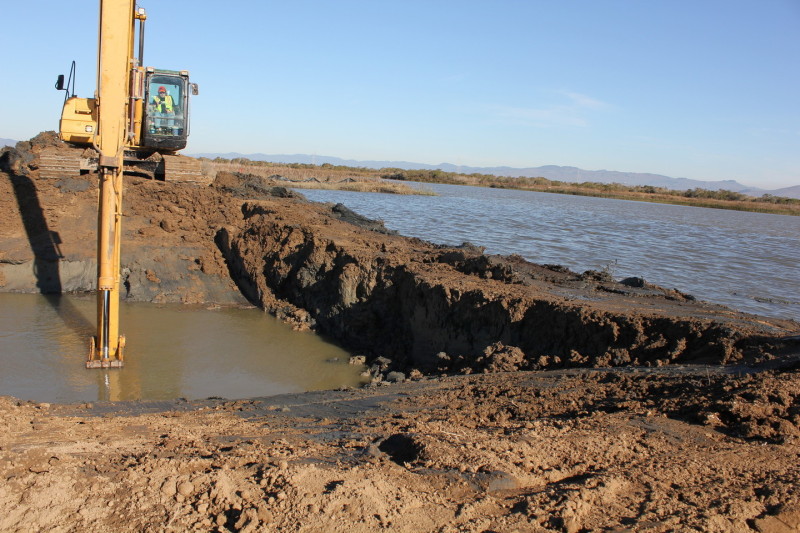
"caption": "Bay waters flow into former farmlands as part of a tidal marsh restoration effort at San Pablo Bay National Wildlife Refuge.",
"description": "Bay waters flow into former farmlands as part of a tidal marsh restoration effort at San Pablo Bay National Wildlife Refuge.",
"title": "Cullinan Ranch restoration",
"credit": "Sara Hossaini/KQED",
"status": "inherit",
"isLoading": false,
"fetchFailed": false
},
"news_10398039": {
"type": "attachments",
"id": "news_10398039",
"meta": {
"index": "attachments_1716263798",
"site": "news",
"id": "10398039",
"found": true
},
"parent": 0,
"imgSizes": {
"twentyfourteen-full-width": {
"file": "https://ww2.kqed.org/app/uploads/sites/10/2015/01/portsmouth_square-1038x576.jpg",
"width": 1038,
"mimeType": "image/jpeg",
"height": 576
},
"thumbnail": {
"file": "https://ww2.kqed.org/app/uploads/sites/10/2015/01/portsmouth_square-400x201.jpg",
"width": 400,
"mimeType": "image/jpeg",
"height": 201
},
"post-thumbnail": {
"file": "https://ww2.kqed.org/app/uploads/sites/10/2015/01/portsmouth_square-672x372.jpg",
"width": 672,
"mimeType": "image/jpeg",
"height": 372
},
"kqedFullSize": {
"file": "https://ww2.kqed.org/app/uploads/sites/10/2015/01/portsmouth_square-e1420442408549.jpg",
"width": 1440,
"height": 724
},
"large": {
"file": "https://ww2.kqed.org/app/uploads/sites/10/2015/01/portsmouth_square-1440x723.jpg",
"width": 1440,
"mimeType": "image/jpeg",
"height": 723
},
"guest-author-96": {
"file": "https://ww2.kqed.org/app/uploads/sites/10/2015/01/portsmouth_square-96x96.jpg",
"width": 96,
"mimeType": "image/jpeg",
"height": 96
},
"medium": {
"file": "https://ww2.kqed.org/app/uploads/sites/10/2015/01/portsmouth_square-800x402.jpg",
"width": 800,
"mimeType": "image/jpeg",
"height": 402
},
"guest-author-64": {
"file": "https://ww2.kqed.org/app/uploads/sites/10/2015/01/portsmouth_square-64x64.jpg",
"width": 64,
"mimeType": "image/jpeg",
"height": 64
},
"detail": {
"file": "https://ww2.kqed.org/app/uploads/sites/10/2015/01/portsmouth_square-75x75.jpg",
"width": 75,
"mimeType": "image/jpeg",
"height": 75
},
"guest-author-32": {
"file": "https://ww2.kqed.org/app/uploads/sites/10/2015/01/portsmouth_square-32x32.jpg",
"width": 32,
"mimeType": "image/jpeg",
"height": 32
},
"guest-author-128": {
"file": "https://ww2.kqed.org/app/uploads/sites/10/2015/01/portsmouth_square-128x128.jpg",
"width": 128,
"mimeType": "image/jpeg",
"height": 128
}
},
"publishDate": 1420440722,
"modified": 1421369738,
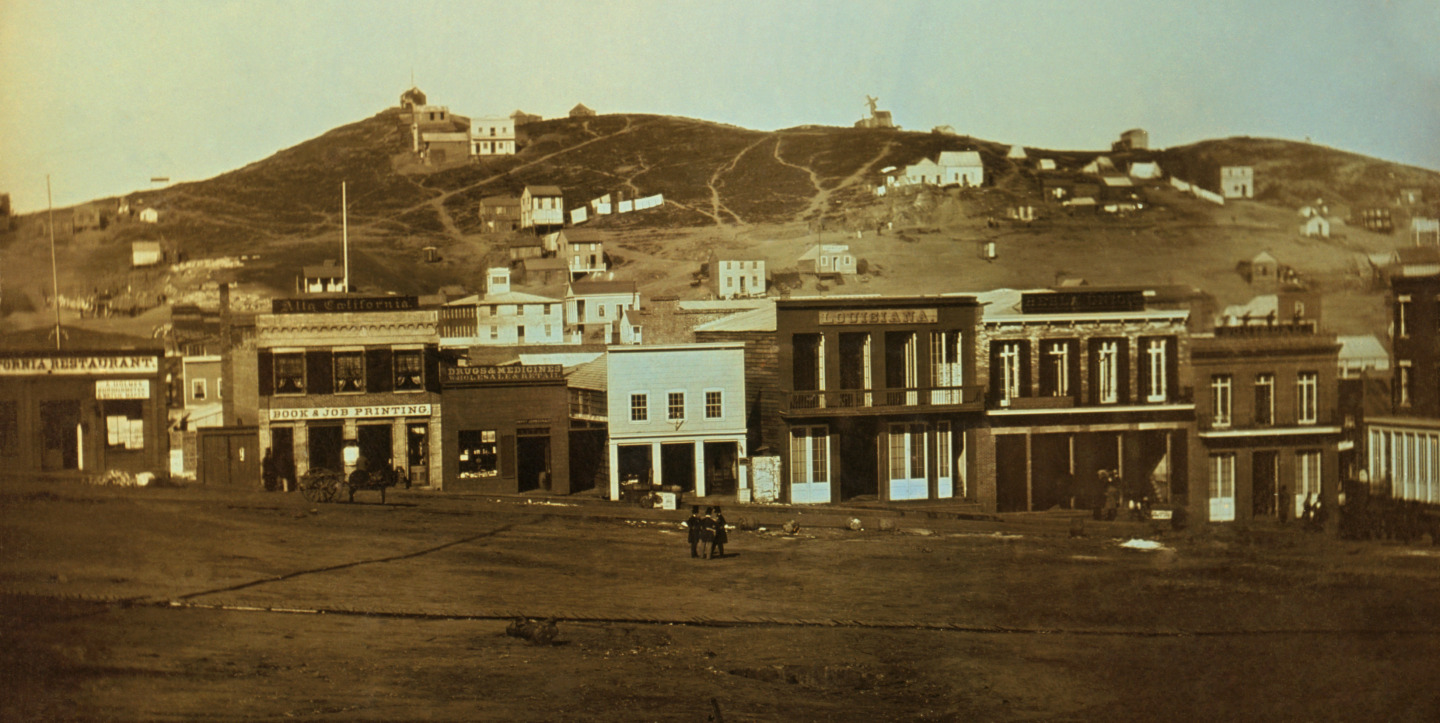
"caption": "San Francisco's Portsmouth Square, also known as the Plaza, as seen in 1851. The view is to the west, toward what was later dubbed Nob Hill. The image, a daguerrotype, was credited to a dentist named S.C. McIntyre. (Image via Wikimedia Commons and Library of Congress)",
"description": "Portsmouth Square, also known as the Plaza, as seen in 1851. The image, a daguerrotype, was credited to a dentist named S.C. McIntyre. (Image via Wikimedia Commons and Library of Congress)",
"title": "Boomtown-San Francisco-Portsmouth Square",
"credit": null,
"status": "inherit",
"isLoading": false,
"fetchFailed": false
},
"news_10396027": {
"type": "attachments",
"id": "news_10396027",
"meta": {
"index": "attachments_1716263798",
"site": "news",
"id": "10396027",
"found": true
},
"parent": 10395825,
"imgSizes": {
"twentyfourteen-full-width": {
"file": "https://ww2.kqed.org/app/uploads/sites/10/2015/01/RS4469_106397071-1038x576.jpg",
"width": 1038,
"mimeType": "image/jpeg",
"height": 576
},
"thumbnail": {
"file": "https://ww2.kqed.org/app/uploads/sites/10/2015/01/RS4469_106397071-400x266.jpg",
"width": 400,
"mimeType": "image/jpeg",
"height": 266
},
"post-thumbnail": {
"file": "https://ww2.kqed.org/app/uploads/sites/10/2015/01/RS4469_106397071-672x372.jpg",
"width": 672,
"mimeType": "image/jpeg",
"height": 372
},
"kqedFullSize": {
"file": "https://ww2.kqed.org/app/uploads/sites/10/2015/01/RS4469_106397071-e1420397446150.jpg",
"width": 1440,
"height": 960
},
"large": {
"file": "https://ww2.kqed.org/app/uploads/sites/10/2015/01/RS4469_106397071-1440x960.jpg",
"width": 1440,
"mimeType": "image/jpeg",
"height": 960
},
"guest-author-96": {
"file": "https://ww2.kqed.org/app/uploads/sites/10/2015/01/RS4469_106397071-96x96.jpg",
"width": 96,
"mimeType": "image/jpeg",
"height": 96
},
"medium": {
"file": "https://ww2.kqed.org/app/uploads/sites/10/2015/01/RS4469_106397071-800x533.jpg",
"width": 800,
"mimeType": "image/jpeg",
"height": 533
},
"guest-author-64": {
"file": "https://ww2.kqed.org/app/uploads/sites/10/2015/01/RS4469_106397071-64x64.jpg",
"width": 64,
"mimeType": "image/jpeg",
"height": 64
},
"detail": {
"file": "https://ww2.kqed.org/app/uploads/sites/10/2015/01/RS4469_106397071-75x75.jpg",
"width": 75,
"mimeType": "image/jpeg",
"height": 75
},
"guest-author-32": {
"file": "https://ww2.kqed.org/app/uploads/sites/10/2015/01/RS4469_106397071-32x32.jpg",
"width": 32,
"mimeType": "image/jpeg",
"height": 32
},
"guest-author-128": {
"file": "https://ww2.kqed.org/app/uploads/sites/10/2015/01/RS4469_106397071-128x128.jpg",
"width": 128,
"mimeType": "image/jpeg",
"height": 128
}
},
"publishDate": 1420236210,
"modified": 1420485533,
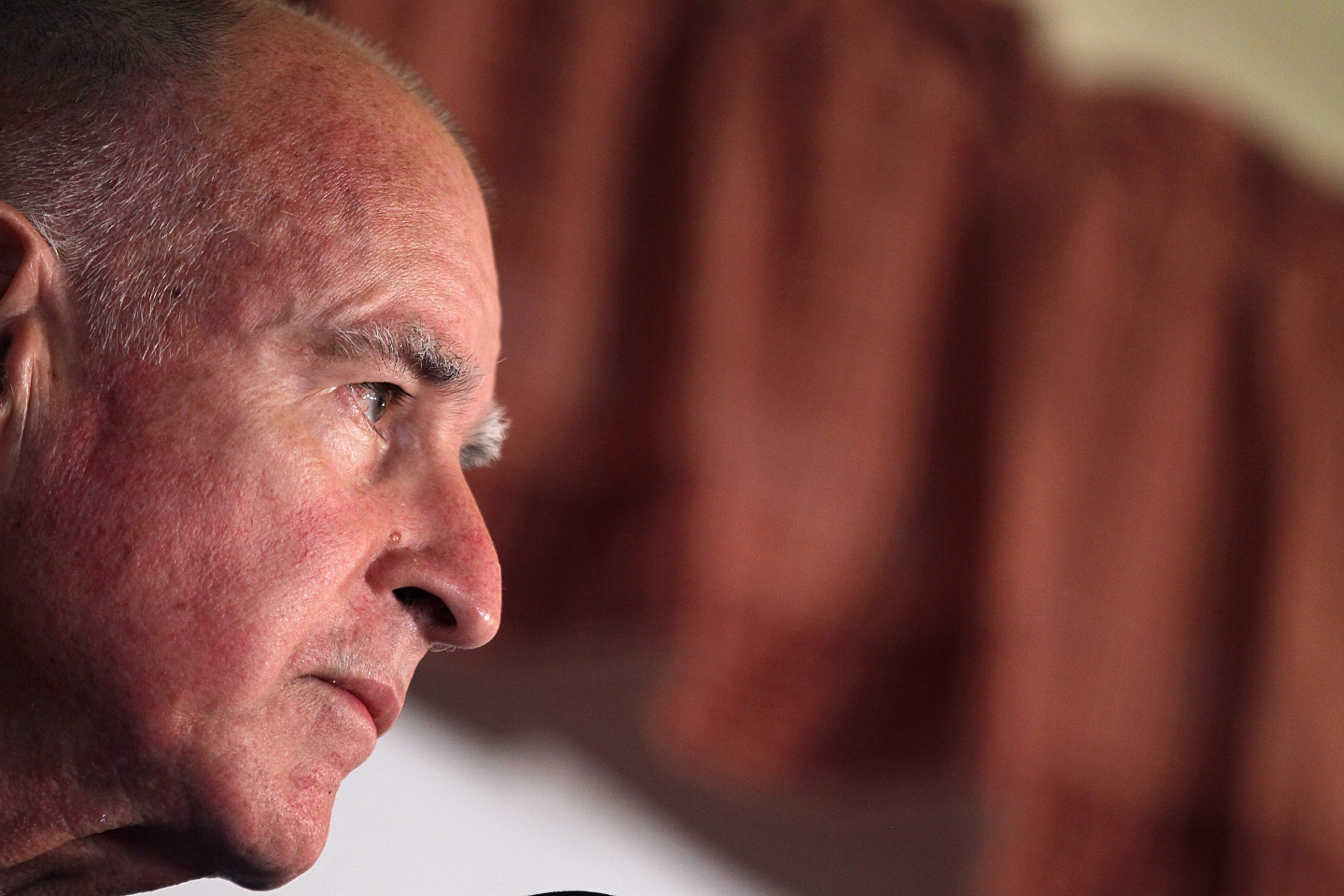
"caption": "File photo. Gov. Jerry Brown begins his historic fourth term as governor on Monday. ",
"description": "EUREKA, CA - OCTOBER 31: California attorney general and democratic gubernatorial candidate Jerry Brown speaks during a campaign rally at the Somoa Cookhouse on October 31, 2010 in Eureka, California. With less than a week to go until election day, Jerry Brown is continuing his three day campaign trip throughout California in hopes of defeating his republican opponent and former eBay CEO Meg Whitman. (Photo by Justin Sullivan/Getty Images)",
"title": "Gov. Jerry Brown",
"credit": "Justin Sullivan/Getty Images",
"status": "inherit",
"isLoading": false,
"fetchFailed": false
},
"news_10392953": {
"type": "attachments",
"id": "news_10392953",
"meta": {
"index": "attachments_1716263798",
"site": "news",
"id": "10392953",
"found": true
},
"parent": 10392488,
"imgSizes": {
"twentyfourteen-full-width": {
"file": "https://ww2.kqed.org/app/uploads/sites/10/2014/12/RS11522_452938222-scr-850x576.jpg",
"width": 850,
"mimeType": "image/jpeg",
"height": 576
},
"thumbnail": {
"file": "https://ww2.kqed.org/app/uploads/sites/10/2014/12/RS11522_452938222-scr-400x277.jpg",
"width": 400,
"mimeType": "image/jpeg",
"height": 277
},
"post-thumbnail": {
"file": "https://ww2.kqed.org/app/uploads/sites/10/2014/12/RS11522_452938222-scr-672x372.jpg",
"width": 672,
"mimeType": "image/jpeg",
"height": 372
},
"kqedFullSize": {
"file": "https://ww2.kqed.org/app/uploads/sites/10/2014/12/RS11522_452938222-scr.jpg",
"width": 850,
"height": 589
},
"guest-author-96": {
"file": "https://ww2.kqed.org/app/uploads/sites/10/2014/12/RS11522_452938222-scr-96x96.jpg",
"width": 96,
"mimeType": "image/jpeg",
"height": 96
},
"medium": {
"file": "https://ww2.kqed.org/app/uploads/sites/10/2014/12/RS11522_452938222-scr-800x554.jpg",
"width": 800,
"mimeType": "image/jpeg",
"height": 554
},
"guest-author-64": {
"file": "https://ww2.kqed.org/app/uploads/sites/10/2014/12/RS11522_452938222-scr-64x64.jpg",
"width": 64,
"mimeType": "image/jpeg",
"height": 64
},
"detail": {
"file": "https://ww2.kqed.org/app/uploads/sites/10/2014/12/RS11522_452938222-scr-75x75.jpg",
"width": 75,
"mimeType": "image/jpeg",
"height": 75
},
"guest-author-32": {
"file": "https://ww2.kqed.org/app/uploads/sites/10/2014/12/RS11522_452938222-scr-32x32.jpg",
"width": 32,
"mimeType": "image/jpeg",
"height": 32
},
"guest-author-128": {
"file": "https://ww2.kqed.org/app/uploads/sites/10/2014/12/RS11522_452938222-scr-128x128.jpg",
"width": 128,
"mimeType": "image/jpeg",
"height": 128
}
},
"publishDate": 1419947714,
"modified": 1419984473,
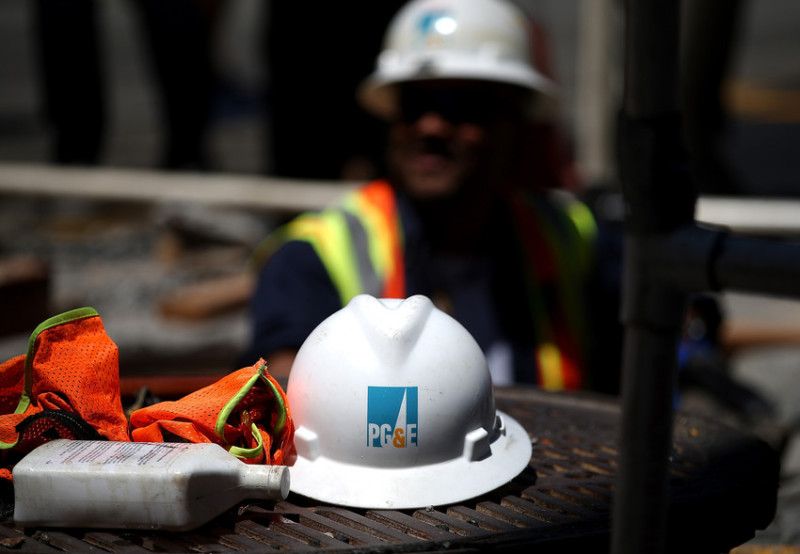
"caption": "The PG&E logo is displayed on a hard hat at a work site.",
"description": "The PG&E logo is displayed on a hardhat at a work site.",
"title": "RS11522_452938222-scr",
"credit": "(Justin Sullivan/Getty Images)",
"status": "inherit",
"isLoading": false,
"fetchFailed": false
},
"news_10346714": {
"type": "attachments",
"id": "news_10346714",
"meta": {
"index": "attachments_1716263798",
"site": "news",
"id": "10346714",
"found": true
},
"parent": 10346615,
"imgSizes": {
"twentyfourteen-full-width": {
"file": "https://ww2.kqed.org/app/uploads/sites/10/2014/11/15540307821_00ea9ff47f_o-1038x576.jpg",
"width": 1038,
"mimeType": "image/jpeg",
"height": 576
},
"thumbnail": {
"file": "https://ww2.kqed.org/app/uploads/sites/10/2014/11/15540307821_00ea9ff47f_o-400x272.jpg",
"width": 400,
"mimeType": "image/jpeg",
"height": 272
},
"post-thumbnail": {
"file": "https://ww2.kqed.org/app/uploads/sites/10/2014/11/15540307821_00ea9ff47f_o-672x372.jpg",
"width": 672,
"mimeType": "image/jpeg",
"height": 372
},
"kqedFullSize": {
"file": "https://ww2.kqed.org/app/uploads/sites/10/2014/11/15540307821_00ea9ff47f_o-e1415061046531.jpg",
"width": 1440,
"height": 982
},
"large": {
"file": "https://ww2.kqed.org/app/uploads/sites/10/2014/11/15540307821_00ea9ff47f_o-1440x982.jpg",
"width": 1440,
"mimeType": "image/jpeg",
"height": 982
},
"guest-author-96": {
"file": "https://ww2.kqed.org/app/uploads/sites/10/2014/11/15540307821_00ea9ff47f_o-96x96.jpg",
"width": 96,
"mimeType": "image/jpeg",
"height": 96
},
"medium": {
"file": "https://ww2.kqed.org/app/uploads/sites/10/2014/11/15540307821_00ea9ff47f_o-800x545.jpg",
"width": 800,
"mimeType": "image/jpeg",
"height": 545
},
"guest-author-64": {
"file": "https://ww2.kqed.org/app/uploads/sites/10/2014/11/15540307821_00ea9ff47f_o-64x64.jpg",
"width": 64,
"mimeType": "image/jpeg",
"height": 64
},
"detail": {
"file": "https://ww2.kqed.org/app/uploads/sites/10/2014/11/15540307821_00ea9ff47f_o-75x75.jpg",
"width": 75,
"mimeType": "image/jpeg",
"height": 75
},
"guest-author-32": {
"file": "https://ww2.kqed.org/app/uploads/sites/10/2014/11/15540307821_00ea9ff47f_o-32x32.jpg",
"width": 32,
"mimeType": "image/jpeg",
"height": 32
},
"guest-author-128": {
"file": "https://ww2.kqed.org/app/uploads/sites/10/2014/11/15540307821_00ea9ff47f_o-128x128.jpg",
"width": 128,
"mimeType": "image/jpeg",
"height": 128
}
},
"publishDate": 1415061027,
"modified": 1434752292,
"caption": "A female chinook salmon after arrival at the Feather River Fish Hatchery in Oroville. ",
"description": "A female chinook salmon after arrival at the Feather River Fish Hatchery in Oroville. (Dan Brekke/KQED)",
"title": "Feather River Hatchery-Salmon",
"credit": "Dan Brekke/KQED",
"status": "inherit",
"isLoading": false,
"fetchFailed": false
},
"news_10379029": {
"type": "attachments",
"id": "news_10379029",
"meta": {
"index": "attachments_1716263798",
"site": "news",
"id": "10379029",
"found": true
},
"parent": 10379027,
"imgSizes": {
"twentyfourteen-full-width": {
"file": "https://ww2.kqed.org/app/uploads/sites/10/2014/12/Serpentine-Prairie-Photo-1038x576.jpg",
"width": 1038,
"mimeType": "image/jpeg",
"height": 576
},
"thumbnail": {
"file": "https://ww2.kqed.org/app/uploads/sites/10/2014/12/Serpentine-Prairie-Photo-400x300.jpg",
"width": 400,
"mimeType": "image/jpeg",
"height": 300
},
"post-thumbnail": {
"file": "https://ww2.kqed.org/app/uploads/sites/10/2014/12/Serpentine-Prairie-Photo-672x372.jpg",
"width": 672,
"mimeType": "image/jpeg",
"height": 372
},
"kqedFullSize": {
"file": "https://ww2.kqed.org/app/uploads/sites/10/2014/12/Serpentine-Prairie-Photo-e1418857081749.jpg",
"width": 1440,
"height": 1080
},
"large": {
"file": "https://ww2.kqed.org/app/uploads/sites/10/2014/12/Serpentine-Prairie-Photo-1440x1080.jpg",
"width": 1440,
"mimeType": "image/jpeg",
"height": 1080
},
"guest-author-96": {
"file": "https://ww2.kqed.org/app/uploads/sites/10/2014/12/Serpentine-Prairie-Photo-96x96.jpg",
"width": 96,
"mimeType": "image/jpeg",
"height": 96
},
"medium": {
"file": "https://ww2.kqed.org/app/uploads/sites/10/2014/12/Serpentine-Prairie-Photo-800x600.jpg",
"width": 800,
"mimeType": "image/jpeg",
"height": 600
},
"guest-author-64": {
"file": "https://ww2.kqed.org/app/uploads/sites/10/2014/12/Serpentine-Prairie-Photo-64x64.jpg",
"width": 64,
"mimeType": "image/jpeg",
"height": 64
},
"detail": {
"file": "https://ww2.kqed.org/app/uploads/sites/10/2014/12/Serpentine-Prairie-Photo-75x75.jpg",
"width": 75,
"mimeType": "image/jpeg",
"height": 75
},
"guest-author-32": {
"file": "https://ww2.kqed.org/app/uploads/sites/10/2014/12/Serpentine-Prairie-Photo-32x32.jpg",
"width": 32,
"mimeType": "image/jpeg",
"height": 32
},
"guest-author-128": {
"file": "https://ww2.kqed.org/app/uploads/sites/10/2014/12/Serpentine-Prairie-Photo-128x128.jpg",
"width": 128,
"mimeType": "image/jpeg",
"height": 128
}
},
"publishDate": 1418616909,
"modified": 1418859097,
"caption": "Serpentine Prairie off in the East Bay's Redwood Regional Park. ",
"description": "Serpentine Prairie off in the East Bay's Redwood Regional Park. (Cy Musiker/KQED)",
"title": "Serpentine Prairie Photo",
"credit": "Cy Musiker/KQED",
"status": "inherit",
"isLoading": false,
"fetchFailed": false
},
"news_10344940": {
"type": "attachments",
"id": "news_10344940",
"meta": {
"index": "attachments_1716263798",
"site": "news",
"id": "10344940",
"found": true
},
"parent": 10344938,
"imgSizes": {
"twentyfourteen-full-width": {
"file": "https://ww2.kqed.org/app/uploads/sites/10/2014/10/spigot-1038x576.jpg",
"width": 1038,
"mimeType": "image/jpeg",
"height": 576
},
"thumbnail": {
"file": "https://ww2.kqed.org/app/uploads/sites/10/2014/10/spigot-400x266.jpg",
"width": 400,
"mimeType": "image/jpeg",
"height": 266
},
"post-thumbnail": {
"file": "https://ww2.kqed.org/app/uploads/sites/10/2014/10/spigot-672x372.jpg",
"width": 672,
"mimeType": "image/jpeg",
"height": 372
},
"kqedFullSize": {
"file": "https://ww2.kqed.org/app/uploads/sites/10/2014/10/spigot-e1414789543327.jpg",
"width": 1440,
"height": 959
},
"large": {
"file": "https://ww2.kqed.org/app/uploads/sites/10/2014/10/spigot-1440x959.jpg",
"width": 1440,
"mimeType": "image/jpeg",
"height": 959
},
"guest-author-96": {
"file": "https://ww2.kqed.org/app/uploads/sites/10/2014/10/spigot-96x96.jpg",
"width": 96,
"mimeType": "image/jpeg",
"height": 96
},
"medium": {
"file": "https://ww2.kqed.org/app/uploads/sites/10/2014/10/spigot-800x532.jpg",
"width": 800,
"mimeType": "image/jpeg",
"height": 532
},
"guest-author-64": {
"file": "https://ww2.kqed.org/app/uploads/sites/10/2014/10/spigot-64x64.jpg",
"width": 64,
"mimeType": "image/jpeg",
"height": 64
},
"detail": {
"file": "https://ww2.kqed.org/app/uploads/sites/10/2014/10/spigot-75x75.jpg",
"width": 75,
"mimeType": "image/jpeg",
"height": 75
},
"guest-author-32": {
"file": "https://ww2.kqed.org/app/uploads/sites/10/2014/10/spigot-32x32.jpg",
"width": 32,
"mimeType": "image/jpeg",
"height": 32
},
"guest-author-128": {
"file": "https://ww2.kqed.org/app/uploads/sites/10/2014/10/spigot-128x128.jpg",
"width": 128,
"mimeType": "image/jpeg",
"height": 128
}
},
"publishDate": 1414090916,
"modified": 1433269800,
"caption": "A drought-besieged garden spigot. ",
"description": "(iStock/Getty Images)",
"title": "Drought-Spigot",
"credit": "iStock/Getty Images",
"status": "inherit",
"isLoading": false,
"fetchFailed": false
},
"news_10375300": {
"type": "attachments",
"id": "news_10375300",
"meta": {
"index": "attachments_1716263798",
"site": "news",
"id": "10375300",
"found": true
},
"parent": 10373295,
"imgSizes": {
"twentyfourteen-full-width": {
"file": "https://ww2.kqed.org/app/uploads/sites/10/2014/12/SByrne-KQED-12_11_14-Winter-Storm-10-1038x576.jpg",
"width": 1038,
"mimeType": "image/jpeg",
"height": 576
},
"thumbnail": {
"file": "https://ww2.kqed.org/app/uploads/sites/10/2014/12/SByrne-KQED-12_11_14-Winter-Storm-10-400x267.jpg",
"width": 400,
"mimeType": "image/jpeg",
"height": 267
},
"post-thumbnail": {
"file": "https://ww2.kqed.org/app/uploads/sites/10/2014/12/SByrne-KQED-12_11_14-Winter-Storm-10-672x372.jpg",
"width": 672,
"mimeType": "image/jpeg",
"height": 372
},
"kqedFullSize": {
"file": "https://ww2.kqed.org/app/uploads/sites/10/2014/12/SByrne-KQED-12_11_14-Winter-Storm-10-e1418317422487.jpg",
"width": 1440,
"height": 961
},
"large": {
"file": "https://ww2.kqed.org/app/uploads/sites/10/2014/12/SByrne-KQED-12_11_14-Winter-Storm-10-1440x961.jpg",
"width": 1440,
"mimeType": "image/jpeg",
"height": 961
},
"guest-author-96": {
"file": "https://ww2.kqed.org/app/uploads/sites/10/2014/12/SByrne-KQED-12_11_14-Winter-Storm-10-96x96.jpg",
"width": 96,
"mimeType": "image/jpeg",
"height": 96
},
"medium": {
"file": "https://ww2.kqed.org/app/uploads/sites/10/2014/12/SByrne-KQED-12_11_14-Winter-Storm-10-800x534.jpg",
"width": 800,
"mimeType": "image/jpeg",
"height": 534
},
"guest-author-64": {
"file": "https://ww2.kqed.org/app/uploads/sites/10/2014/12/SByrne-KQED-12_11_14-Winter-Storm-10-64x64.jpg",
"width": 64,
"mimeType": "image/jpeg",
"height": 64
},
"detail": {
"file": "https://ww2.kqed.org/app/uploads/sites/10/2014/12/SByrne-KQED-12_11_14-Winter-Storm-10-75x75.jpg",
"width": 75,
"mimeType": "image/jpeg",
"height": 75
},
"guest-author-32": {
"file": "https://ww2.kqed.org/app/uploads/sites/10/2014/12/SByrne-KQED-12_11_14-Winter-Storm-10-32x32.jpg",
"width": 32,
"mimeType": "image/jpeg",
"height": 32
},
"guest-author-128": {
"file": "https://ww2.kqed.org/app/uploads/sites/10/2014/12/SByrne-KQED-12_11_14-Winter-Storm-10-128x128.jpg",
"width": 128,
"mimeType": "image/jpeg",
"height": 128
}
},
"publishDate": 1418317384,
"modified": 1418317491,
"caption": "Flooding on Highway 1 at the Manor Drive overpass in Pacifica. (Steve Byrne/KQED) ",
"description": "Flooding on Highway 1 at the Manor Drive overpass in Pacifica. (Steve Byrne/KQED) ",
"title": "Storm-Pacifica",
"credit": null,
"status": "inherit",
"isLoading": false,
"fetchFailed": false
},
"news_10375364": {
"type": "attachments",
"id": "news_10375364",
"meta": {
"index": "attachments_1716263798",
"site": "news",
"id": "10375364",
"found": true
},
"parent": 10375356,
"imgSizes": {
"twentyfourteen-full-width": {
"file": "https://ww2.kqed.org/app/uploads/sites/10/2014/12/RS13562_IMG_6967-qut-1038x576.jpg",
"width": 1038,
"mimeType": "image/jpeg",
"height": 576
},
"thumbnail": {
"file": "https://ww2.kqed.org/app/uploads/sites/10/2014/12/RS13562_IMG_6967-qut-400x300.jpg",
"width": 400,
"mimeType": "image/jpeg",
"height": 300
},
"post-thumbnail": {
"file": "https://ww2.kqed.org/app/uploads/sites/10/2014/12/RS13562_IMG_6967-qut-672x372.jpg",
"width": 672,
"mimeType": "image/jpeg",
"height": 372
},
"kqedFullSize": {
"file": "https://ww2.kqed.org/app/uploads/sites/10/2014/12/RS13562_IMG_6967-qut.jpg",
"width": 1440,
"height": 1080
},
"guest-author-96": {
"file": "https://ww2.kqed.org/app/uploads/sites/10/2014/12/RS13562_IMG_6967-qut-96x96.jpg",
"width": 96,
"mimeType": "image/jpeg",
"height": 96
},
"medium": {
"file": "https://ww2.kqed.org/app/uploads/sites/10/2014/12/RS13562_IMG_6967-qut-800x600.jpg",
"width": 800,
"mimeType": "image/jpeg",
"height": 600
},
"guest-author-64": {
"file": "https://ww2.kqed.org/app/uploads/sites/10/2014/12/RS13562_IMG_6967-qut-64x64.jpg",
"width": 64,
"mimeType": "image/jpeg",
"height": 64
},
"detail": {
"file": "https://ww2.kqed.org/app/uploads/sites/10/2014/12/RS13562_IMG_6967-qut-75x75.jpg",
"width": 75,
"mimeType": "image/jpeg",
"height": 75
},
"guest-author-32": {
"file": "https://ww2.kqed.org/app/uploads/sites/10/2014/12/RS13562_IMG_6967-qut-32x32.jpg",
"width": 32,
"mimeType": "image/jpeg",
"height": 32
},
"guest-author-128": {
"file": "https://ww2.kqed.org/app/uploads/sites/10/2014/12/RS13562_IMG_6967-qut-128x128.jpg",
"width": 128,
"mimeType": "image/jpeg",
"height": 128
}
},
"publishDate": 1418320756,
"modified": 1418322298,
"caption": "San Francisco firefighters on flood duty, working to clear a storm drain at 14th and Harrison streets on Thursday morning. (Julia McEvoy/KQED)",
"description": "San Francisco firefighter on flood duty, working to clear a storm drain at 14th and Harrison streets on Thursday morning. (Julia McEvoy/KQED)",
"title": "Storm-San Francisco",
"credit": null,
"status": "inherit",
"isLoading": false,
"fetchFailed": false
},
"news_10368710": {
"type": "attachments",
"id": "news_10368710",
"meta": {
"index": "attachments_1716263798",
"site": "news",
"id": "10368710",
"found": true
},
"parent": 10368698,
"imgSizes": {
"twentyfourteen-full-width": {
"file": "https://ww2.kqed.org/app/uploads/sites/10/2014/12/14453102276_cfa079ff81_k-1038x576.jpg",
"width": 1038,
"mimeType": "image/jpeg",
"height": 576
},
"thumbnail": {
"file": "https://ww2.kqed.org/app/uploads/sites/10/2014/12/14453102276_cfa079ff81_k-400x266.jpg",
"width": 400,
"mimeType": "image/jpeg",
"height": 266
},
"post-thumbnail": {
"file": "https://ww2.kqed.org/app/uploads/sites/10/2014/12/14453102276_cfa079ff81_k-672x372.jpg",
"width": 672,
"mimeType": "image/jpeg",
"height": 372
},
"kqedFullSize": {
"file": "https://ww2.kqed.org/app/uploads/sites/10/2014/12/14453102276_cfa079ff81_k.jpg",
"width": 2048,
"height": 1365
},
"large": {
"file": "https://ww2.kqed.org/app/uploads/sites/10/2014/12/14453102276_cfa079ff81_k-1440x959.jpg",
"width": 1440,
"mimeType": "image/jpeg",
"height": 959
},
"guest-author-96": {
"file": "https://ww2.kqed.org/app/uploads/sites/10/2014/12/14453102276_cfa079ff81_k-96x96.jpg",
"width": 96,
"mimeType": "image/jpeg",
"height": 96
},
"medium": {
"file": "https://ww2.kqed.org/app/uploads/sites/10/2014/12/14453102276_cfa079ff81_k-800x533.jpg",
"width": 800,
"mimeType": "image/jpeg",
"height": 533
},
"guest-author-64": {
"file": "https://ww2.kqed.org/app/uploads/sites/10/2014/12/14453102276_cfa079ff81_k-64x64.jpg",
"width": 64,
"mimeType": "image/jpeg",
"height": 64
},
"detail": {
"file": "https://ww2.kqed.org/app/uploads/sites/10/2014/12/14453102276_cfa079ff81_k-75x75.jpg",
"width": 75,
"mimeType": "image/jpeg",
"height": 75
},
"guest-author-32": {
"file": "https://ww2.kqed.org/app/uploads/sites/10/2014/12/14453102276_cfa079ff81_k-32x32.jpg",
"width": 32,
"mimeType": "image/jpeg",
"height": 32
},
"guest-author-128": {
"file": "https://ww2.kqed.org/app/uploads/sites/10/2014/12/14453102276_cfa079ff81_k-128x128.jpg",
"width": 128,
"mimeType": "image/jpeg",
"height": 128
}
},
"publishDate": 1417813697,
"modified": 1417813784,
"caption": "Redwood trees don't like water with too much salt in it. (Zlatko Unger/Flickr)",
"description": "Redwood trees don't like water with too much salt in it. (Zlatko Unger/Flickr)",
"title": "14453102276_cfa079ff81_k",
"credit": null,
"status": "inherit",
"isLoading": false,
"fetchFailed": false
},
"news_10367504": {
"type": "attachments",
"id": "news_10367504",
"meta": {
"index": "attachments_1716263798",
"site": "news",
"id": "10367504",
"found": true
},
"parent": 10367254,
"imgSizes": {
"twentyfourteen-full-width": {
"file": "https://ww2.kqed.org/app/uploads/sites/10/2014/12/HmongFarmer-1038x576.jpg",
"width": 1038,
"mimeType": "image/jpeg",
"height": 576
},
"thumbnail": {
"file": "https://ww2.kqed.org/app/uploads/sites/10/2014/12/HmongFarmer-400x259.jpg",
"width": 400,
"mimeType": "image/jpeg",
"height": 259
},
"post-thumbnail": {
"file": "https://ww2.kqed.org/app/uploads/sites/10/2014/12/HmongFarmer-672x372.jpg",
"width": 672,
"mimeType": "image/jpeg",
"height": 372
},
"kqedFullSize": {
"file": "https://ww2.kqed.org/app/uploads/sites/10/2014/12/HmongFarmer.jpg",
"width": 1440,
"height": 933
},
"guest-author-96": {
"file": "https://ww2.kqed.org/app/uploads/sites/10/2014/12/HmongFarmer-96x96.jpg",
"width": 96,
"mimeType": "image/jpeg",
"height": 96
},
"medium": {
"file": "https://ww2.kqed.org/app/uploads/sites/10/2014/12/HmongFarmer-800x518.jpg",
"width": 800,
"mimeType": "image/jpeg",
"height": 518
},
"guest-author-64": {
"file": "https://ww2.kqed.org/app/uploads/sites/10/2014/12/HmongFarmer-64x64.jpg",
"width": 64,
"mimeType": "image/jpeg",
"height": 64
},
"detail": {
"file": "https://ww2.kqed.org/app/uploads/sites/10/2014/12/HmongFarmer-75x75.jpg",
"width": 75,
"mimeType": "image/jpeg",
"height": 75
},
"guest-author-32": {
"file": "https://ww2.kqed.org/app/uploads/sites/10/2014/12/HmongFarmer-32x32.jpg",
"width": 32,
"mimeType": "image/jpeg",
"height": 32
},
"guest-author-128": {
"file": "https://ww2.kqed.org/app/uploads/sites/10/2014/12/HmongFarmer-128x128.jpg",
"width": 128,
"mimeType": "image/jpeg",
"height": 128
}
},
"publishDate": 1417731039,
"modified": 1417742570,
"caption": "May Vu explains to Hmong farming advocate Jon Thao that she cannot apply for an emergency loan from the USDA Farm Service Agency because she does not own her land. (Erica Mu/KQED)",
"description": "May Vu explains to Hmong farming advocate Jon Thao that she cannot apply for an emergency loan from the USDA Farm Service Agency because she does not own her land. (Erica Mu/KQED)",
"title": "HmongFarmer",
"credit": null,
"status": "inherit",
"isLoading": false,
"fetchFailed": false
},
"news_10366487": {
"type": "attachments",
"id": "news_10366487",
"meta": {
"index": "attachments_1716263798",
"site": "news",
"id": "10366487",
"found": true
},
"parent": 0,
"imgSizes": {
"twentyfourteen-full-width": {
"file": "https://ww2.kqed.org/app/uploads/sites/10/2014/12/459889862-1038x576.jpg",
"width": 1038,
"mimeType": "image/jpeg",
"height": 576
},
"thumbnail": {
"file": "https://ww2.kqed.org/app/uploads/sites/10/2014/12/459889862-400x268.jpg",
"width": 400,
"mimeType": "image/jpeg",
"height": 268
},
"post-thumbnail": {
"file": "https://ww2.kqed.org/app/uploads/sites/10/2014/12/459889862-672x372.jpg",
"width": 672,
"mimeType": "image/jpeg",
"height": 372
},
"kqedFullSize": {
"file": "https://ww2.kqed.org/app/uploads/sites/10/2014/12/459889862-e1417660417821.jpg",
"width": 1440,
"height": 966
},
"large": {
"file": "https://ww2.kqed.org/app/uploads/sites/10/2014/12/459889862-1440x966.jpg",
"width": 1440,
"mimeType": "image/jpeg",
"height": 966
},
"guest-author-96": {
"file": "https://ww2.kqed.org/app/uploads/sites/10/2014/12/459889862-96x96.jpg",
"width": 96,
"mimeType": "image/jpeg",
"height": 96
},
"medium": {
"file": "https://ww2.kqed.org/app/uploads/sites/10/2014/12/459889862-800x536.jpg",
"width": 800,
"mimeType": "image/jpeg",
"height": 536
},
"guest-author-64": {
"file": "https://ww2.kqed.org/app/uploads/sites/10/2014/12/459889862-64x64.jpg",
"width": 64,
"mimeType": "image/jpeg",
"height": 64
},
"detail": {
"file": "https://ww2.kqed.org/app/uploads/sites/10/2014/12/459889862-75x75.jpg",
"width": 75,
"mimeType": "image/jpeg",
"height": 75
},
"guest-author-32": {
"file": "https://ww2.kqed.org/app/uploads/sites/10/2014/12/459889862-32x32.jpg",
"width": 32,
"mimeType": "image/jpeg",
"height": 32
},
"guest-author-128": {
"file": "https://ww2.kqed.org/app/uploads/sites/10/2014/12/459889862-128x128.jpg",
"width": 128,
"mimeType": "image/jpeg",
"height": 128
}
},
"publishDate": 1417656775,
"modified": 1417660405,
"caption": "A child's bicycle sits in a flooded parking lot on December 3, 2014 in Mill Valley.",
"description": "MILL VALLEY, CA - DECEMBER 03: A child's bicycle sits in a flooded parking lot on December 3, 2014 in Mill Valley, California. The San Francisco Bay Area is being hit with its first major storm of the year that is bringing heavy rain, lightning and hail to the region. The heavy overnight rain has caused flooding which has blocked several roadways and caused severe traffic backups. (Photo by Justin Sullivan/Getty Images)",
"title": "December storm",
"credit": "(Justin Sullivan/Getty Images)",
"status": "inherit",
"isLoading": false,
"fetchFailed": false
}
},
"audioPlayerReducer": {
"postId": "stream_live",
"isPaused": true,
"isPlaying": false,
"pfsActive": false,
"pledgeModalIsOpen": true,
"playerDrawerIsOpen": false,
"liveAudioPlayStartedAt": 0,
"liveAudioPlayContext": ""
},
"authorsReducer": {
"byline_news_10398506": {
"type": "authors",
"id": "byline_news_10398506",
"meta": {
"override": true
},
"slug": "byline_news_10398506",
"name": "KQED, KPCC and Capital Public Radio Staff",
"isLoading": false
},
"byline_news_10381802": {
"type": "authors",
"id": "byline_news_10381802",
"meta": {
"override": true
},
"slug": "byline_news_10381802",
"name": "\u003cstrong>Ellen Knickmeyer\u003cbr /> Associated Press\u003c/strong>",
"isLoading": false
},
"byline_news_10368698": {
"type": "authors",
"id": "byline_news_10368698",
"meta": {
"override": true
},
"slug": "byline_news_10368698",
"name": "\u003ca href=\"http://peninsulapress.com/author/liamkanegrade/\">Liam Kane-Grade\u003c/a>\u003cbr>Peninsula Press",
"isLoading": false
},
"byline_news_10367254": {
"type": "authors",
"id": "byline_news_10367254",
"meta": {
"override": true
},
"slug": "byline_news_10367254",
"name": "Erica Mu",
"isLoading": false
},
"cmusiker": {
"type": "authors",
"id": "32",
"meta": {
"index": "authors_1716337520",
"id": "32",
"found": true
},
"name": "Cy Musiker",
"firstName": "Cy",
"lastName": "Musiker",
"slug": "cmusiker",
"email": "cmusiker@kqed.org",
"display_author_email": false,
"staff_mastheads": [],
"title": "KQED Contributor",
"bio": "Cy Musiker is a former co-host of The Do List and a former reporter covering the arts for KQED News and The California Report. He loves live performance, especially great theater, jazz, roots music, anything by Mahler. Cy has an MJ from UC Berkeley's School of Journalism, and got his BA from Hampshire College. His work has been recognized by the Society for Professional Journalists with their Sigma Delta Chi Award for Public Service in Journalism. When he can, Cy likes to swim in Tomales Bay, run with his dog in the East Bay Hills, and hike the Sierra.",
"avatar": "https://secure.gravatar.com/avatar/05eaba5c5696ce8f062e4ea2df428a43?s=600&d=blank&r=g",
"twitter": null,
"facebook": null,
"instagram": null,
"linkedin": null,
"sites": [
{
"site": "arts",
"roles": [
"Contributor",
"subscriber"
]
},
{
"site": "news",
"roles": [
"author"
]
},
{
"site": "bayareabites",
"roles": [
"contributor"
]
}
],
"headData": {
"title": "Cy Musiker | KQED",
"description": "KQED Contributor",
"ogImgSrc": "https://secure.gravatar.com/avatar/05eaba5c5696ce8f062e4ea2df428a43?s=600&d=blank&r=g",
"twImgSrc": "https://secure.gravatar.com/avatar/05eaba5c5696ce8f062e4ea2df428a43?s=600&d=blank&r=g"
},
"isLoading": false,
"link": "/author/cmusiker"
},
"jbrooks": {
"type": "authors",
"id": "80",
"meta": {
"index": "authors_1716337520",
"id": "80",
"found": true
},
"name": "Jon Brooks",
"firstName": "Jon",
"lastName": "Brooks",
"slug": "jbrooks",
"email": "jbrooks@kqed.org",
"display_author_email": true,
"staff_mastheads": [
"science"
],
"title": "Digital Editor",
"bio": "Jon Brooks is a former Digital Editor for KQED Science. He is the former editor of KQED’s daily news blog, News Fix. In 2014, he won a California Journalism Award for his coverage of ride services like Uber and Lyft and the taxi industry. A veteran blogger, he previously worked for Yahoo! in various news writing and editing roles. Jon is also a playwright whose work has been produced in San Francisco, New York, Italy, and around the U.S. He has written about film for his own blog and studied film at Boston University.",
"avatar": "https://secure.gravatar.com/avatar/98887f7ed1c876ed414d4c915e969584?s=600&d=blank&r=g",
"twitter": "jbrooksfoy",
"facebook": null,
"instagram": null,
"linkedin": null,
"sites": [
{
"site": "arts",
"roles": [
"Contributor",
"editor"
]
},
{
"site": "news",
"roles": [
"author"
]
},
{
"site": "futureofyou",
"roles": [
"administrator"
]
},
{
"site": "mindshift",
"roles": [
"editor"
]
},
{
"site": "stateofhealth",
"roles": [
"editor"
]
},
{
"site": "science",
"roles": [
"administrator"
]
},
{
"site": "quest",
"roles": [
"editor"
]
}
],
"headData": {
"title": "Jon Brooks | KQED",
"description": "Digital Editor",
"ogImgSrc": "https://secure.gravatar.com/avatar/98887f7ed1c876ed414d4c915e969584?s=600&d=blank&r=g",
"twImgSrc": "https://secure.gravatar.com/avatar/98887f7ed1c876ed414d4c915e969584?s=600&d=blank&r=g"
},
"isLoading": false,
"link": "/author/jbrooks"
},
"danbrekke": {
"type": "authors",
"id": "222",
"meta": {
"index": "authors_1716337520",
"id": "222",
"found": true
},
"name": "Dan Brekke",
"firstName": "Dan",
"lastName": "Brekke",
"slug": "danbrekke",
"email": "dbrekke@kqed.org",
"display_author_email": true,
"staff_mastheads": [
"news",
"science"
],
"title": "KQED Editor and Reporter",
"bio": "Dan Brekke is a reporter and editor for KQED News, responsible for coverage of topics ranging from California water issues to the Bay Area's transportation challenges. In a newsroom career that began in Chicago in 1972, Dan has worked for \u003cem>The San Francisco Examiner,\u003c/em> Wired and TechTV and has been published in The New York Times, The New York Times Magazine, Business 2.0, Salon and elsewhere.\r\n\r\nSince joining KQED in 2007, Dan has reported, edited and produced both radio and online features and breaking news pieces. He has shared as both editor and reporter in four Society of Professional Journalists Norcal Excellence in Journalism awards and one Edward R. Murrow regional award. He was chosen for a spring 2017 residency at the Mesa Refuge to advance his research on California salmon.\r\n\r\nEmail Dan at: \u003ca href=\"mailto:dbrekke@kqed.org\">dbrekke@kqed.org\u003c/a>\r\n\r\n\u003cstrong>Twitter:\u003c/strong> \u003ca href=\"https://twitter.com/danbrekke\" rel=\"noopener noreferrer\">twitter.com/danbrekke\u003c/a>\r\n\u003cstrong>Facebook:\u003c/strong> \u003ca href=\"https://www.facebook.com/danbrekke\" rel=\"noopener noreferrer\">www.facebook.com/danbrekke\u003c/a>\r\n\u003cstrong>LinkedIn:\u003c/strong> \u003ca href=\"https://www.linkedin.com/in/danbrekke\" rel=\"noopener noreferrer\">www.linkedin.com/in/danbrekke\u003c/a>",
"avatar": "https://secure.gravatar.com/avatar/8f1f0d2a978fb3b23426c922c7e2af558fa36905b49c4ce76a97dc3c72d27226?s=600&d=mm&r=g",
"twitter": "danbrekke",
"bluesky": null,
"facebook": null,
"instagram": "https://www.instagram.com/dan.brekke/",
"linkedin": "https://www.linkedin.com/in/danbrekke/",
"sites": [
{
"site": "news",
"roles": [
"administrator",
"create_posts"
]
},
{
"site": "stateofhealth",
"roles": [
"editor"
]
},
{
"site": "science",
"roles": [
"editor"
]
},
{
"site": "quest",
"roles": [
"contributor"
]
},
{
"site": "food",
"roles": [
"contributor"
]
},
{
"site": "forum",
"roles": [
"contributor"
]
},
{
"site": "elections",
"roles": [
"editor"
]
},
{
"site": "liveblog",
"roles": [
"editor"
]
}
],
"headData": {
"title": "Dan Brekke | KQED",
"description": "KQED Editor and Reporter",
"ogImgSrc": "https://secure.gravatar.com/avatar/8f1f0d2a978fb3b23426c922c7e2af558fa36905b49c4ce76a97dc3c72d27226?s=600&d=mm&r=g",
"twImgSrc": "https://secure.gravatar.com/avatar/8f1f0d2a978fb3b23426c922c7e2af558fa36905b49c4ce76a97dc3c72d27226?s=600&d=mm&r=g"
},
"isLoading": false,
"link": "/author/danbrekke"
},
"jmcevoy": {
"type": "authors",
"id": "231",
"meta": {
"index": "authors_1716337520",
"id": "231",
"found": true
},
"name": "Julia McEvoy",
"firstName": "Julia",
"lastName": "McEvoy",
"slug": "jmcevoy",
"email": "jmcevoy@KQED.org",
"display_author_email": true,
"staff_mastheads": [
"news"
],
"title": "KQED Senior Editor",
"bio": "Julia McEvoy is KQED's Senior Editor, Education Equity.\r\n\r\nJulia heads KQED’s education coverage examining inequities students face in Bay Area and California schools, and reports on what it will take to educate the next generation.\r\n\r\nJulia's editorial work has received a Peabody Award, a Casey Medal for Coverage of Children and Families, several Edward R. Murrow awards, as well as awards from the Public Radio News Directors Inc. and the Society for Professional Journalists.",
"avatar": "https://secure.gravatar.com/avatar/aec3ce21abe02b302fd33638abd56a22?s=600&d=blank&r=g",
"twitter": "juliamcevoy1",
"facebook": null,
"instagram": null,
"linkedin": null,
"sites": [
{
"site": "news",
"roles": []
},
{
"site": "stateofhealth",
"roles": [
"author"
]
}
],
"headData": {
"title": "Julia McEvoy | KQED",
"description": "KQED Senior Editor",
"ogImgSrc": "https://secure.gravatar.com/avatar/aec3ce21abe02b302fd33638abd56a22?s=600&d=blank&r=g",
"twImgSrc": "https://secure.gravatar.com/avatar/aec3ce21abe02b302fd33638abd56a22?s=600&d=blank&r=g"
},
"isLoading": false,
"link": "/author/jmcevoy"
},
"tgoldberg": {
"type": "authors",
"id": "258",
"meta": {
"index": "authors_1716337520",
"id": "258",
"found": true
},
"name": "Ted Goldberg",
"firstName": "Ted",
"lastName": "Goldberg",
"slug": "tgoldberg",
"email": "tgoldberg@kqed.org",
"display_author_email": true,
"staff_mastheads": [
"news"
],
"title": "KQED Managing Editor, News and Newscasts",
"bio": "Ted Goldberg is Managing Editor of News and Newscasts at KQED. His main reporting beat is the Bay Area's oil refining industry.\r\n\r\nPrior to joining KQED in 2014, Ted worked at CBS News and WCBS AM in New York and Bay City News and KCBS Radio in San Francisco. He graduated from Oberlin College in Ohio in 1998.",
"avatar": "https://secure.gravatar.com/avatar/30ce2e4fe89135e104f89be2394d16225b9d36c121b5b3cb7651ce642978b96f?s=600&d=blank&r=g",
"twitter": "TedrickG",
"bluesky": null,
"facebook": null,
"instagram": null,
"linkedin": null,
"sites": [
{
"site": "news",
"roles": [
"editor"
]
},
{
"site": "science",
"roles": [
"editor"
]
}
],
"headData": {
"title": "Ted Goldberg | KQED",
"description": "KQED Managing Editor, News and Newscasts",
"ogImgSrc": "https://secure.gravatar.com/avatar/30ce2e4fe89135e104f89be2394d16225b9d36c121b5b3cb7651ce642978b96f?s=600&d=blank&r=g",
"twImgSrc": "https://secure.gravatar.com/avatar/30ce2e4fe89135e104f89be2394d16225b9d36c121b5b3cb7651ce642978b96f?s=600&d=blank&r=g"
},
"isLoading": false,
"link": "/author/tgoldberg"
},
"shossaini": {
"type": "authors",
"id": "3214",
"meta": {
"index": "authors_1716337520",
"id": "3214",
"found": true
},
"name": "Sara Hossaini",
"firstName": "Sara",
"lastName": "Hossaini",
"slug": "shossaini",
"email": "shossaini@kqed.org",
"display_author_email": true,
"staff_mastheads": [
"news"
],
"title": "KQED Reporter",
"bio": "Sara Hossaini came to general assignment reporting at KQED in 2013 after two winters reporting at Wyoming Public Radio. She holds a bachelor's degree in broadcast journalism from the University of Nebraska-Lincoln. Her radio romance began after a bitter breakup with documentary film (Ok, maybe it's still complicated). Her first simultaneous jobs in San Francisco were as Associate Producer on a PBS film series through the Center for Asian American Media and as a butler. She likes to trot, plot and make things with her hands.",
"avatar": "https://secure.gravatar.com/avatar/060e9f56b9554e17942e89f413242774?s=600&d=blank&r=g",
"twitter": "mshossaini",
"facebook": null,
"instagram": null,
"linkedin": null,
"sites": [
{
"site": "news",
"roles": [
"author"
]
},
{
"site": "stateofhealth",
"roles": [
"author"
]
}
],
"headData": {
"title": "Sara Hossaini | KQED",
"description": "KQED Reporter",
"ogImgSrc": "https://secure.gravatar.com/avatar/060e9f56b9554e17942e89f413242774?s=600&d=blank&r=g",
"twImgSrc": "https://secure.gravatar.com/avatar/060e9f56b9554e17942e89f413242774?s=600&d=blank&r=g"
},
"isLoading": false,
"link": "/author/shossaini"
}
},
"pagesReducer": {
"news_category_environment": {
"type": "terms",
"id": "news_19906",
"meta": {
"index": "terms_1716263798",
"site": "news",
"id": "19906",
"score": 12.1373005
},
"featImg": null,
"name": "Environment",
"description": null,
"taxonomy": "category",
"headData": {
"twImgId": null,
"twTitle": null,
"ogTitle": null,
"ogImgId": null,
"twDescription": null,
"description": null,
"title": "Environment Archives | KQED News",
"ogDescription": null
},
"ttid": 19923,
"slug": "environment",
"isLoading": false,
"title": "Environment",
"pageMeta": {
"site": "news",
"WpPageTemplate": "page-topic-editorial",
"currentPage": 252
},
"blocks": [
{
"blockName": "kqed/post-list",
"attrs": {
"layout": "cardArticle2",
"query": "posts/news?category=environment",
"seeMore": false,
"paginated": true,
"page": 252
}
},
{
"blockName": "kqed/ad"
}
]
}
},
"pfsSessionReducer": {},
"postsReducer": {
"stream_live": {
"type": "live",
"id": "stream_live",
"audioUrl": "https://streams.kqed.org/kqedradio",
"title": "Live Stream",
"excerpt": "Live Stream information currently unavailable.",
"link": "/radio",
"featImg": "",
"label": {
"name": "KQED Live",
"link": "/"
}
},
"stream_kqedNewscast": {
"type": "posts",
"id": "stream_kqedNewscast",
"audioUrl": "https://www.kqed.org/.stream/anon/radio/RDnews/newscast.mp3?_=1",
"title": "KQED Newscast",
"featImg": "",
"label": {
"name": "88.5 FM",
"link": "/"
}
},
"news_10399678": {
"type": "posts",
"id": "news_10399678",
"meta": {
"index": "posts_1716263798",
"site": "news",
"id": "10399678",
"score": null,
"sort": [
1420646432000
]
},
"parent": 0,
"labelTerm": {
"site": "news",
"term": 6944
},
"blocks": [],
"publishDate": 1420646432,
"format": "standard",
"disqusTitle": "Tidal Waters in San Pablo National Wildlife Refuge Back After More than a Century",
"title": "Tidal Waters in San Pablo National Wildlife Refuge Back After More than a Century",
"headTitle": "News Fix | KQED News",
"content": "\u003cp>As an eager crowd of conservationists gathers to watch an excavator scoop out the final portion of the old levee at the historic \u003ca href=\"http://www.restorecullinan.info/home.htm\" target=\"_blank\">Cullinan Ranch,\u003c/a> located at the north end of San Pablo Bay, it seems even Mother Nature can't wait.\u003c/p>\n\u003cp>\"All right folks, let's move on in here. The site's going to breach on its own if we don't get going!\" says Russ Lowgren of \u003ca href=\"http://www.ducks.org\" target=\"_blank\">Ducks Unlimited, \u003c/a>the conservation nonprofit that engineered the technical aspect of this effort to restore tidal flow to former farmlands after more than a century.\u003c/p>\n\u003cp>When the final bit of earth was removed on Tuesday, bay waters began to rush down to the vast landscape underneath. After years of hay and oat production, the 1,500-acre site sunk 4 feet below sea level.\u003c/p>\n\u003cp>San Francisco Bay National Wildlife Refuge Complex manager Anne Morkill says the project involved careful planning to avoid erosion of the adjacent Highway 37.\u003c/p>\n\u003cp>\"This project is a key piece of the puzzle in restoring the lost wetlands of the north San Francisco Bay,\" says Morkill.\u003c/p>\n\u003cp>[ad fullwidth]\u003c/p>\n\u003cp>For wetland biologist Francesca Demgen, it's an emotional victory. Demgen is among those who began the fight to protect the area from further development in 1983.\u003c/p>\n\u003cp>\"This is one of the most important things I've done in in my life, it truly is,\" says Demgen.\u003c/p>\n\u003cp>The more than $16 million effort included funding from the California Wildlife Conservation Board, U.S. Fish & Wildlife Service, National Oceanic and Atmospheric Administration (NOAA), U.S. Environmental Protection Agency and Castro Cove Trustee Council.\u003c/p>\n\u003cp>Officials say \u003ca href=\"http://baynature.org/articles/construction-begins-on-largest-restoration-in-san-pablo-bay-refuge/\" target=\"_blank\">the restored site,\u003c/a> which is in Solano County near Mare Island, will host an array of Bay Area residents, human and otherwise. The new habitat will eventually be open to hikers, cyclists and kayakers, as well as endangered species like the salt marsh harvest mouse.\u003c/p>\n\u003cp>\u003c/p>\n\u003cp>The process that will transform the area from open-water habitat to a fully mature tidal marsh is expected to take about 60 years.\u003c/p>\n\n",
"disqusIdentifier": "10399678 http://ww2.kqed.org/news/?p=10399678",
"disqusUrl": "https://ww2.kqed.org/news/2015/01/07/tidal-waters-in-san-pablo-national-wildlife-refuge-back-after-more-than-a-century/",
"stats": {
"hasVideo": false,
"hasChartOrMap": false,
"hasAudio": false,
"hasPolis": false,
"wordCount": 359,
"hasGoogleForm": false,
"hasGallery": false,
"hasHearkenModule": false,
"iframeSrcs": [],
"paragraphCount": 12
},
"modified": 1420654168,
"excerpt": "Restored habitat in Solano County will eventually be open to hikers, cyclists and kayakers.",
"headData": {
"twImgId": "",
"twTitle": "",
"ogTitle": "",
"ogImgId": "",
"twDescription": "",
"description": "Restored habitat in Solano County will eventually be open to hikers, cyclists and kayakers.",
"title": "Tidal Waters in San Pablo National Wildlife Refuge Back After More than a Century | KQED",
"ogDescription": "",
"schema": {
"@context": "https://schema.org",
"@type": "NewsArticle",
"headline": "Tidal Waters in San Pablo National Wildlife Refuge Back After More than a Century",
"datePublished": "2015-01-07T08:00:32-08:00",
"dateModified": "2015-01-07T10:09:28-08:00",
"image": "https://cdn.kqed.org/wp-content/uploads/2020/02/KQED-OG-Image@1x.png",
"isAccessibleForFree": "True",
"publisher": {
"@type": "NewsMediaOrganization",
"@id": "https://www.kqed.org/#organization",
"name": "KQED",
"logo": "https://cdn.kqed.org/wp-content/uploads/2020/02/KQED-OG-Image@1x.png",
"url": "https://www.kqed.org",
"sameAs": [
"https://www.facebook.com/KQED",
"https://twitter.com/KQED",
"https://www.instagram.com/kqed/",
"https://www.tiktok.com/@kqedofficial",
"https://www.linkedin.com/company/kqed",
"https://www.youtube.com/channel/UCeC0IOo7i1P_61zVUWbJ4nw"
]
}
}
},
"guestAuthors": [],
"slug": "tidal-waters-in-san-pablo-national-wildlife-refuge-back-after-more-than-a-century",
"status": "publish",
"customPermalink": "2014/01/07/tidal-waters-in-san-pablo-national-wildlife-refuge-back-after-more-than-century/",
"path": "/news/10399678/tidal-waters-in-san-pablo-national-wildlife-refuge-back-after-more-than-a-century",
"audioTrackLength": null,
"parsedContent": [
{
"type": "contentString",
"content": "\u003cdiv class=\"post-body\">\u003cp>\u003cp>As an eager crowd of conservationists gathers to watch an excavator scoop out the final portion of the old levee at the historic \u003ca href=\"http://www.restorecullinan.info/home.htm\" target=\"_blank\">Cullinan Ranch,\u003c/a> located at the north end of San Pablo Bay, it seems even Mother Nature can't wait.\u003c/p>\n\u003cp>\"All right folks, let's move on in here. The site's going to breach on its own if we don't get going!\" says Russ Lowgren of \u003ca href=\"http://www.ducks.org\" target=\"_blank\">Ducks Unlimited, \u003c/a>the conservation nonprofit that engineered the technical aspect of this effort to restore tidal flow to former farmlands after more than a century.\u003c/p>\n\u003cp>When the final bit of earth was removed on Tuesday, bay waters began to rush down to the vast landscape underneath. After years of hay and oat production, the 1,500-acre site sunk 4 feet below sea level.\u003c/p>\n\u003cp>San Francisco Bay National Wildlife Refuge Complex manager Anne Morkill says the project involved careful planning to avoid erosion of the adjacent Highway 37.\u003c/p>\n\u003cp>\"This project is a key piece of the puzzle in restoring the lost wetlands of the north San Francisco Bay,\" says Morkill.\u003c/p>\n\u003cp>\u003c/p>\u003c/div>",
"attributes": {
"named": {},
"numeric": []
}
},
{
"type": "component",
"content": "",
"name": "ad",
"attributes": {
"named": {
"label": "fullwidth"
},
"numeric": [
"fullwidth"
]
}
},
{
"type": "contentString",
"content": "\u003cdiv class=\"post-body\">\u003cp>\u003c/p>\n\u003cp>For wetland biologist Francesca Demgen, it's an emotional victory. Demgen is among those who began the fight to protect the area from further development in 1983.\u003c/p>\n\u003cp>\"This is one of the most important things I've done in in my life, it truly is,\" says Demgen.\u003c/p>\n\u003cp>The more than $16 million effort included funding from the California Wildlife Conservation Board, U.S. Fish & Wildlife Service, National Oceanic and Atmospheric Administration (NOAA), U.S. Environmental Protection Agency and Castro Cove Trustee Council.\u003c/p>\n\u003cp>Officials say \u003ca href=\"http://baynature.org/articles/construction-begins-on-largest-restoration-in-san-pablo-bay-refuge/\" target=\"_blank\">the restored site,\u003c/a> which is in Solano County near Mare Island, will host an array of Bay Area residents, human and otherwise. The new habitat will eventually be open to hikers, cyclists and kayakers, as well as endangered species like the salt marsh harvest mouse.\u003c/p>\n\u003cp>\u003c/p>\n\u003cp>The process that will transform the area from open-water habitat to a fully mature tidal marsh is expected to take about 60 years.\u003c/p>\n\n\u003c/div>\u003c/p>",
"attributes": {
"named": {},
"numeric": []
}
}
],
"link": "/news/10399678/tidal-waters-in-san-pablo-national-wildlife-refuge-back-after-more-than-a-century",
"authors": [
"3214"
],
"programs": [
"news_6944"
],
"categories": [
"news_19906",
"news_8",
"news_356"
],
"featImg": "news_10399790",
"label": "news_6944"
},
"news_10399051": {
"type": "posts",
"id": "news_10399051",
"meta": {
"index": "posts_1716263798",
"site": "news",
"id": "10399051",
"score": null,
"sort": [
1420566626000
]
},
"parent": 0,
"labelTerm": {
"site": "news",
"term": 6944
},
"blocks": [],
"publishDate": 1420566626,
"format": "image",
"disqusTitle": "Boomtown History: From Vast Solitude to a World Rushing In",
"title": "Boomtown History: From Vast Solitude to a World Rushing In",
"headTitle": "Boomtown | News Fix | KQED News",
"content": "\u003cp>\u003cspan style=\"font-size: 4.6875em;float: left;line-height: 0.733em;padding: 0.05em 0.1em 0 0;font-family: times, serif, georgia\">B\u003c/span>y now, the Bay Area has seen the arrival of hundreds of thousands, maybe millions, of young seekers like Richard Henry Dana.\u003c/p>\n\u003cp>Dana was a college undergraduate who left school in a crisis, taking a radical course in his search for answers about who he was and what he might become. His path led him from what appeared to be a safe life at Harvard, the scion of an established Massachusetts family, to California.\u003c/p>\n\u003cp>And in coming to the West Coast, his quest found at least partial fulfillment. He tested himself physically in the journey, found himself adept at a difficult occupation, discovered exotic cultures and even picked up a new language, Spanish.\u003c/p>\n\u003cp>I suspect that many of us share a little bit of that story. We've come here looking for education, work, love, a change of scenery, a place where we might more fully know ourselves and give the genius we believe lives inside us a chance to breathe a little.\u003c/p>\n\u003caside class=\"pullquote alignleft\">'If California ever becomes a prosperous country, this bay will be the centre of its prosperity.'\u003ccite>Richard Henry Dana\u003c/cite>\u003c/aside>\n\u003cp>That much we might have in common with Richard Henry Dana. But his experience was essentially different from that of the throngs, including us, who have come anticipating a place of striking beauty, diverse culture and rich opportunity. Whatever we actually find, most of us have arrived ready to be enchanted.\u003c/p>\n\u003cp>[ad fullwidth]\u003c/p>\n\u003cp>It was hardly that way for the 20-year-old Dana, who had shipped out as a common sailor on a trading voyage to an unknown coast. Here were his impressions of his arrival in December 1835, when his ship sailed through the yet-to-be-named Golden Gate to drop anchor off yet-to-be-named San Francisco:\u003c/p>\n\u003cp>[contextly_sidebar id=\"BBV56SkjV9joNruaCgvFX89vACuWlokU\"]\u003c/p>\n\u003cp>Vast solitude, the stillness of nature, a lonely harbor and a virtually deserted landscape.\u003c/p>\n\u003cp>Dana's ship lay at anchor in Yerba Buena Cove, just offshore of the present-day Financial District, for more than three weeks. \"But during our whole stay,\" he said, \"not a sail came or went.\"\u003c/p>\n\u003cp>Except for the \"ruinous\" Presidio and Mission Dolores, each several miles from the anchorage, \"there were no other human habitations except that an enterprising Yankee years in advance of his time had put up … a shanty of rough boards.\"\u003c/p>\n\u003cp>Dana saw possibilities nonetheless, as he also wrote in \"\u003ca href=\"http://books.google.com/books?id=aVKPZQbKev4C\" target=\"_blank\">Two Years Before the Mast\u003c/a>,\" his memoir of the trip:\u003c/p>\n\u003cblockquote>\u003cp>If California ever becomes a prosperous country, this bay will be the centre of its prosperity. The abundance of wood and water, the extreme fertility of its shores, the excellence of its climate, which is as near to being perfect as any in the world, and its facilities for navigation, affording the best anchoring grounds in the whole western coast of America, all fit it for a place of great importance.\u003c/p>\u003c/blockquote>\n\u003cfigure id=\"attachment_10399555\" class=\"wp-caption alignleft\" style=\"max-width: 345px\">\u003ca href=\"http://ww2.kqed.org/news/wp-content/uploads/sites/10/2015/01/richardhenrydana.jpg\">\u003cimg class=\"size-full wp-image-10399555\" src=\"http://ww2.kqed.org/news/wp-content/uploads/sites/10/2015/01/richardhenrydana.jpg\" alt=\"Richard Henry Dana as he appeared shortly after his account of sailing to California, Two Years Before the Mast, was published. (Library of Congress)\" width=\"345\" height=\"423\">\u003c/a>\u003cfigcaption class=\"wp-caption-text\">Richard Henry Dana as he appeared shortly after his account of sailing to California, \u003cem>Two Years Before the Mast\u003c/em>, was published. (Library of Congress)\u003c/figcaption>\u003c/figure>\n\u003cp>In fact, everything Dana saw was about to change, first in a trickle, then in a torrent. Drawn by reports of California's agricultural and trading prospects, the little village of Yerba Buena grew to about 20 homes by 1841. In January 1847, when the settlement changed its name to San Francisco, it was a town of several hundred people. A year later, when a carpenter and millwright named James Marshall picked gold out of the American River east of Sacramento, the settlement had 800 people or so.\u003c/p>\n\u003cp>And gold changed everything. First it emptied out San Francisco, as the predominantly male population dropped everything to rush to the American River. Then it filled the city back up again the following year as tens of thousands of \"Argonauts\" swarmed through the city to hunt for treasure. \u003ca href=\"http://www.sfgenealogy.com/sf/history/hgpop.htm\" target=\"_blank\">San Francisco's population\u003c/a> neared 25,000 in 1849 and 36,000 by 1852.\u003c/p>\n\u003cp>What did the city look like during this population explosion? Here's a rather romantic description from \u003ca href=\"http://books.google.com/books?id=SO9ibkwWXMAC\" target=\"_blank\">Bayard Taylor\u003c/a>, a New York reporter who landed in San Francisco in the latter half of 1849:\u003c/p>\n\u003cblockquote>\u003cp>The appearance of San Francisco at night from the water is unlike anything I ever beheld. The houses are mostly of canvas, which is made transparent by the lamps within, and transforms them in the darkness to dwellings of solid light. Seated on the slopes of its three hills, the tents pitched among the chapparal to the very summits it gleams like an amphitheatre of fire. Here and there shine out brilliant points from the decoy lamps of the gaming houses; and through the indistinct murmur of the streets comes by fits the sound of music from their hot and crowded precincts.\u003c/p>\u003c/blockquote>\n\u003cp>Of course, hundreds of witnesses attest that the city in the making was also crowded, disorganized, filthy and vermin-ridden. It was expensive, rife with out-of-control property speculation, and full of all the familiar vices, most notably gambling houses. It was prone to burning down, with half a dozen blazes sweeping parts of the city in the first few years of the Gold Rush.\u003c/p>\n\u003cp>So, that was San Francisco, becoming the archetype of the American boomtown (a term, by the way, that did not come into use until the 1880s).\u003c/p>\n\u003cp>And like other towns during other booms, it proved to be an economically unstable place that was at first almost wholly dependent on the continuing extraction of gold and expansion of population to move ahead. The city suffered several small downturns during its first few years before declining gold shipments knocked the bottom out of the speculative economy in 1854 and 1855.\u003c/p>\n\u003cp>One of the newspapers in town, the Daily Alta California, published an essay in June 1855 that surveyed the wreckage of the real estate market and talked about its deeper causes and costs:\u003c/p>\n\u003cblockquote>\u003cp>It is an indisputable fact that nearly all the prominent operators of 1852-3 are now bankrupt, and the mass of smaller men are utterly ruined. A year or two ago they thought themselves rich — they lived extravagantly, kept their horses and carriages, furnished their houses magnificently, and now — they have nothing. Some few still hold out, and, with retrenched expenses, are waiting impatiently for a \"rise.\" They will probably be sick at heart before it is realized.\u003c/p>\n\u003cp>But this system of overvaluation has not merely ruined those engaged in Real Estate operations: It has to a certain degree debauched the whole community. Parties who saw futures in land have neglected their legitimate callings to squat ... and drag out unprofitable years waiting for a settlement of titles. A recklessness of human life has been engendered, which has told very badly on the interests of the State at large, preventing many who would have made excellent citizens from coming to these shores. It has kept rates of interest extravagantly high, thereby eating out the vitality of the republic. A disposition to speculate desperately — in other words, to gamble — not merely in land, but in everything else, has been fostered by it, and manifests itself in the frantic effort to \"get whole\" which have led men of high social standing to the commission of the most debasing Crimes. In a word, it has vitiated the morals of the whole community.\u003c/p>\u003c/blockquote>\n\u003cp>The city would not be down for long, though.\u003c/p>\n\u003cp>\u003cspan style=\"font-size: 4.6875em;float: left;line-height: 0.733em;padding: 0.05em 0.1em 0 0;font-family: times, serif, georgia\">S\u003c/span>o, we've been poring over Richard Henry Dana, Bayard Taylor and some of the many other tellings and retellings of San Francisco Bay Area and California history with the aim of putting together a narrative of the booms and busts that started with the Gold Rush, why and how they have happened, and what makes each of those ups and downs unique.\u003c/p>\n\u003cp>Yes -- that's an epic ambition.\u003c/p>\n\u003cp>First off, look at the sweep and complexity of the subject. For instance: One of the very finest attempts to tackle this regional history, \"\u003ca href=\"http://books.google.com/books?id=xlE4hwWVqqwC\" target=\"_blank\">The San Francisco Bay Area: A Metropolis in Perspective\u003c/a>,\" by a Southern California urban planner and UC Berkeley scholar named \u003ca href=\"http://texts.cdlib.org/view?docId=hb0h4n99rb&doc.view=frames&chunk.id=div00069&toc.depth=1&toc.id=\" target=\"_blank\">Mel Scott\u003c/a>, starts with a discussion of what the local landscape looked like during the last Ice Age. One big difference from today: no San Francisco Bay.\u003c/p>\n\u003cp>[contextly_sidebar id=\"stU2yGdY4FyadpEOH021b1tsAfRb6Nqz\"]\u003c/p>\n\u003cp>At some point after the glaciers retreated and the bay appeared, people make their appearance: the native Californians, Spanish explorers and their missions, the arrival of the Anglos, Yankees and immigrants from every quarter of the globe.\u003c/p>\n\u003cp>Then you've got the Gold Rush, which extracted hundreds of millions of dollars in gold from the Sierra Nevada foothills in less than a decade. You've got San Francisco's rapid growth, from 800 residents to about 25,000 in little more than a year, and the city's rapid rise to power as a financial, manufacturing and shipping center. And you've got the entire region's continuing industrial and urban development through war, peace and natural calamity.\u003c/p>\n\u003cp>It's a story that rolls from the birth of local manufacturing at San Francisco's \u003ca href=\"http://www.pier70sf.org/history/p70_history.html\" target=\"_blank\">Union Iron Works\u003c/a> to the creation of the \u003ca href=\"http://www.pbs.org/wgbh/theymadeamerica/whomade/giannini_hi.html\" target=\"_blank\">Bank of America\u003c/a> to \u003ca href=\"http://www.sfgate.com/bayarea/article/S-F-controller-hails-Twitter-tax-break-as-5851498.php\" target=\"_blank\">the Twitter tax break\u003c/a>.\u003c/p>\n\u003cp>Of course, skipping across chronological bullet points barely hints at the hard parts of the region's history: not just the recurring reversals in regional fortunes -- the bust years, when they've occurred -- but the human, environmental and, some would argue, moral costs of the boom times. Those themes, which touch on the genocide carried out against California's native people to the despoiling of nature to the gentrification of the Bay Area's core cities in our time, are vast and now command wide attention.\u003c/p>\n\u003cp>In \"\u003ca href=\"https://books.google.com/books?id=UKFaw7g0NS4C\" target=\"_blank\">Imperial San Francisco\u003c/a>,\" historian Gray Brechin interprets the rise of San Francisco and institutions from the local media to the University of California as the ruthless and spectacularly effective extension of a national policy that sought to subjugate not only our region, California and the West, but the entire Pacific basin.\u003c/p>\n\u003cfigure id=\"attachment_10398922\" class=\"wp-caption alignleft\" style=\"max-width: 400px\">\u003ca href=\"http://ww2.kqed.org/news/wp-content/uploads/sites/10/2015/01/map_1857-e1420513175372.jpg\">\u003cimg class=\"size-thumbnail wp-image-10398922\" src=\"http://ww2.kqed.org/news/wp-content/uploads/sites/10/2015/01/map_1857-400x276.jpg\" alt=\"San Francisco in 1857\" width=\"400\" height=\"276\">\u003c/a>\u003cfigcaption class=\"wp-caption-text\">San Francisco in 1857\u003c/figcaption>\u003c/figure>\n\u003cp>(Brechin is also making a larger point about the tendency of cities everywhere to colonize and extract the wealth of a surrounding domain. But his unsparingly acid tone is kind of fun. At one point, he summarizes the reality of the individual Gold Rush miner as an affair of \"primitive technology and rampant alcoholism and violence ... with backbreaking labor, lice, worms, and dysentery.\" Funny -- I don't remember that verse in \"\u003ca href=\"http://kids.niehs.nih.gov/games/songs/childrens/clemtinemp3.htm\" target=\"_blank\">My Darling Clementine\u003c/a>.\")\u003c/p>\n\u003cp>You'll find a critical but more nuanced view of the good and bad in the Gold Rush from \"\u003ca href=\"https://books.google.com/books?id=F3SnmtdZsbEC\" target=\"_blank\">Rooted in Barbarous Soil\u003c/a>,\" a volume of essays on the state's founding era edited by Kevin Starr, the pre-eminent historian of California. In his introduction, Starr acknowledges the \"racist criminality\" that characterized the era's treatment of the native population and the denial of liberty and justice to Gold Rush immigrants of color, and he insists that \"we cannot exempt ourselves from continuities and responsibilities of prejudice down to our own time.\"\u003c/p>\n\u003cp>But he also argues that despite the repressive behavior of the state's Anglo-American settlers, the gathering of people here from all over the world sparked a sort of revolution in diversity that in the long run has led to a wide range of accomplishments in arts and sciences and even in the modern struggle for social justice. Starr writes:\u003c/p>\n\u003cblockquote>\u003cp>\"For some, the Gold Rush is a panorama of delusion, aggression, lies and deceit, broken promises and empty dreams. For those who think this way, those long-ago years continue today in masked but still damaging forms. ... Yet for those who believe that the California experiment, which is part of the larger American experiment, is of lasting value, the sins of the Gold Rush, while not denied or even forgiven, can be held in equipoise, in mitigating judgment, against all that the Gold Rush positively achieved. ... Such positive results do not excuse the sins of the past; yet they do provide a hope that what has been accomplished has been, on balance, worth at least some of the terrible cost.\"\u003c/p>\u003c/blockquote>\n\u003cp>So: We have a big, complex topic that has been studied and written about incessantly, and often competently, for more than 150 years. What can we add?\u003c/p>\n\u003cp>A couple of things, we hope. For starters, an impressionistic, well-focused sense of what happened at key points in the Bay Area's history of booms and busts. Beyond that, some visual aids that suggest the evolution of the Bay Area and the face of both prosperity and hard times here over the past century and a half. Also, we'll point to some of the many excellent sources -- from early, first-person accounts to later analytical histories -- that lend deeper insight into our history of booms and busts.\u003c/p>\n\u003cp>[ad floatright]\u003c/p>\n\u003cp>We'd love to hear about your favorite reads, too.\u003c/p>\n\n",
"disqusIdentifier": "10399051 http://ww2.kqed.org/news/?p=10399051",
"disqusUrl": "https://ww2.kqed.org/news/2015/01/06/draft-2-boomtown/",
"stats": {
"hasVideo": false,
"hasChartOrMap": false,
"hasAudio": false,
"hasPolis": false,
"wordCount": 2137,
"hasGoogleForm": false,
"hasGallery": false,
"hasHearkenModule": false,
"iframeSrcs": [],
"paragraphCount": 41
},
"modified": 1425419773,
"excerpt": "The dawn of Bay Area boomtown history begins in a lonely harbor and ends with -- did someone say 'gold'?",
"headData": {
"twImgId": "",
"twTitle": "",
"ogTitle": "",
"ogImgId": "",
"twDescription": "",
"description": "The dawn of Bay Area boomtown history begins in a lonely harbor and ends with -- did someone say 'gold'?",
"title": "Boomtown History: From Vast Solitude to a World Rushing In | KQED",
"ogDescription": "",
"schema": {
"@context": "https://schema.org",
"@type": "NewsArticle",
"headline": "Boomtown History: From Vast Solitude to a World Rushing In",
"datePublished": "2015-01-06T09:50:26-08:00",
"dateModified": "2015-03-03T13:56:13-08:00",
"image": "https://cdn.kqed.org/wp-content/uploads/2020/02/KQED-OG-Image@1x.png",
"isAccessibleForFree": "True",
"publisher": {
"@type": "NewsMediaOrganization",
"@id": "https://www.kqed.org/#organization",
"name": "KQED",
"logo": "https://cdn.kqed.org/wp-content/uploads/2020/02/KQED-OG-Image@1x.png",
"url": "https://www.kqed.org",
"sameAs": [
"https://www.facebook.com/KQED",
"https://twitter.com/KQED",
"https://www.instagram.com/kqed/",
"https://www.tiktok.com/@kqedofficial",
"https://www.linkedin.com/company/kqed",
"https://www.youtube.com/channel/UCeC0IOo7i1P_61zVUWbJ4nw"
]
}
}
},
"guestAuthors": [],
"slug": "draft-2-boomtown",
"status": "publish",
"customPermalink": "2015/01/06/boomtown-history-san-francisco-gold-rush/",
"path": "/news/10399051/draft-2-boomtown",
"audioTrackLength": null,
"parsedContent": [
{
"type": "contentString",
"content": "\u003cdiv class=\"post-body\">\u003cp>\u003cp>\u003cspan style=\"font-size: 4.6875em;float: left;line-height: 0.733em;padding: 0.05em 0.1em 0 0;font-family: times, serif, georgia\">B\u003c/span>y now, the Bay Area has seen the arrival of hundreds of thousands, maybe millions, of young seekers like Richard Henry Dana.\u003c/p>\n\u003cp>Dana was a college undergraduate who left school in a crisis, taking a radical course in his search for answers about who he was and what he might become. His path led him from what appeared to be a safe life at Harvard, the scion of an established Massachusetts family, to California.\u003c/p>\n\u003cp>And in coming to the West Coast, his quest found at least partial fulfillment. He tested himself physically in the journey, found himself adept at a difficult occupation, discovered exotic cultures and even picked up a new language, Spanish.\u003c/p>\n\u003cp>I suspect that many of us share a little bit of that story. We've come here looking for education, work, love, a change of scenery, a place where we might more fully know ourselves and give the genius we believe lives inside us a chance to breathe a little.\u003c/p>\n\u003caside class=\"pullquote alignleft\">'If California ever becomes a prosperous country, this bay will be the centre of its prosperity.'\u003ccite>Richard Henry Dana\u003c/cite>\u003c/aside>\n\u003cp>That much we might have in common with Richard Henry Dana. But his experience was essentially different from that of the throngs, including us, who have come anticipating a place of striking beauty, diverse culture and rich opportunity. Whatever we actually find, most of us have arrived ready to be enchanted.\u003c/p>\n\u003cp>\u003c/p>\u003c/div>",
"attributes": {
"named": {},
"numeric": []
}
},
{
"type": "component",
"content": "",
"name": "ad",
"attributes": {
"named": {
"label": "fullwidth"
},
"numeric": [
"fullwidth"
]
}
},
{
"type": "contentString",
"content": "\u003cdiv class=\"post-body\">\u003cp>\u003c/p>\n\u003cp>It was hardly that way for the 20-year-old Dana, who had shipped out as a common sailor on a trading voyage to an unknown coast. Here were his impressions of his arrival in December 1835, when his ship sailed through the yet-to-be-named Golden Gate to drop anchor off yet-to-be-named San Francisco:\u003c/p>\n\u003cp>\u003c/p>\u003cp>\u003c/p>\u003cp>\u003c/p>\n\u003cp>Vast solitude, the stillness of nature, a lonely harbor and a virtually deserted landscape.\u003c/p>\n\u003cp>Dana's ship lay at anchor in Yerba Buena Cove, just offshore of the present-day Financial District, for more than three weeks. \"But during our whole stay,\" he said, \"not a sail came or went.\"\u003c/p>\n\u003cp>Except for the \"ruinous\" Presidio and Mission Dolores, each several miles from the anchorage, \"there were no other human habitations except that an enterprising Yankee years in advance of his time had put up … a shanty of rough boards.\"\u003c/p>\n\u003cp>Dana saw possibilities nonetheless, as he also wrote in \"\u003ca href=\"http://books.google.com/books?id=aVKPZQbKev4C\" target=\"_blank\">Two Years Before the Mast\u003c/a>,\" his memoir of the trip:\u003c/p>\n\u003cblockquote>\u003cp>If California ever becomes a prosperous country, this bay will be the centre of its prosperity. The abundance of wood and water, the extreme fertility of its shores, the excellence of its climate, which is as near to being perfect as any in the world, and its facilities for navigation, affording the best anchoring grounds in the whole western coast of America, all fit it for a place of great importance.\u003c/p>\u003c/blockquote>\n\u003cfigure id=\"attachment_10399555\" class=\"wp-caption alignleft\" style=\"max-width: 345px\">\u003ca href=\"http://ww2.kqed.org/news/wp-content/uploads/sites/10/2015/01/richardhenrydana.jpg\">\u003cimg class=\"size-full wp-image-10399555\" src=\"http://ww2.kqed.org/news/wp-content/uploads/sites/10/2015/01/richardhenrydana.jpg\" alt=\"Richard Henry Dana as he appeared shortly after his account of sailing to California, Two Years Before the Mast, was published. (Library of Congress)\" width=\"345\" height=\"423\">\u003c/a>\u003cfigcaption class=\"wp-caption-text\">Richard Henry Dana as he appeared shortly after his account of sailing to California, \u003cem>Two Years Before the Mast\u003c/em>, was published. (Library of Congress)\u003c/figcaption>\u003c/figure>\n\u003cp>In fact, everything Dana saw was about to change, first in a trickle, then in a torrent. Drawn by reports of California's agricultural and trading prospects, the little village of Yerba Buena grew to about 20 homes by 1841. In January 1847, when the settlement changed its name to San Francisco, it was a town of several hundred people. A year later, when a carpenter and millwright named James Marshall picked gold out of the American River east of Sacramento, the settlement had 800 people or so.\u003c/p>\n\u003cp>And gold changed everything. First it emptied out San Francisco, as the predominantly male population dropped everything to rush to the American River. Then it filled the city back up again the following year as tens of thousands of \"Argonauts\" swarmed through the city to hunt for treasure. \u003ca href=\"http://www.sfgenealogy.com/sf/history/hgpop.htm\" target=\"_blank\">San Francisco's population\u003c/a> neared 25,000 in 1849 and 36,000 by 1852.\u003c/p>\n\u003cp>What did the city look like during this population explosion? Here's a rather romantic description from \u003ca href=\"http://books.google.com/books?id=SO9ibkwWXMAC\" target=\"_blank\">Bayard Taylor\u003c/a>, a New York reporter who landed in San Francisco in the latter half of 1849:\u003c/p>\n\u003cblockquote>\u003cp>The appearance of San Francisco at night from the water is unlike anything I ever beheld. The houses are mostly of canvas, which is made transparent by the lamps within, and transforms them in the darkness to dwellings of solid light. Seated on the slopes of its three hills, the tents pitched among the chapparal to the very summits it gleams like an amphitheatre of fire. Here and there shine out brilliant points from the decoy lamps of the gaming houses; and through the indistinct murmur of the streets comes by fits the sound of music from their hot and crowded precincts.\u003c/p>\u003c/blockquote>\n\u003cp>Of course, hundreds of witnesses attest that the city in the making was also crowded, disorganized, filthy and vermin-ridden. It was expensive, rife with out-of-control property speculation, and full of all the familiar vices, most notably gambling houses. It was prone to burning down, with half a dozen blazes sweeping parts of the city in the first few years of the Gold Rush.\u003c/p>\n\u003cp>So, that was San Francisco, becoming the archetype of the American boomtown (a term, by the way, that did not come into use until the 1880s).\u003c/p>\n\u003cp>And like other towns during other booms, it proved to be an economically unstable place that was at first almost wholly dependent on the continuing extraction of gold and expansion of population to move ahead. The city suffered several small downturns during its first few years before declining gold shipments knocked the bottom out of the speculative economy in 1854 and 1855.\u003c/p>\n\u003cp>One of the newspapers in town, the Daily Alta California, published an essay in June 1855 that surveyed the wreckage of the real estate market and talked about its deeper causes and costs:\u003c/p>\n\u003cblockquote>\u003cp>It is an indisputable fact that nearly all the prominent operators of 1852-3 are now bankrupt, and the mass of smaller men are utterly ruined. A year or two ago they thought themselves rich — they lived extravagantly, kept their horses and carriages, furnished their houses magnificently, and now — they have nothing. Some few still hold out, and, with retrenched expenses, are waiting impatiently for a \"rise.\" They will probably be sick at heart before it is realized.\u003c/p>\n\u003cp>But this system of overvaluation has not merely ruined those engaged in Real Estate operations: It has to a certain degree debauched the whole community. Parties who saw futures in land have neglected their legitimate callings to squat ... and drag out unprofitable years waiting for a settlement of titles. A recklessness of human life has been engendered, which has told very badly on the interests of the State at large, preventing many who would have made excellent citizens from coming to these shores. It has kept rates of interest extravagantly high, thereby eating out the vitality of the republic. A disposition to speculate desperately — in other words, to gamble — not merely in land, but in everything else, has been fostered by it, and manifests itself in the frantic effort to \"get whole\" which have led men of high social standing to the commission of the most debasing Crimes. In a word, it has vitiated the morals of the whole community.\u003c/p>\u003c/blockquote>\n\u003cp>The city would not be down for long, though.\u003c/p>\n\u003cp>\u003cspan style=\"font-size: 4.6875em;float: left;line-height: 0.733em;padding: 0.05em 0.1em 0 0;font-family: times, serif, georgia\">S\u003c/span>o, we've been poring over Richard Henry Dana, Bayard Taylor and some of the many other tellings and retellings of San Francisco Bay Area and California history with the aim of putting together a narrative of the booms and busts that started with the Gold Rush, why and how they have happened, and what makes each of those ups and downs unique.\u003c/p>\n\u003cp>Yes -- that's an epic ambition.\u003c/p>\n\u003cp>First off, look at the sweep and complexity of the subject. For instance: One of the very finest attempts to tackle this regional history, \"\u003ca href=\"http://books.google.com/books?id=xlE4hwWVqqwC\" target=\"_blank\">The San Francisco Bay Area: A Metropolis in Perspective\u003c/a>,\" by a Southern California urban planner and UC Berkeley scholar named \u003ca href=\"http://texts.cdlib.org/view?docId=hb0h4n99rb&doc.view=frames&chunk.id=div00069&toc.depth=1&toc.id=\" target=\"_blank\">Mel Scott\u003c/a>, starts with a discussion of what the local landscape looked like during the last Ice Age. One big difference from today: no San Francisco Bay.\u003c/p>\n\u003cp>\u003c/p>\u003cp>\u003c/p>\u003cp>\u003c/p>\n\u003cp>At some point after the glaciers retreated and the bay appeared, people make their appearance: the native Californians, Spanish explorers and their missions, the arrival of the Anglos, Yankees and immigrants from every quarter of the globe.\u003c/p>\n\u003cp>Then you've got the Gold Rush, which extracted hundreds of millions of dollars in gold from the Sierra Nevada foothills in less than a decade. You've got San Francisco's rapid growth, from 800 residents to about 25,000 in little more than a year, and the city's rapid rise to power as a financial, manufacturing and shipping center. And you've got the entire region's continuing industrial and urban development through war, peace and natural calamity.\u003c/p>\n\u003cp>It's a story that rolls from the birth of local manufacturing at San Francisco's \u003ca href=\"http://www.pier70sf.org/history/p70_history.html\" target=\"_blank\">Union Iron Works\u003c/a> to the creation of the \u003ca href=\"http://www.pbs.org/wgbh/theymadeamerica/whomade/giannini_hi.html\" target=\"_blank\">Bank of America\u003c/a> to \u003ca href=\"http://www.sfgate.com/bayarea/article/S-F-controller-hails-Twitter-tax-break-as-5851498.php\" target=\"_blank\">the Twitter tax break\u003c/a>.\u003c/p>\n\u003cp>Of course, skipping across chronological bullet points barely hints at the hard parts of the region's history: not just the recurring reversals in regional fortunes -- the bust years, when they've occurred -- but the human, environmental and, some would argue, moral costs of the boom times. Those themes, which touch on the genocide carried out against California's native people to the despoiling of nature to the gentrification of the Bay Area's core cities in our time, are vast and now command wide attention.\u003c/p>\n\u003cp>In \"\u003ca href=\"https://books.google.com/books?id=UKFaw7g0NS4C\" target=\"_blank\">Imperial San Francisco\u003c/a>,\" historian Gray Brechin interprets the rise of San Francisco and institutions from the local media to the University of California as the ruthless and spectacularly effective extension of a national policy that sought to subjugate not only our region, California and the West, but the entire Pacific basin.\u003c/p>\n\u003cfigure id=\"attachment_10398922\" class=\"wp-caption alignleft\" style=\"max-width: 400px\">\u003ca href=\"http://ww2.kqed.org/news/wp-content/uploads/sites/10/2015/01/map_1857-e1420513175372.jpg\">\u003cimg class=\"size-thumbnail wp-image-10398922\" src=\"http://ww2.kqed.org/news/wp-content/uploads/sites/10/2015/01/map_1857-400x276.jpg\" alt=\"San Francisco in 1857\" width=\"400\" height=\"276\">\u003c/a>\u003cfigcaption class=\"wp-caption-text\">San Francisco in 1857\u003c/figcaption>\u003c/figure>\n\u003cp>(Brechin is also making a larger point about the tendency of cities everywhere to colonize and extract the wealth of a surrounding domain. But his unsparingly acid tone is kind of fun. At one point, he summarizes the reality of the individual Gold Rush miner as an affair of \"primitive technology and rampant alcoholism and violence ... with backbreaking labor, lice, worms, and dysentery.\" Funny -- I don't remember that verse in \"\u003ca href=\"http://kids.niehs.nih.gov/games/songs/childrens/clemtinemp3.htm\" target=\"_blank\">My Darling Clementine\u003c/a>.\")\u003c/p>\n\u003cp>You'll find a critical but more nuanced view of the good and bad in the Gold Rush from \"\u003ca href=\"https://books.google.com/books?id=F3SnmtdZsbEC\" target=\"_blank\">Rooted in Barbarous Soil\u003c/a>,\" a volume of essays on the state's founding era edited by Kevin Starr, the pre-eminent historian of California. In his introduction, Starr acknowledges the \"racist criminality\" that characterized the era's treatment of the native population and the denial of liberty and justice to Gold Rush immigrants of color, and he insists that \"we cannot exempt ourselves from continuities and responsibilities of prejudice down to our own time.\"\u003c/p>\n\u003cp>But he also argues that despite the repressive behavior of the state's Anglo-American settlers, the gathering of people here from all over the world sparked a sort of revolution in diversity that in the long run has led to a wide range of accomplishments in arts and sciences and even in the modern struggle for social justice. Starr writes:\u003c/p>\n\u003cblockquote>\u003cp>\"For some, the Gold Rush is a panorama of delusion, aggression, lies and deceit, broken promises and empty dreams. For those who think this way, those long-ago years continue today in masked but still damaging forms. ... Yet for those who believe that the California experiment, which is part of the larger American experiment, is of lasting value, the sins of the Gold Rush, while not denied or even forgiven, can be held in equipoise, in mitigating judgment, against all that the Gold Rush positively achieved. ... Such positive results do not excuse the sins of the past; yet they do provide a hope that what has been accomplished has been, on balance, worth at least some of the terrible cost.\"\u003c/p>\u003c/blockquote>\n\u003cp>So: We have a big, complex topic that has been studied and written about incessantly, and often competently, for more than 150 years. What can we add?\u003c/p>\n\u003cp>A couple of things, we hope. For starters, an impressionistic, well-focused sense of what happened at key points in the Bay Area's history of booms and busts. Beyond that, some visual aids that suggest the evolution of the Bay Area and the face of both prosperity and hard times here over the past century and a half. Also, we'll point to some of the many excellent sources -- from early, first-person accounts to later analytical histories -- that lend deeper insight into our history of booms and busts.\u003c/p>\n\u003cp>\u003c/p>\u003c/div>",
"attributes": {
"named": {},
"numeric": []
}
},
{
"type": "component",
"content": "",
"name": "ad",
"attributes": {
"named": {
"label": "floatright"
},
"numeric": [
"floatright"
]
}
},
{
"type": "contentString",
"content": "\u003cdiv class=\"post-body\">\u003cp>\u003c/p>\n\u003cp>We'd love to hear about your favorite reads, too.\u003c/p>\n\n\u003c/div>\u003c/p>",
"attributes": {
"named": {},
"numeric": []
}
}
],
"link": "/news/10399051/draft-2-boomtown",
"authors": [
"222"
],
"programs": [
"news_6944"
],
"series": [
"news_17411"
],
"categories": [
"news_223",
"news_19906"
],
"tags": [
"news_3631",
"news_38"
],
"featImg": "news_10398039",
"label": "news_6944"
},
"news_10398506": {
"type": "posts",
"id": "news_10398506",
"meta": {
"index": "posts_1716263798",
"site": "news",
"id": "10398506",
"score": null,
"sort": [
1420485579000
]
},
"parent": 0,
"labelTerm": {
"site": "news",
"term": 72
},
"blocks": [],
"publishDate": 1420485579,
"format": "aside",
"disqusTitle": "An Annotated Guide to Jerry Brown's State of the State Address",
"title": "An Annotated Guide to Jerry Brown's State of the State Address",
"headTitle": "The California Report | KQED News",
"content": "\u003cp>Gov. Jerry Brown delivered his inaugural address this morning, signaling initiatives for the upcoming legislative year. During the address he outlined his vision for the state on a number of topics, including education, health care, the environment and the economy.\u003c/p>\n\u003cp>Reporters from KQED, Capital Public Radio & KPCC have analyzed the speech, leaving their notes highlighted in the document below.\u003c/p>\n\u003cp>\u003c!-- iframe plugin v.4.3 wordpress.org/plugins/iframe/ -->\u003cbr>\n\u003ciframe src=\"http://projects1.kqed.org/daily/sosdoccloud.html\" width=\"100%\" height=\"500\" scrolling=\"yes\" class=\"iframe-class\" frameborder=\"0\">\u003c/iframe>\u003c/p>\n\u003cp>[ad fullwidth]\u003c/p>\u003cp>\u003c/p>\n",
"disqusIdentifier": "10398506 http://ww2.kqed.org/news/?p=10398506",
"disqusUrl": "https://ww2.kqed.org/news/2015/01/05/an-annotated-guide-to-jerry-browns-state-of-the-state-address/",
"stats": {
"hasVideo": false,
"hasChartOrMap": false,
"hasAudio": false,
"hasPolis": false,
"wordCount": 62,
"hasGoogleForm": false,
"hasGallery": false,
"hasHearkenModule": false,
"iframeSrcs": [],
"paragraphCount": 5
},
"modified": 1550700252,
"excerpt": "Governor outlines his vision for education, health care, environment, the economy and more.",
"headData": {
"twImgId": "",
"twTitle": "",
"ogTitle": "",
"ogImgId": "",
"twDescription": "",
"description": "Governor outlines his vision for education, health care, environment, the economy and more.",
"title": "An Annotated Guide to Jerry Brown's State of the State Address | KQED",
"ogDescription": "",
"schema": {
"@context": "https://schema.org",
"@type": "NewsArticle",
"headline": "An Annotated Guide to Jerry Brown's State of the State Address",
"datePublished": "2015-01-05T11:19:39-08:00",
"dateModified": "2019-02-20T14:04:12-08:00",
"image": "https://cdn.kqed.org/wp-content/uploads/2020/02/KQED-OG-Image@1x.png",
"isAccessibleForFree": "True",
"publisher": {
"@type": "NewsMediaOrganization",
"@id": "https://www.kqed.org/#organization",
"name": "KQED",
"logo": "https://cdn.kqed.org/wp-content/uploads/2020/02/KQED-OG-Image@1x.png",
"url": "https://www.kqed.org",
"sameAs": [
"https://www.facebook.com/KQED",
"https://twitter.com/KQED",
"https://www.instagram.com/kqed/",
"https://www.tiktok.com/@kqedofficial",
"https://www.linkedin.com/company/kqed",
"https://www.youtube.com/channel/UCeC0IOo7i1P_61zVUWbJ4nw"
]
}
}
},
"guestAuthors": [],
"slug": "an-annotated-guide-to-jerry-browns-state-of-the-state-address",
"status": "publish",
"nprByline": "KQED, KPCC and Capital Public Radio Staff",
"path": "/news/10398506/an-annotated-guide-to-jerry-browns-state-of-the-state-address",
"audioTrackLength": null,
"parsedContent": [
{
"type": "contentString",
"content": "\u003cdiv class=\"post-body\">\u003cp>\u003cp>Gov. Jerry Brown delivered his inaugural address this morning, signaling initiatives for the upcoming legislative year. During the address he outlined his vision for the state on a number of topics, including education, health care, the environment and the economy.\u003c/p>\n\u003cp>Reporters from KQED, Capital Public Radio & KPCC have analyzed the speech, leaving their notes highlighted in the document below.\u003c/p>\n\u003cp>\u003c!-- iframe plugin v.4.3 wordpress.org/plugins/iframe/ -->\u003cbr>\n\u003ciframe src=\"http://projects1.kqed.org/daily/sosdoccloud.html\" width=\"100%\" height=\"500\" scrolling=\"yes\" class=\"iframe-class\" frameborder=\"0\">\u003c/iframe>\u003c/p>\n\u003cp>\u003c/p>\u003c/div>",
"attributes": {
"named": {},
"numeric": []
}
},
{
"type": "component",
"content": "",
"name": "ad",
"attributes": {
"named": {
"label": "fullwidth"
},
"numeric": [
"fullwidth"
]
}
},
{
"type": "contentString",
"content": "\u003cdiv class=\"post-body\">\u003cp>\u003c/p>\u003cp>\u003c/p>\n\u003c/div>\u003c/p>",
"attributes": {
"named": {},
"numeric": []
}
}
],
"link": "/news/10398506/an-annotated-guide-to-jerry-browns-state-of-the-state-address",
"authors": [
"byline_news_10398506"
],
"programs": [
"news_6944",
"news_72"
],
"categories": [
"news_18540",
"news_19906",
"news_457",
"news_1169",
"news_6188",
"news_13",
"news_356"
],
"tags": [
"news_30"
],
"featImg": "news_10396027",
"label": "news_72"
},
"news_10392488": {
"type": "posts",
"id": "news_10392488",
"meta": {
"index": "posts_1716263798",
"site": "news",
"id": "10392488",
"score": null,
"sort": [
1419963493000
]
},
"parent": 0,
"labelTerm": {
"site": "news",
"term": 6944
},
"blocks": [],
"publishDate": 1419963493,
"format": "standard",
"disqusTitle": "Prospective CPUC Head Dismisses PG&E Concerns, Says Too Much Bay Area Focus",
"title": "Prospective CPUC Head Dismisses PG&E Concerns, Says Too Much Bay Area Focus",
"headTitle": "News Fix | KQED News",
"content": "\u003cp>Michael Picker, appointed by Gov. Jerry Brown to become the new president of the California Public Utilities Commission, told KQED he is not concerned about the close ties the agency has had with PG&E.\u003c/p>\n\u003cp>He also said he thinks the large regulatory agency is too focused on the Bay Area.\u003c/p>\n\u003cp>Picker, whose appointment will become effective at the beginning of the new year, said he wants the agency to more aggressively investigate safety violations and evolve into a stronger and faster enforcer of rules governing the state’s energy and transportation industries.\u003c/p>\n\u003cp>But when it comes to the criticism that dogged his predecessor -- detractors have criticized the CPUC for having a cozy relationship with PG&E -- Picker said he is not worried. His remarks stunned a local state senator, a consumer advocacy group and two experts who follow state politics and government.\u003c/p>\n\u003cp>[soundcloud url=\"https://api.soundcloud.com/tracks/183742356\" params=\"color=ff5500&auto_play=false&hide_related=false&show_comments=true&show_user=true&show_reposts=false\" width=\"100%\" height=\"166\" iframe=\"true\" /]\u003c/p>\n\u003cp>The outgoing CPUC president, Michael Peevey, came under fire after \u003ca href=\"http://ww2.kqed.org/news/2014/09/15/cpuc-act-after-new-round-of-inappropriate-emails-with-pge\" target=\"_blank\">emails showed improper ties\u003c/a> between the commission and the utility company it regulates. Those emails showed Peevey and PG&E executives privately discussed regulatory matters in the years after the deadly PG&E natural gas transmission line explosion in San Bruno in September 2010.\u003c/p>\n\u003cp>[ad fullwidth]\u003c/p>\n\u003cp>\u003ca href=\"http://www.pge.com/en/about/newsroom/newsdetails/index.page?title=20141222_pge_backs_transparency_and_accountability_in_communications_with_the_cpuc_and_self-reports_additional_emails_that_could_reflect_past_violations_of_rules\" target=\"_blank\">PG&E recently announced\u003c/a> that it was releasing 65,000 emails between the company and the commission, including a dozen email chains that executives believe may have been in violation of the CPUC's rules on ex parte communications.\u003c/p>\n\u003cp>“I’m not concerned because I don’t do that stuff,” Picker said. “If there’s a prohibition on having a conversation with somebody about something that’s on our agenda or in a proceeding, I’m not going to talk about it.”\u003c/p>\n\u003cp>In an interview, Picker emphasized that the scrutiny and criticism of his agency’s ties to PG&E are not as important outside the Bay Area.\u003c/p>\n\u003cp>“I live in Sacramento and I commute to work,\" Picker said. \"A lot of the Bay Area focus on this tends to pass me by because in Sacramento we have other concerns.\"\u003c/p>\n\u003cp>\"Talking to my neighbors, they’re much more worried about how will we know when our gas pipelines are safe and a lot less about the back and forth in the Bay Area.”\u003c/p>\n\u003cp>When asked whether the commission would have a different relationship with PG&E, Picker said, \"I can't say the organization is really going to change because I don't think the organization generally had those kinds of communications. Nor do I detect they currently are.\"\u003c/p>\n\u003cp>Those comments surprised state Sen. Jerry Hill (D-San Mateo), a critic of PG&E who represents San Bruno and who called for Peevey's ouster.\u003c/p>\n\u003cp>\"I was shocked to hear that Mr. Picker did not feel that there was a cozy relationship that existed with PG&E and the PUC,\" Hill said. \"Certainly the governor recognized the problem, and that's why I believe he picked Mr. Picker for the position for president. And certainly everyone else recognized the conflict as well.\"\u003c/p>\n\u003cp>Still, Hill said he thought Brown made the right choice in Picker and applauded the new CPUC president for his focus on safety, enforcement and transparency.\u003c/p>\n\u003cp>[soundcloud url=\"https://api.soundcloud.com/tracks/183743019\" params=\"color=ff5500&auto_play=false&hide_related=false&show_comments=true&show_user=true&show_reposts=false\" width=\"100%\" height=\"166\" iframe=\"true\" /]\u003c/p>\n\u003cp>Picker's remarks about his agency's dealings with PG&E \"were stunning in how politically tone deaf they were about how PG&E essentially owned members of the PUC and many of its top political advisors,\" said David McCuan, a Sonoma State University professor of political science who specializes in state politics.\u003c/p>\n\u003cp>\"I wish he would have been more open and forthcoming,\" said Jessica Levinson, a Loyola Law School professor who focuses on governance issues.\u003c/p>\n\u003cp>Picker's comments also struck a nerve with the local consumer advocacy group, The Utility Reform Network (TURN), which was not happy that Picker, who's been on the commission since January, did not speak up in recent weeks to denounce ties between the agency and PG&E.\u003c/p>\n\u003cp>\"In the last couple of CPUC meetings, many were stunned that not only did Peevey fail to address recent revelations of back-room deals, but none of the other commissioners did either,\" TURN spokeswoman Mindy Spatt said.\u003c/p>\n\u003cp>\"While everyone from the governor on down seems unwilling to acknowledge the public's concerns about corruption, those concerns are very real, bread-and-butter issues,\" Spatt said.\u003c/p>\n\u003cp>Picker told KQED that he feels the CPUC spends too much time on issues local to the Bay Area, including a focus on the emerging ride-service industry that has taken business away from the region's cab companies.\u003c/p>\n\u003cp>The commission has required Uber, Lyft, and Sidecar to provide increased auto insurance coverage for their drivers.\u003c/p>\n\u003cp>\"I will just remind you guys, the PUC is a statewide organization. So while people in San Francisco have a particular relationship with this new industry, we have to regulate it from a statewide perspective,\" Picker said.\u003c/p>\n\u003cp>\"We're not a neighborhood regulatory agency,\" he said. \"We also have to listen to what's taking place in other parts of the state.\"\u003c/p>\n\u003cp>[soundcloud url=\"https://api.soundcloud.com/tracks/183742753\" params=\"color=ff5500&auto_play=false&hide_related=false&show_comments=true&show_user=true&show_reposts=false\" width=\"100%\" height=\"166\" iframe=\"true\" /]\u003c/p>\n\u003cp>The chair of the Senate's Committee on Utilities and Communication, state Sen. Ben Hueso (D-San Diego), backs Picker and likes that he wants the agency to look more at issues that affect Californians outside the Bay Area.\u003c/p>\n\u003cp>\"Mr. Picker's extensive knowledge and deep concern for the well-being of Californians gives me lots of hope that through his new role as president, the considerable powers of the Public Utilities Commission will be focused on serving the public's best interests,\" Hueso said in a statement to KQED.\u003c/p>\n\u003cp>\"I also look forward to working with the governor to ensure that the PUC is more geographically representative of the entire state of California,\" Hueso said. \"Southern California deserves its equitable share of representation. We cannot dismiss the value that diversity brings to representative government.\"\u003c/p>\n\u003cp>When \u003ca href=\"http://gov.ca.gov/news.php?id=18816\" target=\"_blank\">Brown's office announced Picker's appointment\u003c/a>, the governor said, \"Picker's deep experience and sound judgment make him uniquely qualified to take on this role.\"\u003c/p>\n\u003cp>In the interview, Picker noted the vast challenges before him in leading such a large agency.\u003c/p>\n\u003cp>\"I think the PUC is really like a giant battleship, so I don't think that anyone can really move it too quickly or shape direction unilaterally,\" he said.\u003c/p>\n\u003cp>\"We do more than any other public utilities commission in the country,\" Picker said. \"We cover more industries. The industries are changing faster in California than they are any place else in the country.\"\u003c/p>\n\u003cp>Picker's appointment as president is effective as of Jan. 1. The Senate will have to confirm his appointment for it to be official. The next commission meeting is Jan. 15.\u003c/p>\n\u003cp>[ad floatright]\u003c/p>\n\u003cp>\u003cem>\u003ca href=\"http://ww2.kqed.org/news/author/shossaini\" target=\"_blank\">Sara Hossaini\u003c/a> contributed to this report.\u003c/em>\u003c/p>\n\n",
"disqusIdentifier": "10392488 http://ww2.kqed.org/news/?p=10392488",
"disqusUrl": "https://ww2.kqed.org/news/2014/12/30/governors-choice-to-lead-cpuc-dismisses-concerns-of-improper-ties-with-pge/",
"stats": {
"hasVideo": false,
"hasChartOrMap": false,
"hasAudio": false,
"hasPolis": false,
"wordCount": 1241,
"hasGoogleForm": false,
"hasGallery": false,
"hasHearkenModule": false,
"iframeSrcs": [],
"paragraphCount": 37
},
"modified": 1419984799,
"excerpt": "Former Brown energy adviser Michael Picker wants the agency to focus more on issues outside the Bay Area.",
"headData": {
"twImgId": "",
"twTitle": "",
"ogTitle": "",
"ogImgId": "",
"twDescription": "",
"description": "Former Brown energy adviser Michael Picker wants the agency to focus more on issues outside the Bay Area.",
"title": "Prospective CPUC Head Dismisses PG&E Concerns, Says Too Much Bay Area Focus | KQED",
"ogDescription": "",
"schema": {
"@context": "https://schema.org",
"@type": "NewsArticle",
"headline": "Prospective CPUC Head Dismisses PG&E Concerns, Says Too Much Bay Area Focus",
"datePublished": "2014-12-30T10:18:13-08:00",
"dateModified": "2014-12-30T16:13:19-08:00",
"image": "https://cdn.kqed.org/wp-content/uploads/2020/02/KQED-OG-Image@1x.png",
"isAccessibleForFree": "True",
"publisher": {
"@type": "NewsMediaOrganization",
"@id": "https://www.kqed.org/#organization",
"name": "KQED",
"logo": "https://cdn.kqed.org/wp-content/uploads/2020/02/KQED-OG-Image@1x.png",
"url": "https://www.kqed.org",
"sameAs": [
"https://www.facebook.com/KQED",
"https://twitter.com/KQED",
"https://www.instagram.com/kqed/",
"https://www.tiktok.com/@kqedofficial",
"https://www.linkedin.com/company/kqed",
"https://www.youtube.com/channel/UCeC0IOo7i1P_61zVUWbJ4nw"
]
}
}
},
"guestAuthors": [],
"slug": "governors-choice-to-lead-cpuc-dismisses-concerns-of-improper-ties-with-pge",
"status": "publish",
"path": "/news/10392488/governors-choice-to-lead-cpuc-dismisses-concerns-of-improper-ties-with-pge",
"audioTrackLength": null,
"parsedContent": [
{
"type": "contentString",
"content": "\u003cdiv class=\"post-body\">\u003cp>\u003cp>Michael Picker, appointed by Gov. Jerry Brown to become the new president of the California Public Utilities Commission, told KQED he is not concerned about the close ties the agency has had with PG&E.\u003c/p>\n\u003cp>He also said he thinks the large regulatory agency is too focused on the Bay Area.\u003c/p>\n\u003cp>Picker, whose appointment will become effective at the beginning of the new year, said he wants the agency to more aggressively investigate safety violations and evolve into a stronger and faster enforcer of rules governing the state’s energy and transportation industries.\u003c/p>\n\u003cp>But when it comes to the criticism that dogged his predecessor -- detractors have criticized the CPUC for having a cozy relationship with PG&E -- Picker said he is not worried. His remarks stunned a local state senator, a consumer advocacy group and two experts who follow state politics and government.\u003c/p>\n\u003cp>\u003c/p>\u003cp>\u003cdiv class='utils-parseShortcode-shortcodes-__shortcodes__shortcodeWrapper'>\n \u003ciframe width='100%' height='166'\n scrolling='no' frameborder='no'\n src='https://w.soundcloud.com/player/?url=https://api.soundcloud.com/tracks/183742356&visual=true&color=ff5500&auto_play=false&hide_related=false&show_comments=true&show_user=true&show_reposts=false'\n title='https://api.soundcloud.com/tracks/183742356'>\n \u003c/iframe>\n \u003c/div>\u003c/p>\u003cp>\u003c/p>\n\u003cp>The outgoing CPUC president, Michael Peevey, came under fire after \u003ca href=\"http://ww2.kqed.org/news/2014/09/15/cpuc-act-after-new-round-of-inappropriate-emails-with-pge\" target=\"_blank\">emails showed improper ties\u003c/a> between the commission and the utility company it regulates. Those emails showed Peevey and PG&E executives privately discussed regulatory matters in the years after the deadly PG&E natural gas transmission line explosion in San Bruno in September 2010.\u003c/p>\n\u003cp>\u003c/p>\u003c/div>",
"attributes": {
"named": {},
"numeric": []
}
},
{
"type": "component",
"content": "",
"name": "ad",
"attributes": {
"named": {
"label": "fullwidth"
},
"numeric": [
"fullwidth"
]
}
},
{
"type": "contentString",
"content": "\u003cdiv class=\"post-body\">\u003cp>\u003c/p>\n\u003cp>\u003ca href=\"http://www.pge.com/en/about/newsroom/newsdetails/index.page?title=20141222_pge_backs_transparency_and_accountability_in_communications_with_the_cpuc_and_self-reports_additional_emails_that_could_reflect_past_violations_of_rules\" target=\"_blank\">PG&E recently announced\u003c/a> that it was releasing 65,000 emails between the company and the commission, including a dozen email chains that executives believe may have been in violation of the CPUC's rules on ex parte communications.\u003c/p>\n\u003cp>“I’m not concerned because I don’t do that stuff,” Picker said. “If there’s a prohibition on having a conversation with somebody about something that’s on our agenda or in a proceeding, I’m not going to talk about it.”\u003c/p>\n\u003cp>In an interview, Picker emphasized that the scrutiny and criticism of his agency’s ties to PG&E are not as important outside the Bay Area.\u003c/p>\n\u003cp>“I live in Sacramento and I commute to work,\" Picker said. \"A lot of the Bay Area focus on this tends to pass me by because in Sacramento we have other concerns.\"\u003c/p>\n\u003cp>\"Talking to my neighbors, they’re much more worried about how will we know when our gas pipelines are safe and a lot less about the back and forth in the Bay Area.”\u003c/p>\n\u003cp>When asked whether the commission would have a different relationship with PG&E, Picker said, \"I can't say the organization is really going to change because I don't think the organization generally had those kinds of communications. Nor do I detect they currently are.\"\u003c/p>\n\u003cp>Those comments surprised state Sen. Jerry Hill (D-San Mateo), a critic of PG&E who represents San Bruno and who called for Peevey's ouster.\u003c/p>\n\u003cp>\"I was shocked to hear that Mr. Picker did not feel that there was a cozy relationship that existed with PG&E and the PUC,\" Hill said. \"Certainly the governor recognized the problem, and that's why I believe he picked Mr. Picker for the position for president. And certainly everyone else recognized the conflict as well.\"\u003c/p>\n\u003cp>Still, Hill said he thought Brown made the right choice in Picker and applauded the new CPUC president for his focus on safety, enforcement and transparency.\u003c/p>\n\u003cp>\u003c/p>\u003cp>\u003cdiv class='utils-parseShortcode-shortcodes-__shortcodes__shortcodeWrapper'>\n \u003ciframe width='100%' height='166'\n scrolling='no' frameborder='no'\n src='https://w.soundcloud.com/player/?url=https://api.soundcloud.com/tracks/183743019&visual=true&color=ff5500&auto_play=false&hide_related=false&show_comments=true&show_user=true&show_reposts=false'\n title='https://api.soundcloud.com/tracks/183743019'>\n \u003c/iframe>\n \u003c/div>\u003c/p>\u003cp>\u003c/p>\n\u003cp>Picker's remarks about his agency's dealings with PG&E \"were stunning in how politically tone deaf they were about how PG&E essentially owned members of the PUC and many of its top political advisors,\" said David McCuan, a Sonoma State University professor of political science who specializes in state politics.\u003c/p>\n\u003cp>\"I wish he would have been more open and forthcoming,\" said Jessica Levinson, a Loyola Law School professor who focuses on governance issues.\u003c/p>\n\u003cp>Picker's comments also struck a nerve with the local consumer advocacy group, The Utility Reform Network (TURN), which was not happy that Picker, who's been on the commission since January, did not speak up in recent weeks to denounce ties between the agency and PG&E.\u003c/p>\n\u003cp>\"In the last couple of CPUC meetings, many were stunned that not only did Peevey fail to address recent revelations of back-room deals, but none of the other commissioners did either,\" TURN spokeswoman Mindy Spatt said.\u003c/p>\n\u003cp>\"While everyone from the governor on down seems unwilling to acknowledge the public's concerns about corruption, those concerns are very real, bread-and-butter issues,\" Spatt said.\u003c/p>\n\u003cp>Picker told KQED that he feels the CPUC spends too much time on issues local to the Bay Area, including a focus on the emerging ride-service industry that has taken business away from the region's cab companies.\u003c/p>\n\u003cp>The commission has required Uber, Lyft, and Sidecar to provide increased auto insurance coverage for their drivers.\u003c/p>\n\u003cp>\"I will just remind you guys, the PUC is a statewide organization. So while people in San Francisco have a particular relationship with this new industry, we have to regulate it from a statewide perspective,\" Picker said.\u003c/p>\n\u003cp>\"We're not a neighborhood regulatory agency,\" he said. \"We also have to listen to what's taking place in other parts of the state.\"\u003c/p>\n\u003cp>\u003c/p>\u003cp>\u003cdiv class='utils-parseShortcode-shortcodes-__shortcodes__shortcodeWrapper'>\n \u003ciframe width='100%' height='166'\n scrolling='no' frameborder='no'\n src='https://w.soundcloud.com/player/?url=https://api.soundcloud.com/tracks/183742753&visual=true&color=ff5500&auto_play=false&hide_related=false&show_comments=true&show_user=true&show_reposts=false'\n title='https://api.soundcloud.com/tracks/183742753'>\n \u003c/iframe>\n \u003c/div>\u003c/p>\u003cp>\u003c/p>\n\u003cp>The chair of the Senate's Committee on Utilities and Communication, state Sen. Ben Hueso (D-San Diego), backs Picker and likes that he wants the agency to look more at issues that affect Californians outside the Bay Area.\u003c/p>\n\u003cp>\"Mr. Picker's extensive knowledge and deep concern for the well-being of Californians gives me lots of hope that through his new role as president, the considerable powers of the Public Utilities Commission will be focused on serving the public's best interests,\" Hueso said in a statement to KQED.\u003c/p>\n\u003cp>\"I also look forward to working with the governor to ensure that the PUC is more geographically representative of the entire state of California,\" Hueso said. \"Southern California deserves its equitable share of representation. We cannot dismiss the value that diversity brings to representative government.\"\u003c/p>\n\u003cp>When \u003ca href=\"http://gov.ca.gov/news.php?id=18816\" target=\"_blank\">Brown's office announced Picker's appointment\u003c/a>, the governor said, \"Picker's deep experience and sound judgment make him uniquely qualified to take on this role.\"\u003c/p>\n\u003cp>In the interview, Picker noted the vast challenges before him in leading such a large agency.\u003c/p>\n\u003cp>\"I think the PUC is really like a giant battleship, so I don't think that anyone can really move it too quickly or shape direction unilaterally,\" he said.\u003c/p>\n\u003cp>\"We do more than any other public utilities commission in the country,\" Picker said. \"We cover more industries. The industries are changing faster in California than they are any place else in the country.\"\u003c/p>\n\u003cp>Picker's appointment as president is effective as of Jan. 1. The Senate will have to confirm his appointment for it to be official. The next commission meeting is Jan. 15.\u003c/p>\n\u003cp>\u003c/p>\u003c/div>",
"attributes": {
"named": {},
"numeric": []
}
},
{
"type": "component",
"content": "",
"name": "ad",
"attributes": {
"named": {
"label": "floatright"
},
"numeric": [
"floatright"
]
}
},
{
"type": "contentString",
"content": "\u003cdiv class=\"post-body\">\u003cp>\u003c/p>\n\u003cp>\u003cem>\u003ca href=\"http://ww2.kqed.org/news/author/shossaini\" target=\"_blank\">Sara Hossaini\u003c/a> contributed to this report.\u003c/em>\u003c/p>\n\n\u003c/div>\u003c/p>",
"attributes": {
"named": {},
"numeric": []
}
}
],
"link": "/news/10392488/governors-choice-to-lead-cpuc-dismisses-concerns-of-improper-ties-with-pge",
"authors": [
"258"
],
"programs": [
"news_6944"
],
"categories": [
"news_1758",
"news_19906",
"news_8"
],
"tags": [
"news_1066",
"news_1092",
"news_140"
],
"featImg": "news_10392953",
"label": "news_6944"
},
"news_10386620": {
"type": "posts",
"id": "news_10386620",
"meta": {
"index": "posts_1716263798",
"site": "news",
"id": "10386620",
"score": null,
"sort": [
1419281191000
]
},
"parent": 0,
"labelTerm": {
"site": "news",
"term": 72
},
"blocks": [],
"publishDate": 1419281191,
"format": "standard",
"disqusTitle": "Federal Appeals Court Upholds Protections for Central Valley Salmon ",
"title": "Federal Appeals Court Upholds Protections for Central Valley Salmon ",
"headTitle": "The California Report | KQED News",
"content": "\u003cp>A federal appeals court in San Francisco has upheld measures imposed by federal agencies to protect salmon and steelhead that migrate through the Sacramento-San Joaquin Delta.\u003c/p>\n\u003cp>A unanimous three-judge panel of the 9th U.S. Circuit Court of Appeals found that the National Marine Fisheries Service acted reasonably and within its discretion when it prescribed limits on the amount of water exported from the Sacramento-San Joaquin Delta in order to protect threatened and endangered salmonids.\u003c/p>\n\u003cp>[soundcloud url=\"https://api.soundcloud.com/tracks/182904532\" params=\"color=ff5500&auto_play=false&hide_related=false&show_comments=true&show_user=true&show_reposts=false\" width=\"100%\" height=\"166\" iframe=\"true\" /]\u003c/p>\n\u003cp>The fisheries service's \"biological opinion,\" issued in 2009, set seasonal limits on the volume of water that could be extracted by the massive federal and state pumping plants at the southern edge of the Delta. From there, water flows down a pair of massive canals to farms in the San Joaquin Valley and to urban customers from the South Bay to the Los Angeles area.\u003c/p>\n\u003cp>Fisheries service biologists said the pumping limits were necessary to prevent juvenile fish from imperiled Central Valley chinook and salmon runs from being pulled toward the pumps as they attempt to migrate out to sea. The biological opinion said pumping limits were needed, too, to aid endangered populations of sturgeon and orcas.\u003c/p>\n\u003cp>[ad fullwidth]\u003c/p>\n\u003cp>A wide array of irrigation districts, serving valley farmers, and urban water districts went to court to challenge the biological opinion. Those plaintiffs won the first round of the case when U.S. District Court Judge Oliver W. Wanger, of Fresno, ruled that fisheries service scientists had erred in developing their findings and that the agency's action was \"arbitrary and capricious\" under federal law.\u003c/p>\n\u003cp>Nine fishing and environment groups joined with federal agencies in appealing Wanger's ruling.\u003c/p>\n\u003cp>In Monday's decision, the appeals panel found that Wanger improperly considered evidence that was not part of the court record, that he had failed to give the National Marine Fisheries Service \"substantial deference\" the agency was due under federal law, and rejected the judge's finding that the agency's biological opinion was arbitrary and capricious.\u003c/p>\n\u003cp>John McManus, executive director of the Golden Gate Salmon Association, issued a statement after the ruling. He says in part:\u003c/p>\n\u003cblockquote>\u003cp>\"The court ruling makes clear that it's legal and right to limit the siphoning of Northern California water because that water is needed by salmon and other wildlife. The federal appeals court upheld limits on how much salmon water junior water rights holders south of the Delta, and others, can grab. ...\u003c/p>\n\u003cp>... . The court ruling is based on common sense, fairness, and compromise that recognizes the need to protect our rivers and the Delta if we're going to keep our salmon runs alive. Most Californians would agree we should reserve the water salmon need and protect the Delta in order to retain healthy salmon runs which are an incredible natural resource that provides food and jobs for many\u003c/p>\u003c/blockquote>\n\u003cp>Monday's ruling marks the second time this year that a 9th Circuit appeal has thrown out an endangered species decision from Wanger. In March, a panel reversed Wanger's 2011 ruling on a biological opinion from the U.S. Fish and Wildlife Service written to protect the endangered Delta smelt. As in the salmon case, Wanger faulted the agency scientists for their findings and declared that the biological opinion was arbitrary, capricious and unlawful.\u003c/p>\n\u003cp>Monday's decision is embedded below:\u003c/p>\n\u003cp>\u003c/p>\n\u003cp>\u003c!-- iframe plugin v.4.3 wordpress.org/plugins/iframe/ -->\u003cbr>\n\u003ciframe class=\"scribd_iframe_embed\" src=\"https://www.scribd.com/embeds/250788490/content?start_page=1&view_mode=scroll&show_recommendations=true\" data-auto-height=\"false\" data-aspect-ratio=\"undefined\" scrolling=\"no\" id=\"doc_69547\" width=\"100%\" height=\"600\" frameborder=\"0\">\u003c/iframe>\u003c/p>\n\n",
"disqusIdentifier": "10386620 http://ww2.kqed.org/news/?p=10386620",
"disqusUrl": "https://ww2.kqed.org/news/2014/12/22/federal-appeals-ruling-upholds-protections-for-central-valley-salmon/",
"stats": {
"hasVideo": false,
"hasChartOrMap": false,
"hasAudio": false,
"hasPolis": false,
"wordCount": 586,
"hasGoogleForm": false,
"hasGallery": false,
"hasHearkenModule": false,
"iframeSrcs": [],
"paragraphCount": 16
},
"modified": 1419385810,
"excerpt": "Three-judge panel finds federal agency acted within law to impose water export limits to protect fish.",
"headData": {
"twImgId": "",
"twTitle": "",
"ogTitle": "",
"ogImgId": "",
"twDescription": "",
"description": "Three-judge panel finds federal agency acted within law to impose water export limits to protect fish.",
"title": "Federal Appeals Court Upholds Protections for Central Valley Salmon | KQED",
"ogDescription": "",
"schema": {
"@context": "https://schema.org",
"@type": "NewsArticle",
"headline": "Federal Appeals Court Upholds Protections for Central Valley Salmon ",
"datePublished": "2014-12-22T12:46:31-08:00",
"dateModified": "2014-12-23T17:50:10-08:00",
"image": "https://cdn.kqed.org/wp-content/uploads/2020/02/KQED-OG-Image@1x.png",
"isAccessibleForFree": "True",
"publisher": {
"@type": "NewsMediaOrganization",
"@id": "https://www.kqed.org/#organization",
"name": "KQED",
"logo": "https://cdn.kqed.org/wp-content/uploads/2020/02/KQED-OG-Image@1x.png",
"url": "https://www.kqed.org",
"sameAs": [
"https://www.facebook.com/KQED",
"https://twitter.com/KQED",
"https://www.instagram.com/kqed/",
"https://www.tiktok.com/@kqedofficial",
"https://www.linkedin.com/company/kqed",
"https://www.youtube.com/channel/UCeC0IOo7i1P_61zVUWbJ4nw"
]
}
}
},
"guestAuthors": [],
"slug": "federal-appeals-ruling-upholds-protections-for-central-valley-salmon",
"status": "publish",
"path": "/news/10386620/federal-appeals-ruling-upholds-protections-for-central-valley-salmon",
"audioTrackLength": null,
"parsedContent": [
{
"type": "contentString",
"content": "\u003cdiv class=\"post-body\">\u003cp>\u003cp>A federal appeals court in San Francisco has upheld measures imposed by federal agencies to protect salmon and steelhead that migrate through the Sacramento-San Joaquin Delta.\u003c/p>\n\u003cp>A unanimous three-judge panel of the 9th U.S. Circuit Court of Appeals found that the National Marine Fisheries Service acted reasonably and within its discretion when it prescribed limits on the amount of water exported from the Sacramento-San Joaquin Delta in order to protect threatened and endangered salmonids.\u003c/p>\n\u003cp>\u003c/p>\u003cp>\u003cdiv class='utils-parseShortcode-shortcodes-__shortcodes__shortcodeWrapper'>\n \u003ciframe width='100%' height='166'\n scrolling='no' frameborder='no'\n src='https://w.soundcloud.com/player/?url=https://api.soundcloud.com/tracks/182904532&visual=true&color=ff5500&auto_play=false&hide_related=false&show_comments=true&show_user=true&show_reposts=false'\n title='https://api.soundcloud.com/tracks/182904532'>\n \u003c/iframe>\n \u003c/div>\u003c/p>\u003cp>\u003c/p>\n\u003cp>The fisheries service's \"biological opinion,\" issued in 2009, set seasonal limits on the volume of water that could be extracted by the massive federal and state pumping plants at the southern edge of the Delta. From there, water flows down a pair of massive canals to farms in the San Joaquin Valley and to urban customers from the South Bay to the Los Angeles area.\u003c/p>\n\u003cp>Fisheries service biologists said the pumping limits were necessary to prevent juvenile fish from imperiled Central Valley chinook and salmon runs from being pulled toward the pumps as they attempt to migrate out to sea. The biological opinion said pumping limits were needed, too, to aid endangered populations of sturgeon and orcas.\u003c/p>\n\u003cp>\u003c/p>\u003c/div>",
"attributes": {
"named": {},
"numeric": []
}
},
{
"type": "component",
"content": "",
"name": "ad",
"attributes": {
"named": {
"label": "fullwidth"
},
"numeric": [
"fullwidth"
]
}
},
{
"type": "contentString",
"content": "\u003cdiv class=\"post-body\">\u003cp>\u003c/p>\n\u003cp>A wide array of irrigation districts, serving valley farmers, and urban water districts went to court to challenge the biological opinion. Those plaintiffs won the first round of the case when U.S. District Court Judge Oliver W. Wanger, of Fresno, ruled that fisheries service scientists had erred in developing their findings and that the agency's action was \"arbitrary and capricious\" under federal law.\u003c/p>\n\u003cp>Nine fishing and environment groups joined with federal agencies in appealing Wanger's ruling.\u003c/p>\n\u003cp>In Monday's decision, the appeals panel found that Wanger improperly considered evidence that was not part of the court record, that he had failed to give the National Marine Fisheries Service \"substantial deference\" the agency was due under federal law, and rejected the judge's finding that the agency's biological opinion was arbitrary and capricious.\u003c/p>\n\u003cp>John McManus, executive director of the Golden Gate Salmon Association, issued a statement after the ruling. He says in part:\u003c/p>\n\u003cblockquote>\u003cp>\"The court ruling makes clear that it's legal and right to limit the siphoning of Northern California water because that water is needed by salmon and other wildlife. The federal appeals court upheld limits on how much salmon water junior water rights holders south of the Delta, and others, can grab. ...\u003c/p>\n\u003cp>... . The court ruling is based on common sense, fairness, and compromise that recognizes the need to protect our rivers and the Delta if we're going to keep our salmon runs alive. Most Californians would agree we should reserve the water salmon need and protect the Delta in order to retain healthy salmon runs which are an incredible natural resource that provides food and jobs for many\u003c/p>\u003c/blockquote>\n\u003cp>Monday's ruling marks the second time this year that a 9th Circuit appeal has thrown out an endangered species decision from Wanger. In March, a panel reversed Wanger's 2011 ruling on a biological opinion from the U.S. Fish and Wildlife Service written to protect the endangered Delta smelt. As in the salmon case, Wanger faulted the agency scientists for their findings and declared that the biological opinion was arbitrary, capricious and unlawful.\u003c/p>\n\u003cp>Monday's decision is embedded below:\u003c/p>\n\u003cp>\u003c/p>\n\u003cp>\u003c!-- iframe plugin v.4.3 wordpress.org/plugins/iframe/ -->\u003cbr>\n\u003ciframe class=\"scribd_iframe_embed\" src=\"https://www.scribd.com/embeds/250788490/content?start_page=1&view_mode=scroll&show_recommendations=true\" data-auto-height=\"false\" data-aspect-ratio=\"undefined\" scrolling=\"no\" id=\"doc_69547\" width=\"100%\" height=\"600\" frameborder=\"0\">\u003c/iframe>\u003c/p>\n\n\u003c/div>\u003c/p>",
"attributes": {
"named": {},
"numeric": []
}
}
],
"link": "/news/10386620/federal-appeals-ruling-upholds-protections-for-central-valley-salmon",
"authors": [
"222"
],
"programs": [
"news_6944",
"news_72"
],
"categories": [
"news_19906",
"news_356"
],
"tags": [
"news_17601",
"news_3531",
"news_483"
],
"featImg": "news_10346714",
"label": "news_72"
},
"news_10379027": {
"type": "posts",
"id": "news_10379027",
"meta": {
"index": "posts_1716263798",
"site": "news",
"id": "10379027",
"score": null,
"sort": [
1418857178000
]
},
"parent": 0,
"labelTerm": {
"site": "news",
"term": 6944
},
"blocks": [],
"publishDate": 1418857178,
"format": "standard",
"disqusTitle": "Just Add Rain, and Bay Area Hills Turn Green ",
"title": "Just Add Rain, and Bay Area Hills Turn Green ",
"headTitle": "News Fix | KQED News",
"content": "\u003cp>Here's a lovely sight and sound for you: Rain sluicing through a towering tree up in Oakland’s \u003ca href=\"http://www.ebparks.org/parks/redwood\">Redwood Regional Park\u003c/a>.\u003c/p>\n\u003cp>My dog, Django, and I often run on the park's Golden Spike Trail, a single track that weaves up and down a ridge above Redwood Creek as it flows toward San Leandro Reservoir.\u003c/p>\n\u003cp>The trail offers a microcosm of the dramatic changes that December’s rains have brought all over the Bay Area. The dusty brown hillsides are beginning to glow bright green as annual grasses, perennials and wildflowers push up new shoots.\u003c/p>\n\u003cp>\u003c!-- iframe plugin v.4.3 wordpress.org/plugins/iframe/ -->\u003cbr>\n\u003ciframe width=\"100%\" height=\"20\" scrolling=\"no\" frameborder=\"no\" src=\"https://w.soundcloud.com/player/?url=https%3A//api.soundcloud.com/tracks/181956026&color=ff5500&inverse=false&auto_play=false&show_user=true\" class=\"iframe-class\">\u003c/iframe>\u003c/p>\n\u003cp>Golden Spike crosses in and out of half a dozen miniature watersheds, drained by tiny feeder streams brought back to life by recent downpours.\u003c/p>\n\u003cp>[ad fullwidth]\u003c/p>\n\u003cp>The trail ends at a \u003ca href=\"https://oaklandgeology.wordpress.com/2009/10/25/the-trout-ladder/\">fish ladder\u003c/a> well down the canyon on a branch of Redwood Creek, where rainbow trout were first identified as a new species in 1855.\u003c/p>\n\u003cp>The leaves of the bay trees and the coast live oak are washed clean of the summer’s dust. The moss lights up with a lime-green light. The non-native forget-me-nots are sprouting -- they’ll bloom in the spring.\u003c/p>\n\u003cp>The \u003ca href=\"https://baynature.org/articles/in-the-shadow-of-giants/\">redwoods here are second growth\u003c/a>, repopulating the canyons after the clear-cuts of the 19th century, but they’re still huge -- 100 to 150 feet tall. And they shelter hillsides of ferns.\u003c/p>\n\u003cp>Django and I splash through the puddles. My running shoes are soaked, and my legs splattered with mud. That’s half the fun.\u003c/p>\n\u003cp>“There are mushrooms coming up!” East Bay Regional Park Naturalist Morgan Dill says with glee. “\u003ca href=\"http://sfbaywildlife.info/species/california_newt.htm\">The newts are popping out\u003c/a>, everything seems to be really soaking it up and really loving the rain.”\u003c/p>\n\u003cp>I talked to Dill at the park district offices at Crab Cove in Alameda, where the weather inspires a family of ducks to splash about in a flooded pothole in the street.\u003c/p>\n\u003cp>Dill says the heavy rain is a good sign for wildflowers and other native plants that naturalists are trying to re-establish in the Skyline Serpentine Prairie near the Golden Spike trailhead. The soils there are thin and underlaid with green serpentine, \u003ca href=\"http://www.conservation.ca.gov/cgs/information/publications/cgs_notes/note_14/Documents/note_14.pdf\" target=\"_blank\">California’s state rock\u003c/a>.\u003c/p>\n\u003cp>Dill says naturalists spent time last fall collecting seeds of \u003ca href=\"http://blogs.kqed.org/science/2014/09/26/restoring-the-serpentine-prairie-habitat-in-oakland/\">Presidio clarkia, \u003c/a> a pretty little lavender flower. He and others have now scattered the seeds on the prairie.\u003c/p>\n\u003cp>“And it’s botanists' folklore that after a drought, there are extraordinary wildflowers. It’s almost like a celebration of the drought being over.”\u003c/p>\n\u003cp>\u003c/p>\n\u003cp>But then Dill catches herself. The drought won’t be over unless we get a lot more rain. Still, she’s keeping her fingers crossed, as I am, and my dog, Django.\u003c/p>\n\n",
"disqusIdentifier": "10379027 http://ww2.kqed.org/news/?p=10379027",
"disqusUrl": "https://ww2.kqed.org/news/2014/12/17/just-add-rain-and-bay-area-hills-turn-green/",
"stats": {
"hasVideo": false,
"hasChartOrMap": false,
"hasAudio": true,
"hasPolis": false,
"wordCount": 461,
"hasGoogleForm": false,
"hasGallery": false,
"hasHearkenModule": false,
"iframeSrcs": [],
"paragraphCount": 17
},
"modified": 1418860436,
"excerpt": "Streams spring to life and landscape is transformed as storm after storm sweeps in from the Pacific. ",
"headData": {
"twImgId": "",
"twTitle": "",
"ogTitle": "",
"ogImgId": "",
"twDescription": "",
"description": "Streams spring to life and landscape is transformed as storm after storm sweeps in from the Pacific. ",
"title": "Just Add Rain, and Bay Area Hills Turn Green | KQED",
"ogDescription": "",
"schema": {
"@context": "https://schema.org",
"@type": "NewsArticle",
"headline": "Just Add Rain, and Bay Area Hills Turn Green ",
"datePublished": "2014-12-17T14:59:38-08:00",
"dateModified": "2014-12-17T15:53:56-08:00",
"image": "https://cdn.kqed.org/wp-content/uploads/2020/02/KQED-OG-Image@1x.png",
"isAccessibleForFree": "True",
"publisher": {
"@type": "NewsMediaOrganization",
"@id": "https://www.kqed.org/#organization",
"name": "KQED",
"logo": "https://cdn.kqed.org/wp-content/uploads/2020/02/KQED-OG-Image@1x.png",
"url": "https://www.kqed.org",
"sameAs": [
"https://www.facebook.com/KQED",
"https://twitter.com/KQED",
"https://www.instagram.com/kqed/",
"https://www.tiktok.com/@kqedofficial",
"https://www.linkedin.com/company/kqed",
"https://www.youtube.com/channel/UCeC0IOo7i1P_61zVUWbJ4nw"
]
}
}
},
"guestAuthors": [],
"slug": "just-add-rain-and-bay-area-hills-turn-green",
"status": "publish",
"path": "/news/10379027/just-add-rain-and-bay-area-hills-turn-green",
"audioTrackLength": null,
"parsedContent": [
{
"type": "contentString",
"content": "\u003cdiv class=\"post-body\">\u003cp>\u003cp>Here's a lovely sight and sound for you: Rain sluicing through a towering tree up in Oakland’s \u003ca href=\"http://www.ebparks.org/parks/redwood\">Redwood Regional Park\u003c/a>.\u003c/p>\n\u003cp>My dog, Django, and I often run on the park's Golden Spike Trail, a single track that weaves up and down a ridge above Redwood Creek as it flows toward San Leandro Reservoir.\u003c/p>\n\u003cp>The trail offers a microcosm of the dramatic changes that December’s rains have brought all over the Bay Area. The dusty brown hillsides are beginning to glow bright green as annual grasses, perennials and wildflowers push up new shoots.\u003c/p>\n\u003cp>\u003c!-- iframe plugin v.4.3 wordpress.org/plugins/iframe/ -->\u003cbr>\n\u003ciframe width=\"100%\" height=\"20\" scrolling=\"no\" frameborder=\"no\" src=\"https://w.soundcloud.com/player/?url=https%3A//api.soundcloud.com/tracks/181956026&color=ff5500&inverse=false&auto_play=false&show_user=true\" class=\"iframe-class\">\u003c/iframe>\u003c/p>\n\u003cp>Golden Spike crosses in and out of half a dozen miniature watersheds, drained by tiny feeder streams brought back to life by recent downpours.\u003c/p>\n\u003cp>\u003c/p>\u003c/div>",
"attributes": {
"named": {},
"numeric": []
}
},
{
"type": "component",
"content": "",
"name": "ad",
"attributes": {
"named": {
"label": "fullwidth"
},
"numeric": [
"fullwidth"
]
}
},
{
"type": "contentString",
"content": "\u003cdiv class=\"post-body\">\u003cp>\u003c/p>\n\u003cp>The trail ends at a \u003ca href=\"https://oaklandgeology.wordpress.com/2009/10/25/the-trout-ladder/\">fish ladder\u003c/a> well down the canyon on a branch of Redwood Creek, where rainbow trout were first identified as a new species in 1855.\u003c/p>\n\u003cp>The leaves of the bay trees and the coast live oak are washed clean of the summer’s dust. The moss lights up with a lime-green light. The non-native forget-me-nots are sprouting -- they’ll bloom in the spring.\u003c/p>\n\u003cp>The \u003ca href=\"https://baynature.org/articles/in-the-shadow-of-giants/\">redwoods here are second growth\u003c/a>, repopulating the canyons after the clear-cuts of the 19th century, but they’re still huge -- 100 to 150 feet tall. And they shelter hillsides of ferns.\u003c/p>\n\u003cp>Django and I splash through the puddles. My running shoes are soaked, and my legs splattered with mud. That’s half the fun.\u003c/p>\n\u003cp>“There are mushrooms coming up!” East Bay Regional Park Naturalist Morgan Dill says with glee. “\u003ca href=\"http://sfbaywildlife.info/species/california_newt.htm\">The newts are popping out\u003c/a>, everything seems to be really soaking it up and really loving the rain.”\u003c/p>\n\u003cp>I talked to Dill at the park district offices at Crab Cove in Alameda, where the weather inspires a family of ducks to splash about in a flooded pothole in the street.\u003c/p>\n\u003cp>Dill says the heavy rain is a good sign for wildflowers and other native plants that naturalists are trying to re-establish in the Skyline Serpentine Prairie near the Golden Spike trailhead. The soils there are thin and underlaid with green serpentine, \u003ca href=\"http://www.conservation.ca.gov/cgs/information/publications/cgs_notes/note_14/Documents/note_14.pdf\" target=\"_blank\">California’s state rock\u003c/a>.\u003c/p>\n\u003cp>Dill says naturalists spent time last fall collecting seeds of \u003ca href=\"http://blogs.kqed.org/science/2014/09/26/restoring-the-serpentine-prairie-habitat-in-oakland/\">Presidio clarkia, \u003c/a> a pretty little lavender flower. He and others have now scattered the seeds on the prairie.\u003c/p>\n\u003cp>“And it’s botanists' folklore that after a drought, there are extraordinary wildflowers. It’s almost like a celebration of the drought being over.”\u003c/p>\n\u003cp>\u003c/p>\n\u003cp>But then Dill catches herself. The drought won’t be over unless we get a lot more rain. Still, she’s keeping her fingers crossed, as I am, and my dog, Django.\u003c/p>\n\n\u003c/div>\u003c/p>",
"attributes": {
"named": {},
"numeric": []
}
}
],
"link": "/news/10379027/just-add-rain-and-bay-area-hills-turn-green",
"authors": [
"32"
],
"programs": [
"news_6944"
],
"categories": [
"news_19906",
"news_356"
],
"tags": [
"news_17601",
"news_483"
],
"featImg": "news_10379029",
"label": "news_6944"
},
"news_10381802": {
"type": "posts",
"id": "news_10381802",
"meta": {
"index": "posts_1716263798",
"site": "news",
"id": "10381802",
"score": null,
"sort": [
1418835439000
]
},
"parent": 0,
"labelTerm": {
"site": "news",
"term": 72
},
"blocks": [],
"publishDate": 1418835439,
"format": "standard",
"disqusTitle": "As Rain Falls, Officials Worry About Water Conservation Efforts",
"title": "As Rain Falls, Officials Worry About Water Conservation Efforts",
"headTitle": "The California Report | KQED News",
"content": "\u003cp>Amid recent rains, few sounds have been as disturbing to water conservationists as the \u003cem>whisk-whisk-whisk\u003c/em> of automatic lawn sprinklers kicking on directly behind TV reporters covering some of the state's first heavy downpours in years.\u003c/p>\n\u003cp>State officials are worried that the rain will give people an excuse to abandon the already inconsistent conservation efforts they've adopted to deal with the long drought.\u003c/p>\n\u003cp>\"A deluge like this makes us feel, 'Oh, my God, it must be over,'\" said Felicia Marcus, chairwoman of the state Water Resources Control Board, which instituted monthly water-use reporting this year to bring home to Californians how much water they were using.\u003c/p>\n\u003cp>But \"we are in a really deep hole ... and we have to act like we are in the drought of our lives.\" She said officials will \"keep working on it even after the drought because there's going to be another one around the bend.\"\u003c/p>\n\u003caside class=\"pullquote alignright\">'Tell them to turn off their damn sprinklers for a week. Tell them I said so. We're still in a drought.'\u003ccite>Bill Patzert,\u003cbr>\nNASA climatologist\u003c/cite>\u003c/aside>\n\u003cp>The water board found last month that some well-off Southern California communities were still using more than 500 gallons per person a day — 10 times the amount used by less affluent and more water-conscious cities. Marcus and others pledged to step up education efforts.\u003c/p>\n\u003cp>[ad fullwidth]\u003c/p>\n\u003cp>Climatologist Bill Patzert, a drought expert at NASA's Jet Propulsion Laboratory in Pasadena, rose at 3 a.m. last week to bask in the sound of rain from the first big storm to roll through Southern California in a long time. By dawn, he was glowering at television reports showing water-wasting automatic sprinklers whirring in the rain behind at the scene of mudslides and floods.\u003c/p>\n\u003cp>\"Tell them to turn off their damn sprinklers for a week. Tell them I said so,\" Patzert said. \"We're still in a drought.\"\u003c/p>\n\u003cp>\u003ca href=\"http://ww2.kqed.org/news/2014/12/09/our-next-storm-very-windy-and-very-wet\" target=\"_blank\">Last week's big storm \u003c/a>brought up to 5 inches of rain to Southern California, more than 10 inches to some sites in Northern California and 6 feet of snow in the higher Sierras. The mountain snowpack surged, from just 24 percent of average at the start of December to\u003ca href=\"http://cdec.water.ca.gov/cgi-progs/snow/DLYSWEQ\" target=\"_blank\"> 47 percent of normal\u003c/a> on Wednesday, according to the Department of Water Resources.\u003c/p>\n\u003cp>The snow in the Sierras is all-important, providing the water supply for more than half of California, said Roger Bales, an expert in hydrology at the University of California-Merced.\u003c/p>\n\u003cp>He is one of many experts trying to spread the message that one or two rains don't end a drought. The key part of the rainy season — January, February and March — still lies ahead, Bales said.\u003c/p>\n\u003cp>\"It's too early in the season to predict we're going to have a wet, average, or dry year. Anything could happen,\" he said.\u003c/p>\n\u003cp>This past summer, an estimated $2.2 billion in annual economic losses from lack of rain helped persuade state lawmakers to begin ending unregulated pumping of vital underground aquifers. California was one of the last states in the country that still allowed it. In the fall, voters approved $7.5 billion for water conservation and storage.\u003c/p>\n\u003cp>California would need 11 trillion gallons of water to replenish its natural water stores, according to \u003ca href=\"http://www.nasa.gov/press/2014/december/nasa-analysis-11-trillion-gallons-to-replenish-california-drought-losses/\" target=\"_blank\">a projection this week\u003c/a> from scientists using satellite data to analyze snowpack and groundwater.\u003c/p>\n\u003cp>\"It takes years to get into a drought of this severity, and it will likely take many more big storms, and years, to crawl out of it,\" Jay Famiglietti, another researcher at the Jet Propulsion Laboratory, said in a statement.\u003c/p>\n\u003cp>Even so, Fresno County farmer Paul Betancourt was feeling pretty good as he drove this week to his recently planted winter wheat fields. With just 3.3 inches of rain falling on his crop last year, Betancourt was forced to spend $40,000 expanding wells for his 756 acres. Using groundwater to water his fields left white rings of salt in the soil.\u003c/p>\n\u003cp>With 2.7 inches falling already this winter, that salt is starting to wash away.\u003c/p>\n\u003cp>\u003c/p>\n\u003cp>\"Big improvement on last year,\" Betancourt said. \"Driving, it just looks much fresher. We had to order rain suits.\"\u003c/p>\n\n",
"disqusIdentifier": "10381802 http://ww2.kqed.org/news/?p=10381802",
"disqusUrl": "https://ww2.kqed.org/news/2014/12/17/as-rain-falls-officials-worry-about-water-conservation-efforts/",
"stats": {
"hasVideo": false,
"hasChartOrMap": false,
"hasAudio": false,
"hasPolis": false,
"wordCount": 702,
"hasGoogleForm": false,
"hasGallery": false,
"hasHearkenModule": false,
"iframeSrcs": [],
"paragraphCount": 19
},
"modified": 1418838502,
"excerpt": "California's attempts to cut down on water use have been uneven at best in midst of historic drought.",
"headData": {
"twImgId": "",
"twTitle": "",
"ogTitle": "",
"ogImgId": "",
"twDescription": "",
"description": "California's attempts to cut down on water use have been uneven at best in midst of historic drought.",
"title": "As Rain Falls, Officials Worry About Water Conservation Efforts | KQED",
"ogDescription": "",
"schema": {
"@context": "https://schema.org",
"@type": "NewsArticle",
"headline": "As Rain Falls, Officials Worry About Water Conservation Efforts",
"datePublished": "2014-12-17T08:57:19-08:00",
"dateModified": "2014-12-17T09:48:22-08:00",
"image": "https://cdn.kqed.org/wp-content/uploads/2020/02/KQED-OG-Image@1x.png",
"isAccessibleForFree": "True",
"publisher": {
"@type": "NewsMediaOrganization",
"@id": "https://www.kqed.org/#organization",
"name": "KQED",
"logo": "https://cdn.kqed.org/wp-content/uploads/2020/02/KQED-OG-Image@1x.png",
"url": "https://www.kqed.org",
"sameAs": [
"https://www.facebook.com/KQED",
"https://twitter.com/KQED",
"https://www.instagram.com/kqed/",
"https://www.tiktok.com/@kqedofficial",
"https://www.linkedin.com/company/kqed",
"https://www.youtube.com/channel/UCeC0IOo7i1P_61zVUWbJ4nw"
]
}
}
},
"guestAuthors": [],
"slug": "as-rain-falls-officials-worry-about-water-conservation-efforts",
"status": "publish",
"nprByline": "\u003cstrong>Ellen Knickmeyer\u003cbr /> Associated Press\u003c/strong>",
"path": "/news/10381802/as-rain-falls-officials-worry-about-water-conservation-efforts",
"audioTrackLength": null,
"parsedContent": [
{
"type": "contentString",
"content": "\u003cdiv class=\"post-body\">\u003cp>\u003cp>Amid recent rains, few sounds have been as disturbing to water conservationists as the \u003cem>whisk-whisk-whisk\u003c/em> of automatic lawn sprinklers kicking on directly behind TV reporters covering some of the state's first heavy downpours in years.\u003c/p>\n\u003cp>State officials are worried that the rain will give people an excuse to abandon the already inconsistent conservation efforts they've adopted to deal with the long drought.\u003c/p>\n\u003cp>\"A deluge like this makes us feel, 'Oh, my God, it must be over,'\" said Felicia Marcus, chairwoman of the state Water Resources Control Board, which instituted monthly water-use reporting this year to bring home to Californians how much water they were using.\u003c/p>\n\u003cp>But \"we are in a really deep hole ... and we have to act like we are in the drought of our lives.\" She said officials will \"keep working on it even after the drought because there's going to be another one around the bend.\"\u003c/p>\n\u003caside class=\"pullquote alignright\">'Tell them to turn off their damn sprinklers for a week. Tell them I said so. We're still in a drought.'\u003ccite>Bill Patzert,\u003cbr>\nNASA climatologist\u003c/cite>\u003c/aside>\n\u003cp>The water board found last month that some well-off Southern California communities were still using more than 500 gallons per person a day — 10 times the amount used by less affluent and more water-conscious cities. Marcus and others pledged to step up education efforts.\u003c/p>\n\u003cp>\u003c/p>\u003c/div>",
"attributes": {
"named": {},
"numeric": []
}
},
{
"type": "component",
"content": "",
"name": "ad",
"attributes": {
"named": {
"label": "fullwidth"
},
"numeric": [
"fullwidth"
]
}
},
{
"type": "contentString",
"content": "\u003cdiv class=\"post-body\">\u003cp>\u003c/p>\n\u003cp>Climatologist Bill Patzert, a drought expert at NASA's Jet Propulsion Laboratory in Pasadena, rose at 3 a.m. last week to bask in the sound of rain from the first big storm to roll through Southern California in a long time. By dawn, he was glowering at television reports showing water-wasting automatic sprinklers whirring in the rain behind at the scene of mudslides and floods.\u003c/p>\n\u003cp>\"Tell them to turn off their damn sprinklers for a week. Tell them I said so,\" Patzert said. \"We're still in a drought.\"\u003c/p>\n\u003cp>\u003ca href=\"http://ww2.kqed.org/news/2014/12/09/our-next-storm-very-windy-and-very-wet\" target=\"_blank\">Last week's big storm \u003c/a>brought up to 5 inches of rain to Southern California, more than 10 inches to some sites in Northern California and 6 feet of snow in the higher Sierras. The mountain snowpack surged, from just 24 percent of average at the start of December to\u003ca href=\"http://cdec.water.ca.gov/cgi-progs/snow/DLYSWEQ\" target=\"_blank\"> 47 percent of normal\u003c/a> on Wednesday, according to the Department of Water Resources.\u003c/p>\n\u003cp>The snow in the Sierras is all-important, providing the water supply for more than half of California, said Roger Bales, an expert in hydrology at the University of California-Merced.\u003c/p>\n\u003cp>He is one of many experts trying to spread the message that one or two rains don't end a drought. The key part of the rainy season — January, February and March — still lies ahead, Bales said.\u003c/p>\n\u003cp>\"It's too early in the season to predict we're going to have a wet, average, or dry year. Anything could happen,\" he said.\u003c/p>\n\u003cp>This past summer, an estimated $2.2 billion in annual economic losses from lack of rain helped persuade state lawmakers to begin ending unregulated pumping of vital underground aquifers. California was one of the last states in the country that still allowed it. In the fall, voters approved $7.5 billion for water conservation and storage.\u003c/p>\n\u003cp>California would need 11 trillion gallons of water to replenish its natural water stores, according to \u003ca href=\"http://www.nasa.gov/press/2014/december/nasa-analysis-11-trillion-gallons-to-replenish-california-drought-losses/\" target=\"_blank\">a projection this week\u003c/a> from scientists using satellite data to analyze snowpack and groundwater.\u003c/p>\n\u003cp>\"It takes years to get into a drought of this severity, and it will likely take many more big storms, and years, to crawl out of it,\" Jay Famiglietti, another researcher at the Jet Propulsion Laboratory, said in a statement.\u003c/p>\n\u003cp>Even so, Fresno County farmer Paul Betancourt was feeling pretty good as he drove this week to his recently planted winter wheat fields. With just 3.3 inches of rain falling on his crop last year, Betancourt was forced to spend $40,000 expanding wells for his 756 acres. Using groundwater to water his fields left white rings of salt in the soil.\u003c/p>\n\u003cp>With 2.7 inches falling already this winter, that salt is starting to wash away.\u003c/p>\n\u003cp>\u003c/p>\n\u003cp>\"Big improvement on last year,\" Betancourt said. \"Driving, it just looks much fresher. We had to order rain suits.\"\u003c/p>\n\n\u003c/div>\u003c/p>",
"attributes": {
"named": {},
"numeric": []
}
}
],
"link": "/news/10381802/as-rain-falls-officials-worry-about-water-conservation-efforts",
"authors": [
"byline_news_10381802"
],
"programs": [
"news_6944",
"news_72"
],
"categories": [
"news_19906",
"news_356"
],
"tags": [
"news_17601",
"news_483"
],
"featImg": "news_10344940",
"label": "news_72"
},
"news_10373295": {
"type": "posts",
"id": "news_10373295",
"meta": {
"index": "posts_1716263798",
"site": "news",
"id": "10373295",
"score": null,
"sort": [
1418365828000
]
},
"parent": 0,
"labelTerm": {
"site": "news",
"term": 6944
},
"blocks": [],
"publishDate": 1418365828,
"format": "image",
"disqusTitle": "Powerful Storm Swamps Bay Area",
"title": "Powerful Storm Swamps Bay Area",
"headTitle": "News Fix | KQED News",
"content": "\u003cp>\u003cstrong>Update, 10:30 p.m.: \u003c/strong>Can't resist one last update for the evening to pass along the National Weather Service's summary of the remarkable continuation of Thursday's semi-mind-boggling storm. Here's a key passage from the\u003ca href=\"http://www.wrh.noaa.gov/total_forecast/getprod.php?prod=XXXAFDMTR&wfo=MTR\"> NWS Bay Area forecast discussion\u003c/a> tonight (with Teletype-style all caps retained for emphasis):\u003c/p>\n\u003cblockquote>\u003cp>MODERATE TO HEAVY RAIN CONTINUES TO FALL ACROSS THE REGION WITH RAINFALL RATES ANYWHERE FROM A TENTH TO A HALF INCH PER HOUR. HEAVIER HIT AREAS IN THE SANTA CRUZ MOUNTAINS AND THE SANTA LUCIA RANGE SAW RAINFALL RATES FROM 1 TO NEARLY 3 INCHES PER HOUR EARLIER TODAY. FLORES CAMP LOCATED IN THE SANTA LUCIA MOUNTAINS REPORTED 2.84 INCHES IN ONE HOUR FOLLOWED BY ANOTHER 1.56 INCHES THE NEXT HOUR. THIS PROMPTED A FLASH FLOOD WARNING NEAR BIG SUR THIS AFTERNOON. CONTINUED MODERATE TO HEAVY RAIN PROMPTED THE ISSUANCE OF NUMEROUS FLASH FLOOD WARNINGS AND URBAN AND SMALL STREAM FLOOD ADVISORIES THROUGH THE EVENING HOURS.\u003c/p>\u003c/blockquote>\n\u003cp>[contextly_sidebar id=\"O9XCYmElkulu3ulnAMRJRPtnmea3b3Mk\"]\u003c/p>\n\u003cp>Did you catch that? One spot in the Santa Lucias -- the mountain range rising high above the Big Sur coast -- had 2.84 inches in one hour and 1.56 inches the next. Arithmetic: 4.40 inches in two hours.\u003c/p>\n\u003cp>For comparison, San Francisco has recorded 3.21 inches of rain for the day through 10 p.m. If I'm reading the weather records right, that makes it one of the five rainiest December days in the city's weather history going back to 1849. And down there in the Santa Lucias, almost that much fell in just 60 minutes. It's a little challenging to imagine the intensity, or the result in terms of runoff.\u003c/p>\n\u003cp>\u003cstrong>Update, 5 p.m.:\u003c/strong> Today's storm has turned out to be everything weather forecasters and their computer models predicted, and more. The storm has brought widespread flooding to the Bay Area and blacked out more than 150,000 PG&E customers. And the weather system is showing some reluctance to move on, having stalled over the Central California coast, meaning moderate to heavy rain is continuing in much of the region.\u003c/p>\n\u003cp>[ad fullwidth]\u003c/p>\n\u003cp>The deluge has caused hundreds of incidents of street and highway flooding from Sonoma County down to Santa Cruz County.\u003c/p>\n\u003cp>One of the worst-hit locations was Healdsburg, on the Russian River about 65 miles north of San Francisco. Although the river has not exceeded flood stage, a downpour that began before dawn and lasted most of the morning led to street flooding in downtown and some other low-lying areas. For instance, this scene from a shopping center at the south end of downtown:\u003c/p>\n\u003cp>https://twitter.com/antiinertia/status/543157414321991680\u003c/p>\n\u003caside class=\"alignright\">\u003cstrong>\u003cem>The Storm at a Glance\u003c/em>\u003c/strong>\n\u003cul>\n\u003cli>\u003cstrong>Rain:\u003c/strong> Extremely heavy throughout region. About 10 inches fell in the wettest locations in western Sonoma County. More than 4 inches fell in the Napa Valley and in the Santa Cruz Mountains. Urban locations from Santa Rosa south through most of the central Bay Area got between 2 and 5 inches.\u003c/li>\n\u003cli>\u003cstrong>Wind: \u003c/strong>Wind gusted to 71 mph at Marin County hamlet of Woodacre. Gusts of 50 mph-plus recorded in many locations.\u003c/li>\n\u003cli>\u003cstrong>Warnings:\u003c/strong> \u003ca href=\"http://forecast.weather.gov/wwamap/wwatxtget.php?cwa=mtr&wwa=flash%20flood%20watch\" target=\"_blank\">Flash flood watches are in effect\u003c/a> for the entire Bay Area through 4 a.m. Friday.\u003c/li>\n\u003cli>\u003cstrong>Power:\u003c/strong> A total of 450,000 PG&E customers lost power since the storm began, nearly two-thirds of them in San Francisco. The utility says service has been restored to 99 percent of those affected. (See \u003ca href=\"http://www.pge.com/myhome/outages/outage/\" target=\"_blank\">PG&E outage reports\u003c/a>.)\u003c/li>\n\u003cli>\u003cstrong>Highways:\u003c/strong> Widespread inundation of Bay Area roadways, with hundreds of incidents of flooding, debris on the pavement and traffic accidents. (See \u003ca href=\"http://cad.chp.ca.gov/Traffic.aspx\">CHP traffic incident page)\u003c/a>\u003c/li>\n\u003cli>\u003cstrong>Transit:\u003c/strong>\u003cbr>\n--\u003ca href=\"https://twitter.com/SFBARTalert\" target=\"_blank\">BART\u003c/a> suffered systemwide delays Thursday morning. San Bruno station closed during the morning rush hour because of flooding.\u003cbr>\n--\u003ca href=\"https://twitter.com/sfmta_muni\" target=\"_blank\">Muni\u003c/a>: Experienced major delays on some lines due to power outages. Loss of power also closed the Montgomery Muni/BART station from early morning through mid-afternoon Thursday.\u003cbr>\n--Ferries: Service suspended due to weather.\u003c/li>\n\u003cli>\u003cstrong>Airport impacts:\u003c/strong> 240 flights canceled at San Francisco International Airport. Arriving flights are now delayed an average of a little less than an hour. (See \u003ca href=\"http://www.flysfo.com/flight-info/flight-status\" target=\"_blank\">SFO Flight Status page\u003c/a>)\u003c/li>\n\u003cli>\u003cstrong>Schools: \u003c/strong>\u003cbr>\n--\u003cem>Closed:\u003c/em> Public schools in Novato will remain closed Friday, as will many districts in Sonoma County (see \u003ca href=\"http://www.scoe.org/storm-update.html\" target=\"_blank\">complete Sonoma County list)\u003c/a>. Some \u003ca href=\"http://www.smcoe.org/about-smcoe/news/2014/12/san-mateo-county-schools-storm-information.html\" target=\"_blank\">San Mateo County schools\u003c/a> will also be closed.\u003cbr>\n--\u003cem>Open:\u003c/em> Schools in San Francisco, Oakland, Berkeley, West Contra Costa, and other districts that canceled classes Thursday, are expected to be open Friday.\u003c/li>\n\u003cli>\u003cstrong>Park closures:\u003c/strong> \u003ca href=\"http://www.parks.ca.gov/NewsRelease/472\">28 state parks\u003c/a>, from Mendocino County down to the Central California coast, have been closed because of the storm.\u003c/li>\n\u003c/ul>\n\u003c/aside>\n\u003cp>As the dousing continues -- \u003ca href=\"http://radar.weather.gov/radar.php?rid=MUX&product=NCR&overlay=11101111&loop=yes\">weather radar\u003c/a> shows moderate to heavy rain continuing to stream into the central Bay Area and South Bay -- the weather service has posted a \u003ca href=\"http://forecast.weather.gov/showsigwx.php?warnzone=CAZ511&warncounty=CAC001&firewxzone=CAZ511&local_place1=4%20Miles%20W%20San%20Ramon%20CA&product1=Flash+Flood+Watch&lat=37.76272&lon=-122.02311#.VIo14GRE6c8\" target=\"_blank\">flash flood watch\u003c/a> for the entire Bay Area.\u003c/p>\n\u003cp>Jan Null, consulting meteorologist with Golden Gate Weather Services, said the storm's progress south through the region slowed to a crawl Thursday afternoon, as a \"wave\" -- a sort of secondary low-pressure center -- has formed along a cold front moving south across Central California.\u003c/p>\n\u003cp>\"The wave has slowed it down, and now it's pretty much just sitting there,\" Null said. \"The super-intense stuff has passed, but this is not going anywhere anytime soon.\"\u003c/p>\n\u003cp>In Sacramento, California's Office of Emergency Services is keeping an eye on the storm and flooding. Spokesman Kelly Huston said early Thursday that the agency is ready to handle even the most dangerous rescues.\u003c/p>\n\u003cp>\"What we have been doing is planning on moving our resources for swift-water rescue teams into areas in which we think we'll have problems with flash-flooding,\" Huston said. \"And those teams are specially prepared to basically respond immediately to anybody who gets caught in these creeks and we need to pull them out of it.\"\u003c/p>\n\u003cp>As to the power situation, PG&E has not released its overall estimate of Bay Area outages since late Thursday morning, when the utility reported about 150,000 homes and businesses had been without power. The biggest number of outages was in San Francisco, where about 100,000 customers lost electricity as the heart of the storm hit the city.\u003c/p>\n\u003cp>For a historical comparison, the big storm of January 2008 knocked out power to about 2 million customers. Another big storm in October 2010 put out the lights in about 1.2 million homes and businesses.\u003c/p>\n\u003cp>\u003cstrong>Update, 11:15 a.m.:\u003c/strong> National Weather Service flash-flood warnings still cover much of the region from Sonoma County down to Santa Cruz County, virtually all of the Bay Area: Sonoma, Napa, Marin, Contra Costa, Alameda, Santa Clara, Santa Cruz and Monterey counties.\u003c/p>\n\u003cp>The timing for the warnings:\u003c/p>\n\u003cul>\n\u003cli>North Bay counties: through 12:15 p.m.\u003c/li>\n\u003cli>Alameda and Contra Costa counties: through 12:15 p.m.\u003c/li>\n\u003cli>Santa Clara, Santa Cruz and Monterey counties: through 1:45 p.m..\u003c/li>\n\u003cli>San Francisco and northern San Mateo County: 9:30 a.m. (now expired)\u003c/li>\n\u003c/ul>\n\u003cp>It's possible the warnings will be extended.\u003c/p>\n\u003cp>Flooding has been reported throughout the region, but the North Bay appears to have been the hardest hit so far, with parts of downtown Healdsburg inundated. Sonoma State University has been closed for the day because of flooding on campus.\u003c/p>\n\u003cp>Meantime, \u003ca href=\"http://www.pge.com/myhome/outages/outage/\" target=\"_blank\">PG&E reports\u003c/a> the storm has knocked out power to about 150,000 Bay Area customers. The biggest and most disruptive outage is in San Francisco, where nearly 40,000 customers in a wide area from the Marina to the Financial District lost power about 7:20 a.m. About 50,000 other homes and businesses have been in the dark in scattered areas throughout the city.\u003c/p>\n\u003cp>The outage prompted BART and Muni to close their stations at Montgomery Street. BART has also closed the San Bruno station because of flooding.\u003c/p>\n\u003cp>\u003cstrong>Update, 7:40 a.m.:\u003c/strong> A major power outage is affecting large sections of San Francisco, from the Marina into parts of the Financial District. That's prompted the closure of both the BART and Muni stations at Montgomery Street.\u003c/p>\n\u003cp>\u003cstrong>Update, 7:20 a.m.:\u003c/strong> Extremely heavy rain is falling over southern Marin County and San Francisco, and \u003ca href=\"http://radar.weather.gov/radar.php?rid=mux&product=N0R&overlay=11101111&loop=no\" target=\"_blank\">weather radar is showing\u003c/a> a swath of even more intense precipitation moving in from outside the Golden Gate. That's prompted the National Weather Service to issue \u003ca href=\"http://www.wrh.noaa.gov/total_forecast/getprod.php?wfo=mtr&pil=FFW&sid=mtr&version=0\">a flash flood warning\u003c/a> for Marin and southern Sonoma County.\u003c/p>\n\u003cp>The warning includes San Rafael, Novato, Petaluma and Rohnert Park and will be in place until 10:15 a.m.\u003c/p>\n\u003cp>\u003cstrong>Update, 6:50 a.m. Thursday:\u003c/strong> It's here.\u003c/p>\n\u003cp>So far, the storm has dumped more than 5 inches of rain in the hills of western Sonoma County through 6 a.m. Santa Rosa has gotten 2.79 inches. Just to the south, Petaluma has recorded 1.93 inches and Novato 2.05 inches. In the Napa Valley, where the Napa River is expected to crest near flood stage, St. Helena has gotten 3.15 inches. The rain totals are dramatically lower in the central Bay Area, with most totals a quarter of an inch or lower. But, as forecast, the heaviest rain has only just arrived over San Francisco and the East Bay.\u003c/p>\n\u003cp>As the deluge moves south, winds gusting over 70 mph have knocked down trees and power lines. \u003ca href=\"http://www.pge.com/myhome/outages/outage/\" target=\"_blank\">PG&E is reporting \u003c/a>scattered blackouts in the North Bay, East Bay and Silicon Valley -- with a total of about 20,000 customers affected before dawn.\u003c/p>\n\u003cp>The transportation impacts: 174 flights have been canceled at San Francisco International Airport this morning, about evenly split between arriving and departing flights. Morning ferry service from Oakland, Alameda and Vallejo to San Francisco has been suspended. High-wind warnings are in place for Bay Area bridges. On the plus side, the traffic volume on the Bay Bridge appears much lower than usual for the morning rush hour.\u003c/p>\n\u003cp>\u003cstrong>Update, 9:25 p.m.: \u003c/strong>Our much-anticipated storm continues to move in over the California coast. Parts of Northern California, including the watersheds that feed into the state's massive reservoirs on the upper Sacramento, Feather and Trinity rivers, are already getting heavy rain.\u003c/p>\n\u003cp>In the Bay Area, parts of Marin, Sonoma and Napa counties have also recorded significant rainfall. Novato, in northern Marin, has seen .79 inches, and Point Reyes Station, in west Marin, has gotten .71 inches since early afternoon. Mount Veeder, on the west side of the Napa Valley, has gotten .87 of an inch; Angwin, on Howell Mountain on the valley's east side, has gotten .88. Farther north, Venado -- a site in the Sonoma County hills west of Healdsburg -- has gotten 1.20.\u003c/p>\n\u003cp>Further south, we've seen only a spattering of rain so far.\u003c/p>\n\u003cp>Remember, forecasters say this evening's rain is just a precursor to a prolonged period of high winds and heavy rain beginning later tonight. A \u003ca href=\"http://forecast.weather.gov/wwamap/wwatxtget.php?cwa=mtr&wwa=high%20wind%20warning\" target=\"_blank\">high wind warning\u003c/a> takes effect at 10 p.m. for virtually all of Northern California. Winds have been picking up this evening, with 30 mph gusts already recorded on Mount Tamalpais and at Las Trampas Ridge in Contra Costa County. The forecast calls for sustained winds of up to 35 mph at lower elevations with gusts over 50 mph. Elevations above 1,500 feet could see sustained winds of 50 mph with gusts over 80 mph.\u003c/p>\n\u003cp>A period of extremely heavy rain is forecast to start around 4 a.m. in the North Bay and move south through the region, reaching the South Bay early in the afternoon. With 2 to 4 inches of rain expected in lowland locations and up to 8 inches in the mountains north and south of the bay, the NWS has also issued \u003ca href=\"http://forecast.weather.gov/wwamap/wwatxtget.php?cwa=mtr&wwa=flash%20flood%20watch\" target=\"_blank\">a flash flood watch \u003c/a>covering the entire region.\u003c/p>\n\u003cp>It goes without saying, almost, that the storm will affect travel throughout the Bay Area. With the strongest part of the storm still to come Wednesday night, some flights arriving at San Francisco International Airport are already experiencing delays of more than two hours. If the heart of the storm arrives as forecast early Thursday, the morning commute will be seriously disrupted.\u003c/p>\n\u003cp>Responding to the dire-sounding forecast, schools in San Francisco, Oakland, Berkeley and Alameda will be closed Thursday, as well as several districts in the North Bay. San Francisco State University and City College of San Francisco will also be closed for the day. (See NBC Bay Area's \u003ca href=\"http://www.nbcbayarea.com/news/local/Bay-Area-School-Closings-285399581.html?_osource=SocialFlowTwt_BAYBrand\" target=\"_blank\">comprehensive list of closures\u003c/a>).\u003c/p>\n\u003cp>\u003cstrong>Update, 3 p.m.:\u003c/strong> We're going to have to check on the last time this happened: Public schools in San Francisco, Oakland and virtually all of Marin County have canceled classes Thursday because of the approaching storm.\u003c/p>\n\u003cp>The closures were announced Wednesday afternoon as heavy rain arrived over the lower Russian River watershed in Sonoma County.\u003c/p>\n\u003cp>\"Yeah, it's pouring,\" a Sonoma County Sheriff's Office spokeswoman in Guerneville said at 3 p.m. \"It's been going for about 45 minutes.\"\u003c/p>\n\u003cp>Forecasters say the heart of the windy, wet weather system is on track to roar into the North Bay Wednesday night and roll south through the Bay Area Thursday morning.\u003c/p>\n\u003cp>Acknowledging the disruption that school closures will cause for thousands of families, both Oakland and San Francisco officials said their primary concern was student and staff safety:\u003c/p>\n\u003cul>\n\u003cli>\u003cstrong>San Francisco:\u003c/strong> \"Closing schools is a serious decision,\" said SFUSD Superintendent Richard A. Carranza. \"I did not arrive at this lightly. First and foremost, we don't want to risk having our students injured or seriously delayed transporting to and from school. In addition to student absences, the storm could result in large numbers of staff absences, which could then lead to inadequate supervision of our students. Furthermore, power outages could affect the district's ability to feed students school meals, among many other operational challenges.\"\u003c/li>\n\u003cli>\u003cstrong>Oakland:\u003c/strong> \"What the National Weather Service refers to as a 'powerful Pacific storm' is expected to bring torrential rains, damaging winds and flash floods, peaking during the morning commute hours on Thursday. Approximately 5 inches of rain are expected from Wednesday evening through Thursday with gusts reaching up to 39 mph. Since this poses a significant safety risk for our students and staff, we’re canceling school as a precaution for Thursday. Other districts, like the neighboring San Francisco Unified School District (SFUSD) and all Marin County public schools, have also taken the step.\"\u003c/li>\n\u003c/ul>\n\u003cp>\u003cstrong>Original post:\u003c/strong> In less than two weeks, much of California has gone from anxiety over drought to worry about the possibility of widespread flooding. How did that happen?\u003c/p>\n\u003cp>Well, the rain that arrived at the end of November and concluded with heavy rain last Wednesday is the first part of the answer. While those storms didn't break the drought -- we'll need to keep saying that for a while -- they did bring enough precipitation to soak soils throughout much of the region. That means more water will run off when the next major weather system arrives, and flooding could result.\u003c/p>\n\u003cp>And now, that major storm is on our doorstep. The National Weather Service says the system, driven by fierce jet stream winds and funneling moisture from the subtropical Pacific, will batter virtually all of Northern California with prolonged heavy rains and high winds. An exception to that statement: the Sierra Nevada above 6,000 feet elevation, where precipitation will be in the form of snow. Forecasters have posted \u003ca href=\"http://forecast.weather.gov/wwamap/wwatxtget.php?cwa=eka&wwa=blizzard%20warning\" target=\"_blank\">blizzard warnings\u003c/a> for the west slope of the mountains from Yosemite up to Mount Lassen.\u003c/p>\n\u003cp>The weather service has issued a full bouquet of other advisories, watches and warnings connected to the storm, including a \u003ca href=\"http://forecast.weather.gov/wwamap/wwatxtget.php?cwa=mtr&wwa=flash%20flood%20watch\" target=\"_blank\">flash flood watch\u003c/a>, a \u003ca href=\"http://forecast.weather.gov/wwamap/wwatxtget.php?cwa=mtr&wwa=high%20wind%20warning\" target=\"_blank\">high wind warning\u003c/a> and \u003ca href=\"http://forecast.weather.gov/wwamap/wwatxtget.php?cwa=mtr&wwa=high%20surf%20advisory\" target=\"_blank\">a high surf advisory\u003c/a>.\u003c/p>\n\u003cp>A chance of rain is forecast later today in much of Marin and Sonoma counties, around San Francisco and Oakland by 10 p.m., and early Thursday morning in San Jose. The main body of the storm is predicted to move through the region from early Thursday through late Thursday night. Periods of very heavy rain are forecast as a cold front moves through the Bay Area -- across the North Bay before dawn, the central Bay Area during the morning rush hour, and the South Bay during the early afternoon. Rainfall totals are expected to be in the 1.5- to 3.5-inch range in Bay Area cities and from 4 to 8 inches in mountains north and south of San Francisco Bay.\u003c/p>\n\u003cp>Areas throughout Northern California will see enough rain that rivers and streams will rise to flood stage around midday Thursday. The \u003ca href=\"http://www.cnrfc.noaa.gov/\" target=\"_blank\">California-Nevada River Forecast Center\u003c/a> says the Napa River will top flood stage at St. Helena and crest less than a foot below flood stage in downtown Napa. The Russian River is forecast to flood in Hopland, in southern Mendocino County, and in Sonoma County communities, including Guerneville. The rivers are predicted to rise and recede rapidly, dropping back below flood stage during the day on Friday.\u003c/p>\n\u003cp>But wait -- we haven't told you about the wind.\u003c/p>\n\u003cp>The NWS says the highest likelihood of damaging winds will arrive as a cold front passes through the North Bay before dawn Thursday, into the central Bay Area by 7 a.m., and south along the coast and into the Santa Cruz Mountains by early afternoon. Forecasters say urban locations could see gusts of 40 to 55 mph. Gusts could hit 60 mph along the coast and 80 mph on ridges above 1,000 feet in elevation.\u003c/p>\n\u003cp>Forecasters are comparing the potential impact of the imminent heavy weather to two relatively recent storms: one that struck Jan. 4, 2008, and another that hit Oct. 13, 2009.\u003c/p>\n\u003cp>Meteorologist Jan Null \u003ca href=\"http://ggweather.com/basi.htm\" target=\"_blank\">rates both those storms\u003c/a> among the strongest to hit the Bay Area since the 1950s. What sorts of effects did they have?\u003c/p>\n\u003cp>The \u003ca href=\"http://www.sfgate.com/bayarea/article/Iconic-tree-in-S-F-s-Golden-Gate-Park-among-many-3232136.php\" target=\"_blank\">San Francisco Chronicle reported\u003c/a> at the time that the January 2008 storm blew down \"hundreds, if not thousands\" of trees within the city limits. And, also according to the Chron, high winds and downed trees throughout the region \u003ca href=\"http://www.sfgate.com/bayarea/article/PG-E-s-blacked-out-users-during-storm-might-be-3232003.php\" target=\"_blank\">knocked out power \u003c/a>to as many as 2.1 million PG&E customers.\u003c/p>\n\u003cp>[ad floatright]\u003c/p>\n\u003cp>The October 2009 storm blacked out more than 1.2 million utility customers, t\u003ca href=\"http://www.nytimes.com/2008/01/05/us/05calif.html?_r=1&\" target=\"_blank\">he New York Times reported\u003c/a>, adding this portrait of chaos by the bay:\u003c/p>\n\u003cblockquote>\u003cp>Several major Bay Area roads, including Highway 101 and Interstate 580, were closed for much of the day by airborne construction materials and overturned vehicles, including five trucks that flipped on the Richmond-San Rafael Bridge, a major east-west thoroughfare spanning a northern finger of San Francisco Bay.\u003c/p>\n\u003cp>A downed tree on the tracks stopped BART rail service in the Mission District of San Francisco, sending evacuated passengers into the rain or onto buses. Morning ferry services across the bay were canceled as docked boats rocked like rubber ducks in a bath.\u003c/p>\n\u003cp>Scaffolding collapsed, breaking windows, taking down power lines and bringing electrically powered buses to a halt along at least one major San Francisco boulevard. People trying to make it to work dodged flying trash cans, orphaned umbrellas and dislocated newspaper vending machines.\u003c/p>\n\u003cp>Dozens of flights were canceled at the San Francisco airport, where winds topped 65 miles an hour at midmorning, making for even more flight delays than cancellations. Harrowing whitecaps from the bay lapped at the foot of the runways.\u003c/p>\u003c/blockquote>\n\n",
"disqusIdentifier": "10373295 http://ww2.kqed.org/news/?p=10373295",
"disqusUrl": "https://ww2.kqed.org/news/2014/12/11/our-next-storm-very-windy-and-very-wet/",
"stats": {
"hasVideo": false,
"hasChartOrMap": false,
"hasAudio": false,
"hasPolis": false,
"wordCount": 3218,
"hasGoogleForm": false,
"hasGallery": false,
"hasHearkenModule": false,
"iframeSrcs": [],
"paragraphCount": 58
},
"modified": 1418513683,
"excerpt": "A day of heavy rain and high winds leads to flooding and power outages across the region. ",
"headData": {
"twImgId": "",
"twTitle": "",
"ogTitle": "",
"ogImgId": "",
"twDescription": "",
"description": "A day of heavy rain and high winds leads to flooding and power outages across the region. ",
"title": "Powerful Storm Swamps Bay Area | KQED",
"ogDescription": "",
"schema": {
"@context": "https://schema.org",
"@type": "NewsArticle",
"headline": "Powerful Storm Swamps Bay Area",
"datePublished": "2014-12-11T22:30:28-08:00",
"dateModified": "2014-12-13T15:34:43-08:00",
"image": "https://cdn.kqed.org/wp-content/uploads/2020/02/KQED-OG-Image@1x.png",
"isAccessibleForFree": "True",
"publisher": {
"@type": "NewsMediaOrganization",
"@id": "https://www.kqed.org/#organization",
"name": "KQED",
"logo": "https://cdn.kqed.org/wp-content/uploads/2020/02/KQED-OG-Image@1x.png",
"url": "https://www.kqed.org",
"sameAs": [
"https://www.facebook.com/KQED",
"https://twitter.com/KQED",
"https://www.instagram.com/kqed/",
"https://www.tiktok.com/@kqedofficial",
"https://www.linkedin.com/company/kqed",
"https://www.youtube.com/channel/UCeC0IOo7i1P_61zVUWbJ4nw"
]
}
}
},
"guestAuthors": [],
"slug": "our-next-storm-very-windy-and-very-wet",
"status": "publish",
"customPermalink": "2014/12/09/our-next-storm-very-windy-and-very-wet/",
"path": "/news/10373295/our-next-storm-very-windy-and-very-wet",
"audioTrackLength": null,
"parsedContent": [
{
"type": "contentString",
"content": "\u003cdiv class=\"post-body\">\u003cp>\u003cp>\u003cstrong>Update, 10:30 p.m.: \u003c/strong>Can't resist one last update for the evening to pass along the National Weather Service's summary of the remarkable continuation of Thursday's semi-mind-boggling storm. Here's a key passage from the\u003ca href=\"http://www.wrh.noaa.gov/total_forecast/getprod.php?prod=XXXAFDMTR&wfo=MTR\"> NWS Bay Area forecast discussion\u003c/a> tonight (with Teletype-style all caps retained for emphasis):\u003c/p>\n\u003cblockquote>\u003cp>MODERATE TO HEAVY RAIN CONTINUES TO FALL ACROSS THE REGION WITH RAINFALL RATES ANYWHERE FROM A TENTH TO A HALF INCH PER HOUR. HEAVIER HIT AREAS IN THE SANTA CRUZ MOUNTAINS AND THE SANTA LUCIA RANGE SAW RAINFALL RATES FROM 1 TO NEARLY 3 INCHES PER HOUR EARLIER TODAY. FLORES CAMP LOCATED IN THE SANTA LUCIA MOUNTAINS REPORTED 2.84 INCHES IN ONE HOUR FOLLOWED BY ANOTHER 1.56 INCHES THE NEXT HOUR. THIS PROMPTED A FLASH FLOOD WARNING NEAR BIG SUR THIS AFTERNOON. CONTINUED MODERATE TO HEAVY RAIN PROMPTED THE ISSUANCE OF NUMEROUS FLASH FLOOD WARNINGS AND URBAN AND SMALL STREAM FLOOD ADVISORIES THROUGH THE EVENING HOURS.\u003c/p>\u003c/blockquote>\n\u003cp>\u003c/p>\u003cp>\u003c/p>\u003cp>\u003c/p>\n\u003cp>Did you catch that? One spot in the Santa Lucias -- the mountain range rising high above the Big Sur coast -- had 2.84 inches in one hour and 1.56 inches the next. Arithmetic: 4.40 inches in two hours.\u003c/p>\n\u003cp>For comparison, San Francisco has recorded 3.21 inches of rain for the day through 10 p.m. If I'm reading the weather records right, that makes it one of the five rainiest December days in the city's weather history going back to 1849. And down there in the Santa Lucias, almost that much fell in just 60 minutes. It's a little challenging to imagine the intensity, or the result in terms of runoff.\u003c/p>\n\u003cp>\u003cstrong>Update, 5 p.m.:\u003c/strong> Today's storm has turned out to be everything weather forecasters and their computer models predicted, and more. The storm has brought widespread flooding to the Bay Area and blacked out more than 150,000 PG&E customers. And the weather system is showing some reluctance to move on, having stalled over the Central California coast, meaning moderate to heavy rain is continuing in much of the region.\u003c/p>\n\u003cp>\u003c/p>\u003c/div>",
"attributes": {
"named": {},
"numeric": []
}
},
{
"type": "component",
"content": "",
"name": "ad",
"attributes": {
"named": {
"label": "fullwidth"
},
"numeric": [
"fullwidth"
]
}
},
{
"type": "contentString",
"content": "\u003cdiv class=\"post-body\">\u003cp>\u003c/p>\n\u003cp>The deluge has caused hundreds of incidents of street and highway flooding from Sonoma County down to Santa Cruz County.\u003c/p>\n\u003cp>One of the worst-hit locations was Healdsburg, on the Russian River about 65 miles north of San Francisco. Although the river has not exceeded flood stage, a downpour that began before dawn and lasted most of the morning led to street flooding in downtown and some other low-lying areas. For instance, this scene from a shopping center at the south end of downtown:\u003c/p>\u003c/p>\u003c/div>",
"attributes": {
"named": {},
"numeric": []
}
},
{
"type": "component",
"content": "",
"name": "singleTwitterStatus",
"attributes": {
"named": {
"id": "543157414321991680"
},
"numeric": []
}
},
{
"type": "contentString",
"content": "\u003cdiv class=\"post-body\">\u003cp>\n\u003caside class=\"alignright\">\u003cstrong>\u003cem>The Storm at a Glance\u003c/em>\u003c/strong>\n\u003cul>\n\u003cli>\u003cstrong>Rain:\u003c/strong> Extremely heavy throughout region. About 10 inches fell in the wettest locations in western Sonoma County. More than 4 inches fell in the Napa Valley and in the Santa Cruz Mountains. Urban locations from Santa Rosa south through most of the central Bay Area got between 2 and 5 inches.\u003c/li>\n\u003cli>\u003cstrong>Wind: \u003c/strong>Wind gusted to 71 mph at Marin County hamlet of Woodacre. Gusts of 50 mph-plus recorded in many locations.\u003c/li>\n\u003cli>\u003cstrong>Warnings:\u003c/strong> \u003ca href=\"http://forecast.weather.gov/wwamap/wwatxtget.php?cwa=mtr&wwa=flash%20flood%20watch\" target=\"_blank\">Flash flood watches are in effect\u003c/a> for the entire Bay Area through 4 a.m. Friday.\u003c/li>\n\u003cli>\u003cstrong>Power:\u003c/strong> A total of 450,000 PG&E customers lost power since the storm began, nearly two-thirds of them in San Francisco. The utility says service has been restored to 99 percent of those affected. (See \u003ca href=\"http://www.pge.com/myhome/outages/outage/\" target=\"_blank\">PG&E outage reports\u003c/a>.)\u003c/li>\n\u003cli>\u003cstrong>Highways:\u003c/strong> Widespread inundation of Bay Area roadways, with hundreds of incidents of flooding, debris on the pavement and traffic accidents. (See \u003ca href=\"http://cad.chp.ca.gov/Traffic.aspx\">CHP traffic incident page)\u003c/a>\u003c/li>\n\u003cli>\u003cstrong>Transit:\u003c/strong>\u003cbr>\n--\u003ca href=\"https://twitter.com/SFBARTalert\" target=\"_blank\">BART\u003c/a> suffered systemwide delays Thursday morning. San Bruno station closed during the morning rush hour because of flooding.\u003cbr>\n--\u003ca href=\"https://twitter.com/sfmta_muni\" target=\"_blank\">Muni\u003c/a>: Experienced major delays on some lines due to power outages. Loss of power also closed the Montgomery Muni/BART station from early morning through mid-afternoon Thursday.\u003cbr>\n--Ferries: Service suspended due to weather.\u003c/li>\n\u003cli>\u003cstrong>Airport impacts:\u003c/strong> 240 flights canceled at San Francisco International Airport. Arriving flights are now delayed an average of a little less than an hour. (See \u003ca href=\"http://www.flysfo.com/flight-info/flight-status\" target=\"_blank\">SFO Flight Status page\u003c/a>)\u003c/li>\n\u003cli>\u003cstrong>Schools: \u003c/strong>\u003cbr>\n--\u003cem>Closed:\u003c/em> Public schools in Novato will remain closed Friday, as will many districts in Sonoma County (see \u003ca href=\"http://www.scoe.org/storm-update.html\" target=\"_blank\">complete Sonoma County list)\u003c/a>. Some \u003ca href=\"http://www.smcoe.org/about-smcoe/news/2014/12/san-mateo-county-schools-storm-information.html\" target=\"_blank\">San Mateo County schools\u003c/a> will also be closed.\u003cbr>\n--\u003cem>Open:\u003c/em> Schools in San Francisco, Oakland, Berkeley, West Contra Costa, and other districts that canceled classes Thursday, are expected to be open Friday.\u003c/li>\n\u003cli>\u003cstrong>Park closures:\u003c/strong> \u003ca href=\"http://www.parks.ca.gov/NewsRelease/472\">28 state parks\u003c/a>, from Mendocino County down to the Central California coast, have been closed because of the storm.\u003c/li>\n\u003c/ul>\n\u003c/aside>\n\u003cp>As the dousing continues -- \u003ca href=\"http://radar.weather.gov/radar.php?rid=MUX&product=NCR&overlay=11101111&loop=yes\">weather radar\u003c/a> shows moderate to heavy rain continuing to stream into the central Bay Area and South Bay -- the weather service has posted a \u003ca href=\"http://forecast.weather.gov/showsigwx.php?warnzone=CAZ511&warncounty=CAC001&firewxzone=CAZ511&local_place1=4%20Miles%20W%20San%20Ramon%20CA&product1=Flash+Flood+Watch&lat=37.76272&lon=-122.02311#.VIo14GRE6c8\" target=\"_blank\">flash flood watch\u003c/a> for the entire Bay Area.\u003c/p>\n\u003cp>Jan Null, consulting meteorologist with Golden Gate Weather Services, said the storm's progress south through the region slowed to a crawl Thursday afternoon, as a \"wave\" -- a sort of secondary low-pressure center -- has formed along a cold front moving south across Central California.\u003c/p>\n\u003cp>\"The wave has slowed it down, and now it's pretty much just sitting there,\" Null said. \"The super-intense stuff has passed, but this is not going anywhere anytime soon.\"\u003c/p>\n\u003cp>In Sacramento, California's Office of Emergency Services is keeping an eye on the storm and flooding. Spokesman Kelly Huston said early Thursday that the agency is ready to handle even the most dangerous rescues.\u003c/p>\n\u003cp>\"What we have been doing is planning on moving our resources for swift-water rescue teams into areas in which we think we'll have problems with flash-flooding,\" Huston said. \"And those teams are specially prepared to basically respond immediately to anybody who gets caught in these creeks and we need to pull them out of it.\"\u003c/p>\n\u003cp>As to the power situation, PG&E has not released its overall estimate of Bay Area outages since late Thursday morning, when the utility reported about 150,000 homes and businesses had been without power. The biggest number of outages was in San Francisco, where about 100,000 customers lost electricity as the heart of the storm hit the city.\u003c/p>\n\u003cp>For a historical comparison, the big storm of January 2008 knocked out power to about 2 million customers. Another big storm in October 2010 put out the lights in about 1.2 million homes and businesses.\u003c/p>\n\u003cp>\u003cstrong>Update, 11:15 a.m.:\u003c/strong> National Weather Service flash-flood warnings still cover much of the region from Sonoma County down to Santa Cruz County, virtually all of the Bay Area: Sonoma, Napa, Marin, Contra Costa, Alameda, Santa Clara, Santa Cruz and Monterey counties.\u003c/p>\n\u003cp>The timing for the warnings:\u003c/p>\n\u003cul>\n\u003cli>North Bay counties: through 12:15 p.m.\u003c/li>\n\u003cli>Alameda and Contra Costa counties: through 12:15 p.m.\u003c/li>\n\u003cli>Santa Clara, Santa Cruz and Monterey counties: through 1:45 p.m..\u003c/li>\n\u003cli>San Francisco and northern San Mateo County: 9:30 a.m. (now expired)\u003c/li>\n\u003c/ul>\n\u003cp>It's possible the warnings will be extended.\u003c/p>\n\u003cp>Flooding has been reported throughout the region, but the North Bay appears to have been the hardest hit so far, with parts of downtown Healdsburg inundated. Sonoma State University has been closed for the day because of flooding on campus.\u003c/p>\n\u003cp>Meantime, \u003ca href=\"http://www.pge.com/myhome/outages/outage/\" target=\"_blank\">PG&E reports\u003c/a> the storm has knocked out power to about 150,000 Bay Area customers. The biggest and most disruptive outage is in San Francisco, where nearly 40,000 customers in a wide area from the Marina to the Financial District lost power about 7:20 a.m. About 50,000 other homes and businesses have been in the dark in scattered areas throughout the city.\u003c/p>\n\u003cp>The outage prompted BART and Muni to close their stations at Montgomery Street. BART has also closed the San Bruno station because of flooding.\u003c/p>\n\u003cp>\u003cstrong>Update, 7:40 a.m.:\u003c/strong> A major power outage is affecting large sections of San Francisco, from the Marina into parts of the Financial District. That's prompted the closure of both the BART and Muni stations at Montgomery Street.\u003c/p>\n\u003cp>\u003cstrong>Update, 7:20 a.m.:\u003c/strong> Extremely heavy rain is falling over southern Marin County and San Francisco, and \u003ca href=\"http://radar.weather.gov/radar.php?rid=mux&product=N0R&overlay=11101111&loop=no\" target=\"_blank\">weather radar is showing\u003c/a> a swath of even more intense precipitation moving in from outside the Golden Gate. That's prompted the National Weather Service to issue \u003ca href=\"http://www.wrh.noaa.gov/total_forecast/getprod.php?wfo=mtr&pil=FFW&sid=mtr&version=0\">a flash flood warning\u003c/a> for Marin and southern Sonoma County.\u003c/p>\n\u003cp>The warning includes San Rafael, Novato, Petaluma and Rohnert Park and will be in place until 10:15 a.m.\u003c/p>\n\u003cp>\u003cstrong>Update, 6:50 a.m. Thursday:\u003c/strong> It's here.\u003c/p>\n\u003cp>So far, the storm has dumped more than 5 inches of rain in the hills of western Sonoma County through 6 a.m. Santa Rosa has gotten 2.79 inches. Just to the south, Petaluma has recorded 1.93 inches and Novato 2.05 inches. In the Napa Valley, where the Napa River is expected to crest near flood stage, St. Helena has gotten 3.15 inches. The rain totals are dramatically lower in the central Bay Area, with most totals a quarter of an inch or lower. But, as forecast, the heaviest rain has only just arrived over San Francisco and the East Bay.\u003c/p>\n\u003cp>As the deluge moves south, winds gusting over 70 mph have knocked down trees and power lines. \u003ca href=\"http://www.pge.com/myhome/outages/outage/\" target=\"_blank\">PG&E is reporting \u003c/a>scattered blackouts in the North Bay, East Bay and Silicon Valley -- with a total of about 20,000 customers affected before dawn.\u003c/p>\n\u003cp>The transportation impacts: 174 flights have been canceled at San Francisco International Airport this morning, about evenly split between arriving and departing flights. Morning ferry service from Oakland, Alameda and Vallejo to San Francisco has been suspended. High-wind warnings are in place for Bay Area bridges. On the plus side, the traffic volume on the Bay Bridge appears much lower than usual for the morning rush hour.\u003c/p>\n\u003cp>\u003cstrong>Update, 9:25 p.m.: \u003c/strong>Our much-anticipated storm continues to move in over the California coast. Parts of Northern California, including the watersheds that feed into the state's massive reservoirs on the upper Sacramento, Feather and Trinity rivers, are already getting heavy rain.\u003c/p>\n\u003cp>In the Bay Area, parts of Marin, Sonoma and Napa counties have also recorded significant rainfall. Novato, in northern Marin, has seen .79 inches, and Point Reyes Station, in west Marin, has gotten .71 inches since early afternoon. Mount Veeder, on the west side of the Napa Valley, has gotten .87 of an inch; Angwin, on Howell Mountain on the valley's east side, has gotten .88. Farther north, Venado -- a site in the Sonoma County hills west of Healdsburg -- has gotten 1.20.\u003c/p>\n\u003cp>Further south, we've seen only a spattering of rain so far.\u003c/p>\n\u003cp>Remember, forecasters say this evening's rain is just a precursor to a prolonged period of high winds and heavy rain beginning later tonight. A \u003ca href=\"http://forecast.weather.gov/wwamap/wwatxtget.php?cwa=mtr&wwa=high%20wind%20warning\" target=\"_blank\">high wind warning\u003c/a> takes effect at 10 p.m. for virtually all of Northern California. Winds have been picking up this evening, with 30 mph gusts already recorded on Mount Tamalpais and at Las Trampas Ridge in Contra Costa County. The forecast calls for sustained winds of up to 35 mph at lower elevations with gusts over 50 mph. Elevations above 1,500 feet could see sustained winds of 50 mph with gusts over 80 mph.\u003c/p>\n\u003cp>A period of extremely heavy rain is forecast to start around 4 a.m. in the North Bay and move south through the region, reaching the South Bay early in the afternoon. With 2 to 4 inches of rain expected in lowland locations and up to 8 inches in the mountains north and south of the bay, the NWS has also issued \u003ca href=\"http://forecast.weather.gov/wwamap/wwatxtget.php?cwa=mtr&wwa=flash%20flood%20watch\" target=\"_blank\">a flash flood watch \u003c/a>covering the entire region.\u003c/p>\n\u003cp>It goes without saying, almost, that the storm will affect travel throughout the Bay Area. With the strongest part of the storm still to come Wednesday night, some flights arriving at San Francisco International Airport are already experiencing delays of more than two hours. If the heart of the storm arrives as forecast early Thursday, the morning commute will be seriously disrupted.\u003c/p>\n\u003cp>Responding to the dire-sounding forecast, schools in San Francisco, Oakland, Berkeley and Alameda will be closed Thursday, as well as several districts in the North Bay. San Francisco State University and City College of San Francisco will also be closed for the day. (See NBC Bay Area's \u003ca href=\"http://www.nbcbayarea.com/news/local/Bay-Area-School-Closings-285399581.html?_osource=SocialFlowTwt_BAYBrand\" target=\"_blank\">comprehensive list of closures\u003c/a>).\u003c/p>\n\u003cp>\u003cstrong>Update, 3 p.m.:\u003c/strong> We're going to have to check on the last time this happened: Public schools in San Francisco, Oakland and virtually all of Marin County have canceled classes Thursday because of the approaching storm.\u003c/p>\n\u003cp>The closures were announced Wednesday afternoon as heavy rain arrived over the lower Russian River watershed in Sonoma County.\u003c/p>\n\u003cp>\"Yeah, it's pouring,\" a Sonoma County Sheriff's Office spokeswoman in Guerneville said at 3 p.m. \"It's been going for about 45 minutes.\"\u003c/p>\n\u003cp>Forecasters say the heart of the windy, wet weather system is on track to roar into the North Bay Wednesday night and roll south through the Bay Area Thursday morning.\u003c/p>\n\u003cp>Acknowledging the disruption that school closures will cause for thousands of families, both Oakland and San Francisco officials said their primary concern was student and staff safety:\u003c/p>\n\u003cul>\n\u003cli>\u003cstrong>San Francisco:\u003c/strong> \"Closing schools is a serious decision,\" said SFUSD Superintendent Richard A. Carranza. \"I did not arrive at this lightly. First and foremost, we don't want to risk having our students injured or seriously delayed transporting to and from school. In addition to student absences, the storm could result in large numbers of staff absences, which could then lead to inadequate supervision of our students. Furthermore, power outages could affect the district's ability to feed students school meals, among many other operational challenges.\"\u003c/li>\n\u003cli>\u003cstrong>Oakland:\u003c/strong> \"What the National Weather Service refers to as a 'powerful Pacific storm' is expected to bring torrential rains, damaging winds and flash floods, peaking during the morning commute hours on Thursday. Approximately 5 inches of rain are expected from Wednesday evening through Thursday with gusts reaching up to 39 mph. Since this poses a significant safety risk for our students and staff, we’re canceling school as a precaution for Thursday. Other districts, like the neighboring San Francisco Unified School District (SFUSD) and all Marin County public schools, have also taken the step.\"\u003c/li>\n\u003c/ul>\n\u003cp>\u003cstrong>Original post:\u003c/strong> In less than two weeks, much of California has gone from anxiety over drought to worry about the possibility of widespread flooding. How did that happen?\u003c/p>\n\u003cp>Well, the rain that arrived at the end of November and concluded with heavy rain last Wednesday is the first part of the answer. While those storms didn't break the drought -- we'll need to keep saying that for a while -- they did bring enough precipitation to soak soils throughout much of the region. That means more water will run off when the next major weather system arrives, and flooding could result.\u003c/p>\n\u003cp>And now, that major storm is on our doorstep. The National Weather Service says the system, driven by fierce jet stream winds and funneling moisture from the subtropical Pacific, will batter virtually all of Northern California with prolonged heavy rains and high winds. An exception to that statement: the Sierra Nevada above 6,000 feet elevation, where precipitation will be in the form of snow. Forecasters have posted \u003ca href=\"http://forecast.weather.gov/wwamap/wwatxtget.php?cwa=eka&wwa=blizzard%20warning\" target=\"_blank\">blizzard warnings\u003c/a> for the west slope of the mountains from Yosemite up to Mount Lassen.\u003c/p>\n\u003cp>The weather service has issued a full bouquet of other advisories, watches and warnings connected to the storm, including a \u003ca href=\"http://forecast.weather.gov/wwamap/wwatxtget.php?cwa=mtr&wwa=flash%20flood%20watch\" target=\"_blank\">flash flood watch\u003c/a>, a \u003ca href=\"http://forecast.weather.gov/wwamap/wwatxtget.php?cwa=mtr&wwa=high%20wind%20warning\" target=\"_blank\">high wind warning\u003c/a> and \u003ca href=\"http://forecast.weather.gov/wwamap/wwatxtget.php?cwa=mtr&wwa=high%20surf%20advisory\" target=\"_blank\">a high surf advisory\u003c/a>.\u003c/p>\n\u003cp>A chance of rain is forecast later today in much of Marin and Sonoma counties, around San Francisco and Oakland by 10 p.m., and early Thursday morning in San Jose. The main body of the storm is predicted to move through the region from early Thursday through late Thursday night. Periods of very heavy rain are forecast as a cold front moves through the Bay Area -- across the North Bay before dawn, the central Bay Area during the morning rush hour, and the South Bay during the early afternoon. Rainfall totals are expected to be in the 1.5- to 3.5-inch range in Bay Area cities and from 4 to 8 inches in mountains north and south of San Francisco Bay.\u003c/p>\n\u003cp>Areas throughout Northern California will see enough rain that rivers and streams will rise to flood stage around midday Thursday. The \u003ca href=\"http://www.cnrfc.noaa.gov/\" target=\"_blank\">California-Nevada River Forecast Center\u003c/a> says the Napa River will top flood stage at St. Helena and crest less than a foot below flood stage in downtown Napa. The Russian River is forecast to flood in Hopland, in southern Mendocino County, and in Sonoma County communities, including Guerneville. The rivers are predicted to rise and recede rapidly, dropping back below flood stage during the day on Friday.\u003c/p>\n\u003cp>But wait -- we haven't told you about the wind.\u003c/p>\n\u003cp>The NWS says the highest likelihood of damaging winds will arrive as a cold front passes through the North Bay before dawn Thursday, into the central Bay Area by 7 a.m., and south along the coast and into the Santa Cruz Mountains by early afternoon. Forecasters say urban locations could see gusts of 40 to 55 mph. Gusts could hit 60 mph along the coast and 80 mph on ridges above 1,000 feet in elevation.\u003c/p>\n\u003cp>Forecasters are comparing the potential impact of the imminent heavy weather to two relatively recent storms: one that struck Jan. 4, 2008, and another that hit Oct. 13, 2009.\u003c/p>\n\u003cp>Meteorologist Jan Null \u003ca href=\"http://ggweather.com/basi.htm\" target=\"_blank\">rates both those storms\u003c/a> among the strongest to hit the Bay Area since the 1950s. What sorts of effects did they have?\u003c/p>\n\u003cp>The \u003ca href=\"http://www.sfgate.com/bayarea/article/Iconic-tree-in-S-F-s-Golden-Gate-Park-among-many-3232136.php\" target=\"_blank\">San Francisco Chronicle reported\u003c/a> at the time that the January 2008 storm blew down \"hundreds, if not thousands\" of trees within the city limits. And, also according to the Chron, high winds and downed trees throughout the region \u003ca href=\"http://www.sfgate.com/bayarea/article/PG-E-s-blacked-out-users-during-storm-might-be-3232003.php\" target=\"_blank\">knocked out power \u003c/a>to as many as 2.1 million PG&E customers.\u003c/p>\n\u003cp>\u003c/p>\u003c/div>",
"attributes": {
"named": {},
"numeric": []
}
},
{
"type": "component",
"content": "",
"name": "ad",
"attributes": {
"named": {
"label": "floatright"
},
"numeric": [
"floatright"
]
}
},
{
"type": "contentString",
"content": "\u003cdiv class=\"post-body\">\u003cp>\u003c/p>\n\u003cp>The October 2009 storm blacked out more than 1.2 million utility customers, t\u003ca href=\"http://www.nytimes.com/2008/01/05/us/05calif.html?_r=1&\" target=\"_blank\">he New York Times reported\u003c/a>, adding this portrait of chaos by the bay:\u003c/p>\n\u003cblockquote>\u003cp>Several major Bay Area roads, including Highway 101 and Interstate 580, were closed for much of the day by airborne construction materials and overturned vehicles, including five trucks that flipped on the Richmond-San Rafael Bridge, a major east-west thoroughfare spanning a northern finger of San Francisco Bay.\u003c/p>\n\u003cp>A downed tree on the tracks stopped BART rail service in the Mission District of San Francisco, sending evacuated passengers into the rain or onto buses. Morning ferry services across the bay were canceled as docked boats rocked like rubber ducks in a bath.\u003c/p>\n\u003cp>Scaffolding collapsed, breaking windows, taking down power lines and bringing electrically powered buses to a halt along at least one major San Francisco boulevard. People trying to make it to work dodged flying trash cans, orphaned umbrellas and dislocated newspaper vending machines.\u003c/p>\n\u003cp>Dozens of flights were canceled at the San Francisco airport, where winds topped 65 miles an hour at midmorning, making for even more flight delays than cancellations. Harrowing whitecaps from the bay lapped at the foot of the runways.\u003c/p>\u003c/blockquote>\n\n\u003c/div>\u003c/p>",
"attributes": {
"named": {},
"numeric": []
}
}
],
"link": "/news/10373295/our-next-storm-very-windy-and-very-wet",
"authors": [
"222"
],
"programs": [
"news_6944"
],
"categories": [
"news_19906",
"news_8",
"news_356"
],
"tags": [
"news_17601",
"news_3"
],
"featImg": "news_10375300",
"label": "news_6944"
},
"news_10375351": {
"type": "posts",
"id": "news_10375351",
"meta": {
"index": "posts_1716263798",
"site": "news",
"id": "10375351",
"score": null,
"sort": [
1418320298000
]
},
"parent": 0,
"labelTerm": {
"site": "news",
"term": 6944
},
"blocks": [],
"publishDate": 1418320298,
"format": "aside",
"disqusTitle": "Bay Area Storm: Up Close and Personal With a Mission District Flash Flood ",
"title": "Bay Area Storm: Up Close and Personal With a Mission District Flash Flood ",
"headTitle": "News Fix | KQED News",
"content": "\u003cp>Here's what happens when a mega-downpour hits the lower-lying parts of San Francisco:\u003c/p>\n\u003cp>Storm drains or catchment basins get clogged. Stormwater fills the sewers. And pretty soon you have inundated streets and water trying to get into local homes and businesses.\u003c/p>\n\u003cp>I saw a demonstration of that phenomenon in action coming in to work this morning when I got to the intersection of Harrison and 14th streets, in the northeast corner of the Mission, about 7:30 this morning.\u003c/p>\n\u003cp>\u003ca href=\"http://ww2.kqed.org/news/wp-content/uploads/sites/10/2014/12/slooded-intersection.jpg\">\u003cimg class=\"alignnone size-medium wp-image-10375355\" src=\"http://ww2.kqed.org/news/wp-content/uploads/sites/10/2014/12/slooded-intersection-800x600.jpg\" alt=\"slooded intersection\" width=\"800\" height=\"600\" srcset=\"https://ww2.kqed.org/app/uploads/sites/10/2014/12/slooded-intersection-800x600.jpg 800w, https://ww2.kqed.org/app/uploads/sites/10/2014/12/slooded-intersection-400x300.jpg 400w, https://ww2.kqed.org/app/uploads/sites/10/2014/12/slooded-intersection-1440x1080.jpg 1440w\" sizes=\"(max-width: 800px) 100vw, 800px\">\u003c/a>\u003c/p>\n\u003cp>Cars were rolling through a good half-foot of water. What's the big deal? It's rain, right?\u003c/p>\n\u003cp>[ad fullwidth]\u003c/p>\n\u003cp>Ask Kathy Stillman, at her upholstery shop a few steps from the intersection.\u003c/p>\n\u003cp>\u003ca href=\"http://ww2.kqed.org/news/wp-content/uploads/sites/10/2014/12/Karen-Stillman.jpg\">\u003cimg class=\"alignnone size-medium wp-image-10375354\" src=\"http://ww2.kqed.org/news/wp-content/uploads/sites/10/2014/12/Karen-Stillman-800x800.jpg\" alt=\"Karen Stillman\" width=\"800\" height=\"800\" srcset=\"https://ww2.kqed.org/app/uploads/sites/10/2014/12/Karen-Stillman-800x800.jpg 800w, https://ww2.kqed.org/app/uploads/sites/10/2014/12/Karen-Stillman-400x400.jpg 400w, https://ww2.kqed.org/app/uploads/sites/10/2014/12/Karen-Stillman-1440x1440.jpg 1440w, https://ww2.kqed.org/app/uploads/sites/10/2014/12/Karen-Stillman-32x32.jpg 32w, https://ww2.kqed.org/app/uploads/sites/10/2014/12/Karen-Stillman-64x64.jpg 64w, https://ww2.kqed.org/app/uploads/sites/10/2014/12/Karen-Stillman-96x96.jpg 96w, https://ww2.kqed.org/app/uploads/sites/10/2014/12/Karen-Stillman-128x128.jpg 128w, https://ww2.kqed.org/app/uploads/sites/10/2014/12/Karen-Stillman-75x75.jpg 75w\" sizes=\"(max-width: 800px) 100vw, 800px\">\u003c/a>\u003c/p>\n\u003cp>Stillman had water coming in. A neighboring business called the Fire Department. Engine 29 showed up with a squad to clear things up. Firefighter Kevin Tom said he'd already cleared two other intersections.\u003c/p>\n\u003cfigure id=\"attachment_10375364\" class=\"wp-caption aligncenter\" style=\"max-width: 800px\">\u003ca href=\"http://ww2.kqed.org/news/wp-content/uploads/sites/10/2014/12/RS13562_IMG_6967-qut.jpg\">\u003cimg class=\"size-medium wp-image-10375364\" src=\"http://ww2.kqed.org/news/wp-content/uploads/sites/10/2014/12/RS13562_IMG_6967-qut-800x600.jpg\" alt=\"San Francisco firefighters on flood duty, working to clear a storm drain at 14th and Harrison streets on Thursday morning. (Julia McEvoy/KQED)\" width=\"800\" height=\"600\" srcset=\"https://ww2.kqed.org/app/uploads/sites/10/2014/12/RS13562_IMG_6967-qut-800x600.jpg 800w, https://ww2.kqed.org/app/uploads/sites/10/2014/12/RS13562_IMG_6967-qut-400x300.jpg 400w, https://ww2.kqed.org/app/uploads/sites/10/2014/12/RS13562_IMG_6967-qut.jpg 1440w\" sizes=\"(max-width: 800px) 100vw, 800px\">\u003c/a>\u003cfigcaption class=\"wp-caption-text\">San Francisco firefighters on flood duty, working to clear a storm drain at 14th and Harrison streets on Thursday morning. (Julia McEvoy/KQED)\u003c/figcaption>\u003c/figure>\n\u003cp>\"It's just the whole system. If you see any manhole covers, you have water just coming out of them. The whole system is just overwhelmed.\"\u003c/p>\n\u003cp>\u003c/p>\n\u003cp>Tom says it's not surprising in a storm like this to see standing water in some of the city's low-lying areas -- many of which were wetlands before the city was built up in the 19th century.\u003c/p>\n\n",
"disqusIdentifier": "10375351 http://ww2.kqed.org/news/?p=10375351",
"disqusUrl": "https://ww2.kqed.org/news/2014/12/11/bay-area-storm-flooding-some-san-francisco-intersections-slowing-traffic-threatening-businesses/",
"stats": {
"hasVideo": false,
"hasChartOrMap": false,
"hasAudio": false,
"hasPolis": false,
"wordCount": 238,
"hasGoogleForm": false,
"hasGallery": false,
"hasHearkenModule": false,
"iframeSrcs": [],
"paragraphCount": 12
},
"modified": 1418340705,
"excerpt": "Firefighters to the rescue as prolonged downpour clogs drain, floods street -- and local businesses. ",
"headData": {
"twImgId": "",
"twTitle": "",
"ogTitle": "",
"ogImgId": "",
"twDescription": "",
"description": "Firefighters to the rescue as prolonged downpour clogs drain, floods street -- and local businesses. ",
"title": "Bay Area Storm: Up Close and Personal With a Mission District Flash Flood | KQED",
"ogDescription": "",
"schema": {
"@context": "https://schema.org",
"@type": "NewsArticle",
"headline": "Bay Area Storm: Up Close and Personal With a Mission District Flash Flood ",
"datePublished": "2014-12-11T09:51:38-08:00",
"dateModified": "2014-12-11T15:31:45-08:00",
"image": "https://cdn.kqed.org/wp-content/uploads/2020/02/KQED-OG-Image@1x.png",
"isAccessibleForFree": "True",
"publisher": {
"@type": "NewsMediaOrganization",
"@id": "https://www.kqed.org/#organization",
"name": "KQED",
"logo": "https://cdn.kqed.org/wp-content/uploads/2020/02/KQED-OG-Image@1x.png",
"url": "https://www.kqed.org",
"sameAs": [
"https://www.facebook.com/KQED",
"https://twitter.com/KQED",
"https://www.instagram.com/kqed/",
"https://www.tiktok.com/@kqedofficial",
"https://www.linkedin.com/company/kqed",
"https://www.youtube.com/channel/UCeC0IOo7i1P_61zVUWbJ4nw"
]
}
}
},
"guestAuthors": [],
"slug": "bay-area-storm-flooding-some-san-francisco-intersections-slowing-traffic-threatening-businesses",
"status": "publish",
"path": "/news/10375351/bay-area-storm-flooding-some-san-francisco-intersections-slowing-traffic-threatening-businesses",
"audioTrackLength": null,
"parsedContent": [
{
"type": "contentString",
"content": "\u003cdiv class=\"post-body\">\u003cp>\u003cp>Here's what happens when a mega-downpour hits the lower-lying parts of San Francisco:\u003c/p>\n\u003cp>Storm drains or catchment basins get clogged. Stormwater fills the sewers. And pretty soon you have inundated streets and water trying to get into local homes and businesses.\u003c/p>\n\u003cp>I saw a demonstration of that phenomenon in action coming in to work this morning when I got to the intersection of Harrison and 14th streets, in the northeast corner of the Mission, about 7:30 this morning.\u003c/p>\n\u003cp>\u003ca href=\"http://ww2.kqed.org/news/wp-content/uploads/sites/10/2014/12/slooded-intersection.jpg\">\u003cimg class=\"alignnone size-medium wp-image-10375355\" src=\"http://ww2.kqed.org/news/wp-content/uploads/sites/10/2014/12/slooded-intersection-800x600.jpg\" alt=\"slooded intersection\" width=\"800\" height=\"600\" srcset=\"https://ww2.kqed.org/app/uploads/sites/10/2014/12/slooded-intersection-800x600.jpg 800w, https://ww2.kqed.org/app/uploads/sites/10/2014/12/slooded-intersection-400x300.jpg 400w, https://ww2.kqed.org/app/uploads/sites/10/2014/12/slooded-intersection-1440x1080.jpg 1440w\" sizes=\"(max-width: 800px) 100vw, 800px\">\u003c/a>\u003c/p>\n\u003cp>Cars were rolling through a good half-foot of water. What's the big deal? It's rain, right?\u003c/p>\n\u003cp>\u003c/p>\u003c/div>",
"attributes": {
"named": {},
"numeric": []
}
},
{
"type": "component",
"content": "",
"name": "ad",
"attributes": {
"named": {
"label": "fullwidth"
},
"numeric": [
"fullwidth"
]
}
},
{
"type": "contentString",
"content": "\u003cdiv class=\"post-body\">\u003cp>\u003c/p>\n\u003cp>Ask Kathy Stillman, at her upholstery shop a few steps from the intersection.\u003c/p>\n\u003cp>\u003ca href=\"http://ww2.kqed.org/news/wp-content/uploads/sites/10/2014/12/Karen-Stillman.jpg\">\u003cimg class=\"alignnone size-medium wp-image-10375354\" src=\"http://ww2.kqed.org/news/wp-content/uploads/sites/10/2014/12/Karen-Stillman-800x800.jpg\" alt=\"Karen Stillman\" width=\"800\" height=\"800\" srcset=\"https://ww2.kqed.org/app/uploads/sites/10/2014/12/Karen-Stillman-800x800.jpg 800w, https://ww2.kqed.org/app/uploads/sites/10/2014/12/Karen-Stillman-400x400.jpg 400w, https://ww2.kqed.org/app/uploads/sites/10/2014/12/Karen-Stillman-1440x1440.jpg 1440w, https://ww2.kqed.org/app/uploads/sites/10/2014/12/Karen-Stillman-32x32.jpg 32w, https://ww2.kqed.org/app/uploads/sites/10/2014/12/Karen-Stillman-64x64.jpg 64w, https://ww2.kqed.org/app/uploads/sites/10/2014/12/Karen-Stillman-96x96.jpg 96w, https://ww2.kqed.org/app/uploads/sites/10/2014/12/Karen-Stillman-128x128.jpg 128w, https://ww2.kqed.org/app/uploads/sites/10/2014/12/Karen-Stillman-75x75.jpg 75w\" sizes=\"(max-width: 800px) 100vw, 800px\">\u003c/a>\u003c/p>\n\u003cp>Stillman had water coming in. A neighboring business called the Fire Department. Engine 29 showed up with a squad to clear things up. Firefighter Kevin Tom said he'd already cleared two other intersections.\u003c/p>\n\u003cfigure id=\"attachment_10375364\" class=\"wp-caption aligncenter\" style=\"max-width: 800px\">\u003ca href=\"http://ww2.kqed.org/news/wp-content/uploads/sites/10/2014/12/RS13562_IMG_6967-qut.jpg\">\u003cimg class=\"size-medium wp-image-10375364\" src=\"http://ww2.kqed.org/news/wp-content/uploads/sites/10/2014/12/RS13562_IMG_6967-qut-800x600.jpg\" alt=\"San Francisco firefighters on flood duty, working to clear a storm drain at 14th and Harrison streets on Thursday morning. (Julia McEvoy/KQED)\" width=\"800\" height=\"600\" srcset=\"https://ww2.kqed.org/app/uploads/sites/10/2014/12/RS13562_IMG_6967-qut-800x600.jpg 800w, https://ww2.kqed.org/app/uploads/sites/10/2014/12/RS13562_IMG_6967-qut-400x300.jpg 400w, https://ww2.kqed.org/app/uploads/sites/10/2014/12/RS13562_IMG_6967-qut.jpg 1440w\" sizes=\"(max-width: 800px) 100vw, 800px\">\u003c/a>\u003cfigcaption class=\"wp-caption-text\">San Francisco firefighters on flood duty, working to clear a storm drain at 14th and Harrison streets on Thursday morning. (Julia McEvoy/KQED)\u003c/figcaption>\u003c/figure>\n\u003cp>\"It's just the whole system. If you see any manhole covers, you have water just coming out of them. The whole system is just overwhelmed.\"\u003c/p>\n\u003cp>\u003c/p>\n\u003cp>Tom says it's not surprising in a storm like this to see standing water in some of the city's low-lying areas -- many of which were wetlands before the city was built up in the 19th century.\u003c/p>\n\n\u003c/div>\u003c/p>",
"attributes": {
"named": {},
"numeric": []
}
}
],
"link": "/news/10375351/bay-area-storm-flooding-some-san-francisco-intersections-slowing-traffic-threatening-businesses",
"authors": [
"231"
],
"programs": [
"news_6944"
],
"categories": [
"news_19906",
"news_8"
],
"tags": [
"news_17601",
"news_1083"
],
"featImg": "news_10375364",
"label": "news_6944"
},
"news_10368698": {
"type": "posts",
"id": "news_10368698",
"meta": {
"index": "posts_1716263798",
"site": "news",
"id": "10368698",
"score": null,
"sort": [
1417968046000
]
},
"parent": 0,
"labelTerm": {
"site": "news",
"term": 6944
},
"blocks": [],
"publishDate": 1417968046,
"format": "standard",
"disqusTitle": "Redwoods Damaged by South Bay Experiments With Recycled Water Irrigation",
"title": "Redwoods Damaged by South Bay Experiments With Recycled Water Irrigation",
"headTitle": "News Fix | KQED News",
"content": "\u003cp>With a drought continuing to punish California, cities across Santa Clara County are expanding their use of recycled water to irrigate parks. But the water-saving step may put a local icon at risk: redwood trees.\u003c/p>\n\u003cp>Redwoods have long been an important part of the Peninsula's identity. The city of Palo Alto is named after El Palo Alto, the ancient redwood under which the explorer Gaspar de Portola camped in 1769. Redwood City, of course, draws its name from the species. But the emphasis cities are placing on conserving water -- especially during a time of drought -- could threaten the species’ prevalence in the area.\u003c/p>\n\u003caside class=\"pullquote alignright\">'In one way or another, redwoods are going to fade from our Bay Area landscapes.'\u003ccite>Nelda Matheny, arborist\u003c/cite>\u003c/aside>\n\u003cp>The fog-filled coastal habitats where the trees customarily grow provide them with water that has low levels of salt. The high salinity of recycled water has a deadly effect on the trees.\u003c/p>\n\u003cp>“We’re not going to be able to irrigate parks with potable water (long term), and the redwoods can’t survive without water,” said Nelda Matheny, an arborist who consults with local cities on recycled water irrigation projects. “In one way or another, redwoods are going to fade from our Bay Area landscapes.”\u003c/p>\n\u003cp>In Mountain View, about 150 redwood trees -- around half of the redwoods the city has been irrigating with recycled water for the past four years -- have seen 10 to 40 percent of their leaves die, said Bruce Hurlburt, the city’s parks manager.\u003c/p>\n\u003cp>[ad fullwidth]\u003c/p>\n\u003cp>If Mountain View continues irrigating parks with recycled water, we “would have to be ready to lose a number of redwoods,” said Catherine Martineau, director of the Palo Alto-based tree advocacy group Canopy. “Although they’re doing everything they can to improve the quality of the water in terms of its salinity, it’s still too high to apply to trees.”\u003c/p>\n\u003cp>Palo Alto has had a different experience. Though none of the parks the city irrigates with recycled water contain redwood trees, city workers have been applying recycled water to a small stand of redwoods on a test plot for a few years.\u003c/p>\n\u003cp>[contextly_sidebar id=\"YC74eJYgwrdgjhNjGN9wQdXK00ys2c7H\"]\u003c/p>\n\u003cp>The redwoods irrigated with recycled water look as healthy as adjacent redwoods that the city irrigates with drinking water, says Phil Bobel, Palo Alto’s assistant director of public works. High soil quality and high water tables can be factors in helping redwoods grow well when watered with recycled water, said Paul Heiple, a California Native Plant Society representative. If either of these conditions exist at the test plot, they could be helping the redwoods thrive.\u003c/p>\n\u003cp>The experiment comes as Palo Alto is working on a plan to irrigate the Stanford Research Park, which contains redwood trees, with recycled water starting as early as 2019.\u003c/p>\n\u003cp>Mountain View could try a number of solutions to restore its redwoods’ health, experts say.\u003c/p>\n\u003cp>The city is working with Palo Alto, which draws its recycled water from the same facility, to decrease salt levels 20 percent, to 600 parts per million, according to Elizabeth Flegel, Mountain View’s water conservation coordinator. Another option is using Santa Clara County’s new Silicon Valley Advanced Water Purification Center, which came online this summer and can reduce salt levels to 500 parts per million. But officials from both Palo Alto and Mountain View are unlikely to use the plant.\u003c/p>\n\u003cp>Though it’s counterintuitive, they could also irrigate the trees with more recycled water, Matheny explained. Giving each tree 20 to 25 percent more water than it needs could help flush extra salt out of the soil so it doesn’t accumulate and affect the trees’ roots.\u003c/p>\n\u003cp>The city could also water the trees with drinking water occasionally, which would help flush salt out of the soil. During non-drought years, winter rains usually have this effect. But as the drought completes its third year and climate experts predict frequent California droughts in the future, it’s unclear when sufficient winter rains will return.\u003c/p>\n\u003cp>Cities could skirt the issue entirely by building separate irrigation systems for redwoods that use drinking water, said Melissa Meeker, director of the WateReuse Association, a nonprofit based in Alexandria, Virginia, that advocates water recycling. But Mountain View’s redwoods are spread throughout its parks, not clustered together, making such an idea untenable, officials said.\u003c/p>\n\u003cp>Another option is for cities to remove redwoods from its parks altogether, said Jeff Gault, operations division manager with San Ramon, which has experienced similar problems irrigating its redwoods with recycled water, and may remove them if they keep getting sicker.\u003c/p>\n\u003cp>\u003c/p>\n\u003cp>Palo Alto and Mountain View are already moving in that direction. Both cities no longer plant redwoods in non-native habitats, a category into which most city parks fall.\u003c/p>\n\n",
"disqusIdentifier": "10368698 http://ww2.kqed.org/news/?p=10368698",
"disqusUrl": "https://ww2.kqed.org/news/2014/12/07/redwoods-damaged-by-south-bay-experiments-with-recycled-water-irrigation/",
"stats": {
"hasVideo": false,
"hasChartOrMap": false,
"hasAudio": false,
"hasPolis": false,
"wordCount": 815,
"hasGoogleForm": false,
"hasGallery": false,
"hasHearkenModule": false,
"iframeSrcs": [],
"paragraphCount": 19
},
"modified": 1418064954,
"excerpt": "High salinity of recycled water has deadly effect on the trees, which prefer fog-filled coastal habitats.",
"headData": {
"twImgId": "",
"twTitle": "",
"ogTitle": "",
"ogImgId": "",
"twDescription": "",
"description": "High salinity of recycled water has deadly effect on the trees, which prefer fog-filled coastal habitats.",
"title": "Redwoods Damaged by South Bay Experiments With Recycled Water Irrigation | KQED",
"ogDescription": "",
"schema": {
"@context": "https://schema.org",
"@type": "NewsArticle",
"headline": "Redwoods Damaged by South Bay Experiments With Recycled Water Irrigation",
"datePublished": "2014-12-07T08:00:46-08:00",
"dateModified": "2014-12-08T10:55:54-08:00",
"image": "https://cdn.kqed.org/wp-content/uploads/2020/02/KQED-OG-Image@1x.png",
"isAccessibleForFree": "True",
"publisher": {
"@type": "NewsMediaOrganization",
"@id": "https://www.kqed.org/#organization",
"name": "KQED",
"logo": "https://cdn.kqed.org/wp-content/uploads/2020/02/KQED-OG-Image@1x.png",
"url": "https://www.kqed.org",
"sameAs": [
"https://www.facebook.com/KQED",
"https://twitter.com/KQED",
"https://www.instagram.com/kqed/",
"https://www.tiktok.com/@kqedofficial",
"https://www.linkedin.com/company/kqed",
"https://www.youtube.com/channel/UCeC0IOo7i1P_61zVUWbJ4nw"
]
}
}
},
"guestAuthors": [],
"slug": "redwoods-damaged-by-south-bay-experiments-with-recycled-water-irrigation",
"status": "publish",
"customPermalink": "2014/12/07/recycled-water-could-damage-redwood-trees/",
"nprByline": "\u003ca href=\"http://peninsulapress.com/author/liamkanegrade/\">Liam Kane-Grade\u003c/a>\u003cbr>Peninsula Press",
"path": "/news/10368698/redwoods-damaged-by-south-bay-experiments-with-recycled-water-irrigation",
"audioTrackLength": null,
"parsedContent": [
{
"type": "contentString",
"content": "\u003cdiv class=\"post-body\">\u003cp>\u003cp>With a drought continuing to punish California, cities across Santa Clara County are expanding their use of recycled water to irrigate parks. But the water-saving step may put a local icon at risk: redwood trees.\u003c/p>\n\u003cp>Redwoods have long been an important part of the Peninsula's identity. The city of Palo Alto is named after El Palo Alto, the ancient redwood under which the explorer Gaspar de Portola camped in 1769. Redwood City, of course, draws its name from the species. But the emphasis cities are placing on conserving water -- especially during a time of drought -- could threaten the species’ prevalence in the area.\u003c/p>\n\u003caside class=\"pullquote alignright\">'In one way or another, redwoods are going to fade from our Bay Area landscapes.'\u003ccite>Nelda Matheny, arborist\u003c/cite>\u003c/aside>\n\u003cp>The fog-filled coastal habitats where the trees customarily grow provide them with water that has low levels of salt. The high salinity of recycled water has a deadly effect on the trees.\u003c/p>\n\u003cp>“We’re not going to be able to irrigate parks with potable water (long term), and the redwoods can’t survive without water,” said Nelda Matheny, an arborist who consults with local cities on recycled water irrigation projects. “In one way or another, redwoods are going to fade from our Bay Area landscapes.”\u003c/p>\n\u003cp>In Mountain View, about 150 redwood trees -- around half of the redwoods the city has been irrigating with recycled water for the past four years -- have seen 10 to 40 percent of their leaves die, said Bruce Hurlburt, the city’s parks manager.\u003c/p>\n\u003cp>\u003c/p>\u003c/div>",
"attributes": {
"named": {},
"numeric": []
}
},
{
"type": "component",
"content": "",
"name": "ad",
"attributes": {
"named": {
"label": "fullwidth"
},
"numeric": [
"fullwidth"
]
}
},
{
"type": "contentString",
"content": "\u003cdiv class=\"post-body\">\u003cp>\u003c/p>\n\u003cp>If Mountain View continues irrigating parks with recycled water, we “would have to be ready to lose a number of redwoods,” said Catherine Martineau, director of the Palo Alto-based tree advocacy group Canopy. “Although they’re doing everything they can to improve the quality of the water in terms of its salinity, it’s still too high to apply to trees.”\u003c/p>\n\u003cp>Palo Alto has had a different experience. Though none of the parks the city irrigates with recycled water contain redwood trees, city workers have been applying recycled water to a small stand of redwoods on a test plot for a few years.\u003c/p>\n\u003cp>\u003c/p>\u003cp>\u003c/p>\u003cp>\u003c/p>\n\u003cp>The redwoods irrigated with recycled water look as healthy as adjacent redwoods that the city irrigates with drinking water, says Phil Bobel, Palo Alto’s assistant director of public works. High soil quality and high water tables can be factors in helping redwoods grow well when watered with recycled water, said Paul Heiple, a California Native Plant Society representative. If either of these conditions exist at the test plot, they could be helping the redwoods thrive.\u003c/p>\n\u003cp>The experiment comes as Palo Alto is working on a plan to irrigate the Stanford Research Park, which contains redwood trees, with recycled water starting as early as 2019.\u003c/p>\n\u003cp>Mountain View could try a number of solutions to restore its redwoods’ health, experts say.\u003c/p>\n\u003cp>The city is working with Palo Alto, which draws its recycled water from the same facility, to decrease salt levels 20 percent, to 600 parts per million, according to Elizabeth Flegel, Mountain View’s water conservation coordinator. Another option is using Santa Clara County’s new Silicon Valley Advanced Water Purification Center, which came online this summer and can reduce salt levels to 500 parts per million. But officials from both Palo Alto and Mountain View are unlikely to use the plant.\u003c/p>\n\u003cp>Though it’s counterintuitive, they could also irrigate the trees with more recycled water, Matheny explained. Giving each tree 20 to 25 percent more water than it needs could help flush extra salt out of the soil so it doesn’t accumulate and affect the trees’ roots.\u003c/p>\n\u003cp>The city could also water the trees with drinking water occasionally, which would help flush salt out of the soil. During non-drought years, winter rains usually have this effect. But as the drought completes its third year and climate experts predict frequent California droughts in the future, it’s unclear when sufficient winter rains will return.\u003c/p>\n\u003cp>Cities could skirt the issue entirely by building separate irrigation systems for redwoods that use drinking water, said Melissa Meeker, director of the WateReuse Association, a nonprofit based in Alexandria, Virginia, that advocates water recycling. But Mountain View’s redwoods are spread throughout its parks, not clustered together, making such an idea untenable, officials said.\u003c/p>\n\u003cp>Another option is for cities to remove redwoods from its parks altogether, said Jeff Gault, operations division manager with San Ramon, which has experienced similar problems irrigating its redwoods with recycled water, and may remove them if they keep getting sicker.\u003c/p>\n\u003cp>\u003c/p>\n\u003cp>Palo Alto and Mountain View are already moving in that direction. Both cities no longer plant redwoods in non-native habitats, a category into which most city parks fall.\u003c/p>\n\n\u003c/div>\u003c/p>",
"attributes": {
"named": {},
"numeric": []
}
}
],
"link": "/news/10368698/redwoods-damaged-by-south-bay-experiments-with-recycled-water-irrigation",
"authors": [
"byline_news_10368698"
],
"programs": [
"news_6944"
],
"categories": [
"news_19906",
"news_356"
],
"tags": [
"news_6442"
],
"affiliates": [
"news_5933"
],
"featImg": "news_10368710",
"label": "news_6944"
},
"news_10367254": {
"type": "posts",
"id": "news_10367254",
"meta": {
"index": "posts_1716263798",
"site": "news",
"id": "10367254",
"score": null,
"sort": [
1417881600000
]
},
"parent": 0,
"labelTerm": {
"site": "news",
"term": 72
},
"blocks": [],
"publishDate": 1417881600,
"format": "standard",
"disqusTitle": "Hmong Farmers Losing Battle Against Drought",
"title": "Hmong Farmers Losing Battle Against Drought",
"headTitle": "The California Report | KQED News",
"content": "\u003cp>Groups of California farmers have been struggling to survive the state’s epic drought, and this year one group has started to lose the fight. Fresno County’s Hmong refugee producers are some of the state’s newest and most disadvantaged farmers -- and they cannot afford the water necessary to keep their businesses going. Emergency loans are available from the government but, as many are discovering, the help is often too little too late.\u003c/p>\n\u003cp>\u003cb>Drying wells and shrinking bank accounts\u003c/b>\u003c/p>\n\u003cp>Of the many vendors at Fresno County farmers markets, Hmong grower May Vu is kind of famous.\u003c/p>\n\u003cp>“They call her ‘May Flowers’ for all the flowers that she’s grown,” explains Jon Thao, an advocate for the area’s Hmong farmers and a distant relative of Vu. Both Vu and Thao are standing in a field off Highway 41, pointing out the sunflowers that mark the beginning of Vu’s plot of land.\u003c/p>\n\u003cp>“In the past, [Vu] had 11 acres, so you can imagine ... it’s kind of hard,” says Thao.\u003c/p>\n\u003cp>[ad fullwidth]\u003c/p>\n\u003cp>[soundcloud url=\"https://api.soundcloud.com/tracks/180180192\" params=\"color=ff5500&auto_play=false&hide_related=false&show_comments=true&show_user=true&show_reposts=false\" width=\"100%\" height=\"166\" iframe=\"true\" /]\u003c/p>\n\u003cp>Vu was leasing 11 acres in the spring -- enough to bring in $2,000 a week. She grew flowers, broccoli, cilantro, green onion and Asian crops like sinqua and bitter melon. But early this summer, Vu’s well started to dry up. She was getting less water at a higher price, and producing fewer crops of worse quality. So her only option was to downsize from 11 acres to 5.\u003c/p>\n\u003caside class=\"pullquote alignright\">Farming was the main skill this refugee population brought from Laos in the ‘70s and ‘80s - and it's still one of the few ways families can climb out of poverty.\u003c/aside>\n\u003cp>Chukou Thao, executive director of National Hmong American Farmers, says it was around June when he got a call for help from Vu. Thao’s organization, which primarily advocates for refugee farmers from Laos, had already been receiving panicked calls from other local growers at the time.\u003c/p>\n\u003cp>“We were thinking that maybe it’s just the pump. Maybe the pump went out,” recalls Thao. That was before he started to realize that too many pumps were failing for too many farmers.\u003c/p>\n\u003cp>“There’s one, two, three, 50-plus farmers whose pumps have gone out,” Thao says.\u003c/p>\n\u003cp>Fifty farmers are a tiny fraction of Fresno County’s 2,500 Hmong producers, but Thao says they are the worst off. Farming was the main skill that this refugee population brought from Laos in the '70s and '80s. Today, it is still one of the few ways families are able to climb out of poverty. So it is not surprising that the Hmong tend to invest their life savings on the harvest each year.\u003c/p>\n\u003cp>But if the wells go dry, so do their bank accounts.\u003c/p>\n\u003cp>\u003cb>Financial aid, just out of reach\u003c/b>\u003c/p>\n\u003cp>Back in the summer, May Vu had decided to dig her well deeper on what was then her 5-acre farm. The dig had a price tag of $7,000 -- a fraction of the million-dollar wells some big farms have been putting in -- but still an amount she could not really afford. So Vu tried to get some financial help from the local offices of the USDA Farm Service Agency, or FSA. There was just one problem: Vu did not own her land -- a requirement for receiving aid from the FSA’s Emergency Farm Loan program.\u003c/p>\n\u003cp>According to Thao, about 80 percent of Hmong growers in the Central Valley lease their land. So even though the FSA offers emergency loans to help farmers survive disasters like the state’s three-year drought, many farmers like Vu are not able to access them. Those who can are not guaranteed to get the loan when they need it.\u003c/p>\n\u003cp>John Oosterman, farm loan chief for the state’s FSA, is sympathetic to farmers hit hard by the drought. However, approving loan applications takes time, he says. Evaluating an application can take a loan officer up to 60 days and is just the first step in the review process. In total, getting a loan request approved can take up to four months -- which Thao of National Hmong American Farmers finds frustrating.\u003c/p>\n\u003cp>“Let’s say they needed $10,000 to fix their pump so that they can get water,” says Thao. “So maybe the crop goes one week without water, right? By the time they got the money, there’s nothing left.”\u003c/p>\n\u003cp>\u003cb>Relying on the rain\u003c/b>\u003c/p>\n\u003cp>May Vu did not get help from the FSA, but she was able to persuade her landowner to split the cost of digging the well deeper on her 5-acre farm. And for a few weeks in September and October, water flowed again. But then, just like before, the well ran dry. So she packed up her things and moved to an available acre on her brother’s property. Now Vu earns about $200 per week -- down from the days of $2,000 per week. In total, Vu says, trying to save her business has cost $40,000.\u003c/p>\n\u003cp>“If [the Hmong] don’t farm, this is it,” says Thao. “It’s not like they can go out there and get a job. If they don’t farm, I don’t know what they’re going to be doing.”\u003c/p>\n\u003cp>Oosterman of the FSA says the Fresno County office is hiring another farm loan officer to speed up the application review process. For farmers like Vu, though, the only thing left to rely on is the rain.\u003c/p>\n\u003cp>\u003c/p>\n\u003cp>\u003ci>This story was produced with support from the UC Berkeley 11th Hour Food and Farming Fellowship.\u003c/i>\u003c/p>\n\n",
"disqusIdentifier": "10367254 http://ww2.kqed.org/news/?p=10367254",
"disqusUrl": "https://ww2.kqed.org/news/2014/12/06/hmong-farmers-losing-battle-against-drought/",
"stats": {
"hasVideo": false,
"hasChartOrMap": false,
"hasAudio": false,
"hasPolis": false,
"wordCount": 1001,
"hasGoogleForm": false,
"hasGallery": false,
"hasHearkenModule": false,
"iframeSrcs": [],
"paragraphCount": 24
},
"modified": 1574104124,
"excerpt": "Some of the state's most disadvantaged farmers can't afford the water to keep their businesses going.",
"headData": {
"twImgId": "",
"twTitle": "",
"ogTitle": "",
"ogImgId": "",
"twDescription": "",
"description": "Some of the state's most disadvantaged farmers can't afford the water to keep their businesses going.",
"title": "Hmong Farmers Losing Battle Against Drought | KQED",
"ogDescription": "",
"schema": {
"@context": "https://schema.org",
"@type": "NewsArticle",
"headline": "Hmong Farmers Losing Battle Against Drought",
"datePublished": "2014-12-06T08:00:00-08:00",
"dateModified": "2019-11-18T11:08:44-08:00",
"image": "https://cdn.kqed.org/wp-content/uploads/2020/02/KQED-OG-Image@1x.png",
"isAccessibleForFree": "True",
"publisher": {
"@type": "NewsMediaOrganization",
"@id": "https://www.kqed.org/#organization",
"name": "KQED",
"logo": "https://cdn.kqed.org/wp-content/uploads/2020/02/KQED-OG-Image@1x.png",
"url": "https://www.kqed.org",
"sameAs": [
"https://www.facebook.com/KQED",
"https://twitter.com/KQED",
"https://www.instagram.com/kqed/",
"https://www.tiktok.com/@kqedofficial",
"https://www.linkedin.com/company/kqed",
"https://www.youtube.com/channel/UCeC0IOo7i1P_61zVUWbJ4nw"
]
}
}
},
"guestAuthors": [],
"slug": "hmong-farmers-losing-battle-against-drought",
"status": "publish",
"nprByline": "Erica Mu",
"path": "/news/10367254/hmong-farmers-losing-battle-against-drought",
"audioTrackLength": null,
"parsedContent": [
{
"type": "contentString",
"content": "\u003cdiv class=\"post-body\">\u003cp>\u003cp>Groups of California farmers have been struggling to survive the state’s epic drought, and this year one group has started to lose the fight. Fresno County’s Hmong refugee producers are some of the state’s newest and most disadvantaged farmers -- and they cannot afford the water necessary to keep their businesses going. Emergency loans are available from the government but, as many are discovering, the help is often too little too late.\u003c/p>\n\u003cp>\u003cb>Drying wells and shrinking bank accounts\u003c/b>\u003c/p>\n\u003cp>Of the many vendors at Fresno County farmers markets, Hmong grower May Vu is kind of famous.\u003c/p>\n\u003cp>“They call her ‘May Flowers’ for all the flowers that she’s grown,” explains Jon Thao, an advocate for the area’s Hmong farmers and a distant relative of Vu. Both Vu and Thao are standing in a field off Highway 41, pointing out the sunflowers that mark the beginning of Vu’s plot of land.\u003c/p>\n\u003cp>“In the past, [Vu] had 11 acres, so you can imagine ... it’s kind of hard,” says Thao.\u003c/p>\n\u003cp>\u003c/p>\u003c/div>",
"attributes": {
"named": {},
"numeric": []
}
},
{
"type": "component",
"content": "",
"name": "ad",
"attributes": {
"named": {
"label": "fullwidth"
},
"numeric": [
"fullwidth"
]
}
},
{
"type": "contentString",
"content": "\u003cdiv class=\"post-body\">\u003cp>\u003c/p>\n\u003cp>\u003c/p>\u003cp>\u003cdiv class='utils-parseShortcode-shortcodes-__shortcodes__shortcodeWrapper'>\n \u003ciframe width='100%' height='166'\n scrolling='no' frameborder='no'\n src='https://w.soundcloud.com/player/?url=https://api.soundcloud.com/tracks/180180192&visual=true&color=ff5500&auto_play=false&hide_related=false&show_comments=true&show_user=true&show_reposts=false'\n title='https://api.soundcloud.com/tracks/180180192'>\n \u003c/iframe>\n \u003c/div>\u003c/p>\u003cp>\u003c/p>\n\u003cp>Vu was leasing 11 acres in the spring -- enough to bring in $2,000 a week. She grew flowers, broccoli, cilantro, green onion and Asian crops like sinqua and bitter melon. But early this summer, Vu’s well started to dry up. She was getting less water at a higher price, and producing fewer crops of worse quality. So her only option was to downsize from 11 acres to 5.\u003c/p>\n\u003caside class=\"pullquote alignright\">Farming was the main skill this refugee population brought from Laos in the ‘70s and ‘80s - and it's still one of the few ways families can climb out of poverty.\u003c/aside>\n\u003cp>Chukou Thao, executive director of National Hmong American Farmers, says it was around June when he got a call for help from Vu. Thao’s organization, which primarily advocates for refugee farmers from Laos, had already been receiving panicked calls from other local growers at the time.\u003c/p>\n\u003cp>“We were thinking that maybe it’s just the pump. Maybe the pump went out,” recalls Thao. That was before he started to realize that too many pumps were failing for too many farmers.\u003c/p>\n\u003cp>“There’s one, two, three, 50-plus farmers whose pumps have gone out,” Thao says.\u003c/p>\n\u003cp>Fifty farmers are a tiny fraction of Fresno County’s 2,500 Hmong producers, but Thao says they are the worst off. Farming was the main skill that this refugee population brought from Laos in the '70s and '80s. Today, it is still one of the few ways families are able to climb out of poverty. So it is not surprising that the Hmong tend to invest their life savings on the harvest each year.\u003c/p>\n\u003cp>But if the wells go dry, so do their bank accounts.\u003c/p>\n\u003cp>\u003cb>Financial aid, just out of reach\u003c/b>\u003c/p>\n\u003cp>Back in the summer, May Vu had decided to dig her well deeper on what was then her 5-acre farm. The dig had a price tag of $7,000 -- a fraction of the million-dollar wells some big farms have been putting in -- but still an amount she could not really afford. So Vu tried to get some financial help from the local offices of the USDA Farm Service Agency, or FSA. There was just one problem: Vu did not own her land -- a requirement for receiving aid from the FSA’s Emergency Farm Loan program.\u003c/p>\n\u003cp>According to Thao, about 80 percent of Hmong growers in the Central Valley lease their land. So even though the FSA offers emergency loans to help farmers survive disasters like the state’s three-year drought, many farmers like Vu are not able to access them. Those who can are not guaranteed to get the loan when they need it.\u003c/p>\n\u003cp>John Oosterman, farm loan chief for the state’s FSA, is sympathetic to farmers hit hard by the drought. However, approving loan applications takes time, he says. Evaluating an application can take a loan officer up to 60 days and is just the first step in the review process. In total, getting a loan request approved can take up to four months -- which Thao of National Hmong American Farmers finds frustrating.\u003c/p>\n\u003cp>“Let’s say they needed $10,000 to fix their pump so that they can get water,” says Thao. “So maybe the crop goes one week without water, right? By the time they got the money, there’s nothing left.”\u003c/p>\n\u003cp>\u003cb>Relying on the rain\u003c/b>\u003c/p>\n\u003cp>May Vu did not get help from the FSA, but she was able to persuade her landowner to split the cost of digging the well deeper on her 5-acre farm. And for a few weeks in September and October, water flowed again. But then, just like before, the well ran dry. So she packed up her things and moved to an available acre on her brother’s property. Now Vu earns about $200 per week -- down from the days of $2,000 per week. In total, Vu says, trying to save her business has cost $40,000.\u003c/p>\n\u003cp>“If [the Hmong] don’t farm, this is it,” says Thao. “It’s not like they can go out there and get a job. If they don’t farm, I don’t know what they’re going to be doing.”\u003c/p>\n\u003cp>Oosterman of the FSA says the Fresno County office is hiring another farm loan officer to speed up the application review process. For farmers like Vu, though, the only thing left to rely on is the rain.\u003c/p>\n\u003cp>\u003c/p>\n\u003cp>\u003ci>This story was produced with support from the UC Berkeley 11th Hour Food and Farming Fellowship.\u003c/i>\u003c/p>\n\n\u003c/div>\u003c/p>",
"attributes": {
"named": {},
"numeric": []
}
}
],
"link": "/news/10367254/hmong-farmers-losing-battle-against-drought",
"authors": [
"byline_news_10367254"
],
"programs": [
"news_72"
],
"categories": [
"news_19906",
"news_1169",
"news_8"
],
"tags": [
"news_17601",
"news_37",
"news_20632",
"news_17286",
"news_17041"
],
"featImg": "news_10367504",
"label": "news_72"
},
"news_10359690": {
"type": "posts",
"id": "news_10359690",
"meta": {
"index": "posts_1716263798",
"site": "news",
"id": "10359690",
"score": null,
"sort": [
1417630515000
]
},
"parent": 0,
"labelTerm": {
"site": "news",
"term": 6944
},
"blocks": [],
"publishDate": 1417630515,
"format": "standard",
"disqusTitle": "Dec. 3 Storm Update: Yes, We Just Got Soaked",
"title": "Dec. 3 Storm Update: Yes, We Just Got Soaked",
"headTitle": "News Fix | KQED News",
"content": "\u003cp>\u003cstrong>[contextly_sidebar id=\"oqvXf1ad6GiTodsQygvjXkmJENzZelf0\"]\u003c/strong>\u003c/p>\n\u003cp>\u003cstrong>Final update, 10:15 a.m. Wednesday (Dec. 3):\u003c/strong> Just catching up on our December Deluge. Overnight Tuesday into Wednesday, the storm performed as forecast, hitting the North Bay particularly hard. Novato, in northern Marin, got about 4½ inches overnight. But there were rain totals well over an inch throughout the Bay Area. And coming after Tuesday's dousing and a high tide that occurred at the height of the morning commute, the storm led to widespread flooding of highways and viaducts.\u003c/p>\n\u003cp>Meteorologist Jan Null \u003ca href=\"http://ggweather.posthaven.com/biggest-2-day-and-3-day-rain-events-in-san-francisco\" target=\"_blank\">reported early Wednesday\u003c/a> that San Francisco's rainfall since early Tuesday -- 2.97 inches at midmorning and counting -- was the highest two-day total in at least five years.\u003c/p>\n\u003caside class=\"aligncenter\">Selected Bay Area rainfall totals from 10 p.m. Tuesday-10 a.m. Wednesday:\n\u003ctable>\n\u003ctbody>\n\u003ctr>\n\u003ctd>Location\u003c/td>\n\u003ctd>Amount (inches)\u003c/td>\n\u003c/tr>\n\u003ctr>\n\u003ctd>Novato\u003c/td>\n\u003ctd>3.62\u003c/td>\n\u003c/tr>\n\u003ctr>\n\u003ctd>Mount Veeder\u003c/td>\n\u003ctd>3.54\u003c/td>\n\u003c/tr>\n\u003ctr>\n\u003ctd>Ben Lomond\u003c/td>\n\u003ctd>3.18\u003c/td>\n\u003c/tr>\n\u003ctr>\n\u003ctd>San Bruno Mountain\u003c/td>\n\u003ctd>3.15\u003c/td>\n\u003c/tr>\n\u003ctr>\n\u003ctd>Mount Umunhum\u003c/td>\n\u003ctd>2.36\u003c/td>\n\u003c/tr>\n\u003ctr>\n\u003ctd>Mount Diablo\u003c/td>\n\u003ctd>1.80\u003c/td>\n\u003c/tr>\n\u003ctr>\n\u003ctd>Palo Alto\u003c/td>\n\u003ctd>1.78\u003c/td>\n\u003c/tr>\n\u003ctr>\n\u003ctd>Redwood City\u003c/td>\n\u003ctd>1.49\u003c/td>\n\u003c/tr>\n\u003ctr>\n\u003ctd>San Francisco\u003c/td>\n\u003ctd>1.41\u003c/td>\n\u003c/tr>\n\u003ctr>\n\u003ctd>San Francisco International Airport\u003c/td>\n\u003ctd>1.27\u003c/td>\n\u003c/tr>\n\u003ctr>\n\u003ctd>Oakland\u003c/td>\n\u003ctd>1.26\u003c/td>\n\u003c/tr>\n\u003ctr>\n\u003ctd>Mineta-San Jose International Airport\u003c/td>\n\u003ctd>0.96\u003c/td>\n\u003c/tr>\n\u003ctr>\n\u003ctd>San Jose\u003c/td>\n\u003ctd>0.75\u003c/td>\n\u003c/tr>\n\u003c/tbody>\n\u003c/table>\n\u003cp>Source: \u003ca href=\"http://www.wrh.noaa.gov/total_forecast/getprod.php?prod=SFORR5RSA&wfo=mtr&version=0\" target=\"_blank\">The complete California precipitation report\u003c/a> by way of NOAA's \u003ca href=\"http://www.cnrfc.noaa.gov/\" target=\"_blank\">California-Nevada River Forecast Center\u003c/a>.\u003c/p>\n\u003c/aside>\n\u003cp>As we noted last night, the storm was a little slow and a little sparse in bringing rain to the state's biggest reservoirs -- Shasta Lake on the upper Sacramento River system, and Lake Oroville on the Feather River. That changed overnight, with many locations in the Shasta drainage getting close to an inch of rain and sites above Lake Oroville getting close to 2 inches. In context, that's far from a historic rainfall. But it could help the reservoirs begin to make up their drought deficit.\u003c/p>\n\u003cp>To conclude, for now, here's a Storify pulling together social media reporting on the storm so far:\u003c/p>\n\u003cp>[ad fullwidth]\u003c/p>\n\u003cp>\u003c!-- iframe plugin v.4.3 wordpress.org/plugins/iframe/ -->\u003cbr>\n\u003ciframe src=\"//storify.com/kqednews/at-long-last-rain/embed?header=false&border=false\" width=\"100%\" height=\"750\" frameborder=\"no\" allowtransparency=\"true\" scrolling=\"yes\" class=\"iframe-class\">\u003c/iframe>\u003c/p>\n\u003cp>\u003ca href=\"//storify.com/kqednews/at-long-last-rain\" target=\"_blank\">View the story \"Major Storm Brings Heavy Rains to Bay Area\" on Storify\u003c/a>\u003c/p>\n\u003cp>\u003cstrong>Update, 5:15 p.m.: Tuesday:\u003c/strong> The Bay Area's in the midst of a break from the steady rain that fouled up the morning commute and prompted a flood advisory for the region earlier in the day. But the storm that rolled ashore just after midnight Tuesday morning is not done. Forecasters say that rain will return later this evening and continue much of Wednesday. Mountains in the North Bay and south of Silicon Valley, which have already gotten 2 inches of rain or more, will see another 2 to 3 inches. Lowland areas on the coast and near San Francisco Bay, which have gotten between 1 and 1.8 inches today, could get another inch.\u003c/p>\n\u003cp>The National Weather Service also says that winds will pick up later Tuesday evening. That raises the possibility that drought-stressed trees now standing in saturated soils could topple.\u003c/p>\n\u003caside class=\"aligncenter\">Selected Bay Area rainfall totals from midnight-4 p.m. Tuesday:\n\u003ctable>\n\u003ctbody>\n\u003ctr>\n\u003ctd>Location\u003c/td>\n\u003ctd>Amount (inches)\u003c/td>\n\u003c/tr>\n\u003ctr>\n\u003ctd>Redwood City\u003c/td>\n\u003ctd>1.80\u003c/td>\n\u003c/tr>\n\u003ctr>\n\u003ctd>Ben Lomond\u003c/td>\n\u003ctd>1.70\u003c/td>\n\u003c/tr>\n\u003ctr>\n\u003ctd>Mount Umunhum\u003c/td>\n\u003ctd>1.66\u003c/td>\n\u003c/tr>\n\u003ctr>\n\u003ctd>San Francisco International Airport\u003c/td>\n\u003ctd>1.55\u003c/td>\n\u003c/tr>\n\u003ctr>\n\u003ctd>Mill Valley\u003c/td>\n\u003ctd>1.54\u003c/td>\n\u003c/tr>\n\u003ctr>\n\u003ctd>St. Mary's College-Moraga\u003c/td>\n\u003ctd>1.53\u003c/td>\n\u003c/tr>\n\u003ctr>\n\u003ctd>Castro Valley\u003c/td>\n\u003ctd>1.53\u003c/td>\n\u003c/tr>\n\u003ctr>\n\u003ctd>San Francisco\u003c/td>\n\u003ctd>1.45\u003c/td>\n\u003c/tr>\n\u003ctr>\n\u003ctd>Palo Alto\u003c/td>\n\u003ctd>1.30\u003c/td>\n\u003c/tr>\n\u003c/tbody>\n\u003c/table>\n\u003cp>Source: \u003ca href=\"http://www.wrh.noaa.gov/total_forecast/getprod.php?prod=SFORR5RSA&wfo=mtr&version=0\" target=\"_blank\">The complete California precipitation report\u003c/a> by way of NOAA's \u003ca href=\"http://www.cnrfc.noaa.gov/\" target=\"_blank\">California-Nevada River Forecast Center\u003c/a>.\u003c/p>\n\u003c/aside>\n\u003cp>According to \u003ca href=\"http://ggweather.posthaven.com/wettest-sf-day-since\" target=\"_blank\">statistics from meteorologist Jan Null\u003c/a>, Tuesday has been San Francisco's fourth-rainiest day since early 2009, before the current drought began.\u003c/p>\n\u003cp>As forecast Monday, the highest rainfall totals Tuesday were recorded far to the south of the Bay Area. Some mountain sites in Santa Barbara, Ventura and Los Angeles counties reported more than 2 inches of rain.\u003c/p>\n\u003cp>If you're thinking about the impact of the current round of storms on the state's overall drought and water storage picture -- and who isn't -- it's worth mentioning that the areas feeding into California's giant Northern California reservoirs have gotten comparatively modest amounts of rain. Through 4 p.m., less than half an inch of rain had fallen in the Shasta Lake drainage. The highest amounts recorded so far in the watershed above Lake Oroville, which has been rising slowly in the wake of recent storms, are just over half an inch.\u003c/p>\n\u003cp>[soundcloud url=\"https://api.soundcloud.com/tracks/179707439\" params=\"color=ff5500&auto_play=false&hide_related=false&show_comments=true&show_user=true&show_reposts=false\" width=\"100%\" height=\"166\" iframe=\"true\" /]\u003c/p>\n\u003cp>\u003cstrong>Update, 7:55 a.m. Tuesday:\u003c/strong> This morning's heavy rain has prompted the National Weather Service's regional forecast office in Monterey to issue \u003ca href=\"http://inws.wrh.noaa.gov/weather/alertinfo/19615093\" target=\"_blank\">a flood advisory for the entire Bay Area\u003c/a> through 7:30 p.m. Tuesday. This is *not* a warning about a major flood event, but advice that we're likely to see ponding or flooding on roads and in low-lying areas with poor drainage. Also possible: mud and rock slides.\u003c/p>\n\u003cp>\u003cstrong>[contextly_sidebar id=\"wRGbRCJjri863u3fphj5MRfhagPkVMfQ\"]\u003c/strong>\u003c/p>\n\u003cp>\u003cstrong>Update, 7:40 a.m. Tuesday: \u003c/strong>The much-anticipated storm rolled into the Bay Area just after midnight Tuesday morning and has kept up a steady pounding rain for several hours. In the storm's early hours, anyway, the state's heaviest rain totals appeared to be on the San Francisco Peninsula.\u003c/p>\n\u003cp>As of 7 a.m., rainfall totals from \u003ca href=\"http://www.cnrfc.noaa.gov/\">NOAA's California-Nevada River Forecast Center\u003c/a> showed Redwood City with 1.29 inches, San Francisco International Airport with 1.17, and \"downtown\" San Francisco -- actually \u003cdel datetime=\"2014-12-02T15:02:04+00:00\">Mission Dolores\u003c/del> the U.S. Mint at Market and Buchanan streets -- with 1.05. St. Mary's College in Moraga, one of the East Bay's consistently rainiest spots, recorded an even 1 inch. Palo Alto has been the rainiest spot in the South Bay so far with .95 of an inch. We'll update totals for the region as the morning goes on.\u003c/p>\n\u003cp>And yes, the storm is creating problems for both short-distance and long-haul travelers. The California Highway Patrol has reported dozens of traffic incidents in the early part of the morning commute, including a car that somehow managed to crash onto the sidewalk on the west side of the Golden Gate Bridge (that's the side facing the ocean -- the side that's generally closed to pedestrians). The rain and low cloud ceilings have also caused incoming flights into SFO to be delayed by almost four hours, according to the FAA and airport officials.\u003c/p>\n\u003cp>https://twitter.com/CaraSFBay/status/539817507721187328\u003c/p>\n\u003cp>\u003cstrong>Update, 4:40 p.m. Monday:\u003c/strong> Well, the rainy weekend is over and the sun has returned. Next up: a wetter and windier storm that should arrive in the Bay Area Tuesday morning -- and deliver a real deluge to much of Southern California.\u003c/p>\n\u003cp>\u003ca href=\"http://www.wrh.noaa.gov/FXC/wxstory.php?wfo=mtr\" target=\"_blank\">The National Weather Service says\u003c/a> the storm could bring about an inch and a third of rain to San Jose, 2 inches in San Francisco and 2.5 inches in San Rafael and Santa Rosa by late Wednesday. Forecasters say higher totals will fall in the Santa Cruz Mountains and upland areas of the North Bay. The storm will also feature winds gusting up to 40 mph near the coast and in the region's hills. Isolated thunderstorms are also possible.\u003c/p>\n\u003cp>Forecasters say the incoming storm will tap into an \"atmospheric river,\" a plume of very moist air, wafting up from the subtropical Pacific. The weather system is expected to hit Southern California dead-on and has prompted the National Weather Service to post \u003ca href=\"http://forecast.weather.gov/wwamap/wwatxtget.php?cwa=sgx&wwa=flash%20flood%20watch\" target=\"_blank\">a flash flood watch\u003c/a> for extensive areas of San Diego, Orange, Riverside, San Bernardino, Los Angeles, Ventura and Kern counties. Watches have also been posted for burn areas near Yosemite and for the area near September's King Fire west of Lake Tahoe.\u003c/p>\n\u003cp>The National Weather Service says the storm could deliver as much as half an inch of rain an hour Tuesday to mountainous areas of Southern California. The Santa Lucia Mountains, stretching along the Big Sur coast and south, are also expected to get very heavy rain.\u003c/p>\n\u003cp>The storm is \u003ca href=\"http://forecast.weather.gov/wwamap/wwatxtget.php?cwa=mtr&wwa=winter%20storm%20warning\" target=\"_blank\">forecast to dump heavy snow\u003c/a> throughout the Sierra Nevada, with 2 feet or more expected above 7,000 feet or so.\u003c/p>\n\u003cp>Over the weekend, hills and mountains south and north of San Francisco Bay saw the most rain, with the highest reported total Monday morning being 4.22 inches on Mount Hamilton. Several locations in the Santa Cruz Mountains and in the hills of the Russian River drainage in Sonoma County got more than 3 inches. Here's the NWS regional rainfall report with three-day storm totals for dozens of locations through Monday morning:\u003c/p>\n\u003cp>\u003cstrong>\u003ca href=\"//www.wrh.noaa.gov/total_forecast/getprod.php?wfo=mtr&pil=PNS&sid=MTR&version=0\">Public Information Statement: 3-Day Rainfall Reports\u003c/a>\u003c/strong>\u003c/p>\n\u003cp>\u003cstrong>Original post (Friday, Nov. 28):\u003c/strong> Admit it: You spend a fair amount of time paying lip service to the drought, or even putting some effort into conserving water. Then when a storm finally interrupts some really nice weather, you're all, \"Man, I wish it wasn't raining.\"\u003c/p>\n\u003cp>Well, prepare to have whatever your outdoor plans were for this weekend interrupted. Because the most significant rainstorm in the Bay Area this season is now approaching Northern California.\u003c/p>\n\u003cp>The National Weather Service says rain will hit Sonoma and Napa counties later today and spread to the rest of the region Saturday. The storm will be moderate to heavy, and is the first in a series of \"rain events,\" as the NWS puts it, over the next five-six days.\u003c/p>\n\u003cp>Motorists are cautioned to slow down, as driving could be difficult this weekend and through the middle of next week.\u003c/p>\n\u003cp>Diana Henderson, NWS forecaster for the San Francisco Bay Area/Monterey, said the precipitation will occur on and off through most of next week, and that we should see a decent downpour.\u003c/p>\n\u003cp>\"It's definitely the strongest one we've had so far,\" she said. \"And, we'll have the heavier precipitation.\"\u003c/p>\n\u003cp>Henderson said the NWS expects gusty winds sometime around Wednesday. Those high winds and the most rain are expected mainly in high-elevation spots like Mount Tamalpais and Mount Diablo, as well as the Santa Cruz Mountains.\u003c/p>\n\u003cp>The upcoming storm will have slightly more impact on the drought than the smaller ones that hit the region in recent weeks, Henderson said.\u003c/p>\n\u003cp>[ad floatright]\u003c/p>\n\u003cp>Eighty percent of \u003ca href=\"http://blogs.kqed.org/science/series/california-drought-watch/\" target=\"_blank\">California\u003c/a> is experiencing \"extreme drought,\" and in the better part of the state, drought conditions are designated as \"exceptional,\" the driest level on the drought scale.\u003c/p>\n\n",
"disqusIdentifier": "10359690 http://ww2.kqed.org/news/?p=10359690",
"disqusUrl": "https://ww2.kqed.org/news/2014/12/03/heaviest-rain-all-year-to-hit-san-francisco-bay-area-today-weekend/",
"stats": {
"hasVideo": false,
"hasChartOrMap": false,
"hasAudio": false,
"hasPolis": false,
"wordCount": 1714,
"hasGoogleForm": false,
"hasGallery": false,
"hasHearkenModule": false,
"iframeSrcs": [],
"paragraphCount": 38
},
"modified": 1418199634,
"excerpt": "Rain rolls in from the Pacific just after midnight, dumping nearly an inch of rainfall before sunrise. ",
"headData": {
"twImgId": "",
"twTitle": "",
"ogTitle": "",
"ogImgId": "",
"twDescription": "",
"description": "Rain rolls in from the Pacific just after midnight, dumping nearly an inch of rainfall before sunrise. ",
"title": "Dec. 3 Storm Update: Yes, We Just Got Soaked | KQED",
"ogDescription": "",
"schema": {
"@context": "https://schema.org",
"@type": "NewsArticle",
"headline": "Dec. 3 Storm Update: Yes, We Just Got Soaked",
"datePublished": "2014-12-03T10:15:15-08:00",
"dateModified": "2014-12-10T00:20:34-08:00",
"image": "https://cdn.kqed.org/wp-content/uploads/2020/02/KQED-OG-Image@1x.png",
"isAccessibleForFree": "True",
"publisher": {
"@type": "NewsMediaOrganization",
"@id": "https://www.kqed.org/#organization",
"name": "KQED",
"logo": "https://cdn.kqed.org/wp-content/uploads/2020/02/KQED-OG-Image@1x.png",
"url": "https://www.kqed.org",
"sameAs": [
"https://www.facebook.com/KQED",
"https://twitter.com/KQED",
"https://www.instagram.com/kqed/",
"https://www.tiktok.com/@kqedofficial",
"https://www.linkedin.com/company/kqed",
"https://www.youtube.com/channel/UCeC0IOo7i1P_61zVUWbJ4nw"
]
}
}
},
"guestAuthors": [],
"slug": "heaviest-rain-all-year-to-hit-san-francisco-bay-area-today-weekend",
"status": "publish",
"customPermalink": "2014/11/28/San-Francisco-Bay-Area-Rain/",
"path": "/news/10359690/heaviest-rain-all-year-to-hit-san-francisco-bay-area-today-weekend",
"audioTrackLength": null,
"parsedContent": [
{
"type": "contentString",
"content": "\u003cdiv class=\"post-body\">\u003cp>\u003cp>\u003cstrong>\u003c/p>\u003cp>\u003c/p>\u003cp>\u003c/strong>\u003c/p>\n\u003cp>\u003cstrong>Final update, 10:15 a.m. Wednesday (Dec. 3):\u003c/strong> Just catching up on our December Deluge. Overnight Tuesday into Wednesday, the storm performed as forecast, hitting the North Bay particularly hard. Novato, in northern Marin, got about 4½ inches overnight. But there were rain totals well over an inch throughout the Bay Area. And coming after Tuesday's dousing and a high tide that occurred at the height of the morning commute, the storm led to widespread flooding of highways and viaducts.\u003c/p>\n\u003cp>Meteorologist Jan Null \u003ca href=\"http://ggweather.posthaven.com/biggest-2-day-and-3-day-rain-events-in-san-francisco\" target=\"_blank\">reported early Wednesday\u003c/a> that San Francisco's rainfall since early Tuesday -- 2.97 inches at midmorning and counting -- was the highest two-day total in at least five years.\u003c/p>\n\u003caside class=\"aligncenter\">Selected Bay Area rainfall totals from 10 p.m. Tuesday-10 a.m. Wednesday:\n\u003ctable>\n\u003ctbody>\n\u003ctr>\n\u003ctd>Location\u003c/td>\n\u003ctd>Amount (inches)\u003c/td>\n\u003c/tr>\n\u003ctr>\n\u003ctd>Novato\u003c/td>\n\u003ctd>3.62\u003c/td>\n\u003c/tr>\n\u003ctr>\n\u003ctd>Mount Veeder\u003c/td>\n\u003ctd>3.54\u003c/td>\n\u003c/tr>\n\u003ctr>\n\u003ctd>Ben Lomond\u003c/td>\n\u003ctd>3.18\u003c/td>\n\u003c/tr>\n\u003ctr>\n\u003ctd>San Bruno Mountain\u003c/td>\n\u003ctd>3.15\u003c/td>\n\u003c/tr>\n\u003ctr>\n\u003ctd>Mount Umunhum\u003c/td>\n\u003ctd>2.36\u003c/td>\n\u003c/tr>\n\u003ctr>\n\u003ctd>Mount Diablo\u003c/td>\n\u003ctd>1.80\u003c/td>\n\u003c/tr>\n\u003ctr>\n\u003ctd>Palo Alto\u003c/td>\n\u003ctd>1.78\u003c/td>\n\u003c/tr>\n\u003ctr>\n\u003ctd>Redwood City\u003c/td>\n\u003ctd>1.49\u003c/td>\n\u003c/tr>\n\u003ctr>\n\u003ctd>San Francisco\u003c/td>\n\u003ctd>1.41\u003c/td>\n\u003c/tr>\n\u003ctr>\n\u003ctd>San Francisco International Airport\u003c/td>\n\u003ctd>1.27\u003c/td>\n\u003c/tr>\n\u003ctr>\n\u003ctd>Oakland\u003c/td>\n\u003ctd>1.26\u003c/td>\n\u003c/tr>\n\u003ctr>\n\u003ctd>Mineta-San Jose International Airport\u003c/td>\n\u003ctd>0.96\u003c/td>\n\u003c/tr>\n\u003ctr>\n\u003ctd>San Jose\u003c/td>\n\u003ctd>0.75\u003c/td>\n\u003c/tr>\n\u003c/tbody>\n\u003c/table>\n\u003cp>Source: \u003ca href=\"http://www.wrh.noaa.gov/total_forecast/getprod.php?prod=SFORR5RSA&wfo=mtr&version=0\" target=\"_blank\">The complete California precipitation report\u003c/a> by way of NOAA's \u003ca href=\"http://www.cnrfc.noaa.gov/\" target=\"_blank\">California-Nevada River Forecast Center\u003c/a>.\u003c/p>\n\u003c/aside>\n\u003cp>As we noted last night, the storm was a little slow and a little sparse in bringing rain to the state's biggest reservoirs -- Shasta Lake on the upper Sacramento River system, and Lake Oroville on the Feather River. That changed overnight, with many locations in the Shasta drainage getting close to an inch of rain and sites above Lake Oroville getting close to 2 inches. In context, that's far from a historic rainfall. But it could help the reservoirs begin to make up their drought deficit.\u003c/p>\n\u003cp>To conclude, for now, here's a Storify pulling together social media reporting on the storm so far:\u003c/p>\n\u003cp>\u003c/p>\u003c/div>",
"attributes": {
"named": {},
"numeric": []
}
},
{
"type": "component",
"content": "",
"name": "ad",
"attributes": {
"named": {
"label": "fullwidth"
},
"numeric": [
"fullwidth"
]
}
},
{
"type": "contentString",
"content": "\u003cdiv class=\"post-body\">\u003cp>\u003c/p>\n\u003cp>\u003c!-- iframe plugin v.4.3 wordpress.org/plugins/iframe/ -->\u003cbr>\n\u003ciframe src=\"//storify.com/kqednews/at-long-last-rain/embed?header=false&border=false\" width=\"100%\" height=\"750\" frameborder=\"no\" allowtransparency=\"true\" scrolling=\"yes\" class=\"iframe-class\">\u003c/iframe>\u003c/p>\n\u003cp>\u003ca href=\"//storify.com/kqednews/at-long-last-rain\" target=\"_blank\">View the story \"Major Storm Brings Heavy Rains to Bay Area\" on Storify\u003c/a>\u003c/p>\n\u003cp>\u003cstrong>Update, 5:15 p.m.: Tuesday:\u003c/strong> The Bay Area's in the midst of a break from the steady rain that fouled up the morning commute and prompted a flood advisory for the region earlier in the day. But the storm that rolled ashore just after midnight Tuesday morning is not done. Forecasters say that rain will return later this evening and continue much of Wednesday. Mountains in the North Bay and south of Silicon Valley, which have already gotten 2 inches of rain or more, will see another 2 to 3 inches. Lowland areas on the coast and near San Francisco Bay, which have gotten between 1 and 1.8 inches today, could get another inch.\u003c/p>\n\u003cp>The National Weather Service also says that winds will pick up later Tuesday evening. That raises the possibility that drought-stressed trees now standing in saturated soils could topple.\u003c/p>\n\u003caside class=\"aligncenter\">Selected Bay Area rainfall totals from midnight-4 p.m. Tuesday:\n\u003ctable>\n\u003ctbody>\n\u003ctr>\n\u003ctd>Location\u003c/td>\n\u003ctd>Amount (inches)\u003c/td>\n\u003c/tr>\n\u003ctr>\n\u003ctd>Redwood City\u003c/td>\n\u003ctd>1.80\u003c/td>\n\u003c/tr>\n\u003ctr>\n\u003ctd>Ben Lomond\u003c/td>\n\u003ctd>1.70\u003c/td>\n\u003c/tr>\n\u003ctr>\n\u003ctd>Mount Umunhum\u003c/td>\n\u003ctd>1.66\u003c/td>\n\u003c/tr>\n\u003ctr>\n\u003ctd>San Francisco International Airport\u003c/td>\n\u003ctd>1.55\u003c/td>\n\u003c/tr>\n\u003ctr>\n\u003ctd>Mill Valley\u003c/td>\n\u003ctd>1.54\u003c/td>\n\u003c/tr>\n\u003ctr>\n\u003ctd>St. Mary's College-Moraga\u003c/td>\n\u003ctd>1.53\u003c/td>\n\u003c/tr>\n\u003ctr>\n\u003ctd>Castro Valley\u003c/td>\n\u003ctd>1.53\u003c/td>\n\u003c/tr>\n\u003ctr>\n\u003ctd>San Francisco\u003c/td>\n\u003ctd>1.45\u003c/td>\n\u003c/tr>\n\u003ctr>\n\u003ctd>Palo Alto\u003c/td>\n\u003ctd>1.30\u003c/td>\n\u003c/tr>\n\u003c/tbody>\n\u003c/table>\n\u003cp>Source: \u003ca href=\"http://www.wrh.noaa.gov/total_forecast/getprod.php?prod=SFORR5RSA&wfo=mtr&version=0\" target=\"_blank\">The complete California precipitation report\u003c/a> by way of NOAA's \u003ca href=\"http://www.cnrfc.noaa.gov/\" target=\"_blank\">California-Nevada River Forecast Center\u003c/a>.\u003c/p>\n\u003c/aside>\n\u003cp>According to \u003ca href=\"http://ggweather.posthaven.com/wettest-sf-day-since\" target=\"_blank\">statistics from meteorologist Jan Null\u003c/a>, Tuesday has been San Francisco's fourth-rainiest day since early 2009, before the current drought began.\u003c/p>\n\u003cp>As forecast Monday, the highest rainfall totals Tuesday were recorded far to the south of the Bay Area. Some mountain sites in Santa Barbara, Ventura and Los Angeles counties reported more than 2 inches of rain.\u003c/p>\n\u003cp>If you're thinking about the impact of the current round of storms on the state's overall drought and water storage picture -- and who isn't -- it's worth mentioning that the areas feeding into California's giant Northern California reservoirs have gotten comparatively modest amounts of rain. Through 4 p.m., less than half an inch of rain had fallen in the Shasta Lake drainage. The highest amounts recorded so far in the watershed above Lake Oroville, which has been rising slowly in the wake of recent storms, are just over half an inch.\u003c/p>\n\u003cp>\u003c/p>\u003cp>\u003cdiv class='utils-parseShortcode-shortcodes-__shortcodes__shortcodeWrapper'>\n \u003ciframe width='100%' height='166'\n scrolling='no' frameborder='no'\n src='https://w.soundcloud.com/player/?url=https://api.soundcloud.com/tracks/179707439&visual=true&color=ff5500&auto_play=false&hide_related=false&show_comments=true&show_user=true&show_reposts=false'\n title='https://api.soundcloud.com/tracks/179707439'>\n \u003c/iframe>\n \u003c/div>\u003c/p>\u003cp>\u003c/p>\n\u003cp>\u003cstrong>Update, 7:55 a.m. Tuesday:\u003c/strong> This morning's heavy rain has prompted the National Weather Service's regional forecast office in Monterey to issue \u003ca href=\"http://inws.wrh.noaa.gov/weather/alertinfo/19615093\" target=\"_blank\">a flood advisory for the entire Bay Area\u003c/a> through 7:30 p.m. Tuesday. This is *not* a warning about a major flood event, but advice that we're likely to see ponding or flooding on roads and in low-lying areas with poor drainage. Also possible: mud and rock slides.\u003c/p>\n\u003cp>\u003cstrong>\u003c/p>\u003cp>\u003c/p>\u003cp>\u003c/strong>\u003c/p>\n\u003cp>\u003cstrong>Update, 7:40 a.m. Tuesday: \u003c/strong>The much-anticipated storm rolled into the Bay Area just after midnight Tuesday morning and has kept up a steady pounding rain for several hours. In the storm's early hours, anyway, the state's heaviest rain totals appeared to be on the San Francisco Peninsula.\u003c/p>\n\u003cp>As of 7 a.m., rainfall totals from \u003ca href=\"http://www.cnrfc.noaa.gov/\">NOAA's California-Nevada River Forecast Center\u003c/a> showed Redwood City with 1.29 inches, San Francisco International Airport with 1.17, and \"downtown\" San Francisco -- actually \u003cdel datetime=\"2014-12-02T15:02:04+00:00\">Mission Dolores\u003c/del> the U.S. Mint at Market and Buchanan streets -- with 1.05. St. Mary's College in Moraga, one of the East Bay's consistently rainiest spots, recorded an even 1 inch. Palo Alto has been the rainiest spot in the South Bay so far with .95 of an inch. We'll update totals for the region as the morning goes on.\u003c/p>\n\u003cp>And yes, the storm is creating problems for both short-distance and long-haul travelers. The California Highway Patrol has reported dozens of traffic incidents in the early part of the morning commute, including a car that somehow managed to crash onto the sidewalk on the west side of the Golden Gate Bridge (that's the side facing the ocean -- the side that's generally closed to pedestrians). The rain and low cloud ceilings have also caused incoming flights into SFO to be delayed by almost four hours, according to the FAA and airport officials.\u003c/p>\u003c/p>\u003c/div>",
"attributes": {
"named": {},
"numeric": []
}
},
{
"type": "component",
"content": "",
"name": "singleTwitterStatus",
"attributes": {
"named": {
"id": "539817507721187328"
},
"numeric": []
}
},
{
"type": "contentString",
"content": "\u003cdiv class=\"post-body\">\u003cp>\n\u003cp>\u003cstrong>Update, 4:40 p.m. Monday:\u003c/strong> Well, the rainy weekend is over and the sun has returned. Next up: a wetter and windier storm that should arrive in the Bay Area Tuesday morning -- and deliver a real deluge to much of Southern California.\u003c/p>\n\u003cp>\u003ca href=\"http://www.wrh.noaa.gov/FXC/wxstory.php?wfo=mtr\" target=\"_blank\">The National Weather Service says\u003c/a> the storm could bring about an inch and a third of rain to San Jose, 2 inches in San Francisco and 2.5 inches in San Rafael and Santa Rosa by late Wednesday. Forecasters say higher totals will fall in the Santa Cruz Mountains and upland areas of the North Bay. The storm will also feature winds gusting up to 40 mph near the coast and in the region's hills. Isolated thunderstorms are also possible.\u003c/p>\n\u003cp>Forecasters say the incoming storm will tap into an \"atmospheric river,\" a plume of very moist air, wafting up from the subtropical Pacific. The weather system is expected to hit Southern California dead-on and has prompted the National Weather Service to post \u003ca href=\"http://forecast.weather.gov/wwamap/wwatxtget.php?cwa=sgx&wwa=flash%20flood%20watch\" target=\"_blank\">a flash flood watch\u003c/a> for extensive areas of San Diego, Orange, Riverside, San Bernardino, Los Angeles, Ventura and Kern counties. Watches have also been posted for burn areas near Yosemite and for the area near September's King Fire west of Lake Tahoe.\u003c/p>\n\u003cp>The National Weather Service says the storm could deliver as much as half an inch of rain an hour Tuesday to mountainous areas of Southern California. The Santa Lucia Mountains, stretching along the Big Sur coast and south, are also expected to get very heavy rain.\u003c/p>\n\u003cp>The storm is \u003ca href=\"http://forecast.weather.gov/wwamap/wwatxtget.php?cwa=mtr&wwa=winter%20storm%20warning\" target=\"_blank\">forecast to dump heavy snow\u003c/a> throughout the Sierra Nevada, with 2 feet or more expected above 7,000 feet or so.\u003c/p>\n\u003cp>Over the weekend, hills and mountains south and north of San Francisco Bay saw the most rain, with the highest reported total Monday morning being 4.22 inches on Mount Hamilton. Several locations in the Santa Cruz Mountains and in the hills of the Russian River drainage in Sonoma County got more than 3 inches. Here's the NWS regional rainfall report with three-day storm totals for dozens of locations through Monday morning:\u003c/p>\n\u003cp>\u003cstrong>\u003ca href=\"//www.wrh.noaa.gov/total_forecast/getprod.php?wfo=mtr&pil=PNS&sid=MTR&version=0\">Public Information Statement: 3-Day Rainfall Reports\u003c/a>\u003c/strong>\u003c/p>\n\u003cp>\u003cstrong>Original post (Friday, Nov. 28):\u003c/strong> Admit it: You spend a fair amount of time paying lip service to the drought, or even putting some effort into conserving water. Then when a storm finally interrupts some really nice weather, you're all, \"Man, I wish it wasn't raining.\"\u003c/p>\n\u003cp>Well, prepare to have whatever your outdoor plans were for this weekend interrupted. Because the most significant rainstorm in the Bay Area this season is now approaching Northern California.\u003c/p>\n\u003cp>The National Weather Service says rain will hit Sonoma and Napa counties later today and spread to the rest of the region Saturday. The storm will be moderate to heavy, and is the first in a series of \"rain events,\" as the NWS puts it, over the next five-six days.\u003c/p>\n\u003cp>Motorists are cautioned to slow down, as driving could be difficult this weekend and through the middle of next week.\u003c/p>\n\u003cp>Diana Henderson, NWS forecaster for the San Francisco Bay Area/Monterey, said the precipitation will occur on and off through most of next week, and that we should see a decent downpour.\u003c/p>\n\u003cp>\"It's definitely the strongest one we've had so far,\" she said. \"And, we'll have the heavier precipitation.\"\u003c/p>\n\u003cp>Henderson said the NWS expects gusty winds sometime around Wednesday. Those high winds and the most rain are expected mainly in high-elevation spots like Mount Tamalpais and Mount Diablo, as well as the Santa Cruz Mountains.\u003c/p>\n\u003cp>The upcoming storm will have slightly more impact on the drought than the smaller ones that hit the region in recent weeks, Henderson said.\u003c/p>\n\u003cp>\u003c/p>\u003c/div>",
"attributes": {
"named": {},
"numeric": []
}
},
{
"type": "component",
"content": "",
"name": "ad",
"attributes": {
"named": {
"label": "floatright"
},
"numeric": [
"floatright"
]
}
},
{
"type": "contentString",
"content": "\u003cdiv class=\"post-body\">\u003cp>\u003c/p>\n\u003cp>Eighty percent of \u003ca href=\"http://blogs.kqed.org/science/series/california-drought-watch/\" target=\"_blank\">California\u003c/a> is experiencing \"extreme drought,\" and in the better part of the state, drought conditions are designated as \"exceptional,\" the driest level on the drought scale.\u003c/p>\n\n\u003c/div>\u003c/p>",
"attributes": {
"named": {},
"numeric": []
}
}
],
"link": "/news/10359690/heaviest-rain-all-year-to-hit-san-francisco-bay-area-today-weekend",
"authors": [
"80",
"258",
"222"
],
"programs": [
"news_6944"
],
"categories": [
"news_19906",
"news_8",
"news_356"
],
"tags": [
"news_17601"
],
"featImg": "news_10366487",
"label": "news_6944"
}
},
"podcastsReducer": {
"isFetching": false,
"fetchFailed": false,
"hasFetched": false,
"podcasts": {}
},
"radioProgramsReducer": {
"isFetching": false,
"fetchFailed": false,
"hasFetched": false,
"radioPrograms": {}
},
"radioSearchSegmentsReducer": {},
"programsReducer": {
"all-things-considered": {
"id": "all-things-considered",
"title": "All Things Considered",
"info": "Every weekday, \u003cem>All Things Considered\u003c/em> hosts Robert Siegel, Audie Cornish, Ari Shapiro, and Kelly McEvers present the program's trademark mix of news, interviews, commentaries, reviews, and offbeat features. Michel Martin hosts on the weekends.",
"airtime": "MON-FRI 1pm-2pm, 4:30pm-6:30pm\u003cbr />SAT-SUN 5pm-6pm",
"imageSrc": "https://cdn.kqed.org/wp-content/uploads/2024/04/All-Things-Considered-Podcast-Tile-360x360-1.jpg",
"officialWebsiteLink": "https://www.npr.org/programs/all-things-considered/",
"meta": {
"site": "news",
"source": "npr"
},
"link": "/radio/program/all-things-considered"
},
"american-suburb-podcast": {
"id": "american-suburb-podcast",
"title": "American Suburb: The Podcast",
"tagline": "The flip side of gentrification, told through one town",
"info": "Gentrification is changing cities across America, forcing people from neighborhoods they have long called home. Call them the displaced. Now those priced out of the Bay Area are looking for a better life in an unlikely place. American Suburb follows this migration to one California town along the Delta, 45 miles from San Francisco. But is this once sleepy suburb ready for them?",
"imageSrc": "https://cdn.kqed.org/wp-content/uploads/2024/04/American-Suburb-Podcast-Tile-703x703-1.jpg",
"officialWebsiteLink": "/news/series/american-suburb-podcast",
"meta": {
"site": "news",
"source": "kqed",
"order": 19
},
"link": "/news/series/american-suburb-podcast/",
"subscribe": {
"npr": "https://rpb3r.app.goo.gl/RBrW",
"apple": "https://itunes.apple.com/WebObjects/MZStore.woa/wa/viewPodcast?mt=2&id=1287748328",
"tuneIn": "https://tunein.com/radio/American-Suburb-p1086805/",
"rss": "https://ww2.kqed.org/news/series/american-suburb-podcast/feed/podcast",
"google": "https://podcasts.google.com/feed/aHR0cHM6Ly9mZWVkcy5tZWdhcGhvbmUuZm0vS1FJTkMzMDExODgxNjA5"
}
},
"baycurious": {
"id": "baycurious",
"title": "Bay Curious",
"tagline": "Exploring the Bay Area, one question at a time",
"info": "KQED’s new podcast, Bay Curious, gets to the bottom of the mysteries — both profound and peculiar — that give the Bay Area its unique identity. And we’ll do it with your help! You ask the questions. You decide what Bay Curious investigates. And you join us on the journey to find the answers.",
"imageSrc": "https://cdn.kqed.org/wp-content/uploads/2024/04/Bay-Curious-Podcast-Tile-703x703-1.jpg",
"imageAlt": "KQED Bay Curious",
"officialWebsiteLink": "/news/series/baycurious",
"meta": {
"site": "news",
"source": "kqed",
"order": 3
},
"link": "/podcasts/baycurious",
"subscribe": {
"apple": "https://podcasts.apple.com/us/podcast/bay-curious/id1172473406",
"npr": "https://www.npr.org/podcasts/500557090/bay-curious",
"rss": "https://ww2.kqed.org/news/category/bay-curious-podcast/feed/podcast",
"amazon": "https://music.amazon.com/podcasts/9a90d476-aa04-455d-9a4c-0871ed6216d4/bay-curious",
"stitcher": "https://www.stitcher.com/podcast/kqed/bay-curious",
"spotify": "https://open.spotify.com/show/6O76IdmhixfijmhTZLIJ8k"
}
},
"bbc-world-service": {
"id": "bbc-world-service",
"title": "BBC World Service",
"info": "The day's top stories from BBC News compiled twice daily in the week, once at weekends.",
"airtime": "MON-FRI 9pm-10pm, TUE-FRI 1am-2am",
"imageSrc": "https://cdn.kqed.org/wp-content/uploads/2024/04/BBC-World-Service-Podcast-Tile-360x360-1.jpg",
"officialWebsiteLink": "https://www.bbc.co.uk/sounds/play/live:bbc_world_service",
"meta": {
"site": "news",
"source": "BBC World Service"
},
"link": "/radio/program/bbc-world-service",
"subscribe": {
"apple": "https://itunes.apple.com/us/podcast/global-news-podcast/id135067274?mt=2",
"tuneIn": "https://tunein.com/radio/BBC-World-Service-p455581/",
"rss": "https://podcasts.files.bbci.co.uk/p02nq0gn.rss"
}
},
"californiareport": {
"id": "californiareport",
"title": "The California Report",
"tagline": "California, day by day",
"info": "KQED’s statewide radio news program providing daily coverage of issues, trends and public policy decisions.",
"imageSrc": "https://cdn.kqed.org/wp-content/uploads/2024/04/The-California-Report-Podcast-Tile-703x703-1.jpg",
"imageAlt": "KQED The California Report",
"officialWebsiteLink": "/californiareport",
"meta": {
"site": "news",
"source": "kqed",
"order": 8
},
"link": "/californiareport",
"subscribe": {
"apple": "https://podcasts.apple.com/us/podcast/kqeds-the-california-report/id79681292",
"amazon": "https://music.amazon.com/podcasts/26099305-72af-4542-9dde-ac1807fe36d5/kqed-s-the-california-report",
"npr": "https://www.npr.org/podcasts/432285393/the-california-report",
"stitcher": "https://www.stitcher.com/podcast/kqedfm-kqeds-the-california-report-podcast-8838",
"rss": "https://ww2.kqed.org/news/tag/tcram/feed/podcast"
}
},
"californiareportmagazine": {
"id": "californiareportmagazine",
"title": "The California Report Magazine",
"tagline": "Your state, your stories",
"info": "Every week, The California Report Magazine takes you on a road trip for the ears: to visit the places and meet the people who make California unique. The in-depth storytelling podcast from the California Report.",
"airtime": "FRI 4:30pm-5pm, 6:30pm-7pm, 11pm-11:30pm",
"imageSrc": "https://cdn.kqed.org/wp-content/uploads/2024/04/The-California-Report-Magazine-Podcast-Tile-703x703-1.jpg",
"imageAlt": "KQED The California Report Magazine",
"officialWebsiteLink": "/californiareportmagazine",
"meta": {
"site": "news",
"source": "kqed",
"order": 10
},
"link": "/californiareportmagazine",
"subscribe": {
"apple": "https://podcasts.apple.com/us/podcast/the-california-report-magazine/id1314750545",
"google": "https://podcasts.google.com/feed/aHR0cHM6Ly9mZWVkcy5tZWdhcGhvbmUuZm0vS1FJTkM3NjkwNjk1OTAz",
"npr": "https://www.npr.org/podcasts/564733126/the-california-report-magazine",
"stitcher": "https://www.stitcher.com/podcast/kqed/the-california-report-magazine",
"rss": "https://ww2.kqed.org/news/tag/tcrmag/feed/podcast"
}
},
"city-arts": {
"id": "city-arts",
"title": "City Arts & Lectures",
"info": "A one-hour radio program to hear celebrated writers, artists and thinkers address contemporary ideas and values, often discussing the creative process. Please note: tapes or transcripts are not available",
"imageSrc": "https://ww2.kqed.org/radio/wp-content/uploads/sites/50/2018/05/cityartsandlecture-300x300.jpg",
"officialWebsiteLink": "https://www.cityarts.net/",
"airtime": "SUN 1pm-2pm, TUE 10pm, WED 1am",
"meta": {
"site": "news",
"source": "City Arts & Lectures"
},
"link": "https://www.cityarts.net",
"subscribe": {
"tuneIn": "https://tunein.com/radio/City-Arts-and-Lectures-p692/",
"rss": "https://www.cityarts.net/feed/"
}
},
"closealltabs": {
"id": "closealltabs",
"title": "Close All Tabs",
"tagline": "Your irreverent guide to the trends redefining our world",
"info": "Close All Tabs breaks down how digital culture shapes our world through thoughtful insights and irreverent humor.",
"imageSrc": "https://cdn.kqed.org/wp-content/uploads/2025/02/CAT_2_Tile-scaled.jpg",
"imageAlt": "KQED Close All Tabs",
"officialWebsiteLink": "/podcasts/closealltabs",
"meta": {
"site": "news",
"source": "kqed",
"order": 1
},
"link": "/podcasts/closealltabs",
"subscribe": {
"apple": "https://podcasts.apple.com/us/podcast/close-all-tabs/id214663465",
"rss": "https://feeds.megaphone.fm/KQINC6993880386",
"amazon": "https://music.amazon.com/podcasts/92d9d4ac-67a3-4eed-b10a-fb45d45b1ef2/close-all-tabs",
"spotify": "https://open.spotify.com/show/6LAJFHnGK1pYXYzv6SIol6?si=deb0cae19813417c"
}
},
"code-switch-life-kit": {
"id": "code-switch-life-kit",
"title": "Code Switch / Life Kit",
"info": "\u003cem>Code Switch\u003c/em>, which listeners will hear in the first part of the hour, has fearless and much-needed conversations about race. Hosted by journalists of color, the show tackles the subject of race head-on, exploring how it impacts every part of society — from politics and pop culture to history, sports and more.\u003cbr />\u003cbr />\u003cem>Life Kit\u003c/em>, which will be in the second part of the hour, guides you through spaces and feelings no one prepares you for — from finances to mental health, from workplace microaggressions to imposter syndrome, from relationships to parenting. The show features experts with real world experience and shares their knowledge. Because everyone needs a little help being human.\u003cbr />\u003cbr />\u003ca href=\"https://www.npr.org/podcasts/510312/codeswitch\">\u003cem>Code Switch\u003c/em> offical site and podcast\u003c/a>\u003cbr />\u003ca href=\"https://www.npr.org/lifekit\">\u003cem>Life Kit\u003c/em> offical site and podcast\u003c/a>\u003cbr />",
"airtime": "SUN 9pm-10pm",
"imageSrc": "https://cdn.kqed.org/wp-content/uploads/2024/04/Code-Switch-Life-Kit-Podcast-Tile-360x360-1.jpg",
"meta": {
"site": "radio",
"source": "npr"
},
"link": "/radio/program/code-switch-life-kit",
"subscribe": {
"apple": "https://podcasts.apple.com/podcast/1112190608?mt=2&at=11l79Y&ct=nprdirectory",
"google": "https://podcasts.google.com/feed/aHR0cHM6Ly93d3cubnByLm9yZy9yc3MvcG9kY2FzdC5waHA_aWQ9NTEwMzEy",
"spotify": "https://open.spotify.com/show/3bExJ9JQpkwNhoHvaIIuyV",
"rss": "https://feeds.npr.org/510312/podcast.xml"
}
},
"commonwealth-club": {
"id": "commonwealth-club",
"title": "Commonwealth Club of California Podcast",
"info": "The Commonwealth Club of California is the nation's oldest and largest public affairs forum. As a non-partisan forum, The Club brings to the public airwaves diverse viewpoints on important topics. The Club's weekly radio broadcast - the oldest in the U.S., dating back to 1924 - is carried across the nation on public radio stations and is now podcasting. Our website archive features audio of our recent programs, as well as selected speeches from our long and distinguished history. This podcast feed is usually updated twice a week and is always un-edited.",
"airtime": "THU 10pm, FRI 1am",
"imageSrc": "https://cdn.kqed.org/wp-content/uploads/2024/04/Commonwealth-Club-Podcast-Tile-360x360-1.jpg",
"officialWebsiteLink": "https://www.commonwealthclub.org/podcasts",
"meta": {
"site": "news",
"source": "Commonwealth Club of California"
},
"link": "/radio/program/commonwealth-club",
"subscribe": {
"apple": "https://itunes.apple.com/us/podcast/commonwealth-club-of-california-podcast/id976334034?mt=2",
"google": "https://podcasts.google.com/feed/aHR0cDovL3d3dy5jb21tb253ZWFsdGhjbHViLm9yZy9hdWRpby9wb2RjYXN0L3dlZWtseS54bWw",
"tuneIn": "https://tunein.com/radio/Commonwealth-Club-of-California-p1060/"
}
},
"forum": {
"id": "forum",
"title": "Forum",
"tagline": "The conversation starts here",
"info": "KQED’s live call-in program discussing local, state, national and international issues, as well as in-depth interviews.",
"airtime": "MON-FRI 9am-11am, 10pm-11pm",
"imageSrc": "https://cdn.kqed.org/wp-content/uploads/2024/04/Forum-Podcast-Tile-703x703-1.jpg",
"imageAlt": "KQED Forum with Mina Kim and Alexis Madrigal",
"officialWebsiteLink": "/forum",
"meta": {
"site": "news",
"source": "kqed",
"order": 9
},
"link": "/forum",
"subscribe": {
"apple": "https://podcasts.apple.com/us/podcast/kqeds-forum/id73329719",
"google": "https://podcasts.google.com/feed/aHR0cHM6Ly9mZWVkcy5tZWdhcGhvbmUuZm0vS1FJTkM5NTU3MzgxNjMz",
"npr": "https://www.npr.org/podcasts/432307980/forum",
"stitcher": "https://www.stitcher.com/podcast/kqedfm-kqeds-forum-podcast",
"rss": "https://feeds.megaphone.fm/KQINC9557381633"
}
},
"freakonomics-radio": {
"id": "freakonomics-radio",
"title": "Freakonomics Radio",
"info": "Freakonomics Radio is a one-hour award-winning podcast and public-radio project hosted by Stephen Dubner, with co-author Steve Levitt as a regular guest. It is produced in partnership with WNYC.",
"imageSrc": "https://ww2.kqed.org/news/wp-content/uploads/sites/10/2018/05/freakonomicsRadio.png",
"officialWebsiteLink": "http://freakonomics.com/",
"airtime": "SUN 1am-2am, SAT 3pm-4pm",
"meta": {
"site": "radio",
"source": "WNYC"
},
"link": "/radio/program/freakonomics-radio",
"subscribe": {
"npr": "https://rpb3r.app.goo.gl/4s8b",
"apple": "https://itunes.apple.com/us/podcast/freakonomics-radio/id354668519",
"tuneIn": "https://tunein.com/podcasts/WNYC-Podcasts/Freakonomics-Radio-p272293/",
"rss": "https://feeds.feedburner.com/freakonomicsradio"
}
},
"fresh-air": {
"id": "fresh-air",
"title": "Fresh Air",
"info": "Hosted by Terry Gross, \u003cem>Fresh Air from WHYY\u003c/em> is the Peabody Award-winning weekday magazine of contemporary arts and issues. One of public radio's most popular programs, Fresh Air features intimate conversations with today's biggest luminaries.",
"airtime": "MON-FRI 7pm-8pm",
"imageSrc": "https://cdn.kqed.org/wp-content/uploads/2024/04/Fresh-Air-Podcast-Tile-360x360-1.jpg",
"officialWebsiteLink": "https://www.npr.org/programs/fresh-air/",
"meta": {
"site": "radio",
"source": "npr"
},
"link": "/radio/program/fresh-air",
"subscribe": {
"npr": "https://rpb3r.app.goo.gl/4s8b",
"apple": "https://itunes.apple.com/WebObjects/MZStore.woa/wa/viewPodcast?s=143441&mt=2&id=214089682&at=11l79Y&ct=nprdirectory",
"tuneIn": "https://tunein.com/radio/Fresh-Air-p17/",
"rss": "https://feeds.npr.org/381444908/podcast.xml"
}
},
"here-and-now": {
"id": "here-and-now",
"title": "Here & Now",
"info": "A live production of NPR and WBUR Boston, in collaboration with stations across the country, Here & Now reflects the fluid world of news as it's happening in the middle of the day, with timely, in-depth news, interviews and conversation. Hosted by Robin Young, Jeremy Hobson and Tonya Mosley.",
"airtime": "MON-THU 11am-12pm",
"imageSrc": "https://cdn.kqed.org/wp-content/uploads/2024/04/Here-And-Now-Podcast-Tile-360x360-1.jpg",
"officialWebsiteLink": "http://www.wbur.org/hereandnow",
"meta": {
"site": "news",
"source": "npr"
},
"link": "/radio/program/here-and-now",
"subsdcribe": {
"apple": "https://itunes.apple.com/WebObjects/MZStore.woa/wa/viewPodcast?mt=2&id=426698661",
"tuneIn": "https://tunein.com/radio/Here--Now-p211/",
"rss": "https://feeds.npr.org/510051/podcast.xml"
}
},
"hidden-brain": {
"id": "hidden-brain",
"title": "Hidden Brain",
"info": "Shankar Vedantam uses science and storytelling to reveal the unconscious patterns that drive human behavior, shape our choices and direct our relationships.",
"imageSrc": "https://ww2.kqed.org/radio/wp-content/uploads/sites/50/2018/05/hiddenbrain.jpg",
"officialWebsiteLink": "https://www.npr.org/series/423302056/hidden-brain",
"airtime": "SUN 7pm-8pm",
"meta": {
"site": "news",
"source": "NPR"
},
"link": "/radio/program/hidden-brain",
"subscribe": {
"apple": "https://itunes.apple.com/us/podcast/hidden-brain/id1028908750?mt=2",
"tuneIn": "https://tunein.com/podcasts/Science-Podcasts/Hidden-Brain-p787503/",
"rss": "https://feeds.npr.org/510308/podcast.xml"
}
},
"how-i-built-this": {
"id": "how-i-built-this",
"title": "How I Built This with Guy Raz",
"info": "Guy Raz dives into the stories behind some of the world's best known companies. How I Built This weaves a narrative journey about innovators, entrepreneurs and idealists—and the movements they built.",
"imageSrc": "https://ww2.kqed.org/news/wp-content/uploads/sites/10/2018/05/howIBuiltThis.png",
"officialWebsiteLink": "https://www.npr.org/podcasts/510313/how-i-built-this",
"airtime": "SUN 7:30pm-8pm",
"meta": {
"site": "news",
"source": "npr"
},
"link": "/radio/program/how-i-built-this",
"subscribe": {
"npr": "https://rpb3r.app.goo.gl/3zxy",
"apple": "https://itunes.apple.com/us/podcast/how-i-built-this-with-guy-raz/id1150510297?mt=2",
"tuneIn": "https://tunein.com/podcasts/Arts--Culture-Podcasts/How-I-Built-This-p910896/",
"rss": "https://feeds.npr.org/510313/podcast.xml"
}
},
"hyphenacion": {
"id": "hyphenacion",
"title": "Hyphenación",
"tagline": "Where conversation and cultura meet",
"info": "What kind of no sabo word is Hyphenación? For us, it’s about living within a hyphenation. Like being a third-gen Mexican-American from the Texas border now living that Bay Area Chicano life. Like Xorje! Each week we bring together a couple of hyphenated Latinos to talk all about personal life choices: family, careers, relationships, belonging … everything is on the table. ",
"imageSrc": "https://cdn.kqed.org/wp-content/uploads/2025/03/Hyphenacion_FinalAssets_PodcastTile.png",
"imageAlt": "KQED Hyphenación",
"officialWebsiteLink": "/podcasts/hyphenacion",
"meta": {
"site": "news",
"source": "kqed",
"order": 15
},
"link": "/podcasts/hyphenacion",
"subscribe": {
"apple": "https://podcasts.apple.com/us/podcast/hyphenaci%C3%B3n/id1191591838",
"spotify": "https://open.spotify.com/show/2p3Fifq96nw9BPcmFdIq0o?si=39209f7b25774f38",
"youtube": "https://www.youtube.com/c/kqedarts",
"amazon": "https://music.amazon.com/podcasts/6c3dd23c-93fb-4aab-97ba-1725fa6315f1/hyphenaci%C3%B3n",
"rss": "https://feeds.megaphone.fm/KQINC2275451163"
}
},
"jerrybrown": {
"id": "jerrybrown",
"title": "The Political Mind of Jerry Brown",
"tagline": "Lessons from a lifetime in politics",
"info": "The Political Mind of Jerry Brown brings listeners the wisdom of the former Governor, Mayor, and presidential candidate. Scott Shafer interviewed Brown for more than 40 hours, covering the former governor's life and half-century in the political game – and Brown has some lessons he'd like to share. ",
"imageSrc": "https://cdn.kqed.org/wp-content/uploads/2024/04/The-Political-Mind-of-Jerry-Brown-Podcast-Tile-703x703-1.jpg",
"imageAlt": "KQED The Political Mind of Jerry Brown",
"officialWebsiteLink": "/podcasts/jerrybrown",
"meta": {
"site": "news",
"source": "kqed",
"order": 18
},
"link": "/podcasts/jerrybrown",
"subscribe": {
"npr": "https://www.npr.org/podcasts/790253322/the-political-mind-of-jerry-brown",
"apple": "https://itunes.apple.com/us/podcast/id1492194549",
"rss": "https://ww2.kqed.org/news/series/jerrybrown/feed/podcast/",
"tuneIn": "http://tun.in/pjGcK",
"stitcher": "https://www.stitcher.com/podcast/kqed/the-political-mind-of-jerry-brown",
"spotify": "https://open.spotify.com/show/54C1dmuyFyKMFttY6X2j6r?si=K8SgRCoISNK6ZbjpXrX5-w",
"amazon": "https://music.amazon.com/podcasts/44420f75-3b0e-4301-ab3b-16da6b09e543/the-political-mind-of-jerry-brown"
}
},
"latino-usa": {
"id": "latino-usa",
"title": "Latino USA",
"airtime": "MON 1am-2am, SUN 6pm-7pm",
"info": "Latino USA, the radio journal of news and culture, is the only national, English-language radio program produced from a Latino perspective.",
"imageSrc": "https://ww2.kqed.org/radio/wp-content/uploads/sites/50/2018/04/latinoUsa.jpg",
"officialWebsiteLink": "http://latinousa.org/",
"meta": {
"site": "news",
"source": "npr"
},
"link": "/radio/program/latino-usa",
"subscribe": {
"npr": "https://rpb3r.app.goo.gl/xtTd",
"apple": "https://itunes.apple.com/WebObjects/MZStore.woa/wa/viewPodcast?s=143441&mt=2&id=79681317&at=11l79Y&ct=nprdirectory",
"tuneIn": "https://tunein.com/radio/Latino-USA-p621/",
"rss": "https://feeds.npr.org/510016/podcast.xml"
}
},
"marketplace": {
"id": "marketplace",
"title": "Marketplace",
"info": "Our flagship program, helmed by Kai Ryssdal, examines what the day in money delivered, through stories, conversations, newsworthy numbers and more. Updated Monday through Friday at about 3:30 p.m. PT.",
"airtime": "MON-FRI 4pm-4:30pm, MON-WED 6:30pm-7pm",
"imageSrc": "https://cdn.kqed.org/wp-content/uploads/2024/04/Marketplace-Podcast-Tile-360x360-1.jpg",
"officialWebsiteLink": "https://www.marketplace.org/",
"meta": {
"site": "news",
"source": "American Public Media"
},
"link": "/radio/program/marketplace",
"subscribe": {
"apple": "https://itunes.apple.com/WebObjects/MZStore.woa/wa/viewPodcast?s=143441&mt=2&id=201853034&at=11l79Y&ct=nprdirectory",
"tuneIn": "https://tunein.com/radio/APM-Marketplace-p88/",
"rss": "https://feeds.publicradio.org/public_feeds/marketplace-pm/rss/rss"
}
},
"masters-of-scale": {
"id": "masters-of-scale",
"title": "Masters of Scale",
"info": "Masters of Scale is an original podcast in which LinkedIn co-founder and Greylock Partner Reid Hoffman sets out to describe and prove theories that explain how great entrepreneurs take their companies from zero to a gazillion in ingenious fashion.",
"airtime": "Every other Wednesday June 12 through October 16 at 8pm (repeats Thursdays at 2am)",
"imageSrc": "https://cdn.kqed.org/wp-content/uploads/2024/04/Masters-of-Scale-Podcast-Tile-360x360-1.jpg",
"officialWebsiteLink": "https://mastersofscale.com/",
"meta": {
"site": "radio",
"source": "WaitWhat"
},
"link": "/radio/program/masters-of-scale",
"subscribe": {
"apple": "http://mastersofscale.app.link/",
"rss": "https://rss.art19.com/masters-of-scale"
}
},
"mindshift": {
"id": "mindshift",
"title": "MindShift",
"tagline": "A podcast about the future of learning and how we raise our kids",
"info": "The MindShift podcast explores the innovations in education that are shaping how kids learn. Hosts Ki Sung and Katrina Schwartz introduce listeners to educators, researchers, parents and students who are developing effective ways to improve how kids learn. We cover topics like how fed-up administrators are developing surprising tactics to deal with classroom disruptions; how listening to podcasts are helping kids develop reading skills; the consequences of overparenting; and why interdisciplinary learning can engage students on all ends of the traditional achievement spectrum. This podcast is part of the MindShift education site, a division of KQED News. KQED is an NPR/PBS member station based in San Francisco. You can also visit the MindShift website for episodes and supplemental blog posts or tweet us \u003ca href=\"https://twitter.com/MindShiftKQED\">@MindShiftKQED\u003c/a> or visit us at \u003ca href=\"/mindshift\">MindShift.KQED.org\u003c/a>",
"imageSrc": "https://cdn.kqed.org/wp-content/uploads/2024/04/Mindshift-Podcast-Tile-703x703-1.jpg",
"imageAlt": "KQED MindShift: How We Will Learn",
"officialWebsiteLink": "/mindshift/",
"meta": {
"site": "news",
"source": "kqed",
"order": 12
},
"link": "/podcasts/mindshift",
"subscribe": {
"apple": "https://podcasts.apple.com/us/podcast/mindshift-podcast/id1078765985",
"google": "https://podcasts.google.com/feed/aHR0cHM6Ly9mZWVkcy5tZWdhcGhvbmUuZm0vS1FJTkM1NzY0NjAwNDI5",
"npr": "https://www.npr.org/podcasts/464615685/mind-shift-podcast",
"stitcher": "https://www.stitcher.com/podcast/kqed/stories-teachers-share",
"spotify": "https://open.spotify.com/show/0MxSpNYZKNprFLCl7eEtyx"
}
},
"morning-edition": {
"id": "morning-edition",
"title": "Morning Edition",
"info": "\u003cem>Morning Edition\u003c/em> takes listeners around the country and the world with multi-faceted stories and commentaries every weekday. Hosts Steve Inskeep, David Greene and Rachel Martin bring you the latest breaking news and features to prepare you for the day.",
"airtime": "MON-FRI 3am-9am",
"imageSrc": "https://cdn.kqed.org/wp-content/uploads/2024/04/Morning-Edition-Podcast-Tile-360x360-1.jpg",
"officialWebsiteLink": "https://www.npr.org/programs/morning-edition/",
"meta": {
"site": "news",
"source": "npr"
},
"link": "/radio/program/morning-edition"
},
"onourwatch": {
"id": "onourwatch",
"title": "On Our Watch",
"tagline": "Deeply-reported investigative journalism",
"info": "For decades, the process for how police police themselves has been inconsistent – if not opaque. In some states, like California, these proceedings were completely hidden. After a new police transparency law unsealed scores of internal affairs files, our reporters set out to examine these cases and the shadow world of police discipline. On Our Watch brings listeners into the rooms where officers are questioned and witnesses are interrogated to find out who this system is really protecting. Is it the officers, or the public they've sworn to serve?",
"imageSrc": "https://cdn.kqed.org/wp-content/uploads/2024/04/On-Our-Watch-Podcast-Tile-703x703-1.jpg",
"imageAlt": "On Our Watch from NPR and KQED",
"officialWebsiteLink": "/podcasts/onourwatch",
"meta": {
"site": "news",
"source": "kqed",
"order": 11
},
"link": "/podcasts/onourwatch",
"subscribe": {
"apple": "https://podcasts.apple.com/podcast/id1567098962",
"google": "https://podcasts.google.com/feed/aHR0cHM6Ly9mZWVkcy5ucHIub3JnLzUxMDM2MC9wb2RjYXN0LnhtbD9zYz1nb29nbGVwb2RjYXN0cw",
"npr": "https://rpb3r.app.goo.gl/onourwatch",
"spotify": "https://open.spotify.com/show/0OLWoyizopu6tY1XiuX70x",
"tuneIn": "https://tunein.com/radio/On-Our-Watch-p1436229/",
"stitcher": "https://www.stitcher.com/show/on-our-watch",
"rss": "https://feeds.npr.org/510360/podcast.xml"
}
},
"on-the-media": {
"id": "on-the-media",
"title": "On The Media",
"info": "Our weekly podcast explores how the media 'sausage' is made, casts an incisive eye on fluctuations in the marketplace of ideas, and examines threats to the freedom of information and expression in America and abroad. For one hour a week, the show tries to lift the veil from the process of \"making media,\" especially news media, because it's through that lens that we see the world and the world sees us",
"airtime": "SUN 2pm-3pm, MON 12am-1am",
"imageSrc": "https://ww2.kqed.org/radio/wp-content/uploads/sites/50/2018/04/onTheMedia.png",
"officialWebsiteLink": "https://www.wnycstudios.org/shows/otm",
"meta": {
"site": "news",
"source": "wnyc"
},
"link": "/radio/program/on-the-media",
"subscribe": {
"apple": "https://itunes.apple.com/us/podcast/on-the-media/id73330715?mt=2",
"tuneIn": "https://tunein.com/radio/On-the-Media-p69/",
"rss": "http://feeds.wnyc.org/onthemedia"
}
},
"pbs-newshour": {
"id": "pbs-newshour",
"title": "PBS NewsHour",
"info": "Analysis, background reports and updates from the PBS NewsHour putting today's news in context.",
"airtime": "MON-FRI 3pm-4pm",
"imageSrc": "https://cdn.kqed.org/wp-content/uploads/2024/04/PBS-News-Hour-Podcast-Tile-360x360-1.jpg",
"officialWebsiteLink": "https://www.pbs.org/newshour/",
"meta": {
"site": "news",
"source": "pbs"
},
"link": "/radio/program/pbs-newshour",
"subscribe": {
"apple": "https://itunes.apple.com/us/podcast/pbs-newshour-full-show/id394432287?mt=2",
"tuneIn": "https://tunein.com/radio/PBS-NewsHour---Full-Show-p425698/",
"rss": "https://www.pbs.org/newshour/feeds/rss/podcasts/show"
}
},
"perspectives": {
"id": "perspectives",
"title": "Perspectives",
"tagline": "KQED's series of daily listener commentaries since 1991",
"info": "KQED's series of daily listener commentaries since 1991.",
"imageSrc": "https://cdn.kqed.org/wp-content/uploads/2025/01/Perspectives_Tile_Final.jpg",
"imageAlt": "KQED Perspectives",
"officialWebsiteLink": "/perspectives/",
"meta": {
"site": "radio",
"source": "kqed",
"order": 14
},
"link": "/perspectives",
"subscribe": {
"apple": "https://podcasts.apple.com/us/podcast/id73801135",
"npr": "https://www.npr.org/podcasts/432309616/perspectives",
"rss": "https://ww2.kqed.org/perspectives/category/perspectives/feed/",
"google": "https://podcasts.google.com/feed/aHR0cHM6Ly93dzIua3FlZC5vcmcvcGVyc3BlY3RpdmVzL2NhdGVnb3J5L3BlcnNwZWN0aXZlcy9mZWVkLw"
}
},
"planet-money": {
"id": "planet-money",
"title": "Planet Money",
"info": "The economy explained. Imagine you could call up a friend and say, Meet me at the bar and tell me what's going on with the economy. Now imagine that's actually a fun evening.",
"airtime": "SUN 3pm-4pm",
"imageSrc": "https://ww2.kqed.org/radio/wp-content/uploads/sites/50/2018/04/planetmoney.jpg",
"officialWebsiteLink": "https://www.npr.org/sections/money/",
"meta": {
"site": "news",
"source": "npr"
},
"link": "/radio/program/planet-money",
"subscribe": {
"npr": "https://rpb3r.app.goo.gl/M4f5",
"apple": "https://itunes.apple.com/us/podcast/planet-money/id290783428?mt=2",
"tuneIn": "https://tunein.com/podcasts/Business--Economics-Podcasts/Planet-Money-p164680/",
"rss": "https://feeds.npr.org/510289/podcast.xml"
}
},
"politicalbreakdown": {
"id": "politicalbreakdown",
"title": "Political Breakdown",
"tagline": "Politics from a personal perspective",
"info": "Political Breakdown is a new series that explores the political intersection of California and the nation. Each week hosts Scott Shafer and Marisa Lagos are joined with a new special guest to unpack politics -- with personality — and offer an insider’s glimpse at how politics happens.",
"airtime": "THU 6:30pm-7pm",
"imageSrc": "https://cdn.kqed.org/wp-content/uploads/2024/04/Political-Breakdown-2024-Podcast-Tile-703x703-1.jpg",
"imageAlt": "KQED Political Breakdown",
"officialWebsiteLink": "/podcasts/politicalbreakdown",
"meta": {
"site": "radio",
"source": "kqed",
"order": 5
},
"link": "/podcasts/politicalbreakdown",
"subscribe": {
"apple": "https://podcasts.apple.com/us/podcast/political-breakdown/id1327641087",
"amazon": "https://music.amazon.com/podcasts/e0c2d153-ad36-4c8d-901d-f1da6a724824/political-breakdown",
"npr": "https://www.npr.org/podcasts/572155894/political-breakdown",
"stitcher": "https://www.stitcher.com/podcast/kqed/political-breakdown",
"spotify": "https://open.spotify.com/show/07RVyIjIdk2WDuVehvBMoN",
"rss": "https://ww2.kqed.org/news/tag/political-breakdown/feed/podcast"
}
},
"possible": {
"id": "possible",
"title": "Possible",
"info": "Possible is hosted by entrepreneur Reid Hoffman and writer Aria Finger. Together in Possible, Hoffman and Finger lead enlightening discussions about building a brighter collective future. The show features interviews with visionary guests like Trevor Noah, Sam Altman and Janette Sadik-Khan. Possible paints an optimistic portrait of the world we can create through science, policy, business, art and our shared humanity. It asks: What if everything goes right for once? How can we get there? Each episode also includes a short fiction story generated by advanced AI GPT-4, serving as a thought-provoking springboard to speculate how humanity could leverage technology for good.",
"airtime": "SUN 2pm",
"imageSrc": "https://cdn.kqed.org/wp-content/uploads/2024/04/Possible-Podcast-Tile-360x360-1.jpg",
"officialWebsiteLink": "https://www.possible.fm/",
"meta": {
"site": "news",
"source": "Possible"
},
"link": "/radio/program/possible",
"subscribe": {
"apple": "https://podcasts.apple.com/us/podcast/possible/id1677184070",
"spotify": "https://open.spotify.com/show/730YpdUSNlMyPQwNnyjp4k"
}
},
"pri-the-world": {
"id": "pri-the-world",
"title": "PRI's The World: Latest Edition",
"info": "Each weekday, host Marco Werman and his team of producers bring you the world's most interesting stories in an hour of radio that reminds us just how small our planet really is.",
"airtime": "MON-FRI 2pm-3pm",
"imageSrc": "https://cdn.kqed.org/wp-content/uploads/2024/04/The-World-Podcast-Tile-360x360-1.jpg",
"officialWebsiteLink": "https://www.pri.org/programs/the-world",
"meta": {
"site": "news",
"source": "PRI"
},
"link": "/radio/program/pri-the-world",
"subscribe": {
"apple": "https://itunes.apple.com/us/podcast/pris-the-world-latest-edition/id278196007?mt=2",
"tuneIn": "https://tunein.com/podcasts/News--Politics-Podcasts/PRIs-The-World-p24/",
"rss": "http://feeds.feedburner.com/pri/theworld"
}
},
"radiolab": {
"id": "radiolab",
"title": "Radiolab",
"info": "A two-time Peabody Award-winner, Radiolab is an investigation told through sounds and stories, and centered around one big idea. In the Radiolab world, information sounds like music and science and culture collide. Hosted by Jad Abumrad and Robert Krulwich, the show is designed for listeners who demand skepticism, but appreciate wonder. WNYC Studios is the producer of other leading podcasts including Freakonomics Radio, Death, Sex & Money, On the Media and many more.",
"airtime": "SUN 12am-1am, SAT 2pm-3pm",
"imageSrc": "https://ww2.kqed.org/radio/wp-content/uploads/sites/50/2018/04/radiolab1400.png",
"officialWebsiteLink": "https://www.wnycstudios.org/shows/radiolab/",
"meta": {
"site": "science",
"source": "WNYC"
},
"link": "/radio/program/radiolab",
"subscribe": {
"apple": "https://itunes.apple.com/us/podcast/radiolab/id152249110?mt=2",
"tuneIn": "https://tunein.com/radio/RadioLab-p68032/",
"rss": "https://feeds.wnyc.org/radiolab"
}
},
"reveal": {
"id": "reveal",
"title": "Reveal",
"info": "Created by The Center for Investigative Reporting and PRX, Reveal is public radios first one-hour weekly radio show and podcast dedicated to investigative reporting. Credible, fact based and without a partisan agenda, Reveal combines the power and artistry of driveway moment storytelling with data-rich reporting on critically important issues. The result is stories that inform and inspire, arming our listeners with information to right injustices, hold the powerful accountable and improve lives.Reveal is hosted by Al Letson and showcases the award-winning work of CIR and newsrooms large and small across the nation. In a radio and podcast market crowded with choices, Reveal focuses on important and often surprising stories that illuminate the world for our listeners.",
"airtime": "SAT 4pm-5pm",
"imageSrc": "https://ww2.kqed.org/radio/wp-content/uploads/sites/50/2018/04/reveal300px.png",
"officialWebsiteLink": "https://www.revealnews.org/episodes/",
"meta": {
"site": "news",
"source": "npr"
},
"link": "/radio/program/reveal",
"subscribe": {
"apple": "https://itunes.apple.com/us/podcast/reveal/id886009669",
"tuneIn": "https://tunein.com/radio/Reveal-p679597/",
"rss": "http://feeds.revealradio.org/revealpodcast"
}
},
"rightnowish": {
"id": "rightnowish",
"title": "Rightnowish",
"tagline": "Art is where you find it",
"info": "Rightnowish digs into life in the Bay Area right now… ish. Journalist Pendarvis Harshaw takes us to galleries painted on the sides of liquor stores in West Oakland. We'll dance in warehouses in the Bayview, make smoothies with kids in South Berkeley, and listen to classical music in a 1984 Cutlass Supreme in Richmond. Every week, Pen talks to movers and shakers about how the Bay Area shapes what they create, and how they shape the place we call home.",
"imageSrc": "https://cdn.kqed.org/wp-content/uploads/2024/04/Rightnowish-Podcast-Tile-500x500-1.jpg",
"imageAlt": "KQED Rightnowish with Pendarvis Harshaw",
"officialWebsiteLink": "/podcasts/rightnowish",
"meta": {
"site": "arts",
"source": "kqed",
"order": 16
},
"link": "/podcasts/rightnowish",
"subscribe": {
"npr": "https://www.npr.org/podcasts/721590300/rightnowish",
"rss": "https://ww2.kqed.org/arts/programs/rightnowish/feed/podcast",
"apple": "https://podcasts.apple.com/us/podcast/rightnowish/id1482187648",
"stitcher": "https://www.stitcher.com/podcast/kqed/rightnowish",
"google": "https://podcasts.google.com/feed/aHR0cHM6Ly9mZWVkcy5tZWdhcGhvbmUuZm0vS1FJTkMxMjU5MTY3NDc4",
"spotify": "https://open.spotify.com/show/7kEJuafTzTVan7B78ttz1I"
}
},
"science-friday": {
"id": "science-friday",
"title": "Science Friday",
"info": "Science Friday is a weekly science talk show, broadcast live over public radio stations nationwide. Each week, the show focuses on science topics that are in the news and tries to bring an educated, balanced discussion to bear on the scientific issues at hand. Panels of expert guests join host Ira Flatow, a veteran science journalist, to discuss science and to take questions from listeners during the call-in portion of the program.",
"airtime": "FRI 11am-1pm",
"imageSrc": "https://cdn.kqed.org/wp-content/uploads/2024/04/Science-Friday-Podcast-Tile-360x360-1.jpg",
"officialWebsiteLink": "https://www.wnycstudios.org/shows/science-friday",
"meta": {
"site": "news",
"source": "npr"
},
"link": "/radio/program/science-friday",
"subscribe": {
"apple": "https://itunes.apple.com/WebObjects/MZStore.woa/wa/viewPodcast?s=143441&mt=2&id=73329284&at=11l79Y&ct=nprdirectory",
"tuneIn": "https://tunein.com/radio/Science-Friday-p394/",
"rss": "http://feeds.wnyc.org/science-friday"
}
},
"snap-judgment": {
"id": "snap-judgment",
"title": "Snap Judgment",
"tagline": "Real stories with killer beats",
"info": "The Snap Judgment radio show and podcast mixes real stories with killer beats to produce cinematic, dramatic radio. Snap's musical brand of storytelling dares listeners to see the world through the eyes of another. This is storytelling... with a BEAT!! Snap first aired on public radio stations nationwide in July 2010. Today, Snap Judgment airs on over 450 public radio stations and is brought to the airwaves by KQED & PRX.",
"airtime": "SAT 1pm-2pm, 9pm-10pm",
"imageSrc": "https://cdn.kqed.org/wp-content/uploads/2024/05/Snap-Judgment-Podcast-Tile-703x703-1.jpg",
"imageAlt": "KQED Snap Judgment",
"officialWebsiteLink": "https://snapjudgment.org",
"meta": {
"site": "arts",
"source": "kqed",
"order": 4
},
"link": "https://snapjudgment.org",
"subscribe": {
"apple": "https://podcasts.apple.com/us/podcast/snap-judgment/id283657561",
"npr": "https://www.npr.org/podcasts/449018144/snap-judgment",
"stitcher": "https://www.pandora.com/podcast/snap-judgment/PC:241?source=stitcher-sunset",
"spotify": "https://open.spotify.com/show/3Cct7ZWmxHNAtLgBTqjC5v",
"rss": "https://snap.feed.snapjudgment.org/"
}
},
"soldout": {
"id": "soldout",
"title": "SOLD OUT: Rethinking Housing in America",
"tagline": "A new future for housing",
"info": "Sold Out: Rethinking Housing in America",
"imageSrc": "https://cdn.kqed.org/wp-content/uploads/2024/04/Sold-Out-Podcast-Tile-703x703-1.jpg",
"imageAlt": "KQED Sold Out: Rethinking Housing in America",
"officialWebsiteLink": "/podcasts/soldout",
"meta": {
"site": "news",
"source": "kqed",
"order": 13
},
"link": "/podcasts/soldout",
"subscribe": {
"npr": "https://www.npr.org/podcasts/911586047/s-o-l-d-o-u-t-a-new-future-for-housing",
"apple": "https://podcasts.apple.com/us/podcast/introducing-sold-out-rethinking-housing-in-america/id1531354937",
"rss": "https://feeds.megaphone.fm/soldout",
"spotify": "https://open.spotify.com/show/38dTBSk2ISFoPiyYNoKn1X",
"stitcher": "https://www.stitcher.com/podcast/kqed/sold-out-rethinking-housing-in-america",
"tunein": "https://tunein.com/radio/SOLD-OUT-Rethinking-Housing-in-America-p1365871/"
}
},
"spooked": {
"id": "spooked",
"title": "Spooked",
"tagline": "True-life supernatural stories",
"info": "",
"imageSrc": "https://cdn.kqed.org/wp-content/uploads/2024/10/Spooked-Podcast-Tile-703x703-1.jpg",
"imageAlt": "KQED Spooked",
"officialWebsiteLink": "https://spookedpodcast.org/",
"meta": {
"site": "news",
"source": "kqed",
"order": 7
},
"link": "https://spookedpodcast.org/",
"subscribe": {
"apple": "https://podcasts.apple.com/us/podcast/spooked/id1279361017",
"npr": "https://www.npr.org/podcasts/549547848/snap-judgment-presents-spooked",
"spotify": "https://open.spotify.com/show/76571Rfl3m7PLJQZKQIGCT",
"rss": "https://feeds.simplecast.com/TBotaapn"
}
},
"tech-nation": {
"id": "tech-nation",
"title": "Tech Nation Radio Podcast",
"info": "Tech Nation is a weekly public radio program, hosted by Dr. Moira Gunn. Founded in 1993, it has grown from a simple interview show to a multi-faceted production, featuring conversations with noted technology and science leaders, and a weekly science and technology-related commentary.",
"airtime": "FRI 10pm",
"imageSrc": "https://cdn.kqed.org/wp-content/uploads/2024/04/Tech-Nation-Radio-Podcast-Tile-360x360-1.jpg",
"officialWebsiteLink": "http://technation.podomatic.com/",
"meta": {
"site": "science",
"source": "Tech Nation Media"
},
"link": "/radio/program/tech-nation",
"subscribe": {
"rss": "https://technation.podomatic.com/rss2.xml"
}
},
"ted-radio-hour": {
"id": "ted-radio-hour",
"title": "TED Radio Hour",
"info": "The TED Radio Hour is a journey through fascinating ideas, astonishing inventions, fresh approaches to old problems, and new ways to think and create.",
"airtime": "SUN 3pm-4pm, SAT 10pm-11pm",
"imageSrc": "https://ww2.kqed.org/radio/wp-content/uploads/sites/50/2018/04/tedRadioHour.jpg",
"officialWebsiteLink": "https://www.npr.org/programs/ted-radio-hour/?showDate=2018-06-22",
"meta": {
"site": "news",
"source": "npr"
},
"link": "/radio/program/ted-radio-hour",
"subscribe": {
"npr": "https://rpb3r.app.goo.gl/8vsS",
"apple": "https://itunes.apple.com/WebObjects/MZStore.woa/wa/viewPodcast?s=143441&mt=2&id=523121474&at=11l79Y&ct=nprdirectory",
"tuneIn": "https://tunein.com/radio/TED-Radio-Hour-p418021/",
"rss": "https://feeds.npr.org/510298/podcast.xml"
}
},
"thebay": {
"id": "thebay",
"title": "The Bay",
"tagline": "Local news to keep you rooted",
"info": "Host Devin Katayama walks you through the biggest story of the day with reporters and newsmakers.",
"imageSrc": "https://cdn.kqed.org/wp-content/uploads/2024/04/The-Bay-Podcast-Tile-703x703-1.jpg",
"imageAlt": "KQED The Bay",
"officialWebsiteLink": "/podcasts/thebay",
"meta": {
"site": "radio",
"source": "kqed",
"order": 2
},
"link": "/podcasts/thebay",
"subscribe": {
"apple": "https://podcasts.apple.com/us/podcast/the-bay/id1350043452",
"amazon": "https://music.amazon.com/podcasts/d800ea4c-7a2c-42f2-b861-edaf78a5db0b/the-bay",
"npr": "https://www.npr.org/podcasts/586725995/the-bay",
"stitcher": "https://www.stitcher.com/podcast/kqed/the-bay",
"spotify": "https://open.spotify.com/show/4BIKBKIujizLHlIlBNaAqQ",
"rss": "https://feeds.megaphone.fm/KQINC8259786327"
}
},
"thelatest": {
"id": "thelatest",
"title": "The Latest",
"tagline": "Trusted local news in real time",
"info": "",
"imageSrc": "https://cdn.kqed.org/wp-content/uploads/2025/05/The-Latest-2025-Podcast-Tile-703x703-1.jpg",
"imageAlt": "KQED The Latest",
"officialWebsiteLink": "/thelatest",
"meta": {
"site": "news",
"source": "kqed",
"order": 6
},
"link": "/thelatest",
"subscribe": {
"apple": "https://podcasts.apple.com/us/podcast/the-latest-from-kqed/id1197721799",
"npr": "https://www.npr.org/podcasts/1257949365/the-latest-from-k-q-e-d",
"spotify": "https://open.spotify.com/show/5KIIXMgM9GTi5AepwOYvIZ?si=bd3053fec7244dba",
"rss": "https://feeds.megaphone.fm/KQINC9137121918"
}
},
"theleap": {
"id": "theleap",
"title": "The Leap",
"tagline": "What if you closed your eyes, and jumped?",
"info": "Stories about people making dramatic, risky changes, told by award-winning public radio reporter Judy Campbell.",
"imageSrc": "https://cdn.kqed.org/wp-content/uploads/2024/04/The-Leap-Podcast-Tile-703x703-1.jpg",
"imageAlt": "KQED The Leap",
"officialWebsiteLink": "/podcasts/theleap",
"meta": {
"site": "news",
"source": "kqed",
"order": 17
},
"link": "/podcasts/theleap",
"subscribe": {
"apple": "https://podcasts.apple.com/us/podcast/the-leap/id1046668171",
"npr": "https://www.npr.org/podcasts/447248267/the-leap",
"stitcher": "https://www.stitcher.com/podcast/kqed/the-leap",
"spotify": "https://open.spotify.com/show/3sSlVHHzU0ytLwuGs1SD1U",
"rss": "https://ww2.kqed.org/news/programs/the-leap/feed/podcast"
}
},
"the-moth-radio-hour": {
"id": "the-moth-radio-hour",
"title": "The Moth Radio Hour",
"info": "Since its launch in 1997, The Moth has presented thousands of true stories, told live and without notes, to standing-room-only crowds worldwide. Moth storytellers stand alone, under a spotlight, with only a microphone and a roomful of strangers. The storyteller and the audience embark on a high-wire act of shared experience which is both terrifying and exhilarating. Since 2008, The Moth podcast has featured many of our favorite stories told live on Moth stages around the country. For information on all of our programs and live events, visit themoth.org.",
"airtime": "SAT 8pm-9pm and SUN 11am-12pm",
"imageSrc": "https://ww2.kqed.org/radio/wp-content/uploads/sites/50/2018/04/theMoth.jpg",
"officialWebsiteLink": "https://themoth.org/",
"meta": {
"site": "arts",
"source": "prx"
},
"link": "/radio/program/the-moth-radio-hour",
"subscribe": {
"apple": "https://itunes.apple.com/us/podcast/the-moth-podcast/id275699983?mt=2",
"tuneIn": "https://tunein.com/radio/The-Moth-p273888/",
"rss": "http://feeds.themoth.org/themothpodcast"
}
},
"the-new-yorker-radio-hour": {
"id": "the-new-yorker-radio-hour",
"title": "The New Yorker Radio Hour",
"info": "The New Yorker Radio Hour is a weekly program presented by the magazine's editor, David Remnick, and produced by WNYC Studios and The New Yorker. Each episode features a diverse mix of interviews, profiles, storytelling, and an occasional burst of humor inspired by the magazine, and shaped by its writers, artists, and editors. This isn't a radio version of a magazine, but something all its own, reflecting the rich possibilities of audio storytelling and conversation. Theme music for the show was composed and performed by Merrill Garbus of tUnE-YArDs.",
"airtime": "SAT 10am-11am",
"imageSrc": "https://cdn.kqed.org/wp-content/uploads/2024/04/The-New-Yorker-Podcast-Tile-360x360-1.jpg",
"officialWebsiteLink": "https://www.wnycstudios.org/shows/tnyradiohour",
"meta": {
"site": "arts",
"source": "WNYC"
},
"link": "/radio/program/the-new-yorker-radio-hour",
"subscribe": {
"apple": "https://itunes.apple.com/us/podcast/id1050430296",
"tuneIn": "https://tunein.com/podcasts/WNYC-Podcasts/New-Yorker-Radio-Hour-p803804/",
"rss": "https://feeds.feedburner.com/newyorkerradiohour"
}
},
"the-sam-sanders-show": {
"id": "the-sam-sanders-show",
"title": "The Sam Sanders Show",
"info": "One of public radio's most dynamic voices, Sam Sanders helped launch The NPR Politics Podcast and hosted NPR's hit show It's Been A Minute. Now, the award-winning host returns with something brand new, The Sam Sanders Show. Every week, Sam Sanders and friends dig into the culture that shapes our lives: what's driving the biggest trends, how artists really think, and even the memes you can't stop scrolling past. Sam is beloved for his way of unpacking the world and bringing you up close to fresh currents and engaging conversations. The Sam Sanders Show is smart, funny and always a good time.",
"airtime": "FRI 12-1pm AND SAT 11am-12pm",
"imageSrc": "https://cdn.kqed.org/wp-content/uploads/2025/11/The-Sam-Sanders-Show-Podcast-Tile-400x400-1.jpg",
"officialWebsiteLink": "https://www.kcrw.com/shows/the-sam-sanders-show/latest",
"meta": {
"site": "arts",
"source": "KCRW"
},
"link": "https://www.kcrw.com/shows/the-sam-sanders-show/latest",
"subscribe": {
"rss": "https://feed.cdnstream1.com/zjb/feed/download/ac/28/59/ac28594c-e1d0-4231-8728-61865cdc80e8.xml"
}
},
"the-splendid-table": {
"id": "the-splendid-table",
"title": "The Splendid Table",
"info": "\u003cem>The Splendid Table\u003c/em> hosts our nation's conversations about cooking, sustainability and food culture.",
"imageSrc": "https://cdn.kqed.org/wp-content/uploads/2024/04/The-Splendid-Table-Podcast-Tile-360x360-1.jpg",
"officialWebsiteLink": "https://www.splendidtable.org/",
"airtime": "SUN 10-11 pm",
"meta": {
"site": "radio",
"source": "npr"
},
"link": "/radio/program/the-splendid-table"
},
"this-american-life": {
"id": "this-american-life",
"title": "This American Life",
"info": "This American Life is a weekly public radio show, heard by 2.2 million people on more than 500 stations. Another 2.5 million people download the weekly podcast. It is hosted by Ira Glass, produced in collaboration with Chicago Public Media, delivered to stations by PRX The Public Radio Exchange, and has won all of the major broadcasting awards.",
"airtime": "SAT 12pm-1pm, 7pm-8pm",
"imageSrc": "https://ww2.kqed.org/radio/wp-content/uploads/sites/50/2018/04/thisAmericanLife.png",
"officialWebsiteLink": "https://www.thisamericanlife.org/",
"meta": {
"site": "news",
"source": "wbez"
},
"link": "/radio/program/this-american-life",
"subscribe": {
"apple": "https://itunes.apple.com/WebObjects/MZStore.woa/wa/viewPodcast?s=143441&mt=2&id=201671138&at=11l79Y&ct=nprdirectory",
"rss": "https://www.thisamericanlife.org/podcast/rss.xml"
}
},
"tinydeskradio": {
"id": "tinydeskradio",
"title": "Tiny Desk Radio",
"info": "We're bringing the best of Tiny Desk to the airwaves, only on public radio.",
"airtime": "SUN 8pm and SAT 9pm",
"imageSrc": "https://cdn.kqed.org/wp-content/uploads/2025/04/300x300-For-Member-Station-Logo-Tiny-Desk-Radio-@2x.png",
"officialWebsiteLink": "https://www.npr.org/series/g-s1-52030/tiny-desk-radio",
"meta": {
"site": "news",
"source": "npr"
},
"link": "/radio/program/tinydeskradio",
"subscribe": {
"rss": "https://feeds.npr.org/g-s1-52030/rss.xml"
}
},
"wait-wait-dont-tell-me": {
"id": "wait-wait-dont-tell-me",
"title": "Wait Wait... Don't Tell Me!",
"info": "Peter Sagal and Bill Kurtis host the weekly NPR News quiz show alongside some of the best and brightest news and entertainment personalities.",
"airtime": "SUN 10am-11am, SAT 11am-12pm, SAT 6pm-7pm",
"imageSrc": "https://cdn.kqed.org/wp-content/uploads/2024/04/Wait-Wait-Podcast-Tile-300x300-1.jpg",
"officialWebsiteLink": "https://www.npr.org/programs/wait-wait-dont-tell-me/",
"meta": {
"site": "news",
"source": "npr"
},
"link": "/radio/program/wait-wait-dont-tell-me",
"subscribe": {
"npr": "https://rpb3r.app.goo.gl/Xogv",
"apple": "https://itunes.apple.com/WebObjects/MZStore.woa/wa/viewPodcast?s=143441&mt=2&id=121493804&at=11l79Y&ct=nprdirectory",
"tuneIn": "https://tunein.com/radio/Wait-Wait-Dont-Tell-Me-p46/",
"rss": "https://feeds.npr.org/344098539/podcast.xml"
}
},
"weekend-edition-saturday": {
"id": "weekend-edition-saturday",
"title": "Weekend Edition Saturday",
"info": "Weekend Edition Saturday wraps up the week's news and offers a mix of analysis and features on a wide range of topics, including arts, sports, entertainment, and human interest stories. The two-hour program is hosted by NPR's Peabody Award-winning Scott Simon.",
"airtime": "SAT 5am-10am",
"imageSrc": "https://cdn.kqed.org/wp-content/uploads/2024/04/Weekend-Edition-Podcast-Tile-360x360-1.jpg",
"officialWebsiteLink": "https://www.npr.org/programs/weekend-edition-saturday/",
"meta": {
"site": "news",
"source": "npr"
},
"link": "/radio/program/weekend-edition-saturday"
},
"weekend-edition-sunday": {
"id": "weekend-edition-sunday",
"title": "Weekend Edition Sunday",
"info": "Weekend Edition Sunday features interviews with newsmakers, artists, scientists, politicians, musicians, writers, theologians and historians. The program has covered news events from Nelson Mandela's 1990 release from a South African prison to the capture of Saddam Hussein.",
"airtime": "SUN 5am-10am",
"imageSrc": "https://cdn.kqed.org/wp-content/uploads/2024/04/Weekend-Edition-Podcast-Tile-360x360-1.jpg",
"officialWebsiteLink": "https://www.npr.org/programs/weekend-edition-sunday/",
"meta": {
"site": "news",
"source": "npr"
},
"link": "/radio/program/weekend-edition-sunday"
}
},
"racesReducer": {},
"racesGenElectionReducer": {},
"racesGenElection2026Reducer": {},
"radioSchedulesReducer": {},
"listsReducer": {
"posts/news?category=environment": {
"isFetching": false,
"latestQuery": {
"from": 3012,
"size": 12
},
"vitalsOnly": false,
"totalRequested": 12,
"isLoading": false,
"isLoadingMore": true,
"total": {
"value": 3976,
"relation": "eq"
},
"items": [
"news_10399678",
"news_10399051",
"news_10398506",
"news_10392488",
"news_10386620",
"news_10379027",
"news_10381802",
"news_10373295",
"news_10375351",
"news_10368698",
"news_10367254",
"news_10359690"
],
"complete": true
}
},
"recallGuideReducer": {
"intros": {},
"policy": {},
"candidates": {}
},
"savedArticleReducer": {
"articles": [],
"status": {}
},
"newslettersReducer": {
"isFetching": false,
"fetchFailed": false,
"hasFetched": false,
"newsletters": {},
"isSubscribing": false,
"isUnsubscribing": false,
"subscribedNewsletters": {}
},
"termsReducer": {
"about": {
"name": "About",
"type": "terms",
"id": "about",
"slug": "about",
"link": "/about",
"taxonomy": "site"
},
"arts": {
"name": "Arts & Culture",
"grouping": [
"arts",
"pop",
"trulyca"
],
"description": "KQED Arts provides daily in-depth coverage of the Bay Area's music, art, film, performing arts, literature and arts news, as well as cultural commentary and criticism.",
"type": "terms",
"id": "arts",
"slug": "arts",
"link": "/arts",
"taxonomy": "site"
},
"artschool": {
"name": "Art School",
"parent": "arts",
"type": "terms",
"id": "artschool",
"slug": "artschool",
"link": "/artschool",
"taxonomy": "site"
},
"bayareabites": {
"name": "KQED food",
"grouping": [
"food",
"bayareabites",
"checkplease"
],
"parent": "food",
"type": "terms",
"id": "bayareabites",
"slug": "bayareabites",
"link": "/food",
"taxonomy": "site"
},
"bayareahiphop": {
"name": "Bay Area Hiphop",
"type": "terms",
"id": "bayareahiphop",
"slug": "bayareahiphop",
"link": "/bayareahiphop",
"taxonomy": "site"
},
"campaign21": {
"name": "Campaign 21",
"type": "terms",
"id": "campaign21",
"slug": "campaign21",
"link": "/campaign21",
"taxonomy": "site"
},
"careers": {
"name": "Careers",
"type": "terms",
"id": "careers",
"slug": "careers",
"link": "/careers",
"taxonomy": "site"
},
"checkplease": {
"name": "KQED food",
"grouping": [
"food",
"bayareabites",
"checkplease"
],
"parent": "food",
"type": "terms",
"id": "checkplease",
"slug": "checkplease",
"link": "/food",
"taxonomy": "site"
},
"education": {
"name": "Education",
"grouping": [
"education"
],
"type": "terms",
"id": "education",
"slug": "education",
"link": "/education",
"taxonomy": "site"
},
"elections": {
"name": "Elections",
"type": "terms",
"id": "elections",
"slug": "elections",
"link": "/elections",
"taxonomy": "site"
},
"events": {
"name": "Events",
"type": "terms",
"id": "events",
"slug": "events",
"link": "/events",
"taxonomy": "site"
},
"event": {
"name": "Event",
"alias": "events",
"type": "terms",
"id": "event",
"slug": "event",
"link": "/event",
"taxonomy": "site"
},
"filmschoolshorts": {
"name": "Film School Shorts",
"type": "terms",
"id": "filmschoolshorts",
"slug": "filmschoolshorts",
"link": "/filmschoolshorts",
"taxonomy": "site"
},
"food": {
"name": "KQED food",
"grouping": [
"food",
"bayareabites",
"checkplease"
],
"type": "terms",
"id": "food",
"slug": "food",
"link": "/food",
"taxonomy": "site"
},
"forum": {
"name": "Forum",
"relatedContentQuery": "posts/forum?",
"parent": "news",
"type": "terms",
"id": "forum",
"slug": "forum",
"link": "/forum",
"taxonomy": "site"
},
"futureofyou": {
"name": "Future of You",
"grouping": [
"science",
"futureofyou"
],
"parent": "science",
"type": "terms",
"id": "futureofyou",
"slug": "futureofyou",
"link": "/futureofyou",
"taxonomy": "site"
},
"jpepinheart": {
"name": "KQED food",
"relatedContentQuery": "posts/food,bayareabites,checkplease",
"parent": "food",
"type": "terms",
"id": "jpepinheart",
"slug": "jpepinheart",
"link": "/food",
"taxonomy": "site"
},
"liveblog": {
"name": "Live Blog",
"type": "terms",
"id": "liveblog",
"slug": "liveblog",
"link": "/liveblog",
"taxonomy": "site"
},
"livetv": {
"name": "Live TV",
"parent": "tv",
"type": "terms",
"id": "livetv",
"slug": "livetv",
"link": "/livetv",
"taxonomy": "site"
},
"lowdown": {
"name": "The Lowdown",
"relatedContentQuery": "posts/lowdown?",
"parent": "news",
"type": "terms",
"id": "lowdown",
"slug": "lowdown",
"link": "/lowdown",
"taxonomy": "site"
},
"mindshift": {
"name": "Mindshift",
"parent": "news",
"description": "MindShift explores the future of education by highlighting the innovative – and sometimes counterintuitive – ways educators and parents are helping all children succeed.",
"type": "terms",
"id": "mindshift",
"slug": "mindshift",
"link": "/mindshift",
"taxonomy": "site"
},
"news": {
"name": "News",
"grouping": [
"news",
"forum"
],
"type": "terms",
"id": "news",
"slug": "news",
"link": "/news",
"taxonomy": "site"
},
"newsletters": {
"name": "newsletters",
"type": "terms",
"id": "newsletters",
"slug": "newsletters",
"link": "/newsletters",
"taxonomy": "site"
},
"perspectives": {
"name": "Perspectives",
"parent": "radio",
"type": "terms",
"id": "perspectives",
"slug": "perspectives",
"link": "/perspectives",
"taxonomy": "site"
},
"podcasts": {
"name": "Podcasts",
"type": "terms",
"id": "podcasts",
"slug": "podcasts",
"link": "/podcasts",
"taxonomy": "site"
},
"pop": {
"name": "Pop",
"parent": "arts",
"type": "terms",
"id": "pop",
"slug": "pop",
"link": "/pop",
"taxonomy": "site"
},
"pressroom": {
"name": "Pressroom",
"type": "terms",
"id": "pressroom",
"slug": "pressroom",
"link": "/pressroom",
"taxonomy": "site"
},
"quest": {
"name": "Quest",
"parent": "science",
"type": "terms",
"id": "quest",
"slug": "quest",
"link": "/quest",
"taxonomy": "site"
},
"radio": {
"name": "Radio",
"grouping": [
"forum",
"perspectives"
],
"description": "Listen to KQED Public Radio – home of Forum and The California Report – on 88.5 FM in San Francisco, 89.3 FM in Sacramento, 88.3 FM in Santa Rosa and 88.1 FM in Martinez.",
"type": "terms",
"id": "radio",
"slug": "radio",
"link": "/radio",
"taxonomy": "site"
},
"root": {
"name": "KQED",
"image": "https://ww2.kqed.org/app/uploads/2020/02/KQED-OG-Image@1x.png",
"imageWidth": 1200,
"imageHeight": 630,
"headData": {
"title": "KQED | News, Radio, Podcasts, TV | Public Media for Northern California",
"description": "KQED provides public radio, television, and independent reporting on issues that matter to the Bay Area. We’re the NPR and PBS member station for Northern California."
},
"type": "terms",
"id": "root",
"slug": "root",
"link": "/root",
"taxonomy": "site"
},
"science": {
"name": "Science",
"grouping": [
"science",
"futureofyou"
],
"description": "KQED Science brings you award-winning science and environment coverage from the Bay Area and beyond.",
"type": "terms",
"id": "science",
"slug": "science",
"link": "/science",
"taxonomy": "site"
},
"stateofhealth": {
"name": "State of Health",
"parent": "science",
"type": "terms",
"id": "stateofhealth",
"slug": "stateofhealth",
"link": "/stateofhealth",
"taxonomy": "site"
},
"support": {
"name": "Support",
"type": "terms",
"id": "support",
"slug": "support",
"link": "/support",
"taxonomy": "site"
},
"thedolist": {
"name": "The Do List",
"parent": "arts",
"type": "terms",
"id": "thedolist",
"slug": "thedolist",
"link": "/thedolist",
"taxonomy": "site"
},
"trulyca": {
"name": "Truly CA",
"grouping": [
"arts",
"pop",
"trulyca"
],
"parent": "arts",
"type": "terms",
"id": "trulyca",
"slug": "trulyca",
"link": "/trulyca",
"taxonomy": "site"
},
"tv": {
"name": "TV",
"type": "terms",
"id": "tv",
"slug": "tv",
"link": "/tv",
"taxonomy": "site"
},
"voterguide": {
"name": "Voter Guide",
"parent": "elections",
"alias": "elections",
"type": "terms",
"id": "voterguide",
"slug": "voterguide",
"link": "/voterguide",
"taxonomy": "site"
},
"guiaelectoral": {
"name": "Guia Electoral",
"parent": "elections",
"alias": "elections",
"type": "terms",
"id": "guiaelectoral",
"slug": "guiaelectoral",
"link": "/guiaelectoral",
"taxonomy": "site"
},
"news_category_environment": {
"isLoading": true
},
"news_19906": {
"type": "terms",
"id": "news_19906",
"meta": {
"index": "terms_1716263798",
"site": "news",
"id": "19906",
"found": true
},
"relationships": {},
"featImg": null,
"name": "Environment",
"description": null,
"taxonomy": "category",
"headData": {
"twImgId": null,
"twTitle": null,
"ogTitle": null,
"ogImgId": null,
"twDescription": null,
"description": null,
"title": "Environment Archives | KQED News",
"ogDescription": null
},
"ttid": 19923,
"slug": "environment",
"isLoading": false,
"link": "/news/category/environment"
},
"news_6944": {
"type": "terms",
"id": "news_6944",
"meta": {
"index": "terms_1716263798",
"site": "news",
"id": "6944",
"found": true
},
"relationships": {},
"featImg": "https://ww2.kqed.org/app/uploads/sites/10/2014/10/News-Fix-Logo-Web-Banners-04.png",
"name": "News Fix",
"description": null,
"taxonomy": "program",
"headData": {
"twImgId": null,
"twTitle": null,
"ogTitle": null,
"ogImgId": null,
"twDescription": null,
"description": "The News Fix is a daily news podcast from KQED that breaks down the latest headlines and provides in-depth analysis of the stories that matter to the Bay Area.",
"title": "News Fix - Daily Dose of Bay Area News | KQED",
"ogDescription": null
},
"ttid": 6968,
"slug": "news-fix",
"isLoading": false,
"link": "/news/program/news-fix"
},
"news_8": {
"type": "terms",
"id": "news_8",
"meta": {
"index": "terms_1716263798",
"site": "news",
"id": "8",
"found": true
},
"relationships": {},
"featImg": null,
"name": "News",
"description": null,
"taxonomy": "category",
"headData": {
"twImgId": null,
"twTitle": null,
"ogTitle": null,
"ogImgId": null,
"twDescription": null,
"description": null,
"title": "News Archives | KQED News",
"ogDescription": null
},
"ttid": 8,
"slug": "news",
"isLoading": false,
"link": "/news/category/news"
},
"news_356": {
"type": "terms",
"id": "news_356",
"meta": {
"index": "terms_1716263798",
"site": "news",
"id": "356",
"found": true
},
"relationships": {},
"featImg": null,
"name": "Science",
"description": null,
"taxonomy": "category",
"headData": {
"twImgId": null,
"twTitle": null,
"ogTitle": null,
"ogImgId": null,
"twDescription": null,
"description": null,
"title": "Science Archives | KQED News",
"ogDescription": null
},
"ttid": 364,
"slug": "science",
"isLoading": false,
"link": "/news/category/science"
},
"news_17411": {
"type": "terms",
"id": "news_17411",
"meta": {
"index": "terms_1716263798",
"site": "news",
"id": "17411",
"found": true
},
"relationships": {},
"featImg": "https://ww2.kqed.org/app/uploads/sites/10/2014/12/boomtown-logo-series.jpg",
"name": "Boomtown",
"description": "Boom-bust. Starting with the Gold Rush in 1849, the Bay Area has experienced dramatic up-and-down cycles that generate tremendous new wealth for some and trouble for others. Exhibit A is the current tech boom.\r\n\r\nKQED’s “Boomtown” series seeks to identify not only what is happening in real time in this boom but drawing out the causes and possible solutions to the conflicts and pressures between the old and the new.",
"taxonomy": "series",
"headData": {
"twImgId": null,
"twTitle": null,
"ogTitle": null,
"ogImgId": null,
"twDescription": null,
"description": "Boom-bust. Starting with the Gold Rush in 1849, the Bay Area has experienced dramatic up-and-down cycles that generate tremendous new wealth for some and trouble for others. Exhibit A is the current tech boom. KQED’s “Boomtown” series seeks to identify not only what is happening in real time in this boom but drawing out the causes and possible solutions to the conflicts and pressures between the old and the new.",
"title": "Boomtown Archives | KQED News",
"ogDescription": null
},
"ttid": 17444,
"slug": "boomtown",
"isLoading": false,
"link": "/news/series/boomtown"
},
"news_223": {
"type": "terms",
"id": "news_223",
"meta": {
"index": "terms_1716263798",
"site": "news",
"id": "223",
"found": true
},
"relationships": {},
"featImg": null,
"name": "Arts and Culture",
"description": null,
"taxonomy": "category",
"headData": {
"twImgId": null,
"twTitle": null,
"ogTitle": null,
"ogImgId": null,
"twDescription": null,
"description": null,
"title": "Arts and Culture Archives | KQED News",
"ogDescription": null
},
"ttid": 231,
"slug": "arts-and-culture",
"isLoading": false,
"link": "/news/category/arts-and-culture"
},
"news_3631": {
"type": "terms",
"id": "news_3631",
"meta": {
"index": "terms_1716263798",
"site": "news",
"id": "3631",
"found": true
},
"relationships": {},
"featImg": null,
"name": "Bay Area History",
"description": null,
"taxonomy": "tag",
"headData": {
"twImgId": null,
"twTitle": null,
"ogTitle": null,
"ogImgId": null,
"twDescription": null,
"description": null,
"title": "Bay Area History Archives | KQED News",
"ogDescription": null
},
"ttid": 3649,
"slug": "bay-area-history",
"isLoading": false,
"link": "/news/tag/bay-area-history"
},
"news_38": {
"type": "terms",
"id": "news_38",
"meta": {
"index": "terms_1716263798",
"site": "news",
"id": "38",
"found": true
},
"relationships": {},
"featImg": null,
"name": "San Francisco",
"description": null,
"taxonomy": "tag",
"headData": {
"twImgId": null,
"twTitle": null,
"ogTitle": null,
"ogImgId": null,
"twDescription": null,
"description": null,
"title": "San Francisco Archives | KQED News",
"ogDescription": null
},
"ttid": 58,
"slug": "san-francisco",
"isLoading": false,
"link": "/news/tag/san-francisco"
},
"news_72": {
"type": "terms",
"id": "news_72",
"meta": {
"index": "terms_1716263798",
"site": "news",
"id": "72",
"found": true
},
"relationships": {},
"featImg": "https://ww2.kqed.org/app/uploads/sites/10/2014/10/TCR-2-Logo-Web-Banners-03.png",
"name": "The California Report",
"description": null,
"taxonomy": "program",
"headData": {
"twImgId": null,
"twTitle": null,
"ogTitle": null,
"ogImgId": null,
"twDescription": null,
"description": null,
"title": "The California Report Archives | KQED News",
"ogDescription": null
},
"ttid": 6969,
"slug": "the-california-report",
"isLoading": false,
"link": "/news/program/the-california-report"
},
"news_18540": {
"type": "terms",
"id": "news_18540",
"meta": {
"index": "terms_1716263798",
"site": "news",
"id": "18540",
"found": true
},
"relationships": {},
"featImg": null,
"name": "Education",
"description": null,
"taxonomy": "category",
"headData": {
"twImgId": null,
"twTitle": null,
"ogTitle": null,
"ogImgId": null,
"twDescription": null,
"description": null,
"title": "Education Archives | KQED News",
"ogDescription": null
},
"ttid": 2595,
"slug": "education",
"isLoading": false,
"link": "/news/category/education"
},
"news_457": {
"type": "terms",
"id": "news_457",
"meta": {
"index": "terms_1716263798",
"site": "news",
"id": "457",
"found": true
},
"relationships": {},
"featImg": null,
"name": "Health",
"description": null,
"taxonomy": "category",
"headData": {
"twImgId": null,
"twTitle": null,
"ogTitle": null,
"ogImgId": null,
"twDescription": null,
"description": null,
"title": "Health Archives | KQED News",
"ogDescription": null
},
"ttid": 16998,
"slug": "health",
"isLoading": false,
"link": "/news/category/health"
},
"news_1169": {
"type": "terms",
"id": "news_1169",
"meta": {
"index": "terms_1716263798",
"site": "news",
"id": "1169",
"found": true
},
"relationships": {},
"featImg": null,
"name": "Immigration",
"description": null,
"taxonomy": "category",
"headData": {
"twImgId": null,
"twTitle": null,
"ogTitle": null,
"ogImgId": null,
"twDescription": null,
"description": null,
"title": "Immigration Archives | KQED News",
"ogDescription": null
},
"ttid": 1180,
"slug": "immigration",
"isLoading": false,
"link": "/news/category/immigration"
},
"news_6188": {
"type": "terms",
"id": "news_6188",
"meta": {
"index": "terms_1716263798",
"site": "news",
"id": "6188",
"found": true
},
"relationships": {},
"featImg": null,
"name": "Law and Justice",
"description": null,
"taxonomy": "category",
"headData": {
"twImgId": null,
"twTitle": null,
"ogTitle": null,
"ogImgId": null,
"twDescription": null,
"description": null,
"title": "Law and Justice Archives | KQED News",
"ogDescription": null
},
"ttid": 6212,
"slug": "law-and-justice",
"isLoading": false,
"link": "/news/category/law-and-justice"
},
"news_13": {
"type": "terms",
"id": "news_13",
"meta": {
"index": "terms_1716263798",
"site": "news",
"id": "13",
"found": true
},
"relationships": {},
"name": "Politics",
"slug": "politics",
"taxonomy": "category",
"description": null,
"featImg": null,
"headData": {
"title": "Politics | KQED News",
"description": null,
"ogTitle": null,
"ogDescription": null,
"ogImgId": null,
"twTitle": null,
"twDescription": null,
"twImgId": null
},
"ttid": 13,
"isLoading": false,
"link": "/news/category/politics"
},
"news_30": {
"type": "terms",
"id": "news_30",
"meta": {
"index": "terms_1716263798",
"site": "news",
"id": "30",
"found": true
},
"relationships": {},
"featImg": null,
"name": "Jerry Brown",
"description": null,
"taxonomy": "tag",
"headData": {
"twImgId": null,
"twTitle": null,
"ogTitle": null,
"ogImgId": null,
"twDescription": null,
"description": null,
"title": "Jerry Brown Archives | KQED News",
"ogDescription": null
},
"ttid": 30,
"slug": "jerry-brown",
"isLoading": false,
"link": "/news/tag/jerry-brown"
},
"news_1758": {
"type": "terms",
"id": "news_1758",
"meta": {
"index": "terms_1716263798",
"site": "news",
"id": "1758",
"found": true
},
"relationships": {},
"featImg": null,
"name": "Economy",
"description": null,
"taxonomy": "category",
"headData": {
"twImgId": null,
"twTitle": null,
"ogTitle": null,
"ogImgId": null,
"twDescription": null,
"description": "Full coverage of the economy",
"title": "Economy Archives | KQED News",
"ogDescription": null
},
"ttid": 2648,
"slug": "economy",
"isLoading": false,
"link": "/news/category/economy"
},
"news_1066": {
"type": "terms",
"id": "news_1066",
"meta": {
"index": "terms_1716263798",
"site": "news",
"id": "1066",
"found": true
},
"relationships": {},
"featImg": null,
"name": "California Public Utilities Commission",
"description": null,
"taxonomy": "tag",
"headData": {
"twImgId": null,
"twTitle": null,
"ogTitle": null,
"ogImgId": null,
"twDescription": null,
"description": null,
"title": "California Public Utilities Commission Archives | KQED News",
"ogDescription": null
},
"ttid": 1077,
"slug": "california-public-utilities-commission",
"isLoading": false,
"link": "/news/tag/california-public-utilities-commission"
},
"news_1092": {
"type": "terms",
"id": "news_1092",
"meta": {
"index": "terms_1716263798",
"site": "news",
"id": "1092",
"found": true
},
"relationships": {},
"featImg": null,
"name": "pacific gas and electric",
"description": null,
"taxonomy": "tag",
"headData": {
"twImgId": null,
"twTitle": null,
"ogTitle": null,
"ogImgId": null,
"twDescription": null,
"description": null,
"title": "pacific gas and electric Archives | KQED News",
"ogDescription": null
},
"ttid": 1103,
"slug": "pacific-gas-and-electric",
"isLoading": false,
"link": "/news/tag/pacific-gas-and-electric"
},
"news_140": {
"type": "terms",
"id": "news_140",
"meta": {
"index": "terms_1716263798",
"site": "news",
"id": "140",
"found": true
},
"relationships": {},
"featImg": null,
"name": "PG&E",
"description": null,
"taxonomy": "tag",
"headData": {
"twImgId": null,
"twTitle": null,
"ogTitle": null,
"ogImgId": null,
"twDescription": null,
"description": null,
"title": "PG&E Archives | KQED News",
"ogDescription": null
},
"ttid": 144,
"slug": "pge",
"isLoading": false,
"link": "/news/tag/pge"
},
"news_17601": {
"type": "terms",
"id": "news_17601",
"meta": {
"index": "terms_1716263798",
"site": "news",
"id": "17601",
"found": true
},
"relationships": {},
"featImg": null,
"name": "Drought",
"description": null,
"taxonomy": "tag",
"headData": {
"twImgId": null,
"twTitle": null,
"ogTitle": null,
"ogImgId": null,
"twDescription": null,
"description": null,
"title": "Drought Archives | KQED News",
"ogDescription": null
},
"ttid": 17635,
"slug": "drought",
"isLoading": false,
"link": "/news/tag/drought"
},
"news_3531": {
"type": "terms",
"id": "news_3531",
"meta": {
"index": "terms_1716263798",
"site": "news",
"id": "3531",
"found": true
},
"relationships": {},
"featImg": null,
"name": "salmon",
"description": null,
"taxonomy": "tag",
"headData": {
"twImgId": null,
"twTitle": null,
"ogTitle": null,
"ogImgId": null,
"twDescription": null,
"description": null,
"title": "salmon Archives | KQED News",
"ogDescription": null
},
"ttid": 3549,
"slug": "salmon",
"isLoading": false,
"link": "/news/tag/salmon"
},
"news_483": {
"type": "terms",
"id": "news_483",
"meta": {
"index": "terms_1716263798",
"site": "news",
"id": "483",
"found": true
},
"relationships": {},
"featImg": null,
"name": "water",
"description": null,
"taxonomy": "tag",
"headData": {
"twImgId": null,
"twTitle": null,
"ogTitle": null,
"ogImgId": null,
"twDescription": null,
"description": null,
"title": "water Archives | KQED News",
"ogDescription": null
},
"ttid": 492,
"slug": "water-2",
"isLoading": false,
"link": "/news/tag/water-2"
},
"news_3": {
"type": "terms",
"id": "news_3",
"meta": {
"index": "terms_1716263798",
"site": "news",
"id": "3",
"found": true
},
"relationships": {},
"featImg": null,
"name": "weather",
"description": null,
"taxonomy": "tag",
"headData": {
"twImgId": null,
"twTitle": null,
"ogTitle": null,
"ogImgId": null,
"twDescription": null,
"description": null,
"title": "weather Archives | KQED News",
"ogDescription": null
},
"ttid": 3,
"slug": "weather",
"isLoading": false,
"link": "/news/tag/weather"
},
"news_1083": {
"type": "terms",
"id": "news_1083",
"meta": {
"index": "terms_1716263798",
"site": "news",
"id": "1083",
"found": true
},
"relationships": {},
"featImg": null,
"name": "storm",
"description": null,
"taxonomy": "tag",
"headData": {
"twImgId": null,
"twTitle": null,
"ogTitle": null,
"ogImgId": null,
"twDescription": null,
"description": null,
"title": "storm Archives | KQED News",
"ogDescription": null
},
"ttid": 1094,
"slug": "storm",
"isLoading": false,
"link": "/news/tag/storm"
},
"news_6442": {
"type": "terms",
"id": "news_6442",
"meta": {
"index": "terms_1716263798",
"site": "news",
"id": "6442",
"found": true
},
"relationships": {},
"featImg": null,
"name": "water conservation",
"description": null,
"taxonomy": "tag",
"headData": {
"twImgId": null,
"twTitle": null,
"ogTitle": null,
"ogImgId": null,
"twDescription": null,
"description": null,
"title": "water conservation Archives | KQED News",
"ogDescription": null
},
"ttid": 6466,
"slug": "water-conservation",
"isLoading": false,
"link": "/news/tag/water-conservation"
},
"news_5933": {
"type": "terms",
"id": "news_5933",
"meta": {
"index": "terms_1716263798",
"site": "news",
"id": "5933",
"found": true
},
"relationships": {},
"featImg": null,
"name": "Peninsula Press",
"description": null,
"taxonomy": "affiliate",
"headData": {
"twImgId": null,
"twTitle": null,
"ogTitle": null,
"ogImgId": null,
"twDescription": null,
"description": null,
"title": "Peninsula Press Archives | KQED Arts",
"ogDescription": null
},
"ttid": 7088,
"slug": "peninsula-press",
"isLoading": false,
"link": "/news/affiliate/peninsula-press"
},
"news_37": {
"type": "terms",
"id": "news_37",
"meta": {
"index": "terms_1716263798",
"site": "news",
"id": "37",
"found": true
},
"relationships": {},
"featImg": null,
"name": "Fresno",
"description": null,
"taxonomy": "tag",
"headData": {
"twImgId": null,
"twTitle": null,
"ogTitle": null,
"ogImgId": null,
"twDescription": null,
"description": null,
"title": "Fresno Archives | KQED News",
"ogDescription": null
},
"ttid": 37,
"slug": "fresno",
"isLoading": false,
"link": "/news/tag/fresno"
},
"news_20632": {
"type": "terms",
"id": "news_20632",
"meta": {
"index": "terms_1716263798",
"site": "news",
"id": "20632",
"found": true
},
"relationships": {},
"featImg": null,
"name": "Hmong",
"description": null,
"taxonomy": "tag",
"headData": {
"twImgId": null,
"twTitle": null,
"ogTitle": null,
"ogImgId": null,
"twDescription": null,
"description": null,
"title": "Hmong Archives | KQED News",
"ogDescription": null
},
"ttid": 20649,
"slug": "hmong",
"isLoading": false,
"link": "/news/tag/hmong"
},
"news_17286": {
"type": "terms",
"id": "news_17286",
"meta": {
"index": "terms_1716263798",
"site": "news",
"id": "17286",
"found": true
},
"relationships": {},
"featImg": null,
"name": "tcr",
"description": null,
"taxonomy": "tag",
"headData": {
"twImgId": null,
"twTitle": null,
"ogTitle": null,
"ogImgId": null,
"twDescription": null,
"description": null,
"title": "tcr Archives | KQED News",
"ogDescription": null
},
"ttid": 17318,
"slug": "tcr",
"isLoading": false,
"link": "/news/tag/tcr"
},
"news_17041": {
"type": "terms",
"id": "news_17041",
"meta": {
"index": "terms_1716263798",
"site": "news",
"id": "17041",
"found": true
},
"relationships": {},
"featImg": null,
"name": "the-california-report-featured",
"description": null,
"taxonomy": "tag",
"headData": {
"twImgId": null,
"twTitle": null,
"ogTitle": null,
"ogImgId": null,
"twDescription": null,
"description": null,
"title": "the-california-report-featured Archives | KQED News",
"ogDescription": null
},
"ttid": 17067,
"slug": "the-california-report-featured",
"isLoading": false,
"link": "/news/tag/the-california-report-featured"
}
},
"userPermissionsReducer": {
"wpLoggedIn": false
},
"eventsReducer": {},
"fssReducer": {},
"tvDailyScheduleReducer": {},
"tvWeeklyScheduleReducer": {},
"tvPrimetimeScheduleReducer": {},
"tvMonthlyScheduleReducer": {},
"userAccountReducer": {
"user": {
"email": null,
"emailStatus": "EMAIL_UNVALIDATED",
"loggedStatus": "LOGGED_OUT",
"loggingChecked": false,
"articles": [],
"firstName": null,
"lastName": null,
"phoneNumber": null,
"fetchingMembership": false,
"membershipError": false,
"memberships": [
{
"id": null,
"startDate": null,
"firstName": null,
"lastName": null,
"familyNumber": null,
"memberNumber": null,
"memberSince": null,
"expirationDate": null,
"pfsEligible": false,
"isSustaining": false,
"membershipLevel": "Prospect",
"membershipStatus": "Non Member",
"lastGiftDate": null,
"renewalDate": null,
"lastDonationAmount": null
}
]
},
"authModal": {
"isOpen": false,
"view": "LANDING_VIEW"
},
"error": null
},
"youthMediaReducer": {},
"checkPleaseReducer": {
"filterData": {
"region": {
"key": "Restaurant Region",
"filters": [
"Any Region"
]
},
"cuisine": {
"key": "Restaurant Cuisine",
"filters": [
"Any Cuisine"
]
}
},
"restaurantDataById": {},
"restaurantIdsSorted": [],
"error": null
},
"userAgentReducer": {
"userAgent": "Mozilla/5.0 AppleWebKit/537.36 (KHTML, like Gecko; compatible; ClaudeBot/1.0; +claudebot@anthropic.com)",
"isBot": true
},
"requestOutcomesReducer": {
"notFound": []
}
}