window.__IS_SSR__=true
window.__INITIAL_STATE__={
"attachmentsReducer": {
"audio_0": {
"type": "attachments",
"id": "audio_0",
"imgSizes": {
"kqedFullSize": {
"file": "https://ww2.kqed.org/news/wp-content/themes/KQED-unified/img/audio_bgs/background0.jpg"
}
}
},
"audio_1": {
"type": "attachments",
"id": "audio_1",
"imgSizes": {
"kqedFullSize": {
"file": "https://ww2.kqed.org/news/wp-content/themes/KQED-unified/img/audio_bgs/background1.jpg"
}
}
},
"audio_2": {
"type": "attachments",
"id": "audio_2",
"imgSizes": {
"kqedFullSize": {
"file": "https://ww2.kqed.org/news/wp-content/themes/KQED-unified/img/audio_bgs/background2.jpg"
}
}
},
"audio_3": {
"type": "attachments",
"id": "audio_3",
"imgSizes": {
"kqedFullSize": {
"file": "https://ww2.kqed.org/news/wp-content/themes/KQED-unified/img/audio_bgs/background3.jpg"
}
}
},
"audio_4": {
"type": "attachments",
"id": "audio_4",
"imgSizes": {
"kqedFullSize": {
"file": "https://ww2.kqed.org/news/wp-content/themes/KQED-unified/img/audio_bgs/background4.jpg"
}
}
},
"placeholder": {
"type": "attachments",
"id": "placeholder",
"imgSizes": {
"thumbnail": {
"file": "https://cdn.kqed.org/wp-content/uploads/2024/12/KQED-Default-Image-816638274-2000x1333-1-160x107.jpg",
"width": 160,
"height": 107,
"mimeType": "image/jpeg"
},
"medium": {
"file": "https://cdn.kqed.org/wp-content/uploads/2024/12/KQED-Default-Image-816638274-2000x1333-1-800x533.jpg",
"width": 800,
"height": 533,
"mimeType": "image/jpeg"
},
"medium_large": {
"file": "https://cdn.kqed.org/wp-content/uploads/2024/12/KQED-Default-Image-816638274-2000x1333-1-768x512.jpg",
"width": 768,
"height": 512,
"mimeType": "image/jpeg"
},
"large": {
"file": "https://cdn.kqed.org/wp-content/uploads/2024/12/KQED-Default-Image-816638274-2000x1333-1-1020x680.jpg",
"width": 1020,
"height": 680,
"mimeType": "image/jpeg"
},
"1536x1536": {
"file": "https://cdn.kqed.org/wp-content/uploads/2024/12/KQED-Default-Image-816638274-2000x1333-1-1536x1024.jpg",
"width": 1536,
"height": 1024,
"mimeType": "image/jpeg"
},
"fd-lrg": {
"file": "https://cdn.kqed.org/wp-content/uploads/2024/12/KQED-Default-Image-816638274-2000x1333-1-1536x1024.jpg",
"width": 1536,
"height": 1024,
"mimeType": "image/jpeg"
},
"fd-med": {
"file": "https://cdn.kqed.org/wp-content/uploads/2024/12/KQED-Default-Image-816638274-2000x1333-1-1020x680.jpg",
"width": 1020,
"height": 680,
"mimeType": "image/jpeg"
},
"fd-sm": {
"file": "https://cdn.kqed.org/wp-content/uploads/2024/12/KQED-Default-Image-816638274-2000x1333-1-800x533.jpg",
"width": 800,
"height": 533,
"mimeType": "image/jpeg"
},
"post-thumbnail": {
"file": "https://cdn.kqed.org/wp-content/uploads/2024/12/KQED-Default-Image-816638274-2000x1333-1-672x372.jpg",
"width": 672,
"height": 372,
"mimeType": "image/jpeg"
},
"twentyfourteen-full-width": {
"file": "https://cdn.kqed.org/wp-content/uploads/2024/12/KQED-Default-Image-816638274-2000x1333-1-1038x576.jpg",
"width": 1038,
"height": 576,
"mimeType": "image/jpeg"
},
"xxsmall": {
"file": "https://cdn.kqed.org/wp-content/uploads/2024/12/KQED-Default-Image-816638274-2000x1333-1-160x107.jpg",
"width": 160,
"height": 107,
"mimeType": "image/jpeg"
},
"xsmall": {
"file": "https://cdn.kqed.org/wp-content/uploads/2024/12/KQED-Default-Image-816638274-2000x1333-1-672x372.jpg",
"width": 672,
"height": 372,
"mimeType": "image/jpeg"
},
"small": {
"file": "https://cdn.kqed.org/wp-content/uploads/2024/12/KQED-Default-Image-816638274-2000x1333-1-672x372.jpg",
"width": 672,
"height": 372,
"mimeType": "image/jpeg"
},
"xlarge": {
"file": "https://cdn.kqed.org/wp-content/uploads/2024/12/KQED-Default-Image-816638274-2000x1333-1-1020x680.jpg",
"width": 1020,
"height": 680,
"mimeType": "image/jpeg"
},
"full-width": {
"file": "https://cdn.kqed.org/wp-content/uploads/2024/12/KQED-Default-Image-816638274-2000x1333-1-1920x1280.jpg",
"width": 1920,
"height": 1280,
"mimeType": "image/jpeg"
},
"guest-author-32": {
"file": "https://cdn.kqed.org/wp-content/uploads/2025/01/KQED-Default-Image-816638274-1333x1333-1-160x160.jpg",
"width": 32,
"height": 32,
"mimeType": "image/jpeg"
},
"guest-author-50": {
"file": "https://cdn.kqed.org/wp-content/uploads/2025/01/KQED-Default-Image-816638274-1333x1333-1-160x160.jpg",
"width": 50,
"height": 50,
"mimeType": "image/jpeg"
},
"guest-author-64": {
"file": "https://cdn.kqed.org/wp-content/uploads/2025/01/KQED-Default-Image-816638274-1333x1333-1-160x160.jpg",
"width": 64,
"height": 64,
"mimeType": "image/jpeg"
},
"guest-author-96": {
"file": "https://cdn.kqed.org/wp-content/uploads/2025/01/KQED-Default-Image-816638274-1333x1333-1-160x160.jpg",
"width": 96,
"height": 96,
"mimeType": "image/jpeg"
},
"guest-author-128": {
"file": "https://cdn.kqed.org/wp-content/uploads/2025/01/KQED-Default-Image-816638274-1333x1333-1-160x160.jpg",
"width": 128,
"height": 128,
"mimeType": "image/jpeg"
},
"detail": {
"file": "https://cdn.kqed.org/wp-content/uploads/2025/01/KQED-Default-Image-816638274-1333x1333-1-160x160.jpg",
"width": 160,
"height": 160,
"mimeType": "image/jpeg"
},
"kqedFullSize": {
"file": "https://cdn.kqed.org/wp-content/uploads/2024/12/KQED-Default-Image-816638274-2000x1333-1.jpg",
"width": 2000,
"height": 1333
}
}
},
"news_124724": {
"type": "attachments",
"id": "news_124724",
"meta": {
"index": "attachments_1716263798",
"site": "news",
"id": "124724",
"found": true
},
"parent": 124718,
"imgSizes": {
"kqedFullSize": {
"file": "https://ww2.kqed.org/app/uploads/sites/10/2014/01/garden-program.jpg",
"width": 720,
"height": 610
}
},
"publishDate": 1391034270,
"modified": 1391034270,
"caption": "Washing off freshly picked asparagus at the Willard Middle School garden. Parents at the school are protesting suggested cuts to the cooking and gardening program. (Kaia Diringer/Berkeleyside)",
"description": null,
"title": "garden program",
"credit": null,
"status": "inherit",
"isLoading": false,
"fetchFailed": false
},
"news_124634": {
"type": "attachments",
"id": "news_124634",
"meta": {
"index": "attachments_1716263798",
"site": "news",
"id": "124634",
"found": true
},
"parent": 124633,
"imgSizes": {
"kqedFullSize": {
"file": "https://ww2.kqed.org/app/uploads/sites/10/2014/01/berkeley-high.png",
"width": 720,
"height": 464
}
},
"publishDate": 1390956737,
"modified": 1390956737,
"caption": "Berkeley High School, which has had reported incidents of guns on campus in the past, will, like all BUSD schools, benefit from new spending on safety improvements.(Wikimedia Commons/Berkeleyside)",
"description": null,
"title": "berkeley high",
"credit": null,
"status": "inherit",
"isLoading": false,
"fetchFailed": false
},
"news_124563": {
"type": "attachments",
"id": "news_124563",
"meta": {
"index": "attachments_1716263798",
"site": "news",
"id": "124563",
"found": true
},
"parent": 124550,
"imgSizes": {
"kqedFullSize": {
"file": "https://ww2.kqed.org/app/uploads/sites/10/2014/01/RS2833_98742728-lpr.jpg",
"width": 1562,
"height": 1007
}
},
"publishDate": 1390872688,
"modified": 1390872688,
"caption": "A student from Oakland High School is part of a lawsuit alleging that ineffective teachers violate the student's right to an education. (Justin Sullivan/Getty Images)",
"description": null,
"title": "RS2833_98742728-lpr",
"credit": null,
"status": "inherit",
"isLoading": false,
"fetchFailed": false
},
"news_10342415": {
"type": "attachments",
"id": "news_10342415",
"meta": {
"index": "attachments_1716263798",
"site": "news",
"id": "10342415",
"found": true
},
"parent": 10342398,
"imgSizes": {
"twentyfourteen-full-width": {
"file": "https://ww2.kqed.org/app/uploads/sites/10/2014/10/UC-1038x576.jpg",
"width": 1038,
"mimeType": "image/jpeg",
"height": 576
},
"thumbnail": {
"file": "https://ww2.kqed.org/app/uploads/sites/10/2014/10/UC-400x270.jpg",
"width": 400,
"mimeType": "image/jpeg",
"height": 270
},
"post-thumbnail": {
"file": "https://ww2.kqed.org/app/uploads/sites/10/2014/10/UC-672x372.jpg",
"width": 672,
"mimeType": "image/jpeg",
"height": 372
},
"kqedFullSize": {
"file": "https://ww2.kqed.org/app/uploads/sites/10/2014/10/UC.jpg",
"width": 1440,
"height": 974
},
"guest-author-96": {
"file": "https://ww2.kqed.org/app/uploads/sites/10/2014/10/UC-96x96.jpg",
"width": 96,
"mimeType": "image/jpeg",
"height": 96
},
"medium": {
"file": "https://ww2.kqed.org/app/uploads/sites/10/2014/10/UC-800x541.jpg",
"width": 800,
"mimeType": "image/jpeg",
"height": 541
},
"guest-author-64": {
"file": "https://ww2.kqed.org/app/uploads/sites/10/2014/10/UC-64x64.jpg",
"width": 64,
"mimeType": "image/jpeg",
"height": 64
},
"detail": {
"file": "https://ww2.kqed.org/app/uploads/sites/10/2014/10/UC-75x75.jpg",
"width": 75,
"mimeType": "image/jpeg",
"height": 75
},
"guest-author-32": {
"file": "https://ww2.kqed.org/app/uploads/sites/10/2014/10/UC-32x32.jpg",
"width": 32,
"mimeType": "image/jpeg",
"height": 32
},
"guest-author-128": {
"file": "https://ww2.kqed.org/app/uploads/sites/10/2014/10/UC-128x128.jpg",
"width": 128,
"mimeType": "image/jpeg",
"height": 128
}
},
"publishDate": 1412378457,
"modified": 1412378457,
"caption": "Students walk through Sather Gate on the UC Berkeley campus. (Justin Sullivan/Getty Images)",
"description": "Students walk through Sather Gate on the UC Berkeley campus. (Justin Sullivan/Getty Images)",
"title": "U.S. Campus Security Scrutinized In Wake Of Virginia Tech Tragedy",
"credit": null,
"status": "inherit",
"isLoading": false,
"fetchFailed": false
},
"news_10342450": {
"type": "attachments",
"id": "news_10342450",
"meta": {
"index": "attachments_1716263798",
"site": "news",
"id": "10342450",
"found": true
},
"parent": 10342438,
"imgSizes": {
"twentyfourteen-full-width": {
"file": "https://ww2.kqed.org/app/uploads/sites/10/2014/10/RS8357_3165614818_aedbb2b247_b-1024x576.jpg",
"width": 1024,
"mimeType": "image/jpeg",
"height": 576
},
"thumbnail": {
"file": "https://ww2.kqed.org/app/uploads/sites/10/2014/10/RS8357_3165614818_aedbb2b247_b-400x266.jpg",
"width": 400,
"mimeType": "image/jpeg",
"height": 266
},
"post-thumbnail": {
"file": "https://ww2.kqed.org/app/uploads/sites/10/2014/10/RS8357_3165614818_aedbb2b247_b-672x372.jpg",
"width": 672,
"mimeType": "image/jpeg",
"height": 372
},
"kqedFullSize": {
"file": "https://ww2.kqed.org/app/uploads/sites/10/2014/10/RS8357_3165614818_aedbb2b247_b.jpg",
"width": 1024,
"height": 683
},
"guest-author-96": {
"file": "https://ww2.kqed.org/app/uploads/sites/10/2014/10/RS8357_3165614818_aedbb2b247_b-96x96.jpg",
"width": 96,
"mimeType": "image/jpeg",
"height": 96
},
"medium": {
"file": "https://ww2.kqed.org/app/uploads/sites/10/2014/10/RS8357_3165614818_aedbb2b247_b-800x533.jpg",
"width": 800,
"mimeType": "image/jpeg",
"height": 533
},
"guest-author-64": {
"file": "https://ww2.kqed.org/app/uploads/sites/10/2014/10/RS8357_3165614818_aedbb2b247_b-64x64.jpg",
"width": 64,
"mimeType": "image/jpeg",
"height": 64
},
"detail": {
"file": "https://ww2.kqed.org/app/uploads/sites/10/2014/10/RS8357_3165614818_aedbb2b247_b-75x75.jpg",
"width": 75,
"mimeType": "image/jpeg",
"height": 75
},
"guest-author-32": {
"file": "https://ww2.kqed.org/app/uploads/sites/10/2014/10/RS8357_3165614818_aedbb2b247_b-32x32.jpg",
"width": 32,
"mimeType": "image/jpeg",
"height": 32
},
"guest-author-128": {
"file": "https://ww2.kqed.org/app/uploads/sites/10/2014/10/RS8357_3165614818_aedbb2b247_b-128x128.jpg",
"width": 128,
"mimeType": "image/jpeg",
"height": 128
}
},
"publishDate": 1412380883,
"modified": 1412380883,
"caption": "Lick Observatory (Naotake Murayama/Flikr)",
"description": "Lick Observatory (Naotake Murayama/Flikr)",
"title": "Lick Observatory",
"credit": null,
"status": "inherit",
"isLoading": false,
"fetchFailed": false
},
"news_124295": {
"type": "attachments",
"id": "news_124295",
"meta": {
"index": "attachments_1716263798",
"site": "news",
"id": "124295",
"found": true
},
"parent": 124281,
"imgSizes": {
"kqedFullSize": {
"file": "https://ww2.kqed.org/app/uploads/sites/10/2014/01/George-Miller-e1390526693320.jpg",
"width": 640,
"height": 841
}
},
"publishDate": 1390512482,
"modified": 1390512482,
"caption": "Rep. George Miller, D-Martinez. ",
"description": "Rep. George Miller, D-Martinez. ",
"title": "George Miller",
"credit": null,
"status": "inherit",
"isLoading": false,
"fetchFailed": false
},
"news_86834": {
"type": "attachments",
"id": "news_86834",
"meta": {
"index": "attachments_1716263798",
"site": "news",
"id": "86834",
"found": true
},
"parent": 86653,
"imgSizes": {
"kqedFullSize": {
"file": "https://ww2.kqed.org/app/uploads/sites/10/2013/01/classroom.jpg",
"width": 2272,
"height": 1704
}
},
"publishDate": 1358966890,
"modified": 1358966890,
"caption": "Photo by Stephen Pottage/Getty Images",
"description": "In class. (Photo: Stephen Pottage)",
"title": "classroom",
"credit": null,
"status": "inherit",
"isLoading": false,
"fetchFailed": false
},
"news_122166": {
"type": "attachments",
"id": "news_122166",
"meta": {
"index": "attachments_1716263798",
"site": "news",
"id": "122166",
"found": true
},
"parent": 122157,
"imgSizes": {
"kqedFullSize": {
"file": "https://ww2.kqed.org/app/uploads/sites/10/2013/12/jahimcmath-e1388533941569.jpg",
"width": 400,
"height": 258
}
},
"publishDate": 1388425625,
"modified": 1388425625,
"caption": "(Photo: Jahi McMath Fund)",
"description": "(Photo: Jahi McMath Fund)",
"title": "jahimcmath",
"credit": null,
"status": "inherit",
"isLoading": false,
"fetchFailed": false
},
"news_123227": {
"type": "attachments",
"id": "news_123227",
"meta": {
"index": "attachments_1716263798",
"site": "news",
"id": "123227",
"found": true
},
"parent": 123210,
"imgSizes": {
"kqedFullSize": {
"file": "https://ww2.kqed.org/app/uploads/sites/10/2014/01/RS8197_185721083-hpf.jpg",
"width": 640,
"height": 427
}
},
"publishDate": 1389398725,
"modified": 1389398725,
"caption": "Gov. Jerry Brown (Chip Somodevilla/Getty Images)",
"description": null,
"title": "RS8197_185721083-hpf",
"credit": null,
"status": "inherit",
"isLoading": false,
"fetchFailed": false
},
"news_123193": {
"type": "attachments",
"id": "news_123193",
"meta": {
"index": "attachments_1716263798",
"site": "news",
"id": "123193",
"found": true
},
"parent": 123180,
"imgSizes": {
"kqedFullSize": {
"file": "https://ww2.kqed.org/app/uploads/sites/10/2014/01/RS8195_DSC_9487.jpg",
"width": 1537,
"height": 1023
}
},
"publishDate": 1389393808,
"modified": 1389393808,
"caption": null,
"description": null,
"title": "RS8195_DSC_9487",
"credit": null,
"status": "inherit",
"isLoading": false,
"fetchFailed": false
},
"news_123170": {
"type": "attachments",
"id": "news_123170",
"meta": {
"index": "attachments_1716263798",
"site": "news",
"id": "123170",
"found": true
},
"parent": 123162,
"imgSizes": {
"kqedFullSize": {
"file": "https://ww2.kqed.org/app/uploads/sites/10/2014/01/Paws360.jpg",
"width": 640,
"height": 360
}
},
"publishDate": 1389384218,
"modified": 1389384218,
"caption": null,
"description": null,
"title": "Paws360",
"credit": null,
"status": "inherit",
"isLoading": false,
"fetchFailed": false
},
"news_123119": {
"type": "attachments",
"id": "news_123119",
"meta": {
"index": "attachments_1716263798",
"site": "news",
"id": "123119",
"found": true
},
"parent": 123115,
"imgSizes": {
"kqedFullSize": {
"file": "https://ww2.kqed.org/app/uploads/sites/10/2014/01/WL-abuse-36x21-620x361.jpg",
"width": 620,
"height": 361
}
},
"publishDate": 1389318786,
"modified": 1389318786,
"caption": "A new billboard campaign is aimed at combating youth sex trafficking. (Photo courtesy of the Alameda County District Attorney's Office)",
"description": null,
"title": "WL-abuse-36x21-620x361",
"credit": null,
"status": "inherit",
"isLoading": false,
"fetchFailed": false
}
},
"audioPlayerReducer": {
"postId": "stream_live",
"isPaused": true,
"isPlaying": false,
"pfsActive": false,
"pledgeModalIsOpen": true,
"playerDrawerIsOpen": false,
"liveAudioPlayStartedAt": 0,
"liveAudioPlayContext": ""
},
"authorsReducer": {
"astupi": {
"type": "authors",
"id": "70",
"meta": {
"index": "authors_1716337520",
"id": "70",
"found": true
},
"name": "Amanda Stupi",
"firstName": "Amanda",
"lastName": "Stupi",
"slug": "astupi",
"email": "astupi@kqed.org",
"display_author_email": false,
"staff_mastheads": [],
"title": "Senior Engagement Producer",
"bio": "Amanda joined KQED Science’s engagement team as a Senior Audience Engagement Strategist in the spring of 2019. She has helped craft messaging around wildfires, the coronavirus pandemic, climate change and many other stories. She has also brought KQED Science to new platforms such as Reddit’s Ask Me Anything series. Prior to joining KQED Science, Amanda spent seven years as an engagement producer with Forum, KQED’s daily live call-in show. She got her start in radio at KALW's weekly call in show, City Visions, before going on to an internship and stint at NPR's Talk of the Nation.\r\n\r\nPrior to journalism, Amanda taught English at Lowell High School. She's a native of Petaluma and currently lives under the \"South San Francisco the Industrial City\" sign in South City. She believes that engagement is vital to news’s future and that good journalism listens as much as it asks questions.",
"avatar": "https://secure.gravatar.com/avatar/e981c503e5c162da701dcaccfbf87e35?s=600&d=blank&r=g",
"twitter": null,
"facebook": null,
"instagram": null,
"linkedin": null,
"sites": [
{
"site": "arts",
"roles": [
"Contributor"
]
},
{
"site": "news",
"roles": [
"editor"
]
},
{
"site": "pop",
"roles": [
"contributor"
]
},
{
"site": "stateofhealth",
"roles": [
"editor"
]
},
{
"site": "science",
"roles": []
},
{
"site": "perspectives",
"roles": [
"editor"
]
}
],
"headData": {
"title": "Amanda Stupi | KQED",
"description": "Senior Engagement Producer",
"ogImgSrc": "https://secure.gravatar.com/avatar/e981c503e5c162da701dcaccfbf87e35?s=600&d=blank&r=g",
"twImgSrc": "https://secure.gravatar.com/avatar/e981c503e5c162da701dcaccfbf87e35?s=600&d=blank&r=g"
},
"isLoading": false,
"link": "/author/astupi"
},
"ohubertallen": {
"type": "authors",
"id": "102",
"meta": {
"index": "authors_1716337520",
"id": "102",
"found": true
},
"name": "Olivia Allen-Price",
"firstName": "Olivia",
"lastName": "Allen-Price",
"slug": "ohubertallen",
"email": "oallenprice@kqed.org",
"display_author_email": false,
"staff_mastheads": [
"news"
],
"title": "Senior Editor",
"bio": "Olivia Allen-Price is senior editor and host of the award-winning Bay Curious podcast. Prior to joining KQED in 2013, Olivia worked at The Baltimore Sun and The Virginian-Pilot in Norfolk, Va. She holds degrees in journalism and political science from Elon University. Her work has earned awards from the Society of Professional Journalists, the Hearst Foundation and Hearken. She loves to talk about running and curly hair.\r\n\r\nFollow: \u003ca href=\"https://twitter.com/oallenprice\">@oallenprice\u003c/a>\r\nEmail: \u003ca href=\"mailto:oallenprice@kqed.org\">oallenprice@kqed.org\u003c/a>",
"avatar": "https://secure.gravatar.com/avatar/07f7803c1f6be56f3be58ef276dfa64dce898502e0554408ef4858451a8294f7?s=600&d=blank&r=g",
"twitter": "oallenprice",
"bluesky": null,
"facebook": null,
"instagram": null,
"linkedin": null,
"sites": [
{
"site": "",
"roles": [
"editor"
]
},
{
"site": "arts",
"roles": [
"subscriber"
]
},
{
"site": "news",
"roles": [
"administrator"
]
},
{
"site": "pop",
"roles": [
"administrator"
]
},
{
"site": "bayareabites",
"roles": [
"contributor"
]
},
{
"site": "stateofhealth",
"roles": [
"administrator"
]
},
{
"site": "science",
"roles": [
"editor"
]
}
],
"headData": {
"title": "Olivia Allen-Price | KQED",
"description": "Senior Editor",
"ogImgSrc": "https://secure.gravatar.com/avatar/07f7803c1f6be56f3be58ef276dfa64dce898502e0554408ef4858451a8294f7?s=600&d=blank&r=g",
"twImgSrc": "https://secure.gravatar.com/avatar/07f7803c1f6be56f3be58ef276dfa64dce898502e0554408ef4858451a8294f7?s=600&d=blank&r=g"
},
"isLoading": false,
"link": "/author/ohubertallen"
},
"anatintocalis": {
"type": "authors",
"id": "211",
"meta": {
"index": "authors_1716337520",
"id": "211",
"found": true
},
"name": "Ana Tintocalis",
"firstName": "Ana",
"lastName": "Tintocalis",
"slug": "anatintocalis",
"email": "atintocalis@kqed.org",
"display_author_email": false,
"staff_mastheads": [],
"title": null,
"bio": null,
"avatar": "https://secure.gravatar.com/avatar/722c50f51f04eff38fa0e5a3f1d29450?s=600&d=blank&r=g",
"twitter": null,
"facebook": null,
"instagram": null,
"linkedin": null,
"sites": [
{
"site": "news",
"roles": [
"subscriber"
]
},
{
"site": "stateofhealth",
"roles": [
"subscriber"
]
}
],
"headData": {
"title": "Ana Tintocalis | KQED",
"description": null,
"ogImgSrc": "https://secure.gravatar.com/avatar/722c50f51f04eff38fa0e5a3f1d29450?s=600&d=blank&r=g",
"twImgSrc": "https://secure.gravatar.com/avatar/722c50f51f04eff38fa0e5a3f1d29450?s=600&d=blank&r=g"
},
"isLoading": false,
"link": "/author/anatintocalis"
},
"danbrekke": {
"type": "authors",
"id": "222",
"meta": {
"index": "authors_1716337520",
"id": "222",
"found": true
},
"name": "Dan Brekke",
"firstName": "Dan",
"lastName": "Brekke",
"slug": "danbrekke",
"email": "dbrekke@kqed.org",
"display_author_email": true,
"staff_mastheads": [
"news",
"science"
],
"title": "KQED Editor and Reporter",
"bio": "Dan Brekke is a reporter and editor for KQED News, responsible for coverage of topics ranging from California water issues to the Bay Area's transportation challenges. In a newsroom career that began in Chicago in 1972, Dan has worked for \u003cem>The San Francisco Examiner,\u003c/em> Wired and TechTV and has been published in The New York Times, The New York Times Magazine, Business 2.0, Salon and elsewhere.\r\n\r\nSince joining KQED in 2007, Dan has reported, edited and produced both radio and online features and breaking news pieces. He has shared as both editor and reporter in four Society of Professional Journalists Norcal Excellence in Journalism awards and one Edward R. Murrow regional award. He was chosen for a spring 2017 residency at the Mesa Refuge to advance his research on California salmon.\r\n\r\nEmail Dan at: \u003ca href=\"mailto:dbrekke@kqed.org\">dbrekke@kqed.org\u003c/a>\r\n\r\n\u003cstrong>Twitter:\u003c/strong> \u003ca href=\"https://twitter.com/danbrekke\" rel=\"noopener noreferrer\">twitter.com/danbrekke\u003c/a>\r\n\u003cstrong>Facebook:\u003c/strong> \u003ca href=\"https://www.facebook.com/danbrekke\" rel=\"noopener noreferrer\">www.facebook.com/danbrekke\u003c/a>\r\n\u003cstrong>LinkedIn:\u003c/strong> \u003ca href=\"https://www.linkedin.com/in/danbrekke\" rel=\"noopener noreferrer\">www.linkedin.com/in/danbrekke\u003c/a>",
"avatar": "https://secure.gravatar.com/avatar/8f1f0d2a978fb3b23426c922c7e2af558fa36905b49c4ce76a97dc3c72d27226?s=600&d=mm&r=g",
"twitter": "danbrekke",
"bluesky": null,
"facebook": null,
"instagram": "https://www.instagram.com/dan.brekke/",
"linkedin": "https://www.linkedin.com/in/danbrekke/",
"sites": [
{
"site": "news",
"roles": [
"administrator",
"create_posts"
]
},
{
"site": "stateofhealth",
"roles": [
"editor"
]
},
{
"site": "science",
"roles": [
"editor"
]
},
{
"site": "quest",
"roles": [
"contributor"
]
},
{
"site": "food",
"roles": [
"contributor"
]
},
{
"site": "forum",
"roles": [
"contributor"
]
},
{
"site": "elections",
"roles": [
"editor"
]
},
{
"site": "liveblog",
"roles": [
"editor"
]
}
],
"headData": {
"title": "Dan Brekke | KQED",
"description": "KQED Editor and Reporter",
"ogImgSrc": "https://secure.gravatar.com/avatar/8f1f0d2a978fb3b23426c922c7e2af558fa36905b49c4ce76a97dc3c72d27226?s=600&d=mm&r=g",
"twImgSrc": "https://secure.gravatar.com/avatar/8f1f0d2a978fb3b23426c922c7e2af558fa36905b49c4ce76a97dc3c72d27226?s=600&d=mm&r=g"
},
"isLoading": false,
"link": "/author/danbrekke"
},
"katrinaschwartz": {
"type": "authors",
"id": "234",
"meta": {
"index": "authors_1716337520",
"id": "234",
"found": true
},
"name": "Katrina Schwartz",
"firstName": "Katrina",
"lastName": "Schwartz",
"slug": "katrinaschwartz",
"email": "kschwartz@kqed.org",
"display_author_email": false,
"staff_mastheads": [
"news"
],
"title": "Producer",
"bio": "Katrina Schwartz is a journalist based in San Francisco. She's worked at KPCC public radio in LA and has reported on air and online for KQED since 2010. She covered how teaching and learning is changing for MindShift between 2012 and 2020. She is the co-host of the MindShift podcast and now produces KQED's Bay Curious podcast.",
"avatar": "https://secure.gravatar.com/avatar/edb4ee79070447a018538c9aae6eeecf28786515b8a0c30e43b6b7dce5aa44c8?s=600&d=blank&r=g",
"twitter": "kschwart",
"bluesky": null,
"facebook": null,
"instagram": null,
"linkedin": null,
"sites": [
{
"site": "",
"roles": [
"editor"
]
},
{
"site": "news",
"roles": [
"editor"
]
},
{
"site": "mindshift",
"roles": [
"administrator"
]
},
{
"site": "stateofhealth",
"roles": [
"author"
]
},
{
"site": "science",
"roles": [
"editor"
]
}
],
"headData": {
"title": "Katrina Schwartz | KQED",
"description": "Producer",
"ogImgSrc": "https://secure.gravatar.com/avatar/edb4ee79070447a018538c9aae6eeecf28786515b8a0c30e43b6b7dce5aa44c8?s=600&d=blank&r=g",
"twImgSrc": "https://secure.gravatar.com/avatar/edb4ee79070447a018538c9aae6eeecf28786515b8a0c30e43b6b7dce5aa44c8?s=600&d=blank&r=g"
},
"isLoading": false,
"link": "/author/katrinaschwartz"
},
"kqed": {
"type": "authors",
"id": "236",
"meta": {
"index": "authors_1716337520",
"id": "236",
"found": true
},
"name": "KQED News Staff",
"firstName": "KQED News Staff",
"lastName": null,
"slug": "kqed",
"email": "faq@kqed.org",
"display_author_email": false,
"staff_mastheads": [],
"title": null,
"bio": null,
"avatar": "https://secure.gravatar.com/avatar/ef0e801a68c4c54afa9180db14084167?s=600&d=blank&r=g",
"twitter": null,
"facebook": null,
"instagram": null,
"linkedin": null,
"sites": [
{
"site": "arts",
"roles": [
"contributor"
]
},
{
"site": "news",
"roles": [
"editor"
]
},
{
"site": "futureofyou",
"roles": [
"author"
]
}
],
"headData": {
"title": "KQED News Staff | KQED",
"description": null,
"ogImgSrc": "https://secure.gravatar.com/avatar/ef0e801a68c4c54afa9180db14084167?s=600&d=blank&r=g",
"twImgSrc": "https://secure.gravatar.com/avatar/ef0e801a68c4c54afa9180db14084167?s=600&d=blank&r=g"
},
"isLoading": false,
"link": "/author/kqed"
},
"kqednewsstaffandwires": {
"type": "authors",
"id": "237",
"meta": {
"index": "authors_1716337520",
"id": "237",
"found": true
},
"name": "KQED News Staff and Wires",
"firstName": "KQED News Staff and Wires",
"lastName": null,
"slug": "kqednewsstaffandwires",
"email": "onlinenewsstaff@kqed.org",
"display_author_email": false,
"staff_mastheads": [],
"title": null,
"bio": null,
"avatar": "https://secure.gravatar.com/avatar/72295af8ebbfbd19a4948f5271285664?s=600&d=blank&r=g",
"twitter": null,
"facebook": null,
"instagram": null,
"linkedin": null,
"sites": [
{
"site": "arts",
"roles": [
"contributor"
]
},
{
"site": "news",
"roles": [
"contributor"
]
},
{
"site": "lowdown",
"roles": [
"author"
]
},
{
"site": "stateofhealth",
"roles": [
"contributor"
]
},
{
"site": "food",
"roles": [
"author"
]
}
],
"headData": {
"title": "KQED News Staff and Wires | KQED",
"description": null,
"ogImgSrc": "https://secure.gravatar.com/avatar/72295af8ebbfbd19a4948f5271285664?s=600&d=blank&r=g",
"twImgSrc": "https://secure.gravatar.com/avatar/72295af8ebbfbd19a4948f5271285664?s=600&d=blank&r=g"
},
"isLoading": false,
"link": "/author/kqednewsstaffandwires"
},
"rachael-myrow": {
"type": "authors",
"id": "251",
"meta": {
"index": "authors_1716337520",
"id": "251",
"found": true
},
"name": "Rachael Myrow",
"firstName": "Rachael",
"lastName": "Myrow",
"slug": "rachael-myrow",
"email": "rmyrow@kqed.org",
"display_author_email": true,
"staff_mastheads": [
"news"
],
"title": "Senior Editor of KQED's Silicon Valley News Desk",
"bio": "• I write and edit stories about how Silicon Valley power and policies shape everyday life in California. I’m also passionate about making Bay Area history and culture more accessible to a broad public. • I’ve been a journalist for most of my life, starting in high school with The Franklin Press in Los Angeles, where I grew up. While earning my first degree in English at UC Berkeley, I got my start in public radio at KALX-FM. After completing a second degree in journalism at Cal, I landed my first professional job at Marketplace, then moved on to KPCC (now LAist), and then KQED, where I hosted The California Report for more than seven years. • My reporting has appeared on NPR, The World, WBUR’s \u003ci>Here & Now\u003c/i>, and the BBC. I also guest host for KQED’s \u003ci>Forum\u003c/i>, as well as the Commonwealth Club in San Francisco. • I speak periodically on media, democracy and technology issues, and do voiceover work for documentaries and educational video projects. • Outside of the studio, you'll find me hiking Bay Area trails and whipping up Insta-ready meals in my kitchen. • I do not accept gifts, money, or favors from anyone connected to my reporting, I don't pay people for information, and I do not support or donate to political causes. • I strive to treat the people I report on with fairness, honesty, and respect. I also recognize there are often multiple sides to a story and work to verify information through multiple sources and documentation. If I get something wrong, I correct it.",
"avatar": "https://secure.gravatar.com/avatar/3ed8a3c5f26025e4a805ba634cda8cd764906b97438a6d9ce216b044e340da4e?s=600&d=blank&r=g",
"twitter": "rachaelmyrow",
"bluesky": null,
"facebook": null,
"instagram": null,
"linkedin": "https://www.linkedin.com/in/rachaelmyrow/",
"sites": [
{
"site": "arts",
"roles": [
"administrator"
]
},
{
"site": "news",
"roles": [
"edit_others_posts",
"editor"
]
},
{
"site": "futureofyou",
"roles": [
"editor"
]
},
{
"site": "bayareabites",
"roles": [
"editor"
]
},
{
"site": "stateofhealth",
"roles": [
"editor"
]
},
{
"site": "science",
"roles": [
"editor"
]
},
{
"site": "food",
"roles": [
"editor"
]
},
{
"site": "forum",
"roles": [
"editor"
]
},
{
"site": "liveblog",
"roles": [
"author"
]
}
],
"headData": {
"title": "Rachael Myrow | KQED",
"description": "Senior Editor of KQED's Silicon Valley News Desk",
"ogImgSrc": "https://secure.gravatar.com/avatar/3ed8a3c5f26025e4a805ba634cda8cd764906b97438a6d9ce216b044e340da4e?s=600&d=blank&r=g",
"twImgSrc": "https://secure.gravatar.com/avatar/3ed8a3c5f26025e4a805ba634cda8cd764906b97438a6d9ce216b044e340da4e?s=600&d=blank&r=g"
},
"isLoading": false,
"link": "/author/rachael-myrow"
},
"scottshafer": {
"type": "authors",
"id": "255",
"meta": {
"index": "authors_1716337520",
"id": "255",
"found": true
},
"name": "Scott Shafer",
"firstName": "Scott",
"lastName": "Shafer",
"slug": "scottshafer",
"email": "sshafer@kqed.org",
"display_author_email": false,
"staff_mastheads": [
"news"
],
"title": "KQED Contributor",
"bio": "Scott Shafer is a senior editor with the KQED Politics and Government desk. He is co-host of Political Breakdown, the award-winning radio show and podcast with a personal take on the world of politics. Scott came to KQED in 1998 to host the statewide\u003cem> California Report\u003c/em>. Prior to that he had extended stints in politics and government\u003cem>.\u003c/em> He uses that inside experience at KQED in his, reporting, hosting and analysis for the politics desk. Scott collaborated \u003cem>Political Breakdown a\u003c/em>nd on \u003cem>The Political Mind of Jerry Brown, \u003c/em>an eight-part series about the life and extraordinary political career of the former governor. For fun, he plays water polo with the San Francisco Tsunami.",
"avatar": "https://secure.gravatar.com/avatar/a62ebae45b79d7aed1a39a0e3bf68104?s=600&d=blank&r=g",
"twitter": "scottshafer",
"bluesky": null,
"facebook": null,
"instagram": null,
"linkedin": null,
"sites": [
{
"site": "news",
"roles": [
"editor"
]
},
{
"site": "stateofhealth",
"roles": [
"author"
]
},
{
"site": "science",
"roles": [
"author"
]
},
{
"site": "forum",
"roles": [
"subscriber"
]
},
{
"site": "liveblog",
"roles": [
"author"
]
}
],
"headData": {
"title": "Scott Shafer | KQED",
"description": "KQED Contributor",
"ogImgSrc": "https://secure.gravatar.com/avatar/a62ebae45b79d7aed1a39a0e3bf68104?s=600&d=blank&r=g",
"twImgSrc": "https://secure.gravatar.com/avatar/a62ebae45b79d7aed1a39a0e3bf68104?s=600&d=blank&r=g"
},
"isLoading": false,
"link": "/author/scottshafer"
}
},
"pagesReducer": {
"news_category_education": {
"type": "terms",
"id": "news_18540",
"meta": {
"index": "terms_1716263798",
"site": "news",
"id": "18540",
"score": 10.973221
},
"featImg": null,
"name": "Education",
"description": null,
"taxonomy": "category",
"headData": {
"twImgId": null,
"twTitle": null,
"ogTitle": null,
"ogImgId": null,
"twDescription": null,
"description": null,
"title": "Education Archives | KQED News",
"ogDescription": null
},
"ttid": 2595,
"slug": "education",
"isLoading": false,
"title": "Education",
"pageMeta": {
"site": "news",
"WpPageTemplate": "page-topic-editorial",
"currentPage": 179
},
"blocks": [
{
"blockName": "kqed/post-list",
"attrs": {
"layout": "cardArticle2",
"query": "posts/news?category=education",
"seeMore": false,
"paginated": true,
"page": 179
}
},
{
"blockName": "kqed/ad"
}
]
}
},
"pfsSessionReducer": {},
"postsReducer": {
"stream_live": {
"type": "live",
"id": "stream_live",
"audioUrl": "https://streams.kqed.org/kqedradio",
"title": "Live Stream",
"excerpt": "Live Stream information currently unavailable.",
"link": "/radio",
"featImg": "",
"label": {
"name": "KQED Live",
"link": "/"
}
},
"stream_kqedNewscast": {
"type": "posts",
"id": "stream_kqedNewscast",
"audioUrl": "https://www.kqed.org/.stream/anon/radio/RDnews/newscast.mp3?_=1",
"title": "KQED Newscast",
"featImg": "",
"label": {
"name": "88.5 FM",
"link": "/"
}
},
"news_124718": {
"type": "posts",
"id": "news_124718",
"meta": {
"index": "posts_1716263798",
"site": "news",
"id": "124718",
"score": null,
"sort": [
1391035854000
]
},
"parent": 0,
"labelTerm": {
"site": "news",
"term": 6944
},
"blocks": [],
"publishDate": 1391035854,
"format": "aside",
"disqusTitle": "Berkeley's Trailblazing School Garden Program Is on the Chopping Block",
"title": "Berkeley's Trailblazing School Garden Program Is on the Chopping Block",
"headTitle": "News Fix | KQED News",
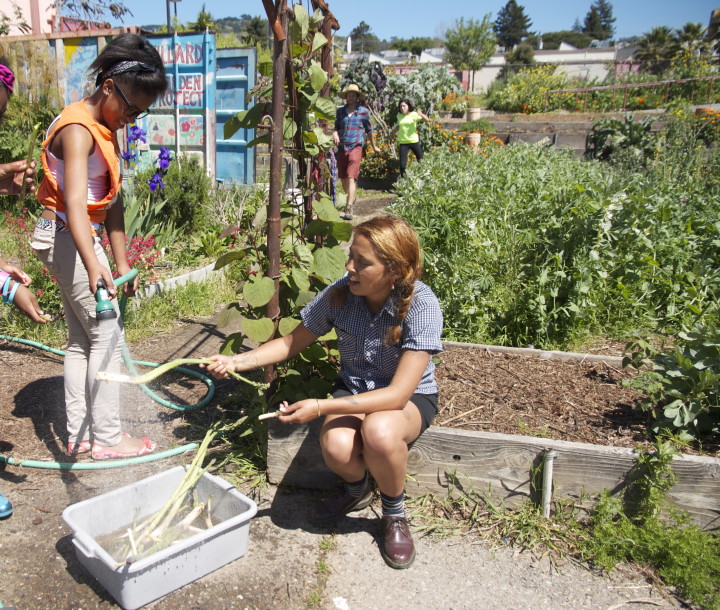
"content": "\u003cfigure id=\"attachment_124724\" class=\"wp-caption aligncenter\" style=\"max-width: 640px\">\u003ca href=\"http://ww2.kqed.org/news/wp-content/uploads/sites/10/2014/01/garden-program.jpg\">\u003cimg class=\"size-medium wp-image-124724\" src=\"http://ww2.kqed.org/news/wp-content/uploads/sites/10/2014/01/garden-program-640x542.jpg\" alt=\"Washing off freshly picked asparagus at the Willard Middle School garden. Parents at the school are protesting suggested cuts to the cooking and gardening program. (Kaia Diringer/Berkeleyside)\" width=\"640\" height=\"542\">\u003c/a>\u003cfigcaption class=\"wp-caption-text\">Washing off freshly picked asparagus at the Willard Middle School garden. Parents at the school are protesting suggested cuts to the cooking and gardening program. (Kaia Diringer/Berkeleyside)\u003c/figcaption>\u003c/figure>\n\u003cp>\u003cstrong>By Tracey Taylor\u003cbr>\n\u003ca href=\"http://www.berkeleyside.com/2014/01/29/cooking-may-be-cut-in-berkeley-schools-edible-program/\" target=\"_blank\">Berkeleyside\u003c/a>\u003c/strong>\u003c/p>\n\u003cp>The cooking component of Berkeley schools’ highly regarded cooking and gardening program may soon be eliminated for financial reasons, and the future of the entire program in middle and high schools is also at risk.\u003c/p>\n\u003cp>The Berkeley Unified School District board was scheduled to hear details of the proposal in a presentation titled \"Re-envisioning the Cooking and Gardening Program\" at its regular meeting Wednesday. However, the item has been postponed, according to \u003ca href=\"http://www.berkeleyside.com/2013/11/11/berkeley-school-edible-programs-face-huge-challenges/\" target=\"_blank\">Jezra Thompson, director of the cooking and gardening program\u003c/a>.\u003c/p>\n\u003cp>Under the proposal, cooking classes would be eliminated for the 2014-15 academic year. The focus of the program would then center on gardening for pre-kindergarten through third grades. Gardening programs for middle school and high school students would be eliminated.\u003c/p>\n\u003caside class=\"pullquote alignleft\">'You do not dismantle a national model; it would take at least a decade to rebuild.'\u003ccite>— Willard Middle School petition\u003c/cite>\u003c/aside>\n\u003cp>The need to make cuts has been triggered by a loss of funds, in particular $1.9 million in federal funding from the California Nutrition Network that was withdrawn last fall. The budget for 2014-15 is just $375,586, which includes a necessary allocation of $300,000 from the BUSD general fund.\u003c/p>\n\u003cp>[ad fullwidth]\u003c/p>\n\u003cp>Thompson said cooking is a financially heavy piece of the equation, which explains why it is being suggested that it be cut. “It doesn’t have the infrastructure of gardening,” she said. “So we could bring it back in the future. It’s a matter of funding what we can fund.”\u003c/p>\n\u003cp>Thompson said that while the new proposal calls for all school gardens to continue to be maintained, gardening instruction would likely be halted at the city’s middle and high schools.\u003c/p>\n\u003cp>“It’s up for debate,” she said, stressing that the proposal is informational at this point. “But with the limits we are facing, we have to decide where is it more effective to focus.” Thompson said research showed that cooking and gardening classes were most valuable in early childhood years.\u003c/p>\n\u003chr>\n\u003cp>\u003ca href=\"http://www.berkeleyschools.net/wp-content/uploads/2014/01/01-29-14_packet.pdf\" target=\"_blank\">Read \"Re-envisioning the Cooking and Gardening Program\" in the school board's agenda packet, starting at Page 334\u003c/a>.\u003c/p>\n\u003chr>\n\u003cp>To date, the fully funded program has been active at 11 Berkeley elementary schools, two middle schools, two high schools and three early childhood education sites. It employs 17 instructional specialists, a part-time clerical program coordinator and a three-quarter-time supervisor. (The districtwide program is separate from the internationally acclaimed \u003ca href=\"http://edibleschoolyard.org/\" target=\"_blank\">Edible Schoolyard Project\u003c/a> at King Middle School. That program is integrated with King's curriculum but funded and operated through a nonprofit foundation.)\u003c/p>\n\u003cp>Efforts to raise significant outside resources to fund the program have not been sufficiently fruitful. Thompson said a grant writer was hired last year but that fundraising was not successful. She said reaching out to donors is complicated by the fact that the program is now part of educational services and requires a commitment by BUSD to provide regular financing.\u003c/p>\n\u003cp>The program has traditionally been bolstered by significant parent and community support. On hearing about the proposed cuts, parents at Willard Middle School expressed alarm at the idea of doing away with what they say is “at the heart of what they want their children to learn.”\u003c/p>\n\u003cp>They shared a statement with Berkeleyside, part of which read: “We request immediate establishment of a committee to look at the BUSD budget and come up with a solution that avoids program closure. You do not dismantle a national model; it would take at least a decade to rebuild. The short and long-term costs to our children in terms of poor food choices, lack of environmental education, and the scholastic and physical repercussions of greater immobility during the school day are unacceptable.” [\u003ca href=\"http://www.berkeleyside.com/wp-content/uploads/2014/01/Willard-statement-re-cooking-and-gardening-program.pdf\" target=\"_blank\">Read the full statement\u003c/a>.]\u003c/p>\n\u003cp>The group is urging the community to sign a \u003ca href=\"http://petitions.moveon.org/sign/save-public-school-cooking?source=c.fwd&r_by=1152075\" target=\"_blank\">petition urging the federal government to reinstate funds for the program\u003c/a>.\u003c/p>\n\u003cp>Meantime, Thompson said the need to act now is imperative. “If we don’t come up with something, this program is going to die next year,” she said. “The proposal helps give us a baseline and we can build from there.”\u003c/p>\n\u003cp>The BUSD board meets Wednesday evening at 7:30 p.m. at Council Chambers, Old City Hall, 2134 Martin Luther King Jr. Way, in downtown Berkeley. \u003cstrong>At press time, the item on the cooking and gardening program is no longer expected to be on the agenda.\u003c/strong>\u003c/p>\n\u003cp>\u003c/p>\n\u003cp>\u003cem>KQED News Associate \u003ca href=\"http://www.berkeleyside.com\" target=\"_blank\">Berkeleyside\u003c/a> is an independently owned news website based in Berkeley, Calif. \u003ca href=\"http://eepurl.com/lh_3b\" target=\"_blank\">Click here\u003c/a> if you would you like to receive the latest Berkeley news in your inbox once a day for free with Berkeleyside's Daily Briefing email.\u003c/em>\u003c/p>\n\n",
"disqusIdentifier": "124718 http://ww2.kqed.org/news/?p=124718",
"disqusUrl": "https://ww2.kqed.org/news/2014/01/29/berkeleys-trailblazing-school-garden-program-is-on-the-chopping-block/",
"stats": {
"hasVideo": false,
"hasChartOrMap": false,
"hasAudio": false,
"hasPolis": false,
"wordCount": 822,
"hasGoogleForm": false,
"hasGallery": false,
"hasHearkenModule": false,
"iframeSrcs": [],
"paragraphCount": 19
},
"modified": 1391037428,
"excerpt": "Funding cuts could shut down the district's innovative garden and cooking program -- a national model.",
"headData": {
"twImgId": "",
"twTitle": "",
"ogTitle": "",
"ogImgId": "",
"twDescription": "",
"description": "Funding cuts could shut down the district's innovative garden and cooking program -- a national model.",
"title": "Berkeley's Trailblazing School Garden Program Is on the Chopping Block | KQED",
"ogDescription": "",
"schema": {
"@context": "https://schema.org",
"@type": "NewsArticle",
"headline": "Berkeley's Trailblazing School Garden Program Is on the Chopping Block",
"datePublished": "2014-01-29T14:50:54-08:00",
"dateModified": "2014-01-29T15:17:08-08:00",
"image": "https://cdn.kqed.org/wp-content/uploads/2020/02/KQED-OG-Image@1x.png",
"isAccessibleForFree": "True",
"publisher": {
"@type": "NewsMediaOrganization",
"@id": "https://www.kqed.org/#organization",
"name": "KQED",
"logo": "https://cdn.kqed.org/wp-content/uploads/2020/02/KQED-OG-Image@1x.png",
"url": "https://www.kqed.org",
"sameAs": [
"https://www.facebook.com/KQED",
"https://twitter.com/KQED",
"https://www.instagram.com/kqed/",
"https://www.tiktok.com/@kqedofficial",
"https://www.linkedin.com/company/kqed",
"https://www.youtube.com/channel/UCeC0IOo7i1P_61zVUWbJ4nw"
]
}
}
},
"guestAuthors": [],
"slug": "berkeleys-trailblazing-school-garden-program-is-on-the-chopping-block",
"status": "publish",
"customPermalink": "2014/01/29/cooking-cuts-loom-at-schools-edible-program/",
"path": "/news/124718/berkeleys-trailblazing-school-garden-program-is-on-the-chopping-block",
"audioTrackLength": null,
"parsedContent": [
{
"type": "contentString",
"content": "\u003cdiv class=\"post-body\">\u003cp>\u003cfigure id=\"attachment_124724\" class=\"wp-caption aligncenter\" style=\"max-width: 640px\">\u003ca href=\"http://ww2.kqed.org/news/wp-content/uploads/sites/10/2014/01/garden-program.jpg\">\u003cimg class=\"size-medium wp-image-124724\" src=\"http://ww2.kqed.org/news/wp-content/uploads/sites/10/2014/01/garden-program-640x542.jpg\" alt=\"Washing off freshly picked asparagus at the Willard Middle School garden. Parents at the school are protesting suggested cuts to the cooking and gardening program. (Kaia Diringer/Berkeleyside)\" width=\"640\" height=\"542\">\u003c/a>\u003cfigcaption class=\"wp-caption-text\">Washing off freshly picked asparagus at the Willard Middle School garden. Parents at the school are protesting suggested cuts to the cooking and gardening program. (Kaia Diringer/Berkeleyside)\u003c/figcaption>\u003c/figure>\n\u003cp>\u003cstrong>By Tracey Taylor\u003cbr>\n\u003ca href=\"http://www.berkeleyside.com/2014/01/29/cooking-may-be-cut-in-berkeley-schools-edible-program/\" target=\"_blank\">Berkeleyside\u003c/a>\u003c/strong>\u003c/p>\n\u003cp>The cooking component of Berkeley schools’ highly regarded cooking and gardening program may soon be eliminated for financial reasons, and the future of the entire program in middle and high schools is also at risk.\u003c/p>\n\u003cp>The Berkeley Unified School District board was scheduled to hear details of the proposal in a presentation titled \"Re-envisioning the Cooking and Gardening Program\" at its regular meeting Wednesday. However, the item has been postponed, according to \u003ca href=\"http://www.berkeleyside.com/2013/11/11/berkeley-school-edible-programs-face-huge-challenges/\" target=\"_blank\">Jezra Thompson, director of the cooking and gardening program\u003c/a>.\u003c/p>\n\u003cp>Under the proposal, cooking classes would be eliminated for the 2014-15 academic year. The focus of the program would then center on gardening for pre-kindergarten through third grades. Gardening programs for middle school and high school students would be eliminated.\u003c/p>\n\u003caside class=\"pullquote alignleft\">'You do not dismantle a national model; it would take at least a decade to rebuild.'\u003ccite>— Willard Middle School petition\u003c/cite>\u003c/aside>\n\u003cp>The need to make cuts has been triggered by a loss of funds, in particular $1.9 million in federal funding from the California Nutrition Network that was withdrawn last fall. The budget for 2014-15 is just $375,586, which includes a necessary allocation of $300,000 from the BUSD general fund.\u003c/p>\n\u003cp>\u003c/p>\u003c/div>",
"attributes": {
"named": {},
"numeric": []
}
},
{
"type": "component",
"content": "",
"name": "ad",
"attributes": {
"named": {
"label": "fullwidth"
},
"numeric": [
"fullwidth"
]
}
},
{
"type": "contentString",
"content": "\u003cdiv class=\"post-body\">\u003cp>\u003c/p>\n\u003cp>Thompson said cooking is a financially heavy piece of the equation, which explains why it is being suggested that it be cut. “It doesn’t have the infrastructure of gardening,” she said. “So we could bring it back in the future. It’s a matter of funding what we can fund.”\u003c/p>\n\u003cp>Thompson said that while the new proposal calls for all school gardens to continue to be maintained, gardening instruction would likely be halted at the city’s middle and high schools.\u003c/p>\n\u003cp>“It’s up for debate,” she said, stressing that the proposal is informational at this point. “But with the limits we are facing, we have to decide where is it more effective to focus.” Thompson said research showed that cooking and gardening classes were most valuable in early childhood years.\u003c/p>\n\u003chr>\n\u003cp>\u003ca href=\"http://www.berkeleyschools.net/wp-content/uploads/2014/01/01-29-14_packet.pdf\" target=\"_blank\">Read \"Re-envisioning the Cooking and Gardening Program\" in the school board's agenda packet, starting at Page 334\u003c/a>.\u003c/p>\n\u003chr>\n\u003cp>To date, the fully funded program has been active at 11 Berkeley elementary schools, two middle schools, two high schools and three early childhood education sites. It employs 17 instructional specialists, a part-time clerical program coordinator and a three-quarter-time supervisor. (The districtwide program is separate from the internationally acclaimed \u003ca href=\"http://edibleschoolyard.org/\" target=\"_blank\">Edible Schoolyard Project\u003c/a> at King Middle School. That program is integrated with King's curriculum but funded and operated through a nonprofit foundation.)\u003c/p>\n\u003cp>Efforts to raise significant outside resources to fund the program have not been sufficiently fruitful. Thompson said a grant writer was hired last year but that fundraising was not successful. She said reaching out to donors is complicated by the fact that the program is now part of educational services and requires a commitment by BUSD to provide regular financing.\u003c/p>\n\u003cp>The program has traditionally been bolstered by significant parent and community support. On hearing about the proposed cuts, parents at Willard Middle School expressed alarm at the idea of doing away with what they say is “at the heart of what they want their children to learn.”\u003c/p>\n\u003cp>They shared a statement with Berkeleyside, part of which read: “We request immediate establishment of a committee to look at the BUSD budget and come up with a solution that avoids program closure. You do not dismantle a national model; it would take at least a decade to rebuild. The short and long-term costs to our children in terms of poor food choices, lack of environmental education, and the scholastic and physical repercussions of greater immobility during the school day are unacceptable.” [\u003ca href=\"http://www.berkeleyside.com/wp-content/uploads/2014/01/Willard-statement-re-cooking-and-gardening-program.pdf\" target=\"_blank\">Read the full statement\u003c/a>.]\u003c/p>\n\u003cp>The group is urging the community to sign a \u003ca href=\"http://petitions.moveon.org/sign/save-public-school-cooking?source=c.fwd&r_by=1152075\" target=\"_blank\">petition urging the federal government to reinstate funds for the program\u003c/a>.\u003c/p>\n\u003cp>Meantime, Thompson said the need to act now is imperative. “If we don’t come up with something, this program is going to die next year,” she said. “The proposal helps give us a baseline and we can build from there.”\u003c/p>\n\u003cp>The BUSD board meets Wednesday evening at 7:30 p.m. at Council Chambers, Old City Hall, 2134 Martin Luther King Jr. Way, in downtown Berkeley. \u003cstrong>At press time, the item on the cooking and gardening program is no longer expected to be on the agenda.\u003c/strong>\u003c/p>\n\u003cp>\u003c/p>\n\u003cp>\u003cem>KQED News Associate \u003ca href=\"http://www.berkeleyside.com\" target=\"_blank\">Berkeleyside\u003c/a> is an independently owned news website based in Berkeley, Calif. \u003ca href=\"http://eepurl.com/lh_3b\" target=\"_blank\">Click here\u003c/a> if you would you like to receive the latest Berkeley news in your inbox once a day for free with Berkeleyside's Daily Briefing email.\u003c/em>\u003c/p>\n\n\u003c/div>\u003c/p>",
"attributes": {
"named": {},
"numeric": []
}
}
],
"link": "/news/124718/berkeleys-trailblazing-school-garden-program-is-on-the-chopping-block",
"authors": [
"236"
],
"programs": [
"news_6944"
],
"categories": [
"news_18540"
],
"tags": [
"news_129",
"news_5619",
"news_5620"
],
"affiliates": [
"news_5078"
],
"featImg": "news_124724",
"label": "news_6944"
},
"news_124633": {
"type": "posts",
"id": "news_124633",
"meta": {
"index": "posts_1716263798",
"site": "news",
"id": "124633",
"score": null,
"sort": [
1391011237000
]
},
"parent": 0,
"labelTerm": {
"site": "news",
"term": 6944
},
"blocks": [],
"publishDate": 1391011237,
"format": "aside",
"disqusTitle": "Berkeley Schools to Spend $2 Million Updating Safety Plans",
"title": "Berkeley Schools to Spend $2 Million Updating Safety Plans",
"headTitle": "News Fix | KQED News",
"content": "\u003cp>\u003cstrong>By Natalie Orenstein\u003cbr>\n\u003ca href=\"http://www.berkeleyside.com/2014/01/27/safety/\" target=\"_blank\">Berkeleyside\u003c/a>\u003c/strong>\u003c/p>\n\u003cfigure id=\"attachment_124634\" class=\"wp-caption aligncenter\" style=\"max-width: 640px\">\u003ca href=\"http://ww2.kqed.org/news/wp-content/uploads/sites/10/2014/01/berkeley-high.png\">\u003cimg class=\"size-medium wp-image-124634\" src=\"http://ww2.kqed.org/news/wp-content/uploads/sites/10/2014/01/berkeley-high-640x412.png\" alt=\"Berkeley High School, which has had reported incidents of guns on campus in the past, will, like all BUSD schools, benefit from new spending on safety improvements.(Wikimedia Commons/Berkeleyside)\" width=\"640\" height=\"412\">\u003c/a>\u003cfigcaption class=\"wp-caption-text\">Berkeley High School, which has had reported incidents of guns on campus in the past, will, like all BUSD schools, benefit from new spending on safety improvements.(Wikimedia Commons/Berkeleyside)\u003c/figcaption>\u003c/figure>\n\u003cp>When nearby gunfire forced LeConte Elementary School to \u003ca href=\"http://www.berkeleyside.com/2014/01/09/suspected-area-gunfire-puts-berkeley-school-on-lockdown/\" target=\"_blank\">go on lockdown earlier this month\u003c/a>, second-grade teacher Pamela Deibel and her colleagues weren’t able to lock their own classrooms, and students in bathrooms and hallways missed the announcement on the loudspeaker. But the next campus in the district to go on lockdown may not face the same challenges.\u003c/p>\n\u003cp>The Berkeley Unified School District will immediately begin to implement a nearly $2 million school safety improvement plan approved by the school board to install new PA systems, increase the use of surveillance cameras, conduct armed-intruder training for staff — and replace classroom locks so that the doors can be bolted from the inside.\u003c/p>\n\u003cp>“All of those improvements were ones we desired,” Deibel said. “I would’ve liked to be able to lock my door from inside.”\u003c/p>\n\u003cp>Prompted by the 2012 mass shooting that killed 20 children at an elementary school in Newtown, Conn., the district last year hired two consultants, Edu-Safe Associates and Dimensions Unlimited, to visit all BUSD schools and assess their preparedness for violent intruders. The Board voted 2-1 to adopt some of the consultants’ recommendations Jan. 15.\u003c/p>\n\u003cp>[ad fullwidth]\u003c/p>\n\u003cp>The consultants identified several “obvious weaknesses” in campus safety, said Susan Craig, director of student services. Craig will oversee the staff training program in the spring.\u003c/p>\n\u003caside class=\"pullquote alignleft\">'We want to enhance our use of surveillance cameras but we want to make sure the privacy of students and staff is not invaded through continual monitoring.'\u003c/aside>\n\u003cp>Armed-intruder training, developed shortly after the Columbine High School shooting massacre in 1999, “is nationally accepted and recommended these days,” Craig said.\u003c/p>\n\u003cp>BUSD schools already hold lockdown drills to prepare for intruders. “Where the armed intruder training takes it to the next step is preparing for something you hope you never have to use, which is, God forbid, if the armed intruder breaks through the barricade and gets into the room,” Craig said. “It’s training for how to respond to that, how to save lives.”\u003c/p>\n\u003cp>Facility improvements recommended in the safety audit reports will begin immediately and will be complete by the end of summer 2015, said Director of Facilities Lew Jones.\u003c/p>\n\u003cp>Both consultants recommended the installation of comprehensive PA systems in all schools.\u003c/p>\n\u003cp>“Every principal at each site visited in BUSD advised that their public address, warning and campuswide communication systems were either nonexistent, not operating or deficient in some way. Administrators demonstrated that they could not cover the entire site with an emergency alert, a warning, or vital response information,” the Dimensions Unlimited report found.\u003c/p>\n\u003cp>The board also approved the increased use of surveillance cameras at the schools and the potential use of a live video feed during an incident, but the district will not move forward with the plan until the board develops a policy to address privacy concerns. Cameras were first installed in Berkeley schools with the caveat that the footage would be used only after an incident.\u003c/p>\n\u003cp>“If an armed intruder gets into Berkeley High School, it’s really an advantage to be able to broadcast to the entire community the exact location of an individual and what they’re doing,” Craig said. “We want to enhance our use of surveillance cameras but we want to make sure the privacy of students and staff is not invaded through continual monitoring.”\u003c/p>\n\u003cp>Although the use of a live feed is far from definite, some board members were adamant that there be guidelines in place that prevent its abuse, should schools begin to use the feature.\u003c/p>\n\u003cp>“I understand the value in the case of an emergency to monitor what’s happening, but we also want to have very clear guidelines for when we’re not going to use that,” said Judy Appel, the BUSD board’s vice president. “Of course, the safety of our students is a paramount concern to the board, and we just want to make sure we’re doing that in the best way that protects our students all around.”\u003c/p>\n\u003cp>The nearly $2 million in safety improvements is financed by $15,000 from the general fund, $100,000 in Measure H funds and $1,220,000 from bond measures AA and I. The installation of interior locks in classrooms could add $500,000.\u003c/p>\n\u003cp>At $15,000, the armed-intruder training is the least expensive piece of the plan.\u003c/p>\n\u003cp>The BUSD did not adopt all the recommendations made by the consultants, including a suggestion to station a police officer at each school. Currently, there is one police officer at Berkeley High but none on other campuses.\u003c/p>\n\u003cp>“It’s costly and we have safety officers that are Berkeley Unified staff,” Craig said. “They are not armed, they are not police officers, but they have a lot of training around de-escalating incidents. We needed to prioritize what we felt would leverage our dollars to maximize the recommendations.”\u003c/p>\n\u003cp>There have been 137 fatal school shootings since 1980, according to the Edu-Safe report.\u003c/p>\n\u003cp>There have been no reported gun-related incidents within Berkeley schools since there was a rash of them at Berkeley High School in 2011. One day in February \u003ca href=\"http://www.berkeleyside.com/2011/02/04/another-gun-incident-at-berkeley-high-today/\" target=\"_blank\">two students brought firearms onto campus\u003c/a>, and on March 11 a \u003ca href=\"http://www.berkeleyside.com/2011/03/22/gun-shot-fired-at-berkeley-high-school-no-injuries/\" target=\"_blank\">gun was fired in a bathroom\u003c/a>. A bullet went through the wall of a portable classroom but nobody was injured.\u003c/p>\n\u003cp>BUSD schools are put on lockdown multiple times each year, often in response to violence in the surrounding area. The LeConte lockdown, prompted by gunfire during an attempted robbery in the neighborhood, was the first of 2014. Berkeley High School went on lockdown in 2013 during a Shattuck Avenue robbery attempt, and \u003ca href=\"http://www.berkeleyside.com/2012/12/19/after-newtown-lockdown-drill-wednesday-vigil-thursday/\" target=\"_blank\">held a lockdown safety drill\u003c/a> in 2012 shortly after the Newtown shooting.\u003c/p>\n\u003cp>“Just as in most school districts, the schools in Berkeley are microcosms of the communities in which they exist. All of the advantages and disadvantages of the community are reflected on the various school campuses,” the Edu-Safe report said.\u003c/p>\n\u003cp>[ad floatright]\u003c/p>\n\u003cp>\u003cem>KQED News Associate \u003ca href=\"http://www.berkeleyside.com/\" target=\"_blank\">Berkeleyside\u003c/a> is an independently owned news website based in Berkeley, Calif. \u003ca href=\"http://eepurl.com/lh_3b\" target=\"_blank\">Click here\u003c/a> if you would you like to receive the latest Berkeley news in your inbox once a day for free with Berkeleyside's Daily Briefing email.\u003c/em>\u003c/p>\n\n",
"disqusIdentifier": "124633 http://ww2.kqed.org/news/?p=124633",
"disqusUrl": "https://ww2.kqed.org/news/2014/01/29/berkeley-school-district-plans-to-spend-2-million-updating-safety-plans/",
"stats": {
"hasVideo": false,
"hasChartOrMap": false,
"hasAudio": false,
"hasPolis": false,
"wordCount": 1104,
"hasGoogleForm": false,
"hasGallery": false,
"hasHearkenModule": false,
"iframeSrcs": [],
"paragraphCount": 26
},
"modified": 1391037287,
"excerpt": "Improvements, prompted by Connecticut school massacre, will help protect against violent intruders. ",
"headData": {
"twImgId": "",
"twTitle": "",
"ogTitle": "",
"ogImgId": "",
"twDescription": "",
"description": "Improvements, prompted by Connecticut school massacre, will help protect against violent intruders. ",
"title": "Berkeley Schools to Spend $2 Million Updating Safety Plans | KQED",
"ogDescription": "",
"schema": {
"@context": "https://schema.org",
"@type": "NewsArticle",
"headline": "Berkeley Schools to Spend $2 Million Updating Safety Plans",
"datePublished": "2014-01-29T08:00:37-08:00",
"dateModified": "2014-01-29T15:14:47-08:00",
"image": "https://cdn.kqed.org/wp-content/uploads/2020/02/KQED-OG-Image@1x.png",
"isAccessibleForFree": "True",
"publisher": {
"@type": "NewsMediaOrganization",
"@id": "https://www.kqed.org/#organization",
"name": "KQED",
"logo": "https://cdn.kqed.org/wp-content/uploads/2020/02/KQED-OG-Image@1x.png",
"url": "https://www.kqed.org",
"sameAs": [
"https://www.facebook.com/KQED",
"https://twitter.com/KQED",
"https://www.instagram.com/kqed/",
"https://www.tiktok.com/@kqedofficial",
"https://www.linkedin.com/company/kqed",
"https://www.youtube.com/channel/UCeC0IOo7i1P_61zVUWbJ4nw"
]
}
}
},
"guestAuthors": [],
"slug": "berkeley-school-district-plans-to-spend-2-million-updating-safety-plans",
"status": "publish",
"customPermalink": "2014/01/28/Berkeley-safety-plan/",
"path": "/news/124633/berkeley-school-district-plans-to-spend-2-million-updating-safety-plans",
"audioTrackLength": null,
"parsedContent": [
{
"type": "contentString",
"content": "\u003cdiv class=\"post-body\">\u003cp>\u003cp>\u003cstrong>By Natalie Orenstein\u003cbr>\n\u003ca href=\"http://www.berkeleyside.com/2014/01/27/safety/\" target=\"_blank\">Berkeleyside\u003c/a>\u003c/strong>\u003c/p>\n\u003cfigure id=\"attachment_124634\" class=\"wp-caption aligncenter\" style=\"max-width: 640px\">\u003ca href=\"http://ww2.kqed.org/news/wp-content/uploads/sites/10/2014/01/berkeley-high.png\">\u003cimg class=\"size-medium wp-image-124634\" src=\"http://ww2.kqed.org/news/wp-content/uploads/sites/10/2014/01/berkeley-high-640x412.png\" alt=\"Berkeley High School, which has had reported incidents of guns on campus in the past, will, like all BUSD schools, benefit from new spending on safety improvements.(Wikimedia Commons/Berkeleyside)\" width=\"640\" height=\"412\">\u003c/a>\u003cfigcaption class=\"wp-caption-text\">Berkeley High School, which has had reported incidents of guns on campus in the past, will, like all BUSD schools, benefit from new spending on safety improvements.(Wikimedia Commons/Berkeleyside)\u003c/figcaption>\u003c/figure>\n\u003cp>When nearby gunfire forced LeConte Elementary School to \u003ca href=\"http://www.berkeleyside.com/2014/01/09/suspected-area-gunfire-puts-berkeley-school-on-lockdown/\" target=\"_blank\">go on lockdown earlier this month\u003c/a>, second-grade teacher Pamela Deibel and her colleagues weren’t able to lock their own classrooms, and students in bathrooms and hallways missed the announcement on the loudspeaker. But the next campus in the district to go on lockdown may not face the same challenges.\u003c/p>\n\u003cp>The Berkeley Unified School District will immediately begin to implement a nearly $2 million school safety improvement plan approved by the school board to install new PA systems, increase the use of surveillance cameras, conduct armed-intruder training for staff — and replace classroom locks so that the doors can be bolted from the inside.\u003c/p>\n\u003cp>“All of those improvements were ones we desired,” Deibel said. “I would’ve liked to be able to lock my door from inside.”\u003c/p>\n\u003cp>Prompted by the 2012 mass shooting that killed 20 children at an elementary school in Newtown, Conn., the district last year hired two consultants, Edu-Safe Associates and Dimensions Unlimited, to visit all BUSD schools and assess their preparedness for violent intruders. The Board voted 2-1 to adopt some of the consultants’ recommendations Jan. 15.\u003c/p>\n\u003cp>\u003c/p>\u003c/div>",
"attributes": {
"named": {},
"numeric": []
}
},
{
"type": "component",
"content": "",
"name": "ad",
"attributes": {
"named": {
"label": "fullwidth"
},
"numeric": [
"fullwidth"
]
}
},
{
"type": "contentString",
"content": "\u003cdiv class=\"post-body\">\u003cp>\u003c/p>\n\u003cp>The consultants identified several “obvious weaknesses” in campus safety, said Susan Craig, director of student services. Craig will oversee the staff training program in the spring.\u003c/p>\n\u003caside class=\"pullquote alignleft\">'We want to enhance our use of surveillance cameras but we want to make sure the privacy of students and staff is not invaded through continual monitoring.'\u003c/aside>\n\u003cp>Armed-intruder training, developed shortly after the Columbine High School shooting massacre in 1999, “is nationally accepted and recommended these days,” Craig said.\u003c/p>\n\u003cp>BUSD schools already hold lockdown drills to prepare for intruders. “Where the armed intruder training takes it to the next step is preparing for something you hope you never have to use, which is, God forbid, if the armed intruder breaks through the barricade and gets into the room,” Craig said. “It’s training for how to respond to that, how to save lives.”\u003c/p>\n\u003cp>Facility improvements recommended in the safety audit reports will begin immediately and will be complete by the end of summer 2015, said Director of Facilities Lew Jones.\u003c/p>\n\u003cp>Both consultants recommended the installation of comprehensive PA systems in all schools.\u003c/p>\n\u003cp>“Every principal at each site visited in BUSD advised that their public address, warning and campuswide communication systems were either nonexistent, not operating or deficient in some way. Administrators demonstrated that they could not cover the entire site with an emergency alert, a warning, or vital response information,” the Dimensions Unlimited report found.\u003c/p>\n\u003cp>The board also approved the increased use of surveillance cameras at the schools and the potential use of a live video feed during an incident, but the district will not move forward with the plan until the board develops a policy to address privacy concerns. Cameras were first installed in Berkeley schools with the caveat that the footage would be used only after an incident.\u003c/p>\n\u003cp>“If an armed intruder gets into Berkeley High School, it’s really an advantage to be able to broadcast to the entire community the exact location of an individual and what they’re doing,” Craig said. “We want to enhance our use of surveillance cameras but we want to make sure the privacy of students and staff is not invaded through continual monitoring.”\u003c/p>\n\u003cp>Although the use of a live feed is far from definite, some board members were adamant that there be guidelines in place that prevent its abuse, should schools begin to use the feature.\u003c/p>\n\u003cp>“I understand the value in the case of an emergency to monitor what’s happening, but we also want to have very clear guidelines for when we’re not going to use that,” said Judy Appel, the BUSD board’s vice president. “Of course, the safety of our students is a paramount concern to the board, and we just want to make sure we’re doing that in the best way that protects our students all around.”\u003c/p>\n\u003cp>The nearly $2 million in safety improvements is financed by $15,000 from the general fund, $100,000 in Measure H funds and $1,220,000 from bond measures AA and I. The installation of interior locks in classrooms could add $500,000.\u003c/p>\n\u003cp>At $15,000, the armed-intruder training is the least expensive piece of the plan.\u003c/p>\n\u003cp>The BUSD did not adopt all the recommendations made by the consultants, including a suggestion to station a police officer at each school. Currently, there is one police officer at Berkeley High but none on other campuses.\u003c/p>\n\u003cp>“It’s costly and we have safety officers that are Berkeley Unified staff,” Craig said. “They are not armed, they are not police officers, but they have a lot of training around de-escalating incidents. We needed to prioritize what we felt would leverage our dollars to maximize the recommendations.”\u003c/p>\n\u003cp>There have been 137 fatal school shootings since 1980, according to the Edu-Safe report.\u003c/p>\n\u003cp>There have been no reported gun-related incidents within Berkeley schools since there was a rash of them at Berkeley High School in 2011. One day in February \u003ca href=\"http://www.berkeleyside.com/2011/02/04/another-gun-incident-at-berkeley-high-today/\" target=\"_blank\">two students brought firearms onto campus\u003c/a>, and on March 11 a \u003ca href=\"http://www.berkeleyside.com/2011/03/22/gun-shot-fired-at-berkeley-high-school-no-injuries/\" target=\"_blank\">gun was fired in a bathroom\u003c/a>. A bullet went through the wall of a portable classroom but nobody was injured.\u003c/p>\n\u003cp>BUSD schools are put on lockdown multiple times each year, often in response to violence in the surrounding area. The LeConte lockdown, prompted by gunfire during an attempted robbery in the neighborhood, was the first of 2014. Berkeley High School went on lockdown in 2013 during a Shattuck Avenue robbery attempt, and \u003ca href=\"http://www.berkeleyside.com/2012/12/19/after-newtown-lockdown-drill-wednesday-vigil-thursday/\" target=\"_blank\">held a lockdown safety drill\u003c/a> in 2012 shortly after the Newtown shooting.\u003c/p>\n\u003cp>“Just as in most school districts, the schools in Berkeley are microcosms of the communities in which they exist. All of the advantages and disadvantages of the community are reflected on the various school campuses,” the Edu-Safe report said.\u003c/p>\n\u003cp>\u003c/p>\u003c/div>",
"attributes": {
"named": {},
"numeric": []
}
},
{
"type": "component",
"content": "",
"name": "ad",
"attributes": {
"named": {
"label": "floatright"
},
"numeric": [
"floatright"
]
}
},
{
"type": "contentString",
"content": "\u003cdiv class=\"post-body\">\u003cp>\u003c/p>\n\u003cp>\u003cem>KQED News Associate \u003ca href=\"http://www.berkeleyside.com/\" target=\"_blank\">Berkeleyside\u003c/a> is an independently owned news website based in Berkeley, Calif. \u003ca href=\"http://eepurl.com/lh_3b\" target=\"_blank\">Click here\u003c/a> if you would you like to receive the latest Berkeley news in your inbox once a day for free with Berkeleyside's Daily Briefing email.\u003c/em>\u003c/p>\n\n\u003c/div>\u003c/p>",
"attributes": {
"named": {},
"numeric": []
}
}
],
"link": "/news/124633/berkeley-school-district-plans-to-spend-2-million-updating-safety-plans",
"authors": [
"236"
],
"programs": [
"news_6944"
],
"categories": [
"news_18540",
"news_8"
],
"affiliates": [
"news_5078"
],
"featImg": "news_124634",
"label": "news_6944"
},
"news_124550": {
"type": "posts",
"id": "news_124550",
"meta": {
"index": "posts_1716263798",
"site": "news",
"id": "124550",
"score": null,
"sort": [
1390924811000
]
},
"guestAuthors": [],
"slug": "california-students-file-suit-aiming-to-end-teacher-tenure",
"title": "Trial Opens in Case That Could End California Teacher Tenure Laws",
"publishDate": 1390924811,
"format": "aside",
"headTitle": "Trial Opens in Case That Could End California Teacher Tenure Laws | KQED",
"labelTerm": {
"term": 6944,
"site": "news"
},
"content": "\u003cp>\u003cstrong>By Mina Kim\u003cbr>\nand Lisa Pickoff-White\u003cbr>\n\u003c/strong>\u003c/p>\n\u003cfigure id=\"attachment_124563\" class=\"wp-caption aligncenter\" style=\"max-width: 640px\">\u003ca href=\"http://ww2.kqed.org/news/wp-content/uploads/sites/10/2014/01/RS2833_98742728-lpr.jpg\">\u003cimg loading=\"lazy\" decoding=\"async\" class=\"size-medium wp-image-124563\" src=\"http://ww2.kqed.org/news/wp-content/uploads/sites/10/2014/01/RS2833_98742728-lpr-640x412.jpg\" alt=\"A student from Oakland High School is part of a lawsuit alleging that ineffective teachers violate the student's right to an education. (Justin Sullivan/Getty Images)\" width=\"640\" height=\"412\">\u003c/a>\u003cfigcaption class=\"wp-caption-text\">A student from Oakland High School is part of a lawsuit alleging that ineffective teachers violate students’ right to an education. (Justin Sullivan/Getty Images)\u003c/figcaption>\u003c/figure>\n\u003cp>Opening arguments began Monday in Los Angeles in a lawsuit challenging California’s rules on how and when a teacher should be fired. The suit by Silicon Valley-based \u003ca href=\"http://studentsmatter.org/\">Students Matter\u003c/a> argues that the state’s tenure and seniority laws saddle students with ineffective teachers.\u003c/p>\n\u003cp>Attorneys for the governor, the state Department of Education and teachers’ unions say the laws help attract and retain quality teachers.\u003c/p>\n\u003cp>Students from Oakland, San Jose and San Carlos are among the nine plaintiffs who contest that assertion.\u003c/p>\n\u003cp>The trial, which is being heard by L.A. Superior Court Judge Rolf Treu without a jury, is the latest battle in a nationwide trend. Dozens of states have moved in recent years to abolish or toughen the standards around giving teachers permanent employment protection and seniority-based preferences during layoffs.\u003c/p>\n\u003cp>[ad fullwidth]\u003c/p>\n\u003cp>Students Matter hired attorneys Ted Boutrous and Ted Olson, who helped overturn Prop. 8. The group’s complaint argues that poor and minority students in California are being denied their right under the state Constitution to equal access to public education because they are more likely than affluent white students to be taught by “grossly ineffective” teachers.\u003c/p>\n\u003cp>Stanford Law School Professor \u003ca href=\"http://www.law.stanford.edu/profile/william-koski\" target=\"_blank\" rel=\"noopener\">Bill Koski\u003c/a> says proving that argument hinges on whether the attorneys can link the laws to student underperformance.\u003c/p>\n\u003caside class=\"pullquote alignleft\">Are teacher tenure laws denying students their right to an education?\u003c/aside>\n\u003cp>“The fundamental argument that they’re trying to make is that the conspiracy between tenure laws, teacher dismissal laws and teacher layoff laws have worked together to deny certain children their fundamental right to an education,” Koski said. “What they would have to prove is that these laws actually do work to tie the hands of administrators in ways that cause them to keep underperforming teachers in the classroom. That these teachers in turn create underperformance among the students. And also that students who suffer from these teachers are denied that fundamental right to an education.”\u003c/p>\n\u003cp>Boutrous said he will present experts and studies showing that achievements in later life can be measured by interactions with good teachers. One study showed that students taught by ineffective teachers had their lifetime income reduced by $2 million, Boutrous said.\u003c/p>\n\u003cp>But the unions say eliminating such laws would erase a vital support system for a profession that is already losing talented people to higher-paid positions in the private sector.\u003c/p>\n\u003cp>Boutrous said the granting of tenure, which amounts to lifetime employment protection, after 18 months on the job is inadequate to guard against accepting unqualified teachers. He said there are 275,000 teachers in California, but under the current rules the state dismisses just 10 teachers a year for being ineffective in their jobs.\u003c/p>\n\u003cp>Lawyers for the state and unions countered that most teachers targeted by such claims usually resign before dismissal is necessary.\u003c/p>\n\u003cp>Deputy Attorney General Nimrod Elias told Judge Treu that 18 months is more than enough time to identify teachers who are “the worst of the worst.” He and attorney James Finberg, representing the teachers’ unions, said the guarantees of tenure, seniority and other benefits are necessary to keep teachers in the low-paying jobs.\u003c/p>\n\u003cp>“Our schools struggle to retain teachers,” he said, noting the challenge is greatest in high-crime areas.\u003c/p>\n\u003cp>The state and unions have a compelling argument that it’s not the laws that are hampering students’ eduction, but the fact that schools are starved of resources, Koski said.\u003c/p>\n\u003cp>\u003ciframe loading=\"lazy\" src=\"https://w.soundcloud.com/player/?url=https%3A//api.soundcloud.com/tracks/131741301&color=ff5500&auto_play=false&show_artwork=true\" frameborder=\"no\" scrolling=\"no\" width=\"100%\" height=\"166\">\u003c/iframe>\u003c/p>\n\u003cp>\u003c/p>\n\u003cp>\u003cem>This post contains reporting from the Associated Press.\u003c/em>\u003c/p>\n\n",
"blocks": [],
"excerpt": "Suit filed by tech entrepreneur seeks to upend rules on seniority, teacher evaluations and more.",
"status": "publish",
"parent": 0,
"modified": 1721106208,
"stats": {
"hasAudio": true,
"hasVideo": false,
"hasChartOrMap": false,
"iframeSrcs": [],
"hasGoogleForm": false,
"hasGallery": false,
"hasHearkenModule": false,
"hasPolis": false,
"paragraphCount": 19,
"wordCount": 629
},
"headData": {
"title": "Trial Opens in Case That Could End California Teacher Tenure Laws | KQED",
"description": "Suit filed by tech entrepreneur seeks to upend rules on seniority, teacher evaluations and more.",
"ogTitle": "",
"ogDescription": "",
"ogImgId": "",
"twTitle": "",
"twDescription": "",
"twImgId": "",
"schema": {
"@context": "https://schema.org",
"@type": "NewsArticle",
"headline": "Trial Opens in Case That Could End California Teacher Tenure Laws",
"datePublished": "2014-01-28T08:00:11-08:00",
"dateModified": "2024-07-15T22:03:28-07:00",
"image": "https://cdn.kqed.org/wp-content/uploads/2020/02/KQED-OG-Image@1x.png",
"isAccessibleForFree": "True",
"publisher": {
"@type": "NewsMediaOrganization",
"@id": "https://www.kqed.org/#organization",
"name": "KQED",
"logo": "https://cdn.kqed.org/wp-content/uploads/2020/02/KQED-OG-Image@1x.png",
"url": "https://www.kqed.org",
"sameAs": [
"https://www.facebook.com/KQED",
"https://twitter.com/KQED",
"https://www.instagram.com/kqed/",
"https://www.tiktok.com/@kqedofficial",
"https://www.linkedin.com/company/kqed",
"https://www.youtube.com/channel/UCeC0IOo7i1P_61zVUWbJ4nw"
]
}
}
},
"sticky": false,
"customPermalink": "2014/01/27/124550/bay-area-student-lawsuit-teacher-tenure/",
"path": "/news/124550/california-students-file-suit-aiming-to-end-teacher-tenure",
"audioTrackLength": null,
"parsedContent": [
{
"type": "contentString",
"content": "\u003cdiv class=\"post-body\">\u003cp>\u003cp>\u003cstrong>By Mina Kim\u003cbr>\nand Lisa Pickoff-White\u003cbr>\n\u003c/strong>\u003c/p>\n\u003cfigure id=\"attachment_124563\" class=\"wp-caption aligncenter\" style=\"max-width: 640px\">\u003ca href=\"http://ww2.kqed.org/news/wp-content/uploads/sites/10/2014/01/RS2833_98742728-lpr.jpg\">\u003cimg loading=\"lazy\" decoding=\"async\" class=\"size-medium wp-image-124563\" src=\"http://ww2.kqed.org/news/wp-content/uploads/sites/10/2014/01/RS2833_98742728-lpr-640x412.jpg\" alt=\"A student from Oakland High School is part of a lawsuit alleging that ineffective teachers violate the student's right to an education. (Justin Sullivan/Getty Images)\" width=\"640\" height=\"412\">\u003c/a>\u003cfigcaption class=\"wp-caption-text\">A student from Oakland High School is part of a lawsuit alleging that ineffective teachers violate students’ right to an education. (Justin Sullivan/Getty Images)\u003c/figcaption>\u003c/figure>\n\u003cp>Opening arguments began Monday in Los Angeles in a lawsuit challenging California’s rules on how and when a teacher should be fired. The suit by Silicon Valley-based \u003ca href=\"http://studentsmatter.org/\">Students Matter\u003c/a> argues that the state’s tenure and seniority laws saddle students with ineffective teachers.\u003c/p>\n\u003cp>Attorneys for the governor, the state Department of Education and teachers’ unions say the laws help attract and retain quality teachers.\u003c/p>\n\u003cp>Students from Oakland, San Jose and San Carlos are among the nine plaintiffs who contest that assertion.\u003c/p>\n\u003cp>The trial, which is being heard by L.A. Superior Court Judge Rolf Treu without a jury, is the latest battle in a nationwide trend. Dozens of states have moved in recent years to abolish or toughen the standards around giving teachers permanent employment protection and seniority-based preferences during layoffs.\u003c/p>\n\u003cp>\u003c/p>\u003c/div>",
"attributes": {
"named": {},
"numeric": []
}
},
{
"type": "component",
"content": "",
"name": "ad",
"attributes": {
"named": {
"label": "fullwidth"
},
"numeric": [
"fullwidth"
]
}
},
{
"type": "contentString",
"content": "\u003cdiv class=\"post-body\">\u003cp>\u003c/p>\n\u003cp>Students Matter hired attorneys Ted Boutrous and Ted Olson, who helped overturn Prop. 8. The group’s complaint argues that poor and minority students in California are being denied their right under the state Constitution to equal access to public education because they are more likely than affluent white students to be taught by “grossly ineffective” teachers.\u003c/p>\n\u003cp>Stanford Law School Professor \u003ca href=\"http://www.law.stanford.edu/profile/william-koski\" target=\"_blank\" rel=\"noopener\">Bill Koski\u003c/a> says proving that argument hinges on whether the attorneys can link the laws to student underperformance.\u003c/p>\n\u003caside class=\"pullquote alignleft\">Are teacher tenure laws denying students their right to an education?\u003c/aside>\n\u003cp>“The fundamental argument that they’re trying to make is that the conspiracy between tenure laws, teacher dismissal laws and teacher layoff laws have worked together to deny certain children their fundamental right to an education,” Koski said. “What they would have to prove is that these laws actually do work to tie the hands of administrators in ways that cause them to keep underperforming teachers in the classroom. That these teachers in turn create underperformance among the students. And also that students who suffer from these teachers are denied that fundamental right to an education.”\u003c/p>\n\u003cp>Boutrous said he will present experts and studies showing that achievements in later life can be measured by interactions with good teachers. One study showed that students taught by ineffective teachers had their lifetime income reduced by $2 million, Boutrous said.\u003c/p>\n\u003cp>But the unions say eliminating such laws would erase a vital support system for a profession that is already losing talented people to higher-paid positions in the private sector.\u003c/p>\n\u003cp>Boutrous said the granting of tenure, which amounts to lifetime employment protection, after 18 months on the job is inadequate to guard against accepting unqualified teachers. He said there are 275,000 teachers in California, but under the current rules the state dismisses just 10 teachers a year for being ineffective in their jobs.\u003c/p>\n\u003cp>Lawyers for the state and unions countered that most teachers targeted by such claims usually resign before dismissal is necessary.\u003c/p>\n\u003cp>Deputy Attorney General Nimrod Elias told Judge Treu that 18 months is more than enough time to identify teachers who are “the worst of the worst.” He and attorney James Finberg, representing the teachers’ unions, said the guarantees of tenure, seniority and other benefits are necessary to keep teachers in the low-paying jobs.\u003c/p>\n\u003cp>“Our schools struggle to retain teachers,” he said, noting the challenge is greatest in high-crime areas.\u003c/p>\n\u003cp>The state and unions have a compelling argument that it’s not the laws that are hampering students’ eduction, but the fact that schools are starved of resources, Koski said.\u003c/p>\n\u003cp>\u003ciframe loading=\"lazy\" src=\"https://w.soundcloud.com/player/?url=https%3A//api.soundcloud.com/tracks/131741301&color=ff5500&auto_play=false&show_artwork=true\" frameborder=\"no\" scrolling=\"no\" width=\"100%\" height=\"166\">\u003c/iframe>\u003c/p>\n\u003cp>\u003c/p>\n\u003cp>\u003cem>This post contains reporting from the Associated Press.\u003c/em>\u003c/p>\n\n\u003c/div>\u003c/p>",
"attributes": {
"named": {},
"numeric": []
}
}
],
"link": "/news/124550/california-students-file-suit-aiming-to-end-teacher-tenure",
"authors": [
"237"
],
"programs": [
"news_6944"
],
"categories": [
"news_18540",
"news_6188"
],
"tags": [
"news_5601",
"news_20013",
"news_2998",
"news_5600",
"news_2044"
],
"featImg": "news_124563",
"label": "news_6944"
},
"news_10342398": {
"type": "posts",
"id": "news_10342398",
"meta": {
"index": "posts_1716263798",
"site": "news",
"id": "10342398",
"score": null,
"sort": [
1390611988000
]
},
"parent": 0,
"labelTerm": {
"site": "news",
"term": 72
},
"blocks": [],
"publishDate": 1390611988,
"format": "standard",
"disqusTitle": "Higher Ed Leaders Look to Change California's Master Plan ",
"title": "Higher Ed Leaders Look to Change California's Master Plan ",
"headTitle": "The California Report | KQED News",
"content": "\u003cp>http://www.kqed.org/.stream/anon/radio/tcrmag/2014/01/2014-01-24a-tcrmag.mp3\u003c/p>\n\u003cp>This week at the UC Regents' meeting in San Francisco, the leaders of all three of the state's public higher education systems announced plans to reassess and revamp the 1960 Master Plan for Higher Education. What changes may be ahead? Host Rachael Myrow talks with KQED education reporter Ana Tintocalis.\u003c/p>\n\u003cp>\u003cstrong>RACHAEL MYROW:\u003c/strong> A lot of us who came up through public schools in particular have a great deal of affection for the Master Plan. It's a pledge to California schoolkids that -- whatever your economic situation -- the state will offer you some form of higher education, based on your academic qualifications. Is that pledge now up for debate?\u003c/p>\n\u003cp>\u003cstrong>ANA TINTOCALIS:\u003c/strong> It is most certainly up for debate, and some say it has completely unraveled. The plan is 50 years old. It was an attempt to bring all these colleges together under a unified system with particular goals serving students. But the idea was that all students would have access to an affordable education, and as we've seen over the last several years, tuition has increased by double digits at the UC system, students are being turned away at every level, there are enrollment caps, classes are cut, and even community college students are venturing to other community colleges just to stitch together a plan so they can get all the classes that they need.\u003c/p>\n\u003cp>\u003cstrong>MYROW:\u003c/strong> And it's very hard to get all of the classes you need to graduate in four years’ time.\u003c/p>\n\u003cp>[ad fullwidth]\u003c/p>\n\u003cp>\u003cstrong>TINTOCALIS:\u003c/strong> Exactly. So I think when we take a look at the Master Plan. Many people say it's just completely outdated and it really needs to catch up with the times.\u003c/p>\n\u003cp>\u003cstrong>MYROW:\u003c/strong> Jerry Brown, whose father, Pat Brown, helped form the plan more than 50 years ago, appears to be one of the big forces behind this effort. He spoke at the UC regents meeting.\u003c/p>\n\u003cp>\u003cstrong>BROWN:\u003c/strong> It is expensive, and you only have so much money. And so, unless we're just going to engender perpetual and deepening discontent, I think we need a fresher and more imaginative look at how we might equip our citizens and our noncitizens to live better lives.\u003c/p>\n\u003cp>\u003cstrong>MYROW:\u003c/strong> So those are the marching orders the governor is giving education leaders, but what kind of specifics is he asking for?\u003c/p>\n\u003cp>\u003cstrong>TINTOCALIS:\u003c/strong> You know, he himself says he has more questions than answers, but I think he's challenging the UC Board of Regents to think outside of the box. Again, the Master Plan and the way higher education is set up is that you have community colleges, CSU and UC. And he's telling them: Let's blow up this three-tiered system and really think about online education. Maybe we should expand that out a lot more at the UC so we're bringing in a lot more students. Let’s figure out a way for community colleges to offer bachelor's degrees. So these are some of the more radical ideas because when it comes to UC we really see this as this prestigious system that only a certain select amount of students can get into. He's kind of saying no, let's try to figure out a way to accommodate all these students because applications are soaring and there's not enough space.\u003c/p>\n\u003cp>\u003cstrong>MYROW:\u003c/strong> A couple other principles that the education leaders brought out when they were talking about this: One, that the system should serve students better than it does now, and two, that we should look at revamping the transfer process. It's been a hallmark of this system that if you do well in the community college system, you can transfer to a CSU or a UC.\u003c/p>\n\u003cp>\u003cstrong>TINTOCALIS:\u003c/strong> This is something that all three leaders are now really putting this as a top priority, this idea of streamlining the transfer process. The big problem is there's no coherent place of information for them. So what they're looking to do is launch this initiative beginning with the creation of what they call the student-centered Web portal. It sounds very technical, but it's kind of like this Facebook-style Web page tailored to a student's particular case. They will get reminders of the classes that are open, and it will provide more information. So it's a much more transparent way of figuring out your next move in the system.\u003c/p>\n\u003cp>\u003cstrong>MYROW:\u003c/strong> The budget was also big news at the UC regents meeting. Governor Brown is offering more money in his budget plan this year, but it's not enough to make up for years of budget cuts.\u003c/p>\n\u003cp>\u003cstrong>TINTOCALIS:\u003c/strong> That's absolutely correct, and all the UC regents will point that out. In black and white, the governor is proposing an additional $142 million, but that's the base budget. That's a 5 percent increase, but the UC budget overall will remain flat because there's mandatory spending and pension costs are really out of control right now. That said, the UC will probably see its third straight year of no tuition increases, which is great news for students. The Legislative Analyst's Office says revenues could rise by a few billion more come the May revision. So regents are trying to figure out what might we be able to do with some extra funding. I think a big issue, though, as I mentioned, is the pension. The retirement pension for college administrators and faculty and everyone else -- the obligations could very much sink the system.\u003c/p>\n\u003cp>\u003cstrong>MYROW:\u003c/strong> It sounds like that's going to be a politically contentious issue for UC administrators to deal with this year. I thought it was interesting that Napolitano herself is saying, ‘Look, I'm going to hold the line budgetwise with my very own office.’\u003c/p>\n\u003cp>\u003cstrong>TINTOCALIS:\u003c/strong> She's looking to lead by example by cutting back on her own spending in her own office. So what she's declaring is that there will be an immediate cap on her office staffing, so no more hires unless she says so, and travel expenses would be reduced as well. So these are not ground-shaking cuts, but again, a message to everyone that they're trying to tighten their belt, too.\u003c/p>\n\u003cp>[ad floatright]\u003c/p>\n\u003cp>More: \u003ca href=\"http://www.californiareport.org/archive/R201401230850/b\" target=\"_blank\">Initiative Would Ease Transfer Process to UC, Cal State Schools\u003c/a>\u003c/p>\n\n",
"disqusIdentifier": "10342398 http://ww2.kqed.org/news/?p=10342398",
"disqusUrl": "https://ww2.kqed.org/news/2014/01/24/higher-ed-leaders-look-to-change-californias-master-plan/",
"stats": {
"hasVideo": false,
"hasChartOrMap": false,
"hasAudio": true,
"hasPolis": false,
"wordCount": 1071,
"hasGoogleForm": false,
"hasGallery": false,
"hasHearkenModule": false,
"iframeSrcs": [],
"paragraphCount": 18
},
"modified": 1412379737,
"excerpt": "Some say the state's blueprint for accessible public education is outdated and in need of an overhaul.",
"headData": {
"twImgId": "",
"twTitle": "",
"ogTitle": "",
"ogImgId": "",
"twDescription": "",
"description": "Some say the state's blueprint for accessible public education is outdated and in need of an overhaul.",
"title": "Higher Ed Leaders Look to Change California's Master Plan | KQED",
"ogDescription": "",
"schema": {
"@context": "https://schema.org",
"@type": "NewsArticle",
"headline": "Higher Ed Leaders Look to Change California's Master Plan ",
"datePublished": "2014-01-24T17:06:28-08:00",
"dateModified": "2014-10-03T16:42:17-07:00",
"image": "https://cdn.kqed.org/wp-content/uploads/2020/02/KQED-OG-Image@1x.png",
"isAccessibleForFree": "True",
"publisher": {
"@type": "NewsMediaOrganization",
"@id": "https://www.kqed.org/#organization",
"name": "KQED",
"logo": "https://cdn.kqed.org/wp-content/uploads/2020/02/KQED-OG-Image@1x.png",
"url": "https://www.kqed.org",
"sameAs": [
"https://www.facebook.com/KQED",
"https://twitter.com/KQED",
"https://www.instagram.com/kqed/",
"https://www.tiktok.com/@kqedofficial",
"https://www.linkedin.com/company/kqed",
"https://www.youtube.com/channel/UCeC0IOo7i1P_61zVUWbJ4nw"
]
}
}
},
"guestAuthors": [],
"slug": "higher-ed-leaders-look-to-change-californias-master-plan",
"status": "publish",
"path": "/news/10342398/higher-ed-leaders-look-to-change-californias-master-plan",
"audioUrl": "http://www.kqed.org/.stream/anon/radio/tcrmag/2014/01/2014-01-24a-tcrmag.mp3",
"audioDuration": null,
"audioTrackLength": null,
"parsedContent": [
{
"type": "contentString",
"content": "\u003cdiv class=\"post-body\">\u003cp>\u003cp>http://www.kqed.org/.stream/anon/radio/tcrmag/2014/01/2014-01-24a-tcrmag.mp3\u003c/p>\n\u003cp>This week at the UC Regents' meeting in San Francisco, the leaders of all three of the state's public higher education systems announced plans to reassess and revamp the 1960 Master Plan for Higher Education. What changes may be ahead? Host Rachael Myrow talks with KQED education reporter Ana Tintocalis.\u003c/p>\n\u003cp>\u003cstrong>RACHAEL MYROW:\u003c/strong> A lot of us who came up through public schools in particular have a great deal of affection for the Master Plan. It's a pledge to California schoolkids that -- whatever your economic situation -- the state will offer you some form of higher education, based on your academic qualifications. Is that pledge now up for debate?\u003c/p>\n\u003cp>\u003cstrong>ANA TINTOCALIS:\u003c/strong> It is most certainly up for debate, and some say it has completely unraveled. The plan is 50 years old. It was an attempt to bring all these colleges together under a unified system with particular goals serving students. But the idea was that all students would have access to an affordable education, and as we've seen over the last several years, tuition has increased by double digits at the UC system, students are being turned away at every level, there are enrollment caps, classes are cut, and even community college students are venturing to other community colleges just to stitch together a plan so they can get all the classes that they need.\u003c/p>\n\u003cp>\u003cstrong>MYROW:\u003c/strong> And it's very hard to get all of the classes you need to graduate in four years’ time.\u003c/p>\n\u003cp>\u003c/p>\u003c/div>",
"attributes": {
"named": {},
"numeric": []
}
},
{
"type": "component",
"content": "",
"name": "ad",
"attributes": {
"named": {
"label": "fullwidth"
},
"numeric": [
"fullwidth"
]
}
},
{
"type": "contentString",
"content": "\u003cdiv class=\"post-body\">\u003cp>\u003c/p>\n\u003cp>\u003cstrong>TINTOCALIS:\u003c/strong> Exactly. So I think when we take a look at the Master Plan. Many people say it's just completely outdated and it really needs to catch up with the times.\u003c/p>\n\u003cp>\u003cstrong>MYROW:\u003c/strong> Jerry Brown, whose father, Pat Brown, helped form the plan more than 50 years ago, appears to be one of the big forces behind this effort. He spoke at the UC regents meeting.\u003c/p>\n\u003cp>\u003cstrong>BROWN:\u003c/strong> It is expensive, and you only have so much money. And so, unless we're just going to engender perpetual and deepening discontent, I think we need a fresher and more imaginative look at how we might equip our citizens and our noncitizens to live better lives.\u003c/p>\n\u003cp>\u003cstrong>MYROW:\u003c/strong> So those are the marching orders the governor is giving education leaders, but what kind of specifics is he asking for?\u003c/p>\n\u003cp>\u003cstrong>TINTOCALIS:\u003c/strong> You know, he himself says he has more questions than answers, but I think he's challenging the UC Board of Regents to think outside of the box. Again, the Master Plan and the way higher education is set up is that you have community colleges, CSU and UC. And he's telling them: Let's blow up this three-tiered system and really think about online education. Maybe we should expand that out a lot more at the UC so we're bringing in a lot more students. Let’s figure out a way for community colleges to offer bachelor's degrees. So these are some of the more radical ideas because when it comes to UC we really see this as this prestigious system that only a certain select amount of students can get into. He's kind of saying no, let's try to figure out a way to accommodate all these students because applications are soaring and there's not enough space.\u003c/p>\n\u003cp>\u003cstrong>MYROW:\u003c/strong> A couple other principles that the education leaders brought out when they were talking about this: One, that the system should serve students better than it does now, and two, that we should look at revamping the transfer process. It's been a hallmark of this system that if you do well in the community college system, you can transfer to a CSU or a UC.\u003c/p>\n\u003cp>\u003cstrong>TINTOCALIS:\u003c/strong> This is something that all three leaders are now really putting this as a top priority, this idea of streamlining the transfer process. The big problem is there's no coherent place of information for them. So what they're looking to do is launch this initiative beginning with the creation of what they call the student-centered Web portal. It sounds very technical, but it's kind of like this Facebook-style Web page tailored to a student's particular case. They will get reminders of the classes that are open, and it will provide more information. So it's a much more transparent way of figuring out your next move in the system.\u003c/p>\n\u003cp>\u003cstrong>MYROW:\u003c/strong> The budget was also big news at the UC regents meeting. Governor Brown is offering more money in his budget plan this year, but it's not enough to make up for years of budget cuts.\u003c/p>\n\u003cp>\u003cstrong>TINTOCALIS:\u003c/strong> That's absolutely correct, and all the UC regents will point that out. In black and white, the governor is proposing an additional $142 million, but that's the base budget. That's a 5 percent increase, but the UC budget overall will remain flat because there's mandatory spending and pension costs are really out of control right now. That said, the UC will probably see its third straight year of no tuition increases, which is great news for students. The Legislative Analyst's Office says revenues could rise by a few billion more come the May revision. So regents are trying to figure out what might we be able to do with some extra funding. I think a big issue, though, as I mentioned, is the pension. The retirement pension for college administrators and faculty and everyone else -- the obligations could very much sink the system.\u003c/p>\n\u003cp>\u003cstrong>MYROW:\u003c/strong> It sounds like that's going to be a politically contentious issue for UC administrators to deal with this year. I thought it was interesting that Napolitano herself is saying, ‘Look, I'm going to hold the line budgetwise with my very own office.’\u003c/p>\n\u003cp>\u003cstrong>TINTOCALIS:\u003c/strong> She's looking to lead by example by cutting back on her own spending in her own office. So what she's declaring is that there will be an immediate cap on her office staffing, so no more hires unless she says so, and travel expenses would be reduced as well. So these are not ground-shaking cuts, but again, a message to everyone that they're trying to tighten their belt, too.\u003c/p>\n\u003cp>\u003c/p>\u003c/div>",
"attributes": {
"named": {},
"numeric": []
}
},
{
"type": "component",
"content": "",
"name": "ad",
"attributes": {
"named": {
"label": "floatright"
},
"numeric": [
"floatright"
]
}
},
{
"type": "contentString",
"content": "\u003cdiv class=\"post-body\">\u003cp>\u003c/p>\n\u003cp>More: \u003ca href=\"http://www.californiareport.org/archive/R201401230850/b\" target=\"_blank\">Initiative Would Ease Transfer Process to UC, Cal State Schools\u003c/a>\u003c/p>\n\n\u003c/div>\u003c/p>",
"attributes": {
"named": {},
"numeric": []
}
}
],
"link": "/news/10342398/higher-ed-leaders-look-to-change-californias-master-plan",
"authors": [
"251",
"211"
],
"programs": [
"news_72"
],
"categories": [
"news_18540",
"news_8",
"news_13"
],
"tags": [
"news_379",
"news_2100",
"news_206"
],
"featImg": "news_10342415",
"label": "news_72"
},
"news_10342438": {
"type": "posts",
"id": "news_10342438",
"meta": {
"index": "posts_1716263798",
"site": "news",
"id": "10342438",
"score": null,
"sort": [
1390611758000
]
},
"guestAuthors": [],
"slug": "venerable-lick-observatory-faces-funding-cut",
"title": "Venerable Lick Observatory Faces Funding Cut",
"publishDate": 1390611758,
"format": "audio",
"headTitle": "Venerable Lick Observatory Faces Funding Cut | KQED",
"labelTerm": {
"term": 72,
"site": "news"
},
"content": "\u003cp>On the UC Regents’ agenda this week was a progress report on the Thirty Meter Telescope (TMT). The project, to be built in Hawaii, will be a partnership between UC and Caltech, as well as Canada, China, India and Japan. But as the University of California is committing to the TMT, it’s divesting from a much smaller operation closer to home.\u003c/p>\n\u003cp>This week University of California President Janet Napolitano announced her intention to cut the budget of the UC Office of the President, to “lead by example.” Of course, UC’s budget is massive: $24 billion this academic year (2013-2014). So, even as some budget lines die or shrink, others grow or spring to life.\u003c/p>\n\u003cp>Among the many items on the UC regents’ agenda this week was a progress report on the Thirty Meter Telescope.\u003c/p>\n\u003cfigure id=\"attachment_10342479\" class=\"wp-caption alignright\" style=\"max-width: 303px\">\u003ca href=\"http://ww2.kqed.org/news/wp-content/uploads/sites/10/2014/10/GreatLick500.jpg\">\u003cimg loading=\"lazy\" decoding=\"async\" class=\" wp-image-10342479\" src=\"http://ww2.kqed.org/news/wp-content/uploads/sites/10/2014/10/GreatLick500-400x506.jpg\" alt=\"The Great Lick Refractor inside the main observatory building. (Guy Marzorati/KQED)\" width=\"303\" height=\"383\" srcset=\"https://cdn.kqed.org/wp-content/uploads/sites/10/2014/10/GreatLick500-400x506.jpg 400w, https://cdn.kqed.org/wp-content/uploads/sites/10/2014/10/GreatLick500.jpg 500w\" sizes=\"auto, (max-width: 303px) 100vw, 303px\">\u003c/a>\u003cfigcaption class=\"wp-caption-text\">The Great Lick Refractor inside the main observatory building. (Guy Marzorati/KQED)\u003c/figcaption>\u003c/figure>\n\u003cp>Andrea Ghez, a UCLA physics and astronomy professor, is extremely excited about the scientific possibilities. She told the regents, “We’ll be able to study the region around a black hole, allowing us to understand the fundamentals of how black holes warp space/time, which presents us with a great opportunity to test Einstein’s theory of general relativity.”\u003c/p>\n\u003cp>This project, to be built in Hawaii, will be a partnership between UC and Caltech, as well as Canada, China, India and Japan. The Gordon and Betty Moore Foundation has put in $250 million. UC and Caltech are raising $50 million each. But even as UC is committing to the TMT in Hawaii, it’s divesting from a much smaller operation closer to home.\u003c/p>\n\u003cp>[ad fullwidth]\u003c/p>\n\u003cp>On top of Mount Hamilton, east of San Jose, the Lick Observatory is home to the oldest professional telescope in California. In 1888 it was the most powerful telescope in the world, built from pieces brought up the mountain by mule train. Now there are nine telescopes, but the “Great Lick Telescope” is the one that draws the big crowds. Garth Illingworth is an astronomy professor at UC Santa Cruz and an astronomer at the UC Observatories, which operates Lick. Staring up at the Victorian wonder, Illingworth says, “Astronomers worked very differently in those days. We’re so used to looking at digital images from cameras. But in those days, a lot of the work was done actually looking through an eyepiece.”\u003c/p>\n\u003cp>Astronomers at all 10 UC campuses have access to the telescopes here. The money for this ancient refractor came from a Gold Rush-era real estate baron in San Francisco. James Lick lies buried underneath the telescope, as part of the deal for his investment in 1874. In the years that followed, much of the planet Mars was mapped from this building, among other things. But the Lick Observatory is not just a museum.\u003c/p>\n\u003cfigure id=\"attachment_10342486\" class=\"wp-caption alignleft\" style=\"max-width: 291px\">\u003ca href=\"http://ww2.kqed.org/news/wp-content/uploads/sites/10/2014/10/ThreeMeter500.jpg\">\u003cimg loading=\"lazy\" decoding=\"async\" class=\"wp-image-10342486\" src=\"http://ww2.kqed.org/news/wp-content/uploads/sites/10/2014/10/ThreeMeter500-400x457.jpg\" alt=\"ThreeMeter500\" width=\"291\" height=\"332\" srcset=\"https://cdn.kqed.org/wp-content/uploads/sites/10/2014/10/ThreeMeter500-400x457.jpg 400w, https://cdn.kqed.org/wp-content/uploads/sites/10/2014/10/ThreeMeter500.jpg 500w\" sizes=\"auto, (max-width: 291px) 100vw, 291px\">\u003c/a>\u003cfigcaption class=\"wp-caption-text\">The Three-Meter Shane Reflector, commissioned in 1959. (Guy Marzorati/KQED)\u003c/figcaption>\u003c/figure>\n\u003cp>Over the years, technology improved, refractors gave way to mirrors, and other telescopes popped up on this mountaintop. Standing next to one from the 1950s called the Three Meter, Illingworth says a good mirror can stay scientifically relevant for decades, as long as the instruments attached to it are cutting edge.\u003c/p>\n\u003cp>“The mirrors collect light in the same way, but the way we analyze that light is just dramatically different,” he says.\u003c/p>\n\u003cp>As an example, he notes that the Three Meter mirror is fairly similar in size to the Hubble, but unlike the Hubble, the Three Meter has to contend with the Earth’s atmosphere. Adaptive optics technology now in development would shine a laser up at the sky, make an artificial star, and then correct the aberrations to sharpen the image. “So we can make this telescope generate images as sharp as Hubble,” Illingworth says.\u003c/p>\n\u003cp>It used to be an astronomer had to put on long underwear and camp out on or near a telescope to research the heavens. Nowadays, researchers from all over the UC system dial into telescopes digitally.\u003c/p>\n\u003cp>On a really clear day, you can see San Francisco to the West and Half Dome in Yosemite to the East. In recent years, a couple of review committees recommended that UC’s Office of the President stop spending $1.8 million a year to operate Lick in favor of other more modern facilities in Hawaii, like the Thirty Meter Telescope.\u003c/p>\n\u003cp>Naturally, this upsets Professor Illingworth. “It is unfortunate that even professional astronomers fail to recognize at times that one can do cutting-edge science on modest telescopes at very reasonable cost when they are properly equipped.” He also notes, “There are a lot of younger people who come and use this, and this is how they learn about astronomy. They get hands-on experience. So the results here attract a lot of scientists. And of course, there are 35,000 visitors a year.”\u003c/p>\n\u003cfigure id=\"attachment_10342488\" class=\"wp-caption alignright\" style=\"max-width: 400px\">\u003ca href=\"http://ww2.kqed.org/news/wp-content/uploads/sites/10/2014/10/LickObservatory.jpg\">\u003cimg loading=\"lazy\" decoding=\"async\" class=\"size-thumbnail wp-image-10342488\" src=\"http://ww2.kqed.org/news/wp-content/uploads/sites/10/2014/10/LickObservatory-400x225.jpg\" alt=\"The view from the top of the Shane dome at the Lick Observatory east of San Jose. (Guy Marzorati/KQED)\" width=\"400\" height=\"225\" srcset=\"https://cdn.kqed.org/wp-content/uploads/sites/10/2014/10/LickObservatory-400x225.jpg 400w, https://cdn.kqed.org/wp-content/uploads/sites/10/2014/10/LickObservatory.jpg 640w\" sizes=\"auto, (max-width: 400px) 100vw, 400px\">\u003c/a>\u003cfigcaption class=\"wp-caption-text\">The view from the top of the Shane dome at the Lick Observatory east of San Jose. (Guy Marzorati/KQED)\u003c/figcaption>\u003c/figure>\n\u003cp>Compared with the $50 million UC will have to raise to build the TMT, $1.8 million may not seem like that much. But, as Illingworth points out, that operations budget funds the operation of assets like the Automated Planet Finder, the newest telescope at Lick. Completed just last year, the Planet Finder cost $12 million. Steve Vogt is a professor of astronomy and astrophsyics at UC Santa Cruz and an astronomer at the UC Observatories. Illingworth calls Vogt “Mr. Exoplanets,” because of his work finding them.\u003c/p>\n\u003cp>Compared with some of the older telescopes at Lick, the dome of the Planet Finder looks diminutive, but there’s no wasted space inside. The equipment is newer, and of course astronomers don’t need to camp out overnight the way they used to. If anything, it’s better they don’t, given the human body heat they emit. Air conditioning keeps the temperature inside where it would be at midnight. Vogt is quite pleased after 10 years of working designing this telescope and its housing. It has one purpose: to find planets.\u003c/p>\n\u003cp>What would happen without an operating budget? A “tragedy,” Vogt says. “It needs power. It needs people around that can look after it, that can fix it when it breaks.”\u003cbr>\nIt might not come to that. There is a group trying to raise money, and/or change people’s minds.\u003c/p>\n\u003cp>Steve Montiel, a spokesman for the UC Office of the President, wrote in an e-mail the UCOP expects Lick to find alternative funding sources as the office pulls out gradually, over five years or so: “Lick is used primarily by a small number of UC campuses that may be interested in funding it for their educational purposes. There is also a substantial potential for private funding as has been the case for Mount Wilson and Palomar observatories, both of which were previously operated entirely by one organization (Mount Wilson by the Carnegie Institution and Palomar by Caltech) and now obtain all or most of their operating funds from other sources.”\u003c/p>\n\u003cp>[ad floatright]\u003c/p>\n\u003cp>Lick is hardly the only UC facility facing a painful and possibly existential cut, but Illingworth and his colleagues have something going for them. Lick is located within sight of Silicon Valley, a region full of wealthy people … who love science.\u003c/p>\n\n",
"blocks": [],
"excerpt": "UC considers slashing support for the historic home of 19th century astronomy in favor of new project.",
"status": "publish",
"parent": 0,
"modified": 1748999469,
"stats": {
"hasAudio": false,
"hasVideo": false,
"hasChartOrMap": false,
"iframeSrcs": [],
"hasGoogleForm": false,
"hasGallery": false,
"hasHearkenModule": false,
"hasPolis": false,
"paragraphCount": 20,
"wordCount": 1251
},
"headData": {
"title": "Venerable Lick Observatory Faces Funding Cut | KQED",
"description": "UC considers slashing support for the historic home of 19th century astronomy in favor of new project.",
"ogTitle": "",
"ogDescription": "",
"ogImgId": "",
"twTitle": "",
"twDescription": "",
"twImgId": "",
"schema": {
"@context": "https://schema.org",
"@type": "NewsArticle",
"headline": "Venerable Lick Observatory Faces Funding Cut",
"datePublished": "2014-01-24T17:02:38-08:00",
"dateModified": "2025-06-03T18:11:09-07:00",
"image": "https://cdn.kqed.org/wp-content/uploads/2020/02/KQED-OG-Image@1x.png",
"isAccessibleForFree": "True",
"publisher": {
"@type": "NewsMediaOrganization",
"@id": "https://www.kqed.org/#organization",
"name": "KQED",
"logo": "https://cdn.kqed.org/wp-content/uploads/2020/02/KQED-OG-Image@1x.png",
"url": "https://www.kqed.org",
"sameAs": [
"https://www.facebook.com/KQED",
"https://twitter.com/KQED",
"https://www.instagram.com/kqed/",
"https://www.tiktok.com/@kqedofficial",
"https://www.linkedin.com/company/kqed",
"https://www.youtube.com/channel/UCeC0IOo7i1P_61zVUWbJ4nw"
]
}
}
},
"audioUrl": "http://www.kqed.org/.stream/anon/radio/tcrmag/2014/01/2014-01-24b-tcrmag.mp3",
"sticky": false,
"nprStoryId": "kqed-10342438",
"templateType": "standard",
"featuredImageType": "standard",
"excludeFromSiteSearch": "Include",
"articleAge": "0",
"path": "/news/10342438/venerable-lick-observatory-faces-funding-cut",
"audioDuration": null,
"audioTrackLength": null,
"parsedContent": [
{
"type": "contentString",
"content": "\u003cdiv class=\"post-body\">\u003cp>\u003cp>On the UC Regents’ agenda this week was a progress report on the Thirty Meter Telescope (TMT). The project, to be built in Hawaii, will be a partnership between UC and Caltech, as well as Canada, China, India and Japan. But as the University of California is committing to the TMT, it’s divesting from a much smaller operation closer to home.\u003c/p>\n\u003cp>This week University of California President Janet Napolitano announced her intention to cut the budget of the UC Office of the President, to “lead by example.” Of course, UC’s budget is massive: $24 billion this academic year (2013-2014). So, even as some budget lines die or shrink, others grow or spring to life.\u003c/p>\n\u003cp>Among the many items on the UC regents’ agenda this week was a progress report on the Thirty Meter Telescope.\u003c/p>\n\u003cfigure id=\"attachment_10342479\" class=\"wp-caption alignright\" style=\"max-width: 303px\">\u003ca href=\"http://ww2.kqed.org/news/wp-content/uploads/sites/10/2014/10/GreatLick500.jpg\">\u003cimg loading=\"lazy\" decoding=\"async\" class=\" wp-image-10342479\" src=\"http://ww2.kqed.org/news/wp-content/uploads/sites/10/2014/10/GreatLick500-400x506.jpg\" alt=\"The Great Lick Refractor inside the main observatory building. (Guy Marzorati/KQED)\" width=\"303\" height=\"383\" srcset=\"https://cdn.kqed.org/wp-content/uploads/sites/10/2014/10/GreatLick500-400x506.jpg 400w, https://cdn.kqed.org/wp-content/uploads/sites/10/2014/10/GreatLick500.jpg 500w\" sizes=\"auto, (max-width: 303px) 100vw, 303px\">\u003c/a>\u003cfigcaption class=\"wp-caption-text\">The Great Lick Refractor inside the main observatory building. (Guy Marzorati/KQED)\u003c/figcaption>\u003c/figure>\n\u003cp>Andrea Ghez, a UCLA physics and astronomy professor, is extremely excited about the scientific possibilities. She told the regents, “We’ll be able to study the region around a black hole, allowing us to understand the fundamentals of how black holes warp space/time, which presents us with a great opportunity to test Einstein’s theory of general relativity.”\u003c/p>\n\u003cp>This project, to be built in Hawaii, will be a partnership between UC and Caltech, as well as Canada, China, India and Japan. The Gordon and Betty Moore Foundation has put in $250 million. UC and Caltech are raising $50 million each. But even as UC is committing to the TMT in Hawaii, it’s divesting from a much smaller operation closer to home.\u003c/p>\n\u003cp>\u003c/p>\u003c/div>",
"attributes": {
"named": {},
"numeric": []
}
},
{
"type": "component",
"content": "",
"name": "ad",
"attributes": {
"named": {
"label": "fullwidth"
},
"numeric": [
"fullwidth"
]
}
},
{
"type": "contentString",
"content": "\u003cdiv class=\"post-body\">\u003cp>\u003c/p>\n\u003cp>On top of Mount Hamilton, east of San Jose, the Lick Observatory is home to the oldest professional telescope in California. In 1888 it was the most powerful telescope in the world, built from pieces brought up the mountain by mule train. Now there are nine telescopes, but the “Great Lick Telescope” is the one that draws the big crowds. Garth Illingworth is an astronomy professor at UC Santa Cruz and an astronomer at the UC Observatories, which operates Lick. Staring up at the Victorian wonder, Illingworth says, “Astronomers worked very differently in those days. We’re so used to looking at digital images from cameras. But in those days, a lot of the work was done actually looking through an eyepiece.”\u003c/p>\n\u003cp>Astronomers at all 10 UC campuses have access to the telescopes here. The money for this ancient refractor came from a Gold Rush-era real estate baron in San Francisco. James Lick lies buried underneath the telescope, as part of the deal for his investment in 1874. In the years that followed, much of the planet Mars was mapped from this building, among other things. But the Lick Observatory is not just a museum.\u003c/p>\n\u003cfigure id=\"attachment_10342486\" class=\"wp-caption alignleft\" style=\"max-width: 291px\">\u003ca href=\"http://ww2.kqed.org/news/wp-content/uploads/sites/10/2014/10/ThreeMeter500.jpg\">\u003cimg loading=\"lazy\" decoding=\"async\" class=\"wp-image-10342486\" src=\"http://ww2.kqed.org/news/wp-content/uploads/sites/10/2014/10/ThreeMeter500-400x457.jpg\" alt=\"ThreeMeter500\" width=\"291\" height=\"332\" srcset=\"https://cdn.kqed.org/wp-content/uploads/sites/10/2014/10/ThreeMeter500-400x457.jpg 400w, https://cdn.kqed.org/wp-content/uploads/sites/10/2014/10/ThreeMeter500.jpg 500w\" sizes=\"auto, (max-width: 291px) 100vw, 291px\">\u003c/a>\u003cfigcaption class=\"wp-caption-text\">The Three-Meter Shane Reflector, commissioned in 1959. (Guy Marzorati/KQED)\u003c/figcaption>\u003c/figure>\n\u003cp>Over the years, technology improved, refractors gave way to mirrors, and other telescopes popped up on this mountaintop. Standing next to one from the 1950s called the Three Meter, Illingworth says a good mirror can stay scientifically relevant for decades, as long as the instruments attached to it are cutting edge.\u003c/p>\n\u003cp>“The mirrors collect light in the same way, but the way we analyze that light is just dramatically different,” he says.\u003c/p>\n\u003cp>As an example, he notes that the Three Meter mirror is fairly similar in size to the Hubble, but unlike the Hubble, the Three Meter has to contend with the Earth’s atmosphere. Adaptive optics technology now in development would shine a laser up at the sky, make an artificial star, and then correct the aberrations to sharpen the image. “So we can make this telescope generate images as sharp as Hubble,” Illingworth says.\u003c/p>\n\u003cp>It used to be an astronomer had to put on long underwear and camp out on or near a telescope to research the heavens. Nowadays, researchers from all over the UC system dial into telescopes digitally.\u003c/p>\n\u003cp>On a really clear day, you can see San Francisco to the West and Half Dome in Yosemite to the East. In recent years, a couple of review committees recommended that UC’s Office of the President stop spending $1.8 million a year to operate Lick in favor of other more modern facilities in Hawaii, like the Thirty Meter Telescope.\u003c/p>\n\u003cp>Naturally, this upsets Professor Illingworth. “It is unfortunate that even professional astronomers fail to recognize at times that one can do cutting-edge science on modest telescopes at very reasonable cost when they are properly equipped.” He also notes, “There are a lot of younger people who come and use this, and this is how they learn about astronomy. They get hands-on experience. So the results here attract a lot of scientists. And of course, there are 35,000 visitors a year.”\u003c/p>\n\u003cfigure id=\"attachment_10342488\" class=\"wp-caption alignright\" style=\"max-width: 400px\">\u003ca href=\"http://ww2.kqed.org/news/wp-content/uploads/sites/10/2014/10/LickObservatory.jpg\">\u003cimg loading=\"lazy\" decoding=\"async\" class=\"size-thumbnail wp-image-10342488\" src=\"http://ww2.kqed.org/news/wp-content/uploads/sites/10/2014/10/LickObservatory-400x225.jpg\" alt=\"The view from the top of the Shane dome at the Lick Observatory east of San Jose. (Guy Marzorati/KQED)\" width=\"400\" height=\"225\" srcset=\"https://cdn.kqed.org/wp-content/uploads/sites/10/2014/10/LickObservatory-400x225.jpg 400w, https://cdn.kqed.org/wp-content/uploads/sites/10/2014/10/LickObservatory.jpg 640w\" sizes=\"auto, (max-width: 400px) 100vw, 400px\">\u003c/a>\u003cfigcaption class=\"wp-caption-text\">The view from the top of the Shane dome at the Lick Observatory east of San Jose. (Guy Marzorati/KQED)\u003c/figcaption>\u003c/figure>\n\u003cp>Compared with the $50 million UC will have to raise to build the TMT, $1.8 million may not seem like that much. But, as Illingworth points out, that operations budget funds the operation of assets like the Automated Planet Finder, the newest telescope at Lick. Completed just last year, the Planet Finder cost $12 million. Steve Vogt is a professor of astronomy and astrophsyics at UC Santa Cruz and an astronomer at the UC Observatories. Illingworth calls Vogt “Mr. Exoplanets,” because of his work finding them.\u003c/p>\n\u003cp>Compared with some of the older telescopes at Lick, the dome of the Planet Finder looks diminutive, but there’s no wasted space inside. The equipment is newer, and of course astronomers don’t need to camp out overnight the way they used to. If anything, it’s better they don’t, given the human body heat they emit. Air conditioning keeps the temperature inside where it would be at midnight. Vogt is quite pleased after 10 years of working designing this telescope and its housing. It has one purpose: to find planets.\u003c/p>\n\u003cp>What would happen without an operating budget? A “tragedy,” Vogt says. “It needs power. It needs people around that can look after it, that can fix it when it breaks.”\u003cbr>\nIt might not come to that. There is a group trying to raise money, and/or change people’s minds.\u003c/p>\n\u003cp>Steve Montiel, a spokesman for the UC Office of the President, wrote in an e-mail the UCOP expects Lick to find alternative funding sources as the office pulls out gradually, over five years or so: “Lick is used primarily by a small number of UC campuses that may be interested in funding it for their educational purposes. There is also a substantial potential for private funding as has been the case for Mount Wilson and Palomar observatories, both of which were previously operated entirely by one organization (Mount Wilson by the Carnegie Institution and Palomar by Caltech) and now obtain all or most of their operating funds from other sources.”\u003c/p>\n\u003cp>\u003c/p>\u003c/div>",
"attributes": {
"named": {},
"numeric": []
}
},
{
"type": "component",
"content": "",
"name": "ad",
"attributes": {
"named": {
"label": "floatright"
},
"numeric": [
"floatright"
]
}
},
{
"type": "contentString",
"content": "\u003cdiv class=\"post-body\">\u003cp>\u003c/p>\n\u003cp>Lick is hardly the only UC facility facing a painful and possibly existential cut, but Illingworth and his colleagues have something going for them. Lick is located within sight of Silicon Valley, a region full of wealthy people … who love science.\u003c/p>\n\n\u003c/div>\u003c/p>",
"attributes": {
"named": {},
"numeric": []
}
}
],
"link": "/news/10342438/venerable-lick-observatory-faces-funding-cut",
"authors": [
"251"
],
"programs": [
"news_72"
],
"categories": [
"news_18540",
"news_8",
"news_33520",
"news_356"
],
"tags": [
"news_1790",
"news_379"
],
"featImg": "news_10342450",
"label": "news_72"
},
"news_124281": {
"type": "posts",
"id": "news_124281",
"meta": {
"index": "posts_1716263798",
"site": "news",
"id": "124281",
"score": null,
"sort": [
1390575613000
]
},
"guestAuthors": [],
"slug": "rep-george-miller-has-harsh-words-for-intelligence-committees",
"title": "Rep. George Miller Has Harsh Words for Intelligence Committees",
"publishDate": 1390575613,
"format": "aside",
"headTitle": "Rep. George Miller Has Harsh Words for Intelligence Committees | KQED",
"labelTerm": {
"term": 6944,
"site": "news"
},
"content": "\u003cfigure id=\"attachment_124295\" class=\"wp-caption alignleft\" style=\"max-width: 204px\">\u003ca href=\"http://ww2.kqed.org/news/2014/01/23/rep-george-miller-has-harsh-words-for-intelligence-committees/george-miller/\" rel=\"attachment wp-att-124295\">\u003cimg loading=\"lazy\" decoding=\"async\" class=\" wp-image-124295 \" src=\"http://ww2.kqed.org/news/wp-content/uploads/sites/10/2014/01/George-Miller-487x640.jpg\" alt=\"George Miller\" width=\"204\" height=\"269\">\u003c/a>\u003cfigcaption class=\"wp-caption-text\">Rep. George Miller had some critical words for the House and Senate intelligence committees during his visit to “Forum.”\u003c/figcaption>\u003c/figure>\n\u003cp>Martinez Congressman George Miller, who announced last week he won’t seek re-election after 20 terms in office, appeared on KQED’s “Forum” on Thursday to reflect on his 40 years representing the East Bay. \u003ca href=\"http://www.kqed.org/a/forum/R201401230900\">In an interview\u003c/a> that covered everything from the Affordable Care Act to his No Child Left Behind legislation, it was his criticism of the House and Senate intelligence committees that stood out.\u003c/p>\n\u003cp>Miller’s harsh words for how the intelligence panels operate came in response to a listener who asked in part: “The recent Manning & Snowden leaks seem to show the same abuses enumerated in the Church Committee of the late ’70s. How can the next Rep. to sit in his seat restrain NSA spying, CIA secret killing, and wars based on lies like Iraq better than the last 30 years?”\u003c/p>\n\u003cp>And here’s Miller’s response:\u003c/p>\n\u003cblockquote>\u003cp>“That’s a tough question, but I think that person better be real skeptical. I went in with the Watergate papers; Frank Church’s report on the Intelligence Committee that looks a lot like the report on the NSA; Michael Harrington, the congressman from Massachusetts, who was talking about spying and the rest of this, essentially probably had to leave Congress because of his public discussion of that.\u003c/p>\n\u003cp>When I voted for \u003ca href=\"http://beta.congress.gov/amendment/113th-congress/house-amendment/413?q=%7B\" target=\"_blank\" rel=\"noopener\">the amendment\u003c/a> that sort of pulled the NSA up short in the House a couple months ago, that vote for me was more about the House intelligence and the Senate intelligence committees because I think those committees are set up not to have real oversight, but so the intelligence agencies can say that they come and they’ve talked to Congress: ‘We informed Congress.’ They informed them in such an opaque fashion that the members of the committee are (saying) to one another: ‘Did they tell us this? How do we find out? Where was this? Where was that?’\u003c/p>\n\u003caside class=\"pullquote alignleft\">‘I think those committees are set up not to have real oversight, but so the intelligence agencies can say that they come and they’ve talked to Congress.’\u003c/aside>\n\u003cp>And they’ll tell you, as they ask very pointed questions. Many times the answers are never forthcoming, weeks and months later. So I think that Congress, as representatives of the people — the people can’t do all of this — they better rethink their intelligence committee oversight on these agencies, because they’re getting buffaloed on a daily basis by these agencies and passing the buck around.”\u003c/p>\u003c/blockquote>\n\u003cp>[ad fullwidth]\u003c/p>\u003cp>\u003c/p>\n",
"blocks": [],
"excerpt": "Retiring lawmaker says panels fail to provide oversight and that his successor 'better be skeptical.'",
"status": "publish",
"parent": 0,
"modified": 1721149600,
"stats": {
"hasAudio": false,
"hasVideo": false,
"hasChartOrMap": false,
"iframeSrcs": [],
"hasGoogleForm": false,
"hasGallery": false,
"hasHearkenModule": false,
"hasPolis": false,
"paragraphCount": 8,
"wordCount": 461
},
"headData": {
"title": "Rep. George Miller Has Harsh Words for Intelligence Committees | KQED",
"description": "Retiring lawmaker says panels fail to provide oversight and that his successor 'better be skeptical.'",
"ogTitle": "",
"ogDescription": "",
"ogImgId": "",
"twTitle": "",
"twDescription": "",
"twImgId": "",
"schema": {
"@context": "https://schema.org",
"@type": "NewsArticle",
"headline": "Rep. George Miller Has Harsh Words for Intelligence Committees",
"datePublished": "2014-01-24T07:00:13-08:00",
"dateModified": "2024-07-16T10:06:40-07:00",
"image": "https://cdn.kqed.org/wp-content/uploads/2020/02/KQED-OG-Image@1x.png",
"isAccessibleForFree": "True",
"publisher": {
"@type": "NewsMediaOrganization",
"@id": "https://www.kqed.org/#organization",
"name": "KQED",
"logo": "https://cdn.kqed.org/wp-content/uploads/2020/02/KQED-OG-Image@1x.png",
"url": "https://www.kqed.org",
"sameAs": [
"https://www.facebook.com/KQED",
"https://twitter.com/KQED",
"https://www.instagram.com/kqed/",
"https://www.tiktok.com/@kqedofficial",
"https://www.linkedin.com/company/kqed",
"https://www.youtube.com/channel/UCeC0IOo7i1P_61zVUWbJ4nw"
]
}
}
},
"sticky": false,
"customPermalink": "2014/01/23/rep-george-miller-has-harsh-words-for-intelligence-committees/",
"templateType": "standard",
"featuredImageType": "standard",
"excludeFromSiteSearch": "Include",
"articleAge": "0",
"path": "/news/124281/rep-george-miller-has-harsh-words-for-intelligence-committees",
"audioTrackLength": null,
"parsedContent": [
{
"type": "contentString",
"content": "\u003cdiv class=\"post-body\">\u003cp>\u003cfigure id=\"attachment_124295\" class=\"wp-caption alignleft\" style=\"max-width: 204px\">\u003ca href=\"http://ww2.kqed.org/news/2014/01/23/rep-george-miller-has-harsh-words-for-intelligence-committees/george-miller/\" rel=\"attachment wp-att-124295\">\u003cimg loading=\"lazy\" decoding=\"async\" class=\" wp-image-124295 \" src=\"http://ww2.kqed.org/news/wp-content/uploads/sites/10/2014/01/George-Miller-487x640.jpg\" alt=\"George Miller\" width=\"204\" height=\"269\">\u003c/a>\u003cfigcaption class=\"wp-caption-text\">Rep. George Miller had some critical words for the House and Senate intelligence committees during his visit to “Forum.”\u003c/figcaption>\u003c/figure>\n\u003cp>Martinez Congressman George Miller, who announced last week he won’t seek re-election after 20 terms in office, appeared on KQED’s “Forum” on Thursday to reflect on his 40 years representing the East Bay. \u003ca href=\"http://www.kqed.org/a/forum/R201401230900\">In an interview\u003c/a> that covered everything from the Affordable Care Act to his No Child Left Behind legislation, it was his criticism of the House and Senate intelligence committees that stood out.\u003c/p>\n\u003cp>Miller’s harsh words for how the intelligence panels operate came in response to a listener who asked in part: “The recent Manning & Snowden leaks seem to show the same abuses enumerated in the Church Committee of the late ’70s. How can the next Rep. to sit in his seat restrain NSA spying, CIA secret killing, and wars based on lies like Iraq better than the last 30 years?”\u003c/p>\n\u003cp>And here’s Miller’s response:\u003c/p>\n\u003cblockquote>\u003cp>“That’s a tough question, but I think that person better be real skeptical. I went in with the Watergate papers; Frank Church’s report on the Intelligence Committee that looks a lot like the report on the NSA; Michael Harrington, the congressman from Massachusetts, who was talking about spying and the rest of this, essentially probably had to leave Congress because of his public discussion of that.\u003c/p>\n\u003cp>When I voted for \u003ca href=\"http://beta.congress.gov/amendment/113th-congress/house-amendment/413?q=%7B\" target=\"_blank\" rel=\"noopener\">the amendment\u003c/a> that sort of pulled the NSA up short in the House a couple months ago, that vote for me was more about the House intelligence and the Senate intelligence committees because I think those committees are set up not to have real oversight, but so the intelligence agencies can say that they come and they’ve talked to Congress: ‘We informed Congress.’ They informed them in such an opaque fashion that the members of the committee are (saying) to one another: ‘Did they tell us this? How do we find out? Where was this? Where was that?’\u003c/p>\n\u003caside class=\"pullquote alignleft\">‘I think those committees are set up not to have real oversight, but so the intelligence agencies can say that they come and they’ve talked to Congress.’\u003c/aside>\n\u003cp>And they’ll tell you, as they ask very pointed questions. Many times the answers are never forthcoming, weeks and months later. So I think that Congress, as representatives of the people — the people can’t do all of this — they better rethink their intelligence committee oversight on these agencies, because they’re getting buffaloed on a daily basis by these agencies and passing the buck around.”\u003c/p>\u003c/blockquote>\n\u003cp>\u003c/p>\u003c/div>",
"attributes": {
"named": {},
"numeric": []
}
},
{
"type": "component",
"content": "",
"name": "ad",
"attributes": {
"named": {
"label": "fullwidth"
},
"numeric": [
"fullwidth"
]
}
},
{
"type": "contentString",
"content": "\u003cdiv class=\"post-body\">\u003cp>\u003c/p>\u003cp>\u003c/p>\n\u003c/div>\u003c/p>",
"attributes": {
"named": {},
"numeric": []
}
}
],
"link": "/news/124281/rep-george-miller-has-harsh-words-for-intelligence-committees",
"authors": [
"70"
],
"programs": [
"news_6944"
],
"categories": [
"news_18540",
"news_19906",
"news_13"
],
"tags": [
"news_20013",
"news_4492",
"news_152",
"news_4481"
],
"featImg": "news_124295",
"label": "news_6944"
},
"news_124243": {
"type": "posts",
"id": "news_124243",
"meta": {
"index": "posts_1716263798",
"site": "news",
"id": "124243",
"score": null,
"sort": [
1390498378000
]
},
"guestAuthors": [],
"slug": "brentwood-school-board-settles-suit-over-abuse-of-special-needs-students",
"title": "Brentwood School Board Settles Suit Over Abuse of Special Needs Students",
"publishDate": 1390498378,
"format": "aside",
"headTitle": "Brentwood School Board Settles Suit Over Abuse of Special Needs Students | KQED",
"labelTerm": {
"term": 6944,
"site": "news"
},
"content": "\u003cfigure id=\"attachment_86834\" class=\"wp-caption aligncenter\" style=\"max-width: 640px\">\u003ca href=\"http://ww2.kqed.org/news/wp-content/uploads/sites/10/2013/01/classroom.jpg\">\u003cimg loading=\"lazy\" decoding=\"async\" class=\"size-medium wp-image-86834\" src=\"http://ww2.kqed.org/news/wp-content/uploads/sites/10/2013/01/classroom-640x480.jpg\" alt=\"Photo by Stephen Pottage/Getty Images\" width=\"640\" height=\"480\">\u003c/a>\u003cfigcaption class=\"wp-caption-text\">Photo by Stephen Pottage/Getty Images\u003c/figcaption>\u003c/figure>\n\u003cp>The Brentwood Unified School District has agreed to pay $8 million to settle a lawsuit filed by the families of eight special needs students who were physically and verbally abused by a special education teacher in the district.\u003c/p>\n\u003cp>The suit, filed in federal court last August, alleged that teacher Dina Holder had shaken, slapped, kicked, yelled and swore at students. The victims of the alleged abuse ranged in age from 3 to 6 years old and have been diagnosed with a variety of conditions, including autism, Down syndrome, r\u003ca href=\"http://ghr.nlm.nih.gov/condition/recombinant-8-syndrome\" target=\"_blantk\" rel=\"noopener\">ecombinant 8 syndrome\u003c/a>, \u003ca href=\"http://ghr.nlm.nih.gov/condition/cornelia-de-lange-syndrome\" target=\"_blank\" rel=\"noopener\">Cornella de Lange syndrome\u003c/a>, and c\u003ca href=\"http://ghr.nlm.nih.gov/condition/22q133-deletion-syndrome\" target=\"_blank\" rel=\"noopener\">hromosome 22q13.3 deletion syndrome\u003c/a>. The suit cited Holder for violating students’ Fourth and 14th Amendment rights and protections guaranteed by federal laws.\u003c/p>\n\u003cp>Among the episodes recounted in the lawsuit (embedded in its entirety below):\u003c/p>\n\u003cblockquote>\u003cp>On May 25, 2010, Ms. Holder (and) three instructional aides were preparing the class for circle time. A student was cutting out paper for a project and did not comply with Ms. Holder’s request that he join the rest of the class. Ms. Holder grabbed the student by the arm and pulled him of the chair. The student fell to the ground and was lying prone on his side. Ms. Holder forcefully kicked him in the lower back or buttocks to move him toward the circle area.\u003c/p>\n\u003cp>The attack was observed by two of the instructional aides, who describe her as yelling aggressively at the student to get up and go to the circle. One stated that she kicked the student “like you would kick a dog out of the way.” One of the aides yelled at Ms. Holder to stop and pulled her off of the student. Ms. Holder stopped kicking the student and as she walked away, she called him a “stupid son of a bitch.” She said the epithet loudly enough that all of the instructional aides and the students were able to hear it.\u003c/p>\u003c/blockquote>\n\u003cp>The suit also alleged that school officials were aware of Holder’s violent behavior but failed to take appropriate action, including reporting abuse to police as required by state law.\u003c/p>\n\u003cp>\u003ca href=\"http://bit.ly/1jDQKKW\" target=\"_blank\" rel=\"noopener\">The Contra Costa Times reports\u003c/a> that the school trustees of the Brentwood Unified School District voted unanimously Wednesday to approve the settlement.\u003c/p>\n\u003cp>[ad fullwidth]\u003c/p>\n\u003cp>The Times quoted Superintendent Dana Eaton as saying after the board approved the settlement, “We have learned painful, necessary lessons about the culture we must have in place if we are to be worthy of the trust parents place in us.”\u003c/p>\n\u003cp>Holder was also at the center of an earlier lawsuit that the district settled in 2012 for $950,000.\u003ca href=\"http://www.contracostatimes.com/news/ci_22646529/state-revokes-credential-brentwood-teacher-convicted-student-abuse?source=rss\" target=\"_blank\" rel=\"noopener\"> According to the Times\u003c/a>, Holder pleaded no contest to a misdemeanor charge of child abuse. Despite that, the district allowed her to return to the classroom, transferring her from one to another.\u003c/p>\n\u003cp>\u003c/p>\n\u003cp>\u003ciframe loading=\"lazy\" id=\"doc_49309\" src=\"//www.scribd.com/embeds/201717272/content?start_page=1&view_mode=scroll&show_recommendations=true\" frameborder=\"0\" scrolling=\"no\" width=\"100%\" height=\"600\">\u003c/iframe>\u003c/p>\n\n",
"blocks": [],
"excerpt": "District says it's learned \"painful lesson\" in case involving a teacher who beat and swore at students. ",
"status": "publish",
"parent": 0,
"modified": 1721149638,
"stats": {
"hasAudio": false,
"hasVideo": false,
"hasChartOrMap": true,
"iframeSrcs": [
"//www.scribd.com/embeds/201717272/content"
],
"hasGoogleForm": false,
"hasGallery": false,
"hasHearkenModule": false,
"hasPolis": false,
"paragraphCount": 12,
"wordCount": 481
},
"headData": {
"title": "Brentwood School Board Settles Suit Over Abuse of Special Needs Students | KQED",
"description": "District says it's learned "painful lesson" in case involving a teacher who beat and swore at students. ",
"ogTitle": "",
"ogDescription": "",
"ogImgId": "",
"twTitle": "",
"twDescription": "",
"twImgId": "",
"schema": {
"@context": "https://schema.org",
"@type": "NewsArticle",
"headline": "Brentwood School Board Settles Suit Over Abuse of Special Needs Students",
"datePublished": "2014-01-23T09:32:58-08:00",
"dateModified": "2024-07-16T10:07:18-07:00",
"image": "https://cdn.kqed.org/wp-content/uploads/2020/02/KQED-OG-Image@1x.png",
"isAccessibleForFree": "True",
"publisher": {
"@type": "NewsMediaOrganization",
"@id": "https://www.kqed.org/#organization",
"name": "KQED",
"logo": "https://cdn.kqed.org/wp-content/uploads/2020/02/KQED-OG-Image@1x.png",
"url": "https://www.kqed.org",
"sameAs": [
"https://www.facebook.com/KQED",
"https://twitter.com/KQED",
"https://www.instagram.com/kqed/",
"https://www.tiktok.com/@kqedofficial",
"https://www.linkedin.com/company/kqed",
"https://www.youtube.com/channel/UCeC0IOo7i1P_61zVUWbJ4nw"
]
}
}
},
"sticky": false,
"customPermalink": "2014/01/23/brentwood-school-board-settles-suit-over-abuse-of-special-needs-students/",
"path": "/news/124243/brentwood-school-board-settles-suit-over-abuse-of-special-needs-students",
"audioTrackLength": null,
"parsedContent": [
{
"type": "contentString",
"content": "\u003cdiv class=\"post-body\">\u003cp>\u003cfigure id=\"attachment_86834\" class=\"wp-caption aligncenter\" style=\"max-width: 640px\">\u003ca href=\"http://ww2.kqed.org/news/wp-content/uploads/sites/10/2013/01/classroom.jpg\">\u003cimg loading=\"lazy\" decoding=\"async\" class=\"size-medium wp-image-86834\" src=\"http://ww2.kqed.org/news/wp-content/uploads/sites/10/2013/01/classroom-640x480.jpg\" alt=\"Photo by Stephen Pottage/Getty Images\" width=\"640\" height=\"480\">\u003c/a>\u003cfigcaption class=\"wp-caption-text\">Photo by Stephen Pottage/Getty Images\u003c/figcaption>\u003c/figure>\n\u003cp>The Brentwood Unified School District has agreed to pay $8 million to settle a lawsuit filed by the families of eight special needs students who were physically and verbally abused by a special education teacher in the district.\u003c/p>\n\u003cp>The suit, filed in federal court last August, alleged that teacher Dina Holder had shaken, slapped, kicked, yelled and swore at students. The victims of the alleged abuse ranged in age from 3 to 6 years old and have been diagnosed with a variety of conditions, including autism, Down syndrome, r\u003ca href=\"http://ghr.nlm.nih.gov/condition/recombinant-8-syndrome\" target=\"_blantk\" rel=\"noopener\">ecombinant 8 syndrome\u003c/a>, \u003ca href=\"http://ghr.nlm.nih.gov/condition/cornelia-de-lange-syndrome\" target=\"_blank\" rel=\"noopener\">Cornella de Lange syndrome\u003c/a>, and c\u003ca href=\"http://ghr.nlm.nih.gov/condition/22q133-deletion-syndrome\" target=\"_blank\" rel=\"noopener\">hromosome 22q13.3 deletion syndrome\u003c/a>. The suit cited Holder for violating students’ Fourth and 14th Amendment rights and protections guaranteed by federal laws.\u003c/p>\n\u003cp>Among the episodes recounted in the lawsuit (embedded in its entirety below):\u003c/p>\n\u003cblockquote>\u003cp>On May 25, 2010, Ms. Holder (and) three instructional aides were preparing the class for circle time. A student was cutting out paper for a project and did not comply with Ms. Holder’s request that he join the rest of the class. Ms. Holder grabbed the student by the arm and pulled him of the chair. The student fell to the ground and was lying prone on his side. Ms. Holder forcefully kicked him in the lower back or buttocks to move him toward the circle area.\u003c/p>\n\u003cp>The attack was observed by two of the instructional aides, who describe her as yelling aggressively at the student to get up and go to the circle. One stated that she kicked the student “like you would kick a dog out of the way.” One of the aides yelled at Ms. Holder to stop and pulled her off of the student. Ms. Holder stopped kicking the student and as she walked away, she called him a “stupid son of a bitch.” She said the epithet loudly enough that all of the instructional aides and the students were able to hear it.\u003c/p>\u003c/blockquote>\n\u003cp>The suit also alleged that school officials were aware of Holder’s violent behavior but failed to take appropriate action, including reporting abuse to police as required by state law.\u003c/p>\n\u003cp>\u003ca href=\"http://bit.ly/1jDQKKW\" target=\"_blank\" rel=\"noopener\">The Contra Costa Times reports\u003c/a> that the school trustees of the Brentwood Unified School District voted unanimously Wednesday to approve the settlement.\u003c/p>\n\u003cp>\u003c/p>\u003c/div>",
"attributes": {
"named": {},
"numeric": []
}
},
{
"type": "component",
"content": "",
"name": "ad",
"attributes": {
"named": {
"label": "fullwidth"
},
"numeric": [
"fullwidth"
]
}
},
{
"type": "contentString",
"content": "\u003cdiv class=\"post-body\">\u003cp>\u003c/p>\n\u003cp>The Times quoted Superintendent Dana Eaton as saying after the board approved the settlement, “We have learned painful, necessary lessons about the culture we must have in place if we are to be worthy of the trust parents place in us.”\u003c/p>\n\u003cp>Holder was also at the center of an earlier lawsuit that the district settled in 2012 for $950,000.\u003ca href=\"http://www.contracostatimes.com/news/ci_22646529/state-revokes-credential-brentwood-teacher-convicted-student-abuse?source=rss\" target=\"_blank\" rel=\"noopener\"> According to the Times\u003c/a>, Holder pleaded no contest to a misdemeanor charge of child abuse. Despite that, the district allowed her to return to the classroom, transferring her from one to another.\u003c/p>\n\u003cp>\u003c/p>\n\u003cp>\u003ciframe loading=\"lazy\" id=\"doc_49309\" src=\"//www.scribd.com/embeds/201717272/content?start_page=1&view_mode=scroll&show_recommendations=true\" frameborder=\"0\" scrolling=\"no\" width=\"100%\" height=\"600\">\u003c/iframe>\u003c/p>\n\n\u003c/div>\u003c/p>",
"attributes": {
"named": {},
"numeric": []
}
}
],
"link": "/news/124243/brentwood-school-board-settles-suit-over-abuse-of-special-needs-students",
"authors": [
"222"
],
"programs": [
"news_6944"
],
"categories": [
"news_18540",
"news_6188",
"news_8"
],
"tags": [
"news_5559",
"news_4449"
],
"featImg": "news_86834",
"label": "news_6944"
},
"news_123461": {
"type": "posts",
"id": "news_123461",
"meta": {
"index": "posts_1716263798",
"site": "news",
"id": "123461",
"score": null,
"sort": [
1389819542000
]
},
"guestAuthors": [],
"slug": "watch-jahi-mcmath-lawyer-discusses-case",
"title": "Jahi McMath Lawyer: 'There's Always Hope'",
"publishDate": 1389819542,
"format": "aside",
"headTitle": "Jahi McMath Lawyer: ‘There’s Always Hope’ | KQED",
"labelTerm": {
"term": 6944,
"site": "news"
},
"content": "\u003cfigure id=\"attachment_122765\" class=\"wp-caption alignright\" style=\"max-width: 215px\">\u003ca href=\"http://ww2.kqed.org/news/wp-content/uploads/sites/10/2014/01/jahimcmath-e1389121301914.jpg\">\u003cimg loading=\"lazy\" decoding=\"async\" class=\"size-full wp-image-122765\" src=\"http://ww2.kqed.org/news/wp-content/uploads/sites/10/2014/01/jahimcmath-e1389121301914.jpg\" alt=\"(Jahi McMath Fund)\" width=\"215\" height=\"142\">\u003c/a>\u003cfigcaption class=\"wp-caption-text\">(Jahi McMath Fund)\u003c/figcaption>\u003c/figure>\n\u003cp>Christopher Dolan, the San Francisco lawyer representing the family of Jahi McMath, appeared today on a Huffington Post Live panel to discuss the brain-dead Oakland teenager and the ethical and legal issues surrounding the case.\u003c/p>\n\u003cp>He said that while it would be inappropriate for him to offer a medical opinion, “There’s always hope that there could be life that will be returned to Jahi. … There are several documented cases where there have been individuals who have been diagnosed with brain death who have evolved from that.”\u003c/p>\n\u003cp>Jahi, 13, was declared brain dead last month after surgery at Children’s Hospital & Research Center Oakland. Her cardiopulmonary function has been sustained by a ventilator since then. Dolan won a court order on behalf of Jahi’s mother, Latasha Winkfield, preventing the hospital from removing the ventilator, and Jahi was transferred last week to another facility.\u003c/p>\n\u003caside class=\"pullquote alignleft\">‘There are several documented cases where there have been individuals who have been diagnosed with brain death who have evolved from that.’\u003cbr>\n\u003ccite>— Christopher Dolan\u003c/cite>\u003c/aside>\n\u003cp>Dolan acknowledged after the move that Jahi “\u003ca href=\"http://ww2.kqed.org/news/2014/01/06/brain-dead-jahi-mcmath-removed-from-childrens-hospital-oakland\" target=\"_blank\" rel=\"noopener\">is in very bad shape\u003c/a>.” But \u003ca href=\"https://twitter.com/cbdlaw\" target=\"_blank\" rel=\"noopener\">he later reported via Twitter\u003c/a> that doctors had performed a tracheostomy and insert a feeding tube, and that physicians “are optimistic that her condition has stabilized and that her health is improving from when she was taken from CHO.”\u003c/p>\n\u003cp>Since Jahi is legally dead, Children’s Hospital had refused to perform those procedures.\u003c/p>\n\u003cp>[ad fullwidth]\u003c/p>\n\u003cp>Dolan argued today that the case can’t be fully understood without considering the religious faith of Jahi’s family and the New Testament’s story of Jesus Christ:\u003c/p>\n\u003cblockquote>\u003cp>I don’t think you can separate the family’s beliefs from the family’s hopes. And I think that the context of this case as it happened during the holiday season, the Christmas season for them, is important, because we were praying to a god who brought his son here by a miracle, who then committed miracles including raising of the dead, who died and was resurrected by a miracle. So when you bring in their beliefs as Christian beliefs, you have to call your own beliefs into question and wonder, ‘Do we practice a fiction, which is that miracles happened only once, a long time ago? Or do we practice a real belief?’\u003c/p>\u003c/blockquote>\n\u003cp>Asked what the family’s “end game” is in the case, Dolan said: “Well, I think if there’s not a radical recovery, the family’s going to evaluate what the condition of Jahi is and have an opportunity to then make a decision. The mother has publicly stated that if her daughter deteriorates or if her daughter becomes in pain, that she will make the decision as any responsible parent would to remove her from the ventilator.”\u003c/p>\n\u003cp>Doctors consulted about the case inside and outside Children’s Hospital have said the condition of the girl’s body will degrade over time despite any intervention. A summary of one opinion \u003ca href=\"http://www.latimes.com/local/lanow/la-me-ln-jahi-mcmath-body-deteriorating-20140108,0,4831276.story#axzz2qVfTrEac\" target=\"_blank\" rel=\"noopener\">reported by the Los Angeles Times\u003c/a>:\u003c/p>\n\u003cblockquote>\u003cp>The deterioration of Jahi’s body is now the only possible course and “became inevitable the moment she died,” according to a court declaration from Dr. Heidi Flori, a critical care physician at Children’s Hospital & Research Center Oakland, which had sought to remove the teen from the ventilator after she was declared brain dead Dec. 12.\u003c/p>\n\u003cp>“The medical team and I believe that additional and more dramatic signs of the body’s deterioration will continue to manifest over time, regardless of any procedures and regardless of any heroic measures that any facility in the country might attempt,” Flori said in the declaration filed in U.S. District Court.\u003c/p>\n\u003cp>“Mechanical support and other measures taken to maintain an illusion of life where none exists cannot maintain that illusion indefinitely,” she added.\u003c/p>\u003c/blockquote>\n\u003cp>\u003c/p>\n\u003cp>Here’s the video from Huffington Post Live:\u003c/p>\n\u003cdiv class=\"single-video\">\u003ciframe loading=\"lazy\" src=\"http://embed.live.huffingtonpost.com/HPLEmbedPlayer/?segmentId=52d062b502a76077a60004eb\" frameborder=\"0\" width=\"480\" height=\"270\">\u003c/iframe>\u003c/div>\n\n",
"blocks": [],
"excerpt": "Attorney says main issue in brain-death case is respecting the rights and beliefs of family. ",
"status": "publish",
"parent": 0,
"modified": 1738187339,
"stats": {
"hasAudio": false,
"hasVideo": false,
"hasChartOrMap": true,
"iframeSrcs": [
"http://embed.live.huffingtonpost.com/HPLEmbedPlayer/"
],
"hasGoogleForm": false,
"hasGallery": false,
"hasHearkenModule": false,
"hasPolis": false,
"paragraphCount": 15,
"wordCount": 682
},
"headData": {
"title": "Jahi McMath Lawyer: 'There's Always Hope' | KQED",
"description": "Attorney says main issue in brain-death case is respecting the rights and beliefs of family. ",
"ogTitle": "",
"ogDescription": "",
"ogImgId": "",
"twTitle": "",
"twDescription": "",
"twImgId": "",
"schema": {
"@context": "https://schema.org",
"@type": "NewsArticle",
"headline": "Jahi McMath Lawyer: 'There's Always Hope'",
"datePublished": "2014-01-15T12:59:02-08:00",
"dateModified": "2025-01-29T13:48:59-08:00",
"image": "https://cdn.kqed.org/wp-content/uploads/2020/02/KQED-OG-Image@1x.png",
"isAccessibleForFree": "True",
"publisher": {
"@type": "NewsMediaOrganization",
"@id": "https://www.kqed.org/#organization",
"name": "KQED",
"logo": "https://cdn.kqed.org/wp-content/uploads/2020/02/KQED-OG-Image@1x.png",
"url": "https://www.kqed.org",
"sameAs": [
"https://www.facebook.com/KQED",
"https://twitter.com/KQED",
"https://www.instagram.com/kqed/",
"https://www.tiktok.com/@kqedofficial",
"https://www.linkedin.com/company/kqed",
"https://www.youtube.com/channel/UCeC0IOo7i1P_61zVUWbJ4nw"
]
}
}
},
"sticky": false,
"path": "/news/123461/watch-jahi-mcmath-lawyer-discusses-case",
"audioTrackLength": null,
"parsedContent": [
{
"type": "contentString",
"content": "\u003cdiv class=\"post-body\">\u003cp>\u003cfigure id=\"attachment_122765\" class=\"wp-caption alignright\" style=\"max-width: 215px\">\u003ca href=\"http://ww2.kqed.org/news/wp-content/uploads/sites/10/2014/01/jahimcmath-e1389121301914.jpg\">\u003cimg loading=\"lazy\" decoding=\"async\" class=\"size-full wp-image-122765\" src=\"http://ww2.kqed.org/news/wp-content/uploads/sites/10/2014/01/jahimcmath-e1389121301914.jpg\" alt=\"(Jahi McMath Fund)\" width=\"215\" height=\"142\">\u003c/a>\u003cfigcaption class=\"wp-caption-text\">(Jahi McMath Fund)\u003c/figcaption>\u003c/figure>\n\u003cp>Christopher Dolan, the San Francisco lawyer representing the family of Jahi McMath, appeared today on a Huffington Post Live panel to discuss the brain-dead Oakland teenager and the ethical and legal issues surrounding the case.\u003c/p>\n\u003cp>He said that while it would be inappropriate for him to offer a medical opinion, “There’s always hope that there could be life that will be returned to Jahi. … There are several documented cases where there have been individuals who have been diagnosed with brain death who have evolved from that.”\u003c/p>\n\u003cp>Jahi, 13, was declared brain dead last month after surgery at Children’s Hospital & Research Center Oakland. Her cardiopulmonary function has been sustained by a ventilator since then. Dolan won a court order on behalf of Jahi’s mother, Latasha Winkfield, preventing the hospital from removing the ventilator, and Jahi was transferred last week to another facility.\u003c/p>\n\u003caside class=\"pullquote alignleft\">‘There are several documented cases where there have been individuals who have been diagnosed with brain death who have evolved from that.’\u003cbr>\n\u003ccite>— Christopher Dolan\u003c/cite>\u003c/aside>\n\u003cp>Dolan acknowledged after the move that Jahi “\u003ca href=\"http://ww2.kqed.org/news/2014/01/06/brain-dead-jahi-mcmath-removed-from-childrens-hospital-oakland\" target=\"_blank\" rel=\"noopener\">is in very bad shape\u003c/a>.” But \u003ca href=\"https://twitter.com/cbdlaw\" target=\"_blank\" rel=\"noopener\">he later reported via Twitter\u003c/a> that doctors had performed a tracheostomy and insert a feeding tube, and that physicians “are optimistic that her condition has stabilized and that her health is improving from when she was taken from CHO.”\u003c/p>\n\u003cp>Since Jahi is legally dead, Children’s Hospital had refused to perform those procedures.\u003c/p>\n\u003cp>\u003c/p>\u003c/div>",
"attributes": {
"named": {},
"numeric": []
}
},
{
"type": "component",
"content": "",
"name": "ad",
"attributes": {
"named": {
"label": "fullwidth"
},
"numeric": [
"fullwidth"
]
}
},
{
"type": "contentString",
"content": "\u003cdiv class=\"post-body\">\u003cp>\u003c/p>\n\u003cp>Dolan argued today that the case can’t be fully understood without considering the religious faith of Jahi’s family and the New Testament’s story of Jesus Christ:\u003c/p>\n\u003cblockquote>\u003cp>I don’t think you can separate the family’s beliefs from the family’s hopes. And I think that the context of this case as it happened during the holiday season, the Christmas season for them, is important, because we were praying to a god who brought his son here by a miracle, who then committed miracles including raising of the dead, who died and was resurrected by a miracle. So when you bring in their beliefs as Christian beliefs, you have to call your own beliefs into question and wonder, ‘Do we practice a fiction, which is that miracles happened only once, a long time ago? Or do we practice a real belief?’\u003c/p>\u003c/blockquote>\n\u003cp>Asked what the family’s “end game” is in the case, Dolan said: “Well, I think if there’s not a radical recovery, the family’s going to evaluate what the condition of Jahi is and have an opportunity to then make a decision. The mother has publicly stated that if her daughter deteriorates or if her daughter becomes in pain, that she will make the decision as any responsible parent would to remove her from the ventilator.”\u003c/p>\n\u003cp>Doctors consulted about the case inside and outside Children’s Hospital have said the condition of the girl’s body will degrade over time despite any intervention. A summary of one opinion \u003ca href=\"http://www.latimes.com/local/lanow/la-me-ln-jahi-mcmath-body-deteriorating-20140108,0,4831276.story#axzz2qVfTrEac\" target=\"_blank\" rel=\"noopener\">reported by the Los Angeles Times\u003c/a>:\u003c/p>\n\u003cblockquote>\u003cp>The deterioration of Jahi’s body is now the only possible course and “became inevitable the moment she died,” according to a court declaration from Dr. Heidi Flori, a critical care physician at Children’s Hospital & Research Center Oakland, which had sought to remove the teen from the ventilator after she was declared brain dead Dec. 12.\u003c/p>\n\u003cp>“The medical team and I believe that additional and more dramatic signs of the body’s deterioration will continue to manifest over time, regardless of any procedures and regardless of any heroic measures that any facility in the country might attempt,” Flori said in the declaration filed in U.S. District Court.\u003c/p>\n\u003cp>“Mechanical support and other measures taken to maintain an illusion of life where none exists cannot maintain that illusion indefinitely,” she added.\u003c/p>\u003c/blockquote>\n\u003cp>\u003c/p>\n\u003cp>Here’s the video from Huffington Post Live:\u003c/p>\n\u003cdiv class=\"single-video\">\u003ciframe loading=\"lazy\" src=\"http://embed.live.huffingtonpost.com/HPLEmbedPlayer/?segmentId=52d062b502a76077a60004eb\" frameborder=\"0\" width=\"480\" height=\"270\">\u003c/iframe>\u003c/div>\n\n\u003c/div>\u003c/p>",
"attributes": {
"named": {},
"numeric": []
}
}
],
"link": "/news/123461/watch-jahi-mcmath-lawyer-discusses-case",
"authors": [
"222"
],
"programs": [
"news_6944"
],
"categories": [
"news_18540",
"news_457"
],
"tags": [
"news_20013",
"news_18543",
"news_5401",
"news_5402"
],
"featImg": "news_122166",
"label": "news_6944"
},
"news_123210": {
"type": "posts",
"id": "news_123210",
"meta": {
"index": "posts_1716263798",
"site": "news",
"id": "123210",
"score": null,
"sort": [
1389632406000
]
},
"guestAuthors": [],
"slug": "gov-browns-budget-are-kids-getting-short-shrift",
"title": "Gov. Brown's Budget: Are Kids Getting Short Shrift?",
"publishDate": 1389632406,
"format": "aside",
"headTitle": "Gov. Brown’s Budget: Are Kids Getting Short Shrift? | KQED",
"labelTerm": {
"term": 6944,
"site": "news"
},
"content": "\u003cp>[youtube http://www.youtube.com/watch?v=http://youtu.be/WdES62rzZoY?rel=0&start=1080&end=1443&autoplay=0&w=640&h=360]\u003c/p>\n\u003cp>The release this week of Gov. Jerry Brown’s new \u003ca href=\"http://ww2.kqed.org/news/2014/01/09/happy-days-are-here-again-brown-unveils-106-billion-budget-draft/\">state budget\u003c/a> coincides with the 50\u003csup>th\u003c/sup> anniversary of LBJ’s declaration of a “\u003ca href=\"http://www.kqed.org/news/story/2014/01/08/132235/for_lbj_the_war_on_poverty_was_personal?category=u.s.\">War on Poverty\u003c/a>.”\u003c/p>\n\u003cp>To mark the occasion, Children Now, an Oakland-based advocacy organization, released its \u003ca href=\"http://www.childrennow.org/index.php/learn/2014_report_card_assets\">2014 California Children’s Report Card\u003c/a>. It’s an assessment of 27 child welfare areas, ranging from health to foster care to education. And for state elected officials, policymakers, educators and others, it’s not the kind of report card they can brag about. It’s full of C’s and D’s with a smattering of B’s.\u003c/p>\n\u003cp>For starters, it notes that nearly half (48 percent) of California’s 9.3 million kids live in low-income or poor households. (Note this is twice as high as the U.S. Census estimates of poor children because it includes those living in low-income households, which is less than $46,000 annual income for a family of four.)\u003c/p>\n\u003cp>That’s an astonishing number as the state’s economic recovery gains strength, which brings us to that budget surplus.\u003c/p>\n\u003cp>[ad fullwidth]\u003c/p>\n\u003cp>The governor this week noted that despite the relatively good news, “by no means are we out of the wilderness.” For California’s kids living in poverty, the wilderness has been especially dark, with years of cuts to health and welfare programs, K-12 public schools and higher education.\u003c/p>\n\u003cp>That might explain another child advocacy group’s rather harsh reaction to the governor’s call for prudence, caution and fiscal restraint.\u003c/p>\n\u003caside class=\"pullquote alignleft\"> There are plenty of policies Democrats could change or reinstate if they wanted to.\u003c/aside>\n\u003cp>“We understand the wisdom of preparing for the future; however, it is irresponsible to allocate billions to pay down state debt and build a rainy-day fund when one in four California children live in poverty,” said Michele Stillwell-Parvensky of \u003ca href=\"http://www.cdfca.org/\">Children’s Defense Fund-California\u003c/a>.\u003c/p>\n\u003cp>In a statement, Stillwell-Parvensky said the governor’s budget “fails to recognize the dire need to repair a social safety net that was shredded during five years of budget cuts to critical programs.”\u003c/p>\n\u003cp>These assessments by two leading children’s organizations – Children Now and Children’s Defense Fund – are in some ways an indictment of Democrats. If \u003cem>California\u003c/em> has failed children, as both groups say, should not \u003cem>Democrats\u003c/em> be held accountable?\u003c/p>\n\u003cp>The party controls every statewide office from governor on down, and it now has overwhelming majorities in the state Assembly and Senate. While the recession and Sacramento Republicans (before voters allowed budgets to pass with a simple majority, leaving the GOP with less power) drove recent spending cuts, there are plenty of policies Democrats could change or reinstate if they wanted to.\u003c/p>\n\u003cp>Take these assessments from the Children Now report:\u003c/p>\n\u003cul>\n\u003cli>Teacher Training & Evaluation: D\u003c/li>\n\u003cli>School Climate & Discipline: C –\u003c/li>\n\u003cli>Education of Foster Youth: D –\u003c/li>\n\u003c/ul>\n\u003cp>More money – especially for early childhood programs — would surely help some. But \u003ca href=\"http://blogs.sacbee.com/capitolalertlatest/2013/09/linda-ronstadt-recalls-jerry-brown-who-lived-with-discipline-repurposed-flo.html\">infamously frugal\u003c/a> Jerry Brown seems unlikely to add any more money to social programs on his own. For that to happen, other Democratic leaders are going to have to step in before the budget becomes final.\u003c/p>\n\u003cp>\u003c/p>\n\u003cp> \u003c/p>\n\n",
"blocks": [],
"excerpt": "Two advocacy groups give the state low marks in many areas, including health and education.",
"status": "publish",
"parent": 0,
"modified": 1726009652,
"stats": {
"hasAudio": false,
"hasVideo": true,
"hasChartOrMap": false,
"iframeSrcs": [],
"hasGoogleForm": false,
"hasGallery": false,
"hasHearkenModule": false,
"hasPolis": false,
"paragraphCount": 15,
"wordCount": 577
},
"headData": {
"title": "Gov. Brown's Budget: Are Kids Getting Short Shrift? | KQED",
"description": "Two advocacy groups give the state low marks in many areas, including health and education.",
"ogTitle": "",
"ogDescription": "",
"ogImgId": "",
"twTitle": "",
"twDescription": "",
"twImgId": "",
"schema": {
"@context": "https://schema.org",
"@type": "NewsArticle",
"headline": "Gov. Brown's Budget: Are Kids Getting Short Shrift?",
"datePublished": "2014-01-13T09:00:06-08:00",
"dateModified": "2024-09-10T16:07:32-07:00",
"image": "https://cdn.kqed.org/wp-content/uploads/2020/02/KQED-OG-Image@1x.png",
"isAccessibleForFree": "True",
"publisher": {
"@type": "NewsMediaOrganization",
"@id": "https://www.kqed.org/#organization",
"name": "KQED",
"logo": "https://cdn.kqed.org/wp-content/uploads/2020/02/KQED-OG-Image@1x.png",
"url": "https://www.kqed.org",
"sameAs": [
"https://www.facebook.com/KQED",
"https://twitter.com/KQED",
"https://www.instagram.com/kqed/",
"https://www.tiktok.com/@kqedofficial",
"https://www.linkedin.com/company/kqed",
"https://www.youtube.com/channel/UCeC0IOo7i1P_61zVUWbJ4nw"
]
}
}
},
"sticky": false,
"customPermalink": "2014/01/10/123210/gov-brown-state-budget-shortchanges+children/",
"path": "/news/123210/gov-browns-budget-are-kids-getting-short-shrift",
"audioTrackLength": null,
"parsedContent": [
{
"type": "contentString",
"content": "\u003cdiv class=\"post-body\">\u003cp>\u003cp>\u003c/p>\u003cp>\u003cspan class='utils-parseShortcode-shortcodes-__youtubeShortcode__embedYoutube'>\n \u003cspan class='utils-parseShortcode-shortcodes-__youtubeShortcode__embedYoutubeInside'>\n \u003ciframe\n loading='lazy'\n class='utils-parseShortcode-shortcodes-__youtubeShortcode__youtubePlayer'\n type='text/html'\n src='//www.youtube.com/embed/http://youtu.be/WdES62rzZoY?rel=0'\n title='//www.youtube.com/embed/http://youtu.be/WdES62rzZoY?rel=0'\n allowfullscreen='true'\n style='border:0;'>\u003c/iframe>\n \u003c/span>\n \u003c/span>\u003c/p>\u003cp>\u003c/p>\n\u003cp>The release this week of Gov. Jerry Brown’s new \u003ca href=\"http://ww2.kqed.org/news/2014/01/09/happy-days-are-here-again-brown-unveils-106-billion-budget-draft/\">state budget\u003c/a> coincides with the 50\u003csup>th\u003c/sup> anniversary of LBJ’s declaration of a “\u003ca href=\"http://www.kqed.org/news/story/2014/01/08/132235/for_lbj_the_war_on_poverty_was_personal?category=u.s.\">War on Poverty\u003c/a>.”\u003c/p>\n\u003cp>To mark the occasion, Children Now, an Oakland-based advocacy organization, released its \u003ca href=\"http://www.childrennow.org/index.php/learn/2014_report_card_assets\">2014 California Children’s Report Card\u003c/a>. It’s an assessment of 27 child welfare areas, ranging from health to foster care to education. And for state elected officials, policymakers, educators and others, it’s not the kind of report card they can brag about. It’s full of C’s and D’s with a smattering of B’s.\u003c/p>\n\u003cp>For starters, it notes that nearly half (48 percent) of California’s 9.3 million kids live in low-income or poor households. (Note this is twice as high as the U.S. Census estimates of poor children because it includes those living in low-income households, which is less than $46,000 annual income for a family of four.)\u003c/p>\n\u003cp>That’s an astonishing number as the state’s economic recovery gains strength, which brings us to that budget surplus.\u003c/p>\n\u003cp>\u003c/p>\u003c/div>",
"attributes": {
"named": {},
"numeric": []
}
},
{
"type": "component",
"content": "",
"name": "ad",
"attributes": {
"named": {
"label": "fullwidth"
},
"numeric": [
"fullwidth"
]
}
},
{
"type": "contentString",
"content": "\u003cdiv class=\"post-body\">\u003cp>\u003c/p>\n\u003cp>The governor this week noted that despite the relatively good news, “by no means are we out of the wilderness.” For California’s kids living in poverty, the wilderness has been especially dark, with years of cuts to health and welfare programs, K-12 public schools and higher education.\u003c/p>\n\u003cp>That might explain another child advocacy group’s rather harsh reaction to the governor’s call for prudence, caution and fiscal restraint.\u003c/p>\n\u003caside class=\"pullquote alignleft\"> There are plenty of policies Democrats could change or reinstate if they wanted to.\u003c/aside>\n\u003cp>“We understand the wisdom of preparing for the future; however, it is irresponsible to allocate billions to pay down state debt and build a rainy-day fund when one in four California children live in poverty,” said Michele Stillwell-Parvensky of \u003ca href=\"http://www.cdfca.org/\">Children’s Defense Fund-California\u003c/a>.\u003c/p>\n\u003cp>In a statement, Stillwell-Parvensky said the governor’s budget “fails to recognize the dire need to repair a social safety net that was shredded during five years of budget cuts to critical programs.”\u003c/p>\n\u003cp>These assessments by two leading children’s organizations – Children Now and Children’s Defense Fund – are in some ways an indictment of Democrats. If \u003cem>California\u003c/em> has failed children, as both groups say, should not \u003cem>Democrats\u003c/em> be held accountable?\u003c/p>\n\u003cp>The party controls every statewide office from governor on down, and it now has overwhelming majorities in the state Assembly and Senate. While the recession and Sacramento Republicans (before voters allowed budgets to pass with a simple majority, leaving the GOP with less power) drove recent spending cuts, there are plenty of policies Democrats could change or reinstate if they wanted to.\u003c/p>\n\u003cp>Take these assessments from the Children Now report:\u003c/p>\n\u003cul>\n\u003cli>Teacher Training & Evaluation: D\u003c/li>\n\u003cli>School Climate & Discipline: C –\u003c/li>\n\u003cli>Education of Foster Youth: D –\u003c/li>\n\u003c/ul>\n\u003cp>More money – especially for early childhood programs — would surely help some. But \u003ca href=\"http://blogs.sacbee.com/capitolalertlatest/2013/09/linda-ronstadt-recalls-jerry-brown-who-lived-with-discipline-repurposed-flo.html\">infamously frugal\u003c/a> Jerry Brown seems unlikely to add any more money to social programs on his own. For that to happen, other Democratic leaders are going to have to step in before the budget becomes final.\u003c/p>\n\u003cp>\u003c/p>\n\u003cp> \u003c/p>\n\n\u003c/div>\u003c/p>",
"attributes": {
"named": {},
"numeric": []
}
}
],
"link": "/news/123210/gov-browns-budget-are-kids-getting-short-shrift",
"authors": [
"255"
],
"programs": [
"news_6944"
],
"categories": [
"news_18540",
"news_457",
"news_8"
],
"tags": [
"news_5491",
"news_3306",
"news_18543",
"news_30",
"news_70",
"news_98"
],
"featImg": "news_123227",
"label": "news_6944"
},
"news_123180": {
"type": "posts",
"id": "news_123180",
"meta": {
"index": "posts_1716263798",
"site": "news",
"id": "123180",
"score": null,
"sort": [
1389393579000
]
},
"parent": 0,
"labelTerm": {
"site": "news",
"term": 6944
},
"blocks": [],
"publishDate": 1389393579,
"format": "aside",
"disqusTitle": "Timeline: CCSF's Fight to Retain Accreditation ",
"title": "Timeline: CCSF's Fight to Retain Accreditation ",
"headTitle": "News Fix | KQED News",
"content": "\u003cp>The official in charge of City College of San Francisco says that CCSF is making progress in its effort to correct financial and administrative issues that have threatened to shut down the school. Tonight on \"KQED Newsroom,\" education reporter Ana Tintocalis sits down with special trustee Robert Agrella to talk about how CCSF is responding to an accreditation commission's demands for change at the school. Tune in Friday at 8 p.m. on KQED 9, on Sundays at 6 p.m. on KQED Public Radio 88.5 FM and online at \u003ca href=\"http://www.kqed.org/newsroom\" target=\"_blank\">kqed. org/newsroom\u003c/a>.\u003c/p>\n\u003cp>\u003cstrong>Follow the history of accreditation challenges that City College of San Francisco has faced with our interactive timeline. \u003c/strong>\u003c/p>\n\u003cp>\u003ciframe src=\"http://cdn.knightlab.com/libs/timeline/latest/embed/index.html?source=0AtaYna8J7PTQdFlfWkNVZzZSaVA5Y2s2TXNlMTRnRnc&font=Bevan-PotanoSans&maptype=TERRAIN&lang=en&height=650\" frameborder=\"0\" width=\"100%\" height=\"650\">\u003c/iframe>\u003c/p>\n\u003cp>[ad fullwidth]\u003c/p>\u003cp>\u003c/p>\n",
"disqusIdentifier": "123180 http://ww2.kqed.org/news/?p=123180",
"disqusUrl": "https://ww2.kqed.org/news/2014/01/10/timeline-ccsfs-fight-to-retain-accreditation/",
"stats": {
"hasVideo": false,
"hasChartOrMap": false,
"hasAudio": false,
"hasPolis": false,
"wordCount": 117,
"hasGoogleForm": false,
"hasGallery": false,
"hasHearkenModule": false,
"iframeSrcs": [],
"paragraphCount": 5
},
"modified": 1389399329,
"excerpt": "The official in charge of CCSF says the school is making progress in its effort to correct financial and administrative issues.",
"headData": {
"twImgId": "",
"twTitle": "",
"ogTitle": "",
"ogImgId": "",
"twDescription": "",
"description": "The official in charge of CCSF says the school is making progress in its effort to correct financial and administrative issues.",
"title": "Timeline: CCSF's Fight to Retain Accreditation | KQED",
"ogDescription": "",
"schema": {
"@context": "https://schema.org",
"@type": "NewsArticle",
"headline": "Timeline: CCSF's Fight to Retain Accreditation ",
"datePublished": "2014-01-10T14:39:39-08:00",
"dateModified": "2014-01-10T16:15:29-08:00",
"image": "https://cdn.kqed.org/wp-content/uploads/2020/02/KQED-OG-Image@1x.png",
"isAccessibleForFree": "True",
"publisher": {
"@type": "NewsMediaOrganization",
"@id": "https://www.kqed.org/#organization",
"name": "KQED",
"logo": "https://cdn.kqed.org/wp-content/uploads/2020/02/KQED-OG-Image@1x.png",
"url": "https://www.kqed.org",
"sameAs": [
"https://www.facebook.com/KQED",
"https://twitter.com/KQED",
"https://www.instagram.com/kqed/",
"https://www.tiktok.com/@kqedofficial",
"https://www.linkedin.com/company/kqed",
"https://www.youtube.com/channel/UCeC0IOo7i1P_61zVUWbJ4nw"
]
}
}
},
"guestAuthors": [],
"slug": "timeline-ccsfs-fight-to-retain-accreditation",
"status": "publish",
"customPermalink": "2014/01/10/timeline-of-ccsfs-accreditation-woes/",
"path": "/news/123180/timeline-ccsfs-fight-to-retain-accreditation",
"audioTrackLength": null,
"parsedContent": [
{
"type": "contentString",
"content": "\u003cdiv class=\"post-body\">\u003cp>\u003cp>The official in charge of City College of San Francisco says that CCSF is making progress in its effort to correct financial and administrative issues that have threatened to shut down the school. Tonight on \"KQED Newsroom,\" education reporter Ana Tintocalis sits down with special trustee Robert Agrella to talk about how CCSF is responding to an accreditation commission's demands for change at the school. Tune in Friday at 8 p.m. on KQED 9, on Sundays at 6 p.m. on KQED Public Radio 88.5 FM and online at \u003ca href=\"http://www.kqed.org/newsroom\" target=\"_blank\">kqed. org/newsroom\u003c/a>.\u003c/p>\n\u003cp>\u003cstrong>Follow the history of accreditation challenges that City College of San Francisco has faced with our interactive timeline. \u003c/strong>\u003c/p>\n\u003cp>\u003ciframe src=\"http://cdn.knightlab.com/libs/timeline/latest/embed/index.html?source=0AtaYna8J7PTQdFlfWkNVZzZSaVA5Y2s2TXNlMTRnRnc&font=Bevan-PotanoSans&maptype=TERRAIN&lang=en&height=650\" frameborder=\"0\" width=\"100%\" height=\"650\">\u003c/iframe>\u003c/p>\n\u003cp>\u003c/p>\u003c/div>",
"attributes": {
"named": {},
"numeric": []
}
},
{
"type": "component",
"content": "",
"name": "ad",
"attributes": {
"named": {
"label": "fullwidth"
},
"numeric": [
"fullwidth"
]
}
},
{
"type": "contentString",
"content": "\u003cdiv class=\"post-body\">\u003cp>\u003c/p>\u003cp>\u003c/p>\n\u003c/div>\u003c/p>",
"attributes": {
"named": {},
"numeric": []
}
}
],
"link": "/news/123180/timeline-ccsfs-fight-to-retain-accreditation",
"authors": [
"102"
],
"programs": [
"news_6944"
],
"categories": [
"news_18540",
"news_8"
],
"tags": [
"news_2863",
"news_38"
],
"featImg": "news_123193",
"label": "news_6944"
},
"news_123162": {
"type": "posts",
"id": "news_123162",
"meta": {
"index": "posts_1716263798",
"site": "news",
"id": "123162",
"score": null,
"sort": [
1389384926000
]
},
"parent": 0,
"labelTerm": {
"site": "news",
"term": 6944
},
"blocks": [],
"publishDate": 1389384926,
"format": "aside",
"disqusTitle": "News Pix: Elephants in Gold Country and Pelosi Supports CCSF",
"title": "News Pix: Elephants in Gold Country and Pelosi Supports CCSF",
"headTitle": "News Fix | KQED News",
"content": "\u003cp>\u003ca href=\"http://ww2.kqed.org/news/wp-content/uploads/sites/10/2014/01/pelosi-on-CCSF.jpg\">\u003cimg class=\"aligncenter size-medium wp-image-123163\" src=\"http://ww2.kqed.org/news/wp-content/uploads/sites/10/2014/01/pelosi-on-CCSF-640x450.jpg\" alt=\"pelosi on CCSF\" width=\"640\" height=\"450\">\u003c/a>\u003cbr>\nNancy Pelosi and other community leaders \u003ca href=\"http://ww2.kqed.org/news/2014/01/06/ccsf-pelosi/\">spoke out in support\u003c/a> of City College of San Francisco at a press conference on Monday, Jan. 6. The event was held at CCSF's Chinatown-North Beach campus soon after a Superior Court judge ruled that the school's accreditation cannot be revoked until the case is adjudicated in court. (Monica Lam/KQED)\u003c/p>\n\u003cp> \u003c/p>\n\u003cp>\u003ca href=\"http://ww2.kqed.org/news/wp-content/uploads/sites/10/2014/01/kapernick.jpg\">\u003cimg class=\"aligncenter size-medium wp-image-123164\" src=\"http://ww2.kqed.org/news/wp-content/uploads/sites/10/2014/01/kapernick-640x450.jpg\" alt=\"Wild Card Playoffs - San Francisco 49ers v Green Bay Packers\" width=\"640\" height=\"450\">\u003c/a>\u003cbr>\nThe San Francisco 49ers will play the Carolina Panthers this Sunday in their second playoff game after \u003ca href=\"http://www.kqed.org/a/forum/R201401071000\">beating the Green Bay Packers in a wild-card game\u003c/a> on Jan. 5. San Francisco quarterback Colin Kaepernick played a huge role in the victory, running for almost 100 yards. (Jonathan Daniel/Getty Images)\u003c/p>\n\u003cp> \u003c/p>\n\u003cp>\u003ca href=\"http://ww2.kqed.org/news/wp-content/uploads/sites/10/2014/01/PhotoWeek140110owls.jpg\">\u003cimg class=\"aligncenter size-full wp-image-123165\" src=\"http://ww2.kqed.org/news/wp-content/uploads/sites/10/2014/01/PhotoWeek140110owls.jpg\" alt=\"PhotoWeek140110owls\" width=\"640\" height=\"450\">\u003c/a>\u003cbr>\nThe burrowing owls that \u003ca href=\"http://www.berkeleyside.com/2014/01/06/western-burrowing-owls-are-back-on-berkeley-bay/\">make their home in Cesar Chavez Park\u003c/a> at the Berkeley Marina every year are back. The \"species of special concern\" can often be seen in the predawn hours between October and April. (Alex Madonik/\u003ca href=\"http://www.berkeleyside.com/\">Berkeleyside\u003c/a>)\u003c/p>\n\u003cp>[ad fullwidth]\u003c/p>\n\u003cp> \u003c/p>\n\u003cp>\u003c/p>\n\u003cp>\u003ca href=\"http://ww2.kqed.org/news/wp-content/uploads/sites/10/2014/01/PAWS.jpg\">\u003cimg class=\"aligncenter size-medium wp-image-123166\" src=\"http://ww2.kqed.org/news/wp-content/uploads/sites/10/2014/01/PAWS-640x450.jpg\" alt=\"PAWS\" width=\"640\" height=\"450\">\u003c/a>\u003cbr>\nThe little Gold Country town of San Andreas is host to the Performing Animal Welfare Society (PAWS), a sanctuary for circus and zoo elephants. The 2,300-acre spread allows rescued elephants to live out their lives in peace. (Copeland McKinley/KQED)\u003c/p>\n\n",
"disqusIdentifier": "123162 http://ww2.kqed.org/news/?p=123162",
"disqusUrl": "https://ww2.kqed.org/news/2014/01/10/news-pix-pelosi-supports-ccsf-and-burrowing-owls-return-to-berkeley/",
"stats": {
"hasVideo": false,
"hasChartOrMap": false,
"hasAudio": false,
"hasPolis": false,
"wordCount": 198,
"hasGoogleForm": false,
"hasGallery": false,
"hasHearkenModule": false,
"iframeSrcs": [],
"paragraphCount": 6
},
"modified": 1389398146,
"excerpt": "The news in photos from around the Bay Area.",
"headData": {
"twImgId": "",
"twTitle": "",
"ogTitle": "",
"ogImgId": "",
"twDescription": "",
"description": "The news in photos from around the Bay Area.",
"title": "News Pix: Elephants in Gold Country and Pelosi Supports CCSF | KQED",
"ogDescription": "",
"schema": {
"@context": "https://schema.org",
"@type": "NewsArticle",
"headline": "News Pix: Elephants in Gold Country and Pelosi Supports CCSF",
"datePublished": "2014-01-10T12:15:26-08:00",
"dateModified": "2014-01-10T15:55:46-08:00",
"image": "https://cdn.kqed.org/wp-content/uploads/2020/02/KQED-OG-Image@1x.png",
"isAccessibleForFree": "True",
"publisher": {
"@type": "NewsMediaOrganization",
"@id": "https://www.kqed.org/#organization",
"name": "KQED",
"logo": "https://cdn.kqed.org/wp-content/uploads/2020/02/KQED-OG-Image@1x.png",
"url": "https://www.kqed.org",
"sameAs": [
"https://www.facebook.com/KQED",
"https://twitter.com/KQED",
"https://www.instagram.com/kqed/",
"https://www.tiktok.com/@kqedofficial",
"https://www.linkedin.com/company/kqed",
"https://www.youtube.com/channel/UCeC0IOo7i1P_61zVUWbJ4nw"
]
}
}
},
"guestAuthors": [],
"slug": "news-pix-pelosi-supports-ccsf-and-burrowing-owls-return-to-berkeley",
"status": "publish",
"customPermalink": "2014/01/10/news-pix-pelosi-defends-ccsf-49ers-advance-and-burrowing-owls-in-berkeley/",
"path": "/news/123162/news-pix-pelosi-supports-ccsf-and-burrowing-owls-return-to-berkeley",
"audioTrackLength": null,
"parsedContent": [
{
"type": "contentString",
"content": "\u003cdiv class=\"post-body\">\u003cp>\u003cp>\u003ca href=\"http://ww2.kqed.org/news/wp-content/uploads/sites/10/2014/01/pelosi-on-CCSF.jpg\">\u003cimg class=\"aligncenter size-medium wp-image-123163\" src=\"http://ww2.kqed.org/news/wp-content/uploads/sites/10/2014/01/pelosi-on-CCSF-640x450.jpg\" alt=\"pelosi on CCSF\" width=\"640\" height=\"450\">\u003c/a>\u003cbr>\nNancy Pelosi and other community leaders \u003ca href=\"http://ww2.kqed.org/news/2014/01/06/ccsf-pelosi/\">spoke out in support\u003c/a> of City College of San Francisco at a press conference on Monday, Jan. 6. The event was held at CCSF's Chinatown-North Beach campus soon after a Superior Court judge ruled that the school's accreditation cannot be revoked until the case is adjudicated in court. (Monica Lam/KQED)\u003c/p>\n\u003cp> \u003c/p>\n\u003cp>\u003ca href=\"http://ww2.kqed.org/news/wp-content/uploads/sites/10/2014/01/kapernick.jpg\">\u003cimg class=\"aligncenter size-medium wp-image-123164\" src=\"http://ww2.kqed.org/news/wp-content/uploads/sites/10/2014/01/kapernick-640x450.jpg\" alt=\"Wild Card Playoffs - San Francisco 49ers v Green Bay Packers\" width=\"640\" height=\"450\">\u003c/a>\u003cbr>\nThe San Francisco 49ers will play the Carolina Panthers this Sunday in their second playoff game after \u003ca href=\"http://www.kqed.org/a/forum/R201401071000\">beating the Green Bay Packers in a wild-card game\u003c/a> on Jan. 5. San Francisco quarterback Colin Kaepernick played a huge role in the victory, running for almost 100 yards. (Jonathan Daniel/Getty Images)\u003c/p>\n\u003cp> \u003c/p>\n\u003cp>\u003ca href=\"http://ww2.kqed.org/news/wp-content/uploads/sites/10/2014/01/PhotoWeek140110owls.jpg\">\u003cimg class=\"aligncenter size-full wp-image-123165\" src=\"http://ww2.kqed.org/news/wp-content/uploads/sites/10/2014/01/PhotoWeek140110owls.jpg\" alt=\"PhotoWeek140110owls\" width=\"640\" height=\"450\">\u003c/a>\u003cbr>\nThe burrowing owls that \u003ca href=\"http://www.berkeleyside.com/2014/01/06/western-burrowing-owls-are-back-on-berkeley-bay/\">make their home in Cesar Chavez Park\u003c/a> at the Berkeley Marina every year are back. The \"species of special concern\" can often be seen in the predawn hours between October and April. (Alex Madonik/\u003ca href=\"http://www.berkeleyside.com/\">Berkeleyside\u003c/a>)\u003c/p>\n\u003cp>\u003c/p>\u003c/div>",
"attributes": {
"named": {},
"numeric": []
}
},
{
"type": "component",
"content": "",
"name": "ad",
"attributes": {
"named": {
"label": "fullwidth"
},
"numeric": [
"fullwidth"
]
}
},
{
"type": "contentString",
"content": "\u003cdiv class=\"post-body\">\u003cp>\u003c/p>\n\u003cp> \u003c/p>\n\u003cp>\u003c/p>\n\u003cp>\u003ca href=\"http://ww2.kqed.org/news/wp-content/uploads/sites/10/2014/01/PAWS.jpg\">\u003cimg class=\"aligncenter size-medium wp-image-123166\" src=\"http://ww2.kqed.org/news/wp-content/uploads/sites/10/2014/01/PAWS-640x450.jpg\" alt=\"PAWS\" width=\"640\" height=\"450\">\u003c/a>\u003cbr>\nThe little Gold Country town of San Andreas is host to the Performing Animal Welfare Society (PAWS), a sanctuary for circus and zoo elephants. The 2,300-acre spread allows rescued elephants to live out their lives in peace. (Copeland McKinley/KQED)\u003c/p>\n\n\u003c/div>\u003c/p>",
"attributes": {
"named": {},
"numeric": []
}
}
],
"link": "/news/123162/news-pix-pelosi-supports-ccsf-and-burrowing-owls-return-to-berkeley",
"authors": [
"234"
],
"programs": [
"news_6944"
],
"categories": [
"news_18540",
"news_8",
"news_10"
],
"tags": [
"news_3094"
],
"featImg": "news_123170",
"label": "news_6944"
},
"news_123115": {
"type": "posts",
"id": "news_123115",
"meta": {
"index": "posts_1716263798",
"site": "news",
"id": "123115",
"score": null,
"sort": [
1389320180000
]
},
"parent": 0,
"labelTerm": {
"site": "news",
"term": 6944
},
"blocks": [],
"publishDate": 1389320180,
"format": "aside",
"disqusTitle": "Oakland Launches Campaign Against Child Sex Trafficking",
"title": "Oakland Launches Campaign Against Child Sex Trafficking",
"headTitle": "News Fix | KQED News",
"content": "\u003cfigure id=\"attachment_123120\" class=\"wp-caption alignleft\" style=\"max-width: 400px\">\u003ca href=\"http://ww2.kqed.org/news/2014/01/09/123115/billboard-child-+sex-exploitation-campaign-oakland/wl-abuse-36x21-620x361-2/\" rel=\"attachment wp-att-123120\">\u003cimg class=\"size-full wp-image-123120\" src=\"http://ww2.kqed.org/news/wp-content/uploads/sites/10/2014/01/WL-abuse-36x21-620x3611-e1389318930399.jpg\" alt=\"A new billboard campaign is aimed at combatting youth sex trafficking. (Photo courtesy of the Alameda County District Attorney's Office)\" width=\"400\" height=\"233\">\u003c/a>\u003cfigcaption class=\"wp-caption-text\">A new billboard campaign is aimed at combating youth sex trafficking. (Courtesy of the Alameda County District Attorney's Office)\u003c/figcaption>\u003c/figure>\n\u003cp>\u003cstrong>Update Friday 3 p.m. From Bay City News:\u003c/strong> Thursday's BCN story incorrectly states that the faces of former child sex trafficking victims are shown as part of a new public awareness campaign. A district attorney's office spokeswoman has clarified that only quotes from survivors are used in the campaign; the images are stock photos.\u003c/p>\n\u003cp> \u003c/p>\n\u003cp>\u003cem>Original post:\u003c/em>\u003c/p>\n\u003cp>OAKLAND (BCN) -- Billboards and posters bearing the faces of former child sex trafficking victims and the stories of how they escaped a life of sexual exploitation will be popping up around Oakland as part of an extensive public awareness campaign.\u003c/p>\n\u003cp>The campaign was launched by Alameda County District Attorney Nancy O'Malley at a news conference at the \u003ca title=\"Alameda County Family Justice Center\" href=\"http://www.acfjc.org\">Alameda County Family Justice Center\u003c/a> in Oakland Thursday morning.\u003c/p>\n\u003cp>[ad fullwidth]\u003c/p>\n\u003cp>\"Our message is loud and clear,\" O'Malley said. \"Our community will not tolerate the sale and purchase of children for sex. Every citizen must be informed about the crisis and understand how to be part of the solution.\"\u003c/p>\n\u003cp>The campaign, which is set to continue through Feb. 2, is part of the district attorney's ongoing efforts to combat child prostitution in Oakland, a persistent and highly visible problem that continues to grow each year, according to O'Malley. Since 2006, the district attorney's office has prosecuted more than 325 local sex traffickers, she said.\u003c/p>\n\u003cp>O'Malley said the new campaign is intended mainly to educate the community about the \"staggering number\" of children who are victims of sex trafficking in Oakland. Nola Brantley, executive director of the Oakland-based group \u003ca title=\"MISSSEY: Motivating, Inspiring, Supporting and Serving Sexually Exploited Youth\" href=\"http://www.misssey.org\">Motivating, Inspiring, Supporting and Serving Sexually Exploited Youth,\u003c/a> or MISSSEY, estimated that the organization helps about 250 local victims of child sex trafficking annually.\u003c/p>\n\u003cp>MISSSEY, which collaborated with the district attorney's office on the campaign, provides a drop-in recovery center and case managers to work with sexually exploited minors and help connect them with housing, jobs and educational resources. Other local agencies that help child sex trafficking victims include \u003ca title=\"BAWAR\" href=\"http://www.bawar.org\">Bay Area Women Against Rape,\u003c/a> \u003ca title=\"Covenant House California (CHC) : Bay Area\" href=\"http://covenanthousecalifornia.org/bay-area-pg.php\">Covenant House\u003c/a> and \u003ca title=\"West Coast Children's Clinic\" href=\"http://www.westcoastcc.org\">West Coast Children's Clinic.\u003c/a>\u003c/p>\n\u003cp>The demand for help from local victims has only grown in recent years, Brantley said at the news conference.\u003c/p>\n\u003cp>\"The city of Oakland is known throughout the state and the nation as a red-light district for the buying and selling of children,\" she said.\u003c/p>\n\u003cp>According to O'Malley's office, the FBI has deemed the Bay Area a \"high-intensity child prostitution area\" and identified Oakland as a hub for the crime. But the district attorney emphasized that the minors involved in this type of crime are victims, not criminals -- an important distinction she hopes the billboard and poster campaign makes clear.\u003c/p>\n\u003caside class=\"pullquote alignleft\"> The posters will be put up in bus shelters, and the billboards will be displayed along major thoroughfares. \u003c/aside>\n\u003cp>The perception of child sex workers as criminals \"is what allows some societies to keep them invisible,\" O'Malley said. \"Here in Oakland ... we don't make these children invisible,\" she said.\u003c/p>\n\u003cp>Brantley said many of the child sex trafficking victims MISSSEY sees were sexually abused before being prostituted and have long family histories of domestic abuse. A large percentage are foster children or have come from otherwise unstable home environments and are extremely vulnerable targets for pimps, who may lure their victims with promises of a safe home and a loving relationship, according to MISSSEY.\u003c/p>\n\u003cp>Brantley and O'Malley said today that they are hopeful the new public awareness campaign will reach both current victims and children who are at risk of becoming involved in sex trafficking in the future.\u003c/p>\n\u003cp>The ads are also designed to reach victims who may be hesitant to accept help from outreach workers on the street where their pimps may be watching, said Bhavna Sharma, who helps oversee MISSSEY's mentorship program.\u003c/p>\n\u003cp>The posters, in addition to featuring survivors of child sex trafficking, show a picture of a hotel bed alongside messages such as \"Being a prostituted teen isn't a choice. It's slavery.\" Many of the ads also list numbers victims can call for help.\u003c/p>\n\u003cp>The posters will be put up in bus shelters, and the billboards will be displayed prominently along major thoroughfares in Oakland. A team of graphic designers and copywriters donated their time to design the images and messages on the posters and billboards, and Clear Channel Outdoor donated the advertising space.\u003c/p>\n\u003cp>Victims of child sex trafficking are urged to call the National Human Trafficking Resource Center at (510) 645-9388 or (888) 373-7888 for help.\u003c/p>\n\u003cp>\u003c/p>\n\u003cp>Community members are also encouraged to report anonymous tips about child sex trafficking in their area by calling the Alameda County District Attorney's Human Exploitation and Trafficking Watch tip line at (510) 208-4959.\u003c/p>\n\n",
"disqusIdentifier": "123115 http://ww2.kqed.org/news/?p=123115",
"disqusUrl": "https://ww2.kqed.org/news/2014/01/09/oakland-launches-campaign-against-child-sex-trafficking/",
"stats": {
"hasVideo": false,
"hasChartOrMap": false,
"hasAudio": false,
"hasPolis": false,
"wordCount": 823,
"hasGoogleForm": false,
"hasGallery": false,
"hasHearkenModule": false,
"iframeSrcs": [],
"paragraphCount": 21
},
"modified": 1398474993,
"excerpt": "Billboards and posters will show faces of victims and stories of how they escaped exploitation.",
"headData": {
"twImgId": "",
"twTitle": "",
"ogTitle": "",
"ogImgId": "",
"twDescription": "",
"description": "Billboards and posters will show faces of victims and stories of how they escaped exploitation.",
"title": "Oakland Launches Campaign Against Child Sex Trafficking | KQED",
"ogDescription": "",
"schema": {
"@context": "https://schema.org",
"@type": "NewsArticle",
"headline": "Oakland Launches Campaign Against Child Sex Trafficking",
"datePublished": "2014-01-09T18:16:20-08:00",
"dateModified": "2014-04-25T18:16:33-07:00",
"image": "https://cdn.kqed.org/wp-content/uploads/2020/02/KQED-OG-Image@1x.png",
"isAccessibleForFree": "True",
"publisher": {
"@type": "NewsMediaOrganization",
"@id": "https://www.kqed.org/#organization",
"name": "KQED",
"logo": "https://cdn.kqed.org/wp-content/uploads/2020/02/KQED-OG-Image@1x.png",
"url": "https://www.kqed.org",
"sameAs": [
"https://www.facebook.com/KQED",
"https://twitter.com/KQED",
"https://www.instagram.com/kqed/",
"https://www.tiktok.com/@kqedofficial",
"https://www.linkedin.com/company/kqed",
"https://www.youtube.com/channel/UCeC0IOo7i1P_61zVUWbJ4nw"
]
}
}
},
"guestAuthors": [],
"slug": "oakland-launches-campaign-against-child-sex-trafficking",
"status": "publish",
"customPermalink": "2014/01/09/123115/billboard-child-+sex-exploitation-campaign-oakland/",
"path": "/news/123115/oakland-launches-campaign-against-child-sex-trafficking",
"audioTrackLength": null,
"parsedContent": [
{
"type": "contentString",
"content": "\u003cdiv class=\"post-body\">\u003cp>\u003cfigure id=\"attachment_123120\" class=\"wp-caption alignleft\" style=\"max-width: 400px\">\u003ca href=\"http://ww2.kqed.org/news/2014/01/09/123115/billboard-child-+sex-exploitation-campaign-oakland/wl-abuse-36x21-620x361-2/\" rel=\"attachment wp-att-123120\">\u003cimg class=\"size-full wp-image-123120\" src=\"http://ww2.kqed.org/news/wp-content/uploads/sites/10/2014/01/WL-abuse-36x21-620x3611-e1389318930399.jpg\" alt=\"A new billboard campaign is aimed at combatting youth sex trafficking. (Photo courtesy of the Alameda County District Attorney's Office)\" width=\"400\" height=\"233\">\u003c/a>\u003cfigcaption class=\"wp-caption-text\">A new billboard campaign is aimed at combating youth sex trafficking. (Courtesy of the Alameda County District Attorney's Office)\u003c/figcaption>\u003c/figure>\n\u003cp>\u003cstrong>Update Friday 3 p.m. From Bay City News:\u003c/strong> Thursday's BCN story incorrectly states that the faces of former child sex trafficking victims are shown as part of a new public awareness campaign. A district attorney's office spokeswoman has clarified that only quotes from survivors are used in the campaign; the images are stock photos.\u003c/p>\n\u003cp> \u003c/p>\n\u003cp>\u003cem>Original post:\u003c/em>\u003c/p>\n\u003cp>OAKLAND (BCN) -- Billboards and posters bearing the faces of former child sex trafficking victims and the stories of how they escaped a life of sexual exploitation will be popping up around Oakland as part of an extensive public awareness campaign.\u003c/p>\n\u003cp>The campaign was launched by Alameda County District Attorney Nancy O'Malley at a news conference at the \u003ca title=\"Alameda County Family Justice Center\" href=\"http://www.acfjc.org\">Alameda County Family Justice Center\u003c/a> in Oakland Thursday morning.\u003c/p>\n\u003cp>\u003c/p>\u003c/div>",
"attributes": {
"named": {},
"numeric": []
}
},
{
"type": "component",
"content": "",
"name": "ad",
"attributes": {
"named": {
"label": "fullwidth"
},
"numeric": [
"fullwidth"
]
}
},
{
"type": "contentString",
"content": "\u003cdiv class=\"post-body\">\u003cp>\u003c/p>\n\u003cp>\"Our message is loud and clear,\" O'Malley said. \"Our community will not tolerate the sale and purchase of children for sex. Every citizen must be informed about the crisis and understand how to be part of the solution.\"\u003c/p>\n\u003cp>The campaign, which is set to continue through Feb. 2, is part of the district attorney's ongoing efforts to combat child prostitution in Oakland, a persistent and highly visible problem that continues to grow each year, according to O'Malley. Since 2006, the district attorney's office has prosecuted more than 325 local sex traffickers, she said.\u003c/p>\n\u003cp>O'Malley said the new campaign is intended mainly to educate the community about the \"staggering number\" of children who are victims of sex trafficking in Oakland. Nola Brantley, executive director of the Oakland-based group \u003ca title=\"MISSSEY: Motivating, Inspiring, Supporting and Serving Sexually Exploited Youth\" href=\"http://www.misssey.org\">Motivating, Inspiring, Supporting and Serving Sexually Exploited Youth,\u003c/a> or MISSSEY, estimated that the organization helps about 250 local victims of child sex trafficking annually.\u003c/p>\n\u003cp>MISSSEY, which collaborated with the district attorney's office on the campaign, provides a drop-in recovery center and case managers to work with sexually exploited minors and help connect them with housing, jobs and educational resources. Other local agencies that help child sex trafficking victims include \u003ca title=\"BAWAR\" href=\"http://www.bawar.org\">Bay Area Women Against Rape,\u003c/a> \u003ca title=\"Covenant House California (CHC) : Bay Area\" href=\"http://covenanthousecalifornia.org/bay-area-pg.php\">Covenant House\u003c/a> and \u003ca title=\"West Coast Children's Clinic\" href=\"http://www.westcoastcc.org\">West Coast Children's Clinic.\u003c/a>\u003c/p>\n\u003cp>The demand for help from local victims has only grown in recent years, Brantley said at the news conference.\u003c/p>\n\u003cp>\"The city of Oakland is known throughout the state and the nation as a red-light district for the buying and selling of children,\" she said.\u003c/p>\n\u003cp>According to O'Malley's office, the FBI has deemed the Bay Area a \"high-intensity child prostitution area\" and identified Oakland as a hub for the crime. But the district attorney emphasized that the minors involved in this type of crime are victims, not criminals -- an important distinction she hopes the billboard and poster campaign makes clear.\u003c/p>\n\u003caside class=\"pullquote alignleft\"> The posters will be put up in bus shelters, and the billboards will be displayed along major thoroughfares. \u003c/aside>\n\u003cp>The perception of child sex workers as criminals \"is what allows some societies to keep them invisible,\" O'Malley said. \"Here in Oakland ... we don't make these children invisible,\" she said.\u003c/p>\n\u003cp>Brantley said many of the child sex trafficking victims MISSSEY sees were sexually abused before being prostituted and have long family histories of domestic abuse. A large percentage are foster children or have come from otherwise unstable home environments and are extremely vulnerable targets for pimps, who may lure their victims with promises of a safe home and a loving relationship, according to MISSSEY.\u003c/p>\n\u003cp>Brantley and O'Malley said today that they are hopeful the new public awareness campaign will reach both current victims and children who are at risk of becoming involved in sex trafficking in the future.\u003c/p>\n\u003cp>The ads are also designed to reach victims who may be hesitant to accept help from outreach workers on the street where their pimps may be watching, said Bhavna Sharma, who helps oversee MISSSEY's mentorship program.\u003c/p>\n\u003cp>The posters, in addition to featuring survivors of child sex trafficking, show a picture of a hotel bed alongside messages such as \"Being a prostituted teen isn't a choice. It's slavery.\" Many of the ads also list numbers victims can call for help.\u003c/p>\n\u003cp>The posters will be put up in bus shelters, and the billboards will be displayed prominently along major thoroughfares in Oakland. A team of graphic designers and copywriters donated their time to design the images and messages on the posters and billboards, and Clear Channel Outdoor donated the advertising space.\u003c/p>\n\u003cp>Victims of child sex trafficking are urged to call the National Human Trafficking Resource Center at (510) 645-9388 or (888) 373-7888 for help.\u003c/p>\n\u003cp>\u003c/p>\n\u003cp>Community members are also encouraged to report anonymous tips about child sex trafficking in their area by calling the Alameda County District Attorney's Human Exploitation and Trafficking Watch tip line at (510) 208-4959.\u003c/p>\n\n\u003c/div>\u003c/p>",
"attributes": {
"named": {},
"numeric": []
}
}
],
"link": "/news/123115/oakland-launches-campaign-against-child-sex-trafficking",
"authors": [
"237"
],
"programs": [
"news_6944"
],
"categories": [
"news_18540",
"news_6188"
],
"tags": [
"news_686",
"news_18",
"news_98"
],
"featImg": "news_123119",
"label": "news_6944"
}
},
"podcastsReducer": {
"isFetching": false,
"fetchFailed": false,
"hasFetched": false,
"podcasts": {}
},
"radioProgramsReducer": {
"isFetching": false,
"fetchFailed": false,
"hasFetched": false,
"radioPrograms": {}
},
"radioSearchSegmentsReducer": {},
"programsReducer": {
"all-things-considered": {
"id": "all-things-considered",
"title": "All Things Considered",
"info": "Every weekday, \u003cem>All Things Considered\u003c/em> hosts Robert Siegel, Audie Cornish, Ari Shapiro, and Kelly McEvers present the program's trademark mix of news, interviews, commentaries, reviews, and offbeat features. Michel Martin hosts on the weekends.",
"airtime": "MON-FRI 1pm-2pm, 4:30pm-6:30pm\u003cbr />SAT-SUN 5pm-6pm",
"imageSrc": "https://cdn.kqed.org/wp-content/uploads/2024/04/All-Things-Considered-Podcast-Tile-360x360-1.jpg",
"officialWebsiteLink": "https://www.npr.org/programs/all-things-considered/",
"meta": {
"site": "news",
"source": "npr"
},
"link": "/radio/program/all-things-considered"
},
"american-suburb-podcast": {
"id": "american-suburb-podcast",
"title": "American Suburb: The Podcast",
"tagline": "The flip side of gentrification, told through one town",
"info": "Gentrification is changing cities across America, forcing people from neighborhoods they have long called home. Call them the displaced. Now those priced out of the Bay Area are looking for a better life in an unlikely place. American Suburb follows this migration to one California town along the Delta, 45 miles from San Francisco. But is this once sleepy suburb ready for them?",
"imageSrc": "https://cdn.kqed.org/wp-content/uploads/2024/04/American-Suburb-Podcast-Tile-703x703-1.jpg",
"officialWebsiteLink": "/news/series/american-suburb-podcast",
"meta": {
"site": "news",
"source": "kqed",
"order": 19
},
"link": "/news/series/american-suburb-podcast/",
"subscribe": {
"npr": "https://rpb3r.app.goo.gl/RBrW",
"apple": "https://itunes.apple.com/WebObjects/MZStore.woa/wa/viewPodcast?mt=2&id=1287748328",
"tuneIn": "https://tunein.com/radio/American-Suburb-p1086805/",
"rss": "https://ww2.kqed.org/news/series/american-suburb-podcast/feed/podcast",
"google": "https://podcasts.google.com/feed/aHR0cHM6Ly9mZWVkcy5tZWdhcGhvbmUuZm0vS1FJTkMzMDExODgxNjA5"
}
},
"baycurious": {
"id": "baycurious",
"title": "Bay Curious",
"tagline": "Exploring the Bay Area, one question at a time",
"info": "KQED’s new podcast, Bay Curious, gets to the bottom of the mysteries — both profound and peculiar — that give the Bay Area its unique identity. And we’ll do it with your help! You ask the questions. You decide what Bay Curious investigates. And you join us on the journey to find the answers.",
"imageSrc": "https://cdn.kqed.org/wp-content/uploads/2024/04/Bay-Curious-Podcast-Tile-703x703-1.jpg",
"imageAlt": "KQED Bay Curious",
"officialWebsiteLink": "/news/series/baycurious",
"meta": {
"site": "news",
"source": "kqed",
"order": 3
},
"link": "/podcasts/baycurious",
"subscribe": {
"apple": "https://podcasts.apple.com/us/podcast/bay-curious/id1172473406",
"npr": "https://www.npr.org/podcasts/500557090/bay-curious",
"rss": "https://ww2.kqed.org/news/category/bay-curious-podcast/feed/podcast",
"amazon": "https://music.amazon.com/podcasts/9a90d476-aa04-455d-9a4c-0871ed6216d4/bay-curious",
"stitcher": "https://www.stitcher.com/podcast/kqed/bay-curious",
"spotify": "https://open.spotify.com/show/6O76IdmhixfijmhTZLIJ8k"
}
},
"bbc-world-service": {
"id": "bbc-world-service",
"title": "BBC World Service",
"info": "The day's top stories from BBC News compiled twice daily in the week, once at weekends.",
"airtime": "MON-FRI 9pm-10pm, TUE-FRI 1am-2am",
"imageSrc": "https://cdn.kqed.org/wp-content/uploads/2024/04/BBC-World-Service-Podcast-Tile-360x360-1.jpg",
"officialWebsiteLink": "https://www.bbc.co.uk/sounds/play/live:bbc_world_service",
"meta": {
"site": "news",
"source": "BBC World Service"
},
"link": "/radio/program/bbc-world-service",
"subscribe": {
"apple": "https://itunes.apple.com/us/podcast/global-news-podcast/id135067274?mt=2",
"tuneIn": "https://tunein.com/radio/BBC-World-Service-p455581/",
"rss": "https://podcasts.files.bbci.co.uk/p02nq0gn.rss"
}
},
"californiareport": {
"id": "californiareport",
"title": "The California Report",
"tagline": "California, day by day",
"info": "KQED’s statewide radio news program providing daily coverage of issues, trends and public policy decisions.",
"imageSrc": "https://cdn.kqed.org/wp-content/uploads/2024/04/The-California-Report-Podcast-Tile-703x703-1.jpg",
"imageAlt": "KQED The California Report",
"officialWebsiteLink": "/californiareport",
"meta": {
"site": "news",
"source": "kqed",
"order": 8
},
"link": "/californiareport",
"subscribe": {
"apple": "https://podcasts.apple.com/us/podcast/kqeds-the-california-report/id79681292",
"amazon": "https://music.amazon.com/podcasts/26099305-72af-4542-9dde-ac1807fe36d5/kqed-s-the-california-report",
"npr": "https://www.npr.org/podcasts/432285393/the-california-report",
"stitcher": "https://www.stitcher.com/podcast/kqedfm-kqeds-the-california-report-podcast-8838",
"rss": "https://ww2.kqed.org/news/tag/tcram/feed/podcast"
}
},
"californiareportmagazine": {
"id": "californiareportmagazine",
"title": "The California Report Magazine",
"tagline": "Your state, your stories",
"info": "Every week, The California Report Magazine takes you on a road trip for the ears: to visit the places and meet the people who make California unique. The in-depth storytelling podcast from the California Report.",
"airtime": "FRI 4:30pm-5pm, 6:30pm-7pm, 11pm-11:30pm",
"imageSrc": "https://cdn.kqed.org/wp-content/uploads/2024/04/The-California-Report-Magazine-Podcast-Tile-703x703-1.jpg",
"imageAlt": "KQED The California Report Magazine",
"officialWebsiteLink": "/californiareportmagazine",
"meta": {
"site": "news",
"source": "kqed",
"order": 10
},
"link": "/californiareportmagazine",
"subscribe": {
"apple": "https://podcasts.apple.com/us/podcast/the-california-report-magazine/id1314750545",
"google": "https://podcasts.google.com/feed/aHR0cHM6Ly9mZWVkcy5tZWdhcGhvbmUuZm0vS1FJTkM3NjkwNjk1OTAz",
"npr": "https://www.npr.org/podcasts/564733126/the-california-report-magazine",
"stitcher": "https://www.stitcher.com/podcast/kqed/the-california-report-magazine",
"rss": "https://ww2.kqed.org/news/tag/tcrmag/feed/podcast"
}
},
"city-arts": {
"id": "city-arts",
"title": "City Arts & Lectures",
"info": "A one-hour radio program to hear celebrated writers, artists and thinkers address contemporary ideas and values, often discussing the creative process. Please note: tapes or transcripts are not available",
"imageSrc": "https://ww2.kqed.org/radio/wp-content/uploads/sites/50/2018/05/cityartsandlecture-300x300.jpg",
"officialWebsiteLink": "https://www.cityarts.net/",
"airtime": "SUN 1pm-2pm, TUE 10pm, WED 1am",
"meta": {
"site": "news",
"source": "City Arts & Lectures"
},
"link": "https://www.cityarts.net",
"subscribe": {
"tuneIn": "https://tunein.com/radio/City-Arts-and-Lectures-p692/",
"rss": "https://www.cityarts.net/feed/"
}
},
"closealltabs": {
"id": "closealltabs",
"title": "Close All Tabs",
"tagline": "Your irreverent guide to the trends redefining our world",
"info": "Close All Tabs breaks down how digital culture shapes our world through thoughtful insights and irreverent humor.",
"imageSrc": "https://cdn.kqed.org/wp-content/uploads/2025/02/CAT_2_Tile-scaled.jpg",
"imageAlt": "KQED Close All Tabs",
"officialWebsiteLink": "/podcasts/closealltabs",
"meta": {
"site": "news",
"source": "kqed",
"order": 1
},
"link": "/podcasts/closealltabs",
"subscribe": {
"apple": "https://podcasts.apple.com/us/podcast/close-all-tabs/id214663465",
"rss": "https://feeds.megaphone.fm/KQINC6993880386",
"amazon": "https://music.amazon.com/podcasts/92d9d4ac-67a3-4eed-b10a-fb45d45b1ef2/close-all-tabs",
"spotify": "https://open.spotify.com/show/6LAJFHnGK1pYXYzv6SIol6?si=deb0cae19813417c"
}
},
"code-switch-life-kit": {
"id": "code-switch-life-kit",
"title": "Code Switch / Life Kit",
"info": "\u003cem>Code Switch\u003c/em>, which listeners will hear in the first part of the hour, has fearless and much-needed conversations about race. Hosted by journalists of color, the show tackles the subject of race head-on, exploring how it impacts every part of society — from politics and pop culture to history, sports and more.\u003cbr />\u003cbr />\u003cem>Life Kit\u003c/em>, which will be in the second part of the hour, guides you through spaces and feelings no one prepares you for — from finances to mental health, from workplace microaggressions to imposter syndrome, from relationships to parenting. The show features experts with real world experience and shares their knowledge. Because everyone needs a little help being human.\u003cbr />\u003cbr />\u003ca href=\"https://www.npr.org/podcasts/510312/codeswitch\">\u003cem>Code Switch\u003c/em> offical site and podcast\u003c/a>\u003cbr />\u003ca href=\"https://www.npr.org/lifekit\">\u003cem>Life Kit\u003c/em> offical site and podcast\u003c/a>\u003cbr />",
"airtime": "SUN 9pm-10pm",
"imageSrc": "https://cdn.kqed.org/wp-content/uploads/2024/04/Code-Switch-Life-Kit-Podcast-Tile-360x360-1.jpg",
"meta": {
"site": "radio",
"source": "npr"
},
"link": "/radio/program/code-switch-life-kit",
"subscribe": {
"apple": "https://podcasts.apple.com/podcast/1112190608?mt=2&at=11l79Y&ct=nprdirectory",
"google": "https://podcasts.google.com/feed/aHR0cHM6Ly93d3cubnByLm9yZy9yc3MvcG9kY2FzdC5waHA_aWQ9NTEwMzEy",
"spotify": "https://open.spotify.com/show/3bExJ9JQpkwNhoHvaIIuyV",
"rss": "https://feeds.npr.org/510312/podcast.xml"
}
},
"commonwealth-club": {
"id": "commonwealth-club",
"title": "Commonwealth Club of California Podcast",
"info": "The Commonwealth Club of California is the nation's oldest and largest public affairs forum. As a non-partisan forum, The Club brings to the public airwaves diverse viewpoints on important topics. The Club's weekly radio broadcast - the oldest in the U.S., dating back to 1924 - is carried across the nation on public radio stations and is now podcasting. Our website archive features audio of our recent programs, as well as selected speeches from our long and distinguished history. This podcast feed is usually updated twice a week and is always un-edited.",
"airtime": "THU 10pm, FRI 1am",
"imageSrc": "https://cdn.kqed.org/wp-content/uploads/2024/04/Commonwealth-Club-Podcast-Tile-360x360-1.jpg",
"officialWebsiteLink": "https://www.commonwealthclub.org/podcasts",
"meta": {
"site": "news",
"source": "Commonwealth Club of California"
},
"link": "/radio/program/commonwealth-club",
"subscribe": {
"apple": "https://itunes.apple.com/us/podcast/commonwealth-club-of-california-podcast/id976334034?mt=2",
"google": "https://podcasts.google.com/feed/aHR0cDovL3d3dy5jb21tb253ZWFsdGhjbHViLm9yZy9hdWRpby9wb2RjYXN0L3dlZWtseS54bWw",
"tuneIn": "https://tunein.com/radio/Commonwealth-Club-of-California-p1060/"
}
},
"forum": {
"id": "forum",
"title": "Forum",
"tagline": "The conversation starts here",
"info": "KQED’s live call-in program discussing local, state, national and international issues, as well as in-depth interviews.",
"airtime": "MON-FRI 9am-11am, 10pm-11pm",
"imageSrc": "https://cdn.kqed.org/wp-content/uploads/2024/04/Forum-Podcast-Tile-703x703-1.jpg",
"imageAlt": "KQED Forum with Mina Kim and Alexis Madrigal",
"officialWebsiteLink": "/forum",
"meta": {
"site": "news",
"source": "kqed",
"order": 9
},
"link": "/forum",
"subscribe": {
"apple": "https://podcasts.apple.com/us/podcast/kqeds-forum/id73329719",
"google": "https://podcasts.google.com/feed/aHR0cHM6Ly9mZWVkcy5tZWdhcGhvbmUuZm0vS1FJTkM5NTU3MzgxNjMz",
"npr": "https://www.npr.org/podcasts/432307980/forum",
"stitcher": "https://www.stitcher.com/podcast/kqedfm-kqeds-forum-podcast",
"rss": "https://feeds.megaphone.fm/KQINC9557381633"
}
},
"freakonomics-radio": {
"id": "freakonomics-radio",
"title": "Freakonomics Radio",
"info": "Freakonomics Radio is a one-hour award-winning podcast and public-radio project hosted by Stephen Dubner, with co-author Steve Levitt as a regular guest. It is produced in partnership with WNYC.",
"imageSrc": "https://ww2.kqed.org/news/wp-content/uploads/sites/10/2018/05/freakonomicsRadio.png",
"officialWebsiteLink": "http://freakonomics.com/",
"airtime": "SUN 1am-2am, SAT 3pm-4pm",
"meta": {
"site": "radio",
"source": "WNYC"
},
"link": "/radio/program/freakonomics-radio",
"subscribe": {
"npr": "https://rpb3r.app.goo.gl/4s8b",
"apple": "https://itunes.apple.com/us/podcast/freakonomics-radio/id354668519",
"tuneIn": "https://tunein.com/podcasts/WNYC-Podcasts/Freakonomics-Radio-p272293/",
"rss": "https://feeds.feedburner.com/freakonomicsradio"
}
},
"fresh-air": {
"id": "fresh-air",
"title": "Fresh Air",
"info": "Hosted by Terry Gross, \u003cem>Fresh Air from WHYY\u003c/em> is the Peabody Award-winning weekday magazine of contemporary arts and issues. One of public radio's most popular programs, Fresh Air features intimate conversations with today's biggest luminaries.",
"airtime": "MON-FRI 7pm-8pm",
"imageSrc": "https://cdn.kqed.org/wp-content/uploads/2024/04/Fresh-Air-Podcast-Tile-360x360-1.jpg",
"officialWebsiteLink": "https://www.npr.org/programs/fresh-air/",
"meta": {
"site": "radio",
"source": "npr"
},
"link": "/radio/program/fresh-air",
"subscribe": {
"npr": "https://rpb3r.app.goo.gl/4s8b",
"apple": "https://itunes.apple.com/WebObjects/MZStore.woa/wa/viewPodcast?s=143441&mt=2&id=214089682&at=11l79Y&ct=nprdirectory",
"tuneIn": "https://tunein.com/radio/Fresh-Air-p17/",
"rss": "https://feeds.npr.org/381444908/podcast.xml"
}
},
"here-and-now": {
"id": "here-and-now",
"title": "Here & Now",
"info": "A live production of NPR and WBUR Boston, in collaboration with stations across the country, Here & Now reflects the fluid world of news as it's happening in the middle of the day, with timely, in-depth news, interviews and conversation. Hosted by Robin Young, Jeremy Hobson and Tonya Mosley.",
"airtime": "MON-THU 11am-12pm",
"imageSrc": "https://cdn.kqed.org/wp-content/uploads/2024/04/Here-And-Now-Podcast-Tile-360x360-1.jpg",
"officialWebsiteLink": "http://www.wbur.org/hereandnow",
"meta": {
"site": "news",
"source": "npr"
},
"link": "/radio/program/here-and-now",
"subsdcribe": {
"apple": "https://itunes.apple.com/WebObjects/MZStore.woa/wa/viewPodcast?mt=2&id=426698661",
"tuneIn": "https://tunein.com/radio/Here--Now-p211/",
"rss": "https://feeds.npr.org/510051/podcast.xml"
}
},
"hidden-brain": {
"id": "hidden-brain",
"title": "Hidden Brain",
"info": "Shankar Vedantam uses science and storytelling to reveal the unconscious patterns that drive human behavior, shape our choices and direct our relationships.",
"imageSrc": "https://ww2.kqed.org/radio/wp-content/uploads/sites/50/2018/05/hiddenbrain.jpg",
"officialWebsiteLink": "https://www.npr.org/series/423302056/hidden-brain",
"airtime": "SUN 7pm-8pm",
"meta": {
"site": "news",
"source": "NPR"
},
"link": "/radio/program/hidden-brain",
"subscribe": {
"apple": "https://itunes.apple.com/us/podcast/hidden-brain/id1028908750?mt=2",
"tuneIn": "https://tunein.com/podcasts/Science-Podcasts/Hidden-Brain-p787503/",
"rss": "https://feeds.npr.org/510308/podcast.xml"
}
},
"how-i-built-this": {
"id": "how-i-built-this",
"title": "How I Built This with Guy Raz",
"info": "Guy Raz dives into the stories behind some of the world's best known companies. How I Built This weaves a narrative journey about innovators, entrepreneurs and idealists—and the movements they built.",
"imageSrc": "https://ww2.kqed.org/news/wp-content/uploads/sites/10/2018/05/howIBuiltThis.png",
"officialWebsiteLink": "https://www.npr.org/podcasts/510313/how-i-built-this",
"airtime": "SUN 7:30pm-8pm",
"meta": {
"site": "news",
"source": "npr"
},
"link": "/radio/program/how-i-built-this",
"subscribe": {
"npr": "https://rpb3r.app.goo.gl/3zxy",
"apple": "https://itunes.apple.com/us/podcast/how-i-built-this-with-guy-raz/id1150510297?mt=2",
"tuneIn": "https://tunein.com/podcasts/Arts--Culture-Podcasts/How-I-Built-This-p910896/",
"rss": "https://feeds.npr.org/510313/podcast.xml"
}
},
"hyphenacion": {
"id": "hyphenacion",
"title": "Hyphenación",
"tagline": "Where conversation and cultura meet",
"info": "What kind of no sabo word is Hyphenación? For us, it’s about living within a hyphenation. Like being a third-gen Mexican-American from the Texas border now living that Bay Area Chicano life. Like Xorje! Each week we bring together a couple of hyphenated Latinos to talk all about personal life choices: family, careers, relationships, belonging … everything is on the table. ",
"imageSrc": "https://cdn.kqed.org/wp-content/uploads/2025/03/Hyphenacion_FinalAssets_PodcastTile.png",
"imageAlt": "KQED Hyphenación",
"officialWebsiteLink": "/podcasts/hyphenacion",
"meta": {
"site": "news",
"source": "kqed",
"order": 15
},
"link": "/podcasts/hyphenacion",
"subscribe": {
"apple": "https://podcasts.apple.com/us/podcast/hyphenaci%C3%B3n/id1191591838",
"spotify": "https://open.spotify.com/show/2p3Fifq96nw9BPcmFdIq0o?si=39209f7b25774f38",
"youtube": "https://www.youtube.com/c/kqedarts",
"amazon": "https://music.amazon.com/podcasts/6c3dd23c-93fb-4aab-97ba-1725fa6315f1/hyphenaci%C3%B3n",
"rss": "https://feeds.megaphone.fm/KQINC2275451163"
}
},
"jerrybrown": {
"id": "jerrybrown",
"title": "The Political Mind of Jerry Brown",
"tagline": "Lessons from a lifetime in politics",
"info": "The Political Mind of Jerry Brown brings listeners the wisdom of the former Governor, Mayor, and presidential candidate. Scott Shafer interviewed Brown for more than 40 hours, covering the former governor's life and half-century in the political game – and Brown has some lessons he'd like to share. ",
"imageSrc": "https://cdn.kqed.org/wp-content/uploads/2024/04/The-Political-Mind-of-Jerry-Brown-Podcast-Tile-703x703-1.jpg",
"imageAlt": "KQED The Political Mind of Jerry Brown",
"officialWebsiteLink": "/podcasts/jerrybrown",
"meta": {
"site": "news",
"source": "kqed",
"order": 18
},
"link": "/podcasts/jerrybrown",
"subscribe": {
"npr": "https://www.npr.org/podcasts/790253322/the-political-mind-of-jerry-brown",
"apple": "https://itunes.apple.com/us/podcast/id1492194549",
"rss": "https://ww2.kqed.org/news/series/jerrybrown/feed/podcast/",
"tuneIn": "http://tun.in/pjGcK",
"stitcher": "https://www.stitcher.com/podcast/kqed/the-political-mind-of-jerry-brown",
"spotify": "https://open.spotify.com/show/54C1dmuyFyKMFttY6X2j6r?si=K8SgRCoISNK6ZbjpXrX5-w",
"amazon": "https://music.amazon.com/podcasts/44420f75-3b0e-4301-ab3b-16da6b09e543/the-political-mind-of-jerry-brown"
}
},
"latino-usa": {
"id": "latino-usa",
"title": "Latino USA",
"airtime": "MON 1am-2am, SUN 6pm-7pm",
"info": "Latino USA, the radio journal of news and culture, is the only national, English-language radio program produced from a Latino perspective.",
"imageSrc": "https://ww2.kqed.org/radio/wp-content/uploads/sites/50/2018/04/latinoUsa.jpg",
"officialWebsiteLink": "http://latinousa.org/",
"meta": {
"site": "news",
"source": "npr"
},
"link": "/radio/program/latino-usa",
"subscribe": {
"npr": "https://rpb3r.app.goo.gl/xtTd",
"apple": "https://itunes.apple.com/WebObjects/MZStore.woa/wa/viewPodcast?s=143441&mt=2&id=79681317&at=11l79Y&ct=nprdirectory",
"tuneIn": "https://tunein.com/radio/Latino-USA-p621/",
"rss": "https://feeds.npr.org/510016/podcast.xml"
}
},
"marketplace": {
"id": "marketplace",
"title": "Marketplace",
"info": "Our flagship program, helmed by Kai Ryssdal, examines what the day in money delivered, through stories, conversations, newsworthy numbers and more. Updated Monday through Friday at about 3:30 p.m. PT.",
"airtime": "MON-FRI 4pm-4:30pm, MON-WED 6:30pm-7pm",
"imageSrc": "https://cdn.kqed.org/wp-content/uploads/2024/04/Marketplace-Podcast-Tile-360x360-1.jpg",
"officialWebsiteLink": "https://www.marketplace.org/",
"meta": {
"site": "news",
"source": "American Public Media"
},
"link": "/radio/program/marketplace",
"subscribe": {
"apple": "https://itunes.apple.com/WebObjects/MZStore.woa/wa/viewPodcast?s=143441&mt=2&id=201853034&at=11l79Y&ct=nprdirectory",
"tuneIn": "https://tunein.com/radio/APM-Marketplace-p88/",
"rss": "https://feeds.publicradio.org/public_feeds/marketplace-pm/rss/rss"
}
},
"masters-of-scale": {
"id": "masters-of-scale",
"title": "Masters of Scale",
"info": "Masters of Scale is an original podcast in which LinkedIn co-founder and Greylock Partner Reid Hoffman sets out to describe and prove theories that explain how great entrepreneurs take their companies from zero to a gazillion in ingenious fashion.",
"airtime": "Every other Wednesday June 12 through October 16 at 8pm (repeats Thursdays at 2am)",
"imageSrc": "https://cdn.kqed.org/wp-content/uploads/2024/04/Masters-of-Scale-Podcast-Tile-360x360-1.jpg",
"officialWebsiteLink": "https://mastersofscale.com/",
"meta": {
"site": "radio",
"source": "WaitWhat"
},
"link": "/radio/program/masters-of-scale",
"subscribe": {
"apple": "http://mastersofscale.app.link/",
"rss": "https://rss.art19.com/masters-of-scale"
}
},
"mindshift": {
"id": "mindshift",
"title": "MindShift",
"tagline": "A podcast about the future of learning and how we raise our kids",
"info": "The MindShift podcast explores the innovations in education that are shaping how kids learn. Hosts Ki Sung and Katrina Schwartz introduce listeners to educators, researchers, parents and students who are developing effective ways to improve how kids learn. We cover topics like how fed-up administrators are developing surprising tactics to deal with classroom disruptions; how listening to podcasts are helping kids develop reading skills; the consequences of overparenting; and why interdisciplinary learning can engage students on all ends of the traditional achievement spectrum. This podcast is part of the MindShift education site, a division of KQED News. KQED is an NPR/PBS member station based in San Francisco. You can also visit the MindShift website for episodes and supplemental blog posts or tweet us \u003ca href=\"https://twitter.com/MindShiftKQED\">@MindShiftKQED\u003c/a> or visit us at \u003ca href=\"/mindshift\">MindShift.KQED.org\u003c/a>",
"imageSrc": "https://cdn.kqed.org/wp-content/uploads/2024/04/Mindshift-Podcast-Tile-703x703-1.jpg",
"imageAlt": "KQED MindShift: How We Will Learn",
"officialWebsiteLink": "/mindshift/",
"meta": {
"site": "news",
"source": "kqed",
"order": 12
},
"link": "/podcasts/mindshift",
"subscribe": {
"apple": "https://podcasts.apple.com/us/podcast/mindshift-podcast/id1078765985",
"google": "https://podcasts.google.com/feed/aHR0cHM6Ly9mZWVkcy5tZWdhcGhvbmUuZm0vS1FJTkM1NzY0NjAwNDI5",
"npr": "https://www.npr.org/podcasts/464615685/mind-shift-podcast",
"stitcher": "https://www.stitcher.com/podcast/kqed/stories-teachers-share",
"spotify": "https://open.spotify.com/show/0MxSpNYZKNprFLCl7eEtyx"
}
},
"morning-edition": {
"id": "morning-edition",
"title": "Morning Edition",
"info": "\u003cem>Morning Edition\u003c/em> takes listeners around the country and the world with multi-faceted stories and commentaries every weekday. Hosts Steve Inskeep, David Greene and Rachel Martin bring you the latest breaking news and features to prepare you for the day.",
"airtime": "MON-FRI 3am-9am",
"imageSrc": "https://cdn.kqed.org/wp-content/uploads/2024/04/Morning-Edition-Podcast-Tile-360x360-1.jpg",
"officialWebsiteLink": "https://www.npr.org/programs/morning-edition/",
"meta": {
"site": "news",
"source": "npr"
},
"link": "/radio/program/morning-edition"
},
"onourwatch": {
"id": "onourwatch",
"title": "On Our Watch",
"tagline": "Deeply-reported investigative journalism",
"info": "For decades, the process for how police police themselves has been inconsistent – if not opaque. In some states, like California, these proceedings were completely hidden. After a new police transparency law unsealed scores of internal affairs files, our reporters set out to examine these cases and the shadow world of police discipline. On Our Watch brings listeners into the rooms where officers are questioned and witnesses are interrogated to find out who this system is really protecting. Is it the officers, or the public they've sworn to serve?",
"imageSrc": "https://cdn.kqed.org/wp-content/uploads/2024/04/On-Our-Watch-Podcast-Tile-703x703-1.jpg",
"imageAlt": "On Our Watch from NPR and KQED",
"officialWebsiteLink": "/podcasts/onourwatch",
"meta": {
"site": "news",
"source": "kqed",
"order": 11
},
"link": "/podcasts/onourwatch",
"subscribe": {
"apple": "https://podcasts.apple.com/podcast/id1567098962",
"google": "https://podcasts.google.com/feed/aHR0cHM6Ly9mZWVkcy5ucHIub3JnLzUxMDM2MC9wb2RjYXN0LnhtbD9zYz1nb29nbGVwb2RjYXN0cw",
"npr": "https://rpb3r.app.goo.gl/onourwatch",
"spotify": "https://open.spotify.com/show/0OLWoyizopu6tY1XiuX70x",
"tuneIn": "https://tunein.com/radio/On-Our-Watch-p1436229/",
"stitcher": "https://www.stitcher.com/show/on-our-watch",
"rss": "https://feeds.npr.org/510360/podcast.xml"
}
},
"on-the-media": {
"id": "on-the-media",
"title": "On The Media",
"info": "Our weekly podcast explores how the media 'sausage' is made, casts an incisive eye on fluctuations in the marketplace of ideas, and examines threats to the freedom of information and expression in America and abroad. For one hour a week, the show tries to lift the veil from the process of \"making media,\" especially news media, because it's through that lens that we see the world and the world sees us",
"airtime": "SUN 2pm-3pm, MON 12am-1am",
"imageSrc": "https://ww2.kqed.org/radio/wp-content/uploads/sites/50/2018/04/onTheMedia.png",
"officialWebsiteLink": "https://www.wnycstudios.org/shows/otm",
"meta": {
"site": "news",
"source": "wnyc"
},
"link": "/radio/program/on-the-media",
"subscribe": {
"apple": "https://itunes.apple.com/us/podcast/on-the-media/id73330715?mt=2",
"tuneIn": "https://tunein.com/radio/On-the-Media-p69/",
"rss": "http://feeds.wnyc.org/onthemedia"
}
},
"pbs-newshour": {
"id": "pbs-newshour",
"title": "PBS NewsHour",
"info": "Analysis, background reports and updates from the PBS NewsHour putting today's news in context.",
"airtime": "MON-FRI 3pm-4pm",
"imageSrc": "https://cdn.kqed.org/wp-content/uploads/2024/04/PBS-News-Hour-Podcast-Tile-360x360-1.jpg",
"officialWebsiteLink": "https://www.pbs.org/newshour/",
"meta": {
"site": "news",
"source": "pbs"
},
"link": "/radio/program/pbs-newshour",
"subscribe": {
"apple": "https://itunes.apple.com/us/podcast/pbs-newshour-full-show/id394432287?mt=2",
"tuneIn": "https://tunein.com/radio/PBS-NewsHour---Full-Show-p425698/",
"rss": "https://www.pbs.org/newshour/feeds/rss/podcasts/show"
}
},
"perspectives": {
"id": "perspectives",
"title": "Perspectives",
"tagline": "KQED's series of daily listener commentaries since 1991",
"info": "KQED's series of daily listener commentaries since 1991.",
"imageSrc": "https://cdn.kqed.org/wp-content/uploads/2025/01/Perspectives_Tile_Final.jpg",
"imageAlt": "KQED Perspectives",
"officialWebsiteLink": "/perspectives/",
"meta": {
"site": "radio",
"source": "kqed",
"order": 14
},
"link": "/perspectives",
"subscribe": {
"apple": "https://podcasts.apple.com/us/podcast/id73801135",
"npr": "https://www.npr.org/podcasts/432309616/perspectives",
"rss": "https://ww2.kqed.org/perspectives/category/perspectives/feed/",
"google": "https://podcasts.google.com/feed/aHR0cHM6Ly93dzIua3FlZC5vcmcvcGVyc3BlY3RpdmVzL2NhdGVnb3J5L3BlcnNwZWN0aXZlcy9mZWVkLw"
}
},
"planet-money": {
"id": "planet-money",
"title": "Planet Money",
"info": "The economy explained. Imagine you could call up a friend and say, Meet me at the bar and tell me what's going on with the economy. Now imagine that's actually a fun evening.",
"airtime": "SUN 3pm-4pm",
"imageSrc": "https://ww2.kqed.org/radio/wp-content/uploads/sites/50/2018/04/planetmoney.jpg",
"officialWebsiteLink": "https://www.npr.org/sections/money/",
"meta": {
"site": "news",
"source": "npr"
},
"link": "/radio/program/planet-money",
"subscribe": {
"npr": "https://rpb3r.app.goo.gl/M4f5",
"apple": "https://itunes.apple.com/us/podcast/planet-money/id290783428?mt=2",
"tuneIn": "https://tunein.com/podcasts/Business--Economics-Podcasts/Planet-Money-p164680/",
"rss": "https://feeds.npr.org/510289/podcast.xml"
}
},
"politicalbreakdown": {
"id": "politicalbreakdown",
"title": "Political Breakdown",
"tagline": "Politics from a personal perspective",
"info": "Political Breakdown is a new series that explores the political intersection of California and the nation. Each week hosts Scott Shafer and Marisa Lagos are joined with a new special guest to unpack politics -- with personality — and offer an insider’s glimpse at how politics happens.",
"airtime": "THU 6:30pm-7pm",
"imageSrc": "https://cdn.kqed.org/wp-content/uploads/2024/04/Political-Breakdown-2024-Podcast-Tile-703x703-1.jpg",
"imageAlt": "KQED Political Breakdown",
"officialWebsiteLink": "/podcasts/politicalbreakdown",
"meta": {
"site": "radio",
"source": "kqed",
"order": 5
},
"link": "/podcasts/politicalbreakdown",
"subscribe": {
"apple": "https://podcasts.apple.com/us/podcast/political-breakdown/id1327641087",
"amazon": "https://music.amazon.com/podcasts/e0c2d153-ad36-4c8d-901d-f1da6a724824/political-breakdown",
"npr": "https://www.npr.org/podcasts/572155894/political-breakdown",
"stitcher": "https://www.stitcher.com/podcast/kqed/political-breakdown",
"spotify": "https://open.spotify.com/show/07RVyIjIdk2WDuVehvBMoN",
"rss": "https://ww2.kqed.org/news/tag/political-breakdown/feed/podcast"
}
},
"possible": {
"id": "possible",
"title": "Possible",
"info": "Possible is hosted by entrepreneur Reid Hoffman and writer Aria Finger. Together in Possible, Hoffman and Finger lead enlightening discussions about building a brighter collective future. The show features interviews with visionary guests like Trevor Noah, Sam Altman and Janette Sadik-Khan. Possible paints an optimistic portrait of the world we can create through science, policy, business, art and our shared humanity. It asks: What if everything goes right for once? How can we get there? Each episode also includes a short fiction story generated by advanced AI GPT-4, serving as a thought-provoking springboard to speculate how humanity could leverage technology for good.",
"airtime": "SUN 2pm",
"imageSrc": "https://cdn.kqed.org/wp-content/uploads/2024/04/Possible-Podcast-Tile-360x360-1.jpg",
"officialWebsiteLink": "https://www.possible.fm/",
"meta": {
"site": "news",
"source": "Possible"
},
"link": "/radio/program/possible",
"subscribe": {
"apple": "https://podcasts.apple.com/us/podcast/possible/id1677184070",
"spotify": "https://open.spotify.com/show/730YpdUSNlMyPQwNnyjp4k"
}
},
"pri-the-world": {
"id": "pri-the-world",
"title": "PRI's The World: Latest Edition",
"info": "Each weekday, host Marco Werman and his team of producers bring you the world's most interesting stories in an hour of radio that reminds us just how small our planet really is.",
"airtime": "MON-FRI 2pm-3pm",
"imageSrc": "https://cdn.kqed.org/wp-content/uploads/2024/04/The-World-Podcast-Tile-360x360-1.jpg",
"officialWebsiteLink": "https://www.pri.org/programs/the-world",
"meta": {
"site": "news",
"source": "PRI"
},
"link": "/radio/program/pri-the-world",
"subscribe": {
"apple": "https://itunes.apple.com/us/podcast/pris-the-world-latest-edition/id278196007?mt=2",
"tuneIn": "https://tunein.com/podcasts/News--Politics-Podcasts/PRIs-The-World-p24/",
"rss": "http://feeds.feedburner.com/pri/theworld"
}
},
"radiolab": {
"id": "radiolab",
"title": "Radiolab",
"info": "A two-time Peabody Award-winner, Radiolab is an investigation told through sounds and stories, and centered around one big idea. In the Radiolab world, information sounds like music and science and culture collide. Hosted by Jad Abumrad and Robert Krulwich, the show is designed for listeners who demand skepticism, but appreciate wonder. WNYC Studios is the producer of other leading podcasts including Freakonomics Radio, Death, Sex & Money, On the Media and many more.",
"airtime": "SUN 12am-1am, SAT 2pm-3pm",
"imageSrc": "https://ww2.kqed.org/radio/wp-content/uploads/sites/50/2018/04/radiolab1400.png",
"officialWebsiteLink": "https://www.wnycstudios.org/shows/radiolab/",
"meta": {
"site": "science",
"source": "WNYC"
},
"link": "/radio/program/radiolab",
"subscribe": {
"apple": "https://itunes.apple.com/us/podcast/radiolab/id152249110?mt=2",
"tuneIn": "https://tunein.com/radio/RadioLab-p68032/",
"rss": "https://feeds.wnyc.org/radiolab"
}
},
"reveal": {
"id": "reveal",
"title": "Reveal",
"info": "Created by The Center for Investigative Reporting and PRX, Reveal is public radios first one-hour weekly radio show and podcast dedicated to investigative reporting. Credible, fact based and without a partisan agenda, Reveal combines the power and artistry of driveway moment storytelling with data-rich reporting on critically important issues. The result is stories that inform and inspire, arming our listeners with information to right injustices, hold the powerful accountable and improve lives.Reveal is hosted by Al Letson and showcases the award-winning work of CIR and newsrooms large and small across the nation. In a radio and podcast market crowded with choices, Reveal focuses on important and often surprising stories that illuminate the world for our listeners.",
"airtime": "SAT 4pm-5pm",
"imageSrc": "https://ww2.kqed.org/radio/wp-content/uploads/sites/50/2018/04/reveal300px.png",
"officialWebsiteLink": "https://www.revealnews.org/episodes/",
"meta": {
"site": "news",
"source": "npr"
},
"link": "/radio/program/reveal",
"subscribe": {
"apple": "https://itunes.apple.com/us/podcast/reveal/id886009669",
"tuneIn": "https://tunein.com/radio/Reveal-p679597/",
"rss": "http://feeds.revealradio.org/revealpodcast"
}
},
"rightnowish": {
"id": "rightnowish",
"title": "Rightnowish",
"tagline": "Art is where you find it",
"info": "Rightnowish digs into life in the Bay Area right now… ish. Journalist Pendarvis Harshaw takes us to galleries painted on the sides of liquor stores in West Oakland. We'll dance in warehouses in the Bayview, make smoothies with kids in South Berkeley, and listen to classical music in a 1984 Cutlass Supreme in Richmond. Every week, Pen talks to movers and shakers about how the Bay Area shapes what they create, and how they shape the place we call home.",
"imageSrc": "https://cdn.kqed.org/wp-content/uploads/2024/04/Rightnowish-Podcast-Tile-500x500-1.jpg",
"imageAlt": "KQED Rightnowish with Pendarvis Harshaw",
"officialWebsiteLink": "/podcasts/rightnowish",
"meta": {
"site": "arts",
"source": "kqed",
"order": 16
},
"link": "/podcasts/rightnowish",
"subscribe": {
"npr": "https://www.npr.org/podcasts/721590300/rightnowish",
"rss": "https://ww2.kqed.org/arts/programs/rightnowish/feed/podcast",
"apple": "https://podcasts.apple.com/us/podcast/rightnowish/id1482187648",
"stitcher": "https://www.stitcher.com/podcast/kqed/rightnowish",
"google": "https://podcasts.google.com/feed/aHR0cHM6Ly9mZWVkcy5tZWdhcGhvbmUuZm0vS1FJTkMxMjU5MTY3NDc4",
"spotify": "https://open.spotify.com/show/7kEJuafTzTVan7B78ttz1I"
}
},
"science-friday": {
"id": "science-friday",
"title": "Science Friday",
"info": "Science Friday is a weekly science talk show, broadcast live over public radio stations nationwide. Each week, the show focuses on science topics that are in the news and tries to bring an educated, balanced discussion to bear on the scientific issues at hand. Panels of expert guests join host Ira Flatow, a veteran science journalist, to discuss science and to take questions from listeners during the call-in portion of the program.",
"airtime": "FRI 11am-1pm",
"imageSrc": "https://cdn.kqed.org/wp-content/uploads/2024/04/Science-Friday-Podcast-Tile-360x360-1.jpg",
"officialWebsiteLink": "https://www.wnycstudios.org/shows/science-friday",
"meta": {
"site": "news",
"source": "npr"
},
"link": "/radio/program/science-friday",
"subscribe": {
"apple": "https://itunes.apple.com/WebObjects/MZStore.woa/wa/viewPodcast?s=143441&mt=2&id=73329284&at=11l79Y&ct=nprdirectory",
"tuneIn": "https://tunein.com/radio/Science-Friday-p394/",
"rss": "http://feeds.wnyc.org/science-friday"
}
},
"snap-judgment": {
"id": "snap-judgment",
"title": "Snap Judgment",
"tagline": "Real stories with killer beats",
"info": "The Snap Judgment radio show and podcast mixes real stories with killer beats to produce cinematic, dramatic radio. Snap's musical brand of storytelling dares listeners to see the world through the eyes of another. This is storytelling... with a BEAT!! Snap first aired on public radio stations nationwide in July 2010. Today, Snap Judgment airs on over 450 public radio stations and is brought to the airwaves by KQED & PRX.",
"airtime": "SAT 1pm-2pm, 9pm-10pm",
"imageSrc": "https://cdn.kqed.org/wp-content/uploads/2024/05/Snap-Judgment-Podcast-Tile-703x703-1.jpg",
"imageAlt": "KQED Snap Judgment",
"officialWebsiteLink": "https://snapjudgment.org",
"meta": {
"site": "arts",
"source": "kqed",
"order": 4
},
"link": "https://snapjudgment.org",
"subscribe": {
"apple": "https://podcasts.apple.com/us/podcast/snap-judgment/id283657561",
"npr": "https://www.npr.org/podcasts/449018144/snap-judgment",
"stitcher": "https://www.pandora.com/podcast/snap-judgment/PC:241?source=stitcher-sunset",
"spotify": "https://open.spotify.com/show/3Cct7ZWmxHNAtLgBTqjC5v",
"rss": "https://snap.feed.snapjudgment.org/"
}
},
"soldout": {
"id": "soldout",
"title": "SOLD OUT: Rethinking Housing in America",
"tagline": "A new future for housing",
"info": "Sold Out: Rethinking Housing in America",
"imageSrc": "https://cdn.kqed.org/wp-content/uploads/2024/04/Sold-Out-Podcast-Tile-703x703-1.jpg",
"imageAlt": "KQED Sold Out: Rethinking Housing in America",
"officialWebsiteLink": "/podcasts/soldout",
"meta": {
"site": "news",
"source": "kqed",
"order": 13
},
"link": "/podcasts/soldout",
"subscribe": {
"npr": "https://www.npr.org/podcasts/911586047/s-o-l-d-o-u-t-a-new-future-for-housing",
"apple": "https://podcasts.apple.com/us/podcast/introducing-sold-out-rethinking-housing-in-america/id1531354937",
"rss": "https://feeds.megaphone.fm/soldout",
"spotify": "https://open.spotify.com/show/38dTBSk2ISFoPiyYNoKn1X",
"stitcher": "https://www.stitcher.com/podcast/kqed/sold-out-rethinking-housing-in-america",
"tunein": "https://tunein.com/radio/SOLD-OUT-Rethinking-Housing-in-America-p1365871/"
}
},
"spooked": {
"id": "spooked",
"title": "Spooked",
"tagline": "True-life supernatural stories",
"info": "",
"imageSrc": "https://cdn.kqed.org/wp-content/uploads/2024/10/Spooked-Podcast-Tile-703x703-1.jpg",
"imageAlt": "KQED Spooked",
"officialWebsiteLink": "https://spookedpodcast.org/",
"meta": {
"site": "news",
"source": "kqed",
"order": 7
},
"link": "https://spookedpodcast.org/",
"subscribe": {
"apple": "https://podcasts.apple.com/us/podcast/spooked/id1279361017",
"npr": "https://www.npr.org/podcasts/549547848/snap-judgment-presents-spooked",
"spotify": "https://open.spotify.com/show/76571Rfl3m7PLJQZKQIGCT",
"rss": "https://feeds.simplecast.com/TBotaapn"
}
},
"tech-nation": {
"id": "tech-nation",
"title": "Tech Nation Radio Podcast",
"info": "Tech Nation is a weekly public radio program, hosted by Dr. Moira Gunn. Founded in 1993, it has grown from a simple interview show to a multi-faceted production, featuring conversations with noted technology and science leaders, and a weekly science and technology-related commentary.",
"airtime": "FRI 10pm",
"imageSrc": "https://cdn.kqed.org/wp-content/uploads/2024/04/Tech-Nation-Radio-Podcast-Tile-360x360-1.jpg",
"officialWebsiteLink": "http://technation.podomatic.com/",
"meta": {
"site": "science",
"source": "Tech Nation Media"
},
"link": "/radio/program/tech-nation",
"subscribe": {
"rss": "https://technation.podomatic.com/rss2.xml"
}
},
"ted-radio-hour": {
"id": "ted-radio-hour",
"title": "TED Radio Hour",
"info": "The TED Radio Hour is a journey through fascinating ideas, astonishing inventions, fresh approaches to old problems, and new ways to think and create.",
"airtime": "SUN 3pm-4pm, SAT 10pm-11pm",
"imageSrc": "https://ww2.kqed.org/radio/wp-content/uploads/sites/50/2018/04/tedRadioHour.jpg",
"officialWebsiteLink": "https://www.npr.org/programs/ted-radio-hour/?showDate=2018-06-22",
"meta": {
"site": "news",
"source": "npr"
},
"link": "/radio/program/ted-radio-hour",
"subscribe": {
"npr": "https://rpb3r.app.goo.gl/8vsS",
"apple": "https://itunes.apple.com/WebObjects/MZStore.woa/wa/viewPodcast?s=143441&mt=2&id=523121474&at=11l79Y&ct=nprdirectory",
"tuneIn": "https://tunein.com/radio/TED-Radio-Hour-p418021/",
"rss": "https://feeds.npr.org/510298/podcast.xml"
}
},
"thebay": {
"id": "thebay",
"title": "The Bay",
"tagline": "Local news to keep you rooted",
"info": "Host Devin Katayama walks you through the biggest story of the day with reporters and newsmakers.",
"imageSrc": "https://cdn.kqed.org/wp-content/uploads/2024/04/The-Bay-Podcast-Tile-703x703-1.jpg",
"imageAlt": "KQED The Bay",
"officialWebsiteLink": "/podcasts/thebay",
"meta": {
"site": "radio",
"source": "kqed",
"order": 2
},
"link": "/podcasts/thebay",
"subscribe": {
"apple": "https://podcasts.apple.com/us/podcast/the-bay/id1350043452",
"amazon": "https://music.amazon.com/podcasts/d800ea4c-7a2c-42f2-b861-edaf78a5db0b/the-bay",
"npr": "https://www.npr.org/podcasts/586725995/the-bay",
"stitcher": "https://www.stitcher.com/podcast/kqed/the-bay",
"spotify": "https://open.spotify.com/show/4BIKBKIujizLHlIlBNaAqQ",
"rss": "https://feeds.megaphone.fm/KQINC8259786327"
}
},
"thelatest": {
"id": "thelatest",
"title": "The Latest",
"tagline": "Trusted local news in real time",
"info": "",
"imageSrc": "https://cdn.kqed.org/wp-content/uploads/2025/05/The-Latest-2025-Podcast-Tile-703x703-1.jpg",
"imageAlt": "KQED The Latest",
"officialWebsiteLink": "/thelatest",
"meta": {
"site": "news",
"source": "kqed",
"order": 6
},
"link": "/thelatest",
"subscribe": {
"apple": "https://podcasts.apple.com/us/podcast/the-latest-from-kqed/id1197721799",
"npr": "https://www.npr.org/podcasts/1257949365/the-latest-from-k-q-e-d",
"spotify": "https://open.spotify.com/show/5KIIXMgM9GTi5AepwOYvIZ?si=bd3053fec7244dba",
"rss": "https://feeds.megaphone.fm/KQINC9137121918"
}
},
"theleap": {
"id": "theleap",
"title": "The Leap",
"tagline": "What if you closed your eyes, and jumped?",
"info": "Stories about people making dramatic, risky changes, told by award-winning public radio reporter Judy Campbell.",
"imageSrc": "https://cdn.kqed.org/wp-content/uploads/2024/04/The-Leap-Podcast-Tile-703x703-1.jpg",
"imageAlt": "KQED The Leap",
"officialWebsiteLink": "/podcasts/theleap",
"meta": {
"site": "news",
"source": "kqed",
"order": 17
},
"link": "/podcasts/theleap",
"subscribe": {
"apple": "https://podcasts.apple.com/us/podcast/the-leap/id1046668171",
"npr": "https://www.npr.org/podcasts/447248267/the-leap",
"stitcher": "https://www.stitcher.com/podcast/kqed/the-leap",
"spotify": "https://open.spotify.com/show/3sSlVHHzU0ytLwuGs1SD1U",
"rss": "https://ww2.kqed.org/news/programs/the-leap/feed/podcast"
}
},
"the-moth-radio-hour": {
"id": "the-moth-radio-hour",
"title": "The Moth Radio Hour",
"info": "Since its launch in 1997, The Moth has presented thousands of true stories, told live and without notes, to standing-room-only crowds worldwide. Moth storytellers stand alone, under a spotlight, with only a microphone and a roomful of strangers. The storyteller and the audience embark on a high-wire act of shared experience which is both terrifying and exhilarating. Since 2008, The Moth podcast has featured many of our favorite stories told live on Moth stages around the country. For information on all of our programs and live events, visit themoth.org.",
"airtime": "SAT 8pm-9pm and SUN 11am-12pm",
"imageSrc": "https://ww2.kqed.org/radio/wp-content/uploads/sites/50/2018/04/theMoth.jpg",
"officialWebsiteLink": "https://themoth.org/",
"meta": {
"site": "arts",
"source": "prx"
},
"link": "/radio/program/the-moth-radio-hour",
"subscribe": {
"apple": "https://itunes.apple.com/us/podcast/the-moth-podcast/id275699983?mt=2",
"tuneIn": "https://tunein.com/radio/The-Moth-p273888/",
"rss": "http://feeds.themoth.org/themothpodcast"
}
},
"the-new-yorker-radio-hour": {
"id": "the-new-yorker-radio-hour",
"title": "The New Yorker Radio Hour",
"info": "The New Yorker Radio Hour is a weekly program presented by the magazine's editor, David Remnick, and produced by WNYC Studios and The New Yorker. Each episode features a diverse mix of interviews, profiles, storytelling, and an occasional burst of humor inspired by the magazine, and shaped by its writers, artists, and editors. This isn't a radio version of a magazine, but something all its own, reflecting the rich possibilities of audio storytelling and conversation. Theme music for the show was composed and performed by Merrill Garbus of tUnE-YArDs.",
"airtime": "SAT 10am-11am",
"imageSrc": "https://cdn.kqed.org/wp-content/uploads/2024/04/The-New-Yorker-Podcast-Tile-360x360-1.jpg",
"officialWebsiteLink": "https://www.wnycstudios.org/shows/tnyradiohour",
"meta": {
"site": "arts",
"source": "WNYC"
},
"link": "/radio/program/the-new-yorker-radio-hour",
"subscribe": {
"apple": "https://itunes.apple.com/us/podcast/id1050430296",
"tuneIn": "https://tunein.com/podcasts/WNYC-Podcasts/New-Yorker-Radio-Hour-p803804/",
"rss": "https://feeds.feedburner.com/newyorkerradiohour"
}
},
"the-sam-sanders-show": {
"id": "the-sam-sanders-show",
"title": "The Sam Sanders Show",
"info": "One of public radio's most dynamic voices, Sam Sanders helped launch The NPR Politics Podcast and hosted NPR's hit show It's Been A Minute. Now, the award-winning host returns with something brand new, The Sam Sanders Show. Every week, Sam Sanders and friends dig into the culture that shapes our lives: what's driving the biggest trends, how artists really think, and even the memes you can't stop scrolling past. Sam is beloved for his way of unpacking the world and bringing you up close to fresh currents and engaging conversations. The Sam Sanders Show is smart, funny and always a good time.",
"airtime": "FRI 12-1pm AND SAT 11am-12pm",
"imageSrc": "https://cdn.kqed.org/wp-content/uploads/2025/11/The-Sam-Sanders-Show-Podcast-Tile-400x400-1.jpg",
"officialWebsiteLink": "https://www.kcrw.com/shows/the-sam-sanders-show/latest",
"meta": {
"site": "arts",
"source": "KCRW"
},
"link": "https://www.kcrw.com/shows/the-sam-sanders-show/latest",
"subscribe": {
"rss": "https://feed.cdnstream1.com/zjb/feed/download/ac/28/59/ac28594c-e1d0-4231-8728-61865cdc80e8.xml"
}
},
"the-splendid-table": {
"id": "the-splendid-table",
"title": "The Splendid Table",
"info": "\u003cem>The Splendid Table\u003c/em> hosts our nation's conversations about cooking, sustainability and food culture.",
"imageSrc": "https://cdn.kqed.org/wp-content/uploads/2024/04/The-Splendid-Table-Podcast-Tile-360x360-1.jpg",
"officialWebsiteLink": "https://www.splendidtable.org/",
"airtime": "SUN 10-11 pm",
"meta": {
"site": "radio",
"source": "npr"
},
"link": "/radio/program/the-splendid-table"
},
"this-american-life": {
"id": "this-american-life",
"title": "This American Life",
"info": "This American Life is a weekly public radio show, heard by 2.2 million people on more than 500 stations. Another 2.5 million people download the weekly podcast. It is hosted by Ira Glass, produced in collaboration with Chicago Public Media, delivered to stations by PRX The Public Radio Exchange, and has won all of the major broadcasting awards.",
"airtime": "SAT 12pm-1pm, 7pm-8pm",
"imageSrc": "https://ww2.kqed.org/radio/wp-content/uploads/sites/50/2018/04/thisAmericanLife.png",
"officialWebsiteLink": "https://www.thisamericanlife.org/",
"meta": {
"site": "news",
"source": "wbez"
},
"link": "/radio/program/this-american-life",
"subscribe": {
"apple": "https://itunes.apple.com/WebObjects/MZStore.woa/wa/viewPodcast?s=143441&mt=2&id=201671138&at=11l79Y&ct=nprdirectory",
"rss": "https://www.thisamericanlife.org/podcast/rss.xml"
}
},
"tinydeskradio": {
"id": "tinydeskradio",
"title": "Tiny Desk Radio",
"info": "We're bringing the best of Tiny Desk to the airwaves, only on public radio.",
"airtime": "SUN 8pm and SAT 9pm",
"imageSrc": "https://cdn.kqed.org/wp-content/uploads/2025/04/300x300-For-Member-Station-Logo-Tiny-Desk-Radio-@2x.png",
"officialWebsiteLink": "https://www.npr.org/series/g-s1-52030/tiny-desk-radio",
"meta": {
"site": "news",
"source": "npr"
},
"link": "/radio/program/tinydeskradio",
"subscribe": {
"rss": "https://feeds.npr.org/g-s1-52030/rss.xml"
}
},
"wait-wait-dont-tell-me": {
"id": "wait-wait-dont-tell-me",
"title": "Wait Wait... Don't Tell Me!",
"info": "Peter Sagal and Bill Kurtis host the weekly NPR News quiz show alongside some of the best and brightest news and entertainment personalities.",
"airtime": "SUN 10am-11am, SAT 11am-12pm, SAT 6pm-7pm",
"imageSrc": "https://cdn.kqed.org/wp-content/uploads/2024/04/Wait-Wait-Podcast-Tile-300x300-1.jpg",
"officialWebsiteLink": "https://www.npr.org/programs/wait-wait-dont-tell-me/",
"meta": {
"site": "news",
"source": "npr"
},
"link": "/radio/program/wait-wait-dont-tell-me",
"subscribe": {
"npr": "https://rpb3r.app.goo.gl/Xogv",
"apple": "https://itunes.apple.com/WebObjects/MZStore.woa/wa/viewPodcast?s=143441&mt=2&id=121493804&at=11l79Y&ct=nprdirectory",
"tuneIn": "https://tunein.com/radio/Wait-Wait-Dont-Tell-Me-p46/",
"rss": "https://feeds.npr.org/344098539/podcast.xml"
}
},
"weekend-edition-saturday": {
"id": "weekend-edition-saturday",
"title": "Weekend Edition Saturday",
"info": "Weekend Edition Saturday wraps up the week's news and offers a mix of analysis and features on a wide range of topics, including arts, sports, entertainment, and human interest stories. The two-hour program is hosted by NPR's Peabody Award-winning Scott Simon.",
"airtime": "SAT 5am-10am",
"imageSrc": "https://cdn.kqed.org/wp-content/uploads/2024/04/Weekend-Edition-Podcast-Tile-360x360-1.jpg",
"officialWebsiteLink": "https://www.npr.org/programs/weekend-edition-saturday/",
"meta": {
"site": "news",
"source": "npr"
},
"link": "/radio/program/weekend-edition-saturday"
},
"weekend-edition-sunday": {
"id": "weekend-edition-sunday",
"title": "Weekend Edition Sunday",
"info": "Weekend Edition Sunday features interviews with newsmakers, artists, scientists, politicians, musicians, writers, theologians and historians. The program has covered news events from Nelson Mandela's 1990 release from a South African prison to the capture of Saddam Hussein.",
"airtime": "SUN 5am-10am",
"imageSrc": "https://cdn.kqed.org/wp-content/uploads/2024/04/Weekend-Edition-Podcast-Tile-360x360-1.jpg",
"officialWebsiteLink": "https://www.npr.org/programs/weekend-edition-sunday/",
"meta": {
"site": "news",
"source": "npr"
},
"link": "/radio/program/weekend-edition-sunday"
}
},
"racesReducer": {},
"racesGenElectionReducer": {},
"racesGenElection2026Reducer": {},
"racesGenElection2026PresidentialReducer": {},
"radioSchedulesReducer": {},
"listsReducer": {
"posts/news?category=education": {
"isFetching": false,
"latestQuery": {
"from": 2136,
"size": 12
},
"vitalsOnly": false,
"totalRequested": 12,
"isLoading": false,
"isLoadingMore": true,
"total": {
"value": 2621,
"relation": "eq"
},
"items": [
"news_124718",
"news_124633",
"news_124550",
"news_10342398",
"news_10342438",
"news_124281",
"news_124243",
"news_123461",
"news_123210",
"news_123180",
"news_123162",
"news_123115"
],
"complete": true
}
},
"recallGuideReducer": {
"intros": {},
"policy": {},
"candidates": {}
},
"savedArticleReducer": {
"articles": [],
"status": {}
},
"newslettersReducer": {
"isFetching": false,
"fetchFailed": false,
"hasFetched": false,
"newsletters": {},
"isSubscribing": false,
"isUnsubscribing": false,
"subscribedNewsletters": {}
},
"termsReducer": {
"about": {
"name": "About",
"type": "terms",
"id": "about",
"slug": "about",
"link": "/about",
"taxonomy": "site"
},
"arts": {
"name": "Arts & Culture",
"grouping": [
"arts",
"pop",
"trulyca"
],
"description": "KQED Arts provides daily in-depth coverage of the Bay Area's music, art, film, performing arts, literature and arts news, as well as cultural commentary and criticism.",
"type": "terms",
"id": "arts",
"slug": "arts",
"link": "/arts",
"taxonomy": "site"
},
"artschool": {
"name": "Art School",
"parent": "arts",
"type": "terms",
"id": "artschool",
"slug": "artschool",
"link": "/artschool",
"taxonomy": "site"
},
"bayareabites": {
"name": "KQED food",
"grouping": [
"food",
"bayareabites",
"checkplease"
],
"parent": "food",
"type": "terms",
"id": "bayareabites",
"slug": "bayareabites",
"link": "/food",
"taxonomy": "site"
},
"bayareahiphop": {
"name": "Bay Area Hiphop",
"type": "terms",
"id": "bayareahiphop",
"slug": "bayareahiphop",
"link": "/bayareahiphop",
"taxonomy": "site"
},
"campaign21": {
"name": "Campaign 21",
"type": "terms",
"id": "campaign21",
"slug": "campaign21",
"link": "/campaign21",
"taxonomy": "site"
},
"careers": {
"name": "Careers",
"type": "terms",
"id": "careers",
"slug": "careers",
"link": "/careers",
"taxonomy": "site"
},
"checkplease": {
"name": "KQED food",
"grouping": [
"food",
"bayareabites",
"checkplease"
],
"parent": "food",
"type": "terms",
"id": "checkplease",
"slug": "checkplease",
"link": "/food",
"taxonomy": "site"
},
"education": {
"name": "Education",
"grouping": [
"education"
],
"type": "terms",
"id": "education",
"slug": "education",
"link": "/education",
"taxonomy": "site"
},
"elections": {
"name": "Elections",
"type": "terms",
"id": "elections",
"slug": "elections",
"link": "/elections",
"taxonomy": "site"
},
"events": {
"name": "Events",
"type": "terms",
"id": "events",
"slug": "events",
"link": "/events",
"taxonomy": "site"
},
"event": {
"name": "Event",
"alias": "events",
"type": "terms",
"id": "event",
"slug": "event",
"link": "/event",
"taxonomy": "site"
},
"filmschoolshorts": {
"name": "Film School Shorts",
"type": "terms",
"id": "filmschoolshorts",
"slug": "filmschoolshorts",
"link": "/filmschoolshorts",
"taxonomy": "site"
},
"food": {
"name": "KQED food",
"grouping": [
"food",
"bayareabites",
"checkplease"
],
"type": "terms",
"id": "food",
"slug": "food",
"link": "/food",
"taxonomy": "site"
},
"forum": {
"name": "Forum",
"relatedContentQuery": "posts/forum?",
"parent": "news",
"type": "terms",
"id": "forum",
"slug": "forum",
"link": "/forum",
"taxonomy": "site"
},
"futureofyou": {
"name": "Future of You",
"grouping": [
"science",
"futureofyou"
],
"parent": "science",
"type": "terms",
"id": "futureofyou",
"slug": "futureofyou",
"link": "/futureofyou",
"taxonomy": "site"
},
"jpepinheart": {
"name": "KQED food",
"relatedContentQuery": "posts/food,bayareabites,checkplease",
"parent": "food",
"type": "terms",
"id": "jpepinheart",
"slug": "jpepinheart",
"link": "/food",
"taxonomy": "site"
},
"liveblog": {
"name": "Live Blog",
"type": "terms",
"id": "liveblog",
"slug": "liveblog",
"link": "/liveblog",
"taxonomy": "site"
},
"livetv": {
"name": "Live TV",
"parent": "tv",
"type": "terms",
"id": "livetv",
"slug": "livetv",
"link": "/livetv",
"taxonomy": "site"
},
"lowdown": {
"name": "The Lowdown",
"relatedContentQuery": "posts/lowdown?",
"parent": "news",
"type": "terms",
"id": "lowdown",
"slug": "lowdown",
"link": "/lowdown",
"taxonomy": "site"
},
"mindshift": {
"name": "Mindshift",
"parent": "news",
"description": "MindShift explores the future of education by highlighting the innovative – and sometimes counterintuitive – ways educators and parents are helping all children succeed.",
"type": "terms",
"id": "mindshift",
"slug": "mindshift",
"link": "/mindshift",
"taxonomy": "site"
},
"news": {
"name": "News",
"grouping": [
"news",
"forum"
],
"type": "terms",
"id": "news",
"slug": "news",
"link": "/news",
"taxonomy": "site"
},
"newsletters": {
"name": "newsletters",
"type": "terms",
"id": "newsletters",
"slug": "newsletters",
"link": "/newsletters",
"taxonomy": "site"
},
"perspectives": {
"name": "Perspectives",
"parent": "radio",
"type": "terms",
"id": "perspectives",
"slug": "perspectives",
"link": "/perspectives",
"taxonomy": "site"
},
"podcasts": {
"name": "Podcasts",
"type": "terms",
"id": "podcasts",
"slug": "podcasts",
"link": "/podcasts",
"taxonomy": "site"
},
"pop": {
"name": "Pop",
"parent": "arts",
"type": "terms",
"id": "pop",
"slug": "pop",
"link": "/pop",
"taxonomy": "site"
},
"pressroom": {
"name": "Pressroom",
"type": "terms",
"id": "pressroom",
"slug": "pressroom",
"link": "/pressroom",
"taxonomy": "site"
},
"quest": {
"name": "Quest",
"parent": "science",
"type": "terms",
"id": "quest",
"slug": "quest",
"link": "/quest",
"taxonomy": "site"
},
"radio": {
"name": "Radio",
"grouping": [
"forum",
"perspectives"
],
"description": "Listen to KQED Public Radio – home of Forum and The California Report – on 88.5 FM in San Francisco, 89.3 FM in Sacramento, 88.3 FM in Santa Rosa and 88.1 FM in Martinez.",
"type": "terms",
"id": "radio",
"slug": "radio",
"link": "/radio",
"taxonomy": "site"
},
"root": {
"name": "KQED",
"image": "https://ww2.kqed.org/app/uploads/2020/02/KQED-OG-Image@1x.png",
"imageWidth": 1200,
"imageHeight": 630,
"headData": {
"title": "KQED | News, Radio, Podcasts, TV | Public Media for Northern California",
"description": "KQED provides public radio, television, and independent reporting on issues that matter to the Bay Area. We’re the NPR and PBS member station for Northern California."
},
"type": "terms",
"id": "root",
"slug": "root",
"link": "/root",
"taxonomy": "site"
},
"science": {
"name": "Science",
"grouping": [
"science",
"futureofyou"
],
"description": "KQED Science brings you award-winning science and environment coverage from the Bay Area and beyond.",
"type": "terms",
"id": "science",
"slug": "science",
"link": "/science",
"taxonomy": "site"
},
"stateofhealth": {
"name": "State of Health",
"parent": "science",
"type": "terms",
"id": "stateofhealth",
"slug": "stateofhealth",
"link": "/stateofhealth",
"taxonomy": "site"
},
"support": {
"name": "Support",
"type": "terms",
"id": "support",
"slug": "support",
"link": "/support",
"taxonomy": "site"
},
"thedolist": {
"name": "The Do List",
"parent": "arts",
"type": "terms",
"id": "thedolist",
"slug": "thedolist",
"link": "/thedolist",
"taxonomy": "site"
},
"trulyca": {
"name": "Truly CA",
"grouping": [
"arts",
"pop",
"trulyca"
],
"parent": "arts",
"type": "terms",
"id": "trulyca",
"slug": "trulyca",
"link": "/trulyca",
"taxonomy": "site"
},
"tv": {
"name": "TV",
"type": "terms",
"id": "tv",
"slug": "tv",
"link": "/tv",
"taxonomy": "site"
},
"voterguide": {
"name": "Voter Guide",
"parent": "elections",
"alias": "elections",
"type": "terms",
"id": "voterguide",
"slug": "voterguide",
"link": "/voterguide",
"taxonomy": "site"
},
"guiaelectoral": {
"name": "Guia Electoral",
"parent": "elections",
"alias": "elections",
"type": "terms",
"id": "guiaelectoral",
"slug": "guiaelectoral",
"link": "/guiaelectoral",
"taxonomy": "site"
},
"news_category_education": {
"isLoading": true
},
"news_18540": {
"type": "terms",
"id": "news_18540",
"meta": {
"index": "terms_1716263798",
"site": "news",
"id": "18540",
"found": true
},
"relationships": {},
"featImg": null,
"name": "Education",
"description": null,
"taxonomy": "category",
"headData": {
"twImgId": null,
"twTitle": null,
"ogTitle": null,
"ogImgId": null,
"twDescription": null,
"description": null,
"title": "Education Archives | KQED News",
"ogDescription": null
},
"ttid": 2595,
"slug": "education",
"isLoading": false,
"link": "/news/category/education"
},
"news_6944": {
"type": "terms",
"id": "news_6944",
"meta": {
"index": "terms_1716263798",
"site": "news",
"id": "6944",
"found": true
},
"relationships": {},
"featImg": "https://ww2.kqed.org/app/uploads/sites/10/2014/10/News-Fix-Logo-Web-Banners-04.png",
"name": "News Fix",
"description": null,
"taxonomy": "program",
"headData": {
"twImgId": null,
"twTitle": null,
"ogTitle": null,
"ogImgId": null,
"twDescription": null,
"description": "The News Fix is a daily news podcast from KQED that breaks down the latest headlines and provides in-depth analysis of the stories that matter to the Bay Area.",
"title": "News Fix - Daily Dose of Bay Area News | KQED",
"ogDescription": null
},
"ttid": 6968,
"slug": "news-fix",
"isLoading": false,
"link": "/news/program/news-fix"
},
"news_129": {
"type": "terms",
"id": "news_129",
"meta": {
"index": "terms_1716263798",
"site": "news",
"id": "129",
"found": true
},
"relationships": {},
"featImg": null,
"name": "Berkeley",
"description": null,
"taxonomy": "tag",
"headData": {
"twImgId": null,
"twTitle": null,
"ogTitle": null,
"ogImgId": null,
"twDescription": null,
"description": null,
"title": "Berkeley Archives | KQED News",
"ogDescription": null
},
"ttid": 133,
"slug": "berkeley",
"isLoading": false,
"link": "/news/tag/berkeley"
},
"news_5619": {
"type": "terms",
"id": "news_5619",
"meta": {
"index": "terms_1716263798",
"site": "news",
"id": "5619",
"found": true
},
"relationships": {},
"featImg": null,
"name": "Edible Schoolyard",
"description": null,
"taxonomy": "tag",
"headData": {
"twImgId": null,
"twTitle": null,
"ogTitle": null,
"ogImgId": null,
"twDescription": null,
"description": null,
"title": "Edible Schoolyard Archives | KQED News",
"ogDescription": null
},
"ttid": 5643,
"slug": "edible-schoolyard",
"isLoading": false,
"link": "/news/tag/edible-schoolyard"
},
"news_5620": {
"type": "terms",
"id": "news_5620",
"meta": {
"index": "terms_1716263798",
"site": "news",
"id": "5620",
"found": true
},
"relationships": {},
"featImg": null,
"name": "gardening",
"description": null,
"taxonomy": "tag",
"headData": {
"twImgId": null,
"twTitle": null,
"ogTitle": null,
"ogImgId": null,
"twDescription": null,
"description": null,
"title": "gardening Archives | KQED News",
"ogDescription": null
},
"ttid": 5644,
"slug": "gardening",
"isLoading": false,
"link": "/news/tag/gardening"
},
"news_5078": {
"type": "terms",
"id": "news_5078",
"meta": {
"index": "terms_1716263798",
"site": "news",
"id": "5078",
"found": true
},
"relationships": {},
"featImg": null,
"name": "Berkeleyside",
"description": "Berkeleyside is Berkeley, California’s independently owned local news site. We report on the extraordinary diversity of people, issues, events, food and environment in our city on the Bay.",
"taxonomy": "affiliate",
"headData": {
"twImgId": null,
"twTitle": null,
"ogTitle": null,
"ogImgId": null,
"twDescription": null,
"description": "Berkeleyside is Berkeley, California’s independently owned local news site. We report on the extraordinary diversity of people, issues, events, food and environment in our city on the Bay.",
"title": "Berkeleyside Archives | KQED Arts",
"ogDescription": null
},
"ttid": 5099,
"slug": "berkeleyside-2",
"isLoading": false,
"link": "/news/affiliate/berkeleyside-2"
},
"news_8": {
"type": "terms",
"id": "news_8",
"meta": {
"index": "terms_1716263798",
"site": "news",
"id": "8",
"found": true
},
"relationships": {},
"featImg": null,
"name": "News",
"description": null,
"taxonomy": "category",
"headData": {
"twImgId": null,
"twTitle": null,
"ogTitle": null,
"ogImgId": null,
"twDescription": null,
"description": null,
"title": "News Archives | KQED News",
"ogDescription": null
},
"ttid": 8,
"slug": "news",
"isLoading": false,
"link": "/news/category/news"
},
"news_6188": {
"type": "terms",
"id": "news_6188",
"meta": {
"index": "terms_1716263798",
"site": "news",
"id": "6188",
"found": true
},
"relationships": {},
"featImg": null,
"name": "Law and Justice",
"description": null,
"taxonomy": "category",
"headData": {
"twImgId": null,
"twTitle": null,
"ogTitle": null,
"ogImgId": null,
"twDescription": null,
"description": null,
"title": "Law and Justice Archives | KQED News",
"ogDescription": null
},
"ttid": 6212,
"slug": "law-and-justice",
"isLoading": false,
"link": "/news/category/law-and-justice"
},
"news_5601": {
"type": "terms",
"id": "news_5601",
"meta": {
"index": "terms_1716263798",
"site": "news",
"id": "5601",
"found": true
},
"relationships": {},
"name": "David Welch",
"slug": "david-welch",
"taxonomy": "tag",
"description": null,
"featImg": null,
"headData": {
"title": "David Welch | KQED News",
"description": null,
"ogTitle": null,
"ogDescription": null,
"ogImgId": null,
"twTitle": null,
"twDescription": null,
"twImgId": null,
"metaRobotsNoIndex": "noindex"
},
"ttid": 5625,
"isLoading": false,
"link": "/news/tag/david-welch"
},
"news_20013": {
"type": "terms",
"id": "news_20013",
"meta": {
"index": "terms_1716263798",
"site": "news",
"id": "20013",
"found": true
},
"relationships": {},
"featImg": null,
"name": "education",
"description": null,
"taxonomy": "tag",
"headData": {
"twImgId": null,
"twTitle": null,
"ogTitle": null,
"ogImgId": null,
"twDescription": null,
"description": null,
"title": "education Archives | KQED News",
"ogDescription": null
},
"ttid": 20030,
"slug": "education",
"isLoading": false,
"link": "/news/tag/education"
},
"news_2998": {
"type": "terms",
"id": "news_2998",
"meta": {
"index": "terms_1716263798",
"site": "news",
"id": "2998",
"found": true
},
"relationships": {},
"featImg": null,
"name": "schools",
"description": null,
"taxonomy": "tag",
"headData": {
"twImgId": null,
"twTitle": null,
"ogTitle": null,
"ogImgId": null,
"twDescription": null,
"description": null,
"title": "schools Archives | KQED News",
"ogDescription": null
},
"ttid": 3016,
"slug": "schools",
"isLoading": false,
"link": "/news/tag/schools"
},
"news_5600": {
"type": "terms",
"id": "news_5600",
"meta": {
"index": "terms_1716263798",
"site": "news",
"id": "5600",
"found": true
},
"relationships": {},
"name": "teacher evaluations",
"slug": "teacher-evaluations",
"taxonomy": "tag",
"description": null,
"featImg": null,
"headData": {
"title": "teacher evaluations | KQED News",
"description": null,
"ogTitle": null,
"ogDescription": null,
"ogImgId": null,
"twTitle": null,
"twDescription": null,
"twImgId": null,
"metaRobotsNoIndex": "noindex"
},
"ttid": 5624,
"isLoading": false,
"link": "/news/tag/teacher-evaluations"
},
"news_2044": {
"type": "terms",
"id": "news_2044",
"meta": {
"index": "terms_1716263798",
"site": "news",
"id": "2044",
"found": true
},
"relationships": {},
"featImg": null,
"name": "teachers",
"description": null,
"taxonomy": "tag",
"headData": {
"twImgId": null,
"twTitle": null,
"ogTitle": null,
"ogImgId": null,
"twDescription": null,
"description": null,
"title": "teachers Archives | KQED News",
"ogDescription": null
},
"ttid": 2059,
"slug": "teachers",
"isLoading": false,
"link": "/news/tag/teachers"
},
"news_72": {
"type": "terms",
"id": "news_72",
"meta": {
"index": "terms_1716263798",
"site": "news",
"id": "72",
"found": true
},
"relationships": {},
"featImg": "https://ww2.kqed.org/app/uploads/sites/10/2014/10/TCR-2-Logo-Web-Banners-03.png",
"name": "The California Report",
"description": null,
"taxonomy": "program",
"headData": {
"twImgId": null,
"twTitle": null,
"ogTitle": null,
"ogImgId": null,
"twDescription": null,
"description": null,
"title": "The California Report Archives | KQED News",
"ogDescription": null
},
"ttid": 6969,
"slug": "the-california-report",
"isLoading": false,
"link": "/news/program/the-california-report"
},
"news_13": {
"type": "terms",
"id": "news_13",
"meta": {
"index": "terms_1716263798",
"site": "news",
"id": "13",
"found": true
},
"relationships": {},
"name": "Politics",
"slug": "politics",
"taxonomy": "category",
"description": null,
"featImg": null,
"headData": {
"title": "Politics | KQED News",
"description": null,
"ogTitle": null,
"ogDescription": null,
"ogImgId": null,
"twTitle": null,
"twDescription": null,
"twImgId": null
},
"ttid": 13,
"isLoading": false,
"link": "/news/category/politics"
},
"news_379": {
"type": "terms",
"id": "news_379",
"meta": {
"index": "terms_1716263798",
"site": "news",
"id": "379",
"found": true
},
"relationships": {},
"featImg": null,
"name": "UC",
"description": null,
"taxonomy": "tag",
"headData": {
"twImgId": null,
"twTitle": null,
"ogTitle": null,
"ogImgId": null,
"twDescription": null,
"description": null,
"title": "UC Archives | KQED News",
"ogDescription": null
},
"ttid": 387,
"slug": "uc",
"isLoading": false,
"link": "/news/tag/uc"
},
"news_2100": {
"type": "terms",
"id": "news_2100",
"meta": {
"index": "terms_1716263798",
"site": "news",
"id": "2100",
"found": true
},
"relationships": {},
"featImg": null,
"name": "UC regents",
"description": null,
"taxonomy": "tag",
"headData": {
"twImgId": null,
"twTitle": null,
"ogTitle": null,
"ogImgId": null,
"twDescription": null,
"description": null,
"title": "UC regents Archives | KQED News",
"ogDescription": null
},
"ttid": 2115,
"slug": "uc-regents",
"isLoading": false,
"link": "/news/tag/uc-regents"
},
"news_206": {
"type": "terms",
"id": "news_206",
"meta": {
"index": "terms_1716263798",
"site": "news",
"id": "206",
"found": true
},
"relationships": {},
"featImg": null,
"name": "University of California",
"description": null,
"taxonomy": "tag",
"headData": {
"twImgId": null,
"twTitle": null,
"ogTitle": null,
"ogImgId": null,
"twDescription": null,
"description": null,
"title": "University of California Archives | KQED News",
"ogDescription": null
},
"ttid": 214,
"slug": "university-of-california",
"isLoading": false,
"link": "/news/tag/university-of-california"
},
"news_33520": {
"type": "terms",
"id": "news_33520",
"meta": {
"index": "terms_1716263798",
"site": "news",
"id": "33520",
"found": true
},
"relationships": {},
"featImg": null,
"name": "Podcast",
"description": null,
"taxonomy": "category",
"headData": {
"twImgId": null,
"twTitle": null,
"ogTitle": null,
"ogImgId": null,
"twDescription": null,
"description": null,
"title": "Podcast Archives | KQED News",
"ogDescription": null
},
"ttid": 33537,
"slug": "podcast",
"isLoading": false,
"link": "/news/category/podcast"
},
"news_356": {
"type": "terms",
"id": "news_356",
"meta": {
"index": "terms_1716263798",
"site": "news",
"id": "356",
"found": true
},
"relationships": {},
"featImg": null,
"name": "Science",
"description": null,
"taxonomy": "category",
"headData": {
"twImgId": null,
"twTitle": null,
"ogTitle": null,
"ogImgId": null,
"twDescription": null,
"description": null,
"title": "Science Archives | KQED News",
"ogDescription": null
},
"ttid": 364,
"slug": "science",
"isLoading": false,
"link": "/news/category/science"
},
"news_1790": {
"type": "terms",
"id": "news_1790",
"meta": {
"index": "terms_1716263798",
"site": "news",
"id": "1790",
"found": true
},
"relationships": {},
"featImg": null,
"name": "Janet Napolitano",
"description": null,
"taxonomy": "tag",
"headData": {
"twImgId": null,
"twTitle": null,
"ogTitle": null,
"ogImgId": null,
"twDescription": null,
"description": null,
"title": "Janet Napolitano Archives | KQED News",
"ogDescription": null
},
"ttid": 1805,
"slug": "janet-napolitano",
"isLoading": false,
"link": "/news/tag/janet-napolitano"
},
"news_19906": {
"type": "terms",
"id": "news_19906",
"meta": {
"index": "terms_1716263798",
"site": "news",
"id": "19906",
"found": true
},
"relationships": {},
"featImg": null,
"name": "Environment",
"description": null,
"taxonomy": "category",
"headData": {
"twImgId": null,
"twTitle": null,
"ogTitle": null,
"ogImgId": null,
"twDescription": null,
"description": null,
"title": "Environment Archives | KQED News",
"ogDescription": null
},
"ttid": 19923,
"slug": "environment",
"isLoading": false,
"link": "/news/category/environment"
},
"news_4492": {
"type": "terms",
"id": "news_4492",
"meta": {
"index": "terms_1716263798",
"site": "news",
"id": "4492",
"found": true
},
"relationships": {},
"featImg": null,
"name": "Edward Snowden",
"description": null,
"taxonomy": "tag",
"headData": {
"twImgId": null,
"twTitle": null,
"ogTitle": null,
"ogImgId": null,
"twDescription": null,
"description": null,
"title": "Edward Snowden Archives | KQED News",
"ogDescription": null
},
"ttid": 4511,
"slug": "edward-snowden",
"isLoading": false,
"link": "/news/tag/edward-snowden"
},
"news_152": {
"type": "terms",
"id": "news_152",
"meta": {
"index": "terms_1716263798",
"site": "news",
"id": "152",
"found": true
},
"relationships": {},
"featImg": null,
"name": "Government",
"description": null,
"taxonomy": "tag",
"headData": {
"twImgId": null,
"twTitle": null,
"ogTitle": null,
"ogImgId": null,
"twDescription": null,
"description": null,
"title": "Government Archives | KQED News",
"ogDescription": null
},
"ttid": 159,
"slug": "government",
"isLoading": false,
"link": "/news/tag/government"
},
"news_4481": {
"type": "terms",
"id": "news_4481",
"meta": {
"index": "terms_1716263798",
"site": "news",
"id": "4481",
"found": true
},
"relationships": {},
"featImg": null,
"name": "NSA",
"description": null,
"taxonomy": "tag",
"headData": {
"twImgId": null,
"twTitle": null,
"ogTitle": null,
"ogImgId": null,
"twDescription": null,
"description": null,
"title": "NSA Archives | KQED News",
"ogDescription": null
},
"ttid": 4500,
"slug": "nsa",
"isLoading": false,
"link": "/news/tag/nsa"
},
"news_5559": {
"type": "terms",
"id": "news_5559",
"meta": {
"index": "terms_1716263798",
"site": "news",
"id": "5559",
"found": true
},
"relationships": {},
"featImg": null,
"name": "child abuse",
"description": null,
"taxonomy": "tag",
"headData": {
"twImgId": null,
"twTitle": null,
"ogTitle": null,
"ogImgId": null,
"twDescription": null,
"description": null,
"title": "child abuse Archives | KQED News",
"ogDescription": null
},
"ttid": 5582,
"slug": "child-abuse",
"isLoading": false,
"link": "/news/tag/child-abuse"
},
"news_4449": {
"type": "terms",
"id": "news_4449",
"meta": {
"index": "terms_1716263798",
"site": "news",
"id": "4449",
"found": true
},
"relationships": {},
"featImg": null,
"name": "special education",
"description": null,
"taxonomy": "tag",
"headData": {
"twImgId": null,
"twTitle": null,
"ogTitle": null,
"ogImgId": null,
"twDescription": null,
"description": null,
"title": "special education Archives | KQED News",
"ogDescription": null
},
"ttid": 4468,
"slug": "special-education",
"isLoading": false,
"link": "/news/tag/special-education"
},
"news_457": {
"type": "terms",
"id": "news_457",
"meta": {
"index": "terms_1716263798",
"site": "news",
"id": "457",
"found": true
},
"relationships": {},
"featImg": null,
"name": "Health",
"description": null,
"taxonomy": "category",
"headData": {
"twImgId": null,
"twTitle": null,
"ogTitle": null,
"ogImgId": null,
"twDescription": null,
"description": null,
"title": "Health Archives | KQED News",
"ogDescription": null
},
"ttid": 16998,
"slug": "health",
"isLoading": false,
"link": "/news/category/health"
},
"news_18543": {
"type": "terms",
"id": "news_18543",
"meta": {
"index": "terms_1716263798",
"site": "news",
"id": "18543",
"found": true
},
"relationships": {},
"featImg": null,
"name": "Health",
"description": null,
"taxonomy": "tag",
"headData": {
"twImgId": null,
"twTitle": null,
"ogTitle": null,
"ogImgId": null,
"twDescription": null,
"description": null,
"title": "Health Archives | KQED News",
"ogDescription": null
},
"ttid": 466,
"slug": "health",
"isLoading": false,
"link": "/news/tag/health"
},
"news_5401": {
"type": "terms",
"id": "news_5401",
"meta": {
"index": "terms_1716263798",
"site": "news",
"id": "5401",
"found": true
},
"relationships": {},
"featImg": null,
"name": "Jahi McMath",
"description": null,
"taxonomy": "tag",
"headData": {
"twImgId": null,
"twTitle": null,
"ogTitle": null,
"ogImgId": null,
"twDescription": null,
"description": null,
"title": "Jahi McMath Archives | KQED News",
"ogDescription": null
},
"ttid": 5424,
"slug": "jahi-mcmath",
"isLoading": false,
"link": "/news/tag/jahi-mcmath"
},
"news_5402": {
"type": "terms",
"id": "news_5402",
"meta": {
"index": "terms_1716263798",
"site": "news",
"id": "5402",
"found": true
},
"relationships": {},
"featImg": null,
"name": "medical ethics",
"description": null,
"taxonomy": "tag",
"headData": {
"twImgId": null,
"twTitle": null,
"ogTitle": null,
"ogImgId": null,
"twDescription": null,
"description": null,
"title": "medical ethics Archives | KQED News",
"ogDescription": null
},
"ttid": 5425,
"slug": "medical-ethics",
"isLoading": false,
"link": "/news/tag/medical-ethics"
},
"news_5491": {
"type": "terms",
"id": "news_5491",
"meta": {
"index": "terms_1716263798",
"site": "news",
"id": "5491",
"found": true
},
"relationships": {},
"name": "2014 budget",
"slug": "2014-budget",
"taxonomy": "tag",
"description": null,
"featImg": null,
"headData": {
"title": "2014 budget | KQED News",
"description": null,
"ogTitle": null,
"ogDescription": null,
"ogImgId": null,
"twTitle": null,
"twDescription": null,
"twImgId": null,
"metaRobotsNoIndex": "noindex"
},
"ttid": 5514,
"isLoading": false,
"link": "/news/tag/2014-budget"
},
"news_3306": {
"type": "terms",
"id": "news_3306",
"meta": {
"index": "terms_1716263798",
"site": "news",
"id": "3306",
"found": true
},
"relationships": {},
"featImg": null,
"name": "Children Now",
"description": null,
"taxonomy": "tag",
"headData": {
"twImgId": null,
"twTitle": null,
"ogTitle": null,
"ogImgId": null,
"twDescription": null,
"description": null,
"title": "Children Now Archives | KQED News",
"ogDescription": null
},
"ttid": 3324,
"slug": "children-now",
"isLoading": false,
"link": "/news/tag/children-now"
},
"news_30": {
"type": "terms",
"id": "news_30",
"meta": {
"index": "terms_1716263798",
"site": "news",
"id": "30",
"found": true
},
"relationships": {},
"featImg": null,
"name": "Jerry Brown",
"description": null,
"taxonomy": "tag",
"headData": {
"twImgId": null,
"twTitle": null,
"ogTitle": null,
"ogImgId": null,
"twDescription": null,
"description": null,
"title": "Jerry Brown Archives | KQED News",
"ogDescription": null
},
"ttid": 30,
"slug": "jerry-brown",
"isLoading": false,
"link": "/news/tag/jerry-brown"
},
"news_70": {
"type": "terms",
"id": "news_70",
"meta": {
"index": "terms_1716263798",
"site": "news",
"id": "70",
"found": true
},
"relationships": {},
"featImg": null,
"name": "state budget",
"description": null,
"taxonomy": "tag",
"headData": {
"twImgId": null,
"twTitle": null,
"ogTitle": null,
"ogImgId": null,
"twDescription": null,
"description": null,
"title": "state budget Archives | KQED News",
"ogDescription": null
},
"ttid": 71,
"slug": "state-budget",
"isLoading": false,
"link": "/news/tag/state-budget"
},
"news_98": {
"type": "terms",
"id": "news_98",
"meta": {
"index": "terms_1716263798",
"site": "news",
"id": "98",
"found": true
},
"relationships": {},
"featImg": null,
"name": "Youth",
"description": null,
"taxonomy": "tag",
"headData": {
"twImgId": null,
"twTitle": null,
"ogTitle": null,
"ogImgId": null,
"twDescription": null,
"description": null,
"title": "Youth Archives | KQED News",
"ogDescription": null
},
"ttid": 101,
"slug": "youth",
"isLoading": false,
"link": "/news/tag/youth"
},
"news_2863": {
"type": "terms",
"id": "news_2863",
"meta": {
"index": "terms_1716263798",
"site": "news",
"id": "2863",
"found": true
},
"relationships": {},
"featImg": null,
"name": "City College of San Francisco",
"description": null,
"taxonomy": "tag",
"headData": {
"twImgId": null,
"twTitle": null,
"ogTitle": null,
"ogImgId": null,
"twDescription": null,
"description": null,
"title": "City College of San Francisco Archives | KQED News",
"ogDescription": null
},
"ttid": 2881,
"slug": "city-college-of-san-francisco",
"isLoading": false,
"link": "/news/tag/city-college-of-san-francisco"
},
"news_38": {
"type": "terms",
"id": "news_38",
"meta": {
"index": "terms_1716263798",
"site": "news",
"id": "38",
"found": true
},
"relationships": {},
"featImg": null,
"name": "San Francisco",
"description": null,
"taxonomy": "tag",
"headData": {
"twImgId": null,
"twTitle": null,
"ogTitle": null,
"ogImgId": null,
"twDescription": null,
"description": null,
"title": "San Francisco Archives | KQED News",
"ogDescription": null
},
"ttid": 58,
"slug": "san-francisco",
"isLoading": false,
"link": "/news/tag/san-francisco"
},
"news_10": {
"type": "terms",
"id": "news_10",
"meta": {
"index": "terms_1716263798",
"site": "news",
"id": "10",
"found": true
},
"relationships": {},
"featImg": null,
"name": "Sports",
"description": null,
"taxonomy": "category",
"headData": {
"twImgId": null,
"twTitle": null,
"ogTitle": null,
"ogImgId": null,
"twDescription": null,
"description": null,
"title": "Sports Archives | KQED News",
"ogDescription": null
},
"ttid": 10,
"slug": "sports",
"isLoading": false,
"link": "/news/category/sports"
},
"news_3094": {
"type": "terms",
"id": "news_3094",
"meta": {
"index": "terms_1716263798",
"site": "news",
"id": "3094",
"found": true
},
"relationships": {},
"featImg": null,
"name": "News Pix",
"description": null,
"taxonomy": "tag",
"headData": {
"twImgId": null,
"twTitle": null,
"ogTitle": null,
"ogImgId": null,
"twDescription": null,
"description": null,
"title": "News Pix Archives | KQED News",
"ogDescription": null
},
"ttid": 3112,
"slug": "news-pix",
"isLoading": false,
"link": "/news/tag/news-pix"
},
"news_686": {
"type": "terms",
"id": "news_686",
"meta": {
"index": "terms_1716263798",
"site": "news",
"id": "686",
"found": true
},
"relationships": {},
"featImg": null,
"name": "Human Rights",
"description": null,
"taxonomy": "tag",
"headData": {
"twImgId": null,
"twTitle": null,
"ogTitle": null,
"ogImgId": null,
"twDescription": null,
"description": null,
"title": "Human Rights Archives | KQED News",
"ogDescription": null
},
"ttid": 695,
"slug": "human-rights",
"isLoading": false,
"link": "/news/tag/human-rights"
}
},
"userPermissionsReducer": {
"wpLoggedIn": false
},
"eventsReducer": {},
"fssReducer": {},
"tvDailyScheduleReducer": {},
"tvWeeklyScheduleReducer": {},
"tvPrimetimeScheduleReducer": {},
"tvMonthlyScheduleReducer": {},
"userAccountReducer": {
"user": {
"email": null,
"emailStatus": "EMAIL_UNVALIDATED",
"loggedStatus": "LOGGED_OUT",
"loggingChecked": false,
"articles": [],
"firstName": null,
"lastName": null,
"phoneNumber": null,
"fetchingMembership": false,
"membershipError": false,
"memberships": [
{
"id": null,
"startDate": null,
"firstName": null,
"lastName": null,
"familyNumber": null,
"memberNumber": null,
"memberSince": null,
"expirationDate": null,
"pfsEligible": false,
"isSustaining": false,
"membershipLevel": "Prospect",
"membershipStatus": "Non Member",
"lastGiftDate": null,
"renewalDate": null,
"lastDonationAmount": null
}
]
},
"authModal": {
"isOpen": false,
"view": "LANDING_VIEW"
},
"error": null
},
"youthMediaReducer": {},
"checkPleaseReducer": {
"filterData": {
"region": {
"key": "Restaurant Region",
"filters": [
"Any Region"
]
},
"cuisine": {
"key": "Restaurant Cuisine",
"filters": [
"Any Cuisine"
]
}
},
"restaurantDataById": {},
"restaurantIdsSorted": [],
"error": null
},
"userAgentReducer": {
"userAgent": "Mozilla/5.0 AppleWebKit/537.36 (KHTML, like Gecko; compatible; ClaudeBot/1.0; +claudebot@anthropic.com)",
"isBot": true
},
"requestOutcomesReducer": {
"notFound": []
}
}