window.__IS_SSR__=true
window.__INITIAL_STATE__={
"attachmentsReducer": {
"audio_0": {
"type": "attachments",
"id": "audio_0",
"imgSizes": {
"kqedFullSize": {
"file": "https://ww2.kqed.org/news/wp-content/themes/KQED-unified/img/audio_bgs/background0.jpg"
}
}
},
"audio_1": {
"type": "attachments",
"id": "audio_1",
"imgSizes": {
"kqedFullSize": {
"file": "https://ww2.kqed.org/news/wp-content/themes/KQED-unified/img/audio_bgs/background1.jpg"
}
}
},
"audio_2": {
"type": "attachments",
"id": "audio_2",
"imgSizes": {
"kqedFullSize": {
"file": "https://ww2.kqed.org/news/wp-content/themes/KQED-unified/img/audio_bgs/background2.jpg"
}
}
},
"audio_3": {
"type": "attachments",
"id": "audio_3",
"imgSizes": {
"kqedFullSize": {
"file": "https://ww2.kqed.org/news/wp-content/themes/KQED-unified/img/audio_bgs/background3.jpg"
}
}
},
"audio_4": {
"type": "attachments",
"id": "audio_4",
"imgSizes": {
"kqedFullSize": {
"file": "https://ww2.kqed.org/news/wp-content/themes/KQED-unified/img/audio_bgs/background4.jpg"
}
}
},
"placeholder": {
"type": "attachments",
"id": "placeholder",
"imgSizes": {
"thumbnail": {
"file": "https://cdn.kqed.org/wp-content/uploads/2024/12/KQED-Default-Image-816638274-2000x1333-1-160x107.jpg",
"width": 160,
"height": 107,
"mimeType": "image/jpeg"
},
"medium": {
"file": "https://cdn.kqed.org/wp-content/uploads/2024/12/KQED-Default-Image-816638274-2000x1333-1-800x533.jpg",
"width": 800,
"height": 533,
"mimeType": "image/jpeg"
},
"medium_large": {
"file": "https://cdn.kqed.org/wp-content/uploads/2024/12/KQED-Default-Image-816638274-2000x1333-1-768x512.jpg",
"width": 768,
"height": 512,
"mimeType": "image/jpeg"
},
"large": {
"file": "https://cdn.kqed.org/wp-content/uploads/2024/12/KQED-Default-Image-816638274-2000x1333-1-1020x680.jpg",
"width": 1020,
"height": 680,
"mimeType": "image/jpeg"
},
"1536x1536": {
"file": "https://cdn.kqed.org/wp-content/uploads/2024/12/KQED-Default-Image-816638274-2000x1333-1-1536x1024.jpg",
"width": 1536,
"height": 1024,
"mimeType": "image/jpeg"
},
"fd-lrg": {
"file": "https://cdn.kqed.org/wp-content/uploads/2024/12/KQED-Default-Image-816638274-2000x1333-1-1536x1024.jpg",
"width": 1536,
"height": 1024,
"mimeType": "image/jpeg"
},
"fd-med": {
"file": "https://cdn.kqed.org/wp-content/uploads/2024/12/KQED-Default-Image-816638274-2000x1333-1-1020x680.jpg",
"width": 1020,
"height": 680,
"mimeType": "image/jpeg"
},
"fd-sm": {
"file": "https://cdn.kqed.org/wp-content/uploads/2024/12/KQED-Default-Image-816638274-2000x1333-1-800x533.jpg",
"width": 800,
"height": 533,
"mimeType": "image/jpeg"
},
"post-thumbnail": {
"file": "https://cdn.kqed.org/wp-content/uploads/2024/12/KQED-Default-Image-816638274-2000x1333-1-672x372.jpg",
"width": 672,
"height": 372,
"mimeType": "image/jpeg"
},
"twentyfourteen-full-width": {
"file": "https://cdn.kqed.org/wp-content/uploads/2024/12/KQED-Default-Image-816638274-2000x1333-1-1038x576.jpg",
"width": 1038,
"height": 576,
"mimeType": "image/jpeg"
},
"xxsmall": {
"file": "https://cdn.kqed.org/wp-content/uploads/2024/12/KQED-Default-Image-816638274-2000x1333-1-160x107.jpg",
"width": 160,
"height": 107,
"mimeType": "image/jpeg"
},
"xsmall": {
"file": "https://cdn.kqed.org/wp-content/uploads/2024/12/KQED-Default-Image-816638274-2000x1333-1-672x372.jpg",
"width": 672,
"height": 372,
"mimeType": "image/jpeg"
},
"small": {
"file": "https://cdn.kqed.org/wp-content/uploads/2024/12/KQED-Default-Image-816638274-2000x1333-1-672x372.jpg",
"width": 672,
"height": 372,
"mimeType": "image/jpeg"
},
"xlarge": {
"file": "https://cdn.kqed.org/wp-content/uploads/2024/12/KQED-Default-Image-816638274-2000x1333-1-1020x680.jpg",
"width": 1020,
"height": 680,
"mimeType": "image/jpeg"
},
"full-width": {
"file": "https://cdn.kqed.org/wp-content/uploads/2024/12/KQED-Default-Image-816638274-2000x1333-1-1920x1280.jpg",
"width": 1920,
"height": 1280,
"mimeType": "image/jpeg"
},
"guest-author-32": {
"file": "https://cdn.kqed.org/wp-content/uploads/2025/01/KQED-Default-Image-816638274-1333x1333-1-160x160.jpg",
"width": 32,
"height": 32,
"mimeType": "image/jpeg"
},
"guest-author-50": {
"file": "https://cdn.kqed.org/wp-content/uploads/2025/01/KQED-Default-Image-816638274-1333x1333-1-160x160.jpg",
"width": 50,
"height": 50,
"mimeType": "image/jpeg"
},
"guest-author-64": {
"file": "https://cdn.kqed.org/wp-content/uploads/2025/01/KQED-Default-Image-816638274-1333x1333-1-160x160.jpg",
"width": 64,
"height": 64,
"mimeType": "image/jpeg"
},
"guest-author-96": {
"file": "https://cdn.kqed.org/wp-content/uploads/2025/01/KQED-Default-Image-816638274-1333x1333-1-160x160.jpg",
"width": 96,
"height": 96,
"mimeType": "image/jpeg"
},
"guest-author-128": {
"file": "https://cdn.kqed.org/wp-content/uploads/2025/01/KQED-Default-Image-816638274-1333x1333-1-160x160.jpg",
"width": 128,
"height": 128,
"mimeType": "image/jpeg"
},
"detail": {
"file": "https://cdn.kqed.org/wp-content/uploads/2025/01/KQED-Default-Image-816638274-1333x1333-1-160x160.jpg",
"width": 160,
"height": 160,
"mimeType": "image/jpeg"
},
"kqedFullSize": {
"file": "https://cdn.kqed.org/wp-content/uploads/2024/12/KQED-Default-Image-816638274-2000x1333-1.jpg",
"width": 2000,
"height": 1333
}
}
},
"stateofhealth_22498": {
"type": "attachments",
"id": "stateofhealth_22498",
"meta": {
"index": "attachments_1716263798",
"site": "stateofhealth",
"id": "22498",
"found": true
},
"parent": 22450,
"imgSizes": {
"twentyfourteen-full-width": {
"file": "https://ww2.kqed.org/app/uploads/sites/27/2014/11/Oak-Photo_3-shots-copy-e1415752685255-1038x576.png",
"width": 1038,
"mimeType": "image/png",
"height": 576
},
"thumbnail": {
"file": "https://ww2.kqed.org/app/uploads/sites/27/2014/11/Oak-Photo_3-shots-copy-e1415752685255-400x307.png",
"width": 400,
"mimeType": "image/png",
"height": 307
},
"fd-sm": {
"file": "https://ww2.kqed.org/app/uploads/sites/27/2014/11/Oak-Photo_3-shots-copy-e1415752685255-320x246.png",
"width": 320,
"mimeType": "image/png",
"height": 246
},
"post-thumbnail": {
"file": "https://ww2.kqed.org/app/uploads/sites/27/2014/11/Oak-Photo_3-shots-copy-e1415752685255-672x372.png",
"width": 672,
"mimeType": "image/png",
"height": 372
},
"kqedFullSize": {
"file": "https://ww2.kqed.org/app/uploads/sites/27/2014/11/Oak-Photo_3-shots-copy-e1415752685255.png",
"width": 1440,
"height": 1105
},
"large": {
"file": "https://ww2.kqed.org/app/uploads/sites/27/2014/11/Oak-Photo_3-shots-copy-e1415752685255-1440x1105.png",
"width": 1440,
"mimeType": "image/png",
"height": 1105
},
"guest-author-96": {
"file": "https://ww2.kqed.org/app/uploads/sites/27/2014/11/Oak-Photo_3-shots-copy-e1415752685255-96x96.png",
"width": 96,
"mimeType": "image/png",
"height": 96
},
"medium": {
"file": "https://ww2.kqed.org/app/uploads/sites/27/2014/11/Oak-Photo_3-shots-copy-e1415752685255-800x614.png",
"width": 800,
"mimeType": "image/png",
"height": 614
},
"guest-author-64": {
"file": "https://ww2.kqed.org/app/uploads/sites/27/2014/11/Oak-Photo_3-shots-copy-e1415752685255-64x64.png",
"width": 64,
"mimeType": "image/png",
"height": 64
},
"guest-author-32": {
"file": "https://ww2.kqed.org/app/uploads/sites/27/2014/11/Oak-Photo_3-shots-copy-e1415752685255-32x32.png",
"width": 32,
"mimeType": "image/png",
"height": 32
},
"fd-lrg": {
"file": "https://ww2.kqed.org/app/uploads/sites/27/2014/11/Oak-Photo_3-shots-copy-e1415752685255-1180x905.png",
"width": 1180,
"mimeType": "image/png",
"height": 905
},
"fd-med": {
"file": "https://ww2.kqed.org/app/uploads/sites/27/2014/11/Oak-Photo_3-shots-copy-e1415752685255-768x589.png",
"width": 768,
"mimeType": "image/png",
"height": 589
},
"detail": {
"file": "https://ww2.kqed.org/app/uploads/sites/27/2014/11/Oak-Photo_3-shots-copy-e1415752685255-75x75.png",
"width": 75,
"mimeType": "image/png",
"height": 75
},
"guest-author-128": {
"file": "https://ww2.kqed.org/app/uploads/sites/27/2014/11/Oak-Photo_3-shots-copy-e1415752685255-128x128.png",
"width": 128,
"mimeType": "image/png",
"height": 128
}
},
"publishDate": 1415752676,
"modified": 1415752676,
"caption": "(Jeremy Raff/KQED)",
"description": "PhotoVoice, Social Determinants of Health, Oakland",
"title": "Oak Photo_3 shots copy",
"credit": null,
"status": "inherit",
"isLoading": false,
"fetchFailed": false
},
"news_10348062": {
"type": "attachments",
"id": "news_10348062",
"meta": {
"index": "attachments_1716263798",
"site": "news",
"id": "10348062",
"found": true
},
"parent": 10348059,
"imgSizes": {
"thumbnail": {
"file": "https://ww2.kqed.org/app/uploads/sites/10/2014/11/SFTeachers-400x300.jpg",
"width": 400,
"mimeType": "image/jpeg",
"height": 300
},
"post-thumbnail": {
"file": "https://ww2.kqed.org/app/uploads/sites/10/2014/11/SFTeachers-620x372.jpg",
"width": 620,
"mimeType": "image/jpeg",
"height": 372
},
"kqedFullSize": {
"file": "https://ww2.kqed.org/app/uploads/sites/10/2014/11/SFTeachers.jpg",
"width": 620,
"height": 465
},
"guest-author-96": {
"file": "https://ww2.kqed.org/app/uploads/sites/10/2014/11/SFTeachers-96x96.jpg",
"width": 96,
"mimeType": "image/jpeg",
"height": 96
},
"guest-author-64": {
"file": "https://ww2.kqed.org/app/uploads/sites/10/2014/11/SFTeachers-64x64.jpg",
"width": 64,
"mimeType": "image/jpeg",
"height": 64
},
"detail": {
"file": "https://ww2.kqed.org/app/uploads/sites/10/2014/11/SFTeachers-75x75.jpg",
"width": 75,
"mimeType": "image/jpeg",
"height": 75
},
"guest-author-32": {
"file": "https://ww2.kqed.org/app/uploads/sites/10/2014/11/SFTeachers-32x32.jpg",
"width": 32,
"mimeType": "image/jpeg",
"height": 32
},
"guest-author-128": {
"file": "https://ww2.kqed.org/app/uploads/sites/10/2014/11/SFTeachers-128x128.jpg",
"width": 128,
"mimeType": "image/jpeg",
"height": 128
}
},
"publishDate": 1415742348,
"modified": 1415742384,
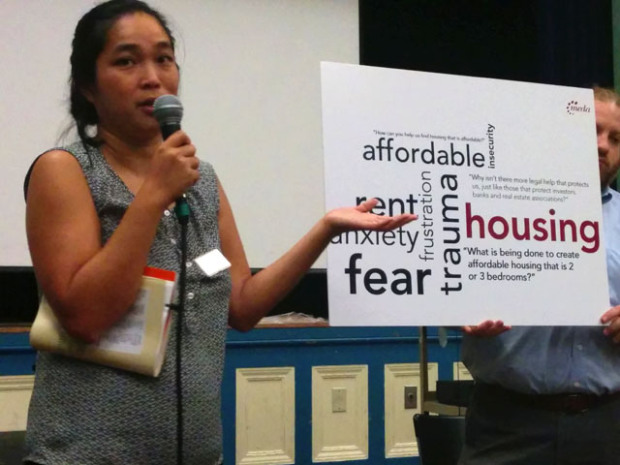
"caption": "Karoleen Feng of MEDA describes the findings of a survey of parents around the Mission at Buena Vista Horace Mann Thursday evening. (Laura Wenus/Mission Local)",
"description": "Karoleen Feng of MEDA describes the findings of a survey of parents around the Mission at Buena Vista Horace Mann Thursday evening",
"title": "SFTeachers",
"credit": null,
"status": "inherit",
"isLoading": false,
"fetchFailed": false
},
"news_10347449": {
"type": "attachments",
"id": "news_10347449",
"meta": {
"index": "attachments_1716263798",
"site": "news",
"id": "10347449",
"found": true
},
"parent": 10347424,
"imgSizes": {
"twentyfourteen-full-width": {
"file": "https://ww2.kqed.org/app/uploads/sites/10/2014/11/UC-2-1038x576.jpg",
"width": 1038,
"mimeType": "image/jpeg",
"height": 576
},
"thumbnail": {
"file": "https://ww2.kqed.org/app/uploads/sites/10/2014/11/UC-2-400x281.jpg",
"width": 400,
"mimeType": "image/jpeg",
"height": 281
},
"post-thumbnail": {
"file": "https://ww2.kqed.org/app/uploads/sites/10/2014/11/UC-2-672x372.jpg",
"width": 672,
"mimeType": "image/jpeg",
"height": 372
},
"kqedFullSize": {
"file": "https://ww2.kqed.org/app/uploads/sites/10/2014/11/UC-2.jpg",
"width": 1440,
"height": 1012
},
"guest-author-96": {
"file": "https://ww2.kqed.org/app/uploads/sites/10/2014/11/UC-2-96x96.jpg",
"width": 96,
"mimeType": "image/jpeg",
"height": 96
},
"medium": {
"file": "https://ww2.kqed.org/app/uploads/sites/10/2014/11/UC-2-800x562.jpg",
"width": 800,
"mimeType": "image/jpeg",
"height": 562
},
"guest-author-64": {
"file": "https://ww2.kqed.org/app/uploads/sites/10/2014/11/UC-2-64x64.jpg",
"width": 64,
"mimeType": "image/jpeg",
"height": 64
},
"detail": {
"file": "https://ww2.kqed.org/app/uploads/sites/10/2014/11/UC-2-75x75.jpg",
"width": 75,
"mimeType": "image/jpeg",
"height": 75
},
"guest-author-32": {
"file": "https://ww2.kqed.org/app/uploads/sites/10/2014/11/UC-2-32x32.jpg",
"width": 32,
"mimeType": "image/jpeg",
"height": 32
},
"guest-author-128": {
"file": "https://ww2.kqed.org/app/uploads/sites/10/2014/11/UC-2-128x128.jpg",
"width": 128,
"mimeType": "image/jpeg",
"height": 128
}
},
"publishDate": 1415313981,
"modified": 1425488438,
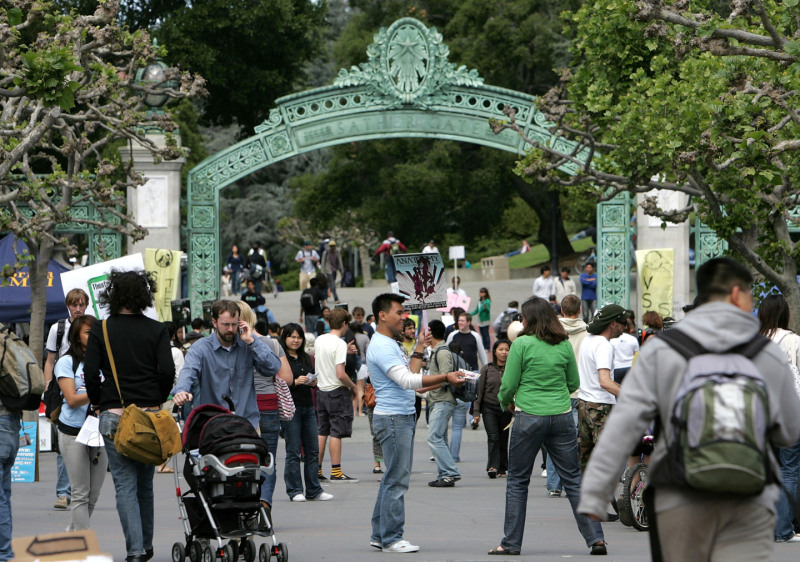
"caption": "UC Berkeley students walk through Sproul Plaza. ",
"description": "BERKELEY, CA - APRIL 17: UC Berkeley students walk through Sproul Plaza on the UC Berkeley campus.",
"title": "UC Berkeley-Sproul Plaza",
"credit": "Justin Sullivan/Getty Images",
"status": "inherit",
"isLoading": false,
"fetchFailed": false
},
"news_10346204": {
"type": "attachments",
"id": "news_10346204",
"meta": {
"index": "attachments_1716263798",
"site": "news",
"id": "10346204",
"found": true
},
"parent": 10346201,
"imgSizes": {
"thumbnail": {
"file": "https://ww2.kqed.org/app/uploads/sites/10/2014/10/charter-spending-400x371.jpeg",
"width": 400,
"mimeType": "image/jpeg",
"height": 371
},
"post-thumbnail": {
"file": "https://ww2.kqed.org/app/uploads/sites/10/2014/10/charter-spending-552x372.jpeg",
"width": 552,
"mimeType": "image/jpeg",
"height": 372
},
"kqedFullSize": {
"file": "https://ww2.kqed.org/app/uploads/sites/10/2014/10/charter-spending.jpeg",
"width": 552,
"height": 512
},
"guest-author-96": {
"file": "https://ww2.kqed.org/app/uploads/sites/10/2014/10/charter-spending-96x96.jpeg",
"width": 96,
"mimeType": "image/jpeg",
"height": 96
},
"guest-author-64": {
"file": "https://ww2.kqed.org/app/uploads/sites/10/2014/10/charter-spending-64x64.jpeg",
"width": 64,
"mimeType": "image/jpeg",
"height": 64
},
"detail": {
"file": "https://ww2.kqed.org/app/uploads/sites/10/2014/10/charter-spending-75x75.jpeg",
"width": 75,
"mimeType": "image/jpeg",
"height": 75
},
"guest-author-32": {
"file": "https://ww2.kqed.org/app/uploads/sites/10/2014/10/charter-spending-32x32.jpeg",
"width": 32,
"mimeType": "image/jpeg",
"height": 32
},
"guest-author-128": {
"file": "https://ww2.kqed.org/app/uploads/sites/10/2014/10/charter-spending-128x128.jpeg",
"width": 128,
"mimeType": "image/jpeg",
"height": 128
}
},
"publishDate": 1414778176,
"modified": 1414778210,
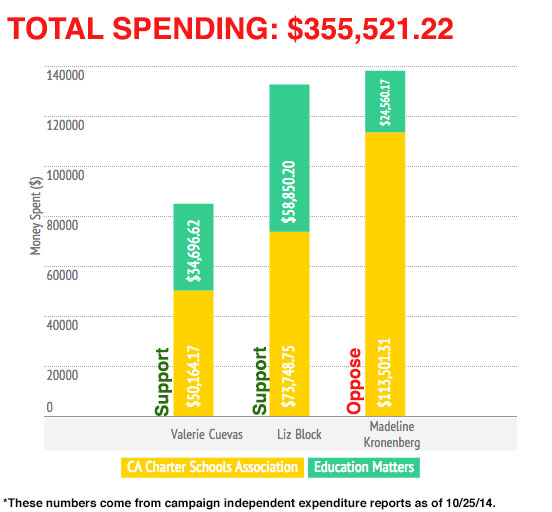
"caption": "The Pro-Charter PACs, Education Matters and California Charter Schools Association, have spent over $350,000 on this year’s school board election. (Richmond Confidential)",
"description": "The Pro-Charter PACs, Education Matters and California Charter Schools Association, have spent over $350,000 on this year’s school board election. (Richmond Confidential)",
"title": "charter spending",
"credit": null,
"status": "inherit",
"isLoading": false,
"fetchFailed": false
},
"news_10345927": {
"type": "attachments",
"id": "news_10345927",
"meta": {
"index": "attachments_1716263798",
"site": "news",
"id": "10345927",
"found": true
},
"parent": 10345805,
"imgSizes": {
"twentyfourteen-full-width": {
"file": "https://ww2.kqed.org/app/uploads/sites/10/2014/10/10148_transform-1038x576.jpg",
"width": 1038,
"mimeType": "image/jpeg",
"height": 576
},
"thumbnail": {
"file": "https://ww2.kqed.org/app/uploads/sites/10/2014/10/10148_transform-400x224.jpg",
"width": 400,
"mimeType": "image/jpeg",
"height": 224
},
"post-thumbnail": {
"file": "https://ww2.kqed.org/app/uploads/sites/10/2014/10/10148_transform-672x372.jpg",
"width": 672,
"mimeType": "image/jpeg",
"height": 372
},
"kqedFullSize": {
"file": "https://ww2.kqed.org/app/uploads/sites/10/2014/10/10148_transform.jpg",
"width": 1440,
"height": 808
},
"guest-author-96": {
"file": "https://ww2.kqed.org/app/uploads/sites/10/2014/10/10148_transform-96x96.jpg",
"width": 96,
"mimeType": "image/jpeg",
"height": 96
},
"medium": {
"file": "https://ww2.kqed.org/app/uploads/sites/10/2014/10/10148_transform-800x448.jpg",
"width": 800,
"mimeType": "image/jpeg",
"height": 448
},
"guest-author-64": {
"file": "https://ww2.kqed.org/app/uploads/sites/10/2014/10/10148_transform-64x64.jpg",
"width": 64,
"mimeType": "image/jpeg",
"height": 64
},
"detail": {
"file": "https://ww2.kqed.org/app/uploads/sites/10/2014/10/10148_transform-75x75.jpg",
"width": 75,
"mimeType": "image/jpeg",
"height": 75
},
"guest-author-32": {
"file": "https://ww2.kqed.org/app/uploads/sites/10/2014/10/10148_transform-32x32.jpg",
"width": 32,
"mimeType": "image/jpeg",
"height": 32
},
"guest-author-128": {
"file": "https://ww2.kqed.org/app/uploads/sites/10/2014/10/10148_transform-128x128.jpg",
"width": 128,
"mimeType": "image/jpeg",
"height": 128
}
},
"publishDate": 1414625712,
"modified": 1414625944,
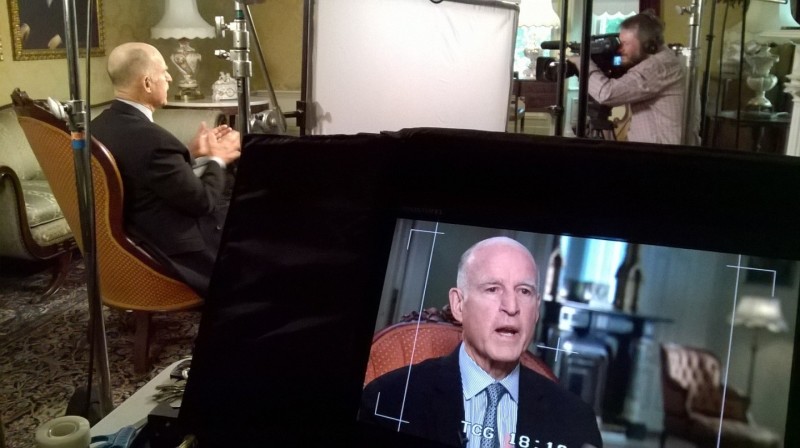
"caption": "Gov. Jerry Brown is interviewed by senior politics editor John Myers of KQED. (Monica Lam/KQED)",
"description": null,
"title": "Jerry Brown",
"credit": null,
"status": "inherit",
"isLoading": false,
"fetchFailed": false
},
"news_10345671": {
"type": "attachments",
"id": "news_10345671",
"meta": {
"index": "attachments_1716263798",
"site": "news",
"id": "10345671",
"found": true
},
"parent": 10345664,
"imgSizes": {
"twentyfourteen-full-width": {
"file": "https://ww2.kqed.org/app/uploads/sites/10/2014/10/RS12789_IMG_5629-qut-1038x576.jpg",
"width": 1038,
"mimeType": "image/jpeg",
"height": 576
},
"thumbnail": {
"file": "https://ww2.kqed.org/app/uploads/sites/10/2014/10/RS12789_IMG_5629-qut-400x300.jpg",
"width": 400,
"mimeType": "image/jpeg",
"height": 300
},
"post-thumbnail": {
"file": "https://ww2.kqed.org/app/uploads/sites/10/2014/10/RS12789_IMG_5629-qut-672x372.jpg",
"width": 672,
"mimeType": "image/jpeg",
"height": 372
},
"kqedFullSize": {
"file": "https://ww2.kqed.org/app/uploads/sites/10/2014/10/RS12789_IMG_5629-qut.jpg",
"width": 1440,
"height": 1080
},
"guest-author-96": {
"file": "https://ww2.kqed.org/app/uploads/sites/10/2014/10/RS12789_IMG_5629-qut-96x96.jpg",
"width": 96,
"mimeType": "image/jpeg",
"height": 96
},
"medium": {
"file": "https://ww2.kqed.org/app/uploads/sites/10/2014/10/RS12789_IMG_5629-qut-800x600.jpg",
"width": 800,
"mimeType": "image/jpeg",
"height": 600
},
"guest-author-64": {
"file": "https://ww2.kqed.org/app/uploads/sites/10/2014/10/RS12789_IMG_5629-qut-64x64.jpg",
"width": 64,
"mimeType": "image/jpeg",
"height": 64
},
"detail": {
"file": "https://ww2.kqed.org/app/uploads/sites/10/2014/10/RS12789_IMG_5629-qut-75x75.jpg",
"width": 75,
"mimeType": "image/jpeg",
"height": 75
},
"guest-author-32": {
"file": "https://ww2.kqed.org/app/uploads/sites/10/2014/10/RS12789_IMG_5629-qut-32x32.jpg",
"width": 32,
"mimeType": "image/jpeg",
"height": 32
},
"guest-author-128": {
"file": "https://ww2.kqed.org/app/uploads/sites/10/2014/10/RS12789_IMG_5629-qut-128x128.jpg",
"width": 128,
"mimeType": "image/jpeg",
"height": 128
}
},
"publishDate": 1414543191,
"modified": 1414543238,
"caption": "Elaine Brown and Jerry Elster stand at the future site of an urban farm in West Oakland. (Mina Kim/KQED)",
"description": "Elaine Brown and Jerry Elster stand at the future site of an urban farm in West Oakland. (Mina Kim/KQED)",
"title": "RS12789_IMG_5629-qut",
"credit": null,
"status": "inherit",
"isLoading": false,
"fetchFailed": false
},
"news_10345287": {
"type": "attachments",
"id": "news_10345287",
"meta": {
"index": "attachments_1716263798",
"site": "news",
"id": "10345287",
"found": true
},
"parent": 10345204,
"imgSizes": {
"twentyfourteen-full-width": {
"file": "https://ww2.kqed.org/app/uploads/sites/10/2014/10/RaisedHandClass-1038x576.jpg",
"width": 1038,
"mimeType": "image/jpeg",
"height": 576
},
"thumbnail": {
"file": "https://ww2.kqed.org/app/uploads/sites/10/2014/10/RaisedHandClass-400x266.jpg",
"width": 400,
"mimeType": "image/jpeg",
"height": 266
},
"post-thumbnail": {
"file": "https://ww2.kqed.org/app/uploads/sites/10/2014/10/RaisedHandClass-672x372.jpg",
"width": 672,
"mimeType": "image/jpeg",
"height": 372
},
"kqedFullSize": {
"file": "https://ww2.kqed.org/app/uploads/sites/10/2014/10/RaisedHandClass.jpg",
"width": 1440,
"height": 958
},
"guest-author-96": {
"file": "https://ww2.kqed.org/app/uploads/sites/10/2014/10/RaisedHandClass-96x96.jpg",
"width": 96,
"mimeType": "image/jpeg",
"height": 96
},
"medium": {
"file": "https://ww2.kqed.org/app/uploads/sites/10/2014/10/RaisedHandClass-800x532.jpg",
"width": 800,
"mimeType": "image/jpeg",
"height": 532
},
"guest-author-64": {
"file": "https://ww2.kqed.org/app/uploads/sites/10/2014/10/RaisedHandClass-64x64.jpg",
"width": 64,
"mimeType": "image/jpeg",
"height": 64
},
"detail": {
"file": "https://ww2.kqed.org/app/uploads/sites/10/2014/10/RaisedHandClass-75x75.jpg",
"width": 75,
"mimeType": "image/jpeg",
"height": 75
},
"guest-author-32": {
"file": "https://ww2.kqed.org/app/uploads/sites/10/2014/10/RaisedHandClass-32x32.jpg",
"width": 32,
"mimeType": "image/jpeg",
"height": 32
},
"guest-author-128": {
"file": "https://ww2.kqed.org/app/uploads/sites/10/2014/10/RaisedHandClass-128x128.jpg",
"width": 128,
"mimeType": "image/jpeg",
"height": 128
}
},
"publishDate": 1414202765,
"modified": 1414202765,
"caption": "Students raise their hands in class. (Getty Images)",
"description": "Students raise their hands in class. (Getty Images)",
"title": "RaisedHandClass",
"credit": null,
"status": "inherit",
"isLoading": false,
"fetchFailed": false
},
"news_10343976": {
"type": "attachments",
"id": "news_10343976",
"meta": {
"index": "attachments_1716263798",
"site": "news",
"id": "10343976",
"found": true
},
"parent": 10343963,
"imgSizes": {
"thumbnail": {
"file": "https://ww2.kqed.org/app/uploads/sites/10/2014/10/Erick3-400x211.jpg",
"width": 400,
"mimeType": "image/jpeg",
"height": 211
},
"kqedFullSize": {
"file": "https://ww2.kqed.org/app/uploads/sites/10/2014/10/Erick3.jpg",
"width": 640,
"height": 339
},
"guest-author-96": {
"file": "https://ww2.kqed.org/app/uploads/sites/10/2014/10/Erick3-96x96.jpg",
"width": 96,
"mimeType": "image/jpeg",
"height": 96
},
"guest-author-64": {
"file": "https://ww2.kqed.org/app/uploads/sites/10/2014/10/Erick3-64x64.jpg",
"width": 64,
"mimeType": "image/jpeg",
"height": 64
},
"detail": {
"file": "https://ww2.kqed.org/app/uploads/sites/10/2014/10/Erick3-75x75.jpg",
"width": 75,
"mimeType": "image/jpeg",
"height": 75
},
"guest-author-32": {
"file": "https://ww2.kqed.org/app/uploads/sites/10/2014/10/Erick3-32x32.jpg",
"width": 32,
"mimeType": "image/jpeg",
"height": 32
},
"guest-author-128": {
"file": "https://ww2.kqed.org/app/uploads/sites/10/2014/10/Erick3-128x128.jpg",
"width": 128,
"mimeType": "image/jpeg",
"height": 128
}
},
"publishDate": 1413420322,
"modified": 1413420322,
"caption": "Erick Araujo, 13, was expelled from a Lost Hills middle school in Kern County. (John Harte/For the Center for Public Integrity)",
"description": "Erick Araujo, 13, was expelled from a Lost Hills middle school in Kern County. (John Harte/For the Center for Public Integrity)",
"title": "Erick3",
"credit": null,
"status": "inherit",
"isLoading": false,
"fetchFailed": false
},
"news_10342849": {
"type": "attachments",
"id": "news_10342849",
"meta": {
"index": "attachments_1716263798",
"site": "news",
"id": "10342849",
"found": true
},
"parent": 10342830,
"imgSizes": {
"twentyfourteen-full-width": {
"file": "https://ww2.kqed.org/app/uploads/sites/10/2014/10/keenan-1038x576.jpg",
"width": 1038,
"mimeType": "image/jpeg",
"height": 576
},
"thumbnail": {
"file": "https://ww2.kqed.org/app/uploads/sites/10/2014/10/keenan-400x300.jpg",
"width": 400,
"mimeType": "image/jpeg",
"height": 300
},
"post-thumbnail": {
"file": "https://ww2.kqed.org/app/uploads/sites/10/2014/10/keenan-672x372.jpg",
"width": 672,
"mimeType": "image/jpeg",
"height": 372
},
"kqedFullSize": {
"file": "https://ww2.kqed.org/app/uploads/sites/10/2014/10/keenan-e1412706484723.jpg",
"width": 1400,
"height": 1050
},
"large": {
"file": "https://ww2.kqed.org/app/uploads/sites/10/2014/10/keenan-1440x1080.jpg",
"width": 1440,
"mimeType": "image/jpeg",
"height": 1080
},
"guest-author-96": {
"file": "https://ww2.kqed.org/app/uploads/sites/10/2014/10/keenan-96x96.jpg",
"width": 96,
"mimeType": "image/jpeg",
"height": 96
},
"medium": {
"file": "https://ww2.kqed.org/app/uploads/sites/10/2014/10/keenan-800x600.jpg",
"width": 800,
"mimeType": "image/jpeg",
"height": 600
},
"guest-author-64": {
"file": "https://ww2.kqed.org/app/uploads/sites/10/2014/10/keenan-64x64.jpg",
"width": 64,
"mimeType": "image/jpeg",
"height": 64
},
"detail": {
"file": "https://ww2.kqed.org/app/uploads/sites/10/2014/10/keenan-75x75.jpg",
"width": 75,
"mimeType": "image/jpeg",
"height": 75
},
"guest-author-32": {
"file": "https://ww2.kqed.org/app/uploads/sites/10/2014/10/keenan-32x32.jpg",
"width": 32,
"mimeType": "image/jpeg",
"height": 32
},
"guest-author-128": {
"file": "https://ww2.kqed.org/app/uploads/sites/10/2014/10/keenan-128x128.jpg",
"width": 128,
"mimeType": "image/jpeg",
"height": 128
}
},
"publishDate": 1412706352,
"modified": 1412706352,
"caption": "Keenan Nachman, left, and his classmates at La Scuola learn the gender of animals in Italian. (Patricia Yollin/KQED)",
"description": "Keenan Nachman, left, and his classmates at La Scuola learn the gender of animals in Italian. (Patricia Yollin/KQED)",
"title": "Italian immersion",
"credit": null,
"status": "inherit",
"isLoading": false,
"fetchFailed": false
},
"news_10342306": {
"type": "attachments",
"id": "news_10342306",
"meta": {
"index": "attachments_1716263798",
"site": "news",
"id": "10342306",
"found": true
},
"parent": 10342299,
"imgSizes": {
"thumbnail": {
"file": "https://ww2.kqed.org/app/uploads/sites/10/2014/10/Union-protest-400x320.png",
"width": 400,
"mimeType": "image/png",
"height": 320
},
"post-thumbnail": {
"file": "https://ww2.kqed.org/app/uploads/sites/10/2014/10/Union-protest-672x372.png",
"width": 672,
"mimeType": "image/png",
"height": 372
},
"kqedFullSize": {
"file": "https://ww2.kqed.org/app/uploads/sites/10/2014/10/Union-protest-e1412372310714.png",
"width": 720,
"height": 576
},
"guest-author-96": {
"file": "https://ww2.kqed.org/app/uploads/sites/10/2014/10/Union-protest-96x96.png",
"width": 96,
"mimeType": "image/png",
"height": 96
},
"guest-author-64": {
"file": "https://ww2.kqed.org/app/uploads/sites/10/2014/10/Union-protest-64x64.png",
"width": 64,
"mimeType": "image/png",
"height": 64
},
"detail": {
"file": "https://ww2.kqed.org/app/uploads/sites/10/2014/10/Union-protest-75x75.png",
"width": 75,
"mimeType": "image/png",
"height": 75
},
"guest-author-32": {
"file": "https://ww2.kqed.org/app/uploads/sites/10/2014/10/Union-protest-32x32.png",
"width": 32,
"mimeType": "image/png",
"height": 32
},
"guest-author-128": {
"file": "https://ww2.kqed.org/app/uploads/sites/10/2014/10/Union-protest-128x128.png",
"width": 128,
"mimeType": "image/png",
"height": 128
}
},
"publishDate": 1412368060,
"modified": 1412368060,
"caption": "Berkeley Council of Classified Employees demonstrating for fair pay and affordable health care in March 2014. (Ted Friedman/Berkeleyside)",
"description": null,
"title": "Union-protest",
"credit": null,
"status": "inherit",
"isLoading": false,
"fetchFailed": false
},
"news_148371": {
"type": "attachments",
"id": "news_148371",
"meta": {
"index": "attachments_1716263798",
"site": "news",
"id": "148371",
"found": true
},
"parent": 148363,
"imgSizes": {
"wide-featured-image": {
"file": "https://ww2.kqed.org/app/uploads/sites/10/2014/09/RS12134_Jen-obscure-600x300.jpg",
"width": 600,
"mimeType": "image/jpeg",
"height": 300
},
"featured-page": {
"file": "https://ww2.kqed.org/app/uploads/sites/10/2014/09/RS12134_Jen-obscure-315x145.jpg",
"width": 315,
"mimeType": "image/jpeg",
"height": 145
},
"thumbnail": {
"file": "https://ww2.kqed.org/app/uploads/sites/10/2014/09/RS12134_Jen-obscure-300x300.jpg",
"width": 300,
"mimeType": "image/jpeg",
"height": 300
},
"kqedFullSize": {
"file": "https://ww2.kqed.org/app/uploads/sites/10/2014/09/RS12134_Jen-obscure.jpg",
"width": 5472,
"height": 3648
},
"large": {
"file": "https://ww2.kqed.org/app/uploads/sites/10/2014/09/RS12134_Jen-obscure-1028x685.jpg",
"width": 1028,
"mimeType": "image/jpeg",
"height": 685
},
"wide-featured-image-full": {
"file": "https://ww2.kqed.org/app/uploads/sites/10/2014/09/RS12134_Jen-obscure-960x300.jpg",
"width": 960,
"mimeType": "image/jpeg",
"height": 300
},
"guest-author-96": {
"file": "https://ww2.kqed.org/app/uploads/sites/10/2014/09/RS12134_Jen-obscure-96x96.jpg",
"width": 96,
"mimeType": "image/jpeg",
"height": 96
},
"medium": {
"file": "https://ww2.kqed.org/app/uploads/sites/10/2014/09/RS12134_Jen-obscure-640x426.jpg",
"width": 640,
"mimeType": "image/jpeg",
"height": 426
},
"guest-author-64": {
"file": "https://ww2.kqed.org/app/uploads/sites/10/2014/09/RS12134_Jen-obscure-64x64.jpg",
"width": 64,
"mimeType": "image/jpeg",
"height": 64
},
"guest-author-32": {
"file": "https://ww2.kqed.org/app/uploads/sites/10/2014/09/RS12134_Jen-obscure-32x32.jpg",
"width": 32,
"mimeType": "image/jpeg",
"height": 32
},
"narrow-featured-image": {
"file": "https://ww2.kqed.org/app/uploads/sites/10/2014/09/RS12134_Jen-obscure-400x300.jpg",
"width": 400,
"mimeType": "image/jpeg",
"height": 300
},
"narrow-featured-image-full": {
"file": "https://ww2.kqed.org/app/uploads/sites/10/2014/09/RS12134_Jen-obscure-640x360.jpg",
"width": 640,
"mimeType": "image/jpeg",
"height": 360
},
"detail": {
"file": "https://ww2.kqed.org/app/uploads/sites/10/2014/09/RS12134_Jen-obscure-75x75.jpg",
"width": 75,
"mimeType": "image/jpeg",
"height": 75
},
"guest-author-128": {
"file": "https://ww2.kqed.org/app/uploads/sites/10/2014/09/RS12134_Jen-obscure-128x128.jpg",
"width": 128,
"mimeType": "image/jpeg",
"height": 128
}
},
"publishDate": 1411500828,
"modified": 1411500828,
"caption": "Jennifer Cruz es una entre cientos de menores de edad que ha llegado al Área de la Bahía desde América Central. Se está adaptando a la vida como estudiante de una escuela secundaria en el Condado de San Mateo, a pesar de su temor a ser deportada. (Jeremy Raff/KQED)",
"description": "Jennifer Cruz es una entre cientos de menores de edad que ha llegado al Área de la Bahía desde América Central. Se está adaptando a la vida como estudiante de una escuela secundaria en el Condado de San Mateo, a pesar de su temor a ser deportada. (Jeremy Raff/KQED)",
"title": "Jennifer Cruz",
"credit": null,
"status": "inherit",
"isLoading": false,
"fetchFailed": false
},
"news_148494": {
"type": "attachments",
"id": "news_148494",
"meta": {
"index": "attachments_1716263798",
"site": "news",
"id": "148494",
"found": true
},
"parent": 148491,
"imgSizes": {
"wide-featured-image": {
"file": "https://ww2.kqed.org/app/uploads/sites/10/2014/09/brk00040959b_c-600x300.jpg",
"width": 600,
"mimeType": "image/jpeg",
"height": 300
},
"featured-page": {
"file": "https://ww2.kqed.org/app/uploads/sites/10/2014/09/brk00040959b_c-315x145.jpg",
"width": 315,
"mimeType": "image/jpeg",
"height": 145
},
"thumbnail": {
"file": "https://ww2.kqed.org/app/uploads/sites/10/2014/09/brk00040959b_c-300x300.jpg",
"width": 300,
"mimeType": "image/jpeg",
"height": 300
},
"kqedFullSize": {
"file": "https://ww2.kqed.org/app/uploads/sites/10/2014/09/brk00040959b_c.jpg",
"width": 1494,
"height": 1500
},
"large": {
"file": "https://ww2.kqed.org/app/uploads/sites/10/2014/09/brk00040959b_c-1023x1028.jpg",
"width": 1023,
"mimeType": "image/jpeg",
"height": 1028
},
"wide-featured-image-full": {
"file": "https://ww2.kqed.org/app/uploads/sites/10/2014/09/brk00040959b_c-960x300.jpg",
"width": 960,
"mimeType": "image/jpeg",
"height": 300
},
"guest-author-96": {
"file": "https://ww2.kqed.org/app/uploads/sites/10/2014/09/brk00040959b_c-96x96.jpg",
"width": 96,
"mimeType": "image/jpeg",
"height": 96
},
"medium": {
"file": "https://ww2.kqed.org/app/uploads/sites/10/2014/09/brk00040959b_c-637x640.jpg",
"width": 637,
"mimeType": "image/jpeg",
"height": 640
},
"guest-author-64": {
"file": "https://ww2.kqed.org/app/uploads/sites/10/2014/09/brk00040959b_c-64x64.jpg",
"width": 64,
"mimeType": "image/jpeg",
"height": 64
},
"guest-author-32": {
"file": "https://ww2.kqed.org/app/uploads/sites/10/2014/09/brk00040959b_c-32x32.jpg",
"width": 32,
"mimeType": "image/jpeg",
"height": 32
},
"narrow-featured-image": {
"file": "https://ww2.kqed.org/app/uploads/sites/10/2014/09/brk00040959b_c-400x300.jpg",
"width": 400,
"mimeType": "image/jpeg",
"height": 300
},
"narrow-featured-image-full": {
"file": "https://ww2.kqed.org/app/uploads/sites/10/2014/09/brk00040959b_c-640x360.jpg",
"width": 640,
"mimeType": "image/jpeg",
"height": 360
},
"detail": {
"file": "https://ww2.kqed.org/app/uploads/sites/10/2014/09/brk00040959b_c-75x75.jpg",
"width": 75,
"mimeType": "image/jpeg",
"height": 75
},
"guest-author-128": {
"file": "https://ww2.kqed.org/app/uploads/sites/10/2014/09/brk00040959b_c-128x128.jpg",
"width": 128,
"mimeType": "image/jpeg",
"height": 128
}
},
"publishDate": 1411581342,
"modified": 1411581342,
"caption": "Mario Savio on top of police car in front of Sproul Hall. Oct 1. 1964 (Courtesy of UC Berkeley, The Bancroft Library).",
"description": null,
"title": "brk00040959b_c",
"credit": null,
"status": "inherit",
"isLoading": false,
"fetchFailed": false
}
},
"audioPlayerReducer": {
"postId": "stream_live",
"isPaused": true,
"isPlaying": false,
"pfsActive": false,
"pledgeModalIsOpen": true,
"playerDrawerIsOpen": false,
"liveAudioPlayStartedAt": 0,
"liveAudioPlayContext": ""
},
"authorsReducer": {
"byline_news_10348059": {
"type": "authors",
"id": "byline_news_10348059",
"meta": {
"override": true
},
"slug": "byline_news_10348059",
"name": "Laura Wenus\u003cbr/>Mission Local",
"isLoading": false
},
"byline_news_10346201": {
"type": "authors",
"id": "byline_news_10346201",
"meta": {
"override": true
},
"slug": "byline_news_10346201",
"name": "\u003ca href=\"http://richmondconfidential.org/author/hannah_lawson/\">Hannah Lawson\u003c/a> and \u003ca href=\"http://richmondconfidential.org/author/zainab_khan/\">Zainab Khan\u003c/a>\u003cbr>Richmond Confidential",
"isLoading": false
},
"byline_news_10342299": {
"type": "authors",
"id": "byline_news_10342299",
"meta": {
"override": true
},
"slug": "byline_news_10342299",
"name": "Frances Dinkelspiel, Berkeleyside",
"isLoading": false
},
"jbrooks": {
"type": "authors",
"id": "80",
"meta": {
"index": "authors_1716337520",
"id": "80",
"found": true
},
"name": "Jon Brooks",
"firstName": "Jon",
"lastName": "Brooks",
"slug": "jbrooks",
"email": "jbrooks@kqed.org",
"display_author_email": true,
"staff_mastheads": [
"science"
],
"title": "Digital Editor",
"bio": "Jon Brooks is a former Digital Editor for KQED Science. He is the former editor of KQED’s daily news blog, News Fix. In 2014, he won a California Journalism Award for his coverage of ride services like Uber and Lyft and the taxi industry. A veteran blogger, he previously worked for Yahoo! in various news writing and editing roles. Jon is also a playwright whose work has been produced in San Francisco, New York, Italy, and around the U.S. He has written about film for his own blog and studied film at Boston University.",
"avatar": "https://secure.gravatar.com/avatar/98887f7ed1c876ed414d4c915e969584?s=600&d=blank&r=g",
"twitter": "jbrooksfoy",
"facebook": null,
"instagram": null,
"linkedin": null,
"sites": [
{
"site": "arts",
"roles": [
"Contributor",
"editor"
]
},
{
"site": "news",
"roles": [
"author"
]
},
{
"site": "futureofyou",
"roles": [
"administrator"
]
},
{
"site": "mindshift",
"roles": [
"editor"
]
},
{
"site": "stateofhealth",
"roles": [
"editor"
]
},
{
"site": "science",
"roles": [
"administrator"
]
},
{
"site": "quest",
"roles": [
"editor"
]
}
],
"headData": {
"title": "Jon Brooks | KQED",
"description": "Digital Editor",
"ogImgSrc": "https://secure.gravatar.com/avatar/98887f7ed1c876ed414d4c915e969584?s=600&d=blank&r=g",
"twImgSrc": "https://secure.gravatar.com/avatar/98887f7ed1c876ed414d4c915e969584?s=600&d=blank&r=g"
},
"isLoading": false,
"link": "/author/jbrooks"
},
"lisapickoffwhite-2": {
"type": "authors",
"id": "199",
"meta": {
"index": "authors_1716337520",
"id": "199",
"found": true
},
"name": "Lisa Pickoff-White",
"firstName": "Lisa",
"lastName": "Pickoff-White",
"slug": "lisapickoffwhite-2",
"email": "lpickoffwhite@kqed.org",
"display_author_email": false,
"staff_mastheads": [
"news"
],
"title": "Data Journalist, Senior Producer",
"bio": "Lisa Pickoff-White is KQED's data reporter. Lisa specializes in simplifying complex topics and bringing them to life through compelling visuals, including photography and data visualizations. She previously has worked at the Center for Investigative Reporting and other national outlets. Her work has been honored with awards from the Online News Association, Investigative Reporters and Editors, the Society of Professional Journalists and SXSW Interactive. \u003cstrong> \u003c/strong>",
"avatar": "https://secure.gravatar.com/avatar/5513c5f3967df792aa65bee2501e84d6?s=600&d=blank&r=g",
"twitter": "pickoffwhite",
"facebook": null,
"instagram": null,
"linkedin": null,
"sites": [
{
"site": "",
"roles": [
"editor"
]
},
{
"site": "arts",
"roles": []
},
{
"site": "news",
"roles": [
"administrator"
]
},
{
"site": "about",
"roles": [
"editor"
]
},
{
"site": "stateofhealth",
"roles": [
"administrator"
]
},
{
"site": "science",
"roles": [
"editor"
]
},
{
"site": "quest",
"roles": [
"editor"
]
},
{
"site": "forum",
"roles": [
"editor"
]
}
],
"headData": {
"title": "Lisa Pickoff-White | KQED",
"description": "Data Journalist, Senior Producer",
"ogImgSrc": "https://secure.gravatar.com/avatar/5513c5f3967df792aa65bee2501e84d6?s=600&d=blank&r=g",
"twImgSrc": "https://secure.gravatar.com/avatar/5513c5f3967df792aa65bee2501e84d6?s=600&d=blank&r=g"
},
"isLoading": false,
"link": "/author/lisapickoffwhite-2"
},
"anatintocalis": {
"type": "authors",
"id": "211",
"meta": {
"index": "authors_1716337520",
"id": "211",
"found": true
},
"name": "Ana Tintocalis",
"firstName": "Ana",
"lastName": "Tintocalis",
"slug": "anatintocalis",
"email": "atintocalis@kqed.org",
"display_author_email": false,
"staff_mastheads": [],
"title": null,
"bio": null,
"avatar": "https://secure.gravatar.com/avatar/722c50f51f04eff38fa0e5a3f1d29450?s=600&d=blank&r=g",
"twitter": null,
"facebook": null,
"instagram": null,
"linkedin": null,
"sites": [
{
"site": "news",
"roles": [
"subscriber"
]
},
{
"site": "stateofhealth",
"roles": [
"subscriber"
]
}
],
"headData": {
"title": "Ana Tintocalis | KQED",
"description": null,
"ogImgSrc": "https://secure.gravatar.com/avatar/722c50f51f04eff38fa0e5a3f1d29450?s=600&d=blank&r=g",
"twImgSrc": "https://secure.gravatar.com/avatar/722c50f51f04eff38fa0e5a3f1d29450?s=600&d=blank&r=g"
},
"isLoading": false,
"link": "/author/anatintocalis"
},
"jeremyraff": {
"type": "authors",
"id": "230",
"meta": {
"index": "authors_1716337520",
"id": "230",
"found": true
},
"name": "Jeremy Raff",
"firstName": "Jeremy",
"lastName": "Raff",
"slug": "jeremyraff",
"email": "jeremyraff@gmail.com",
"display_author_email": false,
"staff_mastheads": [],
"title": null,
"bio": "Jeremy Raff is a multimedia producer interested in migration, rural change, and health disparities. He produces KQED's community health series\u003ca href=\"http://blogs.kqed.org/stateofhealth/series/vital-signs/\" target=\"_blank\" rel=\"noopener\"> Vital Signs\u003c/a>. Reach him at jraff@kqed.org",
"avatar": "https://secure.gravatar.com/avatar/1444299e18b67b815fbbdc87a85e7dff?s=600&d=blank&r=g",
"twitter": null,
"facebook": null,
"instagram": null,
"linkedin": null,
"sites": [
{
"site": "news",
"roles": [
"subscriber"
]
},
{
"site": "stateofhealth",
"roles": [
"subscriber"
]
}
],
"headData": {
"title": "Jeremy Raff | KQED",
"description": null,
"ogImgSrc": "https://secure.gravatar.com/avatar/1444299e18b67b815fbbdc87a85e7dff?s=600&d=blank&r=g",
"twImgSrc": "https://secure.gravatar.com/avatar/1444299e18b67b815fbbdc87a85e7dff?s=600&d=blank&r=g"
},
"isLoading": false,
"link": "/author/jeremyraff"
},
"jmyers": {
"type": "authors",
"id": "232",
"meta": {
"index": "authors_1716337520",
"id": "232",
"found": true
},
"name": "John Myers",
"firstName": "John",
"lastName": "Myers",
"slug": "jmyers",
"email": "jmyers@kqed.org",
"display_author_email": false,
"staff_mastheads": [],
"title": null,
"bio": "John Myers is Senior Editor of KQED's new California Politics and Government Desk. A veteran of almost two decades of political coverage, he was KQED's longest serving statehouse bureau chief and recently was political editor for Sacramento's ABC affiliate, News10 (KXTV). John was moderator of the only 2014 gubernatorial debate, and was named by \u003cem>The Washington Post\u003c/em> to two \"Best Of\" lists: the 2015 list of top state politics reporters and 2014's list of America's most influential statehouse reporters.",
"avatar": "https://secure.gravatar.com/avatar/c0ac98482caf0b8229a792662b38722a?s=600&d=blank&r=g",
"twitter": "johnmyers",
"facebook": null,
"instagram": null,
"linkedin": null,
"sites": [
{
"site": "news",
"roles": [
"subscriber"
]
}
],
"headData": {
"title": "John Myers | KQED",
"description": null,
"ogImgSrc": "https://secure.gravatar.com/avatar/c0ac98482caf0b8229a792662b38722a?s=600&d=blank&r=g",
"twImgSrc": "https://secure.gravatar.com/avatar/c0ac98482caf0b8229a792662b38722a?s=600&d=blank&r=g"
},
"isLoading": false,
"link": "/author/jmyers"
},
"minakim": {
"type": "authors",
"id": "243",
"meta": {
"index": "authors_1716337520",
"id": "243",
"found": true
},
"name": "Mina Kim",
"firstName": "Mina",
"lastName": "Kim",
"slug": "minakim",
"email": "mkim@kqed.org",
"display_author_email": false,
"staff_mastheads": [
"news"
],
"title": "Host, Forum",
"bio": "Mina Kim is host of the 10 a.m. statewide hour of Forum; a live daily talk show for curious Californians on issues that matter to the state and nation, with a particular emphasis on race and equity.\r\n\r\nBefore joining the Forum team, Mina was KQED’s evening news anchor, and health reporter for The California Report. Her award-winning work has included natural disasters in Napa and gun violence in Oakland. Mina grew up in St. John’s, Newfoundland.",
"avatar": "https://secure.gravatar.com/avatar/145ce657a2d08cb86d93686beb958982?s=600&d=blank&r=g",
"twitter": "mkimreporter",
"facebook": null,
"instagram": null,
"linkedin": null,
"sites": [
{
"site": "news",
"roles": [
"contributor"
]
},
{
"site": "stateofhealth",
"roles": [
"author"
]
},
{
"site": "forum",
"roles": [
"editor"
]
}
],
"headData": {
"title": "Mina Kim | KQED",
"description": "Host, Forum",
"ogImgSrc": "https://secure.gravatar.com/avatar/145ce657a2d08cb86d93686beb958982?s=600&d=blank&r=g",
"twImgSrc": "https://secure.gravatar.com/avatar/145ce657a2d08cb86d93686beb958982?s=600&d=blank&r=g"
},
"isLoading": false,
"link": "/author/minakim"
},
"patyollin": {
"type": "authors",
"id": "247",
"meta": {
"index": "authors_1716337520",
"id": "247",
"found": true
},
"name": "Patricia Yollin",
"firstName": "Patricia",
"lastName": "Yollin",
"slug": "patyollin",
"email": "pyollin@kqed.org",
"display_author_email": false,
"staff_mastheads": [],
"title": "KQED Contributor",
"bio": "Pat Yollin has written about lots of stuff, including organ transplants, wayward penguins at the San Francisco Zoo, the comeback of the cream puff, New York on the fifth anniversary of 9/11, a Slow Food gathering in Italy, and the microcredit movement in Northern California. Among her favorite stories: an interview with George Lucas at Skywalker Ranch that broke the story about his plan to build a cultural museum, and a pirate Trader Joe's operation in Vancouver that prompted the grocery chain to sue -- and lose. She joined KQED in 2013 and was previously a reporter and editor at the San Francisco Chronicle, the Hearst-owned San Francisco Examiner and the Hayward Daily Review.",
"avatar": "https://secure.gravatar.com/avatar/0a18ac41a263665c04b25b2c7d6b817c?s=600&d=blank&r=g",
"twitter": null,
"facebook": null,
"instagram": null,
"linkedin": null,
"sites": [
{
"site": "arts",
"roles": [
"subscriber"
]
},
{
"site": "news",
"roles": [
"subscriber"
]
},
{
"site": "futureofyou",
"roles": [
"editor"
]
},
{
"site": "lowdown",
"roles": [
"editor"
]
},
{
"site": "stateofhealth",
"roles": [
"editor"
]
}
],
"headData": {
"title": "Patricia Yollin | KQED",
"description": "KQED Contributor",
"ogImgSrc": "https://secure.gravatar.com/avatar/0a18ac41a263665c04b25b2c7d6b817c?s=600&d=blank&r=g",
"twImgSrc": "https://secure.gravatar.com/avatar/0a18ac41a263665c04b25b2c7d6b817c?s=600&d=blank&r=g"
},
"isLoading": false,
"link": "/author/patyollin"
},
"jcarstensen": {
"type": "authors",
"id": "2597",
"meta": {
"index": "authors_1716337520",
"id": "2597",
"found": true
},
"name": "Jeanne Carstensen",
"firstName": "Jeanne",
"lastName": "Carstensen",
"slug": "jcarstensen",
"email": "jeanne.carstensen@gmail.com",
"display_author_email": false,
"staff_mastheads": [],
"title": null,
"bio": null,
"avatar": "https://secure.gravatar.com/avatar/6e425ab6a3c7b1e4cbbc03b457fb6812?s=600&d=blank&r=g",
"twitter": null,
"facebook": null,
"instagram": null,
"linkedin": null,
"sites": [
{
"site": "arts",
"roles": [
"contributor"
]
},
{
"site": "news",
"roles": [
"contributor"
]
}
],
"headData": {
"title": "Jeanne Carstensen | KQED",
"description": null,
"ogImgSrc": "https://secure.gravatar.com/avatar/6e425ab6a3c7b1e4cbbc03b457fb6812?s=600&d=blank&r=g",
"twImgSrc": "https://secure.gravatar.com/avatar/6e425ab6a3c7b1e4cbbc03b457fb6812?s=600&d=blank&r=g"
},
"isLoading": false,
"link": "/author/jcarstensen"
},
"scuevas": {
"type": "authors",
"id": "2600",
"meta": {
"index": "authors_1716337520",
"id": "2600",
"found": true
},
"name": "Steven Cuevas",
"firstName": "Steven",
"lastName": "Cuevas",
"slug": "scuevas",
"email": "scuevas@kqed.org",
"display_author_email": false,
"staff_mastheads": [],
"title": "KQED Contributor",
"bio": "Steven is a former Los Angeles bureau chief for The California Report.\r\n\r\nHe reports on an array of issues across the Southland, from immigration and regional politics to religion, the performing arts and pop culture.\r\n\r\nPrior to joining KQED in 2012, Steven covered Inland southern California for KPCC in Pasadena. He also helped establish the first newsroom at \u003ca href=\"http://kut.org/\">KUT\u003c/a> in Austin, Texas where he was a general assignment reporter.\r\n\r\nSteven has received numerous awards for his reporting including an RTNDA Edward R. Murrow Award for investigative reporting in addition to awards from the LA Press Club, the Associated Press and the Society for Professional Journalists.\r\n\r\nSteven grew up in and around San Francisco and now lives in Pasadena just a short jog from the foot of the San Gabriel Mountains.",
"avatar": "https://secure.gravatar.com/avatar/2d253580794f8e026100fae05cfabbbd4889b4fe15146146cacb82a01974c538?s=600&d=blank&r=g",
"twitter": null,
"bluesky": null,
"facebook": null,
"instagram": null,
"linkedin": null,
"sites": [
{
"site": "news",
"roles": [
"subscriber"
]
}
],
"headData": {
"title": "Steven Cuevas | KQED",
"description": "KQED Contributor",
"ogImgSrc": "https://secure.gravatar.com/avatar/2d253580794f8e026100fae05cfabbbd4889b4fe15146146cacb82a01974c538?s=600&d=blank&r=g",
"twImgSrc": "https://secure.gravatar.com/avatar/2d253580794f8e026100fae05cfabbbd4889b4fe15146146cacb82a01974c538?s=600&d=blank&r=g"
},
"isLoading": false,
"link": "/author/scuevas"
}
},
"pagesReducer": {
"news_category_education": {
"type": "terms",
"id": "news_18540",
"meta": {
"index": "terms_1716263798",
"site": "news",
"id": "18540",
"score": 10.973179
},
"featImg": null,
"name": "Education",
"description": null,
"taxonomy": "category",
"headData": {
"twImgId": null,
"twTitle": null,
"ogTitle": null,
"ogImgId": null,
"twDescription": null,
"description": null,
"title": "Education Archives | KQED News",
"ogDescription": null
},
"ttid": 2595,
"slug": "education",
"isLoading": false,
"title": "Education",
"pageMeta": {
"site": "news",
"WpPageTemplate": "page-topic-editorial",
"currentPage": 172
},
"blocks": [
{
"blockName": "kqed/post-list",
"attrs": {
"layout": "cardArticle2",
"query": "posts/news?category=education",
"seeMore": false,
"paginated": true,
"page": 172
}
},
{
"blockName": "kqed/ad"
}
]
}
},
"pfsSessionReducer": {},
"postsReducer": {
"stream_live": {
"type": "live",
"id": "stream_live",
"audioUrl": "https://streams.kqed.org/kqedradio",
"title": "Live Stream",
"excerpt": "Live Stream information currently unavailable.",
"link": "/radio",
"featImg": "",
"label": {
"name": "KQED Live",
"link": "/"
}
},
"stream_kqedNewscast": {
"type": "posts",
"id": "stream_kqedNewscast",
"audioUrl": "https://www.kqed.org/.stream/anon/radio/RDnews/newscast.mp3?_=1",
"title": "KQED Newscast",
"featImg": "",
"label": {
"name": "88.5 FM",
"link": "/"
}
},
"stateofhealth_22450": {
"type": "posts",
"id": "stateofhealth_22450",
"meta": {
"index": "posts_1716263798",
"site": "stateofhealth",
"id": "22450",
"score": null,
"sort": [
1415897131000
]
},
"parent": 0,
"labelTerm": {
"site": "stateofhealth",
"term": 2363
},
"blocks": [],
"publishDate": 1415897131,
"format": "aside",
"disqusTitle": "Through Photos, Oakland Youth Focus On Neighborhood Health (Video)",
"title": "Through Photos, Oakland Youth Focus On Neighborhood Health (Video)",
"headTitle": "Vital Signs | State of Health | KQED News",
"content": "\u003cp>Fifteen students stand facing an imaginary line bisecting the room.\u003c/p>\n\u003cp>“If someone in your family has diabetes, cross the line,” said Sidra Bonner, the UCSF medical student leading the session on community health. Twelve of the 15 students cross the line. “If you have been affected by gun violence, cross the line.” Every student shuffles across.\u003c/p>\n\u003cp>The game is called \"cross the line.\" The students playing have all returned to school here at Civicorps, an Oakland-based non-profit that helps high-risk young adults get a high school diploma and job training. The school is right next to the Port of Oakland. Outside, trains whistle and trucks rumble down the freeway.\u003c/p>\n\u003cp>https://vimeo.com/109636449\u003c/p>\n\u003cp>\u003c!--more-->\u003c/p>\n\u003cp>[ad fullwidth]\u003c/p>\n\u003cp>Bonner and other medical students leading the class talk about how rates of disease vary by neighborhood. In parts of east and west Oakland, life expectancy is a full 10 years less than it is in the more affluent hills neighborhoods, according to the Alameda County Public Health Department. Rates of heart disease, diabetes, and asthma all shake out in a similar way.\u003c/p>\n\u003cp>The students nod along, unsurprised. “Every day you see somebody sick, or in need. It's normal to see that,’” said Hassinnie Bennett, one of the Civicorps students.\u003c/p>\n\u003cp>“No one wants to just sit there and hear how violent and oppressed their community is, ” said Bonner. “How do you say, ‘This is the epidemiology,’ but also say, ‘You guys should feel empowered to do something about this?’”\u003c/p>\n\u003cp>The medical students then distributed cameras, and instructed the students to take pictures of whatever affects health in their neighborhoods -- the good and the bad.\u003c/p>\n\u003cp>Hours later, the students came back with photos of trash, abandoned buildings, and liquor stores -- often the only place around to buy food. But the students also took photos of parks, public transit, swimming pools, and murals.\u003c/p>\n\u003cp>“It gives you a third eye,” said Bennett. “It opens up your eyes to things you wouldn’t normally notice -- more stuff that has light and beauty to it.”\u003c/p>\n\u003cp>As the Civicorps students began seeing their neighborhoods in a new light, the medical students were gathering insight into the lives of their future patients.\u003c/p>\n\u003cp>Bonner and co-facilitator Faby Molina are already studying medicine in a program that trains doctors to work in medically-underserved communities. Working with the Civicorps students added something they can’t get in class -- “being able to really spend time and hear what their day-to-day lives are is so important as a future provider,” said Bonner.\u003c/p>\n\u003cp>\u003c/p>\n\u003cp>The medical students said the experience will make them more empathetic doctors, with a better understanding of their patients' lives and communities. \"Unless you have that basic understanding,\" Bonner says, \"you’re not going to be as effective in empowering your patients to take ownership of their health.”\u003c/p>\n\n",
"disqusIdentifier": "22450 http://blogs.kqed.org/stateofhealth/?p=22450",
"disqusUrl": "https://ww2.kqed.org/stateofhealth/2014/11/13/through-photos-oakland-youth-focus-on-neighborhood-health-video/",
"stats": {
"hasVideo": false,
"hasChartOrMap": false,
"hasAudio": false,
"hasPolis": false,
"wordCount": 501,
"hasGoogleForm": false,
"hasGallery": false,
"hasHearkenModule": false,
"iframeSrcs": [],
"paragraphCount": 15
},
"modified": 1430780210,
"excerpt": "Medical students lead class that includes distributing cameras, and having students take pictures of whatever affects health in their neighborhoods -- the good and the bad.",
"headData": {
"twImgId": "",
"twTitle": "",
"ogTitle": "",
"ogImgId": "",
"twDescription": "",
"description": "Medical students lead class that includes distributing cameras, and having students take pictures of whatever affects health in their neighborhoods -- the good and the bad.",
"title": "Through Photos, Oakland Youth Focus On Neighborhood Health (Video) | KQED",
"ogDescription": "",
"schema": {
"@context": "https://schema.org",
"@type": "Article",
"headline": "Through Photos, Oakland Youth Focus On Neighborhood Health (Video)",
"datePublished": "2014-11-13T08:45:31-08:00",
"dateModified": "2015-05-04T15:56:50-07:00",
"image": "https://cdn.kqed.org/wp-content/uploads/2020/02/KQED-OG-Image@1x.png"
}
},
"guestAuthors": [],
"slug": "through-photos-oakland-youth-focus-on-neighborhood-health-video",
"status": "publish",
"path": "/stateofhealth/22450/through-photos-oakland-youth-focus-on-neighborhood-health-video",
"audioTrackLength": null,
"parsedContent": [
{
"type": "contentString",
"content": "\u003cdiv class=\"post-body\">\u003cp>\u003cp>Fifteen students stand facing an imaginary line bisecting the room.\u003c/p>\n\u003cp>“If someone in your family has diabetes, cross the line,” said Sidra Bonner, the UCSF medical student leading the session on community health. Twelve of the 15 students cross the line. “If you have been affected by gun violence, cross the line.” Every student shuffles across.\u003c/p>\n\u003cp>The game is called \"cross the line.\" The students playing have all returned to school here at Civicorps, an Oakland-based non-profit that helps high-risk young adults get a high school diploma and job training. The school is right next to the Port of Oakland. Outside, trains whistle and trucks rumble down the freeway.\u003c/p>\u003c/p>\u003c/div>",
"attributes": {
"named": {},
"numeric": []
}
},
{
"type": "component",
"content": "",
"name": "vimeoLink",
"attributes": {
"named": {
"vimeoId": "109636449"
},
"numeric": []
}
},
{
"type": "contentString",
"content": "\u003cdiv class=\"post-body\">\u003cp>\u003cp>\u003c!--more-->\u003c/p>\n\u003cp>\u003c/p>\u003c/div>",
"attributes": {
"named": {},
"numeric": []
}
},
{
"type": "component",
"content": "",
"name": "ad",
"attributes": {
"named": {
"label": "fullwidth"
},
"numeric": [
"fullwidth"
]
}
},
{
"type": "contentString",
"content": "\u003cdiv class=\"post-body\">\u003cp>\u003c/p>\n\u003cp>Bonner and other medical students leading the class talk about how rates of disease vary by neighborhood. In parts of east and west Oakland, life expectancy is a full 10 years less than it is in the more affluent hills neighborhoods, according to the Alameda County Public Health Department. Rates of heart disease, diabetes, and asthma all shake out in a similar way.\u003c/p>\n\u003cp>The students nod along, unsurprised. “Every day you see somebody sick, or in need. It's normal to see that,’” said Hassinnie Bennett, one of the Civicorps students.\u003c/p>\n\u003cp>“No one wants to just sit there and hear how violent and oppressed their community is, ” said Bonner. “How do you say, ‘This is the epidemiology,’ but also say, ‘You guys should feel empowered to do something about this?’”\u003c/p>\n\u003cp>The medical students then distributed cameras, and instructed the students to take pictures of whatever affects health in their neighborhoods -- the good and the bad.\u003c/p>\n\u003cp>Hours later, the students came back with photos of trash, abandoned buildings, and liquor stores -- often the only place around to buy food. But the students also took photos of parks, public transit, swimming pools, and murals.\u003c/p>\n\u003cp>“It gives you a third eye,” said Bennett. “It opens up your eyes to things you wouldn’t normally notice -- more stuff that has light and beauty to it.”\u003c/p>\n\u003cp>As the Civicorps students began seeing their neighborhoods in a new light, the medical students were gathering insight into the lives of their future patients.\u003c/p>\n\u003cp>Bonner and co-facilitator Faby Molina are already studying medicine in a program that trains doctors to work in medically-underserved communities. Working with the Civicorps students added something they can’t get in class -- “being able to really spend time and hear what their day-to-day lives are is so important as a future provider,” said Bonner.\u003c/p>\n\u003cp>\u003c/p>\n\u003cp>The medical students said the experience will make them more empathetic doctors, with a better understanding of their patients' lives and communities. \"Unless you have that basic understanding,\" Bonner says, \"you’re not going to be as effective in empowering your patients to take ownership of their health.”\u003c/p>\n\n\u003c/div>\u003c/p>",
"attributes": {
"named": {},
"numeric": []
}
}
],
"link": "/stateofhealth/22450/through-photos-oakland-youth-focus-on-neighborhood-health-video",
"authors": [
"230"
],
"series": [
"stateofhealth_2363"
],
"categories": [
"stateofhealth_11"
],
"featImg": "stateofhealth_22498",
"label": "stateofhealth_2363"
},
"news_10348059": {
"type": "posts",
"id": "news_10348059",
"meta": {
"index": "posts_1716263798",
"site": "news",
"id": "10348059",
"score": null,
"sort": [
1415743256000
]
},
"parent": 0,
"labelTerm": {
"site": "news",
"term": 6944
},
"blocks": [],
"publishDate": 1415743256,
"format": "standard",
"disqusTitle": "San Francisco Teachers, Union Say Affordability Crisis Hitting Hard",
"title": "San Francisco Teachers, Union Say Affordability Crisis Hitting Hard",
"headTitle": "News Fix | KQED News",
"content": "\u003cp>Linda Perez, a teacher at Buena Vista Horace Mann elementary school, shares her home with nine people — only two are family members. Frank Lara teaches fourth grade at the same school and has crashed on friends’ couches or shared a bedroom to make ends meet, all while struggling to repay a mountain of student loan debt. Laura Rocha, who used to teach pre-K classes at another school, said she can earn more money cleaning houses or rolling burritos than she can as a teacher.\u003c/p>\n\u003cp>“I adore kids, but I can’t support myself and my daughter like this,” Rocha said.\u003c/p>\n\u003cp>Perez, Lara and Rocha gathered with some 30 other teachers and parents Thursday night at a panel discussion on San Francisco’s affordability crisis, organized by the United Educators of San Francisco, a teachers union.\u003c/p>\n\u003cp>Representatives from the union and teachers from Buena Vista stressed the importance of keeping teachers living in the communities they serve — a goal that has become increasingly difficult as rents have risen to an average of about $3,800 a month for a two-bedroom apartment. The starting salary for a full-time credentialed teacher is $50,000 a year — paraprofessionals average around $25,000, according to Matthew Hardy, the communications director for the union.\u003c/p>\n\u003cp>Earlier this year, the SFUSD stated that teachers earn an average salary of $86,000 a year in salary and health benefits. Hardy said many teachers aren’t full time, and they haven’t had a pay raise in five years (though teachers do get incremental experience-based raises over the years).\u003c/p>\n\u003cp>[ad fullwidth]\u003c/p>\n\u003cp>\u003c/p>\n\u003cp>\u003ca href=\"http://missionlocal.org/2014/11/rising-costs-hit-teachers-hard/\" target=\"_blank\">Read the rest on Mission Local\u003c/a> ...\u003c/p>\n\n",
"disqusIdentifier": "10348059 http://ww2.kqed.org/news/?p=10348059",
"disqusUrl": "https://ww2.kqed.org/news/2014/11/11/san-francisco-teachers-union-say-affordability-crisis-hitting-hard/",
"stats": {
"hasVideo": false,
"hasChartOrMap": false,
"hasAudio": false,
"hasPolis": false,
"wordCount": 281,
"hasGoogleForm": false,
"hasGallery": false,
"hasHearkenModule": false,
"iframeSrcs": [],
"paragraphCount": 8
},
"modified": 1415747411,
"excerpt": "At a panel discussion, educators speak out on the city's housing crisis.",
"headData": {
"twImgId": "",
"twTitle": "",
"ogTitle": "",
"ogImgId": "",
"twDescription": "",
"description": "At a panel discussion, educators speak out on the city's housing crisis.",
"title": "San Francisco Teachers, Union Say Affordability Crisis Hitting Hard | KQED",
"ogDescription": "",
"schema": {
"@context": "https://schema.org",
"@type": "NewsArticle",
"headline": "San Francisco Teachers, Union Say Affordability Crisis Hitting Hard",
"datePublished": "2014-11-11T14:00:56-08:00",
"dateModified": "2014-11-11T15:10:11-08:00",
"image": "https://cdn.kqed.org/wp-content/uploads/2020/02/KQED-OG-Image@1x.png",
"isAccessibleForFree": "True",
"publisher": {
"@type": "NewsMediaOrganization",
"@id": "https://www.kqed.org/#organization",
"name": "KQED",
"logo": "https://cdn.kqed.org/wp-content/uploads/2020/02/KQED-OG-Image@1x.png",
"url": "https://www.kqed.org",
"sameAs": [
"https://www.facebook.com/KQED",
"https://twitter.com/KQED",
"https://www.instagram.com/kqed/",
"https://www.tiktok.com/@kqedofficial",
"https://www.linkedin.com/company/kqed",
"https://www.youtube.com/channel/UCeC0IOo7i1P_61zVUWbJ4nw"
]
}
}
},
"guestAuthors": [],
"slug": "san-francisco-teachers-union-say-affordability-crisis-hitting-hard",
"status": "publish",
"customPermalink": "2014/11/11/San-Francisco-Teachers/",
"nprByline": "Laura Wenus\u003cbr/>Mission Local",
"path": "/news/10348059/san-francisco-teachers-union-say-affordability-crisis-hitting-hard",
"audioTrackLength": null,
"parsedContent": [
{
"type": "contentString",
"content": "\u003cdiv class=\"post-body\">\u003cp>\u003cp>Linda Perez, a teacher at Buena Vista Horace Mann elementary school, shares her home with nine people — only two are family members. Frank Lara teaches fourth grade at the same school and has crashed on friends’ couches or shared a bedroom to make ends meet, all while struggling to repay a mountain of student loan debt. Laura Rocha, who used to teach pre-K classes at another school, said she can earn more money cleaning houses or rolling burritos than she can as a teacher.\u003c/p>\n\u003cp>“I adore kids, but I can’t support myself and my daughter like this,” Rocha said.\u003c/p>\n\u003cp>Perez, Lara and Rocha gathered with some 30 other teachers and parents Thursday night at a panel discussion on San Francisco’s affordability crisis, organized by the United Educators of San Francisco, a teachers union.\u003c/p>\n\u003cp>Representatives from the union and teachers from Buena Vista stressed the importance of keeping teachers living in the communities they serve — a goal that has become increasingly difficult as rents have risen to an average of about $3,800 a month for a two-bedroom apartment. The starting salary for a full-time credentialed teacher is $50,000 a year — paraprofessionals average around $25,000, according to Matthew Hardy, the communications director for the union.\u003c/p>\n\u003cp>Earlier this year, the SFUSD stated that teachers earn an average salary of $86,000 a year in salary and health benefits. Hardy said many teachers aren’t full time, and they haven’t had a pay raise in five years (though teachers do get incremental experience-based raises over the years).\u003c/p>\n\u003cp>\u003c/p>\u003c/div>",
"attributes": {
"named": {},
"numeric": []
}
},
{
"type": "component",
"content": "",
"name": "ad",
"attributes": {
"named": {
"label": "fullwidth"
},
"numeric": [
"fullwidth"
]
}
},
{
"type": "contentString",
"content": "\u003cdiv class=\"post-body\">\u003cp>\u003c/p>\n\u003cp>\u003c/p>\n\u003cp>\u003ca href=\"http://missionlocal.org/2014/11/rising-costs-hit-teachers-hard/\" target=\"_blank\">Read the rest on Mission Local\u003c/a> ...\u003c/p>\n\n\u003c/div>\u003c/p>",
"attributes": {
"named": {},
"numeric": []
}
}
],
"link": "/news/10348059/san-francisco-teachers-union-say-affordability-crisis-hitting-hard",
"authors": [
"byline_news_10348059"
],
"programs": [
"news_6944"
],
"categories": [
"news_18540",
"news_6266",
"news_8"
],
"tags": [
"news_1290"
],
"featImg": "news_10348062",
"label": "news_6944"
},
"news_10347424": {
"type": "posts",
"id": "news_10347424",
"meta": {
"index": "posts_1716263798",
"site": "news",
"id": "10347424",
"score": null,
"sort": [
1415314038000
]
},
"parent": 0,
"labelTerm": {
"site": "news",
"term": 6944
},
"blocks": [],
"publishDate": 1415314038,
"format": "standard",
"disqusTitle": "The Reading List: Big UC Tuition Hikes Coming? ",
"title": "The Reading List: Big UC Tuition Hikes Coming? ",
"headTitle": "News Fix | KQED News",
"content": "\u003cul>\n\u003cli>Ouch, ouch, ouch, ouch and, uh, ouch. UC regents will soon consider \u003ca href=\"http://www.sfgate.com/news/article/UC-to-consider-5-percent-tuition-hikes-for-5-years-5875748.php\" target=\"_blank\">whether to raise tuition\u003c/a> 5 percent per year over the next five years, hiking in-state tuition to $15,564 at the end of that period. Tuition has been frozen for the past several years. \u003cstrong>(SF Chronicle\u003c/strong>)\u003c/li>\n\u003cli>Will Lee or won't Lee? Yes, Lee will. The mayor of San Francisco \u003ca href=\"http://www.sfgate.com/news/article/SF-Mayor-Ed-Lee-to-run-for-second-full-term-in-5876086.php\" target=\"_blank\">confirmed today he will run\u003c/a> for a second full term next year. Seems like just yesterday Gavin Newsom (or was it Willie Brown and Rose Pak?) pulled Lee from the civil service chorus and \u003ca href=\"http://ww2.kqed.org/news/2011/01/05/video-chris-daly-loses-it-at-supes-meeting\" target=\"_blank\">gave him a starring role in the city's political life\u003c/a>. Lee, who was the city administrator when he got the gig as interim mayor, was such an unknown at the time that we felt compelled to publish a post called \"\u003ca href=\"http://ww2.kqed.org/news/2011/01/05/edlee-vs-willie-brown\" target=\"_blank\">Who is Ed Lee\u003c/a>?\" (\u003cstrong>SF Chronicle\u003c/strong>)\u003c/li>\n\u003cli>The Oakland City Council has \u003ca href=\"http://www.eastbayexpress.com/SevenDays/archives/2014/11/06/oakland-officially-okays-tenant-protection-ordinance?utm_content=buffer71abe&utm_medium=social&utm_source=twitter.com&utm_campaign=buffer\" target=\"_blank\">passed a tenant protection ordinance\u003c/a> that includes the banning of threats to report a tenant’s immigration status, the \u003cstrong>East Bay Express\u003c/strong> reports.\u003c/li>\n\u003cli>Is the California GOP's long estrangement from the hearts of state voters finally over? Some \u003ca href=\"http://www.mercurynews.com/elections/ci_26876834\" target=\"_blank\">political observers see hope for the GOP\u003c/a> in results from Tuesday's election.(\u003cstrong>San Jose Mercury News\u003c/strong>)\u003c/li>\n\u003cli>After the passage of Proposition 2, S&P has \u003ca href=\"http://www.sacbee.com/news/politics-government/capitol-alert/article3586486.html\" target=\"_blank\">raised California's credit rating\u003c/a> from A to A-plus. Prop. 2 requires the state to channel surplus tax revenue into a rainy day fund. (\u003cstrong>Sacramento Bee\u003c/strong>)\u003c/li>\n\u003cli>Being discussed online: An \u003ca href=\"https://medium.com/@ericajoy/the-other-side-of-diversity-1bb3de2f053e\">African-American tech professional's essay\u003c/a> on the negative effects she's experienced working in the industry. (\u003cstrong>The Other Side of Diversity\u003c/strong>)\u003c/li>\n\u003c/ul>\n\u003cp>[ad fullwidth]\u003c/p>\u003cp>\u003c/p>\n",
"disqusIdentifier": "10347424 http://ww2.kqed.org/news/?p=10347424",
"disqusUrl": "https://ww2.kqed.org/news/2014/11/06/the-reading-list-big-uc-tuition-hikes-coming/",
"stats": {
"hasVideo": false,
"hasChartOrMap": false,
"hasAudio": false,
"hasPolis": false,
"wordCount": 272,
"hasGoogleForm": false,
"hasGallery": false,
"hasHearkenModule": false,
"iframeSrcs": [],
"paragraphCount": 2
},
"modified": 1415317438,
"excerpt": "A roundup of some compelling news stories.",
"headData": {
"twImgId": "",
"twTitle": "",
"ogTitle": "",
"ogImgId": "",
"twDescription": "",
"description": "A roundup of some compelling news stories.",
"title": "The Reading List: Big UC Tuition Hikes Coming? | KQED",
"ogDescription": "",
"schema": {
"@context": "https://schema.org",
"@type": "NewsArticle",
"headline": "The Reading List: Big UC Tuition Hikes Coming? ",
"datePublished": "2014-11-06T14:47:18-08:00",
"dateModified": "2014-11-06T15:43:58-08:00",
"image": "https://cdn.kqed.org/wp-content/uploads/2020/02/KQED-OG-Image@1x.png",
"isAccessibleForFree": "True",
"publisher": {
"@type": "NewsMediaOrganization",
"@id": "https://www.kqed.org/#organization",
"name": "KQED",
"logo": "https://cdn.kqed.org/wp-content/uploads/2020/02/KQED-OG-Image@1x.png",
"url": "https://www.kqed.org",
"sameAs": [
"https://www.facebook.com/KQED",
"https://twitter.com/KQED",
"https://www.instagram.com/kqed/",
"https://www.tiktok.com/@kqedofficial",
"https://www.linkedin.com/company/kqed",
"https://www.youtube.com/channel/UCeC0IOo7i1P_61zVUWbJ4nw"
]
}
}
},
"guestAuthors": [],
"slug": "the-reading-list-big-uc-tuition-hikes-coming",
"status": "publish",
"path": "/news/10347424/the-reading-list-big-uc-tuition-hikes-coming",
"audioTrackLength": null,
"parsedContent": [
{
"type": "contentString",
"content": "\u003cdiv class=\"post-body\">\u003cp>\u003cul>\n\u003cli>Ouch, ouch, ouch, ouch and, uh, ouch. UC regents will soon consider \u003ca href=\"http://www.sfgate.com/news/article/UC-to-consider-5-percent-tuition-hikes-for-5-years-5875748.php\" target=\"_blank\">whether to raise tuition\u003c/a> 5 percent per year over the next five years, hiking in-state tuition to $15,564 at the end of that period. Tuition has been frozen for the past several years. \u003cstrong>(SF Chronicle\u003c/strong>)\u003c/li>\n\u003cli>Will Lee or won't Lee? Yes, Lee will. The mayor of San Francisco \u003ca href=\"http://www.sfgate.com/news/article/SF-Mayor-Ed-Lee-to-run-for-second-full-term-in-5876086.php\" target=\"_blank\">confirmed today he will run\u003c/a> for a second full term next year. Seems like just yesterday Gavin Newsom (or was it Willie Brown and Rose Pak?) pulled Lee from the civil service chorus and \u003ca href=\"http://ww2.kqed.org/news/2011/01/05/video-chris-daly-loses-it-at-supes-meeting\" target=\"_blank\">gave him a starring role in the city's political life\u003c/a>. Lee, who was the city administrator when he got the gig as interim mayor, was such an unknown at the time that we felt compelled to publish a post called \"\u003ca href=\"http://ww2.kqed.org/news/2011/01/05/edlee-vs-willie-brown\" target=\"_blank\">Who is Ed Lee\u003c/a>?\" (\u003cstrong>SF Chronicle\u003c/strong>)\u003c/li>\n\u003cli>The Oakland City Council has \u003ca href=\"http://www.eastbayexpress.com/SevenDays/archives/2014/11/06/oakland-officially-okays-tenant-protection-ordinance?utm_content=buffer71abe&utm_medium=social&utm_source=twitter.com&utm_campaign=buffer\" target=\"_blank\">passed a tenant protection ordinance\u003c/a> that includes the banning of threats to report a tenant’s immigration status, the \u003cstrong>East Bay Express\u003c/strong> reports.\u003c/li>\n\u003cli>Is the California GOP's long estrangement from the hearts of state voters finally over? Some \u003ca href=\"http://www.mercurynews.com/elections/ci_26876834\" target=\"_blank\">political observers see hope for the GOP\u003c/a> in results from Tuesday's election.(\u003cstrong>San Jose Mercury News\u003c/strong>)\u003c/li>\n\u003cli>After the passage of Proposition 2, S&P has \u003ca href=\"http://www.sacbee.com/news/politics-government/capitol-alert/article3586486.html\" target=\"_blank\">raised California's credit rating\u003c/a> from A to A-plus. Prop. 2 requires the state to channel surplus tax revenue into a rainy day fund. (\u003cstrong>Sacramento Bee\u003c/strong>)\u003c/li>\n\u003cli>Being discussed online: An \u003ca href=\"https://medium.com/@ericajoy/the-other-side-of-diversity-1bb3de2f053e\">African-American tech professional's essay\u003c/a> on the negative effects she's experienced working in the industry. (\u003cstrong>The Other Side of Diversity\u003c/strong>)\u003c/li>\n\u003c/ul>\n\u003cp>\u003c/p>\u003c/div>",
"attributes": {
"named": {},
"numeric": []
}
},
{
"type": "component",
"content": "",
"name": "ad",
"attributes": {
"named": {
"label": "fullwidth"
},
"numeric": [
"fullwidth"
]
}
},
{
"type": "contentString",
"content": "\u003cdiv class=\"post-body\">\u003cp>\u003c/p>\u003cp>\u003c/p>\n\u003c/div>\u003c/p>",
"attributes": {
"named": {},
"numeric": []
}
}
],
"link": "/news/10347424/the-reading-list-big-uc-tuition-hikes-coming",
"authors": [
"80"
],
"programs": [
"news_6944"
],
"categories": [
"news_18540",
"news_8"
],
"tags": [
"news_543"
],
"featImg": "news_10347449",
"label": "news_6944"
},
"news_10346201": {
"type": "posts",
"id": "news_10346201",
"meta": {
"index": "posts_1716263798",
"site": "news",
"id": "10346201",
"score": null,
"sort": [
1415033157000
]
},
"parent": 0,
"labelTerm": {
"site": "news",
"term": 6944
},
"blocks": [],
"publishDate": 1415033157,
"format": "standard",
"disqusTitle": "Pro-Charter Money Floods West Contra Costa School Board Race",
"title": "Pro-Charter Money Floods West Contra Costa School Board Race",
"headTitle": "California Election Watch 2014 | News Fix | KQED News",
"content": "\u003cp>Richmond’s City Council and Mayoral races won’t be the only hot topics at the polls Tuesday, and Chevron isn’t the only entity flooding money into this year’s campaigns.\u003c/p>\n\u003cp>Two pro-charter school PACs and one pro-charter school couple have poured hundreds of thousands of dollars into a School Board race that has not received much attention from financial contributors elsewhere.\u003c/p>\n\u003cp>In an open letter called “Our Schools Are Not For Sale,” a group of 28 parents from the WCCUSD (West Contra Costa Unified School District) voiced their concerns regarding charter schools and the influx of “campaign money from deep-pocketed charter school supporters.”\u003c/p>\n\u003caside class=\"pullquote alignright\">'I also believe that the parental demand for charter options in our district will not cease as long we fail to adequately see improvement of chronically low performing schools.'\u003ccite>Valerie Cuevas, school board candidate\u003c/cite>\u003c/aside>\n\u003cp>“Charter schools concern us because they siphon off students and money from the other schools in the district, without sharing the challenges of educating ALL students,” the letter stated.\u003c/p>\n\u003cp>This November, three out of five seats on the WCCUSD Board of Education are open for election. There are ten candidates in the race. Two of the candidates, Elaine Merriweather and Madeline Kronenberg, are incumbents.\u003c/p>\n\u003cp>[ad fullwidth]\u003c/p>\n\u003cp>The California Charter School Association, and its subsidiary PAC, has spent over $200,000 in independent expenditures on the school board campaign so far.\u003c/p>\n\u003cp>Stephen Chamberlin, the retired owner of a real estate development firm, and his wife Susan, have contributed a combined $4000 to the campaigns of Liz Block, Valerie Cuevas, Raquel Donoso, and Elaine Merriweather.\u003c/p>\n\u003cp>Chamberlin and his wife are also the founders of Education Matters, a pro-charter school PAC, to which they have donated $250,000 of their own money. Education Matters, in turn, has spent over $100,000 on the race.\u003c/p>\n\u003cp>Three of the School Board candidates, Liz Block, Valerie Cuevas, and Raquel Donoso, have either received direct contributions from Susan and Stephen Chamberlin or have benefitted indirectly through the PACs’ independent expenditures.\u003c/p>\n\u003cfigure id=\"attachment_10346208\" class=\"wp-caption alignleft\" style=\"max-width: 300px\">\u003ca href=\"http://ww2.kqed.org/news/wp-content/uploads/sites/10/2014/10/Charter-Spending-Stats-300x235.jpg\">\u003cimg class=\"size-full wp-image-10346208\" src=\"http://ww2.kqed.org/news/wp-content/uploads/sites/10/2014/10/Charter-Spending-Stats-300x235.jpg\" alt=\"(Richmond Confidential)\" width=\"300\" height=\"235\">\u003c/a>\u003cfigcaption class=\"wp-caption-text\">(Richmond Confidential)\u003c/figcaption>\u003c/figure>\n\u003cp>In a statement to Richmond Confidential, Block wrote, “I am not a ‘charter person.’ I am not a ‘district’ person, despite a long career as a district educator. I am a students and student-outcomes person.”\u003c/p>\n\u003cp>Cuevas stated, “I do not support school vouchers nor do I support for-profit charter education providers. However, I also believe that the parental demand for charter options in our district will not cease as long we fail to adequately see improvement of chronically low performing schools.”\u003c/p>\n\u003cp>Despite only vaguely allying themselves with charter schools, Liz Block and Valerie Cuevas have benefitted from about $130,000 and $85,000, respectively, in independent expenditures from Education Matters and the California Charter School Association.\u003c/p>\n\u003cp>In 2013, of the nineteen public elementary schools in Richmond, Richmond College Preparatory – a charter school – held the highest Academic Performance Index score (API), with 828 points. Peres and Valley View Elementary schools – which are not charter schools – came in second and third, with 816 and 815 API points, respectively.\u003c/p>\n\u003cp>School Board incumbent Madeline Kronenberg has faced the brunt of the PACs’ opposition spending – in total, the California Charter School Association has spent over $100,000 in campaign literature and mailings opposing Kronenberg, and Education Matters has spent just under $25,000 doing the same.\u003c/p>\n\u003cp>Kronenberg has raised just over $62,000 in contributions for her campaigns, or around half the amount the PACs have spent on her opposition.\u003c/p>\n\u003cp>Publicly against charter schools, Kronenberg argues that the charter school application process pulls engaged families and students out of neighborhood schools, to the success of the charter schools and detriment of neighborhood schools.\u003c/p>\n\u003cp>“I would expect every school that has 100% engaged parents to outperform schools without that benefit,” said Kronenberg.\u003c/p>\n\u003cp>The concern among some parents is that big-money corporations and PACs believe they can buy their way into the city.\u003c/p>\n\u003cp>Addressing the pro-charter school PACs, WCCUSD parents wrote, “We can tell you that no magic bullet is going to solve the challenges of public education. Rather, creating success in public schools means rolling up your sleeves and working with your child’s teachers, administrators, and district staff on behalf of all students.”\u003c/p>\n\u003cp>\u003ca href=\"http://richmondconfidential.org/2014/11/04/guest-opinion-the-real-winners-must-be-our-students-2/\" target=\"_blank\">Check out a response from Stephen Chamberlain\u003c/a>, co-founder of Education Matters, on other spending in the WCCC school board race and the track record of charter schools in Richmond.\u003c/p>\n\u003cp>\u003c/p>\n\u003cp>\u003cem>This article originally appeared on KQED's News Associate site \u003ca href=\"http://richmondconfidential.org/2014/10/30/pro-charter-school-pacs-flood-west-contra-costa-school-board-elections-with-spending/\" target=\"_blank\">Richmond Confidential\u003c/a>.\u003c/em>\u003c/p>\n\n",
"disqusIdentifier": "10346201 http://ww2.kqed.org/news/?p=10346201",
"disqusUrl": "https://ww2.kqed.org/news/2014/11/03/pro-charter-money-floods-west-contra-costa-school-board-race/",
"stats": {
"hasVideo": false,
"hasChartOrMap": false,
"hasAudio": false,
"hasPolis": false,
"wordCount": 772,
"hasGoogleForm": false,
"hasGallery": false,
"hasHearkenModule": false,
"iframeSrcs": [],
"paragraphCount": 23
},
"modified": 1415212833,
"excerpt": "Pro-charter school spending in Richmond's school board race has been much higher this election.",
"headData": {
"twImgId": "",
"twTitle": "",
"ogTitle": "",
"ogImgId": "",
"twDescription": "",
"description": "Pro-charter school spending in Richmond's school board race has been much higher this election.",
"title": "Pro-Charter Money Floods West Contra Costa School Board Race | KQED",
"ogDescription": "",
"schema": {
"@context": "https://schema.org",
"@type": "NewsArticle",
"headline": "Pro-Charter Money Floods West Contra Costa School Board Race",
"datePublished": "2014-11-03T08:45:57-08:00",
"dateModified": "2014-11-05T10:40:33-08:00",
"image": "https://cdn.kqed.org/wp-content/uploads/2020/02/KQED-OG-Image@1x.png",
"isAccessibleForFree": "True",
"publisher": {
"@type": "NewsMediaOrganization",
"@id": "https://www.kqed.org/#organization",
"name": "KQED",
"logo": "https://cdn.kqed.org/wp-content/uploads/2020/02/KQED-OG-Image@1x.png",
"url": "https://www.kqed.org",
"sameAs": [
"https://www.facebook.com/KQED",
"https://twitter.com/KQED",
"https://www.instagram.com/kqed/",
"https://www.tiktok.com/@kqedofficial",
"https://www.linkedin.com/company/kqed",
"https://www.youtube.com/channel/UCeC0IOo7i1P_61zVUWbJ4nw"
]
}
}
},
"guestAuthors": [],
"slug": "pro-charter-money-floods-west-contra-costa-school-board-race",
"status": "publish",
"nprByline": "\u003ca href=\"http://richmondconfidential.org/author/hannah_lawson/\">Hannah Lawson\u003c/a> and \u003ca href=\"http://richmondconfidential.org/author/zainab_khan/\">Zainab Khan\u003c/a>\u003cbr>Richmond Confidential",
"path": "/news/10346201/pro-charter-money-floods-west-contra-costa-school-board-race",
"audioTrackLength": null,
"parsedContent": [
{
"type": "contentString",
"content": "\u003cdiv class=\"post-body\">\u003cp>\u003cp>Richmond’s City Council and Mayoral races won’t be the only hot topics at the polls Tuesday, and Chevron isn’t the only entity flooding money into this year’s campaigns.\u003c/p>\n\u003cp>Two pro-charter school PACs and one pro-charter school couple have poured hundreds of thousands of dollars into a School Board race that has not received much attention from financial contributors elsewhere.\u003c/p>\n\u003cp>In an open letter called “Our Schools Are Not For Sale,” a group of 28 parents from the WCCUSD (West Contra Costa Unified School District) voiced their concerns regarding charter schools and the influx of “campaign money from deep-pocketed charter school supporters.”\u003c/p>\n\u003caside class=\"pullquote alignright\">'I also believe that the parental demand for charter options in our district will not cease as long we fail to adequately see improvement of chronically low performing schools.'\u003ccite>Valerie Cuevas, school board candidate\u003c/cite>\u003c/aside>\n\u003cp>“Charter schools concern us because they siphon off students and money from the other schools in the district, without sharing the challenges of educating ALL students,” the letter stated.\u003c/p>\n\u003cp>This November, three out of five seats on the WCCUSD Board of Education are open for election. There are ten candidates in the race. Two of the candidates, Elaine Merriweather and Madeline Kronenberg, are incumbents.\u003c/p>\n\u003cp>\u003c/p>\u003c/div>",
"attributes": {
"named": {},
"numeric": []
}
},
{
"type": "component",
"content": "",
"name": "ad",
"attributes": {
"named": {
"label": "fullwidth"
},
"numeric": [
"fullwidth"
]
}
},
{
"type": "contentString",
"content": "\u003cdiv class=\"post-body\">\u003cp>\u003c/p>\n\u003cp>The California Charter School Association, and its subsidiary PAC, has spent over $200,000 in independent expenditures on the school board campaign so far.\u003c/p>\n\u003cp>Stephen Chamberlin, the retired owner of a real estate development firm, and his wife Susan, have contributed a combined $4000 to the campaigns of Liz Block, Valerie Cuevas, Raquel Donoso, and Elaine Merriweather.\u003c/p>\n\u003cp>Chamberlin and his wife are also the founders of Education Matters, a pro-charter school PAC, to which they have donated $250,000 of their own money. Education Matters, in turn, has spent over $100,000 on the race.\u003c/p>\n\u003cp>Three of the School Board candidates, Liz Block, Valerie Cuevas, and Raquel Donoso, have either received direct contributions from Susan and Stephen Chamberlin or have benefitted indirectly through the PACs’ independent expenditures.\u003c/p>\n\u003cfigure id=\"attachment_10346208\" class=\"wp-caption alignleft\" style=\"max-width: 300px\">\u003ca href=\"http://ww2.kqed.org/news/wp-content/uploads/sites/10/2014/10/Charter-Spending-Stats-300x235.jpg\">\u003cimg class=\"size-full wp-image-10346208\" src=\"http://ww2.kqed.org/news/wp-content/uploads/sites/10/2014/10/Charter-Spending-Stats-300x235.jpg\" alt=\"(Richmond Confidential)\" width=\"300\" height=\"235\">\u003c/a>\u003cfigcaption class=\"wp-caption-text\">(Richmond Confidential)\u003c/figcaption>\u003c/figure>\n\u003cp>In a statement to Richmond Confidential, Block wrote, “I am not a ‘charter person.’ I am not a ‘district’ person, despite a long career as a district educator. I am a students and student-outcomes person.”\u003c/p>\n\u003cp>Cuevas stated, “I do not support school vouchers nor do I support for-profit charter education providers. However, I also believe that the parental demand for charter options in our district will not cease as long we fail to adequately see improvement of chronically low performing schools.”\u003c/p>\n\u003cp>Despite only vaguely allying themselves with charter schools, Liz Block and Valerie Cuevas have benefitted from about $130,000 and $85,000, respectively, in independent expenditures from Education Matters and the California Charter School Association.\u003c/p>\n\u003cp>In 2013, of the nineteen public elementary schools in Richmond, Richmond College Preparatory – a charter school – held the highest Academic Performance Index score (API), with 828 points. Peres and Valley View Elementary schools – which are not charter schools – came in second and third, with 816 and 815 API points, respectively.\u003c/p>\n\u003cp>School Board incumbent Madeline Kronenberg has faced the brunt of the PACs’ opposition spending – in total, the California Charter School Association has spent over $100,000 in campaign literature and mailings opposing Kronenberg, and Education Matters has spent just under $25,000 doing the same.\u003c/p>\n\u003cp>Kronenberg has raised just over $62,000 in contributions for her campaigns, or around half the amount the PACs have spent on her opposition.\u003c/p>\n\u003cp>Publicly against charter schools, Kronenberg argues that the charter school application process pulls engaged families and students out of neighborhood schools, to the success of the charter schools and detriment of neighborhood schools.\u003c/p>\n\u003cp>“I would expect every school that has 100% engaged parents to outperform schools without that benefit,” said Kronenberg.\u003c/p>\n\u003cp>The concern among some parents is that big-money corporations and PACs believe they can buy their way into the city.\u003c/p>\n\u003cp>Addressing the pro-charter school PACs, WCCUSD parents wrote, “We can tell you that no magic bullet is going to solve the challenges of public education. Rather, creating success in public schools means rolling up your sleeves and working with your child’s teachers, administrators, and district staff on behalf of all students.”\u003c/p>\n\u003cp>\u003ca href=\"http://richmondconfidential.org/2014/11/04/guest-opinion-the-real-winners-must-be-our-students-2/\" target=\"_blank\">Check out a response from Stephen Chamberlain\u003c/a>, co-founder of Education Matters, on other spending in the WCCC school board race and the track record of charter schools in Richmond.\u003c/p>\n\u003cp>\u003c/p>\n\u003cp>\u003cem>This article originally appeared on KQED's News Associate site \u003ca href=\"http://richmondconfidential.org/2014/10/30/pro-charter-school-pacs-flood-west-contra-costa-school-board-elections-with-spending/\" target=\"_blank\">Richmond Confidential\u003c/a>.\u003c/em>\u003c/p>\n\n\u003c/div>\u003c/p>",
"attributes": {
"named": {},
"numeric": []
}
}
],
"link": "/news/10346201/pro-charter-money-floods-west-contra-costa-school-board-race",
"authors": [
"byline_news_10346201"
],
"programs": [
"news_6944"
],
"series": [
"news_6304"
],
"categories": [
"news_18540",
"news_8"
],
"tags": [
"news_579"
],
"affiliates": [
"news_4912"
],
"featImg": "news_10346204",
"label": "news_6944"
},
"news_10345805": {
"type": "posts",
"id": "news_10345805",
"meta": {
"index": "posts_1716263798",
"site": "news",
"id": "10345805",
"score": null,
"sort": [
1414677607000
]
},
"parent": 0,
"labelTerm": {
"site": "news",
"term": 7051
},
"blocks": [],
"publishDate": 1414677607,
"format": "standard",
"disqusTitle": "Long-Term Debate Over Jerry Brown's Short-Term Taxes",
"title": "Long-Term Debate Over Jerry Brown's Short-Term Taxes",
"headTitle": "California Election Watch 2014 | FaultLines | KQED News",
"content": "\u003cp>Even Jerry Brown's critics often concede that he's a skilled politician, and so no one should be surprised about one part of this, his final campaign for governor: He's not going to even suggest any additional taxes on Californians beyond those already on the books.\u003c/p>\n\u003cp>That may not be a problem now. But there's a debate on the horizon over the taxes he helped persuade voters to approve in 2012, one that may test his political and policy skills if he's re-elected on Nov. 4.\u003c/p>\n\u003cp>\"I can imagine there will be some hesitancy on the part of the governor,\" says Joshua Pechthalt, president of the California Federation of Teachers.\u003c/p>\n\u003cp>The hesitancy: to go along with those who want to make 2012's temporary taxes permanent.\u003c/p>\n\u003cp>In a campaign that's both brief in its existence and broad in its promises for the next four years, the governor makes only passing references to Proposition 30, the 2012 initiative he championed that temporarily raised income taxes on the most wealthy and sales taxes on everyone in California. And those references are about funding for schools, the centerpiece of the Prop. 30 campaign.\u003c/p>\n\u003cp>[ad fullwidth]\u003c/p>\n\u003cp>[soundcloud url=\"https://api.soundcloud.com/tracks/174558721\" params=\"color=ff5500&auto_play=false&hide_related=false&show_comments=true&show_user=true&show_reposts=false\" width=\"100%\" height=\"166\" iframe=\"true\" /]\u003c/p>\n\u003cp>\u003cstrong>A Fiscal Lifeline\u003c/strong>\u003c/p>\n\u003cp>\"Our schools, instead of laying off 30,000 people, we're now increasing the funding available by 30 percent for all the kids,\" said Brown in this season's only gubernatorial debate on Sept. 4.\u003c/p>\n\u003cp>The taxes collected under Prop. 30 have amounted to at least some $13 billion so far, according to the \u003ca href=\"http://trackprop30.ca.gov/\" target=\"_blank\">state controller's website tracking the funds\u003c/a>. But the earmarking of those dollars for schools is only part of the story, as they helped provide a fiscal lifeline for the struggling state budget.\u003c/p>\n\u003cp>\"More money from a tax increase like Prop. 30 means more money for other programs,\" says Jason Sisney, deputy analyst for the independent Legislative Analyst's Office.\u003c/p>\n\u003cp>That's largely because the 2012 initiative scored all of the new tax revenues as counting toward California's constitutional guarantee for K-14 school funding. Money that might have otherwise have gone to schools could then go to other budget priorities, from social services to debt repayment.\u003c/p>\n\u003cp>\u003ca href=\"http://www.lao.ca.gov/ballot/2012/30_11_2012.aspx\" target=\"_blank\">Prop. 30 increased personal income taxes\u003c/a> on single filers making more than $250,000 a year and joint filers earning more than $500,000 a year. It also raised the state portion of the sales tax a quarter-cent from 2013 through 2016.\u003c/p>\n\u003cp>The total tax revenue collected by Prop. 30 continues to grow. Data from the state Department of Finance peg the projected revenue from the initiative this fiscal year at $7.4 billion, peaking at almost $7.7 billion in the fiscal year that begins next July.\u003c/p>\n\u003cp>But after that, Prop. 30's tax dollars start to fade ... which is where the uncertainty lies.\u003c/p>\n\u003cp>\u003cstrong>Brown's Gamble On California's Recovery\u003c/strong>\u003c/p>\n\u003cp>Think of the dimmer switch on a light. It doesn't turn the light off suddenly, it allows the light to be slowly faded down. Prop. 30 operates much the same way with the temporary taxes, turning them off slowly between 2016 and 2018. That fading impact affects four successive budget years for state government.\u003c/p>\n\u003cp>\"The biggest variable,\" says LAO analyst Sisney, \"is the economic environment that the state is in as the taxes phase out.\"\u003c/p>\n\u003cp>If California's economy grows, the sunset on the Prop. 30 taxes may be mildly felt -- or not felt at all. But if the economy sputters or stalls, the absence of some $7 billion in state general fund revenues could cause a big blow.\u003c/p>\n\u003cp>\"The state's revenue situation could be pretty bad,\" says Sisney of that scenario.\u003c/p>\n\u003cp>For starters, the missing revenue could create more instability to school funding. The 2012 initiative did more than just temporarily raise some taxes; it also permanently transferred a portion of sales taxes to local governments to help finance Brown's 2011 realignment of public safety. Those sales tax revenues used to count toward setting the school funding levels ... but no longer.\u003c/p>\n\u003cp>In some scenarios laid out by budget analysts, the expiring Prop. 30 taxes could make schools financially worse off than they would have been if the transferred sales tax dollars were kept by the state. In other scenarios, the school funding guarantee would be higher because of Prop. 30. But that higher level of base funding might -- if the economy suffers -- put pressure on funding for other state services.\u003c/p>\n\u003cp>And all of this, say some of Prop. 30's most vocal backers, is why the governor should embrace something different from what voters were told in 2012.\u003c/p>\n\u003cp>\u003cstrong>Make Prop. 30 Taxes Permanent?\u003c/strong>\u003c/p>\n\u003cp>\"I think there's absolutely no reason why we shouldn't make Prop. 30 permanent,\" says teachers union president Pechthalt.\u003c/p>\n\u003cp>The buzz over extending, or forever enshrining, the 2012 taxes began earlier this year and may hit a fever pitch when the new Legislature convenes in January. Key to the debate will be both the political muscle of tax supporters and the solid economic data, if any, about the impact of the taxes.\u003c/p>\n\u003cp>Two years ago, opponents of Proposition 30 warned that the temporary income and sales tax hike would impede California's economic recovery. Now the issue could simply be whether the current recovery would have been stronger.\u003c/p>\n\u003cp>Pechthalt argues that the past two years have shown growth and taxes are not incompatible.\u003c/p>\n\u003cp>\"California has really set a model for the rest of the nation,\" he says.\u003c/p>\n\u003cp>Opponents, however, would likely focus on the part of the Prop. 30 story not really emphasized in 2012 -- the breathing room the tax revenues create for other expenses.\u003c/p>\n\u003cp>Anti-tax activist Joel Fox \u003ca href=\"http://www.foxandhoundsdaily.com/2014/10/see-tax-increases-think-pensions/\" target=\"_blank\">wrote earlier this week that extending the Prop. 30 taxes\u003c/a> would simply make it easier to shore up underfunded public employee pensions:\u003c/p>\n\u003cblockquote>\u003cp>When you see tax increases on the ballot think pension costs. Money in government budgets is fungible to some extent. If you cover specific agency costs with a tax increase, that frees up general fund money for other items, including pensions.\u003c/p>\u003c/blockquote>\n\u003cp>Whether the Legislature would consider extending the taxes, or making them permanent, is a function of the ballot box; Democrats may struggle next week to hold on to a supermajority of seats in each house, and losing that grip on power would all but kill any notion of action in the state Capitol (remember, tax increases require a two-thirds vote of both houses).\u003c/p>\n\u003cp>Even so, Brown has been adamant that voters should have the say on taxes. And he doesn't seem inclined to wage that campaign anytime soon.\u003c/p>\n\u003cp>\"I said when I campaigned for Prop. 30 that it was a temporary tax,\" the governor told KQED's Scott Detrow earlier this week. \"So that's my belief. And I'm going to do everything I can to live within our means.\"\u003c/p>\n\u003cp>[ad floatright]\u003c/p>\n\u003cp>Brown has prided himself in this, his third term as governor, at overseeing a relatively more lean state government and focusing extra money on paying off debts accumulated during the depths of California's fiscal crisis. A fourth term would likely see the same kind of approach, but the impact of the 2012 taxes fading away will force some kind of response -- an easier one if times are relatively good the next four years, a much more complicated one if the fiscal recovery slows down or stops.\u003c/p>\n\n",
"disqusIdentifier": "10345805 http://ww2.kqed.org/news/?p=10345805",
"disqusUrl": "https://ww2.kqed.org/news/2014/10/30/long-term-debate-over-jerry-browns-short-term-taxes/",
"stats": {
"hasVideo": false,
"hasChartOrMap": false,
"hasAudio": false,
"hasPolis": false,
"wordCount": 1261,
"hasGoogleForm": false,
"hasGallery": false,
"hasHearkenModule": false,
"iframeSrcs": [],
"paragraphCount": 37
},
"modified": 1432324828,
"excerpt": "But governor makes only passing references to Proposition 30, the 2012 initiative he championed.",
"headData": {
"twImgId": "",
"twTitle": "",
"ogTitle": "",
"ogImgId": "",
"twDescription": "",
"description": "2012's temporary taxes will begin to expire by the next election. Should they be made permanent?",
"title": "Long-Term Debate Over Jerry Brown's Short-Term Taxes | KQED",
"ogDescription": "",
"schema": {
"@context": "https://schema.org",
"@type": "NewsArticle",
"headline": "Long-Term Debate Over Jerry Brown's Short-Term Taxes",
"datePublished": "2014-10-30T07:00:07-07:00",
"dateModified": "2015-05-22T13:00:28-07:00",
"image": "https://cdn.kqed.org/wp-content/uploads/2020/02/KQED-OG-Image@1x.png",
"isAccessibleForFree": "True",
"publisher": {
"@type": "NewsMediaOrganization",
"@id": "https://www.kqed.org/#organization",
"name": "KQED",
"logo": "https://cdn.kqed.org/wp-content/uploads/2020/02/KQED-OG-Image@1x.png",
"url": "https://www.kqed.org",
"sameAs": [
"https://www.facebook.com/KQED",
"https://twitter.com/KQED",
"https://www.instagram.com/kqed/",
"https://www.tiktok.com/@kqedofficial",
"https://www.linkedin.com/company/kqed",
"https://www.youtube.com/channel/UCeC0IOo7i1P_61zVUWbJ4nw"
]
}
}
},
"guestAuthors": [],
"slug": "long-term-debate-over-jerry-browns-short-term-taxes",
"status": "publish",
"customPermalink": "2014/10/30/long-term-debate-over-Jerry-Brown-temporary-tax-Proposition-30/",
"path": "/news/10345805/long-term-debate-over-jerry-browns-short-term-taxes",
"audioTrackLength": null,
"parsedContent": [
{
"type": "contentString",
"content": "\u003cdiv class=\"post-body\">\u003cp>\u003cp>Even Jerry Brown's critics often concede that he's a skilled politician, and so no one should be surprised about one part of this, his final campaign for governor: He's not going to even suggest any additional taxes on Californians beyond those already on the books.\u003c/p>\n\u003cp>That may not be a problem now. But there's a debate on the horizon over the taxes he helped persuade voters to approve in 2012, one that may test his political and policy skills if he's re-elected on Nov. 4.\u003c/p>\n\u003cp>\"I can imagine there will be some hesitancy on the part of the governor,\" says Joshua Pechthalt, president of the California Federation of Teachers.\u003c/p>\n\u003cp>The hesitancy: to go along with those who want to make 2012's temporary taxes permanent.\u003c/p>\n\u003cp>In a campaign that's both brief in its existence and broad in its promises for the next four years, the governor makes only passing references to Proposition 30, the 2012 initiative he championed that temporarily raised income taxes on the most wealthy and sales taxes on everyone in California. And those references are about funding for schools, the centerpiece of the Prop. 30 campaign.\u003c/p>\n\u003cp>\u003c/p>\u003c/div>",
"attributes": {
"named": {},
"numeric": []
}
},
{
"type": "component",
"content": "",
"name": "ad",
"attributes": {
"named": {
"label": "fullwidth"
},
"numeric": [
"fullwidth"
]
}
},
{
"type": "contentString",
"content": "\u003cdiv class=\"post-body\">\u003cp>\u003c/p>\n\u003cp>\u003c/p>\u003cp>\u003cdiv class='utils-parseShortcode-shortcodes-__shortcodes__shortcodeWrapper'>\n \u003ciframe width='100%' height='166'\n scrolling='no' frameborder='no'\n src='https://w.soundcloud.com/player/?url=https://api.soundcloud.com/tracks/174558721&visual=true&color=ff5500&auto_play=false&hide_related=false&show_comments=true&show_user=true&show_reposts=false'\n title='https://api.soundcloud.com/tracks/174558721'>\n \u003c/iframe>\n \u003c/div>\u003c/p>\u003cp>\u003c/p>\n\u003cp>\u003cstrong>A Fiscal Lifeline\u003c/strong>\u003c/p>\n\u003cp>\"Our schools, instead of laying off 30,000 people, we're now increasing the funding available by 30 percent for all the kids,\" said Brown in this season's only gubernatorial debate on Sept. 4.\u003c/p>\n\u003cp>The taxes collected under Prop. 30 have amounted to at least some $13 billion so far, according to the \u003ca href=\"http://trackprop30.ca.gov/\" target=\"_blank\">state controller's website tracking the funds\u003c/a>. But the earmarking of those dollars for schools is only part of the story, as they helped provide a fiscal lifeline for the struggling state budget.\u003c/p>\n\u003cp>\"More money from a tax increase like Prop. 30 means more money for other programs,\" says Jason Sisney, deputy analyst for the independent Legislative Analyst's Office.\u003c/p>\n\u003cp>That's largely because the 2012 initiative scored all of the new tax revenues as counting toward California's constitutional guarantee for K-14 school funding. Money that might have otherwise have gone to schools could then go to other budget priorities, from social services to debt repayment.\u003c/p>\n\u003cp>\u003ca href=\"http://www.lao.ca.gov/ballot/2012/30_11_2012.aspx\" target=\"_blank\">Prop. 30 increased personal income taxes\u003c/a> on single filers making more than $250,000 a year and joint filers earning more than $500,000 a year. It also raised the state portion of the sales tax a quarter-cent from 2013 through 2016.\u003c/p>\n\u003cp>The total tax revenue collected by Prop. 30 continues to grow. Data from the state Department of Finance peg the projected revenue from the initiative this fiscal year at $7.4 billion, peaking at almost $7.7 billion in the fiscal year that begins next July.\u003c/p>\n\u003cp>But after that, Prop. 30's tax dollars start to fade ... which is where the uncertainty lies.\u003c/p>\n\u003cp>\u003cstrong>Brown's Gamble On California's Recovery\u003c/strong>\u003c/p>\n\u003cp>Think of the dimmer switch on a light. It doesn't turn the light off suddenly, it allows the light to be slowly faded down. Prop. 30 operates much the same way with the temporary taxes, turning them off slowly between 2016 and 2018. That fading impact affects four successive budget years for state government.\u003c/p>\n\u003cp>\"The biggest variable,\" says LAO analyst Sisney, \"is the economic environment that the state is in as the taxes phase out.\"\u003c/p>\n\u003cp>If California's economy grows, the sunset on the Prop. 30 taxes may be mildly felt -- or not felt at all. But if the economy sputters or stalls, the absence of some $7 billion in state general fund revenues could cause a big blow.\u003c/p>\n\u003cp>\"The state's revenue situation could be pretty bad,\" says Sisney of that scenario.\u003c/p>\n\u003cp>For starters, the missing revenue could create more instability to school funding. The 2012 initiative did more than just temporarily raise some taxes; it also permanently transferred a portion of sales taxes to local governments to help finance Brown's 2011 realignment of public safety. Those sales tax revenues used to count toward setting the school funding levels ... but no longer.\u003c/p>\n\u003cp>In some scenarios laid out by budget analysts, the expiring Prop. 30 taxes could make schools financially worse off than they would have been if the transferred sales tax dollars were kept by the state. In other scenarios, the school funding guarantee would be higher because of Prop. 30. But that higher level of base funding might -- if the economy suffers -- put pressure on funding for other state services.\u003c/p>\n\u003cp>And all of this, say some of Prop. 30's most vocal backers, is why the governor should embrace something different from what voters were told in 2012.\u003c/p>\n\u003cp>\u003cstrong>Make Prop. 30 Taxes Permanent?\u003c/strong>\u003c/p>\n\u003cp>\"I think there's absolutely no reason why we shouldn't make Prop. 30 permanent,\" says teachers union president Pechthalt.\u003c/p>\n\u003cp>The buzz over extending, or forever enshrining, the 2012 taxes began earlier this year and may hit a fever pitch when the new Legislature convenes in January. Key to the debate will be both the political muscle of tax supporters and the solid economic data, if any, about the impact of the taxes.\u003c/p>\n\u003cp>Two years ago, opponents of Proposition 30 warned that the temporary income and sales tax hike would impede California's economic recovery. Now the issue could simply be whether the current recovery would have been stronger.\u003c/p>\n\u003cp>Pechthalt argues that the past two years have shown growth and taxes are not incompatible.\u003c/p>\n\u003cp>\"California has really set a model for the rest of the nation,\" he says.\u003c/p>\n\u003cp>Opponents, however, would likely focus on the part of the Prop. 30 story not really emphasized in 2012 -- the breathing room the tax revenues create for other expenses.\u003c/p>\n\u003cp>Anti-tax activist Joel Fox \u003ca href=\"http://www.foxandhoundsdaily.com/2014/10/see-tax-increases-think-pensions/\" target=\"_blank\">wrote earlier this week that extending the Prop. 30 taxes\u003c/a> would simply make it easier to shore up underfunded public employee pensions:\u003c/p>\n\u003cblockquote>\u003cp>When you see tax increases on the ballot think pension costs. Money in government budgets is fungible to some extent. If you cover specific agency costs with a tax increase, that frees up general fund money for other items, including pensions.\u003c/p>\u003c/blockquote>\n\u003cp>Whether the Legislature would consider extending the taxes, or making them permanent, is a function of the ballot box; Democrats may struggle next week to hold on to a supermajority of seats in each house, and losing that grip on power would all but kill any notion of action in the state Capitol (remember, tax increases require a two-thirds vote of both houses).\u003c/p>\n\u003cp>Even so, Brown has been adamant that voters should have the say on taxes. And he doesn't seem inclined to wage that campaign anytime soon.\u003c/p>\n\u003cp>\"I said when I campaigned for Prop. 30 that it was a temporary tax,\" the governor told KQED's Scott Detrow earlier this week. \"So that's my belief. And I'm going to do everything I can to live within our means.\"\u003c/p>\n\u003cp>\u003c/p>\u003c/div>",
"attributes": {
"named": {},
"numeric": []
}
},
{
"type": "component",
"content": "",
"name": "ad",
"attributes": {
"named": {
"label": "floatright"
},
"numeric": [
"floatright"
]
}
},
{
"type": "contentString",
"content": "\u003cdiv class=\"post-body\">\u003cp>\u003c/p>\n\u003cp>Brown has prided himself in this, his third term as governor, at overseeing a relatively more lean state government and focusing extra money on paying off debts accumulated during the depths of California's fiscal crisis. A fourth term would likely see the same kind of approach, but the impact of the 2012 taxes fading away will force some kind of response -- an easier one if times are relatively good the next four years, a much more complicated one if the fiscal recovery slows down or stops.\u003c/p>\n\n\u003c/div>\u003c/p>",
"attributes": {
"named": {},
"numeric": []
}
}
],
"link": "/news/10345805/long-term-debate-over-jerry-browns-short-term-taxes",
"authors": [
"232"
],
"programs": [
"news_7051"
],
"series": [
"news_6304"
],
"categories": [
"news_18540",
"news_8",
"news_13"
],
"tags": [
"news_6310",
"news_30",
"news_17041"
],
"featImg": "news_10345927",
"label": "news_7051"
},
"news_10345664": {
"type": "posts",
"id": "news_10345664",
"meta": {
"index": "posts_1716263798",
"site": "news",
"id": "10345664",
"score": null,
"sort": [
1414599088000
]
},
"guestAuthors": [],
"slug": "an-activists-plan-for-developing-lives-as-well-as-property-in-oakland",
"title": "An Activist's Vision for Developing Lives, as Well as Property, in Oakland",
"publishDate": 1414599088,
"format": "standard",
"headTitle": "An Activist’s Vision for Developing Lives, as Well as Property, in Oakland | KQED",
"labelTerm": {
"term": 6944,
"site": "news"
},
"content": "\u003cp>[soundcloud url=”https://api.soundcloud.com/tracks/174155921″ params=”color=ff5500&inverse=false&auto_play=false&show_user=true” width=”100%” height=”20″ iframe=”true” /]\u003c/p>\n\u003cp>Pull up to the corner of Seventh and Campbell streets in West Oakland and you’ll find a vacant lot, overgrown with weeds and strewn with trash, broken glass, empty spray-paint cans, a tire. Graffiti covers the fences and walls that border the lot, and every few minutes, a BART train rumbles overhead.\u003c/p>\n\u003cp>But Elaine Brown sees something else, including an urban farm and a high-rise housing development employing the formerly incarcerated.\u003c/p>\n\u003cp>Brown, head of the nonprofit organization \u003ca href=\"http://www.oaklandandtheworld.com/\" target=\"_blank\">Oakland & The World Enterprises\u003c/a>, and Alameda County Supervisor Keith Carson have entered into a license agreement with the city of Oakland to develop the lot into an urban farm, owned and operated by by the former inmates. Oakland Mayor Jean Quan helped them acquire the vacant lot. To realize their full vision for its development, they still need millions of dollars.\u003c/p>\n\u003caside class=\"pullquote alignleft\">‘It is creating a model so that people can say: Maybe I should hire these people.’\u003c/aside>\n\u003cp>But first, they’re going to clean up the lot and start on the farm, which will be owned and operated by former prisoners and other people who have trouble finding jobs. The group is still raising the funds to build affordable housing on the lot, but Brown is optimistic.\u003c/p>\n\u003cp>[ad fullwidth]\u003c/p>\n\u003cp>“We’re giving ourselves a year, the building will cost, you know, it will cost a lot of money. But we believe we can find the commitment,” Brown said.\u003c/p>\n\u003cp>Quan says that the group will be eligible to apply for affordable housing funds and possibly cap-and-trade funding.\u003c/p>\n\u003cp>This isn’t the first time that Brown, 71, has led young people and former inmates toward self-sufficiency. She led the Black Panther Party from 1974 to 1977.\u003c/p>\n\u003cp>She says that many current training and re-entry programs don’t work because so few people will hire the formerly incarcerated.\u003c/p>\n\u003cp>“This is not a panacea, we know that, it isn’t even approaching one. But it is creating a model so that people can say: Maybe I should hire these people,” she said. “People are going to come out and have nothing to do. Some people are getting ready to go in because they have nothing to do and have no money, and they will try to hit somebody in the head for $20. And if you get $200 coming out of the joint and you hit the street running and you don’t have any family, you’re going to do desperate things to keep alive. So, it’s in the interest of all of us, it makes sense, to create opportunity.”\u003c/p>\n\u003cp>Project board member Jerry Elster, a program coordinator for the American Friends Service Committee, says he faced housing and employment barriers after serving nearly 26 years for a gang-related murder. He’s been waiting for a project like this.\u003c/p>\n\u003cp>\u003c/p>\n\u003cp>“The possibility of actually becoming a vested interest in your community, to own property, to be a taxpayer citizen and to have those same doors that was closed to you opened up—people are excited,” Elster says.\u003c/p>\n\n",
"blocks": [],
"excerpt": "Project aims to create urban farm and housing -- owned and operated by former prison inmates.",
"status": "publish",
"parent": 0,
"modified": 1738782820,
"stats": {
"hasAudio": false,
"hasVideo": false,
"hasChartOrMap": false,
"iframeSrcs": [],
"hasGoogleForm": false,
"hasGallery": false,
"hasHearkenModule": false,
"hasPolis": false,
"paragraphCount": 14,
"wordCount": 567
},
"headData": {
"title": "An Activist's Vision for Developing Lives, as Well as Property, in Oakland | KQED",
"description": "Project aims to create urban farm and housing -- owned and operated by former prison inmates.",
"ogTitle": "",
"ogDescription": "",
"ogImgId": "",
"twTitle": "",
"twDescription": "",
"twImgId": "",
"schema": {
"@context": "https://schema.org",
"@type": "NewsArticle",
"headline": "An Activist's Vision for Developing Lives, as Well as Property, in Oakland",
"datePublished": "2014-10-29T09:11:28-07:00",
"dateModified": "2025-02-05T11:13:40-08:00",
"image": "https://cdn.kqed.org/wp-content/uploads/2020/02/KQED-OG-Image@1x.png",
"isAccessibleForFree": "True",
"publisher": {
"@type": "NewsMediaOrganization",
"@id": "https://www.kqed.org/#organization",
"name": "KQED",
"logo": "https://cdn.kqed.org/wp-content/uploads/2020/02/KQED-OG-Image@1x.png",
"url": "https://www.kqed.org",
"sameAs": [
"https://www.facebook.com/KQED",
"https://twitter.com/KQED",
"https://www.instagram.com/kqed/",
"https://www.tiktok.com/@kqedofficial",
"https://www.linkedin.com/company/kqed",
"https://www.youtube.com/channel/UCeC0IOo7i1P_61zVUWbJ4nw"
]
}
}
},
"sticky": false,
"path": "/news/10345664/an-activists-plan-for-developing-lives-as-well-as-property-in-oakland",
"audioTrackLength": null,
"parsedContent": [
{
"type": "contentString",
"content": "\u003cdiv class=\"post-body\">\u003cp>\u003cp>\u003c/p>\u003cp>\u003cdiv class='utils-parseShortcode-shortcodes-__shortcodes__shortcodeWrapper'>\n \u003ciframe width='”100%”' height='”20″'\n scrolling='no' frameborder='no'\n src='https://w.soundcloud.com/player/?url=”https://api.soundcloud.com/tracks/174155921″&visual=true&”color=ff5500&inverse=false&auto_play=false&show_user=true”'\n title='”https://api.soundcloud.com/tracks/174155921″'>\n \u003c/iframe>\n \u003c/div>\u003c/p>\u003cp>\u003c/p>\n\u003cp>Pull up to the corner of Seventh and Campbell streets in West Oakland and you’ll find a vacant lot, overgrown with weeds and strewn with trash, broken glass, empty spray-paint cans, a tire. Graffiti covers the fences and walls that border the lot, and every few minutes, a BART train rumbles overhead.\u003c/p>\n\u003cp>But Elaine Brown sees something else, including an urban farm and a high-rise housing development employing the formerly incarcerated.\u003c/p>\n\u003cp>Brown, head of the nonprofit organization \u003ca href=\"http://www.oaklandandtheworld.com/\" target=\"_blank\">Oakland & The World Enterprises\u003c/a>, and Alameda County Supervisor Keith Carson have entered into a license agreement with the city of Oakland to develop the lot into an urban farm, owned and operated by by the former inmates. Oakland Mayor Jean Quan helped them acquire the vacant lot. To realize their full vision for its development, they still need millions of dollars.\u003c/p>\n\u003caside class=\"pullquote alignleft\">‘It is creating a model so that people can say: Maybe I should hire these people.’\u003c/aside>\n\u003cp>But first, they’re going to clean up the lot and start on the farm, which will be owned and operated by former prisoners and other people who have trouble finding jobs. The group is still raising the funds to build affordable housing on the lot, but Brown is optimistic.\u003c/p>\n\u003cp>\u003c/p>\u003c/div>",
"attributes": {
"named": {},
"numeric": []
}
},
{
"type": "component",
"content": "",
"name": "ad",
"attributes": {
"named": {
"label": "fullwidth"
},
"numeric": [
"fullwidth"
]
}
},
{
"type": "contentString",
"content": "\u003cdiv class=\"post-body\">\u003cp>\u003c/p>\n\u003cp>“We’re giving ourselves a year, the building will cost, you know, it will cost a lot of money. But we believe we can find the commitment,” Brown said.\u003c/p>\n\u003cp>Quan says that the group will be eligible to apply for affordable housing funds and possibly cap-and-trade funding.\u003c/p>\n\u003cp>This isn’t the first time that Brown, 71, has led young people and former inmates toward self-sufficiency. She led the Black Panther Party from 1974 to 1977.\u003c/p>\n\u003cp>She says that many current training and re-entry programs don’t work because so few people will hire the formerly incarcerated.\u003c/p>\n\u003cp>“This is not a panacea, we know that, it isn’t even approaching one. But it is creating a model so that people can say: Maybe I should hire these people,” she said. “People are going to come out and have nothing to do. Some people are getting ready to go in because they have nothing to do and have no money, and they will try to hit somebody in the head for $20. And if you get $200 coming out of the joint and you hit the street running and you don’t have any family, you’re going to do desperate things to keep alive. So, it’s in the interest of all of us, it makes sense, to create opportunity.”\u003c/p>\n\u003cp>Project board member Jerry Elster, a program coordinator for the American Friends Service Committee, says he faced housing and employment barriers after serving nearly 26 years for a gang-related murder. He’s been waiting for a project like this.\u003c/p>\n\u003cp>\u003c/p>\n\u003cp>“The possibility of actually becoming a vested interest in your community, to own property, to be a taxpayer citizen and to have those same doors that was closed to you opened up—people are excited,” Elster says.\u003c/p>\n\n\u003c/div>\u003c/p>",
"attributes": {
"named": {},
"numeric": []
}
}
],
"link": "/news/10345664/an-activists-plan-for-developing-lives-as-well-as-property-in-oakland",
"authors": [
"243",
"199"
],
"programs": [
"news_6944"
],
"categories": [
"news_18540",
"news_6266",
"news_6188"
],
"tags": [
"news_20013",
"news_1471"
],
"featImg": "news_10345671",
"label": "news_6944"
},
"news_10345204": {
"type": "posts",
"id": "news_10345204",
"meta": {
"index": "posts_1716263798",
"site": "news",
"id": "10345204",
"score": null,
"sort": [
1414447244000
]
},
"parent": 0,
"labelTerm": {
"site": "news",
"term": 72
},
"blocks": [],
"publishDate": 1414447244,
"format": "standard",
"disqusTitle": "How Teacher Tenure Figures Into the November Election ",
"title": "How Teacher Tenure Figures Into the November Election ",
"headTitle": "The California Report | KQED News",
"content": "\u003cp>[soundcloud url=\"https://api.soundcloud.com/tracks/174102855\" params=\"color=ff5500&inverse=false&auto_play=false&show_user=true\" width=\"100%\" height=\"20\" iframe=\"true\" /]\u003c/p>\n\u003cp>Educators in California know well the debate over tenure, the job security given to teachers after about two years in the classroom. But for those outside education, it may be hard to understand why teacher tenure is such a big deal, especially during an election season in which both Democrats and Republicans are seizing on the issue to win votes. Let’s rewind the clock for a moment.\u003c/p>\n\u003cp>Earlier this year, a Superior Court judge in Los Angeles issued a \u003ca href=\"http://apps.washingtonpost.com/g/documents/local/court-decision-in-vergara-v-california/1031/\">landmark ruling\u003c/a> that says three state laws actually allow bad teachers to keep their jobs, depriving students of a quality education.\u003c/p>\n\u003cp>\u003ca href=\"http://www.neelkashkari.com/%20\">Neel Kashkari,\u003c/a> the man gunning to be the state's next governor, was quick to jump all over that ruling during his only debate with incumbent \u003ca href=\"http://gov.ca.gov/home.php\">Jerry Brown\u003c/a>, who is \u003ca href=\"https://www.documentcloud.org/documents/1283281-teacher-vergara-canoticeofappeal082914.html%20\">appealing the ruling\u003c/a>. “You sided with the union bosses. You should be ashamed of yourself, Governor. I’m going to fight for the kids. I’m going to fight for the kids, I want you to know that,” attacked Kashkari. Brown retorted, “That makes no sense at all. That is so false.”\u003c/p>\n\u003cp>If the judge's decision stands, California would be the first state in the country where teachers could get fired almost regardless of their seniority. Kashkari has focused his entire campaign in the last few weeks on the judge's decision, including a controversial \u003ca href=\"http://ww2.kqed.org/news/2014/10/17/neel-kashkari-campaign-tv-ad\">TV ad of a child drowning in a pool \u003c/a>– who Kashkari says represents the kids Brown refuses to rescue.\u003c/p>\n\u003cp>[ad fullwidth]\u003c/p>\n\u003cp>All of this underscores just how explosive the issue of tenure has become this election season, and nowhere more so than in the race for state superintendent of public instruction. Incumbent \u003ca href=\"http://www.tomtorlakson.com/jointom?splash=1\">Tom Torlakson \u003c/a>is joining Brown in appealing the ruling. “Stop blaming teachers and attacking them about taking away their job protections, that’s no way to improve our schools in California,” he says.\u003c/p>\n\u003caside class=\"pullquote alignleft\">\"Stop blaming teachers and attacking them about taking away their job protections, that’s no way to improve our schools in California.\"\u003ccite>Tom Torlakson, California State Superintendent of Public Instruction\u003c/cite>\u003c/aside>\n\u003cp>Torlakson is in a tight race against \u003ca href=\"http://www.marshalltuck.com/\">Marshall Tuck\u003c/a>, a charter school executive who wants to rein in teacher job protections.\u003cbr>\nIt's created a kind of \"battle royale,\" pitting those who call themselves education reformers -- and support Tuck -- against the state's powerful teachers unions, which back the incumbent Torlakson.\u003c/p>\n\u003cp>But Torlakson says stripping veteran teachers of these rights doesn't get at the state's real education problem. “We know the way to improve our schools is to invest. To get the dollars in there so we can have smaller class sizes, bring back art music and drama, have stronger academics,” he says.\u003c/p>\n\u003cp>\u003ca href=\"http://www.cta.org\">Teachers unions\u003c/a> hope that message will get across to voters and have poured more than $2 million into Torlakson's bid for re-election.\u003c/p>\n\u003cp>Those same unions are staking a claim in several legislative races where teacher seniority is also a hot-button issue. Political ads play up Democrat \u003ca href=\"http://timsbranti.com/%20\">Tim Sbranti's\u003c/a> teaching experience in the 16th Assembly District, made up of well-to-do suburbs east of San Francisco.\u003c/p>\n\u003cp>But Sbranti wasn't just an educator. He also led the political action committee for the California Teachers Association, arguably the state's most powerful interest group. He says he was proud to serve: “I knew at the time then and now that I had to do and stand up for what is right.”\u003c/p>\n\u003cp>I caught up with Sbranti at a recent debate against his opponent, Republican \u003ca href=\"http://bakerforassembly.com/\">Catharine Baker\u003c/a>, whose campaign speeches and mailers play up Sbranti's union connections -- and her opposition to teacher tenure.\u003c/p>\n\u003cp>Sbranti says what's missing from this whole debate is what California should be doing to help educators become more effective.\u003c/p>\n\u003cp>“My biggest focus is what are we doing to uplift the other 95 percent of teachers who are dedicated to their craft, who want to do right by students. What are we doing to make above-average teachers, great? Or -- great teachers off the charts?”\u003c/p>\n\u003cp>But Baker, his challenger, doesn't buy it.\u003c/p>\n\u003cp>Baker is an attorney and a mother of two school-age children, and says she's seen firsthand how bad teachers can hold kids back. She's been racking up newspaper endorsements, in part because of her stand on tenure.\u003c/p>\n\u003cp>She says many parents like her support fewer teacher job protections. “And there’s nothing they can do about it. And principals are frustrated. And the really great teachers that we have all throughout our schools, they’re frustrated, too, because they know they’re treated exactly the same as someone who may be less effective in that career,” she says.\u003c/p>\n\u003cp>A \u003ca href=\"http://www.latimes.com/local/lanow/la-me-ln-poll-vergara-20140626-story.html\">statewide poll over the summer on teacher tenure\u003c/a> seems to reflect that dissatisfaction. Researchers at Stanford and USC found more than 60 percent of California voters support fewer teacher job protections.\u003c/p>\n\u003cp>\u003c/p>\n\u003cp>Of course, the real poll is the one that comes out on Election Day.\u003c/p>\n\n",
"disqusIdentifier": "10345204 http://ww2.kqed.org/news/?p=10345204",
"disqusUrl": "https://ww2.kqed.org/news/2014/10/27/how-teacher-tenure-figures-into-the-november-election/",
"stats": {
"hasVideo": false,
"hasChartOrMap": false,
"hasAudio": false,
"hasPolis": false,
"wordCount": 879,
"hasGoogleForm": false,
"hasGallery": false,
"hasHearkenModule": false,
"iframeSrcs": [],
"paragraphCount": 21
},
"modified": 1414528218,
"excerpt": "Explosive issue touches several races but figures most prominently in contest for state superintendent.",
"headData": {
"twImgId": "",
"twTitle": "",
"ogTitle": "",
"ogImgId": "",
"twDescription": "",
"description": "Explosive issue touches several races but figures most prominently in contest for state superintendent.",
"title": "How Teacher Tenure Figures Into the November Election | KQED",
"ogDescription": "",
"schema": {
"@context": "https://schema.org",
"@type": "NewsArticle",
"headline": "How Teacher Tenure Figures Into the November Election ",
"datePublished": "2014-10-27T15:00:44-07:00",
"dateModified": "2014-10-28T13:30:18-07:00",
"image": "https://cdn.kqed.org/wp-content/uploads/2020/02/KQED-OG-Image@1x.png",
"isAccessibleForFree": "True",
"publisher": {
"@type": "NewsMediaOrganization",
"@id": "https://www.kqed.org/#organization",
"name": "KQED",
"logo": "https://cdn.kqed.org/wp-content/uploads/2020/02/KQED-OG-Image@1x.png",
"url": "https://www.kqed.org",
"sameAs": [
"https://www.facebook.com/KQED",
"https://twitter.com/KQED",
"https://www.instagram.com/kqed/",
"https://www.tiktok.com/@kqedofficial",
"https://www.linkedin.com/company/kqed",
"https://www.youtube.com/channel/UCeC0IOo7i1P_61zVUWbJ4nw"
]
}
}
},
"guestAuthors": [],
"slug": "how-teacher-tenure-figures-into-the-november-election",
"status": "publish",
"customPermalink": "2014/10/27/how-teacher-tenure-figures-into-the-november-election/",
"path": "/news/10345204/how-teacher-tenure-figures-into-the-november-election",
"audioTrackLength": null,
"parsedContent": [
{
"type": "contentString",
"content": "\u003cdiv class=\"post-body\">\u003cp>\u003cp>\u003c/p>\u003cp>\u003cdiv class='utils-parseShortcode-shortcodes-__shortcodes__shortcodeWrapper'>\n \u003ciframe width='100%' height='20'\n scrolling='no' frameborder='no'\n src='https://w.soundcloud.com/player/?url=https://api.soundcloud.com/tracks/174102855&visual=true&color=ff5500&inverse=false&auto_play=false&show_user=true'\n title='https://api.soundcloud.com/tracks/174102855'>\n \u003c/iframe>\n \u003c/div>\u003c/p>\u003cp>\u003c/p>\n\u003cp>Educators in California know well the debate over tenure, the job security given to teachers after about two years in the classroom. But for those outside education, it may be hard to understand why teacher tenure is such a big deal, especially during an election season in which both Democrats and Republicans are seizing on the issue to win votes. Let’s rewind the clock for a moment.\u003c/p>\n\u003cp>Earlier this year, a Superior Court judge in Los Angeles issued a \u003ca href=\"http://apps.washingtonpost.com/g/documents/local/court-decision-in-vergara-v-california/1031/\">landmark ruling\u003c/a> that says three state laws actually allow bad teachers to keep their jobs, depriving students of a quality education.\u003c/p>\n\u003cp>\u003ca href=\"http://www.neelkashkari.com/%20\">Neel Kashkari,\u003c/a> the man gunning to be the state's next governor, was quick to jump all over that ruling during his only debate with incumbent \u003ca href=\"http://gov.ca.gov/home.php\">Jerry Brown\u003c/a>, who is \u003ca href=\"https://www.documentcloud.org/documents/1283281-teacher-vergara-canoticeofappeal082914.html%20\">appealing the ruling\u003c/a>. “You sided with the union bosses. You should be ashamed of yourself, Governor. I’m going to fight for the kids. I’m going to fight for the kids, I want you to know that,” attacked Kashkari. Brown retorted, “That makes no sense at all. That is so false.”\u003c/p>\n\u003cp>If the judge's decision stands, California would be the first state in the country where teachers could get fired almost regardless of their seniority. Kashkari has focused his entire campaign in the last few weeks on the judge's decision, including a controversial \u003ca href=\"http://ww2.kqed.org/news/2014/10/17/neel-kashkari-campaign-tv-ad\">TV ad of a child drowning in a pool \u003c/a>– who Kashkari says represents the kids Brown refuses to rescue.\u003c/p>\n\u003cp>\u003c/p>\u003c/div>",
"attributes": {
"named": {},
"numeric": []
}
},
{
"type": "component",
"content": "",
"name": "ad",
"attributes": {
"named": {
"label": "fullwidth"
},
"numeric": [
"fullwidth"
]
}
},
{
"type": "contentString",
"content": "\u003cdiv class=\"post-body\">\u003cp>\u003c/p>\n\u003cp>All of this underscores just how explosive the issue of tenure has become this election season, and nowhere more so than in the race for state superintendent of public instruction. Incumbent \u003ca href=\"http://www.tomtorlakson.com/jointom?splash=1\">Tom Torlakson \u003c/a>is joining Brown in appealing the ruling. “Stop blaming teachers and attacking them about taking away their job protections, that’s no way to improve our schools in California,” he says.\u003c/p>\n\u003caside class=\"pullquote alignleft\">\"Stop blaming teachers and attacking them about taking away their job protections, that’s no way to improve our schools in California.\"\u003ccite>Tom Torlakson, California State Superintendent of Public Instruction\u003c/cite>\u003c/aside>\n\u003cp>Torlakson is in a tight race against \u003ca href=\"http://www.marshalltuck.com/\">Marshall Tuck\u003c/a>, a charter school executive who wants to rein in teacher job protections.\u003cbr>\nIt's created a kind of \"battle royale,\" pitting those who call themselves education reformers -- and support Tuck -- against the state's powerful teachers unions, which back the incumbent Torlakson.\u003c/p>\n\u003cp>But Torlakson says stripping veteran teachers of these rights doesn't get at the state's real education problem. “We know the way to improve our schools is to invest. To get the dollars in there so we can have smaller class sizes, bring back art music and drama, have stronger academics,” he says.\u003c/p>\n\u003cp>\u003ca href=\"http://www.cta.org\">Teachers unions\u003c/a> hope that message will get across to voters and have poured more than $2 million into Torlakson's bid for re-election.\u003c/p>\n\u003cp>Those same unions are staking a claim in several legislative races where teacher seniority is also a hot-button issue. Political ads play up Democrat \u003ca href=\"http://timsbranti.com/%20\">Tim Sbranti's\u003c/a> teaching experience in the 16th Assembly District, made up of well-to-do suburbs east of San Francisco.\u003c/p>\n\u003cp>But Sbranti wasn't just an educator. He also led the political action committee for the California Teachers Association, arguably the state's most powerful interest group. He says he was proud to serve: “I knew at the time then and now that I had to do and stand up for what is right.”\u003c/p>\n\u003cp>I caught up with Sbranti at a recent debate against his opponent, Republican \u003ca href=\"http://bakerforassembly.com/\">Catharine Baker\u003c/a>, whose campaign speeches and mailers play up Sbranti's union connections -- and her opposition to teacher tenure.\u003c/p>\n\u003cp>Sbranti says what's missing from this whole debate is what California should be doing to help educators become more effective.\u003c/p>\n\u003cp>“My biggest focus is what are we doing to uplift the other 95 percent of teachers who are dedicated to their craft, who want to do right by students. What are we doing to make above-average teachers, great? Or -- great teachers off the charts?”\u003c/p>\n\u003cp>But Baker, his challenger, doesn't buy it.\u003c/p>\n\u003cp>Baker is an attorney and a mother of two school-age children, and says she's seen firsthand how bad teachers can hold kids back. She's been racking up newspaper endorsements, in part because of her stand on tenure.\u003c/p>\n\u003cp>She says many parents like her support fewer teacher job protections. “And there’s nothing they can do about it. And principals are frustrated. And the really great teachers that we have all throughout our schools, they’re frustrated, too, because they know they’re treated exactly the same as someone who may be less effective in that career,” she says.\u003c/p>\n\u003cp>A \u003ca href=\"http://www.latimes.com/local/lanow/la-me-ln-poll-vergara-20140626-story.html\">statewide poll over the summer on teacher tenure\u003c/a> seems to reflect that dissatisfaction. Researchers at Stanford and USC found more than 60 percent of California voters support fewer teacher job protections.\u003c/p>\n\u003cp>\u003c/p>\n\u003cp>Of course, the real poll is the one that comes out on Election Day.\u003c/p>\n\n\u003c/div>\u003c/p>",
"attributes": {
"named": {},
"numeric": []
}
}
],
"link": "/news/10345204/how-teacher-tenure-figures-into-the-november-election",
"authors": [
"211"
],
"programs": [
"news_6944",
"news_72"
],
"categories": [
"news_18540",
"news_8"
],
"tags": [
"news_30",
"news_5532",
"news_17041",
"news_6391",
"news_6989"
],
"featImg": "news_10345287",
"label": "news_72"
},
"news_10343963": {
"type": "posts",
"id": "news_10343963",
"meta": {
"index": "posts_1716263798",
"site": "news",
"id": "10343963",
"score": null,
"sort": [
1413462627000
]
},
"parent": 0,
"labelTerm": {
"site": "news",
"term": 72
},
"blocks": [],
"publishDate": 1413462627,
"format": "standard",
"disqusTitle": "Civil Rights Groups Sue Kern County School District Over Discipline",
"title": "Civil Rights Groups Sue Kern County School District Over Discipline",
"headTitle": "The California Report | KQED News",
"content": "\u003cp>A coalition of civil rights groups are \u003ca href=\"http://www.publicintegrity.org/2014/10/14/15938/suit-against-kern-county-schools-alleges-disproportionate-discipline-minorities\" target=\"_blank\">suing\u003c/a> a Kern County high school district over disciplinary actions they say unfairly target black and Latino students.\u003c/p>\n\u003cp>Five years ago, the Kern High School District suspended nearly 12,000 students and expelled more than 2,000. That’s more than any other school district in California. Roughly 75 percent of those kids were black or Latino, around 20 percent were white.\u003c/p>\n\u003cp>“When the numbers came out it was obvious that Kern County was expelling and suspending Latinos and blacks at disproportionate rates than whites,” said Martha Gomez, staff attorney with the \u003ca href=\"http://maldef.org/about/offices/west/\" target=\"_blank\">Mexican American Legal Defense and Educational Fund\u003c/a>.\u003c/p>\n\u003cp>[soundcloud url=\"https://api.soundcloud.com/tracks/172425611\" params=\"color=ff5500&auto_play=false&hide_related=false&show_comments=true&show_user=true&show_reposts=false\" width=\"100%\" height=\"166\" iframe=\"true\" /]\u003c/p>\n\u003cp>MALDEF is one of several civil rights organizations suing the Kern High School District over its student discipline practices.\u003c/p>\n\u003cp>[ad fullwidth]\u003c/p>\n\u003cp>According to statistics cited in the lawsuit, expulsions and suspensions in the district have plummeted in recent years. But plaintiffs say school administrators are merely shuffling “problem” students into alternative education settings where academic oversight is lax.\u003c/p>\n\u003cp>Last year \u003ca href=\"http://www.californiareport.org/archive/R201307150850/a\" target=\"_blank\">The California Report in collaboration with the Center for Public Integrity\u003c/a> talked to Kern County public school students who were pulled from the classroom for a range of relatively minor infractions and placed in alternative education settings with little or no regular follow-up from teachers or administrators.\u003c/p>\n\u003cp>MALDEF’s Martha Gomez said parents are often pressured into avoiding an expulsion hearing, and accept an \"involuntary transfer\" to an alternative school or home study. She said parents are told a suspension will last just a few days, and to sign the form.\u003c/p>\n\u003cp>“Then they come back and the district is like, 'Well, your kid has to go to community school you signed the paper saying that,' which is the same thing as an expulsion,” Gomez said.\u003c/p>\n\u003cp>Plaintiffs are seeking changes that include alternative discipline practices that would allow a child to remain in a classroom, and staff training that would assure racial neutrality.\u003c/p>\n\u003cp>\u003c/p>\n\u003cp>A Kern High School District spokesperson said the district cannot comment on the pending litigation.\u003c/p>\n\n",
"disqusIdentifier": "10343963 http://ww2.kqed.org/news/?p=10343963",
"disqusUrl": "https://ww2.kqed.org/news/2014/10/16/civil-rights-groups-sue-kern-county-school-district-over-disciplinary-actions/",
"stats": {
"hasVideo": false,
"hasChartOrMap": false,
"hasAudio": false,
"hasPolis": false,
"wordCount": 374,
"hasGoogleForm": false,
"hasGallery": false,
"hasHearkenModule": false,
"iframeSrcs": [],
"paragraphCount": 13
},
"modified": 1413477161,
"excerpt": "Suit alleges suspension and expulsion racial disparities haven't improved; they're being hidden.",
"headData": {
"twImgId": "",
"twTitle": "",
"ogTitle": "",
"ogImgId": "",
"twDescription": "",
"description": "Suit alleges suspension and expulsion racial disparities haven't improved; they're being hidden.",
"title": "Civil Rights Groups Sue Kern County School District Over Discipline | KQED",
"ogDescription": "",
"schema": {
"@context": "https://schema.org",
"@type": "NewsArticle",
"headline": "Civil Rights Groups Sue Kern County School District Over Discipline",
"datePublished": "2014-10-16T05:30:27-07:00",
"dateModified": "2014-10-16T09:32:41-07:00",
"image": "https://cdn.kqed.org/wp-content/uploads/2020/02/KQED-OG-Image@1x.png",
"isAccessibleForFree": "True",
"publisher": {
"@type": "NewsMediaOrganization",
"@id": "https://www.kqed.org/#organization",
"name": "KQED",
"logo": "https://cdn.kqed.org/wp-content/uploads/2020/02/KQED-OG-Image@1x.png",
"url": "https://www.kqed.org",
"sameAs": [
"https://www.facebook.com/KQED",
"https://twitter.com/KQED",
"https://www.instagram.com/kqed/",
"https://www.tiktok.com/@kqedofficial",
"https://www.linkedin.com/company/kqed",
"https://www.youtube.com/channel/UCeC0IOo7i1P_61zVUWbJ4nw"
]
}
}
},
"guestAuthors": [],
"slug": "civil-rights-groups-sue-kern-county-school-district-over-disciplinary-actions",
"status": "publish",
"path": "/news/10343963/civil-rights-groups-sue-kern-county-school-district-over-disciplinary-actions",
"audioTrackLength": null,
"parsedContent": [
{
"type": "contentString",
"content": "\u003cdiv class=\"post-body\">\u003cp>\u003cp>A coalition of civil rights groups are \u003ca href=\"http://www.publicintegrity.org/2014/10/14/15938/suit-against-kern-county-schools-alleges-disproportionate-discipline-minorities\" target=\"_blank\">suing\u003c/a> a Kern County high school district over disciplinary actions they say unfairly target black and Latino students.\u003c/p>\n\u003cp>Five years ago, the Kern High School District suspended nearly 12,000 students and expelled more than 2,000. That’s more than any other school district in California. Roughly 75 percent of those kids were black or Latino, around 20 percent were white.\u003c/p>\n\u003cp>“When the numbers came out it was obvious that Kern County was expelling and suspending Latinos and blacks at disproportionate rates than whites,” said Martha Gomez, staff attorney with the \u003ca href=\"http://maldef.org/about/offices/west/\" target=\"_blank\">Mexican American Legal Defense and Educational Fund\u003c/a>.\u003c/p>\n\u003cp>\u003c/p>\u003cp>\u003cdiv class='utils-parseShortcode-shortcodes-__shortcodes__shortcodeWrapper'>\n \u003ciframe width='100%' height='166'\n scrolling='no' frameborder='no'\n src='https://w.soundcloud.com/player/?url=https://api.soundcloud.com/tracks/172425611&visual=true&color=ff5500&auto_play=false&hide_related=false&show_comments=true&show_user=true&show_reposts=false'\n title='https://api.soundcloud.com/tracks/172425611'>\n \u003c/iframe>\n \u003c/div>\u003c/p>\u003cp>\u003c/p>\n\u003cp>MALDEF is one of several civil rights organizations suing the Kern High School District over its student discipline practices.\u003c/p>\n\u003cp>\u003c/p>\u003c/div>",
"attributes": {
"named": {},
"numeric": []
}
},
{
"type": "component",
"content": "",
"name": "ad",
"attributes": {
"named": {
"label": "fullwidth"
},
"numeric": [
"fullwidth"
]
}
},
{
"type": "contentString",
"content": "\u003cdiv class=\"post-body\">\u003cp>\u003c/p>\n\u003cp>According to statistics cited in the lawsuit, expulsions and suspensions in the district have plummeted in recent years. But plaintiffs say school administrators are merely shuffling “problem” students into alternative education settings where academic oversight is lax.\u003c/p>\n\u003cp>Last year \u003ca href=\"http://www.californiareport.org/archive/R201307150850/a\" target=\"_blank\">The California Report in collaboration with the Center for Public Integrity\u003c/a> talked to Kern County public school students who were pulled from the classroom for a range of relatively minor infractions and placed in alternative education settings with little or no regular follow-up from teachers or administrators.\u003c/p>\n\u003cp>MALDEF’s Martha Gomez said parents are often pressured into avoiding an expulsion hearing, and accept an \"involuntary transfer\" to an alternative school or home study. She said parents are told a suspension will last just a few days, and to sign the form.\u003c/p>\n\u003cp>“Then they come back and the district is like, 'Well, your kid has to go to community school you signed the paper saying that,' which is the same thing as an expulsion,” Gomez said.\u003c/p>\n\u003cp>Plaintiffs are seeking changes that include alternative discipline practices that would allow a child to remain in a classroom, and staff training that would assure racial neutrality.\u003c/p>\n\u003cp>\u003c/p>\n\u003cp>A Kern High School District spokesperson said the district cannot comment on the pending litigation.\u003c/p>\n\n\u003c/div>\u003c/p>",
"attributes": {
"named": {},
"numeric": []
}
}
],
"link": "/news/10343963/civil-rights-groups-sue-kern-county-school-district-over-disciplinary-actions",
"authors": [
"2600"
],
"programs": [
"news_6944",
"news_72"
],
"categories": [
"news_18540",
"news_6188",
"news_8"
],
"featImg": "news_10343976",
"label": "news_72"
},
"news_10342830": {
"type": "posts",
"id": "news_10342830",
"meta": {
"index": "posts_1716263798",
"site": "news",
"id": "10342830",
"score": null,
"sort": [
1412866823000
]
},
"parent": 0,
"labelTerm": {
"site": "news",
"term": 6944
},
"blocks": [],
"publishDate": 1412866823,
"format": "standard",
"disqusTitle": "San Francisco's La Scuola: Bilingual Education With an Italian Accent ",
"title": "San Francisco's La Scuola: Bilingual Education With an Italian Accent ",
"headTitle": "News Fix | KQED News",
"content": "\u003cp>What’s the most beautiful thing about San Francisco? It’s a common question. But in this case the person asking it is Matteo Renzi, the prime minister of Italy. He’s querying students at \u003ca href=\"http://www.lascuolasf.org\" target=\"_blank\">La Scuola,\u003c/a> an Italian immersion school in San Francisco that has just moved into a permanent new home on Fell Street.\u003c/p>\n\u003cp>Of course Renzi, who is dedicating the 13,000-square-foot building a few blocks from Alamo Square, is speaking Italian: \u003cem>“Qual’e la cosa piu bella di San Francisco?”\u003c/em>\u003c/p>\n\u003cp>“\u003cem>Il parco\u003c/em>!” shouts one child, clearly a fan of the city’s parks.\u003c/p>\n\u003cp>“La Scuola!” yells another.\u003c/p>\n\u003cp>“The ice cream shop!” offers a third youngster.\u003c/p>\n\u003cp>[ad fullwidth]\u003c/p>\n\u003cp>But 7-year-old Keenan Nachman gets the biggest reaction: “The Eiffel Tower!”\u003c/p>\n\u003cp>The crowd erupts in laughter. It turns out Keenan had not heard the full question. But it doesn’t matter. He’s among friends.\u003c/p>\n\u003cp>“La Scuola is by far the best thing that’s ever happened to me and to my son and to my husband,” says Keenan’s mother, Lama Nachman, almost a week after the K-8 school was inaugurated on Sept. 22.\u003c/p>\n\u003cp>She’s a Palestinian from Kuwait who researches future technology for Intel. Her husband, Ramez Nachman, grew up in Syria and is a reliability science manager at Amazon Lab126. Both moved to the United States in the 1980s. Although they work in Silicon Valley, they live on Potrero Hill with Keenan, their only child.\u003c/p>\n\u003cp>They spent a long time searching for schools and finally found one in Marin County that was a terrible fit for Keenan. His mother says he became overly emotional, easily frustrated and much less interactive.\u003c/p>\n\u003cp>“Now he’s a different child,” she says. “Before, he was crying every morning on his way to school. Now, when he gets sick, he cries if I have to leave him at home. His flare-ups have calmed down, he’s not as agitated and he’s very comfortable at the school.\"\u003c/p>\n\u003cp>He's also more accepting of different ways of learning, Nachman says, and likes to do experiments.\u003c/p>\n\u003cp>One day she asked him what he loved about La Scuola. “He told me about his friends and then he said, ‘Something is really different there. All the parents care about all the kids, not just their kids.’ ”\u003c/p>\n\u003cp>By any measure, La Scuola is different.\u003c/p>\n\u003cfigure id=\"attachment_10342859\" class=\"wp-caption alignnone\" style=\"max-width: 800px\">\u003ca href=\"http://ww2.kqed.org/news/wp-content/uploads/sites/10/2014/10/kids-and-renzi-e1412707163380.jpg\">\u003cimg class=\"size-medium wp-image-10342859\" src=\"http://ww2.kqed.org/news/wp-content/uploads/sites/10/2014/10/kids-and-renzi-800x600.jpg\" alt=\"Italian Prime Minister Matteo Renzi visits students at La Scuola in San Francisco. (Patricia Yollin/KQED)\" width=\"800\" height=\"600\">\u003c/a>\u003cfigcaption class=\"wp-caption-text\">Italian Prime Minister Matteo Renzi visits students at La Scuola in San Francisco. (Patricia Yollin/KQED)\u003c/figcaption>\u003c/figure>\n\u003cp>Twelve years ago, it started out as a play group and evolved into a recreational program and then a \u003ca href=\"http://www.sfgate.com/magazine/article/Bay-Area-is-biggest-Little-Italy-for-preschools-3223154.php\" target=\"_blank\">fully licensed preschool,\u003c/a> La Piccola Scuola Italiana (The Little Italian School).\u003c/p>\n\u003cp>Now it’s not so little. The preschool in San Francisco’s Dogpatch neighborhood has 120 children, ranging in age from 18 months to 4½ years. In 2012, the elementary school opened at the same site. With 42 students so far, it extends from kindergarten through third grade and will grow by one grade a year until reaching eighth grade. The move to Fell Street -- into the former home of the old Sacred Heart Grammar School -- is a major milestone for La Scuola,\u003c/p>\n\u003cp>“Our community has changed incredibly,” says Valentina Imbeni, director of La Scuola, who was born in Modena, Italy.\u003c/p>\n\u003cp>Claudia Volpi, president of the board of directors, says: \"Italian is the culture and the language that unites us. The food, music and architecture are Italian. But it has become a truly international school.\"\u003c/p>\n\u003cp>In 40 percent of families, one or both parents are native Italians, Italian-Americans or have lived in Italy at some point. The other families consist of Italophiles and people who appreciate the benefits of bilingual education or the international mix of families -- among whom 17 languages are spoken.\u003c/p>\n\u003cp>The school, officially known as La Scuola Internazionale di San Francisco, practices the \u003ca href=\"http://www.thelittleschool.net/duke/5-big-ideas/reggio-approach\" target=\"_blank\">Reggio Emilia philosophy of education\u003c/a>, which took shape in the same region of Italy where Imbeni grew up.\u003c/p>\n\u003cp>“The child is the protagonist of the learning process,” Imbeni says. `“The focus is on learning, not teaching, and there’s deep respect for the competence of the child.”\u003c/p>\n\u003cp>La Scuola is also on track to become an international elementary school in San Francisco: It’s a candidate for International Baccalaureate status and relies on a curriculum based on the IB’s Primary Years Programme, which exceeds the requirements mandated by the state.\u003c/p>\n\u003cp>The IB and Reggio Emilia approaches are compatible, emphasizing critical thinking, creativity and problem-solving within a safe and nurturing environment, where empathy and collaboration are valued.\u003c/p>\n\u003cp>San Francisco was Renzi’s initial stop during his first official visit to the United States -- which also included an appearance at the United Nations and meetings with the Clintons and Obamas. In the Bay Area, he went to Twitter, Yahoo, Google, NASA and Stanford and met with tech leaders such as Marissa Mayer and Larry Page.\u003c/p>\n\u003cp>In that context, La Scuola might have seemed like a detour. But the 39-year-old Renzi -- the youngest prime minister in the history of Italy -- made it clear that the school is very much in keeping with the spirit of innovation that fuels the high-tech world.\u003c/p>\n\u003cp>“In this school, there is an ideal. And the ideal is to invest in high-quality education. This is the real challenge of changing the world,” the charismatic Italian leader tells the gathering of 300 or so people.\u003c/p>\n\u003cp>The kids are taking his visit in stride -- unlike many of the adults, who jostle each other, jockey for position and scramble to snare selfies with the prime minister. Women in their 80s are swooning like schoolgirls, and a 40-something art curator jokes -- after shaking hands with Renzi -- that she'll never wash her right hand again.\u003c/p>\n\u003cfigure id=\"attachment_10342868\" class=\"wp-caption alignnone\" style=\"max-width: 800px\">\u003ca href=\"http://ww2.kqed.org/news/wp-content/uploads/sites/10/2014/10/aidan-e1412710909566.jpg\">\u003cimg class=\"size-medium wp-image-10342868\" src=\"http://ww2.kqed.org/news/wp-content/uploads/sites/10/2014/10/aidan-800x600.jpg\" alt=\"Aidan Mogal displays a drawing he made at La Scuola. Art is one of his favorite classes. (Patricia Yollin/KQED)\" width=\"800\" height=\"600\">\u003c/a>\u003cfigcaption class=\"wp-caption-text\">Aidan Mogal displays a drawing he made at La Scuola. Art is one of his favorite classes. (Patricia Yollin/KQED)\u003c/figcaption>\u003c/figure>\n\u003cp>Nachman says she and her husband were not looking for an Italian immersion school. They were hoping to find a bilingual program, but an independent, project-based curriculum was more important. Now they're studying Italian. When Lama went to a conference in Rome last November, Keenan and his father came along. In restaurants, the boy was able to translate for his parents.\u003c/p>\n\u003cp>\"He understands fully but in terms of speaking, he's a bit self-conscious,\" Nachman says. \"When he's not paying attention, it's easier for him to speak.\"\u003c/p>\n\u003cp>Arabic is the family's native language. Keenan spoke it until he was 3, his mother says, and then decided \"he didn't want to have anything to do with it.\"\u003c/p>\n\u003cp>But after six months at La Scuola, his interest in Arabic revived.\u003c/p>\n\u003cp>\"The school does these sessions every month for parents,\" Nachman says. \"They had one on bilingual education. It mentioned that once a child gets into a language, their acceptance of other languages grows as well.\"\u003c/p>\n\u003cp>Keenan's old school was \"all about conforming and there was no flexibility,\" she says. \"Everything had to be a certain way.\"\u003c/p>\n\u003cp>As a result, she was wary. Keenan's whole first year at La Scuola seemed too good to be true, she says, so she was continually looking for what was wrong. Instead, her first impression -- \"there were all these signs of happiness and comfort\" -- was reinforced.\u003c/p>\n\u003cp>\"I've done startups,\" Nachman says. \"I love being part of them -- the passion, the excitement, the hard work.\"\u003c/p>\n\u003cp>Ironically, although the Reggio Emilia approach originated in Italy, it now has more cachet in the United States. Renzi says he's hoping La Scuola will serve as a model for transforming education in Italy and he promised to return annually to check its progress.\u003c/p>\n\u003cp>\"Italy is a capital of the past, and this area of the United States is a capital of the future,\" Renzi says. \"If we invest in education, we create possibilities for the future.\"\u003c/p>\n\u003cp>For La Scuola, the investment is substantial. The private school is funded by donations and tuition -- $21,300 a year for elementary school and a wider range for preschool, where about 100 students are on the waiting list. None of the teachers has more than 10 students. Parents are deeply involved -- many shoveled dirt on weekends to get the school ready for the prime minister's visit.\u003c/p>\n\u003cp>\"They really keep us connected and actively participating,\" says Noe Valley resident Josh Mogal, whose 6-year-old son, Aidan, entered La Scuola in kindergarten and is now in first grade.\u003c/p>\n\u003cp>Josh's wife, Katy Mogal, who is head of user experience research for wearable technology company Jawbone, says she studied French for 12 years but couldn't really speak it when she went to France. She wanted to give Aidan an earlier start than she had in learning a language.\u003c/p>\n\u003cp>\"Initially, he'd come back at the end of the day and say, 'They'd talk to me and I didn't understand what they were saying. It's so boring.' That didn't last long -- about a month,\" says Josh Mogal, whose company buys and rebuilds old Victorians.\u003c/p>\n\u003cp>\"At this point Aidan's really good,\" he adds. \"He sang me the Italian national anthem the other day and it was flawless.\"\u003c/p>\n\u003cp>Asked for his assessment of La Scuola, Aidan says: \"I love it. And, um, the art field trips that they do are really fun, and the lunch is sometimes really good, and we get to make art that is really beautiful.\"\u003c/p>\n\u003cp>Aidan's mother says her son seems to have a lot more global awareness than friends his age in other schools. That's important to the Mogals. For years, she lived in England and Japan. And her husband attended a U.N. school in New York when he was growing up. His Spanish teachers were from Argentina and his two best friends in third grade were from Saudi Arabia and Indonesia.\u003c/p>\n\u003cp>\"Being a citizen of the world was a given,\" he says. He wants the same thing for his son -- and so do the people who run La Scuola.\u003c/p>\n\u003cp>\"California is a dot on the Earth,\" says Volpi, who grew up in Uruguay and New York but whose grandparents on both sides are Italian. Her Milan-born husband was raised in Tokyo. Their 4-year-old son goes to preschool at La Scuola.\u003c/p>\n\u003cp>The International Baccalaureate program is built around units of inquiry, or themes, that run through every subject. Community is the current theme. Last year, students focused on light.\u003c/p>\n\u003cp>\"In science they studied where light comes from and how light bulbs get made,\" Katy Mogal says. \"They went to the Exploratorium, which had an exhibit on light. In art they would go to the park at different times of the day and paint. And they'd see how the placement of the sun changed the light and made you see different colors. They weave these themes into the whole curriculum, so it really brings it to life for the kids.\"\u003c/p>\n\u003cp>On the last Thursday of the month, La Scuola's kindergartners are learning addition and subtraction by focusing on September. \"How many days of school have there been?\" asks teacher Paola Dieci.\u003c/p>\n\u003cp>\"\u003cem>Venti\u003c/em> (20),\" the students shout in unison.\u003c/p>\n\u003cp>In Aidan's art class in the atelier, children are drawing. In Keenan's Italian class, they're figuring out the gender of animals. He proudly puts \u003cem>il lupo\u003c/em> (the wolf) at the top of his list.\u003c/p>\n\u003cp>Across town in the Dogpatch preschool, children are eating a lunch of \u003cem>strisce di pollo, riso fritto, spicchi di patate arrosto, insalata e frutta\u003c/em> -- chicken strips, fried rice, roast potatoes, salad and fruit -- all cooked at the school. They're using ceramic bowls, real glasses and silverware.\u003c/p>\n\u003cp>\"They are perfectly capable,\" Volpi says. \"We do not need to dumb them down.\"\u003c/p>\n\u003cp>There are almost 30 teachers at La Scuola. For most, Italian is their mother tongue. The others, such as Ginny Smith, speak with the fluency of natives.\u003c/p>\n\u003cp>In Smith's preschool classroom last year, the students raised land snails next to aquarium snails.\u003c/p>\n\u003cp>\"By the end of the year they loved \u003cem>lumache\u003c/em>,\" she says. \"They each got a miniature terrarium, and they could raise snails or release them.\"\u003c/p>\n\u003cp>In another project -- which got its start when students learned a classmate's father was from Naples -- they built a model of the volcanic eruption that had destroyed ancient Pompeii. When the year ended, two families visited Pompeii at the insistence of their children.\u003c/p>\n\u003cp>Italian is spoken 100 percent in preschool and 80 percent K-2. Grades 3-5 will be divided equally between English and Italian. For sixth through eighth grade, Italian will comprise 30 percent of the curriculum. \u003ca href=\"http://vimeo.com/88830723\" target=\"_blank\">This video\u003c/a> shows what life is currently like at La Scuola.\u003c/p>\n\u003cp>\u003ca href=\"http://www.sfgate.com/default/article/Mauro-Battocchi-Italian-ambassador-4161833.php\" target=\"_blank\">Mauro Battocchi\u003c/a>, Italy's consul general in San Francisco, says the school represents a new paradigm for the promotion of Italian language and culture in the United States.\u003c/p>\n\u003cp>[ad floatright]\u003c/p>\n\u003cp>\"It is as innovative as San Francisco is in general for technology and culture,\" he says. \"La Scuola is perfect not only for Italian families, but also for American parents who aspire to offer their children a rigorous education based on creative thinking and beauty.\"\u003c/p>\n\u003cfigure id=\"attachment_10342874\" class=\"wp-caption alignnone\" style=\"max-width: 800px\">\u003ca href=\"http://ww2.kqed.org/news/wp-content/uploads/sites/10/2014/10/playground-e1412711360168.jpg\">\u003cimg class=\"wp-image-10342874 size-medium\" src=\"http://ww2.kqed.org/news/wp-content/uploads/sites/10/2014/10/playground-800x600.jpg\" alt=\"The playground at La Scuola's new Fell Street campus in San Francisco is a very popular place. (Patricia Yollin/KQED)\" width=\"800\" height=\"600\">\u003c/a>\u003cfigcaption class=\"wp-caption-text\">The playground at La Scuola's new Fell Street campus in San Francisco is a very popular place. (Patricia Yollin/KQED)\u003c/figcaption>\u003c/figure>\n\n",
"disqusIdentifier": "10342830 http://ww2.kqed.org/news/?p=10342830",
"disqusUrl": "https://ww2.kqed.org/news/2014/10/09/italian-immersion-is-elementary-at-la-scuola-a-bilingual-school-in-san-francisco/",
"stats": {
"hasVideo": false,
"hasChartOrMap": false,
"hasAudio": false,
"hasPolis": false,
"wordCount": 2268,
"hasGoogleForm": false,
"hasGallery": false,
"hasHearkenModule": false,
"iframeSrcs": [],
"paragraphCount": 62
},
"modified": 1415132387,
"excerpt": "Its innovative and creative approach to education is attracting many families with no ties to Italy.\r\n",
"headData": {
"twImgId": "",
"twTitle": "",
"ogTitle": "",
"ogImgId": "",
"twDescription": "",
"description": "Its innovative and creative approach to education is attracting many families with no ties to Italy.\r\n",
"title": "San Francisco's La Scuola: Bilingual Education With an Italian Accent | KQED",
"ogDescription": "",
"schema": {
"@context": "https://schema.org",
"@type": "NewsArticle",
"headline": "San Francisco's La Scuola: Bilingual Education With an Italian Accent ",
"datePublished": "2014-10-09T08:00:23-07:00",
"dateModified": "2014-11-04T12:19:47-08:00",
"image": "https://cdn.kqed.org/wp-content/uploads/2020/02/KQED-OG-Image@1x.png",
"isAccessibleForFree": "True",
"publisher": {
"@type": "NewsMediaOrganization",
"@id": "https://www.kqed.org/#organization",
"name": "KQED",
"logo": "https://cdn.kqed.org/wp-content/uploads/2020/02/KQED-OG-Image@1x.png",
"url": "https://www.kqed.org",
"sameAs": [
"https://www.facebook.com/KQED",
"https://twitter.com/KQED",
"https://www.instagram.com/kqed/",
"https://www.tiktok.com/@kqedofficial",
"https://www.linkedin.com/company/kqed",
"https://www.youtube.com/channel/UCeC0IOo7i1P_61zVUWbJ4nw"
]
}
}
},
"guestAuthors": [],
"slug": "italian-immersion-is-elementary-at-la-scuola-a-bilingual-school-in-san-francisco",
"status": "publish",
"customPermalink": "2014/10/09/italian-immersion-is-elementary-at-la-scuola-a-bilingua-school-in-san-francisco/",
"path": "/news/10342830/italian-immersion-is-elementary-at-la-scuola-a-bilingual-school-in-san-francisco",
"audioTrackLength": null,
"parsedContent": [
{
"type": "contentString",
"content": "\u003cdiv class=\"post-body\">\u003cp>\u003cp>What’s the most beautiful thing about San Francisco? It’s a common question. But in this case the person asking it is Matteo Renzi, the prime minister of Italy. He’s querying students at \u003ca href=\"http://www.lascuolasf.org\" target=\"_blank\">La Scuola,\u003c/a> an Italian immersion school in San Francisco that has just moved into a permanent new home on Fell Street.\u003c/p>\n\u003cp>Of course Renzi, who is dedicating the 13,000-square-foot building a few blocks from Alamo Square, is speaking Italian: \u003cem>“Qual’e la cosa piu bella di San Francisco?”\u003c/em>\u003c/p>\n\u003cp>“\u003cem>Il parco\u003c/em>!” shouts one child, clearly a fan of the city’s parks.\u003c/p>\n\u003cp>“La Scuola!” yells another.\u003c/p>\n\u003cp>“The ice cream shop!” offers a third youngster.\u003c/p>\n\u003cp>\u003c/p>\u003c/div>",
"attributes": {
"named": {},
"numeric": []
}
},
{
"type": "component",
"content": "",
"name": "ad",
"attributes": {
"named": {
"label": "fullwidth"
},
"numeric": [
"fullwidth"
]
}
},
{
"type": "contentString",
"content": "\u003cdiv class=\"post-body\">\u003cp>\u003c/p>\n\u003cp>But 7-year-old Keenan Nachman gets the biggest reaction: “The Eiffel Tower!”\u003c/p>\n\u003cp>The crowd erupts in laughter. It turns out Keenan had not heard the full question. But it doesn’t matter. He’s among friends.\u003c/p>\n\u003cp>“La Scuola is by far the best thing that’s ever happened to me and to my son and to my husband,” says Keenan’s mother, Lama Nachman, almost a week after the K-8 school was inaugurated on Sept. 22.\u003c/p>\n\u003cp>She’s a Palestinian from Kuwait who researches future technology for Intel. Her husband, Ramez Nachman, grew up in Syria and is a reliability science manager at Amazon Lab126. Both moved to the United States in the 1980s. Although they work in Silicon Valley, they live on Potrero Hill with Keenan, their only child.\u003c/p>\n\u003cp>They spent a long time searching for schools and finally found one in Marin County that was a terrible fit for Keenan. His mother says he became overly emotional, easily frustrated and much less interactive.\u003c/p>\n\u003cp>“Now he’s a different child,” she says. “Before, he was crying every morning on his way to school. Now, when he gets sick, he cries if I have to leave him at home. His flare-ups have calmed down, he’s not as agitated and he’s very comfortable at the school.\"\u003c/p>\n\u003cp>He's also more accepting of different ways of learning, Nachman says, and likes to do experiments.\u003c/p>\n\u003cp>One day she asked him what he loved about La Scuola. “He told me about his friends and then he said, ‘Something is really different there. All the parents care about all the kids, not just their kids.’ ”\u003c/p>\n\u003cp>By any measure, La Scuola is different.\u003c/p>\n\u003cfigure id=\"attachment_10342859\" class=\"wp-caption alignnone\" style=\"max-width: 800px\">\u003ca href=\"http://ww2.kqed.org/news/wp-content/uploads/sites/10/2014/10/kids-and-renzi-e1412707163380.jpg\">\u003cimg class=\"size-medium wp-image-10342859\" src=\"http://ww2.kqed.org/news/wp-content/uploads/sites/10/2014/10/kids-and-renzi-800x600.jpg\" alt=\"Italian Prime Minister Matteo Renzi visits students at La Scuola in San Francisco. (Patricia Yollin/KQED)\" width=\"800\" height=\"600\">\u003c/a>\u003cfigcaption class=\"wp-caption-text\">Italian Prime Minister Matteo Renzi visits students at La Scuola in San Francisco. (Patricia Yollin/KQED)\u003c/figcaption>\u003c/figure>\n\u003cp>Twelve years ago, it started out as a play group and evolved into a recreational program and then a \u003ca href=\"http://www.sfgate.com/magazine/article/Bay-Area-is-biggest-Little-Italy-for-preschools-3223154.php\" target=\"_blank\">fully licensed preschool,\u003c/a> La Piccola Scuola Italiana (The Little Italian School).\u003c/p>\n\u003cp>Now it’s not so little. The preschool in San Francisco’s Dogpatch neighborhood has 120 children, ranging in age from 18 months to 4½ years. In 2012, the elementary school opened at the same site. With 42 students so far, it extends from kindergarten through third grade and will grow by one grade a year until reaching eighth grade. The move to Fell Street -- into the former home of the old Sacred Heart Grammar School -- is a major milestone for La Scuola,\u003c/p>\n\u003cp>“Our community has changed incredibly,” says Valentina Imbeni, director of La Scuola, who was born in Modena, Italy.\u003c/p>\n\u003cp>Claudia Volpi, president of the board of directors, says: \"Italian is the culture and the language that unites us. The food, music and architecture are Italian. But it has become a truly international school.\"\u003c/p>\n\u003cp>In 40 percent of families, one or both parents are native Italians, Italian-Americans or have lived in Italy at some point. The other families consist of Italophiles and people who appreciate the benefits of bilingual education or the international mix of families -- among whom 17 languages are spoken.\u003c/p>\n\u003cp>The school, officially known as La Scuola Internazionale di San Francisco, practices the \u003ca href=\"http://www.thelittleschool.net/duke/5-big-ideas/reggio-approach\" target=\"_blank\">Reggio Emilia philosophy of education\u003c/a>, which took shape in the same region of Italy where Imbeni grew up.\u003c/p>\n\u003cp>“The child is the protagonist of the learning process,” Imbeni says. `“The focus is on learning, not teaching, and there’s deep respect for the competence of the child.”\u003c/p>\n\u003cp>La Scuola is also on track to become an international elementary school in San Francisco: It’s a candidate for International Baccalaureate status and relies on a curriculum based on the IB’s Primary Years Programme, which exceeds the requirements mandated by the state.\u003c/p>\n\u003cp>The IB and Reggio Emilia approaches are compatible, emphasizing critical thinking, creativity and problem-solving within a safe and nurturing environment, where empathy and collaboration are valued.\u003c/p>\n\u003cp>San Francisco was Renzi’s initial stop during his first official visit to the United States -- which also included an appearance at the United Nations and meetings with the Clintons and Obamas. In the Bay Area, he went to Twitter, Yahoo, Google, NASA and Stanford and met with tech leaders such as Marissa Mayer and Larry Page.\u003c/p>\n\u003cp>In that context, La Scuola might have seemed like a detour. But the 39-year-old Renzi -- the youngest prime minister in the history of Italy -- made it clear that the school is very much in keeping with the spirit of innovation that fuels the high-tech world.\u003c/p>\n\u003cp>“In this school, there is an ideal. And the ideal is to invest in high-quality education. This is the real challenge of changing the world,” the charismatic Italian leader tells the gathering of 300 or so people.\u003c/p>\n\u003cp>The kids are taking his visit in stride -- unlike many of the adults, who jostle each other, jockey for position and scramble to snare selfies with the prime minister. Women in their 80s are swooning like schoolgirls, and a 40-something art curator jokes -- after shaking hands with Renzi -- that she'll never wash her right hand again.\u003c/p>\n\u003cfigure id=\"attachment_10342868\" class=\"wp-caption alignnone\" style=\"max-width: 800px\">\u003ca href=\"http://ww2.kqed.org/news/wp-content/uploads/sites/10/2014/10/aidan-e1412710909566.jpg\">\u003cimg class=\"size-medium wp-image-10342868\" src=\"http://ww2.kqed.org/news/wp-content/uploads/sites/10/2014/10/aidan-800x600.jpg\" alt=\"Aidan Mogal displays a drawing he made at La Scuola. Art is one of his favorite classes. (Patricia Yollin/KQED)\" width=\"800\" height=\"600\">\u003c/a>\u003cfigcaption class=\"wp-caption-text\">Aidan Mogal displays a drawing he made at La Scuola. Art is one of his favorite classes. (Patricia Yollin/KQED)\u003c/figcaption>\u003c/figure>\n\u003cp>Nachman says she and her husband were not looking for an Italian immersion school. They were hoping to find a bilingual program, but an independent, project-based curriculum was more important. Now they're studying Italian. When Lama went to a conference in Rome last November, Keenan and his father came along. In restaurants, the boy was able to translate for his parents.\u003c/p>\n\u003cp>\"He understands fully but in terms of speaking, he's a bit self-conscious,\" Nachman says. \"When he's not paying attention, it's easier for him to speak.\"\u003c/p>\n\u003cp>Arabic is the family's native language. Keenan spoke it until he was 3, his mother says, and then decided \"he didn't want to have anything to do with it.\"\u003c/p>\n\u003cp>But after six months at La Scuola, his interest in Arabic revived.\u003c/p>\n\u003cp>\"The school does these sessions every month for parents,\" Nachman says. \"They had one on bilingual education. It mentioned that once a child gets into a language, their acceptance of other languages grows as well.\"\u003c/p>\n\u003cp>Keenan's old school was \"all about conforming and there was no flexibility,\" she says. \"Everything had to be a certain way.\"\u003c/p>\n\u003cp>As a result, she was wary. Keenan's whole first year at La Scuola seemed too good to be true, she says, so she was continually looking for what was wrong. Instead, her first impression -- \"there were all these signs of happiness and comfort\" -- was reinforced.\u003c/p>\n\u003cp>\"I've done startups,\" Nachman says. \"I love being part of them -- the passion, the excitement, the hard work.\"\u003c/p>\n\u003cp>Ironically, although the Reggio Emilia approach originated in Italy, it now has more cachet in the United States. Renzi says he's hoping La Scuola will serve as a model for transforming education in Italy and he promised to return annually to check its progress.\u003c/p>\n\u003cp>\"Italy is a capital of the past, and this area of the United States is a capital of the future,\" Renzi says. \"If we invest in education, we create possibilities for the future.\"\u003c/p>\n\u003cp>For La Scuola, the investment is substantial. The private school is funded by donations and tuition -- $21,300 a year for elementary school and a wider range for preschool, where about 100 students are on the waiting list. None of the teachers has more than 10 students. Parents are deeply involved -- many shoveled dirt on weekends to get the school ready for the prime minister's visit.\u003c/p>\n\u003cp>\"They really keep us connected and actively participating,\" says Noe Valley resident Josh Mogal, whose 6-year-old son, Aidan, entered La Scuola in kindergarten and is now in first grade.\u003c/p>\n\u003cp>Josh's wife, Katy Mogal, who is head of user experience research for wearable technology company Jawbone, says she studied French for 12 years but couldn't really speak it when she went to France. She wanted to give Aidan an earlier start than she had in learning a language.\u003c/p>\n\u003cp>\"Initially, he'd come back at the end of the day and say, 'They'd talk to me and I didn't understand what they were saying. It's so boring.' That didn't last long -- about a month,\" says Josh Mogal, whose company buys and rebuilds old Victorians.\u003c/p>\n\u003cp>\"At this point Aidan's really good,\" he adds. \"He sang me the Italian national anthem the other day and it was flawless.\"\u003c/p>\n\u003cp>Asked for his assessment of La Scuola, Aidan says: \"I love it. And, um, the art field trips that they do are really fun, and the lunch is sometimes really good, and we get to make art that is really beautiful.\"\u003c/p>\n\u003cp>Aidan's mother says her son seems to have a lot more global awareness than friends his age in other schools. That's important to the Mogals. For years, she lived in England and Japan. And her husband attended a U.N. school in New York when he was growing up. His Spanish teachers were from Argentina and his two best friends in third grade were from Saudi Arabia and Indonesia.\u003c/p>\n\u003cp>\"Being a citizen of the world was a given,\" he says. He wants the same thing for his son -- and so do the people who run La Scuola.\u003c/p>\n\u003cp>\"California is a dot on the Earth,\" says Volpi, who grew up in Uruguay and New York but whose grandparents on both sides are Italian. Her Milan-born husband was raised in Tokyo. Their 4-year-old son goes to preschool at La Scuola.\u003c/p>\n\u003cp>The International Baccalaureate program is built around units of inquiry, or themes, that run through every subject. Community is the current theme. Last year, students focused on light.\u003c/p>\n\u003cp>\"In science they studied where light comes from and how light bulbs get made,\" Katy Mogal says. \"They went to the Exploratorium, which had an exhibit on light. In art they would go to the park at different times of the day and paint. And they'd see how the placement of the sun changed the light and made you see different colors. They weave these themes into the whole curriculum, so it really brings it to life for the kids.\"\u003c/p>\n\u003cp>On the last Thursday of the month, La Scuola's kindergartners are learning addition and subtraction by focusing on September. \"How many days of school have there been?\" asks teacher Paola Dieci.\u003c/p>\n\u003cp>\"\u003cem>Venti\u003c/em> (20),\" the students shout in unison.\u003c/p>\n\u003cp>In Aidan's art class in the atelier, children are drawing. In Keenan's Italian class, they're figuring out the gender of animals. He proudly puts \u003cem>il lupo\u003c/em> (the wolf) at the top of his list.\u003c/p>\n\u003cp>Across town in the Dogpatch preschool, children are eating a lunch of \u003cem>strisce di pollo, riso fritto, spicchi di patate arrosto, insalata e frutta\u003c/em> -- chicken strips, fried rice, roast potatoes, salad and fruit -- all cooked at the school. They're using ceramic bowls, real glasses and silverware.\u003c/p>\n\u003cp>\"They are perfectly capable,\" Volpi says. \"We do not need to dumb them down.\"\u003c/p>\n\u003cp>There are almost 30 teachers at La Scuola. For most, Italian is their mother tongue. The others, such as Ginny Smith, speak with the fluency of natives.\u003c/p>\n\u003cp>In Smith's preschool classroom last year, the students raised land snails next to aquarium snails.\u003c/p>\n\u003cp>\"By the end of the year they loved \u003cem>lumache\u003c/em>,\" she says. \"They each got a miniature terrarium, and they could raise snails or release them.\"\u003c/p>\n\u003cp>In another project -- which got its start when students learned a classmate's father was from Naples -- they built a model of the volcanic eruption that had destroyed ancient Pompeii. When the year ended, two families visited Pompeii at the insistence of their children.\u003c/p>\n\u003cp>Italian is spoken 100 percent in preschool and 80 percent K-2. Grades 3-5 will be divided equally between English and Italian. For sixth through eighth grade, Italian will comprise 30 percent of the curriculum. \u003ca href=\"http://vimeo.com/88830723\" target=\"_blank\">This video\u003c/a> shows what life is currently like at La Scuola.\u003c/p>\n\u003cp>\u003ca href=\"http://www.sfgate.com/default/article/Mauro-Battocchi-Italian-ambassador-4161833.php\" target=\"_blank\">Mauro Battocchi\u003c/a>, Italy's consul general in San Francisco, says the school represents a new paradigm for the promotion of Italian language and culture in the United States.\u003c/p>\n\u003cp>\u003c/p>\u003c/div>",
"attributes": {
"named": {},
"numeric": []
}
},
{
"type": "component",
"content": "",
"name": "ad",
"attributes": {
"named": {
"label": "floatright"
},
"numeric": [
"floatright"
]
}
},
{
"type": "contentString",
"content": "\u003cdiv class=\"post-body\">\u003cp>\u003c/p>\n\u003cp>\"It is as innovative as San Francisco is in general for technology and culture,\" he says. \"La Scuola is perfect not only for Italian families, but also for American parents who aspire to offer their children a rigorous education based on creative thinking and beauty.\"\u003c/p>\n\u003cfigure id=\"attachment_10342874\" class=\"wp-caption alignnone\" style=\"max-width: 800px\">\u003ca href=\"http://ww2.kqed.org/news/wp-content/uploads/sites/10/2014/10/playground-e1412711360168.jpg\">\u003cimg class=\"wp-image-10342874 size-medium\" src=\"http://ww2.kqed.org/news/wp-content/uploads/sites/10/2014/10/playground-800x600.jpg\" alt=\"The playground at La Scuola's new Fell Street campus in San Francisco is a very popular place. (Patricia Yollin/KQED)\" width=\"800\" height=\"600\">\u003c/a>\u003cfigcaption class=\"wp-caption-text\">The playground at La Scuola's new Fell Street campus in San Francisco is a very popular place. (Patricia Yollin/KQED)\u003c/figcaption>\u003c/figure>\n\n\u003c/div>\u003c/p>",
"attributes": {
"named": {},
"numeric": []
}
}
],
"link": "/news/10342830/italian-immersion-is-elementary-at-la-scuola-a-bilingual-school-in-san-francisco",
"authors": [
"247"
],
"programs": [
"news_6944"
],
"categories": [
"news_18540",
"news_8"
],
"featImg": "news_10342849",
"label": "news_6944"
},
"news_10342299": {
"type": "posts",
"id": "news_10342299",
"meta": {
"index": "posts_1716263798",
"site": "news",
"id": "10342299",
"score": null,
"sort": [
1412368231000
]
},
"parent": 0,
"labelTerm": {
"site": "news",
"term": 6944
},
"blocks": [],
"publishDate": 1412368231,
"format": "standard",
"disqusTitle": "After Long Negotiations, Berkeley School District and Union Reach Agreement",
"title": "After Long Negotiations, Berkeley School District and Union Reach Agreement",
"headTitle": "News Fix | KQED News",
"content": "\u003cp>A fact-finding panel brought in to assist with talks between the Berkeley Unified School District and one of its unions finally led to a contract breakthrough -- after three years of negotiations.\u003c/p>\n\u003cp>The district and the Berkeley Council of Classified Employees, which represents 590 employees, hammered out the details of an agreement on Wednesday.\u003c/p>\n\u003cp>“We entered into the fact-finding phase early on Tuesday morning, and everyone worked together nonstop until we were able to reach a tentative agreement at 3:30 a.m. on Wednesday,” Superintendent Donald Evans said in a prepared statement. “It was a productive process.”\u003c/p>\n\u003cp>While the two sides had worked out a number of issues prior to this week, they could not agree on the district’s proposed transfer policy allowing it to shift employees between various job sites. The proposal put forward by the fact-finding team included language that offered protections to workers.\u003c/p>\n\u003cp>The two sides had also disagreed on the amount employees would pay for their health care. The district agreed to increase its contribution by $60 a month, starting in January 2015.\u003c/p>\n\u003cp>[ad fullwidth]\u003c/p>\n\u003cp>The two sides also agreed on wage packages. Employees will get a 2.5 percent pay increase retroactive to July 1, 2013. They also got a 2 percent increase starting July 1. The increase applies to all areas of compensation -- salaries, longevity merit pay, stipends and professional growth salary awards.\u003c/p>\n\u003cp>The Berkeley Council of Classified Employees (BCCE) represents employees who perform a variety of duties, such as classroom and office technical support, custodial and facilities maintenance, nutrition services, school safety, transportation and other school-related support services.\u003c/p>\n\u003cp>The district and the union have been trying to reach an agreement for three years. The Public Employees Relations Board declared an impasse in January and appointed a mediator from the State Mediation and Conciliation Service in February. When the mediator failed to settle the outstanding issues, the two sides decided in August to turn negotiations over to a fact-finding panel.\u003c/p>\n\u003cp>\u003c/p>\n\u003cp>Union members and the school board must vote on the proposals before the new contract can go into effect.\u003c/p>\n\n",
"disqusIdentifier": "10342299 http://ww2.kqed.org/news/?p=10342299",
"disqusUrl": "https://ww2.kqed.org/news/2014/10/03/after-long-negotiations-berkeley-school-district-union-reach-agreement/",
"stats": {
"hasVideo": false,
"hasChartOrMap": false,
"hasAudio": false,
"hasPolis": false,
"wordCount": 356,
"hasGoogleForm": false,
"hasGallery": false,
"hasHearkenModule": false,
"iframeSrcs": [],
"paragraphCount": 11
},
"modified": 1412372544,
"excerpt": "The Berkeley Council of Classified Employees represents 590 workers, who will now receive wage increases.",
"headData": {
"twImgId": "",
"twTitle": "",
"ogTitle": "",
"ogImgId": "",
"twDescription": "",
"description": "The Berkeley Council of Classified Employees represents 590 workers, who will now receive wage increases.",
"title": "After Long Negotiations, Berkeley School District and Union Reach Agreement | KQED",
"ogDescription": "",
"schema": {
"@context": "https://schema.org",
"@type": "NewsArticle",
"headline": "After Long Negotiations, Berkeley School District and Union Reach Agreement",
"datePublished": "2014-10-03T13:30:31-07:00",
"dateModified": "2014-10-03T14:42:24-07:00",
"image": "https://cdn.kqed.org/wp-content/uploads/2020/02/KQED-OG-Image@1x.png",
"isAccessibleForFree": "True",
"publisher": {
"@type": "NewsMediaOrganization",
"@id": "https://www.kqed.org/#organization",
"name": "KQED",
"logo": "https://cdn.kqed.org/wp-content/uploads/2020/02/KQED-OG-Image@1x.png",
"url": "https://www.kqed.org",
"sameAs": [
"https://www.facebook.com/KQED",
"https://twitter.com/KQED",
"https://www.instagram.com/kqed/",
"https://www.tiktok.com/@kqedofficial",
"https://www.linkedin.com/company/kqed",
"https://www.youtube.com/channel/UCeC0IOo7i1P_61zVUWbJ4nw"
]
}
}
},
"guestAuthors": [],
"slug": "after-long-negotiations-berkeley-school-district-union-reach-agreement",
"status": "publish",
"nprByline": "Frances Dinkelspiel, Berkeleyside",
"path": "/news/10342299/after-long-negotiations-berkeley-school-district-union-reach-agreement",
"audioTrackLength": null,
"parsedContent": [
{
"type": "contentString",
"content": "\u003cdiv class=\"post-body\">\u003cp>\u003cp>A fact-finding panel brought in to assist with talks between the Berkeley Unified School District and one of its unions finally led to a contract breakthrough -- after three years of negotiations.\u003c/p>\n\u003cp>The district and the Berkeley Council of Classified Employees, which represents 590 employees, hammered out the details of an agreement on Wednesday.\u003c/p>\n\u003cp>“We entered into the fact-finding phase early on Tuesday morning, and everyone worked together nonstop until we were able to reach a tentative agreement at 3:30 a.m. on Wednesday,” Superintendent Donald Evans said in a prepared statement. “It was a productive process.”\u003c/p>\n\u003cp>While the two sides had worked out a number of issues prior to this week, they could not agree on the district’s proposed transfer policy allowing it to shift employees between various job sites. The proposal put forward by the fact-finding team included language that offered protections to workers.\u003c/p>\n\u003cp>The two sides had also disagreed on the amount employees would pay for their health care. The district agreed to increase its contribution by $60 a month, starting in January 2015.\u003c/p>\n\u003cp>\u003c/p>\u003c/div>",
"attributes": {
"named": {},
"numeric": []
}
},
{
"type": "component",
"content": "",
"name": "ad",
"attributes": {
"named": {
"label": "fullwidth"
},
"numeric": [
"fullwidth"
]
}
},
{
"type": "contentString",
"content": "\u003cdiv class=\"post-body\">\u003cp>\u003c/p>\n\u003cp>The two sides also agreed on wage packages. Employees will get a 2.5 percent pay increase retroactive to July 1, 2013. They also got a 2 percent increase starting July 1. The increase applies to all areas of compensation -- salaries, longevity merit pay, stipends and professional growth salary awards.\u003c/p>\n\u003cp>The Berkeley Council of Classified Employees (BCCE) represents employees who perform a variety of duties, such as classroom and office technical support, custodial and facilities maintenance, nutrition services, school safety, transportation and other school-related support services.\u003c/p>\n\u003cp>The district and the union have been trying to reach an agreement for three years. The Public Employees Relations Board declared an impasse in January and appointed a mediator from the State Mediation and Conciliation Service in February. When the mediator failed to settle the outstanding issues, the two sides decided in August to turn negotiations over to a fact-finding panel.\u003c/p>\n\u003cp>\u003c/p>\n\u003cp>Union members and the school board must vote on the proposals before the new contract can go into effect.\u003c/p>\n\n\u003c/div>\u003c/p>",
"attributes": {
"named": {},
"numeric": []
}
}
],
"link": "/news/10342299/after-long-negotiations-berkeley-school-district-union-reach-agreement",
"authors": [
"byline_news_10342299"
],
"programs": [
"news_6944"
],
"categories": [
"news_18540",
"news_8"
],
"tags": [
"news_129"
],
"affiliates": [
"news_5078"
],
"featImg": "news_10342306",
"label": "news_6944"
},
"news_148869": {
"type": "posts",
"id": "news_148869",
"meta": {
"index": "posts_1716263798",
"site": "news",
"id": "148869",
"score": null,
"sort": [
1412085637000
]
},
"parent": 0,
"labelTerm": {
"site": "news",
"term": 6944
},
"blocks": [],
"publishDate": 1412085637,
"format": "standard",
"disqusTitle": "Una Inmigrante Adolescente Intenta Adaptarse a Su Escuela Secundaria",
"title": "Una Inmigrante Adolescente Intenta Adaptarse a Su Escuela Secundaria",
"headTitle": "News Fix | KQED News",
"content": "\u003cp>\u003cem>Este es el segundo reportaje de una serie que empezó con \u003ca href=\"http://ww2.kqed.org/news/2014/9/11/inmigraci%C3%B3n-de-menores-dos-hermanas-el-salvador/\" target=\"_blank\">Reunificada por Crisis: Dos Hermanas de El Salvador Se Enfrentan Con Trauma\u003c/a> (\u003ca href=\"http://ww2.kqed.org/news/2014/08/28/two-sisters-from-el-salvador-reunited-in-bay-area/\">Reunited by Crisis: Two Sisters From El Salvador Deal With Trauma\u003c/a>). Read this second part in \u003ca href=\"http://ww2.kqed.org/news/2014/09/24/transition-continues-teen-migrant-from-el-salvador-tries-to-fit-in-at-american-school/\">English\u003c/a>. Nota del editor: KQED no está usando el apellido de Yesenia en esta publicación para proteger su identidad. \u003c/em>\u003c/p>\n\u003cp>La mayoría de los adolescentes afirma que lo más difícil de ir a la escuela es tener que levantarse temprano.\u003c/p>\n\u003cp>Jennifer Cruz, de 17 años, deja su cama a las 5:30 de la mañana.\u003c/p>\n\u003cp>“Estoy tan cansada,” afirma. “No quiero levantarme pero sé que debo hacerlo, así que estoy en pie.”\u003c/p>\n\u003cp>Su sobrinito aún duerme. Así que Jennifer camina de puntillas por el pasillo hacia el baño y se arregla.\u003c/p>\n\u003cp>[ad fullwidth]\u003c/p>\n\u003cp>Mientras cepilla su largo cabello castaño, se acuerda del uniforme escolar que debía usar en El Salvador.\u003c/p>\n\u003cp>“Era verde, rojo y blanco,” recuerda Jennifer. “Debía llevar una falda, con medias blancas y zapatos negros.”\u003c/p>\n\u003cp>En los Estados Unidos, el uniforme “extraoficial” de los adolescentes empieza con unos vaqueros ajustados (estilo ‘skinny’). Hoy Jennifer lleva un par de color negro, una blusa roja con algunas lentejuelas y botas negras.\u003c/p>\n\u003caside class=\"pullquote alignleft\">‘Pensé que tal vez los demás chicos iban a ignorarme o burlarse de mí porque soy inmigrante.’\u003c/aside>\n\u003cp>Su hermana mayor, Yesenia, consiguió la ropa de segunda mano gracias a la ayuda de varios amigos.\u003c/p>\n\u003cp>“A veces mis compañeros de trabajo me regalan ropa,” cuenta Yesenia. “Les digo que tengo una hermana, les muestro una foto de ella y ellos me dicen ‘tengo algo que le va a quedar.’”\u003c/p>\n\u003cp>Yesenia quiere que su hermana menor se logre integrar.\u003c/p>\n\u003cp>Pero Jennifer \u003cem>no\u003c/em> es la típica adolescente.\u003c/p>\n\u003cp>Varios miembros de una pandilla violenta la amenazaron de muerte tanto dentro como fuera de su centro de estudios en El Salvador, y hasta llegaron a dispararle cuando caminaba sola hacia su casa.\u003c/p>\n\u003cp>Para escapar de la violencia, Jennifer dejó el hogar que conocía y cruzó tres fronteras a merced de un coyote (traficante).\u003c/p>\n\u003cp>Vive con Yesenia en el condado de San Mateo, y ahora le corresponde navegar por los pasillos de una escuela secundaria americana por primera vez.\u003c/p>\n\u003cp>Jennifer dice que su condición de estudiante nueva en un país nuevo la ha llevado a sentirse vulnerable de nuevo.\u003c/p>\n\u003cp>“Pensé que tal vez los chicos iban a ignorarme o burlarse de mí porque soy inmigrante,” dice Jennifer. “Cuando llegué [a la escuela] el primer día, temblaba de miedo.”\u003c/p>\n\u003cfigure id=\"attachment_148370\" class=\"wp-caption aligncenter\" style=\"max-width: 640px\">\u003ca href=\"http://ww2.kqed.org/news/2014/09/24/transition-continues-teen-migrant-from-el-salvador-tries-to-fit-in-at-american-school/rs12133_jen-hw/\" rel=\"attachment wp-att-148370\">\u003cimg class=\"wp-image-148370 size-medium\" src=\"http://ww2.kqed.org/news/wp-content/uploads/sites/10/2014/09/RS12133_Jen-HW-640x426.jpg\" alt=\"Art is Jennifer's favorite class. School officials say she wont have enough time to complete graduation requirements before she ages out of high school. (Jeremy Raff/KQED)\" width=\"640\" height=\"426\" srcset=\"https://ww2.kqed.org/app/uploads/sites/10/2014/09/RS12133_Jen-HW-640x426.jpg 640w, https://ww2.kqed.org/app/uploads/sites/10/2014/09/RS12133_Jen-HW-1028x685.jpg 1028w\" sizes=\"(max-width: 640px) 100vw, 640px\">\u003c/a>\u003cfigcaption class=\"wp-caption-text\">La clase favorita de Jennifer es la de arte. Las autoridades de la escuela secundaria dicen que no le alcanzará el tiempo para completar los requisitos de graduación antes de llegar a la edad en que deberá abandonar el colegio (Jeremy Raff/KQED).\u003c/figcaption>\u003c/figure>\n\u003cp>Ella asegura que le ha sorprendido encontrar a muchos inmigrantes nuevos como ella en su escuela.\u003c/p>\n\u003cp>Todos los días, ella y otros estudiantes nuevos inmigrantes toman tres cursos intensivos de inglés para aprender los aspectos básicos del idioma – desde vocabulario hasta comprensión de lectura.\u003c/p>\n\u003cp>Jennifer también asiste a clases básicas de álgebra, de educación física y de arte con otros estudiantes angloparlantes.\u003c/p>\n\u003cp>Comprender toda esta nueva información ha sido un proceso lento para ella – en especial en cuanto al inglés.\u003c/p>\n\u003cp>Y aunque lograra manejar este idioma de forma fluida a partir de mañana, Jennifer no se podría graduar. Las autoridades del centro educativo explican que debido a que cumple los 18 el año que viene, no le alcanzará el tiempo para completar todos las clases requisitos. Jennifer tendrá que matricularse en una escuela para adultos o encontrar trabajo al final del año entrante.\u003c/p>\n\u003cp>Sin embargo, a Jennifer no le preocupa su futuro académico en este momento.\u003c/p>\n\u003cp>¿Entonces qué ocupa su mente? Como cualquier adolescente, la emoción de hacer nuevos amigos en el colegio.\u003c/p>\n\u003cp>“Todos nos sentamos en las escaleras [de la escuela] y comemos juntos,” asegura Jennifer. “Es nuestro pequeño grupo. Si alguno de nosotros no llega al colegio, lo llamaremos a su celular para averiguar qué está pasando.”\u003c/p>\n\u003cp>Pero Jennifer admite que aún no confía lo suficiente en sus nuevos amigos como para contarles los detalles de lo que enfrentó en El Salvador.\u003c/p>\n\u003cp>Uno de sus pocos momentos a solas se presenta en el bus durante el viaje de regreso a casa. Se dirige inmediatamente a la parte trasera del bus y toma asiento al lado de una ventana.\u003c/p>\n\u003cp>Jennifer piensa acerca de su situación legal y de su madre.\u003c/p>\n\u003cfigure id=\"attachment_148373\" class=\"wp-caption aligncenter\" style=\"max-width: 640px\">\u003ca href=\"http://ww2.kqed.org/news/2014/09/24/transition-continues-teen-migrant-from-el-salvador-tries-to-fit-in-at-american-school/rs12137_jen-yes-kitchen/\" rel=\"attachment wp-att-148373\">\u003cimg class=\"wp-image-148373 size-medium\" src=\"http://ww2.kqed.org/news/wp-content/uploads/sites/10/2014/09/RS12137_Jen-Yes-kitchen-640x426.jpg\" alt=\"Jenni and her older sister Yesenia video-chat with their mother in El Salvador. Its the first time Yesenia has seen their mother in ten years. (Jeremy Raff/KQED)\" width=\"640\" height=\"426\" srcset=\"https://ww2.kqed.org/app/uploads/sites/10/2014/09/RS12137_Jen-Yes-kitchen-640x426.jpg 640w, https://ww2.kqed.org/app/uploads/sites/10/2014/09/RS12137_Jen-Yes-kitchen-1028x685.jpg 1028w\" sizes=\"(max-width: 640px) 100vw, 640px\">\u003c/a>\u003cfigcaption class=\"wp-caption-text\">Jenni y su hermana mayor, Yesenia, ‘video chatean’ con su madre, que se encuentra en El Salvador. Es la primera vez que Yesenia ha visto a su madre en 10 años. (Jeremy Raff/KQED)\u003c/figcaption>\u003c/figure>\n\u003cp>Su madre ha recibido amenazas por parte de pandillas en su vecindario en El Salvador, lo que la ha llevado a refugiarse, en estos momentos, dentro de una iglesia cercana.\u003c/p>\n\u003cp>Esto realmente preocupa a Jenni.\u003c/p>\n\u003cp>Algunas horas más tarde, esa misma noche, Jenni recibe una llamada inesperada. Su mamá ha pedido prestado un teléfono inteligente (‘smartphone’) y, por primera vez, cuentan con una conexión de video en vivo.\u003c/p>\n\u003cp>“¡Hola, mamá! ¿Cómo estás? ¿Fuiste hoy al trabajo?” le pregunta Jennifer, en español, mientras brinca sobre su cama de la emoción.\u003c/p>\n\u003cp>Le da el teléfono a Yesenia, quien no ha visto a su madre en 10 años. Yesenia rompe a llorar.\u003c/p>\n\u003cp>El último año ha sido duro para Yesenia.\u003c/p>\n\u003cp>Su esposo y ella luchan por mantener a tres familiares, a su hijo de cuatro años y ahora a Jennifer. También ha tenido que faltar al trabajo para acompañar a su hermana a sus citas y procedimientos legales.\u003c/p>\n\u003cp>“Es muy difícil en este momento,” reconoce Yesenia. “En la actualidad mi esposo trabaja horas extra para pagar el alquiler. Nosotros cubrimos los gastos de cualquier cosa que necesiten.”\u003c/p>\n\u003cp>La buena noticia es que, tras meses de búsqueda, las hermanas encontraron a un abogado que no les cobra por llevar el caso de Jennifer.\u003c/p>\n\u003cp>Están trabajando con el abogado para armar el caso judicial de Jennifer para que ella pueda calificar bajo lo que se conoce como “situación especial juvenil de inmigrante.”\u003c/p>\n\u003cp>[ad floatright]\u003c/p>\n\u003cp>Su caso legal se presentará ante la corte en octubre.\u003c/p>\n\n",
"disqusIdentifier": "148869 http://ww2.kqed.org/news/?p=148869",
"disqusUrl": "https://ww2.kqed.org/news/2014/09/30/la-transicion-continua-una-inmigrante-adolescente-de-el-salvador-intenta-adaptarse-a-su-escuela-secundaria/",
"stats": {
"hasVideo": false,
"hasChartOrMap": false,
"hasAudio": false,
"hasPolis": false,
"wordCount": 1205,
"hasGoogleForm": false,
"hasGallery": false,
"hasHearkenModule": false,
"iframeSrcs": [],
"paragraphCount": 41
},
"modified": 1412290873,
"excerpt": "Ella está haciendo nuevos amigos , luchar con Inglés y tiene un chat de vídeo con su madre.",
"headData": {
"twImgId": "",
"twTitle": "",
"ogTitle": "",
"ogImgId": "",
"twDescription": "",
"description": "Ella está haciendo nuevos amigos , luchar con Inglés y tiene un chat de vídeo con su madre.",
"title": "Una Inmigrante Adolescente Intenta Adaptarse a Su Escuela Secundaria | KQED",
"ogDescription": "",
"schema": {
"@context": "https://schema.org",
"@type": "NewsArticle",
"headline": "Una Inmigrante Adolescente Intenta Adaptarse a Su Escuela Secundaria",
"datePublished": "2014-09-30T07:00:37-07:00",
"dateModified": "2014-10-02T16:01:13-07:00",
"image": "https://cdn.kqed.org/wp-content/uploads/2020/02/KQED-OG-Image@1x.png",
"isAccessibleForFree": "True",
"publisher": {
"@type": "NewsMediaOrganization",
"@id": "https://www.kqed.org/#organization",
"name": "KQED",
"logo": "https://cdn.kqed.org/wp-content/uploads/2020/02/KQED-OG-Image@1x.png",
"url": "https://www.kqed.org",
"sameAs": [
"https://www.facebook.com/KQED",
"https://twitter.com/KQED",
"https://www.instagram.com/kqed/",
"https://www.tiktok.com/@kqedofficial",
"https://www.linkedin.com/company/kqed",
"https://www.youtube.com/channel/UCeC0IOo7i1P_61zVUWbJ4nw"
]
}
}
},
"guestAuthors": [],
"slug": "la-transicion-continua-una-inmigrante-adolescente-de-el-salvador-intenta-adaptarse-a-su-escuela-secundaria",
"status": "publish",
"customPermalink": "2014/9/30/una-immigrante-adolescente-intenta-adaptarse-a-su-estudios/",
"path": "/news/148869/la-transicion-continua-una-inmigrante-adolescente-de-el-salvador-intenta-adaptarse-a-su-escuela-secundaria",
"audioTrackLength": null,
"parsedContent": [
{
"type": "contentString",
"content": "\u003cdiv class=\"post-body\">\u003cp>\u003cp>\u003cem>Este es el segundo reportaje de una serie que empezó con \u003ca href=\"http://ww2.kqed.org/news/2014/9/11/inmigraci%C3%B3n-de-menores-dos-hermanas-el-salvador/\" target=\"_blank\">Reunificada por Crisis: Dos Hermanas de El Salvador Se Enfrentan Con Trauma\u003c/a> (\u003ca href=\"http://ww2.kqed.org/news/2014/08/28/two-sisters-from-el-salvador-reunited-in-bay-area/\">Reunited by Crisis: Two Sisters From El Salvador Deal With Trauma\u003c/a>). Read this second part in \u003ca href=\"http://ww2.kqed.org/news/2014/09/24/transition-continues-teen-migrant-from-el-salvador-tries-to-fit-in-at-american-school/\">English\u003c/a>. Nota del editor: KQED no está usando el apellido de Yesenia en esta publicación para proteger su identidad. \u003c/em>\u003c/p>\n\u003cp>La mayoría de los adolescentes afirma que lo más difícil de ir a la escuela es tener que levantarse temprano.\u003c/p>\n\u003cp>Jennifer Cruz, de 17 años, deja su cama a las 5:30 de la mañana.\u003c/p>\n\u003cp>“Estoy tan cansada,” afirma. “No quiero levantarme pero sé que debo hacerlo, así que estoy en pie.”\u003c/p>\n\u003cp>Su sobrinito aún duerme. Así que Jennifer camina de puntillas por el pasillo hacia el baño y se arregla.\u003c/p>\n\u003cp>\u003c/p>\u003c/div>",
"attributes": {
"named": {},
"numeric": []
}
},
{
"type": "component",
"content": "",
"name": "ad",
"attributes": {
"named": {
"label": "fullwidth"
},
"numeric": [
"fullwidth"
]
}
},
{
"type": "contentString",
"content": "\u003cdiv class=\"post-body\">\u003cp>\u003c/p>\n\u003cp>Mientras cepilla su largo cabello castaño, se acuerda del uniforme escolar que debía usar en El Salvador.\u003c/p>\n\u003cp>“Era verde, rojo y blanco,” recuerda Jennifer. “Debía llevar una falda, con medias blancas y zapatos negros.”\u003c/p>\n\u003cp>En los Estados Unidos, el uniforme “extraoficial” de los adolescentes empieza con unos vaqueros ajustados (estilo ‘skinny’). Hoy Jennifer lleva un par de color negro, una blusa roja con algunas lentejuelas y botas negras.\u003c/p>\n\u003caside class=\"pullquote alignleft\">‘Pensé que tal vez los demás chicos iban a ignorarme o burlarse de mí porque soy inmigrante.’\u003c/aside>\n\u003cp>Su hermana mayor, Yesenia, consiguió la ropa de segunda mano gracias a la ayuda de varios amigos.\u003c/p>\n\u003cp>“A veces mis compañeros de trabajo me regalan ropa,” cuenta Yesenia. “Les digo que tengo una hermana, les muestro una foto de ella y ellos me dicen ‘tengo algo que le va a quedar.’”\u003c/p>\n\u003cp>Yesenia quiere que su hermana menor se logre integrar.\u003c/p>\n\u003cp>Pero Jennifer \u003cem>no\u003c/em> es la típica adolescente.\u003c/p>\n\u003cp>Varios miembros de una pandilla violenta la amenazaron de muerte tanto dentro como fuera de su centro de estudios en El Salvador, y hasta llegaron a dispararle cuando caminaba sola hacia su casa.\u003c/p>\n\u003cp>Para escapar de la violencia, Jennifer dejó el hogar que conocía y cruzó tres fronteras a merced de un coyote (traficante).\u003c/p>\n\u003cp>Vive con Yesenia en el condado de San Mateo, y ahora le corresponde navegar por los pasillos de una escuela secundaria americana por primera vez.\u003c/p>\n\u003cp>Jennifer dice que su condición de estudiante nueva en un país nuevo la ha llevado a sentirse vulnerable de nuevo.\u003c/p>\n\u003cp>“Pensé que tal vez los chicos iban a ignorarme o burlarse de mí porque soy inmigrante,” dice Jennifer. “Cuando llegué [a la escuela] el primer día, temblaba de miedo.”\u003c/p>\n\u003cfigure id=\"attachment_148370\" class=\"wp-caption aligncenter\" style=\"max-width: 640px\">\u003ca href=\"http://ww2.kqed.org/news/2014/09/24/transition-continues-teen-migrant-from-el-salvador-tries-to-fit-in-at-american-school/rs12133_jen-hw/\" rel=\"attachment wp-att-148370\">\u003cimg class=\"wp-image-148370 size-medium\" src=\"http://ww2.kqed.org/news/wp-content/uploads/sites/10/2014/09/RS12133_Jen-HW-640x426.jpg\" alt=\"Art is Jennifer's favorite class. School officials say she wont have enough time to complete graduation requirements before she ages out of high school. (Jeremy Raff/KQED)\" width=\"640\" height=\"426\" srcset=\"https://ww2.kqed.org/app/uploads/sites/10/2014/09/RS12133_Jen-HW-640x426.jpg 640w, https://ww2.kqed.org/app/uploads/sites/10/2014/09/RS12133_Jen-HW-1028x685.jpg 1028w\" sizes=\"(max-width: 640px) 100vw, 640px\">\u003c/a>\u003cfigcaption class=\"wp-caption-text\">La clase favorita de Jennifer es la de arte. Las autoridades de la escuela secundaria dicen que no le alcanzará el tiempo para completar los requisitos de graduación antes de llegar a la edad en que deberá abandonar el colegio (Jeremy Raff/KQED).\u003c/figcaption>\u003c/figure>\n\u003cp>Ella asegura que le ha sorprendido encontrar a muchos inmigrantes nuevos como ella en su escuela.\u003c/p>\n\u003cp>Todos los días, ella y otros estudiantes nuevos inmigrantes toman tres cursos intensivos de inglés para aprender los aspectos básicos del idioma – desde vocabulario hasta comprensión de lectura.\u003c/p>\n\u003cp>Jennifer también asiste a clases básicas de álgebra, de educación física y de arte con otros estudiantes angloparlantes.\u003c/p>\n\u003cp>Comprender toda esta nueva información ha sido un proceso lento para ella – en especial en cuanto al inglés.\u003c/p>\n\u003cp>Y aunque lograra manejar este idioma de forma fluida a partir de mañana, Jennifer no se podría graduar. Las autoridades del centro educativo explican que debido a que cumple los 18 el año que viene, no le alcanzará el tiempo para completar todos las clases requisitos. Jennifer tendrá que matricularse en una escuela para adultos o encontrar trabajo al final del año entrante.\u003c/p>\n\u003cp>Sin embargo, a Jennifer no le preocupa su futuro académico en este momento.\u003c/p>\n\u003cp>¿Entonces qué ocupa su mente? Como cualquier adolescente, la emoción de hacer nuevos amigos en el colegio.\u003c/p>\n\u003cp>“Todos nos sentamos en las escaleras [de la escuela] y comemos juntos,” asegura Jennifer. “Es nuestro pequeño grupo. Si alguno de nosotros no llega al colegio, lo llamaremos a su celular para averiguar qué está pasando.”\u003c/p>\n\u003cp>Pero Jennifer admite que aún no confía lo suficiente en sus nuevos amigos como para contarles los detalles de lo que enfrentó en El Salvador.\u003c/p>\n\u003cp>Uno de sus pocos momentos a solas se presenta en el bus durante el viaje de regreso a casa. Se dirige inmediatamente a la parte trasera del bus y toma asiento al lado de una ventana.\u003c/p>\n\u003cp>Jennifer piensa acerca de su situación legal y de su madre.\u003c/p>\n\u003cfigure id=\"attachment_148373\" class=\"wp-caption aligncenter\" style=\"max-width: 640px\">\u003ca href=\"http://ww2.kqed.org/news/2014/09/24/transition-continues-teen-migrant-from-el-salvador-tries-to-fit-in-at-american-school/rs12137_jen-yes-kitchen/\" rel=\"attachment wp-att-148373\">\u003cimg class=\"wp-image-148373 size-medium\" src=\"http://ww2.kqed.org/news/wp-content/uploads/sites/10/2014/09/RS12137_Jen-Yes-kitchen-640x426.jpg\" alt=\"Jenni and her older sister Yesenia video-chat with their mother in El Salvador. Its the first time Yesenia has seen their mother in ten years. (Jeremy Raff/KQED)\" width=\"640\" height=\"426\" srcset=\"https://ww2.kqed.org/app/uploads/sites/10/2014/09/RS12137_Jen-Yes-kitchen-640x426.jpg 640w, https://ww2.kqed.org/app/uploads/sites/10/2014/09/RS12137_Jen-Yes-kitchen-1028x685.jpg 1028w\" sizes=\"(max-width: 640px) 100vw, 640px\">\u003c/a>\u003cfigcaption class=\"wp-caption-text\">Jenni y su hermana mayor, Yesenia, ‘video chatean’ con su madre, que se encuentra en El Salvador. Es la primera vez que Yesenia ha visto a su madre en 10 años. (Jeremy Raff/KQED)\u003c/figcaption>\u003c/figure>\n\u003cp>Su madre ha recibido amenazas por parte de pandillas en su vecindario en El Salvador, lo que la ha llevado a refugiarse, en estos momentos, dentro de una iglesia cercana.\u003c/p>\n\u003cp>Esto realmente preocupa a Jenni.\u003c/p>\n\u003cp>Algunas horas más tarde, esa misma noche, Jenni recibe una llamada inesperada. Su mamá ha pedido prestado un teléfono inteligente (‘smartphone’) y, por primera vez, cuentan con una conexión de video en vivo.\u003c/p>\n\u003cp>“¡Hola, mamá! ¿Cómo estás? ¿Fuiste hoy al trabajo?” le pregunta Jennifer, en español, mientras brinca sobre su cama de la emoción.\u003c/p>\n\u003cp>Le da el teléfono a Yesenia, quien no ha visto a su madre en 10 años. Yesenia rompe a llorar.\u003c/p>\n\u003cp>El último año ha sido duro para Yesenia.\u003c/p>\n\u003cp>Su esposo y ella luchan por mantener a tres familiares, a su hijo de cuatro años y ahora a Jennifer. También ha tenido que faltar al trabajo para acompañar a su hermana a sus citas y procedimientos legales.\u003c/p>\n\u003cp>“Es muy difícil en este momento,” reconoce Yesenia. “En la actualidad mi esposo trabaja horas extra para pagar el alquiler. Nosotros cubrimos los gastos de cualquier cosa que necesiten.”\u003c/p>\n\u003cp>La buena noticia es que, tras meses de búsqueda, las hermanas encontraron a un abogado que no les cobra por llevar el caso de Jennifer.\u003c/p>\n\u003cp>Están trabajando con el abogado para armar el caso judicial de Jennifer para que ella pueda calificar bajo lo que se conoce como “situación especial juvenil de inmigrante.”\u003c/p>\n\u003cp>\u003c/p>\u003c/div>",
"attributes": {
"named": {},
"numeric": []
}
},
{
"type": "component",
"content": "",
"name": "ad",
"attributes": {
"named": {
"label": "floatright"
},
"numeric": [
"floatright"
]
}
},
{
"type": "contentString",
"content": "\u003cdiv class=\"post-body\">\u003cp>\u003c/p>\n\u003cp>Su caso legal se presentará ante la corte en octubre.\u003c/p>\n\n\u003c/div>\u003c/p>",
"attributes": {
"named": {},
"numeric": []
}
}
],
"link": "/news/148869/la-transicion-continua-una-inmigrante-adolescente-de-el-salvador-intenta-adaptarse-a-su-escuela-secundaria",
"authors": [
"211"
],
"programs": [
"news_6944"
],
"categories": [
"news_18540",
"news_8"
],
"tags": [
"news_17023"
],
"featImg": "news_148371",
"label": "news_6944"
},
"news_148491": {
"type": "posts",
"id": "news_148491",
"meta": {
"index": "posts_1716263798",
"site": "news",
"id": "148491",
"score": null,
"sort": [
1411657223000
]
},
"parent": 0,
"labelTerm": {
"site": "news",
"term": 6944
},
"blocks": [],
"publishDate": 1411657223,
"format": "aside",
"disqusTitle": "Berkeley Celebrates 50th Anniversary of Free Speech Movement",
"title": "Berkeley Celebrates 50th Anniversary of Free Speech Movement",
"headTitle": "News Fix | KQED News",
"content": "\u003cfigure id=\"attachment_148494\" class=\"wp-caption aligncenter\" style=\"max-width: 637px\">\u003ca href=\"http://ww2.kqed.org/news/wp-content/uploads/sites/10/2014/09/brk00040959b_c.jpg\">\u003cimg class=\"wp-image-148494 size-medium\" src=\"http://ww2.kqed.org/news/wp-content/uploads/sites/10/2014/09/brk00040959b_c-637x640.jpg\" alt=\"brk00040959b_c\" width=\"637\" height=\"640\" srcset=\"https://ww2.kqed.org/app/uploads/sites/10/2014/09/brk00040959b_c-637x640.jpg 637w, https://ww2.kqed.org/app/uploads/sites/10/2014/09/brk00040959b_c-300x300.jpg 300w, https://ww2.kqed.org/app/uploads/sites/10/2014/09/brk00040959b_c-1023x1028.jpg 1023w, https://ww2.kqed.org/app/uploads/sites/10/2014/09/brk00040959b_c-32x32.jpg 32w, https://ww2.kqed.org/app/uploads/sites/10/2014/09/brk00040959b_c-64x64.jpg 64w, https://ww2.kqed.org/app/uploads/sites/10/2014/09/brk00040959b_c-96x96.jpg 96w, https://ww2.kqed.org/app/uploads/sites/10/2014/09/brk00040959b_c-128x128.jpg 128w, https://ww2.kqed.org/app/uploads/sites/10/2014/09/brk00040959b_c-75x75.jpg 75w, https://ww2.kqed.org/app/uploads/sites/10/2014/09/brk00040959b_c.jpg 1494w\" sizes=\"(max-width: 637px) 100vw, 637px\">\u003c/a>\u003cfigcaption class=\"wp-caption-text\">Mario Savio stands on top of police car in front of Sproul Hall on Oct 1. 1964. (Courtesy of UC Berkeley, The Bancroft Library).\u003c/figcaption>\u003c/figure>\n\u003cp>They say that 50 is the new 40, so it’s fitting that the Free Speech Movement, or FSM, is still in great shape.\u003c/p>\n\u003cp>As the Berkeley-born movement marks its golden anniversary on Oct. 1 -- the date in 1964 when students surrounded a police car in Sproul Plaza containing activist Jack Weinberg, who had been arrested for distributing civil rights information on campus -- the university and the community at large are holding commemorative rallies, teach-ins, poetry readings and other events.\u003c/p>\n\u003cp>UC Berkeley has created a website called \u003ca href=\"http://fsm.berkeley.edu/\">FSM50\u003c/a> with the tagline: “Activism is in our DNA.” A \u003ca href=\"http://www.dailycal.org/2014/09/15/fsm/\">new play about the era\u003c/a> debuts at Berkeley Repertory Theatre this weekend with music co-written by Daniel Savio, the son of Mario Savio, one of the most significant activists of the FSM generation.\u003c/p>\n\u003cp>Three veterans of the Free Speech Movement spoke with Michael Krasny on \u003cem>Forum\u003c/em> Tuesday about their participation in this formative era: Jack Weinberg, now an environmental activist; Lynnd Hollander Savio, Mario Savio’s widow; and Jackie Goldberg, a former California assemblywoman who spoke to the crowd from atop a police car on Oct. 1.\u003c/p>\n\u003cp>The conversation, however, didn’t linger too long over the past.\u003c/p>\n\u003cp>[ad fullwidth]\u003c/p>\n\u003cp>On \u003cem>Forum,\u003c/em> Weinberg recounted how he and other young activists in fall 1964 had reached a boiling point over the university administration’s ban on political speech and campus activism. Weinberg defied the ban and set up a table to distribute civil rights literature. He soon found himself under arrest and hauled into a police car. Students, realizing what happened, surrounded the police car. Weinberg spent 33 hours inside as activists turned the car into a podium for what would become a historic rally for free speech.\u003c/p>\n\u003cp>The image of Mario Savio standing atop the car in his blazer and stocking feet (so as not to damage the roof) as he demanded “no arbitrary restrictions of free speech of any kind on this campus” is iconic -- but not just as a media artifact of '60s bravado. Robert Cohen, also a guest on the \u003cem>Forum\u003c/em> program, wrote in \"The Free Speech Movement: Reflections on Berkeley in the 1960s\" that \"what happened at Berkeley was an authentic political invention -- a new and complex mixture of issues, tactics, emotions, and setting that became the prototype for student protest throughout the decade. Nothing quite like it had ever before appeared in America.”\u003c/p>\n\u003cp>The show's guests focused on the movement's legacy after recalling the events of Oct. 1 and its aftermath, leading up to the occupation of Sproul Plaza on Dec. 2, the mass arrest of students on Dec. 3 and UC Berkeley Chancellor Clark Kerr’s speech upholding the university’s right to restrict speech -- culminating in the vote by the Academic Senate on Dec. 8, 1964, finally acceding to student demands and lifting all restrictions on speech. (You can listen to the complete episode \u003ca href=\"http://www.kqed.org/a/forum/R201409231000\">here\u003c/a>. The events are also chronicled on this \u003ca href=\"http://www.pbs.org/pov/berkeleyinthesixties/\">timeline\u003c/a> and in the documentary “\u003ca href=\"http://www.pbs.org/pov/berkeleyinthesixties/\">Berkeley In the Sixties\u003c/a>,” available to stream on Netflix.)\u003c/p>\n\u003cp>\u003cstrong>The Way It Was (And Is)\u003c/strong>\u003c/p>\n\u003cp>It is the connections from that time to the present that resonate, the guests said.\u003c/p>\n\u003cp>“I think it’s a mistake to think that all of this is past and ancient history,” Cohen said, mentioning the Occupy protests that swept the nation’s campuses and cities in 2011 as well as today's movement to stop climate change.\u003c/p>\n\u003cp>According to Goldberg, most people have a distorted idea that the FSM roared into history with thousands of activists at the ready. She recounted sitting at literature tables on Bancroft Way with a handful of other students as people walked by without a glance. “There’s a mythology that somehow we were different and these kids today are not as good as we were. That’s just baloney.”\u003c/p>\n\u003cp>Weinberg agreed. “Young people today are getting a bad rap,” he said. He denounced growing economic inequality, and said huge tuition hikes have made it necessary for students to work all the time to pay off their loans. “I think that’s coming to a head right now.”\u003c/p>\n\u003cp>As recently as 2011, riot police used batons to remove students and Occupy protesters from Sproul Plaza, described in\u003ca href=\"http://www.theatlantic.com/national/archive/2011/11/uc-berkeley-riot-police-use-batons-to-clear-students-from-sproul-plaza/248228/\" target=\"_blank\"> a piece in The Atlantic\u003c/a> as “the ground zero” of the FSM. The Academic Senate later condemned the police actions, and the administration backed down and apologized. Cohen noted the outrage was recognition that the Dec. 8, 1964 resolution, which said the content of speech should not be regulated, is still crucial.\u003c/p>\n\u003cp>Recent comments by UC Berkeley Chancellor Nicholas Dirks might indicate that the debate over free speech issues is far from over. His Sept. 5 email to faculty, staff and students, titled “Civility and Free Speech,” caused an uproar because he seemed to qualify what constituted acceptable speech, writing: \"We can only exercise our right to free speech insofar as we feel safe and respected in doing so, and this in turn requires that people treat each other with civility.”\u003c/p>\n\u003cp>Critics of Dirks’ email noted that civility is a specious criterion for protecting speech; They say that some spoken dissent is by definition going to be considered uncivil by authorities who generally have the power to regulate it, such as the university administration or the government.\u003c/p>\n\u003cp>A few days later Dirks sought to \u003ca href=\"http://newscenter.berkeley.edu/2014/09/12/chancellor-dirks-on-civility/\">clarify his comments\u003c/a>, which he said were not meant in any sense to advocate squelching dissent: “In invoking my hope that commitments to civility and to freedom of speech can complement each other, I did not mean to suggest any constraint on freedom of speech, nor did I mean to compromise in any way our commitment to academic freedom, as defined both by this campus and the American Association of University Professors.”\u003c/p>\n\u003cp>[ad floatright]\u003c/p>\n\u003cp>For some, Dirks’ remarks have a distant echo with comments by Robert Gordon Sproul, UC Berkeley president from 1930 to 1958. Cohen, who was a student in the 1950s, wrote in his book that Sproul’s Cold-War era notions that the university should protect students from dangerous ideas \"meant for Sproul ‘freedom within the framework of public good’ and ‘liberty with order.’ ”\u003c/p>\n\n",
"disqusIdentifier": "148491 http://ww2.kqed.org/news/?p=148491",
"disqusUrl": "https://ww2.kqed.org/news/2014/09/25/berkeley-celebrates-50th-anniversary-of-free-speech-movement/",
"stats": {
"hasVideo": false,
"hasChartOrMap": false,
"hasAudio": false,
"hasPolis": false,
"wordCount": 1092,
"hasGoogleForm": false,
"hasGallery": false,
"hasHearkenModule": false,
"iframeSrcs": [],
"paragraphCount": 20
},
"modified": 1413826795,
"excerpt": "On Oct. 1, 1964, Cal students surrounded police car on campus, opening new chapter in history of dissent.",
"headData": {
"twImgId": "",
"twTitle": "",
"ogTitle": "",
"ogImgId": "",
"twDescription": "",
"description": "On Oct. 1, 1964, Cal students surrounded police car on campus, opening new chapter in history of dissent.",
"title": "Berkeley Celebrates 50th Anniversary of Free Speech Movement | KQED",
"ogDescription": "",
"schema": {
"@context": "https://schema.org",
"@type": "NewsArticle",
"headline": "Berkeley Celebrates 50th Anniversary of Free Speech Movement",
"datePublished": "2014-09-25T08:00:23-07:00",
"dateModified": "2014-10-20T10:39:55-07:00",
"image": "https://cdn.kqed.org/wp-content/uploads/2020/02/KQED-OG-Image@1x.png",
"isAccessibleForFree": "True",
"publisher": {
"@type": "NewsMediaOrganization",
"@id": "https://www.kqed.org/#organization",
"name": "KQED",
"logo": "https://cdn.kqed.org/wp-content/uploads/2020/02/KQED-OG-Image@1x.png",
"url": "https://www.kqed.org",
"sameAs": [
"https://www.facebook.com/KQED",
"https://twitter.com/KQED",
"https://www.instagram.com/kqed/",
"https://www.tiktok.com/@kqedofficial",
"https://www.linkedin.com/company/kqed",
"https://www.youtube.com/channel/UCeC0IOo7i1P_61zVUWbJ4nw"
]
}
}
},
"guestAuthors": [],
"slug": "berkeley-celebrates-50th-anniversary-of-free-speech-movement",
"status": "publish",
"customPermalink": "2014/09/25/berkeley-celebrates-50-years-of-free-speech/",
"path": "/news/148491/berkeley-celebrates-50th-anniversary-of-free-speech-movement",
"audioTrackLength": null,
"parsedContent": [
{
"type": "contentString",
"content": "\u003cdiv class=\"post-body\">\u003cp>\u003cfigure id=\"attachment_148494\" class=\"wp-caption aligncenter\" style=\"max-width: 637px\">\u003ca href=\"http://ww2.kqed.org/news/wp-content/uploads/sites/10/2014/09/brk00040959b_c.jpg\">\u003cimg class=\"wp-image-148494 size-medium\" src=\"http://ww2.kqed.org/news/wp-content/uploads/sites/10/2014/09/brk00040959b_c-637x640.jpg\" alt=\"brk00040959b_c\" width=\"637\" height=\"640\" srcset=\"https://ww2.kqed.org/app/uploads/sites/10/2014/09/brk00040959b_c-637x640.jpg 637w, https://ww2.kqed.org/app/uploads/sites/10/2014/09/brk00040959b_c-300x300.jpg 300w, https://ww2.kqed.org/app/uploads/sites/10/2014/09/brk00040959b_c-1023x1028.jpg 1023w, https://ww2.kqed.org/app/uploads/sites/10/2014/09/brk00040959b_c-32x32.jpg 32w, https://ww2.kqed.org/app/uploads/sites/10/2014/09/brk00040959b_c-64x64.jpg 64w, https://ww2.kqed.org/app/uploads/sites/10/2014/09/brk00040959b_c-96x96.jpg 96w, https://ww2.kqed.org/app/uploads/sites/10/2014/09/brk00040959b_c-128x128.jpg 128w, https://ww2.kqed.org/app/uploads/sites/10/2014/09/brk00040959b_c-75x75.jpg 75w, https://ww2.kqed.org/app/uploads/sites/10/2014/09/brk00040959b_c.jpg 1494w\" sizes=\"(max-width: 637px) 100vw, 637px\">\u003c/a>\u003cfigcaption class=\"wp-caption-text\">Mario Savio stands on top of police car in front of Sproul Hall on Oct 1. 1964. (Courtesy of UC Berkeley, The Bancroft Library).\u003c/figcaption>\u003c/figure>\n\u003cp>They say that 50 is the new 40, so it’s fitting that the Free Speech Movement, or FSM, is still in great shape.\u003c/p>\n\u003cp>As the Berkeley-born movement marks its golden anniversary on Oct. 1 -- the date in 1964 when students surrounded a police car in Sproul Plaza containing activist Jack Weinberg, who had been arrested for distributing civil rights information on campus -- the university and the community at large are holding commemorative rallies, teach-ins, poetry readings and other events.\u003c/p>\n\u003cp>UC Berkeley has created a website called \u003ca href=\"http://fsm.berkeley.edu/\">FSM50\u003c/a> with the tagline: “Activism is in our DNA.” A \u003ca href=\"http://www.dailycal.org/2014/09/15/fsm/\">new play about the era\u003c/a> debuts at Berkeley Repertory Theatre this weekend with music co-written by Daniel Savio, the son of Mario Savio, one of the most significant activists of the FSM generation.\u003c/p>\n\u003cp>Three veterans of the Free Speech Movement spoke with Michael Krasny on \u003cem>Forum\u003c/em> Tuesday about their participation in this formative era: Jack Weinberg, now an environmental activist; Lynnd Hollander Savio, Mario Savio’s widow; and Jackie Goldberg, a former California assemblywoman who spoke to the crowd from atop a police car on Oct. 1.\u003c/p>\n\u003cp>The conversation, however, didn’t linger too long over the past.\u003c/p>\n\u003cp>\u003c/p>\u003c/div>",
"attributes": {
"named": {},
"numeric": []
}
},
{
"type": "component",
"content": "",
"name": "ad",
"attributes": {
"named": {
"label": "fullwidth"
},
"numeric": [
"fullwidth"
]
}
},
{
"type": "contentString",
"content": "\u003cdiv class=\"post-body\">\u003cp>\u003c/p>\n\u003cp>On \u003cem>Forum,\u003c/em> Weinberg recounted how he and other young activists in fall 1964 had reached a boiling point over the university administration’s ban on political speech and campus activism. Weinberg defied the ban and set up a table to distribute civil rights literature. He soon found himself under arrest and hauled into a police car. Students, realizing what happened, surrounded the police car. Weinberg spent 33 hours inside as activists turned the car into a podium for what would become a historic rally for free speech.\u003c/p>\n\u003cp>The image of Mario Savio standing atop the car in his blazer and stocking feet (so as not to damage the roof) as he demanded “no arbitrary restrictions of free speech of any kind on this campus” is iconic -- but not just as a media artifact of '60s bravado. Robert Cohen, also a guest on the \u003cem>Forum\u003c/em> program, wrote in \"The Free Speech Movement: Reflections on Berkeley in the 1960s\" that \"what happened at Berkeley was an authentic political invention -- a new and complex mixture of issues, tactics, emotions, and setting that became the prototype for student protest throughout the decade. Nothing quite like it had ever before appeared in America.”\u003c/p>\n\u003cp>The show's guests focused on the movement's legacy after recalling the events of Oct. 1 and its aftermath, leading up to the occupation of Sproul Plaza on Dec. 2, the mass arrest of students on Dec. 3 and UC Berkeley Chancellor Clark Kerr’s speech upholding the university’s right to restrict speech -- culminating in the vote by the Academic Senate on Dec. 8, 1964, finally acceding to student demands and lifting all restrictions on speech. (You can listen to the complete episode \u003ca href=\"http://www.kqed.org/a/forum/R201409231000\">here\u003c/a>. The events are also chronicled on this \u003ca href=\"http://www.pbs.org/pov/berkeleyinthesixties/\">timeline\u003c/a> and in the documentary “\u003ca href=\"http://www.pbs.org/pov/berkeleyinthesixties/\">Berkeley In the Sixties\u003c/a>,” available to stream on Netflix.)\u003c/p>\n\u003cp>\u003cstrong>The Way It Was (And Is)\u003c/strong>\u003c/p>\n\u003cp>It is the connections from that time to the present that resonate, the guests said.\u003c/p>\n\u003cp>“I think it’s a mistake to think that all of this is past and ancient history,” Cohen said, mentioning the Occupy protests that swept the nation’s campuses and cities in 2011 as well as today's movement to stop climate change.\u003c/p>\n\u003cp>According to Goldberg, most people have a distorted idea that the FSM roared into history with thousands of activists at the ready. She recounted sitting at literature tables on Bancroft Way with a handful of other students as people walked by without a glance. “There’s a mythology that somehow we were different and these kids today are not as good as we were. That’s just baloney.”\u003c/p>\n\u003cp>Weinberg agreed. “Young people today are getting a bad rap,” he said. He denounced growing economic inequality, and said huge tuition hikes have made it necessary for students to work all the time to pay off their loans. “I think that’s coming to a head right now.”\u003c/p>\n\u003cp>As recently as 2011, riot police used batons to remove students and Occupy protesters from Sproul Plaza, described in\u003ca href=\"http://www.theatlantic.com/national/archive/2011/11/uc-berkeley-riot-police-use-batons-to-clear-students-from-sproul-plaza/248228/\" target=\"_blank\"> a piece in The Atlantic\u003c/a> as “the ground zero” of the FSM. The Academic Senate later condemned the police actions, and the administration backed down and apologized. Cohen noted the outrage was recognition that the Dec. 8, 1964 resolution, which said the content of speech should not be regulated, is still crucial.\u003c/p>\n\u003cp>Recent comments by UC Berkeley Chancellor Nicholas Dirks might indicate that the debate over free speech issues is far from over. His Sept. 5 email to faculty, staff and students, titled “Civility and Free Speech,” caused an uproar because he seemed to qualify what constituted acceptable speech, writing: \"We can only exercise our right to free speech insofar as we feel safe and respected in doing so, and this in turn requires that people treat each other with civility.”\u003c/p>\n\u003cp>Critics of Dirks’ email noted that civility is a specious criterion for protecting speech; They say that some spoken dissent is by definition going to be considered uncivil by authorities who generally have the power to regulate it, such as the university administration or the government.\u003c/p>\n\u003cp>A few days later Dirks sought to \u003ca href=\"http://newscenter.berkeley.edu/2014/09/12/chancellor-dirks-on-civility/\">clarify his comments\u003c/a>, which he said were not meant in any sense to advocate squelching dissent: “In invoking my hope that commitments to civility and to freedom of speech can complement each other, I did not mean to suggest any constraint on freedom of speech, nor did I mean to compromise in any way our commitment to academic freedom, as defined both by this campus and the American Association of University Professors.”\u003c/p>\n\u003cp>\u003c/p>\u003c/div>",
"attributes": {
"named": {},
"numeric": []
}
},
{
"type": "component",
"content": "",
"name": "ad",
"attributes": {
"named": {
"label": "floatright"
},
"numeric": [
"floatright"
]
}
},
{
"type": "contentString",
"content": "\u003cdiv class=\"post-body\">\u003cp>\u003c/p>\n\u003cp>For some, Dirks’ remarks have a distant echo with comments by Robert Gordon Sproul, UC Berkeley president from 1930 to 1958. Cohen, who was a student in the 1950s, wrote in his book that Sproul’s Cold-War era notions that the university should protect students from dangerous ideas \"meant for Sproul ‘freedom within the framework of public good’ and ‘liberty with order.’ ”\u003c/p>\n\n\u003c/div>\u003c/p>",
"attributes": {
"named": {},
"numeric": []
}
}
],
"link": "/news/148491/berkeley-celebrates-50th-anniversary-of-free-speech-movement",
"authors": [
"2597"
],
"programs": [
"news_6944"
],
"categories": [
"news_18540",
"news_8",
"news_13"
],
"tags": [
"news_129"
],
"featImg": "news_148494",
"label": "news_6944"
}
},
"podcastsReducer": {
"isFetching": false,
"fetchFailed": false,
"hasFetched": false,
"podcasts": {}
},
"radioProgramsReducer": {
"isFetching": false,
"fetchFailed": false,
"hasFetched": false,
"radioPrograms": {}
},
"radioSearchSegmentsReducer": {},
"programsReducer": {
"all-things-considered": {
"id": "all-things-considered",
"title": "All Things Considered",
"info": "Every weekday, \u003cem>All Things Considered\u003c/em> hosts Robert Siegel, Audie Cornish, Ari Shapiro, and Kelly McEvers present the program's trademark mix of news, interviews, commentaries, reviews, and offbeat features. Michel Martin hosts on the weekends.",
"airtime": "MON-FRI 1pm-2pm, 4:30pm-6:30pm\u003cbr />SAT-SUN 5pm-6pm",
"imageSrc": "https://cdn.kqed.org/wp-content/uploads/2024/04/All-Things-Considered-Podcast-Tile-360x360-1.jpg",
"officialWebsiteLink": "https://www.npr.org/programs/all-things-considered/",
"meta": {
"site": "news",
"source": "npr"
},
"link": "/radio/program/all-things-considered"
},
"american-suburb-podcast": {
"id": "american-suburb-podcast",
"title": "American Suburb: The Podcast",
"tagline": "The flip side of gentrification, told through one town",
"info": "Gentrification is changing cities across America, forcing people from neighborhoods they have long called home. Call them the displaced. Now those priced out of the Bay Area are looking for a better life in an unlikely place. American Suburb follows this migration to one California town along the Delta, 45 miles from San Francisco. But is this once sleepy suburb ready for them?",
"imageSrc": "https://cdn.kqed.org/wp-content/uploads/2024/04/American-Suburb-Podcast-Tile-703x703-1.jpg",
"officialWebsiteLink": "/news/series/american-suburb-podcast",
"meta": {
"site": "news",
"source": "kqed",
"order": 19
},
"link": "/news/series/american-suburb-podcast/",
"subscribe": {
"npr": "https://rpb3r.app.goo.gl/RBrW",
"apple": "https://itunes.apple.com/WebObjects/MZStore.woa/wa/viewPodcast?mt=2&id=1287748328",
"tuneIn": "https://tunein.com/radio/American-Suburb-p1086805/",
"rss": "https://ww2.kqed.org/news/series/american-suburb-podcast/feed/podcast",
"google": "https://podcasts.google.com/feed/aHR0cHM6Ly9mZWVkcy5tZWdhcGhvbmUuZm0vS1FJTkMzMDExODgxNjA5"
}
},
"baycurious": {
"id": "baycurious",
"title": "Bay Curious",
"tagline": "Exploring the Bay Area, one question at a time",
"info": "KQED’s new podcast, Bay Curious, gets to the bottom of the mysteries — both profound and peculiar — that give the Bay Area its unique identity. And we’ll do it with your help! You ask the questions. You decide what Bay Curious investigates. And you join us on the journey to find the answers.",
"imageSrc": "https://cdn.kqed.org/wp-content/uploads/2024/04/Bay-Curious-Podcast-Tile-703x703-1.jpg",
"imageAlt": "KQED Bay Curious",
"officialWebsiteLink": "/news/series/baycurious",
"meta": {
"site": "news",
"source": "kqed",
"order": 3
},
"link": "/podcasts/baycurious",
"subscribe": {
"apple": "https://podcasts.apple.com/us/podcast/bay-curious/id1172473406",
"npr": "https://www.npr.org/podcasts/500557090/bay-curious",
"rss": "https://ww2.kqed.org/news/category/bay-curious-podcast/feed/podcast",
"amazon": "https://music.amazon.com/podcasts/9a90d476-aa04-455d-9a4c-0871ed6216d4/bay-curious",
"stitcher": "https://www.stitcher.com/podcast/kqed/bay-curious",
"spotify": "https://open.spotify.com/show/6O76IdmhixfijmhTZLIJ8k"
}
},
"bbc-world-service": {
"id": "bbc-world-service",
"title": "BBC World Service",
"info": "The day's top stories from BBC News compiled twice daily in the week, once at weekends.",
"airtime": "MON-FRI 9pm-10pm, TUE-FRI 1am-2am",
"imageSrc": "https://cdn.kqed.org/wp-content/uploads/2024/04/BBC-World-Service-Podcast-Tile-360x360-1.jpg",
"officialWebsiteLink": "https://www.bbc.co.uk/sounds/play/live:bbc_world_service",
"meta": {
"site": "news",
"source": "BBC World Service"
},
"link": "/radio/program/bbc-world-service",
"subscribe": {
"apple": "https://itunes.apple.com/us/podcast/global-news-podcast/id135067274?mt=2",
"tuneIn": "https://tunein.com/radio/BBC-World-Service-p455581/",
"rss": "https://podcasts.files.bbci.co.uk/p02nq0gn.rss"
}
},
"californiareport": {
"id": "californiareport",
"title": "The California Report",
"tagline": "California, day by day",
"info": "KQED’s statewide radio news program providing daily coverage of issues, trends and public policy decisions.",
"imageSrc": "https://cdn.kqed.org/wp-content/uploads/2024/04/The-California-Report-Podcast-Tile-703x703-1.jpg",
"imageAlt": "KQED The California Report",
"officialWebsiteLink": "/californiareport",
"meta": {
"site": "news",
"source": "kqed",
"order": 8
},
"link": "/californiareport",
"subscribe": {
"apple": "https://podcasts.apple.com/us/podcast/kqeds-the-california-report/id79681292",
"amazon": "https://music.amazon.com/podcasts/26099305-72af-4542-9dde-ac1807fe36d5/kqed-s-the-california-report",
"npr": "https://www.npr.org/podcasts/432285393/the-california-report",
"stitcher": "https://www.stitcher.com/podcast/kqedfm-kqeds-the-california-report-podcast-8838",
"rss": "https://ww2.kqed.org/news/tag/tcram/feed/podcast"
}
},
"californiareportmagazine": {
"id": "californiareportmagazine",
"title": "The California Report Magazine",
"tagline": "Your state, your stories",
"info": "Every week, The California Report Magazine takes you on a road trip for the ears: to visit the places and meet the people who make California unique. The in-depth storytelling podcast from the California Report.",
"airtime": "FRI 4:30pm-5pm, 6:30pm-7pm, 11pm-11:30pm",
"imageSrc": "https://cdn.kqed.org/wp-content/uploads/2024/04/The-California-Report-Magazine-Podcast-Tile-703x703-1.jpg",
"imageAlt": "KQED The California Report Magazine",
"officialWebsiteLink": "/californiareportmagazine",
"meta": {
"site": "news",
"source": "kqed",
"order": 10
},
"link": "/californiareportmagazine",
"subscribe": {
"apple": "https://podcasts.apple.com/us/podcast/the-california-report-magazine/id1314750545",
"google": "https://podcasts.google.com/feed/aHR0cHM6Ly9mZWVkcy5tZWdhcGhvbmUuZm0vS1FJTkM3NjkwNjk1OTAz",
"npr": "https://www.npr.org/podcasts/564733126/the-california-report-magazine",
"stitcher": "https://www.stitcher.com/podcast/kqed/the-california-report-magazine",
"rss": "https://ww2.kqed.org/news/tag/tcrmag/feed/podcast"
}
},
"city-arts": {
"id": "city-arts",
"title": "City Arts & Lectures",
"info": "A one-hour radio program to hear celebrated writers, artists and thinkers address contemporary ideas and values, often discussing the creative process. Please note: tapes or transcripts are not available",
"imageSrc": "https://ww2.kqed.org/radio/wp-content/uploads/sites/50/2018/05/cityartsandlecture-300x300.jpg",
"officialWebsiteLink": "https://www.cityarts.net/",
"airtime": "SUN 1pm-2pm, TUE 10pm, WED 1am",
"meta": {
"site": "news",
"source": "City Arts & Lectures"
},
"link": "https://www.cityarts.net",
"subscribe": {
"tuneIn": "https://tunein.com/radio/City-Arts-and-Lectures-p692/",
"rss": "https://www.cityarts.net/feed/"
}
},
"closealltabs": {
"id": "closealltabs",
"title": "Close All Tabs",
"tagline": "Your irreverent guide to the trends redefining our world",
"info": "Close All Tabs breaks down how digital culture shapes our world through thoughtful insights and irreverent humor.",
"imageSrc": "https://cdn.kqed.org/wp-content/uploads/2025/02/CAT_2_Tile-scaled.jpg",
"imageAlt": "KQED Close All Tabs",
"officialWebsiteLink": "/podcasts/closealltabs",
"meta": {
"site": "news",
"source": "kqed",
"order": 1
},
"link": "/podcasts/closealltabs",
"subscribe": {
"apple": "https://podcasts.apple.com/us/podcast/close-all-tabs/id214663465",
"rss": "https://feeds.megaphone.fm/KQINC6993880386",
"amazon": "https://music.amazon.com/podcasts/92d9d4ac-67a3-4eed-b10a-fb45d45b1ef2/close-all-tabs",
"spotify": "https://open.spotify.com/show/6LAJFHnGK1pYXYzv6SIol6?si=deb0cae19813417c"
}
},
"code-switch-life-kit": {
"id": "code-switch-life-kit",
"title": "Code Switch / Life Kit",
"info": "\u003cem>Code Switch\u003c/em>, which listeners will hear in the first part of the hour, has fearless and much-needed conversations about race. Hosted by journalists of color, the show tackles the subject of race head-on, exploring how it impacts every part of society — from politics and pop culture to history, sports and more.\u003cbr />\u003cbr />\u003cem>Life Kit\u003c/em>, which will be in the second part of the hour, guides you through spaces and feelings no one prepares you for — from finances to mental health, from workplace microaggressions to imposter syndrome, from relationships to parenting. The show features experts with real world experience and shares their knowledge. Because everyone needs a little help being human.\u003cbr />\u003cbr />\u003ca href=\"https://www.npr.org/podcasts/510312/codeswitch\">\u003cem>Code Switch\u003c/em> offical site and podcast\u003c/a>\u003cbr />\u003ca href=\"https://www.npr.org/lifekit\">\u003cem>Life Kit\u003c/em> offical site and podcast\u003c/a>\u003cbr />",
"airtime": "SUN 9pm-10pm",
"imageSrc": "https://cdn.kqed.org/wp-content/uploads/2024/04/Code-Switch-Life-Kit-Podcast-Tile-360x360-1.jpg",
"meta": {
"site": "radio",
"source": "npr"
},
"link": "/radio/program/code-switch-life-kit",
"subscribe": {
"apple": "https://podcasts.apple.com/podcast/1112190608?mt=2&at=11l79Y&ct=nprdirectory",
"google": "https://podcasts.google.com/feed/aHR0cHM6Ly93d3cubnByLm9yZy9yc3MvcG9kY2FzdC5waHA_aWQ9NTEwMzEy",
"spotify": "https://open.spotify.com/show/3bExJ9JQpkwNhoHvaIIuyV",
"rss": "https://feeds.npr.org/510312/podcast.xml"
}
},
"commonwealth-club": {
"id": "commonwealth-club",
"title": "Commonwealth Club of California Podcast",
"info": "The Commonwealth Club of California is the nation's oldest and largest public affairs forum. As a non-partisan forum, The Club brings to the public airwaves diverse viewpoints on important topics. The Club's weekly radio broadcast - the oldest in the U.S., dating back to 1924 - is carried across the nation on public radio stations and is now podcasting. Our website archive features audio of our recent programs, as well as selected speeches from our long and distinguished history. This podcast feed is usually updated twice a week and is always un-edited.",
"airtime": "THU 10pm, FRI 1am",
"imageSrc": "https://cdn.kqed.org/wp-content/uploads/2024/04/Commonwealth-Club-Podcast-Tile-360x360-1.jpg",
"officialWebsiteLink": "https://www.commonwealthclub.org/podcasts",
"meta": {
"site": "news",
"source": "Commonwealth Club of California"
},
"link": "/radio/program/commonwealth-club",
"subscribe": {
"apple": "https://itunes.apple.com/us/podcast/commonwealth-club-of-california-podcast/id976334034?mt=2",
"google": "https://podcasts.google.com/feed/aHR0cDovL3d3dy5jb21tb253ZWFsdGhjbHViLm9yZy9hdWRpby9wb2RjYXN0L3dlZWtseS54bWw",
"tuneIn": "https://tunein.com/radio/Commonwealth-Club-of-California-p1060/"
}
},
"forum": {
"id": "forum",
"title": "Forum",
"tagline": "The conversation starts here",
"info": "KQED’s live call-in program discussing local, state, national and international issues, as well as in-depth interviews.",
"airtime": "MON-FRI 9am-11am, 10pm-11pm",
"imageSrc": "https://cdn.kqed.org/wp-content/uploads/2024/04/Forum-Podcast-Tile-703x703-1.jpg",
"imageAlt": "KQED Forum with Mina Kim and Alexis Madrigal",
"officialWebsiteLink": "/forum",
"meta": {
"site": "news",
"source": "kqed",
"order": 9
},
"link": "/forum",
"subscribe": {
"apple": "https://podcasts.apple.com/us/podcast/kqeds-forum/id73329719",
"google": "https://podcasts.google.com/feed/aHR0cHM6Ly9mZWVkcy5tZWdhcGhvbmUuZm0vS1FJTkM5NTU3MzgxNjMz",
"npr": "https://www.npr.org/podcasts/432307980/forum",
"stitcher": "https://www.stitcher.com/podcast/kqedfm-kqeds-forum-podcast",
"rss": "https://feeds.megaphone.fm/KQINC9557381633"
}
},
"freakonomics-radio": {
"id": "freakonomics-radio",
"title": "Freakonomics Radio",
"info": "Freakonomics Radio is a one-hour award-winning podcast and public-radio project hosted by Stephen Dubner, with co-author Steve Levitt as a regular guest. It is produced in partnership with WNYC.",
"imageSrc": "https://ww2.kqed.org/news/wp-content/uploads/sites/10/2018/05/freakonomicsRadio.png",
"officialWebsiteLink": "http://freakonomics.com/",
"airtime": "SUN 1am-2am, SAT 3pm-4pm",
"meta": {
"site": "radio",
"source": "WNYC"
},
"link": "/radio/program/freakonomics-radio",
"subscribe": {
"npr": "https://rpb3r.app.goo.gl/4s8b",
"apple": "https://itunes.apple.com/us/podcast/freakonomics-radio/id354668519",
"tuneIn": "https://tunein.com/podcasts/WNYC-Podcasts/Freakonomics-Radio-p272293/",
"rss": "https://feeds.feedburner.com/freakonomicsradio"
}
},
"fresh-air": {
"id": "fresh-air",
"title": "Fresh Air",
"info": "Hosted by Terry Gross, \u003cem>Fresh Air from WHYY\u003c/em> is the Peabody Award-winning weekday magazine of contemporary arts and issues. One of public radio's most popular programs, Fresh Air features intimate conversations with today's biggest luminaries.",
"airtime": "MON-FRI 7pm-8pm",
"imageSrc": "https://cdn.kqed.org/wp-content/uploads/2024/04/Fresh-Air-Podcast-Tile-360x360-1.jpg",
"officialWebsiteLink": "https://www.npr.org/programs/fresh-air/",
"meta": {
"site": "radio",
"source": "npr"
},
"link": "/radio/program/fresh-air",
"subscribe": {
"npr": "https://rpb3r.app.goo.gl/4s8b",
"apple": "https://itunes.apple.com/WebObjects/MZStore.woa/wa/viewPodcast?s=143441&mt=2&id=214089682&at=11l79Y&ct=nprdirectory",
"tuneIn": "https://tunein.com/radio/Fresh-Air-p17/",
"rss": "https://feeds.npr.org/381444908/podcast.xml"
}
},
"here-and-now": {
"id": "here-and-now",
"title": "Here & Now",
"info": "A live production of NPR and WBUR Boston, in collaboration with stations across the country, Here & Now reflects the fluid world of news as it's happening in the middle of the day, with timely, in-depth news, interviews and conversation. Hosted by Robin Young, Jeremy Hobson and Tonya Mosley.",
"airtime": "MON-THU 11am-12pm",
"imageSrc": "https://cdn.kqed.org/wp-content/uploads/2024/04/Here-And-Now-Podcast-Tile-360x360-1.jpg",
"officialWebsiteLink": "http://www.wbur.org/hereandnow",
"meta": {
"site": "news",
"source": "npr"
},
"link": "/radio/program/here-and-now",
"subsdcribe": {
"apple": "https://itunes.apple.com/WebObjects/MZStore.woa/wa/viewPodcast?mt=2&id=426698661",
"tuneIn": "https://tunein.com/radio/Here--Now-p211/",
"rss": "https://feeds.npr.org/510051/podcast.xml"
}
},
"hidden-brain": {
"id": "hidden-brain",
"title": "Hidden Brain",
"info": "Shankar Vedantam uses science and storytelling to reveal the unconscious patterns that drive human behavior, shape our choices and direct our relationships.",
"imageSrc": "https://ww2.kqed.org/radio/wp-content/uploads/sites/50/2018/05/hiddenbrain.jpg",
"officialWebsiteLink": "https://www.npr.org/series/423302056/hidden-brain",
"airtime": "SUN 7pm-8pm",
"meta": {
"site": "news",
"source": "NPR"
},
"link": "/radio/program/hidden-brain",
"subscribe": {
"apple": "https://itunes.apple.com/us/podcast/hidden-brain/id1028908750?mt=2",
"tuneIn": "https://tunein.com/podcasts/Science-Podcasts/Hidden-Brain-p787503/",
"rss": "https://feeds.npr.org/510308/podcast.xml"
}
},
"how-i-built-this": {
"id": "how-i-built-this",
"title": "How I Built This with Guy Raz",
"info": "Guy Raz dives into the stories behind some of the world's best known companies. How I Built This weaves a narrative journey about innovators, entrepreneurs and idealists—and the movements they built.",
"imageSrc": "https://ww2.kqed.org/news/wp-content/uploads/sites/10/2018/05/howIBuiltThis.png",
"officialWebsiteLink": "https://www.npr.org/podcasts/510313/how-i-built-this",
"airtime": "SUN 7:30pm-8pm",
"meta": {
"site": "news",
"source": "npr"
},
"link": "/radio/program/how-i-built-this",
"subscribe": {
"npr": "https://rpb3r.app.goo.gl/3zxy",
"apple": "https://itunes.apple.com/us/podcast/how-i-built-this-with-guy-raz/id1150510297?mt=2",
"tuneIn": "https://tunein.com/podcasts/Arts--Culture-Podcasts/How-I-Built-This-p910896/",
"rss": "https://feeds.npr.org/510313/podcast.xml"
}
},
"hyphenacion": {
"id": "hyphenacion",
"title": "Hyphenación",
"tagline": "Where conversation and cultura meet",
"info": "What kind of no sabo word is Hyphenación? For us, it’s about living within a hyphenation. Like being a third-gen Mexican-American from the Texas border now living that Bay Area Chicano life. Like Xorje! Each week we bring together a couple of hyphenated Latinos to talk all about personal life choices: family, careers, relationships, belonging … everything is on the table. ",
"imageSrc": "https://cdn.kqed.org/wp-content/uploads/2025/03/Hyphenacion_FinalAssets_PodcastTile.png",
"imageAlt": "KQED Hyphenación",
"officialWebsiteLink": "/podcasts/hyphenacion",
"meta": {
"site": "news",
"source": "kqed",
"order": 15
},
"link": "/podcasts/hyphenacion",
"subscribe": {
"apple": "https://podcasts.apple.com/us/podcast/hyphenaci%C3%B3n/id1191591838",
"spotify": "https://open.spotify.com/show/2p3Fifq96nw9BPcmFdIq0o?si=39209f7b25774f38",
"youtube": "https://www.youtube.com/c/kqedarts",
"amazon": "https://music.amazon.com/podcasts/6c3dd23c-93fb-4aab-97ba-1725fa6315f1/hyphenaci%C3%B3n",
"rss": "https://feeds.megaphone.fm/KQINC2275451163"
}
},
"jerrybrown": {
"id": "jerrybrown",
"title": "The Political Mind of Jerry Brown",
"tagline": "Lessons from a lifetime in politics",
"info": "The Political Mind of Jerry Brown brings listeners the wisdom of the former Governor, Mayor, and presidential candidate. Scott Shafer interviewed Brown for more than 40 hours, covering the former governor's life and half-century in the political game – and Brown has some lessons he'd like to share. ",
"imageSrc": "https://cdn.kqed.org/wp-content/uploads/2024/04/The-Political-Mind-of-Jerry-Brown-Podcast-Tile-703x703-1.jpg",
"imageAlt": "KQED The Political Mind of Jerry Brown",
"officialWebsiteLink": "/podcasts/jerrybrown",
"meta": {
"site": "news",
"source": "kqed",
"order": 18
},
"link": "/podcasts/jerrybrown",
"subscribe": {
"npr": "https://www.npr.org/podcasts/790253322/the-political-mind-of-jerry-brown",
"apple": "https://itunes.apple.com/us/podcast/id1492194549",
"rss": "https://ww2.kqed.org/news/series/jerrybrown/feed/podcast/",
"tuneIn": "http://tun.in/pjGcK",
"stitcher": "https://www.stitcher.com/podcast/kqed/the-political-mind-of-jerry-brown",
"spotify": "https://open.spotify.com/show/54C1dmuyFyKMFttY6X2j6r?si=K8SgRCoISNK6ZbjpXrX5-w",
"amazon": "https://music.amazon.com/podcasts/44420f75-3b0e-4301-ab3b-16da6b09e543/the-political-mind-of-jerry-brown"
}
},
"latino-usa": {
"id": "latino-usa",
"title": "Latino USA",
"airtime": "MON 1am-2am, SUN 6pm-7pm",
"info": "Latino USA, the radio journal of news and culture, is the only national, English-language radio program produced from a Latino perspective.",
"imageSrc": "https://ww2.kqed.org/radio/wp-content/uploads/sites/50/2018/04/latinoUsa.jpg",
"officialWebsiteLink": "http://latinousa.org/",
"meta": {
"site": "news",
"source": "npr"
},
"link": "/radio/program/latino-usa",
"subscribe": {
"npr": "https://rpb3r.app.goo.gl/xtTd",
"apple": "https://itunes.apple.com/WebObjects/MZStore.woa/wa/viewPodcast?s=143441&mt=2&id=79681317&at=11l79Y&ct=nprdirectory",
"tuneIn": "https://tunein.com/radio/Latino-USA-p621/",
"rss": "https://feeds.npr.org/510016/podcast.xml"
}
},
"marketplace": {
"id": "marketplace",
"title": "Marketplace",
"info": "Our flagship program, helmed by Kai Ryssdal, examines what the day in money delivered, through stories, conversations, newsworthy numbers and more. Updated Monday through Friday at about 3:30 p.m. PT.",
"airtime": "MON-FRI 4pm-4:30pm, MON-WED 6:30pm-7pm",
"imageSrc": "https://cdn.kqed.org/wp-content/uploads/2024/04/Marketplace-Podcast-Tile-360x360-1.jpg",
"officialWebsiteLink": "https://www.marketplace.org/",
"meta": {
"site": "news",
"source": "American Public Media"
},
"link": "/radio/program/marketplace",
"subscribe": {
"apple": "https://itunes.apple.com/WebObjects/MZStore.woa/wa/viewPodcast?s=143441&mt=2&id=201853034&at=11l79Y&ct=nprdirectory",
"tuneIn": "https://tunein.com/radio/APM-Marketplace-p88/",
"rss": "https://feeds.publicradio.org/public_feeds/marketplace-pm/rss/rss"
}
},
"masters-of-scale": {
"id": "masters-of-scale",
"title": "Masters of Scale",
"info": "Masters of Scale is an original podcast in which LinkedIn co-founder and Greylock Partner Reid Hoffman sets out to describe and prove theories that explain how great entrepreneurs take their companies from zero to a gazillion in ingenious fashion.",
"airtime": "Every other Wednesday June 12 through October 16 at 8pm (repeats Thursdays at 2am)",
"imageSrc": "https://cdn.kqed.org/wp-content/uploads/2024/04/Masters-of-Scale-Podcast-Tile-360x360-1.jpg",
"officialWebsiteLink": "https://mastersofscale.com/",
"meta": {
"site": "radio",
"source": "WaitWhat"
},
"link": "/radio/program/masters-of-scale",
"subscribe": {
"apple": "http://mastersofscale.app.link/",
"rss": "https://rss.art19.com/masters-of-scale"
}
},
"mindshift": {
"id": "mindshift",
"title": "MindShift",
"tagline": "A podcast about the future of learning and how we raise our kids",
"info": "The MindShift podcast explores the innovations in education that are shaping how kids learn. Hosts Ki Sung and Katrina Schwartz introduce listeners to educators, researchers, parents and students who are developing effective ways to improve how kids learn. We cover topics like how fed-up administrators are developing surprising tactics to deal with classroom disruptions; how listening to podcasts are helping kids develop reading skills; the consequences of overparenting; and why interdisciplinary learning can engage students on all ends of the traditional achievement spectrum. This podcast is part of the MindShift education site, a division of KQED News. KQED is an NPR/PBS member station based in San Francisco. You can also visit the MindShift website for episodes and supplemental blog posts or tweet us \u003ca href=\"https://twitter.com/MindShiftKQED\">@MindShiftKQED\u003c/a> or visit us at \u003ca href=\"/mindshift\">MindShift.KQED.org\u003c/a>",
"imageSrc": "https://cdn.kqed.org/wp-content/uploads/2024/04/Mindshift-Podcast-Tile-703x703-1.jpg",
"imageAlt": "KQED MindShift: How We Will Learn",
"officialWebsiteLink": "/mindshift/",
"meta": {
"site": "news",
"source": "kqed",
"order": 12
},
"link": "/podcasts/mindshift",
"subscribe": {
"apple": "https://podcasts.apple.com/us/podcast/mindshift-podcast/id1078765985",
"google": "https://podcasts.google.com/feed/aHR0cHM6Ly9mZWVkcy5tZWdhcGhvbmUuZm0vS1FJTkM1NzY0NjAwNDI5",
"npr": "https://www.npr.org/podcasts/464615685/mind-shift-podcast",
"stitcher": "https://www.stitcher.com/podcast/kqed/stories-teachers-share",
"spotify": "https://open.spotify.com/show/0MxSpNYZKNprFLCl7eEtyx"
}
},
"morning-edition": {
"id": "morning-edition",
"title": "Morning Edition",
"info": "\u003cem>Morning Edition\u003c/em> takes listeners around the country and the world with multi-faceted stories and commentaries every weekday. Hosts Steve Inskeep, David Greene and Rachel Martin bring you the latest breaking news and features to prepare you for the day.",
"airtime": "MON-FRI 3am-9am",
"imageSrc": "https://cdn.kqed.org/wp-content/uploads/2024/04/Morning-Edition-Podcast-Tile-360x360-1.jpg",
"officialWebsiteLink": "https://www.npr.org/programs/morning-edition/",
"meta": {
"site": "news",
"source": "npr"
},
"link": "/radio/program/morning-edition"
},
"onourwatch": {
"id": "onourwatch",
"title": "On Our Watch",
"tagline": "Deeply-reported investigative journalism",
"info": "For decades, the process for how police police themselves has been inconsistent – if not opaque. In some states, like California, these proceedings were completely hidden. After a new police transparency law unsealed scores of internal affairs files, our reporters set out to examine these cases and the shadow world of police discipline. On Our Watch brings listeners into the rooms where officers are questioned and witnesses are interrogated to find out who this system is really protecting. Is it the officers, or the public they've sworn to serve?",
"imageSrc": "https://cdn.kqed.org/wp-content/uploads/2024/04/On-Our-Watch-Podcast-Tile-703x703-1.jpg",
"imageAlt": "On Our Watch from NPR and KQED",
"officialWebsiteLink": "/podcasts/onourwatch",
"meta": {
"site": "news",
"source": "kqed",
"order": 11
},
"link": "/podcasts/onourwatch",
"subscribe": {
"apple": "https://podcasts.apple.com/podcast/id1567098962",
"google": "https://podcasts.google.com/feed/aHR0cHM6Ly9mZWVkcy5ucHIub3JnLzUxMDM2MC9wb2RjYXN0LnhtbD9zYz1nb29nbGVwb2RjYXN0cw",
"npr": "https://rpb3r.app.goo.gl/onourwatch",
"spotify": "https://open.spotify.com/show/0OLWoyizopu6tY1XiuX70x",
"tuneIn": "https://tunein.com/radio/On-Our-Watch-p1436229/",
"stitcher": "https://www.stitcher.com/show/on-our-watch",
"rss": "https://feeds.npr.org/510360/podcast.xml"
}
},
"on-the-media": {
"id": "on-the-media",
"title": "On The Media",
"info": "Our weekly podcast explores how the media 'sausage' is made, casts an incisive eye on fluctuations in the marketplace of ideas, and examines threats to the freedom of information and expression in America and abroad. For one hour a week, the show tries to lift the veil from the process of \"making media,\" especially news media, because it's through that lens that we see the world and the world sees us",
"airtime": "SUN 2pm-3pm, MON 12am-1am",
"imageSrc": "https://ww2.kqed.org/radio/wp-content/uploads/sites/50/2018/04/onTheMedia.png",
"officialWebsiteLink": "https://www.wnycstudios.org/shows/otm",
"meta": {
"site": "news",
"source": "wnyc"
},
"link": "/radio/program/on-the-media",
"subscribe": {
"apple": "https://itunes.apple.com/us/podcast/on-the-media/id73330715?mt=2",
"tuneIn": "https://tunein.com/radio/On-the-Media-p69/",
"rss": "http://feeds.wnyc.org/onthemedia"
}
},
"pbs-newshour": {
"id": "pbs-newshour",
"title": "PBS NewsHour",
"info": "Analysis, background reports and updates from the PBS NewsHour putting today's news in context.",
"airtime": "MON-FRI 3pm-4pm",
"imageSrc": "https://cdn.kqed.org/wp-content/uploads/2024/04/PBS-News-Hour-Podcast-Tile-360x360-1.jpg",
"officialWebsiteLink": "https://www.pbs.org/newshour/",
"meta": {
"site": "news",
"source": "pbs"
},
"link": "/radio/program/pbs-newshour",
"subscribe": {
"apple": "https://itunes.apple.com/us/podcast/pbs-newshour-full-show/id394432287?mt=2",
"tuneIn": "https://tunein.com/radio/PBS-NewsHour---Full-Show-p425698/",
"rss": "https://www.pbs.org/newshour/feeds/rss/podcasts/show"
}
},
"perspectives": {
"id": "perspectives",
"title": "Perspectives",
"tagline": "KQED's series of daily listener commentaries since 1991",
"info": "KQED's series of daily listener commentaries since 1991.",
"imageSrc": "https://cdn.kqed.org/wp-content/uploads/2025/01/Perspectives_Tile_Final.jpg",
"imageAlt": "KQED Perspectives",
"officialWebsiteLink": "/perspectives/",
"meta": {
"site": "radio",
"source": "kqed",
"order": 14
},
"link": "/perspectives",
"subscribe": {
"apple": "https://podcasts.apple.com/us/podcast/id73801135",
"npr": "https://www.npr.org/podcasts/432309616/perspectives",
"rss": "https://ww2.kqed.org/perspectives/category/perspectives/feed/",
"google": "https://podcasts.google.com/feed/aHR0cHM6Ly93dzIua3FlZC5vcmcvcGVyc3BlY3RpdmVzL2NhdGVnb3J5L3BlcnNwZWN0aXZlcy9mZWVkLw"
}
},
"planet-money": {
"id": "planet-money",
"title": "Planet Money",
"info": "The economy explained. Imagine you could call up a friend and say, Meet me at the bar and tell me what's going on with the economy. Now imagine that's actually a fun evening.",
"airtime": "SUN 3pm-4pm",
"imageSrc": "https://ww2.kqed.org/radio/wp-content/uploads/sites/50/2018/04/planetmoney.jpg",
"officialWebsiteLink": "https://www.npr.org/sections/money/",
"meta": {
"site": "news",
"source": "npr"
},
"link": "/radio/program/planet-money",
"subscribe": {
"npr": "https://rpb3r.app.goo.gl/M4f5",
"apple": "https://itunes.apple.com/us/podcast/planet-money/id290783428?mt=2",
"tuneIn": "https://tunein.com/podcasts/Business--Economics-Podcasts/Planet-Money-p164680/",
"rss": "https://feeds.npr.org/510289/podcast.xml"
}
},
"politicalbreakdown": {
"id": "politicalbreakdown",
"title": "Political Breakdown",
"tagline": "Politics from a personal perspective",
"info": "Political Breakdown is a new series that explores the political intersection of California and the nation. Each week hosts Scott Shafer and Marisa Lagos are joined with a new special guest to unpack politics -- with personality — and offer an insider’s glimpse at how politics happens.",
"airtime": "THU 6:30pm-7pm",
"imageSrc": "https://cdn.kqed.org/wp-content/uploads/2024/04/Political-Breakdown-2024-Podcast-Tile-703x703-1.jpg",
"imageAlt": "KQED Political Breakdown",
"officialWebsiteLink": "/podcasts/politicalbreakdown",
"meta": {
"site": "radio",
"source": "kqed",
"order": 5
},
"link": "/podcasts/politicalbreakdown",
"subscribe": {
"apple": "https://podcasts.apple.com/us/podcast/political-breakdown/id1327641087",
"amazon": "https://music.amazon.com/podcasts/e0c2d153-ad36-4c8d-901d-f1da6a724824/political-breakdown",
"npr": "https://www.npr.org/podcasts/572155894/political-breakdown",
"stitcher": "https://www.stitcher.com/podcast/kqed/political-breakdown",
"spotify": "https://open.spotify.com/show/07RVyIjIdk2WDuVehvBMoN",
"rss": "https://ww2.kqed.org/news/tag/political-breakdown/feed/podcast"
}
},
"possible": {
"id": "possible",
"title": "Possible",
"info": "Possible is hosted by entrepreneur Reid Hoffman and writer Aria Finger. Together in Possible, Hoffman and Finger lead enlightening discussions about building a brighter collective future. The show features interviews with visionary guests like Trevor Noah, Sam Altman and Janette Sadik-Khan. Possible paints an optimistic portrait of the world we can create through science, policy, business, art and our shared humanity. It asks: What if everything goes right for once? How can we get there? Each episode also includes a short fiction story generated by advanced AI GPT-4, serving as a thought-provoking springboard to speculate how humanity could leverage technology for good.",
"airtime": "SUN 2pm",
"imageSrc": "https://cdn.kqed.org/wp-content/uploads/2024/04/Possible-Podcast-Tile-360x360-1.jpg",
"officialWebsiteLink": "https://www.possible.fm/",
"meta": {
"site": "news",
"source": "Possible"
},
"link": "/radio/program/possible",
"subscribe": {
"apple": "https://podcasts.apple.com/us/podcast/possible/id1677184070",
"spotify": "https://open.spotify.com/show/730YpdUSNlMyPQwNnyjp4k"
}
},
"pri-the-world": {
"id": "pri-the-world",
"title": "PRI's The World: Latest Edition",
"info": "Each weekday, host Marco Werman and his team of producers bring you the world's most interesting stories in an hour of radio that reminds us just how small our planet really is.",
"airtime": "MON-FRI 2pm-3pm",
"imageSrc": "https://cdn.kqed.org/wp-content/uploads/2024/04/The-World-Podcast-Tile-360x360-1.jpg",
"officialWebsiteLink": "https://www.pri.org/programs/the-world",
"meta": {
"site": "news",
"source": "PRI"
},
"link": "/radio/program/pri-the-world",
"subscribe": {
"apple": "https://itunes.apple.com/us/podcast/pris-the-world-latest-edition/id278196007?mt=2",
"tuneIn": "https://tunein.com/podcasts/News--Politics-Podcasts/PRIs-The-World-p24/",
"rss": "http://feeds.feedburner.com/pri/theworld"
}
},
"radiolab": {
"id": "radiolab",
"title": "Radiolab",
"info": "A two-time Peabody Award-winner, Radiolab is an investigation told through sounds and stories, and centered around one big idea. In the Radiolab world, information sounds like music and science and culture collide. Hosted by Jad Abumrad and Robert Krulwich, the show is designed for listeners who demand skepticism, but appreciate wonder. WNYC Studios is the producer of other leading podcasts including Freakonomics Radio, Death, Sex & Money, On the Media and many more.",
"airtime": "SUN 12am-1am, SAT 2pm-3pm",
"imageSrc": "https://ww2.kqed.org/radio/wp-content/uploads/sites/50/2018/04/radiolab1400.png",
"officialWebsiteLink": "https://www.wnycstudios.org/shows/radiolab/",
"meta": {
"site": "science",
"source": "WNYC"
},
"link": "/radio/program/radiolab",
"subscribe": {
"apple": "https://itunes.apple.com/us/podcast/radiolab/id152249110?mt=2",
"tuneIn": "https://tunein.com/radio/RadioLab-p68032/",
"rss": "https://feeds.wnyc.org/radiolab"
}
},
"reveal": {
"id": "reveal",
"title": "Reveal",
"info": "Created by The Center for Investigative Reporting and PRX, Reveal is public radios first one-hour weekly radio show and podcast dedicated to investigative reporting. Credible, fact based and without a partisan agenda, Reveal combines the power and artistry of driveway moment storytelling with data-rich reporting on critically important issues. The result is stories that inform and inspire, arming our listeners with information to right injustices, hold the powerful accountable and improve lives.Reveal is hosted by Al Letson and showcases the award-winning work of CIR and newsrooms large and small across the nation. In a radio and podcast market crowded with choices, Reveal focuses on important and often surprising stories that illuminate the world for our listeners.",
"airtime": "SAT 4pm-5pm",
"imageSrc": "https://ww2.kqed.org/radio/wp-content/uploads/sites/50/2018/04/reveal300px.png",
"officialWebsiteLink": "https://www.revealnews.org/episodes/",
"meta": {
"site": "news",
"source": "npr"
},
"link": "/radio/program/reveal",
"subscribe": {
"apple": "https://itunes.apple.com/us/podcast/reveal/id886009669",
"tuneIn": "https://tunein.com/radio/Reveal-p679597/",
"rss": "http://feeds.revealradio.org/revealpodcast"
}
},
"rightnowish": {
"id": "rightnowish",
"title": "Rightnowish",
"tagline": "Art is where you find it",
"info": "Rightnowish digs into life in the Bay Area right now… ish. Journalist Pendarvis Harshaw takes us to galleries painted on the sides of liquor stores in West Oakland. We'll dance in warehouses in the Bayview, make smoothies with kids in South Berkeley, and listen to classical music in a 1984 Cutlass Supreme in Richmond. Every week, Pen talks to movers and shakers about how the Bay Area shapes what they create, and how they shape the place we call home.",
"imageSrc": "https://cdn.kqed.org/wp-content/uploads/2024/04/Rightnowish-Podcast-Tile-500x500-1.jpg",
"imageAlt": "KQED Rightnowish with Pendarvis Harshaw",
"officialWebsiteLink": "/podcasts/rightnowish",
"meta": {
"site": "arts",
"source": "kqed",
"order": 16
},
"link": "/podcasts/rightnowish",
"subscribe": {
"npr": "https://www.npr.org/podcasts/721590300/rightnowish",
"rss": "https://ww2.kqed.org/arts/programs/rightnowish/feed/podcast",
"apple": "https://podcasts.apple.com/us/podcast/rightnowish/id1482187648",
"stitcher": "https://www.stitcher.com/podcast/kqed/rightnowish",
"google": "https://podcasts.google.com/feed/aHR0cHM6Ly9mZWVkcy5tZWdhcGhvbmUuZm0vS1FJTkMxMjU5MTY3NDc4",
"spotify": "https://open.spotify.com/show/7kEJuafTzTVan7B78ttz1I"
}
},
"science-friday": {
"id": "science-friday",
"title": "Science Friday",
"info": "Science Friday is a weekly science talk show, broadcast live over public radio stations nationwide. Each week, the show focuses on science topics that are in the news and tries to bring an educated, balanced discussion to bear on the scientific issues at hand. Panels of expert guests join host Ira Flatow, a veteran science journalist, to discuss science and to take questions from listeners during the call-in portion of the program.",
"airtime": "FRI 11am-1pm",
"imageSrc": "https://cdn.kqed.org/wp-content/uploads/2024/04/Science-Friday-Podcast-Tile-360x360-1.jpg",
"officialWebsiteLink": "https://www.wnycstudios.org/shows/science-friday",
"meta": {
"site": "news",
"source": "npr"
},
"link": "/radio/program/science-friday",
"subscribe": {
"apple": "https://itunes.apple.com/WebObjects/MZStore.woa/wa/viewPodcast?s=143441&mt=2&id=73329284&at=11l79Y&ct=nprdirectory",
"tuneIn": "https://tunein.com/radio/Science-Friday-p394/",
"rss": "http://feeds.wnyc.org/science-friday"
}
},
"snap-judgment": {
"id": "snap-judgment",
"title": "Snap Judgment",
"tagline": "Real stories with killer beats",
"info": "The Snap Judgment radio show and podcast mixes real stories with killer beats to produce cinematic, dramatic radio. Snap's musical brand of storytelling dares listeners to see the world through the eyes of another. This is storytelling... with a BEAT!! Snap first aired on public radio stations nationwide in July 2010. Today, Snap Judgment airs on over 450 public radio stations and is brought to the airwaves by KQED & PRX.",
"airtime": "SAT 1pm-2pm, 9pm-10pm",
"imageSrc": "https://cdn.kqed.org/wp-content/uploads/2024/05/Snap-Judgment-Podcast-Tile-703x703-1.jpg",
"imageAlt": "KQED Snap Judgment",
"officialWebsiteLink": "https://snapjudgment.org",
"meta": {
"site": "arts",
"source": "kqed",
"order": 4
},
"link": "https://snapjudgment.org",
"subscribe": {
"apple": "https://podcasts.apple.com/us/podcast/snap-judgment/id283657561",
"npr": "https://www.npr.org/podcasts/449018144/snap-judgment",
"stitcher": "https://www.pandora.com/podcast/snap-judgment/PC:241?source=stitcher-sunset",
"spotify": "https://open.spotify.com/show/3Cct7ZWmxHNAtLgBTqjC5v",
"rss": "https://snap.feed.snapjudgment.org/"
}
},
"soldout": {
"id": "soldout",
"title": "SOLD OUT: Rethinking Housing in America",
"tagline": "A new future for housing",
"info": "Sold Out: Rethinking Housing in America",
"imageSrc": "https://cdn.kqed.org/wp-content/uploads/2024/04/Sold-Out-Podcast-Tile-703x703-1.jpg",
"imageAlt": "KQED Sold Out: Rethinking Housing in America",
"officialWebsiteLink": "/podcasts/soldout",
"meta": {
"site": "news",
"source": "kqed",
"order": 13
},
"link": "/podcasts/soldout",
"subscribe": {
"npr": "https://www.npr.org/podcasts/911586047/s-o-l-d-o-u-t-a-new-future-for-housing",
"apple": "https://podcasts.apple.com/us/podcast/introducing-sold-out-rethinking-housing-in-america/id1531354937",
"rss": "https://feeds.megaphone.fm/soldout",
"spotify": "https://open.spotify.com/show/38dTBSk2ISFoPiyYNoKn1X",
"stitcher": "https://www.stitcher.com/podcast/kqed/sold-out-rethinking-housing-in-america",
"tunein": "https://tunein.com/radio/SOLD-OUT-Rethinking-Housing-in-America-p1365871/"
}
},
"spooked": {
"id": "spooked",
"title": "Spooked",
"tagline": "True-life supernatural stories",
"info": "",
"imageSrc": "https://cdn.kqed.org/wp-content/uploads/2024/10/Spooked-Podcast-Tile-703x703-1.jpg",
"imageAlt": "KQED Spooked",
"officialWebsiteLink": "https://spookedpodcast.org/",
"meta": {
"site": "news",
"source": "kqed",
"order": 7
},
"link": "https://spookedpodcast.org/",
"subscribe": {
"apple": "https://podcasts.apple.com/us/podcast/spooked/id1279361017",
"npr": "https://www.npr.org/podcasts/549547848/snap-judgment-presents-spooked",
"spotify": "https://open.spotify.com/show/76571Rfl3m7PLJQZKQIGCT",
"rss": "https://feeds.simplecast.com/TBotaapn"
}
},
"tech-nation": {
"id": "tech-nation",
"title": "Tech Nation Radio Podcast",
"info": "Tech Nation is a weekly public radio program, hosted by Dr. Moira Gunn. Founded in 1993, it has grown from a simple interview show to a multi-faceted production, featuring conversations with noted technology and science leaders, and a weekly science and technology-related commentary.",
"airtime": "FRI 10pm",
"imageSrc": "https://cdn.kqed.org/wp-content/uploads/2024/04/Tech-Nation-Radio-Podcast-Tile-360x360-1.jpg",
"officialWebsiteLink": "http://technation.podomatic.com/",
"meta": {
"site": "science",
"source": "Tech Nation Media"
},
"link": "/radio/program/tech-nation",
"subscribe": {
"rss": "https://technation.podomatic.com/rss2.xml"
}
},
"ted-radio-hour": {
"id": "ted-radio-hour",
"title": "TED Radio Hour",
"info": "The TED Radio Hour is a journey through fascinating ideas, astonishing inventions, fresh approaches to old problems, and new ways to think and create.",
"airtime": "SUN 3pm-4pm, SAT 10pm-11pm",
"imageSrc": "https://ww2.kqed.org/radio/wp-content/uploads/sites/50/2018/04/tedRadioHour.jpg",
"officialWebsiteLink": "https://www.npr.org/programs/ted-radio-hour/?showDate=2018-06-22",
"meta": {
"site": "news",
"source": "npr"
},
"link": "/radio/program/ted-radio-hour",
"subscribe": {
"npr": "https://rpb3r.app.goo.gl/8vsS",
"apple": "https://itunes.apple.com/WebObjects/MZStore.woa/wa/viewPodcast?s=143441&mt=2&id=523121474&at=11l79Y&ct=nprdirectory",
"tuneIn": "https://tunein.com/radio/TED-Radio-Hour-p418021/",
"rss": "https://feeds.npr.org/510298/podcast.xml"
}
},
"thebay": {
"id": "thebay",
"title": "The Bay",
"tagline": "Local news to keep you rooted",
"info": "Host Devin Katayama walks you through the biggest story of the day with reporters and newsmakers.",
"imageSrc": "https://cdn.kqed.org/wp-content/uploads/2024/04/The-Bay-Podcast-Tile-703x703-1.jpg",
"imageAlt": "KQED The Bay",
"officialWebsiteLink": "/podcasts/thebay",
"meta": {
"site": "radio",
"source": "kqed",
"order": 2
},
"link": "/podcasts/thebay",
"subscribe": {
"apple": "https://podcasts.apple.com/us/podcast/the-bay/id1350043452",
"amazon": "https://music.amazon.com/podcasts/d800ea4c-7a2c-42f2-b861-edaf78a5db0b/the-bay",
"npr": "https://www.npr.org/podcasts/586725995/the-bay",
"stitcher": "https://www.stitcher.com/podcast/kqed/the-bay",
"spotify": "https://open.spotify.com/show/4BIKBKIujizLHlIlBNaAqQ",
"rss": "https://feeds.megaphone.fm/KQINC8259786327"
}
},
"thelatest": {
"id": "thelatest",
"title": "The Latest",
"tagline": "Trusted local news in real time",
"info": "",
"imageSrc": "https://cdn.kqed.org/wp-content/uploads/2025/05/The-Latest-2025-Podcast-Tile-703x703-1.jpg",
"imageAlt": "KQED The Latest",
"officialWebsiteLink": "/thelatest",
"meta": {
"site": "news",
"source": "kqed",
"order": 6
},
"link": "/thelatest",
"subscribe": {
"apple": "https://podcasts.apple.com/us/podcast/the-latest-from-kqed/id1197721799",
"npr": "https://www.npr.org/podcasts/1257949365/the-latest-from-k-q-e-d",
"spotify": "https://open.spotify.com/show/5KIIXMgM9GTi5AepwOYvIZ?si=bd3053fec7244dba",
"rss": "https://feeds.megaphone.fm/KQINC9137121918"
}
},
"theleap": {
"id": "theleap",
"title": "The Leap",
"tagline": "What if you closed your eyes, and jumped?",
"info": "Stories about people making dramatic, risky changes, told by award-winning public radio reporter Judy Campbell.",
"imageSrc": "https://cdn.kqed.org/wp-content/uploads/2024/04/The-Leap-Podcast-Tile-703x703-1.jpg",
"imageAlt": "KQED The Leap",
"officialWebsiteLink": "/podcasts/theleap",
"meta": {
"site": "news",
"source": "kqed",
"order": 17
},
"link": "/podcasts/theleap",
"subscribe": {
"apple": "https://podcasts.apple.com/us/podcast/the-leap/id1046668171",
"npr": "https://www.npr.org/podcasts/447248267/the-leap",
"stitcher": "https://www.stitcher.com/podcast/kqed/the-leap",
"spotify": "https://open.spotify.com/show/3sSlVHHzU0ytLwuGs1SD1U",
"rss": "https://ww2.kqed.org/news/programs/the-leap/feed/podcast"
}
},
"the-moth-radio-hour": {
"id": "the-moth-radio-hour",
"title": "The Moth Radio Hour",
"info": "Since its launch in 1997, The Moth has presented thousands of true stories, told live and without notes, to standing-room-only crowds worldwide. Moth storytellers stand alone, under a spotlight, with only a microphone and a roomful of strangers. The storyteller and the audience embark on a high-wire act of shared experience which is both terrifying and exhilarating. Since 2008, The Moth podcast has featured many of our favorite stories told live on Moth stages around the country. For information on all of our programs and live events, visit themoth.org.",
"airtime": "SAT 8pm-9pm and SUN 11am-12pm",
"imageSrc": "https://ww2.kqed.org/radio/wp-content/uploads/sites/50/2018/04/theMoth.jpg",
"officialWebsiteLink": "https://themoth.org/",
"meta": {
"site": "arts",
"source": "prx"
},
"link": "/radio/program/the-moth-radio-hour",
"subscribe": {
"apple": "https://itunes.apple.com/us/podcast/the-moth-podcast/id275699983?mt=2",
"tuneIn": "https://tunein.com/radio/The-Moth-p273888/",
"rss": "http://feeds.themoth.org/themothpodcast"
}
},
"the-new-yorker-radio-hour": {
"id": "the-new-yorker-radio-hour",
"title": "The New Yorker Radio Hour",
"info": "The New Yorker Radio Hour is a weekly program presented by the magazine's editor, David Remnick, and produced by WNYC Studios and The New Yorker. Each episode features a diverse mix of interviews, profiles, storytelling, and an occasional burst of humor inspired by the magazine, and shaped by its writers, artists, and editors. This isn't a radio version of a magazine, but something all its own, reflecting the rich possibilities of audio storytelling and conversation. Theme music for the show was composed and performed by Merrill Garbus of tUnE-YArDs.",
"airtime": "SAT 10am-11am",
"imageSrc": "https://cdn.kqed.org/wp-content/uploads/2024/04/The-New-Yorker-Podcast-Tile-360x360-1.jpg",
"officialWebsiteLink": "https://www.wnycstudios.org/shows/tnyradiohour",
"meta": {
"site": "arts",
"source": "WNYC"
},
"link": "/radio/program/the-new-yorker-radio-hour",
"subscribe": {
"apple": "https://itunes.apple.com/us/podcast/id1050430296",
"tuneIn": "https://tunein.com/podcasts/WNYC-Podcasts/New-Yorker-Radio-Hour-p803804/",
"rss": "https://feeds.feedburner.com/newyorkerradiohour"
}
},
"the-sam-sanders-show": {
"id": "the-sam-sanders-show",
"title": "The Sam Sanders Show",
"info": "One of public radio's most dynamic voices, Sam Sanders helped launch The NPR Politics Podcast and hosted NPR's hit show It's Been A Minute. Now, the award-winning host returns with something brand new, The Sam Sanders Show. Every week, Sam Sanders and friends dig into the culture that shapes our lives: what's driving the biggest trends, how artists really think, and even the memes you can't stop scrolling past. Sam is beloved for his way of unpacking the world and bringing you up close to fresh currents and engaging conversations. The Sam Sanders Show is smart, funny and always a good time.",
"airtime": "FRI 12-1pm AND SAT 11am-12pm",
"imageSrc": "https://cdn.kqed.org/wp-content/uploads/2025/11/The-Sam-Sanders-Show-Podcast-Tile-400x400-1.jpg",
"officialWebsiteLink": "https://www.kcrw.com/shows/the-sam-sanders-show/latest",
"meta": {
"site": "arts",
"source": "KCRW"
},
"link": "https://www.kcrw.com/shows/the-sam-sanders-show/latest",
"subscribe": {
"rss": "https://feed.cdnstream1.com/zjb/feed/download/ac/28/59/ac28594c-e1d0-4231-8728-61865cdc80e8.xml"
}
},
"the-splendid-table": {
"id": "the-splendid-table",
"title": "The Splendid Table",
"info": "\u003cem>The Splendid Table\u003c/em> hosts our nation's conversations about cooking, sustainability and food culture.",
"imageSrc": "https://cdn.kqed.org/wp-content/uploads/2024/04/The-Splendid-Table-Podcast-Tile-360x360-1.jpg",
"officialWebsiteLink": "https://www.splendidtable.org/",
"airtime": "SUN 10-11 pm",
"meta": {
"site": "radio",
"source": "npr"
},
"link": "/radio/program/the-splendid-table"
},
"this-american-life": {
"id": "this-american-life",
"title": "This American Life",
"info": "This American Life is a weekly public radio show, heard by 2.2 million people on more than 500 stations. Another 2.5 million people download the weekly podcast. It is hosted by Ira Glass, produced in collaboration with Chicago Public Media, delivered to stations by PRX The Public Radio Exchange, and has won all of the major broadcasting awards.",
"airtime": "SAT 12pm-1pm, 7pm-8pm",
"imageSrc": "https://ww2.kqed.org/radio/wp-content/uploads/sites/50/2018/04/thisAmericanLife.png",
"officialWebsiteLink": "https://www.thisamericanlife.org/",
"meta": {
"site": "news",
"source": "wbez"
},
"link": "/radio/program/this-american-life",
"subscribe": {
"apple": "https://itunes.apple.com/WebObjects/MZStore.woa/wa/viewPodcast?s=143441&mt=2&id=201671138&at=11l79Y&ct=nprdirectory",
"rss": "https://www.thisamericanlife.org/podcast/rss.xml"
}
},
"tinydeskradio": {
"id": "tinydeskradio",
"title": "Tiny Desk Radio",
"info": "We're bringing the best of Tiny Desk to the airwaves, only on public radio.",
"airtime": "SUN 8pm and SAT 9pm",
"imageSrc": "https://cdn.kqed.org/wp-content/uploads/2025/04/300x300-For-Member-Station-Logo-Tiny-Desk-Radio-@2x.png",
"officialWebsiteLink": "https://www.npr.org/series/g-s1-52030/tiny-desk-radio",
"meta": {
"site": "news",
"source": "npr"
},
"link": "/radio/program/tinydeskradio",
"subscribe": {
"rss": "https://feeds.npr.org/g-s1-52030/rss.xml"
}
},
"wait-wait-dont-tell-me": {
"id": "wait-wait-dont-tell-me",
"title": "Wait Wait... Don't Tell Me!",
"info": "Peter Sagal and Bill Kurtis host the weekly NPR News quiz show alongside some of the best and brightest news and entertainment personalities.",
"airtime": "SUN 10am-11am, SAT 11am-12pm, SAT 6pm-7pm",
"imageSrc": "https://cdn.kqed.org/wp-content/uploads/2024/04/Wait-Wait-Podcast-Tile-300x300-1.jpg",
"officialWebsiteLink": "https://www.npr.org/programs/wait-wait-dont-tell-me/",
"meta": {
"site": "news",
"source": "npr"
},
"link": "/radio/program/wait-wait-dont-tell-me",
"subscribe": {
"npr": "https://rpb3r.app.goo.gl/Xogv",
"apple": "https://itunes.apple.com/WebObjects/MZStore.woa/wa/viewPodcast?s=143441&mt=2&id=121493804&at=11l79Y&ct=nprdirectory",
"tuneIn": "https://tunein.com/radio/Wait-Wait-Dont-Tell-Me-p46/",
"rss": "https://feeds.npr.org/344098539/podcast.xml"
}
},
"weekend-edition-saturday": {
"id": "weekend-edition-saturday",
"title": "Weekend Edition Saturday",
"info": "Weekend Edition Saturday wraps up the week's news and offers a mix of analysis and features on a wide range of topics, including arts, sports, entertainment, and human interest stories. The two-hour program is hosted by NPR's Peabody Award-winning Scott Simon.",
"airtime": "SAT 5am-10am",
"imageSrc": "https://cdn.kqed.org/wp-content/uploads/2024/04/Weekend-Edition-Podcast-Tile-360x360-1.jpg",
"officialWebsiteLink": "https://www.npr.org/programs/weekend-edition-saturday/",
"meta": {
"site": "news",
"source": "npr"
},
"link": "/radio/program/weekend-edition-saturday"
},
"weekend-edition-sunday": {
"id": "weekend-edition-sunday",
"title": "Weekend Edition Sunday",
"info": "Weekend Edition Sunday features interviews with newsmakers, artists, scientists, politicians, musicians, writers, theologians and historians. The program has covered news events from Nelson Mandela's 1990 release from a South African prison to the capture of Saddam Hussein.",
"airtime": "SUN 5am-10am",
"imageSrc": "https://cdn.kqed.org/wp-content/uploads/2024/04/Weekend-Edition-Podcast-Tile-360x360-1.jpg",
"officialWebsiteLink": "https://www.npr.org/programs/weekend-edition-sunday/",
"meta": {
"site": "news",
"source": "npr"
},
"link": "/radio/program/weekend-edition-sunday"
}
},
"racesReducer": {},
"racesGenElectionReducer": {},
"racesGenElection2026Reducer": {},
"racesGenElection2026PresidentialReducer": {},
"radioSchedulesReducer": {},
"listsReducer": {
"posts/news?category=education": {
"isFetching": false,
"latestQuery": {
"from": 2052,
"size": 12
},
"vitalsOnly": false,
"totalRequested": 12,
"isLoading": false,
"isLoadingMore": true,
"total": {
"value": 2621,
"relation": "eq"
},
"items": [
"stateofhealth_22450",
"news_10348059",
"news_10347424",
"news_10346201",
"news_10345805",
"news_10345664",
"news_10345204",
"news_10343963",
"news_10342830",
"news_10342299",
"news_148869",
"news_148491"
],
"complete": true
}
},
"recallGuideReducer": {
"intros": {},
"policy": {},
"candidates": {}
},
"savedArticleReducer": {
"articles": [],
"status": {}
},
"newslettersReducer": {
"isFetching": false,
"fetchFailed": false,
"hasFetched": false,
"newsletters": {},
"isSubscribing": false,
"isUnsubscribing": false,
"subscribedNewsletters": {}
},
"termsReducer": {
"about": {
"name": "About",
"type": "terms",
"id": "about",
"slug": "about",
"link": "/about",
"taxonomy": "site"
},
"arts": {
"name": "Arts & Culture",
"grouping": [
"arts",
"pop",
"trulyca"
],
"description": "KQED Arts provides daily in-depth coverage of the Bay Area's music, art, film, performing arts, literature and arts news, as well as cultural commentary and criticism.",
"type": "terms",
"id": "arts",
"slug": "arts",
"link": "/arts",
"taxonomy": "site"
},
"artschool": {
"name": "Art School",
"parent": "arts",
"type": "terms",
"id": "artschool",
"slug": "artschool",
"link": "/artschool",
"taxonomy": "site"
},
"bayareabites": {
"name": "KQED food",
"grouping": [
"food",
"bayareabites",
"checkplease"
],
"parent": "food",
"type": "terms",
"id": "bayareabites",
"slug": "bayareabites",
"link": "/food",
"taxonomy": "site"
},
"bayareahiphop": {
"name": "Bay Area Hiphop",
"type": "terms",
"id": "bayareahiphop",
"slug": "bayareahiphop",
"link": "/bayareahiphop",
"taxonomy": "site"
},
"campaign21": {
"name": "Campaign 21",
"type": "terms",
"id": "campaign21",
"slug": "campaign21",
"link": "/campaign21",
"taxonomy": "site"
},
"careers": {
"name": "Careers",
"type": "terms",
"id": "careers",
"slug": "careers",
"link": "/careers",
"taxonomy": "site"
},
"checkplease": {
"name": "KQED food",
"grouping": [
"food",
"bayareabites",
"checkplease"
],
"parent": "food",
"type": "terms",
"id": "checkplease",
"slug": "checkplease",
"link": "/food",
"taxonomy": "site"
},
"education": {
"name": "Education",
"grouping": [
"education"
],
"type": "terms",
"id": "education",
"slug": "education",
"link": "/education",
"taxonomy": "site"
},
"elections": {
"name": "Elections",
"type": "terms",
"id": "elections",
"slug": "elections",
"link": "/elections",
"taxonomy": "site"
},
"events": {
"name": "Events",
"type": "terms",
"id": "events",
"slug": "events",
"link": "/events",
"taxonomy": "site"
},
"event": {
"name": "Event",
"alias": "events",
"type": "terms",
"id": "event",
"slug": "event",
"link": "/event",
"taxonomy": "site"
},
"filmschoolshorts": {
"name": "Film School Shorts",
"type": "terms",
"id": "filmschoolshorts",
"slug": "filmschoolshorts",
"link": "/filmschoolshorts",
"taxonomy": "site"
},
"food": {
"name": "KQED food",
"grouping": [
"food",
"bayareabites",
"checkplease"
],
"type": "terms",
"id": "food",
"slug": "food",
"link": "/food",
"taxonomy": "site"
},
"forum": {
"name": "Forum",
"relatedContentQuery": "posts/forum?",
"parent": "news",
"type": "terms",
"id": "forum",
"slug": "forum",
"link": "/forum",
"taxonomy": "site"
},
"futureofyou": {
"name": "Future of You",
"grouping": [
"science",
"futureofyou"
],
"parent": "science",
"type": "terms",
"id": "futureofyou",
"slug": "futureofyou",
"link": "/futureofyou",
"taxonomy": "site"
},
"jpepinheart": {
"name": "KQED food",
"relatedContentQuery": "posts/food,bayareabites,checkplease",
"parent": "food",
"type": "terms",
"id": "jpepinheart",
"slug": "jpepinheart",
"link": "/food",
"taxonomy": "site"
},
"liveblog": {
"name": "Live Blog",
"type": "terms",
"id": "liveblog",
"slug": "liveblog",
"link": "/liveblog",
"taxonomy": "site"
},
"livetv": {
"name": "Live TV",
"parent": "tv",
"type": "terms",
"id": "livetv",
"slug": "livetv",
"link": "/livetv",
"taxonomy": "site"
},
"lowdown": {
"name": "The Lowdown",
"relatedContentQuery": "posts/lowdown?",
"parent": "news",
"type": "terms",
"id": "lowdown",
"slug": "lowdown",
"link": "/lowdown",
"taxonomy": "site"
},
"mindshift": {
"name": "Mindshift",
"parent": "news",
"description": "MindShift explores the future of education by highlighting the innovative – and sometimes counterintuitive – ways educators and parents are helping all children succeed.",
"type": "terms",
"id": "mindshift",
"slug": "mindshift",
"link": "/mindshift",
"taxonomy": "site"
},
"news": {
"name": "News",
"grouping": [
"news",
"forum"
],
"type": "terms",
"id": "news",
"slug": "news",
"link": "/news",
"taxonomy": "site"
},
"newsletters": {
"name": "newsletters",
"type": "terms",
"id": "newsletters",
"slug": "newsletters",
"link": "/newsletters",
"taxonomy": "site"
},
"perspectives": {
"name": "Perspectives",
"parent": "radio",
"type": "terms",
"id": "perspectives",
"slug": "perspectives",
"link": "/perspectives",
"taxonomy": "site"
},
"podcasts": {
"name": "Podcasts",
"type": "terms",
"id": "podcasts",
"slug": "podcasts",
"link": "/podcasts",
"taxonomy": "site"
},
"pop": {
"name": "Pop",
"parent": "arts",
"type": "terms",
"id": "pop",
"slug": "pop",
"link": "/pop",
"taxonomy": "site"
},
"pressroom": {
"name": "Pressroom",
"type": "terms",
"id": "pressroom",
"slug": "pressroom",
"link": "/pressroom",
"taxonomy": "site"
},
"quest": {
"name": "Quest",
"parent": "science",
"type": "terms",
"id": "quest",
"slug": "quest",
"link": "/quest",
"taxonomy": "site"
},
"radio": {
"name": "Radio",
"grouping": [
"forum",
"perspectives"
],
"description": "Listen to KQED Public Radio – home of Forum and The California Report – on 88.5 FM in San Francisco, 89.3 FM in Sacramento, 88.3 FM in Santa Rosa and 88.1 FM in Martinez.",
"type": "terms",
"id": "radio",
"slug": "radio",
"link": "/radio",
"taxonomy": "site"
},
"root": {
"name": "KQED",
"image": "https://ww2.kqed.org/app/uploads/2020/02/KQED-OG-Image@1x.png",
"imageWidth": 1200,
"imageHeight": 630,
"headData": {
"title": "KQED | News, Radio, Podcasts, TV | Public Media for Northern California",
"description": "KQED provides public radio, television, and independent reporting on issues that matter to the Bay Area. We’re the NPR and PBS member station for Northern California."
},
"type": "terms",
"id": "root",
"slug": "root",
"link": "/root",
"taxonomy": "site"
},
"science": {
"name": "Science",
"grouping": [
"science",
"futureofyou"
],
"description": "KQED Science brings you award-winning science and environment coverage from the Bay Area and beyond.",
"type": "terms",
"id": "science",
"slug": "science",
"link": "/science",
"taxonomy": "site"
},
"stateofhealth": {
"name": "State of Health",
"parent": "science",
"type": "terms",
"id": "stateofhealth",
"slug": "stateofhealth",
"link": "/stateofhealth",
"taxonomy": "site"
},
"support": {
"name": "Support",
"type": "terms",
"id": "support",
"slug": "support",
"link": "/support",
"taxonomy": "site"
},
"thedolist": {
"name": "The Do List",
"parent": "arts",
"type": "terms",
"id": "thedolist",
"slug": "thedolist",
"link": "/thedolist",
"taxonomy": "site"
},
"trulyca": {
"name": "Truly CA",
"grouping": [
"arts",
"pop",
"trulyca"
],
"parent": "arts",
"type": "terms",
"id": "trulyca",
"slug": "trulyca",
"link": "/trulyca",
"taxonomy": "site"
},
"tv": {
"name": "TV",
"type": "terms",
"id": "tv",
"slug": "tv",
"link": "/tv",
"taxonomy": "site"
},
"voterguide": {
"name": "Voter Guide",
"parent": "elections",
"alias": "elections",
"type": "terms",
"id": "voterguide",
"slug": "voterguide",
"link": "/voterguide",
"taxonomy": "site"
},
"guiaelectoral": {
"name": "Guia Electoral",
"parent": "elections",
"alias": "elections",
"type": "terms",
"id": "guiaelectoral",
"slug": "guiaelectoral",
"link": "/guiaelectoral",
"taxonomy": "site"
},
"news_category_education": {
"isLoading": true
},
"news_18540": {
"type": "terms",
"id": "news_18540",
"meta": {
"index": "terms_1716263798",
"site": "news",
"id": "18540",
"found": true
},
"relationships": {},
"featImg": null,
"name": "Education",
"description": null,
"taxonomy": "category",
"headData": {
"twImgId": null,
"twTitle": null,
"ogTitle": null,
"ogImgId": null,
"twDescription": null,
"description": null,
"title": "Education Archives | KQED News",
"ogDescription": null
},
"ttid": 2595,
"slug": "education",
"isLoading": false,
"link": "/news/category/education"
},
"stateofhealth_2363": {
"type": "terms",
"id": "stateofhealth_2363",
"meta": {
"index": "terms_1716263798",
"site": "stateofhealth",
"id": "2363",
"found": true
},
"relationships": {},
"featImg": null,
"name": "Vital Signs",
"description": "What does health look like for you, your family, and your neighborhood? Share your story about what your community needs to be healthy.\r\n\r\nIf you would like to learn more, please contact KQED's \u003ca href=\"mailto:fjhabvala@kqed.org\" target=\"_blank\">Farida Jhabvala Romero.\u003c/a>",
"taxonomy": "series",
"headData": {
"twImgId": null,
"twTitle": null,
"ogTitle": null,
"ogImgId": null,
"twDescription": null,
"description": "What does health look like for you, your family, and your neighborhood? Share your story about what your community needs to be healthy. If you would like to learn more, please contact KQED's Farida Jhabvala Romero.",
"title": "Vital Signs Archives | KQED Arts",
"ogDescription": null
},
"ttid": 722,
"slug": "vital-signs",
"isLoading": false,
"link": "/stateofhealth/series/vital-signs"
},
"stateofhealth_11": {
"type": "terms",
"id": "stateofhealth_11",
"meta": {
"index": "terms_1716263798",
"site": "stateofhealth",
"id": "11",
"found": true
},
"relationships": {},
"featImg": null,
"name": "Community Health",
"description": "\r\n\r\nFrom rural California to urban neighborhoods, where you live affects your health",
"taxonomy": "category",
"headData": {
"twImgId": null,
"twTitle": null,
"ogTitle": null,
"ogImgId": null,
"twDescription": null,
"description": "From rural California to urban neighborhoods, where you live affects your health",
"title": "Community Health Archives | KQED Arts",
"ogDescription": null
},
"ttid": 11,
"slug": "place-matters",
"isLoading": false,
"link": "/stateofhealth/category/place-matters"
},
"news_6944": {
"type": "terms",
"id": "news_6944",
"meta": {
"index": "terms_1716263798",
"site": "news",
"id": "6944",
"found": true
},
"relationships": {},
"featImg": "https://ww2.kqed.org/app/uploads/sites/10/2014/10/News-Fix-Logo-Web-Banners-04.png",
"name": "News Fix",
"description": null,
"taxonomy": "program",
"headData": {
"twImgId": null,
"twTitle": null,
"ogTitle": null,
"ogImgId": null,
"twDescription": null,
"description": "The News Fix is a daily news podcast from KQED that breaks down the latest headlines and provides in-depth analysis of the stories that matter to the Bay Area.",
"title": "News Fix - Daily Dose of Bay Area News | KQED",
"ogDescription": null
},
"ttid": 6968,
"slug": "news-fix",
"isLoading": false,
"link": "/news/program/news-fix"
},
"news_6266": {
"type": "terms",
"id": "news_6266",
"meta": {
"index": "terms_1716263798",
"site": "news",
"id": "6266",
"found": true
},
"relationships": {},
"featImg": null,
"name": "Housing",
"description": null,
"taxonomy": "category",
"headData": {
"twImgId": null,
"twTitle": null,
"ogTitle": null,
"ogImgId": null,
"twDescription": null,
"description": null,
"title": "Housing Archives | KQED News",
"ogDescription": null
},
"ttid": 6290,
"slug": "housing",
"isLoading": false,
"link": "/news/category/housing"
},
"news_8": {
"type": "terms",
"id": "news_8",
"meta": {
"index": "terms_1716263798",
"site": "news",
"id": "8",
"found": true
},
"relationships": {},
"featImg": null,
"name": "News",
"description": null,
"taxonomy": "category",
"headData": {
"twImgId": null,
"twTitle": null,
"ogTitle": null,
"ogImgId": null,
"twDescription": null,
"description": null,
"title": "News Archives | KQED News",
"ogDescription": null
},
"ttid": 8,
"slug": "news",
"isLoading": false,
"link": "/news/category/news"
},
"news_1290": {
"type": "terms",
"id": "news_1290",
"meta": {
"index": "terms_1716263798",
"site": "news",
"id": "1290",
"found": true
},
"relationships": {},
"featImg": null,
"name": "SFUSD",
"description": null,
"taxonomy": "tag",
"headData": {
"twImgId": null,
"twTitle": null,
"ogTitle": null,
"ogImgId": null,
"twDescription": null,
"description": null,
"title": "SFUSD Archives | KQED News",
"ogDescription": null
},
"ttid": 1302,
"slug": "sfusd",
"isLoading": false,
"link": "/news/tag/sfusd"
},
"news_543": {
"type": "terms",
"id": "news_543",
"meta": {
"index": "terms_1716263798",
"site": "news",
"id": "543",
"found": true
},
"relationships": {},
"featImg": null,
"name": "Ed Lee",
"description": null,
"taxonomy": "tag",
"headData": {
"twImgId": null,
"twTitle": null,
"ogTitle": null,
"ogImgId": null,
"twDescription": null,
"description": null,
"title": "Ed Lee Archives | KQED News",
"ogDescription": null
},
"ttid": 552,
"slug": "ed-lee",
"isLoading": false,
"link": "/news/tag/ed-lee"
},
"news_6304": {
"type": "terms",
"id": "news_6304",
"meta": {
"index": "terms_1716263798",
"site": "news",
"id": "6304",
"found": true
},
"relationships": {},
"featImg": null,
"name": "California Election Watch 2014",
"description": "\u003cstyle>\r\n.column-left{ float: left; width: 33%; }\r\n.column-right{ float: right; width: 33%; }\r\n.column-center{ display: inline-block; width: 33%; }\r\n.archive-title{display:none;}\r\n@media screen and (max-width: 680px) {\r\n.column-left, .column-right, .column-center { float: none; width: auto; }\r\n}\r\n\u003c/style>\r\n\u003cimg class=\"aligncenter size-medium wp-image-10343791\" src=\"http://u.s.kqed.net/2014/10/14/cewseries.png\" alt=\"\" width=\"500px\" />\r\n\u003cdiv class=\"column-left\">\r\n\u003ch3>Get The Latest\u003c/h3>\r\n\u003cul>\r\n\u003cli>\u003ca href=\"https://twitter.com/kqednews\" target=\"_blank\">Follow @KQEDNews\u003c/a>\u003c/li>\r\n\u003c/ul>\r\n\u003ch3>Propositions\u003c/h3>\r\n\u003cul>\r\n\u003cli>\u003ca href=\"http://ww2.kqed.org/news/tag/proposition-1/\" target=\"_blank\">Prop 1\u003c/a>\u003c/li>\r\n\u003cli>\u003ca href=\"http://ww2.kqed.org/news/tag/proposition-2/\" target=\"_blank\">Prop 2\u003c/a>\u003c/li>\r\n\u003cli>\u003ca href=\"http://ww2.kqed.org/news/tag/proposition-45/\" target=\"_blank\">Prop 45\u003c/a>\u003c/li>\r\n\u003cli>\u003ca href=\"http://ww2.kqed.org/news/tag/proposition-46/\" target=\"_blank\">Prop 46\u003c/a>\u003c/li>\r\n\u003cli>\u003ca href=\"http://ww2.kqed.org/news/tag/proposition-47/\" target=\"_blank\">Prop 47\u003c/a>\u003c/li>\r\n\u003cli>\u003ca href=\"http://ww2.kqed.org/news/tag/proposition-48/\" target=\"_blank\">Prop 48\u003c/a>\u003c/li>\r\n\u003c/ul>\r\n\u003c/div>\r\n\u003cdiv class=\"column-center\">\r\n\u003ch3>Statewide Races\u003c/h3>\r\n\u003cul>\r\n\u003cli>\u003ca href=\"http://ww2.kqed.org/news/tag/governor/\" target=\"_blank\">Governor\u003c/a>\u003c/li>\r\n\u003cli>\u003ca href=\"http://ww2.kqed.org/news/tag/lieutenant-governor/\" target=\"_blank\">Lieutenant Governor\u003c/a>\u003c/li>\r\n\u003cli>\u003ca href=\"http://ww2.kqed.org/news/tag/attorney-general/\" target=\"_blank\">Attorney General\u003c/a>\u003c/li>\r\n\u003cli>\u003ca href=\"http://ww2.kqed.org/news/tag/secretary-of-state\" target=\"_blank\">Secretary of State\u003c/a>\u003c/li>\r\n\u003cli>\u003ca href=\"http://ww2.kqed.org/news/tag/controller\" target=\"_blank\">Controller\u003c/a>\u003c/li>\r\n\u003cli>\u003ca href=\"http://ww2.kqed.org/news/tag/treasurer\" target=\"_blank\">Treasurer\u003c/a>\u003c/li>\r\n\u003cli>\u003ca href=\"http://ww2.kqed.org/news/tag/insurance-commissioner\" target=\"_blank\">Insurance Commissioner\u003c/a>\u003c/li>\r\n\u003cli>\u003ca href=\"http://ww2.kqed.org/news/tag/Superintendent-of-Public-Instruction\" target=\"_blank\">Superintendent of Public Instruction\u003c/a>\u003c/li>\r\n\u003c/ul>\r\n\u003c/div>\r\n\u003cdiv class=\"column-right\">\r\n\u003ch3>Local Measures & Races\u003c/h3>\r\n\u003cul>\r\n\u003cli>\u003ca href=\"http://ww2.kqed.org/news/tag/soda-tax\" target=\"_blank\">Soda Tax\u003c/a>\u003c/li>\r\n\u003cli>\u003ca href=\"http://ww2.kqed.org/news/tag/17th-congressional-district\" target=\"_blank\">Congressional District 17\u003c/a>\u003c/li>\r\n\u003cli>\u003ca href=\"http://ww2.kqed.org/news/tag/district-17\" target=\"_blank\">Assembly District 17\u003c/a>\u003c/li>\r\n\u003cli>\u003ca href=\"http://ww2.kqed.org/news/tag/oakland-mayor\" target=\"_blank\">Oakland Mayoral\u003c/a>\u003c/li>\r\n\u003cli>\u003ca href=\"http://ww2.kqed.org/news/tag/san-jose-mayor\" target=\"_blank\">San Jose Mayoral\u003c/a>\u003c/li>\r\n\u003c/ul>\r\n\u003ch3>Guides\u003c/h3>\r\n\u003cul>\r\n\u003cli>\u003ca href=\"http://ww2.kqed.org/news/2014/10/03/california-watch-2014-election-guide\" target=\"_blank\">KQED Election Guide\u003c/a>\u003c/li>\r\n\u003cbr />\r\n\u003c/ul>\r\n\u003c/div>\r\n\u003ch2>Latest Coverage\u003c/h2>",
"taxonomy": "series",
"headData": {
"twImgId": null,
"twTitle": null,
"ogTitle": null,
"ogImgId": null,
"twDescription": null,
"description": "Get The Latest Follow @KQEDNews Propositions Prop 1 Prop 2 Prop 45 Prop 46 Prop 47 Prop 48 Statewide Races Governor Lieutenant Governor Attorney General Secretary of State Controller Treasurer Insurance Commissioner Superintendent of Public Instruction Local Measures & Races Soda Tax Congressional District 17 Assembly District 17 Oakland Mayoral San Jose Mayoral Guides KQED Election Guide Latest Coverage",
"title": "California Election Watch 2014 Archives | KQED News",
"ogDescription": null
},
"ttid": 6328,
"slug": "election-watch-2014",
"isLoading": false,
"link": "/news/series/election-watch-2014"
},
"news_579": {
"type": "terms",
"id": "news_579",
"meta": {
"index": "terms_1716263798",
"site": "news",
"id": "579",
"found": true
},
"relationships": {},
"featImg": null,
"name": "Richmond",
"description": null,
"taxonomy": "tag",
"headData": {
"twImgId": null,
"twTitle": null,
"ogTitle": null,
"ogImgId": null,
"twDescription": null,
"description": null,
"title": "Richmond Archives | KQED News",
"ogDescription": null
},
"ttid": 2717,
"slug": "richmond",
"isLoading": false,
"link": "/news/tag/richmond"
},
"news_4912": {
"type": "terms",
"id": "news_4912",
"meta": {
"index": "terms_1716263798",
"site": "news",
"id": "4912",
"found": true
},
"relationships": {},
"featImg": null,
"name": "Richmond Confidential",
"description": null,
"taxonomy": "affiliate",
"headData": {
"twImgId": null,
"twTitle": null,
"ogTitle": null,
"ogImgId": null,
"twDescription": null,
"description": null,
"title": "Richmond Confidential Archives | KQED Arts",
"ogDescription": null
},
"ttid": 7086,
"slug": "richmond-confidential",
"isLoading": false,
"link": "/news/affiliate/richmond-confidential"
},
"news_7051": {
"type": "terms",
"id": "news_7051",
"meta": {
"index": "terms_1716263798",
"site": "news",
"id": "7051",
"found": true
},
"relationships": {},
"featImg": "https://ww2.kqed.org/app/uploads/sites/10/2014/10/Faultlines-2.png",
"name": "FaultLines",
"description": null,
"taxonomy": "program",
"headData": {
"twImgId": null,
"twTitle": null,
"ogTitle": null,
"ogImgId": null,
"twDescription": null,
"description": null,
"title": "FaultLines Archives | KQED News",
"ogDescription": null
},
"ttid": 7077,
"slug": "faultlines",
"isLoading": false,
"link": "/news/program/faultlines"
},
"news_13": {
"type": "terms",
"id": "news_13",
"meta": {
"index": "terms_1716263798",
"site": "news",
"id": "13",
"found": true
},
"relationships": {},
"name": "Politics",
"slug": "politics",
"taxonomy": "category",
"description": null,
"featImg": null,
"headData": {
"title": "Politics | KQED News",
"description": null,
"ogTitle": null,
"ogDescription": null,
"ogImgId": null,
"twTitle": null,
"twDescription": null,
"twImgId": null
},
"ttid": 13,
"isLoading": false,
"link": "/news/category/politics"
},
"news_6310": {
"type": "terms",
"id": "news_6310",
"meta": {
"index": "terms_1716263798",
"site": "news",
"id": "6310",
"found": true
},
"relationships": {},
"featImg": null,
"name": "Election Watch 2014",
"description": null,
"taxonomy": "tag",
"headData": {
"twImgId": null,
"twTitle": null,
"ogTitle": null,
"ogImgId": null,
"twDescription": null,
"description": null,
"title": "Election Watch 2014 Archives | KQED News",
"ogDescription": null
},
"ttid": 6334,
"slug": "election-watch-2014-2",
"isLoading": false,
"link": "/news/tag/election-watch-2014-2"
},
"news_30": {
"type": "terms",
"id": "news_30",
"meta": {
"index": "terms_1716263798",
"site": "news",
"id": "30",
"found": true
},
"relationships": {},
"featImg": null,
"name": "Jerry Brown",
"description": null,
"taxonomy": "tag",
"headData": {
"twImgId": null,
"twTitle": null,
"ogTitle": null,
"ogImgId": null,
"twDescription": null,
"description": null,
"title": "Jerry Brown Archives | KQED News",
"ogDescription": null
},
"ttid": 30,
"slug": "jerry-brown",
"isLoading": false,
"link": "/news/tag/jerry-brown"
},
"news_17041": {
"type": "terms",
"id": "news_17041",
"meta": {
"index": "terms_1716263798",
"site": "news",
"id": "17041",
"found": true
},
"relationships": {},
"featImg": null,
"name": "the-california-report-featured",
"description": null,
"taxonomy": "tag",
"headData": {
"twImgId": null,
"twTitle": null,
"ogTitle": null,
"ogImgId": null,
"twDescription": null,
"description": null,
"title": "the-california-report-featured Archives | KQED News",
"ogDescription": null
},
"ttid": 17067,
"slug": "the-california-report-featured",
"isLoading": false,
"link": "/news/tag/the-california-report-featured"
},
"news_6188": {
"type": "terms",
"id": "news_6188",
"meta": {
"index": "terms_1716263798",
"site": "news",
"id": "6188",
"found": true
},
"relationships": {},
"featImg": null,
"name": "Law and Justice",
"description": null,
"taxonomy": "category",
"headData": {
"twImgId": null,
"twTitle": null,
"ogTitle": null,
"ogImgId": null,
"twDescription": null,
"description": null,
"title": "Law and Justice Archives | KQED News",
"ogDescription": null
},
"ttid": 6212,
"slug": "law-and-justice",
"isLoading": false,
"link": "/news/category/law-and-justice"
},
"news_20013": {
"type": "terms",
"id": "news_20013",
"meta": {
"index": "terms_1716263798",
"site": "news",
"id": "20013",
"found": true
},
"relationships": {},
"featImg": null,
"name": "education",
"description": null,
"taxonomy": "tag",
"headData": {
"twImgId": null,
"twTitle": null,
"ogTitle": null,
"ogImgId": null,
"twDescription": null,
"description": null,
"title": "education Archives | KQED News",
"ogDescription": null
},
"ttid": 20030,
"slug": "education",
"isLoading": false,
"link": "/news/tag/education"
},
"news_1471": {
"type": "terms",
"id": "news_1471",
"meta": {
"index": "terms_1716263798",
"site": "news",
"id": "1471",
"found": true
},
"relationships": {},
"featImg": null,
"name": "prisons",
"description": null,
"taxonomy": "tag",
"headData": {
"twImgId": null,
"twTitle": null,
"ogTitle": null,
"ogImgId": null,
"twDescription": null,
"description": null,
"title": "prisons Archives | KQED News",
"ogDescription": null
},
"ttid": 1483,
"slug": "prisons",
"isLoading": false,
"link": "/news/tag/prisons"
},
"news_72": {
"type": "terms",
"id": "news_72",
"meta": {
"index": "terms_1716263798",
"site": "news",
"id": "72",
"found": true
},
"relationships": {},
"featImg": "https://ww2.kqed.org/app/uploads/sites/10/2014/10/TCR-2-Logo-Web-Banners-03.png",
"name": "The California Report",
"description": null,
"taxonomy": "program",
"headData": {
"twImgId": null,
"twTitle": null,
"ogTitle": null,
"ogImgId": null,
"twDescription": null,
"description": null,
"title": "The California Report Archives | KQED News",
"ogDescription": null
},
"ttid": 6969,
"slug": "the-california-report",
"isLoading": false,
"link": "/news/program/the-california-report"
},
"news_5532": {
"type": "terms",
"id": "news_5532",
"meta": {
"index": "terms_1716263798",
"site": "news",
"id": "5532",
"found": true
},
"relationships": {},
"featImg": null,
"name": "Neel Kashkari",
"description": null,
"taxonomy": "tag",
"headData": {
"twImgId": null,
"twTitle": null,
"ogTitle": null,
"ogImgId": null,
"twDescription": null,
"description": null,
"title": "Neel Kashkari Archives | KQED News",
"ogDescription": null
},
"ttid": 5555,
"slug": "neel-kashkari",
"isLoading": false,
"link": "/news/tag/neel-kashkari"
},
"news_6391": {
"type": "terms",
"id": "news_6391",
"meta": {
"index": "terms_1716263798",
"site": "news",
"id": "6391",
"found": true
},
"relationships": {},
"name": "Tim Sbranti",
"slug": "tim-sbranti",
"taxonomy": "tag",
"description": null,
"featImg": null,
"headData": {
"title": "Tim Sbranti | KQED News",
"description": null,
"ogTitle": null,
"ogDescription": null,
"ogImgId": null,
"twTitle": null,
"twDescription": null,
"twImgId": null,
"metaRobotsNoIndex": "noindex"
},
"ttid": 6415,
"isLoading": false,
"link": "/news/tag/tim-sbranti"
},
"news_6989": {
"type": "terms",
"id": "news_6989",
"meta": {
"index": "terms_1716263798",
"site": "news",
"id": "6989",
"found": true
},
"relationships": {},
"featImg": null,
"name": "Vergara v. California",
"description": null,
"taxonomy": "tag",
"headData": {
"twImgId": null,
"twTitle": null,
"ogTitle": null,
"ogImgId": null,
"twDescription": null,
"description": null,
"title": "Vergara v. California Archives | KQED News",
"ogDescription": null
},
"ttid": 7014,
"slug": "vergara-v-california",
"isLoading": false,
"link": "/news/tag/vergara-v-california"
},
"news_129": {
"type": "terms",
"id": "news_129",
"meta": {
"index": "terms_1716263798",
"site": "news",
"id": "129",
"found": true
},
"relationships": {},
"featImg": null,
"name": "Berkeley",
"description": null,
"taxonomy": "tag",
"headData": {
"twImgId": null,
"twTitle": null,
"ogTitle": null,
"ogImgId": null,
"twDescription": null,
"description": null,
"title": "Berkeley Archives | KQED News",
"ogDescription": null
},
"ttid": 133,
"slug": "berkeley",
"isLoading": false,
"link": "/news/tag/berkeley"
},
"news_5078": {
"type": "terms",
"id": "news_5078",
"meta": {
"index": "terms_1716263798",
"site": "news",
"id": "5078",
"found": true
},
"relationships": {},
"featImg": null,
"name": "Berkeleyside",
"description": "Berkeleyside is Berkeley, California’s independently owned local news site. We report on the extraordinary diversity of people, issues, events, food and environment in our city on the Bay.",
"taxonomy": "affiliate",
"headData": {
"twImgId": null,
"twTitle": null,
"ogTitle": null,
"ogImgId": null,
"twDescription": null,
"description": "Berkeleyside is Berkeley, California’s independently owned local news site. We report on the extraordinary diversity of people, issues, events, food and environment in our city on the Bay.",
"title": "Berkeleyside Archives | KQED Arts",
"ogDescription": null
},
"ttid": 5099,
"slug": "berkeleyside-2",
"isLoading": false,
"link": "/news/affiliate/berkeleyside-2"
},
"news_17023": {
"type": "terms",
"id": "news_17023",
"meta": {
"index": "terms_1716263798",
"site": "news",
"id": "17023",
"found": true
},
"relationships": {},
"featImg": null,
"name": "Jenni Cruz",
"description": null,
"taxonomy": "tag",
"headData": {
"twImgId": null,
"twTitle": null,
"ogTitle": null,
"ogImgId": null,
"twDescription": null,
"description": null,
"title": "Jenni Cruz Archives | KQED News",
"ogDescription": null
},
"ttid": 17049,
"slug": "jenni-cruz",
"isLoading": false,
"link": "/news/tag/jenni-cruz"
}
},
"userPermissionsReducer": {
"wpLoggedIn": false
},
"eventsReducer": {},
"fssReducer": {},
"tvDailyScheduleReducer": {},
"tvWeeklyScheduleReducer": {},
"tvPrimetimeScheduleReducer": {},
"tvMonthlyScheduleReducer": {},
"userAccountReducer": {
"user": {
"email": null,
"emailStatus": "EMAIL_UNVALIDATED",
"loggedStatus": "LOGGED_OUT",
"loggingChecked": false,
"articles": [],
"firstName": null,
"lastName": null,
"phoneNumber": null,
"fetchingMembership": false,
"membershipError": false,
"memberships": [
{
"id": null,
"startDate": null,
"firstName": null,
"lastName": null,
"familyNumber": null,
"memberNumber": null,
"memberSince": null,
"expirationDate": null,
"pfsEligible": false,
"isSustaining": false,
"membershipLevel": "Prospect",
"membershipStatus": "Non Member",
"lastGiftDate": null,
"renewalDate": null,
"lastDonationAmount": null
}
]
},
"authModal": {
"isOpen": false,
"view": "LANDING_VIEW"
},
"error": null
},
"youthMediaReducer": {},
"checkPleaseReducer": {
"filterData": {
"region": {
"key": "Restaurant Region",
"filters": [
"Any Region"
]
},
"cuisine": {
"key": "Restaurant Cuisine",
"filters": [
"Any Cuisine"
]
}
},
"restaurantDataById": {},
"restaurantIdsSorted": [],
"error": null
},
"userAgentReducer": {
"userAgent": "Mozilla/5.0 AppleWebKit/537.36 (KHTML, like Gecko; compatible; ClaudeBot/1.0; +claudebot@anthropic.com)",
"isBot": true
},
"requestOutcomesReducer": {
"notFound": []
}
}