window.__IS_SSR__=true
window.__INITIAL_STATE__={
"attachmentsReducer": {
"audio_0": {
"type": "attachments",
"id": "audio_0",
"imgSizes": {
"kqedFullSize": {
"file": "https://ww2.kqed.org/news/wp-content/themes/KQED-unified/img/audio_bgs/background0.jpg"
}
}
},
"audio_1": {
"type": "attachments",
"id": "audio_1",
"imgSizes": {
"kqedFullSize": {
"file": "https://ww2.kqed.org/news/wp-content/themes/KQED-unified/img/audio_bgs/background1.jpg"
}
}
},
"audio_2": {
"type": "attachments",
"id": "audio_2",
"imgSizes": {
"kqedFullSize": {
"file": "https://ww2.kqed.org/news/wp-content/themes/KQED-unified/img/audio_bgs/background2.jpg"
}
}
},
"audio_3": {
"type": "attachments",
"id": "audio_3",
"imgSizes": {
"kqedFullSize": {
"file": "https://ww2.kqed.org/news/wp-content/themes/KQED-unified/img/audio_bgs/background3.jpg"
}
}
},
"audio_4": {
"type": "attachments",
"id": "audio_4",
"imgSizes": {
"kqedFullSize": {
"file": "https://ww2.kqed.org/news/wp-content/themes/KQED-unified/img/audio_bgs/background4.jpg"
}
}
},
"placeholder": {
"type": "attachments",
"id": "placeholder",
"imgSizes": {
"thumbnail": {
"file": "https://cdn.kqed.org/wp-content/uploads/2024/12/KQED-Default-Image-816638274-2000x1333-1-160x107.jpg",
"width": 160,
"height": 107,
"mimeType": "image/jpeg"
},
"medium": {
"file": "https://cdn.kqed.org/wp-content/uploads/2024/12/KQED-Default-Image-816638274-2000x1333-1-800x533.jpg",
"width": 800,
"height": 533,
"mimeType": "image/jpeg"
},
"medium_large": {
"file": "https://cdn.kqed.org/wp-content/uploads/2024/12/KQED-Default-Image-816638274-2000x1333-1-768x512.jpg",
"width": 768,
"height": 512,
"mimeType": "image/jpeg"
},
"large": {
"file": "https://cdn.kqed.org/wp-content/uploads/2024/12/KQED-Default-Image-816638274-2000x1333-1-1020x680.jpg",
"width": 1020,
"height": 680,
"mimeType": "image/jpeg"
},
"1536x1536": {
"file": "https://cdn.kqed.org/wp-content/uploads/2024/12/KQED-Default-Image-816638274-2000x1333-1-1536x1024.jpg",
"width": 1536,
"height": 1024,
"mimeType": "image/jpeg"
},
"fd-lrg": {
"file": "https://cdn.kqed.org/wp-content/uploads/2024/12/KQED-Default-Image-816638274-2000x1333-1-1536x1024.jpg",
"width": 1536,
"height": 1024,
"mimeType": "image/jpeg"
},
"fd-med": {
"file": "https://cdn.kqed.org/wp-content/uploads/2024/12/KQED-Default-Image-816638274-2000x1333-1-1020x680.jpg",
"width": 1020,
"height": 680,
"mimeType": "image/jpeg"
},
"fd-sm": {
"file": "https://cdn.kqed.org/wp-content/uploads/2024/12/KQED-Default-Image-816638274-2000x1333-1-800x533.jpg",
"width": 800,
"height": 533,
"mimeType": "image/jpeg"
},
"post-thumbnail": {
"file": "https://cdn.kqed.org/wp-content/uploads/2024/12/KQED-Default-Image-816638274-2000x1333-1-672x372.jpg",
"width": 672,
"height": 372,
"mimeType": "image/jpeg"
},
"twentyfourteen-full-width": {
"file": "https://cdn.kqed.org/wp-content/uploads/2024/12/KQED-Default-Image-816638274-2000x1333-1-1038x576.jpg",
"width": 1038,
"height": 576,
"mimeType": "image/jpeg"
},
"xxsmall": {
"file": "https://cdn.kqed.org/wp-content/uploads/2024/12/KQED-Default-Image-816638274-2000x1333-1-160x107.jpg",
"width": 160,
"height": 107,
"mimeType": "image/jpeg"
},
"xsmall": {
"file": "https://cdn.kqed.org/wp-content/uploads/2024/12/KQED-Default-Image-816638274-2000x1333-1-672x372.jpg",
"width": 672,
"height": 372,
"mimeType": "image/jpeg"
},
"small": {
"file": "https://cdn.kqed.org/wp-content/uploads/2024/12/KQED-Default-Image-816638274-2000x1333-1-672x372.jpg",
"width": 672,
"height": 372,
"mimeType": "image/jpeg"
},
"xlarge": {
"file": "https://cdn.kqed.org/wp-content/uploads/2024/12/KQED-Default-Image-816638274-2000x1333-1-1020x680.jpg",
"width": 1020,
"height": 680,
"mimeType": "image/jpeg"
},
"full-width": {
"file": "https://cdn.kqed.org/wp-content/uploads/2024/12/KQED-Default-Image-816638274-2000x1333-1-1920x1280.jpg",
"width": 1920,
"height": 1280,
"mimeType": "image/jpeg"
},
"guest-author-32": {
"file": "https://cdn.kqed.org/wp-content/uploads/2025/01/KQED-Default-Image-816638274-1333x1333-1-160x160.jpg",
"width": 32,
"height": 32,
"mimeType": "image/jpeg"
},
"guest-author-50": {
"file": "https://cdn.kqed.org/wp-content/uploads/2025/01/KQED-Default-Image-816638274-1333x1333-1-160x160.jpg",
"width": 50,
"height": 50,
"mimeType": "image/jpeg"
},
"guest-author-64": {
"file": "https://cdn.kqed.org/wp-content/uploads/2025/01/KQED-Default-Image-816638274-1333x1333-1-160x160.jpg",
"width": 64,
"height": 64,
"mimeType": "image/jpeg"
},
"guest-author-96": {
"file": "https://cdn.kqed.org/wp-content/uploads/2025/01/KQED-Default-Image-816638274-1333x1333-1-160x160.jpg",
"width": 96,
"height": 96,
"mimeType": "image/jpeg"
},
"guest-author-128": {
"file": "https://cdn.kqed.org/wp-content/uploads/2025/01/KQED-Default-Image-816638274-1333x1333-1-160x160.jpg",
"width": 128,
"height": 128,
"mimeType": "image/jpeg"
},
"detail": {
"file": "https://cdn.kqed.org/wp-content/uploads/2025/01/KQED-Default-Image-816638274-1333x1333-1-160x160.jpg",
"width": 160,
"height": 160,
"mimeType": "image/jpeg"
},
"kqedFullSize": {
"file": "https://cdn.kqed.org/wp-content/uploads/2024/12/KQED-Default-Image-816638274-2000x1333-1.jpg",
"width": 2000,
"height": 1333
}
}
},
"news_11339974": {
"type": "attachments",
"id": "news_11339974",
"meta": {
"index": "attachments_1716263798",
"site": "news",
"id": "11339974",
"found": true
},
"parent": 11339964,
"imgSizes": {
"small": {
"file": "https://ww2.kqed.org/app/uploads/sites/10/2017/03/TeacherHousingMain-520x358.jpg",
"width": 520,
"mimeType": "image/jpeg",
"height": 358
},
"twentyfourteen-full-width": {
"file": "https://ww2.kqed.org/app/uploads/sites/10/2017/03/TeacherHousingMain-1038x576.jpg",
"width": 1038,
"mimeType": "image/jpeg",
"height": 576
},
"thumbnail": {
"file": "https://ww2.kqed.org/app/uploads/sites/10/2017/03/TeacherHousingMain-160x110.jpg",
"width": 160,
"mimeType": "image/jpeg",
"height": 110
},
"fd-sm": {
"file": "https://ww2.kqed.org/app/uploads/sites/10/2017/03/TeacherHousingMain-960x660.jpg",
"width": 960,
"mimeType": "image/jpeg",
"height": 660
},
"post-thumbnail": {
"file": "https://ww2.kqed.org/app/uploads/sites/10/2017/03/TeacherHousingMain-672x372.jpg",
"width": 672,
"mimeType": "image/jpeg",
"height": 372
},
"xsmall": {
"file": "https://ww2.kqed.org/app/uploads/sites/10/2017/03/TeacherHousingMain-375x258.jpg",
"width": 375,
"mimeType": "image/jpeg",
"height": 258
},
"kqedFullSize": {
"file": "https://ww2.kqed.org/app/uploads/sites/10/2017/03/TeacherHousingMain.jpg",
"width": 1920,
"height": 1320
},
"large": {
"file": "https://ww2.kqed.org/app/uploads/sites/10/2017/03/TeacherHousingMain-1020x701.jpg",
"width": 1020,
"mimeType": "image/jpeg",
"height": 701
},
"xlarge": {
"file": "https://ww2.kqed.org/app/uploads/sites/10/2017/03/TeacherHousingMain-1180x811.jpg",
"width": 1180,
"mimeType": "image/jpeg",
"height": 811
},
"guest-author-50": {
"file": "https://ww2.kqed.org/app/uploads/sites/10/2017/03/TeacherHousingMain-50x50.jpg",
"width": 50,
"mimeType": "image/jpeg",
"height": 50
},
"guest-author-96": {
"file": "https://ww2.kqed.org/app/uploads/sites/10/2017/03/TeacherHousingMain-96x96.jpg",
"width": 96,
"mimeType": "image/jpeg",
"height": 96
},
"medium": {
"file": "https://ww2.kqed.org/app/uploads/sites/10/2017/03/TeacherHousingMain-800x550.jpg",
"width": 800,
"mimeType": "image/jpeg",
"height": 550
},
"guest-author-64": {
"file": "https://ww2.kqed.org/app/uploads/sites/10/2017/03/TeacherHousingMain-64x64.jpg",
"width": 64,
"mimeType": "image/jpeg",
"height": 64
},
"guest-author-32": {
"file": "https://ww2.kqed.org/app/uploads/sites/10/2017/03/TeacherHousingMain-32x32.jpg",
"width": 32,
"mimeType": "image/jpeg",
"height": 32
},
"fd-lrg": {
"file": "https://ww2.kqed.org/app/uploads/sites/10/2017/03/TeacherHousingMain-1920x1320.jpg",
"width": 1920,
"mimeType": "image/jpeg",
"height": 1320
},
"fd-med": {
"file": "https://ww2.kqed.org/app/uploads/sites/10/2017/03/TeacherHousingMain-1180x811.jpg",
"width": 1180,
"mimeType": "image/jpeg",
"height": 811
},
"full-width": {
"file": "https://ww2.kqed.org/app/uploads/sites/10/2017/03/TeacherHousingMain-1920x1320.jpg",
"width": 1920,
"mimeType": "image/jpeg",
"height": 1320
},
"detail": {
"file": "https://ww2.kqed.org/app/uploads/sites/10/2017/03/TeacherHousingMain-150x150.jpg",
"width": 150,
"mimeType": "image/jpeg",
"height": 150
},
"guest-author-128": {
"file": "https://ww2.kqed.org/app/uploads/sites/10/2017/03/TeacherHousingMain-128x128.jpg",
"width": 128,
"mimeType": "image/jpeg",
"height": 128
},
"xxsmall": {
"file": "https://ww2.kqed.org/app/uploads/sites/10/2017/03/TeacherHousingMain-240x165.jpg",
"width": 240,
"mimeType": "image/jpeg",
"height": 165
}
},
"publishDate": 1488414271,
"modified": 1488414303,
"caption": "Santa Clara teacher Rizi Manzon lives in Casa del Maestro, a below-market townhouse development created by the school district to attract new employees.",
"description": "Santa Clara teacher Rizi Manzon lives in Casa del Maestro, a below-market townhouse development created by the school district to attract new employees.",
"title": "TeacherHousingMain",
"credit": "Ben Christopher/CALmatters",
"status": "inherit",
"isLoading": false,
"fetchFailed": false
},
"news_11327333": {
"type": "attachments",
"id": "news_11327333",
"meta": {
"index": "attachments_1716263798",
"site": "news",
"id": "11327333",
"found": true
},
"parent": 11318188,
"imgSizes": {
"small": {
"file": "https://ww2.kqed.org/app/uploads/sites/10/2017/02/CampanileHorn-520x338.jpg",
"width": 520,
"mimeType": "image/jpeg",
"height": 338
},
"twentyfourteen-full-width": {
"file": "https://ww2.kqed.org/app/uploads/sites/10/2017/02/CampanileHorn-1038x576.jpg",
"width": 1038,
"mimeType": "image/jpeg",
"height": 576
},
"thumbnail": {
"file": "https://ww2.kqed.org/app/uploads/sites/10/2017/02/CampanileHorn-160x104.jpg",
"width": 160,
"mimeType": "image/jpeg",
"height": 104
},
"fd-sm": {
"file": "https://ww2.kqed.org/app/uploads/sites/10/2017/02/CampanileHorn-960x624.jpg",
"width": 960,
"mimeType": "image/jpeg",
"height": 624
},
"post-thumbnail": {
"file": "https://ww2.kqed.org/app/uploads/sites/10/2017/02/CampanileHorn-672x372.jpg",
"width": 672,
"mimeType": "image/jpeg",
"height": 372
},
"xsmall": {
"file": "https://ww2.kqed.org/app/uploads/sites/10/2017/02/CampanileHorn-375x244.jpg",
"width": 375,
"mimeType": "image/jpeg",
"height": 244
},
"kqedFullSize": {
"file": "https://ww2.kqed.org/app/uploads/sites/10/2017/02/CampanileHorn.jpg",
"width": 1920,
"height": 1247
},
"large": {
"file": "https://ww2.kqed.org/app/uploads/sites/10/2017/02/CampanileHorn-1020x662.jpg",
"width": 1020,
"mimeType": "image/jpeg",
"height": 662
},
"xlarge": {
"file": "https://ww2.kqed.org/app/uploads/sites/10/2017/02/CampanileHorn-1180x766.jpg",
"width": 1180,
"mimeType": "image/jpeg",
"height": 766
},
"guest-author-50": {
"file": "https://ww2.kqed.org/app/uploads/sites/10/2017/02/CampanileHorn-50x50.jpg",
"width": 50,
"mimeType": "image/jpeg",
"height": 50
},
"guest-author-96": {
"file": "https://ww2.kqed.org/app/uploads/sites/10/2017/02/CampanileHorn-96x96.jpg",
"width": 96,
"mimeType": "image/jpeg",
"height": 96
},
"medium": {
"file": "https://ww2.kqed.org/app/uploads/sites/10/2017/02/CampanileHorn-800x520.jpg",
"width": 800,
"mimeType": "image/jpeg",
"height": 520
},
"guest-author-64": {
"file": "https://ww2.kqed.org/app/uploads/sites/10/2017/02/CampanileHorn-64x64.jpg",
"width": 64,
"mimeType": "image/jpeg",
"height": 64
},
"guest-author-32": {
"file": "https://ww2.kqed.org/app/uploads/sites/10/2017/02/CampanileHorn-32x32.jpg",
"width": 32,
"mimeType": "image/jpeg",
"height": 32
},
"fd-lrg": {
"file": "https://ww2.kqed.org/app/uploads/sites/10/2017/02/CampanileHorn-1920x1247.jpg",
"width": 1920,
"mimeType": "image/jpeg",
"height": 1247
},
"fd-med": {
"file": "https://ww2.kqed.org/app/uploads/sites/10/2017/02/CampanileHorn-1180x766.jpg",
"width": 1180,
"mimeType": "image/jpeg",
"height": 766
},
"full-width": {
"file": "https://ww2.kqed.org/app/uploads/sites/10/2017/02/CampanileHorn-1920x1247.jpg",
"width": 1920,
"mimeType": "image/jpeg",
"height": 1247
},
"detail": {
"file": "https://ww2.kqed.org/app/uploads/sites/10/2017/02/CampanileHorn-150x150.jpg",
"width": 150,
"mimeType": "image/jpeg",
"height": 150
},
"guest-author-128": {
"file": "https://ww2.kqed.org/app/uploads/sites/10/2017/02/CampanileHorn-128x128.jpg",
"width": 128,
"mimeType": "image/jpeg",
"height": 128
},
"xxsmall": {
"file": "https://ww2.kqed.org/app/uploads/sites/10/2017/02/CampanileHorn-240x156.jpg",
"width": 240,
"mimeType": "image/jpeg",
"height": 156
}
},
"publishDate": 1487725328,
"modified": 1487725356,
"caption": "Sather Tower on the campus of UC Berkeley.",
"description": "Sather Tower on the campus of UC Berkeley",
"title": "CampanileHorn",
"credit": "Max Whittaker/Getty Images",
"status": "inherit",
"isLoading": false,
"fetchFailed": false
},
"news_11338406": {
"type": "attachments",
"id": "news_11338406",
"meta": {
"index": "attachments_1716263798",
"site": "news",
"id": "11338406",
"found": true
},
"parent": 0,
"imgSizes": {
"small": {
"file": "https://ww2.kqed.org/app/uploads/sites/10/2017/02/UCLACampus-520x305.jpg",
"width": 520,
"mimeType": "image/jpeg",
"height": 305
},
"twentyfourteen-full-width": {
"file": "https://ww2.kqed.org/app/uploads/sites/10/2017/02/UCLACampus-1038x576.jpg",
"width": 1038,
"mimeType": "image/jpeg",
"height": 576
},
"thumbnail": {
"file": "https://ww2.kqed.org/app/uploads/sites/10/2017/02/UCLACampus-160x94.jpg",
"width": 160,
"mimeType": "image/jpeg",
"height": 94
},
"fd-sm": {
"file": "https://ww2.kqed.org/app/uploads/sites/10/2017/02/UCLACampus-960x563.jpg",
"width": 960,
"mimeType": "image/jpeg",
"height": 563
},
"post-thumbnail": {
"file": "https://ww2.kqed.org/app/uploads/sites/10/2017/02/UCLACampus-672x372.jpg",
"width": 672,
"mimeType": "image/jpeg",
"height": 372
},
"xsmall": {
"file": "https://ww2.kqed.org/app/uploads/sites/10/2017/02/UCLACampus-375x220.jpg",
"width": 375,
"mimeType": "image/jpeg",
"height": 220
},
"kqedFullSize": {
"file": "https://ww2.kqed.org/app/uploads/sites/10/2017/02/UCLACampus.jpg",
"width": 1920,
"height": 1125
},
"large": {
"file": "https://ww2.kqed.org/app/uploads/sites/10/2017/02/UCLACampus-1020x598.jpg",
"width": 1020,
"mimeType": "image/jpeg",
"height": 598
},
"xlarge": {
"file": "https://ww2.kqed.org/app/uploads/sites/10/2017/02/UCLACampus-1180x691.jpg",
"width": 1180,
"mimeType": "image/jpeg",
"height": 691
},
"guest-author-50": {
"file": "https://ww2.kqed.org/app/uploads/sites/10/2017/02/UCLACampus-50x50.jpg",
"width": 50,
"mimeType": "image/jpeg",
"height": 50
},
"guest-author-96": {
"file": "https://ww2.kqed.org/app/uploads/sites/10/2017/02/UCLACampus-96x96.jpg",
"width": 96,
"mimeType": "image/jpeg",
"height": 96
},
"medium": {
"file": "https://ww2.kqed.org/app/uploads/sites/10/2017/02/UCLACampus-800x469.jpg",
"width": 800,
"mimeType": "image/jpeg",
"height": 469
},
"guest-author-64": {
"file": "https://ww2.kqed.org/app/uploads/sites/10/2017/02/UCLACampus-64x64.jpg",
"width": 64,
"mimeType": "image/jpeg",
"height": 64
},
"guest-author-32": {
"file": "https://ww2.kqed.org/app/uploads/sites/10/2017/02/UCLACampus-32x32.jpg",
"width": 32,
"mimeType": "image/jpeg",
"height": 32
},
"fd-lrg": {
"file": "https://ww2.kqed.org/app/uploads/sites/10/2017/02/UCLACampus-1920x1125.jpg",
"width": 1920,
"mimeType": "image/jpeg",
"height": 1125
},
"fd-med": {
"file": "https://ww2.kqed.org/app/uploads/sites/10/2017/02/UCLACampus-1180x691.jpg",
"width": 1180,
"mimeType": "image/jpeg",
"height": 691
},
"full-width": {
"file": "https://ww2.kqed.org/app/uploads/sites/10/2017/02/UCLACampus-1920x1125.jpg",
"width": 1920,
"mimeType": "image/jpeg",
"height": 1125
},
"detail": {
"file": "https://ww2.kqed.org/app/uploads/sites/10/2017/02/UCLACampus-150x150.jpg",
"width": 150,
"mimeType": "image/jpeg",
"height": 150
},
"guest-author-128": {
"file": "https://ww2.kqed.org/app/uploads/sites/10/2017/02/UCLACampus-128x128.jpg",
"width": 128,
"mimeType": "image/jpeg",
"height": 128
},
"xxsmall": {
"file": "https://ww2.kqed.org/app/uploads/sites/10/2017/02/UCLACampus-240x141.jpg",
"width": 240,
"mimeType": "image/jpeg",
"height": 141
}
},
"publishDate": 1488328798,
"modified": 1488328826,
"caption": "A student walks near Royce Hall on the campus of UCLA.",
"description": "A student walks near Royce Hall on the campus of UCLA.",
"title": "UCLACampus",
"credit": "Kevork Djansezian/Getty Images",
"status": "inherit",
"isLoading": false,
"fetchFailed": false
},
"news_11330336": {
"type": "attachments",
"id": "news_11330336",
"meta": {
"index": "attachments_1716263798",
"site": "news",
"id": "11330336",
"found": true
},
"parent": 11330335,
"imgSizes": {
"small": {
"file": "https://ww2.kqed.org/app/uploads/sites/10/2017/02/gettyimages-644290640_wide-b628a1f5151eb70976cfae712cdc4a44f021f580-520x292.jpg",
"width": 520,
"mimeType": "image/jpeg",
"height": 292
},
"twentyfourteen-full-width": {
"file": "https://ww2.kqed.org/app/uploads/sites/10/2017/02/gettyimages-644290640_wide-b628a1f5151eb70976cfae712cdc4a44f021f580-1038x576.jpg",
"width": 1038,
"mimeType": "image/jpeg",
"height": 576
},
"thumbnail": {
"file": "https://ww2.kqed.org/app/uploads/sites/10/2017/02/gettyimages-644290640_wide-b628a1f5151eb70976cfae712cdc4a44f021f580-160x90.jpg",
"width": 160,
"mimeType": "image/jpeg",
"height": 90
},
"fd-sm": {
"file": "https://ww2.kqed.org/app/uploads/sites/10/2017/02/gettyimages-644290640_wide-b628a1f5151eb70976cfae712cdc4a44f021f580-960x540.jpg",
"width": 960,
"mimeType": "image/jpeg",
"height": 540
},
"post-thumbnail": {
"file": "https://ww2.kqed.org/app/uploads/sites/10/2017/02/gettyimages-644290640_wide-b628a1f5151eb70976cfae712cdc4a44f021f580-672x372.jpg",
"width": 672,
"mimeType": "image/jpeg",
"height": 372
},
"xsmall": {
"file": "https://ww2.kqed.org/app/uploads/sites/10/2017/02/gettyimages-644290640_wide-b628a1f5151eb70976cfae712cdc4a44f021f580-375x211.jpg",
"width": 375,
"mimeType": "image/jpeg",
"height": 211
},
"kqedFullSize": {
"file": "https://ww2.kqed.org/app/uploads/sites/10/2017/02/gettyimages-644290640_wide-b628a1f5151eb70976cfae712cdc4a44f021f580-e1487887035973.jpg",
"width": 1920,
"height": 1080
},
"large": {
"file": "https://ww2.kqed.org/app/uploads/sites/10/2017/02/gettyimages-644290640_wide-b628a1f5151eb70976cfae712cdc4a44f021f580-1020x574.jpg",
"width": 1020,
"mimeType": "image/jpeg",
"height": 574
},
"xlarge": {
"file": "https://ww2.kqed.org/app/uploads/sites/10/2017/02/gettyimages-644290640_wide-b628a1f5151eb70976cfae712cdc4a44f021f580-1180x664.jpg",
"width": 1180,
"mimeType": "image/jpeg",
"height": 664
},
"guest-author-50": {
"file": "https://ww2.kqed.org/app/uploads/sites/10/2017/02/gettyimages-644290640_wide-b628a1f5151eb70976cfae712cdc4a44f021f580-50x50.jpg",
"width": 50,
"mimeType": "image/jpeg",
"height": 50
},
"guest-author-96": {
"file": "https://ww2.kqed.org/app/uploads/sites/10/2017/02/gettyimages-644290640_wide-b628a1f5151eb70976cfae712cdc4a44f021f580-96x96.jpg",
"width": 96,
"mimeType": "image/jpeg",
"height": 96
},
"medium": {
"file": "https://ww2.kqed.org/app/uploads/sites/10/2017/02/gettyimages-644290640_wide-b628a1f5151eb70976cfae712cdc4a44f021f580-800x450.jpg",
"width": 800,
"mimeType": "image/jpeg",
"height": 450
},
"guest-author-64": {
"file": "https://ww2.kqed.org/app/uploads/sites/10/2017/02/gettyimages-644290640_wide-b628a1f5151eb70976cfae712cdc4a44f021f580-64x64.jpg",
"width": 64,
"mimeType": "image/jpeg",
"height": 64
},
"guest-author-32": {
"file": "https://ww2.kqed.org/app/uploads/sites/10/2017/02/gettyimages-644290640_wide-b628a1f5151eb70976cfae712cdc4a44f021f580-32x32.jpg",
"width": 32,
"mimeType": "image/jpeg",
"height": 32
},
"fd-lrg": {
"file": "https://ww2.kqed.org/app/uploads/sites/10/2017/02/gettyimages-644290640_wide-b628a1f5151eb70976cfae712cdc4a44f021f580-1920x1080.jpg",
"width": 1920,
"mimeType": "image/jpeg",
"height": 1080
},
"fd-med": {
"file": "https://ww2.kqed.org/app/uploads/sites/10/2017/02/gettyimages-644290640_wide-b628a1f5151eb70976cfae712cdc4a44f021f580-1180x664.jpg",
"width": 1180,
"mimeType": "image/jpeg",
"height": 664
},
"full-width": {
"file": "https://ww2.kqed.org/app/uploads/sites/10/2017/02/gettyimages-644290640_wide-b628a1f5151eb70976cfae712cdc4a44f021f580-1920x1080.jpg",
"width": 1920,
"mimeType": "image/jpeg",
"height": 1080
},
"detail": {
"file": "https://ww2.kqed.org/app/uploads/sites/10/2017/02/gettyimages-644290640_wide-b628a1f5151eb70976cfae712cdc4a44f021f580-150x150.jpg",
"width": 150,
"mimeType": "image/jpeg",
"height": 150
},
"guest-author-128": {
"file": "https://ww2.kqed.org/app/uploads/sites/10/2017/02/gettyimages-644290640_wide-b628a1f5151eb70976cfae712cdc4a44f021f580-128x128.jpg",
"width": 128,
"mimeType": "image/jpeg",
"height": 128
},
"xxsmall": {
"file": "https://ww2.kqed.org/app/uploads/sites/10/2017/02/gettyimages-644290640_wide-b628a1f5151eb70976cfae712cdc4a44f021f580-240x135.jpg",
"width": 240,
"mimeType": "image/jpeg",
"height": 135
}
},
"publishDate": 1487886810,
"modified": 1487888916,
"caption": "Education Secretary Betsy DeVos addresses the Conservative Political Action Conference at the Gaylord National Resort and Convention Center Thursday in National Harbor, Maryland.",
"description": "Education Secretary Betsy DeVos addresses the Conservative Political Action Conference at the Gaylord National Resort and Convention Center Thursday in National Harbor, Md.",
"title": "Education Secretary Betsy DeVos addresses the Conservative Political Action Conference at the Gaylord National Resort and Convention Center Thursday in National Harbor, Md.",
"credit": "Chip Somodevilla/Getty Images",
"status": "inherit",
"isLoading": false,
"fetchFailed": false
},
"news_11327162": {
"type": "attachments",
"id": "news_11327162",
"meta": {
"index": "attachments_1716263798",
"site": "news",
"id": "11327162",
"found": true
},
"parent": 11327012,
"imgSizes": {
"small": {
"file": "https://ww2.kqed.org/app/uploads/sites/10/2017/02/original-520x346.jpg",
"width": 520,
"mimeType": "image/jpeg",
"height": 346
},
"thumbnail": {
"file": "https://ww2.kqed.org/app/uploads/sites/10/2017/02/original-160x106.jpg",
"width": 160,
"mimeType": "image/jpeg",
"height": 106
},
"post-thumbnail": {
"file": "https://ww2.kqed.org/app/uploads/sites/10/2017/02/original-672x372.jpg",
"width": 672,
"mimeType": "image/jpeg",
"height": 372
},
"xsmall": {
"file": "https://ww2.kqed.org/app/uploads/sites/10/2017/02/original-375x250.jpg",
"width": 375,
"mimeType": "image/jpeg",
"height": 250
},
"kqedFullSize": {
"file": "https://ww2.kqed.org/app/uploads/sites/10/2017/02/original.jpg",
"width": 816,
"height": 543
},
"guest-author-50": {
"file": "https://ww2.kqed.org/app/uploads/sites/10/2017/02/original-50x50.jpg",
"width": 50,
"mimeType": "image/jpeg",
"height": 50
},
"guest-author-96": {
"file": "https://ww2.kqed.org/app/uploads/sites/10/2017/02/original-96x96.jpg",
"width": 96,
"mimeType": "image/jpeg",
"height": 96
},
"medium": {
"file": "https://ww2.kqed.org/app/uploads/sites/10/2017/02/original-800x532.jpg",
"width": 800,
"mimeType": "image/jpeg",
"height": 532
},
"guest-author-64": {
"file": "https://ww2.kqed.org/app/uploads/sites/10/2017/02/original-64x64.jpg",
"width": 64,
"mimeType": "image/jpeg",
"height": 64
},
"guest-author-32": {
"file": "https://ww2.kqed.org/app/uploads/sites/10/2017/02/original-32x32.jpg",
"width": 32,
"mimeType": "image/jpeg",
"height": 32
},
"detail": {
"file": "https://ww2.kqed.org/app/uploads/sites/10/2017/02/original-150x150.jpg",
"width": 150,
"mimeType": "image/jpeg",
"height": 150
},
"guest-author-128": {
"file": "https://ww2.kqed.org/app/uploads/sites/10/2017/02/original-128x128.jpg",
"width": 128,
"mimeType": "image/jpeg",
"height": 128
},
"xxsmall": {
"file": "https://ww2.kqed.org/app/uploads/sites/10/2017/02/original-240x160.jpg",
"width": 240,
"mimeType": "image/jpeg",
"height": 160
}
},
"publishDate": 1487718712,
"modified": 1487721089,
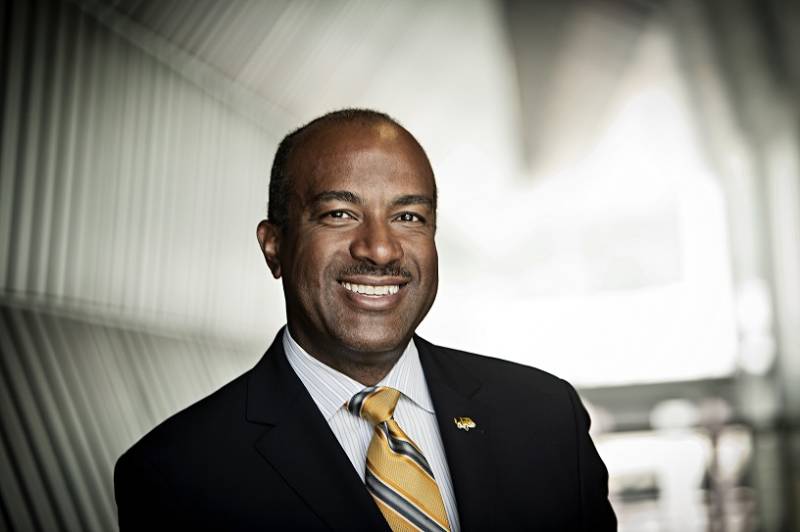
"caption": "Gary May, who has been named the new chancellor of UC Davis.",
"description": null,
"title": "original",
"credit": "Courtesy of Georgia Tech",
"status": "inherit",
"isLoading": false,
"fetchFailed": false
},
"news_11310466": {
"type": "attachments",
"id": "news_11310466",
"meta": {
"index": "attachments_1716263798",
"site": "news",
"id": "11310466",
"found": true
},
"parent": 11310396,
"imgSizes": {
"small": {
"file": "https://ww2.kqed.org/app/uploads/sites/10/2017/02/Yalla-Neymar-Jr.-520x347.jpg",
"width": 520,
"mimeType": "image/jpeg",
"height": 347
},
"twentyfourteen-full-width": {
"file": "https://ww2.kqed.org/app/uploads/sites/10/2017/02/Yalla-Neymar-Jr.-1038x576.jpg",
"width": 1038,
"mimeType": "image/jpeg",
"height": 576
},
"thumbnail": {
"file": "https://ww2.kqed.org/app/uploads/sites/10/2017/02/Yalla-Neymar-Jr.-160x107.jpg",
"width": 160,
"mimeType": "image/jpeg",
"height": 107
},
"fd-sm": {
"file": "https://ww2.kqed.org/app/uploads/sites/10/2017/02/Yalla-Neymar-Jr.-960x640.jpg",
"width": 960,
"mimeType": "image/jpeg",
"height": 640
},
"post-thumbnail": {
"file": "https://ww2.kqed.org/app/uploads/sites/10/2017/02/Yalla-Neymar-Jr.-672x372.jpg",
"width": 672,
"mimeType": "image/jpeg",
"height": 372
},
"xsmall": {
"file": "https://ww2.kqed.org/app/uploads/sites/10/2017/02/Yalla-Neymar-Jr.-375x250.jpg",
"width": 375,
"mimeType": "image/jpeg",
"height": 250
},
"kqedFullSize": {
"file": "https://ww2.kqed.org/app/uploads/sites/10/2017/02/Yalla-Neymar-Jr..jpg",
"width": 1920,
"height": 1280
},
"large": {
"file": "https://ww2.kqed.org/app/uploads/sites/10/2017/02/Yalla-Neymar-Jr.-1020x680.jpg",
"width": 1020,
"mimeType": "image/jpeg",
"height": 680
},
"xlarge": {
"file": "https://ww2.kqed.org/app/uploads/sites/10/2017/02/Yalla-Neymar-Jr.-1180x787.jpg",
"width": 1180,
"mimeType": "image/jpeg",
"height": 787
},
"guest-author-50": {
"file": "https://ww2.kqed.org/app/uploads/sites/10/2017/02/Yalla-Neymar-Jr.-50x50.jpg",
"width": 50,
"mimeType": "image/jpeg",
"height": 50
},
"guest-author-96": {
"file": "https://ww2.kqed.org/app/uploads/sites/10/2017/02/Yalla-Neymar-Jr.-96x96.jpg",
"width": 96,
"mimeType": "image/jpeg",
"height": 96
},
"medium": {
"file": "https://ww2.kqed.org/app/uploads/sites/10/2017/02/Yalla-Neymar-Jr.-800x533.jpg",
"width": 800,
"mimeType": "image/jpeg",
"height": 533
},
"guest-author-64": {
"file": "https://ww2.kqed.org/app/uploads/sites/10/2017/02/Yalla-Neymar-Jr.-64x64.jpg",
"width": 64,
"mimeType": "image/jpeg",
"height": 64
},
"guest-author-32": {
"file": "https://ww2.kqed.org/app/uploads/sites/10/2017/02/Yalla-Neymar-Jr.-32x32.jpg",
"width": 32,
"mimeType": "image/jpeg",
"height": 32
},
"fd-lrg": {
"file": "https://ww2.kqed.org/app/uploads/sites/10/2017/02/Yalla-Neymar-Jr.-1920x1280.jpg",
"width": 1920,
"mimeType": "image/jpeg",
"height": 1280
},
"fd-med": {
"file": "https://ww2.kqed.org/app/uploads/sites/10/2017/02/Yalla-Neymar-Jr.-1180x787.jpg",
"width": 1180,
"mimeType": "image/jpeg",
"height": 787
},
"full-width": {
"file": "https://ww2.kqed.org/app/uploads/sites/10/2017/02/Yalla-Neymar-Jr.-1920x1280.jpg",
"width": 1920,
"mimeType": "image/jpeg",
"height": 1280
},
"detail": {
"file": "https://ww2.kqed.org/app/uploads/sites/10/2017/02/Yalla-Neymar-Jr.-150x150.jpg",
"width": 150,
"mimeType": "image/jpeg",
"height": 150
},
"guest-author-128": {
"file": "https://ww2.kqed.org/app/uploads/sites/10/2017/02/Yalla-Neymar-Jr.-128x128.jpg",
"width": 128,
"mimeType": "image/jpeg",
"height": 128
},
"xxsmall": {
"file": "https://ww2.kqed.org/app/uploads/sites/10/2017/02/Yalla-Neymar-Jr.-240x160.jpg",
"width": 240,
"mimeType": "image/jpeg",
"height": 160
}
},
"publishDate": 1486750624,
"modified": 1487027661,
"caption": "A Yalla student wears a soccer T-shirt during an after-school lesson in El Cajon.",
"description": null,
"title": "Yalla Neymar Jr.",
"credit": "Photo by Erin Siegal McIntyre",
"status": "inherit",
"isLoading": false,
"fetchFailed": false
},
"news_11307535": {
"type": "attachments",
"id": "news_11307535",
"meta": {
"index": "attachments_1716263798",
"site": "news",
"id": "11307535",
"found": true
},
"parent": 11307507,
"imgSizes": {
"small": {
"file": "https://ww2.kqed.org/app/uploads/sites/10/2017/02/DeVos-1-520x347.jpg",
"width": 520,
"mimeType": "image/jpeg",
"height": 347
},
"twentyfourteen-full-width": {
"file": "https://ww2.kqed.org/app/uploads/sites/10/2017/02/DeVos-1-1038x576.jpg",
"width": 1038,
"mimeType": "image/jpeg",
"height": 576
},
"thumbnail": {
"file": "https://ww2.kqed.org/app/uploads/sites/10/2017/02/DeVos-1-160x107.jpg",
"width": 160,
"mimeType": "image/jpeg",
"height": 107
},
"fd-sm": {
"file": "https://ww2.kqed.org/app/uploads/sites/10/2017/02/DeVos-1-960x640.jpg",
"width": 960,
"mimeType": "image/jpeg",
"height": 640
},
"post-thumbnail": {
"file": "https://ww2.kqed.org/app/uploads/sites/10/2017/02/DeVos-1-672x372.jpg",
"width": 672,
"mimeType": "image/jpeg",
"height": 372
},
"xsmall": {
"file": "https://ww2.kqed.org/app/uploads/sites/10/2017/02/DeVos-1-375x250.jpg",
"width": 375,
"mimeType": "image/jpeg",
"height": 250
},
"kqedFullSize": {
"file": "https://ww2.kqed.org/app/uploads/sites/10/2017/02/DeVos-1.jpg",
"width": 1920,
"height": 1280
},
"large": {
"file": "https://ww2.kqed.org/app/uploads/sites/10/2017/02/DeVos-1-1020x680.jpg",
"width": 1020,
"mimeType": "image/jpeg",
"height": 680
},
"xlarge": {
"file": "https://ww2.kqed.org/app/uploads/sites/10/2017/02/DeVos-1-1180x787.jpg",
"width": 1180,
"mimeType": "image/jpeg",
"height": 787
},
"guest-author-50": {
"file": "https://ww2.kqed.org/app/uploads/sites/10/2017/02/DeVos-1-50x50.jpg",
"width": 50,
"mimeType": "image/jpeg",
"height": 50
},
"guest-author-96": {
"file": "https://ww2.kqed.org/app/uploads/sites/10/2017/02/DeVos-1-96x96.jpg",
"width": 96,
"mimeType": "image/jpeg",
"height": 96
},
"medium": {
"file": "https://ww2.kqed.org/app/uploads/sites/10/2017/02/DeVos-1-800x533.jpg",
"width": 800,
"mimeType": "image/jpeg",
"height": 533
},
"guest-author-64": {
"file": "https://ww2.kqed.org/app/uploads/sites/10/2017/02/DeVos-1-64x64.jpg",
"width": 64,
"mimeType": "image/jpeg",
"height": 64
},
"guest-author-32": {
"file": "https://ww2.kqed.org/app/uploads/sites/10/2017/02/DeVos-1-32x32.jpg",
"width": 32,
"mimeType": "image/jpeg",
"height": 32
},
"fd-lrg": {
"file": "https://ww2.kqed.org/app/uploads/sites/10/2017/02/DeVos-1-1920x1280.jpg",
"width": 1920,
"mimeType": "image/jpeg",
"height": 1280
},
"fd-med": {
"file": "https://ww2.kqed.org/app/uploads/sites/10/2017/02/DeVos-1-1180x787.jpg",
"width": 1180,
"mimeType": "image/jpeg",
"height": 787
},
"full-width": {
"file": "https://ww2.kqed.org/app/uploads/sites/10/2017/02/DeVos-1-1920x1280.jpg",
"width": 1920,
"mimeType": "image/jpeg",
"height": 1280
},
"detail": {
"file": "https://ww2.kqed.org/app/uploads/sites/10/2017/02/DeVos-1-150x150.jpg",
"width": 150,
"mimeType": "image/jpeg",
"height": 150
},
"guest-author-128": {
"file": "https://ww2.kqed.org/app/uploads/sites/10/2017/02/DeVos-1-128x128.jpg",
"width": 128,
"mimeType": "image/jpeg",
"height": 128
},
"xxsmall": {
"file": "https://ww2.kqed.org/app/uploads/sites/10/2017/02/DeVos-1-240x160.jpg",
"width": 240,
"mimeType": "image/jpeg",
"height": 160
}
},
"publishDate": 1486593958,
"modified": 1486681976,
"caption": "Betsy DeVos, U.S. secretary of education, testifies during her confirmation hearing before the Senate Health, Education, Labor and Pensions Committee. ",
"description": null,
"title": "DeVos 1",
"credit": "Chip Somodevilla/Getty Images",
"status": "inherit",
"isLoading": false,
"fetchFailed": false
},
"news_11305910": {
"type": "attachments",
"id": "news_11305910",
"meta": {
"index": "attachments_1716263798",
"site": "news",
"id": "11305910",
"found": true
},
"parent": 11305666,
"imgSizes": {
"small": {
"file": "https://ww2.kqed.org/app/uploads/sites/10/2017/02/ManhoodDevOakland-520x288.jpg",
"width": 520,
"mimeType": "image/jpeg",
"height": 288
},
"twentyfourteen-full-width": {
"file": "https://ww2.kqed.org/app/uploads/sites/10/2017/02/ManhoodDevOakland-1038x576.jpg",
"width": 1038,
"mimeType": "image/jpeg",
"height": 576
},
"thumbnail": {
"file": "https://ww2.kqed.org/app/uploads/sites/10/2017/02/ManhoodDevOakland-160x89.jpg",
"width": 160,
"mimeType": "image/jpeg",
"height": 89
},
"fd-sm": {
"file": "https://ww2.kqed.org/app/uploads/sites/10/2017/02/ManhoodDevOakland-960x533.jpg",
"width": 960,
"mimeType": "image/jpeg",
"height": 533
},
"post-thumbnail": {
"file": "https://ww2.kqed.org/app/uploads/sites/10/2017/02/ManhoodDevOakland-672x372.jpg",
"width": 672,
"mimeType": "image/jpeg",
"height": 372
},
"xsmall": {
"file": "https://ww2.kqed.org/app/uploads/sites/10/2017/02/ManhoodDevOakland-375x208.jpg",
"width": 375,
"mimeType": "image/jpeg",
"height": 208
},
"kqedFullSize": {
"file": "https://ww2.kqed.org/app/uploads/sites/10/2017/02/ManhoodDevOakland.jpg",
"width": 1920,
"height": 1065
},
"large": {
"file": "https://ww2.kqed.org/app/uploads/sites/10/2017/02/ManhoodDevOakland-1020x566.jpg",
"width": 1020,
"mimeType": "image/jpeg",
"height": 566
},
"xlarge": {
"file": "https://ww2.kqed.org/app/uploads/sites/10/2017/02/ManhoodDevOakland-1180x655.jpg",
"width": 1180,
"mimeType": "image/jpeg",
"height": 655
},
"guest-author-50": {
"file": "https://ww2.kqed.org/app/uploads/sites/10/2017/02/ManhoodDevOakland-50x50.jpg",
"width": 50,
"mimeType": "image/jpeg",
"height": 50
},
"guest-author-96": {
"file": "https://ww2.kqed.org/app/uploads/sites/10/2017/02/ManhoodDevOakland-96x96.jpg",
"width": 96,
"mimeType": "image/jpeg",
"height": 96
},
"medium": {
"file": "https://ww2.kqed.org/app/uploads/sites/10/2017/02/ManhoodDevOakland-800x444.jpg",
"width": 800,
"mimeType": "image/jpeg",
"height": 444
},
"guest-author-64": {
"file": "https://ww2.kqed.org/app/uploads/sites/10/2017/02/ManhoodDevOakland-64x64.jpg",
"width": 64,
"mimeType": "image/jpeg",
"height": 64
},
"guest-author-32": {
"file": "https://ww2.kqed.org/app/uploads/sites/10/2017/02/ManhoodDevOakland-32x32.jpg",
"width": 32,
"mimeType": "image/jpeg",
"height": 32
},
"fd-lrg": {
"file": "https://ww2.kqed.org/app/uploads/sites/10/2017/02/ManhoodDevOakland-1920x1065.jpg",
"width": 1920,
"mimeType": "image/jpeg",
"height": 1065
},
"fd-med": {
"file": "https://ww2.kqed.org/app/uploads/sites/10/2017/02/ManhoodDevOakland-1180x655.jpg",
"width": 1180,
"mimeType": "image/jpeg",
"height": 655
},
"full-width": {
"file": "https://ww2.kqed.org/app/uploads/sites/10/2017/02/ManhoodDevOakland-1920x1065.jpg",
"width": 1920,
"mimeType": "image/jpeg",
"height": 1065
},
"detail": {
"file": "https://ww2.kqed.org/app/uploads/sites/10/2017/02/ManhoodDevOakland-150x150.jpg",
"width": 150,
"mimeType": "image/jpeg",
"height": 150
},
"guest-author-128": {
"file": "https://ww2.kqed.org/app/uploads/sites/10/2017/02/ManhoodDevOakland-128x128.jpg",
"width": 128,
"mimeType": "image/jpeg",
"height": 128
},
"xxsmall": {
"file": "https://ww2.kqed.org/app/uploads/sites/10/2017/02/ManhoodDevOakland-240x133.jpg",
"width": 240,
"mimeType": "image/jpeg",
"height": 133
}
},
"publishDate": 1486505948,
"modified": 1486605034,
"caption": "Tenth-grade Manhood Development class students at Oakland High absorb a discussion about college admissions.",
"description": "Tenth grade Manhood Development class students at Oakland High absorb a discussion about college admissions.",
"title": "ManhoodDevOakland",
"credit": "Eleanor Bell Fox/Center for Public Integrity",
"status": "inherit",
"isLoading": false,
"fetchFailed": false
},
"news_11306319": {
"type": "attachments",
"id": "news_11306319",
"meta": {
"index": "attachments_1716263798",
"site": "news",
"id": "11306319",
"found": true
},
"parent": 11306317,
"imgSizes": {
"small": {
"file": "https://ww2.kqed.org/app/uploads/sites/10/2017/02/RS23996_20170201_MiloYiannopoulos_protest_Cal_Credit_BertJohnson-9-qut-520x347.jpg",
"width": 520,
"mimeType": "image/jpeg",
"height": 347
},
"twentyfourteen-full-width": {
"file": "https://ww2.kqed.org/app/uploads/sites/10/2017/02/RS23996_20170201_MiloYiannopoulos_protest_Cal_Credit_BertJohnson-9-qut-1038x576.jpg",
"width": 1038,
"mimeType": "image/jpeg",
"height": 576
},
"thumbnail": {
"file": "https://ww2.kqed.org/app/uploads/sites/10/2017/02/RS23996_20170201_MiloYiannopoulos_protest_Cal_Credit_BertJohnson-9-qut-160x107.jpg",
"width": 160,
"mimeType": "image/jpeg",
"height": 107
},
"fd-sm": {
"file": "https://ww2.kqed.org/app/uploads/sites/10/2017/02/RS23996_20170201_MiloYiannopoulos_protest_Cal_Credit_BertJohnson-9-qut-960x640.jpg",
"width": 960,
"mimeType": "image/jpeg",
"height": 640
},
"post-thumbnail": {
"file": "https://ww2.kqed.org/app/uploads/sites/10/2017/02/RS23996_20170201_MiloYiannopoulos_protest_Cal_Credit_BertJohnson-9-qut-672x372.jpg",
"width": 672,
"mimeType": "image/jpeg",
"height": 372
},
"xsmall": {
"file": "https://ww2.kqed.org/app/uploads/sites/10/2017/02/RS23996_20170201_MiloYiannopoulos_protest_Cal_Credit_BertJohnson-9-qut-375x250.jpg",
"width": 375,
"mimeType": "image/jpeg",
"height": 250
},
"kqedFullSize": {
"file": "https://ww2.kqed.org/app/uploads/sites/10/2017/02/RS23996_20170201_MiloYiannopoulos_protest_Cal_Credit_BertJohnson-9-qut.jpg",
"width": 1920,
"height": 1280
},
"large": {
"file": "https://ww2.kqed.org/app/uploads/sites/10/2017/02/RS23996_20170201_MiloYiannopoulos_protest_Cal_Credit_BertJohnson-9-qut-1020x680.jpg",
"width": 1020,
"mimeType": "image/jpeg",
"height": 680
},
"xlarge": {
"file": "https://ww2.kqed.org/app/uploads/sites/10/2017/02/RS23996_20170201_MiloYiannopoulos_protest_Cal_Credit_BertJohnson-9-qut-1180x787.jpg",
"width": 1180,
"mimeType": "image/jpeg",
"height": 787
},
"guest-author-50": {
"file": "https://ww2.kqed.org/app/uploads/sites/10/2017/02/RS23996_20170201_MiloYiannopoulos_protest_Cal_Credit_BertJohnson-9-qut-50x50.jpg",
"width": 50,
"mimeType": "image/jpeg",
"height": 50
},
"guest-author-96": {
"file": "https://ww2.kqed.org/app/uploads/sites/10/2017/02/RS23996_20170201_MiloYiannopoulos_protest_Cal_Credit_BertJohnson-9-qut-96x96.jpg",
"width": 96,
"mimeType": "image/jpeg",
"height": 96
},
"medium": {
"file": "https://ww2.kqed.org/app/uploads/sites/10/2017/02/RS23996_20170201_MiloYiannopoulos_protest_Cal_Credit_BertJohnson-9-qut-800x533.jpg",
"width": 800,
"mimeType": "image/jpeg",
"height": 533
},
"guest-author-64": {
"file": "https://ww2.kqed.org/app/uploads/sites/10/2017/02/RS23996_20170201_MiloYiannopoulos_protest_Cal_Credit_BertJohnson-9-qut-64x64.jpg",
"width": 64,
"mimeType": "image/jpeg",
"height": 64
},
"guest-author-32": {
"file": "https://ww2.kqed.org/app/uploads/sites/10/2017/02/RS23996_20170201_MiloYiannopoulos_protest_Cal_Credit_BertJohnson-9-qut-32x32.jpg",
"width": 32,
"mimeType": "image/jpeg",
"height": 32
},
"fd-lrg": {
"file": "https://ww2.kqed.org/app/uploads/sites/10/2017/02/RS23996_20170201_MiloYiannopoulos_protest_Cal_Credit_BertJohnson-9-qut-1920x1280.jpg",
"width": 1920,
"mimeType": "image/jpeg",
"height": 1280
},
"fd-med": {
"file": "https://ww2.kqed.org/app/uploads/sites/10/2017/02/RS23996_20170201_MiloYiannopoulos_protest_Cal_Credit_BertJohnson-9-qut-1180x787.jpg",
"width": 1180,
"mimeType": "image/jpeg",
"height": 787
},
"full-width": {
"file": "https://ww2.kqed.org/app/uploads/sites/10/2017/02/RS23996_20170201_MiloYiannopoulos_protest_Cal_Credit_BertJohnson-9-qut-1920x1280.jpg",
"width": 1920,
"mimeType": "image/jpeg",
"height": 1280
},
"detail": {
"file": "https://ww2.kqed.org/app/uploads/sites/10/2017/02/RS23996_20170201_MiloYiannopoulos_protest_Cal_Credit_BertJohnson-9-qut-150x150.jpg",
"width": 150,
"mimeType": "image/jpeg",
"height": 150
},
"guest-author-128": {
"file": "https://ww2.kqed.org/app/uploads/sites/10/2017/02/RS23996_20170201_MiloYiannopoulos_protest_Cal_Credit_BertJohnson-9-qut-128x128.jpg",
"width": 128,
"mimeType": "image/jpeg",
"height": 128
},
"xxsmall": {
"file": "https://ww2.kqed.org/app/uploads/sites/10/2017/02/RS23996_20170201_MiloYiannopoulos_protest_Cal_Credit_BertJohnson-9-qut-240x160.jpg",
"width": 240,
"mimeType": "image/jpeg",
"height": 160
}
},
"publishDate": 1486524265,
"modified": 1505336117,
"caption": "A campus police officer talks on his radio after protesters toppled a mobile light trailer and set it on fire during a demonstration against the scheduled appearance of Milo Yiannopoulos at UC Berkeley on Feb. 1, 2017.",
"description": "A campus police officer talks on his radio after protesters toppled a mobile light trailer and set it on fire during a demonstration against the scheduled appearance of Milo Yiannopoulos at UC Berkeley on February 1, 2017.",
"title": "RS23996_20170201_MiloYiannopoulos_protest_Cal_Credit_BertJohnson-9-qut",
"credit": "Bert Johnson/KQED",
"status": "inherit",
"isLoading": false,
"fetchFailed": false
},
"news_11305755": {
"type": "attachments",
"id": "news_11305755",
"meta": {
"index": "attachments_1716263798",
"site": "news",
"id": "11305755",
"found": true
},
"parent": 11305576,
"imgSizes": {
"small": {
"file": "https://ww2.kqed.org/app/uploads/sites/10/2017/02/march-520x292.jpg",
"width": 520,
"mimeType": "image/jpeg",
"height": 292
},
"twentyfourteen-full-width": {
"file": "https://ww2.kqed.org/app/uploads/sites/10/2017/02/march-1038x576.jpg",
"width": 1038,
"mimeType": "image/jpeg",
"height": 576
},
"thumbnail": {
"file": "https://ww2.kqed.org/app/uploads/sites/10/2017/02/march-160x90.jpg",
"width": 160,
"mimeType": "image/jpeg",
"height": 90
},
"fd-sm": {
"file": "https://ww2.kqed.org/app/uploads/sites/10/2017/02/march-960x540.jpg",
"width": 960,
"mimeType": "image/jpeg",
"height": 540
},
"post-thumbnail": {
"file": "https://ww2.kqed.org/app/uploads/sites/10/2017/02/march-672x372.jpg",
"width": 672,
"mimeType": "image/jpeg",
"height": 372
},
"xsmall": {
"file": "https://ww2.kqed.org/app/uploads/sites/10/2017/02/march-375x211.jpg",
"width": 375,
"mimeType": "image/jpeg",
"height": 211
},
"kqedFullSize": {
"file": "https://ww2.kqed.org/app/uploads/sites/10/2017/02/march.jpg",
"width": 1920,
"height": 1079
},
"large": {
"file": "https://ww2.kqed.org/app/uploads/sites/10/2017/02/march-1020x573.jpg",
"width": 1020,
"mimeType": "image/jpeg",
"height": 573
},
"xlarge": {
"file": "https://ww2.kqed.org/app/uploads/sites/10/2017/02/march-1180x663.jpg",
"width": 1180,
"mimeType": "image/jpeg",
"height": 663
},
"guest-author-50": {
"file": "https://ww2.kqed.org/app/uploads/sites/10/2017/02/march-50x50.jpg",
"width": 50,
"mimeType": "image/jpeg",
"height": 50
},
"guest-author-96": {
"file": "https://ww2.kqed.org/app/uploads/sites/10/2017/02/march-96x96.jpg",
"width": 96,
"mimeType": "image/jpeg",
"height": 96
},
"medium": {
"file": "https://ww2.kqed.org/app/uploads/sites/10/2017/02/march-800x450.jpg",
"width": 800,
"mimeType": "image/jpeg",
"height": 450
},
"guest-author-64": {
"file": "https://ww2.kqed.org/app/uploads/sites/10/2017/02/march-64x64.jpg",
"width": 64,
"mimeType": "image/jpeg",
"height": 64
},
"guest-author-32": {
"file": "https://ww2.kqed.org/app/uploads/sites/10/2017/02/march-32x32.jpg",
"width": 32,
"mimeType": "image/jpeg",
"height": 32
},
"fd-lrg": {
"file": "https://ww2.kqed.org/app/uploads/sites/10/2017/02/march-1920x1079.jpg",
"width": 1920,
"mimeType": "image/jpeg",
"height": 1079
},
"fd-med": {
"file": "https://ww2.kqed.org/app/uploads/sites/10/2017/02/march-1180x663.jpg",
"width": 1180,
"mimeType": "image/jpeg",
"height": 663
},
"full-width": {
"file": "https://ww2.kqed.org/app/uploads/sites/10/2017/02/march-1920x1079.jpg",
"width": 1920,
"mimeType": "image/jpeg",
"height": 1079
},
"detail": {
"file": "https://ww2.kqed.org/app/uploads/sites/10/2017/02/march-150x150.jpg",
"width": 150,
"mimeType": "image/jpeg",
"height": 150
},
"guest-author-128": {
"file": "https://ww2.kqed.org/app/uploads/sites/10/2017/02/march-128x128.jpg",
"width": 128,
"mimeType": "image/jpeg",
"height": 128
},
"xxsmall": {
"file": "https://ww2.kqed.org/app/uploads/sites/10/2017/02/march-240x135.jpg",
"width": 240,
"mimeType": "image/jpeg",
"height": 135
}
},
"publishDate": 1486499694,
"modified": 1486499745,
"caption": "Students at Caliber: Beta Academy take part in the \"March for Kindness.\" ",
"description": null,
"title": "march",
"credit": "Courtesy of Caliber: Beta Academy",
"status": "inherit",
"isLoading": false,
"fetchFailed": false
},
"news_11305654": {
"type": "attachments",
"id": "news_11305654",
"meta": {
"index": "attachments_1716263798",
"site": "news",
"id": "11305654",
"found": true
},
"parent": 11304650,
"imgSizes": {
"small": {
"file": "https://ww2.kqed.org/app/uploads/sites/10/2017/02/RS24070_IMG_2835-qut-520x390.jpg",
"width": 520,
"mimeType": "image/jpeg",
"height": 390
},
"twentyfourteen-full-width": {
"file": "https://ww2.kqed.org/app/uploads/sites/10/2017/02/RS24070_IMG_2835-qut-1038x576.jpg",
"width": 1038,
"mimeType": "image/jpeg",
"height": 576
},
"thumbnail": {
"file": "https://ww2.kqed.org/app/uploads/sites/10/2017/02/RS24070_IMG_2835-qut-160x120.jpg",
"width": 160,
"mimeType": "image/jpeg",
"height": 120
},
"fd-sm": {
"file": "https://ww2.kqed.org/app/uploads/sites/10/2017/02/RS24070_IMG_2835-qut-960x720.jpg",
"width": 960,
"mimeType": "image/jpeg",
"height": 720
},
"post-thumbnail": {
"file": "https://ww2.kqed.org/app/uploads/sites/10/2017/02/RS24070_IMG_2835-qut-672x372.jpg",
"width": 672,
"mimeType": "image/jpeg",
"height": 372
},
"xsmall": {
"file": "https://ww2.kqed.org/app/uploads/sites/10/2017/02/RS24070_IMG_2835-qut-375x281.jpg",
"width": 375,
"mimeType": "image/jpeg",
"height": 281
},
"kqedFullSize": {
"file": "https://ww2.kqed.org/app/uploads/sites/10/2017/02/RS24070_IMG_2835-qut.jpg",
"width": 1632,
"height": 1224
},
"large": {
"file": "https://ww2.kqed.org/app/uploads/sites/10/2017/02/RS24070_IMG_2835-qut-1020x765.jpg",
"width": 1020,
"mimeType": "image/jpeg",
"height": 765
},
"xlarge": {
"file": "https://ww2.kqed.org/app/uploads/sites/10/2017/02/RS24070_IMG_2835-qut-1180x885.jpg",
"width": 1180,
"mimeType": "image/jpeg",
"height": 885
},
"guest-author-50": {
"file": "https://ww2.kqed.org/app/uploads/sites/10/2017/02/RS24070_IMG_2835-qut-50x50.jpg",
"width": 50,
"mimeType": "image/jpeg",
"height": 50
},
"guest-author-96": {
"file": "https://ww2.kqed.org/app/uploads/sites/10/2017/02/RS24070_IMG_2835-qut-96x96.jpg",
"width": 96,
"mimeType": "image/jpeg",
"height": 96
},
"medium": {
"file": "https://ww2.kqed.org/app/uploads/sites/10/2017/02/RS24070_IMG_2835-qut-800x600.jpg",
"width": 800,
"mimeType": "image/jpeg",
"height": 600
},
"guest-author-64": {
"file": "https://ww2.kqed.org/app/uploads/sites/10/2017/02/RS24070_IMG_2835-qut-64x64.jpg",
"width": 64,
"mimeType": "image/jpeg",
"height": 64
},
"guest-author-32": {
"file": "https://ww2.kqed.org/app/uploads/sites/10/2017/02/RS24070_IMG_2835-qut-32x32.jpg",
"width": 32,
"mimeType": "image/jpeg",
"height": 32
},
"fd-med": {
"file": "https://ww2.kqed.org/app/uploads/sites/10/2017/02/RS24070_IMG_2835-qut-1180x885.jpg",
"width": 1180,
"mimeType": "image/jpeg",
"height": 885
},
"detail": {
"file": "https://ww2.kqed.org/app/uploads/sites/10/2017/02/RS24070_IMG_2835-qut-150x150.jpg",
"width": 150,
"mimeType": "image/jpeg",
"height": 150
},
"guest-author-128": {
"file": "https://ww2.kqed.org/app/uploads/sites/10/2017/02/RS24070_IMG_2835-qut-128x128.jpg",
"width": 128,
"mimeType": "image/jpeg",
"height": 128
},
"xxsmall": {
"file": "https://ww2.kqed.org/app/uploads/sites/10/2017/02/RS24070_IMG_2835-qut-240x180.jpg",
"width": 240,
"mimeType": "image/jpeg",
"height": 180
}
},
"publishDate": 1486494442,
"modified": 1486494482,
"caption": "Mayor Ed Lee announces plan to make City College tuition free for San Francisco residents.",
"description": null,
"title": "RS24070_IMG_2835-qut",
"credit": "Tara Siler/KQED",
"status": "inherit",
"isLoading": false,
"fetchFailed": false
},
"news_11305653": {
"type": "attachments",
"id": "news_11305653",
"meta": {
"index": "attachments_1716263798",
"site": "news",
"id": "11305653",
"found": true
},
"parent": 11305647,
"imgSizes": {
"small": {
"file": "https://ww2.kqed.org/app/uploads/sites/10/2017/02/betsy-devos-1920-520x347.jpg",
"width": 520,
"mimeType": "image/jpeg",
"height": 347
},
"twentyfourteen-full-width": {
"file": "https://ww2.kqed.org/app/uploads/sites/10/2017/02/betsy-devos-1920-1038x576.jpg",
"width": 1038,
"mimeType": "image/jpeg",
"height": 576
},
"thumbnail": {
"file": "https://ww2.kqed.org/app/uploads/sites/10/2017/02/betsy-devos-1920-160x107.jpg",
"width": 160,
"mimeType": "image/jpeg",
"height": 107
},
"fd-sm": {
"file": "https://ww2.kqed.org/app/uploads/sites/10/2017/02/betsy-devos-1920-960x640.jpg",
"width": 960,
"mimeType": "image/jpeg",
"height": 640
},
"post-thumbnail": {
"file": "https://ww2.kqed.org/app/uploads/sites/10/2017/02/betsy-devos-1920-672x372.jpg",
"width": 672,
"mimeType": "image/jpeg",
"height": 372
},
"xsmall": {
"file": "https://ww2.kqed.org/app/uploads/sites/10/2017/02/betsy-devos-1920-375x250.jpg",
"width": 375,
"mimeType": "image/jpeg",
"height": 250
},
"kqedFullSize": {
"file": "https://ww2.kqed.org/app/uploads/sites/10/2017/02/betsy-devos-1920.jpg",
"width": 1920,
"height": 1280
},
"large": {
"file": "https://ww2.kqed.org/app/uploads/sites/10/2017/02/betsy-devos-1920-1020x680.jpg",
"width": 1020,
"mimeType": "image/jpeg",
"height": 680
},
"xlarge": {
"file": "https://ww2.kqed.org/app/uploads/sites/10/2017/02/betsy-devos-1920-1180x787.jpg",
"width": 1180,
"mimeType": "image/jpeg",
"height": 787
},
"guest-author-50": {
"file": "https://ww2.kqed.org/app/uploads/sites/10/2017/02/betsy-devos-1920-50x50.jpg",
"width": 50,
"mimeType": "image/jpeg",
"height": 50
},
"guest-author-96": {
"file": "https://ww2.kqed.org/app/uploads/sites/10/2017/02/betsy-devos-1920-96x96.jpg",
"width": 96,
"mimeType": "image/jpeg",
"height": 96
},
"medium": {
"file": "https://ww2.kqed.org/app/uploads/sites/10/2017/02/betsy-devos-1920-800x533.jpg",
"width": 800,
"mimeType": "image/jpeg",
"height": 533
},
"guest-author-64": {
"file": "https://ww2.kqed.org/app/uploads/sites/10/2017/02/betsy-devos-1920-64x64.jpg",
"width": 64,
"mimeType": "image/jpeg",
"height": 64
},
"guest-author-32": {
"file": "https://ww2.kqed.org/app/uploads/sites/10/2017/02/betsy-devos-1920-32x32.jpg",
"width": 32,
"mimeType": "image/jpeg",
"height": 32
},
"fd-lrg": {
"file": "https://ww2.kqed.org/app/uploads/sites/10/2017/02/betsy-devos-1920-1920x1280.jpg",
"width": 1920,
"mimeType": "image/jpeg",
"height": 1280
},
"fd-med": {
"file": "https://ww2.kqed.org/app/uploads/sites/10/2017/02/betsy-devos-1920-1180x787.jpg",
"width": 1180,
"mimeType": "image/jpeg",
"height": 787
},
"full-width": {
"file": "https://ww2.kqed.org/app/uploads/sites/10/2017/02/betsy-devos-1920-1920x1280.jpg",
"width": 1920,
"mimeType": "image/jpeg",
"height": 1280
},
"detail": {
"file": "https://ww2.kqed.org/app/uploads/sites/10/2017/02/betsy-devos-1920-150x150.jpg",
"width": 150,
"mimeType": "image/jpeg",
"height": 150
},
"guest-author-128": {
"file": "https://ww2.kqed.org/app/uploads/sites/10/2017/02/betsy-devos-1920-128x128.jpg",
"width": 128,
"mimeType": "image/jpeg",
"height": 128
},
"xxsmall": {
"file": "https://ww2.kqed.org/app/uploads/sites/10/2017/02/betsy-devos-1920-240x160.jpg",
"width": 240,
"mimeType": "image/jpeg",
"height": 160
}
},
"publishDate": 1486494159,
"modified": 1486515661,
"caption": "Betsy DeVos, nominee as secretary of education, testifies during her confirmation hearing before the Senate Health, Education, Labor and Pensions Committee in the Dirksen Senate Office Building on Capitol Hill Jan. 17, 2017 in Washington, D.C.",
"description": null,
"title": "betsy-devos-1920",
"credit": "Chip Somodevilla/Getty Images",
"status": "inherit",
"isLoading": false,
"fetchFailed": false
}
},
"audioPlayerReducer": {
"postId": "stream_live",
"isPaused": true,
"isPlaying": false,
"pfsActive": false,
"pledgeModalIsOpen": true,
"playerDrawerIsOpen": false,
"liveAudioPlayStartedAt": 0,
"liveAudioPlayContext": ""
},
"authorsReducer": {
"byline_news_11339964": {
"type": "authors",
"id": "byline_news_11339964",
"meta": {
"override": true
},
"slug": "byline_news_11339964",
"name": "Ben Christopher \u003cbr> CALmatters",
"isLoading": false
},
"byline_news_11330335": {
"type": "authors",
"id": "byline_news_11330335",
"meta": {
"override": true
},
"slug": "byline_news_11330335",
"name": "Domenico Montanaro",
"isLoading": false
},
"byline_news_11310396": {
"type": "authors",
"id": "byline_news_11310396",
"meta": {
"override": true
},
"slug": "byline_news_11310396",
"name": "\u003cstrong>Erin Siegal McIntyre\u003c/strong>",
"isLoading": false
},
"byline_news_11305666": {
"type": "authors",
"id": "byline_news_11305666",
"meta": {
"override": true
},
"slug": "byline_news_11305666",
"name": "\u003cstrong>\u003ca href=\"https://www.publicintegrity.org/authors/susan-ferriss\">Susan Ferriss\u003c/a>\u003c/strong>",
"isLoading": false
},
"byline_news_11305576": {
"type": "authors",
"id": "byline_news_11305576",
"meta": {
"override": true
},
"slug": "byline_news_11305576",
"name": "\u003ca href=\"http://www.angelicacasas.com/\" target=\"_blank\">Angélica M. Casas\u003c/a>",
"isLoading": false
},
"byline_news_11305647": {
"type": "authors",
"id": "byline_news_11305647",
"meta": {
"override": true
},
"slug": "byline_news_11305647",
"name": "\u003cstrong>\u003ca href=\"http://www.npr.org/people/302894536/anya-kamenetz\">Anya Kamenetz\u003c/a>\u003cbr />\u003ca href=\"http://www.npr.org/\">NPR\u003c/a>\u003c/strong>",
"isLoading": false
},
"dmarks": {
"type": "authors",
"id": "182",
"meta": {
"index": "authors_1716337520",
"id": "182",
"found": true
},
"name": "David Marks",
"firstName": "David",
"lastName": "Marks",
"slug": "dmarks",
"email": "dmarks@kqed.org",
"display_author_email": false,
"staff_mastheads": [],
"title": "KQED Editor",
"bio": "David Marks is a senior digital editor for KQED News. \u003c/a>Reach him at dmarks@kqed.org.",
"avatar": "https://secure.gravatar.com/avatar/b88bd6227ce6cb96ae33fefaf42b2a29?s=600&d=mm&r=g",
"twitter": "divadskram",
"facebook": null,
"instagram": null,
"linkedin": null,
"sites": [
{
"site": "news",
"roles": []
},
{
"site": "science",
"roles": []
},
{
"site": "perspectives",
"roles": []
},
{
"site": "liveblog",
"roles": []
}
],
"headData": {
"title": "David Marks | KQED",
"description": "KQED Editor",
"ogImgSrc": "https://secure.gravatar.com/avatar/b88bd6227ce6cb96ae33fefaf42b2a29?s=600&d=mm&r=g",
"twImgSrc": "https://secure.gravatar.com/avatar/b88bd6227ce6cb96ae33fefaf42b2a29?s=600&d=mm&r=g"
},
"isLoading": false,
"link": "/author/dmarks"
},
"lisapickoffwhite-2": {
"type": "authors",
"id": "199",
"meta": {
"index": "authors_1716337520",
"id": "199",
"found": true
},
"name": "Lisa Pickoff-White",
"firstName": "Lisa",
"lastName": "Pickoff-White",
"slug": "lisapickoffwhite-2",
"email": "lpickoffwhite@kqed.org",
"display_author_email": false,
"staff_mastheads": [
"news"
],
"title": "Data Journalist, Senior Producer",
"bio": "Lisa Pickoff-White is KQED's data reporter. Lisa specializes in simplifying complex topics and bringing them to life through compelling visuals, including photography and data visualizations. She previously has worked at the Center for Investigative Reporting and other national outlets. Her work has been honored with awards from the Online News Association, Investigative Reporters and Editors, the Society of Professional Journalists and SXSW Interactive. \u003cstrong> \u003c/strong>",
"avatar": "https://secure.gravatar.com/avatar/5513c5f3967df792aa65bee2501e84d6?s=600&d=blank&r=g",
"twitter": "pickoffwhite",
"facebook": null,
"instagram": null,
"linkedin": null,
"sites": [
{
"site": "",
"roles": [
"editor"
]
},
{
"site": "arts",
"roles": []
},
{
"site": "news",
"roles": [
"administrator"
]
},
{
"site": "about",
"roles": [
"editor"
]
},
{
"site": "stateofhealth",
"roles": [
"administrator"
]
},
{
"site": "science",
"roles": [
"editor"
]
},
{
"site": "quest",
"roles": [
"editor"
]
},
{
"site": "forum",
"roles": [
"editor"
]
}
],
"headData": {
"title": "Lisa Pickoff-White | KQED",
"description": "Data Journalist, Senior Producer",
"ogImgSrc": "https://secure.gravatar.com/avatar/5513c5f3967df792aa65bee2501e84d6?s=600&d=blank&r=g",
"twImgSrc": "https://secure.gravatar.com/avatar/5513c5f3967df792aa65bee2501e84d6?s=600&d=blank&r=g"
},
"isLoading": false,
"link": "/author/lisapickoffwhite-2"
},
"anatintocalis": {
"type": "authors",
"id": "211",
"meta": {
"index": "authors_1716337520",
"id": "211",
"found": true
},
"name": "Ana Tintocalis",
"firstName": "Ana",
"lastName": "Tintocalis",
"slug": "anatintocalis",
"email": "atintocalis@kqed.org",
"display_author_email": false,
"staff_mastheads": [],
"title": null,
"bio": null,
"avatar": "https://secure.gravatar.com/avatar/722c50f51f04eff38fa0e5a3f1d29450?s=600&d=blank&r=g",
"twitter": null,
"facebook": null,
"instagram": null,
"linkedin": null,
"sites": [
{
"site": "news",
"roles": [
"subscriber"
]
},
{
"site": "stateofhealth",
"roles": [
"subscriber"
]
}
],
"headData": {
"title": "Ana Tintocalis | KQED",
"description": null,
"ogImgSrc": "https://secure.gravatar.com/avatar/722c50f51f04eff38fa0e5a3f1d29450?s=600&d=blank&r=g",
"twImgSrc": "https://secure.gravatar.com/avatar/722c50f51f04eff38fa0e5a3f1d29450?s=600&d=blank&r=g"
},
"isLoading": false,
"link": "/author/anatintocalis"
},
"kqednewsstaffandwires": {
"type": "authors",
"id": "237",
"meta": {
"index": "authors_1716337520",
"id": "237",
"found": true
},
"name": "KQED News Staff and Wires",
"firstName": "KQED News Staff and Wires",
"lastName": null,
"slug": "kqednewsstaffandwires",
"email": "onlinenewsstaff@kqed.org",
"display_author_email": false,
"staff_mastheads": [],
"title": null,
"bio": null,
"avatar": "https://secure.gravatar.com/avatar/72295af8ebbfbd19a4948f5271285664?s=600&d=blank&r=g",
"twitter": null,
"facebook": null,
"instagram": null,
"linkedin": null,
"sites": [
{
"site": "arts",
"roles": [
"contributor"
]
},
{
"site": "news",
"roles": [
"contributor"
]
},
{
"site": "lowdown",
"roles": [
"author"
]
},
{
"site": "stateofhealth",
"roles": [
"contributor"
]
},
{
"site": "food",
"roles": [
"author"
]
}
],
"headData": {
"title": "KQED News Staff and Wires | KQED",
"description": null,
"ogImgSrc": "https://secure.gravatar.com/avatar/72295af8ebbfbd19a4948f5271285664?s=600&d=blank&r=g",
"twImgSrc": "https://secure.gravatar.com/avatar/72295af8ebbfbd19a4948f5271285664?s=600&d=blank&r=g"
},
"isLoading": false,
"link": "/author/kqednewsstaffandwires"
},
"minakim": {
"type": "authors",
"id": "243",
"meta": {
"index": "authors_1716337520",
"id": "243",
"found": true
},
"name": "Mina Kim",
"firstName": "Mina",
"lastName": "Kim",
"slug": "minakim",
"email": "mkim@kqed.org",
"display_author_email": false,
"staff_mastheads": [
"news"
],
"title": "Host, Forum",
"bio": "Mina Kim is host of the 10 a.m. statewide hour of Forum; a live daily talk show for curious Californians on issues that matter to the state and nation, with a particular emphasis on race and equity.\r\n\r\nBefore joining the Forum team, Mina was KQED’s evening news anchor, and health reporter for The California Report. Her award-winning work has included natural disasters in Napa and gun violence in Oakland. Mina grew up in St. John’s, Newfoundland.",
"avatar": "https://secure.gravatar.com/avatar/145ce657a2d08cb86d93686beb958982?s=600&d=blank&r=g",
"twitter": "mkimreporter",
"facebook": null,
"instagram": null,
"linkedin": null,
"sites": [
{
"site": "news",
"roles": [
"contributor"
]
},
{
"site": "stateofhealth",
"roles": [
"author"
]
},
{
"site": "forum",
"roles": [
"editor"
]
}
],
"headData": {
"title": "Mina Kim | KQED",
"description": "Host, Forum",
"ogImgSrc": "https://secure.gravatar.com/avatar/145ce657a2d08cb86d93686beb958982?s=600&d=blank&r=g",
"twImgSrc": "https://secure.gravatar.com/avatar/145ce657a2d08cb86d93686beb958982?s=600&d=blank&r=g"
},
"isLoading": false,
"link": "/author/minakim"
},
"scottshafer": {
"type": "authors",
"id": "255",
"meta": {
"index": "authors_1716337520",
"id": "255",
"found": true
},
"name": "Scott Shafer",
"firstName": "Scott",
"lastName": "Shafer",
"slug": "scottshafer",
"email": "sshafer@kqed.org",
"display_author_email": false,
"staff_mastheads": [
"news"
],
"title": "KQED Contributor",
"bio": "Scott Shafer is a senior editor with the KQED Politics and Government desk. He is co-host of Political Breakdown, the award-winning radio show and podcast with a personal take on the world of politics. Scott came to KQED in 1998 to host the statewide\u003cem> California Report\u003c/em>. Prior to that he had extended stints in politics and government\u003cem>.\u003c/em> He uses that inside experience at KQED in his, reporting, hosting and analysis for the politics desk. Scott collaborated \u003cem>Political Breakdown a\u003c/em>nd on \u003cem>The Political Mind of Jerry Brown, \u003c/em>an eight-part series about the life and extraordinary political career of the former governor. For fun, he plays water polo with the San Francisco Tsunami.",
"avatar": "https://secure.gravatar.com/avatar/a62ebae45b79d7aed1a39a0e3bf68104?s=600&d=blank&r=g",
"twitter": "scottshafer",
"bluesky": null,
"facebook": null,
"instagram": null,
"linkedin": null,
"sites": [
{
"site": "news",
"roles": [
"editor"
]
},
{
"site": "stateofhealth",
"roles": [
"author"
]
},
{
"site": "science",
"roles": [
"author"
]
},
{
"site": "forum",
"roles": [
"subscriber"
]
},
{
"site": "liveblog",
"roles": [
"author"
]
}
],
"headData": {
"title": "Scott Shafer | KQED",
"description": "KQED Contributor",
"ogImgSrc": "https://secure.gravatar.com/avatar/a62ebae45b79d7aed1a39a0e3bf68104?s=600&d=blank&r=g",
"twImgSrc": "https://secure.gravatar.com/avatar/a62ebae45b79d7aed1a39a0e3bf68104?s=600&d=blank&r=g"
},
"isLoading": false,
"link": "/author/scottshafer"
},
"tarasiler": {
"type": "authors",
"id": "257",
"meta": {
"index": "authors_1716337520",
"id": "257",
"found": true
},
"name": "Tara Siler",
"firstName": "Tara",
"lastName": "Siler",
"slug": "tarasiler",
"email": "tsiler@kqed.org",
"display_author_email": false,
"staff_mastheads": [
"news"
],
"title": "KQED Contributor",
"bio": "Tara reports and anchors for KQED news. She covers a range of issues from community-police relations to local politics. Tara started out in community radio in the Bay Area, where she was raised. She eventually moved to Washington DC where she covered Congress for eight years for Pacifica and Monitor Radio. Her stories have also been heard on NPR's All Things Considered, Morning Edition and The World.\r\n\r\nTara lives with her husband in Oakland-- where they raised their two sons. She enjoys spending time with her family, gardening and hiking in the Oakland hills... and keeping up with the news.",
"avatar": "https://secure.gravatar.com/avatar/99802f9746fb80b65fd8ec6c57954450?s=600&d=blank&r=g",
"twitter": null,
"facebook": null,
"instagram": null,
"linkedin": null,
"sites": [
{
"site": "news",
"roles": [
"contributor",
"edit_others_posts"
]
},
{
"site": "stateofhealth",
"roles": [
"author"
]
}
],
"headData": {
"title": "Tara Siler | KQED",
"description": "KQED Contributor",
"ogImgSrc": "https://secure.gravatar.com/avatar/99802f9746fb80b65fd8ec6c57954450?s=600&d=blank&r=g",
"twImgSrc": "https://secure.gravatar.com/avatar/99802f9746fb80b65fd8ec6c57954450?s=600&d=blank&r=g"
},
"isLoading": false,
"link": "/author/tarasiler"
},
"mlagos": {
"type": "authors",
"id": "3239",
"meta": {
"index": "authors_1716337520",
"id": "3239",
"found": true
},
"name": "Marisa Lagos",
"firstName": "Marisa",
"lastName": "Lagos",
"slug": "mlagos",
"email": "mlagos@kqed.org",
"display_author_email": false,
"staff_mastheads": [
"news"
],
"title": "KQED Contributor",
"bio": "Marisa Lagos is a correspondent for KQED’s California Politics and Government Desk and co-hosts the award-winning show and podcast, Political Breakdown. At KQED, Lagos also conducts reporting, analysis and investigations into state, local and national politics for radio, TV, online and onstage. In 2022, she and co-host, Scott Shafer, moderated the only gubernatorial debate in California. In 2020, the \u003ci>Washington Post\u003c/i> named her one of the top political journalists in California; she was nominated for a Peabody and won several other awards for her work investigating the 2017 California wildfires. She has worked at the \u003ci>San Francisco Chronicle\u003c/i>, \u003ci>San Francisco Examiner\u003c/i> and \u003ci>Los Angeles Times\u003c/i>. A UC Santa Barbara graduate, she lives in San Francisco with her two sons and husband.",
"avatar": "https://secure.gravatar.com/avatar/a261a0d3696fc066871ef96b85b5e7d2?s=600&d=blank&r=g",
"twitter": "@mlagos",
"facebook": null,
"instagram": null,
"linkedin": null,
"sites": [
{
"site": "arts",
"roles": [
"author"
]
},
{
"site": "news",
"roles": [
"editor"
]
},
{
"site": "science",
"roles": [
"editor"
]
},
{
"site": "forum",
"roles": [
"author"
]
},
{
"site": "liveblog",
"roles": [
"author"
]
}
],
"headData": {
"title": "Marisa Lagos | KQED",
"description": "KQED Contributor",
"ogImgSrc": "https://secure.gravatar.com/avatar/a261a0d3696fc066871ef96b85b5e7d2?s=600&d=blank&r=g",
"twImgSrc": "https://secure.gravatar.com/avatar/a261a0d3696fc066871ef96b85b5e7d2?s=600&d=blank&r=g"
},
"isLoading": false,
"link": "/author/mlagos"
},
"nyemenidjian": {
"type": "authors",
"id": "11098",
"meta": {
"index": "authors_1716337520",
"id": "11098",
"found": true
},
"name": "Natalie Yemenidjian",
"firstName": "Natalie",
"lastName": "Yemenidjian",
"slug": "nyemenidjian",
"email": "nyemenidjian@KQED.org",
"display_author_email": false,
"staff_mastheads": [],
"title": null,
"bio": "Natalie Yemenidjian is an on-call producer for KQED and multimedia reporter. She studied journalism and urban planning and studies at San Francisco State University.",
"avatar": "https://secure.gravatar.com/avatar/7b4c8b4ce15f66ed6ec9c6cec6be3fee?s=600&d=blank&r=g",
"twitter": null,
"facebook": null,
"instagram": null,
"linkedin": null,
"sites": [
{
"site": "arts",
"roles": [
"subscriber"
]
},
{
"site": "news",
"roles": [
"subscriber"
]
},
{
"site": "stateofhealth",
"roles": [
"subscriber"
]
},
{
"site": "science",
"roles": [
"subscriber"
]
},
{
"site": "forum",
"roles": [
"subscriber"
]
},
{
"site": "perspectives",
"roles": [
"administrator"
]
}
],
"headData": {
"title": "Natalie Yemenidjian | KQED",
"description": null,
"ogImgSrc": "https://secure.gravatar.com/avatar/7b4c8b4ce15f66ed6ec9c6cec6be3fee?s=600&d=blank&r=g",
"twImgSrc": "https://secure.gravatar.com/avatar/7b4c8b4ce15f66ed6ec9c6cec6be3fee?s=600&d=blank&r=g"
},
"isLoading": false,
"link": "/author/nyemenidjian"
}
},
"pagesReducer": {
"news_category_education": {
"type": "terms",
"id": "news_18540",
"meta": {
"index": "terms_1716263798",
"site": "news",
"id": "18540",
"score": 10.973221
},
"featImg": null,
"name": "Education",
"description": null,
"taxonomy": "category",
"headData": {
"twImgId": null,
"twTitle": null,
"ogTitle": null,
"ogImgId": null,
"twDescription": null,
"description": null,
"title": "Education Archives | KQED News",
"ogDescription": null
},
"ttid": 2595,
"slug": "education",
"isLoading": false,
"title": "Education",
"pageMeta": {
"site": "news",
"WpPageTemplate": "page-topic-editorial",
"currentPage": 150
},
"blocks": [
{
"blockName": "kqed/post-list",
"attrs": {
"layout": "cardArticle2",
"query": "posts/news?category=education",
"seeMore": false,
"paginated": true,
"page": 150
}
},
{
"blockName": "kqed/ad"
}
]
}
},
"pfsSessionReducer": {},
"postsReducer": {
"stream_live": {
"type": "live",
"id": "stream_live",
"audioUrl": "https://streams.kqed.org/kqedradio",
"title": "Live Stream",
"excerpt": "Live Stream information currently unavailable.",
"link": "/radio",
"featImg": "",
"label": {
"name": "KQED Live",
"link": "/"
}
},
"stream_kqedNewscast": {
"type": "posts",
"id": "stream_kqedNewscast",
"audioUrl": "https://www.kqed.org/.stream/anon/radio/RDnews/newscast.mp3?_=1",
"title": "KQED Newscast",
"featImg": "",
"label": {
"name": "88.5 FM",
"link": "/"
}
},
"news_11339964": {
"type": "posts",
"id": "news_11339964",
"meta": {
"index": "posts_1716263798",
"site": "news",
"id": "11339964",
"score": null,
"sort": [
1488443420000
]
},
"parent": 0,
"labelTerm": {},
"blocks": [],
"publishDate": 1488443420,
"format": "image",
"disqusTitle": "To Attract Teachers, Pricey School Districts Are Becoming Their Landlords",
"title": "To Attract Teachers, Pricey School Districts Are Becoming Their Landlords",
"headTitle": "The California Report | KQED News",
"content": "\u003cp>Rizi Manzon is a teacher, so naturally, he has a lot to worry about: a stack of homework assignments to grade, a week’s worth of culinary arts classes to prepare for, kitchen supplies to purchase on his own time and dime. And the assorted crises, dramas and anxieties of the 36 teenagers in his care at Wilcox High School in Santa Clara.\u003c/p>\n\u003cp>But unlike most public school educators in California’s Silicon Valley, one thing Manzon doesn’t need to worry about is how he’s going to pay rent this month.\u003c/p>\n\u003cp>Instead, as one of Santa Clara Unified School District’s 822 teachers and specialists, he is one of the lucky few who get to call “Casa del Maestro” home. A picturesque plot of 70 suburban townhouses, bracketed by cherry blossoms and palm trees, this is the district’s answer to the Bay Area’s affordable housing crisis. To lure qualified teachers, the district provides below-market housing located on district property to new employees for up to seven years -- if they can score a spot.\u003c/p>\n\u003cp>For teachers like Manzon, who gave up a career as a chef in Orange County to take the job at Wilcox, the move probably wouldn’t have penciled out without the district’s generous subsidized digs.\u003c/p>\n\u003cp>\"It would have been a hard sell for sure,\" he says. \"I would have had to come to terms with living in Gilroy.\"\u003c/p>\n\u003cp>[ad fullwidth]\u003c/p>\n\u003cp>No offense to Gilroy. But along with the stresses of the job, not to mention Manzon’s personal challenges -- he's a veteran who \"did some time in the sandbox\" in Iraq and lives with his emotional support animal, Koa -- a twice-daily hourlong commute, along with the familiar angst of finding housing in the Bay Area on a teacher's salary, are extra stressors he's happy to do without.\u003c/p>\n\u003cp>Casa del Maestro, a radical experiment in teacher recruitment and retainment, is due to celebrate its 15th anniversary this year. But as school districts in the state's pricey coastal enclaves struggle to attract and keep qualified teachers, many are considering Santa Clara’s “if you build it, they will come” model to teacher retainment.\u003c/p>\n\u003cp>And now they have the support of Sacramento.\u003c/p>\n\u003cfigure id=\"attachment_11340137\" class=\"wp-caption aligncenter\" style=\"max-width: 800px\">\u003cimg class=\"size-medium wp-image-11340137\" src=\"https://ww2.kqed.org/news/wp-content/uploads/sites/10/2017/03/MarkLeno-800x533.jpg\" alt='Mark Leno, author of the \"Teacher Housing Act of 2016.\"' width=\"800\" height=\"533\" srcset=\"https://ww2.kqed.org/app/uploads/sites/10/2017/03/MarkLeno-800x533.jpg 800w, https://ww2.kqed.org/app/uploads/sites/10/2017/03/MarkLeno-160x107.jpg 160w, https://ww2.kqed.org/app/uploads/sites/10/2017/03/MarkLeno-1020x680.jpg 1020w, https://ww2.kqed.org/app/uploads/sites/10/2017/03/MarkLeno.jpg 1920w, https://ww2.kqed.org/app/uploads/sites/10/2017/03/MarkLeno-1180x787.jpg 1180w, https://ww2.kqed.org/app/uploads/sites/10/2017/03/MarkLeno-960x640.jpg 960w, https://ww2.kqed.org/app/uploads/sites/10/2017/03/MarkLeno-240x160.jpg 240w, https://ww2.kqed.org/app/uploads/sites/10/2017/03/MarkLeno-375x250.jpg 375w, https://ww2.kqed.org/app/uploads/sites/10/2017/03/MarkLeno-520x347.jpg 520w\" sizes=\"(max-width: 800px) 100vw, 800px\">\u003cfigcaption class=\"wp-caption-text\">Mark Leno, author of the \"Teacher Housing Act of 2016.\" \u003ccite>(Max Whittaker/Getty Images)\u003c/cite>\u003c/figcaption>\u003c/figure>\n\u003cp>Last fall, the governor signed the “\u003ca href=\"https://leginfo.legislature.ca.gov/faces/billNavClient.xhtml?bill_id=201520160SB1413\">Teacher Housing Act of 2016\u003c/a>” to make it easier for school districts to get into the landlording business. Authored by Mark Leno, the former Democratic state senator from San Francisco, the law gives districts explicit permission to set aside housing exclusively for its employees and, crucially, to take advantage of state and federal low-income housing tax credits to develop these projects. Under prior law, projects that make use of these low-income housing subsidies had to be open to all tenants who met the income guidelines, to prevent public funds from subsidizing housing discrimination. The new law makes an exception for teachers and district employees.\u003c/p>\n\u003cp>For the state, extending those tax credits to school employees is a zero-sum game -- it designates a fixed amount for the program. What it does mean, however, is less money for other low-income people who would otherwise take advantage of such subsidies.\u003c/p>\n\u003cp>Not everyone, of course, agrees that teachers should be the focal point of affordable housing policy. In areas where the supply of housing is constrained, providing special access to teachers necessarily comes at the expense of others who are just as inconvenienced by high rents and long commutes, if not more so.\u003c/p>\n\u003cp>“I’m a teacher, so I love teachers. But this pick-and-choose mentality about professions that we value and professions that we don’t seems kind of crazy,” says Paavo Monkkonen, a professor of urban planning at UCLA. “We don’t want to allow all our service workers to live near us -- just the ones we deem more ‘acceptable’ and more ‘meritorious.’ ”\u003c/p>\n\u003cp>But for many lawmakers, it’s an appealing way to kill two birds with one stone: tackle affordable housing while simultaneously addressing the teacher shortage plaguing California districts.\u003c/p>\n\u003cp>“There’s a lot of interest in doing this now, given the conflux of rapidly increasing housing prices coupled with a growing teacher shortage in so many districts” says Jeff Vincent, the deputy director and co-founder of the Center for Cities & Schools at UC Berkeley. “And those things are clearly related.”\u003c/p>\n\u003cp>A recent \u003ca href=\"https://learningpolicyinstitute.org/product/ca-teacher-shortage-persistent-problem-brief\">survey\u003c/a> by the Learning Policy Institute and the California School Boards Association found three-quarters of public schools across the state reported being unable to fill all of their teacher positions with qualified, credentialed faculty.\u003c/p>\n\u003cp>That comes at a cost for students -- particularly those who attend schools serving mostly low-income households, where turnover is highest. But the cost is also financial. According to a \u003ca href=\"http://nctaf.org/wp-content/uploads/NCTAFCostofTeacherTurnoverpolicybrief.pdf\">report\u003c/a> by the National Commission on Teaching and America's Future, Los Angeles Unified School District pays an additional $94 million per year in recruitment, hiring and training costs just to keep up with staff attrition. In San Francisco and Oakland, the annual price tag is over $11 million and $12 million, respectively.\u003c/p>\n\u003cp>The academic literature is equivocal about the connection between the cost of housing and teacher turnover.\u003c/p>\n\u003cp>“We know that teachers who are in schools with higher compensation are more likely to stay,” says Anne Podolsky, a policy analyst at the Learning Policy Institute. “So if you think about housing incentives as just one form of compensation, we might have reason to believe that that would be associated with teachers who are going to stay in their schools longer.”\u003c/p>\n\u003cp>Podolsky points to a national survey that found one in four former teachers said that they would consider returning to the profession if it offered housing incentives.\u003c/p>\n\u003cp>“We know that it’s successful because we continue to have waitlists,” says Jennifer Dericco, a spokesperson for Santa Clara’s school district.\u003c/p>\n\u003cp>Now, it may be San Francisco’s turn. With some of the highest housing prices in the country and teacher attrition \u003ca href=\"http://citiesandschools.berkeley.edu/uploads/SFUSD_PLUS_Brief_2016_FINAL_.pdf\">rates\u003c/a> that hover around 10 percent every year, San Francisco seems a likely candidate for a robust teacher housing program. In 2015, the city’s mayor, Ed Lee, \u003ca href=\"http://www.bizjournals.com/sanfrancisco/blog/real-estate/2015/10/affordable-housings-sf-teachers-middle-class.html\">announced\u003c/a> plans to build 100 new apartments specifically for teachers on district property. The new law allows the mayor and school district to take one step closer to that goal.\u003c/p>\n\u003cp>Other districts may follow suit.\u003c/p>\n\u003cp>[TeacherSalaryRent]\u003c/p>\n\u003cp>“Anywhere in the Bay Area you’re going to have challenges for housing, and you hear of teachers driving long distances to get to work everyday,” says Debra Carlton, senior vice president of public affairs for the California Apartment Association, a rental housing trade group. “This bill is step number one; step number two is making sure that your local officials, your school districts, et cetera, see it as just as important as San Francisco does.”\u003c/p>\n\u003cp>But it’s also clear that low-income housing tax credits -- the affordable housing subsidies that the Teacher Housing Act now allows districts and their co-developers to draw from -- are finite. Last year, the State Treasurer’s Office received 163 qualifying applications for its competitive low-income housing tax credit, but only had the resources to fund 82 of them.\u003c/p>\n\u003cp>And it’s not even clear that most teachers would qualify for subsidized units. According to Mark Stivers, who heads the California Tax Credit Allocation Committee at the Treasurer’s Office, the rents charged at complexes constructed or renovated with low-income tax credit support range from 30 percent to 60 percent of an area’s median income. That puts the upper income \u003ca href=\"http://sfmohcd.org/sites/default/files/Documents/MOH/2016_AMI_IncomeLimits-SanFranHMFA.pdf\">threshold\u003c/a> in a city like San Francisco at $45,250 for one person. Certainly some teachers make less than this, but the district’s \u003ca href=\"http://www.cde.ca.gov/ds/fd/cs/documents/j90summary1516.pdf\">average\u003c/a> salary is $67,537.\u003c/p>\n\u003cp>Given the complexities, costs and delays associated with constructing housing specifically for teachers, there’s an obvious question: “Why not pay them more?” says Monkkonen. “That would be the easier thing to do.”\u003c/p>\n\u003cp>But is also assumes that schools could negotiate such a targeted pay hike with their respective teacher unions. And whereas districts cover operational costs like salaries with funds from the state, which vary little from year to year, districts can be more creative in funding capital projects. For example, Santa Clara’s district paid for the Casa del Maestro project by issuing “certificates of participation” -- financial instruments in which rent payments are divided up and paid directly to investors.\u003c/p>\n\u003cp>Beyond these purely financial considerations, there are other reasons that school districts may prefer brick and mortar, says Lindsay Maple, a graduate student researcher at UC Berkeley’s Center for Cities & Schools and a former teacher in Oakland and East Palo Alto.\u003c/p>\n\u003cp>“This is a very visible way to commit and to show that they’re dedicated to finding a solution,” she says. Simply providing a plan to build housing may in and of itself serve as a recruitment and retainment tool. Plus, it’s more likely to grab the attention and sympathy of voters.\u003c/p>\n\u003cp>Still, she’s skeptical that housing is the most effective solution, on a dollar-for-dollar basis.\u003c/p>\n\u003cp>“If you have a school district with 6,500 teachers and you’re going to build a building with 100 units -- do the cost-benefit analysis,” she says. “Does that really impact student outcomes on such a level where (a housing project) makes sense when you’re using that much money?”\u003c/p>\n\u003cp>In any case, for school districts, housing can be a risky business. When the Santa Clara district built Casa del Maestro, it funded the nearly $6.5 million construction project with borrowed money, with the interest payments on those bonds paid for entirely with rental payments from the teacher tenants. The financial transactions, along with the day-to-day operations of the housing complex, are managed by independent third parties. According to the district, this is all designed to protect district dollars. But it’s also a unique -- and uniquely complex -- arrangement that other districts may have a difficult time replicating.\u003c/p>\n\u003cp>And school districts will ultimately confront what is already obvious to developers: Building new housing in urban California is really hard.\u003c/p>\n\u003cp>The Cupertino Union School District discovered as much when it announced plans to convert a former elementary school into teacher housing in 2015, only to \u003ca href=\"http://www.nbcbayarea.com/news/local/CupertinoUnion-School-District-Abandons-Teacher-Housing-Project-Cites-Tensions-381578961.html\">drop\u003c/a> the idea in the face of fierce opposition from local residents who opposed giving up school land for residential development, and questioned whether new housing would actually retain teachers.\u003c/p>\n\u003cp>Likewise, the Oakland Unified School District announced its own \u003ca href=\"http://abc7news.com/realestate/oakland-school-district-creates-plan-for-affordable-housing-for-teachers/973340/\">teacher workforce housing\u003c/a> initiative two years ago, only to see the plan stall for lack of a developer.\u003c/p>\n\u003cp>And while the Los Angeles Unified School District has had more success in developing affordable housing projects than any other district in the state, of the three housing complexes on district land, \u003ca href=\"http://www.latimes.com/local/education/la-me-edu-teacher-housing-20161019-snap-story.html\">none\u003c/a> can count a district teacher as a tenant. Because the projects were financed in part with state and federal affordable housing tax credits, the units have gone to lower-earning district employees, such as cafeteria workers and teacher assistants.\u003c/p>\n\u003cp>On top of the complications that confound housing developments across the state, local ordinances and regulations may pose further obstacles.\u003c/p>\n\u003cp>Take Berkeley, which is considering a workforce housing initiative. Whereas a project like Casa del Maestro is based on the notion that subsidized housing should be provided to new teachers for a limited time (seven years), after which the tenancy agreement ends, as Maple from the Center for Cities & Schools points out, this would certainly violate Berkeley’s “just cause” eviction regulations.\u003c/p>\n\u003cp>“The development idea is sexy at the moment,” says UC Berkeley’s Vincent. “But districts need to be really careful in understanding their risks associated with these developments.”\u003c/p>\n\u003cp>Vincent applauds what Santa Clara has done: Rather than placing young, inexperienced teachers in “dorm-style housing” for short period of time, the Casa del Maestro seems designed to keep educators in the district for the long term. But he wonders how many school districts possess the expertise to pull it off.\u003c/p>\n\u003cp>“It’s extremely complicated -- and they can get hosed pretty easily,” he says. “Most districts aren’t set up to be landlords.”\u003c/p>\n\u003cp>[ad floatright]\u003c/p>\n\u003cp>\u003cem>Ben Christopher is a contributing writer at CALmatters.org—a nonprofit, nonpartisan media venture explaining California policies and politics.\u003c/em>\u003c/p>\n\n",
"disqusIdentifier": "11339964 https://ww2.kqed.org/news/?p=11339964",
"disqusUrl": "https://ww2.kqed.org/news/2017/03/02/to-attract-teachers-pricey-school-districts-are-becoming-their-landlords/",
"stats": {
"hasVideo": false,
"hasChartOrMap": false,
"hasAudio": false,
"hasPolis": false,
"wordCount": 2152,
"hasGoogleForm": false,
"hasGallery": false,
"hasHearkenModule": false,
"iframeSrcs": [],
"paragraphCount": 45
},
"modified": 1488503239,
"excerpt": "As districts in pricey enclaves struggle to attract and keep qualified teachers, many are considering an 'if you build it, they will come' model to teacher retainment.",
"headData": {
"twImgId": "",
"twTitle": "",
"ogTitle": "",
"ogImgId": "",
"twDescription": "",
"description": "As districts in pricey enclaves struggle to attract and keep qualified teachers, many are considering an 'if you build it, they will come' model to teacher retainment.",
"title": "To Attract Teachers, Pricey School Districts Are Becoming Their Landlords | KQED",
"ogDescription": "",
"schema": {
"@context": "https://schema.org",
"@type": "NewsArticle",
"headline": "To Attract Teachers, Pricey School Districts Are Becoming Their Landlords",
"datePublished": "2017-03-02T00:30:20-08:00",
"dateModified": "2017-03-02T17:07:19-08:00",
"image": "https://cdn.kqed.org/wp-content/uploads/2020/02/KQED-OG-Image@1x.png",
"isAccessibleForFree": "True",
"publisher": {
"@type": "NewsMediaOrganization",
"@id": "https://www.kqed.org/#organization",
"name": "KQED",
"logo": "https://cdn.kqed.org/wp-content/uploads/2020/02/KQED-OG-Image@1x.png",
"url": "https://www.kqed.org",
"sameAs": [
"https://www.facebook.com/KQED",
"https://twitter.com/KQED",
"https://www.instagram.com/kqed/",
"https://www.tiktok.com/@kqedofficial",
"https://www.linkedin.com/company/kqed",
"https://www.youtube.com/channel/UCeC0IOo7i1P_61zVUWbJ4nw"
]
}
}
},
"guestAuthors": [],
"slug": "to-attract-teachers-pricey-school-districts-are-becoming-their-landlords",
"status": "publish",
"sourceUrl": "https://calmatters.org/",
"nprByline": "Ben Christopher \u003cbr> CALmatters",
"source": "CALmatters",
"path": "/news/11339964/to-attract-teachers-pricey-school-districts-are-becoming-their-landlords",
"audioTrackLength": null,
"parsedContent": [
{
"type": "contentString",
"content": "\u003cdiv class=\"post-body\">\u003cp>\u003cp>Rizi Manzon is a teacher, so naturally, he has a lot to worry about: a stack of homework assignments to grade, a week’s worth of culinary arts classes to prepare for, kitchen supplies to purchase on his own time and dime. And the assorted crises, dramas and anxieties of the 36 teenagers in his care at Wilcox High School in Santa Clara.\u003c/p>\n\u003cp>But unlike most public school educators in California’s Silicon Valley, one thing Manzon doesn’t need to worry about is how he’s going to pay rent this month.\u003c/p>\n\u003cp>Instead, as one of Santa Clara Unified School District’s 822 teachers and specialists, he is one of the lucky few who get to call “Casa del Maestro” home. A picturesque plot of 70 suburban townhouses, bracketed by cherry blossoms and palm trees, this is the district’s answer to the Bay Area’s affordable housing crisis. To lure qualified teachers, the district provides below-market housing located on district property to new employees for up to seven years -- if they can score a spot.\u003c/p>\n\u003cp>For teachers like Manzon, who gave up a career as a chef in Orange County to take the job at Wilcox, the move probably wouldn’t have penciled out without the district’s generous subsidized digs.\u003c/p>\n\u003cp>\"It would have been a hard sell for sure,\" he says. \"I would have had to come to terms with living in Gilroy.\"\u003c/p>\n\u003cp>\u003c/p>\u003c/div>",
"attributes": {
"named": {},
"numeric": []
}
},
{
"type": "component",
"content": "",
"name": "ad",
"attributes": {
"named": {
"label": "fullwidth"
},
"numeric": [
"fullwidth"
]
}
},
{
"type": "contentString",
"content": "\u003cdiv class=\"post-body\">\u003cp>\u003c/p>\n\u003cp>No offense to Gilroy. But along with the stresses of the job, not to mention Manzon’s personal challenges -- he's a veteran who \"did some time in the sandbox\" in Iraq and lives with his emotional support animal, Koa -- a twice-daily hourlong commute, along with the familiar angst of finding housing in the Bay Area on a teacher's salary, are extra stressors he's happy to do without.\u003c/p>\n\u003cp>Casa del Maestro, a radical experiment in teacher recruitment and retainment, is due to celebrate its 15th anniversary this year. But as school districts in the state's pricey coastal enclaves struggle to attract and keep qualified teachers, many are considering Santa Clara’s “if you build it, they will come” model to teacher retainment.\u003c/p>\n\u003cp>And now they have the support of Sacramento.\u003c/p>\n\u003cfigure id=\"attachment_11340137\" class=\"wp-caption aligncenter\" style=\"max-width: 800px\">\u003cimg class=\"size-medium wp-image-11340137\" src=\"https://ww2.kqed.org/news/wp-content/uploads/sites/10/2017/03/MarkLeno-800x533.jpg\" alt='Mark Leno, author of the \"Teacher Housing Act of 2016.\"' width=\"800\" height=\"533\" srcset=\"https://ww2.kqed.org/app/uploads/sites/10/2017/03/MarkLeno-800x533.jpg 800w, https://ww2.kqed.org/app/uploads/sites/10/2017/03/MarkLeno-160x107.jpg 160w, https://ww2.kqed.org/app/uploads/sites/10/2017/03/MarkLeno-1020x680.jpg 1020w, https://ww2.kqed.org/app/uploads/sites/10/2017/03/MarkLeno.jpg 1920w, https://ww2.kqed.org/app/uploads/sites/10/2017/03/MarkLeno-1180x787.jpg 1180w, https://ww2.kqed.org/app/uploads/sites/10/2017/03/MarkLeno-960x640.jpg 960w, https://ww2.kqed.org/app/uploads/sites/10/2017/03/MarkLeno-240x160.jpg 240w, https://ww2.kqed.org/app/uploads/sites/10/2017/03/MarkLeno-375x250.jpg 375w, https://ww2.kqed.org/app/uploads/sites/10/2017/03/MarkLeno-520x347.jpg 520w\" sizes=\"(max-width: 800px) 100vw, 800px\">\u003cfigcaption class=\"wp-caption-text\">Mark Leno, author of the \"Teacher Housing Act of 2016.\" \u003ccite>(Max Whittaker/Getty Images)\u003c/cite>\u003c/figcaption>\u003c/figure>\n\u003cp>Last fall, the governor signed the “\u003ca href=\"https://leginfo.legislature.ca.gov/faces/billNavClient.xhtml?bill_id=201520160SB1413\">Teacher Housing Act of 2016\u003c/a>” to make it easier for school districts to get into the landlording business. Authored by Mark Leno, the former Democratic state senator from San Francisco, the law gives districts explicit permission to set aside housing exclusively for its employees and, crucially, to take advantage of state and federal low-income housing tax credits to develop these projects. Under prior law, projects that make use of these low-income housing subsidies had to be open to all tenants who met the income guidelines, to prevent public funds from subsidizing housing discrimination. The new law makes an exception for teachers and district employees.\u003c/p>\n\u003cp>For the state, extending those tax credits to school employees is a zero-sum game -- it designates a fixed amount for the program. What it does mean, however, is less money for other low-income people who would otherwise take advantage of such subsidies.\u003c/p>\n\u003cp>Not everyone, of course, agrees that teachers should be the focal point of affordable housing policy. In areas where the supply of housing is constrained, providing special access to teachers necessarily comes at the expense of others who are just as inconvenienced by high rents and long commutes, if not more so.\u003c/p>\n\u003cp>“I’m a teacher, so I love teachers. But this pick-and-choose mentality about professions that we value and professions that we don’t seems kind of crazy,” says Paavo Monkkonen, a professor of urban planning at UCLA. “We don’t want to allow all our service workers to live near us -- just the ones we deem more ‘acceptable’ and more ‘meritorious.’ ”\u003c/p>\n\u003cp>But for many lawmakers, it’s an appealing way to kill two birds with one stone: tackle affordable housing while simultaneously addressing the teacher shortage plaguing California districts.\u003c/p>\n\u003cp>“There’s a lot of interest in doing this now, given the conflux of rapidly increasing housing prices coupled with a growing teacher shortage in so many districts” says Jeff Vincent, the deputy director and co-founder of the Center for Cities & Schools at UC Berkeley. “And those things are clearly related.”\u003c/p>\n\u003cp>A recent \u003ca href=\"https://learningpolicyinstitute.org/product/ca-teacher-shortage-persistent-problem-brief\">survey\u003c/a> by the Learning Policy Institute and the California School Boards Association found three-quarters of public schools across the state reported being unable to fill all of their teacher positions with qualified, credentialed faculty.\u003c/p>\n\u003cp>That comes at a cost for students -- particularly those who attend schools serving mostly low-income households, where turnover is highest. But the cost is also financial. According to a \u003ca href=\"http://nctaf.org/wp-content/uploads/NCTAFCostofTeacherTurnoverpolicybrief.pdf\">report\u003c/a> by the National Commission on Teaching and America's Future, Los Angeles Unified School District pays an additional $94 million per year in recruitment, hiring and training costs just to keep up with staff attrition. In San Francisco and Oakland, the annual price tag is over $11 million and $12 million, respectively.\u003c/p>\n\u003cp>The academic literature is equivocal about the connection between the cost of housing and teacher turnover.\u003c/p>\n\u003cp>“We know that teachers who are in schools with higher compensation are more likely to stay,” says Anne Podolsky, a policy analyst at the Learning Policy Institute. “So if you think about housing incentives as just one form of compensation, we might have reason to believe that that would be associated with teachers who are going to stay in their schools longer.”\u003c/p>\n\u003cp>Podolsky points to a national survey that found one in four former teachers said that they would consider returning to the profession if it offered housing incentives.\u003c/p>\n\u003cp>“We know that it’s successful because we continue to have waitlists,” says Jennifer Dericco, a spokesperson for Santa Clara’s school district.\u003c/p>\n\u003cp>Now, it may be San Francisco’s turn. With some of the highest housing prices in the country and teacher attrition \u003ca href=\"http://citiesandschools.berkeley.edu/uploads/SFUSD_PLUS_Brief_2016_FINAL_.pdf\">rates\u003c/a> that hover around 10 percent every year, San Francisco seems a likely candidate for a robust teacher housing program. In 2015, the city’s mayor, Ed Lee, \u003ca href=\"http://www.bizjournals.com/sanfrancisco/blog/real-estate/2015/10/affordable-housings-sf-teachers-middle-class.html\">announced\u003c/a> plans to build 100 new apartments specifically for teachers on district property. The new law allows the mayor and school district to take one step closer to that goal.\u003c/p>\n\u003cp>Other districts may follow suit.\u003c/p>\n\u003cp>[TeacherSalaryRent]\u003c/p>\n\u003cp>“Anywhere in the Bay Area you’re going to have challenges for housing, and you hear of teachers driving long distances to get to work everyday,” says Debra Carlton, senior vice president of public affairs for the California Apartment Association, a rental housing trade group. “This bill is step number one; step number two is making sure that your local officials, your school districts, et cetera, see it as just as important as San Francisco does.”\u003c/p>\n\u003cp>But it’s also clear that low-income housing tax credits -- the affordable housing subsidies that the Teacher Housing Act now allows districts and their co-developers to draw from -- are finite. Last year, the State Treasurer’s Office received 163 qualifying applications for its competitive low-income housing tax credit, but only had the resources to fund 82 of them.\u003c/p>\n\u003cp>And it’s not even clear that most teachers would qualify for subsidized units. According to Mark Stivers, who heads the California Tax Credit Allocation Committee at the Treasurer’s Office, the rents charged at complexes constructed or renovated with low-income tax credit support range from 30 percent to 60 percent of an area’s median income. That puts the upper income \u003ca href=\"http://sfmohcd.org/sites/default/files/Documents/MOH/2016_AMI_IncomeLimits-SanFranHMFA.pdf\">threshold\u003c/a> in a city like San Francisco at $45,250 for one person. Certainly some teachers make less than this, but the district’s \u003ca href=\"http://www.cde.ca.gov/ds/fd/cs/documents/j90summary1516.pdf\">average\u003c/a> salary is $67,537.\u003c/p>\n\u003cp>Given the complexities, costs and delays associated with constructing housing specifically for teachers, there’s an obvious question: “Why not pay them more?” says Monkkonen. “That would be the easier thing to do.”\u003c/p>\n\u003cp>But is also assumes that schools could negotiate such a targeted pay hike with their respective teacher unions. And whereas districts cover operational costs like salaries with funds from the state, which vary little from year to year, districts can be more creative in funding capital projects. For example, Santa Clara’s district paid for the Casa del Maestro project by issuing “certificates of participation” -- financial instruments in which rent payments are divided up and paid directly to investors.\u003c/p>\n\u003cp>Beyond these purely financial considerations, there are other reasons that school districts may prefer brick and mortar, says Lindsay Maple, a graduate student researcher at UC Berkeley’s Center for Cities & Schools and a former teacher in Oakland and East Palo Alto.\u003c/p>\n\u003cp>“This is a very visible way to commit and to show that they’re dedicated to finding a solution,” she says. Simply providing a plan to build housing may in and of itself serve as a recruitment and retainment tool. Plus, it’s more likely to grab the attention and sympathy of voters.\u003c/p>\n\u003cp>Still, she’s skeptical that housing is the most effective solution, on a dollar-for-dollar basis.\u003c/p>\n\u003cp>“If you have a school district with 6,500 teachers and you’re going to build a building with 100 units -- do the cost-benefit analysis,” she says. “Does that really impact student outcomes on such a level where (a housing project) makes sense when you’re using that much money?”\u003c/p>\n\u003cp>In any case, for school districts, housing can be a risky business. When the Santa Clara district built Casa del Maestro, it funded the nearly $6.5 million construction project with borrowed money, with the interest payments on those bonds paid for entirely with rental payments from the teacher tenants. The financial transactions, along with the day-to-day operations of the housing complex, are managed by independent third parties. According to the district, this is all designed to protect district dollars. But it’s also a unique -- and uniquely complex -- arrangement that other districts may have a difficult time replicating.\u003c/p>\n\u003cp>And school districts will ultimately confront what is already obvious to developers: Building new housing in urban California is really hard.\u003c/p>\n\u003cp>The Cupertino Union School District discovered as much when it announced plans to convert a former elementary school into teacher housing in 2015, only to \u003ca href=\"http://www.nbcbayarea.com/news/local/CupertinoUnion-School-District-Abandons-Teacher-Housing-Project-Cites-Tensions-381578961.html\">drop\u003c/a> the idea in the face of fierce opposition from local residents who opposed giving up school land for residential development, and questioned whether new housing would actually retain teachers.\u003c/p>\n\u003cp>Likewise, the Oakland Unified School District announced its own \u003ca href=\"http://abc7news.com/realestate/oakland-school-district-creates-plan-for-affordable-housing-for-teachers/973340/\">teacher workforce housing\u003c/a> initiative two years ago, only to see the plan stall for lack of a developer.\u003c/p>\n\u003cp>And while the Los Angeles Unified School District has had more success in developing affordable housing projects than any other district in the state, of the three housing complexes on district land, \u003ca href=\"http://www.latimes.com/local/education/la-me-edu-teacher-housing-20161019-snap-story.html\">none\u003c/a> can count a district teacher as a tenant. Because the projects were financed in part with state and federal affordable housing tax credits, the units have gone to lower-earning district employees, such as cafeteria workers and teacher assistants.\u003c/p>\n\u003cp>On top of the complications that confound housing developments across the state, local ordinances and regulations may pose further obstacles.\u003c/p>\n\u003cp>Take Berkeley, which is considering a workforce housing initiative. Whereas a project like Casa del Maestro is based on the notion that subsidized housing should be provided to new teachers for a limited time (seven years), after which the tenancy agreement ends, as Maple from the Center for Cities & Schools points out, this would certainly violate Berkeley’s “just cause” eviction regulations.\u003c/p>\n\u003cp>“The development idea is sexy at the moment,” says UC Berkeley’s Vincent. “But districts need to be really careful in understanding their risks associated with these developments.”\u003c/p>\n\u003cp>Vincent applauds what Santa Clara has done: Rather than placing young, inexperienced teachers in “dorm-style housing” for short period of time, the Casa del Maestro seems designed to keep educators in the district for the long term. But he wonders how many school districts possess the expertise to pull it off.\u003c/p>\n\u003cp>“It’s extremely complicated -- and they can get hosed pretty easily,” he says. “Most districts aren’t set up to be landlords.”\u003c/p>\n\u003cp>\u003c/p>\u003c/div>",
"attributes": {
"named": {},
"numeric": []
}
},
{
"type": "component",
"content": "",
"name": "ad",
"attributes": {
"named": {
"label": "floatright"
},
"numeric": [
"floatright"
]
}
},
{
"type": "contentString",
"content": "\u003cdiv class=\"post-body\">\u003cp>\u003c/p>\n\u003cp>\u003cem>Ben Christopher is a contributing writer at CALmatters.org—a nonprofit, nonpartisan media venture explaining California policies and politics.\u003c/em>\u003c/p>\n\n\u003c/div>\u003c/p>",
"attributes": {
"named": {},
"numeric": []
}
}
],
"link": "/news/11339964/to-attract-teachers-pricey-school-districts-are-becoming-their-landlords",
"authors": [
"byline_news_11339964"
],
"programs": [
"news_6944",
"news_72"
],
"categories": [
"news_1758",
"news_18540",
"news_6266",
"news_8"
],
"tags": [
"news_17286",
"news_2044",
"news_17041"
],
"affiliates": [
"news_18481"
],
"featImg": "news_11339974",
"label": "source_news_11339964"
},
"news_11318188": {
"type": "posts",
"id": "news_11318188",
"meta": {
"index": "posts_1716263798",
"site": "news",
"id": "11318188",
"score": null,
"sort": [
1488328826000
]
},
"parent": 0,
"labelTerm": {
"site": "news",
"term": 72
},
"blocks": [],
"publishDate": 1488328826,
"format": "image",
"disqusTitle": "Title IX and Sexual Misconduct at California Universities: A Timeline",
"title": "Title IX and Sexual Misconduct at California Universities: A Timeline",
"headTitle": "The California Report | KQED News",
"content": "\u003cp>The release of records related to sexual harassment and violence cases at the University of California would not have been possible without \u003ca href=\"https://www.justice.gov/crt/title-ix-education-amendments-1972\" target=\"_blank\">Title IX\u003c/a>, a \u003ca href=\"https://www.gpo.gov/fdsys/pkg/STATUTE-86/pdf/STATUTE-86-Pg235.pdf\" target=\"_blank\">law passed in 1972\u003c/a> as part of the U.S. Education Amendments signed into law by President Richard Nixon. Title IX says that \"no person in the United States shall, on the basis of sex, be excluded from participation in, be denied the benefits of, or be subjected to discrimination under any education program or activity receiving Federal financial assistance.\"\u003c/p>\n\u003cp>The law passed the U.S. Senate on a bipartisan vote of 88-6. The House followed suit with a vote of 275-125 with 31 abstentions.\u003c/p>\n\u003cp>The biggest and best-known impact of Title IX has been on women's athletics in high school and college. The law ushered in profound growth of sports programs for girls and women that, before Title IX, were practically invisible under the shadow of athletic opportunities for boys and men. The new law dramatically changed that, to the consternation of some who felt it unfairly punished male sports programs by requiring equal opportunities.\u003c/p>\n\u003cp>Since then, the law has been used to investigate allegations of sexual harassment and violence at higher education institutions that receive federal funding. Here are some of the highlights in that timeline as it relates to California.\u003c/p>\n\u003cp>\u003c!-- iframe plugin v.4.3 wordpress.org/plugins/iframe/ -->\u003cbr>\n\u003ciframe src=\"https://cdn.knightlab.com/libs/timeline3/latest/embed/index.html?source=11VurQYsNfrV522M-kmMA6OuFpM2_7D_3Bcv-TE6uqzQ&font=Default&lang=en&initial_zoom=2&height=850\" width=\"100%\" height=\"850\" frameborder=\"0\" scrolling=\"yes\" class=\"iframe-class\">\u003c/iframe>\u003c/p>\n\u003cp>[ad fullwidth]\u003c/p>\u003cp>\u003c/p>\n",
"disqusIdentifier": "11318188 https://ww2.kqed.org/news/?p=11318188",
"disqusUrl": "https://ww2.kqed.org/news/2017/02/28/title-ix-and-sexual-misconduct-at-california-universities-a-timeline/",
"stats": {
"hasVideo": false,
"hasChartOrMap": false,
"hasAudio": false,
"hasPolis": false,
"wordCount": 232,
"hasGoogleForm": false,
"hasGallery": false,
"hasHearkenModule": false,
"iframeSrcs": [],
"paragraphCount": 7
},
"modified": 1488329191,
"excerpt": "The new release of records related to sexual harassment and violence cases at the University of California would not have been possible without Title IX.",
"headData": {
"twImgId": "",
"twTitle": "",
"ogTitle": "",
"ogImgId": "",
"twDescription": "",
"description": "The new release of records related to sexual harassment and violence cases at the University of California would not have been possible without Title IX.",
"title": "Title IX and Sexual Misconduct at California Universities: A Timeline | KQED",
"ogDescription": "",
"schema": {
"@context": "https://schema.org",
"@type": "NewsArticle",
"headline": "Title IX and Sexual Misconduct at California Universities: A Timeline",
"datePublished": "2017-02-28T16:40:26-08:00",
"dateModified": "2017-02-28T16:46:31-08:00",
"image": "https://cdn.kqed.org/wp-content/uploads/2020/02/KQED-OG-Image@1x.png",
"isAccessibleForFree": "True",
"publisher": {
"@type": "NewsMediaOrganization",
"@id": "https://www.kqed.org/#organization",
"name": "KQED",
"logo": "https://cdn.kqed.org/wp-content/uploads/2020/02/KQED-OG-Image@1x.png",
"url": "https://www.kqed.org",
"sameAs": [
"https://www.facebook.com/KQED",
"https://twitter.com/KQED",
"https://www.instagram.com/kqed/",
"https://www.tiktok.com/@kqedofficial",
"https://www.linkedin.com/company/kqed",
"https://www.youtube.com/channel/UCeC0IOo7i1P_61zVUWbJ4nw"
]
}
}
},
"guestAuthors": [],
"slug": "title-ix-and-sexual-misconduct-at-california-universities-a-timeline",
"status": "publish",
"path": "/news/11318188/title-ix-and-sexual-misconduct-at-california-universities-a-timeline",
"audioTrackLength": null,
"parsedContent": [
{
"type": "contentString",
"content": "\u003cdiv class=\"post-body\">\u003cp>\u003cp>The release of records related to sexual harassment and violence cases at the University of California would not have been possible without \u003ca href=\"https://www.justice.gov/crt/title-ix-education-amendments-1972\" target=\"_blank\">Title IX\u003c/a>, a \u003ca href=\"https://www.gpo.gov/fdsys/pkg/STATUTE-86/pdf/STATUTE-86-Pg235.pdf\" target=\"_blank\">law passed in 1972\u003c/a> as part of the U.S. Education Amendments signed into law by President Richard Nixon. Title IX says that \"no person in the United States shall, on the basis of sex, be excluded from participation in, be denied the benefits of, or be subjected to discrimination under any education program or activity receiving Federal financial assistance.\"\u003c/p>\n\u003cp>The law passed the U.S. Senate on a bipartisan vote of 88-6. The House followed suit with a vote of 275-125 with 31 abstentions.\u003c/p>\n\u003cp>The biggest and best-known impact of Title IX has been on women's athletics in high school and college. The law ushered in profound growth of sports programs for girls and women that, before Title IX, were practically invisible under the shadow of athletic opportunities for boys and men. The new law dramatically changed that, to the consternation of some who felt it unfairly punished male sports programs by requiring equal opportunities.\u003c/p>\n\u003cp>Since then, the law has been used to investigate allegations of sexual harassment and violence at higher education institutions that receive federal funding. Here are some of the highlights in that timeline as it relates to California.\u003c/p>\n\u003cp>\u003c!-- iframe plugin v.4.3 wordpress.org/plugins/iframe/ -->\u003cbr>\n\u003ciframe src=\"https://cdn.knightlab.com/libs/timeline3/latest/embed/index.html?source=11VurQYsNfrV522M-kmMA6OuFpM2_7D_3Bcv-TE6uqzQ&font=Default&lang=en&initial_zoom=2&height=850\" width=\"100%\" height=\"850\" frameborder=\"0\" scrolling=\"yes\" class=\"iframe-class\">\u003c/iframe>\u003c/p>\n\u003cp>\u003c/p>\u003c/div>",
"attributes": {
"named": {},
"numeric": []
}
},
{
"type": "component",
"content": "",
"name": "ad",
"attributes": {
"named": {
"label": "fullwidth"
},
"numeric": [
"fullwidth"
]
}
},
{
"type": "contentString",
"content": "\u003cdiv class=\"post-body\">\u003cp>\u003c/p>\u003cp>\u003c/p>\n\u003c/div>\u003c/p>",
"attributes": {
"named": {},
"numeric": []
}
}
],
"link": "/news/11318188/title-ix-and-sexual-misconduct-at-california-universities-a-timeline",
"authors": [
"255",
"11098",
"182"
],
"programs": [
"news_6944",
"news_72"
],
"categories": [
"news_18540",
"news_6188",
"news_8"
],
"tags": [
"news_1527",
"news_2838",
"news_17286",
"news_206"
],
"featImg": "news_11327333",
"label": "news_72"
},
"news_11321292": {
"type": "posts",
"id": "news_11321292",
"meta": {
"index": "posts_1716263798",
"site": "news",
"id": "11321292",
"score": null,
"sort": [
1488328407000
]
},
"parent": 0,
"labelTerm": {
"site": "news",
"term": 72
},
"blocks": [],
"publishDate": 1488328407,
"format": "image",
"disqusTitle": "UC System Releases Details of 113 Sexual Misconduct Cases",
"title": "UC System Releases Details of 113 Sexual Misconduct Cases",
"headTitle": "The California Report | KQED News",
"content": "\u003cp>Responding to a \u003ca href=\"http://ag.ca.gov/publications/summary_public_records_act.pdf\" target=\"_blank\">California Public Records Act \u003c/a>request from KQED and other media outlets, the University of California today released more than 100 records detailing the final reports about complaints of sexual harassment, assault and violence on \u003ca href=\"https://www.universityofcalifornia.edu/uc-system/parts-of-uc\" target=\"_blank\">10 UC campuses\u003c/a> that the university found to be true.\u003c/p>\n\u003cp>The 113 reports span a nearly 3½-year period between January 2013 and April 2016.\u003c/p>\n\u003cp>According to a summary provided by the university, three-quarters of the cases involved complaints made against university staff, and one-quarter involved faculty. More than half of the complaints were made by staff, while 35 percent were made by students.\u003c/p>\n\u003cp>The allegations include a wide range of misconduct, from inappropriate verbal remarks to stalking and groping. Seven percent of the cases, according to UC, involved sexual assault, including touching of intimate body parts.\u003c/p>\n\u003cp>The university also adds that approximately two-thirds of the accused no longer work for the UC system.\u003c/p>\n\u003cp>[ad fullwidth]\u003c/p>\n\u003cp>[audio src=\"http://www.kqed.org/.stream/anon/radio/tcr/2017/03/2017-03-01b-tcr.mp3\" Image=\"https://ww2.kqed.org/news/wp-content/uploads/sites/10/2017/02/UCLACampus-1920x1125.jpg\" Title=\"UC System Releases Details of 113 Sexual Misconduct Cases\" program=\"The California Report\"]\u003c/p>\n\u003cp>Among the cases detailed in the hundreds of pages released by the universities:\u003c/p>\n\u003cul>\n\u003cul>\n\u003cul>\n\u003cli>A UC Santa Cruz professor, who has since resigned, was found to have sexually assaulted a student who says she was drunk and \"blacked out.\"\u003c/li>\n\u003cli>An academic adviser at UC Irvine was found to have masturbated in front of students, exposed himself to a student who was a minor and sent sexually suggestive texts to students.\u003c/li>\n\u003cli>A UC Merced professor was found to have hosted \"wild\" parties for students where he would dance provocatively with students and generally make inappropriate and unwelcome advances toward female students under his supervision.\u003c/li>\n\u003cli>A UC San Diego janitor was fired after he was found to have stalked a woman, including repeatedly following her into a bathroom and approaching her with unzipped pants.\u003c/li>\n\u003c/ul>\n\u003c/ul>\n\u003c/ul>\n\u003cp>For years, the UC campuses, especially UC Berkeley, have been criticized for slow response to charges of sexual harassment, abuse or violence. Last year, public outrage reached an apex over the handling of cases at UC Berkeley involving an assistant basketball coach, then-Vice Chancellor \u003ca href=\"http://chemistry.berkeley.edu/faculty/chem/fleming\" target=\"_blank\">Graham Fleming\u003c/a>, astronomer \u003ca href=\"http://www.nature.com/news/berkeley-releases-report-on-astronomer-sexual-harassment-case-1.19068\" target=\"_blank\">Geoffrey Marcy, \u003c/a>and \u003ca href=\"https://www.law.berkeley.edu/our-faculty/faculty-profiles/sujit-choudhry/\">Sujit Choudhry\u003c/a> when he was dean of the law school. In each case, the university seemed to handle the employees with deference and light punishment.\u003c/p>\n\u003cp>[contextly_sidebar id=\"SlNSRpcniUl6pq6AvkeHpnx5zt8u8VfR\"]\u003c/p>\n\u003cp>Despite findings of serial sexual wrongdoing, Choudhry's penalty was a 10 percent cut to his $415,000 salary and a required apology to an assistant, which many regarded as lax.\u003c/p>\n\u003cp>After an investigation found that Fleming \"more likely than not\" inappropriately touched and kissed a former employee, he resigned. But UC Chancellor Nicholas Dirks later named Fleming an international ambassador for Berkeley's planned Global Campus in Richmond, with a salary and stipend totaling nearly $300,000.\u003c/p>\n\u003cp>Last March, UC President Janet Napolitano revoked Fleming's appointment and announced changes to the university's sexual harassment and violence policies and procedures. In an April 2016\u003ca href=\"http://sexualviolence.universityofcalifornia.edu/files/documents/Pres-Napolitano-letter-joint-committee-of-administration-academic-senate.041816.pdf\" target=\"_blank\"> letter \u003c/a>to members of a review committee she had appointed, Napolitano announced steps she was taking to strengthen UC's procedures and policies regarding cases of sexual harassment and sexual violence.\u003c/p>\n\u003cp>[contextly_sidebar id=\"0zOqAVjSAH3Pqfpl68r1uD3VLDhE8cuK\"]\u003c/p>\n\u003cp>\"Our goals should be threefold,\" she wrote. \"Foster a culture of safety and respect on all our campuses; provide clarity, fairness, and timeliness when investigations are undertaken; and ensure that any sanctions are commensurate with the seriousness of substantiated complaints.\"\u003c/p>\n\u003cp>The federal government put a spotlight on sexual harassment and violence at colleges and universities in 2011, when the U.S. Department of Education advised schools to use the power of \u003ca href=\"https://www2.ed.gov/about/offices/list/ocr/docs/tix_dis.html\" target=\"_blank\">Title IX\u003c/a> to prevent, investigate and resolve cases like these. (Title IX prohibits discrimination on the basis of sex in any education program receiving federal financial assistance.)\u003c/p>\n\u003cp>Today's release of 113 Title IX cases is part of the university's effort to send the message that charges like these will be taken more seriously going forward.\u003c/p>\n\u003cp>Another part of that plan is Napolitano's hiring of a new Title IX coordinator for the entire university. Recently, the entire UC system turned to UCLA's Title IX coordinator, \u003ca href=\"https://www.universityofcalifornia.edu/press-room/uc-hires-first-systemwide-title-ix-coordinator\" target=\"_blank\">Kathleen Salvaty, \u003c/a>to fill that position.\u003c/p>\n\u003caside class=\"alignright\">\n\u003ch3>\u003ca href=\"http://www.calcasa.org/\">California Coalition Against Sexual Assault\u003c/a>\u003c/h3>\n\u003cp>\u003ca href=\"http://www.calcasa.org/\">\u003cimg src=\"https://u.s.kqed.net/2017/02/28/HoldingHands.jpg\">\u003c/a>\u003cbr>\nCALCASA helps survivors of sexual violence as they begin the healing process from victim to survivor.\u003cbr>\n\u003c/p>\u003c/aside>\n\u003cp>\"The president’s creation of this position demonstrates her commitment,\" Salvaty told KQED. She added that her first priority is to ensure that there is a \"coherent, fair and appropriate program systemwide\" to prevent and respond to sexual harassment, bias and violence. The impetus, she says, is coming from the bottom up.\u003c/p>\n\u003cp>\"The students, to their credit, have demanded that the universities do better in this,\" Salvaty said. \"That was much of the driving for why the universities thought we need to do better. Because the students demanded it.\"\u003c/p>\n\u003cp>Salvaty, who has been on the job less than a month, said there's a lot at stake in getting this right.\u003c/p>\n\u003cp>\"Such a core part of the UC mission is about affording access to education,\" Salvaty said. \"That’s what’s at stake – ensuring that our students and our employees can access their education free from discrimination, which includes sexual violence and sexual harassment.\"\u003c/p>\n\u003cp>\u003c/p>\n\u003cp>\u003c!-- iframe plugin v.4.3 wordpress.org/plugins/iframe/ -->\u003cbr>\n\u003ciframe src=\"https://cdn.knightlab.com/libs/timeline3/latest/embed/index.html?source=11VurQYsNfrV522M-kmMA6OuFpM2_7D_3Bcv-TE6uqzQ&font=Default&lang=en&initial_zoom=2&height=850\" width=\"100%\" height=\"850\" frameborder=\"0\" scrolling=\"yes\" class=\"iframe-class\">\u003c/iframe>\u003c/p>\n\n",
"disqusIdentifier": "11321292 https://ww2.kqed.org/news/?p=11321292",
"disqusUrl": "https://ww2.kqed.org/news/2017/02/28/more-than-100-uc-sex-harassment-violence-cases-released/",
"stats": {
"hasVideo": false,
"hasChartOrMap": false,
"hasAudio": true,
"hasPolis": false,
"wordCount": 924,
"hasGoogleForm": false,
"hasGallery": false,
"hasHearkenModule": false,
"iframeSrcs": [],
"paragraphCount": 24
},
"modified": 1488393944,
"excerpt": "The release of documents reveals the extent of sexual harassment in recent years and the University of California's commitment to tighten enforcement.",
"headData": {
"twImgId": "",
"twTitle": "",
"ogTitle": "",
"ogImgId": "",
"twDescription": "",
"description": "The release of documents reveals the extent of sexual harassment in recent years and the University of California's commitment to tighten enforcement.",
"title": "UC System Releases Details of 113 Sexual Misconduct Cases | KQED",
"ogDescription": "",
"schema": {
"@context": "https://schema.org",
"@type": "NewsArticle",
"headline": "UC System Releases Details of 113 Sexual Misconduct Cases",
"datePublished": "2017-02-28T16:33:27-08:00",
"dateModified": "2017-03-01T10:45:44-08:00",
"image": "https://cdn.kqed.org/wp-content/uploads/2020/02/KQED-OG-Image@1x.png",
"isAccessibleForFree": "True",
"publisher": {
"@type": "NewsMediaOrganization",
"@id": "https://www.kqed.org/#organization",
"name": "KQED",
"logo": "https://cdn.kqed.org/wp-content/uploads/2020/02/KQED-OG-Image@1x.png",
"url": "https://www.kqed.org",
"sameAs": [
"https://www.facebook.com/KQED",
"https://twitter.com/KQED",
"https://www.instagram.com/kqed/",
"https://www.tiktok.com/@kqedofficial",
"https://www.linkedin.com/company/kqed",
"https://www.youtube.com/channel/UCeC0IOo7i1P_61zVUWbJ4nw"
]
}
}
},
"guestAuthors": [],
"slug": "more-than-100-uc-sex-harassment-violence-cases-released",
"status": "publish",
"path": "/news/11321292/more-than-100-uc-sex-harassment-violence-cases-released",
"audioTrackLength": null,
"parsedContent": [
{
"type": "contentString",
"content": "\u003cdiv class=\"post-body\">\u003cp>\u003cp>Responding to a \u003ca href=\"http://ag.ca.gov/publications/summary_public_records_act.pdf\" target=\"_blank\">California Public Records Act \u003c/a>request from KQED and other media outlets, the University of California today released more than 100 records detailing the final reports about complaints of sexual harassment, assault and violence on \u003ca href=\"https://www.universityofcalifornia.edu/uc-system/parts-of-uc\" target=\"_blank\">10 UC campuses\u003c/a> that the university found to be true.\u003c/p>\n\u003cp>The 113 reports span a nearly 3½-year period between January 2013 and April 2016.\u003c/p>\n\u003cp>According to a summary provided by the university, three-quarters of the cases involved complaints made against university staff, and one-quarter involved faculty. More than half of the complaints were made by staff, while 35 percent were made by students.\u003c/p>\n\u003cp>The allegations include a wide range of misconduct, from inappropriate verbal remarks to stalking and groping. Seven percent of the cases, according to UC, involved sexual assault, including touching of intimate body parts.\u003c/p>\n\u003cp>The university also adds that approximately two-thirds of the accused no longer work for the UC system.\u003c/p>\n\u003cp>\u003c/p>\u003c/div>",
"attributes": {
"named": {},
"numeric": []
}
},
{
"type": "component",
"content": "",
"name": "ad",
"attributes": {
"named": {
"label": "fullwidth"
},
"numeric": [
"fullwidth"
]
}
},
{
"type": "contentString",
"content": "\u003cdiv class=\"post-body\">\u003cp>\u003c/p>\n\u003cp>\u003c/p>\u003c/div>",
"attributes": {
"named": {},
"numeric": []
}
},
{
"type": "component",
"content": "",
"name": "audio",
"attributes": {
"named": {
"src": "http://www.kqed.org/.stream/anon/radio/tcr/2017/03/2017-03-01b-tcr.mp3",
"image": "https://ww2.kqed.org/news/wp-content/uploads/sites/10/2017/02/UCLACampus-1920x1125.jpg",
"title": "UC System Releases Details of 113 Sexual Misconduct Cases",
"program": "The California Report",
"label": ""
},
"numeric": []
}
},
{
"type": "contentString",
"content": "\u003cdiv class=\"post-body\">\u003cp>\u003c/p>\n\u003cp>Among the cases detailed in the hundreds of pages released by the universities:\u003c/p>\n\u003cul>\n\u003cul>\n\u003cul>\n\u003cli>A UC Santa Cruz professor, who has since resigned, was found to have sexually assaulted a student who says she was drunk and \"blacked out.\"\u003c/li>\n\u003cli>An academic adviser at UC Irvine was found to have masturbated in front of students, exposed himself to a student who was a minor and sent sexually suggestive texts to students.\u003c/li>\n\u003cli>A UC Merced professor was found to have hosted \"wild\" parties for students where he would dance provocatively with students and generally make inappropriate and unwelcome advances toward female students under his supervision.\u003c/li>\n\u003cli>A UC San Diego janitor was fired after he was found to have stalked a woman, including repeatedly following her into a bathroom and approaching her with unzipped pants.\u003c/li>\n\u003c/ul>\n\u003c/ul>\n\u003c/ul>\n\u003cp>For years, the UC campuses, especially UC Berkeley, have been criticized for slow response to charges of sexual harassment, abuse or violence. Last year, public outrage reached an apex over the handling of cases at UC Berkeley involving an assistant basketball coach, then-Vice Chancellor \u003ca href=\"http://chemistry.berkeley.edu/faculty/chem/fleming\" target=\"_blank\">Graham Fleming\u003c/a>, astronomer \u003ca href=\"http://www.nature.com/news/berkeley-releases-report-on-astronomer-sexual-harassment-case-1.19068\" target=\"_blank\">Geoffrey Marcy, \u003c/a>and \u003ca href=\"https://www.law.berkeley.edu/our-faculty/faculty-profiles/sujit-choudhry/\">Sujit Choudhry\u003c/a> when he was dean of the law school. In each case, the university seemed to handle the employees with deference and light punishment.\u003c/p>\n\u003cp>\u003c/p>\u003cp>\u003c/p>\u003cp>\u003c/p>\n\u003cp>Despite findings of serial sexual wrongdoing, Choudhry's penalty was a 10 percent cut to his $415,000 salary and a required apology to an assistant, which many regarded as lax.\u003c/p>\n\u003cp>After an investigation found that Fleming \"more likely than not\" inappropriately touched and kissed a former employee, he resigned. But UC Chancellor Nicholas Dirks later named Fleming an international ambassador for Berkeley's planned Global Campus in Richmond, with a salary and stipend totaling nearly $300,000.\u003c/p>\n\u003cp>Last March, UC President Janet Napolitano revoked Fleming's appointment and announced changes to the university's sexual harassment and violence policies and procedures. In an April 2016\u003ca href=\"http://sexualviolence.universityofcalifornia.edu/files/documents/Pres-Napolitano-letter-joint-committee-of-administration-academic-senate.041816.pdf\" target=\"_blank\"> letter \u003c/a>to members of a review committee she had appointed, Napolitano announced steps she was taking to strengthen UC's procedures and policies regarding cases of sexual harassment and sexual violence.\u003c/p>\n\u003cp>\u003c/p>\u003cp>\u003c/p>\u003cp>\u003c/p>\n\u003cp>\"Our goals should be threefold,\" she wrote. \"Foster a culture of safety and respect on all our campuses; provide clarity, fairness, and timeliness when investigations are undertaken; and ensure that any sanctions are commensurate with the seriousness of substantiated complaints.\"\u003c/p>\n\u003cp>The federal government put a spotlight on sexual harassment and violence at colleges and universities in 2011, when the U.S. Department of Education advised schools to use the power of \u003ca href=\"https://www2.ed.gov/about/offices/list/ocr/docs/tix_dis.html\" target=\"_blank\">Title IX\u003c/a> to prevent, investigate and resolve cases like these. (Title IX prohibits discrimination on the basis of sex in any education program receiving federal financial assistance.)\u003c/p>\n\u003cp>Today's release of 113 Title IX cases is part of the university's effort to send the message that charges like these will be taken more seriously going forward.\u003c/p>\n\u003cp>Another part of that plan is Napolitano's hiring of a new Title IX coordinator for the entire university. Recently, the entire UC system turned to UCLA's Title IX coordinator, \u003ca href=\"https://www.universityofcalifornia.edu/press-room/uc-hires-first-systemwide-title-ix-coordinator\" target=\"_blank\">Kathleen Salvaty, \u003c/a>to fill that position.\u003c/p>\n\u003caside class=\"alignright\">\n\u003ch3>\u003ca href=\"http://www.calcasa.org/\">California Coalition Against Sexual Assault\u003c/a>\u003c/h3>\n\u003cp>\u003ca href=\"http://www.calcasa.org/\">\u003cimg src=\"https://u.s.kqed.net/2017/02/28/HoldingHands.jpg\">\u003c/a>\u003cbr>\nCALCASA helps survivors of sexual violence as they begin the healing process from victim to survivor.\u003cbr>\n\u003c/p>\u003c/aside>\n\u003cp>\"The president’s creation of this position demonstrates her commitment,\" Salvaty told KQED. She added that her first priority is to ensure that there is a \"coherent, fair and appropriate program systemwide\" to prevent and respond to sexual harassment, bias and violence. The impetus, she says, is coming from the bottom up.\u003c/p>\n\u003cp>\"The students, to their credit, have demanded that the universities do better in this,\" Salvaty said. \"That was much of the driving for why the universities thought we need to do better. Because the students demanded it.\"\u003c/p>\n\u003cp>Salvaty, who has been on the job less than a month, said there's a lot at stake in getting this right.\u003c/p>\n\u003cp>\"Such a core part of the UC mission is about affording access to education,\" Salvaty said. \"That’s what’s at stake – ensuring that our students and our employees can access their education free from discrimination, which includes sexual violence and sexual harassment.\"\u003c/p>\n\u003cp>\u003c/p>\n\u003cp>\u003c!-- iframe plugin v.4.3 wordpress.org/plugins/iframe/ -->\u003cbr>\n\u003ciframe src=\"https://cdn.knightlab.com/libs/timeline3/latest/embed/index.html?source=11VurQYsNfrV522M-kmMA6OuFpM2_7D_3Bcv-TE6uqzQ&font=Default&lang=en&initial_zoom=2&height=850\" width=\"100%\" height=\"850\" frameborder=\"0\" scrolling=\"yes\" class=\"iframe-class\">\u003c/iframe>\u003c/p>\n\n\u003c/div>\u003c/p>",
"attributes": {
"named": {},
"numeric": []
}
}
],
"link": "/news/11321292/more-than-100-uc-sex-harassment-violence-cases-released",
"authors": [
"255",
"199",
"3239"
],
"programs": [
"news_6944",
"news_72"
],
"categories": [
"news_18540",
"news_6188",
"news_8"
],
"tags": [
"news_19542",
"news_17286",
"news_17041",
"news_206"
],
"featImg": "news_11338406",
"label": "news_72"
},
"news_11330335": {
"type": "posts",
"id": "news_11330335",
"meta": {
"index": "posts_1716263798",
"site": "news",
"id": "11330335",
"score": null,
"sort": [
1487887472000
]
},
"guestAuthors": [],
"slug": "devos-defiant-at-cpac-walks-a-fine-line-on-transgender-rights",
"title": "DeVos, Defiant at CPAC, Walks a Fine Line on Transgender Rights",
"publishDate": 1487887472,
"format": "standard",
"headTitle": "DeVos, Defiant at CPAC, Walks a Fine Line on Transgender Rights | KQED",
"labelTerm": {},
"content": "\u003cp>President Trump’s education secretary, Betsy DeVos, struck a defiant tone in brief remarks before conservative activists at a political conference outside Washington, D.C. But she held back on the administration’s rescinding of Obama administration guidance to schools on transgender rights.\u003c/p>\n\u003cp>“This issue was a very huge example of Obama administration overreach, one-size-fits-all approach to issues best solved at the personal and local level,” DeVos told the audience at the Conservative Political Action Conference, known as CPAC, after brief remarks.\u003c/p>\n\u003cp>DeVos added that she and the Trump administration have “made clear it’s our job to protect students and teachers’ flexibility and protect and preserve personal freedoms.”\u003c/p>\n\u003cp>[contextly_sidebar id=”t1E0NgyeFThnVliGS2vPYhykz8aORWdS”]\u003c/p>\n\u003cp>There were \u003ca href=\"https://www.nytimes.com/2017/02/22/us/politics/devos-sessions-transgender-students-rights.html\">reported tensions \u003c/a>between DeVos and Attorney General Jeff Sessions in the joint decision made to rescind the Obama administration guidance that had required schools wanting to receive federal funding to allow transgender students to use bathrooms, locker rooms and participate on athletic teams corresponding with the gender with which they identified — rather than their gender at birth.\u003c/p>\n\u003cp>[ad fullwidth]\u003c/p>\n\u003cp>DeVos reportedly was uncomfortable with earlier draft language and wanted to stress protections for transgender students. That was reinforced with a DeVos statement put out separately from the joint letter with Sessions, in which DeVos stressed:\u003c/p>\n\u003cp>“We have a responsibility to protect every student in America and ensure that they have the freedom to learn and thrive in a safe and trusted environment. This is not merely a federal mandate, but a moral obligation no individual, school, district or state can abdicate. At my direction, the Department’s Office for Civil Rights remains committed to investigating all claims of discrimination, bullying and harassment against those who are most vulnerable in our schools. … I consider protecting all students, including LGBTQ students, not only a key priority for the Department, but for every school in America.”\u003c/p>\n\u003cp>[contextly_sidebar id=”DYjsqi1BGSgYfjmvdDaaw89s8rEH0RHQ”]\u003c/p>\n\u003cp>White House Press Secretary Sean Spicer \u003ca href=\"https://www.whitehouse.gov/the-press-office/2017/02/22/press-briefing-press-secretary-sean-spicer-2222017-14\">said Wednesday\u003c/a> that there was “no daylight” between the president, Sessions or DeVos, but that “there has been some discussion between the timing of the issuance and recommendations, or between the exact wording.”\u003c/p>\n\u003cp>DeVos squeaked through the confirmation process, and in those hearings, she disavowed conversion therapy, which her \u003ca href=\"http://www.politico.com/story/2016/11/betsy-devos-education-secretary-civil-rights-gay-transgender-students-231837\">family has invested in\u003c/a>. Sen. Al Franken of Minnesota asked about it.\u003c/p>\n\u003cp>“I have never believed in that,” she said. “I fully embrace equality, and I believe in the innate value of every single human being, and that all students, no matter their age, should be able to attend a school and feel safe and be free of discrimination.”\u003c/p>\n\u003cp>Earlier in her speech, DeVos struck an ideological tone about education. She took aim at the media and liberals, calling herself the “first person to tell Bernie Sanders to his face, there’s no such thing as a free lunch.”\u003c/p>\n\u003cp>https://www.youtube.com/watch?v=M3oxH7ZdWsk\u003c/p>\n\u003cp>That was meant to draw laughs from the conservative activists, but low-income schools, known as Title I schools, provide free and reduced lunches and breakfasts to low socioeconomic students. As of 2012, \u003ca href=\"https://nces.ed.gov/blogs/nces/post/free-or-reduced-price-lunch-a-proxy-for-poverty\">31 million children benefited\u003c/a> from the National School Lunch program. The National School Lunch Act was \u003ca href=\"https://www.fns.usda.gov/nslp/national-school-lunch-program-nslp\">signed by President Truman\u003c/a> in 1946.\u003c/p>\n\u003cp>“The media has had its fun with me,” DeVos said, noting, however, “my job isn’t to win popularity contests” with the media or the “Washington education establishment.”\u003c/p>\n\u003cp>She criticized $7 billion in school grants given out by the Obama Education Department. She said they thought “money alone would solve the problem. They tested their model and failed miserably.”\u003c/p>\n\u003cp>[contextly_sidebar id=”Ltn0DGYYH8DzubVrxzdWSXbqqYAbV0TB”]\u003c/p>\n\u003cp>She also spoke out against university administrators and professors “telling you what to think.” She said the “real threat is silencing people with whom you disagree.”\u003c/p>\n\u003cp>UC Berkeley \u003ca href=\"https://ww2.kqed.org/news/2017/02/02/after-violence-at-uc-berkeley-trump-suggests-ending-federal-funding/\" target=\"_blank\" rel=\"noopener\">drew President Trump’s tweeting ire\u003c/a> after protesters blocked Milo Yiannopoulos, the controversial former Breitbart editor, from speaking. But he’s the exact same speaker who CPAC disinvited after video surfaced of him seeming to defend pedophilia.\u003c/p>\n\u003cp>DeVos praised “good teachers” and said they should be paid accordingly, but she blasted “defenders of the status quo.” Teachers unions were vociferously against DeVos’ nomination.\u003c/p>\n\u003cp>\u003cem>NPR’s Brin Winterbottom contributed to this post.\u003c/em>\u003c/p>\n\u003cp>\u003c/p>\n\u003cp>Copyright 2017 NPR. To see more, visit \u003ca href=\"http://www.npr.org/\" target=\"_blank\" rel=\"noopener\">NPR.org\u003c/a>.\u003c/p>\n\n",
"blocks": [],
"excerpt": "President Trump's education secretary didn't hold back before conservative activists outside Washington, except when it came to the Trump administration's guidance on schools and transgender rights.",
"status": "publish",
"parent": 0,
"modified": 1738777627,
"stats": {
"hasAudio": false,
"hasVideo": true,
"hasChartOrMap": false,
"iframeSrcs": [],
"hasGoogleForm": false,
"hasGallery": false,
"hasHearkenModule": false,
"hasPolis": false,
"paragraphCount": 23,
"wordCount": 750
},
"headData": {
"title": "DeVos, Defiant at CPAC, Walks a Fine Line on Transgender Rights | KQED",
"description": "President Trump's education secretary didn't hold back before conservative activists outside Washington, except when it came to the Trump administration's guidance on schools and transgender rights.",
"ogTitle": "",
"ogDescription": "",
"ogImgId": "",
"twTitle": "",
"twDescription": "",
"twImgId": "",
"schema": {
"@context": "https://schema.org",
"@type": "NewsArticle",
"headline": "DeVos, Defiant at CPAC, Walks a Fine Line on Transgender Rights",
"datePublished": "2017-02-23T14:04:32-08:00",
"dateModified": "2025-02-05T09:47:07-08:00",
"image": "https://cdn.kqed.org/wp-content/uploads/2020/02/KQED-OG-Image@1x.png",
"isAccessibleForFree": "True",
"publisher": {
"@type": "NewsMediaOrganization",
"@id": "https://www.kqed.org/#organization",
"name": "KQED",
"logo": "https://cdn.kqed.org/wp-content/uploads/2020/02/KQED-OG-Image@1x.png",
"url": "https://www.kqed.org",
"sameAs": [
"https://www.facebook.com/KQED",
"https://twitter.com/KQED",
"https://www.instagram.com/kqed/",
"https://www.tiktok.com/@kqedofficial",
"https://www.linkedin.com/company/kqed",
"https://www.youtube.com/channel/UCeC0IOo7i1P_61zVUWbJ4nw"
]
}
}
},
"source": "NPR",
"sourceUrl": "http://www.npr.org/",
"sticky": false,
"nprImageCredit": "Chip Somodevilla",
"nprByline": "Domenico Montanaro",
"nprImageAgency": "Getty Images",
"nprStoryId": "516859717",
"nprApiLink": "http://api.npr.org/query?id=516859717&apiKey=MDAxOTAwOTE4MDEyMTkxMDAzNjczZDljZA004",
"nprHtmlLink": "http://www.npr.org/2017/02/23/516859717/devos-defiant-at-cpac-walks-a-fine-line-on-transgender-rights?ft=nprml&f=516859717",
"nprRetrievedStory": "1",
"nprPubDate": "Thu, 23 Feb 2017 15:18:00 -0500",
"nprStoryDate": "Thu, 23 Feb 2017 14:52:00 -0500",
"nprLastModifiedDate": "Thu, 23 Feb 2017 15:18:28 -0500",
"path": "/news/11330335/devos-defiant-at-cpac-walks-a-fine-line-on-transgender-rights",
"audioTrackLength": null,
"parsedContent": [
{
"type": "contentString",
"content": "\u003cdiv class=\"post-body\">\u003cp>\u003cp>President Trump’s education secretary, Betsy DeVos, struck a defiant tone in brief remarks before conservative activists at a political conference outside Washington, D.C. But she held back on the administration’s rescinding of Obama administration guidance to schools on transgender rights.\u003c/p>\n\u003cp>“This issue was a very huge example of Obama administration overreach, one-size-fits-all approach to issues best solved at the personal and local level,” DeVos told the audience at the Conservative Political Action Conference, known as CPAC, after brief remarks.\u003c/p>\n\u003cp>DeVos added that she and the Trump administration have “made clear it’s our job to protect students and teachers’ flexibility and protect and preserve personal freedoms.”\u003c/p>\n\u003cp>\u003c/p>\u003cp>\u003c/p>\u003cp>\u003c/p>\n\u003cp>There were \u003ca href=\"https://www.nytimes.com/2017/02/22/us/politics/devos-sessions-transgender-students-rights.html\">reported tensions \u003c/a>between DeVos and Attorney General Jeff Sessions in the joint decision made to rescind the Obama administration guidance that had required schools wanting to receive federal funding to allow transgender students to use bathrooms, locker rooms and participate on athletic teams corresponding with the gender with which they identified — rather than their gender at birth.\u003c/p>\n\u003cp>\u003c/p>\u003c/div>",
"attributes": {
"named": {},
"numeric": []
}
},
{
"type": "component",
"content": "",
"name": "ad",
"attributes": {
"named": {
"label": "fullwidth"
},
"numeric": [
"fullwidth"
]
}
},
{
"type": "contentString",
"content": "\u003cdiv class=\"post-body\">\u003cp>\u003c/p>\n\u003cp>DeVos reportedly was uncomfortable with earlier draft language and wanted to stress protections for transgender students. That was reinforced with a DeVos statement put out separately from the joint letter with Sessions, in which DeVos stressed:\u003c/p>\n\u003cp>“We have a responsibility to protect every student in America and ensure that they have the freedom to learn and thrive in a safe and trusted environment. This is not merely a federal mandate, but a moral obligation no individual, school, district or state can abdicate. At my direction, the Department’s Office for Civil Rights remains committed to investigating all claims of discrimination, bullying and harassment against those who are most vulnerable in our schools. … I consider protecting all students, including LGBTQ students, not only a key priority for the Department, but for every school in America.”\u003c/p>\n\u003cp>\u003c/p>\u003cp>\u003c/p>\u003cp>\u003c/p>\n\u003cp>White House Press Secretary Sean Spicer \u003ca href=\"https://www.whitehouse.gov/the-press-office/2017/02/22/press-briefing-press-secretary-sean-spicer-2222017-14\">said Wednesday\u003c/a> that there was “no daylight” between the president, Sessions or DeVos, but that “there has been some discussion between the timing of the issuance and recommendations, or between the exact wording.”\u003c/p>\n\u003cp>DeVos squeaked through the confirmation process, and in those hearings, she disavowed conversion therapy, which her \u003ca href=\"http://www.politico.com/story/2016/11/betsy-devos-education-secretary-civil-rights-gay-transgender-students-231837\">family has invested in\u003c/a>. Sen. Al Franken of Minnesota asked about it.\u003c/p>\n\u003cp>“I have never believed in that,” she said. “I fully embrace equality, and I believe in the innate value of every single human being, and that all students, no matter their age, should be able to attend a school and feel safe and be free of discrimination.”\u003c/p>\n\u003cp>Earlier in her speech, DeVos struck an ideological tone about education. She took aim at the media and liberals, calling herself the “first person to tell Bernie Sanders to his face, there’s no such thing as a free lunch.”\u003c/p>\u003c/p>\u003cp>\u003cspan class='utils-parseShortcode-shortcodes-__youtubeShortcode__embedYoutube'>\n \u003cspan class='utils-parseShortcode-shortcodes-__youtubeShortcode__embedYoutubeInside'>\n \u003ciframe\n loading='lazy'\n class='utils-parseShortcode-shortcodes-__youtubeShortcode__youtubePlayer'\n type='text/html'\n src='//www.youtube.com/embed/M3oxH7ZdWsk'\n title='//www.youtube.com/embed/M3oxH7ZdWsk'\n allowfullscreen='true'\n style='border:0;'>\u003c/iframe>\n \u003c/span>\n \u003c/span>\u003c/p>\u003cp>\u003cp>That was meant to draw laughs from the conservative activists, but low-income schools, known as Title I schools, provide free and reduced lunches and breakfasts to low socioeconomic students. As of 2012, \u003ca href=\"https://nces.ed.gov/blogs/nces/post/free-or-reduced-price-lunch-a-proxy-for-poverty\">31 million children benefited\u003c/a> from the National School Lunch program. The National School Lunch Act was \u003ca href=\"https://www.fns.usda.gov/nslp/national-school-lunch-program-nslp\">signed by President Truman\u003c/a> in 1946.\u003c/p>\n\u003cp>“The media has had its fun with me,” DeVos said, noting, however, “my job isn’t to win popularity contests” with the media or the “Washington education establishment.”\u003c/p>\n\u003cp>She criticized $7 billion in school grants given out by the Obama Education Department. She said they thought “money alone would solve the problem. They tested their model and failed miserably.”\u003c/p>\n\u003cp>\u003c/p>\u003cp>\u003c/p>\u003cp>\u003c/p>\n\u003cp>She also spoke out against university administrators and professors “telling you what to think.” She said the “real threat is silencing people with whom you disagree.”\u003c/p>\n\u003cp>UC Berkeley \u003ca href=\"https://ww2.kqed.org/news/2017/02/02/after-violence-at-uc-berkeley-trump-suggests-ending-federal-funding/\" target=\"_blank\" rel=\"noopener\">drew President Trump’s tweeting ire\u003c/a> after protesters blocked Milo Yiannopoulos, the controversial former Breitbart editor, from speaking. But he’s the exact same speaker who CPAC disinvited after video surfaced of him seeming to defend pedophilia.\u003c/p>\n\u003cp>DeVos praised “good teachers” and said they should be paid accordingly, but she blasted “defenders of the status quo.” Teachers unions were vociferously against DeVos’ nomination.\u003c/p>\n\u003cp>\u003cem>NPR’s Brin Winterbottom contributed to this post.\u003c/em>\u003c/p>\n\u003cp>\u003c/p>\n\u003cp>Copyright 2017 NPR. To see more, visit \u003ca href=\"http://www.npr.org/\" target=\"_blank\" rel=\"noopener\">NPR.org\u003c/a>.\u003c/p>\n\n\u003c/div>\u003c/p>",
"attributes": {
"named": {},
"numeric": []
}
}
],
"link": "/news/11330335/devos-defiant-at-cpac-walks-a-fine-line-on-transgender-rights",
"authors": [
"byline_news_11330335"
],
"programs": [
"news_6944",
"news_72"
],
"categories": [
"news_18540",
"news_8",
"news_33520",
"news_13"
],
"tags": [
"news_20504",
"news_17286",
"news_2486"
],
"featImg": "news_11330336",
"label": "source_news_11330335"
},
"news_11327012": {
"type": "posts",
"id": "news_11327012",
"meta": {
"index": "posts_1716263798",
"site": "news",
"id": "11327012",
"score": null,
"sort": [
1487723843000
]
},
"parent": 0,
"labelTerm": {
"site": "news",
"term": 72
},
"blocks": [],
"publishDate": 1487723843,
"format": "standard",
"disqusTitle": "New Chancellor Chosen for UC Davis",
"title": "New Chancellor Chosen for UC Davis",
"headTitle": "The California Report | KQED News",
"content": "\u003cp>University of California President Janet Napolitano has selected a replacement for the top job at UC Davis after the school's chancellor resigned last year following an investigation into alleged misconduct.\u003c/p>\n\u003cp>The president's office said in a statement Tuesday that the UC Board of Regents will hold a special meeting Thursday to vote on the proposed appointment of 52-year-old Gary May as UC Davis' new chancellor. May is dean of Georgia Tech's College of Engineering.\u003c/p>\n\u003cp>May would replace acting chancellor Ralph J. Hexter, who assumed the role after former Chancellor Linda Katehi resigned in August after months of turmoil at the public university.\u003c/p>\n\u003cp>Katehi resigned after being placed on paid leave last April amid allegations of misconduct. Napolitano suspended Katehi, who led the university for seven years, and ordered an investigation into her presidency. The \u003ca href=\"https://ww2.kqed.org/news/2016/08/09/uc-davis-chancellor-linda-katehi-resigns/\">investigation accused Katehi of nepotism and conflict of interest\u003c/a>.\u003c/p>\n\u003cp>Katehi made headlines after she was tied to a contract with a firm that promised to downplay negative content on search engines. Specifically, the firm was tasked to produce positive content on the chancellor and the university to overwhelm any stories that referenced \u003ca href=\"https://ww2.kqed.org/news/2012/04/09/uc-davis-to-release-pepper-spray-report-tomorrow/\">an infamous pepper spray incident \u003c/a>in 2011 that placed the university under international scrutiny and created a wave of memes.\u003c/p>\n\u003cp>[ad fullwidth]\u003c/p>\n\u003cp>Napolitano's office declined to specify what May's salary will be. Katehi was paid $424,000.\u003c/p>\n\u003cp>“In my classes and early in my career, it always concerned me how few people like me there were,” May\u003ca href=\"https://www.ucdavis.edu/administration/chancellor-search/\"> said in a statement\u003c/a>. “By that I don’t mean smart or determined or curious people. I mean African-Americans, and people of color in general, and also women. That’s when I became interested in finding ways to ensure equal access to education and opportunity. We need to nurture talent, for the good of the individual and for the benefit of us all.”\u003c/p>\n\u003cp>\u003c/p>\n\u003cp>May received his M.S. and Ph.D. degrees in electrical engineering and computer science from UC Berkeley.\u003c/p>\n\n",
"disqusIdentifier": "11327012 https://ww2.kqed.org/news/?p=11327012",
"disqusUrl": "https://ww2.kqed.org/news/2017/02/21/new-chancellor-chosen-for-uc-davis/",
"stats": {
"hasVideo": false,
"hasChartOrMap": false,
"hasAudio": false,
"hasPolis": false,
"wordCount": 339,
"hasGoogleForm": false,
"hasGallery": false,
"hasHearkenModule": false,
"iframeSrcs": [],
"paragraphCount": 10
},
"modified": 1487723843,
"excerpt": "'In my classes and early in my career, it always concerned me how few people like me there were,' says Gary May. '... I mean African-Americans, and people of color in general, and also women.' ",
"headData": {
"twImgId": "",
"twTitle": "",
"ogTitle": "",
"ogImgId": "",
"twDescription": "",
"description": "'In my classes and early in my career, it always concerned me how few people like me there were,' says Gary May. '... I mean African-Americans, and people of color in general, and also women.' ",
"title": "New Chancellor Chosen for UC Davis | KQED",
"ogDescription": "",
"schema": {
"@context": "https://schema.org",
"@type": "NewsArticle",
"headline": "New Chancellor Chosen for UC Davis",
"datePublished": "2017-02-21T16:37:23-08:00",
"dateModified": "2017-02-21T16:37:23-08:00",
"image": "https://cdn.kqed.org/wp-content/uploads/2020/02/KQED-OG-Image@1x.png",
"isAccessibleForFree": "True",
"publisher": {
"@type": "NewsMediaOrganization",
"@id": "https://www.kqed.org/#organization",
"name": "KQED",
"logo": "https://cdn.kqed.org/wp-content/uploads/2020/02/KQED-OG-Image@1x.png",
"url": "https://www.kqed.org",
"sameAs": [
"https://www.facebook.com/KQED",
"https://twitter.com/KQED",
"https://www.instagram.com/kqed/",
"https://www.tiktok.com/@kqedofficial",
"https://www.linkedin.com/company/kqed",
"https://www.youtube.com/channel/UCeC0IOo7i1P_61zVUWbJ4nw"
]
}
}
},
"guestAuthors": [],
"slug": "new-chancellor-chosen-for-uc-davis",
"status": "publish",
"path": "/news/11327012/new-chancellor-chosen-for-uc-davis",
"audioTrackLength": null,
"parsedContent": [
{
"type": "contentString",
"content": "\u003cdiv class=\"post-body\">\u003cp>\u003cp>University of California President Janet Napolitano has selected a replacement for the top job at UC Davis after the school's chancellor resigned last year following an investigation into alleged misconduct.\u003c/p>\n\u003cp>The president's office said in a statement Tuesday that the UC Board of Regents will hold a special meeting Thursday to vote on the proposed appointment of 52-year-old Gary May as UC Davis' new chancellor. May is dean of Georgia Tech's College of Engineering.\u003c/p>\n\u003cp>May would replace acting chancellor Ralph J. Hexter, who assumed the role after former Chancellor Linda Katehi resigned in August after months of turmoil at the public university.\u003c/p>\n\u003cp>Katehi resigned after being placed on paid leave last April amid allegations of misconduct. Napolitano suspended Katehi, who led the university for seven years, and ordered an investigation into her presidency. The \u003ca href=\"https://ww2.kqed.org/news/2016/08/09/uc-davis-chancellor-linda-katehi-resigns/\">investigation accused Katehi of nepotism and conflict of interest\u003c/a>.\u003c/p>\n\u003cp>Katehi made headlines after she was tied to a contract with a firm that promised to downplay negative content on search engines. Specifically, the firm was tasked to produce positive content on the chancellor and the university to overwhelm any stories that referenced \u003ca href=\"https://ww2.kqed.org/news/2012/04/09/uc-davis-to-release-pepper-spray-report-tomorrow/\">an infamous pepper spray incident \u003c/a>in 2011 that placed the university under international scrutiny and created a wave of memes.\u003c/p>\n\u003cp>\u003c/p>\u003c/div>",
"attributes": {
"named": {},
"numeric": []
}
},
{
"type": "component",
"content": "",
"name": "ad",
"attributes": {
"named": {
"label": "fullwidth"
},
"numeric": [
"fullwidth"
]
}
},
{
"type": "contentString",
"content": "\u003cdiv class=\"post-body\">\u003cp>\u003c/p>\n\u003cp>Napolitano's office declined to specify what May's salary will be. Katehi was paid $424,000.\u003c/p>\n\u003cp>“In my classes and early in my career, it always concerned me how few people like me there were,” May\u003ca href=\"https://www.ucdavis.edu/administration/chancellor-search/\"> said in a statement\u003c/a>. “By that I don’t mean smart or determined or curious people. I mean African-Americans, and people of color in general, and also women. That’s when I became interested in finding ways to ensure equal access to education and opportunity. We need to nurture talent, for the good of the individual and for the benefit of us all.”\u003c/p>\n\u003cp>\u003c/p>\n\u003cp>May received his M.S. and Ph.D. degrees in electrical engineering and computer science from UC Berkeley.\u003c/p>\n\n\u003c/div>\u003c/p>",
"attributes": {
"named": {},
"numeric": []
}
}
],
"link": "/news/11327012/new-chancellor-chosen-for-uc-davis",
"authors": [
"237"
],
"programs": [
"news_6944",
"news_72"
],
"categories": [
"news_18540",
"news_8",
"news_356"
],
"tags": [
"news_6793",
"news_697"
],
"featImg": "news_11327162",
"label": "news_72"
},
"news_11310396": {
"type": "posts",
"id": "news_11310396",
"meta": {
"index": "posts_1716263798",
"site": "news",
"id": "11310396",
"score": null,
"sort": [
1486888230000
]
},
"parent": 0,
"labelTerm": {
"site": "news",
"term": 72
},
"blocks": [],
"publishDate": 1486888230,
"format": "standard",
"disqusTitle": "Soccer Is the Best Way to Solve Problems, Say Refugee Kids",
"title": "Soccer Is the Best Way to Solve Problems, Say Refugee Kids",
"headTitle": "The California Report | KQED News",
"content": "\u003cp>Inside a nondescript building on the corner of East Main Street and Avocado Boulevard in El Cajon, dozens upon dozens of shiny porcelain soccer balls sit on desktops and counters. It's hard to find a level surface that isn’t playing host to a small soccer ball-shaped vase.\u003c/p>\n\u003cp>Instead of holding flowers, each holds writing utensils. It almost looks like an army of No.2 pencils and pens have punctured each little ball.\u003c/p>\n\u003cp>Welcome to \u003ca href=\"https://www.facebook.com/YALLASD/\">Yalla.\u003c/a>\u003c/p>\n\u003cp>The word means \"Let's Go!\" in Arabic, and the concept is deceptively simple: Use an existing passion to inspire learning in students. Yalla’s young participants are composed entirely of \u003ca href=\"https://ww2.kqed.org/news/2017/02/06/three-refugees-three-journeys-to-california/\" target=\"_blank\">refugees and immigrants\u003c/a>.\u003c/p>\n\u003cp>“We use soccer as a hook to entice children to come in and get academic,” admits Sarah Cooper, the organization’s interim executive director. “The kids come in, and they want to play soccer.”\u003c/p>\n\u003cp>[ad fullwidth]\u003c/p>\n\u003cp>[gallery type=\"rectangular\" ids=\"11310467,11310468,11310470,11310471\"]\u003c/p>\n\u003cp>But in order to join the teams, they first have to commit to an intensive after-school study program.\u003c/p>\n\u003cp>Yalla also stands for \u003ca href=\"http://yallasd.org/\" target=\"_blank\">Youth and Leaders Living Actively\u003c/a>. The unique organization fuses a potent blend of sport and study to help participants adjust and excel at life in the United States.\u003c/p>\n\u003cp>The organization was founded in 2009 by Lebanese-American Mark Kabbal. His own family had fled war, and after arriving in the U.S., he quickly identified a need to better support refugee kids, particularly in Southern California.\u003c/p>\n\u003cp>Since the 1970s, San Diego County in particular has been a hot spot for refugee resettlement. More than 14,500 Iraqi refugees have been resettled here over the last eight years, and it’s estimated Iraqi-Americans now make up a third of El Cajon’s population. Today, around 40 percent of Yalla’s cohort is Iraqi.\u003c/p>\n\u003cp>[audio src=\"http://www.kqed.org/.stream/anon/radio/tcrmag/2017/02/2017-02-10a-tcrmag.mp3\" Image=\"https://ww2.kqed.org/news/wp-content/uploads/sites/10/2017/02/Yalla-Neymar-Jr.-800x533.jpg\" Title=\"Soccer Is the Best Way to Solve Problems, Say Refugee Kids\" program=\"The California Report\"]\u003c/p>\n\u003cp>The teens and children at Yalla range in age from 6 to 18. They’re from a stew of countries that have grappled with conflict, including Congo, Sri Lanka, Pakistan, Colombia, Syria, Guatemala and Afghanistan. Approximately 1,500 kids have been helped by the program.\u003c/p>\n\u003cp>But despite their diverse countries of origin, the Yalla kids share a die-hard obsession: soccer.\u003c/p>\n\u003cp>“Whether they're coming from African countries like Liberia or Sudan, or coming from Latin American countries, they all play soccer,” Cooper explains wryly. “And that is something they can do together without having to share a language.”\u003c/p>\n\u003cp>The recipe generally works well. Last year, the 20 graduating seniors raised $2.4 million in scholarships. Two were named Gates Millennium scholars.\u003c/p>\n\u003cp>The program is funded through donations and through partnerships with the \u003ca href=\"http://www.cdss.ca.gov/refugeeprogram/PG5062.htm\">Refugee School Impact Grant Program\u003c/a> (RSIG), administered through the Cajon Valley School District and the California Department of Social Services.\u003c/p>\n\u003cp>Once in a while, tutor supervisor Zainab Salih says, kids get rowdy and have to be reprimanded.\u003c/p>\n\u003cp>“We tell them, if you don't behave, you're going to spend five extra minutes inside the academy,” she explains. “And they’re like, 'No! I can't lose the soccer time!' ”\u003c/p>\n\u003cfigure id=\"attachment_11310469\" class=\"wp-caption alignnone\" style=\"max-width: 800px\">\u003cimg class=\"size-medium wp-image-11310469\" src=\"https://ww2.kqed.org/news/wp-content/uploads/sites/10/2017/02/Yalla-Class-800x533.jpg\" alt=\"Zainab Salih (right) tutors Fadi Alaksan as part of the Yalla program.\" width=\"800\" height=\"533\" srcset=\"https://ww2.kqed.org/app/uploads/sites/10/2017/02/Yalla-Class-800x533.jpg 800w, https://ww2.kqed.org/app/uploads/sites/10/2017/02/Yalla-Class-160x107.jpg 160w, https://ww2.kqed.org/app/uploads/sites/10/2017/02/Yalla-Class-1020x680.jpg 1020w, https://ww2.kqed.org/app/uploads/sites/10/2017/02/Yalla-Class.jpg 1920w, https://ww2.kqed.org/app/uploads/sites/10/2017/02/Yalla-Class-1180x787.jpg 1180w, https://ww2.kqed.org/app/uploads/sites/10/2017/02/Yalla-Class-960x640.jpg 960w, https://ww2.kqed.org/app/uploads/sites/10/2017/02/Yalla-Class-240x160.jpg 240w, https://ww2.kqed.org/app/uploads/sites/10/2017/02/Yalla-Class-375x250.jpg 375w, https://ww2.kqed.org/app/uploads/sites/10/2017/02/Yalla-Class-520x347.jpg 520w\" sizes=\"(max-width: 800px) 100vw, 800px\">\u003cfigcaption class=\"wp-caption-text\">Zainab Salih (right) tutors Fadi Alaksan as part of the Yalla program. \u003ccite>(Photo by Erin Siegal McIntyre)\u003c/cite>\u003c/figcaption>\u003c/figure>\n\u003cp>Salih herself is a refugee. Alongside her husband, she worked for the U.S. Army Corps of Engineers in Baghdad, which she eventually fled after receiving threats.\u003c/p>\n\u003cp>The younger kids in the program, she says, barely remember their countries of origin.\u003c/p>\n\u003cp>“They have no idea about Iraq,” she continues. “The older ones have stories, they still remember the violence, the bombs, the blood. ... Sometimes when they start talking, you feel the pain in their voice and in their eyes.”\u003c/p>\n\u003cp>Salih says that the students’ thirst for soccer -- which could perhaps be called an obsession -- often extends to the classroom. Many write essays and poems on the topic.\u003c/p>\n\u003cp>“When they choose a story to read, it's always about soccer,” Salih says. “And then they’ll go and read the same story two or three times.”\u003c/p>\n\u003cp>Every afternoon at Yalla headquarters, a team of volunteer tutors work the adjoining classroom areas, providing one-on-one assistance. Kids use Google Chromebooks and learn from interactive online platforms like Khan Academy and Imagine Learning.\u003c/p>\n\u003cp>At times, the concepts can be tough.\u003c/p>\n\u003cp>On a recent Wednesday, a boy from Guatemala vainly tried to understand both the practical aspects of his online English lesson while grasping its content: dog sledding. A patient tutor sat beside him, warding off frustration and trying to explain.\u003c/p>\n\u003cp>Another volunteer tutor, retiree Patrick Foley, says hearing President Trump's rhetoric about immigrants provoked him to work at Yalla.\u003c/p>\n\u003cp>“The campaign of xenophobia and racism was one that I wanted to respond to,” Foley recalls. “And the only thing I could think of to do in a constructive way was to volunteer here, so that the students understand: that is not my America.”\u003c/p>\n\u003cfigure id=\"attachment_11310472\" class=\"wp-caption alignright\" style=\"max-width: 800px\">\u003cimg class=\"size-medium wp-image-11310472\" src=\"https://ww2.kqed.org/news/wp-content/uploads/sites/10/2017/02/Yalla-Hug-800x1169.jpg\" alt=\"Osama Abdulazeez (right) hugs teammate Dani Matti during a pick-up soccer game.\" width=\"800\" height=\"1169\" srcset=\"https://ww2.kqed.org/app/uploads/sites/10/2017/02/Yalla-Hug-800x1169.jpg 800w, https://ww2.kqed.org/app/uploads/sites/10/2017/02/Yalla-Hug-160x234.jpg 160w, https://ww2.kqed.org/app/uploads/sites/10/2017/02/Yalla-Hug-1020x1490.jpg 1020w, https://ww2.kqed.org/app/uploads/sites/10/2017/02/Yalla-Hug.jpg 1920w, https://ww2.kqed.org/app/uploads/sites/10/2017/02/Yalla-Hug-1180x1724.jpg 1180w, https://ww2.kqed.org/app/uploads/sites/10/2017/02/Yalla-Hug-960x1403.jpg 960w, https://ww2.kqed.org/app/uploads/sites/10/2017/02/Yalla-Hug-240x351.jpg 240w, https://ww2.kqed.org/app/uploads/sites/10/2017/02/Yalla-Hug-375x548.jpg 375w, https://ww2.kqed.org/app/uploads/sites/10/2017/02/Yalla-Hug-520x760.jpg 520w\" sizes=\"(max-width: 800px) 100vw, 800px\">\u003cfigcaption class=\"wp-caption-text\">Osama Abdulazeez (right) hugs teammate Dani Matti during a pickup soccer game. \u003ccite>(Photo by Erin Siegal McIntyre)\u003c/cite>\u003c/figcaption>\u003c/figure>\n\u003cp>The ongoing political climate has worried some in El Cajon. Still, others like Salih are trying to remain optimistic and hopeful.\u003c/p>\n\u003cp>“We’ve got to believe in our president and try to adapt,” she says. “Maybe he doesn’t see the good about our Muslim faith and us being immigrants right now, but I believe that if we prove [ourselves], he’s gonna see the good in us.”\u003c/p>\n\u003cp>For the children and teens at Yalla, the soccer field is a both a place of belonging and a place where they can, albeit temporarily, forget about the outside world and focus on one thing: improving their game.\u003c/p>\n\u003cp>Weekday practices, games and Yalla’s Sunday street soccer pickup games are fiercely competitive. During the Sunday games, co-ed teams of six play each other on the concrete basketball courts outside Cajon Valley Middle School. Community members are invited to participate.\u003c/p>\n\u003cp>“Coach Ryan, man, he's the smartest person you'll ever meet in soccer,” declares 14-year-old Osama Abdulazeez. “He knows everything.”\u003c/p>\n\u003cp>Osama came to the United States with his parents and younger brother when he was 10. Back in Iraq, he played soccer in the street.\u003c/p>\n\u003cp>His first months in the United States, Osama says, were difficult, and he struggled to adjust in school, barely speaking English. Then he found out about Yalla through a friend.\u003c/p>\n\u003cp>[ad floatright]\u003c/p>\n\u003cp>“I feel really grateful,” Osama says, noting that he dreamed of playing “serious” soccer in the U.S. even before his family arrived. “Yalla really blessed me. It's amazing. Soccer is the best way to solve problems.”\u003c/p>\n\n",
"disqusIdentifier": "11310396 https://ww2.kqed.org/news/?p=11310396",
"disqusUrl": "https://ww2.kqed.org/news/2017/02/12/soccer-is-the-best-way-to-solve-problems-say-refugee-kids/",
"stats": {
"hasVideo": false,
"hasChartOrMap": false,
"hasAudio": true,
"hasPolis": false,
"wordCount": 1190,
"hasGoogleForm": false,
"hasGallery": true,
"hasHearkenModule": false,
"iframeSrcs": [],
"paragraphCount": 37
},
"modified": 1487028069,
"excerpt": "The organization Yalla uses soccer to bring refugee kids together, and engage them in an intensive tutoring program to improve their academics, too.",
"headData": {
"twImgId": "",
"twTitle": "",
"ogTitle": "",
"ogImgId": "",
"twDescription": "",
"description": "The organization Yalla uses soccer to bring refugee kids together, and engage them in an intensive tutoring program to improve their academics, too.",
"title": "Soccer Is the Best Way to Solve Problems, Say Refugee Kids | KQED",
"ogDescription": "",
"schema": {
"@context": "https://schema.org",
"@type": "NewsArticle",
"headline": "Soccer Is the Best Way to Solve Problems, Say Refugee Kids",
"datePublished": "2017-02-12T00:30:30-08:00",
"dateModified": "2017-02-13T15:21:09-08:00",
"image": "https://cdn.kqed.org/wp-content/uploads/2020/02/KQED-OG-Image@1x.png",
"isAccessibleForFree": "True",
"publisher": {
"@type": "NewsMediaOrganization",
"@id": "https://www.kqed.org/#organization",
"name": "KQED",
"logo": "https://cdn.kqed.org/wp-content/uploads/2020/02/KQED-OG-Image@1x.png",
"url": "https://www.kqed.org",
"sameAs": [
"https://www.facebook.com/KQED",
"https://twitter.com/KQED",
"https://www.instagram.com/kqed/",
"https://www.tiktok.com/@kqedofficial",
"https://www.linkedin.com/company/kqed",
"https://www.youtube.com/channel/UCeC0IOo7i1P_61zVUWbJ4nw"
]
}
}
},
"guestAuthors": [],
"slug": "soccer-is-the-best-way-to-solve-problems-say-refugee-kids",
"status": "publish",
"nprByline": "\u003cstrong>Erin Siegal McIntyre\u003c/strong>",
"path": "/news/11310396/soccer-is-the-best-way-to-solve-problems-say-refugee-kids",
"audioTrackLength": null,
"parsedContent": [
{
"type": "contentString",
"content": "\u003cdiv class=\"post-body\">\u003cp>\u003cp>Inside a nondescript building on the corner of East Main Street and Avocado Boulevard in El Cajon, dozens upon dozens of shiny porcelain soccer balls sit on desktops and counters. It's hard to find a level surface that isn’t playing host to a small soccer ball-shaped vase.\u003c/p>\n\u003cp>Instead of holding flowers, each holds writing utensils. It almost looks like an army of No.2 pencils and pens have punctured each little ball.\u003c/p>\n\u003cp>Welcome to \u003ca href=\"https://www.facebook.com/YALLASD/\">Yalla.\u003c/a>\u003c/p>\n\u003cp>The word means \"Let's Go!\" in Arabic, and the concept is deceptively simple: Use an existing passion to inspire learning in students. Yalla’s young participants are composed entirely of \u003ca href=\"https://ww2.kqed.org/news/2017/02/06/three-refugees-three-journeys-to-california/\" target=\"_blank\">refugees and immigrants\u003c/a>.\u003c/p>\n\u003cp>“We use soccer as a hook to entice children to come in and get academic,” admits Sarah Cooper, the organization’s interim executive director. “The kids come in, and they want to play soccer.”\u003c/p>\n\u003cp>\u003c/p>\u003c/div>",
"attributes": {
"named": {},
"numeric": []
}
},
{
"type": "component",
"content": "",
"name": "ad",
"attributes": {
"named": {
"label": "fullwidth"
},
"numeric": [
"fullwidth"
]
}
},
{
"type": "contentString",
"content": "\u003cdiv class=\"post-body\">\u003cp>\u003c/p>\n\u003cp>\u003c/p>\u003c/div>",
"attributes": {
"named": {},
"numeric": []
}
},
{
"type": "component",
"content": "",
"name": "gallery",
"attributes": {
"named": {
"type": "rectangular",
"ids": "11310467,11310468,11310470,11310471",
"label": ""
},
"numeric": []
}
},
{
"type": "contentString",
"content": "\u003cdiv class=\"post-body\">\u003cp>\u003c/p>\n\u003cp>But in order to join the teams, they first have to commit to an intensive after-school study program.\u003c/p>\n\u003cp>Yalla also stands for \u003ca href=\"http://yallasd.org/\" target=\"_blank\">Youth and Leaders Living Actively\u003c/a>. The unique organization fuses a potent blend of sport and study to help participants adjust and excel at life in the United States.\u003c/p>\n\u003cp>The organization was founded in 2009 by Lebanese-American Mark Kabbal. His own family had fled war, and after arriving in the U.S., he quickly identified a need to better support refugee kids, particularly in Southern California.\u003c/p>\n\u003cp>Since the 1970s, San Diego County in particular has been a hot spot for refugee resettlement. More than 14,500 Iraqi refugees have been resettled here over the last eight years, and it’s estimated Iraqi-Americans now make up a third of El Cajon’s population. Today, around 40 percent of Yalla’s cohort is Iraqi.\u003c/p>\n\u003cp>\u003c/p>\u003c/div>",
"attributes": {
"named": {},
"numeric": []
}
},
{
"type": "component",
"content": "",
"name": "audio",
"attributes": {
"named": {
"src": "http://www.kqed.org/.stream/anon/radio/tcrmag/2017/02/2017-02-10a-tcrmag.mp3",
"image": "https://ww2.kqed.org/news/wp-content/uploads/sites/10/2017/02/Yalla-Neymar-Jr.-800x533.jpg",
"title": "Soccer Is the Best Way to Solve Problems, Say Refugee Kids",
"program": "The California Report",
"label": ""
},
"numeric": []
}
},
{
"type": "contentString",
"content": "\u003cdiv class=\"post-body\">\u003cp>\u003c/p>\n\u003cp>The teens and children at Yalla range in age from 6 to 18. They’re from a stew of countries that have grappled with conflict, including Congo, Sri Lanka, Pakistan, Colombia, Syria, Guatemala and Afghanistan. Approximately 1,500 kids have been helped by the program.\u003c/p>\n\u003cp>But despite their diverse countries of origin, the Yalla kids share a die-hard obsession: soccer.\u003c/p>\n\u003cp>“Whether they're coming from African countries like Liberia or Sudan, or coming from Latin American countries, they all play soccer,” Cooper explains wryly. “And that is something they can do together without having to share a language.”\u003c/p>\n\u003cp>The recipe generally works well. Last year, the 20 graduating seniors raised $2.4 million in scholarships. Two were named Gates Millennium scholars.\u003c/p>\n\u003cp>The program is funded through donations and through partnerships with the \u003ca href=\"http://www.cdss.ca.gov/refugeeprogram/PG5062.htm\">Refugee School Impact Grant Program\u003c/a> (RSIG), administered through the Cajon Valley School District and the California Department of Social Services.\u003c/p>\n\u003cp>Once in a while, tutor supervisor Zainab Salih says, kids get rowdy and have to be reprimanded.\u003c/p>\n\u003cp>“We tell them, if you don't behave, you're going to spend five extra minutes inside the academy,” she explains. “And they’re like, 'No! I can't lose the soccer time!' ”\u003c/p>\n\u003cfigure id=\"attachment_11310469\" class=\"wp-caption alignnone\" style=\"max-width: 800px\">\u003cimg class=\"size-medium wp-image-11310469\" src=\"https://ww2.kqed.org/news/wp-content/uploads/sites/10/2017/02/Yalla-Class-800x533.jpg\" alt=\"Zainab Salih (right) tutors Fadi Alaksan as part of the Yalla program.\" width=\"800\" height=\"533\" srcset=\"https://ww2.kqed.org/app/uploads/sites/10/2017/02/Yalla-Class-800x533.jpg 800w, https://ww2.kqed.org/app/uploads/sites/10/2017/02/Yalla-Class-160x107.jpg 160w, https://ww2.kqed.org/app/uploads/sites/10/2017/02/Yalla-Class-1020x680.jpg 1020w, https://ww2.kqed.org/app/uploads/sites/10/2017/02/Yalla-Class.jpg 1920w, https://ww2.kqed.org/app/uploads/sites/10/2017/02/Yalla-Class-1180x787.jpg 1180w, https://ww2.kqed.org/app/uploads/sites/10/2017/02/Yalla-Class-960x640.jpg 960w, https://ww2.kqed.org/app/uploads/sites/10/2017/02/Yalla-Class-240x160.jpg 240w, https://ww2.kqed.org/app/uploads/sites/10/2017/02/Yalla-Class-375x250.jpg 375w, https://ww2.kqed.org/app/uploads/sites/10/2017/02/Yalla-Class-520x347.jpg 520w\" sizes=\"(max-width: 800px) 100vw, 800px\">\u003cfigcaption class=\"wp-caption-text\">Zainab Salih (right) tutors Fadi Alaksan as part of the Yalla program. \u003ccite>(Photo by Erin Siegal McIntyre)\u003c/cite>\u003c/figcaption>\u003c/figure>\n\u003cp>Salih herself is a refugee. Alongside her husband, she worked for the U.S. Army Corps of Engineers in Baghdad, which she eventually fled after receiving threats.\u003c/p>\n\u003cp>The younger kids in the program, she says, barely remember their countries of origin.\u003c/p>\n\u003cp>“They have no idea about Iraq,” she continues. “The older ones have stories, they still remember the violence, the bombs, the blood. ... Sometimes when they start talking, you feel the pain in their voice and in their eyes.”\u003c/p>\n\u003cp>Salih says that the students’ thirst for soccer -- which could perhaps be called an obsession -- often extends to the classroom. Many write essays and poems on the topic.\u003c/p>\n\u003cp>“When they choose a story to read, it's always about soccer,” Salih says. “And then they’ll go and read the same story two or three times.”\u003c/p>\n\u003cp>Every afternoon at Yalla headquarters, a team of volunteer tutors work the adjoining classroom areas, providing one-on-one assistance. Kids use Google Chromebooks and learn from interactive online platforms like Khan Academy and Imagine Learning.\u003c/p>\n\u003cp>At times, the concepts can be tough.\u003c/p>\n\u003cp>On a recent Wednesday, a boy from Guatemala vainly tried to understand both the practical aspects of his online English lesson while grasping its content: dog sledding. A patient tutor sat beside him, warding off frustration and trying to explain.\u003c/p>\n\u003cp>Another volunteer tutor, retiree Patrick Foley, says hearing President Trump's rhetoric about immigrants provoked him to work at Yalla.\u003c/p>\n\u003cp>“The campaign of xenophobia and racism was one that I wanted to respond to,” Foley recalls. “And the only thing I could think of to do in a constructive way was to volunteer here, so that the students understand: that is not my America.”\u003c/p>\n\u003cfigure id=\"attachment_11310472\" class=\"wp-caption alignright\" style=\"max-width: 800px\">\u003cimg class=\"size-medium wp-image-11310472\" src=\"https://ww2.kqed.org/news/wp-content/uploads/sites/10/2017/02/Yalla-Hug-800x1169.jpg\" alt=\"Osama Abdulazeez (right) hugs teammate Dani Matti during a pick-up soccer game.\" width=\"800\" height=\"1169\" srcset=\"https://ww2.kqed.org/app/uploads/sites/10/2017/02/Yalla-Hug-800x1169.jpg 800w, https://ww2.kqed.org/app/uploads/sites/10/2017/02/Yalla-Hug-160x234.jpg 160w, https://ww2.kqed.org/app/uploads/sites/10/2017/02/Yalla-Hug-1020x1490.jpg 1020w, https://ww2.kqed.org/app/uploads/sites/10/2017/02/Yalla-Hug.jpg 1920w, https://ww2.kqed.org/app/uploads/sites/10/2017/02/Yalla-Hug-1180x1724.jpg 1180w, https://ww2.kqed.org/app/uploads/sites/10/2017/02/Yalla-Hug-960x1403.jpg 960w, https://ww2.kqed.org/app/uploads/sites/10/2017/02/Yalla-Hug-240x351.jpg 240w, https://ww2.kqed.org/app/uploads/sites/10/2017/02/Yalla-Hug-375x548.jpg 375w, https://ww2.kqed.org/app/uploads/sites/10/2017/02/Yalla-Hug-520x760.jpg 520w\" sizes=\"(max-width: 800px) 100vw, 800px\">\u003cfigcaption class=\"wp-caption-text\">Osama Abdulazeez (right) hugs teammate Dani Matti during a pickup soccer game. \u003ccite>(Photo by Erin Siegal McIntyre)\u003c/cite>\u003c/figcaption>\u003c/figure>\n\u003cp>The ongoing political climate has worried some in El Cajon. Still, others like Salih are trying to remain optimistic and hopeful.\u003c/p>\n\u003cp>“We’ve got to believe in our president and try to adapt,” she says. “Maybe he doesn’t see the good about our Muslim faith and us being immigrants right now, but I believe that if we prove [ourselves], he’s gonna see the good in us.”\u003c/p>\n\u003cp>For the children and teens at Yalla, the soccer field is a both a place of belonging and a place where they can, albeit temporarily, forget about the outside world and focus on one thing: improving their game.\u003c/p>\n\u003cp>Weekday practices, games and Yalla’s Sunday street soccer pickup games are fiercely competitive. During the Sunday games, co-ed teams of six play each other on the concrete basketball courts outside Cajon Valley Middle School. Community members are invited to participate.\u003c/p>\n\u003cp>“Coach Ryan, man, he's the smartest person you'll ever meet in soccer,” declares 14-year-old Osama Abdulazeez. “He knows everything.”\u003c/p>\n\u003cp>Osama came to the United States with his parents and younger brother when he was 10. Back in Iraq, he played soccer in the street.\u003c/p>\n\u003cp>His first months in the United States, Osama says, were difficult, and he struggled to adjust in school, barely speaking English. Then he found out about Yalla through a friend.\u003c/p>\n\u003cp>\u003c/p>\u003c/div>",
"attributes": {
"named": {},
"numeric": []
}
},
{
"type": "component",
"content": "",
"name": "ad",
"attributes": {
"named": {
"label": "floatright"
},
"numeric": [
"floatright"
]
}
},
{
"type": "contentString",
"content": "\u003cdiv class=\"post-body\">\u003cp>\u003c/p>\n\u003cp>“I feel really grateful,” Osama says, noting that he dreamed of playing “serious” soccer in the U.S. even before his family arrived. “Yalla really blessed me. It's amazing. Soccer is the best way to solve problems.”\u003c/p>\n\n\u003c/div>\u003c/p>",
"attributes": {
"named": {},
"numeric": []
}
}
],
"link": "/news/11310396/soccer-is-the-best-way-to-solve-problems-say-refugee-kids",
"authors": [
"byline_news_11310396"
],
"programs": [
"news_72"
],
"categories": [
"news_18540",
"news_1169",
"news_8",
"news_10"
],
"tags": [
"news_19006",
"news_111",
"news_17286",
"news_17041",
"news_98"
],
"featImg": "news_11310466",
"label": "news_72"
},
"news_11307507": {
"type": "posts",
"id": "news_11307507",
"meta": {
"index": "posts_1716263798",
"site": "news",
"id": "11307507",
"score": null,
"sort": [
1486628124000
]
},
"parent": 0,
"labelTerm": {
"site": "news",
"term": 72
},
"blocks": [],
"publishDate": 1486628124,
"format": "standard",
"disqusTitle": "The DeVos Pushback: State Educators Gearing Up for a Long Fight",
"title": "The DeVos Pushback: State Educators Gearing Up for a Long Fight",
"headTitle": "The California Report | KQED News",
"content": "\u003cp>Many California education leaders say they plan to resist any effort to cut or divert public school funding under \u003ca href=\"http://www.betsydevos.com/\" target=\"_blank\">Betsy DeVos\u003c/a>, the country’s new secretary of education.\u003c/p>\n\u003cp>To understand their collective angst, let’s rewind to \u003ca href=\"http://www.help.senate.gov/hearings/nomination-of-betsy-devos-to-serve-as-secretary-of-education\" target=\"_blank\">DeVos' confirmation hearing\u003c/a> last month.\u003c/p>\n\u003cp>One of the more contentious moments came when \u003ca href=\"http://www.kaine.senate.gov/\" target=\"_blank\">Democratic Sen. Tim Kaine\u003c/a> grilled DeVos about whether she would hold all schools to the same academic and financial accountability standards.\u003c/p>\n\u003cblockquote>\u003cp>\u003cstrong>Kaine\u003c/strong>: I think all schools that receive taxpayer funding should be equally accountable. Do you agree with me or not?\u003cbr>\n\u003cstrong>DeVos\u003c/strong>: Well, they don’t.\u003cbr>\n\u003cstrong>Kaine\u003c/strong>: But I think they should. Do you agree with me or not?\u003cbr>\n\u003cstrong>DeVos\u003c/strong>: Well, no.\u003c/p>\u003c/blockquote>\n\u003cp>That exchange sent chills down the backs of public school supporters because, they say, it shows DeVos won't treat schools equally under the law.\u003c/p>\n\u003cfigure id=\"attachment_11307533\" class=\"wp-caption aligncenter\" style=\"max-width: 800px\">\u003cimg class=\"size-medium wp-image-11307533\" src=\"https://ww2.kqed.org/news/wp-content/uploads/sites/10/2017/02/Class-1-800x533.jpg\" alt=\"Tontra Love, a transitional kindergarten teacher at Sequoia Elementary School in Oakland, reads to her students at the end of class. \" width=\"800\" height=\"533\" srcset=\"https://ww2.kqed.org/app/uploads/sites/10/2017/02/Class-1-800x533.jpg 800w, https://ww2.kqed.org/app/uploads/sites/10/2017/02/Class-1-160x107.jpg 160w, https://ww2.kqed.org/app/uploads/sites/10/2017/02/Class-1-1020x680.jpg 1020w, https://ww2.kqed.org/app/uploads/sites/10/2017/02/Class-1.jpg 1920w, https://ww2.kqed.org/app/uploads/sites/10/2017/02/Class-1-1180x787.jpg 1180w, https://ww2.kqed.org/app/uploads/sites/10/2017/02/Class-1-960x640.jpg 960w, https://ww2.kqed.org/app/uploads/sites/10/2017/02/Class-1-240x160.jpg 240w, https://ww2.kqed.org/app/uploads/sites/10/2017/02/Class-1-375x250.jpg 375w, https://ww2.kqed.org/app/uploads/sites/10/2017/02/Class-1-520x347.jpg 520w\" sizes=\"(max-width: 800px) 100vw, 800px\">\u003cfigcaption class=\"wp-caption-text\">Tontra Love, a transitional kindergarten teacher at Sequoia Elementary School in Oakland, reads to her students at the end of class. \u003ccite>(Brittany Hosea-Small/KQED)\u003c/cite>\u003c/figcaption>\u003c/figure>\n\u003cp>DeVos is a billionaire charter school activist who made a name for herself in Michigan for supporting school vouchers -- the complicated and controversial practice of giving families public dollars to use at private and religious schools.\u003c/p>\n\u003cp>[ad fullwidth]\u003c/p>\n\u003cp>She calls that the power of school choice.\u003c/p>\n\u003cp>Critics call it undermining public education.\u003c/p>\n\u003cp>“We can’t let fear and anxiety paralyze us,” says \u003ca href=\"http://www.cta.org/About-CTA/Leadership/Officers/President-Eric-Heins.aspx\" target=\"_blank\">Eric Heins\u003c/a>, president of the\u003ca href=\"http://www.cta.org/\" target=\"_blank\"> California Teachers Association\u003c/a>, one of the biggest critics of DeVos in the state. “The danger is to sit back and hunker down. We need to now -- more than ever -- come together.”\u003c/p>\n\u003cp>Heins says California’s opposition to DeVos has now turned into resistance, and the vast majority of public school teachers in the Golden State are gearing up for a long fight.\u003c/p>\n\u003cp>Heins believes state legislators will stand alongside teachers in defending public school funding.\u003c/p>\n\u003cp>\"The governor is in the right spot on this. I believe our Legislature is in the right spot on this. We will be working together to express and protect California’s values for our students.\"\u003c/p>\n\u003cp>[audio src=\"http://www.kqed.org/.stream/anon/radio/tcr/2017/02/2017-02-08b-tcr.mp3\" Image=\"https://ww2.kqed.org/news/wp-content/uploads/sites/10/2017/02/DeVos-1-800x533.jpg\" Title=\"The DeVos Pushback: State Educators Gearing Up for a Long Fight\" program=\"The California Report\"]\u003c/p>\n\u003cp>President Trump has been pushing a $20 billion federal school voucher program, which would give each low-income family up to $12,000 for use at the public or private school of their choice.\u003c/p>\n\u003cp>Currently, \u003ca href=\"http://www.ncsl.org/research/education/voucher-law-comparison.aspx\" target=\"_blank\">13 states use school vouchers\u003c/a> in some fashion, but it’s been a complicated and thorny issue in California with voters twice rejecting measures at the ballot box.\u003c/p>\n\u003cp>In school districts like \u003ca href=\"http://www.ousd.org/\" target=\"_blank\">Oakland Unified\u003c/a>, the mere mention of school vouchers strikes fear in the heart of many families who support public schools.\u003c/p>\n\u003cp>They say Oakland is already losing hundreds of students to charter and private schools every year. A federal school voucher program would be a death knell for the district.\u003c/p>\n\u003cp>“It’s outrageous,” says Kim Davis, an organizer with \u003ca href=\"https://ousdparentsunited.wordpress.com/\" target=\"_blank\">Parents United for Public Schools in Oakland\u003c/a>. “I think it would be devastating to a community like Oakland. And to me, our public schools should be the most important focus.”\u003c/p>\n\u003cfigure id=\"attachment_11307534\" class=\"wp-caption aligncenter\" style=\"max-width: 800px\">\u003cimg class=\"size-medium wp-image-11307534\" src=\"https://ww2.kqed.org/news/wp-content/uploads/sites/10/2017/02/Class-2-800x532.jpg\" alt=\"Oak Ridge Elementary School in Sacramento strives to ensure each classroom is well-organized, student-centered and colorful so children feel welcomed.\" width=\"800\" height=\"532\" srcset=\"https://ww2.kqed.org/app/uploads/sites/10/2017/02/Class-2-800x532.jpg 800w, https://ww2.kqed.org/app/uploads/sites/10/2017/02/Class-2-160x106.jpg 160w, https://ww2.kqed.org/app/uploads/sites/10/2017/02/Class-2-1020x678.jpg 1020w, https://ww2.kqed.org/app/uploads/sites/10/2017/02/Class-2.jpg 1920w, https://ww2.kqed.org/app/uploads/sites/10/2017/02/Class-2-1180x785.jpg 1180w, https://ww2.kqed.org/app/uploads/sites/10/2017/02/Class-2-960x639.jpg 960w, https://ww2.kqed.org/app/uploads/sites/10/2017/02/Class-2-240x160.jpg 240w, https://ww2.kqed.org/app/uploads/sites/10/2017/02/Class-2-375x249.jpg 375w, https://ww2.kqed.org/app/uploads/sites/10/2017/02/Class-2-520x346.jpg 520w\" sizes=\"(max-width: 800px) 100vw, 800px\">\u003cfigcaption class=\"wp-caption-text\">Oak Ridge Elementary School in Sacramento strives to ensure each classroom is well-organized, student-centered and colorful so that children feel welcomed. \u003ccite>(Gabriel Salcedo/KQED )\u003c/cite>\u003c/figcaption>\u003c/figure>\n\u003cp>Leading education finance experts say constitutional challenges will likely block any attempt to create a federal voucher program using existing \u003ca href=\"https://www2.ed.gov/policy/elsec/leg/esea02/pg1.html\" target=\"_blank\">Title I\u003c/a> money intended for disadvantaged students.\u003c/p>\n\u003cp>DeVos’ first order of business is to find a different approach.\u003c/p>\n\u003cp>Another possible option? A federal scholarship tax credit.\u003c/p>\n\u003cp>Here’s how it could work:\u003c/p>\n\u003cp>A federal tax credit would be created for K–12 scholarships. If you donate to any eligible, existing scholarship fund, you could reduce the amount of money you owe on your tax bill by the amount of your donation.\u003c/p>\n\u003cp>Families could, in turn, tap into this fund to shop for the school of their choice, be it public or private.\u003c/p>\n\u003cp>According to the \u003ca href=\"https://edexcellence.net/articles/a-federal-scholarship-tax-credit-trumps-only-fifty-state-school-choice-option?utm_source=Fordham+Updates&utm_campaign=fa4e3392f0-EMAIL_CAMP\" target=\"_blank\">Thomas Fordham Institute\u003c/a>, a conservative education policy think tank, this approach is \"Trump's only 50-state school-choice option,\" which could \"unlock school choice for children in every state in the land.\"\u003c/p>\n\u003cp>\u003ca href=\"http://www.cde.ca.gov/be/ms/mm/\" target=\"_blank\">California State Board of Education President Michael Kirst\u003c/a> agrees this approach offers the Trump-DeVos education team a quicker \"political pathway.\" He says states like Florida have already implemented versions of it.\u003c/p>\n\u003cp>[contextly_sidebar id=\"9jCbZaUfEOootmEjvBrIRtcnbuhMFY2Y\"]\u003c/p>\n\u003cp>\"There is certainly rising concern,\" Kirst says. \"We don't incentivize private schools in California. But I don’t think many people had thought of this federal tax credit option.\"\u003c/p>\n\u003cp>One group you’d think might like this brand of school choice is charter school supporters in California.\u003c/p>\n\u003cp>But they worry families might pull their kids out of charters in favor of private schools.\u003c/p>\n\u003cp>“Families already have plenty of options in California,” says Hilary Harmssen, the Bay Area regional director at the \u003ca href=\"http://www.ccsa.org/\" target=\"_blank\">California Charter Schools Association.\u003c/a>\u003c/p>\n\u003cp>\u003c/p>\n\u003cp>Which is why if Trump’s plan does come to be, California might finally see a coming together of public school supporters and charter advocates as they fight a new common enemy: a federal scholarship tax credit program.\u003c/p>\n\n",
"disqusIdentifier": "11307507 https://ww2.kqed.org/news/?p=11307507",
"disqusUrl": "https://ww2.kqed.org/news/2017/02/09/the-devos-pushback-state-educators-gearing-up-for-a-long-fight/",
"stats": {
"hasVideo": false,
"hasChartOrMap": false,
"hasAudio": true,
"hasPolis": false,
"wordCount": 903,
"hasGoogleForm": false,
"hasGallery": false,
"hasHearkenModule": false,
"iframeSrcs": [],
"paragraphCount": 33
},
"modified": 1486683127,
"excerpt": "Many California education leaders say they plan to resist any effort to cut public school funding under the Trump administration.",
"headData": {
"twImgId": "",
"twTitle": "",
"ogTitle": "",
"ogImgId": "",
"twDescription": "",
"description": "Many California education leaders say they plan to resist any effort to cut public school funding under the Trump administration.",
"title": "The DeVos Pushback: State Educators Gearing Up for a Long Fight | KQED",
"ogDescription": "",
"schema": {
"@context": "https://schema.org",
"@type": "NewsArticle",
"headline": "The DeVos Pushback: State Educators Gearing Up for a Long Fight",
"datePublished": "2017-02-09T00:15:24-08:00",
"dateModified": "2017-02-09T15:32:07-08:00",
"image": "https://cdn.kqed.org/wp-content/uploads/2020/02/KQED-OG-Image@1x.png",
"isAccessibleForFree": "True",
"publisher": {
"@type": "NewsMediaOrganization",
"@id": "https://www.kqed.org/#organization",
"name": "KQED",
"logo": "https://cdn.kqed.org/wp-content/uploads/2020/02/KQED-OG-Image@1x.png",
"url": "https://www.kqed.org",
"sameAs": [
"https://www.facebook.com/KQED",
"https://twitter.com/KQED",
"https://www.instagram.com/kqed/",
"https://www.tiktok.com/@kqedofficial",
"https://www.linkedin.com/company/kqed",
"https://www.youtube.com/channel/UCeC0IOo7i1P_61zVUWbJ4nw"
]
}
}
},
"guestAuthors": [],
"slug": "the-devos-pushback-state-educators-gearing-up-for-a-long-fight",
"status": "publish",
"path": "/news/11307507/the-devos-pushback-state-educators-gearing-up-for-a-long-fight",
"audioTrackLength": null,
"parsedContent": [
{
"type": "contentString",
"content": "\u003cdiv class=\"post-body\">\u003cp>\u003cp>Many California education leaders say they plan to resist any effort to cut or divert public school funding under \u003ca href=\"http://www.betsydevos.com/\" target=\"_blank\">Betsy DeVos\u003c/a>, the country’s new secretary of education.\u003c/p>\n\u003cp>To understand their collective angst, let’s rewind to \u003ca href=\"http://www.help.senate.gov/hearings/nomination-of-betsy-devos-to-serve-as-secretary-of-education\" target=\"_blank\">DeVos' confirmation hearing\u003c/a> last month.\u003c/p>\n\u003cp>One of the more contentious moments came when \u003ca href=\"http://www.kaine.senate.gov/\" target=\"_blank\">Democratic Sen. Tim Kaine\u003c/a> grilled DeVos about whether she would hold all schools to the same academic and financial accountability standards.\u003c/p>\n\u003cblockquote>\u003cp>\u003cstrong>Kaine\u003c/strong>: I think all schools that receive taxpayer funding should be equally accountable. Do you agree with me or not?\u003cbr>\n\u003cstrong>DeVos\u003c/strong>: Well, they don’t.\u003cbr>\n\u003cstrong>Kaine\u003c/strong>: But I think they should. Do you agree with me or not?\u003cbr>\n\u003cstrong>DeVos\u003c/strong>: Well, no.\u003c/p>\u003c/blockquote>\n\u003cp>That exchange sent chills down the backs of public school supporters because, they say, it shows DeVos won't treat schools equally under the law.\u003c/p>\n\u003cfigure id=\"attachment_11307533\" class=\"wp-caption aligncenter\" style=\"max-width: 800px\">\u003cimg class=\"size-medium wp-image-11307533\" src=\"https://ww2.kqed.org/news/wp-content/uploads/sites/10/2017/02/Class-1-800x533.jpg\" alt=\"Tontra Love, a transitional kindergarten teacher at Sequoia Elementary School in Oakland, reads to her students at the end of class. \" width=\"800\" height=\"533\" srcset=\"https://ww2.kqed.org/app/uploads/sites/10/2017/02/Class-1-800x533.jpg 800w, https://ww2.kqed.org/app/uploads/sites/10/2017/02/Class-1-160x107.jpg 160w, https://ww2.kqed.org/app/uploads/sites/10/2017/02/Class-1-1020x680.jpg 1020w, https://ww2.kqed.org/app/uploads/sites/10/2017/02/Class-1.jpg 1920w, https://ww2.kqed.org/app/uploads/sites/10/2017/02/Class-1-1180x787.jpg 1180w, https://ww2.kqed.org/app/uploads/sites/10/2017/02/Class-1-960x640.jpg 960w, https://ww2.kqed.org/app/uploads/sites/10/2017/02/Class-1-240x160.jpg 240w, https://ww2.kqed.org/app/uploads/sites/10/2017/02/Class-1-375x250.jpg 375w, https://ww2.kqed.org/app/uploads/sites/10/2017/02/Class-1-520x347.jpg 520w\" sizes=\"(max-width: 800px) 100vw, 800px\">\u003cfigcaption class=\"wp-caption-text\">Tontra Love, a transitional kindergarten teacher at Sequoia Elementary School in Oakland, reads to her students at the end of class. \u003ccite>(Brittany Hosea-Small/KQED)\u003c/cite>\u003c/figcaption>\u003c/figure>\n\u003cp>DeVos is a billionaire charter school activist who made a name for herself in Michigan for supporting school vouchers -- the complicated and controversial practice of giving families public dollars to use at private and religious schools.\u003c/p>\n\u003cp>\u003c/p>\u003c/div>",
"attributes": {
"named": {},
"numeric": []
}
},
{
"type": "component",
"content": "",
"name": "ad",
"attributes": {
"named": {
"label": "fullwidth"
},
"numeric": [
"fullwidth"
]
}
},
{
"type": "contentString",
"content": "\u003cdiv class=\"post-body\">\u003cp>\u003c/p>\n\u003cp>She calls that the power of school choice.\u003c/p>\n\u003cp>Critics call it undermining public education.\u003c/p>\n\u003cp>“We can’t let fear and anxiety paralyze us,” says \u003ca href=\"http://www.cta.org/About-CTA/Leadership/Officers/President-Eric-Heins.aspx\" target=\"_blank\">Eric Heins\u003c/a>, president of the\u003ca href=\"http://www.cta.org/\" target=\"_blank\"> California Teachers Association\u003c/a>, one of the biggest critics of DeVos in the state. “The danger is to sit back and hunker down. We need to now -- more than ever -- come together.”\u003c/p>\n\u003cp>Heins says California’s opposition to DeVos has now turned into resistance, and the vast majority of public school teachers in the Golden State are gearing up for a long fight.\u003c/p>\n\u003cp>Heins believes state legislators will stand alongside teachers in defending public school funding.\u003c/p>\n\u003cp>\"The governor is in the right spot on this. I believe our Legislature is in the right spot on this. We will be working together to express and protect California’s values for our students.\"\u003c/p>\n\u003cp>\u003c/p>\u003c/div>",
"attributes": {
"named": {},
"numeric": []
}
},
{
"type": "component",
"content": "",
"name": "audio",
"attributes": {
"named": {
"src": "http://www.kqed.org/.stream/anon/radio/tcr/2017/02/2017-02-08b-tcr.mp3",
"image": "https://ww2.kqed.org/news/wp-content/uploads/sites/10/2017/02/DeVos-1-800x533.jpg",
"title": "The DeVos Pushback: State Educators Gearing Up for a Long Fight",
"program": "The California Report",
"label": ""
},
"numeric": []
}
},
{
"type": "contentString",
"content": "\u003cdiv class=\"post-body\">\u003cp>\u003c/p>\n\u003cp>President Trump has been pushing a $20 billion federal school voucher program, which would give each low-income family up to $12,000 for use at the public or private school of their choice.\u003c/p>\n\u003cp>Currently, \u003ca href=\"http://www.ncsl.org/research/education/voucher-law-comparison.aspx\" target=\"_blank\">13 states use school vouchers\u003c/a> in some fashion, but it’s been a complicated and thorny issue in California with voters twice rejecting measures at the ballot box.\u003c/p>\n\u003cp>In school districts like \u003ca href=\"http://www.ousd.org/\" target=\"_blank\">Oakland Unified\u003c/a>, the mere mention of school vouchers strikes fear in the heart of many families who support public schools.\u003c/p>\n\u003cp>They say Oakland is already losing hundreds of students to charter and private schools every year. A federal school voucher program would be a death knell for the district.\u003c/p>\n\u003cp>“It’s outrageous,” says Kim Davis, an organizer with \u003ca href=\"https://ousdparentsunited.wordpress.com/\" target=\"_blank\">Parents United for Public Schools in Oakland\u003c/a>. “I think it would be devastating to a community like Oakland. And to me, our public schools should be the most important focus.”\u003c/p>\n\u003cfigure id=\"attachment_11307534\" class=\"wp-caption aligncenter\" style=\"max-width: 800px\">\u003cimg class=\"size-medium wp-image-11307534\" src=\"https://ww2.kqed.org/news/wp-content/uploads/sites/10/2017/02/Class-2-800x532.jpg\" alt=\"Oak Ridge Elementary School in Sacramento strives to ensure each classroom is well-organized, student-centered and colorful so children feel welcomed.\" width=\"800\" height=\"532\" srcset=\"https://ww2.kqed.org/app/uploads/sites/10/2017/02/Class-2-800x532.jpg 800w, https://ww2.kqed.org/app/uploads/sites/10/2017/02/Class-2-160x106.jpg 160w, https://ww2.kqed.org/app/uploads/sites/10/2017/02/Class-2-1020x678.jpg 1020w, https://ww2.kqed.org/app/uploads/sites/10/2017/02/Class-2.jpg 1920w, https://ww2.kqed.org/app/uploads/sites/10/2017/02/Class-2-1180x785.jpg 1180w, https://ww2.kqed.org/app/uploads/sites/10/2017/02/Class-2-960x639.jpg 960w, https://ww2.kqed.org/app/uploads/sites/10/2017/02/Class-2-240x160.jpg 240w, https://ww2.kqed.org/app/uploads/sites/10/2017/02/Class-2-375x249.jpg 375w, https://ww2.kqed.org/app/uploads/sites/10/2017/02/Class-2-520x346.jpg 520w\" sizes=\"(max-width: 800px) 100vw, 800px\">\u003cfigcaption class=\"wp-caption-text\">Oak Ridge Elementary School in Sacramento strives to ensure each classroom is well-organized, student-centered and colorful so that children feel welcomed. \u003ccite>(Gabriel Salcedo/KQED )\u003c/cite>\u003c/figcaption>\u003c/figure>\n\u003cp>Leading education finance experts say constitutional challenges will likely block any attempt to create a federal voucher program using existing \u003ca href=\"https://www2.ed.gov/policy/elsec/leg/esea02/pg1.html\" target=\"_blank\">Title I\u003c/a> money intended for disadvantaged students.\u003c/p>\n\u003cp>DeVos’ first order of business is to find a different approach.\u003c/p>\n\u003cp>Another possible option? A federal scholarship tax credit.\u003c/p>\n\u003cp>Here’s how it could work:\u003c/p>\n\u003cp>A federal tax credit would be created for K–12 scholarships. If you donate to any eligible, existing scholarship fund, you could reduce the amount of money you owe on your tax bill by the amount of your donation.\u003c/p>\n\u003cp>Families could, in turn, tap into this fund to shop for the school of their choice, be it public or private.\u003c/p>\n\u003cp>According to the \u003ca href=\"https://edexcellence.net/articles/a-federal-scholarship-tax-credit-trumps-only-fifty-state-school-choice-option?utm_source=Fordham+Updates&utm_campaign=fa4e3392f0-EMAIL_CAMP\" target=\"_blank\">Thomas Fordham Institute\u003c/a>, a conservative education policy think tank, this approach is \"Trump's only 50-state school-choice option,\" which could \"unlock school choice for children in every state in the land.\"\u003c/p>\n\u003cp>\u003ca href=\"http://www.cde.ca.gov/be/ms/mm/\" target=\"_blank\">California State Board of Education President Michael Kirst\u003c/a> agrees this approach offers the Trump-DeVos education team a quicker \"political pathway.\" He says states like Florida have already implemented versions of it.\u003c/p>\n\u003cp>\u003c/p>\u003cp>\u003c/p>\u003cp>\u003c/p>\n\u003cp>\"There is certainly rising concern,\" Kirst says. \"We don't incentivize private schools in California. But I don’t think many people had thought of this federal tax credit option.\"\u003c/p>\n\u003cp>One group you’d think might like this brand of school choice is charter school supporters in California.\u003c/p>\n\u003cp>But they worry families might pull their kids out of charters in favor of private schools.\u003c/p>\n\u003cp>“Families already have plenty of options in California,” says Hilary Harmssen, the Bay Area regional director at the \u003ca href=\"http://www.ccsa.org/\" target=\"_blank\">California Charter Schools Association.\u003c/a>\u003c/p>\n\u003cp>\u003c/p>\n\u003cp>Which is why if Trump’s plan does come to be, California might finally see a coming together of public school supporters and charter advocates as they fight a new common enemy: a federal scholarship tax credit program.\u003c/p>\n\n\u003c/div>\u003c/p>",
"attributes": {
"named": {},
"numeric": []
}
}
],
"link": "/news/11307507/the-devos-pushback-state-educators-gearing-up-for-a-long-fight",
"authors": [
"211"
],
"programs": [
"news_6944",
"news_72"
],
"categories": [
"news_18540",
"news_8"
],
"tags": [
"news_20504",
"news_18286",
"news_19655",
"news_2998",
"news_17286",
"news_17041"
],
"featImg": "news_11307535",
"label": "news_72"
},
"news_11305666": {
"type": "posts",
"id": "news_11305666",
"meta": {
"index": "posts_1716263798",
"site": "news",
"id": "11305666",
"score": null,
"sort": [
1486542641000
]
},
"parent": 0,
"labelTerm": {},
"blocks": [],
"publishDate": 1486542641,
"format": "video",
"disqusTitle": "Will New Funding Formula Move Schools Toward Education Equity?",
"title": "Will New Funding Formula Move Schools Toward Education Equity?",
"headTitle": "The California Report | KQED News",
"content": "\u003cp>Nobody told the students to remove their hoodies, or stash their snacks.\u003c/p>\n\u003cp>Instead, a brief dose of hip-hop eased 10th-graders into their seats at Oakland High. Teacher Earnest Jenkins III, a towering man in a baseball cap, turned off the music. And he asked his class to reflect on a vocabulary word — mendicant, or beggar — and a quote: “Use missteps as steppingstones to deeper understanding and greater achievement.”\u003c/p>\n\u003cp>“You’ve got to do it yourself,” a student offered, “because it’s got to be genuine.” Jenkins smiled. “Way to sum that up,” he said.\u003c/p>\n\u003cp>Next, Jenkins guided students in writing questions about college admissions — questions for an upcoming guest, a black University of California at Berkeley vice chancellor who had also attended Cal. The campus enrolled about 5,500 freshmen in the fall of 2015, only 157 of them black.\u003c/p>\n\u003cp>“Think about what she may have thought about when she was in there,” said Jenkins, who is 35 and also black. “Maybe she was the only African-American in a classroom. Maybe the only one in the dorm room. Maybe the only one on that floor.\"\u003c/p>\n\u003cp>[ad fullwidth]\u003c/p>\n\u003cp>With that, he hit a key on a computer and treated the all-male, all-black class to a soundtrack of Bob Marley singing: “Get up, stand up. Stand up for your rights.”\u003c/p>\n\u003cfigure id=\"attachment_11305910\" class=\"wp-caption aligncenter\" style=\"max-width: 800px\">\u003cimg class=\"wp-image-11305910 size-medium\" src=\"https://ww2.kqed.org/news/wp-content/uploads/sites/10/2017/02/ManhoodDevOakland-800x444.jpg\" alt=\"Tenth grade Manhood Development class students at Oakland High absorb a discussion about college admissions.\" width=\"800\" height=\"444\" srcset=\"https://ww2.kqed.org/app/uploads/sites/10/2017/02/ManhoodDevOakland-800x444.jpg 800w, https://ww2.kqed.org/app/uploads/sites/10/2017/02/ManhoodDevOakland-160x89.jpg 160w, https://ww2.kqed.org/app/uploads/sites/10/2017/02/ManhoodDevOakland-1020x566.jpg 1020w, https://ww2.kqed.org/app/uploads/sites/10/2017/02/ManhoodDevOakland.jpg 1920w, https://ww2.kqed.org/app/uploads/sites/10/2017/02/ManhoodDevOakland-1180x655.jpg 1180w, https://ww2.kqed.org/app/uploads/sites/10/2017/02/ManhoodDevOakland-960x533.jpg 960w, https://ww2.kqed.org/app/uploads/sites/10/2017/02/ManhoodDevOakland-672x372.jpg 672w, https://ww2.kqed.org/app/uploads/sites/10/2017/02/ManhoodDevOakland-1038x576.jpg 1038w, https://ww2.kqed.org/app/uploads/sites/10/2017/02/ManhoodDevOakland-240x133.jpg 240w, https://ww2.kqed.org/app/uploads/sites/10/2017/02/ManhoodDevOakland-375x208.jpg 375w, https://ww2.kqed.org/app/uploads/sites/10/2017/02/ManhoodDevOakland-520x288.jpg 520w\" sizes=\"(max-width: 800px) 100vw, 800px\">\u003cfigcaption class=\"wp-caption-text\">Tenth-grade Manhood Development class students at Oakland High absorb a discussion about college admissions. \u003ccite>(Eleanor Bell Fox/Center for Public Integrity)\u003c/cite>\u003c/figcaption>\u003c/figure>\n\u003cp>Unorthodox? Perhaps. Jenkins’ reading, writing and reggae style clearly suits Oakland, a city that embraces its multiculturalism with pride. But the popular Manhood Development class that Jenkins teaches is more than a cool elective. It exemplifies the range of experimentation that’s becoming possible as a massive new school-financing formula takes root in California.\u003c/p>\n\u003cp>The new initiative suffers from a numbing moniker — the \u003ca href=\"http://www.cde.ca.gov/fg/aa/lc/lcfffaq.asp\">Local Control Funding Formula\u003c/a> — but it represents nothing short of a revolution in how education is financed for more than 6.2 million students in the country’s biggest state.\u003c/p>\n\u003cp>As in many states, California’s school districts are funded with a mix of local property taxes and state money. This has tended to mean that spending on kids from affluent communities has been higher — a dilemma that’s led to unequal-funding lawsuits nationwide, starting with a landmark 1971 California case, \u003ca href=\"http://corporate.findlaw.com/law-library/separate-and-unequal-serrano-played-an-important-role-in.html\">\u003cem>Serrano v. Priest\u003c/em>\u003c/a>\u003cem>, \u003c/em>and continuing even now in Connecticut, where the latest battle is raging. Despite reforms to create more equity in the wake of that 1971 suit, California’s convoluted distribution system continued to shortchange some of the state’s poorest kids. And strict funding rules foiled educators' attempts to try local approaches tailored to their specific school population.\u003c/p>\n\u003ch2>School Funding: Striving for Equity in an Uneven Landscape\u003c/h2>\n\u003cp>A new funding formula is sending California school districts extra state money to support low-income students and those who are disadvantaged for other reasons. In 2015, more than half the state’s districts reported that a majority of their students were low-income.\u003c/p>\n\u003cp>Below, a comparison reveals that the most affluent districts benefit from local tax revenue generous enough to cover relatively high per-pupil spending levels. These districts can also receive limited state and federal aid. For poorer districts dependent on the state, the new formula won’t close all spending gaps, but per-student spending in some poorer districts has risen dramatically in just the first two years of the new formula.\u003c/p>\n\u003cp>You can compare spending and other data for any of about 1,000 districts in California using our interactive below. High per-pupil spending in isolated and small poor districts often is due to special support from the state needed to function.\u003c/p>\n\u003cp>[SchoolFunding]\u003c/p>\n\u003cp>But over the past four years, circumstances in the Golden State have come together to change the game — \u003cem>radically\u003c/em>. In 2012, voters approved \u003ca href=\"https://ballotpedia.org/California_Proposition_30,_Sales_and_Income_Tax_Increase_(2012)\">Proposition 30\u003c/a>, a temporary state sales tax and income tax hike on the wealthy aimed at filling in deep recession-era cuts to state school funding. The measure has raised about $8 billion a year. A white-hot, tech-driven economic recovery has raised many billions more in revenue for education. And although tax collections have dipped recently, the state’s basic budget for K-12 schools and two-year community colleges has rocketed from $47.3 billion in 2011 to a projected $71.4 billion this year.\u003c/p>\n\u003cp>The bid to fundamentally change how education funds were distributed met skepticism at first because of its aggressive “equity” push. But eventually it found bipartisan support in California's ethnically diverse, mostly Democratic Legislature. Lawmakers approved the new formula in 2013, and an eight-year phase-in plan began that fall.\u003c/p>\n\u003cp>The new system affords far greater local control and guarantees that districts with substantial populations of disadvantaged kids receive \u003cem>more\u003c/em> state money — lots more.\u003c/p>\n\u003cp>This is how it works: All districts get higher per-pupil basic grants that vary by grade level. On top of that, districts also receive 20 percent more in “supplemental” per-pupil dollars based on the number of students identified as disadvantaged. If more than 55 percent of a district’s students are disadvantaged, the district also receives “concentration” funding — tied to the percentage of disadvantaged kids above the 55 percent threshold. Concentration funding is equal to a hefty \u003cem>50 percent\u003c/em> of basic per-student base grants.\u003c/p>\n\u003cp>The bottom-line increases can be stunning. In 2020, for example, when the formula is expected to be fully phased in, districts could receive a projected basic rate of about $9,115 for every high school student. But a supplemental grant would bump that up to $10,978. A concentration grant would bump it up to more than $14,128 for every disadvantaged high school student above the 55 percent threshold.\u003c/p>\n\u003cp>Disadvantaged students are those who qualify for a free or reduced school lunch because their families are low-income (about half the state’s students are low-income, as students nationally are), or who are English-as-a-second-language learners or high-risk foster kids. Kids in more than one target group are only counted once.\u003c/p>\n\u003cp>The statute creating the LCFF requires that supplemental and concentration money be invested in ways that “increase or improve” education for these disadvantaged students.\u003c/p>\n\u003cp>As the LCFF unfolds, complaints are surfacing about dubious expenditures — on school policing or across-the-board staff pay raises that state officials warn should be “targeted” to benefit disadvantaged kids. Not enough time has passed to conduct comprehensive evaluations. Critics are also assailing confusing “local control and accountability plans,” or LCAPs, that districts must create using a state template. The state isn’t collecting data on spending of earmarked money either.\u003c/p>\n\u003cp>Still, if students start showing academic gains, California’s experiment could provide a blueprint as other states struggle to close their own gaps between affluent and disadvantaged students. If achievement remains stagnant, though, that will no doubt threaten the formula’s future — and embolden those who argue that additional spending has little to do with educational quality.\u003c/p>\n\u003cp>In the meantime, some educators are seizing the moment — and the extra money — to institute homegrown experiments aimed at transforming school culture in some of the toughest neighborhoods of Los Angeles and Oakland.\u003c/p>\n\u003cp>[ad floatright]\u003c/p>\n\u003cp>\u003cstrong>\u003cem>\u003ca href=\"https://www.publicintegrity.org/2017/02/06/20613/get-stand-california-s-search-education-equity\">Read the full story via The Center for Public Integrity \u003c/a>\u003c/em>\u003c/strong>\u003c/p>\n\n",
"disqusIdentifier": "11305666 https://ww2.kqed.org/news/?p=11305666",
"disqusUrl": "https://ww2.kqed.org/news/2017/02/08/will-new-funding-formula-move-schools-towards-education-equity/",
"stats": {
"hasVideo": false,
"hasChartOrMap": false,
"hasAudio": false,
"hasPolis": false,
"wordCount": 1274,
"hasGoogleForm": false,
"hasGallery": false,
"hasHearkenModule": false,
"iframeSrcs": [],
"paragraphCount": 26
},
"modified": 1486605182,
"excerpt": "A radical new California school funding formula attempts to 'equalize' opportunities for low-income students.",
"headData": {
"twImgId": "",
"twTitle": "",
"ogTitle": "",
"ogImgId": "",
"twDescription": "",
"description": "A radical new California school funding formula attempts to 'equalize' opportunities for low-income students.",
"title": "Will New Funding Formula Move Schools Toward Education Equity? | KQED",
"ogDescription": "",
"schema": {
"@context": "https://schema.org",
"@type": "NewsArticle",
"headline": "Will New Funding Formula Move Schools Toward Education Equity?",
"datePublished": "2017-02-08T00:30:41-08:00",
"dateModified": "2017-02-08T17:53:02-08:00",
"image": "https://cdn.kqed.org/wp-content/uploads/2020/02/KQED-OG-Image@1x.png",
"isAccessibleForFree": "True",
"publisher": {
"@type": "NewsMediaOrganization",
"@id": "https://www.kqed.org/#organization",
"name": "KQED",
"logo": "https://cdn.kqed.org/wp-content/uploads/2020/02/KQED-OG-Image@1x.png",
"url": "https://www.kqed.org",
"sameAs": [
"https://www.facebook.com/KQED",
"https://twitter.com/KQED",
"https://www.instagram.com/kqed/",
"https://www.tiktok.com/@kqedofficial",
"https://www.linkedin.com/company/kqed",
"https://www.youtube.com/channel/UCeC0IOo7i1P_61zVUWbJ4nw"
]
}
}
},
"guestAuthors": [],
"slug": "will-new-funding-formula-move-schools-towards-education-equity",
"status": "publish",
"sourceUrl": "https://www.publicintegrity.org/",
"videoEmbed": "https://vimeo.com/194743587",
"nprByline": "\u003cstrong>\u003ca href=\"https://www.publicintegrity.org/authors/susan-ferriss\">Susan Ferriss\u003c/a>\u003c/strong>",
"source": "The Center for Public Integrity",
"path": "/news/11305666/will-new-funding-formula-move-schools-towards-education-equity",
"audioTrackLength": null,
"parsedContent": [
{
"type": "contentString",
"content": "\u003cdiv class=\"post-body\">\u003cp>\u003cp>Nobody told the students to remove their hoodies, or stash their snacks.\u003c/p>\n\u003cp>Instead, a brief dose of hip-hop eased 10th-graders into their seats at Oakland High. Teacher Earnest Jenkins III, a towering man in a baseball cap, turned off the music. And he asked his class to reflect on a vocabulary word — mendicant, or beggar — and a quote: “Use missteps as steppingstones to deeper understanding and greater achievement.”\u003c/p>\n\u003cp>“You’ve got to do it yourself,” a student offered, “because it’s got to be genuine.” Jenkins smiled. “Way to sum that up,” he said.\u003c/p>\n\u003cp>Next, Jenkins guided students in writing questions about college admissions — questions for an upcoming guest, a black University of California at Berkeley vice chancellor who had also attended Cal. The campus enrolled about 5,500 freshmen in the fall of 2015, only 157 of them black.\u003c/p>\n\u003cp>“Think about what she may have thought about when she was in there,” said Jenkins, who is 35 and also black. “Maybe she was the only African-American in a classroom. Maybe the only one in the dorm room. Maybe the only one on that floor.\"\u003c/p>\n\u003cp>\u003c/p>\u003c/div>",
"attributes": {
"named": {},
"numeric": []
}
},
{
"type": "component",
"content": "",
"name": "ad",
"attributes": {
"named": {
"label": "fullwidth"
},
"numeric": [
"fullwidth"
]
}
},
{
"type": "contentString",
"content": "\u003cdiv class=\"post-body\">\u003cp>\u003c/p>\n\u003cp>With that, he hit a key on a computer and treated the all-male, all-black class to a soundtrack of Bob Marley singing: “Get up, stand up. Stand up for your rights.”\u003c/p>\n\u003cfigure id=\"attachment_11305910\" class=\"wp-caption aligncenter\" style=\"max-width: 800px\">\u003cimg class=\"wp-image-11305910 size-medium\" src=\"https://ww2.kqed.org/news/wp-content/uploads/sites/10/2017/02/ManhoodDevOakland-800x444.jpg\" alt=\"Tenth grade Manhood Development class students at Oakland High absorb a discussion about college admissions.\" width=\"800\" height=\"444\" srcset=\"https://ww2.kqed.org/app/uploads/sites/10/2017/02/ManhoodDevOakland-800x444.jpg 800w, https://ww2.kqed.org/app/uploads/sites/10/2017/02/ManhoodDevOakland-160x89.jpg 160w, https://ww2.kqed.org/app/uploads/sites/10/2017/02/ManhoodDevOakland-1020x566.jpg 1020w, https://ww2.kqed.org/app/uploads/sites/10/2017/02/ManhoodDevOakland.jpg 1920w, https://ww2.kqed.org/app/uploads/sites/10/2017/02/ManhoodDevOakland-1180x655.jpg 1180w, https://ww2.kqed.org/app/uploads/sites/10/2017/02/ManhoodDevOakland-960x533.jpg 960w, https://ww2.kqed.org/app/uploads/sites/10/2017/02/ManhoodDevOakland-672x372.jpg 672w, https://ww2.kqed.org/app/uploads/sites/10/2017/02/ManhoodDevOakland-1038x576.jpg 1038w, https://ww2.kqed.org/app/uploads/sites/10/2017/02/ManhoodDevOakland-240x133.jpg 240w, https://ww2.kqed.org/app/uploads/sites/10/2017/02/ManhoodDevOakland-375x208.jpg 375w, https://ww2.kqed.org/app/uploads/sites/10/2017/02/ManhoodDevOakland-520x288.jpg 520w\" sizes=\"(max-width: 800px) 100vw, 800px\">\u003cfigcaption class=\"wp-caption-text\">Tenth-grade Manhood Development class students at Oakland High absorb a discussion about college admissions. \u003ccite>(Eleanor Bell Fox/Center for Public Integrity)\u003c/cite>\u003c/figcaption>\u003c/figure>\n\u003cp>Unorthodox? Perhaps. Jenkins’ reading, writing and reggae style clearly suits Oakland, a city that embraces its multiculturalism with pride. But the popular Manhood Development class that Jenkins teaches is more than a cool elective. It exemplifies the range of experimentation that’s becoming possible as a massive new school-financing formula takes root in California.\u003c/p>\n\u003cp>The new initiative suffers from a numbing moniker — the \u003ca href=\"http://www.cde.ca.gov/fg/aa/lc/lcfffaq.asp\">Local Control Funding Formula\u003c/a> — but it represents nothing short of a revolution in how education is financed for more than 6.2 million students in the country’s biggest state.\u003c/p>\n\u003cp>As in many states, California’s school districts are funded with a mix of local property taxes and state money. This has tended to mean that spending on kids from affluent communities has been higher — a dilemma that’s led to unequal-funding lawsuits nationwide, starting with a landmark 1971 California case, \u003ca href=\"http://corporate.findlaw.com/law-library/separate-and-unequal-serrano-played-an-important-role-in.html\">\u003cem>Serrano v. Priest\u003c/em>\u003c/a>\u003cem>, \u003c/em>and continuing even now in Connecticut, where the latest battle is raging. Despite reforms to create more equity in the wake of that 1971 suit, California’s convoluted distribution system continued to shortchange some of the state’s poorest kids. And strict funding rules foiled educators' attempts to try local approaches tailored to their specific school population.\u003c/p>\n\u003ch2>School Funding: Striving for Equity in an Uneven Landscape\u003c/h2>\n\u003cp>A new funding formula is sending California school districts extra state money to support low-income students and those who are disadvantaged for other reasons. In 2015, more than half the state’s districts reported that a majority of their students were low-income.\u003c/p>\n\u003cp>Below, a comparison reveals that the most affluent districts benefit from local tax revenue generous enough to cover relatively high per-pupil spending levels. These districts can also receive limited state and federal aid. For poorer districts dependent on the state, the new formula won’t close all spending gaps, but per-student spending in some poorer districts has risen dramatically in just the first two years of the new formula.\u003c/p>\n\u003cp>You can compare spending and other data for any of about 1,000 districts in California using our interactive below. High per-pupil spending in isolated and small poor districts often is due to special support from the state needed to function.\u003c/p>\n\u003cp>[SchoolFunding]\u003c/p>\n\u003cp>But over the past four years, circumstances in the Golden State have come together to change the game — \u003cem>radically\u003c/em>. In 2012, voters approved \u003ca href=\"https://ballotpedia.org/California_Proposition_30,_Sales_and_Income_Tax_Increase_(2012)\">Proposition 30\u003c/a>, a temporary state sales tax and income tax hike on the wealthy aimed at filling in deep recession-era cuts to state school funding. The measure has raised about $8 billion a year. A white-hot, tech-driven economic recovery has raised many billions more in revenue for education. And although tax collections have dipped recently, the state’s basic budget for K-12 schools and two-year community colleges has rocketed from $47.3 billion in 2011 to a projected $71.4 billion this year.\u003c/p>\n\u003cp>The bid to fundamentally change how education funds were distributed met skepticism at first because of its aggressive “equity” push. But eventually it found bipartisan support in California's ethnically diverse, mostly Democratic Legislature. Lawmakers approved the new formula in 2013, and an eight-year phase-in plan began that fall.\u003c/p>\n\u003cp>The new system affords far greater local control and guarantees that districts with substantial populations of disadvantaged kids receive \u003cem>more\u003c/em> state money — lots more.\u003c/p>\n\u003cp>This is how it works: All districts get higher per-pupil basic grants that vary by grade level. On top of that, districts also receive 20 percent more in “supplemental” per-pupil dollars based on the number of students identified as disadvantaged. If more than 55 percent of a district’s students are disadvantaged, the district also receives “concentration” funding — tied to the percentage of disadvantaged kids above the 55 percent threshold. Concentration funding is equal to a hefty \u003cem>50 percent\u003c/em> of basic per-student base grants.\u003c/p>\n\u003cp>The bottom-line increases can be stunning. In 2020, for example, when the formula is expected to be fully phased in, districts could receive a projected basic rate of about $9,115 for every high school student. But a supplemental grant would bump that up to $10,978. A concentration grant would bump it up to more than $14,128 for every disadvantaged high school student above the 55 percent threshold.\u003c/p>\n\u003cp>Disadvantaged students are those who qualify for a free or reduced school lunch because their families are low-income (about half the state’s students are low-income, as students nationally are), or who are English-as-a-second-language learners or high-risk foster kids. Kids in more than one target group are only counted once.\u003c/p>\n\u003cp>The statute creating the LCFF requires that supplemental and concentration money be invested in ways that “increase or improve” education for these disadvantaged students.\u003c/p>\n\u003cp>As the LCFF unfolds, complaints are surfacing about dubious expenditures — on school policing or across-the-board staff pay raises that state officials warn should be “targeted” to benefit disadvantaged kids. Not enough time has passed to conduct comprehensive evaluations. Critics are also assailing confusing “local control and accountability plans,” or LCAPs, that districts must create using a state template. The state isn’t collecting data on spending of earmarked money either.\u003c/p>\n\u003cp>Still, if students start showing academic gains, California’s experiment could provide a blueprint as other states struggle to close their own gaps between affluent and disadvantaged students. If achievement remains stagnant, though, that will no doubt threaten the formula’s future — and embolden those who argue that additional spending has little to do with educational quality.\u003c/p>\n\u003cp>In the meantime, some educators are seizing the moment — and the extra money — to institute homegrown experiments aimed at transforming school culture in some of the toughest neighborhoods of Los Angeles and Oakland.\u003c/p>\n\u003cp>\u003c/p>\u003c/div>",
"attributes": {
"named": {},
"numeric": []
}
},
{
"type": "component",
"content": "",
"name": "ad",
"attributes": {
"named": {
"label": "floatright"
},
"numeric": [
"floatright"
]
}
},
{
"type": "contentString",
"content": "\u003cdiv class=\"post-body\">\u003cp>\u003c/p>\n\u003cp>\u003cstrong>\u003cem>\u003ca href=\"https://www.publicintegrity.org/2017/02/06/20613/get-stand-california-s-search-education-equity\">Read the full story via The Center for Public Integrity \u003c/a>\u003c/em>\u003c/strong>\u003c/p>\n\n\u003c/div>\u003c/p>",
"attributes": {
"named": {},
"numeric": []
}
}
],
"link": "/news/11305666/will-new-funding-formula-move-schools-towards-education-equity",
"authors": [
"byline_news_11305666"
],
"programs": [
"news_6944",
"news_72"
],
"categories": [
"news_18540",
"news_8"
],
"tags": [
"news_4",
"news_18",
"news_4961",
"news_17286"
],
"affiliates": [
"news_18975"
],
"featImg": "news_11305910",
"label": "source_news_11305666"
},
"news_11306317": {
"type": "posts",
"id": "news_11306317",
"meta": {
"index": "posts_1716263798",
"site": "news",
"id": "11306317",
"score": null,
"sort": [
1486528371000
]
},
"guestAuthors": [],
"slug": "uc-berkeley-chancellor-trumps-threat-to-cut-federal-funding-ill-informed",
"title": "UC Berkeley Chancellor: Trump's Threat to Cut Federal Funding 'Ill Informed'",
"publishDate": 1486528371,
"format": "audio",
"headTitle": "UC Berkeley Chancellor: Trump’s Threat to Cut Federal Funding ‘Ill Informed’ | KQED",
"labelTerm": {
"term": 6944,
"site": "news"
},
"content": "\u003cp>UC Berkeley Chancellor Nicholas Dirks commented publicly for the first time Tuesday on President Trump’s tweet threatening federal funds to the university.\u003c/p>\n\u003cp>After violence broke out on the UC Berkeley campus last week, forcing the cancellation of an appearance by right-wing provocateur and Breitbart News editor Milo Yiannopoulos, President Trump tweeted:\u003c/p>\n\u003cp>https://twitter.com/realDonaldTrump/status/827112633224544256\u003c/p>\n\u003cp>“It seems to have been ill-informed,” Dirks said. “It’s fairly well established that some of the tweets that come out of the White House these days are based on things seen on certain kinds of news sources — whether television or perhaps even Breitbart — and I don’t think the real news got out.”\u003c/p>\n\u003cp>Dirks and UC Berkeley Police Department Chief Margo Bennett say the school went out of its way to protect freedom of speech and the right to protest peacefully. And a group of outside agitators thwarted them.\u003c/p>\n\u003cp>[ad fullwidth]\u003c/p>\n\u003cp>Here’s part of the interview, edited for clarity and brevity.\u003c/p>\n\u003cp>[soundcloud url=”https://api.soundcloud.com/tracks/306653111″ params=”color=ff5500&auto_play=false&hide_related=false&show_comments=true&show_user=true&show_reposts=false” width=”100%” height=”166″ iframe=”true” /]\u003c/p>\n\u003cp>\u003cstrong>Who is responsible for the cancellation of Milo Yiannopoulos’ speech?\u003c/strong>\u003c/p>\n\u003cp>Dirks: It’s very clear to us there was a group that came in from the outside. They had masks to obscure their identity, and they seemed to be carrying a variety of weapons. They were launching M-80s from some kind of projectile device. They were throwing some Molotov cocktails and they were very organized and they presented a threat to both the event and to the people who were lawfully assembled on Sproul Plaza, and to the people in the student union, of a kind we have not seen before.\u003c/p>\n\u003cp>\u003cstrong>Do you think the university bears responsibility for not doing enough to enable the speech to happen? The ‘black bloc’ is not new to Bay Area protests. You knew for weeks Yiannopoulos was coming and the protests surrounding his appearances.\u003c/strong>\u003c/p>\n\u003cp>Dirks: We had tracked the previous appearances at Davis and the University of Washington. The black bloc weren’t there. We had done everything we could do. We’re a university. We’re not the National Guard.\u003cbr>\n[contextly_sidebar id=”4gPJy9uyGtO5km5VLGc61mZCANSwR8uj”]\u003cbr>\nBennett: This is a new twist in protest management for us we will be thinking about as we move forward.\u003c/p>\n\u003cp>\u003cstrong>Why the strategy not to make mass arrests or use a more aggressive response?\u003c/strong>\u003c/p>\n\u003cp>Bennett: We knew that if we went out into the crowd with the intent of making these mass arrests, it would have escalated the violence that was out there and people would have really gotten hurt, seriously hurt.\u003c/p>\n\u003cp>\u003cstrong>You’ve called the black bloc outsiders — how do you know there were not students involved?\u003c/strong>\u003c/p>\n\u003cp>Dirks: At the moment, we actually don’t know who those masked individuals were. To the extent that we’ve been able to secure anecdotal information about this, we believe they were outsiders. Maybe there were some members of the community who were part of that. We will try to find out and we are looking into it at the present time.\u003c/p>\n\u003cp>\u003cstrong>Has this incident tarnished UC Berkeley’s reputation as a bastion of free speech?\u003c/strong>\u003c/p>\n\u003cp>Dirks: I don’t think we’ve been tarnished at all. In fact, I’ve been hearing from people across the country that we have indeed honored our tradition and have been exemplary in terms of our commitment to freedom of speech.\u003c/p>\n\u003cp>There are lots of representations of what happened here that I think are being driven by political agendas that have no particular regard for the evidence that is part of this or any of the facts and truth that surrounds it.\u003c/p>\n\u003cp>\u003cstrong>Milo Yiannopoulos said in a Facebook post that he plans to come back to give the speech he was unable to give. What sort of security measures do you plan to put in place next time?\u003c/strong>\u003c/p>\n\u003cp>\u003c/p>\n\u003cp>Bennett: There are things that the administration working together needs to think about when it comes to venue, time of day, what day of the week, how we can better control what we expect.\u003c/p>\n\n",
"blocks": [],
"excerpt": "Chancellor Nicholas Dirks and Police Chief Margo Bennett explain handling of Milo Yiannopoulos event on campus.",
"status": "publish",
"parent": 0,
"modified": 1721151186,
"stats": {
"hasAudio": false,
"hasVideo": false,
"hasChartOrMap": false,
"iframeSrcs": [],
"hasGoogleForm": false,
"hasGallery": false,
"hasHearkenModule": false,
"hasPolis": false,
"paragraphCount": 21,
"wordCount": 731
},
"headData": {
"title": "UC Berkeley Chancellor: Trump's Threat to Cut Federal Funding 'Ill Informed' | KQED",
"description": "Chancellor Nicholas Dirks and Police Chief Margo Bennett explain handling of Milo Yiannopoulos event on campus.",
"ogTitle": "",
"ogDescription": "",
"ogImgId": "",
"twTitle": "",
"twDescription": "",
"twImgId": "",
"schema": {
"@context": "https://schema.org",
"@type": "NewsArticle",
"headline": "UC Berkeley Chancellor: Trump's Threat to Cut Federal Funding 'Ill Informed'",
"datePublished": "2017-02-07T20:32:51-08:00",
"dateModified": "2024-07-16T10:33:06-07:00",
"image": "https://cdn.kqed.org/wp-content/uploads/2020/02/KQED-OG-Image@1x.png",
"isAccessibleForFree": "True",
"publisher": {
"@type": "NewsMediaOrganization",
"@id": "https://www.kqed.org/#organization",
"name": "KQED",
"logo": "https://cdn.kqed.org/wp-content/uploads/2020/02/KQED-OG-Image@1x.png",
"url": "https://www.kqed.org",
"sameAs": [
"https://www.facebook.com/KQED",
"https://twitter.com/KQED",
"https://www.instagram.com/kqed/",
"https://www.tiktok.com/@kqedofficial",
"https://www.linkedin.com/company/kqed",
"https://www.youtube.com/channel/UCeC0IOo7i1P_61zVUWbJ4nw"
]
}
}
},
"audioUrl": "http://www.kqed.org/.stream/anon/radio/RDnews/2017/02/DirksBennettKim3waywebversion.mp3",
"guestFields": "0",
"sticky": false,
"path": "/news/11306317/uc-berkeley-chancellor-trumps-threat-to-cut-federal-funding-ill-informed",
"audioTrackLength": null,
"parsedContent": [
{
"type": "contentString",
"content": "\u003cdiv class=\"post-body\">\u003cp>\u003cp>UC Berkeley Chancellor Nicholas Dirks commented publicly for the first time Tuesday on President Trump’s tweet threatening federal funds to the university.\u003c/p>\n\u003cp>After violence broke out on the UC Berkeley campus last week, forcing the cancellation of an appearance by right-wing provocateur and Breitbart News editor Milo Yiannopoulos, President Trump tweeted:\u003c/p>\u003c/p>\u003c/div>",
"attributes": {
"named": {},
"numeric": []
}
},
{
"type": "component",
"content": "",
"name": "singleTwitterStatus",
"attributes": {
"named": {
"id": "827112633224544256"
},
"numeric": []
}
},
{
"type": "contentString",
"content": "\u003cdiv class=\"post-body\">\u003cp>\n\u003cp>“It seems to have been ill-informed,” Dirks said. “It’s fairly well established that some of the tweets that come out of the White House these days are based on things seen on certain kinds of news sources — whether television or perhaps even Breitbart — and I don’t think the real news got out.”\u003c/p>\n\u003cp>Dirks and UC Berkeley Police Department Chief Margo Bennett say the school went out of its way to protect freedom of speech and the right to protest peacefully. And a group of outside agitators thwarted them.\u003c/p>\n\u003cp>\u003c/p>\u003c/div>",
"attributes": {
"named": {},
"numeric": []
}
},
{
"type": "component",
"content": "",
"name": "ad",
"attributes": {
"named": {
"label": "fullwidth"
},
"numeric": [
"fullwidth"
]
}
},
{
"type": "contentString",
"content": "\u003cdiv class=\"post-body\">\u003cp>\u003c/p>\n\u003cp>Here’s part of the interview, edited for clarity and brevity.\u003c/p>\n\u003cp>\u003c/p>\u003cp>\u003cdiv class='utils-parseShortcode-shortcodes-__shortcodes__shortcodeWrapper'>\n \u003ciframe width='”100%”' height='”166″'\n scrolling='no' frameborder='no'\n src='https://w.soundcloud.com/player/?url=”https://api.soundcloud.com/tracks/306653111″&visual=true&”color=ff5500&auto_play=false&hide_related=false&show_comments=true&show_user=true&show_reposts=false”'\n title='”https://api.soundcloud.com/tracks/306653111″'>\n \u003c/iframe>\n \u003c/div>\u003c/p>\u003cp>\u003c/p>\n\u003cp>\u003cstrong>Who is responsible for the cancellation of Milo Yiannopoulos’ speech?\u003c/strong>\u003c/p>\n\u003cp>Dirks: It’s very clear to us there was a group that came in from the outside. They had masks to obscure their identity, and they seemed to be carrying a variety of weapons. They were launching M-80s from some kind of projectile device. They were throwing some Molotov cocktails and they were very organized and they presented a threat to both the event and to the people who were lawfully assembled on Sproul Plaza, and to the people in the student union, of a kind we have not seen before.\u003c/p>\n\u003cp>\u003cstrong>Do you think the university bears responsibility for not doing enough to enable the speech to happen? The ‘black bloc’ is not new to Bay Area protests. You knew for weeks Yiannopoulos was coming and the protests surrounding his appearances.\u003c/strong>\u003c/p>\n\u003cp>Dirks: We had tracked the previous appearances at Davis and the University of Washington. The black bloc weren’t there. We had done everything we could do. We’re a university. We’re not the National Guard.\u003cbr>\n\u003c/p>\u003cp>\u003c/p>\u003cp>\u003cbr>\nBennett: This is a new twist in protest management for us we will be thinking about as we move forward.\u003c/p>\n\u003cp>\u003cstrong>Why the strategy not to make mass arrests or use a more aggressive response?\u003c/strong>\u003c/p>\n\u003cp>Bennett: We knew that if we went out into the crowd with the intent of making these mass arrests, it would have escalated the violence that was out there and people would have really gotten hurt, seriously hurt.\u003c/p>\n\u003cp>\u003cstrong>You’ve called the black bloc outsiders — how do you know there were not students involved?\u003c/strong>\u003c/p>\n\u003cp>Dirks: At the moment, we actually don’t know who those masked individuals were. To the extent that we’ve been able to secure anecdotal information about this, we believe they were outsiders. Maybe there were some members of the community who were part of that. We will try to find out and we are looking into it at the present time.\u003c/p>\n\u003cp>\u003cstrong>Has this incident tarnished UC Berkeley’s reputation as a bastion of free speech?\u003c/strong>\u003c/p>\n\u003cp>Dirks: I don’t think we’ve been tarnished at all. In fact, I’ve been hearing from people across the country that we have indeed honored our tradition and have been exemplary in terms of our commitment to freedom of speech.\u003c/p>\n\u003cp>There are lots of representations of what happened here that I think are being driven by political agendas that have no particular regard for the evidence that is part of this or any of the facts and truth that surrounds it.\u003c/p>\n\u003cp>\u003cstrong>Milo Yiannopoulos said in a Facebook post that he plans to come back to give the speech he was unable to give. What sort of security measures do you plan to put in place next time?\u003c/strong>\u003c/p>\n\u003cp>\u003c/p>\n\u003cp>Bennett: There are things that the administration working together needs to think about when it comes to venue, time of day, what day of the week, how we can better control what we expect.\u003c/p>\n\n\u003c/div>\u003c/p>",
"attributes": {
"named": {},
"numeric": []
}
}
],
"link": "/news/11306317/uc-berkeley-chancellor-trumps-threat-to-cut-federal-funding-ill-informed",
"authors": [
"243"
],
"programs": [
"news_6944"
],
"categories": [
"news_18540",
"news_6188",
"news_8",
"news_13"
],
"tags": [
"news_19542",
"news_20479",
"news_17597"
],
"featImg": "news_11306319",
"label": "news_6944"
},
"news_11305576": {
"type": "posts",
"id": "news_11305576",
"meta": {
"index": "posts_1716263798",
"site": "news",
"id": "11305576",
"score": null,
"sort": [
1486500277000
]
},
"parent": 0,
"labelTerm": {
"site": "news",
"term": 6944
},
"blocks": [],
"publishDate": 1486500277,
"format": "video",
"disqusTitle": "'March for Kindness': Richmond Kindergartners Make Voices Heard [Video]",
"title": "'March for Kindness': Richmond Kindergartners Make Voices Heard [Video]",
"headTitle": "News Fix | KQED News",
"content": "\u003cp>Inspired by recent marches around the country, Richmond’s \u003ca href=\"http://www.caliberbetaacademy.org/\" target=\"_blank\">Caliber: Beta Academy\u003c/a> held its own “March for Kindness” late last month.\u003c/p>\n\u003cp>The idea was born in the kindergarten classroom of Tracy Kimball. She had talked to her students about the Women’s March that became a worldwide movement, telling them that marchers wanted peace and kindness. The young kindergartners said that they wanted those things, too.\u003c/p>\n\u003cp>Holding signs with handwritten verses of love, friendship and peace, close to 750 students walked around the school chanting, “We want kindness, we want peace.”\u003c/p>\n\u003cp>Despite their young age, the students have a solid grasp of the meaning of the word \"kindness.\"\u003c/p>\n\u003cfigure id=\"attachment_11305757\" class=\"wp-caption alignright\" style=\"max-width: 640px\">\u003cimg class=\"wp-image-11305757 size-large\" src=\"https://ww2.kqed.org/news/wp-content/uploads/sites/10/2017/02/signs-1020x574.png\" alt=\"Some of the handmade students' signs. \" width=\"640\" height=\"360\" srcset=\"https://ww2.kqed.org/app/uploads/sites/10/2017/02/signs-1020x574.png 1020w, https://ww2.kqed.org/app/uploads/sites/10/2017/02/signs-160x90.png 160w, https://ww2.kqed.org/app/uploads/sites/10/2017/02/signs-800x450.png 800w, https://ww2.kqed.org/app/uploads/sites/10/2017/02/signs.png 1920w, https://ww2.kqed.org/app/uploads/sites/10/2017/02/signs-1180x664.png 1180w, https://ww2.kqed.org/app/uploads/sites/10/2017/02/signs-960x540.png 960w, https://ww2.kqed.org/app/uploads/sites/10/2017/02/signs-240x135.png 240w, https://ww2.kqed.org/app/uploads/sites/10/2017/02/signs-375x211.png 375w, https://ww2.kqed.org/app/uploads/sites/10/2017/02/signs-520x293.png 520w\" sizes=\"(max-width: 640px) 100vw, 640px\">\u003cfigcaption class=\"wp-caption-text\">Some of the signs made by the students. \u003ccite>(Angélica Casas and Pablo De La Hoya/ KQED)\u003c/cite>\u003c/figcaption>\u003c/figure>\n\u003cp>“Kindness means everybody gets along and loves each other, and be nice to everyone,” said Noelle Carter, a 6-year-old in Kimball’s class.\u003c/p>\n\u003cp>[ad fullwidth]\u003c/p>\n\u003cp>Sanai Brooks, also 6, first suggested the campus march. She provided an analogy as to what kindness means. “Never push anybody in the water,” Brooks said. “And then when someone pushes you in the water, somebody’s going to help you.\"\u003c/p>\n\u003cp>“They have a lot to say,” said kindergarten teacher Olivia Thomas, whose class also participated in the march. “They should be empowered to say it and take ownership of what they believe.”\u003c/p>\n\u003cp>The schoolwide event took place on Friday, Jan. 27.\u003c/p>\n\u003cp>\u003c/p>\n\u003cp>\u003cem>Video produced by Angélica M. Casas and Pablo De La Hoya.\u003c/em>\u003c/p>\n\n",
"disqusIdentifier": "11305576 https://ww2.kqed.org/news/?p=11305576",
"disqusUrl": "https://ww2.kqed.org/news/2017/02/07/march-for-kindness-richmond-kindergarteners-make-voices-heard-video/",
"stats": {
"hasVideo": false,
"hasChartOrMap": false,
"hasAudio": false,
"hasPolis": false,
"wordCount": 265,
"hasGoogleForm": false,
"hasGallery": false,
"hasHearkenModule": false,
"iframeSrcs": [],
"paragraphCount": 11
},
"modified": 1486512331,
"excerpt": "Students chanted, \"We want kindness, we want peace\" and held signs, like \"Love is love.\" ",
"headData": {
"twImgId": "",
"twTitle": "",
"ogTitle": "",
"ogImgId": "",
"twDescription": "",
"description": "Students chanted, "We want kindness, we want peace" and held signs, like "Love is love." ",
"title": "'March for Kindness': Richmond Kindergartners Make Voices Heard [Video] | KQED",
"ogDescription": "",
"schema": {
"@context": "https://schema.org",
"@type": "NewsArticle",
"headline": "'March for Kindness': Richmond Kindergartners Make Voices Heard [Video]",
"datePublished": "2017-02-07T12:44:37-08:00",
"dateModified": "2017-02-07T16:05:31-08:00",
"image": "https://cdn.kqed.org/wp-content/uploads/2020/02/KQED-OG-Image@1x.png",
"isAccessibleForFree": "True",
"publisher": {
"@type": "NewsMediaOrganization",
"@id": "https://www.kqed.org/#organization",
"name": "KQED",
"logo": "https://cdn.kqed.org/wp-content/uploads/2020/02/KQED-OG-Image@1x.png",
"url": "https://www.kqed.org",
"sameAs": [
"https://www.facebook.com/KQED",
"https://twitter.com/KQED",
"https://www.instagram.com/kqed/",
"https://www.tiktok.com/@kqedofficial",
"https://www.linkedin.com/company/kqed",
"https://www.youtube.com/channel/UCeC0IOo7i1P_61zVUWbJ4nw"
]
}
}
},
"guestAuthors": [],
"slug": "march-for-kindness-richmond-kindergarteners-make-voices-heard-video",
"status": "publish",
"videoEmbed": "https://youtu.be/SIWBFvLtHuQ",
"nprByline": "\u003ca href=\"http://www.angelicacasas.com/\" target=\"_blank\">Angélica M. Casas\u003c/a>",
"path": "/news/11305576/march-for-kindness-richmond-kindergarteners-make-voices-heard-video",
"audioTrackLength": null,
"parsedContent": [
{
"type": "contentString",
"content": "\u003cdiv class=\"post-body\">\u003cp>\u003cp>Inspired by recent marches around the country, Richmond’s \u003ca href=\"http://www.caliberbetaacademy.org/\" target=\"_blank\">Caliber: Beta Academy\u003c/a> held its own “March for Kindness” late last month.\u003c/p>\n\u003cp>The idea was born in the kindergarten classroom of Tracy Kimball. She had talked to her students about the Women’s March that became a worldwide movement, telling them that marchers wanted peace and kindness. The young kindergartners said that they wanted those things, too.\u003c/p>\n\u003cp>Holding signs with handwritten verses of love, friendship and peace, close to 750 students walked around the school chanting, “We want kindness, we want peace.”\u003c/p>\n\u003cp>Despite their young age, the students have a solid grasp of the meaning of the word \"kindness.\"\u003c/p>\n\u003cfigure id=\"attachment_11305757\" class=\"wp-caption alignright\" style=\"max-width: 640px\">\u003cimg class=\"wp-image-11305757 size-large\" src=\"https://ww2.kqed.org/news/wp-content/uploads/sites/10/2017/02/signs-1020x574.png\" alt=\"Some of the handmade students' signs. \" width=\"640\" height=\"360\" srcset=\"https://ww2.kqed.org/app/uploads/sites/10/2017/02/signs-1020x574.png 1020w, https://ww2.kqed.org/app/uploads/sites/10/2017/02/signs-160x90.png 160w, https://ww2.kqed.org/app/uploads/sites/10/2017/02/signs-800x450.png 800w, https://ww2.kqed.org/app/uploads/sites/10/2017/02/signs.png 1920w, https://ww2.kqed.org/app/uploads/sites/10/2017/02/signs-1180x664.png 1180w, https://ww2.kqed.org/app/uploads/sites/10/2017/02/signs-960x540.png 960w, https://ww2.kqed.org/app/uploads/sites/10/2017/02/signs-240x135.png 240w, https://ww2.kqed.org/app/uploads/sites/10/2017/02/signs-375x211.png 375w, https://ww2.kqed.org/app/uploads/sites/10/2017/02/signs-520x293.png 520w\" sizes=\"(max-width: 640px) 100vw, 640px\">\u003cfigcaption class=\"wp-caption-text\">Some of the signs made by the students. \u003ccite>(Angélica Casas and Pablo De La Hoya/ KQED)\u003c/cite>\u003c/figcaption>\u003c/figure>\n\u003cp>“Kindness means everybody gets along and loves each other, and be nice to everyone,” said Noelle Carter, a 6-year-old in Kimball’s class.\u003c/p>\n\u003cp>\u003c/p>\u003c/div>",
"attributes": {
"named": {},
"numeric": []
}
},
{
"type": "component",
"content": "",
"name": "ad",
"attributes": {
"named": {
"label": "fullwidth"
},
"numeric": [
"fullwidth"
]
}
},
{
"type": "contentString",
"content": "\u003cdiv class=\"post-body\">\u003cp>\u003c/p>\n\u003cp>Sanai Brooks, also 6, first suggested the campus march. She provided an analogy as to what kindness means. “Never push anybody in the water,” Brooks said. “And then when someone pushes you in the water, somebody’s going to help you.\"\u003c/p>\n\u003cp>“They have a lot to say,” said kindergarten teacher Olivia Thomas, whose class also participated in the march. “They should be empowered to say it and take ownership of what they believe.”\u003c/p>\n\u003cp>The schoolwide event took place on Friday, Jan. 27.\u003c/p>\n\u003cp>\u003c/p>\n\u003cp>\u003cem>Video produced by Angélica M. Casas and Pablo De La Hoya.\u003c/em>\u003c/p>\n\n\u003c/div>\u003c/p>",
"attributes": {
"named": {},
"numeric": []
}
}
],
"link": "/news/11305576/march-for-kindness-richmond-kindergarteners-make-voices-heard-video",
"authors": [
"byline_news_11305576"
],
"programs": [
"news_6944"
],
"categories": [
"news_18540",
"news_8"
],
"tags": [
"news_150"
],
"featImg": "news_11305755",
"label": "news_6944"
},
"news_11304650": {
"type": "posts",
"id": "news_11304650",
"meta": {
"index": "posts_1716263798",
"site": "news",
"id": "11304650",
"score": null,
"sort": [
1486494679000
]
},
"parent": 0,
"labelTerm": {
"site": "news",
"term": 72
},
"blocks": [],
"publishDate": 1486494679,
"format": "standard",
"disqusTitle": "City College of San Francisco First in Nation to Offer Free Tuition",
"title": "City College of San Francisco First in Nation to Offer Free Tuition",
"headTitle": "The California Report | KQED News",
"content": "\u003cp>San Francisco is rolling out an ambitious program that’s expected to allow thousands of students living in the city to attend \u003ca href=\"https://www.ccsf.edu/\" target=\"_blank\">City College of San Francisco\u003c/a> for free beginning this fall.\u003c/p>\n\u003cp>Mayor Ed Lee called it a “bold\" plan at Monday’s press conference. Under the agreement, the city would put up $5.4 million annually to cover the tuition for students at $46 per credit. California residents living in San Francisco for at least one year would be covered.\u003c/p>\n\u003cp>More than $3 million of that funding would also help with certain expenses, such as textbooks and transportation, for low-income students whose fees are already waived by the state. That pencils out to $250 a semester for this group of full-time students and $100 for those attending part time.\u003c/p>\n\u003cp>The money to pay for the new program will come from the voter-approved Proposition W, which imposes a transfer tax on properties selling for more than $5 million.\u003c/p>\n\u003cp>\u003ca href=\"http://sfbos.org/supervisor-kim-district-6\" target=\"_blank\">San Francisco Supervisor Jane Kim\u003c/a> spearheaded that measure as a way to fund the free tuition plan.\u003c/p>\n\u003cp>[ad fullwidth]\u003c/p>\n\u003cp>“We will be the first city in the nation to make community college free again for all our residents,” she says.\u003c/p>\n\u003cp>The fight for free tuition follows an even longer battle for the school. For several years CCSF's accreditation has been under threat.\u003c/p>\n\u003cp>“It's been a rough five years,\" said \u003ca href=\"https://www.ccsf.edu/en/about-city-college/board-of-trustees.html\" target=\"_blank\">Thea Selby, president of City College's Board of Trustees\u003c/a>. “People have been through the wringer.”\u003c/p>\n\u003cp>A commission had been accusing the college of poor fiscal management and governance issues, and was threatening to pull the plug on the school. That changed in January when the commission reaffirmed CCSF’s accreditation for the next seven years.\u003c/p>\n\u003cp>But the uncertainty over the past few years led enrollment to plummet by a third. School officials are hoping this free tuition plan will help lure students back to City College. Interim \u003ca href=\"https://www.ccsf.edu/en/about-city-college/administration/chancellors-office.html\" target=\"_blank\">Chancellor Susan Lamb notes\u003c/a> there are still a lot of empty seats at the school.\u003c/p>\n\u003cp>“We want students to fill those seats,\" she said. “Come back and give us a try.”\u003c/p>\n\u003cp>\u003c/p>\n\u003cp>Lamb says this free tuition plan could give a badly needed boost to enrollment and more state funding. It could also provide at least one path back to stable higher education at one of the largest community colleges in the country.\u003c/p>\n\n",
"disqusIdentifier": "11304650 https://ww2.kqed.org/news/?p=11304650",
"disqusUrl": "https://ww2.kqed.org/news/2017/02/07/san-francisco-city-college-first-in-nation-to-offer-free-tuition/",
"stats": {
"hasVideo": false,
"hasChartOrMap": false,
"hasAudio": false,
"hasPolis": false,
"wordCount": 410,
"hasGoogleForm": false,
"hasGallery": false,
"hasHearkenModule": false,
"iframeSrcs": [],
"paragraphCount": 14
},
"modified": 1486513972,
"excerpt": "Embattled City College gets new path to subsidize students and boost enrollment.",
"headData": {
"twImgId": "",
"twTitle": "",
"ogTitle": "",
"ogImgId": "",
"twDescription": "",
"description": "Embattled City College gets new path to subsidize students and boost enrollment.",
"title": "City College of San Francisco First in Nation to Offer Free Tuition | KQED",
"ogDescription": "",
"schema": {
"@context": "https://schema.org",
"@type": "NewsArticle",
"headline": "City College of San Francisco First in Nation to Offer Free Tuition",
"datePublished": "2017-02-07T11:11:19-08:00",
"dateModified": "2017-02-07T16:32:52-08:00",
"image": "https://cdn.kqed.org/wp-content/uploads/2020/02/KQED-OG-Image@1x.png",
"isAccessibleForFree": "True",
"publisher": {
"@type": "NewsMediaOrganization",
"@id": "https://www.kqed.org/#organization",
"name": "KQED",
"logo": "https://cdn.kqed.org/wp-content/uploads/2020/02/KQED-OG-Image@1x.png",
"url": "https://www.kqed.org",
"sameAs": [
"https://www.facebook.com/KQED",
"https://twitter.com/KQED",
"https://www.instagram.com/kqed/",
"https://www.tiktok.com/@kqedofficial",
"https://www.linkedin.com/company/kqed",
"https://www.youtube.com/channel/UCeC0IOo7i1P_61zVUWbJ4nw"
]
}
}
},
"guestAuthors": [],
"slug": "san-francisco-city-college-first-in-nation-to-offer-free-tuition",
"status": "publish",
"path": "/news/11304650/san-francisco-city-college-first-in-nation-to-offer-free-tuition",
"audioTrackLength": null,
"parsedContent": [
{
"type": "contentString",
"content": "\u003cdiv class=\"post-body\">\u003cp>\u003cp>San Francisco is rolling out an ambitious program that’s expected to allow thousands of students living in the city to attend \u003ca href=\"https://www.ccsf.edu/\" target=\"_blank\">City College of San Francisco\u003c/a> for free beginning this fall.\u003c/p>\n\u003cp>Mayor Ed Lee called it a “bold\" plan at Monday’s press conference. Under the agreement, the city would put up $5.4 million annually to cover the tuition for students at $46 per credit. California residents living in San Francisco for at least one year would be covered.\u003c/p>\n\u003cp>More than $3 million of that funding would also help with certain expenses, such as textbooks and transportation, for low-income students whose fees are already waived by the state. That pencils out to $250 a semester for this group of full-time students and $100 for those attending part time.\u003c/p>\n\u003cp>The money to pay for the new program will come from the voter-approved Proposition W, which imposes a transfer tax on properties selling for more than $5 million.\u003c/p>\n\u003cp>\u003ca href=\"http://sfbos.org/supervisor-kim-district-6\" target=\"_blank\">San Francisco Supervisor Jane Kim\u003c/a> spearheaded that measure as a way to fund the free tuition plan.\u003c/p>\n\u003cp>\u003c/p>\u003c/div>",
"attributes": {
"named": {},
"numeric": []
}
},
{
"type": "component",
"content": "",
"name": "ad",
"attributes": {
"named": {
"label": "fullwidth"
},
"numeric": [
"fullwidth"
]
}
},
{
"type": "contentString",
"content": "\u003cdiv class=\"post-body\">\u003cp>\u003c/p>\n\u003cp>“We will be the first city in the nation to make community college free again for all our residents,” she says.\u003c/p>\n\u003cp>The fight for free tuition follows an even longer battle for the school. For several years CCSF's accreditation has been under threat.\u003c/p>\n\u003cp>“It's been a rough five years,\" said \u003ca href=\"https://www.ccsf.edu/en/about-city-college/board-of-trustees.html\" target=\"_blank\">Thea Selby, president of City College's Board of Trustees\u003c/a>. “People have been through the wringer.”\u003c/p>\n\u003cp>A commission had been accusing the college of poor fiscal management and governance issues, and was threatening to pull the plug on the school. That changed in January when the commission reaffirmed CCSF’s accreditation for the next seven years.\u003c/p>\n\u003cp>But the uncertainty over the past few years led enrollment to plummet by a third. School officials are hoping this free tuition plan will help lure students back to City College. Interim \u003ca href=\"https://www.ccsf.edu/en/about-city-college/administration/chancellors-office.html\" target=\"_blank\">Chancellor Susan Lamb notes\u003c/a> there are still a lot of empty seats at the school.\u003c/p>\n\u003cp>“We want students to fill those seats,\" she said. “Come back and give us a try.”\u003c/p>\n\u003cp>\u003c/p>\n\u003cp>Lamb says this free tuition plan could give a badly needed boost to enrollment and more state funding. It could also provide at least one path back to stable higher education at one of the largest community colleges in the country.\u003c/p>\n\n\u003c/div>\u003c/p>",
"attributes": {
"named": {},
"numeric": []
}
}
],
"link": "/news/11304650/san-francisco-city-college-first-in-nation-to-offer-free-tuition",
"authors": [
"257"
],
"programs": [
"news_6944",
"news_72"
],
"categories": [
"news_18540",
"news_8"
],
"tags": [
"news_2863",
"news_543",
"news_20013"
],
"featImg": "news_11305654",
"label": "news_72"
},
"news_11305647": {
"type": "posts",
"id": "news_11305647",
"meta": {
"index": "posts_1716263798",
"site": "news",
"id": "11305647",
"score": null,
"sort": [
1486494495000
]
},
"parent": 0,
"labelTerm": {
"site": "news",
"term": 72
},
"blocks": [],
"publishDate": 1486494495,
"format": "standard",
"disqusTitle": "Betsy DeVos Confirmed as Education Secretary",
"title": "Betsy DeVos Confirmed as Education Secretary",
"headTitle": "The California Report | KQED News",
"content": "\u003cp>Today the Senate confirmed Betsy DeVos as President Trump's education secretary, 51-50. Vice President Pence had to cast an unprecedented tie-breaking vote, after hearings that became fodder for \u003ca href=\"https://www.youtube.com/watch?v=UWuc18xISwI\">\"Saturday Night Live\"\u003c/a>; after angry constituents swamped Senate offices with \u003ca href=\"https://www.yahoo.com/news/senators-flooded-with-calls-letters-ahead-of-betsy-devos-vote-111440514.html\" target=\"_blank\">1.5 million calls a day\u003c/a>; after two \u003ca href=\"http://www.npr.org/2017/02/02/513105005/2-gop-senators-break-with-party-on-betsy-devos-confirmation\" target=\"_blank\">Republican senators defected\u003c/a>; and Democrats \u003ca href=\"http://www.npr.org/2017/02/06/513752308/senate-democrats-plan-all-night-push-to-rally-against-trumps-education-pick\" target=\"_blank\">held the floor overnight in protest.\u003c/a>\u003c/p>\n\u003cp>The 59-year-old philanthropist and activist from Michigan takes over the leadership and management of a federal bureaucracy with \u003ca href=\"https://www2.ed.gov/about/landing.jhtml?src=ln\" target=\"_blank\">4,400 employees and a $68 billion annual budget\u003c/a>.\u003c/p>\n\u003cp>Now, the question is: How much will actually change for the nation's 50 million public school students and 20 million college students?\u003c/p>\n\u003cp>Perhaps her opponents should take a deep breath. The federal role in education policy is limited. \u003ca href=\"https://www2.ed.gov/about/overview/fed/10facts/index.html?exp\">Less than 10 percent of funding for K-12 schools comes from the feds\u003c/a>, for example.\u003c/p>\n\u003cp>That said, here's what we'll be watching in the coming weeks and months.\u003c/p>\n\u003cp>[ad fullwidth]\u003c/p>\n\u003cp>\u003cstrong>On the higher ed side\u003c/strong>\u003c/p>\n\u003cp>The Higher Education Act is up for reauthorization. Three issues that may come up early in a DeVos Education Department: the role of for-profits, college costs and enforcement of Title IX (which governs sex discrimination, including sexual assault cases).\u003c/p>\n\u003cul>\n\u003cli>\u003cstrong>On Title IX:\u003c/strong> DeVos said in her hearing that it would \u003ca href=\"http://www.teenvogue.com/story/betsy-devos-confirmation-hearing-title-ix-concerns\" target=\"_blank\">be \"premature\" to say \u003c/a>she would uphold a 2011 rule that requires colleges to take an active role to prevent sexual assault.\u003c/li>\n\u003cli>\u003cstrong>On college costs:\u003c/strong> \"Free tuition\" proposals drew a lot of Democratic fans during the presidential campaign. DeVos was dismissive of the idea in her hearing: \"There's nothing in life that's truly free.\"\u003c/li>\n\u003cli>\u003cstrong>On for-profit colleges:\u003c/strong> During the Obama administration, the department, along with the newly formed Consumer Financial Protection Bureau, went after many for-profit colleges, with allegations of fraud and predatory lending. Two were forced to shut down: Corinthian Colleges and ITT Technical Institute. Meanwhile, the \u003ca href=\"http://www.npr.org/sections/ed/2015/06/08/412024783/the-forces-behind-the-decline-of-for-profit-colleges\" target=\"_blank\">gainful employment rule\u003c/a> required colleges to demonstrate that they were preparing a significant percentage of their students for the job market. When questioned by Sen. Elizabeth Warren, D-Mass., DeVos said she would \u003ca href=\"http://www.huffingtonpost.com/davidhalperin/devos-declines-to-support_b_14235348.html\" target=\"_blank\">\"review\" rather than uphold that rule\u003c/a>.\u003c/li>\n\u003c/ul>\n\u003cp>\u003cstrong>On the K-12 side\u003c/strong>\u003c/p>\n\u003cp>The headline here is: More state decision-making power.\u003c/p>\n\u003cp>Regular readers of our NPR Ed blog know that the main K-12 education law was reauthorized last year as the \u003ca href=\"http://www.npr.org/sections/ed/2017/01/13/500421608/obamas-impact-on-americas-schools\" target=\"_blank\">Every Student Succeeds Act, ESSA, which covers annual testing, among other things\u003c/a>. The new law gave more authority to the states, at the expense of the federal government, to identify and remedy failing schools.\u003c/p>\n\u003cp>The Trump administration has already paused the process of ESSA implementation. Republicans in Congress have moved to use a little-known law called the \u003ca href=\"http://www.npr.org/2017/01/26/511745408/how-a-law-is-implemented-depends-on-a-presidents-rules\" target=\"_blank\">Congressional Review Act\u003c/a> to throw out the new accountability rules altogether. That leaves states in a situation that some Democrats and advocates have dubbed \"chaos and delay.\" Other groups, including the \u003ca href=\"https://www.nga.org/cms/home/col2-content/content-list/news-list/content-reference-1@/governors-congress-education.html\" target=\"_blank\">National Governors Association\u003c/a>, have said they welcome having still more authority at the state level.\u003c/p>\n\u003cp>Some civil rights advocates have raised concerns that, in the absence of a strong federal hand, some states will be less vigilant than others in identifying and correcting historic educational inequities of race and class.\u003c/p>\n\u003cp>DeVos' responses to Sen. Patty Murray, D-Wash., in \u003ca href=\"https://www.washingtonpost.com/news/answer-sheet/wp/2017/01/30/here-are-betsys-devoss-answers-to-139-questions-from-democratic-sen-murray/?tid=a_inl&utm_term=.423f8e6aec8b\" target=\"_blank\">her controversial written questionnaire\u003c/a>, indicate that she comes down on the side of states' rights: \"It is necessary and critical for states to have flexibility to determine how to identify and improve schools.\"\u003c/p>\n\u003cp>DeVos' department may take a leaf from \u003ca href=\"http://www.npr.org/sections/thetwo-way/2010/07/28/128822057/-race-to-the-top-incentivizes-reforms-secretary-of-education-tells-npr\" target=\"_blank\">Arne Duncan\u003c/a>'s book and set up a competitive grant program that encourages states to expand school choice. If so, we'll likely be hearing more about the benefits of private, virtual, religious and for-profit schools.\u003c/p>\n\u003cp>The school reforms DeVos backed in Michigan have \u003ca href=\"http://www.npr.org/sections/ed/2016/12/07/504696506/trumps-pick-for-education-a-free-market-approach-to-school-choice\" target=\"_blank\">favored for-profit charter school\u003c/a> operators. And her husband previously held financial stakes in the for-profit and online K12 Inc., \u003ca href=\"http://www.npr.org/sections/ed/2017/02/04/513220220/betsy-devos-graduation-rate-mistake\" target=\"_blank\">whose numbers she (erroneously) cited \u003c/a> in defending virtual schools in her written answers to the Senate.\u003c/p>\n\u003cp>The organization she chaired, the American Federation for Children, favors both vouchers and a device called \"\u003ca href=\"http://www.npr.org/sections/ed/2017/01/31/512507538/under-devos-heres-how-school-choice-might-work\">tax credit scholarships\u003c/a>,\" which allows companies to offset tax liability by funding students to attend private schools. In Florida, which the AFC has called out as a model program, 70 percent of these scholarships go to religiously affiliated schools.\u003c/p>\n\u003cp>\u003c/p>\n\u003cp>Copyright 2017 NPR. To see more, visit http://www.npr.org/.\u003c/p>\n\n",
"disqusIdentifier": "11305647 https://ww2.kqed.org/news/?p=11305647",
"disqusUrl": "https://ww2.kqed.org/news/2017/02/07/betsy-devos-confirmed-as-education-secretary/",
"stats": {
"hasVideo": false,
"hasChartOrMap": false,
"hasAudio": false,
"hasPolis": false,
"wordCount": 729,
"hasGoogleForm": false,
"hasGallery": false,
"hasHearkenModule": false,
"iframeSrcs": [],
"paragraphCount": 19
},
"modified": 1486515666,
"excerpt": "The most controversial Cabinet pick in recent memory squeaks through with some help from Vice President Pence. Here are some implications for higher education, school choice and more.",
"headData": {
"twImgId": "",
"twTitle": "",
"ogTitle": "",
"ogImgId": "",
"twDescription": "",
"description": "The most controversial Cabinet pick in recent memory squeaks through with some help from Vice President Pence. Here are some implications for higher education, school choice and more.",
"title": "Betsy DeVos Confirmed as Education Secretary | KQED",
"ogDescription": "",
"schema": {
"@context": "https://schema.org",
"@type": "NewsArticle",
"headline": "Betsy DeVos Confirmed as Education Secretary",
"datePublished": "2017-02-07T11:08:15-08:00",
"dateModified": "2017-02-07T17:01:06-08:00",
"image": "https://cdn.kqed.org/wp-content/uploads/2020/02/KQED-OG-Image@1x.png",
"isAccessibleForFree": "True",
"publisher": {
"@type": "NewsMediaOrganization",
"@id": "https://www.kqed.org/#organization",
"name": "KQED",
"logo": "https://cdn.kqed.org/wp-content/uploads/2020/02/KQED-OG-Image@1x.png",
"url": "https://www.kqed.org",
"sameAs": [
"https://www.facebook.com/KQED",
"https://twitter.com/KQED",
"https://www.instagram.com/kqed/",
"https://www.tiktok.com/@kqedofficial",
"https://www.linkedin.com/company/kqed",
"https://www.youtube.com/channel/UCeC0IOo7i1P_61zVUWbJ4nw"
]
}
}
},
"guestAuthors": [],
"slug": "betsy-devos-confirmed-as-education-secretary",
"status": "publish",
"nprApiLink": "http://api.npr.org/query?id=513739920&apiKey=MDAxOTAwOTE4MDEyMTkxMDAzNjczZDljZA004",
"nprByline": "\u003cstrong>\u003ca href=\"http://www.npr.org/people/302894536/anya-kamenetz\">Anya Kamenetz\u003c/a>\u003cbr />\u003ca href=\"http://www.npr.org/\">NPR\u003c/a>\u003c/strong>",
"nprStoryDate": "Tue, 07 Feb 2017 12:31:00 -0500",
"nprLastModifiedDate": "Tue, 07 Feb 2017 12:57:23 -0500",
"nprHtmlLink": "http://www.npr.org/sections/ed/2017/02/07/513739920/betsy-devos-confirmed-as-education-secretary?ft=nprml&f=513739920",
"nprImageAgency": "AP",
"nprImageCredit": "Carolyn Kaster",
"nprStoryId": "513739920",
"nprRetrievedStory": "1",
"nprPubDate": "Tue, 07 Feb 2017 12:57:00 -0500",
"path": "/news/11305647/betsy-devos-confirmed-as-education-secretary",
"audioTrackLength": null,
"parsedContent": [
{
"type": "contentString",
"content": "\u003cdiv class=\"post-body\">\u003cp>\u003cp>Today the Senate confirmed Betsy DeVos as President Trump's education secretary, 51-50. Vice President Pence had to cast an unprecedented tie-breaking vote, after hearings that became fodder for \u003ca href=\"https://www.youtube.com/watch?v=UWuc18xISwI\">\"Saturday Night Live\"\u003c/a>; after angry constituents swamped Senate offices with \u003ca href=\"https://www.yahoo.com/news/senators-flooded-with-calls-letters-ahead-of-betsy-devos-vote-111440514.html\" target=\"_blank\">1.5 million calls a day\u003c/a>; after two \u003ca href=\"http://www.npr.org/2017/02/02/513105005/2-gop-senators-break-with-party-on-betsy-devos-confirmation\" target=\"_blank\">Republican senators defected\u003c/a>; and Democrats \u003ca href=\"http://www.npr.org/2017/02/06/513752308/senate-democrats-plan-all-night-push-to-rally-against-trumps-education-pick\" target=\"_blank\">held the floor overnight in protest.\u003c/a>\u003c/p>\n\u003cp>The 59-year-old philanthropist and activist from Michigan takes over the leadership and management of a federal bureaucracy with \u003ca href=\"https://www2.ed.gov/about/landing.jhtml?src=ln\" target=\"_blank\">4,400 employees and a $68 billion annual budget\u003c/a>.\u003c/p>\n\u003cp>Now, the question is: How much will actually change for the nation's 50 million public school students and 20 million college students?\u003c/p>\n\u003cp>Perhaps her opponents should take a deep breath. The federal role in education policy is limited. \u003ca href=\"https://www2.ed.gov/about/overview/fed/10facts/index.html?exp\">Less than 10 percent of funding for K-12 schools comes from the feds\u003c/a>, for example.\u003c/p>\n\u003cp>That said, here's what we'll be watching in the coming weeks and months.\u003c/p>\n\u003cp>\u003c/p>\u003c/div>",
"attributes": {
"named": {},
"numeric": []
}
},
{
"type": "component",
"content": "",
"name": "ad",
"attributes": {
"named": {
"label": "fullwidth"
},
"numeric": [
"fullwidth"
]
}
},
{
"type": "contentString",
"content": "\u003cdiv class=\"post-body\">\u003cp>\u003c/p>\n\u003cp>\u003cstrong>On the higher ed side\u003c/strong>\u003c/p>\n\u003cp>The Higher Education Act is up for reauthorization. Three issues that may come up early in a DeVos Education Department: the role of for-profits, college costs and enforcement of Title IX (which governs sex discrimination, including sexual assault cases).\u003c/p>\n\u003cul>\n\u003cli>\u003cstrong>On Title IX:\u003c/strong> DeVos said in her hearing that it would \u003ca href=\"http://www.teenvogue.com/story/betsy-devos-confirmation-hearing-title-ix-concerns\" target=\"_blank\">be \"premature\" to say \u003c/a>she would uphold a 2011 rule that requires colleges to take an active role to prevent sexual assault.\u003c/li>\n\u003cli>\u003cstrong>On college costs:\u003c/strong> \"Free tuition\" proposals drew a lot of Democratic fans during the presidential campaign. DeVos was dismissive of the idea in her hearing: \"There's nothing in life that's truly free.\"\u003c/li>\n\u003cli>\u003cstrong>On for-profit colleges:\u003c/strong> During the Obama administration, the department, along with the newly formed Consumer Financial Protection Bureau, went after many for-profit colleges, with allegations of fraud and predatory lending. Two were forced to shut down: Corinthian Colleges and ITT Technical Institute. Meanwhile, the \u003ca href=\"http://www.npr.org/sections/ed/2015/06/08/412024783/the-forces-behind-the-decline-of-for-profit-colleges\" target=\"_blank\">gainful employment rule\u003c/a> required colleges to demonstrate that they were preparing a significant percentage of their students for the job market. When questioned by Sen. Elizabeth Warren, D-Mass., DeVos said she would \u003ca href=\"http://www.huffingtonpost.com/davidhalperin/devos-declines-to-support_b_14235348.html\" target=\"_blank\">\"review\" rather than uphold that rule\u003c/a>.\u003c/li>\n\u003c/ul>\n\u003cp>\u003cstrong>On the K-12 side\u003c/strong>\u003c/p>\n\u003cp>The headline here is: More state decision-making power.\u003c/p>\n\u003cp>Regular readers of our NPR Ed blog know that the main K-12 education law was reauthorized last year as the \u003ca href=\"http://www.npr.org/sections/ed/2017/01/13/500421608/obamas-impact-on-americas-schools\" target=\"_blank\">Every Student Succeeds Act, ESSA, which covers annual testing, among other things\u003c/a>. The new law gave more authority to the states, at the expense of the federal government, to identify and remedy failing schools.\u003c/p>\n\u003cp>The Trump administration has already paused the process of ESSA implementation. Republicans in Congress have moved to use a little-known law called the \u003ca href=\"http://www.npr.org/2017/01/26/511745408/how-a-law-is-implemented-depends-on-a-presidents-rules\" target=\"_blank\">Congressional Review Act\u003c/a> to throw out the new accountability rules altogether. That leaves states in a situation that some Democrats and advocates have dubbed \"chaos and delay.\" Other groups, including the \u003ca href=\"https://www.nga.org/cms/home/col2-content/content-list/news-list/content-reference-1@/governors-congress-education.html\" target=\"_blank\">National Governors Association\u003c/a>, have said they welcome having still more authority at the state level.\u003c/p>\n\u003cp>Some civil rights advocates have raised concerns that, in the absence of a strong federal hand, some states will be less vigilant than others in identifying and correcting historic educational inequities of race and class.\u003c/p>\n\u003cp>DeVos' responses to Sen. Patty Murray, D-Wash., in \u003ca href=\"https://www.washingtonpost.com/news/answer-sheet/wp/2017/01/30/here-are-betsys-devoss-answers-to-139-questions-from-democratic-sen-murray/?tid=a_inl&utm_term=.423f8e6aec8b\" target=\"_blank\">her controversial written questionnaire\u003c/a>, indicate that she comes down on the side of states' rights: \"It is necessary and critical for states to have flexibility to determine how to identify and improve schools.\"\u003c/p>\n\u003cp>DeVos' department may take a leaf from \u003ca href=\"http://www.npr.org/sections/thetwo-way/2010/07/28/128822057/-race-to-the-top-incentivizes-reforms-secretary-of-education-tells-npr\" target=\"_blank\">Arne Duncan\u003c/a>'s book and set up a competitive grant program that encourages states to expand school choice. If so, we'll likely be hearing more about the benefits of private, virtual, religious and for-profit schools.\u003c/p>\n\u003cp>The school reforms DeVos backed in Michigan have \u003ca href=\"http://www.npr.org/sections/ed/2016/12/07/504696506/trumps-pick-for-education-a-free-market-approach-to-school-choice\" target=\"_blank\">favored for-profit charter school\u003c/a> operators. And her husband previously held financial stakes in the for-profit and online K12 Inc., \u003ca href=\"http://www.npr.org/sections/ed/2017/02/04/513220220/betsy-devos-graduation-rate-mistake\" target=\"_blank\">whose numbers she (erroneously) cited \u003c/a> in defending virtual schools in her written answers to the Senate.\u003c/p>\n\u003cp>The organization she chaired, the American Federation for Children, favors both vouchers and a device called \"\u003ca href=\"http://www.npr.org/sections/ed/2017/01/31/512507538/under-devos-heres-how-school-choice-might-work\">tax credit scholarships\u003c/a>,\" which allows companies to offset tax liability by funding students to attend private schools. In Florida, which the AFC has called out as a model program, 70 percent of these scholarships go to religiously affiliated schools.\u003c/p>\n\u003cp>\u003c/p>\n\u003cp>Copyright 2017 NPR. To see more, visit http://www.npr.org/.\u003c/p>\n\n\u003c/div>\u003c/p>",
"attributes": {
"named": {},
"numeric": []
}
}
],
"link": "/news/11305647/betsy-devos-confirmed-as-education-secretary",
"authors": [
"byline_news_11305647"
],
"programs": [
"news_6944",
"news_72"
],
"categories": [
"news_18540",
"news_8",
"news_13"
],
"tags": [
"news_20504",
"news_1323"
],
"affiliates": [
"news_253"
],
"featImg": "news_11305653",
"label": "news_72"
}
},
"podcastsReducer": {
"isFetching": false,
"fetchFailed": false,
"hasFetched": false,
"podcasts": {}
},
"radioProgramsReducer": {
"isFetching": false,
"fetchFailed": false,
"hasFetched": false,
"radioPrograms": {}
},
"radioSearchSegmentsReducer": {},
"programsReducer": {
"all-things-considered": {
"id": "all-things-considered",
"title": "All Things Considered",
"info": "Every weekday, \u003cem>All Things Considered\u003c/em> hosts Robert Siegel, Audie Cornish, Ari Shapiro, and Kelly McEvers present the program's trademark mix of news, interviews, commentaries, reviews, and offbeat features. Michel Martin hosts on the weekends.",
"airtime": "MON-FRI 1pm-2pm, 4:30pm-6:30pm\u003cbr />SAT-SUN 5pm-6pm",
"imageSrc": "https://cdn.kqed.org/wp-content/uploads/2024/04/All-Things-Considered-Podcast-Tile-360x360-1.jpg",
"officialWebsiteLink": "https://www.npr.org/programs/all-things-considered/",
"meta": {
"site": "news",
"source": "npr"
},
"link": "/radio/program/all-things-considered"
},
"american-suburb-podcast": {
"id": "american-suburb-podcast",
"title": "American Suburb: The Podcast",
"tagline": "The flip side of gentrification, told through one town",
"info": "Gentrification is changing cities across America, forcing people from neighborhoods they have long called home. Call them the displaced. Now those priced out of the Bay Area are looking for a better life in an unlikely place. American Suburb follows this migration to one California town along the Delta, 45 miles from San Francisco. But is this once sleepy suburb ready for them?",
"imageSrc": "https://cdn.kqed.org/wp-content/uploads/2024/04/American-Suburb-Podcast-Tile-703x703-1.jpg",
"officialWebsiteLink": "/news/series/american-suburb-podcast",
"meta": {
"site": "news",
"source": "kqed",
"order": 19
},
"link": "/news/series/american-suburb-podcast/",
"subscribe": {
"npr": "https://rpb3r.app.goo.gl/RBrW",
"apple": "https://itunes.apple.com/WebObjects/MZStore.woa/wa/viewPodcast?mt=2&id=1287748328",
"tuneIn": "https://tunein.com/radio/American-Suburb-p1086805/",
"rss": "https://ww2.kqed.org/news/series/american-suburb-podcast/feed/podcast",
"google": "https://podcasts.google.com/feed/aHR0cHM6Ly9mZWVkcy5tZWdhcGhvbmUuZm0vS1FJTkMzMDExODgxNjA5"
}
},
"baycurious": {
"id": "baycurious",
"title": "Bay Curious",
"tagline": "Exploring the Bay Area, one question at a time",
"info": "KQED’s new podcast, Bay Curious, gets to the bottom of the mysteries — both profound and peculiar — that give the Bay Area its unique identity. And we’ll do it with your help! You ask the questions. You decide what Bay Curious investigates. And you join us on the journey to find the answers.",
"imageSrc": "https://cdn.kqed.org/wp-content/uploads/2024/04/Bay-Curious-Podcast-Tile-703x703-1.jpg",
"imageAlt": "KQED Bay Curious",
"officialWebsiteLink": "/news/series/baycurious",
"meta": {
"site": "news",
"source": "kqed",
"order": 3
},
"link": "/podcasts/baycurious",
"subscribe": {
"apple": "https://podcasts.apple.com/us/podcast/bay-curious/id1172473406",
"npr": "https://www.npr.org/podcasts/500557090/bay-curious",
"rss": "https://ww2.kqed.org/news/category/bay-curious-podcast/feed/podcast",
"amazon": "https://music.amazon.com/podcasts/9a90d476-aa04-455d-9a4c-0871ed6216d4/bay-curious",
"stitcher": "https://www.stitcher.com/podcast/kqed/bay-curious",
"spotify": "https://open.spotify.com/show/6O76IdmhixfijmhTZLIJ8k"
}
},
"bbc-world-service": {
"id": "bbc-world-service",
"title": "BBC World Service",
"info": "The day's top stories from BBC News compiled twice daily in the week, once at weekends.",
"airtime": "MON-FRI 9pm-10pm, TUE-FRI 1am-2am",
"imageSrc": "https://cdn.kqed.org/wp-content/uploads/2024/04/BBC-World-Service-Podcast-Tile-360x360-1.jpg",
"officialWebsiteLink": "https://www.bbc.co.uk/sounds/play/live:bbc_world_service",
"meta": {
"site": "news",
"source": "BBC World Service"
},
"link": "/radio/program/bbc-world-service",
"subscribe": {
"apple": "https://itunes.apple.com/us/podcast/global-news-podcast/id135067274?mt=2",
"tuneIn": "https://tunein.com/radio/BBC-World-Service-p455581/",
"rss": "https://podcasts.files.bbci.co.uk/p02nq0gn.rss"
}
},
"californiareport": {
"id": "californiareport",
"title": "The California Report",
"tagline": "California, day by day",
"info": "KQED’s statewide radio news program providing daily coverage of issues, trends and public policy decisions.",
"imageSrc": "https://cdn.kqed.org/wp-content/uploads/2024/04/The-California-Report-Podcast-Tile-703x703-1.jpg",
"imageAlt": "KQED The California Report",
"officialWebsiteLink": "/californiareport",
"meta": {
"site": "news",
"source": "kqed",
"order": 8
},
"link": "/californiareport",
"subscribe": {
"apple": "https://podcasts.apple.com/us/podcast/kqeds-the-california-report/id79681292",
"amazon": "https://music.amazon.com/podcasts/26099305-72af-4542-9dde-ac1807fe36d5/kqed-s-the-california-report",
"npr": "https://www.npr.org/podcasts/432285393/the-california-report",
"stitcher": "https://www.stitcher.com/podcast/kqedfm-kqeds-the-california-report-podcast-8838",
"rss": "https://ww2.kqed.org/news/tag/tcram/feed/podcast"
}
},
"californiareportmagazine": {
"id": "californiareportmagazine",
"title": "The California Report Magazine",
"tagline": "Your state, your stories",
"info": "Every week, The California Report Magazine takes you on a road trip for the ears: to visit the places and meet the people who make California unique. The in-depth storytelling podcast from the California Report.",
"airtime": "FRI 4:30pm-5pm, 6:30pm-7pm, 11pm-11:30pm",
"imageSrc": "https://cdn.kqed.org/wp-content/uploads/2024/04/The-California-Report-Magazine-Podcast-Tile-703x703-1.jpg",
"imageAlt": "KQED The California Report Magazine",
"officialWebsiteLink": "/californiareportmagazine",
"meta": {
"site": "news",
"source": "kqed",
"order": 10
},
"link": "/californiareportmagazine",
"subscribe": {
"apple": "https://podcasts.apple.com/us/podcast/the-california-report-magazine/id1314750545",
"google": "https://podcasts.google.com/feed/aHR0cHM6Ly9mZWVkcy5tZWdhcGhvbmUuZm0vS1FJTkM3NjkwNjk1OTAz",
"npr": "https://www.npr.org/podcasts/564733126/the-california-report-magazine",
"stitcher": "https://www.stitcher.com/podcast/kqed/the-california-report-magazine",
"rss": "https://ww2.kqed.org/news/tag/tcrmag/feed/podcast"
}
},
"city-arts": {
"id": "city-arts",
"title": "City Arts & Lectures",
"info": "A one-hour radio program to hear celebrated writers, artists and thinkers address contemporary ideas and values, often discussing the creative process. Please note: tapes or transcripts are not available",
"imageSrc": "https://ww2.kqed.org/radio/wp-content/uploads/sites/50/2018/05/cityartsandlecture-300x300.jpg",
"officialWebsiteLink": "https://www.cityarts.net/",
"airtime": "SUN 1pm-2pm, TUE 10pm, WED 1am",
"meta": {
"site": "news",
"source": "City Arts & Lectures"
},
"link": "https://www.cityarts.net",
"subscribe": {
"tuneIn": "https://tunein.com/radio/City-Arts-and-Lectures-p692/",
"rss": "https://www.cityarts.net/feed/"
}
},
"closealltabs": {
"id": "closealltabs",
"title": "Close All Tabs",
"tagline": "Your irreverent guide to the trends redefining our world",
"info": "Close All Tabs breaks down how digital culture shapes our world through thoughtful insights and irreverent humor.",
"imageSrc": "https://cdn.kqed.org/wp-content/uploads/2025/02/CAT_2_Tile-scaled.jpg",
"imageAlt": "KQED Close All Tabs",
"officialWebsiteLink": "/podcasts/closealltabs",
"meta": {
"site": "news",
"source": "kqed",
"order": 1
},
"link": "/podcasts/closealltabs",
"subscribe": {
"apple": "https://podcasts.apple.com/us/podcast/close-all-tabs/id214663465",
"rss": "https://feeds.megaphone.fm/KQINC6993880386",
"amazon": "https://music.amazon.com/podcasts/92d9d4ac-67a3-4eed-b10a-fb45d45b1ef2/close-all-tabs",
"spotify": "https://open.spotify.com/show/6LAJFHnGK1pYXYzv6SIol6?si=deb0cae19813417c"
}
},
"code-switch-life-kit": {
"id": "code-switch-life-kit",
"title": "Code Switch / Life Kit",
"info": "\u003cem>Code Switch\u003c/em>, which listeners will hear in the first part of the hour, has fearless and much-needed conversations about race. Hosted by journalists of color, the show tackles the subject of race head-on, exploring how it impacts every part of society — from politics and pop culture to history, sports and more.\u003cbr />\u003cbr />\u003cem>Life Kit\u003c/em>, which will be in the second part of the hour, guides you through spaces and feelings no one prepares you for — from finances to mental health, from workplace microaggressions to imposter syndrome, from relationships to parenting. The show features experts with real world experience and shares their knowledge. Because everyone needs a little help being human.\u003cbr />\u003cbr />\u003ca href=\"https://www.npr.org/podcasts/510312/codeswitch\">\u003cem>Code Switch\u003c/em> offical site and podcast\u003c/a>\u003cbr />\u003ca href=\"https://www.npr.org/lifekit\">\u003cem>Life Kit\u003c/em> offical site and podcast\u003c/a>\u003cbr />",
"airtime": "SUN 9pm-10pm",
"imageSrc": "https://cdn.kqed.org/wp-content/uploads/2024/04/Code-Switch-Life-Kit-Podcast-Tile-360x360-1.jpg",
"meta": {
"site": "radio",
"source": "npr"
},
"link": "/radio/program/code-switch-life-kit",
"subscribe": {
"apple": "https://podcasts.apple.com/podcast/1112190608?mt=2&at=11l79Y&ct=nprdirectory",
"google": "https://podcasts.google.com/feed/aHR0cHM6Ly93d3cubnByLm9yZy9yc3MvcG9kY2FzdC5waHA_aWQ9NTEwMzEy",
"spotify": "https://open.spotify.com/show/3bExJ9JQpkwNhoHvaIIuyV",
"rss": "https://feeds.npr.org/510312/podcast.xml"
}
},
"commonwealth-club": {
"id": "commonwealth-club",
"title": "Commonwealth Club of California Podcast",
"info": "The Commonwealth Club of California is the nation's oldest and largest public affairs forum. As a non-partisan forum, The Club brings to the public airwaves diverse viewpoints on important topics. The Club's weekly radio broadcast - the oldest in the U.S., dating back to 1924 - is carried across the nation on public radio stations and is now podcasting. Our website archive features audio of our recent programs, as well as selected speeches from our long and distinguished history. This podcast feed is usually updated twice a week and is always un-edited.",
"airtime": "THU 10pm, FRI 1am",
"imageSrc": "https://cdn.kqed.org/wp-content/uploads/2024/04/Commonwealth-Club-Podcast-Tile-360x360-1.jpg",
"officialWebsiteLink": "https://www.commonwealthclub.org/podcasts",
"meta": {
"site": "news",
"source": "Commonwealth Club of California"
},
"link": "/radio/program/commonwealth-club",
"subscribe": {
"apple": "https://itunes.apple.com/us/podcast/commonwealth-club-of-california-podcast/id976334034?mt=2",
"google": "https://podcasts.google.com/feed/aHR0cDovL3d3dy5jb21tb253ZWFsdGhjbHViLm9yZy9hdWRpby9wb2RjYXN0L3dlZWtseS54bWw",
"tuneIn": "https://tunein.com/radio/Commonwealth-Club-of-California-p1060/"
}
},
"forum": {
"id": "forum",
"title": "Forum",
"tagline": "The conversation starts here",
"info": "KQED’s live call-in program discussing local, state, national and international issues, as well as in-depth interviews.",
"airtime": "MON-FRI 9am-11am, 10pm-11pm",
"imageSrc": "https://cdn.kqed.org/wp-content/uploads/2024/04/Forum-Podcast-Tile-703x703-1.jpg",
"imageAlt": "KQED Forum with Mina Kim and Alexis Madrigal",
"officialWebsiteLink": "/forum",
"meta": {
"site": "news",
"source": "kqed",
"order": 9
},
"link": "/forum",
"subscribe": {
"apple": "https://podcasts.apple.com/us/podcast/kqeds-forum/id73329719",
"google": "https://podcasts.google.com/feed/aHR0cHM6Ly9mZWVkcy5tZWdhcGhvbmUuZm0vS1FJTkM5NTU3MzgxNjMz",
"npr": "https://www.npr.org/podcasts/432307980/forum",
"stitcher": "https://www.stitcher.com/podcast/kqedfm-kqeds-forum-podcast",
"rss": "https://feeds.megaphone.fm/KQINC9557381633"
}
},
"freakonomics-radio": {
"id": "freakonomics-radio",
"title": "Freakonomics Radio",
"info": "Freakonomics Radio is a one-hour award-winning podcast and public-radio project hosted by Stephen Dubner, with co-author Steve Levitt as a regular guest. It is produced in partnership with WNYC.",
"imageSrc": "https://ww2.kqed.org/news/wp-content/uploads/sites/10/2018/05/freakonomicsRadio.png",
"officialWebsiteLink": "http://freakonomics.com/",
"airtime": "SUN 1am-2am, SAT 3pm-4pm",
"meta": {
"site": "radio",
"source": "WNYC"
},
"link": "/radio/program/freakonomics-radio",
"subscribe": {
"npr": "https://rpb3r.app.goo.gl/4s8b",
"apple": "https://itunes.apple.com/us/podcast/freakonomics-radio/id354668519",
"tuneIn": "https://tunein.com/podcasts/WNYC-Podcasts/Freakonomics-Radio-p272293/",
"rss": "https://feeds.feedburner.com/freakonomicsradio"
}
},
"fresh-air": {
"id": "fresh-air",
"title": "Fresh Air",
"info": "Hosted by Terry Gross, \u003cem>Fresh Air from WHYY\u003c/em> is the Peabody Award-winning weekday magazine of contemporary arts and issues. One of public radio's most popular programs, Fresh Air features intimate conversations with today's biggest luminaries.",
"airtime": "MON-FRI 7pm-8pm",
"imageSrc": "https://cdn.kqed.org/wp-content/uploads/2024/04/Fresh-Air-Podcast-Tile-360x360-1.jpg",
"officialWebsiteLink": "https://www.npr.org/programs/fresh-air/",
"meta": {
"site": "radio",
"source": "npr"
},
"link": "/radio/program/fresh-air",
"subscribe": {
"npr": "https://rpb3r.app.goo.gl/4s8b",
"apple": "https://itunes.apple.com/WebObjects/MZStore.woa/wa/viewPodcast?s=143441&mt=2&id=214089682&at=11l79Y&ct=nprdirectory",
"tuneIn": "https://tunein.com/radio/Fresh-Air-p17/",
"rss": "https://feeds.npr.org/381444908/podcast.xml"
}
},
"here-and-now": {
"id": "here-and-now",
"title": "Here & Now",
"info": "A live production of NPR and WBUR Boston, in collaboration with stations across the country, Here & Now reflects the fluid world of news as it's happening in the middle of the day, with timely, in-depth news, interviews and conversation. Hosted by Robin Young, Jeremy Hobson and Tonya Mosley.",
"airtime": "MON-THU 11am-12pm",
"imageSrc": "https://cdn.kqed.org/wp-content/uploads/2024/04/Here-And-Now-Podcast-Tile-360x360-1.jpg",
"officialWebsiteLink": "http://www.wbur.org/hereandnow",
"meta": {
"site": "news",
"source": "npr"
},
"link": "/radio/program/here-and-now",
"subsdcribe": {
"apple": "https://itunes.apple.com/WebObjects/MZStore.woa/wa/viewPodcast?mt=2&id=426698661",
"tuneIn": "https://tunein.com/radio/Here--Now-p211/",
"rss": "https://feeds.npr.org/510051/podcast.xml"
}
},
"hidden-brain": {
"id": "hidden-brain",
"title": "Hidden Brain",
"info": "Shankar Vedantam uses science and storytelling to reveal the unconscious patterns that drive human behavior, shape our choices and direct our relationships.",
"imageSrc": "https://ww2.kqed.org/radio/wp-content/uploads/sites/50/2018/05/hiddenbrain.jpg",
"officialWebsiteLink": "https://www.npr.org/series/423302056/hidden-brain",
"airtime": "SUN 7pm-8pm",
"meta": {
"site": "news",
"source": "NPR"
},
"link": "/radio/program/hidden-brain",
"subscribe": {
"apple": "https://itunes.apple.com/us/podcast/hidden-brain/id1028908750?mt=2",
"tuneIn": "https://tunein.com/podcasts/Science-Podcasts/Hidden-Brain-p787503/",
"rss": "https://feeds.npr.org/510308/podcast.xml"
}
},
"how-i-built-this": {
"id": "how-i-built-this",
"title": "How I Built This with Guy Raz",
"info": "Guy Raz dives into the stories behind some of the world's best known companies. How I Built This weaves a narrative journey about innovators, entrepreneurs and idealists—and the movements they built.",
"imageSrc": "https://ww2.kqed.org/news/wp-content/uploads/sites/10/2018/05/howIBuiltThis.png",
"officialWebsiteLink": "https://www.npr.org/podcasts/510313/how-i-built-this",
"airtime": "SUN 7:30pm-8pm",
"meta": {
"site": "news",
"source": "npr"
},
"link": "/radio/program/how-i-built-this",
"subscribe": {
"npr": "https://rpb3r.app.goo.gl/3zxy",
"apple": "https://itunes.apple.com/us/podcast/how-i-built-this-with-guy-raz/id1150510297?mt=2",
"tuneIn": "https://tunein.com/podcasts/Arts--Culture-Podcasts/How-I-Built-This-p910896/",
"rss": "https://feeds.npr.org/510313/podcast.xml"
}
},
"hyphenacion": {
"id": "hyphenacion",
"title": "Hyphenación",
"tagline": "Where conversation and cultura meet",
"info": "What kind of no sabo word is Hyphenación? For us, it’s about living within a hyphenation. Like being a third-gen Mexican-American from the Texas border now living that Bay Area Chicano life. Like Xorje! Each week we bring together a couple of hyphenated Latinos to talk all about personal life choices: family, careers, relationships, belonging … everything is on the table. ",
"imageSrc": "https://cdn.kqed.org/wp-content/uploads/2025/03/Hyphenacion_FinalAssets_PodcastTile.png",
"imageAlt": "KQED Hyphenación",
"officialWebsiteLink": "/podcasts/hyphenacion",
"meta": {
"site": "news",
"source": "kqed",
"order": 15
},
"link": "/podcasts/hyphenacion",
"subscribe": {
"apple": "https://podcasts.apple.com/us/podcast/hyphenaci%C3%B3n/id1191591838",
"spotify": "https://open.spotify.com/show/2p3Fifq96nw9BPcmFdIq0o?si=39209f7b25774f38",
"youtube": "https://www.youtube.com/c/kqedarts",
"amazon": "https://music.amazon.com/podcasts/6c3dd23c-93fb-4aab-97ba-1725fa6315f1/hyphenaci%C3%B3n",
"rss": "https://feeds.megaphone.fm/KQINC2275451163"
}
},
"jerrybrown": {
"id": "jerrybrown",
"title": "The Political Mind of Jerry Brown",
"tagline": "Lessons from a lifetime in politics",
"info": "The Political Mind of Jerry Brown brings listeners the wisdom of the former Governor, Mayor, and presidential candidate. Scott Shafer interviewed Brown for more than 40 hours, covering the former governor's life and half-century in the political game – and Brown has some lessons he'd like to share. ",
"imageSrc": "https://cdn.kqed.org/wp-content/uploads/2024/04/The-Political-Mind-of-Jerry-Brown-Podcast-Tile-703x703-1.jpg",
"imageAlt": "KQED The Political Mind of Jerry Brown",
"officialWebsiteLink": "/podcasts/jerrybrown",
"meta": {
"site": "news",
"source": "kqed",
"order": 18
},
"link": "/podcasts/jerrybrown",
"subscribe": {
"npr": "https://www.npr.org/podcasts/790253322/the-political-mind-of-jerry-brown",
"apple": "https://itunes.apple.com/us/podcast/id1492194549",
"rss": "https://ww2.kqed.org/news/series/jerrybrown/feed/podcast/",
"tuneIn": "http://tun.in/pjGcK",
"stitcher": "https://www.stitcher.com/podcast/kqed/the-political-mind-of-jerry-brown",
"spotify": "https://open.spotify.com/show/54C1dmuyFyKMFttY6X2j6r?si=K8SgRCoISNK6ZbjpXrX5-w",
"amazon": "https://music.amazon.com/podcasts/44420f75-3b0e-4301-ab3b-16da6b09e543/the-political-mind-of-jerry-brown"
}
},
"latino-usa": {
"id": "latino-usa",
"title": "Latino USA",
"airtime": "MON 1am-2am, SUN 6pm-7pm",
"info": "Latino USA, the radio journal of news and culture, is the only national, English-language radio program produced from a Latino perspective.",
"imageSrc": "https://ww2.kqed.org/radio/wp-content/uploads/sites/50/2018/04/latinoUsa.jpg",
"officialWebsiteLink": "http://latinousa.org/",
"meta": {
"site": "news",
"source": "npr"
},
"link": "/radio/program/latino-usa",
"subscribe": {
"npr": "https://rpb3r.app.goo.gl/xtTd",
"apple": "https://itunes.apple.com/WebObjects/MZStore.woa/wa/viewPodcast?s=143441&mt=2&id=79681317&at=11l79Y&ct=nprdirectory",
"tuneIn": "https://tunein.com/radio/Latino-USA-p621/",
"rss": "https://feeds.npr.org/510016/podcast.xml"
}
},
"marketplace": {
"id": "marketplace",
"title": "Marketplace",
"info": "Our flagship program, helmed by Kai Ryssdal, examines what the day in money delivered, through stories, conversations, newsworthy numbers and more. Updated Monday through Friday at about 3:30 p.m. PT.",
"airtime": "MON-FRI 4pm-4:30pm, MON-WED 6:30pm-7pm",
"imageSrc": "https://cdn.kqed.org/wp-content/uploads/2024/04/Marketplace-Podcast-Tile-360x360-1.jpg",
"officialWebsiteLink": "https://www.marketplace.org/",
"meta": {
"site": "news",
"source": "American Public Media"
},
"link": "/radio/program/marketplace",
"subscribe": {
"apple": "https://itunes.apple.com/WebObjects/MZStore.woa/wa/viewPodcast?s=143441&mt=2&id=201853034&at=11l79Y&ct=nprdirectory",
"tuneIn": "https://tunein.com/radio/APM-Marketplace-p88/",
"rss": "https://feeds.publicradio.org/public_feeds/marketplace-pm/rss/rss"
}
},
"masters-of-scale": {
"id": "masters-of-scale",
"title": "Masters of Scale",
"info": "Masters of Scale is an original podcast in which LinkedIn co-founder and Greylock Partner Reid Hoffman sets out to describe and prove theories that explain how great entrepreneurs take their companies from zero to a gazillion in ingenious fashion.",
"airtime": "Every other Wednesday June 12 through October 16 at 8pm (repeats Thursdays at 2am)",
"imageSrc": "https://cdn.kqed.org/wp-content/uploads/2024/04/Masters-of-Scale-Podcast-Tile-360x360-1.jpg",
"officialWebsiteLink": "https://mastersofscale.com/",
"meta": {
"site": "radio",
"source": "WaitWhat"
},
"link": "/radio/program/masters-of-scale",
"subscribe": {
"apple": "http://mastersofscale.app.link/",
"rss": "https://rss.art19.com/masters-of-scale"
}
},
"mindshift": {
"id": "mindshift",
"title": "MindShift",
"tagline": "A podcast about the future of learning and how we raise our kids",
"info": "The MindShift podcast explores the innovations in education that are shaping how kids learn. Hosts Ki Sung and Katrina Schwartz introduce listeners to educators, researchers, parents and students who are developing effective ways to improve how kids learn. We cover topics like how fed-up administrators are developing surprising tactics to deal with classroom disruptions; how listening to podcasts are helping kids develop reading skills; the consequences of overparenting; and why interdisciplinary learning can engage students on all ends of the traditional achievement spectrum. This podcast is part of the MindShift education site, a division of KQED News. KQED is an NPR/PBS member station based in San Francisco. You can also visit the MindShift website for episodes and supplemental blog posts or tweet us \u003ca href=\"https://twitter.com/MindShiftKQED\">@MindShiftKQED\u003c/a> or visit us at \u003ca href=\"/mindshift\">MindShift.KQED.org\u003c/a>",
"imageSrc": "https://cdn.kqed.org/wp-content/uploads/2024/04/Mindshift-Podcast-Tile-703x703-1.jpg",
"imageAlt": "KQED MindShift: How We Will Learn",
"officialWebsiteLink": "/mindshift/",
"meta": {
"site": "news",
"source": "kqed",
"order": 12
},
"link": "/podcasts/mindshift",
"subscribe": {
"apple": "https://podcasts.apple.com/us/podcast/mindshift-podcast/id1078765985",
"google": "https://podcasts.google.com/feed/aHR0cHM6Ly9mZWVkcy5tZWdhcGhvbmUuZm0vS1FJTkM1NzY0NjAwNDI5",
"npr": "https://www.npr.org/podcasts/464615685/mind-shift-podcast",
"stitcher": "https://www.stitcher.com/podcast/kqed/stories-teachers-share",
"spotify": "https://open.spotify.com/show/0MxSpNYZKNprFLCl7eEtyx"
}
},
"morning-edition": {
"id": "morning-edition",
"title": "Morning Edition",
"info": "\u003cem>Morning Edition\u003c/em> takes listeners around the country and the world with multi-faceted stories and commentaries every weekday. Hosts Steve Inskeep, David Greene and Rachel Martin bring you the latest breaking news and features to prepare you for the day.",
"airtime": "MON-FRI 3am-9am",
"imageSrc": "https://cdn.kqed.org/wp-content/uploads/2024/04/Morning-Edition-Podcast-Tile-360x360-1.jpg",
"officialWebsiteLink": "https://www.npr.org/programs/morning-edition/",
"meta": {
"site": "news",
"source": "npr"
},
"link": "/radio/program/morning-edition"
},
"onourwatch": {
"id": "onourwatch",
"title": "On Our Watch",
"tagline": "Deeply-reported investigative journalism",
"info": "For decades, the process for how police police themselves has been inconsistent – if not opaque. In some states, like California, these proceedings were completely hidden. After a new police transparency law unsealed scores of internal affairs files, our reporters set out to examine these cases and the shadow world of police discipline. On Our Watch brings listeners into the rooms where officers are questioned and witnesses are interrogated to find out who this system is really protecting. Is it the officers, or the public they've sworn to serve?",
"imageSrc": "https://cdn.kqed.org/wp-content/uploads/2024/04/On-Our-Watch-Podcast-Tile-703x703-1.jpg",
"imageAlt": "On Our Watch from NPR and KQED",
"officialWebsiteLink": "/podcasts/onourwatch",
"meta": {
"site": "news",
"source": "kqed",
"order": 11
},
"link": "/podcasts/onourwatch",
"subscribe": {
"apple": "https://podcasts.apple.com/podcast/id1567098962",
"google": "https://podcasts.google.com/feed/aHR0cHM6Ly9mZWVkcy5ucHIub3JnLzUxMDM2MC9wb2RjYXN0LnhtbD9zYz1nb29nbGVwb2RjYXN0cw",
"npr": "https://rpb3r.app.goo.gl/onourwatch",
"spotify": "https://open.spotify.com/show/0OLWoyizopu6tY1XiuX70x",
"tuneIn": "https://tunein.com/radio/On-Our-Watch-p1436229/",
"stitcher": "https://www.stitcher.com/show/on-our-watch",
"rss": "https://feeds.npr.org/510360/podcast.xml"
}
},
"on-the-media": {
"id": "on-the-media",
"title": "On The Media",
"info": "Our weekly podcast explores how the media 'sausage' is made, casts an incisive eye on fluctuations in the marketplace of ideas, and examines threats to the freedom of information and expression in America and abroad. For one hour a week, the show tries to lift the veil from the process of \"making media,\" especially news media, because it's through that lens that we see the world and the world sees us",
"airtime": "SUN 2pm-3pm, MON 12am-1am",
"imageSrc": "https://ww2.kqed.org/radio/wp-content/uploads/sites/50/2018/04/onTheMedia.png",
"officialWebsiteLink": "https://www.wnycstudios.org/shows/otm",
"meta": {
"site": "news",
"source": "wnyc"
},
"link": "/radio/program/on-the-media",
"subscribe": {
"apple": "https://itunes.apple.com/us/podcast/on-the-media/id73330715?mt=2",
"tuneIn": "https://tunein.com/radio/On-the-Media-p69/",
"rss": "http://feeds.wnyc.org/onthemedia"
}
},
"pbs-newshour": {
"id": "pbs-newshour",
"title": "PBS NewsHour",
"info": "Analysis, background reports and updates from the PBS NewsHour putting today's news in context.",
"airtime": "MON-FRI 3pm-4pm",
"imageSrc": "https://cdn.kqed.org/wp-content/uploads/2024/04/PBS-News-Hour-Podcast-Tile-360x360-1.jpg",
"officialWebsiteLink": "https://www.pbs.org/newshour/",
"meta": {
"site": "news",
"source": "pbs"
},
"link": "/radio/program/pbs-newshour",
"subscribe": {
"apple": "https://itunes.apple.com/us/podcast/pbs-newshour-full-show/id394432287?mt=2",
"tuneIn": "https://tunein.com/radio/PBS-NewsHour---Full-Show-p425698/",
"rss": "https://www.pbs.org/newshour/feeds/rss/podcasts/show"
}
},
"perspectives": {
"id": "perspectives",
"title": "Perspectives",
"tagline": "KQED's series of daily listener commentaries since 1991",
"info": "KQED's series of daily listener commentaries since 1991.",
"imageSrc": "https://cdn.kqed.org/wp-content/uploads/2025/01/Perspectives_Tile_Final.jpg",
"imageAlt": "KQED Perspectives",
"officialWebsiteLink": "/perspectives/",
"meta": {
"site": "radio",
"source": "kqed",
"order": 14
},
"link": "/perspectives",
"subscribe": {
"apple": "https://podcasts.apple.com/us/podcast/id73801135",
"npr": "https://www.npr.org/podcasts/432309616/perspectives",
"rss": "https://ww2.kqed.org/perspectives/category/perspectives/feed/",
"google": "https://podcasts.google.com/feed/aHR0cHM6Ly93dzIua3FlZC5vcmcvcGVyc3BlY3RpdmVzL2NhdGVnb3J5L3BlcnNwZWN0aXZlcy9mZWVkLw"
}
},
"planet-money": {
"id": "planet-money",
"title": "Planet Money",
"info": "The economy explained. Imagine you could call up a friend and say, Meet me at the bar and tell me what's going on with the economy. Now imagine that's actually a fun evening.",
"airtime": "SUN 3pm-4pm",
"imageSrc": "https://ww2.kqed.org/radio/wp-content/uploads/sites/50/2018/04/planetmoney.jpg",
"officialWebsiteLink": "https://www.npr.org/sections/money/",
"meta": {
"site": "news",
"source": "npr"
},
"link": "/radio/program/planet-money",
"subscribe": {
"npr": "https://rpb3r.app.goo.gl/M4f5",
"apple": "https://itunes.apple.com/us/podcast/planet-money/id290783428?mt=2",
"tuneIn": "https://tunein.com/podcasts/Business--Economics-Podcasts/Planet-Money-p164680/",
"rss": "https://feeds.npr.org/510289/podcast.xml"
}
},
"politicalbreakdown": {
"id": "politicalbreakdown",
"title": "Political Breakdown",
"tagline": "Politics from a personal perspective",
"info": "Political Breakdown is a new series that explores the political intersection of California and the nation. Each week hosts Scott Shafer and Marisa Lagos are joined with a new special guest to unpack politics -- with personality — and offer an insider’s glimpse at how politics happens.",
"airtime": "THU 6:30pm-7pm",
"imageSrc": "https://cdn.kqed.org/wp-content/uploads/2024/04/Political-Breakdown-2024-Podcast-Tile-703x703-1.jpg",
"imageAlt": "KQED Political Breakdown",
"officialWebsiteLink": "/podcasts/politicalbreakdown",
"meta": {
"site": "radio",
"source": "kqed",
"order": 5
},
"link": "/podcasts/politicalbreakdown",
"subscribe": {
"apple": "https://podcasts.apple.com/us/podcast/political-breakdown/id1327641087",
"amazon": "https://music.amazon.com/podcasts/e0c2d153-ad36-4c8d-901d-f1da6a724824/political-breakdown",
"npr": "https://www.npr.org/podcasts/572155894/political-breakdown",
"stitcher": "https://www.stitcher.com/podcast/kqed/political-breakdown",
"spotify": "https://open.spotify.com/show/07RVyIjIdk2WDuVehvBMoN",
"rss": "https://ww2.kqed.org/news/tag/political-breakdown/feed/podcast"
}
},
"possible": {
"id": "possible",
"title": "Possible",
"info": "Possible is hosted by entrepreneur Reid Hoffman and writer Aria Finger. Together in Possible, Hoffman and Finger lead enlightening discussions about building a brighter collective future. The show features interviews with visionary guests like Trevor Noah, Sam Altman and Janette Sadik-Khan. Possible paints an optimistic portrait of the world we can create through science, policy, business, art and our shared humanity. It asks: What if everything goes right for once? How can we get there? Each episode also includes a short fiction story generated by advanced AI GPT-4, serving as a thought-provoking springboard to speculate how humanity could leverage technology for good.",
"airtime": "SUN 2pm",
"imageSrc": "https://cdn.kqed.org/wp-content/uploads/2024/04/Possible-Podcast-Tile-360x360-1.jpg",
"officialWebsiteLink": "https://www.possible.fm/",
"meta": {
"site": "news",
"source": "Possible"
},
"link": "/radio/program/possible",
"subscribe": {
"apple": "https://podcasts.apple.com/us/podcast/possible/id1677184070",
"spotify": "https://open.spotify.com/show/730YpdUSNlMyPQwNnyjp4k"
}
},
"pri-the-world": {
"id": "pri-the-world",
"title": "PRI's The World: Latest Edition",
"info": "Each weekday, host Marco Werman and his team of producers bring you the world's most interesting stories in an hour of radio that reminds us just how small our planet really is.",
"airtime": "MON-FRI 2pm-3pm",
"imageSrc": "https://cdn.kqed.org/wp-content/uploads/2024/04/The-World-Podcast-Tile-360x360-1.jpg",
"officialWebsiteLink": "https://www.pri.org/programs/the-world",
"meta": {
"site": "news",
"source": "PRI"
},
"link": "/radio/program/pri-the-world",
"subscribe": {
"apple": "https://itunes.apple.com/us/podcast/pris-the-world-latest-edition/id278196007?mt=2",
"tuneIn": "https://tunein.com/podcasts/News--Politics-Podcasts/PRIs-The-World-p24/",
"rss": "http://feeds.feedburner.com/pri/theworld"
}
},
"radiolab": {
"id": "radiolab",
"title": "Radiolab",
"info": "A two-time Peabody Award-winner, Radiolab is an investigation told through sounds and stories, and centered around one big idea. In the Radiolab world, information sounds like music and science and culture collide. Hosted by Jad Abumrad and Robert Krulwich, the show is designed for listeners who demand skepticism, but appreciate wonder. WNYC Studios is the producer of other leading podcasts including Freakonomics Radio, Death, Sex & Money, On the Media and many more.",
"airtime": "SUN 12am-1am, SAT 2pm-3pm",
"imageSrc": "https://ww2.kqed.org/radio/wp-content/uploads/sites/50/2018/04/radiolab1400.png",
"officialWebsiteLink": "https://www.wnycstudios.org/shows/radiolab/",
"meta": {
"site": "science",
"source": "WNYC"
},
"link": "/radio/program/radiolab",
"subscribe": {
"apple": "https://itunes.apple.com/us/podcast/radiolab/id152249110?mt=2",
"tuneIn": "https://tunein.com/radio/RadioLab-p68032/",
"rss": "https://feeds.wnyc.org/radiolab"
}
},
"reveal": {
"id": "reveal",
"title": "Reveal",
"info": "Created by The Center for Investigative Reporting and PRX, Reveal is public radios first one-hour weekly radio show and podcast dedicated to investigative reporting. Credible, fact based and without a partisan agenda, Reveal combines the power and artistry of driveway moment storytelling with data-rich reporting on critically important issues. The result is stories that inform and inspire, arming our listeners with information to right injustices, hold the powerful accountable and improve lives.Reveal is hosted by Al Letson and showcases the award-winning work of CIR and newsrooms large and small across the nation. In a radio and podcast market crowded with choices, Reveal focuses on important and often surprising stories that illuminate the world for our listeners.",
"airtime": "SAT 4pm-5pm",
"imageSrc": "https://ww2.kqed.org/radio/wp-content/uploads/sites/50/2018/04/reveal300px.png",
"officialWebsiteLink": "https://www.revealnews.org/episodes/",
"meta": {
"site": "news",
"source": "npr"
},
"link": "/radio/program/reveal",
"subscribe": {
"apple": "https://itunes.apple.com/us/podcast/reveal/id886009669",
"tuneIn": "https://tunein.com/radio/Reveal-p679597/",
"rss": "http://feeds.revealradio.org/revealpodcast"
}
},
"rightnowish": {
"id": "rightnowish",
"title": "Rightnowish",
"tagline": "Art is where you find it",
"info": "Rightnowish digs into life in the Bay Area right now… ish. Journalist Pendarvis Harshaw takes us to galleries painted on the sides of liquor stores in West Oakland. We'll dance in warehouses in the Bayview, make smoothies with kids in South Berkeley, and listen to classical music in a 1984 Cutlass Supreme in Richmond. Every week, Pen talks to movers and shakers about how the Bay Area shapes what they create, and how they shape the place we call home.",
"imageSrc": "https://cdn.kqed.org/wp-content/uploads/2024/04/Rightnowish-Podcast-Tile-500x500-1.jpg",
"imageAlt": "KQED Rightnowish with Pendarvis Harshaw",
"officialWebsiteLink": "/podcasts/rightnowish",
"meta": {
"site": "arts",
"source": "kqed",
"order": 16
},
"link": "/podcasts/rightnowish",
"subscribe": {
"npr": "https://www.npr.org/podcasts/721590300/rightnowish",
"rss": "https://ww2.kqed.org/arts/programs/rightnowish/feed/podcast",
"apple": "https://podcasts.apple.com/us/podcast/rightnowish/id1482187648",
"stitcher": "https://www.stitcher.com/podcast/kqed/rightnowish",
"google": "https://podcasts.google.com/feed/aHR0cHM6Ly9mZWVkcy5tZWdhcGhvbmUuZm0vS1FJTkMxMjU5MTY3NDc4",
"spotify": "https://open.spotify.com/show/7kEJuafTzTVan7B78ttz1I"
}
},
"science-friday": {
"id": "science-friday",
"title": "Science Friday",
"info": "Science Friday is a weekly science talk show, broadcast live over public radio stations nationwide. Each week, the show focuses on science topics that are in the news and tries to bring an educated, balanced discussion to bear on the scientific issues at hand. Panels of expert guests join host Ira Flatow, a veteran science journalist, to discuss science and to take questions from listeners during the call-in portion of the program.",
"airtime": "FRI 11am-1pm",
"imageSrc": "https://cdn.kqed.org/wp-content/uploads/2024/04/Science-Friday-Podcast-Tile-360x360-1.jpg",
"officialWebsiteLink": "https://www.wnycstudios.org/shows/science-friday",
"meta": {
"site": "news",
"source": "npr"
},
"link": "/radio/program/science-friday",
"subscribe": {
"apple": "https://itunes.apple.com/WebObjects/MZStore.woa/wa/viewPodcast?s=143441&mt=2&id=73329284&at=11l79Y&ct=nprdirectory",
"tuneIn": "https://tunein.com/radio/Science-Friday-p394/",
"rss": "http://feeds.wnyc.org/science-friday"
}
},
"snap-judgment": {
"id": "snap-judgment",
"title": "Snap Judgment",
"tagline": "Real stories with killer beats",
"info": "The Snap Judgment radio show and podcast mixes real stories with killer beats to produce cinematic, dramatic radio. Snap's musical brand of storytelling dares listeners to see the world through the eyes of another. This is storytelling... with a BEAT!! Snap first aired on public radio stations nationwide in July 2010. Today, Snap Judgment airs on over 450 public radio stations and is brought to the airwaves by KQED & PRX.",
"airtime": "SAT 1pm-2pm, 9pm-10pm",
"imageSrc": "https://cdn.kqed.org/wp-content/uploads/2024/05/Snap-Judgment-Podcast-Tile-703x703-1.jpg",
"imageAlt": "KQED Snap Judgment",
"officialWebsiteLink": "https://snapjudgment.org",
"meta": {
"site": "arts",
"source": "kqed",
"order": 4
},
"link": "https://snapjudgment.org",
"subscribe": {
"apple": "https://podcasts.apple.com/us/podcast/snap-judgment/id283657561",
"npr": "https://www.npr.org/podcasts/449018144/snap-judgment",
"stitcher": "https://www.pandora.com/podcast/snap-judgment/PC:241?source=stitcher-sunset",
"spotify": "https://open.spotify.com/show/3Cct7ZWmxHNAtLgBTqjC5v",
"rss": "https://snap.feed.snapjudgment.org/"
}
},
"soldout": {
"id": "soldout",
"title": "SOLD OUT: Rethinking Housing in America",
"tagline": "A new future for housing",
"info": "Sold Out: Rethinking Housing in America",
"imageSrc": "https://cdn.kqed.org/wp-content/uploads/2024/04/Sold-Out-Podcast-Tile-703x703-1.jpg",
"imageAlt": "KQED Sold Out: Rethinking Housing in America",
"officialWebsiteLink": "/podcasts/soldout",
"meta": {
"site": "news",
"source": "kqed",
"order": 13
},
"link": "/podcasts/soldout",
"subscribe": {
"npr": "https://www.npr.org/podcasts/911586047/s-o-l-d-o-u-t-a-new-future-for-housing",
"apple": "https://podcasts.apple.com/us/podcast/introducing-sold-out-rethinking-housing-in-america/id1531354937",
"rss": "https://feeds.megaphone.fm/soldout",
"spotify": "https://open.spotify.com/show/38dTBSk2ISFoPiyYNoKn1X",
"stitcher": "https://www.stitcher.com/podcast/kqed/sold-out-rethinking-housing-in-america",
"tunein": "https://tunein.com/radio/SOLD-OUT-Rethinking-Housing-in-America-p1365871/"
}
},
"spooked": {
"id": "spooked",
"title": "Spooked",
"tagline": "True-life supernatural stories",
"info": "",
"imageSrc": "https://cdn.kqed.org/wp-content/uploads/2024/10/Spooked-Podcast-Tile-703x703-1.jpg",
"imageAlt": "KQED Spooked",
"officialWebsiteLink": "https://spookedpodcast.org/",
"meta": {
"site": "news",
"source": "kqed",
"order": 7
},
"link": "https://spookedpodcast.org/",
"subscribe": {
"apple": "https://podcasts.apple.com/us/podcast/spooked/id1279361017",
"npr": "https://www.npr.org/podcasts/549547848/snap-judgment-presents-spooked",
"spotify": "https://open.spotify.com/show/76571Rfl3m7PLJQZKQIGCT",
"rss": "https://feeds.simplecast.com/TBotaapn"
}
},
"tech-nation": {
"id": "tech-nation",
"title": "Tech Nation Radio Podcast",
"info": "Tech Nation is a weekly public radio program, hosted by Dr. Moira Gunn. Founded in 1993, it has grown from a simple interview show to a multi-faceted production, featuring conversations with noted technology and science leaders, and a weekly science and technology-related commentary.",
"airtime": "FRI 10pm",
"imageSrc": "https://cdn.kqed.org/wp-content/uploads/2024/04/Tech-Nation-Radio-Podcast-Tile-360x360-1.jpg",
"officialWebsiteLink": "http://technation.podomatic.com/",
"meta": {
"site": "science",
"source": "Tech Nation Media"
},
"link": "/radio/program/tech-nation",
"subscribe": {
"rss": "https://technation.podomatic.com/rss2.xml"
}
},
"ted-radio-hour": {
"id": "ted-radio-hour",
"title": "TED Radio Hour",
"info": "The TED Radio Hour is a journey through fascinating ideas, astonishing inventions, fresh approaches to old problems, and new ways to think and create.",
"airtime": "SUN 3pm-4pm, SAT 10pm-11pm",
"imageSrc": "https://ww2.kqed.org/radio/wp-content/uploads/sites/50/2018/04/tedRadioHour.jpg",
"officialWebsiteLink": "https://www.npr.org/programs/ted-radio-hour/?showDate=2018-06-22",
"meta": {
"site": "news",
"source": "npr"
},
"link": "/radio/program/ted-radio-hour",
"subscribe": {
"npr": "https://rpb3r.app.goo.gl/8vsS",
"apple": "https://itunes.apple.com/WebObjects/MZStore.woa/wa/viewPodcast?s=143441&mt=2&id=523121474&at=11l79Y&ct=nprdirectory",
"tuneIn": "https://tunein.com/radio/TED-Radio-Hour-p418021/",
"rss": "https://feeds.npr.org/510298/podcast.xml"
}
},
"thebay": {
"id": "thebay",
"title": "The Bay",
"tagline": "Local news to keep you rooted",
"info": "Host Devin Katayama walks you through the biggest story of the day with reporters and newsmakers.",
"imageSrc": "https://cdn.kqed.org/wp-content/uploads/2024/04/The-Bay-Podcast-Tile-703x703-1.jpg",
"imageAlt": "KQED The Bay",
"officialWebsiteLink": "/podcasts/thebay",
"meta": {
"site": "radio",
"source": "kqed",
"order": 2
},
"link": "/podcasts/thebay",
"subscribe": {
"apple": "https://podcasts.apple.com/us/podcast/the-bay/id1350043452",
"amazon": "https://music.amazon.com/podcasts/d800ea4c-7a2c-42f2-b861-edaf78a5db0b/the-bay",
"npr": "https://www.npr.org/podcasts/586725995/the-bay",
"stitcher": "https://www.stitcher.com/podcast/kqed/the-bay",
"spotify": "https://open.spotify.com/show/4BIKBKIujizLHlIlBNaAqQ",
"rss": "https://feeds.megaphone.fm/KQINC8259786327"
}
},
"thelatest": {
"id": "thelatest",
"title": "The Latest",
"tagline": "Trusted local news in real time",
"info": "",
"imageSrc": "https://cdn.kqed.org/wp-content/uploads/2025/05/The-Latest-2025-Podcast-Tile-703x703-1.jpg",
"imageAlt": "KQED The Latest",
"officialWebsiteLink": "/thelatest",
"meta": {
"site": "news",
"source": "kqed",
"order": 6
},
"link": "/thelatest",
"subscribe": {
"apple": "https://podcasts.apple.com/us/podcast/the-latest-from-kqed/id1197721799",
"npr": "https://www.npr.org/podcasts/1257949365/the-latest-from-k-q-e-d",
"spotify": "https://open.spotify.com/show/5KIIXMgM9GTi5AepwOYvIZ?si=bd3053fec7244dba",
"rss": "https://feeds.megaphone.fm/KQINC9137121918"
}
},
"theleap": {
"id": "theleap",
"title": "The Leap",
"tagline": "What if you closed your eyes, and jumped?",
"info": "Stories about people making dramatic, risky changes, told by award-winning public radio reporter Judy Campbell.",
"imageSrc": "https://cdn.kqed.org/wp-content/uploads/2024/04/The-Leap-Podcast-Tile-703x703-1.jpg",
"imageAlt": "KQED The Leap",
"officialWebsiteLink": "/podcasts/theleap",
"meta": {
"site": "news",
"source": "kqed",
"order": 17
},
"link": "/podcasts/theleap",
"subscribe": {
"apple": "https://podcasts.apple.com/us/podcast/the-leap/id1046668171",
"npr": "https://www.npr.org/podcasts/447248267/the-leap",
"stitcher": "https://www.stitcher.com/podcast/kqed/the-leap",
"spotify": "https://open.spotify.com/show/3sSlVHHzU0ytLwuGs1SD1U",
"rss": "https://ww2.kqed.org/news/programs/the-leap/feed/podcast"
}
},
"the-moth-radio-hour": {
"id": "the-moth-radio-hour",
"title": "The Moth Radio Hour",
"info": "Since its launch in 1997, The Moth has presented thousands of true stories, told live and without notes, to standing-room-only crowds worldwide. Moth storytellers stand alone, under a spotlight, with only a microphone and a roomful of strangers. The storyteller and the audience embark on a high-wire act of shared experience which is both terrifying and exhilarating. Since 2008, The Moth podcast has featured many of our favorite stories told live on Moth stages around the country. For information on all of our programs and live events, visit themoth.org.",
"airtime": "SAT 8pm-9pm and SUN 11am-12pm",
"imageSrc": "https://ww2.kqed.org/radio/wp-content/uploads/sites/50/2018/04/theMoth.jpg",
"officialWebsiteLink": "https://themoth.org/",
"meta": {
"site": "arts",
"source": "prx"
},
"link": "/radio/program/the-moth-radio-hour",
"subscribe": {
"apple": "https://itunes.apple.com/us/podcast/the-moth-podcast/id275699983?mt=2",
"tuneIn": "https://tunein.com/radio/The-Moth-p273888/",
"rss": "http://feeds.themoth.org/themothpodcast"
}
},
"the-new-yorker-radio-hour": {
"id": "the-new-yorker-radio-hour",
"title": "The New Yorker Radio Hour",
"info": "The New Yorker Radio Hour is a weekly program presented by the magazine's editor, David Remnick, and produced by WNYC Studios and The New Yorker. Each episode features a diverse mix of interviews, profiles, storytelling, and an occasional burst of humor inspired by the magazine, and shaped by its writers, artists, and editors. This isn't a radio version of a magazine, but something all its own, reflecting the rich possibilities of audio storytelling and conversation. Theme music for the show was composed and performed by Merrill Garbus of tUnE-YArDs.",
"airtime": "SAT 10am-11am",
"imageSrc": "https://cdn.kqed.org/wp-content/uploads/2024/04/The-New-Yorker-Podcast-Tile-360x360-1.jpg",
"officialWebsiteLink": "https://www.wnycstudios.org/shows/tnyradiohour",
"meta": {
"site": "arts",
"source": "WNYC"
},
"link": "/radio/program/the-new-yorker-radio-hour",
"subscribe": {
"apple": "https://itunes.apple.com/us/podcast/id1050430296",
"tuneIn": "https://tunein.com/podcasts/WNYC-Podcasts/New-Yorker-Radio-Hour-p803804/",
"rss": "https://feeds.feedburner.com/newyorkerradiohour"
}
},
"the-sam-sanders-show": {
"id": "the-sam-sanders-show",
"title": "The Sam Sanders Show",
"info": "One of public radio's most dynamic voices, Sam Sanders helped launch The NPR Politics Podcast and hosted NPR's hit show It's Been A Minute. Now, the award-winning host returns with something brand new, The Sam Sanders Show. Every week, Sam Sanders and friends dig into the culture that shapes our lives: what's driving the biggest trends, how artists really think, and even the memes you can't stop scrolling past. Sam is beloved for his way of unpacking the world and bringing you up close to fresh currents and engaging conversations. The Sam Sanders Show is smart, funny and always a good time.",
"airtime": "FRI 12-1pm AND SAT 11am-12pm",
"imageSrc": "https://cdn.kqed.org/wp-content/uploads/2025/11/The-Sam-Sanders-Show-Podcast-Tile-400x400-1.jpg",
"officialWebsiteLink": "https://www.kcrw.com/shows/the-sam-sanders-show/latest",
"meta": {
"site": "arts",
"source": "KCRW"
},
"link": "https://www.kcrw.com/shows/the-sam-sanders-show/latest",
"subscribe": {
"rss": "https://feed.cdnstream1.com/zjb/feed/download/ac/28/59/ac28594c-e1d0-4231-8728-61865cdc80e8.xml"
}
},
"the-splendid-table": {
"id": "the-splendid-table",
"title": "The Splendid Table",
"info": "\u003cem>The Splendid Table\u003c/em> hosts our nation's conversations about cooking, sustainability and food culture.",
"imageSrc": "https://cdn.kqed.org/wp-content/uploads/2024/04/The-Splendid-Table-Podcast-Tile-360x360-1.jpg",
"officialWebsiteLink": "https://www.splendidtable.org/",
"airtime": "SUN 10-11 pm",
"meta": {
"site": "radio",
"source": "npr"
},
"link": "/radio/program/the-splendid-table"
},
"this-american-life": {
"id": "this-american-life",
"title": "This American Life",
"info": "This American Life is a weekly public radio show, heard by 2.2 million people on more than 500 stations. Another 2.5 million people download the weekly podcast. It is hosted by Ira Glass, produced in collaboration with Chicago Public Media, delivered to stations by PRX The Public Radio Exchange, and has won all of the major broadcasting awards.",
"airtime": "SAT 12pm-1pm, 7pm-8pm",
"imageSrc": "https://ww2.kqed.org/radio/wp-content/uploads/sites/50/2018/04/thisAmericanLife.png",
"officialWebsiteLink": "https://www.thisamericanlife.org/",
"meta": {
"site": "news",
"source": "wbez"
},
"link": "/radio/program/this-american-life",
"subscribe": {
"apple": "https://itunes.apple.com/WebObjects/MZStore.woa/wa/viewPodcast?s=143441&mt=2&id=201671138&at=11l79Y&ct=nprdirectory",
"rss": "https://www.thisamericanlife.org/podcast/rss.xml"
}
},
"tinydeskradio": {
"id": "tinydeskradio",
"title": "Tiny Desk Radio",
"info": "We're bringing the best of Tiny Desk to the airwaves, only on public radio.",
"airtime": "SUN 8pm and SAT 9pm",
"imageSrc": "https://cdn.kqed.org/wp-content/uploads/2025/04/300x300-For-Member-Station-Logo-Tiny-Desk-Radio-@2x.png",
"officialWebsiteLink": "https://www.npr.org/series/g-s1-52030/tiny-desk-radio",
"meta": {
"site": "news",
"source": "npr"
},
"link": "/radio/program/tinydeskradio",
"subscribe": {
"rss": "https://feeds.npr.org/g-s1-52030/rss.xml"
}
},
"wait-wait-dont-tell-me": {
"id": "wait-wait-dont-tell-me",
"title": "Wait Wait... Don't Tell Me!",
"info": "Peter Sagal and Bill Kurtis host the weekly NPR News quiz show alongside some of the best and brightest news and entertainment personalities.",
"airtime": "SUN 10am-11am, SAT 11am-12pm, SAT 6pm-7pm",
"imageSrc": "https://cdn.kqed.org/wp-content/uploads/2024/04/Wait-Wait-Podcast-Tile-300x300-1.jpg",
"officialWebsiteLink": "https://www.npr.org/programs/wait-wait-dont-tell-me/",
"meta": {
"site": "news",
"source": "npr"
},
"link": "/radio/program/wait-wait-dont-tell-me",
"subscribe": {
"npr": "https://rpb3r.app.goo.gl/Xogv",
"apple": "https://itunes.apple.com/WebObjects/MZStore.woa/wa/viewPodcast?s=143441&mt=2&id=121493804&at=11l79Y&ct=nprdirectory",
"tuneIn": "https://tunein.com/radio/Wait-Wait-Dont-Tell-Me-p46/",
"rss": "https://feeds.npr.org/344098539/podcast.xml"
}
},
"weekend-edition-saturday": {
"id": "weekend-edition-saturday",
"title": "Weekend Edition Saturday",
"info": "Weekend Edition Saturday wraps up the week's news and offers a mix of analysis and features on a wide range of topics, including arts, sports, entertainment, and human interest stories. The two-hour program is hosted by NPR's Peabody Award-winning Scott Simon.",
"airtime": "SAT 5am-10am",
"imageSrc": "https://cdn.kqed.org/wp-content/uploads/2024/04/Weekend-Edition-Podcast-Tile-360x360-1.jpg",
"officialWebsiteLink": "https://www.npr.org/programs/weekend-edition-saturday/",
"meta": {
"site": "news",
"source": "npr"
},
"link": "/radio/program/weekend-edition-saturday"
},
"weekend-edition-sunday": {
"id": "weekend-edition-sunday",
"title": "Weekend Edition Sunday",
"info": "Weekend Edition Sunday features interviews with newsmakers, artists, scientists, politicians, musicians, writers, theologians and historians. The program has covered news events from Nelson Mandela's 1990 release from a South African prison to the capture of Saddam Hussein.",
"airtime": "SUN 5am-10am",
"imageSrc": "https://cdn.kqed.org/wp-content/uploads/2024/04/Weekend-Edition-Podcast-Tile-360x360-1.jpg",
"officialWebsiteLink": "https://www.npr.org/programs/weekend-edition-sunday/",
"meta": {
"site": "news",
"source": "npr"
},
"link": "/radio/program/weekend-edition-sunday"
}
},
"racesReducer": {},
"racesGenElectionReducer": {},
"racesGenElection2026Reducer": {},
"racesGenElection2026PresidentialReducer": {},
"radioSchedulesReducer": {},
"listsReducer": {
"posts/news?category=education": {
"isFetching": false,
"latestQuery": {
"from": 1788,
"size": 12
},
"vitalsOnly": false,
"totalRequested": 12,
"isLoading": false,
"isLoadingMore": true,
"total": {
"value": 2621,
"relation": "eq"
},
"items": [
"news_11339964",
"news_11318188",
"news_11321292",
"news_11330335",
"news_11327012",
"news_11310396",
"news_11307507",
"news_11305666",
"news_11306317",
"news_11305576",
"news_11304650",
"news_11305647"
],
"complete": true
}
},
"recallGuideReducer": {
"intros": {},
"policy": {},
"candidates": {}
},
"savedArticleReducer": {
"articles": [],
"status": {}
},
"newslettersReducer": {
"isFetching": false,
"fetchFailed": false,
"hasFetched": false,
"newsletters": {},
"isSubscribing": false,
"isUnsubscribing": false,
"subscribedNewsletters": {}
},
"termsReducer": {
"about": {
"name": "About",
"type": "terms",
"id": "about",
"slug": "about",
"link": "/about",
"taxonomy": "site"
},
"arts": {
"name": "Arts & Culture",
"grouping": [
"arts",
"pop",
"trulyca"
],
"description": "KQED Arts provides daily in-depth coverage of the Bay Area's music, art, film, performing arts, literature and arts news, as well as cultural commentary and criticism.",
"type": "terms",
"id": "arts",
"slug": "arts",
"link": "/arts",
"taxonomy": "site"
},
"artschool": {
"name": "Art School",
"parent": "arts",
"type": "terms",
"id": "artschool",
"slug": "artschool",
"link": "/artschool",
"taxonomy": "site"
},
"bayareabites": {
"name": "KQED food",
"grouping": [
"food",
"bayareabites",
"checkplease"
],
"parent": "food",
"type": "terms",
"id": "bayareabites",
"slug": "bayareabites",
"link": "/food",
"taxonomy": "site"
},
"bayareahiphop": {
"name": "Bay Area Hiphop",
"type": "terms",
"id": "bayareahiphop",
"slug": "bayareahiphop",
"link": "/bayareahiphop",
"taxonomy": "site"
},
"campaign21": {
"name": "Campaign 21",
"type": "terms",
"id": "campaign21",
"slug": "campaign21",
"link": "/campaign21",
"taxonomy": "site"
},
"careers": {
"name": "Careers",
"type": "terms",
"id": "careers",
"slug": "careers",
"link": "/careers",
"taxonomy": "site"
},
"checkplease": {
"name": "KQED food",
"grouping": [
"food",
"bayareabites",
"checkplease"
],
"parent": "food",
"type": "terms",
"id": "checkplease",
"slug": "checkplease",
"link": "/food",
"taxonomy": "site"
},
"education": {
"name": "Education",
"grouping": [
"education"
],
"type": "terms",
"id": "education",
"slug": "education",
"link": "/education",
"taxonomy": "site"
},
"elections": {
"name": "Elections",
"type": "terms",
"id": "elections",
"slug": "elections",
"link": "/elections",
"taxonomy": "site"
},
"events": {
"name": "Events",
"type": "terms",
"id": "events",
"slug": "events",
"link": "/events",
"taxonomy": "site"
},
"event": {
"name": "Event",
"alias": "events",
"type": "terms",
"id": "event",
"slug": "event",
"link": "/event",
"taxonomy": "site"
},
"filmschoolshorts": {
"name": "Film School Shorts",
"type": "terms",
"id": "filmschoolshorts",
"slug": "filmschoolshorts",
"link": "/filmschoolshorts",
"taxonomy": "site"
},
"food": {
"name": "KQED food",
"grouping": [
"food",
"bayareabites",
"checkplease"
],
"type": "terms",
"id": "food",
"slug": "food",
"link": "/food",
"taxonomy": "site"
},
"forum": {
"name": "Forum",
"relatedContentQuery": "posts/forum?",
"parent": "news",
"type": "terms",
"id": "forum",
"slug": "forum",
"link": "/forum",
"taxonomy": "site"
},
"futureofyou": {
"name": "Future of You",
"grouping": [
"science",
"futureofyou"
],
"parent": "science",
"type": "terms",
"id": "futureofyou",
"slug": "futureofyou",
"link": "/futureofyou",
"taxonomy": "site"
},
"jpepinheart": {
"name": "KQED food",
"relatedContentQuery": "posts/food,bayareabites,checkplease",
"parent": "food",
"type": "terms",
"id": "jpepinheart",
"slug": "jpepinheart",
"link": "/food",
"taxonomy": "site"
},
"liveblog": {
"name": "Live Blog",
"type": "terms",
"id": "liveblog",
"slug": "liveblog",
"link": "/liveblog",
"taxonomy": "site"
},
"livetv": {
"name": "Live TV",
"parent": "tv",
"type": "terms",
"id": "livetv",
"slug": "livetv",
"link": "/livetv",
"taxonomy": "site"
},
"lowdown": {
"name": "The Lowdown",
"relatedContentQuery": "posts/lowdown?",
"parent": "news",
"type": "terms",
"id": "lowdown",
"slug": "lowdown",
"link": "/lowdown",
"taxonomy": "site"
},
"mindshift": {
"name": "Mindshift",
"parent": "news",
"description": "MindShift explores the future of education by highlighting the innovative – and sometimes counterintuitive – ways educators and parents are helping all children succeed.",
"type": "terms",
"id": "mindshift",
"slug": "mindshift",
"link": "/mindshift",
"taxonomy": "site"
},
"news": {
"name": "News",
"grouping": [
"news",
"forum"
],
"type": "terms",
"id": "news",
"slug": "news",
"link": "/news",
"taxonomy": "site"
},
"newsletters": {
"name": "newsletters",
"type": "terms",
"id": "newsletters",
"slug": "newsletters",
"link": "/newsletters",
"taxonomy": "site"
},
"perspectives": {
"name": "Perspectives",
"parent": "radio",
"type": "terms",
"id": "perspectives",
"slug": "perspectives",
"link": "/perspectives",
"taxonomy": "site"
},
"podcasts": {
"name": "Podcasts",
"type": "terms",
"id": "podcasts",
"slug": "podcasts",
"link": "/podcasts",
"taxonomy": "site"
},
"pop": {
"name": "Pop",
"parent": "arts",
"type": "terms",
"id": "pop",
"slug": "pop",
"link": "/pop",
"taxonomy": "site"
},
"pressroom": {
"name": "Pressroom",
"type": "terms",
"id": "pressroom",
"slug": "pressroom",
"link": "/pressroom",
"taxonomy": "site"
},
"quest": {
"name": "Quest",
"parent": "science",
"type": "terms",
"id": "quest",
"slug": "quest",
"link": "/quest",
"taxonomy": "site"
},
"radio": {
"name": "Radio",
"grouping": [
"forum",
"perspectives"
],
"description": "Listen to KQED Public Radio – home of Forum and The California Report – on 88.5 FM in San Francisco, 89.3 FM in Sacramento, 88.3 FM in Santa Rosa and 88.1 FM in Martinez.",
"type": "terms",
"id": "radio",
"slug": "radio",
"link": "/radio",
"taxonomy": "site"
},
"root": {
"name": "KQED",
"image": "https://ww2.kqed.org/app/uploads/2020/02/KQED-OG-Image@1x.png",
"imageWidth": 1200,
"imageHeight": 630,
"headData": {
"title": "KQED | News, Radio, Podcasts, TV | Public Media for Northern California",
"description": "KQED provides public radio, television, and independent reporting on issues that matter to the Bay Area. We’re the NPR and PBS member station for Northern California."
},
"type": "terms",
"id": "root",
"slug": "root",
"link": "/root",
"taxonomy": "site"
},
"science": {
"name": "Science",
"grouping": [
"science",
"futureofyou"
],
"description": "KQED Science brings you award-winning science and environment coverage from the Bay Area and beyond.",
"type": "terms",
"id": "science",
"slug": "science",
"link": "/science",
"taxonomy": "site"
},
"stateofhealth": {
"name": "State of Health",
"parent": "science",
"type": "terms",
"id": "stateofhealth",
"slug": "stateofhealth",
"link": "/stateofhealth",
"taxonomy": "site"
},
"support": {
"name": "Support",
"type": "terms",
"id": "support",
"slug": "support",
"link": "/support",
"taxonomy": "site"
},
"thedolist": {
"name": "The Do List",
"parent": "arts",
"type": "terms",
"id": "thedolist",
"slug": "thedolist",
"link": "/thedolist",
"taxonomy": "site"
},
"trulyca": {
"name": "Truly CA",
"grouping": [
"arts",
"pop",
"trulyca"
],
"parent": "arts",
"type": "terms",
"id": "trulyca",
"slug": "trulyca",
"link": "/trulyca",
"taxonomy": "site"
},
"tv": {
"name": "TV",
"type": "terms",
"id": "tv",
"slug": "tv",
"link": "/tv",
"taxonomy": "site"
},
"voterguide": {
"name": "Voter Guide",
"parent": "elections",
"alias": "elections",
"type": "terms",
"id": "voterguide",
"slug": "voterguide",
"link": "/voterguide",
"taxonomy": "site"
},
"guiaelectoral": {
"name": "Guia Electoral",
"parent": "elections",
"alias": "elections",
"type": "terms",
"id": "guiaelectoral",
"slug": "guiaelectoral",
"link": "/guiaelectoral",
"taxonomy": "site"
},
"news_category_education": {
"isLoading": true
},
"news_18540": {
"type": "terms",
"id": "news_18540",
"meta": {
"index": "terms_1716263798",
"site": "news",
"id": "18540",
"found": true
},
"relationships": {},
"featImg": null,
"name": "Education",
"description": null,
"taxonomy": "category",
"headData": {
"twImgId": null,
"twTitle": null,
"ogTitle": null,
"ogImgId": null,
"twDescription": null,
"description": null,
"title": "Education Archives | KQED News",
"ogDescription": null
},
"ttid": 2595,
"slug": "education",
"isLoading": false,
"link": "/news/category/education"
},
"source_news_11339964": {
"type": "terms",
"id": "source_news_11339964",
"meta": {
"override": true
},
"name": "CALmatters",
"link": "https://calmatters.org/",
"isLoading": false
},
"source_news_11330335": {
"type": "terms",
"id": "source_news_11330335",
"meta": {
"override": true
},
"name": "NPR",
"link": "http://www.npr.org/",
"isLoading": false
},
"source_news_11305666": {
"type": "terms",
"id": "source_news_11305666",
"meta": {
"override": true
},
"name": "The Center for Public Integrity",
"link": "https://www.publicintegrity.org/",
"isLoading": false
},
"news_6944": {
"type": "terms",
"id": "news_6944",
"meta": {
"index": "terms_1716263798",
"site": "news",
"id": "6944",
"found": true
},
"relationships": {},
"featImg": "https://ww2.kqed.org/app/uploads/sites/10/2014/10/News-Fix-Logo-Web-Banners-04.png",
"name": "News Fix",
"description": null,
"taxonomy": "program",
"headData": {
"twImgId": null,
"twTitle": null,
"ogTitle": null,
"ogImgId": null,
"twDescription": null,
"description": "The News Fix is a daily news podcast from KQED that breaks down the latest headlines and provides in-depth analysis of the stories that matter to the Bay Area.",
"title": "News Fix - Daily Dose of Bay Area News | KQED",
"ogDescription": null
},
"ttid": 6968,
"slug": "news-fix",
"isLoading": false,
"link": "/news/program/news-fix"
},
"news_72": {
"type": "terms",
"id": "news_72",
"meta": {
"index": "terms_1716263798",
"site": "news",
"id": "72",
"found": true
},
"relationships": {},
"featImg": "https://ww2.kqed.org/app/uploads/sites/10/2014/10/TCR-2-Logo-Web-Banners-03.png",
"name": "The California Report",
"description": null,
"taxonomy": "program",
"headData": {
"twImgId": null,
"twTitle": null,
"ogTitle": null,
"ogImgId": null,
"twDescription": null,
"description": null,
"title": "The California Report Archives | KQED News",
"ogDescription": null
},
"ttid": 6969,
"slug": "the-california-report",
"isLoading": false,
"link": "/news/program/the-california-report"
},
"news_1758": {
"type": "terms",
"id": "news_1758",
"meta": {
"index": "terms_1716263798",
"site": "news",
"id": "1758",
"found": true
},
"relationships": {},
"featImg": null,
"name": "Economy",
"description": null,
"taxonomy": "category",
"headData": {
"twImgId": null,
"twTitle": null,
"ogTitle": null,
"ogImgId": null,
"twDescription": null,
"description": "Full coverage of the economy",
"title": "Economy Archives | KQED News",
"ogDescription": null
},
"ttid": 2648,
"slug": "economy",
"isLoading": false,
"link": "/news/category/economy"
},
"news_6266": {
"type": "terms",
"id": "news_6266",
"meta": {
"index": "terms_1716263798",
"site": "news",
"id": "6266",
"found": true
},
"relationships": {},
"featImg": null,
"name": "Housing",
"description": null,
"taxonomy": "category",
"headData": {
"twImgId": null,
"twTitle": null,
"ogTitle": null,
"ogImgId": null,
"twDescription": null,
"description": null,
"title": "Housing Archives | KQED News",
"ogDescription": null
},
"ttid": 6290,
"slug": "housing",
"isLoading": false,
"link": "/news/category/housing"
},
"news_8": {
"type": "terms",
"id": "news_8",
"meta": {
"index": "terms_1716263798",
"site": "news",
"id": "8",
"found": true
},
"relationships": {},
"featImg": null,
"name": "News",
"description": null,
"taxonomy": "category",
"headData": {
"twImgId": null,
"twTitle": null,
"ogTitle": null,
"ogImgId": null,
"twDescription": null,
"description": null,
"title": "News Archives | KQED News",
"ogDescription": null
},
"ttid": 8,
"slug": "news",
"isLoading": false,
"link": "/news/category/news"
},
"news_17286": {
"type": "terms",
"id": "news_17286",
"meta": {
"index": "terms_1716263798",
"site": "news",
"id": "17286",
"found": true
},
"relationships": {},
"featImg": null,
"name": "tcr",
"description": null,
"taxonomy": "tag",
"headData": {
"twImgId": null,
"twTitle": null,
"ogTitle": null,
"ogImgId": null,
"twDescription": null,
"description": null,
"title": "tcr Archives | KQED News",
"ogDescription": null
},
"ttid": 17318,
"slug": "tcr",
"isLoading": false,
"link": "/news/tag/tcr"
},
"news_2044": {
"type": "terms",
"id": "news_2044",
"meta": {
"index": "terms_1716263798",
"site": "news",
"id": "2044",
"found": true
},
"relationships": {},
"featImg": null,
"name": "teachers",
"description": null,
"taxonomy": "tag",
"headData": {
"twImgId": null,
"twTitle": null,
"ogTitle": null,
"ogImgId": null,
"twDescription": null,
"description": null,
"title": "teachers Archives | KQED News",
"ogDescription": null
},
"ttid": 2059,
"slug": "teachers",
"isLoading": false,
"link": "/news/tag/teachers"
},
"news_17041": {
"type": "terms",
"id": "news_17041",
"meta": {
"index": "terms_1716263798",
"site": "news",
"id": "17041",
"found": true
},
"relationships": {},
"featImg": null,
"name": "the-california-report-featured",
"description": null,
"taxonomy": "tag",
"headData": {
"twImgId": null,
"twTitle": null,
"ogTitle": null,
"ogImgId": null,
"twDescription": null,
"description": null,
"title": "the-california-report-featured Archives | KQED News",
"ogDescription": null
},
"ttid": 17067,
"slug": "the-california-report-featured",
"isLoading": false,
"link": "/news/tag/the-california-report-featured"
},
"news_18481": {
"type": "terms",
"id": "news_18481",
"meta": {
"index": "terms_1716263798",
"site": "news",
"id": "18481",
"found": true
},
"relationships": {},
"featImg": null,
"name": "CALmatters",
"description": null,
"taxonomy": "affiliate",
"headData": {
"twImgId": null,
"twTitle": null,
"ogTitle": null,
"ogImgId": null,
"twDescription": null,
"description": null,
"title": "CALmatters Archives | KQED Arts",
"ogDescription": null
},
"ttid": 18515,
"slug": "calmatters",
"isLoading": false,
"link": "/news/affiliate/calmatters"
},
"news_6188": {
"type": "terms",
"id": "news_6188",
"meta": {
"index": "terms_1716263798",
"site": "news",
"id": "6188",
"found": true
},
"relationships": {},
"featImg": null,
"name": "Law and Justice",
"description": null,
"taxonomy": "category",
"headData": {
"twImgId": null,
"twTitle": null,
"ogTitle": null,
"ogImgId": null,
"twDescription": null,
"description": null,
"title": "Law and Justice Archives | KQED News",
"ogDescription": null
},
"ttid": 6212,
"slug": "law-and-justice",
"isLoading": false,
"link": "/news/category/law-and-justice"
},
"news_1527": {
"type": "terms",
"id": "news_1527",
"meta": {
"index": "terms_1716263798",
"site": "news",
"id": "1527",
"found": true
},
"relationships": {},
"featImg": null,
"name": "sexual assault",
"description": null,
"taxonomy": "tag",
"headData": {
"twImgId": null,
"twTitle": null,
"ogTitle": null,
"ogImgId": null,
"twDescription": null,
"description": null,
"title": "sexual assault Archives | KQED News",
"ogDescription": null
},
"ttid": 1539,
"slug": "sexual-assault",
"isLoading": false,
"link": "/news/tag/sexual-assault"
},
"news_2838": {
"type": "terms",
"id": "news_2838",
"meta": {
"index": "terms_1716263798",
"site": "news",
"id": "2838",
"found": true
},
"relationships": {},
"featImg": null,
"name": "sexual harassment",
"description": null,
"taxonomy": "tag",
"headData": {
"twImgId": null,
"twTitle": null,
"ogTitle": null,
"ogImgId": null,
"twDescription": null,
"description": null,
"title": "sexual harassment Archives | KQED News",
"ogDescription": null
},
"ttid": 2856,
"slug": "sexual-harassment",
"isLoading": false,
"link": "/news/tag/sexual-harassment"
},
"news_206": {
"type": "terms",
"id": "news_206",
"meta": {
"index": "terms_1716263798",
"site": "news",
"id": "206",
"found": true
},
"relationships": {},
"featImg": null,
"name": "University of California",
"description": null,
"taxonomy": "tag",
"headData": {
"twImgId": null,
"twTitle": null,
"ogTitle": null,
"ogImgId": null,
"twDescription": null,
"description": null,
"title": "University of California Archives | KQED News",
"ogDescription": null
},
"ttid": 214,
"slug": "university-of-california",
"isLoading": false,
"link": "/news/tag/university-of-california"
},
"news_19542": {
"type": "terms",
"id": "news_19542",
"meta": {
"index": "terms_1716263798",
"site": "news",
"id": "19542",
"found": true
},
"relationships": {},
"featImg": null,
"name": "featured",
"description": null,
"taxonomy": "tag",
"headData": {
"twImgId": null,
"twTitle": null,
"ogTitle": null,
"ogImgId": null,
"twDescription": null,
"description": null,
"title": "featured Archives | KQED News",
"ogDescription": null
},
"ttid": 19559,
"slug": "featured",
"isLoading": false,
"link": "/news/tag/featured"
},
"news_33520": {
"type": "terms",
"id": "news_33520",
"meta": {
"index": "terms_1716263798",
"site": "news",
"id": "33520",
"found": true
},
"relationships": {},
"featImg": null,
"name": "Podcast",
"description": null,
"taxonomy": "category",
"headData": {
"twImgId": null,
"twTitle": null,
"ogTitle": null,
"ogImgId": null,
"twDescription": null,
"description": null,
"title": "Podcast Archives | KQED News",
"ogDescription": null
},
"ttid": 33537,
"slug": "podcast",
"isLoading": false,
"link": "/news/category/podcast"
},
"news_13": {
"type": "terms",
"id": "news_13",
"meta": {
"index": "terms_1716263798",
"site": "news",
"id": "13",
"found": true
},
"relationships": {},
"name": "Politics",
"slug": "politics",
"taxonomy": "category",
"description": null,
"featImg": null,
"headData": {
"title": "Politics | KQED News",
"description": null,
"ogTitle": null,
"ogDescription": null,
"ogImgId": null,
"twTitle": null,
"twDescription": null,
"twImgId": null
},
"ttid": 13,
"isLoading": false,
"link": "/news/category/politics"
},
"news_20504": {
"type": "terms",
"id": "news_20504",
"meta": {
"index": "terms_1716263798",
"site": "news",
"id": "20504",
"found": true
},
"relationships": {},
"featImg": null,
"name": "Betsy DeVos",
"description": null,
"taxonomy": "tag",
"headData": {
"twImgId": null,
"twTitle": null,
"ogTitle": null,
"ogImgId": null,
"twDescription": null,
"description": null,
"title": "Betsy DeVos Archives | KQED News",
"ogDescription": null
},
"ttid": 20521,
"slug": "betsy-devos",
"isLoading": false,
"link": "/news/tag/betsy-devos"
},
"news_2486": {
"type": "terms",
"id": "news_2486",
"meta": {
"index": "terms_1716263798",
"site": "news",
"id": "2486",
"found": true
},
"relationships": {},
"featImg": null,
"name": "transgender",
"description": null,
"taxonomy": "tag",
"headData": {
"twImgId": null,
"twTitle": null,
"ogTitle": null,
"ogImgId": null,
"twDescription": null,
"description": null,
"title": "transgender Archives | KQED News",
"ogDescription": null
},
"ttid": 2501,
"slug": "transgender",
"isLoading": false,
"link": "/news/tag/transgender"
},
"news_356": {
"type": "terms",
"id": "news_356",
"meta": {
"index": "terms_1716263798",
"site": "news",
"id": "356",
"found": true
},
"relationships": {},
"featImg": null,
"name": "Science",
"description": null,
"taxonomy": "category",
"headData": {
"twImgId": null,
"twTitle": null,
"ogTitle": null,
"ogImgId": null,
"twDescription": null,
"description": null,
"title": "Science Archives | KQED News",
"ogDescription": null
},
"ttid": 364,
"slug": "science",
"isLoading": false,
"link": "/news/category/science"
},
"news_6793": {
"type": "terms",
"id": "news_6793",
"meta": {
"index": "terms_1716263798",
"site": "news",
"id": "6793",
"found": true
},
"relationships": {},
"featImg": null,
"name": "STEM",
"description": null,
"taxonomy": "tag",
"headData": {
"twImgId": null,
"twTitle": null,
"ogTitle": null,
"ogImgId": null,
"twDescription": null,
"description": null,
"title": "STEM Archives | KQED News",
"ogDescription": null
},
"ttid": 6817,
"slug": "stem",
"isLoading": false,
"link": "/news/tag/stem"
},
"news_697": {
"type": "terms",
"id": "news_697",
"meta": {
"index": "terms_1716263798",
"site": "news",
"id": "697",
"found": true
},
"relationships": {},
"featImg": null,
"name": "UC Davis",
"description": null,
"taxonomy": "tag",
"headData": {
"twImgId": null,
"twTitle": null,
"ogTitle": null,
"ogImgId": null,
"twDescription": null,
"description": null,
"title": "UC Davis Archives | KQED News",
"ogDescription": null
},
"ttid": 706,
"slug": "uc-davis",
"isLoading": false,
"link": "/news/tag/uc-davis"
},
"news_1169": {
"type": "terms",
"id": "news_1169",
"meta": {
"index": "terms_1716263798",
"site": "news",
"id": "1169",
"found": true
},
"relationships": {},
"featImg": null,
"name": "Immigration",
"description": null,
"taxonomy": "category",
"headData": {
"twImgId": null,
"twTitle": null,
"ogTitle": null,
"ogImgId": null,
"twDescription": null,
"description": null,
"title": "Immigration Archives | KQED News",
"ogDescription": null
},
"ttid": 1180,
"slug": "immigration",
"isLoading": false,
"link": "/news/category/immigration"
},
"news_10": {
"type": "terms",
"id": "news_10",
"meta": {
"index": "terms_1716263798",
"site": "news",
"id": "10",
"found": true
},
"relationships": {},
"featImg": null,
"name": "Sports",
"description": null,
"taxonomy": "category",
"headData": {
"twImgId": null,
"twTitle": null,
"ogTitle": null,
"ogImgId": null,
"twDescription": null,
"description": null,
"title": "Sports Archives | KQED News",
"ogDescription": null
},
"ttid": 10,
"slug": "sports",
"isLoading": false,
"link": "/news/category/sports"
},
"news_19006": {
"type": "terms",
"id": "news_19006",
"meta": {
"index": "terms_1716263798",
"site": "news",
"id": "19006",
"found": true
},
"relationships": {},
"featImg": null,
"name": "refugees",
"description": null,
"taxonomy": "tag",
"headData": {
"twImgId": null,
"twTitle": null,
"ogTitle": null,
"ogImgId": null,
"twDescription": null,
"description": null,
"title": "refugees Archives | KQED News",
"ogDescription": null
},
"ttid": 19023,
"slug": "refugees",
"isLoading": false,
"link": "/news/tag/refugees"
},
"news_98": {
"type": "terms",
"id": "news_98",
"meta": {
"index": "terms_1716263798",
"site": "news",
"id": "98",
"found": true
},
"relationships": {},
"featImg": null,
"name": "Youth",
"description": null,
"taxonomy": "tag",
"headData": {
"twImgId": null,
"twTitle": null,
"ogTitle": null,
"ogImgId": null,
"twDescription": null,
"description": null,
"title": "Youth Archives | KQED News",
"ogDescription": null
},
"ttid": 101,
"slug": "youth",
"isLoading": false,
"link": "/news/tag/youth"
},
"news_18286": {
"type": "terms",
"id": "news_18286",
"meta": {
"index": "terms_1716263798",
"site": "news",
"id": "18286",
"found": true
},
"relationships": {},
"featImg": null,
"name": "California Teachers Association",
"description": null,
"taxonomy": "tag",
"headData": {
"twImgId": null,
"twTitle": null,
"ogTitle": null,
"ogImgId": null,
"twDescription": null,
"description": null,
"title": "California Teachers Association Archives | KQED News",
"ogDescription": null
},
"ttid": 18320,
"slug": "california-teachers-association",
"isLoading": false,
"link": "/news/tag/california-teachers-association"
},
"news_19655": {
"type": "terms",
"id": "news_19655",
"meta": {
"index": "terms_1716263798",
"site": "news",
"id": "19655",
"found": true
},
"relationships": {},
"featImg": null,
"name": "charter schools",
"description": null,
"taxonomy": "tag",
"headData": {
"twImgId": null,
"twTitle": null,
"ogTitle": null,
"ogImgId": null,
"twDescription": null,
"description": null,
"title": "charter schools Archives | KQED News",
"ogDescription": null
},
"ttid": 19672,
"slug": "charter-schools",
"isLoading": false,
"link": "/news/tag/charter-schools"
},
"news_2998": {
"type": "terms",
"id": "news_2998",
"meta": {
"index": "terms_1716263798",
"site": "news",
"id": "2998",
"found": true
},
"relationships": {},
"featImg": null,
"name": "schools",
"description": null,
"taxonomy": "tag",
"headData": {
"twImgId": null,
"twTitle": null,
"ogTitle": null,
"ogImgId": null,
"twDescription": null,
"description": null,
"title": "schools Archives | KQED News",
"ogDescription": null
},
"ttid": 3016,
"slug": "schools",
"isLoading": false,
"link": "/news/tag/schools"
},
"news_4": {
"type": "terms",
"id": "news_4",
"meta": {
"index": "terms_1716263798",
"site": "news",
"id": "4",
"found": true
},
"relationships": {},
"featImg": null,
"name": "los angeles",
"description": null,
"taxonomy": "tag",
"headData": {
"twImgId": null,
"twTitle": null,
"ogTitle": null,
"ogImgId": null,
"twDescription": null,
"description": null,
"title": "los angeles Archives | KQED News",
"ogDescription": null
},
"ttid": 4,
"slug": "los-angeles",
"isLoading": false,
"link": "/news/tag/los-angeles"
},
"news_4961": {
"type": "terms",
"id": "news_4961",
"meta": {
"index": "terms_1716263798",
"site": "news",
"id": "4961",
"found": true
},
"relationships": {},
"featImg": null,
"name": "school funding",
"description": null,
"taxonomy": "tag",
"headData": {
"twImgId": null,
"twTitle": null,
"ogTitle": null,
"ogImgId": null,
"twDescription": null,
"description": null,
"title": "school funding Archives | KQED News",
"ogDescription": null
},
"ttid": 4980,
"slug": "school-funding",
"isLoading": false,
"link": "/news/tag/school-funding"
},
"news_18975": {
"type": "terms",
"id": "news_18975",
"meta": {
"index": "terms_1716263798",
"site": "news",
"id": "18975",
"found": true
},
"relationships": {},
"featImg": null,
"name": "Center for Public Integrity",
"description": null,
"taxonomy": "affiliate",
"headData": {
"twImgId": null,
"twTitle": null,
"ogTitle": null,
"ogImgId": null,
"twDescription": null,
"description": null,
"title": "Center for Public Integrity Archives | KQED Arts",
"ogDescription": null
},
"ttid": 18992,
"slug": "center-for-public-integrity",
"isLoading": false,
"link": "/news/affiliate/center-for-public-integrity"
},
"news_20479": {
"type": "terms",
"id": "news_20479",
"meta": {
"index": "terms_1716263798",
"site": "news",
"id": "20479",
"found": true
},
"relationships": {},
"featImg": null,
"name": "Milo Yiannopoulos",
"description": null,
"taxonomy": "tag",
"headData": {
"twImgId": null,
"twTitle": null,
"ogTitle": null,
"ogImgId": null,
"twDescription": null,
"description": null,
"title": "Milo Yiannopoulos Archives | KQED News",
"ogDescription": null
},
"ttid": 20496,
"slug": "milo-yiannopoulos",
"isLoading": false,
"link": "/news/tag/milo-yiannopoulos"
},
"news_17597": {
"type": "terms",
"id": "news_17597",
"meta": {
"index": "terms_1716263798",
"site": "news",
"id": "17597",
"found": true
},
"relationships": {},
"featImg": null,
"name": "UC Berkeley",
"description": null,
"taxonomy": "tag",
"headData": {
"twImgId": null,
"twTitle": null,
"ogTitle": null,
"ogImgId": null,
"twDescription": null,
"description": null,
"title": "UC Berkeley Archives | KQED News",
"ogDescription": null
},
"ttid": 17631,
"slug": "uc-berkeley",
"isLoading": false,
"link": "/news/tag/uc-berkeley"
},
"news_150": {
"type": "terms",
"id": "news_150",
"meta": {
"index": "terms_1716263798",
"site": "news",
"id": "150",
"found": true
},
"relationships": {},
"featImg": null,
"name": "video",
"description": null,
"taxonomy": "tag",
"headData": {
"twImgId": null,
"twTitle": null,
"ogTitle": null,
"ogImgId": null,
"twDescription": null,
"description": null,
"title": "video Archives | KQED News",
"ogDescription": null
},
"ttid": 157,
"slug": "video",
"isLoading": false,
"link": "/news/tag/video"
},
"news_2863": {
"type": "terms",
"id": "news_2863",
"meta": {
"index": "terms_1716263798",
"site": "news",
"id": "2863",
"found": true
},
"relationships": {},
"featImg": null,
"name": "City College of San Francisco",
"description": null,
"taxonomy": "tag",
"headData": {
"twImgId": null,
"twTitle": null,
"ogTitle": null,
"ogImgId": null,
"twDescription": null,
"description": null,
"title": "City College of San Francisco Archives | KQED News",
"ogDescription": null
},
"ttid": 2881,
"slug": "city-college-of-san-francisco",
"isLoading": false,
"link": "/news/tag/city-college-of-san-francisco"
},
"news_543": {
"type": "terms",
"id": "news_543",
"meta": {
"index": "terms_1716263798",
"site": "news",
"id": "543",
"found": true
},
"relationships": {},
"featImg": null,
"name": "Ed Lee",
"description": null,
"taxonomy": "tag",
"headData": {
"twImgId": null,
"twTitle": null,
"ogTitle": null,
"ogImgId": null,
"twDescription": null,
"description": null,
"title": "Ed Lee Archives | KQED News",
"ogDescription": null
},
"ttid": 552,
"slug": "ed-lee",
"isLoading": false,
"link": "/news/tag/ed-lee"
},
"news_20013": {
"type": "terms",
"id": "news_20013",
"meta": {
"index": "terms_1716263798",
"site": "news",
"id": "20013",
"found": true
},
"relationships": {},
"featImg": null,
"name": "education",
"description": null,
"taxonomy": "tag",
"headData": {
"twImgId": null,
"twTitle": null,
"ogTitle": null,
"ogImgId": null,
"twDescription": null,
"description": null,
"title": "education Archives | KQED News",
"ogDescription": null
},
"ttid": 20030,
"slug": "education",
"isLoading": false,
"link": "/news/tag/education"
},
"news_1323": {
"type": "terms",
"id": "news_1323",
"meta": {
"index": "terms_1716263798",
"site": "news",
"id": "1323",
"found": true
},
"relationships": {},
"featImg": null,
"name": "Donald Trump",
"description": null,
"taxonomy": "tag",
"headData": {
"twImgId": null,
"twTitle": null,
"ogTitle": null,
"ogImgId": null,
"twDescription": null,
"description": null,
"title": "Donald Trump Archives | KQED News",
"ogDescription": null
},
"ttid": 1335,
"slug": "donald-trump",
"isLoading": false,
"link": "/news/tag/donald-trump"
},
"news_253": {
"type": "terms",
"id": "news_253",
"meta": {
"index": "terms_1716263798",
"site": "news",
"id": "253",
"found": true
},
"relationships": {},
"featImg": null,
"name": "NPR",
"description": null,
"taxonomy": "affiliate",
"headData": {
"twImgId": null,
"twTitle": null,
"ogTitle": null,
"ogImgId": null,
"twDescription": null,
"description": "KQED is the NPR station for the Bay Area, providing award-winning news, programming, and community engagement.",
"title": "NPR Archives - Get the Latest News and Reports from California | KQED",
"ogDescription": null
},
"ttid": 7083,
"slug": "npr",
"isLoading": false,
"link": "/news/affiliate/npr"
}
},
"userPermissionsReducer": {
"wpLoggedIn": false
},
"eventsReducer": {},
"fssReducer": {},
"tvDailyScheduleReducer": {},
"tvWeeklyScheduleReducer": {},
"tvPrimetimeScheduleReducer": {},
"tvMonthlyScheduleReducer": {},
"userAccountReducer": {
"user": {
"email": null,
"emailStatus": "EMAIL_UNVALIDATED",
"loggedStatus": "LOGGED_OUT",
"loggingChecked": false,
"articles": [],
"firstName": null,
"lastName": null,
"phoneNumber": null,
"fetchingMembership": false,
"membershipError": false,
"memberships": [
{
"id": null,
"startDate": null,
"firstName": null,
"lastName": null,
"familyNumber": null,
"memberNumber": null,
"memberSince": null,
"expirationDate": null,
"pfsEligible": false,
"isSustaining": false,
"membershipLevel": "Prospect",
"membershipStatus": "Non Member",
"lastGiftDate": null,
"renewalDate": null,
"lastDonationAmount": null
}
]
},
"authModal": {
"isOpen": false,
"view": "LANDING_VIEW"
},
"error": null
},
"youthMediaReducer": {},
"checkPleaseReducer": {
"filterData": {
"region": {
"key": "Restaurant Region",
"filters": [
"Any Region"
]
},
"cuisine": {
"key": "Restaurant Cuisine",
"filters": [
"Any Cuisine"
]
}
},
"restaurantDataById": {},
"restaurantIdsSorted": [],
"error": null
},
"userAgentReducer": {
"userAgent": "Mozilla/5.0 AppleWebKit/537.36 (KHTML, like Gecko; compatible; ClaudeBot/1.0; +claudebot@anthropic.com)",
"isBot": true
},
"requestOutcomesReducer": {
"notFound": []
}
}