window.__IS_SSR__=true
window.__INITIAL_STATE__={
"attachmentsReducer": {
"audio_0": {
"type": "attachments",
"id": "audio_0",
"imgSizes": {
"kqedFullSize": {
"file": "https://ww2.kqed.org/news/wp-content/themes/KQED-unified/img/audio_bgs/background0.jpg"
}
}
},
"audio_1": {
"type": "attachments",
"id": "audio_1",
"imgSizes": {
"kqedFullSize": {
"file": "https://ww2.kqed.org/news/wp-content/themes/KQED-unified/img/audio_bgs/background1.jpg"
}
}
},
"audio_2": {
"type": "attachments",
"id": "audio_2",
"imgSizes": {
"kqedFullSize": {
"file": "https://ww2.kqed.org/news/wp-content/themes/KQED-unified/img/audio_bgs/background2.jpg"
}
}
},
"audio_3": {
"type": "attachments",
"id": "audio_3",
"imgSizes": {
"kqedFullSize": {
"file": "https://ww2.kqed.org/news/wp-content/themes/KQED-unified/img/audio_bgs/background3.jpg"
}
}
},
"audio_4": {
"type": "attachments",
"id": "audio_4",
"imgSizes": {
"kqedFullSize": {
"file": "https://ww2.kqed.org/news/wp-content/themes/KQED-unified/img/audio_bgs/background4.jpg"
}
}
},
"placeholder": {
"type": "attachments",
"id": "placeholder",
"imgSizes": {
"thumbnail": {
"file": "https://cdn.kqed.org/wp-content/uploads/2024/12/KQED-Default-Image-816638274-2000x1333-1-160x107.jpg",
"width": 160,
"height": 107,
"mimeType": "image/jpeg"
},
"medium": {
"file": "https://cdn.kqed.org/wp-content/uploads/2024/12/KQED-Default-Image-816638274-2000x1333-1-800x533.jpg",
"width": 800,
"height": 533,
"mimeType": "image/jpeg"
},
"medium_large": {
"file": "https://cdn.kqed.org/wp-content/uploads/2024/12/KQED-Default-Image-816638274-2000x1333-1-768x512.jpg",
"width": 768,
"height": 512,
"mimeType": "image/jpeg"
},
"large": {
"file": "https://cdn.kqed.org/wp-content/uploads/2024/12/KQED-Default-Image-816638274-2000x1333-1-1020x680.jpg",
"width": 1020,
"height": 680,
"mimeType": "image/jpeg"
},
"1536x1536": {
"file": "https://cdn.kqed.org/wp-content/uploads/2024/12/KQED-Default-Image-816638274-2000x1333-1-1536x1024.jpg",
"width": 1536,
"height": 1024,
"mimeType": "image/jpeg"
},
"fd-lrg": {
"file": "https://cdn.kqed.org/wp-content/uploads/2024/12/KQED-Default-Image-816638274-2000x1333-1-1536x1024.jpg",
"width": 1536,
"height": 1024,
"mimeType": "image/jpeg"
},
"fd-med": {
"file": "https://cdn.kqed.org/wp-content/uploads/2024/12/KQED-Default-Image-816638274-2000x1333-1-1020x680.jpg",
"width": 1020,
"height": 680,
"mimeType": "image/jpeg"
},
"fd-sm": {
"file": "https://cdn.kqed.org/wp-content/uploads/2024/12/KQED-Default-Image-816638274-2000x1333-1-800x533.jpg",
"width": 800,
"height": 533,
"mimeType": "image/jpeg"
},
"post-thumbnail": {
"file": "https://cdn.kqed.org/wp-content/uploads/2024/12/KQED-Default-Image-816638274-2000x1333-1-672x372.jpg",
"width": 672,
"height": 372,
"mimeType": "image/jpeg"
},
"twentyfourteen-full-width": {
"file": "https://cdn.kqed.org/wp-content/uploads/2024/12/KQED-Default-Image-816638274-2000x1333-1-1038x576.jpg",
"width": 1038,
"height": 576,
"mimeType": "image/jpeg"
},
"xxsmall": {
"file": "https://cdn.kqed.org/wp-content/uploads/2024/12/KQED-Default-Image-816638274-2000x1333-1-160x107.jpg",
"width": 160,
"height": 107,
"mimeType": "image/jpeg"
},
"xsmall": {
"file": "https://cdn.kqed.org/wp-content/uploads/2024/12/KQED-Default-Image-816638274-2000x1333-1-672x372.jpg",
"width": 672,
"height": 372,
"mimeType": "image/jpeg"
},
"small": {
"file": "https://cdn.kqed.org/wp-content/uploads/2024/12/KQED-Default-Image-816638274-2000x1333-1-672x372.jpg",
"width": 672,
"height": 372,
"mimeType": "image/jpeg"
},
"xlarge": {
"file": "https://cdn.kqed.org/wp-content/uploads/2024/12/KQED-Default-Image-816638274-2000x1333-1-1020x680.jpg",
"width": 1020,
"height": 680,
"mimeType": "image/jpeg"
},
"full-width": {
"file": "https://cdn.kqed.org/wp-content/uploads/2024/12/KQED-Default-Image-816638274-2000x1333-1-1920x1280.jpg",
"width": 1920,
"height": 1280,
"mimeType": "image/jpeg"
},
"guest-author-32": {
"file": "https://cdn.kqed.org/wp-content/uploads/2025/01/KQED-Default-Image-816638274-1333x1333-1-160x160.jpg",
"width": 32,
"height": 32,
"mimeType": "image/jpeg"
},
"guest-author-50": {
"file": "https://cdn.kqed.org/wp-content/uploads/2025/01/KQED-Default-Image-816638274-1333x1333-1-160x160.jpg",
"width": 50,
"height": 50,
"mimeType": "image/jpeg"
},
"guest-author-64": {
"file": "https://cdn.kqed.org/wp-content/uploads/2025/01/KQED-Default-Image-816638274-1333x1333-1-160x160.jpg",
"width": 64,
"height": 64,
"mimeType": "image/jpeg"
},
"guest-author-96": {
"file": "https://cdn.kqed.org/wp-content/uploads/2025/01/KQED-Default-Image-816638274-1333x1333-1-160x160.jpg",
"width": 96,
"height": 96,
"mimeType": "image/jpeg"
},
"guest-author-128": {
"file": "https://cdn.kqed.org/wp-content/uploads/2025/01/KQED-Default-Image-816638274-1333x1333-1-160x160.jpg",
"width": 128,
"height": 128,
"mimeType": "image/jpeg"
},
"detail": {
"file": "https://cdn.kqed.org/wp-content/uploads/2025/01/KQED-Default-Image-816638274-1333x1333-1-160x160.jpg",
"width": 160,
"height": 160,
"mimeType": "image/jpeg"
},
"kqedFullSize": {
"file": "https://cdn.kqed.org/wp-content/uploads/2024/12/KQED-Default-Image-816638274-2000x1333-1.jpg",
"width": 2000,
"height": 1333
}
}
},
"news_11705871": {
"type": "attachments",
"id": "news_11705871",
"meta": {
"index": "attachments_1716263798",
"site": "news",
"id": "11705871",
"found": true
},
"parent": 11705817,
"imgSizes": {
"small": {
"file": "https://ww2.kqed.org/app/uploads/sites/10/2018/11/IMG_8997-520x390.jpg",
"width": 520,
"mimeType": "image/jpeg",
"height": 390
},
"twentyfourteen-full-width": {
"file": "https://ww2.kqed.org/app/uploads/sites/10/2018/11/IMG_8997-1038x576.jpg",
"width": 1038,
"mimeType": "image/jpeg",
"height": 576
},
"thumbnail": {
"file": "https://ww2.kqed.org/app/uploads/sites/10/2018/11/IMG_8997-160x120.jpg",
"width": 160,
"mimeType": "image/jpeg",
"height": 120
},
"fd-sm": {
"file": "https://ww2.kqed.org/app/uploads/sites/10/2018/11/IMG_8997-960x720.jpg",
"width": 960,
"mimeType": "image/jpeg",
"height": 720
},
"post-thumbnail": {
"file": "https://ww2.kqed.org/app/uploads/sites/10/2018/11/IMG_8997-672x372.jpg",
"width": 672,
"mimeType": "image/jpeg",
"height": 372
},
"xsmall": {
"file": "https://ww2.kqed.org/app/uploads/sites/10/2018/11/IMG_8997-375x281.jpg",
"width": 375,
"mimeType": "image/jpeg",
"height": 281
},
"kqedFullSize": {
"file": "https://ww2.kqed.org/app/uploads/sites/10/2018/11/IMG_8997.jpg",
"width": 4032,
"height": 3024
},
"large": {
"file": "https://ww2.kqed.org/app/uploads/sites/10/2018/11/IMG_8997-1020x765.jpg",
"width": 1020,
"mimeType": "image/jpeg",
"height": 765
},
"xlarge": {
"file": "https://ww2.kqed.org/app/uploads/sites/10/2018/11/IMG_8997-1180x885.jpg",
"width": 1180,
"mimeType": "image/jpeg",
"height": 885
},
"complete_open_graph": {
"file": "https://ww2.kqed.org/app/uploads/sites/10/2018/11/IMG_8997-1200x900.jpg",
"width": 1200,
"mimeType": "image/jpeg",
"height": 900
},
"guest-author-50": {
"file": "https://ww2.kqed.org/app/uploads/sites/10/2018/11/IMG_8997-50x50.jpg",
"width": 50,
"mimeType": "image/jpeg",
"height": 50
},
"guest-author-96": {
"file": "https://ww2.kqed.org/app/uploads/sites/10/2018/11/IMG_8997-96x96.jpg",
"width": 96,
"mimeType": "image/jpeg",
"height": 96
},
"medium": {
"file": "https://ww2.kqed.org/app/uploads/sites/10/2018/11/IMG_8997-800x600.jpg",
"width": 800,
"mimeType": "image/jpeg",
"height": 600
},
"guest-author-64": {
"file": "https://ww2.kqed.org/app/uploads/sites/10/2018/11/IMG_8997-64x64.jpg",
"width": 64,
"mimeType": "image/jpeg",
"height": 64
},
"guest-author-32": {
"file": "https://ww2.kqed.org/app/uploads/sites/10/2018/11/IMG_8997-32x32.jpg",
"width": 32,
"mimeType": "image/jpeg",
"height": 32
},
"fd-lrg": {
"file": "https://ww2.kqed.org/app/uploads/sites/10/2018/11/IMG_8997-1920x1440.jpg",
"width": 1920,
"mimeType": "image/jpeg",
"height": 1440
},
"fd-med": {
"file": "https://ww2.kqed.org/app/uploads/sites/10/2018/11/IMG_8997-1180x885.jpg",
"width": 1180,
"mimeType": "image/jpeg",
"height": 885
},
"full-width": {
"file": "https://ww2.kqed.org/app/uploads/sites/10/2018/11/IMG_8997-1920x1440.jpg",
"width": 1920,
"mimeType": "image/jpeg",
"height": 1440
},
"detail": {
"file": "https://ww2.kqed.org/app/uploads/sites/10/2018/11/IMG_8997-150x150.jpg",
"width": 150,
"mimeType": "image/jpeg",
"height": 150
},
"guest-author-128": {
"file": "https://ww2.kqed.org/app/uploads/sites/10/2018/11/IMG_8997-128x128.jpg",
"width": 128,
"mimeType": "image/jpeg",
"height": 128
},
"xxsmall": {
"file": "https://ww2.kqed.org/app/uploads/sites/10/2018/11/IMG_8997-240x180.jpg",
"width": 240,
"mimeType": "image/jpeg",
"height": 180
}
},
"publishDate": 1542059815,
"modified": 1542073726,
"caption": "The sign that welcomed those driving into Paradise read, \"May you find Paradise to be all its name implies.\" That sign burned down this week.",
"description": null,
"title": "IMG_8997",
"credit": "Laura Klivans/KQED",
"status": "inherit",
"isLoading": false,
"fetchFailed": false
},
"news_11705504": {
"type": "attachments",
"id": "news_11705504",
"meta": {
"index": "attachments_1716263798",
"site": "news",
"id": "11705504",
"found": true
},
"parent": 11705385,
"imgSizes": {
"small": {
"file": "https://ww2.kqed.org/app/uploads/sites/10/2018/11/worried-supporters-520x390.jpeg",
"width": 520,
"mimeType": "image/jpeg",
"height": 390
},
"twentyfourteen-full-width": {
"file": "https://ww2.kqed.org/app/uploads/sites/10/2018/11/worried-supporters-1038x576.jpeg",
"width": 1038,
"mimeType": "image/jpeg",
"height": 576
},
"thumbnail": {
"file": "https://ww2.kqed.org/app/uploads/sites/10/2018/11/worried-supporters-160x120.jpeg",
"width": 160,
"mimeType": "image/jpeg",
"height": 120
},
"fd-sm": {
"file": "https://ww2.kqed.org/app/uploads/sites/10/2018/11/worried-supporters-960x720.jpeg",
"width": 960,
"mimeType": "image/jpeg",
"height": 720
},
"post-thumbnail": {
"file": "https://ww2.kqed.org/app/uploads/sites/10/2018/11/worried-supporters-672x372.jpeg",
"width": 672,
"mimeType": "image/jpeg",
"height": 372
},
"xsmall": {
"file": "https://ww2.kqed.org/app/uploads/sites/10/2018/11/worried-supporters-375x281.jpeg",
"width": 375,
"mimeType": "image/jpeg",
"height": 281
},
"kqedFullSize": {
"file": "https://ww2.kqed.org/app/uploads/sites/10/2018/11/worried-supporters.jpeg",
"width": 4032,
"height": 3024
},
"large": {
"file": "https://ww2.kqed.org/app/uploads/sites/10/2018/11/worried-supporters-1020x765.jpeg",
"width": 1020,
"mimeType": "image/jpeg",
"height": 765
},
"xlarge": {
"file": "https://ww2.kqed.org/app/uploads/sites/10/2018/11/worried-supporters-1180x885.jpeg",
"width": 1180,
"mimeType": "image/jpeg",
"height": 885
},
"complete_open_graph": {
"file": "https://ww2.kqed.org/app/uploads/sites/10/2018/11/worried-supporters-1200x900.jpeg",
"width": 1200,
"mimeType": "image/jpeg",
"height": 900
},
"guest-author-50": {
"file": "https://ww2.kqed.org/app/uploads/sites/10/2018/11/worried-supporters-50x50.jpeg",
"width": 50,
"mimeType": "image/jpeg",
"height": 50
},
"guest-author-96": {
"file": "https://ww2.kqed.org/app/uploads/sites/10/2018/11/worried-supporters-96x96.jpeg",
"width": 96,
"mimeType": "image/jpeg",
"height": 96
},
"medium": {
"file": "https://ww2.kqed.org/app/uploads/sites/10/2018/11/worried-supporters-800x600.jpeg",
"width": 800,
"mimeType": "image/jpeg",
"height": 600
},
"guest-author-64": {
"file": "https://ww2.kqed.org/app/uploads/sites/10/2018/11/worried-supporters-64x64.jpeg",
"width": 64,
"mimeType": "image/jpeg",
"height": 64
},
"guest-author-32": {
"file": "https://ww2.kqed.org/app/uploads/sites/10/2018/11/worried-supporters-32x32.jpeg",
"width": 32,
"mimeType": "image/jpeg",
"height": 32
},
"fd-lrg": {
"file": "https://ww2.kqed.org/app/uploads/sites/10/2018/11/worried-supporters-1920x1440.jpeg",
"width": 1920,
"mimeType": "image/jpeg",
"height": 1440
},
"fd-med": {
"file": "https://ww2.kqed.org/app/uploads/sites/10/2018/11/worried-supporters-1180x885.jpeg",
"width": 1180,
"mimeType": "image/jpeg",
"height": 885
},
"full-width": {
"file": "https://ww2.kqed.org/app/uploads/sites/10/2018/11/worried-supporters-1920x1440.jpeg",
"width": 1920,
"mimeType": "image/jpeg",
"height": 1440
},
"detail": {
"file": "https://ww2.kqed.org/app/uploads/sites/10/2018/11/worried-supporters-150x150.jpeg",
"width": 150,
"mimeType": "image/jpeg",
"height": 150
},
"guest-author-128": {
"file": "https://ww2.kqed.org/app/uploads/sites/10/2018/11/worried-supporters-128x128.jpeg",
"width": 128,
"mimeType": "image/jpeg",
"height": 128
},
"xxsmall": {
"file": "https://ww2.kqed.org/app/uploads/sites/10/2018/11/worried-supporters-240x180.jpeg",
"width": 240,
"mimeType": "image/jpeg",
"height": 180
}
},
"publishDate": 1541825511,
"modified": 1541826159,
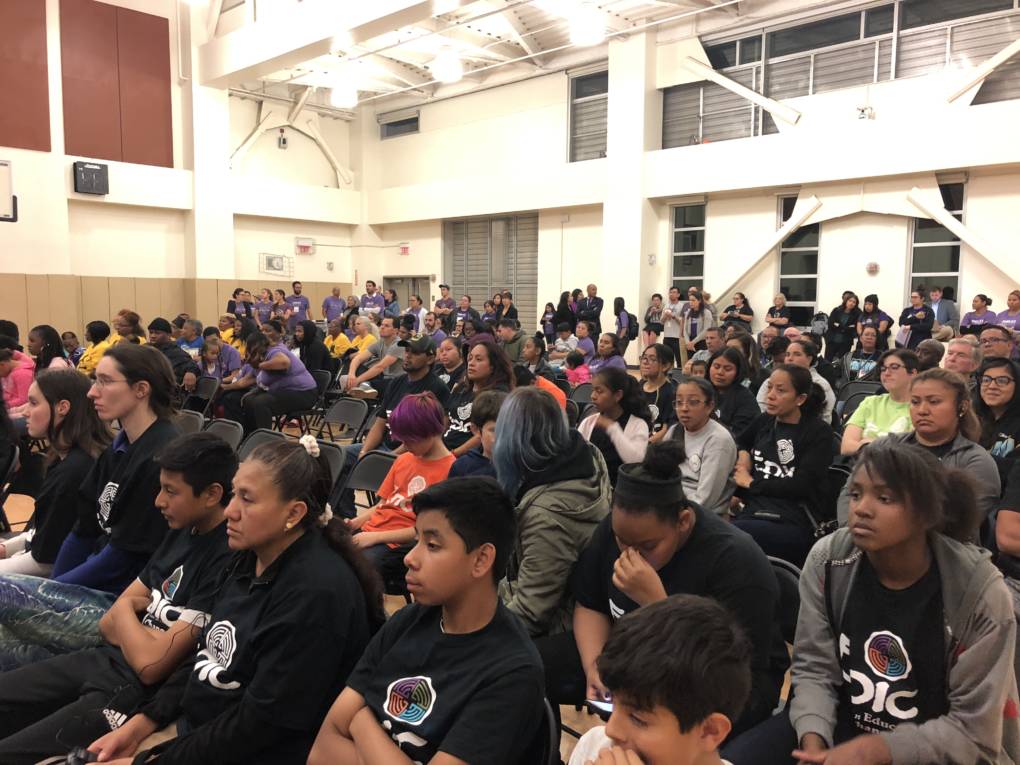
"caption": "Oakland charter school supporters awaiting school board's decision on their renewal petitions.",
"description": "oust school board meeting Nov 6, 2018 charter renewal",
"title": "worried supporters",
"credit": "Julia McEvoy/KQED",
"status": "inherit",
"isLoading": false,
"fetchFailed": false
},
"news_11704525": {
"type": "attachments",
"id": "news_11704525",
"meta": {
"index": "attachments_1716263798",
"site": "news",
"id": "11704525",
"found": true
},
"parent": 11702975,
"imgSizes": {
"twentyfourteen-full-width": {
"file": "https://ww2.kqed.org/app/uploads/sites/10/2018/11/superintendent_dyptich-1038x576.jpg",
"width": 1038,
"mimeType": "image/jpeg",
"height": 576
},
"thumbnail": {
"file": "https://ww2.kqed.org/app/uploads/sites/10/2018/11/superintendent_dyptich-160x90.jpg",
"width": 160,
"mimeType": "image/jpeg",
"height": 90
},
"post-thumbnail": {
"file": "https://ww2.kqed.org/app/uploads/sites/10/2018/11/superintendent_dyptich-672x372.jpg",
"width": 672,
"mimeType": "image/jpeg",
"height": 372
},
"kqedFullSize": {
"file": "https://ww2.kqed.org/app/uploads/sites/10/2018/11/superintendent_dyptich.jpg",
"width": 1920,
"height": 1080
},
"large": {
"file": "https://ww2.kqed.org/app/uploads/sites/10/2018/11/superintendent_dyptich-1020x574.jpg",
"width": 1020,
"mimeType": "image/jpeg",
"height": 574
},
"complete_open_graph": {
"file": "https://ww2.kqed.org/app/uploads/sites/10/2018/11/superintendent_dyptich-1200x675.jpg",
"width": 1200,
"mimeType": "image/jpeg",
"height": 675
},
"guest-author-50": {
"file": "https://ww2.kqed.org/app/uploads/sites/10/2018/11/superintendent_dyptich-50x50.jpg",
"width": 50,
"mimeType": "image/jpeg",
"height": 50
},
"guest-author-96": {
"file": "https://ww2.kqed.org/app/uploads/sites/10/2018/11/superintendent_dyptich-96x96.jpg",
"width": 96,
"mimeType": "image/jpeg",
"height": 96
},
"medium": {
"file": "https://ww2.kqed.org/app/uploads/sites/10/2018/11/superintendent_dyptich-800x450.jpg",
"width": 800,
"mimeType": "image/jpeg",
"height": 450
},
"guest-author-64": {
"file": "https://ww2.kqed.org/app/uploads/sites/10/2018/11/superintendent_dyptich-64x64.jpg",
"width": 64,
"mimeType": "image/jpeg",
"height": 64
},
"guest-author-32": {
"file": "https://ww2.kqed.org/app/uploads/sites/10/2018/11/superintendent_dyptich-32x32.jpg",
"width": 32,
"mimeType": "image/jpeg",
"height": 32
},
"full-width": {
"file": "https://ww2.kqed.org/app/uploads/sites/10/2018/11/superintendent_dyptich-1920x1080.jpg",
"width": 1920,
"mimeType": "image/jpeg",
"height": 1080
},
"detail": {
"file": "https://ww2.kqed.org/app/uploads/sites/10/2018/11/superintendent_dyptich-150x150.jpg",
"width": 150,
"mimeType": "image/jpeg",
"height": 150
},
"guest-author-128": {
"file": "https://ww2.kqed.org/app/uploads/sites/10/2018/11/superintendent_dyptich-128x128.jpg",
"width": 128,
"mimeType": "image/jpeg",
"height": 128
}
},
"publishDate": 1541608059,
"modified": 1541609023,
"caption": "Tony Thurmond (left) and Marshall Tuck, candidates for California Superintendent of Public Instruction. Tuck holds a slim lead as of Wednesday morning. ",
"description": null,
"title": "superintendent_dyptich",
"credit": "Courtesy of campaigns",
"status": "inherit",
"isLoading": false,
"fetchFailed": false
},
"news_11704302": {
"type": "attachments",
"id": "news_11704302",
"meta": {
"index": "attachments_1716263798",
"site": "news",
"id": "11704302",
"found": true
},
"parent": 11703960,
"imgSizes": {
"small": {
"file": "https://ww2.kqed.org/app/uploads/sites/10/2018/11/RS33682_110618_AW_Election_11-qut-520x347.jpg",
"width": 520,
"mimeType": "image/jpeg",
"height": 347
},
"twentyfourteen-full-width": {
"file": "https://ww2.kqed.org/app/uploads/sites/10/2018/11/RS33682_110618_AW_Election_11-qut-1038x576.jpg",
"width": 1038,
"mimeType": "image/jpeg",
"height": 576
},
"thumbnail": {
"file": "https://ww2.kqed.org/app/uploads/sites/10/2018/11/RS33682_110618_AW_Election_11-qut-160x107.jpg",
"width": 160,
"mimeType": "image/jpeg",
"height": 107
},
"fd-sm": {
"file": "https://ww2.kqed.org/app/uploads/sites/10/2018/11/RS33682_110618_AW_Election_11-qut-960x640.jpg",
"width": 960,
"mimeType": "image/jpeg",
"height": 640
},
"post-thumbnail": {
"file": "https://ww2.kqed.org/app/uploads/sites/10/2018/11/RS33682_110618_AW_Election_11-qut-672x372.jpg",
"width": 672,
"mimeType": "image/jpeg",
"height": 372
},
"xsmall": {
"file": "https://ww2.kqed.org/app/uploads/sites/10/2018/11/RS33682_110618_AW_Election_11-qut-375x250.jpg",
"width": 375,
"mimeType": "image/jpeg",
"height": 250
},
"kqedFullSize": {
"file": "https://ww2.kqed.org/app/uploads/sites/10/2018/11/RS33682_110618_AW_Election_11-qut.jpg",
"width": 1920,
"height": 1280
},
"large": {
"file": "https://ww2.kqed.org/app/uploads/sites/10/2018/11/RS33682_110618_AW_Election_11-qut-1020x680.jpg",
"width": 1020,
"mimeType": "image/jpeg",
"height": 680
},
"xlarge": {
"file": "https://ww2.kqed.org/app/uploads/sites/10/2018/11/RS33682_110618_AW_Election_11-qut-1180x787.jpg",
"width": 1180,
"mimeType": "image/jpeg",
"height": 787
},
"complete_open_graph": {
"file": "https://ww2.kqed.org/app/uploads/sites/10/2018/11/RS33682_110618_AW_Election_11-qut-1200x800.jpg",
"width": 1200,
"mimeType": "image/jpeg",
"height": 800
},
"guest-author-50": {
"file": "https://ww2.kqed.org/app/uploads/sites/10/2018/11/RS33682_110618_AW_Election_11-qut-50x50.jpg",
"width": 50,
"mimeType": "image/jpeg",
"height": 50
},
"guest-author-96": {
"file": "https://ww2.kqed.org/app/uploads/sites/10/2018/11/RS33682_110618_AW_Election_11-qut-96x96.jpg",
"width": 96,
"mimeType": "image/jpeg",
"height": 96
},
"medium": {
"file": "https://ww2.kqed.org/app/uploads/sites/10/2018/11/RS33682_110618_AW_Election_11-qut-800x533.jpg",
"width": 800,
"mimeType": "image/jpeg",
"height": 533
},
"guest-author-64": {
"file": "https://ww2.kqed.org/app/uploads/sites/10/2018/11/RS33682_110618_AW_Election_11-qut-64x64.jpg",
"width": 64,
"mimeType": "image/jpeg",
"height": 64
},
"guest-author-32": {
"file": "https://ww2.kqed.org/app/uploads/sites/10/2018/11/RS33682_110618_AW_Election_11-qut-32x32.jpg",
"width": 32,
"mimeType": "image/jpeg",
"height": 32
},
"fd-lrg": {
"file": "https://ww2.kqed.org/app/uploads/sites/10/2018/11/RS33682_110618_AW_Election_11-qut-1920x1280.jpg",
"width": 1920,
"mimeType": "image/jpeg",
"height": 1280
},
"fd-med": {
"file": "https://ww2.kqed.org/app/uploads/sites/10/2018/11/RS33682_110618_AW_Election_11-qut-1180x787.jpg",
"width": 1180,
"mimeType": "image/jpeg",
"height": 787
},
"full-width": {
"file": "https://ww2.kqed.org/app/uploads/sites/10/2018/11/RS33682_110618_AW_Election_11-qut-1920x1280.jpg",
"width": 1920,
"mimeType": "image/jpeg",
"height": 1280
},
"detail": {
"file": "https://ww2.kqed.org/app/uploads/sites/10/2018/11/RS33682_110618_AW_Election_11-qut-150x150.jpg",
"width": 150,
"mimeType": "image/jpeg",
"height": 150
},
"guest-author-128": {
"file": "https://ww2.kqed.org/app/uploads/sites/10/2018/11/RS33682_110618_AW_Election_11-qut-128x128.jpg",
"width": 128,
"mimeType": "image/jpeg",
"height": 128
},
"xxsmall": {
"file": "https://ww2.kqed.org/app/uploads/sites/10/2018/11/RS33682_110618_AW_Election_11-qut-240x160.jpg",
"width": 240,
"mimeType": "image/jpeg",
"height": 160
}
},
"publishDate": 1541566825,
"modified": 1541579736,
"caption": "Oakland Mayor Libby Schaaf on Nov. 6, 2018.",
"description": "Oakland Mayor Libby Schaaf on Nov. 6, 2018.",
"title": "RS33682_110618_AW_Election_11-qut",
"credit": "Anne Wernikoff/KQED",
"status": "inherit",
"isLoading": false,
"fetchFailed": false
},
"news_11703995": {
"type": "attachments",
"id": "news_11703995",
"meta": {
"index": "attachments_1716263798",
"site": "news",
"id": "11703995",
"found": true
},
"parent": 11703765,
"imgSizes": {
"small": {
"file": "https://ww2.kqed.org/app/uploads/sites/10/2018/11/Lakisha-Young-e1541535688680-520x413.jpg",
"width": 520,
"mimeType": "image/jpeg",
"height": 413
},
"twentyfourteen-full-width": {
"file": "https://ww2.kqed.org/app/uploads/sites/10/2018/11/Lakisha-Young-e1541535688680-1038x576.jpg",
"width": 1038,
"mimeType": "image/jpeg",
"height": 576
},
"thumbnail": {
"file": "https://ww2.kqed.org/app/uploads/sites/10/2018/11/Lakisha-Young-e1541535688680-160x127.jpg",
"width": 160,
"mimeType": "image/jpeg",
"height": 127
},
"fd-sm": {
"file": "https://ww2.kqed.org/app/uploads/sites/10/2018/11/Lakisha-Young-e1541535688680-960x763.jpg",
"width": 960,
"mimeType": "image/jpeg",
"height": 763
},
"post-thumbnail": {
"file": "https://ww2.kqed.org/app/uploads/sites/10/2018/11/Lakisha-Young-e1541535688680-672x372.jpg",
"width": 672,
"mimeType": "image/jpeg",
"height": 372
},
"xsmall": {
"file": "https://ww2.kqed.org/app/uploads/sites/10/2018/11/Lakisha-Young-e1541535688680-375x298.jpg",
"width": 375,
"mimeType": "image/jpeg",
"height": 298
},
"kqedFullSize": {
"file": "https://ww2.kqed.org/app/uploads/sites/10/2018/11/Lakisha-Young-e1541535716500.jpg",
"width": 1920,
"height": 1526
},
"large": {
"file": "https://ww2.kqed.org/app/uploads/sites/10/2018/11/Lakisha-Young-e1541535688680-1020x811.jpg",
"width": 1020,
"mimeType": "image/jpeg",
"height": 811
},
"xlarge": {
"file": "https://ww2.kqed.org/app/uploads/sites/10/2018/11/Lakisha-Young-e1541535688680-1180x938.jpg",
"width": 1180,
"mimeType": "image/jpeg",
"height": 938
},
"complete_open_graph": {
"file": "https://ww2.kqed.org/app/uploads/sites/10/2018/11/Lakisha-Young-e1541535688680-1200x954.jpg",
"width": 1200,
"mimeType": "image/jpeg",
"height": 954
},
"guest-author-50": {
"file": "https://ww2.kqed.org/app/uploads/sites/10/2018/11/Lakisha-Young-e1541535688680-50x50.jpg",
"width": 50,
"mimeType": "image/jpeg",
"height": 50
},
"guest-author-96": {
"file": "https://ww2.kqed.org/app/uploads/sites/10/2018/11/Lakisha-Young-e1541535688680-96x96.jpg",
"width": 96,
"mimeType": "image/jpeg",
"height": 96
},
"medium": {
"file": "https://ww2.kqed.org/app/uploads/sites/10/2018/11/Lakisha-Young-e1541535688680-800x636.jpg",
"width": 800,
"mimeType": "image/jpeg",
"height": 636
},
"guest-author-64": {
"file": "https://ww2.kqed.org/app/uploads/sites/10/2018/11/Lakisha-Young-e1541535688680-64x64.jpg",
"width": 64,
"mimeType": "image/jpeg",
"height": 64
},
"guest-author-32": {
"file": "https://ww2.kqed.org/app/uploads/sites/10/2018/11/Lakisha-Young-e1541535688680-32x32.jpg",
"width": 32,
"mimeType": "image/jpeg",
"height": 32
},
"fd-lrg": {
"file": "https://ww2.kqed.org/app/uploads/sites/10/2018/11/Lakisha-Young-e1541535688680-1920x1526.jpg",
"width": 1920,
"mimeType": "image/jpeg",
"height": 1526
},
"fd-med": {
"file": "https://ww2.kqed.org/app/uploads/sites/10/2018/11/Lakisha-Young-e1541535688680-1180x938.jpg",
"width": 1180,
"mimeType": "image/jpeg",
"height": 938
},
"full-width": {
"file": "https://ww2.kqed.org/app/uploads/sites/10/2018/11/Lakisha-Young-e1541535688680-1920x1526.jpg",
"width": 1920,
"mimeType": "image/jpeg",
"height": 1526
},
"detail": {
"file": "https://ww2.kqed.org/app/uploads/sites/10/2018/11/Lakisha-Young-e1541535688680-150x150.jpg",
"width": 150,
"mimeType": "image/jpeg",
"height": 150
},
"guest-author-128": {
"file": "https://ww2.kqed.org/app/uploads/sites/10/2018/11/Lakisha-Young-e1541535688680-128x128.jpg",
"width": 128,
"mimeType": "image/jpeg",
"height": 128
},
"xxsmall": {
"file": "https://ww2.kqed.org/app/uploads/sites/10/2018/11/Lakisha-Young-e1541535688680-240x191.jpg",
"width": 240,
"mimeType": "image/jpeg",
"height": 191
}
},
"publishDate": 1541468295,
"modified": 1544560461,
"caption": "Oakland Reach founder Lakisha Young tells parents in low-performing schools to advocate for their kids.",
"description": "Oakland Reach founder Lakisha Young tells parents in low-performing schools to advocate for their kids.",
"title": "OUSD-Lakisha Young",
"credit": "Julia McEvoy/KQED",
"status": "inherit",
"isLoading": false,
"fetchFailed": false
},
"news_11680907": {
"type": "attachments",
"id": "news_11680907",
"meta": {
"index": "attachments_1716263798",
"site": "news",
"id": "11680907",
"found": true
},
"parent": 11680868,
"imgSizes": {
"small": {
"file": "https://ww2.kqed.org/app/uploads/sites/10/2018/07/IVotedButton-520x347.jpg",
"width": 520,
"mimeType": "image/jpeg",
"height": 347
},
"twentyfourteen-full-width": {
"file": "https://ww2.kqed.org/app/uploads/sites/10/2018/07/IVotedButton-1038x576.jpg",
"width": 1038,
"mimeType": "image/jpeg",
"height": 576
},
"thumbnail": {
"file": "https://ww2.kqed.org/app/uploads/sites/10/2018/07/IVotedButton-160x107.jpg",
"width": 160,
"mimeType": "image/jpeg",
"height": 107
},
"fd-sm": {
"file": "https://ww2.kqed.org/app/uploads/sites/10/2018/07/IVotedButton-960x640.jpg",
"width": 960,
"mimeType": "image/jpeg",
"height": 640
},
"post-thumbnail": {
"file": "https://ww2.kqed.org/app/uploads/sites/10/2018/07/IVotedButton-672x372.jpg",
"width": 672,
"mimeType": "image/jpeg",
"height": 372
},
"xsmall": {
"file": "https://ww2.kqed.org/app/uploads/sites/10/2018/07/IVotedButton-375x250.jpg",
"width": 375,
"mimeType": "image/jpeg",
"height": 250
},
"kqedFullSize": {
"file": "https://ww2.kqed.org/app/uploads/sites/10/2018/07/IVotedButton.jpg",
"width": 1920,
"height": 1280
},
"large": {
"file": "https://ww2.kqed.org/app/uploads/sites/10/2018/07/IVotedButton-1020x680.jpg",
"width": 1020,
"mimeType": "image/jpeg",
"height": 680
},
"xlarge": {
"file": "https://ww2.kqed.org/app/uploads/sites/10/2018/07/IVotedButton-1180x787.jpg",
"width": 1180,
"mimeType": "image/jpeg",
"height": 787
},
"complete_open_graph": {
"file": "https://ww2.kqed.org/app/uploads/sites/10/2018/07/IVotedButton-1200x800.jpg",
"width": 1200,
"mimeType": "image/jpeg",
"height": 800
},
"guest-author-50": {
"file": "https://ww2.kqed.org/app/uploads/sites/10/2018/07/IVotedButton-50x50.jpg",
"width": 50,
"mimeType": "image/jpeg",
"height": 50
},
"guest-author-96": {
"file": "https://ww2.kqed.org/app/uploads/sites/10/2018/07/IVotedButton-96x96.jpg",
"width": 96,
"mimeType": "image/jpeg",
"height": 96
},
"medium": {
"file": "https://ww2.kqed.org/app/uploads/sites/10/2018/07/IVotedButton-800x533.jpg",
"width": 800,
"mimeType": "image/jpeg",
"height": 533
},
"guest-author-64": {
"file": "https://ww2.kqed.org/app/uploads/sites/10/2018/07/IVotedButton-64x64.jpg",
"width": 64,
"mimeType": "image/jpeg",
"height": 64
},
"guest-author-32": {
"file": "https://ww2.kqed.org/app/uploads/sites/10/2018/07/IVotedButton-32x32.jpg",
"width": 32,
"mimeType": "image/jpeg",
"height": 32
},
"fd-lrg": {
"file": "https://ww2.kqed.org/app/uploads/sites/10/2018/07/IVotedButton-1920x1280.jpg",
"width": 1920,
"mimeType": "image/jpeg",
"height": 1280
},
"fd-med": {
"file": "https://ww2.kqed.org/app/uploads/sites/10/2018/07/IVotedButton-1180x787.jpg",
"width": 1180,
"mimeType": "image/jpeg",
"height": 787
},
"full-width": {
"file": "https://ww2.kqed.org/app/uploads/sites/10/2018/07/IVotedButton-1920x1280.jpg",
"width": 1920,
"mimeType": "image/jpeg",
"height": 1280
},
"detail": {
"file": "https://ww2.kqed.org/app/uploads/sites/10/2018/07/IVotedButton-150x150.jpg",
"width": 150,
"mimeType": "image/jpeg",
"height": 150
},
"guest-author-128": {
"file": "https://ww2.kqed.org/app/uploads/sites/10/2018/07/IVotedButton-128x128.jpg",
"width": 128,
"mimeType": "image/jpeg",
"height": 128
},
"xxsmall": {
"file": "https://ww2.kqed.org/app/uploads/sites/10/2018/07/IVotedButton-240x160.jpg",
"width": 240,
"mimeType": "image/jpeg",
"height": 160
}
},
"publishDate": 1531790402,
"modified": 1531862480,
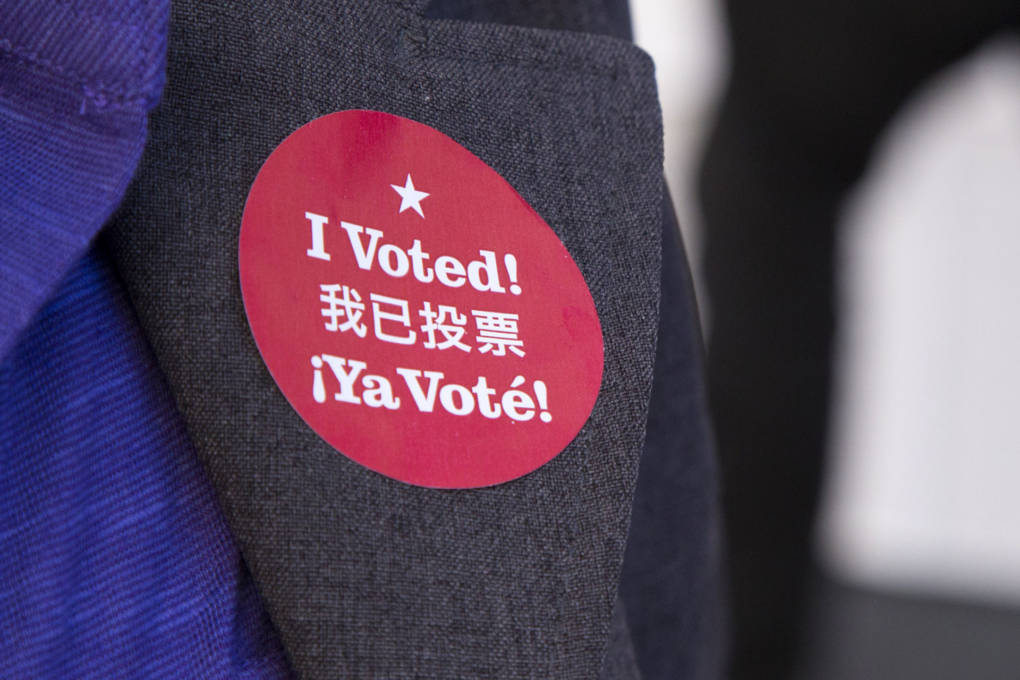
"caption": "In November 2016, San Francisco voters approved Proposition N, authorizing noncitizen voting in school board elections.",
"description": "In Nov. 2016, San Francisco voters approved Proposition N, authorizing non-citizen voting in school board elections.",
"title": "IVotedButton",
"credit": "Alan Toth/KQED",
"status": "inherit",
"isLoading": false,
"fetchFailed": false
},
"news_11703808": {
"type": "attachments",
"id": "news_11703808",
"meta": {
"index": "attachments_1716263798",
"site": "news",
"id": "11703808",
"found": true
},
"parent": 11702612,
"imgSizes": {
"small": {
"file": "https://ww2.kqed.org/app/uploads/sites/10/2018/11/cityhall-520x390.jpg",
"width": 520,
"mimeType": "image/jpeg",
"height": 390
},
"twentyfourteen-full-width": {
"file": "https://ww2.kqed.org/app/uploads/sites/10/2018/11/cityhall-1038x576.jpg",
"width": 1038,
"mimeType": "image/jpeg",
"height": 576
},
"thumbnail": {
"file": "https://ww2.kqed.org/app/uploads/sites/10/2018/11/cityhall-160x120.jpg",
"width": 160,
"mimeType": "image/jpeg",
"height": 120
},
"fd-sm": {
"file": "https://ww2.kqed.org/app/uploads/sites/10/2018/11/cityhall-960x720.jpg",
"width": 960,
"mimeType": "image/jpeg",
"height": 720
},
"post-thumbnail": {
"file": "https://ww2.kqed.org/app/uploads/sites/10/2018/11/cityhall-672x372.jpg",
"width": 672,
"mimeType": "image/jpeg",
"height": 372
},
"xsmall": {
"file": "https://ww2.kqed.org/app/uploads/sites/10/2018/11/cityhall-375x281.jpg",
"width": 375,
"mimeType": "image/jpeg",
"height": 281
},
"kqedFullSize": {
"file": "https://ww2.kqed.org/app/uploads/sites/10/2018/11/cityhall.jpg",
"width": 2048,
"height": 1536
},
"large": {
"file": "https://ww2.kqed.org/app/uploads/sites/10/2018/11/cityhall-1020x765.jpg",
"width": 1020,
"mimeType": "image/jpeg",
"height": 765
},
"xlarge": {
"file": "https://ww2.kqed.org/app/uploads/sites/10/2018/11/cityhall-1180x885.jpg",
"width": 1180,
"mimeType": "image/jpeg",
"height": 885
},
"complete_open_graph": {
"file": "https://ww2.kqed.org/app/uploads/sites/10/2018/11/cityhall-1200x900.jpg",
"width": 1200,
"mimeType": "image/jpeg",
"height": 900
},
"guest-author-50": {
"file": "https://ww2.kqed.org/app/uploads/sites/10/2018/11/cityhall-50x50.jpg",
"width": 50,
"mimeType": "image/jpeg",
"height": 50
},
"guest-author-96": {
"file": "https://ww2.kqed.org/app/uploads/sites/10/2018/11/cityhall-96x96.jpg",
"width": 96,
"mimeType": "image/jpeg",
"height": 96
},
"medium": {
"file": "https://ww2.kqed.org/app/uploads/sites/10/2018/11/cityhall-800x600.jpg",
"width": 800,
"mimeType": "image/jpeg",
"height": 600
},
"guest-author-64": {
"file": "https://ww2.kqed.org/app/uploads/sites/10/2018/11/cityhall-64x64.jpg",
"width": 64,
"mimeType": "image/jpeg",
"height": 64
},
"guest-author-32": {
"file": "https://ww2.kqed.org/app/uploads/sites/10/2018/11/cityhall-32x32.jpg",
"width": 32,
"mimeType": "image/jpeg",
"height": 32
},
"fd-lrg": {
"file": "https://ww2.kqed.org/app/uploads/sites/10/2018/11/cityhall-1920x1440.jpg",
"width": 1920,
"mimeType": "image/jpeg",
"height": 1440
},
"fd-med": {
"file": "https://ww2.kqed.org/app/uploads/sites/10/2018/11/cityhall-1180x885.jpg",
"width": 1180,
"mimeType": "image/jpeg",
"height": 885
},
"full-width": {
"file": "https://ww2.kqed.org/app/uploads/sites/10/2018/11/cityhall-1920x1440.jpg",
"width": 1920,
"mimeType": "image/jpeg",
"height": 1440
},
"detail": {
"file": "https://ww2.kqed.org/app/uploads/sites/10/2018/11/cityhall-150x150.jpg",
"width": 150,
"mimeType": "image/jpeg",
"height": 150
},
"guest-author-128": {
"file": "https://ww2.kqed.org/app/uploads/sites/10/2018/11/cityhall-128x128.jpg",
"width": 128,
"mimeType": "image/jpeg",
"height": 128
},
"xxsmall": {
"file": "https://ww2.kqed.org/app/uploads/sites/10/2018/11/cityhall-240x180.jpg",
"width": 240,
"mimeType": "image/jpeg",
"height": 180
}
},
"publishDate": 1541454234,
"modified": 1541465100,
"caption": "Oakland City Hall. ",
"description": null,
"title": "cityhall",
"credit": "Mike Linksvayer via Flickr",
"status": "inherit",
"isLoading": false,
"fetchFailed": false
},
"news_11703400": {
"type": "attachments",
"id": "news_11703400",
"meta": {
"index": "attachments_1716263798",
"site": "news",
"id": "11703400",
"found": true
},
"parent": 11703330,
"imgSizes": {
"small": {
"file": "https://ww2.kqed.org/app/uploads/sites/10/2018/11/NR605_MARQUEE_1-520x293.jpg",
"width": 520,
"mimeType": "image/jpeg",
"height": 293
},
"twentyfourteen-full-width": {
"file": "https://ww2.kqed.org/app/uploads/sites/10/2018/11/NR605_MARQUEE_1-1038x576.jpg",
"width": 1038,
"mimeType": "image/jpeg",
"height": 576
},
"thumbnail": {
"file": "https://ww2.kqed.org/app/uploads/sites/10/2018/11/NR605_MARQUEE_1-160x90.jpg",
"width": 160,
"mimeType": "image/jpeg",
"height": 90
},
"fd-sm": {
"file": "https://ww2.kqed.org/app/uploads/sites/10/2018/11/NR605_MARQUEE_1-960x540.jpg",
"width": 960,
"mimeType": "image/jpeg",
"height": 540
},
"post-thumbnail": {
"file": "https://ww2.kqed.org/app/uploads/sites/10/2018/11/NR605_MARQUEE_1-672x372.jpg",
"width": 672,
"mimeType": "image/jpeg",
"height": 372
},
"xsmall": {
"file": "https://ww2.kqed.org/app/uploads/sites/10/2018/11/NR605_MARQUEE_1-375x211.jpg",
"width": 375,
"mimeType": "image/jpeg",
"height": 211
},
"kqedFullSize": {
"file": "https://ww2.kqed.org/app/uploads/sites/10/2018/11/NR605_MARQUEE_1.jpg",
"width": 1280,
"height": 720
},
"large": {
"file": "https://ww2.kqed.org/app/uploads/sites/10/2018/11/NR605_MARQUEE_1-1020x574.jpg",
"width": 1020,
"mimeType": "image/jpeg",
"height": 574
},
"xlarge": {
"file": "https://ww2.kqed.org/app/uploads/sites/10/2018/11/NR605_MARQUEE_1-1180x664.jpg",
"width": 1180,
"mimeType": "image/jpeg",
"height": 664
},
"complete_open_graph": {
"file": "https://ww2.kqed.org/app/uploads/sites/10/2018/11/NR605_MARQUEE_1-1200x675.jpg",
"width": 1200,
"mimeType": "image/jpeg",
"height": 675
},
"guest-author-50": {
"file": "https://ww2.kqed.org/app/uploads/sites/10/2018/11/NR605_MARQUEE_1-50x50.jpg",
"width": 50,
"mimeType": "image/jpeg",
"height": 50
},
"guest-author-96": {
"file": "https://ww2.kqed.org/app/uploads/sites/10/2018/11/NR605_MARQUEE_1-96x96.jpg",
"width": 96,
"mimeType": "image/jpeg",
"height": 96
},
"medium": {
"file": "https://ww2.kqed.org/app/uploads/sites/10/2018/11/NR605_MARQUEE_1-800x450.jpg",
"width": 800,
"mimeType": "image/jpeg",
"height": 450
},
"guest-author-64": {
"file": "https://ww2.kqed.org/app/uploads/sites/10/2018/11/NR605_MARQUEE_1-64x64.jpg",
"width": 64,
"mimeType": "image/jpeg",
"height": 64
},
"guest-author-32": {
"file": "https://ww2.kqed.org/app/uploads/sites/10/2018/11/NR605_MARQUEE_1-32x32.jpg",
"width": 32,
"mimeType": "image/jpeg",
"height": 32
},
"fd-med": {
"file": "https://ww2.kqed.org/app/uploads/sites/10/2018/11/NR605_MARQUEE_1-1180x664.jpg",
"width": 1180,
"mimeType": "image/jpeg",
"height": 664
},
"detail": {
"file": "https://ww2.kqed.org/app/uploads/sites/10/2018/11/NR605_MARQUEE_1-150x150.jpg",
"width": 150,
"mimeType": "image/jpeg",
"height": 150
},
"guest-author-128": {
"file": "https://ww2.kqed.org/app/uploads/sites/10/2018/11/NR605_MARQUEE_1-128x128.jpg",
"width": 128,
"mimeType": "image/jpeg",
"height": 128
},
"xxsmall": {
"file": "https://ww2.kqed.org/app/uploads/sites/10/2018/11/NR605_MARQUEE_1-240x135.jpg",
"width": 240,
"mimeType": "image/jpeg",
"height": 135
}
},
"publishDate": 1541202832,
"modified": 1541202832,
"caption": null,
"description": null,
"title": "NR605_MARQUEE_1",
"credit": null,
"status": "inherit",
"isLoading": false,
"fetchFailed": false
},
"news_11572756": {
"type": "attachments",
"id": "news_11572756",
"meta": {
"index": "attachments_1716263798",
"site": "news",
"id": "11572756",
"found": true
},
"parent": 0,
"imgSizes": {
"small": {
"file": "https://ww2.kqed.org/app/uploads/sites/10/2017/07/tcr_archive_background-520x195.jpg",
"width": 520,
"mimeType": "image/jpeg",
"height": 195
},
"twentyfourteen-full-width": {
"file": "https://ww2.kqed.org/app/uploads/sites/10/2017/07/tcr_archive_background-1038x450.jpg",
"width": 1038,
"mimeType": "image/jpeg",
"height": 450
},
"thumbnail": {
"file": "https://ww2.kqed.org/app/uploads/sites/10/2017/07/tcr_archive_background-160x60.jpg",
"width": 160,
"mimeType": "image/jpeg",
"height": 60
},
"fd-sm": {
"file": "https://ww2.kqed.org/app/uploads/sites/10/2017/07/tcr_archive_background-960x360.jpg",
"width": 960,
"mimeType": "image/jpeg",
"height": 360
},
"post-thumbnail": {
"file": "https://ww2.kqed.org/app/uploads/sites/10/2017/07/tcr_archive_background-672x372.jpg",
"width": 672,
"mimeType": "image/jpeg",
"height": 372
},
"xsmall": {
"file": "https://ww2.kqed.org/app/uploads/sites/10/2017/07/tcr_archive_background-375x141.jpg",
"width": 375,
"mimeType": "image/jpeg",
"height": 141
},
"kqedFullSize": {
"file": "https://ww2.kqed.org/app/uploads/sites/10/2017/07/tcr_archive_background.jpg",
"width": 1200,
"height": 450
},
"large": {
"file": "https://ww2.kqed.org/app/uploads/sites/10/2017/07/tcr_archive_background-1020x383.jpg",
"width": 1020,
"mimeType": "image/jpeg",
"height": 383
},
"xlarge": {
"file": "https://ww2.kqed.org/app/uploads/sites/10/2017/07/tcr_archive_background-1180x443.jpg",
"width": 1180,
"mimeType": "image/jpeg",
"height": 443
},
"guest-author-50": {
"file": "https://ww2.kqed.org/app/uploads/sites/10/2017/07/tcr_archive_background-50x50.jpg",
"width": 50,
"mimeType": "image/jpeg",
"height": 50
},
"guest-author-96": {
"file": "https://ww2.kqed.org/app/uploads/sites/10/2017/07/tcr_archive_background-96x96.jpg",
"width": 96,
"mimeType": "image/jpeg",
"height": 96
},
"medium": {
"file": "https://ww2.kqed.org/app/uploads/sites/10/2017/07/tcr_archive_background-800x300.jpg",
"width": 800,
"mimeType": "image/jpeg",
"height": 300
},
"guest-author-64": {
"file": "https://ww2.kqed.org/app/uploads/sites/10/2017/07/tcr_archive_background-64x64.jpg",
"width": 64,
"mimeType": "image/jpeg",
"height": 64
},
"guest-author-32": {
"file": "https://ww2.kqed.org/app/uploads/sites/10/2017/07/tcr_archive_background-32x32.jpg",
"width": 32,
"mimeType": "image/jpeg",
"height": 32
},
"fd-med": {
"file": "https://ww2.kqed.org/app/uploads/sites/10/2017/07/tcr_archive_background-1180x443.jpg",
"width": 1180,
"mimeType": "image/jpeg",
"height": 443
},
"detail": {
"file": "https://ww2.kqed.org/app/uploads/sites/10/2017/07/tcr_archive_background-150x150.jpg",
"width": 150,
"mimeType": "image/jpeg",
"height": 150
},
"guest-author-128": {
"file": "https://ww2.kqed.org/app/uploads/sites/10/2017/07/tcr_archive_background-128x128.jpg",
"width": 128,
"mimeType": "image/jpeg",
"height": 128
},
"xxsmall": {
"file": "https://ww2.kqed.org/app/uploads/sites/10/2017/07/tcr_archive_background-240x90.jpg",
"width": 240,
"mimeType": "image/jpeg",
"height": 90
}
},
"publishDate": 1500316142,
"modified": 1500316142,
"caption": null,
"description": null,
"title": "tcr_archive_background",
"credit": null,
"status": "inherit",
"isLoading": false,
"fetchFailed": false
},
"news_11701067": {
"type": "attachments",
"id": "news_11701067",
"meta": {
"index": "attachments_1716263798",
"site": "news",
"id": "11701067",
"found": true
},
"parent": 11701044,
"imgSizes": {
"small": {
"file": "https://ww2.kqed.org/app/uploads/sites/10/2018/10/edu-woodsons-portrait-520x347.jpg",
"width": 520,
"mimeType": "image/jpeg",
"height": 347
},
"twentyfourteen-full-width": {
"file": "https://ww2.kqed.org/app/uploads/sites/10/2018/10/edu-woodsons-portrait-1038x576.jpg",
"width": 1038,
"mimeType": "image/jpeg",
"height": 576
},
"thumbnail": {
"file": "https://ww2.kqed.org/app/uploads/sites/10/2018/10/edu-woodsons-portrait-160x107.jpg",
"width": 160,
"mimeType": "image/jpeg",
"height": 107
},
"fd-sm": {
"file": "https://ww2.kqed.org/app/uploads/sites/10/2018/10/edu-woodsons-portrait-960x640.jpg",
"width": 960,
"mimeType": "image/jpeg",
"height": 640
},
"post-thumbnail": {
"file": "https://ww2.kqed.org/app/uploads/sites/10/2018/10/edu-woodsons-portrait-672x372.jpg",
"width": 672,
"mimeType": "image/jpeg",
"height": 372
},
"xsmall": {
"file": "https://ww2.kqed.org/app/uploads/sites/10/2018/10/edu-woodsons-portrait-375x250.jpg",
"width": 375,
"mimeType": "image/jpeg",
"height": 250
},
"kqedFullSize": {
"file": "https://ww2.kqed.org/app/uploads/sites/10/2018/10/edu-woodsons-portrait-e1540491060816.jpg",
"width": 1920,
"height": 1280
},
"large": {
"file": "https://ww2.kqed.org/app/uploads/sites/10/2018/10/edu-woodsons-portrait-1020x680.jpg",
"width": 1020,
"mimeType": "image/jpeg",
"height": 680
},
"xlarge": {
"file": "https://ww2.kqed.org/app/uploads/sites/10/2018/10/edu-woodsons-portrait-1180x787.jpg",
"width": 1180,
"mimeType": "image/jpeg",
"height": 787
},
"complete_open_graph": {
"file": "https://ww2.kqed.org/app/uploads/sites/10/2018/10/edu-woodsons-portrait-1200x800.jpg",
"width": 1200,
"mimeType": "image/jpeg",
"height": 800
},
"guest-author-50": {
"file": "https://ww2.kqed.org/app/uploads/sites/10/2018/10/edu-woodsons-portrait-50x50.jpg",
"width": 50,
"mimeType": "image/jpeg",
"height": 50
},
"guest-author-96": {
"file": "https://ww2.kqed.org/app/uploads/sites/10/2018/10/edu-woodsons-portrait-96x96.jpg",
"width": 96,
"mimeType": "image/jpeg",
"height": 96
},
"medium": {
"file": "https://ww2.kqed.org/app/uploads/sites/10/2018/10/edu-woodsons-portrait-800x533.jpg",
"width": 800,
"mimeType": "image/jpeg",
"height": 533
},
"guest-author-64": {
"file": "https://ww2.kqed.org/app/uploads/sites/10/2018/10/edu-woodsons-portrait-64x64.jpg",
"width": 64,
"mimeType": "image/jpeg",
"height": 64
},
"guest-author-32": {
"file": "https://ww2.kqed.org/app/uploads/sites/10/2018/10/edu-woodsons-portrait-32x32.jpg",
"width": 32,
"mimeType": "image/jpeg",
"height": 32
},
"fd-lrg": {
"file": "https://ww2.kqed.org/app/uploads/sites/10/2018/10/edu-woodsons-portrait-1920x1280.jpg",
"width": 1920,
"mimeType": "image/jpeg",
"height": 1280
},
"fd-med": {
"file": "https://ww2.kqed.org/app/uploads/sites/10/2018/10/edu-woodsons-portrait-1180x787.jpg",
"width": 1180,
"mimeType": "image/jpeg",
"height": 787
},
"full-width": {
"file": "https://ww2.kqed.org/app/uploads/sites/10/2018/10/edu-woodsons-portrait-1920x1280.jpg",
"width": 1920,
"mimeType": "image/jpeg",
"height": 1280
},
"detail": {
"file": "https://ww2.kqed.org/app/uploads/sites/10/2018/10/edu-woodsons-portrait-150x150.jpg",
"width": 150,
"mimeType": "image/jpeg",
"height": 150
},
"guest-author-128": {
"file": "https://ww2.kqed.org/app/uploads/sites/10/2018/10/edu-woodsons-portrait-128x128.jpg",
"width": 128,
"mimeType": "image/jpeg",
"height": 128
},
"xxsmall": {
"file": "https://ww2.kqed.org/app/uploads/sites/10/2018/10/edu-woodsons-portrait-240x160.jpg",
"width": 240,
"mimeType": "image/jpeg",
"height": 160
}
},
"publishDate": 1540421416,
"modified": 1540512096,
"caption": "Oakland parents Charles and Sarah Woodson had to choose between sending their son to the neighborhood school or to a private school.",
"description": "Oakland parents Charles and Sarah Woodson had to choose between sending their son to the neighborhood school or to a private school.",
"title": "edu-woodsons-portrait",
"credit": "Sean Havey/California Dream",
"status": "inherit",
"isLoading": false,
"fetchFailed": false
},
"news_11701019": {
"type": "attachments",
"id": "news_11701019",
"meta": {
"index": "attachments_1716263798",
"site": "news",
"id": "11701019",
"found": true
},
"parent": 11700997,
"imgSizes": {
"small": {
"file": "https://ww2.kqed.org/app/uploads/sites/10/2018/10/tuff_102418_final-520x341.jpg",
"width": 520,
"mimeType": "image/jpeg",
"height": 341
},
"twentyfourteen-full-width": {
"file": "https://ww2.kqed.org/app/uploads/sites/10/2018/10/tuff_102418_final-1038x576.jpg",
"width": 1038,
"mimeType": "image/jpeg",
"height": 576
},
"thumbnail": {
"file": "https://ww2.kqed.org/app/uploads/sites/10/2018/10/tuff_102418_final-160x105.jpg",
"width": 160,
"mimeType": "image/jpeg",
"height": 105
},
"fd-sm": {
"file": "https://ww2.kqed.org/app/uploads/sites/10/2018/10/tuff_102418_final-960x629.jpg",
"width": 960,
"mimeType": "image/jpeg",
"height": 629
},
"post-thumbnail": {
"file": "https://ww2.kqed.org/app/uploads/sites/10/2018/10/tuff_102418_final-672x372.jpg",
"width": 672,
"mimeType": "image/jpeg",
"height": 372
},
"xsmall": {
"file": "https://ww2.kqed.org/app/uploads/sites/10/2018/10/tuff_102418_final-375x246.jpg",
"width": 375,
"mimeType": "image/jpeg",
"height": 246
},
"kqedFullSize": {
"file": "https://ww2.kqed.org/app/uploads/sites/10/2018/10/tuff_102418_final.jpg",
"width": 1920,
"height": 1258
},
"large": {
"file": "https://ww2.kqed.org/app/uploads/sites/10/2018/10/tuff_102418_final-1020x668.jpg",
"width": 1020,
"mimeType": "image/jpeg",
"height": 668
},
"xlarge": {
"file": "https://ww2.kqed.org/app/uploads/sites/10/2018/10/tuff_102418_final-1180x773.jpg",
"width": 1180,
"mimeType": "image/jpeg",
"height": 773
},
"complete_open_graph": {
"file": "https://ww2.kqed.org/app/uploads/sites/10/2018/10/tuff_102418_final-1200x786.jpg",
"width": 1200,
"mimeType": "image/jpeg",
"height": 786
},
"guest-author-50": {
"file": "https://ww2.kqed.org/app/uploads/sites/10/2018/10/tuff_102418_final-50x50.jpg",
"width": 50,
"mimeType": "image/jpeg",
"height": 50
},
"guest-author-96": {
"file": "https://ww2.kqed.org/app/uploads/sites/10/2018/10/tuff_102418_final-96x96.jpg",
"width": 96,
"mimeType": "image/jpeg",
"height": 96
},
"medium": {
"file": "https://ww2.kqed.org/app/uploads/sites/10/2018/10/tuff_102418_final-800x524.jpg",
"width": 800,
"mimeType": "image/jpeg",
"height": 524
},
"guest-author-64": {
"file": "https://ww2.kqed.org/app/uploads/sites/10/2018/10/tuff_102418_final-64x64.jpg",
"width": 64,
"mimeType": "image/jpeg",
"height": 64
},
"guest-author-32": {
"file": "https://ww2.kqed.org/app/uploads/sites/10/2018/10/tuff_102418_final-32x32.jpg",
"width": 32,
"mimeType": "image/jpeg",
"height": 32
},
"fd-lrg": {
"file": "https://ww2.kqed.org/app/uploads/sites/10/2018/10/tuff_102418_final-1920x1258.jpg",
"width": 1920,
"mimeType": "image/jpeg",
"height": 1258
},
"fd-med": {
"file": "https://ww2.kqed.org/app/uploads/sites/10/2018/10/tuff_102418_final-1180x773.jpg",
"width": 1180,
"mimeType": "image/jpeg",
"height": 773
},
"full-width": {
"file": "https://ww2.kqed.org/app/uploads/sites/10/2018/10/tuff_102418_final-1920x1258.jpg",
"width": 1920,
"mimeType": "image/jpeg",
"height": 1258
},
"detail": {
"file": "https://ww2.kqed.org/app/uploads/sites/10/2018/10/tuff_102418_final-150x150.jpg",
"width": 150,
"mimeType": "image/jpeg",
"height": 150
},
"guest-author-128": {
"file": "https://ww2.kqed.org/app/uploads/sites/10/2018/10/tuff_102418_final-128x128.jpg",
"width": 128,
"mimeType": "image/jpeg",
"height": 128
},
"xxsmall": {
"file": "https://ww2.kqed.org/app/uploads/sites/10/2018/10/tuff_102418_final-240x157.jpg",
"width": 240,
"mimeType": "image/jpeg",
"height": 157
}
},
"publishDate": 1540417331,
"modified": 1540417349,
"caption": null,
"description": null,
"title": "tuff_102418_final",
"credit": null,
"status": "inherit",
"isLoading": false,
"fetchFailed": false
},
"news_11700910": {
"type": "attachments",
"id": "news_11700910",
"meta": {
"index": "attachments_1716263798",
"site": "news",
"id": "11700910",
"found": true
},
"parent": 11700592,
"imgSizes": {
"small": {
"file": "https://ww2.kqed.org/app/uploads/sites/10/2018/10/StateOfBlackEducation-520x332.jpg",
"width": 520,
"mimeType": "image/jpeg",
"height": 332
},
"twentyfourteen-full-width": {
"file": "https://ww2.kqed.org/app/uploads/sites/10/2018/10/StateOfBlackEducation-1038x576.jpg",
"width": 1038,
"mimeType": "image/jpeg",
"height": 576
},
"thumbnail": {
"file": "https://ww2.kqed.org/app/uploads/sites/10/2018/10/StateOfBlackEducation-160x102.jpg",
"width": 160,
"mimeType": "image/jpeg",
"height": 102
},
"fd-sm": {
"file": "https://ww2.kqed.org/app/uploads/sites/10/2018/10/StateOfBlackEducation-960x613.jpg",
"width": 960,
"mimeType": "image/jpeg",
"height": 613
},
"post-thumbnail": {
"file": "https://ww2.kqed.org/app/uploads/sites/10/2018/10/StateOfBlackEducation-672x372.jpg",
"width": 672,
"mimeType": "image/jpeg",
"height": 372
},
"xsmall": {
"file": "https://ww2.kqed.org/app/uploads/sites/10/2018/10/StateOfBlackEducation-375x239.jpg",
"width": 375,
"mimeType": "image/jpeg",
"height": 239
},
"kqedFullSize": {
"file": "https://ww2.kqed.org/app/uploads/sites/10/2018/10/StateOfBlackEducation.jpg",
"width": 1920,
"height": 1226
},
"large": {
"file": "https://ww2.kqed.org/app/uploads/sites/10/2018/10/StateOfBlackEducation-1020x651.jpg",
"width": 1020,
"mimeType": "image/jpeg",
"height": 651
},
"xlarge": {
"file": "https://ww2.kqed.org/app/uploads/sites/10/2018/10/StateOfBlackEducation-1180x753.jpg",
"width": 1180,
"mimeType": "image/jpeg",
"height": 753
},
"complete_open_graph": {
"file": "https://ww2.kqed.org/app/uploads/sites/10/2018/10/StateOfBlackEducation-1200x766.jpg",
"width": 1200,
"mimeType": "image/jpeg",
"height": 766
},
"guest-author-50": {
"file": "https://ww2.kqed.org/app/uploads/sites/10/2018/10/StateOfBlackEducation-50x50.jpg",
"width": 50,
"mimeType": "image/jpeg",
"height": 50
},
"guest-author-96": {
"file": "https://ww2.kqed.org/app/uploads/sites/10/2018/10/StateOfBlackEducation-96x96.jpg",
"width": 96,
"mimeType": "image/jpeg",
"height": 96
},
"medium": {
"file": "https://ww2.kqed.org/app/uploads/sites/10/2018/10/StateOfBlackEducation-800x511.jpg",
"width": 800,
"mimeType": "image/jpeg",
"height": 511
},
"guest-author-64": {
"file": "https://ww2.kqed.org/app/uploads/sites/10/2018/10/StateOfBlackEducation-64x64.jpg",
"width": 64,
"mimeType": "image/jpeg",
"height": 64
},
"guest-author-32": {
"file": "https://ww2.kqed.org/app/uploads/sites/10/2018/10/StateOfBlackEducation-32x32.jpg",
"width": 32,
"mimeType": "image/jpeg",
"height": 32
},
"fd-lrg": {
"file": "https://ww2.kqed.org/app/uploads/sites/10/2018/10/StateOfBlackEducation-1920x1226.jpg",
"width": 1920,
"mimeType": "image/jpeg",
"height": 1226
},
"fd-med": {
"file": "https://ww2.kqed.org/app/uploads/sites/10/2018/10/StateOfBlackEducation-1180x753.jpg",
"width": 1180,
"mimeType": "image/jpeg",
"height": 753
},
"full-width": {
"file": "https://ww2.kqed.org/app/uploads/sites/10/2018/10/StateOfBlackEducation-1920x1226.jpg",
"width": 1920,
"mimeType": "image/jpeg",
"height": 1226
},
"detail": {
"file": "https://ww2.kqed.org/app/uploads/sites/10/2018/10/StateOfBlackEducation-150x150.jpg",
"width": 150,
"mimeType": "image/jpeg",
"height": 150
},
"guest-author-128": {
"file": "https://ww2.kqed.org/app/uploads/sites/10/2018/10/StateOfBlackEducation-128x128.jpg",
"width": 128,
"mimeType": "image/jpeg",
"height": 128
},
"xxsmall": {
"file": "https://ww2.kqed.org/app/uploads/sites/10/2018/10/StateOfBlackEducation-240x153.jpg",
"width": 240,
"mimeType": "image/jpeg",
"height": 153
}
},
"publishDate": 1540403891,
"modified": 1540405771,
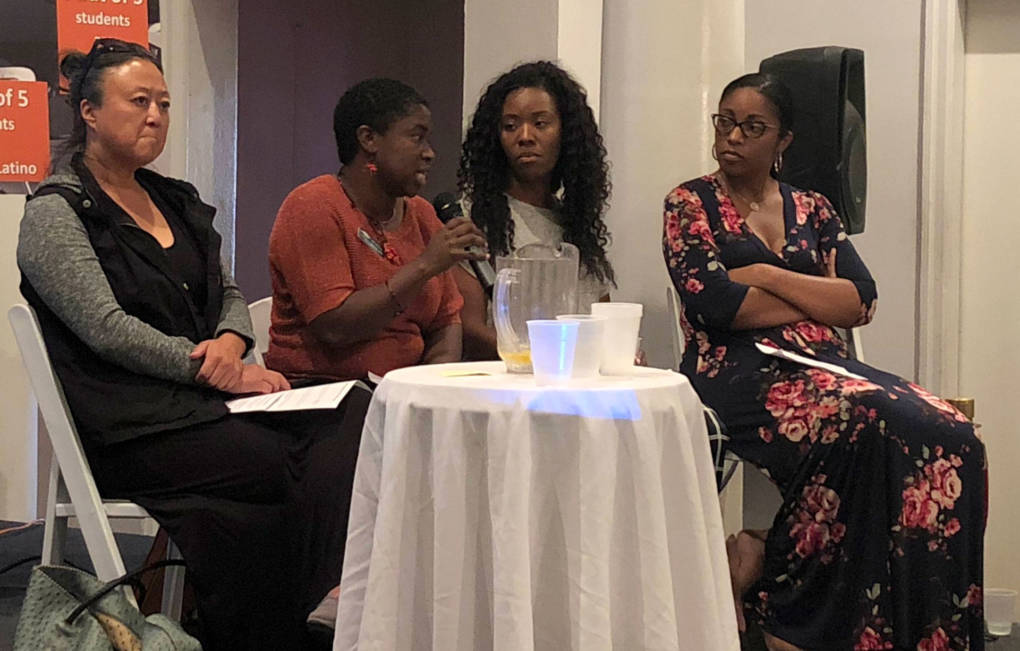
"caption": "Oakland Unified School District Superintendent Kyla Johnson-Trammell (right) joined local education officials at a State of Black Education Oakland event. ",
"description": "Oakland Unified School District Superintendent Kyla Johnson-Trammell (right) joined local education officials at a State of Black Education Oakland event. ",
"title": "StateOfBlackEducation",
"credit": "Vanessa Rancano/KQED",
"status": "inherit",
"isLoading": false,
"fetchFailed": false
}
},
"audioPlayerReducer": {
"postId": "stream_live",
"isPaused": true,
"isPlaying": false,
"pfsActive": false,
"pledgeModalIsOpen": true,
"playerDrawerIsOpen": false,
"liveAudioPlayStartedAt": 0,
"liveAudioPlayContext": ""
},
"authorsReducer": {
"jmcevoy": {
"type": "authors",
"id": "231",
"meta": {
"index": "authors_1716337520",
"id": "231",
"found": true
},
"name": "Julia McEvoy",
"firstName": "Julia",
"lastName": "McEvoy",
"slug": "jmcevoy",
"email": "jmcevoy@KQED.org",
"display_author_email": true,
"staff_mastheads": [
"news"
],
"title": "KQED Senior Editor",
"bio": "Julia McEvoy is KQED's Senior Editor, Education Equity.\r\n\r\nJulia heads KQED’s education coverage examining inequities students face in Bay Area and California schools, and reports on what it will take to educate the next generation.\r\n\r\nJulia's editorial work has received a Peabody Award, a Casey Medal for Coverage of Children and Families, several Edward R. Murrow awards, as well as awards from the Public Radio News Directors Inc. and the Society for Professional Journalists.",
"avatar": "https://secure.gravatar.com/avatar/aec3ce21abe02b302fd33638abd56a22?s=600&d=blank&r=g",
"twitter": "juliamcevoy1",
"facebook": null,
"instagram": null,
"linkedin": null,
"sites": [
{
"site": "news",
"roles": []
},
{
"site": "stateofhealth",
"roles": [
"author"
]
}
],
"headData": {
"title": "Julia McEvoy | KQED",
"description": "KQED Senior Editor",
"ogImgSrc": "https://secure.gravatar.com/avatar/aec3ce21abe02b302fd33638abd56a22?s=600&d=blank&r=g",
"twImgSrc": "https://secure.gravatar.com/avatar/aec3ce21abe02b302fd33638abd56a22?s=600&d=blank&r=g"
},
"isLoading": false,
"link": "/author/jmcevoy"
},
"kqed": {
"type": "authors",
"id": "236",
"meta": {
"index": "authors_1716337520",
"id": "236",
"found": true
},
"name": "KQED News Staff",
"firstName": "KQED News Staff",
"lastName": null,
"slug": "kqed",
"email": "faq@kqed.org",
"display_author_email": false,
"staff_mastheads": [],
"title": null,
"bio": null,
"avatar": "https://secure.gravatar.com/avatar/ef0e801a68c4c54afa9180db14084167?s=600&d=blank&r=g",
"twitter": null,
"facebook": null,
"instagram": null,
"linkedin": null,
"sites": [
{
"site": "arts",
"roles": [
"contributor"
]
},
{
"site": "news",
"roles": [
"editor"
]
},
{
"site": "futureofyou",
"roles": [
"author"
]
}
],
"headData": {
"title": "KQED News Staff | KQED",
"description": null,
"ogImgSrc": "https://secure.gravatar.com/avatar/ef0e801a68c4c54afa9180db14084167?s=600&d=blank&r=g",
"twImgSrc": "https://secure.gravatar.com/avatar/ef0e801a68c4c54afa9180db14084167?s=600&d=blank&r=g"
},
"isLoading": false,
"link": "/author/kqed"
},
"markfiore": {
"type": "authors",
"id": "3236",
"meta": {
"index": "authors_1716337520",
"id": "3236",
"found": true
},
"name": "Mark Fiore",
"firstName": "Mark",
"lastName": "Fiore",
"slug": "markfiore",
"email": "mark@markfiore.com",
"display_author_email": false,
"staff_mastheads": [
"news"
],
"title": "KQED News Cartoonist",
"bio": "\u003ca href=\"http://www.MarkFiore.com\">MarkFiore.com\u003c/a> | \u003ca href=\"https://twitter.com/markfiore\">Follow on Twitter\u003c/a> | \u003ca href=\"https://www.facebook.com/pages/Mark-Fiore-Animated-Political-Cartoons/94451707396?ref=bookmarks\">Facebook\u003c/a> | \u003ca href=\"mailto:mark@markfiore.com\">email\u003c/a>\r\n\r\nPulitzer Prize-winner, Mark Fiore, who the Wall Street Journal has called “the undisputed guru of the form,” creates animated political cartoons in San Francisco, where his work has been featured regularly on the San Francisco Chronicle’s web site, SFGate.com. His work has appeared on Newsweek.com, Slate.com, CBSNews.com, MotherJones.com, DailyKos.com and NPR’s web site. Fiore’s political animation has appeared on CNN, Frontline, Bill Moyers Journal, Salon.com and cable and broadcast outlets across the globe.\r\n\r\nBeginning his professional life by drawing traditional political cartoons for newspapers, Fiore’s work appeared in publications ranging from the Washington Post to the Los Angeles Times. In the late 1990s, he began to experiment with animating political cartoons and, after a short stint at the San Jose Mercury News as their staff cartoonist, Fiore devoted all his energies to animation.\r\nGrowing up in California, Fiore also spent a good portion of his life in the backwoods of Idaho. It was this combination that shaped him politically. Mark majored in political science at Colorado College, where, in a perfect send-off for a cartoonist, he received his diploma in 1991 as commencement speaker Dick Cheney smiled approvingly.\r\nMark Fiore was awarded the Pulitzer Prize for political cartooning in 2010, a Robert F. Kennedy Journalism Award in 2004 and has twice received an Online Journalism Award for commentary from the Online News Association (2002, 2008). Fiore has received two awards for his work in new media from the National Cartoonists Society (2001, 2002), and in 2006 received The James Madison Freedom of Information Award from The Society of Professional Journalists.",
"avatar": "https://secure.gravatar.com/avatar/fc4e2a612b15b67bad0c6f0e1db4ca9b?s=600&d=blank&r=g",
"twitter": "MarkFiore",
"facebook": null,
"instagram": "https://www.instagram.com/markfiore/?hl=en",
"linkedin": null,
"sites": [
{
"site": "arts",
"roles": [
"contributor"
]
},
{
"site": "news",
"roles": [
"editor"
]
},
{
"site": "futureofyou",
"roles": [
"editor"
]
},
{
"site": "science",
"roles": [
"editor"
]
}
],
"headData": {
"title": "Mark Fiore | KQED",
"description": "KQED News Cartoonist",
"ogImgSrc": "https://secure.gravatar.com/avatar/fc4e2a612b15b67bad0c6f0e1db4ca9b?s=600&d=blank&r=g",
"twImgSrc": "https://secure.gravatar.com/avatar/fc4e2a612b15b67bad0c6f0e1db4ca9b?s=600&d=blank&r=g"
},
"isLoading": false,
"link": "/author/markfiore"
},
"sdirks": {
"type": "authors",
"id": "7239",
"meta": {
"index": "authors_1716337520",
"id": "7239",
"found": true
},
"name": "Sandhya Dirks",
"firstName": "Sandhya",
"lastName": "Dirks",
"slug": "sdirks",
"email": "sdirks@kqed.org",
"display_author_email": true,
"staff_mastheads": [],
"title": null,
"bio": "Sandhya Dirks was the race and equity reporter at KQED. She approaches race and equity not as a beat, but as a fundamental lens for all investigative and explanatory reporting.\r\n\r\nSandhya covered policing, housing, social justice movements, and the shifting demographics of cities and suburbs.\r\n\r\nShe was the creator and co-host of the podcast American Suburb, about the transformation of suburbia into the most diverse space in American life. She was the editor for Truth Be Told, an advice show for and by people of color. \r\n\r\nHer stories about race, space, and belonging were part of KQED's So Well Spoken project, which won RNDTA's Kaleidoscope award, honoring outstanding achievements in the coverage of diversity.\r\n\r\nPrior to joining KQED in 2015, Sandhya covered the 2012 presidential election from the swing state of Iowa for Iowa Public Radio. At KPBS in San Diego, she broke the story of a sexual harassment scandal that led to the mayor's resignation.\r\n\r\nShe got her start in radio working on documentaries about Oakland that investigated the high drop-out rate in public schools and mistrust between the police and the community.\r\n\r\nSandhya lives in Oakland and believes all stories are stories about power.",
"avatar": "https://secure.gravatar.com/avatar/c0247cb15929cd4c197672fd73d45300?s=600&d=blank&r=g",
"twitter": "audiosand",
"facebook": null,
"instagram": null,
"linkedin": null,
"sites": [
{
"site": "news",
"roles": [
"subscriber"
]
},
{
"site": "stateofhealth",
"roles": [
"author"
]
}
],
"headData": {
"title": "Sandhya Dirks | KQED",
"description": null,
"ogImgSrc": "https://secure.gravatar.com/avatar/c0247cb15929cd4c197672fd73d45300?s=600&d=blank&r=g",
"twImgSrc": "https://secure.gravatar.com/avatar/c0247cb15929cd4c197672fd73d45300?s=600&d=blank&r=g"
},
"isLoading": false,
"link": "/author/sdirks"
},
"cveltman": {
"type": "authors",
"id": "8608",
"meta": {
"index": "authors_1716337520",
"id": "8608",
"found": true
},
"name": "Chloe Veltman",
"firstName": "Chloe",
"lastName": "Veltman",
"slug": "cveltman",
"email": "cveltman@kqed.org",
"display_author_email": true,
"staff_mastheads": [],
"title": "Arts and Culture Reporter",
"bio": "Chloe Veltman is a former arts and culture reporter for KQED. Prior to joining the organization, she launched and led the arts bureau at Colorado Public Radio, served as the Bay Area's culture columnist for the New York Times, and was the founder, host and executive producer of VoiceBox, a national award-winning weekly podcast/radio show and live events series all about the human voice. Chloe is the recipient of numerous prizes, grants and fellowships including a Webby Award for her work on interactive storytelling, both the John S Knight Journalism Fellowship and Humanities Center Fellowship at Stanford University, the Sundance Arts Writing Fellowship and a Library of Congress Research Fellowship. She is the author of the book \"On Acting\" and has appeared as a guest lecturer at Yale University and the San Francisco Conservatory of Music among other institutions. She holds a BA in english literature from King's College, Cambridge, and a Masters in Dramaturgy from the Central School of Speech and Drama/Harvard Institute for Advanced Theater Training.\r\n\u003ca href=\"https://www.chloeveltman.com\">www.chloeveltman.com\u003c/a>",
"avatar": "https://secure.gravatar.com/avatar/55403394b00a1ddab683952c2eb2cf85?s=600&d=blank&r=g",
"twitter": "chloeveltman",
"facebook": null,
"instagram": null,
"linkedin": null,
"sites": [
{
"site": "arts",
"roles": []
},
{
"site": "news",
"roles": [
"author"
]
},
{
"site": "pop",
"roles": [
"editor"
]
},
{
"site": "science",
"roles": []
}
],
"headData": {
"title": "Chloe Veltman | KQED",
"description": "Arts and Culture Reporter",
"ogImgSrc": "https://secure.gravatar.com/avatar/55403394b00a1ddab683952c2eb2cf85?s=600&d=blank&r=g",
"twImgSrc": "https://secure.gravatar.com/avatar/55403394b00a1ddab683952c2eb2cf85?s=600&d=blank&r=g"
},
"isLoading": false,
"link": "/author/cveltman"
},
"lklivans": {
"type": "authors",
"id": "8648",
"meta": {
"index": "authors_1716337520",
"id": "8648",
"found": true
},
"name": "Laura Klivans",
"firstName": "Laura",
"lastName": "Klivans",
"slug": "lklivans",
"email": "lklivans@kqed.org",
"display_author_email": true,
"staff_mastheads": [
"news",
"science"
],
"title": "Reporter",
"bio": "Laura Klivans is an award-winning science reporter for KQED News, where she covers climate change with an eye on both groundbreaking progress and gaps in action. She is the former host of KQED's blockbuster video series about tiny, amazing animals, \u003cem>Deep Look\u003c/em>. Her work reaches national audiences through NPR, \u003cem>Here & Now, \u003c/em>PRI, and other major outlets. \r\n\r\nLaura’s won five Northern California Area Emmy Awards for Deep Look and First Place in the Greater Bay Area Journalism Awards for a podcast exploring how one Oakland neighborhood teamed up to reduce planet-heating pollution.\r\n\r\nBeyond her reporting, she hosts and moderates events. In the past, she taught audio storytelling at the UC Berkeley Graduate School of Journalism, led international education programs, worked with immigrants and refugees along the Thai-Burmese border, taught high schoolers sex ed, and was an actress. \r\n\r\nShe's a former UC Berkeley Human Rights Fellow, USC Center for Health Journalism's California Fellow and Coro Fellow in Public Affairs. Laura has a master’s in journalism from UC Berkeley, a master’s in education from Harvard, and an undergraduate degree from Northwestern University.\r\n\r\nShe loves trying to riddle the meaning out of vanity license plates.",
"avatar": "https://secure.gravatar.com/avatar/2d2ecd1550a494cc10ad4a503406965585902124739e775a9b3817eebf1d88be?s=600&d=blank&r=g",
"twitter": "lauraklivans",
"bluesky": null,
"facebook": null,
"instagram": null,
"linkedin": null,
"sites": [
{
"site": "news",
"roles": [
"editor"
]
},
{
"site": "stateofhealth",
"roles": [
"contributor",
"editor"
]
},
{
"site": "science",
"roles": [
"editor"
]
},
{
"site": "forum",
"roles": [
"editor"
]
}
],
"headData": {
"title": "Laura Klivans | KQED",
"description": "Reporter",
"ogImgSrc": "https://secure.gravatar.com/avatar/2d2ecd1550a494cc10ad4a503406965585902124739e775a9b3817eebf1d88be?s=600&d=blank&r=g",
"twImgSrc": "https://secure.gravatar.com/avatar/2d2ecd1550a494cc10ad4a503406965585902124739e775a9b3817eebf1d88be?s=600&d=blank&r=g"
},
"isLoading": false,
"link": "/author/lklivans"
},
"vrancano": {
"type": "authors",
"id": "11276",
"meta": {
"index": "authors_1716337520",
"id": "11276",
"found": true
},
"name": "Vanessa Rancaño",
"firstName": "Vanessa",
"lastName": "Rancaño",
"slug": "vrancano",
"email": "vrancano@kqed.org",
"display_author_email": false,
"staff_mastheads": [
"news"
],
"title": "Reporter",
"bio": "Vanessa Rancaño is a features reporter for KQED. She’s also covered homelessness and education for the station and reported from the Central Valley. Her work has aired across public radio, from flagship national news shows to longform narrative podcasts. Before taking up a mic, she worked as a freelance print journalist. She’s been recognized with a number of national and regional awards. Vanessa grew up in California's Central Valley. She's a former NPR Kroc Fellow, and a graduate of the UC Berkeley Graduate School of Journalism.",
"avatar": "https://secure.gravatar.com/avatar/b3a383dfb0e7ee1c17568f2cf067904ab654d6e3de9743fc661f3c788ade1bed?s=600&d=blank&r=g",
"twitter": "vanessarancano",
"bluesky": null,
"facebook": null,
"instagram": null,
"linkedin": null,
"sites": [
{
"site": "arts",
"roles": [
"editor"
]
},
{
"site": "news",
"roles": [
"editor"
]
},
{
"site": "liveblog",
"roles": [
"contributor"
]
}
],
"headData": {
"title": "Vanessa Rancaño | KQED",
"description": "Reporter",
"ogImgSrc": "https://secure.gravatar.com/avatar/b3a383dfb0e7ee1c17568f2cf067904ab654d6e3de9743fc661f3c788ade1bed?s=600&d=blank&r=g",
"twImgSrc": "https://secure.gravatar.com/avatar/b3a383dfb0e7ee1c17568f2cf067904ab654d6e3de9743fc661f3c788ade1bed?s=600&d=blank&r=g"
},
"isLoading": false,
"link": "/author/vrancano"
}
},
"pagesReducer": {
"news_category_education": {
"type": "terms",
"id": "news_18540",
"meta": {
"index": "terms_1716263798",
"site": "news",
"id": "18540",
"score": 10.973221
},
"featImg": null,
"name": "Education",
"description": null,
"taxonomy": "category",
"headData": {
"twImgId": null,
"twTitle": null,
"ogTitle": null,
"ogImgId": null,
"twDescription": null,
"description": null,
"title": "Education Archives | KQED News",
"ogDescription": null
},
"ttid": 2595,
"slug": "education",
"isLoading": false,
"title": "Education",
"pageMeta": {
"site": "news",
"WpPageTemplate": "page-topic-editorial",
"currentPage": 128
},
"blocks": [
{
"blockName": "kqed/post-list",
"attrs": {
"layout": "cardArticle2",
"query": "posts/news?category=education",
"seeMore": false,
"paginated": true,
"page": 128
}
},
{
"blockName": "kqed/ad"
}
]
}
},
"pfsSessionReducer": {},
"postsReducer": {
"stream_live": {
"type": "live",
"id": "stream_live",
"audioUrl": "https://streams.kqed.org/kqedradio",
"title": "Live Stream",
"excerpt": "Live Stream information currently unavailable.",
"link": "/radio",
"featImg": "",
"label": {
"name": "KQED Live",
"link": "/"
}
},
"stream_kqedNewscast": {
"type": "posts",
"id": "stream_kqedNewscast",
"audioUrl": "https://www.kqed.org/.stream/anon/radio/RDnews/newscast.mp3?_=1",
"title": "KQED Newscast",
"featImg": "",
"label": {
"name": "88.5 FM",
"link": "/"
}
},
"news_11705817": {
"type": "posts",
"id": "news_11705817",
"meta": {
"index": "posts_1716263798",
"site": "news",
"id": "11705817",
"score": null,
"sort": [
1542070749000
]
},
"parent": 0,
"labelTerm": {
"site": "news",
"term": 72
},
"blocks": [],
"publishDate": 1542070749,
"format": "image",
"disqusTitle": "Paradise Remembered by Those Who Called It Home",
"title": "Paradise Remembered by Those Who Called It Home",
"headTitle": "The California Report | KQED News",
"content": "\u003cp>\u003cem>\u003ca href=\"https://www.kqed.org/news/tag/wildfires/\" target=\"_blank\" rel=\"noopener\">Follow KQED's ongoing wildfire coverage.\u003c/a>\u003c/em>\u003c/p>\n\u003cp>This summer, I spent time in Paradise reporting on \u003ca href=\"https://www.kqed.org/news/11687798/childhood-trauma-can-mean-early-death-this-california-mom-wants-to-beat-the-odds\" target=\"_blank\" rel=\"noopener\">childhood trauma\u003c/a>. In my time there, I met incredible people. I visited schools and nonprofits that help some of Paradise's most vulnerable residents.\u003c/p>\n\u003cp>All of the physical locations I visited have burned down in the \u003ca href=\"https://www.kqed.org/news/11705243/california-wildfires-what-you-need-to-know\" target=\"_blank\" rel=\"noopener\">deadly Camp Fire\u003c/a>: the nonprofit, the school, the homes of the people I met. Even the sign that welcomed you to Paradise when you drove in has burned. That sign read, \"May you find Paradise to be all its name implies.\"\u003c/p>\n\u003cp>Fortunately, the residents and people who appeared in our stories are alive, each with their own harrowing tale of escaping the flames.\u003c/p>\n\u003cp>But before their lives were upended, Paradise \u003cem>was\u003c/em> a paradise for some: a gorgeous, peaceful place with a strong community; an affordable town next to nature. It was covered in oak and pine trees, with a view of Butte Creek Canyon (what one resident called \"the mini Grand Canyon\") as you drove in.\u003c/p>\n\u003cfigure id=\"attachment_11705869\" class=\"wp-caption aligncenter\" style=\"max-width: 800px\">\u003cimg class=\"size-medium wp-image-11705869\" src=\"https://ww2.kqed.org/news/wp-content/uploads/sites/10/2018/11/IMG_8993-800x600.jpg\" alt=\"A June, 2018 photo of Butte Creek Canyon from the road connecting Chico to Paradise. Much of this canyon has burned.\" width=\"800\" height=\"600\" srcset=\"https://ww2.kqed.org/app/uploads/sites/10/2018/11/IMG_8993-800x600.jpg 800w, https://ww2.kqed.org/app/uploads/sites/10/2018/11/IMG_8993-160x120.jpg 160w, https://ww2.kqed.org/app/uploads/sites/10/2018/11/IMG_8993-1020x765.jpg 1020w, https://ww2.kqed.org/app/uploads/sites/10/2018/11/IMG_8993-1200x900.jpg 1200w, https://ww2.kqed.org/app/uploads/sites/10/2018/11/IMG_8993-1920x1440.jpg 1920w\" sizes=\"(max-width: 800px) 100vw, 800px\">\u003cfigcaption class=\"wp-caption-text\">A June 2018 photo of Butte Creek Canyon from the road connecting Chico to Paradise. Much of this canyon has burned. \u003ccite>(Laura Klivans/KQED)\u003c/cite>\u003c/figcaption>\u003c/figure>\n\u003cp>Residents had their struggles, too. I was reporting there because Butte County has some of the highest levels of \u003ca href=\"https://www.kidsdata.org/topic/1969/aces-brfss/table#fmt=2486&loc=2,127,2146,331,171,2148,345,357,324,362,364,356,217,328,354,320,334,365,343,367,344,366,368,265,349,361,4,273,59,370,326,341,338,350,359,363,340&tf=91&ch=89,90,1273,1256,1274,1259\" target=\"_blank\" rel=\"noopener\">serious childhood trauma\u003c/a> in the state. Public health and social service staff aren't sure why this is, but they believe it has to do with a wave of methamphetamine use in the 1990s and a lack of employment opportunities that contribute to economic instability.\u003c/p>\n\u003cp>[ad fullwidth]\u003c/p>\n\u003cp>Here are the voices of people I spoke with this summer, before the flames hit, on what they loved, and found challenging, about Paradise.\u003c/p>\n\u003cp>\u003cem>These interviews have been edited for brevity and clarity.\u003c/em>\u003c/p>\n\u003cp>\u003cstrong>Kelly Doty:\u003c/strong> program director at nonprofit \u003ca href=\"http://www.youth4change.org/\" target=\"_blank\" rel=\"noopener\">Youth for Change\u003c/a>, has lived in Paradise since childhood\u003c/p>\n\u003cp>\u003cem>What do you love about Paradise?\u003c/em>\u003c/p>\n\u003cp>I love the community in Paradise. A lot of the churches and the community-based organizations really work well together, and our community is really striving to help others. There's \u003ca href=\"https://paradiseca.adventistchurch.org/love-paradise\" target=\"_blank\" rel=\"noopener\">Love Paradise,\u003c/a> which goes twice a year and beautifies Paradise. There's the Paradise garden group that goes and makes Paradise really pretty. There's just so many different resources and help available. It’s just welcoming and really family-friendly.\u003c/p>\n\u003cp>\u003cem>What's challenging about Paradise?\u003c/em>\u003c/p>\n\u003cp>There's not enough housing and not enough low-income housing.\u003c/p>\n\u003cfigure id=\"attachment_11705880\" class=\"wp-caption aligncenter\" style=\"max-width: 800px\">\u003cimg class=\"wp-image-11705880 size-medium\" src=\"https://ww2.kqed.org/news/wp-content/uploads/sites/10/2018/11/IMG_8811-800x600.jpg\" alt=\"Sabrina Hanes (left), daughter Aroara, and Kelly Doty (right) in the garden at nonprofit Youth for Change in Paradise. This office and garden burned in the Camp Fire blaze.\" width=\"800\" height=\"600\" srcset=\"https://ww2.kqed.org/app/uploads/sites/10/2018/11/IMG_8811-800x600.jpg 800w, https://ww2.kqed.org/app/uploads/sites/10/2018/11/IMG_8811-160x120.jpg 160w, https://ww2.kqed.org/app/uploads/sites/10/2018/11/IMG_8811-1020x765.jpg 1020w, https://ww2.kqed.org/app/uploads/sites/10/2018/11/IMG_8811-1200x900.jpg 1200w, https://ww2.kqed.org/app/uploads/sites/10/2018/11/IMG_8811-1920x1440.jpg 1920w\" sizes=\"(max-width: 800px) 100vw, 800px\">\u003cfigcaption class=\"wp-caption-text\">Sabrina Hanes (left), daughter Aroara, and Kelly Doty (right) in the garden at nonprofit Youth for Change in Paradise. This office and garden burned in the Camp Fire. \u003ccite>(Laura Klivans/KQED)\u003c/cite>\u003c/figcaption>\u003c/figure>\n\u003cp>\u003cstrong>Sabrina Hanes:\u003c/strong> mother and student at Chico State University, has lived in Paradise since 2007\u003c/p>\n\u003cp>\u003cem>What do you love about Paradise?\u003c/em>\u003c/p>\n\u003cp>The community. It's just so amazing — everybody's just welcoming. There's so many different hiking trails and so many different community events. You just feel like you're home.\u003c/p>\n\u003cp>My parents still live in the Bay Area, and they want me to come back, but I can't leave. It's amazing here.\u003c/p>\n\u003cp>\u003cem>What's challenging about Paradise?\u003c/em>\u003c/p>\n\u003cp>Nothing.\u003c/p>\n\u003cp>\u003cstrong>Jammie Herl:\u003c/strong> principal's secretary with Honey Run Academy in the Paradise Unified School District, born and raised in Paradise\u003c/p>\n\u003cp>\u003cem>What do you love about Paradise?\u003c/em>\u003c/p>\n\u003cp>It's a small community. When somebody is in need, the entire community comes out and helps wrap around everybody.\u003c/p>\n\u003cp>\u003cem>What's challenging about Paradise?\u003c/em>\u003c/p>\n\u003cp>A lack of resources. That's where the community network comes in because we all need help, and we lean on each other and come together.\u003c/p>\n\u003cp>It would be nice to have bigger resources that big communities have, like doctors, counselors and sports funding for schools. Here at Honey Run, we deal with foster and homeless youth, and we're taking the role of seven different people: everything from office manager to mental health care professional to making sure that people are fed.\u003c/p>\n\u003cp>We have a lot of homeless camps here in Paradise and Magalia [a nearby community]. Buses will take the students to and from those homeless camps. We have community members who donate things for these students: toiletries, sleeping bags and groceries.\u003c/p>\n\u003cp>A lot of students, even the ones who do have homes, they're struggling to have three meals a day when they're not at school.\u003c/p>\n\u003cfigure id=\"attachment_11705886\" class=\"wp-caption aligncenter\" style=\"max-width: 800px\">\u003cimg class=\"wp-image-11705886 size-medium\" src=\"https://ww2.kqed.org/news/wp-content/uploads/sites/10/2018/11/IMG_8889-800x600.jpg\" alt=\"Honey Run Academy Instructional Aid Stacy Pew (left) speaks to Principal Dena Kapsalis at Honey Run Academy in June. The school has since burned down.\" width=\"800\" height=\"600\" srcset=\"https://ww2.kqed.org/app/uploads/sites/10/2018/11/IMG_8889-800x600.jpg 800w, https://ww2.kqed.org/app/uploads/sites/10/2018/11/IMG_8889-160x120.jpg 160w, https://ww2.kqed.org/app/uploads/sites/10/2018/11/IMG_8889-1020x765.jpg 1020w, https://ww2.kqed.org/app/uploads/sites/10/2018/11/IMG_8889-1200x900.jpg 1200w, https://ww2.kqed.org/app/uploads/sites/10/2018/11/IMG_8889-1920x1440.jpg 1920w\" sizes=\"(max-width: 800px) 100vw, 800px\">\u003cfigcaption class=\"wp-caption-text\">Honey Run Academy instructional aide Stacy Pew (left) speaks to Principal Dena Kapsalis at Honey Run Academy in June. The school has since burned down. \u003ccite>(Laura Klivans/KQED)\u003c/cite>\u003c/figcaption>\u003c/figure>\n\u003cp>\u003cstrong>Dena Kapsalis:\u003c/strong> principal at Honey Run Academy, works in Paradise and lives in Chico\u003c/p>\n\u003cp>\u003cem>Why do you think there's a high rate of serious childhood trauma here in Paradise?\u003c/em>\u003c/p>\n\u003cp>It could be several things: unemployment, opioid addiction, mental health issues, teenage pregnancy, high school dropouts. It's very isolated up here. And so we have students that don't leave. We have families that don't leave.\u003c/p>\n\u003cp>We had a young man, 20 years old, who was shot and killed up here in Paradise, and I went to his funeral. His mom got up and said he had never been able to achieve one of his lifelong dreams: to see the ocean.\u003c/p>\n\u003cp>\u003c/p>\n\u003cp>It's a poverty of experience, it's a poverty of imagination and economic poverty as well.\u003c/p>\n\n",
"disqusIdentifier": "11705817 https://ww2.kqed.org/news/?p=11705817",
"disqusUrl": "https://ww2.kqed.org/news/2018/11/12/paradise-remembered-by-those-who-called-it-home/",
"stats": {
"hasVideo": false,
"hasChartOrMap": false,
"hasAudio": false,
"hasPolis": false,
"wordCount": 881,
"hasGoogleForm": false,
"hasGallery": false,
"hasHearkenModule": false,
"iframeSrcs": [],
"paragraphCount": 34
},
"modified": 1542157599,
"excerpt": "Before it burned, Paradise residents loved the tight-knit community that worked to help those in poverty.",
"headData": {
"twImgId": "",
"twTitle": "",
"ogTitle": "",
"ogImgId": "",
"twDescription": "",
"description": "Before it burned, Paradise residents loved the tight-knit community that worked to help those in poverty.",
"title": "Paradise Remembered by Those Who Called It Home | KQED",
"ogDescription": "",
"schema": {
"@context": "https://schema.org",
"@type": "NewsArticle",
"headline": "Paradise Remembered by Those Who Called It Home",
"datePublished": "2018-11-12T16:59:09-08:00",
"dateModified": "2018-11-13T17:06:39-08:00",
"image": "https://cdn.kqed.org/wp-content/uploads/2020/02/KQED-OG-Image@1x.png",
"isAccessibleForFree": "True",
"publisher": {
"@type": "NewsMediaOrganization",
"@id": "https://www.kqed.org/#organization",
"name": "KQED",
"logo": "https://cdn.kqed.org/wp-content/uploads/2020/02/KQED-OG-Image@1x.png",
"url": "https://www.kqed.org",
"sameAs": [
"https://www.facebook.com/KQED",
"https://twitter.com/KQED",
"https://www.instagram.com/kqed/",
"https://www.tiktok.com/@kqedofficial",
"https://www.linkedin.com/company/kqed",
"https://www.youtube.com/channel/UCeC0IOo7i1P_61zVUWbJ4nw"
]
}
}
},
"guestAuthors": [],
"slug": "paradise-remembered-by-those-who-called-it-home",
"status": "publish",
"path": "/news/11705817/paradise-remembered-by-those-who-called-it-home",
"audioTrackLength": null,
"parsedContent": [
{
"type": "contentString",
"content": "\u003cdiv class=\"post-body\">\u003cp>\u003cp>\u003cem>\u003ca href=\"https://www.kqed.org/news/tag/wildfires/\" target=\"_blank\" rel=\"noopener\">Follow KQED's ongoing wildfire coverage.\u003c/a>\u003c/em>\u003c/p>\n\u003cp>This summer, I spent time in Paradise reporting on \u003ca href=\"https://www.kqed.org/news/11687798/childhood-trauma-can-mean-early-death-this-california-mom-wants-to-beat-the-odds\" target=\"_blank\" rel=\"noopener\">childhood trauma\u003c/a>. In my time there, I met incredible people. I visited schools and nonprofits that help some of Paradise's most vulnerable residents.\u003c/p>\n\u003cp>All of the physical locations I visited have burned down in the \u003ca href=\"https://www.kqed.org/news/11705243/california-wildfires-what-you-need-to-know\" target=\"_blank\" rel=\"noopener\">deadly Camp Fire\u003c/a>: the nonprofit, the school, the homes of the people I met. Even the sign that welcomed you to Paradise when you drove in has burned. That sign read, \"May you find Paradise to be all its name implies.\"\u003c/p>\n\u003cp>Fortunately, the residents and people who appeared in our stories are alive, each with their own harrowing tale of escaping the flames.\u003c/p>\n\u003cp>But before their lives were upended, Paradise \u003cem>was\u003c/em> a paradise for some: a gorgeous, peaceful place with a strong community; an affordable town next to nature. It was covered in oak and pine trees, with a view of Butte Creek Canyon (what one resident called \"the mini Grand Canyon\") as you drove in.\u003c/p>\n\u003cfigure id=\"attachment_11705869\" class=\"wp-caption aligncenter\" style=\"max-width: 800px\">\u003cimg class=\"size-medium wp-image-11705869\" src=\"https://ww2.kqed.org/news/wp-content/uploads/sites/10/2018/11/IMG_8993-800x600.jpg\" alt=\"A June, 2018 photo of Butte Creek Canyon from the road connecting Chico to Paradise. Much of this canyon has burned.\" width=\"800\" height=\"600\" srcset=\"https://ww2.kqed.org/app/uploads/sites/10/2018/11/IMG_8993-800x600.jpg 800w, https://ww2.kqed.org/app/uploads/sites/10/2018/11/IMG_8993-160x120.jpg 160w, https://ww2.kqed.org/app/uploads/sites/10/2018/11/IMG_8993-1020x765.jpg 1020w, https://ww2.kqed.org/app/uploads/sites/10/2018/11/IMG_8993-1200x900.jpg 1200w, https://ww2.kqed.org/app/uploads/sites/10/2018/11/IMG_8993-1920x1440.jpg 1920w\" sizes=\"(max-width: 800px) 100vw, 800px\">\u003cfigcaption class=\"wp-caption-text\">A June 2018 photo of Butte Creek Canyon from the road connecting Chico to Paradise. Much of this canyon has burned. \u003ccite>(Laura Klivans/KQED)\u003c/cite>\u003c/figcaption>\u003c/figure>\n\u003cp>Residents had their struggles, too. I was reporting there because Butte County has some of the highest levels of \u003ca href=\"https://www.kidsdata.org/topic/1969/aces-brfss/table#fmt=2486&loc=2,127,2146,331,171,2148,345,357,324,362,364,356,217,328,354,320,334,365,343,367,344,366,368,265,349,361,4,273,59,370,326,341,338,350,359,363,340&tf=91&ch=89,90,1273,1256,1274,1259\" target=\"_blank\" rel=\"noopener\">serious childhood trauma\u003c/a> in the state. Public health and social service staff aren't sure why this is, but they believe it has to do with a wave of methamphetamine use in the 1990s and a lack of employment opportunities that contribute to economic instability.\u003c/p>\n\u003cp>\u003c/p>\u003c/div>",
"attributes": {
"named": {},
"numeric": []
}
},
{
"type": "component",
"content": "",
"name": "ad",
"attributes": {
"named": {
"label": "fullwidth"
},
"numeric": [
"fullwidth"
]
}
},
{
"type": "contentString",
"content": "\u003cdiv class=\"post-body\">\u003cp>\u003c/p>\n\u003cp>Here are the voices of people I spoke with this summer, before the flames hit, on what they loved, and found challenging, about Paradise.\u003c/p>\n\u003cp>\u003cem>These interviews have been edited for brevity and clarity.\u003c/em>\u003c/p>\n\u003cp>\u003cstrong>Kelly Doty:\u003c/strong> program director at nonprofit \u003ca href=\"http://www.youth4change.org/\" target=\"_blank\" rel=\"noopener\">Youth for Change\u003c/a>, has lived in Paradise since childhood\u003c/p>\n\u003cp>\u003cem>What do you love about Paradise?\u003c/em>\u003c/p>\n\u003cp>I love the community in Paradise. A lot of the churches and the community-based organizations really work well together, and our community is really striving to help others. There's \u003ca href=\"https://paradiseca.adventistchurch.org/love-paradise\" target=\"_blank\" rel=\"noopener\">Love Paradise,\u003c/a> which goes twice a year and beautifies Paradise. There's the Paradise garden group that goes and makes Paradise really pretty. There's just so many different resources and help available. It’s just welcoming and really family-friendly.\u003c/p>\n\u003cp>\u003cem>What's challenging about Paradise?\u003c/em>\u003c/p>\n\u003cp>There's not enough housing and not enough low-income housing.\u003c/p>\n\u003cfigure id=\"attachment_11705880\" class=\"wp-caption aligncenter\" style=\"max-width: 800px\">\u003cimg class=\"wp-image-11705880 size-medium\" src=\"https://ww2.kqed.org/news/wp-content/uploads/sites/10/2018/11/IMG_8811-800x600.jpg\" alt=\"Sabrina Hanes (left), daughter Aroara, and Kelly Doty (right) in the garden at nonprofit Youth for Change in Paradise. This office and garden burned in the Camp Fire blaze.\" width=\"800\" height=\"600\" srcset=\"https://ww2.kqed.org/app/uploads/sites/10/2018/11/IMG_8811-800x600.jpg 800w, https://ww2.kqed.org/app/uploads/sites/10/2018/11/IMG_8811-160x120.jpg 160w, https://ww2.kqed.org/app/uploads/sites/10/2018/11/IMG_8811-1020x765.jpg 1020w, https://ww2.kqed.org/app/uploads/sites/10/2018/11/IMG_8811-1200x900.jpg 1200w, https://ww2.kqed.org/app/uploads/sites/10/2018/11/IMG_8811-1920x1440.jpg 1920w\" sizes=\"(max-width: 800px) 100vw, 800px\">\u003cfigcaption class=\"wp-caption-text\">Sabrina Hanes (left), daughter Aroara, and Kelly Doty (right) in the garden at nonprofit Youth for Change in Paradise. This office and garden burned in the Camp Fire. \u003ccite>(Laura Klivans/KQED)\u003c/cite>\u003c/figcaption>\u003c/figure>\n\u003cp>\u003cstrong>Sabrina Hanes:\u003c/strong> mother and student at Chico State University, has lived in Paradise since 2007\u003c/p>\n\u003cp>\u003cem>What do you love about Paradise?\u003c/em>\u003c/p>\n\u003cp>The community. It's just so amazing — everybody's just welcoming. There's so many different hiking trails and so many different community events. You just feel like you're home.\u003c/p>\n\u003cp>My parents still live in the Bay Area, and they want me to come back, but I can't leave. It's amazing here.\u003c/p>\n\u003cp>\u003cem>What's challenging about Paradise?\u003c/em>\u003c/p>\n\u003cp>Nothing.\u003c/p>\n\u003cp>\u003cstrong>Jammie Herl:\u003c/strong> principal's secretary with Honey Run Academy in the Paradise Unified School District, born and raised in Paradise\u003c/p>\n\u003cp>\u003cem>What do you love about Paradise?\u003c/em>\u003c/p>\n\u003cp>It's a small community. When somebody is in need, the entire community comes out and helps wrap around everybody.\u003c/p>\n\u003cp>\u003cem>What's challenging about Paradise?\u003c/em>\u003c/p>\n\u003cp>A lack of resources. That's where the community network comes in because we all need help, and we lean on each other and come together.\u003c/p>\n\u003cp>It would be nice to have bigger resources that big communities have, like doctors, counselors and sports funding for schools. Here at Honey Run, we deal with foster and homeless youth, and we're taking the role of seven different people: everything from office manager to mental health care professional to making sure that people are fed.\u003c/p>\n\u003cp>We have a lot of homeless camps here in Paradise and Magalia [a nearby community]. Buses will take the students to and from those homeless camps. We have community members who donate things for these students: toiletries, sleeping bags and groceries.\u003c/p>\n\u003cp>A lot of students, even the ones who do have homes, they're struggling to have three meals a day when they're not at school.\u003c/p>\n\u003cfigure id=\"attachment_11705886\" class=\"wp-caption aligncenter\" style=\"max-width: 800px\">\u003cimg class=\"wp-image-11705886 size-medium\" src=\"https://ww2.kqed.org/news/wp-content/uploads/sites/10/2018/11/IMG_8889-800x600.jpg\" alt=\"Honey Run Academy Instructional Aid Stacy Pew (left) speaks to Principal Dena Kapsalis at Honey Run Academy in June. The school has since burned down.\" width=\"800\" height=\"600\" srcset=\"https://ww2.kqed.org/app/uploads/sites/10/2018/11/IMG_8889-800x600.jpg 800w, https://ww2.kqed.org/app/uploads/sites/10/2018/11/IMG_8889-160x120.jpg 160w, https://ww2.kqed.org/app/uploads/sites/10/2018/11/IMG_8889-1020x765.jpg 1020w, https://ww2.kqed.org/app/uploads/sites/10/2018/11/IMG_8889-1200x900.jpg 1200w, https://ww2.kqed.org/app/uploads/sites/10/2018/11/IMG_8889-1920x1440.jpg 1920w\" sizes=\"(max-width: 800px) 100vw, 800px\">\u003cfigcaption class=\"wp-caption-text\">Honey Run Academy instructional aide Stacy Pew (left) speaks to Principal Dena Kapsalis at Honey Run Academy in June. The school has since burned down. \u003ccite>(Laura Klivans/KQED)\u003c/cite>\u003c/figcaption>\u003c/figure>\n\u003cp>\u003cstrong>Dena Kapsalis:\u003c/strong> principal at Honey Run Academy, works in Paradise and lives in Chico\u003c/p>\n\u003cp>\u003cem>Why do you think there's a high rate of serious childhood trauma here in Paradise?\u003c/em>\u003c/p>\n\u003cp>It could be several things: unemployment, opioid addiction, mental health issues, teenage pregnancy, high school dropouts. It's very isolated up here. And so we have students that don't leave. We have families that don't leave.\u003c/p>\n\u003cp>We had a young man, 20 years old, who was shot and killed up here in Paradise, and I went to his funeral. His mom got up and said he had never been able to achieve one of his lifelong dreams: to see the ocean.\u003c/p>\n\u003cp>\u003c/p>\n\u003cp>It's a poverty of experience, it's a poverty of imagination and economic poverty as well.\u003c/p>\n\n\u003c/div>\u003c/p>",
"attributes": {
"named": {},
"numeric": []
}
}
],
"link": "/news/11705817/paradise-remembered-by-those-who-called-it-home",
"authors": [
"8648"
],
"programs": [
"news_72"
],
"categories": [
"news_18540",
"news_19906",
"news_457",
"news_6266",
"news_8"
],
"tags": [
"news_24483",
"news_19542",
"news_22753",
"news_4463"
],
"featImg": "news_11705871",
"label": "news_72"
},
"news_11705385": {
"type": "posts",
"id": "news_11705385",
"meta": {
"index": "posts_1716263798",
"site": "news",
"id": "11705385",
"score": null,
"sort": [
1541872946000
]
},
"parent": 0,
"labelTerm": {
"site": "news"
},
"blocks": [],
"publishDate": 1541872946,
"format": "audio",
"disqusTitle": "Oakland Charter to Appeal School Board Decision Denying its Renewal",
"title": "Oakland Charter to Appeal School Board Decision Denying its Renewal",
"headTitle": "KQED News",
"content": "\u003cp>Every five years, Oakland charters come before the school board to defend their record and ask for board approval to continue operating. This week one of the four up for renewal, Epic Middle School located in the city's Fruitvale neighborhood, received a rare \"no\" vote, in what may signal a tougher approach to charters as the district responds to state pressures to close and consolidate district schools to economize.\u003c/p>\n\u003cp>Parents, teachers and students who came to support their charter renewal Wednesday night heard the Board of Education of the Oakland Unified School District drill down on how well their schools are doing with issues such as chronic absenteeism, teacher turnover and the number of special education students served, among other data points. Grounds to deny a charter include determining it is underperforming comparison schools serving a similar student body.\u003c/p>\n\u003cp>Education for Change CEO Hae-Sin Kim Thomas said Epic will appeal the board's non-renewal decision to officials at the Alameda County Board of Education. Should it be denied there, it can appeal to the state board.\u003c/p>\n\u003cp>\"We had some stumbles with the school, but in the last year and half we have outperformed comparison schools,\" said Thomas, who oversees a seven-school charter network. \"We have chosen not to renew a charter when we recognize it's not working. This is not the case with Epic. We are making progress. We just need more time.\"\u003c/p>\n\u003cfigure id=\"attachment_11705510\" class=\"wp-caption alignnone\" style=\"max-width: 800px\">\u003ca href=\"https://ww2.kqed.org/news/wp-content/uploads/sites/10/2018/11/Epic-princial-and-student-e1541828419198.jpeg\">\u003cimg src=\"https://ww2.kqed.org/news/wp-content/uploads/sites/10/2018/11/Epic-princial-and-student-800x600.jpeg\" alt=\"\" width=\"800\" height=\"600\" class=\"size-medium wp-image-11705510\">\u003c/a>\u003cfigcaption class=\"wp-caption-text\">Epic Middle School principal Michael McCaffrey talks to parents and students after the \"no\" vote. \u003ccite>(Julia McEvoy/KQED News)\u003c/cite>\u003c/figcaption>\u003c/figure>\n\u003cp>Many believe the state's 26-year-old charter law is out of date. Outgoing state schools superintendent Tom Torlakson has appointed an action committee to recommend updates to the newly elected state superintendent. As of Friday, Marshall Tuck, backed by charter supporters, had a slim lead over Tony Thurmond, backed by teachers unions, with ballots still being counted. Gov.-elect Gavin Newsom, also elected with the support of teachers unions, may bring a different approach toward charters.\u003c/p>\n\u003cp>[ad fullwidth]\u003c/p>\n\u003cp>Board member Shanthi Gonzales predicted that if Epic appeals all the way to the state, it may find a different political welcome. \"When they go to the state board they're going to be facing a different group of people appointed by a different governor. So we'll see, we'll see what happens if they appeal all the way to the state.\"\u003c/p>\n\u003cp>The Oakland district is struggling to get its fiscal house in order, and has laid out a plan that includes reducing the number of schools overall in the district. Gonzales said when it comes to evaluating charters, she has a higher bar now.\u003c/p>\n\u003cp>\"We have embarked on a process, a very hard process, of looking at our schools. Where do we have quality and how do we expand access to that quality? And how do we divest ourselves of schools that are not providing that quality? And our charter portfolio should be subjected to that same kind of scrutiny.”\u003c/p>\n\u003cp>\u003ca href=\"https://www.kqed.org/news/11703765/parents-in-oaklands-worst-schools-want-out-see-open-enrollment-as-their-chance\" rel=\"noopener\" target=\"_blank\">Parent activist Lakisha Young\u003c/a> said the board should not be taking away choices for parents who are looking for ways out of their \u003ca href=\"https://www.kqed.org/news/11700592/black-parents-say-its-up-to-them-to-fix-unequal-oakland-schools\" rel=\"noopener\" target=\"_blank\">underperforming neighborhood district-run schools\u003c/a>. Many of the charters up for renewal this week were showing just 20 percent of students meeting or exceeding state standards. But Young said even that is better than some neighborhood schools in East and West Oakland, such as Lafayette Elementary, with zero percent meeting standards in reading.\u003c/p>\n\u003cp>\"We are debating scraps! We are talking about 20 percent proficiency,\" said Young. \"But for some of us that is our best option. So you can't take something away when you don’t have something better to offer.\"\u003c/p>\n\u003cp>Young added, \"Where do those families go? They don’t have better options. Until you can figure out how to move this whole system towards quality, you’re not in a position not to renew \u003cem>any\u003c/em> school.\"\u003c/p>\n\u003cp>\u003c/p>\n\u003cp>The board will review three more charters up for renewal next week.\u003c/p>\n\n",
"disqusIdentifier": "11705385 https://ww2.kqed.org/news/?p=11705385",
"disqusUrl": "https://ww2.kqed.org/news/2018/11/10/oakland-charter-to-appeal-school-board-decision-denying-its-renewal/",
"stats": {
"hasVideo": false,
"hasChartOrMap": false,
"hasAudio": false,
"hasPolis": false,
"wordCount": 667,
"hasGoogleForm": false,
"hasGallery": false,
"hasHearkenModule": false,
"iframeSrcs": [],
"paragraphCount": 14
},
"modified": 1549915031,
"excerpt": "Epic Middle School received a rare \"no\" vote, in what may signal a tougher approach to charters. ",
"headData": {
"twImgId": "",
"twTitle": "",
"ogTitle": "",
"ogImgId": "",
"twDescription": "",
"description": "Epic Middle School received a rare "no" vote, in what may signal a tougher approach to charters. ",
"title": "Oakland Charter to Appeal School Board Decision Denying its Renewal | KQED",
"ogDescription": "",
"schema": {
"@context": "https://schema.org",
"@type": "NewsArticle",
"headline": "Oakland Charter to Appeal School Board Decision Denying its Renewal",
"datePublished": "2018-11-10T10:02:26-08:00",
"dateModified": "2019-02-11T11:57:11-08:00",
"image": "https://cdn.kqed.org/wp-content/uploads/2020/02/KQED-OG-Image@1x.png",
"isAccessibleForFree": "True",
"publisher": {
"@type": "NewsMediaOrganization",
"@id": "https://www.kqed.org/#organization",
"name": "KQED",
"logo": "https://cdn.kqed.org/wp-content/uploads/2020/02/KQED-OG-Image@1x.png",
"url": "https://www.kqed.org",
"sameAs": [
"https://www.facebook.com/KQED",
"https://twitter.com/KQED",
"https://www.instagram.com/kqed/",
"https://www.tiktok.com/@kqedofficial",
"https://www.linkedin.com/company/kqed",
"https://www.youtube.com/channel/UCeC0IOo7i1P_61zVUWbJ4nw"
]
}
}
},
"guestAuthors": [],
"slug": "oakland-charter-to-appeal-school-board-decision-denying-its-renewal",
"status": "publish",
"audioUrl": "https://www.kqed.org/.stream/anon/radio/RDnews/2018/11/McEvoyOaklandCharterSchool.mp3",
"audioTrackLength": 143,
"path": "/news/11705385/oakland-charter-to-appeal-school-board-decision-denying-its-renewal",
"audioDuration": 129000,
"parsedContent": [
{
"type": "contentString",
"content": "\u003cdiv class=\"post-body\">\u003cp>\u003cp>Every five years, Oakland charters come before the school board to defend their record and ask for board approval to continue operating. This week one of the four up for renewal, Epic Middle School located in the city's Fruitvale neighborhood, received a rare \"no\" vote, in what may signal a tougher approach to charters as the district responds to state pressures to close and consolidate district schools to economize.\u003c/p>\n\u003cp>Parents, teachers and students who came to support their charter renewal Wednesday night heard the Board of Education of the Oakland Unified School District drill down on how well their schools are doing with issues such as chronic absenteeism, teacher turnover and the number of special education students served, among other data points. Grounds to deny a charter include determining it is underperforming comparison schools serving a similar student body.\u003c/p>\n\u003cp>Education for Change CEO Hae-Sin Kim Thomas said Epic will appeal the board's non-renewal decision to officials at the Alameda County Board of Education. Should it be denied there, it can appeal to the state board.\u003c/p>\n\u003cp>\"We had some stumbles with the school, but in the last year and half we have outperformed comparison schools,\" said Thomas, who oversees a seven-school charter network. \"We have chosen not to renew a charter when we recognize it's not working. This is not the case with Epic. We are making progress. We just need more time.\"\u003c/p>\n\u003cfigure id=\"attachment_11705510\" class=\"wp-caption alignnone\" style=\"max-width: 800px\">\u003ca href=\"https://ww2.kqed.org/news/wp-content/uploads/sites/10/2018/11/Epic-princial-and-student-e1541828419198.jpeg\">\u003cimg src=\"https://ww2.kqed.org/news/wp-content/uploads/sites/10/2018/11/Epic-princial-and-student-800x600.jpeg\" alt=\"\" width=\"800\" height=\"600\" class=\"size-medium wp-image-11705510\">\u003c/a>\u003cfigcaption class=\"wp-caption-text\">Epic Middle School principal Michael McCaffrey talks to parents and students after the \"no\" vote. \u003ccite>(Julia McEvoy/KQED News)\u003c/cite>\u003c/figcaption>\u003c/figure>\n\u003cp>Many believe the state's 26-year-old charter law is out of date. Outgoing state schools superintendent Tom Torlakson has appointed an action committee to recommend updates to the newly elected state superintendent. As of Friday, Marshall Tuck, backed by charter supporters, had a slim lead over Tony Thurmond, backed by teachers unions, with ballots still being counted. Gov.-elect Gavin Newsom, also elected with the support of teachers unions, may bring a different approach toward charters.\u003c/p>\n\u003cp>\u003c/p>\u003c/div>",
"attributes": {
"named": {},
"numeric": []
}
},
{
"type": "component",
"content": "",
"name": "ad",
"attributes": {
"named": {
"label": "fullwidth"
},
"numeric": [
"fullwidth"
]
}
},
{
"type": "contentString",
"content": "\u003cdiv class=\"post-body\">\u003cp>\u003c/p>\n\u003cp>Board member Shanthi Gonzales predicted that if Epic appeals all the way to the state, it may find a different political welcome. \"When they go to the state board they're going to be facing a different group of people appointed by a different governor. So we'll see, we'll see what happens if they appeal all the way to the state.\"\u003c/p>\n\u003cp>The Oakland district is struggling to get its fiscal house in order, and has laid out a plan that includes reducing the number of schools overall in the district. Gonzales said when it comes to evaluating charters, she has a higher bar now.\u003c/p>\n\u003cp>\"We have embarked on a process, a very hard process, of looking at our schools. Where do we have quality and how do we expand access to that quality? And how do we divest ourselves of schools that are not providing that quality? And our charter portfolio should be subjected to that same kind of scrutiny.”\u003c/p>\n\u003cp>\u003ca href=\"https://www.kqed.org/news/11703765/parents-in-oaklands-worst-schools-want-out-see-open-enrollment-as-their-chance\" rel=\"noopener\" target=\"_blank\">Parent activist Lakisha Young\u003c/a> said the board should not be taking away choices for parents who are looking for ways out of their \u003ca href=\"https://www.kqed.org/news/11700592/black-parents-say-its-up-to-them-to-fix-unequal-oakland-schools\" rel=\"noopener\" target=\"_blank\">underperforming neighborhood district-run schools\u003c/a>. Many of the charters up for renewal this week were showing just 20 percent of students meeting or exceeding state standards. But Young said even that is better than some neighborhood schools in East and West Oakland, such as Lafayette Elementary, with zero percent meeting standards in reading.\u003c/p>\n\u003cp>\"We are debating scraps! We are talking about 20 percent proficiency,\" said Young. \"But for some of us that is our best option. So you can't take something away when you don’t have something better to offer.\"\u003c/p>\n\u003cp>Young added, \"Where do those families go? They don’t have better options. Until you can figure out how to move this whole system towards quality, you’re not in a position not to renew \u003cem>any\u003c/em> school.\"\u003c/p>\n\u003cp>\u003c/p>\n\u003cp>The board will review three more charters up for renewal next week.\u003c/p>\n\n\u003c/div>\u003c/p>",
"attributes": {
"named": {},
"numeric": []
}
}
],
"link": "/news/11705385/oakland-charter-to-appeal-school-board-decision-denying-its-renewal",
"authors": [
"231"
],
"categories": [
"news_18540",
"news_8"
],
"tags": [
"news_19655",
"news_24471",
"news_4281",
"news_1826",
"news_3366"
],
"featImg": "news_11705504",
"label": "news"
},
"news_11702975": {
"type": "posts",
"id": "news_11702975",
"meta": {
"index": "posts_1716263798",
"site": "news",
"id": "11702975",
"score": null,
"sort": [
1541608219000
]
},
"guestAuthors": [],
"slug": "marshall-tuck-has-slim-lead-over-tony-thurmond-for-superintendent-of-public-instruction",
"title": "Marshall Tuck Has Slim Lead Over Tony Thurmond for Superintendent of Public Instruction",
"publishDate": 1541608219,
"format": "standard",
"headTitle": "Marshall Tuck Has Slim Lead Over Tony Thurmond for Superintendent of Public Instruction | KQED",
"labelTerm": {
"term": 72,
"site": "news"
},
"content": "\u003cp>As of 8 a.m. Wednesday, Marshall Tuck holds a slim lead of just over 1 percent, with 97 percent of precincts reporting. Tuck has 50.6 percent of the vote to Tony Thurmond’s 49.4 percent, with a difference of only 76,000 votes. The outstanding precincts appear to be from San Diego County.\u003c/p>\n\u003cp>While Thurmond has big leads in urban centers like Los Angeles and the Bay Area, Tuck is winning rural and Republican counties.\u003c/p>\n\u003cp>\u003ca href=\"https://escholarship.org/uc/item/9cf0k8sv\" target=\"_blank\" rel=\"noopener\">A poll released last week\u003c/a> put Tuck more than 10 points ahead of Thurmond, with support from 64 percent of Republicans, 35 percent of Democrats and 50 percent of independent voters.\u003c/p>\n\u003cp>A win for Tuck would be a major victory for education reform and charter school advocates, who helped raise some $40 million to elect him and put millions into Tuck’s campaign against current state Superintendent Tom Torlakson four years ago.\u003c/p>\n\u003cp>Earlier this year they also \u003ca href=\"http://www.latimes.com/politics/la-pol-ca-charter-school-california-governors-race-newsom-villaraigosa-20180615-story.html\" target=\"_blank\" rel=\"noopener\">backed Antonio Villaraigosa for governor\u003c/a>, a position with far more policymaking might when it comes to education.\u003c/p>\n\u003cp>[ad fullwidth]\u003c/p>\n\u003cp>Governor-elect Gavin Newsom has staked out a more aggressive stance on charter schools than his predecessor, and he’s got the support of the teachers union and other labor groups who opposed Tuck.\u003c/p>\n\u003cp>If Tuck is elected he’ll have to find a way to work with Newsom. “Tuck’s going to have to learn quickly any battle with Newsom is a tricky course for a new superintendent,” says lobbyist Kevin Gordon, who represents many of the state’s school districts. “The governor has so much power. Power over budget, over personnel, over the sheer size of the (education) department.”\u003c/p>\n\u003cp>Gordon anticipates Newsom will take up efforts to reform the state’s charter school law and teacher tenure laws early on. That could create tension with Tuck, and perhaps more importantly, with their very different bases. “There’s a big line in the sand between labor and management,” Gordon says, referring to Newsom’s support from labor and Tuck’s support from school administrators and charter leaders.\u003c/p>\n\u003cp>“The governor will know that the state superintendent is not in lockstep with his own agenda on issues, or with his base.” Gordon says. “There’s room for, at the very least, tension, if not outright conflict.”\u003c/p>\n\u003cp>Still, he touts Tuck’s political savvy and says he’s optimistic if Tuck wins the two will find much common ground.\u003c/p>\n\u003cp>Tuck’s narrow lead comes at the end of a heated and expensive battle that pit the state teachers union against a self-styled education reformer with pro-charter school backers.\u003c/p>\n\u003cp>The change in state leadership this year could mark an inflection point for education. Gov. Jerry Brown has been \u003ca href=\"https://edsource.org/2016/brown-vetoes-bill-requiring-charters-to-comply-with-conflict-of-interest-open-records-laws-cta-ccsa/570087\" target=\"_blank\" rel=\"noopener\">friendly to charter schools, \u003c/a>and people on both sides of the issue see his departure as an opportunity to shape policy on this and more going forward.\u003c/p>\n\u003cp>That’s likely why spending on the race for superintendent of public instruction topped $60 million, though the position is nonpartisan, and both leading candidates were Democrats.\u003c/p>\n\u003cp>The contest brought in more outside spending than any other election for statewide office, leading to a barrage of increasingly negative campaign ads in the lead-up to the election.\u003c/p>\n\u003cp>[youtube https://www.youtube.com/watch?v=uNg2P27vSoo&w=560&h=315]\u003c/p>\n\u003cp>It’s now the most expensive state superintendent election in U.S. history, \u003ca href=\"https://www.apnews.com/5037b94c95b441869dc7bd3cb72bb99a\" target=\"_blank\" rel=\"noopener\">according to an Associated Press analysis\u003c/a>.\u003c/p>\n\u003cp>Tuck and his supporters raised about \u003ca href=\"https://edsource.org/2018/campaign-funding-update/598249\" target=\"_blank\" rel=\"noopener\">twice as much\u003c/a> as Thurmond and his.\u003c/p>\n\u003cp>\u003ca href=\"https://marshalltuck.com/\" target=\"_blank\" rel=\"noopener\">Marshall Tuck\u003c/a> pitched himself as the guy who will shake things up. “We need real change,” he told KQED. “The status quo in our public schools is not working. California has built massive bureaucracy around public education, and it’s taken the creativity and innovation out of our schools.”\u003c/p>\n\u003cp>[vimeo 295697439 w=640 h=361]\u003c/p>\n\u003cp>Tuck has a background in management. He helped found the charter network \u003ca href=\"http://greendot.org/\" target=\"_blank\" rel=\"noopener\">Green Dot Public Schools\u003c/a> in Los Angeles and ran it. He later helped create and run \u003ca href=\"https://partnershipla.org/\" target=\"_blank\" rel=\"noopener\">the Partnership for Los Angeles Schools\u003c/a>, a nonprofit that works to improve underserved L.A. Unified schools. He’s a former banker who says he found his passion in education.\u003c/p>\n\u003cp>He ran four years ago and narrowly lost to current superintendent \u003ca href=\"https://www.cde.ca.gov/eo/bo/tt/\" target=\"_blank\" rel=\"noopener\">Torlakson\u003c/a> in an \u003ca href=\"https://edsource.org/2014/app-details-state-superintendent-race-spending/69030\" target=\"_blank\" rel=\"noopener\">expensive runoff.\u003c/a>\u003c/p>\n\u003cp>Thurmond represents parts of the East Bay in the state Assembly. He used to be a Richmond City Council member, school board member and social worker. He grew up poor and credits public education with saving his life.\u003c/p>\n\u003cp>While the two have very different backgrounds, they have a lot in common. Both support Gov. Jerry Brown’s big education reforms. Both support universal preschool and want to see more funding for K-12 schools and better salaries and training for teachers.\u003c/p>\n\u003cp>\u003ca href=\"https://edsource.org/2018/tony-thurmond-marshall-tuck-do-have-key-differences-but-not-50-million-worth/604235\" target=\"_blank\" rel=\"noopener\">But the two differ\u003c/a> in their approach to charter schools. While Thurmond said he supports a moratorium on new charter approvals to give the state time to assess their impact, Tuck opposes the move. Tuck also advocated significant reforms to teacher tenure laws, while Thurmond took a more conservative approach to the issue.\u003c/p>\n\u003cp>Stanford-based education policy expert \u003ca href=\"https://cepa.stanford.edu/david-plank\" target=\"_blank\" rel=\"noopener\">David Plank\u003c/a> says the most significant difference between the two didn’t show up in their plans for the state.\u003c/p>\n\u003cp>“They themselves are not very far apart,” Plank says. “They have very different friends. The friends of one are the enemies of the other and vice versa, so the political contest gives the impression that the stakes are larger than they are.”\u003c/p>\n\u003cp>Thurmond had the \u003ca href=\"https://www.tonythurmond.com/endorsements\" target=\"_blank\" rel=\"noopener\">support\u003c/a> of the state’s major unions, the California Democratic Party, Sen. Kamala Harris and congresswoman Barbara Lee.\u003c/p>\n\u003cp>Tuck had the Association of California School Administrators and California Charter School Association behind him. His biggest fundraiser, the \u003ca href=\"http://cal-access.sos.ca.gov/Campaign/Committees/Detail.aspx?id=1243091&view=general\" target=\"_blank\" rel=\"noopener\">EdVoice for the Kids PAC\u003c/a>, got major contributions from billionaire charter advocates like Bill Bloomfield, Reed Hastings, \u003ca href=\"https://www.kipp.org/board-of-director/doris-fisher/\" target=\"_blank\" rel=\"noopener\">Doris Fisher, \u003c/a>Arthur Rock, \u003ca href=\"https://broadfoundation.org/education/\" target=\"_blank\" rel=\"noopener\">Eli Broad\u003c/a> and the \u003ca href=\"https://www.waltonfamilyfoundation.org/about-us\" target=\"_blank\" rel=\"noopener\">Walton family\u003c/a>.\u003c/p>\n\u003cp>The state superintendent position doesn’t carry the policymaking might of legislators or the State Board of Education, nor the budget-shaping power of the governor, but as head of the Department of Education, the superintendent determines how education policies are carried out, doles out money to districts and ensures they’re following the law.\u003c/p>\n\u003cp>[ad floatright]\u003c/p>\n\u003cp>The job also gives the person who holds it a megaphone to highlight certain issues or influence policy.\u003c/p>\n\n",
"blocks": [],
"excerpt": "With 97 percent of the vote in, Tuck has a slim lead of just 76,000 votes. A win for Tuck would be a major victory for charter school advocates.",
"status": "publish",
"parent": 0,
"modified": 1728427626,
"stats": {
"hasAudio": false,
"hasVideo": true,
"hasChartOrMap": false,
"iframeSrcs": [],
"hasGoogleForm": false,
"hasGallery": false,
"hasHearkenModule": false,
"hasPolis": false,
"paragraphCount": 32,
"wordCount": 1105
},
"headData": {
"title": "Marshall Tuck Has Slim Lead Over Tony Thurmond for Superintendent of Public Instruction | KQED",
"description": "With 97 percent of the vote in, Tuck has a slim lead of just 76,000 votes. A win for Tuck would be a major victory for charter school advocates.",
"ogTitle": "",
"ogDescription": "",
"ogImgId": "",
"twTitle": "",
"twDescription": "",
"twImgId": "",
"schema": {
"@context": "https://schema.org",
"@type": "NewsArticle",
"headline": "Marshall Tuck Has Slim Lead Over Tony Thurmond for Superintendent of Public Instruction",
"datePublished": "2018-11-07T08:30:19-08:00",
"dateModified": "2024-10-08T15:47:06-07:00",
"image": "https://cdn.kqed.org/wp-content/uploads/2020/02/KQED-OG-Image@1x.png",
"isAccessibleForFree": "True",
"publisher": {
"@type": "NewsMediaOrganization",
"@id": "https://www.kqed.org/#organization",
"name": "KQED",
"logo": "https://cdn.kqed.org/wp-content/uploads/2020/02/KQED-OG-Image@1x.png",
"url": "https://www.kqed.org",
"sameAs": [
"https://www.facebook.com/KQED",
"https://twitter.com/KQED",
"https://www.instagram.com/kqed/",
"https://www.tiktok.com/@kqedofficial",
"https://www.linkedin.com/company/kqed",
"https://www.youtube.com/channel/UCeC0IOo7i1P_61zVUWbJ4nw"
]
}
}
},
"sticky": false,
"path": "/news/11702975/marshall-tuck-has-slim-lead-over-tony-thurmond-for-superintendent-of-public-instruction",
"audioTrackLength": null,
"parsedContent": [
{
"type": "contentString",
"content": "\u003cdiv class=\"post-body\">\u003cp>\u003cp>As of 8 a.m. Wednesday, Marshall Tuck holds a slim lead of just over 1 percent, with 97 percent of precincts reporting. Tuck has 50.6 percent of the vote to Tony Thurmond’s 49.4 percent, with a difference of only 76,000 votes. The outstanding precincts appear to be from San Diego County.\u003c/p>\n\u003cp>While Thurmond has big leads in urban centers like Los Angeles and the Bay Area, Tuck is winning rural and Republican counties.\u003c/p>\n\u003cp>\u003ca href=\"https://escholarship.org/uc/item/9cf0k8sv\" target=\"_blank\" rel=\"noopener\">A poll released last week\u003c/a> put Tuck more than 10 points ahead of Thurmond, with support from 64 percent of Republicans, 35 percent of Democrats and 50 percent of independent voters.\u003c/p>\n\u003cp>A win for Tuck would be a major victory for education reform and charter school advocates, who helped raise some $40 million to elect him and put millions into Tuck’s campaign against current state Superintendent Tom Torlakson four years ago.\u003c/p>\n\u003cp>Earlier this year they also \u003ca href=\"http://www.latimes.com/politics/la-pol-ca-charter-school-california-governors-race-newsom-villaraigosa-20180615-story.html\" target=\"_blank\" rel=\"noopener\">backed Antonio Villaraigosa for governor\u003c/a>, a position with far more policymaking might when it comes to education.\u003c/p>\n\u003cp>\u003c/p>\u003c/div>",
"attributes": {
"named": {},
"numeric": []
}
},
{
"type": "component",
"content": "",
"name": "ad",
"attributes": {
"named": {
"label": "fullwidth"
},
"numeric": [
"fullwidth"
]
}
},
{
"type": "contentString",
"content": "\u003cdiv class=\"post-body\">\u003cp>\u003c/p>\n\u003cp>Governor-elect Gavin Newsom has staked out a more aggressive stance on charter schools than his predecessor, and he’s got the support of the teachers union and other labor groups who opposed Tuck.\u003c/p>\n\u003cp>If Tuck is elected he’ll have to find a way to work with Newsom. “Tuck’s going to have to learn quickly any battle with Newsom is a tricky course for a new superintendent,” says lobbyist Kevin Gordon, who represents many of the state’s school districts. “The governor has so much power. Power over budget, over personnel, over the sheer size of the (education) department.”\u003c/p>\n\u003cp>Gordon anticipates Newsom will take up efforts to reform the state’s charter school law and teacher tenure laws early on. That could create tension with Tuck, and perhaps more importantly, with their very different bases. “There’s a big line in the sand between labor and management,” Gordon says, referring to Newsom’s support from labor and Tuck’s support from school administrators and charter leaders.\u003c/p>\n\u003cp>“The governor will know that the state superintendent is not in lockstep with his own agenda on issues, or with his base.” Gordon says. “There’s room for, at the very least, tension, if not outright conflict.”\u003c/p>\n\u003cp>Still, he touts Tuck’s political savvy and says he’s optimistic if Tuck wins the two will find much common ground.\u003c/p>\n\u003cp>Tuck’s narrow lead comes at the end of a heated and expensive battle that pit the state teachers union against a self-styled education reformer with pro-charter school backers.\u003c/p>\n\u003cp>The change in state leadership this year could mark an inflection point for education. Gov. Jerry Brown has been \u003ca href=\"https://edsource.org/2016/brown-vetoes-bill-requiring-charters-to-comply-with-conflict-of-interest-open-records-laws-cta-ccsa/570087\" target=\"_blank\" rel=\"noopener\">friendly to charter schools, \u003c/a>and people on both sides of the issue see his departure as an opportunity to shape policy on this and more going forward.\u003c/p>\n\u003cp>That’s likely why spending on the race for superintendent of public instruction topped $60 million, though the position is nonpartisan, and both leading candidates were Democrats.\u003c/p>\n\u003cp>The contest brought in more outside spending than any other election for statewide office, leading to a barrage of increasingly negative campaign ads in the lead-up to the election.\u003c/p>\n\u003cp>\u003c/p>\u003cp>\u003cspan class='utils-parseShortcode-shortcodes-__youtubeShortcode__embedYoutube'>\n \u003cspan class='utils-parseShortcode-shortcodes-__youtubeShortcode__embedYoutubeInside'>\n \u003ciframe\n loading='lazy'\n class='utils-parseShortcode-shortcodes-__youtubeShortcode__youtubePlayer'\n type='text/html'\n src='//www.youtube.com/embed/uNg2P27vSoo'\n title='//www.youtube.com/embed/uNg2P27vSoo'\n allowfullscreen='true'\n style='border:0;'>\u003c/iframe>\n \u003c/span>\n \u003c/span>\u003c/p>\u003cp>\u003c/p>\n\u003cp>It’s now the most expensive state superintendent election in U.S. history, \u003ca href=\"https://www.apnews.com/5037b94c95b441869dc7bd3cb72bb99a\" target=\"_blank\" rel=\"noopener\">according to an Associated Press analysis\u003c/a>.\u003c/p>\n\u003cp>Tuck and his supporters raised about \u003ca href=\"https://edsource.org/2018/campaign-funding-update/598249\" target=\"_blank\" rel=\"noopener\">twice as much\u003c/a> as Thurmond and his.\u003c/p>\n\u003cp>\u003ca href=\"https://marshalltuck.com/\" target=\"_blank\" rel=\"noopener\">Marshall Tuck\u003c/a> pitched himself as the guy who will shake things up. “We need real change,” he told KQED. “The status quo in our public schools is not working. California has built massive bureaucracy around public education, and it’s taken the creativity and innovation out of our schools.”\u003c/p>\n\u003cp>\u003c/p>\u003c/div>",
"attributes": {
"named": {},
"numeric": []
}
},
{
"type": "component",
"content": "",
"name": "vimeo",
"attributes": {
"named": {
"w": "640",
"h": "361",
"label": "295697439"
},
"numeric": [
"295697439"
]
}
},
{
"type": "contentString",
"content": "\u003cdiv class=\"post-body\">\u003cp>\u003c/p>\n\u003cp>Tuck has a background in management. He helped found the charter network \u003ca href=\"http://greendot.org/\" target=\"_blank\" rel=\"noopener\">Green Dot Public Schools\u003c/a> in Los Angeles and ran it. He later helped create and run \u003ca href=\"https://partnershipla.org/\" target=\"_blank\" rel=\"noopener\">the Partnership for Los Angeles Schools\u003c/a>, a nonprofit that works to improve underserved L.A. Unified schools. He’s a former banker who says he found his passion in education.\u003c/p>\n\u003cp>He ran four years ago and narrowly lost to current superintendent \u003ca href=\"https://www.cde.ca.gov/eo/bo/tt/\" target=\"_blank\" rel=\"noopener\">Torlakson\u003c/a> in an \u003ca href=\"https://edsource.org/2014/app-details-state-superintendent-race-spending/69030\" target=\"_blank\" rel=\"noopener\">expensive runoff.\u003c/a>\u003c/p>\n\u003cp>Thurmond represents parts of the East Bay in the state Assembly. He used to be a Richmond City Council member, school board member and social worker. He grew up poor and credits public education with saving his life.\u003c/p>\n\u003cp>While the two have very different backgrounds, they have a lot in common. Both support Gov. Jerry Brown’s big education reforms. Both support universal preschool and want to see more funding for K-12 schools and better salaries and training for teachers.\u003c/p>\n\u003cp>\u003ca href=\"https://edsource.org/2018/tony-thurmond-marshall-tuck-do-have-key-differences-but-not-50-million-worth/604235\" target=\"_blank\" rel=\"noopener\">But the two differ\u003c/a> in their approach to charter schools. While Thurmond said he supports a moratorium on new charter approvals to give the state time to assess their impact, Tuck opposes the move. Tuck also advocated significant reforms to teacher tenure laws, while Thurmond took a more conservative approach to the issue.\u003c/p>\n\u003cp>Stanford-based education policy expert \u003ca href=\"https://cepa.stanford.edu/david-plank\" target=\"_blank\" rel=\"noopener\">David Plank\u003c/a> says the most significant difference between the two didn’t show up in their plans for the state.\u003c/p>\n\u003cp>“They themselves are not very far apart,” Plank says. “They have very different friends. The friends of one are the enemies of the other and vice versa, so the political contest gives the impression that the stakes are larger than they are.”\u003c/p>\n\u003cp>Thurmond had the \u003ca href=\"https://www.tonythurmond.com/endorsements\" target=\"_blank\" rel=\"noopener\">support\u003c/a> of the state’s major unions, the California Democratic Party, Sen. Kamala Harris and congresswoman Barbara Lee.\u003c/p>\n\u003cp>Tuck had the Association of California School Administrators and California Charter School Association behind him. His biggest fundraiser, the \u003ca href=\"http://cal-access.sos.ca.gov/Campaign/Committees/Detail.aspx?id=1243091&view=general\" target=\"_blank\" rel=\"noopener\">EdVoice for the Kids PAC\u003c/a>, got major contributions from billionaire charter advocates like Bill Bloomfield, Reed Hastings, \u003ca href=\"https://www.kipp.org/board-of-director/doris-fisher/\" target=\"_blank\" rel=\"noopener\">Doris Fisher, \u003c/a>Arthur Rock, \u003ca href=\"https://broadfoundation.org/education/\" target=\"_blank\" rel=\"noopener\">Eli Broad\u003c/a> and the \u003ca href=\"https://www.waltonfamilyfoundation.org/about-us\" target=\"_blank\" rel=\"noopener\">Walton family\u003c/a>.\u003c/p>\n\u003cp>The state superintendent position doesn’t carry the policymaking might of legislators or the State Board of Education, nor the budget-shaping power of the governor, but as head of the Department of Education, the superintendent determines how education policies are carried out, doles out money to districts and ensures they’re following the law.\u003c/p>\n\u003cp>\u003c/p>\u003c/div>",
"attributes": {
"named": {},
"numeric": []
}
},
{
"type": "component",
"content": "",
"name": "ad",
"attributes": {
"named": {
"label": "floatright"
},
"numeric": [
"floatright"
]
}
},
{
"type": "contentString",
"content": "\u003cdiv class=\"post-body\">\u003cp>\u003c/p>\n\u003cp>The job also gives the person who holds it a megaphone to highlight certain issues or influence policy.\u003c/p>\n\n\u003c/div>\u003c/p>",
"attributes": {
"named": {},
"numeric": []
}
}
],
"link": "/news/11702975/marshall-tuck-has-slim-lead-over-tony-thurmond-for-superintendent-of-public-instruction",
"authors": [
"11276"
],
"programs": [
"news_72"
],
"categories": [
"news_18540",
"news_8",
"news_33520"
],
"tags": [
"news_20191",
"news_24476",
"news_17968",
"news_23313"
],
"featImg": "news_11704525",
"label": "news_72"
},
"news_11703960": {
"type": "posts",
"id": "news_11703960",
"meta": {
"index": "posts_1716263798",
"site": "news",
"id": "11703960",
"score": null,
"sort": [
1541603121000
]
},
"guestAuthors": [],
"slug": "libby-schaaf-holds-big-lead-in-race-for-second-term-as-oakland-mayor",
"title": "Libby Schaaf Wins Second Term as Oakland Mayor",
"publishDate": 1541603121,
"format": "standard",
"headTitle": "Libby Schaaf Wins Second Term as Oakland Mayor | KQED",
"labelTerm": {
"site": "news"
},
"content": "\u003cp>Oakland Mayor Libby Schaaf has won her bid for a second term, easily outdistancing a field of nine challengers vying to govern a city that’s in the throes of fierce debates over gentrification, homelessness, racial equity and police practices. \u003c/p>\n\u003cp>With 100 percent of precincts reporting early Wednesday morning, Schaaf received nearly 56 percent of first-place votes in the city’s ranked-choice election — well over the 50 percent she needed to win outright.\u003c/p>\n\u003cp>Schaaf faced a series of hurdles in her first term, but attracted favorable national attention among progressives for challenging the Trump administration by \u003ca href=\"https://www.washingtonpost.com/news/morning-mix/wp/2018/02/28/oakland-mayor-libby-schaaf-tipped-off-immigrants-about-ice-raid-and-isnt-sorry-she-did/?utm_term=.204f32b36d87\" rel=\"noopener\" target=\"_blank\">announcing planned immigration raids\u003c/a> in the East Bay before they happened.\u003c/p>\n\u003cp>The incumbent mayor said her experience puts her in place to tackle the issues facing the city, including gentrification and the displacement of Oakland’s historic African-American population.\u003c/p>\n\u003cp>Schaaf’s main challenge came from two black women, civil rights attorney Pamela Price and activist/organizer Cat Brooks. \u003c/p>\n\u003cp>[ad fullwidth]\u003c/p>\n\u003cp>Both trailed her in the polls, but with ranked-choice voting they could have presented a threat. A \u003ca href=\"https://www.eastbayexpress.com/SevenDays/archives/2018/10/19/schaaf-has-20-point-lead-in-new-poll-but-is-still-well-short-of-a-majority\" rel=\"noopener\" target=\"_blank\">poll by the Oakland Chamber of Commerce\u003c/a> a few weeks before the election showed a high number of undecided voters, and Schaaf falling bellow the majority of votes needed to win outright.\u003c/p>\n\u003caside class=\"pullquote alignright\">‘We are a feisty city. We don’t like authority or power. We challenge status quo thinking.’\u003ccite>Libby Schaaf,\u003cbr>Mayor of Oakland\u003c/cite>\u003c/aside>\n\u003cp>As she campaigned, Schaaf pointed to a program she launched called \u003ca href=\"https://www.eastbaytimes.com/2018/03/27/oakland-initiative-has-hundreds-of-students-college-bound/\" rel=\"noopener\" target=\"_blank\">Oakland Promise\u003c/a> — which helps Oakland students pay for college — as one of her successes. That program, like many of the youth it promises to serve, is still in its infancy.\u003c/p>\n\u003cp>This fall, Schaaf announced another program, \u003ca href=\"https://www.sfchronicle.com/bayarea/article/Oakland-to-pay-rent-for-low-income-residents-at-13309308.php\" rel=\"noopener\" target=\"_blank\">Keep Oakland Housed\u003c/a>, which put $9 million toward keeping those on the verge of homelessness from falling off the cliff.\u003c/p>\n\u003cp>Her first term featured some high-profile scandals and tragedies, as well as the \u003ca href=\"https://www.kqed.org/news/11700750/after-scathing-un-report-on-homelessness-advocates-demand-oakland-stop-sidewalk-sweeps\" rel=\"noopener\" target=\"_blank\">rapid growth of homelessness\u003c/a> in the city.\u003c/p>\n\u003cp>The Ghost Ship fire, which killed 36 people on Dec. 2, 2016, exposed serious deficiencies in the city’s follow-up on \u003ca href=\"https://www.mercurynews.com/2017/07/16/huge-failure-80-percent-of-oakland-firefighter-warnings-of-unsafe-buildings-go-unchecked/\" rel=\"noopener\" target=\"_blank\">safety concerns at problem properties\u003c/a>.\u003c/p>\n\u003cp>\u003ca href=\"https://www.kqed.org/news/11000284/oakland-mayor-libby-schaaf-defends-handling-of-police-scandals\" rel=\"noopener\" target=\"_blank\">A sexual assault scandal\u003c/a> within the ranks of Oakland police and other local law enforcement agencies saw the Police Department cycle through three police chiefs in just a little over a week.\u003c/p>\n\u003cp>Price, who at one point represented the teenage victim in the police sex cases, was on the ballot earlier this year in her \u003ca href=\"https://www.eastbayexpress.com/oakland/a-bare-knuckle-fight-for-top-cop/Content?oid=16110603\" rel=\"noopener\" target=\"_blank\">unsuccessful attempt to unseat\u003c/a> Alameda County District Attorney Nancy O’Malley.\u003c/p>\n\u003caside class=\"pullquote alignright\">‘Whoever is sitting in that seat is going to have thousands of people who are organized into a progressive bloc of accountability.’\u003ccite>Cat Brooks \u003cbr>Oakland mayoral candidate\u003c/cite>\u003c/aside>\n\u003cp>Challenger Brooks has made a name for herself as a prominent voice against gentrification and police violence. She was active in Occupy Oakland, is a part of the Black Lives Matter movement and leads the Anti Police-Terror Project — a group that calls attention to officer-involved deaths in the city.\u003c/p>\n\u003cp>Brooks said that in the end, running for mayor wasn’t just about winning and that the progressive pushback against Schaaf has created a movement.\u003c/p>\n\u003cp>“Whoever is sitting in that seat is going to have thousands of people who are organized into a progressive bloc of accountability,” she said.\u003c/p>\n\u003cp>Schaaf said she welcomes Oakland’s activist edge.\u003c/p>\n\u003cp>“We are a feisty city,” she said. “We don’t like authority or power. We challenge status quo thinking.”\u003c/p>\n\u003cp>\u003c/p>\n\u003cp>That, Schaaf said, “keeps leaders like me on our toes.”\u003c/p>\n\n",
"blocks": [],
"excerpt": "Schaaf received well over the 50 percent support she needed to win the ranked-choice election outright.",
"status": "publish",
"parent": 0,
"modified": 1728427627,
"stats": {
"hasAudio": false,
"hasVideo": false,
"hasChartOrMap": false,
"iframeSrcs": [],
"hasGoogleForm": false,
"hasGallery": false,
"hasHearkenModule": false,
"hasPolis": false,
"paragraphCount": 20,
"wordCount": 607
},
"headData": {
"title": "Libby Schaaf Wins Second Term as Oakland Mayor | KQED",
"description": "Schaaf received well over the 50 percent support she needed to win the ranked-choice election outright.",
"ogTitle": "",
"ogDescription": "",
"ogImgId": "",
"twTitle": "",
"twDescription": "",
"twImgId": "",
"schema": {
"@context": "https://schema.org",
"@type": "NewsArticle",
"headline": "Libby Schaaf Wins Second Term as Oakland Mayor",
"datePublished": "2018-11-07T07:05:21-08:00",
"dateModified": "2024-10-08T15:47:07-07:00",
"image": "https://cdn.kqed.org/wp-content/uploads/2020/02/KQED-OG-Image@1x.png",
"isAccessibleForFree": "True",
"publisher": {
"@type": "NewsMediaOrganization",
"@id": "https://www.kqed.org/#organization",
"name": "KQED",
"logo": "https://cdn.kqed.org/wp-content/uploads/2020/02/KQED-OG-Image@1x.png",
"url": "https://www.kqed.org",
"sameAs": [
"https://www.facebook.com/KQED",
"https://twitter.com/KQED",
"https://www.instagram.com/kqed/",
"https://www.tiktok.com/@kqedofficial",
"https://www.linkedin.com/company/kqed",
"https://www.youtube.com/channel/UCeC0IOo7i1P_61zVUWbJ4nw"
]
}
}
},
"sticky": false,
"path": "/news/11703960/libby-schaaf-holds-big-lead-in-race-for-second-term-as-oakland-mayor",
"audioTrackLength": null,
"parsedContent": [
{
"type": "contentString",
"content": "\u003cdiv class=\"post-body\">\u003cp>\u003cp>Oakland Mayor Libby Schaaf has won her bid for a second term, easily outdistancing a field of nine challengers vying to govern a city that’s in the throes of fierce debates over gentrification, homelessness, racial equity and police practices. \u003c/p>\n\u003cp>With 100 percent of precincts reporting early Wednesday morning, Schaaf received nearly 56 percent of first-place votes in the city’s ranked-choice election — well over the 50 percent she needed to win outright.\u003c/p>\n\u003cp>Schaaf faced a series of hurdles in her first term, but attracted favorable national attention among progressives for challenging the Trump administration by \u003ca href=\"https://www.washingtonpost.com/news/morning-mix/wp/2018/02/28/oakland-mayor-libby-schaaf-tipped-off-immigrants-about-ice-raid-and-isnt-sorry-she-did/?utm_term=.204f32b36d87\" rel=\"noopener\" target=\"_blank\">announcing planned immigration raids\u003c/a> in the East Bay before they happened.\u003c/p>\n\u003cp>The incumbent mayor said her experience puts her in place to tackle the issues facing the city, including gentrification and the displacement of Oakland’s historic African-American population.\u003c/p>\n\u003cp>Schaaf’s main challenge came from two black women, civil rights attorney Pamela Price and activist/organizer Cat Brooks. \u003c/p>\n\u003cp>\u003c/p>\u003c/div>",
"attributes": {
"named": {},
"numeric": []
}
},
{
"type": "component",
"content": "",
"name": "ad",
"attributes": {
"named": {
"label": "fullwidth"
},
"numeric": [
"fullwidth"
]
}
},
{
"type": "contentString",
"content": "\u003cdiv class=\"post-body\">\u003cp>\u003c/p>\n\u003cp>Both trailed her in the polls, but with ranked-choice voting they could have presented a threat. A \u003ca href=\"https://www.eastbayexpress.com/SevenDays/archives/2018/10/19/schaaf-has-20-point-lead-in-new-poll-but-is-still-well-short-of-a-majority\" rel=\"noopener\" target=\"_blank\">poll by the Oakland Chamber of Commerce\u003c/a> a few weeks before the election showed a high number of undecided voters, and Schaaf falling bellow the majority of votes needed to win outright.\u003c/p>\n\u003caside class=\"pullquote alignright\">‘We are a feisty city. We don’t like authority or power. We challenge status quo thinking.’\u003ccite>Libby Schaaf,\u003cbr>Mayor of Oakland\u003c/cite>\u003c/aside>\n\u003cp>As she campaigned, Schaaf pointed to a program she launched called \u003ca href=\"https://www.eastbaytimes.com/2018/03/27/oakland-initiative-has-hundreds-of-students-college-bound/\" rel=\"noopener\" target=\"_blank\">Oakland Promise\u003c/a> — which helps Oakland students pay for college — as one of her successes. That program, like many of the youth it promises to serve, is still in its infancy.\u003c/p>\n\u003cp>This fall, Schaaf announced another program, \u003ca href=\"https://www.sfchronicle.com/bayarea/article/Oakland-to-pay-rent-for-low-income-residents-at-13309308.php\" rel=\"noopener\" target=\"_blank\">Keep Oakland Housed\u003c/a>, which put $9 million toward keeping those on the verge of homelessness from falling off the cliff.\u003c/p>\n\u003cp>Her first term featured some high-profile scandals and tragedies, as well as the \u003ca href=\"https://www.kqed.org/news/11700750/after-scathing-un-report-on-homelessness-advocates-demand-oakland-stop-sidewalk-sweeps\" rel=\"noopener\" target=\"_blank\">rapid growth of homelessness\u003c/a> in the city.\u003c/p>\n\u003cp>The Ghost Ship fire, which killed 36 people on Dec. 2, 2016, exposed serious deficiencies in the city’s follow-up on \u003ca href=\"https://www.mercurynews.com/2017/07/16/huge-failure-80-percent-of-oakland-firefighter-warnings-of-unsafe-buildings-go-unchecked/\" rel=\"noopener\" target=\"_blank\">safety concerns at problem properties\u003c/a>.\u003c/p>\n\u003cp>\u003ca href=\"https://www.kqed.org/news/11000284/oakland-mayor-libby-schaaf-defends-handling-of-police-scandals\" rel=\"noopener\" target=\"_blank\">A sexual assault scandal\u003c/a> within the ranks of Oakland police and other local law enforcement agencies saw the Police Department cycle through three police chiefs in just a little over a week.\u003c/p>\n\u003cp>Price, who at one point represented the teenage victim in the police sex cases, was on the ballot earlier this year in her \u003ca href=\"https://www.eastbayexpress.com/oakland/a-bare-knuckle-fight-for-top-cop/Content?oid=16110603\" rel=\"noopener\" target=\"_blank\">unsuccessful attempt to unseat\u003c/a> Alameda County District Attorney Nancy O’Malley.\u003c/p>\n\u003caside class=\"pullquote alignright\">‘Whoever is sitting in that seat is going to have thousands of people who are organized into a progressive bloc of accountability.’\u003ccite>Cat Brooks \u003cbr>Oakland mayoral candidate\u003c/cite>\u003c/aside>\n\u003cp>Challenger Brooks has made a name for herself as a prominent voice against gentrification and police violence. She was active in Occupy Oakland, is a part of the Black Lives Matter movement and leads the Anti Police-Terror Project — a group that calls attention to officer-involved deaths in the city.\u003c/p>\n\u003cp>Brooks said that in the end, running for mayor wasn’t just about winning and that the progressive pushback against Schaaf has created a movement.\u003c/p>\n\u003cp>“Whoever is sitting in that seat is going to have thousands of people who are organized into a progressive bloc of accountability,” she said.\u003c/p>\n\u003cp>Schaaf said she welcomes Oakland’s activist edge.\u003c/p>\n\u003cp>“We are a feisty city,” she said. “We don’t like authority or power. We challenge status quo thinking.”\u003c/p>\n\u003cp>\u003c/p>\n\u003cp>That, Schaaf said, “keeps leaders like me on our toes.”\u003c/p>\n\n\u003c/div>\u003c/p>",
"attributes": {
"named": {},
"numeric": []
}
}
],
"link": "/news/11703960/libby-schaaf-holds-big-lead-in-race-for-second-term-as-oakland-mayor",
"authors": [
"7239"
],
"categories": [
"news_18540",
"news_8",
"news_13"
],
"tags": [
"news_24460",
"news_20013",
"news_20191",
"news_19542",
"news_24476",
"news_6905",
"news_24461"
],
"featImg": "news_11704302",
"label": "news"
},
"news_11703765": {
"type": "posts",
"id": "news_11703765",
"meta": {
"index": "posts_1716263798",
"site": "news",
"id": "11703765",
"score": null,
"sort": [
1541535984000
]
},
"parent": 0,
"labelTerm": {
"site": "news"
},
"blocks": [],
"publishDate": 1541535984,
"format": "audio",
"disqusTitle": "Parents in Oakland's Worst Schools Want Out, See Open Enrollment as Their Chance",
"title": "Parents in Oakland's Worst Schools Want Out, See Open Enrollment as Their Chance",
"headTitle": "KQED News",
"content": "\u003cp>Oakland parent Mischelle Bunton's son Tyren went to Lafayette Elementary School, in West Oakland, for several years before she found out the school had 0 percent of its students reading at grade level. She said she was stunned.\u003c/p>\n\u003cp>\"I was like, 'Oh no, I need to do something for my baby,'\" she said. \"It's not a good-quality school.\"\u003c/p>\n\u003cp>Bunton got involved with a parent empowerment group called \u003ca href=\"https://www.facebook.com/theoaklandreach/\" target=\"_blank\" rel=\"noopener\">The Oakland Reach\u003c/a> and with their help she applied and got her son into a better-performing school, Glenview.\u003c/p>\n\u003cp>Oakland Reach founder Lakisha Young takes it personally that so many of Oakland's students of color are segregated in the district's lowest-performing schools, and she wants other parents, like Bunton, to feel that same outrage.\u003c/p>\n\u003cp>That is why Young marshaled 83 black and Latino parents last month to the Allendale Community Center off 35th Avenue in Oakland's Fruitvale neighborhood.\u003c/p>\n\u003cp>[ad fullwidth]\u003c/p>\n\u003cp>The event was well ahead of the district's open enrollment launch for school year 2019-20, but Young is concerned parents she is trying to reach sometimes are not aware of the importance of applying early, which she says is critical.\u003c/p>\n\u003cp>There was food and childcare in one room while parents gathered separately so they could focus on the message.\u003c/p>\n\u003cp>Young began by quizzing her audience about how well \u003ca href=\"http://caaspp.edsource.org/sbac/oakland-unified-01612590000000\">Oakland's black and Latino students do compared to white students\u003c/a>: \"Did you guys know that in OUSD black and brown students make up 70 percent of all students? That's a lot, right? But black and Latino students are half as likely to meet English language arts standards and one-third as likely to meet math standards. I don't know about you, but I have some feelings about that.\"\u003c/p>\n\u003caside class=\"alignright\">\n\u003ch4>Changing Oakland Schools\u003c/h4>\n\u003cp>\u003ca href=\"https://www.kqed.org/news/11700592/black-parents-say-its-up-to-them-to-fix-unequal-oakland-schools\" target=\"_blank\" rel=\"noopener\">Black Parents Say It's Up to Them to Fix Unequal Oakland Schools\u003c/a>\u003c/p>\n\u003c/aside>\n\u003cp>Her audience nodded and called out in agreement. Young asked them to study a slide of district data.\u003c/p>\n\u003cp>\"Let's look at math,\" she said. \"Wow! What do we have going on in math? Eighteen percent of black and Latino students are on grade level in math, what about our white students in math?\"\u003c/p>\n\u003cp>A few in the audience responded: \"Sixty-six percent!\"\u003c/p>\n\u003cp>Young built to her point: \"So somebody getting some money but our kids not served well. I want to be clear, that is why we are in this room today!\"\u003c/p>\n\u003cp>Young's goal is to get parents in low-performing schools to put pressure on the district to improve their schools or allow their children to attend the district's better schools. For her that means preparing her parents for open enrollment, which started Monday and ends next Feb. 8.\u003c/p>\n\u003cp>\"Raise your hand if your dream is for your kid to go to college,\" Young said. Hands shot up.\u003c/p>\n\u003cp>\"But we have kids who are performing at 18 percent of grade level,\" she said. \"Is that going to work? No. So there's a gap between where you want to go and where we are.\"\u003c/p>\n\u003cp>Young emphasized that there's tough competition to get into Oakland's high-demand schools. She tells parents they need to apply early, in the first enrollment round.\u003c/p>\n\u003cp>\"If you are not doing that early in the first round, you can forget it,\" she warns.\u003c/p>\n\u003cp>District enrollment officials came to the meeting to explain how to apply and go over the deadlines. Enrollment chief Charles Wilson told the group that this year, for the first time, parents will learn whether they got into charters or traditional public schools on the same day, making it less confusing for parents to weigh their options and decide where they want their kids to go. And officials are touting their enrollment website \u003ca href=\"https://enrolloak.org/\">EnrollOak.\u003c/a>\u003c/p>\n\u003cp>Wilson also doubled down on Young's message: that applying in the first round is the crucial to getting into a better school.\u003c/p>\n\u003cp>Wilson said 68 percent of parents who apply on time to get outside of their local neighborhood school get their first or second choice. He said typically, parents who apply in the first round are a subgroup of more affluent families. Once the first enrollment application in February passes, Wilson says parents can still apply to get out of a low-performing neighborhood school, but the odds are much lower of finding a space open in the top-performing schools. Wilson adds that each year some 6,000 parents don't show up at the district until July and August, trying to get their kids enrolled.\u003c/p>\n\u003cp>\u003c/p>\n\u003cp>Oakland Reach wants to change that equation. In a new pilot effort, it's offering one-on-one counseling and school tours to help parents who want to get their kids into higher-performing schools.\u003c/p>\n\n",
"disqusIdentifier": "11703765 https://ww2.kqed.org/news/?p=11703765",
"disqusUrl": "https://ww2.kqed.org/news/2018/11/06/parents-in-oaklands-worst-schools-want-out-see-open-enrollment-as-their-chance/",
"stats": {
"hasVideo": false,
"hasChartOrMap": false,
"hasAudio": false,
"hasPolis": false,
"wordCount": 799,
"hasGoogleForm": false,
"hasGallery": false,
"hasHearkenModule": false,
"iframeSrcs": [],
"paragraphCount": 24
},
"modified": 1549915057,
"excerpt": "Some Oakland parents in low-performing neighborhood schools learn applying on time is key. ",
"headData": {
"twImgId": "",
"twTitle": "",
"ogTitle": "",
"ogImgId": "",
"twDescription": "",
"description": "Some Oakland parents in low-performing neighborhood schools learn applying on time is key. ",
"title": "Parents in Oakland's Worst Schools Want Out, See Open Enrollment as Their Chance | KQED",
"ogDescription": "",
"schema": {
"@context": "https://schema.org",
"@type": "NewsArticle",
"headline": "Parents in Oakland's Worst Schools Want Out, See Open Enrollment as Their Chance",
"datePublished": "2018-11-06T12:26:24-08:00",
"dateModified": "2019-02-11T11:57:37-08:00",
"image": "https://cdn.kqed.org/wp-content/uploads/2020/02/KQED-OG-Image@1x.png",
"isAccessibleForFree": "True",
"publisher": {
"@type": "NewsMediaOrganization",
"@id": "https://www.kqed.org/#organization",
"name": "KQED",
"logo": "https://cdn.kqed.org/wp-content/uploads/2020/02/KQED-OG-Image@1x.png",
"url": "https://www.kqed.org",
"sameAs": [
"https://www.facebook.com/KQED",
"https://twitter.com/KQED",
"https://www.instagram.com/kqed/",
"https://www.tiktok.com/@kqedofficial",
"https://www.linkedin.com/company/kqed",
"https://www.youtube.com/channel/UCeC0IOo7i1P_61zVUWbJ4nw"
]
}
}
},
"guestAuthors": [],
"slug": "parents-in-oaklands-worst-schools-want-out-see-open-enrollment-as-their-chance",
"status": "publish",
"audioUrl": "https://www.kqed.org/.stream/anon/radio/RDnews/2018/11/OUSDEnrollment181105.mp3",
"audioTrackLength": 115,
"path": "/news/11703765/parents-in-oaklands-worst-schools-want-out-see-open-enrollment-as-their-chance",
"audioDuration": 101000,
"parsedContent": [
{
"type": "contentString",
"content": "\u003cdiv class=\"post-body\">\u003cp>\u003cp>Oakland parent Mischelle Bunton's son Tyren went to Lafayette Elementary School, in West Oakland, for several years before she found out the school had 0 percent of its students reading at grade level. She said she was stunned.\u003c/p>\n\u003cp>\"I was like, 'Oh no, I need to do something for my baby,'\" she said. \"It's not a good-quality school.\"\u003c/p>\n\u003cp>Bunton got involved with a parent empowerment group called \u003ca href=\"https://www.facebook.com/theoaklandreach/\" target=\"_blank\" rel=\"noopener\">The Oakland Reach\u003c/a> and with their help she applied and got her son into a better-performing school, Glenview.\u003c/p>\n\u003cp>Oakland Reach founder Lakisha Young takes it personally that so many of Oakland's students of color are segregated in the district's lowest-performing schools, and she wants other parents, like Bunton, to feel that same outrage.\u003c/p>\n\u003cp>That is why Young marshaled 83 black and Latino parents last month to the Allendale Community Center off 35th Avenue in Oakland's Fruitvale neighborhood.\u003c/p>\n\u003cp>\u003c/p>\u003c/div>",
"attributes": {
"named": {},
"numeric": []
}
},
{
"type": "component",
"content": "",
"name": "ad",
"attributes": {
"named": {
"label": "fullwidth"
},
"numeric": [
"fullwidth"
]
}
},
{
"type": "contentString",
"content": "\u003cdiv class=\"post-body\">\u003cp>\u003c/p>\n\u003cp>The event was well ahead of the district's open enrollment launch for school year 2019-20, but Young is concerned parents she is trying to reach sometimes are not aware of the importance of applying early, which she says is critical.\u003c/p>\n\u003cp>There was food and childcare in one room while parents gathered separately so they could focus on the message.\u003c/p>\n\u003cp>Young began by quizzing her audience about how well \u003ca href=\"http://caaspp.edsource.org/sbac/oakland-unified-01612590000000\">Oakland's black and Latino students do compared to white students\u003c/a>: \"Did you guys know that in OUSD black and brown students make up 70 percent of all students? That's a lot, right? But black and Latino students are half as likely to meet English language arts standards and one-third as likely to meet math standards. I don't know about you, but I have some feelings about that.\"\u003c/p>\n\u003caside class=\"alignright\">\n\u003ch4>Changing Oakland Schools\u003c/h4>\n\u003cp>\u003ca href=\"https://www.kqed.org/news/11700592/black-parents-say-its-up-to-them-to-fix-unequal-oakland-schools\" target=\"_blank\" rel=\"noopener\">Black Parents Say It's Up to Them to Fix Unequal Oakland Schools\u003c/a>\u003c/p>\n\u003c/aside>\n\u003cp>Her audience nodded and called out in agreement. Young asked them to study a slide of district data.\u003c/p>\n\u003cp>\"Let's look at math,\" she said. \"Wow! What do we have going on in math? Eighteen percent of black and Latino students are on grade level in math, what about our white students in math?\"\u003c/p>\n\u003cp>A few in the audience responded: \"Sixty-six percent!\"\u003c/p>\n\u003cp>Young built to her point: \"So somebody getting some money but our kids not served well. I want to be clear, that is why we are in this room today!\"\u003c/p>\n\u003cp>Young's goal is to get parents in low-performing schools to put pressure on the district to improve their schools or allow their children to attend the district's better schools. For her that means preparing her parents for open enrollment, which started Monday and ends next Feb. 8.\u003c/p>\n\u003cp>\"Raise your hand if your dream is for your kid to go to college,\" Young said. Hands shot up.\u003c/p>\n\u003cp>\"But we have kids who are performing at 18 percent of grade level,\" she said. \"Is that going to work? No. So there's a gap between where you want to go and where we are.\"\u003c/p>\n\u003cp>Young emphasized that there's tough competition to get into Oakland's high-demand schools. She tells parents they need to apply early, in the first enrollment round.\u003c/p>\n\u003cp>\"If you are not doing that early in the first round, you can forget it,\" she warns.\u003c/p>\n\u003cp>District enrollment officials came to the meeting to explain how to apply and go over the deadlines. Enrollment chief Charles Wilson told the group that this year, for the first time, parents will learn whether they got into charters or traditional public schools on the same day, making it less confusing for parents to weigh their options and decide where they want their kids to go. And officials are touting their enrollment website \u003ca href=\"https://enrolloak.org/\">EnrollOak.\u003c/a>\u003c/p>\n\u003cp>Wilson also doubled down on Young's message: that applying in the first round is the crucial to getting into a better school.\u003c/p>\n\u003cp>Wilson said 68 percent of parents who apply on time to get outside of their local neighborhood school get their first or second choice. He said typically, parents who apply in the first round are a subgroup of more affluent families. Once the first enrollment application in February passes, Wilson says parents can still apply to get out of a low-performing neighborhood school, but the odds are much lower of finding a space open in the top-performing schools. Wilson adds that each year some 6,000 parents don't show up at the district until July and August, trying to get their kids enrolled.\u003c/p>\n\u003cp>\u003c/p>\n\u003cp>Oakland Reach wants to change that equation. In a new pilot effort, it's offering one-on-one counseling and school tours to help parents who want to get their kids into higher-performing schools.\u003c/p>\n\n\u003c/div>\u003c/p>",
"attributes": {
"named": {},
"numeric": []
}
}
],
"link": "/news/11703765/parents-in-oaklands-worst-schools-want-out-see-open-enrollment-as-their-chance",
"authors": [
"231"
],
"categories": [
"news_18540",
"news_8"
],
"tags": [
"news_24471",
"news_3202",
"news_1826",
"news_3366",
"news_24880"
],
"featImg": "news_11703995",
"label": "news"
},
"news_11680868": {
"type": "posts",
"id": "news_11680868",
"meta": {
"index": "posts_1716263798",
"site": "news",
"id": "11680868",
"score": null,
"sort": [
1541529034000
]
},
"parent": 0,
"labelTerm": {
"site": "news",
"term": 72
},
"blocks": [],
"publishDate": 1541529034,
"format": "standard",
"disqusTitle": "Noncitizens Allowed to Vote in S.F. School Board Election, But Few Will",
"title": "Noncitizens Allowed to Vote in S.F. School Board Election, But Few Will",
"headTitle": "The California Report | KQED News",
"content": "\u003cp>\u003cstrong>Update, Nov. 6, 10:30 a.m.:\u003c/strong>\u003c/p>\n\u003cp>San Francisco became the largest city in the United States to allow noncitizens to vote in a local election today — but few newly enfranchised residents were ready to take the city up on the offer.\u003c/p>\n\u003cp>After months of outreach and over $300,000 spent on a new registration system and efforts to educate prospective voters about the new program, a total of 56 noncitizens registered to vote in today’s school board election.\u003c/p>\n\u003cp>Supervisor Sandra Fewer, who supported the move to allow noncitizen voting, said she’s not surprised given the Trump administration’s rhetoric and action on immigration.\u003c/p>\n\u003cp>Fewer played a key role in securing funding for a robust campaign to educate potential voters about the risks associated with the program. \u003c/p>\n\u003cp>[ad fullwidth]\u003c/p>\n\u003cp>“We had to make sure every voter is an informed voter,” she said, noting that despite its sanctuary designation, the city cannot guarantee privacy in this case. Voter registration information is public. \u003c/p>\n\u003cp>“We hope it will not always be so,” she said of the low participation, but made clear she’s not daunted. “It is never a failure to expand the number of people who have a right to vote, to encourage people to be involved in the political system. It is never a waste of money to give people more information about voting, and about voting rights.\"\u003c/p>\n\u003cp>Community organizers see benefits to the program beyond voting. Hong Mei Pang of the advocacy organization Chinese for Affirmative Action says the education campaign encouraged parents to get involved in their children’s schools in all kinds of ways, from questioning candidates for the school board at forums, to joining PTAs and English Learner Advisory Committees.\u003c/p>\n\u003cp>She had a different take on the numbers. As Pang sees it, \"Fifty-six people showed tremendous political courage.\"\u003c/p>\n\u003cp>\u003cstrong>Original post, July 17, 2018:\u003c/strong>\u003cbr>\nFor the first time in California history noncitizens, including undocumented immigrants, can now \u003ca href=\"https://sfelections.sfgov.org/non-citizen-registration-and-voting\" target=\"_blank\" rel=\"noopener\">register to vote in upcoming school board elections\u003c/a> in San Francisco.\u003c/p>\n\u003cp>In November 2016, San Francisco voters approved Proposition N, authorizing noncitizen voting in school board elections. Two previous attempts to do so failed at the ballot box.\u003c/p>\n\u003cp>To be eligible, a noncitizen must not be in prison or on parole for a felony conviction, and must be a parent, legal guardian or legally recognized caregiver of a child under the age of 19 living in San Francisco.\u003c/p>\n\u003cp>The city joins the few around the U.S. to grant undocumented immigrants limited local voting rights. The practice doesn’t extend to state and federal elections.\u003c/p>\n\u003cp>The move could be significant in a school district where one in three students come from immigrant families.\u003c/p>\n\u003cp>Dozens of parents, politicians and community activists gathered to celebrate the opening of voter registration for noncitizens in front of City Hall on Monday.\u003c/p>\n\u003cfigure id=\"attachment_11680903\" class=\"wp-caption aligncenter\" style=\"max-width: 800px\">\u003cimg class=\"size-medium wp-image-11680903\" src=\"https://ww2.kqed.org/news/wp-content/uploads/sites/10/2018/07/FewerSpeaks-800x550.jpg\" alt=\"Supervisor Sandra Fewer speaks outside San Francisco City Hall.\" width=\"800\" height=\"550\" srcset=\"https://ww2.kqed.org/app/uploads/sites/10/2018/07/FewerSpeaks.jpg 800w, https://ww2.kqed.org/app/uploads/sites/10/2018/07/FewerSpeaks-160x110.jpg 160w, https://ww2.kqed.org/app/uploads/sites/10/2018/07/FewerSpeaks-240x165.jpg 240w, https://ww2.kqed.org/app/uploads/sites/10/2018/07/FewerSpeaks-375x258.jpg 375w, https://ww2.kqed.org/app/uploads/sites/10/2018/07/FewerSpeaks-520x358.jpg 520w\" sizes=\"(max-width: 800px) 100vw, 800px\">\u003cfigcaption class=\"wp-caption-text\">Supervisor Sandra Fewer speaks outside San Francisco City Hall. \u003ccite>(Chloe Veltman/KQED)\u003c/cite>\u003c/figcaption>\u003c/figure>\n\u003cp>\"Many of our public school families have come to the U.S. for opportunities like a free public education,\" said San Francisco Supervisor Sandra Fewer, one of the key supporters of the legislation. \"It is only right that they would have a say in who will be governing the education of their children.\"\u003c/p>\n\u003cp>Immigrant mother of two Ruiyi Li came to the U.S. from mainland China four years ago.\u003c/p>\n\u003cp>She told KQED in Cantonese through an interpreter that being able to vote will improve her kids’ education.\u003c/p>\n\u003cp>\"I want my kids to have the best education that they can have,\" Li said. \"I believe that it is important for parents to be part of this whole process to fight for as much resources as we can get.\"\u003c/p>\n\u003cfigure id=\"attachment_11680890\" class=\"wp-caption aligncenter\" style=\"max-width: 800px\">\u003cimg class=\"size-medium wp-image-11680890\" src=\"https://ww2.kqed.org/news/wp-content/uploads/sites/10/2018/07/Ruiyi-Lee-800x600.jpg\" alt=\"Mother of two Ruiyi Li came to the U.S. from China four years ago and is excited about getting the chance to vote.\" width=\"800\" height=\"600\" srcset=\"https://ww2.kqed.org/app/uploads/sites/10/2018/07/Ruiyi-Lee-800x600.jpg 800w, https://ww2.kqed.org/app/uploads/sites/10/2018/07/Ruiyi-Lee-160x120.jpg 160w, https://ww2.kqed.org/app/uploads/sites/10/2018/07/Ruiyi-Lee-1020x765.jpg 1020w, https://ww2.kqed.org/app/uploads/sites/10/2018/07/Ruiyi-Lee-1200x900.jpg 1200w, https://ww2.kqed.org/app/uploads/sites/10/2018/07/Ruiyi-Lee-1920x1440.jpg 1920w, https://ww2.kqed.org/app/uploads/sites/10/2018/07/Ruiyi-Lee-1180x885.jpg 1180w, https://ww2.kqed.org/app/uploads/sites/10/2018/07/Ruiyi-Lee-960x720.jpg 960w, https://ww2.kqed.org/app/uploads/sites/10/2018/07/Ruiyi-Lee-240x180.jpg 240w, https://ww2.kqed.org/app/uploads/sites/10/2018/07/Ruiyi-Lee-375x281.jpg 375w, https://ww2.kqed.org/app/uploads/sites/10/2018/07/Ruiyi-Lee-520x390.jpg 520w\" sizes=\"(max-width: 800px) 100vw, 800px\">\u003cfigcaption class=\"wp-caption-text\">Mother of two Ruiyi Li came to the U.S. from China four years ago and is excited about getting the chance to vote. \u003ccite>(Photo: Chloe Veltman/KQED)\u003c/cite>\u003c/figcaption>\u003c/figure>\n\u003cp>For noncitizens, registering to vote comes with risks.\u003c/p>\n\u003cp>\"There's a lot of concern regarding the federal government obtaining the personal information of voters who would register as noncitizens,\" said San Francisco Department of Elections Director John Arntz.\u003c/p>\n\u003cp>To help mitigate this reality, Arntz said the city has allocated $150,000 to help provide community outreach around the new legislation.\u003c/p>\n\u003cfigure id=\"attachment_11680891\" class=\"wp-caption aligncenter\" style=\"max-width: 800px\">\u003cimg class=\"size-medium wp-image-11680891\" src=\"https://ww2.kqed.org/news/wp-content/uploads/sites/10/2018/07/john-arntz-800x600.jpg\" alt=\"John Arntz, director of San Francisco's elections department.\" width=\"800\" height=\"600\" srcset=\"https://ww2.kqed.org/app/uploads/sites/10/2018/07/john-arntz-800x600.jpg 800w, https://ww2.kqed.org/app/uploads/sites/10/2018/07/john-arntz-160x120.jpg 160w, https://ww2.kqed.org/app/uploads/sites/10/2018/07/john-arntz-1020x765.jpg 1020w, https://ww2.kqed.org/app/uploads/sites/10/2018/07/john-arntz-1200x900.jpg 1200w, https://ww2.kqed.org/app/uploads/sites/10/2018/07/john-arntz-1920x1440.jpg 1920w, https://ww2.kqed.org/app/uploads/sites/10/2018/07/john-arntz-1180x885.jpg 1180w, https://ww2.kqed.org/app/uploads/sites/10/2018/07/john-arntz-960x720.jpg 960w, https://ww2.kqed.org/app/uploads/sites/10/2018/07/john-arntz-240x180.jpg 240w, https://ww2.kqed.org/app/uploads/sites/10/2018/07/john-arntz-375x281.jpg 375w, https://ww2.kqed.org/app/uploads/sites/10/2018/07/john-arntz-520x390.jpg 520w\" sizes=\"(max-width: 800px) 100vw, 800px\">\u003cfigcaption class=\"wp-caption-text\">John Arntz, director of San Francisco's elections department. \u003ccite>(Chloe Veltman/KQED)\u003c/cite>\u003c/figcaption>\u003c/figure>\n\u003cp>Voter registration information is available in \u003ca href=\"https://sfelections.sfgov.org/non-citizen-registration-and-voting\" target=\"_blank\" rel=\"noopener\">48 languages online\u003c/a>.\u003c/p>\n\u003cp>Arntz said San Francisco's \u003ca href=\"https://sfgov.org/oceia/\" target=\"_blank\" rel=\"noopener\">Office of Civic Engagement & Immigration Affairs\u003c/a> is working with a set of local immigration support groups to provide advice and information for noncitizens, including those seeking to find out if their status might be potentially harmed by registering to vote.\u003c/p>\n\u003cp>One such support group is \u003ca href=\"http://caasf.org\">Chinese for Affirmative Action\u003c/a> (CAA).\u003c/p>\n\u003cp>\"Given the political climate, it's so important that voters are aware that this visibility to the federal government is present,\" said Hong Mei Pang, director of advocacy for CAA.\u003c/p>\n\u003cp>\"How it would affect their immigration situation differs from family to family. So our work is really making sure that community members are aware and that they are making the best decision they can for their families.\"\u003c/p>\n\u003cfigure id=\"attachment_11680892\" class=\"wp-caption aligncenter\" style=\"max-width: 800px\">\u003cimg class=\"size-medium wp-image-11680892\" src=\"https://ww2.kqed.org/news/wp-content/uploads/sites/10/2018/07/Hongmei-Pang-800x600.jpg\" alt=\"Hongmei Pang of Chinese Affirmative Action, one of many local groups on hand to advise immigrants on the voter registration process.\" width=\"800\" height=\"600\" srcset=\"https://ww2.kqed.org/app/uploads/sites/10/2018/07/Hongmei-Pang-800x600.jpg 800w, https://ww2.kqed.org/app/uploads/sites/10/2018/07/Hongmei-Pang-160x120.jpg 160w, https://ww2.kqed.org/app/uploads/sites/10/2018/07/Hongmei-Pang-1020x765.jpg 1020w, https://ww2.kqed.org/app/uploads/sites/10/2018/07/Hongmei-Pang-1200x900.jpg 1200w, https://ww2.kqed.org/app/uploads/sites/10/2018/07/Hongmei-Pang-1920x1440.jpg 1920w, https://ww2.kqed.org/app/uploads/sites/10/2018/07/Hongmei-Pang-1180x885.jpg 1180w, https://ww2.kqed.org/app/uploads/sites/10/2018/07/Hongmei-Pang-960x720.jpg 960w, https://ww2.kqed.org/app/uploads/sites/10/2018/07/Hongmei-Pang-240x180.jpg 240w, https://ww2.kqed.org/app/uploads/sites/10/2018/07/Hongmei-Pang-375x281.jpg 375w, https://ww2.kqed.org/app/uploads/sites/10/2018/07/Hongmei-Pang-520x390.jpg 520w\" sizes=\"(max-width: 800px) 100vw, 800px\">\u003cfigcaption class=\"wp-caption-text\">Hong Mei Pang of Chinese Affirmative Action, one of many local groups on hand to advise immigrants on the voter registration process. \u003ccite>(Photo: Chloe Veltman/KQED)\u003c/cite>\u003c/figcaption>\u003c/figure>\n\u003cp>For her part, Ruiyi Lee said she plans to get advice from community support groups like CAA, before deciding whether to go ahead and register. But right now she’s excited about the prospect of casting her ballot in November.\u003c/p>\n\u003cp>\u003c/p>\n\u003cp>\"At the end of the day, the choice is yours to assess that risk and to decide whether or not this is the right time for you to register to vote,\" Lee said. \"The important thing is that right now, we actually have a choice to make, the right to choose.\"\u003c/p>\n\n",
"disqusIdentifier": "11680868 https://ww2.kqed.org/news/?p=11680868",
"disqusUrl": "https://ww2.kqed.org/news/2018/11/06/voter-registration-for-non-citizens-begins-in-s-f-school-board-election/",
"stats": {
"hasVideo": false,
"hasChartOrMap": false,
"hasAudio": false,
"hasPolis": false,
"wordCount": 973,
"hasGoogleForm": false,
"hasGallery": false,
"hasHearkenModule": false,
"iframeSrcs": [],
"paragraphCount": 31
},
"modified": 1541530634,
"excerpt": "San Francisco became the largest city in the nation to allow noncitizens to vote in a local election today. But few newly enfranchised residents were ready to take the city up on the offer.",
"headData": {
"twImgId": "",
"twTitle": "",
"ogTitle": "",
"ogImgId": "",
"twDescription": "",
"description": "San Francisco became the largest city in the nation to allow noncitizens to vote in a local election today. But few newly enfranchised residents were ready to take the city up on the offer.",
"title": "Noncitizens Allowed to Vote in S.F. School Board Election, But Few Will | KQED",
"ogDescription": "",
"schema": {
"@context": "https://schema.org",
"@type": "NewsArticle",
"headline": "Noncitizens Allowed to Vote in S.F. School Board Election, But Few Will",
"datePublished": "2018-11-06T10:30:34-08:00",
"dateModified": "2018-11-06T10:57:14-08:00",
"image": "https://cdn.kqed.org/wp-content/uploads/2020/02/KQED-OG-Image@1x.png",
"isAccessibleForFree": "True",
"publisher": {
"@type": "NewsMediaOrganization",
"@id": "https://www.kqed.org/#organization",
"name": "KQED",
"logo": "https://cdn.kqed.org/wp-content/uploads/2020/02/KQED-OG-Image@1x.png",
"url": "https://www.kqed.org",
"sameAs": [
"https://www.facebook.com/KQED",
"https://twitter.com/KQED",
"https://www.instagram.com/kqed/",
"https://www.tiktok.com/@kqedofficial",
"https://www.linkedin.com/company/kqed",
"https://www.youtube.com/channel/UCeC0IOo7i1P_61zVUWbJ4nw"
]
}
}
},
"guestAuthors": [],
"slug": "voter-registration-for-non-citizens-begins-in-s-f-school-board-election",
"status": "publish",
"audioTrackLength": 113,
"path": "/news/11680868/voter-registration-for-non-citizens-begins-in-s-f-school-board-election",
"parsedContent": [
{
"type": "contentString",
"content": "\u003cdiv class=\"post-body\">\u003cp>\u003cp>\u003cstrong>Update, Nov. 6, 10:30 a.m.:\u003c/strong>\u003c/p>\n\u003cp>San Francisco became the largest city in the United States to allow noncitizens to vote in a local election today — but few newly enfranchised residents were ready to take the city up on the offer.\u003c/p>\n\u003cp>After months of outreach and over $300,000 spent on a new registration system and efforts to educate prospective voters about the new program, a total of 56 noncitizens registered to vote in today’s school board election.\u003c/p>\n\u003cp>Supervisor Sandra Fewer, who supported the move to allow noncitizen voting, said she’s not surprised given the Trump administration’s rhetoric and action on immigration.\u003c/p>\n\u003cp>Fewer played a key role in securing funding for a robust campaign to educate potential voters about the risks associated with the program. \u003c/p>\n\u003cp>\u003c/p>\u003c/div>",
"attributes": {
"named": {},
"numeric": []
}
},
{
"type": "component",
"content": "",
"name": "ad",
"attributes": {
"named": {
"label": "fullwidth"
},
"numeric": [
"fullwidth"
]
}
},
{
"type": "contentString",
"content": "\u003cdiv class=\"post-body\">\u003cp>\u003c/p>\n\u003cp>“We had to make sure every voter is an informed voter,” she said, noting that despite its sanctuary designation, the city cannot guarantee privacy in this case. Voter registration information is public. \u003c/p>\n\u003cp>“We hope it will not always be so,” she said of the low participation, but made clear she’s not daunted. “It is never a failure to expand the number of people who have a right to vote, to encourage people to be involved in the political system. It is never a waste of money to give people more information about voting, and about voting rights.\"\u003c/p>\n\u003cp>Community organizers see benefits to the program beyond voting. Hong Mei Pang of the advocacy organization Chinese for Affirmative Action says the education campaign encouraged parents to get involved in their children’s schools in all kinds of ways, from questioning candidates for the school board at forums, to joining PTAs and English Learner Advisory Committees.\u003c/p>\n\u003cp>She had a different take on the numbers. As Pang sees it, \"Fifty-six people showed tremendous political courage.\"\u003c/p>\n\u003cp>\u003cstrong>Original post, July 17, 2018:\u003c/strong>\u003cbr>\nFor the first time in California history noncitizens, including undocumented immigrants, can now \u003ca href=\"https://sfelections.sfgov.org/non-citizen-registration-and-voting\" target=\"_blank\" rel=\"noopener\">register to vote in upcoming school board elections\u003c/a> in San Francisco.\u003c/p>\n\u003cp>In November 2016, San Francisco voters approved Proposition N, authorizing noncitizen voting in school board elections. Two previous attempts to do so failed at the ballot box.\u003c/p>\n\u003cp>To be eligible, a noncitizen must not be in prison or on parole for a felony conviction, and must be a parent, legal guardian or legally recognized caregiver of a child under the age of 19 living in San Francisco.\u003c/p>\n\u003cp>The city joins the few around the U.S. to grant undocumented immigrants limited local voting rights. The practice doesn’t extend to state and federal elections.\u003c/p>\n\u003cp>The move could be significant in a school district where one in three students come from immigrant families.\u003c/p>\n\u003cp>Dozens of parents, politicians and community activists gathered to celebrate the opening of voter registration for noncitizens in front of City Hall on Monday.\u003c/p>\n\u003cfigure id=\"attachment_11680903\" class=\"wp-caption aligncenter\" style=\"max-width: 800px\">\u003cimg class=\"size-medium wp-image-11680903\" src=\"https://ww2.kqed.org/news/wp-content/uploads/sites/10/2018/07/FewerSpeaks-800x550.jpg\" alt=\"Supervisor Sandra Fewer speaks outside San Francisco City Hall.\" width=\"800\" height=\"550\" srcset=\"https://ww2.kqed.org/app/uploads/sites/10/2018/07/FewerSpeaks.jpg 800w, https://ww2.kqed.org/app/uploads/sites/10/2018/07/FewerSpeaks-160x110.jpg 160w, https://ww2.kqed.org/app/uploads/sites/10/2018/07/FewerSpeaks-240x165.jpg 240w, https://ww2.kqed.org/app/uploads/sites/10/2018/07/FewerSpeaks-375x258.jpg 375w, https://ww2.kqed.org/app/uploads/sites/10/2018/07/FewerSpeaks-520x358.jpg 520w\" sizes=\"(max-width: 800px) 100vw, 800px\">\u003cfigcaption class=\"wp-caption-text\">Supervisor Sandra Fewer speaks outside San Francisco City Hall. \u003ccite>(Chloe Veltman/KQED)\u003c/cite>\u003c/figcaption>\u003c/figure>\n\u003cp>\"Many of our public school families have come to the U.S. for opportunities like a free public education,\" said San Francisco Supervisor Sandra Fewer, one of the key supporters of the legislation. \"It is only right that they would have a say in who will be governing the education of their children.\"\u003c/p>\n\u003cp>Immigrant mother of two Ruiyi Li came to the U.S. from mainland China four years ago.\u003c/p>\n\u003cp>She told KQED in Cantonese through an interpreter that being able to vote will improve her kids’ education.\u003c/p>\n\u003cp>\"I want my kids to have the best education that they can have,\" Li said. \"I believe that it is important for parents to be part of this whole process to fight for as much resources as we can get.\"\u003c/p>\n\u003cfigure id=\"attachment_11680890\" class=\"wp-caption aligncenter\" style=\"max-width: 800px\">\u003cimg class=\"size-medium wp-image-11680890\" src=\"https://ww2.kqed.org/news/wp-content/uploads/sites/10/2018/07/Ruiyi-Lee-800x600.jpg\" alt=\"Mother of two Ruiyi Li came to the U.S. from China four years ago and is excited about getting the chance to vote.\" width=\"800\" height=\"600\" srcset=\"https://ww2.kqed.org/app/uploads/sites/10/2018/07/Ruiyi-Lee-800x600.jpg 800w, https://ww2.kqed.org/app/uploads/sites/10/2018/07/Ruiyi-Lee-160x120.jpg 160w, https://ww2.kqed.org/app/uploads/sites/10/2018/07/Ruiyi-Lee-1020x765.jpg 1020w, https://ww2.kqed.org/app/uploads/sites/10/2018/07/Ruiyi-Lee-1200x900.jpg 1200w, https://ww2.kqed.org/app/uploads/sites/10/2018/07/Ruiyi-Lee-1920x1440.jpg 1920w, https://ww2.kqed.org/app/uploads/sites/10/2018/07/Ruiyi-Lee-1180x885.jpg 1180w, https://ww2.kqed.org/app/uploads/sites/10/2018/07/Ruiyi-Lee-960x720.jpg 960w, https://ww2.kqed.org/app/uploads/sites/10/2018/07/Ruiyi-Lee-240x180.jpg 240w, https://ww2.kqed.org/app/uploads/sites/10/2018/07/Ruiyi-Lee-375x281.jpg 375w, https://ww2.kqed.org/app/uploads/sites/10/2018/07/Ruiyi-Lee-520x390.jpg 520w\" sizes=\"(max-width: 800px) 100vw, 800px\">\u003cfigcaption class=\"wp-caption-text\">Mother of two Ruiyi Li came to the U.S. from China four years ago and is excited about getting the chance to vote. \u003ccite>(Photo: Chloe Veltman/KQED)\u003c/cite>\u003c/figcaption>\u003c/figure>\n\u003cp>For noncitizens, registering to vote comes with risks.\u003c/p>\n\u003cp>\"There's a lot of concern regarding the federal government obtaining the personal information of voters who would register as noncitizens,\" said San Francisco Department of Elections Director John Arntz.\u003c/p>\n\u003cp>To help mitigate this reality, Arntz said the city has allocated $150,000 to help provide community outreach around the new legislation.\u003c/p>\n\u003cfigure id=\"attachment_11680891\" class=\"wp-caption aligncenter\" style=\"max-width: 800px\">\u003cimg class=\"size-medium wp-image-11680891\" src=\"https://ww2.kqed.org/news/wp-content/uploads/sites/10/2018/07/john-arntz-800x600.jpg\" alt=\"John Arntz, director of San Francisco's elections department.\" width=\"800\" height=\"600\" srcset=\"https://ww2.kqed.org/app/uploads/sites/10/2018/07/john-arntz-800x600.jpg 800w, https://ww2.kqed.org/app/uploads/sites/10/2018/07/john-arntz-160x120.jpg 160w, https://ww2.kqed.org/app/uploads/sites/10/2018/07/john-arntz-1020x765.jpg 1020w, https://ww2.kqed.org/app/uploads/sites/10/2018/07/john-arntz-1200x900.jpg 1200w, https://ww2.kqed.org/app/uploads/sites/10/2018/07/john-arntz-1920x1440.jpg 1920w, https://ww2.kqed.org/app/uploads/sites/10/2018/07/john-arntz-1180x885.jpg 1180w, https://ww2.kqed.org/app/uploads/sites/10/2018/07/john-arntz-960x720.jpg 960w, https://ww2.kqed.org/app/uploads/sites/10/2018/07/john-arntz-240x180.jpg 240w, https://ww2.kqed.org/app/uploads/sites/10/2018/07/john-arntz-375x281.jpg 375w, https://ww2.kqed.org/app/uploads/sites/10/2018/07/john-arntz-520x390.jpg 520w\" sizes=\"(max-width: 800px) 100vw, 800px\">\u003cfigcaption class=\"wp-caption-text\">John Arntz, director of San Francisco's elections department. \u003ccite>(Chloe Veltman/KQED)\u003c/cite>\u003c/figcaption>\u003c/figure>\n\u003cp>Voter registration information is available in \u003ca href=\"https://sfelections.sfgov.org/non-citizen-registration-and-voting\" target=\"_blank\" rel=\"noopener\">48 languages online\u003c/a>.\u003c/p>\n\u003cp>Arntz said San Francisco's \u003ca href=\"https://sfgov.org/oceia/\" target=\"_blank\" rel=\"noopener\">Office of Civic Engagement & Immigration Affairs\u003c/a> is working with a set of local immigration support groups to provide advice and information for noncitizens, including those seeking to find out if their status might be potentially harmed by registering to vote.\u003c/p>\n\u003cp>One such support group is \u003ca href=\"http://caasf.org\">Chinese for Affirmative Action\u003c/a> (CAA).\u003c/p>\n\u003cp>\"Given the political climate, it's so important that voters are aware that this visibility to the federal government is present,\" said Hong Mei Pang, director of advocacy for CAA.\u003c/p>\n\u003cp>\"How it would affect their immigration situation differs from family to family. So our work is really making sure that community members are aware and that they are making the best decision they can for their families.\"\u003c/p>\n\u003cfigure id=\"attachment_11680892\" class=\"wp-caption aligncenter\" style=\"max-width: 800px\">\u003cimg class=\"size-medium wp-image-11680892\" src=\"https://ww2.kqed.org/news/wp-content/uploads/sites/10/2018/07/Hongmei-Pang-800x600.jpg\" alt=\"Hongmei Pang of Chinese Affirmative Action, one of many local groups on hand to advise immigrants on the voter registration process.\" width=\"800\" height=\"600\" srcset=\"https://ww2.kqed.org/app/uploads/sites/10/2018/07/Hongmei-Pang-800x600.jpg 800w, https://ww2.kqed.org/app/uploads/sites/10/2018/07/Hongmei-Pang-160x120.jpg 160w, https://ww2.kqed.org/app/uploads/sites/10/2018/07/Hongmei-Pang-1020x765.jpg 1020w, https://ww2.kqed.org/app/uploads/sites/10/2018/07/Hongmei-Pang-1200x900.jpg 1200w, https://ww2.kqed.org/app/uploads/sites/10/2018/07/Hongmei-Pang-1920x1440.jpg 1920w, https://ww2.kqed.org/app/uploads/sites/10/2018/07/Hongmei-Pang-1180x885.jpg 1180w, https://ww2.kqed.org/app/uploads/sites/10/2018/07/Hongmei-Pang-960x720.jpg 960w, https://ww2.kqed.org/app/uploads/sites/10/2018/07/Hongmei-Pang-240x180.jpg 240w, https://ww2.kqed.org/app/uploads/sites/10/2018/07/Hongmei-Pang-375x281.jpg 375w, https://ww2.kqed.org/app/uploads/sites/10/2018/07/Hongmei-Pang-520x390.jpg 520w\" sizes=\"(max-width: 800px) 100vw, 800px\">\u003cfigcaption class=\"wp-caption-text\">Hong Mei Pang of Chinese Affirmative Action, one of many local groups on hand to advise immigrants on the voter registration process. \u003ccite>(Photo: Chloe Veltman/KQED)\u003c/cite>\u003c/figcaption>\u003c/figure>\n\u003cp>For her part, Ruiyi Lee said she plans to get advice from community support groups like CAA, before deciding whether to go ahead and register. But right now she’s excited about the prospect of casting her ballot in November.\u003c/p>\n\u003cp>\u003c/p>\n\u003cp>\"At the end of the day, the choice is yours to assess that risk and to decide whether or not this is the right time for you to register to vote,\" Lee said. \"The important thing is that right now, we actually have a choice to make, the right to choose.\"\u003c/p>\n\n\u003c/div>\u003c/p>",
"attributes": {
"named": {},
"numeric": []
}
}
],
"link": "/news/11680868/voter-registration-for-non-citizens-begins-in-s-f-school-board-election",
"authors": [
"8608",
"11276"
],
"programs": [
"news_72"
],
"categories": [
"news_18540",
"news_1169",
"news_8",
"news_13"
],
"tags": [
"news_20191",
"news_24446",
"news_38",
"news_123",
"news_17041",
"news_244",
"news_2027"
],
"featImg": "news_11680907",
"label": "news_72"
},
"news_11702612": {
"type": "posts",
"id": "news_11702612",
"meta": {
"index": "posts_1716263798",
"site": "news",
"id": "11702612",
"score": null,
"sort": [
1541446405000
]
},
"guestAuthors": [],
"slug": "oakland-mayoral-contenders-fight-for-title-of-most-progressive-leader",
"title": "Oakland Mayoral Contenders Fight for Title of Most Progressive Leader",
"publishDate": 1541446405,
"format": "aside",
"headTitle": "Oakland Mayoral Contenders Fight for Title of Most Progressive Leader | KQED",
"labelTerm": {
"term": 72,
"site": "news"
},
"content": "\u003cfigure id=\"attachment_11703805\" class=\"wp-caption alignnone\" style=\"max-width: 800px\">\u003cimg loading=\"lazy\" decoding=\"async\" class=\"size-medium wp-image-11703805\" src=\"https://ww2.kqed.org/news/wp-content/uploads/sites/10/2018/11/Screen-Shot-2018-11-05-at-1.29.06-PM-800x374.png\" alt=\"\" width=\"800\" height=\"374\">\u003cfigcaption class=\"wp-caption-text\">Pamela Price (L), Libby Schaaf (C) and Cat Brooks (R) vie for mayor.\u003c/figcaption>\u003c/figure>\n\u003cp>[dropcap]I[/dropcap]f you want a lesson in the history of Oakland’s progressive politics, Bobby Seale is a pretty good place to start. The 82-year-old Seale is best known for co-founding the Black Panther Party for Self-Defense in 1966.\u003c/p>\n\u003cp>In the early ’70s, as the party shook and shrunk under the weight of internal strife, increasing drug use by co-founder Huey Newton and a deliberate sabotage campaign waged by the FBI’s \u003ca href=\"https://www.pbs.org/hueypnewton/actions/actions_cointelpro.html\">COINTELPRO\u003c/a>, Seale returned to Oakland. He had just faced a murder charge for the killing of a Black Panther informant in Connecticut, but the jury hung. He was thinking about running for political office.\u003c/p>\n\u003cfigure id=\"attachment_11703382\" class=\"wp-caption aligncenter\" style=\"max-width: 800px\">\u003cimg loading=\"lazy\" decoding=\"async\" class=\"wp-image-11703382\" src=\"https://ww2.kqed.org/news/wp-content/uploads/sites/10/2018/11/Bobby_Seale.jpg\" alt=\"\" width=\"800\" height=\"694\" srcset=\"https://cdn.kqed.org/wp-content/uploads/sites/10/2018/11/Bobby_Seale.jpg 640w, https://cdn.kqed.org/wp-content/uploads/sites/10/2018/11/Bobby_Seale-160x139.jpg 160w, https://cdn.kqed.org/wp-content/uploads/sites/10/2018/11/Bobby_Seale-240x208.jpg 240w, https://cdn.kqed.org/wp-content/uploads/sites/10/2018/11/Bobby_Seale-375x325.jpg 375w, https://cdn.kqed.org/wp-content/uploads/sites/10/2018/11/Bobby_Seale-520x451.jpg 520w\" sizes=\"(max-width: 800px) 100vw, 800px\">\u003cfigcaption class=\"wp-caption-text\">Bobby Seale, co-founder of the Black Panther Party, at Binghamton University in 2006. (Peizes/flickr)\u003c/figcaption>\u003c/figure>\n\u003cp>“My goal and objective is we got to take over more political seats, and you got to take over a lot of them,” he said. “Oakland became the point.”\u003c/p>\n\u003cp>In 1973, Seale ran for Oakland mayor against Republican incumbent John Reading. Seale \u003ca href=\"https://www.nytimes.com/1973/05/17/archives/reading-defeats-seale-easily-for-oakland-mayor.html\">ended up losing\u003c/a> by a significant margin, but he forced Mayor Reading into a runoff, making it a real race by bringing about 20,000 black Oaklanders into the electoral process. In a single day he handed out more than \u003ca href=\"https://diva.sfsu.edu/collections/sfbatv/bundles/190199\">6,000 bags of groceries\u003c/a> to residents in exchange for their registering to vote.\u003c/p>\n\u003cp>It was a moment in history that echoes the tensions of the present: racial strife and deep political divisions. Back then the idea of a radical anti-police activist winning the mayor’s seat in a major California city seemed unfathomable. Maybe it still seems unlikely.\u003c/p>\n\u003cp>[ad fullwidth]\u003c/p>\n\u003cp>But that was also half a century before President Trump, and the so-called \u003ca href=\"https://www.politico.com/story/2018/02/11/democratic-primaries-2018-progressives-402096\">deep-blue wave\u003c/a>.\u003c/p>\n\u003cp>This year young, progressive, first-time candidates, many of them women of color like Alexandria Ocasio-Cortez in New York and Ayanna Pressley in Boston, won races against incumbent Democrats.\u003c/p>\n\u003ch3>\u003cstrong>Brooks Has Backing of Bobby Seale\u003c/strong>\u003c/h3>\n\u003cp>Could something like that happen in the mayoral race in Oakland, one of the most progressive places in the country? A popular Democratic incumbent mayor, Libby Schaaf, known nationally as part of the resistance for taking on President Trump by announcing immigration raids before they happened, is being challenged by activists who have protested against her for being too conservative, too friendly to developers, too lenient on the police.\u003c/p>\n\u003cfigure id=\"attachment_11703387\" class=\"wp-caption alignnone\" style=\"max-width: 800px\">\u003cimg loading=\"lazy\" decoding=\"async\" class=\"wp-image-11703387\" src=\"https://ww2.kqed.org/news/wp-content/uploads/sites/10/2018/11/catbrooks-800x533.jpg\" alt=\"\" width=\"800\" height=\"533\" srcset=\"https://cdn.kqed.org/wp-content/uploads/sites/10/2018/11/catbrooks-800x533.jpg 800w, https://cdn.kqed.org/wp-content/uploads/sites/10/2018/11/catbrooks-160x107.jpg 160w, https://cdn.kqed.org/wp-content/uploads/sites/10/2018/11/catbrooks-1020x680.jpg 1020w, https://cdn.kqed.org/wp-content/uploads/sites/10/2018/11/catbrooks-1200x800.jpg 1200w, https://cdn.kqed.org/wp-content/uploads/sites/10/2018/11/catbrooks.jpg 1920w, https://cdn.kqed.org/wp-content/uploads/sites/10/2018/11/catbrooks-1180x787.jpg 1180w, https://cdn.kqed.org/wp-content/uploads/sites/10/2018/11/catbrooks-960x640.jpg 960w, https://cdn.kqed.org/wp-content/uploads/sites/10/2018/11/catbrooks-240x160.jpg 240w, https://cdn.kqed.org/wp-content/uploads/sites/10/2018/11/catbrooks-375x250.jpg 375w, https://cdn.kqed.org/wp-content/uploads/sites/10/2018/11/catbrooks-520x347.jpg 520w\" sizes=\"(max-width: 800px) 100vw, 800px\">\u003cfigcaption class=\"wp-caption-text\">Oakland mayoral candidate Cat Brooks speaks at a town hall event at Castlemont High School on Oct. 20, 2018. (Anne Wernikoff/KQED)\u003c/figcaption>\u003c/figure>\n\u003cp>As Seale sits on a park bench outside Oakland City Hall, he spots one of the most omnipresent of those activists, Cat Brooks, striding across Frank Ogawa Plaza.\u003c/p>\n\u003cp>Brooks, like Bobby Seale, knows something about self-reinvention and a lot about battling Oakland police. Now, almost half a century after Seale, she is running for mayor of Oakland.\u003c/p>\n\u003cp>Just about whenever there is a protest in Oakland, Brooks is there, leading the charge, criticizing the people in power. She was a vocal part of Occupy Oakland, is a part of Black Lives Matter, and with her group, the Anti Police-Terror Project, she is at the forefront almost every time someone is killed by Oakland police.\u003c/p>\n\u003cfigure id=\"attachment_11703718\" class=\"wp-caption alignnone\" style=\"max-width: 800px\">\u003cimg loading=\"lazy\" decoding=\"async\" class=\"wp-image-11703718 size-medium\" src=\"https://ww2.kqed.org/news/wp-content/uploads/sites/10/2018/11/pamelareplace-800x600.jpg\" alt=\"\" width=\"800\" height=\"600\">\u003cfigcaption class=\"wp-caption-text\">Attorneys Pamela Price and Charles Bonner held a press conference on Sept. 15, 2016, to discuss the return of Jasmine Abuslin, the teen at the center of a law enforcement sexual exploitation scandal in Oakland. (Nicole Reinert/KQED)\u003c/figcaption>\u003c/figure>\n\u003cp>Brooks is not Oakland Mayor Libby Schaaf’s only competition in the race. Brooks and civil rights attorney Pamela Price, who recently challenged Alameda District Attorney Nancy O’Malley, are both polling at 17 percent. (All the other candidates received 1 percent or less).\u003c/p>\n\u003cp>According to \u003ca href=\"https://www.eastbayexpress.com/SevenDays/archives/2018/10/19/schaaf-has-20-point-lead-in-new-poll-but-is-still-well-short-of-a-majority\">a poll from the Chamber of Commerce\u003c/a>, Schaaf is leading the pack of 10 candidates with 37 percent of the vote. That is below the majority she needs to win outright in ranked-choice voting.\u003c/p>\n\u003caside class=\"pullquote alignleft\">“Folks like me, who may have been too left for people before, are just left enough now.” \u003ccite>Cat Brooks, Oakland mayoral candidate \u003c/cite>\u003c/aside>\n\u003cp>Brooks and Price could constitute a challenge to the mayor, if those who vote for Price write down Brooks as their second choice, or vice versa.\u003c/p>\n\u003cp>Recently, articles in \u003ca href=\"https://www.motherjones.com/politics/2018/10/cat-brooks-oakland-mayor-black-activist/\">Mother Jones\u003c/a> and \u003ca href=\"https://www.teenvogue.com/story/meet-cat-brooks-the-anti-police-brutality-activist-running-for-oakland-mayor/amp?fbclid=IwAR0KxdUpzUQU0GAWDbuk8Dlsmyxx5zOJUhRgRObaSusACrHl7CPWHhr89fo\">Teen Vogue\u003c/a> have spotlighted Brooks, painting her as a progressive activist and Black Lives Matter candidate, taking on Schaaf, an established Democrat with substantially more money and party-line endorsements from traditional California Democrats such as outgoing Gov. Jerry Brown and his heir apparent, Gavin Newsom.\u003c/p>\n\u003cp>“Folks like me, who may have been too left for people before, are just left enough now,” Brooks said, nodding to progressives wins. “When I looked at the conditions, I was like, we could actually win this.”\u003c/p>\n\u003cp>Brooks was raised on the front lines of protests in Las Vegas by her activist mother. She got involved in grass-roots organizing for education reform across California. But it was in Oakland that she said she found her calling as an activist against police brutality.\u003c/p>\n\u003cp>It was Oscar Grant’s killing on New Year’s Day 2009 that did it. “Something shifted in me, in a way that I can’t put words to,” Brooks said.\u003c/p>\n\u003cp>As Seale and Brooks talk, it’s hard not to feel as if he is passing on his torch. “You are the activist of activists now, running for mayor. And I support all of that. Every bit of it,” he tells her.\u003c/p>\n\u003ch3>\u003cstrong>Schaaf Touts Her Experience\u003c/strong>\u003c/h3>\n\u003cp>Schaaf’s first term was roiled by scandals beyond her administration’s control. The Ghost Ship fire, which took the lives of 36 people on Dec. 2, 2016, was seen, in part, as \u003ca href=\"https://www.mercurynews.com/2017/07/16/huge-failure-80-percent-of-oakland-firefighter-warnings-of-unsafe-buildings-go-unchecked/\">a failure to follow up on safety concerns at problem properties. \u003c/a>A \u003ca href=\"https://www.npr.org/2016/06/22/483046581/mired-in-scandals-oakland-mayor-calls-for-police-department-oversight\">sexual assault scandal within the ranks of Oakland police\u003c/a> and other local law enforcement agencies saw the Police Department cycle through three police chiefs in just a little over a week. The chaos was in part, critics suggest, a product of a department desperate to get out of federal court oversight weighing on it since 2003.\u003c/p>\n\u003cfigure id=\"attachment_11703394\" class=\"wp-caption alignnone\" style=\"max-width: 800px\">\u003cimg loading=\"lazy\" decoding=\"async\" class=\"wp-image-11703394\" src=\"https://ww2.kqed.org/news/wp-content/uploads/sites/10/2018/11/shaaf_ghostship-800x533.jpg\" alt=\"\" width=\"800\" height=\"533\" srcset=\"https://cdn.kqed.org/wp-content/uploads/sites/10/2018/11/shaaf_ghostship-800x533.jpg 800w, https://cdn.kqed.org/wp-content/uploads/sites/10/2018/11/shaaf_ghostship-160x107.jpg 160w, https://cdn.kqed.org/wp-content/uploads/sites/10/2018/11/shaaf_ghostship-1020x680.jpg 1020w, https://cdn.kqed.org/wp-content/uploads/sites/10/2018/11/shaaf_ghostship-1200x800.jpg 1200w, https://cdn.kqed.org/wp-content/uploads/sites/10/2018/11/shaaf_ghostship.jpg 1920w, https://cdn.kqed.org/wp-content/uploads/sites/10/2018/11/shaaf_ghostship-1180x787.jpg 1180w, https://cdn.kqed.org/wp-content/uploads/sites/10/2018/11/shaaf_ghostship-960x640.jpg 960w, https://cdn.kqed.org/wp-content/uploads/sites/10/2018/11/shaaf_ghostship-240x160.jpg 240w, https://cdn.kqed.org/wp-content/uploads/sites/10/2018/11/shaaf_ghostship-375x250.jpg 375w, https://cdn.kqed.org/wp-content/uploads/sites/10/2018/11/shaaf_ghostship-520x347.jpg 520w\" sizes=\"(max-width: 800px) 100vw, 800px\">\u003cfigcaption class=\"wp-caption-text\">Oakland Mayor Libby Schaaf at a Ghost Ship vigil at Lake Merritt Pergola in Oakland on Dec. 16, 2016. (Sheraz Sadiq /KQED)\u003c/figcaption>\u003c/figure>\n\u003cp>As a first-term mayor, Schaaf inherited both the fire and police departments. She also inherited, by dint of geography, a city on the verge of a great financial boom, a ripple from the tech takeover of the Bay Area. But this financial renaissance has also led to increasing inequity.\u003c/p>\n\u003cp>“My big passion is access to opportunity,” Schaaf said. “Even in a beautiful progressive city like Oakland, institutionalized racism is alive and well.”\u003c/p>\n\u003cp>“And,” she added, “it is blocking people, most of the people in this city, from taking advantage of all of the opportunities that are around us.”\u003c/p>\n\u003cp>Schaff touts \u003ca href=\"https://www.eastbaytimes.com/2018/03/27/oakland-initiative-has-hundreds-of-students-college-bound/\">Oakland Promise\u003c/a>, a program that helps Oakland students go to, and pay for, college, as one of her success stories. That program, like many of the youth it promises to serve, is still in its infancy.\u003c/p>\n\u003cp>This fall Schaaf announced another program, \u003ca href=\"https://www.sfchronicle.com/bayarea/article/Oakland-to-pay-rent-for-low-income-residents-at-13309308.php\">Keep Oakland Housed,\u003c/a> which puts $9 million toward keeping those on the verge of homelessness from falling off the cliff.\u003c/p>\n\u003caside class=\"pullquote alignright\">“Even in a beautiful progressive city like Oakland, institutionalized racism is alive and well.” \u003ccite>Libby Schaaf, Oakland Mayor\u003c/cite>\u003c/aside>\n\u003cp>Schaaf said the forces fueling gentrification and surging displacement are not coming from within the city.\u003c/p>\n\u003cp>“I have spent four years,” Schaaf said, “building relationships, building a knowledge base, so now that I can make an impact outside of Oakland for Oakland.”\u003c/p>\n\u003cp>Schaaf said her experience in government is her strength, along with her passion for her hometown.\u003c/p>\n\u003cp>“I was born here, I was raised here,” said Schaaf. “I have been passionately in love with this city and I am fighting every day. What’s different about a second term is now I’ve got the tools and the relationships to get things done at the state level, at the regional level, even possibly at the national level.”\u003c/p>\n\u003cp>Schaaf knows that the changes in Oakland have created anxiety and trauma, but she sees the city’s unique personality as the glue. “You can belong, whether you’re an old-school native like me or, as we say, OG, or whether you are a newcomer,” she said. “It has to do with whether you connect with our values.”\u003c/p>\n\u003ch3>\u003cstrong>What Does ‘Progressive’ Really Mean?\u003c/strong>\u003c/h3>\n\u003cp>To win elections in Oakland these days, you probably have to be a Democrat, and it helps to call yourself progressive. But the question is: What does it really mean to be a \u003ca href=\"https://www.npr.org/2018/10/29/659665970/as-more-democrats-embrace-progressive-label-it-may-not-mean-what-it-used-to\">“progressive” politician? \u003c/a>\u003c/p>\n\u003cp>Nationally, Schaaf has been branded by the far right as a resistance mayor for \u003ca href=\"https://www.npr.org/sections/thetwo-way/2018/03/01/589948064/oakland-mayor-stands-by-fair-warning-of-impending-ice-operation\">her public warnings\u003c/a> about an imminent immigration raid in February, letting people know that ICE was coming to the East Bay.\u003c/p>\n\u003cp>When asked about the narrative of progressive candidates running against Schaaf as an establishment Democrat, she was quick to answer. “If you watch Fox News, you’d think that I am the most dangerous radical in America,” she said.\u003c/p>\n\u003cp>But Oakland is far from the Fox News base. Schaaf’s most prominent opponents, Cat Brooks and Pamela Price, are running against Schaaf from the left.\u003c/p>\n\u003cp>Brooks criticizes the \u003ca href=\"https://www.eastbayexpress.com/oakland/oakland-police-chief-made-false-statements-about-ice-raid/Content?oid=9793923\">Oakland Police Department’s collaboration with ICE\u003c/a> in a 2017 operation in West Oakland, and she accuses Schaaf of playing politics when she warned the public about immigration raids earlier this year.\u003c/p>\n\u003cp>Brooks said Schaaf’s programs, by depending so heavily on philanthropic dollars, are no better than a neo-liberal Band-Aid on inequity.\u003c/p>\n\u003cp>But Schaaf points to her \u003ca href=\"https://www.eastbayexpress.com/oakland/our-november-2018-endorsement-guide/Content?oid=21443046\">endorsement by the alt-weekly East Bay Express\u003c/a> as “the progressive candidate.” (The paper’s endorsement did not actually use the term “progressive.”) Her campaign slogan is “Oakland Tough” and her campaign flyers laud the fact that she has taken on the president directly. In the Chamber of Commerce poll, Schaaf is leading among all ethnic and racial groups.\u003c/p>\n\u003ch3>\u003cstrong>A Promise of Police Reform\u003c/strong>\u003c/h3>\n\u003cp>At a recent house party for Cat Brooks’ campaign, the young, mostly white, prospective voters sat on pillows and couches to hear Brooks speak.\u003c/p>\n\u003cp>As an activist, Brooks has been a police abolitionist, arguing that the system of policing is fundamentally broken. Someone asked her, “So, what does Cat Brooks as the boss of the Oakland PD look like?”\u003c/p>\n\u003cp>Brooks laughed a little. “I’ve seen people that I love dearly put on Facebook, ‘I can’t wait ’til Cat Brooks is mayor, and she abolishes the police.’ That’s not going to happen,” she said.\u003c/p>\n\u003cp>Critics have disavowed what they say is Brooks’ militant activism. “Look at my track record,” she said, inviting people to Google her. “You may not like everything you find,” she acknowledged. “You may not like the fact that I’ve chained myself to things. You may not like the fact that I’ve used harsh language when I’ve been engaging with law enforcement. But what you will see is me being consistent and true and fighting like hell for our most marginalized, vulnerable, oppressed population and being absolutely unapologetic about that.”\u003c/p>\n\u003cp>But Brooks said she is also pragmatic, and she understands the role of an activist and the role of a mayor are not the same thing.\u003c/p>\n\u003cp>So if — and it is a big if — Brooks wins, how would she deal with police? Oakland spends more money \u003ca href=\"https://www.forbes.com/sites/niallmccarthy/2017/08/07/how-much-do-u-s-cities-spend-every-year-on-policing-infographic/#c725b9fe7b7d\">per capita on police\u003c/a> than any other city in in the country, and Brooks said 41 percent of the city’s budget is too much. She said if she’s elected mayor, she’ll institute other policing reforms as well. “You actually will not ask every brown or black person you pull over whether they are on probation or parole, effective immediately,” Brooks said. “There will actually be a zero tolerance policy for excessive uses of force and of sexual misconduct.”\u003c/p>\n\u003cp>\u003cspan style=\"font-weight: 400;\">Policing and crime, once the most hot-button topics in Oakland, are no longer the number one concern of residents. Now it is homelessness, housing and displacement.\u003c/span>\u003c/p>\n\u003cp>“What you will see is me being consistent and true and fighting like hell for our most marginalized, vulnerable, oppressed population.” \u003ccite>Cat Brooks\u003c/cite>\u003c/p>\n\u003cp>\u003cspan style=\"font-weight: 400;\">That’s what matters to William Lowe. He came to the house party for Brooks’ campaign to meet her for the first time. Just down the street, clusters of tents make up homeless encampments that stretch on for blocks. West Oakland has been ground zero for displacement. In a recent survey, over \u003ca href=\"https://www.eastbaytimes.com/2017/06/02/survey-confirms-oakland-homeless-crisis-growing-worse/\">80 percent of the unhoused population\u003c/a> had been formerly living in a home in Alameda County. \u003c/span>\u003c/p>\n\u003cp>\u003cspan style=\"font-weight: 400;\">“\u003c/span>Watching people who work harder than anyone I know, not being able to stay in a neighborhood that they’ve called home for 20-plus years,” is heartbreaking, Lowe said. “I’m barely holding on, and I have so much more privilege.”\u003c/p>\n\u003ch3>\u003cstrong>Different Visions for Oakland\u003c/strong>\u003c/h3>\n\u003cp>Brooks, Price and Schaaf all agree that what happens in the next four years is pivotal to the future of Oakland. Because in that time Oakland could be irreversibly gentrified.\u003c/p>\n\u003cp>But they vastly differ on what — and who — is needed to stop that from happening.\u003c/p>\n\u003cp>Schaaf makes the case that she has the political experience to tackle the complex issues facing the city. Her two main opponents are relative political newcomers who’ve never been elected to a local government office. Price was elected to the Alameda County Democratic Party, representing the 18th Assembly District, in 2016.\u003c/p>\n\u003cp>\u003cspan style=\"font-weight: 400;\">And Schaaf said she welcomes and loves Oakland’s activist edge. “\u003c/span>We are a feisty city. We don’t like authority or power. We challenge status quo thinking.”\u003c/p>\n\u003cp>But Brooks accuses Schaaf of being that status quo, and she said\u003cspan style=\"font-weight: 400;\"> the last four years of displacement and the homeless crisis happened under Schaaf’s watch.\u003c/span>\u003c/p>\n\u003cp>“We are either going to keep on the road that we are already on, to increase gentrification and homelessness,” Brooks said. “Or we are going to take a hard turn to the left.”\u003c/p>\n\u003cp>Brooks is banking on her argument that a political left turn is the only thing that can save what she calls “the soul of Oakland.”\u003c/p>\n\u003cp>\u003cspan style=\"font-weight: 400;\">“\u003c/span>Losing the soul of Oakland isn’t just bad for Oakland, it’s bad for the country, particularly right now. We’re supposed to be the most progressive city in the nation,” she said.\u003c/p>\n\u003cp>It is up to voters to define what kind of progressive city they want, and which leader they think is best equipped to get them there.\u003c/p>\n\u003cp>[ad floatright]\u003c/p>\n\u003cp>\u003cem>This article was amended to add that Pamela Price was elected to the Alameda County Democratic Central Committee. A previous version of this article said Price has never held an elected office. While Price has never been elected to a seat in local government, she was elected to her position by Democratic Party members.\u003c/em>\u003c/p>\n\n",
"blocks": [],
"excerpt": "The three leading candidates differ greatly on how to keep their city from being irreversibly gentrified.",
"status": "publish",
"parent": 0,
"modified": 1728427727,
"stats": {
"hasAudio": false,
"hasVideo": false,
"hasChartOrMap": false,
"iframeSrcs": [],
"hasGoogleForm": false,
"hasGallery": false,
"hasHearkenModule": false,
"hasPolis": false,
"paragraphCount": 59,
"wordCount": 2622
},
"headData": {
"title": "Oakland Mayoral Contenders Fight for Title of Most Progressive Leader | KQED",
"description": "The three leading candidates differ greatly on how to keep their city from being irreversibly gentrified.",
"ogTitle": "",
"ogDescription": "",
"ogImgId": "",
"twTitle": "",
"twDescription": "",
"twImgId": "",
"schema": {
"@context": "https://schema.org",
"@type": "NewsArticle",
"headline": "Oakland Mayoral Contenders Fight for Title of Most Progressive Leader",
"datePublished": "2018-11-05T11:33:25-08:00",
"dateModified": "2024-10-08T15:48:47-07:00",
"image": "https://cdn.kqed.org/wp-content/uploads/2020/02/KQED-OG-Image@1x.png",
"isAccessibleForFree": "True",
"publisher": {
"@type": "NewsMediaOrganization",
"@id": "https://www.kqed.org/#organization",
"name": "KQED",
"logo": "https://cdn.kqed.org/wp-content/uploads/2020/02/KQED-OG-Image@1x.png",
"url": "https://www.kqed.org",
"sameAs": [
"https://www.facebook.com/KQED",
"https://twitter.com/KQED",
"https://www.instagram.com/kqed/",
"https://www.tiktok.com/@kqedofficial",
"https://www.linkedin.com/company/kqed",
"https://www.youtube.com/channel/UCeC0IOo7i1P_61zVUWbJ4nw"
]
}
}
},
"audioUrl": "https://www.kqed.org/.stream/anon/radio/RDnews/2018/10/DirksOaklandMayoralRace.mp3",
"sticky": false,
"audioTrackLength": 412,
"path": "/news/11702612/oakland-mayoral-contenders-fight-for-title-of-most-progressive-leader",
"audioDuration": 399000,
"parsedContent": [
{
"type": "contentString",
"content": "\u003cdiv class=\"post-body\">\u003cp>\u003cfigure id=\"attachment_11703805\" class=\"wp-caption alignnone\" style=\"max-width: 800px\">\u003cimg loading=\"lazy\" decoding=\"async\" class=\"size-medium wp-image-11703805\" src=\"https://ww2.kqed.org/news/wp-content/uploads/sites/10/2018/11/Screen-Shot-2018-11-05-at-1.29.06-PM-800x374.png\" alt=\"\" width=\"800\" height=\"374\">\u003cfigcaption class=\"wp-caption-text\">Pamela Price (L), Libby Schaaf (C) and Cat Brooks (R) vie for mayor.\u003c/figcaption>\u003c/figure>\n\u003cp>\u003c/p>\u003cp>\u003cspan class=\"utils-parseShortcode-shortcodes-__dropcapShortcode__dropcap\">I\u003c/span>\u003c/p>\u003cp>f you want a lesson in the history of Oakland’s progressive politics, Bobby Seale is a pretty good place to start. The 82-year-old Seale is best known for co-founding the Black Panther Party for Self-Defense in 1966.\u003c/p>\n\u003cp>In the early ’70s, as the party shook and shrunk under the weight of internal strife, increasing drug use by co-founder Huey Newton and a deliberate sabotage campaign waged by the FBI’s \u003ca href=\"https://www.pbs.org/hueypnewton/actions/actions_cointelpro.html\">COINTELPRO\u003c/a>, Seale returned to Oakland. He had just faced a murder charge for the killing of a Black Panther informant in Connecticut, but the jury hung. He was thinking about running for political office.\u003c/p>\n\u003cfigure id=\"attachment_11703382\" class=\"wp-caption aligncenter\" style=\"max-width: 800px\">\u003cimg loading=\"lazy\" decoding=\"async\" class=\"wp-image-11703382\" src=\"https://ww2.kqed.org/news/wp-content/uploads/sites/10/2018/11/Bobby_Seale.jpg\" alt=\"\" width=\"800\" height=\"694\" srcset=\"https://cdn.kqed.org/wp-content/uploads/sites/10/2018/11/Bobby_Seale.jpg 640w, https://cdn.kqed.org/wp-content/uploads/sites/10/2018/11/Bobby_Seale-160x139.jpg 160w, https://cdn.kqed.org/wp-content/uploads/sites/10/2018/11/Bobby_Seale-240x208.jpg 240w, https://cdn.kqed.org/wp-content/uploads/sites/10/2018/11/Bobby_Seale-375x325.jpg 375w, https://cdn.kqed.org/wp-content/uploads/sites/10/2018/11/Bobby_Seale-520x451.jpg 520w\" sizes=\"(max-width: 800px) 100vw, 800px\">\u003cfigcaption class=\"wp-caption-text\">Bobby Seale, co-founder of the Black Panther Party, at Binghamton University in 2006. (Peizes/flickr)\u003c/figcaption>\u003c/figure>\n\u003cp>“My goal and objective is we got to take over more political seats, and you got to take over a lot of them,” he said. “Oakland became the point.”\u003c/p>\n\u003cp>In 1973, Seale ran for Oakland mayor against Republican incumbent John Reading. Seale \u003ca href=\"https://www.nytimes.com/1973/05/17/archives/reading-defeats-seale-easily-for-oakland-mayor.html\">ended up losing\u003c/a> by a significant margin, but he forced Mayor Reading into a runoff, making it a real race by bringing about 20,000 black Oaklanders into the electoral process. In a single day he handed out more than \u003ca href=\"https://diva.sfsu.edu/collections/sfbatv/bundles/190199\">6,000 bags of groceries\u003c/a> to residents in exchange for their registering to vote.\u003c/p>\n\u003cp>It was a moment in history that echoes the tensions of the present: racial strife and deep political divisions. Back then the idea of a radical anti-police activist winning the mayor’s seat in a major California city seemed unfathomable. Maybe it still seems unlikely.\u003c/p>\n\u003cp>\u003c/p>\u003c/div>",
"attributes": {
"named": {},
"numeric": []
}
},
{
"type": "component",
"content": "",
"name": "ad",
"attributes": {
"named": {
"label": "fullwidth"
},
"numeric": [
"fullwidth"
]
}
},
{
"type": "contentString",
"content": "\u003cdiv class=\"post-body\">\u003cp>\u003c/p>\n\u003cp>But that was also half a century before President Trump, and the so-called \u003ca href=\"https://www.politico.com/story/2018/02/11/democratic-primaries-2018-progressives-402096\">deep-blue wave\u003c/a>.\u003c/p>\n\u003cp>This year young, progressive, first-time candidates, many of them women of color like Alexandria Ocasio-Cortez in New York and Ayanna Pressley in Boston, won races against incumbent Democrats.\u003c/p>\n\u003ch3>\u003cstrong>Brooks Has Backing of Bobby Seale\u003c/strong>\u003c/h3>\n\u003cp>Could something like that happen in the mayoral race in Oakland, one of the most progressive places in the country? A popular Democratic incumbent mayor, Libby Schaaf, known nationally as part of the resistance for taking on President Trump by announcing immigration raids before they happened, is being challenged by activists who have protested against her for being too conservative, too friendly to developers, too lenient on the police.\u003c/p>\n\u003cfigure id=\"attachment_11703387\" class=\"wp-caption alignnone\" style=\"max-width: 800px\">\u003cimg loading=\"lazy\" decoding=\"async\" class=\"wp-image-11703387\" src=\"https://ww2.kqed.org/news/wp-content/uploads/sites/10/2018/11/catbrooks-800x533.jpg\" alt=\"\" width=\"800\" height=\"533\" srcset=\"https://cdn.kqed.org/wp-content/uploads/sites/10/2018/11/catbrooks-800x533.jpg 800w, https://cdn.kqed.org/wp-content/uploads/sites/10/2018/11/catbrooks-160x107.jpg 160w, https://cdn.kqed.org/wp-content/uploads/sites/10/2018/11/catbrooks-1020x680.jpg 1020w, https://cdn.kqed.org/wp-content/uploads/sites/10/2018/11/catbrooks-1200x800.jpg 1200w, https://cdn.kqed.org/wp-content/uploads/sites/10/2018/11/catbrooks.jpg 1920w, https://cdn.kqed.org/wp-content/uploads/sites/10/2018/11/catbrooks-1180x787.jpg 1180w, https://cdn.kqed.org/wp-content/uploads/sites/10/2018/11/catbrooks-960x640.jpg 960w, https://cdn.kqed.org/wp-content/uploads/sites/10/2018/11/catbrooks-240x160.jpg 240w, https://cdn.kqed.org/wp-content/uploads/sites/10/2018/11/catbrooks-375x250.jpg 375w, https://cdn.kqed.org/wp-content/uploads/sites/10/2018/11/catbrooks-520x347.jpg 520w\" sizes=\"(max-width: 800px) 100vw, 800px\">\u003cfigcaption class=\"wp-caption-text\">Oakland mayoral candidate Cat Brooks speaks at a town hall event at Castlemont High School on Oct. 20, 2018. (Anne Wernikoff/KQED)\u003c/figcaption>\u003c/figure>\n\u003cp>As Seale sits on a park bench outside Oakland City Hall, he spots one of the most omnipresent of those activists, Cat Brooks, striding across Frank Ogawa Plaza.\u003c/p>\n\u003cp>Brooks, like Bobby Seale, knows something about self-reinvention and a lot about battling Oakland police. Now, almost half a century after Seale, she is running for mayor of Oakland.\u003c/p>\n\u003cp>Just about whenever there is a protest in Oakland, Brooks is there, leading the charge, criticizing the people in power. She was a vocal part of Occupy Oakland, is a part of Black Lives Matter, and with her group, the Anti Police-Terror Project, she is at the forefront almost every time someone is killed by Oakland police.\u003c/p>\n\u003cfigure id=\"attachment_11703718\" class=\"wp-caption alignnone\" style=\"max-width: 800px\">\u003cimg loading=\"lazy\" decoding=\"async\" class=\"wp-image-11703718 size-medium\" src=\"https://ww2.kqed.org/news/wp-content/uploads/sites/10/2018/11/pamelareplace-800x600.jpg\" alt=\"\" width=\"800\" height=\"600\">\u003cfigcaption class=\"wp-caption-text\">Attorneys Pamela Price and Charles Bonner held a press conference on Sept. 15, 2016, to discuss the return of Jasmine Abuslin, the teen at the center of a law enforcement sexual exploitation scandal in Oakland. (Nicole Reinert/KQED)\u003c/figcaption>\u003c/figure>\n\u003cp>Brooks is not Oakland Mayor Libby Schaaf’s only competition in the race. Brooks and civil rights attorney Pamela Price, who recently challenged Alameda District Attorney Nancy O’Malley, are both polling at 17 percent. (All the other candidates received 1 percent or less).\u003c/p>\n\u003cp>According to \u003ca href=\"https://www.eastbayexpress.com/SevenDays/archives/2018/10/19/schaaf-has-20-point-lead-in-new-poll-but-is-still-well-short-of-a-majority\">a poll from the Chamber of Commerce\u003c/a>, Schaaf is leading the pack of 10 candidates with 37 percent of the vote. That is below the majority she needs to win outright in ranked-choice voting.\u003c/p>\n\u003caside class=\"pullquote alignleft\">“Folks like me, who may have been too left for people before, are just left enough now.” \u003ccite>Cat Brooks, Oakland mayoral candidate \u003c/cite>\u003c/aside>\n\u003cp>Brooks and Price could constitute a challenge to the mayor, if those who vote for Price write down Brooks as their second choice, or vice versa.\u003c/p>\n\u003cp>Recently, articles in \u003ca href=\"https://www.motherjones.com/politics/2018/10/cat-brooks-oakland-mayor-black-activist/\">Mother Jones\u003c/a> and \u003ca href=\"https://www.teenvogue.com/story/meet-cat-brooks-the-anti-police-brutality-activist-running-for-oakland-mayor/amp?fbclid=IwAR0KxdUpzUQU0GAWDbuk8Dlsmyxx5zOJUhRgRObaSusACrHl7CPWHhr89fo\">Teen Vogue\u003c/a> have spotlighted Brooks, painting her as a progressive activist and Black Lives Matter candidate, taking on Schaaf, an established Democrat with substantially more money and party-line endorsements from traditional California Democrats such as outgoing Gov. Jerry Brown and his heir apparent, Gavin Newsom.\u003c/p>\n\u003cp>“Folks like me, who may have been too left for people before, are just left enough now,” Brooks said, nodding to progressives wins. “When I looked at the conditions, I was like, we could actually win this.”\u003c/p>\n\u003cp>Brooks was raised on the front lines of protests in Las Vegas by her activist mother. She got involved in grass-roots organizing for education reform across California. But it was in Oakland that she said she found her calling as an activist against police brutality.\u003c/p>\n\u003cp>It was Oscar Grant’s killing on New Year’s Day 2009 that did it. “Something shifted in me, in a way that I can’t put words to,” Brooks said.\u003c/p>\n\u003cp>As Seale and Brooks talk, it’s hard not to feel as if he is passing on his torch. “You are the activist of activists now, running for mayor. And I support all of that. Every bit of it,” he tells her.\u003c/p>\n\u003ch3>\u003cstrong>Schaaf Touts Her Experience\u003c/strong>\u003c/h3>\n\u003cp>Schaaf’s first term was roiled by scandals beyond her administration’s control. The Ghost Ship fire, which took the lives of 36 people on Dec. 2, 2016, was seen, in part, as \u003ca href=\"https://www.mercurynews.com/2017/07/16/huge-failure-80-percent-of-oakland-firefighter-warnings-of-unsafe-buildings-go-unchecked/\">a failure to follow up on safety concerns at problem properties. \u003c/a>A \u003ca href=\"https://www.npr.org/2016/06/22/483046581/mired-in-scandals-oakland-mayor-calls-for-police-department-oversight\">sexual assault scandal within the ranks of Oakland police\u003c/a> and other local law enforcement agencies saw the Police Department cycle through three police chiefs in just a little over a week. The chaos was in part, critics suggest, a product of a department desperate to get out of federal court oversight weighing on it since 2003.\u003c/p>\n\u003cfigure id=\"attachment_11703394\" class=\"wp-caption alignnone\" style=\"max-width: 800px\">\u003cimg loading=\"lazy\" decoding=\"async\" class=\"wp-image-11703394\" src=\"https://ww2.kqed.org/news/wp-content/uploads/sites/10/2018/11/shaaf_ghostship-800x533.jpg\" alt=\"\" width=\"800\" height=\"533\" srcset=\"https://cdn.kqed.org/wp-content/uploads/sites/10/2018/11/shaaf_ghostship-800x533.jpg 800w, https://cdn.kqed.org/wp-content/uploads/sites/10/2018/11/shaaf_ghostship-160x107.jpg 160w, https://cdn.kqed.org/wp-content/uploads/sites/10/2018/11/shaaf_ghostship-1020x680.jpg 1020w, https://cdn.kqed.org/wp-content/uploads/sites/10/2018/11/shaaf_ghostship-1200x800.jpg 1200w, https://cdn.kqed.org/wp-content/uploads/sites/10/2018/11/shaaf_ghostship.jpg 1920w, https://cdn.kqed.org/wp-content/uploads/sites/10/2018/11/shaaf_ghostship-1180x787.jpg 1180w, https://cdn.kqed.org/wp-content/uploads/sites/10/2018/11/shaaf_ghostship-960x640.jpg 960w, https://cdn.kqed.org/wp-content/uploads/sites/10/2018/11/shaaf_ghostship-240x160.jpg 240w, https://cdn.kqed.org/wp-content/uploads/sites/10/2018/11/shaaf_ghostship-375x250.jpg 375w, https://cdn.kqed.org/wp-content/uploads/sites/10/2018/11/shaaf_ghostship-520x347.jpg 520w\" sizes=\"(max-width: 800px) 100vw, 800px\">\u003cfigcaption class=\"wp-caption-text\">Oakland Mayor Libby Schaaf at a Ghost Ship vigil at Lake Merritt Pergola in Oakland on Dec. 16, 2016. (Sheraz Sadiq /KQED)\u003c/figcaption>\u003c/figure>\n\u003cp>As a first-term mayor, Schaaf inherited both the fire and police departments. She also inherited, by dint of geography, a city on the verge of a great financial boom, a ripple from the tech takeover of the Bay Area. But this financial renaissance has also led to increasing inequity.\u003c/p>\n\u003cp>“My big passion is access to opportunity,” Schaaf said. “Even in a beautiful progressive city like Oakland, institutionalized racism is alive and well.”\u003c/p>\n\u003cp>“And,” she added, “it is blocking people, most of the people in this city, from taking advantage of all of the opportunities that are around us.”\u003c/p>\n\u003cp>Schaff touts \u003ca href=\"https://www.eastbaytimes.com/2018/03/27/oakland-initiative-has-hundreds-of-students-college-bound/\">Oakland Promise\u003c/a>, a program that helps Oakland students go to, and pay for, college, as one of her success stories. That program, like many of the youth it promises to serve, is still in its infancy.\u003c/p>\n\u003cp>This fall Schaaf announced another program, \u003ca href=\"https://www.sfchronicle.com/bayarea/article/Oakland-to-pay-rent-for-low-income-residents-at-13309308.php\">Keep Oakland Housed,\u003c/a> which puts $9 million toward keeping those on the verge of homelessness from falling off the cliff.\u003c/p>\n\u003caside class=\"pullquote alignright\">“Even in a beautiful progressive city like Oakland, institutionalized racism is alive and well.” \u003ccite>Libby Schaaf, Oakland Mayor\u003c/cite>\u003c/aside>\n\u003cp>Schaaf said the forces fueling gentrification and surging displacement are not coming from within the city.\u003c/p>\n\u003cp>“I have spent four years,” Schaaf said, “building relationships, building a knowledge base, so now that I can make an impact outside of Oakland for Oakland.”\u003c/p>\n\u003cp>Schaaf said her experience in government is her strength, along with her passion for her hometown.\u003c/p>\n\u003cp>“I was born here, I was raised here,” said Schaaf. “I have been passionately in love with this city and I am fighting every day. What’s different about a second term is now I’ve got the tools and the relationships to get things done at the state level, at the regional level, even possibly at the national level.”\u003c/p>\n\u003cp>Schaaf knows that the changes in Oakland have created anxiety and trauma, but she sees the city’s unique personality as the glue. “You can belong, whether you’re an old-school native like me or, as we say, OG, or whether you are a newcomer,” she said. “It has to do with whether you connect with our values.”\u003c/p>\n\u003ch3>\u003cstrong>What Does ‘Progressive’ Really Mean?\u003c/strong>\u003c/h3>\n\u003cp>To win elections in Oakland these days, you probably have to be a Democrat, and it helps to call yourself progressive. But the question is: What does it really mean to be a \u003ca href=\"https://www.npr.org/2018/10/29/659665970/as-more-democrats-embrace-progressive-label-it-may-not-mean-what-it-used-to\">“progressive” politician? \u003c/a>\u003c/p>\n\u003cp>Nationally, Schaaf has been branded by the far right as a resistance mayor for \u003ca href=\"https://www.npr.org/sections/thetwo-way/2018/03/01/589948064/oakland-mayor-stands-by-fair-warning-of-impending-ice-operation\">her public warnings\u003c/a> about an imminent immigration raid in February, letting people know that ICE was coming to the East Bay.\u003c/p>\n\u003cp>When asked about the narrative of progressive candidates running against Schaaf as an establishment Democrat, she was quick to answer. “If you watch Fox News, you’d think that I am the most dangerous radical in America,” she said.\u003c/p>\n\u003cp>But Oakland is far from the Fox News base. Schaaf’s most prominent opponents, Cat Brooks and Pamela Price, are running against Schaaf from the left.\u003c/p>\n\u003cp>Brooks criticizes the \u003ca href=\"https://www.eastbayexpress.com/oakland/oakland-police-chief-made-false-statements-about-ice-raid/Content?oid=9793923\">Oakland Police Department’s collaboration with ICE\u003c/a> in a 2017 operation in West Oakland, and she accuses Schaaf of playing politics when she warned the public about immigration raids earlier this year.\u003c/p>\n\u003cp>Brooks said Schaaf’s programs, by depending so heavily on philanthropic dollars, are no better than a neo-liberal Band-Aid on inequity.\u003c/p>\n\u003cp>But Schaaf points to her \u003ca href=\"https://www.eastbayexpress.com/oakland/our-november-2018-endorsement-guide/Content?oid=21443046\">endorsement by the alt-weekly East Bay Express\u003c/a> as “the progressive candidate.” (The paper’s endorsement did not actually use the term “progressive.”) Her campaign slogan is “Oakland Tough” and her campaign flyers laud the fact that she has taken on the president directly. In the Chamber of Commerce poll, Schaaf is leading among all ethnic and racial groups.\u003c/p>\n\u003ch3>\u003cstrong>A Promise of Police Reform\u003c/strong>\u003c/h3>\n\u003cp>At a recent house party for Cat Brooks’ campaign, the young, mostly white, prospective voters sat on pillows and couches to hear Brooks speak.\u003c/p>\n\u003cp>As an activist, Brooks has been a police abolitionist, arguing that the system of policing is fundamentally broken. Someone asked her, “So, what does Cat Brooks as the boss of the Oakland PD look like?”\u003c/p>\n\u003cp>Brooks laughed a little. “I’ve seen people that I love dearly put on Facebook, ‘I can’t wait ’til Cat Brooks is mayor, and she abolishes the police.’ That’s not going to happen,” she said.\u003c/p>\n\u003cp>Critics have disavowed what they say is Brooks’ militant activism. “Look at my track record,” she said, inviting people to Google her. “You may not like everything you find,” she acknowledged. “You may not like the fact that I’ve chained myself to things. You may not like the fact that I’ve used harsh language when I’ve been engaging with law enforcement. But what you will see is me being consistent and true and fighting like hell for our most marginalized, vulnerable, oppressed population and being absolutely unapologetic about that.”\u003c/p>\n\u003cp>But Brooks said she is also pragmatic, and she understands the role of an activist and the role of a mayor are not the same thing.\u003c/p>\n\u003cp>So if — and it is a big if — Brooks wins, how would she deal with police? Oakland spends more money \u003ca href=\"https://www.forbes.com/sites/niallmccarthy/2017/08/07/how-much-do-u-s-cities-spend-every-year-on-policing-infographic/#c725b9fe7b7d\">per capita on police\u003c/a> than any other city in in the country, and Brooks said 41 percent of the city’s budget is too much. She said if she’s elected mayor, she’ll institute other policing reforms as well. “You actually will not ask every brown or black person you pull over whether they are on probation or parole, effective immediately,” Brooks said. “There will actually be a zero tolerance policy for excessive uses of force and of sexual misconduct.”\u003c/p>\n\u003cp>\u003cspan style=\"font-weight: 400;\">Policing and crime, once the most hot-button topics in Oakland, are no longer the number one concern of residents. Now it is homelessness, housing and displacement.\u003c/span>\u003c/p>\n\u003cp>“What you will see is me being consistent and true and fighting like hell for our most marginalized, vulnerable, oppressed population.” \u003ccite>Cat Brooks\u003c/cite>\u003c/p>\n\u003cp>\u003cspan style=\"font-weight: 400;\">That’s what matters to William Lowe. He came to the house party for Brooks’ campaign to meet her for the first time. Just down the street, clusters of tents make up homeless encampments that stretch on for blocks. West Oakland has been ground zero for displacement. In a recent survey, over \u003ca href=\"https://www.eastbaytimes.com/2017/06/02/survey-confirms-oakland-homeless-crisis-growing-worse/\">80 percent of the unhoused population\u003c/a> had been formerly living in a home in Alameda County. \u003c/span>\u003c/p>\n\u003cp>\u003cspan style=\"font-weight: 400;\">“\u003c/span>Watching people who work harder than anyone I know, not being able to stay in a neighborhood that they’ve called home for 20-plus years,” is heartbreaking, Lowe said. “I’m barely holding on, and I have so much more privilege.”\u003c/p>\n\u003ch3>\u003cstrong>Different Visions for Oakland\u003c/strong>\u003c/h3>\n\u003cp>Brooks, Price and Schaaf all agree that what happens in the next four years is pivotal to the future of Oakland. Because in that time Oakland could be irreversibly gentrified.\u003c/p>\n\u003cp>But they vastly differ on what — and who — is needed to stop that from happening.\u003c/p>\n\u003cp>Schaaf makes the case that she has the political experience to tackle the complex issues facing the city. Her two main opponents are relative political newcomers who’ve never been elected to a local government office. Price was elected to the Alameda County Democratic Party, representing the 18th Assembly District, in 2016.\u003c/p>\n\u003cp>\u003cspan style=\"font-weight: 400;\">And Schaaf said she welcomes and loves Oakland’s activist edge. “\u003c/span>We are a feisty city. We don’t like authority or power. We challenge status quo thinking.”\u003c/p>\n\u003cp>But Brooks accuses Schaaf of being that status quo, and she said\u003cspan style=\"font-weight: 400;\"> the last four years of displacement and the homeless crisis happened under Schaaf’s watch.\u003c/span>\u003c/p>\n\u003cp>“We are either going to keep on the road that we are already on, to increase gentrification and homelessness,” Brooks said. “Or we are going to take a hard turn to the left.”\u003c/p>\n\u003cp>Brooks is banking on her argument that a political left turn is the only thing that can save what she calls “the soul of Oakland.”\u003c/p>\n\u003cp>\u003cspan style=\"font-weight: 400;\">“\u003c/span>Losing the soul of Oakland isn’t just bad for Oakland, it’s bad for the country, particularly right now. We’re supposed to be the most progressive city in the nation,” she said.\u003c/p>\n\u003cp>It is up to voters to define what kind of progressive city they want, and which leader they think is best equipped to get them there.\u003c/p>\n\u003cp>\u003c/p>\u003c/div>",
"attributes": {
"named": {},
"numeric": []
}
},
{
"type": "component",
"content": "",
"name": "ad",
"attributes": {
"named": {
"label": "floatright"
},
"numeric": [
"floatright"
]
}
},
{
"type": "contentString",
"content": "\u003cdiv class=\"post-body\">\u003cp>\u003c/p>\n\u003cp>\u003cem>This article was amended to add that Pamela Price was elected to the Alameda County Democratic Central Committee. A previous version of this article said Price has never held an elected office. While Price has never been elected to a seat in local government, she was elected to her position by Democratic Party members.\u003c/em>\u003c/p>\n\n\u003c/div>\u003c/p>",
"attributes": {
"named": {},
"numeric": []
}
}
],
"link": "/news/11702612/oakland-mayoral-contenders-fight-for-title-of-most-progressive-leader",
"authors": [
"7239"
],
"programs": [
"news_72"
],
"categories": [
"news_18540",
"news_8",
"news_33520",
"news_13"
],
"tags": [
"news_24460",
"news_20013",
"news_20191",
"news_19542",
"news_6905",
"news_24446",
"news_24461"
],
"featImg": "news_11703808",
"label": "news_72"
},
"news_11703405": {
"type": "posts",
"id": "news_11703405",
"meta": {
"index": "posts_1716263798",
"site": "news",
"id": "11703405",
"score": null,
"sort": [
1541203782000
]
},
"guestAuthors": [],
"slug": "three-minute-primer-on-race-for-state-superintendent",
"title": "A 3-Minute Primer on the Race for State Superintendent",
"publishDate": 1541203782,
"format": "video",
"headTitle": "A 3-Minute Primer on the Race for State Superintendent | KQED",
"labelTerm": {
"term": 7052,
"site": "news"
},
"content": "\u003cp>\u003cspan style=\"font-weight: 400\">What’s at stake in the race for state superintendent of public instruction? It’s one of many races that don’t typically receive a lot of coverage, but this year, the race between two Democrats, Marshall Tuck and Assemblyman Tony Thurmond, has centered on the debate over charter schools. It has also become California’s second-most-expensive race this year. KQED’s California Politics and Government Desk joins host Thuy Vu to discuss the candidates, their backers and why this race has gotten so much money.\u003c/span>\u003c/p>\n\u003cp>\u003cspan style=\"font-weight: 400\">Guests: KQED’s California Politics and Government Desk\u003c/span>\u003c/p>\n\u003cul>\n\u003cli>\u003cspan style=\"font-weight: 400\"> Scott Shafer, Senior Editor \u003c/span>\u003c/li>\n\u003cli>\u003cspan style=\"font-weight: 400\"> Marisa Lagos, Reporter\u003c/span>\u003c/li>\n\u003cli>\u003cspan style=\"font-weight: 400\"> Guy Marzorati, Reporter and Producer \u003c/span>\u003c/li>\n\u003c/ul>\n\u003cp>[ad fullwidth]\u003c/p>\u003cp>\u003c/p>\n",
"blocks": [],
"excerpt": "Sen. Dianne Feinstein visits KQED for a one-on-one interview with KQED Senior Politics and Government Editor Scott Shafer.",
"status": "publish",
"parent": 0,
"modified": 1721116589,
"stats": {
"hasAudio": false,
"hasVideo": false,
"hasChartOrMap": false,
"iframeSrcs": [],
"hasGoogleForm": false,
"hasGallery": false,
"hasHearkenModule": false,
"hasPolis": false,
"paragraphCount": 4,
"wordCount": 140
},
"headData": {
"title": "A 3-Minute Primer on the Race for State Superintendent | KQED",
"description": "Sen. Dianne Feinstein visits KQED for a one-on-one interview with KQED Senior Politics and Government Editor Scott Shafer.",
"ogTitle": "",
"ogDescription": "",
"ogImgId": "",
"twTitle": "",
"twDescription": "",
"twImgId": "",
"schema": {
"@context": "https://schema.org",
"@type": "NewsArticle",
"headline": "A 3-Minute Primer on the Race for State Superintendent",
"datePublished": "2018-11-02T17:09:42-07:00",
"dateModified": "2024-07-16T00:56:29-07:00",
"image": "https://cdn.kqed.org/wp-content/uploads/2020/02/KQED-OG-Image@1x.png",
"isAccessibleForFree": "True",
"publisher": {
"@type": "NewsMediaOrganization",
"@id": "https://www.kqed.org/#organization",
"name": "KQED",
"logo": "https://cdn.kqed.org/wp-content/uploads/2020/02/KQED-OG-Image@1x.png",
"url": "https://www.kqed.org",
"sameAs": [
"https://www.facebook.com/KQED",
"https://twitter.com/KQED",
"https://www.instagram.com/kqed/",
"https://www.tiktok.com/@kqedofficial",
"https://www.linkedin.com/company/kqed",
"https://www.youtube.com/channel/UCeC0IOo7i1P_61zVUWbJ4nw"
]
}
}
},
"videoEmbed": "https://youtu.be/AqsASI65bM4",
"sticky": false,
"path": "/news/11703405/three-minute-primer-on-race-for-state-superintendent",
"audioTrackLength": null,
"parsedContent": [
{
"type": "contentString",
"content": "\u003cdiv class=\"post-body\">\u003cp>\u003cp>\u003cspan style=\"font-weight: 400\">What’s at stake in the race for state superintendent of public instruction? It’s one of many races that don’t typically receive a lot of coverage, but this year, the race between two Democrats, Marshall Tuck and Assemblyman Tony Thurmond, has centered on the debate over charter schools. It has also become California’s second-most-expensive race this year. KQED’s California Politics and Government Desk joins host Thuy Vu to discuss the candidates, their backers and why this race has gotten so much money.\u003c/span>\u003c/p>\n\u003cp>\u003cspan style=\"font-weight: 400\">Guests: KQED’s California Politics and Government Desk\u003c/span>\u003c/p>\n\u003cul>\n\u003cli>\u003cspan style=\"font-weight: 400\"> Scott Shafer, Senior Editor \u003c/span>\u003c/li>\n\u003cli>\u003cspan style=\"font-weight: 400\"> Marisa Lagos, Reporter\u003c/span>\u003c/li>\n\u003cli>\u003cspan style=\"font-weight: 400\"> Guy Marzorati, Reporter and Producer \u003c/span>\u003c/li>\n\u003c/ul>\n\u003cp>\u003c/p>\u003c/div>",
"attributes": {
"named": {},
"numeric": []
}
},
{
"type": "component",
"content": "",
"name": "ad",
"attributes": {
"named": {
"label": "fullwidth"
},
"numeric": [
"fullwidth"
]
}
},
{
"type": "contentString",
"content": "\u003cdiv class=\"post-body\">\u003cp>\u003c/p>\u003cp>\u003c/p>\n\u003c/div>\u003c/p>",
"attributes": {
"named": {},
"numeric": []
}
}
],
"link": "/news/11703405/three-minute-primer-on-race-for-state-superintendent",
"authors": [
"236"
],
"programs": [
"news_7052"
],
"categories": [
"news_18540",
"news_8",
"news_13"
],
"tags": [
"news_20191",
"news_23289",
"news_20052",
"news_20562",
"news_17968",
"news_163",
"news_23313"
],
"featImg": "news_11703400",
"label": "news_7052"
},
"news_11702616": {
"type": "posts",
"id": "news_11702616",
"meta": {
"index": "posts_1716263798",
"site": "news",
"id": "11702616",
"score": null,
"sort": [
1540991531000
]
},
"parent": 0,
"labelTerm": {},
"blocks": [],
"publishDate": 1540991531,
"format": "audio",
"disqusTitle": "Orange County Faces Federal Order to Solve Homeless Crisis",
"title": "Orange County Faces Federal Order to Solve Homeless Crisis",
"headTitle": "KQED News",
"content": "\u003ch2>Orange County Faces Federal Order to Solve Homeless Crisis\u003c/h2>\n\u003cp>Over the past year, Orange County has increasingly struggled with a homelessness crisis: tent cities, eviction, federal lawsuits, protests, political fighting and a rise of nimbyism. Now, county officials are about to comply with a federal order to find better solutions for homelessness.\u003cbr>\n\u003cem>Reporter: Michelle Wiley\u003c/em>\u003c/p>\n\u003ch2>Public Defenders Challenge Prosecution of Immigrants in San Diego\u003c/h2>\n\u003cp>At a U.S. district court in San Diego, federal public defenders challenged the constitutionality of \"Operation Streamline,\" an initiative that represents a new way of prosecuting immigrants who cross the border illegally. The attorneys who defend those immigrants told a judge the federal program has to go.\u003cbr>\n\u003cem>Reporter: Max Rivlin-Nadler\u003c/em>\u003c/p>\n\u003ch2>Los Angeles Braces for Possible Teacher Strike\u003c/h2>\n\u003cp>After the failure of mediation talks earlier this month, a teachers strike in the country's second-largest school district looks increasingly possible. L.A. Unified is sending out pamphlets warning families of a possible strike.\u003cbr>\n\u003cem>Reporter: Saul Gonzalez\u003c/em>\u003c/p>\n\u003ch2>\u003ca href=\"https://www.kqed.org/science/1933831/kepler-telescope-declared-dead-after-nearly-a-decade-of-finding-distant-worlds\" target=\"_blank\" rel=\"noopener\">NASA's Kepler Telescope Signs Off After a Decade in Space\u003c/a>\u003c/h2>\n\u003cp>The planet-hunting space telescope Kepler has retired. After nearly 10 years on the job, it ran out of fuel yesterday and has gone quiet.\u003cbr>\n\u003cem>Reporter: Danielle Venton\u003c/em>\u003c/p>\n\u003ch2>\u003ca href=\"https://www.kqed.org/news/11700626/proposition-5-renews-californias-debate-over-property-taxes\" target=\"_blank\" rel=\"noopener\">Proposition 5 Renews California's Debate Over Property Taxes\u003c/a>\u003c/h2>\n\u003cp>California passed the controversial Proposition 13 back in 1978. The bill set strong restrictions around property taxes and made it difficult for legislators to raise them. A new proposition on the November ballot would extend those protections, allowing homeowners to transfer their property tax rate to their new homes.\u003cbr>\n\u003cem>Guest: Scott Shafer\u003c/em>\u003c/p>\n\u003ch2>Classic Video Games Can Help People Achieve Flow State\u003c/h2>\n\u003cp>Are video games bad for us? Or can they actually help people relieve stress and anxiety? UC Riverside psychology professor Kate Sweeny says games like Tetris can help people achieve a state of relaxed focus called flow.\u003cbr>\n\u003cem>Guest: Kate Sweeny\u003c/em>\u003c/p>\n\u003cp>[ad fullwidth]\u003c/p>\u003cp>\u003c/p>\n",
"disqusIdentifier": "11702616 https://ww2.kqed.org/news/?p=11702616",
"disqusUrl": "https://ww2.kqed.org/news/2018/10/31/orange-county-faces-federal-order-to-solve-homeless-crisis/",
"stats": {
"hasVideo": false,
"hasChartOrMap": false,
"hasAudio": false,
"hasPolis": false,
"wordCount": 313,
"hasGoogleForm": false,
"hasGallery": false,
"hasHearkenModule": false,
"iframeSrcs": [],
"paragraphCount": 8
},
"modified": 1541037649,
"excerpt": null,
"headData": {
"twImgId": "",
"twTitle": "",
"ogTitle": "",
"ogImgId": "",
"twDescription": "",
"description": "Orange County Faces Federal Order to Solve Homeless Crisis Over the past year, Orange County has increasingly struggled with a homelessness crisis: tent cities, eviction, federal lawsuits, protests, political fighting and a rise of nimbyism. Now, county officials are about to comply with a federal order to find better solutions for homelessness. Reporter: Michelle Wiley",
"title": "Orange County Faces Federal Order to Solve Homeless Crisis | KQED",
"ogDescription": "",
"schema": {
"@context": "https://schema.org",
"@type": "NewsArticle",
"headline": "Orange County Faces Federal Order to Solve Homeless Crisis",
"datePublished": "2018-10-31T06:12:11-07:00",
"dateModified": "2018-10-31T19:00:49-07:00",
"image": "https://cdn.kqed.org/wp-content/uploads/2020/02/KQED-OG-Image@1x.png",
"isAccessibleForFree": "True",
"publisher": {
"@type": "NewsMediaOrganization",
"@id": "https://www.kqed.org/#organization",
"name": "KQED",
"logo": "https://cdn.kqed.org/wp-content/uploads/2020/02/KQED-OG-Image@1x.png",
"url": "https://www.kqed.org",
"sameAs": [
"https://www.facebook.com/KQED",
"https://twitter.com/KQED",
"https://www.instagram.com/kqed/",
"https://www.tiktok.com/@kqedofficial",
"https://www.linkedin.com/company/kqed",
"https://www.youtube.com/channel/UCeC0IOo7i1P_61zVUWbJ4nw"
]
}
}
},
"guestAuthors": [],
"slug": "orange-county-faces-federal-order-to-solve-homeless-crisis",
"status": "publish",
"sourceUrl": "https://www.kqed.org/news/tag/tcrarchive",
"audioUrl": "https://www.kqed.org/.stream/anon/radio/tcr/2018/10/TCRAM20181031Podcast2.mp3",
"audioTrackLength": 859,
"source": "Morning Report",
"path": "/news/11702616/orange-county-faces-federal-order-to-solve-homeless-crisis",
"audioDuration": 875000,
"parsedContent": [
{
"type": "contentString",
"content": "\u003cdiv class=\"post-body\">\u003cp>\u003ch2>Orange County Faces Federal Order to Solve Homeless Crisis\u003c/h2>\n\u003cp>Over the past year, Orange County has increasingly struggled with a homelessness crisis: tent cities, eviction, federal lawsuits, protests, political fighting and a rise of nimbyism. Now, county officials are about to comply with a federal order to find better solutions for homelessness.\u003cbr>\n\u003cem>Reporter: Michelle Wiley\u003c/em>\u003c/p>\n\u003ch2>Public Defenders Challenge Prosecution of Immigrants in San Diego\u003c/h2>\n\u003cp>At a U.S. district court in San Diego, federal public defenders challenged the constitutionality of \"Operation Streamline,\" an initiative that represents a new way of prosecuting immigrants who cross the border illegally. The attorneys who defend those immigrants told a judge the federal program has to go.\u003cbr>\n\u003cem>Reporter: Max Rivlin-Nadler\u003c/em>\u003c/p>\n\u003ch2>Los Angeles Braces for Possible Teacher Strike\u003c/h2>\n\u003cp>After the failure of mediation talks earlier this month, a teachers strike in the country's second-largest school district looks increasingly possible. L.A. Unified is sending out pamphlets warning families of a possible strike.\u003cbr>\n\u003cem>Reporter: Saul Gonzalez\u003c/em>\u003c/p>\n\u003ch2>\u003ca href=\"https://www.kqed.org/science/1933831/kepler-telescope-declared-dead-after-nearly-a-decade-of-finding-distant-worlds\" target=\"_blank\" rel=\"noopener\">NASA's Kepler Telescope Signs Off After a Decade in Space\u003c/a>\u003c/h2>\n\u003cp>The planet-hunting space telescope Kepler has retired. After nearly 10 years on the job, it ran out of fuel yesterday and has gone quiet.\u003cbr>\n\u003cem>Reporter: Danielle Venton\u003c/em>\u003c/p>\n\u003ch2>\u003ca href=\"https://www.kqed.org/news/11700626/proposition-5-renews-californias-debate-over-property-taxes\" target=\"_blank\" rel=\"noopener\">Proposition 5 Renews California's Debate Over Property Taxes\u003c/a>\u003c/h2>\n\u003cp>California passed the controversial Proposition 13 back in 1978. The bill set strong restrictions around property taxes and made it difficult for legislators to raise them. A new proposition on the November ballot would extend those protections, allowing homeowners to transfer their property tax rate to their new homes.\u003cbr>\n\u003cem>Guest: Scott Shafer\u003c/em>\u003c/p>\n\u003ch2>Classic Video Games Can Help People Achieve Flow State\u003c/h2>\n\u003cp>Are video games bad for us? Or can they actually help people relieve stress and anxiety? UC Riverside psychology professor Kate Sweeny says games like Tetris can help people achieve a state of relaxed focus called flow.\u003cbr>\n\u003cem>Guest: Kate Sweeny\u003c/em>\u003c/p>\n\u003cp>\u003c/p>\u003c/div>",
"attributes": {
"named": {},
"numeric": []
}
},
{
"type": "component",
"content": "",
"name": "ad",
"attributes": {
"named": {
"label": "fullwidth"
},
"numeric": [
"fullwidth"
]
}
},
{
"type": "contentString",
"content": "\u003cdiv class=\"post-body\">\u003cp>\u003c/p>\u003cp>\u003c/p>\n\u003c/div>\u003c/p>",
"attributes": {
"named": {},
"numeric": []
}
}
],
"link": "/news/11702616/orange-county-faces-federal-order-to-solve-homeless-crisis",
"authors": [
"236"
],
"categories": [
"news_18540",
"news_1169",
"news_6188",
"news_13"
],
"tags": [
"news_21998",
"news_21268"
],
"featImg": "news_11572756",
"label": "source_news_11702616"
},
"news_11701044": {
"type": "posts",
"id": "news_11701044",
"meta": {
"index": "posts_1716263798",
"site": "news",
"id": "11701044",
"score": null,
"sort": [
1540491087000
]
},
"parent": 0,
"labelTerm": {
"site": "news",
"term": 72
},
"blocks": [],
"publishDate": 1540491087,
"format": "standard",
"disqusTitle": "How Proposition 13 Transformed Neighborhood Public Schools Throughout California",
"title": "How Proposition 13 Transformed Neighborhood Public Schools Throughout California",
"headTitle": "The California Dream | The California Report | KQED News",
"content": "\u003cp>When Sarah and Charles Woodson moved into their middle-class North Oakland neighborhood, their son was just a baby, but their new neighbors already had questions about his education.\u003c/p>\n\u003caside class=\"alignright\">\n\u003ch3>\u003ca href=\"http://projects.scpr.org/prop-13/\">The California Dream: The Oakland Block That Proposition 13 Built\u003c/a>\u003c/h3>\n\u003cfigure>\u003ca href=\"http://projects.scpr.org/prop-13/\">\u003cimg src=\"https://u.s.kqed.net/2018/10/23/Prop13600.jpg\" alt=\"\">\u003c/a>\u003c/figure>\n\u003cp>Since 1978, Proposition 13 has played an outsized role in who can afford to live in California. Did it save the California Dream, or spoil it? To answer that question, we focused on a single block in a middle-class neighborhood in North Oakland.\u003cbr>\n\u003c/p>\u003c/aside>\n\u003cp>\"They would ask, 'What are you going to do when it comes time to enroll in elementary school?'\" she says.\u003c/p>\n\u003cp>The couple didn’t think too much of it until their son turned 4, and they could no longer avoid the question. As they learned about their local public school system, they began to understand why the subject was such a source of anxiety for neighbors. They stayed up late, weighing their options in emotional conversations that dredged up their own school days.\u003c/p>\n\u003cp>California’s 40-year-old Proposition 13 never came up in those discussions, but its profound effect on the state’s education system helped shape them nonetheless.\u003c/p>\n\u003cp>This decision by voters in 1978 dramatically changed how the state funds education. It intertwined with key court decisions in the 1970s to transform a system of local control that had existed in California for more than 100 years. Decisions once made by local officials, over how to spend funds for schools and how to educate and evaluate students, shifted to state policymakers.\u003c/p>\n\u003cp>[ad fullwidth]\u003c/p>\n\u003cp>Before Proposition 13, local property taxes were the main source of K-12 funding. California school districts had a great deal of autonomy. They had their own tax bases and set their own tax rates. The state guaranteed a base level of funding for each pupil and districts used their local taxes to increase funding to the desired level.\u003c/p>\n\u003cp>On average, local property taxes made up 60 percent of school funding, while the state kicked in around 30 percent, according to UC Davis professor Thomas Timar. The quality of public schools was determined by local preference and how much a district could pay.\u003c/p>\n\u003cp>In the late 1960s, for instance, the Baldwin Park Unified School District in Los Angeles County spent $577 per pupil. Meanwhile, Beverly Hills spent $1,231, though it taxed itself at half the rate. The reason for the disparity was clear: In Baldwin Park, total assessed property value translated to less than $4,000 per child, while in Beverly Hills, it equaled over $50,000 per child.\u003c/p>\n\u003cp>By the 1970s, California’s Supreme Court found this system of funding violated the state’s Constitution. To bring the system into compliance, the state stepped in to reduce disparities between districts.\u003c/p>\n\u003ch3>‘They Cut Maintenance, Assistant Principals, Librarians’\u003c/h3>\n\u003cp>Legislators were working to follow the court’s order when voters approved Proposition 13.\u003c/p>\n\u003cp>Because Proposition 13 slashed the tax rate, property tax revenue dropped by almost 60 percent in the year after it passed. “In one fell swoop it really decimated the amount of money available to schools at the local level,” says San Diego State University professor Jennifer Imazeki, who studies the economics of K-12 education.\u003c/p>\n\u003cp>The state stepped in to make up some lost local funding, and though a hefty budget surplus cushioned the blow initially, cuts were inevitable. “They immediately dropped summer schools and adult education,” says State Board of Education President Michael Kirst, who was also at the board’s helm in 1978 when Proposition 13 passed. “Then they cut vocational education and counseling. They cut maintenance, assistant principals, librarians.”\u003c/p>\n\u003cp>Charles Woodson was an elementary school student in Oakland in the years after Proposition 13 passed.\u003c/p>\n\u003cp>“School back then was really, really rough,” he says. “There wasn’t a lot of structure. Each year I had a different principal.” He remembers teachers coming and going, and an exasperated substitute teacher telling his class: “I’m never coming back here again!”\u003c/p>\n\u003cp>“I learned how to survive,” Charles says, “but I can't tell you that I learned how to read and write and do arithmetic.”\u003c/p>\n\u003cp>Denise Saddler was president of the Oakland teachers union from 1986 to 1992 and worked as a teacher in the district for years before that.\u003c/p>\n\u003cp>“Prior to Proposition 13 we had a robust music program, we had funded libraries — there was also a city library in every neighborhood that was open all the time and had summer programs,” she says. “There were a lot of after-school programs for kids. There were many more opportunities.”\u003c/p>\n\u003cp>After the proposition passed, school dance and art programs were axed, she says, and so were school-funded field trips.\u003c/p>\n\u003cp>There were at least two teachers’ strikes in Oakland in the ‘80s.\u003c/p>\n\u003cp>Many had imagined the court’s mandate to reduce disparities would raise poor districts up, but Proposition 13 changed the calculation. Spending did begin to level, but it leveled down.\u003c/p>\n\u003cp>“One might say it was ironic,” says Bill Koski, director of Stanford Law School’s Youth and Education Law Project. “We saw this equalization, but we also saw a relative decrease in school district revenues, especially compared to the rest of the United States.”\u003c/p>\n\u003cp>When adjusted for inflation, California spent about $7,400 per pupil in 1977, about $1,000 above the national average, according to data collected by the National Center for Education Statistics. By 1983, California’s per pupil spending had dropped to $6,700, dipping below the national average, where it has generally stayed.\u003c/p>\n\u003cp>Between 1970 and 1997, per pupil spending in California fell more than 15 percent relative to spending in other states, according to a report from the Public Policy Institute of California.\u003c/p>\n\u003cp>Koski says education spending in California has never really recovered from the enactment of Proposition 13.\u003c/p>\n\u003cp>“We went from among the highest-funded school districts in the country to among the lowest-funded school districts,” Koski says.\u003c/p>\n\u003cp>The California Budget & Policy Center ranked California 41st in the nation in per pupil spending, when taking into account cost of living in each state. During the 2015-2016 school year, California schools spent $10,291 per student, about $1,900 lower than the national average, according to the center.\u003c/p>\n\u003cfigure id=\"attachment_11701069\" class=\"wp-caption alignnone\" style=\"max-width: 800px\">\u003cimg class=\"size-medium wp-image-11701069\" src=\"https://ww2.kqed.org/news/wp-content/uploads/sites/10/2018/10/Screen-Shot-2018-10-24-at-3.31.40-PM-800x461.png\" alt=\"\" width=\"800\" height=\"461\" srcset=\"https://ww2.kqed.org/app/uploads/sites/10/2018/10/Screen-Shot-2018-10-24-at-3.31.40-PM-800x461.png 800w, https://ww2.kqed.org/app/uploads/sites/10/2018/10/Screen-Shot-2018-10-24-at-3.31.40-PM-160x92.png 160w, https://ww2.kqed.org/app/uploads/sites/10/2018/10/Screen-Shot-2018-10-24-at-3.31.40-PM-1020x588.png 1020w, https://ww2.kqed.org/app/uploads/sites/10/2018/10/Screen-Shot-2018-10-24-at-3.31.40-PM-960x553.png 960w, https://ww2.kqed.org/app/uploads/sites/10/2018/10/Screen-Shot-2018-10-24-at-3.31.40-PM-240x138.png 240w, https://ww2.kqed.org/app/uploads/sites/10/2018/10/Screen-Shot-2018-10-24-at-3.31.40-PM-375x216.png 375w, https://ww2.kqed.org/app/uploads/sites/10/2018/10/Screen-Shot-2018-10-24-at-3.31.40-PM-520x300.png 520w, https://ww2.kqed.org/app/uploads/sites/10/2018/10/Screen-Shot-2018-10-24-at-3.31.40-PM.png 1050w\" sizes=\"(max-width: 800px) 100vw, 800px\">\u003cfigcaption class=\"wp-caption-text\">Per pupil spending for fall enrollment, California vs. U.S. average 1969-70 through 2014-15, adjusted for inflation. \u003ccite>(SOURCE: National Center for Education Statistics)\u003c/cite>\u003c/figcaption>\u003c/figure>\n\u003cp>Proposition 13’s limits on local funding are a key reason other states outspend California, according to Kirst.\u003c/p>\n\u003cp>“They have a three-legged stool of funding,” Kirst says of other states. “They have federal, they have state and they have local property tax. We have a two-legged stool.”\u003c/p>\n\u003cp>Today, California’s districts get about 60 percent of their funding from the state and a little over 30 percent from local sources, according to a recent report by Imazeki.\u003c/p>\n\u003cp>\u003ca href=\"http://gettingdowntofacts.com/publications/what-does-it-cost-educate-californias-students-professional-judgment-approach\" target=\"_blank\" rel=\"noopener\">New work\u003c/a> from the American Institutes for Research estimates California would need to boost K-12 funding by 32 percent, or about $22 billion, in order for the state to meet its education targets.\u003c/p>\n\u003ch3>‘We Brought It on Ourselves’\u003c/h3>\n\u003cp>Imazeki says coming up with that money is a tall order.\u003c/p>\n\u003cp>“People can't expect that there will be easy answers,” she says. “But I do think that making adjustments to Proposition 13 is at least a start. It's not a panacea, it's not a silver bullet, but it is a start.”\u003c/p>\n\u003cp>For his part, Kirst doubts voters will mess with Proposition 13.\u003c/p>\n\u003cp>“It’s a bedrock of California political culture,” says Kirst, who sympathizes with today’s voters, and those of 1978.\u003c/p>\n\u003cp>“We brought it on ourselves,” he says, arguing that as long as policymakers fail to address the underlying issue of sky-high housing costs, voters will cling to Proposition 13’s protections.\u003c/p>\n\u003cp>Kirst thinks the state will likely need to find money somewhere else. His vote: Extend sales taxes to services, especially services used by higher-income Californians.\u003c/p>\n\u003cp>But even more money for schools won’t undo all the changes wrought by Proposition 13. Because as the state assumed responsibility for funding schools, it also assumed control.\u003c/p>\n\u003cp>“He who has the gold sets the rules,” says Kirst. “We created from Proposition 13 a massive centralization of California's state education policy.”\u003c/p>\n\u003cp>An overhaul of the school finance system in 2013 aimed to shift control back to local communities. But it has yet to undo what Kirst sees as another important part of Proposition 13’s legacy: a loss of confidence in public education.\u003c/p>\n\u003cp>“People lost a feeling of ownership in their schools,” Kirst says. “We have this strong tradition of local public education. Nobody else has anything like the American local school board, and, therefore, once you begin to remove power from that base you begin to erode public confidence.”\u003c/p>\n\u003cp>In the decades after Proposition 13, \u003ca href=\"http://www.ppic.org/content/pubs/report/R_200JSR.pdf\" target=\"_blank\" rel=\"noopener\">private school attendance rose\u003c/a>: From 1970 to 1990, private school enrollments increased among California’s well-off families from 14 to 21 percent.\u003c/p>\n\u003ch3>‘What Are Our Options Now?’\u003c/h3>\n\u003cp>When it came time to pick a school for their son, Sarah and Charles Woodson were wary of their local elementary school, Sankofa Academy. On paper it did not look good: Only 7 percent of students meet state math standards, and 12 percent meet English standards.\u003c/p>\n\u003cp>Sarah toured the school anyway. She loved the beautiful library, but there was no librarian. She learned the school had been relying on an interim principal, and she talked to a teacher who sounded frustrated and overwhelmed. The teachers she liked told her they didn’t know if they’d stick around for the next year.\u003c/p>\n\u003cp>After the tour, Sarah and the other parents stood on the front steps with crinkled brows.\u003c/p>\n\u003cp>“You could tell they're all kind of trying to act like they're really considering the school,” Sarah says. “But you can tell that they're really not. And they're thinking, ‘Oh my gosh, what are our options now?’ ”\u003c/p>\n\u003cp>Sarah and Charles say they want better for their local school. They just don’t know how to make that happen.\u003c/p>\n\u003cp>“I love this community,” Sarah says. “I think it's important to invest in a community, and I think one of those big investments is sending your child to the local public school.”\u003c/p>\n\u003cp>But in the end, she and Charles made the difficult decision to send their son to a private school. They hope one day they’ll feel confident enough in their local schools to move him into public education.\u003c/p>\n\u003cp>\u003cem>\u003ca href=\"https://www.kqed.org/news/series/californiadream/\" target=\"_blank\" rel=\"noopener\">The California Dream series\u003c/a> is a statewide media collaboration of CALmatters, KPBS, KPCC, KQED and Capital Public Radio with support from the Corporation for Public Broadcasting, the James Irvine Foundation and the College Futures Foundation.\u003c/em>\u003c/p>\n\u003cp>[ad floatright]\u003c/p>\n\u003cp>\u003cimg class=\"aligncenter size-full wp-image-11660142\" src=\"https://ww2.kqed.org/news/wp-content/uploads/sites/10/2018/04/CADreamBanner.jpg%20https://ww2.kqed.org/news/wp-content/uploads/sites/10/2018/04/CADreamBanner.jpg%20\" alt=\"\" width=\"1867\" height=\"512\" srcset=\"https://ww2.kqed.org/app/uploads/sites/10/2018/04/CADreamBanner.jpg 1867w, https://ww2.kqed.org/app/uploads/sites/10/2018/04/CADreamBanner-160x44.jpg 160w, https://ww2.kqed.org/app/uploads/sites/10/2018/04/CADreamBanner-800x219.jpg 800w, https://ww2.kqed.org/app/uploads/sites/10/2018/04/CADreamBanner-1020x280.jpg 1020w, https://ww2.kqed.org/app/uploads/sites/10/2018/04/CADreamBanner-1180x324.jpg 1180w, https://ww2.kqed.org/app/uploads/sites/10/2018/04/CADreamBanner-960x263.jpg 960w, https://ww2.kqed.org/app/uploads/sites/10/2018/04/CADreamBanner-240x66.jpg 240w, https://ww2.kqed.org/app/uploads/sites/10/2018/04/CADreamBanner-375x103.jpg 375w, https://ww2.kqed.org/app/uploads/sites/10/2018/04/CADreamBanner-520x143.jpg 520w\" sizes=\"(max-width: 1867px) 100vw, 1867px\">\u003c/p>\n\n",
"disqusIdentifier": "11701044 https://ww2.kqed.org/news/?p=11701044",
"disqusUrl": "https://ww2.kqed.org/news/2018/10/25/how-proposition-13-transformed-neighborhood-public-schools-throughout-california/",
"stats": {
"hasVideo": false,
"hasChartOrMap": false,
"hasAudio": false,
"hasPolis": false,
"wordCount": 1878,
"hasGoogleForm": false,
"hasGallery": false,
"hasHearkenModule": false,
"iframeSrcs": [],
"paragraphCount": 53
},
"modified": 1540512106,
"excerpt": "After the 1978 measure, decisions once made by local officials over how to spend funds for schools and how to educate and evaluate students shifted to state policymakers.",
"headData": {
"twImgId": "",
"twTitle": "",
"ogTitle": "",
"ogImgId": "",
"twDescription": "",
"description": "After the 1978 measure, decisions once made by local officials over how to spend funds for schools and how to educate and evaluate students shifted to state policymakers.",
"title": "How Proposition 13 Transformed Neighborhood Public Schools Throughout California | KQED",
"ogDescription": "",
"schema": {
"@context": "https://schema.org",
"@type": "NewsArticle",
"headline": "How Proposition 13 Transformed Neighborhood Public Schools Throughout California",
"datePublished": "2018-10-25T11:11:27-07:00",
"dateModified": "2018-10-25T17:01:46-07:00",
"image": "https://cdn.kqed.org/wp-content/uploads/2020/02/KQED-OG-Image@1x.png",
"isAccessibleForFree": "True",
"publisher": {
"@type": "NewsMediaOrganization",
"@id": "https://www.kqed.org/#organization",
"name": "KQED",
"logo": "https://cdn.kqed.org/wp-content/uploads/2020/02/KQED-OG-Image@1x.png",
"url": "https://www.kqed.org",
"sameAs": [
"https://www.facebook.com/KQED",
"https://twitter.com/KQED",
"https://www.instagram.com/kqed/",
"https://www.tiktok.com/@kqedofficial",
"https://www.linkedin.com/company/kqed",
"https://www.youtube.com/channel/UCeC0IOo7i1P_61zVUWbJ4nw"
]
}
}
},
"guestAuthors": [],
"slug": "how-proposition-13-transformed-neighborhood-public-schools-throughout-california",
"status": "publish",
"path": "/news/11701044/how-proposition-13-transformed-neighborhood-public-schools-throughout-california",
"audioTrackLength": null,
"parsedContent": [
{
"type": "contentString",
"content": "\u003cdiv class=\"post-body\">\u003cp>\u003cp>When Sarah and Charles Woodson moved into their middle-class North Oakland neighborhood, their son was just a baby, but their new neighbors already had questions about his education.\u003c/p>\n\u003caside class=\"alignright\">\n\u003ch3>\u003ca href=\"http://projects.scpr.org/prop-13/\">The California Dream: The Oakland Block That Proposition 13 Built\u003c/a>\u003c/h3>\n\u003cfigure>\u003ca href=\"http://projects.scpr.org/prop-13/\">\u003cimg src=\"https://u.s.kqed.net/2018/10/23/Prop13600.jpg\" alt=\"\">\u003c/a>\u003c/figure>\n\u003cp>Since 1978, Proposition 13 has played an outsized role in who can afford to live in California. Did it save the California Dream, or spoil it? To answer that question, we focused on a single block in a middle-class neighborhood in North Oakland.\u003cbr>\n\u003c/p>\u003c/aside>\n\u003cp>\"They would ask, 'What are you going to do when it comes time to enroll in elementary school?'\" she says.\u003c/p>\n\u003cp>The couple didn’t think too much of it until their son turned 4, and they could no longer avoid the question. As they learned about their local public school system, they began to understand why the subject was such a source of anxiety for neighbors. They stayed up late, weighing their options in emotional conversations that dredged up their own school days.\u003c/p>\n\u003cp>California’s 40-year-old Proposition 13 never came up in those discussions, but its profound effect on the state’s education system helped shape them nonetheless.\u003c/p>\n\u003cp>This decision by voters in 1978 dramatically changed how the state funds education. It intertwined with key court decisions in the 1970s to transform a system of local control that had existed in California for more than 100 years. Decisions once made by local officials, over how to spend funds for schools and how to educate and evaluate students, shifted to state policymakers.\u003c/p>\n\u003cp>\u003c/p>\u003c/div>",
"attributes": {
"named": {},
"numeric": []
}
},
{
"type": "component",
"content": "",
"name": "ad",
"attributes": {
"named": {
"label": "fullwidth"
},
"numeric": [
"fullwidth"
]
}
},
{
"type": "contentString",
"content": "\u003cdiv class=\"post-body\">\u003cp>\u003c/p>\n\u003cp>Before Proposition 13, local property taxes were the main source of K-12 funding. California school districts had a great deal of autonomy. They had their own tax bases and set their own tax rates. The state guaranteed a base level of funding for each pupil and districts used their local taxes to increase funding to the desired level.\u003c/p>\n\u003cp>On average, local property taxes made up 60 percent of school funding, while the state kicked in around 30 percent, according to UC Davis professor Thomas Timar. The quality of public schools was determined by local preference and how much a district could pay.\u003c/p>\n\u003cp>In the late 1960s, for instance, the Baldwin Park Unified School District in Los Angeles County spent $577 per pupil. Meanwhile, Beverly Hills spent $1,231, though it taxed itself at half the rate. The reason for the disparity was clear: In Baldwin Park, total assessed property value translated to less than $4,000 per child, while in Beverly Hills, it equaled over $50,000 per child.\u003c/p>\n\u003cp>By the 1970s, California’s Supreme Court found this system of funding violated the state’s Constitution. To bring the system into compliance, the state stepped in to reduce disparities between districts.\u003c/p>\n\u003ch3>‘They Cut Maintenance, Assistant Principals, Librarians’\u003c/h3>\n\u003cp>Legislators were working to follow the court’s order when voters approved Proposition 13.\u003c/p>\n\u003cp>Because Proposition 13 slashed the tax rate, property tax revenue dropped by almost 60 percent in the year after it passed. “In one fell swoop it really decimated the amount of money available to schools at the local level,” says San Diego State University professor Jennifer Imazeki, who studies the economics of K-12 education.\u003c/p>\n\u003cp>The state stepped in to make up some lost local funding, and though a hefty budget surplus cushioned the blow initially, cuts were inevitable. “They immediately dropped summer schools and adult education,” says State Board of Education President Michael Kirst, who was also at the board’s helm in 1978 when Proposition 13 passed. “Then they cut vocational education and counseling. They cut maintenance, assistant principals, librarians.”\u003c/p>\n\u003cp>Charles Woodson was an elementary school student in Oakland in the years after Proposition 13 passed.\u003c/p>\n\u003cp>“School back then was really, really rough,” he says. “There wasn’t a lot of structure. Each year I had a different principal.” He remembers teachers coming and going, and an exasperated substitute teacher telling his class: “I’m never coming back here again!”\u003c/p>\n\u003cp>“I learned how to survive,” Charles says, “but I can't tell you that I learned how to read and write and do arithmetic.”\u003c/p>\n\u003cp>Denise Saddler was president of the Oakland teachers union from 1986 to 1992 and worked as a teacher in the district for years before that.\u003c/p>\n\u003cp>“Prior to Proposition 13 we had a robust music program, we had funded libraries — there was also a city library in every neighborhood that was open all the time and had summer programs,” she says. “There were a lot of after-school programs for kids. There were many more opportunities.”\u003c/p>\n\u003cp>After the proposition passed, school dance and art programs were axed, she says, and so were school-funded field trips.\u003c/p>\n\u003cp>There were at least two teachers’ strikes in Oakland in the ‘80s.\u003c/p>\n\u003cp>Many had imagined the court’s mandate to reduce disparities would raise poor districts up, but Proposition 13 changed the calculation. Spending did begin to level, but it leveled down.\u003c/p>\n\u003cp>“One might say it was ironic,” says Bill Koski, director of Stanford Law School’s Youth and Education Law Project. “We saw this equalization, but we also saw a relative decrease in school district revenues, especially compared to the rest of the United States.”\u003c/p>\n\u003cp>When adjusted for inflation, California spent about $7,400 per pupil in 1977, about $1,000 above the national average, according to data collected by the National Center for Education Statistics. By 1983, California’s per pupil spending had dropped to $6,700, dipping below the national average, where it has generally stayed.\u003c/p>\n\u003cp>Between 1970 and 1997, per pupil spending in California fell more than 15 percent relative to spending in other states, according to a report from the Public Policy Institute of California.\u003c/p>\n\u003cp>Koski says education spending in California has never really recovered from the enactment of Proposition 13.\u003c/p>\n\u003cp>“We went from among the highest-funded school districts in the country to among the lowest-funded school districts,” Koski says.\u003c/p>\n\u003cp>The California Budget & Policy Center ranked California 41st in the nation in per pupil spending, when taking into account cost of living in each state. During the 2015-2016 school year, California schools spent $10,291 per student, about $1,900 lower than the national average, according to the center.\u003c/p>\n\u003cfigure id=\"attachment_11701069\" class=\"wp-caption alignnone\" style=\"max-width: 800px\">\u003cimg class=\"size-medium wp-image-11701069\" src=\"https://ww2.kqed.org/news/wp-content/uploads/sites/10/2018/10/Screen-Shot-2018-10-24-at-3.31.40-PM-800x461.png\" alt=\"\" width=\"800\" height=\"461\" srcset=\"https://ww2.kqed.org/app/uploads/sites/10/2018/10/Screen-Shot-2018-10-24-at-3.31.40-PM-800x461.png 800w, https://ww2.kqed.org/app/uploads/sites/10/2018/10/Screen-Shot-2018-10-24-at-3.31.40-PM-160x92.png 160w, https://ww2.kqed.org/app/uploads/sites/10/2018/10/Screen-Shot-2018-10-24-at-3.31.40-PM-1020x588.png 1020w, https://ww2.kqed.org/app/uploads/sites/10/2018/10/Screen-Shot-2018-10-24-at-3.31.40-PM-960x553.png 960w, https://ww2.kqed.org/app/uploads/sites/10/2018/10/Screen-Shot-2018-10-24-at-3.31.40-PM-240x138.png 240w, https://ww2.kqed.org/app/uploads/sites/10/2018/10/Screen-Shot-2018-10-24-at-3.31.40-PM-375x216.png 375w, https://ww2.kqed.org/app/uploads/sites/10/2018/10/Screen-Shot-2018-10-24-at-3.31.40-PM-520x300.png 520w, https://ww2.kqed.org/app/uploads/sites/10/2018/10/Screen-Shot-2018-10-24-at-3.31.40-PM.png 1050w\" sizes=\"(max-width: 800px) 100vw, 800px\">\u003cfigcaption class=\"wp-caption-text\">Per pupil spending for fall enrollment, California vs. U.S. average 1969-70 through 2014-15, adjusted for inflation. \u003ccite>(SOURCE: National Center for Education Statistics)\u003c/cite>\u003c/figcaption>\u003c/figure>\n\u003cp>Proposition 13’s limits on local funding are a key reason other states outspend California, according to Kirst.\u003c/p>\n\u003cp>“They have a three-legged stool of funding,” Kirst says of other states. “They have federal, they have state and they have local property tax. We have a two-legged stool.”\u003c/p>\n\u003cp>Today, California’s districts get about 60 percent of their funding from the state and a little over 30 percent from local sources, according to a recent report by Imazeki.\u003c/p>\n\u003cp>\u003ca href=\"http://gettingdowntofacts.com/publications/what-does-it-cost-educate-californias-students-professional-judgment-approach\" target=\"_blank\" rel=\"noopener\">New work\u003c/a> from the American Institutes for Research estimates California would need to boost K-12 funding by 32 percent, or about $22 billion, in order for the state to meet its education targets.\u003c/p>\n\u003ch3>‘We Brought It on Ourselves’\u003c/h3>\n\u003cp>Imazeki says coming up with that money is a tall order.\u003c/p>\n\u003cp>“People can't expect that there will be easy answers,” she says. “But I do think that making adjustments to Proposition 13 is at least a start. It's not a panacea, it's not a silver bullet, but it is a start.”\u003c/p>\n\u003cp>For his part, Kirst doubts voters will mess with Proposition 13.\u003c/p>\n\u003cp>“It’s a bedrock of California political culture,” says Kirst, who sympathizes with today’s voters, and those of 1978.\u003c/p>\n\u003cp>“We brought it on ourselves,” he says, arguing that as long as policymakers fail to address the underlying issue of sky-high housing costs, voters will cling to Proposition 13’s protections.\u003c/p>\n\u003cp>Kirst thinks the state will likely need to find money somewhere else. His vote: Extend sales taxes to services, especially services used by higher-income Californians.\u003c/p>\n\u003cp>But even more money for schools won’t undo all the changes wrought by Proposition 13. Because as the state assumed responsibility for funding schools, it also assumed control.\u003c/p>\n\u003cp>“He who has the gold sets the rules,” says Kirst. “We created from Proposition 13 a massive centralization of California's state education policy.”\u003c/p>\n\u003cp>An overhaul of the school finance system in 2013 aimed to shift control back to local communities. But it has yet to undo what Kirst sees as another important part of Proposition 13’s legacy: a loss of confidence in public education.\u003c/p>\n\u003cp>“People lost a feeling of ownership in their schools,” Kirst says. “We have this strong tradition of local public education. Nobody else has anything like the American local school board, and, therefore, once you begin to remove power from that base you begin to erode public confidence.”\u003c/p>\n\u003cp>In the decades after Proposition 13, \u003ca href=\"http://www.ppic.org/content/pubs/report/R_200JSR.pdf\" target=\"_blank\" rel=\"noopener\">private school attendance rose\u003c/a>: From 1970 to 1990, private school enrollments increased among California’s well-off families from 14 to 21 percent.\u003c/p>\n\u003ch3>‘What Are Our Options Now?’\u003c/h3>\n\u003cp>When it came time to pick a school for their son, Sarah and Charles Woodson were wary of their local elementary school, Sankofa Academy. On paper it did not look good: Only 7 percent of students meet state math standards, and 12 percent meet English standards.\u003c/p>\n\u003cp>Sarah toured the school anyway. She loved the beautiful library, but there was no librarian. She learned the school had been relying on an interim principal, and she talked to a teacher who sounded frustrated and overwhelmed. The teachers she liked told her they didn’t know if they’d stick around for the next year.\u003c/p>\n\u003cp>After the tour, Sarah and the other parents stood on the front steps with crinkled brows.\u003c/p>\n\u003cp>“You could tell they're all kind of trying to act like they're really considering the school,” Sarah says. “But you can tell that they're really not. And they're thinking, ‘Oh my gosh, what are our options now?’ ”\u003c/p>\n\u003cp>Sarah and Charles say they want better for their local school. They just don’t know how to make that happen.\u003c/p>\n\u003cp>“I love this community,” Sarah says. “I think it's important to invest in a community, and I think one of those big investments is sending your child to the local public school.”\u003c/p>\n\u003cp>But in the end, she and Charles made the difficult decision to send their son to a private school. They hope one day they’ll feel confident enough in their local schools to move him into public education.\u003c/p>\n\u003cp>\u003cem>\u003ca href=\"https://www.kqed.org/news/series/californiadream/\" target=\"_blank\" rel=\"noopener\">The California Dream series\u003c/a> is a statewide media collaboration of CALmatters, KPBS, KPCC, KQED and Capital Public Radio with support from the Corporation for Public Broadcasting, the James Irvine Foundation and the College Futures Foundation.\u003c/em>\u003c/p>\n\u003cp>\u003c/p>\u003c/div>",
"attributes": {
"named": {},
"numeric": []
}
},
{
"type": "component",
"content": "",
"name": "ad",
"attributes": {
"named": {
"label": "floatright"
},
"numeric": [
"floatright"
]
}
},
{
"type": "contentString",
"content": "\u003cdiv class=\"post-body\">\u003cp>\u003c/p>\n\u003cp>\u003cimg class=\"aligncenter size-full wp-image-11660142\" src=\"https://ww2.kqed.org/news/wp-content/uploads/sites/10/2018/04/CADreamBanner.jpg%20https://ww2.kqed.org/news/wp-content/uploads/sites/10/2018/04/CADreamBanner.jpg%20\" alt=\"\" width=\"1867\" height=\"512\" srcset=\"https://ww2.kqed.org/app/uploads/sites/10/2018/04/CADreamBanner.jpg 1867w, https://ww2.kqed.org/app/uploads/sites/10/2018/04/CADreamBanner-160x44.jpg 160w, https://ww2.kqed.org/app/uploads/sites/10/2018/04/CADreamBanner-800x219.jpg 800w, https://ww2.kqed.org/app/uploads/sites/10/2018/04/CADreamBanner-1020x280.jpg 1020w, https://ww2.kqed.org/app/uploads/sites/10/2018/04/CADreamBanner-1180x324.jpg 1180w, https://ww2.kqed.org/app/uploads/sites/10/2018/04/CADreamBanner-960x263.jpg 960w, https://ww2.kqed.org/app/uploads/sites/10/2018/04/CADreamBanner-240x66.jpg 240w, https://ww2.kqed.org/app/uploads/sites/10/2018/04/CADreamBanner-375x103.jpg 375w, https://ww2.kqed.org/app/uploads/sites/10/2018/04/CADreamBanner-520x143.jpg 520w\" sizes=\"(max-width: 1867px) 100vw, 1867px\">\u003c/p>\n\n\u003c/div>\u003c/p>",
"attributes": {
"named": {},
"numeric": []
}
}
],
"link": "/news/11701044/how-proposition-13-transformed-neighborhood-public-schools-throughout-california",
"authors": [
"11276"
],
"programs": [
"news_72"
],
"series": [
"news_21879"
],
"categories": [
"news_18540",
"news_8"
],
"tags": [
"news_725",
"news_2998",
"news_17041"
],
"featImg": "news_11701067",
"label": "news_72"
},
"news_11700997": {
"type": "posts",
"id": "news_11700997",
"meta": {
"index": "posts_1716263798",
"site": "news",
"id": "11700997",
"score": null,
"sort": [
1540417781000
]
},
"guestAuthors": [],
"slug": "cruel-and-inhuman-treatment-of-homeless",
"title": "'Cruel and Inhuman Treatment' of Homeless",
"publishDate": 1540417781,
"format": "standard",
"headTitle": "‘Cruel and Inhuman Treatment’ of Homeless | KQED",
"labelTerm": {
"term": 72,
"site": "news"
},
"content": "\u003cp>Advocates \u003ca href=\"http://bit.ly/fioreunreport\" target=\"_blank\" rel=\"noopener\">demanded Oakland stop “sidewalk sweeps”\u003c/a> after a United Nations report called Oakland and San Francisco’s treatment of homeless people “cruel and inhuman.”\u003c/p>\n\u003cp>The two Bay Area cities were the only ones in the United States mentioned in the report.\u003c/p>\n\u003cp>Oakland officials have begun to set up temporary shelters made up of \u003ca href=\"https://www.kqed.org/news/11677912/inside-one-of-oaklands-tuff-shed-homeless-communities\" target=\"_blank\" rel=\"noopener\">Tuff Sheds\u003c/a> for homeless people as nearby encampments are cleared.\u003c/p>\n\u003cp>The UN Special Rapporteur accused San Francisco and Oakland of denying homeless people adequate access to water and sanitation in an attempt to discourage informal homeless encampments.\u003c/p>\n\u003cp>[ad fullwidth]\u003c/p>\u003cp>\u003c/p>\n",
"blocks": [],
"excerpt": "Advocates demanded Oakland stop 'sidewalk sweeps' after a UN report called Oakland and San Francisco's treatment of homeless people 'cruel and inhuman.'",
"status": "publish",
"parent": 0,
"modified": 1740520289,
"stats": {
"hasAudio": false,
"hasVideo": false,
"hasChartOrMap": false,
"iframeSrcs": [],
"hasGoogleForm": false,
"hasGallery": false,
"hasHearkenModule": false,
"hasPolis": false,
"paragraphCount": 6,
"wordCount": 97
},
"headData": {
"title": "'Cruel and Inhuman Treatment' of Homeless | KQED",
"description": "Advocates demanded Oakland stop 'sidewalk sweeps' after a UN report called Oakland and San Francisco's treatment of homeless people 'cruel and inhuman.'",
"ogTitle": "",
"ogDescription": "",
"ogImgId": "",
"twTitle": "",
"twDescription": "",
"twImgId": "",
"schema": {
"@context": "https://schema.org",
"@type": "NewsArticle",
"headline": "'Cruel and Inhuman Treatment' of Homeless",
"datePublished": "2018-10-24T14:49:41-07:00",
"dateModified": "2025-02-25T13:51:29-08:00",
"image": "https://cdn.kqed.org/wp-content/uploads/2020/02/KQED-OG-Image@1x.png",
"isAccessibleForFree": "True",
"publisher": {
"@type": "NewsMediaOrganization",
"@id": "https://www.kqed.org/#organization",
"name": "KQED",
"logo": "https://cdn.kqed.org/wp-content/uploads/2020/02/KQED-OG-Image@1x.png",
"url": "https://www.kqed.org",
"sameAs": [
"https://www.facebook.com/KQED",
"https://twitter.com/KQED",
"https://www.instagram.com/kqed/",
"https://www.tiktok.com/@kqedofficial",
"https://www.linkedin.com/company/kqed",
"https://www.youtube.com/channel/UCeC0IOo7i1P_61zVUWbJ4nw"
]
}
}
},
"sticky": false,
"path": "/news/11700997/cruel-and-inhuman-treatment-of-homeless",
"audioTrackLength": null,
"parsedContent": [
{
"type": "contentString",
"content": "\u003cdiv class=\"post-body\">\u003cp>\u003cp>Advocates \u003ca href=\"http://bit.ly/fioreunreport\" target=\"_blank\" rel=\"noopener\">demanded Oakland stop “sidewalk sweeps”\u003c/a> after a United Nations report called Oakland and San Francisco’s treatment of homeless people “cruel and inhuman.”\u003c/p>\n\u003cp>The two Bay Area cities were the only ones in the United States mentioned in the report.\u003c/p>\n\u003cp>Oakland officials have begun to set up temporary shelters made up of \u003ca href=\"https://www.kqed.org/news/11677912/inside-one-of-oaklands-tuff-shed-homeless-communities\" target=\"_blank\" rel=\"noopener\">Tuff Sheds\u003c/a> for homeless people as nearby encampments are cleared.\u003c/p>\n\u003cp>The UN Special Rapporteur accused San Francisco and Oakland of denying homeless people adequate access to water and sanitation in an attempt to discourage informal homeless encampments.\u003c/p>\n\u003cp>\u003c/p>\u003c/div>",
"attributes": {
"named": {},
"numeric": []
}
},
{
"type": "component",
"content": "",
"name": "ad",
"attributes": {
"named": {
"label": "fullwidth"
},
"numeric": [
"fullwidth"
]
}
},
{
"type": "contentString",
"content": "\u003cdiv class=\"post-body\">\u003cp>\u003c/p>\u003cp>\u003c/p>\n\u003c/div>\u003c/p>",
"attributes": {
"named": {},
"numeric": []
}
}
],
"link": "/news/11700997/cruel-and-inhuman-treatment-of-homeless",
"authors": [
"3236"
],
"programs": [
"news_72"
],
"series": [
"news_18515"
],
"categories": [
"news_1758",
"news_18540",
"news_457",
"news_6266",
"news_8",
"news_33520",
"news_13"
],
"tags": [
"news_20013",
"news_21214",
"news_4020",
"news_20949",
"news_38"
],
"featImg": "news_11701019",
"label": "news_72"
},
"news_11700592": {
"type": "posts",
"id": "news_11700592",
"meta": {
"index": "posts_1716263798",
"site": "news",
"id": "11700592",
"score": null,
"sort": [
1540413453000
]
},
"parent": 0,
"labelTerm": {
"site": "news"
},
"blocks": [],
"publishDate": 1540413453,
"format": "audio",
"disqusTitle": "Black Parents Say It's Up to Them to Fix Unequal Oakland Schools",
"title": "Black Parents Say It's Up to Them to Fix Unequal Oakland Schools",
"headTitle": "KQED News",
"content": "\u003cp>The posters up on display in a downtown club in Oakland last Saturday were startling and thought provoking. \u003c/p>\n\u003cp>Fewer than one in eight black students in Oakland Unified School District meet state math standards. Fewer than \u003ca href=\"http://caaspp.edsource.org/sbac/oakland-unified-01612590000000\" target=\"_blank\" rel=\"noopener\">one in five\u003c/a> meet reading standards. Black students are far more likely to be chronically absent or get suspended than white students in OUSD schools. Nearly \u003ca href=\"http://everyonehome.org/wp-content/uploads/2017/11/2017HIRDReport-Oakland.2-2-3.pdf\" target=\"_blank\" rel=\"noopener\">70 percent\u003c/a> of Oakland's homeless population is black.\u003c/p>\n\u003cp>But these data points were meant as a rallying cry, not a sign of defeat. \u003c/p>\n\u003cp>Those who milled about reading them had come to an event billed as the \u003ca href=\"http://www.stateofblackeducation.com/\" target=\"_blank\" rel=\"noopener\">State of Black Education\u003c/a>.\u003c/p>\n\u003cp>At a time when tens of thousands of black residents have left the city and the gulf between black income and white is \u003ca href=\"http://urbanhabitat.org/sites/default/files/UH%20Policy%20Brief2016.pdf\" target=\"_blank\" rel=\"noopener\">growing\u003c/a>, the conference organizers wanted to refocus attention on longstanding educational inequities and the need for renewed community action.\u003c/p>\n\u003cp>[ad fullwidth]\u003c/p>\n\u003cp>“Those years when we made up the majority of the school board, or elected successive Black mayors, they are becoming increasingly unlikely,” State of Black Education organizer and education advocate Dirk Tillotson \u003ca href=\"http://greatschoolvoices.org/2018/04/need-talk-state-black-education-oakland/\" target=\"_blank\" rel=\"noopener\">wrote\u003c/a> ahead of the event. \u003c/p>\n\u003cp>“As our political clout declines, so too does the focus on the problems of Black children and families and the will to push for solutions, or even see them.”\u003c/p>\n\u003cfigure id=\"attachment_11700916\" class=\"wp-caption aligncenter\" style=\"max-width: 800px\">\u003cimg src=\"https://ww2.kqed.org/news/wp-content/uploads/sites/10/2018/10/OutcomesForBlackStudents-800x472.jpg\" alt=\"Posters on display at the State of Black Education event at Geoffrey's Inner Circle in downtown Oakland.\" width=\"800\" height=\"472\" class=\"size-medium wp-image-11700916\" srcset=\"https://ww2.kqed.org/app/uploads/sites/10/2018/10/OutcomesForBlackStudents.jpg 800w, https://ww2.kqed.org/app/uploads/sites/10/2018/10/OutcomesForBlackStudents-160x94.jpg 160w, https://ww2.kqed.org/app/uploads/sites/10/2018/10/OutcomesForBlackStudents-240x142.jpg 240w, https://ww2.kqed.org/app/uploads/sites/10/2018/10/OutcomesForBlackStudents-375x221.jpg 375w, https://ww2.kqed.org/app/uploads/sites/10/2018/10/OutcomesForBlackStudents-520x307.jpg 520w\" sizes=\"(max-width: 800px) 100vw, 800px\">\u003cfigcaption class=\"wp-caption-text\">Posters on display at the State of Black Education event at Geoffrey's Inner Circle in downtown Oakland. \u003ccite>(Vanessa Rancano/KQED)\u003c/cite>\u003c/figcaption>\u003c/figure>\n\u003cp>Tillotson and fellow organizers Charles Cole, who \u003ca href=\"http://www.energyconvertors.org/who-we-are/\" target=\"_blank\" rel=\"noopener\">runs a youth organization\u003c/a>, and Oakland Unified School Board Director \u003ca href=\"https://www.ousd.org/Page/458\" target=\"_blank\" rel=\"noopener\">Jumoke Hinton-Hodge\u003c/a> worked with community members to compile research and collect input on how Oakland schools serve black students. They used that work to inform a set of policy recommendations released on Saturday.\u003c/p>\n\u003cp>About 100 people spent Saturday afternoon at \u003ca href=\"http://geoffreyslive.com/category/about-gic/\" target=\"_blank\" rel=\"noopener\">Geoffrey’s Inner Circle\u003c/a> learning about their work.\u003c/p>\n\u003cp>“Welcome to the SoBEO!” Cole told the crowd as the event got underway. “We are so excited to have you here. State of Black Education Oakland is an opportunity for us to take a real look at every crevice and crack of Oakland education and the things surrounding it that involve and affect black people.”\u003c/p>\n\u003cp>Students, parents and teachers shared their insights into Oakland schools. Students raised concerns about being unfairly tracked into less rigorous classes, about having substitutes for months on end and having few teachers of color.\u003c/p>\n\u003cfigure id=\"attachment_11700939\" class=\"wp-caption aligncenter\" style=\"max-width: 800px\">\u003cimg src=\"https://ww2.kqed.org/news/wp-content/uploads/sites/10/2018/10/RealTalkPoster-800x577.jpg\" alt=\"The State of Black Education collaborative collected input from students to inform recommendations.\" width=\"800\" height=\"577\" class=\"size-medium wp-image-11700939\" srcset=\"https://ww2.kqed.org/app/uploads/sites/10/2018/10/RealTalkPoster.jpg 800w, https://ww2.kqed.org/app/uploads/sites/10/2018/10/RealTalkPoster-160x115.jpg 160w, https://ww2.kqed.org/app/uploads/sites/10/2018/10/RealTalkPoster-240x173.jpg 240w, https://ww2.kqed.org/app/uploads/sites/10/2018/10/RealTalkPoster-375x270.jpg 375w, https://ww2.kqed.org/app/uploads/sites/10/2018/10/RealTalkPoster-520x375.jpg 520w\" sizes=\"(max-width: 800px) 100vw, 800px\">\u003cfigcaption class=\"wp-caption-text\">The State of Black Education collaborative collected input from students to inform recommendations. \u003ccite>(Vanessa Rancano/KQED)\u003c/cite>\u003c/figcaption>\u003c/figure>\n\u003cp>They also talked about how bias, both implicit and explicit, shaped their learning environment. \u003c/p>\n\u003cp>“I've had several teachers who would show up ... not knowing the background of the students and make racist remarks,” said Haifa Algabri, who graduated from McClymonds High School and now attends Mills College. \u003c/p>\n\u003cp>“One of our substitute teachers said 'Slavery was 100 years ago. Get over it. Stop using it as an excuse to not do work.'”\u003c/p>\n\u003cp>Lakisha Young, who worked on the event and heads up a parent advocacy group \u003ca href=\"https://www.facebook.com/theoaklandreach/\" target=\"_blank\" rel=\"noopener\">The Oakland REACH\u003c/a>, raised concerns shared by many parents. \u003c/p>\n\u003cp>\"We are the mamas, the grandmammas, the aunties and uncles of the kids at the lowest performing schools,” she said of her organization.\u003c/p>\n\u003cp>Young, who has three kids in Oakland schools, joined a panel of fellow REACH members in discussing their frustration with abysmal test scores, chronically absent teachers and administrators who don’t stick around. \u003c/p>\n\u003cp>They talked about the lengths to which they go to escape their poor-performing neighborhood schools, driving across town daily to deliver their kids to charters that promise — but don’t always deliver — better outcomes.\u003c/p>\n\u003cfigure id=\"attachment_11700914\" class=\"wp-caption aligncenter\" style=\"max-width: 800px\">\u003cimg src=\"https://ww2.kqed.org/news/wp-content/uploads/sites/10/2018/10/LegacyOfRedliningPoster-800x603.jpg\" alt=\"A display at the State of Black Education event traced the impact of redlining and racial segregation through to contemporary outcomes for black students.\" width=\"800\" height=\"603\" class=\"size-medium wp-image-11700914\" srcset=\"https://ww2.kqed.org/app/uploads/sites/10/2018/10/LegacyOfRedliningPoster-800x603.jpg 800w, https://ww2.kqed.org/app/uploads/sites/10/2018/10/LegacyOfRedliningPoster-160x121.jpg 160w, https://ww2.kqed.org/app/uploads/sites/10/2018/10/LegacyOfRedliningPoster-1020x769.jpg 1020w, https://ww2.kqed.org/app/uploads/sites/10/2018/10/LegacyOfRedliningPoster-1200x904.jpg 1200w, https://ww2.kqed.org/app/uploads/sites/10/2018/10/LegacyOfRedliningPoster.jpg 1920w, https://ww2.kqed.org/app/uploads/sites/10/2018/10/LegacyOfRedliningPoster-1180x889.jpg 1180w, https://ww2.kqed.org/app/uploads/sites/10/2018/10/LegacyOfRedliningPoster-960x724.jpg 960w, https://ww2.kqed.org/app/uploads/sites/10/2018/10/LegacyOfRedliningPoster-240x181.jpg 240w, https://ww2.kqed.org/app/uploads/sites/10/2018/10/LegacyOfRedliningPoster-375x283.jpg 375w, https://ww2.kqed.org/app/uploads/sites/10/2018/10/LegacyOfRedliningPoster-520x392.jpg 520w\" sizes=\"(max-width: 800px) 100vw, 800px\">\u003cfigcaption class=\"wp-caption-text\">A display at the State of Black Education event traced the impact of redlining and racial segregation through to contemporary outcomes for black students. \u003ccite>(Vanessa Rancano/KQED)\u003c/cite>\u003c/figcaption>\u003c/figure>\n\u003cp>Around the room, maps depicting the legacy of redlining policies grounded the talk of today’s inequities in the intentional discrimination of the past.\u003c/p>\n\u003cp>“The problems with quality and black children have been happening since before many folks in this room even set foot in Oakland or were even born,” Young said, echoing a sentiment repeated throughout the day.\u003c/p>\n\u003cp>Young and her group helped develop a policy recommendation they’re calling the Opportunity Ticket. And it's pegged to Oakland Unified's latest attempt to consolidate schools in order to economize and reduce its deficit. The so-called Opportunity Ticket would allow parents whose local schools get shut down to send their kids to any school in the district.\u003c/p>\n\u003cp>Oakland Unified may close schools to help manage its budget crisis — and advocates worry black kids will be disproportionately impacted.\u003c/p>\n\u003cp>“Black staff and Black families will bear a disproportionate burden, in the district righting itself, while the hills schools will feel nary a thing, unless we organize,” Tillotson wrote in his blog.\u003c/p>\n\u003cp>Parent Keta Brown supports the Opportunity Ticket policy and other ideas put forward at the event, like setting public goals for hiring and holding onto black teachers, using the school district’s unused property to help Oakland’s foster youth and homeless, and giving students a chance to participate in teacher hiring and evaluation.\u003c/p>\n\u003cfigure id=\"attachment_11700977\" class=\"wp-caption aligncenter\" style=\"max-width: 800px\">\u003cimg src=\"https://ww2.kqed.org/news/wp-content/uploads/sites/10/2018/10/KetaBrown-800x557.jpg\" alt=\"Oakland REACH member Keta Brown at the State of Black Education event.\" width=\"800\" height=\"557\" class=\"size-medium wp-image-11700977\" srcset=\"https://ww2.kqed.org/app/uploads/sites/10/2018/10/KetaBrown.jpg 800w, https://ww2.kqed.org/app/uploads/sites/10/2018/10/KetaBrown-160x111.jpg 160w, https://ww2.kqed.org/app/uploads/sites/10/2018/10/KetaBrown-240x167.jpg 240w, https://ww2.kqed.org/app/uploads/sites/10/2018/10/KetaBrown-375x261.jpg 375w, https://ww2.kqed.org/app/uploads/sites/10/2018/10/KetaBrown-520x362.jpg 520w\" sizes=\"(max-width: 800px) 100vw, 800px\">\u003cfigcaption class=\"wp-caption-text\">Oakland REACH member Keta Brown at the State of Black Education event. \u003ccite>(Vanessa Rancano/KQED)\u003c/cite>\u003c/figcaption>\u003c/figure>\n\u003cp>“A lot of the black and brown community is underserved and our voices are a lot of times never heard,” Brown said. “We want to make certain that we are a part of having a seat at the table and not just sitting and hearing about it on the outside.”\u003c/p>\n\u003cp>Representatives from the county and district listened to the recommendations, answered questions from the community and offered comments.\u003c/p>\n\u003cp>Alameda County Board of Education Trustee \u003ca href=\"https://www.acoe.org/Page/196\" target=\"_blank\" rel=\"noopener\">Amber Childress\u003c/a> pointed to \u003ca href=\"http://cepa.stanford.edu/educational-opportunity-monitoring-project/achievement-gaps/race/\" target=\"_blank\" rel=\"noopener\">research\u003c/a> that shows black-white achievement gaps persist regardless of socioeconomic status. \u003c/p>\n\u003cp>“The opportunity gap is about students of color,” she said. “This is a system that's doing what it was designed to do, so we have to really tear down this system.”\u003c/p>\n\u003cp>Oakland Unified Superintendent \u003ca href=\"https://www.ousd.org/domain/4813\" target=\"_blank\" rel=\"noopener\">Kyla Johnson-Trammell\u003c/a> went to Oakland schools herself.\u003c/p>\n\u003cp>“We've been in a state of emergency crisis since before I went into school,” she told the crowd, arguing it would take continued community involvement to turn the tide.\u003c/p>\n\u003cp>“What is the system's response for a school that hasn't been serving the community for generations? I wish I had an answer. But to me that’s why these conversations are important,” Johnson-Trammell said. “Because I'm very clear it's not going to be me by myself that's going to have the solutions.\"\u003c/p>\n\u003cp>[ad floatright]\u003c/p>\n\u003cp>Members of the State of Black Education collaborative plan to formally present their Opportunity Ticket recommendation to the Oakland school board before the end of the year.\u003c/p>\n\n",
"disqusIdentifier": "11700592 https://ww2.kqed.org/news/?p=11700592",
"disqusUrl": "https://ww2.kqed.org/news/2018/10/24/black-parents-say-its-up-to-them-to-fix-unequal-oakland-schools/",
"stats": {
"hasVideo": false,
"hasChartOrMap": false,
"hasAudio": false,
"hasPolis": false,
"wordCount": 1151,
"hasGoogleForm": false,
"hasGallery": false,
"hasHearkenModule": false,
"iframeSrcs": [],
"paragraphCount": 34
},
"modified": 1549915077,
"excerpt": "Organizers of the State of Black Education conference refocused attention on longstanding educational inequities and the need for renewed community action.",
"headData": {
"twImgId": "",
"twTitle": "",
"ogTitle": "",
"ogImgId": "",
"twDescription": "",
"description": "Organizers of the State of Black Education conference refocused attention on longstanding educational inequities and the need for renewed community action.",
"title": "Black Parents Say It's Up to Them to Fix Unequal Oakland Schools | KQED",
"ogDescription": "",
"schema": {
"@context": "https://schema.org",
"@type": "NewsArticle",
"headline": "Black Parents Say It's Up to Them to Fix Unequal Oakland Schools",
"datePublished": "2018-10-24T13:37:33-07:00",
"dateModified": "2019-02-11T11:57:57-08:00",
"image": "https://cdn.kqed.org/wp-content/uploads/2020/02/KQED-OG-Image@1x.png",
"isAccessibleForFree": "True",
"publisher": {
"@type": "NewsMediaOrganization",
"@id": "https://www.kqed.org/#organization",
"name": "KQED",
"logo": "https://cdn.kqed.org/wp-content/uploads/2020/02/KQED-OG-Image@1x.png",
"url": "https://www.kqed.org",
"sameAs": [
"https://www.facebook.com/KQED",
"https://twitter.com/KQED",
"https://www.instagram.com/kqed/",
"https://www.tiktok.com/@kqedofficial",
"https://www.linkedin.com/company/kqed",
"https://www.youtube.com/channel/UCeC0IOo7i1P_61zVUWbJ4nw"
]
}
}
},
"guestAuthors": [],
"slug": "black-parents-say-its-up-to-them-to-fix-unequal-oakland-schools",
"status": "publish",
"audioUrl": "https://www.kqed.org/.stream/anon/radio/RDnews/2018/10/RancanoBlackEducation.mp3",
"audioTrackLength": 110,
"path": "/news/11700592/black-parents-say-its-up-to-them-to-fix-unequal-oakland-schools",
"audioDuration": 117000,
"parsedContent": [
{
"type": "contentString",
"content": "\u003cdiv class=\"post-body\">\u003cp>\u003cp>The posters up on display in a downtown club in Oakland last Saturday were startling and thought provoking. \u003c/p>\n\u003cp>Fewer than one in eight black students in Oakland Unified School District meet state math standards. Fewer than \u003ca href=\"http://caaspp.edsource.org/sbac/oakland-unified-01612590000000\" target=\"_blank\" rel=\"noopener\">one in five\u003c/a> meet reading standards. Black students are far more likely to be chronically absent or get suspended than white students in OUSD schools. Nearly \u003ca href=\"http://everyonehome.org/wp-content/uploads/2017/11/2017HIRDReport-Oakland.2-2-3.pdf\" target=\"_blank\" rel=\"noopener\">70 percent\u003c/a> of Oakland's homeless population is black.\u003c/p>\n\u003cp>But these data points were meant as a rallying cry, not a sign of defeat. \u003c/p>\n\u003cp>Those who milled about reading them had come to an event billed as the \u003ca href=\"http://www.stateofblackeducation.com/\" target=\"_blank\" rel=\"noopener\">State of Black Education\u003c/a>.\u003c/p>\n\u003cp>At a time when tens of thousands of black residents have left the city and the gulf between black income and white is \u003ca href=\"http://urbanhabitat.org/sites/default/files/UH%20Policy%20Brief2016.pdf\" target=\"_blank\" rel=\"noopener\">growing\u003c/a>, the conference organizers wanted to refocus attention on longstanding educational inequities and the need for renewed community action.\u003c/p>\n\u003cp>\u003c/p>\u003c/div>",
"attributes": {
"named": {},
"numeric": []
}
},
{
"type": "component",
"content": "",
"name": "ad",
"attributes": {
"named": {
"label": "fullwidth"
},
"numeric": [
"fullwidth"
]
}
},
{
"type": "contentString",
"content": "\u003cdiv class=\"post-body\">\u003cp>\u003c/p>\n\u003cp>“Those years when we made up the majority of the school board, or elected successive Black mayors, they are becoming increasingly unlikely,” State of Black Education organizer and education advocate Dirk Tillotson \u003ca href=\"http://greatschoolvoices.org/2018/04/need-talk-state-black-education-oakland/\" target=\"_blank\" rel=\"noopener\">wrote\u003c/a> ahead of the event. \u003c/p>\n\u003cp>“As our political clout declines, so too does the focus on the problems of Black children and families and the will to push for solutions, or even see them.”\u003c/p>\n\u003cfigure id=\"attachment_11700916\" class=\"wp-caption aligncenter\" style=\"max-width: 800px\">\u003cimg src=\"https://ww2.kqed.org/news/wp-content/uploads/sites/10/2018/10/OutcomesForBlackStudents-800x472.jpg\" alt=\"Posters on display at the State of Black Education event at Geoffrey's Inner Circle in downtown Oakland.\" width=\"800\" height=\"472\" class=\"size-medium wp-image-11700916\" srcset=\"https://ww2.kqed.org/app/uploads/sites/10/2018/10/OutcomesForBlackStudents.jpg 800w, https://ww2.kqed.org/app/uploads/sites/10/2018/10/OutcomesForBlackStudents-160x94.jpg 160w, https://ww2.kqed.org/app/uploads/sites/10/2018/10/OutcomesForBlackStudents-240x142.jpg 240w, https://ww2.kqed.org/app/uploads/sites/10/2018/10/OutcomesForBlackStudents-375x221.jpg 375w, https://ww2.kqed.org/app/uploads/sites/10/2018/10/OutcomesForBlackStudents-520x307.jpg 520w\" sizes=\"(max-width: 800px) 100vw, 800px\">\u003cfigcaption class=\"wp-caption-text\">Posters on display at the State of Black Education event at Geoffrey's Inner Circle in downtown Oakland. \u003ccite>(Vanessa Rancano/KQED)\u003c/cite>\u003c/figcaption>\u003c/figure>\n\u003cp>Tillotson and fellow organizers Charles Cole, who \u003ca href=\"http://www.energyconvertors.org/who-we-are/\" target=\"_blank\" rel=\"noopener\">runs a youth organization\u003c/a>, and Oakland Unified School Board Director \u003ca href=\"https://www.ousd.org/Page/458\" target=\"_blank\" rel=\"noopener\">Jumoke Hinton-Hodge\u003c/a> worked with community members to compile research and collect input on how Oakland schools serve black students. They used that work to inform a set of policy recommendations released on Saturday.\u003c/p>\n\u003cp>About 100 people spent Saturday afternoon at \u003ca href=\"http://geoffreyslive.com/category/about-gic/\" target=\"_blank\" rel=\"noopener\">Geoffrey’s Inner Circle\u003c/a> learning about their work.\u003c/p>\n\u003cp>“Welcome to the SoBEO!” Cole told the crowd as the event got underway. “We are so excited to have you here. State of Black Education Oakland is an opportunity for us to take a real look at every crevice and crack of Oakland education and the things surrounding it that involve and affect black people.”\u003c/p>\n\u003cp>Students, parents and teachers shared their insights into Oakland schools. Students raised concerns about being unfairly tracked into less rigorous classes, about having substitutes for months on end and having few teachers of color.\u003c/p>\n\u003cfigure id=\"attachment_11700939\" class=\"wp-caption aligncenter\" style=\"max-width: 800px\">\u003cimg src=\"https://ww2.kqed.org/news/wp-content/uploads/sites/10/2018/10/RealTalkPoster-800x577.jpg\" alt=\"The State of Black Education collaborative collected input from students to inform recommendations.\" width=\"800\" height=\"577\" class=\"size-medium wp-image-11700939\" srcset=\"https://ww2.kqed.org/app/uploads/sites/10/2018/10/RealTalkPoster.jpg 800w, https://ww2.kqed.org/app/uploads/sites/10/2018/10/RealTalkPoster-160x115.jpg 160w, https://ww2.kqed.org/app/uploads/sites/10/2018/10/RealTalkPoster-240x173.jpg 240w, https://ww2.kqed.org/app/uploads/sites/10/2018/10/RealTalkPoster-375x270.jpg 375w, https://ww2.kqed.org/app/uploads/sites/10/2018/10/RealTalkPoster-520x375.jpg 520w\" sizes=\"(max-width: 800px) 100vw, 800px\">\u003cfigcaption class=\"wp-caption-text\">The State of Black Education collaborative collected input from students to inform recommendations. \u003ccite>(Vanessa Rancano/KQED)\u003c/cite>\u003c/figcaption>\u003c/figure>\n\u003cp>They also talked about how bias, both implicit and explicit, shaped their learning environment. \u003c/p>\n\u003cp>“I've had several teachers who would show up ... not knowing the background of the students and make racist remarks,” said Haifa Algabri, who graduated from McClymonds High School and now attends Mills College. \u003c/p>\n\u003cp>“One of our substitute teachers said 'Slavery was 100 years ago. Get over it. Stop using it as an excuse to not do work.'”\u003c/p>\n\u003cp>Lakisha Young, who worked on the event and heads up a parent advocacy group \u003ca href=\"https://www.facebook.com/theoaklandreach/\" target=\"_blank\" rel=\"noopener\">The Oakland REACH\u003c/a>, raised concerns shared by many parents. \u003c/p>\n\u003cp>\"We are the mamas, the grandmammas, the aunties and uncles of the kids at the lowest performing schools,” she said of her organization.\u003c/p>\n\u003cp>Young, who has three kids in Oakland schools, joined a panel of fellow REACH members in discussing their frustration with abysmal test scores, chronically absent teachers and administrators who don’t stick around. \u003c/p>\n\u003cp>They talked about the lengths to which they go to escape their poor-performing neighborhood schools, driving across town daily to deliver their kids to charters that promise — but don’t always deliver — better outcomes.\u003c/p>\n\u003cfigure id=\"attachment_11700914\" class=\"wp-caption aligncenter\" style=\"max-width: 800px\">\u003cimg src=\"https://ww2.kqed.org/news/wp-content/uploads/sites/10/2018/10/LegacyOfRedliningPoster-800x603.jpg\" alt=\"A display at the State of Black Education event traced the impact of redlining and racial segregation through to contemporary outcomes for black students.\" width=\"800\" height=\"603\" class=\"size-medium wp-image-11700914\" srcset=\"https://ww2.kqed.org/app/uploads/sites/10/2018/10/LegacyOfRedliningPoster-800x603.jpg 800w, https://ww2.kqed.org/app/uploads/sites/10/2018/10/LegacyOfRedliningPoster-160x121.jpg 160w, https://ww2.kqed.org/app/uploads/sites/10/2018/10/LegacyOfRedliningPoster-1020x769.jpg 1020w, https://ww2.kqed.org/app/uploads/sites/10/2018/10/LegacyOfRedliningPoster-1200x904.jpg 1200w, https://ww2.kqed.org/app/uploads/sites/10/2018/10/LegacyOfRedliningPoster.jpg 1920w, https://ww2.kqed.org/app/uploads/sites/10/2018/10/LegacyOfRedliningPoster-1180x889.jpg 1180w, https://ww2.kqed.org/app/uploads/sites/10/2018/10/LegacyOfRedliningPoster-960x724.jpg 960w, https://ww2.kqed.org/app/uploads/sites/10/2018/10/LegacyOfRedliningPoster-240x181.jpg 240w, https://ww2.kqed.org/app/uploads/sites/10/2018/10/LegacyOfRedliningPoster-375x283.jpg 375w, https://ww2.kqed.org/app/uploads/sites/10/2018/10/LegacyOfRedliningPoster-520x392.jpg 520w\" sizes=\"(max-width: 800px) 100vw, 800px\">\u003cfigcaption class=\"wp-caption-text\">A display at the State of Black Education event traced the impact of redlining and racial segregation through to contemporary outcomes for black students. \u003ccite>(Vanessa Rancano/KQED)\u003c/cite>\u003c/figcaption>\u003c/figure>\n\u003cp>Around the room, maps depicting the legacy of redlining policies grounded the talk of today’s inequities in the intentional discrimination of the past.\u003c/p>\n\u003cp>“The problems with quality and black children have been happening since before many folks in this room even set foot in Oakland or were even born,” Young said, echoing a sentiment repeated throughout the day.\u003c/p>\n\u003cp>Young and her group helped develop a policy recommendation they’re calling the Opportunity Ticket. And it's pegged to Oakland Unified's latest attempt to consolidate schools in order to economize and reduce its deficit. The so-called Opportunity Ticket would allow parents whose local schools get shut down to send their kids to any school in the district.\u003c/p>\n\u003cp>Oakland Unified may close schools to help manage its budget crisis — and advocates worry black kids will be disproportionately impacted.\u003c/p>\n\u003cp>“Black staff and Black families will bear a disproportionate burden, in the district righting itself, while the hills schools will feel nary a thing, unless we organize,” Tillotson wrote in his blog.\u003c/p>\n\u003cp>Parent Keta Brown supports the Opportunity Ticket policy and other ideas put forward at the event, like setting public goals for hiring and holding onto black teachers, using the school district’s unused property to help Oakland’s foster youth and homeless, and giving students a chance to participate in teacher hiring and evaluation.\u003c/p>\n\u003cfigure id=\"attachment_11700977\" class=\"wp-caption aligncenter\" style=\"max-width: 800px\">\u003cimg src=\"https://ww2.kqed.org/news/wp-content/uploads/sites/10/2018/10/KetaBrown-800x557.jpg\" alt=\"Oakland REACH member Keta Brown at the State of Black Education event.\" width=\"800\" height=\"557\" class=\"size-medium wp-image-11700977\" srcset=\"https://ww2.kqed.org/app/uploads/sites/10/2018/10/KetaBrown.jpg 800w, https://ww2.kqed.org/app/uploads/sites/10/2018/10/KetaBrown-160x111.jpg 160w, https://ww2.kqed.org/app/uploads/sites/10/2018/10/KetaBrown-240x167.jpg 240w, https://ww2.kqed.org/app/uploads/sites/10/2018/10/KetaBrown-375x261.jpg 375w, https://ww2.kqed.org/app/uploads/sites/10/2018/10/KetaBrown-520x362.jpg 520w\" sizes=\"(max-width: 800px) 100vw, 800px\">\u003cfigcaption class=\"wp-caption-text\">Oakland REACH member Keta Brown at the State of Black Education event. \u003ccite>(Vanessa Rancano/KQED)\u003c/cite>\u003c/figcaption>\u003c/figure>\n\u003cp>“A lot of the black and brown community is underserved and our voices are a lot of times never heard,” Brown said. “We want to make certain that we are a part of having a seat at the table and not just sitting and hearing about it on the outside.”\u003c/p>\n\u003cp>Representatives from the county and district listened to the recommendations, answered questions from the community and offered comments.\u003c/p>\n\u003cp>Alameda County Board of Education Trustee \u003ca href=\"https://www.acoe.org/Page/196\" target=\"_blank\" rel=\"noopener\">Amber Childress\u003c/a> pointed to \u003ca href=\"http://cepa.stanford.edu/educational-opportunity-monitoring-project/achievement-gaps/race/\" target=\"_blank\" rel=\"noopener\">research\u003c/a> that shows black-white achievement gaps persist regardless of socioeconomic status. \u003c/p>\n\u003cp>“The opportunity gap is about students of color,” she said. “This is a system that's doing what it was designed to do, so we have to really tear down this system.”\u003c/p>\n\u003cp>Oakland Unified Superintendent \u003ca href=\"https://www.ousd.org/domain/4813\" target=\"_blank\" rel=\"noopener\">Kyla Johnson-Trammell\u003c/a> went to Oakland schools herself.\u003c/p>\n\u003cp>“We've been in a state of emergency crisis since before I went into school,” she told the crowd, arguing it would take continued community involvement to turn the tide.\u003c/p>\n\u003cp>“What is the system's response for a school that hasn't been serving the community for generations? I wish I had an answer. But to me that’s why these conversations are important,” Johnson-Trammell said. “Because I'm very clear it's not going to be me by myself that's going to have the solutions.\"\u003c/p>\n\u003cp>\u003c/p>\u003c/div>",
"attributes": {
"named": {},
"numeric": []
}
},
{
"type": "component",
"content": "",
"name": "ad",
"attributes": {
"named": {
"label": "floatright"
},
"numeric": [
"floatright"
]
}
},
{
"type": "contentString",
"content": "\u003cdiv class=\"post-body\">\u003cp>\u003c/p>\n\u003cp>Members of the State of Black Education collaborative plan to formally present their Opportunity Ticket recommendation to the Oakland school board before the end of the year.\u003c/p>\n\n\u003c/div>\u003c/p>",
"attributes": {
"named": {},
"numeric": []
}
}
],
"link": "/news/11700592/black-parents-say-its-up-to-them-to-fix-unequal-oakland-schools",
"authors": [
"11276"
],
"categories": [
"news_18540",
"news_8"
],
"tags": [
"news_6385",
"news_24471",
"news_3202",
"news_1826",
"news_3366",
"news_24880"
],
"featImg": "news_11700910",
"label": "news"
}
},
"podcastsReducer": {
"isFetching": false,
"fetchFailed": false,
"hasFetched": false,
"podcasts": {}
},
"radioProgramsReducer": {
"isFetching": false,
"fetchFailed": false,
"hasFetched": false,
"radioPrograms": {}
},
"radioSearchSegmentsReducer": {},
"programsReducer": {
"all-things-considered": {
"id": "all-things-considered",
"title": "All Things Considered",
"info": "Every weekday, \u003cem>All Things Considered\u003c/em> hosts Robert Siegel, Audie Cornish, Ari Shapiro, and Kelly McEvers present the program's trademark mix of news, interviews, commentaries, reviews, and offbeat features. Michel Martin hosts on the weekends.",
"airtime": "MON-FRI 1pm-2pm, 4:30pm-6:30pm\u003cbr />SAT-SUN 5pm-6pm",
"imageSrc": "https://cdn.kqed.org/wp-content/uploads/2024/04/All-Things-Considered-Podcast-Tile-360x360-1.jpg",
"officialWebsiteLink": "https://www.npr.org/programs/all-things-considered/",
"meta": {
"site": "news",
"source": "npr"
},
"link": "/radio/program/all-things-considered"
},
"american-suburb-podcast": {
"id": "american-suburb-podcast",
"title": "American Suburb: The Podcast",
"tagline": "The flip side of gentrification, told through one town",
"info": "Gentrification is changing cities across America, forcing people from neighborhoods they have long called home. Call them the displaced. Now those priced out of the Bay Area are looking for a better life in an unlikely place. American Suburb follows this migration to one California town along the Delta, 45 miles from San Francisco. But is this once sleepy suburb ready for them?",
"imageSrc": "https://cdn.kqed.org/wp-content/uploads/2024/04/American-Suburb-Podcast-Tile-703x703-1.jpg",
"officialWebsiteLink": "/news/series/american-suburb-podcast",
"meta": {
"site": "news",
"source": "kqed",
"order": 19
},
"link": "/news/series/american-suburb-podcast/",
"subscribe": {
"npr": "https://rpb3r.app.goo.gl/RBrW",
"apple": "https://itunes.apple.com/WebObjects/MZStore.woa/wa/viewPodcast?mt=2&id=1287748328",
"tuneIn": "https://tunein.com/radio/American-Suburb-p1086805/",
"rss": "https://ww2.kqed.org/news/series/american-suburb-podcast/feed/podcast",
"google": "https://podcasts.google.com/feed/aHR0cHM6Ly9mZWVkcy5tZWdhcGhvbmUuZm0vS1FJTkMzMDExODgxNjA5"
}
},
"baycurious": {
"id": "baycurious",
"title": "Bay Curious",
"tagline": "Exploring the Bay Area, one question at a time",
"info": "KQED’s new podcast, Bay Curious, gets to the bottom of the mysteries — both profound and peculiar — that give the Bay Area its unique identity. And we’ll do it with your help! You ask the questions. You decide what Bay Curious investigates. And you join us on the journey to find the answers.",
"imageSrc": "https://cdn.kqed.org/wp-content/uploads/2024/04/Bay-Curious-Podcast-Tile-703x703-1.jpg",
"imageAlt": "KQED Bay Curious",
"officialWebsiteLink": "/news/series/baycurious",
"meta": {
"site": "news",
"source": "kqed",
"order": 3
},
"link": "/podcasts/baycurious",
"subscribe": {
"apple": "https://podcasts.apple.com/us/podcast/bay-curious/id1172473406",
"npr": "https://www.npr.org/podcasts/500557090/bay-curious",
"rss": "https://ww2.kqed.org/news/category/bay-curious-podcast/feed/podcast",
"amazon": "https://music.amazon.com/podcasts/9a90d476-aa04-455d-9a4c-0871ed6216d4/bay-curious",
"stitcher": "https://www.stitcher.com/podcast/kqed/bay-curious",
"spotify": "https://open.spotify.com/show/6O76IdmhixfijmhTZLIJ8k"
}
},
"bbc-world-service": {
"id": "bbc-world-service",
"title": "BBC World Service",
"info": "The day's top stories from BBC News compiled twice daily in the week, once at weekends.",
"airtime": "MON-FRI 9pm-10pm, TUE-FRI 1am-2am",
"imageSrc": "https://cdn.kqed.org/wp-content/uploads/2024/04/BBC-World-Service-Podcast-Tile-360x360-1.jpg",
"officialWebsiteLink": "https://www.bbc.co.uk/sounds/play/live:bbc_world_service",
"meta": {
"site": "news",
"source": "BBC World Service"
},
"link": "/radio/program/bbc-world-service",
"subscribe": {
"apple": "https://itunes.apple.com/us/podcast/global-news-podcast/id135067274?mt=2",
"tuneIn": "https://tunein.com/radio/BBC-World-Service-p455581/",
"rss": "https://podcasts.files.bbci.co.uk/p02nq0gn.rss"
}
},
"californiareport": {
"id": "californiareport",
"title": "The California Report",
"tagline": "California, day by day",
"info": "KQED’s statewide radio news program providing daily coverage of issues, trends and public policy decisions.",
"imageSrc": "https://cdn.kqed.org/wp-content/uploads/2024/04/The-California-Report-Podcast-Tile-703x703-1.jpg",
"imageAlt": "KQED The California Report",
"officialWebsiteLink": "/californiareport",
"meta": {
"site": "news",
"source": "kqed",
"order": 8
},
"link": "/californiareport",
"subscribe": {
"apple": "https://podcasts.apple.com/us/podcast/kqeds-the-california-report/id79681292",
"amazon": "https://music.amazon.com/podcasts/26099305-72af-4542-9dde-ac1807fe36d5/kqed-s-the-california-report",
"npr": "https://www.npr.org/podcasts/432285393/the-california-report",
"stitcher": "https://www.stitcher.com/podcast/kqedfm-kqeds-the-california-report-podcast-8838",
"rss": "https://ww2.kqed.org/news/tag/tcram/feed/podcast"
}
},
"californiareportmagazine": {
"id": "californiareportmagazine",
"title": "The California Report Magazine",
"tagline": "Your state, your stories",
"info": "Every week, The California Report Magazine takes you on a road trip for the ears: to visit the places and meet the people who make California unique. The in-depth storytelling podcast from the California Report.",
"airtime": "FRI 4:30pm-5pm, 6:30pm-7pm, 11pm-11:30pm",
"imageSrc": "https://cdn.kqed.org/wp-content/uploads/2024/04/The-California-Report-Magazine-Podcast-Tile-703x703-1.jpg",
"imageAlt": "KQED The California Report Magazine",
"officialWebsiteLink": "/californiareportmagazine",
"meta": {
"site": "news",
"source": "kqed",
"order": 10
},
"link": "/californiareportmagazine",
"subscribe": {
"apple": "https://podcasts.apple.com/us/podcast/the-california-report-magazine/id1314750545",
"google": "https://podcasts.google.com/feed/aHR0cHM6Ly9mZWVkcy5tZWdhcGhvbmUuZm0vS1FJTkM3NjkwNjk1OTAz",
"npr": "https://www.npr.org/podcasts/564733126/the-california-report-magazine",
"stitcher": "https://www.stitcher.com/podcast/kqed/the-california-report-magazine",
"rss": "https://ww2.kqed.org/news/tag/tcrmag/feed/podcast"
}
},
"city-arts": {
"id": "city-arts",
"title": "City Arts & Lectures",
"info": "A one-hour radio program to hear celebrated writers, artists and thinkers address contemporary ideas and values, often discussing the creative process. Please note: tapes or transcripts are not available",
"imageSrc": "https://ww2.kqed.org/radio/wp-content/uploads/sites/50/2018/05/cityartsandlecture-300x300.jpg",
"officialWebsiteLink": "https://www.cityarts.net/",
"airtime": "SUN 1pm-2pm, TUE 10pm, WED 1am",
"meta": {
"site": "news",
"source": "City Arts & Lectures"
},
"link": "https://www.cityarts.net",
"subscribe": {
"tuneIn": "https://tunein.com/radio/City-Arts-and-Lectures-p692/",
"rss": "https://www.cityarts.net/feed/"
}
},
"closealltabs": {
"id": "closealltabs",
"title": "Close All Tabs",
"tagline": "Your irreverent guide to the trends redefining our world",
"info": "Close All Tabs breaks down how digital culture shapes our world through thoughtful insights and irreverent humor.",
"imageSrc": "https://cdn.kqed.org/wp-content/uploads/2025/02/CAT_2_Tile-scaled.jpg",
"imageAlt": "KQED Close All Tabs",
"officialWebsiteLink": "/podcasts/closealltabs",
"meta": {
"site": "news",
"source": "kqed",
"order": 1
},
"link": "/podcasts/closealltabs",
"subscribe": {
"apple": "https://podcasts.apple.com/us/podcast/close-all-tabs/id214663465",
"rss": "https://feeds.megaphone.fm/KQINC6993880386",
"amazon": "https://music.amazon.com/podcasts/92d9d4ac-67a3-4eed-b10a-fb45d45b1ef2/close-all-tabs",
"spotify": "https://open.spotify.com/show/6LAJFHnGK1pYXYzv6SIol6?si=deb0cae19813417c"
}
},
"code-switch-life-kit": {
"id": "code-switch-life-kit",
"title": "Code Switch / Life Kit",
"info": "\u003cem>Code Switch\u003c/em>, which listeners will hear in the first part of the hour, has fearless and much-needed conversations about race. Hosted by journalists of color, the show tackles the subject of race head-on, exploring how it impacts every part of society — from politics and pop culture to history, sports and more.\u003cbr />\u003cbr />\u003cem>Life Kit\u003c/em>, which will be in the second part of the hour, guides you through spaces and feelings no one prepares you for — from finances to mental health, from workplace microaggressions to imposter syndrome, from relationships to parenting. The show features experts with real world experience and shares their knowledge. Because everyone needs a little help being human.\u003cbr />\u003cbr />\u003ca href=\"https://www.npr.org/podcasts/510312/codeswitch\">\u003cem>Code Switch\u003c/em> offical site and podcast\u003c/a>\u003cbr />\u003ca href=\"https://www.npr.org/lifekit\">\u003cem>Life Kit\u003c/em> offical site and podcast\u003c/a>\u003cbr />",
"airtime": "SUN 9pm-10pm",
"imageSrc": "https://cdn.kqed.org/wp-content/uploads/2024/04/Code-Switch-Life-Kit-Podcast-Tile-360x360-1.jpg",
"meta": {
"site": "radio",
"source": "npr"
},
"link": "/radio/program/code-switch-life-kit",
"subscribe": {
"apple": "https://podcasts.apple.com/podcast/1112190608?mt=2&at=11l79Y&ct=nprdirectory",
"google": "https://podcasts.google.com/feed/aHR0cHM6Ly93d3cubnByLm9yZy9yc3MvcG9kY2FzdC5waHA_aWQ9NTEwMzEy",
"spotify": "https://open.spotify.com/show/3bExJ9JQpkwNhoHvaIIuyV",
"rss": "https://feeds.npr.org/510312/podcast.xml"
}
},
"commonwealth-club": {
"id": "commonwealth-club",
"title": "Commonwealth Club of California Podcast",
"info": "The Commonwealth Club of California is the nation's oldest and largest public affairs forum. As a non-partisan forum, The Club brings to the public airwaves diverse viewpoints on important topics. The Club's weekly radio broadcast - the oldest in the U.S., dating back to 1924 - is carried across the nation on public radio stations and is now podcasting. Our website archive features audio of our recent programs, as well as selected speeches from our long and distinguished history. This podcast feed is usually updated twice a week and is always un-edited.",
"airtime": "THU 10pm, FRI 1am",
"imageSrc": "https://cdn.kqed.org/wp-content/uploads/2024/04/Commonwealth-Club-Podcast-Tile-360x360-1.jpg",
"officialWebsiteLink": "https://www.commonwealthclub.org/podcasts",
"meta": {
"site": "news",
"source": "Commonwealth Club of California"
},
"link": "/radio/program/commonwealth-club",
"subscribe": {
"apple": "https://itunes.apple.com/us/podcast/commonwealth-club-of-california-podcast/id976334034?mt=2",
"google": "https://podcasts.google.com/feed/aHR0cDovL3d3dy5jb21tb253ZWFsdGhjbHViLm9yZy9hdWRpby9wb2RjYXN0L3dlZWtseS54bWw",
"tuneIn": "https://tunein.com/radio/Commonwealth-Club-of-California-p1060/"
}
},
"forum": {
"id": "forum",
"title": "Forum",
"tagline": "The conversation starts here",
"info": "KQED’s live call-in program discussing local, state, national and international issues, as well as in-depth interviews.",
"airtime": "MON-FRI 9am-11am, 10pm-11pm",
"imageSrc": "https://cdn.kqed.org/wp-content/uploads/2024/04/Forum-Podcast-Tile-703x703-1.jpg",
"imageAlt": "KQED Forum with Mina Kim and Alexis Madrigal",
"officialWebsiteLink": "/forum",
"meta": {
"site": "news",
"source": "kqed",
"order": 9
},
"link": "/forum",
"subscribe": {
"apple": "https://podcasts.apple.com/us/podcast/kqeds-forum/id73329719",
"google": "https://podcasts.google.com/feed/aHR0cHM6Ly9mZWVkcy5tZWdhcGhvbmUuZm0vS1FJTkM5NTU3MzgxNjMz",
"npr": "https://www.npr.org/podcasts/432307980/forum",
"stitcher": "https://www.stitcher.com/podcast/kqedfm-kqeds-forum-podcast",
"rss": "https://feeds.megaphone.fm/KQINC9557381633"
}
},
"freakonomics-radio": {
"id": "freakonomics-radio",
"title": "Freakonomics Radio",
"info": "Freakonomics Radio is a one-hour award-winning podcast and public-radio project hosted by Stephen Dubner, with co-author Steve Levitt as a regular guest. It is produced in partnership with WNYC.",
"imageSrc": "https://ww2.kqed.org/news/wp-content/uploads/sites/10/2018/05/freakonomicsRadio.png",
"officialWebsiteLink": "http://freakonomics.com/",
"airtime": "SUN 1am-2am, SAT 3pm-4pm",
"meta": {
"site": "radio",
"source": "WNYC"
},
"link": "/radio/program/freakonomics-radio",
"subscribe": {
"npr": "https://rpb3r.app.goo.gl/4s8b",
"apple": "https://itunes.apple.com/us/podcast/freakonomics-radio/id354668519",
"tuneIn": "https://tunein.com/podcasts/WNYC-Podcasts/Freakonomics-Radio-p272293/",
"rss": "https://feeds.feedburner.com/freakonomicsradio"
}
},
"fresh-air": {
"id": "fresh-air",
"title": "Fresh Air",
"info": "Hosted by Terry Gross, \u003cem>Fresh Air from WHYY\u003c/em> is the Peabody Award-winning weekday magazine of contemporary arts and issues. One of public radio's most popular programs, Fresh Air features intimate conversations with today's biggest luminaries.",
"airtime": "MON-FRI 7pm-8pm",
"imageSrc": "https://cdn.kqed.org/wp-content/uploads/2024/04/Fresh-Air-Podcast-Tile-360x360-1.jpg",
"officialWebsiteLink": "https://www.npr.org/programs/fresh-air/",
"meta": {
"site": "radio",
"source": "npr"
},
"link": "/radio/program/fresh-air",
"subscribe": {
"npr": "https://rpb3r.app.goo.gl/4s8b",
"apple": "https://itunes.apple.com/WebObjects/MZStore.woa/wa/viewPodcast?s=143441&mt=2&id=214089682&at=11l79Y&ct=nprdirectory",
"tuneIn": "https://tunein.com/radio/Fresh-Air-p17/",
"rss": "https://feeds.npr.org/381444908/podcast.xml"
}
},
"here-and-now": {
"id": "here-and-now",
"title": "Here & Now",
"info": "A live production of NPR and WBUR Boston, in collaboration with stations across the country, Here & Now reflects the fluid world of news as it's happening in the middle of the day, with timely, in-depth news, interviews and conversation. Hosted by Robin Young, Jeremy Hobson and Tonya Mosley.",
"airtime": "MON-THU 11am-12pm",
"imageSrc": "https://cdn.kqed.org/wp-content/uploads/2024/04/Here-And-Now-Podcast-Tile-360x360-1.jpg",
"officialWebsiteLink": "http://www.wbur.org/hereandnow",
"meta": {
"site": "news",
"source": "npr"
},
"link": "/radio/program/here-and-now",
"subsdcribe": {
"apple": "https://itunes.apple.com/WebObjects/MZStore.woa/wa/viewPodcast?mt=2&id=426698661",
"tuneIn": "https://tunein.com/radio/Here--Now-p211/",
"rss": "https://feeds.npr.org/510051/podcast.xml"
}
},
"hidden-brain": {
"id": "hidden-brain",
"title": "Hidden Brain",
"info": "Shankar Vedantam uses science and storytelling to reveal the unconscious patterns that drive human behavior, shape our choices and direct our relationships.",
"imageSrc": "https://ww2.kqed.org/radio/wp-content/uploads/sites/50/2018/05/hiddenbrain.jpg",
"officialWebsiteLink": "https://www.npr.org/series/423302056/hidden-brain",
"airtime": "SUN 7pm-8pm",
"meta": {
"site": "news",
"source": "NPR"
},
"link": "/radio/program/hidden-brain",
"subscribe": {
"apple": "https://itunes.apple.com/us/podcast/hidden-brain/id1028908750?mt=2",
"tuneIn": "https://tunein.com/podcasts/Science-Podcasts/Hidden-Brain-p787503/",
"rss": "https://feeds.npr.org/510308/podcast.xml"
}
},
"how-i-built-this": {
"id": "how-i-built-this",
"title": "How I Built This with Guy Raz",
"info": "Guy Raz dives into the stories behind some of the world's best known companies. How I Built This weaves a narrative journey about innovators, entrepreneurs and idealists—and the movements they built.",
"imageSrc": "https://ww2.kqed.org/news/wp-content/uploads/sites/10/2018/05/howIBuiltThis.png",
"officialWebsiteLink": "https://www.npr.org/podcasts/510313/how-i-built-this",
"airtime": "SUN 7:30pm-8pm",
"meta": {
"site": "news",
"source": "npr"
},
"link": "/radio/program/how-i-built-this",
"subscribe": {
"npr": "https://rpb3r.app.goo.gl/3zxy",
"apple": "https://itunes.apple.com/us/podcast/how-i-built-this-with-guy-raz/id1150510297?mt=2",
"tuneIn": "https://tunein.com/podcasts/Arts--Culture-Podcasts/How-I-Built-This-p910896/",
"rss": "https://feeds.npr.org/510313/podcast.xml"
}
},
"hyphenacion": {
"id": "hyphenacion",
"title": "Hyphenación",
"tagline": "Where conversation and cultura meet",
"info": "What kind of no sabo word is Hyphenación? For us, it’s about living within a hyphenation. Like being a third-gen Mexican-American from the Texas border now living that Bay Area Chicano life. Like Xorje! Each week we bring together a couple of hyphenated Latinos to talk all about personal life choices: family, careers, relationships, belonging … everything is on the table. ",
"imageSrc": "https://cdn.kqed.org/wp-content/uploads/2025/03/Hyphenacion_FinalAssets_PodcastTile.png",
"imageAlt": "KQED Hyphenación",
"officialWebsiteLink": "/podcasts/hyphenacion",
"meta": {
"site": "news",
"source": "kqed",
"order": 15
},
"link": "/podcasts/hyphenacion",
"subscribe": {
"apple": "https://podcasts.apple.com/us/podcast/hyphenaci%C3%B3n/id1191591838",
"spotify": "https://open.spotify.com/show/2p3Fifq96nw9BPcmFdIq0o?si=39209f7b25774f38",
"youtube": "https://www.youtube.com/c/kqedarts",
"amazon": "https://music.amazon.com/podcasts/6c3dd23c-93fb-4aab-97ba-1725fa6315f1/hyphenaci%C3%B3n",
"rss": "https://feeds.megaphone.fm/KQINC2275451163"
}
},
"jerrybrown": {
"id": "jerrybrown",
"title": "The Political Mind of Jerry Brown",
"tagline": "Lessons from a lifetime in politics",
"info": "The Political Mind of Jerry Brown brings listeners the wisdom of the former Governor, Mayor, and presidential candidate. Scott Shafer interviewed Brown for more than 40 hours, covering the former governor's life and half-century in the political game – and Brown has some lessons he'd like to share. ",
"imageSrc": "https://cdn.kqed.org/wp-content/uploads/2024/04/The-Political-Mind-of-Jerry-Brown-Podcast-Tile-703x703-1.jpg",
"imageAlt": "KQED The Political Mind of Jerry Brown",
"officialWebsiteLink": "/podcasts/jerrybrown",
"meta": {
"site": "news",
"source": "kqed",
"order": 18
},
"link": "/podcasts/jerrybrown",
"subscribe": {
"npr": "https://www.npr.org/podcasts/790253322/the-political-mind-of-jerry-brown",
"apple": "https://itunes.apple.com/us/podcast/id1492194549",
"rss": "https://ww2.kqed.org/news/series/jerrybrown/feed/podcast/",
"tuneIn": "http://tun.in/pjGcK",
"stitcher": "https://www.stitcher.com/podcast/kqed/the-political-mind-of-jerry-brown",
"spotify": "https://open.spotify.com/show/54C1dmuyFyKMFttY6X2j6r?si=K8SgRCoISNK6ZbjpXrX5-w",
"amazon": "https://music.amazon.com/podcasts/44420f75-3b0e-4301-ab3b-16da6b09e543/the-political-mind-of-jerry-brown"
}
},
"latino-usa": {
"id": "latino-usa",
"title": "Latino USA",
"airtime": "MON 1am-2am, SUN 6pm-7pm",
"info": "Latino USA, the radio journal of news and culture, is the only national, English-language radio program produced from a Latino perspective.",
"imageSrc": "https://ww2.kqed.org/radio/wp-content/uploads/sites/50/2018/04/latinoUsa.jpg",
"officialWebsiteLink": "http://latinousa.org/",
"meta": {
"site": "news",
"source": "npr"
},
"link": "/radio/program/latino-usa",
"subscribe": {
"npr": "https://rpb3r.app.goo.gl/xtTd",
"apple": "https://itunes.apple.com/WebObjects/MZStore.woa/wa/viewPodcast?s=143441&mt=2&id=79681317&at=11l79Y&ct=nprdirectory",
"tuneIn": "https://tunein.com/radio/Latino-USA-p621/",
"rss": "https://feeds.npr.org/510016/podcast.xml"
}
},
"marketplace": {
"id": "marketplace",
"title": "Marketplace",
"info": "Our flagship program, helmed by Kai Ryssdal, examines what the day in money delivered, through stories, conversations, newsworthy numbers and more. Updated Monday through Friday at about 3:30 p.m. PT.",
"airtime": "MON-FRI 4pm-4:30pm, MON-WED 6:30pm-7pm",
"imageSrc": "https://cdn.kqed.org/wp-content/uploads/2024/04/Marketplace-Podcast-Tile-360x360-1.jpg",
"officialWebsiteLink": "https://www.marketplace.org/",
"meta": {
"site": "news",
"source": "American Public Media"
},
"link": "/radio/program/marketplace",
"subscribe": {
"apple": "https://itunes.apple.com/WebObjects/MZStore.woa/wa/viewPodcast?s=143441&mt=2&id=201853034&at=11l79Y&ct=nprdirectory",
"tuneIn": "https://tunein.com/radio/APM-Marketplace-p88/",
"rss": "https://feeds.publicradio.org/public_feeds/marketplace-pm/rss/rss"
}
},
"masters-of-scale": {
"id": "masters-of-scale",
"title": "Masters of Scale",
"info": "Masters of Scale is an original podcast in which LinkedIn co-founder and Greylock Partner Reid Hoffman sets out to describe and prove theories that explain how great entrepreneurs take their companies from zero to a gazillion in ingenious fashion.",
"airtime": "Every other Wednesday June 12 through October 16 at 8pm (repeats Thursdays at 2am)",
"imageSrc": "https://cdn.kqed.org/wp-content/uploads/2024/04/Masters-of-Scale-Podcast-Tile-360x360-1.jpg",
"officialWebsiteLink": "https://mastersofscale.com/",
"meta": {
"site": "radio",
"source": "WaitWhat"
},
"link": "/radio/program/masters-of-scale",
"subscribe": {
"apple": "http://mastersofscale.app.link/",
"rss": "https://rss.art19.com/masters-of-scale"
}
},
"mindshift": {
"id": "mindshift",
"title": "MindShift",
"tagline": "A podcast about the future of learning and how we raise our kids",
"info": "The MindShift podcast explores the innovations in education that are shaping how kids learn. Hosts Ki Sung and Katrina Schwartz introduce listeners to educators, researchers, parents and students who are developing effective ways to improve how kids learn. We cover topics like how fed-up administrators are developing surprising tactics to deal with classroom disruptions; how listening to podcasts are helping kids develop reading skills; the consequences of overparenting; and why interdisciplinary learning can engage students on all ends of the traditional achievement spectrum. This podcast is part of the MindShift education site, a division of KQED News. KQED is an NPR/PBS member station based in San Francisco. You can also visit the MindShift website for episodes and supplemental blog posts or tweet us \u003ca href=\"https://twitter.com/MindShiftKQED\">@MindShiftKQED\u003c/a> or visit us at \u003ca href=\"/mindshift\">MindShift.KQED.org\u003c/a>",
"imageSrc": "https://cdn.kqed.org/wp-content/uploads/2024/04/Mindshift-Podcast-Tile-703x703-1.jpg",
"imageAlt": "KQED MindShift: How We Will Learn",
"officialWebsiteLink": "/mindshift/",
"meta": {
"site": "news",
"source": "kqed",
"order": 12
},
"link": "/podcasts/mindshift",
"subscribe": {
"apple": "https://podcasts.apple.com/us/podcast/mindshift-podcast/id1078765985",
"google": "https://podcasts.google.com/feed/aHR0cHM6Ly9mZWVkcy5tZWdhcGhvbmUuZm0vS1FJTkM1NzY0NjAwNDI5",
"npr": "https://www.npr.org/podcasts/464615685/mind-shift-podcast",
"stitcher": "https://www.stitcher.com/podcast/kqed/stories-teachers-share",
"spotify": "https://open.spotify.com/show/0MxSpNYZKNprFLCl7eEtyx"
}
},
"morning-edition": {
"id": "morning-edition",
"title": "Morning Edition",
"info": "\u003cem>Morning Edition\u003c/em> takes listeners around the country and the world with multi-faceted stories and commentaries every weekday. Hosts Steve Inskeep, David Greene and Rachel Martin bring you the latest breaking news and features to prepare you for the day.",
"airtime": "MON-FRI 3am-9am",
"imageSrc": "https://cdn.kqed.org/wp-content/uploads/2024/04/Morning-Edition-Podcast-Tile-360x360-1.jpg",
"officialWebsiteLink": "https://www.npr.org/programs/morning-edition/",
"meta": {
"site": "news",
"source": "npr"
},
"link": "/radio/program/morning-edition"
},
"onourwatch": {
"id": "onourwatch",
"title": "On Our Watch",
"tagline": "Deeply-reported investigative journalism",
"info": "For decades, the process for how police police themselves has been inconsistent – if not opaque. In some states, like California, these proceedings were completely hidden. After a new police transparency law unsealed scores of internal affairs files, our reporters set out to examine these cases and the shadow world of police discipline. On Our Watch brings listeners into the rooms where officers are questioned and witnesses are interrogated to find out who this system is really protecting. Is it the officers, or the public they've sworn to serve?",
"imageSrc": "https://cdn.kqed.org/wp-content/uploads/2024/04/On-Our-Watch-Podcast-Tile-703x703-1.jpg",
"imageAlt": "On Our Watch from NPR and KQED",
"officialWebsiteLink": "/podcasts/onourwatch",
"meta": {
"site": "news",
"source": "kqed",
"order": 11
},
"link": "/podcasts/onourwatch",
"subscribe": {
"apple": "https://podcasts.apple.com/podcast/id1567098962",
"google": "https://podcasts.google.com/feed/aHR0cHM6Ly9mZWVkcy5ucHIub3JnLzUxMDM2MC9wb2RjYXN0LnhtbD9zYz1nb29nbGVwb2RjYXN0cw",
"npr": "https://rpb3r.app.goo.gl/onourwatch",
"spotify": "https://open.spotify.com/show/0OLWoyizopu6tY1XiuX70x",
"tuneIn": "https://tunein.com/radio/On-Our-Watch-p1436229/",
"stitcher": "https://www.stitcher.com/show/on-our-watch",
"rss": "https://feeds.npr.org/510360/podcast.xml"
}
},
"on-the-media": {
"id": "on-the-media",
"title": "On The Media",
"info": "Our weekly podcast explores how the media 'sausage' is made, casts an incisive eye on fluctuations in the marketplace of ideas, and examines threats to the freedom of information and expression in America and abroad. For one hour a week, the show tries to lift the veil from the process of \"making media,\" especially news media, because it's through that lens that we see the world and the world sees us",
"airtime": "SUN 2pm-3pm, MON 12am-1am",
"imageSrc": "https://ww2.kqed.org/radio/wp-content/uploads/sites/50/2018/04/onTheMedia.png",
"officialWebsiteLink": "https://www.wnycstudios.org/shows/otm",
"meta": {
"site": "news",
"source": "wnyc"
},
"link": "/radio/program/on-the-media",
"subscribe": {
"apple": "https://itunes.apple.com/us/podcast/on-the-media/id73330715?mt=2",
"tuneIn": "https://tunein.com/radio/On-the-Media-p69/",
"rss": "http://feeds.wnyc.org/onthemedia"
}
},
"pbs-newshour": {
"id": "pbs-newshour",
"title": "PBS NewsHour",
"info": "Analysis, background reports and updates from the PBS NewsHour putting today's news in context.",
"airtime": "MON-FRI 3pm-4pm",
"imageSrc": "https://cdn.kqed.org/wp-content/uploads/2024/04/PBS-News-Hour-Podcast-Tile-360x360-1.jpg",
"officialWebsiteLink": "https://www.pbs.org/newshour/",
"meta": {
"site": "news",
"source": "pbs"
},
"link": "/radio/program/pbs-newshour",
"subscribe": {
"apple": "https://itunes.apple.com/us/podcast/pbs-newshour-full-show/id394432287?mt=2",
"tuneIn": "https://tunein.com/radio/PBS-NewsHour---Full-Show-p425698/",
"rss": "https://www.pbs.org/newshour/feeds/rss/podcasts/show"
}
},
"perspectives": {
"id": "perspectives",
"title": "Perspectives",
"tagline": "KQED's series of daily listener commentaries since 1991",
"info": "KQED's series of daily listener commentaries since 1991.",
"imageSrc": "https://cdn.kqed.org/wp-content/uploads/2025/01/Perspectives_Tile_Final.jpg",
"imageAlt": "KQED Perspectives",
"officialWebsiteLink": "/perspectives/",
"meta": {
"site": "radio",
"source": "kqed",
"order": 14
},
"link": "/perspectives",
"subscribe": {
"apple": "https://podcasts.apple.com/us/podcast/id73801135",
"npr": "https://www.npr.org/podcasts/432309616/perspectives",
"rss": "https://ww2.kqed.org/perspectives/category/perspectives/feed/",
"google": "https://podcasts.google.com/feed/aHR0cHM6Ly93dzIua3FlZC5vcmcvcGVyc3BlY3RpdmVzL2NhdGVnb3J5L3BlcnNwZWN0aXZlcy9mZWVkLw"
}
},
"planet-money": {
"id": "planet-money",
"title": "Planet Money",
"info": "The economy explained. Imagine you could call up a friend and say, Meet me at the bar and tell me what's going on with the economy. Now imagine that's actually a fun evening.",
"airtime": "SUN 3pm-4pm",
"imageSrc": "https://ww2.kqed.org/radio/wp-content/uploads/sites/50/2018/04/planetmoney.jpg",
"officialWebsiteLink": "https://www.npr.org/sections/money/",
"meta": {
"site": "news",
"source": "npr"
},
"link": "/radio/program/planet-money",
"subscribe": {
"npr": "https://rpb3r.app.goo.gl/M4f5",
"apple": "https://itunes.apple.com/us/podcast/planet-money/id290783428?mt=2",
"tuneIn": "https://tunein.com/podcasts/Business--Economics-Podcasts/Planet-Money-p164680/",
"rss": "https://feeds.npr.org/510289/podcast.xml"
}
},
"politicalbreakdown": {
"id": "politicalbreakdown",
"title": "Political Breakdown",
"tagline": "Politics from a personal perspective",
"info": "Political Breakdown is a new series that explores the political intersection of California and the nation. Each week hosts Scott Shafer and Marisa Lagos are joined with a new special guest to unpack politics -- with personality — and offer an insider’s glimpse at how politics happens.",
"airtime": "THU 6:30pm-7pm",
"imageSrc": "https://cdn.kqed.org/wp-content/uploads/2024/04/Political-Breakdown-2024-Podcast-Tile-703x703-1.jpg",
"imageAlt": "KQED Political Breakdown",
"officialWebsiteLink": "/podcasts/politicalbreakdown",
"meta": {
"site": "radio",
"source": "kqed",
"order": 5
},
"link": "/podcasts/politicalbreakdown",
"subscribe": {
"apple": "https://podcasts.apple.com/us/podcast/political-breakdown/id1327641087",
"amazon": "https://music.amazon.com/podcasts/e0c2d153-ad36-4c8d-901d-f1da6a724824/political-breakdown",
"npr": "https://www.npr.org/podcasts/572155894/political-breakdown",
"stitcher": "https://www.stitcher.com/podcast/kqed/political-breakdown",
"spotify": "https://open.spotify.com/show/07RVyIjIdk2WDuVehvBMoN",
"rss": "https://ww2.kqed.org/news/tag/political-breakdown/feed/podcast"
}
},
"possible": {
"id": "possible",
"title": "Possible",
"info": "Possible is hosted by entrepreneur Reid Hoffman and writer Aria Finger. Together in Possible, Hoffman and Finger lead enlightening discussions about building a brighter collective future. The show features interviews with visionary guests like Trevor Noah, Sam Altman and Janette Sadik-Khan. Possible paints an optimistic portrait of the world we can create through science, policy, business, art and our shared humanity. It asks: What if everything goes right for once? How can we get there? Each episode also includes a short fiction story generated by advanced AI GPT-4, serving as a thought-provoking springboard to speculate how humanity could leverage technology for good.",
"airtime": "SUN 2pm",
"imageSrc": "https://cdn.kqed.org/wp-content/uploads/2024/04/Possible-Podcast-Tile-360x360-1.jpg",
"officialWebsiteLink": "https://www.possible.fm/",
"meta": {
"site": "news",
"source": "Possible"
},
"link": "/radio/program/possible",
"subscribe": {
"apple": "https://podcasts.apple.com/us/podcast/possible/id1677184070",
"spotify": "https://open.spotify.com/show/730YpdUSNlMyPQwNnyjp4k"
}
},
"pri-the-world": {
"id": "pri-the-world",
"title": "PRI's The World: Latest Edition",
"info": "Each weekday, host Marco Werman and his team of producers bring you the world's most interesting stories in an hour of radio that reminds us just how small our planet really is.",
"airtime": "MON-FRI 2pm-3pm",
"imageSrc": "https://cdn.kqed.org/wp-content/uploads/2024/04/The-World-Podcast-Tile-360x360-1.jpg",
"officialWebsiteLink": "https://www.pri.org/programs/the-world",
"meta": {
"site": "news",
"source": "PRI"
},
"link": "/radio/program/pri-the-world",
"subscribe": {
"apple": "https://itunes.apple.com/us/podcast/pris-the-world-latest-edition/id278196007?mt=2",
"tuneIn": "https://tunein.com/podcasts/News--Politics-Podcasts/PRIs-The-World-p24/",
"rss": "http://feeds.feedburner.com/pri/theworld"
}
},
"radiolab": {
"id": "radiolab",
"title": "Radiolab",
"info": "A two-time Peabody Award-winner, Radiolab is an investigation told through sounds and stories, and centered around one big idea. In the Radiolab world, information sounds like music and science and culture collide. Hosted by Jad Abumrad and Robert Krulwich, the show is designed for listeners who demand skepticism, but appreciate wonder. WNYC Studios is the producer of other leading podcasts including Freakonomics Radio, Death, Sex & Money, On the Media and many more.",
"airtime": "SUN 12am-1am, SAT 2pm-3pm",
"imageSrc": "https://ww2.kqed.org/radio/wp-content/uploads/sites/50/2018/04/radiolab1400.png",
"officialWebsiteLink": "https://www.wnycstudios.org/shows/radiolab/",
"meta": {
"site": "science",
"source": "WNYC"
},
"link": "/radio/program/radiolab",
"subscribe": {
"apple": "https://itunes.apple.com/us/podcast/radiolab/id152249110?mt=2",
"tuneIn": "https://tunein.com/radio/RadioLab-p68032/",
"rss": "https://feeds.wnyc.org/radiolab"
}
},
"reveal": {
"id": "reveal",
"title": "Reveal",
"info": "Created by The Center for Investigative Reporting and PRX, Reveal is public radios first one-hour weekly radio show and podcast dedicated to investigative reporting. Credible, fact based and without a partisan agenda, Reveal combines the power and artistry of driveway moment storytelling with data-rich reporting on critically important issues. The result is stories that inform and inspire, arming our listeners with information to right injustices, hold the powerful accountable and improve lives.Reveal is hosted by Al Letson and showcases the award-winning work of CIR and newsrooms large and small across the nation. In a radio and podcast market crowded with choices, Reveal focuses on important and often surprising stories that illuminate the world for our listeners.",
"airtime": "SAT 4pm-5pm",
"imageSrc": "https://ww2.kqed.org/radio/wp-content/uploads/sites/50/2018/04/reveal300px.png",
"officialWebsiteLink": "https://www.revealnews.org/episodes/",
"meta": {
"site": "news",
"source": "npr"
},
"link": "/radio/program/reveal",
"subscribe": {
"apple": "https://itunes.apple.com/us/podcast/reveal/id886009669",
"tuneIn": "https://tunein.com/radio/Reveal-p679597/",
"rss": "http://feeds.revealradio.org/revealpodcast"
}
},
"rightnowish": {
"id": "rightnowish",
"title": "Rightnowish",
"tagline": "Art is where you find it",
"info": "Rightnowish digs into life in the Bay Area right now… ish. Journalist Pendarvis Harshaw takes us to galleries painted on the sides of liquor stores in West Oakland. We'll dance in warehouses in the Bayview, make smoothies with kids in South Berkeley, and listen to classical music in a 1984 Cutlass Supreme in Richmond. Every week, Pen talks to movers and shakers about how the Bay Area shapes what they create, and how they shape the place we call home.",
"imageSrc": "https://cdn.kqed.org/wp-content/uploads/2024/04/Rightnowish-Podcast-Tile-500x500-1.jpg",
"imageAlt": "KQED Rightnowish with Pendarvis Harshaw",
"officialWebsiteLink": "/podcasts/rightnowish",
"meta": {
"site": "arts",
"source": "kqed",
"order": 16
},
"link": "/podcasts/rightnowish",
"subscribe": {
"npr": "https://www.npr.org/podcasts/721590300/rightnowish",
"rss": "https://ww2.kqed.org/arts/programs/rightnowish/feed/podcast",
"apple": "https://podcasts.apple.com/us/podcast/rightnowish/id1482187648",
"stitcher": "https://www.stitcher.com/podcast/kqed/rightnowish",
"google": "https://podcasts.google.com/feed/aHR0cHM6Ly9mZWVkcy5tZWdhcGhvbmUuZm0vS1FJTkMxMjU5MTY3NDc4",
"spotify": "https://open.spotify.com/show/7kEJuafTzTVan7B78ttz1I"
}
},
"science-friday": {
"id": "science-friday",
"title": "Science Friday",
"info": "Science Friday is a weekly science talk show, broadcast live over public radio stations nationwide. Each week, the show focuses on science topics that are in the news and tries to bring an educated, balanced discussion to bear on the scientific issues at hand. Panels of expert guests join host Ira Flatow, a veteran science journalist, to discuss science and to take questions from listeners during the call-in portion of the program.",
"airtime": "FRI 11am-1pm",
"imageSrc": "https://cdn.kqed.org/wp-content/uploads/2024/04/Science-Friday-Podcast-Tile-360x360-1.jpg",
"officialWebsiteLink": "https://www.wnycstudios.org/shows/science-friday",
"meta": {
"site": "news",
"source": "npr"
},
"link": "/radio/program/science-friday",
"subscribe": {
"apple": "https://itunes.apple.com/WebObjects/MZStore.woa/wa/viewPodcast?s=143441&mt=2&id=73329284&at=11l79Y&ct=nprdirectory",
"tuneIn": "https://tunein.com/radio/Science-Friday-p394/",
"rss": "http://feeds.wnyc.org/science-friday"
}
},
"snap-judgment": {
"id": "snap-judgment",
"title": "Snap Judgment",
"tagline": "Real stories with killer beats",
"info": "The Snap Judgment radio show and podcast mixes real stories with killer beats to produce cinematic, dramatic radio. Snap's musical brand of storytelling dares listeners to see the world through the eyes of another. This is storytelling... with a BEAT!! Snap first aired on public radio stations nationwide in July 2010. Today, Snap Judgment airs on over 450 public radio stations and is brought to the airwaves by KQED & PRX.",
"airtime": "SAT 1pm-2pm, 9pm-10pm",
"imageSrc": "https://cdn.kqed.org/wp-content/uploads/2024/05/Snap-Judgment-Podcast-Tile-703x703-1.jpg",
"imageAlt": "KQED Snap Judgment",
"officialWebsiteLink": "https://snapjudgment.org",
"meta": {
"site": "arts",
"source": "kqed",
"order": 4
},
"link": "https://snapjudgment.org",
"subscribe": {
"apple": "https://podcasts.apple.com/us/podcast/snap-judgment/id283657561",
"npr": "https://www.npr.org/podcasts/449018144/snap-judgment",
"stitcher": "https://www.pandora.com/podcast/snap-judgment/PC:241?source=stitcher-sunset",
"spotify": "https://open.spotify.com/show/3Cct7ZWmxHNAtLgBTqjC5v",
"rss": "https://snap.feed.snapjudgment.org/"
}
},
"soldout": {
"id": "soldout",
"title": "SOLD OUT: Rethinking Housing in America",
"tagline": "A new future for housing",
"info": "Sold Out: Rethinking Housing in America",
"imageSrc": "https://cdn.kqed.org/wp-content/uploads/2024/04/Sold-Out-Podcast-Tile-703x703-1.jpg",
"imageAlt": "KQED Sold Out: Rethinking Housing in America",
"officialWebsiteLink": "/podcasts/soldout",
"meta": {
"site": "news",
"source": "kqed",
"order": 13
},
"link": "/podcasts/soldout",
"subscribe": {
"npr": "https://www.npr.org/podcasts/911586047/s-o-l-d-o-u-t-a-new-future-for-housing",
"apple": "https://podcasts.apple.com/us/podcast/introducing-sold-out-rethinking-housing-in-america/id1531354937",
"rss": "https://feeds.megaphone.fm/soldout",
"spotify": "https://open.spotify.com/show/38dTBSk2ISFoPiyYNoKn1X",
"stitcher": "https://www.stitcher.com/podcast/kqed/sold-out-rethinking-housing-in-america",
"tunein": "https://tunein.com/radio/SOLD-OUT-Rethinking-Housing-in-America-p1365871/"
}
},
"spooked": {
"id": "spooked",
"title": "Spooked",
"tagline": "True-life supernatural stories",
"info": "",
"imageSrc": "https://cdn.kqed.org/wp-content/uploads/2024/10/Spooked-Podcast-Tile-703x703-1.jpg",
"imageAlt": "KQED Spooked",
"officialWebsiteLink": "https://spookedpodcast.org/",
"meta": {
"site": "news",
"source": "kqed",
"order": 7
},
"link": "https://spookedpodcast.org/",
"subscribe": {
"apple": "https://podcasts.apple.com/us/podcast/spooked/id1279361017",
"npr": "https://www.npr.org/podcasts/549547848/snap-judgment-presents-spooked",
"spotify": "https://open.spotify.com/show/76571Rfl3m7PLJQZKQIGCT",
"rss": "https://feeds.simplecast.com/TBotaapn"
}
},
"tech-nation": {
"id": "tech-nation",
"title": "Tech Nation Radio Podcast",
"info": "Tech Nation is a weekly public radio program, hosted by Dr. Moira Gunn. Founded in 1993, it has grown from a simple interview show to a multi-faceted production, featuring conversations with noted technology and science leaders, and a weekly science and technology-related commentary.",
"airtime": "FRI 10pm",
"imageSrc": "https://cdn.kqed.org/wp-content/uploads/2024/04/Tech-Nation-Radio-Podcast-Tile-360x360-1.jpg",
"officialWebsiteLink": "http://technation.podomatic.com/",
"meta": {
"site": "science",
"source": "Tech Nation Media"
},
"link": "/radio/program/tech-nation",
"subscribe": {
"rss": "https://technation.podomatic.com/rss2.xml"
}
},
"ted-radio-hour": {
"id": "ted-radio-hour",
"title": "TED Radio Hour",
"info": "The TED Radio Hour is a journey through fascinating ideas, astonishing inventions, fresh approaches to old problems, and new ways to think and create.",
"airtime": "SUN 3pm-4pm, SAT 10pm-11pm",
"imageSrc": "https://ww2.kqed.org/radio/wp-content/uploads/sites/50/2018/04/tedRadioHour.jpg",
"officialWebsiteLink": "https://www.npr.org/programs/ted-radio-hour/?showDate=2018-06-22",
"meta": {
"site": "news",
"source": "npr"
},
"link": "/radio/program/ted-radio-hour",
"subscribe": {
"npr": "https://rpb3r.app.goo.gl/8vsS",
"apple": "https://itunes.apple.com/WebObjects/MZStore.woa/wa/viewPodcast?s=143441&mt=2&id=523121474&at=11l79Y&ct=nprdirectory",
"tuneIn": "https://tunein.com/radio/TED-Radio-Hour-p418021/",
"rss": "https://feeds.npr.org/510298/podcast.xml"
}
},
"thebay": {
"id": "thebay",
"title": "The Bay",
"tagline": "Local news to keep you rooted",
"info": "Host Devin Katayama walks you through the biggest story of the day with reporters and newsmakers.",
"imageSrc": "https://cdn.kqed.org/wp-content/uploads/2024/04/The-Bay-Podcast-Tile-703x703-1.jpg",
"imageAlt": "KQED The Bay",
"officialWebsiteLink": "/podcasts/thebay",
"meta": {
"site": "radio",
"source": "kqed",
"order": 2
},
"link": "/podcasts/thebay",
"subscribe": {
"apple": "https://podcasts.apple.com/us/podcast/the-bay/id1350043452",
"amazon": "https://music.amazon.com/podcasts/d800ea4c-7a2c-42f2-b861-edaf78a5db0b/the-bay",
"npr": "https://www.npr.org/podcasts/586725995/the-bay",
"stitcher": "https://www.stitcher.com/podcast/kqed/the-bay",
"spotify": "https://open.spotify.com/show/4BIKBKIujizLHlIlBNaAqQ",
"rss": "https://feeds.megaphone.fm/KQINC8259786327"
}
},
"thelatest": {
"id": "thelatest",
"title": "The Latest",
"tagline": "Trusted local news in real time",
"info": "",
"imageSrc": "https://cdn.kqed.org/wp-content/uploads/2025/05/The-Latest-2025-Podcast-Tile-703x703-1.jpg",
"imageAlt": "KQED The Latest",
"officialWebsiteLink": "/thelatest",
"meta": {
"site": "news",
"source": "kqed",
"order": 6
},
"link": "/thelatest",
"subscribe": {
"apple": "https://podcasts.apple.com/us/podcast/the-latest-from-kqed/id1197721799",
"npr": "https://www.npr.org/podcasts/1257949365/the-latest-from-k-q-e-d",
"spotify": "https://open.spotify.com/show/5KIIXMgM9GTi5AepwOYvIZ?si=bd3053fec7244dba",
"rss": "https://feeds.megaphone.fm/KQINC9137121918"
}
},
"theleap": {
"id": "theleap",
"title": "The Leap",
"tagline": "What if you closed your eyes, and jumped?",
"info": "Stories about people making dramatic, risky changes, told by award-winning public radio reporter Judy Campbell.",
"imageSrc": "https://cdn.kqed.org/wp-content/uploads/2024/04/The-Leap-Podcast-Tile-703x703-1.jpg",
"imageAlt": "KQED The Leap",
"officialWebsiteLink": "/podcasts/theleap",
"meta": {
"site": "news",
"source": "kqed",
"order": 17
},
"link": "/podcasts/theleap",
"subscribe": {
"apple": "https://podcasts.apple.com/us/podcast/the-leap/id1046668171",
"npr": "https://www.npr.org/podcasts/447248267/the-leap",
"stitcher": "https://www.stitcher.com/podcast/kqed/the-leap",
"spotify": "https://open.spotify.com/show/3sSlVHHzU0ytLwuGs1SD1U",
"rss": "https://ww2.kqed.org/news/programs/the-leap/feed/podcast"
}
},
"the-moth-radio-hour": {
"id": "the-moth-radio-hour",
"title": "The Moth Radio Hour",
"info": "Since its launch in 1997, The Moth has presented thousands of true stories, told live and without notes, to standing-room-only crowds worldwide. Moth storytellers stand alone, under a spotlight, with only a microphone and a roomful of strangers. The storyteller and the audience embark on a high-wire act of shared experience which is both terrifying and exhilarating. Since 2008, The Moth podcast has featured many of our favorite stories told live on Moth stages around the country. For information on all of our programs and live events, visit themoth.org.",
"airtime": "SAT 8pm-9pm and SUN 11am-12pm",
"imageSrc": "https://ww2.kqed.org/radio/wp-content/uploads/sites/50/2018/04/theMoth.jpg",
"officialWebsiteLink": "https://themoth.org/",
"meta": {
"site": "arts",
"source": "prx"
},
"link": "/radio/program/the-moth-radio-hour",
"subscribe": {
"apple": "https://itunes.apple.com/us/podcast/the-moth-podcast/id275699983?mt=2",
"tuneIn": "https://tunein.com/radio/The-Moth-p273888/",
"rss": "http://feeds.themoth.org/themothpodcast"
}
},
"the-new-yorker-radio-hour": {
"id": "the-new-yorker-radio-hour",
"title": "The New Yorker Radio Hour",
"info": "The New Yorker Radio Hour is a weekly program presented by the magazine's editor, David Remnick, and produced by WNYC Studios and The New Yorker. Each episode features a diverse mix of interviews, profiles, storytelling, and an occasional burst of humor inspired by the magazine, and shaped by its writers, artists, and editors. This isn't a radio version of a magazine, but something all its own, reflecting the rich possibilities of audio storytelling and conversation. Theme music for the show was composed and performed by Merrill Garbus of tUnE-YArDs.",
"airtime": "SAT 10am-11am",
"imageSrc": "https://cdn.kqed.org/wp-content/uploads/2024/04/The-New-Yorker-Podcast-Tile-360x360-1.jpg",
"officialWebsiteLink": "https://www.wnycstudios.org/shows/tnyradiohour",
"meta": {
"site": "arts",
"source": "WNYC"
},
"link": "/radio/program/the-new-yorker-radio-hour",
"subscribe": {
"apple": "https://itunes.apple.com/us/podcast/id1050430296",
"tuneIn": "https://tunein.com/podcasts/WNYC-Podcasts/New-Yorker-Radio-Hour-p803804/",
"rss": "https://feeds.feedburner.com/newyorkerradiohour"
}
},
"the-sam-sanders-show": {
"id": "the-sam-sanders-show",
"title": "The Sam Sanders Show",
"info": "One of public radio's most dynamic voices, Sam Sanders helped launch The NPR Politics Podcast and hosted NPR's hit show It's Been A Minute. Now, the award-winning host returns with something brand new, The Sam Sanders Show. Every week, Sam Sanders and friends dig into the culture that shapes our lives: what's driving the biggest trends, how artists really think, and even the memes you can't stop scrolling past. Sam is beloved for his way of unpacking the world and bringing you up close to fresh currents and engaging conversations. The Sam Sanders Show is smart, funny and always a good time.",
"airtime": "FRI 12-1pm AND SAT 11am-12pm",
"imageSrc": "https://cdn.kqed.org/wp-content/uploads/2025/11/The-Sam-Sanders-Show-Podcast-Tile-400x400-1.jpg",
"officialWebsiteLink": "https://www.kcrw.com/shows/the-sam-sanders-show/latest",
"meta": {
"site": "arts",
"source": "KCRW"
},
"link": "https://www.kcrw.com/shows/the-sam-sanders-show/latest",
"subscribe": {
"rss": "https://feed.cdnstream1.com/zjb/feed/download/ac/28/59/ac28594c-e1d0-4231-8728-61865cdc80e8.xml"
}
},
"the-splendid-table": {
"id": "the-splendid-table",
"title": "The Splendid Table",
"info": "\u003cem>The Splendid Table\u003c/em> hosts our nation's conversations about cooking, sustainability and food culture.",
"imageSrc": "https://cdn.kqed.org/wp-content/uploads/2024/04/The-Splendid-Table-Podcast-Tile-360x360-1.jpg",
"officialWebsiteLink": "https://www.splendidtable.org/",
"airtime": "SUN 10-11 pm",
"meta": {
"site": "radio",
"source": "npr"
},
"link": "/radio/program/the-splendid-table"
},
"this-american-life": {
"id": "this-american-life",
"title": "This American Life",
"info": "This American Life is a weekly public radio show, heard by 2.2 million people on more than 500 stations. Another 2.5 million people download the weekly podcast. It is hosted by Ira Glass, produced in collaboration with Chicago Public Media, delivered to stations by PRX The Public Radio Exchange, and has won all of the major broadcasting awards.",
"airtime": "SAT 12pm-1pm, 7pm-8pm",
"imageSrc": "https://ww2.kqed.org/radio/wp-content/uploads/sites/50/2018/04/thisAmericanLife.png",
"officialWebsiteLink": "https://www.thisamericanlife.org/",
"meta": {
"site": "news",
"source": "wbez"
},
"link": "/radio/program/this-american-life",
"subscribe": {
"apple": "https://itunes.apple.com/WebObjects/MZStore.woa/wa/viewPodcast?s=143441&mt=2&id=201671138&at=11l79Y&ct=nprdirectory",
"rss": "https://www.thisamericanlife.org/podcast/rss.xml"
}
},
"tinydeskradio": {
"id": "tinydeskradio",
"title": "Tiny Desk Radio",
"info": "We're bringing the best of Tiny Desk to the airwaves, only on public radio.",
"airtime": "SUN 8pm and SAT 9pm",
"imageSrc": "https://cdn.kqed.org/wp-content/uploads/2025/04/300x300-For-Member-Station-Logo-Tiny-Desk-Radio-@2x.png",
"officialWebsiteLink": "https://www.npr.org/series/g-s1-52030/tiny-desk-radio",
"meta": {
"site": "news",
"source": "npr"
},
"link": "/radio/program/tinydeskradio",
"subscribe": {
"rss": "https://feeds.npr.org/g-s1-52030/rss.xml"
}
},
"wait-wait-dont-tell-me": {
"id": "wait-wait-dont-tell-me",
"title": "Wait Wait... Don't Tell Me!",
"info": "Peter Sagal and Bill Kurtis host the weekly NPR News quiz show alongside some of the best and brightest news and entertainment personalities.",
"airtime": "SUN 10am-11am, SAT 11am-12pm, SAT 6pm-7pm",
"imageSrc": "https://cdn.kqed.org/wp-content/uploads/2024/04/Wait-Wait-Podcast-Tile-300x300-1.jpg",
"officialWebsiteLink": "https://www.npr.org/programs/wait-wait-dont-tell-me/",
"meta": {
"site": "news",
"source": "npr"
},
"link": "/radio/program/wait-wait-dont-tell-me",
"subscribe": {
"npr": "https://rpb3r.app.goo.gl/Xogv",
"apple": "https://itunes.apple.com/WebObjects/MZStore.woa/wa/viewPodcast?s=143441&mt=2&id=121493804&at=11l79Y&ct=nprdirectory",
"tuneIn": "https://tunein.com/radio/Wait-Wait-Dont-Tell-Me-p46/",
"rss": "https://feeds.npr.org/344098539/podcast.xml"
}
},
"weekend-edition-saturday": {
"id": "weekend-edition-saturday",
"title": "Weekend Edition Saturday",
"info": "Weekend Edition Saturday wraps up the week's news and offers a mix of analysis and features on a wide range of topics, including arts, sports, entertainment, and human interest stories. The two-hour program is hosted by NPR's Peabody Award-winning Scott Simon.",
"airtime": "SAT 5am-10am",
"imageSrc": "https://cdn.kqed.org/wp-content/uploads/2024/04/Weekend-Edition-Podcast-Tile-360x360-1.jpg",
"officialWebsiteLink": "https://www.npr.org/programs/weekend-edition-saturday/",
"meta": {
"site": "news",
"source": "npr"
},
"link": "/radio/program/weekend-edition-saturday"
},
"weekend-edition-sunday": {
"id": "weekend-edition-sunday",
"title": "Weekend Edition Sunday",
"info": "Weekend Edition Sunday features interviews with newsmakers, artists, scientists, politicians, musicians, writers, theologians and historians. The program has covered news events from Nelson Mandela's 1990 release from a South African prison to the capture of Saddam Hussein.",
"airtime": "SUN 5am-10am",
"imageSrc": "https://cdn.kqed.org/wp-content/uploads/2024/04/Weekend-Edition-Podcast-Tile-360x360-1.jpg",
"officialWebsiteLink": "https://www.npr.org/programs/weekend-edition-sunday/",
"meta": {
"site": "news",
"source": "npr"
},
"link": "/radio/program/weekend-edition-sunday"
}
},
"racesReducer": {},
"racesGenElectionReducer": {},
"racesGenElection2026Reducer": {},
"racesGenElection2026PresidentialReducer": {},
"radioSchedulesReducer": {},
"listsReducer": {
"posts/news?category=education": {
"isFetching": false,
"latestQuery": {
"from": 1524,
"size": 12
},
"vitalsOnly": false,
"totalRequested": 12,
"isLoading": false,
"isLoadingMore": true,
"total": {
"value": 2621,
"relation": "eq"
},
"items": [
"news_11705817",
"news_11705385",
"news_11702975",
"news_11703960",
"news_11703765",
"news_11680868",
"news_11702612",
"news_11703405",
"news_11702616",
"news_11701044",
"news_11700997",
"news_11700592"
],
"complete": true
}
},
"recallGuideReducer": {
"intros": {},
"policy": {},
"candidates": {}
},
"savedArticleReducer": {
"articles": [],
"status": {}
},
"newslettersReducer": {
"isFetching": false,
"fetchFailed": false,
"hasFetched": false,
"newsletters": {},
"isSubscribing": false,
"isUnsubscribing": false,
"subscribedNewsletters": {}
},
"termsReducer": {
"about": {
"name": "About",
"type": "terms",
"id": "about",
"slug": "about",
"link": "/about",
"taxonomy": "site"
},
"arts": {
"name": "Arts & Culture",
"grouping": [
"arts",
"pop",
"trulyca"
],
"description": "KQED Arts provides daily in-depth coverage of the Bay Area's music, art, film, performing arts, literature and arts news, as well as cultural commentary and criticism.",
"type": "terms",
"id": "arts",
"slug": "arts",
"link": "/arts",
"taxonomy": "site"
},
"artschool": {
"name": "Art School",
"parent": "arts",
"type": "terms",
"id": "artschool",
"slug": "artschool",
"link": "/artschool",
"taxonomy": "site"
},
"bayareabites": {
"name": "KQED food",
"grouping": [
"food",
"bayareabites",
"checkplease"
],
"parent": "food",
"type": "terms",
"id": "bayareabites",
"slug": "bayareabites",
"link": "/food",
"taxonomy": "site"
},
"bayareahiphop": {
"name": "Bay Area Hiphop",
"type": "terms",
"id": "bayareahiphop",
"slug": "bayareahiphop",
"link": "/bayareahiphop",
"taxonomy": "site"
},
"campaign21": {
"name": "Campaign 21",
"type": "terms",
"id": "campaign21",
"slug": "campaign21",
"link": "/campaign21",
"taxonomy": "site"
},
"careers": {
"name": "Careers",
"type": "terms",
"id": "careers",
"slug": "careers",
"link": "/careers",
"taxonomy": "site"
},
"checkplease": {
"name": "KQED food",
"grouping": [
"food",
"bayareabites",
"checkplease"
],
"parent": "food",
"type": "terms",
"id": "checkplease",
"slug": "checkplease",
"link": "/food",
"taxonomy": "site"
},
"education": {
"name": "Education",
"grouping": [
"education"
],
"type": "terms",
"id": "education",
"slug": "education",
"link": "/education",
"taxonomy": "site"
},
"elections": {
"name": "Elections",
"type": "terms",
"id": "elections",
"slug": "elections",
"link": "/elections",
"taxonomy": "site"
},
"events": {
"name": "Events",
"type": "terms",
"id": "events",
"slug": "events",
"link": "/events",
"taxonomy": "site"
},
"event": {
"name": "Event",
"alias": "events",
"type": "terms",
"id": "event",
"slug": "event",
"link": "/event",
"taxonomy": "site"
},
"filmschoolshorts": {
"name": "Film School Shorts",
"type": "terms",
"id": "filmschoolshorts",
"slug": "filmschoolshorts",
"link": "/filmschoolshorts",
"taxonomy": "site"
},
"food": {
"name": "KQED food",
"grouping": [
"food",
"bayareabites",
"checkplease"
],
"type": "terms",
"id": "food",
"slug": "food",
"link": "/food",
"taxonomy": "site"
},
"forum": {
"name": "Forum",
"relatedContentQuery": "posts/forum?",
"parent": "news",
"type": "terms",
"id": "forum",
"slug": "forum",
"link": "/forum",
"taxonomy": "site"
},
"futureofyou": {
"name": "Future of You",
"grouping": [
"science",
"futureofyou"
],
"parent": "science",
"type": "terms",
"id": "futureofyou",
"slug": "futureofyou",
"link": "/futureofyou",
"taxonomy": "site"
},
"jpepinheart": {
"name": "KQED food",
"relatedContentQuery": "posts/food,bayareabites,checkplease",
"parent": "food",
"type": "terms",
"id": "jpepinheart",
"slug": "jpepinheart",
"link": "/food",
"taxonomy": "site"
},
"liveblog": {
"name": "Live Blog",
"type": "terms",
"id": "liveblog",
"slug": "liveblog",
"link": "/liveblog",
"taxonomy": "site"
},
"livetv": {
"name": "Live TV",
"parent": "tv",
"type": "terms",
"id": "livetv",
"slug": "livetv",
"link": "/livetv",
"taxonomy": "site"
},
"lowdown": {
"name": "The Lowdown",
"relatedContentQuery": "posts/lowdown?",
"parent": "news",
"type": "terms",
"id": "lowdown",
"slug": "lowdown",
"link": "/lowdown",
"taxonomy": "site"
},
"mindshift": {
"name": "Mindshift",
"parent": "news",
"description": "MindShift explores the future of education by highlighting the innovative – and sometimes counterintuitive – ways educators and parents are helping all children succeed.",
"type": "terms",
"id": "mindshift",
"slug": "mindshift",
"link": "/mindshift",
"taxonomy": "site"
},
"news": {
"name": "News",
"grouping": [
"news",
"forum"
],
"type": "terms",
"id": "news",
"slug": "news",
"link": "/news",
"taxonomy": "site"
},
"newsletters": {
"name": "newsletters",
"type": "terms",
"id": "newsletters",
"slug": "newsletters",
"link": "/newsletters",
"taxonomy": "site"
},
"perspectives": {
"name": "Perspectives",
"parent": "radio",
"type": "terms",
"id": "perspectives",
"slug": "perspectives",
"link": "/perspectives",
"taxonomy": "site"
},
"podcasts": {
"name": "Podcasts",
"type": "terms",
"id": "podcasts",
"slug": "podcasts",
"link": "/podcasts",
"taxonomy": "site"
},
"pop": {
"name": "Pop",
"parent": "arts",
"type": "terms",
"id": "pop",
"slug": "pop",
"link": "/pop",
"taxonomy": "site"
},
"pressroom": {
"name": "Pressroom",
"type": "terms",
"id": "pressroom",
"slug": "pressroom",
"link": "/pressroom",
"taxonomy": "site"
},
"quest": {
"name": "Quest",
"parent": "science",
"type": "terms",
"id": "quest",
"slug": "quest",
"link": "/quest",
"taxonomy": "site"
},
"radio": {
"name": "Radio",
"grouping": [
"forum",
"perspectives"
],
"description": "Listen to KQED Public Radio – home of Forum and The California Report – on 88.5 FM in San Francisco, 89.3 FM in Sacramento, 88.3 FM in Santa Rosa and 88.1 FM in Martinez.",
"type": "terms",
"id": "radio",
"slug": "radio",
"link": "/radio",
"taxonomy": "site"
},
"root": {
"name": "KQED",
"image": "https://ww2.kqed.org/app/uploads/2020/02/KQED-OG-Image@1x.png",
"imageWidth": 1200,
"imageHeight": 630,
"headData": {
"title": "KQED | News, Radio, Podcasts, TV | Public Media for Northern California",
"description": "KQED provides public radio, television, and independent reporting on issues that matter to the Bay Area. We’re the NPR and PBS member station for Northern California."
},
"type": "terms",
"id": "root",
"slug": "root",
"link": "/root",
"taxonomy": "site"
},
"science": {
"name": "Science",
"grouping": [
"science",
"futureofyou"
],
"description": "KQED Science brings you award-winning science and environment coverage from the Bay Area and beyond.",
"type": "terms",
"id": "science",
"slug": "science",
"link": "/science",
"taxonomy": "site"
},
"stateofhealth": {
"name": "State of Health",
"parent": "science",
"type": "terms",
"id": "stateofhealth",
"slug": "stateofhealth",
"link": "/stateofhealth",
"taxonomy": "site"
},
"support": {
"name": "Support",
"type": "terms",
"id": "support",
"slug": "support",
"link": "/support",
"taxonomy": "site"
},
"thedolist": {
"name": "The Do List",
"parent": "arts",
"type": "terms",
"id": "thedolist",
"slug": "thedolist",
"link": "/thedolist",
"taxonomy": "site"
},
"trulyca": {
"name": "Truly CA",
"grouping": [
"arts",
"pop",
"trulyca"
],
"parent": "arts",
"type": "terms",
"id": "trulyca",
"slug": "trulyca",
"link": "/trulyca",
"taxonomy": "site"
},
"tv": {
"name": "TV",
"type": "terms",
"id": "tv",
"slug": "tv",
"link": "/tv",
"taxonomy": "site"
},
"voterguide": {
"name": "Voter Guide",
"parent": "elections",
"alias": "elections",
"type": "terms",
"id": "voterguide",
"slug": "voterguide",
"link": "/voterguide",
"taxonomy": "site"
},
"guiaelectoral": {
"name": "Guia Electoral",
"parent": "elections",
"alias": "elections",
"type": "terms",
"id": "guiaelectoral",
"slug": "guiaelectoral",
"link": "/guiaelectoral",
"taxonomy": "site"
},
"news_category_education": {
"isLoading": true
},
"news_18540": {
"type": "terms",
"id": "news_18540",
"meta": {
"index": "terms_1716263798",
"site": "news",
"id": "18540",
"found": true
},
"relationships": {},
"featImg": null,
"name": "Education",
"description": null,
"taxonomy": "category",
"headData": {
"twImgId": null,
"twTitle": null,
"ogTitle": null,
"ogImgId": null,
"twDescription": null,
"description": null,
"title": "Education Archives | KQED News",
"ogDescription": null
},
"ttid": 2595,
"slug": "education",
"isLoading": false,
"link": "/news/category/education"
},
"source_news_11702616": {
"type": "terms",
"id": "source_news_11702616",
"meta": {
"override": true
},
"name": "Morning Report",
"link": "https://www.kqed.org/news/tag/tcrarchive",
"isLoading": false
},
"news_72": {
"type": "terms",
"id": "news_72",
"meta": {
"index": "terms_1716263798",
"site": "news",
"id": "72",
"found": true
},
"relationships": {},
"featImg": "https://ww2.kqed.org/app/uploads/sites/10/2014/10/TCR-2-Logo-Web-Banners-03.png",
"name": "The California Report",
"description": null,
"taxonomy": "program",
"headData": {
"twImgId": null,
"twTitle": null,
"ogTitle": null,
"ogImgId": null,
"twDescription": null,
"description": null,
"title": "The California Report Archives | KQED News",
"ogDescription": null
},
"ttid": 6969,
"slug": "the-california-report",
"isLoading": false,
"link": "/news/program/the-california-report"
},
"news_19906": {
"type": "terms",
"id": "news_19906",
"meta": {
"index": "terms_1716263798",
"site": "news",
"id": "19906",
"found": true
},
"relationships": {},
"featImg": null,
"name": "Environment",
"description": null,
"taxonomy": "category",
"headData": {
"twImgId": null,
"twTitle": null,
"ogTitle": null,
"ogImgId": null,
"twDescription": null,
"description": null,
"title": "Environment Archives | KQED News",
"ogDescription": null
},
"ttid": 19923,
"slug": "environment",
"isLoading": false,
"link": "/news/category/environment"
},
"news_457": {
"type": "terms",
"id": "news_457",
"meta": {
"index": "terms_1716263798",
"site": "news",
"id": "457",
"found": true
},
"relationships": {},
"featImg": null,
"name": "Health",
"description": null,
"taxonomy": "category",
"headData": {
"twImgId": null,
"twTitle": null,
"ogTitle": null,
"ogImgId": null,
"twDescription": null,
"description": null,
"title": "Health Archives | KQED News",
"ogDescription": null
},
"ttid": 16998,
"slug": "health",
"isLoading": false,
"link": "/news/category/health"
},
"news_6266": {
"type": "terms",
"id": "news_6266",
"meta": {
"index": "terms_1716263798",
"site": "news",
"id": "6266",
"found": true
},
"relationships": {},
"featImg": null,
"name": "Housing",
"description": null,
"taxonomy": "category",
"headData": {
"twImgId": null,
"twTitle": null,
"ogTitle": null,
"ogImgId": null,
"twDescription": null,
"description": null,
"title": "Housing Archives | KQED News",
"ogDescription": null
},
"ttid": 6290,
"slug": "housing",
"isLoading": false,
"link": "/news/category/housing"
},
"news_8": {
"type": "terms",
"id": "news_8",
"meta": {
"index": "terms_1716263798",
"site": "news",
"id": "8",
"found": true
},
"relationships": {},
"featImg": null,
"name": "News",
"description": null,
"taxonomy": "category",
"headData": {
"twImgId": null,
"twTitle": null,
"ogTitle": null,
"ogImgId": null,
"twDescription": null,
"description": null,
"title": "News Archives | KQED News",
"ogDescription": null
},
"ttid": 8,
"slug": "news",
"isLoading": false,
"link": "/news/category/news"
},
"news_24483": {
"type": "terms",
"id": "news_24483",
"meta": {
"index": "terms_1716263798",
"site": "news",
"id": "24483",
"found": true
},
"relationships": {},
"featImg": null,
"name": "Camp Fire",
"description": null,
"taxonomy": "tag",
"headData": {
"twImgId": null,
"twTitle": null,
"ogTitle": null,
"ogImgId": null,
"twDescription": null,
"description": null,
"title": "Camp Fire Archives | KQED News",
"ogDescription": null
},
"ttid": 24500,
"slug": "camp-fire",
"isLoading": false,
"link": "/news/tag/camp-fire"
},
"news_19542": {
"type": "terms",
"id": "news_19542",
"meta": {
"index": "terms_1716263798",
"site": "news",
"id": "19542",
"found": true
},
"relationships": {},
"featImg": null,
"name": "featured",
"description": null,
"taxonomy": "tag",
"headData": {
"twImgId": null,
"twTitle": null,
"ogTitle": null,
"ogImgId": null,
"twDescription": null,
"description": null,
"title": "featured Archives | KQED News",
"ogDescription": null
},
"ttid": 19559,
"slug": "featured",
"isLoading": false,
"link": "/news/tag/featured"
},
"news_22753": {
"type": "terms",
"id": "news_22753",
"meta": {
"index": "terms_1716263798",
"site": "news",
"id": "22753",
"found": true
},
"relationships": {},
"featImg": null,
"name": "Paradise",
"description": null,
"taxonomy": "tag",
"headData": {
"twImgId": null,
"twTitle": null,
"ogTitle": null,
"ogImgId": null,
"twDescription": null,
"description": null,
"title": "Paradise Archives | KQED News",
"ogDescription": null
},
"ttid": 22770,
"slug": "paradise",
"isLoading": false,
"link": "/news/tag/paradise"
},
"news_4463": {
"type": "terms",
"id": "news_4463",
"meta": {
"index": "terms_1716263798",
"site": "news",
"id": "4463",
"found": true
},
"relationships": {},
"featImg": null,
"name": "wildfires",
"description": null,
"taxonomy": "tag",
"headData": {
"twImgId": null,
"twTitle": null,
"ogTitle": null,
"ogImgId": null,
"twDescription": null,
"description": null,
"title": "wildfires Archives | KQED News",
"ogDescription": null
},
"ttid": 4482,
"slug": "wildfires",
"isLoading": false,
"link": "/news/tag/wildfires"
},
"news_19655": {
"type": "terms",
"id": "news_19655",
"meta": {
"index": "terms_1716263798",
"site": "news",
"id": "19655",
"found": true
},
"relationships": {},
"featImg": null,
"name": "charter schools",
"description": null,
"taxonomy": "tag",
"headData": {
"twImgId": null,
"twTitle": null,
"ogTitle": null,
"ogImgId": null,
"twDescription": null,
"description": null,
"title": "charter schools Archives | KQED News",
"ogDescription": null
},
"ttid": 19672,
"slug": "charter-schools",
"isLoading": false,
"link": "/news/tag/charter-schools"
},
"news_24471": {
"type": "terms",
"id": "news_24471",
"meta": {
"index": "terms_1716263798",
"site": "news",
"id": "24471",
"found": true
},
"relationships": {},
"featImg": null,
"name": "Oakland Reach",
"description": null,
"taxonomy": "tag",
"headData": {
"twImgId": null,
"twTitle": null,
"ogTitle": null,
"ogImgId": null,
"twDescription": null,
"description": null,
"title": "Oakland Reach Archives | KQED News",
"ogDescription": null
},
"ttid": 24488,
"slug": "oakland-reach",
"isLoading": false,
"link": "/news/tag/oakland-reach"
},
"news_4281": {
"type": "terms",
"id": "news_4281",
"meta": {
"index": "terms_1716263798",
"site": "news",
"id": "4281",
"found": true
},
"relationships": {},
"featImg": null,
"name": "Oakland School Board",
"description": null,
"taxonomy": "tag",
"headData": {
"twImgId": null,
"twTitle": null,
"ogTitle": null,
"ogImgId": null,
"twDescription": null,
"description": null,
"title": "Oakland School Board Archives | KQED News",
"ogDescription": null
},
"ttid": 4300,
"slug": "oakland-school-board",
"isLoading": false,
"link": "/news/tag/oakland-school-board"
},
"news_1826": {
"type": "terms",
"id": "news_1826",
"meta": {
"index": "terms_1716263798",
"site": "news",
"id": "1826",
"found": true
},
"relationships": {},
"featImg": null,
"name": "Oakland Unified School District",
"description": null,
"taxonomy": "tag",
"headData": {
"twImgId": null,
"twTitle": null,
"ogTitle": null,
"ogImgId": null,
"twDescription": null,
"description": null,
"title": "Oakland Unified School District Archives | KQED News",
"ogDescription": null
},
"ttid": 1841,
"slug": "oakland-unified-school-district",
"isLoading": false,
"link": "/news/tag/oakland-unified-school-district"
},
"news_3366": {
"type": "terms",
"id": "news_3366",
"meta": {
"index": "terms_1716263798",
"site": "news",
"id": "3366",
"found": true
},
"relationships": {},
"featImg": null,
"name": "OUSD",
"description": null,
"taxonomy": "tag",
"headData": {
"twImgId": null,
"twTitle": null,
"ogTitle": null,
"ogImgId": null,
"twDescription": null,
"description": null,
"title": "OUSD Archives | KQED News",
"ogDescription": null
},
"ttid": 3384,
"slug": "ousd",
"isLoading": false,
"link": "/news/tag/ousd"
},
"news_33520": {
"type": "terms",
"id": "news_33520",
"meta": {
"index": "terms_1716263798",
"site": "news",
"id": "33520",
"found": true
},
"relationships": {},
"featImg": null,
"name": "Podcast",
"description": null,
"taxonomy": "category",
"headData": {
"twImgId": null,
"twTitle": null,
"ogTitle": null,
"ogImgId": null,
"twDescription": null,
"description": null,
"title": "Podcast Archives | KQED News",
"ogDescription": null
},
"ttid": 33537,
"slug": "podcast",
"isLoading": false,
"link": "/news/category/podcast"
},
"news_20191": {
"type": "terms",
"id": "news_20191",
"meta": {
"index": "terms_1716263798",
"site": "news",
"id": "20191",
"found": true
},
"relationships": {},
"featImg": null,
"name": "election 2018",
"description": null,
"taxonomy": "tag",
"headData": {
"twImgId": null,
"twTitle": null,
"ogTitle": null,
"ogImgId": null,
"twDescription": null,
"description": null,
"title": "election 2018 Archives | KQED News",
"ogDescription": null
},
"ttid": 20208,
"slug": "election-2018",
"isLoading": false,
"link": "/news/tag/election-2018"
},
"news_24476": {
"type": "terms",
"id": "news_24476",
"meta": {
"index": "terms_1716263798",
"site": "news",
"id": "24476",
"found": true
},
"relationships": {},
"featImg": null,
"name": "hot-races-2018",
"description": null,
"taxonomy": "tag",
"headData": {
"twImgId": null,
"twTitle": null,
"ogTitle": null,
"ogImgId": null,
"twDescription": null,
"description": null,
"title": "hot-races-2018 Archives | KQED News",
"ogDescription": null
},
"ttid": 24493,
"slug": "hot-races-2018",
"isLoading": false,
"link": "/news/tag/hot-races-2018"
},
"news_17968": {
"type": "terms",
"id": "news_17968",
"meta": {
"index": "terms_1716263798",
"site": "news",
"id": "17968",
"found": true
},
"relationships": {},
"name": "Politics",
"slug": "politics",
"taxonomy": "tag",
"description": null,
"featImg": null,
"headData": {
"title": "Politics | KQED News",
"description": null,
"ogTitle": null,
"ogDescription": null,
"ogImgId": null,
"twTitle": null,
"twDescription": null,
"twImgId": null
},
"ttid": 18002,
"isLoading": false,
"link": "/news/tag/politics"
},
"news_23313": {
"type": "terms",
"id": "news_23313",
"meta": {
"index": "terms_1716263798",
"site": "news",
"id": "23313",
"found": true
},
"relationships": {},
"featImg": null,
"name": "Tony Thurmond",
"description": null,
"taxonomy": "tag",
"headData": {
"twImgId": null,
"twTitle": null,
"ogTitle": null,
"ogImgId": null,
"twDescription": null,
"description": null,
"title": "Tony Thurmond Archives | KQED News",
"ogDescription": null
},
"ttid": 23330,
"slug": "tony-thurmond",
"isLoading": false,
"link": "/news/tag/tony-thurmond"
},
"news_13": {
"type": "terms",
"id": "news_13",
"meta": {
"index": "terms_1716263798",
"site": "news",
"id": "13",
"found": true
},
"relationships": {},
"name": "Politics",
"slug": "politics",
"taxonomy": "category",
"description": null,
"featImg": null,
"headData": {
"title": "Politics | KQED News",
"description": null,
"ogTitle": null,
"ogDescription": null,
"ogImgId": null,
"twTitle": null,
"twDescription": null,
"twImgId": null
},
"ttid": 13,
"isLoading": false,
"link": "/news/category/politics"
},
"news_24460": {
"type": "terms",
"id": "news_24460",
"meta": {
"index": "terms_1716263798",
"site": "news",
"id": "24460",
"found": true
},
"relationships": {},
"featImg": null,
"name": "cat brooks",
"description": null,
"taxonomy": "tag",
"headData": {
"twImgId": null,
"twTitle": null,
"ogTitle": null,
"ogImgId": null,
"twDescription": null,
"description": null,
"title": "cat brooks Archives | KQED News",
"ogDescription": null
},
"ttid": 24477,
"slug": "cat-brooks",
"isLoading": false,
"link": "/news/tag/cat-brooks"
},
"news_20013": {
"type": "terms",
"id": "news_20013",
"meta": {
"index": "terms_1716263798",
"site": "news",
"id": "20013",
"found": true
},
"relationships": {},
"featImg": null,
"name": "education",
"description": null,
"taxonomy": "tag",
"headData": {
"twImgId": null,
"twTitle": null,
"ogTitle": null,
"ogImgId": null,
"twDescription": null,
"description": null,
"title": "education Archives | KQED News",
"ogDescription": null
},
"ttid": 20030,
"slug": "education",
"isLoading": false,
"link": "/news/tag/education"
},
"news_6905": {
"type": "terms",
"id": "news_6905",
"meta": {
"index": "terms_1716263798",
"site": "news",
"id": "6905",
"found": true
},
"relationships": {},
"featImg": null,
"name": "Libby Schaaf",
"description": null,
"taxonomy": "tag",
"headData": {
"twImgId": null,
"twTitle": null,
"ogTitle": null,
"ogImgId": null,
"twDescription": null,
"description": null,
"title": "Libby Schaaf Archives | KQED News",
"ogDescription": null
},
"ttid": 6929,
"slug": "libby-schaaf",
"isLoading": false,
"link": "/news/tag/libby-schaaf"
},
"news_24461": {
"type": "terms",
"id": "news_24461",
"meta": {
"index": "terms_1716263798",
"site": "news",
"id": "24461",
"found": true
},
"relationships": {},
"name": "Pamela Price",
"slug": "pamela-price",
"taxonomy": "tag",
"description": null,
"featImg": null,
"headData": {
"title": "Pamela Price | KQED News",
"description": null,
"ogTitle": null,
"ogDescription": null,
"ogImgId": null,
"twTitle": null,
"twDescription": null,
"twImgId": null
},
"ttid": 24478,
"isLoading": false,
"link": "/news/tag/pamela-price"
},
"news_3202": {
"type": "terms",
"id": "news_3202",
"meta": {
"index": "terms_1716263798",
"site": "news",
"id": "3202",
"found": true
},
"relationships": {},
"featImg": null,
"name": "Oakland schools",
"description": null,
"taxonomy": "tag",
"headData": {
"twImgId": null,
"twTitle": null,
"ogTitle": null,
"ogImgId": null,
"twDescription": null,
"description": null,
"title": "Oakland schools Archives | KQED News",
"ogDescription": null
},
"ttid": 3220,
"slug": "oakland-schools",
"isLoading": false,
"link": "/news/tag/oakland-schools"
},
"news_24880": {
"type": "terms",
"id": "news_24880",
"meta": {
"index": "terms_1716263798",
"site": "news",
"id": "24880",
"found": true
},
"relationships": {},
"featImg": null,
"name": "ousd-news",
"description": null,
"taxonomy": "tag",
"headData": {
"twImgId": null,
"twTitle": null,
"ogTitle": null,
"ogImgId": null,
"twDescription": null,
"description": null,
"title": "ousd-news Archives | KQED News",
"ogDescription": null
},
"ttid": 24897,
"slug": "ousd-news",
"isLoading": false,
"link": "/news/tag/ousd-news"
},
"news_1169": {
"type": "terms",
"id": "news_1169",
"meta": {
"index": "terms_1716263798",
"site": "news",
"id": "1169",
"found": true
},
"relationships": {},
"featImg": null,
"name": "Immigration",
"description": null,
"taxonomy": "category",
"headData": {
"twImgId": null,
"twTitle": null,
"ogTitle": null,
"ogImgId": null,
"twDescription": null,
"description": null,
"title": "Immigration Archives | KQED News",
"ogDescription": null
},
"ttid": 1180,
"slug": "immigration",
"isLoading": false,
"link": "/news/category/immigration"
},
"news_24446": {
"type": "terms",
"id": "news_24446",
"meta": {
"index": "terms_1716263798",
"site": "news",
"id": "24446",
"found": true
},
"relationships": {},
"featImg": null,
"name": "local 2018",
"description": null,
"taxonomy": "tag",
"headData": {
"twImgId": null,
"twTitle": null,
"ogTitle": null,
"ogImgId": null,
"twDescription": null,
"description": null,
"title": "local 2018 Archives | KQED News",
"ogDescription": null
},
"ttid": 24463,
"slug": "local-2018",
"isLoading": false,
"link": "/news/tag/local-2018"
},
"news_38": {
"type": "terms",
"id": "news_38",
"meta": {
"index": "terms_1716263798",
"site": "news",
"id": "38",
"found": true
},
"relationships": {},
"featImg": null,
"name": "San Francisco",
"description": null,
"taxonomy": "tag",
"headData": {
"twImgId": null,
"twTitle": null,
"ogTitle": null,
"ogImgId": null,
"twDescription": null,
"description": null,
"title": "San Francisco Archives | KQED News",
"ogDescription": null
},
"ttid": 58,
"slug": "san-francisco",
"isLoading": false,
"link": "/news/tag/san-francisco"
},
"news_123": {
"type": "terms",
"id": "news_123",
"meta": {
"index": "terms_1716263798",
"site": "news",
"id": "123",
"found": true
},
"relationships": {},
"featImg": null,
"name": "San Francisco School Board",
"description": null,
"taxonomy": "tag",
"headData": {
"twImgId": null,
"twTitle": null,
"ogTitle": null,
"ogImgId": null,
"twDescription": null,
"description": null,
"title": "San Francisco School Board Archives | KQED News",
"ogDescription": null
},
"ttid": 127,
"slug": "san-francisco-school-board",
"isLoading": false,
"link": "/news/tag/san-francisco-school-board"
},
"news_17041": {
"type": "terms",
"id": "news_17041",
"meta": {
"index": "terms_1716263798",
"site": "news",
"id": "17041",
"found": true
},
"relationships": {},
"featImg": null,
"name": "the-california-report-featured",
"description": null,
"taxonomy": "tag",
"headData": {
"twImgId": null,
"twTitle": null,
"ogTitle": null,
"ogImgId": null,
"twDescription": null,
"description": null,
"title": "the-california-report-featured Archives | KQED News",
"ogDescription": null
},
"ttid": 17067,
"slug": "the-california-report-featured",
"isLoading": false,
"link": "/news/tag/the-california-report-featured"
},
"news_244": {
"type": "terms",
"id": "news_244",
"meta": {
"index": "terms_1716263798",
"site": "news",
"id": "244",
"found": true
},
"relationships": {},
"featImg": null,
"name": "undocumented immigrants",
"description": null,
"taxonomy": "tag",
"headData": {
"twImgId": null,
"twTitle": null,
"ogTitle": null,
"ogImgId": null,
"twDescription": null,
"description": null,
"title": "undocumented immigrants Archives | KQED News",
"ogDescription": null
},
"ttid": 252,
"slug": "undocumented-immigrants",
"isLoading": false,
"link": "/news/tag/undocumented-immigrants"
},
"news_2027": {
"type": "terms",
"id": "news_2027",
"meta": {
"index": "terms_1716263798",
"site": "news",
"id": "2027",
"found": true
},
"relationships": {},
"featImg": null,
"name": "voting",
"description": null,
"taxonomy": "tag",
"headData": {
"twImgId": null,
"twTitle": null,
"ogTitle": null,
"ogImgId": null,
"twDescription": null,
"description": null,
"title": "voting Archives | KQED News",
"ogDescription": null
},
"ttid": 2042,
"slug": "voting",
"isLoading": false,
"link": "/news/tag/voting"
},
"news_7052": {
"type": "terms",
"id": "news_7052",
"meta": {
"index": "terms_1716263798",
"site": "news",
"id": "7052",
"found": true
},
"relationships": {
"ogImgId": {
"data": {
"type": "attachments",
"id": "news_117396"
}
}
},
"featImg": "https://ww2.kqed.org/app/uploads/sites/10/2014/10/KQED-Newsroom-Logo-Web-Banners-051.png",
"name": "KQED Newsroom",
"description": null,
"taxonomy": "program",
"headData": {
"twImgId": null,
"twTitle": null,
"ogTitle": "KQED Newsroom",
"ogImgId": "news_117396",
"twDescription": null,
"description": "KQED Newsroom airs every Friday on KQED-9",
"title": "KQED Newsroom | KQED Arts",
"ogDescription": "KQED Newsroom is our weekly show highlighting the issues that matter most to the people of Northern California."
},
"ttid": 7078,
"slug": "kqed-newsroom",
"isLoading": false,
"link": "/news/program/kqed-newsroom"
},
"news_23289": {
"type": "terms",
"id": "news_23289",
"meta": {
"index": "terms_1716263798",
"site": "news",
"id": "23289",
"found": true
},
"relationships": {},
"featImg": null,
"name": "Guy Marzorati",
"description": null,
"taxonomy": "tag",
"headData": {
"twImgId": null,
"twTitle": null,
"ogTitle": null,
"ogImgId": null,
"twDescription": null,
"description": null,
"title": "Guy Marzorati Archives | KQED News",
"ogDescription": null
},
"ttid": 23306,
"slug": "guy-marzorati",
"isLoading": false,
"link": "/news/tag/guy-marzorati"
},
"news_20052": {
"type": "terms",
"id": "news_20052",
"meta": {
"index": "terms_1716263798",
"site": "news",
"id": "20052",
"found": true
},
"relationships": {},
"featImg": null,
"name": "KQED Newsroom Segments",
"description": null,
"taxonomy": "tag",
"headData": {
"twImgId": null,
"twTitle": null,
"ogTitle": null,
"ogImgId": null,
"twDescription": null,
"description": null,
"title": "KQED Newsroom Segments Archives | KQED News",
"ogDescription": null
},
"ttid": 20069,
"slug": "kqed-newsroom-video",
"isLoading": false,
"link": "/news/tag/kqed-newsroom-video"
},
"news_20562": {
"type": "terms",
"id": "news_20562",
"meta": {
"index": "terms_1716263798",
"site": "news",
"id": "20562",
"found": true
},
"relationships": {},
"featImg": null,
"name": "Marisa Lagos",
"description": null,
"taxonomy": "tag",
"headData": {
"twImgId": null,
"twTitle": null,
"ogTitle": null,
"ogImgId": null,
"twDescription": null,
"description": null,
"title": "Marisa Lagos Archives | KQED News",
"ogDescription": null
},
"ttid": 20579,
"slug": "marisa-lagos",
"isLoading": false,
"link": "/news/tag/marisa-lagos"
},
"news_163": {
"type": "terms",
"id": "news_163",
"meta": {
"index": "terms_1716263798",
"site": "news",
"id": "163",
"found": true
},
"relationships": {},
"featImg": null,
"name": "Scott Shafer",
"description": null,
"taxonomy": "tag",
"headData": {
"twImgId": null,
"twTitle": null,
"ogTitle": null,
"ogImgId": null,
"twDescription": null,
"description": null,
"title": "Scott Shafer Archives | KQED News",
"ogDescription": null
},
"ttid": 170,
"slug": "scott-shafer",
"isLoading": false,
"link": "/news/tag/scott-shafer"
},
"news_6188": {
"type": "terms",
"id": "news_6188",
"meta": {
"index": "terms_1716263798",
"site": "news",
"id": "6188",
"found": true
},
"relationships": {},
"featImg": null,
"name": "Law and Justice",
"description": null,
"taxonomy": "category",
"headData": {
"twImgId": null,
"twTitle": null,
"ogTitle": null,
"ogImgId": null,
"twDescription": null,
"description": null,
"title": "Law and Justice Archives | KQED News",
"ogDescription": null
},
"ttid": 6212,
"slug": "law-and-justice",
"isLoading": false,
"link": "/news/category/law-and-justice"
},
"news_21998": {
"type": "terms",
"id": "news_21998",
"meta": {
"index": "terms_1716263798",
"site": "news",
"id": "21998",
"found": true
},
"relationships": {},
"featImg": null,
"name": "TCRAM",
"description": null,
"taxonomy": "tag",
"headData": {
"twImgId": null,
"twTitle": null,
"ogTitle": null,
"ogImgId": null,
"twDescription": null,
"description": null,
"title": "TCRAM Archives | KQED News",
"ogDescription": null
},
"ttid": 22015,
"slug": "tcram",
"isLoading": false,
"link": "/news/tag/tcram"
},
"news_21268": {
"type": "terms",
"id": "news_21268",
"meta": {
"index": "terms_1716263798",
"site": "news",
"id": "21268",
"found": true
},
"relationships": {},
"featImg": null,
"name": "tcrarchive",
"description": null,
"taxonomy": "tag",
"headData": {
"twImgId": null,
"twTitle": null,
"ogTitle": null,
"ogImgId": null,
"twDescription": null,
"description": null,
"title": "tcrarchive Archives | KQED News",
"ogDescription": null
},
"ttid": 21285,
"slug": "tcrarchive",
"isLoading": false,
"link": "/news/tag/tcrarchive"
},
"news_21879": {
"type": "terms",
"id": "news_21879",
"meta": {
"index": "terms_1716263798",
"site": "news",
"id": "21879",
"found": true
},
"relationships": {},
"featImg": "https://ww2.kqed.org/app/uploads/sites/10/2017/10/interstate-1920x1080-tight-crop.jpg",
"name": "The California Dream",
"description": "\u003ch1>The California Dream\u003c/h1>\r\nYou became a Californian because someone in your family believed in a dream. A strong public education. The promise of a job. The weather. (Ahhh, the weather.) In its long history, the California Dream has meant different things to different people. Today, the state’s identity is in marked contrast to the rest of the country. The dream may still be alive, but it’s challenged at every corner.\r\n\r\nWhat does it mean today?\r\n\r\nKQED and mission-driven media organizations around the state will explore the California Dream starting this year. Reporters and producers will tell the personal stories and discuss the ideas that make up the history, future and current state of the California Dream.\r\n\r\nIs the dream still attainable for most people who live here? \u003ca href=\"https://www.kqed.org/news/11671006/what-was-your-familys-california-dream\">\u003cstrong>Tell us your California Dream story\u003c/strong>\u003c/a>.\r\n\r\n\u003ca href=\"https://www.kqed.org/news/11671006/what-was-your-familys-california-dream\">\u003cimg class=\"aligncenter size-medium wp-image-11660152\" src=\"https://ww2.kqed.org/news/wp-content/uploads/sites/10/2018/04/CADreamBanner-1-800x219.jpg\" alt=\"\" width=\"800\" height=\"219\" />\u003c/a>",
"taxonomy": "series",
"headData": {
"twImgId": null,
"twTitle": null,
"ogTitle": null,
"ogImgId": null,
"twDescription": null,
"description": "The California Dream You became a Californian because someone in your family believed in a dream. A strong public education. The promise of a job. The weather. (Ahhh, the weather.) In its long history, the California Dream has meant different things to different people. Today, the state’s identity is in marked contrast to the rest of the country. The dream may still be alive, but it’s challenged at every corner. What does it mean today? KQED and mission-driven media organizations around the state will explore the California Dream starting this year. Reporters and producers will tell the personal stories and discuss the ideas that make up the history, future and current state of the California Dream. Is the dream still attainable for most people who live here? Tell us your California Dream story.",
"title": "The California Dream Archives | KQED News",
"ogDescription": null
},
"ttid": 21896,
"slug": "californiadream",
"isLoading": false,
"link": "/news/series/californiadream"
},
"news_725": {
"type": "terms",
"id": "news_725",
"meta": {
"index": "terms_1716263798",
"site": "news",
"id": "725",
"found": true
},
"relationships": {},
"featImg": null,
"name": "Proposition 13",
"description": null,
"taxonomy": "tag",
"headData": {
"twImgId": null,
"twTitle": null,
"ogTitle": null,
"ogImgId": null,
"twDescription": null,
"description": null,
"title": "Proposition 13 Archives | KQED News",
"ogDescription": null
},
"ttid": 734,
"slug": "proposition-13",
"isLoading": false,
"link": "/news/tag/proposition-13"
},
"news_2998": {
"type": "terms",
"id": "news_2998",
"meta": {
"index": "terms_1716263798",
"site": "news",
"id": "2998",
"found": true
},
"relationships": {},
"featImg": null,
"name": "schools",
"description": null,
"taxonomy": "tag",
"headData": {
"twImgId": null,
"twTitle": null,
"ogTitle": null,
"ogImgId": null,
"twDescription": null,
"description": null,
"title": "schools Archives | KQED News",
"ogDescription": null
},
"ttid": 3016,
"slug": "schools",
"isLoading": false,
"link": "/news/tag/schools"
},
"news_18515": {
"type": "terms",
"id": "news_18515",
"meta": {
"index": "terms_1716263798",
"site": "news",
"id": "18515",
"found": true
},
"relationships": {},
"featImg": "https://ww2.kqed.org/app/uploads/sites/10/2015/09/DrawnBayHeader.jpg",
"name": "Mark Fiore: Drawn to the Bay",
"description": "\"Mark Fiore: Drawn to the Bay\" is a look at the Bay Area through the eyes of a longtime local cartoonist. Sometimes current, sometimes quirky, always interesting and engaging, you can find Drawn to the Bay here and on KQED’s Facebook, Twitter and Instagram feeds Monday through Friday. Mark Fiore is a Pulitzer Prize-winning political animator and cartoonist who hatched in California before the Intertubes were even invented.\r\n",
"taxonomy": "series",
"headData": {
"twImgId": null,
"twTitle": null,
"ogTitle": null,
"ogImgId": null,
"twDescription": null,
"description": "\"Mark Fiore: Drawn to the Bay\" is a look at the Bay Area through the eyes of a longtime local cartoonist. Sometimes current, sometimes quirky, always interesting and engaging, you can find Drawn to the Bay here and on KQED’s Facebook, Twitter and Instagram feeds Monday through Friday. Mark Fiore is a Pulitzer Prize-winning political animator and cartoonist who hatched in California before the Intertubes were even invented.",
"title": "Mark Fiore: Drawn to the Bay Archives | KQED News",
"ogDescription": null
},
"ttid": 18549,
"slug": "mark-fiore-drawn-to-the-bay",
"isLoading": false,
"link": "/news/series/mark-fiore-drawn-to-the-bay"
},
"news_1758": {
"type": "terms",
"id": "news_1758",
"meta": {
"index": "terms_1716263798",
"site": "news",
"id": "1758",
"found": true
},
"relationships": {},
"featImg": null,
"name": "Economy",
"description": null,
"taxonomy": "category",
"headData": {
"twImgId": null,
"twTitle": null,
"ogTitle": null,
"ogImgId": null,
"twDescription": null,
"description": "Full coverage of the economy",
"title": "Economy Archives | KQED News",
"ogDescription": null
},
"ttid": 2648,
"slug": "economy",
"isLoading": false,
"link": "/news/category/economy"
},
"news_21214": {
"type": "terms",
"id": "news_21214",
"meta": {
"index": "terms_1716263798",
"site": "news",
"id": "21214",
"found": true
},
"relationships": {},
"featImg": null,
"name": "homeless encampments",
"description": null,
"taxonomy": "tag",
"headData": {
"twImgId": null,
"twTitle": null,
"ogTitle": null,
"ogImgId": null,
"twDescription": null,
"description": null,
"title": "homeless encampments Archives | KQED News",
"ogDescription": null
},
"ttid": 21231,
"slug": "homeless-encampments",
"isLoading": false,
"link": "/news/tag/homeless-encampments"
},
"news_4020": {
"type": "terms",
"id": "news_4020",
"meta": {
"index": "terms_1716263798",
"site": "news",
"id": "4020",
"found": true
},
"relationships": {},
"name": "Homelessness",
"slug": "homelessness",
"taxonomy": "tag",
"description": null,
"featImg": null,
"headData": {
"title": "Homelessness | KQED News",
"description": null,
"ogTitle": null,
"ogDescription": null,
"ogImgId": null,
"twTitle": null,
"twDescription": null,
"twImgId": null,
"metaRobotsNoIndex": "index"
},
"ttid": 4039,
"isLoading": false,
"link": "/news/tag/homelessness"
},
"news_20949": {
"type": "terms",
"id": "news_20949",
"meta": {
"index": "terms_1716263798",
"site": "news",
"id": "20949",
"found": true
},
"relationships": {},
"featImg": null,
"name": "mark-fiore-drawn-to-the-bay-featured",
"description": null,
"taxonomy": "tag",
"headData": {
"twImgId": null,
"twTitle": null,
"ogTitle": null,
"ogImgId": null,
"twDescription": null,
"description": null,
"title": "mark-fiore-drawn-to-the-bay-featured Archives | KQED News",
"ogDescription": null
},
"ttid": 20966,
"slug": "mark-fiore-drawn-to-the-bay-featured",
"isLoading": false,
"link": "/news/tag/mark-fiore-drawn-to-the-bay-featured"
},
"news_6385": {
"type": "terms",
"id": "news_6385",
"meta": {
"index": "terms_1716263798",
"site": "news",
"id": "6385",
"found": true
},
"relationships": {},
"featImg": null,
"name": "African Americans",
"description": null,
"taxonomy": "tag",
"headData": {
"twImgId": null,
"twTitle": null,
"ogTitle": null,
"ogImgId": null,
"twDescription": null,
"description": null,
"title": "African Americans Archives | KQED News",
"ogDescription": null
},
"ttid": 6409,
"slug": "african-americans",
"isLoading": false,
"link": "/news/tag/african-americans"
}
},
"userPermissionsReducer": {
"wpLoggedIn": false
},
"eventsReducer": {},
"fssReducer": {},
"tvDailyScheduleReducer": {},
"tvWeeklyScheduleReducer": {},
"tvPrimetimeScheduleReducer": {},
"tvMonthlyScheduleReducer": {},
"userAccountReducer": {
"user": {
"email": null,
"emailStatus": "EMAIL_UNVALIDATED",
"loggedStatus": "LOGGED_OUT",
"loggingChecked": false,
"articles": [],
"firstName": null,
"lastName": null,
"phoneNumber": null,
"fetchingMembership": false,
"membershipError": false,
"memberships": [
{
"id": null,
"startDate": null,
"firstName": null,
"lastName": null,
"familyNumber": null,
"memberNumber": null,
"memberSince": null,
"expirationDate": null,
"pfsEligible": false,
"isSustaining": false,
"membershipLevel": "Prospect",
"membershipStatus": "Non Member",
"lastGiftDate": null,
"renewalDate": null,
"lastDonationAmount": null
}
]
},
"authModal": {
"isOpen": false,
"view": "LANDING_VIEW"
},
"error": null
},
"youthMediaReducer": {},
"checkPleaseReducer": {
"filterData": {
"region": {
"key": "Restaurant Region",
"filters": [
"Any Region"
]
},
"cuisine": {
"key": "Restaurant Cuisine",
"filters": [
"Any Cuisine"
]
}
},
"restaurantDataById": {},
"restaurantIdsSorted": [],
"error": null
},
"userAgentReducer": {
"userAgent": "Mozilla/5.0 AppleWebKit/537.36 (KHTML, like Gecko; compatible; ClaudeBot/1.0; +claudebot@anthropic.com)",
"isBot": true
},
"requestOutcomesReducer": {
"notFound": []
}
}