window.__IS_SSR__=true
window.__INITIAL_STATE__={
"attachmentsReducer": {
"audio_0": {
"type": "attachments",
"id": "audio_0",
"imgSizes": {
"kqedFullSize": {
"file": "https://ww2.kqed.org/news/wp-content/themes/KQED-unified/img/audio_bgs/background0.jpg"
}
}
},
"audio_1": {
"type": "attachments",
"id": "audio_1",
"imgSizes": {
"kqedFullSize": {
"file": "https://ww2.kqed.org/news/wp-content/themes/KQED-unified/img/audio_bgs/background1.jpg"
}
}
},
"audio_2": {
"type": "attachments",
"id": "audio_2",
"imgSizes": {
"kqedFullSize": {
"file": "https://ww2.kqed.org/news/wp-content/themes/KQED-unified/img/audio_bgs/background2.jpg"
}
}
},
"audio_3": {
"type": "attachments",
"id": "audio_3",
"imgSizes": {
"kqedFullSize": {
"file": "https://ww2.kqed.org/news/wp-content/themes/KQED-unified/img/audio_bgs/background3.jpg"
}
}
},
"audio_4": {
"type": "attachments",
"id": "audio_4",
"imgSizes": {
"kqedFullSize": {
"file": "https://ww2.kqed.org/news/wp-content/themes/KQED-unified/img/audio_bgs/background4.jpg"
}
}
},
"placeholder": {
"type": "attachments",
"id": "placeholder",
"imgSizes": {
"thumbnail": {
"file": "https://cdn.kqed.org/wp-content/uploads/2024/12/KQED-Default-Image-816638274-2000x1333-1-160x107.jpg",
"width": 160,
"height": 107,
"mimeType": "image/jpeg"
},
"medium": {
"file": "https://cdn.kqed.org/wp-content/uploads/2024/12/KQED-Default-Image-816638274-2000x1333-1-800x533.jpg",
"width": 800,
"height": 533,
"mimeType": "image/jpeg"
},
"medium_large": {
"file": "https://cdn.kqed.org/wp-content/uploads/2024/12/KQED-Default-Image-816638274-2000x1333-1-768x512.jpg",
"width": 768,
"height": 512,
"mimeType": "image/jpeg"
},
"large": {
"file": "https://cdn.kqed.org/wp-content/uploads/2024/12/KQED-Default-Image-816638274-2000x1333-1-1020x680.jpg",
"width": 1020,
"height": 680,
"mimeType": "image/jpeg"
},
"1536x1536": {
"file": "https://cdn.kqed.org/wp-content/uploads/2024/12/KQED-Default-Image-816638274-2000x1333-1-1536x1024.jpg",
"width": 1536,
"height": 1024,
"mimeType": "image/jpeg"
},
"fd-lrg": {
"file": "https://cdn.kqed.org/wp-content/uploads/2024/12/KQED-Default-Image-816638274-2000x1333-1-1536x1024.jpg",
"width": 1536,
"height": 1024,
"mimeType": "image/jpeg"
},
"fd-med": {
"file": "https://cdn.kqed.org/wp-content/uploads/2024/12/KQED-Default-Image-816638274-2000x1333-1-1020x680.jpg",
"width": 1020,
"height": 680,
"mimeType": "image/jpeg"
},
"fd-sm": {
"file": "https://cdn.kqed.org/wp-content/uploads/2024/12/KQED-Default-Image-816638274-2000x1333-1-800x533.jpg",
"width": 800,
"height": 533,
"mimeType": "image/jpeg"
},
"post-thumbnail": {
"file": "https://cdn.kqed.org/wp-content/uploads/2024/12/KQED-Default-Image-816638274-2000x1333-1-672x372.jpg",
"width": 672,
"height": 372,
"mimeType": "image/jpeg"
},
"twentyfourteen-full-width": {
"file": "https://cdn.kqed.org/wp-content/uploads/2024/12/KQED-Default-Image-816638274-2000x1333-1-1038x576.jpg",
"width": 1038,
"height": 576,
"mimeType": "image/jpeg"
},
"xxsmall": {
"file": "https://cdn.kqed.org/wp-content/uploads/2024/12/KQED-Default-Image-816638274-2000x1333-1-160x107.jpg",
"width": 160,
"height": 107,
"mimeType": "image/jpeg"
},
"xsmall": {
"file": "https://cdn.kqed.org/wp-content/uploads/2024/12/KQED-Default-Image-816638274-2000x1333-1-672x372.jpg",
"width": 672,
"height": 372,
"mimeType": "image/jpeg"
},
"small": {
"file": "https://cdn.kqed.org/wp-content/uploads/2024/12/KQED-Default-Image-816638274-2000x1333-1-672x372.jpg",
"width": 672,
"height": 372,
"mimeType": "image/jpeg"
},
"xlarge": {
"file": "https://cdn.kqed.org/wp-content/uploads/2024/12/KQED-Default-Image-816638274-2000x1333-1-1020x680.jpg",
"width": 1020,
"height": 680,
"mimeType": "image/jpeg"
},
"full-width": {
"file": "https://cdn.kqed.org/wp-content/uploads/2024/12/KQED-Default-Image-816638274-2000x1333-1-1920x1280.jpg",
"width": 1920,
"height": 1280,
"mimeType": "image/jpeg"
},
"guest-author-32": {
"file": "https://cdn.kqed.org/wp-content/uploads/2025/01/KQED-Default-Image-816638274-1333x1333-1-160x160.jpg",
"width": 32,
"height": 32,
"mimeType": "image/jpeg"
},
"guest-author-50": {
"file": "https://cdn.kqed.org/wp-content/uploads/2025/01/KQED-Default-Image-816638274-1333x1333-1-160x160.jpg",
"width": 50,
"height": 50,
"mimeType": "image/jpeg"
},
"guest-author-64": {
"file": "https://cdn.kqed.org/wp-content/uploads/2025/01/KQED-Default-Image-816638274-1333x1333-1-160x160.jpg",
"width": 64,
"height": 64,
"mimeType": "image/jpeg"
},
"guest-author-96": {
"file": "https://cdn.kqed.org/wp-content/uploads/2025/01/KQED-Default-Image-816638274-1333x1333-1-160x160.jpg",
"width": 96,
"height": 96,
"mimeType": "image/jpeg"
},
"guest-author-128": {
"file": "https://cdn.kqed.org/wp-content/uploads/2025/01/KQED-Default-Image-816638274-1333x1333-1-160x160.jpg",
"width": 128,
"height": 128,
"mimeType": "image/jpeg"
},
"detail": {
"file": "https://cdn.kqed.org/wp-content/uploads/2025/01/KQED-Default-Image-816638274-1333x1333-1-160x160.jpg",
"width": 160,
"height": 160,
"mimeType": "image/jpeg"
},
"kqedFullSize": {
"file": "https://cdn.kqed.org/wp-content/uploads/2024/12/KQED-Default-Image-816638274-2000x1333-1.jpg",
"width": 2000,
"height": 1333
}
}
},
"news_11726890": {
"type": "attachments",
"id": "news_11726890",
"meta": {
"index": "attachments_1716263798",
"site": "news",
"id": "11726890",
"found": true
},
"title": "RS34714_20190118 - 30-qut",
"publishDate": 1550349852,
"status": "inherit",
"parent": 11726864,
"modified": 1744932192,
"caption": "Oakland teachers march during an unsanctioned \"sickout\" on Jan. 18, 2019. ",
"credit": "Monica Lam/KQED",
"altTag": "Oakland teachers march during an unsanctioned 'sick out' on Jan. 18, 2019. On Saturday, the teachers union announced that the teachers would go on strike starting Thursday, Jan. 21.",
"description": "Oakland teachers march during an unsanctioned 'sick out' on Jan. 18, 2019. On Saturday, the teachers union announced that the teachers would go on strike starting Thursday, Jan. 21.",
"imgSizes": {
"thumbnail": {
"file": "https://cdn.kqed.org/wp-content/uploads/sites/10/2019/02/RS34714_20190118-30-qut-160x107.jpg",
"width": 160,
"height": 107,
"mimeType": "image/jpeg"
},
"medium": {
"file": "https://cdn.kqed.org/wp-content/uploads/sites/10/2019/02/RS34714_20190118-30-qut-800x533.jpg",
"width": 800,
"height": 533,
"mimeType": "image/jpeg"
},
"large": {
"file": "https://cdn.kqed.org/wp-content/uploads/sites/10/2019/02/RS34714_20190118-30-qut-1020x680.jpg",
"width": 1020,
"height": 680,
"mimeType": "image/jpeg"
},
"complete_open_graph": {
"file": "https://cdn.kqed.org/wp-content/uploads/sites/10/2019/02/RS34714_20190118-30-qut-1200x800.jpg",
"width": 1200,
"height": 800,
"mimeType": "image/jpeg"
},
"post-thumbnail": {
"file": "https://cdn.kqed.org/wp-content/uploads/sites/10/2019/02/RS34714_20190118-30-qut-672x372.jpg",
"width": 672,
"height": 372,
"mimeType": "image/jpeg"
},
"twentyfourteen-full-width": {
"file": "https://cdn.kqed.org/wp-content/uploads/sites/10/2019/02/RS34714_20190118-30-qut-1038x576.jpg",
"width": 1038,
"height": 576,
"mimeType": "image/jpeg"
},
"full-width": {
"file": "https://cdn.kqed.org/wp-content/uploads/sites/10/2019/02/RS34714_20190118-30-qut-1920x1280.jpg",
"width": 1920,
"height": 1280,
"mimeType": "image/jpeg"
},
"guest-author-32": {
"file": "https://cdn.kqed.org/wp-content/uploads/sites/10/2019/02/RS34714_20190118-30-qut-32x32.jpg",
"width": 32,
"height": 32,
"mimeType": "image/jpeg"
},
"guest-author-50": {
"file": "https://cdn.kqed.org/wp-content/uploads/sites/10/2019/02/RS34714_20190118-30-qut-50x50.jpg",
"width": 50,
"height": 50,
"mimeType": "image/jpeg"
},
"guest-author-64": {
"file": "https://cdn.kqed.org/wp-content/uploads/sites/10/2019/02/RS34714_20190118-30-qut-64x64.jpg",
"width": 64,
"height": 64,
"mimeType": "image/jpeg"
},
"guest-author-96": {
"file": "https://cdn.kqed.org/wp-content/uploads/sites/10/2019/02/RS34714_20190118-30-qut-96x96.jpg",
"width": 96,
"height": 96,
"mimeType": "image/jpeg"
},
"guest-author-128": {
"file": "https://cdn.kqed.org/wp-content/uploads/sites/10/2019/02/RS34714_20190118-30-qut-128x128.jpg",
"width": 128,
"height": 128,
"mimeType": "image/jpeg"
},
"detail": {
"file": "https://cdn.kqed.org/wp-content/uploads/sites/10/2019/02/RS34714_20190118-30-qut-150x150.jpg",
"width": 150,
"height": 150,
"mimeType": "image/jpeg"
},
"kqedFullSize": {
"file": "https://cdn.kqed.org/wp-content/uploads/sites/10/2019/02/RS34714_20190118-30-qut.jpg",
"width": 1920,
"height": 1280
}
},
"isLoading": false,
"fetchFailed": false
},
"news_11717113": {
"type": "attachments",
"id": "news_11717113",
"meta": {
"index": "attachments_1716263798",
"site": "news",
"id": "11717113",
"found": true
},
"parent": 11726682,
"imgSizes": {
"twentyfourteen-full-width": {
"file": "https://ww2.kqed.org/app/uploads/sites/10/2019/01/RootsIntlAcademy-1038x576.jpg",
"width": 1038,
"mimeType": "image/jpeg",
"height": 576
},
"thumbnail": {
"file": "https://ww2.kqed.org/app/uploads/sites/10/2019/01/RootsIntlAcademy-160x90.jpg",
"width": 160,
"mimeType": "image/jpeg",
"height": 90
},
"post-thumbnail": {
"file": "https://ww2.kqed.org/app/uploads/sites/10/2019/01/RootsIntlAcademy-672x372.jpg",
"width": 672,
"mimeType": "image/jpeg",
"height": 372
},
"kqedFullSize": {
"file": "https://ww2.kqed.org/app/uploads/sites/10/2019/01/RootsIntlAcademy.jpg",
"width": 1920,
"height": 1080
},
"large": {
"file": "https://ww2.kqed.org/app/uploads/sites/10/2019/01/RootsIntlAcademy-1020x574.jpg",
"width": 1020,
"mimeType": "image/jpeg",
"height": 574
},
"complete_open_graph": {
"file": "https://ww2.kqed.org/app/uploads/sites/10/2019/01/RootsIntlAcademy-1200x675.jpg",
"width": 1200,
"mimeType": "image/jpeg",
"height": 675
},
"guest-author-50": {
"file": "https://ww2.kqed.org/app/uploads/sites/10/2019/01/RootsIntlAcademy-50x50.jpg",
"width": 50,
"mimeType": "image/jpeg",
"height": 50
},
"guest-author-96": {
"file": "https://ww2.kqed.org/app/uploads/sites/10/2019/01/RootsIntlAcademy-96x96.jpg",
"width": 96,
"mimeType": "image/jpeg",
"height": 96
},
"medium": {
"file": "https://ww2.kqed.org/app/uploads/sites/10/2019/01/RootsIntlAcademy-800x450.jpg",
"width": 800,
"mimeType": "image/jpeg",
"height": 450
},
"guest-author-64": {
"file": "https://ww2.kqed.org/app/uploads/sites/10/2019/01/RootsIntlAcademy-64x64.jpg",
"width": 64,
"mimeType": "image/jpeg",
"height": 64
},
"guest-author-32": {
"file": "https://ww2.kqed.org/app/uploads/sites/10/2019/01/RootsIntlAcademy-32x32.jpg",
"width": 32,
"mimeType": "image/jpeg",
"height": 32
},
"full-width": {
"file": "https://ww2.kqed.org/app/uploads/sites/10/2019/01/RootsIntlAcademy-1920x1080.jpg",
"width": 1920,
"mimeType": "image/jpeg",
"height": 1080
},
"detail": {
"file": "https://ww2.kqed.org/app/uploads/sites/10/2019/01/RootsIntlAcademy-150x150.jpg",
"width": 150,
"mimeType": "image/jpeg",
"height": 150
},
"guest-author-128": {
"file": "https://ww2.kqed.org/app/uploads/sites/10/2019/01/RootsIntlAcademy-128x128.jpg",
"width": 128,
"mimeType": "image/jpeg",
"height": 128
}
},
"publishDate": 1547071067,
"modified": 1550279739,
"caption": "Roots International Academy, a middle school in East Oakland, opened its doors in 2006 as part of the school district's small school expansion policy. But after years of declining enrollment and poor academic performance, the district plans to shut the school down at the end of the year. ",
"description": "Roots International Academy, a middle school in East Oakland, opened its doors in 2006 as part of the school district's small school expansion policy. But after years of declining enrollment and poor academic performance, the district plans to shut the school down at the end of the year. ",
"title": "RootsIntlAcademy",
"credit": "Roots International Academy/YouTube",
"status": "inherit",
"isLoading": false,
"fetchFailed": false
},
"news_11716310": {
"type": "attachments",
"id": "news_11716310",
"meta": {
"index": "attachments_1716263798",
"site": "news",
"id": "11716310",
"found": true
},
"parent": 11716309,
"imgSizes": {
"twentyfourteen-full-width": {
"file": "https://ww2.kqed.org/app/uploads/sites/10/2019/01/ap_18317743479007-e5eb20ca3771e1505c604ea1ac73bdad33d203a3-e1546882566141-1038x576.jpg",
"width": 1038,
"mimeType": "image/jpeg",
"height": 576
},
"thumbnail": {
"file": "https://ww2.kqed.org/app/uploads/sites/10/2019/01/ap_18317743479007-e5eb20ca3771e1505c604ea1ac73bdad33d203a3-e1546882566141-160x120.jpg",
"width": 160,
"mimeType": "image/jpeg",
"height": 120
},
"post-thumbnail": {
"file": "https://ww2.kqed.org/app/uploads/sites/10/2019/01/ap_18317743479007-e5eb20ca3771e1505c604ea1ac73bdad33d203a3-e1546882566141-672x372.jpg",
"width": 672,
"mimeType": "image/jpeg",
"height": 372
},
"kqedFullSize": {
"file": "https://ww2.kqed.org/app/uploads/sites/10/2019/01/ap_18317743479007-e5eb20ca3771e1505c604ea1ac73bdad33d203a3-e1546882566141.jpg",
"width": 1920,
"height": 1440
},
"large": {
"file": "https://ww2.kqed.org/app/uploads/sites/10/2019/01/ap_18317743479007-e5eb20ca3771e1505c604ea1ac73bdad33d203a3-e1546882566141-1020x765.jpg",
"width": 1020,
"mimeType": "image/jpeg",
"height": 765
},
"complete_open_graph": {
"file": "https://ww2.kqed.org/app/uploads/sites/10/2019/01/ap_18317743479007-e5eb20ca3771e1505c604ea1ac73bdad33d203a3-e1546882566141-1200x900.jpg",
"width": 1200,
"mimeType": "image/jpeg",
"height": 900
},
"guest-author-50": {
"file": "https://ww2.kqed.org/app/uploads/sites/10/2019/01/ap_18317743479007-e5eb20ca3771e1505c604ea1ac73bdad33d203a3-e1546882566141-50x50.jpg",
"width": 50,
"mimeType": "image/jpeg",
"height": 50
},
"guest-author-96": {
"file": "https://ww2.kqed.org/app/uploads/sites/10/2019/01/ap_18317743479007-e5eb20ca3771e1505c604ea1ac73bdad33d203a3-e1546882566141-96x96.jpg",
"width": 96,
"mimeType": "image/jpeg",
"height": 96
},
"medium": {
"file": "https://ww2.kqed.org/app/uploads/sites/10/2019/01/ap_18317743479007-e5eb20ca3771e1505c604ea1ac73bdad33d203a3-e1546882566141-800x600.jpg",
"width": 800,
"mimeType": "image/jpeg",
"height": 600
},
"guest-author-64": {
"file": "https://ww2.kqed.org/app/uploads/sites/10/2019/01/ap_18317743479007-e5eb20ca3771e1505c604ea1ac73bdad33d203a3-e1546882566141-64x64.jpg",
"width": 64,
"mimeType": "image/jpeg",
"height": 64
},
"guest-author-32": {
"file": "https://ww2.kqed.org/app/uploads/sites/10/2019/01/ap_18317743479007-e5eb20ca3771e1505c604ea1ac73bdad33d203a3-e1546882566141-32x32.jpg",
"width": 32,
"mimeType": "image/jpeg",
"height": 32
},
"full-width": {
"file": "https://ww2.kqed.org/app/uploads/sites/10/2019/01/ap_18317743479007-e5eb20ca3771e1505c604ea1ac73bdad33d203a3-e1546882566141-1920x1440.jpg",
"width": 1920,
"mimeType": "image/jpeg",
"height": 1440
},
"detail": {
"file": "https://ww2.kqed.org/app/uploads/sites/10/2019/01/ap_18317743479007-e5eb20ca3771e1505c604ea1ac73bdad33d203a3-e1546882566141-150x150.jpg",
"width": 150,
"mimeType": "image/jpeg",
"height": 150
},
"guest-author-128": {
"file": "https://ww2.kqed.org/app/uploads/sites/10/2019/01/ap_18317743479007-e5eb20ca3771e1505c604ea1ac73bdad33d203a3-e1546882566141-128x128.jpg",
"width": 128,
"mimeType": "image/jpeg",
"height": 128
}
},
"publishDate": 1546882432,
"modified": 1550098388,
"caption": "Gov. Gavin Newsom (right) and his predecessor, Jerry Brown, after conferring in the governor's office shortly before Newsom was sworn in on Jan. 7, 2019.",
"description": "California Gov. Jerry Brown, left, and Governor-elect Gavin Newsom emerge from the Governor's office to talk with reporters after meeting at the Capitol. Newsom will be sworn into office Monday Jan. 7, 2019.",
"title": "California Gov. Jerry Brown, left, and Governor-elect Gavin Newsom emerge from the Governor's office to talk with reporters after meeting at the Capitol. Newsom will be sworn into office Monday Jan. 7, 2019.",
"credit": "Rich Pedroncelli/AP",
"status": "inherit",
"isLoading": false,
"fetchFailed": false
},
"news_11725930": {
"type": "attachments",
"id": "news_11725930",
"meta": {
"index": "attachments_1716263798",
"site": "news",
"id": "11725930",
"found": true
},
"parent": 11725887,
"imgSizes": {
"twentyfourteen-full-width": {
"file": "https://ww2.kqed.org/app/uploads/sites/10/2019/02/RS35261_Dixie-Schoolhouse-qut-1038x576.jpg",
"width": 1038,
"mimeType": "image/jpeg",
"height": 576
},
"thumbnail": {
"file": "https://ww2.kqed.org/app/uploads/sites/10/2019/02/RS35261_Dixie-Schoolhouse-qut-160x87.jpg",
"width": 160,
"mimeType": "image/jpeg",
"height": 87
},
"post-thumbnail": {
"file": "https://ww2.kqed.org/app/uploads/sites/10/2019/02/RS35261_Dixie-Schoolhouse-qut-672x372.jpg",
"width": 672,
"mimeType": "image/jpeg",
"height": 372
},
"kqedFullSize": {
"file": "https://ww2.kqed.org/app/uploads/sites/10/2019/02/RS35261_Dixie-Schoolhouse-qut.jpg",
"width": 1600,
"height": 865
},
"large": {
"file": "https://ww2.kqed.org/app/uploads/sites/10/2019/02/RS35261_Dixie-Schoolhouse-qut-1020x551.jpg",
"width": 1020,
"mimeType": "image/jpeg",
"height": 551
},
"complete_open_graph": {
"file": "https://ww2.kqed.org/app/uploads/sites/10/2019/02/RS35261_Dixie-Schoolhouse-qut-1200x649.jpg",
"width": 1200,
"mimeType": "image/jpeg",
"height": 649
},
"guest-author-50": {
"file": "https://ww2.kqed.org/app/uploads/sites/10/2019/02/RS35261_Dixie-Schoolhouse-qut-50x50.jpg",
"width": 50,
"mimeType": "image/jpeg",
"height": 50
},
"guest-author-96": {
"file": "https://ww2.kqed.org/app/uploads/sites/10/2019/02/RS35261_Dixie-Schoolhouse-qut-96x96.jpg",
"width": 96,
"mimeType": "image/jpeg",
"height": 96
},
"medium": {
"file": "https://ww2.kqed.org/app/uploads/sites/10/2019/02/RS35261_Dixie-Schoolhouse-qut-800x433.jpg",
"width": 800,
"mimeType": "image/jpeg",
"height": 433
},
"guest-author-64": {
"file": "https://ww2.kqed.org/app/uploads/sites/10/2019/02/RS35261_Dixie-Schoolhouse-qut-64x64.jpg",
"width": 64,
"mimeType": "image/jpeg",
"height": 64
},
"guest-author-32": {
"file": "https://ww2.kqed.org/app/uploads/sites/10/2019/02/RS35261_Dixie-Schoolhouse-qut-32x32.jpg",
"width": 32,
"mimeType": "image/jpeg",
"height": 32
},
"detail": {
"file": "https://ww2.kqed.org/app/uploads/sites/10/2019/02/RS35261_Dixie-Schoolhouse-qut-150x150.jpg",
"width": 150,
"mimeType": "image/jpeg",
"height": 150
},
"guest-author-128": {
"file": "https://ww2.kqed.org/app/uploads/sites/10/2019/02/RS35261_Dixie-Schoolhouse-qut-128x128.jpg",
"width": 128,
"mimeType": "image/jpeg",
"height": 128
}
},
"publishDate": 1550091120,
"modified": 1555509638,
"caption": "The Dixie Schoolhouse in San Rafael. The district has been embroiled in controversy over the name in recent months due to its connection to the Confederacy.",
"description": "The Dixie Schoolhouse in San Rafael. The district has been embroiled in controversy over the name in recent months due to its connection to the Confederacy.",
"title": "Dixie Schoolhouse, 2255 Las Gallinas Ave., San Rafael, CA",
"credit": "Sanfranman59/\u003ca href=\"https://commons.wikimedia.org/wiki/File:Dixie_Schoolhouse_2255_Las_Gallinas_Ave_San_Rafael_CA_3-21-2010_5-15-53_PM.JPG\">Wikimedia Commons\u003c/a>",
"status": "inherit",
"isLoading": false,
"fetchFailed": false
},
"news_11725599": {
"type": "attachments",
"id": "news_11725599",
"meta": {
"index": "attachments_1716263798",
"site": "news",
"id": "11725599",
"found": true
},
"parent": 11725571,
"imgSizes": {
"thumbnail": {
"file": "https://ww2.kqed.org/app/uploads/sites/10/2019/02/ap_19032839240667-c3ea9c8607ab8c46c7dcbc486a7c0f917e3d5a08-1038x576-1-160x89.jpg",
"width": 160,
"mimeType": "image/jpeg",
"height": 89
},
"post-thumbnail": {
"file": "https://ww2.kqed.org/app/uploads/sites/10/2019/02/ap_19032839240667-c3ea9c8607ab8c46c7dcbc486a7c0f917e3d5a08-1038x576-1-672x372.jpg",
"width": 672,
"mimeType": "image/jpeg",
"height": 372
},
"kqedFullSize": {
"file": "https://ww2.kqed.org/app/uploads/sites/10/2019/02/ap_19032839240667-c3ea9c8607ab8c46c7dcbc486a7c0f917e3d5a08-1038x576-1.jpg",
"width": 1038,
"height": 576
},
"large": {
"file": "https://ww2.kqed.org/app/uploads/sites/10/2019/02/ap_19032839240667-c3ea9c8607ab8c46c7dcbc486a7c0f917e3d5a08-1038x576-1-1020x566.jpg",
"width": 1020,
"mimeType": "image/jpeg",
"height": 566
},
"guest-author-50": {
"file": "https://ww2.kqed.org/app/uploads/sites/10/2019/02/ap_19032839240667-c3ea9c8607ab8c46c7dcbc486a7c0f917e3d5a08-1038x576-1-50x50.jpg",
"width": 50,
"mimeType": "image/jpeg",
"height": 50
},
"guest-author-96": {
"file": "https://ww2.kqed.org/app/uploads/sites/10/2019/02/ap_19032839240667-c3ea9c8607ab8c46c7dcbc486a7c0f917e3d5a08-1038x576-1-96x96.jpg",
"width": 96,
"mimeType": "image/jpeg",
"height": 96
},
"medium": {
"file": "https://ww2.kqed.org/app/uploads/sites/10/2019/02/ap_19032839240667-c3ea9c8607ab8c46c7dcbc486a7c0f917e3d5a08-1038x576-1-800x444.jpg",
"width": 800,
"mimeType": "image/jpeg",
"height": 444
},
"guest-author-64": {
"file": "https://ww2.kqed.org/app/uploads/sites/10/2019/02/ap_19032839240667-c3ea9c8607ab8c46c7dcbc486a7c0f917e3d5a08-1038x576-1-64x64.jpg",
"width": 64,
"mimeType": "image/jpeg",
"height": 64
},
"detail": {
"file": "https://ww2.kqed.org/app/uploads/sites/10/2019/02/ap_19032839240667-c3ea9c8607ab8c46c7dcbc486a7c0f917e3d5a08-1038x576-1-150x150.jpg",
"width": 150,
"mimeType": "image/jpeg",
"height": 150
},
"guest-author-32": {
"file": "https://ww2.kqed.org/app/uploads/sites/10/2019/02/ap_19032839240667-c3ea9c8607ab8c46c7dcbc486a7c0f917e3d5a08-1038x576-1-32x32.jpg",
"width": 32,
"mimeType": "image/jpeg",
"height": 32
},
"guest-author-128": {
"file": "https://ww2.kqed.org/app/uploads/sites/10/2019/02/ap_19032839240667-c3ea9c8607ab8c46c7dcbc486a7c0f917e3d5a08-1038x576-1-128x128.jpg",
"width": 128,
"mimeType": "image/jpeg",
"height": 128
}
},
"publishDate": 1549987094,
"modified": 1549987119,
"caption": "A man walks past a PG&E sign.",
"description": null,
"title": "ap_19032839240667-c3ea9c8607ab8c46c7dcbc486a7c0f917e3d5a08-1038x576",
"credit": "Jeff Chiu/AP",
"status": "inherit",
"isLoading": false,
"fetchFailed": false
},
"news_11725153": {
"type": "attachments",
"id": "news_11725153",
"meta": {
"index": "attachments_1716263798",
"site": "news",
"id": "11725153",
"found": true
},
"parent": 11725151,
"imgSizes": {
"twentyfourteen-full-width": {
"file": "https://ww2.kqed.org/app/uploads/sites/10/2019/02/1-1-1038x576.jpg",
"width": 1038,
"mimeType": "image/jpeg",
"height": 576
},
"thumbnail": {
"file": "https://ww2.kqed.org/app/uploads/sites/10/2019/02/1-1-160x119.jpg",
"width": 160,
"mimeType": "image/jpeg",
"height": 119
},
"post-thumbnail": {
"file": "https://ww2.kqed.org/app/uploads/sites/10/2019/02/1-1-672x372.jpg",
"width": 672,
"mimeType": "image/jpeg",
"height": 372
},
"kqedFullSize": {
"file": "https://ww2.kqed.org/app/uploads/sites/10/2019/02/1-1-e1549819291560.jpg",
"width": 1920,
"height": 1424
},
"large": {
"file": "https://ww2.kqed.org/app/uploads/sites/10/2019/02/1-1-1020x757.jpg",
"width": 1020,
"mimeType": "image/jpeg",
"height": 757
},
"complete_open_graph": {
"file": "https://ww2.kqed.org/app/uploads/sites/10/2019/02/1-1-1200x890.jpg",
"width": 1200,
"mimeType": "image/jpeg",
"height": 890
},
"guest-author-50": {
"file": "https://ww2.kqed.org/app/uploads/sites/10/2019/02/1-1-50x50.jpg",
"width": 50,
"mimeType": "image/jpeg",
"height": 50
},
"guest-author-96": {
"file": "https://ww2.kqed.org/app/uploads/sites/10/2019/02/1-1-96x96.jpg",
"width": 96,
"mimeType": "image/jpeg",
"height": 96
},
"medium": {
"file": "https://ww2.kqed.org/app/uploads/sites/10/2019/02/1-1-800x593.jpg",
"width": 800,
"mimeType": "image/jpeg",
"height": 593
},
"guest-author-64": {
"file": "https://ww2.kqed.org/app/uploads/sites/10/2019/02/1-1-64x64.jpg",
"width": 64,
"mimeType": "image/jpeg",
"height": 64
},
"guest-author-32": {
"file": "https://ww2.kqed.org/app/uploads/sites/10/2019/02/1-1-32x32.jpg",
"width": 32,
"mimeType": "image/jpeg",
"height": 32
},
"full-width": {
"file": "https://ww2.kqed.org/app/uploads/sites/10/2019/02/1-1-1920x1424.jpg",
"width": 1920,
"mimeType": "image/jpeg",
"height": 1424
},
"detail": {
"file": "https://ww2.kqed.org/app/uploads/sites/10/2019/02/1-1-150x150.jpg",
"width": 150,
"mimeType": "image/jpeg",
"height": 150
},
"guest-author-128": {
"file": "https://ww2.kqed.org/app/uploads/sites/10/2019/02/1-1-128x128.jpg",
"width": 128,
"mimeType": "image/jpeg",
"height": 128
}
},
"publishDate": 1549819276,
"modified": 1549819312,
"caption": "A student picks up groceries at Mount San Antonio College's mobile food pantry. Half of California community college students say they lack reliable access to healthy food.",
"description": "A student picks up groceries at Mount San Antonio College's mobile food pantry. Half of California community college students say they lack reliable access to healthy food.",
"title": "1 (1)",
"credit": "Courtesy of Mount San Antonio College",
"status": "inherit",
"isLoading": false,
"fetchFailed": false
},
"news_11724952": {
"type": "attachments",
"id": "news_11724952",
"meta": {
"index": "attachments_1716263798",
"site": "news",
"id": "11724952",
"found": true
},
"parent": 11724763,
"imgSizes": {
"twentyfourteen-full-width": {
"file": "https://ww2.kqed.org/app/uploads/sites/10/2019/02/616_MARQUEE-1038x576.jpg",
"width": 1038,
"mimeType": "image/jpeg",
"height": 576
},
"thumbnail": {
"file": "https://ww2.kqed.org/app/uploads/sites/10/2019/02/616_MARQUEE-160x90.jpg",
"width": 160,
"mimeType": "image/jpeg",
"height": 90
},
"post-thumbnail": {
"file": "https://ww2.kqed.org/app/uploads/sites/10/2019/02/616_MARQUEE-672x372.jpg",
"width": 672,
"mimeType": "image/jpeg",
"height": 372
},
"kqedFullSize": {
"file": "https://ww2.kqed.org/app/uploads/sites/10/2019/02/616_MARQUEE.jpg",
"width": 1280,
"height": 720
},
"large": {
"file": "https://ww2.kqed.org/app/uploads/sites/10/2019/02/616_MARQUEE-1020x574.jpg",
"width": 1020,
"mimeType": "image/jpeg",
"height": 574
},
"complete_open_graph": {
"file": "https://ww2.kqed.org/app/uploads/sites/10/2019/02/616_MARQUEE-1200x675.jpg",
"width": 1200,
"mimeType": "image/jpeg",
"height": 675
},
"guest-author-50": {
"file": "https://ww2.kqed.org/app/uploads/sites/10/2019/02/616_MARQUEE-50x50.jpg",
"width": 50,
"mimeType": "image/jpeg",
"height": 50
},
"guest-author-96": {
"file": "https://ww2.kqed.org/app/uploads/sites/10/2019/02/616_MARQUEE-96x96.jpg",
"width": 96,
"mimeType": "image/jpeg",
"height": 96
},
"medium": {
"file": "https://ww2.kqed.org/app/uploads/sites/10/2019/02/616_MARQUEE-800x450.jpg",
"width": 800,
"mimeType": "image/jpeg",
"height": 450
},
"guest-author-64": {
"file": "https://ww2.kqed.org/app/uploads/sites/10/2019/02/616_MARQUEE-64x64.jpg",
"width": 64,
"mimeType": "image/jpeg",
"height": 64
},
"guest-author-32": {
"file": "https://ww2.kqed.org/app/uploads/sites/10/2019/02/616_MARQUEE-32x32.jpg",
"width": 32,
"mimeType": "image/jpeg",
"height": 32
},
"detail": {
"file": "https://ww2.kqed.org/app/uploads/sites/10/2019/02/616_MARQUEE-150x150.jpg",
"width": 150,
"mimeType": "image/jpeg",
"height": 150
},
"guest-author-128": {
"file": "https://ww2.kqed.org/app/uploads/sites/10/2019/02/616_MARQUEE-128x128.jpg",
"width": 128,
"mimeType": "image/jpeg",
"height": 128
}
},
"publishDate": 1549674056,
"modified": 1549674056,
"caption": null,
"description": null,
"title": "616_MARQUEE",
"credit": null,
"status": "inherit",
"isLoading": false,
"fetchFailed": false
},
"news_11724834": {
"type": "attachments",
"id": "news_11724834",
"meta": {
"index": "attachments_1716263798",
"site": "news",
"id": "11724834",
"found": true
},
"parent": 0,
"imgSizes": {
"twentyfourteen-full-width": {
"file": "https://ww2.kqed.org/app/uploads/sites/10/2019/02/RS35211_OUSD_MOORE_022-1038x576.jpg",
"width": 1038,
"mimeType": "image/jpeg",
"height": 576
},
"thumbnail": {
"file": "https://ww2.kqed.org/app/uploads/sites/10/2019/02/RS35211_OUSD_MOORE_022-160x112.jpg",
"width": 160,
"mimeType": "image/jpeg",
"height": 112
},
"post-thumbnail": {
"file": "https://ww2.kqed.org/app/uploads/sites/10/2019/02/RS35211_OUSD_MOORE_022-672x372.jpg",
"width": 672,
"mimeType": "image/jpeg",
"height": 372
},
"kqedFullSize": {
"file": "https://ww2.kqed.org/app/uploads/sites/10/2019/02/RS35211_OUSD_MOORE_022.jpg",
"width": 1920,
"height": 1339
},
"large": {
"file": "https://ww2.kqed.org/app/uploads/sites/10/2019/02/RS35211_OUSD_MOORE_022-1020x711.jpg",
"width": 1020,
"mimeType": "image/jpeg",
"height": 711
},
"complete_open_graph": {
"file": "https://ww2.kqed.org/app/uploads/sites/10/2019/02/RS35211_OUSD_MOORE_022-1200x837.jpg",
"width": 1200,
"mimeType": "image/jpeg",
"height": 837
},
"guest-author-50": {
"file": "https://ww2.kqed.org/app/uploads/sites/10/2019/02/RS35211_OUSD_MOORE_022-50x50.jpg",
"width": 50,
"mimeType": "image/jpeg",
"height": 50
},
"guest-author-96": {
"file": "https://ww2.kqed.org/app/uploads/sites/10/2019/02/RS35211_OUSD_MOORE_022-96x96.jpg",
"width": 96,
"mimeType": "image/jpeg",
"height": 96
},
"medium": {
"file": "https://ww2.kqed.org/app/uploads/sites/10/2019/02/RS35211_OUSD_MOORE_022-800x558.jpg",
"width": 800,
"mimeType": "image/jpeg",
"height": 558
},
"guest-author-64": {
"file": "https://ww2.kqed.org/app/uploads/sites/10/2019/02/RS35211_OUSD_MOORE_022-64x64.jpg",
"width": 64,
"mimeType": "image/jpeg",
"height": 64
},
"guest-author-32": {
"file": "https://ww2.kqed.org/app/uploads/sites/10/2019/02/RS35211_OUSD_MOORE_022-32x32.jpg",
"width": 32,
"mimeType": "image/jpeg",
"height": 32
},
"full-width": {
"file": "https://ww2.kqed.org/app/uploads/sites/10/2019/02/RS35211_OUSD_MOORE_022-1920x1339.jpg",
"width": 1920,
"mimeType": "image/jpeg",
"height": 1339
},
"detail": {
"file": "https://ww2.kqed.org/app/uploads/sites/10/2019/02/RS35211_OUSD_MOORE_022-150x150.jpg",
"width": 150,
"mimeType": "image/jpeg",
"height": 150
},
"guest-author-128": {
"file": "https://ww2.kqed.org/app/uploads/sites/10/2019/02/RS35211_OUSD_MOORE_022-128x128.jpg",
"width": 128,
"mimeType": "image/jpeg",
"height": 128
}
},
"publishDate": 1549666598,
"modified": 1549669847,
"caption": "Hundreds of students from high schools across Oakland rallied in support of their teachers, marching from Oakland Tech to the Oakland Unified School District's downtown headquarters on Feb. 8, 2019.",
"description": null,
"title": "RS35211_OUSD_MOORE_022",
"credit": "Lindsey Moore/KQED",
"status": "inherit",
"isLoading": false,
"fetchFailed": false
},
"news_11572756": {
"type": "attachments",
"id": "news_11572756",
"meta": {
"index": "attachments_1716263798",
"site": "news",
"id": "11572756",
"found": true
},
"parent": 0,
"imgSizes": {
"small": {
"file": "https://ww2.kqed.org/app/uploads/sites/10/2017/07/tcr_archive_background-520x195.jpg",
"width": 520,
"mimeType": "image/jpeg",
"height": 195
},
"twentyfourteen-full-width": {
"file": "https://ww2.kqed.org/app/uploads/sites/10/2017/07/tcr_archive_background-1038x450.jpg",
"width": 1038,
"mimeType": "image/jpeg",
"height": 450
},
"thumbnail": {
"file": "https://ww2.kqed.org/app/uploads/sites/10/2017/07/tcr_archive_background-160x60.jpg",
"width": 160,
"mimeType": "image/jpeg",
"height": 60
},
"fd-sm": {
"file": "https://ww2.kqed.org/app/uploads/sites/10/2017/07/tcr_archive_background-960x360.jpg",
"width": 960,
"mimeType": "image/jpeg",
"height": 360
},
"post-thumbnail": {
"file": "https://ww2.kqed.org/app/uploads/sites/10/2017/07/tcr_archive_background-672x372.jpg",
"width": 672,
"mimeType": "image/jpeg",
"height": 372
},
"xsmall": {
"file": "https://ww2.kqed.org/app/uploads/sites/10/2017/07/tcr_archive_background-375x141.jpg",
"width": 375,
"mimeType": "image/jpeg",
"height": 141
},
"kqedFullSize": {
"file": "https://ww2.kqed.org/app/uploads/sites/10/2017/07/tcr_archive_background.jpg",
"width": 1200,
"height": 450
},
"large": {
"file": "https://ww2.kqed.org/app/uploads/sites/10/2017/07/tcr_archive_background-1020x383.jpg",
"width": 1020,
"mimeType": "image/jpeg",
"height": 383
},
"xlarge": {
"file": "https://ww2.kqed.org/app/uploads/sites/10/2017/07/tcr_archive_background-1180x443.jpg",
"width": 1180,
"mimeType": "image/jpeg",
"height": 443
},
"guest-author-50": {
"file": "https://ww2.kqed.org/app/uploads/sites/10/2017/07/tcr_archive_background-50x50.jpg",
"width": 50,
"mimeType": "image/jpeg",
"height": 50
},
"guest-author-96": {
"file": "https://ww2.kqed.org/app/uploads/sites/10/2017/07/tcr_archive_background-96x96.jpg",
"width": 96,
"mimeType": "image/jpeg",
"height": 96
},
"medium": {
"file": "https://ww2.kqed.org/app/uploads/sites/10/2017/07/tcr_archive_background-800x300.jpg",
"width": 800,
"mimeType": "image/jpeg",
"height": 300
},
"guest-author-64": {
"file": "https://ww2.kqed.org/app/uploads/sites/10/2017/07/tcr_archive_background-64x64.jpg",
"width": 64,
"mimeType": "image/jpeg",
"height": 64
},
"guest-author-32": {
"file": "https://ww2.kqed.org/app/uploads/sites/10/2017/07/tcr_archive_background-32x32.jpg",
"width": 32,
"mimeType": "image/jpeg",
"height": 32
},
"fd-med": {
"file": "https://ww2.kqed.org/app/uploads/sites/10/2017/07/tcr_archive_background-1180x443.jpg",
"width": 1180,
"mimeType": "image/jpeg",
"height": 443
},
"detail": {
"file": "https://ww2.kqed.org/app/uploads/sites/10/2017/07/tcr_archive_background-150x150.jpg",
"width": 150,
"mimeType": "image/jpeg",
"height": 150
},
"guest-author-128": {
"file": "https://ww2.kqed.org/app/uploads/sites/10/2017/07/tcr_archive_background-128x128.jpg",
"width": 128,
"mimeType": "image/jpeg",
"height": 128
},
"xxsmall": {
"file": "https://ww2.kqed.org/app/uploads/sites/10/2017/07/tcr_archive_background-240x90.jpg",
"width": 240,
"mimeType": "image/jpeg",
"height": 90
}
},
"publishDate": 1500316142,
"modified": 1500316142,
"caption": null,
"description": null,
"title": "tcr_archive_background",
"credit": null,
"status": "inherit",
"isLoading": false,
"fetchFailed": false
},
"news_11719310": {
"type": "attachments",
"id": "news_11719310",
"meta": {
"index": "attachments_1716263798",
"site": "news",
"id": "11719310",
"found": true
},
"parent": 11719149,
"imgSizes": {
"twentyfourteen-full-width": {
"file": "https://ww2.kqed.org/app/uploads/sites/10/2019/01/IMG_0202-1038x576.jpg",
"width": 1038,
"mimeType": "image/jpeg",
"height": 576
},
"thumbnail": {
"file": "https://ww2.kqed.org/app/uploads/sites/10/2019/01/IMG_0202-160x120.jpg",
"width": 160,
"mimeType": "image/jpeg",
"height": 120
},
"post-thumbnail": {
"file": "https://ww2.kqed.org/app/uploads/sites/10/2019/01/IMG_0202-672x372.jpg",
"width": 672,
"mimeType": "image/jpeg",
"height": 372
},
"kqedFullSize": {
"file": "https://ww2.kqed.org/app/uploads/sites/10/2019/01/IMG_0202.jpg",
"width": 1920,
"height": 1440
},
"large": {
"file": "https://ww2.kqed.org/app/uploads/sites/10/2019/01/IMG_0202-1020x765.jpg",
"width": 1020,
"mimeType": "image/jpeg",
"height": 765
},
"complete_open_graph": {
"file": "https://ww2.kqed.org/app/uploads/sites/10/2019/01/IMG_0202-1200x900.jpg",
"width": 1200,
"mimeType": "image/jpeg",
"height": 900
},
"guest-author-50": {
"file": "https://ww2.kqed.org/app/uploads/sites/10/2019/01/IMG_0202-50x50.jpg",
"width": 50,
"mimeType": "image/jpeg",
"height": 50
},
"guest-author-96": {
"file": "https://ww2.kqed.org/app/uploads/sites/10/2019/01/IMG_0202-96x96.jpg",
"width": 96,
"mimeType": "image/jpeg",
"height": 96
},
"medium": {
"file": "https://ww2.kqed.org/app/uploads/sites/10/2019/01/IMG_0202-800x600.jpg",
"width": 800,
"mimeType": "image/jpeg",
"height": 600
},
"guest-author-64": {
"file": "https://ww2.kqed.org/app/uploads/sites/10/2019/01/IMG_0202-64x64.jpg",
"width": 64,
"mimeType": "image/jpeg",
"height": 64
},
"guest-author-32": {
"file": "https://ww2.kqed.org/app/uploads/sites/10/2019/01/IMG_0202-32x32.jpg",
"width": 32,
"mimeType": "image/jpeg",
"height": 32
},
"full-width": {
"file": "https://ww2.kqed.org/app/uploads/sites/10/2019/01/IMG_0202-1920x1440.jpg",
"width": 1920,
"mimeType": "image/jpeg",
"height": 1440
},
"detail": {
"file": "https://ww2.kqed.org/app/uploads/sites/10/2019/01/IMG_0202-150x150.jpg",
"width": 150,
"mimeType": "image/jpeg",
"height": 150
},
"guest-author-128": {
"file": "https://ww2.kqed.org/app/uploads/sites/10/2019/01/IMG_0202-128x128.jpg",
"width": 128,
"mimeType": "image/jpeg",
"height": 128
}
},
"publishDate": 1547840856,
"modified": 1549399283,
"caption": "Hundreds of Oakland teachers, students and supporters, frustrated over an impasse in contract negotiations with the school district, gathered outside Oakland Technical High School and then marched in a walkout on Jan. 18, 2019.",
"description": "Hundreds of Oakland teachers, students and supporters, frustrated over an impasse in contract negotiations with the school district, gathered outside Oakland Technical High School and then marched in a walkout on Jan. 18, 2019.",
"title": "IMG_0202",
"credit": "Ryan Levi/KQED",
"status": "inherit",
"isLoading": false,
"fetchFailed": false
},
"news_11631267": {
"type": "attachments",
"id": "news_11631267",
"meta": {
"index": "attachments_1716263798",
"site": "news",
"id": "11631267",
"found": true
},
"parent": 0,
"imgSizes": {
"small": {
"file": "https://ww2.kqed.org/app/uploads/sites/10/2017/11/TCRMag_iTunes_3000x3000-520x520.jpg",
"width": 520,
"mimeType": "image/jpeg",
"height": 520
},
"twentyfourteen-full-width": {
"file": "https://ww2.kqed.org/app/uploads/sites/10/2017/11/TCRMag_iTunes_3000x3000-1038x576.jpg",
"width": 1038,
"mimeType": "image/jpeg",
"height": 576
},
"thumbnail": {
"file": "https://ww2.kqed.org/app/uploads/sites/10/2017/11/TCRMag_iTunes_3000x3000-160x160.jpg",
"width": 160,
"mimeType": "image/jpeg",
"height": 160
},
"fd-sm": {
"file": "https://ww2.kqed.org/app/uploads/sites/10/2017/11/TCRMag_iTunes_3000x3000-960x960.jpg",
"width": 960,
"mimeType": "image/jpeg",
"height": 960
},
"post-thumbnail": {
"file": "https://ww2.kqed.org/app/uploads/sites/10/2017/11/TCRMag_iTunes_3000x3000-672x372.jpg",
"width": 672,
"mimeType": "image/jpeg",
"height": 372
},
"xsmall": {
"file": "https://ww2.kqed.org/app/uploads/sites/10/2017/11/TCRMag_iTunes_3000x3000-375x375.jpg",
"width": 375,
"mimeType": "image/jpeg",
"height": 375
},
"kqedFullSize": {
"file": "https://ww2.kqed.org/app/uploads/sites/10/2017/11/TCRMag_iTunes_3000x3000-e1511383661821.jpg",
"width": 1920,
"height": 1920
},
"large": {
"file": "https://ww2.kqed.org/app/uploads/sites/10/2017/11/TCRMag_iTunes_3000x3000-1020x1020.jpg",
"width": 1020,
"mimeType": "image/jpeg",
"height": 1020
},
"xlarge": {
"file": "https://ww2.kqed.org/app/uploads/sites/10/2017/11/TCRMag_iTunes_3000x3000-1180x1180.jpg",
"width": 1180,
"mimeType": "image/jpeg",
"height": 1180
},
"guest-author-50": {
"file": "https://ww2.kqed.org/app/uploads/sites/10/2017/11/TCRMag_iTunes_3000x3000-50x50.jpg",
"width": 50,
"mimeType": "image/jpeg",
"height": 50
},
"guest-author-96": {
"file": "https://ww2.kqed.org/app/uploads/sites/10/2017/11/TCRMag_iTunes_3000x3000-96x96.jpg",
"width": 96,
"mimeType": "image/jpeg",
"height": 96
},
"medium": {
"file": "https://ww2.kqed.org/app/uploads/sites/10/2017/11/TCRMag_iTunes_3000x3000-800x800.jpg",
"width": 800,
"mimeType": "image/jpeg",
"height": 800
},
"guest-author-64": {
"file": "https://ww2.kqed.org/app/uploads/sites/10/2017/11/TCRMag_iTunes_3000x3000-64x64.jpg",
"width": 64,
"mimeType": "image/jpeg",
"height": 64
},
"guest-author-32": {
"file": "https://ww2.kqed.org/app/uploads/sites/10/2017/11/TCRMag_iTunes_3000x3000-32x32.jpg",
"width": 32,
"mimeType": "image/jpeg",
"height": 32
},
"fd-lrg": {
"file": "https://ww2.kqed.org/app/uploads/sites/10/2017/11/TCRMag_iTunes_3000x3000-1920x1920.jpg",
"width": 1920,
"mimeType": "image/jpeg",
"height": 1920
},
"fd-med": {
"file": "https://ww2.kqed.org/app/uploads/sites/10/2017/11/TCRMag_iTunes_3000x3000-1180x1180.jpg",
"width": 1180,
"mimeType": "image/jpeg",
"height": 1180
},
"full-width": {
"file": "https://ww2.kqed.org/app/uploads/sites/10/2017/11/TCRMag_iTunes_3000x3000-1920x1920.jpg",
"width": 1920,
"mimeType": "image/jpeg",
"height": 1920
},
"detail": {
"file": "https://ww2.kqed.org/app/uploads/sites/10/2017/11/TCRMag_iTunes_3000x3000-150x150.jpg",
"width": 150,
"mimeType": "image/jpeg",
"height": 150
},
"guest-author-128": {
"file": "https://ww2.kqed.org/app/uploads/sites/10/2017/11/TCRMag_iTunes_3000x3000-128x128.jpg",
"width": 128,
"mimeType": "image/jpeg",
"height": 128
},
"xxsmall": {
"file": "https://ww2.kqed.org/app/uploads/sites/10/2017/11/TCRMag_iTunes_3000x3000-240x240.jpg",
"width": 240,
"mimeType": "image/jpeg",
"height": 240
}
},
"publishDate": 1510798019,
"modified": 1510965669,
"caption": null,
"description": null,
"title": "TCRMag_iTunes_3000x3000",
"credit": null,
"status": "inherit",
"isLoading": false,
"fetchFailed": false
},
"news_11716792": {
"type": "attachments",
"id": "news_11716792",
"meta": {
"index": "attachments_1716263798",
"site": "news",
"id": "11716792",
"found": true
},
"parent": 11716780,
"imgSizes": {
"twentyfourteen-full-width": {
"file": "https://ww2.kqed.org/app/uploads/sites/10/2019/01/IMG_0699-1038x576.jpg",
"width": 1038,
"mimeType": "image/jpeg",
"height": 576
},
"thumbnail": {
"file": "https://ww2.kqed.org/app/uploads/sites/10/2019/01/IMG_0699-160x120.jpg",
"width": 160,
"mimeType": "image/jpeg",
"height": 120
},
"post-thumbnail": {
"file": "https://ww2.kqed.org/app/uploads/sites/10/2019/01/IMG_0699-672x372.jpg",
"width": 672,
"mimeType": "image/jpeg",
"height": 372
},
"kqedFullSize": {
"file": "https://ww2.kqed.org/app/uploads/sites/10/2019/01/IMG_0699.jpg",
"width": 2016,
"height": 1512
},
"large": {
"file": "https://ww2.kqed.org/app/uploads/sites/10/2019/01/IMG_0699-1020x765.jpg",
"width": 1020,
"mimeType": "image/jpeg",
"height": 765
},
"complete_open_graph": {
"file": "https://ww2.kqed.org/app/uploads/sites/10/2019/01/IMG_0699-1200x900.jpg",
"width": 1200,
"mimeType": "image/jpeg",
"height": 900
},
"guest-author-50": {
"file": "https://ww2.kqed.org/app/uploads/sites/10/2019/01/IMG_0699-50x50.jpg",
"width": 50,
"mimeType": "image/jpeg",
"height": 50
},
"guest-author-96": {
"file": "https://ww2.kqed.org/app/uploads/sites/10/2019/01/IMG_0699-96x96.jpg",
"width": 96,
"mimeType": "image/jpeg",
"height": 96
},
"medium": {
"file": "https://ww2.kqed.org/app/uploads/sites/10/2019/01/IMG_0699-800x600.jpg",
"width": 800,
"mimeType": "image/jpeg",
"height": 600
},
"guest-author-64": {
"file": "https://ww2.kqed.org/app/uploads/sites/10/2019/01/IMG_0699-64x64.jpg",
"width": 64,
"mimeType": "image/jpeg",
"height": 64
},
"guest-author-32": {
"file": "https://ww2.kqed.org/app/uploads/sites/10/2019/01/IMG_0699-32x32.jpg",
"width": 32,
"mimeType": "image/jpeg",
"height": 32
},
"full-width": {
"file": "https://ww2.kqed.org/app/uploads/sites/10/2019/01/IMG_0699-1920x1440.jpg",
"width": 1920,
"mimeType": "image/jpeg",
"height": 1440
},
"detail": {
"file": "https://ww2.kqed.org/app/uploads/sites/10/2019/01/IMG_0699-150x150.jpg",
"width": 150,
"mimeType": "image/jpeg",
"height": 150
},
"guest-author-128": {
"file": "https://ww2.kqed.org/app/uploads/sites/10/2019/01/IMG_0699-128x128.jpg",
"width": 128,
"mimeType": "image/jpeg",
"height": 128
}
},
"publishDate": 1546984911,
"modified": 1582577438,
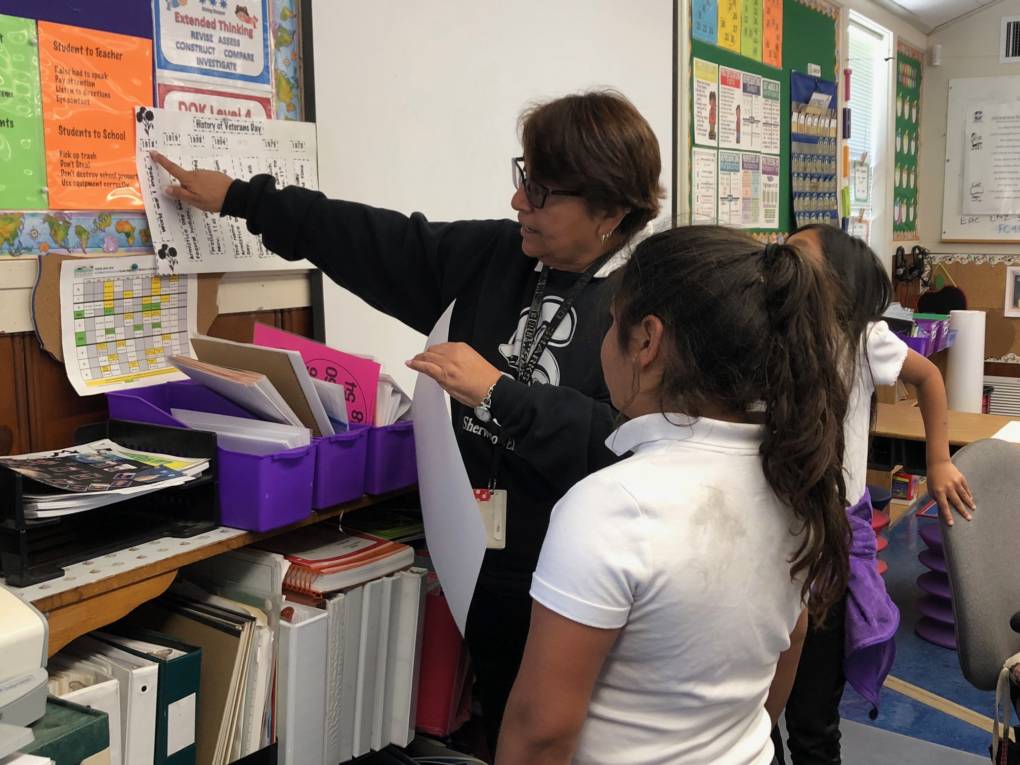
"caption": "Maria Castellanoz, a third-grade teacher at Sherwood Elementary School in Salinas, says about 80 percent of her students this year are homeless.",
"description": null,
"title": "IMG_0699",
"credit": "Vanessa Rancaño/KQED",
"status": "inherit",
"isLoading": false,
"fetchFailed": false
}
},
"audioPlayerReducer": {
"postId": "stream_live",
"isPaused": true,
"isPlaying": false,
"pfsActive": false,
"pledgeModalIsOpen": true,
"playerDrawerIsOpen": false,
"liveAudioPlayStartedAt": 0,
"liveAudioPlayContext": ""
},
"authorsReducer": {
"byline_news_11725969": {
"type": "authors",
"id": "byline_news_11725969",
"meta": {
"override": true
},
"slug": "byline_news_11725969",
"name": "\u003ca href=\"https://calmatters.org/articles/author/laurel-rosenhall/\">Laurel Rosenhall\u003c/a>",
"isLoading": false
},
"byline_news_11725571": {
"type": "authors",
"id": "byline_news_11725571",
"meta": {
"override": true
},
"slug": "byline_news_11725571",
"name": "\u003cstrong>Richard Gonzales\u003cbr />NPR\u003c/strong>",
"isLoading": false
},
"byline_news_11725151": {
"type": "authors",
"id": "byline_news_11725151",
"meta": {
"override": true
},
"slug": "byline_news_11725151",
"name": "Felicia Mello",
"isLoading": false
},
"kqed": {
"type": "authors",
"id": "236",
"meta": {
"index": "authors_1716337520",
"id": "236",
"found": true
},
"name": "KQED News Staff",
"firstName": "KQED News Staff",
"lastName": null,
"slug": "kqed",
"email": "faq@kqed.org",
"display_author_email": false,
"staff_mastheads": [],
"title": null,
"bio": null,
"avatar": "https://secure.gravatar.com/avatar/ef0e801a68c4c54afa9180db14084167?s=600&d=blank&r=g",
"twitter": null,
"facebook": null,
"instagram": null,
"linkedin": null,
"sites": [
{
"site": "arts",
"roles": [
"contributor"
]
},
{
"site": "news",
"roles": [
"editor"
]
},
{
"site": "futureofyou",
"roles": [
"author"
]
}
],
"headData": {
"title": "KQED News Staff | KQED",
"description": null,
"ogImgSrc": "https://secure.gravatar.com/avatar/ef0e801a68c4c54afa9180db14084167?s=600&d=blank&r=g",
"twImgSrc": "https://secure.gravatar.com/avatar/ef0e801a68c4c54afa9180db14084167?s=600&d=blank&r=g"
},
"isLoading": false,
"link": "/author/kqed"
},
"kqednewsstaffandwires": {
"type": "authors",
"id": "237",
"meta": {
"index": "authors_1716337520",
"id": "237",
"found": true
},
"name": "KQED News Staff and Wires",
"firstName": "KQED News Staff and Wires",
"lastName": null,
"slug": "kqednewsstaffandwires",
"email": "onlinenewsstaff@kqed.org",
"display_author_email": false,
"staff_mastheads": [],
"title": null,
"bio": null,
"avatar": "https://secure.gravatar.com/avatar/72295af8ebbfbd19a4948f5271285664?s=600&d=blank&r=g",
"twitter": null,
"facebook": null,
"instagram": null,
"linkedin": null,
"sites": [
{
"site": "arts",
"roles": [
"contributor"
]
},
{
"site": "news",
"roles": [
"contributor"
]
},
{
"site": "lowdown",
"roles": [
"author"
]
},
{
"site": "stateofhealth",
"roles": [
"contributor"
]
},
{
"site": "food",
"roles": [
"author"
]
}
],
"headData": {
"title": "KQED News Staff and Wires | KQED",
"description": null,
"ogImgSrc": "https://secure.gravatar.com/avatar/72295af8ebbfbd19a4948f5271285664?s=600&d=blank&r=g",
"twImgSrc": "https://secure.gravatar.com/avatar/72295af8ebbfbd19a4948f5271285664?s=600&d=blank&r=g"
},
"isLoading": false,
"link": "/author/kqednewsstaffandwires"
},
"mlam": {
"type": "authors",
"id": "244",
"meta": {
"index": "authors_1716337520",
"id": "244",
"found": true
},
"name": "Monica Lam",
"firstName": "Monica Z.",
"lastName": "Lam",
"slug": "mlam",
"email": "mlam@kqed.org",
"display_author_email": true,
"staff_mastheads": [
"news"
],
"title": "KQED Senior Producer",
"bio": "Monica is senior producer of the weekly current affairs program, \"KQED Newsroom.\" She's also served as senior editor of digital content at KQED. She likes to report and edit as well as produce video and take photos.\r\n\r\nBefore joining KQED, Monica worked at the Center for Investigative Reporting, where she examined conditions inside \u003cspan style=\"font-weight: 400;\">maximum security \u003c/span>prisons and abuse in state-run institutions for the developmentally disabled. Prior to that, she produced and directed \u003cem>Journey of the Bonesetter's Daughter,\u003c/em> a documentary that follows novelist Amy Tan as she creates an opera based on her family history.\r\n\r\nMonica's work has been honored with a duPont Award, five Emmys, regional and national Murrow Awards, and has been recognized by Investigative Reporters and Editors, the Society of Professional Journalists, Religion Newswriters Association and the San Francisco Peninsula Press Club. Monica studied urban studies at Stanford University and earned a master's in journalism at University of California at Berkeley. Follow her on twitter: @monicazlam",
"avatar": "https://secure.gravatar.com/avatar/018c474b2b71f43e0e6ca9b15a0ad36f?s=600&d=blank&r=g",
"twitter": "@monicazlam",
"facebook": null,
"instagram": null,
"linkedin": null,
"sites": [
{
"site": "arts",
"roles": [
"administrator"
]
},
{
"site": "news",
"roles": [
"editor"
]
},
{
"site": "trulyca",
"roles": [
"editor"
]
},
{
"site": "science",
"roles": [
"editor"
]
},
{
"site": "breakingnews",
"roles": [
"editor"
]
}
],
"headData": {
"title": "Monica Lam | KQED",
"description": "KQED Senior Producer",
"ogImgSrc": "https://secure.gravatar.com/avatar/018c474b2b71f43e0e6ca9b15a0ad36f?s=600&d=blank&r=g",
"twImgSrc": "https://secure.gravatar.com/avatar/018c474b2b71f43e0e6ca9b15a0ad36f?s=600&d=blank&r=g"
},
"isLoading": false,
"link": "/author/mlam"
},
"matthewgreen": {
"type": "authors",
"id": "1263",
"meta": {
"index": "authors_1716337520",
"id": "1263",
"found": true
},
"name": "Matthew Green",
"firstName": "Matthew",
"lastName": "Green",
"slug": "matthewgreen",
"email": "mgreen@kqed.org",
"display_author_email": false,
"staff_mastheads": [],
"title": "KQED Editor/Reporter",
"bio": "Matthew Green is a digital media producer for KQED News. He previously produced \u003ca href=\"http://www.kqed.org/lowdown\">The Lowdown\u003c/a>, KQED’s multimedia news education blog. Matthew's written for numerous Bay Area publications, including the Oakland Tribune and San Francisco Chronicle. He also taught journalism classes at Fremont High School in East Oakland.\r\n\r\nEmail: mgreen@kqed.org; Twitter: @MGreenKQED",
"avatar": "https://secure.gravatar.com/avatar/3bf498d1267ca02c8494f33d8cfc575e?s=600&d=blank&r=g",
"twitter": "MGreenKQED",
"facebook": null,
"instagram": null,
"linkedin": null,
"sites": [
{
"site": "news",
"roles": []
},
{
"site": "lowdown",
"roles": []
},
{
"site": "science",
"roles": []
},
{
"site": "education",
"roles": []
},
{
"site": "quest",
"roles": []
},
{
"site": "liveblog",
"roles": []
}
],
"headData": {
"title": "Matthew Green | KQED",
"description": "KQED Editor/Reporter",
"ogImgSrc": "https://secure.gravatar.com/avatar/3bf498d1267ca02c8494f33d8cfc575e?s=600&d=blank&r=g",
"twImgSrc": "https://secure.gravatar.com/avatar/3bf498d1267ca02c8494f33d8cfc575e?s=600&d=blank&r=g"
},
"isLoading": false,
"link": "/author/matthewgreen"
},
"rlevi": {
"type": "authors",
"id": "11260",
"meta": {
"index": "authors_1716337520",
"id": "11260",
"found": true
},
"name": "Ryan Levi",
"firstName": "Ryan",
"lastName": "Levi",
"slug": "rlevi",
"email": "rlevi@KQED.org",
"display_author_email": false,
"staff_mastheads": [],
"title": "KQED Contributor",
"bio": "Ryan Levi was a reporter and podcast producer at KQED News from 2016-2019. He worked on \u003ca href=\"https://www.kqed.org/news/series/baycurious\">Bay Curious\u003c/a>, \u003ca href=\"https://www.kqed.org/news/tag/the-bay/\">The Bay, \u003c/a>and \u003ca href=\"https://podcasts.apple.com/us/podcast/the-california-report-magazine/id1314750545\">The California Report Magazine\u003c/a>, as well as hosting and producing the weekly \u003ca href=\"https://www.kqed.org/news/program/qedup/\">Q'ed Up podcast. \u003c/a>He also helped inaugurate KQED's weekend news coverage in 2017 as one of two original digital producers. Ryan holds degrees in multimedia journalism and Spanish from the University of Missouri.",
"avatar": "https://secure.gravatar.com/avatar/4cb2ddd028ac8807d1adf09609c5555d?s=600&d=blank&r=g",
"twitter": "ryan_levi",
"facebook": null,
"instagram": null,
"linkedin": null,
"sites": [
{
"site": "arts",
"roles": [
"editor"
]
},
{
"site": "news",
"roles": [
"subscriber"
]
},
{
"site": "stateofhealth",
"roles": [
"editor"
]
},
{
"site": "science",
"roles": [
"editor"
]
},
{
"site": "forum",
"roles": [
"administrator"
]
},
{
"site": "perspectives",
"roles": [
"administrator"
]
}
],
"headData": {
"title": "Ryan Levi | KQED",
"description": "KQED Contributor",
"ogImgSrc": "https://secure.gravatar.com/avatar/4cb2ddd028ac8807d1adf09609c5555d?s=600&d=blank&r=g",
"twImgSrc": "https://secure.gravatar.com/avatar/4cb2ddd028ac8807d1adf09609c5555d?s=600&d=blank&r=g"
},
"isLoading": false,
"link": "/author/rlevi"
},
"vrancano": {
"type": "authors",
"id": "11276",
"meta": {
"index": "authors_1716337520",
"id": "11276",
"found": true
},
"name": "Vanessa Rancaño",
"firstName": "Vanessa",
"lastName": "Rancaño",
"slug": "vrancano",
"email": "vrancano@kqed.org",
"display_author_email": false,
"staff_mastheads": [
"news"
],
"title": "Reporter",
"bio": "Vanessa Rancaño is a features reporter for KQED. She’s also covered homelessness and education for the station and reported from the Central Valley. Her work has aired across public radio, from flagship national news shows to longform narrative podcasts. Before taking up a mic, she worked as a freelance print journalist. She’s been recognized with a number of national and regional awards. Vanessa grew up in California's Central Valley. She's a former NPR Kroc Fellow, and a graduate of the UC Berkeley Graduate School of Journalism.",
"avatar": "https://secure.gravatar.com/avatar/b3a383dfb0e7ee1c17568f2cf067904ab654d6e3de9743fc661f3c788ade1bed?s=600&d=blank&r=g",
"twitter": "vanessarancano",
"bluesky": null,
"facebook": null,
"instagram": null,
"linkedin": null,
"sites": [
{
"site": "arts",
"roles": [
"editor"
]
},
{
"site": "news",
"roles": [
"editor"
]
},
{
"site": "liveblog",
"roles": [
"contributor"
]
}
],
"headData": {
"title": "Vanessa Rancaño | KQED",
"description": "Reporter",
"ogImgSrc": "https://secure.gravatar.com/avatar/b3a383dfb0e7ee1c17568f2cf067904ab654d6e3de9743fc661f3c788ade1bed?s=600&d=blank&r=g",
"twImgSrc": "https://secure.gravatar.com/avatar/b3a383dfb0e7ee1c17568f2cf067904ab654d6e3de9743fc661f3c788ade1bed?s=600&d=blank&r=g"
},
"isLoading": false,
"link": "/author/vrancano"
},
"agarces": {
"type": "authors",
"id": "11367",
"meta": {
"index": "authors_1716337520",
"id": "11367",
"found": true
},
"name": "Audrey Garces",
"firstName": "Audrey",
"lastName": "Garces",
"slug": "agarces",
"email": "agarces@kqed.org",
"display_author_email": false,
"staff_mastheads": [
"news"
],
"title": "Digital Producer",
"bio": "Audrey is a former digital producer at KQED News. Previously, she was a KQED Raul Ramirez Diversity Fund intern where she developed stories that focused on highlighting diverse voices in journalism. Prior to her work at KQED, she worked as a news intern at the San Francisco Examiner. Audrey graduated from San Francisco State University with a B.A. in journalism and a minor in political science.",
"avatar": "https://secure.gravatar.com/avatar/5211bc2e6a809b9956da169e35ce63d5?s=600&d=blank&r=g",
"twitter": "audgar",
"facebook": null,
"instagram": null,
"linkedin": null,
"sites": [
{
"site": "arts",
"roles": []
},
{
"site": "news",
"roles": [
"subscriber"
]
},
{
"site": "science",
"roles": [
"editor"
]
},
{
"site": "forum",
"roles": [
"editor"
]
},
{
"site": "perspectives",
"roles": [
"administrator"
]
}
],
"headData": {
"title": "Audrey Garces | KQED",
"description": "Digital Producer",
"ogImgSrc": "https://secure.gravatar.com/avatar/5211bc2e6a809b9956da169e35ce63d5?s=600&d=blank&r=g",
"twImgSrc": "https://secure.gravatar.com/avatar/5211bc2e6a809b9956da169e35ce63d5?s=600&d=blank&r=g"
},
"isLoading": false,
"link": "/author/agarces"
}
},
"pagesReducer": {
"news_category_education": {
"type": "terms",
"id": "news_18540",
"meta": {
"index": "terms_1716263798",
"site": "news",
"id": "18540",
"score": 10.973221
},
"featImg": null,
"name": "Education",
"description": null,
"taxonomy": "category",
"headData": {
"twImgId": null,
"twTitle": null,
"ogTitle": null,
"ogImgId": null,
"twDescription": null,
"description": null,
"title": "Education Archives | KQED News",
"ogDescription": null
},
"ttid": 2595,
"slug": "education",
"isLoading": false,
"title": "Education",
"pageMeta": {
"site": "news",
"WpPageTemplate": "page-topic-editorial",
"currentPage": 122
},
"blocks": [
{
"blockName": "kqed/post-list",
"attrs": {
"layout": "cardArticle2",
"query": "posts/news?category=education",
"seeMore": false,
"paginated": true,
"page": 122
}
},
{
"blockName": "kqed/ad"
}
]
}
},
"pfsSessionReducer": {},
"postsReducer": {
"stream_live": {
"type": "live",
"id": "stream_live",
"audioUrl": "https://streams.kqed.org/kqedradio",
"title": "Live Stream",
"excerpt": "Live Stream information currently unavailable.",
"link": "/radio",
"featImg": "",
"label": {
"name": "KQED Live",
"link": "/"
}
},
"stream_kqedNewscast": {
"type": "posts",
"id": "stream_kqedNewscast",
"audioUrl": "https://www.kqed.org/.stream/anon/radio/RDnews/newscast.mp3?_=1",
"title": "KQED Newscast",
"featImg": "",
"label": {
"name": "88.5 FM",
"link": "/"
}
},
"news_11726864": {
"type": "posts",
"id": "news_11726864",
"meta": {
"index": "posts_1716263798",
"site": "news",
"id": "11726864",
"score": null,
"sort": [
1550353590000
]
},
"parent": 0,
"labelTerm": {
"site": "news",
"term": 72
},
"blocks": [],
"publishDate": 1550353590,
"format": "standard",
"disqusTitle": "'Enough Is Enough': Oakland Teachers Announce Plans to Strike",
"title": "'Enough Is Enough': Oakland Teachers Announce Plans to Strike",
"headTitle": "The California Report | KQED News",
"content": "\u003cp>\u003cem>Updated Saturday, 3:53 p.m.\u003c/em>\u003c/p>\n\u003cp>\u003cem>This post contains a correction.\u003c/em>\u003c/p>\n\u003cp>Oakland teachers say unless something \"dramatic\" happens, they'll be going on strike starting Thursday, Feb. 21.\u003c/p>\n\u003cp>“Enough is enough. Bargaining with our school district has not worked,\" said Keith Brown, president of the Oakland Education Association, at a news conference on Saturday. \"Bargaining with our school district has not in two years produced an agreement that will pay teachers enough to stay in Oakland.”\u003c/p>\n\u003cp>Teachers \u003ca href=\"https://www.kqed.org/news/11723411/oakland-teachers-say-theyre-willing-to-strike-heres-what-that-means\" target=\"_blank\" rel=\"noopener\">are asking for\u003c/a> better pay, smaller class sizes and more resources for classrooms and student programs. They have been working without a contract since July 2017, and the union has been unable to reach an agreement with the district despite prolonged negotiations.\u003c/p>\n\u003cp>[ad fullwidth]\u003c/p>\n\u003cp>District spokesman John Sasaki said the district is sad that the union called a date for a strike, but it is not giving up hope that a strike could be averted.\u003c/p>\n\u003cp>\"We know that they don't want to strike. We know that our students and our families don't want to strike, and we know that the district doesn't want to strike,\" Sasaki said. He said the district invited the union back to the negotiating table on Saturday morning in order to present an updated \"comprehensive proposal,\" of which he declined to discuss specifics.\u003c/p>\n\u003cp>[aside label=\"Oakland Schools: Put to the Test\" link1=\"https://www.kqed.org/news/11723411/oakland-teachers-say-theyre-willing-to-strike-heres-what-that-means,Oakland teachers are ready to strike. How did we get here?\" hero=\"https://ww2.kqed.org/wp-content/uploads/sites/10/2019/01/cce77892-20190118-18-800x533.jpg\"]\u003c/p>\n\u003cp>If the strike does come to pass, Sasaki said schools will remain open using emergency temporary teachers and district staff to educate the district's 37,000 students. He said the specifics of the school day will differ from school to school depending on how many regular teachers show up.\u003c/p>\n\u003cp>In the final step of negotiations as mandated by state law, a neutral fact-finder appointed by the state released a \u003ca href=\"https://drive.google.com/file/d/1sSHkn3IwBmO-zewwFcfFhdvvc_RjKVyZ/view\" target=\"_blank\" rel=\"noopener\">non-binding report\u003c/a> of recommendations to the union and district on Friday. Sasaki said the district believes the report provided a \"good foundation\" for finding a solution without a strike.\u003c/p>\n\u003cp>The district’s latest public offer included a salary increase of 5 percent over three years and marginal class-size cuts for some grades and classes. It’s also offering a special education class size cap of 15 students per teacher.\u003c/p>\n\u003cp>That's a far cry from teachers' demands for a 12 percent pay increase over three years, graduated class-size reductions over the next two years and deeper class-size reductions in schools where 75 percent or more of students are low-income, foster youth, homeless or English learners. They're also asking for smaller caseloads for support staff like nurses, counselors and therapists.\u003c/p>\n\u003cp>Najeeb Khoury, the neutral fact-finder, recommended a new contract that would last through the 2019-2020 school year and would include 3 percent pay increases over the first two years and reopen talks for a salary increase in the third year. However, he also encouraged the two sides to explore a contract that would run through the summer of 2021 and could include greater salary increases.\u003c/p>\n\u003cp>Oakland teachers are among the \u003ca href=\"https://edsource.org/2018/teacher-salaries-in-bay-area-counties-2016-17/599272\" target=\"_blank\" rel=\"noopener\">lowest paid\u003c/a> in the Bay Area, even when taking benefits into account, according to an analysis by School Services of California, a consulting firm.\u003c/p>\n\u003cp>“California’s current education funding system is complicated and flawed in a number of ways,\" Khoury wrote in his report. \"These flaws make finding resolutions to this contract and other teacher contracts throughout the state very difficult.\"\u003c/p>\n\u003caside class=\"alignright\">\n\u003ch3>\u003ca href=\"https://www.kqed.org/oaklandschools\" target=\"_blank\" rel=\"noopener\">See More of KQED's Coverage of the Debates Surrounding Oakland Schools\u003c/a>\u003c/h3>\n\u003cfigure>\u003ca href=\"https://www.kqed.org/oaklandschools\" target=\"_blank\" rel=\"noopener\">\u003cimg src=\"https://ww2.kqed.org/news/wp-content/uploads/sites/10/2019/01/RootsIntlAcademy.jpg\" alt=\"\">\u003c/a>\u003c/figure>\n\u003c/aside>\n\u003cp>Khoury agreed that cutting class sizes would improve the district's poor \u003ca href=\"https://dashboards.ousd.org/views/SRA1718_10TEACHER_RETENTION_EXPERIENCE_0/TeacherRetention?iframeSizedToWindow=true&:embed=y&:showAppBanner=false&:display_count=no&:showVizHome=no\" target=\"_blank\" rel=\"noopener\">teacher retention\u003c/a>, but only recommended reducing classes across the board by one student by July 2020, with implementation happening at the highest-needs schools first.\u003c/p>\n\u003cp>The disagreements between the teachers and the district are exacerbated by OUSD's roughly $30 million budget deficit, which it has to significantly reduce to avoid being taken over by the state. To help cut costs, the district has proposed closing and consolidating up to 24 of its 87 school sites, a plan that’s \u003ca href=\"https://www.kqed.org/news/11722135/oakland-unifieds-hella-hard-week\">proven highly controversial\u003c/a>.\u003c/p>\n\u003cp>Teachers and parents who spoke at the announcement took particular aim at the district's decision to encourage the proliferation of and coordination with charter schools in Oakland, in line with what's known as the \"\u003ca href=\"https://chalkbeat.org/posts/us/2018/07/03/the-oakland-school-board-is-pushing-for-more-coordination-with-charter-schools-but-faces-fierce-backlash/\" target=\"_blank\" rel=\"noopener\">portfolio model\u003c/a>.\"\u003c/p>\n\u003cp>\"In these competition-based portfolio districts, schools compete against each other for resources and support, creating a system of haves and have-nots,\" Brown said. He decried billionaire supporters of the model including Netflix founder and CEO \u003ca href=\"https://philanthropynewsdigest.org/news/reed-hastings-creates-100-million-education-fund\" target=\"_blank\" rel=\"noopener\">Reed Hastings\u003c/a> and Microsoft founder Bill Gates.\u003c/p>\n\u003cp>The foundation run by Gates and his wife Melinda was behind an earlier education reform effort undertaken by the district to create \u003ca href=\"https://www.kqed.org/news/11726682/why-does-oakland-have-so-many-small-schools\" target=\"_blank\" rel=\"noopener\">smaller schools\u003c/a> in hopes of improving outcomes. Now lacking private funding from the Gates, OUSD is looking at closing up many of those small schools as part of its budget crisis.\u003c/p>\n\u003cp>\"The black and brown families in Oakland have suffered enough displacement,\" said Clarissa Doutherd, the parent of a fifth-grader at Laurel Elementary School. \"Our public schools should stay open. This is a direct attack on our families.\" Doutherd and other parents at Saturday's news conference encouraged families not to cross the picket lines in a show of solidarity with teachers.\u003c/p>\n\u003cp>\"What we see right now in Oakland public schools is exactly what a billionaire district looks like,\" said Ismael Armendariz, a special education teacher and first vice president of OEA. \"I'm ready to strike for our kids, and I'm ready to strike for the schools Oakland deserves. The choice is clear: You can stand with the billionaires or you can stand with the community.\"\u003c/p>\n\u003cp>Khoury's fact-finding report also noted the impact charter schools have had on the district.\u003c/p>\n\u003cp>\"I have no doubt that charter advocates and indeed charter policies are driven by a desire to increase options for disadvantaged children,\" he wrote. \"Unfortunately, there are ways that the current system creates an unlevel playing field for traditional public schools and undermines those districts serving the very same disadvantaged children that charter advocates seek to aid.”\u003c/p>\n\u003cp>As negotiations over teacher pay and school closings have heated up in recent months, so have tensions. Teachers held two separate “sick outs” this year without union approval, and on Feb. 8, students staged a \u003ca href=\"https://www.kqed.org/news/11724716/hundreds-of-oakland-high-school-students-stage-sickout-in-support-of-teachers\">similar event\u003c/a>.\u003c/p>\n\u003cp>\"Unless there are dramatic changes to the district’s approach including spending money on students and spending money for more nurses and counselors, lower class size and a living wage that will keep experienced teachers in Oakland classrooms, we will strike on Feb. 21,\" Brown said to loud applause.\u003c/p>\n\u003cp>[ad floatright]\u003c/p>\n\u003cp>\u003cem>Feb. 16: The original version of this report incorrectly stated that the fact-finder's report did not recommend reducing class sizes. The story has been edited to correct the inaccuracy.\u003c/em>\u003c/p>\n\n",
"disqusIdentifier": "11726864 https://ww2.kqed.org/news/?p=11726864",
"disqusUrl": "https://ww2.kqed.org/news/2019/02/16/oakland-teachers-announce-plans-to-strike-starting-on-thursday/",
"stats": {
"hasVideo": false,
"hasChartOrMap": false,
"hasAudio": false,
"hasPolis": false,
"wordCount": 1183,
"hasGoogleForm": false,
"hasGallery": false,
"hasHearkenModule": false,
"iframeSrcs": [],
"paragraphCount": 29
},
"modified": 1550368916,
"excerpt": "Teachers are asking for better pay, smaller class sizes and more resources for classrooms and student programs. They have been working without a contract since July 2017.",
"headData": {
"twImgId": "",
"twTitle": "",
"ogTitle": "",
"ogImgId": "",
"twDescription": "",
"description": "Teachers are asking for better pay, smaller class sizes and more resources for classrooms and student programs. They have been working without a contract since July 2017.",
"title": "'Enough Is Enough': Oakland Teachers Announce Plans to Strike | KQED",
"ogDescription": "",
"schema": {
"@context": "https://schema.org",
"@type": "NewsArticle",
"headline": "'Enough Is Enough': Oakland Teachers Announce Plans to Strike",
"datePublished": "2019-02-16T13:46:30-08:00",
"dateModified": "2019-02-16T18:01:56-08:00",
"image": "https://cdn.kqed.org/wp-content/uploads/2020/02/KQED-OG-Image@1x.png",
"isAccessibleForFree": "True",
"publisher": {
"@type": "NewsMediaOrganization",
"@id": "https://www.kqed.org/#organization",
"name": "KQED",
"logo": "https://cdn.kqed.org/wp-content/uploads/2020/02/KQED-OG-Image@1x.png",
"url": "https://www.kqed.org",
"sameAs": [
"https://www.facebook.com/KQED",
"https://twitter.com/KQED",
"https://www.instagram.com/kqed/",
"https://www.tiktok.com/@kqedofficial",
"https://www.linkedin.com/company/kqed",
"https://www.youtube.com/channel/UCeC0IOo7i1P_61zVUWbJ4nw"
]
}
}
},
"guestAuthors": [],
"slug": "oakland-teachers-announce-plans-to-strike-starting-on-thursday",
"status": "publish",
"templateType": "standard",
"featuredImageType": "standard",
"path": "/news/11726864/oakland-teachers-announce-plans-to-strike-starting-on-thursday",
"audioTrackLength": null,
"parsedContent": [
{
"type": "contentString",
"content": "\u003cdiv class=\"post-body\">\u003cp>\u003cp>\u003cem>Updated Saturday, 3:53 p.m.\u003c/em>\u003c/p>\n\u003cp>\u003cem>This post contains a correction.\u003c/em>\u003c/p>\n\u003cp>Oakland teachers say unless something \"dramatic\" happens, they'll be going on strike starting Thursday, Feb. 21.\u003c/p>\n\u003cp>“Enough is enough. Bargaining with our school district has not worked,\" said Keith Brown, president of the Oakland Education Association, at a news conference on Saturday. \"Bargaining with our school district has not in two years produced an agreement that will pay teachers enough to stay in Oakland.”\u003c/p>\n\u003cp>Teachers \u003ca href=\"https://www.kqed.org/news/11723411/oakland-teachers-say-theyre-willing-to-strike-heres-what-that-means\" target=\"_blank\" rel=\"noopener\">are asking for\u003c/a> better pay, smaller class sizes and more resources for classrooms and student programs. They have been working without a contract since July 2017, and the union has been unable to reach an agreement with the district despite prolonged negotiations.\u003c/p>\n\u003cp>\u003c/p>\u003c/div>",
"attributes": {
"named": {},
"numeric": []
}
},
{
"type": "component",
"content": "",
"name": "ad",
"attributes": {
"named": {
"label": "fullwidth"
},
"numeric": [
"fullwidth"
]
}
},
{
"type": "contentString",
"content": "\u003cdiv class=\"post-body\">\u003cp>\u003c/p>\n\u003cp>District spokesman John Sasaki said the district is sad that the union called a date for a strike, but it is not giving up hope that a strike could be averted.\u003c/p>\n\u003cp>\"We know that they don't want to strike. We know that our students and our families don't want to strike, and we know that the district doesn't want to strike,\" Sasaki said. He said the district invited the union back to the negotiating table on Saturday morning in order to present an updated \"comprehensive proposal,\" of which he declined to discuss specifics.\u003c/p>\n\u003cp>\u003c/p>\u003c/div>",
"attributes": {
"named": {},
"numeric": []
}
},
{
"type": "component",
"content": "",
"name": "aside",
"attributes": {
"named": {
"label": "Oakland Schools: Put to the Test ",
"link1": "https://www.kqed.org/news/11723411/oakland-teachers-say-theyre-willing-to-strike-heres-what-that-means,Oakland teachers are ready to strike. How did we get here?",
"hero": "https://ww2.kqed.org/wp-content/uploads/sites/10/2019/01/cce77892-20190118-18-800x533.jpg"
},
"numeric": []
}
},
{
"type": "contentString",
"content": "\u003cdiv class=\"post-body\">\u003cp>\u003c/p>\n\u003cp>If the strike does come to pass, Sasaki said schools will remain open using emergency temporary teachers and district staff to educate the district's 37,000 students. He said the specifics of the school day will differ from school to school depending on how many regular teachers show up.\u003c/p>\n\u003cp>In the final step of negotiations as mandated by state law, a neutral fact-finder appointed by the state released a \u003ca href=\"https://drive.google.com/file/d/1sSHkn3IwBmO-zewwFcfFhdvvc_RjKVyZ/view\" target=\"_blank\" rel=\"noopener\">non-binding report\u003c/a> of recommendations to the union and district on Friday. Sasaki said the district believes the report provided a \"good foundation\" for finding a solution without a strike.\u003c/p>\n\u003cp>The district’s latest public offer included a salary increase of 5 percent over three years and marginal class-size cuts for some grades and classes. It’s also offering a special education class size cap of 15 students per teacher.\u003c/p>\n\u003cp>That's a far cry from teachers' demands for a 12 percent pay increase over three years, graduated class-size reductions over the next two years and deeper class-size reductions in schools where 75 percent or more of students are low-income, foster youth, homeless or English learners. They're also asking for smaller caseloads for support staff like nurses, counselors and therapists.\u003c/p>\n\u003cp>Najeeb Khoury, the neutral fact-finder, recommended a new contract that would last through the 2019-2020 school year and would include 3 percent pay increases over the first two years and reopen talks for a salary increase in the third year. However, he also encouraged the two sides to explore a contract that would run through the summer of 2021 and could include greater salary increases.\u003c/p>\n\u003cp>Oakland teachers are among the \u003ca href=\"https://edsource.org/2018/teacher-salaries-in-bay-area-counties-2016-17/599272\" target=\"_blank\" rel=\"noopener\">lowest paid\u003c/a> in the Bay Area, even when taking benefits into account, according to an analysis by School Services of California, a consulting firm.\u003c/p>\n\u003cp>“California’s current education funding system is complicated and flawed in a number of ways,\" Khoury wrote in his report. \"These flaws make finding resolutions to this contract and other teacher contracts throughout the state very difficult.\"\u003c/p>\n\u003caside class=\"alignright\">\n\u003ch3>\u003ca href=\"https://www.kqed.org/oaklandschools\" target=\"_blank\" rel=\"noopener\">See More of KQED's Coverage of the Debates Surrounding Oakland Schools\u003c/a>\u003c/h3>\n\u003cfigure>\u003ca href=\"https://www.kqed.org/oaklandschools\" target=\"_blank\" rel=\"noopener\">\u003cimg src=\"https://ww2.kqed.org/news/wp-content/uploads/sites/10/2019/01/RootsIntlAcademy.jpg\" alt=\"\">\u003c/a>\u003c/figure>\n\u003c/aside>\n\u003cp>Khoury agreed that cutting class sizes would improve the district's poor \u003ca href=\"https://dashboards.ousd.org/views/SRA1718_10TEACHER_RETENTION_EXPERIENCE_0/TeacherRetention?iframeSizedToWindow=true&:embed=y&:showAppBanner=false&:display_count=no&:showVizHome=no\" target=\"_blank\" rel=\"noopener\">teacher retention\u003c/a>, but only recommended reducing classes across the board by one student by July 2020, with implementation happening at the highest-needs schools first.\u003c/p>\n\u003cp>The disagreements between the teachers and the district are exacerbated by OUSD's roughly $30 million budget deficit, which it has to significantly reduce to avoid being taken over by the state. To help cut costs, the district has proposed closing and consolidating up to 24 of its 87 school sites, a plan that’s \u003ca href=\"https://www.kqed.org/news/11722135/oakland-unifieds-hella-hard-week\">proven highly controversial\u003c/a>.\u003c/p>\n\u003cp>Teachers and parents who spoke at the announcement took particular aim at the district's decision to encourage the proliferation of and coordination with charter schools in Oakland, in line with what's known as the \"\u003ca href=\"https://chalkbeat.org/posts/us/2018/07/03/the-oakland-school-board-is-pushing-for-more-coordination-with-charter-schools-but-faces-fierce-backlash/\" target=\"_blank\" rel=\"noopener\">portfolio model\u003c/a>.\"\u003c/p>\n\u003cp>\"In these competition-based portfolio districts, schools compete against each other for resources and support, creating a system of haves and have-nots,\" Brown said. He decried billionaire supporters of the model including Netflix founder and CEO \u003ca href=\"https://philanthropynewsdigest.org/news/reed-hastings-creates-100-million-education-fund\" target=\"_blank\" rel=\"noopener\">Reed Hastings\u003c/a> and Microsoft founder Bill Gates.\u003c/p>\n\u003cp>The foundation run by Gates and his wife Melinda was behind an earlier education reform effort undertaken by the district to create \u003ca href=\"https://www.kqed.org/news/11726682/why-does-oakland-have-so-many-small-schools\" target=\"_blank\" rel=\"noopener\">smaller schools\u003c/a> in hopes of improving outcomes. Now lacking private funding from the Gates, OUSD is looking at closing up many of those small schools as part of its budget crisis.\u003c/p>\n\u003cp>\"The black and brown families in Oakland have suffered enough displacement,\" said Clarissa Doutherd, the parent of a fifth-grader at Laurel Elementary School. \"Our public schools should stay open. This is a direct attack on our families.\" Doutherd and other parents at Saturday's news conference encouraged families not to cross the picket lines in a show of solidarity with teachers.\u003c/p>\n\u003cp>\"What we see right now in Oakland public schools is exactly what a billionaire district looks like,\" said Ismael Armendariz, a special education teacher and first vice president of OEA. \"I'm ready to strike for our kids, and I'm ready to strike for the schools Oakland deserves. The choice is clear: You can stand with the billionaires or you can stand with the community.\"\u003c/p>\n\u003cp>Khoury's fact-finding report also noted the impact charter schools have had on the district.\u003c/p>\n\u003cp>\"I have no doubt that charter advocates and indeed charter policies are driven by a desire to increase options for disadvantaged children,\" he wrote. \"Unfortunately, there are ways that the current system creates an unlevel playing field for traditional public schools and undermines those districts serving the very same disadvantaged children that charter advocates seek to aid.”\u003c/p>\n\u003cp>As negotiations over teacher pay and school closings have heated up in recent months, so have tensions. Teachers held two separate “sick outs” this year without union approval, and on Feb. 8, students staged a \u003ca href=\"https://www.kqed.org/news/11724716/hundreds-of-oakland-high-school-students-stage-sickout-in-support-of-teachers\">similar event\u003c/a>.\u003c/p>\n\u003cp>\"Unless there are dramatic changes to the district’s approach including spending money on students and spending money for more nurses and counselors, lower class size and a living wage that will keep experienced teachers in Oakland classrooms, we will strike on Feb. 21,\" Brown said to loud applause.\u003c/p>\n\u003cp>\u003c/p>\u003c/div>",
"attributes": {
"named": {},
"numeric": []
}
},
{
"type": "component",
"content": "",
"name": "ad",
"attributes": {
"named": {
"label": "floatright"
},
"numeric": [
"floatright"
]
}
},
{
"type": "contentString",
"content": "\u003cdiv class=\"post-body\">\u003cp>\u003c/p>\n\u003cp>\u003cem>Feb. 16: The original version of this report incorrectly stated that the fact-finder's report did not recommend reducing class sizes. The story has been edited to correct the inaccuracy.\u003c/em>\u003c/p>\n\n\u003c/div>\u003c/p>",
"attributes": {
"named": {},
"numeric": []
}
}
],
"link": "/news/11726864/oakland-teachers-announce-plans-to-strike-starting-on-thursday",
"authors": [
"11367",
"11260"
],
"programs": [
"news_72"
],
"categories": [
"news_18540",
"news_8"
],
"tags": [
"news_19542",
"news_24851",
"news_1826",
"news_3366",
"news_24880",
"news_24807"
],
"featImg": "news_11726890",
"label": "news_72"
},
"news_11726682": {
"type": "posts",
"id": "news_11726682",
"meta": {
"index": "posts_1716263798",
"site": "news",
"id": "11726682",
"score": null,
"sort": [
1550279745000
]
},
"parent": 0,
"labelTerm": {
"site": "news"
},
"blocks": [],
"publishDate": 1550279745,
"format": "aside",
"disqusTitle": "Why Does Oakland Have So Many Small Schools?",
"title": "Why Does Oakland Have So Many Small Schools?",
"headTitle": "KQED News",
"content": "\u003ch2>An earlier district reform effort broke large, underperforming campuses into smaller schools that could, in theory, better support at-risk students. Since 2000, OUSD created scores of new schools, even as enrollment throughout the district sharply declined.\u003c/h2>\n\u003cp>Want to know more? Read on...\u003c/p>\n\u003cp>Oakland Unified School District has about 37,000 students in 87 non-charter public schools, or an average of roughly 425 students per school. That comparatively high school-to-student ratio is largely due to an earlier reform movement to create smaller, more intimate educational settings for students. Today, amid a serious budget crisis, district leaders are revisiting the premise of the small schools experiment, and have suggested paring down the number of schools by upward of 25 percent. Here’s a look at how Oakland ended up with so many small schools.\u003c/p>\n\u003cp>\u003cstrong>Does OUSD really have \u003cem>that\u003c/em> many schools? \u003c/strong>\u003c/p>\n\u003cp>Yes. The number of public schools OUSD oversees is much higher than Bay Area districts of similar size. Take nearby Fremont Unified, which has just over 35,000 students but only 42 schools. Or San Jose Unified, where about 32,000 students attend 46 schools.\u003c/p>\n\u003cp>Of course, Oakland still has its fair share of larger schools. About \u003ca href=\"http://www.ed-data.org/school/Alameda/Oakland-Unified/Skyline-High\">1,800 students\u003c/a> were enrolled at Skyline High School during the 2017-2018 school year, and \u003ca href=\"http://www.ed-data.org/school/Alameda/Oakland-Unified/Oakland-Technical-High\">nearly 2,000\u003c/a> at Oakland Tech. But a good number of district schools have fewer than 300 students. Among them: Roots International Academy, one of the schools slated for closure, which now has just about 260 students and Sankofa Academy, which has fewer than 200.\u003c/p>\n\u003cfigure id=\"attachment_11726709\" class=\"wp-caption alignnone\" style=\"max-width: 640px\">\u003cimg class=\"wp-image-11726709 size-complete_open_graph\" src=\"https://ww2.kqed.org/news/wp-content/uploads/sites/10/2019/02/OUSDschools-e1550279017377-1200x867.png\" alt=\"\" width=\"640\" height=\"462\" srcset=\"https://ww2.kqed.org/app/uploads/sites/10/2019/02/OUSDschools-e1550279017377-1200x867.png 1200w, https://ww2.kqed.org/app/uploads/sites/10/2019/02/OUSDschools-e1550279017377-160x116.png 160w, https://ww2.kqed.org/app/uploads/sites/10/2019/02/OUSDschools-e1550279017377-800x578.png 800w, https://ww2.kqed.org/app/uploads/sites/10/2019/02/OUSDschools-e1550279017377-1020x737.png 1020w, https://ww2.kqed.org/app/uploads/sites/10/2019/02/OUSDschools-e1550279017377.png 1247w\" sizes=\"(max-width: 640px) 100vw, 640px\">\u003cfigcaption class=\"wp-caption-text\">Schools in the Oakland Unified School District \u003ccite>(OUSD)\u003c/cite>\u003c/figcaption>\u003c/figure>\n\u003cp>\u003cstrong>Why were so many new schools created?\u003c/strong>\u003c/p>\n\u003cp>Since 2000, the district has opened a huge number of small schools, even as its enrollment dropped \u003ca href=\"https://dashboards.ousd.org/views/Enrollment/Snapshot?:embed=y&:showShareOptions=true&:display_count=no&:showVizHome=no&:render=false#3\">by about 45 percent\u003c/a>. Here’s how it unfolded:\u003c/p>\n\u003cp>In the late 1990s, Oakland’s public school district was dealing with many of the same issues it faces today, including financial problems, low test scores and high teacher turnover. Most of the under-performing schools were concentrated in the city’s “flatlands” neighborhoods and primarily attended by lower-income, minority students.\u003c/p>\n\u003cp>Unlike now, though, many of those schools were bursting at the seams and straining to manage far more students than they were designed to accommodate, particularly elementary schools.\u003c/p>\n\u003cp>In light of these overcrowded and sometimes chaotic conditions, a group of concerned parents teamed up with an alliance of religious and civic leaders, called \u003ca href=\"http://www.oaklandcommunity.org/\">Oakland Community Organizations\u003c/a>, to push for a major overhaul of the district’s most troubled campuses.\u003c/p>\n\u003cp>[aside label=\"Oakland Schools: Your Questions Answered\" tag=\"ousd-qa\"]\u003c/p>\n\u003cp>Members of the group called attention to the glaring disparities between their kids’ schools and the markedly smaller, safer and better performing schools largely concentrated in wealthier neighborhoods in the Oakland hills.\u003c/p>\n\u003cp>“I couldn’t believe that the same school district would be failing thousands of children, while the other kids in the more affluent neighborhoods were very successful,” said Emma Paulino, an immigrant from Guadalajara, Mexico, who was appalled by the conditions at Hawthorne Elementary, the East Oakland school her son attended. “It was like a slap in my face. My child is not a third-class kid just because he’s brown.”\u003c/p>\n\u003cp>Paulino became involved with OCO and its grassroots campaign to push the district to break apart some of its long-struggling, large flatlands schools and replace them with smaller autonomous academies. It was part of a growing small schools movement that had taken root in urban districts across the country, including New York, Chicago and Milwaukee, and touted as a transformational tool to help narrow the growing achievement gap between poor, mostly minority students and their more affluent peers.\u003c/p>\n\u003cp>Advocates believed that schools with fewer than 400 students could provide a stronger sense of community and security and create more engaging learning environments, particularly for students from underserved neighborhoods.\u003c/p>\n\u003cp>The small schools were also intended to empower a new generation of community and educational leaders who could help shape their school’s vision.\u003c/p>\n\u003cp>Oakland’s school board and its superintendent went all in, approving a \u003ca href=\"https://eric.ed.gov/?id=ED467119\">new small schools policy\u003c/a> in 2000 that jump-started the opening of nine new schools over the next three years. (To put that in perspective: the district hadn’t opened a single new school in the previous 20 years.)\u003c/p>\n\u003cp>\u003c!-- iframe plugin v.4.3 wordpress.org/plugins/iframe/ -->\u003cbr>\n\u003ciframe src=\"https://e.infogram.com/37f2a288-0fd1-434c-8fff-b97a4f708fbb?src=embed\" title=\"Oakland Small Schools\" width=\"600\" height=\"700\" scrolling=\"no\" frameborder=\"0\" style=\"border:none;\" allowfullscreen=\"allowfullscreen\" class=\"iframe-class\">\u003c/iframe>\u003c/p>\n\u003cp>Dennis Chaconas, who was the district’s superintendent from 2000 to 2003, said that besides reducing overcrowding, the goal was to create more community-focused and academically rigorous institutions.\u003c/p>\n\u003cp>“We wanted to get a group of teachers and community members to design schools in which they felt they would own the kids more, and actually end up getting better performance,” he said.\u003c/p>\n\u003cp>Paulino helped start ASCEND, an arts-based kindergarten- through eighth-grade school in East Oakland that opened its doors in 2001 (it has since become a charter school).\u003c/p>\n\u003cp>“At ASCEND, we the parents had a voice,” she said. “We worked really closely with the teachers. And all the adults were responsible for the children, including the custodians, people in the cafeteria, every person at the school. We were like a family. Parents really owned the school and all the kids were accountable.”\u003c/p>\n\u003cp>[aside label= \"We're answering your questions about Oakland Schools.\" link1=\"https://www.kqed.org/oaklandschools#have-a-question,Tell us what you want to know.\"]\u003c/p>\n\u003cp>\u003cstrong>Who paid for the expansion?\u003c/strong>\u003c/p>\n\u003cp>A good chunk of the funding came from the Bill and Melinda Gates Foundation, which had begun infusing a number of urban districts across the country with large grants specifically earmarked for creating more small schools.\u003c/p>\n\u003cp>Between 2003 — when the financially distressed district was taken over by the state and its locally elected school board dissolved — and 2009, Oakland continued to receive multimillion-dollar contributions from the Gates Foundation for the explicit purpose of converting large campuses into multiplexes of smaller ones.\u003c/p>\n\u003cp>During that period of state receivership, the district shuttered seven large middle and high schools and seven elementary schools — located almost entirely in the city’s poorest neighborhoods in East and West Oakland — and replaced them with 40 smaller academies. Many had distinct vocational themes, from media studies and performing arts to architecture and activism. The schools’ teachers and principals all had to reapply for their jobs.\u003c/p>\n\u003cp>But by 2009, when the district finally regained local control, philanthropic enthusiasm for the small schools movement had waned, and the Gates Foundation shifted its focus to new educational initiatives.\u003c/p>\n\u003cp>All told, OUSD opened a whopping 49 new schools in a decade, each with its own separate administration and teaching staff. Some were eventually phased out or turned into charter schools, but the majority remain open today.\u003c/p>\n\u003cp>It was also during this period that district-approved, publicly funded charter schools proliferated in the city. Oakland’s underserved communities, which had just a few years earlier been sorely lacking in educational options for their children, were suddenly awash in an often dizzying array of new schools from which to choose.\u003c/p>\n\u003cp>\u003cstrong>So ... did it work? \u003c/strong>\u003c/p>\n\u003cp>The results were mixed. There were definitely some major improvements. Between 2004 and 2009, the\u003ca href=\"https://www.ousd.org/cms/lib07/CA01001176/Centricity/Domain/14/Impact_Assessment_OUSD_Results.pdf\"> district reported\u003c/a> a 92-point increase in its overall Academic Performance Index score, which it claimed was the biggest improvement of any large urban district in California, although it still fell below the statewide average. And some of the new schools unquestionably outperformed the larger institutions they’d stemmed from. In 2008, Think College Now, one of the new small elementary schools in the Fruitvale district, was named a \u003ca href=\"https://www.ousd.org/Page/364\">California Distinguished School\u003c/a> at the same time as Hillcrest, an elementary school in one of Oakland’s wealthiest neighborhoods. That same year, about \u003ca href=\"https://edpolicy.stanford.edu/news/articles/899\">40 percent of graduates from LIFE Academy\u003c/a>, a bioscience-themed high school in East Oakland that opened in 2001, were admitted into the University of California system.\u003c/p>\n\u003cp>A \u003ca href=\"https://edpolicy.stanford.edu/sites/default/files/publications/oakland-unified-school-district-new-small-schools-initiative-evaluation.pdf\">2009 Stanford study\u003c/a> found that Oakland students in the new small schools performed better, on average, over a three-year period than students from similar socioeconomic groups who stayed in their larger, traditional schools. The same study also found that students, parents and teachers were “significantly more satisfied” than their counterparts at traditional schools.\u003c/p>\n\u003cp>Yet Oakland’s small school transformation was hardly the magic bullet that some reformers had hoped for. Many of the same problems persisted, and academic progress was at best uneven.\u003c/p>\n\u003cp>\u003ca href=\"https://www.eastbaytimes.com/2007/09/01/small-schools-found-not-making-the-grade/\">Data released in 2007\u003c/a> showed that the new small high schools at the Castlemont and McClymonds campuses — as well as all but one of the district’s new middle schools — failed to meet national education standards.\u003c/p>\n\u003cp>Meanwhile, by 2009, just as the district regained local control, it again found itself sliding into deep financial trouble, in large part because \u003ca href=\"https://dashboards.ousd.org/views/Enrollment/Snapshot?:embed=y&:showShareOptions=true&:display_count=no&:showVizHome=no&:render=false#3\">thousands of students \u003c/a>were transferring into the many charter schools that had recently emerged throughout Oakland, taking with them critical state funding tied to enrollment, and leaving some of the newly created schools with an increasing number of empty seats.\u003c/p>\n\u003cp>[ad fullwidth]\u003c/p>\n\u003cp>Operating more schools was also more expensive, particularly in the absence of foundational support. Each school required its own principal, administrative staff and additional overhead costs, adding millions of dollars every year to the district’s tab.\u003c/p>\n\u003cp>Matt Hill, a former OUSD program manager, said in a \u003ca href=\"https://www.eightcities.org/blog/oakland-california\">recent interview\u003c/a> with the education site Eight Cities that the district probably opened too many schools at once. “There should have been a tighter look at financial and demographic need,” he said. “It wasn’t financially sustainable.”\u003c/p>\n\u003cp>By the time the Oakland school board\u003ca href=\"https://www.eastbaytimes.com/2008/12/19/oakland-school-district-at-important-juncture/\"> regained control in 2009, some members were already suggesting\u003c/a> merging some of the “new, small schools” back together again.\u003c/p>\n\u003cp>[ad floatright]\u003c/p>\n",
"disqusIdentifier": "11726682 https://ww2.kqed.org/news/?p=11726682",
"disqusUrl": "https://ww2.kqed.org/news/2019/02/15/why-does-oakland-have-so-many-small-schools/",
"stats": {
"hasVideo": false,
"hasChartOrMap": true,
"hasAudio": false,
"hasPolis": false,
"wordCount": 1647,
"hasGoogleForm": false,
"hasGallery": false,
"hasHearkenModule": false,
"iframeSrcs": [
"https://e.infogram.com/37f2a288-0fd1-434c-8fff-b97a4f708fbb"
],
"paragraphCount": 41
},
"modified": 1656534807,
"excerpt": "Nearly 20 years ago, Oakland's school district adopted a sweeping policy to break up large, underperforming schools in the \"flatlands\" and convert them into autonomous smaller academies.",
"headData": {
"twImgId": "",
"twTitle": "",
"ogTitle": "",
"ogImgId": "",
"twDescription": "",
"description": "Nearly 20 years ago, Oakland's school district adopted a sweeping policy to break up large, underperforming schools in the "flatlands" and convert them into autonomous smaller academies.",
"title": "Why Does Oakland Have So Many Small Schools? | KQED",
"ogDescription": "",
"schema": {
"@context": "https://schema.org",
"@type": "NewsArticle",
"headline": "Why Does Oakland Have So Many Small Schools?",
"datePublished": "2019-02-15T17:15:45-08:00",
"dateModified": "2022-06-29T13:33:27-07:00",
"image": "https://cdn.kqed.org/wp-content/uploads/2020/02/KQED-OG-Image@1x.png",
"isAccessibleForFree": "True",
"publisher": {
"@type": "NewsMediaOrganization",
"@id": "https://www.kqed.org/#organization",
"name": "KQED",
"logo": "https://cdn.kqed.org/wp-content/uploads/2020/02/KQED-OG-Image@1x.png",
"url": "https://www.kqed.org",
"sameAs": [
"https://www.facebook.com/KQED",
"https://twitter.com/KQED",
"https://www.instagram.com/kqed/",
"https://www.tiktok.com/@kqedofficial",
"https://www.linkedin.com/company/kqed",
"https://www.youtube.com/channel/UCeC0IOo7i1P_61zVUWbJ4nw"
]
}
}
},
"guestAuthors": [],
"slug": "why-does-oakland-have-so-many-small-schools",
"status": "publish",
"templateType": "standard",
"excludeFromSiteSearch": "Include",
"featuredImageType": "standard",
"path": "/news/11726682/why-does-oakland-have-so-many-small-schools",
"audioTrackLength": null,
"parsedContent": [
{
"type": "contentString",
"content": "\u003cdiv class=\"post-body\">\u003cp>\u003ch2>An earlier district reform effort broke large, underperforming campuses into smaller schools that could, in theory, better support at-risk students. Since 2000, OUSD created scores of new schools, even as enrollment throughout the district sharply declined.\u003c/h2>\n\u003cp>Want to know more? Read on...\u003c/p>\n\u003cp>Oakland Unified School District has about 37,000 students in 87 non-charter public schools, or an average of roughly 425 students per school. That comparatively high school-to-student ratio is largely due to an earlier reform movement to create smaller, more intimate educational settings for students. Today, amid a serious budget crisis, district leaders are revisiting the premise of the small schools experiment, and have suggested paring down the number of schools by upward of 25 percent. Here’s a look at how Oakland ended up with so many small schools.\u003c/p>\n\u003cp>\u003cstrong>Does OUSD really have \u003cem>that\u003c/em> many schools? \u003c/strong>\u003c/p>\n\u003cp>Yes. The number of public schools OUSD oversees is much higher than Bay Area districts of similar size. Take nearby Fremont Unified, which has just over 35,000 students but only 42 schools. Or San Jose Unified, where about 32,000 students attend 46 schools.\u003c/p>\n\u003cp>Of course, Oakland still has its fair share of larger schools. About \u003ca href=\"http://www.ed-data.org/school/Alameda/Oakland-Unified/Skyline-High\">1,800 students\u003c/a> were enrolled at Skyline High School during the 2017-2018 school year, and \u003ca href=\"http://www.ed-data.org/school/Alameda/Oakland-Unified/Oakland-Technical-High\">nearly 2,000\u003c/a> at Oakland Tech. But a good number of district schools have fewer than 300 students. Among them: Roots International Academy, one of the schools slated for closure, which now has just about 260 students and Sankofa Academy, which has fewer than 200.\u003c/p>\n\u003cfigure id=\"attachment_11726709\" class=\"wp-caption alignnone\" style=\"max-width: 640px\">\u003cimg class=\"wp-image-11726709 size-complete_open_graph\" src=\"https://ww2.kqed.org/news/wp-content/uploads/sites/10/2019/02/OUSDschools-e1550279017377-1200x867.png\" alt=\"\" width=\"640\" height=\"462\" srcset=\"https://ww2.kqed.org/app/uploads/sites/10/2019/02/OUSDschools-e1550279017377-1200x867.png 1200w, https://ww2.kqed.org/app/uploads/sites/10/2019/02/OUSDschools-e1550279017377-160x116.png 160w, https://ww2.kqed.org/app/uploads/sites/10/2019/02/OUSDschools-e1550279017377-800x578.png 800w, https://ww2.kqed.org/app/uploads/sites/10/2019/02/OUSDschools-e1550279017377-1020x737.png 1020w, https://ww2.kqed.org/app/uploads/sites/10/2019/02/OUSDschools-e1550279017377.png 1247w\" sizes=\"(max-width: 640px) 100vw, 640px\">\u003cfigcaption class=\"wp-caption-text\">Schools in the Oakland Unified School District \u003ccite>(OUSD)\u003c/cite>\u003c/figcaption>\u003c/figure>\n\u003cp>\u003cstrong>Why were so many new schools created?\u003c/strong>\u003c/p>\n\u003cp>Since 2000, the district has opened a huge number of small schools, even as its enrollment dropped \u003ca href=\"https://dashboards.ousd.org/views/Enrollment/Snapshot?:embed=y&:showShareOptions=true&:display_count=no&:showVizHome=no&:render=false#3\">by about 45 percent\u003c/a>. Here’s how it unfolded:\u003c/p>\n\u003cp>In the late 1990s, Oakland’s public school district was dealing with many of the same issues it faces today, including financial problems, low test scores and high teacher turnover. Most of the under-performing schools were concentrated in the city’s “flatlands” neighborhoods and primarily attended by lower-income, minority students.\u003c/p>\n\u003cp>Unlike now, though, many of those schools were bursting at the seams and straining to manage far more students than they were designed to accommodate, particularly elementary schools.\u003c/p>\n\u003cp>In light of these overcrowded and sometimes chaotic conditions, a group of concerned parents teamed up with an alliance of religious and civic leaders, called \u003ca href=\"http://www.oaklandcommunity.org/\">Oakland Community Organizations\u003c/a>, to push for a major overhaul of the district’s most troubled campuses.\u003c/p>\n\u003cp>\u003c/p>\u003c/div>",
"attributes": {
"named": {},
"numeric": []
}
},
{
"type": "component",
"content": "",
"name": "aside",
"attributes": {
"named": {
"label": "Oakland Schools: Your Questions Answered ",
"tag": "ousd-qa"
},
"numeric": []
}
},
{
"type": "contentString",
"content": "\u003cdiv class=\"post-body\">\u003cp>\u003c/p>\n\u003cp>Members of the group called attention to the glaring disparities between their kids’ schools and the markedly smaller, safer and better performing schools largely concentrated in wealthier neighborhoods in the Oakland hills.\u003c/p>\n\u003cp>“I couldn’t believe that the same school district would be failing thousands of children, while the other kids in the more affluent neighborhoods were very successful,” said Emma Paulino, an immigrant from Guadalajara, Mexico, who was appalled by the conditions at Hawthorne Elementary, the East Oakland school her son attended. “It was like a slap in my face. My child is not a third-class kid just because he’s brown.”\u003c/p>\n\u003cp>Paulino became involved with OCO and its grassroots campaign to push the district to break apart some of its long-struggling, large flatlands schools and replace them with smaller autonomous academies. It was part of a growing small schools movement that had taken root in urban districts across the country, including New York, Chicago and Milwaukee, and touted as a transformational tool to help narrow the growing achievement gap between poor, mostly minority students and their more affluent peers.\u003c/p>\n\u003cp>Advocates believed that schools with fewer than 400 students could provide a stronger sense of community and security and create more engaging learning environments, particularly for students from underserved neighborhoods.\u003c/p>\n\u003cp>The small schools were also intended to empower a new generation of community and educational leaders who could help shape their school’s vision.\u003c/p>\n\u003cp>Oakland’s school board and its superintendent went all in, approving a \u003ca href=\"https://eric.ed.gov/?id=ED467119\">new small schools policy\u003c/a> in 2000 that jump-started the opening of nine new schools over the next three years. (To put that in perspective: the district hadn’t opened a single new school in the previous 20 years.)\u003c/p>\n\u003cp>\u003c!-- iframe plugin v.4.3 wordpress.org/plugins/iframe/ -->\u003cbr>\n\u003ciframe src=\"https://e.infogram.com/37f2a288-0fd1-434c-8fff-b97a4f708fbb?src=embed\" title=\"Oakland Small Schools\" width=\"600\" height=\"700\" scrolling=\"no\" frameborder=\"0\" style=\"border:none;\" allowfullscreen=\"allowfullscreen\" class=\"iframe-class\">\u003c/iframe>\u003c/p>\n\u003cp>Dennis Chaconas, who was the district’s superintendent from 2000 to 2003, said that besides reducing overcrowding, the goal was to create more community-focused and academically rigorous institutions.\u003c/p>\n\u003cp>“We wanted to get a group of teachers and community members to design schools in which they felt they would own the kids more, and actually end up getting better performance,” he said.\u003c/p>\n\u003cp>Paulino helped start ASCEND, an arts-based kindergarten- through eighth-grade school in East Oakland that opened its doors in 2001 (it has since become a charter school).\u003c/p>\n\u003cp>“At ASCEND, we the parents had a voice,” she said. “We worked really closely with the teachers. And all the adults were responsible for the children, including the custodians, people in the cafeteria, every person at the school. We were like a family. Parents really owned the school and all the kids were accountable.”\u003c/p>\n\u003cp>\u003c/p>\u003c/div>",
"attributes": {
"named": {},
"numeric": []
}
},
{
"type": "component",
"content": "",
"name": "aside",
"attributes": {
"named": {
"label": "We're answering your questions about Oakland Schools. ",
"link1": "https://www.kqed.org/oaklandschools#have-a-question,Tell us what you want to know."
},
"numeric": []
}
},
{
"type": "contentString",
"content": "\u003cdiv class=\"post-body\">\u003cp>\u003c/p>\n\u003cp>\u003cstrong>Who paid for the expansion?\u003c/strong>\u003c/p>\n\u003cp>A good chunk of the funding came from the Bill and Melinda Gates Foundation, which had begun infusing a number of urban districts across the country with large grants specifically earmarked for creating more small schools.\u003c/p>\n\u003cp>Between 2003 — when the financially distressed district was taken over by the state and its locally elected school board dissolved — and 2009, Oakland continued to receive multimillion-dollar contributions from the Gates Foundation for the explicit purpose of converting large campuses into multiplexes of smaller ones.\u003c/p>\n\u003cp>During that period of state receivership, the district shuttered seven large middle and high schools and seven elementary schools — located almost entirely in the city’s poorest neighborhoods in East and West Oakland — and replaced them with 40 smaller academies. Many had distinct vocational themes, from media studies and performing arts to architecture and activism. The schools’ teachers and principals all had to reapply for their jobs.\u003c/p>\n\u003cp>But by 2009, when the district finally regained local control, philanthropic enthusiasm for the small schools movement had waned, and the Gates Foundation shifted its focus to new educational initiatives.\u003c/p>\n\u003cp>All told, OUSD opened a whopping 49 new schools in a decade, each with its own separate administration and teaching staff. Some were eventually phased out or turned into charter schools, but the majority remain open today.\u003c/p>\n\u003cp>It was also during this period that district-approved, publicly funded charter schools proliferated in the city. Oakland’s underserved communities, which had just a few years earlier been sorely lacking in educational options for their children, were suddenly awash in an often dizzying array of new schools from which to choose.\u003c/p>\n\u003cp>\u003cstrong>So ... did it work? \u003c/strong>\u003c/p>\n\u003cp>The results were mixed. There were definitely some major improvements. Between 2004 and 2009, the\u003ca href=\"https://www.ousd.org/cms/lib07/CA01001176/Centricity/Domain/14/Impact_Assessment_OUSD_Results.pdf\"> district reported\u003c/a> a 92-point increase in its overall Academic Performance Index score, which it claimed was the biggest improvement of any large urban district in California, although it still fell below the statewide average. And some of the new schools unquestionably outperformed the larger institutions they’d stemmed from. In 2008, Think College Now, one of the new small elementary schools in the Fruitvale district, was named a \u003ca href=\"https://www.ousd.org/Page/364\">California Distinguished School\u003c/a> at the same time as Hillcrest, an elementary school in one of Oakland’s wealthiest neighborhoods. That same year, about \u003ca href=\"https://edpolicy.stanford.edu/news/articles/899\">40 percent of graduates from LIFE Academy\u003c/a>, a bioscience-themed high school in East Oakland that opened in 2001, were admitted into the University of California system.\u003c/p>\n\u003cp>A \u003ca href=\"https://edpolicy.stanford.edu/sites/default/files/publications/oakland-unified-school-district-new-small-schools-initiative-evaluation.pdf\">2009 Stanford study\u003c/a> found that Oakland students in the new small schools performed better, on average, over a three-year period than students from similar socioeconomic groups who stayed in their larger, traditional schools. The same study also found that students, parents and teachers were “significantly more satisfied” than their counterparts at traditional schools.\u003c/p>\n\u003cp>Yet Oakland’s small school transformation was hardly the magic bullet that some reformers had hoped for. Many of the same problems persisted, and academic progress was at best uneven.\u003c/p>\n\u003cp>\u003ca href=\"https://www.eastbaytimes.com/2007/09/01/small-schools-found-not-making-the-grade/\">Data released in 2007\u003c/a> showed that the new small high schools at the Castlemont and McClymonds campuses — as well as all but one of the district’s new middle schools — failed to meet national education standards.\u003c/p>\n\u003cp>Meanwhile, by 2009, just as the district regained local control, it again found itself sliding into deep financial trouble, in large part because \u003ca href=\"https://dashboards.ousd.org/views/Enrollment/Snapshot?:embed=y&:showShareOptions=true&:display_count=no&:showVizHome=no&:render=false#3\">thousands of students \u003c/a>were transferring into the many charter schools that had recently emerged throughout Oakland, taking with them critical state funding tied to enrollment, and leaving some of the newly created schools with an increasing number of empty seats.\u003c/p>\n\u003cp>\u003c/p>\u003c/div>",
"attributes": {
"named": {},
"numeric": []
}
},
{
"type": "component",
"content": "",
"name": "ad",
"attributes": {
"named": {
"label": "fullwidth"
},
"numeric": [
"fullwidth"
]
}
},
{
"type": "contentString",
"content": "\u003cdiv class=\"post-body\">\u003cp>\u003c/p>\n\u003cp>Operating more schools was also more expensive, particularly in the absence of foundational support. Each school required its own principal, administrative staff and additional overhead costs, adding millions of dollars every year to the district’s tab.\u003c/p>\n\u003cp>Matt Hill, a former OUSD program manager, said in a \u003ca href=\"https://www.eightcities.org/blog/oakland-california\">recent interview\u003c/a> with the education site Eight Cities that the district probably opened too many schools at once. “There should have been a tighter look at financial and demographic need,” he said. “It wasn’t financially sustainable.”\u003c/p>\n\u003cp>By the time the Oakland school board\u003ca href=\"https://www.eastbaytimes.com/2008/12/19/oakland-school-district-at-important-juncture/\"> regained control in 2009, some members were already suggesting\u003c/a> merging some of the “new, small schools” back together again.\u003c/p>\n\u003cp>\u003c/p>\u003c/div>",
"attributes": {
"named": {},
"numeric": []
}
},
{
"type": "component",
"content": "",
"name": "ad",
"attributes": {
"named": {
"label": "floatright"
},
"numeric": [
"floatright"
]
}
},
{
"type": "contentString",
"content": "\u003cdiv class=\"post-body\">\u003cp>\u003c/p>\n\u003c/div>\u003c/p>",
"attributes": {
"named": {},
"numeric": []
}
}
],
"link": "/news/11726682/why-does-oakland-have-so-many-small-schools",
"authors": [
"1263"
],
"categories": [
"news_18540",
"news_8"
],
"tags": [
"news_3202",
"news_1826",
"news_3366",
"news_25011"
],
"featImg": "news_11717113",
"label": "news"
},
"news_11725969": {
"type": "posts",
"id": "news_11725969",
"meta": {
"index": "posts_1716263798",
"site": "news",
"id": "11725969",
"score": null,
"sort": [
1550097015000
]
},
"parent": 0,
"labelTerm": {},
"blocks": [],
"publishDate": 1550097015,
"format": "standard",
"disqusTitle": "State of the State: 5 Ways Gavin Newsom Made It Clear He’s Not Jerry Brown",
"title": "State of the State: 5 Ways Gavin Newsom Made It Clear He’s Not Jerry Brown",
"headTitle": "The California Report | KQED News",
"content": "\u003cp>Just a month after his inauguration, Gov. Gavin Newsom used his \u003ca href=\"https://calmatters.org/articles/newsom-state-of-the-state-annotated/\">State of the State speech\u003c/a> Tuesday to make his strongest showing yet that Jerry Brown is no longer in charge.\u003c/p>\n\u003cp>He proposed scaling back two of Brown’s legacy projects — a high-speed train and a pair of tunnels to move water north to south. He rescinded Brown’s deployment of California National Guard troops to the Mexican border. And he voiced support for education and housing policies that Brown generally stayed away from.\u003c/p>\n\u003cp>It’s no shock that Newsom is carving his own path. California’s last several governors took office vowing to right the perceived wrongs of their predecessors. Brown himself, in his first term, was a change agent.\u003c/p>\n\u003cp>But they were Democrats replacing Republicans, or vice versa. Newsom is the first Democrat to follow a Democrat into the California governor’s office in more than a century — and friendship between the Brown and Newsom families \u003ca href=\"https://calmatters.org/articles/commentary/gavin-newsoms-keeping-it-all-in-the-family/\">goes back generations\u003c/a>.\u003c/p>\n\u003cp>And that \u003ca href=\"https://calmatters.org/articles/blog/gavin-newsom-transition-jerry-brown/\">creates a challenge\u003c/a> other recent governors have not faced: Newsom must pay homage to the legacy of his predecessor while also establishing his own vision. It’s not an easy needle to thread — as evidenced by Newsom’s response when asked if he is breaking away from the course Brown set in his two terms in office:\u003c/p>\n\u003cp>[ad fullwidth]\u003c/p>\n\u003cp>“We’re building on a lot of the work that’s been done,” he said in a brief interview after the speech. “We’re just being more sober about it, more deliberative about it, more focused, more transparent.”\u003c/p>\n\u003cp>At this early stage in his governorship, here are five key ways Newsom has sought to differentiate himself:\u003c/p>\n\u003ch2>Border Patrol\u003c/h2>\n\u003cp>Early last year, President Trump asked border-state governors to beef up their National Guard troops along the Mexican border. Brown responded by saying California troops wouldn’t enforce immigration laws or “build a new wall.” \u003ca href=\"https://calmatters.org/articles/trump_california/gavin-newsom-says-hes-refuse-trump-on-sending-national-guard-to-the-border/\">But he agreed\u003c/a> to add 400 troops, saying they would focus on combating transnational crime.\u003c/p>\n\u003cp>Newsom \u003ca href=\"https://calmatters.org/articles/newsletters/national-guard-newsom-state-of-state-kamala-harris-caltrans-homeless/\">rolled back Brown’s order\u003c/a> this week, reassigning most of the troops from the border to areas threatened by wildfire and illegal marijuana grows. Those remaining at the border “will focus on stopping criminals smuggling drugs and guns through existing border checkpoints,” Newsom said in his speech. “This is our answer to the White House: No more division, no more xenophobia and no more nativism.”\u003c/p>\n\u003ch2>High-speed rail\u003c/h2>\n\u003cp>Since his first stint as governor in the 1970s, Brown has advocated for a new high-speed train to connect Northern and Southern California. He took steps more recently to support the project by negotiating funding for it from California’s signature climate change program. “I make no bones about it,” \u003ca href=\"https://www.scpr.org/news/2018/01/25/80125/gov-brown-to-lay-out-vision-in-last-state-of-state/\">Brown said last year\u003c/a>. “I like trains, and I like high-speed trains even better.”\u003c/p>\n\u003cp>Newsom said Tuesday that he has “nothing but respect for Governor Brown’s and Governor Schwarzenegger’s ambitious vision.” But he derided the current plan for a train from San Francisco to Los Angeles, saying it “would cost too much and take too long.”\u003c/p>\n\u003cp>Instead, Newsom embraced a more limited rail line, from Merced to Bakersfield. He also announced a new chairman for the rail authority, Lenny Mendonca, and a plan to post rail spending publicly online, a step meant to hold the administration accountable for cost overruns.\u003c/p>\n\u003cp>Republicans, long opposed to the new train, welcomed Newsom’s tack. State Sen. Shannon Grove of Bakersfield, who will soon take over as the Senate Republican leader, thanked Newsom for scaling back the project and making spending on it more transparent. “That was very responsible,” she said. “I’m pleasantly surprised.”\u003c/p>\n\u003ch2>Water\u003c/h2>\n\u003cp>Newsom also wants to scale back Brown’s controversial plan to carve two massive tunnels through the Sacramento-San Joaquin Delta to move water to Southern California. Instead, as he said during the campaign, and reiterated in his speech, he \u003ca href=\"https://www.latimes.com/politics/la-pol-sac-skelton-john-cox-gavin-newsom-california-governor-debate-20181011-story.html\">wants to build one tunnel.\u003c/a>\u003c/p>\n\u003cp>The idea was quickly embraced by Assembly Speaker Anthony Rendon, who said, “I’ve been skeptical of the two-tunnel approach for a while. Rethinking it and retooling it makes a lot of sense.”\u003c/p>\n\u003cp>To help carry out Newsom’s vision, the governor appointed \u003ca href=\"https://www.waterboards.ca.gov/about_us/board_members/\">Joaquin Esquivel\u003c/a> as the new chair of the state water board, replacing Brown’s pick, Felicia Marcus.\u003c/p>\n\u003ch2>Education\u003c/h2>\n\u003cp>Newsom and Brown have very different views when it comes to keeping track of how students are performing in California’s public schools. Brown repeatedly rejected the idea of developing a database to track student performance over time, saying he disagreed with a focus on test scores and feared the data could be abused to support prejudice. Newsom\u003ca href=\"https://calmatters.org/articles/can-california-afford-newsom-education-plan/\"> is embracing\u003c/a> a long-term student database as a way to measure which programs advance student learning.\u003c/p>\n\u003cp>“We need clear and achievable standards of transparency, more information sharing, and accountability for all public schools,” he said in his speech.\u003c/p>\n\u003cp>Newsom used the speech to announce his pick to lead the state Board of Education, naming \u003ca href=\"https://learningpolicyinstitute.org/person/linda-darling-hammond\">Linda Darling-Hammond\u003c/a> to the post. A former Stanford professor, she is an expert in teacher training and has chaired the state’s Commission on Teacher Credentialing for the last eight years.\u003c/p>\n\u003ch2>Housing & homelessness\u003c/h2>\n\u003cp>Tackling California’s extraordinarily high cost of housing — and the related epidemic of homelessness — was never a top priority for Brown. Even as he left office, he said he didn’t think there was \u003ca href=\"https://www.npr.org/2018/12/11/675647260/transcript-nprs-full-interview-with-california-gov-jerry-brown\">much the state could do\u003c/a> to make homes more affordable.\u003c/p>\n\u003cp>Newsom wants to change that by holding cities accountable for building affordable housing. He already \u003ca href=\"https://calmatters.org/articles/blog/will-dems-neutralize-huntington-beach-housing-suit/\">sued the city of Huntington Beach\u003c/a> for not building enough, and said in his speech that he wants to meet with 47 other cities that aren’t meeting their housing requirements.\u003c/p>\n\u003cp>Newsom also announced that he is establishing a new commission on homelessness, to be led by Sacramento Mayor Darrell Steinberg.\u003c/p>\n\u003cp>\u003c/p>\n\u003cp>\u003cem>\u003ca href=\"https://calmatters.org/\" target=\"_blank\" rel=\"noopener\">CALmatters.org\u003c/a> is a nonprofit, nonpartisan media venture explaining California policies and politics.\u003c/em>\u003c/p>\n\n",
"disqusIdentifier": "11725969 https://ww2.kqed.org/news/?p=11725969",
"disqusUrl": "https://ww2.kqed.org/news/2019/02/13/state-of-the-state-five-ways-gavin-newsom-made-clear-hes-not-jerry-brown/",
"stats": {
"hasVideo": false,
"hasChartOrMap": false,
"hasAudio": false,
"hasPolis": false,
"wordCount": 1066,
"hasGoogleForm": false,
"hasGallery": false,
"hasHearkenModule": false,
"iframeSrcs": [],
"paragraphCount": 25
},
"modified": 1550102509,
"excerpt": "In his first State of the State speech, governor reveals different approach to border patrol, high-speed rail, water, education and housing.\r\n",
"headData": {
"twImgId": "",
"twTitle": "",
"ogTitle": "",
"ogImgId": "",
"twDescription": "",
"description": "In his first State of the State speech, governor reveals different approach to border patrol, high-speed rail, water, education and housing.\r\n",
"title": "State of the State: 5 Ways Gavin Newsom Made It Clear He’s Not Jerry Brown | KQED",
"ogDescription": "",
"schema": {
"@context": "https://schema.org",
"@type": "NewsArticle",
"headline": "State of the State: 5 Ways Gavin Newsom Made It Clear He’s Not Jerry Brown",
"datePublished": "2019-02-13T14:30:15-08:00",
"dateModified": "2019-02-13T16:01:49-08:00",
"image": "https://cdn.kqed.org/wp-content/uploads/2020/02/KQED-OG-Image@1x.png",
"isAccessibleForFree": "True",
"publisher": {
"@type": "NewsMediaOrganization",
"@id": "https://www.kqed.org/#organization",
"name": "KQED",
"logo": "https://cdn.kqed.org/wp-content/uploads/2020/02/KQED-OG-Image@1x.png",
"url": "https://www.kqed.org",
"sameAs": [
"https://www.facebook.com/KQED",
"https://twitter.com/KQED",
"https://www.instagram.com/kqed/",
"https://www.tiktok.com/@kqedofficial",
"https://www.linkedin.com/company/kqed",
"https://www.youtube.com/channel/UCeC0IOo7i1P_61zVUWbJ4nw"
]
}
}
},
"guestAuthors": [],
"slug": "state-of-the-state-five-ways-gavin-newsom-made-clear-hes-not-jerry-brown",
"status": "publish",
"sourceUrl": "https://calmatters.org/",
"nprByline": "\u003ca href=\"https://calmatters.org/articles/author/laurel-rosenhall/\">Laurel Rosenhall\u003c/a>",
"source": "Calmatters",
"path": "/news/11725969/state-of-the-state-five-ways-gavin-newsom-made-clear-hes-not-jerry-brown",
"audioTrackLength": null,
"parsedContent": [
{
"type": "contentString",
"content": "\u003cdiv class=\"post-body\">\u003cp>\u003cp>Just a month after his inauguration, Gov. Gavin Newsom used his \u003ca href=\"https://calmatters.org/articles/newsom-state-of-the-state-annotated/\">State of the State speech\u003c/a> Tuesday to make his strongest showing yet that Jerry Brown is no longer in charge.\u003c/p>\n\u003cp>He proposed scaling back two of Brown’s legacy projects — a high-speed train and a pair of tunnels to move water north to south. He rescinded Brown’s deployment of California National Guard troops to the Mexican border. And he voiced support for education and housing policies that Brown generally stayed away from.\u003c/p>\n\u003cp>It’s no shock that Newsom is carving his own path. California’s last several governors took office vowing to right the perceived wrongs of their predecessors. Brown himself, in his first term, was a change agent.\u003c/p>\n\u003cp>But they were Democrats replacing Republicans, or vice versa. Newsom is the first Democrat to follow a Democrat into the California governor’s office in more than a century — and friendship between the Brown and Newsom families \u003ca href=\"https://calmatters.org/articles/commentary/gavin-newsoms-keeping-it-all-in-the-family/\">goes back generations\u003c/a>.\u003c/p>\n\u003cp>And that \u003ca href=\"https://calmatters.org/articles/blog/gavin-newsom-transition-jerry-brown/\">creates a challenge\u003c/a> other recent governors have not faced: Newsom must pay homage to the legacy of his predecessor while also establishing his own vision. It’s not an easy needle to thread — as evidenced by Newsom’s response when asked if he is breaking away from the course Brown set in his two terms in office:\u003c/p>\n\u003cp>\u003c/p>\u003c/div>",
"attributes": {
"named": {},
"numeric": []
}
},
{
"type": "component",
"content": "",
"name": "ad",
"attributes": {
"named": {
"label": "fullwidth"
},
"numeric": [
"fullwidth"
]
}
},
{
"type": "contentString",
"content": "\u003cdiv class=\"post-body\">\u003cp>\u003c/p>\n\u003cp>“We’re building on a lot of the work that’s been done,” he said in a brief interview after the speech. “We’re just being more sober about it, more deliberative about it, more focused, more transparent.”\u003c/p>\n\u003cp>At this early stage in his governorship, here are five key ways Newsom has sought to differentiate himself:\u003c/p>\n\u003ch2>Border Patrol\u003c/h2>\n\u003cp>Early last year, President Trump asked border-state governors to beef up their National Guard troops along the Mexican border. Brown responded by saying California troops wouldn’t enforce immigration laws or “build a new wall.” \u003ca href=\"https://calmatters.org/articles/trump_california/gavin-newsom-says-hes-refuse-trump-on-sending-national-guard-to-the-border/\">But he agreed\u003c/a> to add 400 troops, saying they would focus on combating transnational crime.\u003c/p>\n\u003cp>Newsom \u003ca href=\"https://calmatters.org/articles/newsletters/national-guard-newsom-state-of-state-kamala-harris-caltrans-homeless/\">rolled back Brown’s order\u003c/a> this week, reassigning most of the troops from the border to areas threatened by wildfire and illegal marijuana grows. Those remaining at the border “will focus on stopping criminals smuggling drugs and guns through existing border checkpoints,” Newsom said in his speech. “This is our answer to the White House: No more division, no more xenophobia and no more nativism.”\u003c/p>\n\u003ch2>High-speed rail\u003c/h2>\n\u003cp>Since his first stint as governor in the 1970s, Brown has advocated for a new high-speed train to connect Northern and Southern California. He took steps more recently to support the project by negotiating funding for it from California’s signature climate change program. “I make no bones about it,” \u003ca href=\"https://www.scpr.org/news/2018/01/25/80125/gov-brown-to-lay-out-vision-in-last-state-of-state/\">Brown said last year\u003c/a>. “I like trains, and I like high-speed trains even better.”\u003c/p>\n\u003cp>Newsom said Tuesday that he has “nothing but respect for Governor Brown’s and Governor Schwarzenegger’s ambitious vision.” But he derided the current plan for a train from San Francisco to Los Angeles, saying it “would cost too much and take too long.”\u003c/p>\n\u003cp>Instead, Newsom embraced a more limited rail line, from Merced to Bakersfield. He also announced a new chairman for the rail authority, Lenny Mendonca, and a plan to post rail spending publicly online, a step meant to hold the administration accountable for cost overruns.\u003c/p>\n\u003cp>Republicans, long opposed to the new train, welcomed Newsom’s tack. State Sen. Shannon Grove of Bakersfield, who will soon take over as the Senate Republican leader, thanked Newsom for scaling back the project and making spending on it more transparent. “That was very responsible,” she said. “I’m pleasantly surprised.”\u003c/p>\n\u003ch2>Water\u003c/h2>\n\u003cp>Newsom also wants to scale back Brown’s controversial plan to carve two massive tunnels through the Sacramento-San Joaquin Delta to move water to Southern California. Instead, as he said during the campaign, and reiterated in his speech, he \u003ca href=\"https://www.latimes.com/politics/la-pol-sac-skelton-john-cox-gavin-newsom-california-governor-debate-20181011-story.html\">wants to build one tunnel.\u003c/a>\u003c/p>\n\u003cp>The idea was quickly embraced by Assembly Speaker Anthony Rendon, who said, “I’ve been skeptical of the two-tunnel approach for a while. Rethinking it and retooling it makes a lot of sense.”\u003c/p>\n\u003cp>To help carry out Newsom’s vision, the governor appointed \u003ca href=\"https://www.waterboards.ca.gov/about_us/board_members/\">Joaquin Esquivel\u003c/a> as the new chair of the state water board, replacing Brown’s pick, Felicia Marcus.\u003c/p>\n\u003ch2>Education\u003c/h2>\n\u003cp>Newsom and Brown have very different views when it comes to keeping track of how students are performing in California’s public schools. Brown repeatedly rejected the idea of developing a database to track student performance over time, saying he disagreed with a focus on test scores and feared the data could be abused to support prejudice. Newsom\u003ca href=\"https://calmatters.org/articles/can-california-afford-newsom-education-plan/\"> is embracing\u003c/a> a long-term student database as a way to measure which programs advance student learning.\u003c/p>\n\u003cp>“We need clear and achievable standards of transparency, more information sharing, and accountability for all public schools,” he said in his speech.\u003c/p>\n\u003cp>Newsom used the speech to announce his pick to lead the state Board of Education, naming \u003ca href=\"https://learningpolicyinstitute.org/person/linda-darling-hammond\">Linda Darling-Hammond\u003c/a> to the post. A former Stanford professor, she is an expert in teacher training and has chaired the state’s Commission on Teacher Credentialing for the last eight years.\u003c/p>\n\u003ch2>Housing & homelessness\u003c/h2>\n\u003cp>Tackling California’s extraordinarily high cost of housing — and the related epidemic of homelessness — was never a top priority for Brown. Even as he left office, he said he didn’t think there was \u003ca href=\"https://www.npr.org/2018/12/11/675647260/transcript-nprs-full-interview-with-california-gov-jerry-brown\">much the state could do\u003c/a> to make homes more affordable.\u003c/p>\n\u003cp>Newsom wants to change that by holding cities accountable for building affordable housing. He already \u003ca href=\"https://calmatters.org/articles/blog/will-dems-neutralize-huntington-beach-housing-suit/\">sued the city of Huntington Beach\u003c/a> for not building enough, and said in his speech that he wants to meet with 47 other cities that aren’t meeting their housing requirements.\u003c/p>\n\u003cp>Newsom also announced that he is establishing a new commission on homelessness, to be led by Sacramento Mayor Darrell Steinberg.\u003c/p>\n\u003cp>\u003c/p>\n\u003cp>\u003cem>\u003ca href=\"https://calmatters.org/\" target=\"_blank\" rel=\"noopener\">CALmatters.org\u003c/a> is a nonprofit, nonpartisan media venture explaining California policies and politics.\u003c/em>\u003c/p>\n\n\u003c/div>\u003c/p>",
"attributes": {
"named": {},
"numeric": []
}
}
],
"link": "/news/11725969/state-of-the-state-five-ways-gavin-newsom-made-clear-hes-not-jerry-brown",
"authors": [
"byline_news_11725969"
],
"programs": [
"news_72"
],
"categories": [
"news_1758",
"news_18540",
"news_6266",
"news_13"
],
"tags": [
"news_756",
"news_16",
"news_309",
"news_17041",
"news_483"
],
"affiliates": [
"news_18481"
],
"featImg": "news_11716310",
"label": "source_news_11725969"
},
"news_11725887": {
"type": "posts",
"id": "news_11725887",
"meta": {
"index": "posts_1716263798",
"site": "news",
"id": "11725887",
"score": null,
"sort": [
1550091270000
]
},
"guestAuthors": [],
"slug": "san-rafaels-dixie-school-district-rejects-changing-name-tied-to-confederacy",
"title": "San Rafael's Dixie School District Rejects Changing Name Tied to Confederacy",
"publishDate": 1550091270,
"format": "audio",
"headTitle": "San Rafael’s Dixie School District Rejects Changing Name Tied to Confederacy | KQED",
"labelTerm": {
"term": 72,
"site": "news"
},
"content": "\u003cp>The Dixie School District voted Tuesday night to keep its name despite criticism from some over its link to the Confederacy and slavery. School officials said they would revisit the issue later this month.\u003c/p>\n\u003cp>The board of trustees voted 3-2 against the name change after more than five hours of public testimony. Supporters of keeping the name of the 155-year-old school district say it came from a Native American woman, Mary Dixie. Those pushing for a new name say the district got its name on a dare from Confederate sympathizers.\u003c/p>\n\u003cp>The issue generated weeks of heated online debate between parents in the overwhelmingly white city of 59,000 north of San Francisco, with some insisting the Dixie name is racially insensitive and others arguing that the call for a name change represented political correctness run amok.\u003c/p>\n\u003cp>“I urge the community to stick with the name,” said Peter Henry, one of several residents who spoke in support of keeping the name. “I personally oppose changing the name because it just forgets history that could be taught or learned.”\u003c/p>\n\u003cfigure id=\"attachment_11725898\" class=\"wp-caption aligncenter\" style=\"max-width: 800px\">\u003cimg loading=\"lazy\" decoding=\"async\" class=\"size-medium wp-image-11725898\" src=\"https://ww2.kqed.org/news/wp-content/uploads/sites/10/2019/02/Dixie-Crowd-800x600.jpg\" alt=\"About 300 people showed up to the Dixie Board of Trustees meeting to discuss potentially changing the district's name.\" width=\"800\" height=\"600\">\u003cfigcaption class=\"wp-caption-text\">About 300 people showed up to the Dixie Board of Trustees meeting to discuss potentially changing the district’s name. \u003ccite>(Julia McEvoy/KQED)\u003c/cite>\u003c/figcaption>\u003c/figure>\n\u003cp>Four board members actually voiced support for the name change, but said they wanted to see more community input on the process of choosing the new name.\u003c/p>\n\u003cp>[ad fullwidth]\u003c/p>\n\u003cp>Board member Marnie Glickman, who has led the drive for the name change, made a final appeal to her colleagues to approve the alternative name of Live Oak Valley Elementary, one of 13 new names submitted by residents.\u003c/p>\n\u003cp>“When we go home tonight or when [our children] wake up tomorrow and say, ‘What happened, Mom?’ I want to be able to say we chose love over Dixie,” Glickman told her fellow board members.\u003c/p>\n\u003cp>Several in the crowd of about 300 carried signs reading LOVE, which would have been the district’s acronym under the new name.\u003c/p>\n\u003caside class=\"alignright\">\n\u003ch3>\u003ca href=\"https://www.kqed.org/forum/2010101869072/dixie-school-district-debating-a-name-change\" target=\"_blank\" rel=\"noopener\">LISTEN: KQED’s Forum Discusses the Dixie School District Debate\u003c/a>\u003c/h3>\n\u003cfigure>\u003ca href=\"https://www.kqed.org/forum/2010101869072/dixie-school-district-debating-a-name-change\" target=\"_blank\" rel=\"noopener\">\u003cimg decoding=\"async\" src=\"https://ww2.kqed.org/wp-content/uploads/sites/43/2018/06/emptydeskcropped-1180x664.jpg\" alt=\"\">\u003c/a>\u003c/figure>\n\u003c/aside>\n\u003cp>The board said it will hold a special meeting on Feb. 28 to “develop a process” for how to move forward with a name change.\u003c/p>\n\u003cp>Some residents in the crowd saw that as progress, if the board moves quickly to show its commitment. But the Rev. Amos Brown, head of San Francisco’s NAACP, challenged the board after the vote, calling race the original sin of America.\u003c/p>\n\u003cp>“I appeal to you go home tonight,” Brown said. “Search your hearts. Do some logical thinking. Are we going to be a part of the problem? Or a solution to this problem?”\u003c/p>\n\u003cp>Dixie is a nickname for the Southern U.S. states in the pro-slavery Confederacy. The legacy of the Confederacy has sparked political, legal and cultural battles, particularly in the South.\u003c/p>\n\u003cp>The four-school district has about 1,700 students. It was founded in 1864, making it one of the oldest districts in Marin County.\u003c/p>\n\u003cp>James Miller donated land for the first schoolhouse. Those who \u003ca href=\"https://www.changethename.net/\" target=\"_blank\" rel=\"noopener\">support\u003c/a> changing the name say the district was named Dixie by Miller on a dare from Confederate sympathizers. Those who \u003ca href=\"https://wearedixie.org/the-history-of-james-miller-founder-of-dixie-school/\" target=\"_blank\" rel=\"noopener\">oppose\u003c/a> the change say the school system was named for Mary Dixie, a Miwok woman who Miller knew in the 1840s.\u003c/p>\n\u003cp>Marge Grow-Eppard, a member of the Miwok tribe who said her family name is Dixie, told the board Tuesday that she “did not realize my family’s name was so offensive.”\u003c/p>\n\u003cp>“I don’t see no Confederate flags here,” she added. “You’re going to change Mary Dixie’s name, you dishonor all of us.”\u003c/p>\n\u003cp>Patrick Nissim, who attended district schools, said he did not “subscribe to the idea that everyone who wants to keep the name is racist.”\u003c/p>\n\u003cp>“But changing the name is not an indictment of this district,” he said. “Changing the name is simply the next free chapter of this district’s history. It is a lesson in empathy.”\u003c/p>\n\u003cp>Opponents of approving a change Tuesday night have also said that the school board agreed in November to put the name-change issue to a nonbinding community vote in 2020 and that it should stick with that decision.\u003c/p>\n\u003cp>Among the names the board was asked to consider were “Mary Dixie Elementary School District” and “Skywalker Elementary School District.”\u003c/p>\n\u003cp>Board president Brad Honsberger urged speakers at the meeting to remain diplomatic.\u003c/p>\n\u003cp>“The political world these days seems charged and disrespectful, including hateful comments and blaming others,” Honsberger said. “Dixie has the opportunity to demonstrate how discourse can be respectful, courteous and accepting.”\u003c/p>\n\u003cp>\u003c/p>\n\u003cp>\u003cem>This post includes reporting from KQED’s Julia McEvoy and the Associated Press.\u003c/em>\u003c/p>\n\n",
"blocks": [],
"excerpt": "Four board members actually voiced support for the name change, but want to see more community input on the process of choosing the new name. The board said it will decide on the process for a name change at its next meeting.",
"status": "publish",
"parent": 0,
"modified": 1721119782,
"stats": {
"hasAudio": false,
"hasVideo": false,
"hasChartOrMap": false,
"iframeSrcs": [],
"hasGoogleForm": false,
"hasGallery": false,
"hasHearkenModule": false,
"hasPolis": false,
"paragraphCount": 25,
"wordCount": 814
},
"headData": {
"title": "San Rafael's Dixie School District Rejects Changing Name Tied to Confederacy | KQED",
"description": "Four board members actually voiced support for the name change, but want to see more community input on the process of choosing the new name. The board said it will decide on the process for a name change at its next meeting.",
"ogTitle": "",
"ogDescription": "",
"ogImgId": "",
"twTitle": "",
"twDescription": "",
"twImgId": "",
"schema": {
"@context": "https://schema.org",
"@type": "NewsArticle",
"headline": "San Rafael's Dixie School District Rejects Changing Name Tied to Confederacy",
"datePublished": "2019-02-13T12:54:30-08:00",
"dateModified": "2024-07-16T01:49:42-07:00",
"image": "https://cdn.kqed.org/wp-content/uploads/2020/02/KQED-OG-Image@1x.png",
"isAccessibleForFree": "True",
"publisher": {
"@type": "NewsMediaOrganization",
"@id": "https://www.kqed.org/#organization",
"name": "KQED",
"logo": "https://cdn.kqed.org/wp-content/uploads/2020/02/KQED-OG-Image@1x.png",
"url": "https://www.kqed.org",
"sameAs": [
"https://www.facebook.com/KQED",
"https://twitter.com/KQED",
"https://www.instagram.com/kqed/",
"https://www.tiktok.com/@kqedofficial",
"https://www.linkedin.com/company/kqed",
"https://www.youtube.com/channel/UCeC0IOo7i1P_61zVUWbJ4nw"
]
}
}
},
"audioUrl": "https://www.kqed.org/.stream/anon/radio/RDnews/2019/02/Dixie2way.mp3",
"sticky": false,
"audioTrackLength": 109,
"path": "/news/11725887/san-rafaels-dixie-school-district-rejects-changing-name-tied-to-confederacy",
"parsedContent": [
{
"type": "contentString",
"content": "\u003cdiv class=\"post-body\">\u003cp>\u003cp>The Dixie School District voted Tuesday night to keep its name despite criticism from some over its link to the Confederacy and slavery. School officials said they would revisit the issue later this month.\u003c/p>\n\u003cp>The board of trustees voted 3-2 against the name change after more than five hours of public testimony. Supporters of keeping the name of the 155-year-old school district say it came from a Native American woman, Mary Dixie. Those pushing for a new name say the district got its name on a dare from Confederate sympathizers.\u003c/p>\n\u003cp>The issue generated weeks of heated online debate between parents in the overwhelmingly white city of 59,000 north of San Francisco, with some insisting the Dixie name is racially insensitive and others arguing that the call for a name change represented political correctness run amok.\u003c/p>\n\u003cp>“I urge the community to stick with the name,” said Peter Henry, one of several residents who spoke in support of keeping the name. “I personally oppose changing the name because it just forgets history that could be taught or learned.”\u003c/p>\n\u003cfigure id=\"attachment_11725898\" class=\"wp-caption aligncenter\" style=\"max-width: 800px\">\u003cimg loading=\"lazy\" decoding=\"async\" class=\"size-medium wp-image-11725898\" src=\"https://ww2.kqed.org/news/wp-content/uploads/sites/10/2019/02/Dixie-Crowd-800x600.jpg\" alt=\"About 300 people showed up to the Dixie Board of Trustees meeting to discuss potentially changing the district's name.\" width=\"800\" height=\"600\">\u003cfigcaption class=\"wp-caption-text\">About 300 people showed up to the Dixie Board of Trustees meeting to discuss potentially changing the district’s name. \u003ccite>(Julia McEvoy/KQED)\u003c/cite>\u003c/figcaption>\u003c/figure>\n\u003cp>Four board members actually voiced support for the name change, but said they wanted to see more community input on the process of choosing the new name.\u003c/p>\n\u003cp>\u003c/p>\u003c/div>",
"attributes": {
"named": {},
"numeric": []
}
},
{
"type": "component",
"content": "",
"name": "ad",
"attributes": {
"named": {
"label": "fullwidth"
},
"numeric": [
"fullwidth"
]
}
},
{
"type": "contentString",
"content": "\u003cdiv class=\"post-body\">\u003cp>\u003c/p>\n\u003cp>Board member Marnie Glickman, who has led the drive for the name change, made a final appeal to her colleagues to approve the alternative name of Live Oak Valley Elementary, one of 13 new names submitted by residents.\u003c/p>\n\u003cp>“When we go home tonight or when [our children] wake up tomorrow and say, ‘What happened, Mom?’ I want to be able to say we chose love over Dixie,” Glickman told her fellow board members.\u003c/p>\n\u003cp>Several in the crowd of about 300 carried signs reading LOVE, which would have been the district’s acronym under the new name.\u003c/p>\n\u003caside class=\"alignright\">\n\u003ch3>\u003ca href=\"https://www.kqed.org/forum/2010101869072/dixie-school-district-debating-a-name-change\" target=\"_blank\" rel=\"noopener\">LISTEN: KQED’s Forum Discusses the Dixie School District Debate\u003c/a>\u003c/h3>\n\u003cfigure>\u003ca href=\"https://www.kqed.org/forum/2010101869072/dixie-school-district-debating-a-name-change\" target=\"_blank\" rel=\"noopener\">\u003cimg decoding=\"async\" src=\"https://ww2.kqed.org/wp-content/uploads/sites/43/2018/06/emptydeskcropped-1180x664.jpg\" alt=\"\">\u003c/a>\u003c/figure>\n\u003c/aside>\n\u003cp>The board said it will hold a special meeting on Feb. 28 to “develop a process” for how to move forward with a name change.\u003c/p>\n\u003cp>Some residents in the crowd saw that as progress, if the board moves quickly to show its commitment. But the Rev. Amos Brown, head of San Francisco’s NAACP, challenged the board after the vote, calling race the original sin of America.\u003c/p>\n\u003cp>“I appeal to you go home tonight,” Brown said. “Search your hearts. Do some logical thinking. Are we going to be a part of the problem? Or a solution to this problem?”\u003c/p>\n\u003cp>Dixie is a nickname for the Southern U.S. states in the pro-slavery Confederacy. The legacy of the Confederacy has sparked political, legal and cultural battles, particularly in the South.\u003c/p>\n\u003cp>The four-school district has about 1,700 students. It was founded in 1864, making it one of the oldest districts in Marin County.\u003c/p>\n\u003cp>James Miller donated land for the first schoolhouse. Those who \u003ca href=\"https://www.changethename.net/\" target=\"_blank\" rel=\"noopener\">support\u003c/a> changing the name say the district was named Dixie by Miller on a dare from Confederate sympathizers. Those who \u003ca href=\"https://wearedixie.org/the-history-of-james-miller-founder-of-dixie-school/\" target=\"_blank\" rel=\"noopener\">oppose\u003c/a> the change say the school system was named for Mary Dixie, a Miwok woman who Miller knew in the 1840s.\u003c/p>\n\u003cp>Marge Grow-Eppard, a member of the Miwok tribe who said her family name is Dixie, told the board Tuesday that she “did not realize my family’s name was so offensive.”\u003c/p>\n\u003cp>“I don’t see no Confederate flags here,” she added. “You’re going to change Mary Dixie’s name, you dishonor all of us.”\u003c/p>\n\u003cp>Patrick Nissim, who attended district schools, said he did not “subscribe to the idea that everyone who wants to keep the name is racist.”\u003c/p>\n\u003cp>“But changing the name is not an indictment of this district,” he said. “Changing the name is simply the next free chapter of this district’s history. It is a lesson in empathy.”\u003c/p>\n\u003cp>Opponents of approving a change Tuesday night have also said that the school board agreed in November to put the name-change issue to a nonbinding community vote in 2020 and that it should stick with that decision.\u003c/p>\n\u003cp>Among the names the board was asked to consider were “Mary Dixie Elementary School District” and “Skywalker Elementary School District.”\u003c/p>\n\u003cp>Board president Brad Honsberger urged speakers at the meeting to remain diplomatic.\u003c/p>\n\u003cp>“The political world these days seems charged and disrespectful, including hateful comments and blaming others,” Honsberger said. “Dixie has the opportunity to demonstrate how discourse can be respectful, courteous and accepting.”\u003c/p>\n\u003cp>\u003c/p>\n\u003cp>\u003cem>This post includes reporting from KQED’s Julia McEvoy and the Associated Press.\u003c/em>\u003c/p>\n\n\u003c/div>\u003c/p>",
"attributes": {
"named": {},
"numeric": []
}
}
],
"link": "/news/11725887/san-rafaels-dixie-school-district-rejects-changing-name-tied-to-confederacy",
"authors": [
"237"
],
"programs": [
"news_72"
],
"categories": [
"news_18540",
"news_8"
],
"tags": [
"news_20013",
"news_19216",
"news_23515"
],
"featImg": "news_11725930",
"label": "news_72"
},
"news_11725571": {
"type": "posts",
"id": "news_11725571",
"meta": {
"index": "posts_1716263798",
"site": "news",
"id": "11725571",
"score": null,
"sort": [
1549986234000
]
},
"parent": 0,
"labelTerm": {
"site": "news",
"term": 72
},
"blocks": [],
"publishDate": 1549986234,
"format": "standard",
"disqusTitle": "Bankrupt PG&E Will Replace Half of Its Board of Directors",
"title": "Bankrupt PG&E Will Replace Half of Its Board of Directors",
"headTitle": "The California Report | KQED News",
"content": "\u003cp>Pacific Gas and Electric Co. will replace half of its 10-member board of directors by May, the company announced Monday.\u003c/p>\n\u003cp>\"The Board currently expects that no more than five of the Company's current directors will stand for election at the 2019 Annual Meeting of Shareholders,\" the company said in a \u003ca href=\"http://www.pgecorp.com/news/press_releases/Release_Archive2019/190211press_release.shtml\">statement.\u003c/a> The board already \"has identified strong candidates who would add fresh perspectives and augment the Board's expertise in safety, operations and other critical areas.\"\u003c/p>\n\u003caside class=\"alignright\">\n\u003ch3>\u003ca href=\"https://www.kqed.org/news/tag/pge\">PG&E Bankruptcy: How We Got Here\u003c/a>\u003c/h3>\n\u003cfigure>\u003ca href=\"https://www.kqed.org/news/tag/pge\">\u003cimg src=\"https://u.s.kqed.net/2019/01/14/PGEWorkersLift.jpg\" alt=\"\">\u003c/a>\u003c/figure>\n\u003c/aside>\n\u003cp>PG&E signaled a leadership shake-up last month when NPR \u003ca href=\"https://www.npr.org/2019/01/04/677832387/devastating-wildfires-force-californias-largest-utility-to-plan-sale-of-gas-asse?utm_source=twitter.com&utm_medium=social&utm_campaign=npr&utm_term=nprnews&utm_content=20190104\">first reported\u003c/a> that the utility company, beset by potential liability claims associated with California's devastating wildfires, was looking for ways to avoid bankruptcy. The company filed for \u003ca href=\"https://www.npr.org/2019/01/29/689591066/california-power-provider-pg-e-files-for-bankruptcy-in-wake-of-fire-lawsuits\">bankruptcy\u003c/a> in late January.\u003c/p>\n\u003cp>In the wake of the wildfires, and with the company still under probation for its role in the 2010 \u003ca href=\"https://www.npr.org/2018/12/14/677003961/pg-e-falsified-gas-pipeline-safety-records-regulators-say\">gas pipeline explosion\u003c/a> in San Bruno, PG&E acknowledged that its public image is wanting.\u003c/p>\n\u003cp>\"We fully understand that PG&E must re-earn trust and credibility with its customers, regulators, the communities it serves and all of its stakeholders, and we are continuing to make changes that reinforce PG&E's commitment to safety and improvement,\" the statement read.\u003c/p>\n\u003cp>[ad fullwidth]\u003c/p>\n\u003cp>A company critic, state Sen. Bill Dodd, D-Napa, whose Wine Country district suffered through a massive wildfire in 2017, said the board changes were long overdue.\u003c/p>\n\u003cp>\"While the change in the board is welcome, it's still taken way too long,\" said Dodd in a \u003ca href=\"https://sd03.senate.ca.gov/news/20190211-sen-dodd-issues-statement-proposed-pge-board-changes\">statement. \u003c/a> \"And it doesn't make sense to wait another day on these changes with another fire season on the horizon. Time will tell if this new leadership instills the badly needed culture of safety at PG&E.\"\u003c/p>\n\u003cp>State investigators found that the Napa fire was \u003ca href=\"https://www.npr.org/2019/01/24/688394549/california-investigation-finds-pg-e-blameless-in-massive-2017-wine-region-wildfi\">not caused by PG&E\u003c/a>, but by a private electrical system.\u003c/p>\n\u003cp>The shake-up is already underway. PG&E's CEO, Geisha Williams, \u003ca href=\"https://www.sfchronicle.com/business/article/PG-E-CEO-Geisha-Williams-out-amid-utility-s-13530807.php?utm_campaign=sfgate&utm_source=article&utm_medium=https%3A%2F%2Fwww.sfgate.com%2Fbusiness%2Farticle%2FPG-E-to-replace-half-of-its-board-in-wake-of-13607817.php%3Ft%3Dd6b5183825\">abruptly resigned\u003c/a> from her post and her board seat in mid-January. Another board member, Roger Kimmel, \u003ca href=\"https://www.sfchronicle.com/business/article/PG-E-shares-plunge-again-after-bankruptcy-notice-13536393.php?utm_campaign=sfgate&utm_source=article&utm_medium=https%3A%2F%2Fwww.sfgate.com%2Fbusiness%2Farticle%2FPG-E-to-replace-half-of-its-board-in-wake-of-13607817.php%3Ft%3Dd6b5183825\">resigned\u003c/a> a few days later.\u003c/p>\n\u003cp>\u003c/p>\n\u003cp>Copyright 2019 NPR. To see more, visit https://www.npr.org.\u003c/p>\n\n",
"disqusIdentifier": "11725571 https://ww2.kqed.org/news/?p=11725571",
"disqusUrl": "https://ww2.kqed.org/news/2019/02/12/bankrupt-pge-will-replace-half-of-its-board-of-directors/",
"stats": {
"hasVideo": false,
"hasChartOrMap": false,
"hasAudio": false,
"hasPolis": false,
"wordCount": 365,
"hasGoogleForm": false,
"hasGallery": false,
"hasHearkenModule": false,
"iframeSrcs": [],
"paragraphCount": 12
},
"modified": 1551470768,
"excerpt": "The company signaled its leadership change last month even before filing for bankruptcy. The utility giant faces billions of dollars in potential liability claims due to California's wildfires.",
"headData": {
"twImgId": "",
"twTitle": "",
"ogTitle": "",
"ogImgId": "",
"twDescription": "",
"description": "The company signaled its leadership change last month even before filing for bankruptcy. The utility giant faces billions of dollars in potential liability claims due to California's wildfires.",
"title": "Bankrupt PG&E Will Replace Half of Its Board of Directors | KQED",
"ogDescription": "",
"schema": {
"@context": "https://schema.org",
"@type": "NewsArticle",
"headline": "Bankrupt PG&E Will Replace Half of Its Board of Directors",
"datePublished": "2019-02-12T07:43:54-08:00",
"dateModified": "2019-03-01T12:06:08-08:00",
"image": "https://cdn.kqed.org/wp-content/uploads/2020/02/KQED-OG-Image@1x.png",
"isAccessibleForFree": "True",
"publisher": {
"@type": "NewsMediaOrganization",
"@id": "https://www.kqed.org/#organization",
"name": "KQED",
"logo": "https://cdn.kqed.org/wp-content/uploads/2020/02/KQED-OG-Image@1x.png",
"url": "https://www.kqed.org",
"sameAs": [
"https://www.facebook.com/KQED",
"https://twitter.com/KQED",
"https://www.instagram.com/kqed/",
"https://www.tiktok.com/@kqedofficial",
"https://www.linkedin.com/company/kqed",
"https://www.youtube.com/channel/UCeC0IOo7i1P_61zVUWbJ4nw"
]
}
}
},
"guestAuthors": [],
"slug": "bankrupt-pge-will-replace-half-of-its-board-of-directors",
"status": "publish",
"nprApiLink": "http://api.npr.org/query?id=693737603&apiKey=MDAxOTAwOTE4MDEyMTkxMDAzNjczZDljZA004",
"nprByline": "\u003cstrong>Richard Gonzales\u003cbr />NPR\u003c/strong>",
"nprStoryDate": "Mon, 11 Feb 2019 20:05:30 -0500",
"nprLastModifiedDate": "Mon, 11 Feb 2019 20:05:43 -0500",
"nprHtmlLink": "https://www.npr.org/2019/02/11/693737603/bankrupt-pacific-gas-electric-corp-will-replace-half-of-its-board-of-directors?ft=nprml&f=693737603",
"nprImageAgency": "AP",
"nprImageCredit": "Jeff Chiu",
"nprStoryId": "693737603",
"nprRetrievedStory": "1",
"nprPubDate": "Mon, 11 Feb 2019 20:05:00 -0500",
"path": "/news/11725571/bankrupt-pge-will-replace-half-of-its-board-of-directors",
"audioTrackLength": null,
"parsedContent": [
{
"type": "contentString",
"content": "\u003cdiv class=\"post-body\">\u003cp>\u003cp>Pacific Gas and Electric Co. will replace half of its 10-member board of directors by May, the company announced Monday.\u003c/p>\n\u003cp>\"The Board currently expects that no more than five of the Company's current directors will stand for election at the 2019 Annual Meeting of Shareholders,\" the company said in a \u003ca href=\"http://www.pgecorp.com/news/press_releases/Release_Archive2019/190211press_release.shtml\">statement.\u003c/a> The board already \"has identified strong candidates who would add fresh perspectives and augment the Board's expertise in safety, operations and other critical areas.\"\u003c/p>\n\u003caside class=\"alignright\">\n\u003ch3>\u003ca href=\"https://www.kqed.org/news/tag/pge\">PG&E Bankruptcy: How We Got Here\u003c/a>\u003c/h3>\n\u003cfigure>\u003ca href=\"https://www.kqed.org/news/tag/pge\">\u003cimg src=\"https://u.s.kqed.net/2019/01/14/PGEWorkersLift.jpg\" alt=\"\">\u003c/a>\u003c/figure>\n\u003c/aside>\n\u003cp>PG&E signaled a leadership shake-up last month when NPR \u003ca href=\"https://www.npr.org/2019/01/04/677832387/devastating-wildfires-force-californias-largest-utility-to-plan-sale-of-gas-asse?utm_source=twitter.com&utm_medium=social&utm_campaign=npr&utm_term=nprnews&utm_content=20190104\">first reported\u003c/a> that the utility company, beset by potential liability claims associated with California's devastating wildfires, was looking for ways to avoid bankruptcy. The company filed for \u003ca href=\"https://www.npr.org/2019/01/29/689591066/california-power-provider-pg-e-files-for-bankruptcy-in-wake-of-fire-lawsuits\">bankruptcy\u003c/a> in late January.\u003c/p>\n\u003cp>In the wake of the wildfires, and with the company still under probation for its role in the 2010 \u003ca href=\"https://www.npr.org/2018/12/14/677003961/pg-e-falsified-gas-pipeline-safety-records-regulators-say\">gas pipeline explosion\u003c/a> in San Bruno, PG&E acknowledged that its public image is wanting.\u003c/p>\n\u003cp>\"We fully understand that PG&E must re-earn trust and credibility with its customers, regulators, the communities it serves and all of its stakeholders, and we are continuing to make changes that reinforce PG&E's commitment to safety and improvement,\" the statement read.\u003c/p>\n\u003cp>\u003c/p>\u003c/div>",
"attributes": {
"named": {},
"numeric": []
}
},
{
"type": "component",
"content": "",
"name": "ad",
"attributes": {
"named": {
"label": "fullwidth"
},
"numeric": [
"fullwidth"
]
}
},
{
"type": "contentString",
"content": "\u003cdiv class=\"post-body\">\u003cp>\u003c/p>\n\u003cp>A company critic, state Sen. Bill Dodd, D-Napa, whose Wine Country district suffered through a massive wildfire in 2017, said the board changes were long overdue.\u003c/p>\n\u003cp>\"While the change in the board is welcome, it's still taken way too long,\" said Dodd in a \u003ca href=\"https://sd03.senate.ca.gov/news/20190211-sen-dodd-issues-statement-proposed-pge-board-changes\">statement. \u003c/a> \"And it doesn't make sense to wait another day on these changes with another fire season on the horizon. Time will tell if this new leadership instills the badly needed culture of safety at PG&E.\"\u003c/p>\n\u003cp>State investigators found that the Napa fire was \u003ca href=\"https://www.npr.org/2019/01/24/688394549/california-investigation-finds-pg-e-blameless-in-massive-2017-wine-region-wildfi\">not caused by PG&E\u003c/a>, but by a private electrical system.\u003c/p>\n\u003cp>The shake-up is already underway. PG&E's CEO, Geisha Williams, \u003ca href=\"https://www.sfchronicle.com/business/article/PG-E-CEO-Geisha-Williams-out-amid-utility-s-13530807.php?utm_campaign=sfgate&utm_source=article&utm_medium=https%3A%2F%2Fwww.sfgate.com%2Fbusiness%2Farticle%2FPG-E-to-replace-half-of-its-board-in-wake-of-13607817.php%3Ft%3Dd6b5183825\">abruptly resigned\u003c/a> from her post and her board seat in mid-January. Another board member, Roger Kimmel, \u003ca href=\"https://www.sfchronicle.com/business/article/PG-E-shares-plunge-again-after-bankruptcy-notice-13536393.php?utm_campaign=sfgate&utm_source=article&utm_medium=https%3A%2F%2Fwww.sfgate.com%2Fbusiness%2Farticle%2FPG-E-to-replace-half-of-its-board-in-wake-of-13607817.php%3Ft%3Dd6b5183825\">resigned\u003c/a> a few days later.\u003c/p>\n\u003cp>\u003c/p>\n\u003cp>Copyright 2019 NPR. To see more, visit https://www.npr.org.\u003c/p>\n\n\u003c/div>\u003c/p>",
"attributes": {
"named": {},
"numeric": []
}
}
],
"link": "/news/11725571/bankrupt-pge-will-replace-half-of-its-board-of-directors",
"authors": [
"byline_news_11725571"
],
"programs": [
"news_72"
],
"categories": [
"news_18540",
"news_19906",
"news_8"
],
"tags": [
"news_140",
"news_24802",
"news_17041"
],
"affiliates": [
"news_253"
],
"featImg": "news_11725599",
"label": "news_72"
},
"news_11725151": {
"type": "posts",
"id": "news_11725151",
"meta": {
"index": "posts_1716263798",
"site": "news",
"id": "11725151",
"score": null,
"sort": [
1549821163000
]
},
"parent": 0,
"labelTerm": {},
"blocks": [],
"publishDate": 1549821163,
"format": "image",
"disqusTitle": "Not-So-Free College: The Limits of California’s Promise Program",
"title": "Not-So-Free College: The Limits of California’s Promise Program",
"headTitle": "The California Report | KQED News",
"content": "\u003cp>As student government president for the California Community Colleges, Iiyshaa Youngblood represents millions of people who scrape to pay for, and complete, even a two-year degree program. So you might expect the Inland Empire psychology major to be excited about a proposal to offer Californians two years of community college tuition-free. \u003cimg class=\"alignright size-medium wp-image-11725154\" src=\"https://ww2.kqed.org/news/wp-content/uploads/sites/10/2019/02/1-2-800x1311.jpg\" alt=\"\" width=\"800\" height=\"1311\" srcset=\"https://ww2.kqed.org/app/uploads/sites/10/2019/02/1-2-800x1311.jpg 800w, https://ww2.kqed.org/app/uploads/sites/10/2019/02/1-2-160x262.jpg 160w, https://ww2.kqed.org/app/uploads/sites/10/2019/02/1-2-1020x1671.jpg 1020w, https://ww2.kqed.org/app/uploads/sites/10/2019/02/1-2-732x1200.jpg 732w, https://ww2.kqed.org/app/uploads/sites/10/2019/02/1-2.jpg 1250w\" sizes=\"(max-width: 800px) 100vw, 800px\">\u003c/p>\n\u003cp>You’d be wrong.\u003c/p>\n\u003cp>“That bill helps people who can already afford college,” Youngblood, a student at Moreno Valley College, says.\u003c/p>\n\u003cp>She’s referring to \u003ca href=\"https://leginfo.legislature.ca.gov/faces/billTextClient.xhtml?bill_id=201920200AB2\" target=\"_blank\" rel=\"noopener\">legislation\u003c/a> introduced in December that would tack a second year onto California’s existing College Promise Program. The scholarship covers a year’s worth of fees—usually $46 per credit hour—for first-time, full-time students in community college districts that meet certain requirements, such as participating in the federal student loan program and offering counseling services.\u003c/p>\n\u003cp>The problem, according to Youngblood, is who isn’t eligible: part-time students, who make up more than two thirds of the community college population. While research shows students taking 12 units or more per semester are more likely to earn a degree or certificate, Youngblood says many low-income students are simply too busy working to handle a full-time course load.\u003c/p>\n\u003cp>[ad fullwidth]\u003c/p>\n\u003cp>And with rent, food, bus fare or car costs, and hundreds of dollars out of pocket every semester for textbooks, she said, students typically need those paychecks.\u003c/p>\n\u003cp>“I think a lot of times legislators are disconnected from what students actually endure,” she said. “It sounds good, but for a lot of people, especially students of color, it’s unrealistic.”\u003c/p>\n\u003cp>Youngblood’s skepticism illustrates the complexity of debates about tuition-free college programs, which are springing up around the country at a time of rising discontent with student debt and widespread evidence of food insecurity and homelessness on campus. Some state plans have garnered bipartisan support. But often, say college affordability advocates, “free” doesn’t really mean free.\u003c/p>\n\u003cp>California’s Promise program, for example, doesn’t address non-tuition costs, which make up the bulk of community college students’ total price of attendance. When those are taken into account, in most regions of the state, low-income students pay a higher net price for community college than they would to attend a California State University campus or University of California campus, according to a recent report from The Institute for College Access and Success.\u003c/p>\n\u003cp>That’s because there’s more grant aid available at the state’s four-year universities, the report says.\u003c/p>\n\u003cp>For community college students, “there isn’t nearly enough financial aid to bring their other costs of college in reach,” said TICAS vice president Debbie Cochrane in a statement accompanying the report.\u003c/p>\n\u003cp>In a recent Hope Center survey of 40,000 California community college students, half reported experiencing food insecurity in the past year; one in five said they’d been homeless.\u003c/p>\n\u003cp>\u003cimg class=\"alignright size-medium wp-image-11725158\" src=\"https://ww2.kqed.org/news/wp-content/uploads/sites/10/2019/02/1-3-800x565.jpg\" alt=\"\" width=\"800\" height=\"565\" srcset=\"https://ww2.kqed.org/app/uploads/sites/10/2019/02/1-3-800x565.jpg 800w, https://ww2.kqed.org/app/uploads/sites/10/2019/02/1-3-160x113.jpg 160w, https://ww2.kqed.org/app/uploads/sites/10/2019/02/1-3-1020x721.jpg 1020w, https://ww2.kqed.org/app/uploads/sites/10/2019/02/1-3-1200x848.jpg 1200w, https://ww2.kqed.org/app/uploads/sites/10/2019/02/1-3-1920x1357.jpg 1920w, https://ww2.kqed.org/app/uploads/sites/10/2019/02/1-3.jpg 2048w\" sizes=\"(max-width: 800px) 100vw, 800px\">\u003c/p>\n\u003cp>Assemblymember Miguel Santiago, the bill’s author, says he sees the College Promise program as just one piece of a larger college affordability agenda. The program’s requirement that students apply for other federal or state aid, the Los Angeles Democrat said, is designed to lead them to grants that might help cover their living costs.\u003c/p>\n\u003cp>Over a third of high school graduates nationwide didn’t complete a federal student aid application in 2018, according to a \u003ca href=\"https://www.nerdwallet.com/blog/2018-fafsa-study/\" target=\"_blank\" rel=\"noopener\">NerdWallet analysis\u003c/a>, leaving $2.6 billion in need-based Pell Grants on the table. Students can be confused by the form, think they’re not eligible for help, or have concerns about family members’ immigration status.\u003c/p>\n\u003cp>Santiago also said he wants to amend his bill so that current part-time students could receive Promise fee waivers if they decide to take 12 units per semester. But he was firm that students should attend full-time. That way, he said, “it’s not just a giveaway. There’s responsibility on both sides.”\u003c/p>\n\u003cp>California’s economy will need about a million more college graduates by 2030 than the state is on track to produce, the Public Policy Institute of California \u003ca href=\"https://www.ppic.org/publication/will-california-run-out-of-college-graduates/\" target=\"_blank\" rel=\"noopener\">estimates\u003c/a>. Conscious of that projected gap, policymakers are looking for ways to encourage students to earn degrees quickly.\u003c/p>\n\u003cp>Lawmakers’ focus on tuition was on display in Gov. Gavin Newsom’s proposed 2019-2020 budget. Community colleges have spent the past year building food pantries and making it easier for students to spend food stamps on campus, thanks to $10 million in grants from a state fund aimed at fighting college hunger.\u003c/p>\n\u003cp>But that money expires this year, and Newsom didn’t include plans to renew it—though the governor did set aside $40 million to provide a second year tuition-free, along with more support for students with children.\u003c/p>\n\u003cp>A coalition of anti-hunger activists and student government groups has drafted a letter to legislative leaders asking them for $20 million to combat hunger on community college campuses next year, along with $5 million each for UC and CSU.\u003c/p>\n\u003cp>“The forward momentum in preventing hunger on college campuses has been tremendous,” reads the draft letter, which the coalition shared with CALmatters. “Without this funding, campus leaders expect to lose momentum and even lose ground.”\u003c/p>\n\u003cp>\u003cimg class=\"alignright size-medium wp-image-11725160\" src=\"https://ww2.kqed.org/news/wp-content/uploads/sites/10/2019/02/1-4-800x669.jpg\" alt=\"\" width=\"800\" height=\"669\" srcset=\"https://ww2.kqed.org/app/uploads/sites/10/2019/02/1-4-800x669.jpg 800w, https://ww2.kqed.org/app/uploads/sites/10/2019/02/1-4-160x134.jpg 160w, https://ww2.kqed.org/app/uploads/sites/10/2019/02/1-4-1020x853.jpg 1020w, https://ww2.kqed.org/app/uploads/sites/10/2019/02/1-4-1200x1004.jpg 1200w, https://ww2.kqed.org/app/uploads/sites/10/2019/02/1-4-1920x1606.jpg 1920w, https://ww2.kqed.org/app/uploads/sites/10/2019/02/1-4.jpg 2048w\" sizes=\"(max-width: 800px) 100vw, 800px\">\u003c/p>\n\u003cp>Because California already waived community college tuition for low-income students prior to the Promise program—the income ceiling is about $37,000 for a family of four—it mostly helps students whose families earn too much to qualify for a waiver.\u003c/p>\n\u003cp>That poses a dilemma for people like Chris Nellum, director of higher education research at The Education Trust-West, which works to close the achievement gap for low-income students and students of color.\u003c/p>\n\u003cp>“It is really challenging to say you don’t support a free college program,” he said. “It’s something I struggle with personally.”\u003c/p>\n\u003cp>“Is this going to help students? Sure, it’ll help some students. But for the students we care about at Ed Trust West, the ones I’ve spent my career trying to support, I’m not sure it’s going to help them.”\u003c/p>\n\u003cp>Some community colleges have chosen to use their Promise dollars for non-tuition benefits designed to help the neediest students, rather than slash fees for everyone.\u003c/p>\n\u003cp>At Mount San Antonio College in the Southern California suburbs, administrators crunched some numbers and found that the typical student who would receive a fee waiver was a white, male teenager from the upper-middle-class town of Diamond Bar.\u003c/p>\n\u003cp>“The zip codes where they were from and the age group doesn’t match what our neediest students are,” said Bill Scroggins, the college’s president.\u003c/p>\n\u003cp>Instead, said Scroggins, the college is using the money to offer first-time students free bus passes, book grants of up to $250 per semester, and food cards that can be used to buy meals on campus. To qualify, students must be enrolled full-time and earn at least a 2.0 GPA.\u003c/p>\n\u003cp>Las Positas College, in the San Francisco Bay Area, has also used part of its Promise funds to help students with textbooks—up to $500 per semester. The college will spend the rest on hiring more financial aid counselors to help students apply for other forms of aid, said vice president of student services William Garcia.\u003c/p>\n\u003cp>While about half of the college’s students already paid no fees, said Garcia, very few of them had any assistance with textbooks and supplies, which can cost full-time students nearly $2,000 a year.\u003c/p>\n\u003cp>“If you start the first day of class and don’t have that book the teacher’s requiring, you’re going to get behind from day one,” he said.\u003c/p>\n\u003cp>\u003cimg class=\"alignright size-medium wp-image-11725162\" src=\"https://ww2.kqed.org/news/wp-content/uploads/sites/10/2019/02/college-hidden-costs-graphic-4-800x491.jpg\" alt=\"\" width=\"800\" height=\"491\" srcset=\"https://ww2.kqed.org/app/uploads/sites/10/2019/02/college-hidden-costs-graphic-4-800x491.jpg 800w, https://ww2.kqed.org/app/uploads/sites/10/2019/02/college-hidden-costs-graphic-4-160x98.jpg 160w, https://ww2.kqed.org/app/uploads/sites/10/2019/02/college-hidden-costs-graphic-4-1020x626.jpg 1020w, https://ww2.kqed.org/app/uploads/sites/10/2019/02/college-hidden-costs-graphic-4-1200x736.jpg 1200w, https://ww2.kqed.org/app/uploads/sites/10/2019/02/college-hidden-costs-graphic-4-1920x1178.jpg 1920w\" sizes=\"(max-width: 800px) 100vw, 800px\">\u003c/p>\n\u003cp>Supporters of a universal tuition waiver say its importance is symbolic. It sends high-school students a simple message: College is accessible to you.\u003c/p>\n\u003cp>The Los Angeles Community College District has seen a 24 percent bump in Los Angeles Unified School District graduates enrolling right after high school since it began offering them a year of free tuition in 2017. Students who participated in the district’s Promise program were also more likely to continue for a second year than their peers in previous classes.\u003c/p>\n\u003cp>“When we came up with this, we thought, ‘How do we make this a conversation so that college is within somebody’s reach, so they can feel it and taste it, whether they’re a parent or a student?” said Santiago, who also sponsored the original College Promise legislation in 2017.\u003c/p>\n\u003cp>Universal programs can also be politically popular, as middle-class families, too, are squeezed by college costs. In a \u003ca href=\"https://www.edpolicyinca.org/publications/pace-and-usc-rossier-polls-2019\" target=\"_blank\" rel=\"noopener\">PACE/USC Rossier poll\u003c/a> released this week, California voters ranked college affordability as the second-most important education issue for the state, behind gun violence in schools.\u003c/p>\n\u003cp>Some states have gone farther than California, extending tuition-free community college to part-time and returning students. As California lawmakers debate adding a second free year of tuition, they will also consider whether to overhaul the state’s other financial aid program, the Cal Grant, to cover more of students’ living costs.\u003c/p>\n\u003cp>With a Democratic super-majority in the legislature, the question is likely not to be whether to continue California’s march toward free college, but how far to go.\u003c/p>\n\u003cp>“The idea is not going anywhere,” Nellum said.\u003c/p>\n\u003cp>\u003cem>This story and other higher education coverage are being supported by College Futures Foundation. \u003c/em>\u003c/p>\n\u003cp>[ad floatright]\u003c/p>\n\u003cp>\u003cem>\u003ca href=\"https://calmatters.org/\" target=\"_blank\" rel=\"noopener\">CALmatters.org\u003c/a> is a nonprofit, nonpartisan media venture explaining California policies and politics.\u003c/em>\u003c/p>\n\n",
"disqusIdentifier": "11725151 https://ww2.kqed.org/news/?p=11725151",
"disqusUrl": "https://ww2.kqed.org/news/2019/02/10/not-so-free-college-the-limits-of-californias-promise-program/",
"stats": {
"hasVideo": false,
"hasChartOrMap": false,
"hasAudio": false,
"hasPolis": false,
"wordCount": 1644,
"hasGoogleForm": false,
"hasGallery": false,
"hasHearkenModule": false,
"iframeSrcs": [],
"paragraphCount": 45
},
"modified": 1549821163,
"excerpt": "Tuition-free community college programs are springing up around the country, including in California. But to many struggling students, “free” doesn’t really mean free.",
"headData": {
"twImgId": "",
"twTitle": "",
"ogTitle": "",
"ogImgId": "",
"twDescription": "",
"description": "Tuition-free community college programs are springing up around the country, including in California. But to many struggling students, “free” doesn’t really mean free.",
"title": "Not-So-Free College: The Limits of California’s Promise Program | KQED",
"ogDescription": "",
"schema": {
"@context": "https://schema.org",
"@type": "NewsArticle",
"headline": "Not-So-Free College: The Limits of California’s Promise Program",
"datePublished": "2019-02-10T09:52:43-08:00",
"dateModified": "2019-02-10T09:52:43-08:00",
"image": "https://cdn.kqed.org/wp-content/uploads/2020/02/KQED-OG-Image@1x.png",
"isAccessibleForFree": "True",
"publisher": {
"@type": "NewsMediaOrganization",
"@id": "https://www.kqed.org/#organization",
"name": "KQED",
"logo": "https://cdn.kqed.org/wp-content/uploads/2020/02/KQED-OG-Image@1x.png",
"url": "https://www.kqed.org",
"sameAs": [
"https://www.facebook.com/KQED",
"https://twitter.com/KQED",
"https://www.instagram.com/kqed/",
"https://www.tiktok.com/@kqedofficial",
"https://www.linkedin.com/company/kqed",
"https://www.youtube.com/channel/UCeC0IOo7i1P_61zVUWbJ4nw"
]
}
}
},
"guestAuthors": [],
"slug": "not-so-free-college-the-limits-of-californias-promise-program",
"status": "publish",
"sourceUrl": "https://calmatters.org/",
"nprByline": "Felicia Mello",
"source": "CALmatters",
"path": "/news/11725151/not-so-free-college-the-limits-of-californias-promise-program",
"audioTrackLength": null,
"parsedContent": [
{
"type": "contentString",
"content": "\u003cdiv class=\"post-body\">\u003cp>\u003cp>As student government president for the California Community Colleges, Iiyshaa Youngblood represents millions of people who scrape to pay for, and complete, even a two-year degree program. So you might expect the Inland Empire psychology major to be excited about a proposal to offer Californians two years of community college tuition-free. \u003cimg class=\"alignright size-medium wp-image-11725154\" src=\"https://ww2.kqed.org/news/wp-content/uploads/sites/10/2019/02/1-2-800x1311.jpg\" alt=\"\" width=\"800\" height=\"1311\" srcset=\"https://ww2.kqed.org/app/uploads/sites/10/2019/02/1-2-800x1311.jpg 800w, https://ww2.kqed.org/app/uploads/sites/10/2019/02/1-2-160x262.jpg 160w, https://ww2.kqed.org/app/uploads/sites/10/2019/02/1-2-1020x1671.jpg 1020w, https://ww2.kqed.org/app/uploads/sites/10/2019/02/1-2-732x1200.jpg 732w, https://ww2.kqed.org/app/uploads/sites/10/2019/02/1-2.jpg 1250w\" sizes=\"(max-width: 800px) 100vw, 800px\">\u003c/p>\n\u003cp>You’d be wrong.\u003c/p>\n\u003cp>“That bill helps people who can already afford college,” Youngblood, a student at Moreno Valley College, says.\u003c/p>\n\u003cp>She’s referring to \u003ca href=\"https://leginfo.legislature.ca.gov/faces/billTextClient.xhtml?bill_id=201920200AB2\" target=\"_blank\" rel=\"noopener\">legislation\u003c/a> introduced in December that would tack a second year onto California’s existing College Promise Program. The scholarship covers a year’s worth of fees—usually $46 per credit hour—for first-time, full-time students in community college districts that meet certain requirements, such as participating in the federal student loan program and offering counseling services.\u003c/p>\n\u003cp>The problem, according to Youngblood, is who isn’t eligible: part-time students, who make up more than two thirds of the community college population. While research shows students taking 12 units or more per semester are more likely to earn a degree or certificate, Youngblood says many low-income students are simply too busy working to handle a full-time course load.\u003c/p>\n\u003cp>\u003c/p>\u003c/div>",
"attributes": {
"named": {},
"numeric": []
}
},
{
"type": "component",
"content": "",
"name": "ad",
"attributes": {
"named": {
"label": "fullwidth"
},
"numeric": [
"fullwidth"
]
}
},
{
"type": "contentString",
"content": "\u003cdiv class=\"post-body\">\u003cp>\u003c/p>\n\u003cp>And with rent, food, bus fare or car costs, and hundreds of dollars out of pocket every semester for textbooks, she said, students typically need those paychecks.\u003c/p>\n\u003cp>“I think a lot of times legislators are disconnected from what students actually endure,” she said. “It sounds good, but for a lot of people, especially students of color, it’s unrealistic.”\u003c/p>\n\u003cp>Youngblood’s skepticism illustrates the complexity of debates about tuition-free college programs, which are springing up around the country at a time of rising discontent with student debt and widespread evidence of food insecurity and homelessness on campus. Some state plans have garnered bipartisan support. But often, say college affordability advocates, “free” doesn’t really mean free.\u003c/p>\n\u003cp>California’s Promise program, for example, doesn’t address non-tuition costs, which make up the bulk of community college students’ total price of attendance. When those are taken into account, in most regions of the state, low-income students pay a higher net price for community college than they would to attend a California State University campus or University of California campus, according to a recent report from The Institute for College Access and Success.\u003c/p>\n\u003cp>That’s because there’s more grant aid available at the state’s four-year universities, the report says.\u003c/p>\n\u003cp>For community college students, “there isn’t nearly enough financial aid to bring their other costs of college in reach,” said TICAS vice president Debbie Cochrane in a statement accompanying the report.\u003c/p>\n\u003cp>In a recent Hope Center survey of 40,000 California community college students, half reported experiencing food insecurity in the past year; one in five said they’d been homeless.\u003c/p>\n\u003cp>\u003cimg class=\"alignright size-medium wp-image-11725158\" src=\"https://ww2.kqed.org/news/wp-content/uploads/sites/10/2019/02/1-3-800x565.jpg\" alt=\"\" width=\"800\" height=\"565\" srcset=\"https://ww2.kqed.org/app/uploads/sites/10/2019/02/1-3-800x565.jpg 800w, https://ww2.kqed.org/app/uploads/sites/10/2019/02/1-3-160x113.jpg 160w, https://ww2.kqed.org/app/uploads/sites/10/2019/02/1-3-1020x721.jpg 1020w, https://ww2.kqed.org/app/uploads/sites/10/2019/02/1-3-1200x848.jpg 1200w, https://ww2.kqed.org/app/uploads/sites/10/2019/02/1-3-1920x1357.jpg 1920w, https://ww2.kqed.org/app/uploads/sites/10/2019/02/1-3.jpg 2048w\" sizes=\"(max-width: 800px) 100vw, 800px\">\u003c/p>\n\u003cp>Assemblymember Miguel Santiago, the bill’s author, says he sees the College Promise program as just one piece of a larger college affordability agenda. The program’s requirement that students apply for other federal or state aid, the Los Angeles Democrat said, is designed to lead them to grants that might help cover their living costs.\u003c/p>\n\u003cp>Over a third of high school graduates nationwide didn’t complete a federal student aid application in 2018, according to a \u003ca href=\"https://www.nerdwallet.com/blog/2018-fafsa-study/\" target=\"_blank\" rel=\"noopener\">NerdWallet analysis\u003c/a>, leaving $2.6 billion in need-based Pell Grants on the table. Students can be confused by the form, think they’re not eligible for help, or have concerns about family members’ immigration status.\u003c/p>\n\u003cp>Santiago also said he wants to amend his bill so that current part-time students could receive Promise fee waivers if they decide to take 12 units per semester. But he was firm that students should attend full-time. That way, he said, “it’s not just a giveaway. There’s responsibility on both sides.”\u003c/p>\n\u003cp>California’s economy will need about a million more college graduates by 2030 than the state is on track to produce, the Public Policy Institute of California \u003ca href=\"https://www.ppic.org/publication/will-california-run-out-of-college-graduates/\" target=\"_blank\" rel=\"noopener\">estimates\u003c/a>. Conscious of that projected gap, policymakers are looking for ways to encourage students to earn degrees quickly.\u003c/p>\n\u003cp>Lawmakers’ focus on tuition was on display in Gov. Gavin Newsom’s proposed 2019-2020 budget. Community colleges have spent the past year building food pantries and making it easier for students to spend food stamps on campus, thanks to $10 million in grants from a state fund aimed at fighting college hunger.\u003c/p>\n\u003cp>But that money expires this year, and Newsom didn’t include plans to renew it—though the governor did set aside $40 million to provide a second year tuition-free, along with more support for students with children.\u003c/p>\n\u003cp>A coalition of anti-hunger activists and student government groups has drafted a letter to legislative leaders asking them for $20 million to combat hunger on community college campuses next year, along with $5 million each for UC and CSU.\u003c/p>\n\u003cp>“The forward momentum in preventing hunger on college campuses has been tremendous,” reads the draft letter, which the coalition shared with CALmatters. “Without this funding, campus leaders expect to lose momentum and even lose ground.”\u003c/p>\n\u003cp>\u003cimg class=\"alignright size-medium wp-image-11725160\" src=\"https://ww2.kqed.org/news/wp-content/uploads/sites/10/2019/02/1-4-800x669.jpg\" alt=\"\" width=\"800\" height=\"669\" srcset=\"https://ww2.kqed.org/app/uploads/sites/10/2019/02/1-4-800x669.jpg 800w, https://ww2.kqed.org/app/uploads/sites/10/2019/02/1-4-160x134.jpg 160w, https://ww2.kqed.org/app/uploads/sites/10/2019/02/1-4-1020x853.jpg 1020w, https://ww2.kqed.org/app/uploads/sites/10/2019/02/1-4-1200x1004.jpg 1200w, https://ww2.kqed.org/app/uploads/sites/10/2019/02/1-4-1920x1606.jpg 1920w, https://ww2.kqed.org/app/uploads/sites/10/2019/02/1-4.jpg 2048w\" sizes=\"(max-width: 800px) 100vw, 800px\">\u003c/p>\n\u003cp>Because California already waived community college tuition for low-income students prior to the Promise program—the income ceiling is about $37,000 for a family of four—it mostly helps students whose families earn too much to qualify for a waiver.\u003c/p>\n\u003cp>That poses a dilemma for people like Chris Nellum, director of higher education research at The Education Trust-West, which works to close the achievement gap for low-income students and students of color.\u003c/p>\n\u003cp>“It is really challenging to say you don’t support a free college program,” he said. “It’s something I struggle with personally.”\u003c/p>\n\u003cp>“Is this going to help students? Sure, it’ll help some students. But for the students we care about at Ed Trust West, the ones I’ve spent my career trying to support, I’m not sure it’s going to help them.”\u003c/p>\n\u003cp>Some community colleges have chosen to use their Promise dollars for non-tuition benefits designed to help the neediest students, rather than slash fees for everyone.\u003c/p>\n\u003cp>At Mount San Antonio College in the Southern California suburbs, administrators crunched some numbers and found that the typical student who would receive a fee waiver was a white, male teenager from the upper-middle-class town of Diamond Bar.\u003c/p>\n\u003cp>“The zip codes where they were from and the age group doesn’t match what our neediest students are,” said Bill Scroggins, the college’s president.\u003c/p>\n\u003cp>Instead, said Scroggins, the college is using the money to offer first-time students free bus passes, book grants of up to $250 per semester, and food cards that can be used to buy meals on campus. To qualify, students must be enrolled full-time and earn at least a 2.0 GPA.\u003c/p>\n\u003cp>Las Positas College, in the San Francisco Bay Area, has also used part of its Promise funds to help students with textbooks—up to $500 per semester. The college will spend the rest on hiring more financial aid counselors to help students apply for other forms of aid, said vice president of student services William Garcia.\u003c/p>\n\u003cp>While about half of the college’s students already paid no fees, said Garcia, very few of them had any assistance with textbooks and supplies, which can cost full-time students nearly $2,000 a year.\u003c/p>\n\u003cp>“If you start the first day of class and don’t have that book the teacher’s requiring, you’re going to get behind from day one,” he said.\u003c/p>\n\u003cp>\u003cimg class=\"alignright size-medium wp-image-11725162\" src=\"https://ww2.kqed.org/news/wp-content/uploads/sites/10/2019/02/college-hidden-costs-graphic-4-800x491.jpg\" alt=\"\" width=\"800\" height=\"491\" srcset=\"https://ww2.kqed.org/app/uploads/sites/10/2019/02/college-hidden-costs-graphic-4-800x491.jpg 800w, https://ww2.kqed.org/app/uploads/sites/10/2019/02/college-hidden-costs-graphic-4-160x98.jpg 160w, https://ww2.kqed.org/app/uploads/sites/10/2019/02/college-hidden-costs-graphic-4-1020x626.jpg 1020w, https://ww2.kqed.org/app/uploads/sites/10/2019/02/college-hidden-costs-graphic-4-1200x736.jpg 1200w, https://ww2.kqed.org/app/uploads/sites/10/2019/02/college-hidden-costs-graphic-4-1920x1178.jpg 1920w\" sizes=\"(max-width: 800px) 100vw, 800px\">\u003c/p>\n\u003cp>Supporters of a universal tuition waiver say its importance is symbolic. It sends high-school students a simple message: College is accessible to you.\u003c/p>\n\u003cp>The Los Angeles Community College District has seen a 24 percent bump in Los Angeles Unified School District graduates enrolling right after high school since it began offering them a year of free tuition in 2017. Students who participated in the district’s Promise program were also more likely to continue for a second year than their peers in previous classes.\u003c/p>\n\u003cp>“When we came up with this, we thought, ‘How do we make this a conversation so that college is within somebody’s reach, so they can feel it and taste it, whether they’re a parent or a student?” said Santiago, who also sponsored the original College Promise legislation in 2017.\u003c/p>\n\u003cp>Universal programs can also be politically popular, as middle-class families, too, are squeezed by college costs. In a \u003ca href=\"https://www.edpolicyinca.org/publications/pace-and-usc-rossier-polls-2019\" target=\"_blank\" rel=\"noopener\">PACE/USC Rossier poll\u003c/a> released this week, California voters ranked college affordability as the second-most important education issue for the state, behind gun violence in schools.\u003c/p>\n\u003cp>Some states have gone farther than California, extending tuition-free community college to part-time and returning students. As California lawmakers debate adding a second free year of tuition, they will also consider whether to overhaul the state’s other financial aid program, the Cal Grant, to cover more of students’ living costs.\u003c/p>\n\u003cp>With a Democratic super-majority in the legislature, the question is likely not to be whether to continue California’s march toward free college, but how far to go.\u003c/p>\n\u003cp>“The idea is not going anywhere,” Nellum said.\u003c/p>\n\u003cp>\u003cem>This story and other higher education coverage are being supported by College Futures Foundation. \u003c/em>\u003c/p>\n\u003cp>\u003c/p>\u003c/div>",
"attributes": {
"named": {},
"numeric": []
}
},
{
"type": "component",
"content": "",
"name": "ad",
"attributes": {
"named": {
"label": "floatright"
},
"numeric": [
"floatright"
]
}
},
{
"type": "contentString",
"content": "\u003cdiv class=\"post-body\">\u003cp>\u003c/p>\n\u003cp>\u003cem>\u003ca href=\"https://calmatters.org/\" target=\"_blank\" rel=\"noopener\">CALmatters.org\u003c/a> is a nonprofit, nonpartisan media venture explaining California policies and politics.\u003c/em>\u003c/p>\n\n\u003c/div>\u003c/p>",
"attributes": {
"named": {},
"numeric": []
}
}
],
"link": "/news/11725151/not-so-free-college-the-limits-of-californias-promise-program",
"authors": [
"byline_news_11725151"
],
"programs": [
"news_72"
],
"categories": [
"news_18540",
"news_8",
"news_13"
],
"tags": [
"news_18085",
"news_20652",
"news_22697",
"news_797"
],
"affiliates": [
"news_18481"
],
"featImg": "news_11725153",
"label": "source_news_11725151"
},
"news_11724763": {
"type": "posts",
"id": "news_11724763",
"meta": {
"index": "posts_1716263798",
"site": "news",
"id": "11724763",
"score": null,
"sort": [
1549676967000
]
},
"guestAuthors": [],
"slug": "congressman-adam-schiff-oakland-teachers-remembering-port-chicago",
"title": "Congressman Adam Schiff, Oakland Teachers, Remembering Port Chicago",
"publishDate": 1549676967,
"format": "video",
"headTitle": "Congressman Adam Schiff, Oakland Teachers, Remembering Port Chicago | KQED",
"labelTerm": {
"term": 7052,
"site": "news"
},
"content": "\u003cp>\u003cb>Congressman Adam Schiff\u003cbr>\n\u003c/b>\u003cspan style=\"font-weight: 400\">On Thursday, President Trump lashed out at House Intelligence Committee Chairman Adam Schiff, who had announced he would launch a broad investigation that goes beyond Russia to probe the president’s finances. The exchange came just days after the State of the Union address where Trump warned Congress against “ridiculous partisan investigations.”\u003c/span>\u003c/p>\n\u003cp>\u003cspan style=\"font-weight: 400\">We hear from U.S. Rep. Adam Schiff (D-CA) about the new investigations and other developments from Capitol Hill, including the “Green New Deal” legislation unveiled this week to tackle climate change. \u003c/span>\u003c/p>\n\u003cp>\u003cb>Oakland Teachers\u003cbr>\n\u003c/b>\u003cspan style=\"font-weight: 400\">This week, Oakland teachers voted overwhelmingly to authorize a strike that could take place later this month. They want a 12 percent pay raise over three years and reduced class sizes. The Oakland Unified School District, which faces a projected $30 million budget deficit this year, is offering a much smaller raise – 5 percent over three years. Meanwhile, Gov. Gavin Newsom has directed the state’s superintendent of education to look into how charter schools affect finances of school districts. \u003c/span>\u003c/p>\n\u003cp>\u003cb>Guests:\u003c/b>\u003c/p>\n\u003cul>\n\u003cli style=\"font-weight: 400\">\u003cspan style=\"font-weight: 400\">Janelle Scott, associate professor, UC Berkeley Graduate School of Education\u003c/span>\u003c/li>\n\u003cli style=\"font-weight: 400\">\u003cspan style=\"font-weight: 400\">Vanessa\u003c/span>\u003cspan style=\"font-weight: 400\"> Rancaño,\u003c/span>\u003cspan style=\"font-weight: 400\"> education reporter, KQED News\u003c/span>\u003c/li>\n\u003c/ul>\n\u003cp>\u003cb>Remembering Port Chicago\u003cbr>\n\u003c/b>In 1944, a huge explosion ripped through the pier at the Port Chicago Naval Magazine in Concord, killing 202 African-American soldiers who had been ordered to load live munitions onto a cargo ship. Weeks later, a group of African-American soldiers refused to load munitions at another nearby naval station, fearing for their safety. The 50 sailors were tried for mutiny and found guilty. Seventy-five years later, the Treasure Island Museum is displaying an exhibit about the Port Chicago disaster and how it laid bare racial injustice in the military and sparked a drive to desegregate it.\u003c/p>\n\u003cp>[ad fullwidth]\u003c/p>\n\u003cp>\u003c/p>\n\u003cp>\u003cb>Guests: \u003c/b>\u003c/p>\n\u003cul>\n\u003cli style=\"font-weight: 400\">\u003cspan style=\"font-weight: 400\">Walt Bilofsky, president, Treasure Island Museum\u003c/span>\u003c/li>\n\u003cli style=\"font-weight: 400\">\u003cspan style=\"font-weight: 400\">Mary Wardell-Ghirarduzzi, chief diversity officer, University of San Francisco\u003c/span>\u003c/li>\n\u003c/ul>\n\n",
"blocks": [],
"excerpt": "75 years later, the Treasure Island Museum is displaying an exhibit about the Port Chicago disaster and how it laid bare racial injustice in the military and sparked a drive to desegregate it.",
"status": "publish",
"parent": 0,
"modified": 1727475785,
"stats": {
"hasAudio": false,
"hasVideo": false,
"hasChartOrMap": false,
"iframeSrcs": [],
"hasGoogleForm": false,
"hasGallery": false,
"hasHearkenModule": false,
"hasPolis": false,
"paragraphCount": 8,
"wordCount": 318
},
"headData": {
"title": "Congressman Adam Schiff, Oakland Teachers, Remembering Port Chicago | KQED",
"description": "75 years later, the Treasure Island Museum is displaying an exhibit about the Port Chicago disaster and how it laid bare racial injustice in the military and sparked a drive to desegregate it.",
"ogTitle": "",
"ogDescription": "",
"ogImgId": "",
"twTitle": "",
"twDescription": "",
"twImgId": "",
"schema": {
"@context": "https://schema.org",
"@type": "NewsArticle",
"headline": "Congressman Adam Schiff, Oakland Teachers, Remembering Port Chicago",
"datePublished": "2019-02-08T17:49:27-08:00",
"dateModified": "2024-09-27T15:23:05-07:00",
"image": "https://cdn.kqed.org/wp-content/uploads/2020/02/KQED-OG-Image@1x.png",
"isAccessibleForFree": "True",
"publisher": {
"@type": "NewsMediaOrganization",
"@id": "https://www.kqed.org/#organization",
"name": "KQED",
"logo": "https://cdn.kqed.org/wp-content/uploads/2020/02/KQED-OG-Image@1x.png",
"url": "https://www.kqed.org",
"sameAs": [
"https://www.facebook.com/KQED",
"https://twitter.com/KQED",
"https://www.instagram.com/kqed/",
"https://www.tiktok.com/@kqedofficial",
"https://www.linkedin.com/company/kqed",
"https://www.youtube.com/channel/UCeC0IOo7i1P_61zVUWbJ4nw"
]
}
}
},
"videoEmbed": "https://youtu.be/rHHiGu_S_v0",
"sticky": false,
"path": "/news/11724763/congressman-adam-schiff-oakland-teachers-remembering-port-chicago",
"audioTrackLength": null,
"parsedContent": [
{
"type": "contentString",
"content": "\u003cdiv class=\"post-body\">\u003cp>\u003cp>\u003cb>Congressman Adam Schiff\u003cbr>\n\u003c/b>\u003cspan style=\"font-weight: 400\">On Thursday, President Trump lashed out at House Intelligence Committee Chairman Adam Schiff, who had announced he would launch a broad investigation that goes beyond Russia to probe the president’s finances. The exchange came just days after the State of the Union address where Trump warned Congress against “ridiculous partisan investigations.”\u003c/span>\u003c/p>\n\u003cp>\u003cspan style=\"font-weight: 400\">We hear from U.S. Rep. Adam Schiff (D-CA) about the new investigations and other developments from Capitol Hill, including the “Green New Deal” legislation unveiled this week to tackle climate change. \u003c/span>\u003c/p>\n\u003cp>\u003cb>Oakland Teachers\u003cbr>\n\u003c/b>\u003cspan style=\"font-weight: 400\">This week, Oakland teachers voted overwhelmingly to authorize a strike that could take place later this month. They want a 12 percent pay raise over three years and reduced class sizes. The Oakland Unified School District, which faces a projected $30 million budget deficit this year, is offering a much smaller raise – 5 percent over three years. Meanwhile, Gov. Gavin Newsom has directed the state’s superintendent of education to look into how charter schools affect finances of school districts. \u003c/span>\u003c/p>\n\u003cp>\u003cb>Guests:\u003c/b>\u003c/p>\n\u003cul>\n\u003cli style=\"font-weight: 400\">\u003cspan style=\"font-weight: 400\">Janelle Scott, associate professor, UC Berkeley Graduate School of Education\u003c/span>\u003c/li>\n\u003cli style=\"font-weight: 400\">\u003cspan style=\"font-weight: 400\">Vanessa\u003c/span>\u003cspan style=\"font-weight: 400\"> Rancaño,\u003c/span>\u003cspan style=\"font-weight: 400\"> education reporter, KQED News\u003c/span>\u003c/li>\n\u003c/ul>\n\u003cp>\u003cb>Remembering Port Chicago\u003cbr>\n\u003c/b>In 1944, a huge explosion ripped through the pier at the Port Chicago Naval Magazine in Concord, killing 202 African-American soldiers who had been ordered to load live munitions onto a cargo ship. Weeks later, a group of African-American soldiers refused to load munitions at another nearby naval station, fearing for their safety. The 50 sailors were tried for mutiny and found guilty. Seventy-five years later, the Treasure Island Museum is displaying an exhibit about the Port Chicago disaster and how it laid bare racial injustice in the military and sparked a drive to desegregate it.\u003c/p>\n\u003cp>\u003c/p>\u003c/div>",
"attributes": {
"named": {},
"numeric": []
}
},
{
"type": "component",
"content": "",
"name": "ad",
"attributes": {
"named": {
"label": "fullwidth"
},
"numeric": [
"fullwidth"
]
}
},
{
"type": "contentString",
"content": "\u003cdiv class=\"post-body\">\u003cp>\u003c/p>\n\u003cp>\u003c/p>\n\u003cp>\u003cb>Guests: \u003c/b>\u003c/p>\n\u003cul>\n\u003cli style=\"font-weight: 400\">\u003cspan style=\"font-weight: 400\">Walt Bilofsky, president, Treasure Island Museum\u003c/span>\u003c/li>\n\u003cli style=\"font-weight: 400\">\u003cspan style=\"font-weight: 400\">Mary Wardell-Ghirarduzzi, chief diversity officer, University of San Francisco\u003c/span>\u003c/li>\n\u003c/ul>\n\n\u003c/div>\u003c/p>",
"attributes": {
"named": {},
"numeric": []
}
}
],
"link": "/news/11724763/congressman-adam-schiff-oakland-teachers-remembering-port-chicago",
"authors": [
"236"
],
"programs": [
"news_7052"
],
"categories": [
"news_223",
"news_18540",
"news_1169",
"news_6188",
"news_8",
"news_13"
],
"tags": [
"news_20716",
"news_19655",
"news_1323",
"news_20013",
"news_16",
"news_20297",
"news_19177",
"news_3202",
"news_1826",
"news_3366",
"news_6624",
"news_21120",
"news_24949"
],
"featImg": "news_11724952",
"label": "news_7052"
},
"news_11724716": {
"type": "posts",
"id": "news_11724716",
"meta": {
"index": "posts_1716263798",
"site": "news",
"id": "11724716",
"score": null,
"sort": [
1549668683000
]
},
"parent": 0,
"labelTerm": {
"site": "news"
},
"blocks": [],
"publishDate": 1549668683,
"format": "image",
"disqusTitle": "'Not Just a Teacher Issue': Oakland Students Stage Sickout Over School Woes",
"title": "'Not Just a Teacher Issue': Oakland Students Stage Sickout Over School Woes",
"headTitle": "KQED News",
"content": "\u003cp>Hundreds of Oakland students from high schools across the city skipped class Friday morning to march from Oakland Technical High School to the school district's downtown headquarters in a spirited show of support for their teachers, who are threatening to strike amid tense contract negotiations.\u003c/p>\n\u003caside class=\"alignright\">\n\u003ch3>\u003ca href=\"https://www.kqed.org/news/11723411/oakland-teachers-say-theyre-willing-to-strike-heres-what-that-means\" target=\"_blank\" rel=\"noopener\">Oakland Teachers Say They're Ready to Strike\u003c/a>\u003c/h3>\n\u003cfigure>\u003ca href=\"https://www.kqed.org/news/11723411/oakland-teachers-say-theyre-willing-to-strike-heres-what-that-means\" target=\"_blank\" rel=\"noopener\">\u003cimg src=\"https://ww2.kqed.org/news/wp-content/uploads/sites/10/2019/01/RootsIntlAcademy-1020x574.jpg\" alt=\"\" />\u003c/a>\u003c/figure>\n\u003c/aside>\n\u003cp>“I'm here to support our teachers, to fight for things that I want in our schools and show that this is not just a teacher issue. It's a schoolwide, community issue,” said Avelina Rivezzo-Weber, a junior at Skyline High School, who helped organize students from her school.\u003c/p>\n\u003cp>Teens gathered on the plaza in front of Oakland Tech before the start of the school day, where student organizers discussed how to demonstrate safely and then led the crowd down Broadway.\u003c/p>\n\u003cp>Waving signs and banners, students chanted, “1-2-3-4, pay our Oakland teachers more!” and “We won’t stop! Chop from the top!”\u003c/p>\n\u003cp>https://twitter.com/monicazlam/status/1093940801971748865\u003c/p>\n\u003cp>“Students are primarily the people that are affected the most by educational issues,” said Samuel Getachew, a junior at Oakland Tech, who helped organize the march. “I think too often our power and our voice is disregarded, and we're not included in the conversations we should be included in.”\u003c/p>\n\u003cp>In a mass email sent to fellow students earlier this week, student organizers said: “Our goal is to put pressure on the district to meet the teachers’ demands.”\u003c/p>\n\u003cp>Three weeks ago, teachers from many of the same schools \u003ca href=\"https://www.kqed.org/news/11719149/oakland-teachers-rally-hold-one-day-sickout-over-stalled-contract-negotiations\">staged a similar event\u003c/a>, marching from Oakland Tech to Oakland Unified School District's downtown headquarters, stopping traffic along the way.\u003c/p>\n\u003cp>OUSD teachers, who have been working without a contract since 2017, are demanding a 12 percent raise over three years, reduced class sizes and more school counselors and nurses. Following months of failed negotiations with the district, the Oakland Education Association, the union representing teachers, on Monday announced that the roughly 2,300 teachers it represents had \u003ca href=\"https://www.kqed.org/news/11723411/oakland-teachers-say-theyre-willing-to-strike-heres-what-that-means\">voted overwhelmingly\u003c/a> in favor of a strike if their demands are not met. If the union and the district don’t agree on the recommendations of a neutral third party, expected by next Friday, the union is likely to call a strike.\u003c/p>\n\u003cp>The impasse comes as the district scrambles to chip away at a massive budget deficit of up to $30 million. Among other measures, it recently proposed closing up to 24 under-enrolled schools, a plan the union staunchly opposes.\u003c/p>\n\u003cfigure id=\"attachment_11724798\" class=\"wp-caption alignnone\" style=\"max-width: 1920px\">\u003ca href=\"https://ww2.kqed.org/news/wp-content/uploads/sites/10/2019/02/RS35215_OUSD_MOORE_026.jpg\">\u003cimg class=\"wp-image-11724798 size-full\" src=\"https://ww2.kqed.org/news/wp-content/uploads/sites/10/2019/02/RS35215_OUSD_MOORE_026.jpg\" alt=\"\" width=\"1920\" height=\"1273\" srcset=\"https://ww2.kqed.org/app/uploads/sites/10/2019/02/RS35215_OUSD_MOORE_026.jpg 1920w, https://ww2.kqed.org/app/uploads/sites/10/2019/02/RS35215_OUSD_MOORE_026-160x106.jpg 160w, https://ww2.kqed.org/app/uploads/sites/10/2019/02/RS35215_OUSD_MOORE_026-800x530.jpg 800w, https://ww2.kqed.org/app/uploads/sites/10/2019/02/RS35215_OUSD_MOORE_026-1020x676.jpg 1020w, https://ww2.kqed.org/app/uploads/sites/10/2019/02/RS35215_OUSD_MOORE_026-1200x796.jpg 1200w\" sizes=\"(max-width: 1920px) 100vw, 1920px\" />\u003c/a>\u003cfigcaption class=\"wp-caption-text\">Clyde Nichols, a junior at Oakland Technical High School, leads a group of students and volunteers down Broadway in downtown Oakland during the student sickout on Friday Feb. 8, 2019. \u003ccite>(Lindsey Moore/KQED)\u003c/cite>\u003c/figcaption>\u003c/figure>\n\u003cp>Lauren Kahn, an Oakland Tech senior who helped organize the rally, said her teachers were very supportive of the unsanctioned walkout.\u003c/p>\n\u003cp>“We emailed over 200 teachers, telling them of our plans and we got very positive responses back, encouraging us and thanking us for our work,” Kahn said.\u003c/p>\n\u003cp>https://twitter.com/monicazlam/status/1093926422492532741\u003c/p>\n\u003cp>District officials did not share the same enthusiasm.\u003c/p>\n\u003cp>In a prerecorded call and email to parents on Thursday, OUSD spokesman John Sasaki said that while the district supported students’ First Amendment rights, it still strongly encouraged them to attend school on Friday.\u003c/p>\n\u003cp>In his message, Sasaki emphasized the importance of tests and especially called attention to a recruiting event for historically black colleges and universities, where “students will find on-site admissions opportunities and millions of dollars of scholarships.”\u003c/p>\n\u003cfigure id=\"attachment_11724795\" class=\"wp-caption alignnone\" style=\"max-width: 1920px\">\u003ca href=\"https://ww2.kqed.org/news/wp-content/uploads/sites/10/2019/02/RS35209_OUSD_MOORE_020.jpg\">\u003cimg class=\"wp-image-11724795 size-full\" src=\"https://ww2.kqed.org/news/wp-content/uploads/sites/10/2019/02/RS35209_OUSD_MOORE_020.jpg\" alt=\"Carlita Landrum, a junior at Skyline High School, chants into a bullhorn while marching with other students down Broadway.\" width=\"1920\" height=\"1326\" srcset=\"https://ww2.kqed.org/app/uploads/sites/10/2019/02/RS35209_OUSD_MOORE_020.jpg 1920w, https://ww2.kqed.org/app/uploads/sites/10/2019/02/RS35209_OUSD_MOORE_020-160x111.jpg 160w, https://ww2.kqed.org/app/uploads/sites/10/2019/02/RS35209_OUSD_MOORE_020-800x553.jpg 800w, https://ww2.kqed.org/app/uploads/sites/10/2019/02/RS35209_OUSD_MOORE_020-1020x704.jpg 1020w, https://ww2.kqed.org/app/uploads/sites/10/2019/02/RS35209_OUSD_MOORE_020-1200x829.jpg 1200w\" sizes=\"(max-width: 1920px) 100vw, 1920px\" />\u003c/a>\u003cfigcaption class=\"wp-caption-text\">Carlita Landrum, a junior at Skyline High School, chants into a bullhorn while marching with other students down Broadway. \u003ccite>(Lindsey Moore/KQED)\u003c/cite>\u003c/figcaption>\u003c/figure>\n\u003cp>The district receives funding from the state based on student attendance, although Sasaki said he couldn't yet confirm the cost impact of today’s event.\u003c/p>\n\u003cp>“This is an action that will hopefully lose [the district] a lot of money,” Getachew said. “And through that, make them realize that not only are students willing to participate in these conversations, we want to so badly that we're willing to do anything it takes.”\u003c/p>\n\u003cp>A handful of parents could also be spotted in the sea of marching students.\u003c/p>\n\u003cp>“I think it's so exciting to watch these students speak their mind, support their teachers, support public education, be out there talking about what matters to them and be engaging in civic action,” said Bridget Rivezzo, the mother of Avelina Rivezzo-Weber, one of the student organizers. “I’m so proud of them and of my daughter.”\u003c/p>\n",
"disqusIdentifier": "11724716 https://ww2.kqed.org/news/?p=11724716",
"disqusUrl": "https://ww2.kqed.org/news/2019/02/08/hundreds-of-oakland-high-school-students-stage-sickout-in-support-of-teachers/",
"stats": {
"hasVideo": false,
"hasChartOrMap": false,
"hasAudio": false,
"hasPolis": false,
"wordCount": 746,
"hasGoogleForm": false,
"hasGallery": false,
"hasHearkenModule": false,
"iframeSrcs": [],
"paragraphCount": 18
},
"modified": 1549914123,
"excerpt": "Students skipped class to rally for their teachers, who are threatening to strike amid failed contract negotiations with the district.\r\n",
"headData": {
"twImgId": "",
"twTitle": "",
"ogTitle": "",
"ogImgId": "",
"twDescription": "",
"description": "Students skipped class to rally for their teachers, who are threatening to strike amid failed contract negotiations with the district.\r\n",
"title": "'Not Just a Teacher Issue': Oakland Students Stage Sickout Over School Woes | KQED",
"ogDescription": "",
"schema": {
"@context": "https://schema.org",
"@type": "NewsArticle",
"headline": "'Not Just a Teacher Issue': Oakland Students Stage Sickout Over School Woes",
"datePublished": "2019-02-08T15:31:23-08:00",
"dateModified": "2019-02-11T11:42:03-08:00",
"image": "https://cdn.kqed.org/wp-content/uploads/2020/02/KQED-OG-Image@1x.png",
"isAccessibleForFree": "True",
"publisher": {
"@type": "NewsMediaOrganization",
"@id": "https://www.kqed.org/#organization",
"name": "KQED",
"logo": "https://cdn.kqed.org/wp-content/uploads/2020/02/KQED-OG-Image@1x.png",
"url": "https://www.kqed.org",
"sameAs": [
"https://www.facebook.com/KQED",
"https://twitter.com/KQED",
"https://www.instagram.com/kqed/",
"https://www.tiktok.com/@kqedofficial",
"https://www.linkedin.com/company/kqed",
"https://www.youtube.com/channel/UCeC0IOo7i1P_61zVUWbJ4nw"
]
}
}
},
"guestAuthors": [],
"slug": "hundreds-of-oakland-high-school-students-stage-sickout-in-support-of-teachers",
"status": "publish",
"path": "/news/11724716/hundreds-of-oakland-high-school-students-stage-sickout-in-support-of-teachers",
"audioTrackLength": null,
"parsedContent": [
{
"type": "contentString",
"content": "\u003cdiv class=\"post-body\">\u003cp>\u003cp>Hundreds of Oakland students from high schools across the city skipped class Friday morning to march from Oakland Technical High School to the school district's downtown headquarters in a spirited show of support for their teachers, who are threatening to strike amid tense contract negotiations.\u003c/p>\n\u003caside class=\"alignright\">\n\u003ch3>\u003ca href=\"https://www.kqed.org/news/11723411/oakland-teachers-say-theyre-willing-to-strike-heres-what-that-means\" target=\"_blank\" rel=\"noopener\">Oakland Teachers Say They're Ready to Strike\u003c/a>\u003c/h3>\n\u003cfigure>\u003ca href=\"https://www.kqed.org/news/11723411/oakland-teachers-say-theyre-willing-to-strike-heres-what-that-means\" target=\"_blank\" rel=\"noopener\">\u003cimg src=\"https://ww2.kqed.org/news/wp-content/uploads/sites/10/2019/01/RootsIntlAcademy-1020x574.jpg\" alt=\"\" />\u003c/a>\u003c/figure>\n\u003c/aside>\n\u003cp>“I'm here to support our teachers, to fight for things that I want in our schools and show that this is not just a teacher issue. It's a schoolwide, community issue,” said Avelina Rivezzo-Weber, a junior at Skyline High School, who helped organize students from her school.\u003c/p>\n\u003cp>Teens gathered on the plaza in front of Oakland Tech before the start of the school day, where student organizers discussed how to demonstrate safely and then led the crowd down Broadway.\u003c/p>\n\u003cp>Waving signs and banners, students chanted, “1-2-3-4, pay our Oakland teachers more!” and “We won’t stop! Chop from the top!”\u003c/p>\u003c/p>\u003c/div>",
"attributes": {
"named": {},
"numeric": []
}
},
{
"type": "component",
"content": "",
"name": "singleTwitterStatus",
"attributes": {
"named": {
"id": "1093940801971748865"
},
"numeric": []
}
},
{
"type": "contentString",
"content": "\u003cdiv class=\"post-body\">\u003cp>\n\u003cp>“Students are primarily the people that are affected the most by educational issues,” said Samuel Getachew, a junior at Oakland Tech, who helped organize the march. “I think too often our power and our voice is disregarded, and we're not included in the conversations we should be included in.”\u003c/p>\n\u003cp>In a mass email sent to fellow students earlier this week, student organizers said: “Our goal is to put pressure on the district to meet the teachers’ demands.”\u003c/p>\n\u003cp>Three weeks ago, teachers from many of the same schools \u003ca href=\"https://www.kqed.org/news/11719149/oakland-teachers-rally-hold-one-day-sickout-over-stalled-contract-negotiations\">staged a similar event\u003c/a>, marching from Oakland Tech to Oakland Unified School District's downtown headquarters, stopping traffic along the way.\u003c/p>\n\u003cp>OUSD teachers, who have been working without a contract since 2017, are demanding a 12 percent raise over three years, reduced class sizes and more school counselors and nurses. Following months of failed negotiations with the district, the Oakland Education Association, the union representing teachers, on Monday announced that the roughly 2,300 teachers it represents had \u003ca href=\"https://www.kqed.org/news/11723411/oakland-teachers-say-theyre-willing-to-strike-heres-what-that-means\">voted overwhelmingly\u003c/a> in favor of a strike if their demands are not met. If the union and the district don’t agree on the recommendations of a neutral third party, expected by next Friday, the union is likely to call a strike.\u003c/p>\n\u003cp>The impasse comes as the district scrambles to chip away at a massive budget deficit of up to $30 million. Among other measures, it recently proposed closing up to 24 under-enrolled schools, a plan the union staunchly opposes.\u003c/p>\n\u003cfigure id=\"attachment_11724798\" class=\"wp-caption alignnone\" style=\"max-width: 1920px\">\u003ca href=\"https://ww2.kqed.org/news/wp-content/uploads/sites/10/2019/02/RS35215_OUSD_MOORE_026.jpg\">\u003cimg class=\"wp-image-11724798 size-full\" src=\"https://ww2.kqed.org/news/wp-content/uploads/sites/10/2019/02/RS35215_OUSD_MOORE_026.jpg\" alt=\"\" width=\"1920\" height=\"1273\" srcset=\"https://ww2.kqed.org/app/uploads/sites/10/2019/02/RS35215_OUSD_MOORE_026.jpg 1920w, https://ww2.kqed.org/app/uploads/sites/10/2019/02/RS35215_OUSD_MOORE_026-160x106.jpg 160w, https://ww2.kqed.org/app/uploads/sites/10/2019/02/RS35215_OUSD_MOORE_026-800x530.jpg 800w, https://ww2.kqed.org/app/uploads/sites/10/2019/02/RS35215_OUSD_MOORE_026-1020x676.jpg 1020w, https://ww2.kqed.org/app/uploads/sites/10/2019/02/RS35215_OUSD_MOORE_026-1200x796.jpg 1200w\" sizes=\"(max-width: 1920px) 100vw, 1920px\" />\u003c/a>\u003cfigcaption class=\"wp-caption-text\">Clyde Nichols, a junior at Oakland Technical High School, leads a group of students and volunteers down Broadway in downtown Oakland during the student sickout on Friday Feb. 8, 2019. \u003ccite>(Lindsey Moore/KQED)\u003c/cite>\u003c/figcaption>\u003c/figure>\n\u003cp>Lauren Kahn, an Oakland Tech senior who helped organize the rally, said her teachers were very supportive of the unsanctioned walkout.\u003c/p>\n\u003cp>“We emailed over 200 teachers, telling them of our plans and we got very positive responses back, encouraging us and thanking us for our work,” Kahn said.\u003c/p>\u003c/p>\u003c/div>",
"attributes": {
"named": {},
"numeric": []
}
},
{
"type": "component",
"content": "",
"name": "singleTwitterStatus",
"attributes": {
"named": {
"id": "1093926422492532741"
},
"numeric": []
}
},
{
"type": "contentString",
"content": "\u003cdiv class=\"post-body\">\u003cp>\n\u003cp>District officials did not share the same enthusiasm.\u003c/p>\n\u003cp>In a prerecorded call and email to parents on Thursday, OUSD spokesman John Sasaki said that while the district supported students’ First Amendment rights, it still strongly encouraged them to attend school on Friday.\u003c/p>\n\u003cp>In his message, Sasaki emphasized the importance of tests and especially called attention to a recruiting event for historically black colleges and universities, where “students will find on-site admissions opportunities and millions of dollars of scholarships.”\u003c/p>\n\u003cfigure id=\"attachment_11724795\" class=\"wp-caption alignnone\" style=\"max-width: 1920px\">\u003ca href=\"https://ww2.kqed.org/news/wp-content/uploads/sites/10/2019/02/RS35209_OUSD_MOORE_020.jpg\">\u003cimg class=\"wp-image-11724795 size-full\" src=\"https://ww2.kqed.org/news/wp-content/uploads/sites/10/2019/02/RS35209_OUSD_MOORE_020.jpg\" alt=\"Carlita Landrum, a junior at Skyline High School, chants into a bullhorn while marching with other students down Broadway.\" width=\"1920\" height=\"1326\" srcset=\"https://ww2.kqed.org/app/uploads/sites/10/2019/02/RS35209_OUSD_MOORE_020.jpg 1920w, https://ww2.kqed.org/app/uploads/sites/10/2019/02/RS35209_OUSD_MOORE_020-160x111.jpg 160w, https://ww2.kqed.org/app/uploads/sites/10/2019/02/RS35209_OUSD_MOORE_020-800x553.jpg 800w, https://ww2.kqed.org/app/uploads/sites/10/2019/02/RS35209_OUSD_MOORE_020-1020x704.jpg 1020w, https://ww2.kqed.org/app/uploads/sites/10/2019/02/RS35209_OUSD_MOORE_020-1200x829.jpg 1200w\" sizes=\"(max-width: 1920px) 100vw, 1920px\" />\u003c/a>\u003cfigcaption class=\"wp-caption-text\">Carlita Landrum, a junior at Skyline High School, chants into a bullhorn while marching with other students down Broadway. \u003ccite>(Lindsey Moore/KQED)\u003c/cite>\u003c/figcaption>\u003c/figure>\n\u003cp>The district receives funding from the state based on student attendance, although Sasaki said he couldn't yet confirm the cost impact of today’s event.\u003c/p>\n\u003cp>“This is an action that will hopefully lose [the district] a lot of money,” Getachew said. “And through that, make them realize that not only are students willing to participate in these conversations, we want to so badly that we're willing to do anything it takes.”\u003c/p>\n\u003cp>A handful of parents could also be spotted in the sea of marching students.\u003c/p>\n\u003cp>“I think it's so exciting to watch these students speak their mind, support their teachers, support public education, be out there talking about what matters to them and be engaging in civic action,” said Bridget Rivezzo, the mother of Avelina Rivezzo-Weber, one of the student organizers. “I’m so proud of them and of my daughter.”\u003c/p>\n\u003c/div>\u003c/p>",
"attributes": {
"named": {},
"numeric": []
}
}
],
"link": "/news/11724716/hundreds-of-oakland-high-school-students-stage-sickout-in-support-of-teachers",
"authors": [
"244",
"1263"
],
"categories": [
"news_18540",
"news_8",
"news_13"
],
"tags": [
"news_19542",
"news_3202",
"news_24851",
"news_1826",
"news_3366",
"news_24880",
"news_24949"
],
"featImg": "news_11724834",
"label": "news"
},
"news_11723484": {
"type": "posts",
"id": "news_11723484",
"meta": {
"index": "posts_1716263798",
"site": "news",
"id": "11723484",
"score": null,
"sort": [
1549374757000
]
},
"parent": 0,
"labelTerm": {},
"blocks": [],
"publishDate": 1549374757,
"format": "audio",
"disqusTitle": "L.A. Teachers Strike Makes Waves Across California",
"title": "L.A. Teachers Strike Makes Waves Across California",
"headTitle": "KQED News",
"content": "\u003ch2>L.A. Teachers Strike Makes Waves Across California\u003c/h2>\n\u003cp>Teachers in Oakland \u003ca href=\"https://www.kqed.org/news/11723411/oakland-teachers-say-theyre-willing-to-strike-heres-what-that-means\" rel=\"noopener\" target=\"_blank\">authorized a strike Monday\u003c/a>, and teachers in Fresno county are considering doing the same. They say Los Angeles' recent teacher strike had an impact.\u003cbr>\n\u003cem>Reporters: Julia McEvoy and Alex Hall\u003c/em>\u003c/p>\n\u003ch2>Camp Fire Survivors Must Leave Their Burned Properties. Where Will They Go?\u003c/h2>\n\u003cp>Last month, we told you about emergency housing ordinances that allowed people to live in tents or RVs on their properties that still had debris from their burned down homes. Well, now officials have reversed course and aren't allowing people to live on their burned properties due to concerns over losing disaster aid. It's got people wondering where they should go.\u003cbr>\n\u003cem>Reporter: Sonja Hutson\u003c/em>\u003c/p>\n\u003ch2>A Changing California Accent\u003c/h2>\n\u003cp>That stereotypical California accent you hear on shows like Saturday Night Live is becoming more realistic, at least compared to young people.\u003cbr>\n\u003cem>Guest: Chloe Veltman\u003c/em>\u003c/p>\n\u003cp>[ad fullwidth]\u003c/p>\u003cp>\u003c/p>\n",
"disqusIdentifier": "11723484 https://ww2.kqed.org/news/?p=11723484",
"disqusUrl": "https://ww2.kqed.org/news/2019/02/05/la-teachers-strike-makes-waves-across-california/",
"stats": {
"hasVideo": false,
"hasChartOrMap": false,
"hasAudio": false,
"hasPolis": false,
"wordCount": 150,
"hasGoogleForm": false,
"hasGallery": false,
"hasHearkenModule": false,
"iframeSrcs": [],
"paragraphCount": 5
},
"modified": 1549394289,
"excerpt": null,
"headData": {
"twImgId": "",
"twTitle": "",
"ogTitle": "",
"ogImgId": "",
"twDescription": "",
"description": "L.A. Teachers Strike Makes Waves Across California Teachers in Oakland authorized a strike Monday, and teachers in Fresno county are considering doing the same. They say Los Angeles' recent teacher strike had an impact. Reporters: Julia McEvoy and Alex Hall Camp Fire Survivors Must Leave Their Burned Properties. Where Will They Go? Last month, we",
"title": "L.A. Teachers Strike Makes Waves Across California | KQED",
"ogDescription": "",
"schema": {
"@context": "https://schema.org",
"@type": "NewsArticle",
"headline": "L.A. Teachers Strike Makes Waves Across California",
"datePublished": "2019-02-05T05:52:37-08:00",
"dateModified": "2019-02-05T11:18:09-08:00",
"image": "https://cdn.kqed.org/wp-content/uploads/2020/02/KQED-OG-Image@1x.png",
"isAccessibleForFree": "True",
"publisher": {
"@type": "NewsMediaOrganization",
"@id": "https://www.kqed.org/#organization",
"name": "KQED",
"logo": "https://cdn.kqed.org/wp-content/uploads/2020/02/KQED-OG-Image@1x.png",
"url": "https://www.kqed.org",
"sameAs": [
"https://www.facebook.com/KQED",
"https://twitter.com/KQED",
"https://www.instagram.com/kqed/",
"https://www.tiktok.com/@kqedofficial",
"https://www.linkedin.com/company/kqed",
"https://www.youtube.com/channel/UCeC0IOo7i1P_61zVUWbJ4nw"
]
}
}
},
"guestAuthors": [],
"slug": "la-teachers-strike-makes-waves-across-california",
"status": "publish",
"sourceUrl": "https://www.kqed.org/news/tag/tcrarchive/",
"audioUrl": "https://www.kqed.org/.stream/anon/radio/tcr/2019/02/TCRAM20190205.mp3",
"audioTrackLength": 464,
"source": "Morning Report",
"path": "/news/11723484/la-teachers-strike-makes-waves-across-california",
"audioDuration": 477000,
"parsedContent": [
{
"type": "contentString",
"content": "\u003cdiv class=\"post-body\">\u003cp>\u003ch2>L.A. Teachers Strike Makes Waves Across California\u003c/h2>\n\u003cp>Teachers in Oakland \u003ca href=\"https://www.kqed.org/news/11723411/oakland-teachers-say-theyre-willing-to-strike-heres-what-that-means\" rel=\"noopener\" target=\"_blank\">authorized a strike Monday\u003c/a>, and teachers in Fresno county are considering doing the same. They say Los Angeles' recent teacher strike had an impact.\u003cbr>\n\u003cem>Reporters: Julia McEvoy and Alex Hall\u003c/em>\u003c/p>\n\u003ch2>Camp Fire Survivors Must Leave Their Burned Properties. Where Will They Go?\u003c/h2>\n\u003cp>Last month, we told you about emergency housing ordinances that allowed people to live in tents or RVs on their properties that still had debris from their burned down homes. Well, now officials have reversed course and aren't allowing people to live on their burned properties due to concerns over losing disaster aid. It's got people wondering where they should go.\u003cbr>\n\u003cem>Reporter: Sonja Hutson\u003c/em>\u003c/p>\n\u003ch2>A Changing California Accent\u003c/h2>\n\u003cp>That stereotypical California accent you hear on shows like Saturday Night Live is becoming more realistic, at least compared to young people.\u003cbr>\n\u003cem>Guest: Chloe Veltman\u003c/em>\u003c/p>\n\u003cp>\u003c/p>\u003c/div>",
"attributes": {
"named": {},
"numeric": []
}
},
{
"type": "component",
"content": "",
"name": "ad",
"attributes": {
"named": {
"label": "fullwidth"
},
"numeric": [
"fullwidth"
]
}
},
{
"type": "contentString",
"content": "\u003cdiv class=\"post-body\">\u003cp>\u003c/p>\u003cp>\u003c/p>\n\u003c/div>\u003c/p>",
"attributes": {
"named": {},
"numeric": []
}
}
],
"link": "/news/11723484/la-teachers-strike-makes-waves-across-california",
"authors": [
"236"
],
"categories": [
"news_18540",
"news_13"
],
"tags": [
"news_21998",
"news_21268"
],
"featImg": "news_11572756",
"label": "source_news_11723484"
},
"news_11723411": {
"type": "posts",
"id": "news_11723411",
"meta": {
"index": "posts_1716263798",
"site": "news",
"id": "11723411",
"score": null,
"sort": [
1549331041000
]
},
"guestAuthors": [],
"slug": "oakland-teachers-say-theyre-willing-to-strike-heres-what-that-means",
"title": "Oakland Teachers Are Ready to Strike. What's the Beef About?",
"publishDate": 1549331041,
"format": "image",
"headTitle": "Oakland Teachers Are Ready to Strike. What’s the Beef About? | KQED",
"labelTerm": {
"site": "news"
},
"content": "\u003cp>\u003cem>Updated Tues., Feb. 19\u003c/em>\u003c/p>\n\u003ch2>Teachers want better pay, smaller class sizes, and more resources for classrooms and student programs. The district says it supports these goals but also needs to balance its budget.\u003c/h2>\n\u003cp>Oakland teachers say they will begin their strike on Thursday, Feb. 21, the union representing them \u003ca href=\"https://www.kqed.org/news/11726864/oakland-teachers-announce-plans-to-strike-starting-on-thursday\" target=\"_blank\" rel=\"noopener\">announced\u003c/a> Saturday. The decision came after the union rejected the recommendations of a \u003ca href=\"https://drive.google.com/file/d/1sSHkn3IwBmO-zewwFcfFhdvvc_RjKVyZ/view\" target=\"_blank\" rel=\"noopener\">fact-finding report\u003c/a>, delivered on Friday by a neutral third party, which offered non-terms for a potential settlement.\u003c/p>\n\u003cp>“Enough is enough. Bargaining with our school district has not worked,” Keith Brown, president of the Oakland Education Association, said on Saturday, while announcing the strike. “Bargaining with our school district has not in two years produced an agreement that will pay teachers enough to stay in Oakland.”\u003c/p>\n\u003cp>Oakland teachers have been working without a contract since July 2017. Despite prolonged efforts, the union, which represents some 2,300 teachers, and the Oakland Unified School District have failed to reach an agreement, and the formal negotiation process is nearly exhausted. Meanwhile, frustrated teachers staged their own one-day “sick-outs” in December and January without union approval.\u003c/p>\n\u003ch2>What does the fact-finding report recommend?\u003c/h2>\n\u003cp>The report, written by Najeeb Khoury, an arbitrator appointed by the state’s Public Employee Relations Board, begins by pointing out the deep flaws in California’s school-funding system.\u003c/p>\n\u003cp>[ad fullwidth]\u003c/p>\n\u003cp>“These flaws make finding resolutions to this contract and other teacher contracts throughout the state very difficult,” Khoury writes.\u003c/p>\n\u003cp>The report goes on to note that the district’s offer of a 5 percent salary increase for teachers over three years will not keep pace with inflation. But it also stresses that the union’s demand for a 12 percent increase is financially unfeasible for the cash-strapped district. As a compromise, it recommends a 6 percent salary increase retroactive to the 2017-18 school year and calls for new salary negotiations for the 2019-20 school year.\u003c/p>\n\u003cp>The report also recommends a reduction of one student per class, across the board, by 2020. For the neediest 20 percent of schools, that deadline would be 2019. And it suggests reducing the counselor-to-student ratio to a maximum of 1-to-550.\u003c/p>\n\u003cp>Additionally, the report recommends hiring three additional psychologists for the district. And rather than hiring additional nurses, as the union is demanding, it suggests that the union and district work together to fill the district’s vacant school nurse positions.\u003c/p>\n\u003ch2>What has to happen before a strike can be called?\u003c/h2>\n\u003cp>The union and the district are now in the formal fact-finding process, a step legally mandated by state law in collective bargaining negotiations. Late last week, each party made its case before a three-person panel consisting of one member appointed by each party and one neutral member appointed by the Public Employee Relations Board, the state agency charged with administering collective bargaining laws.\u003c/p>\n\u003cp>[aside label= \"We're answering your questions about Oakland Schools.\" link1=\"https://www.kqed.org/oaklandschools,Tell us what you want to know.\"]\u003c/p>\n\u003cp>It works a little bit like a jury trial. After each party lays out its arguments (you can see OEA’s presentation to the panel \u003ca href=\"https://oaklandea.org/updates/remedying-educational-malpractice-oea-fact-finding-presentation/\">here\u003c/a>), the neutral panel member writes a report with recommendations for a settlement. The district and union have said \u003ca href=\"https://docs.google.com/document/d/1UvyqV-akz2augtfC1SMeY4j-wVj_BujeSk3y7tv-Jcc/edit\">they expect to receive the report by February 15\u003c/a>. The report then has to be made public within 10 days.\u003c/p>\n\u003cp>If the two sides don’t agree to the fact-finder’s recommendations, the union is likely to call for a strike.\u003c/p>\n\u003cp>If you want to get further in the weeds, you can read the state law that outlines the fact-finding process \u003ca href=\"https://docs.google.com/viewer?url=https%3A%2F%2Fwww.perb.ca.gov%2Flawspdfs%2Feera.pdf\">here\u003c/a>.\u003c/p>\n\u003ch2>What are teachers asking for, and what’s the district offering?\u003c/h2>\n\u003cp>Generally speaking, teachers want more pay, smaller classes and more support staff. They say they’re overworked and considerably underpaid, especially given how expensive it is to live in the Bay Area. It’s a key reason, they note (and the \u003ca href=\"http://ousd.granicus.com/mediaplayer.php?clip_id=1302&view_id=4&meta_id=480162\">district agrees\u003c/a>), why the teacher retention rate in Oakland is substantially lower than average as compared with other urban districts nationwide.\u003c/p>\n\u003cp>Specifically, the union is demanding a 12 percent salary increase over three years and graduated class-size reductions over the next two years. It also wants much deeper class-size reductions in schools where 75 percent or more of students are low-income, foster youth, homeless or English learners, as well as slimmer caseloads for support staff like nurses, counselors and therapists.\u003c/p>\n\u003cp>There’s a pretty sizeable gulf, though, between the union’s demands and what the district has put on the table.\u003c/p>\n\u003cp>The district says it recognizes and supports an increase in teacher compensation, especially in the costly Bay Area, but also stresses the tenuous financial situation it’s currently in. The district is shouldering a roughly $30 million budget deficit, which it has to significantly reduce to avoid being taken over by the state (again). As part of an urgent cost-cutting strategy, the district recently \u003ca href=\"https://www.kqed.org/news/11721015/the-big-fight-over-a-small-school-in-oakland-what-you-need-to-know\">proposed closing\u003c/a> and consolidating up to 24 of its 87 school sites, a plan that’s proven highly controversial.\u003c/p>\n\u003cp>The district’s offer is a salary increase of 5 percent over three years and marginal class-size cuts, but only for fourth and fifth grades, physical education and fine arts classes. It’s also offering a special education class size cap of 15 students per teacher.\u003c/p>\n\u003cp>Under the current contract, core high school classes like math and English are capped at 32 students (unless a teacher has fewer students in other periods). For kindergarten, the maximum is 27 students.\u003c/p>\n\u003cp>To see where other class size caps and staff-to-student-ratio caps stand, check out \u003ca href=\"https://docs.google.com/viewer?url=https%3A%2F%2Foaklandea.org%2Fwp-content%2Fuploads%2F2018%2F04%2FOEA-Contract-2014-2017.pdf\">the current contract\u003c/a>.\u003c/p>\n\u003ch2>What about the proposal to close schools?\u003c/h2>\n\u003cp>Additionally, the union has asked to bargain around school closures. An attorney with the California Teachers Association, the state teachers’ union, sent OUSD Superintendent Kyla Johnson-Trammell \u003ca href=\"https://files.constantcontact.com/3cb1c19b001/760fd0fd-fa9c-4792-a46e-89977448a490.pdf\">a letter\u003c/a> demanding that the issue of closures be brought to the bargaining table.\u003c/p>\n\u003cp>But OUSD Board President Aimee Eng said the district does not believe the issue of closures is within the scope of negotiations and has referred the matter to legal counsel.\u003c/p>\n\u003ch2>How do OUSD teacher salaries compare to other districts?\u003c/h2>\n\u003cp>Oakland teachers are \u003ca href=\"https://edsource.org/2018/teacher-salaries-in-bay-area-counties-2016-17/599272\">among the lowest paid in the Bay Area\u003c/a>, even when taking benefits into account, according to an analysis by School Services of California, a consulting firm.\u003c/p>\n\u003cp>Although the starting OUSD teacher salary of $46,570 is roughly equivalent to starting salaries in most other large Bay Area districts, the average teacher salary in Oakland ($63,149) \u003ca href=\"https://www.cde.ca.gov/ds/fd/cs/documents/j90summary1718.pdf\" target=\"_blank\" rel=\"noopener\">is notably lower\u003c/a>, as is the highest-paid salary ($83,724). In San Francisco, by contrast, the average teacher salary for the 2017-18 school year was more than $73,00, with top-earners making more than $96,000. In San Jose, teachers on average made just over $79,000, with some of the highest paid making as much as $97,000.\u003c/p>\n\u003cp>\u003c!-- iframe plugin v.4.3 wordpress.org/plugins/iframe/ -->\u003cbr>\n\u003ciframe loading=\"lazy\" src=\"//datawrapper.dwcdn.net/0tV6H/3/\" scrolling=\"no\" frameborder=\"0\" width=\"700\" height=\"350\" class=\"iframe-class\">\u003c/iframe>\u003c/p>\n\u003ch2>What would it cost the district to meet the union’s demands?\u003c/h2>\n\u003cp>OUSD Superintendent Kyla Johnson-Trammell has said each 1 percent raise that teachers get means an additional $1.9 million per year in costs to the district. Factoring in all district staff represented by the union — teachers, counselors, nurses, psychologists, speech therapists, etc. — she said those costs go up to about $3.5 million per year for each 1 percent raise. By that metric, the 12 percent raise the union is asking for over three years would cost the district $42 million.\u003c/p>\n\u003cp>The district has said \u003ca href=\"https://votersedge.org/en/ca/ballot/election/area/42/measures/measure/2479?election_authority_id=1\">Measure G1\u003c/a> funding will provide $5 million annually to help pay for salary increases.\u003c/p>\n\u003ch2>When did Oakland teachers last go on strike? What happened?\u003c/h2>\n\u003cp>Oakland teachers walked out in 2010 for one day. According to news reports at the time, the district imposed a contract after exhausting the negotiation process. Teachers then had been working without a contract since summer of 2008 and the issues were similar: pay, class size, lack of support staff. Teachers were asking for a 15 percent pay increase over three years. The district, which faced an $85 million shortfall at the time, according to the \u003ca href=\"https://www.sfgate.com/bayarea/article/Oakland-teachers-strike-ends-after-1-day-3190553.php\">San Francisco Chronicle\u003c/a>, put forward a pay cut initially, citing its deficit.\u003c/p>\n\u003cp>About 90 percent of teachers joined the strike, according to the media reports, and some 300 emergency substitutes, administrators, non-union staff and volunteers oversaw classes.\u003c/p>\n\u003cp>Teachers who participated reportedly lost one day’s pay.\u003c/p>\n\u003cp>Meanwhile, some 600 students spent the day at the Grand Lake Theatre enjoying a double feature and free popcorn, courtesy of theater owner Allen Michaan, who put the show together in support of the strike.\u003c/p>\n\u003cp>[ad floatright]\u003c/p>\n\u003cp>In 1996, teachers went on strike for 26 days.\u003c/p>\n\n",
"blocks": [],
"excerpt": "With the vote, the Oakland teachers union has the authority it needs to call a district-wide strike. ",
"status": "publish",
"parent": 0,
"modified": 1721119758,
"stats": {
"hasAudio": false,
"hasVideo": false,
"hasChartOrMap": true,
"iframeSrcs": [
"//datawrapper.dwcdn.net/0tV6H/3/"
],
"hasGoogleForm": false,
"hasGallery": false,
"hasHearkenModule": false,
"hasPolis": false,
"paragraphCount": 35,
"wordCount": 1487
},
"headData": {
"title": "Oakland Teachers Are Ready to Strike. What's the Beef About? | KQED",
"description": "With the vote, the Oakland teachers union has the authority it needs to call a district-wide strike. ",
"ogTitle": "",
"ogDescription": "",
"ogImgId": "",
"twTitle": "",
"twDescription": "",
"twImgId": "",
"schema": {
"@context": "https://schema.org",
"@type": "NewsArticle",
"headline": "Oakland Teachers Are Ready to Strike. What's the Beef About?",
"datePublished": "2019-02-04T17:44:01-08:00",
"dateModified": "2024-07-16T01:49:18-07:00",
"image": "https://cdn.kqed.org/wp-content/uploads/2020/02/KQED-OG-Image@1x.png",
"isAccessibleForFree": "True",
"publisher": {
"@type": "NewsMediaOrganization",
"@id": "https://www.kqed.org/#organization",
"name": "KQED",
"logo": "https://cdn.kqed.org/wp-content/uploads/2020/02/KQED-OG-Image@1x.png",
"url": "https://www.kqed.org",
"sameAs": [
"https://www.facebook.com/KQED",
"https://twitter.com/KQED",
"https://www.instagram.com/kqed/",
"https://www.tiktok.com/@kqedofficial",
"https://www.linkedin.com/company/kqed",
"https://www.youtube.com/channel/UCeC0IOo7i1P_61zVUWbJ4nw"
]
}
}
},
"audioUrl": "https://www.kqed.org/.stream/anon/radio/tcr/2019/02/McEvoyOUSDStrikeVote.mp3",
"sticky": false,
"audioTrackLength": 74,
"templateType": "standard",
"featuredImageType": "standard",
"path": "/news/11723411/oakland-teachers-say-theyre-willing-to-strike-heres-what-that-means",
"parsedContent": [
{
"type": "contentString",
"content": "\u003cdiv class=\"post-body\">\u003cp>\u003cp>\u003cem>Updated Tues., Feb. 19\u003c/em>\u003c/p>\n\u003ch2>Teachers want better pay, smaller class sizes, and more resources for classrooms and student programs. The district says it supports these goals but also needs to balance its budget.\u003c/h2>\n\u003cp>Oakland teachers say they will begin their strike on Thursday, Feb. 21, the union representing them \u003ca href=\"https://www.kqed.org/news/11726864/oakland-teachers-announce-plans-to-strike-starting-on-thursday\" target=\"_blank\" rel=\"noopener\">announced\u003c/a> Saturday. The decision came after the union rejected the recommendations of a \u003ca href=\"https://drive.google.com/file/d/1sSHkn3IwBmO-zewwFcfFhdvvc_RjKVyZ/view\" target=\"_blank\" rel=\"noopener\">fact-finding report\u003c/a>, delivered on Friday by a neutral third party, which offered non-terms for a potential settlement.\u003c/p>\n\u003cp>“Enough is enough. Bargaining with our school district has not worked,” Keith Brown, president of the Oakland Education Association, said on Saturday, while announcing the strike. “Bargaining with our school district has not in two years produced an agreement that will pay teachers enough to stay in Oakland.”\u003c/p>\n\u003cp>Oakland teachers have been working without a contract since July 2017. Despite prolonged efforts, the union, which represents some 2,300 teachers, and the Oakland Unified School District have failed to reach an agreement, and the formal negotiation process is nearly exhausted. Meanwhile, frustrated teachers staged their own one-day “sick-outs” in December and January without union approval.\u003c/p>\n\u003ch2>What does the fact-finding report recommend?\u003c/h2>\n\u003cp>The report, written by Najeeb Khoury, an arbitrator appointed by the state’s Public Employee Relations Board, begins by pointing out the deep flaws in California’s school-funding system.\u003c/p>\n\u003cp>\u003c/p>\u003c/div>",
"attributes": {
"named": {},
"numeric": []
}
},
{
"type": "component",
"content": "",
"name": "ad",
"attributes": {
"named": {
"label": "fullwidth"
},
"numeric": [
"fullwidth"
]
}
},
{
"type": "contentString",
"content": "\u003cdiv class=\"post-body\">\u003cp>\u003c/p>\n\u003cp>“These flaws make finding resolutions to this contract and other teacher contracts throughout the state very difficult,” Khoury writes.\u003c/p>\n\u003cp>The report goes on to note that the district’s offer of a 5 percent salary increase for teachers over three years will not keep pace with inflation. But it also stresses that the union’s demand for a 12 percent increase is financially unfeasible for the cash-strapped district. As a compromise, it recommends a 6 percent salary increase retroactive to the 2017-18 school year and calls for new salary negotiations for the 2019-20 school year.\u003c/p>\n\u003cp>The report also recommends a reduction of one student per class, across the board, by 2020. For the neediest 20 percent of schools, that deadline would be 2019. And it suggests reducing the counselor-to-student ratio to a maximum of 1-to-550.\u003c/p>\n\u003cp>Additionally, the report recommends hiring three additional psychologists for the district. And rather than hiring additional nurses, as the union is demanding, it suggests that the union and district work together to fill the district’s vacant school nurse positions.\u003c/p>\n\u003ch2>What has to happen before a strike can be called?\u003c/h2>\n\u003cp>The union and the district are now in the formal fact-finding process, a step legally mandated by state law in collective bargaining negotiations. Late last week, each party made its case before a three-person panel consisting of one member appointed by each party and one neutral member appointed by the Public Employee Relations Board, the state agency charged with administering collective bargaining laws.\u003c/p>\n\u003cp>\u003c/p>\u003c/div>",
"attributes": {
"named": {},
"numeric": []
}
},
{
"type": "component",
"content": "",
"name": "aside",
"attributes": {
"named": {
"label": "We're answering your questions about Oakland Schools. ",
"link1": "https://www.kqed.org/oaklandschools,Tell us what you want to know."
},
"numeric": []
}
},
{
"type": "contentString",
"content": "\u003cdiv class=\"post-body\">\u003cp>\u003c/p>\n\u003cp>It works a little bit like a jury trial. After each party lays out its arguments (you can see OEA’s presentation to the panel \u003ca href=\"https://oaklandea.org/updates/remedying-educational-malpractice-oea-fact-finding-presentation/\">here\u003c/a>), the neutral panel member writes a report with recommendations for a settlement. The district and union have said \u003ca href=\"https://docs.google.com/document/d/1UvyqV-akz2augtfC1SMeY4j-wVj_BujeSk3y7tv-Jcc/edit\">they expect to receive the report by February 15\u003c/a>. The report then has to be made public within 10 days.\u003c/p>\n\u003cp>If the two sides don’t agree to the fact-finder’s recommendations, the union is likely to call for a strike.\u003c/p>\n\u003cp>If you want to get further in the weeds, you can read the state law that outlines the fact-finding process \u003ca href=\"https://docs.google.com/viewer?url=https%3A%2F%2Fwww.perb.ca.gov%2Flawspdfs%2Feera.pdf\">here\u003c/a>.\u003c/p>\n\u003ch2>What are teachers asking for, and what’s the district offering?\u003c/h2>\n\u003cp>Generally speaking, teachers want more pay, smaller classes and more support staff. They say they’re overworked and considerably underpaid, especially given how expensive it is to live in the Bay Area. It’s a key reason, they note (and the \u003ca href=\"http://ousd.granicus.com/mediaplayer.php?clip_id=1302&view_id=4&meta_id=480162\">district agrees\u003c/a>), why the teacher retention rate in Oakland is substantially lower than average as compared with other urban districts nationwide.\u003c/p>\n\u003cp>Specifically, the union is demanding a 12 percent salary increase over three years and graduated class-size reductions over the next two years. It also wants much deeper class-size reductions in schools where 75 percent or more of students are low-income, foster youth, homeless or English learners, as well as slimmer caseloads for support staff like nurses, counselors and therapists.\u003c/p>\n\u003cp>There’s a pretty sizeable gulf, though, between the union’s demands and what the district has put on the table.\u003c/p>\n\u003cp>The district says it recognizes and supports an increase in teacher compensation, especially in the costly Bay Area, but also stresses the tenuous financial situation it’s currently in. The district is shouldering a roughly $30 million budget deficit, which it has to significantly reduce to avoid being taken over by the state (again). As part of an urgent cost-cutting strategy, the district recently \u003ca href=\"https://www.kqed.org/news/11721015/the-big-fight-over-a-small-school-in-oakland-what-you-need-to-know\">proposed closing\u003c/a> and consolidating up to 24 of its 87 school sites, a plan that’s proven highly controversial.\u003c/p>\n\u003cp>The district’s offer is a salary increase of 5 percent over three years and marginal class-size cuts, but only for fourth and fifth grades, physical education and fine arts classes. It’s also offering a special education class size cap of 15 students per teacher.\u003c/p>\n\u003cp>Under the current contract, core high school classes like math and English are capped at 32 students (unless a teacher has fewer students in other periods). For kindergarten, the maximum is 27 students.\u003c/p>\n\u003cp>To see where other class size caps and staff-to-student-ratio caps stand, check out \u003ca href=\"https://docs.google.com/viewer?url=https%3A%2F%2Foaklandea.org%2Fwp-content%2Fuploads%2F2018%2F04%2FOEA-Contract-2014-2017.pdf\">the current contract\u003c/a>.\u003c/p>\n\u003ch2>What about the proposal to close schools?\u003c/h2>\n\u003cp>Additionally, the union has asked to bargain around school closures. An attorney with the California Teachers Association, the state teachers’ union, sent OUSD Superintendent Kyla Johnson-Trammell \u003ca href=\"https://files.constantcontact.com/3cb1c19b001/760fd0fd-fa9c-4792-a46e-89977448a490.pdf\">a letter\u003c/a> demanding that the issue of closures be brought to the bargaining table.\u003c/p>\n\u003cp>But OUSD Board President Aimee Eng said the district does not believe the issue of closures is within the scope of negotiations and has referred the matter to legal counsel.\u003c/p>\n\u003ch2>How do OUSD teacher salaries compare to other districts?\u003c/h2>\n\u003cp>Oakland teachers are \u003ca href=\"https://edsource.org/2018/teacher-salaries-in-bay-area-counties-2016-17/599272\">among the lowest paid in the Bay Area\u003c/a>, even when taking benefits into account, according to an analysis by School Services of California, a consulting firm.\u003c/p>\n\u003cp>Although the starting OUSD teacher salary of $46,570 is roughly equivalent to starting salaries in most other large Bay Area districts, the average teacher salary in Oakland ($63,149) \u003ca href=\"https://www.cde.ca.gov/ds/fd/cs/documents/j90summary1718.pdf\" target=\"_blank\" rel=\"noopener\">is notably lower\u003c/a>, as is the highest-paid salary ($83,724). In San Francisco, by contrast, the average teacher salary for the 2017-18 school year was more than $73,00, with top-earners making more than $96,000. In San Jose, teachers on average made just over $79,000, with some of the highest paid making as much as $97,000.\u003c/p>\n\u003cp>\u003c!-- iframe plugin v.4.3 wordpress.org/plugins/iframe/ -->\u003cbr>\n\u003ciframe loading=\"lazy\" src=\"//datawrapper.dwcdn.net/0tV6H/3/\" scrolling=\"no\" frameborder=\"0\" width=\"700\" height=\"350\" class=\"iframe-class\">\u003c/iframe>\u003c/p>\n\u003ch2>What would it cost the district to meet the union’s demands?\u003c/h2>\n\u003cp>OUSD Superintendent Kyla Johnson-Trammell has said each 1 percent raise that teachers get means an additional $1.9 million per year in costs to the district. Factoring in all district staff represented by the union — teachers, counselors, nurses, psychologists, speech therapists, etc. — she said those costs go up to about $3.5 million per year for each 1 percent raise. By that metric, the 12 percent raise the union is asking for over three years would cost the district $42 million.\u003c/p>\n\u003cp>The district has said \u003ca href=\"https://votersedge.org/en/ca/ballot/election/area/42/measures/measure/2479?election_authority_id=1\">Measure G1\u003c/a> funding will provide $5 million annually to help pay for salary increases.\u003c/p>\n\u003ch2>When did Oakland teachers last go on strike? What happened?\u003c/h2>\n\u003cp>Oakland teachers walked out in 2010 for one day. According to news reports at the time, the district imposed a contract after exhausting the negotiation process. Teachers then had been working without a contract since summer of 2008 and the issues were similar: pay, class size, lack of support staff. Teachers were asking for a 15 percent pay increase over three years. The district, which faced an $85 million shortfall at the time, according to the \u003ca href=\"https://www.sfgate.com/bayarea/article/Oakland-teachers-strike-ends-after-1-day-3190553.php\">San Francisco Chronicle\u003c/a>, put forward a pay cut initially, citing its deficit.\u003c/p>\n\u003cp>About 90 percent of teachers joined the strike, according to the media reports, and some 300 emergency substitutes, administrators, non-union staff and volunteers oversaw classes.\u003c/p>\n\u003cp>Teachers who participated reportedly lost one day’s pay.\u003c/p>\n\u003cp>Meanwhile, some 600 students spent the day at the Grand Lake Theatre enjoying a double feature and free popcorn, courtesy of theater owner Allen Michaan, who put the show together in support of the strike.\u003c/p>\n\u003cp>\u003c/p>\u003c/div>",
"attributes": {
"named": {},
"numeric": []
}
},
{
"type": "component",
"content": "",
"name": "ad",
"attributes": {
"named": {
"label": "floatright"
},
"numeric": [
"floatright"
]
}
},
{
"type": "contentString",
"content": "\u003cdiv class=\"post-body\">\u003cp>\u003c/p>\n\u003cp>In 1996, teachers went on strike for 26 days.\u003c/p>\n\n\u003c/div>\u003c/p>",
"attributes": {
"named": {},
"numeric": []
}
}
],
"link": "/news/11723411/oakland-teachers-say-theyre-willing-to-strike-heres-what-that-means",
"authors": [
"11276",
"1263"
],
"categories": [
"news_18540",
"news_8"
],
"tags": [
"news_19542",
"news_3202",
"news_1826",
"news_3366",
"news_25011",
"news_24949",
"news_17041"
],
"featImg": "news_11719310",
"label": "news"
},
"news_11722840": {
"type": "posts",
"id": "news_11722840",
"meta": {
"index": "posts_1716263798",
"site": "news",
"id": "11722840",
"score": null,
"sort": [
1549070036000
]
},
"parent": 0,
"labelTerm": {},
"blocks": [],
"publishDate": 1549070036,
"format": "audio",
"disqusTitle": "40 Percent of Kids in This School District Are Homeless",
"title": "40 Percent of Kids in This School District Are Homeless",
"headTitle": "KQED News",
"content": "\u003ch2>\u003ca href=\"https://www.kqed.org/news/11716780/for-many-students-in-salinas-homelessness-is-becoming-the-norm\" rel=\"noopener noreferrer\" target=\"_blank\">For Many Students in Salinas, Homelessness Has Become the Norm\u003c/a>\u003c/h2>\n\u003cp>Over the last few weeks, volunteers in many California cities have been out counting how many people are homeless. The idea is to get a snapshot of people living on the street at any given time, including kids who drift in and out of homelessness because of their family situation. You can really see this in one school district in Monterey County, where nearly 40 percent of the students are homeless. The California Report's education reporter Vanessa Rancaño talked to kids and teachers to find out how they're coping, and she tells Sasha Khokha what she discovered.\u003c/p>\n\u003ch2>Busting Homeless Myths\u003c/h2>\n\u003cp>There are a lot of myths out there about people struggling with homelessness. One of the most common is that there’s nothing one person can really do to make a difference. KQED’s Ryan Levi spoke to an 81-year-old man who’s proving that wrong. His name is Horace Crawford, and he's a volunteer at a homeless shelter in Walnut Creek, in Contra Costa County.\u003c/p>\n\u003ch2>A Revolutionary Dream, from Jalisco to Berkeley\u003c/h2>\n\u003cp>We've been asking you, our listeners, to write a letter to the first person in your family who came to California with a dream. This week's letter comes from Pasadena resident Lara Medina. She wrote it to her grandfather, who migrated to Northern California from Mexico more than 100 years ago. His California dream was bigger than himself: dignity for all workers on both sides of the border. Writing for a revolutionary newspaper, Lara's grandfather helped mobilize Californians in support of the Mexican Revolution.\u003c/p>\n\u003ch2>What Makes Your Salad Taste Like California? Hidden Valley Ranch\u003c/h2>\n\u003cp>Our next story is about something as ubiquitous as ketchup and mustard. It’s everywhere. And it’ll be showing up at Super Bowl parties across the nation this Sunday. Ranch dressing is a California concoction. And the place that gave the creamy buttermilk dressing its name was a real ranch. Reporter Peter Gilstrap brings us the story for our series Golden State Plate.\u003c/p>\n\u003cp>[ad fullwidth]\u003c/p>\u003cp>\u003c/p>\n",
"disqusIdentifier": "11722840 https://ww2.kqed.org/news/?p=11722840",
"disqusUrl": "https://ww2.kqed.org/news/2019/02/01/40-percent-of-kids-in-this-school-district-are-homeless/",
"stats": {
"hasVideo": false,
"hasChartOrMap": false,
"hasAudio": false,
"hasPolis": false,
"wordCount": 358,
"hasGoogleForm": false,
"hasGallery": false,
"hasHearkenModule": false,
"iframeSrcs": [],
"paragraphCount": 6
},
"modified": 1594421694,
"excerpt": "Spike in Homeless Kids on Central Coast; Busting Homeless Myths; A Letter to A Revolutionary Dreamer; What Makes Your Salad Taste Like California?",
"headData": {
"twImgId": "",
"twTitle": "",
"ogTitle": "",
"ogImgId": "",
"twDescription": "",
"description": "Spike in Homeless Kids on Central Coast; Busting Homeless Myths; A Letter to A Revolutionary Dreamer; What Makes Your Salad Taste Like California?",
"title": "40 Percent of Kids in This School District Are Homeless | KQED",
"ogDescription": "",
"schema": {
"@context": "https://schema.org",
"@type": "NewsArticle",
"headline": "40 Percent of Kids in This School District Are Homeless",
"datePublished": "2019-02-01T17:13:56-08:00",
"dateModified": "2020-07-10T15:54:54-07:00",
"image": "https://cdn.kqed.org/wp-content/uploads/2020/02/KQED-OG-Image@1x.png",
"isAccessibleForFree": "True",
"publisher": {
"@type": "NewsMediaOrganization",
"@id": "https://www.kqed.org/#organization",
"name": "KQED",
"logo": "https://cdn.kqed.org/wp-content/uploads/2020/02/KQED-OG-Image@1x.png",
"url": "https://www.kqed.org",
"sameAs": [
"https://www.facebook.com/KQED",
"https://twitter.com/KQED",
"https://www.instagram.com/kqed/",
"https://www.tiktok.com/@kqedofficial",
"https://www.linkedin.com/company/kqed",
"https://www.youtube.com/channel/UCeC0IOo7i1P_61zVUWbJ4nw"
]
}
}
},
"guestAuthors": [],
"slug": "40-percent-of-kids-in-this-school-district-are-homeless",
"status": "publish",
"sourceUrl": "https://www.kqed.org/news/tag/tcrarchive",
"audioUrl": "https://www.kqed.org/.stream/anon/radio/tcrmag/2019/02/TCRMAG20190201.mp3",
"audioTrackLength": 1732,
"source": "The California Report Magazine",
"path": "/news/11722840/40-percent-of-kids-in-this-school-district-are-homeless",
"audioDuration": 1747000,
"parsedContent": [
{
"type": "contentString",
"content": "\u003cdiv class=\"post-body\">\u003cp>\u003ch2>\u003ca href=\"https://www.kqed.org/news/11716780/for-many-students-in-salinas-homelessness-is-becoming-the-norm\" rel=\"noopener noreferrer\" target=\"_blank\">For Many Students in Salinas, Homelessness Has Become the Norm\u003c/a>\u003c/h2>\n\u003cp>Over the last few weeks, volunteers in many California cities have been out counting how many people are homeless. The idea is to get a snapshot of people living on the street at any given time, including kids who drift in and out of homelessness because of their family situation. You can really see this in one school district in Monterey County, where nearly 40 percent of the students are homeless. The California Report's education reporter Vanessa Rancaño talked to kids and teachers to find out how they're coping, and she tells Sasha Khokha what she discovered.\u003c/p>\n\u003ch2>Busting Homeless Myths\u003c/h2>\n\u003cp>There are a lot of myths out there about people struggling with homelessness. One of the most common is that there’s nothing one person can really do to make a difference. KQED’s Ryan Levi spoke to an 81-year-old man who’s proving that wrong. His name is Horace Crawford, and he's a volunteer at a homeless shelter in Walnut Creek, in Contra Costa County.\u003c/p>\n\u003ch2>A Revolutionary Dream, from Jalisco to Berkeley\u003c/h2>\n\u003cp>We've been asking you, our listeners, to write a letter to the first person in your family who came to California with a dream. This week's letter comes from Pasadena resident Lara Medina. She wrote it to her grandfather, who migrated to Northern California from Mexico more than 100 years ago. His California dream was bigger than himself: dignity for all workers on both sides of the border. Writing for a revolutionary newspaper, Lara's grandfather helped mobilize Californians in support of the Mexican Revolution.\u003c/p>\n\u003ch2>What Makes Your Salad Taste Like California? Hidden Valley Ranch\u003c/h2>\n\u003cp>Our next story is about something as ubiquitous as ketchup and mustard. It’s everywhere. And it’ll be showing up at Super Bowl parties across the nation this Sunday. Ranch dressing is a California concoction. And the place that gave the creamy buttermilk dressing its name was a real ranch. Reporter Peter Gilstrap brings us the story for our series Golden State Plate.\u003c/p>\n\u003cp>\u003c/p>\u003c/div>",
"attributes": {
"named": {},
"numeric": []
}
},
{
"type": "component",
"content": "",
"name": "ad",
"attributes": {
"named": {
"label": "fullwidth"
},
"numeric": [
"fullwidth"
]
}
},
{
"type": "contentString",
"content": "\u003cdiv class=\"post-body\">\u003cp>\u003c/p>\u003cp>\u003c/p>\n\u003c/div>\u003c/p>",
"attributes": {
"named": {},
"numeric": []
}
}
],
"link": "/news/11722840/40-percent-of-kids-in-this-school-district-are-homeless",
"authors": [
"236"
],
"categories": [
"news_18540",
"news_6266"
],
"tags": [
"news_21268",
"news_22018",
"news_28234"
],
"featImg": "news_11631267",
"label": "source_news_11722840"
},
"news_11716780": {
"type": "posts",
"id": "news_11716780",
"meta": {
"index": "posts_1716263798",
"site": "news",
"id": "11716780",
"score": null,
"sort": [
1549067406000
]
},
"guestAuthors": [],
"slug": "for-many-students-in-salinas-homelessness-is-becoming-the-norm",
"title": "For Many Students in Salinas, Homelessness Has Become the Norm",
"publishDate": 1549067406,
"format": "image",
"headTitle": "For Many Students in Salinas, Homelessness Has Become the Norm | KQED",
"labelTerm": {
"term": 72,
"site": "news"
},
"content": "\u003cp>\u003cem>\u003ca href=\"http://itunes.apple.com/us/podcast/the-california-report-magazine/id1314750545?mt=2\" target=\"_blank\" rel=\"noopener noreferrer\">Listen to this and more in-depth storytelling by subscribing to The California Report Magazine podcast.\u003c/a>\u003c/em>\u003c/p>\n\u003cp>[dropcap]O[/dropcap]n a normal school night, 5-year-old Esther has to compete with 12 other people in a cramped apartment for space at the kitchen table to do her homework. At bedtime, she and her three sisters share a queen-size bed, while her mother and father sleep on the floor. Down the hall, a family of seven shares the other bedroom. In the morning, there’s usually a line for the bathroom.\u003c/p>\n\u003cp>This kind of overcrowding has become commonplace in parts of the Central Coast, as low-income families struggle with increasingly steep rents. And it’s having serious repercussions on kids and their teachers.\u003c/p>\n\u003cp>Life in a house like Esther’s, where there is no guarantee of getting access to the bathroom or laundry, and no quiet place to study, can be so tough on students that some are actually considered homeless under the law, even if they have a roof over their heads.\u003c/p>\n\u003cp>In Monterey County, the number of homeless students has grown from fewer than 1,000 to more than 9,000 over the last decade, according to figures provided by the county. That marks one of the highest rates of student homelessness in the state.\u003c/p>\n\u003cp>[ad fullwidth]\u003c/p>\n\u003cp>\u003cstrong>Cramped quarters, limited resources \u003c/strong>\u003c/p>\n\u003cp>On a recent evening, Esther works on her vocabulary homework and her 2-year-old sister plays nearby, while their father gets ready to leave to do an odd job for some extra cash.\u003c/p>\n\u003caside class=\"alignright\">\n\u003ch3>\u003ca href=\"https://www.kqed.org/news/11716742/amid-soaring-homelessness-in-monterey-county-school-districts-scramble-to-help-vulnerable-students\">As Homelessness Rises, Salinas Officials Make Progress in Identifying Vulnerable Students\u003c/a>\u003c/h3>\n\u003cfigure>\u003ca href=\"https://www.kqed.org/news/11716742/amid-soaring-homelessness-in-monterey-county-school-districts-scramble-to-help-vulnerable-students\">\u003cimg decoding=\"async\" src=\"https://ww2.kqed.org/news/wp-content/uploads/sites/10/2019/01/IMG_0739-e1547015286399.jpg\" alt=\"\">\u003c/a>\u003c/figure>\n\u003c/aside>\n\u003cp>By day, both of Esther’s parents pick strawberries.\u003c/p>\n\u003cp>When Esther asks for scissors to cut out some letters, her dad tells her they don’t have any.\u003c/p>\n\u003cp>Esther’s parents continually worry about paying for basic necessities, including putting food on the table and coming up with their share of the rent that they split monthly with the other family.\u003c/p>\n\u003cp>Esther’s mom says the kids aren’t comfortable here. They don’t sleep well. There’s no privacy and space for their things. And it’s hard to stay organized and concentrate on schoolwork.\u003c/p>\n\u003cp>Salinas was once among the most affordable cities is this region, but rents have climbed over 50 percent in the last five years, according to \u003ca href=\"https://www.apartmentlist.com/rentonomics/rental-price-data/\" target=\"_blank\" rel=\"noopener noreferrer\">Apartment List data\u003c/a>. That’s more than twice the rate of increase in San Francisco or Oakland.\u003c/p>\n\u003cp>Housing costs are one of the key reasons \u003ca href=\"https://www.ppic.org/publication/geography-of-child-poverty-in-california/\" target=\"_blank\" rel=\"noopener noreferrer\">one in four kids\u003c/a> on the Central Coast is considered poor.\u003c/p>\n\u003cfigure id=\"attachment_11716789\" class=\"wp-caption aligncenter\" style=\"max-width: 800px\">\u003cimg loading=\"lazy\" decoding=\"async\" class=\"size-medium wp-image-11716789\" src=\"https://ww2.kqed.org/news/wp-content/uploads/sites/10/2019/01/IMG_0679-800x600.jpg\" alt=\"\" width=\"800\" height=\"600\" srcset=\"https://cdn.kqed.org/wp-content/uploads/sites/10/2019/01/IMG_0679-800x600.jpg 800w, https://cdn.kqed.org/wp-content/uploads/sites/10/2019/01/IMG_0679-160x120.jpg 160w, https://cdn.kqed.org/wp-content/uploads/sites/10/2019/01/IMG_0679-1020x765.jpg 1020w, https://cdn.kqed.org/wp-content/uploads/sites/10/2019/01/IMG_0679-1200x900.jpg 1200w, https://cdn.kqed.org/wp-content/uploads/sites/10/2019/01/IMG_0679-1920x1440.jpg 1920w, https://cdn.kqed.org/wp-content/uploads/sites/10/2019/01/IMG_0679.jpg 2016w\" sizes=\"auto, (max-width: 800px) 100vw, 800px\">\u003cfigcaption class=\"wp-caption-text\">Student artwork at Sherwood Elementary School in Salinas. \u003ccite>(Vanessa Rancaño/KQED)\u003c/cite>\u003c/figcaption>\u003c/figure>\n\u003cp>\u003cstrong>Homework without a home\u003c/strong>\u003c/p>\n\u003cp>On a recent weeknight, the homeless shelter in downtown Salinas is packed beyond capacity. Dinner is over and people are watching TV on folding chairs, or trying to sleep. Some have brought air mattresses, others are on the floor. There are no doors to keep out the noise of babies crying and children playing in the halls.\u003c/p>\n\u003cp>[audio src=\"https://www.kqed.org/.stream/anon/radio/RDnews/2019/01/RancanoHomelessStudentspt2.mp3\" Image=\"https://ww2.kqed.org/news/wp-content/uploads/sites/10/2019/01/IMG_0699.jpg\" Title=\"Homeless Students in Salinas\" program=\"The California Report\"]\u003c/p>\n\u003cp>A 12-year-old named Gisbelle, one of the 25 kids at the shelter, said it’s tough to get her homework done here.\u003c/p>\n\u003cp>“I don’t have internet here except for my mom’s hot spot,” she said. “And when it comes to typing homework, I can’t finish, because the bedtime is around 9 p.m. and I don’t finish at that time.”\u003c/p>\n\u003cp>Gisbelle’s 10-year-old sister, Sahily, is sitting nearby listening, and eating a cup of noodles. She wears a T-shirt that’s a bit dirty, a little too small. School has been hard, she said.\u003c/p>\n\u003cp>“I can’t concentrate real good to get all my work done,” she said. “My mom tells me it’s going to be OK. Sometimes I feel it’s not going to be OK.”\u003c/p>\n\u003cp>\u003cstrong>‘They’re like me’\u003c/strong>\u003c/p>\n\u003cp>Teachers at Sherwood Elementary School in Salinas are seeing firsthand the effect this is having on their students, about half of whom are considered homeless.\u003c/p>\n\u003cp>This year, 21 of the 25 students in the third-grade class Maria Castellanoz teaches are considered homeless. Some are on the streets or in shelters, but most are living in trailers and garages, or renting rooms, closets and even hallways.\u003c/p>\n\u003cp>“They fall behind,” said Castellanoz, who’s been teaching here for 20 years. “They don’t have computers. They don’t have the internet. They don’t have a desk to sit at. That would be a luxury, let alone a kitchen table, because people are using that kitchen table.”\u003c/p>\n\u003cp>Oscar Ramos, a veteran second-grade teacher, said 70 percent of his students are considered homeless. “Some of them come in hungry, some of them come in very sleepy,” he said. “You see the frustration in their face because they don’t have everything they need to enjoy the day.”\u003c/p>\n\u003cp>These factors make teaching challenging. But Castellanoz and Ramos, who both grew up in poverty, said they feel a strong personal connection to their students.\u003c/p>\n\u003cp>“The children that are here, they’re like me,” Castellanoz said. “My dad worked in the fields. We lived in a labor camp till I was 11 years old.”\u003c/p>\n\u003cp>Ramos and Castellanoz made it out of poverty. They went to college, they do work they love, and they want the same thing for their students.\u003c/p>\n\u003cp>\u003c/p>\n\u003cp>“Somebody has to be here with these kids and say ‘You know what, you can do it,’ ” Castellanoz said. “To tell the parents, ‘I did it, so your child can do it.’ “\u003c/p>\n\n",
"blocks": [],
"excerpt": "Many families are doubling and tripling up to make rent, with serious repercussions for kids and their teachers.",
"status": "publish",
"parent": 0,
"modified": 1740611875,
"stats": {
"hasAudio": true,
"hasVideo": false,
"hasChartOrMap": false,
"iframeSrcs": [],
"hasGoogleForm": false,
"hasGallery": false,
"hasHearkenModule": false,
"hasPolis": false,
"paragraphCount": 30,
"wordCount": 1021
},
"headData": {
"title": "For Many Students in Salinas, Homelessness Has Become the Norm | KQED",
"description": "Many families are doubling and tripling up to make rent, with serious repercussions for kids and their teachers.",
"ogTitle": "",
"ogDescription": "",
"ogImgId": "",
"twTitle": "",
"twDescription": "",
"twImgId": "",
"schema": {
"@context": "https://schema.org",
"@type": "NewsArticle",
"headline": "For Many Students in Salinas, Homelessness Has Become the Norm",
"datePublished": "2019-02-01T16:30:06-08:00",
"dateModified": "2025-02-26T15:17:55-08:00",
"image": "https://cdn.kqed.org/wp-content/uploads/2020/02/KQED-OG-Image@1x.png",
"isAccessibleForFree": "True",
"publisher": {
"@type": "NewsMediaOrganization",
"@id": "https://www.kqed.org/#organization",
"name": "KQED",
"logo": "https://cdn.kqed.org/wp-content/uploads/2020/02/KQED-OG-Image@1x.png",
"url": "https://www.kqed.org",
"sameAs": [
"https://www.facebook.com/KQED",
"https://twitter.com/KQED",
"https://www.instagram.com/kqed/",
"https://www.tiktok.com/@kqedofficial",
"https://www.linkedin.com/company/kqed",
"https://www.youtube.com/channel/UCeC0IOo7i1P_61zVUWbJ4nw"
]
}
}
},
"audioUrl": "https://www.kqed.org/.stream/anon/radio/tcrmag/2019/02/RancanoHomelessSalinasMag.mp3",
"sticky": false,
"audioTrackLength": 571,
"path": "/news/11716780/for-many-students-in-salinas-homelessness-is-becoming-the-norm",
"audioDuration": 582000,
"parsedContent": [
{
"type": "contentString",
"content": "\u003cdiv class=\"post-body\">\u003cp>\u003cp>\u003cem>\u003ca href=\"http://itunes.apple.com/us/podcast/the-california-report-magazine/id1314750545?mt=2\" target=\"_blank\" rel=\"noopener noreferrer\">Listen to this and more in-depth storytelling by subscribing to The California Report Magazine podcast.\u003c/a>\u003c/em>\u003c/p>\n\u003cp>\u003c/p>\u003cp>\u003cspan class=\"utils-parseShortcode-shortcodes-__dropcapShortcode__dropcap\">O\u003c/span>\u003c/p>\u003cp>n a normal school night, 5-year-old Esther has to compete with 12 other people in a cramped apartment for space at the kitchen table to do her homework. At bedtime, she and her three sisters share a queen-size bed, while her mother and father sleep on the floor. Down the hall, a family of seven shares the other bedroom. In the morning, there’s usually a line for the bathroom.\u003c/p>\n\u003cp>This kind of overcrowding has become commonplace in parts of the Central Coast, as low-income families struggle with increasingly steep rents. And it’s having serious repercussions on kids and their teachers.\u003c/p>\n\u003cp>Life in a house like Esther’s, where there is no guarantee of getting access to the bathroom or laundry, and no quiet place to study, can be so tough on students that some are actually considered homeless under the law, even if they have a roof over their heads.\u003c/p>\n\u003cp>In Monterey County, the number of homeless students has grown from fewer than 1,000 to more than 9,000 over the last decade, according to figures provided by the county. That marks one of the highest rates of student homelessness in the state.\u003c/p>\n\u003cp>\u003c/p>\u003c/div>",
"attributes": {
"named": {},
"numeric": []
}
},
{
"type": "component",
"content": "",
"name": "ad",
"attributes": {
"named": {
"label": "fullwidth"
},
"numeric": [
"fullwidth"
]
}
},
{
"type": "contentString",
"content": "\u003cdiv class=\"post-body\">\u003cp>\u003c/p>\n\u003cp>\u003cstrong>Cramped quarters, limited resources \u003c/strong>\u003c/p>\n\u003cp>On a recent evening, Esther works on her vocabulary homework and her 2-year-old sister plays nearby, while their father gets ready to leave to do an odd job for some extra cash.\u003c/p>\n\u003caside class=\"alignright\">\n\u003ch3>\u003ca href=\"https://www.kqed.org/news/11716742/amid-soaring-homelessness-in-monterey-county-school-districts-scramble-to-help-vulnerable-students\">As Homelessness Rises, Salinas Officials Make Progress in Identifying Vulnerable Students\u003c/a>\u003c/h3>\n\u003cfigure>\u003ca href=\"https://www.kqed.org/news/11716742/amid-soaring-homelessness-in-monterey-county-school-districts-scramble-to-help-vulnerable-students\">\u003cimg decoding=\"async\" src=\"https://ww2.kqed.org/news/wp-content/uploads/sites/10/2019/01/IMG_0739-e1547015286399.jpg\" alt=\"\">\u003c/a>\u003c/figure>\n\u003c/aside>\n\u003cp>By day, both of Esther’s parents pick strawberries.\u003c/p>\n\u003cp>When Esther asks for scissors to cut out some letters, her dad tells her they don’t have any.\u003c/p>\n\u003cp>Esther’s parents continually worry about paying for basic necessities, including putting food on the table and coming up with their share of the rent that they split monthly with the other family.\u003c/p>\n\u003cp>Esther’s mom says the kids aren’t comfortable here. They don’t sleep well. There’s no privacy and space for their things. And it’s hard to stay organized and concentrate on schoolwork.\u003c/p>\n\u003cp>Salinas was once among the most affordable cities is this region, but rents have climbed over 50 percent in the last five years, according to \u003ca href=\"https://www.apartmentlist.com/rentonomics/rental-price-data/\" target=\"_blank\" rel=\"noopener noreferrer\">Apartment List data\u003c/a>. That’s more than twice the rate of increase in San Francisco or Oakland.\u003c/p>\n\u003cp>Housing costs are one of the key reasons \u003ca href=\"https://www.ppic.org/publication/geography-of-child-poverty-in-california/\" target=\"_blank\" rel=\"noopener noreferrer\">one in four kids\u003c/a> on the Central Coast is considered poor.\u003c/p>\n\u003cfigure id=\"attachment_11716789\" class=\"wp-caption aligncenter\" style=\"max-width: 800px\">\u003cimg loading=\"lazy\" decoding=\"async\" class=\"size-medium wp-image-11716789\" src=\"https://ww2.kqed.org/news/wp-content/uploads/sites/10/2019/01/IMG_0679-800x600.jpg\" alt=\"\" width=\"800\" height=\"600\" srcset=\"https://cdn.kqed.org/wp-content/uploads/sites/10/2019/01/IMG_0679-800x600.jpg 800w, https://cdn.kqed.org/wp-content/uploads/sites/10/2019/01/IMG_0679-160x120.jpg 160w, https://cdn.kqed.org/wp-content/uploads/sites/10/2019/01/IMG_0679-1020x765.jpg 1020w, https://cdn.kqed.org/wp-content/uploads/sites/10/2019/01/IMG_0679-1200x900.jpg 1200w, https://cdn.kqed.org/wp-content/uploads/sites/10/2019/01/IMG_0679-1920x1440.jpg 1920w, https://cdn.kqed.org/wp-content/uploads/sites/10/2019/01/IMG_0679.jpg 2016w\" sizes=\"auto, (max-width: 800px) 100vw, 800px\">\u003cfigcaption class=\"wp-caption-text\">Student artwork at Sherwood Elementary School in Salinas. \u003ccite>(Vanessa Rancaño/KQED)\u003c/cite>\u003c/figcaption>\u003c/figure>\n\u003cp>\u003cstrong>Homework without a home\u003c/strong>\u003c/p>\n\u003cp>On a recent weeknight, the homeless shelter in downtown Salinas is packed beyond capacity. Dinner is over and people are watching TV on folding chairs, or trying to sleep. Some have brought air mattresses, others are on the floor. There are no doors to keep out the noise of babies crying and children playing in the halls.\u003c/p>\n\u003cp>\u003c/p>\u003c/div>",
"attributes": {
"named": {},
"numeric": []
}
},
{
"type": "component",
"content": "",
"name": "audio",
"attributes": {
"named": {
"src": "https://www.kqed.org/.stream/anon/radio/RDnews/2019/01/RancanoHomelessStudentspt2.mp3",
"image": "https://ww2.kqed.org/news/wp-content/uploads/sites/10/2019/01/IMG_0699.jpg",
"title": "Homeless Students in Salinas",
"program": "The California Report",
"label": ""
},
"numeric": []
}
},
{
"type": "contentString",
"content": "\u003cdiv class=\"post-body\">\u003cp>\u003c/p>\n\u003cp>A 12-year-old named Gisbelle, one of the 25 kids at the shelter, said it’s tough to get her homework done here.\u003c/p>\n\u003cp>“I don’t have internet here except for my mom’s hot spot,” she said. “And when it comes to typing homework, I can’t finish, because the bedtime is around 9 p.m. and I don’t finish at that time.”\u003c/p>\n\u003cp>Gisbelle’s 10-year-old sister, Sahily, is sitting nearby listening, and eating a cup of noodles. She wears a T-shirt that’s a bit dirty, a little too small. School has been hard, she said.\u003c/p>\n\u003cp>“I can’t concentrate real good to get all my work done,” she said. “My mom tells me it’s going to be OK. Sometimes I feel it’s not going to be OK.”\u003c/p>\n\u003cp>\u003cstrong>‘They’re like me’\u003c/strong>\u003c/p>\n\u003cp>Teachers at Sherwood Elementary School in Salinas are seeing firsthand the effect this is having on their students, about half of whom are considered homeless.\u003c/p>\n\u003cp>This year, 21 of the 25 students in the third-grade class Maria Castellanoz teaches are considered homeless. Some are on the streets or in shelters, but most are living in trailers and garages, or renting rooms, closets and even hallways.\u003c/p>\n\u003cp>“They fall behind,” said Castellanoz, who’s been teaching here for 20 years. “They don’t have computers. They don’t have the internet. They don’t have a desk to sit at. That would be a luxury, let alone a kitchen table, because people are using that kitchen table.”\u003c/p>\n\u003cp>Oscar Ramos, a veteran second-grade teacher, said 70 percent of his students are considered homeless. “Some of them come in hungry, some of them come in very sleepy,” he said. “You see the frustration in their face because they don’t have everything they need to enjoy the day.”\u003c/p>\n\u003cp>These factors make teaching challenging. But Castellanoz and Ramos, who both grew up in poverty, said they feel a strong personal connection to their students.\u003c/p>\n\u003cp>“The children that are here, they’re like me,” Castellanoz said. “My dad worked in the fields. We lived in a labor camp till I was 11 years old.”\u003c/p>\n\u003cp>Ramos and Castellanoz made it out of poverty. They went to college, they do work they love, and they want the same thing for their students.\u003c/p>\n\u003cp>\u003c/p>\n\u003cp>“Somebody has to be here with these kids and say ‘You know what, you can do it,’ ” Castellanoz said. “To tell the parents, ‘I did it, so your child can do it.’ “\u003c/p>\n\n\u003c/div>\u003c/p>",
"attributes": {
"named": {},
"numeric": []
}
}
],
"link": "/news/11716780/for-many-students-in-salinas-homelessness-is-becoming-the-norm",
"authors": [
"11276"
],
"programs": [
"news_72"
],
"series": [
"news_25328"
],
"categories": [
"news_18540",
"news_6266",
"news_8",
"news_33520"
],
"tags": [
"news_22569",
"news_4020",
"news_4084",
"news_4889",
"news_25327"
],
"featImg": "news_11716792",
"label": "news_72"
}
},
"podcastsReducer": {
"isFetching": false,
"fetchFailed": false,
"hasFetched": false,
"podcasts": {}
},
"radioProgramsReducer": {
"isFetching": false,
"fetchFailed": false,
"hasFetched": false,
"radioPrograms": {}
},
"radioSearchSegmentsReducer": {},
"programsReducer": {
"all-things-considered": {
"id": "all-things-considered",
"title": "All Things Considered",
"info": "Every weekday, \u003cem>All Things Considered\u003c/em> hosts Robert Siegel, Audie Cornish, Ari Shapiro, and Kelly McEvers present the program's trademark mix of news, interviews, commentaries, reviews, and offbeat features. Michel Martin hosts on the weekends.",
"airtime": "MON-FRI 1pm-2pm, 4:30pm-6:30pm\u003cbr />SAT-SUN 5pm-6pm",
"imageSrc": "https://cdn.kqed.org/wp-content/uploads/2024/04/All-Things-Considered-Podcast-Tile-360x360-1.jpg",
"officialWebsiteLink": "https://www.npr.org/programs/all-things-considered/",
"meta": {
"site": "news",
"source": "npr"
},
"link": "/radio/program/all-things-considered"
},
"american-suburb-podcast": {
"id": "american-suburb-podcast",
"title": "American Suburb: The Podcast",
"tagline": "The flip side of gentrification, told through one town",
"info": "Gentrification is changing cities across America, forcing people from neighborhoods they have long called home. Call them the displaced. Now those priced out of the Bay Area are looking for a better life in an unlikely place. American Suburb follows this migration to one California town along the Delta, 45 miles from San Francisco. But is this once sleepy suburb ready for them?",
"imageSrc": "https://cdn.kqed.org/wp-content/uploads/2024/04/American-Suburb-Podcast-Tile-703x703-1.jpg",
"officialWebsiteLink": "/news/series/american-suburb-podcast",
"meta": {
"site": "news",
"source": "kqed",
"order": 19
},
"link": "/news/series/american-suburb-podcast/",
"subscribe": {
"npr": "https://rpb3r.app.goo.gl/RBrW",
"apple": "https://itunes.apple.com/WebObjects/MZStore.woa/wa/viewPodcast?mt=2&id=1287748328",
"tuneIn": "https://tunein.com/radio/American-Suburb-p1086805/",
"rss": "https://ww2.kqed.org/news/series/american-suburb-podcast/feed/podcast",
"google": "https://podcasts.google.com/feed/aHR0cHM6Ly9mZWVkcy5tZWdhcGhvbmUuZm0vS1FJTkMzMDExODgxNjA5"
}
},
"baycurious": {
"id": "baycurious",
"title": "Bay Curious",
"tagline": "Exploring the Bay Area, one question at a time",
"info": "KQED’s new podcast, Bay Curious, gets to the bottom of the mysteries — both profound and peculiar — that give the Bay Area its unique identity. And we’ll do it with your help! You ask the questions. You decide what Bay Curious investigates. And you join us on the journey to find the answers.",
"imageSrc": "https://cdn.kqed.org/wp-content/uploads/2024/04/Bay-Curious-Podcast-Tile-703x703-1.jpg",
"imageAlt": "KQED Bay Curious",
"officialWebsiteLink": "/news/series/baycurious",
"meta": {
"site": "news",
"source": "kqed",
"order": 3
},
"link": "/podcasts/baycurious",
"subscribe": {
"apple": "https://podcasts.apple.com/us/podcast/bay-curious/id1172473406",
"npr": "https://www.npr.org/podcasts/500557090/bay-curious",
"rss": "https://ww2.kqed.org/news/category/bay-curious-podcast/feed/podcast",
"amazon": "https://music.amazon.com/podcasts/9a90d476-aa04-455d-9a4c-0871ed6216d4/bay-curious",
"stitcher": "https://www.stitcher.com/podcast/kqed/bay-curious",
"spotify": "https://open.spotify.com/show/6O76IdmhixfijmhTZLIJ8k"
}
},
"bbc-world-service": {
"id": "bbc-world-service",
"title": "BBC World Service",
"info": "The day's top stories from BBC News compiled twice daily in the week, once at weekends.",
"airtime": "MON-FRI 9pm-10pm, TUE-FRI 1am-2am",
"imageSrc": "https://cdn.kqed.org/wp-content/uploads/2024/04/BBC-World-Service-Podcast-Tile-360x360-1.jpg",
"officialWebsiteLink": "https://www.bbc.co.uk/sounds/play/live:bbc_world_service",
"meta": {
"site": "news",
"source": "BBC World Service"
},
"link": "/radio/program/bbc-world-service",
"subscribe": {
"apple": "https://itunes.apple.com/us/podcast/global-news-podcast/id135067274?mt=2",
"tuneIn": "https://tunein.com/radio/BBC-World-Service-p455581/",
"rss": "https://podcasts.files.bbci.co.uk/p02nq0gn.rss"
}
},
"californiareport": {
"id": "californiareport",
"title": "The California Report",
"tagline": "California, day by day",
"info": "KQED’s statewide radio news program providing daily coverage of issues, trends and public policy decisions.",
"imageSrc": "https://cdn.kqed.org/wp-content/uploads/2024/04/The-California-Report-Podcast-Tile-703x703-1.jpg",
"imageAlt": "KQED The California Report",
"officialWebsiteLink": "/californiareport",
"meta": {
"site": "news",
"source": "kqed",
"order": 8
},
"link": "/californiareport",
"subscribe": {
"apple": "https://podcasts.apple.com/us/podcast/kqeds-the-california-report/id79681292",
"amazon": "https://music.amazon.com/podcasts/26099305-72af-4542-9dde-ac1807fe36d5/kqed-s-the-california-report",
"npr": "https://www.npr.org/podcasts/432285393/the-california-report",
"stitcher": "https://www.stitcher.com/podcast/kqedfm-kqeds-the-california-report-podcast-8838",
"rss": "https://ww2.kqed.org/news/tag/tcram/feed/podcast"
}
},
"californiareportmagazine": {
"id": "californiareportmagazine",
"title": "The California Report Magazine",
"tagline": "Your state, your stories",
"info": "Every week, The California Report Magazine takes you on a road trip for the ears: to visit the places and meet the people who make California unique. The in-depth storytelling podcast from the California Report.",
"airtime": "FRI 4:30pm-5pm, 6:30pm-7pm, 11pm-11:30pm",
"imageSrc": "https://cdn.kqed.org/wp-content/uploads/2024/04/The-California-Report-Magazine-Podcast-Tile-703x703-1.jpg",
"imageAlt": "KQED The California Report Magazine",
"officialWebsiteLink": "/californiareportmagazine",
"meta": {
"site": "news",
"source": "kqed",
"order": 10
},
"link": "/californiareportmagazine",
"subscribe": {
"apple": "https://podcasts.apple.com/us/podcast/the-california-report-magazine/id1314750545",
"google": "https://podcasts.google.com/feed/aHR0cHM6Ly9mZWVkcy5tZWdhcGhvbmUuZm0vS1FJTkM3NjkwNjk1OTAz",
"npr": "https://www.npr.org/podcasts/564733126/the-california-report-magazine",
"stitcher": "https://www.stitcher.com/podcast/kqed/the-california-report-magazine",
"rss": "https://ww2.kqed.org/news/tag/tcrmag/feed/podcast"
}
},
"city-arts": {
"id": "city-arts",
"title": "City Arts & Lectures",
"info": "A one-hour radio program to hear celebrated writers, artists and thinkers address contemporary ideas and values, often discussing the creative process. Please note: tapes or transcripts are not available",
"imageSrc": "https://ww2.kqed.org/radio/wp-content/uploads/sites/50/2018/05/cityartsandlecture-300x300.jpg",
"officialWebsiteLink": "https://www.cityarts.net/",
"airtime": "SUN 1pm-2pm, TUE 10pm, WED 1am",
"meta": {
"site": "news",
"source": "City Arts & Lectures"
},
"link": "https://www.cityarts.net",
"subscribe": {
"tuneIn": "https://tunein.com/radio/City-Arts-and-Lectures-p692/",
"rss": "https://www.cityarts.net/feed/"
}
},
"closealltabs": {
"id": "closealltabs",
"title": "Close All Tabs",
"tagline": "Your irreverent guide to the trends redefining our world",
"info": "Close All Tabs breaks down how digital culture shapes our world through thoughtful insights and irreverent humor.",
"imageSrc": "https://cdn.kqed.org/wp-content/uploads/2025/02/CAT_2_Tile-scaled.jpg",
"imageAlt": "KQED Close All Tabs",
"officialWebsiteLink": "/podcasts/closealltabs",
"meta": {
"site": "news",
"source": "kqed",
"order": 1
},
"link": "/podcasts/closealltabs",
"subscribe": {
"apple": "https://podcasts.apple.com/us/podcast/close-all-tabs/id214663465",
"rss": "https://feeds.megaphone.fm/KQINC6993880386",
"amazon": "https://music.amazon.com/podcasts/92d9d4ac-67a3-4eed-b10a-fb45d45b1ef2/close-all-tabs",
"spotify": "https://open.spotify.com/show/6LAJFHnGK1pYXYzv6SIol6?si=deb0cae19813417c"
}
},
"code-switch-life-kit": {
"id": "code-switch-life-kit",
"title": "Code Switch / Life Kit",
"info": "\u003cem>Code Switch\u003c/em>, which listeners will hear in the first part of the hour, has fearless and much-needed conversations about race. Hosted by journalists of color, the show tackles the subject of race head-on, exploring how it impacts every part of society — from politics and pop culture to history, sports and more.\u003cbr />\u003cbr />\u003cem>Life Kit\u003c/em>, which will be in the second part of the hour, guides you through spaces and feelings no one prepares you for — from finances to mental health, from workplace microaggressions to imposter syndrome, from relationships to parenting. The show features experts with real world experience and shares their knowledge. Because everyone needs a little help being human.\u003cbr />\u003cbr />\u003ca href=\"https://www.npr.org/podcasts/510312/codeswitch\">\u003cem>Code Switch\u003c/em> offical site and podcast\u003c/a>\u003cbr />\u003ca href=\"https://www.npr.org/lifekit\">\u003cem>Life Kit\u003c/em> offical site and podcast\u003c/a>\u003cbr />",
"airtime": "SUN 9pm-10pm",
"imageSrc": "https://cdn.kqed.org/wp-content/uploads/2024/04/Code-Switch-Life-Kit-Podcast-Tile-360x360-1.jpg",
"meta": {
"site": "radio",
"source": "npr"
},
"link": "/radio/program/code-switch-life-kit",
"subscribe": {
"apple": "https://podcasts.apple.com/podcast/1112190608?mt=2&at=11l79Y&ct=nprdirectory",
"google": "https://podcasts.google.com/feed/aHR0cHM6Ly93d3cubnByLm9yZy9yc3MvcG9kY2FzdC5waHA_aWQ9NTEwMzEy",
"spotify": "https://open.spotify.com/show/3bExJ9JQpkwNhoHvaIIuyV",
"rss": "https://feeds.npr.org/510312/podcast.xml"
}
},
"commonwealth-club": {
"id": "commonwealth-club",
"title": "Commonwealth Club of California Podcast",
"info": "The Commonwealth Club of California is the nation's oldest and largest public affairs forum. As a non-partisan forum, The Club brings to the public airwaves diverse viewpoints on important topics. The Club's weekly radio broadcast - the oldest in the U.S., dating back to 1924 - is carried across the nation on public radio stations and is now podcasting. Our website archive features audio of our recent programs, as well as selected speeches from our long and distinguished history. This podcast feed is usually updated twice a week and is always un-edited.",
"airtime": "THU 10pm, FRI 1am",
"imageSrc": "https://cdn.kqed.org/wp-content/uploads/2024/04/Commonwealth-Club-Podcast-Tile-360x360-1.jpg",
"officialWebsiteLink": "https://www.commonwealthclub.org/podcasts",
"meta": {
"site": "news",
"source": "Commonwealth Club of California"
},
"link": "/radio/program/commonwealth-club",
"subscribe": {
"apple": "https://itunes.apple.com/us/podcast/commonwealth-club-of-california-podcast/id976334034?mt=2",
"google": "https://podcasts.google.com/feed/aHR0cDovL3d3dy5jb21tb253ZWFsdGhjbHViLm9yZy9hdWRpby9wb2RjYXN0L3dlZWtseS54bWw",
"tuneIn": "https://tunein.com/radio/Commonwealth-Club-of-California-p1060/"
}
},
"forum": {
"id": "forum",
"title": "Forum",
"tagline": "The conversation starts here",
"info": "KQED’s live call-in program discussing local, state, national and international issues, as well as in-depth interviews.",
"airtime": "MON-FRI 9am-11am, 10pm-11pm",
"imageSrc": "https://cdn.kqed.org/wp-content/uploads/2024/04/Forum-Podcast-Tile-703x703-1.jpg",
"imageAlt": "KQED Forum with Mina Kim and Alexis Madrigal",
"officialWebsiteLink": "/forum",
"meta": {
"site": "news",
"source": "kqed",
"order": 9
},
"link": "/forum",
"subscribe": {
"apple": "https://podcasts.apple.com/us/podcast/kqeds-forum/id73329719",
"google": "https://podcasts.google.com/feed/aHR0cHM6Ly9mZWVkcy5tZWdhcGhvbmUuZm0vS1FJTkM5NTU3MzgxNjMz",
"npr": "https://www.npr.org/podcasts/432307980/forum",
"stitcher": "https://www.stitcher.com/podcast/kqedfm-kqeds-forum-podcast",
"rss": "https://feeds.megaphone.fm/KQINC9557381633"
}
},
"freakonomics-radio": {
"id": "freakonomics-radio",
"title": "Freakonomics Radio",
"info": "Freakonomics Radio is a one-hour award-winning podcast and public-radio project hosted by Stephen Dubner, with co-author Steve Levitt as a regular guest. It is produced in partnership with WNYC.",
"imageSrc": "https://ww2.kqed.org/news/wp-content/uploads/sites/10/2018/05/freakonomicsRadio.png",
"officialWebsiteLink": "http://freakonomics.com/",
"airtime": "SUN 1am-2am, SAT 3pm-4pm",
"meta": {
"site": "radio",
"source": "WNYC"
},
"link": "/radio/program/freakonomics-radio",
"subscribe": {
"npr": "https://rpb3r.app.goo.gl/4s8b",
"apple": "https://itunes.apple.com/us/podcast/freakonomics-radio/id354668519",
"tuneIn": "https://tunein.com/podcasts/WNYC-Podcasts/Freakonomics-Radio-p272293/",
"rss": "https://feeds.feedburner.com/freakonomicsradio"
}
},
"fresh-air": {
"id": "fresh-air",
"title": "Fresh Air",
"info": "Hosted by Terry Gross, \u003cem>Fresh Air from WHYY\u003c/em> is the Peabody Award-winning weekday magazine of contemporary arts and issues. One of public radio's most popular programs, Fresh Air features intimate conversations with today's biggest luminaries.",
"airtime": "MON-FRI 7pm-8pm",
"imageSrc": "https://cdn.kqed.org/wp-content/uploads/2024/04/Fresh-Air-Podcast-Tile-360x360-1.jpg",
"officialWebsiteLink": "https://www.npr.org/programs/fresh-air/",
"meta": {
"site": "radio",
"source": "npr"
},
"link": "/radio/program/fresh-air",
"subscribe": {
"npr": "https://rpb3r.app.goo.gl/4s8b",
"apple": "https://itunes.apple.com/WebObjects/MZStore.woa/wa/viewPodcast?s=143441&mt=2&id=214089682&at=11l79Y&ct=nprdirectory",
"tuneIn": "https://tunein.com/radio/Fresh-Air-p17/",
"rss": "https://feeds.npr.org/381444908/podcast.xml"
}
},
"here-and-now": {
"id": "here-and-now",
"title": "Here & Now",
"info": "A live production of NPR and WBUR Boston, in collaboration with stations across the country, Here & Now reflects the fluid world of news as it's happening in the middle of the day, with timely, in-depth news, interviews and conversation. Hosted by Robin Young, Jeremy Hobson and Tonya Mosley.",
"airtime": "MON-THU 11am-12pm",
"imageSrc": "https://cdn.kqed.org/wp-content/uploads/2024/04/Here-And-Now-Podcast-Tile-360x360-1.jpg",
"officialWebsiteLink": "http://www.wbur.org/hereandnow",
"meta": {
"site": "news",
"source": "npr"
},
"link": "/radio/program/here-and-now",
"subsdcribe": {
"apple": "https://itunes.apple.com/WebObjects/MZStore.woa/wa/viewPodcast?mt=2&id=426698661",
"tuneIn": "https://tunein.com/radio/Here--Now-p211/",
"rss": "https://feeds.npr.org/510051/podcast.xml"
}
},
"hidden-brain": {
"id": "hidden-brain",
"title": "Hidden Brain",
"info": "Shankar Vedantam uses science and storytelling to reveal the unconscious patterns that drive human behavior, shape our choices and direct our relationships.",
"imageSrc": "https://ww2.kqed.org/radio/wp-content/uploads/sites/50/2018/05/hiddenbrain.jpg",
"officialWebsiteLink": "https://www.npr.org/series/423302056/hidden-brain",
"airtime": "SUN 7pm-8pm",
"meta": {
"site": "news",
"source": "NPR"
},
"link": "/radio/program/hidden-brain",
"subscribe": {
"apple": "https://itunes.apple.com/us/podcast/hidden-brain/id1028908750?mt=2",
"tuneIn": "https://tunein.com/podcasts/Science-Podcasts/Hidden-Brain-p787503/",
"rss": "https://feeds.npr.org/510308/podcast.xml"
}
},
"how-i-built-this": {
"id": "how-i-built-this",
"title": "How I Built This with Guy Raz",
"info": "Guy Raz dives into the stories behind some of the world's best known companies. How I Built This weaves a narrative journey about innovators, entrepreneurs and idealists—and the movements they built.",
"imageSrc": "https://ww2.kqed.org/news/wp-content/uploads/sites/10/2018/05/howIBuiltThis.png",
"officialWebsiteLink": "https://www.npr.org/podcasts/510313/how-i-built-this",
"airtime": "SUN 7:30pm-8pm",
"meta": {
"site": "news",
"source": "npr"
},
"link": "/radio/program/how-i-built-this",
"subscribe": {
"npr": "https://rpb3r.app.goo.gl/3zxy",
"apple": "https://itunes.apple.com/us/podcast/how-i-built-this-with-guy-raz/id1150510297?mt=2",
"tuneIn": "https://tunein.com/podcasts/Arts--Culture-Podcasts/How-I-Built-This-p910896/",
"rss": "https://feeds.npr.org/510313/podcast.xml"
}
},
"hyphenacion": {
"id": "hyphenacion",
"title": "Hyphenación",
"tagline": "Where conversation and cultura meet",
"info": "What kind of no sabo word is Hyphenación? For us, it’s about living within a hyphenation. Like being a third-gen Mexican-American from the Texas border now living that Bay Area Chicano life. Like Xorje! Each week we bring together a couple of hyphenated Latinos to talk all about personal life choices: family, careers, relationships, belonging … everything is on the table. ",
"imageSrc": "https://cdn.kqed.org/wp-content/uploads/2025/03/Hyphenacion_FinalAssets_PodcastTile.png",
"imageAlt": "KQED Hyphenación",
"officialWebsiteLink": "/podcasts/hyphenacion",
"meta": {
"site": "news",
"source": "kqed",
"order": 15
},
"link": "/podcasts/hyphenacion",
"subscribe": {
"apple": "https://podcasts.apple.com/us/podcast/hyphenaci%C3%B3n/id1191591838",
"spotify": "https://open.spotify.com/show/2p3Fifq96nw9BPcmFdIq0o?si=39209f7b25774f38",
"youtube": "https://www.youtube.com/c/kqedarts",
"amazon": "https://music.amazon.com/podcasts/6c3dd23c-93fb-4aab-97ba-1725fa6315f1/hyphenaci%C3%B3n",
"rss": "https://feeds.megaphone.fm/KQINC2275451163"
}
},
"jerrybrown": {
"id": "jerrybrown",
"title": "The Political Mind of Jerry Brown",
"tagline": "Lessons from a lifetime in politics",
"info": "The Political Mind of Jerry Brown brings listeners the wisdom of the former Governor, Mayor, and presidential candidate. Scott Shafer interviewed Brown for more than 40 hours, covering the former governor's life and half-century in the political game – and Brown has some lessons he'd like to share. ",
"imageSrc": "https://cdn.kqed.org/wp-content/uploads/2024/04/The-Political-Mind-of-Jerry-Brown-Podcast-Tile-703x703-1.jpg",
"imageAlt": "KQED The Political Mind of Jerry Brown",
"officialWebsiteLink": "/podcasts/jerrybrown",
"meta": {
"site": "news",
"source": "kqed",
"order": 18
},
"link": "/podcasts/jerrybrown",
"subscribe": {
"npr": "https://www.npr.org/podcasts/790253322/the-political-mind-of-jerry-brown",
"apple": "https://itunes.apple.com/us/podcast/id1492194549",
"rss": "https://ww2.kqed.org/news/series/jerrybrown/feed/podcast/",
"tuneIn": "http://tun.in/pjGcK",
"stitcher": "https://www.stitcher.com/podcast/kqed/the-political-mind-of-jerry-brown",
"spotify": "https://open.spotify.com/show/54C1dmuyFyKMFttY6X2j6r?si=K8SgRCoISNK6ZbjpXrX5-w",
"amazon": "https://music.amazon.com/podcasts/44420f75-3b0e-4301-ab3b-16da6b09e543/the-political-mind-of-jerry-brown"
}
},
"latino-usa": {
"id": "latino-usa",
"title": "Latino USA",
"airtime": "MON 1am-2am, SUN 6pm-7pm",
"info": "Latino USA, the radio journal of news and culture, is the only national, English-language radio program produced from a Latino perspective.",
"imageSrc": "https://ww2.kqed.org/radio/wp-content/uploads/sites/50/2018/04/latinoUsa.jpg",
"officialWebsiteLink": "http://latinousa.org/",
"meta": {
"site": "news",
"source": "npr"
},
"link": "/radio/program/latino-usa",
"subscribe": {
"npr": "https://rpb3r.app.goo.gl/xtTd",
"apple": "https://itunes.apple.com/WebObjects/MZStore.woa/wa/viewPodcast?s=143441&mt=2&id=79681317&at=11l79Y&ct=nprdirectory",
"tuneIn": "https://tunein.com/radio/Latino-USA-p621/",
"rss": "https://feeds.npr.org/510016/podcast.xml"
}
},
"marketplace": {
"id": "marketplace",
"title": "Marketplace",
"info": "Our flagship program, helmed by Kai Ryssdal, examines what the day in money delivered, through stories, conversations, newsworthy numbers and more. Updated Monday through Friday at about 3:30 p.m. PT.",
"airtime": "MON-FRI 4pm-4:30pm, MON-WED 6:30pm-7pm",
"imageSrc": "https://cdn.kqed.org/wp-content/uploads/2024/04/Marketplace-Podcast-Tile-360x360-1.jpg",
"officialWebsiteLink": "https://www.marketplace.org/",
"meta": {
"site": "news",
"source": "American Public Media"
},
"link": "/radio/program/marketplace",
"subscribe": {
"apple": "https://itunes.apple.com/WebObjects/MZStore.woa/wa/viewPodcast?s=143441&mt=2&id=201853034&at=11l79Y&ct=nprdirectory",
"tuneIn": "https://tunein.com/radio/APM-Marketplace-p88/",
"rss": "https://feeds.publicradio.org/public_feeds/marketplace-pm/rss/rss"
}
},
"masters-of-scale": {
"id": "masters-of-scale",
"title": "Masters of Scale",
"info": "Masters of Scale is an original podcast in which LinkedIn co-founder and Greylock Partner Reid Hoffman sets out to describe and prove theories that explain how great entrepreneurs take their companies from zero to a gazillion in ingenious fashion.",
"airtime": "Every other Wednesday June 12 through October 16 at 8pm (repeats Thursdays at 2am)",
"imageSrc": "https://cdn.kqed.org/wp-content/uploads/2024/04/Masters-of-Scale-Podcast-Tile-360x360-1.jpg",
"officialWebsiteLink": "https://mastersofscale.com/",
"meta": {
"site": "radio",
"source": "WaitWhat"
},
"link": "/radio/program/masters-of-scale",
"subscribe": {
"apple": "http://mastersofscale.app.link/",
"rss": "https://rss.art19.com/masters-of-scale"
}
},
"mindshift": {
"id": "mindshift",
"title": "MindShift",
"tagline": "A podcast about the future of learning and how we raise our kids",
"info": "The MindShift podcast explores the innovations in education that are shaping how kids learn. Hosts Ki Sung and Katrina Schwartz introduce listeners to educators, researchers, parents and students who are developing effective ways to improve how kids learn. We cover topics like how fed-up administrators are developing surprising tactics to deal with classroom disruptions; how listening to podcasts are helping kids develop reading skills; the consequences of overparenting; and why interdisciplinary learning can engage students on all ends of the traditional achievement spectrum. This podcast is part of the MindShift education site, a division of KQED News. KQED is an NPR/PBS member station based in San Francisco. You can also visit the MindShift website for episodes and supplemental blog posts or tweet us \u003ca href=\"https://twitter.com/MindShiftKQED\">@MindShiftKQED\u003c/a> or visit us at \u003ca href=\"/mindshift\">MindShift.KQED.org\u003c/a>",
"imageSrc": "https://cdn.kqed.org/wp-content/uploads/2024/04/Mindshift-Podcast-Tile-703x703-1.jpg",
"imageAlt": "KQED MindShift: How We Will Learn",
"officialWebsiteLink": "/mindshift/",
"meta": {
"site": "news",
"source": "kqed",
"order": 12
},
"link": "/podcasts/mindshift",
"subscribe": {
"apple": "https://podcasts.apple.com/us/podcast/mindshift-podcast/id1078765985",
"google": "https://podcasts.google.com/feed/aHR0cHM6Ly9mZWVkcy5tZWdhcGhvbmUuZm0vS1FJTkM1NzY0NjAwNDI5",
"npr": "https://www.npr.org/podcasts/464615685/mind-shift-podcast",
"stitcher": "https://www.stitcher.com/podcast/kqed/stories-teachers-share",
"spotify": "https://open.spotify.com/show/0MxSpNYZKNprFLCl7eEtyx"
}
},
"morning-edition": {
"id": "morning-edition",
"title": "Morning Edition",
"info": "\u003cem>Morning Edition\u003c/em> takes listeners around the country and the world with multi-faceted stories and commentaries every weekday. Hosts Steve Inskeep, David Greene and Rachel Martin bring you the latest breaking news and features to prepare you for the day.",
"airtime": "MON-FRI 3am-9am",
"imageSrc": "https://cdn.kqed.org/wp-content/uploads/2024/04/Morning-Edition-Podcast-Tile-360x360-1.jpg",
"officialWebsiteLink": "https://www.npr.org/programs/morning-edition/",
"meta": {
"site": "news",
"source": "npr"
},
"link": "/radio/program/morning-edition"
},
"onourwatch": {
"id": "onourwatch",
"title": "On Our Watch",
"tagline": "Deeply-reported investigative journalism",
"info": "For decades, the process for how police police themselves has been inconsistent – if not opaque. In some states, like California, these proceedings were completely hidden. After a new police transparency law unsealed scores of internal affairs files, our reporters set out to examine these cases and the shadow world of police discipline. On Our Watch brings listeners into the rooms where officers are questioned and witnesses are interrogated to find out who this system is really protecting. Is it the officers, or the public they've sworn to serve?",
"imageSrc": "https://cdn.kqed.org/wp-content/uploads/2024/04/On-Our-Watch-Podcast-Tile-703x703-1.jpg",
"imageAlt": "On Our Watch from NPR and KQED",
"officialWebsiteLink": "/podcasts/onourwatch",
"meta": {
"site": "news",
"source": "kqed",
"order": 11
},
"link": "/podcasts/onourwatch",
"subscribe": {
"apple": "https://podcasts.apple.com/podcast/id1567098962",
"google": "https://podcasts.google.com/feed/aHR0cHM6Ly9mZWVkcy5ucHIub3JnLzUxMDM2MC9wb2RjYXN0LnhtbD9zYz1nb29nbGVwb2RjYXN0cw",
"npr": "https://rpb3r.app.goo.gl/onourwatch",
"spotify": "https://open.spotify.com/show/0OLWoyizopu6tY1XiuX70x",
"tuneIn": "https://tunein.com/radio/On-Our-Watch-p1436229/",
"stitcher": "https://www.stitcher.com/show/on-our-watch",
"rss": "https://feeds.npr.org/510360/podcast.xml"
}
},
"on-the-media": {
"id": "on-the-media",
"title": "On The Media",
"info": "Our weekly podcast explores how the media 'sausage' is made, casts an incisive eye on fluctuations in the marketplace of ideas, and examines threats to the freedom of information and expression in America and abroad. For one hour a week, the show tries to lift the veil from the process of \"making media,\" especially news media, because it's through that lens that we see the world and the world sees us",
"airtime": "SUN 2pm-3pm, MON 12am-1am",
"imageSrc": "https://ww2.kqed.org/radio/wp-content/uploads/sites/50/2018/04/onTheMedia.png",
"officialWebsiteLink": "https://www.wnycstudios.org/shows/otm",
"meta": {
"site": "news",
"source": "wnyc"
},
"link": "/radio/program/on-the-media",
"subscribe": {
"apple": "https://itunes.apple.com/us/podcast/on-the-media/id73330715?mt=2",
"tuneIn": "https://tunein.com/radio/On-the-Media-p69/",
"rss": "http://feeds.wnyc.org/onthemedia"
}
},
"pbs-newshour": {
"id": "pbs-newshour",
"title": "PBS NewsHour",
"info": "Analysis, background reports and updates from the PBS NewsHour putting today's news in context.",
"airtime": "MON-FRI 3pm-4pm",
"imageSrc": "https://cdn.kqed.org/wp-content/uploads/2024/04/PBS-News-Hour-Podcast-Tile-360x360-1.jpg",
"officialWebsiteLink": "https://www.pbs.org/newshour/",
"meta": {
"site": "news",
"source": "pbs"
},
"link": "/radio/program/pbs-newshour",
"subscribe": {
"apple": "https://itunes.apple.com/us/podcast/pbs-newshour-full-show/id394432287?mt=2",
"tuneIn": "https://tunein.com/radio/PBS-NewsHour---Full-Show-p425698/",
"rss": "https://www.pbs.org/newshour/feeds/rss/podcasts/show"
}
},
"perspectives": {
"id": "perspectives",
"title": "Perspectives",
"tagline": "KQED's series of daily listener commentaries since 1991",
"info": "KQED's series of daily listener commentaries since 1991.",
"imageSrc": "https://cdn.kqed.org/wp-content/uploads/2025/01/Perspectives_Tile_Final.jpg",
"imageAlt": "KQED Perspectives",
"officialWebsiteLink": "/perspectives/",
"meta": {
"site": "radio",
"source": "kqed",
"order": 14
},
"link": "/perspectives",
"subscribe": {
"apple": "https://podcasts.apple.com/us/podcast/id73801135",
"npr": "https://www.npr.org/podcasts/432309616/perspectives",
"rss": "https://ww2.kqed.org/perspectives/category/perspectives/feed/",
"google": "https://podcasts.google.com/feed/aHR0cHM6Ly93dzIua3FlZC5vcmcvcGVyc3BlY3RpdmVzL2NhdGVnb3J5L3BlcnNwZWN0aXZlcy9mZWVkLw"
}
},
"planet-money": {
"id": "planet-money",
"title": "Planet Money",
"info": "The economy explained. Imagine you could call up a friend and say, Meet me at the bar and tell me what's going on with the economy. Now imagine that's actually a fun evening.",
"airtime": "SUN 3pm-4pm",
"imageSrc": "https://ww2.kqed.org/radio/wp-content/uploads/sites/50/2018/04/planetmoney.jpg",
"officialWebsiteLink": "https://www.npr.org/sections/money/",
"meta": {
"site": "news",
"source": "npr"
},
"link": "/radio/program/planet-money",
"subscribe": {
"npr": "https://rpb3r.app.goo.gl/M4f5",
"apple": "https://itunes.apple.com/us/podcast/planet-money/id290783428?mt=2",
"tuneIn": "https://tunein.com/podcasts/Business--Economics-Podcasts/Planet-Money-p164680/",
"rss": "https://feeds.npr.org/510289/podcast.xml"
}
},
"politicalbreakdown": {
"id": "politicalbreakdown",
"title": "Political Breakdown",
"tagline": "Politics from a personal perspective",
"info": "Political Breakdown is a new series that explores the political intersection of California and the nation. Each week hosts Scott Shafer and Marisa Lagos are joined with a new special guest to unpack politics -- with personality — and offer an insider’s glimpse at how politics happens.",
"airtime": "THU 6:30pm-7pm",
"imageSrc": "https://cdn.kqed.org/wp-content/uploads/2024/04/Political-Breakdown-2024-Podcast-Tile-703x703-1.jpg",
"imageAlt": "KQED Political Breakdown",
"officialWebsiteLink": "/podcasts/politicalbreakdown",
"meta": {
"site": "radio",
"source": "kqed",
"order": 5
},
"link": "/podcasts/politicalbreakdown",
"subscribe": {
"apple": "https://podcasts.apple.com/us/podcast/political-breakdown/id1327641087",
"amazon": "https://music.amazon.com/podcasts/e0c2d153-ad36-4c8d-901d-f1da6a724824/political-breakdown",
"npr": "https://www.npr.org/podcasts/572155894/political-breakdown",
"stitcher": "https://www.stitcher.com/podcast/kqed/political-breakdown",
"spotify": "https://open.spotify.com/show/07RVyIjIdk2WDuVehvBMoN",
"rss": "https://ww2.kqed.org/news/tag/political-breakdown/feed/podcast"
}
},
"possible": {
"id": "possible",
"title": "Possible",
"info": "Possible is hosted by entrepreneur Reid Hoffman and writer Aria Finger. Together in Possible, Hoffman and Finger lead enlightening discussions about building a brighter collective future. The show features interviews with visionary guests like Trevor Noah, Sam Altman and Janette Sadik-Khan. Possible paints an optimistic portrait of the world we can create through science, policy, business, art and our shared humanity. It asks: What if everything goes right for once? How can we get there? Each episode also includes a short fiction story generated by advanced AI GPT-4, serving as a thought-provoking springboard to speculate how humanity could leverage technology for good.",
"airtime": "SUN 2pm",
"imageSrc": "https://cdn.kqed.org/wp-content/uploads/2024/04/Possible-Podcast-Tile-360x360-1.jpg",
"officialWebsiteLink": "https://www.possible.fm/",
"meta": {
"site": "news",
"source": "Possible"
},
"link": "/radio/program/possible",
"subscribe": {
"apple": "https://podcasts.apple.com/us/podcast/possible/id1677184070",
"spotify": "https://open.spotify.com/show/730YpdUSNlMyPQwNnyjp4k"
}
},
"pri-the-world": {
"id": "pri-the-world",
"title": "PRI's The World: Latest Edition",
"info": "Each weekday, host Marco Werman and his team of producers bring you the world's most interesting stories in an hour of radio that reminds us just how small our planet really is.",
"airtime": "MON-FRI 2pm-3pm",
"imageSrc": "https://cdn.kqed.org/wp-content/uploads/2024/04/The-World-Podcast-Tile-360x360-1.jpg",
"officialWebsiteLink": "https://www.pri.org/programs/the-world",
"meta": {
"site": "news",
"source": "PRI"
},
"link": "/radio/program/pri-the-world",
"subscribe": {
"apple": "https://itunes.apple.com/us/podcast/pris-the-world-latest-edition/id278196007?mt=2",
"tuneIn": "https://tunein.com/podcasts/News--Politics-Podcasts/PRIs-The-World-p24/",
"rss": "http://feeds.feedburner.com/pri/theworld"
}
},
"radiolab": {
"id": "radiolab",
"title": "Radiolab",
"info": "A two-time Peabody Award-winner, Radiolab is an investigation told through sounds and stories, and centered around one big idea. In the Radiolab world, information sounds like music and science and culture collide. Hosted by Jad Abumrad and Robert Krulwich, the show is designed for listeners who demand skepticism, but appreciate wonder. WNYC Studios is the producer of other leading podcasts including Freakonomics Radio, Death, Sex & Money, On the Media and many more.",
"airtime": "SUN 12am-1am, SAT 2pm-3pm",
"imageSrc": "https://ww2.kqed.org/radio/wp-content/uploads/sites/50/2018/04/radiolab1400.png",
"officialWebsiteLink": "https://www.wnycstudios.org/shows/radiolab/",
"meta": {
"site": "science",
"source": "WNYC"
},
"link": "/radio/program/radiolab",
"subscribe": {
"apple": "https://itunes.apple.com/us/podcast/radiolab/id152249110?mt=2",
"tuneIn": "https://tunein.com/radio/RadioLab-p68032/",
"rss": "https://feeds.wnyc.org/radiolab"
}
},
"reveal": {
"id": "reveal",
"title": "Reveal",
"info": "Created by The Center for Investigative Reporting and PRX, Reveal is public radios first one-hour weekly radio show and podcast dedicated to investigative reporting. Credible, fact based and without a partisan agenda, Reveal combines the power and artistry of driveway moment storytelling with data-rich reporting on critically important issues. The result is stories that inform and inspire, arming our listeners with information to right injustices, hold the powerful accountable and improve lives.Reveal is hosted by Al Letson and showcases the award-winning work of CIR and newsrooms large and small across the nation. In a radio and podcast market crowded with choices, Reveal focuses on important and often surprising stories that illuminate the world for our listeners.",
"airtime": "SAT 4pm-5pm",
"imageSrc": "https://ww2.kqed.org/radio/wp-content/uploads/sites/50/2018/04/reveal300px.png",
"officialWebsiteLink": "https://www.revealnews.org/episodes/",
"meta": {
"site": "news",
"source": "npr"
},
"link": "/radio/program/reveal",
"subscribe": {
"apple": "https://itunes.apple.com/us/podcast/reveal/id886009669",
"tuneIn": "https://tunein.com/radio/Reveal-p679597/",
"rss": "http://feeds.revealradio.org/revealpodcast"
}
},
"rightnowish": {
"id": "rightnowish",
"title": "Rightnowish",
"tagline": "Art is where you find it",
"info": "Rightnowish digs into life in the Bay Area right now… ish. Journalist Pendarvis Harshaw takes us to galleries painted on the sides of liquor stores in West Oakland. We'll dance in warehouses in the Bayview, make smoothies with kids in South Berkeley, and listen to classical music in a 1984 Cutlass Supreme in Richmond. Every week, Pen talks to movers and shakers about how the Bay Area shapes what they create, and how they shape the place we call home.",
"imageSrc": "https://cdn.kqed.org/wp-content/uploads/2024/04/Rightnowish-Podcast-Tile-500x500-1.jpg",
"imageAlt": "KQED Rightnowish with Pendarvis Harshaw",
"officialWebsiteLink": "/podcasts/rightnowish",
"meta": {
"site": "arts",
"source": "kqed",
"order": 16
},
"link": "/podcasts/rightnowish",
"subscribe": {
"npr": "https://www.npr.org/podcasts/721590300/rightnowish",
"rss": "https://ww2.kqed.org/arts/programs/rightnowish/feed/podcast",
"apple": "https://podcasts.apple.com/us/podcast/rightnowish/id1482187648",
"stitcher": "https://www.stitcher.com/podcast/kqed/rightnowish",
"google": "https://podcasts.google.com/feed/aHR0cHM6Ly9mZWVkcy5tZWdhcGhvbmUuZm0vS1FJTkMxMjU5MTY3NDc4",
"spotify": "https://open.spotify.com/show/7kEJuafTzTVan7B78ttz1I"
}
},
"science-friday": {
"id": "science-friday",
"title": "Science Friday",
"info": "Science Friday is a weekly science talk show, broadcast live over public radio stations nationwide. Each week, the show focuses on science topics that are in the news and tries to bring an educated, balanced discussion to bear on the scientific issues at hand. Panels of expert guests join host Ira Flatow, a veteran science journalist, to discuss science and to take questions from listeners during the call-in portion of the program.",
"airtime": "FRI 11am-1pm",
"imageSrc": "https://cdn.kqed.org/wp-content/uploads/2024/04/Science-Friday-Podcast-Tile-360x360-1.jpg",
"officialWebsiteLink": "https://www.wnycstudios.org/shows/science-friday",
"meta": {
"site": "news",
"source": "npr"
},
"link": "/radio/program/science-friday",
"subscribe": {
"apple": "https://itunes.apple.com/WebObjects/MZStore.woa/wa/viewPodcast?s=143441&mt=2&id=73329284&at=11l79Y&ct=nprdirectory",
"tuneIn": "https://tunein.com/radio/Science-Friday-p394/",
"rss": "http://feeds.wnyc.org/science-friday"
}
},
"snap-judgment": {
"id": "snap-judgment",
"title": "Snap Judgment",
"tagline": "Real stories with killer beats",
"info": "The Snap Judgment radio show and podcast mixes real stories with killer beats to produce cinematic, dramatic radio. Snap's musical brand of storytelling dares listeners to see the world through the eyes of another. This is storytelling... with a BEAT!! Snap first aired on public radio stations nationwide in July 2010. Today, Snap Judgment airs on over 450 public radio stations and is brought to the airwaves by KQED & PRX.",
"airtime": "SAT 1pm-2pm, 9pm-10pm",
"imageSrc": "https://cdn.kqed.org/wp-content/uploads/2024/05/Snap-Judgment-Podcast-Tile-703x703-1.jpg",
"imageAlt": "KQED Snap Judgment",
"officialWebsiteLink": "https://snapjudgment.org",
"meta": {
"site": "arts",
"source": "kqed",
"order": 4
},
"link": "https://snapjudgment.org",
"subscribe": {
"apple": "https://podcasts.apple.com/us/podcast/snap-judgment/id283657561",
"npr": "https://www.npr.org/podcasts/449018144/snap-judgment",
"stitcher": "https://www.pandora.com/podcast/snap-judgment/PC:241?source=stitcher-sunset",
"spotify": "https://open.spotify.com/show/3Cct7ZWmxHNAtLgBTqjC5v",
"rss": "https://snap.feed.snapjudgment.org/"
}
},
"soldout": {
"id": "soldout",
"title": "SOLD OUT: Rethinking Housing in America",
"tagline": "A new future for housing",
"info": "Sold Out: Rethinking Housing in America",
"imageSrc": "https://cdn.kqed.org/wp-content/uploads/2024/04/Sold-Out-Podcast-Tile-703x703-1.jpg",
"imageAlt": "KQED Sold Out: Rethinking Housing in America",
"officialWebsiteLink": "/podcasts/soldout",
"meta": {
"site": "news",
"source": "kqed",
"order": 13
},
"link": "/podcasts/soldout",
"subscribe": {
"npr": "https://www.npr.org/podcasts/911586047/s-o-l-d-o-u-t-a-new-future-for-housing",
"apple": "https://podcasts.apple.com/us/podcast/introducing-sold-out-rethinking-housing-in-america/id1531354937",
"rss": "https://feeds.megaphone.fm/soldout",
"spotify": "https://open.spotify.com/show/38dTBSk2ISFoPiyYNoKn1X",
"stitcher": "https://www.stitcher.com/podcast/kqed/sold-out-rethinking-housing-in-america",
"tunein": "https://tunein.com/radio/SOLD-OUT-Rethinking-Housing-in-America-p1365871/"
}
},
"spooked": {
"id": "spooked",
"title": "Spooked",
"tagline": "True-life supernatural stories",
"info": "",
"imageSrc": "https://cdn.kqed.org/wp-content/uploads/2024/10/Spooked-Podcast-Tile-703x703-1.jpg",
"imageAlt": "KQED Spooked",
"officialWebsiteLink": "https://spookedpodcast.org/",
"meta": {
"site": "news",
"source": "kqed",
"order": 7
},
"link": "https://spookedpodcast.org/",
"subscribe": {
"apple": "https://podcasts.apple.com/us/podcast/spooked/id1279361017",
"npr": "https://www.npr.org/podcasts/549547848/snap-judgment-presents-spooked",
"spotify": "https://open.spotify.com/show/76571Rfl3m7PLJQZKQIGCT",
"rss": "https://feeds.simplecast.com/TBotaapn"
}
},
"tech-nation": {
"id": "tech-nation",
"title": "Tech Nation Radio Podcast",
"info": "Tech Nation is a weekly public radio program, hosted by Dr. Moira Gunn. Founded in 1993, it has grown from a simple interview show to a multi-faceted production, featuring conversations with noted technology and science leaders, and a weekly science and technology-related commentary.",
"airtime": "FRI 10pm",
"imageSrc": "https://cdn.kqed.org/wp-content/uploads/2024/04/Tech-Nation-Radio-Podcast-Tile-360x360-1.jpg",
"officialWebsiteLink": "http://technation.podomatic.com/",
"meta": {
"site": "science",
"source": "Tech Nation Media"
},
"link": "/radio/program/tech-nation",
"subscribe": {
"rss": "https://technation.podomatic.com/rss2.xml"
}
},
"ted-radio-hour": {
"id": "ted-radio-hour",
"title": "TED Radio Hour",
"info": "The TED Radio Hour is a journey through fascinating ideas, astonishing inventions, fresh approaches to old problems, and new ways to think and create.",
"airtime": "SUN 3pm-4pm, SAT 10pm-11pm",
"imageSrc": "https://ww2.kqed.org/radio/wp-content/uploads/sites/50/2018/04/tedRadioHour.jpg",
"officialWebsiteLink": "https://www.npr.org/programs/ted-radio-hour/?showDate=2018-06-22",
"meta": {
"site": "news",
"source": "npr"
},
"link": "/radio/program/ted-radio-hour",
"subscribe": {
"npr": "https://rpb3r.app.goo.gl/8vsS",
"apple": "https://itunes.apple.com/WebObjects/MZStore.woa/wa/viewPodcast?s=143441&mt=2&id=523121474&at=11l79Y&ct=nprdirectory",
"tuneIn": "https://tunein.com/radio/TED-Radio-Hour-p418021/",
"rss": "https://feeds.npr.org/510298/podcast.xml"
}
},
"thebay": {
"id": "thebay",
"title": "The Bay",
"tagline": "Local news to keep you rooted",
"info": "Host Devin Katayama walks you through the biggest story of the day with reporters and newsmakers.",
"imageSrc": "https://cdn.kqed.org/wp-content/uploads/2024/04/The-Bay-Podcast-Tile-703x703-1.jpg",
"imageAlt": "KQED The Bay",
"officialWebsiteLink": "/podcasts/thebay",
"meta": {
"site": "radio",
"source": "kqed",
"order": 2
},
"link": "/podcasts/thebay",
"subscribe": {
"apple": "https://podcasts.apple.com/us/podcast/the-bay/id1350043452",
"amazon": "https://music.amazon.com/podcasts/d800ea4c-7a2c-42f2-b861-edaf78a5db0b/the-bay",
"npr": "https://www.npr.org/podcasts/586725995/the-bay",
"stitcher": "https://www.stitcher.com/podcast/kqed/the-bay",
"spotify": "https://open.spotify.com/show/4BIKBKIujizLHlIlBNaAqQ",
"rss": "https://feeds.megaphone.fm/KQINC8259786327"
}
},
"thelatest": {
"id": "thelatest",
"title": "The Latest",
"tagline": "Trusted local news in real time",
"info": "",
"imageSrc": "https://cdn.kqed.org/wp-content/uploads/2025/05/The-Latest-2025-Podcast-Tile-703x703-1.jpg",
"imageAlt": "KQED The Latest",
"officialWebsiteLink": "/thelatest",
"meta": {
"site": "news",
"source": "kqed",
"order": 6
},
"link": "/thelatest",
"subscribe": {
"apple": "https://podcasts.apple.com/us/podcast/the-latest-from-kqed/id1197721799",
"npr": "https://www.npr.org/podcasts/1257949365/the-latest-from-k-q-e-d",
"spotify": "https://open.spotify.com/show/5KIIXMgM9GTi5AepwOYvIZ?si=bd3053fec7244dba",
"rss": "https://feeds.megaphone.fm/KQINC9137121918"
}
},
"theleap": {
"id": "theleap",
"title": "The Leap",
"tagline": "What if you closed your eyes, and jumped?",
"info": "Stories about people making dramatic, risky changes, told by award-winning public radio reporter Judy Campbell.",
"imageSrc": "https://cdn.kqed.org/wp-content/uploads/2024/04/The-Leap-Podcast-Tile-703x703-1.jpg",
"imageAlt": "KQED The Leap",
"officialWebsiteLink": "/podcasts/theleap",
"meta": {
"site": "news",
"source": "kqed",
"order": 17
},
"link": "/podcasts/theleap",
"subscribe": {
"apple": "https://podcasts.apple.com/us/podcast/the-leap/id1046668171",
"npr": "https://www.npr.org/podcasts/447248267/the-leap",
"stitcher": "https://www.stitcher.com/podcast/kqed/the-leap",
"spotify": "https://open.spotify.com/show/3sSlVHHzU0ytLwuGs1SD1U",
"rss": "https://ww2.kqed.org/news/programs/the-leap/feed/podcast"
}
},
"the-moth-radio-hour": {
"id": "the-moth-radio-hour",
"title": "The Moth Radio Hour",
"info": "Since its launch in 1997, The Moth has presented thousands of true stories, told live and without notes, to standing-room-only crowds worldwide. Moth storytellers stand alone, under a spotlight, with only a microphone and a roomful of strangers. The storyteller and the audience embark on a high-wire act of shared experience which is both terrifying and exhilarating. Since 2008, The Moth podcast has featured many of our favorite stories told live on Moth stages around the country. For information on all of our programs and live events, visit themoth.org.",
"airtime": "SAT 8pm-9pm and SUN 11am-12pm",
"imageSrc": "https://ww2.kqed.org/radio/wp-content/uploads/sites/50/2018/04/theMoth.jpg",
"officialWebsiteLink": "https://themoth.org/",
"meta": {
"site": "arts",
"source": "prx"
},
"link": "/radio/program/the-moth-radio-hour",
"subscribe": {
"apple": "https://itunes.apple.com/us/podcast/the-moth-podcast/id275699983?mt=2",
"tuneIn": "https://tunein.com/radio/The-Moth-p273888/",
"rss": "http://feeds.themoth.org/themothpodcast"
}
},
"the-new-yorker-radio-hour": {
"id": "the-new-yorker-radio-hour",
"title": "The New Yorker Radio Hour",
"info": "The New Yorker Radio Hour is a weekly program presented by the magazine's editor, David Remnick, and produced by WNYC Studios and The New Yorker. Each episode features a diverse mix of interviews, profiles, storytelling, and an occasional burst of humor inspired by the magazine, and shaped by its writers, artists, and editors. This isn't a radio version of a magazine, but something all its own, reflecting the rich possibilities of audio storytelling and conversation. Theme music for the show was composed and performed by Merrill Garbus of tUnE-YArDs.",
"airtime": "SAT 10am-11am",
"imageSrc": "https://cdn.kqed.org/wp-content/uploads/2024/04/The-New-Yorker-Podcast-Tile-360x360-1.jpg",
"officialWebsiteLink": "https://www.wnycstudios.org/shows/tnyradiohour",
"meta": {
"site": "arts",
"source": "WNYC"
},
"link": "/radio/program/the-new-yorker-radio-hour",
"subscribe": {
"apple": "https://itunes.apple.com/us/podcast/id1050430296",
"tuneIn": "https://tunein.com/podcasts/WNYC-Podcasts/New-Yorker-Radio-Hour-p803804/",
"rss": "https://feeds.feedburner.com/newyorkerradiohour"
}
},
"the-sam-sanders-show": {
"id": "the-sam-sanders-show",
"title": "The Sam Sanders Show",
"info": "One of public radio's most dynamic voices, Sam Sanders helped launch The NPR Politics Podcast and hosted NPR's hit show It's Been A Minute. Now, the award-winning host returns with something brand new, The Sam Sanders Show. Every week, Sam Sanders and friends dig into the culture that shapes our lives: what's driving the biggest trends, how artists really think, and even the memes you can't stop scrolling past. Sam is beloved for his way of unpacking the world and bringing you up close to fresh currents and engaging conversations. The Sam Sanders Show is smart, funny and always a good time.",
"airtime": "FRI 12-1pm AND SAT 11am-12pm",
"imageSrc": "https://cdn.kqed.org/wp-content/uploads/2025/11/The-Sam-Sanders-Show-Podcast-Tile-400x400-1.jpg",
"officialWebsiteLink": "https://www.kcrw.com/shows/the-sam-sanders-show/latest",
"meta": {
"site": "arts",
"source": "KCRW"
},
"link": "https://www.kcrw.com/shows/the-sam-sanders-show/latest",
"subscribe": {
"rss": "https://feed.cdnstream1.com/zjb/feed/download/ac/28/59/ac28594c-e1d0-4231-8728-61865cdc80e8.xml"
}
},
"the-splendid-table": {
"id": "the-splendid-table",
"title": "The Splendid Table",
"info": "\u003cem>The Splendid Table\u003c/em> hosts our nation's conversations about cooking, sustainability and food culture.",
"imageSrc": "https://cdn.kqed.org/wp-content/uploads/2024/04/The-Splendid-Table-Podcast-Tile-360x360-1.jpg",
"officialWebsiteLink": "https://www.splendidtable.org/",
"airtime": "SUN 10-11 pm",
"meta": {
"site": "radio",
"source": "npr"
},
"link": "/radio/program/the-splendid-table"
},
"this-american-life": {
"id": "this-american-life",
"title": "This American Life",
"info": "This American Life is a weekly public radio show, heard by 2.2 million people on more than 500 stations. Another 2.5 million people download the weekly podcast. It is hosted by Ira Glass, produced in collaboration with Chicago Public Media, delivered to stations by PRX The Public Radio Exchange, and has won all of the major broadcasting awards.",
"airtime": "SAT 12pm-1pm, 7pm-8pm",
"imageSrc": "https://ww2.kqed.org/radio/wp-content/uploads/sites/50/2018/04/thisAmericanLife.png",
"officialWebsiteLink": "https://www.thisamericanlife.org/",
"meta": {
"site": "news",
"source": "wbez"
},
"link": "/radio/program/this-american-life",
"subscribe": {
"apple": "https://itunes.apple.com/WebObjects/MZStore.woa/wa/viewPodcast?s=143441&mt=2&id=201671138&at=11l79Y&ct=nprdirectory",
"rss": "https://www.thisamericanlife.org/podcast/rss.xml"
}
},
"tinydeskradio": {
"id": "tinydeskradio",
"title": "Tiny Desk Radio",
"info": "We're bringing the best of Tiny Desk to the airwaves, only on public radio.",
"airtime": "SUN 8pm and SAT 9pm",
"imageSrc": "https://cdn.kqed.org/wp-content/uploads/2025/04/300x300-For-Member-Station-Logo-Tiny-Desk-Radio-@2x.png",
"officialWebsiteLink": "https://www.npr.org/series/g-s1-52030/tiny-desk-radio",
"meta": {
"site": "news",
"source": "npr"
},
"link": "/radio/program/tinydeskradio",
"subscribe": {
"rss": "https://feeds.npr.org/g-s1-52030/rss.xml"
}
},
"wait-wait-dont-tell-me": {
"id": "wait-wait-dont-tell-me",
"title": "Wait Wait... Don't Tell Me!",
"info": "Peter Sagal and Bill Kurtis host the weekly NPR News quiz show alongside some of the best and brightest news and entertainment personalities.",
"airtime": "SUN 10am-11am, SAT 11am-12pm, SAT 6pm-7pm",
"imageSrc": "https://cdn.kqed.org/wp-content/uploads/2024/04/Wait-Wait-Podcast-Tile-300x300-1.jpg",
"officialWebsiteLink": "https://www.npr.org/programs/wait-wait-dont-tell-me/",
"meta": {
"site": "news",
"source": "npr"
},
"link": "/radio/program/wait-wait-dont-tell-me",
"subscribe": {
"npr": "https://rpb3r.app.goo.gl/Xogv",
"apple": "https://itunes.apple.com/WebObjects/MZStore.woa/wa/viewPodcast?s=143441&mt=2&id=121493804&at=11l79Y&ct=nprdirectory",
"tuneIn": "https://tunein.com/radio/Wait-Wait-Dont-Tell-Me-p46/",
"rss": "https://feeds.npr.org/344098539/podcast.xml"
}
},
"weekend-edition-saturday": {
"id": "weekend-edition-saturday",
"title": "Weekend Edition Saturday",
"info": "Weekend Edition Saturday wraps up the week's news and offers a mix of analysis and features on a wide range of topics, including arts, sports, entertainment, and human interest stories. The two-hour program is hosted by NPR's Peabody Award-winning Scott Simon.",
"airtime": "SAT 5am-10am",
"imageSrc": "https://cdn.kqed.org/wp-content/uploads/2024/04/Weekend-Edition-Podcast-Tile-360x360-1.jpg",
"officialWebsiteLink": "https://www.npr.org/programs/weekend-edition-saturday/",
"meta": {
"site": "news",
"source": "npr"
},
"link": "/radio/program/weekend-edition-saturday"
},
"weekend-edition-sunday": {
"id": "weekend-edition-sunday",
"title": "Weekend Edition Sunday",
"info": "Weekend Edition Sunday features interviews with newsmakers, artists, scientists, politicians, musicians, writers, theologians and historians. The program has covered news events from Nelson Mandela's 1990 release from a South African prison to the capture of Saddam Hussein.",
"airtime": "SUN 5am-10am",
"imageSrc": "https://cdn.kqed.org/wp-content/uploads/2024/04/Weekend-Edition-Podcast-Tile-360x360-1.jpg",
"officialWebsiteLink": "https://www.npr.org/programs/weekend-edition-sunday/",
"meta": {
"site": "news",
"source": "npr"
},
"link": "/radio/program/weekend-edition-sunday"
}
},
"racesReducer": {},
"racesGenElectionReducer": {},
"racesGenElection2026Reducer": {},
"racesGenElection2026PresidentialReducer": {},
"radioSchedulesReducer": {},
"listsReducer": {
"posts/news?category=education": {
"isFetching": false,
"latestQuery": {
"from": 1452,
"size": 12
},
"vitalsOnly": false,
"totalRequested": 12,
"isLoading": false,
"isLoadingMore": true,
"total": {
"value": 2621,
"relation": "eq"
},
"items": [
"news_11726864",
"news_11726682",
"news_11725969",
"news_11725887",
"news_11725571",
"news_11725151",
"news_11724763",
"news_11724716",
"news_11723484",
"news_11723411",
"news_11722840",
"news_11716780"
],
"complete": true
}
},
"recallGuideReducer": {
"intros": {},
"policy": {},
"candidates": {}
},
"savedArticleReducer": {
"articles": [],
"status": {}
},
"newslettersReducer": {
"isFetching": false,
"fetchFailed": false,
"hasFetched": false,
"newsletters": {},
"isSubscribing": false,
"isUnsubscribing": false,
"subscribedNewsletters": {}
},
"termsReducer": {
"about": {
"name": "About",
"type": "terms",
"id": "about",
"slug": "about",
"link": "/about",
"taxonomy": "site"
},
"arts": {
"name": "Arts & Culture",
"grouping": [
"arts",
"pop",
"trulyca"
],
"description": "KQED Arts provides daily in-depth coverage of the Bay Area's music, art, film, performing arts, literature and arts news, as well as cultural commentary and criticism.",
"type": "terms",
"id": "arts",
"slug": "arts",
"link": "/arts",
"taxonomy": "site"
},
"artschool": {
"name": "Art School",
"parent": "arts",
"type": "terms",
"id": "artschool",
"slug": "artschool",
"link": "/artschool",
"taxonomy": "site"
},
"bayareabites": {
"name": "KQED food",
"grouping": [
"food",
"bayareabites",
"checkplease"
],
"parent": "food",
"type": "terms",
"id": "bayareabites",
"slug": "bayareabites",
"link": "/food",
"taxonomy": "site"
},
"bayareahiphop": {
"name": "Bay Area Hiphop",
"type": "terms",
"id": "bayareahiphop",
"slug": "bayareahiphop",
"link": "/bayareahiphop",
"taxonomy": "site"
},
"campaign21": {
"name": "Campaign 21",
"type": "terms",
"id": "campaign21",
"slug": "campaign21",
"link": "/campaign21",
"taxonomy": "site"
},
"careers": {
"name": "Careers",
"type": "terms",
"id": "careers",
"slug": "careers",
"link": "/careers",
"taxonomy": "site"
},
"checkplease": {
"name": "KQED food",
"grouping": [
"food",
"bayareabites",
"checkplease"
],
"parent": "food",
"type": "terms",
"id": "checkplease",
"slug": "checkplease",
"link": "/food",
"taxonomy": "site"
},
"education": {
"name": "Education",
"grouping": [
"education"
],
"type": "terms",
"id": "education",
"slug": "education",
"link": "/education",
"taxonomy": "site"
},
"elections": {
"name": "Elections",
"type": "terms",
"id": "elections",
"slug": "elections",
"link": "/elections",
"taxonomy": "site"
},
"events": {
"name": "Events",
"type": "terms",
"id": "events",
"slug": "events",
"link": "/events",
"taxonomy": "site"
},
"event": {
"name": "Event",
"alias": "events",
"type": "terms",
"id": "event",
"slug": "event",
"link": "/event",
"taxonomy": "site"
},
"filmschoolshorts": {
"name": "Film School Shorts",
"type": "terms",
"id": "filmschoolshorts",
"slug": "filmschoolshorts",
"link": "/filmschoolshorts",
"taxonomy": "site"
},
"food": {
"name": "KQED food",
"grouping": [
"food",
"bayareabites",
"checkplease"
],
"type": "terms",
"id": "food",
"slug": "food",
"link": "/food",
"taxonomy": "site"
},
"forum": {
"name": "Forum",
"relatedContentQuery": "posts/forum?",
"parent": "news",
"type": "terms",
"id": "forum",
"slug": "forum",
"link": "/forum",
"taxonomy": "site"
},
"futureofyou": {
"name": "Future of You",
"grouping": [
"science",
"futureofyou"
],
"parent": "science",
"type": "terms",
"id": "futureofyou",
"slug": "futureofyou",
"link": "/futureofyou",
"taxonomy": "site"
},
"jpepinheart": {
"name": "KQED food",
"relatedContentQuery": "posts/food,bayareabites,checkplease",
"parent": "food",
"type": "terms",
"id": "jpepinheart",
"slug": "jpepinheart",
"link": "/food",
"taxonomy": "site"
},
"liveblog": {
"name": "Live Blog",
"type": "terms",
"id": "liveblog",
"slug": "liveblog",
"link": "/liveblog",
"taxonomy": "site"
},
"livetv": {
"name": "Live TV",
"parent": "tv",
"type": "terms",
"id": "livetv",
"slug": "livetv",
"link": "/livetv",
"taxonomy": "site"
},
"lowdown": {
"name": "The Lowdown",
"relatedContentQuery": "posts/lowdown?",
"parent": "news",
"type": "terms",
"id": "lowdown",
"slug": "lowdown",
"link": "/lowdown",
"taxonomy": "site"
},
"mindshift": {
"name": "Mindshift",
"parent": "news",
"description": "MindShift explores the future of education by highlighting the innovative – and sometimes counterintuitive – ways educators and parents are helping all children succeed.",
"type": "terms",
"id": "mindshift",
"slug": "mindshift",
"link": "/mindshift",
"taxonomy": "site"
},
"news": {
"name": "News",
"grouping": [
"news",
"forum"
],
"type": "terms",
"id": "news",
"slug": "news",
"link": "/news",
"taxonomy": "site"
},
"newsletters": {
"name": "newsletters",
"type": "terms",
"id": "newsletters",
"slug": "newsletters",
"link": "/newsletters",
"taxonomy": "site"
},
"perspectives": {
"name": "Perspectives",
"parent": "radio",
"type": "terms",
"id": "perspectives",
"slug": "perspectives",
"link": "/perspectives",
"taxonomy": "site"
},
"podcasts": {
"name": "Podcasts",
"type": "terms",
"id": "podcasts",
"slug": "podcasts",
"link": "/podcasts",
"taxonomy": "site"
},
"pop": {
"name": "Pop",
"parent": "arts",
"type": "terms",
"id": "pop",
"slug": "pop",
"link": "/pop",
"taxonomy": "site"
},
"pressroom": {
"name": "Pressroom",
"type": "terms",
"id": "pressroom",
"slug": "pressroom",
"link": "/pressroom",
"taxonomy": "site"
},
"quest": {
"name": "Quest",
"parent": "science",
"type": "terms",
"id": "quest",
"slug": "quest",
"link": "/quest",
"taxonomy": "site"
},
"radio": {
"name": "Radio",
"grouping": [
"forum",
"perspectives"
],
"description": "Listen to KQED Public Radio – home of Forum and The California Report – on 88.5 FM in San Francisco, 89.3 FM in Sacramento, 88.3 FM in Santa Rosa and 88.1 FM in Martinez.",
"type": "terms",
"id": "radio",
"slug": "radio",
"link": "/radio",
"taxonomy": "site"
},
"root": {
"name": "KQED",
"image": "https://ww2.kqed.org/app/uploads/2020/02/KQED-OG-Image@1x.png",
"imageWidth": 1200,
"imageHeight": 630,
"headData": {
"title": "KQED | News, Radio, Podcasts, TV | Public Media for Northern California",
"description": "KQED provides public radio, television, and independent reporting on issues that matter to the Bay Area. We’re the NPR and PBS member station for Northern California."
},
"type": "terms",
"id": "root",
"slug": "root",
"link": "/root",
"taxonomy": "site"
},
"science": {
"name": "Science",
"grouping": [
"science",
"futureofyou"
],
"description": "KQED Science brings you award-winning science and environment coverage from the Bay Area and beyond.",
"type": "terms",
"id": "science",
"slug": "science",
"link": "/science",
"taxonomy": "site"
},
"stateofhealth": {
"name": "State of Health",
"parent": "science",
"type": "terms",
"id": "stateofhealth",
"slug": "stateofhealth",
"link": "/stateofhealth",
"taxonomy": "site"
},
"support": {
"name": "Support",
"type": "terms",
"id": "support",
"slug": "support",
"link": "/support",
"taxonomy": "site"
},
"thedolist": {
"name": "The Do List",
"parent": "arts",
"type": "terms",
"id": "thedolist",
"slug": "thedolist",
"link": "/thedolist",
"taxonomy": "site"
},
"trulyca": {
"name": "Truly CA",
"grouping": [
"arts",
"pop",
"trulyca"
],
"parent": "arts",
"type": "terms",
"id": "trulyca",
"slug": "trulyca",
"link": "/trulyca",
"taxonomy": "site"
},
"tv": {
"name": "TV",
"type": "terms",
"id": "tv",
"slug": "tv",
"link": "/tv",
"taxonomy": "site"
},
"voterguide": {
"name": "Voter Guide",
"parent": "elections",
"alias": "elections",
"type": "terms",
"id": "voterguide",
"slug": "voterguide",
"link": "/voterguide",
"taxonomy": "site"
},
"guiaelectoral": {
"name": "Guia Electoral",
"parent": "elections",
"alias": "elections",
"type": "terms",
"id": "guiaelectoral",
"slug": "guiaelectoral",
"link": "/guiaelectoral",
"taxonomy": "site"
},
"news_category_education": {
"isLoading": true
},
"news_18540": {
"type": "terms",
"id": "news_18540",
"meta": {
"index": "terms_1716263798",
"site": "news",
"id": "18540",
"found": true
},
"relationships": {},
"featImg": null,
"name": "Education",
"description": null,
"taxonomy": "category",
"headData": {
"twImgId": null,
"twTitle": null,
"ogTitle": null,
"ogImgId": null,
"twDescription": null,
"description": null,
"title": "Education Archives | KQED News",
"ogDescription": null
},
"ttid": 2595,
"slug": "education",
"isLoading": false,
"link": "/news/category/education"
},
"source_news_11725969": {
"type": "terms",
"id": "source_news_11725969",
"meta": {
"override": true
},
"name": "Calmatters",
"link": "https://calmatters.org/",
"isLoading": false
},
"source_news_11725151": {
"type": "terms",
"id": "source_news_11725151",
"meta": {
"override": true
},
"name": "CALmatters",
"link": "https://calmatters.org/",
"isLoading": false
},
"source_news_11723484": {
"type": "terms",
"id": "source_news_11723484",
"meta": {
"override": true
},
"name": "Morning Report",
"link": "https://www.kqed.org/news/tag/tcrarchive/",
"isLoading": false
},
"source_news_11722840": {
"type": "terms",
"id": "source_news_11722840",
"meta": {
"override": true
},
"name": "The California Report Magazine",
"link": "https://www.kqed.org/news/tag/tcrarchive",
"isLoading": false
},
"news_72": {
"type": "terms",
"id": "news_72",
"meta": {
"index": "terms_1716263798",
"site": "news",
"id": "72",
"found": true
},
"relationships": {},
"featImg": "https://ww2.kqed.org/app/uploads/sites/10/2014/10/TCR-2-Logo-Web-Banners-03.png",
"name": "The California Report",
"description": null,
"taxonomy": "program",
"headData": {
"twImgId": null,
"twTitle": null,
"ogTitle": null,
"ogImgId": null,
"twDescription": null,
"description": null,
"title": "The California Report Archives | KQED News",
"ogDescription": null
},
"ttid": 6969,
"slug": "the-california-report",
"isLoading": false,
"link": "/news/program/the-california-report"
},
"news_8": {
"type": "terms",
"id": "news_8",
"meta": {
"index": "terms_1716263798",
"site": "news",
"id": "8",
"found": true
},
"relationships": {},
"featImg": null,
"name": "News",
"description": null,
"taxonomy": "category",
"headData": {
"twImgId": null,
"twTitle": null,
"ogTitle": null,
"ogImgId": null,
"twDescription": null,
"description": null,
"title": "News Archives | KQED News",
"ogDescription": null
},
"ttid": 8,
"slug": "news",
"isLoading": false,
"link": "/news/category/news"
},
"news_19542": {
"type": "terms",
"id": "news_19542",
"meta": {
"index": "terms_1716263798",
"site": "news",
"id": "19542",
"found": true
},
"relationships": {},
"featImg": null,
"name": "featured",
"description": null,
"taxonomy": "tag",
"headData": {
"twImgId": null,
"twTitle": null,
"ogTitle": null,
"ogImgId": null,
"twDescription": null,
"description": null,
"title": "featured Archives | KQED News",
"ogDescription": null
},
"ttid": 19559,
"slug": "featured",
"isLoading": false,
"link": "/news/tag/featured"
},
"news_24851": {
"type": "terms",
"id": "news_24851",
"meta": {
"index": "terms_1716263798",
"site": "news",
"id": "24851",
"found": true
},
"relationships": {},
"featImg": null,
"name": "Oakland teachers",
"description": null,
"taxonomy": "tag",
"headData": {
"twImgId": null,
"twTitle": null,
"ogTitle": null,
"ogImgId": null,
"twDescription": null,
"description": null,
"title": "Oakland teachers Archives | KQED News",
"ogDescription": null
},
"ttid": 24868,
"slug": "oakland-teachers",
"isLoading": false,
"link": "/news/tag/oakland-teachers"
},
"news_1826": {
"type": "terms",
"id": "news_1826",
"meta": {
"index": "terms_1716263798",
"site": "news",
"id": "1826",
"found": true
},
"relationships": {},
"featImg": null,
"name": "Oakland Unified School District",
"description": null,
"taxonomy": "tag",
"headData": {
"twImgId": null,
"twTitle": null,
"ogTitle": null,
"ogImgId": null,
"twDescription": null,
"description": null,
"title": "Oakland Unified School District Archives | KQED News",
"ogDescription": null
},
"ttid": 1841,
"slug": "oakland-unified-school-district",
"isLoading": false,
"link": "/news/tag/oakland-unified-school-district"
},
"news_3366": {
"type": "terms",
"id": "news_3366",
"meta": {
"index": "terms_1716263798",
"site": "news",
"id": "3366",
"found": true
},
"relationships": {},
"featImg": null,
"name": "OUSD",
"description": null,
"taxonomy": "tag",
"headData": {
"twImgId": null,
"twTitle": null,
"ogTitle": null,
"ogImgId": null,
"twDescription": null,
"description": null,
"title": "OUSD Archives | KQED News",
"ogDescription": null
},
"ttid": 3384,
"slug": "ousd",
"isLoading": false,
"link": "/news/tag/ousd"
},
"news_24880": {
"type": "terms",
"id": "news_24880",
"meta": {
"index": "terms_1716263798",
"site": "news",
"id": "24880",
"found": true
},
"relationships": {},
"featImg": null,
"name": "ousd-news",
"description": null,
"taxonomy": "tag",
"headData": {
"twImgId": null,
"twTitle": null,
"ogTitle": null,
"ogImgId": null,
"twDescription": null,
"description": null,
"title": "ousd-news Archives | KQED News",
"ogDescription": null
},
"ttid": 24897,
"slug": "ousd-news",
"isLoading": false,
"link": "/news/tag/ousd-news"
},
"news_24807": {
"type": "terms",
"id": "news_24807",
"meta": {
"index": "terms_1716263798",
"site": "news",
"id": "24807",
"found": true
},
"relationships": {},
"featImg": null,
"name": "teachers strike",
"description": null,
"taxonomy": "tag",
"headData": {
"twImgId": null,
"twTitle": null,
"ogTitle": null,
"ogImgId": null,
"twDescription": null,
"description": null,
"title": "teachers strike Archives | KQED News",
"ogDescription": null
},
"ttid": 24824,
"slug": "teachers-strike",
"isLoading": false,
"link": "/news/tag/teachers-strike"
},
"news_3202": {
"type": "terms",
"id": "news_3202",
"meta": {
"index": "terms_1716263798",
"site": "news",
"id": "3202",
"found": true
},
"relationships": {},
"featImg": null,
"name": "Oakland schools",
"description": null,
"taxonomy": "tag",
"headData": {
"twImgId": null,
"twTitle": null,
"ogTitle": null,
"ogImgId": null,
"twDescription": null,
"description": null,
"title": "Oakland schools Archives | KQED News",
"ogDescription": null
},
"ttid": 3220,
"slug": "oakland-schools",
"isLoading": false,
"link": "/news/tag/oakland-schools"
},
"news_25011": {
"type": "terms",
"id": "news_25011",
"meta": {
"index": "terms_1716263798",
"site": "news",
"id": "25011",
"found": true
},
"relationships": {},
"featImg": null,
"name": "ousd-qa",
"description": null,
"taxonomy": "tag",
"headData": {
"twImgId": null,
"twTitle": null,
"ogTitle": null,
"ogImgId": null,
"twDescription": null,
"description": null,
"title": "ousd-qa Archives | KQED News",
"ogDescription": null
},
"ttid": 25028,
"slug": "ousd-qa",
"isLoading": false,
"link": "/news/tag/ousd-qa"
},
"news_1758": {
"type": "terms",
"id": "news_1758",
"meta": {
"index": "terms_1716263798",
"site": "news",
"id": "1758",
"found": true
},
"relationships": {},
"featImg": null,
"name": "Economy",
"description": null,
"taxonomy": "category",
"headData": {
"twImgId": null,
"twTitle": null,
"ogTitle": null,
"ogImgId": null,
"twDescription": null,
"description": "Full coverage of the economy",
"title": "Economy Archives | KQED News",
"ogDescription": null
},
"ttid": 2648,
"slug": "economy",
"isLoading": false,
"link": "/news/category/economy"
},
"news_6266": {
"type": "terms",
"id": "news_6266",
"meta": {
"index": "terms_1716263798",
"site": "news",
"id": "6266",
"found": true
},
"relationships": {},
"featImg": null,
"name": "Housing",
"description": null,
"taxonomy": "category",
"headData": {
"twImgId": null,
"twTitle": null,
"ogTitle": null,
"ogImgId": null,
"twDescription": null,
"description": null,
"title": "Housing Archives | KQED News",
"ogDescription": null
},
"ttid": 6290,
"slug": "housing",
"isLoading": false,
"link": "/news/category/housing"
},
"news_13": {
"type": "terms",
"id": "news_13",
"meta": {
"index": "terms_1716263798",
"site": "news",
"id": "13",
"found": true
},
"relationships": {},
"name": "Politics",
"slug": "politics",
"taxonomy": "category",
"description": null,
"featImg": null,
"headData": {
"title": "Politics | KQED News",
"description": null,
"ogTitle": null,
"ogDescription": null,
"ogImgId": null,
"twTitle": null,
"twDescription": null,
"twImgId": null
},
"ttid": 13,
"isLoading": false,
"link": "/news/category/politics"
},
"news_756": {
"type": "terms",
"id": "news_756",
"meta": {
"index": "terms_1716263798",
"site": "news",
"id": "756",
"found": true
},
"relationships": {},
"featImg": null,
"name": "California State of the State",
"description": null,
"taxonomy": "tag",
"headData": {
"twImgId": null,
"twTitle": null,
"ogTitle": null,
"ogImgId": null,
"twDescription": null,
"description": null,
"title": "California State of the State Archives | KQED News",
"ogDescription": null
},
"ttid": 765,
"slug": "california-state-of-the-state",
"isLoading": false,
"link": "/news/tag/california-state-of-the-state"
},
"news_16": {
"type": "terms",
"id": "news_16",
"meta": {
"index": "terms_1716263798",
"site": "news",
"id": "16",
"found": true
},
"relationships": {},
"featImg": null,
"name": "Gavin Newsom",
"description": null,
"taxonomy": "tag",
"headData": {
"twImgId": null,
"twTitle": null,
"ogTitle": null,
"ogImgId": null,
"twDescription": null,
"description": null,
"title": "Gavin Newsom Archives | KQED News",
"ogDescription": null
},
"ttid": 16,
"slug": "gavin-newsom",
"isLoading": false,
"link": "/news/tag/gavin-newsom"
},
"news_309": {
"type": "terms",
"id": "news_309",
"meta": {
"index": "terms_1716263798",
"site": "news",
"id": "309",
"found": true
},
"relationships": {},
"featImg": null,
"name": "high-speed rail",
"description": null,
"taxonomy": "tag",
"headData": {
"twImgId": null,
"twTitle": null,
"ogTitle": null,
"ogImgId": null,
"twDescription": null,
"description": null,
"title": "high-speed rail Archives | KQED News",
"ogDescription": null
},
"ttid": 317,
"slug": "high-speed-rail",
"isLoading": false,
"link": "/news/tag/high-speed-rail"
},
"news_17041": {
"type": "terms",
"id": "news_17041",
"meta": {
"index": "terms_1716263798",
"site": "news",
"id": "17041",
"found": true
},
"relationships": {},
"featImg": null,
"name": "the-california-report-featured",
"description": null,
"taxonomy": "tag",
"headData": {
"twImgId": null,
"twTitle": null,
"ogTitle": null,
"ogImgId": null,
"twDescription": null,
"description": null,
"title": "the-california-report-featured Archives | KQED News",
"ogDescription": null
},
"ttid": 17067,
"slug": "the-california-report-featured",
"isLoading": false,
"link": "/news/tag/the-california-report-featured"
},
"news_483": {
"type": "terms",
"id": "news_483",
"meta": {
"index": "terms_1716263798",
"site": "news",
"id": "483",
"found": true
},
"relationships": {},
"featImg": null,
"name": "water",
"description": null,
"taxonomy": "tag",
"headData": {
"twImgId": null,
"twTitle": null,
"ogTitle": null,
"ogImgId": null,
"twDescription": null,
"description": null,
"title": "water Archives | KQED News",
"ogDescription": null
},
"ttid": 492,
"slug": "water-2",
"isLoading": false,
"link": "/news/tag/water-2"
},
"news_18481": {
"type": "terms",
"id": "news_18481",
"meta": {
"index": "terms_1716263798",
"site": "news",
"id": "18481",
"found": true
},
"relationships": {},
"featImg": null,
"name": "CALmatters",
"description": null,
"taxonomy": "affiliate",
"headData": {
"twImgId": null,
"twTitle": null,
"ogTitle": null,
"ogImgId": null,
"twDescription": null,
"description": null,
"title": "CALmatters Archives | KQED Arts",
"ogDescription": null
},
"ttid": 18515,
"slug": "calmatters",
"isLoading": false,
"link": "/news/affiliate/calmatters"
},
"news_20013": {
"type": "terms",
"id": "news_20013",
"meta": {
"index": "terms_1716263798",
"site": "news",
"id": "20013",
"found": true
},
"relationships": {},
"featImg": null,
"name": "education",
"description": null,
"taxonomy": "tag",
"headData": {
"twImgId": null,
"twTitle": null,
"ogTitle": null,
"ogImgId": null,
"twDescription": null,
"description": null,
"title": "education Archives | KQED News",
"ogDescription": null
},
"ttid": 20030,
"slug": "education",
"isLoading": false,
"link": "/news/tag/education"
},
"news_19216": {
"type": "terms",
"id": "news_19216",
"meta": {
"index": "terms_1716263798",
"site": "news",
"id": "19216",
"found": true
},
"relationships": {},
"featImg": null,
"name": "racism",
"description": null,
"taxonomy": "tag",
"headData": {
"twImgId": null,
"twTitle": null,
"ogTitle": null,
"ogImgId": null,
"twDescription": null,
"description": null,
"title": "racism Archives | KQED News",
"ogDescription": null
},
"ttid": 19233,
"slug": "racism",
"isLoading": false,
"link": "/news/tag/racism"
},
"news_23515": {
"type": "terms",
"id": "news_23515",
"meta": {
"index": "terms_1716263798",
"site": "news",
"id": "23515",
"found": true
},
"relationships": {},
"featImg": null,
"name": "San Rafael",
"description": null,
"taxonomy": "tag",
"headData": {
"twImgId": null,
"twTitle": null,
"ogTitle": null,
"ogImgId": null,
"twDescription": null,
"description": null,
"title": "San Rafael Archives | KQED News",
"ogDescription": null
},
"ttid": 23532,
"slug": "san-rafael",
"isLoading": false,
"link": "/news/tag/san-rafael"
},
"news_19906": {
"type": "terms",
"id": "news_19906",
"meta": {
"index": "terms_1716263798",
"site": "news",
"id": "19906",
"found": true
},
"relationships": {},
"featImg": null,
"name": "Environment",
"description": null,
"taxonomy": "category",
"headData": {
"twImgId": null,
"twTitle": null,
"ogTitle": null,
"ogImgId": null,
"twDescription": null,
"description": null,
"title": "Environment Archives | KQED News",
"ogDescription": null
},
"ttid": 19923,
"slug": "environment",
"isLoading": false,
"link": "/news/category/environment"
},
"news_140": {
"type": "terms",
"id": "news_140",
"meta": {
"index": "terms_1716263798",
"site": "news",
"id": "140",
"found": true
},
"relationships": {},
"featImg": null,
"name": "PG&E",
"description": null,
"taxonomy": "tag",
"headData": {
"twImgId": null,
"twTitle": null,
"ogTitle": null,
"ogImgId": null,
"twDescription": null,
"description": null,
"title": "PG&E Archives | KQED News",
"ogDescription": null
},
"ttid": 144,
"slug": "pge",
"isLoading": false,
"link": "/news/tag/pge"
},
"news_24802": {
"type": "terms",
"id": "news_24802",
"meta": {
"index": "terms_1716263798",
"site": "news",
"id": "24802",
"found": true
},
"relationships": {},
"featImg": null,
"name": "PG&E bankruptcy",
"description": null,
"taxonomy": "tag",
"headData": {
"twImgId": null,
"twTitle": null,
"ogTitle": null,
"ogImgId": null,
"twDescription": null,
"description": null,
"title": "PG&E bankruptcy Archives | KQED News",
"ogDescription": null
},
"ttid": 24819,
"slug": "pge-bankruptcy",
"isLoading": false,
"link": "/news/tag/pge-bankruptcy"
},
"news_253": {
"type": "terms",
"id": "news_253",
"meta": {
"index": "terms_1716263798",
"site": "news",
"id": "253",
"found": true
},
"relationships": {},
"featImg": null,
"name": "NPR",
"description": null,
"taxonomy": "affiliate",
"headData": {
"twImgId": null,
"twTitle": null,
"ogTitle": null,
"ogImgId": null,
"twDescription": null,
"description": "KQED is the NPR station for the Bay Area, providing award-winning news, programming, and community engagement.",
"title": "NPR Archives - Get the Latest News and Reports from California | KQED",
"ogDescription": null
},
"ttid": 7083,
"slug": "npr",
"isLoading": false,
"link": "/news/affiliate/npr"
},
"news_18085": {
"type": "terms",
"id": "news_18085",
"meta": {
"index": "terms_1716263798",
"site": "news",
"id": "18085",
"found": true
},
"relationships": {},
"name": "College",
"slug": "college",
"taxonomy": "tag",
"description": null,
"featImg": null,
"headData": {
"title": "College | KQED News",
"description": null,
"ogTitle": null,
"ogDescription": null,
"ogImgId": null,
"twTitle": null,
"twDescription": null,
"twImgId": null
},
"ttid": 18119,
"isLoading": false,
"link": "/news/tag/college"
},
"news_20652": {
"type": "terms",
"id": "news_20652",
"meta": {
"index": "terms_1716263798",
"site": "news",
"id": "20652",
"found": true
},
"relationships": {},
"featImg": null,
"name": "community college",
"description": null,
"taxonomy": "tag",
"headData": {
"twImgId": null,
"twTitle": null,
"ogTitle": null,
"ogImgId": null,
"twDescription": null,
"description": null,
"title": "community college Archives | KQED News",
"ogDescription": null
},
"ttid": 20669,
"slug": "community-college",
"isLoading": false,
"link": "/news/tag/community-college"
},
"news_22697": {
"type": "terms",
"id": "news_22697",
"meta": {
"index": "terms_1716263798",
"site": "news",
"id": "22697",
"found": true
},
"relationships": {},
"featImg": null,
"name": "financial aid",
"description": null,
"taxonomy": "tag",
"headData": {
"twImgId": null,
"twTitle": null,
"ogTitle": null,
"ogImgId": null,
"twDescription": null,
"description": null,
"title": "financial aid Archives | KQED News",
"ogDescription": null
},
"ttid": 22714,
"slug": "financial-aid",
"isLoading": false,
"link": "/news/tag/financial-aid"
},
"news_797": {
"type": "terms",
"id": "news_797",
"meta": {
"index": "terms_1716263798",
"site": "news",
"id": "797",
"found": true
},
"relationships": {},
"featImg": null,
"name": "tuition",
"description": null,
"taxonomy": "tag",
"headData": {
"twImgId": null,
"twTitle": null,
"ogTitle": null,
"ogImgId": null,
"twDescription": null,
"description": null,
"title": "tuition Archives | KQED News",
"ogDescription": null
},
"ttid": 807,
"slug": "tuition",
"isLoading": false,
"link": "/news/tag/tuition"
},
"news_7052": {
"type": "terms",
"id": "news_7052",
"meta": {
"index": "terms_1716263798",
"site": "news",
"id": "7052",
"found": true
},
"relationships": {
"ogImgId": {
"data": {
"type": "attachments",
"id": "news_117396"
}
}
},
"featImg": "https://ww2.kqed.org/app/uploads/sites/10/2014/10/KQED-Newsroom-Logo-Web-Banners-051.png",
"name": "KQED Newsroom",
"description": null,
"taxonomy": "program",
"headData": {
"twImgId": null,
"twTitle": null,
"ogTitle": "KQED Newsroom",
"ogImgId": "news_117396",
"twDescription": null,
"description": "KQED Newsroom airs every Friday on KQED-9",
"title": "KQED Newsroom | KQED Arts",
"ogDescription": "KQED Newsroom is our weekly show highlighting the issues that matter most to the people of Northern California."
},
"ttid": 7078,
"slug": "kqed-newsroom",
"isLoading": false,
"link": "/news/program/kqed-newsroom"
},
"news_223": {
"type": "terms",
"id": "news_223",
"meta": {
"index": "terms_1716263798",
"site": "news",
"id": "223",
"found": true
},
"relationships": {},
"featImg": null,
"name": "Arts and Culture",
"description": null,
"taxonomy": "category",
"headData": {
"twImgId": null,
"twTitle": null,
"ogTitle": null,
"ogImgId": null,
"twDescription": null,
"description": null,
"title": "Arts and Culture Archives | KQED News",
"ogDescription": null
},
"ttid": 231,
"slug": "arts-and-culture",
"isLoading": false,
"link": "/news/category/arts-and-culture"
},
"news_1169": {
"type": "terms",
"id": "news_1169",
"meta": {
"index": "terms_1716263798",
"site": "news",
"id": "1169",
"found": true
},
"relationships": {},
"featImg": null,
"name": "Immigration",
"description": null,
"taxonomy": "category",
"headData": {
"twImgId": null,
"twTitle": null,
"ogTitle": null,
"ogImgId": null,
"twDescription": null,
"description": null,
"title": "Immigration Archives | KQED News",
"ogDescription": null
},
"ttid": 1180,
"slug": "immigration",
"isLoading": false,
"link": "/news/category/immigration"
},
"news_6188": {
"type": "terms",
"id": "news_6188",
"meta": {
"index": "terms_1716263798",
"site": "news",
"id": "6188",
"found": true
},
"relationships": {},
"featImg": null,
"name": "Law and Justice",
"description": null,
"taxonomy": "category",
"headData": {
"twImgId": null,
"twTitle": null,
"ogTitle": null,
"ogImgId": null,
"twDescription": null,
"description": null,
"title": "Law and Justice Archives | KQED News",
"ogDescription": null
},
"ttid": 6212,
"slug": "law-and-justice",
"isLoading": false,
"link": "/news/category/law-and-justice"
},
"news_20716": {
"type": "terms",
"id": "news_20716",
"meta": {
"index": "terms_1716263798",
"site": "news",
"id": "20716",
"found": true
},
"relationships": {},
"featImg": null,
"name": "Adam Schiff",
"description": null,
"taxonomy": "tag",
"headData": {
"twImgId": null,
"twTitle": null,
"ogTitle": null,
"ogImgId": null,
"twDescription": null,
"description": null,
"title": "Adam Schiff Archives | KQED News",
"ogDescription": null
},
"ttid": 20733,
"slug": "adam-schiff",
"isLoading": false,
"link": "/news/tag/adam-schiff"
},
"news_19655": {
"type": "terms",
"id": "news_19655",
"meta": {
"index": "terms_1716263798",
"site": "news",
"id": "19655",
"found": true
},
"relationships": {},
"featImg": null,
"name": "charter schools",
"description": null,
"taxonomy": "tag",
"headData": {
"twImgId": null,
"twTitle": null,
"ogTitle": null,
"ogImgId": null,
"twDescription": null,
"description": null,
"title": "charter schools Archives | KQED News",
"ogDescription": null
},
"ttid": 19672,
"slug": "charter-schools",
"isLoading": false,
"link": "/news/tag/charter-schools"
},
"news_1323": {
"type": "terms",
"id": "news_1323",
"meta": {
"index": "terms_1716263798",
"site": "news",
"id": "1323",
"found": true
},
"relationships": {},
"featImg": null,
"name": "Donald Trump",
"description": null,
"taxonomy": "tag",
"headData": {
"twImgId": null,
"twTitle": null,
"ogTitle": null,
"ogImgId": null,
"twDescription": null,
"description": null,
"title": "Donald Trump Archives | KQED News",
"ogDescription": null
},
"ttid": 1335,
"slug": "donald-trump",
"isLoading": false,
"link": "/news/tag/donald-trump"
},
"news_20297": {
"type": "terms",
"id": "news_20297",
"meta": {
"index": "terms_1716263798",
"site": "news",
"id": "20297",
"found": true
},
"relationships": {},
"featImg": "https://ww2.kqed.org/app/uploads/sites/10/2014/10/KQED-Newsroom-Logo-Web-Banners-051.png",
"name": "KQED Newsroom Full Episodes",
"description": null,
"taxonomy": "tag",
"headData": {
"twImgId": null,
"twTitle": null,
"ogTitle": null,
"ogImgId": null,
"twDescription": null,
"description": null,
"title": "KQED Newsroom Full Episodes Archives | KQED News",
"ogDescription": null
},
"ttid": 20314,
"slug": "kqed-newsroom-episode",
"isLoading": false,
"link": "/news/tag/kqed-newsroom-episode"
},
"news_19177": {
"type": "terms",
"id": "news_19177",
"meta": {
"index": "terms_1716263798",
"site": "news",
"id": "19177",
"found": true
},
"relationships": {},
"featImg": null,
"name": "kqed-newsroom-featured",
"description": null,
"taxonomy": "tag",
"headData": {
"twImgId": null,
"twTitle": null,
"ogTitle": null,
"ogImgId": null,
"twDescription": null,
"description": null,
"title": "kqed-newsroom-featured Archives | KQED News",
"ogDescription": null
},
"ttid": 19194,
"slug": "kqed-newsroom-featured",
"isLoading": false,
"link": "/news/tag/kqed-newsroom-featured"
},
"news_6624": {
"type": "terms",
"id": "news_6624",
"meta": {
"index": "terms_1716263798",
"site": "news",
"id": "6624",
"found": true
},
"relationships": {},
"name": "Port Chicago",
"slug": "port-chicago",
"taxonomy": "tag",
"description": null,
"featImg": null,
"headData": {
"title": "Port Chicago | KQED News",
"description": null,
"ogTitle": null,
"ogDescription": null,
"ogImgId": null,
"twTitle": null,
"twDescription": null,
"twImgId": null,
"metaRobotsNoIndex": "noindex"
},
"ttid": 6648,
"isLoading": false,
"link": "/news/tag/port-chicago"
},
"news_21120": {
"type": "terms",
"id": "news_21120",
"meta": {
"index": "terms_1716263798",
"site": "news",
"id": "21120",
"found": true
},
"relationships": {},
"featImg": null,
"name": "Russia investigation",
"description": null,
"taxonomy": "tag",
"headData": {
"twImgId": null,
"twTitle": null,
"ogTitle": null,
"ogImgId": null,
"twDescription": null,
"description": null,
"title": "Russia investigation Archives | KQED News",
"ogDescription": null
},
"ttid": 21137,
"slug": "russia-investigation",
"isLoading": false,
"link": "/news/tag/russia-investigation"
},
"news_24949": {
"type": "terms",
"id": "news_24949",
"meta": {
"index": "terms_1716263798",
"site": "news",
"id": "24949",
"found": true
},
"relationships": {},
"featImg": null,
"name": "teacher strike",
"description": null,
"taxonomy": "tag",
"headData": {
"twImgId": null,
"twTitle": null,
"ogTitle": null,
"ogImgId": null,
"twDescription": null,
"description": null,
"title": "teacher strike Archives | KQED News",
"ogDescription": null
},
"ttid": 24966,
"slug": "teacher-strike",
"isLoading": false,
"link": "/news/tag/teacher-strike"
},
"news_21998": {
"type": "terms",
"id": "news_21998",
"meta": {
"index": "terms_1716263798",
"site": "news",
"id": "21998",
"found": true
},
"relationships": {},
"featImg": null,
"name": "TCRAM",
"description": null,
"taxonomy": "tag",
"headData": {
"twImgId": null,
"twTitle": null,
"ogTitle": null,
"ogImgId": null,
"twDescription": null,
"description": null,
"title": "TCRAM Archives | KQED News",
"ogDescription": null
},
"ttid": 22015,
"slug": "tcram",
"isLoading": false,
"link": "/news/tag/tcram"
},
"news_21268": {
"type": "terms",
"id": "news_21268",
"meta": {
"index": "terms_1716263798",
"site": "news",
"id": "21268",
"found": true
},
"relationships": {},
"featImg": null,
"name": "tcrarchive",
"description": null,
"taxonomy": "tag",
"headData": {
"twImgId": null,
"twTitle": null,
"ogTitle": null,
"ogImgId": null,
"twDescription": null,
"description": null,
"title": "tcrarchive Archives | KQED News",
"ogDescription": null
},
"ttid": 21285,
"slug": "tcrarchive",
"isLoading": false,
"link": "/news/tag/tcrarchive"
},
"news_22018": {
"type": "terms",
"id": "news_22018",
"meta": {
"index": "terms_1716263798",
"site": "news",
"id": "22018",
"found": true
},
"relationships": {},
"featImg": null,
"name": "TCRMag",
"description": null,
"taxonomy": "tag",
"headData": {
"twImgId": null,
"twTitle": null,
"ogTitle": null,
"ogImgId": null,
"twDescription": null,
"description": null,
"title": "TCRMag Archives | KQED News",
"ogDescription": null
},
"ttid": 22035,
"slug": "tcrmag",
"isLoading": false,
"link": "/news/tag/tcrmag"
},
"news_28234": {
"type": "terms",
"id": "news_28234",
"meta": {
"index": "terms_1716263798",
"site": "news",
"id": "28234",
"found": true
},
"relationships": {},
"featImg": null,
"name": "tcrmag3",
"description": null,
"taxonomy": "tag",
"headData": {
"twImgId": null,
"twTitle": null,
"ogTitle": null,
"ogImgId": null,
"twDescription": null,
"description": null,
"title": "tcrmag3 Archives | KQED News",
"ogDescription": null
},
"ttid": 28251,
"slug": "tcrmag3",
"isLoading": false,
"link": "/news/tag/tcrmag3"
},
"news_25328": {
"type": "terms",
"id": "news_25328",
"meta": {
"index": "terms_1716263798",
"site": "news",
"id": "25328",
"found": true
},
"relationships": {},
"featImg": null,
"name": "Starting Blocks",
"description": "<img src=\"https://ww2.kqed.org/news/wp-content/uploads/sites/10/2019/03/startingblocks_v1-800x450.jpg\" alt=\"\" width=\"800\" height=\"450\" class=\"alignnone size-medium wp-image-11736117\" />",
"taxonomy": "series",
"headData": {
"twImgId": null,
"twTitle": null,
"ogTitle": null,
"ogImgId": null,
"twDescription": null,
"description": "<img src=\"https://ww2.kqed.org/news/wp-content/uploads/sites/10/2019/03/startingblocks_v1-800x450.jpg\" alt=\"\" width=\"800\" height=\"450\" class=\"alignnone size-medium wp-image-11736117\" />",
"title": "Starting Blocks Archives | KQED News",
"ogDescription": null
},
"ttid": 25345,
"slug": "starting-blocks",
"isLoading": false,
"link": "/news/series/starting-blocks"
},
"news_33520": {
"type": "terms",
"id": "news_33520",
"meta": {
"index": "terms_1716263798",
"site": "news",
"id": "33520",
"found": true
},
"relationships": {},
"featImg": null,
"name": "Podcast",
"description": null,
"taxonomy": "category",
"headData": {
"twImgId": null,
"twTitle": null,
"ogTitle": null,
"ogImgId": null,
"twDescription": null,
"description": null,
"title": "Podcast Archives | KQED News",
"ogDescription": null
},
"ttid": 33537,
"slug": "podcast",
"isLoading": false,
"link": "/news/category/podcast"
},
"news_22569": {
"type": "terms",
"id": "news_22569",
"meta": {
"index": "terms_1716263798",
"site": "news",
"id": "22569",
"found": true
},
"relationships": {},
"featImg": null,
"name": "childhood poverty",
"description": null,
"taxonomy": "tag",
"headData": {
"twImgId": null,
"twTitle": null,
"ogTitle": null,
"ogImgId": null,
"twDescription": null,
"description": null,
"title": "childhood poverty Archives | KQED News",
"ogDescription": null
},
"ttid": 22586,
"slug": "childhood-poverty",
"isLoading": false,
"link": "/news/tag/childhood-poverty"
},
"news_4020": {
"type": "terms",
"id": "news_4020",
"meta": {
"index": "terms_1716263798",
"site": "news",
"id": "4020",
"found": true
},
"relationships": {},
"name": "Homelessness",
"slug": "homelessness",
"taxonomy": "tag",
"description": null,
"featImg": null,
"headData": {
"title": "Homelessness | KQED News",
"description": null,
"ogTitle": null,
"ogDescription": null,
"ogImgId": null,
"twTitle": null,
"twDescription": null,
"twImgId": null,
"metaRobotsNoIndex": "index"
},
"ttid": 4039,
"isLoading": false,
"link": "/news/tag/homelessness"
},
"news_4084": {
"type": "terms",
"id": "news_4084",
"meta": {
"index": "terms_1716263798",
"site": "news",
"id": "4084",
"found": true
},
"relationships": {},
"featImg": null,
"name": "Monterey County",
"description": null,
"taxonomy": "tag",
"headData": {
"twImgId": null,
"twTitle": null,
"ogTitle": null,
"ogImgId": null,
"twDescription": null,
"description": null,
"title": "Monterey County Archives | KQED News",
"ogDescription": null
},
"ttid": 4103,
"slug": "monterey-county",
"isLoading": false,
"link": "/news/tag/monterey-county"
},
"news_4889": {
"type": "terms",
"id": "news_4889",
"meta": {
"index": "terms_1716263798",
"site": "news",
"id": "4889",
"found": true
},
"relationships": {},
"featImg": null,
"name": "Salinas",
"description": null,
"taxonomy": "tag",
"headData": {
"twImgId": null,
"twTitle": null,
"ogTitle": null,
"ogImgId": null,
"twDescription": null,
"description": null,
"title": "Salinas Archives | KQED News",
"ogDescription": null
},
"ttid": 4908,
"slug": "salinas",
"isLoading": false,
"link": "/news/tag/salinas"
},
"news_25327": {
"type": "terms",
"id": "news_25327",
"meta": {
"index": "terms_1716263798",
"site": "news",
"id": "25327",
"found": true
},
"relationships": {},
"featImg": null,
"name": "Starting Blocks",
"description": "\u003cimg class=\"alignnone size-medium wp-image-11736117\" src=\"https://ww2.kqed.org/news/wp-content/uploads/sites/10/2019/03/startingblocks_v1-800x450.jpg\" alt=\"\" width=\"800\" height=\"450\" />\r\n\r\nCalifornia likes to think of itself as “the nation’s coming attractions” or “the place where tomorrow is invented.” No question California does generate ideas, policies and technology that quickly spread across the country. But at the same time, for all California’s wealth, intellectual capital, energy and overall promise the state often fails at providing for the basic needs of its children.",
"taxonomy": "tag",
"headData": {
"twImgId": null,
"twTitle": null,
"ogTitle": null,
"ogImgId": null,
"twDescription": null,
"description": "California likes to think of itself as “the nation’s coming attractions” or “the place where tomorrow is invented.” No question California does generate ideas, policies and technology that quickly spread across the country. But at the same time, for all California’s wealth, intellectual capital, energy and overall promise the state often fails at providing for the basic needs of its children.",
"title": "Starting Blocks Archives | KQED News",
"ogDescription": null
},
"ttid": 25344,
"slug": "starting-blocks",
"isLoading": false,
"link": "/news/tag/starting-blocks"
}
},
"userPermissionsReducer": {
"wpLoggedIn": false
},
"eventsReducer": {},
"fssReducer": {},
"tvDailyScheduleReducer": {},
"tvWeeklyScheduleReducer": {},
"tvPrimetimeScheduleReducer": {},
"tvMonthlyScheduleReducer": {},
"userAccountReducer": {
"user": {
"email": null,
"emailStatus": "EMAIL_UNVALIDATED",
"loggedStatus": "LOGGED_OUT",
"loggingChecked": false,
"articles": [],
"firstName": null,
"lastName": null,
"phoneNumber": null,
"fetchingMembership": false,
"membershipError": false,
"memberships": [
{
"id": null,
"startDate": null,
"firstName": null,
"lastName": null,
"familyNumber": null,
"memberNumber": null,
"memberSince": null,
"expirationDate": null,
"pfsEligible": false,
"isSustaining": false,
"membershipLevel": "Prospect",
"membershipStatus": "Non Member",
"lastGiftDate": null,
"renewalDate": null,
"lastDonationAmount": null
}
]
},
"authModal": {
"isOpen": false,
"view": "LANDING_VIEW"
},
"error": null
},
"youthMediaReducer": {},
"checkPleaseReducer": {
"filterData": {
"region": {
"key": "Restaurant Region",
"filters": [
"Any Region"
]
},
"cuisine": {
"key": "Restaurant Cuisine",
"filters": [
"Any Cuisine"
]
}
},
"restaurantDataById": {},
"restaurantIdsSorted": [],
"error": null
},
"userAgentReducer": {
"userAgent": "Mozilla/5.0 AppleWebKit/537.36 (KHTML, like Gecko; compatible; ClaudeBot/1.0; +claudebot@anthropic.com)",
"isBot": true
},
"requestOutcomesReducer": {
"notFound": []
}
}